Page 1072

More teens are dropping maths. Here are three reasons to stick with it

Source: The Conversation (Au and NZ) – By Rachel Wilson, Senior Lecturer – Research Methodology / Educational Assessment & Evaluation, University of Sydney

The numbers of secondary school students who take higher-level maths and science are low in Australia. In 2012, there were 30,000 more Year 12 students than in 1992. But the numbers of students studying physics, chemistry and biology decreased by 8,000, 4,000 and 12,000 respectively.

Enrolments in intermediate and advanced mathematics also fell over this period, by 11% and 7% respectively.

The Australian Curriculum mandates maths until Year 10. But we’re seeing more students dropping the subject as soon as they can.

In 2008, 31.2% of the NSW student population were studying maths for the High School Certificate, compared to 28.9% in 2017. This was a drop of around 5,300 students.

But studying maths brings many benefits. Here are three reasons to persevere.

1. You’ll be more likely to get a job

Many industry and economic experts predict future economies – specifically those using technology to rapidly create goods and services – will be built on maths and science knowledge and skills.

Research on the changing nature of employment predicts that, by 2030, we will spend 77% more time on average using science and mathematics skills. With youth (people aged 15-24) unemployment in Australia on the rise, maths skills may offer some protection.


Read more: Why it matters that student participation in maths and science is declining


There are more engineering jobs in Australia than skilled people to fill them. Between 2006 and 2016, the demand for engineers exceeded the number of local graduates. Employers often look overseas for suitable applicants, with some figures showing more vacancies are filled by overseas engineering graduates than locals.

2. You’ll probably earn more

Some studies have shown students taking higher maths at school go on to have higher earnings in adulthood.

The relationship between studying higher-level maths and earning more may be one of causation (that maths skills lead to higher earners), correlation (that people with good maths skills are more likely to have other skills that lead to higher earnings), or a bit of both. But, either way, it exists.

According to US analysis that compared university majors with median starting pay, median mid-career pay (at least ten years in), growth in salary and wealth of job opportunities, maths and engineering majors reigned supreme.

And a more recent analysis by the US data researcher PayScale found graduates in maths, science and engineering had the highest mid-career salary.

Girls aren’t worse than boys at maths, but they drop the subject earlier. from shutterstock.com

One of the biggest gender gaps in education is seen in maths. Girls in most countries complete less, or lower level, maths than boys.

The low numbers of girls participating in advanced maths courses is not because girls are worse at maths, as there is no clear gender gap when it comes to maths abilities. But girls do show less confidence in their maths skills and more maths anxiety than boys.


Read more: Women in STEM need your support – and Australia needs women in STEM


Research suggests learning maths is often associated with student anxiety. This anxiety is related to poor performance, negative attitudes and general avoidance of the subject. If girls were encouraged to persist with the challenges presented by advanced levels of maths, we could even see a start to a narrowing of the gender wage gap.

3. You’ll probably be smarter

A study examined the association between intelligence and educational achievement in relation to 25 secondary school subjects in the UK. It showed maths was most strongly associated with the so-called “g” factor, which is a mark of underlying intelligence (English came second).

The g factor, or general ability, is the foundation of cognitive abilities and affects all learning, including in maths and science. Graduates in STEM (science, technology, engineering and mathematics) disciplines report their degrees led to them developing higher-order skills and qualities (such as logical thinking and creativity).

Another study showed an increase in population IQ alongside a rise in access to maths education in the US. Studies show higher levels of maths attainment for a population are strongly linked to national IQ and national shifts in economic development, such as higher GDP and faster economic growth.

A higher g factor is also associated with higher scores on international assessments of educational attainment, such as PISA and TIMSS, and IQ tests.

As the Australian system doesn’t require maths after Year 10, it seems it is up to individuals, families and their communities to recognise its importance and support students in persevering in maths for their own good.


Read more: What to say if your child asks, ‘what’s the point of maths?’


ref. More teens are dropping maths. Here are three reasons to stick with it – http://theconversation.com/more-teens-are-dropping-maths-here-are-three-reasons-to-stick-with-it-119745

What sort of ‘development’ has no place for a billion slum dwellers?

Source: The Conversation (Au and NZ) – By Tanzil Shafique, PhD Researcher in Urban Design, University of Melbourne

Imagine a community of 200,000. Convivial, walkable, six times the density of Manhattan but with a smaller ecological footprint. It provides low-cost services and affordable housing mixed with productive uses such as recycling, farming and trading. It’s a city within a city.

But the streets aren’t wide enough to allow cars. The houses seem makeshift and the drains need work. The adaptations make it look like a place under perpetual construction.

In fact, the landlords and local leaders have incrementally built their houses and urban amenities over the last 40 years. They have self-organised to provide services such as gas, electricity and water. Non-government organisations (NGOs) have often provided extensive support to help with this process.


Read more: Design in the ‘hybrid city’: DIY meets platform urbanism in Dhaka’s informal settlements


The only catch is this community has been built on unused public land. Now the residents face threats of resettlement to allow for “development” projects planned by the state. After spending six months in such a place, I can attest to their simultaneous desire to live their lives and the fear of uprooting that underlies their daily life.

Sahajul, a local elder, recollects the struggles he faced to kick-start Karail as a place. Mohammed Jilani/Open Studio, Author provided

The story of a billion people

The place is Karail, the largest informal settlement in Dhaka, but the story is not particular to there. A billion people live in such places around the world. That number is slated to reach 3 billion people in the next 30 years.

This means informal settlements are one of the major ways developing cities are being produced. Conventional planning approaches such as slum clearance, cookie-cutter high-rises, peripheral resettlement and back-to-village programs have often failed to manage them.

UN-Habitat, the body with global responsibility for issues of urban growth, advocates city-wide slum upgrading and integration with metropolitan plans. Such programs are explicitly “participatory” and inclusive. Specifically, UN-Habitat recommends member states “recognise the rights and contributions of slum dwellers and change the view that they are illegal”.


Read more: Will Habitat III defend the human right to the city?


However, these recommendations are non-binding. It is up to the state and NGOs to implement policies on the ground. While funding agencies and local civic bodies have important roles too, they are ineffective in formulating the upgrading programs by themselves.

An overhead view of Karail. Google Earth, Author provided

Read more: When planning falls short: the challenges of informal settlements


What’s the plan for Karail?

In Karail’s case, the land belongs to the Ministry of Science and Information & Communication Technology (MoSICT). It plans to establish a software technology park to replace the settlement. In 2014, several NGOs providing pro bono legal aid filed petitions in court challenging the authority to carry out evictions on such a massive scale. The final verdict is still pending, but the word on the streets in Karail is that the wheels are in motion to make the project happen by any means.

The existing settlement and proposed development plan. Tanzil Shafique and BHTPA, Author provided

If the project proceeds, the demolitions will begin soon. The resettlement plan for the project proposes six options, none of which are slum upgrading.

Kurail is an established community that is home to at least 40,000 families. Tanzil Shafique, Author provided

In the best-case scenario, about 6,000 economy flats (roughly 25 square metres) will be built on site. Remember, at least 40,000 families live in Karail. The other options – including off-site resettlement or cash compensation – are far worse.

The draft plan shows no understanding of the site as an existing city, nor are there any attempts to integrate slum upgrading into the project, as UN-Habitat recommends. Note that the objective of the project is “to establish knowledge-based industries contributing to the national economy and helping achieve the goals of Vision 2021: Digital Bangladesh”. The project is predicted to create 30,000 jobs.

Such is the cruel irony of “development”. For an estimated investment of AU$300 million, the project will generate 30,000 future jobs, replacing the estimated 116,000 jobs that Karail supports. The project will displace 40,000 families from their current affordable housing and build high-rise apartments to house only 6,000.

In a city already on the verge of collapse with traffic congestion, the project is set to attract more traffic to the centre. Vehicle-based infrastructure will replace the non-motorised walkable neighbourhood of Karail. The cost of losing the accumulated social capital of the people of Karail only makes it worse.

‘Development’ that fails people

The housing in Bhashantek Rehabilitation Project exemplifies how not to resettle a community. Tanzil Shafique, Author provided

Such “development” in pursuit of a techno-ideological spectacle, without a sense of equitable well-being, is empty and is particularly threatening to informal settlements due to land value. Even when the state operates with the best of intentions and provides off-site resettlement, it has proven to be disastrous in Bangladesh, as exemplified by the Bhashantek Rehabilitation Project.

As Karail’s case shows, conventional “development” and policymaking do not know how to deal with such settlements. Planning is conducted with half a mind in the absence of empathy. “Inclusive cities” and “sustainable development” become empty motherhood slogans.

New practices can only emerge when we begin to learn how the other half lives and become allies in their struggle. Will Karail survive the onslaught of development? Well, it has survived decades of adversity so far and there is never any scarcity of hope.

Karail is a place of learning to hope. Tanzil Shafique, Author provided

ref. What sort of ‘development’ has no place for a billion slum dwellers? – http://theconversation.com/what-sort-of-development-has-no-place-for-a-billion-slum-dwellers-120600

New Zealand poised to introduce clean car standards and incentives to cut emissions

Source: The Conversation (Au and NZ) – By Robert McLachlan, Professor in Applied Mathematics, Massey University

The New Zealand government has proposed new fuel standards to cut greenhouse emissions, along with consumer rebates for cleaner cars – paid for by fees on high-polluting cars.

The long-awaited proposed changes would bring New Zealand in line with most other developed countries; apart from New Zealand, Russia and Australia are the last remaining OECD nations without fuel efficiency standards.

New Zealand’s long tradition of not regulating its car market, combined with substantial indirect subsidies for private cars, makes addressing emissions from the transport sector both challenging and highly significant.


Read more: Four ways our cities can cut transport emissions in a hurry: avoid, shift, share and improve


New Zealand’s second-rate car fleet

Land transport emissions – the single largest source of fossil carbon dioxide in New Zealand – grew 93% between 1990 and 2017. There are multiple causes. The population grew 44% during this period, mostly through immigration. The car ownership rate also grew rapidly, partly due to economic growth and deficiencies in public transport in the main cities. Car ownership in New Zealand is now the highest in the OECD and there are more motor vehicles than adults.

Fuel efficiency improved only slowly over this period, before stalling in recent years: at 180g CO₂/km, the emissions of newly imported vehicles in New Zealand are 50% higher than in Europe. Because of the lack of a fuel efficiency standard, importers provide less efficient versions of their bestsellers to the New Zealand market. Of the ten bestselling new vehicles, five are utes (which also benefit from a fringe benefit tax exemption, four are SUVs and one is a regular car.

In addition, half of all vehicles are imported secondhand, mostly from Japan. They are cheap, but less efficient than newer models. Emissions, and congestion, are likely to continue rising as the national vehicle fleet is increasing by 110,000 vehicles a year.

One bright spot in the present situation is the emergence of an electric vehicle segment, mostly driven by the availability of cheap second-hand Nissan Leafs from Japan and the construction of a fast-charging network by a private company. Although sales have stalled in the past year at a market share of 2%, there are now 15,000 electric vehicles in New Zealand. (Australia has around 10,000 electric vehicles.)

New Zealand’s history of fuel taxes

New Zealand does not have a strong record of taxing “bads”. The only goods subject to excise taxes are tobacco, alcohol and fuel. The fuel tax is moderate by international standards. Over the past decade, the fuel tax has been fully allocated to road construction and maintenance.

New Zealand has an emissions trading scheme. The current carbon price of NZ$25/tonne of carbon dioxide adds five cents per litre to the price of fuel. Clearly, any likely increases in the carbon price are not going to be enough to change car buying decisions. Research shows that consumers tend to focus on upfront costs, while underestimating future fuel and maintenance costs.

Despite that, a special Auckland fuel tax of 10 cents per litre that co-funds public transport investment provoked a brief but intense backlash from the public. Plans to extend the scheme to other centres were canned.

A two-pronged plan

The proposed fuel efficiency standard would require car importers to either meet it or pay a fine. The suggested standard is 150gCO₂/km in 2021, falling to 105gCO₂/km in 2025, with further falls thereafter. There are more than 3000 car importers in New Zealand, so this could prompt a major shakeup, including possible price adjustments.

The standards are similar to those proposed by the Australian Coalition government in 2016, which have not yet been taken any further. Internationally, fuel efficiency standards cover 80% of the light vehicle market.


Read more: Australians could have saved over $1 billion in fuel if car emissions standards were introduced 3 years ago


But the second component of the proposal, the clean car discount, has attracted more attention. Cars emitting less than the current threshold would received a discount, initially up to NZ$1800 for an efficient petrol car, up to NZ$4800 for a hybrid and up to NZ$8000 for a battery electric car. Cars costing more than NZ$80,000 would not receive a discount.

Known as a “feebate scheme”, those rebates would be paid for by increased fees for high-polluting cars, of up to NZ$3000. The amounts are designed so that the entire scheme would be revenue neutral to the government. Modelling suggests that the proposed standard and discount combined would save motorists NZ$12,000 over the life of a vehicle.

International clean car schemes and testing

There is international experience with similar schemes, and they have been broadly effective. France has been operating a “feebate” scheme since 2008 with periodic adjustments. New Zealand’s proposed scheme is similar to the French and Swedish schemes.

But there is also room to get it wrong. Tinkering with electric vehicle incentives has led to wild sales fluctuations in the Netherlands and Denmark.

The spread between tested and real-world fuel use has widened, up from 9% in 2001 to 42%. The new Worldwide Harmonised Light Vehicle Test Procedure testing cycle, currently being adopted by Japanese and European manufacturers, is believed to be more representative of real-world fuel use, as is the test already in use in the United States.

But overall, the New Zealand proposal has been received positively by car makers and across political parties.

One possible weakness is that it is entirely based on carbon dioxide. Other pollutants, including nitrous and sulphur oxides and particulate matter (soot), that are responsible for most of the immediate health impacts of vehicle pollution and are worse in diesel than in petrol vehicles, are not targeted. Nor are the underlying subsidies to the car-based transport system, which make a transition to active and public transport more difficult.

Any decisions made now will have impacts for decades to come. Switching the fleet to electric is different from just switching to more fuel-efficient cars. It involves new charging infrastructure and some behavioural changes from the public, and these challenges (rather than simply cost) are stumbling blocks worldwide to more rapid adoption.

These arguments have persuaded many countries to bring in electric vehicle incentives beyond simply targeting carbon dioxide. Norway is a famous example, where electric vehicles avoid purchase taxes and market share is already 60%. The UK has recently exempted electric company cars from fringe benefit tax.

As the global market share of electric vehicles still stands at only 2%, eight years after they became widely available, and the number of fossil-fueled vehicles is increasing by 48 million a year, stronger action on vehicle emissions is clearly needed worldwide.

ref. New Zealand poised to introduce clean car standards and incentives to cut emissions – http://theconversation.com/new-zealand-poised-to-introduce-clean-car-standards-and-incentives-to-cut-emissions-120896

Fleabag’s feminist rethinking of tired screenwriting tools

Source: The Conversation (Au and NZ) – By Clem Bastow, PhD candidate at RMIT and tutor in screenwriting, University of Melbourne

Why do we tell stories, and how are they crafted? In this series, we unpick the work of the writer on both page and screen. Warning: this story contains spoilers.

When this year’s Emmy nominations were announced, one thing was made very clear: Fleabag creator, writer and star Phoebe Waller-Bridge’s ascension to the upper echelons of Hollywood was complete.

The second (and, so she says, final) season of Fleabag received 11 nominations, including one for Outstanding Comedy Series, adding a gilt edge to the critical praise Waller-Bridge has already received for both seasons. How has Fleabag so confidently captured the attention of so many viewers and critics? The answer is in the screenwriting.

In both seasons, Waller-Bridge artfully repurposes two narrative devices that have long been gathering the dust of cliché: breaking the fourth wall (when a character appears to address the viewer directly), and flashback. From a screenwriting perspective, this repurposing of hoary narrative tools is part of Waller-Bridge’s sly feminist genius: she shows how good they can be, then walks away from them.

Waller-Bridge has been hard at work rewriting the newest Bond film, but the second season of Fleabag cements her reputation as one of the most exciting screenwriters around. In more conventional hands, Fleabag might have been another ho-hum dramedy about a woman having a tough few years, but by employing and then exploding those narrative devices, Waller-Bridge creates a series that is formally intriguing and emotionally complex.

The trailer for Fleabag Series 2.

Read more: A black, female 007? As a lifelong James Bond fan, I say bring it on


The fourth wall

In season 1 of Fleabag, we are introduced to the eponymous character (we never learn her real name), and the tragedy that might be at the root of her sexual proclivities. In season 2, a slightly more together Fleabag finds herself falling in love with the Catholic priest who will soon officiate her Dad’s second marriage to her dreaded godmother.

Andrew Scott as The Priest in Fleabag. Two Brothers Pictures

The conceit of breaking the fourth wall has long seemed to operate as an extension of the screenwriter’s macho authorial voice. Think of film and TV’s famous examples of to-camera asides: Ferris Bueller, Annie Hall’s Alvy Singer, American Psycho’s Patrick Bateman, House of Cards’ Frank Underwood. Though the first season of Sex and The City featured to-camera monologues from the protagonists, this was quickly dropped in favour of the far less emphatic voice-over (“I got to thinking …”) from Carrie Bradshaw. Like a female colleague emailing “Just wondering …”, there was something in the voice-over that felt less confrontational than Underwood or Bateman talking at the viewer.

In Fleabag, the eponymous character speaks directly to us as a way of inviting us into her chaotic emotional world: her quips, explanations and asides are delivered at breakneck speed, dipping out of conversations to quickly give us some context or to talk herself down (or up). She’s not talking at the viewer, but rather to them.

An awkward family dinner in series 2 of Fleabag, complete with some breaking of the fourth wall.

Sometimes, the camera operates as a trusted confidante. Other times, it’s more like a mirror, as Fleabag tries to convince herself, in a sort of de-motivational manner, not to spill her guts. She’s hysterically funny, but we also get the sense that her fourth-wall breaking is a distancing device, like a person telling their therapist “It’s all good material!” rather than weeping at the injustice of the world.

But the masterstroke of season 2 is when the fourth-wall breaking is itself broken by another character. The Priest (Andrew Scott) tells Fleabag that they won’t be having sex, but they can be friends. When she turns to us and asserts that the friendship “won’t last a week”, The Priest notices, asking her, “Where did you just go?”

The moment is shocking – for Fleabag as well as the viewer – and it has profound implications for the avowedly atheist character. Who has she really been talking to all this time, if the only person who knows about her talking “to camera” is a priest?

Memory flashes

The show is similarly deft in its use of flashback. When used prosaically, flashback can read as lazy storytelling (its use is commonly discouraged in many screenwriting texts). Increasingly, popular cinema seems to employ flashback — inevitably just before the narrative climax — in its most straightforward form, as though the screenwriters don’t trust the audience to understand the payoff of a key plot point without literally replaying the setup.

But where other series unload flashback as lumpen exposition (“As you know, Bob, 15 years ago …”), Waller-Bridge employs a more elegant use of the narrative convention, teasing the viewer with “memory flashes” – flashbacks that only last a few seconds — that gradually gain context and flesh out the story.

In season 1 of Fleabag, these memory flashes initially appear disparate: Fleabag in bed with someone, and her best friend Boo (Jenny Rainsford) looking desolately sad at the side of a busy road.

It is only as the series continues that we begin to realise the two are linked in a way that gnaws at the heart of Fleabag’s being: in her laissez-faire (perhaps addictive) approach to sex and love, she slept with Boo’s new boyfriend; Boo committed suicide by throwing herself into traffic. Fleabag cannot move past the idea that her actions directly led to her friend’s death.

Boo (Jenny Rainsford) in a flashback in Fleabag. Two Brothers Pictures

In her book The 21st Century Screenplay, Linda Aronson characterises this particular type of narrative device as the “life-changing incident flashback”. These flashbacks recur “incrementally, showing an extra bit each time, until we finally see it in its entirety, when its final moments explain the baffling motives and behaviour of the unfathomable character”.

Time slippage

In Fleabag’s second season, flashbacks shift from device to plot structure in episode 4, where Fleabag and The Priest attempt to shift their burgeoning attraction back into a friendly sphere. As Fleabag considers the relationship, painful memories flood back. These aren’t the fragmented, life-changing incident flashbacks of season 1, but rather fully-fledged slippages of the show’s temporality: finally, we step inside the funeral of Fleabag and her sister Claire’s late mother.

Fleabag (Phoebe Waller-Bridge) and her sister (Sian Clifford). Two Brothers Pictures

It’s a bold choice for a show that has previously used flashback in such an impressionistic manner. The funeral scenes give us richer insight into the characters, from Dad (Bill Paterson) to Godmother/Stepmother (played with gleeful unctuousness by Olivia Coleman) to the fractious love of Fleabag and Claire (Sian Clifford, brilliantly tightly-wound) – and, naturally, Boo is there.

Boo appears again, later in the episode: Fleabag, in the confession booth, once more sees her late friend’s face. The Priest prods her to continue, but Fleabag’s stammering — “And … and … I can’t …” — is suddenly interspersed with painterly memory flashes that recall the first season’s shattered flashbacks: Boo laughing, looking lovingly at Fleabag, and then once again those awful, imagined last moments, her face streaked with tears.

The contrast between the richer, extended funeral flashback — suggesting, perhaps, Fleabag’s tentative steps towards emotional maturity — and the return of those fragmented memories is striking. In a moment, Fleabag begins to undo all the good work she’s been so diligently striving towards. As Vulture TV critic Allie Pape wrote, “She’s not just ashamed of her role in Boo’s death anymore; she’s ashamed of her shame, her inability to move forward”.

Flashback has almost entirely disappeared from the narrative by the second series’ bittersweet concluding episode. Instead, Waller-Bridge uses visual and narrative echoes of previous moments: Claire and Fleabag greeting guests at the wedding, just as they greeted mourners; the return of Godmother’s sculpture, a recurring motif since the first episode of season 1.

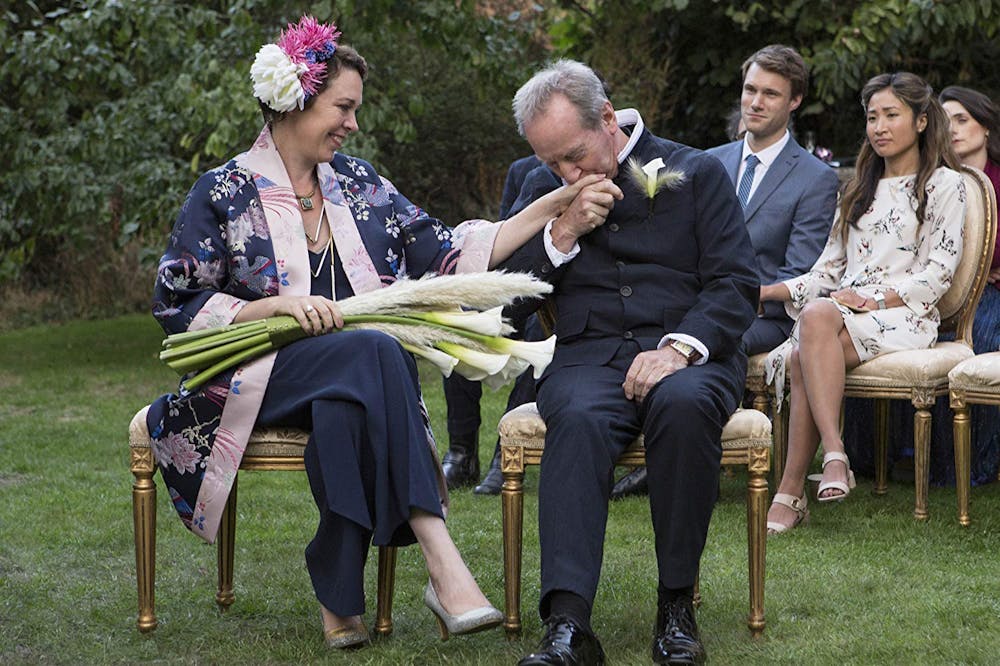
Bill Paterson and Olivia Colman at their wedding Fleabag (2019). Two Brothers Pictures

Finally, Fleabag and The Priest are alone at a bus stop, where she confesses her love for him. When The Priest tells Fleabag “it’ll pass”, he may well be referring to her love, but when, moments later, Fleabag dismisses the confidante/mirror of the fourth wall and tells us not to follow her, the series ends on a hopeful note: maybe her shame and sorrow will pass, too.

In this way, it’s almost like Waller-Bridge is signing off from using these narrative devices – leaving us wondering what aspect of screenwriting practice she’ll revolutionise next.

ref. Fleabag’s feminist rethinking of tired screenwriting tools – http://theconversation.com/fleabags-feminist-rethinking-of-tired-screenwriting-tools-121104

High Court challenge to Treasurer Josh Frydenberg under section 44

Source: The Conversation (Au and NZ) – By Michelle Grattan, Professorial Fellow, University of Canberra

The citizenship provision of the Constitution’s section 44 has raised its head again, with the eligibility of Treasurer Josh Frydenberg being challenged by an elector in his Kooyong seat.

Michaal Staindl has filed a petition with the High Court, which sits as the Court of Disputed Returns, alleging Frydenberg is ineligible “because he is a citizen of the Republic of Hungary”.

The petition says

The respondent’s mother arrived in Australia in 1950 in possession of a valid passport, inferred to be a valid Hungarian passport. This indicates that she continued to be a citizen of Hungary after 1948.

Pursuant to the law of Hungary, all children born to the respondent’s mother are a citizen of Hungary from the time of their birth and in the premise, the respondent is a citizen of Hungary

Staindl told Guardian Australia he was pursuing the action against Frydenberg, whom he knew, because “he’s consistently betrayed me, the electorate and the country on climate change”.

The Guardian reported that Staindl “said if Frydenberg shows evidence he is not Hungarian he could drop the case”; otherwise, he said, he would “see it through”.

Under Section 44, a person cannot sit in the federal parliament if he or she is “under any acknowledgement of allegiance, obedience, or adherence to a foreign power, or is a subject or a citizen or entitled to the rights or privileges of a subject or citizen of a foreign power”.

In his “statement of member’s qualifications relating to section 44 and 45 of the constitution”, posted on Wednesday, Frydenberg records that his mother – who arrived in Australia as a refugee – was a Hungarian citizen between 1943 and 1948.

Frydenberg said “I have clear legal advice that I do not hold citizenship of another country.”

Section 44, which has several prohibitions, cut a swathe through the last parliament, overwhelmingly on citizenship grounds, hitting Coalition, Labor, and crossbench parliamentarians and triggering multiple byelections.

Although Frydenberg’s situation was canvassed during the previous term Labor backed off, given his mother had escaped the Holocaust.

Frydenberg, in comments in the last term, said his mother had arrived stateless. “It is absolutely absurd to think that I could involuntarily acquire Hungarian citizenship by rule of a country that rendered my mother stateless,” he said then.

Separately, Frydenberg’s eligibility is being challenged under the Electoral Act over Liberal party Chinese-language signs. This challenge is being brought by Oliver Yates, who ran as an independent against Frydenberg. It is claimed the signs were likely to have misled voters into thinking that to cast a valid vote they had to put the figure 1 beside the Liberal candidate.

A similar challenge over Chinese-language signs has been brought by a Chisholm voter against the new Liberal MP for Chisholm, Gladys Liu.

The ALP is not involved in the challenges.

The ALP’s acting national secretary Paul Erickson said in a statement that Labor was “disappointed by the tactics employed by the Liberal Party at the election, which went well beyond the accepted bounds of a vigorously contested campaign – especially in the divisions of Chisholm and Kooyong.

“The Chinese-language signs used by the Liberal Party in those contests were clearly designed to look like official Australian Electoral Commission voting instructions using the AEC colours, for the clear purpose of misleading Mandarin and Cantonese-speaking voters into voting for the Liberal Party,” he said.

But while there was a strong case that the signs breached the Electoral Act Labor was not seeking to overturn the results in Chisholm and Kooyong, given the cost and time involved, Erickson said.

ref. High Court challenge to Treasurer Josh Frydenberg under section 44 – http://theconversation.com/high-court-challenge-to-treasurer-josh-frydenberg-under-section-44-121277

No, it’s not OK for the government to use your prescription details to recruit you for a study

Source: The Conversation (Au and NZ) – By Bruce Baer Arnold, Assistant Professor, School of Law, University of Canberra

The department of human services (DHS) is under scrutiny this week after the Nine papers revealed the department sent letters to 50,000 patients who were previously prescribed lithium. DHS was seeking to recruit the recipients into a non-government study on bipolar disorder.

Psychiatrists raised concerns after receiving complaints from patients who had received the letters and accused their psychiatrists of breaching patient confidentiality.

The doctors didn’t breach confidentiality. Instead, DHS, which delivers social and health payments and services, including via Medicare, used data held by Medicare to contact patients who had previously been prescribed lithium on behalf of researchers from the QIMR Berghofer Medical Research Institute.

Patients were invited to complete an online survey, and potentially provide DNA samples, to identify genetic markers associated with bipolar disorder.


Read more: After the Medicare breach, we should be cautious about moving our health records online


Research using big datasets is increasingly common. Big data, combined with genomics, is an extremely powerful research tool, offering tantalising opportunities to gain insight into major challenges to human health. It’s reliant on collection of data from many different individuals.

But in pursuing population-scale benefits, the risks to individual autonomy and privacy are easily overlooked – or worse, they’re disregarded.

Has the ethics framework been disregarded?

This week’s revelations highlight issues with the existing ethical and legal framework governing data access.

The National Health and Medical Research Council’s national statement governs the conduct of ethical research in Australia. It outlines the structure and approval process of human research ethics committees, and identifies issues that committees must consider when deciding whether to grant approval. That includes how researchers propose to recruit research participants.

Researchers often struggle to recruit sufficient participants to their research. Participants must agree to participate voluntarily, without coercion. For some research, recruitment may be particularly challenging. The requirements imposed on participants may be excessively onerous, inconvenient or just distasteful.

Why is DHS accessing this data?

Some people in the community are especially vulnerable to breaches of confidentiality and privacy due to social stigma. This might include people with a mental illness, sexually transmitted disease, criminal conviction or parenting order. Yet DHS may hold or access data on these vulnerable groups.

Datasets such as those overseen by DHS provide researchers with a goldmine of potential participants who can be approached more directly. In this case, they were approached by DHS itself on behalf of researchers. This decision to contact patients on behalf of the researchers is ethically and legally questionable.


Read more: A new model for research ethics reviews


While DHS does release statistical information from the various schemes it administers for research, DHS’s privacy policy states it will not release identifiable or identifying information for research unless the research has ethics committee approval, and the person consents. That restriction is fundamental to Australian privacy law and policy.

DHS hasn’t released identifiable patient data. Instead, it has used personal data collected through prescriptions to contact patients on behalf of a third party – in this case the researchers. Implicitly, its mail-out signals everyone on the list has a specific medical condition.

Problematically, DHS’s privacy policy does not indicate it will collect data for this purpose, or use collected data in this way.

It’s about respect, not convenience

Given the significance of privacy and the government’s supposed commitment to transparency, many questions remain unanswered:

Which committee granted ethics approval for the research? Did that committee have the necessary expertise in data access and privacy law to make that determination, as required under the national statement?

How did the researchers justify their choice of a recruitment strategy which necessarily compromises the reasonable expectations of patients about how, and for what purposes, their personal information will be used by DHS?

People should be able to expect details shared confidentially with medical providers not be used in this way. From shutterstock.com

Did DHS advise the relevant ethics committee that it was an agent for the researchers? How did DHS decide to use data in this way? Who made that determination? What process did they rely on to reach that decision? Are they accountable?

Who funded the mail-out? Did DHS fund the printing and distribution of the letters from its own budget? Did the researchers pay them to do so? What effect does any commercial relationship between the researchers and the department have on the independence of the research?

Can other researchers expect comparable support from DHS in future? If not, how will DHS decide between research it deems to be of merit, and research it deems to be unworthy of its assistance? And is that its role?

DHS shouldn’t just give out your data

If DHS continues acting for researchers in this way, Australians with data contained in DHS data holdings could be inundated with requests to participate in research, resulting in disengagement and research fatigue.

DHS’s reported response when questioned by journalists was that people could opt-out of further mail-outs by emailing the department. That shifts the burden of good data governance onto consumers, rather than beneficiaries of it, for the sake of bureaucratic convenience.


Read more: Why prosecutions for welfare fraud have declined in Australia


The fundamental issue here is one of trust, coercion and consent. People providing their personal information to the government, to access government services including prescribed medications, are doing so through necessity, not choice. Failure to provide the information results in denial of access to the service.

For DHS to use the information provided in a way that is outside both the reasonable expectation of those providing it, and its own privacy policy, is deeply disrespectful.

ref. No, it’s not OK for the government to use your prescription details to recruit you for a study – http://theconversation.com/no-its-not-ok-for-the-government-to-use-your-prescription-details-to-recruit-you-for-a-study-121122

NZ university denies cancelling Tiananmen event over China govt pressure

By RNZ

Auckland University of Technology has denied bowing to Chinese government pressure to stop one of its rooms being used for an event marking the 30th anniversary of the bloody crackdown on protests in Tiananmen Square in Beijing.

The New Zealand university has confirmed it canned a reservation for the event on Monday 3 June, a public holiday, after a meeting with China’s Vice-Consul General Xiao Yewen on the preceding Friday.

Vice-Chancellor Derek McCormack said AUT did not know the event was about the Tiananmen Square protests and it cancelled the booking only because the staff member who made it had not followed the right process, and the building would be closed for the holiday.

READ MORE: Fault lines of fact 25 years after the events in Tiananmen Square

“If it had been an AUT event or if it had been booked through the proper channels through our hospitality services group, it would have gone ahead as the film In the Name of Confucius went ahead a little earlier, which was also something that the Chinese consulate drew to our attention and asked us to cancel which we did not,” he said.

“It needs to be done in the proper manner for all sorts of reasons including health and safety. There are also charges that are made for rooms because of cleaning and set-up and utilities. These things were bypassed by the person who made the booking. In fact they did not even make the booking in their own name so it was something that was completely out of order.”

– Partner –

Concerns coincided
Messages obtained by Newsroom under the Official Information Act showed McCormack later wrote to the Vice-Consul General to say AUT defended its academic freedom, but in this instance their concerns and AUT’s concerns had coincided.

McCormack told RNZ Xiao had not threatened repercussions if AUT failed to cancel the booking.

“The Vice-Consul General pointed out that we had a good relationship with China, that we had lots of Chinese students and because of that good relationship could we help them out and cancel something they objected to.”

McCormack said the university did not know at the time what the event was about. It had been booked as a student seminar and advertised in Chinese media, not in English.

Emails show Xiao described AUT’s decision as “right and wise” and would “definitely help promote further growth of exchanges and cooperation between AUT and the General Consulate and China in general”.

‘Dubious explanation’
Tertiary Education Union national secretary Sharn Riggs said universities sometimes ran into problems with room bookings, but she was dubious about AUT’s explanation.

“Hardly seems credible, does it? That is the public position that the university is putting out but I guess from our point of view that seems like a fairly lame reason to have cancelled the event,” she said.

Riggs said the incident highlighted universities’ reliance on tuition fees from Chinese students.

“When so many of our universities now are reliant on the fees that international students pay, and in AUT’s case it’s quite a significant chunk of their annual income, it’s inevitable that foreign governments are going to have the ability to put pressure on institutions should they want to and I think in this case that’s exactly what the Chinese government has done.”

Defending freedom of expression
Education Minister Chris Hipkins would not comment on AUT’s decision, but defended freedom of expression at universities.

He said the relationship with China was important to the government and to many tertiary institutions, but it had to be based on mutual respect.

“In New Zealand, free speech, the right to democratic process, those are very important things to New Zealanders and we have always been very clear with the Chinese government that those are things that we will always defend here in New Zealand,” Hipkins said.

The Chinese consulate in Auckland did not respond to a request for comment.

  • This article is published under the Pacific Media Centre’s content partnership with Radio New Zealand.
Print Friendly, PDF & Email

Article by AsiaPacificReport.nz

Pacific leaders declare climate crisis, demand end to coal

By RNZ Pacific

Pacific leaders have declared a climate crisis in the region and are demanding an end to coal mining.

The declaration was signed by several regional leaders at the Pacific Islands Development Forum in Fiji on Tuesday.

The declaration expressed grave concerns about the impacts the climate crisis will have on the Pacific.

READ MORE: Australia has a ‘moral responsibility’ to planet, says Marape

In it, the Pacific Islands Development Forum called on governments of countries with high carbon emissions to stop hindering climate change efforts.

It also demanded all coal producers immediately stop any new coal mining and phase out all existing production over the next 10 years.

– Partner –

The declaration asked the development forum’s 14-member states to immediately end subsidies on fossil fuel production.

Echoing 2018’s Boe Declaration from the Pacific Islands Forum, Tuesday’s declaration affirmed “that climate change poses the single greatest threat to the human rights and security of present and future generations of Pacific Island peoples”.

The move was welcomed by environmental non-profit 350.org, with founder Bill McKibben calling it a “very powerful manifesto”.

“The election, in the Pacific, of the government of Australia that continues to want to expand coal mines is a slap in the face to everyone else in that region and in the world,” he said in a videoed statement.

Meanwhile, Fiji’s Prime Minister said Pacific leaders should accept nothing less than concrete commitments to cut emissions at next month’s Pacific Islands Forum Summit.

Frank Bainimarama will be attending his first summit since 2008.

Fiji was suspended in 2009 and Bainimarama said he would stay away until New Zealand and Australia were no longer full Forum members.

In a speech at the Pacific Islands Development Forum – which was set up by Fiji after its suspension – Bainimarama said the region cannot accept any watered-down commitments.

At last year’s forum, Australia was exposed as having attempted to water-down a resolution that declared climate change the region’s greatest security threat.

Bainimarama said the region needs greater commitments from the region’s bigger neighbours, hinting at Australia and New Zealand.

“Fiji and the Marshall Islands have already announced our intention to revise our own nationally determined contributions, and I urge this … membership to do the same and demand the same from the more developed economies, including and especially our large neighbours in the Pacific.

“We should accept anything less than concrete commitments to curb greenhouse gas emissions in line with the most ambitious aspirations of the Paris Agreement. We cannot allow climate commitments to be watered down at a meeting hosted in a nation whose very existence is threatened by the rising waters lapping at its shores.”

  • This article is published under the Pacific Media Centre’s content partnership with Radio New Zealand.
Print Friendly, PDF & Email

Article by AsiaPacificReport.nz

After 119 years, NSW is set to decriminalise abortion. Why has reform taken so long?

Source: The Conversation (Au and NZ) – By Helen Pringle, Senior Lecturer, UNSW

A bill to decriminalise abortion in NSW has been delayed by conservative MPs who reportedly want more time to consider the legislation. Debate is now set to start in the lower house next week.

Still, the Reproductive Health Care Reform Bill 2019, to be introduced by independent MP Alex Greenwich, has widespread support in the Legislative Assembly and looks likely to pass. It also has the support of Health Minister Brad Hazzard, who is one of its 15 co-sponsors, as well as Premier Gladys Berejiklian.

The bill primarily seeks to remove three sections of the NSW Crimes Act that criminalise “unlawfully” attempting to procure an abortion by administering drugs or using instruments or other means. The woman seeking an abortion can be prosecuted under the law, as can anyone who unlawfully performs an abortion or supplies the drugs or instruments that could be used for an abortion.


Read more: Where Australian states are up to in decriminalising abortion


These sections were incorporated in the NSW Crimes Act in 1900, using the wording of the UK Offences against the Person Act 1861. Similar provisions formed the basis of anti-abortion laws across Australia. Today, only NSW and South Australia still have these provisions on the books.

Key interpretation of the law

Despite these laws, abortions are routinely conducted in NSW on much the same terms as other Australian states. However, it is difficult to estimate how many are performed every year because only South Australia collects and publishes comprehensive data.

Given the frequency of the procedure, and generally broad access to abortions covered in part by Medicare, it is perhaps not surprising that more than 70% of people in NSW are unaware that these provisions remain in the criminal law.


Read more: Explainer: what are abortion clinic safe-access zones and where do they exist in Australia?


The law seems restrictive on its face, but since 1971, prosecutions have been rare. This is due to a ruling by Judge Aaron Levine in NSW District Court who drew attention to the fact that abortion itself is not a crime in the NSW act, and that only unlawfully performed actions are punishable.

The inclusion of the word “unlawfully” means that actions to procure an abortion may be undertaken lawfully, and not every attempt to perform an abortion is criminal.

Levine phrased the lawfulness test in these terms:

It would be for the jury to decide whether there existed in the case of each woman any economic, social or medical ground or reason which in their view could constitute reasonable grounds upon which an accused could honestly and reasonably believe there would result a serious danger to her physical or mental health.

This lawfulness test is further reinforced in the NSW Ministry of Health’s policy framework for terminations in public health organisations.

Risks still exist for doctors

Levine’s ruling is an example of fine legal reasoning, but such distinctions have not found favour with doctors, who have long called for greater clarity in regard to the possible criminality of their actions.

As Greenwich noted this week,

our bill ensures that women will have access to safe and legal abortions and ensures that doctors have the legal clarity that they have long sought.

And in supporting the bill, the Australian Medical Association said it would remove the “stigma and legal uncertainty” around the performance of abortions.

It is noteworthy that although there have been very few prosecutions under the act since 1971, nearly all have involved the legality of the actions of doctors. In 2017, a Sydney woman was convicted of administering misoprostol to herself in an attempt to end her pregnancy at 28 weeks.

Greenwich’s bill follows the passage of roughly similar reform bills in the ACT (2002), Victoria (2008), Western Australia (2011), Tasmania (2013), the Northern Territory (2017) and Queensland (2018). A bill in the South Australia parliament to fully decriminalise abortion has also been referred for review to the SA Law Commission.

Abortion not a voter issue

For many, it is a puzzle why the NSW Crimes Act provisions have remained in place for so long. In 2016, Greens MP Mehreen Faruqi introduced a bill to change the NSW law, but it was voted down in the upper house.

One possible reason it has taken so long to reform the law was the spectre of a backlash among voters. Even feminist campaigners had concerns that attempts to reform the law might fail and backfire on reformers, perhaps resulting in more restricted access.

This view is mistaken in two main ways. First, no public opinion poll in Australia in 50 years has found a popular majority opposed to broad access to abortion. In fact, no opinion poll has found more than 5-10% of voters opposed to abortion in all or almost all circumstances.

A good summary of recent polls is provided in a 2017 briefing paper by the NSW Parliamentary Research Service.

Moreover, religious affiliation is not strongly correlated with opposition to abortion access, as it is in the US. Nor is there a large gulf in opinion along gender lines. For example, a 2005 research brief of the Australian Parliamentary Library showed a slightly higher proportion of men over women favouring wide access to abortion.


Read more: It’s time to lift the restrictions on medical abortion in Australia


Second, my research has found scant evidence to show that attitudes to abortion in Australia play a significant role in the way people vote, as they do in the US. This has been the case for at least 40 years.

While Australians across party lines support wide access to abortion, sociologist Katharine Betts argued in 2004 that LNP candidates were significantly more conservative than voters on the question. But by 2009, even this divide had narrowed.

The chief obstacle to reform has little to do with voters’ electoral behaviour, let alone their general attitudes on abortion. Rather, it’s been the lack of will among MPs that’s been the problem.

In NSW, this appears to finally be changing, with bipartisan support – and a new sense of urgency – to reform the law.

ref. After 119 years, NSW is set to decriminalise abortion. Why has reform taken so long? – http://theconversation.com/after-119-years-nsw-is-set-to-decriminalise-abortion-why-has-reform-taken-so-long-121112

Curious Kids: can Earth be affected by a black hole in the future?

Source: The Conversation (Au and NZ) – By Janie Hoormann, Postdoctoral Research Fellow, Astrophysics, The University of Queensland

If you have a question you’d like an expert to answer, send it to curiouskids@theconversation.edu.au.


Can Earth be affected by a black hole in the future? – Rakovi, age 12, Dimapur, India.


That is a great question.

As you know, black holes are called that because the gravity in their centre is so strong, it sucks all nearby light in. None can escape. That’s how strong a black’s hole’s gravitational pull is.

Black holes create the strongest gravitational pull in the universe (that we know of). So you really don’t want to get very close to one.

If you get too close, the pull of gravity from the black hole is so strong that you would never be able to escape, even if you were travelling at the speed of light.

This point of no return is called “the event horizon”.

Another reason you don’t want to get too close to a black hole is because of something we call “spaghettification”.


Read more: Curious Kids: How do wormholes work?


Turning a star into spaghetti strips

Imagine an object in space, like a star. As the star gets closer to a black hole, one side of it is pulled harder than the other. That’s because one side of the star will be closer to the black hole than the other.

The pull from gravity will be stronger on the side closest to the black hole, and weaker on the side that’s further away.

This difference in the pull of gravity (which is called a “tidal force”) would cause the star to get pulled apart. It’s kind of like pulling a lump of pasta dough into spaghetti.

Sometimes astronomers can observe this happening in other galaxies. The technical name is a “tidal disruption event” but it just means that a star got too close to a black hole and got pulled apart.

Here’s an artist’s impression of what spaghettification might look like:

The closest black hole is too far away to hurt us

Thankfully, though, we don’t need to worry. There are no black holes close enough to Earth to affect us. The closest black hole to Earth that we know of is named V616 Monocerotis. It is also known as A0620-00.

This black hole is 6.6 times more massive than our Sun. (That means it has a lot of mass, which means it has a really strong gravitational pull – much stronger than even our Sun’s gravitational pull.)

If Earth gets within about 800,000 kilometres (3.7 light seconds) of this black hole it will get pulled apart. But that’s unlikely to happen and certainly not in your lifetime.

V616 Monocerotis is about 3,300 light years away. That’s very, very far away.


Read more: Curious Kids: Where do black holes lead to?


Hello, curious kids! Have you got a question you’d like an expert to answer? Ask an adult to send your question to curiouskids@theconversation.edu.au

ref. Curious Kids: can Earth be affected by a black hole in the future? – http://theconversation.com/curious-kids-can-earth-be-affected-by-a-black-hole-in-the-future-118181

PNG warlord hands himself in to end tribal conflict

Pacific Media Centre Newsdesk

An influential warlord in PNG’s Hela province has handed himself in to security forces in the wake of mass killings last month, reports The National.

Libe Koi of Pujaro village in Tagali surrendered himself and apologised to the people who have been affected by the tribal fighting in the Highlands region.

Last month at least 20 people, including two pregnant woman, were killed in two seperate inter-tribal attacks.

READ MORE: Bryan Kramer: PNG ‘merciless’ payback killings have changed everything

Libe Koi … “I appeal to two other warlords in the recent massacre to surrender themselves and weapons.” Image: EMTV News

Koi also urged two other warlords still in hiding to come out before he exposed them.

“I appeal to two other warlords in the recent massacre to surrender themselves and weapons because I will disclose their hideouts (if they fail to surrender),” he said

– Partner –

“If I can surrender myself, why don’t you two also come out for us to find an amicable solution to restore peace and harmony in Hela?”

He described his part in the fighting as retaliatory between himself and another warlord known as Okiru over the past six years, and his actions were in defence of his family.

However, during a televised news conference, EMTV reported him saying that after two decades he was tired of the conflict and wanted an end to it.

While he didn’t claim responsibility for last month’s massacre, his translator, Hela Province deputy provincial administrator Eddie Yuwi said that he knew the two warlords involved and was handing himself in as an example.

WATCH: Libe Koi urges other warlords to hand themselves in

He also threatened to reveal the location of the warlord’s arms and ammunition depots, reported the PNG Post-Courier.

Hela police commander chief inspector Teddy Agwi has called on the other fighters to surrender to police, saying that the prolonged fighting had shut down schools, hospitals and disrupted the normal way of life in the region.

The developments in Hela have come in the wake of announcements from both the PNG government, police force and the UN that they will increase presence in the Highlands and take an active role in addressing tribal conflict.

Print Friendly, PDF & Email

Article by AsiaPacificReport.nz

A clever operatic adaptation of Oscar and Lucinda is let down by music that fails to captivate

Source: The Conversation (Au and NZ) – By Jeanell Carrigan, Associate professor, University of Sydney

Review: Oscar and Lucinda, composer Elliott Gyger, librettist Pierce Wilcox, after the novel by Peter Carey, Sydney.

Attending the opening night of a world premiere performance of a new Australian opera is an exhilarating experience – though one that requires a bit of pre-performance research. This is not the first Australian opera that has been based on an iconic novel: recent others include Cloudstreet (2016), Bliss (2010) and Voss (1986).

Like Cloudstreet and Bliss, Oscar and Lucinda was first a novel written by Peter Carey, then a film and then an opera. Should the opera viewer encounter these other versions first to get a true understanding of the plot and characters? The novel by Peter Carey contains short chapters where the characters are developed into distinct personas. The reader gains an insight into their very being. There is a duality of complexity and simpleness.

The plot is a love story with a tragic end. It explores the relationships between the key characters, their addiction to gambling and the personal motivations for that addiction as well as an important element – that of “chance”. The film version (1997) starring Ralph Fiennes and Cate Blanchett, has so many successful elements – scenery, staging, a cohesive story line which is not broken by scene changes with titles or chapter headings – as well as the combined interpretations of the director and individual actors.

Thus we come to the opera already familiar with the story, perhaps having also seen the film. The two operatic acts were broken into scene changes that presented the overall outline of the story. Because of the limited space and staging possibilities everything was minimal.

The sets were few and sparse, the characters – except for the two main protagonists – played many different roles each. It was very clear, due to clever costuming and quick changes, which character was played at any time but still audience members had to employ their imagination to grasp the innate characterisations of the different roles. The libretto was highly narrative and kept to the important details of the novel’s plot.

Oscar and Lucinda, Sydney Chamber Opera, Carriageworks. Zan Wimberley

What then of the music? In an opera adaption surely the most important feature is the music and how well adapted to the story it is. Should it not almost tell the story without any visual component? Oscar and Lucinda is a tragic love story. Many operas share a similar plot. At the conclusion, one protagonist dies and the other loses her entire fortune.

There are dramatic scenes – a big storm, other people die, someone’s murdered on stage and of course, there is a love scene. But in the opinion of this reviewer, the music did not react to or reflect the action on stage or in the story.

Oscar and Lucinda, Sydney Chamber Opera, Carriageworks. Zan Wimberley

Had one not had the visual aspect and the text so wonderfully displayed on surtitles, hearing the music would not have given the listener the effect of what was transpiring. Should one therefore also, before attending the opera, study the music of its composer Elliott Gyger to understand how and why the music was conceived?

It was a complex plot and a very complex score that at times sounded completely random. Gyger writes in the program notes:

The guiding metaphor for the music is one not found in the novel …In a kaleidoscope, small fragments of coloured glass fall into arbitrary relationships which are then mirrored geometrically to create the illusion of order. Different settings of the kaleidoscope generate particular harmonic colours …

If this was the guiding principle behind the composition then Gyger was successful, as the music does sound like a kaleidoscope, pieces of coloured glass falling into space. However, it seemed to this listener that the music never changed to reflect the story presented.

Oscar and Lucinda, Sydney Chamber Opera, Carriageworks. Zan Wimberley

In the love scene, the kaleidoscope of colours did not reflect a warmth normally associated with such a scene. In the death scene, which was rather protracted, the colours were again so much of the sameness of other parts of the action. What began as colourful and very exciting became uninteresting and no longer captivating.

The singers, however, particularly Jessica Aszodi and Brenton Spiteri in the title roles and the four other cast members – Jane Sheldon, Jeremy Kleeman, Mitchell Riley and Simon Lobelson who played a myriad of different characters – were excellent. One could only admire the virtuosity of their performances considering the complexity the music.

Likewise, the orchestra and conductor Jack Symonds were fabulous supporting the cast with excellent balance and refined tonal colours. Lighting and sets, despite their minimalistic nature were completely appropriate, and created enough imagery for the audience to “get” what was happening.

An exhilarating experience? Yes, to have been present at an opening night of an Australian opera definitely, but it was doubtful whether the music portrayed enough of the story line to warrant putting this story into an operatic medium.

Oscar and Lucinda, a co-production and co-commission of Sydney Chamber Opera, Opera Queensland and Victorian Opera, will be performed from 27 July – 3 August 2019

ref. A clever operatic adaptation of Oscar and Lucinda is let down by music that fails to captivate – http://theconversation.com/a-clever-operatic-adaptation-of-oscar-and-lucinda-is-let-down-by-music-that-fails-to-captivate-121101

Algorithms are everywhere but what will it take for us to trust them?

Source: The Conversation (Au and NZ) – By Kate Smith-Miles, Professor of Applied Mathematics, ARC Laureate Fellow, Chief Investigator in the Australian Centre of Excellence in Mathematical and Statistical Frontiers, University of Melbourne

The role of algorithms in our lives is growing rapidly, from simply suggesting online search results or content in our social media feed, to more critical matters like helping doctors determine our cancer risk.

But how do we know we can trust an algorithm’s decision? In June, nearly 100 drivers in the United States learned the hard way that sometimes algorithms can get it very wrong.

Google Maps got them all stuck on a muddy private road in a failed detour to escape a traffic jam heading to Denver International Airport, in Colorado.

Google Maps glitch sends Colorado drivers to muddy backroad.

As our society becomes increasingly dependent on algorithms for advice and decision-making, it’s becoming urgent to tackle the thorny issue of how we can trust them.


Read more: What’s not to like? Instagram’s trial to hide the number of ‘likes’ could save users’ self-esteem


Algorithms are regularly accused of bias and discrimination. They have attracted concern from US politicians, amid claims we have white men developing facial recognition algorithms trained to work well only for white men.

US committee investigates racial bias in facial recognition software.

But algorithms are nothing more than computer programs making decisions based on rules: either rules that we gave them, or rules they figured out themselves based on examples we gave them.

In both cases, humans are in control of these algorithms and how they behave. If an algorithm is flawed, it’s our doing.

So before we all end up in a metaphorical (or literal!) muddy traffic jam, there is an urgent need to revisit how we humans choose to stress-test those rules and gain trust in algorithms.

Algorithms put to the test, kind of

Humans are naturally suspicious creatures, but most of us can be convinced by evidence.

Given enough test examples – with known correct answers – we develop trust if an algorithm consistently gives the correct answer, and not just for easy obvious examples but for the challenging, realistic and diverse examples. Then we can be convinced the algorithm is unbiased and reliable.

Sounds easy enough, right? But is this how algorithms are usually tested? It’s harder than it sounds to make sure that test examples are unbiased and representative of all possible scenarios that could be encountered.

More commonly, well studied benchmark examples are used because they are easily available from websites. (Microsoft had a database of celebrity faces for testing facial recognition algorithms but it was recently deleted due to privacy concerns.)

Comparison of algorithms is also easier when tested on shared benchmarks, but these test examples are rarely scrutinised for their biases. Even worse, the performance of algorithms is typically reported on average across the test examples.

Unfortunately, knowing an algorithm performs well on average doesn’t tell us anything about whether we can trust it in specific cases.

It’s not surprising to read that doctors are sceptical of Google’s algorithm for cancer diagnosis, which offers 89% accuracy on average. How does a doctor know if their patient is one of the unlucky 11% with an incorrect diagnosis?


Read more: Treat or trick: we asked people how they feel about sharing fitness data with insurance companies


With increasing demand for personalised medicine tailored to the individual (not just Mr/Ms Average), and with averages known to hide all sorts of sins, the average results won’t win human trust.

The need for new testing protocols

It’s clearly not rigorous enough to test a bunch of examples – well-studied benchmarks or not – without proving they are unbiased, and then draw conclusions about reliability of an algorithm on average.

And yet paradoxically this is the approach on which research labs around the world depend to flex their algorithmic muscles. The academic peer-review process reinforces these inherited and rarely questioned testing procedures.

A new algorithm is publishable if it’s better on average than existing algorithms on well-studied benchmark examples. If it’s not competitive in this way, it’s either hidden away from further peer-review scrutiny, or new examples are presented for which the algorithm looks useful.

In this way, a warm, flattering light is shone on each newly published algorithm, with little attempt to stress-test its strengths and weaknesses, and present it warts and all. It’s the computer science version of medical researchers failing to publish the full results of clinical trials.

As algorithmic trust becomes more crucial, we urgently need to update this methodology to scrutinise whether the chosen test examples are fit for purpose. So far, researchers have been held back from more rigorous analysis by the lack of suitable tools.

We’ve built a better stress-test

After more than a decade of research, my team has launched a new online algorithm analysis tool called MATILDA: Melbourne Algorithm Test Instance Library with Data Analytics.

It helps stress-test algorithms more rigorously by creating powerful visualisations of a problem, showing all scenarios or examples an algorithm should consider for comprehensive testing.

MATILDA identifies each algorithm’s unique strengths and weaknesses, recommending which of the available algorithms to use under different scenarios and why.

For example, if recent rain has turned unsealed roads into mud, some “shortest-path” algorithms may be unreliable unless they can anticipate the likely impact of weather on travel times when advising the quickest route. Unless developers test such scenarios they’ll never know about such weaknesses until it is too late and we are stuck in the mud.

MATILDA helps us see the diversity and comprehensiveness of benchmarks, and where new test examples should be designed to fill every nook and cranny of the possible space in which the algorithm could be asked to operate.

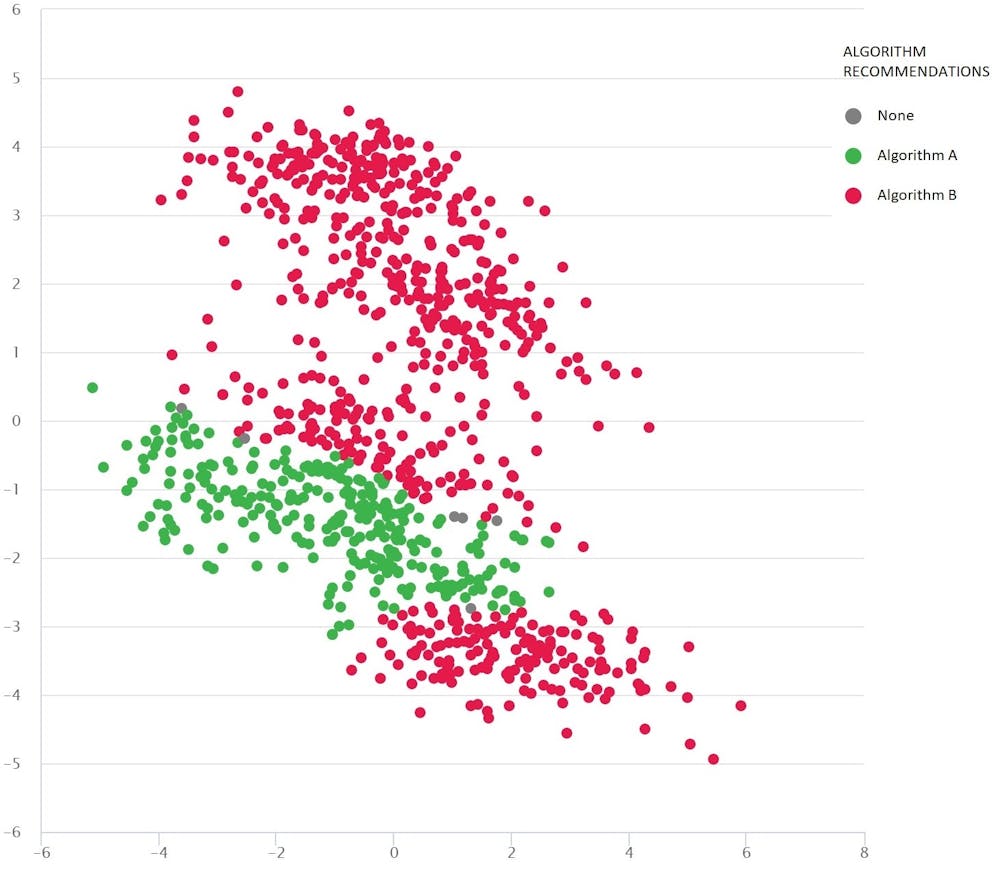
The image below shows a diverse set of scenarios (dots) for a Google Maps type of problem. Each scenario varies conditions – like the origin and destination locations, the available road network, weather conditions, travel times on various roads – and all this information is mathematically captured and summarised by each scenario’s two-dimensional coordinates in the space.

A Google-maps-type problem with diverse test scenarios as dots: Algorithm B (red) is best on average, but Algorithm A (green) is better in many cases. MATILDA, Author provided

Two algorithms are compared (red and green) to see which can find the shortest route. Each algorithm is proven to be best (or shown to be unreliable) in different regions depending on how it performs on these tested scenarios.

We can also take a good guess at which algorithm is likely to be best for the missing scenarios (gaps) we haven’t yet tested.


Read more: Consumer watchdog calls for new measures to combat Facebook and Google’s digital dominance


The mathematics behind MATILDA helps to create this visualisation, by analysing algorithm reliability data from test scenarios, and finding a way to see the patterns easily.

The insights and explanations mean we can choose the best algorithm for the problem at hand, rather than crossing our fingers and hoping we can trust the algorithm that performs best on average.

By rigorously stress-testing algorithms in this way – warts and all – we should reduce the risk of rogue algorithm decisions, securing the trust of Mr/Ms Average, and perhaps even the most sceptical humans.

ref. Algorithms are everywhere but what will it take for us to trust them? – http://theconversation.com/algorithms-are-everywhere-but-what-will-it-take-for-us-to-trust-them-118830

Athlete development must better support Indigenous and Pasifika players

Source: The Conversation (Au and NZ) – By Sierra Keung, Kaiako – Sport & Recreation, Auckland University of Technology

For the past seven years, 70 of the 75 players who have been selected for New Zealand’s senior men’s rugby league team were of Māori or Pasifika heritage. About 42% of the National Rugby League’s player base is Pasifika.

The start of the inaugural Rugby League International Federation (RLIF) Oceania Cup last month further highlights the contribution Indigenous and Pasifika communities make to the game. The Oceania Cup allowed Māori and Pasifika players to showcase their footy skills and represent their cultural heritage on a global stage, outside of the world cup competition.

Given the continued contribution Indigenous and Pasifika communities make to the growth of rugby league in particular, we need to use processes and practices that resonate with the diverse player base.


Read more: It’s time we moved the goalposts on Indigenous policies, so they reflect Indigenous values


Player development ignores culture

The Oceania Cup is a long overdue move. It reflects the impact of the decision several prominent Pasifika rugby league players made at the 2017 Rugby League World Cup to turn down the opportunity to represent a top-tier nation like New Zealand and Australia. Instead they chose to represent the country of their heritage. Since then, more Pasifika players have followed suit.

The pathway towards a professional sporting career is typically shaped by four key aspects: physical, technical, tactical and psychosocial. Despite the significant contribution of our Indigenous communities, existing talent development research fails to acknowledge cultural nuances that are critical to the preparation and performance of Māori or Pasifika athletes.

Research highlights the critical role the psychosocial aspect plays in facilitating longevity and success for a professional sportsperson. For many teenage Māori and Pasifika athletes, this can be more arduous than the physical aspect.

So far, the psychosocial aspect of talent development has been discussed from a Western perspective, which focuses on the achievements of the individual. In my research, I challenge this with an approach that more appropriately reflects the Māori and Pasifika talent of rugby league.

A significant finding was the importance and value of relationships with other people, including family and mentors. My research suggests that key relationships are those that are anchored by trust and create an energy that helps junior players to process mentally trying times they may experience during training. When viewed through a Māori and Pasifika lens, psychosocial training is (re)defined as the inter-connectedness of relationships, trust and energy.

CC BY-ND

This relational foundation is missing when psychosocial development is viewed from a Western perspective. Elite athletes are aware of the fact failure is part of the process for success and growth. How one learns to cope with setbacks is dependent on an athlete’s psychosocial foundation, which they build as they move to a senior elite level.

A more appropriate approach would integrate practices throughout the talent development process to facilitate reciprocal relationships, based on trust. Relationships also include those of a spiritual nature. Faith or spirituality play a significant role in strengthening the overall health and well-being for Māori and Pasifika.

A prayer circle before a game between Toa Samoa and Mate Ma a Tonga. Supplied, CC BY-ND

Faith and a belief in God were found to give athletes strength and perspective in dealing with adversity. As such, organisations may do well to offer time or space for athletes to meditate, read or listen to scripture, or simply express gratitude. This is a critical element of talent development that tends to be overlooked when supporting the performance of Māori and Pasifika athletes.


Read more: Federal budget undermines Indigenous self-determination in sport programs


Value of relationships and trust

Professional sports, like other mainstream industries, are heavily dominated by a Eurocentric power structure and culture. Māori and Pasifika are expected to integrate into a system that does not typically reflect their cultural structure, values and beliefs.

Specialist support people and resources are typically made available in the professional sporting world to help athletes manage the demands of becoming a professional sportsperson. But we need to consider the value of relationships, trust and energy for Māori and Pasifika athletes to succeed in the high performance sport environment.

From a collective cultural perspective, success is measured by how well one takes care of those around them. Athletes are likely to progress better through the development process when they feel their support team (coaches, trainers, managers) takes care of them. For Māori and Pasifika athletes, this includes their family and the wider collective they represent.

The athlete may be the individual training and playing the game, but for Māori and Pasifika, their success is not their success alone.

ref. Athlete development must better support Indigenous and Pasifika players – http://theconversation.com/athlete-development-must-better-support-indigenous-and-pasifika-players-119976

People use sauna for well-being, but its medical benefits are not widely understood

Source: The Conversation (Au and NZ) – By Joy Hussain, GP Researcher, RMIT University

Why do people use sauna? Despite centuries of anecdotal evidence which says the practice is relaxing and healthy, researchers have never actually asked this question. Until now.

With increasing evidence pointing to the health benefits of sauna, Australian researchers decided to conduct an online global sauna survey to start to understand why people regularly subject themselves to extreme heat.

They found the overwhelming motivation for sauna bathing was relaxation and stress reduction, alongside other health benefits such as pain relief and improved sleep.

But the results highlighted that sauna does not appear to be widely recognised as a health intervention for a range of chronic conditions it has been shown to benefit. This suggests more education is needed for both medical professionals and the wider community.

At the same time, we need continued scientific research to better understand the health benefits of sauna bathing.


Read more: Infrared sauna is no better for your health than traditional sauna: busting a common wellness myth


What the survey found

The survey received 472 responses from 29 countries (with Finland, the United States, and Australia making up the top three).

The average age of participants was 45, and respondents used a sauna on average once or twice per week. Bathers used both traditional and infrared saunas, although infrared use was much higher in Australia and the US (both 30%, compared to only 2% in Finland).

All respondents selected “relaxation/stress reduction” as a highly important reason for sauna bathing. The results showed using sauna five to 15 times per month was associated with higher mental well-being scores compared to those using sauna less frequently. But more evidence is needed to establish a link between thermal therapy and mental health.

Close to 500 people took part in the Global Sauna Survey. From shutterstock.com

Other leading motivations for using sauna included “to relieve aches and pains” (88%), “social – to meet and talk with friends” (85%), “to improve circulation” (85%), “detoxification” (83%), and “professional – to meet and talk with business colleagues” (50%).

The top three activities reported as occurring inside the sauna were relaxation (100%), talking with others (79%), and meditation (68%) – again highlighting the function of sauna as a space for mental regeneration.


Read more: Why saunas really are good for your health


Some 84% of respondents reported improved sleep, lasting for one to two nights after sauna use. Given the importance of sleep for general health, sauna seems to hold promise as an enjoyable and non-pharmacological tool to promote better rest.

One-third of respondents were overweight or obese, which suggests regular sauna bathing is well tolerated by this population.

While the precise mechanisms are still not understood, the physical effects of sauna – including heart rate, blood pressure, and cellular responses – correspond to similar benefits seen with moderate intensity physical exercise.

Sauna use doesn’t reflect knowledge of recent evidence

The survey revealed two important broader points. Firstly, people are using sauna in ways not fully backed up by medical evidence yet. One-third of respondents reported having a medically diagnosed health condition, with the most common being back pain, followed by musculoskeletal problems. Interestingly, two-thirds of these respondents reported sauna bathing improved their condition, at least temporarily.

But there is little evidence on sauna for these specific health issues, and sauna is rarely part of conventional treatment plans for such conditions. The same applies to reports about improved sleep.

Secondly, and by contrast, high blood pressure and heart conditions were not among the top medical conditions of respondents, despite the benefits sauna has demonstrated for cardiovascular health. Recent observational and experimental studies have shown people who regularly use sauna experience fewer incidents of high blood pressure and have fewer heart attacks and strokes.

But the fact sauna users are not commonly bathing with these benefits in mind suggests many health professionals may not yet be aware of the scientific literature surrounding the potential preventive health benefits of sauna use.

Given the evidence for stress reduction shown in this survey, sauna also shows promise as an intervention for a range of chronic diseases where psychological stress is considered to be strongly associated with the mechanisms behind the disease (for example, depression, heart disease, and arthritis).


Read more: Curious Kids: What happens in the body when we sweat?


From sauna research to sauna treatment

Sauna has potential benefits for a range of major health challenges facing today’s population. To maximise these benefits, a few key steps lie ahead.

The most important thing is more attention from researchers. The health outcomes demonstrated so far all need further evidence, and we need continued social science to understand more about how the technology might be spread at a community level. Increased access to community bathing facilities will require public support and entrepreneurial vision.

The other key step is for sauna researchers to engage with health professionals, so sauna may become recognised alongside other evidence-based treatments for chronic conditions in both clinical and community settings.

Do you use sauna in Australia? Researchers from Western Sydney University are currently conducting a follow-up survey.

ref. People use sauna for well-being, but its medical benefits are not widely understood – http://theconversation.com/people-use-sauna-for-well-being-but-its-medical-benefits-are-not-widely-understood-117972

What are native grasslands, and why do they matter?

Source: The Conversation (Au and NZ) – By Mike Letnic, Professor, Centre for Ecosystem Science, UNSW

Coalition minister Angus Taylor is under scrutiny for possibly intervening in the clearing of grasslands in the southern highlands of New South Wales. Leaving aside the political dimensions, it’s worth asking: why do these grasslands matter?


Read more: Pauline Hanson stymies inquiry into Angus Taylor’s intervention on endangered grasslands


The grasslands in much of eastern Australia are the result of forests and woodlands cleared to “improve” the landscape (from a grazier’s point of view) to make it suitable for grazing livestock.

The “improvment” typically entails cutting trees, burning the felled timber and uprooting tree stumps, followed by ploughing, fertilising and sowing introduced grasses that are more palatable to livestock than many native grasses.

However, largely treeless native grasslands once occurred at high elevations across much of the Monaro tableland, in the area stretching between Canberra and Bombala.

The Monaro grasslands (or in scientific speak, the natural temperate grassland of the Southern Tablelands) are in relatively dry and cold areas, particularly in upland valleys or frost hollows where cold air descends at night.

The combination of dry climate and cold restricts tree growth and instead has encouraged grasses and herbs. Native grasses such as kangaroo grass and poa tussock dominate the grasslands, but there are many other unique plants. A typical undisturbed grassland area will support 10-20 species of native grasses and 40 or more non-grass species.


Read more: When tree planting actually damages ecosystems


The grassy plains are also home to unique cold-adapted reptiles such as the grass-land earless dragon, little whip snake, pink-tailed worm lizard and striped legless lizards. This combination of plants and animals create a unique ecological community.

Striped legless lizards may resemble a snake, but most of its body is actually tail. It has vestigial limbs and a non-forked tongue. Benjamint444/Wikipedia, CC BY-NC-SA

A fraction remain

It is estimated only 0.5% of the area that would once have been natural temperate grasslands in the Southern Tablelands remains. The rest has been gradually “improved” since the mid-nineteenth century to make them more productive for livestock grazing.

Livestock dramatically change the composition of grasslands, as animals remove palatable plants and compact the soil under their weight. Disturbed soil and the livestock also help to spread non-native weeds.

However, most native grasslands have not just been modified by grazing but completely replaced by man-made pastures. That is, the land has been ploughed, fertilised and the seeds of introduced grasses have been planted.


Read more: Australia’s plantation boom has gone bust, so let’s make them carbon farms


These changes to the landscape mean much of the landscape is dominated by introduced plants and is now unsuitable for many of the native plants and animals that once lived and grew there.

Because the Natural Temperate Grassland of the Southern Tablelands is now so rare it is classified as critically endangered and federally protected. Furthermore, many of the distinct plants and animals that still live in these grasslands are classified as vulnerable or endangered.

The pink-tailed worm lizard is one of the rare species living in the native grasslands of the Southern Tablelands. Matt Clancy/Wikimedia Commons, CC BY-SA

Some of the best remaining examples of the Monaro grasslands can be found in old cemeteries and in areas set aside as public livestock grazing areas. These areas of public land have often been spared from pasture improvement or only lightly grazed, and thus now support relatively intact native grassland ecosystems.


Read more: Spinifex grass would like us to stop putting out bushfires, please


While, to the untrained eye the Monaro grasslands may seem unremarkable and difficult to distinguish from grazing pastures, they are deeply important. They show us what Australia once looked at, and act as a haven for native biodiversity.

Indeed, what remains of the natural grasslands is now so disturbed by agriculture there is a real threat this distinctive ecological community and many of the species it contains may disappear altogether, if they are not protected from excessive grazing, fertilisers and the plough.

ref. What are native grasslands, and why do they matter? – http://theconversation.com/what-are-native-grasslands-and-why-do-they-matter-121181

‘I’m an international student in Australia. How do I tell my parents the pressure they put on me is too much?’

Source: The Conversation (Au and NZ) – By Hannah Soong, Senior Lecturer in Teacher Education Practice, School of Education, University of South Australia

On behalf of student here from Hong Kong I am so worried to tell my parents that the work is too much. They want me to study hard and continue at an Australian university.

– Anonymous

Key points

  • first and foremost, look after yourself
  • try to talk to your parents, remembering they only want what’s best for you
  • find a trusted friend or counsellor you can talk to.

Hi, and thanks for your question. My answer to your question is quite long because there are a few ways you can approach this.

Coming to live in Australia on your own and studying in an unfamiliar education system is extremely hard. You may be struggling with the language barrier, making you more stressed and anxious. I imagine there are times when you might feel quite alone.

Having worked with many international students, I’ve seen firsthand how pressure from from parents can affect students’ stress levels and mental health – you are not alone. A recent report found due to culture, language and academic barriers international students are at a higher risk of mental ill-health than domestic students.

There aren’t any statistics around the mental health of Chinese international students, but recent news coverage has shed light on its prevalence.


Read more: Recent campus attacks show universities need to do more to protect international students


It’s tough, but you should talk to your parents

Being an international student is a family project, not just an individual venture. Many Asian students who go overseas to study have financial and emotional support from their parents.

They carry their parents’ aspirations and dreams. They consider education extremely important to getting a good job. Sound familiar?

In particular, many people born in China believe academic success comes mainly from diligence, so many Chinese parents believe their child can make it if they work hard enough. Such value on education is a powerful influence of the Confucian tradition.

If you can, you should try to tell your parents how you feel. Being honest with your parents about what is happening can be extremely hard. This is because we are afraid we might be misunderstood by immediate family or we might bring shame to our parents when we let them know we are struggling.

Unfortunately there is no fixed way to approach a conversation with your parents as each parent-child relationship is unique. Remember, there is no shame in letting your parents know you are seeking their support in your present life in Australia.


Read more: I Need to Know: ‘My friend is using ice and smoking pot. What do I do?’


Find a trusted friend to talk to

While you are in Australia, it is important to find someone you can relate to. There are more than 17,000 students from Hong Kong in Australia.

Often, international students like to socialise with other international students. Do you know of any other Hong Kong international students in your campus/school? Are there any international student friendship groups, clubs or social organisations you can attend? Have a look on Facebook or your university’s socials page.

You don’t necessarily have to make friends with someone of the same background as you. There are many people in the same situation, who feel stressed and alone in a different country.

Focus on you

Your ability to grow confident will strongly impact your well-being and mental health. And self-care is the first step towards battling, or helping to prevent, mental-health issues.

Here are some tips on how to do that:

  • Do you like food? What’s your favourite meal? It can be comforting to eat food you miss when you are homesick. If you don’t know how to cook meals you love, you could learn: YouTube channels on “how to cook Chinese food” can be handy.


  • hearing and reading about how other international students overcome their personal challenges can be another strategy – here’s a blog you might like

  • check out the Instagram account @internationalstudentsofaus. It offers advice, genuine experience and stories, which will show you are not alone

  • if the language barrier is a persistent challenge for you, there are ways to improve your English. Try volunteering at local school or university events, or offer an hour or two per week of your time to volunteer for community organisations such as an aged care service or library. In this way, you can learn about Australian culture and develop confidence to communicate through experiences.

There are ALWAYS people to talk to

If you don’t feel comfortable speaking to your parents, family or friends, then please find a professional to talk to. If you’re in a capital city, a quick Google search of “Cantonese speaking psychologist” should bring up a list of results.

Or, here are some other options:

You are struggling because you care a lot about your parents. But they also want you to be happy with your stay and studies in Australia. Your personal aspiration is just as important as your parents’ hopes for you – remember that.

If things don’t get better and you find yourself with no one to talk to, there are two mental-health services you can call: Lifeline on 131 114 or beyondblue 1300 22 46 36.


If you’re a teenager and have a question you’d like answered by an expert, you can:

  • email us at intk@theconversation.edu.au
  • submit your question anonymously through Incogneato, or
  • DM us on Instagram.

Please tell us your name (you can use a fake name if you don’t want to be identified), age and which city you live in. Send as many questions as you like! We won’t be able to answer every question, but we will do our best.

ref. ‘I’m an international student in Australia. How do I tell my parents the pressure they put on me is too much?’ – http://theconversation.com/im-an-international-student-in-australia-how-do-i-tell-my-parents-the-pressure-they-put-on-me-is-too-much-111834

Private renters are doing it tough in outer suburbs of Sydney and Melbourne

Source: The Conversation (Au and NZ) – By Alan Morris, Research Professor, University of Technology Sydney

Private renting continues to expand at the expense of home ownership, newly released ABS statistics show. More than one in four Australians (27%) are now tenants of a private landlord (2017-18). Only one in five lived in private rental housing in 1997-98.

Our research looked at private renters in middle and inner suburbs and low-rent outer suburbs (200 private renters in each area, 600 in total) in Sydney and Melbourne. Geographical differences in income sources and deprivation rates might be expected. However, the variations in financial stress revealed by our study were startling. In low-rent outer suburbs, much higher proportions, for example, went without meals or had to pawn or sell something to get by.

Household incomes

Not surprisingly, tenants in the inner/middle suburb areas and the (low-rent) outer areas had a very different profile of income sources, as Table 1 shows.

Author provided

In areas with medium and high rents, wages or salaries were the main source of income for more than four out of five respondents (83%). In the outer suburban, low-rent areas, this was true for barely half (56%). A third relied mainly on state pensions or benefits.

In more than a quarter of tenant households (28%) in low-rent areas at least one member was an unemployed job-seeker. Only 8% of households in the medium/high-rent areas included an unemployed member.

Finally, once again indicating the typically more deprived situation of the outer suburb group, a much greater proportion of these tenants, 62%, received Commonwealth Rent Assistance compared to 21% in the other areas.

Signs of financial stress

Respondents were asked: “Over the past year, have any of the following happened to you/your household because of a shortage of money?”

We found levels of financial stress varied greatly between areas. Among low-rent (outer suburban) tenants almost two-thirds (63%) experienced at least one of the eight possible financial stress indicators listed in Table 2. That’s twice the proportion for the inner/middle-area cohort (32%).

Benchmarking both of these figures against the nationwide rate of 20% (based on the all-tenure national comparator on the incidence of financial hardship) illustrates the pervasiveness of economic stress among private renters in all areas of our major capital cities. But in outer suburban low-rent areas of Sydney and Melbourne the risk of financial hardship is more than three times the national norm among tenants. Our earlier research also noted this.

Comparing the two tenant groups revealed statistically significant differences on every financial hardship indicator – see Table 2.

Author provided

Strikingly, almost one in six households living in low-rent areas went without meals. A similar proportion had to pawn or sell something to get by.

One in three tenants in these areas turned to family and friends for financial help. Almost one in four (23%) sought help from a welfare or community organisation.

Exposure to multiple forms of financial stress indicators was also much greater in low-rent areas. One in five (19%) tenants here reported enduring four or more financial stress indicators versus 6% in medium/high-rent areas. For households in this position, damaging impacts on their quality of life and probably physical and mental health are likely.

Author provided

A common theme to financial stress

We found that being reliant on government benefits was associated with multiple indicators of financial stress, irrespective of area. More than one in three (37%) such households experienced four or more of the financial stress indicators. Alarmingly, poverty resulted in 26% of this grouping going without meals in the last year.

Employment status was a significant factor irrespective of area. In households where a household member was either looking for work, out of the workforce or retired, 27% of these households had four or more financial stress indicators. In households where at least one person was employed full-time, only 5% had four or more stress indicators.

The ongoing trend of increasing housing cost pressures on lower-income Australians over the past decade provides the context for the high incidence of financial stress, particularly among tenants in low-rent areas of Sydney and Melbourne. Latest ABS data reveal that, for the least affluent fifth of households, typical spending on housing increased from 23% of income to 29% over that period. In contrast, typical spending on housing by the top fifth was unchanged at 10%.

The case for increasing benefits

Our study brings home that everyday life is an enormous battle on various fronts for many benefit-reliant and other low-income tenants in Sydney and Melbourne. Even if they can find a tenancy in a low-rent area to keep housing costs down, their likelihood of after-housing poverty, including energy poverty, is high.

At the most extreme end of the scale are the one in five tenants in the outer low-rent areas (one in ten across all three areas) who experienced severe financial stress (four or more indicators of financial stress). After paying for their housing, many of them lack money for essentials.

Being located on the urban fringe, and therefore often remote from services and/or employment, compounds such hardship. Not surprisingly, the incidence of financial stress is highest among government benefit recipients. This finding highlights the urgent need to increase Commonwealth Rent Assistance to offset some of their housing costs, and also to increase key income support payments, such as Newstart and the Disability Support Pension.

ref. Private renters are doing it tough in outer suburbs of Sydney and Melbourne – http://theconversation.com/private-renters-are-doing-it-tough-in-outer-suburbs-of-sydney-and-melbourne-120427

Shocking yet not surprising: wage theft has become a culturally accepted part of business

Source: The Conversation (Au and NZ) – By Sarah Kaine, Associate Professor UTS Centre for Business and Social Innovation, University of Technology Sydney

Many Australians are shocked by celebrity chef George Calombaris being caught for underpaying employees A$7.8 million. It didn’t help, of course, that the television personality was also reported to be seeking a huge pay rise for appearing in the television program MasterChef Australia.

But what should not be a surprise is the prevalence in Australia of wage theft – typically underpaying award rates and entitlements such as overtime, superannuation and penalty rates.

Calombaris is not alone. In recent years there have equally large cases of wage theft involving household brand names such as Caltex, 7-Eleven, Pizza Hut and Domino’s Pizza.

The Australian Taxation Office estimated that in 2014-2015 Australian workers had been short-changed A$2.5 billion on superannuation payments alone .

Workplace audits by the federal Fair Work Ombudsman over the past decade suggest wage theft is rising. Most vulnerable are the young, the low-skilled and temporary migrants.


Read more: We’ve let wage exploitation become the default experience of migrant workers


And the sector where wage theft appears most common: food services (evident in more than 45% of audits).

Structure, culture, enforcement

The evidence points to wage theft being more associated with certain types of business structures. In particular, franchise operations, outsourcing, insecure work and the gig economy.

Calombaris has had a hard time denying he knew what happened in his companies. Bigger brands have gotten away with minimising costs through supply-chain arrangements where there’s exploitation somewhere along the line. It’s the very same problem that enables modern slavery to flourish around the world. These companies can deny responsibility because they have no direct legal obligations.

George Calombaris with his fellow celebrity judges on Network Ten’s Masterchef Australia. Network Ten/AAP

The problem isn’t just structural. It is also cultural.

Wage theft seems to have become accepted as a fact of life, maybe even a necessity, in certain sectors and workplaces. As a result, employers have developed a sense of impunity, while workers have become resigned to underpayment as unavoidable.

More than three-quarters of international students and backpackers, for example, know they’re being underpaid but accept it because they believe it’s standard treatment for anyone on their type of visa.

Cultural acceptance translates into weak enforcement rules. Wage theft is not considered a criminal offence, in the same way as stealing money from a company. Those caught face low penalties. Calombaris, for example, has to pay his employees what they are owed, but his penalty is limited to a $200,000 “contrition payment”).

Finally, a reform agenda

In this context – practices and attitudes making wage theft rampant – the only positive thing about Calombaris’ case is that, combined with other high profile cases, it has triggered enough outrage to make politicians get serious about reform.

The federal government has indicated it will propose new laws to make wage theft a criminal offence, punishable with prison time.

Along with tougher laws, more resources for enforcement are also needed.


Read more: Five myths about the informal economy that need debunking


Other reforms could help too. Supply chain certification, similar to the schemes used to guarantee fairtrade coffee or sustainably caught fish, are an example. The Fairwork Ombudsman has partnered with business and unions to create a pilot certification scheme for the cleaning industry.

Modern slavery legislation now requires large companies to report on their efforts to keep their supply chains slave-free. Acceptance of such reporting obligations could pave the way for the expectation that companies more attention to stamping out all forms of worker exploitation.

Community responsibility

There is one other notable point to make about the Calombaris case. It is about our own responsibility.

As a community we have collectively accepted wage theft for too long.

Collectively we seem to have higher tolerance for the mistreatment of workers at the fringes of the labour market – such as migrants, young workers and the low-skilled.

It is time to take stock. Work will change drastically in coming decades. More of us face the prospect of being among the vulnerable, with the jobs we do now being taken over by AI and automation.


Read more: Artificial intelligence-enhanced journalism offers a glimpse of the future of the knowledge economy


Technology has also facilitated “uberisation” and the growth of the gig economy, in which companies minimise their obligations by denying workers are employees.

Considering the breadth of change to come, we need more than ever to reflect on what we accept and enable.

ref. Shocking yet not surprising: wage theft has become a culturally accepted part of business – http://theconversation.com/shocking-yet-not-surprising-wage-theft-has-become-a-culturally-accepted-part-of-business-121038

Politics with Michelle Grattan: Anthony Albanese on Labor’s hard times

Source: The Conversation (Au and NZ) – By Michelle Grattan, Professorial Fellow, University of Canberra

Anthony Albanese has a blunt message for critics who are accusing Labor of attacking government measures but then voting for them. They should “examine the world as it is rather than as they would like it to be,” he says.

In the post-election reality the Senate will mostly support the government. This severely limits the opposition’s capacity to alter legislation.

In this podcast episode, Albanese defends Labor’s backing for the government’s $158 billion tax package, supports an increase in Newstart, and strongly argues the need to take the superannuation guarantee to 12%.

He remains confident in his ability to force the expulsion from the party of maverick unionist John Setka, regardless of the outcome of the court action Setka has brought. “That will happen. His values don’t fit the values of the ALP. It’s as simple as that,” he says. But he stays implacably opposed to the government’s Ensuring Integrity legislation to enable tougher action against erring union officials, saying Labor will vote against it.

Despite its problems at the election, Albanese believes Labor can successfully appeal to both working class aspirational voters and its progressive supporters, maintaining they have common interests in an ALP government.

New to podcasts?

Podcasts are often best enjoyed using a podcast app. All iPhones come with the Apple Podcasts app already installed, or you may want to listen and subscribe on another app such as Pocket Casts (click here to listen to Politics with Michelle Grattan on Pocket Casts).

You can also hear it on Stitcher, Spotify or any of the apps below. Just pick a service from one of those listed below and click on the icon to find Politics with Michelle Grattan.

Additional audio

A List of Ways to Die, Lee Rosevere, from Free Music Archive.

Image:

AAP/LUKAS COCH

ref. Politics with Michelle Grattan: Anthony Albanese on Labor’s hard times – http://theconversation.com/politics-with-michelle-grattan-anthony-albanese-on-labors-hard-times-121184

The Crown allegations show the repeated failures of our gambling regulators

Source: The Conversation (Au and NZ) – By Charles Livingstone, Associate Professor, School of Public Health and Preventive Medicine, Monash University

Regulatory failure has been a hot topic in Australia recently. Royal commissions into the financial and aged care sectors have revealed major regulatory failures.

The harm done by these oversights has been significant. Regulation is not just red tape. It protects the interests of those who put their faith, money, and in some cases, loved ones, into regulated institutions.

Crown, Australia’s biggest casino operator, has been linked to organised crime, money laundering and fast-tracked visas for big gamblers. All of these issues are the responsibility of gambling regulators.

Yet, regulators appear to have missed it, despite their key role in preventing criminal influence affecting gambling operators.

The “underwhelming” performance of regulators

Not that this is a surprise. The Victorian Commission for Gambling and Liquor Regulation has been under scrutiny for some time.

In 2017, the Victorian auditor-general pointed out that VCGLR’s capacity to regulate Crown (and other liquor and gambling venues it also regulates) was underwhelming. In its conclusions, the Auditor observed:

There is a need for VCGLR to improve its oversight of the casino. VCGLR is not able to demonstrate that its casino supervision is efficient or effective as is required for best practice regulation of a major participant in Victoria’s gambling industry.

In 2016-17, punters using Crown’s Melbourne casino lost A$1.56 billion. The Victorian government’s share of this, via tax revenue, was A$207.7 million. The Crown casino in Perth relieved its patrons of A$622.8 million. The WA government got A$61.9 million of this.

This revenue is important to cash-strapped state governments. With few sources to raise revenue, and many big-ticket items to fund, states need revenue.

Even so, Crown’s contribution to Victoria’s revenue stream is modest. The 2018-19 state budget papers estimate a contribution of A$237 million from the casino, compared to A$1.119 billion from pokies in pubs and clubs, and A$1.876 billion in total gambling taxes.


Read more: Effective gambling regulation is not just ‘red tape’


Yet, Crown has many advantages when compared to its rivals in the gambling business. It operates monopoly casinos in both Victoria and WA, pays a low tax rate compared to its suburban rivals in Victoria (pub and club pokies pay about 37% of gambling revenue to the state), and has far fewer constraints on its operations.

In Victoria, for example, Crown has smoking areas inside the casino, has unlimited bets on many of its pokies, has ATMs on-site, can operate 24 hours a day, and appears to be able to get planning approval without any of the usual fuss.

In the case of the proposed development at Barangaroo on Sydney Harbour, its unsolicited bid for a skyscraper with casino, luxury apartments and a hotel sailed through with support from both government and opposition.

Crown clearly enjoys beneficial access to decision makers. This also appears to extend to regulators.

Failures to ensure responsible gambling

Headline stories about suspected criminal involvement in casino operations are worrying, and demonstrate just how little apparent scrutiny regulators apply. But more worrying from a public health perspective are the regular breaches of “responsible gambling” principles that are supposed to govern legalised gambling in Australia.

For example, Australia’s largest pokie operator (and Woolworths subsidiary), ALH Pty Ltd, was caught (via whistleblowers) collecting information on patrons that could be used to encourage heavier gambling, and in some cases plying them with free drinks.

In NSW, the Illawarra Steelers club was fined A$100,000 after it was revealed the club advanced large sums of cash to punters, disguising it as large-scale liquor sales. Crown casino in Melbourne was fined A$300,000 by VCGLR after whistleblowers revealed that pokies had been tampered with. Whistleblowers also revealed that Crown provided punters with plastic picks for jamming pokie buttons to facilitate continuous operation. The VCGLR found this to be irresponsible and banned the picks, but no fines were levied.

Regulators are supposed to be concerned with protecting vulnerable people and minimising harm. But evidence suggests that in this area, they have also failed.

The day-to-day exploitation of the ordinary gamblers who contribute most of the money that goes into gambling industry in Australia (about A$24 billion every year) attracts less interest, but is arguably at least as important.

The Victorian auditor-general’s report focused on this issue, as well.

VCGLR has not adequately performed its compliance functions. Compliance activities are not sufficiently risk based and have been focused on meeting a target number of inspections, rather than on targeting inspections where noncompliance has a high risk or high potential for harm. This approach to compliance does not support the legislative objectives for harm minimisation.

The VCGLR can hardly be unaware of the extent of its failure to achieve compliance with regulatory requirements.

Last year, VCGLR’s sixth review of Crown’s casino operator licence found, amongst other issues:

  • failures of governance and risk management, contributing to compliance slippages

  • a lack of innovation and progress regarding Crown’s approach to responsible gambling, such as might now be required of a world-leading operator to meet heightening community and regulatory expectations.

A lack of political will

It’s not just regulators who are at fault, of course. Politicians have also demonstrated little appetite for much in the way of harm prevention. Regulators may be willfully ignorant in their selective vision, but they do so in the knowledge that few governments want gambling disrupted.

The memorandums of understanding between Clubs NSW (whose members operate about 70,000 pokies) and successive NSW governments show how deep the ties are between gambling operators and governments.

Political donations are equally significant measures used by casino and other gambling operators. Not to mention the revolving-door recruitment of influential individuals to act as lobbyists and “government relations experts” practised by the gambling industry (and Crown in particular).

Current board members of Crown include former head of the Australian departments of health and finance Jane Halton, former Liberal Minister Helen Coonan, former Australian Chief Medical Officer John Horvath and former AFL CEO Andrew Demetriou. These are very well-connected and influential people, who lend their credibility to Crown, along with their expertise in dealing with government and regulation.


Read more: Gambling lobby gives big to political parties, and names names


The good news is that there is much that could be done to improve gambling regulation. Improved surveillance of criminal activity in casinos is one such step. Increased tax rates might even fund it.

On the harm prevention front, public health experience in multiple areas (such as tobacco control, alcohol policy, and motor vehicle injury reduction) demonstrates that there is a great deal that can be done to minimise or prevent harm from inherently dangerous products.

Our recent report, published by the Victorian Responsible Gambling Foundation, pointed out 104 things that could be done to prevent or reduce gambling related harm. Many of them would require better-equipped regulators, with more powers and stronger penalties at their disposal.

What we know from the whistleblowers and investigative journalists (and most pointedly not from regulatory activity) is that Australia’s biggest and most prominent gambling operators regularly flaunt regulation, and apparently get away with it.

Any government that wants to clean up gambling has the tools to do it. An integrity investigation into Crown announced today by Attorney-General Christian Porter may help achieve some reform, especially around allegations of Crown’s involvement with criminals and money laundering.

However, these are the tip of the iceberg. The exploitation of vulnerable people by gambling operators across the country needs its own inquiry, and governments need to find the will to regulate in the genuine interests of ordinary people.

ref. The Crown allegations show the repeated failures of our gambling regulators – http://theconversation.com/the-crown-allegations-show-the-repeated-failures-of-our-gambling-regulators-121173

With wit and tenderness, Miles Franklin winner Melissa Lucashenko writes back to the ‘whiteman’s world’

Source: The Conversation (Au and NZ) – By Jen Webb, Director of the Centre for Creative and Cultural Research, University of Canberra

Too Much Lip joins the other prizewinning volumes in Melissa Lucashenko’s trophy cabinet. Her first-ever novel, Steam Pigs (1997), was shortlisted for or won several major prizes, and in the past two decades her books have racked up 26 awards.

Today’s win confirms her status as one of Australia’s top writers of contemporary fiction. Lucashenko has a marvellous knack of crafting fictions that are both drenched in anger, dysfunction and tragedy, and woven through with laugh-out-loud funny scenes, and relationships of great tenderness – with people and other living beings, and with the country in which they live.

Melissa Lucashenko at the awards ceremony. Courtesy Miles Franklin Literary Award/Belinda Rolland.

This latest volume is a brilliant addition to her oeuvre. A sustained story about a highly dysfunctional and traumatised family, its chief focus is on Kerry, the sister and daughter who has returned home. It is a home summed up by brother Ken as “a fucking coma ward”.

Pop in bed with the remote welded to the nags. Mum sits doing her cards and reading about the Second Coming of Christ our Lord, and I’m just about ready to harvest [son] Danny for his organs if the useless prick doesn’t move his arse soon. Talk about Limpet Dreaming.

Kerry laughs in response, largely to placate her labile brother; but for her it is not a joyful return. Not only is she here to say goodbye to her dying grandfather, but she is still wounded from the recent loss of her girlfriend Allie, who has been imprisoned for armed robbery, and has ended their relationship. Adding to disaster, Kerry and her family discover plans to develop a sacred site – and not just develop it, but actually build a prison on it.

In an interview about Too Much Lip, Lucashenko says: “I discovered that I was writing hidden history without being aware of how close to home I was. If you stick at it long enough you will eventually discover that you were writing truth where you thought you were writing fiction.”

This novel seems to respond to Emily Dickinson’s famous axiom about creative writing: Tell all the truth, but tell it slant.

Too Much Lip is a performance of truth told slant, the actuality of life and of embodied history wrapped within a work of fiction that comes alive in the characters and events that fill its pages; thrumming with life.

But it is more than a story. Lucashenko’s work is a powerful response to the entrenched racism that still shapes Australian culture; to the public and official turning away from the brutalities and genocide on which this nation was built, or the violence and inequities that characterise contemporary society.

Kerry’s Pop says to her: “We livin’ in the whiteman’s world now. You remember that”, but like Kerry, Lucashenko refuses to be silenced.

In her fictions and public life she makes visible the vibrancy and resilience of Aboriginal communities and their continued connection to land and culture. At the same time she makes agonisingly clear the unhealed wounds of Australian culture, in writing that demands these wounds be addressed.

ref. With wit and tenderness, Miles Franklin winner Melissa Lucashenko writes back to the ‘whiteman’s world’ – http://theconversation.com/with-wit-and-tenderness-miles-franklin-winner-melissa-lucashenko-writes-back-to-the-whitemans-world-121176

The Crown allegations show the failure of our gambling regulators. Serious reform requires real oversight

Source: The Conversation (Au and NZ) – By Charles Livingstone, Associate Professor, School of Public Health and Preventive Medicine, Monash University

Regulatory failure has been a hot topic in Australia recently. Royal commissions into the financial and aged care sectors have revealed major regulatory failures.

The harm done by these oversights has been significant. Regulation is not just red tape. It protects the interests of those who put their faith, money, and in some cases, loved ones, into regulated institutions.

Crown, Australia’s biggest casino operator, has been linked to organised crime, money laundering and fast-tracked visas for big gamblers. All of these issues are the responsibility of gambling regulators.

Yet, regulators appear to have missed it, despite their key role in preventing criminal influence affecting gambling operators.

The “underwhelming” performance of regulators

Not that this is a surprise. The Victorian Commission for Gambling and Liquor Regulation has been under scrutiny for some time.

In 2017, the Victorian auditor-general pointed out that VCGLR’s capacity to regulate Crown (and other liquor and gambling venues it also regulates) was underwhelming. In its conclusions, the Auditor observed:

There is a need for VCGLR to improve its oversight of the casino. VCGLR is not able to demonstrate that its casino supervision is efficient or effective as is required for best practice regulation of a major participant in Victoria’s gambling industry.

In 2016-17, punters using Crown’s Melbourne casino lost A$1.56 billion. The Victorian government’s share of this, via tax revenue, was A$207.7 million. The Crown casino in Perth relieved its patrons of A$622.8 million. The WA government got A$61.9 million of this.

This revenue is important to cash-strapped state governments. With few sources to raise revenue, and many big-ticket items to fund, states need revenue.

Even so, Crown’s contribution to Victoria’s revenue stream is modest. The 2018-19 state budget papers estimate a contribution of A$237 million from the casino, compared to A$1.119 billion from pokies in pubs and clubs, and A$1.876 billion in total gambling taxes.


Read more: Effective gambling regulation is not just ‘red tape’


Yet, Crown has many advantages when compared to its rivals in the gambling business. It operates monopoly casinos in both Victoria and WA, pays a low tax rate compared to its suburban rivals in Victoria (pub and club pokies pay about 37% of gambling revenue to the state), and has far fewer constraints on its operations.

In Victoria, for example, Crown has smoking areas inside the casino, has unlimited bets on many of its pokies, has ATMs on-site, can operate 24 hours a day, and appears to be able to get planning approval without any of the usual fuss.

In the case of the proposed development at Barangaroo on Sydney Harbour, its unsolicited bid for a skyscraper with casino, luxury apartments and a hotel sailed through with support from both government and opposition.

Crown clearly enjoys beneficial access to decision makers. This also appears to extend to regulators.

Failures to ensure responsible gambling

Headline stories about suspected criminal involvement in casino operations are worrying, and demonstrate just how little apparent scrutiny regulators apply. But more worrying from a public health perspective are the regular breaches of “responsible gambling” principles that are supposed to govern legalised gambling in Australia.

For example, Australia’s largest pokie operator (and Woolworths subsidiary), ALH Pty Ltd, was caught (via whistleblowers) collecting information on patrons that could be used to encourage heavier gambling, and in some cases plying them with free drinks.

In NSW, the Illawarra Steelers club was fined A$100,000 after it was revealed the club advanced large sums of cash to punters, disguising it as large-scale liquor sales. Crown casino in Melbourne was fined A$300,000 by VCGLR after whistleblowers revealed that pokies had been tampered with. Whistleblowers also revealed that Crown provided punters with plastic picks for jamming pokie buttons to facilitate continuous operation. The VCGLR found this to be irresponsible and banned the picks, but no fines were levied.

Regulators are supposed to be concerned with protecting vulnerable people and minimising harm. But evidence suggests that in this area, they have also failed.

The day-to-day exploitation of the ordinary gamblers who contribute most of the money that goes into gambling industry in Australia (about A$24 billion every year) attracts less interest, but is arguably at least as important.

The Victorian auditor-general’s report focused on this issue, as well.

VCGLR has not adequately performed its compliance functions. Compliance activities are not sufficiently risk based and have been focused on meeting a target number of inspections, rather than on targeting inspections where noncompliance has a high risk or high potential for harm. This approach to compliance does not support the legislative objectives for harm minimisation.

The VCGLR can hardly be unaware of the extent of its failure to achieve compliance with regulatory requirements.

Last year, VCGLR’s sixth review of Crown’s casino operator licence found, amongst other issues:

  • failures of governance and risk management, contributing to compliance slippages

  • a lack of innovation and progress regarding Crown’s approach to responsible gambling, such as might now be required of a world-leading operator to meet heightening community and regulatory expectations.

A lack of political will

It’s not just regulators who are at fault, of course. Politicians have also demonstrated little appetite for much in the way of harm prevention. Regulators may be willfully ignorant in their selective vision, but they do so in the knowledge that few governments want gambling disrupted.

The memorandums of understanding between Clubs NSW (whose members operate about 70,000 pokies) and successive NSW governments show how deep the ties are between gambling operators and governments.

Political donations are equally significant measures used by casino and other gambling operators. Not to mention the revolving-door recruitment of influential individuals to act as lobbyists and “government relations experts” practised by the gambling industry (and Crown in particular).

Current board members of Crown include former head of the Australian departments of health and finance Jane Halton, former Liberal Minister Helen Coonan, former Australian Chief Medical Officer John Horvath and former AFL CEO Andrew Demetriou. These are very well-connected and influential people, who lend their credibility to Crown, along with their expertise in dealing with government and regulation.


Read more: Gambling lobby gives big to political parties, and names names


The good news is that there is much that could be done to improve gambling regulation. Improved surveillance of criminal activity in casinos is one such step. Increased tax rates might even fund it.

On the harm prevention front, public health experience in multiple areas (such as tobacco control, alcohol policy, and motor vehicle injury reduction) demonstrates that there is a great deal that can be done to minimise or prevent harm from inherently dangerous products.

Our recent report, published by the Victorian Responsible Gambling Foundation, pointed out 104 things that could be done to prevent or reduce gambling related harm. Many of them would require better-equipped regulators, with more powers and stronger penalties at their disposal.

What we know from the whistleblowers and investigative journalists (and most pointedly not from regulatory activity) is that Australia’s biggest and most prominent gambling operators regularly flaunt regulation, and apparently get away with it.

Any government that wants to clean up gambling has the tools to do it. An integrity investigation into Crown announced today by Attorney-General Christian Porter may help achieve some reform, especially around allegations of Crown’s involvement with criminals and money laundering.

However, these are the tip of the iceberg. The exploitation of vulnerable people by gambling operators across the country needs its own inquiry, and governments need to find the will to regulate in the genuine interests of ordinary people.

ref. The Crown allegations show the failure of our gambling regulators. Serious reform requires real oversight – http://theconversation.com/the-crown-allegations-show-the-failure-of-our-gambling-regulators-serious-reform-requires-real-oversight-121173

Beyond meat? The market for meat substitutes is way overdone

Source: The Conversation (Au and NZ) – By Paul Wood AO, Adjunct Professor in Biotechnology, Monash University

Meatless burger maker Beyond Meat has just reported quarterly earnings of US$67.3 million – much better than market expectations of US$52.7 million. It is now forecasting sales of US$240 million for the 2019 year, nearly three times that of 2018.

But the company is yet to make a profit, let alone one big enough to justify its current market valuation of about US$13 billion.

Since it listed on NASDAQ in May, its shares have surged more 700%. Investors’ enthusiasm reflects high hopes in the future fortunes of a company promising to put the sizzle into a meat substitute.

Interest is booming in plant-based meat substitutes and lab-grown meat alternatives. The appeal is summed up by Beyond Meat’s mission statement: “By shifting from animal to plant-based meat, we are creating one savoury solution that solves four growing issues attributed to livestock production: human health, climate change, constraints on natural resources and animal welfare.”


Read more: A vegan meat revolution is coming to global fast food chains – and it could help save the planet


How realistic is this? The data suggests not very – that meat alternatives might play a positive role but in no way are going to save the planet.

Investment appetite

Predictions about the market potential for plant-based or lab-made meat vary. A lot of it appears to be only slightly better than sheer guesswork. One prediction, by the well-known Barclays, is that the market could be worth US$140 billion, or 10% of the US$1.4 trillion meat market, in the next 10 years.

It’s such projections that have fuelled investors’ appetite for companies working on ways to make plant-based protein look and taste like meat.

There’s Impossible Foods, for example, whose burger “bleeds” beetroot juice and is the meat (substitute) in Burger King’s Impossible Whopper. The privately held company has reportedly raised more than US$500 million, and is valued at US$2 billion.

An Impossible Burger from an Umami Burger franchise in San Francisco, California. www.shutterstock.com

Other players in the market include Nestlé, the world’s largest food company, and Tyson Foods, the world’s second-largest processor and marketer of chicken, beef and pork.

Investors are also betting on the longer-term prospect that lab-grown meat can capture the hearts and dollars of carnivores worried about the ethics and environmental sustainability of killing animals.

Feeding the world

The rationale for the importance of meat substitutes and alternatives often starts with feeding a global population projected to grow from 7.7 billion now to 9.8 billion in 2050 and 11.2 billion in 2100.

Most of this growth will occur in Africa, followed by Asia. Populations elsewhere are expected to increase marginally. Europe’s will decline.


How this population growth affects meat consumption depends largely on income levels. Historical data show diets tend to become more meat-rich as wealth increases. Thus the chart below shows dramatic increases in meat consumption in China, and throughout Asia and Latin America, reflecting economic development.


Total consumption of meat (in million metric tons) in different regions and globally (inset). FAO

Only countries with cultural reasons to not eat meat, such as Hindu-majority India, are likely to buck this trend.

The fact of increasing populations in the areas most likely to also see per capita meat consumption rise is why the OECD and Food and Agriculture Organisation of the United Nations predict meat demand in developing regions will grow at four times the rate of developed nations over the next decade.

By 2030, according to projections published by the Food and Agriculture Organisation in 2018, meat will increase by 80% in low and middle incomes, under a business-as-usual scenario. By 2050, it will increase more than 200%.

Can meat substitutes change the scenario? Price will make a difference. Right now consumers pay a significant premium for a plant product to taste like meat. An Impossible Whopper, for example, costs a dollar more than a standard Whopper.

But let’s say the meat substitutes can make themselve indistishuable from meat, both in taste and cost. Let’s say Barclays’ projections are accurate and meat substitutes take 10% of the meat market in the next 10 years. Or even double that.


Read more: Meat consumption is changing but it’s not because of vegans


It still means there are going to be more cattle, sheep, pigs and chickens on the planet than there are now. Animals will still be crucial sources of calories and protein (currently 18% and 34% globally), and their farming will continue to be a livelihood for hundreds of millions of smallholder farmers in Africa and Asia.

Overheated claims

In light of this, we need to have a sensible discussion about how to drive sustainability across all agriculture. This should include asking if the marketing spin of some of these companies is helping that conversation.

Impossible Foods’ founder, Pat Brown has declared: “Our mission is to completely replace animals in the food system by 2035. You laugh but we are absolutely serious about it and it’s doable.”

Really? The trends suggest it isn’t.

There’s also science to suggest it isn’t even necessary – at least from the point of view of tackling climate change. The CSIRO, for example, says Australia’s cattle and sheep industries, which produce almost 70% of the nation’s agriculture’s greenhouse gas emissions, could be carbon-neutral by 2030.


Read more: To reduce greenhouse gases from cows and sheep, we need to look at the big picture


Great marketing it might be, but making livestock production the great ethical and environmental bogeyman, and talking about its elimination, seems a tad overdone.

ref. Beyond meat? The market for meat substitutes is way overdone – http://theconversation.com/beyond-meat-the-market-for-meat-substitutes-is-way-overdone-120579

Keith Rankin’s Chart Analysis: G7 Rates of Interest, Inflation and Unemployment

Interest, Inflation, and Unemployment rates. Chart by Keith Rankin.

Interest rates, though headline‑rousing when it comes to mortgages, are an arcane and deeply mysterious component of economic life.

The received wisdom is that they represent the ‘time‑value of money’, and therefore should always be positive. Low interest rates are supposed to indicate a high willingness to postpone consumer pleasures. Interest income is also understood as an entitlement, a reward for hoarding rather than spending money.

In macroeconomics, we are told that low interest rates indicate ‘loose money’, which in turn means higher inflation. And we are told that we must engineer interest rates upwards as a means of curbing both residential land prices (‘house prices’ in common parlance) and consumer prices. Recessions are known to be collateral damage of upwardly‑engineered interest rates; but recessions pass, we are also told.

Much of our evidence is from individual nations’ statistics. The problem here is the way countries’ currency exchange rates confuse the picture. By looking here at G7 data, we have the worlds predominant capitalist countries taken together rather than individually. The exchange rate movements between their currencies largely cancel out.

On its own, the charts shows an ambiguous relationship between interest rates and inflation. We should note however, that conventional wisdom suggests it takes around two years for rising interest rates to curb inflation, and for falling interest rates to raise inflation.

The chart shows interest and inflation rates, using the percentage rates on the left‑side axis of the chart. Unemployment rates are read using the right‑side chart axis.

There are certainly instances where falling interest rates are followed by rising inflation – eg early 2000s. And falling interest rates (2009, 2012) followed by rising inflation. We might note that the rising inflation in 2010 and 2011 was mainly due to fiscal stimulus (rather than due to low interest rates); governments choosing to run the very high budget deficits that enabled recovery from the Global Financial Crisis.

In recent years, falling interest rates since 2011 have not been able to raise inflation above the annual two‑percent that is optimal to keep the wheels of capitalism spinning. And interest rates sure have come down. The key global interbank rate – the LIBOR – has been below zero since 2015.

We see that the relationship between interest rates and unemployment is rather more compelling than that between interest and inflation. Rising interest rates clearly bring‑about higher unemployment. Further, it is the rising unemployment that typically – but not always – induces lower inflation. In the chart, falling interest rates were followed by falling unemployment. Unemployment rates, our most critical indicator of recession, show that recessions have been the critical instigator of low inflation.

Indeed, it is fair to say that rising interest rates only curb inflation by creating contractionary conditions; creating recessions or near‑recessions. There is no direct connection between ‘loose money’ (indicated by low interest rates) and ‘high inflation’; or between ‘tight money’ and low inflation’.

By pre-2015 conventions, the developed world liberal‑capitalist economy is now in a sweet spot; low inflation, low unemployment. Annual economic growth is at potentially sustainable levels (eg 2% rather than 3%+). Yet there is much anxiety. Much of the anxiety among the richest 10% is because there were other motives – other than disinflation – for past high interest rate policies. It was through these monetary policies that the 1980 to 2008 ‘class‑war’ between capital and labour was waged. High and compounding interest was understood then as a free lunch by the rich, a means of transferring wealth directly from the poor to the rich.

The 2020s will bring new economic challenges; the challenge of low inflation and negative interest rates as the new norm. This happy state of affairs will not last though, so long as we have economic policy frameworks rooted in the 20th century. Labour shortages are now the big challenge of global capitalism. If policymakers fail to see this – and persevere with fiscal austerity policies (as we see in New Zealand) – then in the late 2020s we should expect a new form of stagflation; high inflation and structural unemployment.

The market for meat substitutes is way overdone

Source: The Conversation (Au and NZ) – By Paul Wood AO, Adjunct Professor in Biotechnology, Monash University

Meatless burger maker Beyond Meat has just reported quarterly earnings of US$67.3 million – much better than market expectations of US$52.7 million. It is now forecasting sales of US$240 million for the 2019 year, nearly three times that of 2018.

But the company is yet to make a profit, let alone one big enough to justify its current market valuation of about US$13 billion.

Since it listed on NASDAQ in May, its shares have surged more 700%. Investors’ enthusiasm reflects high hopes in the future fortunes of a company promising to put the sizzle into a meat substitute.

Interest is booming in plant-based meat substitutes and lab-grown meat alternatives. The appeal is summed up by Beyond Meat’s mission statement: “By shifting from animal to plant-based meat, we are creating one savoury solution that solves four growing issues attributed to livestock production: human health, climate change, constraints on natural resources and animal welfare.”


Read more: A vegan meat revolution is coming to global fast food chains – and it could help save the planet


How realistic is this? The data suggests not very – that meat alternatives might play a positive role but in no way are going to save the planet.

Investment appetite

Predictions about the market potential for plant-based or lab-made meat vary. A lot of it appears to be only slightly better than sheer guesswork. One prediction, by the well-known Barclays, is that the market could be worth US$140 billion, or 10% of the US$1.4 trillion meat market, in the next 10 years.

It’s such projections that have fuelled investors’ appetite for companies working on ways to make plant-based protein look and taste like meat.

There’s Impossible Foods, for example, whose burger “bleeds” beetroot juice and is the meat (substitute) in Burger King’s Impossible Whopper. The privately held company has reportedly raised more than US$500 million, and is valued at US$2 billion.

An Impossible Burger from an Umami Burger franchise in San Francisco, California. www.shutterstock.com

Other players in the market include Nestlé, the world’s largest food company, and Tyson Foods, the world’s second-largest processor and marketer of chicken, beef and pork.

Investors are also betting on the longer-term prospect that lab-grown meat can capture the hearts and dollars of carnivores worried about the ethics and environmental sustainability of killing animals.

Feeding the world

The rationale for the importance of meat substitutes and alternatives often starts with feeding a global population projected to grow from 7.7 billion now to 9.8 billion in 2050 and 11.2 billion in 2100.

Most of this growth will occur in Africa, followed by Asia. Populations elsewhere are expected to increase marginally. Europe’s will decline.


How this population growth affects meat consumption depends largely on income levels. Historical data show diets tend to become more meat-rich as wealth increases. Thus the chart below shows dramatic increases in meat consumption in China, and throughout Asia and Latin America, reflecting economic development.


Total consumption of meat (in million metric tons) in different regions and globally (inset). FAO

Only countries with cultural reasons to not eat meat, such as Hindu-majority India, are likely to buck this trend.

The fact of increasing populations in the areas most likely to also see per capita meat consumption rise is why the OECD and Food and Agriculture Organisation of the United Nations predict meat demand in developing regions will grow at four times the rate of developed nations over the next decade.

By 2030, according to projections published by the Food and Agriculture Organisation in 2018, meat will increase by 80% in low and middle incomes, under a business-as-usual scenario. By 2050, it will increase more than 200%.

Can meat substitutes change the scenario? Price will make a difference. Right now consumers pay a significant premium for a plant product to taste like meat. An Impossible Whopper, for example, costs a dollar more than a standard Whopper.

But let’s say the meat substitutes can make themselve indistishuable from meat, both in taste and cost. Let’s say Barclays’ projections are accurate and meat substitutes take 10% of the meat market in the next 10 years. Or even double that.


Read more: Meat consumption is changing but it’s not because of vegans


It still means there are going to be more cattle, sheep, pigs and chickens on the planet than there are now. Animals will still be crucial sources of calories and protein (currently 18% and 34% globally), and their farming will continue to be a livelihood for hundreds of millions of smallholder farmers in Africa and Asia.

Overheated claims

In light of this, we need to have a sensible discussion about how to drive sustainability across all agriculture. This should include asking if the marketing spin of some of these companies is helping that conversation.

Impossible Foods’ founder, Pat Brown has declared: “Our mission is to completely replace animals in the food system by 2035. You laugh but we are absolutely serious about it and it’s doable.”

Really? The trends suggest it isn’t.

There’s also science to suggest it isn’t even necessary – at least from the point of view of tackling climate change. The CSIRO, for example, says Australia’s cattle and sheep industries, which produce almost 70% of the nation’s agriculture’s greenhouse gas emissions, could be carbon-neutral by 2030.


Read more: To reduce greenhouse gases from cows and sheep, we need to look at the big picture


Great marketing it might be, but making livestock production the great ethical and environmental bogeyman, and talking about its elimination, seems a tad overdone.

ref. The market for meat substitutes is way overdone – http://theconversation.com/the-market-for-meat-substitutes-is-way-overdone-120579

Consumer watchdog: journalism is in crisis and only more public funding can help

Source: The Conversation (Au and NZ) – By Margaret Simons, Associate professor, Journalism, Monash University

Once upon a time, step onto a train and you could be pretty sure that most of the passengers would have their noses buried in newspapers. These days, commuters look at their phones. It’s a powerful example of how much digital platforms – particularly Google, Facebook and the like – have become central to our lives.

In all of our overlapping personas – friend, employee, audience member and citizen – digital platforms have become the means to our ends. We use them to keep up with friends, to work out where we are going and to choose goods and services.

This means the Australian Competition and Consumer Commission’s report on Digital Platforms, released last week, is potentially one of the most important documents in recent national history, with the potential to affect every area of life.

Whether or not it fulfils that potential will depend on the response of government, and of course the lobbying attempts of Google and Facebook, both of which will oppose much of the regulatory thrust – despite the fact this is the local version of similar inquiries and initiatives around the globe. Bringing these new and uniquely powerful players to heel will require an international lawmaking effort.

So far, there has been some media attention on the business impacts of the report, and the issues surrounding privacy. I want to focus here on what the report says about journalism – the provision of reliable news and information.

This, surely, is the aspect of the report that is most important to our role as citizens, the health of our democracy and the capacity of our political processes and system of government to meet the needs of the nation.

The journalism crisis

First, the ACCC reaffirms its view that journalism is a public good, important for democracy. It also confirms that journalism is in crisis, thanks largely to the flow of advertising revenue to the digital platforms.

Significantly, in a first for a government agency, the ACCC declares that despite the fact most journalism is produced by private businesses, this is an appropriate area for government action.

The ACCC’s own research, conducted as part of this inquiry, confirms the number of journalists employed in print and online businesses (traditionally the main employers) dropped by 20% from 2014 to 2018.


Read more: Consumer watchdog calls for new measures to combat Facebook and Google’s digital dominance


More than 100 local and regional newspapers have closed over the past ten years, and as a result, 21 local government areas have no coverage by local newspapers. Swathes of suburban and regional Australia are now news deserts. The digital news business models reward those who provide international and national news. Local news falls through the cracks.

In other words, it’s now probably easier to find out what US President Donald Trump did last night than it is to find out what’s happening at your local school, why a local property development has been approved or what the story is behind that column of smoke on the horizon.

The results of the dive in the number of employed journalists are real, the ACCC research shows. There are 26% fewer articles on local government issues, 40% fewer articles reporting on local courts, 30% fewer articles on health issues and 42% fewer articles on science.

The ACCC says its data didn’t allow it to assess the impact on investigative journalism and detailed analysis of issues. Other research suggests that so far investigative work is holding up quite well – old media business have protected it and the new, digital-only players are also investing in it. But it would be wrong to be complacent about this given the crisis in news media business models continues to roll on.

As for articles giving detailed analysis on issues, it’s hardly necessary to do the research. A casual comparison of today’s mainstream news websites with their counterparts 15 years ago would lead to the conclusion it’s much harder these days to gain a grasp of important issues, including who is running the country, and how well or badly they are doing it.

This is not a matter of the digital delivery mechanism. It’s about how many journalists are employed, and whether they have the time and support to seek out and curate the facts.

ACCC recommendations

So what does the ACCC recommend government do about this? First, it suggests a top-to-toe review of media regulation – long overdue and broader in scope than my focus here. Also, it recommends measures designed to combat fake news and increase media literacy.

Then it recommends “stable and adequate” funding for the public broadcasters – the ABC and SBS. In this, the ACCC echoes every inquiry that has looked at this issue. It’s past time for governments to pay attention.

The public broadcasters should get more, and the funding should be on a longer cycle to guard against political interference.


Read more: What Australia’s competition boss has in store for Google and Facebook


The ACCC doesn’t quantify the amount of extra funding necessary. For this, we will have to await the public release of the Tonagh efficiency review – the results of which are currently with the public broadcasters, but yet to be more widely released.

The ACCC then moves on to consider a number of measures proposed in submissions – including some in submissions I had a hand in writing as a board member of the Public Interest Journalism Initiative.

It comes down in favour of a system of direct grants to local news services – rural, regional and suburban – with an emphasis on reporting of local government and local courts. This, the ACCC’s research suggests, is the area of most urgent need, though it anticipates the scheme may need to be widened in the future.

This system of grants would replace the existing under-subscribed and politically tainted Regional and Small Publishers Jobs and Innovation Package, which was established as a sop to then Senator Nick Xenophon in return for voting through the last round of media ownership deregulation.

That scheme didn’t work – partly because the eligibility criteria were designed to exclude certain publishers. The Guardian in Australia has claimed it was “stiffed” for party political reasons. Other problems included overly complex processes and limitations on the kind of things covered, with the emphasis being on technological innovation rather than the simple business of employing journalists.

A$50 million in grants

The ACCC’s recommended replacement would offer A$50 million in grants a year, to be administered at arm’s length from government, possibly by a new statutory authority called “Journalism Australia”.

The amount of money is not large, but is an increase on the existing scheme. The impact can also be judged in another way: the ACCC estimates the current total investment in full-time equivalent employees producing journalism in Australia is approximately A$600 million a year.

The ACCC also recommended philanthropic donations to not-for-profit journalism enterprises be made tax-deductible. Media organisations, or arms of media organisations, would be able to register as charities. In the US, philanthropy has significantly aided public interest journalism. There have been nascent moves here, as well, but if the ACCC recommendation is adopted we can expect a helpful boost.


Read more: We should levy Facebook and Google to fund journalism – here’s how


Sadly, though, the ACCC did not pick up one of the potentially most transformative measures recommended by submissions – that investment in public interest journalism attract a tax rebate. This would be similar to the schemes that led to a revival of the Australian Film Industry decades ago.

The ACCC rejected this idea – and in my view, without sufficient consideration. Usefully, it estimated that a 25% tax rebate would provide a benefit to media businesses (and a cost to the budget) of around A$150 million a year. The cost could be contained using caps or limits on eligibility.

The Public Interest Journalism Initiative had argued that such a scheme would immediately increase the number of journalists in Australia, and thus the amount and quality of journalism.

The ACCC concluded it would be too difficult to ensure the money would be used for public interest journalism, which it defined as

journalism with the primary purpose of recording, investigating and explaining issues of public significance in order to engage citizens in public debate and inform democratic decision making at all levels of government.

Comparable schemes for the film industry, the ACCC pointed out, are project-specific, rather than aimed simply at making more films. The PIJI has already signalled it still thinks the tax rebate idea has legs, and was deserving of more consideration and research.

Citizens need journalism

So how should we regard the ACCC report, thinking about it as citizens? It’s groundbreaking in clearly making the case, from a usually dry-as-dust business-related body, that journalism is a public good, that it matters, that we have a civic crisis underway, and there is ample justification for government action.

The recommendations are welcome, but more work is needed. If we want to continue to be effective, informed citizens we should be doing our best to follow what happens from here on – and hope that there will be enough journalists around to allow us to assess progress.

ref. Consumer watchdog: journalism is in crisis and only more public funding can help – http://theconversation.com/consumer-watchdog-journalism-is-in-crisis-and-only-more-public-funding-can-help-121133

Potential cost to patient safety as NZ debates access to medicinal cannabis

Source: The Conversation (Au and NZ) – By Michelle Glass, Professor of Pharmacology, University of Otago

Cannabis-based products will be allowed to bypass usual processes required for medicines in New Zealand and go directly onto the market without any proof of safety or effectiveness. This unprecedented proposal is contained in the government’s consultation document on giving greater access to medicinal cannabis.

The government is introducing a scheme for regulating medicinal cannabis. The consultation covers proposed licensing, cultivation, manufacturing and product standards, and a prescription and enforcement regime.

The key driver for this seems to be that people currently access cannabis through the illegal recreational market. But even if there is no doubt that a regulated market would provide a safer environment for access, we argue that there could be a potential cost to patient safety.

From trial to market

The usual market pathway for a drug in New Zealand is the development and manufacture to good manufacturing practice (GMP) standards. This ensures each batch has the same amount of active ingredient and is free from contaminants.

Companies then run clinical trials, first on small groups of healthy subjects to establish the compound is safe and to understand how it behaves in the body. This information is essential to ascertain dosage.

Finally, the medicine moves into “efficacy” trials. This is the first time it is given to patients. These trials confirm safety and, importantly, establish effectiveness. The data are then presented to the medical regulatory body Medsafe, which decides if the drug can be prescribed.

Current medicinal cannabis regulations suggest bypassing all these processes and moving straight from manufacture to prescription. Whether or not manufacture needs to be to GMP standards is one of the consultation questions.


Read more: Legal highs: arguments for and against legalising cannabis in Australia


What are cannabinoids

Cannabis, like all plants, contains a wide array of different chemicals. Of these, phytocannabinoids generate most interest. The most highly expressed cannabinoids in dried plant material are Δ9-tetrahydrocannabinol (THC) and cannabidiol (CBD), but at least 100 other cannabinoids are present, many in vanishingly small quantities.

THC is the main psychoactive component of the plant, known to generate a “high” or sense of euphoria. Its mechanism of action within the human body is well understood. It mimics the body’s natural cannabinoids (endocannabinoids) to bind to and activate specific proteins in the brain. The endocannabinoid system is involved in lots of different physiological processes, including memory formation, appetite, pain regulation and inflammation. THC can therefore alter these functions.

There is nothing unusual about a plant compound interacting with human proteins. A large number of drugs are originally from plants. This includes morphine, which comes from opiate poppies and mimics the body’s own opiates, the endorphins.

In contrast to THC, CBD does not produce a high and is often described as not-psychoactive. But this is a mistake as it clearly alters activity within the brain. It is better described as a non-intoxicating cannabinoid. The mechanism by which CBD produces responses in the body are not well understood.

A recent review of scientific literature described more than 65 discrete molecular targets that might interact with CBD, but concluded that it probably isn’t acting within the endocannabinoid system at all.


Read more: Cannabis and psychosis: what is the link and who is at risk?


Cannabinoids as medicines

There is a commonly held idea that cannabis doesn’t lend itself to being treated as a typical medicine because it is the combination of different chemicals that produces the desired effects. But there is little scientific evidence to support this.

Many plants have medically useful compounds and these, without fail, have been isolated, either by extraction from the plant or chemical synthesis. They form the basis of medicines such as morphine, codeine, aspirin and pseudoephidrine to name but a few. This same approach has been used for cannabis. Marinol (dronabinol) is synthetic THC, Nabilone is a synthetic THC derivative, Sativex is a plant extract blending two plant varieties, one high THC, one high CBD.

Sativex is approved by Medsafe in New Zealand to treat muscle spasms related to multiple sclerosis and through the medicinal cannabis access scheme for other diseases. Although not yet approved for distribution in New Zealand, the pharmaceutical grade CBD product, Epidiolex recently became the first FDA-approved plant derived cannabinoid medication.

All of these products have been through clinical trials to establish their safety and efficacy. They come with clear recommendations on dosage, likely adverse effects and indications on their likely effectiveness in given conditions. This means the doctor and the patient can genuinely make an informed decision about risks versus potential benefits.

This information also highlights potential drug-drug interactions. For example, clinical trials on Epidiolex for paediatric epilepsy highlighted that, at effective doses, CBD changes how other anti-epileptic medications are processed in the body, sometimes increasing them to toxic levels.

Equity issues

If we already have data for these existing medicines, why don’t we just manufacture a similar product but market it more cheaply? This is a model New Zealand has already adopted for generic medicines, essentially copies of original medicines for which the drug-funding agency PHARMAC can negotiate cheaper pricing.

But even these medicines require early clinical testing. The manufacturer must test their medicine in people and prove that it is processed by the body in the same way as the established medicine before it can be prescribed. Even following these rigorous tests, differences can remain which make the copy of the drug less acceptable to a patient, such as was seen recently when PHARMAC swapped the antidepressant EFFexor-XR for Enlafax-XR.

The consultation document also raises the question of equity, both in terms of equity to access cannabis products and equity to enter the market as a manufacturer. There is an expectation that requiring cannabis derived medicines to meet Medsafe standards would push costs to prohibitive levels. But data from the Canadian College of Family Physicians suggest pricing in Canada is very similar between dried plant materials and pharmaceutical grade products.

Regardless, do any of these considerations outweigh patients’ right to safe, and proven effective medicine? Or doctors’ right to make a fully informed decision before writing a prescription?

New Zealand’s limited health care budget already strains to keep up with demand. The lack of public funding for expensive but proven cancer medications is just one example. How can we justify spending any of this budget on access to and regulatory control of products that don’t meet our standards, when we can’t afford to fund medicines that do? These are questions that should be answered before we add untested cannabis-based products into our health care system.

ref. Potential cost to patient safety as NZ debates access to medicinal cannabis – http://theconversation.com/potential-cost-to-patient-safety-as-nz-debates-access-to-medicinal-cannabis-120750

There’s a reason you’re feeling no better off than 10 years ago. Here’s what HILDA says about well-being

Source: The Conversation (Au and NZ) – By Peter Martin, Visiting Fellow, Crawford School of Public Policy, Australian National University

During the election campaign then-opposition leader Bill Shorten repeatedly claimed that everything was going up.

“Childcare is up 28%, out of pockets to see the doctor up 20%, specialists … up nearly 40%,” he said. And then the punchline: “everything is going up, except your wages.”

Statistically, it wasn’t true. The official rate of inflation was just 1.3%. The official rate of wage growth was 2.3%.

I haven’t asked him, but I wouldn’t be surprised if he kept saying it because his focus groups told him that’s what people felt.

Today’s release of the 17th wave of Australia’s Household, Income and Labour Dynamics Survey (HILDA) tells us that despite the official statistics, people were right to feel they were going backwards.

Funded by the Australian government and managed by the Melbourne Institute of Applied Economic and Social Research, HILDA is one of the most valuable tools Australian social researchers have.


Read more: Trust Me, I’m An Expert: what the huge HILDA survey reveals about your economic well-being, health and family life


It examined the lives of 14,000 Australians in 2001 and then kept coming back to them each year to discover what had changed. By surveying their children as well, and in future surveying their children, it will be able to build up a long-term picture of how circumstances change over the course of lives and generations.

It can be thought of as Australia’s Seven Up!, the British TV series that keeps going back for updates on the lives of 14 children it first examined when they were seven. Except that HILDA’s results have statistical significance, and the questions are detailed, asking among other things about depression and anxiety, work-life stress, stress in relationships, and illicit drug use.

We are right to feel no better off…

The Australian Bureau of Statistics does indeed find that wages are climbing faster than prices, as they almost always have, but because it doesn’t examine what happens to a particular household over time it can tell us little about whether an individual’s experience of things is getting better or getting worse.

HILDA gets a handle on each household’s disposable income by asking each member of the household about their gross income from wages, benefits, investments and other sources and then deducting its estimate of taxes. It gets a handle on the real (inflation-adjusted) changes by adjusting its totals for changes in the consumer price index.

It finds that for the thousands of households it interviewed, real disposable income grew strongly during the first nine years of the survey, between 2001 and 2009. Then, after the global financial crisis, for the eight years between 2009 and the 2017 results released today, that growth stalled.


Expressed in today’s dollars, the average annual real disposable income of those households climbed by A$19,773 between 2001 and 2009, about $2,472 per year.

But most of the growth was during the mining boom that stretched from 2003 to 2009 when the average annual real disposable household income climbed about $3,000 per year, as did the income of the more representative median (or middle) household.

Since 2009 and the global financial crisis, the average and the median have moved in different directions.

The average houshold’s annual real disposable income has climbed a further $3,156. The median (or typical) household’s income has fallen $542, although not steadily. The graph shows it falling between 2009 and 2011, climbing in 2012, and changing little thereafter.

…and as if it’s harder to get ahead…

It has also become harder to “get ahead”, in the phrase used often by the prime minister.

Between 2001 and 2005, 40% of the households in the bottom fifth of earners (the bottom qunitile) moved out of it into a higher one. In more recent years, between 2012 and 2016, a lower 38.5% moved up.

Between 2001 and 2005, 44% of the households in the top qunitile had to move down to let other households take their place. In more recent years, between 2012 and 2016, only 41.5% have moved down.

Getting a long way out of the income circumstances you were born in is a long-shot, according on HILDA’s early attempt at measuring intergenerational mobility.

People who were 32-34 years old in 2015-17 are highly likely to be in the same household income quintiles as those people found themselves in when they were 15-17 back in 2001-03.


There’s only a one in ten chance of moving from the bottom quintile as a teenager to the top quintile in your early thirties. There’s a 37% chance you’ll stay put.

Even among teenagers who grew up in the middle quintile, there’s only a 17% chance of making it to the top, along with a 19% chance of moving one rung up.

Interestingly, women turn out to be more tied to the income their families had when they were children than men, and both men and women tend to stay more closely tied to their mother’s income than their father’s.

Interestingly, women turn out to be more tied to the income their families had when they were children than men, and both men and women tend to stay more closely tied to their mother’s income than their father’s.

…yet we are less reliant on welfare, even pensions…

When HILDA began in 2001, 39% of Australians aged 18 to 64 were living in a household that received government welfare of some kind. By 2017, that proportion had fallen to 31%, but almost all of the drop happened before the global financial crisis in 2009.

Most of us are still in households that have received something from the government over a 10-year period: 58% of working age Australians in 2017, down from 64% in 2010.

Among older Australians aged 65 and over, reliance on the age pension and other benefits for more than half of income needs has dropped from 60% to 51%.

Among new retirees aged 65 and over, the proportion receiving the age pension has fallen from 76% of men and 74% of women to just 60% of men and 55% of women.


Read more: More people are retiring with high mortgage debts. The implications are huge


But while the growth of compulsory superannuation is likely to be part of the story, almost all of the decline happened before the financial crisis in 2009, suggesting that the destruction of wealth in the crisis kept people on the pension who otherwise might not have needed it.

…and gender roles are changing

Before the financial crisis, almost three quarters (73%) of men of traditional working age were employed full-time. After the crisis, the rate slipped to a much lower 67% and stayed there.

Female full-time employment was also hit by the crisis but has since almost totally recovered to be just a fraction below its pre-crisis peak of 39.6%.

Women’s hourly earnings are also climbing faster than men’s, up 24% between 2001 and 2017, compared to 21% for men’s.

While women have always been more likely than men to be employed casually, since the crisis male casual employment has climbed while female casual employment has declined. The two are now as close as they have ever been, with women now only six percentage points more likely than men to be employed causally.


Read more: Returning to work after childbirth: still a case of ‘managing it all’


In dual-earner male-female couples, the proportion in which the woman earns more than the man has climbed from 22% to 25%.

The woman being the main breadwinner is more common in couples that aren’t legally married and don’t have children. It is also far more common in the regions than in cities and among couples in which the man doesn’t have a university degree.

Men in predominantly female breadwinner households are somewhat less happy with their lives and with their relationships, as (perhaps surprisingly) are women.

Fathers tend to agonise more about work-family conflict than mothers, notwithstanding the much greater amount of housework and childcare work performed by mothers. The men who worry the most work long hours, have irregular shits and very young children. A mother working the same hours as a father will typically be more conflicted.


Read more: HILDA findings on Australian families’ experience of childcare should be a call-to-arms for government


Most parents suffering high work-family conflict get out of it within a year or two, often by managing things better and sometimes by changing jobs. Those suffering high work-family conflict are 50% more likely than others to separate the next year.

HILDA’s great strength is that it will be able to follow those parents and their children and all the other families it surveys and tell us what happens next. Rather than being an Australian version of Seven Up!, it might be better described as Australia’s never ending story. Its co-director Roger Wilkins says its design allows it to be “infinitely lived”.


Read more: Australian city workers’ average commute has blown out to 66 minutes a day. How does yours compare?


ref. There’s a reason you’re feeling no better off than 10 years ago. Here’s what HILDA says about well-being – http://theconversation.com/theres-a-reason-youre-feeling-no-better-off-than-10-years-ago-heres-what-hilda-says-about-well-being-121098

How Australia can make AI work for our economy, and for our people

Source: The Conversation (Au and NZ) – By Anthony Elliott, Dean of External Engagment and Executive Director of the Hawke EU Jean Monnet Centre of Excellence, University of South Australia

The idea of robots taking our jobs is not radically new.

But artificial intelligence (AI) is now completely reorganising the global economy. Some estimates of productivity-driven economic growth conclude that AI will contribute approximately $US16 trillion to the global economy by 2030.


Read more: When AI meets your shopping experience it knows what you buy – and what you ought to buy


Unfortunately – compared to the European Union, Japan, United States and United Kingdom – Australia has been relatively late in turning to address the challenges of AI, and creating the right policies to deal with its many implications (good and bad).

For our economy to thrive, what we need now is the right mix of governance, regulation, civil society participation, industry support and business compliance – as well as the development and deepening of digital literacy throughout Australian communities.

So how can we make that happen? A report launched today is designed to help.

Euphoria versus cataclysm

New developments in AI are very different from previous forms of automation. Technologies today are mobile, situationally aware, adaptive and in real-time communication with other intelligent machines.

Machine learning has been especially important in speeding up the spread and efficacy of AI. Machine learning encompasses smart algorithms that improve their performance unsupervised, often through sorting and classifying big data sets. Applications include weather prediction, medical diagnostics and personalised marketing (such as ads through Facebook).

Klaus Schwab, founder of the World Economic Forum, said the AI revolution is “unlike anything humankind has experienced before”.

The consequences of our increasingly automated global world involve a shattering of political orthodoxies. We have to be much more agile and prepared to change fast. Our policies and approaches should allow us to cope with the unexpected, unanticipated shifts coming from the digital revolution.


Read more: Your period tracking app could tell Facebook when you’re pregnant – an ‘algorithmic guardian’ could stop it


I have been pondering these massive global changes over the last nine months while working as a member of the Australian Council of Learned Academies Expert Working Group on Artificial Intelligence in Australia. The ACOLA Report, launched today in Canberra, considers the full spectrum of issues arising from AI.

One big challenge we faced was to distinguish between euphoric and cataclysmic visions of AI. Another big task was to chart the public policy “sea change” arising from AI. Neither challenge was easy to confront.

Leveraging AI for Australia

The ACOLA Report lays out how we can improve Australia’s economic, societal and environmental well-being while taking into account the ethical, legal and social issues linked with AI.

It highlights the importance of finding a balance between innovation and risk, and how we can weigh up the promise of unprecedented technological transformation of manufacturing, infrastructure and the economy on the one side, and the growing risks of technological unemployment and autonomous weapons (“killer robots”) on the other.


Read more: Why it’s so hard to reach an international agreement on killer robots


The plan outlined in the report focuses on education, business operations, governance and regulation, social implications, research and skills.

In terms of education, for example, increased automation of routine tasks means people will be freed up in the workplace. This means there’s likely to be an increased demand for employees with strong interpersonal skills and critical thinking.

The social sciences, humanities and creative arts have a big role to play in promoting ethical AI. Science, technology, engineering and mathematics are vital in advancing the next generation of AI researchers.

AI will demand new skills and capabilities, and adaptability, in our workforce. Micro-credentialing (a form of education in which “mini-degrees” are achieved in specific subject areas) is likely to become useful for certifying basic education and digital literacy in AI.

Schools, the vocational education and training (VET) sector and universities should encourage broad-based training and lifelong learning in AI development.

The ACOLA report also addresses the need for new policy relating to data harvesting and invasions of privacy (for example, involving tech giants Facebook and Google) and geopolitical concerns, especially where the spread of fake news has been powerfully weaponised by Russia and other countries.


Read more: Teachers and trainers are vital to the quality of the VET sector, and to the success of its learners


Everything to play for

Getting the balance right between opportunity and risk arising from the AI revolution will be essential to the future fabric of Australia. However the ACOLA report is only the start of the process of public engagement – much more needs to be done.

What is now urgently needed, I think, is a national summit on AI – involving politicians, policymakers, business leaders and industry representatives and people from the broader community. This can help us consider how Australia might best fashion a common framework for the ethical development of AI, both in our country and internationally.

Australia has come to this global policy debate somewhat later than some, but in terms of the AI revolution there’s everything still to play for.


The arguments developed in this article are the author’s own views, and not representative of ACOLA or the panel that contributed to the horizon scanning report on AI.

ref. How Australia can make AI work for our economy, and for our people – http://theconversation.com/how-australia-can-make-ai-work-for-our-economy-and-for-our-people-113744

HILDA findings on Australian families’ experience of childcare should be a call-to-arms for government

Source: The Conversation (Au and NZ) – By Leah Ruppanner, Associate Professor in Sociology, University of Melbourne

Australian parents are disadvantaged by a lack of affordable childcare, with childcare costs rising by about 145% in real terms since 2002, the latest HILDA study reveals.

The annual survey found the majority of Australian parents have experienced childcare difficulties over the past year and the costs of childcare are an increasing stress.

This is no surprise given that childcare costs absorb 27% of household income, with childcare costs in Australia among the highest of OECD nations. Compare those costs to a country like Sweden, where childcare costs absorb only 5% of the family income, and it is no wonder Australian families feel overwhelmed by the rising and excessive costs of childcare.

Perhaps we cannot expect Australia to become Sweden. But we would expect Australia could look like a country like Bulgaria, where childcare absorbs 8% of the household income.

Australia has fallen behind most OECD countries in making childcare a top priority to help families thrive. So far, the answer from successive governments has been a head-in-the-sand approach leaving families and early childhood learning centres to work out the rising cost of childcare.

The childcare crisis cannot be solved by asking workers to take lower wages or families to pay more money. The government must step in to help subsidise the rising cost of childcare to support Australian families.


Read more: Having a second child worsens parents’ mental health: new research


This rise in childcare is on top of significant increases in petrol prices, food costs and electricity. So it is little wonder Australian families increasingly feel like they can’t keep up – and buying too many avocado toasts does not seem to be to blame.

Neither is women’s reticence from the labor market. The HILDA study shows women’s labour force participation rates have increased to their highest rates since the survey’s inception in 2001, as has the number of dual-income couples.

But, women continue to make less money than men, and are less likely to be breadwinners than their male partners. In fact, the HILDA reports that even when women are the family breadwinners, it’s only for a short time, with 60% remaining in that position five years later compared to 80% of male breadwinners.

So, these competing realities present a knotty problem – women are more attached to the labour market than in the past, yet families feel like they can’t keep up. And childcare costs are central to this, with many families unable to out-earn the huge dent it places on their household income.

For many Australian families, part-time employment is the solution. Australia has the fourth-highest rate of part-time work rates across the OECD. Mothers are more likely to reduce work time to part-time than fathers (37% against 5%) to buffer the family from rising childcare costs.

The consequence of these employment shifts mean mothers perform more childcare and housework while fathers’ work time is largely constant as children age.

Then, of course, there is the mental load, or the unpaid invisible mental work that women do to ensure husbands have socks for work and children have lunches for school. As the HILDA survey shows, women are assuming the bulk of this work on top of their increased attachment to employment. Thus, it is no wonder that work-family conflict has boomeranged – once higher for fathers, but now experienced more severely for mothers.


Read more: Men do see the mess – they just aren’t judged for it the way women are


The cumulative pressure of all of it and, doing it all right, is disproportionately shouldered by mothers at the expense of their health.

For families, the HILDA report has little good news – childcare costs, poverty and anxiety are rising, all while women are more involved in the labour market. While these types of reports can cause one to assume a foetal position in a dark room, there is reason for hope.

Government subsidised, full-time childcare is a policy solution that is shown to work. In my forthcoming book, I look at which US states are the most effective in supporting working mothers. The results are clear: reducing childcare costs, offering high-quailty childcare and extending school days and after-school care are key to effective family policy.

Mothers in these states have the highest employment in the nation and fewer families are below the poverty line. These states provide key policy directions for countries with a void – like Australia.

In Washington D.C., lawmakers expanded government subsidised childcare to cover all children in the district. As a result of this policy, maternal employment rates increased by 12%, with 10% of the increase directly attributable to the program, reducing employment gaps between high and low income mothers.

Extending high-quality childcare to a wider population also benefits children, with those in effective programs exhibiting better language skills, fewer behavioural problems and more positive parent-child interactions that extend into their primary school years.

In this regard, the recent HILDA report should be a call to action – for governments to look at work-family challenges as major policy opportunities.

And, legislating high-quality low cost government subsidised childcare to all Australian families is the perfect place to start.

ref. HILDA findings on Australian families’ experience of childcare should be a call-to-arms for government – http://theconversation.com/hilda-findings-on-australian-families-experience-of-childcare-should-be-a-call-to-arms-for-government-120417

Language of love: a quarter of Australians are in inter-ethnic relationships

Source: The Conversation (Au and NZ) – By Inga Lass, Academic, Melbourne Institute of Applied Economic and Social Research, University of Melbourne

Australians have become much more diverse over the last few decades. In 2018, 29% of Australians were born overseas, the most it has ever been since the late 19th century.

This diversity has influenced who people choose to be in a relationship with.

This year, the Household, Income and Labour Dynamics in Australia (HILDA) Survey released data on inter-ethnic couples – couples where the partners were born in different countries – in Australia. The survey found that in 2017, around one in four relationships in Australia were inter-ethnic.


Read more: Have you found ‘the one’? How mindsets about destiny affect our romantic relationships


In fact, sociologists suggest that inter-ethnic partnering is a sign of social integration and cohesion. If this is the case, multi-ethnic Australia isn’t doing so bad, with almost half of the migrant population choosing a partner from a different country, despite the language and cultural challenges these relationships may sometimes bring.

Australia’s rate of inter-ethnic relationships show Australia is an open society that embraces its vibrant ethnic and cultural diversity. Shutterstock

But before we talk about our findings, two caveats should be mentioned. First, country of birth is only a proxy measure for ethnicity since people born in the same country can be of different ethnicities, and people born in different countries can be of the same ethnicity.

Second, due to the HILDA sampling design, people who migrated to Australia after 2011 have a very small chance of being included in the study. This means the results can only be considered representative of people migrating to Australia prior to 2011.

Growing diversity

Australia’s share of overseas-born people is among the highest in the OECD. And the range of birth countries of our overseas-born population has broadened.

In the immediate post-war era of 1947, fewer than 10% of Australians were born in a different country. And 79% of these overseas-born Australians came from the UK, Ireland or New Zealand. Now, Australians stem from a larger variety of countries, with more people being born, for example, in China, India or the Philippines.

Still, around 75% of Australian couples in 2017 consisted of partners who were born in the same country. Not surprisingly, the vast majority of these are couples where both partners were born in Australia, accounting for 56% of all couples.

Most inter-ethnic couples are made up of one Australian-born and the other born in a Main English-Speaking (MES) country – that is, the UK, Ireland, New Zealand, Canada, the US and South Africa.

Who is most likely to be in an inter-ethnic relationship?

For starters, the chances of partnering with someone from another country differ vastly by region.

Australian-born people who live outside the capital cities are less likely to live in an inter-ethnic relationship than those in the capital cities.


Read more: We all want the same things in a partner, but why?


In contrast, overseas-born people outside the capital cities are more likely to live in an inter-ethnic relationship than those living in the capital cities.

Both findings have to do with the pool of potential mates people meet in their neighbourhoods. On average, fewer overseas-born people live outside the capital cities. This means both Australian-born and overseas-born people living in these regions are more likely to partner with an Australian-born.

Yet, maybe surprisingly, there are also gender differences. Australian-born women are significantly more likely to live in an inter-ethnic relationship than their male counterparts. And in particular, they appear to be more likely to partner with someone from New Zealand or the UK.


Read more: Mind the gap – does age difference in relationships matter?


In part, this result can be traced back to the opportunities. People born in the MES countries are the most likely to partner with an Australian-born person. And there are just more male than female New Zealanders and UK-born people around.

Who your parents are matters too. Within the group of Australian-born people, those with at least one parent born overseas are more likely to live in an inter-ethnic relationship than Australian-born people with two parents that were born here.

And a higher age at the start of the relationship, a higher educational qualification, progressive attitudes towards marriage and children, and an openness to experience, also promote inter-ethnic relationships.


Read more: ‘I’m not a mind reader’: understanding your partner’s thoughts can be both good and bad


Inter-ethnic couples not only connect two individuals, but entire families and communities of different ethnic backgrounds. They help break down boundaries between these ethnic groups and weaken prejudice and stereotypes.

Having one in four couples being inter-ethnic is indicative of an open Australian society that embraces its vibrant ethnic and cultural diversity.

ref. Language of love: a quarter of Australians are in inter-ethnic relationships – http://theconversation.com/language-of-love-a-quarter-of-australians-are-in-inter-ethnic-relationships-120416

More Australians are diagnosed with depression and anxiety but it doesn’t mean mental illness is rising

Source: The Conversation (Au and NZ) – By Anthony Jorm, Professor emeritus, University of Melbourne

Diagnoses of depression and anxiety disorders have risen dramatically over the past eight years. That’s according to new data out today from the Housing Income and Labour Dynamics (HILDA) Survey, which tracks the lives of 17,500 Australians.

The increase spans across all age groups, but is most notably in young people.

The percentage of young women (aged 15-34) who had been diagnosed with these conditions increased from 12.8% in 2009, to 20.1% in 2017.

In young men, there was a similar increase, from 6.1% to 11.2%.

But this doesn’t mean Australians’ mental health is worsening.


Read more: Explainer: what is an anxiety disorder?


What’s behind the numbers?

HILDA surveys collate data on the “reported diagnosis” of depression and anxiety disorders. Many people with these conditions have remained undiagnosed by a health practitioner, so it could simply be a matter of more people seeking professional help and getting diagnosed.

To find out whether there is a real increase, we need to survey a sample of the public about their symptoms rather than ask about whether they have been diagnosed. This has been done for almost two decades in the National Health Survey.

This graph shows the percentage of the population reporting very high levels of depression and anxiety symptoms over the previous month, from 2001 to 2017-18.

Rather than worsening, the nation’s mental health has been steady over this period.

Shouldn’t our mental health be improving?

So it seems while our mental health is not getting worse, we are more likely to get diagnosed. With increased diagnosis, it’s no surprise Australians have been rapidly embracing treatments for mental-health problems.

Antidepressant use has been rising for decades, with Australians now among the world’s highest users. One in ten Australian adults take an antidepressant each day.


Read more: If you’re coming off antidepressants, withdrawals and setbacks may be part of the process


Psychological treatment has also skyrocketed, particularly after the Australian government introduced Medicare coverage for psychology services in 2006. There are now around 20 psychology services per year for every 100 Australians.

The real concern is why we’re not seeing any benefit from these large increases in diagnosis and treatment. In theory, our mental health should be improving.

There are two likely reasons for the lack of progress: the treatments are often not up to standard and we have neglected prevention.

Treatment is often poor quality

A number of treatments work for depression and anxiety disorders. However, what Australians receive in practice falls far short of the ideal.

Antidepressants, for example, are most appropriate for severe depression, but are often used to treat people with mild symptoms that reflect difficult life circumstances.

It takes more than a couple of sessions with a psychologist to treat a mental health disorder. Kylli Kittus

Psychological treatments can be effective, but require many sessions. Around 16 to 20 sessions are recommended to treat depression. Getting a couple of sessions with a psychologist is too often the norm and unlikely to produce much improvement.

Treatments are also not distributed to the people most in need. The biggest users of antidepressants are older people, whereas younger people are more likely to experience severe depression.

Similarly, people in wealthier areas are more likely to get psychological therapy, but depression and anxiety disorders are more common in poorer areas.


Read more: When it’s easier to get meds than therapy: how poverty makes it hard to escape mental illness


Prevention is neglected

The big area of neglect in mental health is prevention. Australia achieved enormous gains in physical health during the 20th century, with big drops in premature death. Prevention of disease and injury played a major role in these gains.

We might expect a similar approach to work for mental-health problems, which are the next frontier for improving the nation’s health. However, while we have been putting increasing resources into treatment, prevention has been neglected.

There is now good evidence that prevention of mental-health problems is possible and that it makes good economic sense. For every dollar invested on school-based interventions to reduce bullying, for instance, there is an estimated economic return of $14.

Much could to be done to reduce the major risk factors for mental-health problems which occur during childhood and increase risk right across the lifespan.

Parents who are in conflict with each other and fight a lot, for example, may increase their children’s risk for depression and anxiety disorders, while parents who show warmth and affection towards their children decrease their risk. Parents can be trained to reduce these risk factors and increase protective factors.

Yet successive Australian governments have lacked the political will to invest in prevention.

Where to next?

There is an important opportunity to consider whether Australia should be heading in a very different direction in its approach to mental health. The Australian government has asked the Productivity Commission to investigate mental health.

While we’ve had many previous inquiries, this one is different because it’s looking at the social and economic benefits of mental health to the nation. This broader perspective is important because action on prevention is a whole-of-government concern with resource implications and benefits that extend well beyond the health sector.


Read more: Does more mental health treatment and less stigma produce better mental health?


ref. More Australians are diagnosed with depression and anxiety but it doesn’t mean mental illness is rising – http://theconversation.com/more-australians-are-diagnosed-with-depression-and-anxiety-but-it-doesnt-mean-mental-illness-is-rising-120824

Teenagers who play sport after school are only 7 minutes more active per day than those who don’t

Source: The Conversation (Au and NZ) – By Harriet Koorts, Research Fellow Implementation Science, Deakin University

Teenagers who play organised sport only get seven minutes more physical activity per day, on average, than teenagers who don’t play any sport.

Our research, published in the Journal of Science and Medicine in Sport, found organised sport contributes to just 4% of teenagers’ daily physical activity levels.

There are several possible explanations for this. Teenagers typically get most of their physical activity during school hours and unstructured leisure time rather than organised sport.

Studies show teenagers spend between one-third and one-half of time at sport practice getting activity at an intensity that’s beneficial for their health. Teenagers may also be getting to and from sport practice and games in a car.

And those who don’t play sport may be spending this time doing other physical activities.

This isn’t to say sport isn’t important, but there are different ways to be active. Teenagers might walk or cycle to and from school, walk between classes at school, participate in physical education, shoot hoops at the local park with friends, help with chores around the house and also play sport.

What did we study?

We recruited 358 teenagers (146 boys, 212 girls) from 18 Victorian secondary schools for the study. We asked them to report the number of sports teams and physical activity classes they took part in outside school hours, as well as the type of sport they played and the number of times they played each week.

We also recorded participants’ daily physical activity by asking them to wear an accelerometer (a device recording their movements) for eight days.

Participants (with a mean age of 15.3) spent a mean of 27 minutes per day doing moderate to vigorous physical activity.

Half reported playing at least one sport. Those who played sport did so an average of 3.4 times per week. They got seven more minutes per day of activity than the participants who did no sport.

There are many ways to be physically active. from shutterstock.com

Participants got an extra five minutes of physical activity per day, on average, for each additional sport. Field hockey and gymnastics contributed most to activity levels.

This doesn’t mean playing sport isn’t important. Sport offers a range of social and mental health benefits for teenagers. But our study shows it’s not the best way to meet physical activity guidelines or to lose weight. Previous studies also show the link between playing sport and weight loss is quite weak.

Why does this matter?

Australia’s physical activity guidelines recommend teenagers get at least 60 minutes of moderate to vigorous physical activity every day, including activities that strengthen muscle and bone at least three times a week.

But only 6% of 15-to-17-year-olds meet these guidelines. Latest figures show one in four Australian children and teenagers (aged 2-17) are overweight or obese.

The federal government has spent hundreds of millions of dollars on school and community sport over the last decade or more. The Sporting Schools program, for instance, provides children with access to over 30 national sporting organisations that deliver sport sessions (sometimes along with equipment) during school term.

Sports programs may fail to reach teenagers who are least active. Teenagers who play organised sports tend to come from higher socioeconomic areas. Government-funded sports programs also often run at weekends and after school, but physical activity should be accumulated throughout the day every day.

The government is now starting to target more than organised sport to get young people moving. In spite of its title, the Sport 2030 – National Sports Plan’s top-line goal is to “build a more active Australia”.

This is the first time Australia has had a national sport or physical activity policy. The next steps are to develop a national action plan or evidence-based framework. And there are several templates that could be followed.

For instance, the Heart Foundation’s Blueprint for an Active Australia contains 13 action areas, 12 of which target-specific settings and population groups such as workplaces, health care, children and adolescents, sport and active recreation.

Action area 13 recommends research and program evaluation to ensure meaningful progress is being made towards increases in overall physical activity across the population.

Plans like these recognise the need for relevant agencies and government areas to work together. Sport and recreation needs to work with education and schools, the health sector, urban planning, transport, justice, disability organisations, Aboriginal and Torres Strait Islander people, parent groups and private industry to support young people to get moving.

Our research findings support the notion that focusing solely on a single strategy or sector is not enough to address current levels of inactivity among Australian youth. A teenager would need to be playing sport daily and performing at the elite level for it to be the main contributor to them meeting guidelines.

ref. Teenagers who play sport after school are only 7 minutes more active per day than those who don’t – http://theconversation.com/teenagers-who-play-sport-after-school-are-only-7-minutes-more-active-per-day-than-those-who-dont-120756

Australian city workers’ average commute has blown out to 66 minutes a day. How does yours compare?

Source: The Conversation (Au and NZ) – By Runing Ye, Research Fellow, Melbourne School of Design, University of Melbourne

The average weekly commuting time in Australia has increased considerably since 2002. According to the latest Household, Income and Labour Dynamics in Australia (HILDA) Survey released today, workers averaged 3.7 hours’ commuting time per week in 2002, but this had increased to 4.5 hours by 2017.

In 2017, workers in mainland state capitals (Sydney, Melbourne, Brisbane, Adelaide, Perth) had consistently longer commute times than those living elsewhere. These city workers typically spent more than an hour travelling to and from work each day. The average was about 66 minutes. This is a 20% increase from the average of around 55 minutes in 2002.

As in past surveys, Sydney had the longest average daily commutes (71 minutes). In 2017, it was followed by Brisbane (67 minutes), Melbourne (65 minutes), Perth (59 minutes) and Adelaide (56 minutes). Reasons for the increasing commute time vary among different cities but may include increased road congestion, urban expansion and poor public transport services.

Average daily commuting times across Australia also increased from about 49 minutes in 2002 to almost one hour in 2017.

Workers in the Northern Territory had the shortest commutes in 2017, averaging close to 35 minutes per day.

The HILDA analysis covers all workers aged 15 years and older. This includes those with commuting times of zero (that is, who work from home).

Daily commuting times are calculated by dividing the time spent travelling to and from work in a typical week by the usual number of days worked per week. Data source: HILDA

The survey, based on interviews with about 17,000 Australians yearly, also reveals that the share of people commuting two or more hours a day is increasing, from 12% in 2002 to 18% in 2017. Men are more likely than women to be long-distance commuters. And middle-aged workers (aged 25-54) are more likely to have long commutes than younger and older workers.

Interestingly, fathers of two children had the highest likelihood (27%) of having long commutes, while mothers with two children were the least likely (less than 13%). On the one hand, households with dependent children are more likely to live in suburban locations for the larger houses, potentially increasing commuting distance for workers in these households. On the other hand, female workers’ relatively lower wage rate and more household responsibilities, such as child rearing, may restrict them to choosing jobs closer to home.

Impacts on job satisfaction

According to the HILDA Survey, long-distance commuters (two hours or more a day) are less likely than short-distance commuters (less than one hour) to be satisfied with their working hours, work-life balance and even pay. Therefore, they have lower levels of overall job satisfaction. These long-distance commuters are more likely to quit or lose their jobs within the next year.

These results from the HILDA Survey align well with the findings of our research. Our findings suggest longer commutes not only impose physical and mental strains on workers but may also affect their work participation, engagement and productivity.


Read more: Walking and cycling to work makes commuters happier and more productive


Negative impacts go beyond work

A growing number of studies have found long-duration commuting can reduce the time a person has for other activities. These other activities, such as physical exercise, time with family, social activities and so on, are important for psychological well-being.

Lengthy commuting also potentially increases exposure to nuisances and hazards such as traffic noise, crowds, congestion, pollution and uncomfortably hot or cold conditions. These can cause physical or emotional distress and have a direct influence on people’s physical and mental health.

What can policymakers do about this?

A better balance of jobs and housing within a smaller geographic area could help to shorten commuting distances and time. Planning policy such as polycentric cities – with multiple activity centres – have been proposed in Sydney and Melbourne, and could help achieve this.


Read more: How close is Sydney to the vision of creating three 30-minutes cities?

Read more: Our growing big cities need new centres of employment – here’s Melbourne’s chance


Most Australians still rely on their cars for daily commuting. Aside from long travel distance, traffic congestion is another important factor in increasing commuting times. Encouraging alternative travel modes for commuting could potentially relieve congestion.

The HILDA Survey reveals that close to 28% of workers live and work in the same postcode. About 55% of workers live within 10 kilometres of their place of work. This suggests there is huge potential to promote active travel – cycling and walking – for daily commuting trips. Only for a minority (11%) are the postcodes of the home and place of work 30 or more kilometres apart.

High-frequency and reliable rapid public transport networks linking major residential and employment centres could encourage more medium and long-distance commuters to use public transport for daily commuting.

Finally, emerging transport technology, such as autonomous vehicles, is also promising to curb traffic congestion and reduce the “perceived” commuting time, if these vehicles are shared rather than owned by individuals.

Companies also have a role to play in helping to reduce commuting times and their impact on workers’ well-being. Flexible working times, which allow employees to avoid peak-hour travel, and a supportive company culture for working from home can help reduce weekly commuting time. In return, companies potentially benefit from improving employee job satisfaction and retention rates.


Read more: How the everyday commute is changing who we are


One of the authors, Runing Ye, is available today for a Q+A on this topic from 3pm-4pm AEST. Please post your questions in the comments below.

ref. Australian city workers’ average commute has blown out to 66 minutes a day. How does yours compare? – http://theconversation.com/australian-city-workers-average-commute-has-blown-out-to-66-minutes-a-day-how-does-yours-compare-120598

There’s a reason you’re feeling no better off than 10 years ago. Here’s what HILDA says about wellbeing

Source: The Conversation (Au and NZ) – By Peter Martin, Visiting Fellow, Crawford School of Public Policy, Australian National University

During the election campaign then-opposition leader Bill Shorten repeatedly claimed that everything was going up.

“Childcare is up 28%, out of pockets to see the doctor up 20%, specialists … up nearly 40%,” he said. And then the punchline: “everything is going up, except your wages.”

Statistically, it wasn’t true. The official rate of inflation was just 1.3%. The official rate of wage growth was 2.3%.

I haven’t asked him, but I wouldn’t be surprised if he kept saying it because his focus groups told him that’s what people felt.

Today’s release of the 17th wave of Australia’s Household, Income and Labour Dynamics Survey (HILDA) tells us that despite the official statistics, people were right to feel they were going backwards.

Funded by the Australian government and managed by the Melbourne Institute of Applied Economic and Social Research, HILDA is one of the most valuable tools Australian social researchers have.


Read more: Trust Me, I’m An Expert: what the huge HILDA survey reveals about your economic well-being, health and family life


It examined the lives of 14,000 Australians in 2001 and then kept coming back to them each year to discover what had changed. By surveying their children as well, and in future surveying their children, it will be able to build up a long-term picture of how circumstances change over the course of lives and generations.

It can be thought of as Australia’s Seven Up!, the British TV series that keeps going back for updates on the lives of 14 children it first examined when they were seven. Except that HILDA’s results have statistical significance, and the questions are detailed, asking among other things about depression and anxiety, work-life stress, stress in relationships, and illicit drug use.

We are right to feel no better off…

The Australian Bureau of Statistics does indeed find that wages are climbing faster than prices, as they almost always have, but because it doesn’t examine what happens to a particular household over time it can tell us little about whether an individual’s experience is of things getting better or getting worse.

HILDA gets a handle on each household’s disposable income by asking each member of the household about their gross income from wages, benefits, investments and other sources and then deducting its estimate of taxes. It gets a handle on the real (inflation-adjusted) changes by adjusting its totals for changes in the consumer price index.

It finds that for the thousands of households it interviewed, real disposable income grew strongly during the first nine years of the survey, between 2001 and 2009. Then, after the global financial crisis, for the eight years between 2009 and the 2017 results released today, that growth stalled.


Expressed in today’s dollars, the average annual real disposable income of those households climbed by A$19,773 between 2001 and 2009, about $2,472 per year.

But most of the growth was during the mining boom that stretched from 2003 to 2009 when the average annual real disposable household income climbed about $3,000 per year, as did the income of the more representative median (or middle) household.

Since 2009 and the global financial crisis, the average and the median have moved in different directions.

The average houshold’s annual real disposable income has climbed a further $3,156. The median (or typical) household’s income has fallen $542, although not steadily. The graph shows it falling between 2009 and 2011, climbing in 2012, and changing little thereafter.

…and as if it’s harder to get ahead…

It has also become harder to “get ahead”, in the phrase used often by the prime minister.

Between 2001 and 2005, 40% of the households in the bottom fifth of earners (the bottom qunitile) moved out of it into a higher one. In more recent years, between 2012 and 2016, a lower 38.5% moved up.

Between 2001 and 2005, 44% of the households in the top qunitile had to move down to let other households take their place. In more recent years, between 2012 and 2016, only 41.5% have moved down.

Getting a long way out of the income circumstances you were born in is a long-shot, according on HILDA’s early attempt at measuring intergenerational mobility.

People who were 32-34 years old in 2015-17 are highly likely to be in the same household income quintiles as those people found themselves in when they were 15-17 back in 2001-03.


There’s only a one in ten chance of moving from the bottom quintile as a teenager to the top quintile in your early thirties. There’s a 37% chance you’ll stay put.

Even among teenagers who grew up in the middle quintile, there’s only a 17% chance of making it to the top, along with a 19% chance of moving one rung up.

Interestingly, women turn out to be more tied to the income their families had when they were children than men, and both men and women tend to stay more closely tied to their mother’s income than their father’s.

Interestingly, women turn out to be more tied to the income their families had when they were children than men, and both men and women tend to stay more closely tied to their mother’s income than their father’s.

…yet we are less reliant on welfare, even pensions…

When HILDA began in 2001, 39% of Australians aged 18 to 64 were living in a household that received government welfare of some kind. By 2017, that proportion had fallen to 31%, but almost all of the drop happened before the global financial crisis in 2009.

Most of us are still in households that have received something from the government over a 10-year period: 58% of working age Australians in 2017, down from 64% in 2010.

Among older Australians aged 65 and over, reliance on the age pension and other benefits for more than half of income needs has dropped from 60% to 51%.

Among new retirees aged 65 and over, the proportion receiving the age pension has fallen from 76% of men and 74% of women to just 60% of men and 55% of women.


Read more: More people are retiring with high mortgage debts. The implications are huge


But while the growth of compulsory superannuation is likely to be part of the story, almost all of the decline happened before the financial crisis in 2009, suggesting that the destruction of wealth in the crisis kept people on the pension who otherwise might not have needed it.

…and gender roles are changing

Before the financial crisis, almost three quarters (73%) of men of traditional working age were employed full-time. After the crisis, the rate slipped to a much lower 67% and stayed there.

Female full-time employment was also hit by the crisis but has since almost totally recovered to be just a fraction below its pre-crisis peak of 39.6%.

Women’s hourly earnings are also climbing faster than men’s, up 24% between 2001 and 2017, compared to 21% for men’s.

While women have always been more likely than men to be employed casually, since the crisis male casual employment has climbed while female casual employment has declined. The two are now as close as they have ever been, with women now only six percentage points more likely than men to be employed causally.


Read more: Returning to work after childbirth: still a case of ‘managing it all’


In dual-earner male-female couples, the proportion in which the woman earns more than the man has climbed from 22% to 25%.

The woman being the main breadwinner is more common in couples that aren’t legally married and don’t have children. It is also far more common in the regions than in cities and among couples in which the man doesn’t have a university degree.

Men in predominantly female breadwinner households are somewhat less happy with their lives and with their relationships, as (perhaps surprisingly) are women.

Fathers tend to agonise more about work-family conflict than mothers, notwithstanding the much greater amount of housework and childcare work performed by mothers. The men who worry the most work long hours, have irregular shits and very young children. A mother working the same hours as a father will typically be more conflicted.


Read more: HILDA findings on Australian families’ experience of childcare should be a call-to-arms for government


Most parents suffering high work-family conflict get out of it within a year or two, often by managing things better and sometimes by changing jobs. Those suffering high work-family conflict are 50% more likely than others to separate the next year.

HILDA’s great strength is that it will be able to follow those parents and their children and all the other families it surveys and tell us what happens next. Rather than being an Australian version of Seven Up!, it might be better described as Australia’s never ending story. Its co-director Roger Wilkins says its design allows it to be “infinitely lived”.


Read more: Australian city workers’ average commute has blown out to 66 minutes a day. How does yours compare?


ref. There’s a reason you’re feeling no better off than 10 years ago. Here’s what HILDA says about wellbeing – http://theconversation.com/theres-a-reason-youre-feeling-no-better-off-than-10-years-ago-heres-what-hilda-says-about-wellbeing-121098

Over 50% of young Australians still live with their parents – and the numbers are climbing faster for women

Source: The Conversation (Au and NZ) – By Roger Wilkins, Professorial Fellow and Deputy Director (Research), HILDA Survey, Melbourne Institute of Applied Economic and Social Research, University of Melbourne

The latest Housing Income and Labour Dynamics (HILDA) Survey data confirm a sustained trend towards young adults staying in the family home longer.

The HILDA Survey tells the story of the same group of Australians over the course of their lives. Starting in 2001, the survey now tracks more than 17,500 people in 9,500 households.

In 2017, 56% of men aged 18 to 29 lived with one or both parents, up from 47% in 2001. More strikingly, over the same period, the proportion of women aged 18 to 29 living with their parents rose from 36% to 54%.

Growth has been particularly strong among women in their early to mid 20s. For example, in 2001, 30% of women aged 22 to 25 were living in the parental home, while in 2017, 58% were doing so. In other words, the gap between young women and young men is shrinking.

Traditionally, women have partnered and had children at younger ages than men. That’s linked to the fact that women are more likely, on average, to leave the parental home at a younger age than men.

The tendency for women to marry and have children at younger ages still exists, but it no longer translates to a greater propensity of young adult women to be living apart from their parents.

So what’s the average age that young people move out? It’s complicated. In our report, we did consider the average age of moving out – but looking at it this way means you’re only considering young adults who have already moved out. For women, this was 22.1 in 2001 and 24.2 in 2017. For men, it was 23.1 in 2001 and 23.5 in 2017.

But this doesn’t accurately convey the magnitude of change. A growing proportion of young adults have not moved out at all. Consequently, the average age of moving out is considerably higher and has grown more than these numbers suggest.


Read more: HILDA Survey reveals striking gender and age divide in financial literacy. Test yourself with this quiz


Rate is high in Victoria, growing fast in Queensland

The trend is happening right across the country, although there are regional differences.

Comparing across the states, over 60% of Victorian young adults live with their parents, followed by 56% in New South Wales and approximately 53% in the other four states.

However, Queensland has experienced higher growth compared with most of the rest of the country, the proportion of young adults living at home rising from 31% in 2001 to 52% in 2017.

A growing proportion of young adults have not moved out at all. Shutterstock

Moving out is more likely if you’re young in a small town

Looking at the country versus the city, the propensity to be living in the parental home is, perhaps surprisingly, relatively similar in non-urban areas compared with the major cities.

It is towns and cities of less than 100,000 that stand out as having lower rates of living with one’s parents. This is consistent with housing costs being lower in those regions compared with the major urban centres.

Housing costs are also relatively low in non-urban areas, so you might think that the proportion of young adults living with their parents should also be lower in these regions. But young people in the country tend to move to the city, so they show up in the data as living in urban areas.

There has been a slight increase in women moving back into the parental home, particularly among those aged in their early 20s. However, the data tell us that most of the growth in young people living with parents has been among those young adults who never moved out in the first place.

Housing costs, casual work, marriage delayed

A number of mutually reinforcing economic and social factors are likely to be driving the overall trend towards staying in the parental home longer.

Of course, the cost of housing is a big factor, and it’s been rising faster than inflation and incomes.

It appears harder these days for young people to find full-time permanent employment opportunities. In particular, casual employment has risen for young adult men and women since around 2009; by comparison, it has only increased slightly for older men and has actually declined for older women.

There has also been growth in education participation of young adults, especially among those aged 25 and under. Interestingly, however, among those aged 18-21, the proportion of those living with their parents engaged in full-time education has fallen in recent years. This may reflect the growing importance of housing costs and the labour market in keeping young adults at home. The growth in education participation appears to have mainly been a factor up until 2011.

Changes in the preferences of young adults may also be a factor. It is possible that our longer life expectancy is increasing the desire to “live a little” before taking on the challenges and responsibilities traditionally associated with adulthood.

Certainly, young adults seem to be in less of a hurry to settle down and have children. For example, the median age at marriage has risen by 1.5 years since the turn of the century for both men and women; similarly, the average age of mothers at first birth has been creeping upwards and is now around 29.

It is difficult to ascertain the relative importance of changing economic realities facing young adults versus changes in their preferences.

But one thing is clear: it could not happen without the capacity and willingness of parents to accommodate their adult children. So perhaps, ultimately, we should be looking to their parents for an explanation of this trend.


Read more: Interactive: how have your family’s fortunes changed? Use this drag-and-drop tool to find out


ref. Over 50% of young Australians still live with their parents – and the numbers are climbing faster for women – http://theconversation.com/over-50-of-young-australians-still-live-with-their-parents-and-the-numbers-are-climbing-faster-for-women-120587

Grief, racism and uncertain futures: your guide to the 2019 Miles Franklin shortlist

Source: The Conversation (Au and NZ) – By Jen Webb, Director of the Centre for Creative and Cultural Research, University of Canberra

I think it’s fair to say that each year the selected novels on the Miles Franklin shortlist manifest the zeitgeist, reflecting on some of the issues that are troubling society.

This year they take on and inflect some signature themes: racial/cultural relationships; human engagement with the natural world; and, threading through each novel, the problem of mourning – for lost loves, for the ruins of the past, for uncertain futures, for a hurt planet.

A Sand Archive

Gregory Day’s A Sand Archive starts with an introduction to engineer and dreamer FB, and his “cheaply printed” volume, The Great Ocean Road: Dune Stabilisation and Other Engineering Difficulties.

It is an introduction full of evocative images, and FB’s quaint and archaic self-presentation against a backdrop of shadows, sand and heath lets readers know with whom they will be travelling during the course of this novel. It establishes the voice of the novel, one marked by a lyrical flow, combining something not explicitly lyrical (Dune Stabilisation; Engineering Difficulties) with a poetic tone, and with a philosophical treatise on sand.

FB is studying “the ontology of dunes”, and discovering the uncertainty of a world built on sand. The narrator, like FB, is a polymath, and like FB is sequestered in regional Victoria. Thanks to the magic of publications and imaginations, both are able to range widely through history and cultures.

But FB has been knocked about by life: by his hopeless love for French activist Mathilde, his thwarted desire to arrest the degradation of south Victoria’s sand dunes, and the loneliness (and satisfactions) of the life he builds. This is a tender novel, and one in which sand becomes a metaphor for story, for the human heart, for how to keep living through “the absurdity of human endeavours”.

Dyschronia

Dyschronia, Jennifer Mills’ latest novel, to some extent fits the clifi genre, but its brilliant exposition of time and its instabilities is perhaps the stronger driving force in this narrative.

Sam, the central character, suffers from migraines that come with the dubious gift of knowing the future. For Sam, who is thus captured by dyschronia, the future is not necessarily future. She lives in a jumble of tenses, and though her mother tries to instruct her in linearity – “Time’s like a road, see?” – she never escapes the “dys” of “chronos”.

For her, time is like Einstein’s river, one that flows randomly, separates, folds back on itself. The novel also offers a scathing interrogation of economic “development”. The local environment and the lives of the people living in Clapstone are ruined in the interests of corporate greed. The asphalt plant on which the town was established has closed, leaving behind a poisoned town and a wrecked environment.

Sam has lost herself, aware that her knowledge of the future will change nothing, that “the whole weak joke of order is unravelling”. But there is still a touch of hope in all this, a lovely contrast between the hopelessness of the situation and the irrepressibility of the locals, who determinedly ignore the end of their world. And, at the end, “laughter comes unbidden, like a gas bubbling up through water”.

The Lebs

Michael Mohammed Ahmad’s The Lebs begins in the quasi-prison environment of Punchbowl Boys High, and all the violence and crassness of a community of sex segregated adolescents, boys whose present and probable future involves being derided and excluded. This makes it sound grim, but in fact it is often a very funny novel.

The narrator, Bani Adam, is a misfit at school and outside, and his performances and protestations of himself as intellectual, sophisticated, open-minded yet still devout, make for humour, albeit of a poignant, plaintive kind.

Bani also delivers an education in Muslim faith and its complexities; and illuminates the effect of a brutalising culture through an insider’s eye on the politics of being Muslim in an unwelcoming Australian context. Still, I found the unrelenting racism, the constant lateral violence, the easy homophobia and the sexualised representation of girls and women not sufficiently outweighed by the wit and literary skill that mark this novel. “That’s the problem at Punchbowl Boys”, says Bani, “even if you win, you lose”.

The Death of Noah Glass

In The Death of Noah Glass, Gail Jones takes on a topic she has often explored: the creative world, one in which the eponymous Noah and his son Martin attempt to reconcile image and text, creativity and identity. It splendidly maps the world of art while offering beautiful portraits of mourning. Martin and his sister Evie have lost both parents now, and the impact of those deaths sets up a tremor that runs through the narrative.

Evie remembers “searching the rooms of their cold house” for her mother, “listening to her own breathing, the barest rhythm, in case stillness might summon her mother back”. And with their father’s sudden death being followed by the news of his possible involvement in art theft, there is “the wider mystery of things”, the impossibility of dealing with this slur on his reputation “when he was still inside them and not yet resting in peace”.

How the dead remain inside us; how memory and its regrets keep banging away at us (Noah in particular has much to regret); how the patterns of the world and of society shape and contain us; how parenthood, family, and sensory being allow us to live: these reappear throughout the novel, animating its characters.

Too Much Lip

Melissa Lucashenko’s Too Much Lip takes us to regional Australia, introducing readers to an Aboriginal family living on country, and tracing the threads of settler violence that continue to harm the current generation. The story starts in 1943, with now-patriarch Owen Addison being brutalised so that: “When Owen died … there were seven decades of agony caged in him”.

Kerry Salter is returning home to see Owen, her damaged dying Pop, and she literally blasts into town, the “skinniest dark girl on a shiny new Softail, heart attack city, truesgod”, startling the “whitenormalsavages” at the corner store.

She is witty, sharp, tricky, compassionate, but like her siblings suffers intergenerational trauma, which emerges as pretty appalling sibling abuse, and inevitable tragedy. Her uncle manages to divert the worst possible ending to the story, telling her armed and desperate brother: “Terrible things happened in his [Owen’s] life … Some of that pain had to go somewhere. There’s no shame to you in it, my nephew. It wasn’t your fault.”

While the themes of the novel are tragic and often deeply disturbing, the tone and register point to courage, perseverance, and a powerful refutation of the violence of colonisation and the lies of history.

A Stolen Season

A Stolen Season, Rodney Hall’s first novel in over a decade, also takes on trauma, tracing its effects on the lives of the characters who people its pages. Adam Griffiths served in Gulf War 2, and due to what may have been “friendly fire” was reduced to little more than bones and burnt skin.

Now he has been returned from the dead, “a monstrosity”, and his previously estranged wife, Bridget, faces the dilemma of whether to remain with this shell of a man who functions only as a sort of android, or leave him to the uncertain compassion of government services: “There’s nothing to stop her walking out. Except the freedom to do so. This is what makes the possibility impossible.” Their story is interleaved with two others: that of Marianna Gluck, who like Adam was effectively dead, and then restored to a life of PTSD, paranoia, and flight; and the obscenely and pointlessly wealthy John Philip, whose vignette exposes the vapidity of the art market, celebrity culture, and elitism.

For each story line, an overwhelming issue is existential certainty; each character must realise that they are, after all, alive, and must therefore confront an ethical problem. This profoundly empathetic novel is finely attuned to sorrow and all its siblings – regret, pain, anguish, dust, despair. It offers glimmers of hope here and there, but no concrete answers.

In fact, each novel in this list is profoundly empathetic, and deeply attuned to contemporary Australia. While they look directly at crisis and suffering, they avoid hopelessness, using lyrical imagery, humour, and the consolations of art or family as tools against despair; and they suggest more intelligent, more compassionate ways to be human in the 21st century.

The winner of the Miles Franklin will be announced on Tuesday July 30.

ref. Grief, racism and uncertain futures: your guide to the 2019 Miles Franklin shortlist – http://theconversation.com/grief-racism-and-uncertain-futures-your-guide-to-the-2019-miles-franklin-shortlist-120978