What makes the prime minister confident most households will spend A$750 delivered in cash, when they mostly wouldn’t spend the A$1,080 delivered in the form of bonus tax refunds after last year’s budget?
Australians will be getting a cheque for $750. Now it’s not for us to tell those Australians how to spend their money, but what we do know from experience is that they will spend that money, and that money will encourage economic activity.
That experience was Labor’s.
On October 11, 2008, Labor announced cash payments totalling between $1,000 and $1,400 per eligible household to stave off a retail recession.
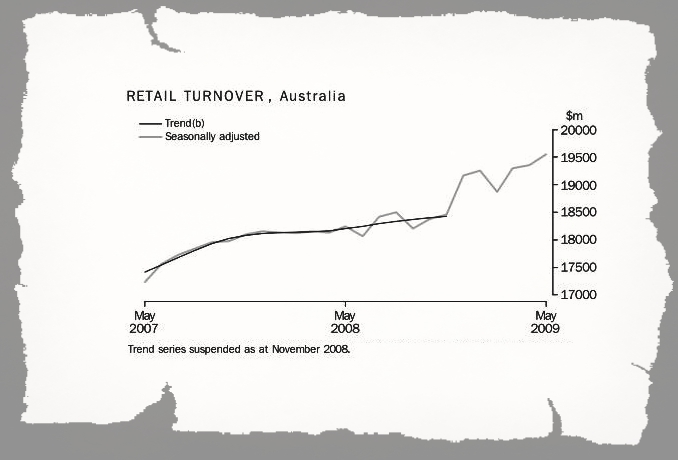
The first cheques went out in December. Spending surged 4% that month after scarcely growing all year. A year on, spending was 5.4% higher than before the cheques went out.
In Japan, the United States, Canada and Germany where stimulus packages were not targeted at consumers, retail spending slipped by 2-3%. In Australia, it surged 5%.
So big was the effect that the payments were staggered by region to ensure cash delivery trucks could top up the automatic teller machines first.
The statisticians collecting retail sales data at the Bureau of Statistics abandoned their usual practice and stopped drawing a trend line.
The jump was impossible to reconcile with the pre-existing trend.
The Treasury had searched the economic literature and determined that cash payments were more likely to be spent than tax cuts, and could be delivered much more quickly.
Six million Australians receive government benefits of some sort, whether they think of themselves as on welfare or not. As recipients of family allowance, childcare support, the pension or even the seniors health card, they are on Centrelink’s books. (Centrelink recently changed its name to Services Australia.)
The payment machine that delivered robodebt can just as easily deliver “robocheques”.
Treasury Secretary Steven Kennedy, who advised Prime Minister Scott Morrison and Treasurer Josh Frydenberg to give households cash this time instead of tax refunds, saw the effect at first hand. He was working in Prime Minister Kevin Rudd’s office as the good news came through.
If there is an important criticism of the Morrison government’s (first) coronavirus stimulus package, it would be that it doesn’t concentrate on households enough.
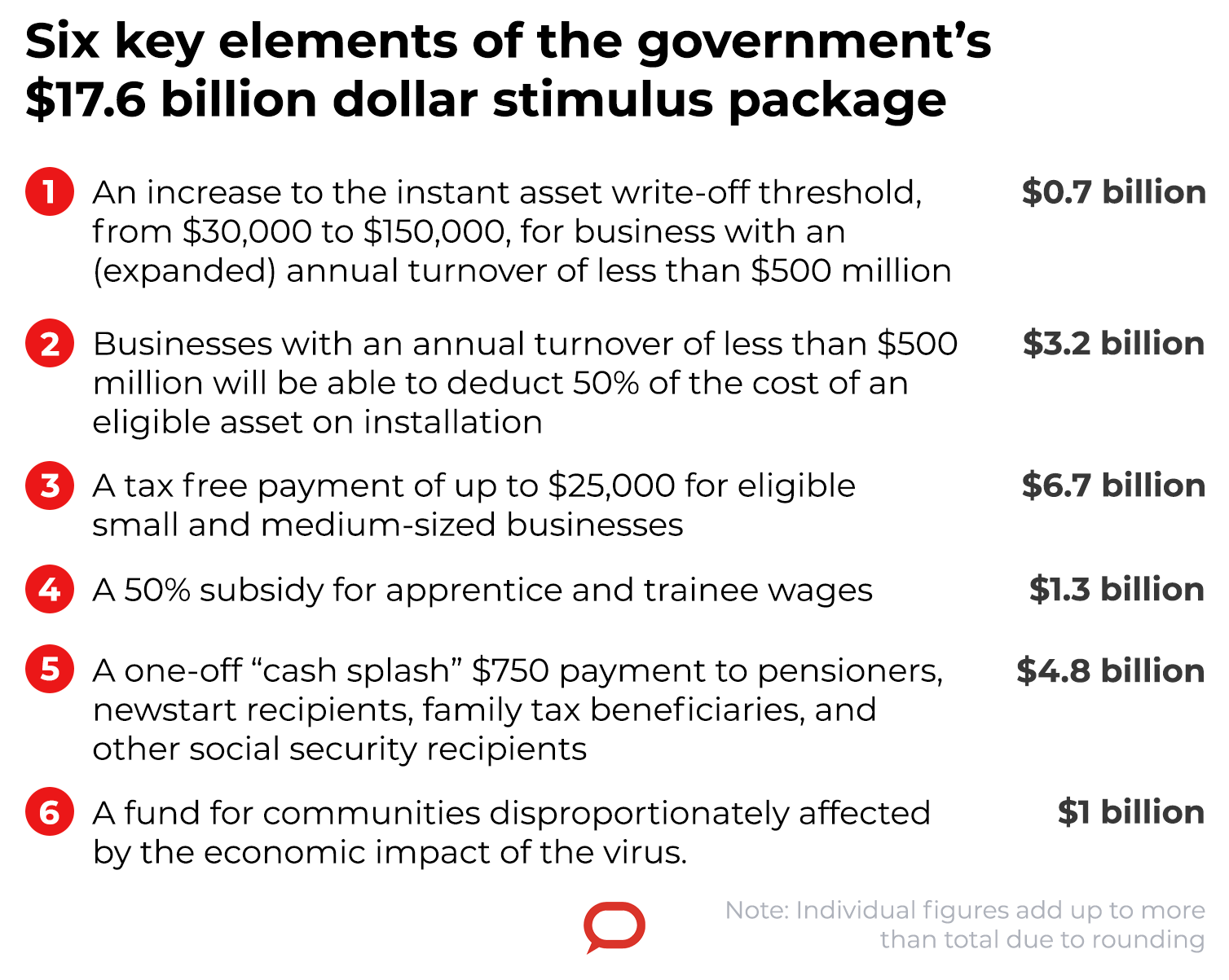
Household spending accounts for 55% of Australia’s gross domestic product, yet payments directed to households make up only 27% of the $17.6 billion the government is spending.
The package has two primary aims. One is to ensure that spending and production don’t shrink in the June quarter after shrinking in the March quarter, triggering what, for better or worse, people call a technical recession.
The Treasury expects it to boost economic activity by 1.5% in the June quarter.
If it does, it should be enough to compensate for the downturn we would have without it, always remembering that we don’t yet know how bad things will get in the three months to June – how many schools and public gathering places will be closed, and how many workers will have to stay home to care for children who can’t go to school or family members who are ill.
The second aim is to stop the unemployment rate climbing. When it climbs more than a few points it tends to keep going. In the early 1990s recession it climbed from 6% to 10% in a matter of months.
People who entered the labour force and couldn’t get work were scarred for years.
Labor’s most enduring achievement during the global financial crisis in 2008 and 2009 was to stop unemployment climbing above 6%.
That’s what the government’s $11.8 billion of payments to businesses are aimed at, whether delivered in the form of a boosted instant asset writeoff (available only until June 30), accelerated depreciation, payments to cover salaries, or wage assistance for apprentices and trainees.
Let’s hope it won’t come to this, but handling the coronavirus might eventually make dealing with the global financial crisis look rather a doddle.
The GFC was devastating – for businesses, individuals and many economies. But it was a financial crisis that drove an economic crisis. When a health crisis is the driver of an economic crisis, the uncertainties are multiplied, and people’s reactions are more difficult to predict.
Will the government’s mega $17.6 billion stimulus package be sufficiently big and well targeted to head off an Australian recession? That was the obvious question when on Thursday Scott Morrison had to eat many of his previous words about Labor’s alleged waywardness in times past and announce his own cash splash for individuals and businesses.
It’s easy to ask but no one can be confident about the answer.
The spending has been carefully pitched to try to stop the economy tanking via a negative June quarter (the general assumption is the March one is down the gurgler). Some $11 billion will go out the door by June 30, and it is estimated the measures will add 1.5% to growth in the June quarter. The rub is, no one knows how much the virus will take off growth in that quarter.
One pressing uncertainty is whether there’ll be a shutdown of major events. So far, the medical advice has been that mass gatherings should not be abandoned.
Scott Morrison told reporters he was looking forward to attending the football this weekend. But many organisations are cancelling smaller events, ranging from the school fete to the business conference. Government House in Canberra has pulled its weekend open day.
There’s an increasing prospect large gatherings will have to be stopped, something primarily in state governments’ hands.
Former Labor leader Bill Shorten on Thursday suggested this should come sooner rather than later. “This is going to be a major policy question, not in weeks and months, but in days. Do we keep having big events? Will we teach school from home?” he said on Sky.
“But we’ve got to have more social distancing. And that is the only way to stop this pandemic being worse than it might otherwise be,” he said.
A pattern is emerging overseas. In the United States the National Basketball Association (NBA) has suspended its season after a player tested positive, and many sporting and other activities around the world are being called off.
On Friday morning the Grand Prix, due to be held in Melbourne, was cancelled.
The cancelling of events, whether after official decrees or by the actions of individual organisations, will hit the economy hard, but the impact must be near impossible to predict.
In any crisis, confidence is key. In this crisis, people obviously are worried not just about jobs and income but also about the sickness.
Different segments of the population will vary in their principal concerns. Young people will be more preoccupied with the employment and financial implications, older people with health matters, but there will be much overlap, with many of the young and middle aged fretting about older relatives.
Glitches will be found and priorities disputed but in general the government’s package appears sound. Nearly $12 billion goes to business, largely to small and medium sized enterprises, in an attempt to keep people in jobs. Meanwhile Morrison is putting moral pressure on big businesses to look after their own. Some are responding.
The $4.8 billion for 6.5 million welfare recipients and other lower income people to receive a one-off $750 payment is unashamedly designed to boost household consumption ASAP. The government can’t wait to get the money out – it will be dispatched from the end of this month.
Here, however, more uncertainties emerge. All the economic data and past experiences say giving these people money will see it spent rather than saved. But will things be the same in these extraordinary circumstances?
About half the beneficiaries of this cash are pensioners – people in the coronavirus’ most vulnerable age group. How many of them will be fearful enough about their health prospects to think they should put away some or all of their windfall from the government?
In political terms, there are lessons in the unfolding crisis.
Politicians should remember that old adage of what goes around, comes around. The Coalition in recent years has made a mantra of how the Rudd government spent too much on combatting the impact of the GFC.
There’s an argument that Labor overspent in its second stimulus package, costing $42 billion, and we know it had flaws. But it was better to err on the side of overkill, and now it’s Kevin Rudd and former treasurer Wayne Swan running round finger pointing.
The Morrison government is aware of the danger of doing too little, hence as it crafted the measures it “grew” the package (which compares with Rudd’s $10.4 billion first tranche). And it stresses the plan is “scalable” – an ugly way of promising to do more if necessary. The next opportunity will be in the May budget.
It’s the same with the government’s crowing about the (prospective) surplus while this was still in the budget’s womb. It will be born a deficit.
Politicians never seem to learn it’s best not to get too full of yourself.
On Thursday night Morrison took the rare course of an address to the nation. He wanted to reassure the public. But are people comforted these days by anything a political leader says? In our age of distrust of the political class, probably not much. Perhaps better to put the Chief Medical Officer on.
Commentators have been saying this crisis will make or break Morrison. We can’t be sure about this either.
If the economy goes into a serious recession, that would transform the political landscape, but in what way is another unknown. A recession helped see off the Fraser government. But as treasurer Paul Keating announced “the recession we had to have” at the start of the 1990s and then as prime minister he won an election in 1993.
So a recession wouldn’t necessarily be fatal for the Morrison government. Nor would avoiding one necessarily deliver the Prime Minister the votes of a thankful electorate.
The public were not grateful to Labor for warding off recession. Gratitude isn’t something today’s fractious voters are inclined to hand out. They thought it was Labor’s job to get them through the GFC. If the Coalition prevents a recession Morrison will receive some bouquets, but whether their pleasant scent lingered would depend on a whole lot else.
Several cabinet members of the Duterte government are placing themselves under quarantine in an effort to prevent the spread of the novel coronavirus Covid-19, while serving as the country’s top officials closest to President Rodrigo Duterte.
Finance Secretary Carlos Dominguez III last night became the first cabinet official to announce he would undergo self-quarantine after he shook the hand of a patient who tested positive for Covid-19.
Transportation Secretary Arthur Tugade followed suit and announced he would also undergo self-quarantine after he was “exposed” to a patient confirmed to have the coronavirus last week.
Department of Public Works and Highways Secretary Mark Villar also announced today, that he would be isolating himself, as he was with Dominguez and Tugade last week.
All officials were at the North Luzon Expressway (NLEX) Harbour Link inspection ceremony on March 5.
– Partner –
Aside from this, Executive Secretary Salvador Medialdea confirmed he would also place himself under quarantine. He said he may have had “possible exposure” to a patient confirmed to have the coronavirus but that he had no symptoms as of posting.
“I just want to be sure,” he said.
‘Extra precautionary measure’ Department of Education Secretary Leonor Briones also announced she would self-quarantine as an “extra precautionary measure” after some education officials were “exposed” to a confirmed Covid-19 patient last February 28 and March 5.
All officials were showing no symptoms of the illness as of posting. Medialdea gave assurances they would continue to work and that the Palace was exploring telecommuting options.
Efforts of cabinet members to isolate themselves come as Duterte was scheduled to be tested for Covid-19 today.
Presidential Spokesperson Salvador Panelo gave assurances the President was not showing symptoms of the disease and was only getting tested as a precautionary measure to ensure he was “fit and healthy to perform” his duties.
Experts earlier said that older adults with preexisting health conditions were more vulnerable to the coronavirus, particularly those aged over 60-years-old.
Duterte, 74, earlier claimed he suffered from a slew of medical conditions that include myasthenia gravis, Buerger’s disease, Barrett’s esophagus, and “spinal issues,” among others.
As of Thursday, the Philippines has so far recorded 49 confirmed coronavirus cases, two of whom have died with a spike in the past few days.
Sofia Tomacruz reports for the independent website Rappler.
Eleven people – including three children – have been massacred when a fight between two warring tribes from Tari spilled into the Porgera Valley in the Papua New Guinea Highlands.
Three women and five men from Enga were also killed when the O Kiru and Miape tribes resumed fighting, this time Porgera.
Paiela-Hewa LLG president Sailas Ayeila, who was on the ground with the law and order team and security personnel, confirmed that those killed yesterday were from Enga in the Paiela, Porgera and Kandep areas but lived in the Suyan village near Porgera.
He said this tribal fight had already claimed enough lives, including that of a young policeman recently.
Ayeila said the blood spilled by this fighting had been condemned by Porgera leaders, police and citizens.
– Partner –
He said that even though the tribes were asked to return home, the O Kiru warlords refused to leave and returned to Suyan village in Marenga area in search of their enemies – the Miape tribe – and slaughtered the innocent people.
Ayeila said the Porgera-Paiela leaders and their people were now calling on the national government to declare a state of emergency in the area.
‘Barbaric and animalistic’ “We Engans do have tribal warfare but we don’t kill in such a barbaric and animalistic way. We don’t kill women and children,” he said.
“I helped to recover those killed and transport the corpses to Paiam Hospital morgue, and I am terrified.”
“People of Porgera, public servants and mining employees are in fear now. Several weeks ago, the police and PNG Defence Force went on a raid after a young policeman was killed by these Tari tribes and the houses that were burnt to the ground by these security personnel belonged to innocent people,’’ Ayiela said.
He also requested the national government to begin a manhunt for the two warlords.
Will there be a resumption of normality? For a few weeks now, awareness has been growing that the global economic consequences of the Covid19 epidemic (that WHO today notes has “characteristics of a pandemic”) may be greater than the medical consequences, even if the European death rates fail to level‑off, even if EU death rates repeat in the USA and UK.
Some economic consequences of Covid19 represent trends that were already underway. So normality, as most of us understand it, is probably not going to resume.
One of the more obvious economic consequences is the impact on the global travel industry. On this, my reading is that the travel industry already reached a turning point in 2019. This turning point was driven in part by concerns (especially but not only by young people) about the contribution of the travel industry to climate change through fossil fuel emissions. It was also driven by more general concerns about enforced consumerism; and the consequences of ongoing exponential accumulation of other waste products (such as plastics) and their impacts on the food chain. We may add other environmental concerns – deforestation, and water insecurity – that contribute to a changing pattern of economic demand in the world. Further, the shear scale of mass tourism was making the ‘product’ less attractive.
Indeed, increased inequality and income insecurity had already limited the growth potential of global tourism.
We also note that the global travel industry includes huge amounts of business travel, much of which is not strictly necessary, and is relatively easily cut from the budgets of stressed organisations. Structural change here was already underway, with, for example, academics increasingly able to collaborate and converse without attending formal conferences.
The global travel industry works today through economies of scale, and huge amounts of capital – eg in large aircraft and ships. Massive amounts of capital have already been sunk in fleets of airliners, cruise ships, container ships and oil tankers – and in the capacity to keep building these behemoths. An accelerated depreciation of all this fixed capital may not be easily reversed.
My argument here is that trend‑changes already underway may be substantially misattributed to an economic shock – an unknown unknown from a 2019 perspective, the Covid19 pandemic. This misattribution may encourage ongoing intellectual laziness. Why investigate further when we already have an explanation for the rapid‑onset decline of a major world industry?
Yes, there will be an economic recovery – indeed a substantial recovery. But the travel industry will probably not fully recover. It was already tainted. The decline will be hastened by Covid19, which I suspect will prove to be the world’s first middle‑class health pandemic.
Stagflation?
Covid19 is a virus. Another virus is the fear virus. This is the one that is self‑fulfilling. There nothing else quite like middle‑class fear. The global financial crisis of 2008 was a crisis of fear.
This crisis may be different, because global supply‑chains have been severed in ways that never happened in 2008. The recovery of these supply chains will be critical to a resumption of anything like normality, and should already be well underway. The crucial ingredient to this recovery is China (as it was to the post‑2008 recovery). We in New Zealand (and Australia) should get over our white middle class racism towards China – China is now a net importer of Covid19 – and urgently re-establish supply chains with that country.
Otherwise, the central macroeconomic consequence of Covid19 will be substantial reduction in supply elasticity. (In New Zealand we have already become familiar with this problem in the construction industry, where shortages of building resources proved more important than shortages of money.)
A supply‑elastic economy is one that can easily respond to both increases in aggregate demand and reorientation of economic demand in favour of some products at the expense of demand for others. A supply‑elastic economy is an economy that is not ‘maxed‑out’.
If policymakers address the present crisis as a conventional macroeconomic crisis – as a crisis of insufficient consumer and investment spending – then a contrived increase in aggregate demand may be met by an unresponsive aggregate supply. Result, ‘stagflation’, the bugbear of the late 1970s. In those years, supply was restricted on account of high interest rates (monetarist anti‑inflation policies), corporate rent‑seeking, high oil prices, and labour‑market rigidities.
This time, a simple inability for businesses to acquire necessary materials may underpin inelastic supply. This is likely to be exacerbated by rigidities in transferring human resources from white‑collar service employment (essentially the overpaid ‘bullshit’ sector described by David Graeber in his book ‘Bullshit Jobs’) into employment in sectors that contribute to our supply-chains.) Once again, we have pre‑existing constraints on aggregate supply combining with the new constraints arising from the Covid19 contagion.
This situation requires a more nuanced response than reliance on monetary policy easing, which (along with China) saved financial capitalism from the 2008 financial crisis.
The good news, this time, is that excess global transport capacity – arising from less tourist and business travel – may be converted increasingly into freight capacity. Already cheap airfares were possible to a large extent because passenger aircraft were also carrying freight.
There will be one new ongoing supply constraint to note. Increased absence from work, due to much higher enforcement of virus‑free workplaces, will lead to reduced economic capacity, especially in the winter months.
Nevertheless, my sense is that global supply chains can quickly revive, and that the 2020s will turn out to be a decade in which constrained consumer demand re‑establishes itself as the more intransigent problem.
National policy response? Universal payment.
What should be the New Zealand government’s economic response? It should be a response that facilitates a medium‑term transition to a form of capitalism that can adjust to structural constraints on both aggregate demand (ie a movement away from consumerism) and aggregate supply (ie less‑stressed and less‑vulnerable supply chains), while not necessarily promoting those constraints.
We need simple easily‑implemented economic solutions that do not depend on the restoration of economic growth. New Zealand, with its comparatively simple income tax scale, is able to make changes that fulfil this specification.
The suggested change is this. Every New Zealander over 18 could (say from 1 July 2020) be granted a weekly credit of $175. To offset this, all personal income would be taxed at 33 percent.
This is much less radical than it sounds. Consider six examples:
Persons earning more than $70,000 a year would notice no change in their present circumstances. But, if they lose their job, they will keep their weekly $175 unconditionally. They would only have to apply to Work and Income if they need support over and above this.
Persons earning $48,000 a year would gain $12.70 per week. And, if they lose their job, they will keep their weekly $175 unconditionally. They would only have to apply to Work and Income if they require support over and above this. Persons earning less than $48,000 would gain more than $12.70.
Beneficiaries (including Superannuitants) would notice no immediate change in their present circumstances. $175 of their benefits would be classed as inviolable, so would not be lost if they enter into to some form of employment or new relationship. (A simple variation of the policy could see high‑earning Superannuitants becoming upto $70 per week worse off.)
Working for Families tax credits are payable currently to the lower-earning parent in many families. Parents already receiving weekly Working for Families tax credits in excess of $175 would not gain more immediately. But they would secure their $175; they would still get at least $175 if a change of circumstances reduces their Working for Families entitlement.
Low income self‑employed people would gain as a result of this initiative. They would be assured of $175 every week, regardless of the vicissitudes of the marketplace.
Domestic tertiary students would be assured of $175 per week, regardless of parental income or part‑time jobs. (A public affordability option here would be to discontinue free tertiary fees, thereby using student loans more for fees and less for living costs.)
The universal payment would serve as a very efficient ‘automatic stabiliser’, allowing the domestic economy to keep ticking over during periods of market uncertainty. It also would mean that, in conditions of low discretionary demand (eg due to less‑consumerist spending choices), people will be assured of a basic universal income. They will be more easily able to choose to enjoy the benefits of past productivity gains by opting for less stressful and more sustainable lifestyles. Aggregate incomes necessarily fall when most people choose to work less and spend less. Universal payments make this conservationist option possible, though not necessary.
Universal payments, to work effectively, need to be indexed at least to prices. It would be better to index the universal payment to a measure such as gross domestic product per person, ensuring that the payment would reflect productivity growth. Also, the presence of such universal payments gives an easy stimulus option for future crises; governments may simply raise the universal payment (in addition to regular indexed increases) as an alternative to cutting taxes.
In Closing
Covid19 presents us with a unique set of economic challenges. Are we up for it? The biggest threat to successful policymaking is our own intellectual laziness. Governments will only do the right things if pressured to do so.
The Morrison government’s stimulus measures, to be announced Thursday, will include a $25,000 cash flow boost for small and medium-sized businesses, a subsidy to help preserve apprentices’ jobs, and a big expansion of the incentive to invest in equipment.
These three items alone will total A$8.7 billion, in a package which is set to be much larger than earlier estimates.
This indicates the government has responded to warnings about the dangers of not going hard enough, as uncertainty mounts about the ultimate economic fallour from the coronavirus.
Speculation on Wednesday was that the package would exceed $15 billion.
Scott Morrison paved the way for some cash handouts to pensioners and others on welfare to try to shore up growth quickly. He reminded a news conference the Coalition had supported the first round of the Rudd government’s stimulus (which centred on cash payments for households). “We need to address the demand side and supply side,” he said.
Speaking on Sky on Wednesday night, he pointed to something for pensioners, saying they in particular but also many in similar circumstances would spend any extra money.
The government will provide up to $25,000 tax free to businesses, with a minimum payment of $2000, to help them with wages, extra staff, investment and to buttress against the looming downturn. Businesses eligible will be those with a turnover under $50 million that employ staff.
Businesses that withhold tax on their employees’ wages will receive a payment equal to 50% of the amount withheld, up to a maximum $25,000. Enterprises that pay wages will get a $2000 minimum even if they are not required to withhold tax. The payment will be structured in a manner that speeds money out early on.
The cost of the measure is estimated at $6.7 billion over the forward estimates, with about 690,000 enterprises employing about 7.8 million people benefitting.
The apprentice measure is aimed at protecting some 120,000 apprentice jobs. The government will offer small businesses up to $7000 wage assistance each quarter for each apprentice, to retain existing apprentices and trainees, and to re-employ those who lose their jobs from a small business due to a downturn driven by the coronavirus.
The employer will get a wage subsidy of 50% from January 1 to September 30. Where a business has to let an apprentice go, a new employer can get the subsidy.
Businesses eligible will be those with fewer than 20 fulltime workers. But businesses of any size, and group training organisations, that re-engage an eligible apprentice will be able to get the subsidy.
The apprentices must have been in training with a small business on March 1. The program will cost $1.3 billion across the current and next financial years.
In an attempt to stimulate some investment quickly, the government will expand the instant asset write off, raising the threshold from $30,000 to $150,000, as well as widening access for firms, from the present annual turnover of up to $50 million to $500 million.
The government is hoping to “supercharge” investment in items like cars and utes, new tools and kitchen equipment.
The expansion is costed at $700 million over the forward estimates.
Morrison said: “We’ve balanced the budget and managed our economy so we can now use this to protect the health, wellbeing and livelihoods of Australians.
“Our targeted stimulus package will focus on keeping Australians in jobs and keeping businesses in business so we can bounce back strongly”.
Former senior bureaucrat Martin Parkinson, who headed treasury and later the prime minister’s department, told the Australian Financial Review the stimulus should be at least 0.5% of GDP, or about $10 billion.
As the tally of Australian coronavirus cases stood at 122 on Wednesday (including three deaths), an increasing number of events are being cancelled and shutdowns occurring.
The government on Wednesday added Italy to the countries from which non-Australian arrivals are banned. The others are China, Iran and South Korea. The ban on Italy is likely to have only marginal impact because that country is already in lockdown.
Treasurer Josh Frydenberg met the CEOs of the big four and other banks on Wednesday. The banking sector flagged it would assist businesses financially affected by the virus.
CEO of the Australian Banking Association Anna Bligh said businesses would be assessed on a case by case basis but the sort of help could include deferral of loan repayments, waiving fees, interest free periods or no rate increases, and debt consolidation.
Indonesia has reported its first death from the Covid-19 coronavirus today, a 53-year-old woman and foreign citizen identified as Case 25.
The Health Ministry’s disease control and prevention director-general Achmad Yurianto said Case 25 died about 2 am on Wednesday after nearly three days of treatment.
“The patient was admitted to the hospital in an already severe condition caused by preexisting illnesses, including diabetes, hypertension, hyperthyroidism and years-long obstructive lung disease,” Yurianto said.
He said the coronavirus infection had worsened the patient’s immune system, which had further exacerbated her preexisting illnesses.
“So the coronavirus was not the main cause [of the patient’s death], but it had worsened her condition.”
– Partner –
Yurianto did not disclose the nationality of Case 25. However, he said the embassy of her country had been notified when she tested positive for the virus, and that her body was already in the process of being taken home.
He also did not reveal where Case 25 had been hospitalised, but said her husband had been by her side during her treatment.
As of today, Yurianto said that two of the patients, Case 6 and Case 14, had tested negative for the virus after receiving treatment and were ready to be discharged.
The patients had been ordered to self-isolate at home after being discharged as a precautionary measure, he said.
Marchio Irfan Gorbiano is a reporter for The Jakarta Post.
The Australian government today announced new telehealth consultations will be covered under the Medicare Benefits Schedule.
This will mean people who are isolated due to the coronavirus can access medical services from home by audio or video, an important step to protect other patients and health-care workers from being infected.
Health-care workers are perhaps our most valuable asset in an outbreak situation, but can be at high risk when coming into contact with patients who have COVID-19.
So how do health-care workers protect themselves – and patients – from transmission? And what more could we do?
Regardless of COVID-19, doctors and other health-care staff often feel some level of expectation to turn up to work even when ill. They’re often worried about placing strain on co-workers and affecting patient care.
The practice of quarantining health-care workers who may have been exposed to the virus puts additional pressure on health services and is expected to increase as the outbreak continues.
Infection control measures are in place all the time in health-care settings. But during outbreaks like the coronavirus, they’re stepped up.Shutterstock
Over the weekend, we saw tension between medical practitioners and state health departments when a Melbourne GP saw patients while unwell and subsequently tested positive to coronavirus.
The Victorian health minister called for the health professional regulatory agency AHPRA to investigate the doctor, despite the fact he followed state guidelines current at the time.
Where multiple jurisdictions and authorities are providing differing information, this complicates the decision health-care workers face when they’re unwell or may have been exposed to the coronavirus.
As much as possible, health-care workers should follow guidelines issued by their place of work or health department.
Health-care workers take precautions all year round
Standard precautions used in most health-care encounters include hand hygiene, the use of appropriate personal protective equipment, the safe use and disposal of sharps, and routine cleaning. These are to be followed even if there’s no evidence of an infection.
We use what we call transmission-based precautions in conjunction with standard precautions when we know of or suspect an increased risk of transmission for a particular disease.
Because we know coronavirus spreads through large droplets, health workers are using two classes of transmission-based precautions: droplet and contact precautions.
Contact precautions involve putting on gloves and a gown upon entry to the patient care area, to ensure clothing and skin do not make contact with surfaces that have potentially been contaminated with the infectious droplets. Droplet precautions involve wearing a surgical mask so infectious droplets don’t get in the mouth and nose.
Normally coronavirus is spread only via droplets but some medical procedures such as inserting a breathing tube can aerosolise the virus, meaning it can stay in the air longer.
Health-care workers may take additional airborne precautions when they’re undertaking aerosol generating procedures such as intubating a critically unwell patient. These precautions include wearing a properly fitting P2/N95 respirator and caring for the patient in a special isolation room.
Education and training around these procedures must be routine so that in the face of an outbreak like coronavirus, health-care workers are supported and prepared to implement these critical protocols.
Telehealth consultations are a good step
As well as enabling people who are sick or isolated to see a doctor from home, telehealth will allow doctors who may be isolated due to infection, or quarantined because they’ve had contact with an infection, to continue to practise.
The measure could also ease the strain on resources. Numerous health-care practices have reported scarcity of personal protective equipment (like masks) and hand hygiene consumables (such as soap and paper towels), potentially placing health-care workers and patients at risk.
It’s critical health-care workers have access to appropriate protective equipment.Darren England/AAP
While telehealth is useful to a degree, when someone needs a test or treatment, this will likely need to happen face-to-face.
It’s critical health-care workers can access the appropriate supplies so they can follow the proper infection prevention and control protocols.
We also need consistent messaging for the public and health-care workers on when to contact a health-care professional, how that should be done and what to do to minimise coronavirus risk.
Existing health systems are already stretched beyond their limits. We don’t have the capacity to respond to a surge in required services – let alone to absorb health-care workers who are unwell.
It should be taken as a given that Russian President Vladimir Putin is a master of ambiguity and strategic surprise.
After the Russian government resigned and Putin proposed amendments to the constitution in January, the Russian leader spent a great deal of time rebuffing claims he would try to run for president again when his fourth term in office was up in March 2024.
But this week, he did not back away from a proposal by Valentina Tereshkova – a trusted supporter and one of the most respected women in Russian politics – to change the constitution to reset Putin’s presidential terms to zero. This would legally allow him to run for the presidency again (and potentially a second consecutive term), thereby extending his reign past 2024 for another 12 years.
The 67-year-old Putin has been in charge of the country for the past 20 years, both as president (2000-08, 2012-present) and as de facto leader while serving as prime minister from 2008-12.
He has stayed in power longer than any other elected Russian head of state and still maintains strong approval ratings. However, the Russian public’s trust of Putin hit a six-year low last month, dropping sharply to just 35% in January.
Putin likely did not make this latest move in response to declining public trust. Rather, the proposed change to the constitution, which must still be approved by Russia’s Constitutional Court and a nationwide referendum, can be explained by three other major factors.
Saving the ruble
The move to signal possibly staying in power may be driven by the immediate need to offer some support to the volatile Russian markets, which plummeted following the collapse of talks between Russia and OPEC over oil production cuts.
The logic is simple: by indicating he may be staying on, Putin is trying to reassure investors that Russia is unlikely to slide back into internal political turmoil after almost two decades of relative calm under his continuous rule.
The Russian stock exchange improved immediately after the proposed constitutional change was announced and the ruble recovered some lost ground to major foreign currencies. However, this may prove to be just temporary relief.
Even as public trust in Putin has declined in recent years, it’s even lower for his political allies, such as former Prime Minister Dmitry Medvedev (5% in January 2020), current Prime Minister Mikhail Mishustin (3%), head of the Russian Federal Assembly Valentina Matvienko (2%) and Moscow mayor Sergey Sobyanin (2%).
Shoygu is perhaps Putin’s most loyal ally in his inner circle and could be a potential heir, but it seems he has no ambition for the top job.
Shoygu is close to Putin and has vacationed with him in the summer.ALEXANDER ZEMLIANICHENKO / POOL
Russia’s lost opposition
Another effect of Putin’s 20 years in power is that the Russian electorate does not see any viable alternative to the current president.
For most Russians, Putin is associated with the country’s rise as a great power, the revival of its military might and the stabilisation of the economy compared with the volatility of the 1990s. He’s also overseen a considerable decline in the risk of terrorist threats in the country.
There is a whole new generation of Russian voters who grew up in a country run only by Putin. Not all support Putin, but many young people are his biggest fans.
Russia’s first president, Boris Yeltsin, once faced fierce political opposition in the Duma, the Russian parliament. But under Putin, the parliamentary opposition currently represented by the Communist Party, A Just Russia (a leftist party) and the liberal democrats has lost much of its support to the pro-Putin centrist and nationalist coalition of the United Russia party and the People’s Front movement.
Russia’s real liberal opposition is a lost cause. The most charismatic and trusted opposition figure in Russia, Alexey Navalny, has launched many anti-corruption investigations into figures in Putin’s party, yet his popular support base remains pitifully low. The same political trust poll by the independent Levada Centre shows Navalny at no more than 3% from 2017-20.
The real problem of Russia’s liberal opposition is its continuous failure to engage the vast majority of the conservative Russian electorate. This, combined with its simultaneous courting of both big business and the small, underdeveloped middle class, as well as select intelligentsia, does more damage to its public reputation than the Kremlin’s oppressive measures.
Alexey Navalny tried to run for president in 2017, but was ruled ineligible – a move he said was politically motivated.YURI KOCHETKOV/EPA
As such, the Russian electorate is stuck with practically no alternative. On one hand, they want change and recognise Putin is no longer the most effective problem solver. On the other hand, they don’t see anyone else who is as experienced, trustworthy and capable of running the country as Putin.
Being both a populist and pragmatist, Putin has positioned himself well. Putin the populist gives Russians hope by addressing their anxiety over who could lead the country after him. Putin the pragmatist understands that his reputation in the eyes of ordinary Russians, while remaining strong, is nonetheless fading away.
Perhaps most critically, Putin remains a master of evasiveness, and his announcement this week left enough room for him to make a final decision on standing for another term closer to the 2024 election.
Putin’s love of power is balanced by his ambition to be remembered as yet another saviour of Russia. He will go for another term only if he feels confident he can deliver another success story. Failure is not an option for a strong, ambitious personality like Vladimir Putin.
As the number of new cases of coronavirus infection continue to rise the impact is now being felt in schools in Australia. At least four closed due to students and a staff member testing positive for the virus. Most international travel by Queensland students is also banned.
It’s therefore important for parents to be there for their children to ease any concerns they may have about the virus and how it could affect them.
One thing to note is the number of reported infection cases in children remains low: of more than 44,000 confirmed cases from China, only 416 (less than 1%) were aged nine years or younger. No deaths were reported in this age group.
So here’s some advice for parents to help them and their children stay informed.
1. Control during uncertainty
The new coronavirus SARS-CoV-2 causes the disease COVID-19, which can be like a common cold but it can also have more serious complications. Signs of infection may include: fever, cough and shortness of breath. More severe cases can involve pneumonia, kidney failure and even death.
The spread of SARS-CoV-2 has not yet been declared a pandemic but the Australian government has said it’s operating on the basis that it has.
One reason people experience anxiety during a pandemic is uncertainty about its impact. Research during the 2009 swine flu (H1N1) pandemic found those people who struggled with uncertainty were more likely to see the pandemic as threatening, and this can lead to increased levels of anxiety.
One way to provide our children with certainty in uncertain times is with facts, for example, telling them the evidence so far shows children are less likely to experience severe symptoms than older adults.
You can also help them gain a sense of control by giving them strategies to help prevent them catching the virus.
2. Practise good hygiene
The World Health Organisation (WHO) says we should channel our concern into good hygiene.
Encourage your children to wash their hands with soap and water frequently (particularly after going to the toilet, coming from a public place, and before and after eating).
Encourage your children to wash their hands frequently.
Children should also use a tissue to sneeze into and put the tissue in the bin afterwards.
Exposing children to such reports can increase their fear and anxiety.
There is a clear and strong relationship between what children see as threatening information in the media and their level of fear.
So be careful with what news media your children are exposed to. Try to watch, listen or read it with them so you are there for any questions they may have.
4. Stay with the facts
When answering such questions, use information from the World Health Organisation and other trustworthy sources to inform yourself.
Filter some of the incorrect information around preventing COVID-19 (eating garlic, having hot baths) and inform your family with the correct information. Don’t be someone who passes on incorrect information to your children or others.
5. Talk about your feelings
It’s OK to feel worried. Talking about your feelings of stress can help you work through them.
If you try to push down feelings of stress this can have an impact on your health.
As parents you only have to listen and hear your child’s concerns. You can’t promise things will be safe or certain. But you can assure them that as a family you will work together to manage whatever comes up in the future and that you are there to listen to them.
6. Don’t pass on your fear
Research from the 2009 Swine Flu pandemic showed children’s fear of the disease was significantly related to their parents’ fear of the disease.
This effect of parents passing on fear even exists when there is nothing to fear. Research showed if parents get negative information about something that is harmless, they are more likely to pass on those negative beliefs to their children and increase their level of fear.
So even if you feel stressed about COVID-19, you need to make sure you don’t pass on this fear to your children. Show them you are calm. Don’t be a carrier for fear.
Help your child to focus on the now and what they are doing today. These things are in their control – work hard at school, train for basketball. Continue their routine and enjoy the moments.
Source: The Conversation (Au and NZ) – By Katharine Kemp, Senior Lecturer, Faculty of Law, UNSW, and Academic Lead, UNSW Grand Challenge on Trust, UNSW
In 2014, Facebook users were offered an app called “This is Your Digital Life”, which paid users to take a personality quiz. The app harvested the data not only of the person taking the quiz but also of their Facebook friends, who had no knowledge of the app or the data collection.
The app developer then sold that information to a political lobbying company, Cambridge Analytica, which used the personal data for political profiling. This profiling was apparently used to aid in the election of US President Donald Trump in 2016, among other things.
Worldwide, approximately 87 million Facebook users were affected. In Australia, only 53 users downloaded the app, but still, around 311,000 people were affected.
The OAIC alleges that Facebook contravened the Privacy Act by allowing users’ personal data to be used for purposes that were not properly disclosed, and by failing to take proper steps to protect users’ personal data.
Better late than never
The OAIC’s action follows similar action against Facebook by regulators around the world. In 2018, the UK privacy regulator fined Facebook the maximum GBP500,000 over the Cambridge Analytica breach. Last year, the US Federal Trade Commission (FTC) settled with Facebook on a record-breaking US$5 billion payment in respect of related conduct.
While the OAIC’s action should be encouraged, we should not overestimate the impact on Facebook.
If the Federal Court finds the alleged contraventions occurred, Facebook could face fines of up to A$1.7 million for each contravention. (There is likely to be debate over what constitutes a single contravention, and therefore how many contraventions there were.) That may sound hefty, but we should put it in context.
When the US$5 billion settlement with the FTC was announced last year, Facebook’s share price went up. The settlement represented only about 7% of Facebook’s 2019 revenue of more than US$70 billion.
Facebook is still collecting data about non-Facebook users
Facebook responded to this week’s announcement of the OAIC action by saying it has upgraded privacy protections:
We’ve made major changes to our platforms, in consultation with international regulators, to restrict the information available to app developers, implement new governance protocols and build industry-leading controls to help people protect and manage their data.
Facebook says it collects information about anyone who visits a website or app that uses “Facebook Products”, which includes anywhere you see Facebook “Like” buttons or an option to “sign in with Facebook”.
You don’t need to click on the “Like” button or sign in with Facebook for this to happen. According to Facebook, it collects this information “without any further action from you”.
Facebook does this by placing a cookie on your computer or device when you visit the third-party website. It then collects data about what you do online, including your use of other websites and apps, and information about your device, which can be highly individual.
According to its Cookie Policy, Facebook can broadly use this data to offer you products and to “understand the information we receive about you, including information about your use of other websites and apps, whether or not you are registered or logged in”.
In 2018, Facebook told the US House of Representatives that it does “not use web browsing data to show ads to non-users or otherwise store profiles about non-users”. However, its Cookie Policy does not reflect these claims, and it has not said it will stop collecting this data.
More than that, Facebook has in the past claimed it will limit data use, before going back on it later. When Facebook acquired WhatsApp in 2014, it told regulators it would be unable to automatically match Facebook and WhatsApp user accounts after the merger. The European Commission has since fined Facebook for making incorrect or misleading representations in this respect.
Similarly, the action brought by the US FTC referred to repeated misrepresentations by Facebook about the extent to which users could control the privacy of their data.
Facebook may have made some changes, but it is still an advertising business with a history of privacy infringements that makes tens of billions of dollars each quarter from collecting and monetising oceans of personal data.
Other companies are similarly focused on extracting personal data at the expense of privacy. Consumers should hope this is only the first of many more actions by the privacy regulator.
This chart of deaths by coronavirus (March deaths in red) clearly shows just how much worse this epidemic is in Italy than anywhere else. And the vast majority of these deaths are in Northern Italy. Milan is the new Wuhan, and Lombardy is the new Hubei. Except that total deaths per billion of the population in Italy now far exceeds that of China. Italy’s death toll of 10.5 per million (so far) is equivalent to 52 deaths in a country the size of New Zealand.
The good news is that death rates are well down in East Asian countries, making them now far safer than West European countries. (In South Korea, now the worst case in Asia, the contagion is worst in a single central province that does not include either of the two main cities.) The other good news is that Scandinavian countries, with high incidences of Covid19, have not recorded a single death.
The Northern Hemisphere English-speaking countries still have low death rates, although there are still major ongoing risks in the USA and the UK. (Canada has one death, and an incidence rate lower than Australia. The chart only includes countries with 2 or more deaths.)
Spain and France remain significant concerns, albeit with incidences far lower than Italy. Greece has had a big rise in recent cases which may translate to deaths soon.
The other area to watch is West Asia. Iran is a known severe case that may well be gaining control. Iraq also has a significant problem; it may also be gaining control. (Both countries are cold and dry in February; perfect conditions for winter influenzas and the like.)
The country I am concerned about is Turkey. The New York Times data source has only just recorded its first case there. This seems implausibly low, given Turkey’s substantially affected neighbours, its relatively open borders, and its largest city (Istanbul) being a major world transport hub and tourist magnet. Is it possible that Turkey has many more cases than we know about? I would be cautious about travelling to Turkey just now.
Women are now the main earners in about one in four Australian households. This increase in female “breadwinner” households challenges traditional expectations of men and women and their roles in family life.
Our research shows those expectations remain strong, with both men’s and women’s satisfaction with their relationship dropping when the woman becomes the primary breadwinner, earning 60% or more of household income.
Examining relationship satisfaction
We examined what happened when couples experienced change in their household breadwinning arrangements using data from the Households Income and Labour Dynamics in Australia (HILDA) Survey. Our study used detailed information collected from about 12,000 Australians over a maximum of 17 years.
Our analysis took into account the level of economic prosperity of the household as well as health, number of children, marital status, the division of household labour and gender role attitudes. We did this to ensure any changes we found in relationship satisfaction by breadwinner status were irrespective of other characteristics.
For example, it would be unsurprising for both partners to feel dissatisfaction if the reason for a woman being the main income provider was her partner’s unemployment. Even when both partners were employed, our findings show both men and women were less satisfied when she earned more.
Conditions make a difference
It is true, though, that a woman earning more because her partner is unable to work due to unemployment or illness has different implications for relationship satisfaction than her having a better-paying job.
Women on average were least satisfied with the relationship when she became the primary breadwinner due to her partner being unable to work due to illness or disability.
The reverse is not the case; the woman being unable to work does not, on average, affect the man’s relationship satisfaction.
Both men and women were generally more satisfied with their relationship when the woman became the homemaker. This is similar to international research that finds women who are homemakers are slightly happier than full-time working women.
This change in satisfaction may be explained by most women becoming homemakers after having a child. Many new mothers want to stay home with their infant. It also helps working families manage the time pressures of having young children. It is usually short-term. About three-quarters of women return to work by their child’s first birthday.
Employed women were most satisfied with the relationship when they became “equal” earners – contributing between 40% and 60% of household income. Men were most satisfied as the main or equal earner.
Gender Equality – still a long way to go?
Our research suggests gendered expectations about who earns income persist despite the changing reality of the labour market.
Women are increasingly obtaining university qualifications and entering occupations that are in demand and on the rise. Meanwhile some traditionally well-paid male-dominated industries are subject to uncertain boom-and-bust cycles (such as mining) or long-term decline (such as manufacturing).
Yet men’s identity – the way they see themselves and are perceived by others – is more tied to employment and being the breadwinner than women’s. Women often expect their male partner to contribute at least equally to the household finances, or to be the primary earner.
Another factor that might partly explain the greater dissatisfaction when she is the main earner is how couples share household labour.
Research shows Australian women do, on average, about 70% of unpaid domestic labour in couple households. Previous Australian research, also using HILDA, shows women who earn 75% or more of household income spend 40 minutes longer doing domestic labour than women who were more equal earners.
If a woman continues to do more housework as the main or sole earner, this may well decrease her relationship satisfaction.
That both women and men are generally less satisfied in relationships when she earns more shows the issue is complicated. Personal expectations and values sit in tension with both changing economic reality and social ambitions for gender equality.
As fake news on Covid-19 spreads faster than the virus, scientists call for a halt to the “infodemic”.
As China admits that the novel coronavirus (Covid-19) is now the worst public health crisis that the country has faced since its founding, a group of scientists has sent out a piercing appeal for sobriety in media coverage of the epidemic.
The scientists in a statement published on February 19 in one of the world’s leading science journals, Lancet, appealed for support for the scientists, public health professionals and medical professionals.
“We are public health scientists who have closely followed the emergence of 2019 novel coronavirus disease (Covid-19) and are deeply concerned about its impact on global health and wellbeing.
“We have watched as the scientists, public health professionals, and medical professionals of China, in particular, have worked diligently and effectively to rapidly identify the pathogen behind this outbreak, put in place significant measures to reduce its impact, and share their results transparently with the global health community.
– Partner –
“This effort has been remarkable,” the scientists said in a formal statement which they asked the public to endorse and sign.
Fighting the ‘infodemic’ This appeal cannot be timelier. It comes at a time when the coronavirus “infodemic” is overshadowing the coronavirus epidemic itself.
I had started to worry when my driver asked me the other day if it is true that China’s government officials are killing people who are sick of the coronavirus there just to get rid of the virus.
I proceeded to interrogate him on where he got the information and scolded him, saying this is fake news. But what really got me worried was when no less than a senator of the Philippines played back in a public hearing in February in the halls of Philippine Congress a conspiracy theory video that claimed the coronavirus to be a form of “bio-warfare” developed by the US against China.
Vicente Sotto, whose claim to fame before he was elected senator was as a broadcast personality, alleged his office had received the video anonymously and found it was “somehow very interesting, if not revealing”. The theory has been debunked by experts.
What happened next was just as interesting. Instead of first asking the opinion of the health experts present, Senator Sotto turned to Foreign Secretary Teodoro Locsin for his comments. Locsin, a veteran journalist and publisher, immediately rejected the theory as the “craziest video”.
But it was also crazy that Senator Sotto did not immediately ask for the opinions of the health officials present at the Senate hearing, particularly Health Secretary Francisco Duque III or WHO country representative Rabindra Abeyasinghe. It seems that Senator Sotto was looking for sensational angles rather than scientific opinions and who better to ask than a journalist?
This is a tendency to which most of us in the public are now inclined as we read and talk about the origins, nature and spread of Covid-19.
As of March 10, barely two months after the confirmation of the first case of corona virus (31 December 2019), in Wuhan, China, there were at least 67,773 confirmed cases in the mainland China province of Hubei, bringing the world total to more than 118,745, with the death toll at 4284. Major outbreaks have also developed in Iran, Italy – with a quarantine of its population of more than 60 million – and South Korea with thousands of confirmed cases and multiple deaths.
How to protect yourself against Covid-19. Video: World Health Organisation
Reprise Sars and Merscov This Covid-19 epidemic that started in China and now threatens to be a worldwide pandemic brings to mind two epidemics in our lifetime — Sars and Merscov.
Severe acute respiratory syndrome (Sars) was a viral respiratory illness that was recognised as a global threat in March 2003, after first appearing in southern China in November 2002.
It reached Singapore on February 25 and I had personal experience coping with public hysteria for months until the high-quality Singapore medicalsystem and responsible media licked the virus three months later in May.
A total of 238 probable Sars cases were reported in Singapore between March and May 2003, 33 of whom died. The first case was on February 25 while the last case was 5 May 5.
Although away from my family as a visiting professor in Singapore, I overcame my initial jitters and later felt safe enough to go out to the market, take the bus to my office and make occasional forays downtown. It did cramp my social life, however.
The crucial thing to remember is to be informed, collected and aggressive in combating false information.
Pandemic in digital age What makes Covid-19 different from Sars and Merscov, however, is not only its initial size but the milieu into which it was born. Covid-19 is now at a stage when it is likely going to be declared a pandemic and described with many others — thanks to social media.
When Sars and Merscov were infecting people, the younger generation were only beginning to surf the internet and use the original cell phone. Social media was still an infant.
But now, a WHO official warns that false news was “spreading faster than the virus”. Claims are made that the virus is spread by eating bat soup or could be cured by garlic. A WHO official has met officials of tech companies at Facebook’s headquarters in Mountain View, California, including those from Google, Apple, Airbnb, Lyft, Uber and Sales force.
Earlier he held talks with Amazon at the e-commerce giant’s headquarters in Seattle.
Since the outbreak of the coronavirus was labelled a public health emergency, books on the disease have popped up on the e-retailer. And when users search for the word coronavirus on Amazon, listings for face masks and vitamin C pop up.
Vitamin C has been listed as one of the fake cures for coronavirus.
In response, Facebook on February 27 announced that it was banning ads that “create a sense of urgency” about Covid-19 or suggest cures or preventive measures” and “will remove posts that contain false information about the virus”.
Most likely unintended, but in the foreseeable future we may have to fight the coronavirus on two fronts — the viral epidemic and the informational epidemic fronts.
Rather than be passive recipients of news, we have to become critical and push back on all information that sounds “crazy” and “conspiratorial”. The educated class should take the lead in doing this.
Schools should be involved and introduce courses on mediainformation literacy, starting with identifying fake news especially in relation to science and health.
This is quite a challenge to both the medical scientists and the communication scientists. May both groups of scientists win.
Dr Crispin C. Maslog, a former journalist with Agence France-Presse, is an environmental activist and former science professor at Silliman University and the University of the Philippines Los Baños, Philippines. He is a founding member and now chair of the board of the Asian Media Information and Communication Centre (AMIC), Manila.This article was produced by SciDev.Net’s Asia & Pacific desk.
Source: The Conversation (Au and NZ) – By Paul Weston, Senior Research Fellow / EH Graham Centre for Agricultural Innovation, Charles Sturt University
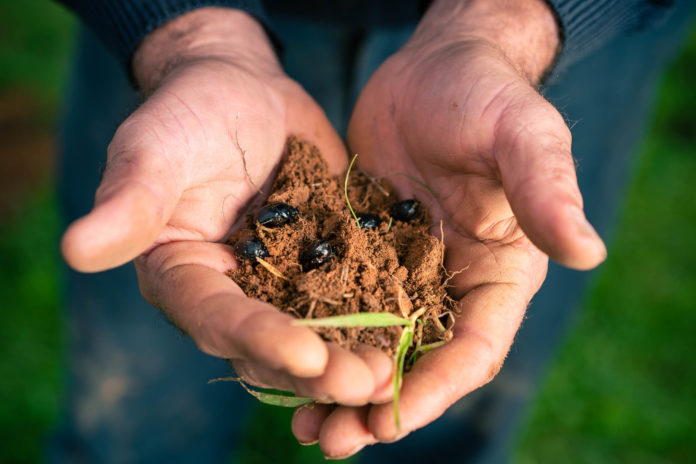
Dung beetles play an important role helping clear up all the dung left by other animals in an environment.
In Australia there are approximately 475 native species of dung beetle.
But there’s a problem. Most of them are adapted to deal with marsupial dung. When British colonisers brought livestock down under, they introduced an entirely new type of dung that the native dung beetles were ill-equipped to handle.
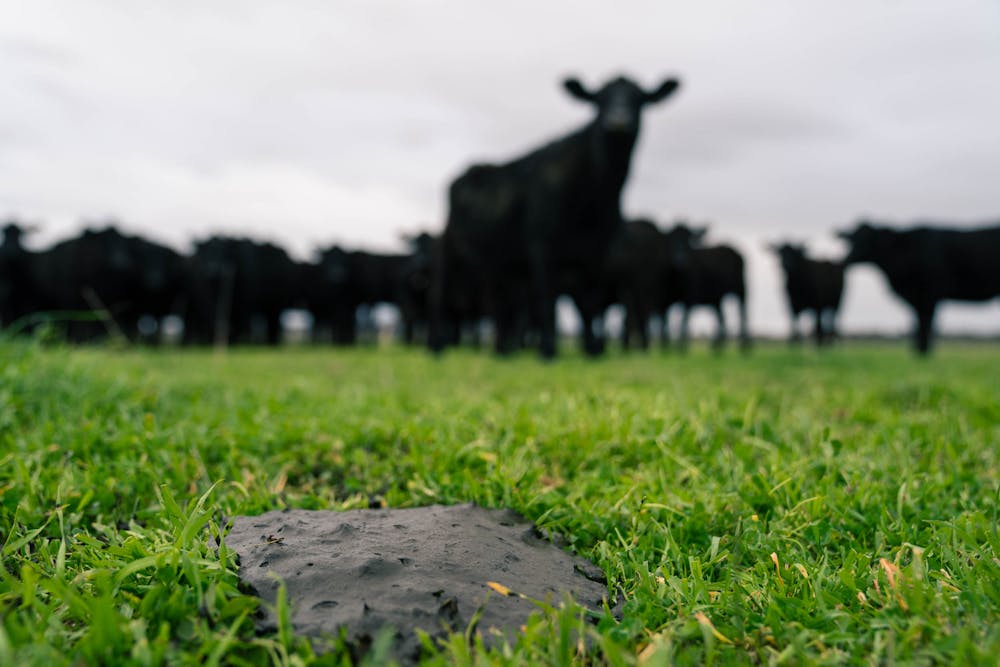
Cattle dung is wet and bulky. It is very unlike marsupial dung – which is typically small, dry pellets – and so the native dung beetles largely left it alone. As a result, large deposits of cattle dung accumulated in the Australian agricultural landscape.
Besides fouling the land, the dung was an excellent breeding site for bush flies and other nuisance insects, as well as internal parasites that plague the digestive tracts of livestock.
So CSIRO embarked on an ambitious plan to introduce into Australia many dung beetles that were adapted to livestock dung. Starting in 1966, it imported and released 43 species of dung beetles over 25 years.
The beetles came from places such as South Africa, France, Spain and Turkey. The chosen beetles had similar climate requirements and were adapted to wild and domestic livestock, so they could live in Australia and process livestock dung.
The Dung Beetle Ecosystem Engineers (DBEE) project is expanding the range of dung beetles in Australia and analysing their performance for livestock producers.Matt Beaver/DBEE, Author provided (No reuse)
What do dung beetles do?
When people think of dung beetles, the popular image that comes to mind is that of an industrious beetle labouring to roll a large ball of dung across the landscape.
These little engineers are actually trying to find a suitable spot to situate the ball, on which they will lay an egg. Their offspring will have food and a safe place to grow up, and generate more dung beetles.
Most species of dung beetles actually tunnel beneath piles of dung and drag bits of it into subterranean chambers, where they then lay their eggs.
The larvae develop over the following weeks to months, eventually emerging as adults and crawling to the surface in search of a mate and another pile of dung to colonise.
The introduced dung beetles
Of the 43 species introduced to Australia by CSIRO, 23 have become established and many are having a positive impact.
The activities of dung beetles helped remove dung from pastures and with it, the breeding site for nuisance flies and internal parasites.
They also improved pasture fertility. They increased the permeability of pasture soils to rainwater which decreased runoff of rainwater laden with nutrients that can pollute waterways.
But it is not known just how widely each of the introduced species has spread. There might be geographical and seasonal gaps in dung beetle activity that could be filled by other species yet to be introduced to Australia.
Introduced dung beetles can deal with livestock dung.Matt Beaver/DBEE, Author provided (No reuse)
Working with farming
Dung beetles have been around for tens of millions of years, but their ability to survive in modern agricultural environments may be jeopardised by some farming practices.
Tilling paddocks used in cropping and livestock rotation systems may destroy the developing dung beetle larvae.
Some deworming agents, used by livestock producers to control intestinal parasites, may pass through the livestock and out in their faeces, and might poison the dung beetles colonising the dung.
It should be possible to manage tillage and deworming to minimise harm to the dung beetles, and so maximise their positive impact on the land.
In this project, a group of research institutions, producer groups, land management groups and dung beetle entrepreneurs are working together.
It is now in its second year, supported by Meat and Livestock Australia and funded by the Rural Research and Development for Profit Program of the Australian Department of Agriculture. Charles Sturt University leads the project, with cooperators at CSIRO, University of Western Australia, University of New England, Mingenew-Irwin Group, Warren Catchment Council, Dung Beetle Solutions International, and LandCare Research NZ.
Dung Beetle Ecosystem Engineers aims to:
understand the distribution of dung beetle species previously introduced to Australia, and predict their ultimate spread
evaluate new species of dung beetle for importation and release into Australia
estimate the economic impact of dung beetles on farming systems
develop a database of information on dung beetles in Australasia and educational materials for use by a range of users
work with farming and land management groups to engage landholders in detecting dung beetles and modifying agricultural practices to enhance the success of dung beetles.
A dung beetle hard at work.Matt Beaver/DBEE, Author provided (No reuse)
At the end of the DBEE project, we will have a better understanding of the role of dung beetles as a farming tool, helping farmers choose agricultural practices that will improve their bottom line.
New dung beetle species will be ready to work for Australia and New Zealand, and a distribution network will enhance their spread to new geographic areas.
DBEE aims bring economic and ecological benefits to the agricultural sector and wider Australian and New Zealand community.
Our research shows this is particularly true for women who have been to prison. The considerable challenges and increased risk of violence after release from prison remain largely forgotten in our national discussions on how to prevent violence against women.
Providing increased social support and appropriate health services is key to preventing violence against women who have been to prison.
Women released from prison are at greater risk
Men and women released from prison have an increased risk of dying from violence compared to the general population. Our recent research shows the increased risk of violence-related death is even greater for women than for men in this group.
We analysed information from prison and death records to look at violence-related deaths (including deaths from assault, abuse, neglect or occurring in police custody) among people who have been released from prison. Our study (41,970 people) included all people who had been released from prison in Queensland from January 1 1994 until December 31 2007. These people were followed from when they were released until the study ended (December 31 2007) or they died.
We found women released from prison were 16 times more likely to die from violence than women of the same age in the general population. Although the vast majority of people in prison in Australia are men, women who experience incarceration are particularly vulnerable to violence.
The offences for which women are convicted are often related to their previous experiences of violence. For example, some women may use illegal substances as a coping strategy after experiencing violence, increasing their risk of being charged with buying or possessing illegal substances. Some women in abusive relationships may react violently to their abuser, leading to assault charges being brought against them.
The vast majority of women in prison will be released back to the community after just a few months. Once released, many face challenges that may increase their risk of experiencing violence. They may feel they have no choice but to return to violent relationships, as this option may be their only means of securing housing, or out of fear that they might lose custody of their children if they do not return.
Incarcerated women also experience health and social problems such as homelessness, substance use and mental health issues at higher rates than women in the general population. These problems further increase their risk of experiencing violence.
Despite the urgent need for holistic health and social services for women released from prison, many such services remain chronically underfunded. Consequently, too few women can access them.
Where to from here?
As our national discussion on eliminating violence against women continues, we cannot continue to leave our most marginalised women behind. Other research has shown that women released from prison face many barriers when trying to access health, violence support and correctional transition services. Among these barriers are a lack of resource availability and awareness, complex procedures to access services, fear of losing custody of children, and stigma.
There is a need for clear pathways to services that can help women released from prison stay safe. These services need to work together to help women with their health and safety needs.
Women who have been to prison should be a priority group for violence prevention. They need enhanced transitional support when leaving prison to secure safe housing, employment and access to mental health, alcohol and other drug services.
Without these supports, vulnerable women feel they have no choice but to go back to violent situations, where they will continue to die from violence at a rate that far exceeds that of the general population.
Why do we tell stories, and how are they crafted? In this series, we unpick the work of the writer on both page and screen.
Adelaide-born, award-winning playwright Stephen House has created many plays, exhibitions and short films. He usually directs and performs his work. Although writing poetry came to him early, he has only recently, in middle age, compiled his best poems in his first collection, real and unreal (2018).
In it he offers a unique journey into worlds and ways that are not often written about. Self identifying as a “queer-nomad”, House describes himself as “definitely not straight”.
While real and unreal doesn’t set out to shock, it deliberately opens doors that are mostly left closed. The poems are frank in their exploration of male queerness and raise social justice issues: the plight of the underclass (as House calls it), and the effects of homophobia, domestic violence, abuse, exploitation, sex work, poverty and discrimination.
Take his poem “who we are”, for instance:
a young man and woman jog together towards us pass us at the water’s edge fucking faggots he sniggers disgusting she adds they keep running on their way
he lets go of my hand it hurts more than their abuse did
An observational tone
The collection has an observational tone. There is often a sense House is on the outside looking in. He shares the world in which he lives matter-of-factly, whether it be chaotic, calm or an adventure down a dark alleyway.
House left school at 15, worked in a factory and then travelled around for years living in the back of a car, doing odd jobs and working for short stints.
he lives in an ragged tent amongst coastal gums i sleep in an old car moulded into sand-hill bush
i cry i’m not sure why
at my camp i make a driftwood fire cook my food warm my body
write a poem about a driftwood mountain that changed my life
While forging a career as a playwright for 20 or so years, House was also writing and performing monologues. Although he hasn’t dropped theatre completely, he now tends to write poetry because of his growing fascination with glimpses of situations rather than full stories, and because poetry fits in better with life on the road.
alone with nature and self
finally free from where I was before
(excerpt from the poem “self”).
Stephen House.AustraliaPlays.org
House’s poems usually begin with an idea that grows as he wanders along, taking in the environment around him. From there the scrawling starts; dot points and scribbles in a cafe or bar, alone. Then a process of refinement until the piece tells him it’s finished.
He steers away from traditional forms of poetry, avoiding typical poetic conventions and rhyme unless it occurs naturally in sections. Just as he takes risks in life, he does so in his work: blurring forms and often swaying into prose poetry.
once I think maybe twice
i’m not sure where and when
i order a long black he looks at me man on man gaze
(Excerpt from the poem “where and when”).
Despite limited education or knowledge of literature, House has developed a unique, succinct voice. There is no single rhythm and no one structure in his work. The vivid world in which he lives and its translation into poetry is based on a flow of consciousness – and he works until, as he puts it, he knows it feels right.
A spontaneous method
His method is never the same – like his life, it is spontaneous. In the poem “when i write”, House opens up about his habits and thoughts on writing.
Real work occurs in a kind of way that is sober and steady. Though still unmeasured and unplanned, it has the comforting foundation of safe and calm.
Drinking writing never comes under the title of writing properly; though I got that bizarre piece (about my appalling behaviour in “Paris”) down on paper, major drinking bender and all, so who the fuck knows…
Conversely, sometimes his life is very scheduled, offering a program for his writing to occur:
wake up pray to Lord Ganesh chant to Lord Shiva write yoga in lounge room breakfast in kitchen write coffee in cafe write swim at beach write
(excerpt from “write”).
House’s work is not entirely autobiographical. Although he writes in the first person, a few of the poems are imagined stories. “Mummy” is the experience of a man confronting his homeless mother in a park, about the abuse he suffered as a child. When I interviewed House in Adelaide, he said he was told this true story, but when he tried to put it down impersonally, he felt it lost the immediacy. So he made it his own:
I clutch the image and drift into what I was and live; grip tighter at her grimy claw. She murmurs. “What did you say, Mummy?”
real and unreal is gritty, moving, dark and full of experiences that shock, sadden and entertain. The poems can be read as a collection, or individually in any order.
… and if you’ve never jumped on a train of indulgent destruction to find out who you are and lost almost everything to a washy game of anarchy punctuated with humiliating dysfunction you can never understand about coming back slowly and gradually
Source: The Conversation (Au and NZ) – By Rob Brooks, Scientia Professor of Evolutionary Ecology; Academic Lead of UNSW’s Grand Challenges Program, UNSW
Compared with our closest relatives, the common chimpanzee and the bonobo, humans are pretty good at focusing exclusively on one mate at a time.
Just how exclusively, however, is the subject of endless tabloid gossip, culture-war sabre-rattling, and scientific debate. The answer seemed to be that most people are exclusive most of the time, but new evidence has thrown the question wide open again.
Recent research has revealed that among the Himba of northern Namibia, nearly half of all children were fathered by someone other than their mother’s husband. This is by far the highest rate of “extra-pair paternity” ever documented by reliable research, but for the Himba it is an accepted part of life.
What’s more, the phenomenon doesn’t seem to cause serious problems for the Himba, thanks to their particular social norms. For men, these include a scrupulous sense that biological and non-biological children deserve equal treatment.
Some years ago, I looked at the oft-quoted estimates that between 9% and 30% of children are sired by somebody other than the guy who thinks he is the father.
At that time, the best-designed genetic studies showed we could put the sensationalist estimates of 10-30% aside; the best studies suggested extra-pair paternity rates between 1% and 3%. That number gels with evidence gathered in the intervening years from studies of historic rates of extra-pair paternity in Belgium and South Africa, and contemporary estimates from the traditional Dogon society in Mali.
So you can imagine the surprise in the scientific community when a paper in Science Advances published, using a very thorough protocol, an estimate of 48% extra-pair paternity among the Himba. More than that, 70% of married couples with children had at least one child sired by a man other than the mother’s husband.
Welcome to Namibia
The Himba are pastoralists who live in the arid plains of northwestern Namibia. UCLA anthropologist Brooke Scelza, who led this new research, has travelled regularly to Namibia for more than a decade and learned much about Himba culture, marriage and parenting.
Himba parents arrange marriages for their children, and the groom’s family pays a bride price of a small number of livestock. But many, perhaps most, married adults have extramarital relationships.
These are not furtive affairs, infused with stigma and the threat of destructive jealousy. Himba call children conceived in these relationships “omoka”, but their mother’s husband is still considered their father in all important social ways.
The relatively relaxed sexuality of the Himba is related to how they make their living. A husband often spends long periods away from home, seeking out grazing and water for his cattle, sheep, and goats. During these periods of separation in particular, both wives and husbands consort with other lovers.
Mothers and fathers are both very good at discerning which children are omoka, getting it right for 73% of children. Their errors in attribution were much more likely to be false positives, that is to say mistakenly believing that an omoka child is a genetic descendent.
Hey jealousy
Where our promiscuous ancestors – the ones we shares with chimps and bonobos – weren’t much chop as fathers, humans have evolved both the tools to focus on a limited number of mates and the capacity to be excellent dads.
Questions of spousal exclusivity expose all sorts of insecurities, particularly in societies with high fidelity and low rates of extra-pair paternity, like the ones most readers of The Conversation inhabit. These are the places where a child who does not bear their father’s DNA is often seen as the product of “cuckoldry” or “cheating”. Such children experience dramatically higher risks of neglect and violence.
Individual men invest more in their wives and children when they are confident they are the children’s genetic father. The more women depend on men’s investments, the more they lose if the relationship breaks down. As a result, in couples where the man’s economic contribution is large, both parties are likely to hold strong anti-promiscuity views.
A separate study of 11 societies led by Scelza found societies where men spend a lot of time and effort caring for children also tend to be places where women and men react with strong jealousy to scenarios depicting emotional and sexual infidelity.
Despite their relatively low levels of jealousy, Himba dads fall in the middle of those 11 societies on the paternal care scale. They don’t hold, groom, or play with their small children very much. But they do provide indirect care, ensuring the children have food, helping them receive an education, giving them livestock, and paying “bride price” for their sons.
When a Himba man dies, he passes most of his wealth, in the form of cattle, not to his own or his wife’s sons, but to those of his sister. This is not an unusual custom among pastoralist societies. It makes solid Darwinian sense for Himba fathers, given the likelihood of extra-pair paternity.
Himba dads
In a paper published today, University of Missouri anthropologist Sean P. Prall, together with Scelza, shows that Himba fathers hold strong norms against favouring genetic children over their non-genetic (omoka) children.
Himba parenting seems to work, despite the high rates of extra-pair paternity, because of these norms. There is a strong sense that the social father of a child plays an important role irrespective of the child’s genetic paternity.
Children, regardless of their paternity, are useful and important members of a household. Himba children perform useful work around the home, and older boys help care for livestock. Beyond that, being a generous father who is fair to his omoka and genetic children alike, earns a man prestige. Men are especially likely to treat their children equally in the most visible forms of parental investment, like bride price.
What of human monogamy?
The new papers about Himba parenting challenge the view that humans are, if not monogamous, then mostly “monogamish”. Himba extramarital relationships are too common and too prominent to conform to our idea of furtive, opportunistic transgressions.
Omoka are not the issue of cuckoldry, but rather a different kind of socially acceptable mating arrangement. More than that, Himba fathers don’t drop their bundle at the first hint that a child doesn’t have “their eyes”. They stick around, and mostly treat those kids the same as everybody else.
In the hours after the Christchurch mosque attacks on March 15 last year, I wrote that I hoped New Zealand would finally stop believing it was immune to far-right extremist violence. A year on, I’m not sure enough has changed.
I have researched far-right extremism for decades – and I would argue it remains a high-level threat in New Zealand, not just overseas.
This sounds modest alongside the estimated 12,000 to 13,000 violent far-right activists in Germany. But proportionate to population size, the numbers are similar for both countries. And it only takes one activist to act out his extremism.
In the past year, there has certainly been greater investment by New Zealand’s security agencies in monitoring extremist groups and activists. There has been more media coverage.
But I also feel there is a tendency to see the Christchurch attacks, which killed 51 people, as a one-off or an aberration – rather than something we still need to guard against.
NZ’s home-grown extremists New Zealanders should now be more aware than a year ago of the presence of local right-wing extremists. There has been plenty to remind them.
In June last year, Philip Arps, who has been involved in white supremacist activities in Christchurch for some time, was sentenced to 21 months in jail for sharing video of the Christchurch shootings.
I am puzzled by the limited public awareness that the imagery on the side of his van – a reference to 14/88 and Nazi signage – was a clear indicator of his extremist views.
Arps was released early in January this year under strict conditions, including a GPS monitor that alerts authorities if he goes near a mosque.
He had been active since 2011 on the neo-Nazi site Stormfront and attended a free speech rally in Wellington in 2018 along with another extreme-right activist.
He also appears to be a member of Wargus Christi, a group formed in September last year by a self-described neo-Nazi, Daniel Waring. It is a “martial-monastic” group of body builders who are homophobic, anti-Semitic and Islamaphobic.
Another group new to New Zealand’s extreme right is Action Zealandia. Their slogan is “building a community for European New Zealanders”. Apart from their online presence, their main public activity is placing stickers in public spaces highlighting their ultra-nationalism.
What has been most concerning is that the rise in online hate speech has real-world implications. Research shows an increase in online hate speech will be accompanied by hate crimes in a region or locality. Internet outages reduce both.
In the aftermath of the Christchurch attacks, it was good to see rapid action on limiting automatic weapons. And the Christchurch Call – Prime Minister Jacinda Ardern’s initiative to stop people using social media to promote terrorism – certainly helped put pressure on online platforms such as Facebook to monitor and remove objectionable material.
I do worry that we don’t have sufficient resources and skills locally to adequately monitor what is happening, even if agencies have been working together more closely internationally.
It would be good to know more from the agencies that have oversight. The New Zealand Security and Intelligence Service (NZSIS) refers to the threat value, but often in relation to international threats.
More openness about their concerns and the extent of local groups and activists would help: for instance, something like Tell MAMA in the UK or the reports other security agencies provide.
Public assessment refreshing It was refreshing to see the Australian Security Intelligence Organisation (ASIO) provide its annual threat assessment in February this year. It assessed the terrorist threat in Australia as probable but the possibility of a right-wing extremist attack as low in terms of capability.
But it acknowledged that advances in technology are “outstripping our technical capabilities”, which must be a concern everywhere.
One thing is certain. The Christchurch mosque attacks have become part of the lexicon whenever white supremacist terrorism is discussed. The events on March 15 have become something of a guide – and, unfortunately, an inspiration to other right-wing terrorists.
It is challenging that many of these extremists, the alleged Christchurch gunman included, are self-radicalised, ideologically motivated, and with a small or no digital footprint. Often there is no prior warning of an attack.
One year on from the attacks, my report card for New Zealand is that we have made progress on greater awareness and action. But we still need to do more, including on keeping the public better informed that the problem has not gone away. Just ask those who continue to be targeted.
FBC News reports on the airports economic setbacks.
By Ritika Pratap in Suva
Fiji Airports will defer future infrastructure projects as a result of financial set-backs caused by the Covid-19 coronavirus.
In response to a global slow-down in travel and reduced flights, chief executive Faiz Khan said almost all costs at airports were fixed, and the company now faced a major financial disaster.
Khan said every dollar lost in revenue hit the company’s bottom line and cash flow because fixed costs and existing commitments could not be reduced.
He added that while planned projects would be shelved, those already under contractual engagements needed to go ahead.
– Partner –
The chief executive said this mad the situation of the airports highly challenging, along with the entire aviation and tourism industry.
The Airports Council International Asia-Pacific has warned the prolonged duration of the Covid-19 outbreak will significantly reduce the region’s airports from forecast growth.
The Airport Association is urging regulators and governments to implement well-defined adjustments and relief measures.
Nadi International Airport … challenging times for the aviation and tourism industry. Image: FBC News screenshot
According to ACI World estimates, Asia-Pacific is suffering the highest impact, with passenger traffic volumes down -24 percent for the first quarter of 2020, compared to forecast traffic levels without Covid-19.
The ACI World Airport Traffic Forecasts 2019-2040 predicts around $26 billion revenue for the first quarter in the Asia-Pacific region in the “business as usual” scenario. The impact of Covid-19 is projected to have a revenue loss of over $6 billion.
It said that unlike airlines, which can choose to cancel flights or relocate their aircraft to other markets to reduce operating costs, airport operators managed immovable assets that could be closed down.
The ACI said airports were faced with immediate cash flow pressures with limited ability to reduce fixed costs and few resources to fund capacity expansion efforts for longer-term future growth.
Ritika Pratap is deputy news manager of the public broadcaster FBC News.
Reporters Without Borders (RSF) has called on Prime Minister Jacinda Ardern’s government to end the “absurd situation” in which Australian investigative journalist Mary Ann Jolley is banned from visiting New Zealand because she was deported from Malaysia in 2015 in connection with her reporting.
“I’m basically regarded by New Zealand as a criminal,” Mary Ann Jolley said after New Zealand Immigration last week prevented her from boarding a flight from Sydney to Auckland, where she wanted to go for personal reasons, reports RSF.
The ban is the result of a very literal interpretation of Section 15 of New Zealand’s Immigration Act, which prohibits the entry of a person “who has, at any time, been removed, excluded, or deported from another country”.
Jolley’s deportation from Malaysia in 2015 was a result of her investigative reporting in Kuala Lumpur for Al Jazeera on a corruption scandal involving the sale of French submarines and a related political murder, in which then Malaysian Prime Minister Najib Razak was allegedly implicated.
Kafkaesque situation “As Australian citizens can travel freely to New Zealand, it is unacceptable that Mary Ann Jolley is being penalised in this way for her reporting in a third country five years ago,” said Asia-Pacific director Daniel Bastard.
“We call on immigration minister Iain Lees-Galloway to intervene immediately on her behalf in order to end this utterly Kafkaesque situation.”
When travelling, Jolley always carries Malaysian government documents explaining the reason for her deportation in 2015 and certifying that she committed no crime.
It is the height of absurdity that she is now banned although she was allowed into New Zealand with no problem last year to cover the Christchurch mosque shootings.
Many people will associate autism with traits including atypical social interactions, repetitive behaviours, and difficulties with speech and communication.
But perhaps lesser known is the fact people with autism are more likely to experience gastrointestinal disorders than the general population.
One review found children with autism were four times more likely to report gastrointestinal symptoms than children without a diagnosis. A number of studies in the review reported the prevalence of gut problems was the same among boys and girls.
These symptoms can include constipation, diarrhoea, abdominal pain, bloating, reflux and vomiting.
Gut problems like these hinder quality of life for people with autism and their families, further affecting sleep, concentration and behavioural issues.
For a long time we thought this was due to the way the brain controls the gut. Think of the “butterflies” you get in your stomach, or the need to rush to the toilet when you’re really nervous.
While the brain does influence gut function, this is only part of the story. Newer research is showing gastrointestinal symptoms in autism may be due to differences in the gut itself.
The mini brain of the gut
The gut contains its own dedicated nervous system, called the enteric nervous system, which co-ordinates digestion and the absorption of food and nutrients.
The enteric nervous system is a complex integrated network of neurons that extends along the gastrointestinal tract.
While structurally quite different, it contains about the same number of cells as the spinal cord and uses many of the same neurochemical messengers, receptors and proteins as the brain.
People with autism are more likely to experience gastrointestinal problems than the overall population.Shutterstock
Autism has a strong genetic component. More than 1,000 gene mutations are associated with the disorder. Many of these gene mutations alter how neurons communicate in the brain.
We hypothesised some of these gene mutations may also cause neuron wiring to go awry in the gut, resulting in gastrointestinal issues in some people with autism.
To test this theory, we studied patient records of two brothers with autism, who have a single gene mutation associated with autism that affects neuron communication. We also studied mice.
We found this mutation also affects the enteric nervous system of the gut in mice. Mutant mice exhibited altered gut contractions, and the speed at which food moved through their small intestine was faster than the speed for mice without the mutation.
Meanwhile, both brothers have gut issues including esophagitis (inflammation of the esophagus) and diarrhoea.
So our work shows a gene mutation associated with autism, previously only studied in the brain, could affect the gut too.
The gut microbiota
We also found mice with the mutation had differences in their gut microbiota compared to normally developing mice.
The gut microbiota is the community of microorganisms (including bacteria, fungi and viruses) that live within the gastrointestinal tract. The largest amount of microbiota are found in the large intestine, where they digest some of the food we eat.
The mice we studied with the neuroligin-3 mutation had what’s called an altered Firmicutes:Bacteroidetes ratio.
Scientists have found this ratio is altered in people with a range of conditions including type 2 diabetes, obesity and inflammatory bowel disease.
Why is all this important?
Now that we’re beginning to understand more about the link between autism and the gut, scientists are investigating whether changing the gut microbiota could affect autism behaviours. One way we can alter the gut microbiota is using faecal transplants.
One recent study took faeces (microbiota) from boys with or without autism and transplanted the faeces into mice. The researchers then studied how the offspring of these mice behaved.
The offspring of mice that received microbes from boys with autism showed behaviours that could be relevant to autism (they buried more marbles in their cage bedding, potentially an indication of repetitive behaviour), compared to mice who were transplanted with microbes from typically developing children.
We need more research in humans to confirm the results seen in mice.Shutterstock
Another recent study assessed gut problems and behavioural traits for two years in people with autism after they received a faecal transplant. This study reported improvements in gut symptoms and behaviour. But the researchers only studied a small number of people, and didn’t control for placebo effects.
Other studies have tested if changing gut microbes by treating patients with prebiotics (food for the bacteria in your gut) or probiotics (helpful bacteria) can affect autism behaviours. But a review of these studies showed no consensus – in other words, some studies showed an effect, while others didn’t.
Many of the studies looking at the gut in autism so far have been conducted using mice. We need more research in humans to confirm the results can be extrapolated.
We need to continue to build our understanding of how gene mutations in the nervous system influence gut microbes. In the future, tweaking the gut microbiota might be one way to manage behaviours in people with autism.
This would not reverse gene mutations leading to autism, but it might tone down the effects, and improve quality of life for people with autism and their families.
In the meantime, clinicians treating people with autism should consider assessing and treating gut problems alongside behavioural issues.
The World Meteorological Organisation today published a definitive climate report card showing concentrations of greenhouse gases continue to rise, and the last five years were the warmest on record.
The report is an annual, comprehensive overview of the latest information from the world’s meteorological services and other key institutions. We are among the many authors who contributed.
It’s an important record of the magnitude and speed of changes to global climate, drawing on the latest data from across the fields of climate science.
A satellite image showing melting on the ice cap of Eagle Island, off Graham Land, Antarctica, in February this year.NASA EARTH OBSERVATORY
A record year
Global average temperatures in 2019 were 1.1℃ above pre-industrial levels. Only 2016 was hotter, but that year came at the end of an extreme El Niño, which typically has a warming influence on global temperatures.
The last five years were the world’s five warmest on record. Areas which were especially warm, with temperatures in 2019 more than 2℃ above average, included parts of Australia, Alaska and northern Russia, eastern Europe and southern Africa. Central North America was the only significant land area with below-average temperatures.
Human-driven climate change is predominantly caused by increasing greenhouse gases in the atmosphere. Concentrations of carbon dioxide, methane and nitrous oxide, the three most potent greenhouse gases, have continued to grow and are now, respectively, 147%, 259% and 123% of pre-industrial levels, measured in the year 1750.
Global emissions of carbon dioxide from fossil fuels reached a record high of 36.6 billion tonnes, of which about half is absorbed by vegetation and oceans.
The Antarctic ozone hole was its smallest since 2002, after an unusually early spring breakdown of the Antarctic polar vortex following a sudden warming in the polar stratosphere.
Many other indicators of large-scale climate change continued their long-term trends in 2019. These include the heat content of the global ocean – an important indicator because around 90% of warming generated by greenhouse gases from human activities is taken by the oceans.
In 2019, ocean heat content reached the highest levels since instrumental records began. Global mean sea level also reached new highs in 2019, while Arctic and Antarctic sea ice extent was well below average.
Glacial mass declined for the 32nd consecutive year. In Switzerland, for example, glacier loss over the past five years has exceeded 10%, the highest rate of decline in more than a century.
The report confirms the ongoing drought in Australia and exceptional fire weather conditions late in the year were among the most significant global climate events last year.
2019 was Australia’s warmest and driest year since national records began – the first time both records have been broken in the same year.
In December, the monthly accumulated Forest Fire Danger Index – an indicator of severe fire weather – was the highest on record for any month in Queensland, New South Wales, South Australia and the ACT. Some fires burned for longer than two months.
In January and February 2019, a dry summer in Tasmania contributed to fires in the normally moist western and central parts of the island – the second time in four years that fires burnt regions where historically such events were extremely rare.
The drought was strongly influenced by a very strong positive phase of the Indian Ocean Dipole – an oscillation of sea surface temperatures which affects the climate in Australia. A strong negative Southern Annular Mode – a climate driver which originates in Antarctica – brought westerly winds and dry conditions to the eastern states from September.
Australia was not the only nation affected by drought in 2019 – southern Africa, southeast Asia and central Chile were also significantly affected. In the Chilean capital Santiago, rainfall was more than 70% below average.
Australia’s ongoing drought is a globally significant climate event.Danny Casey/AAP
Heatwaves and cyclones
Two exceptional heatwaves affected Europe in the summer. France, Germany, Belgium, the Netherlands and the United Kingdom all had their highest recorded temperatures. Belgium and the Netherlands both reached 40℃ for the first time, and Paris reached a high of 42.6℃.
Australia had extreme heatwaves both early and late in the year, and in South America, temperatures exceeded 30℃ as far south as Tierra del Fuego.
Tropical cyclones are amongst the most destructive weather phenomena in most years, and 2019 was no exception. The most severe cyclone impact was in Mozambique and Zimbabwe, when Cyclone Idai hit in mid-March, killing more than 900 people.
Hurricane Dorian, one of the strongest ever to affect land in the North Atlantic, caused massive destruction in the Bahamas, whilst Typhoon Hagibis led to exceptional flooding in Japan, and daily rainfall of more than 900 millimetres. The North Indian Ocean also had its most active cyclone season on record.
Looking to the future
Global climate projections show that under all scenarios, temperatures will continue to warm – and years such as 2019 will become the norm this decade.
The report is intended to inform decisions around the world on adaptation to, and mitigation of, climate change.
For the past two years, Melbourne’s Victoria University has been delivering its bachelor degrees using a block model, where students study one unit at a time rather than four units at once. Each unit, or block, is four weeks long and the study year is broken into ten blocks – four in each semester and optional winter and summer blocks.
Victoria University’s figures show 87% of its first-year students passed their units in 2019, the year after the block model was introduced, compared with 74% in 2017.
The university says student attendance has been at 90% compared with around 40% before the block model. Other benefits include more high distinctions, and increased pass rates for students of low socioeconomic backgrounds.
But an anonymous letter by a student recently published in literary journal Overland protested against the block model. Among the many complaints were that students didn’t have time to let material sink in and were effectively “cramming” information.
I led a study, from 2015 to 2017, into intensive mode teaching of which the block model is an example. We found intensive mode worked well for all courses. Students and teachers reported many benefits of the model, as long as it was carefully planned to mitigate risks, such as student and staff burnout.
How intensive mode works
Our study involved a survey of 105 academics in charge of intensive units at 26 Australian universities.
We also studied eight intensive units and three matched traditional units in engineering and business at four universities. This involved workshops or focus groups with students and follow up surveys, and interviews with teaching staff.
Commonly, university students complete about four units at the same time per semester. Lectures, tutorials and laboratory sessions are dispersed throughout the weekly timetable during a full 12 or 13 weeks of a semester.
In intensive mode, students attend classes for longer per day, and on fewer days, than in the traditional mode. Most Australian universities teach some units using intensive mode, especially in health courses and in postgraduate business and law courses.
In Victoria University’s model, students complete a whole unit, including assessment, in four weeks. Students can complete four units in a semester, in four separate blocks. Students also attend classes on only three days a week.
Other examples of intensive models involve two full days of classes, a full week of classes, and a full day of classes each week for seven weeks.
Why use the block model?
The most common reason survey participants gave for using intensive mode was to allow students and teachers to take on activities between classes. With longer classes on fewer days, students and staff have more days available to study, gain practical experience, work or complete research.
Students can also take intensive units in summer or winter blocks to catch up. And universities use the model to bring guest speakers in from industry.
Many academics – across science, engineering, maths and humanities – in our study said they enjoyed using intensive mode in their subjects. But they said the model would not work for subjects different from theirs that were, for example, in some way more technical or more project-based.
Victoria University offers bachelor degree study via the block model.Shutterstock
But this was only an assumption, and it was inconsistent with the diversity of units taught by survey participants.
University teachers and students told us long classes in intensive mode provided opportunities to bond and for extended practical activities. They also enjoyed the retreat-like focus on one or two units.
Problems with the intensive model
The intensive study model could be a problem for students who would rather study part time due to commitments such as care, work or needing to access health services. Students with difficulties such as disability or weak English could also suffer under the block model as they may need more time to learn than others.
These groups of students are unlikely to have the option of part-time study in a block model such as offered across undergraduate courses at Victoria University.
To see if students could grasp difficult concepts in intensive mode study, we focused our research on the hurdles they need to overcome in a unit.
Students said that, in the long classes in intensive mode, they could learn about a concept, apply it and face and overcome difficulties all in one day. This only happens if the student tries to apply the difficult concepts early in the unit, therefore tackling the most challenging learning during class time where guidance is available.
We recommend academics structure the unit and assessments to ensure students progress through these particular aspects of the course early and are supported to learn together in the long classes.
Academics should also design programs with connected units to ensure students revisit these particular hurdles, as is necessary in any mode.
In our study, many students did not understand the intensive mode until they were already behind. Students who fall behind in intensive mode have little time to catch up.
So they need to be warned their block model workload should be equivalent to the workload they would normally give a unit over a full semester. They need to know to work intensively from the first day.
Students also reported burning out if they took too many consecutive intensive units, so sufficient breaks need to be structured in between.
Students told us they can become overloaded when block models are combined with other models. And we found academics can struggle in intensive mode to provide feedback on time and have students apply it. Assessment design and marking resources must allow for timely feedback to students.
Careful design is important to overcome difficulties. Good teaching is especially important in intensive modes to mitigate the risks and take advantage of the opportunities.
Australia just experienced the second-warmest summer on record, with 2019 being the hottest year. Summer temperatures soared across the country, causing great economic and human loss. The good news is we can do something about this in our own backyards. We have found trees and vegetation can lower local land temperatures by up to 5-6℃ on days of extreme heat.
Our newly published research into a summer heatwave in Adelaide suggests that a simple solution to extreme heat is literally at everyone’s doorstep. It relies on the trees, the grasses and the vegetation in our own backyards.
During a three-day heatwave that hit Adelaide in 2017, AdaptWest took to the skies to measure land surface temperatures from an aircraft. Our analysis of the data collected on that day suggests urban trees and grasses can lower daytime land temperatures by up to 5-6℃ during extreme heat.
Effect of vegetated and non-vegetated cover on daytime land surface temperatures recorded in 120,000 land units in western Adelaide during a three-day heatwave.Ossola et al., 2020. https://doi.org/10.25949/5df2ef1637124
The largest temperature reductions were in the hottest suburbs and those further away from the coast. These significant reductions were mostly achieved thanks to backyard trees.
So this benefit that urban trees provide has two key aspects:
maximum cooling happens when needed the most – during days of unbearable heat.
maximum cooling happens where needed the most – close to us, the people, in the communities where we live.
Our analysis also shows the humble home garden more than pulls its weight when it comes to reducing extreme urban heat and its harmful effects. Although yards and gardens cover only about 20% of urban land, these private spaces provide more than 40% of the tree cover and 30% of grass cover across western Adelaide. This is comparable to what can be found in many other Australian cities and towns.
Daytime thermal imaging of land surface temperature in Walkley Heights, Adelaide, taken from an aircraft (inset) on February 9 2017 at the peak of a three-day 40°C heatwave. The area on the right is cooler (blue shades) because of greater vegetation cover. In the hotter area on the left (red shades) a residential development built in 2003 has smaller yards with less tree cover.AdaptWest and Airborne Research Australia
Climate models and projections predict extreme heat days and heatwaves will become more frequent and intense. Penrith reached 48.9℃ on January 4 this year, making Western Sydney the hottest place on Earth that day. Given that heatwaves are already considered Australia’s deadliest climate-related disaster, the forecast temperatures pose an urgent threat to human livelihoods.
Number of very hot days (maximum above 40°C) per year and trend line (running 10-year average) for Australia.Bureau of Meteorology, CC BY
To achieve such ambitious and life-sustaining goals, our results point to the need to retain, protect and enhance urban greenery in our own yards. As our cities become increasingly dense, people’s trees and yards can play an invaluable role in adapting to climate change.
Most council, state and federal policies to date have neglected yards and their trees when thinking about climate change adaptation. When envisioning how Australian cities should grow, develop and thrive, more attention has to be given to the spaces where our yards and trees can help reduce the catastrophic effects of a warming climate on people and communities, right at our doorstep.
Climate change is causing a social, cultural and political revolution. It calls for bold, decisive and immediate action. This is a lifetime opportunity for smart and proactive planning, policy-making and community action. This work needs to begin now.
Urban forests don’t grow quickly, however. We need to be encouraging low-water-use grass and shrub covers as a fast interim strategy for urban cooling.
This is a stopgap measure until a large army of climate-ready tree soldiers, that we can decide to plant today, take over the job of fighting climate change and extreme heat in our future cities.
The problem now and going forward is making sure that sick workers stay home. That means not forcing employees to choose between penury and working while coughing.
That’s the conclusion from an editorial in last week’s New York Times that notes that one in four American private sector workers are not entitled to paid sick leave.
“They face a choice between endangering the health of co-workers and customers, and calling in sick and losing their wages and perhaps also their jobs,” it says.
The people least likely to have paid sick days, and so most likely to work through illness, are low-wage service workers such as restaurant employees and home health care aides. In the United States, they are also less likely to have health insurance and so less likely to seek assistance.
The editorial suggests that paid sick leave be mandated, and that the US government meet some of the cost, by for example providing big businesses with a one-off tax credit and providing smaller companies with direct support.
Not much better than the United States
In Australia we like to think we have a better social safety net than in the US, and in the case of health coverage, we do. But in other ways we are just as as unprepared.
In Hobart on Sunday health authorities said a man infected with coronavirus ignored instructions to self-isolate while he waited for his test results because he didn’t want to miss his casual shifts at Hobart’s Grand Chancellor Hotel.
The Bureau of Statistics Characteristics of Employment Survey shows that in 2019, 24.4% of Australian employees were casuals without any access to paid leave.
Adding in the self-employed, the proportion of all Australian workers without paid sick leave would be 37%.
As the chart shows, Australians without paid sick leave are over-represented in some of the sectors with the greatest degree of personal contact with members of the public.
63% of people working in the accommodation and food services sector have no paid sick leave, and 45% of sales workers and 42% of community and personal service workers.
Proportion of workers in each industry without paid leave
Proportion of employees without paid leave entitlements by industry, 2019.ABS 6333.0
Casual workers also have less ability to work from home.
About 30% of employees with paid sick leave were able to regularly work from home, compared to 10% of those without paid sick leave.
Permanent employees are entitled to at least 10 days per year of paid sick and carer’s leave at their base rate of pay and usual hours.
Separately, all employees – including casuals – are entitled to two days unpaid carer’s leave or compassionate leave. But given that it is unpaid, it doesn’t deal with the financial problems that sick and potentially infectious casual workers will face.
Sickness allowance is simply inadequate
What support does Australia have for those people not entitled to paid sick leave?
Not much at all.
People who can’t work in their job because of illness can currently apply for Sickness Allowance – which will be phased out starting on March 20 and subsumed into a broader jobseeker payment with similar conditions.
Sick claimants face a waiting period of one week, plus an extra waiting period of up to 13 weeks if they have readily available financial assets of $5,000 or more.
(The government has announced its intention to increase the waiting period to up six months for people with more than $18,000 in savings.)
With such tight eligibility conditions, it isn’t surprising that few people claim sickness allowance; only 5,000 in June 2019.
It is paid at the same rate as Newstart – less than 40% of the minimum wage, which even taking into account assistance with housing costs, turns out to be the lowest level of income replacement for an unemployed person in the OECD.
If that person’s spouse is working, the income test might lead to them receiving no payment or a much-reduced payment.
What could be done?
The government has indicated that it is not planning to increase the inadequate rate of Newstart, probably in order to avoid a long-lasting boost to government spending. However, it might make one-off payments to people receiving income support – an approach supported by the Australian Council of Social Service.
It could also lift Newstart and associated benefits on a temporary basis. People on these benefits make up about 12% of part-time workers and are highly likely to be casuals. The Council of Small Business Organisations wants waiting periods waived.
In addition we could do what the New York Times proposes in the US.
Encouraging employers to provide sick pay to casual workers would be in keeping with our long history of employer-provided sickness benefits. The government could reimburse employers for large chunk of the costs.
We already have a model for it. The paid parental leave scheme introduced in 2011 provides eligible working parents with up to 18 weeks of taxpayer-funded leave at the national minimum wage, whether they are full-time, part-time, casual, seasonal, contract or self-employed.
We could do it only temporarily, during the coronavirus crisis, while we consider more permanent support for our growing casual workforce.
The appropriate response to a pandemic is in one important way quite different to the response to a recession. The aim in a recession is to keep people attached to the labour market and allow their employers able to continue to trade. The aim in a pandemic is to support people to stay away from workplaces.
The way to do it is an immediate sickness payment, without a waiting period, that is big enough to keep people who should be quarantined away from work.
Imagine your employer asking you to work from home until further notice.
As COVID-19 continues to spread, this seems an increasingly likely scenario. “Everyone who can work from home should work from home,” said Harvard epidemiologist William Hanage this week.
In China and neighbouring countries, millions are doing so for the first time.
This week, NASA’s Ames Research Center in California joined them and declared a mandatory telework policy after an employee tested positive to COVID-19. NASA sites across the country have been testing their work-from-home capabilities.
In Dublin last week, Google sent 8,000 workers home for a day to trial an extended remote-work scenario after one employee came down with flu-like symptoms.
In Australia, Clayton Utz, Cisco and Vodafone temporarily closed offices last week as a precautionary measure.
The likelihood of extended workplace shutdowns seems increasingly likely. So what do we know about the pros and cons of working from home?
How common is working from home?
Perhaps not as common as you might think.
In Australia many companies now offer flexible work arrangements, but that doesn’t necessarily mean employees can work from home. Even those permitted to work from home may only be allowed to do so on a limited basis.
As the list of tech companies mentioned may indicate, it is easier to do a job from home if you need only an internet connection and a telephone line.
In building a case for the national broadband network in 2010, Australia’s Gillard government set a target of 10% of the workforce teleworking half the time. This was up from an estimated 6% of employed Australians having some form of regular teleworking arrangement.
Consultancy Access Economics predicted this could save A$1.4 billion to A$1.9 billion a year – about A$1.27 billion of that being the time and cost savings of avoided travel.
Teleworking has many benefits
Governments since Gillard’s have been less focused on the idea, to the the extent we lack reliable contemporary statistics for telework in Australia.
But with increased commuting times, caring responsibilities and the stress of modern workplaces, the research says most employees highly value being able to work from home. In fact, a 2017 US study found employees valued the option at about 8% of their wages.
Research has also highlighted benefits including increased productivity, rated by both the employees and supervisors. One study showed a 13% increase in performance for employees working from home.
Part of this may be due to an increased ability to focus and less distraction. My research shows employees who can’t focus to complete their work are less likely to perform well.
Working from home usually means employees have greater autonomy over how they do their work, including the hours and conditions of their work, and how they manage their lives and other responsibilities. These benefits of teleworking have been shown to lead to greater job satisfaction, lower absenteesim and turnover, increased commitment to the organisation and, importantly, reductions in stress associated with work.
Work-from-home arrangements may also gives organisations access to a greater talent pool.
But there are downsides as well
That said, there are challenges associated with working from home that organisations and individuals often do not plan well for.
Studies have shown working from home for extended periods can leave employees feeling socially and professionally isolated.
When we work from home, we have fewer opportunities to interact and acquire information, which may explain why remote workers can feel less confident than their office-based counterparts.
This reduction in interaction and knowledge sharing is a key barrier to the take-up of working from home.
According to a meta-analysis of 46 studies involving more than 12,000 employees, working from home more than 2.5 days a week could negatively affect relationships with coworkers as well as knowledge transfer.
Further, resentment could arise if teleworking was not widely available.
Employees who work from home have also perceived negative consequences for their career. Out of sight can sometimes be out of mind. Research published last month, however, suggests telecommuters are promoted as much as office-based colleagues.
Another significant issue is maintaining boundaries with home life. It can be hard to switch off, particularly when we don’t have a dedicated home office. Telecommuters often work longer hours, with 48% of employees increasing their work hours in one study.
A dedicated home office is a key strategy to work from home successfully.Shutterstock
How can we make it work?
Organisations can increase the success of working from home. Regular communication, particularly using video conferencing, can help ensure tasks are coordinated, knowledge is transferred, and social and professional isolation is reduced.
For organisations used to managing based on visibility and presence, letting go of traditional ideas of how to manage and focusing on outputs will be required.
If schools are also closed, employers will need to be sensitive to the challenges employees face working from home with children to care for and online schooling to incorporate.
Finally, employees need to establish boundaries between work and home life. Being able to switch off at the end of the day is important for both physical and mental health.
With no end in sight to COVID-19, many businesses are developing or implementing work-from-home policies to ensure business continuity. If employees and employers can get the balance right and enjoy the benefits of well-planned telework, this coronavirus outbreak could prove to be the tipping point for remote work arrangements to become the norm.
The recently released The Art Market 2020 report provides a timely insight into how COVID-19-related disruptions are likely to impact growth and sales in the global art market.
The report estimates global art market sales in 2019 were worth US$64.1 billion (A$97 billion), down 5% on 2018.
This drop reflects the decline in global economic growth driven by increasing geopolitical tensions and the trend toward trade protectionism led by the United States.
In 2020, measures to control the spread of coronavirus through government restrictions on travel and large social events are already having a dramatic impact on the international art market.
In the last six weeks, multiple art fairs have announced either postponement or cancellation, including Jingart Beijing, Art Basel Hong Kong, Miaart Milan, Art Paris, Art Berlin and Art Dubai.
The European Fine Art Fair in Maastricht went ahead, but reported a 27% drop in attendance of VIPs at the opening, when many major sales are traditionally made.
While the European Fine Art Fair (TEFAF) went ahead, good hygiene guides were prominently placed.Marcel van Hoorn/EAP
The growing art fair market
As in previous years, 2019 art market sales were highly concentrated in three major hubs. The United States, the United Kingdom and China collectively accounted for 82% of the total value of sales.
The Art Market report identified a growing shift away from public auctions toward private sales. The overall auction sector (including public auctions and private sales by auction houses, online and offline) represented 42% of total market sales in 2019.
The overall dealer sector (including dealer, gallery and online retail sales) represented 58% of total art market sales in 2019, with the value of sales increasing by 2%.
Within this sector, dealers with turnover of more than US$1 million (A$1.5 million) experienced a much larger growth of 20%. These dealers are the fastest-growing sector and the most reliant on art fair sales.
Almost half of all sales in the dealer sector were made at art fairs in 2019, amounting to US$16.5 billion (A$25 billion) – 26% of all sales made in the global art market.
This concentration of sales at the top end of the dealer market is perhaps the art market’s Achilles heel when considering potential fallout from the impending COVID-19 pandemic.
Dealers in this turnover bracket attended twice as many art fairs as smaller dealers, with international fairs (as opposed to local fairs) contributing to more than half their total art fair sales.
For dealers with turnover of more than US$10 million (A$15.1 million), international art fairs represented a staggering 70% of their art fair sales.
An unwelcome ‘distraction’
Besides the sales generated at art fairs, dealers have become increasingly dependent on fairs for expanding client lists and developing their businesses.
The unfolding COVID-19 pandemic represents an immediate threat to this business model. One dealer quoted in The Art Market report noted the undesirable impact disruptions from outside the art world can have on art market demand:
2020 will be a challenging year, but rather than major political dramas having a direct financial impact, their main danger for us is to distract people’s attention. Distractions and anxieties can take people away from buying art, even if the economy is booming and they’re still in a position to spend.
While this dealer was more likely referring to topical political issues, such as Brexit or trade sanctions, the COVID-19 outbreak has the potential to provide a far greater “distraction” for art buyers.
The impact of COVID-19 on the long-term health of the art market remains to be seen.
Art fairs had already been struggling due to multiple economic headwinds in the latter part of 2019, with increasing numbers of retractions and cancellations worldwide.
Art Basel Hong Kong attracted 88,000 visitors in 2019.Jerome Favre/EPA
In 2019, Art Basel Hong Kong featured 242 galleries from 35 countries and was attended by 88,000 visitors over five days. This was a pivotal event on the regional calendar and its loss to the 2020 art market will be sorely felt.
The global footprints and nimble business structures of international auction houses may help these businesses weather this storm, as they have done in the past. But the picture is worrying for commercial galleries.
Artists and galleries prepare for months in advance of fairs and exhibitions.
In a survey of the impact of the coronavirus on the art market in China, 73.8% of respondents in the visual arts industry reported their businesses will not survive for longer than three months if the current containment situation continues.
Creative initiatives are emerging, such as Art Basel Hong Kong’s online viewing platform. But with uncertainty about how long it will be until this pandemic is under control, the future health of the global art industry is yet to be determined.
Source: The Conversation (Au and NZ) – By Samara McPhedran, Director, Homicide Research Unit/Deputy Director, Violence Research and Prevention Program, Griffith University
Immediately after the Christchurch massacre in 2019, the New Zealand government pledged dramatic gun law changes.
A year later, amid an ongoing elevated terror level, the government has quietly dropped its promises the laws will prevent future mass shootings. It has shifted instead to platitudes about never wanting to see repeats of such horror, and vague assurances about making people “feel safe”.
The government aimed to have more gun laws in place before the first anniversary of the massacre, but it is unclear whether its bill – which focuses on creating a national gun register, substantially altering requirements around legal firearm ownership and making numerous other administrative reforms – will pass parliament.
The opposition National Party does not support the bill. It has raised serious concerns that many proposals ignore evidence about what does, and does not, work to reduce firearm violence.
Even the NZ First Party, which is in coalition with Labour, is voicing doubts – including about whether police are fit to administer the laws.
This marks a major shift from the almost unanimous passage of laws banning “military style” and many other semi-automatic firearms less than a month after the Christchurch shootings.
Political appetite for extensive gun law change appears to have diminished considerably – but why?
There are three key issues that help to explain this.
Estimates about the total number of now-prohibited guns in circulation in New Zealand before the buy-back have varied wildly, from a remarkably convenient 56,000 to a far more awkward 300,000.
The gun buyback scheme initially had bipartisan backing in New Zealand.New Zealand Police/PR Handout
Challenging government statements that the amnesty and buyback scheme have been a success, opponents highlight the prospect the same black market that appeared in Australia following the 1996 laws is now going to occur in New Zealand. They also cite international research showing hand-in programs are ineffective at tackling crime.
Drawing on Australian and Canadian evidence, the National Party has further
highlighted the prevalence of gun crime involving unlicensed offenders and unregistered firearms
challenged the government to back up its claims that gun registration will reduce gun-related crime and
called for full costings to be released.
In response, the government says it has “got to be a good thing” there are fewer guns in the community. It also cites public opinion polls showing support for strengthening gun laws.
However, it has been unable to provide credible evidence to support its belief the laws will have a direct effect on firearm misuse.
Perceived lack of transparency
Police issued the perpetrator of the Christchurch massacre with a gun licence shortly after he arrived in New Zealand, and were seemingly aware of the firearms he owned.
It has been suggested he was not properly vetted and if he had been, he would not have been issued a licence. Police deny this, but the allegations have not been independently investigated.
Was there a failure to enforce existing laws prior to the Christchurch shootings? It would be hoped not, but what we know about Australian mass shootings suggests New Zealand cannot ignore this possibility.
The royal commission into the attacks may consider this issue, but its terms of reference are somewhat open to interpretation.
Moreover, its report is not being released until late April. The government has been pressing hard to get its new gun laws passed before then, giving the impression it expects findings that could run counter to its policy positions. Whether or not that turns out to be true, it is not a good look.
The firearms store in Christchurch where the mosque shooter acquired four of the five guns he used in the attack.Karen Sweeney/AAP
This has been followed by questions about the committee considering the second tranche of proposed laws. The bill was not sent to the Justice Committee, where firearm matters most logically sit. Rather, it was sent to the Finance and Expenditure Committee, which focuses on economic and fiscal policy, taxation and related matters.
Sending a bill to that committee greatly improves the chances of findings favouring the government. Unlike other committees, which tend to have an even split of members from opposing sides of the floor, the 13-member Finance and Expenditure Committee has a majority of members from the Labour-NZ First coalition.
The committee recommended a small number of what are essentially “cosmetic” rather than “substantive” changes to the bill. Nevertheless, the overall impression is the government is more focused on a scoring a “political win” than on carefully considered legislative development.
What else is going on?
The government and its supporters have tried hard to characterise criticism as nothing more than “gun lobby pressure”. This simplistic response seeks to deflect and delegitimise reasonable analysis of whether the proposed measures are really going to achieve their stated outcomes.
It also makes the government look fearful of being questioned and unable to provide arguments that withstand serious scrutiny.
Some commentators also speculate Prime Minister Jacinda Ardern is less interested in handling domestic matters than in positioning for a future UN role. Others say her party is too quick to embrace symbolic but poorly thought-out measures.
Against this background, it would be naive to believe the government is not trying to use gun laws to boost its re-election hopes. Again, this mimics Australia, where political parties use gun policy to signal their moral and law and order credentials.
Yet, in one regard, the two countries diverge. In Australia, tactics such as sloganeering, deflecting close examination of policy, shifting goalposts and discrediting those who ask unwelcome questions have been meekly accepted.
Based on the bipartisanship in New Zealand immediately following the Christchurch shootings, there can be no doubt New Zealand’s government expected an equally smooth run. Instead, it is being held to account and seems affronted by that.
Inevitable political horse-trading may still see the laws pass. But rather than unifying the country, it appears government overreach has instead paved the way for distrust and division. And when it comes to that, sadly, New Zealand and Australia are again in step.
In the hours after the Christchurch mosque attacks on March 15 last year, I wrote that I hoped New Zealand would finally stop believing it was immune to far-right extremist violence. A year on, I’m not sure enough has changed.
I’ve researched far-right extremism for decades – and I would argue it remains a high-level threat in New Zealand, not just overseas.
My assessment is that there are about 60 to 70 groups and somewhere between 150 and 300 core right-wing activists in New Zealand.
This sounds modest alongside the estimated 12,000 to 13,000 violent far-right activists in Germany. But proportionate to population size, the numbers are similar for both countries. And it only takes one activist to act out his extremism.
In the past year, there has certainly been greater investment by New Zealand’s security agencies in monitoring extremist groups and activists. There has been more media coverage. The government moved quickly to ban assault weapons and further controls on the use and possession of arms are underway. Other initiatives, including a royal commission of inquiry, are pending.
But I also feel there is a tendency to see the Christchurch attacks, which killed 51 people, as a one-off or an aberration – rather than something we still need to guard against.
New Zealanders should now be more aware than a year ago of the presence of local right-wing extremists. There has been plenty to remind them.
In June last year, Philip Arps, who has been involved in white supremacist activities in Christchurch for some time, was sentenced to 21 months in jail for sharing video of the Christchurch shootings. I am puzzled by the limited public awareness that the imagery on the side of his van – a reference to 14/88 and Nazi signage – was a clear indicator of his extremist views.
Arps was released early in January this year under strict conditions, including a GPS monitor that alerts authorities if he goes near a mosque.
Even though the white nationalist group Dominion Movement folded after the mosque attacks, one of its leaders, a soldier in the New Zealand defence force, was arrested in December last year for “accessing a computer for a dishonest purpose” and disclosing information that “prejudiced the security and defence of New Zealand”. He had been active since 2011 on the neo-Nazi site Stormfront and attended a free speech rally in Wellington in 2018 along with another extreme-right activist.
He also appears to be a member of Wargus Christi, a group formed in September last year by a self-described neo-Nazi, Daniel Waring. It is a “martial-monastic” group of body builders who are homophobic, anti-Semitic and Islamaphobic.
Another group new to New Zealand’s extreme right is Action Zealandia. Their slogan is “building a community for European New Zealanders”. Apart from their online presence, their main public activity is placing stickers in public spaces highlighting their ultra-nationalism.
What has been most concerning is that the rise in online hate speech has real-world implications. Research shows an increase in online hate speech will be accompanied by hate crimes in a region or locality. Internet outages reduce both.
In the aftermath of the Christchurch attacks, it was good to see rapid action on limiting automatic weapons. And the Christchurch Call – Prime Minister Jacinda Ardern’s initiative to stop people using social media to promote terrorism – certainly helped put pressure on online platforms such as Facebook to monitor and remove objectionable material.
I do worry that we don’t have sufficient resources and skills locally to adequately monitor what is happening, even if agencies have been working together more closely internationally.
It would be good to know more from the agencies that have oversight. The New Zealand Security and Intelligence Service (NZSIS) refers to the threat value, but often in relation to international threats.
More openness about their concerns and the extent of local groups and activists would help: for instance, something like Tell MAMA in the UK or the reports other security agencies provide.
It was refreshing to see the Australian Security Intelligence Organisation (ASIO) provide its annual threat assessment in February this year. It assessed the terrorist threat in Australia as probable but the possibility of a right-wing extremist attack as low in terms of capability.
But it acknowledged that advances in technology are “outstripping our technical capabilities”, which must be a concern everywhere.
One thing is certain. The Christchurch mosque attacks have become part of the lexicon whenever white supremacist terrorism is discussed. The events on March 15 have become something of a guide – and, unfortunately, an inspiration to other right-wing terrorists.
It is challenging that many of these extremists, the alleged Christchurch gunman included, are self-radicalised, ideologically motivated, and with a small or no digital footprint. Often there is no prior warning of an attack.
One year on from the attacks, my report card for New Zealand is that we’ve made progress on greater awareness and action. But we still need to do more, including on keeping the public better informed that the problem hasn’t gone away. Just ask those who continue to be targeted.
The government will unveil on Wednesday a package of coronavirus health measures, including a network of respiratory clinics, a new Medicare item for tele-consultations, and a communications campaign.
The package, which comes as the number of Australian cases reached 100, will cost A$2.4 billion, which includes $500 million announced last week to help states with their costs on a matching 50-50 basis.
The health measures precede the government’s multi-billion stimulus to address the hit the virus will deliver to the economy, which threatens to push Australia into recession.
Up to 100 “pop up” fever clinics will be established across the country, in a program costing $205 million.
These “one stop shops” will test people worried they may have the virus. They will supplement the work of GPs and state respiratory clinics.
As people become increasingly fearful about the virus, many are seeking tests, even though they fall outside the guidelines recommended for testing.
In Melbourne on Tuesday people queued outside the Royal Melbourne Hospital. In Perth there was a queue even before a new clinic opened at the Royal Perth Hospital’s Ainslie House, despite the clinic supposedly being for those at higher risk. In South Australia a “drive through” clinic has opened.
Commonwealth Chief Medical Officer Brendan Murphy said that in the last few days there had been a “significant surge” in the number of people requesting testing.
Partly this had been sparked by some misinformation in the media suggesting everyone who had flu-like symptoms should be tested, he said. “We’re not saying that at the moment.”
Murphy said those who should be tested are returned travellers who develop acute respiratory symptoms or people who have been in contact with confirmed cases who develop acute respiratory symptoms.
The aim of the pop up clinics in the federal package is to deal with people with milder symptoms, taking the load off hospitals’ emergency departments and GPs, so that hospitals are only presented with the more serious cases.
Each clinic, staffed by doctors and nurses, would be able to see up to 75 patients a day over six months. They could operate as dedicated medical centres.
Health authorities and medical bodies will identify practices in regional, rural and urban areas. Some 31 Primary Health Networks will receive $300,000 to assist in identifying and setting up the “pop up” clinic sites and distributing protective equipment.
Up to an initial $150,000 will be given to help clinics start and offset losses from normal business.
The new Medicare item for telehealth will enable those who are isolated due to the virus to access medical services from home by audio or video. This will reduce risks of transmission from people going to doctors’ surgeries (and the inconvenience of consultations in car parks as doctors keep them out of surgeries).
The telehealth service, starting on Friday, will be bulk billed and available for medical, nursing and mental health medical staff to deliver services over the phone or through a video conference (including FaceTime, Skype, WhatsApp). The new item will cost $100 million and run for six months, when it will be reviewed.
The telehealth services will be available to
people isolating at home on medical advice
those aged over 70
Aboriginal and Torres Strait Islanders aged over 50
people with chronic health conditions or who have compromised immune systems
parents with new babies and pregnant women.
The telehealth arrangements will also mean health practitioners who are themselves in isolation will be able to continue to provide services, so long as they are fit enough to do so.
The planned national communications campaign about COVID-19, including information on how to guard against the virus and what to do if you get it, will start within days and cost $30 million.
A wide range of platforms will be employed, and particular audiences targeted. It will use television, radio, print, digital, social media and displays on public transport and at shopping centres, as well as putting material in doctors waiting rooms. Market research and tracking will be used to refine the campaign.
Scott Morrison said Australia is “as well prepared as any country in the world” to deal with the virus, and the health package “is about preventing and treating coronavirus in the coming weeks.”
With 100 domestic cases as of March 10, federal and state governments and health authorities face daunting challenges posed by COVID-19 in coming weeks and months – securing a workforce of nurses and doctors to treat the sick, ensuring enough testing facilities to meet a rapidly growing demand, and stemming the spread of the virus, to the maximum extent possible.
As Chief Medical Officer for the federal government, Professor Brendan Murphy is confident about maintaining enough health staff, including in nursing homes.
“You can find a health workforce if you look hard enough, and if you can fund the surge. So I think we will find them.”
Murphy is also optimistic the present self-isolation period of 14 days can be shortened at some point, as the incubation period of virus is now thought to be “probably around five to seven days”.
When will the virus peak in Australia? Murphy says: “If we had widespread and more generalised community transmission, I would imagine that would be peaking around the middle of the year, in the middle of winter. … But that’s really our best guess of the modelling at the moment. And it’s very, very hard to predict.”
Murphy re-iterates that only people in certain categories need to be tested; in the last few days there has been a “significant surge” of people with flu-like symptoms but outside these categories who have been seeking testing, placing pressure on facilities.
With eyes on Italy’s lockdown, could a single region of Australia be locked down?
“It’s potentially possible, absolutely. If we had a city, a major city that had an outbreak of some thousands, and the rest of the country was pretty unaffected, we could very easily consider locking down a part of or a whole town or city.”
New to podcasts?
Podcasts are often best enjoyed using a podcast app. All iPhones come with the Apple Podcasts app already installed, or you may want to listen and subscribe on another app such as Pocket Casts (click here to listen to Politics with Michelle Grattan on Pocket Casts).
You can also hear it on Stitcher, Spotify or any of the apps below. Just pick a service from one of those listed below and click on the icon to find Politics with Michelle Grattan.
The tropical savannas of northern Australia are among the most fire-prone regions in the world. On average, they account for 70% of the area affected by fire each year in Australia.
But effective fire management over the past 20 years has reduced the annual average area burned – an area larger than Tasmania. The extent of this achievement is staggering, almost incomprehensible in a southern Australia context after the summer’s devastating bushfires.
The success in northern Australia is the result of sustained and arduous on-ground work by a range of landowners and managers. Of greatest significance is the fire management from Indigenous community-based ranger groups, which has led to one of the most significant greenhouse gas emissions reduction practices in Australia.
Fire is a tool and it’s something people should see as part of the Australian landscape. By using fire at the right time of year, in the right places with the right people, we have a good chance to help country and climate.
Importantly, people need to listen to science – the success of our industry has been from a collaboration between our traditional knowledge and modern science and this cooperation has made our work the most innovative and successful in the world.
A tinder-dry season
The 2019 fire season was especially challenging in the north (as it was in the south), following years of low rainfall across the Kimberly and Top-End. Northern Australia endured tinder-dry conditions, severe fire weather in the late dry season, and a very late onset of wet-season relief.
Despite these severe conditions, extensive fuel management and fire suppression activities over several years meant northern Australia didn’t see the scale of destruction experienced in the south.
A comparison of two years with severe fire weather conditions. Extensive early dry season mitigation burns in 2019 reduced the the total fire-affected areas.
This is a huge success for biodiversity conservation under worsening, longer-term fire conditions induced by climate change. Indigenous land managers are even extending their knowledge of savanna burning to southern Africa.
Burn early in the dry season
The broad principles of northern Australia fire management are to burn early in the dry season when fires can be readily managed; and suppress, where possible, the ignition of uncontrolled fires – often from non-human sources such as lightning – in the late dry season.
Traditional Indigenous fire management involves deploying “cool” (low intensity) and patchy burning early in the dry season to reduce grass fuel. This creates firebreaks in the landscape that help stop larger and far more severe fires late in the dry season.
Relatively safe ‘cool’ burns can create firebreaks.Author provided
Essentially, burning early in the dry season accords with tradition, while suppressing fires that ignite late in the dry season is a post-colonial practice.
Savannah burning is different to burn-offs in South East Australia, partly because grass fuel reduction burns are more effective – it’s rare to have high-intensity fires spreading from tree to tree. What’s more, these areas are sparsely populated, with less infrastructure, so there are fewer risks.
Satellite monitoring over the last 15 years shows the scale of change. We can compare the average area burnt across the tropical savannas over seven years from 2000 (2000–2006) with the last seven years (2013–2019). Since 2013, active fire management has been much more extensive.
The comparison reveals a reduction of late dry season wildfires over an area of 115,000 square kilometres and of all fires by 88,000 square kilometres.
How fire has changed in northern Australia.Author provided
Combining traditional knowledge with western science
The primary goals of Indigenous savanna burning projects remain to support cultural reproduction, on-country living and “healthy country” outcomes.
Savanna burning is highly symbiotic with biodiversity conservation and landscape management, which is the core business of rangers.
Ensuring these gains are sustainable requires a significant amount of difficult on-ground work in remote and challenging circumstances. It involves not only Indigenous rangers, but also pastoralists, park rangers and private conservation groups. These emerging networks have helped build new savanna burning knowledge and innovative technologies.
While customary knowledge underpins much of this work, the vast spatial extent of today’s savanna burning requires helicopters, remote sensing and satellite mapping. In other words, traditional burning is reconfigured to combine with western scientific knowledge and new tools.
For Indigenous rangers, burning from helicopters using incendiaries is augmented by ground-based operations, including on-foot burns that support more nuanced cultural engagement with country.
On-ground burns are particularly important for protecting sacred sites, built infrastructure and areas of high conservation value such as groves of monsoonal forest.
Who pays for it?
A more active savanna burning regime over the last seven years has led to a reduction in greenhouse gas emissions of more than seven million tonnes of carbon dioxide equivalent.
This is around 10% of the total emission reductions accredited by the Australian government through carbon credits units under Carbon Farming Initiative Act. Under the act, one Australian carbon credit unit is earned for each tonne of carbon dioxide equivalent that a project stores or avoids.
By selling these carbon credits units either to the government or on a private commercial market, land managers have created a A$20 million a year savanna burning industry.
How Indigenous Australians and others across Australia’s north are reducing emissions.
What can the rest of Australia learn?
Savanna fire management is not directly translatable to southern Australia, where the climate is more temperate, the vegetation is different and the landscape is more densely populated. Still, there are lessons to be learnt.
A big reason for the success of fire management in the north savannas is because of the collaboration with scientists and Indigenous land managers, built on respect for the sophistication of traditional knowledge.
This is augmented by broad networks of fire managers across the complex cross-cultural landscape of northern Australia. Climate change will increasingly impact fire management across Australia, but at least in the north there is a growing capacity to face the challenge.
Australia should work towards adopting a mandatory age-verification system for gambling and pornography websites, according to a recommendation from the federal parliamentary cross-party committee on social and legal issues.
The recommendation follows the committee’s inquiry findings, released last month as a report titled Protecting the age of innocence. It identified high levels of concern, particularly among parents, about underage access to pornography and gambling sites.
But as the UK’s recently aborted effort shows, delivering on this idea will mean overcoming a host of technical and logistical hurdles, including identity fraud and the use of virtual private networks (VPNs) or anonymising browsers such as Tor.
Like most developed countries, Australia has long had laws that restrict underage access to adults-only products. Attempting to buy a bottle of beer will quickly prompt a request for proof of age.
But for as long as there have been rules, people have looked for ways to break them. Would-be underage drinkers can attempt to find a fake ID, a retailer willing to ignore the law, or simply an older friend or relative willing to buy some beer for them.
Just like alcohol, access to gambling and pornography have been age-restricted by law for some time. This used to be relatively easy to enforce, when the only way to access such items was through a retail store. But everything changed when these things became available on the internet.
Pornography and gambling represent significant proportions of web searches and traffic. According to one recent estimate, pornography accounts for up to 20% of internet activity.
According to the committee’s report, the average age of first exposure to pornography is now between 8 and 10 years:
It’s now not a matter of “if” a child will see pornography but “when”, and the when is getting younger and younger.
Adolescents today are increasingly exposed to gambling marketing… alongside increased accessibility and opportunities to gamble with the rise of internet and smart phone access.
In an era where age-limited content is available for free to anyone with a web browser, how do we enforce age restrictions?
Age verification legislation for online pornography has already been tried in the UK, when it introduced the Digital Economy Act 2017. But by 2019 the attempt was abandoned, citing technical and privacy concerns.
No easy task
It seems simple in principle but is fraught with difficulty in practice. Given the global scale of these industries, it is almost impossible for the government to even generate a list of applicable websites. Without a definitive list, it will be difficult to block access to sites that do not comply.
The situation is complicated further by the fact that many sites are hosted overseas, meaning they may have to provide different age-verification mechanisms for users in different jurisdictions.
Credit card verification has become the default solution, as there are global platforms to verify credit cards. But while it is possible to verify a card number, there are various ways to obtain such details.
A minor could potentially use a parent’s credit card, or even fraudulently obtain their own. Other ID options such as driving licences could potentially be used instead, but this may not be a popular option for legitimate users because of the risks of identity fraud or privacy breaches. This would also pose logistical challenges: imagine a US-hosted pornography site having to verify Australian driving licence details.
A VPN allows a user’s internet traffic to appear to originate from another location. Often referred to as “tunnelling”, it effectively fools systems or services into thinking you are in another part of the world, by swapping the users’ local IP (internet) address with another address. Some VPN providers now explicitly advertise their product as a solution to the regional restrictions of streaming companies like Netflix and Amazon.
It’s not hard to imagine that many consumers would turn to VPNs to dodge any verification procedures implemented here in Australia.
Consumers concerned about privacy are also likely to use the Tor browser.
Tor works in a similar way to a VPN. While it still hides the location of the user (potentially looking like they are in another country), Tor also ensures that traffic is bounced between multiple points on the internet to further obscure the user (and thus their age).
The committee has acknowledged this but vowed to press on regardless, arguing:
While age verification is not a silver bullet, it can create a significant barrier to prevent young people — and particularly young children — from exposure to harmful online content. We must not let the perfect be the enemy of the good.
It is still early days, and there is much work for the eSafety Commissioner and the Digital Transformation Agency to do. It is also clear there is both government and public pressure to identify and implement solutions to safeguard children and vulnerable individuals. But unfortunately, human nature will inevitably render any developed solution as more full of holes than a block of Emmental.
It would be easy to say we shouldn’t bother, or that parents should take responsibility. The reality is that implementing any solution will protect at least some of the vulnerable population and will form part of a layered approach. With widespread support, targeted education and age-verification, there is, perhaps, the potential for success.
As Family Court Chief Justice Will Alstergren said late last year, when people separate, it can be “a shocking time in their lives”. This is particularly so when parents face each other in court.
Australia’s family law system has been the subject of many inquiries and studies. Just last year, the government announced another one.
One of the most exhaustive studies was the Evaluation of the 2012 Family Violence Amendments, published in 2015 by the Australian Institute of Family Studies and funded by the Attorney-General’s Department.
Our research found that, although discussions about the system are often framed in terms of “who wins” out of mothers and fathers, the biggest challenge is actually parent and child safety.
The latter study was based on two surveys, taken before and after the 2012 amendments. In each survey, we interviewed about 6,000 separated parents.
We asked these parents how they sorted out their parenting arrangements after separating. We found most (about 70%) had worked out their parenting arrangements through informal discussions, with little or no reliance on the formal family law system. Another 10% let their arrangements “just happen”.
So, a large majority of separated parents sorted out their parenting arrangements informally. The great majority of these parents also said they were satisfied with the result.
The remaining fifth of parents reported using one of three formal family law pathways. In order of use, these were:
family dispute resolution (a form of mediation)
negotiation through lawyers
litigation in the courts
Of the formal pathways, family dispute resolution was the most widely used (by 10% of separating parents within 18 months of separation) because it is by far the least expensive and most accessible option.
Behind family dispute resolution came negotiation through lawyers (used by 6%) and then the courts (3%).
Do mothers and fathers have different views of the system?
It is in parents’ assessments of the formal pathways, particularly of the courts, where the differences between fathers’ and mothers’ views become apparent.
There were clear differences between fathers’ and mothers’ assessments of the courts from a child-focused perspective (meaning they felt the child’s needs were adequately considered). Three-quarters of mothers rated the courts positively on that count, compared to just 57% of fathers.
From an adult-focused perspective (the process “worked” for the adult participant), the parents’ assessments of the courts were much closer, but satisfaction levels were lower, with only 52% of mothers and 49% of fathers satisfied.
These lower rates of satisfaction may be because a decision by a judge creates the perception one party has lost and the other won.
In contrast, family dispute resolution had significantly higher satisfaction levels, with 89% of mothers and 85% of fathers saying they were satisfied from a child-focused perspective, and 77% of mothers and 70% of fathers satisfied from an adult-focused perspective.
Are we doing enough to protect parents’ and children’s safety?
In many respects, our findings are reassuring. But our research reveals that for many of the people who rely on formal family law pathways, the system has significant problems.
We found the people who are the most reliant on the family law system are often the most affected by family violence, child safety concerns and other issues. In our interviews, 21% of parents who used family dispute resolution, 27% of parents who used lawyers and 38% of parents who used the courts reported a suite of complex issues, often including safety concerns and family violence.
And the complex nature of their needs, in particular their safety concerns, are not receiving enough attention.
When asked whether the family law system protects children’s safety, as it is required to do, barely half of mothers (53%) and fathers (48%) agreed. Ratings were particularly low (less than 40%) among parents who had safety concerns either for themselves and their child, or for their child only.
These people typically use difficult, expensive formal pathways only because discussions, informal or mediated, are not an option. This is often because of family violence and safety concerns. And many of these people told us the system was not working for them.
Consistent with the conclusions of two recent family law inquiries (by a parliamentary committee and the Australian Law Reform Commission), these findings point to the need for the system to sharpen its focus on parent and child safety.
The discussion about family law reform ought not to be about winners and losers, but about how to protect the vulnerable parents and children who are forced to rely on it.
Former Prime Minister Lord Tu’ivakano will be sentenced at the end of next month after being found guilty in the Supreme Court yesterday of three charges, including making a false statement for the purpose of obtaining a passport and perjury.
The offences in what was known as the Chinese passport scandal were committed in 2015, but he was not charged until 2018.
Local media reported that the jury retired at 4pm and were back in just over half an hour.
RNZ reported earlier that six charges of bribery and money laundering in relation to the issuance of Tongan passports to Chinese nationals had been dropped.
As Kaniva News reported last week, it was originally alleged that between 2013-2014, while serving as Minister for Foreign Affairs, he accepted money to issue Tongan passports to various Chinese nationals.
– Partner –
The amounts involved were said to range from TP$3000 (NZ$2052) to TP$199,408.94 (NZ$136,460).
These allegations were withdrawn and not heard.
Firearm charge Crown Prosecutor Semisi Lutui told the court, the Attorney-General had advised against proceeding with the charges.
The presiding judge, Lord Chief Justice Whitten, will sentence Lord Tu’ivikano on charges of three counts of making a false statement for the purpose of obtaining a passport, perjury and possession of 212 pieces of ammunition without a licence.
Last week, the former Prime Minister pleaded guilty to possessing a .22 rifle without a licence.
The firearm and ammunition charges stemmed from a police search of his home in Nuku’alofa on March 1, 2018.
Lord Tu’ivakano was accused of making a false statement on the grounds that on July 17, 2015 he wrote a letter to the Immigration Division of the Ministry of Foreign Affairs, stating that Hua Guo and Xing Lui were naturalised as Tongans on October 29, 2014.
On the charge of perjury, it was alleged that on December 21, 2015, he made an oath in an affidavit, stating that these two were naturalised during his tenure as the Minister of Foreign Affairs of the Ministry and that naturalisation Tongan passports were then issued to them, knowing this statement was false.
He was further charged with making a false statement, in that on July 17, 2015 with the purpose of obtaining a passport for Hua Guo and Xing Liu, and with intent to deceive the Immigration Division of the Ministry of Foreign Affairs, the accused wrote a letter to the Immigration Division, stating that these two were naturalised as Tongans on October 29, 2014, and he had reasonable cause to believe that statement was misleading.
He was bailed on condition that he surrender his passport and not leave Tongatapu.
Lord Tu’ivakano is still a member of Parliament as a Noble’s Representative.
Philip Cass is associate editor of Pacific Journalism Review and a research associate of the Pacific Media Centre. This article is republished under a partnership agreement with Kaniva Tonga.
Indonesian activists have deplored the recent jailing of two indigenous community members in Sumatra in a land conflict involving an affiliate of pulp and paper giant Royal Golden Eagle.
The Simalungun District Court, in North Sumatra province, handed down nine-month sentences to Jonny Ambarita and Thomson Ambarita, who are elders from the Sihaporas community, for assaulting an employee of PT Toba Pulp Lestari (TPL), an RGE affiliate company.
The Sihaporas community and PT TPL have been embroiled in a dispute for decades over land to which both lay claim.
As in most such cases in Indonesia, the authorities have sided with corporate interests and pursued criminal charges against the community, said Agustin Simamora, head of the advocacy at the provincial chapter of the Indigenous Peoples Alliance of the Archipelago (AMAN).
“The judges ignored all the facts in this case. This [ruling] is very regrettable,” he said.
– Partner –
The sentences, handed down Feb. 13, cap a trial sparked by an incident last September in which the company, or people claiming to represent it, appeared to be the side escalating the legal wrangling into a violent conflict.
Scuffle broke out On the morning of September 16, 2019, according to the community members, a group of men claiming to be PT TPL employees arrived in their village and demanded that they cease their farming activity and leave the area.
The farmers refused, and a scuffle broke out, during which the 3-year-old son of one of the community members was reportedly hit by one of the purported company representatives. The child passed out and had to be taken to a nearby public health center.
The following day, leaders of the Sihaporas community went to a nearby police station to file a report about the alleged assault on the child. But the officers refused to receive their complaint, telling them instead to file it at a different precinct office.
Officers from that larger precinct later issued a summons for Jonny and Thomson Ambarita to appear for questioning on September 24. Unknown to the community, PT TPL had filed its own report with the police, alleging that the farmers had assaulted one of its employees in the earlier skirmish.
When Jonny and Thomson showed up at the police station, they were promptly charged and arrested.
In the months since then, they have been indicted, tried, and convicted. But police have still not acted on the community’s report on the alleged attack on the child.
Sahat Hutagalung, the lawyer for Jonny and Thomson Ambarita, called the guilty verdict unfair.
Evidence ignored Like other observers of the trial, he questioned why much of the evidence presented in court that corroborated the community’s account including witness testimony and videos of the incident was ignored.
“Unfortunately, it was overlooked by the judges,” Sahat said.
Hundreds of members of the Sihaporas community turned up at the courthouse to hear the verdict and demand that Jonny and Thomson be acquitted. Community members said the trial was a familiar ordeal for them: from 2002 to 2004, three other indigenous members were arrested after PT TPL complained they were farming in the disputed area.
Arisman Ambarita was jailed for three months in 2002, while Mangitua Ambarita and Parulian Ambarita were each sentenced in 2004 to two years in prison.
The Sihaporas community has since the early 1900s claimed ancestral rights to a large swath of forest in what is today North Tapanuli district in the province of North Sumatra, where it continues to practice subsistence farming.
In 1913, it loaned part of the land to the Dutch colonial authorities for a pine plantation. After Indonesia won independence from the Dutch, the new government claimed the pine forest, among other Dutch-run assets and properties at the time, as belonging to the Indonesian state.
In 1992, the government issued a pulpwood permit in the area to PT TPL, for a concession covering 185,000 hectares (457,000 acres). The Sihaporas community contends that 40,000 ha (98,800 acres) of that concession is part of its ancestral territory. PT TPL has already planted half of the disputed area with eucalyptus.
No responses In its campaign to free Jonny and Thomson, the Sihaporas community took its case to Indonesia’s National Commission for Human Rights last October. Community elders also sent three letters to President Joko Widodo to demand state recognition of their ancestral lands and ask the government to revoke PT TPL’s permit.
There have been no responses to any of those initiatives.
Since 2013, when a landmark Constitutional Court ruling struck down the state’s claim to indigenous peoples’ forests, President Widodo has recognized the rights of 55 indigenous groups to forest areas spanning a combined 24,800 ha. AMAN, the indigenous rights advocacy group, says it has mapped out some 7.8 million ha of land it says belongs to 704 indigenous communities nationwide, including the Sihaporas community.
“When did land ownership certificates come about? Only after Indonesia came into being as a nation,” said Domu Ambarita, a historian for the Sihaporas community. “But indigenous peoples have existed and lived on their customary lands since before Indonesia was established.”
Domu said it was important to recognize the Sihaporas as the stewards of their land at a time when Indonesia is losing its forest at alarming rates to agriculture and other land-use changes.
“Our rituals exist alongside and protect nature,” he said. “If the ancestral forest is owned and seized by PT TPL, everything will be destroyed. We completely reject that.”
This story was first reported by Mongabay’s Indonesia team and republished by the Pacific Media Centre under a Creative Commons licence. Ayat S. Karokaro is a Mongabay contributor. Translated by Basten Gokkon.
Since its launch in 2016, the online video sharing platform TikTok has grown at an astonishing rate. The app has been downloaded more than a billion times, and more than 700 million people around the world (most of them quite young) use it every day.
TikTok’s design brings together music, video, dance and viral challenges to create one of the most energetic nodes in the web of popular culture in 2020.
Part of the explanation for the platform’s meteoric rise may lie in the science of the mind – in particular, the science of what happens when we imitate another person’s movement. By making it easy to create, share and copy dance routines, TikTok may be taking advantage of the brain’s systems for building human connection.
Perhaps the first real demonstration of the power of TikTok was the rise of Lil Nas X’s country-rap hit Old Town Road.
Released in late 2018, the song received little attention until it spawned a dance routine that went viral on TikTok. The catchy tune became unavoidable in 2019, selling 10 million copies and spending a record-breaking 19 weeks at number one on the Billboard charts.
Now TikTok has become a vital component of the pop culture machine. The youth-oriented online videogame Fortnite recently ran a TikTok-based competition to create a new dance routine for player avatars. The New York Times publishes in-depth investigations of who really created popular routines. In Vietnam, a dance challenge demonstrating correct handwashing procedures is synced to the Ministry of Health’s pop song informing citizens about coronavirus precautions.
Content from TikTok is also establishing a feedback loop with more traditional channels. Pop star Doja Cat’s song Say So became popular in part due to a dance featuring the song by TikTok user @yodelinghayley. Doja Cat responded by releasing the song as a single complete with a video clip that included the dance and its creator.
What makes TikTok special?
As TikTok has pushed its way into the ranks of global social media giants, its rise has been accompanied by some anxiety in the West due to its origin in China and popularity among children and teenagers.
However, the app has largely avoided scrutiny by billing itself as a “creative platform” rather than a social media site. It is designed so its key features to users are playfulness and performativity.
Users can easily add music to the platform’s 15-second videos, which has meant that dance routines feature prominently on the site. Popularity on the app is often based on the inventiveness, skill, and entertainment value of the original dance routines created by users.
Every so often a dance routine becomes a viral hit, and other users of the platform post their own versions copying the original user. Imitation, and particularly the imitation of posture and movement, is an ancient behaviour at the heart of how humans learn from and connect with each other.
Why is imitation so powerful?
Scientists believe imitation functions through a system of “mirror neurons” which are thought to exist in the brains of all primates. As we watch another person perform an action, mirror neurons fire throughout the motor cortex to map that movement onto our own bodies. This happens whenever we see (or hear) human movement, whether it’s an acrobat, a yoga teacher, or a teenager dancing on TikTok. (Although the mirror neuron effect appears to be weaker when we watch video of a person moving rather than seeing it in the flesh, it is still present.)
In studies on unconscious imitation, researchers have found that strangers who subconsciously mirror one another’s body posture and gestures during their first meeting also report more mutual positive feelings. This “likability boost” also exists for people engaged in synchronous movement entrained to the same beat (in layman’s terms, dancing together), who report “liking each other better, remembering more about each other, [and] trusting each other more”.
Activities involving synchronised movement can create powerful feelings of unity, and these practices are often the focus for feelings of group solidarity (think the Māori haka, a country line dance or a marching band, or indeed a marching army).
On TikTok, the mass grouping of people together in space is replaced by a more subtle form of togetherness through imitation and synchronised movement. These dancers are separated through time and space, but they create solidarity and positive feeling by moving together, mediated by the structure of the platform.
With the mass imitation of synchronised movement in the viral dance routines, TikTok and those seeking to exploit it are tapping into the deep-seated psychology of how we connect.
President Rodrigo Duterte has rejected calls to place Metro Manila on lockdown after health officials recorded a spike in Covid-19 novel coronavirus cases.
In a late night press conference yesterday, Duterte said it was still “too early” to implement the sweeping restrictions that would limit people’s movements.
“We have not reached that kind of contamination,” Duterte said.
Duterte stressed the need to strike a “balance” in response measures to combat the coronavirus crisis as this could affect the transport of and access to necessities like rice and oil.
Duterte earlier declared a state of public health emergency due to concerns over the virus, which has infected at least 24 people in the Philippines.
– Partner –
Calls for a lockdown covering the National Capital Region echo China’s and Italy’s unprecedented decision to shutdown large parts of their territory in an effort to quell the spread of the virus.
China and Italy are among the countries with the highest number of confirmed cases and deaths due to COVID-19, the disease caused by the novel coronavirus.
Largest number For one, China – ground zero for the coronavirus – has the largest number of cases with more than 80,000 infected so far.
Italy is likewise the country with the third largest number of cases as it recorded over 7400 who tested positive for the virus.
As of Monday night, the Philippines recorded 24 confirmed cases of the coronavirus. These include one death – a Chinese tourist who was the first fatality to be recorded outside China.
Worldwide, the death toll has exceeded 3800, while more than 109,000 people have been infected in more than 100 countries.