The Australian National University (ANU) is facing a backlash from students over the proposed use of a digital platform to invigilate exams remotely. The university recently announced plans to use the Proctorio platform to ensure the legitimacy of exams conducted away from campus during the COVID-19 pandemic.
Students aren’t happy. A Facebook page and a Change.org petition with more than 3,700 signatures have gained significant media attention.
But the use of technology to solve COVID-19 related challenges has been widespread. So what’s different now?
What is Proctorio?
In essence, Proctorio is the digital equivalent of the invigilators walking up and down the aisles during student examinations. The software is already used by various institutions around the world, including Harvard University and other US universities. The University of Queensland has also announced plans to use a similar platform, ProctorU.
To use the Proctorio software, the student taking the exam has to install it on their computer and allow the program to access their camera and microphone.
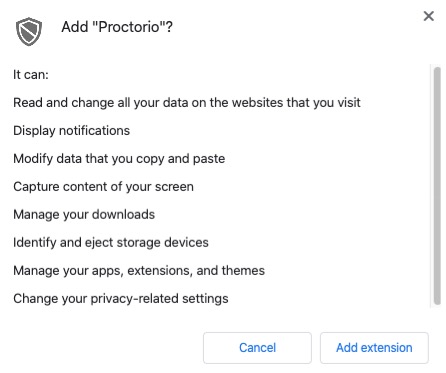
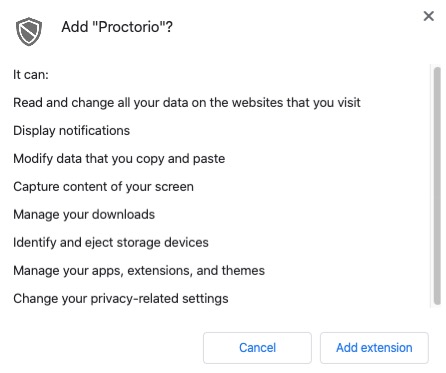
A range of permissions are required by the Proctorio browser extension.Author provided
The software is a browser extension for Google Chrome. Along with camera access, Proctorio requires permission to:
access web page content to allow the extension to function correctly
capture the screen to facilitate screen recording
manage other extensions to monitor other tools being used in the browser
display notifications
modify clipboard data to prevent copy-and-paste capability
identify storage devices to allows the extension to “see” system resources and
change privacy settings to allow an external technical support function.
While the provider gives reassurance in each category (and there’s no evidence any of it’s untrue), it’s understandable some students are daunted by the extent of permissions requested.
The second part of the system is in the cloud. Data collected on a user’s computer is transmitted to the company’s servers to be analysed. This could include video and audio recordings, as well as images captured of a user’s screen.
In a statement to The Conversation, an ANU spokesperson said:
Data will be stored in a secure location in Australia. Only ANU staff who are trained in privacy and the use of Proctorio will have access to this data. These staff members are also responsible to the University’s privacy policy. Data will be deleted once exams are over and course results are finalised.
Facial detection (but not recognition)
Proctorio claims to use machine learning and facial detection to identify the likelihood a student is cheating. It’s important to distinguish facial detection from the more controversial technology of facial recognition.
By observing a student throughout the exam, Proctorio’s system may be able to detect if the student:
is looking at a second screen or reading from another source
is copying content
is being prompted by another person
has been replaced with someone else.
Concerns have been raised that the system will monitor keystrokes (typing), potentially compromising students’ personal information.
But an ANU spokeperson told The Conversation that “Proctorio does not monitor what keys are typed – just that keys have been typed”.
What are the issues being flagged?
Students may nevertheless feel Proctorio is “spying” on them. Any tool that overtly monitors a user’s behaviour, particularly when downloaded on a personal laptop, merits thorough examination.
all data is encrypted in transit and storage, and is only available to designated ANU staff. Proctorio has no access to the student data
students may have to show their room to the camera (presumably to verify they are alone)
the system doesn’t record keystrokes or mouse movements
camera, microphone and browser are used to monitor the user. However, the document does make reference to a rather nondescript “other means” of monitoring.
In a YouTube video statement, ANU’s Deputy Vice-Chancellor (Academic) Grady Venville reassured students the university’s IT security team had undertaken a thorough assessment of the software, and were “very satisfied” it met ANU’s “rigorous cybersecurity standards”.
ANU Deputy Vice-Chancellor (Academic) on the use of Proctorio.
This is perhaps not entirely reassuring, given the university’s own cyber advisory recognised its “recent security challenges”.
ANU, like any university, is entitled to implement assessment strategies it deems appropriate. Given the current situation, finding alternatives to traditional examinations is essential to adhere to social-distancing measures.
The university is somewhat vague with regards to the specific use of Proctorio. In its FAQ it states:
Course conveners will determine if your course requires the use of Proctorio for the assessment for your course.
ANU has confirmed to The Conversation that students have the option to defer the exam instead of using the software. Those without a suitable device can also use a university computer on campus, or enquire about alternative assessments with their convener. An ANU spokesperson also said course conveners “can use a range of other assessment methods” if appropriate.
Some students have asked to be notified before May 8 (the deadline to withdraw from units) if they will be forced to use Proctorio.
What’s next?
The legal situation is currently unclear. While ANU may be allowed to force the use of Proctorio for exams conducted on university-owned devices, mandating its use on privately owned devices is less certain.
If students do use Proctorio on their personal devices, they may want reassurance their device will be safe from surveillance when not being used for exams.
Also, while ANU offers the option to defer exams, students may feel pressure to unwillingly use the system simply to avoid a delayed graduation.
The coronavirus pandemic is keeping us at home due to widespread unemployment, school closures and social distancing. This has already led to concerns about an upsurge in domestic and family violence.
But women with a disability, particularly those with an intellectual disability, are at even greater risk of gender-based violence, affecting not only them but their families.
Intellectual disability affects a person’s cognitive functioning in many varied ways. For some people, the effect on their ability to learn may not be severe enough to meet a threshold for clinical diagnosis but the impact on everyday life can be profound.
Some people with intellectual disability do not identify with the label of intellectual disability or wish to be defined by it. If they become parents, trying to “fly below the radar” can mean they avoid seeking help.
Researchers say about 0.4% of Australian parents have an intellectual disability.
This equates to at least 17,000 parents who already face more challenges than other parents. The COVID-19 pandemic could make things worse – particularly for mothers who are often socially isolated and at risk of violence from a partner.
Victims of abuse
The control and coercion partners use on these mothers may not conform to typical patterns of domestic abuse. It may involve withholding medication or using their fear of judgment about their disability to control them, so the violence can go undetected.
Caroline (not her real name) was in special classes at school but did not receive any disability services. She was single and living alone in her mid-20s when she became pregnant. After she was hospitalised with post-natal depression, the child’s father got full custody.
Caroline was devastated and alone and the man preyed upon her vulnerability, forcing Caroline to trade visits with her child for sex. He warned her to keep her mouth shut or she would not see her child.
When Caroline became pregnant again, she was terrified she would lose this child, too. She confided in a friend and, with the help of her church community, she was able to bring her baby home. The sexual abuse, however, continued.
Caught in the courts
Parents with intellectual disability come to the attention of social services at high rates and usually due to factors related to poverty, disadvantage and social isolation.
For example, they make up almost 10% of all care matters in the New South Wales Children’s Court. Internationally, up to 60% of children are removed from a parent with intellectual disability. Parental neglect is the most common reason for child removal, which is the case for many families living in poverty.
What brings these parents to the notice of child protection officials is rarely the intellectual disability alone. It’s usually other compounding factors such a domestic violence, social isolation, limited resources, or adverse childhood experiences.
Once in the system, the parent’s disability tends to become the focus and concern. There is reliance on assessments that equate IQ with parenting capacity, despite the best evidence to the contrary. These parents can be seen as a risk to their child’s development but studies show they actually experience normal feelings of love and connection toward their parents.
Our research shows parents with intellectual disability feel they are made to jump through invisible hoops, with child protection workers failing to make their expectations clear.
One parent told us:
When they come to our home, we feel like we’re doing things that are wrong. We were so confused.
Pandemic reduces parent support
While the COVID-19 pandemic is affecting all Australian families, some services for vulnerable families have restricted their operations to minimise the spread of the virus. For example, some are offering video chats instead of home visits during the crisis.
The effects of self-isolation and physical distancing will compound existing problems for mothers with intellectual disability and their children who are at risk of failing to get the help they need.
These families are losing access to crucial educational and family supports at this critical time. They are also likely to be affected by changes to the provision of disability services during the COVID-19 crisis.
The National Disability Insurance Scheme (NDIS) now recognises parenting as a support need. But there are complex eligibility requirements that assess individual functioning and may miss or minimise the impact of, say, housing instability and lack of social support on parenting capacity.
The pandemic is creating challenges and placing constraints on the provision of community-based and in-home disability services. NDIS participants are being asked to evaluate what services they “can’t live without”.
As services pivot to target high-risk groups like those needing help with self-care, and primarily become focused on health-related needs, supports for mothers with intellectual disability are at risk of being reduced.
We need to protect those families where the primary caregiver is a mother with an intellectual disability. If we fail to do this we are likely to see a spike in the incidence of child removal – something that takes generations to heal.
The Australian National University (ANU) is facing a backlash from students over the proposed use of a digital platform to invigilate exams remotely. The university recently announced plans to use the Proctorio platform to ensure the legitimacy of exams conducted away from campus during the COVID-19 pandemic.
Students aren’t happy. A Facebook page and a Change.org petition with more than 3,700 signatures have gained significant media attention.
But the use of technology to solve COVID-19 related challenges has been widespread. So what’s different now?
What is Proctorio?
In essence, Proctorio is the digital equivalent of the invigilators walking up and down the aisles during student examinations. The software is already used by various institutions around the world, including Harvard University and other US universities. The University of Queensland has also announced plans to use a similar platform, ProctorU.
To use the Proctorio software, the student taking the exam has to install it on their computer and allow the program to access their camera and microphone.
A range of permissions are required by the Proctorio browser extension.Author provided
The software is a browser extension for Google Chrome. Along with camera access, Proctorio requires permission to:
access web page content to allow the extension to function correctly
capture the screen to facilitate screen recording
manage other extensions to monitor other tools being used in the browser
display notifications
modify clipboard data to prevent copy-and-paste capability
identify storage devices to allows the extension to “see” system resources and
change privacy settings to allow an external technical support function.
While the provider gives reassurance in each category (and there’s no evidence any of it’s untrue), it’s understandable some students are daunted by the extent of permissions requested.
The second part of the system is in the cloud. Data collected on a user’s computer is transmitted to the company’s servers to be analysed. This could include video and audio recordings, as well as images captured of a user’s screen.
In a statement to The Conversation, an ANU spokesperson said:
Data will be stored in a secure location in Australia. Only ANU staff who are trained in privacy and the use of Proctorio will have access to this data. These staff members are also responsible to the University’s privacy policy. Data will be deleted once exams are over and course results are finalised.
Facial detection (but not recognition)
Proctorio claims to use machine learning and facial detection to identify the likelihood a student is cheating. It’s important to distinguish facial detection from the more controversial technology of facial recognition.
By observing a student throughout the exam, Proctorio’s system may be able to detect if the student:
is looking at a second screen or reading from another source
is copying content
is being prompted by another person
has been replaced with someone else.
Concerns have been raised that the system will monitor keystrokes (typing), potentially compromising students’ personal information.
But an ANU spokeperson told The Conversation that “Proctorio does not monitor what keys are typed – just that keys have been typed”.
What are the issues being flagged?
Students may nevertheless feel Proctorio is “spying” on them. Any tool that overtly monitors a user’s behaviour, particularly when downloaded on a personal laptop, merits thorough examination.
all data is encrypted in transit and storage, and is only available to designated ANU staff. Proctorio has no access to the student data
students may have to show their room to the camera (presumably to verify they are alone)
the system doesn’t record keystrokes or mouse movements
camera, microphone and browser are used to monitor the user. However, the document does make reference to a rather nondescript “other means” of monitoring.
In a YouTube video statement, ANU’s Deputy Vice-Chancellor (Academic) Grady Venville reassured students the university’s IT security team had undertaken a thorough assessment of the software, and were “very satisfied” it met ANU’s “rigorous cybersecurity standards”.
ANU Deputy Vice-Chancellor (Academic) on the use of Proctorio.
This is perhaps not entirely reassuring, given the university’s own cyber advisory recognised its “recent security challenges”.
ANU, like any university, is entitled to implement assessment strategies it deems appropriate. Given the current situation, finding alternatives to traditional examinations is essential to adhere to social-distancing measures.
The university is somewhat vague with regards to the specific use of Proctorio. In its FAQ it states:
Course conveners will determine if your course requires the use of Proctorio for the assessment for your course.
ANU has confirmed to The Conversation that students have the option to defer the exam instead of using the software. Those without a suitable device can also use a university computer on campus, or enquire about alternative assessments with their convener. An ANU spokesperson also said course conveners “can use a range of other assessment methods” if appropriate.
Some students have asked to be notified before May 8 (the deadline to withdraw from units) if they will be forced to use Proctorio.
What’s next?
The legal situation is currently unclear. While ANU may be allowed to force the use of Proctorio for exams conducted on university-owned devices, mandating its use on privately owned devices is less certain.
If students do use Proctorio on their personal devices, they may want reassurance their device will be safe from surveillance when not being used for exams.
Also, while ANU offers the option to defer exams, students may feel pressure to unwillingly use the system simply to avoid a delayed graduation.
Source: The Conversation (Au and NZ) – By Fiona Stanley, Perinatal and pediatric epidemiologist; distinguished professorial fellow, Telethon Kids Institute
There seems to be a myth in Australia that Aboriginal and Torres Strait Islander people mostly live in remote communities. But the vast majority (79%) live in urban areas.
The federal government has rightly decided the best policy to protect Indigenous people from COVID-19 is to socially isolate remote communities.
Now the government needs to turn its attention to the risks Indigenous people face in urban and rural areas.
So far SARS-CoV-2, the coronavirus that causes COVID-19, has infected more than 6,600 Australians and killed 75 people. The elderly and those with underlying conditions are most at risk of severe illness and dying from the virus.
Chronic diseases such as respiratory diseases (including asthma), heart and circulatory diseases, high blood pressure, diabetes, kidney diseases and some cancers are more common in Indigenous people, and tend to occur at younger ages, than in non-Indigenous people.
These diseases, and the living conditions that contribute to them (such as poor nutrition, poor hygiene and lifestyle factors such as smoking), dramatically increase Indigenous people’s risk of being infected with coronavirus and for having more severe symptoms.
So Elders and those with chronic disease are vulnerable at any age.
We know from past pandemics, such as swine flu (H1N1), Indigenous Australians are more likely to become infected with respiratory viruses, and have more serious disease when they do.
So far, there have been 44 cases of coronavirus among Indigenous people, mostly in our major cities. We’re likely to see more in coming months.
This suggests the decision to close remote communities has been successful so far. But we also need to now focus on urban centres to prevent and manage further cases.
Current Australian government advice is for Aboriginal and Torres Strait Islander people 50 years and over with existing health conditions to self-isolate. General government health advice tells all Australians to maintain good hygiene and seek health care when needed.
But this advice is easier said than done for many urban Indigenous people.
So what unique family and cultural needs and circumstances so we need to consider to reduce their risk of coronavirus?
Large households
Many urban Indigenous households have large groups of people living together. So overcrowding and inadequate accommodation poses a risk to their health and well-being.
This is particularly the case when it comes to infectious diseases, which thrive when too many people live together with poor hygiene (when it’s difficult for personal cleanliness, to keep clean spaces, wash clothes and cook healthy meals) and when people sleep in close contact.
Crowded accommodation also means increased exposure to passive smoking and other shared risky lifestyles.
Households are also more likely to be intergenerational, with many children and young people living with older parents and grandparents. This potentially increases the chances of the coronavirus spreading among and between households, infecting vulnerable older members.
Immediate solutions to prevent infection are, with guidance from Aboriginal organisations, to house people in these situations in safe emergency accommodation. But it is also an opportunity to work with Aboriginal organisations in the longer term to improve access to better housing to improve general health and well-being.
Most Indigenous people live in our cities, not in remote Australia.Shutterstock
Poor health literacy
Indigenous Australians don’t always have access to good information about the coronavirus in formats that are easily understood and culturally appropriate.
The challenge is to get these distributed in urban centres urgently. These health messages should also be distributed in Aboriginal Medical Services waiting rooms and on Indigenous television and radio.
Poverty will limit some families’ ability to buy hand sanitiser, face masks, disinfectant and soap.
Although there are provisions for Indigenous Australians to receive free vaccines against the flu and pneumococcal disease to protect against lung disease, not all age groups are covered.
Scepticism of mainstream health services
Due to policies and racism that have marginalised Indigenous people, many do not use health and other services.
This is why Aboriginal Controlled Health Services are so important and successful in providing culturally sensitive and appropriate care.
However, there is concern these health services are not adequately funded or prepared to manage a coronavirus pandemic in urban centres.
They need more personal protective equipment (including masks). They also need more Aboriginal health workers, community nurses and others for testing and contact tracing.
Not everyone can afford to buy soap and hand sanitiser to limit the spread of the virus.Shutterstock
What do governments need to do?
Some regions’ responses have been better than others.
In Western Australia, the urban-based Aboriginal Community Controlled Health Services (ACCHS) are working with key state government departments to coordinate the COVID-19 response. This includes guidance about how best to prevent and manage cases.
It’s time for other governments to set up collaborative arrangements with ACCHS and other Aboriginal controlled service organisations in urban centres to better manage the COVID-19 pandemic.
This should include more staff to:
provide care
help people self-isolate
explain and embed the digital COVID-19 media messages about hand washing, use of sanitisers and social distancing
enable accommodation that is acceptable and safe, especially for Elders and homeless people.
These services should also provide free flu and pneumococcal vaccinations.
Getting Indigenous health experts to lead this defence is clearly the way to go. We must listen and respond to these leaders to implement effective strategies immediately. If ever there was an opportunity to demonstrate that giving Indigenous people a voice to manage their own futures is effective, it is this.
Our hope is that, after this pandemic, the value of Aboriginal control will be recognised as the best way to improve Aboriginal health and well-being.
This article was co-authored by Adrian Carson, Institute for Urban Indigenous Health; Donisha Duff, Institute for Urban Indigenous Health; Francine Eades, Derbarl Yerrigan Health Service; and Lesley Nelson, South West Aboriginal Medical Service.
Michelle Grattan talks with Assistant Professor Caroline Fisher (remotely) about the week in politics, including how China and the World Health Organization will come out of the coronavirus crisis, the success of the Australian government’s economic packages so far, and the foreshadowed contact tracing app.
Before COVID-19, children would spend a lot of the day at school. There they would be taught about internet safety and be protected when going online by systems that filter or restrict access to online content.
Schools provide protective environments to restrict access to content such as pornography and gambling. They also protect children from various threats such as viruses and unmoderated social media.
This is usually done using filters and blacklists (lists of websites or other resources that aren’t allowed) applied to school devices or through the school internet connection.
But with many children learning from home, parents may not be aware of the need for the same safeguards.
Many parents are also working from home, which may limit the time to explore and set up a secure online environment for their children.
So, what threats are children exposed to and what can parents do to keep them safe?
What threats might children face?
With an increased use of web-based tools, downloading new applications and a dependence on email, children could be exposed to a new batch of malware threats in the absence of school-based controls.
This can include viruses and ransomware – for example, CovidLock (an application offering coronavirus related information) that targets the Android operating system and changes the PIN code for the lock-screen. If infected, the user can lose complete access to their device.
Children working at home are not usually protected by the filters provided by their school.
Seemingly innocent teaching activities like the use of YouTube can expose children to unexpected risks given the breadth of inappropriate adult content available.
Most videos end with links to a number of related resources, the selection of which is not controlled by the school. Even using YouTube Kids, a subset of curated YouTube content filtered for appropriateness, has some risks. There have been reports of content featuring violence, suicidal themes and sexual references.
Many schools are using video conferencing tools to maintain social interaction with students. There have been reports of cases of class-hijacking, including Zoom-bombing where uninvited guests enter the video-conference session.
Because video conferencing is becoming normalised, malicious actors (including paedophiles) may seek to exploit this level of familiarity. They can persuade children to engage in actions that can escalate to inappropriate sexual behaviours.
In a particularly sickening example, eSafety Office investigators said:
In one forum, paedophiles noted that isolation measures have increased opportunities to contact children remotely and engage in their “passion” for sexual abuse via platforms such as YouTube, Instagram and random webchat services.
Some families may be using older or borrowed devices if there aren’t enough for their children to use. These devices may not offer the same level of protection against common internet threats (such as viruses) as they may no longer be supported by the vendor (such as Microsoft or Apple) and be missing vital updates.
They may also be unable to run the latest protective software (such as antivirus) due to incompatibilities or simply being under-powered.
Error message when attempting to install a new application on an older device.Author provided
What can parents do to protect children?
It’s worth speaking with the school to determine what safeguards may still function while away from the school site.
Some solutions operate at device-level rather than based on their location, so it is possible the standard protections will still be applicable at home.
Some devices support filters and controls natively. For example, many Apple devices offer ScreenTime controls to limit access to apps and websites and apply time limits to device use (recent Android devices might have the Digital Wellbeing feature with similar capabilities).
Traditional mechanisms like firewalls and anti-virus tools are still essential on laptops and desktop systems. It is important these are not just installed and forgotten. Just like the operating systems, they need to be regularly updated.
There is a wealth of advice available to support children using technology at home.
The Australian eSafety Commissioner’s website, for instance, provides access to:
But if you’re feeling overwhelmed by these materials, some key messages include:
ensuring (where appropriate) the device is regularly updated. This can include updating the operating system such as Windows, Android or Mac
using appropriate antivirus software (and ensuring it is also kept up to date)
applying parental controls to limit screen time, specific app use (blocking or limiting use), or specific website blocks (such as blocking access to YouTube)
on some devices, parental controls can limit use of the camera and microphone to prevent external communication
applying age restrictions to media content and websites (the Communications Alliance has a list of accredited family friendly filters)
monitoring your child’s use of apps or web browsing activities
when installing apps for children, checking online and talking to other parents about them
While technology can play a part, ensuring children work in an environment where there is (at least periodic) oversight by parents is still an important factor.
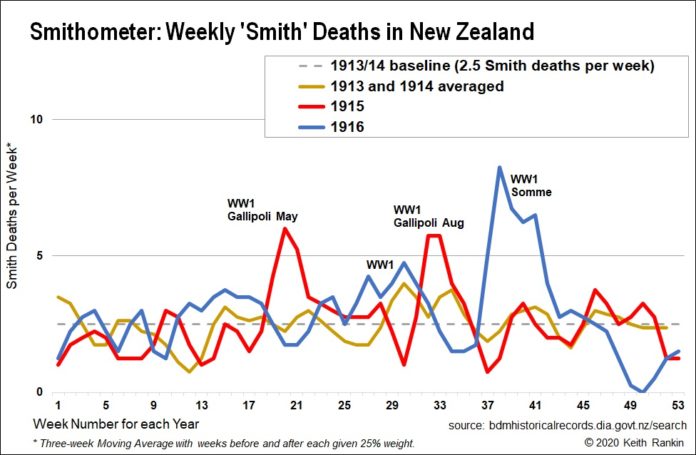
death rates spiked twice in 1915 and once in 1916. Chart by Keith Rankin.
Analysis by Keith Rankin.
Today’s Anzac Day Smithometer Chart shows the fatal impact in New Zealand of World War 1 battles at Gallipoli and on the Somme in France. (Earlier this week the Smithometer showed the impact of 1917 WW1 battles in Belgium – Messines and Passchendaele – and the dramatic, though short-lived, impact of the 1918 influenza pandemic.)
These two charts show that most of the combat death in World War 1 was linked to just five periods each of one or two weeks: Gallipoli in May and August 1915, the Somme in September 1916, Messines in June 1917, and Passchendaele in October 1917. The Smithometer shows that much of World War 1 was inactivity, at least in the military sense.
The total number of Smith deaths in 1915 was the same as in 1914, when there were no Smith war fatalities. Seventeen percent of Smith deaths in 1914 were infants (under one year old); a worse year for infant mortality than 1913. Eighteen percent of Smith deaths in 1915 were due to the war, and thirteen percent were infants. Total Smith deaths in 1915 and 1916 were 288, just ten percent higher than for 1913 and 1914. Deaths not related to war or infancy were noticeably down in 1915 and 1916. The war did not increase New Zealand’s crude death rate by as much as most of us would have expected.
Smith deaths in New Zealand were unusually low in 1919, and with only eight infant deaths (6.6 percent of all deaths). However, in 1920 infant mortality returned to the high 1914 rate of 17 percent. This rise in part but not entirely reflected increased numbers of infants in 1920, after the soldiers returned from the war. The male babies born at this time represented the core fighting force in World War 2.
Since the Gorkha earthquake killed almost 9,000 people in April 2015, Nepal has been on a slow and arduous route to recovery. Nepal’s vibrant cultural heritage of monuments, religious places, crafts, festivals and traditional practices has been key to this process.
Heritage reconstruction in Nepal has been prioritised in the UNESCO World Heritage Site of Kathmandu Valley and received vast amounts of international assistance. But this reconstruction has also become the source of growing tensions between global institutions, national politics and local aspirations.
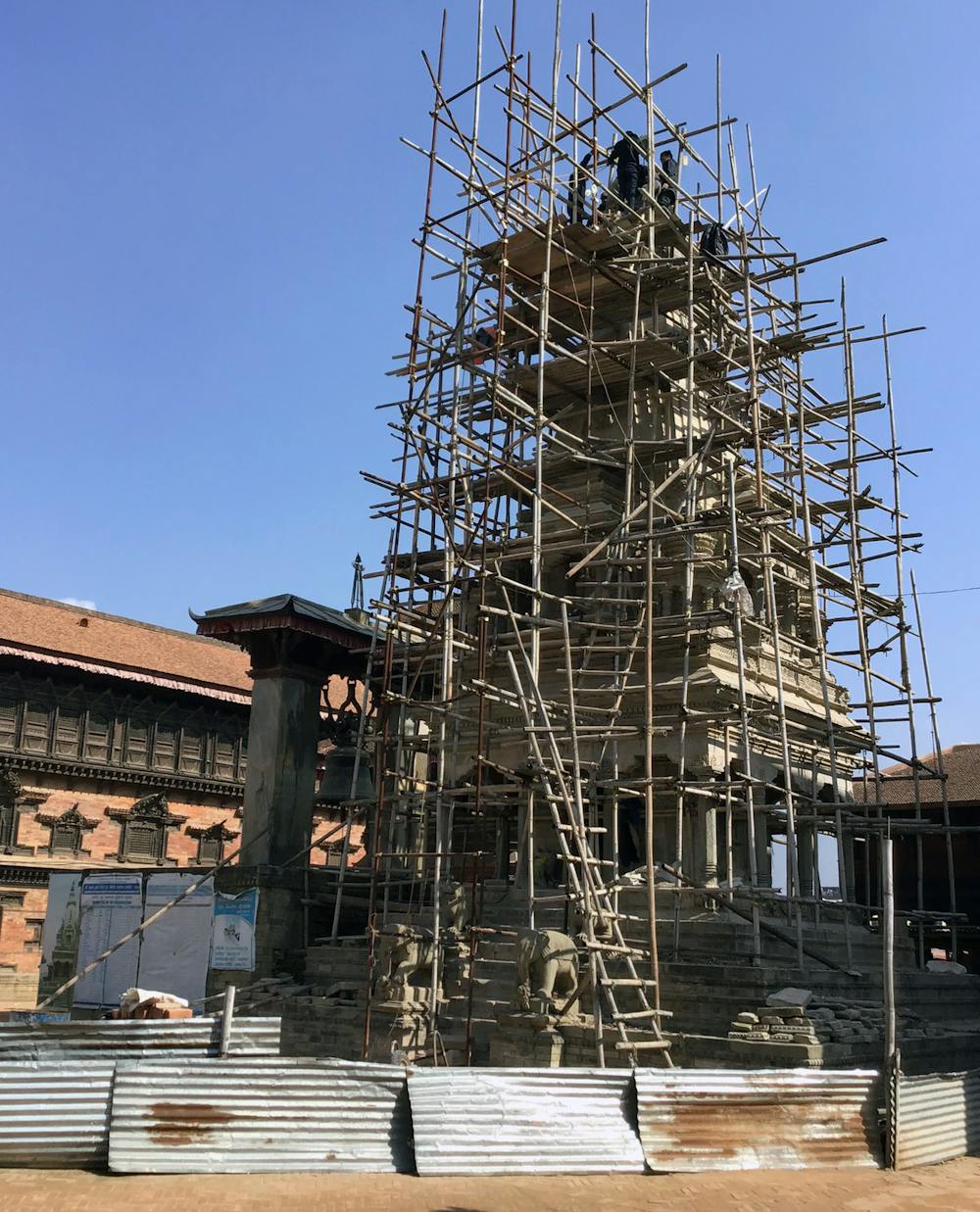
Bhaktapur city is home to one of seven monument zones of the valley. It has been undertaking a novel form of locally led recovery, focusing on built heritage to restore its tourist potential and – more importantly – rebuild community life and the resilience of residents.
The chariot assembly in progress for Bisket Jatra in Taumadhi Square, April 2019.Vanicka Arora, Author provided
Heritage in recovery
Bhaktapur is 13km from Kathmandu with a population of 82,000. The city has a long history stretching back to the 12th century as a prominent seat of power for the Malla Dynasty.
The central Durbar Square, an ensemble of palaces, temples and rest-houses, showcases centuries of history, architecture and craftsmanship. Declared a World Heritage Site in 1979, Bhaktapur is often referred to as a city of “living heritage”, with over 130 heritage sites and an annual calender of festivals, processions and crafts.
Bhaktapur suffered extensively in the earthquake, with over 300 deaths and 2,000 wounded. Over 30,000 houses and 116 monuments were significantly damaged.
The reconstruction of Vatsala Durga Temple in Bhaktapur Durbar Square nearing completion in February 2020.Vanicka Arora, Author provided
For residents, heritage reconstruction is a prominent, tangible sign of post-earthquake recovery, offering a renewed sense of local pride. Sites being reconstructed are not simply monuments for tourists to visit, but essential places for public life: temples for worship and rest-houses for community gatherings.
The president of one of the local user committees, Ram Hari Kora, tells me why he volunteers for heritage reconstruction: “All these monuments are properties left by our ancestors. They have cultural significance as well.”
Continuing to celebrate festivals has become the city’s way of returning to normalcy. The annual August festival of Gai Jatra commemorates the dead through a week-long series of rituals and processions through the city.
Images of deceased family members are part of the processions, accompanied by riotous and energetic dances, traditional costumes and masks.
In 2015, the festival offered locals the opportunity to share in collective grief.
Global heritage, local action
Five years on, close to 80% of the restoration and reconstruction work in Bhaktapur has been completed. Local consumer committees handle finances and planning of individual projects. Funds are supplemented with donations of cash and building materials from residents, and locals volunteer to work on reconstruction sites themselves.
Bhaktapur resident Deepesh Raj Sharma recalls how, in the aftermath of the earthquake, residents rallied together to catalogue and store important fragments of several temples that had fallen down to ensure their safety.
“Protecting our heritage and the wealth of our ancestors is part of our duty towards the community,” he says.
In stark contrast to its neighbours Kathmandu and Patan, Bhaktapur maintains a high degree of autonomy in reconstruction. Less than 10% of heritage sites in Bhaktapur have been directly assigned to the Department of Archaeology of Nepal. The city famously declined over US$10 million (A$16 million) in foreign funding from the German Development Bank in 2018 over disagreements about the way reconstruction projects would be commissioned and implemented.
Several local approaches conflict with international guidelines on heritage protection, which has led to critiques by conservation experts. The use of new materials and techniques and the lack of detailed documentation and research are ongoing concerns.
But most locals I interviewed are satisfied with the steady progress that is visible within the city. Many have a distinct sense of ownership of their city’s heritage recovery.
Literature student Samriddhi Prajapati tells me: “Ongoing reconstruction of heritage makes me proud, because this way we can preserve our culture and encourage tourism side by side.”
Not all heritage, not all people
Unfortunately, not all Bhaktapur’s heritage buildings have received the same care.
While public and community heritage has received sustained attention and funding, many private houses have disappeared into piles of rubble. Houses that survived have been languishing.
Many houses over 150 years old are still standing in Bhaktapur, while others were destroyed by the earthquake. Newer construction systems and materials replace the old building stock.Vanicka Arora, Author provided
Housing needs to follow strict bylaws to qualify for funding incentives, leading to conflicts slowing down reconstruction. Concerns for safety and efficiency also override heritage, so almost all new houses are built using modern construction materials. The city’s ageing housing stock is being abandoned or replaced.
Heritage is not a priority for all of Bhaktapur’s residents, particularly its poorest and most marginalised communities, which have more immediate concerns about housing, food and employment. For them, recovery is a distant dream and heritage is a luxury.
But Bhaktapur’s heritage recovery process leverages its past for its future, building disaster resilience and fostering social and cultural ties while rebuilding local and national identity.
As tourist guide Sahana Chitrakar tells me: “People can see their reflection in heritage, they can see their parents and grandparents, so they want to keep it for the future”.
Source: The Conversation (Au and NZ) – By Ron Wakefield, Professor of Construction, Deputy Pro-Vice Chancellor, International, and Dean, School of Property, Construction and Project Management, RMIT University
The COVID-19 pandemic has shown us our health is intimately connected to the health of the person next to us, and that everyone needs shelter. It has created unprecedented urgency about moving people who are homeless into emergency accommodation – for their health and ours. So what happens next?
Getting people into hotel and motel rooms and off the streets is a good thing, but these are stopgap measures. They don’t provide a home.
The rush to shelter people before the peak of the virus has been driven by a pressing need to protect us all. As the only seven-day-a-week mobile outreach service still operating in Victoria, Launch Housing has temporarily housed 800 people, half of whom were sleeping rough. So what will happen to them and the thousands of other Australians in emergency accommodation when social-distancing restrictions ease and our world returns to something resembling normal?
Will they exit back into street homelessness to become the face of fear and stigma, while the rest of the community returns to more social activities?
A way to find homes right now
Australia has a significant but solvable homelessness problem, so let’s start solving it right now.
Image: AAP, Author provided
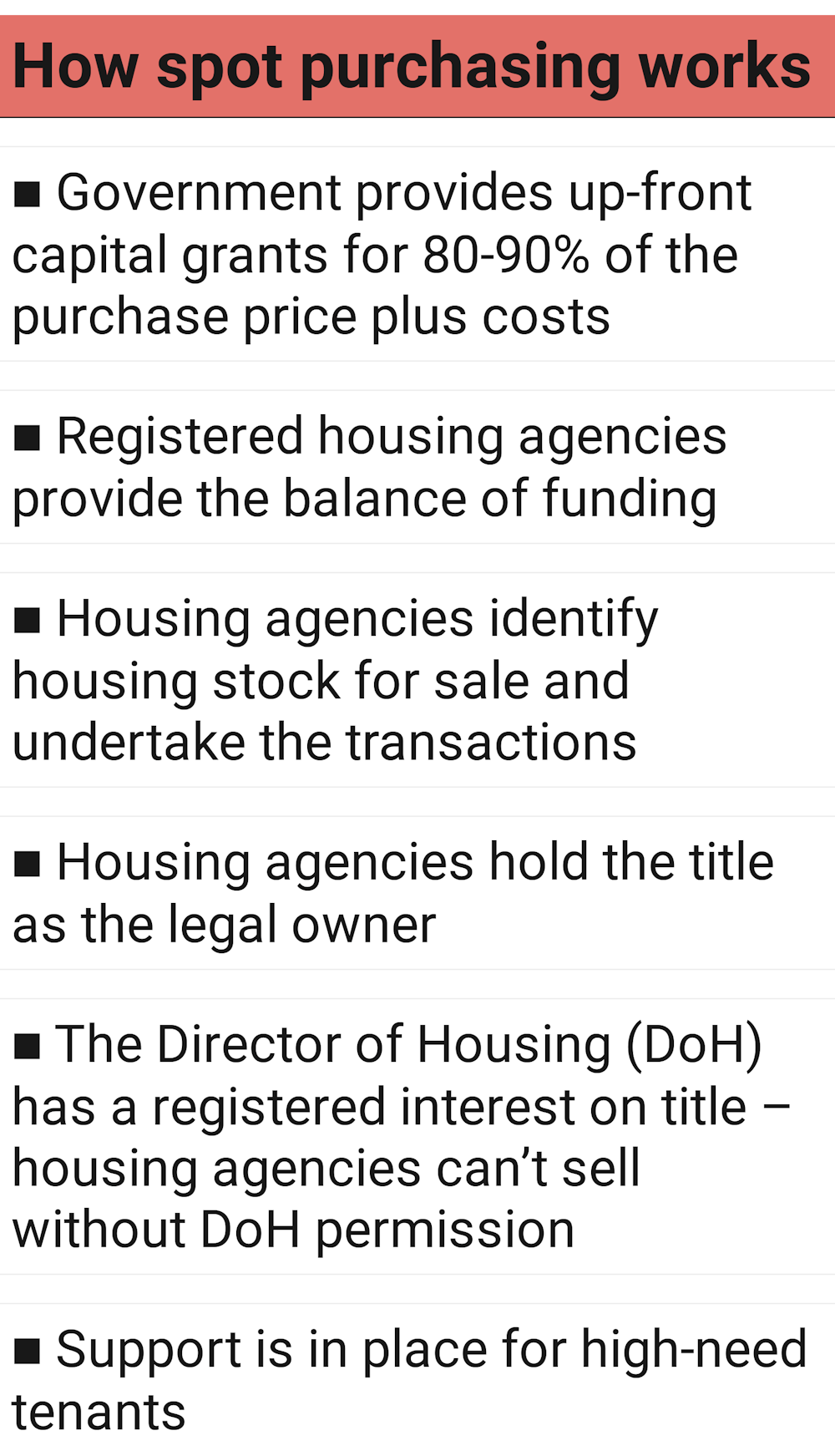
To avoid people being deposited back onto the streets, we’re asking state and territory governments to fund a rapid spot-purchasing program. The Victorian government has done it before on a smaller scale in 2016, and it worked. It’s time to do it again, but on a bigger scale and around the country.
The spot-purchasing program would fund community housing agencies to enter the property market to buy up “distressed” or cheap housing assets. These properties would be let at below market rent to people who pay 30% of their income as a social rent.
Vendors and developers would get much-needed sales and thousands of people would get a home. Taxpayers would get an enduring social benefit for years to come, as expensive nightly motel bills – without any long-term benefit – get converted to community-owned property assets.
This is our mirror moment. We simply can’t afford to drop people when no one is looking and attention turns elsewhere.
People in emergency accommodation can’t wait years for new housing to be built. They (and we) need those homes now while longer-term solutions are developed.
Meeting rising needs in the longer term
Many people who are not homeless have lost jobs or had their work hours cut, and are facing their first-ever brush with housing insecurity. They are struggling, paying more than 30% of their income for housing.
There was a housing crisis before this latest upheaval, and these conditions haven’t changed. Rents were too high and there weren’t enough affordable homes.
The health and economic fallout from COVID-19 has exposed the urgent need for more homes that are cheaper to rent for people on moderate, low or no incomes.
Crucially, we are also calling for the Australian government to fast-track the building of more social and affordable housing as part of an economic stimulus package.
A national social housing stimulus package will help get people back to work, speed the recovery, give the building industry the confidence to retain more workers and put roofs over people’s heads.
Initiatives to fund the construction of new social housing could be rolled out quickly. The industry capacity is there to do it, in partnership with the community housing sector.
The early stages of the stimulus would bring forward maintenance and new construction projects that are already on the drawing board.
By targeting locations with transport and facilities but high levels of rental stress, new social housing buildings can be built quickly and integrated well into local communities.
The stimulus should be designed to encourage new mixed housing models, including properties that are “built to rent”.
It would increase the supply of social housing for households that are homeless, or at risk of becoming so, and would stimulate the building, maintenance and construction industry.
The program would build on the Social Housing Initiative that was launched in response to the 2008 Global Financial Crisis. Some 20,000 new social housing units were built throughout Australia.
This time, we think it is possible to deliver 30,000 new units. Community housing organisations could raise extra private finance to build another 5,000 homes.
The pandemic has created some very real challenges, but it also creates some unique opportunities to accelerate progress on ending homelessness, to recognise our interconnectedness and to give people the best possible protection of all – a home.
This article was co-authored by Bevan Warner, CEO of Launch Housing.
Source: The Conversation (Au and NZ) – By Rebecca Hamilton, Postdoctoral Researcher in Palaeoecology, Max Planck Institute for the Science of Human History
The HMS Endeavour’s week-long stay on the shores of Kamay in 1770 yielded so many botanical specimens unknown to western science, Captain James Cook called the area Botany Bay.
During this visit, the ship’s natural history expert Joseph Banks spoke favourably of the landscape, saying it resembled the “moorlands of England” with “knee-high brushes of plants stretching over gentle and treeless hills as far as the eye could see”.
Since then, Kamay has become an icon of Australia’s convict history and emblematic of the dispossession of Indigenous people from country.
However, memories of the pre-British flora have largely been lost. Ongoing research drawing on ecological data, and Indigenous and European histories, reveals what this environment once looked like. It shows many of the assumptions about the historical landscape we hold today may actually be wrong.
The site better reflects 20th-century European exploitation of the landscape than it does early or pre-British Botany Bay.
From swamps to suburbs
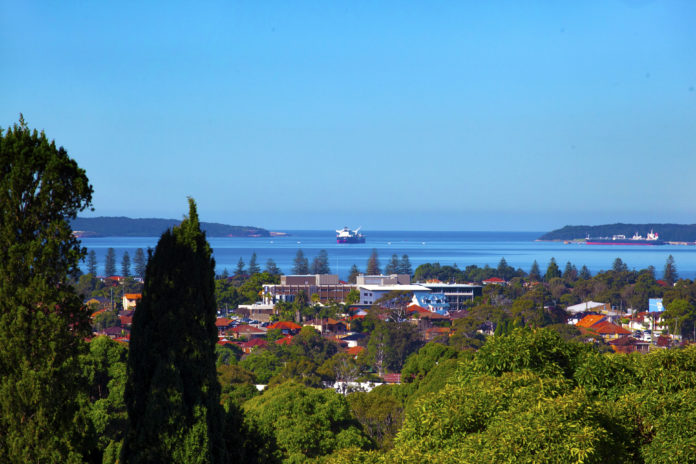
Today, the northern shore of Kamay acts as Australia’s gateway to the world. It hosts Australia’s busiest international airport and one of Australia’s largest container ports, major arterial roads and a rapidly growing residential population.
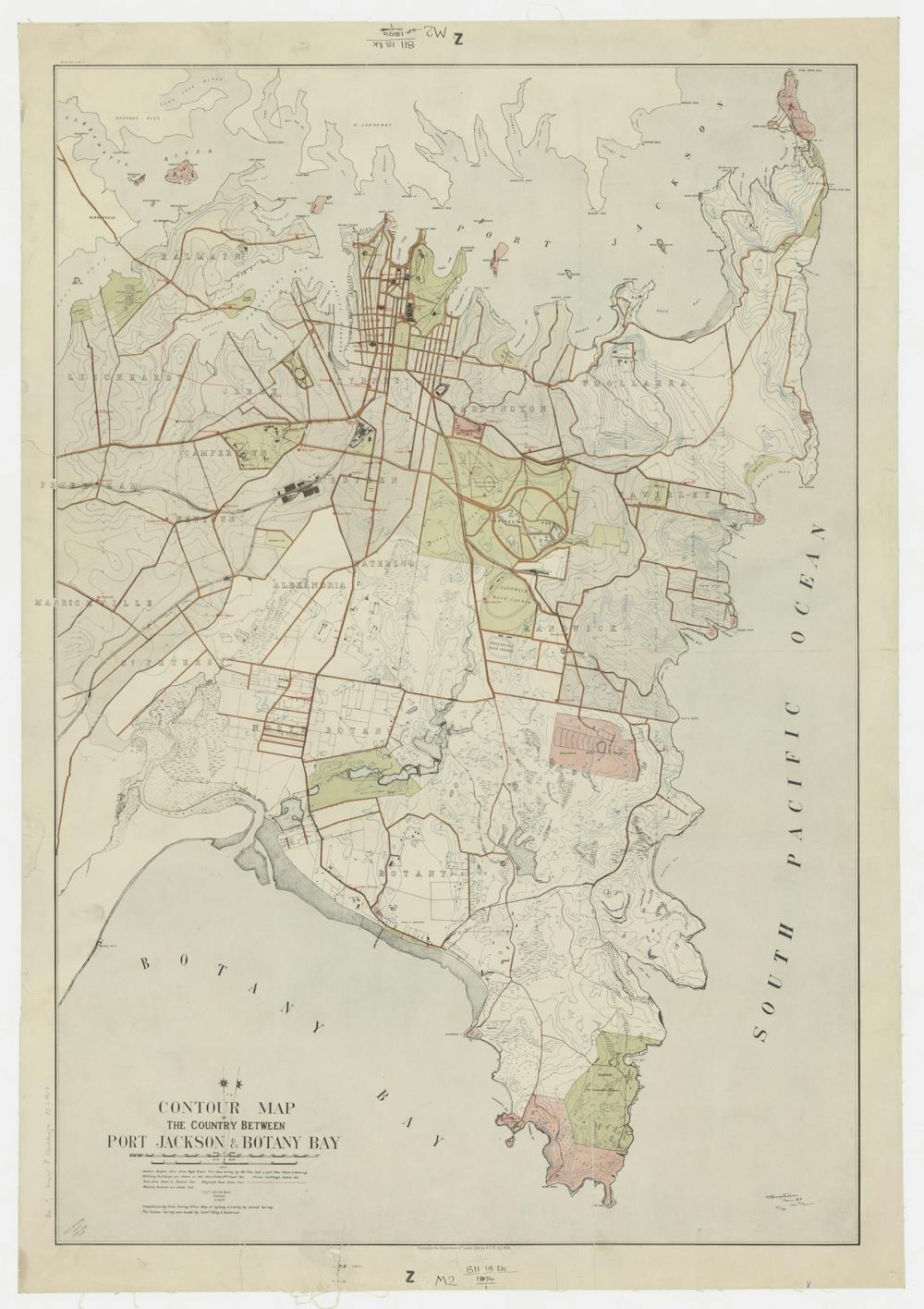
From the early 19th century, urban development gradually overprinted a vast network of groundwater-fed swamplands, whose catchment extended north from Kamay to what is now the southern boundary of Sydney’s CBD.
These swamps have largely disappeared under the suburbs, or have been corralled into golf course ponds or narrow wetlands alongside Southern Cross Drive – a sight familiar to anyone who has driven between Sydney city and its airport.
Kamay holds a rapidly growing residential population.Shutterstock
“Natural” remnants of the former swamplands are today considered to have high conservation value under both state and federal environmental and heritage protection legislation.
But attempting to protect ecosystems that reflect a version of the past has a major constraint. Long-term information about their past species composition and structure can be fragmented, misremembered, or absent.
This is especially problematic in the case of the Kamay swamplands, which, like many urban ecosystems, have been fragmented, hydrologically altered, and polluted.
Yet not all is lost. We studied pollen released from flowering plants and conifers, which can accumulate and preserve in sediment layers through time.
Looking at this preserved pollen lets us develop a timeline of vegetation change over hundreds to thousands of years.
Lachlan swamp
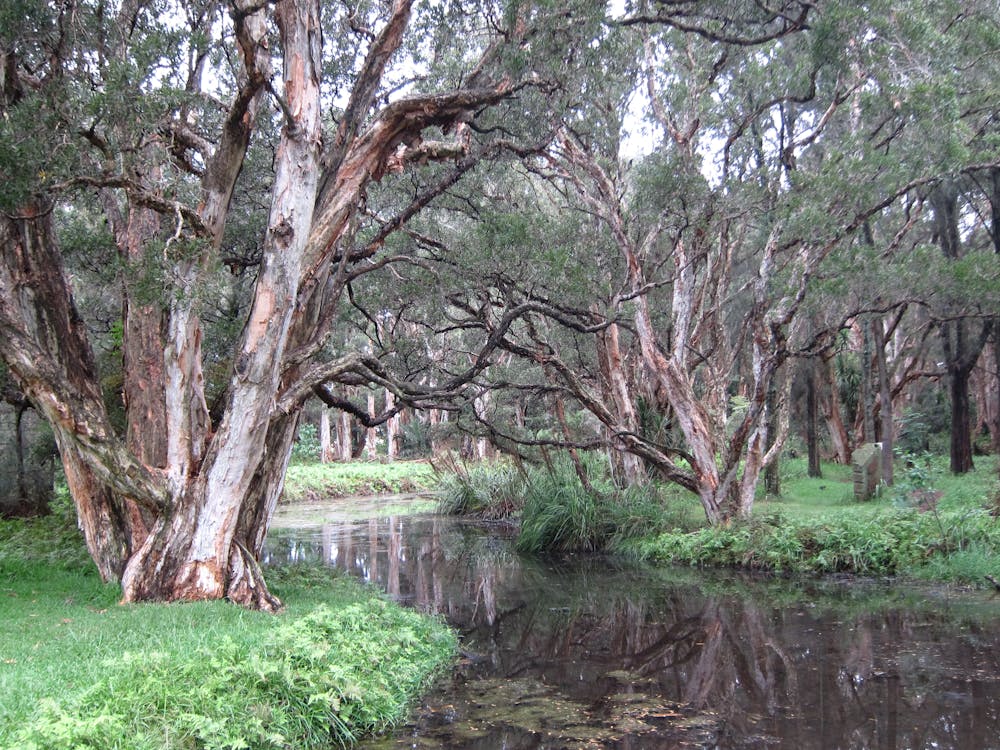
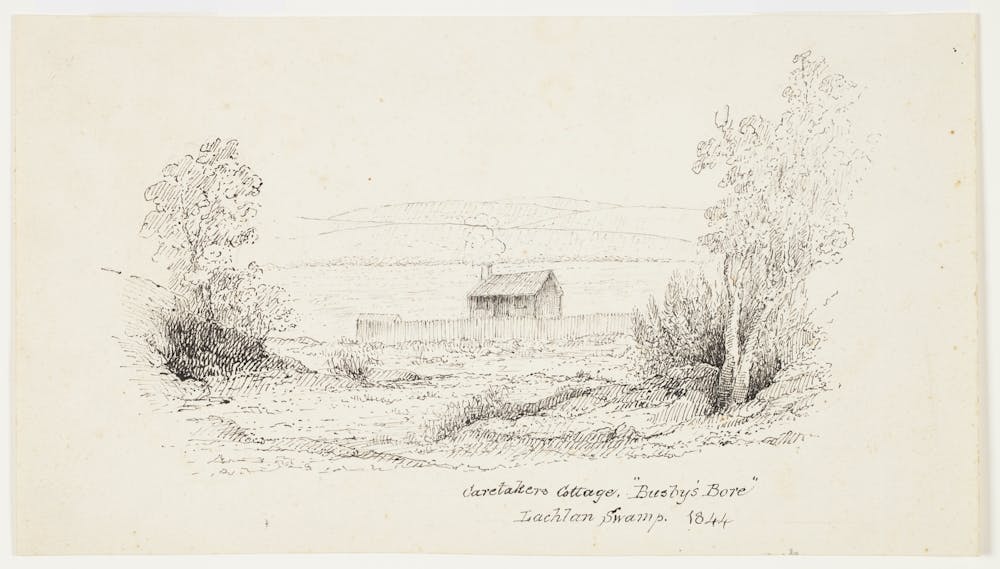
One wetland remnant, called Lachlan Swamp, occurs at the springhead of the swamplands in Centennial Parklands. Boardwalks and signs at the site encourage visitors to imagine the swamps and the paperbark forest (Melaleuca quinquenervia) surrounding them as a relic of pre-British Sydney.
Paperbark trees dominate the landscape at Lachlan Swamp.Author provided
We used the pollen technique at Lachlan Swamp to determine whether the contemporary ecosystem reflects the pre-European landscape being protected.
And our results reveal that, at the time of British occupation, the swampland was surrounded by an open, Ericaceae-dominated heath. Casuarina and Leptospermum species were the dominant swamp trees, not the swamp paperbark.
This plant community was present at the site for at least the previous 2,000 years, and was only replaced by the contemporary paperbark forest between the 1890s and 1970s.
Ongoing work from the La Perouse Aboriginal Community led research team drawing on Indigenous knowledge and European history suggests this open heathland vegetation grew consistently across the Lachlan and Botany Swamps during and prior to European colonisation of Sydney.
Continuous cultural knowledge about the environment, held by local Dharawal people, can provide a rich picture of Kamay’s botany and how it was used – well before the arrival of the HMS Endeavour.
For instance, the Garrara or grass tree (Xanthorrhoea), which is depicted in many early colonial paintings, is a multi-use plant used to construct fishing spears – a tradition upheld today within the La Perouse Aboriginal community.
Similarly, other food and medicinal plants have been long been used by this community. This includes Five Corners (Ericaceae), Native Sarsaparilla (Smilax), Lomandra (Lomandra) and multi-use heath and swamp plants such as the coastal wattle (Acacia longifolia), swamp oak (Casuarina glauca) and coastal tea tree (Leptospermum laevigatum).
Xanthorrhoea plants grew throughout Botany Bay before European colonisation.Shutterstock
The plant species described and utilised by the local people correlates with the pre-European vegetation reconstructed from the Lachlan Swamp pollen record, and with what is described in early British records.
Not all is lost
Our common understanding of the Kamay landscape, as recognised in the protected swamp remnant in Centennial Park, is based on a misremembering of the past.
If our future goals are to conserve beautiful, unique ecosystems that have escaped European exploitation and mismanagement – such as the version of Botany Bay described by Banks – it’s crucial to start including and listening to long-term environmental histories to compliment our scientific research.
We must protect a resilient, ecosystem-rich landscape informed by accumulated Indigenous knowledge, passed down over many generations.
Though Sydney’s environmental past may be misremembered, it’s not lost entirely. Its legacy is subtly coded into the remnant landscapes of pre-British occupation, and preserved in the continuous knowledge systems of the land’s first peoples.
With care, it can be read and used to support resilient and authentic urban ecosystems.
Most Australian children are stuck at home due to the outbreak of COVID-19. They need to find ways to socialise, do their school work, exercise and entertain themselves.
It’s not surprising parents may be hearing “I’m bored” a lot more than before.
People hate being bored. So much so that in one study, one-quarter of participants said they would rather give themselves a painful shock than be in a room with no external stimulus (music, books, phones) for 15 minutes.
This shows how much people want to escape the feeling of boredom.
But while boredom causes temporary uncomfortable feelings, it can be good for us in many ways – from stimulating creativity to helping train our concentration.
Boredom can come from lack of rest and nutrition, lack of mental stimulation or too much repetition (lack of novelty). People with a high sensitivity to reward, meaning those who need constant stimulation to feel satisfied, are more at risk of being bored.
Boredom doesn’t mean you don’t have things to do; you just don’t want to do them.Shutterstock
A person can get bored if a task isn’t stimulating enough, if the work is too hard or too easy and if activities lack meaning and challenge.
Lack of control can also contribute to boredom. In one study, students showed more boredom when an adult picked their leisure activity than when they were allowed to generate their own.
COVID-19 may throw up all these situations – sleepless nights, not enough novelty and a lack of control.
The good and bad of being bored
Boredom can lead to creativity. Participants in one study showed more divergent thinking (finding multiple uses for items, making connections between seemingly unrelated ideas and generating multiple creative ideas) after doing a boring task.
In another study, participants had to either complete a boring activity of sorting beans by colour, or a fun craft activity before completing a creative task. Participants who had to sort the beans showed a better quality and quantity of ideas than those who had engaged in a craft activity prior to the creative task.
Creativity emerges because when one is bored, people actively seek something stimulating. Creativity is a challenge that meets this need.
Being bored also helps train our concentration and attention. While it is easy to turn to electronic devices to entertain and distract when we are bored, research shows devices don’t fulfil boredom.
It teaches us to go to different places in our minds when we don’t have external stimulation. In other words, our mind gets a workout. Boredom is good for us and it’s good for your kid.
Solutions to boredom
So if you find your child is getting bored, you don’t need to feel guilty you’re not entertaining them.
Instead, think about the following:
check your child isn’t just hungry or tired as everything can feel boring then. It isn’t boredom, just lack of energy to engage in an activity
these are unusual times where a lot feels out of control so see how you can provide your child with new day-to-day choices (such as a menu for the day, where you eat dinner or what order they do their school work in)
don’t feel obligated or responsible to stop this “terrible experience” for your children. They can develop internal resources (attention, self-regulation, creativity) by having to solve the boredom problem themselves
teach your child not to be afraid of the feelings that come with boredom, but excited. Boredom is a signal that indicates change is needed. Help them generate ideas and then pick one to engage in. Let them be responsible for the choice. Get them to create a boredom box with ideas they can choose from
boredom is sometimes just getting over the hard part of getting started. Your child may not be bored, just not knowing where to start. Help them break a task down and get started
our attention is easily stolen by our mobile devices as they provide an easy distraction. Try setting a timer with your family, turn off your devices, and all engage in something meaningful for 20 minutes. Creativity emerges in space. You’ll never know what you could achieve if you keep distracting them.
Psychologist Heather Lench, who explores motivation, says boredom stops us ploughing the same old furrow, and pushes us to try to seek new goals or explore new territories or ideas. Rather than reject it, work with it and see what you and your children can create.
We may have a surprising new ally in the bid to contain the COVID-19 outbreak: your sewage.
Australia’s government recently announced that sewage is to be tested for SARS-CoV-2, the coronavirus that causes COVID-19. Federal health minister Greg Hunt explained this will be a key part of the monitoring program that will need to be in place to guard against future local outbreaks of the virus.
Researchers in the Netherlands, France, the United States and Australia have been testing sewage for SARS-CoV-2 for more than a month, and have generally reported that the rise and fall of their results reflect the officially reported local rates of infection with COVID-19.
This suggests sewage can indeed be used to monitor the future spread of the virus. And with many infections thought to be symptomless, this means we can potentially detect cases that might evade other monitoring programs.
The testing for SARS-CoV-2 in sewage doesn’t detect the virus itself, but just a very small fragment (about 0.1%) of the virus’s genetic material, called RNA. This means it cannot tell whether the water contains infectious virus particles or just a few pieces of leftover RNA from inactivated or decomposed viruses.
This type of waste tracking is not new. It has already been used in Australia to track viruses such as norovirus. And since 2017, sewage testing has been used to uncover evidence of illicit drug use at the population level. Drug-testing sewage has helped police and other authorities discover what drugs are used in particular cities, and even to track down illicit drug labs.
The newer aspect is the proposal to use sewage monitoring in the context of a major pandemic, and potentially to rely on the data to inform some very high-stakes decisions. This introduces a high burden of responsibility to ensure that the data are collected by reliable means, with well understood rates of false results, both positive and negative.
If major decisions are to be based on measured concentrations, it will be essential to understand all the factors behind these measurements.
If sewage tests positive, what next?
While technically possible, sewage testing from individual properties is unlikely to be cost-effective. But it might potentially be used to sample wastewater from large buildings, hospitals or even ships or aircraft.
It will be important to understand how we would respond to positive results for SARS-CoV-2. Locking down a building or cruise ship might require isolation for everyone involved. Alternatively, a positive result could be used as a trigger for individual testing of those people who may have contributed to the positive sewage sample. In any case, the impacts to individuals will be sufficient to warrant a high reliability for sewage testing.
Meanwhile, how confident can we be about sewage that tests negative for SARS-CoV-2? Do we properly understand the likelihood of missing what could have been a positive result? Would there be liability placed on the testing authorities, governments, or others in the case of false negatives leading to missed opportunities for virus containment?
We will also need to understand the trends that may be observed in terms of increasing and decreasing concentrations of SARS-CoV-2 in sewage. While we may assume these accurately reflect changing patterns of infection, other factors such as rainfall and sampling variability could significantly influence the measured concentrations.
Of course, direct clinical testing of patients is also subject to many types of errors, and there are protocols in place for how we respond. But sewage testing would likely have higher degrees of uncertainty and greater numbers of people directly affected by the responses.
The issue is thus far less straightforward than it might appear on first reflection. That means it deserves a similar level of scrutiny as the government’s planned contact tracing mobile phone app, which has prompted significant privacy concerns.
A human right to flush without self-incrimination?
If coronavirus testing is to be used to dictate specific actions or responses from public health officials under emergency orders, it raises questions that have not yet been addressed in Australia’s drug testing.
A testing regime that delivers information on the scale that would be most useful for public health would create challenges for human rights. The human right to water is recognised under international law, and includes the right to safe and accessible sanitation. If sewage testing is used to support sanctions in the form of lockdowns, this may erode our basic right to access sanitation.
This kind of testing also poses challenges for public water authorities, which must comply with the Information Privacy Principles.
We may also wonder where our own “rights” to our waste end. In Australia, household garbage remains the legal property of the householder while on their private property, but belongs to the garbage collection agency (usually a local government) once collected. Is this an appropriate model for bodily waste?
Australia’s legal frameworks around sewage collection, treatment and management have struggled to keep pace with developments in sewer mining, stormwater reuse and water recycling.
It might seem strange to ponder the ethics of what people flush down the toilet. But given the personal details that sewage can reveal – everything from diseases and pollutants to drug and alcohol use – we need a national framework to ensure the technology does not go unchecked.
In the space of six weeks, the threat posed by COVID-19 and the sudden absence of partisanship from the political landscape have ushered in a focus on leadership for the greater good, the likes of which we haven’t seen for years.
Leadership for the greater good occurs when leaders create value for society in a manner that is transparent, accountable and ethical. Once conspicuous by its absence, it now seems to be everywhere, and gratifyingly so in the institutions where it counts most.
As an extension of our Australian Leadership Index (ALI) – a long-running survey to gauge public perceptions of leadership for the greater good – we have asked Australians over the past five weeks to judge the performance of various institutions during the current pandemic.
Each institution receives a score based on the number of people who said the institution showed leadership to a “large extent” or “extremely large extent”, minus those who responded “some extent” or “not at all”.
Notably, by taking the pulse of Australians weekly, we can track how public opinion is changing. When these findings are compared to our wider survey results, which we have been collecting quarterly since September 2018, the results are striking.
The ascent of leadership for the greater good
Prior to the pandemic, the public had a dim view of the state of leadership in Australia. This has been consistent from September 2018 to March 2020.
However, in the week of March 13-19, in specific response to the COVID-19 pandemic, public sentiment entered positive territory (+1) for the first time in a year and a half. Even more striking, these perceptions have improved week-on-week to a score of +34 in the week of April 15-22.
What a difference a(nother) crisis makes
The improvement in public perceptions is most remarkable for the federal government, particularly in light of the recent bushfire crisis.
Throughout the bushfires, the public consistently judged the federal government’s leadership for the greater good as poor. From the beginning (-32) to the end (-25) of the crisis, its ALI score was negative – most people thought the government was failing to demonstrate effective leadership.
Fast-forward to mid-March, however, and the federal government’s fortunes changed dramatically. In the week of March 13-19, the government’s ALI score (+24) surged into positive territory for the first time since we started running the surveys.
Public perceptions have improved every week since then, hitting a high score of +47 recorded in the past week.
The pattern of results for state governments is almost exactly the same, but interestingly, state governments have trailed the federal government in most of our weekly polls, with the exception of the week ending April 1.
Public health still at the top
A consistent finding of our surveys from the beginning has been the high esteem in which our respondents have held the public sector.
Notably, since we started measuring public perceptions, the public sector has always outscored government when it comes to demonstrating leadership for the greater good.
However, during the coronavirus pandemic, our respondents have viewed both the public sector and government in practically the same light.
The gains for the public sector are largely accounted for by public health institutions, which have been judged overwhelmingly as showing the greatest degree of leadership for the greater good of all institutions measured.
Public health institutions have also far outpaced private health institutions in our surveys during the pandemic.
This pattern is replicated in other sectors. Public education and media institutions, for instances, have been viewed much more favourably than their private counterparts during the crisis.
The worst performers in terms of leadership for the greater good throughout the pandemic have been health insurance companies, religious institutions, trade unions and multinational corporations.
What does this mean for the state of leadership in Australia?
The ALI was founded on the principle that leaders should act beyond self-interest to benefit the greater good, and this leadership should come from institutions across all sectors.
Since its inception, the results have painted a dim picture of the state of leadership across Australia, with the exception of only a few institutions, such as charities and public health.
However, the COVID-19 pandemic has necessarily brought the wider public interest to the fore, and institutions across all sectors have instigated measures to protect the greater good.
To be sure, crises crystallise a shared understanding of the common good and encourage people to pull together in a manner not typical of more ordinary times.
Nevertheless, by shining a light on leadership for the greater good and how it can be improved, this pandemic may yet have a silver lining for the future.
Aboriginal and Torres Strait Islander readers are advised this article contains references to deceased people.
This has been a difficult review to write. The late Aurukun artist Mavis Ngallametta’s major survey exhibition Show Me the Way to Go Home opened in March at the Queensland Art Gallery. I was lucky enough to view the exhibition before QAG shut its doors to the public a couple of days later.
Now the gallery has uploaded a video journey through the exhibition with co-curator Katina Davidson. But my concern is the exhibition will be another victim of COVID-19, through no fault of its own. Perhaps future historians will look back on the earliest days of the pandemic and ask what fell through the cracks? What were the unseeable exhibitions? Writing these words somehow feels like writing a love letter to the future.
This exhibition is both important and necessary, securing Ngallametta’s rightful position in Australian art history.
Songwoman
Mavis Ngallametta was a Kugu woman born near the Kendall River in west Cape York Peninsula. She lived a traditional life on Country until she was five, when her family moved to the Presbyterian Mission further north at Aurukun. Ngallametta later became an elder of the Putch clan, and a cultural leader of Aurukun’s Wik and Kugu people.
She was a songwoman and the exhibition’s title is drawn from Irving King’s 1925 Show Me the Way to Go Home, one of Ngallametta’s favourite songs.
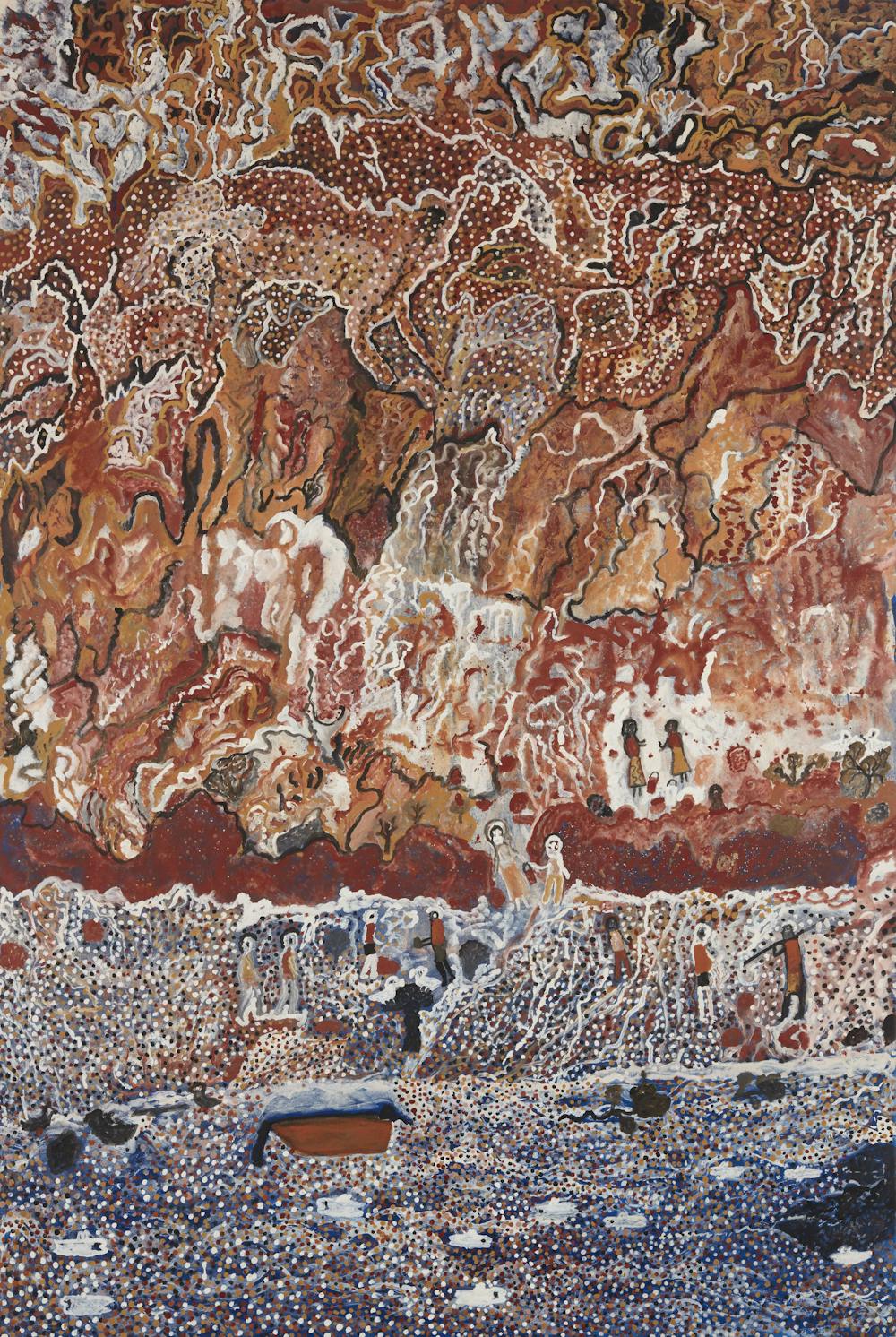
Mavis Ngallametta’s Ikalath #9 2013 from the Janet Holmes à Court Collection.Photo: Gina Allain
More than 40 of Ngallametta’s paintings and sculptures are assembled for the first time. The exhibition is organised in terms of site, or groupings of paintings that are records of the most significant places in her life. The Kendall River series for instance, was inspired by a 2013 helicopter trip, where Ngallametta and a number of her family returned to their Country.
What comes to the fore is just how rapidly Ngallametta’s command of the medium took place. Ngallametta was introduced to acrylic paint at a women’s painting workshop at the Wik and Kugu Art Centre in 2008 at the age of 64. From 2010, her works started to grow in scale and ambition. It was also around this time that Ngallametta shifted away from acrylics to ochres and clay.
Kugu-Muminh people, Putch clan Australia QLD 1944-2019 Pamp (Swamp) 2009. Collection: Queensland Art Gallery.Photo: Natasha Harth
Connections to the land
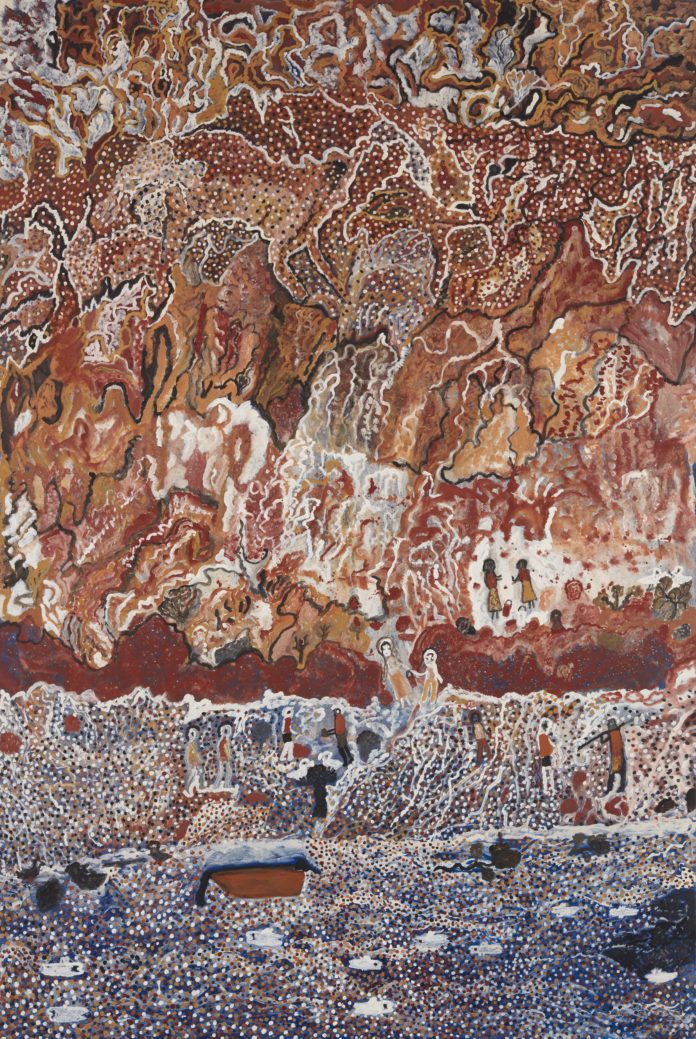
Inscribed on the paintings’ surfaces is the complexity of Ngallametta’s connection to the land in and around Aurukun. Ikalath, the coastal region north of Aurukun, has spectacular red cliffs that rise steeply from the sandy beaches. The cliffs are where sacred white ochre is collected for paint. As a Kugu woman, this was not Ngallametta’s traditional country. It was through her adopted son Edgar’s blood ties that she inherited a relationship to Ikalath.
In a remarkably short period of time, Ngallametta developed her own distinct visual language, drawing from tradition and punctuated with her own unique motifs. The waterlilies and birds that featured in her early acrylics never fully disappear from her later works. Ngallametta would start with an acrylic blue base and gradually build the layers of paint from there. The blue unifies her practice, as well as reflecting the ebb and flow of the ocean, swamps and waterways she was responding to.
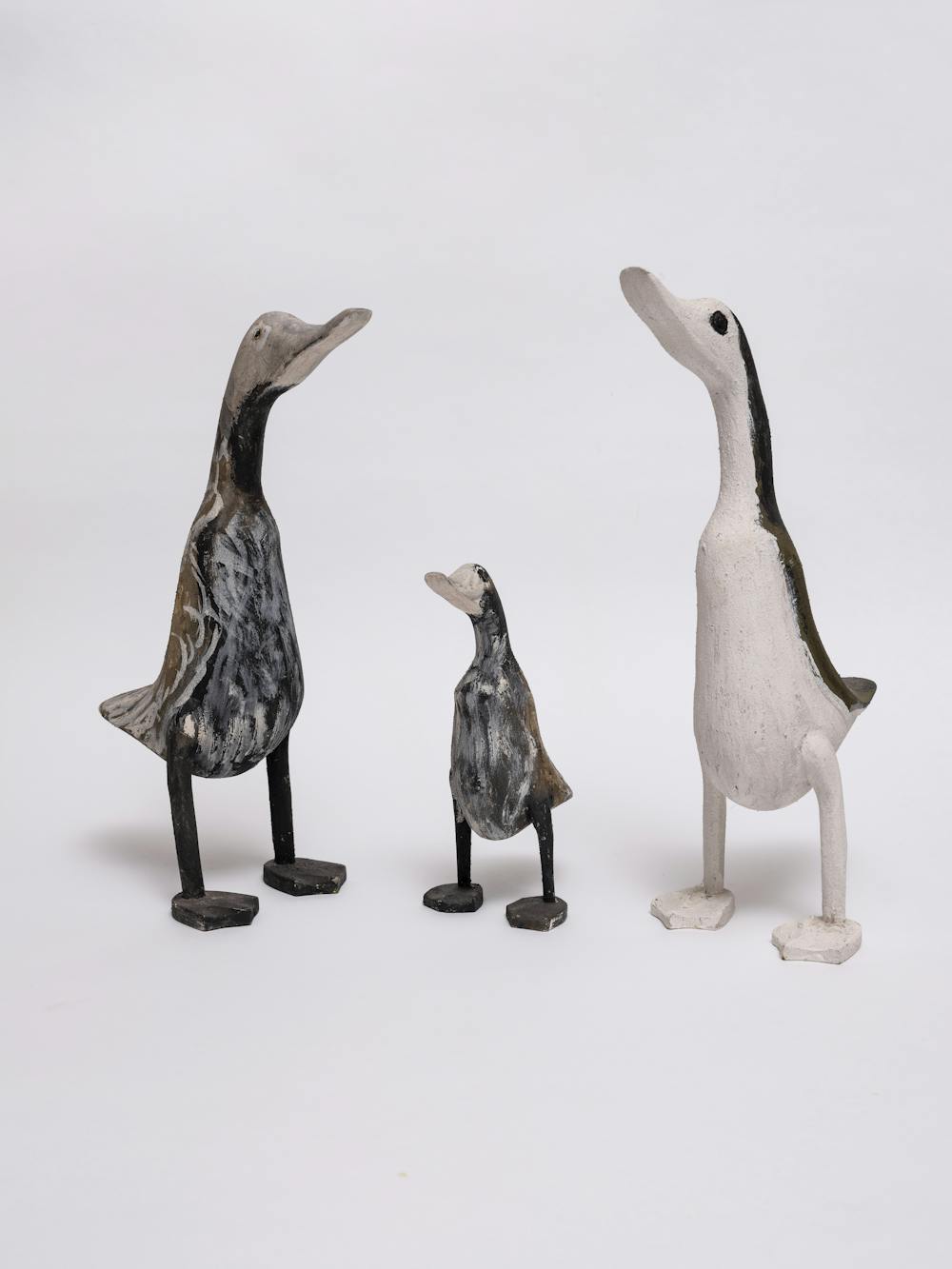
The meandering lines are interspaced with dots, as well as delightful nods to realism such as flowers, ducks and pigs. Her paintings draw close to oral story telling techniques, where she conveys an intimate knowledge of the land, combined with personal details and memories: family camping trips, fishing and preparing painting materials.
Before turning her attention to painting, Ngallametta was a master weaver, using materials such as cabbage palm and pandanus. Later, she would weave from ghost nets, or discarded fishing nets that washed up as detritus on the beaches of Queensland’s far north.
Ik (Basket) 2010. Collection of The University of Queensland.Photo: Carl Warner
The influence of Ngallametta’s weaving practice is evident through this exhbition. The strong horizontal bands that feature on her ghost net baskets reappear on her canvases as an intricate weft and weave of colour and paint.
Dragging Net at Less Creek (detail) 2015. Collection: Johnny Kahlbetzer, Sydney.Photo: Jenni Carter
Bird’s eye
There are many ways the history of Australian landscape painting can be written. One possible genealogy is via artists’ attempts to resolve the vastness and enormity of the country. William Robinson’s swirling landscapes with multiple points of perspective are logical points of comparison. However, Ngallametta, is doing something very different from Robinson.
The use of bird’s or mind’s eye perspective is a familiar technique used by Indigenous artists to represent country. Ngallametta evokes the sensation of flying over the land, only to have the land fold back and over, enveloping the viewer.
In this way, standing in front of Ngallametta’s enormous paintings is akin to the experience of standing before a giant wave. Her paintings rise up, asserting their physical verticality and threatening to engulf the viewer. This vertiginous experience is counteracted by the strong horizontal bands. These anchor the viewer, creating not just one, but many possible horizons. The horizontal and vertical are in constant dialogue, creating a tension that pulses with the energy of life in Queensland’s far north.
Joyful and exuberant, with accents of wry humour, Mavis Ngallametta’s paintings, weavings and sculptures are exactly what we all need right now. Hopefully we will get to see them in person again soon.
Burdekin ducks 2011. Dux of Distinction Collection: John Conroy.Photo: Carl Warner
Although the Queensland Arts Gallery is currently closed, Show Me the Way to Go Home is scheduled to continue until 2 August 2020. A series of exhibition videos can be viewed [here].
Source: The Conversation (Au and NZ) – By Frank Bongiorno, Professor of History, ANU College of Arts and Social Sciences, Australian National University
Anzac Day 2020 will be a far cry from the Australian War Memorial’s dawn service of recent years. While dignified and solemn, the dawn service has also been spectacle. Sophisticated technology is used to project images from the memorial’s photographic collection onto the building. From an hour before the service, members of the armed forces read from the diaries and letters of men and women who have served in war over more than a century.
The choreography of the whole event is unmistakable as national performance. Even the birdlife at the foot of Mount Ainslie seems to recognise it has a role to play with its singing and screeching and laughing – instantly recognisable as an Australian soundscape – alongside the speechmakers, catafalque party and bugling of the Last Post.
This year, thanks to the coronavirus pandemic, it will be different. The dawn service will be held without members of the public, but will be televised on the ABC and streamed online. There will be no local marches.
The Returned and Services League (RSL) has encouraged people to film themselves reciting the ode in their homes and post it online. The RSL is partnering with News Corp in Light Up The Dawn, asking Australians to step into their driveways to observe a minute’s silence, possibly carrying a candle or using mobile phones for illumination. They have even created a virtual candle you can download to your phone.
We can be sure the novelty of the 2020 Anzac Day commemoration will attract plenty of media attention. The Australian media have a ready-made, multipurpose rhetoric that is easily adapted to whatever novelty – minor or otherwise – each year’s Anzac season brings with it. This year will be no exception.
We can expect to read and hear of Australians in these troubled times expressing mateship, of children in pyjamas and dressing gowns showing the young are connecting more and more with Anzac each year, that coronavirus has not dampened the Anzac spirit of the nation – and so on. We will learn of the doughty Australian suburbanites who weren’t going to let a mere global pandemic get in the way of their appreciation of those who defend their freedoms. Our health workers will be seen as displaying the self-sacrifice and heroism of Anzac, born all those years ago on the shores of Gallipoli.
Anzac 2020 will be less novel than it is presented. In the enforced private nature of Anzac commemoration in 2020, we are being returned to some of the earliest themes in Anzac commemoration.
While the day has had its elements of public ritual since 1916, much early Anzac Day commemoration was private rather than public, sometimes conducted at the gravesides of Australian soldiers buried in cemeteries in Britain and Australia. Women were prominent in these efforts, honouring the memories of men they might or might not have known by placing flowers on their tombs.
There was no big Anzac Day march in Sydney in 1919. At the time, Spanish flu was ravaging the world.Parramatta Heritage Centre
There are other echoes of the past. Anzac Day in 1919 was also disrupted by a major crisis in public health. In New South Wales, where the rate of infection from Spanish influenza was high and the number of deaths – approaching 1,000 by Anzac Day – was alarming, the government had banned public meetings.
The government called off the march until May 22. When that happened, it was a fiasco. Rain prompted organisers to decide against marching all the way to Sydney’s Domain, and soldiers and sailors who had come from Central Railway Station instead slipped straight into the service in the Town Hall. Unfortunately, no one remembered to tell the thousands of people lining the streets to watch.
On Anzac Day itself, there had still been activity – more than we’ll see this year. The Centre for Soldiers’ Wives and Mothers appealed to the parents of the city’s children – home for their Easter break – to take their Shakespeare down from the shelf and read their children Henry V’s speech to his troops before Agincourt.
Gallipoli might have made the nation, but Australians still looked for inspiration to a much longer British history stretching back through Mafeking, Rorke’s Drift, Balaclava, Waterloo and Trafalgar – and even further to that “band of brothers” who made short work of the French on St Crispin’s Day, 1415.
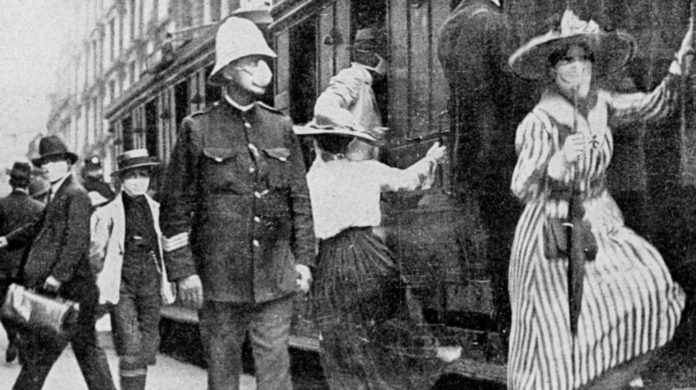
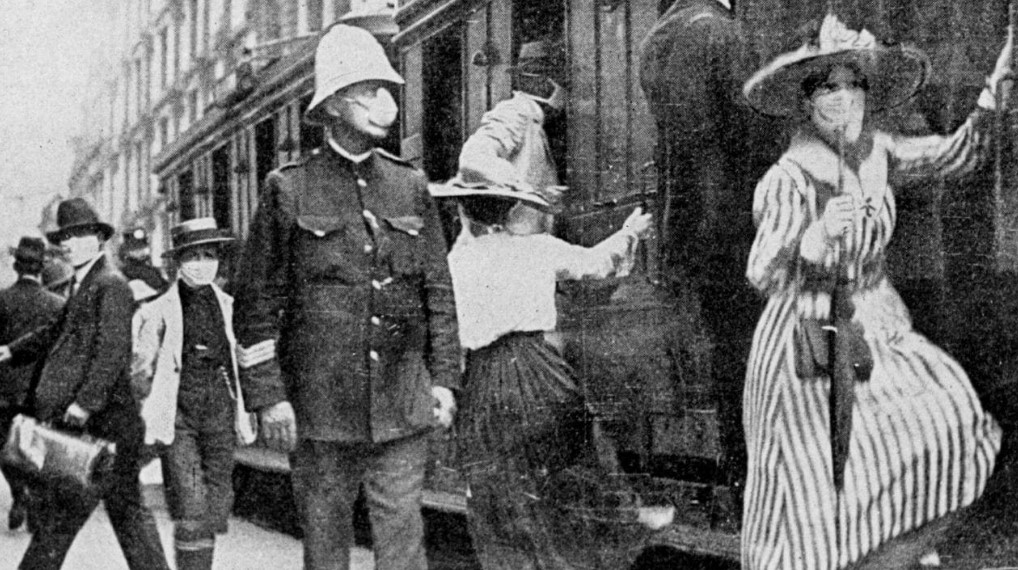
The Centre of Soldiers’ Wives and Mothers held a service in the Domain. “Womenfolk, many of them in mourning, preponderated”, the Sydney Morning Herald reported, and most were wearing masks. The location of this service was pointed: it was at Woolloomooloo Bay, where so many soldiers had embarked for the war.
Outside Sydney, there was also some disruption. “The Approach of Anzac Day this year was overlooked locally,” explained a local newspaper at Dorigo in northern New South Wales. “Owing to the presence of the influenza epidemic, the thoughts of the people seem to have been turned away from other things.” But there were Anzac Day activities; a surprising number, actually.
Anzac Day was commemorated at Lismore, notwithstanding that the town had seen several serious cases of influenza and, in the week before Anzac Day, the deaths of two men. At Grafton, thousands enjoyed a soldiers’ carnival. And in the other states, there were few signs of difficulty:
Adelaide was gay with flags from end to end, and the trains and tramcars brought thousands of people into the central city to view the procession of soldiers.
A subdued Anzac Day in Perth was attributed not to the influenza but to the authorities’ hope that the proclamation of peace in Europe would be timed so that the two “celebrations” might merge.
In 1919, as soldiers returned to Australia on ships and often went into quarantine, the nature of Anzac Day commemoration remained fluid. It was still not a public holiday, and the Anzac Day march had not yet become an essential or permanent fixture of the city commemorations. Melbourne had no march on April 25 1919, but then it didn’t have a march on most other Anzac Days in these early years, either.
Some will be disappointed there will be no marches and other public gatherings this year. But Anzac Day 2020 is less likely to be recalled as an absence than as yet another way in which Australians adapted their national life to the challenges of the greatest public health crisis for a century.
Electricity demand in Australia has barely budged since COVID-19 took hold. Many may be wondering: after months spent largely at home, are huge household power bills on the way?
The answer, largely, is no. But as the pandemic forces hundreds of thousands of Australians into unemployment, some will still struggle to pay their electricity bills.
A mass failure to pay would threaten the viability of electricity retailers. If some folded, this would reduce market competition and drive up energy costs for everyone.
So let’s take a look at how stay-at-home measures are affecting energy demand, and what the coronavirus pandemic means for electricity consumers in Australia.
The unemployed may struggle to pay their electricity bills this winter.Julian Smith/AAP
A mixed bag
We’ve assessed how social distancing restrictions have affected both demand for electricity and “mobility” (the movement of people) in Australia, New Zealand, the US and the UK.
Interestingly, changes in electricity demand and mobility go together and were significantly different across the countries after strict stay-at-home rules were imposed in late March.
Grid-based electricity demand in both the UK and New Zealand has declined significantly (20% and 15% respectively). Demand is largely unchanged in Australia and has declined about 5% in the US overall, relative to the baseline.
Among Australian states, electricity demand has declined in New South Wales by around 5%, and increased slightly in Western Australia and Tasmania. Demand is largely unchanged in Victoria, South Australia and Queensland compared to the baseline.
The relative strictness of social distancing policies seems to be the main driver of changes in electricity demand. For example, unlike New Zealand, Australia’s construction industry was not subject to lockdown restrictions, which meant electricity use in that sector has continued.
Of course, many factors affect electricity demand, and further analysis is required to isolate the precise impact of social distancing policies.
Electricity demand in Australia has changed little since stay-at-home regulations were introduced.Scott Barbour/AAP
Out and about
To crosscheck changes in electricity demand, we examined the change in the movement of people to retail, recreation and workplace locations as measured in Google’s COVID-19 Community Mobility Reports. These reports use location history data from users to create a picture of how people are moving around the community.
Mobility changes are consistent with the change in electricity demand: since stay-at-home restrictions were imposed, falls in mobility have been about twice as large in New Zealand and the UK as in Australia.
Mobility in the US states of New York and California has declined more than in Australia, but less than in the UK and New Zealand.
An empty London street. Electricity demand and mobility in the UK has fallen since social distancing was enforced.SOPA Images
What to expect this winter
In Australia, electricity demand from households has increased slightly as millions of people stay at home, prompting warnings of bill shock. But activities such as boiling the kettle and cooking more often, and keeping lights on all day, do not make a big difference to consumption.
This will change in winter, when we need to keep our houses warm. Households using split-system air conditioners for heating can expect seasonally adjusted electricity bills to be around 10-20% higher if they’re heating the house 24 hours a day, rather than just briefly in the morning and again in the late afternoon and evening.
But demand will vary greatly depending on weather and a home’s size, insulation, efficiency of heater and so on.
Averaged across all Australian households (and assuming social distancing regulations continue to apply in winter), we expect total residential electricity consumption to be a little higher this winter than in previous years.
Differences will be more pronounced in the colder states: Victoria, Tasmania, South Australia and to a lesser extent New South Wales. The warmer states of Queensland, Western Australia and the Northern Territory will see little change.
Overall, slightly higher demand for electricity in Australian households over winter will probably offset lower commercial and retail demand.
Many Australians are worried about bill shock this winter.Dan Peled/AAP
Threat to competition
While overall electricity demand might not shift much in Australia, skyrocketing unemployment may create a surge in the number of households struggling to pay their energy bills, even with Jobkeeper payments.
Long before the pandemic, regulators, governments, retailers and customer groups had worked to improve consumer protections such as hardship policies. These measures are now likely to be put to the test.
There are signs that electricity retailers are already anxious about looming non-payment. For example, some retailers have offered incentives for customers to take up direct debit, or cash-back for bills paid in advance.
Retailers pay for both the electricity produced, and its transport. If many thousands of customers can’t pay their bills, some retailers may become financially unviable. The smaller retailers have the weakest balance sheets and are most at risk.
But these small companies are the lifeblood of competition in Australia’s retail electricity markets. Losing them would, in time, translate into higher prices.
If utility non-payment spirals and retailer viability is seriously threatened, governments and regulators might consider ways to share the risks more broadly, to protect competition and consumers.
Scientists recently confirmed the Great Barrier Reef suffered another serious bleaching event last summer – the third in five years. Dramatic intervention to save the natural wonder is clearly needed.
First and foremost, this requires global greenhouse gas emissions to be slashed. But the right combination of technological and biological interventions, deployed with care at the right time and scale, are also critical to securing the reef’s future.
This could include methods designed to shade and cool the reef, techniques to help corals adapt to warmer temperatures, ways to help damaged reefs recover, and smart systems that target interventions to the most strategically beneficial locations.
Research into breeding coral hybrids for heat-stress resistance could help restore parts of the reef.Marie Roman/AIMS, Author provided
Implementing such measures across the breadth of the reef – the world’s biggest reef ecosystem – will not be easy, or cheap. In fact, we believe the scale of the task is greater than the Apollo 11 Moon landing mission in 1969 – but not impossible.
That mission was a success, not because a few elements worked to plan, but because of the integration, coordination and alignment of every element of the mission’s goal: be the first to land and walk on the Moon, and then fly home safely.
Half a century later, facing the ongoing decline of the Great Barrier Reef, we can draw important lessons from that historic human achievement.
The study, of which we were a part, involved more than 100 leading coral reef scientists, modellers, economists, engineers, business strategists, social scientists, decision scientists and reef managers.
More than 100 coral reef scientists took part in the feasibility study.Nick Thake/AIMS, Author provided
It shows how new and existing interventions, supported by the best available research and development, could help secure a future for the reef.
We must emphasise that interventions to help the reef adapt to and recover from climate change will not, alone, save it. Success also depends on reducing global greenhouse emissions as quickly as possible. But the hands-on measures we’re proposing could help buy time for the reef.
Cloud brightening to heat-tolerant corals
Our study identified 160 possible interventions that could help revive the reef, and build on its natural resilience. We’ve whittled it down to the 43 most effective and realistic.
Possible interventions for further research and development include brightening clouds with salt crystals to shade and cool corals; ways to increase the abundance of naturally heat-tolerant corals in local populations, such as through aquarium-based selective breeding and release; and methods to promote faster recovery on damaged reefs, such as deploying structures designed to stabilise reef rubble.
But there will be no single silver bullet solution. The feasibility study showed that methods working in combination, along with water quality improvement and crown-of-thorns starfish control, will provide the best results.
Field testing the heat resistant coral hybrids in the Great Barrier Reef.Kate Green/AIMS, Author provided
Harder than landing on the Moon
There are four reasons why saving the Great Barrier Reef in coming decades could be more challenging than the 1969 Moon mission.
First, warming events have already driven the reef into decline with back-to-back bleaching events in 2016 and 2017, and now again in 2020. The next major event is now only just around the corner.
And fourth, the inherent complexity of natural systems, particularly ones as diverse as coral reefs, provides an additional challenge not faced by NASA engineers 50 years ago.
So keeping the Great Barrier Reef, let alone the rest of the world’s reefs, safe from climate change will dwarf the challenge of any space mission. But there is hope.
We must start now
The federal government recently re-announced A$100 million from the Reef Trust Partnership towards a major research and development effort for this program. This will be augmented by contributions of A$50m from research institutions, and additional funding from international philanthropists.
Our study shows that under a wide range of future emission scenarios, the program is very likely to be worth the effort, more so if the world meets the Paris target and rapidly cuts greenhouse gas emissions.
What’s more, economic analyses included in the feasibility study show successful Great Barrier Reef intervention at scale could create benefits to Australia of between A$11 billion and A$773 billion over a 60-year period, with much of it flowing to regional economies and Traditional Owner communities.
And perhaps more importantly, if Australia is successful in this effort, we can lead the world in a global effort to save these natural wonders bequeathed to us across the ages. We must start the journey now. If we wait, it may be too late.
The authors gratefully acknowledge the contribution of David Wachenfeld, Chief Scientist of the Great Barrier Reef Marine Park Authority and member of the the steering committee for the development of this program.
Australia has done better with COVID-19 than anyone dared hope. This opens up the prospect of a progressive relaxation of restrictions later this year. Organisations that could participate in an economic stimulus program will need to be in a position then to deliver “shovel-ready” projects to help revive the economy.
The construction sector is the obvious focus of a stimulus plan, and the construction of social housing should be the priority, for reasons that I’ll outline below.
Fortunately, if we get going now, we have months to plan the recovery program. Getting it right will be crucial. By September, one month before JobKeeper payments end, many businesses are going to be on their knees.
Why construction?
Most of the successful elements of the Rudd package focused on construction. The reason is simple. Nearly one in ten Australians work in the construction industry. Many more are employed locally in the production of building products.
Both construction and building product manufacturing provide jobs for people with varying levels of skill, including people who are unskilled. The vast majority of concrete and steel reinforcement, bricks, wall framing, building boards, windows and doors, roof tiles and metal cladding are still made here. A substantial portion of domestic electrical and plumbing products, including stainless steel sinks, copper pipes and electrical cables are also made here.
It’s important to realise that the type of building being constructed will affect its local stimulatory impact. For buildings up to three storeys high, over 50% of their cost is labour on site. Of the remaining cost, the vast majority is Australian-made materials and components. (Although the Australian Bureau of Statistics stopped its series on Australian-made construction products in 2014, the employment impact can still be estimated from ABS manufacturing statistics.)
For typical single and double-storey housing, more than half the cost goes into labour and locally made materials account for most of the rest of it.Shutterstock
However, the taller a building gets, the greater the percentage of imported components – lifts, mechanical components and facade systems are mostly imported.
Why social housing?
What sort of construction projects should the government consider for a stimulus package? While the response so far has been to focus on “fast-tracking” infrastructure, the current crisis has highlighted a number of pressing social needs. Various aspects of social housing top the list:
Housing to reduce the number of people living in precarious private rentals. A substantial program to increase the stock of social housing would be a great legacy.
Housing for people who are homeless. They will not be able to go on living in hotels once the lockdown ends.
Affordable housing for workers in health, emergency services, education and retail who cannot afford to live close to the communities they provide vital support to. It turns out they are essential workers, some of the most important people in Australia, so we need to look after them.
Housing construction is a very effective way to create jobs, both directly and downstream. About 6% of Australian jobs are related to housing.
What other construction work is needed?
There are other opportunities for well-targeted construction stimulus.
Replacing combustible cladding is another essential, labour-intensive program that could stimulate the economy.STR/AAP
In many areas of Australia, public schools and kindergartens still rely on low-quality portable buildings or buildings that have exceeded their economic life. A program to replace them with new and efficient buildings would produce substantial social benefits, cut maintenance costs and improve sustainability.
Improving the deteriorated state of community buildings and parks, particularly in disadvantaged areas, would also deliver social benefits and potentially employ a lot of unskilled labour. Having decent parks and exercise facilities close to where people live will allow social distancing to continue as long as needed.
A Victorian government plan to remove combustible cladding from residential and community buildings could also be extended to all states. It’s essential work that would also create jobs.
The government could also consider a program to replace or refurbish university teaching and research buildings that are over 40 years old. Incredibly, as we have found at ARINA in our consultancy work, these older buildings still provide more than half of the 11.8 million square metres of gross floor space occupied by the higher education sector.
These ageing buildings are not well suited to supporting the research into solutions to SARS-CoV-2 and other pressing medical and economic problems. Replacing or refurbishing them would improve outputs, cut maintenance costs and improve sustainability, plus give a much-needed boost to the higher education sector.
Plan now to be shovel-ready
Anglicare SA is already thinking of what it can do to deliver more social housing. Its CEO, Peter Sandeman, told me he is making sure Anglicare has “shovel-ready projects that can be rolled out the moment a stimulus package is announced. There is no better way of stimulating the economy than by constructing social housing.”
This is stimulus that also meets critical social needs, Sandeman says.
There is a desperate shortage of social housing. Our waiting list and the number of people who are homeless demonstrates that.
Social housing provides a long-term benefit to everyone. It adds stability to the lives of the occupants and this is a particular benefit to their children and their education. Safe, affordable housing is the foundation stone that gives people a chance in life.
Other organisations that could be part of the stimulus package should be getting ready, too, and making sure the government knows what they are doing.
With Australia’s test-confirmed daily COVID-19 infection rates continuing to fall to relatively low levels, there is considerable discussion about when and how the successful containment measures might be relaxed.
There are four key prerequisites for relaxation:
the daily infection rate needs to be very low – perhaps in the single digits per day, unless we are pursuing a pure “elimination strategy” which would require zero
more testing. Experts at Harvard University say we would need 150 tests per 100,000 people a day. In NSW we test a third as much
more personal protective equipment for front-line medical staff
widespread and effective contact tracing to ensure we can quickly respond to second-wave outbreaks.
Contact tracing is extremely challenging when done manually. Asking people to keep a diary of where they have been is outdated.
The ubiquity of mobile phones offers a smarter and vastly more effective way to contact trace – at least in principle.
The Australian government has been exploring that path, and hopes to release an app within weeks based on the one used in Singapore – TraceTogether.
According to its website:
TraceTogether uses received signal strength indicator (RSSI) values to measure the signal strength between phones. Calibrated RSSI values are used to estimate approximate distance between users during an encounter. TraceTogether interpolates between successive communications in order to estimate the approximate duration of an encounter
These data are stored on a user’s own device and deleted on a 21-day rolling basis.
To alleviate privacy concerns, no location data is stored, and the “contact data” can be sent only to state health departments and only if needed – such as after a contact tests positive for COVID-19.
Researchers at Oxford University have calculated a take-up rate of 80% of all phone users (or 56% of the population overall) is needed to reliably suppress an epidemic.
How could we get it in Australia?
To get it, we’ll need incentives
The obvious way to would be to mandate its use. That’s how compulsory voting works. But Morrison has ruled that out.
As an economist, I should observe that another obvious (if less effective) means would be to provide incentives.
Joshua Gans and I advocated such an approach earlier this week.
People who install and use the app could, for example, be given a A$10 rebate on their monthly phone bill (a carrot). People who do not could be denied access to public places such as shopping centres and parks (a stick).
Perhaps even group incentives
The prime minister has suggested relaxing containment measures might be conditional on a certain take-up rate, suggesting another, complementary, approach – group incentives.
Imagine that any relaxation of current containment measures required a 40% take-up rate. There would be peer pressure to “do the right thing” for the whole community.
The higher the take-up, the safer it would be to lift additional restrictions.
Maybe pubs could open, with four-square-metre social distancing rules in place, if the take-up was 60%.
Perhaps with evidence of the virus remaining under control for an extended period, social-distancing measures could be relaxed further at an 80% to 90% take-up rate.
It’d be up to us
We would be deciding whether to do our part and sign up for the app. We would be weighing the benefits for the community against personal privacy concerns.
Admonitions are unlikely to be enough. We’ll need nudges.
If the government is serious about take-up it will make those nudges, both direct and indirect. We care about society as a whole. We are likely to weigh that up against what it costs us to do our bit.
As COVID-19 wreaks havoc on our usual way of life, the language of war proliferates. Prime Minister Scott Morrison has called it the “the battle that all Australians are enlisted in as we fight this virus”. French President Emmanuel Macron has declared: “We are at war”; and US President Donald Trump is calling himself the “wartime president”.
For Asian Australians, and temporary Asian migrants, this fervour has brought increased racist attacks against them. This kind of xenophobia is common in wartime, and for Japanese Australians it was most pronounced during and after the second world war.
In considering the significance of the upcoming Anzac Day, we look back at the experiences of two of the estimated two dozen Japanese Australians (or Nikkei) who enlisted. Reflecting on their treatment during wartime, we ask what their stories reveal about the pressures on Asian Australians now.
Under the radar
Japanese people started migrating to Australia in the mid-19th century – before the White Australia Policy (established in 1901 as the Immigration Restriction Act). Some of the earliest Japanese migrants were circus performers, pearl divers, and sex workers. Japanese communities were established in cities including Broome and Darwin where the pearling industry was strong.
These migrants, referred to around the world as Nikkei migrants, established livelihoods and families in Australia, both within cultural groups and after marrying white and Aboriginal Australians. By the second world war, there were more than 1,000 people of Japanese descent living in Australia.
There were 28 Australians of Japanese descent who served. However, there may be more. Unlike their American brethren, including the famous Japanese-American 100th/442nd Infantry Regiment who became the most decorated unit in US military history, Australians of Japanese heritage were officially prohibited from enlisting. Those who did serve were only able to do so by hiding their roots.
There were two reasons for this. The first was a blanket ban on all non-Europeans from enlisting. The Defence Act on 1910 exempted all those who were “not substantially of European origin or descent” (as determined by an appointed medical professional) from miltary service. Nikkei were not considered for military armed service roles, or even translation and interpretation roles — despite the knowledge some had of both English and Japanese that made them suitable for such functions.
The second reason for their prohibition from military service was the classification of all Japanese as enemy aliens, leading to their mass internment in civilian camps during wartime. Around 4,000 Japanese (including Japanese Australians) were imprisoned.
Japanese internees at Tatura line up for dental parade in 1943.Australian War Memorial
Unlike German and Italian Australians, who were selectively interned and largely consisted of adult men, a more blanket approach to the internment of Japanese. Australian-born citizens with Japanese heritage, young children and even Australian spouses were interned in camps, along with elderly residents who had been in Australia since before the White Australia Policy. Many were deported to Japan after the war.
In spite of this, we know at least 28 Nikkei did enlist.
One of them was a man named Mario Takasuka. Born in Mildura to Japanese rice cultivators Jo and Michiko Takasuka, Mario worked as an orchardist before his enlistment. Although arriving at the height of the White Australia Policy, the Takasuka family were able to enter and remain in Australia for an extended period because of their important cultivation research, which eventually led to them being the first rice growers in Australia.
In 1940, Mario volunteered locally to join the Second Australian Imperial Force (AIF). After being rejected twice at his local enlistment centre, he was eventually accepted after travelling to Melbourne, where his Japanese heritage was unknown and the recruiting officer happened to be unaware of the military regulations excluding non-Europeans.
Mario initially served in Crete and Alexandria in the 2/3 Light Anti-Aircraft regiment. However, after Japan entered the war at the end of 1941, military authorities went to great lengths to have him removed, including launching an enquiry into “the presence of a full-blooded Japanese in the Australian army”.
Within his unit, Mario was well liked, and his commanding officer fought hard to keep him deployed, stating:
His record as a soldier both in and out of action has been exemplary and in consideration of his outstanding service in Crete, I selected him for promotion as a bombardier. He is most popular with the men in his [battalion] and the recent declaration of war against Japan has in no way affected his popularity or his ambition to serve.
Thanks to this support, Mario was able to remain with his unit and went on to serve in Palestine, where he received a written commendation from his general for his efforts in a train crash rescue. He was then promoted to gun sergeant and deployed to New Guinea. Mario returned from the war in 1945 and continued to live in Australia until his death in 1999, aged 89.
Brother Sho
The Takasukas were well-respected within their local community. Mario’s older sister Aiko was a school teacher, and his older brother Sho was the first Japanese born Australian citizen to hold a local government position. Sho did not serve in the second world war, but was a member of the volunteer defence force until his internment in 1941.
Unlike Mario, Sho was Japanese by birth and the military was unwilling to consider him for service. He was interned as a result. The local community fought hard for his release, with some members going so far as to testify on the family’s behalf at the Aliens Tribunal.
Sho is described in the tribunal minutes as being “as loyal a citizen as any living in our district… always willing to help”, and the family reputation was “absolutely one of the best”.
The Swan Hill police force apparently felt ashamed and embarrassed at the prospect of arresting the Takasuka family, and sought advice from the Attorney General about circumventing the regulations. The Takasukas’s tomato farm was supplying food to the Department of Defence after all. These examples of community involvement led to Sho Takasuka being released and allowed to remain within a 14 kilometre radius of his farm.
Others were treated more harshly still. Unlike Mario Takasuka, Joseph Suzuki was born in Japan and migrated to Australia with his Australian mother just six months after his birth. On June 19, 1940 he registered for service in the AIF in Sydney, falsely listing his birthplace as Geelong and raising his age from 17 to 22.
Joseph served in the 2/1 Survey Regiment in Australia until February 21, 1941, when his identity was discovered. He was discharged “on racial grounds” and was interned at the Japanese Internment camp in Hay, NSW.
Suzuki was steadfast in his fight to prove his loyalties to the Australian government. He applied for release from internment and on May 13, 1942 stood before a tribunal where he emphasised his desire to assist the war effort in any way he could, including being prepared to take the risk of being taken prisoner or shot as a traitor by the Japanese military.
Joseph had a tattoo of a map of Australia, and in an interview with researcher Yuriko Nagata, his sister spoke of him as always being a loyal Australian, adding “the proof is that he got a medal from the Queen”. Suzuki later told The Sunday Telegraph in an interview that he was “an Australian to the backbone”.
Although the tribunal concluded in 1942 that Suzuki should be released, he remained interned until August 21, 1944. This was due to reports from the Australian Military Forces (AMF) Eastern Command in July 1942 which argued that as a person with Japanese heritage born in Japan, Suzuki was under “the influence of the fatalistic Emperor cult; [and] the obligation on Japanese to report intelligence to the Consulate”. It said “evidence of conversion to Christianity was no argument for Australian orientation”.
The military was also concerned Suzuki’s skills as a surveyor would be useful to the enemy. Further, his Security Service assessment presented to the government argued that “the son of a Japanese is always regarded as a Japanese even if he had some other nationality”. Because of his prolonged internment, Suzuki’s mental health suffered and he was hospitalised. This eventually triggered his release.
Suzuki and several of the other “mixed race” or Australian-born internees did not get along with the Japanese nationals in the camp. They were referred to as The Gang and were segregated in a separate tent. Suzuki said the other internees were friendly enough, but they had to “try to speak English” to communicate with him, as he did not speak any Japanese. Suzuki’s actions at Hay served as the inspiration for a fictional character named Peter Suzuki in After Darkness, the 2014 Vogel’s Literary Award-winning novel by Christine Piper.
After his release, Suzuki returned to Newcastle, where he was naturalised on June 12, 1945. He eventually changed his surname due to continued discrimination. In Yuriko Nagata’s influential book on Australian internment, Unwanted Aliens, Joseph’s sister Hannah stresses she does not want Joseph to be contacted for research, as it would upset him too much.
A sense of belonging
Mario Takasuka and his family experienced acceptance from the Australian communities around them. They had deep social ties and their loyalty was never in question. Suzuki, on the other hand, was continually rejected by his nation for being half-Japanese. Despite his loyalty to the nation and his white heritage, he was regarded an enemy and this resulted in significant psychological pain.
Many Asian Australians will be experiencing an array of feelings to do with their sense of belonging to the nation right now. Do they feel included? Are they targeted for their race?
Earlier this year, it was reported planned Anzac Day celebrations at RSLs in WA were going to take place strictly in English and without Aboriginal flags or Welcome to Country. Thankfully this divisive approach was overturned.
Other Anzac Day ceremonies proffer a more inclusive attitude celebrating Aboriginal diggers and other ethnically diverse soldiers – including Chinese Australians. Reflecting on Takasuka and Suzuki’s lives prompts us to imagine the version of Australia we want on Anzac Day – especially in these alarming times of social isolation.
Asian Australians are among the vulnerable groups in our society during this pandemic. Wartime Nikkei histories may give us some perspective on the present.
It’s significant that so few Japanese Australian families share their internment stories. Just 141 Nikkei Australians were allowed to stay after the war; the rest were repatriated to Japan. As such, post-war Japanese Australian migrant identity was not built on the particular shared trauma of marginalisation that internment represents. Conversely in the US, internment galvanised the community into a powerful cultural and political force.
Nikkei Australian stories raise questions about Asian Australian responses to marginalisation. Joseph Suzuki remained loyal to a nation that repeatedly rejected and ostracised him. Is this a likely response from Asian Australians in the current COVID-19 climate?
Many Japanese Americans rejected former presidential candidate Andrew Yang’s call in the Washington Post early this month for Asian Americans to “embrace and show our American-ness in ways we never have before”. They recalled the pain of wartime internment, saying that now (and indeed, then) “being American should have been enough”.
It wasn’t possible to form an Asian Australian community response to racist attitudes during the second world war. It isn’t entirely clear if that is possible today. However, Mario Takasuka’s story does show us that Australians of different backgrounds can band together to defy racism and support each other in hardship.
For many women, the journey through menopause is a roller coaster of symptoms including hot flushes, night sweats, sleep disturbance, dry and itchy skin, mood changes, anxiety, depression and weight gain. For some, it can be relatively uneventful.
During menopause, women also experience a shift in how fat stores are distributed around the body. Fat tends to move from the thigh region up to the waist and abdomen.
While the average weight increase was only about one kilogram, the increase in percentage total body fat was almost 3%, with fat on the trunk increasing by 5.5% and total leg fat decreasing around 3%.
Average waist circumference increased by about 4.6 centimetres and hips by 2.0 centimetres.
Other bad news is that once postmenopausal, women have lower total daily energy needs. This is partly because body fat requires less energy to maintain it compared to muscle. So even if your weight doesn’t change, the increase in body fat means your body needs fewer kilojoules each day.
Energy requirements decrease after menopause.Shutterstock
The bottom line is that unless your transition to menopause is accompanied by a reduction in your total energy intake or an increase in your physical activity, you’re at high risk of weight gain.
They manage this by either decreasing the total amount of food they eat, cutting down on fat and sugar, using commercial weight loss programs, doing more exercise, or a combination of all these.
They key thing is that they change some aspects of their lifestyle.
The Women’s Healthy Lifestyle Project compared the impact of receiving support to improve diet and exercise habits over four years covering menopause, to making no changes at all.
Women who changed their lifestyle had lower body weights, less abdominal fat and better blood sugar levels compared to those in the control group.
This was associated with a reduction in weight, body fat and waist circumference, as well as blood levels of bad cholesterol and fats, highlighting the benefits of endurance walking.
Women in the exercise group reduced their waist circumference relative to their hips, indicating a reduction in abdominal fat, even though their total body weight did not change.
More recently, we studied 54 women aged 45-50 years in the “40-Something” trial.
We randomly assigned half the participants to receive healthy eating and physical activity support from health professionals, using motivational interviewing to encourage behaviour change. The other half received information only and were asked to self-direct their lifestyle changes.
Our aim was to prevent weight gain in women who were in either the overweight or healthy weight range as they entered early menopause.
We encouraged women who were overweight to reduce their body weight to achieve a body mass index (BMI) in the healthy weight range (BMI 18 to 25). We encouraged women already in the healthy weight range to maintain their weight within one kilogram.
We gave all women the same healthy lifestyle advice, including to eat:
2 serves of fruit and at least 5 serves of vegetables every day
1-1.5 serves of meat or meat alternatives
2-3 serves of dairy
wholegrain breads and cereals.
And to:
limit foods high in fat and sugar
cut down on meals eaten outside the home
engage in moderate to vigorous physical activity for 150-250 minutes per week
sit for less than three hours per day
take at least 10,000 steps per day.
Eating a variety of vegetables is an important component of healthy eating.Shutterstock
Women in the intervention group had five consultations with a dietitian and exercise physiologist over one year to provide support and motivation to change their eating habits and physical activity.
When we evaluated changes based on their starting BMI, the intervention was more effective for preventing weight gain in women initially of a healthy weight.
Although weight gain, and especially body fat gain, is usual during the menopausal transition, you can beat it.
Rather than menopause being a time to put your feet up, it’s a time to step up your physical activity and boost your efforts to eat a healthy, balanced diet, especially when it comes to the frequency and variety of vegetables you eat.
Māori and Indigenous peoples elsewhere have long called for social and political transformation, including a broader approach to health that values social and cultural well-being of communities, rather than only the physical well-being of an individual.
When our COVID-19 lockdowns end, we can’t afford to stop caring about collective well-being. New Zealand is well positioned to show the world how this could be done, including through the New Zealand Treasury’s Living Standards Framework – but only if we listen more to Māori and other diverse voices.
Relationships are at the heart of living well
For many Indigenous peoples, good relationships are fundamental to a well-functioning society. In New Zealand, these connections are captured in Māori narratives charting our relationships with people and other parts of the natural world. The relationships are woven in a complex genealogical network.
Indigenous well-being begins where our relationships with each other and with the natural environment meet. These intersections generate responsibilities for remembering what has come before us, realising well-being today, and creating sustainable conditions for future generations.
Practices that enhance the importance of these relationships are central to Māori notions of “manaakitanga” (caring and supporting others) and “kaitiakitanga” (caretaking of the environment and people). We find these commitments and practices in communities and tribal groups across New Zealand.
Similarly, the Yawuru people of Broome in north-western Australia contend that good connections with other people and the natural environment play a central role in “mabu liyan”, living a good life.
The Yawuru conducted a well-being survey that highlighted the crucial role of connectedness.John Puertollano, used with permission, Author providedOjibwe women wearing their healing (jingle) dresses: Robyn Copenance, Sharona Seymour, Rayanna Seymour.Author provided
In North America, relationships as well as the need for cooperation and justice between all beings ground the Anishinaabe good-living concept of “minobimaatisiiwin”.
In South America, reciprocity in human interactions with nature is fundamental to the Quechua people’s good living notion of “allin kawsay”.
For Indigenous peoples everywhere, navigating our complex responsibilities for people and other living things in ways that enrich our existence is fundamental.
Mariaelena Huambachano and Quechua ladies from Choquecancha, discussing the importance of seeds for well-being.Mariaelena Huambachano, Author provided
Living standards and well-being
The New Zealand Treasury’s Living Standards Framework, launched in late 2018, recognises that living well consists of many dimensions, including health, housing and social connections. It is based on 12 well-being indicators.
Shutterstock/The Conversation
Significantly, the framework has some foundation in what is known as the capability approach, which argues the focus of well-being should be on what people are capable of doing and what they value.
The capability approach has been pivotal in moving discussions away from measures based purely on income to a broader scope of concern: the ability to live well by relating to others and the natural environment, or by participating politically.
Indigenous peoples promote the centrality of collective well-being. They emphasise the importance of sustaining relationships over generations. Examples grounded in such thinking include the Māori Potential Approach, which focuses on Māori strength and success, Whānau Ora and many earlier innovations in Māori health policy. This Indigenous work is more important than ever for shaping policy to tackle inequities.
When talking about New Zealand’s response to COVID-19, many people have been invoking the well-known Māori phrase He waka eke noa (we are all in this together).
But our social and political arrangements are not really equitable – and that can cost lives when it comes to a crisis like COVID-19.
Recent modelling shows the COVID-19 infection fatality rate varies by ethnicity. In New Zealand, it is around 50% higher for Māori (if age is the main factor) and more than 2.5 times that of New Zealanders of European descent if underlying health conditions are taken into account.
In the face of so many challenges – COVID-19, climate change, poverty – we have significant opportunities. One is to learn from the current experience, which has shown everyone the importance of thinking beyond individual well-being, to develop a well-being framework that better reflects diversity.
At least in its current form, New Zealand’s Living Standards Framework is missing diverse voices, especially of our most vulnerable communities such as children, older people, Māori and Pasifika communities.
So too are well-being initiatives undertaken by local Māori communities. The tribal census undertaken by Ngāti Whātua Ōrākei is an example of communities committed to the aspirations of their people. To do this, we need to rethink long-standing assumptions about what well-being is and how it is measured.
Beyond this current crisis, we need to apply the same collective approach – of protecting each other to protect ourselves – to the other social and political challenges we face. By doing that, we could create a better future for all of us.
In an extraordinary step backward a Chilean Court of Appeals granted release and sentence reductions to 17 State actors convicted of crimes against humanity perpetrated against thousands of Chilean citizens during the Pinochet dictatorship, provoking condemnation by survivors and the international human rights community. In the context of several months of relentless and brutal government repression of pro-democracy demonstrations and President Sebastián Piñera’s intransigent commitment to a failed economic model, this show of impunity sends the wrong message to the police forces who have already brutalized thousands of Chileans and undermined the rule of law. These measures violate international human rights law signed by Chile.
COHA republishes this open letter initiated by Chilean concerned citizens in Washington DC, supported by more than one hundred people from different countries, against impunity in Chile.
Chilean residents in the United States and persons of all nationalities express their concern for impunity in Chile for violators of human rights
We the undersigned Chilean residents in the US and persons of all nationalities profoundly condemn the judgement of acquittal and reduction of sentences by the Court of Appeals of Santiago, for 17 violators of human rights, adjudicated for crimes against humanity committed during the military dictatorship of Augusto Pinochet.
Minister Juan Cristóbal Mera Muñoz, Minister Mireya López Miranda and member attorney Cristián Lepin Molina, absolved the former agents of the National Directorate of Intelligence (Dirección Nacional de Inteligencia, DINA) Pedro Espinoza, Rolf Wenderoth, Hermon Alfaro, Pedro Betterlich, Claudio Pacheco, Orlando Torrejón, Orlando Altamirano and Eusebio López. They also reduced the sentences of Ricardo Lawrence, Jorge Andrade, Juan Morales Salgado, Ciro Torré, Sergio Escalona, Juvenal Piña, Jorge Díaz, Gustavo Guerrero y Gladys Calderón to 3 years and 1 day. Pedro Espinoza was an accomplice of the notorious criminal who was the right hand man of Pinochet, Manuel Contreras. Espinoza was the chief of the Villa Grimaldi, a center of torture and forced disappearance. Espinoza was also involved in the operation called “Caravan of death” in which almost 100 persons around the country were assassinated, and he participated in the terrorist attack on Orlando Letelier in Washington DC. All of these criminals had been convicted on July 21, 2017 for 16 kidnappings and one homicide perpetrated in Villa Grimaldi.
The judges’ actions benefit state actors, functionaries of the armed forces and Carabineros police who committed crimes against humanity, including kidnappings, sexual assaults, indescribable tortures and assassinations of Chileans for their political beliefs. According to international law, such crimes constitute acts of state terrorism.
The campaign of impunity has even extended to perpetrators of human rights violations who are completing their sentences in the Punta Peuco prison. Pinochetista legislators are pressuring the Piñera government to grant those among these prisoners who are over 75 years old the benefit of house arrest, measures presently being studied with regard to the coronavirus. The characteristics of Punta Peuco prison, however, considered a place “of luxury” on account of its many benefits, comfortable rooms, and special services, does not justify the application of the same criterion used in the case of overcrowded conditions found in ordinary penitentiary centers.
These very grave deeds of the past few days imply an emotional drama, especially cruel for those family members and loved ones of the thousands of victims of violations of human rights committed by these State agents. Chile has demonstrated an enormous legal ambiguity and ongoing policy of impunity since the end of the dictatorship. These recent actions, especially the decision of the Court of Appeals, demonstrates that the application of justice in the face of serious violations of human rights continues to be an unfinished task, politicized and debilitated by certain sectors of the society which even confuse the right to defend a political ideology with the necessity to defend, above all, the human life. Also, there ought to be a moral imperative to oppose state terrorism and bring to justice those who infringe against the dignity of the human personality.
With the decision by the Court, Chile is also out of compliance with international treaties and the jurisprudence of the Interamerican Court of Human Rights (Corte Interamericana de Derechos Humanos, CIDH). The cases of Almonacid, Arellano and others v. Chile, and La Cantuta v. Perú have established unequivocally the obligation of member states to investigate and prosecute all crimes against humanity, treating them as the most serious violations of human rights. Once responsibility is established, the state, through its judicial branch, ought to apply sanctions commensurate with the gravity of the crimes. These principles of international law obligate states to avoid any measure that permits amnesty or sets aside the responsibility of the guilty. Chile appears to regress in this regard, abandoning the doctrine that the CIDH has followed for years and forgetting the purpose of these norms of international law related to human rights, laws which are designed to provide a disincentive, under any circumstances, to commit such crimes.
We call upon the Supreme Court, the government authorities, and legislators to forcefully exercise their full legal and political authority to urge Chile to fulfill its international obligations with regard to human rights and vigorously oppose these acts of impunity for crimes so serious that they have affected and continue to affect generations of citizens of our country.
Signatures
Abril Viscaya, Venezuela
Ada Troncoso, US
Adam Kaluba, US
Adolfo Guidali, France
Adriana Bolívar, Argentina
Alejandra Barrueto, Chile
Alejandra Montecino, Chile
Alex Main, US
Alicia Bustillo, US
Alicia Soto, US
Alma Torres-Martinez, US
Ana Laura Pereira, US
Anahí Arizmendi, Venezuela
Andrea Rojas, US
Andrés Habella, US
Andrew Vavrunek, US
Angelica McInerney, US
Ayla Bailey, US
Blanca Flor Bonilla, El Salvador
Bonnie Fox, US
Bonnie McCrimmon, Canada
Brenda Choi, US
Camila Rojas, Chile
Camilo Soria, Chile
Carlos Alejandro Morales Mateluna, US
Carlos Morales Mateluna, Switzerland
Carmen Paz Nunez Hoffmann, US
Carolina Cucumides, US
Carter Carlson, US
Cecilia Morales, Chile
Cecilia Toledo Gonzalez, US
Celestino Barrera, US
Cheryl LaBash, US
Cindy BelloweBellowe, US
Clayton Lee, US
Cloe Soria, Chile
Cristian Foerster, Chile
Cristian Gamboa, US
Darlene Hebert, Canada
David Paul, US
Demetrus Jackson, US
Deyanira Garza, US
Dianne Budd, US
Edalis Mejia, US
Elena Hildreth, US
Evelyn González, US
Estefania Del Real, Chile
Fabiana Gallardo, Chile
Felipe Fredes , US
Francesca Emanuelle
Frederick Mills, US
Gema Casanova, US
Gonzalo Valerio Soto, Honduras
Héctor Sepúlveda, US
Ignacio Shinya, Chile
Isabel Pizarro, Chile
Isella Calderon, Chile
Jill Clark-Gollub, US
John Moriarty, US
Jorge Consuegra, US
Jorge Pizarro, US
Jorge Ramírez, Chile
Julia Stover, US
Juliana Barnet, US
Karen Morales, US
Karina Armenta, US
Katrina McBrian, US
Laura Franco, Venezuela
Laura Soria, Chile
Leonardo Flores, US
Leonardo Vera, US
Leslie Salgado, US
Lidia Soto, Chile
Liliana Cannobbio, Chile
Lilly Macier, US
Luis Soria González-Vera, Chile
Márcia Cury, Brasil
Marco E., US
Maria Cristina Urquieta Aranciabia, US
María Paz González, Chile
Marta Pizarro, Chile
Martha Allen, US
Merrill Cole, US
Michelle Ellner, US
Miriam Manresa, US
Monica Navarro, US
Morelia Reali, US
Natalie Deriu, US
Nora Pizarro, US
Pamela Alejandra Weitz, US
Pamela Cecilia Molina Toledo, US
Pamela Molina, US
Pamela Zúñiga Grandi, US
Patricia Cifuentes, Chile
Patricia Edith Pizarro Toro, Chile
Patricio Zamorano, US
Phoenix Oaks, US
Rebecca Ellner, US
Robinet Castillo-Zarate, US
Rodrigo López, Chile
Ronald Gallardo Duarhtt, Chile
Sergio Galikea, Chile
Taigan Wright, US
Teresa aybar Carbajal, US
Teri Matson, US
Timothy Brett, Canada
Vanessa Asenjo, Mexico
Walter Gustavo Weitz Marholz, US
Yela Andarcia, Mexico
Yu-Ting Chu, US
Yvonne Mcdonald, US
Zarko Retamal Yacsich, US
Photo credit: Museo de la Memoria, Santiago of Chile
With the coronavirus curve flattened, Scott Morrison is now hunting for steroids to drive up the curve of Australia’s national productivity.
The out-of-the-blue pandemic confronted the Prime Minister with health and economic crises unprecedented in our times. Out of that has come what is – in theory – an extraordinary opportunity for his government to reshape Australia’s economic landscape.
Reality, of course, may be quite another story. Unless the right medicines are administered and the patient is compliant, it will be very difficult for the economy to achieve the large and accelerated recovery desperately needed.
The International Monetary Fund forecasts the economy will shrink 6-7% in (calendar) 2020 before growing 6-8% in 2021. They’re breathtaking numbers.
Despite the enormous financial cushioning from government handouts, the economy is currently headed for as close to ground zero as you’d ever want to see.
Reserve Bank Governor Philip Lowe this week sketched a grim picture. National output to fall by about 10% over the first half of this year; total hours worked down by about 20% in that period; unemployment at about 10% by June (although maybe lower if businesses retain their workers on shortened hours).
Both Lowe and Morrison stress the economy on “the other side” won’t look like it did before, but they’re unclear how it might look.
Lowe said the “overall challenge is to make Australia a great place where businesses want to expand, innovate, invest and hire people.” Indeed.
To go down this path, he suggested – and Morrison echoed this on Thursday – “we start off by reading the multitude of reports that have already been commissioned”.
Lowe summarised the thrust of these reports. “They say we should be looking again at the way we tax income generation, consumption and land in this country. They say we should be looking at how we build and price infrastructure.
“They say we should be looking at how we train our students and our workforce, so they’ve got the skills for the modern economy.
“They say we should be looking at how various regulations promote or perhaps hinder innovation and they say we should be looking at the flexibility and complexity of our industrial relations system.”
Implementing all this would be a huge agenda. The aspirations would find a good deal of common agreement across the political spectrum but get down to detail and it is another story. There’s a reason why many good ideas have languished – adoption is painful and/or strongly resisted by vested interests.
Morrison – who knows it’s important to jawbone in this time of hiatus rather than leaving a vacuum in the debate – said he wanted to “harvest” ideas. In other words, in a policy sense, we’re at a fresh start.
There’s more than one way of looking at what Morrison is doing.
Primarily, the government is driven by necessity. It will have to make a dash for growth and is desperately searching for ways to achieve this.
Secondly, Morrison sees an opportunity to be a reformer who leaves a mark, a chance to push changes that would be inconceivable in normal circumstances.
As part of this, the times might allow him – if he wished – to crash through some internal party road blocks, notably on the issue of climate change. Critical in itself, that could be useful electorally.
Morrison highlighted a Productivity Commission report he commissioned as treasurer, titled Shifting the Dial: 5 Year Productivity Review, which put forward a sweeping set of recommendations.
The commission emphasised the importance of the Council of Australian Governments (COAG) restoring “its role as a vehicle for economic and social reform” saying “the scope for the vital big reforms will require commitment to a joint reform agenda by all jurisdictions”.
The national cabinet (COAG wearing another hat and slimmed-down clothes) has worked extremely well during the pandemic. A key has been its juggling of unity and disunity. Disagreements between the Commonwealth and states have been part of the process, but they’ve been accommodated rather than turning into divisive public slanging matches.
For an effective reform agenda some of the national cabinet’s spirit needs to be retained, although it is pie in the sky to think the same level of co-operation as we’re seeing would continue in dealings across a broad range of issues where there’d be differing interests and views.
The first big test of Morrison’s post-COVID-19 economic strategy will be the October budget. If he’s serious about reform, much will have to be piled into that document.
If this is done, it would be the first comprehensive “reform” budget since 2014. And we all remember what happened then.
A feature of big reform programs is they have winners and losers. Without a lot of money to throw around in compensation (and that’s unlikely to be available), some or many people would be unhappy, and vociferous.
“Reform” is great unless you are one of those who is run over by it.
An unknown is how the mood of the Australian public will be in another few months.
So far, the government has carried people along with the harsh measures required in tough times. Opinion polling indicates Australians believe the government has handled the pandemic well – as it has. (In this context it will be interesting to see whether it can segue this trust into take-up of its proposed tracing app.)
It will however, be a big jump to securing support for the ambitious economic reform measures Morrison is hinting at for the recovery phase.
The federal opposition has for some time been moving back to a more contested political debate. One issue of contention in coming months is likely to be that while Morrison wants a heavily business-led recovery the opposition sees a bigger role for government, which has been highly interventionist during the crisis.
Anthony Albanese will face some sharp choices in dealing with the Morrison reform agenda. It will be replete with opportunities for Labor to exploit its many pinch points. On the flip side, depending on the public mood, Albanese will need to be careful to avoid looking like a leader stuck in pre-COVID thinking.
With the coronavirus curve now flattened, Scott Morrison is now hunting for steroids to drive up the curve of Australia’s national productivity.
The out-of-the-blue pandemic confronted the Prime Minister with health and economic crises unprecedented in our times. Out of that has come what is – in theory – an extraordinary opportunity for his government to reshape Australia’s economic landscape.
Reality, of course, may be quite another story. Unless the right medicines are administered and the patient is compliant, it will be very difficult for the economy to achieve the large and accelerated recovery desperately needed.
The International Monetary Fund forecasts the economy will shrink 6-7% in (calendar) 2020 before growing 6-8% in 2021. They’re breathtaking numbers.
Despite the enormous financial cushioning from government handouts, the economy is currently headed for as close to ground zero as you’d ever want to see.
Reserve Bank Governor Philip Lowe this week sketched a grim picture. National output to fall by about 10% over the first half of this year; total hours worked down by about 20% in that period; unemployment at about 10% by June (although maybe lower if businesses retain their workers on shortened hours).
Both Lowe and Morrison stress the economy on “the other side” won’t look like it did before, but they’re unclear how it might look.
Lowe said the “overall challenge is to make Australia a great place where businesses want to expand, innovate, invest and hire people.” Indeed.
To go down this path, he suggested – and Morrison echoed this on Thursday – “we start off by reading the multitude of reports that have already been commissioned”.
Lowe summarised the thrust of these reports. “They say we should be looking again at the way we tax income generation, consumption and land in this country. They say we should be looking at how we build and price infrastructure.
“They say we should be looking at how we train our students and our workforce, so they’ve got the skills for the modern economy.
“They say we should be looking at how various regulations promote or perhaps hinder innovation and they say we should be looking at the flexibility and complexity of our industrial relations system.”
Implementing all this would be a huge agenda. The aspirations would find a good deal of common agreement across the political spectrum but get down to detail and it is another story. There’s a reason why many good ideas have languished – adoption is painful and/or strongly resisted by vested interests.
Morrison – who knows it’s important to jawbone in this time of hiatus rather than leaving a vacuum in the debate – said he wanted to “harvest” ideas. In other words, in a policy sense, we’re at a fresh start.
There’s more than one way of looking at what Morrison is doing.
Primarily, the government is driven by necessity. It will have to make a dash for growth and is desperately searching for ways to achieve this.
Secondly, Morrison sees an opportunity to be a reformer who leaves a mark, a chance to push changes that would be inconceivable in normal circumstances.
As part of this, the times might allow him – if he wished – to crash through some internal party road blocks, notably on the issue of climate change. Critical in itself, that could be useful electorally.
Morrison highlighted a Productivity Commission report he commissioned as treasurer, titled Shifting the Dial: 5 Year Productivity Review, which put forward a sweeping set of recommendations.
The commission emphasised the importance of the Council of Australian Governments (COAG) restoring “its role as a vehicle for economic and social reform” saying “the scope for the vital big reforms will require commitment to a joint reform agenda by all jurisdictions”.
The national cabinet (COAG wearing another hat and slimmed-down clothes) has worked extremely well during the pandemic. A key has been its juggling of unity and disunity. Disagreements between the Commonwealth and states have been part of the process, but they’ve been accommodated rather than turning into divisive public slanging matches.
For an effective reform agenda some of the national cabinet’s spirit needs to be retained, although it is pie in the sky to think the same level of co-operation as we’re seeing would continue in dealings across a broad range of issues where there’d be differing interests and views.
The first big test of Morrison’s post-COVID-19 economic strategy will be the October budget. If he’s serious about reform, much will have to be piled into that document.
If this is done, it would be the first comprehensive “reform” budget since 2014. And we all remember what happened then.
A feature of big reform programs is they have winners and losers. Without a lot of money to throw around in compensation (and that’s unlikely to be available), some or many people would be unhappy, and vociferous.
“Reform” is great unless you are one of those who is run over by it.
An unknown is how the mood of the Australian public will be in another few months.
So far, the government has carried people along with the harsh measures required in tough times. Opinion polling indicates Australians believe the government has handled the pandemic well – as it has. (In this context it will be interesting to see whether it can segue this trust into take-up of its proposed tracing app.)
It will however, be a big jump to securing support for the ambitious economic reform measures Morrison is hinting at for the recovery phase.
The federal opposition has for some time been moving back to a more contested political debate. One issue of contention in coming months is likely to be that while Morrison wants a heavily business-led recovery the opposition sees a bigger role for government, which has been highly interventionist during the crisis.
Anthony Albanese will face some sharp choices in dealing with the Morrison reform agenda. It will be replete with opportunities for Labor to exploit its many pinch points. On the flip side, depending on the public mood, Albanese will need to be careful to avoid looking like a leader stuck in pre-COVID thinking.
After four weeks of some of the world’s strictest lockdown conditions, New Zealand now records much higher numbers of people who have recovered from COVID-19 than new infections.
In its April 23 update, the Ministry of Health reported only three new cases – though another two people died, taking the death toll to 16. The total number of cases is 1451, with more than a thousand people having now recovered from the illness.
How new clusters can emerge – even with closed borders
New Zealand moves on to two weeks of level 3 lockdown from Tuesday, and people who cannot work from home will start returning to their workplaces, if they can maintain social distancing measures.
Border controls will remain in place indefinitely to avoid new introductions of coronavirus.
Prime Minister Jacinda Ardern has said New Zealand will continue to pursue its goal of elimination with a strategy that differs from most other countries.
Success doesn’t mean zero COVID-19 cases. It means zero tolerance, which means that as soon as we know we have a case, we go in straight away, we’re testing around that person, we’re isolating them […] we do our interviews and contact trace to find all the people who have been in contact with them while they may have passed it on, and we ask them to isolate. That’s how we keep stamping out COVID cases.
New Zealand now has 16 significant clusters, with more than 90 people associated with the two largest of them. People in each cluster are from different households, but they are connected through transmission.
The location of identified COVID-19 cases across New Zealand, shown by district health board area, as of April 23.As of April 23, 1,065 of New Zealand’s 1,451 COVID-19 cases had recovered, while 16 people had died. This shows total cases by district health board area.
Clusters are the starting points of epidemics or local outbreaks. Epidemiologists think of clusters like networks through which an infection can propagate. If different networks are connected by one or more common members who can travel from one network to another, clusters can join and grow.
Likewise, if networks are kept isolated from each other, the chain of transmission is broken. This is how lockdowns work. Each of our household bubbles is a small network, and as long as we can maintain that bubble without connecting with others outside of our own, we prevent new clusters.
But new cases have continued to emerge because:
even under stringent lockdown conditions and self-isolation, people still need to access public places such as supermarkets where they are at risk of exposure
COVID-19 has a variable infectious period and many people don’t show symptoms but can still infect others
some people within clusters were infected before lockdown started, and continued to infect others within small networks.
Why contact tracing is crucial beyond lockdown
When lockdown conditions ease, people who return to work and children who go back to school will move between networks. This will increase the risk of new infections, but testing has ramped up significantly during the weeks under level 4 conditions and will continue to increase to capture new infections. In some regions, sentinel community testing was carried out to identify any symptom-free cases.
Testing laboratories now process thousands of COVID-10 tests every day, with a record 6480 tests carried out on April 22. The total number of tests is now 101,277.
At the same time, contact tracing has also increased to identify different network structures and clusters. Contact tracers start with an “index” person and track everyone who was connected to that individual to interrupt any forward transmission as the contacts are isolated.
Contact tracing is important for mapping the networks of infected people. “Super spreaders” – individuals who move between clusters – can be identified quickly and their movements tracked. This will help to contain any new clusters.
Manual contact tracing for an outbreak on the scale of COVID-19 needs to be supplemented with digital tools such as Flutracker. The Ministry of Health is also considering a contact tracing app like Singapore’s TraceTogether to prevent large clusters.
With continued contact tracing, we expect the number of new cases to remain low and with border controls preventing imported cases, any emerging new clusters should be able to be detected and contained rapidly. This intervention is central to COVID-19 elimination in New Zealand.
Headline: Media Link: Director Paul G. Buchanan Standing Places Interview. – 36th Parallel Assessments
36th Parallel’s principal, Dr Paul G. Buchanan.
Director Paul G. Buchanan is interviewed on the London-based Standing Places podcast on the politics of pandemics and related issues.
Most of the world is now in some form of pandemic lockdown. Everything around us is changing – politics, economics, international relations.
How do we navigate the politics of a COVID-19 world? What are the implications for liberal democracy? And what might a ‘new normal’ look like for the world order?
Paul Buchanan is Director of 36th Parallel Assessments, a geopolitical risk and strategic assessment consultancy.
He’s a former intelligence and defence consultant for the US government, and an expert in authoritarianism, unconventional warfare, international security and comparative politics.
Paul grew up in Argentina, and has worked extensively across Latin America and the Asia Pacific, as well as for a number of security agencies in Washington DC, including the Pentagon and the State Department.
***FOLLOW THE SHOW***
You can subscribe to Standing Places on iTunes, Google Podcasts and Spotify and please rate, review and share the show so that more people can hear about it. You can also like and follow the Facebook page.
Music on this episode is by Eveningland and Blue Dot Sessions.
If you’ve scrolled through Instagram, TikTok or Facebook lately, there’s a good chance you’ve seen a video of someone whipping together sugar, instant coffee and boiling water. This concoction is spooned over iced milk to create the foamy drink known as Dalgona coffee.
According to Google Trends, “Dalgona coffee” has become the most searched type of coffee worldwide, overtaking previous highest peaks for all other kinds of coffee.
The ingredients are whipped together.Shutterstock
Searches worldwide surged by 1,800% in mid-March and grew a further 1,700% in mid-April.
So what is Dalgona coffee, and why is it taking the internet by storm?
The food craze born of isolation
Dalgona coffee is reportedly named after a similarly sugary and foamy South Korean candy.
I’ve never tasted it but it’s not hard to see the visual appeal: the ingredients are mixed together to create a whole new foamy, silky, pillowy substance, the kind of transformation that always does well on social media.
Having studied food trends for almost a decade, I think the Dalgona coffee craze has everything to do with our current COVID-19 induced isolation. It’s a way to get a coffee that looks cafe-style but can be achieved with the very cheapest instant coffee and some basic household ingredients.
Like so many social media food trends, it’s about what can we share with our networks, what can we say we have done and experienced – even while stuck at home.
And that carries a certain amount of social capital, especially when other kinds of foodie Instagramming (like photographing beautifully displayed cafe foods) is off the menu. It might not be your cup of tea, but to have these experiences recorded on your social media feeds is very powerful for some people.
Yum?giphy.com.
Not the first food trend, won’t be the last
Dalgona coffee is the latest in a long history of food-related social media trends, including mukbang videos – in which the host consumes often vast amounts of food while interacting with the camera.
There’s also food-related ASMR (autonomous sensory meridian response, where certain audio stimulus is said to soothe some people). In these videos, the host records the sound of every crunch, crackle, slurp and swallow for the benefit of their online followers.
Food videos can be very satisfying to watch and many users report getting lost in them for hours. In a world where so much of our food thinking is around what we can’t eat or do at the table, food videos offer a release – they’re a form of vicarious consumption. You get to understand and feel the senses at play without the health implications.
Food trends online are often not really about real life. There’s a great many people who may not really enjoy an incredibly sweet instant coffee in real life but have watched a full Dalgona coffee video with relish.
To me, the Dalgona coffee trend is part of this isolation trend of “making do”. We can still have our Instagram-worthy treats while staying home. To enjoy the satisfaction of watching ingredients transform into something different and sometimes unexpected – and share the experience with friends.
COVID-19 has left governments scrambling for balanced economic, social and ethical policy responses.
The Australian government’s A$130 billion JobKeeper payment – a wage subsidy to keep Australians in work – is vital for our response to the pandemic and future economic recovery.
But temporary visa holders, including international temporary graduates, have fallen through the cracks. The temporary graduate visa (subclass 485) is for international graduates of a qualification from an Australian institution. It allows them to stay in Australia for two to four years to gain work experience.
International graduates on temporary visas rely solely on wage income to cover their living expenses. These visa holders mainly work in industries that have suffered majored losses, such as hospitality, and they are not entitled to the JobKeeker payment.
This is a first from any state or territory government and will hopefully spur similar support from universities and other jurisdictions – including from the federal government.
It’s time for Australia to be reciprocal and take care of international graduates, who are major contributors to our economy and society, in their time of need. It’s both a humanitarian issue and a sensible economic strategy.
A major drawcard for Australia
International education is Australia’s third largest export – behind iron ore and coal – and its largest services export. It contributes almost $40 billion to the Australian economy and creates around 250,000 full time jobs.
The 485 visa was introduced in 2008 and updated in 2013, taking on recommendations from the 2011 Knight Review, which recognised post-study work rights for international students as crucial for Australia to remain competitive in the education export market.
Since then, the temporary graduate visa has become a drawcard for international students. In our 2017-19 study, 76% international students indicated access to this visa was an important factor when choosing Australia as their study destination.
The top five citizenship countries of 485 visa holders in Australia have mirrored the top five source countries of international enrolments in Masters by coursework programs since 2013.
Many temporary graduate visa holders become skilled migrants or international students again. Of the of 30,952 visa holders who transitioned to other visas in the 2018-19 financial year, 45.3% became skilled migrants and 34.9% became international students again.
While international temporary graduates contribute to Australian tax revenues, they are not entitled to subsidised government services. This means they bring net income to the Australian economy.
They do not want to compromise their career goals or permanent residency outcomes.
For this reason, they may be exploited and willing to accept jobs outside their field and in industries most vulnerable to job losses during a crisis.
Census data shows cleaning, sales and hospitality are among the top five jobs for international temporary graduates. And many are front-line workers serving the Australian community, especially in aged care, health care, supermarkets and the cleaning sector.
Other countries support them
Australia’s key competing destinations for international education are giving their international students, international graduates and other temporary workers access to their welfare schemes.
Australia’s current policy jeopardises not only these international graduates’ security but also its competitiveness as a destination for international students.
On April 3, Prime Minister Scott Morrison sent out a chilling message that international students and other temporary visa holders can return to their home countries if they were unable to support themselves.
Apart from the fact international graduates can’t return to their home countries due to border closures, many have signed rental contracts in Australia.
Others may be doing further studies.
Temporary graduates are no longer international students. As a result, they do not qualify for their former university’s hardship support funds, loans and food banks or any other resources for international students.
The international education sector and universities, which rely on the 485 visa to attract international students, have a duty of care to these visa recipients.
Universities are projected to incur significant losses for the next three years due to its loss of international students.
There are many factors that will determine how well Australia’s international education industry recovers. These include the recovery of other major provider countries of international education such as China and India who continue to grapple with this pandemic.
But when the appetite for international education returns, Australia’s efforts to manage its international students and alumni in this period could reinstate its reputation and help its economic recovery.
Source: The Conversation (Au and NZ) – By James Sharman, Professor of Medical Research and Deputy Director, Menzies Institute for Medical Research., University of Tasmania
Maintaining healthy blood pressure is important during (and after) the coronavirus pandemic.
With about one in three Australian adults having high blood pressure, many people will be needing to monitor their own blood pressure in isolation.
So it’s a great time to make sure you’re accurately measuring and optimally managing your blood pressure at home.
When it comes to blood pressure, home really is better
Blood pressure measurements taken at home are a better indication of your true blood pressure. They’re also a better indication of your risk of heart attack and stroke than measurements doctors take in their surgeries or in hospital.
Blood pressure readings by doctors are generally even higher than those measured by other health professionals, such as nurses.
This is due to the “white coat” effect, where a doctor’s presence can lead to your blood pressure (and heart rate) rising, something we’ve known about since the 1980s.
So today’s guidelines recommend doctors confirm someone has high blood pressure using methods outside the clinic.
The ideal method while in isolation is to measure your blood pressure using your own device.
How do I measure my blood pressure at home?
Your blood pressure can vary depending on whether you’re talking, exercising or under stress, or if there is a change in the temperature. It can also vary depending on your posture, whether you’ve just eaten, taken medication, drunk a coffee or smoked.
So it’s important to measure your blood pressure at home the correct way each time, otherwise your readings might be incorrect or misleading:
use a validated device, one that has been rigorously tested for accuracy. Most devices available in Australia have not been validated. You can check if yours is here. Use an upper arm device (not a wrist cuff or one you wear on a wristband) with a correct cuff size (within the range indicated on the cuff). If you don’t want to buy a device, you can hire or borrow one from some pharmacies and medical clinics
take measures at around the same time, morning and evening, over seven days (five day minimum). Measure before taking medication, food or exercise, and as advised by your doctor (for instance, before visiting the doctor or after a medication change)
don’t smoke or drink caffeine 30 minutes before measuring, and don’t measure if you’re uncomfortable, stressed or in pain
sit quietly for five minutes before measuring, without talking or distractions from other people or television
sit correctly, with feet flat on the floor, legs uncrossed, upper arm bare, arm supported with cuff at heart level, and back supported.
What else can I do to manage my blood pressure in lockdown?
While high blood pressure is mainly caused by unhealthy environments, lifestyles and behaviours, you can modify some of these at home to lower your blood pressure, thus lowering the risk of heart disease.
A balanced diet low in salt, high in fruit, vegetables and wholegrains, as well as healthy proteins, can help control blood pressure and improve your overall heart health.
Being at home means you can prepare food from the basic ingredients, avoiding the high salt, fats and sugars found in processed foods.
Maintaining a healthy weight and having an active life with regular physical activity and decreased sitting time is good for your blood pressure and overall health.
Leaving the house for exercise is one of the few excuses you have available to you during lockdown.
People who regularly walk for as little as 15 minutes a day are more likely to live longer than people who are inactive. That’s irrespective of age, sex or risk of heart disease.
If your doctor starts you on medication to lower your blood pressure, this will lower your risk of a heart attack and stroke. So it’s important to stick with your treatment while in isolation, unless instructed to stop.
Don’t avoid a trip to your GP, or a telehealth consultation, should your blood pressure remain high.
Australian Prime Minister Scott Morrison has announced some elective surgery can start again in private hospitals, as it becomes clear the health system will cope with the additional coronavirus demand.
He said this week “all Category 2 or equivalent procedures in the private sector, and selected Category 3 and other procedures, which includes all IVF” can restart.
What’s this mean for you? It all depends on which category you are in – and what your surgeon has decided about how urgently your surgery is needed.
It also depends on whether you are a patient in a private hospital or public hospital. If it’s the latter, you can expect to wait a while until the hospital can tell you exactly when your surgery will happen.
Scott Morrison announced on Tuesday the ban on elective surgery would be lifted.Mick Tsikas/AAP
Category 1, Category 2, Category 3: what’s the difference?
Private hospitals have not had elective surgery waiting lists in the past and so have not categorised patients for elective surgery. So it’s no surprise this announcement has created enormous confusion.
States have not yet announced their plans for restarting elective surgery.
Category 1, the most urgent, is where patients should be seen within 30 days
Category 2 patients should be seen within 90 days
Category 3 patients should be seen within 365 days.
Categorisation is done by the surgeon and takes into account the specific circumstances of the patient. For example, they would consider the extent of the pain and mobility loss, and the impact on the work or education if the surgery was delayed.
Different surgeons can assign patients different categories
Unfortunately, different surgeons seeing the same patient may make different assessments of what category they should be in. This policy issue needs to be addressed.
There is no fixed rule about whether a particular procedure is always in a specific category.
However, generally cardiac surgery, such as a heart bypass, will be classified as Category 1. More than half of all patients awaiting this procedure are treated within three weeks.
A patient waiting for a hip replacement, on the other hand, will be typically categorised as Category 2 or 3. In fact, half the patients waiting for that procedure had to wait up to four months.
Categorisation is done by the surgeon and takes into account the specific circumstances of the patient.www.shutterstock.com
How do I know what category I’m in?
If you are scheduled for an operation in a private hospital, either the hospital or the surgeon will contact you.
They will let you know if your surgery is now going ahead, and discuss with you appropriate timing. Elective surgery will commence over the next week, so private hospital patients should hear from the hospital surgery within the next fortnight or so.
Because states haven’t yet revealed their strategies for restarting elective surgery, public hospital patients should not expect to hear from the public hospital until those announcements have been made.
Good systemic behaviour is acting for the good of all, not by making altruistic sacrifices but by following the golden rule (“behave towards others as you would have them behave towards you”). Or put another way, by acting to strengthen the whole, in the process we strengthen each part. So systemic behaviour is holistic behaviour. It can be summarised through the maxim: ‘be kind’.
The question to ask of ourselves (and our businesses) is: ‘if I do something and others in a similar situation also so that something, will the whole be harmed’? If the answer is yes, then we should choose to not do that something, and so would those others faced with similar circumstances. The problem is that if one (or a just a few) make the wrong choice it may give them a competitive advantage over those who make the right choice, thereby pressuring those who initially made the right choice to change their choice.
A simple example might be dumping effluent. If one business dumps its effluent in the nearest river, and its competitors pay to have their effluent sustainably processed, then the cheating business incurs lower costs and can then tender at a lower price. Governments and others, who tend to pay the lowest price possible, will purchase more from the bad business, and less from the good businesses. This places pressure on the good businesses to ‘go bad’.
The Invisible Hand
In economic liberalism – also known as classical liberalism (or for purposes here, ‘liberalism’) – the maxim is that the best way to be kind is to act in a self-interested manner. This is summarised by the metaphor of ‘the invisible hand’; the metaphor given to us through the political economy of Adam Smith, in the eighteenth century. The idea is that by acting in a manner of ‘enlightened’ self-interest, it is ‘as if’ there is a governing spirit that allocates resources and opportunities in ways that could not be bettered by governing institutions.
This idea that wellbeing (we’ll take it here as human wellbeing, while acknowledging that the ‘whole’ is wider than the human whole) can be maximised through self-interested behaviour contains a number of caveats, and is by no means equivalent to anarchism.
One of those caveats is that there is a small, powerful and honest state; what Smith’s English contemporary Jeremy Bentham called ‘Police’. The state constituted a legal environment which, most importantly, recognised and enforced private property rights. The presence of an invisible hand did not mean the absence of a visible hand. (Good names for Bentham’s ‘Police’ are THEY or THEM, as in “why don’t THEY do something about …?”)
The second caveat is the word ‘enlightened’. In ‘liberalism’ this means ‘not breaking the golden rule’, rather than explicitly following the golden rule. Thus, behaviour that is clearly harmful to others could not be classed as enlightened. Libertarians tend to interpret this as ‘harmful to identifiable others’, rather than as harmful to society as a whole (they tend to downplay ‘society’) or ‘harmful to the planet’. Further, behaviour that may be harmful but is not obviously harmful fosters ignorance – indeed wilful blindness – as a way to tolerate self-interested behaviour that may be harmful to others, or to the whole.
(If we consider my earlier example, voluntary unawareness of the harm a business does by polluting a river can give that business a competitive advantage without it having to admit to cheating.)
A third caveat is that Adam Smith’s conception of the whole was the nation state; in his case, Great Britain. To be fair to Smith, he was not an economic nationalist, and he believed that if people in other nations behaved in the enlightened way that he believed British small businesses did (by and large) behave, then that would strengthen humanity as a whole.
A fourth caveat was Smith’s use of the word ‘frequently’. So, even within his framework, he was not casting an economic law; rather expressing a rule of thumb.
The legacy of Adam Smith’s economic liberalism – and that of his liberal precursors such as philosophers John Locke and David Hume – is that governance came to be understood as creating the institutions and policies which would best facilitate the market and private property mechanisms that underpinned the ‘invisible hand’.
The Unkind Reality of Primitive Capitalism
Much of what we say and do is not kind. Indeed, bureaucrats can be very unkind; in the ways they apply their rules, and in their preference for systems with rigid sets of rules.
One form of unkindness which I have written about recently is mercantilism, where life is conceived as a competitive struggle with winners and losers, and where the perceived winners are the parties who accumulate the biggest hoards of money. (An irony of mercantilism is that, from an historical perspective, the ‘winners’ may actually be the losers. This explanation requires a separate essay; for a clue, however, consider two large countries, one of which has a trade surplus every year for a century, and another which has a balance of trade deficit every year for a century.)
Adam Smith’s most famous book – The Wealth of Nations (1776) – was an attack on mercantilism (the “mercantile or commercial system” as he called it). Smith was against mercantilism, but what was he for? Smith turned out to be for an individualist system that can be best described as ‘primitive capitalism’; a capitalism without a public component that went beyond Bentham’s ‘Police’. While we might have a sophisticated (if fragile) capitalist world economy, we do not have a sophisticated understanding of capitalism. We cannot properly evaluate our systemic whole without a theory of public liberalism that complements the existing theory of market liberalism.
While mercantilism is often understood as a zero-sum game (where winners and winnings exactly offset losers and losses), it is under many conditions a negative-sum game, where the losses of the losers outstrip the winnings of the winners. In an unkind world, the winners do not care about the losers’ losses.
In the two centuries of history since the Industrial Revolution (eg since 1820), the era of global economic growth, it can easily be argued (though certainly not universally argued) that the predominant human experience has been winning. That experience has been called economic growth; and global economic growth has been a byproduct of our hybrid (oxymoronic?) liberal-mercantilist order. (Economic liberalism itself is not about growth; rather it is about efficiency, the maximisation of per capita happiness through the mechanism of the marketplace.) The energy that has given us 200 years of economic growth has been that of mercantilism, the human drive ‘to make and accumulate money’.
This mercantilist drive has yielded many societal benefits, though as byproducts. It is also capable of yielding substantial systemic harm. Further, the productivity benefits that have happened might have been greater (and better distributed) had that mercantilist drive conferred more value to the public commons that primitive capitalism exploited, and paid more heed generally to the sustainable and equitable proprietorship of public resources.
Racing to the Bottom
We have all heard the terms ‘race to the bottom’ and ‘arms race’. In the 1960s’ the global arms race led to both technology-fuelled economic growth, and the terror that human (and other biological) existence might be destroyed in a nuclear holocaust. (The new cold war between the United States and China has a hint of a technological arms race not unlike that of the 1950s and 1960s between the United States and the Soviet Union. China holds most of the cards’ in particular, it is the main supplier of the ‘rare earth’ materials that make our connecting devices possible.)
A race to the bottom occurs when we (as individuals or organisations) act – either cynically, in response to competitive pressures, or through wilful blindness – in ways that create gains (or perceived gains) to us while creating bigger losses to others. We understand this as cheating or ‘corruption’. But it’s more nuanced than that.
We see this when manufacturers pollute, and when land speculators drive up the price of land by making it unaffordable to all except other land speculators. We see it when we trade wild animals for profit, while being unwilling to pay enough to prevent one group of animals from infecting another. We see it in the lethal drugs trades, whether those lethal drugs be illegal (eg methamphetamine), prescribed (eg fentanyl) or legal (sugar fizzy drinks). The impulse for some to ‘make money’ outweighs (to them) the harm that they do to others. We see it when rich people and rich organisations seek to avoid paying taxes; they argue that they do this to gain a ‘competitive advantage’ (which is a mercantilist concept). We see it more generally as a process of miserliness, where people take money from the circulatory system without giving back to it. And we see it in the labour exploitation practices that exist to some extent in every part of the world.
While systemic actions may counter these races to the bottom, real-world competitive pressures make it difficult for individuals and capitalist organisations to make systemically beneficial choices. Hence we need institutions of governance – especially but not only governments – which we expect to act in ways which offset the private behaviours that are subject to ‘market failure’.
Economic liberals play down the extent of market failure, and also argue that governments are rarely competent enough to make good offsetting decisions. That’s a cop out. Democratic governments exist to make systemic decisions; to do so they have powers (albeit constrained) to levy taxes and create money. (Indeed, many non-democratic governments make many good systemic decisions, though they are not mandated to do so.) Only anarchists believe that governments are not needed to offset ‘race to the bottom’ behaviour. (Anarchists believe that individuals are inherently good, and universally choose to refrain from unkind behaviour.)
Money and Affordability
It is in matters of money that we find it hardest to behave in systemically beneficial ways. This is for two reasons; the first is our general ignorance of money (and by that I do not mean ‘financial illiteracy’). We (including many finance professionals) think of money as if it was inherently scarce; for the very good reason that for individuals and organisations it is scarce, and rightly so. Money would lose its utility to households and businesses if its value could be undermined by, for example, counterfeit.
Monetary theory is one area where economic liberalism falls flat. To economic liberals, the money supply is very much the tightly guarded responsibility of the inner ‘Police’, but not of the sovereign governments which they have never trusted. Throughout history, classical liberals have worried about the possibility that there could be too much money compelled to circulate, and that this might lead to an inflation that would depreciate the purchasing power of misers’ caches of unspent money.
Thus, economic liberals have always mystified money, playing down the reality that, to THEM (the Benthamite ‘Police’) money is infinitely cheap and can be created at will. (Felix Martin, in his 2013 Money, the Unauthorised Biography – suggests that John Locke, the founding father of economic liberalism, simply did not understand money. Nevertheless, due to his reputation as a philosopher, Locke’s naïve views on money prevailed in the public mind, despite there being other people in banking and commerce who did understand money.)
Much political theatre has been made by journalists asking politicians standing for office “where will the money come from?” to pay for their policies. These journalists faithfully reflect liberal-mercantilist assumptions that money is, in effect, a commodity like gold.
There are only three answers that aspiring politicians can give to this journalistic question. The first answer is that money could be reallocated from some other public use. Almost all people standing for office give a variant of this answer. The second answer is that new taxes will be raised, meaning that the future government will have more and the government’s private subjects will have less; this answer is generally seen as political suicide. The third (and honest) answer – the one that leads to ridicule (ask Russel Norman who contemplated ‘quantitative easing’) rather than political suicide – is that, in the event of a systemic money shortage, the Government can borrow what it needs from the Reserve Bank (in essence, the people can borrow from the people, the stock-in-trade of Japan’s Abenomics). (This option is pejoratively known as ‘printing money’, and is dismissed at ‘inflationary’ by classical liberals.)
The important thing to note here is that a country’s monetary system is controlled by THEM, in the form of a partnership between two public (and publicly accountable and publicly owned) institutions – the Government and the Reserve Bank. At times of monetary shortage, we need the Reserve Bank to mark up its balance sheet by advancing credit to the Government, and we need the Government – notionally in debt to the Reserve Bank – to ensure that the new money circulates. It means that there is never any need to have poverty amidst plenty. Any decision to have too little money in circulation is an unkind – indeed cruel – political decision. There is no need to have a general economic depression of trade during or after a public health emergency such as the present one. There is no technical reason that constrains the supply of money. Those who are empowered to act systemically for the good of the people they are accountable to, should indeed do so.
(We note that, for federally constituted nations, the money-creation mechanism is only available at the Federal level; the politicians subject to journalists’ questions will in many cases be operating at the provincial level. In this sense we note that Greece – and indeed France – are mere provinces of the Eurozone of the European Union.)
It would very much help if each nation had a mechanism already in place through which they could channel new money directly to the people. A system of universal productivity dividends (eg a basic universal income) is such a mechanism. When economic citizens are already receiving regular tax-funded weekly dividends – and no matter how small those regular dividends might be – then a time that would otherwise be an economic depression can be a time to raise those dividends to facilitate the circulation of new money.
To individuals, something is affordable if they have sufficient money or credit to buy it. At the systemic level, however, affordability means something quite different; it’s about whether resources such as labour or machinery can be deployed or redeployed. Sometimes items are not affordable to governments even when they have the money – eg houses can only be built if there are available builders. Other times items are affordable when governments do not have money; indeed much infrastructure was easily affordable in Auckland in the early 1990s, but was not purchased by government in the belief that it was unaffordable; a belief that prevailed despite there being many unemployed builders and hundreds of thousands of unemployed workers.
International Systems
One oft-cited constraint on domestic policies is the requirement to be internationally competitive. This is code for, if other countries are breaking the rules then our country must too. Thus, the workings of the international economy constitute a race to the bottom that cannot be offset by a global ‘Police’. (There is no global ‘Police’, the international economy is, literally, an anarchy.) There are ways to offset the unenlightened behaviour of other nations; for example, by restricting imports from foreign suppliers who do not pay all their costs; in the jargon, those suppliers who do not ‘internalise’ all their costs.)
It is also often claimed that countries which create too much money (or which are not fully trusted by the international community), will have their money depreciated. This has been a problem traditionally faced by Latin American nations. Additionally, centre-left governments in countries like New Zealand have been seen by international bankers as less trustworthy than centre-right governments; making centre-left governments especially cautious about running technical debts to their Reserve Banks.
In a liberal economic order, as conceived by Adam Smith for example, commerce would be conducted by a myriad of small to medium sized businesses supplying goods and services to households and other businesses. In the mercantilist order that Smith critiqued, governments conferred special ‘monopoly’ favours on small numbers of large businesses; businesses that played the international competitive advantage game with the military backing of their states, and which acted as agents of foreign policy as well as of commerce. Examples of these privileged companies include the various East India Companies, and the Hudsons Bay Company.
The reality then, as now, was a mix of big and small businesses. Likewise, the global reality is a mix of big and small countries. In the absence of a formally constituted global ‘Police’, it falls on the big companies and the big countries to act in systemically helpful ways; in ways that small tradable businesses and small nations cannot be expected to act. One form of systemically helpful behaviour is to support effective global institutions, such as the United Nations. Another way would be to enable the International Monetary Fund to operate as a global Reserve Bank (as per John Maynard Keynes’ original vision presented at Bretton Woods in 1944).
In the absence of effective global governing institutions, we look to nations such as the federal United States, China and European Union to take a global perspective in their decision making. Of the three, China has probably taken on this role more clearly than the others, since 2008. Indeed it was Chinese leadership that saved the world capitalist system from the financial blight of 2008 (the Global Financial Crisis). (While many have reservations about China’s domestic strictures, and indeed some of its global motives, nevertheless it did act to revive the global economy and sought to invest its surpluses in capital-poor regions such as Africa.) The United States has conspicuously absented itself from any obligation to act in a globally supportive manner, since 2017. And the European Union has, since 2008, waged its own North-South economic civil war. It now acts principally to maximise its annual trade surpluses with the rest of the world. The European Union and the United States, at present are mercantilist organisations, looking to their perceived competitive advantages within the world rather than to the wellbeing of the world as a whole.
The good news is that some smaller nations have assumed leadership roles beyond what would normally be expected of them. I count New Zealand among these.
In Summary
The human world of 2019 faced huge systemic challenges; challenges that could be understood by observing which behaviours were supportive of the whole, and which behaviours diminished the whole.
In 2020 we have the more immediate global challenges posed by the Covid19 emergency. The necessary immediate responses relate to the need for our governmental organisations to ensure the required monetary support; support to ensure that our scaled back economies operate productively, efficiently, and justly. The correct political responses to the Covid19 emergency will also be the responses that help us to address the pre-Covid19 challenges.
Global companies are positioning themselves to use little-known rules in trade agreements such as the Comprehensive Progressive Trans-Pacific Partnership (CPTPP) to claim millions of dollars in compensation for restrictions imposed during the pandemic.
They and other companies have successfully lobbied for rules in the CPTPP and other bilateral and regional agreements that give them rights to bypass courts including Australia’s High Court and sue governments in extraterritorial tribunals for income they claim restrictions have cost them, using so-called Investor-State Dispute Settlement (ISDS) procedures.
Such provisions do not exist in the rules of the World Trade Organisation iteslf, which is the body formally charged with regulating global trade.
The Philip Morris tobacco company used such rules in a Hong Kong-Australia agreement to claim billions of dollars in compensation from Australian for plain packaging legislation.
There have been increasing numbers of such cases against governments regulating to reduce carbon emissions and combat climate change.
An international arbitration law firm Aceris Law LLC has told its clients
while the future remains uncertain, the response to the COVID-19 pandemic is likely to violate various protections provided in bilateral investment treaties and may bring rise to claims in the future by foreign investors
An Australian law firm Alston & Bird is advertising an event called “The coming wave of COVID-19 arbitration – looking ahead”.
Legal scholars critical of ISDS say governments could face an avalanche of ISDS cases after the pandemic is over.
ISDS clauses establish rights to sue
Phillip Morris lost its case against Australia’s plain packs law in the High Court, then went to an extraterritorial tribunal.LUKAS COCH/AAP
Foreign investors could allege that governments are breaching the “direct expropriation” clauses of ISDS rules by appropriating private health and other assets for public use.
Lock down rules that affect profits could be interpreted as “indirect expropriation”.
The pandemic is also raising questions about other aspects of Australia’s trade agreements.
Often the agreements open up essential services including health, to private foreign investment, with only limited carve outs to allow regulation which can be wound back, but not widened, over time.
It has assisted local firms to reestablish the capacity to manufacture equipment such as facemasks.
And it has ramped up screening of foreign investment by the Foreign Investment Review Board, in a way trade agreements would normally prevent.
Post-pandemic trade policies should reject both the extremes of recent agreements and the Trump and Hanson policies of building walls and a return to high tariffs.
Post-pandemic, we should wind such clauses back
Australia should also reject the trap of taking sides in the US-China trade wars.
Trade agreements should be negotiated openly in a system that takes account of the specific needs of developing countries.
They should reinforce internationally-agreed and fully-enforceable labour rights and environmental standards, allow countries such as Australia to maintain the manufacturing capacity that will be needed in the event of crises and enable governments to regulate for purposes of public health and the environment.
They most certainly should not strengthen medicine or other monopolies, or give additional legal rights such as ISDS to global corporations that already have enormous market power.
If you’ve scrolled through Instagram, TikTok or Facebook lately, there’s a good chance you’ve seen a video of someone whipping together sugar, instant coffee and boiling water. This concoction is spooned over iced milk to create the foamy drink known as Dalgona coffee.
According to Google Trends, “Dalgona coffee” has become the most searched type of coffee worldwide, overtaking previous highest peaks for all other kinds of coffee.
The ingredients are whipped together.Shutterstock
Searches worldwide surged by 1,800% in mid-March and grew a further 1,700% in mid-April.
So what is Dalgona coffee, and why is it taking the internet by storm?
The food craze born of isolation
Dalgona coffee is reportedly named after a similarly sugary and foamy South Korean candy.
I’ve never tasted it but it’s not hard to see the visual appeal: the ingredients are mixed together to create a whole new foamy, silky, pillowy substance, the kind of transformation that always does well on social media.
Having studied food trends for almost a decade, I think the Dalgona coffee craze has everything to do with our current COVID-19 induced isolation. It’s a way to get a coffee that looks cafe-style but can be achieved with the very cheapest instant coffee and some basic household ingredients.
Like so many social media food trends, it’s about what can we share with our networks, what can we say we have done and experienced – even while stuck at home.
And that carries a certain amount of social capital, especially when other kinds of foodie Instagramming (like photographing beautifully displayed cafe foods) is off the menu. It might not be your cup of tea, but to have these experiences recorded on your social media feeds is very powerful for some people.
Not the first food trend, won’t be the last
Dalgona coffee is the latest in a long history of food-related social media trends, including mukbang videos – in which the host consumes often vast amounts of food while interacting with the camera.
There’s also food-related ASMR (autonomous sensory meridian response, where certain audio stimulus is said to soothe some people). In these videos, the host records the sound of every crunch, crackle, slurp and swallow for the benefit of their online followers.
Food videos can be very satisfying to watch and many users report getting lost in them for hours. In a world where so much of our food thinking is around what we can’t eat or do at the table, food videos offer a release – they’re a form of vicarious consumption. You get to understand and feel the senses at play without the health implications.
Food trends online are often not really about real life. There’s a great many people who may not really enjoy an incredibly sweet instant coffee in real life but have watched a full Dalgona coffee video with relish.
To me, the Dalgona coffee trend is part of this isolation trend of “making do”. We can still have our Instagram-worthy treats while staying home. To enjoy the satisfaction of watching ingredients transform into something different and sometimes unexpected – and share the experience with friends.
In critical times, we expect our public institutions to step up. Inevitably, we are going to judge them, as we should, because it is important that they get decisions right.
But judgements about an institution have to be based on an informed understanding of what it is doing; and what are the right and wrong ways for it to go about its job.
Last week the Daily Telegraph commentator Terry McCrann launched a broadside against the Australian Bureau of Statistics (ABS).
McCrann lambasted the ABS for having released labour force survey statistics that he called ‘hopelessly out of date’, relating to the period from March 1 to 14.
Instead, he argued, we should be aiming for the same “real-time” weekly figures on unemployment as in the United States.
There are three things wrong with McCrann’s claims.
First, the ABS moved at high speed to provide extra real-time measures of the effect of COVID-19 on the Australian economy. Take a quick visit to www.abs.gov.au/covid19.
The ABS began a new weekly survey of 1000 businesses on March 19. The near real-time results are providing valuable information on topics such as how businesses are adjusting hours worked by their employees.
The ABS has stepped up, quickly
This week saw the release of the initial versions of two extra publications. One is based on a survey of 1000 Australian households from the first week of April. It includes information on the impact of COVID-19 on jobs and hours worked by members of those households.
The other is derived from business payroll information from the Australian Tax Office. It gives a comprehensive perspective on what is happening to jobs. The data released this week covers the period to April 4, with updates to follow every two weeks.
These new data sources do record the fast loss of jobs and the large drop in hours worked that were expected. They will provide an important input to government decisions on what policies are needed in these difficult times. The speed at which the ABS has put these data together is impressive.
Other countries work no faster
Second, the real-time data from the United States is the number of new claims being made for unemployment benefits. That is a completely different data series to the Labour Force Survey.
Far from being real-time, labour force numbers for the United States for March, released by its Bureau of Labor Statistics in early April, relate to exactly the same time period as in Australia.
It’s certainly true, however, that Australia could make better use of its unemployment benefit payment data. The most recent release of those data is from last December.
An excellent way forward would be for the ABS to partner with the Department of Social Services (in the same way as it has with the Tax Office) to start providing two-weekly releases of detailed data on the number of Job Seeker and Job Keeper payments.
Good reasons for the labour force survey
Third, getting labour force numbers from the ABS in the usual way and supplementing them with additional surveys is the right way to go. The new data are especially helpful in the short term.
As the economy evolves the well understood and long running Labour Force survey data will become increasingly important. It remains our most authoritative way to track what is happening in the labour market. As well, it provides essential links to how the economy has responded to downturns and economic recoveries in the past.
So let’s keep our criticism for when an institution really does get it wrong. At a time where the value of accurate and relevant information on economy activity is at a premium, we’re lucky to have the ABS.
Though families have retreated into their homes, it seems that dads the world over are taking centre stage on social media and video sharing platforms – providing an antidote to COVID-19 anxiety.
Though we might expect a more serious response from fathers to an upended world, humour, laughter and playfulness help foster resilience and provide a coping strategy to better manage and reduce stress.
Cultivating a laughter mindset is an important tool to build connection and gain some mastery over things we can’t control. Not all play or humour results in laughter, but it primes the mind’s internal landscape towards positivity. As Laughter Yoga founder Dr Madan Kataria puts it, “laughter doesn’t necessarily solve a problem but it helps dissolve it”.
Dads as role models
No matter what country we’re from, viewers are all laughing in the same language at TikTok videos from around the globe.
Learning to laugh at yourself develops personal resilience, and that’s what children are perhaps seeing in their parents for the very first time. Self-enhancing humour – maintaining a humorous outlook in stressful or adverse situations – is linked to positive psychological well-being signs such as happiness, satisfaction with life, and an optimistic outlook.
So, if we can laugh at COVID-19 by making jokes about toilet paper or homeschooling it lessens the sting, making us feel more in control.
When dads (and mums) draw on humour, laughter and play, it teaches children there’s another way to respond to conflict and crisis. It helps provide a new perspective on challenging situations and, when initiated and modelled by adults, can be particularly effective in quelling anxiety.
Parents dancing around the living room, having fun, even being silly invoke a sense of ease. When we’re laughing and smiling the mind is anchored in a moment of positivity. Negativity in the shape of fear, depression or anxiety has no footing.
The family that boogies together …
With dads spending more time at home, the lines between their work life and home life are blurring, making way for daggy dad jokes and fish-out-of-water dad dance routines. Many families have taken on the challenge of learning a short dance Blinding Lights dance sequence set to a 2019 song by The Weeknd.
Familiar faces, such as late night television host Jimmy Fallon, are being shown onscreen in their role as fathers, highlighting the humour and absurdity that can come with working from home.
Some dads are using isolation as an excuse to show they can still throw down.
Family bonding
While physical distancing measures apply outside home, social isolation can also be occurring within them, with family members turning their attention to separate screens and potentially harbouring private fears and anxieties.
In family lockdown, how can we protect our children from the global and domestic anguish in the face of coronavirus infection and death? Laughing as a family creates stronger bonds and makes us feel part of the same team.
While experiencing stress with others helps us bond by cuing an oxytocin release in our brains, laughing provides an instant salve for anxious feelings by signalling the release of “feel good” neurotransmitters: dopamine, oxytocin, serotonin and endorphins.
Laughter doesn’t just lighten your load mentally – it induces a range of physiological, psychological, social, spiritual, and quality-of-life benefits for heart health, blood pressure in aged care settings, and pain tolerance. Laughter has a similar effect on the brain as meditation, anchoring our minds to a present moment of joy.
The apparent increase in entertaining dad content online shows families are reframing a stressful situation with a humour mindset. The more we train our humour muscle, the stronger our neural pathways towards positivity and humour. So in the future, we’ll have expanded our resources to respond to a stressful situation with more levity.
The ancient Chinese military strategist Sun Tzu once said,
Appear weak when you are strong, and strong when you are weak.
Looking at the Chinese People’s Liberation Army (PLA) today, it’s hard to say which of these tactics is most germane.
Getting the answer right will have enormous consequences for the United States and the future of the Indo-Pacific region. Underestimating the PLA breeds complacency and risks costly overreach. Overestimating the Chinese military grants it unwarranted advantage.
Similarly, for the Chinese leadership, miscalculating its military capability could lead to disaster.
As such, any serious appraisal of Chinese military power has to take the PLA’s progress – as well as its problems – into account. This was the focus of a recent study we undertook, along with retired US Army lieutenant colonel Dennis Blasko, for the Australian Department of Defence.
The PLA’s new-found might
By all appearances, the PLA has become a more formidable force over the past decade. The massive military parade in Beijing last October to mark the 70th anniversary of the founding of the People’s Republic of China showed off more than 700 pieces of modern military hardware.
One of these weapons, displayed publicly for the first time, was the DF-41, China’s most powerful nuclear-armed ballistic missile. It is capable of hitting targets anywhere in the US.
Under President Xi Jinping, China has also expanded its military footprint in the South China Sea. Military experts say China has used the global distraction of the coronavirus pandemic to shore up its position even further, drawing rebukes from neighbours. Tensions have heightened in recent days as the US and Australia have sent warships into the sea for drills.
In the past few years, China has also stepped up its military exercises around Taiwan and disputed waters near Japan, and last December, commissioned its second aircraft carrier, the Shandong, into service with the PLA Navy.
The most recent annual assessment of the PLA by the Pentagon acknowledges China’s armed forces are developing the capability to dissuade, deter or, if ordered, defeat third-party armed forces (such as the US) seeking to intervene in “a large-scale, theatre campaign” in the region.
The report also expects the PLA to steadily improve its ability to project power into the Pacific and beyond.
A recent study commissioned by the US Congress goes further, saying China’s strategy aims to
disrupt, disable or destroy the critical systems that enable US military advantage.
The report called for a “new American way of war”.
All of these highlight the increasing capabilities of the PLA and underscore the challenges China’s rising hard power pose to the United States and its regional allies. But what of the challenges the PLA itself faces?
A Chinese destroyer taking part in a naval parade off the eastern port city of Qingdao last year.Jason Lee/Reuters
Overcoming the ‘peace disease’
Interestingly, many of these problems are openly discussed in official Chinese publications aimed at a Chinese audience, but are curiously absent when speaking to a foreign audience.
Often, pithy formulaic sayings of a few characters summarise PLA shortcomings. For example, the “two inabilities” (两个能力不够), a term that has appeared hundreds of times in official Chinese media, makes reference to two shortcomings:
the PLA’s current ability to fight a modern war is insufficient, and
the current military commanders are also not up to the task.
Another frequent self-criticism highlights the “peace disease” (和平病), “peacetime habits” (和平积习) and “long-standing peace problems” (和平积弊).
The PLA was last at war in the mid-1980s, some 35 years years ago. Today’s Chinese military has very little combat experience.
Put more pointedly, far more soldiers serving in the PLA today have paraded down Chang’an Avenue in Beijing than have actually operated in combat.
Owing to these and many other acknowledged deficiencies, Xi launched the most ambitious and potentially far-reaching reforms in the PLA’s history in late 2015.
This massive structural overhaul aims to transform the PLA from a bloated, corrupt and degraded military to one increasingly capable of fighting and winning relatively short, but intensive, conflicts against technologically sophisticated adversaries, such as the United States.
But, recognising how difficult this transformation will be, the Chinese political and military leadership has set out a decades-long timeline to achieve it.
DF-17 ballistic missiles on parade in Tiananmen Square last year.Xinhua News Agency handout/EPA
In Xi’s estimations, by 2020, the PLA’s mechanisation will be “basically achieved” and strategic capabilities will have seen major improvements; by 2035, national defence modernisation will be “basically completed”; and by mid-century, the PLA will be a “world-class military.”
In other words, this transformation – if successful – will take time.
At this relatively early point in the process, authoritative writings by PLA leaders and strategic analysts make clear that much more work is needed, especially more realistic training in joint operations, as well as improved leadership and greater communications integration across the services.
PLA modernisation depends more on “software” — human talent development, new war-fighting concepts and organisational transformation — than on the “hardware” of new weapons systems. This underscores the lengthy and difficult nature of reform.
‘Know the enemy and know yourself’
The many challenges facing the PLA’s reform effort suggest the Chinese leadership may lack confidence in its current ability to achieve victory against a strong adversary on the battlefield.
owever, none of this means we should dismiss the PLA as a paper tiger. The recent indictment of PLA personnel for the 2017 hack of Equifax is a cautionary reminder of the Chinese military’s expansive capabilities.
Better hardware is not what China needs at the moment – it needs to improve its software.ROMAN PILIPEY/EPA
Rather, it means a prudent assessment of the PLA must take its strengths and weaknesses into account, neither overestimating nor underestimating either one. Should strategic competition between the US and China continue to escalate, getting this right will be more important than ever.
So, is China appearing weak when it is strong, or appearing strong when it is weak? Much current evidence points to the latter.
But this situation will change and demands constant reassessment. Another quotation from Sun Tzu is instructive:
If you know the enemy and know yourself, you need not fear the result of a hundred battles.
He added,
If you know neither the enemy nor yourself, you will succumb in every battle.
It was 2 am on a humid summer’s night on Sydney’s coast. Something in the distance caught my eye – a pod of glowing dolphins darted towards the bow of the boat. I had never seen anything like it before. They were electric blue, trailing swaths of light as they rode the bow wave.
It was a stunning example of “bioluminescence”. The phenomenon is the result of a chemical reaction in billions of single-celled organisms called dinoflagellates congregating at the sea surface. These organisms are a type of phytoplankton – tiny microscopic organisms many sea creatures eat.
Dinoflagellates switch on their bioluminescence as a warning signal to predators, but it can also be triggered when they’re disturbed in the water – in this case, by the dolphins.
You can see marine bioluminescence from land in Australia. Places like Jervis Bay and Tasmania are renowned for such spectacles.
But this dazzling night-time show is under threat. Light pollution creates brighter nights and disrupts ecological rhythms along the coast, such as breeding and feeding patterns. With so much human activity close to the shore and at sea, how much longer can we continue to enjoy this natural light show?
Lighting up the world has an ecological price
Light pollution is a well-known problem for inland ecosystems, particularly for nocturnal species.
In fact, a global study published earlier this year identified light pollution as an extinction threat to land bioluminescent species. The study surveyed firefly experts, who considered artificial light to be the second greatest threat to fireflies after habitat destruction.
Artificial light is one of the biggest threats fireflies face.Shutterstock
At sea, artificial light pollution enters the marine environment temporarily (lights from ships and fishing activities) and permanently (coastal towns and offshore oil platforms). To make matters worse, light from cities can extend further offshore by scattering into the atmosphere and reflecting off clouds. This is known as artificial sky glow.
For organisms with circadian clocks (day-night sleep cycles), this loss of darkness can have damaging effects.
Bioluminescence in Sydney in the wake of the boat the author was on.Vanessa Pirotta, Author provided
For example it can disrupt animal metabolism, which can lead to weight gain. Artificial light can also change sea turtle nesting behaviour and can disorientate turtle hatchlings when trying to get to sea, lowering their chances of survival.
It can also disorientate the foraging of fish communities; alter predatory fish behaviour (such as in Yellowfin Bream and Leatherjacks) leading to increased predation in artificial light at night; cause reproductive failure in clownfish; and change the structural composition of marine invertebrate communities.
What are lights along the coast doing to bioluminescent species?Shutterstock
For zooplankton – a vital species for a range of bigger animals – artificial light disrupts their “diel vertical migration”. This term refers to the movement of zooplankton from the depths of the ocean where they spend the day to reduce fish predation, rising to the surface at night to feed.
What does this mean for bioluminescent species?
Increased exposure to artificial light due to human activities, such as growing cities and increased global shipping movement, may disrupt when and where bioluminescent species hang out.
In turn, this may influence where predators move, leading to disruptions in the marine food web, potentially changing the dynamics of energy transfer efficiency between marine species.
Bioluminescence draws tourists and photographers in Tasmania.Shutterstock
Bioluminescence usually serves as a communication function, such as to warn off predators, attract a mate or lure prey. For many species, light pollution in the ocean may compromise this biological communication strategy.
And for light-producing organisms such as dinoflagellates, excess artificial light may reduce the effectiveness of their bioluminescence because they won’t shine as bright, potentially increasing their risk of being eaten.
Have you read Julia Baird’s new book? It’s a great introduction to the science behind the ephemeral bioluminescence at sea.HarperCollins Australia
A 2016 study in the Arctic revealed the critical depth where atmospheric light dims to darkness, and bioluminescence from organisms becomes dominant, was approximately 30 metres below the sea surface.
This means any change to light in the Arctic influences when marine organisms rise to the surface. If there is too much light, these organisms remain deeper for longer where it’s safe – reducing their potential feeding time.
Understanding the level at which artificial light penetrates the ocean is tricky, especially so when dealing with mobile sources of light pollution such as ships, which are becoming an almost permanent fixture in some areas of the ocean.
caption.Shutterstock
Pockets of darkness still remain in our oceans. But they are becoming rarer, making light pollution a serious global threat to marine life.
The spectacle of glowing dolphins should serve as a timely reminder of our need to conserve the darkness we have left.
Simple steps at home such as switching off lights and reducing unnecessary outdoor lighting, especially if you live near the ocean, is a step in the right direction to doing your bit for nocturnal species.