Page 961

I have PCOS and I want to have a baby, what do I need to know?

]]>

Source: The Conversation (Au and NZ) – By Sara Holton, Research Fellow, Deakin University

Most women want and expect to have children. But women who have a chronic health condition such as polycystic ovary syndrome (PCOS) often have concerns about childbearing, including whether they can become pregnant.

PCOS is a complex hormonal condition which affects up to one in five women of reproductive age. Most women with PCOS have elevated levels of a type of hormone called luteinising hormone, which brings about ovulation, and reduced levels of a hormone called “follicle stimulating hormone”, which is essential for pubertal development and the function of women’s ovaries and men’s testes.

Women with PCOS also have an underproduction of oestrogen (“female” hormones) and an overproduction of androgens (“male” hormones). This causes tiny cysts on the surface of the ovaries.

Due to these hormonal imbalances, women with PCOS often have irregular menstrual cycles because they don’t ovulate or ovulate only occasionally. So women with PCOS are more likely to have trouble conceiving than other women.

While most women who have PCOS become pregnant, they often take longer to fall pregnant and are more likely to need fertility treatment than women without PCOS.

In a recent study by Monash University, women with PCOS took part in an online discussion group. They talked about their concerns about pregnancy and what they could do to improve their chances of falling pregnant, the sort of information they would like about fertility and PCOS, and when they would like to receive this information.

Their greatest worry was about whether they would be able to get pregnant. They also wanted to know how best to prepare for pregnancy and what they should do before trying to conceive. They had trouble finding up-to-date, relevant and reliable information.


Read more: Explainer: what is polycystic ovary syndrome?


How to increase chance of pregnancy

As for all women, being in the best possible health before trying for a baby increases the chance of pregnancy and gives the baby the best start in life.

According to the international evidence-based guideline for the assessment and management of PCOS, adopting a healthy lifestyle – including being in the healthy weight range, not smoking, cutting back on alcohol, eating a healthy diet, getting plenty of regular exercise and enough sleep – is the first thing to do to improve a woman’s chances of becoming pregnant and having a healthy baby.

To get the right kind of advice and support, women planning to get pregnant should have a preconception health check with their GP. This is also an opportunity to discuss a plan of action in case the PCOS causes fertility difficulties.

For women with PCOS who are overweight or obese, a modest weight loss sometimes results in more regular ovulation, which increases the chance of pregnancy. For those who know they ovulate, having sex during the “fertile window” (the five days leading up to and including ovulation) boosts the chance of conception.

Overall, women with and without PCOS have a similar number of children. john looy unsplash


Read more: Women’s fertility: does ‘egg timer’ testing work, and what are the other options?


What are my options?

If you have tried for a baby for 12 months without success (or six months if you are aged 35 or over) it’s time to seek medical advice. Your GP is your first port of call, but she might refer you to a fertility specialist.

If you have very irregular or only sporadic periods, this is an indication you are not ovulating and need medical help to have a baby. The first line of medical treatment is ovulation induction. This involves a course of tablets or injections to stimulate the ovaries to release an egg that can be fertilised, either during intercourse or through intra-uterine insemination (IUI).

If this doesn’t work, there may be other reasons why pregnancy can’t be achieved and more invasive treatments such as IVF may be needed.

IVF involves a course of injections to stimulate the ovaries to produce multiple eggs. When they’re mature the eggs are retrieved in an ultrasound-guided procedure under light anaesthetic. Sperm are added to the eggs in the laboratory for embryos to form.

A few days later, an embryo is placed in the uterus where it may implant and grow into a baby. If there is more than one embryo, these can be frozen for later use if there is no pregnancy.

While IVF is safe in the hands of specialists, there are some possible health effects to be aware of, including ovarian hyperstimulation syndrome. This is an over-response to the fertility drugs that are used to stimulate the ovaries to produce multiple eggs. This can lead to abdominal pain, nausea and vomiting, rapid weight gain and blood clots.


Read more: Better health and diet well before conception results in healthier pregnancies


For more information

The Your Fertility website has more information on PCOS and fertility. The Centre for Research Excellence in Polycystic Ovary Syndrome has also produced a list of questions for women with PCOS to use in conversations with their healthcare provider and a fact sheet about PCOS, fertility and pregnancy.

While fertility problems are common among women with PCOS, it’s reassuring that, overall, women with PCOS and women without PCOS have similar numbers of children. And, although PCOS is associated with fertility difficulties, women with PCOS should also be aware conception is possible and effective contraception is needed to avoid pregnancy when it’s not wanted.


This article was co-authored by Louise Johnson, CEO of the Victorian Assisted Reproductive Treatment Authority (VARTA). Louise has no conflicts of interest to note.

ref. I have PCOS and I want to have a baby, what do I need to know? – http://theconversation.com/i-have-pcos-and-i-want-to-have-a-baby-what-do-i-need-to-know-109800

Lawyer X and police informants: what is a lawyer’s duty to their client and are there exceptions?

]]>

Source: The Conversation (Au and NZ) – By Elyse Methven, Lecturer in Law, University of Technology Sydney

The police-informer relationship has come under scrutiny in the case of Lawyer X – a barrister who acted as counsel for a number of prominent criminal defendants. Victoria police initially reported Lawyer X had been registered as an informant between 2005 and 2009. This week, it was revealed Lawyer X was first registered as early as 1995.

Victorian Premier Daniel Andrews announced a Royal Commission in December, 2018 to determine if any criminal convictions have been affected by the scandal. The Commission is also expected to assess whether changes need to be made to how Victoria Police manages informants in the future.

The High Court criticised Lawyer X’s actions as “fundamental and appalling breaches” of her obligations to her clients and to the court. And Victoria police were admonished for their “reprehensible conduct in knowingly encouraging” the barrister to inform against her clients.

Police Chief Graham Ashton has defended the use of Lawyer X noting the gangland wars in Victoria were a dangerous time. ELLEN SMITH/AAP

So, what are the obligations of a lawyer to their client, and what rules govern a police-informer relationship?

Why use informers?

Police informers are critical to the gathering of criminal intelligence. Human source information is also essential to intelligence gathered by organisations such as the Australian Security Intelligence Organisation (ASIO), the Australian Secret Intelligence Service (ASIS), the Australian Crime Commission and the NSW Crime Commission.

But the organisation-informer relationship can be ethically fraught. Informers could fabricate or exaggerate facts in exchange for benefits, such as monetary payments, and reductions in criminal charges and sentences. Unreliable or false information can in turn result in unjustified convictions.

The relationship between the informer and handler of information is regulated by internal policies and protocols. There is little by way of legislation to circumscribe how law enforcement agencies select and use informers. This lack of regulation, and the covert nature of the relationships, means they largely evade external scrutiny.


Read more: Victorian royal commission into policing needs to take a broad approach: here’s why


In addition, rigid secrecy provisions can dissuade whistleblowers from reporting potentially unethical conduct relating to informers. Without such scrutiny, we cannot know how many Australian lawyers or barristers may be registered as human sources.

On Thursday, the ABC reported up to six additional lawyers may be registered as informants with Victoria Police.

It is not known if other law enforcement agencies have lawyers “on their books”. The ABC’s Fran Kelly asked NSW barrister, Arthur Moses SC, President of the Law Council of Australia, if he “was aware of whether NSW police or indeed the police of any other jurisdiction” used criminal defence lawyers as informants.

Moses replied he wasn’t at liberty to disclose any matters he “may have come into possession of through some other means.” This raises the possibility additional lawyers are registered as informants.

A lawyer’s duty to their client

Disclosing client communications to law enforcement may conflict with a lawyer’s obligations to their client. These include duties relating to confidentiality, promoting their client’s best interests, and avoiding and disclosing any conflicts of interest. It may consequently compromise a client’s right to a fair trial.

Rule 114 of the Legal Profession Uniform Conduct (Barristers) Rules 2015 (Vic) provides that a barrister must not disclose or use confidential information obtained in the course of practice concerning any person to whom the barrister owes some obligation to keep the information confidential.

This is consistent with the observations of Dr Matthew Collins QC, President of the Victorian Bar, that:

All Australians are entitled to know that, when they seek legal advice, the information they provide to their lawyer will be treated in the strictest confidence.

Rule 35 stipulates a barrister must “fearlessly” promote and protect their client’s best interests to the best of the barrister’s skill and diligence. They must do this without regard to their own interest.

A barrister must also refuse to accept or retain a brief if:

  • the client’s interest in the matter is or would be in conflict with the barrister’s own interest; or
  • where he or she has already discussed the facts of the matter in any detail (even on an informal basis) with another party with an adverse interest (rule 101).

But, there are exceptions

Victoria Police Commissioner Graham Ashton has defended the use of Lawyer X as an informant. He argued Victoria’s gangland wars – in which Lawyer X was said to have been used as a “weapon” – were “a desperate and dangerous time” where “a genuine sense of urgency was enveloping the criminal justice system, including police”.

On this issue, rule 87 states:

A barrister whose client threatens the safety of any person may … if the barrister believes on reasonable grounds that there is a risk to any person’s safety, advise the police or other appropriate authorities.

In other words, a barrister may report confidential client communications to police where their client has threatened the safety of another person, for example, the client intends to seriously injure or kill someone. From what has been reported about the Lawyer X case, it is not clear whether her covert communications were limited to discrete instances where her clients threatened imminent harm.

Aside from the disclosure of confidential client information, the registration of criminal lawyers as informants in any circumstances may undermine the nature of the criminal trial. Where lawyers or barristers are registered as a human source, this may conflict with their duties to their client and their role as an officer of the court.


Read more: The Lawyer X scandal is a massive blow to the criminal justice system: here’s why


Revelations additional lawyers may be registered as police informants have the potential to undermine public confidence in the integrity of the criminal justice system. To maintain or restore this confidence, there is a need to review how legislation regulates lawyers’ disclosures of confidential client information to law enforcement.

Aside from legal profession rules, no legislation expressly prohibits lawyers from acting as human sources. The Royal Commission presents an opportunity to consider if new laws are needed to clarify the circumstances (if any) in which lawyers may act as a human source.

ref. Lawyer X and police informants: what is a lawyer’s duty to their client and are there exceptions? – http://theconversation.com/lawyer-x-and-police-informants-what-is-a-lawyers-duty-to-their-client-and-are-there-exceptions-111349

VIDEO: Michelle Grattan on the backlash to the banking report and the medical transfer bill

]]>

Source: The Conversation (Au and NZ) – By Michelle Grattan, Professorial Fellow, University of Canberra

University of Canberra Vice-Chancellor Deep Saini speaks with Michelle Grattan about the week in politics. They discuss the political implications of the royal commission report into banking, and the suspense as parliament returns around the refugee medical transfer legislation.

ref. VIDEO: Michelle Grattan on the backlash to the banking report and the medical transfer bill – http://theconversation.com/video-michelle-grattan-on-the-backlash-to-the-banking-report-and-the-medical-transfer-bill-111417

Philippine website accused in ‘absurd’ seven-year-old media libel case

]]>
“This indictment is evidence that the law has been weaponised – the NBI’s own lawyers recommended the case be thrown out,” says Rappler CEO Maria Ressa. Image: Rappler

Pacific Media Watch Newsdesk

Reporters Without Borders (RSF) has condemned the latest “absurd charges” that the Philippine Justice Department is planning to bring against the news website Rappler – this time libel charges in connection with an article posted in 2012 – and has called for the case to be dismissed.

The Justice Department has announced that Rappler, its editor and CEO Maria Ressa, and one of its former reporters, Reynaldo Santos Jr., are to be charged over a 2012 article about alleged ties between businessmen Wilfredo Keng and the then president of the country’s Supreme Court.

The charges, which carry a possible 12-year jail sentence, are based on the complaint that Keng brought five years later, in October 2017, under a cyber-crime law that was enacted several months after the article’s publication.

READ MORE: DOJ to indict Rappler for cyber libel

The National Bureau of Investigation dismissed the complaint in February 2018 because the law was not retroactive and because of a one-year moratorium on filing complaints, but reversed its decision the following month.

The Justice Department is reviving the case on the grounds that a principle of “continuous publication” can be applied to websites.

-Partners-

‘Grotesque persecution’
“The judicial harassment used by President Rodrigo Duterte’s administration to persecute Rappler’s journalists is becoming grotesque,” said Daniel Bastard, head of RSF’s Asia-Pacific desk.

“It would be almost laughable if it weren’t for the terrible judicial precedent that this decision would set, if upheld. We urge the court that handles this case to show independence and wisdom by dismissing it once and for all.”

The authorities have been systematically targeting Rappler for more than a year with the aim of intimidating its journalists. Four charges of tax evasion and failing to file income tax returns were brought against Rappler and Ressa in November.

A fifth, “completely spurious”, charge was brought in December, said RSF.

In January 2018, the Securities and Exchange Commission (SEC) announced that it was revoking Rappler’s licence on the grounds that it had violated a ban on foreign ownership of media outlets, spuriously claiming that, by issuing Philippine Depositary Receipts to raise funds, it had sold some of its stock to foreign investors.

RSF referred this “unacceptable attack on media independence” to various international bodies.

In response to Rappler’s appeal against the SEC decision, a court ruled in July that the website should be allowed “reasonable time” to resolve any dispute about its financial structure.

The Rappler reporter assigned to covering the Malacañang presidential palace was meanwhile denied entry to the palace in February 2018 on Duterte’s personal orders.

The Philippines is ranked 133rd out of 180 countries in RSF’s 2018 World Press Freedom Index.

The Pacific Media Centre collaborates with Reporters Without Borders.

Print Friendly, PDF & Email

Article by AsiaPacificReport.nz

New Caledonian crows smart enough to plan three steps ahead to solve tricky problem

]]>

Source: The Conversation (Au and NZ) – By Alex Taylor, Senior Lecturer, University of Auckland

My ideas about animal behaviour were turned upside down in 2002 when I watched Betty, a New Caledonian crow, fashion a hook from a piece of wire and use it to pull a small container with meat from a tube.

Betty’s behaviour captivated scientists because it seemed so creative: there was no obvious solution to the problem yet Betty had found a way. How could this crow be thinking, given it was separated from humans by 620 million years of independent evolution?

Our latest research, published today, helps us answer this question. It provides conclusive evidence that, like a chess player thinking several moves ahead, New Caledonia crows can plan out a sequence of three behaviours while using tools in order to solve a problem.

New Caledonian crows demonstrate that they can remember the location of out-of-sight tools while planning a three-stage sequence of behaviour.

Clever birds

Over the past 20 years, New Caledonian crows have produced a variety of behaviours that have suggested they might be highly intelligent. But creating conclusive evidence for what is actually going through the mind of an animal is tricky.


Read more: Bird-brained and brilliant: Australia’s avians are smarter than you think


In past work, we have given crows problems that require longer and longer sequences of behaviour. But to really understand if New Caledonian crows can plan, we needed to distinguish between online planning and preplanning.

Online planning involves making a plan on a moment-to-moment basis. It can be thought of as essentially planning on the fly; you make one move, assess the effects, and then plan the next. Preplanning is true planning. You plan a sequence of steps ahead, such as when thinking two or three moves ahead in chess, and then carry out those steps.

Seventeen years on from Betty’s hook bending, thanks to a training breakthrough by three of our team (Romana Gruber, Martina Schiestl and Markus Boeckle), we were finally able to design an experiment to test the birds’ planning skills.

Solving complex problems

We presented the crows with a difficult problem. Crows had to use a short stick to pull a stone from a tube, and then use this stone to release a platform to get meat, while ignoring another tube that contained a long stick. The catch was that each stage of the problem was out-of-sight of the others, hidden by a wooden shield that prevented the crows from seeing more than one part of the problem at a time. To make things harder, we swapped the position of the two tubes randomly between trials, so crows had to remember where they had last seen the correct tool.

This diagram shows the setup the crows had to navigate to get their reward. Alex Taylor, CC BY-ND

This meant that as the crows approached the problem, they had to mentally represent where the long stick, stone and meat were, and then use these representations to form a plan of what to do once they had picked up the short stick. Solving the problem on a moment-to-moment basis (i.e. by online planning) would lead them to make mistakes.

Highly surprisingly, some of the crows we presented with this problem did exceptionally well. One individual, Saturn, actually never made a mistake on this task.

Evolution of planning

These results show New Caledonian crows can pre-plan three behaviours into the future. While they suggest that Betty planned out her wire bending behaviours, the implications of these results go far beyond explaining her behaviour.

New Caledonian crows have so far sparked such interest because they are a highly useful model species to understand the evolution of tool use. Our results mean we can now use these birds to understand something even more fundamental: the evolution of planning itself.

Planning is one of the most powerful cognitive abilities humans have. When combined with our tool use it has allowed us to reach the heights of civilisation we currently enjoy. This combination is therefore at the heart of what is means to be human.

Now we know another species, a tool-using crow, living on an island in the Pacific, can also combine these abilities. Understanding their story, of how they came to be able to possess these skills, will teach us much about our own story, about why we evolved to think the way we do today.

ref. New Caledonian crows smart enough to plan three steps ahead to solve tricky problem – http://theconversation.com/new-caledonian-crows-smart-enough-to-plan-three-steps-ahead-to-solve-tricky-problem-110431

Why do parents kill their children? The facts about filicide in Australia

]]>

Source: The Conversation (Au and NZ) – By Terry Goldsworthy, Associate Professor in Criminology, Bond University

A six-month-old baby was killed earlier this week in what is suspected to be a murder-suicide. Police are investigating whether the child was killed by its father, after their bodies were found in a car on the Sunshine Coast.

At least one child in Australia is killed by a parent each fortnight, according to a report into filicide released by the Australian Institute of Criminology this week. Filicide is a general term referring to the killing of a child by a parent or parent equivalent – which in Austrlaia includes the custodial parent, non-custodial parents and step-parents.

The report shows that between 2000-01 and 2011-12 there were 238 recorded incidents of filicide in Australia, with 260 offenders involved in these incidents. Males constituted 52% (124) of offenders and females 48% (114).

As the graph below shows, the rate of filicide offending for males has decreased in Australia in recent years, while the rate for females has increased.

Filicide accounts for about 10% of all homicides (murders) in Australia. By comparison, a 2014 US study that looked at around 94,000 cases of filicide found it accounted for 15% of murders over that period.

Between 2002-03 and 2011-12, children accounted for 21% of domestic homicide victims, the second most frequent group after intimate partners. The AIC study showed 96% of filicide victims were aged 0-17 years.

The role of gender in filicides

Filicide is one sub-classification of domestic homicides. The others being intimate partner, parricide (killing of a parent) and siblicide (killing of a sibling). Filicide differs from the other sub-classifications in the nature of the gender of offenders.


Read more: Children who have lost a parent to family violence need to be listened to


Where the other sub-classifications are generally committed in higher levels by males, the gender of the offenders is equally distributed in filicide. A 2015 AIC report into domestic homicide identified that between 2002-03 and 2011-12 males committed 77% of intimate partner homicides, 80% of parricides and 89% of siblicides.

This gender neutral trend follows the pattern of other child abuse behaviours. A 2018 study into child maltreatment found that females accounted account for just over half of those responsible for maltreatment.

However, within this, females were more likely to be responsible for neglect, whereas male offenders were responsible for physical, emotional and sexual abuse. In terms of filicide, the recent report found the method of killing varied between genders, with males more likely to use more violent methods.

Why do they do it?

We often see filicide as an act of an evil person. I spent many years examining the concept of evil and concluded that usually an evil act can be committed by a rather ordinary person.

Generally I found one or more of three emotive elements was necessary in the act to allow us to call it evil. These are: the perceived senselessness of the act, the perceived innocence of the victim and the uniqueness of the act. Filicide contains all three.

It is useful to try to understand why people may commit filicide. Seeking understanding is not the same as condoning, nor may the reasons appear rational. In a 2016 article, psychiatry professor Phillip Resnick identified five major motivations for filicide, as set out in the table below.

We could, perhaps, put one of the worst cases of filicide in Australia into the first category. In 2014, Raina Mersane Ina Thaiday, stabbed to death seven of her biological children and a niece. She was eventually found unfit for trial due to suffering a psychotic episode triggered by undiagnosed schizophrenia at the time of the murders.

What are the triggers for filicide

All the studies mentioned in this article have highlighted notable rates of mental health issues among those who commit filicide. A 2013 study from the UK , which examined filicides in England and Wales between 1997-2006, found that 40% of filicide offenders had a recorded mental illness. Young age in the offender was also a factor.

Other risk factors include acrimonious relationship breakdowns and post-separation parenting disputes. Alcohol, drug use, previous offending, a history of domestic violence and suicidal tendencies all increase the risk of offending.


Read more: Understanding the triggers for filicide will help prevent it


Preventing filicide is difficult as the cause of the offence and relationships between the offender and victim vary. In terms of basic responses, enhanced case management and co-operation and communication between agencies have been suggested as starting blocks to identify and prevent potential filicide.

Ultimately, children are the most vulnerable of victims, and as a society we have a duty to ensure we do all in our power to protect them.

ref. Why do parents kill their children? The facts about filicide in Australia – http://theconversation.com/why-do-parents-kill-their-children-the-facts-about-filicide-in-australia-111338

In debates about drug use, fun is important

]]>

Source: The Conversation (Au and NZ) – By Jennifer Power, Senior Research Fellow at the Australian Research Centre in Sex, Health and Society, La Trobe University

Millions of Australians use, or have used, illicit substances at some point in their life, while millions more are regular users of legal drugs such as alcohol, tobacco or sleeping pills.

While some people become heavy users of alcohol or other drugs as a way of coping with past trauma or mental illness, this is not the story for millions of others. Young (and older) people use drugs and alcohol for fun, enjoyment and socialisation.


Read more: Three Charts on who uses illicit drugs in Australia


NSW Greens MP Cate Faehrmann summed it up well when she explained why she had used MDMA (ecstacy) in her 20s (and since):

We knew there were risks but we were prepared to take them because having a good time was our priority … The ‘Just Say No’ message was around then too. We ignored it. Some things never change.

“Fun” or “having a good time” as a reason for drug use is often dismissed as trivial or inconsequential. Why would people risk their health or life for simple fun?

Let’s look at the evidence for why people use three different types of drugs: party drugs, such as MDMA (ecstasy), cocaine or crystal methamphetamine (ice/crystal meth); marijuana; and alcohol.

Party drugs

The party drug category includes a range of drugs commonly used for dance parties, particularly MDMA (ecstasy), cocaine or gamma hydroxybutyrate (GHB), as well as crystal methamphetamine (ice).

In studies exploring motivation for party drug use, fun and pleasure are central. Users describe party drugs as giving them energy to dance and socialise, reducing inhibition and enhancing feelings of connection to others.

For some, party drugs also intensify sexual experience.

In these studies, party drug users’ descriptions of fun often relate to the quality of social relationships – drugs are fun because they allow for intense and disinhibited experiences with friends and lovers.


Read more: What do young people gain from drug use?


Some studies have suggested that party drug use can lead to social benefits that carry through into other areas of life, including building friendship networks and social connections through which people derive support.

Fun, in this sense, is not just about hedonism, but about the experience of belonging and developing social bonds.

Marijuana

Marijuana is the most commonly used illicit drug in Australia, with 35% of the nation trying it at least once.

One in three Australians have used marijuana. Thought Catalog

There are many studies examining reasons why people use marijuana. For some, it is about coping and managing stress or difficult emotions. However, most people tend to use marijuana for fun, enjoyment, or relaxation in a social setting.

In the 1950s, sociologist Howard Becker described the ritual of smoking marijuana as a process in which people formed social ties and established a sense of group identity as they learned how to derive pleasure from the act of smoking marijuana.

For young people, marijuana use can also symbolise independence and a sense of freedom – a change in their social status.

Alcohol

Understanding what motivates people to drink alcohol is a complex task, given that unlike illicit drugs, alcohol is integrated into mainstream rituals and routines of modern life. We drink together to mark success, to celebrate marriages, to commiserate loss. Bars, pubs and restaurants are the focal points of most adults’ social lives.

The physical effects of alcohol – relaxation and disinhibition – are part of the pleasure associated with alcohol. But this can be hard to disentangle from the pleasure of participation in social rituals.

Here’s what happens when we take the first, second and fifth drink.

As with other drugs, studies which ask people why they drink cite social reasons – fun, enjoyment and disinhibition – as common motivations for drinking.

Why is this relevant?

Emphasising the social nature of drug use should not detract from the recognition that drug and alcohol use can devastate the lives of some individuals.

There is also a valid argument that the legitimised social status of alcohol allows us to ignore its health risks.


Read more: History, not harm, dictates why some drugs are legal and others aren’t


However, understanding the social nature of drug use reveals why fun-seeking is so compelling. When people describe fun, they are often talking about an experience of social connection and belonging. Fun is not insignificant in human lives.

Understanding this might help to make sense of why “just say no” messages are so often ignored.

ref. In debates about drug use, fun is important – http://theconversation.com/in-debates-about-drug-use-fun-is-important-110696

Shark Bay: A World Heritage Site at catastrophic risk

]]>

Source: The Conversation (Au and NZ) – By Matthew Fraser, Postdoctoral Research Fellow, University of Western Australia

The devastating bleaching on the Great Barrier Reef in 2016 and 2017 rightly captured the world’s attention. But what’s less widely known is that another World Heritage-listed marine ecosystem in Australia, Shark Bay, was also recently devastated by extreme temperatures, when a brutal marine heatwave struck off Western Australia in 2011.

A 2018 workshop convened by the Shark Bay World Heritage Advisory Committee classified Shark Bay as being in the highest category of vulnerability to future climate change. And yet relatively little media attention and research funding has been paid to this World Heritage Site that is on the precipice.


Read more: Shark Bay stromatolites at risk from climate change


Shark Bay. Openstreetmap.org/Wikimedia Commons, CC BY-SA

Shark Bay, in WA’s Gascoyne region, is one of 49 marine World Heritage Sites globally, but one of only four of these sites that meets all four natural criteria for World Heritage listing. The marine ecosystem supports the local economy through tourism and fisheries benefits.

Around 100,000 tourists visit Shark Bay each year to interact with turtles, dugongs and dolphins, or to visit the world’s most extensive population of stromatolites – stump-shaped colonies of microbes that date back billions of years, almost to the dawn of life on Earth.

Commercial and recreational fishing is also extremely important for the local economy. The combined Shark Bay invertebrate fishery (crabs, prawns and scallops) is the second most valuable commercial fishery in Western Australia.

Under threat

However, this iconic and valuable marine ecosystem is under serious threat. Shark Bay is especially vulnerable to future climate change, given that the temperate seagrass that underpins the entire ecosystem is already living at the upper edge of its tolerable temperature range. These seagrasses provide vital habitat for fish and marine mammals, and help the stromatolites survive by regulating the water salinity.

Stromatolites are a living window to the past. Matthew Fraser

Shark Bay received the highest rating of vulnerability using the recently developed Climate Change Vulnerability Index, created to provide a method for assessing climate change impacts across all World Heritage Sites.

In particular, extreme marine heat events were classified as very likely and predicted to have catastrophic consequences in Shark Bay. By contrast, the capacity to adapt to marine heat events was rated very low, showing the challenges Shark Bay faces in the coming decades.

The region is also threatened by increasingly frequent and intense storms, and warming air temperatures.

To understand the potential impacts of climatic change on Shark Bay, we can look back to the effects of the most recent marine heatwave in the area. In 2011 Shark Bay was hit by a catastrophic marine heatwave that destroyed 900 square kilometres of seagrass – 36% of the total coverage.

This in turn harmed endangered species such as turtles, contributed to the temporary closure of the commercial crab and scallop fisheries, and released between 2 million and 9 million tonnes of carbon dioxide – equivalent to the annual emissions from 800,000 homes.


Read more: Climate change threatens Western Australia’s iconic Shark Bay


Some aspects of Shark Bay’s ecosystem have never been the same since. Many areas previously covered with large, temperate seagrasses are now bare, or have been colonised by small, tropical seagrasses, which do not provide the same habitat for animals. This mirrors the transition seen on bleached coral reefs, which are taken over by turf algae. We may be witnessing the beginning of Shark Bay’s transition from a sub-tropical to a tropical marine ecosystem.

This shift would jeopardise Shark Bay’s World Heritage values. Although stromatolites have survived for almost the entire history of life on Earth, they are still vulnerable to rapid environmental change. Monitoring changes in the microbial makeup of these communities could even serve as a canary in the coalmine for global ecosystem changes.

The neglected bay?

Despite Shark Bay’s significance, and the seriousness of the threats it faces, it has received less media and funding attention than many other high-profile Australian ecosystems. Since 2011, the Australian Research Council has funded 115 research projects on the Great Barrier Reef, and just nine for Shark Bay.

Coral reefs rightly receive a lot of attention, particularly given the growing appreciation that climate change threatens the Great Barrier Reef and other corals around the world.

The World Heritage Committee has recognised that local efforts alone are no longer enough to save coral reefs, but this logic can be extended to other vulnerable marine ecosystems – including the World Heritage values of Shark Bay.

Safeguarding Shark Bay from climate change requires a coordinated research and management effort from government, local industry, academic institutions, not-for-profits and local Indigenous groups – before any irreversible ecosystem tipping points are reached. The need for such a strategic effort was obvious as long ago as the 2011 heatwave, but it hasn’t happened yet.


Read more: Marine heatwaves are getting hotter, lasting longer and doing more damage


Due to the significant Aboriginal heritage in Shark Bay, including three language groups (Malgana, Nhanda and Yingkarta), it will be vital to incorporate Indigenous knowledge, so as to understand the potential social impacts.

And of course, any on-the-ground actions to protect Shark Bay need to be accompanied by dramatic reductions in greenhouse emissions. Without this, Shark Bay will be one of the many marine ecosystems to fundamentally change within our lifetimes.

ref. Shark Bay: A World Heritage Site at catastrophic risk – http://theconversation.com/shark-bay-a-world-heritage-site-at-catastrophic-risk-111194

Don’t overlook residents’ role in apartment building safety

]]>

Source: The Conversation (Au and NZ) – By Matthew Bell, Senior Lecturer and Co-Director of Studies for Construction Law, University of Melbourne

For many of us, the reality of Australian homes now sits many storeys up in the sky. High-rise apartment buildings have sprouted across the nation’s cities. In recent weeks – on Christmas Eve at the Opal Tower building in Sydney and on February 4 at the Neo200 Building in Melbourne – that reality has turned into the nightmare for hundreds of residents of being turned out of their homes with little more than the clothes they were wearing.


Read more: The big lesson from Opal Tower is that badly built apartments aren’t only an issue for residents

Read more: Cladding fires expose gaps in building material safety checks. Here’s a solution


The Opal Tower evacuation was due to structural cracking. At Neo200, a fire raced up the building, fuelled by flammable cladding on part of its facade.

The rapid spread of the fire, and its apparent origin in a smouldering cigarette on the balcony, was eerily reminiscent of the Lacrosse building fire in Melbourne in 2014. It also brings to mind the Grenfell Tower inferno in London (probably originating in a small electrical fire). This catastrophe took the lives of 72 people and devastated the lives of many more.

Flammable cladding on parts of the Neo200 building facade appears to have helped the fire spread rapidly. AAP


Read more: Grenfell: a year on, here’s what we know went wrong


Media reports of the Neo200 fire included two concerning aspects:

Such behaviours and lack of knowledge compromise critical safety-related equipment. This represents both a challenge to, and reinforcement of, the critical role of residents in ensuring high-rise buildings are safe.

In the final report of the post-Grenfell “Building a Safer Future” review for the UK government, Dame Judith Hackitt observed:

Residents need to be safe, and feel safe, in their homes … they also have a responsibility towards their fellow residents to ensure that their actions do not compromise the safety of the building.

Six elements of residential building safety

The Hackitt Review joins a raft of reports that have influenced ongoing reform of residential construction regulations. In Victoria, notable recent contributions include the Auditor-General’s 2015 report on the consumer protection framework, and Shergold and Weir’s 2018 report for the Building Ministers’ Forum.

There is significant agreement between these reviews. Their vision for an effective regulatory scheme can be distilled into six elements, which need to interact holistically:

  1. Information: all parties who have an influence on occupant safety need sufficient information about the risks in the building to make decisions consistent with protecting occupant safety.

  2. Responsibility: while the “buck stops” with an adequately resourced regulator, all parties in the residential construction supply chain need to discharge clearly expressed, risk-based and complementary responsibilities.

  3. Standards: people with appropriate expertise (for example, about how building materials interact) should set standards to be enforced throughout the supply chain.

  4. Competence: where work requires particular skills and experience, only people who have these should do it.

  5. Quality assurance: inspection regimes need to provide a robust “last line of defence” to catch defects before they threaten occupants’ safety.

  6. Rectification: recognising that litigation is slow and expensive, dispute avoidance processes and insurance should expedite rectification.

Multiple elements are involved in avoiding safety issues of the sort that led to Opal Tower residents being unable to stay in their apartments since Christmas Eve. Mick Tsikas/AAP

The Victorian regulatory regime for residential construction mainly comprises the Building Act 1993, its recently updated regulations, the National Construction Code which underpins those regulations, and the Domestic Building Contracts Act 1995. Justifiably, much of the recent reform focus has been on the role of the regulator under element 2 – the Victorian Ombudsman’s 2012 report led to the Victorian Building Authority replacing the Victorian Building Commission – and elements 3-6. Contributors to The Conversation have, for example, noted:

The regulatory response on each of these four elements remains a matter for ongoing debate. This is justified given that the performance-based nature of most standards-setting results in increased competence requirements.

What about the role of residents?

The Neo200 experience highlights, however, that the role of residents can be underestimated. In particular, where regulatory elements 1 and 2 refer to “parties”, this very much includes dwelling occupants and others who enter these buildings. It also includes the designers, builders and other construction professionals who are the primary concern of elements 3-6.

Given the diverse ways in which people visit, live or work in high-rise buildings, it will always be a challenge to devise ways to make sure occupants:

  • have enough information to understand the risks of being in such buildings (whether or not there is combustible cladding)
  • act in ways that reflect their responsibility to keep themselves and their fellow residents safe.

As recent moves in Victoria to register and inspect backyard pools and spas arguably demonstrate, there seems to be robust community support for intruding into people’s homes where the safety risk is seen as high. Is it time, therefore, to mandate airline-style safety briefings in apartments, regular inspections of apartments to make sure smoke detectors are working, and other similar interventions? Certainly, a recognition of occupants as active stakeholders would suggest such measures are appropriate in pursuit of a deeply held community goal of dwelling safety.

As a society, though, are we ready for such state-based assaults on our homes – upon what the Kerrigans regarded as their “castle”? Time will tell. In the meantime, the residents of the Neo200 building – like those at the Opal building before them – are left searching for alternative accommodation, and for answers.

ref. Don’t overlook residents’ role in apartment building safety – http://theconversation.com/dont-overlook-residents-role-in-apartment-building-safety-111255

Defence mechanisms. Why NAB chairman Ken Henry lost his job

]]>

Source: The Conversation (Au and NZ) – By Clare JM Burns, Sessional academic in management, PhD student, Griffith University

Defensive, some say arrogant, behaviour just cost Ken Henry his job.

Between 2001 and 2011 Henry was the highly regarded head of the federal treasury. He steered Australia through the global financial crisis, led the Henry Tax Review, gave birth to the goods and services tax and the mining tax, and laid the groundwork for the emissions trading scheme.

In the private sector he rose to be chairman of the National Australia Bank, where he was also well-regarded until a disastrous appearance at the banking royal commission in which he offered the counsel assisting not a hint of contrition.

Do you accept that the board should have stepped in earlier?

I wish we had, let me put it that way. I wish we had – I still don’t know.

I would like you to answer my question, Dr Henry. Do you accept that the board should have stepped in earlier?

I have answered the question how I can answer the question.

I’m sorry. Is it a yes or a no, Dr Henry?

I’ve answered the question the way I choose to answer the question.

Well, I would like you to answer my question. Do you accept that the board should have stepped in earlier?—I wish we had?

I’m going to take that as a yes, Dr Henry.

Well you take that as a yes. All right.

Late on Thursday Henry and his chief executive Andrew Thorburn stepped down, Henry telling Leigh Sales on ABC 7.30 he did not perform well at the commission and had reflected on the criticism.

The more I thought about it, and I can’t tell you how many times I’ve relived that appearance, I understand the criticism. I did not perform well. I really should have performed quite differently. I should have been much more open.

At the time, were you feeling defensive and resentful of being there?

I wasn’t feeling resentful. No. But I can understand why I came across that way. I was feeling defensive and I should not have been.

Defence mechanisms arise when the social order someone has become accustomed to is challenged. They try to restore stability through projection, denial, games, blame, or rationalisation.


In Henry’s case, his first defence mechanism was to deny that his board had engaged in serious misconduct.

One of his opposite numbers at the Commonwealth Bank, chief executive Matt Comyn, tried to suggest that he had had little choice but to continue to sell junk insurance policies on which most people couldn’t claim.

When he was in a more junior position as head of the retail division he complained to the then chief executive Ian Narev, and was told to “temper your sense of justice”.


Three months after that discussion, the bank released a report espousing its commitment to financial literacy and was named “industry mover” on the Dow Jones Sustainability World Index.

Directors may not have sought to directly hurt vulnerable people, but the indirect consequences of their behaviour can’t be ignored: farmers have lost their land, dead people have been charged fees for no service, and First Nations people have been targeted for financial products they could not use.

Despite multiple previous inquiries the industry’s behaviour didn’t change because for the most part its directors’ assumptions didn’t change. Cognitive and emotional barriers to unlearning protected the assumption that it was OK to pursue profit at the expense of customers.

Strong financial success and weak law enforcement made it easier.


Since the global financial crisis there has been an increase in reports and brochures about corporate social responsibility as well as advertising espousing values. Some have labelled them window-dressing and organised hypocrisy, but it’s just as easy to see them as projection, as the directors and executives fooling themselves.

The finance industry is known to have weaker honesty norms than other industries. Commissioner Hayne was justified in concluding in his final report:

Overall, my fear, that there may be a wide gap between the public face NAB seeks to show and what it does in practice, remains.

The gap between what people say and do isn’t new. Ancient Greeks said deeds are fruit and words were only leaves. The Chinese proverb says talking does not cook rice.

In the days after the release of the final report, Henry and his chief executive said they were taking the recommendations “very seriously” and were the right people to drive cultural change.

Henry was right. Directors are the ones to drive change. It is what they are there for. They are the sense-givers, their staff and the public are the sense-makers.

When a director says one thing in public but another within the bank, it fosters cynicism and mistrust among their staff.


Read more: Six questions our banks need to answer to regain trust


To create sustainable change, stated values have to become the practised ones.

When done well it can “unleash tremendous amounts of energy towards a shared purpose and foster an organisation’s capacity to thrive”.

Directors wanting to embed a culture based on the commission’s recommendations would do well to observe the lessons from organisation culture theory on primary embedding mechanisms:

  • Pay attention to, measure, and control culture on a regular basis – this role cannot be outsourced to HR or PR departments and measurement cannot come from one-dimensional statistics finding customers are happy

  • Be aware of how you react to critical incidents and organisational crises – jumping to defensive mechanisms where undiscussed things remain undiscussed can no longer be the modus operandi

  • Allocate enough resources to embed the new culture

  • Deliberately role model desired behaviour for the whole organisation that meets and goes above society’s expectation

  • Allocate rewards and status for the desired behaviour

  • Recruit, select, promote, and excommunicate in accordance with your organisation’s value.

Organisational theorists say the best time to investigate culture is when there is a problem

Replacing defensive mechanisms with mechanisms for changing a culture isn’t easy. Giving evidence to the Commission Ken Henry said it could take as much as ten years, although on 7.30 on Thursday he said he expected the NAB to do it more quickly.

The steps to take appear common sense – in hindsight. One of the first is to acknowledge the defensive mechanisms that exist. Then you can start untangling them at the top and then throughout the organisation.


Read more: NAB’s Andrew Thorburn and Ken Henry quit after royal commission lashing


ref. Defence mechanisms. Why NAB chairman Ken Henry lost his job – http://theconversation.com/defence-mechanisms-why-nab-chairman-ken-henry-lost-his-job-111182

Vital Signs. If needed, this man can and will cut rates during the election campaign

]]>

Source: The Conversation (Au and NZ) – By Richard Holden, Professor of Economics, UNSW

It was a great story.

Philip Lowe had taken over as Reserve Bank governor after 25 years of uninterrupted economic growth. The Australian economy was transitioning nicely away from the country’s biggest-ever mining boom. Interest rates had been cut to historic lows in the wake of the 2008 financial crisis and had bottomed out. Inflation and wages growth were about to pick up. Unemployment was falling. And the new governor would preside over a return to “new normal”, with gradual rate rises up to a cash rate of 3.5-4.0%.

Then a funny thing happened on the way to the fairytale ending.

In a remarkable speech at the National Press Club on Wednesday, Lowe essentially admitted that the bank might well need to take extra remedial action to get the economy moving again.

Gone was the mantra that “the next movement in interest rate will likely be up”. Rather, Lowe said:

…here are scenarios where the next move in the cash rate is up, and other scenarios where it is down. Over the past year, the next-move-is-up scenarios were more likely than the next-move-is-down scenarios. Today, the probabilities appear to be more evenly balanced.

Translation: “I don’t want to freak you out, but we’re probably going to have to cut rates. And do it sooner rather than later.”

Consider the two main things driving the Reserve Bank’s decision.

Inflation is stubbornly low. As I pointed out last week, the bank has long had an inflation target of 2-3%, but it keeps undershooting it, and not just missing the centre, but missing the lower bound. In two and a half years with Lowe as governor, inflation has averaged just 1.87% – and has never been inside the target band. The latest figure is 1.8%.


Related to that, wages growth is anaemic. For five years it has barely kept up with inflation.

This is broadly true in advanced economies around the world (although our wages are doing worse than those in the United States) and suggests the unemployment rate will need to be pushed down further than in the past in order to reignite wages pressure and hence inflation. That suggests we’ll need even lower interest rates than we’ve got in order to provide what the boffins call monetary stimulus.


And the Reserve Bank’s cash rate — the rate that most other rates are set in reference to — is already the lowest on record, at just 1.5%.

Meanwhile, the housing market has taken a big hit, which isn’t over. Nationwide, the market is down 6.1% from its October 2017 peak. In Sydney and Melbourne, the falls are double that.

They are the mainly the result of a credit crunch that flowed from the Australian Prudential Regulation Authority’s decision to wake from its multi-year slumber and tighten lending rules at about the same time the banks responded to the royal commission by impersonating frightened turtles.

Sinking property prices sink spending

Sliding property prices shrink household spending, which makes up roughly 60% of economic activity.

On Tuesday, in the statement it released after its first board meeting for the year, the bank obliquely signalled that it had cut its GDP growth forecasts, mentioning forecasts of 3% this year and less in 2020 instead of the 3.5% this year and less in 2020 it had mentioned after its December meeting.

Add in the global headwinds from the US-China trade tensions and the fallout from the bungled Brexit, and it’s hard to find much that’s encouraging about the Australian economy in the year ahead.

Lowe didn’t want to state explicitly that he might have to cut rates between now and the election (and if necessary during the campaign itself), but he didn’t need to. He has been as clear as governors get.

Rates could be cut on budget day

A decent bet is the bank will cut 25 points on the first Tuesday in May, after the release of the updated (and possibly weak) inflation data on April 24.

Another possible date is the first Tuesday in April, April 2, after the March release of the December quarter economic growth figures, especially if economic growth turns negative. Coincidentally, April 2 is the day the government has set aside for the early budget, so it can hold the election in May.

If it does there will be some who will try to spin it as good news. In 2007 John Howard campaigned under the slogan that rates would be “lower under the Coalition”.

Don’t think it couldn’t happen

His treasurer Peter Costello was under the impression the bank wouldn’t dare move rate during the campaign, unwisely telling broadcaster Jon Faine it would keep them put.

“He looked me in the eye. He put his thumb down as he sat there…and he said, ‘There will not be a rate rise in November. Take it from me’,” Faine said.

Having marked out the territory, there is no doubt the bank will use it if needed. To do otherwise would be to invite questions about whether it had favoured one party or the other by holding off.

The hard truth is that we live in a secular-stagnation world, with too much saving chasing too few profitable investment opportunities.

Rates no longer need to be particularly high

That means that interest rates don’t need to be anything like as high as they once did to attract enough money to fund good ideas. And even if the ideas are good, it is likely they won’t need as much money as they did. Whereas once it took tens of billions of dollars to create a globally significant company (like BHP or US Steel) all it takes now is maybe $2,000 and a laptop, as with Facebook and Google.

A massive mining boom caused by the transition of China to a market economy and then a huge property bubble masked the new reality here for while.

Now it is here for all to see, the Reserve Bank governor included.


Read more: No surplus, no share market growth, no lift in wage growth. Economic survey points to bleaker times post-election


ref. Vital Signs. If needed, this man can and will cut rates during the election campaign – http://theconversation.com/vital-signs-if-needed-this-man-can-and-will-cut-rates-during-the-election-campaign-111254

Friday essay: lost and found in the Tasmanian bush

]]>

Source: The Conversation (Au and NZ) – By Cassandra Pybus, Adjunct Professor in History, University of Tasmania

This piece is republished with permission from GriffithReview 63: Writing the Country (Text), ed Ashley Hay.

When I was in my middle thirties, I abruptly abandoned a long-term relationship and impulsively moved from Sydney to Melbourne, having accepted a job as a senior policy advisor on affirmative action for which I was manifestly unfit.

Marooned in my office on the 23rd floor of Nauru House, I would survey the smog-drenched city and bitterly resent the lonely burden of trying break the glass ceiling. Behind my desk I installed an oversized picture of Simone de Beauvoir to reinforce my stance of aggressive self-assurance. Every day, stern Simone looked over my shoulder, but she never managed to quell the insistent voice in my head: “Stupid girl! I told you so! Now no one will ever love you.”

Nauru House in Melbourne. timsdad/Wikimedia Commons, CC BY-SA

After a day spent wrestling with my own accusations of inadequacy, I would stumble back to my dark cottage in ungentrified Collingwood and pour a stiff drink. My house was a scene of domestic mutiny: clothes left where I had stepped out of them, meandering trails of damp towels, the remains of half-eaten takeaways hardening in their foil containers, overflowing ashtrays and empty wine bottles. Altogether too many wine bottles. In my befuddled state I would rail at feminists who sold me a shoddy bill of goods by urging me to be strong, independent, ambitious and self-directed. I was none of those things.

I read and re-read Elizabeth Smart’s By Grand Central Station I Sat Down and Wept (Editions Poetry, 1945), a rendering of self-deluded emotion as raw and throbbing as a fresh cut. And always there was Judy Garland, my midnight companion, belting out lyrics while I pulled the cork in yet another bottle of Cabernet Shiraz.

The night is bitter,

The stars have lost their glitter…

Alone in my disordered cell through a long, grey winter I spiralled into a deep depression where suicide hovered as a pathological flicker at the edge of my perception. I came to regard commonplace items in my kitchen and bathroom as ready-to-hand vehicles of annihilation.

Walking without destination

Sundays saved me. As the weather warmed I got into the habit of wandering down to the nearby Collingwood Farm where a series of garden allotments permitted access to the Yarra River. After admiring the neat rows of vegetables I would drift aimlessly onto the foot-worn path that ran along the riverbank. Once on the path, my steps became a steady stride, fitting the involuntary rhythm of my beating heart.

Walking is the most natural thing in the world. Heel to toe, heel to toe, without conscious effort, my body perambulated to the steady intake and output of breath. Paying no attention to my feet, I moved forward effortlessly, obeying my body’s intuition in a kind of loping dream. On rare occasions a person would pass from the other direction, but in the main my only companions were startled ducks flapping out of the sedges to glide to the safety of the river.

The Yarra River in Melbourne. Mick Stanic/flickr, CC BY-NC

Unbidden thoughts floated in and out of consciousness like the twigs and leaves on the surface of the river while I absorbed the sunlight dancing on the variegated trunks of the river gums, the ripples in the sepia-toned water and the perpetual forming and reforming of the clouds. I heard myself repeating lines from a favourite poem by Wallace Stevens:

In my room, the world is beyond my understanding;

But when I walk I see that it consists of three or four hills and a cloud.

I would walk without destination until the slanting golden light of impending dusk forced me to regretfully turn on my heels and retrace my steps. The delicate call of the bellbirds, like the continuous tinkling of a glass bell, never failed to melt whatever tension remained locked in my tired body. For the first time I comprehended the simple proposition that my life was unfolding without my willing it.

Arrival

Taking stress leave from my job, I made a spur-of-the-moment decision to have a holiday in Tasmania because it was only a short plane ride away. To all intents I had forgotten this was the place where I spent my early childhood.

Suspended beneath Australia like a heart-shaped pendant of sapphire, emerald and tourmaline, Tasmania is where the world peters out in a succession of rugged peninsulas that ultimately crumble into the vast expanse of the Southern Ocean. Peering through the small window as the plane descended across the jagged Freycinet Peninsula into the tiny Hobart airport, I felt an inexplicable surge of pure satisfaction. It was as if Constantine Cavafy spoke directly to me: Arriving there is what you are destined for.

Looking across to Bruny Island, Tasmania. Cassandra Pybus

I hired a car and drove toward the long, brooding brow of Mount Wellington, with its cap of snow gleaming against a cornflower blue sky. Entering the town I admired the fine stone warehouses that lined the docks and the handsome Georgian buildings along the main thoroughfare. In the blink of an eye, it seemed, I had driven through the modest town and was climbing up the lowering mountain, passing grand colonial mansions in elaborate gardens that made me whistle through my teeth.

Soon there was nothing but the road and untamed bush. Silver spars of thousands of dead gum trees rose above the forest cover, stretching their twisted, ghostly limbs toward the dolerite columns of the pinnacle’s snow-capped face. As the road continued to climb and narrow, eucalypt forest encroached on both sides, progressively obscuring the eerie view. Negotiating the hairpin bends, I drove on as if mesmerised, somehow knowing what to expect around each bend, knowing where the road was taking me.

At the tiny village of Fern Tree I stopped and stepped out to look at a diminutive wooden church nestled in a bower of tall fern trees. A potted history pinned in the porch entry told me a massive bushfire swept across the mountain in 1967, destroying every building except for this lovely church. Walking about the grounds, I was swept into a vivid memory of my four-year-old self, cake-smeared, snotty-nosed and wailing because I hadn’t won the Princess Doll in a raffle at the church fete, while my mother, her pretty face flushed with angry embarrassment, was roughly shaking me to make me stop.

Fern trees were a source of solace for Cassandra Pybus as a child. Cassandra Pybus

A mile or so further along the road a break in the trees revealed the quilted blue of the Derwent River estuary as it swept around the tail of the Tasman peninsula and into the wide expanse of Storm Bay. The sight caused my breath to quicken with anticipation. At the next hairpin bend tears flooded my eyes. Nothing but the contour of the road triggered this surge of emotion, but I knew exactly what it was.

Catastrophic bushfire had swept away every vestige of my childhood home, yet my mind’s eye could conjure a dilapidated timber cottage nestled in an unfenced, rambling garden that had largely surrendered to the bush. Absurdly named “Bide-a-Wee”, the house was set high on a steep bush block above the highway that connected Hobart with the hinterland of the Huon Valley. My earliest memory of that house was hiding in a hollowed-out space under an unruly mass of mauve and magenta rhododendrons while sucking sticky sweetness from the end of each blousy flower.

About the spaces I inhabited inside Bide-a-Wee, I could recall little, except the deep sunroom with a wooden floor that ran the length of the house. I saw myself curled up in the L-shaped window box, devouring the many books that littered the ramshackle house. Sometimes I would lift my eyes to the glass and look out over the blue water broken by grey-green fingers of land dissolving into an endless expanse of ocean. It seemed as if I was living on the rim the world.

My young mother was much distracted by her excoriating unhappiness and the gruelling demands of domestic chores in a primitive house, where the sole source of heating and cooking was a fuel stove that needed to be kept alight day and night. My father was rarely home. Left largely to my own devices, I would scramble through the back garden, up a rough track that wound through the rhododendrons and past the chook pen, where I might steal an egg or two, to the back boundary where a gate hung precariously on one hinge to open onto the Pipeline.

Built nearly a hundred years earlier to carry water to Hobart, the Pipeline ran from the village of Fern Tree, a couple of kilometres away from Bide-a-Wee, all the way around the side of the mountain to the water source. Cutting a wide swathe through the towering forest, the Pipeline track was framed on either side by resplendent fern trees. Delicate tendrils of water seeped from every crevice in the rockface and a spongy carpet of variegated moss and tiny ferns colonised the decomposing leaf litter beneath.

Tasmanian tree ferns. Cassandra Pybus

In winter, a dusting of snow hung on the fern fronds and a thin crackle of ice glittered in the leaf litter. It was my fantasy land: dank, magical and, above all, secret. My mother permitted my solitary excursions onto the Pipeline on the understanding that I would only walk toward Fern Tree where there were friendly neighbours for me to visit. I was not allowed to go in the other direction where the Pipeline continued for many kilometres around the mountain. The track was regularly maintained by the water corporation and perfectly safe. I had sturdy boots and knew to stamp my feet to warn any sunbaking snakes that I was approaching.

About 200 metres along the Pipeline the track diverged around an old stone well, covered by a strong metal mesh cage. Pulling myself up onto the lichen-encrusted lip I would peer into the mysterious depths, listening for the melodious plink of my pebble making contact with the water. Nearby, in a deep glade of tree ferns, I created a little den beneath a cascade of drooping fronds with a soft underfloor of fallen fern litter that was completely obscured from view. In this musty, magical hideaway, the sun filtering through the delicate malachite filigree of fern, I would enter the realm of wood sprites absorbed from Arthur Rackham’s intoxicating illustrations of the Brothers Grimm.

Freed from surveillance in my ferny den, I took to making cakes in imitation of my mother, who seemed to be perpetually beating eggs with sugar, sifting flour and greasing tins to make cakes for the weekly stall at the church to raise money to establish a kindergarten at Fern Tree. Breaking my purloined eggs into a chipped enamel bowl, I would beat them with a stick, mixing in soil and leaf litter to make a batter that I would turn out to harden in the sun. My father would have been furious if he ever found out about my cakes. It was such a source of exasperation that his hens laid so few eggs.

At age six I became a pupil at Princes Street Primary School, located below the mountain in the elite suburb of Sandy Bay, where my predilection for noisy chatter and mess-making caused me no end of grief. I was taunted and humiliated by a succession of teachers, which made me a target for playground bullies. Children of unconventional parents who lived on the mountain were considered to lower the tone of the school.

“Riff-raff” was the term applied by the headmaster on the occasion that my infuriated teacher dragged me along to his office for punishment. Having encountered schoolteachers, I became much more distrustful of authority. It was inevitable that I would turn in the opposite direction on the Pipeline toward the forbidden unknown, intrigued to know what might be around the next bend. From my first brief foray in the wrong direction the track beckoned me around more and more bends. There was nothing for me to find around these bends, no paths leading down to welcoming houses, only the forest of massive eucalyptus trees offering a muted colour palette of olive and brown, tawny and beige.

Eucalyptus trees in Tasmania. flickr

As I walked further the majestic ferns disappeared and pressing in on both sides of the track was a thicket of spindly sassafras trees with dark, narrow leaves that I liked to crush between my palms to release their pungent, peppery smell. I would lose my unhappy self in the aromatic smells of the bush, the cascade of tawny bark peeling from the massive blue gums, the sun striking the marbled cream and grey of their new skin, the peeping of little wrens scratching among the tangled floor of bark, and flashes of rainbow as a flock of rosellas lifted off from the high branches.

Returning home

Over a quarter of a century later, unexpectedly back at the site of my lonely, unhappy childhood, I still knew where to locate the track up to the Pipeline. And it was just the same: the old wishing well and the giant fern trees. Stepping along the Pipeline I could vividly recall my child self, dreamily putting one foot in front of the other, processing the trauma of the perpetual tension between my parents and the bullying and rejection of school. None of which I had explicitly remembered till that moment. Yet somehow, 30 years later when I was again mired in misery, the implicit memory of it had kicked in.

“Neurons that fire together, wire together.” Like a nursery rhyme, I could chant this melodic phrase first coined by Canadian psychologist Donald Hebb. It serves as snappy shorthand for the way the brain anticipates and responds to the immediate future by accessing associative linkages that were formed in the distant past, then automatically firing off clusters of neurons that had fired together in past situations where there were associative linkages. So even though the encoded memories of my early childhood did not enter my awareness, the implicit memory of my childhood had impelled me onto the path along the Yarra in order to save myself from despair.

After retracing my steps back along the Pipeline, I drove my hire car along the highway as it wound down into the long verdant Huon Valley, where I drank cold white wine in a rose-filled garden beside the river. The tannin-stained river was the colour of chewy toffee and mirrored in the limpid water were orchards in blossom, emerald hills and the snowy saw-edge of a distant mountain range. Gazing at those jagged white peaks I reminded myself that I had reached Ultima Thule: the end of the known universe. Beyond the mountains lay a terrible vastness of empty ocean and the continent of ice.

Continuing to drive along the highway down to North-West Bay, I passed through the village of Snug, where the highway dipped down to graze the edge of the bay. Here I took an impulsive turn onto a narrow dirt road barely wide enough for the car. The old station road was cut between a wall of sandstone, and the glistening water that lapped at the road’s ragged edge meandered toward a picturesque jetty where four rowboats were winched up under a red roof.

The Pybus Jetty at Lower Snug. Cassandra Pybus

I could scarcely believe what my eyes were seeing. I had walked along this road so many times in my dreams, without ever knowing what it was or where it might be taking me. Coming close I saw, painted on the side of the jetty in big red letters, the name of my father’s brother, Ken Pybus. Then the road took a right-angled turn away from the water to climb to the brow of a hill where the broad waterway of the D’Entrecasteaux Channel opened out before me.

Wind and currents created swirls of cobalt and cerulean so that the surface of the water looked like the endpapers of an old book. Across this marbled water, Bruny Island was two craggy fists of land, joined by a long thin neck and dominated by the blue defiance of the great fluted cape at its distant southern end. I knew Bruny Island because my father had boasted that thousands of hectares on this offshore island and the land across the channel at Oyster Cove had once belonged to our family. Spread out before me was the home to my family for six generations. My Ithaca. Arriving there was what I was destined for.

Returning along the old station road I came to a stop just above the jetty next to a vertical-board house in faded turquoise. Leaving the car I opened the gate and walked in. My uncle Ken welcomed me as if I had never been away. Over a cup of tea he told me the place was getting too much for him and so I arranged to buy it, then and there. A month later I was unemployed in Lower Snug. Not knowing what would become of me I decided to just wait and see.

Each morning I would pull apart the curtains to reveal the shimmering water of North-West Bay framed by the Prussian-blue silhouette of the Wellington mountain range, which looked for all the world like Walt Disney’s Sleeping Beauty. Behind my house a vast area of bush reserve extended over the hills between North-West Bay and D’Entrecasteaux Channel, providing me with crucial space for self-transcendence.

The silhouette of the Wellington mountain range. Cassandra Pybus

I would spend hours following faint trails that crisscrossed the bush, impulsive short cuts that over generations of use had become imprinted on the land. Such habits of the landscape are known as desire lines. I could never resist the desire to follow where they led. I would set out on a walk with a sense of purpose to resolve some troubling concern, but such thoughts would soon dissipate in the play of light and shade through the ragged forest, the pair of sea eagles coasting effortlessly on the wind currents high above their nest, the delicate logarithmic spiral of the unfurling bracken, the startling red of the native heath fallen like droplets of blood into the leaf litter.

Hours of walking alone did not empty my mind so much as fill it with an entirely different sense of purpose. The French philosopher Frédéric Gros has suggested that by walking we escape our constructed identity and ego-driven narrative of self because the walking body is just an eddy in the stream of immemorial life. I did not understand it that way then, just knew that every day it was an imperative for me to head into the bush, steadily putting one foot in front of the other.

More often than not I would get completely lost in the maze of desire lines, never so lost that I could not eventually find my way home, though not in good time, and never quite the same person who started out so many hours before. I see now that I was wilfully losing myself in a landscape where there were no signals, no signposts, and no well-rehearsed strategies to direct my steps. Immersing myself in the uncertainty and transience of life, I was getting lost in order that I might be found.

Henry Harrison Pybus’s house at Oyster Cove. Cassandra Pybus

Contained within the landscape is our accumulated past as well as our immediate present, and traversing the landscape of one’s life – putting one foot in front of another – is a way to arrive at a special sort of knowledge. As Rebecca Solnit has observed, the rhythm of walking generates a rhythm of thinking and the passage through a landscape simulates the passage through a series of thoughts. Which suggests that the mind is also a landscape of sorts and that walking is a way to traverse it. Certainly that was how it was for me. Putting one foot in front of the other along the desire lines behind my house slowly revealed to me how to be in the world. Walking made me into a writer.

‘Every path tells’

My first book was written as a direct result of a long walk I took on the bicentennial of British settlement, 28 January 1988, following the old station road beside my house to its end on the D’Entrecasteaux Channel. This was the original carriage road built in the 1820s to run over the hills to the old convict station at Oyster Cove that was next to the homestead of my colonial ancestor, Henry Harrison Pybus.

The old station was built on sour and swampy ground, too low and damp for prolonged dwelling, so no convicts ever lived there. Instead it was the place where the very last of the original people of Tasmania were sent to die, their remains unceremoniously buried in unmarked graves on land that belonged to Henry Harrison Pybus and his business partner, William Crowther. Later Crowther and his son located these graves, dug them up and sent the skulls and bones to collectors in England.

Walking the old station road to its melancholy terminus, I was following in the footsteps of another of my colonial kin, James Calder, the author of Some Account of the Wars, Extirpation, Habits, &c., of the Native Tribes of Tasmania. On a sunny April morning in 1855, Calder walked from Hobart to the old convict station to observe the few survivors of the native tribes who continued to cling to life at that place.


Read more: Friday essay: journey through the apocalypse


Walking over the hills between North-West Bay and the Channel, he described passing through huge forests with an occasional opening that revealed a magnificent vista of hills and waterways, but at his journey’s end his joy at the glory of the landscape was obliterated by the forlorn spectre of the derelict station. Shocked and indignant, Calder insisted something had to be done to improve the awful conditions to “repay the debt we owe a race whom we have forcibly dispossessed of everything but mere existence”. No one paid him any heed.

Walking along behind him, over 130 years later, I too felt a wave of the melancholy that infused the long-deserted station. Standing at the entrance my emotions were in havoc, nothing as intimate and corrosive as guilt, just a powerful sense of complicity. Unable to will my feet into the station I kept walking to the house of Henry Harrison Pybus, inherited by my great-grandfather, where my grandfather was born, where I visited with my family as a small child.

Across the road in the Oyster Cove churchyard I located the overgrown grave of my great-grandfather. Kneeling to clear away the weeds, I felt my whole body trembling. On my knees beside the grave of my ancestor I understood it was my moral responsibility to write about this place, to recover the intimate pathos of those individual lives that were extinguished to make way for me. “A walk is only a step away from a story”, Robert Macfarlane reminds me, “and every path tells”.

ref. Friday essay: lost and found in the Tasmanian bush – http://theconversation.com/friday-essay-lost-and-found-in-the-tasmanian-bush-110876

Grattan on Friday: Suspense over medical transfers bill goes down to the wire

]]>

Source: The Conversation (Au and NZ) – By Michelle Grattan, Professorial Fellow, University of Canberra

The battle over the medical transfers legislation has become something of a thriller for political tragics.

The government is desperate to head off a defeat next week on the bill. That’s just elevated the issue.

If it had let the legislation, passed by the Senate, go to the House of Representatives last year, instead of staging a filibuster, the matter would be over. It wouldn’t be facing the unhelpful drama surrounding parliament’s resumption on Tuesday.

The Coalition is in minority government and has its back against the wall but this vote is not one of confidence. Its carriage wouldn’t lead to an early election. The poll will be in May, framed by the April 2 budget.

The amendments – based on a proposal advanced by independent Kerryn Phelps – would allow medical transfers from Nauru and Manus on the advice of two doctors. The minister could refuse the transfer on security grounds, but any other rejection would go to a medical panel for reassessment and determination.

A key issue is the definition of “security”. In the legislation, this comes from the ASIO act, which focuses on national security (terrorism, borders and the like), rather than including more common-or-garden criminality.

Scott Morrison has leapt on this to declare the government would be powerless to prevent a paedophile, rapist or murderer coming here.

But that raises the question: How many, if any, paedophiles, rapists and murderers are there among the people concerned?


Read more: Morrison plays scare card on medical transfer bill


We are only talking of a limited cohort – a thousand or so – about whom much is known. After all, they have been confined for the whole term of the Coalition government. Most of them have been found to be refugees.

So the government should be able to provide some facts here. But Home Affairs Minister Peter Dutton’s office was unable to do so, though it noted media reports about alleged criminal activity by some individuals.

Even if there is a risk some criminals could be transferred, it should be remembered that transferees go straight into detention once they reach Australia. The minister has full discretion on whether they stay there, or are allowed into the community. That remains a very strong safeguard.

The Prime Minister also raises the spectre of “hundreds upon hundreds” of people being transferred very quickly – indeed, within weeks.

This sounds an exaggeration but even if it isn’t, the numbers would not be such as to overwhelm the detention system in Australia, as is being suggested. There have already been lots of transfers – almost 900, with families, it was reported this week – without that problem.

The amendments will be passed if they get support from Labor and all but one of the crossbench.

In its attempt the cajole the crossbench and bludgeon Labor the government is using a mix of tactics.

At the start of the week there was an inducement – it would set up a medical assessment panel to review cases. But even Morrison admitted this was, in effect, little more than a comfort blanket – all power would remain with the government.

Then the government wheeled out the heavy ammunition, with The Australian reporting that a Home Affairs department brief, based on advice from ASIO and Australian Border Force, warned of the threat posed to the offshore processing policy by the amendments.

ASIO presumably would not be thanking the government for being dragged publicly into this very political row. (Rather bizarrely, since it was an obvious government “drop”, the Home Affairs department has referred the disclosure to the Australian Federal Police to assess.)

When ASIO and the AFP were transferred under the umbrella of Home Affairs (though both remain independent agencies) there were concerns about their being used politically.

This was surely an example of that happening.

While the police were not referred to in the Home Affairs advice, the president of the Australian Federal Police Association, Angela Smith, was quick on Thursday to say that “since being absorbed into the Home Affairs portfolio, the AFP has become politicised by being placed in a number of public compromising positions”.

As it throws everything at the fight over the amendments, the government has been loose with its assertions. For example, Home Affairs minister Peter Dutton said that “doctors including Dr Bob Brown and Dr Richard Di Natale, potentially, can provide the advice”.

Well, no, actually, not those two. Both are qualified medicos but neither is a registered practitioner now.

If the government feels it is on the rack over the amendments, Labor also is in an awkward position, and at least one of the independents finds herself in the spotlight.

Border security is always a vulnerable area for the ALP. In its counter attack on the amendments the government is targeting the opposition rather than the crossbenchers (some of whom it is lobbying more quietly and carefully).

Labor at this point is backing the legislation but Bill Shorten has made it clear he would like to see a compromise he could support.

An obvious one would be to tweak the definition of the “security” grounds in the bill.

Of course the opposition would want to embarrass the government in next week’s vote, however it is also understandable why Shorten might seek a politically acceptable middle road.

But while Labor needs to sandbag itself against government attack it must keep in mind the many in its own constituency who want a more compassionate position on refugees. If Shorten pulled his support for the bill without a very good reason, he would be in trouble with his own base.

In the event Labor holds firm, all eyes will be on independent Cathy McGowan, the crossbencher whose vote is still a question mark.

McGowan is retiring at the election after two terms. If the fate of the legislation comes down to her, she’ll be facing the biggest decision of her parliamentary career.

ref. Grattan on Friday: Suspense over medical transfers bill goes down to the wire – http://theconversation.com/grattan-on-friday-suspense-over-medical-transfers-bill-goes-down-to-the-wire-111376

After the floods come the mosquitoes – but the disease risk is more difficult to predict

]]>

Source: The Conversation (Au and NZ) – By Cameron Webb, Clinical Lecturer and Principal Hospital Scientist, University of Sydney

We’re often warned to avoid mosquito bites after major flooding events. With more water around, there are likely to be more mosquitoes.

As flood waters recede around Townsville and clean-up efforts continue, the local population will be faced with this prospect over the coming weeks.

But whether a greater number of mosquitoes is likely to lead to an outbreak of mosquito-borne disease is tricky to predict. It depends on a number of factors, including the fate of other wildlife following a disaster of this kind.

Mozzies need water

Mosquitoes lay their eggs in and around water bodies. In the initial stages, baby mosquitoes (or “wrigglers”) need the water to complete their development. During the warmer months, it doesn’t take much longer than a week before they are grown and fly off looking for blood.

So the more water, the more mosquito eggs are laid, and the more mosquitoes end up buzzing about.

But outbreaks of disease carried by mosquitoes are dependent on more than just their presence. Mosquitoes rarely emerge from wetlands infected with pathogens. They typically need to pick them up from biting local wildlife, such as birds or mammals, before they can spread disease to people.


Read more: The worst year for mosquitoes ever? Here’s how we find out


Mosquitoes and extreme weather events

Historically, major inland flooding events have triggered significant outbreaks of mosquito-borne disease in Australia. These outbreaks have included epidemics of the potentially fatal Murray Valley encephalitis virus. In recent decades, Ross River virus has more commonly been the culprit.

A focal point of the current floods is the Ross River, which runs through Townsville. The Ross River virus was first identified from mosquitoes collected along this waterway. The disease it causes, known as Ross River fever, is diagnosed in around 5,000 Australians every year. The disease isn’t fatal but it can be seriously debilitating.

Following substantial rainfall, mosquito populations can dramatically increase. Carbon dioxide baited light traps are used by local authorities to monitor changes in mosquito populations. Cameron Webb (NSW Health Pathology)

In recent years, major outbreaks of Ross River virus have occurred throughout the country. Above average rainfall is likely a driving factor as it boosts both the abundance and diversity of local mosquitoes.

Flooding across Victoria over the 2016-2017 summer produced exceptional increases in mosquitoes and resulted in the state’s largest outbreak of Ross River virus. There were almost 1,700 cases of Ross River virus disease reported there in 2017 compared to an average of around 300 cases annually over the previous 20 years.


Read more: Explainer: what is Ross River virus?


Despite plagues of mosquitoes taking advantage of flood waters, outbreaks of disease don’t always follow.

Flooding resulting from hurricanes in North America has been associated with increased mosquito populations. After Hurricane Katrina hit Louisiana and Mississippi in 2005, there was no evidence of increased mosquito-borne disease. The impact of wind and rain is likely to have adversely impacted local mosquitoes and wildlife, subsequently reducing disease outbreak risk.

Applying insect repellent is worthwhile even if the risk of mosquito-borne disease isn’t known. From shutterstock.com

Australian studies suggest there’s not always an association between flooding and Ross River virus outbreaks. Outbreaks can be triggered by flooding, but this is not always the case. Where and when the flooding occurs probably plays a major role in determining the likelihood of an outbreak.

The difficulty in predicting outbreaks of Ross River virus disease is that there can be complex biological, environmental and climatic drivers at work. Conditions may be conducive for large mosquito populations, but if the extreme weather events have displaced (or decimated) local wildlife populations, there may be a decreased chance of outbreak.

This may be why historically significant outbreaks of mosquito-borne disease have occurred in inland regions. Water can persist in these regions for longer than coastal areas. This provides opportunities not only for multiple mosquito generations, but also for increasing populations of water birds. These birds can be important carriers of pathogens such as the Murray Valley encephalitis virus.


Read more: Giant mosquitoes flourish in floodwaters that hurricanes leave behind


In coastal regions like Townsville, where the main concern would be Ross River virus, flood waters may displace the wildlife that carry the virus, such as kangaroos and wallabies. For that reason, the flood waters may actually reduce the initial risk of outbreak.

Protect yourself

There is still much to learn about the ecology of wildlife and their role in driving outbreaks of disease. And with a fear of more frequent and severe extreme weather events in the future, it’s an important area of research.

Although it remains difficult to predict the likelihood of a disease outbreak, there are steps that can be taken to avoid mosquito bites. This will be useful even if just to reduce the nuisance of sustaining bites.

Cover up with long-sleeved shirts and long pants for a physical barrier against mosquito bites and use topical insect repellents containing DEET, picaridin, or oil of lemon eucalyptus. Be sure to apply an even coat on all exposed areas of skin for the longest lasting protection.

ref. After the floods come the mosquitoes – but the disease risk is more difficult to predict – http://theconversation.com/after-the-floods-come-the-mosquitoes-but-the-disease-risk-is-more-difficult-to-predict-111173

The Lawyer X scandal is a massive blow to the criminal justice system: here’s why

]]>

Source: The Conversation (Au and NZ) – By Jeremy Gans, Professor, Melbourne Law School, University of Melbourne

Imagine you were charged with a serious crime. Then, you found out your lawyer – whether it’s a silk from the top end of town or one from Legal Aid – was only pretending to work for you. Worse, she actually turned out to be helping people who were trying to put you behind bars.

This is what happened in the case of Lawyer X, or informant 3838, who, while representing some high profile criminal defendants, was also registered as a police informant.

The Royal Commission into the scandal – being Victoria Police’s recruitment and management of Lawyer X and people like her – has barely started and already a Royal Commissioner has resigned.

Yesterday it was disclosed informant 3838 was first registered with the police in 1995 – this is ten years before what was understood to be the case when the Royal Commission was established in December, 2018. Before it was believed she was first registered in 2005.

Royal Commissioner Malcolm Hyde’s time in Victoria Police overlapped with the time of Lawyer X’s first time as an informant, which has the potential to be a conflict of interest.

A statement issued by the Victorian government yesterday noted:

The Commission has advised that information willingly disclosed to it by Victoria Police indicates that the informant at the centre of this matter was first registered in 1995 and that there are further informants who held obligations of confidentiality, who may be relevant to the Royal Commission.

The terms of reference will now be expanded so the inquiry can look into more of Lawyer X’s past.

While we don’t know at this stage precisely what Lawyer X did, we know she was a bad lawyer in at least one way: she profoundly betrayed her clients, with the police’s full knowledge.

As far as we know, nothing like this has happened before – anywhere. Nevertheless, it’s easy to predict the consequences for Lawyer X’s clients. Unless she had next to no role in their defence, all the results of any trial where she represented them – including their criminal convictions and any sentence – could likely be cancelled.

That’s because no-one can be convicted or punished for a crime unless there has first been a fair trial. Victoria’s Charter of Human Rights and Responsibilities says:

A person charged with a criminal offence or a party to a civil proceeding has the right to have the charge or proceeding decided by a competent, independent and impartial court or tribunal after a fair and public hearing.

Australia’s High Court has said the same for decades.

Judges expect lawyers before them to put two things first: their client and the courts. They expect lawyers to disclose conflicts of interest and they also expect the government in criminal cases to disclose anything of importance to people being prosecuted.

Lawyers, like anyone else, can sometimes opt to become police informants, but the one thing they cannot do is inform on people they are representing in court. The courts will never tolerate a criminal defendant’s lawyer secretly helping the opposing side in a trial.

That’s why the High Court said late last year that what Lawyer X and the police did “corrupted” the prosecutions of her clients and “debased” the criminal justice system.


Read more: Victorian royal commission into policing needs to take a broad approach: here’s why


The problem isn’t just the details of whatever secrets she betrayed and what advantages the police and prosecutors received. It’s also whether her role as a police informant so “corrupted” her role as a lawyer that she was never able to carry out her duties to her clients or the courts.

If that’s the case – if people charged with serious offences were not truly defended by their lawyer – then it’s as if Lawyer X’s clients were never tried for their crimes at all.

The best-case scenario is that the clients of Lawyer X will be retried and, perhaps, convicted again.

But then there’s the question of whether future courts will be able or willing to unscramble the Lawyer X omelette – especially more than a decade down the track. It’s easy to give the clients new lawyers, but it’s harder to make the events of the past disappear. Memories will be lost or changed, and the events of the earlier flawed trials will inevitably influence the course and perhaps the result of any later trial.

The worst-case scenario – but a likely one – is that people widely reviled as criminals will (unless they are serving time for other crimes) be released from prison and even be compensated for their time in prison.

The real scandal isn’t that Lawyer X is a bad lawyer, or even that the cops may have done the wrong thing. It’s that the trials that aimed to do justice to defendants, to victims and to society – costly trials, where many people’s lives, freedom, reputation and recovery were at stake – were not fair trials.

Bad and even unfair trials do happen, of course, but what’s different this time is just how unfair these trials were. Lawyer X and the police didn’t just break some rules. They broke a key part of the justice system.

ref. The Lawyer X scandal is a massive blow to the criminal justice system: here’s why – http://theconversation.com/the-lawyer-x-scandal-is-a-massive-blow-to-the-criminal-justice-system-heres-why-111342

Hidden women of history: Adélaïde Labille-Guiard, prodigiously talented painter

]]>

Source: The Conversation (Au and NZ) – By Peter McPhee, Emeritus professor, University of Melbourne

In this series, we look at under acknowledged women through the ages.

Born in 1749, Adélaïde Labille-Guiard was a supremely talented painter who forged her career at a time when the Parisian art world was dominated by aristocratic and male institutions and networks.

She was independent and resolute in the face of hostility from some of her male rivals, and successfully manoeuvred through the deadly twists of the French Revolution. Her portraits of prominent men and women in the revolutionary period of 1780-1800 are of unusual quality and breadth.

Early life and education

Adélaïde was one of eight children in the Labille family of haberdashers. Like many other women far distant from the pinnacle of high art, the Académie Royale de Peinture et de Sculpture, she made her way through artists’ studios and the Académie de Saint-Luc, a painters’ guild formed in Paris in 1391.

There she polished her craft as she moved from miniatures to full portraits and from pastels to oils. Of critical importance as a teacher was the well-connected and decorated François-Élie Vincent, as was the friendship of his artist son François-André.

Self-portrait with two pupils painted in 1785 by Adélaïde Labille-Guiard. Wikimedia Commons

Painting the French court

In 1783, after intervention from Queen Marie-Antoinette, Adélaïde was finally admitted into the Académie Royale, at the same session as another brilliant, younger woman, Élisabeth Vigée-Le Brun (born 1755). They were two of only a dozen women admitted since 1648. Over the next six years the two of them would become wealthy, sought-after painters of the royal family and members of its court at Versailles.

Labille-Guiard experimented with using matt backgrounds to her exquisite portraits, often eschewing the common practice of surrounding sitters with symbols of their status.

Portrait of a woman thought to be Madame Roland painted by Adélaïde Labille-Guiard in 1787. Wikimedia Commons

The two women were receiving fees of tens of thousands of livres for each portrait at a time when most priests, for example, were paid about one thousand annually. Vigée-Le Brun was the Queen’s favorite, painting her 30 times; instead Labille-Guiard painted King Louis XVI’s aunts, but her best portraits were of an unknown woman, her friend Vincent, and a self-portrait with her prize pupil and close friend Marie Capet.

Like so many talented women in the creative arts before and since, Labille-Guiard suffered from snide allegations that she could not be capable of such brilliance. An anonymous poem of 1783 attacked her in sexual terms:

‘François-André Vincent touches up this woman … His love makes your talent. Love dies and talent falls.’ She had supposedly had 2000 lovers: ‘vingt cents [a play on Vincent’s name], or 2,000, it’s all the same’.

The independent and strong-willed Labille-Guiard was outraged:

One must expect to have one’s talent ripped apart … it’s the fate of all those who expose themselves to public judgment, but their works, their paintings, are there to defend them, if they are good they plead their cause. But who can plead on behalf of women’s morals?

Portait of François-André Vincent, painted by Adélaïde Labille-Guiard. Wikimedia Commons

In the summer of 1789 the opulent, privileged world of Labille-Guiard – and of all those at Versailles – fell apart, as Louis XVI and his ministers mismanaged a deep financial crisis.

The commoner delegates to an advisory assembly – the Estates-General – effectively seized the political initiative in June 1789, proclaiming themselves the National Assembly, and were supported by waves of revolutionary action in Paris and the provinces. What was previously thought the most stable and confident absolutist regime in Europe was replaced by constitutional government based on the Declaration of the Rights of Man and the Citizen.

She welcomed the revolution

Unlike the royalist Vigée-Le Brun, who fled from revolutionary France to Italy in disgust in October 1789, Labille-Guiard welcomed the Revolution and with others made substantial “patriotic donations” to support the reformist work of the Assembly.

She continued to paint vigorously, from portraits of Madame de Genlis, the governess of the children of the royal family, to the most uncompromising of the revolutionary Jacobins, such as Maximilien Robespierre, whose portrait was one of 14 politicians she painted for the Salon of 1791.

But Labille-Guiard was vulnerable. How could a court painter, the favourite of the king’s aunts, be trusted? Her rival Jean-Bernard Restout attacked her in 1791, mocking her sarcastically for doing “the arts the service of giving us the portraits of Mesdames the king’s aunts … and which would only cost the people 60 or 80 thousand francs.”

Men from the studio of the most powerful figure in the art world, the Jacobin revolutionary Jacques-Louis David, went further:

The rewards destined for artists cannot be without danger for women [since art requires] long and hard study … incompatible with the modest virtues of their sex.

The roles of “mother and wife are more precious for them and for society than their success in the arts … Strong in their virtues, justly respected, they will inspire their husbands and their children to love and serve the nation.” The reformed Academy in 1793 would exclude women altogether.

The actor Tournelle, painted by Adélaïde Labille-Guiard, 1799. Wikimedia Commons

Once war with Europe broke out in April 1792, and the constitutional monarchy was overthrown by a new revolution in August, Labille-Guiard’s personal safety was at greater risk. Could her republican affirmations protect her from popular suspicion of all former courtiers? Her dreams of establishing a school for women artists were dashed and, with François-André Vincent and Marie Capet, she fled the capital for the village of Pontault, 20km to the east.

There she kept her head down during the great revolutionary crisis of “the Terror” in 1793-94, saying nothing when told her earlier portrait of Louis XVI’s brother, the émigré Comte de Provence, was to be destroyed and her fee of 30,000 livres left unpaid.

However, she used the Revolution’s 1793 marriage reforms to divorce her husband, Louis Guiard, a clerk she had married at age 20 but from whom she had separated in 1777.

After the revolution ended

Labille-Guiard was lucky to survive. Once “the Terror” was over in 1795, she re-emerged and was granted a modest state pension. She began producing brilliant portraits again, this time of revolutionary administrators, dramatists and her partner Vincent, whom she married in 1799.

She and Capet re-established their atelier, the first set aside for a woman in the Louvre and depicted in a later study by Capet.

She did not live long, dying in 1803, soon after her old rival Vigée-Le Brun returned bitter and rancorous from 13 years of exile painting in the counter-revolutionary courts of Europe.

Unlike Vigée-Le Brun, the subject of four biographies in the last 20 years and major recent exhibitions in Paris, Ottawa and New York, Labille-Guiard has rarely been celebrated. A superb study of her by Laura Auricchio in 2009, only the third since her death, was a step towards recognition of a prodigious talent expressed in revolutionary times.

ref. Hidden women of history: Adélaïde Labille-Guiard, prodigiously talented painter – http://theconversation.com/hidden-women-of-history-adela-de-labille-guiard-prodigiously-talented-painter-107801

Why are Australians still using Facebook?

]]>

Source: The Conversation (Au and NZ) – By Deborah Lupton, SHARP Professor, UNSW

This weeks marks 15 years since Facebook founder Mark Zuckerberg first set up the platform with his college roommate Eduardo Saverin. Since then, Facebook has grown into a giant global enterprise.

The platform now has more than 2.32 billion monthly users and ranks fifth in terms of market value among the world’s top internet companies.
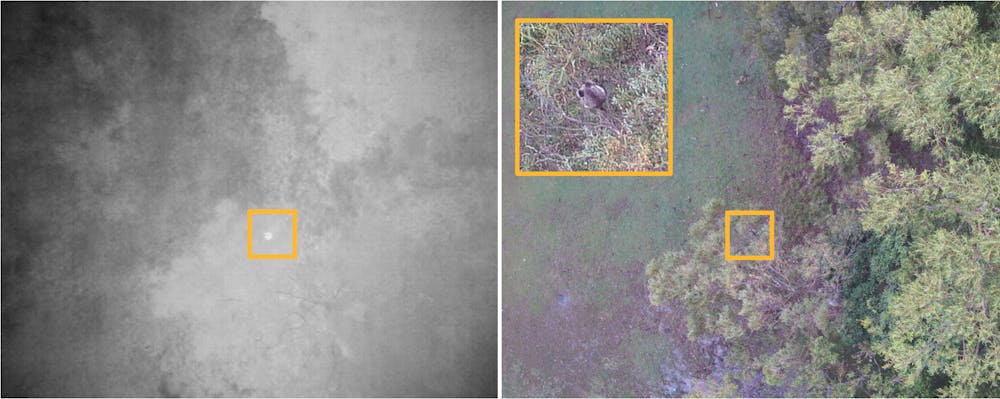
Facebook hasn’t escaped without scandal. It’s been subject to data breaches and allegations that it has failed to protect user privacy. Reports suggest that numerous Facebook users have responded to these incidents by giving up the platform.

But the data say otherwise. Preliminary findings from my recent research suggest that although Australian Facebook users do care about the privacy and security of their personal information, this is not enough to drive them to leave the platform.


Read more: 3 ways Facebook and other social media companies could clean up their acts – if they wanted to


The scandals: Australians didn’t leave Facebook

One of the most prominent scandals Facebook has been caught up in involves allegations made in March 2018: that analytics company Cambridge Analytica was using personal data from Facebook users to help political parties in their election campaigns.

This, and other news stories about Facebook’s use of user data, received widespread international attention, including significant coverage in Australia. Numerous news reports claimed that large numbers of Australians were deleting their Facebook accounts as part of the #DeleteFacebook trend. As one news story contended:

Many Australians are for the first time discovering just how much Facebook knows about them and many are shocked, leading them to quit the platform.

Statistics on Australians’ use of Facebook, however, show no change in numbers since the Cambridge Analytica scandal first received public attention. There were 15 million active monthly Facebook users 12 months ago (just before the scandal erupted) and this figure remained steady over the course of the year. Facebook is still far and above the most highly used social media platform in Australia.

The study: what I wanted to know

In September and October 2018, I conducted a study involving in-depth telephone interviews with 30 Australians who were current or past Facebook users.

An equal number of females and males participated across a broad age distribution (10 participants aged 18-40, 10 participants aged 41-60, and 10 participants aged 61 and over) and geographical distribution (10 participants living in rural towns or areas, 20 participants living in cities or major towns).

During the interview, the participants were asked:

  • whether they were bothered or concerned about Facebook’s use of information about them
  • if they had ever changed their use of Facebook or privacy settings in response to these concerns
  • what kinds of personal information they would not want internet companies like Facebook or apps to access or use
  • what steps these companies should take to protect users’ information.

In the interview questions there was no direct mention of Cambridge Analytica or any other scandal about Facebook. I wanted to see if participants spontaneously raised these events and issues in their responses.


Read more: Facebook is all for community, but what kind of community is it building?


The benefits: it’s all about connecting

The findings show people continue to use Facebook for a wide variety of reasons. For some people, their business depended on their active Facebook use, so they could advertise their offerings and connect with potential clients:

I know that if I did delete it, I’d be harming myself and my business, so yes, so that’s kind of the main reason I keep it.

For most people, however, the key incentive was the desire to connect with family and friends. This included being able to find old friends and reconnect with them, as well as maintaining ties with current friends and family members.

Several people commented that using Facebook was the best way of knowing about the lives of their adult children, grandchildren or other young relatives.

That’s the only thing that’s kept me on there – because my kids are on there and I just want to see what they’re doing, and what and who they’re hanging around with.

For others, being part of a community (for example, a health-related group) was an important way of alleviating isolation and loneliness.

These comments suggest Facebook is an important tool to support social interactions in a world in which people are more dispersed and physically separated from friends and family.

The drawbacks: mundane trivia, too many ads

The drawbacks of being on Facebook reported by participants included feeling annoyed by aspects such as having to see other people’s mundane trivia, random friend requests or too many ads:

Sometimes there’s a lot of nonsense that goes up on there, people posting you don’t want to get involved in, or I think it’s stupid or rude or whatever it may be.

Some people also talked about not liking feeling that you are being watched, and their anxiety about their personal information being accessed and identity theft or bank details being stolen. However, these issues were not considered serious enough for them to leave Facebook.

Apart from targeted advertising, most people were unsure how Facebook might use their personal information. Very few participants mentioned the Cambridge Analytica scandal or related issues, such as the use of Facebook for political campaigning or to disseminate “fake news”. Even when they did refer to these issues, they had difficulty explaining exactly how personal data were involved:

Well, I know Facebook collected the data for that Cambridge business and they collected it via a quiz with an app, and then passed it on to other parties. So I think that’s all they do. I think it’s just maybe for them to earn money off it. I don’t really know.

Data privacy: employing workarounds to stay on Facebook

Most people thought they were careful in not revealing too much information about themselves on Facebook, and therefore protected their data. They reported engaging in practices such as avoiding uploading details about themselves, limiting their number of friends or the type of friends, blocking or unfriending people who annoyed them, clearing their history regularly and being very selective about what photos to upload (including of their children).

Several people mentioned they had recently checked and changed their privacy settings, often in response to a prompt from Facebook to do so:

I keep my personal stuff to myself, and then I share what I want to share through my friends. And I’ve got strict privacy things in place so that I only get things to people that I know, rather than people I don’t know. So that’s fine with me.


Read more: Amazon, Facebook and Google don’t need to spy on your conversations to know what you’re talking about


These findings show it’s not so much that Australian Facebook users don’t care about their personal data privacy and security. They do think about these issues and have their own ways of managing them.

Australians think Facebook serves them well. They consider other people’s over-sharing or having to see too many ads as more of a problem than alleged political manipulation or other misuse of their information by Facebook.

ref. Why are Australians still using Facebook? – http://theconversation.com/why-are-australians-still-using-facebook-111183

The collapse of the US-Russia INF Treaty makes arms control a global priority

]]>

Source: The Conversation (Au and NZ) – By Ramesh Thakur, Professor of International Relations, Australian National University

On October 20 2018, US President Donald Trump announced he intends to withdraw from the Intermediate-Range Nuclear Forces Treaty (INF) – an arms control treaty with Russia that contributed to the end of the Cold War.

Secretary of State Mike Pompeo confirmed this decision last week, while Trump reiterated his commitment to withdrawing from the treaty in his State of the Union address yesterday.

Russia followed suit and reports say it is aiming to create new land-based missiles within the next two years. Reports also say the US is allocating funds for the research and development of such missiles.

So, what is the INF Treaty? And will its collapse lead to an increase of global nuclear tensions that marked the Cold War?

What is the INF?

The INF Treaty took seven years to negotiate, contributed to the end of the Cold War and ushered in three decades of strategic stability.

US President Ronald Reagan and Soviet General Secretary Mikhail Gorbachev signed the treaty on December 8 1987 to give effect to their declaration that “a nuclear war cannot be won and must never be fought”.

The treaty prohibited the development, testing and possession of ground-launched cruise and ballistic missiles with a range of 500km to 5,500km, whether armed with nuclear or conventional warheads.

A joint statement from Reagan and Gorbachev noted:

This treaty is historic both for its objective – the complete elimination of an entire class of US and Soviet nuclear arms – and for the innovative character and scope of its verification provisions.

It entered into force on June 1 1988. By its implementation deadline of June 1 1991, 859 US and 1,752 Soviet missiles had been destroyed.

US President Ronald Reagan and Soviet General Secretary Mikhail Gorbachev signed the INF Treaty on December 8 1987. RR Presidential Library Museum/AAP

Reflecting the dominant Cold War architecture of nuclear arms control, the INF Treaty was bilateral. US National Security Adviser John Bolton, writing in 2011 as a private citizen, conceded the treaty had successfully “addressed a significant threat to US interests”. The threat was a surprise Soviet/Russian nuclear attack in Europe using missiles in the 500-5,500km range.

But the arms control architecture began fraying when US President George W. Bush pulled out of the Anti-Ballistic Missile (ABM) Treaty in 2001. Signed in 1972, the ABM controlled systems designed to counter “strategic” ballistic missiles, such as intercontinental ballistic missiles (ICBMs).

With the INF Treaty now dead and another arms control treaty, New Start, set to expire in 2021, the world will be left without any limits on the two major nuclear arsenals for the first time since 1972.

What now, for Europe?

Since 2014, under the Obama administration, Washington has accused Russia of deploying nuclear-capable ground-launched missiles with a 2,000km range (the SSC-8) in Europe that are non-compliant with INF Treaty obligations.


Read more: Obama’s Nobel-winning vision of ‘world without nuclear weapons’ is still distant


The US decision to pull out of the treaty will deepen the strains in the North Atlantic Treaty Organisation (NATO). Baltic countries insist Russia’s violations of the INF Treaty demand robust diplomatic and military counter-measures. The UK has lined up firmly behind Washington, blaming Russia for the breakdown.

But Germany’s foreign minister, Heiko Maas, urged Washington to consider the consequences of withdrawal for Europe and for the future of nuclear disarmament. And the EU foreign policy chief, Federica Mogherini, said:

The INF contributed to the end of the Cold War and constitutes a pillar of European security architecture.

NATO stands to lose more from the INF Treaty collapse than Russia. Russia will be able to move ahead rapidly with the development and deployment of short and medium-range ground-launched nuclear-capable missiles. But, unlike in the 1980s, the US would face difficulty in finding allies in Europe prepared to station such missiles on their territory.

Also, would the host countries have a voice or veto on launching them and in choosing targets?

What about the Asia-Pacific?

In addition to alleged Russian violations, the US exit is motivated by China’s growing challenge to US dominance in the Pacific. China and North Korea have been developing missile-delivery capabilities.


Read more: North Korea may not yet have a long-range missile, but its progress is worrying


“To reduce the threat from INF-range missiles,” Bolton concluded back in 2011, “we must either expand the INF Treaty’s membership or abrogate it entirely so that we can rebuild our own deterrent capabilities.” Trump has done the latter.

As a non-signatory, China is unconstrained by INF Treaty limits. About 95% of its missiles are in the prohibited range. This enables it to target US ships and bases from the mainland by relatively inexpensive conventional means.

Without INF restrictions, the US could develop and station ground-launched intermediate-range cruise missiles across the Asia–Pacific, which would force Beijing to divert significant military resources to defend its homeland.

China’s nuclear stockpile has remained relatively stable over many years despite the fluctuations in the Russian and US numbers. It is below 300, compared to nearly 7,000 and 6,500 Russian and US warheads, respectively.

This signifies a policy of deliberate restraint in China despite substantial growth in economic and technological capability since its first nuclear test 55 years ago.

The collapse of the INF Treaty and deployment of China-specific US missiles could compel China to institute counter-measures – such as rapidly expanding its warhead numbers and missile-delivery systems – to protect vital security interests, including nuclear assets deep in its interior.

Both Pakistan and India have under 150 nuclear weapons each (the Pakistani military released this image in Febuary 2013, showing a missile capable of carrying strategic and conventional weapons). Inter Services Public Relations/AAP

China’s response in turn may trigger re-adjustments to India’s doctrine of credible minimum deterrence and could produce matching re-adjustments by Pakistan. The nuclear arsenals of both these countries is presently limited to under 150 each.

In a worst-case scenario, China, India and Pakistan could engage in a sprint to parity with the US with a rapid expansion of warhead numbers and missile-delivery capabilities, and perhaps even move to keeping a stock of nuclear weapons on high alert just like Russia and the US.

However, economic and technological limitations will constrain India and Pakistan’s ability to engage in an open-ended nuclear arms race.

Expanding arms control

The sensible alternative would be to begin urgently multilateralising the Cold War bilateral structure of nuclear arms control regimes. This means involving more countries than just Russia and the US in arms control treaties, and in particular involving China. Chinese nuclear expert Tong Zhao’s conclusion holds for the whole world, not just China:

… the era of relying on the US-Russia bilateral arms control structure is at its end.

Multilateralising the arms control negotiating process and resulting structure will avoid a free-for-all nuclear arms race and instead anchor strategic stability in arms control agreements.

Meanwhile, thanks to Donald Trump and John Bolton, we shall continue to live in interesting times.

ref. The collapse of the US-Russia INF Treaty makes arms control a global priority – http://theconversation.com/the-collapse-of-the-us-russia-inf-treaty-makes-arms-control-a-global-priority-111251

A weeping mum from PNG and her long walk for a dying child

]]>
A tragedy in Papua New Guinea’s Western Province. Image: Sally Lloyd/My Land, My Country

By Sally Lloyd as told to Scott Waide in Lae

A few days ago, I asked Sally Lloyd about the picture she posted on Facebook of a distraught mother weeping over the body of her baby who had died. This is the story behind the picture.

They are from Fomabi Village near Nomad, Western Province.

The child got sick with pneumonia, I believe and Nomad Health Centre could not help them. The facility there has been very run down and ill equipped for a very long time.

READ MORE: Scott Waide’s “My Land, My Country” blog

They then had to make the long walk to Mougulu health centre for many hours to get further help.

Unfortunately, the child died the following afternoon, and without any helpers with them the parents had to walk back to their village with the dead child.

-Partners-

They were of course heartbroken and it was very hard to send them on their way into darkness and a storm.

Family grief. Image: Sally Lloyd/My Land, My Country

Faced difficulties in life
The woman has already faced some difficulties in her life. She was totally distraught, waving her arms and crying out.

When Sally went to the clinic she said it was her first time to visit Mougulu and this had happened.

Earlier on Facebook, Sally posted:

“That sound I hate…the grief of the parents of this precious eight-month-old indicating the worst had happened.

“This evening they have the long walk back (6 to 8 hours at least) to Fomabi Village with a very heavy burden – almost too much to bear.

“The father offloaded some heavy food items and we gave high protein food and fish, a torch and umbrella – it’s going to storm tonight.

“God knows how much we need that emergency vehicle – to bring patients more quickly, but also for parents who should not have to walk a day (or all night) to get home and bury their child.”

“RIP Ezekiel.”

Scott Waide is a leading Papua New Guinean journalist and deputy news editor of EMTV News based in Lae. His blog items are republished by the Pacific Media Centre on Asia Pacific Report with permission.

The long walk. Image: Sally Lloyd/My Land, My Country

Print Friendly, PDF & Email

Article by AsiaPacificReport.nz

Vietnamese blogger critic missing and feared ‘kidnapped’ in Bangkok

]]>
Truong Duy Nhat’s disappearance is all the more disturbing because he is widely respected as a blogger. Image: RSF/Youtube).

Pacific Media Watch Newsdesk

Reporters Without Borders (RSF) has called on the Thai authorities to shed all possible light on the disappearance of Truong Duy Nhat, a famous Vietnamese blogger who went missing in Bangkok last month, one day after going to the local office of the UN High Commissioner for Refugees to apply for refugee status.

RSF is concerned that Vietnamese agents may have kidnapped Truong Duy Nhat on January 26 , who is from the city of Danang, in central Vietnam. The Thai police say they are not holding him.

More than ten days have gone by since anyone heard from him, RSF reports.

Other Vietnamese bloggers who have applied for refugee status in Bangkok say they think he was abducted while in a shopping mall in suburban Bangkok, according to Radio Free Asia, one of the media outlets for which Nhat works.

“We urge the Thai authorities to make every effort to shed light on Truong Duy Nhat’s extremely disturbing disappearance,” said Daniel Bastard, the head of RSF’s Asia-Pacific desk.

“If the Thai authorities prove not to have been involved, this would mean that Vietnamese agents are no longer bothered by international law and violate a partner country’s sovereignty in order to pursue their critics. This sends an absolutely terrifying message to the community of Vietnamese bloggers who have sought refuge in Bangkok.”

-Partners-

Network of sources
Nhat’s disappearance is all the more disturbing because he is widely respected as a blogger, even within certain circles of the ruling Communist Party in Hanoi.

Bui Thanh Hieu, a blogger who has found asylum in Germany, wrote on Facebook that he suspected that Prime Minister Nguyen Xuan Phuc may have ordered Nhat’s abduction.

“I think the prime minister wants Nhat arrested at all costs because he is in possession of compromising information about the prime minister’s clan in Quang Nam province,” Hieu wrote.

Quang Nam province adjoins Danang, Nhat’s home town, where the blogger has many sources to help him with his investigative reporting.

Place of refuge
Nhat used to work for state media outlets, including Danang police newspapers, until 2010, when he launched his own blog, Mot Goc Nhin Khac (Another Viewpoint), in order to be able to report and write with complete freedom.

He was arrested in 2013 and sentenced to two years in prison for “abusing democratic freedoms” in his blog posts. RSF included him in its list of 100 “information heroes” in 2014.

In the course of the Vietnamese government’s two-year-old crackdown on citizen-journalists, many of them have found refuge in Bangkok.

Vietnam is ranked 175th out of 180 countries in RSF’s 2018 World Press Freedom Index, the lowest ranking in Southeast Asia. Thailand is ranked 140th.

Print Friendly, PDF & Email

Article by AsiaPacificReport.nz

What TV comedy The Good Place tells us about why banks and other corporations are in a bad place

]]>

Source: The Conversation (Au and NZ) – By Danny Davis, Executive Director, Australian Institute of Performance Sciences, and researcher at, La Trobe University

What does the American Netflix fantasy-comedy The Good Place have in common with Australia’s banking royal commission?

The Good Place, in case you don’t know, is about a happy afterlife accessed through earning enough life points from good deeds (bad deeds get point reductions).

It’s an improbably successful television series that riffs off thorny ethical questions about what it takes to be a good person. Its third season has contemplated the ethics of intention, obligation and consequences.


Read more: Kantian comedy: the philosophy of The Good Place


This is surprisingly similar ground to that covered by the royal commission’s final report into misconduct in Australia’s banking, superannuation and financial services industry.

“Everyday the world gets a little more complicated and being a good person becomes harder,” says Michael, the supernatural architect played by Ted Danson, in “The Tale of Two Dougs” (Season 3, episode 11).

The destinies of the two Dougs illustrate why fewer and fewer people are earning enough points to get to The Good Place.

The first Doug, in the year 1534, picks roses and gives them to his grandmother. He earns points. The second Doug, in the year 2009, orders roses using his mobile phone and gives them his to his grandmother. He loses points.

Why? Because now the flowers are grown thousands of miles away, using fertilisers and pesticides that harm the ecosystem, picked by workers who are underpaid, and transported using vehicles that pollute the atmosphere.

The point: it is harder to know how to do good in a more complex, interconnected world. Now our actions have implications that ripple further. And ignorance is not a defence.

Good intentions are not enough

The royal commission’s final report says something to this effect in its tale of two bank boards – of NAB and Commonwealth Bank – that failed in their primary duty to police actions that ripped off customers.

“There can be no doubt,” the report states in its introduction, “the primary responsibility for misconduct in the financial services industry lies with the entities concerned and those who managed and controlled those entities: their boards and senior management.”

“Too often,” it says further on, “boards did not get the right information about emerging non-financial risks; did not do enough to seek further or better information where what they had was clearly deficient; and did not do enough with the information they had.”

It’s a lot like second Doug not doing enough to avoid the harm of buying flowers online.

Obviously the royal commission has identified plenty of conduct that was simply bad behaviour – unconscionable misdeeds motivated by greed.

But it has also identified that those ultimately responsible for the mess of misconduct may be individuals devoid of malicious motivation.

These are hard-working executives and board directors who might have had the best of intention to do the right thing. Yet they they still failed to ensure ethical outcomes.

Life now is so complicated: Michael explains why the point system is broken.

Governance tools are obsolete

What The Good Place suggests to us about individuals is also applicable to companies: it is getting harder to be good.

The bigger a corporation gets the more complex its business becomes. It is exposed to volatile markets and disruptive technologies. Its supply chains are likely to span the globe. There is so much more information to consider.

A century ago, for example, a company didn’t worry about its greenhouse gas emissions. Now carbon footprint affects a company’s public reputation, profitability and long-term sustainability.

As the Australian Stock Exchange’s Corporate Governance Council has pointed out, boards are increasingly called on “to address new or emerging issues including around culture, conduct risk, digital disruption, cyber-security, sustainability and climate change”.

Yet they are relying on obsolete governance systems.

One of the organisations working on the new systems needed is Accounting for Sustainability, established by the Prince of Wales in 2004 to “ensure we are not battling to meet 21st century challenges with, at best, 20th century decision-making and reporting systems”.


Read more: Banking Royal Commission: no commissions, no exemptions, no fees without permission. Hayne gets the government to do a U-turn


There are other initiatives around the world engaging in this challenge. But Australian companies are underrepresented. Better practices that exist are still not widely known here.

I’ve had the opportunity to discuss governance failings and potential improvements with hundreds of Australian and global corporate leaders, including directors from Australia’s ten biggest companies. Most of these organisations operate as “islands of excellence”. They are really good in parts, but can’t bring it all together.

Privately, directors acknowledge they can’t keep on top of the information, understanding and follow-through expected of them.

One member of a board of a big-four bank has told me of several billion-dollar transformation projects intended to correct these known problems that “haven’t made a difference”.

Getting the right information

Governance is important. “Without the right information,” the royal commission report rightly states, “a board cannot discharge its functions effectively.”

But it does not “offer any single answer to how boards can ensure that they receive the right information”. It merely asks leaders to “keep considering how to present information about the right issues, in the right way”.

We need to have a clearer remedy than that.

On The Good Place, central character Eleanor (played by Kristen Bell) has Chidi, a trained moral philosophy professor (played by William Jackson Harper), to help her become a better person and avoid The Bad Place.

Who will be our corporate leaders’ Chidi?


Read more: Hayne’s failure to tackle bank structure means that in a decade or so another treasurer will have to call another royal commission


At the Australian Institute of Performance Sciences we’re working on a summit to bring together the top 50 corporate, investment and government actors in the Australian economy. They will be called on to collaborate in developing a better model of governance, akin to the way accounting and auditing standards have been improved over time. We will see what they choose to do.

Royal commissioner Ken Hayne has noted the “reluctance in some entities to form and then to give practical effect to their understanding of what is ethical, of what is efficient honest and fair, of what is the ‘right’ thing to do”.

The moral universe of the The Good Place damns those who fail see through the complexity of modern life. Corporations and their leaders guilty of the same failing warrant the same.

ref. What TV comedy The Good Place tells us about why banks and other corporations are in a bad place – http://theconversation.com/what-tv-comedy-the-good-place-tells-us-about-why-banks-and-other-corporations-are-in-a-bad-place-111062

Does microdosing improve your mood and performance? Here’s what the research says

]]>

Source: The Conversation (Au and NZ) – By Vince Polito, Postdoctoral Research Fellow in Cognitive Science, Macquarie University

Microdosing means regularly taking very small doses of psychedelic substances such as LSD or psilocybin (magic mushrooms) over a period of weeks or months. The practice has made countless headlines over the past couple of years, with claims it can improve health, strengthen relationships, and increase productivity.

These claims are surprising because microdosers take doses so small there are no noticeable effects. These can be just 1/20th of a typical recreational dose, often every three or four days. With such small amounts, microdosers go about their daily business, including going to work, without experiencing any typical drug effects.

Previous research suggests microdosing may lead to better mood and energy levels, improved creativity, increased wisdom, and changes to how we perceive time.


Read more: LSD ‘microdosing’ is trending in Silicon Valley – but can it actually make you more creative?


But these previous studies have mainly involved asking people to complete ratings or behavioural tasks as one-off measures.

Our study, published today in PLOS One, tracked the experience of 98 users over a longer period – six weeks – to systematically measure any psychological changes.

Overall, the participants reported both positive and negative effects from microdosing, including improved attention and mental health; but also more neuroticism.

What we did

As you would expect, there are many legal and bureaucratic barriers to psychedelic research. It wasn’t possible for us to run a study where we actually provided participants with psychedelic substances. Instead, we tried to come up with the most rigorous design possible in the current restrictive legal climate.

Our solution was to recruit people who were already experimenting with microdosing and to track their experiences carefully over time, using well validated and reliable psychometric measures.

Microdosers go about their lives without any typical drug effects. Parker Byrd

Each day we asked participants to complete some brief ratings, telling us whether they had microdosed that day and describing their overall experience. This let us track the immediate effects of microdosing.

At the beginning and end of the study participants completed a detailed battery of psychological measures. This let us track the longer-term effects of microdosing.

In a separate sample, we explored the beliefs and expectations of people who are interested in microdosing. This let us track whether any changes in our main sample were aligned with what people generally predict will happen when microdosing.

What we found

There are five key findings from our study.

1. A general positive boost on microdosing days, but limited residual effects of each dose.

Many online accounts of microdosing suggest people microdose every three or four days. The thinking is that each microdose supposedly has a residual effect that lasts for a few days.

The daily ratings from participants in our study do not support this idea. Participants reported an immediate boost in all measures (connectedness, contemplation, creativity, focus, happiness, productiveness and wellness) on dosing days. But this was mostly not maintained on the following days.

However, there was some indication of a slight rebound in feelings of focus and productivity two days after dosing.

Microdosers experienced increased focus. Rawpixel

2. Some indications of improvements in mental health

We also looked at cumulative effects of longer term microdosing. We found that after six weeks, participants reported lower levels of depression and stress.

We recruited people who were not experiencing any kind of mental illness for the study, so levels of depression and stress were relatively low to begin with. Nevertheless, ratings on these measures did drop.

This is an intriguing finding but it’s not clear from this result whether microdosing would have any effect on more significant levels of mood disturbance.

3. Shifts in attention

The microdosers in our study reported reduced mind wandering, meaning they were less likely to be distracted by unwanted thoughts.

They also reported an increase in absorption, meaning they were more likely to experience intense focused attention on imaginative experiences. Absorption has been linked to strong engagement with art and nature.

4. Increases in neuroticism and some challenging experiences

Not everyone had a good time microdosing. Some participants reported unpleasant and difficult experiences. In some cases, participants tried microdosing just once or twice, then didn’t want to continue.

Overall, participants reported a small increase in neuroticism after six weeks of microdosing, indicating an increase in the frequency of unpleasant emotions.

5. Changes do not entirely match people’s expectations

People have strong expectations about the effects of microdosing. But when we looked at the specific variables participants most expected would change, these didn’t match up with the changes actually reported by our microdosers.

Two of the biggest changes microdosers expected were increases in creativity and life satisfaction, but we found no evidence of shifts in these areas. This suggests the changes we found were not simply due to people’s expectations.

What does it all mean?

This complex set of findings is not what’s typically reported in media stories and online discussions of microdosing. There are promising indications of possible benefits of microdosing here, but also indications of some potential negative impacts, which should be taken seriously.


Read more: Opening up the future of psychedelic science


It’s important to remember this was an observational study that relied heavily on the accuracy and honesty of participants in their reports. As such, these results need to be treated cautiously.

It’s early days for microdosing research and this work shows that we need to look more carefully at the effects of low dose psychedelics on mental health, attention, and neuroticism.

ref. Does microdosing improve your mood and performance? Here’s what the research says – http://theconversation.com/does-microdosing-improve-your-mood-and-performance-heres-what-the-research-says-106850

One in six Australian women in their 30s have had an abortion – and we’re starting to understand why

]]>

Source: The Conversation (Au and NZ) – By Jayne Lucke, Chair, Australian Research Centre in Sex, Health & Society, La Trobe University

Abortion is a common experience for Australian women. Around one in six have had an abortion by their mid-30s, according our new research published today in the Australia New Zealand Journal of Public Health.

Narratives about abortion often stigmatise women who have had one, or seek to access to one. But our research shows women from all walks of life may have an abortion: married, single, child-free, and mothers. In fact, women who have already had children are more likely to have a termination than those who haven’t.

Women make decisions about whether or not to have an abortion in the context of their complex lives. And it’s by no means an easy decision.


Read more: Some women feel grief after an abortion, but there’s no evidence of serious mental health issues


Our research investigated the factors associated with abortion as women move from their late teens into their mid-30s. We found women with lower levels of control over their reproductive health, whether through family violence, drug use or ineffective contraception, are more likely than their peers to terminate a pregnancy.

If we want to reduce the rate of unintended pregnancies and abortion in Australia, we need to empower women to have control over their fertility and support them with appropriate health services.

Women’s experiences

We used data from five surveys of the Australian Longitudinal Study on Women’s Health to examine factors associated with “induced” abortions which were not undertaken because of a foetal abnormality.

We looked at a cohort of more than 9,000 women born between 1973-78 who were first surveyed at ages 18-23 years. At the fifth survey they were aged 31-36 years.

Overall, by their mid-30s, 16% of the women in this study had reported at least one abortion.

We also looked at the proportion of women who reported a new abortion at each survey. At the first survey, when women were aged 18-23, 7% reported having had an abortion. In subsequent surveys, 2-3% of women reported having an abortion since the last survey. While most women reported only one new abortion, around one in ten reported two abortions, and around 2% reported three abortions.

Abortion is understandably more common for women when they are in their 20s than it is when women reach their 30s. This may be because many women in their 30s are actively trying to be pregnant, or may be using contraception more effectively if they’re trying to avoid becoming pregnant.

Woman who already have children are more likely to have an abortion than women who don’t. Guillaume de Germain/Unsplash

Compared with married women, those who were in a de facto relationship, were single, or divorced were more likely to have had an abortion.

Women with children were more likely to have an abortion than women who did not have children. In the fourth survey, the majority of women (72%) said they hoped to have one or two children, 20% wanted three or more, while 8% didn’t want to have children.

Perhaps unsurprisingly, women who had an abortion in the later surveys were more likely to have previously reported using ineffective contraception, or to have had a past abortion, than women who didn’t terminate a pregnancy in their 30s.


Read more: Don’t want to take a contraceptive pill every day? These are the long-acting alternatives


Women whose alcohol use had recently become riskier and women who reported using any illicit drugs in the past 12 months were also more likely to have an abortion.

Violence was also a big factor. Women who recently experienced partner violence were more likely to terminate a pregnancy than women who reported no violence. Even women who reported childhood sexual abuse had a significantly increased likelihood of abortion in their twenties (but not in their 30s).

In fact, women reporting violence of any kind, and at any time, had a significantly increased likelihood of having an abortion.

What can we do about it?

Australia is going through a much-needed process of law reform to ensure women across the country have access to abortions as part their women’s health service. Queensland is the most recent state to remove abortion from the criminal code.

Alongside this, we need to improve training and resources to for health providers to identify and help women who may be at risk of unintended pregnancy, particularly those who are using illicit drugs or are experiencing partner violence.

We need better ways of reaching all vulnerable women, but especially young women experiencing reproductive coercion.


Read more: How forced pregnancies and abortions deny women control over their own bodies


We also need to ensure that all women are provided with good access to information about effective contraceptive choices. While the oral contraceptive pill and condoms are the most common methods Australian women use, long-acting reversible methods (such as intra-uterine devices and implants) can be good options for many women wanting effective contraception.

ref. One in six Australian women in their 30s have had an abortion – and we’re starting to understand why – http://theconversation.com/one-in-six-australian-women-in-their-30s-have-had-an-abortion-and-were-starting-to-understand-why-111246

What has Australia learned from Black Saturday?

]]>

Source: The Conversation (Au and NZ) – By Kevin Tolhurst, Senior Lecturer, Fire Ecology and Management, University of Melbourne

Black Saturday was a day like no other; it will be forever remembered in the history of bushfire disasters in Australia. The fires burned about 300,000 hectares in a single day; 173 human lives were lost and more than 2,000 houses were destroyed in one afternoon.

Australia was shocked at the scale of the destruction. Questions were soon being asked about how this could happen in the modern world, what could have been done to reduce the loss of lives and physical destruction, and what can be done to stop this happening again.


Read more: After the firestorm: the health implications of returning to a bushfire zone


The many reports, studies and inquiries in the ten years since Black Saturday have created a new regime for assessing and dealing with fires. While this has meant many improvements in how we communicate and coordinate in the face of bushfires, I believe it has also resulted in an overemphasis on accountability and technology at the expense of effective fire control.

The aftermath

As days passed and the fires were still being fully controlled, attention turned to capturing information about the fires so we could better understand what had happened. Victims and people affected by the fires were interviewed by journalists and social scientists, welfare workers and counsellors, friends and family. Nobody, at the time of the fires, had full knowledge of what had happened, so the collective knowledge pieced the puzzle together.

Fire scientists and meteorologist were also trying to capture as much information as possible about the fires and what drove them. This was a unique opportunity to collect information about fire and weather that could never be reproduced in experiments.

Mountain ash trees killed by the intense heat of the Black Saturday bushfire are still plainly visible on the hills around Marysville ten years on. AAP Image/Supplied by Jamie Duncan

Within a few days of the fire, the Victorian premier had announced a royal commission to investigate the cause of the fires, the factors leading to the unprecedented level of death and destruction, and the institutional response before, during and after the fires. The commission ran for 18 months, heard from 434 witnesses, cost more than A$90 million and produced 67 recommendations.

What has changed?

Research and the royal commission significantly increased our understanding of what occurred on Black Saturday. Research using these fires still continues ten years after the event. The knowledge gained has resulted in better weather forecasting, better communication about fires and weather to the public, better coordination and cooperation between emergency response agencies and public land managers, and better building and planning regulations for fire-prone areas.

Unfortunately, the close scrutiny of fire and land management agencies has led to greater emphasis on following standard processes and recording all actions and information used during fire events. This has led to a lot of time and resources being allocated to accountability at the expense of effectiveness in reducing bushfire impacts. This is clearly not a deliberate intention of the various agencies, but is the reality of a highly political and litigious world.

Another unintended development has been the increased reliance on technology for both fighting fires and communication. Many people in the bushfire-prone areas demand reliable access to warnings and fire developments, so there has been a rapid expansion of the mobile phone and internet networks across Victoria. However, just because people have access to such information does not ensure that they will respond in ways that emergency response agencies expect.


Read more: Drought, wind and heat: when fire seasons start earlier and last longer


Other technology such as bigger, stronger fire trucks and the use of aircraft for water bombing has reduced the extent of dry firefighting techniques – that is, controlling fire using firebreaks, hand tools and backburning with little or no water used. This has increased the number of fires growing to damaging sizes and escaping control lines.

This failing has not been fully recognised. Partly, that’s because any “technology” is easily taken by the media, public and politicians as an improvement, when in fact it may not be.

The lessons we’ve yet to learn

Since Black Saturday, use of the concept of “bushfire risk” has been growing. This makes it clear that bushfires in Australia are a constant threat and the risk is never zero.

The “risk concept” allows public agencies, private groups and communities to reduce bushfire risk to a level that they can afford and are willing to accept. However, how bushfire risk is assessed and communicated, and how trade-offs are negotiated, still has a long way to go if bushfire risk is to be a truly “shared responsibility” as the royal commission recommended.

Another complication is that public agencies have a regular turnover of staff. This makes it more difficult to establish trusted relationships between public agencies and private individuals.


Read more: Future bushfires will be worse: we need to adapt now


An event like Black Saturday will occur again. The terrain, vegetation, climate and weather patterns in southeastern Australia ensure that. Climate change will increase this risk.

When it does happen again, the extent of what we learned from Black Saturday will be judged by the impact of that event. We should not expect there will be no loss of lives and property in future massive blazes, but we should expect it will be significantly less than Black Saturday.

ref. What has Australia learned from Black Saturday? – http://theconversation.com/what-has-australia-learned-from-black-saturday-111245

Climate change is poised to deliver more Black Saturdays in decades to come

]]>

Source: The Conversation (Au and NZ) – By Scott Hamilton, Strategic Advisory Panel Member, Australian-German Energy Transition Hub, University of Melbourne

Ten years ago, on February 7, 2009, the Black Saturday bushfires killed 173 people. More than 2,000 houses were destroyed in Victoria, including at Kilmore, Kinglake, Vectis (Horsham), Narbethong, Marysville, Strathewan, Beechworth, Labertouche (Bunyip), Coleraine, Weerite, Redesdale, Harkaway, Upper Ferntree Gully, Maiden Gully, Bendigo, Eaglehawk, Lynbrook, St Andrews, Flowerdale, Narre Warren, Callignee, and my home town of Churchill, where my mother and father still lived. Their home wasn’t burned, but many of their neighbours were badly affected by the worst bushfire day in Australia’s history.

A week before, my uncle and aunt had to seek refuge at Mum and Dad’s place when a fire ember landed in their front yard during the Boolarra bushfires. Mum has since passed and Dad still lives in Churchill.

The climate is changing due to human induced greenhouse gas emissions, and this means more bushfire danger days in what is already one of the most fire-prone countries in the world. Unfortunately, we have not done enough to curb climate change and the situation is getting worse.

Climate change means more days of extreme heat, longer heatwaves and more frequent droughts. Droughts now occur further south than in the past and have been increasing in Australia’s southeast, including Tasmania. The records continue to tumble, and the evidence of dangerous climate change continues to mount.


Read more: Fires are increasing in warming world, but a new model could help us predict them


Back in 2008, John Brumby was Premier of Victoria and Kevin Rudd was Prime Minister. I was working on climate change for the Victorian government, developing projections for increased risk of bushfires. A 2005 study had already predicted an increase in fire weather risk throughout most of southeastern Australia over the coming decades, with “very high” and “extreme” fire danger ratings likely to increase in frequency by 4-25% by 2020 and 15-70% by 2050.

There has been more research in this area, although certainly not enough, given the huge stakes. A 2007 report for the Climate Institute of Australia predicted increases in annual average fire danger of up to 30% by 2050, and a potential trebling in the number of days per year where the uppermost values of the index are exceeded. The largest changes are predicted for the arid and semi-arid interior of New South Wales and northern Victoria.

Projected increases in the number of days with very high or extreme fire weather for selected years. This study was based on scenarios producing 0.4℃, 1.0℃ and 2.9℃ temperature rises, which will respectively be reached by the years indicated, without emissions reduction. Lucas et al. 2007, Author provided

The 2008 Garnaut Climate Change Review also warned that fire seasons will begin earlier, end slightly later, and generally be more intense. “This effect increases over time but should be directly observable by 2020,” it said.

In 2015, a further study by CSIRO and the Bureau of Meteorology concluded that:

Projections of warming and drying in southern and eastern Australia will lead to increases in [forest fire danger index] and a greater number of days with severe fire danger. In a business as usual scenario (worst case, driest scenario), severe fire days increase by up to 160-190% by 2090.

By combining all of this research, I created the graph below.

Projected annual number of days of very high or extreme bushfire danger. CSIRO/BoM/Bushfire CRC

This shows that while there is some uncertainty as to the extent of increase in the number of bushfire danger days in southeastern Australia, the situation is undoubtedly getting worse, and it’s time for action.

In 2017, the independent Climate Council published a report on Victoria’s growing bushfire threat, which made several stark findings and recommendations:

  1. Climate change is increasing the risk of bushfires in Victoria and lengthening fire seasons.

  2. Victoria is the state most affected by bushfires, and is on the front line of increasing bushfire risk.

  3. The economic cost of bushfires in Victoria is an estimated A$180 million a year, and this is predicted to more than double by 2050.

  4. Bushfires will continue to adversely affect human and environmental health.

  5. In the future, Victoria is very likely to experience an increased number of days with extreme fire danger. Communities and emergency services across Victoria must be prepared.

  6. Reducing greenhouse emissions is vital for protecting Australians.

Risk to water supplies

Our grandfathers and grandmothers had the wisdom to build amazing water infrastructure, protected by the “closed catchments” that give Melbourne and Victoria some of the best water in the world. Bushfires are a major risk to these water supplies – particularly in the catchments of major dams such as the Thomson.

A bushfire followed by a downpour that washes ash into the dam could potentially force the closure of the trillion-litre capacity Thomson reservoir, making it unusable for months. Firefighters have been battling exactly this kind of blaze at Mount Baw Baw in recent days and at the time of writing the situation has improved.

Major bushfires often occur in time of severe drought. Black Saturday itself happened towards the end of the 15-year Millennium Drought, when Victoria’s water supplies were already strained. I remember vividly the then chief executive of the Melbourne Water Corporation urging the government to deal with any fire in the Thomson Dam catchment immediately, given the threat to Melbourne’s water.

Fortunately, amid the devastation of Black Saturday we avoided major disruption to our water supplies. But this risk poses a huge challenge to both firefighters and policy-makers. The rule is that protection of human life is ranked above assets and infrastructure, and rightly so. But when there is a clear and present danger of towns and cities going without water, it’s also true that safeguarding water means saving human lives in the ensuing days.


Read more: The bitter lesson of the Californian fires


Any way you look at it, these are hard questions. On our current trajectory, we are heading for terrible trade-offs.

In 2050 my daughter Astrid and my son Atticus – Mum and Dad’s grandchildren – will be 45 and 43, respectively. I hope it is not too late for our leaders in Canberra, Davos and throughout the world to wake up and take urgent action to limit global warming 1.5℃. That would mean that the most fearful predictions of our bushfire future never come to pass.

ref. Climate change is poised to deliver more Black Saturdays in decades to come – http://theconversation.com/climate-change-is-poised-to-deliver-more-black-saturdays-in-decades-to-come-111064

Ten years ago, climate adaptation research was gaining steam. Today, it’s gutted

]]>

Source: The Conversation (Au and NZ) – By Rod Keenan, Professor, University of Melbourne

Ten years ago, on February 7, 2009, I sat down in my apartment in central Melbourne to write a job application. All of the blinds were down, and the windows tightly closed. Outside it was 47℃. We had no air conditioning. The heat seeped through the walls.

When I stepped outside, the air ripped at my nose and throat, like a fan-forced sauna. It felt ominous. With my forestry training, and some previous experience of bad fire weather in Tasmania, I knew any fires that day would be catastrophic. They were. Black Saturday became Australia’s worst-ever bushfire disaster.

I was applying for the position of Director of the Victorian Centre for Climate Change Adaptation Research (VCCCAR). I was successful and started the job later that year.


Read more: We can build homes to survive bushfires, so why don’t we?


The climate in Victoria over the previous 12 years had been harsh. Between 1997 and 2009 the state suffered its worst drought on record, and major bushfires in 2003 and 2006-07 burned more than 2 million hectares of forest. Then came Black Saturday, and the year after that saw the start of Australia’s wettest two-year period on record, bringing major floods to the state’s north, as well as to vast swathes of the rest of the country.

In Victoria alone, hundreds of millions of dollars a year were being spent on response and recovery from climate-related events. In government, the view was that things couldn’t go on that way. As climate change accelerated, these costs would only rise.

We had to get better at preparing for, and avoiding, the future impacts of rapid climate change. This is what is what we mean by the term “climate adaptation”.

Facing up to disasters

A decade after Black Saturday, with record floods in Queensland, severe bushfires in Tasmania and Victoria, widespread heatwaves and drought, and a crisis in the Murray-Darling Basin, it is timely to reflect on the state of adaptation policy and practice in Australia.

In 2009 the Rudd Labor government had taken up the challenge of reducing greenhouse gas emissions. With Malcolm Turnbull as opposition leader, we seemed headed for a bipartisan national solution ahead of the Copenhagen climate summit in December. Governments, meanwhile, agreed that adaptation was more a state and local responsibility. Different parts of Australia faced different climate risks. Communities and industries in those regions had different vulnerabilities and adaptive capacities and needed locally driven initiatives.

Led by the Brumby government in Victoria, state governments developed an adaptation policy framework and sought federal financial support to implement it. This included research on climate adaptation. The federal government put A$50 million into a new National Climate Change Adaptation Research Facility, based in Queensland, alongside the CSIRO Adaptation Flagship which was set up in 2007.

The Victorian Government invested A$5 million in VCCCAR. The state faced local risks: more heatwaves, floods, storms, bushfires and rising sea levels, and my colleagues and I found there was plenty of information on climate impacts. The question was: what can policy-makers, communities, businesses and individuals do in practical terms to plan and prepare?

Getting to work

From 2009 until June 2014, researchers from across disciplines in four universities collaborated with state and local governments, industry and the community to lay the groundwork for better decisions in a changing climate.

We held 20 regional and metropolitan consultation events and hosted visiting international experts on urban design, flood, drought, and community planning. Annual forums brought together researchers, practitioners, consultants and industry to share knowledge and engage in collective discussion on adaptation options. We worked with eight government departments, driving the message that adapting to climate change wasn’t just an “environmental” problem and needed responses across government.

All involved considered the VCCCAR a success. It improved knowledge about climate adaptation options and confidence in making climate decisions. The results fed into Victoria’s 2013 Climate Change Adaptation Plan, as well as policies for urban design and natural resource management, and practices in the local government and community sectors. I hoped the centre would continue to provide a foundation for future adaptation policy and practice.

Funding cuts

In the 2014 state budget the Napthine government chose not to continue funding the VCCCAR. Soon after, the Abbott federal government reduced the funding and scope of its national counterpart, and funding ended last year.

Meanwhile, CSIRO chief executive Larry Marshall argued that climate science was less important than the need for innovation and turning inventions into benefits for society. Along with other areas of climate science, the Adaptation Flagship was cut, its staff let go or redirected. From a strong presence in 2014, climate adaptation has become almost invisible in the national research landscape.

In the current chaos of climate policy, adaptation has been downgraded. There is a national strategy but little high-level policy attention. State governments have shifted their focus to energy, investing in renewables and energy security. Climate change was largely ignored in developing the Murray-Darling Basin Plan.

Despite this lack of policy leadership, many organisations are adapting. Local governments with the resources are addressing their particular challenges, and building resilience. Our public transport now functions better in heatwaves, and climate change is being considered in new transport infrastructure. The public is more aware of heatwave risks, and there is investment in emergency management research, but this is primarily focused on disaster response.

Large companies making long-term investments, such as Brisbane Airport, have improved their capacity to consider future climate risks. There are better planning tools and systems for business, and the finance and insurance sectors are seriously considering these risks in investment decisions. Smart rural producers are diversifying, using their resources differently, or shifting to different growing environments.

Struggling to cope

But much more is needed. Old buildings and cooling systems are not built to cope with our current temperatures. Small businesses are suffering, but few have capacity to analyse their vulnerabilities or assess responses. The power generation system is under increasing pressure. Warning systems have improved but there is still much to do to design warnings in a way that ensures an appropriate public reaction. Too many people still adopt a “she’ll be right” attitude and ignore warnings, or leave it until the last minute to evacuate.

In an internal submission to government in 2014 we proposed a Victorian Climate Resilience Program to provide information and tools for small businesses. Other parts of the program included frameworks for managing risks for local governments, urban greening, building community leadership for resilience, and new conservation approaches in landscapes undergoing rapid change.


Read more: The 2017 budget has axed research to help Australia adapt to climate change


Investment in climate adaptation pays off. Small investments now can generate payoffs of 3-5:1 in reduced future impacts. A recent business round table report indicates that carefully targeted research and information provision could save state and federal governments A$12.2 billion and reduce the overall economic costs of natural disasters (which are projected to rise to A$23 billion a year by 2050) by more than 50%.

Ten years on from Black Saturday, climate change is accelerating. The 2030 climate forecasts made in 2009 have come true in half the time. Today we are living through more and hotter heatwaves, longer droughts, uncontrollable fires, intense downpours and significant shifts in seasonal rainfall patterns.

Yes, policy-makers need to focus on reducing greenhouse emissions, but we also need a similar focus on adaptation to maintain functioning and prosperous communities, economies and ecosystems under this rapid change. It is vital that we rebuild our research capacity and learn from our past experiences, to support the partnerships needed to make climate-smart decisions.

ref. Ten years ago, climate adaptation research was gaining steam. Today, it’s gutted – http://theconversation.com/ten-years-ago-climate-adaptation-research-was-gaining-steam-today-its-gutted-111180

70 years before Black Saturday, the birth of the Victorian CFA was a sad tale of politics as usual

]]>

Source: The Conversation (Au and NZ) – By James (Jim) McLennan, adjunct professor, School of Psychology & Public Health, La Trobe University, La Trobe University

Black Saturday, ten years ago today, was Australia’s worst bushfire tragedy. It claimed 173 lives and more than 2,000 homes, and prompted a royal commission that made 67 recommendations, including 15 relating to the Country Fire Authority (CFA). All but one of the 67 were accepted by the Brumby government in 2010.

The CFA owes its existence to a series of earlier bushfire tragedies, but its birth was far less straightforward than is widely believed, and back then the government of the day was much slower to act on the advice it received in the aftermath of disaster.

January 13, 2019, was another significant bushfire anniversary: 80 years since the 1939 Victorian “Black Friday” fires. Before Black Saturday this was Australia’s worst bushfire tragedy, with an official death toll of 71.


Read more: What firefighters say about climate change


In 1939 there was no CFA, and bushfires were fought by local volunteer fire brigades, with no statewide organisation responsible for managing bushfire danger.

In the wake of Black Friday, Premier Albert Dunstan’s Country Party government also established a Royal Commission, chaired by Leonard Stretton, to investigate the bushfires. His report was tabled in state parliament on June 28, 1939 – less than six months after the fires – and it continues to earn praise as a model of comprehensiveness and clarity. One of its recommendations was to establish an authority with overall responsibility for bushfire management in Victoria.

Not so fast

It’s widely believed that this recommendation led directly to the formation of CFA. In truth it did not – the CFA was not established until December 1944.

You might ask why it took so long to implement such a clear recommendation. The answer is a sad indictment of the Victorian politics of the day, which also has parallels with government reactions to today’s environmental issues.

Stretton’s report was attacked savagely in the Victorian Parliament. Deputy Premier and Minister for Forests Alfred Lind – whose department was criticised strongly in the report – led the charge. None of the report’s recommendations were acted upon. The Labor opposition was incensed at the lack of action and moved a motion of no confidence in the government, which was defeated on party lines. And that, it seemed, was the end of the matter.

But it wasn’t, because the environment itself intervened. The summer of 1943-44 followed a severe drought in Victoria. The fire season began with a grass fire on December 23, 1943, in which ten members of the Wangaratta volunteer fire brigade died. In January 1944, raging grass fires claimed more than 20 lives and destroyed many homes across several regions of Victoria. In February, a fire near Morwell in Gippsland spread to the Yallourn open-cut coalmine; the nearby power station was threatened and there were blackouts across the state.

All told, there were 51 bushfire deaths that fateful summer, leading to public outcry over the lack of action just a few years before. Dunstan and Lind decided there was no alternative but to ask Stretton to chair a second Royal Commission, this one inquiring into the circumstances of the Yallourn fire. The resulting report made several pointed references to the previous, ignored, Royal Commission findings.

Times had changed, and World War 2 was at its peak. War-related manpower needs meant that there were fewer volunteer firefighters available, and power outages were seen as interfering with war-related industrial output. The government came under intense pressure to mitigate future bushfire danger by establishing an agency with legislated statewide responsibility for fire management.

After protracted negotiations with competing interest groups – notably the Country Fire Brigades Board and the Bush Fire Brigades Association – Stretton’s recommendation was finally realised when a bill to establish the CFA was passed on December 6, 1944. The board of the new authority met for the first time on January 3, 1945.


Read more: The Victorian firefighter dispute comes to a resolution, but for how long?


From its inception, the CFA has been the subject of controversy, most recently when the current Andrews government proposed converting it to an all-volunteer fire service, with professional firefighters moved to another agency. The necessary legislation has so far failed to pass the state parliament’s upper house. Politics, it seems, continues to determine how our fire services are delivered.

ref. 70 years before Black Saturday, the birth of the Victorian CFA was a sad tale of politics as usual – http://theconversation.com/70-years-before-black-saturday-the-birth-of-the-victorian-cfa-was-a-sad-tale-of-politics-as-usual-111080

Dry lightning has set Tasmania ablaze, and climate change makes it more likely to happen again

]]>

Source: The Conversation (Au and NZ) – By Nick Earl, Postdoctoral associate, School of Earth Sciences, University of Melbourne

Every year Tasmania is hit by thousands of lightning strikes, which harmlessly hit wet ground. But a huge swathe of the state is now burning as a result of “dry lightning” strikes.

Dry lightning occurs when a storm forms from high temperatures or along a weather front (as usual) but, unlike normal thunderstorms, the rain evaporates before it reaches the ground, so lightning strikes dry vegetation and sparks bushfires.

Dangerous, large fires occur when dry lightning strikes in very dry environments that are full of fuel ready to burn. Cold fronts in Tasmania, which often carry fire-extinguishing rain, have recently been dry, making these fires worse. The fronts draw in strong hot, dry northerly winds, fanning the flames.


Read more: Fires in Tasmania’s ancient forests are a warning for all of us


Research has found that as climate change creates a drier Tasmania landscape, dry lightning – and therefore these kinds of fires – are likely to increase.

History and detection in Tasmania

Lightning has always started fires across Tasmania. Fire scars and other paleo evidence across Tasmania show large fires are a natural process) in some places. However, frequent large, intense fires were rare. Now such fires are being fought almost every year.

Contrary to anecdotal belief, our recent preliminary work suggests that lightning activity has not increased over recent decades. So why do fires started by lightning appear to be increasing?

As temperatures rise, evaporation rates are increasing, but current rainfall rates are about the same. In combination this means the Tasmanian landscape is drying. The landscape is more often primed, waiting for an ignition source such as a dry-lightning strike. In such conditions, it only takes one.

When dry lighting strikes

Lightning struck just such a landscape in late December 2018, starting the Gell River bushfire in southwest Tasmania. This uncontrollable fire burnt about 20,000 hectares in the first half of January and is still burning. These large fires deplete the state’s resources, fatigue our volunteer and professional fire fighters and can have disastrous effects on natural systems.

With no significant rain falling over Tasmania since mid-December, the island is breaking dry spell records and thousands of dry lightning events have occurred. On January 15 alone over 2,000 lightning strikes sparked more than 60 bushfires.

Most of these were controlled rapidly, a credit to Tasmania’s emergency responders. One of the worst-hit areas was the Tasmanian Wilderness World Heritage Area, where many bushfires continue to burn in inaccessible locations.

This is putting some of Tasmania’s most pristine and valuable places in danger of being lost. The state stands to lose its most remarkable old-growth forests, like Mount Anne, which is home to some of the world’s largest King Billy Pines, a species endemic to Tasmania.

Increasing dry area

Ongoing climate change is making dry spells longer and more frequent, increasing the fire-prone area of Tasmania. Almost the whole state is becoming vulnerable to dry lightning.

Some regions of the west coast of Tasmania used to have very little to no risk of bushfires as they were always damp. However, this is no longer the case, resulting in species coming under threat.

Unlike most of Australia’s vegetation, many of Tasmania’s alpine and subalpine species evolved in the absence of fire and therefore do not recover after being burnt. Endemic species like Pencil Pine, Huon Pine and Deciduous Beech may be wiped out by one fire.

So what does the future hold? Using data from Climate Futures for Tasmania, we can peek into the future. Our models indicate that climate change is highly likely to result in profound changes to the fire climate of Tasmania, especially in the west.

Climate change already playing a role

With a warming climate, the rain-producing low-pressure systems are moving south and many storms that used to hit Tasmania are drifting south, leaving the island drier. This, combined with increasing evaporation rates, result in rapid drying of some areas. Areas that historically rarely experienced fire will become increasingly prone to burn. The drying trend is projected to be particularly profound throughout western Tasmania.

By the end of the century, summer conditions are projected to last eight weeks longer. This drying means that lightning events (and therefore dry lightning) will become an ever-increasing threat and the impact of these events will become more significant.

Higher levels of dryness will mean when bushfires occur the potential for these to burn into the rainforest, peat soils and alpine areas will be significantly increased.


Read more: How far away was that lightning?


These changes are already happening and will get progressively worse throughout the 21st century. Climate change is no longer a threat of the future: we are experiencing it now.

ref. Dry lightning has set Tasmania ablaze, and climate change makes it more likely to happen again – http://theconversation.com/dry-lightning-has-set-tasmania-ablaze-and-climate-change-makes-it-more-likely-to-happen-again-111264

Can bees do maths? Yes – new research shows they can add and subtract

]]>

Source: The Conversation (Au and NZ) – By Scarlett Howard, PhD candidate, RMIT University

The humble honeybee can use symbols to perform basic maths including addition and subtraction, shows new research published today in the journal Science Advances.

Bee have miniature brains – but they can learn basic arithmetic.

Despite having a brain containing less than one million neurons, the honeybee has recently shown it can manage complex problems – like understanding the concept of zero.

Honeybees are a high value model for exploring questions about neuroscience. In our latest study we decided to test if they could learn to perform simple arithmetical operations such as addition and subtraction.


Read more: Which square is bigger? Honeybees see visual illusions like humans do


Addition and subtraction operations

As children, we learn that a plus symbol (+) means we have to add two or more quantities, while a minus symbol (-) means we have to subtract quantities from each other.

To solve these problems, we need both long-term and short-term memory. We use working (short-term) memory to manage the numerical values while performing the operation, and we store the rules for adding or subtracting in long-term memory.

Although the ability to perform arithmetic like adding and subtracting is not simple, it is vital in human societies. The Egyptians and Babylonians show evidence of using arithmetic around 2000BCE, which would have been useful – for example – to count live stock and calculate new numbers when cattle were sold off.

This scene depicts a cattle count (copied by the Egyptologist Lepsius). In the middle register we see 835 horned cattle on the left, right behind them are some 220 animals and on the right 2,235 goats. In the bottom register we see 760 donkeys on the left and 974 goats on the right. Wikimedia commons, CC BY

But does the development of arithmetical thinking require a large primate brain, or do other animals face similar problems that enable them to process arithmetic operations? We explored this using the honeybee.

How to train a bee

Honeybees are central place foragers – which means that a forager bee will return to a place if the location provides a good source of food.

We provide bees with a high concentration of sugar water during experiments, so individual bees (all female) continue to return to the experiment to collect nutrition for the hive.

In our setup, when a bee chooses a correct number (see below) she receives a reward of sugar water. If she makes an incorrect choice, she will receive a bitter tasting quinine solution.

We use this method to teach individual bees to learn the task of addition or subtraction over four to seven hours. Each time the bee became full she returned to the hive, then came back to the experiment to continue learning.


Read more: Are they watching you? The tiny brains of bees and wasps can recognise faces


Addition and subtraction in bees

Honeybees were individually trained to visit a Y-maze shaped apparatus.

The bee would fly into the entrance of the Y-maze and view an array of elements consisting of between one to five shapes. The shapes (for example: square shapes, but many shape options were employed in actual experiments) would be one of two colours. Blue meant the bee had to perform an addition operation (+ 1). If the shapes were yellow, the bee would have to perform a subtraction operation (- 1).

For the task of either plus or minus one, one side would contain an incorrect answer and the other side would contain the correct answer. The side of stimuli was changed randomly throughout the experiment, so that the bee would not learn to only visit one side of the Y-maze.

After viewing the initial number, each bee would fly through a hole into a decision chamber where it could either choose to fly to the left or right side of the Y-maze depending on operation to which she had been trained for.

The Y-maze apparatus used for training honeybees. Scarlett Howard

At the beginning of the experiment, bees made random choices until they could work out how to solve the problem. Eventually, over 100 learning trials, bees learnt that blue meant +1 while yellow meant -1. Bees could then apply the rules to new numbers.

During testing with a novel number, bees were correct in addition and subtraction of one element 64-72% of the time. The bee’s performance on tests was significantly different than what we would expect if bees were choosing randomly, called chance level performance (50% correct/incorrect)

Thus, our “bee school” within the Y-maze allowed the bees to learn how to use arithmetic operators to add or subtract.

Why is this a complex question for bees?

Numerical operations such as addition and subtraction are complex questions because they require two levels of processing. The first level requires a bee to comprehend the value of numerical attributes. The second level requires the bee to mentally manipulate numerical attributes in working memory.

In addition to these two processes, bees also had to perform the arithmetic operations in working memory – the number “one” to be added or subtracted was not visually present. Rather, the idea of plus one or minus “one” was an abstract concept which bees had to resolve over the course of the training.

Showing that a bee can combine simple arithmetic and symbolic learning has identified numerous areas of research to expand into, such as whether other animals can add and subtract.


Read more: Bees get stressed at work too (and it might be causing colony collapse)


Implications for AI and neurobiology

There is a lot of interest in AI, and how well computers can enable self learning of novel problems.

Our new findings show that learning symbolic arithmetic operators to enable addition and subtraction is possible with a miniature brain. This suggests there may be new ways to incorporate interactions of both long-term rules and working memory into designs to improve rapid AI learning of new problems.

Also, our findings show that the understanding of maths symbols as a language with operators is something that many brains can probably achieve, and helps explain how many human cultures independently developed numeracy skills.


This article has been published simultaneously in Spanish on The Conversation Espana.

ref. Can bees do maths? Yes – new research shows they can add and subtract – http://theconversation.com/can-bees-do-maths-yes-new-research-shows-they-can-add-and-subtract-108074

What is Islamic dispute resolution and why is it controversial in Australia?

]]>

Source: The Conversation (Au and NZ) – By Dr Maria Bhatti, Lecturer in Law, Western Sydney University

Islamic dispute resolution involves resolving disputes without going to court and is similar to alternative dispute resolution, or ADR.

But Islamic dispute resolution has been controversial. Australia’s Muslim community is divided on whether it should be used here, its potential risks and benefits, and how it would sit with Australian law.

Why would an established form of mediation be so controversial? And what are the issues with implementing it in Australia?


Read more: Explainer: what is ‘sharia law’? And does it fit with Western law?


Remind me again, what is dispute resolution?

The form of dispute resolution typically used in Australia, ADR, usually involves an independent third party helping parties to resolve matters without involving courts. Alternatively, it may involve negotiation between parties and their lawyers without a third party.

It’s encouraged because it is an efficient method of resolving disputes. Parties can save money and time and reduce the stress involved with court proceedings. It’s often referred to as appropriate dispute resolution.


Read more: Do you need your day in court? The evolution of dispute resolution


ADR traditionally consists of negotiation, mediation, conciliation and arbitration. In both domestic and international arbitration, the final decision is binding. Negotiation, conciliation and mediation result in non-binding decisions.

In the field of international commercial arbitration, only commercial matters between international parties can be the subject of arbitration, as opposed to family, criminal or civil matters.

What about Islamic law?

Similarly, Islamic law encourages disputes to be resolved outside court through tahkim (arbitration) or sulh (mediation). The dispute resolution processes in Islam are part of a larger Islamic legal framework, known as Islamic law or Shariah.

There are two main primary sources of Islamic law. The first is the Quran, which is the holy book for Muslims. The second is the hadith, which are written collections recording the actions and sayings of the Prophet Muhammad (Sunna). Islamic law is also divided into different schools of jurisprudence and varying interpretations.

International commercial arbitration can also be subject to Islamic law. The Asian International Arbitration Centre has developed i-Arbitration rules (“i” signifies compliance with Islamic law). This caters for international parties who are interested in resolving their disputes through Islamic procedures.

For example, an arbitrator may choose not to include interest (riba) when determining a penalty in international commercial arbitration subject to Islamic principles. Although Islamic law encourages trade and profit, it prohibits riba. This prohibition is mentioned both in the Quran and the hadith and is considered an unethical and excessive gain.

The i-Arbitration rules are also consistent with the United Nations Commission on International Trade Law (UNCITRAL) Arbitration Rules.

What are the objections?

In 2009, Australia’s Muslim community was divided on the issue of establishing Islamic dispute resolution tribunals. One board member of the Islamic Council of Victoria supported and advocated the idea. But the Islamic Council of Victoria, as an organisation, opposed it.

The council was afraid that misconceptions about the term “Shariah” would trigger an unhealthy debate. Another concern raised by a representative of the Islamic Women’s Welfare Council of Victoria was that certain patriarchal interpretations of Islamic principles could place women at a disadvantage.

For example, reports from the UK suggest that there have been cases where male mediators have made it more difficult for women to obtain a divorce because they believe it should be the last resort. Also, some mediators were unaware of issues such as domestic violence and other structural injustices impacting women.


Read more: Explainer: what Islam actually says about domestic violence


This issue was again highlighted in the media in 2011 when the Australia Federation of Islamic Councils made a submission to the federal parliament’s Committee on Multicultural Affairs calling for a recognition of certain aspects of Islamic law.

In response, the then federal attorney-general, Robert McClelland, very clearly responded that there was no place for Islamic law in Australia.

How might it work with Australian law?

However, the proposal for implementing Islamic dispute resolution and the criticisms in relation to women being at a disadvantage were not thoroughly investigated.

There was no clear empirical research about whether women’s rights would be infringed in Australia if it was implemented.

It was also unclear how Islamic dispute resolution would operate. Would it function separately from or with Australian law? And would it be part of traditional ADR or separate from it? If it did form part of traditional ADR, would mediators and arbitrators be required to go through professional training and accreditation?

What can we learn from the UK?

Muslim Arbitral Tribunals operate in the UK and are subject to the law of England and Wales; they do not operate as a parallel legal system. They determine commercial, civil, family and personal law matters.

Although the tribunal may arbitrate on commercial matters, the decision can only be enforced in court if it meets legal requirements under the law of England and Wales. The tribunal can also mediate family law disputes about children and domestic violence, but such decisions are not binding.

In 2018, an independent review of these tribunals was presented to parliament. It recommended Muslim tribunals could provide women with more agency by addressing their concerns and involving them in dispute resolution procedures. Other recommendations included involving professional mediators who are aware of matters such as the rights of women to divorce, and ensuring mediators are professionals who are trained, accredited and educated about women’s rights.


Read more: Islam and feminism are not mutually exclusive, and faith can be an important liberator


Researchers from the universities of Sydney and Melbourne are exploring the experiences of women, men and mediators who have used informal community processes to resolve family disputes. The Australian Research Council is funding the project. It will shed light on whether Islamic dispute resolution processes will cater for issues such as domestic violence and the rights of women to divorce.

If the research suggests Islamic dispute resolution can operate in harmony with Australian law and provide women with agency, there is no reason why ADR should not cater for Muslims. If the operation of Muslim tribunals proves to conflict with Australian law and harm women, Muslim tribunals should not be established.

Regardless of the outcomes and recommendations, it is important that such discussions do not form part of a racist and Islamophobic narrative. Rather, Islamic dispute resolution should be further explored with the aim of empowering women and accommodating religious diversity.

ref. What is Islamic dispute resolution and why is it controversial in Australia? – http://theconversation.com/what-is-islamic-dispute-resolution-and-why-is-it-controversial-in-australia-110497

Five tips to make school bookshelves more diverse and five books to get you started

]]>

Source: The Conversation (Au and NZ) – By Helen Joanne Adam, Lecturer in Literacy Education and Children’s Literature, Edith Cowan University

A lack of diverse books is failing children from minority backgrounds. This is something that should concern all Australians.

I studied five Australian early learning settings and found less than 5% of books contained cultural diversity. My more recent findings show educators are struggling to use books in ways that promote intercultural understandings.


Read more: Eight Australian picture books that celebrate family diversity


Diverse books can help achieve principles of diversity written into Australian education polices. The potential of diverse books in addressing these principles and equity more generally is too important to ignore.

How books impact little readers socially and academically

Reading to children has a powerful impact on their academic and intellectual development. Children learn about themselves and the world through the books they’re exposed to. Importantly, children can learn understanding and respect for themselves and for those who are different to them.

The majority of children’s books depict white main characters. Photo by Hello I’m Nik on Unsplash, CC BY

But a lack of diverse books means we have a serious problem. Currently, children from minority backgrounds rarely see themselves reflected in the books they’re exposed to. Research over the last two decades shows the world presented in children’s books is overwhelmingly white, male and middle class.

For children from minority groups, this can lead to a sense of exclusion. This can then impact on their sense of identity and on their educational and social outcomes.

Stereotypes and misrepresentation

The evidence regarding Indigenous groups across the world is even more alarming. Research shows these groups are rarely represented. And, if represented at all, are most likely to be represented in stereotypical or outdated ways.

Many educators or adults unwittingly promote stereotypical, outdated or exotic views of minority groups. This can damage the outcomes for children from those groups. Children from dominant cultural groups can view themselves as “normal” and “others” as different.


Read more: How children’s picturebooks can disrupt existing language hierarchies


In my recent study, I found the book collections in early childhood settings were overwhelmingly monocultural. Less than 5% of the books contained any characters who were not white. And in those few books, the minority group characters played a background role to a white main character.

Particularly concerning was the lack of representation of Aboriginal and Torres Strait Islander people. Of 2,377 books, there were only two books available to children that contained Aboriginal and Torres Strait Islander characters. Only one of these was a story book.

In this book, the Aboriginal character was portrayed as a semi-naked person playing a didgeridoo in the outback. There were no books showing actual everyday lifestyles or views of Aboriginal people.

Teachers are uncertain

The accompanying practice of teachers may also be counterproductive to achieving equitable outcomes for children from minority backgrounds. The teachers in my study were keen and committed to the children in their care. They were passionate about the importance of reading to children. But when it came to selecting books, they struggled to know what books to select and how best to use them.

Teachers also need support to learn how to select diverse books. from www.shutterstock.com

Other research has found similar uncertainty among teachers. Some teachers overlooked the importance of diversity altogether. Some saw diversity as a special extra to address occasionally rather than an essential part of everyday practice.

How can we make bookshelves more diverse?

The call for more diverse booksfor children is gaining momentum around the world. The value of diverse books for children’s educational, social and emotional outcomes is of interest to all.

The voices of Aboriginal and minority group writers calling for change are gaining momentum. But there is still much to be done.

The recent development of a database from the National Centre for Australian Children’s Literacy is an important step. Publications of diverse books are still very much in the minority but some awareness and promotion of diverse books is increasing.

These important steps forward could be supported with better training for teachers and increased discussion among those who write, publish and source books for children. Here are five tips to help you build a more diverse book collection.


The Conversation, CC BY-ND


Educators and parents can strive to create libraries of inclusive books. This can ensure every child has the opportunity to achieve the substantial benefits we know books can bring. Here are five book titles to get you started on building a more diverse collection of books.


The Conversation, CC BY-ND


When we share diverse books with children, they gain opportunities to see themselves reflected and affirmed. Importantly we broaden children’s perspectives and understandings of those that are different to themselves.


Read more: Telling the real story: diversity in young adult literature


This supports children to value others as unique and equal individuals. Inclusive book collections which depict and affirm a diverse range of children, will contribute to equitable outcomes for all children.

ref. Five tips to make school bookshelves more diverse and five books to get you started – http://theconversation.com/five-tips-to-make-school-bookshelves-more-diverse-and-five-books-to-get-you-started-110718

What TV comedy The Good Place tells us about why banks and other corporations do bad things

]]>

Source: The Conversation (Au and NZ) – By Danny Davis, Executive Director, Australian Institute of Performance Sciences, and researcher at, La Trobe University

What does the American Netflix fantasy-comedy The Good Place have in common with Australia’s banking royal commission?

The Good Place, in case you don’t know, is about a happy afterlife accessed through earning enough life points from good deeds (bad deeds get point reductions).

It’s an improbably successful television series that riffs off thorny ethical questions about what it takes to be a good person. Its third season has contemplated the ethics of intention, obligation and consequences.


Read more: Kantian comedy: the philosophy of The Good Place


This is surprisingly similar ground to that covered by the royal commission’s final report into misconduct in Australia’s banking, superannuation and financial services industry.

“Everyday the world gets a little more complicated and being a good person becomes harder,” says Michael, the supernatural architect played by Ted Danson, in “The Tale of Two Dougs” (Season 3, episode 11).

The destinies of the two Dougs illustrate why fewer and fewer people are earning enough points to get to The Good Place.

The first Doug, in the year 1534, picks roses and gives them to his grandmother. He earns points. The second Doug, in the year 2009, orders roses using his mobile phone and gives them his to his grandmother. He loses points.

Why? Because now the flowers are grown thousands of miles away, using fertilisers and pesticides that harm the ecosystem, picked by workers who are underpaid, and transported using vehicles that pollute the atmosphere.

The point: it is harder to know how to do good in a more complex, interconnected world. Now our actions have implications that ripple further. And ignorance is not a defence.

Good intentions are not enough

The royal commission’s final report says something to this effect in its tale of two bank boards – of NAB and Commonwealth Bank – that failed in their primary duty to police actions that ripped off customers.

“There can be no doubt,” the report states in its introduction, “the primary responsibility for misconduct in the financial services industry lies with the entities concerned and those who managed and controlled those entities: their boards and senior management.”

“Too often,” it says further on, “boards did not get the right information about emerging non-financial risks; did not do enough to seek further or better information where what they had was clearly deficient; and did not do enough with the information they had.”

It’s a lot like second Doug not doing enough to avoid the harm of buying flowers online.

Obviously the royal commission has identified plenty of conduct that was simply bad behaviour – unconscionable misdeeds motivated by greed.

But it has also identified that those ultimately responsible for the mess of misconduct may be individuals devoid of malicious motivation.

These are hard-working executives and board directors who might have had the best of intention to do the right thing. Yet they they still failed to ensure ethical outcomes.

Life now is so complicated: Michael explains why the point system is broken.

Governance tools are obsolete

What The Good Place suggests to us about individuals is also applicable to companies: it is getting harder to be good.

The bigger a corporation gets the more complex its business becomes. It is exposed to volatile markets and disruptive technologies. Its supply chains are likely to span the globe. There is so much more information to consider.

A century ago, for example, a company didn’t worry about its greenhouse gas emissions. Now carbon footprint affects a company’s public reputation, profitability and long-term sustainability.

As the Australian Stock Exchange’s Corporate Governance Council has pointed out, boards are increasingly called on “to address new or emerging issues including around culture, conduct risk, digital disruption, cyber-security, sustainability and climate change”.

Yet they are relying on obsolete governance systems.

One of the organisations working on the new systems needed is Accounting for Sustainability, established by the Prince of Wales in 2004 to “ensure we are not battling to meet 21st century challenges with, at best, 20th century decision-making and reporting systems”.


Read more: Banking Royal Commission: no commissions, no exemptions, no fees without permission. Hayne gets the government to do a U-turn


There are other initiatives around the world engaging in this challenge. But Australian companies are underrepresented. Better practices that exist are still not widely known here.

I’ve had the opportunity to discuss governance failings and potential improvements with hundreds of Australian and global corporate leaders, including directors from Australia’s ten biggest companies. Most of these organisations operate as “islands of excellence”. They are really good in parts, but can’t bring it all together.

Privately, directors acknowledge they can’t keep on top of the information, understanding and follow-through expected of them.

One member of a board of a big-four bank has told me of several billion-dollar transformation projects intended to correct these known problems that “haven’t made a difference”.

Getting the right information

Governance is important. “Without the right information,” the royal commission report rightly states, “a board cannot discharge its functions effectively.”

But it does not “offer any single answer to how boards can ensure that they receive the right information”. It merely asks leaders to “keep considering how to present information about the right issues, in the right way”.

We need to have a clearer remedy than that.

On The Good Place, central character Eleanor (played by Kristen Bell) has Chidi, a trained moral philosophy professor (played by William Jackson Harper), to help her become a better person and avoid The Bad Place.

Who will be our corporate leaders’ Chidi?


Read more: Hayne’s failure to tackle bank structure means that in a decade or so another treasurer will have to call another royal commission


At the Australian Institute of Performance Sciences we’re working on a summit to bring together the top 50 corporate, investment and government actors in the Australian economy. They will be called on to collaborate in developing a better model of governance, akin to the way accounting and auditing standards have been improved over time. We will see what they choose to do.

Royal commissioner Ken Hayne has noted the “reluctance in some entities to form and then to give practical effect to their understanding of what is ethical, of what is efficient honest and fair, of what is the ‘right’ thing to do”.

The moral universe of the The Good Place damns those who fail see through the complexity of modern life. Corporations and their leaders guilty of the same failing warrant the same.

ref. What TV comedy The Good Place tells us about why banks and other corporations do bad things – http://theconversation.com/what-tv-comedy-the-good-place-tells-us-about-why-banks-and-other-corporations-do-bad-things-111062

Where are the in-depth documentaries calling to account the institutions that are failing us?

]]>

Source: The Conversation (Au and NZ) – By Steve Thomas, Senior Lecturer in Film and Television, University of Melbourne

There is no shortage of documentary makers out there – experienced and emerging – who are ready and willing to bring Australian stories to worldwide audiences.

But the ever shrinking pool of funding on which they can draw and the lack of interest from our two major public broadcasters in one-off, subject-specific docos, makes it extremely hard for that enthusiasm and skill to be realised.

In this context, Tom Zubrycki’s new essay on the changing landscape of Australian documentaries is both a timely summary of the history of documentary filmmaking here, and a rallying call for anyone who regards the genre as a serious player in the business of social change.


Read more: Local film and TV content makes up just 1.6% of Netflix’s Australian catalogue


Zubrycki reminds us of the incredibly rich inheritance we owe to those who laid the ground for the surge in documentary making of the 1980s and 90s – from the Lumiere Brothers to John Heyer’s Back of Beyond (the inspiration for the Mad Max movies) and the groundbreaking anthropological filmmaking of innovators such as Ian Dunlop and David McDougall.

With the inception of the Australian Film Commission and Film Australia, followed by the Film Finance Corporation (FFC), the likes of Mike Rubbo, Bob Connolly and Robin Anderson, Dennis O’Rourke, John Hughes, David Bradbury, Tevor Graham, Gillian Leahy, Pat Fiske, Zubrycki himself, and numerous others took up the torch. Their longitudinal observational documentaries, essay and political films have influenced how ordinary Australians view themselves.

Tom Zubrycki’s 1981 film Waterloo.

These were the iconic filmmakers that inspired me to take up documentary making when I arrived in Australia in the early 1980s. I saw their work mainly on the ABC and SBS. Sadly, although most of the above are still active filmmakers, or would like to be, their work stands little chance of gaining the interest of our beloved, if shredded and now ratings-obsessed, public broadcasters.

Recently, when Bob Connolly wanted to update his seminal trilogy of films set in Papua New Guinea following the life and times of coffee plantation owner Joe Leahy, the only way he could find to do it on TV was as a reporter for Foreign Correspondent. And when Trevor Graham, the maker of Mabo: Life of an Island Man, wanted to celebrate the 25th anniversary of the Mabo ruling, he resorted to radio.

Part of Bob Connolly’s trilogy of films set in PNG.

The rise of ‘documentary lite’

In his essay, Zubrycki succinctly chronicles the complicated history of the rise and fall of government/broadcaster subsidies to Australian documentaries. There were many aspects to this: from the “heyday” of the “Accords” deal between the funding agencies and ABC/SBS (which allowed broadcasters to commission docos with a 25% presale investment triggering the rest of the budget from the FFC) to the eventual government-imposed amalgamation of the FFC, the Australian Film Commission and Film Australia into Screen Australia.

Meanwhile there was a corresponding shift of broadcaster interest from one-off docos to so-called “reality TV”, “docusoap” and “infotainment” series, which marked the transition from filmmakers as independents to servants of TV commissioning editors.


Read more: Missing in action: the ABC and Australia’s screen culture


Tom Zubrycki. idmb

It is hard to see this trend towards branded and formulaic, “factual” content as much other than a dumbing down of content in pursuit of the holy grail of ratings. This was something the public broadcasters with their remit of public education and reflection of Australian culture never really had to bother about – until economic rational arguments won the day and they were required to “stand on their own feet”.

Zubrycki makes the point that the rise of what one might call “documentary-lite” has been at the cost of independent, one-off social documentaries, typically laboured over and nurtured for a long period, with a deep concern for the ethics of telling real stories.

But I think he could have pushed a little harder at the disingenuous stance of the public broadcasters, particularly SBS, in labelling much of their content “documentary” when it is really something else.

While it is hard to define what documentary is, I don’t believe it is to be found in the newly coined “unscripted” television world, where producers toss around ideas for the creation of artificial situations (even when well-meaning) that will bring financial returns via formats franchised around the world.

SBS’s Look Me in the Eye: ‘documentary lite’ television.

A resilient bunch

The positive side of Zubrycki’s argument, of course, is that documentary makers are not just resilient but adept at finding new ways to get their films made and seen. This may be via diversification of skills, philanthropy (the Documentary Australia Foundation has been a major development in this regard) or exploiting new media platforms such as YouTube, cinema on demand and streaming subscription channels.

I learned long ago from my students that free-to-air TV is the last thing young people consider when they think about documentaries.

Of course, Zubrycki is right to call the new masters of TV content – Netflix, Stan and Amazon Prime – to task over their lack of commitment to funding local product. Like every multi-national, they will resist local regulation, even when they’ve agreed to it elsewhere (as they apparently have in Europe and Canada). And our federal governments of either hue never show much appetite to take on media moguls.


Read more: Australia must act now to preserve its culture in the face of global tech giants


A recent development Zubrycki doesn’t mention is the new fashion (on SBS anyway) of “slow TV”. Such programming has interesting echoes with early anthropological and ethnographic, observational work that Australian filmmakers did so well. But to date both of the trans-Australian railway “blockbusters” and The Kimberley Cruise aired recently on SBS were commissioned from a subsidiary of All3media, a multi-national production company with its headquarters (of course) in London. This hardly represents a diversification of opportunity for Australian independents.

Slow TV: The Kimberley Cruise.


Read more: Why slow TV deserves our (divided) attention


I gave up on the idea years ago that any broadcaster would take an interest in the docos I want to make. Along with numerous experienced filmmakers (a trend which Zubrycki also doesn’t touch on) I have moved into tertiary education and collaborate with the academy (as well as philanthropy) to resource my filmmaking as best I can.

For me, the key question that remains after all this discussion is this: beyond journalistic programming, where are the in-depth docos penetrating and calling to account the institutions that are failing us? The banks, the body politic, the organisations that run our offshore detention centres, the youth detention system, and the lack of meaningful responses to the recognition of Indigenous Australians and the crisis of climate change?

At the start of his essay Zubrycki quotes Chilean director Patricio Guzmán: “A country without documentary films is like a family without a photo album”. I would add that a country without the latter kind of docos is a country without a conscience.

ref. Where are the in-depth documentaries calling to account the institutions that are failing us? – http://theconversation.com/where-are-the-in-depth-documentaries-calling-to-account-the-institutions-that-are-failing-us-111075

One Infinity explores tension and connection between China and the West

]]>

Source: The Conversation (Au and NZ) – By Kiu-wai Chu, Postdoctoral Research Fellow, Western Sydney University

Review: One Infinity, Sydney Festival 2019


In an age of growing mistrust, the Chinese-Australian artistic collaboration One Infinity demonstrates the ability of dance and music to navigate tensions between different cultures.

As the Chinese title of the show (Chu.Wuyin初.無垠, literally “Beginning, No Border”) suggests, the performance aims to take us back to the beginning of time, to a world without boundaries. It explores connection and disconnection; nature and culture, taking cross-cultural music and dance collaboration to a new level.

Produced by Playking Productions (Australia) and Jun Tian Fang (China), the show is directed and choreographed by Gideon Obarzanek (Australia), and features dancers from both Beijing Dance Theatre and Townsville-based Dancenorth Australia.

One Infinity’s stage resembles a mirror or a lake’s surface. Gregory Lorenzutti

One Infinity takes place on a softly-lit centre stage with a reflective floor resembling a mirror or a lake’s surface, where the musicians and dancers float. Mirror and reflection, water and nature, are all major motifs in the hour-long performance.

It begins with a melodic dialogue between two chirping birds, represented by Australian recorder virtuoso Genevieve Lacey’s recorder, and a Chinese flute. This is followed by renowned guqin master Wang Peng’s performance of the classic solo piece, Wild Geese Descending on the Sandbank (Pingsha Luoyan).

With that, ten dancers are revealed under the spotlights, seated among the audience (five dancers from the Beijing Dance Theatre on one side, and five from Dancenorth Australia on the other).

The two quintets morph into flocks of birds, which at times also resemble two giant butterflies flapping their wings, both being common motifs in classical Chinese nature poetry and painting.

Equally impressive is the Jun Tian Fang Music Ensemble’s classical duet “Two Flowing Waters (shuang liushui)”, where two guqins imitate the flowing water of two intersecting streams.

Entering a phase of exchange between the two dance companies, these early poetic dialogues are followed by a series of dance sequences that see continuously changing dynamics among the dancers.

One Infinity features dancers from Beijing Dance Theatre and Dancenorth Australia. Sarah Walker

One duo is characterised by uncertainty, anxiety and fear, while in a group dance the ten dancers turn themselves into a huge organism in the centre stage, interlocking their bodies to create a shifting mandala.

If there is anything we can make of it, the dance seems to suggest any form of interpersonal interaction and cross-cultural exchange would involve some degree of awkwardness, misunderstanding, anxiety and uncertainty, but not without the possibility to reconcile.

The dancers then scatter themselves all over the stage. They lie still on the ground, their bodies twitching slowly like worms crawling out of the ground. Gradually, they crawl up and regain physical human forms, as if turning human evolution into a dance sequence. In doing so, they are no longer divided by their ethnic and cultural differences, but united by their return to the origin of species, to a nature that is fundamental and universal.

If the early scenes of the other-worldly guqin music and the elegant dance moves recreate nature in the classical Chinese literary sense, then the latter part of the show represents a very different notion.

The performance includes a phase of exchange between the two dance companies. Gregory Lorenzutti

Performed to UK composer Max de Wardener’s electronic ambient music, the instinctual and unsophisticated body movements of the dancers highlight physical movement and the biological complexity of individual human bodies. This evokes the western system of knowledge, based on science, materialism and individualism. We are presented with a dualism, the (Chinese) spiritual nature and the (western) material nature.

One of the best parts of One Infinity is that the musicians each feature separately in different parts of the performance, thus letting their music shine in its own way, without having their collaboration reduced to some hybridised, chop-suey-ish, musical bricolage.

In this way, One Infinity does not intend to represent pure harmony and unity between East and West. It constantly reminds us of tensions and differences among the various forms of exchanges we can identify in the performance: between western and Chinese music; classical music and contemporary dance; Australian and Chinese dancers; and professional performers and the audience.

One Infinity also involves audience participation. Sarah Walker

Audience engagement and participation also play a role throughout the show, as the audience is led to participate with simple (but occasionally quick and vigorous) hand gestures. While our moves were far from synchronised, the ripples and waves we created turned out to be a surprisingly satisfying sight. Together, we disappeared into a sea of patterns, and became part of something larger than ourselves.

One Infinity offers a subtle a reminder that in cross-cultural exchange, Confucius’s famous saying “to harmonise but not to unify (he er bu tong)” still has its relevance.

We aim not to achieve uniformity, but to keep the desire to connect, to understand, to resist dominance, to pay mutual respect, and to constantly seek more common grounds.

One Infinity was staged as part of the 2019 Sydney Festival. It will be performed at the Perth Festival from February 7-10.

ref. One Infinity explores tension and connection between China and the West – http://theconversation.com/one-infinity-explores-tension-and-connection-between-china-and-the-west-111179

Curious Kids: why are burps so loud?

]]>

Source: The Conversation (Au and NZ) – By Clare Collins, Professor in Nutrition and Dietetics, University of Newcastle

Curious Kids is a series for children. If you have a question you’d like an expert to answer, send it to curiouskids@theconversation.edu.au You might also like the podcast Imagine This, a co-production between ABC KIDS listen and The Conversation, based on Curious Kids.


Why are burps so loud? – Byron, age 6, Sydney.


That’s a great question Byron. Some burps can be really loud, but they can be quiet too. How loud a burp is depends of a few factors, like how much gas is in your stomach to burp up and the structure of your food pipe that the burp travels along before it leaves your mouth. Let’s look at burps in a bit more detail.

What is a burp?

“Burp” is the word that describes the release of gas that builds up in your stomach and food pipe after eating and drinking. The food pipe, also called the gullet, has the scientific name oesophagus. The oesophagus is a muscular tube, about the length of a ruler, that joins the stomach to the back of your throat.

Where does the ‘burp’ noise come from?

If you open your mouth wide in front of a mirror, you can see a flap of tissue hanging down at the back of your throat. This is called the epiglottis. When you swallow, the epiglottis tips back to block off the windpipe that leads down to your lungs and that means the opening to your food pipe is now clear. (The epiglottis is a bit like a traffic controller.)

It’s all about the epiglottis and the oesophagus. Shutterstock

The noise made when you burp comes from gas that is trapped in your stomach and upper oesophagus when the food pipe is shut. This gas is under pressure, especially when there is a lot of it. As the pressurised gas flows up the food pipe, over the surface of the upper esophagus and past the epiglottis, it makes the surface of the upper part of your oesophagus rattle and vibrate. It is a bit like windows that rattle during a windy storm. The other factor is that because the oesophagus is long and round, the noise echoes as it travels up the food pipe.

Can you make yourself burp more loudly or quietly?

Take an empty cardboard tube from inside a roll of lunch wrap, or a toilet roll. Put your lips over the end and softly hum. This makes a louder noise compared to when you just hum without the tube, because of the echo. Now do it again, but put a lot of power into your hum. The noise is much louder. Forcing more air into the tube makes a louder echo. This is why bigger burps are noisier.

Whether you can make yourself burp more loudly or softly depends on how big your food pipe is and how much gas you have in there. Windows rattle more during a wild storm compared to when there is a gentle breeze blowing.

If you drink a small glass of soda water then you will only have a small amount of gas from the bubbles of carbon dioxide gas in the soda to burp up, but if you drink a whole can and take lots of gulps so you swallow more air and you can hold on so you burp all the gas out in one go, then you can produce a really loud burp.

Babies have small food pipes and small stomachs and produce burps that are more quiet than burps from children and adults.

Where does the gas come from?

The gas comes from a few different places. It can be from air that you swallow when you eat and drink which ends up in your stomach. Some people swallow more air if they eat too fast or when they drink from a straw. The “fizz” in soft drinks is the gas carbon dioxide and some other gasses are produced in your intestines during digestion.


Hello, curious kids! Have you got a question you’d like an expert to answer? Ask an adult to send your question to curiouskids@theconversation.edu.au

CC BY-ND

Please tell us your name, age and which city you live in. We won’t be able to answer every question but we will do our best.

ref. Curious Kids: why are burps so loud? – http://theconversation.com/curious-kids-why-are-burps-so-loud-108988

Health Check: do we really need to take 10,000 steps a day?

]]>

Source: The Conversation (Au and NZ) – By Corneel Vandelanotte, Professorial Research Fellow: Physical Activity and Health, CQUniversity Australia

Regular walking produces many health benefits, including reducing our risk of heart disease, type 2 diabetes and depression.

Best of all, it’s free, we can do it anywhere and, for most of us, it’s relatively easy to fit into our daily routines.

We often hear 10,000 as the golden number of steps to strive for in a day. But do we really need to take 10,000 steps a day?

Not necessarily. This figure was originally popularised as part of a marketing campaign, and has been subject to some criticism. But if it gets you walking more, it might be a good goal to work towards.


Read more: Health Check: in terms of exercise, is walking enough?


Where did 10,000 come from?

The 10,000 steps concept was initially formulated in Japan in the lead-up to the 1964 Tokyo Olympics. There was no real evidence to support this target. Rather, it was a marketing strategy to sell step counters.

There was very little interest in the idea until the turn of the century, when the concept was revisited by Australian health promotion researchers in 2001 to encourage people to be more active.

Based on accumulated evidence, many physical activity guidelines around the world – including the Australian guidelines – recommend a minimum of 150 minutes of moderate intensity physical activity a week. This equates to 30 minutes on most days. A half hour of activity corresponds to about 3,000 to 4,000 dedicated steps at a moderate pace.

In Australia, the average adult accumulates about 7,400 steps a day. So an additional 3,000 to 4,000 steps through dedicated walking will get you to the 10,000 steps target.


Read more: Are you walking your dog enough?


One size doesn’t fit all

Of course, some people accumulate a lot fewer steps per day – for example, older people, those with a chronic disease, and office workers. And others do a lot more: children, runners, and some blue-collar workers. So the 10,000 goal is not suitable for everyone.

Setting a lower individual step goal is fine as long as you try to add about 3,000 to 4,000 steps to your day. This means you will have done your 30 minutes of activity.

People measure their daily steps using a variety of activity trackers. From shutterstock.com

Studies that examine how the number of daily steps relates to health benefits have mainly been cross-sectional. This means they present a snapshot, and don’t look at how changes in steps affect people’s health over time. Therefore, what we call “reverse causality” may occur. So rather than more steps leading to increased health benefits, being healthier may in fact lead to taking more steps.

Nonetheless, most studies do find taking more steps is associated with better health outcomes.

Several studies have shown improved health outcomes even in participants who take less than 10,000 steps. An Australian study, for example, found people who took more than 5,000 steps a day had a much lower risk of heart disease and stroke than those who took less than 5,000 steps.

Another study found that women who did 5,000 steps a day had a significantly lower risk of being overweight or having high blood pressure than those who did not.

The more the better

Many studies do, however, show a greater number of steps leads to increased health benefits.

An American study from 2010 found a 10% reduction in the occurrence of metabolic syndrome (a collection of conditions that increase your risk of diabetes, heart disease and stroke) for each 1,000-step increase per day.

An Australian study from 2015 demonstrated that each 1,000-step increase per day reduced the risk of dying prematurely of any cause by 6%, with those taking 10,000 or more steps having a 46% lower risk of early death.


Read more: The faster you walk, the better for long term health – especially as you age


Another Australian study from 2017 showed people with increasingly higher step counts spent less time in hospital.

So the bottom line is the more steps, the better.

Step it up

It’s important to recognise that no public health guideline is entirely appropriate for every person; public health messages are aimed at the population at large.

That being said, we shouldn’t underestimate the power of a simple public health message: 10,000 steps is an easily remembered goal and you can readily measure and assess your progress. You can use an activity tracker, or follow your progress through a program such as 10,000 Steps Australia.

Increasing your activity levels, through increasing your daily step count, is worthwhile; even if 10,000 steps is not the right goal for you. The most important thing is being as active as you can. Striving for 10,000 steps is just one way of doing this.

ref. Health Check: do we really need to take 10,000 steps a day? – http://theconversation.com/health-check-do-we-really-need-to-take-10-000-steps-a-day-109079

Old bones reveal new evidence about the role of islands in penguin evolution

]]>

Source: The Conversation (Au and NZ) – By Theresa Cole, PhD candidate, University of Otago

Ever since Charles Darwin’s voyage to the Galapagos, biologists have been trying to figure out what determines the number of species that exist at any point in time. Our research, published today, provides an answer to this question, at least when it comes to penguins.

The discovery of two new penguins from the Chatham Islands, east of New Zealand, has revealed that the emergence of islands played a key role in penguin evolution.

Artist’s reconstruction of the extinct penguin, Eudyptes warhami, which was endemic to the Chatham Islands east of New Zealand. Sean Murtha, CC BY-ND

Island isolation drives penguin evolution

There are currently 20 different penguin species, spread around the southern hemisphere. By analysing bones from the Chatham Islands, we discovered a new species of large crested penguin (Eudyptes warhami) and a new subspecies of the yellow-eyed penguin (Megadyptes antipodes richdalei). But these unique penguins were driven to extinction by humans just a few centuries ago.


Read more: New Zealand discovery of fossilised ‘monster bird’ bones reveals a colossal, ancient penguin


We used genetic information from all living and extinct penguins and showed that in many cases the timing of island emergence closely matches the age of the penguin species that breed there. As islands have formed, so have new penguin species.

Penguin species range from the large 45kg emperor penguin to the tiny 1.5kg little penguin. The group also has a rich fossil record, including the extinct Waitaha penguin that once lived around New Zealand’s mainland.

Penguins are known to be astounding long-distance swimmers, often crossing entire oceans to turn up hundreds or thousands of kilometres from home. While they spend much of their lives at sea, penguins remain tied to the land for breeding. One third of all living penguin species are endemic to geologically young islands.

Adelie penguins coming onshore to breed. Chris Long/Antarctica New Zealand

We used genetic information from penguin fossils, as well as modern penguins, to reveal the timescale for the evolution of this iconic bird group. We found a consistent pattern, with many recent penguins evolving soon after the formation of the islands they inhabit.

By putting together these pieces of the jigsaw, we showed that island formation itself has played a key role in the evolution of penguin diversity. Young penguin species are typically associated with young islands, with examples including Macquarie Island, the Galapagos, Antipodes, and the Chathams. It seems that new penguin populations on recently emerged islands eventually became isolated, leading to the formation of new penguin species.

Old bones unlock new evidence

The discovery of two penguins from the Chatham Islands previously unknown to science came as a surprise. We originally expected to find only closer relatives to species found on nearby New Zealand. But our analysis of fossil bones from the Chatham Islands revealed a completely new species of large crested penguin and a dwarf subspecies of the yellow-eyed penguin.

The latter was particularly surprising, as the bones of this penguin were much smaller than those of their close relatives. These penguins appear to have evolved soon after the emergence of the Chatham Islands archipelago in the last few million years, and were key to unravelling the link between island formation and penguin evolution.

Skull of the newly-described (extinct) penguin, Eudyptes warhami. Jean-Claude Stahl/Museum of New Zealand Te Papa Tongarewa

Protecting island species

The presence of their bones in middens and a lack of reliable historical sightings suggest that Chathams crested and yellow-eyed penguin populations became extinct shortly after human settlement on the Chatham Islands a few centuries ago. These findings therefore potentially represent important new examples of human-driven extinction of island birds in the Pacific.

The extinct Chatham penguins provide a timely reminder that – even today – species may become extinct before they are known to science.

Our research also highlights the special vulnerability of isolated island species to human-driven extinction. Island species have often evolved in the absence of predators, making them poorly equipped to withstand the arrival of humans and other mammalian predators. Eliminating introduced predators represents a key step towards securing the future of surviving island species.

ref. Old bones reveal new evidence about the role of islands in penguin evolution – http://theconversation.com/old-bones-reveal-new-evidence-about-the-role-of-islands-in-penguin-evolution-110959

The Treaty of Waitangi and its influence on identity politics in New Zealand

]]>

Source: The Conversation (Au and NZ) – By James H. Liu, Professor of Psychology, Massey University

Globally, there has been a crisis of confidence in the promises of liberal democracy in recent years. In the United States, the president wants to build a border wall. The United Kingdom is agonising over Brexit. The leaders of the Philippines and Brazil proclaim a willingness to flout rule by law, and strike terror into “undesirables”. Authoritarian rule has not decreased in China, despite rising GDP.

Against these trends, New Zealand has experienced little backlash against immigration, even though it has one of the highest ratios of overseas-born residents in the world.

I argue that the Treaty of Waitangi, whose 1840 signing New Zealand marks today, has endowed New Zealanders with a convention for working through issues of equality and inequality, inclusion and exclusion; where some commitment to cultural diversity is threaded through the processes for constructing national identity.


Read more: Explainer: the significance of the Treaty of Waitangi


The visibility of culture and ethnicity at the heart of this foundational document of New Zealand sovereignty provides its people with a degree of inoculation against the worst of race-based nationalism.

Bicultural foundation

The 1840 signing of Te Tiriti o Waitangi between Māori chieftains and the British crown is today regarded as the single most important event in New Zealand’s history. It ceded rights of governorship (but not sovereignty) to the Crown, guaranteed continuity of property rights for Māori (and exclusive rights to purchase these from Māori by the Crown), as well as rights to British citizenship for Māori.

It provided a framework for colonial settlement. But this deteriorated into warfare as the legality of land sales was questioned amid debate about who was actually sovereign. At its peak in the 1860s, the New Zealand wars required 10,000 British regulars to subdue skilled and innovative Māori warriors (who established the world’s first artillery bunkers to resist cannon fire). But by 1877, a judge had declared the treaty a “simple nullity”, in line with accelerating settler demands for farmland and reduced Māori capacity for resistance.

Even as land was alienated from Māori at an accelerating rate in the late 1800s, New Zealand governors’ talk about the two groups remained civil. There has not been an expression of biological superiority or inferiority regarding Māori in any speech from the throne (signalling an incoming government’s legislative intent) in New Zealand history.

Cooperative relationships between white and Māori elites were common (also, designated seats for Māori have been established in parliament since 1867). Thus, Māori and Pākehā (New Zealander Europeans) have had a lot of practice in managing their differences through negotiation as well as conflict.


Read more: Why guaranteed Indigenous seats in parliament could ease inequality


Impact of colonisation

Despite symbolic inclusion and some good intercultural practices, disease and land alienation took its toll. By 1990, Māori were considered a “dying race”. To counter this, key Māori leaders had little choice but to encourage assimilation.

In the mid-20th century, Māori began a semi-forced migration to the cities, where traditional cultural practices had to change. The 1970s were the critical decade in which contemporary bicultural New Zealand identity politics began taking shape, a hundred years after the issue of who would control material resources and sovereignty was decided. Capitalising on anti-establishment feelings triggered by the Vietnam War, Māori across the spectrum mobilised Pākehā allies and engaged in protest movements that revitalised Māori identity and gave rise to 1975 treaty legislation that allowed fiscal settlements for colonial-era injustices through a tribunal.

Treaty-based legislation has evolved continually since then. Today most public institutions are required to honour the principles of the treaty (partnership, participation and protection). New Zealanders accept that colonial injustices were done to Māori, and NZ$2.2 billion of reparations have been made.

After Britain joined the European Economic Community in the 1970s, and excluded New Zealanders from British citizenship, New Zealanders of European origins began to articulate their relationship with Māori as part of their own identity. Not only are Māori symbolically included within the nation, the nation as a whole also draws symbolic resources from Māori and from the treaty.

Foreign dignitaries are welcomed by a Māori ceremony (a powhiri), the nation’s sports team (the All-Blacks) precedes its contests with a haka, and the country’s coat of arms is bicultural. Te Papa, the nation’s museum is structured biculturally, with the Treaty at its symbolic centre.

Recognising Māori as the people of the land

The discourse that “we are all immigrants” rings truer in New Zealand than in other English-speaking post-colonial societies (except maybe Canada). The current status of the treaty reminds citizens of the central position of Māori as tangata whenua (people of the land). This puts anti-immigrant rhetoric from New Zealand Europeans on shaky ground. The major anti-immigration politician in recent decades, Winston Peters, has Māori ancestry, and he is able to work with politicians who do not share his views.

Māori mostly have had bigger political fish to fry than roasting immigration. Having been colonised and dispossessed, improving collective well-being, as the Labour Party’s well-being budget declares, might be more important than guarding watery borders or aerial frontiers.

Democracy rose with enlightened leaders in Europe and the United States around two hundred some years ago, premised on the notion that individuals are capable of rational choice. The problem is, group-based politics is frequently far from rational, and is vulnerable to rabble-rousing. Leaders like Trump and the Brexiters represent sub-groups within their nations that are vociferously opposed by other groups. As the differences between them and their opponents involve identity politics that are group- and values-based, compromise is hard.

Group-based rationality works in New Zealand because it is treaty-based and has evolved stable and mutually acceptable platforms for dialogue. It is acceptable for Māori to filter their political views through the lens of culture. No matter how dominant the largest group (NZ Europeans), no matter if they are liberal or conservative, on Waitangi Day, any immigrant of any ethnicity becomes tangata tiriti (people of the treaty) in relationship with Māori as tangata whenua.

This pattern of cross-cutting allegiances is good medicine for facing the challenges to liberal democracy today.

ref. The Treaty of Waitangi and its influence on identity politics in New Zealand – http://theconversation.com/the-treaty-of-waitangi-and-its-influence-on-identity-politics-in-new-zealand-110991

- ADVERT -

MIL PODCASTS
Bookmark
| Follow | Subscribe Listen on Apple Podcasts

Foreign policy + Intel + Security

Subscribe | Follow | Bookmark
and join Buchanan & Manning LIVE Thursdays @ midday

MIL Public Webcast Service


- Advertisement -
- Advertisement -
- Advertisement -
- Advertisement -
- Advertisement -