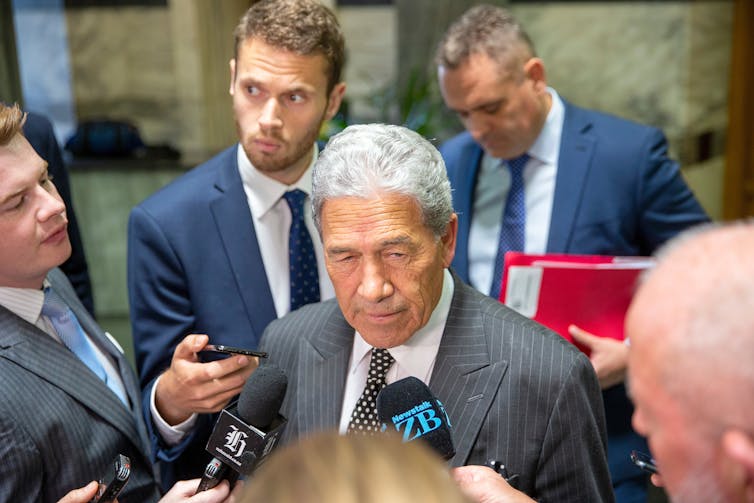
Immigration New Zealand has confirmed that Behrouz Boochani has been given refugee status in New Zealand.
Boochani has been in New Zealand since November. He had travelled to Christchurch for a writers’ festival on a one-month visa and was supported by Amnesty International.
He was detained in Manus Island and in Port Moresby for six years under the Australian government’s policy to deter asylum seekers arriving by boat.
Boochani’s 374-page book, detailing his experiences in detention, was written in secret and was smuggled out of the detention centre via hundreds of text messages to his translators and editors in Australia.
Boochani discovered he had been granted asylum by New Zealand almost seven years to the day from the moment he was arrested by the Australian Navy, taken to Christmas Island, and subsequently flown to PNG.
Moved to transit centres Following the closure of the Manus Island centre in 2017, Boochani and his fellow detainees were moved to refugee transit centres near the island’s main town of Lorengau, and later, to the country’s capital Port Moresby.
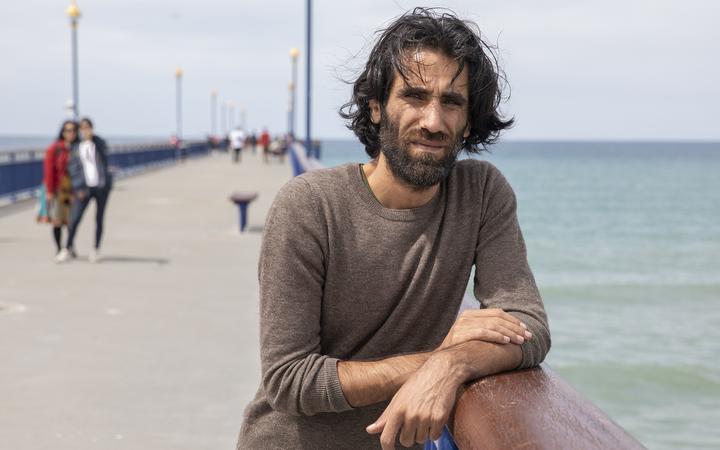
Behrouz Boochani visiting the New Brighton Pier in Christchurch last November. Image: RNZ/AFP
The executive director of Amnesty, Meg de Ronde, said it is wonderful news that Boochani has been given asylum.
“This means that he’s now a free man. He is free from the persecution as a Kurdish journalist. He’s free from the persecution of Australia’s torturous detention system and he is able to enjoy his life as anyone should be able to under our human rights system.”
She said 400 asylum-seekers like him were still trapped in limbo however, and it was time for Australia to accept New Zealand’s offer to take 150 of those refugees per year.
“Some of them are still on Nauru, some of them are still in Papua New Guinea and some are now in various hotels in Australia in very poor conditions,de Ronde said.
“This issue continues to go on, and Australia needs to act to ensure no more people are put through the torturous regime that Behrooz Boochani was.”
Excluded from Australia The party’s immigration spokesperson, Stuart Smith, said Boochani appeared to have been excluded from Australia, making him ineligible to come to New Zealand without a special direction.
He said despite that, the response to a parliamentary written question showed no contact was made with Australian officials before he was granted the visa.
“Which was surprising given the high profile nature of Boochani and the fact that the Australian foreign minister said that Boochani would never set foot in Australia.”
Boochani travelled through the Philippines to get to Auckland so that his flight did not touch down in Australia.
Green Party human rights spokesperson Golriz Ghahraman – herself an Iranian refugee – said it was a day of celebration.
“I’m just so excited for us and for him and so grateful for our refugee authorities demonstrating – at least to Australia – that it is possible to actually process and asylum seeker fairly.”
This article is republished by the Pacific Media Centre under a partnership agreement with RNZ.
The events of 2020 are reshaping the way we live, work, teach and learn. And while we have all been affected differently, the impact of the COVID-19 pandemic on women has been particularly significant.
A recent report by the Rapid Research Information Forum found the pandemic has left women facing disproportionate increases in caring responsibilities and disruptions to working hours and job security.
The pre-pandemic impact of caring for children and the uptake of flexible working arrangements are just two of the issues considered in the second edition of the STEM Workforce Report, released this week by the Office of the Chief Scientist. Drawing on 2016 Australian Census data, this report provides a comprehensive analysis of the STEM workforce in Australia.
It analyses the nearly 1.2 million people with vocational STEM qualifications and the roughly 700,000 people with university STEM qualifications in the Australian labour force in 2016. As such, it will enable informed decision-making to help plan our future STEM workforce needs.
Slow pace of change
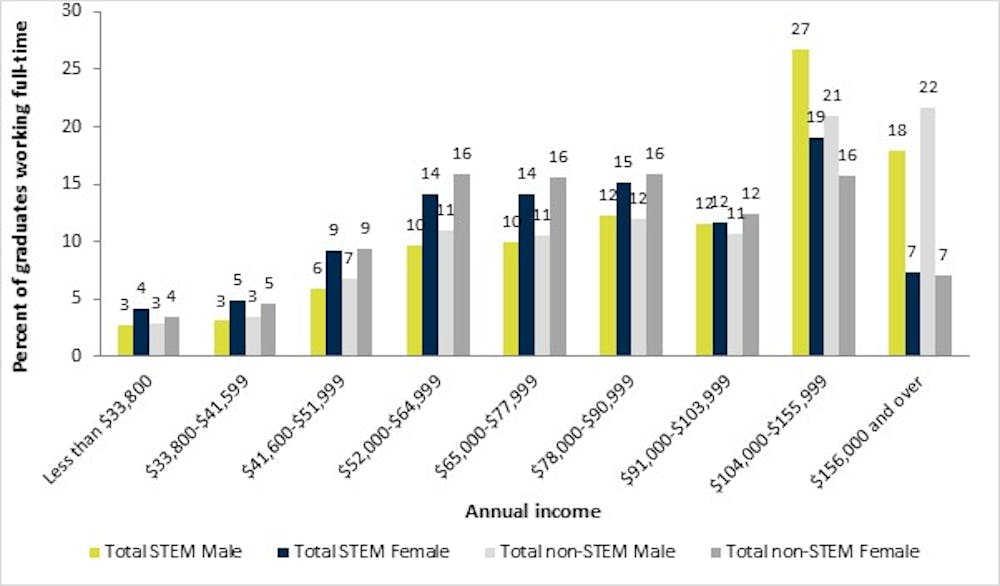
Our analysis found that people with STEM qualifications work in a wide range of occupations and industries. On average, they earn more than those with non-STEM qualifications, and these incomes increase with qualification level. In 2016, 34% of employed STEM university graduates earned A$104,000 or above, compared with 24% of non-STEM university graduates. Of STEM university graduates, 32% of those with a bachelor degree, 34% of those with a masters, and 45% of those with a doctoral degree earned A$104,000 or above.
However, the pace of change towards a fairer and more diverse STEM labour force is still slow. In 2006, 27% of STEM university graduates in the labour force were women. A decade later, this had only risen to 29%.
Just 3.3% of Australian-born women with a university STEM qualification were unemployed, as of census night in 2016. But the corresponding figure for similarly qualified overseas-born women who arrived in Australia between 2006 and 2016 was 14.1%.
Women in STEM also have lower average pay than similarly qualified men, in both part-time and full-time roles. For full-time workers with university STEM qualifications, 45% of men earned A$104,000 or above, compared with 26% of women.
Income distribution of full-time workers with university qualifications, by field and gender.Office of the Chief Scientist, Author provided
How to keep women in STEM
Women who pause their careers to have children often end up leaving the labour force or returning on reduced hours. Flexible work arrangements – including working part-time and working from home – are crucial tools for keeping parents in the labour force. Initiatives such as childcare subsidies and incentives for fathers to take significant parental and carer’s leave have proven effective in supporting equitable outcomes in the workforce.
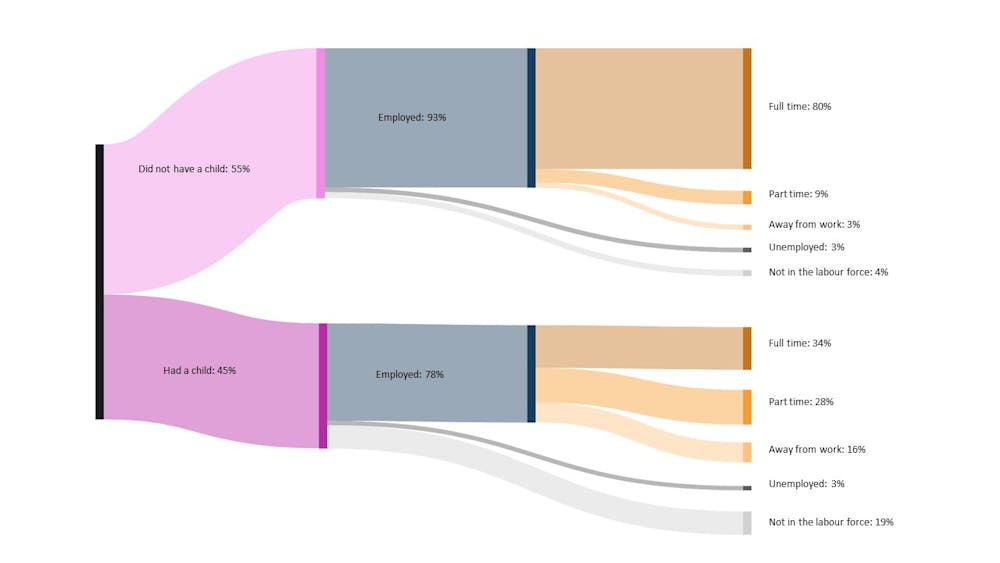
The flow diagram below represents labour force data for women aged 15-35 who did not have a child and were working full-time in 2011. When we reviewed the status of these women five years later, we found that STEM-qualified women who had children were less likely to still be employed, and more likely to be working part-time. In contrast, the work status of STEM-qualified men was largely unaffected by having children, and men with children tended to earn more than those without.
Employment pathways for women with university STEM qualifications. This analysis looked at women aged 15-35 who did not have a child and were working full-time in 2011, and plots the labour force status of these women five years later.Office of the Chief Scientist, Author provided
Our report found that STEM-qualified women also do more hours of unpaid domestic work than STEM-qualified men. Women working full-time were more than twice as likely as men (19% vs 8%, respectively) to do more than 15 hours’ domestic work per week. The recently reported experiences of women taking on a higher share of child care during the COVID-19 pandemic appear to support these findings.
Beyond census data
The census data can only tell us part of the story. The Women in STEM Decadal Plan, developed by the Australian Academy of Science and the Australian Academy of Technology and Engineering, presented information from numerous sources to explore the breadth of women’s experiences. It showed that negative stereotypes dissuade women from pursuing STEM careers and “a significant cultural shift in workplaces is necessary to create gender equity for women in STEM”.
These findings are supported by research from the Male Champions of Change STEM group, which found women in STEM jobs experience significantly more barriers than men, including sexism, workplace culture, exclusion and a lack of career progression. Two-thirds of women reported having their voices devalued at work. Listening to and acknowledging the experiences of women and other disadvantaged groups in STEM is necessary to develop and implement meaningful actions for change.
We mustn’t allow the upheaval from COVID-19 to wipe out the small gains we have made in STEM-qualified women’s representation and participation in the workforce.
The pandemic has rapidly changed the way we work, showing that workplace flexibility is just one way to keep all of us working productively. Other profound changes to workplace culture should follow, or we risk yet another decline in women’s workforce participation.
Changing Income-Relaxation Balance as a sequence of Pie Charts
On June 30 (Chart Analysis on Evening Report) I promised to elaborate on the economic policies that would underpin the new optimisation of work-life balance. I argued that economic optimisation means a balance between income and leisure, and that the Covid19 pandemic – and especially the experience of level four lockdown – involved a household reassessment of that balance in favour of more leisure and less work; more relaxation and less income.
The first (pre-pandemic) chart did not necessarily reflect the pre-pandemic optimal balance; it reflected the reality of 2019. There is every reason to believe that the economically optimum balance in 2019 would have favoured more relaxation then. (The optimum balance for each household is determined by its preference at the margin. Some households – if free to choose – would favour a bit more relaxation and a bit less income; other households would favour less relaxation and more income. Involuntary unemployment does not count as relaxation. The optimum balance for society exists when each household is able to achieve its optimum.)
The central argument of that analysis was that our experiences in March and April 2020 caused a change in the optimal balance. However, for this change to be reflected in actual post-pandemic outcomes, some policy accommodation will be required.
Phase One Policy Accommodation – The Recession
There can be little question that the world as a whole – and just about every country – has entered a state of recession, of negative economic growth.
(A rule of thumb definition of recession is the experience of two successive quarters of negative seasonally adjusted economic growth, where ‘economic growth’ means the percentage change of price-adjusted gross domestic product [GDP]. This definition is inadequate; under Covid19 lockdowns, while most countries have experienced a dramatic single quarter decline in GDP many will experience small increases in subsequent quarters. It is appropriate to assert that a recession is a period of GDP decline of at least six months that ends when GDP returns to its pre-recession level; some recovery growth does not necessarily mean the recession is over.)
Traditional policies to address a recession have the goal of ending the recession, and restoring economies to their normal growth paths. While that approach remains valid, it needs to be sensitive to the possibility of a new normal where optimum GDP – the income part of ‘income-relaxation balance’ – needs to be less than it would have been prior to the recession.
A standard cyclical recession requires a mechanism to ensure that interest rates quickly come down, to encourage more borrowing and spending by solvent businesses and households, and by governments.
A more intransigent recession – a ‘balance sheet recession’ – requires aggressive fiscal stimulus (more government spending and more government mandated payments to households) because too few businesses and households are in a position to take advantage of low interest rates. An example here is the global recession following the 2008 global financial crisis [GFC]. The historically most important recent example of a balance-sheet recession is Japan’s prolonged 1990s’ recession; an experience the rest of the world still needs to learn from. The present recession is a variation of the balance-sheet type, but with overlaid supply chain disruptions and induced changing work-life household preferences.
Government debt must increase – and sharply – during a balance sheet recession. For the most part, this new debt is newly created money owed by the people of a country to the people of that country. This is essentially an accounting process that – if managed properly – self-unravels over time. (Premature forced unravelling – as occurred in the United Kingdom after the GFC – creates much unnecessary economic hardship and loss of happiness.)
At today’s early stage of the recession, so long as the economy remains in recession (evidenced by high levels of available labour) the central government needs to pursue a policy of aggressive fiscal stimulus; a policy which has the additional benefit of forestalling a requirement for negative interest rates. (An important part of this stimulus should be that the central government makes substantial transfers to local governments.) Further, the government should proactively shut down – through reasoned reassurance and explanation – all the reckless chatter about how this new technical debt does not set households up for a biblical reckoning in the future. Rather, the process of expanded recession finance self-resolves.
The most basic part of the resolution process is the restoration of business and household balance sheets, more economic activity, more taxes paid, more private sector debt, slightly higher interest rates (ie low rather than very low), and less requirement for new government debt as the economy enters a new expansionary phase.
However, if there has been a structural change in household demand – a change in favour of less consumption and more relaxation – then the process will resolve with the central government holding a permanently larger amount of debt on its books. In Japan this technical debt – money owed, through the government’s balance sheet, by the people to the people – has settled at about 250 percent of its GDP. By 2025 – if sensible policies are followed in the European Union and North America – similar debt can be expected to settle at around 200 percent of GDP. (If foolish policies are followed, government debt in these countries will still be about 200 percent in 2025, but all of those countries will be going through an experience similar to the economic depression that was imposed on Greece.) In New Zealand, with good policies, our comparable level of government debt in 2025 should be between 50 and 100 percent of GDP.
Phase Two Policy – A New Post-Pandemic Balance
In the new situation – characterised by Chart 4 in my chart analysis – we no longer require aggressive fiscal stimulus. Rather, we need to establish a new lower-growth equilibrium – with government debt permanently sitting at over 50 percent of GDP – and with regular government outlays funded by taxes. In this situation, we need equilibrium levels of revenue and spending, not the aggressive deficit spending required to achieve Phase One recovery.
To maintain a low-growth equilibrium with a higher relaxation component – reflecting a 2020s’ shift in favour of more relaxation and less income – we will need public equity dividends set higher than the sensible initial setting of $175 per week – and a flat income tax rate set higher than the sensible initial rate of 33 percent.
Once a country has a mechanism of flat income tax and universal incomes – UIFT – in place, the simple rules to maintain an appropriate income distribution are:
as productivity arising from public inputs increases, then both public equity dividends (universal incomes) and the income tax rate should increase.
as households increasingly favour more sustainable work-life balances – more sustainable in terms of either the wider environment or the internal household relaxation-income balance – then both public equity dividends (universal incomes) and the income tax rate should increase.
If a country enters the Phase Two post-pandemic post-recession phase with this necessary mechanism already in place, then ongoing financial management becomes an easy governmental task; a process that can reflect both changing household work-life preferences and humanity’s need for a sustainable natural environment.
If such a mechanism is not in place, the solutions to the problems of work-life balance and environmental sustainability will remain as intransigent as they have been over previous decades.
Phase One Policy – 2021
Looking back to 2021 from 2025, the ongoing economic recession – the emergency phase – represents a wonderful opportunity to implement universal incomes and flat income taxes at the appropriate introductory level; this is the time to transition to explicit public equity dividends. By adopting the 33 percent tax rate and the $175 per week public dividend, there would be no change to the incomes of higher earners and beneficiaries, though both would gain a degree of protection from changed circumstances.
The new New Zealand government – the government chosen after the September 2020 election – will easily gain another term in 2023 if it takes advantage of these uncertain times to implement the policy change that we have to have; the policy breakthrough that can give ourselves a prosperous and relaxed economic future.
Twitter has announced it’s taking sweeping action to limit the reach of content associated with QAnon. Believers of this fringe far-right conspiracy theory claim there is a “deep state” plot against US President Donald Trump led by Satan-worshipping elites from within government, business and media.
Twitter has banned more than 7,000 accounts tweeting about QAnon, citing violations of its multi-account policy, coordinated abuse targeting individual victims, and attempts to evade previous account suspensions.
The platform also said it would stop circulating QAnon-related content, including material appearing in trending topics, recommendation lists and the search feature. It will also reportedly block web links associated with QAnon activity.
These actions, which could impact as many as 150,000 accounts globally, are part of Twitter’s wider crackdown on misinformation and “behaviour that has the potential to lead to offline harm”.
However, according to CNN reporter Oliver Darcy, many of the actions are not being extended to “candidates and elected officials”. Regardless, history suggests the threat of online conspiracists is a difficult one to tackle.
How it all began
QAnon began in October 2017 when an anonymous user or group of users going by “Q” began posting on the online message board 4chan. Q claimed to have access to classified information about the Trump administration and its opponents.
More than two years and 3,500 posts later, “Q” has generated a sprawling but unfounded conspiracy theory claiming the existence of a global network of political elites and celebrities who want to take down Trump. These people also supposedly run a child sex trafficking ring, among other crimes.
QAnon believers predict the secret war between the Trump administration and the “deep state” network will eventually lead to “The Storm” – a day of reckoning where Trump’s opponents will be arrested or executed.
Recently, QAnon believers have also pushed a range of baseless coronavirus conspiracies. These include claims the virus is a hoax, or a Chinese bioweapon designed to hurt Trump’s re-election chances.
Although extremism driven by conspiracy theories isn’t new, the report states the internet and social media are helping such theories reach wider audiences.
It also says online conversations help determine the targets of harassment and violence for the small subset of individuals whose beliefs translate into real-world action.
One such example came from the Pizzagate conspiracy (seen by some as a precursor to QAnon), which motivated an American man to gun down a pizza shop that was supposedly a front for a child sex trafficking ring.
QAnon likely to stay
While it’s hard to say exactly how many QAnon believers there are, the movement has thousands of followers on social media.
A recent investigation of QAnon-related pages and groups on Facebook found there are about three million followers and members in total. But there is likely significant overlap among these accounts.
According to a New York Times report citing anonymous sources, Facebook is planning to enforce similar measures to limit the reach of QAnon content on its platform. One of the largest Facebook groups dedicated to QAnon currently has more than 200,000 members.
Given QAnon’s reach, it will be difficult for Twitter to stamp it out altogether.
Social media bans are hard to maintain. Content can be shared under new accounts. New code words and hashtags can be adopted which artificial intelligence algorithms can’t detect.
For example, many QAnon believers have tried to operate unnoticed on Twitter by using the number 17 to reference “Q” (the 17th letter of the alphabet), or by writing “CueAnon” instead of “QAnon”.
Human moderators may be needed to identify such circumvention attempts. And it’s hard to say how much human resource Twitter is willing or able to devote to moderating this content.
Banned users can also enlist virtual private networks (VPNs) to change their IP addresses and bypass restrictions.
Furthermore, conspiracy theories such as QAnon are difficult to counter as they are “self-sealing”: any action against believers is interpreted as “evidence” of the theory’s validity.
This is because conspiracists often think agents of the conspiracy have unusual and extensive powers. Some QAnon believers are taking Twitter’s bans to be confirmation of a “deep state” plot against Trump.
That said, it’s possible Twitter’s measures will reduce QAnon’s visibility. A similar past crackdown by Reddit was effective in stemming QAnon activity. Before its ban in 2018, the largest QAnon subreddit had more than 70,000 members.
However, many of these users simply moved to other sites such as YouTube and Facebook – a common trend following bans.
What do multiple sclerosis (MS) and the novel coronavirus have in common? Until this week, not much, but a recent clinical trial has shown a reformulation of a drug used to treat MS can potentially also be used to help patients infected with COVID-19.
SNG001 is an inhaled form of a drug called interferon-beta under development by the UK pharmaceutical company Synairgen. Interferon is normally prescribed for the treatment of symptoms relating to relapsing-remitting MS.
But the clinical trial, Synairgen found that when SNG001 was given to patients with COVID-19, it stopped the development of more severe symptoms, accelerated their recovery, and allowed them to leave hospital earlier.
Like other clinical trials for COVID-19 treatments, the results still need to be thoroughly checked before SNG001 is included as a standard treatment for coronavirus. The drug’s key risks (potential for severe depression) also need to be weighed against the potential benefits.
How does it work?
MS is a condition of the central nervous system. The nerve impulses between the brain and spinal cord get blocked or mixed up. It happens because the body’s immune system attacks the protective layers around nerve fibres. The result is a loss of muscle control and balance.
In contrast, COVID-19 is a viral infection that affects a patient’s ability to breathe due to inflammation putting pressure on their lungs.
What both diseases have in common is the activation of the body’s immune response, so a drug that modulates the immune system for one can potentially work for the other.
Interferon-beta (interferon), a naturally occurring protein in the body, is used as an immunotherapy drug to combat relapsing-remitting MS by reducing inflammation and easing the symptoms of the disease.
Scientists at Synairgen hypothesised it could also treat COVID-19 through initiating the body’s antiviral response and potentially reducing inflammation on the lungs.
It is believed some at-risk patient groups cannot produce interferon as effectively as other people, reducing their ability to fight the virus and resulting in more severe symptoms.
So giving those patients interferon, in theory, should help them fight the virus, alleviate their symptoms, and improve survival rates.
Take a breath
For the treatment of MS, interferon is given as a weekly injection into muscle tissue.
The SNG001 drug developed by Synairgen contains the same interferon therapy used for MS, but formulated as an inhaled product.
Originally, the company was developing SNG001 as a treatment for a different type of lung condition called chronic obstructive pulomary diease (COPD), but it saw the direct potential for COVID-19 as well.
Instead of an injection, SNG001 is given to patients via a nebuliser, a machine that transforms a water solution of interferon into a fine mist that can be breathed in by patients through a face mask.
Promising results, so far
Between March and May this year, Synairgen sponsored a clinical trial at University Hospital Southampton to test SNG001 for COVID-19 patients. Those eligible for the trial only needed to have mild symptoms of COVID-19.
Other clinical trials conducted in the past for different drugs, such as remdesivir and dexamethasone, required patients to be hospitalised before they were eligible for drug treatment.
In total, 101 patients in a hospital setting were enrolled in the SNG001 trial and were given the drug daily for 14 days. Compared with a placebo, those given SNG001 had a 79% lower risk of developing severe disease.
Patients given the drug were also twice as likely to recover from their infection and were discharged earlier from hospital than those given the placebo.
Before SNG001 becomes standard care for COVID-19 treatment the results of the clinical trial need to be checked by independent scientists.
In the past, trial results for hydroxychloroquine did not stand up to scrutiny after they were announced and the results were subsequently retracted by the research team.
The risks and benefits
If the latest results are shown to be reliable, before doctors decide to make SNG001 a part of the standard treatment for hospitalised COVID-19 patients they will need to weigh its benefits against the potential risks.
One of the most important side effects of the drugs is that it can induce depression.
As a result, interferon is used with caution in patients with pre-existing depression or who have suicidal thoughts. These conditions may already be heightened by the pandemic if a potential patient for the drug has lost their job or they are not dealing well with the isolation of social distancing.
This means doctors would need to undertake a comprehensive mental health screen of all patients they consider for SNG001 treatment.
Other side effects relevant to interferon are that it can worsen seizure disorders or heart failures. So again, it needs to be used with caution in these patient groups.
The results of the SNG001 trial are very promising and potentially give us a treatment to prevent those people mildly infected with COVID-19 from developing more severe symptoms and needing hospitalisation.
But the results need to be checked by independent scientists first, and the drug’s benefits need to be weighed against its risk, as the ability to induce severe depression could cause a wave of mental health problems that make matters worse rather than better.
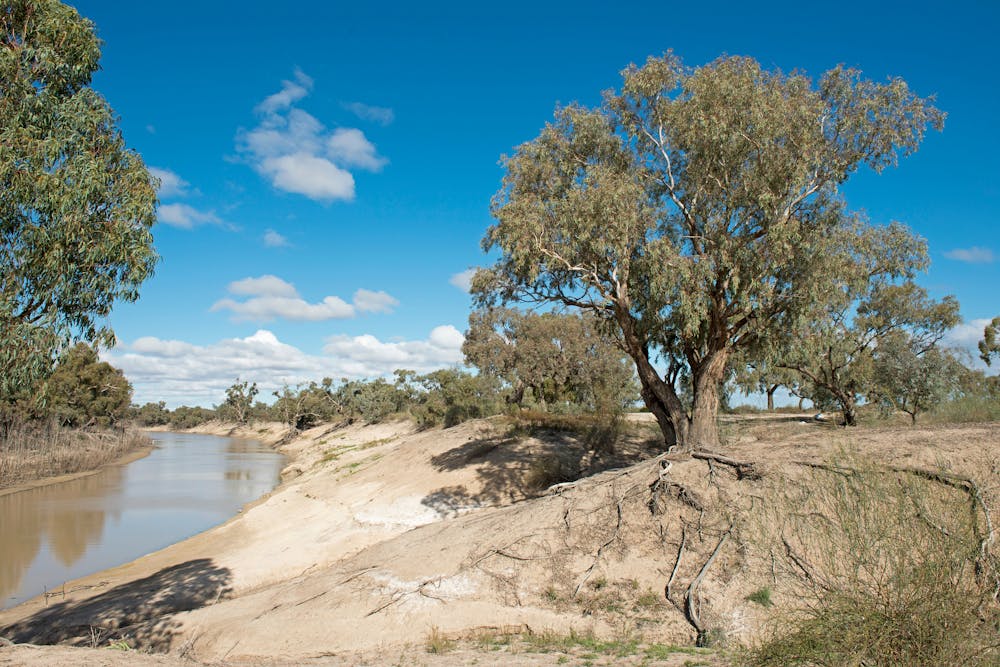
Water management in the Murray-Darling Basin has radically changed over the past 30 years. But none of the changes have addressed a glaring injustice: Aboriginal people’s share of water rights is minute, and in New South Wales it is diminishing.
In the 1990s, governments tried to restore the health of rivers in the basin by limiting how much water could be extracted. They also separated land and water titles to enable farmers to trade water.
This allowed the recovery of water for the environment and led to the world’s biggest water market, now worth billions of dollars. For a range of reasons, Aboriginal people have largely been shut out of this valuable water market.
Our research, the first of its kind, shows Aboriginal water entitlements in the Murray-Darling Basin are declining, and further losses are likely under current policies. This water injustice is an ongoing legacy of colonisation.
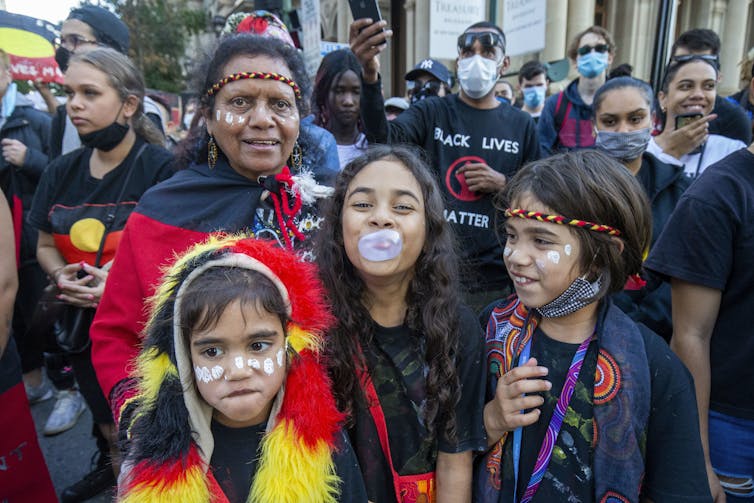
Aboriginal people have largely been shut out of the market.Shutterstock
An unjust distribution of water
A water use right, also called a licence or entitlement, grants its holder a share of available water in a particular waterway. Governments allocate water against these entitlements periodically, depending on rainfall and water storage. Entitlement holders choose how to use this water. Typically, they extract it for purposes such as irrigation, or sell it on the temporary market.
We mapped Aboriginal water access and rights in NSW over more than 200 years, including the current scale of Aboriginal-held water entitlements.
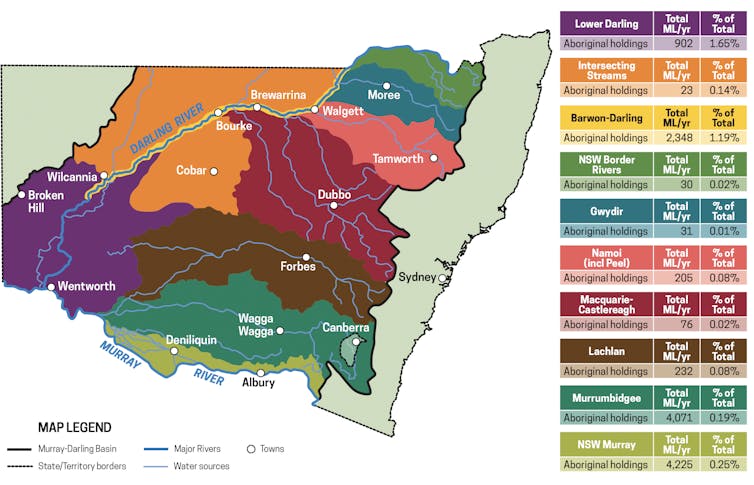
Across ten catchments in the NSW portion of the Murray-Darling Basin, Aboriginal people collectively hold just 12.1 gigalitres of water. This is a mere 0.2% of all available surface water (as of October 2018).
By comparison, Aboriginal people make up 9.3% of this area’s population.
The value of water held by Aboriginal organisations was A$16.5 million in 2015-16 terms, equating to just 0.1% of the value of the Murray-Darling Basin’s water market.
We wanted to understand how these limited water rights affect Aboriginal people today, and the challenges, if any, they face in holding onto these entitlements. This required examining Australia’s water history and its systems of water rights distribution.
What we found were key moments when governments denied Aboriginal people water rights and, by extension, the benefits that now flow from water access. This includes the ability to use water for an agricultural enterprise, or to temporarily trade water as many other entitlement holders do. We describe these moments as waves of dispossession.
The first wave of dispossession
Under colonial water law, rights to use water, for example for farming, were granted to whoever owned the land where rivers flowed. This link between water use and land-holding remained in place until the end of the 20th century.
As a result, Aboriginal people, whose traditional ownership of land (native title) was only recognised by the Australian High Court in 1992, were largely denied legal rights to water.
Water entitlements held by Aboriginal by catchment in the NSW portion of the MDB (as at October 2018)
The second wave
During the last quarter of the 20th century, governments introduced land restitution measures, such as the NSW Aboriginal Land Rights Act (1983), to redress or compensate Indigenous peoples for colonial acts of dispossession.
We found water entitlements were attached to some of the land parcels that were transferred to Aboriginal ownership under these processes – but this was the exception.
Land restitution processes intentionally restricted what land Aboriginal people could claim. They were biased against properties with agricultural potential and, therefore, very few of the properties that were returned to Aboriginal ownership came with water entitlements.
At this crucial juncture in land rights reform, federal and state governments entrenched the inequity of water rights distribution by increasing the security of the water rights of those who historically held entitlements. Governments have yet to pay serious attention to the claims of Aboriginal people who see a clear connection between the past and the present in the distribution of water entitlements.
We found key moments when governments denied Aboriginal people water rights and the benefits that come with it.AAP Image/Dean Lewins
The native title framework has not helped the situation either. Native title is the recognition that Indigenous peoples have rights to land and water according to their own laws and customs.
But it’s difficult for those making a native title claim to get substantial interests in land and waters. The Native Title Act 1993 defined native title to include rights to water for customary purposes and courts are yet to recognise a commercial right to water.
The third wave
We also identified a third wave of dispossession, now underway. From 2009 to 2018, the water rights held by Aboriginal people in the NSW portion of the Murray-Darling Basin shrunk by at least 17.2% (2.0 gigalitres of water per year). No new entitlements were acquired during this decade.
The decline is attributable to several factors, the most significant being forced permanent water (and land) sales arising from the liquidation of Aboriginal enterprises.
With water rights held by Aboriginal people vulnerable to further decline, the options for Aboriginal communities to enjoy the wide-ranging benefits of water access may further diminish.
We expect rates of Aboriginal water ownership to be even smaller in other parts of the Murray-Darling Basin (and in jurisdictions beyond the Basin). Research is underway to explore this.
The Productivity Commission is currently reviewing the progress of reform in Australia’s water resources sector.AAP Image/Lukas Coch
Australia urgently needs a fair national water policy
The Productivity Commission is now reviewing Australian water policy, and must urgently address the injustices faced by Aboriginal people.
In developing a just water policy, governments must work with First Nations towards the twin goals of redressing historical inequities in water access and stemming further loss of water rights. Treaty negotiations may offer another avenue for water reform.
Over recent decades, Australia has been coming to terms with its colonial history of land management, returning more than a third of the continent to some form of Indigenous control under a “land titling revolution”.
But a water titling revolution that reconnects water law and policy to the social justice agenda of land restitution is long overdue. Indigenous peoples must have the opportunity to care for their land and waters holistically, and share more equitably in the benefits of water use.
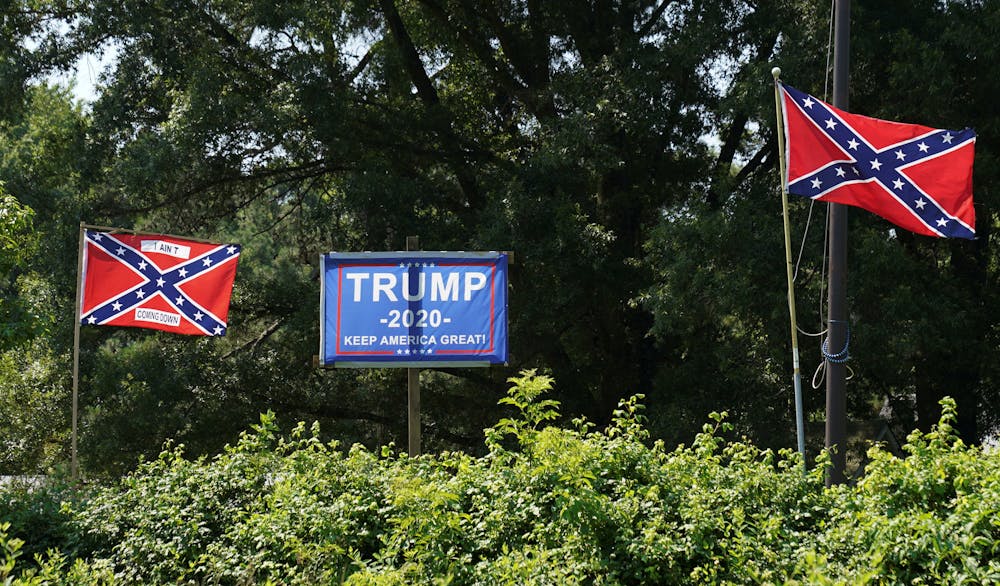
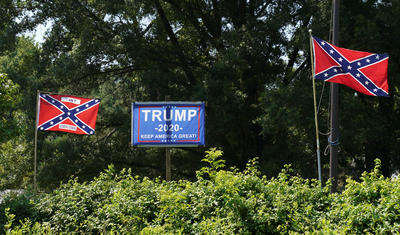
Most Australians — aside from a few groups dedicated to reenacting American Civil War battles and history buffs including Bob Carr and Kim Beazley — were not familiar until recently with the charged history of the flag of the Confederate States of America.
Now the flag is in the Australian news with reports SAS military in Afghanistan in 2012 used the bold red, blue and white flag to guide in a US helicopter. Two SAS personnel also posed for a photograph with the flag.
Why do these images of Australian soldiers posing with a flag from another country’s long-ago war provoke such strong reactions? Because the flag has long symbolised defiance, rebellion, an ideal of whiteness and the social and political exclusion of non-white people — in a word, racism.
The Confederacy defeated, but not punished
The flag represents the Confederate States of America (CSA or Confederacy), created in 1861 when 11 states seceded from the 85-year-old nation. This rebellion was prompted by the election of Abraham Lincoln as president. Lincoln argued slavery should not be extended to new territories the United States was annexing in the west. Southern enslavers feared slavery in their established states would be Lincoln’s next target.
The ensuing four-year Civil War between the CSA and US was resolved in 1865 with the defeat of the Confederacy and the near-abolition of enslavement.
In the aftermath of the war, a longer battle began: how to interpret the war. For 155 years, this struggle has turned largely on the contradiction that although the US fought to end slavery, most white Americans, including in the North, had little commitment to ending racism.
The reembrace of white Southerners into the nation showed a desire to “heal” the nation by downplaying the horrors of enslavement and the struggle to end it.
New narratives depicted the war as a righteous, though tragic, struggle over “states’ rights”. By avoiding a conversation as to what those rights were about — that is, enslavement — by the 1890s, they remade the meaning of the war.
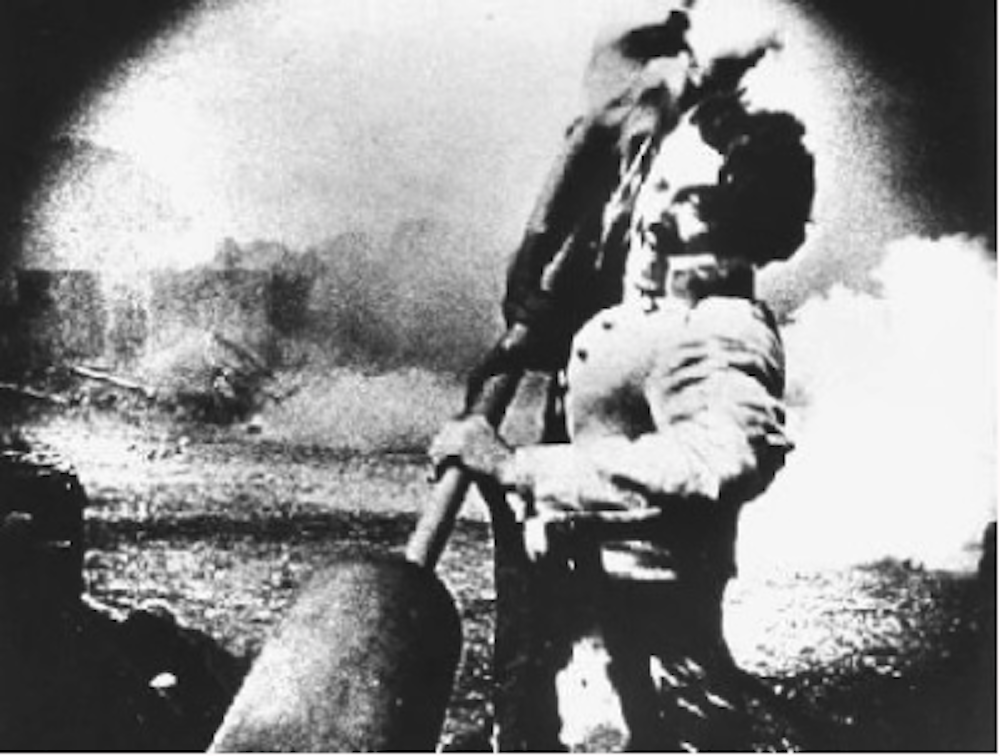
Confederate flags were a powerful symbol in reinterpreting the War of the Rebellion. In the 1915 box-office hit feature film, The Birth of a Nation, for example, the central battle scene involves a key character, Ben Cameron of South Carolina, ramming the pole of a Confederate flag down a United States army cannon.
In the very next shot, however, the injured Cameron is rescued from the no-man’s land between trenches by his longtime family friend, Northerner and US Army commander, Phil Stoneman.
The movie’s second half cemented the theme of reconciling white Southerners and white Northerners. As it stated in an intertitle, “The former enemies of North and South are united again in common defense of their Aryan birthright”. It even became a tool to recruit new members to the Ku Klux Klan.
The war, in this telling, was a struggle between white and Black Americans, not between the US and the rebel Confederacy.
Jamming the flag in the famous war film The Birth of a Nation.YouTube
Blowing in the wind
The Confederate flag featured prominently in Gone with the Wind (1939), another immensely popular film that again glorified the way of life of white Southerners during and immediately after slavery. In this case, however, Hollywood used the more visually striking Confederate Battle Flag, which General Robert E. Lee had flown during the war, rather than any of the CSA’s national flags.
As Scarlett O’Hara (Vivien Leigh) arrives at a makeshift hospital, the camera pans back to a field of hundreds of wounded and dead soldiers. The scene shifts only once those soldiers are framed by a Confederate flag, blowing majestically in the breeze.
These two films buttressed a political economy that relied on a cheap labour force of disenfranchised Black Americans. But as African Americans began to make headway in the fight for civil rights, starting during World War II, symbols such as the Confederate flag became even more important to those who felt affronted by their gains.
These “Dixiecrats” adopted the Confederate battle flag as their party’s emblem. From that point, the flag was clearly associated with racist opposition to civil rights and with umbrage at perceived government intrusion into the lives of individuals.
When civil rights activism was at its most visible, in the 1950s and 1960s, many white Southerners became firmly attached to the flag.
In 2000, after years of protest, South Carolina legislators moved the Confederate flag to the State House’s grounds. Then, after white supremacist Dylann Roof endorsed the Confederate flag and murdered nine black churchgoers in 2015, activist Bree Newsome shimmied up the pole and removed it in a galvanising act of civil disobedience.
Two weeks later, the flag in South Carolina’s house of government was finally removed for good. In the years since, hundreds of Confederate flags, statues and memorials have disappeared, including in the national Capitol.
In 2016, recognising the flag’s toxic history, major retailers announced they would no longer sell the flag.
In the wake of George Floyd’s murder, the removal of Confederate symbols has accelerated. In recent months, Southern company Nascar has banned the flag and the Department of Defense has effectively done so, too.
US President Donald Trump has defended the Confederate flag as a symbol of southern pride.REUTERS/Kevin Lamarque
In a polarised political and media environment, many white Southerners continue to defend their allegiance to the Confederate flag.
They claim the battle flag represents their Southern heritage, as if that heritage comprises an innocent history of mint juleps and church-going. The problem with that claim, as the history of the use of the flag demonstrates, is that the heritage it symbolises is also that of enslavement, inequality, violence and gross injustice.
Most Australians — aside from a few groups dedicated to reenacting American Civil War battles and history buffs including Bob Carr and Kim Beazley — were not familiar until recently with the charged history of the flag of the Confederate States of America.
Now the flag is in the Australian news with reports SAS military in Afghanistan in 2012 used the bold red, blue and white flag to guide in a US helicopter. Two SAS personnel also posed for a photograph with the flag.
Why do these images of Australian soldiers posing with a flag from another country’s long-ago war provoke such strong reactions? Because the flag has long symbolised defiance, rebellion, an ideal of whiteness and the social and political exclusion of non-white people — in a word, racism.
The Confederacy defeated, but not punished
The flag represents the Confederate States of America (CSA or Confederacy), created in 1861 when 11 states seceded from the 85-year-old nation. This rebellion was prompted by the election of Abraham Lincoln as president. Lincoln argued slavery should not be extended to new territories the United States was annexing in the west. Southern enslavers feared slavery in their established states would be Lincoln’s next target.
The ensuing four-year Civil War between the CSA and US was resolved in 1865 with the defeat of the Confederacy and the near-abolition of enslavement.
In the aftermath of the war, a longer battle began: how to interpret the war. For 155 years, this struggle has turned largely on the contradiction that although the US fought to end slavery, most white Americans, including in the North, had little commitment to ending racism.
The reembrace of white Southerners into the nation showed a desire to “heal” the nation by downplaying the horrors of enslavement and the struggle to end it.
New narratives depicted the war as a righteous, though tragic, struggle over “states’ rights”. By avoiding a conversation as to what those rights were about — that is, enslavement — by the 1890s, they remade the meaning of the war.
Confederate flags were a powerful symbol in reinterpreting the War of the Rebellion. In the 1915 box-office hit feature film, The Birth of a Nation, for example, the central battle scene involves a key character, Ben Cameron of South Carolina, ramming the pole of a Confederate flag down a United States army cannon.
In the very next shot, however, the injured Cameron is rescued from the no-man’s land between trenches by his longtime family friend, Northerner and US Army commander, Phil Stoneman.
The movie’s second half cemented the theme of reconciling white Southerners and white Northerners. As it stated in an intertitle, “The former enemies of North and South are united again in common defense of their Aryan birthright”. It even became a tool to recruit new members to the Ku Klux Klan.
The war, in this telling, was a struggle between white and Black Americans, not between the US and the rebel Confederacy.
Jamming the flag in the famous war film The Birth of a Nation.YouTube
Blowing in the wind
The Confederate flag featured prominently in Gone with the Wind (1939), another immensely popular film that again glorified the way of life of white Southerners during and immediately after slavery. In this case, however, Hollywood used the more visually striking Confederate Battle Flag, which General Robert E. Lee had flown during the war, rather than any of the CSA’s national flags.
As Scarlett O’Hara (Vivien Leigh) arrives at a makeshift hospital, the camera pans back to a field of hundreds of wounded and dead soldiers. The scene shifts only once those soldiers are framed by a Confederate flag, blowing majestically in the breeze.
These two films buttressed a political economy that relied on a cheap labour force of disenfranchised Black Americans. But as African Americans began to make headway in the fight for civil rights, starting during World War II, symbols such as the Confederate flag became even more important to those who felt affronted by their gains.
These “Dixiecrats” adopted the Confederate battle flag as their party’s emblem. From that point, the flag was clearly associated with racist opposition to civil rights and with umbrage at perceived government intrusion into the lives of individuals.
When civil rights activism was at its most visible, in the 1950s and 1960s, many white Southerners became firmly attached to the flag.
In 2000, after years of protest, South Carolina legislators moved the Confederate flag to the State House’s grounds. Then, after white supremacist Dylann Roof endorsed the Confederate flag and murdered nine black churchgoers in 2015, activist Bree Newsome shimmied up the pole and removed it in a galvanising act of civil disobedience.
Two weeks later, the flag in South Carolina’s house of government was finally removed for good. In the years since, hundreds of Confederate flags, statues and memorials have disappeared, including in the national Capitol.
In 2016, recognising the flag’s toxic history, major retailers announced they would no longer sell the flag.
In the wake of George Floyd’s murder, the removal of Confederate symbols has accelerated. In recent months, Southern company Nascar has banned the flag and the Department of Defense has effectively done so, too.
US President Donald Trump has defended the Confederate flag as a symbol of southern pride.REUTERS/Kevin Lamarque
In a polarised political and media environment, many white Southerners continue to defend their allegiance to the Confederate flag.
They claim the battle flag represents their Southern heritage, as if that heritage comprises an innocent history of mint juleps and church-going. The problem with that claim, as the history of the use of the flag demonstrates, is that the heritage it symbolises is also that of enslavement, inequality, violence and gross injustice.
Source: The Conversation (Au and NZ) – By C Raina MacIntyre, Professor of Global Biosecurity, NHMRC Principal Research Fellow, Head, Biosecurity Program, Kirby Institute, UNSW
If you’re not sure whether wearing a face mask is worth it, or you need to wear a mask but are unsure which type, our new research should help you decide.
We took videos of what happens when you talk, cough and sneeze in different scenarios — while not wearing a mask, wearing two different types of cloth masks, or wearing a surgical mask.
The results, published today in the journal Thorax, are clear.
A surgical mask was the most effective at blocking droplets and aerosols from talking, coughing and sneezing. But if you can’t get hold of one, a cloth mask is the next best thing, and the more layers the better.
How different types of mask work to block droplets from talking, coughing and sneezing (Thorax).
Here’s what we did and what we found
You can be infected with the coronavirus, but not show symptoms. So you cannot identify an infected person just by looking at them. And you may be infected (and infectious) but not know it.
So we wanted to compare how effective different types of masks were at preventing outward transmission of droplets while talking, coughing and sneezing. These are the types of masks the public might use to reduce community transmission.
We compared using no mask with two different types of cloth masks made from DIY templates provided online (one mask had a single layer of cloth; the other had two layers), and a three-layered surgical mask.
To visualise the droplets and aerosols you may not otherwise see, we used an LED lighting system with a high-speed camera.
We confirmed that even speaking generates substantial droplets. Coughing and sneezing (in that order) generate even more.
A three-ply surgical mask was significantly better than a one-layered cloth mask at reducing droplet emissions caused by speaking, coughing and sneezing, followed by a double-layer cloth face covering.
A single-layer cloth face covering also reduced the droplet spread caused by speaking, coughing and sneezing but was not as good as a two-layered cloth mask or surgical mask.
We do not know how this translates to infection risk, which will depend on how many asymptomatic or mildly symptomatic infected people are around. However, it shows a single layer is not as good a barrier as a double layer.
With mandated mask use in Greater Melbourne and the Mitchell Shire, we may face shortages of surgical masks. So it is important to understand the design principles of cloth masks.
We did not test more than two layers, but generally, more layers are better. For example, a 12-layered cloth mask is about as protective as a surgical mask, and reduces infection risk by 67%.
We acknowledge it’s difficult to sew together 12 layers of fabric. But there are steps you can take to make cloth masks more effective. You can:
increase the number of layers (at least three layers)
use a water-resistant fabric for the outer layer
choose fabric with a high thread count (so a tighter weave, for instance from a good quality sheet is generally better than a fabric with a looser weave that you can clearly see light through)
hybrid fabrics such as cotton–silk, cotton–chiffon, or cotton–flannel may be good choices because they provide better filtration and are more comfortable to wear
make sure your mask fits and seals well around your face
wash your mask daily after using it.
The evidence is mounting
In practice, we don’t yet know which has a greater effect — wearing masks to prevent infected people spreading to others or protecting well people from inhaling infected aerosols. Probably both are equally important.
In Missouri, two infected hairdressers kept working while infectious, but wore a mix of cloth and surgical masks, as did their 139 clients. No client was infected.
However, one hairdresser infected her household family members, as she did not wear a mask at home, and neither did her family.
This is reassuring evidence that infection risk is reduced when everyone wears masks.
During widespread community transmission, a mask or homemade face covering can make a difference — both by protecting well people and blocking infected aerosols and droplets from an infectious person.
So, as many Victorians start living with mandated face masks, research from our group and others suggests throwing a scarf over your face is not as protective as a well designed cloth mask with several layers.
The Victorian government provides instructions on how to make a good cloth mask. There are many videos showing how, including a no-sew method. There are also community groups making cloth masks and providing helpful information.
How to make a mask out of a t-shirt. No sewing required.
China has launched its Tianwen-1 mission to Mars. A rocket holding an orbiter, lander and rover took flight from the country’s Hainan province yesterday, with hopes to deploy the rover on Mars’s surface by early next year.
Similarly, the launch of the Emirates Mars Mission on Sunday marked the Arab world’s foray into interplanetary space travel. And on July 30, we expect to see NASA’s Mars Perseverance rover finally take off from Florida.
For many nations and their people, space is becoming the ultimate frontier. But although we’re gaining the ability to travel smarter and faster into space, much remains unknown about its effects on biological substances, including us.
While the possibilities of space exploration seem endless, so are its dangers. And one particular danger comes from the smallest life forms on Earth: bacteria.
Bacteria live within us and all around us. So whether we like it or not, these microscopic organisms tag along wherever we go – including into space. Just as space’s unique environment has an impact on us, so too does it impact bacteria.
We don’t yet know the gravity of the problem
All life on Earth evolved with gravity as an ever-present force. Thus, Earth’s life has not adapted to spend time in space. When gravity is removed or greatly reduced, processes influenced by gravity behave differently as well.
In space, where there is minimal gravity, sedimentation (when solids in a liquid settle to the bottom), convection (the transfer of heat energy) and buoyancy (the force that makes certain objects float) are minimised.
It’s not yet fully understood how such changes impact lifeforms.
NASA’s Perseverance Mars rover will be launched later this month. Among other tasks, it will seek out past microscopic life and collect samples of Martian rock and regolith (broken rock and dust) to later be returned to Earth.NASA/Cover Images
How bacteria become more deadly in space
Worryingly, research from space flight missions has shown bacteria become more deadly and resilient when exposed to microgravity (when only tiny gravitational forces are present).
Adding to that, bacteria also seem to mutate quicker in space. However, these mutations are predominately for the bacteria to adapt to the new environment – not to become super deadly.
More research is needed to examine whether such adaptations do, in fact, allow the bacteria to cause more disease.
Biofilms are densely-packed cell colonies that produce a matrix of polymeric substances allowing bacteria to stick to each other, and to stationary surfaces.
Biofilms increase bacteria’s resistance to antibiotics, promote their survival and improve their ability to cause infection. We have seen biofilms grow and attach to equipment on space stations, causing it to biodegrade.
For example, biofilms have affected the Mir space station’s navigation window, air conditioning, oxygen electrolysis block, water recycling unit and thermal control system. The prolonged exposure of such equipment to biofilms can lead to malfunction, which can have devastating effects.
Microorganisms that form biofilms include bacteria, fungi and protists.Shutterstock
Another affect of microgravity on bacteria involves their structural distortion. Certain bacteria have shown reductions in cell size and increases in cell numbers when grown in microgravity.
In the case of the former, bacterial cells with smaller surface area have fewer molecule-cell interactions, and this reduces the effectiveness of antibiotics against them.
Moreover, the absence of effects produced by gravity, such as sedimentation and buoyancy, could alter the way bacteria take in nutrients or drugs intended to attack them. This could result in the increased drug resistance and infectiousness of bacteria in space.
All of this has serious implications, especially when it comes to long-haul space flights where gravity would not be present. Experiencing a bacterial infection that cannot be treated in these circumstances would be catastrophic.
The benefits of performing research in space
On the other hand, the effects of space also result in a unique environment that can be positive for life on Earth.
For example, molecular crystals in space’s microgravity grow much larger and more symmetrically than on Earth. Having more uniform crystals allows the formulation of more effective drugs and treatments to combat various diseases including cancers and Parkinson’s disease.
Also, the crystallisation of molecules helps determine their precise structures. Many molecules that cannot be crystallised on Earth can be in space.
So, the structure of such molecules could be determined with the help of space research. This, too, would aid the development of higher quality drugs.
Optical fibre cables can also be made to a much better standard in space, due to the optimal formation of crystals. This greatly increases data transmission capacity, making networking and telecommunications faster.
As humans spend more time in space, an environment riddled with known and unknown dangers, further research will help us thoroughly examine the risks – and the potential benefits – of space’s unique environment.
Source: The Conversation (Au and NZ) – By Philip Dwyer, Professor, Director of the Centre for the Study of Violence, School of Humanities and Social Science, University of Newcastle
Stories of alleged unlawful killings by Australian special forces in Afghanistan continue to emerge in the media — now on a regular basis.
In the latest report by ABC this week, special forces are accused of mistakenly killing a civilian in 2013 with the same last name as a Taliban target.
This follows another ABC report last week on special forces allegedly killing up to 10 unarmed Afghan civilians during a 2012 raid in Kandahar Province.
Another allegation investigated by journalists Nick McKenzie and Chris Masters involves an SAS soldier stomping to death an Afghan civilian, also in 2012. A former SAS medic, Dusty Miller, went public about this incident and asked forgiveness of the family of the man who was killed.
And in yet another incident that same year, known as “the village idiot killing” among the SAS, a soldier is accused of killing two men, one of whom was intellectually disabled.
The soldier in question, now referred to as “Soldier C”, is also alleged to have killed another civilian in cold blood some months later. It took a Four Corners report for the allegations to surface, and for Defence Minister Linda Reynolds to refer them to the Australian Federal Police for investigation.
A report tabled in parliament in February detailed 55 separate allegations of unlawful executions and abusing civilians and prisoners by Australian special forces in Afghanistan from 2005-16.
These allegations are now under investigation by the inspector-general of the Defence Force. Separately, the AFP has also sent officers to Afghanistan to gather evidence of possible war crimes.
All of these allegations are just now coming to light, in part, because the military failed in its duty to investigate them properly. Instead, the special forces have been accused of fostering a “culture of cover-up”, sweeping alleged abuses under the carpet.
Other militaries accused of atrocities
The SAS is not the only elite unit that has been accused of committing war crimes. In the US, one of the more notorious cases involved a Navy SEALs commander, Edward Gallagher. Accused by his own platoon members of shooting and stabbing civilians in Iraq in 2017, Gallagher was arrested and tried but never convicted. He retired from the Navy with full honours.
Other US forces, and even the CIA, are also alleged to have carried out war crimes in Afghanistan — the focus of a current investigation by the International Criminal Court.
Similarly, the British SAS has been dogged by dozens of accusations involving the deaths of 50 unarmed civilians in Afghanistan from 2009-11. Investigations into these alleged crimes were shut down by the government in 2017.
The ICC investigation into alleged war crimes in Afghanistan is the first of its kind involving US troops.Tim Wimborne/Reuters
Unlawful killings long a feature of war
If history tells us one thing, it’s that wherever the military interacts in close quarters with civilians during war and occupation, atrocities like these occur.
Vietnam is by far the worst example in modern times of American troops and their allies killing and abusing civilians. This included such crimes as torture, rape, baseless arrests, the destruction of property and livelihoods, forced displacement and imprisonment without trial.
The massacre at My Lai in 1968 was perhaps the most infamous case of indiscriminate killing, an atrocity that came to epitomise all that was wrong with the war. But it was just one of many, many massacres that never became public knowledge. The staggering cost in Vietnamese lives during the war has been estimated as high as 3.8 million.
Very few American troops were ever brought to trial. Generals, for one, were very reluctant to press charges. Even when court-martial proceedings did go ahead, the Pentagon did its best to drag them out until the public lost interest.
It would be naïve to think Australia has not committed similar abuses wherever our troops have been deployed. There is certainly enough evidence to suggest that suspected war crimes were committed by our troops in Korea and Vietnam.
A moral failure of command and ‘othering’ of foreigners
The interesting thing about the allegations in Afghanistan – regardless of the nationality of the army – is they all involve special forces.
The Australian SAS itself is an elite force made up of highly trained, highly disciplined professional soldiers. There are all sorts of reasons why this discipline might break down during war, causing soldiers to commit unthinkable crimes against non-combatants.
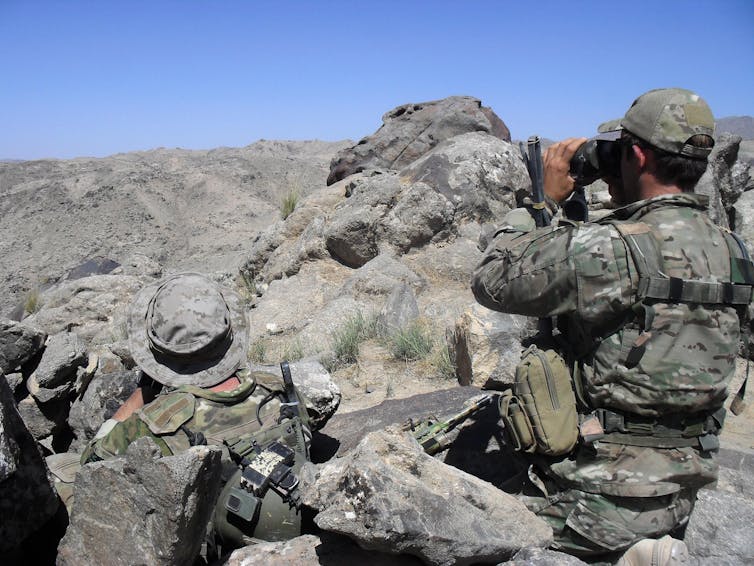
Australia special forces taking part in the Shah Wali Kot offensive in 2013.Australian Department of Defence
In almost all instances when killing and abuse occurs in wartime, there is also an “othering” that takes place, that is, the inhabitants are seen as less than human, as not like us. It enables troops to commit acts they would never otherwise contemplate.
In Afghanistan, this is helped by the fact the special forces are a closed club. Not only is there is a lack of transparency in their operations, but special forces consider themselves to be above the rest of the army.
Moreover, unlike other militaries, journalists are almost never embedded with Australian troops, so they are unable to report and act as witnesses. Whether this would make a difference is debatable, but since Vietnam, war is no longer televised into our living rooms. We usually only get to see what the army wants us to see.
Ultimately, when an atrocity is committed in times of war, and the army fails to respond adequately, it is due to a moral failure of command, as the special operations commander, Major-General Adam Findlay, recently put it.
At least Australia, unlike the UK or Canada, is pursuing an inquiry into possible war crimes in Afghanistan, though whether charges will be laid remains to be seen. However, unless fundamental changes are made to the culture of cover-up in the special forces, or the way these allegations are handled internally, this will continue to be a problem.
The term “special” infers these forces have higher standards than might be expected from conventional soldiers. It’s possible the special forces may have let the wrong people slip into their ranks, but when things do go wrong, it’s because commanders have, for whatever reason, let it happen.
There is no simple solution to this complex issue, but it’s now time for the military to show the same moral courage as those veterans who have chosen to speak out.
News that the “bad boys of Brexit” have been hired by New Zealand First to work on the party’s social media strategy is simultaneously amusing and ominous.
Famous for the Leave.EU campaign in the UK, the duo of Aaron Banks and Andy Wigmore are unabashed far-right populists. Their hiring is another sign that New Zealand is not immune to forces that now shape politics around the world.
Their recruitment underlines the biggest foreign policy challenge this country is facing: the near breakdown of the international rules-based order.
Such an order is the foundation on which New Zealand’s diplomacy and economic prosperity rest. The COVID-19 crisis has confirmed it is in deep trouble but, paradoxically, has also created an opening to reinvigorate it.
The end of an era?
Since the end of the second world war, New Zealand has firmly supported the rules-based system of international relations embodied in institutions such as the United Nations and the principle of multilateralism.
The global pandemic, however, has highlighted the absence of an effective international crisis management system.
The UN Security Council has been largely marginalised and the World Health Organisation (WHO) significantly weakened by the withdrawal of Donald Trump’s America.
To be sure, the rules-based international order was under assault before COVID-19 – challenged by the authoritarian style of Vladimir Putin’s Russia and Xi Jinping’s China, and the rise of national populists such as Boris Johnson in the UK and Trump in the US.
In 2016, the Putin regime strongly backed the Leave campaign in the British EU referendum and Trump’s successful bid for the White House.
As some observers have concluded, COVID-19 reinforces those developments, reinvigorating nationalism at the expense of globalisation and internationalism.
According to this view, a post-COVID world will be characterised by de-globalisation, protectionism and the renewal of great power rivalry between the US, China and Russia – at the expense of the middle or smaller powers like New Zealand.
New Zealand First leader Winston Peters: betting on the ‘bad boys of Brexit’ to lift his ratings.AAP
The great powers are outnumbered
There are three reasons to be sceptical about this, however. Globalisation is a structural change, powered by revolutionary developments in communication technology since the early 1980s. This interconnectedness shows no sign of being reversed.
Indeed, COVID-19 has accelerated connectivity and the digital revolution in many states.
Related to this, the claim that two or three great powers will run the world in the 21st century is self-serving and wholly unrealistic.
Today, all states are confronted by security, economic, environmental and health challenges that do not respect territorial borders and cannot be resolved unilaterally by great powers.
COVID-19 has only highlighted this. Instead of rallying the world against the virus, the US and China were reduced to squabbling with each other over a problem neither can control.
Finally, the mixed responses by countries to the pandemic clearly indicate the contours of the international transition we are living through.
Some of the highest death rates are found in states with populist governments such as the US, UK and Brazil.
These governments seemed initially indifferent to WHO warnings, disputed the advice of public health experts, and emphasised national exceptionalism in chaotic and slow responses to the threat of the virus.
In contrast, nations that have performed well in keeping deaths relatively low – including South Korea, Taiwan, Germany, Singapore and New Zealand – acted early on WHO advice, heeded scientific and health-care expertise, and were prepared to learn from each other.
So, while the rules-based order on which New Zealand and the vast majority of states depend is under fire, the threat should not be exaggerated.
The alternative of a world “where the strong do what they can and the weak suffer what they must” is only acceptable to those few states that consider themselves great powers.
Towards a better world order
What can be done, then, to strengthen the multilateral system so the world can deal more effectively with the likes of a global pandemic or climate change?
It’s clear our traditional allies the US and the UK – currently led by populist governments – can no longer be relied upon to provide leadership in a multilateral setting.
So New Zealand must be prepared to work with other like-minded states to build a new global political grouping dedicated to advancing the rules-based order.
New Zealand could even help lead such a movement, given its global reputation for decisive and compassionate leadership after the Christchurch terrorist atrocity and during the pandemic.
By rejecting the politics of populism and isolationism, New Zealand can embrace a new form of bottom-up multilateralism that does not depend on great powers setting the agenda.
Much needs to be done. Constraining or abolishing the veto power of the five permament members of the UN Security Council and reforming the global economic system are among the reforms urgently needed to reduce global insecurity and inequality.
Foreign policy was rarely an election issue in the past, but COVID-19 makes this contest different. Voters need options to decide how New Zealand can best protect its core values and interests in a world where these are directly threatened.
Source: The Conversation (Au and NZ) – By Joseph Ibrahim, Professor, Health Law and Ageing Research Unit, Department of Forensic Medicine, Monash University
As of July 22, the total number of COVID-19 infections nationally was 12,896, with 128 deaths. This figure includes 43 aged-care residents.
In Victoria, at least 45 aged-care facilities have now reported outbreaks, with about 383 positive cases in the sector overall (including among staff).
St Basil’s Home for the Aged in Fawkner and Estia Health in Ardeer have the largest number of cases: 73 and 67 respectively.
Although these outbreaks don’t compare to what we’ve seen internationally, the rising case numbers within Victorian aged-care homes are of grave national concern.
We’ll need a concerted community effort to arrest this looming disaster.
The interim report of the Royal Commission into Aged Care Quality and Safety laid bare the system failures in the provision of aged care in Australia.
These deficits include workforce and skill shortages. A report on the sector’s performance between October and December 2019 found around 20% of facilities audited did not meet standards in “safe and effective personal and clinical care”, while 13% fell short on the measure of a “safe, clean and well-maintained service environment”.
This makes aged-care homes highly vulnerable to any external disaster.
Several other factors set the scene for infection transmission in aged care, including its design. Residential aged care is intended to provide a home-like physical environment. While this serves an important purpose, it means aged-care homes may be missing some clinical features needed for optimal infection control, such as prominent placement of multiple hand basins.
Aged-care homes are designed differently to clinical settings like hospitals.Shutterstock
Communal spaces and a high volume of foot traffic (residents, staff, external contractors and visitors) also increase the risk of infection, while some residents have shared rooms and bathrooms.
And residents have a range of cognitive and physical disabilities that can make it difficult to adhere to the fundamental infection control measures of social distancing and handwashing.
COVID-19 and the elderly
We had early warning of the catastrophic effects of COVID-19 in aged-care homes in March and April from countries like Spain and Italy, which saw widespread outbreaks and deaths in nursing homes.
While roughly one-third of COVID-19 deaths in Australia so far have been aged-care residents, a review taking in 26 countries found this group has accounted for almost half of coronavirus deaths.
Severe illness and death from COVID-19 is more likely in older people because they tend to have lower immunity, less biological reserve and higher rates of chronic conditions such as type-2 diabetes, high blood pressure, heart failure and renal disease.
One study found the case-fatality rate — the proportion of people who get COVID-19 who will die — is 33.7% for aged-care residents.
Avoiding disaster
We need a coordinated, standardised, compassionate, supportive response to prevent premature deaths, and to minimise psychological harm to residents, families and staff.
Different aged-care homes will need different strategies to suit their varying circumstances. For example, facilities located in areas without community transmission, such as South Australia, will be different to those where there’s community spread, like in NSW and Victoria. And the needs of those homes with an active outbreak, such as St Basil’s or Estia Health, will be different again.
But broadly speaking, I believe these four key pillars are applicable to all aged-care homes.
1. Stop COVID-19 entering
In areas where there’s community transmission, all aged-care homes should be put into lockdown, with tight controls at entry and exit points. This should be done as humanely as possible, for example by creating teams to keep residents connected to family and community, and with exceptions for essential visitors.
Staff should be tested routinely and counselled about limiting contact with other people outside the workplace. Staff should also only work in one facility, and be allocated the same group of residents (to minimise the number of contacts in the event of a confirmed or suspected infection).
Finally, the development and provision of specific guidance, training and support around the use of personal protective equipment (PPE) is essential. Individual homes should be supported to engage experienced infection control nurses to train staff if possible on site.
We’ve known since early in the pandemic that older people are more susceptible to COVID-19.Shutterstock
2. Be prepared in case it does
Every aged-care home in Australia should have a “risk and readiness” rating to determine the likelihood of a COVID-19 outbreak and the facility’s ability to prevent and manage an initial infection.
This would include factors such as the experience and size of the aged-care provider, location of the facility, the size and structure of the building, ventilation, access to open spaces, the residents’ profile, staff numbers and skills, and past performance in accreditation audits.
And each home should have designated vacant rooms to be ready for isolation of any suspected cases.
Finally, the government should establish a national rapid response and advisory team dedicated to the management of aged-care homes during COVID-19. This would strengthen existing public health response units and should include clinicians with expertise in aged care.
3. Respond quickly and decisively when an outbreak occurs
Aged-care homes along with public health units should have protocols for coordination of their on-site response, with clear lines of accountability for action and escalation.
They should rapidly separate residents when an outbreak occurs, rather than relying on a continued usual model of care with the addition of PPE.
Aged-care homes require productive partnerships with hospitals to ensure residents can get the specialised care they need. Wherever possible, all confirmed cases should be sent to a clinical setting such as an acute or sub-acute hospital.
And importantly, all homes should have dedicated communication channels to keep family members informed.
4. Learn from past experience
The two major aged-care outbreaks in NSW, particularly the one in Newmarch House, attracted national attention. But we’re still awaiting a public statement from government about the lessons learned.
There are also ongoing inquiries into COVID-19 in aged care by a senate committee and the Royal Commission. But neither are due to report for some time.
The government should release interim reports into the investigations of recent outbreaks which might give us valuable information about reducing transmission.
Eliminating COVID-19 outbreaks from aged-care homes reduces community transmission, the need for hospital care and reduces premature death. This benefits the whole nation.
By the end of August, the Morrison government wants Parliament to consider changes to Australia’s flagship environment law to help arrest nature’s steady decline.
The move follows the release this week of Professor Graeme Samuel’s preliminary review of the law, the 20-year-old Environment Protection and Biodiversity Conservation (EPBC) Act. Samuel described the law as “ineffective” and “inefficient” and called for wholesale reform.
At the centrepiece of Samuel’s recommendations are “national environmental standards” that are consistent and legally enforceable, and set clear rules for decision-making. Samuel provides a set of “prototype” standards as a starting point. He recommends replacing the prototypes with more refined standards over time.
Rushing the interim standards into law is a huge concern, and further threatens the future of Australia’s irreplaceable natural and cultural heritage. Here, we explain why.
Rushing through changes to environment laws may damage nature in the long run.Rob Blakers/AAP
Semantics matter
Samuel’s review said legally enforceable national standards would help ensure development is sustainable over the long term, and reduce the time it takes to have development proposals assessed.
We’ve identified a number of problems with his prototype standards.
First, they introduce new terms that will require interpretation by decision-makers, which could lead the government into the courts. This occurred in Queensland’s Nathan dam case when conservation groups successfully argued the term environmental “impacts” should extend to “indirect effects” of development.
Second, there’s a difference in wording between the prototype standards and the EPBC Act itself, which might lead to uncertainty and delay. Samuel suggested a “no net loss” national standard for vulnerable and endangered species habitat, and “net gain” for critically endangered species habitat. But this departs from current federal policy, under which environmental offsets must “improve or maintain” the environmental outcome compared to “what is likely to have occurred under the status quo”.
Third, the outcomes proposed under the prototype standards might themselves cause confusion. The standards say, overall, the environment should be “protected”, but rare wetlands protected under the Ramsar Convention should be “maintained”. The status of threatened species should “improve over time” and Commonwealth marine waters should be “maintained or enhanced”, but the Great Barrier Reef Marine Park needs to be “sustained for current and future generations”.
And fourth, the standards don’t rule out development in habitat critical to threatened species, but require that “no detrimental change” occurs. But in reality, can there be development in critical habitat without detrimental change?
The Great Barrier Reef should be sustained for future generations.Jurgen Freund/AP
Mind the gap
The escape clause in the prototype standards presents another problem. A small, yet critical recommendation in the appendix of Samuel’s report says:
These amendments should include a requirement that the Standards be applied unless the decision-maker can demonstrate that the public interest and the national interest is best served otherwise.
Which decision maker is he referring to here – federal or state? If it’s the former, will there be a constant stream of requests to the federal environment minister for a “public interest” exemption on the basis of jobs and economic development? If the latter, can a state decision-maker judge the “national interest”, especially for species found in several states, such as the koala?
Samuel says the “legally enforceable” nature of national standards are the foundation of effective regulation. But both he and Auditor-General Grant Hehir in his recent report found existing enforcement provisions are rarely applied, and penalties are low.
Federal Environment Minister Sussan Ley has already ruled out Samuel’s recommendation that an independent regulator take responsibility for enforcement. But the record to date does not give confidence that government officials will enforce the standards.
Temporary forever?
Both Ley and Samuel suggested the interim standards would be temporary and updated later. But history shows “draft” and “interim” policies have a tendency to become long-term, or permanent.
For example, federal authorities often allow a proponent to cause environmental damage, and compensate by improving the environment elsewhere – a process known as “offsetting”. A so-called “draft” offset policy drawn up in 2007 actually remained in place for five years until 2012, when it was finally replaced. And the federal environment department recently accepted offsets based on the 2007 “draft” rather than the current policy.
The best antidote is to ensure the first tranche of national standards is comprehensive, precise and strong. This can only occur if genuine consultation occurs, legislation is not rushed, and the government commits to improving the “antiquated” data and information systems the standards rely on.
Environmental offsets allow a proponent to damage the environment in one location and improve it in another.WWF
Negotiation to the lowest bar
According to the Samuel report, the proposed standards “provide a clear pathway for greater devolution in decision-making” that will enable states and territories to conduct federal environmental assessments and approvals. This proposed change has been strongly and consistentlycriticised by scientists and environmental lawyers.
Ley also appears to be wildly underestimating the time and effort required to negotiate the standards with the states and territories.
Take the Gillard government’s attempts to overcome duplication between state and federal law by establishing a “one-stop-shop” approvals process. Prime Minister Julia Gillard pulled the plug on negotiations after a year, declaring the myriad agreements being sought by various states was the “regulatory equivalent of a Dalmatian dog”.
The Abbott government’s negotiations for a similar policy lasted twice as long but suffered a similar fate, lapsing with the dissolution of Parliament in 2016.
Samuel warned refining the standards should not involve “negotiated agreement with rules set at the lowest bar”. But vested interests will inevitably seek to influence the process.
Proceed with caution
We have identified significant problems with the prototype standards, and more may emerge.
Ley’s rush to amend the Act appears motivated more by wanting to cut so-called “green tape” than by evidence or environmental outcomes.
Prototypes are meant to be stress-tested. But if the defects are not corrected before hurrying into negotiations and legislative change, Australia might go another 20 years without effective environment laws.
Only 22% of family members and carers of students with a disability agreed they had received adequate educational support during the pandemic. Many respondents in our new research, and survey, on behalf of Children and Young People with Disability Australia (CYDA) reported being forgotten in the shift to remote learning, or being the last group to be considered after arrangements had been made for the rest of the class.
A number of parents and carers said the pandemic period gave them an insight into the level their child was working at. This occasionally came as a surprise, as parents discovered with adequate support their child could complete work at a much higher level than the school had recorded.
For others, this period illustrated how little progress their child had been making and the lack of support they were receiving at school. Several respondents said they were considering changing schools or home schooling their children as a result.
Our survey was launched on April 28, 2020 and remained open until the June 14, 2020 (nearly seven weeks). It asked questions on the experiences of students with disabilities and their families when schools across Australia had mostly closed.
It also covered the period of transition back to face-to-face teaching for the majority of students.
We received more than 700 responses and 1,145 text comments. The responses mainly came from family members of children with disability. Around 5% of respondents were students with disability, and of those most were high school or university age.
Nearly 80% of respondents said responsibility for education shifted from teachers and schools and onto parents during the survey period.
More than half of respondents said the curriculum and learning materials didn’t come in accessible formats. Parents reported having to do significant work to translate learning materials into a useful format for their children.
Some reported receiving exactly the same materials and support as those provided to students without disability, with the onus entirely on parents to make the necessary adjustments.
This caused some family members to feel they were letting students with disability down because they did not have the skills required to adjust the materials appropriately.
One young person said:
Only one special education teacher was modifying learning material and in regular contact and encouragement from the special education department in high school.
Some children were unable to engage online and so missed out on being part of a learning community. Others felt schools had not done enough to facilitate access to this. Many respondents said the usual supports they received dropped off, most notably in terms of supervision, social supports and individual support workers.
CYDA education report (screenshot)
Nearly three quarters of respondents said students with disability felt socially isolated from their peers. Many said this and other consequences of the pandemic were having a significant impact on their mental health.
Just over half of respondents indicated a negative impact on the mental health and well-being on either themselves or the child or young person with disability under their care.
Cracks in the system
Some families used funding from the National Disability Insurance Scheme (NDIS) to help support remote learning. They redeployed support workers from personal care into helping children engage in learning, risking they may not have enough support worker hours left at the end of their plans.
Others had requests for more funding turned down by the National Disability Insurance Agency (NDIA) on the basis education supports should be covered through mainstream services. Overall there was a lack of clarity about how the NDIS could be used to support remote learning.
As one parent reported:
I was lucky enough to have had funding to support in-home supports, which I used to assist with schooling during COVID-19. I am the sole parent of two children with disability, plus an essential worker. Without this support my children would have received no quality schooling at all during the school-closures.
Others felt the support was no worse during the pandemic, but this was mostly because they had not been well supported beforehand. Where support had been received, it was often in response to advocacy work done by parents who had contacted schools (sometimes repeatedly) and requested the materials and adjustments their children required.
What have we learnt?
We found children who received one form of support were 24% more likely to feel part of a learning community and 36% more likely to say they received adequate support in their education.
And the more support received, the better. For those who received two or more types of support, they or their parents were
88% more likely to say they felt part of a learning community
more than twice as likely to report adequate support in their education
48% more likely to say report engagement in their learning
18% less likely to report feelings of social isolation.
Social supports had the strongest association with students feeling supported, part of a learning community, engaged in learning and feeling less socially isolated.
Our research shows that, with careful planning and effort by education systems and teachers, students with disability can thrive through the pandemic.
But the support should
ensure students are made to feel part of a learning community through connecting them with their peers
ensure learning materials are accessible and specific to the needs of students
teachers provide reasonable supports in partnership with children and families – it should not be left to families or students to navigate
ensure the support from the NDIS and the education system are complementary.
Source: The Conversation (Au and NZ) – By Sandra Carrasco, Teaching Assistant and Research Fellow, Melbourne School of Design, University of Melbourne
The toughest lockdown imposed on residents of public housing in Australia has been lifted, but their COVID-19 ordeal isn’t over – and recovering from their traumatic experience will take time. Recent events have highlighted the inequalities that make residents of the locked-down Melbourne housing towers highly vulnerable in the COVID-19 emergency. Nearly 350 residents have been infected to date.
This article draws on our interviews with residents and community and religious leaders after the buildings were locked down. The interviews followed a two-year study of the housing conditions of migrants from the Horn of Africa living in inner Melbourne estates.
These are places of social and economic disadvantage. The current crisis has laid bare the conditions that endanger this community. These include large extended families (up to nine people), low incomes, high unemployment, limited access to education, challenges of communicating in English and poor internet access.
Click on table to enlarge.Data: ABS 2016, Author provided
COVID-19 doesn’t discriminate, but its impacts do in ways felt far beyond the health sector. Studies of disasters and emergencies have shown events like these hit the poor hardest. Recent studies in the US confirm the COVID-19 pandemic is exposing existing inequalities and vulnerabilities of lower-income groups and ethnic minorities.
Voices from the towers
African residents of the Melbourne public housing estates raised their voices during the lockdown, despite their fears and sense of exclusion.
Residents locked down inside Melbourne’s public housing towers speak out.
Anisa, a Somali-Australian resident of a North Melbourne tower, told us:
The enforced lockdown is a direct reflection of the systematic inequalities [people face] in public housing.
The lockdown brought back wartime memories of dispossession and the sense of persecution they still feel. Iman, a Somali resident of one of the affected towers, said:
This community is made up of many people who have fled war, who have complicated mental health issues, whose families have been racially profiled and targeted by police.
Anisa told us:
We need a health response, not a police response, at the end of the day.
Lack of communication between residents and authorities is the result of a pre-existing disconnection and lack of mutual trust.
This explains residents’ claims that initial government support was incompatible with their values. Awatif, a Sudanese resident of the Flemington towers, said:
Many people [here] are Muslims. They [the government] brought non-halal food, they do not understand what we eat.
The precarious living conditions of public housing have also been exposed. Issues such as poor ventilation already affected people’s health. Muhubo, a Somali resident of Carlton’s public housing estates, said:
I have asthma and I need to take fresh air because inside the houses sometimes it is stuffy. Ventilation inside is not good enough.
Overcrowding makes isolation of ill residents impossible, and there other, related challenges. As Muhubo said:
In many families only the mother lives with the children. If she gets sick it will be difficult for the children, especially if they are small.
Police attend North Melbourne public housing under lockdown.Sandra Carrasco, Author provided
Adding to residents’ problems
The lockdown made existing problems worse. Tewelde Kidane, who chairs the Melbourne Eritrean United Community, spoke of family tensions increasing in confined spaces, which combined with lack of privacy results in increases in domestic violence. Sultan Abdiwali, the imam of the North Melbourne mosque at the heart of the Australian Muslim Social Services Agency (AMSSA), also referred to increased family violence and drug use, as did Awatif:
Some young people get sometimes drunk, scream at night, [and use] drugs.
However, the lockdown also showed the community’s capacity to support their fellows in need. “We have been receiving support and help from our local community even before this extreme lockdown,” the resident Iman said.
Asked how the African communities were supporting their members, the imam said:
[A] Somali community group collected donations and provided help to public housing residents. Other groups found it hard to manage such activities.
Most residents do not question the lockdown, but object to the lack of information. Anisa said:
I do know that if we, the residents, were treated with some decency and respect and received enough information on the lockdown, our concerns would be a lot more at ease than they are now.
Carlton estate residents volunteered to assist health professionals with door-to-door COVID-19 testing. The volunteers helped overcome language and cultural barriers. Muhubo explained:
People are scared about being ill so they are happy to get tested. People know that they need to get tested and they help with that.
Carlton public housing volunteers help with door-to-door COVID-19 testing.Tewelde Kidane, Author provided
Residents use social media, WhatsApp and Zoom to maintain communication within the community. However, many lack internet access. Muhubo said:
[…] for the families that do not have the internet at home and have kids it is difficult. The school gave some kids a small modem with some internet access, but it is slow and the data is limited.
Good communication between authorities and residents is crucial to understand and manage the risks, but this requires proper risk governance. As Tewelde explained:
Many people just live here and rely on the community and don’t know what happens in the rest of the city. We sometimes feel disconnected from the rest.
Language barriers and low literacy in our community members is a big issue. Some people might even have troubles calling emergency numbers like 000.
Building trust will take time
Mutual trust must be built. Yet, surprisingly, government agencies often do not communicate directly with residents.
These days the Carlton public housing residents receive regular communication from Carlton Neighbourhood Learning Centre (CLNC). The centre has gained their trust by working with vulnerable communities for many years. Muhubo said:
Even now we do not get more information from the housing commission. These days we get messages and updates from the school [CNLC], although most of the messages are in English.
Community members’ social networks are part of what has been called an “economy of affection”, a collective support structure characteristic of African communities.
A community meeting during a weekly farmers’ market at a public housing estate in Carlton before the COVID-19 outbreak.Sandra Carrasco
Government agencies need to start building communication channels that acknowledge existing community leaders and networks. Awatif said:
They [the government] need to link the leader and community workers to work with them, teach people how to use sanitisers, make them aware of social distancing, bring professional cleaners.
Understanding these communities and the risks they face will lead to better and more inclusive prevention, response and recovery from COVID-19.
Thursday’s economic statement is the government’s first attempt to quantify the impact of the coronavirus pandemic on government finances and should be treated with caution.
The near A$300 billion hit to government finances over two years is, as the treasurer says “eye-watering”, but that forecast is as good as it’s going to get.
In all likelihood the impact of the virus on the economy and government finances will be much worse. The health crisis will most likely take longer than assumed to get on top of and the economic recovery will take more government policy than assumed to get out of.
We should be prepared for much bigger deficits than predicted this financial year and potentially a very large deficit once again in 2021-22.
This is fine. With government debt projected to rise to 45% of GDP over the year ahead, we’ve still plenty of “fiscal space”; that is, room for the government to spend more in order to ensure a recovery.
The average debt level across members of the Organisation for Economic Co-operation and Development is 100% of GDP.
Optimistic about both health and the economy
The statement reveals the pandemic knocked $33 billion off budget revenues last financial year and should knock $56 billion off this financial year.
The cost of the emergency measures is even bigger, $58 billion last financial year and $118 billion this financial year. The result is a $90 billion budget deterioration in 2019-20 followed by a $190 billion deterioration in 2020-21, a total of about $300 billion.
That’s the relatively good news. The bad news is these numbers are based on something close to a best-case scenario. If they change, there is very little chance it will be for the better. We would need to see something like a near-immediate discovery of a vaccine and its distribution within months.
The list of things that could go wrong is much longer, chief among them continued outbreaks and lockdowns like the one in Melbourne and worse news from overseas.
Treasury’s assumptions include:
an end to all domestic restrictions including the four square metre rule by the end of the year
an end to Melbourne’s lockdown after six weeks followed by a staged re-opening
no reimposed restrictions in other states
international borders gradually opened from January and fully opened by next July.
Given these assumptions, the short-term economic forecasts are reasonable and not too far out of line with what would be the consensus of economists.
They include a 7% drop in GDP in the three months to June followed by a 1.5% rebound in the three months to September and gradual improvements after that. The unemployment rate is expected to peak at (only) 9.25% within months.
But unemployment typically peaks at about 11% in a recession, and the government itself has said that taking hidden employment into account the rate is probably closer to 13%.
With the virus running riot across the Americas and surging in Africa the downside risks outweigh the others. The treasury forecasts eschew the traditional approach of charting a middle path through upside and downside risks.
But finances aren’t a problem
The update is telling us the pandemic will cost the government about $300 billion over the two years.
The eventual number is likely to be much higher, by 2022 probably closer to half a trillion dollars. It is a perfectly reasonable sum.
Even if the deficits and debt associated with the pandemic end up being twice what the government is projecting our government debt will still be just over 60% of GDP, a level that would be the envy of most other countries, many of which don’t have the potential to grow and recover that Australia does.
For our government, the investment is well worth the money.
Most people agree there are services government should pay for. Primary and secondary education, a dignified level of health care, emergency services and the military come to mind.
What is less clear is what services government should directly provide, and what it can safely contract out.
This week an inquiry headed by former Family Court of Australia judge Jennifer Coates began into failures in Victoria’s hotel quarantine system, believed to be responsible for Melbourne’s second-wave viral outbreaks.
The COVID-19 Hotel Quarantine Inquiry, headed by Jennifer Coate, begins in Melbourne on July 20 2020.James Ross/AAP
But what can economics tells us about why this happened?
Thanks to the literature on “incomplete contracts” that led to a Nobel Prize for Harvard University economist Oliver Hart, quite a bit.
Using private contractors for hotel quarantine was destined to fail. It all boils down to a trade-off between costs and quality.
Using private providers is a good option when keeping costs low is more important than high quality. This was not such a case.
Incomplete contracts
Hart’s classic 1997 paper on “The Proper Scope of Government” (co-authored with Andrei Shleifer and Robert Vishny) mostly considers privatisation in theoretical terms, with some discussion of prisons, garbage collection, schools, health care, policing and a few other things.
The animating idea behind the “incomplete contracts” approach is that there are some contingencies that contracts, no matter how detailed, can’t cover.
This could be because parties can’t conceive of all future contingencies. Or perhaps they understand what’s at issue but it is hard to codify that in a way a non-specialist court could understand.
For instance, a famous legal case concerned the definition of a chicken, with the judge writing:
The issue is, what is chicken? Plaintiff says ‘chicken’ means a young chicken, suitable for broiling and frying. Defendant says ‘chicken’ means any bird of that genus that meets contract specifications on weight and quality …
To keep things simple, imagine there are two things someone running a prison can put effort into: reducing costs or improving quality.
Improvements in quality could involve increasing rehabilitation rates, reducing violent incidents and or minimising escape risks. Lower costs lead to lower quality. For example, employing fewer guards might result in more escape attempts or prisoner-on-prisoner violence.
When the government owns the prison and employs a warden to run it, it doesn’t have to rely just on an written contract to get what it wants in terms of investment in quality. It can tell the warden what to do, and replace them if they don’t produce the goods.
If it’s serious about quality, though, the government will likely have to provide more resources. Quality costs.
When a prison is privatised, the government’s control over how the operator acts is limited to its contract.
In a perfect contract, the government could stipulate how much the private contractor is allowed to reduce costs and how much it must improve quality.
But these things are difficult to write into contracts. Wherever there are gaps, any contractor providing a fixed-price service will look to cut costs instead of improving quality.
So that’s the trade-off. When low cost is very important, private contracting is best. But when quality is more important, government ownership is optimal.
Melbourne’s Stamford Plaza Hotel. identified along with Rydges on Swanston, as a source of the city’s coronavirus outbreaks.James Ross/AAP
The Victorian quarantine
What’s more important in hotel quarantine during a pandemic: cost or quality?
The Hart-Shelifer-Vishny rationale tells us the Melbourne hotels should not have been policed by private security contractors, because the highest possible standards were paramount.
Moreover, even if one could write a complete contract, it doesn’t really matter. There’s no real recourse in this case for a breach of contract. The cost is billions of dollars in damage to the economy already. What good is a contract with a bankrupt contractor?
Of course, police (and other public servants) aren’t always perfect either. But at least there is more training, a code of conduct, a sense of duty and a whole apparatus for disciplining misbehaviour.
The Coate inquiry may uncover valuable details about where and how the quarantine system failed, but economics can already point us to why it was destined to fail.
When high quality matters more than low cost, governments shouldn’t outsource unless absolutely necessary.
The choice for hotel quarantine should have been clear.
It is not widely known that many Australian colonial natural history collections are represented in German museums and herbaria, nor that there are initiatives to transform these artefacts of colonial heritage and science back into objects from living cultures with living custodians and their own stories to tell.
Dr Johann August Ludwig Preiss (1811–1883) played a significant role in this evolving story as the first professional botanist to collect systematically in the Colony of Western Australia from 1838 to 1842.
His collections of flora and fauna were pivotal in opening this globally significant region of biodiversity to the world — and he beat the British at their own game by bringing their new colony’s botanical wonder to scientists, nurserymen and gardeners in Europe.
Despite his unusually long sojourn collecting in Western Australia, Preiss has been largely forgotten – unlike his contemporary, the naturalist and explorer Ludwig Leichhardt (1813–1848), well known for his work in northern and eastern Australia and his ill-fated 1848 expedition to cross the continent; and the globally active science visionary Alexander von Humboldt (1769–1859), whose birth anniversaries were celebrated in Germany and Australia in 2013 and 2019 respectively.
A dryandra (or a banksia) as would have been collected by Preiss.Anca Gabriela Zosin/Unsplash
Preiss held no important posts in exploration, science or public office and left only a small selection of archived letters and some strangers’ impressions. So, we are left to speculate about the negative spaces between the known fragments of Preiss’s life and the agents – human and non-human – of the worlds he moved through.
The natural sciences in Germany and Britain in the 19th century shared much common ground: there were royal dynastic connections, cultural ties, migrations to Australia and complementary interests in advancing the natural sciences.
The British Empire, however, had the edge over Germany, with global networks plugged into the nerve centre of the Royal Botanical Gardens at Kew – an oasis of collecting, classifying, storing, propagating and dispersing exotic and useful plants in Britain and the colonies.
A page from Priess’s field books.L. Preiss Field book Nos. 1 and 2 State Records Office of Western Australia AU WA S32 cons3401 PRE/01
Germany had more diffuse networks of scientists, across scattered institutions – universities, herbaria and botanical gardens – focused on classifying and documenting the diversity of flora and fauna into rigid systems, using dried, preserved and some live specimens.
In Preiss’s time Germany had no colonies to draw on but collected on others’ turf. In British colonies this seemingly innocent practice was supported by their structures of privilege and violence.
While there were no legal prohibitions on German naturalists collecting in British colonies, Preiss irritated his hosts by staying so long, collecting so much and transporting most of it back to Germany, not London.
A botanising craze
Preiss came from humble origins in the small village of Herzberg am Harz, in the Harz Mountains of the Göttingen district of Lower Saxony. When I visited there in 2018 to learn about Preiss’s family and early life, the council archivist Dieter Karl Wolfe explained there was little local information known about his family.
View of Herzberg Castle on the Harz, painted by Carl Irmer.Wikimedia Commons
Preiss was the eldest surviving son of 12 children, and his father was a master saddler (like his father before him), a vinegar brewer and land owner. His cousin Gustav Friedrich Preiss (1825–1888) was the family success: he printed the local daily newspaper Kreiss Zeitung from 1848, became the village mayor and built a fine home. There are portraits of him and his wife in the council archive.
Another more internationally minded relative helped start the town’s Esperanto Society in the early 1900s. Friendly Esparantists showed me public monuments for Esperanto and its Polish founder, Ludwik Zamenhof (1859–1917) – but there was nothing to commemorate Preiss, their local botanical achiever.
Speculating on why Preiss took up botanising in far distant lands, Wolfe extolled the benefits of Germany’s advanced education system for gifted youths of limited means – like Preiss and Leichhardt.
The ideal was a humanistic education to equip children with the foundations of learning and intellect, allowing students to build further knowledge and expertise in adult life. The curriculum included science and languages.
Preiss probably followed the same schooling trajectory as Leichhardt: boarding school, gymnasium, university. Preiss was university educated and held a German DPhil doctorate. This was more like a degree with an original research component than today’s formal doctorate qualification.
Botanist Johann Christoph Lehmann.Wikimedia Commons
Preiss’s faculty “promoter” was probably Professor Johann Georg Christian Lehmann (1792–1860), director of Hamburg’s botanic garden, who sent Preiss to the Western Australian Colony.
The craze for botanising gripped both scholars and amateurs and opened new opportunities for serious study, teaching and collecting – assisted by new equipment, including the vasculum (a botanical tin case for collecting in the field), drying papers for preparing specimens, Wardian cases (ensuring safe transportation back to Europe) and glass houses for cultivating living plants.
In the 1830s, the botanical world was abuzz with news of Western Australia’s unique floral diversity. Transport of plants to London was still in its early days in 1836 when Lehmann first recognised the chance for expansion through the 25-year-old Preiss.
Preiss recalled being instructed to collect everything – flora, fauna, minerals and fossils – and hoped to “collect the products of [natural history] and arrange those products in a useful way for the purpose of Science”.
Lehmann and his wealthy friend, Wilhelm von Winthem (1799–1847), a private collector and entomologist with extensive collections, organised funds for him through a form of venture capital under which the von Winthem family company publicised and sold shares to private citizens and collecting institutions.
On Preiss’s return, investors would choose items from his collections equal to the value of their shares.
Rich wilderness
Arriving in Perth in late 1838, a dusty village huddled between vast expanses of sea, bush and hinterland, Preiss encountered a parochial society.
Local collectors who worked with London’s botanical elite guarded their status jealously. Most colonists were disillusioned by false promises of rich farming lands and worn out by the struggle to survive.
I imagine Preiss as lonely and friendless.
The town plan of Perth, 1838.Wikimedia commons
The local landscape would have been so strange for Preiss, humanised by millennia of Nyungar curation but an apparent wilderness to the colonists’ eyes.
Botanical scientist Steve Hopper has revealed how the deep time of the region’s unusually stable environmental evolution both helped shape the unique floristic richness and endemism of this area and enhanced Nyungar people’s deep knowledge (kartijin) of their country – enabling them to live well off the diversity of plant foods they cultivated and nurtured with practices they adapted to the environment and passed down over many thousands of years.
This richness drew Preiss in.
Preiss began collecting immediately. In contrast to local British collectors he had the freedom of sufficient funds and no domestic encumbrances or civic duties. He also had no rights to own land.
His extensive collecting implicated him in the process of multispecies destruction and dispossession. The Indigenous Nyungar people were already in a state of crisis as colonists destroyed their ancient accommodations to the land and replaced them with their own hasty adaptations of species and farming.
The destruction intensified during the 20th century with the clearing of 90% of the region for wheat farming. In fewer than 200 years this encounter between Old and New World ecosystems transformed the landscapes of exceptional floral riches into a canary in the coalmine for climate change.
A new critical approach to Australian 19th century natural history collections in German institutions has been prompted by concerns about their colonial provenance and reports of environmental damage.
In 2018 in Berlin, curators and scholars attended an international conference on the politics of natural history and decolonising of collections and museums.
There were calls to open conversations with Indigenous custodians and reflect on issues of climate change. Environmental knowledge in Preiss’s field notebooks, now missing, could have made an important contribution.
In a report on the colony published in Flora (1842), Preiss wrote that he “recorded [information] about specimens he observed and learned accurately from the Aborigines”.
The field books from his 1841 survey commission held in the State Records Office in Perth suggest the extent of the loss, being richly illustrated with botanical and landscape features and detailed annotations of measures and calculations.
Preiss collected many species of bottlebrush.Holger Link/Unsplash
They speak eloquently today of how seriously Preiss took this colonial project to map “the significance of the earth … as a space to be occupied”.
Preiss wrote that he “traversed this land in all directions … [and] observed the greatest diversity of plants”. It seems he had no transport or equipment for long surveys, so often walked lengthy distances alone.
This was an intimate way for Preiss to come to know the bush. His proximity to plants and the earth sharpened his eye for shapes and colours as well as his capacity to interpret signs along bush pathways. He sometimes travelled with colleagues, and visited Rottnest Island with the colony’s chief botanist James Drummond and John Gilbert, who collected for British ornithologist John Gould.
Rottnest Island, off the coast of Western Australia, was one of the locations Preiss collected plant specimens.Tony McDonough/AAP
And he relied on the hospitality of homesteaders and assistance from Nyungar people. The colony’s Advocate-General George Fletcher Moore noted an instance, perhaps disapprovingly, of Preiss walking out of the bush with a Nyungar woman, both of them loaded down with plants.
He added that “the natives seem quite surprised at his collecting the jilbah [shrubs] and are very curious to know what he does with them”, suggesting that Preiss was following the colonial practice of collecting without their permission.
Despite being the colony’s best qualified botanist, Preiss was never invited to join its British collecting networks. Instead, Preiss built his own networks in London and Germany.
Drummond became his occasional helper and nemesis. He warned his London patron, Sir William Hooker (1785–1865), that the new German botanist was collecting for the Russian, Prussian and some German states.
The German botanist Dr Ludwig Diels (1874–1945), who collected in the area in 1906, imagined the two men as benign opposites: the older “bushman, always in the saddle” out collecting rather than “arranging his specimens in order” and young Preiss, the “cultured scientist of old Europe” and first collector in the colony to have “each item in his collection carefully labelled, giving the locality and other data”.
However, simmering resentments erupted after Preiss challenged Drummond’s identification of a poison plant killing stock and quaffed an infusion of its leaves to prove his point. Preiss survived the ordeal but lost the argument after Drummond proved the plants’ toxicity for stock.
The more Preiss wore out his welcome in the colony, the more determined he became to stay and in 1839 he decided to try his luck as a British subject, with all the benefits and moral compromises this bestowed.
In 1839 he wrote to the colonial governor requesting naturalisation as a British subject, referring to British connections with the kingdom of Hanover near his birthplace.
He outlined his intention to return to Germany to raise funds for expeditions into the northern interior to explore, collect and open up the land and then become a farmer.
He proposed to sell his collections to the British government for £3,000 – “being produce of a British territory” – and added, “I flatter myself that such a collection has never been sent from this country to England” and there were many new species “not known in Britain and Europe”.
Australia was home to many flowers never before seen in Europe.April Pethybridge/Unsplash
He also proposed a German immigration scheme to help resolve labour shortages in the colony, suggesting that 50 young farming families be enticed from Saxony and the Rhine Province in a payback arrangement with other settlers and for his own farming needs, with government land grants payable for bringing out workers.
If his proposal was not accepted he would seek Prussian and Russian funding to explore the north coast.
The British government refused Preiss’s offers, preferring to acquire from established British collectors such as Gould and Gilbert. His request for naturalisation was finally granted in 1841. The next year he travelled back to Europe, taking with him the largest collection then to leave the colony.
Lauded at the time, Preiss’s actions of taking Indigenous plant material and knowledge without consent for scientific gain would now be condemned as bio-piracy.
The collection included 200,000 plants with around 2,500 species and collections of algae, fungi, lichens, bryophytes as well as species of birds, reptiles, mammals, shells and more, as well as his copious notes.
Packed firmly in tin-lined boxes, they travelled well. Ironically, Preiss’s boxes left no space on board for Drummond’s collection of seeds and specimens to be sent to London. Delays in its passage meant that nurseries lost an entire season for planting – while Preiss’s quality collections and duplicate plants entirely spoiled the market for Drummond.
Diels lavishly praised Preiss’s collections for the sheer quantity of specimens he had collected in such a short period, the range of plant specimens, detailed information to identify flowers and plants and his collecting sites, the overall presentation that made his collections and notes so useful to science, and the outstanding achievement of producing the first West Australian collection for Europe’s leading herbaria.
Australian naturalist Rica Erikson (1908–2009) observed that his collections were “far superior to others being offered for sale in England”, but that British botanists “were prejudiced in favour of collectors of their own nationality”.
Troubled returns
Preiss’s return to Germany via London was troubled – although he did manage to sell some plants and seeds to fund his journey across to Hamburg. But the situation he found there was disastrous.
The Great Fire of Hamburg in May 1842 had killed more than 50 people and destroyed many public and private buildings. The huge costs of rebuilding would cripple the state – and plans for the natural history museum that would have housed Preiss’s collections were shelved, along with their purchase.
Preiss was now forced to advertise the collections for sale – both to cover his debts from the trip and to offload the sheer quantity of material remaining after his investors’ selections.
He placed advertisements praising the excellence of his collections in botanical and gardening journals, wrote letters to institutions and private collectors, and published his report in the Flora with observations of natural features of the colony.
He also announced his intention to make a second longer journey in Australia from the Gulf of Carpentaria across country to the Swan River Colony. A portion of the current collections, he said, would be delivered to Lehmann “as soon as they are generally arranged, and … description and publication [entrusted] to him and other celebrated natural historians”.
Preiss’s expedition never eventuated, but the book hinted at in his report was a triumph. The two-volume publication named Plantae Preissianae (1844– 1847) was compiled by Lehmann with leading German botanists working from the collections, all with extensive publications on Australian species.
Yellow wattle is one of Australia’s most recognisable flowers.Rebecca/Unsplash
This was the first major reference book on Western Australian flora, and preceded by decades the British seven-volume Flora Australiensis (1863–1878) compiled by botanist George Bentham (1800–1884) – although that work, too, featured several of Preiss’s specimens.
There were further honours for Preiss: he was commemorated in the names of around 100 plants – a matter of considerable status; in 1843 he was elected to membership of the National Academy of Germany; and in the same year his name was added to the registry of the Regensburg Royal Botanical Society.
And his collections began their own journeys. Splitting them for sale dispersed them into private collections and an estimated 35 European herbaria, with the “original” or standard reference set of specimens for Plantae Preissianae passing from Lehmann to his widow, and eventually to its final resting place in the Lund herbarium in Sweden when Germany declined to buy it.
Preiss’s extensive zoological collections of mammals, birds, reptiles, insects and other material did not fare so well.
Some were sold to European museums or dealers but many simply disappeared or can no longer be identified as his. Credit for his “discoveries” of new species was given to other collectors.
His entry in the Australian Dictionary of Biography laments that “had Preiss the backing of an ambitious and enterprising zoologist, as Gilbert had in Gould, it is certain that he would have been much better known today”.
Despite the success of the book and his standing among Europe’s natural historians, in 1843 Preiss suddenly announced that he was leaving Hamburg along with his collections – at the “urgent wishes of my father” – and that all future letters should be sent to him at Herzberg.
He gave no further explanation for this; in the modern parlance, it seems he just “left the building”.
This sudden shift by Preiss from a very public life to a very private one remains an unsolved mystery. Preiss’s legacy, however, is enduring.
His remarkable achievements in the few years between 1838 and 1843 created a permanent link between the botanical sciences in Western Australia and Germany. His sudden withdrawal opened a space for others to lead.
But how will the collections fare under the well-deserved critical scrutiny of their colonial origins and histories in German institutions? Can they be decolonised to take on new tasks relevant for today?
A couple of years ago, sitting with Preiss’s dryandra specimens at the Göttingen herbarium, I was inspired to see them as potential message sticks with agency to bring people together.
Dryandra Woodlands in Western Australia.Charles England/Wikimedia Commons
Now I’m part of a new project, Healing Land Healing People, based at Dryandra Woodlands south-east of Perth in the country of our project leader, Nyungar Elder Darryl Kickett.
We are working with the knowledge of Nyungar families, botanists, historians and artists to restore the biodiversity of the land and community cultural strengths. We work with similar projects at other sites in the south-west region.
In Germany we are linked with the Centre for Australian Studies at the University of Cologne and the Rachel Carson Center at the University of Munich. My role is to identify other collections from the region in European museums and herbaria and their curators.
With Nyungar Elders and curators sharing their knowledge and stories we can map the journeys of the message sticks from the sites where they were collected to their present locations.
With our German colleagues we can weave new narratives of biodiversity loss and restoration to engage the public, heal the past and ensure a future for our corner of Western Australia and other global biodiversity hotspots.
This piece is republished with permission from GriffithReview69: The European Exchange, edited by Ashley Hay and Natasha Cica, and published in partnership with the Australian National University griffithreview.com
Josh Frydenberg, a Victorian, wore a surgical mask as he walked from his parliament house office to a committee room to deliver the government’s economic statement.
The treasurer had already had to obtain permission from the ACT government to be in Canberra.
Symbolic reminders, as if anyone needed them, that Victoria holds the key to whether the dire budget numbers Frydenberg presented on Thursday represent the floor under this crisis, or they’re just a prelude to an even scarier set.
Frydenberg describes the numbers, including a projected deficit this financial year of $184.4 billion, as “eye-watering”.
For the millions of people either jobless or being precariously supported by JobKeeper, the most frightening figure will be 9.25% – the expected peak in the unemployment rate, coming by year’s end. (Of course that will be an understatement – Frydenberg told us the other day that already the real unemployment level has topped 11%.)
For these people, as well as the many others on squeezed incomes, it will be the bleakest Christmas imaginable.
But in this pandemic, Christmas is an eternity away, because so much is up in the air, as the economic statement indicates. Crucially, it assumes Victoria’s lockdown lasts just its scheduled six weeks. If things deteriorate, that could be extended; at worst, the lockdown could be toughened.
Then there’s NSW, which is holding the line on cases, but sits on a knife edge.
With Victoria exposed as the weak link in the nation’s health response, the Andrews government is under deserved criticism. It failed on quarantine; its tracing effort has been inadequate; there’s been conflicting information on isolating.
The virus is running through Victorian aged care facilities, both staff and residents. Indeed the inability to protect this sector raises questions at a national level, given the likely problems with its workforces should have been addressed earlier and better.
If Victoria’s crisis deepens, the numbers in the economic statement will have to be drastically overhauled in the October budget, and more money spent.
Even if the health situation doesn’t worsen, it will be incredibly tough for many people as they compete for a limited pool of jobs, and for many businesses, some of which won’t make it to that “other side”.
Scott Morrison has won deserved praise for his handling of the pandemic and, as the situation stands, this week’s decisions appear appropriate.
Despite the government’s earlier hopes of “snapback”, extensions of JobKeeper and the Coronovirus Supplement to JobSeeker were vital to avoid the economy falling of that much-feared “cliff”.
After October the government is building in step-downs to lower payments; also, JobKeeper will be two-tiered.
Critics say the reductions will be premature, but on the assumption the economy will be transitioning, some winding back is reasonable. If the virus gets away from us, it will be another story.
The economic statement embraces, of necessity, debt and deficits of massive proportions. Net debt is forecast to increase to $677.1 billion by mid next year, 35.7% of GDP (in 2018-19 it was under 20%).
If anyone had told the Coalition when it was elected in 2013 that it would be presiding over such a debt level, let alone arguing its virtues, they’d have been laughed out of court.
But as Finance Minister Mathias Cormann said, “what was the alternative?” Australia is also in a much better position than many other countries to handle debt, given it started with it a low proportion to GDP. Moreover the funds can be borrowed extremely cheaply.
A pragmatic Morrison isn’t fretting about retiring that old “debt truck” to the junk yard, its tyres blown off, now it’s unfit for purpose.
In purely political terms, Morrison is well placed (which isn’t to say this will necessarily last). During the pandemic, people have looked to governments; historically low levels of trust have risen. It mightn’t stay like that on the long road ahead but this has helped the government so far.
The Morrison government does face criticism but it is muted or, to an extent, impotent.
The muted version comes from Labor, which picks around the edges of the government’s actions, while endorsing the headline measures. That’s about the only course Albanese’s opposition can take; in these desperate times, Labor is forced to the margins of relevance.
More interesting perhaps is the discontent on the right, which includes the government’s hardline supporters in the commentariat.
Many of these critics have been beside themselves, claiming the government has massively over-reacted to the virus. They would have the scales weighing health and economy reset to heavily favour the latter. The threat of COVID-19 has been much exaggerated, they insist, emphasising the mildness of the disease for most who get it. For these critics, the numbers in the economic statement are horrific.
The argument of those on the right is flawed in policy terms, and certainly not where the mainstream public sit. If COVID-19 produced a large death toll, the economy would tank a lot further. It’s fanciful to think activity and investment would swing along merrily.
Morrison has his eyes firmly on pushing ahead with a return to some sort of economic normality. But he also accepts the health imperative when circumstances force that. He didn’t attack Victoria’s new lockdown. Indeed, he has stopped chastising journalists for using the term “lockdown” (of which there are various versions).
With the economic statement out, attention will turn to the budget, and the reform agenda.
This week we received a fresh strong signal on the latter, with Morrison again flagging he’s determined to leverage the crisis to achieve long term industrial relations flexibility.
He has underway a negotiating process on workplace relations bringing together business, unions and government. While he’s looking for some agreement, this is also about legitimising the pursuit of change.
“We’ve been adopting a highly consultative approach,” he said. “But none of us are so naive to think that this will result in a complete agreement on all measures.
“I can assure you, we’ll put forward what we think is best for the Australian economy and for the Australian people. … We’ll seek to legislate that through the parliament.”
Morrison insists the economic statement is not a mini-budget. He’s right. It is an update of budget numbers – albeit like no other we’ve seen – plus the extension of existing programs. The decisions ahead will actually be harder to make than this week’s, and in some instances, a lot more difficult to sell.
Vanuatu Prime Minister Bob Loughman has rejected a claim that he had been invited by the Indonesian government to visit West Papua.
In a courtesy call and meeting with the prime minister to check on the claim, Loughman Vanuatu West Papua Unification and Association Committee (VWPUAC) chair Pastor Alan Nafuki that he was neither aware of nor had he received any invitation from the Indonesian government.
Prime Minister Loughman reaffirmed an earlier statement he had made to Pastor Nafuki saying that his government’s position was “crystal clear” about support for West Papuan independence.
It had been the same since the statement of the “Father of Independence”, the late Father Walter Lini, who had said in 1980 Vanuatu would not be completely free until the Pacific’s remaining colonised peoples of West Papua, Kanaky and Tahiti were free.
Prime Minister Loughman did not mince his words when he declared that nobody could change his country’s stand on West Papua.
All former Vanuatu governments and his current government had a mandate to “speak up for the voiceless” to help them towards achieving their God given right to self-determination and freedom.
The VWPUAC chair’s group had sought verification from the Prime Minister after Pastor Nafuki had been approached by two ni-Vanuatu individuals who claimed that he had been invited by Jakarta and his name was on the list of invitees.
“I asked one of them to show me the invitation with my name on it and he turned and left,” Pastor Nafuki said.
Vanuatu stands up strongly and speaks up for the freedom of the people of West Papua.
It has passed a Wantok Bill in Parliament in support of the freedom of the people of West Papua.
Chart 2: Deaths follow Cases. Chart by Keith Rankin.
Analysis by Keith Rankin.
Chart 1: Mad March. Chart by Keith Rankin.
This week’s first chart shows the huge European wave of Covid-19 in March.
At its exponential peak, the chart shows world Covid19 weekly deaths increasing by 260 percent in the second week of March, compared to March’s first week. This European wave contrasts sharply with the last week of February, when weekly deaths more than halved (ie fell by more than 50%). That was the February end of the China wave.
The rise of known cases in Europe only precedes the death peak by a few days, indicating that in late February there were already substantial numbers of unknown cases. (The brief case drop after day six reflects South Korea, which – like China – took the disease seriously at that time.)
The peak in case growth around day 18 reflects much higher testing rates; that explains why case growth appears to have followed death growth in mid-March. The growth peak for actual cases in Europe will have been around the first of March.
The fall in case and death growth in the second half of March reflects the lockdowns that were belatedly implemented in Europe. Early April 2020 represents the beginning of Covid19’s long tail.
Chart 2: Deaths follow Cases. Chart by Keith Rankin.
In late April the trend for slower Covid19 case growth reversed. This essentially reflects the shift of the pandemic epicentre to the United States. We note, though, that weekly global Covid19 deaths were falling from the fourth week of April until the end of May; negative growth. Within that, however, we see a ‘contest’ between rising deaths in New York and falling weekly deaths in Europe. We also note the rise in Covid19 cases in the Arabian Gulf states from May.
The huge upsurge in Covid19 deaths in June mainly reflected the American experience, increasingly the South American experience.
The higher growth in known cases at the end of June – day 55 to day 70 – reflects increased testing in the United States and the expansion of Covid19 in the southern states. If we mentally adjust for the effect of increased testing revealing cases that would otherwise have been missed, the magenta curve would be lower (and falling) from day 55 to day 70, and then rising after that. Once we make that mental adjustment, we can appreciate a general pattern of deaths rising one to two weeks after each resurgence in cases.
In July we see a stable pattern of about ten percent weekly case growth of Covid19; this includes recent statistical contributions from South Asia, South Africa and Southeast Europe. The death growth rate has caught up, also now sitting at over five percent more deaths last week compared to the week before.
My sense is that in August and September these data will ‘stabilise’, meaning that new cases and new deaths each week will be much as in the week before. India, however, remains highly unpredictable. Also, we know that Covid19 spreads fastest in winter (as well as in enclosed spaces); consider Melbourne, Cape Town, Santiago, and possibly Buenos Aires starting to catch up with other big South American cities.
My guess is that little will change for three months – ie Covid19 case and death growth rates will average around zero percent – and then in November there will be a new acceleration of case growth in Europe, Central Asia, and northern North America.
Australia is living through the biggest economic and social disruption since the second world war. Today’s budget update provides a stark reminder of just how big the economic and budgetary fallout really is.
If you don’t have the appetite to wade through the 180-page economic statement, here are the five big takeaways.
1. The economy will be in the doldrums for a while yet
Australian gross domestic product is expected to fall by 3.75% in 2020, before rebounding to grow by 2.5% in 2021, leaving GDP still 3% below pre-COVID levels mid next year.
The global outlook is bleaker.
Global GDP is forecast to contract by 4.75 per cent in 2020, the worst decline since the Great Depression in the 1930s, before rebounding to grow by 5% in 2021.
Australia’s official unemployment rate is now expected to rise from 7.4% today to a peak of 9.25% by Christmas, as most firms move off JobKeeper and many Australians who are without work start looking again.
Yet even this bleak set of numbers takes on a rosy hue against the backdrop of the worsening COVID-19 outbreaks in Victoria and NSW.
Treasury assumes the lockdown in Victoria will last just six weeks and outbreaks in NSW will remain localised. Neither outcome is assured, or even likely.
Meanwhile renewed outbreaks across the United States, Europe, and much of Asia point to the difficulty of reopening our economy safely while the virus remains active in the community.
2. Red is the new black
The headline deficits of A$85.8 billion last financial year and $184.5 billion this financial year are indeed “eye-watering” as the treasurer says.
The turn-around from the $5 billion surplus expected in December is a stark reminder never to count your chickens before they hatch.
But no one could have predicted a global pandemic.
The government has rightly spent big to support households and businesses through the crisis ($162 billion in 2019-20 and 2020-21). Shutdowns have hurt revenue too, with lower than expected company tax and goods and services tax collections, and a big drop in the forecast for personal income tax receipts because of the jump in unemployment.
Net debt is expected to reach 35.7% of GDP this financial year, the highest level since World War II. But it is worth remembering that debt reached more than 100% of GDP in the 1940s, and Australia’s debt levels have held at remarkably low levels by international standards since the 1970s, and remain relatively low even now.
3. The fiscal cliff is still steep
Until this week, all of the government’s major crisis supports – including JobKeeper, the coronavirus supplement, and regulatory supports for businesses and households – were due to end abruptly in October, creating a fiscal cliff.
The government announced on Tuesday that it would extend the coronavirus supplement to December and JobKeeper to March, but both supports will be less generous, and JobKeeper will be more targeted. This means a cliff still looms in October, albeit with a slightly less deadly drop off.
Fiscal support will be $18 billion a month on average (10.7% of monthly GDP) until October, but this drops to $3 billion a month on average (1.9% of GDP) for the six months beyond. This will leave a big hole in economic activity, unlikely to be entirely filled by the private sector recovery.
4. The government missed an opportunity to announce more
As bleak as today’s economic forecasts are, the lack of any new fiscal stimulus announcements is even more striking.
The government has missed a golden opportunity to commit to new stimulus measures to support the recovery – something that most economists agree is needed.
Last month Grattan Institute estimated that $70-$90 billion in stimulus would be required over the next two years to bring unemployment down to below 5% and get wages growing again.
Today’s forecasts of a slower economic recovery, and the prospect of a worsening outbreak in Victoria, makes that stimulus even more urgent.
Stimulus takes time to roll out. Waiting for the October budget when we have already passed the cliff face means that money won’t hit the economy as fast as it needs to.
5. Don’t panic
Despite the big headline deficits, now is not the time to panic about higher debt.
This is a once-in-a-century shock and using the balance sheet to cushion the blow, as the government has done, helps to ensure the costs of this crisis are more evenly shared across society and over time.
With interest rates at record lows, the interest burden is less than you might think.
The Commonwealth government can borrow for 10 years at an interest rate under 1%.
This means the additional $394 billion in net debt over the next two years will increase net interest payments by less than $4 billion a year, comfortably manageable within the current budget envelope.
Indeed, interest repayments are expected to remain lower than after the 1980s and 1990s recessions.
These debt levels are manageable over time in a growing economy. The bigger concern is that the government has not yet done enough to get the economy back on track.
TikTok, the made-in-China, video-sharing platform beloved by youth and influencers alike, is suddenly everywhere in our new world of COVID-19 lockdowns and social distancing.
The platform’s growth has been tremendous, but this has come at a cost: it has come under increasing scrutiny from politicians in the US and allies like Australia over concerns about potential breaches of data security and the platform’s perceived ties to the Chinese government.
The controversies surrounding TikTok are centred around its Chinese origins, and its potential connections or compliance with the Chinese Communist Party and its authoritarian system.
There are some reasons to be concerned. The platform is known to censor material deemed sensitive by the Chinese government.
Last year, for example, TikTok was accused of manipulating videos relating to Hong Kong pro-democracy protests and was forced to apologise for censoring a video criticising China’s crackdown on Uyghurs. This prompted claims of it being an arm of China’s state-run media system.
Digital security experts also point to the potential for the data TikTok collects from users to be sent to China’s servers.
But there is not clear evidence yet that TikTok poses a threat to the national security of countries like the US or Australia, or that the CCP interferes in the overseas operations of the company.
TikTok’s physical distancing from Beijing
TikTok is owned by the Beijing-based technology company Bytedance, which also operates a Chinese version of the platform called Douyin.
TikTok and Douyin are completely separate entities. They store their data in different centres and are governed by different sets of rules and business operations. TikTok is designed for the overseas market with its data stored in Singapore and the US, while Douyin targets solely the Chinese domestic market with its data stored in China.
As the pressure has mounted against the platform in the West, however, TikTok has shifted into survival mode through de-Sinicization. While users are posting videos on TikTok from the safety of their bedrooms, the company is deliberately distancing itself from Beijing.
Part of this distancing strategy involves announcing plans to move its operational headquarters outside China. According to industry reports in China this involved disbanding the Beijing-based overseas operation team, as well as cutting off the Chinese team’s access to its international data pool.
TikTok’s most prominent PR move has been hiring key international players in communications, entertainment, government relations, IP protection, cybersecurity and global business solutions to change the way the company is structured and run in its overseas markets.
The appointment of non-Chinese executives, such as new US CEO Kevin Mayer (Walt Disney’s former top streaming executive), illustrates its global aspirations.
Of course, bringing foreigners into the corporate tent is not a new strategy for a Chinese tech firm. Alibaba and Huawei have done this with mixed success; Huawei, in particular, has failed to convince Western governments it would not pose a security risk to their 5G networks.
But TikTok is a different kind of proposition. Unlike other Chinese tech companies and platforms (such as WeChat), TikTok does not operate in China. The platform was created to be global.
TikTok and tit-for-tat retaliations
The response to TikTok’s rise in the US comes from the Donald Trump manual of political strategy. When the trade war between the US and China broke in January 2018, the two nations engaged in a tit-for-tat series of tariffs, from steel and automobiles to pork and soybeans.
In the latest round of recriminations and political bluster, Trump suggested he was considering using TikTok as a way to retaliate against China for its handling of the coronavirus. The idea is to erect a barrier against TikTok and ask like-minded allies to do the same.
What this reaction precipitates, however, is a move toward national internet sovereignty. Some are calling this the age of the “splinternet”, rather than the internet as we know it, a borderless space.
For starters, erecting barriers against platforms offers limited effectiveness because users will find a way around them.
But banning TikTok, or any other Chinese platform, is also taking a page directly from Chinese President Xi Jinping’s “little red book” for the digital age.
The list of Western platforms and news sites now blocked in China is very long. Playing China’s game of shuttering foreign sites will only provide more ammunition for Chinese propaganda against the West – and lead to more tit-for-tat closures.
Blacklisting companies or individuals based on country of origin and citing national security concerns sets a dangerous precedent. It’s akin to going down the path of digital McCarthyism; not only will this erode online freedom, it won’t address the more significant problems of data harvesting and news manipulation — practices that are not unique to Chinese platforms.
Some critics have instead argued for more coordinated global governance of tech companies. As Samm Sacks writes in Foreign Affairs,
we need stricter rules for data security and privacy for all companies, not just Chinese ones … regardless of country of origin, [to] manage online content in an era of misinformation.
As with all user-driven platforms, content moderation on TikTok runs up against issues of freedom of speech. Censorship will continue be a concern for the platform, and TikTok’s content moderators will inevitably be tested by those who want to use it to challenge China.
In the interest of maintaining its brand credibility as a truly global company, TikTok’s smartest move would be to continue to distance itself from Beijing — and for Beijing to do the same.
Aboriginal children in rural Australia have up to three times the rate of tooth decay compared to other Australian children.
Tooth decay can affect a person’s overall health and nutrition because it can affect how they chew and swallow. Tooth decay can also reduce self esteem because of its effect on appearance and breath. And importantly, poor oral health increases the risk of chronic disease such as heart disease.
Broadly speaking, improving oral health is critical to closing the gap in health outcomes between Aboriginal and Torres Strait Islander Australians and Australians overall. Tackling this gap requires customised, community-led solutions.
Our research demonstrates co-design — that is, engaging communities to design and deliver services for their own communities — is associated with significantly improved oral health among Aboriginal primary school children.
This approach may also hold the answer for closing the gap in other areas of health care.
Oral health among Aboriginal children
In the middle of last century, Aboriginal children actually had significantly better oral health than other Australian children. But today, Aboriginal children have roughly double the rate of tooth decay compared to other Australian children.
A range of factors have contributed to this recent problem, starting with colonisation — the effects of which have been compounded over time — and the shift to a highly processed Westernised diet.
Where interventions to prevent common oral diseases like tooth decay have become available to most Australian children in recent decades, Aboriginal children in rural Australia have historically had limited access to public dental services.
The disparity is compounded by the cost of basic supplies like toothpaste and toothbrushes, which may be unattainable for some families, and poor availability of cool filtered drinking water in remote communities.
Children made mouth guards as part of our programs.Poche Centre for Indigenous Health, Author provided (No reuse)
What we did
We began our research in 2013 at primary schools in three rural communities in New South Wales.
We sought to reduce consumption of sugary drinks by installing refrigerated and filtered water fountains in schools and communities. We also engaged teachers to encourage students to fill up their water bottles and drink from them throughout the school day.
As well as this, we sought to increase fluoride intake (a naturally occurring mineral that helps to prevent tooth decay) by establishing daily in-school tooth brushing programs, supplying toothbrushes and toothpaste for school and home, and applying fluoride varnish to the children’s teeth once each term.
We also provided treatment for existing tooth decay and gum disease.
In 2018, we looked at the oral health and oral hygiene behaviours of children from the participating schools. Our findings have recently been published and show the project is working well.
What we found
In just four years we found a reduction in tooth decay, plaque and gingivitis (gum disease).
The average number of teeth with tooth decay per child in 2018 was 4.13, compared to 5.31 in 2014. Notably, the proportion of children with no tooth decay increased from 12.5% in 2014 to 20.3% in 2018.
There was also a dramatic reduction in the proportion of children with severe gingivitis from 43% in 2014 to 3% in 2018.
We also saw an increase in positive oral hygiene behaviour including tooth brushing, consumption of drinking water and reduced consumption of sugar-sweetened beverages.
In 2014, 13% of children reported brushing their teeth on the morning they took the survey. This increased to 36% in 2018.
A girl gets a high five from one of the program staff after receiving a 10/10 at her dental check.Poche Centre for Indigenous Health, Author provided (No reuse)
Collaborating with communities
Co-design means working alongside communities to establish the most effective ways to implement evidence-based strategies, and sustain these. It’s about sharing knowledge to enable long-term, positive change to complex problems.
In our project, the co-design process has been central to these outcomes:
local Aboriginal staff coordinate the programs and dental treatment services
We’ve now moved through all phases of implementing our co-designed programs, and are focusing on maintaining them with the support of school staff and the local Aboriginal Community Controlled Health Service.
Our research shows engaging communities to design and deliver oral health services was associated with reduced tooth decay and increased healthy behaviours.
The following elements of co-design in our project could readily be incorporated into the design and delivery of health-care services for Aboriginal Australians:
improved cultural safety — Aboriginal people feel safe and welcome
co-design and shared ownership — local Aboriginal people shape the service model
local employment — Aboriginal people work in the service and lead local delivery
skills development — Aboriginal people complete qualifications that are nationally recognised
long-term commitment — programs are designed and delivered with sustainable and reliable funding.
The gap in health outcomes between Aboriginal and non-Aboriginal Australians remains stubbornly wide. Co-design enables much needed health-care services to be delivered in ways that strengthen communities, respect culture and build capacity.
Even if the government hadn’t spent A$5.9 billion on JobKeeper and other emergency measures last financial year and wasn’t planning to spend a further $12.2 billion this financial year, its budget position would have collapsed.
The economic statement released Thursday morning shows it collected $13.2 billion less company tax than it expected last financial year, and will collect $12.1 billion less this financial year.
It collected $9.2 billion less personal income tax last financial year and will collect $26.9 billion less this financial year.
That’s assuming the present lockdown in Melbourne, the Mornington Peninsula and the Mitchell Shire lasts only six-weeks followed by a gradual return to normal and no further lockdowns.
Reality bites
Goods and services tax and excise and customs duty collections are down by $7.3 billion last financial year and down by a forecast $10.7 billion this financial year.
Tax collections from super funds held up in the financial year just ended but are expected to halve in 2020-21, collapsing from $13.2 billion to $6.4 billion.
The collapse reflects what Treasurer Josh Frydenberg called “the reality of where the economy is at”.
Business are closed, planned investment has been axed (non-mining business investment is expected to fall 19.5% this financial year after falling 9% last financial year), consumers are staying at home, and spending on housing is expected to fall 16% after falling 10%.
It has to be lived with
Most of this can’t be undone. Nor can it be offset by increasing tax rates or cutting government spending. As Finance Minister Mathias Cormann noted, that would shrink private spending further.
Net government debt, which was expected to be close to zero last financial year (0.4% of GDP) instead blew out to 24.6% of GDP and is expected to blow out to 35.7% this financial year.
The only safe way to bring it down is to ramp it up as much as is needed to ensure the economy recovers.
As Cormann put it,
the way to get on top of this debt is by growing the economy more strongly and creating more opportunity for Australians to get ahead, get into jobs, better paying jobs and get ahead, because stronger growth leads to more revenue and lower welfare payments and that is the way that we can go back to where we were
It has worked before. Australian government debt blew out to more than 100% of GDP during the second world war but then shrunk year by year in relation to GDP in the economic growth that followed.
Debt didn’t shrink in absolute terms, it shrank in relation to the government’s ability to handle it, and that’s what will happen again if economic growth can be reignited.
The government has been borrowing at annual interest rates of less than 1%. If the economy can grow by more than 1% per year, which historically it has, the payments will eat into less and less of the budget.
Finances are holding up
Next week the government’s office of financial management launches an audacious bid to lock in ultra-low borrowing rates until the middle of the century.
It will issue an unusually long-dated bond (lone) lasting 31 years. It won’t need to be repaid until 2051.
It has appointed five lead managers to sell it – ANZ, Commonwealth Bank, Deutsche Bank, JP Morgan Securities and UBS – in the hope that it can bed down low annual interest payments for a generation.
In the unlikely event the market doesn’t support it, the Reserve Bank has undertaken to step in and use created money to buy as many bonds as are needed to keep the rates low. Since it made the commitment in March it hasn’t needed to spend much at all. Government bond issues have been up to five times oversubscribed by investors desperate for the certainty of a government revenue stream and uneasy about riskier alternatives.
Best case
The forecasts for what will be required need to be seen as best case. The budget deficit is believed to have blown out from an expectation of around zero to $85.8 billion in 2019-20 and $184.5 billion in 2020-21.
Those forecasts have the unemployment rate at 8.75% by this time next year, by which time the economy will have shrunk 2.5%
Economic activity slipped 0.3% in the March quarter, is believed to have shrank 7% in the June quarter, is expected to climb back 1.5% in the September quarter and to claw its way back after that.
That’s if restrictions aren’t reimposed, state borders are reopened and there are no further “second waves” of infections.
The treasury says its estimates take into account the effect of the Melbourne outbreak on consumer confidence and activity in the rest of Australia, but assume the outbreak does not spread.
In this way the numbers are a best case. The section in the document on risks to the outlook was unusually short – only three paragraphs.
It says the pandemic is still evolving and the outlook remains highly uncertain.
It will present a fuller assessment of the risks and four years of projections in the formal budget on October 6.
This week revealed cases of coronavirus infection in a Victorian prison guard and a prisoner in quarantine on remand. Now six Victorian prisons are in lockdown.
This is not the first time there has been a positive COVID-19 test for prison personnel in Australia; three justice health staff in New South Wales tested positive earlier this year.
Public health and prison officials look fearfully at the toll coronavirus has taken on incarcerated populations around the world. They recognise Australian prisons are also at high risk for coronavirus outbreaks.
Many have pushed for proactive measures to prevent this. Now the adequacy of the implemented measures is being tested.
Prisons and prisoners are at increased risk of coronavirus for many reasons, including:
Prisoners and staff (who come and go into the community) are in close contact. So it is easy to see how transmission could occur between the community and prison populations, and back again.
Hygiene standards are poor and there have been reported shortages of personal protective equipment (PPE) for both staff and prisoners. National Cabinet agreed in May supplying PPE to corrections facilities should be a priority “if COVID-19 cases are confirmed in the sector”, so it is not clear if this has happened.
Prisoners have higher rates of social disadvantage and many are medically vulnerable due to lifelong difficulties accessing health care; mental health and substance abuse problems; violence; and unhealthy prison conditions.
Indigenous Australians are significantly over-represented in the prison population. While coronavirus has been kept out of Indigenous communities, there is every reason to believe Aboriginal and Torres Strait Islander people, like other First Nations people, are at increased risk from coronavirus infection and death.
There is significant churn in the justice system as people are taken into custody, bailed, jailed and released.
There is little data to assess the adequacy of health-care facilities in prisons. But prisoners have an inherent health-care disadvantage as they cannot make their own decisions about their health care, or access Medicare and medicines under the Pharmaceutical Benefits Scheme.
What’s happening in prisons during the pandemic?
There is little information about what is happening to protect Australian prisons from the pandemic.
One media report in March outlined some measures individual states and territories have taken. All jurisdictions have limited prison visits and most, including Victoria, have instituted a 14-day quarantine for new prisoners.
There has been some testing in some prisons, but the extent is not known. A media report in May stated Victoria would increase testing in prisons after three inmates returned inconclusive tests that were later found to be negative.
Ravenhall Correctional Centre in Melbourne is one of six prisons in Victoria in lockdown this week.James Ross/AAP Image
Should we be releasing prisoners?
Australian governments have faced renewed calls to urgently release some prisoners into the community. This would cut the number of people held in prisons and other places of detention, particularly Indigenous people and others at increased risk.
Governments in some states, have responded by introducing legislation to allow for this, although we don’t yet know the extent of any releases.
However, release into the community is only a safe option if people have appropriate housing and support services. There are concerns that releases — which are based on risk to the community, the safety of victims and access to accommodation — will be culturally biased against those most likely to benefit such as Indigenous prisoners.
Many Indigenous communities are closed to visitors and no-one can return until after a 14-day isolation period. This presents difficulties for those prisoners who do not have accommodation options outside their communities.
We need to avoid what’s happening overseas
The clear lessons from the second outbreak of coronavirus in Victoria and from the disastrous situation of rising coronavirus cases in prisons in the United States is that swift, concerted actions are needed to curtail spread of the virus.
The only way to know what is happening is rapid testing of prisoners and staff, whether or not they show symptoms, and effective isolation of anyone possibly infected.
At the same time, the human rights of this vulnerable population must be protected and their physical and mental health needs addressed. Already most prisoners are unable to have visitors and in Victoria they are unable to receive needed supplies such as toiletries, books, food and clothing.
Families are reportedly “sick with worry” they will not be notified if a family member falls ill.
The UN High Commissioner for Human Rights Michelle Bachelet said that during a global pandemic, the consequences of neglecting the prison population was “potentially catastrophic”.
In Australia, Hannah McGlade, academic, human rights lawyer and a member of the UN Permanent Forum for Indigenous Issues, said:
Prison is the most unsafe place that Aboriginal people can be in a pandemic.
The Victorian government is already on notice. A recent decision of the Victorian supreme court found it had breached its duty to take reasonable care for the health of people behind bars during the coronavirus pandemic.
It is imperative that in the days ahead coronavirus infections in prisons and other correctional facilities are accepted as a public health problem for everyone.
Treasurer Josh Frydenberg has announced massive budget deficits of $85.8 billion for the just-finished 2019-2020 financial year and $184.5 billion projected for 2020-2021.
Growth is set to be negative for last financial year and the current one. The government’s economic statement forecasts cuts of 0.25% in GDP in 2019-20 and a reduction of 2.5% in the current financial year.
Unemployment is expected to peak at about 9.25% in the December quarter.
Employment is forecast to fall by 4.4% in 2019-20, but recover by 1% in 2020-21.
The unemployment rate averaged 7% in the June quarter 2020, and is forecast to be 8.75% for the June 2021.
The statement shows debt levels rising markedly in the wake of the pandemic, although the government emphasises Australia still has a low level of government debt-to-GDP compared to other countries.
Net debt is estimated to be $488.2 billion in June this year. This 24.6% of GDP.
Debt is then forecast to increase to $677.1 billion at June 30 next year, which would be a rise to 35.7% of GDP.
As the government looks to the recovery, Treasurer Josh Frydenberg said: “We can see the mountain ahead, and Australia begins the climb”.
Finance Minister Mathias Cormann said “We are in a better, stronger, more resilient position than most of other countries around the world.”
Defending the high debt level, Cormann asked “what was the alternative?”
The government admits the outlook is unpredictable, and revised numbers will come in the October budget.
“The economic and fiscal outlook remains highly uncertain,” the statement says.
One massive uncertainty is what happens in Victoria. The statement takes into account the present six weeks lockdown but this could be extended if the state does not soon get on top of the second wave of the virus.
The Victorian government on Thursday reported 403 new cases, and five deaths including a man in his 50s. There were 19 new cases in NSW.
The statement says GDP is forecast to have fallen by 7% in the June quarter, but will grow in the September quarter by 1.5%. In the calendar year of 2020, GDP is expected to fall 3.75%, but grow in calendar year 2021 by 2.5%
Earlier this week, the government announced an extension of JobKeeper and the Coronavirus Supplement that goes with JobSeeker, although both will be scaled back after September.
Despite the government announcing these increases in support, the statement stressed the goverment’s economic response to the crisis was “temporary and targeted” with measures designed to support the economy without undermining the structural integrity of the budget.
Revenue is taking a major knock from the fallout of the pandemic.
Total receipts, including earnings of the Future Fund, have fallen by $33 billion in 2019-20 and $61.1 billion in 2020-21 since the budget update last December.
Since that update, tax receipts have been revised down by $31.7 billion for the just completed financial year, and $63.9 billion for the current financial year.
“The outlook for tax receipts remains uncertain. This reflects both uncertainty around the economic outlook, and how this interacts with structural and administrative features of the tax system, such as the ability of taxpayers to carry forward losses to offset future income,” the statement says.
It says payments have increased by $187.5 billion over two years from the budget update.
They are expected to reach $550 billion for the 2019-20 year, which is 27.7% of GDP, and rise to $640 billion in the current financial year, representing 33.8% of GDP.
“This increase is as a result of the Government’s targeted responses to the COVID-19 pandemic to support Australia’s economy, as well as the impact of automatic stabilisers including the payment of unemployment benefits,” the statement says.
Treasurer Josh Frydenberg has announced massive budget deficits of $85.5 billion for the just-finished 2019-2020 financial year with $184.5 billion projected for 2020-2021.
Growth is set to be negative for last financial year and the current one. The government’s economic statement forecasts cuts of 0.25% in GDP in 2019-20 and a reduction of 2.5% in the current financial year.
Unemployment is expected to peak at about 9.25% in the December quarter.
Employment is forecast to fall by 4.4% in 2019-20, but recover by 1% in 2020-21.
The unemployment rate is estimated to be 7% in June 2020, and forecast to be 8.75% by June 2021.
The statement shows debt levels rising markedly in the wake of the pandemic, although the government emphasises Australia still has a low level of government debt-to-GDP compared to other countries.
Net debt is estimated to be $488.2 billion in June this year. This 24.6% of GDP.
Debt is then forecast to increase to $677.1 billion at June 30 next year, which would be a rise to 35.7% of GDP.
As the government looks to the recovery, Treasurer Josh Frydenberg said: “We can see the mountain ahead, and Australia begins the climb”.
Finance Minister Mathias Cormann said “We are in a better, stronger, more resilient position than most of the countries in the world.”
Defending the high debt level, Cormann asked “what was the alternatives?”
The government admits the outlook is unpredictable, and revised numbers will come in the October budget.
“The economic and fiscal outlook remains highly uncertain” the statement says.
One massive uncertainty is what happens in Victoria. The statement takes into account the present six weeks lockdown but this could be extended if the state does not soon get on top of the second wave.
The Victorian government on Thursday reported 403 new cases, and five deaths including a man in his 50s. There were 19 new cases in NSW.
The statement says GDP is forecast to have fallen by 7% in the June quarter, but will grow in the September quarter by 1.5%. In the calendar year of 2020, GDP is expected to fall 3.75%, but grow in calendar year 2021 by 2.5%
Earlier this week, the government announced an extension of JobKeeper and the Coronavirus Supplement that goes with JobSeeker, although both will be scaled back after September.
Despite the government announcing these increases in support, the statement stressed the goverment’s economic response to the crisis was “temporary and targeted” with measures designed to support the economy without undermining the structural integrity of the budget.
Revenue is taking a major knock from the fallout of the pandemic.
Total receipts, including earnings of the Future Fund, have fallen by $33 billion in 2019-20. They are projected to decline $60.1 billion in 2021, since the budget update last December.
Since that update, tax receipts have been revised down by $31.7 billion for the just completed financial year, and $63.9 billion for the current financial year
“The outlook for tax receipts remains uncertain. This reflects both uncertainty around the economic outlook, and how this interacts with structural and administratal features of the tax system, such as the ability of tax payers to carry forward losses to offset future income,” the statement says.
It says payments have increased by $187.5 billion over two years from the budget update.
They are expected to reach $550 billion for the 2019-20 year, which is 27.7% of GDP, and rise to $640 billion in the current financial year, representing 33.8% of GDP.
“This increase is as a result of the Government’s targeted responses to the COVID-19 pandemic to support Australia’s economy, as well as the impact of automatic stabilisers including the payment of unemployment benefits.” the statement says.
Source: The Conversation (Au and NZ) – By Jake Whitehead, Advance Queensland Industry Research Fellow & Tritum E-Mobility Fellow, The University of Queensland
Limiting global warming to well below 2℃ this century requires carbon emissions to reach net zero by around 2050. Australian households have done much to support the transition via rooftop solar investments. Now it’s time for organisations to take a more serious role.
The University of Queensland’s efforts to reduce its electricity emissions provides one blueprint. Last week UQ opened a 64 megawatt solar farm at Warwick in the state’s southeast. It’s the first major university in the world to offset 100% of its electricity use with renewable power produced from its own assets. In fact, UQ will generate more renewable electricity than it uses.
The Warwick Solar farm shows businesses and other organisations that the renewables transition is doable, and makes economic sense.
The renewables transition makes economic sense.Glenn Hunt
A model for the future
UQ’s electricity decarbonisation journey started a decade ago when it installed a 1.2MW rooftop solar array across buildings at the St Lucia campus. At the time, it was the largest rooftop solar array in Australia.
In 2015 UQ launched the 3.3MW solar farm at Gatton – part of a world-class solar research facility open to researchers from around the world.
Building on this, last week UQ opened the Warwick solar farm, primarily funded through a A$125 million loan from the Queensland Government. The output – about 160 gigawatt-hours a year – is equal to powering about 27,000 homes or reducing coal consumption by more than 60,000 tonnes. This generation will more than offset the total amount of energy UQ’s sites use each year.
Money that would previously have been spent paying the university’s electricity bills will instead now pay off this loan, over about a decade. This shows how an organisation can redirect operating expenditure to invest in emissions reduction.
Three months ago, UQ also installed a 1.1MW Tesla battery at its St Lucia campus. As Queensland’s largest on-site battery, it saved UQ almost A$75,000 in electricity costs during the first three months of operation. It did this by buying power when it was cheap and selling it during peak demand periods, as well as helping support the grid during faults.
These projects provide a “living laboratory” for teaching and research. They also give crucial insights into how organisations can invest in renewable generation and energy storage assets today, to increase their commercial viability.
UQ has made data generated by its solar and battery assets publicly available so other organisations can learn from its efforts.
Opening of UQ’s Warwick Solar Farm in 2020.
Why organisations must act
About 2,000 companies are jointly responsible for more than half the world’s emissions. In many cases, investors are now calling on companies to demonstrate how their activities are compatible with a net-zero emissions target.
Organisations generate greenhouse gas emissions in different ways. “Scope 1” emissions come from assets owned or controlled by the organisation, such as company-owned vehicles or power plants. “Scope 2” emissions come from electricity consumed, and “Scope 3” involves a wide range of indirect emissions such as staff commuting or waste disposal.
Companies can also contribute to emissions produced overseas, but these are generally not captured by standard national emissions accounts.
A 2015 study was the first to translate global climate targets to a company level. Since then, more than 900 companies have committed to climate action through the Science Based Targets initiative.
Typically, companies are not yet evaluated in terms of their performance against climate goals. However, attention from investors on climate risk and impact is increasing. It’s only a matter of time before lagging companies will face greater scrutiny from investors, governments and the broader public. All the more reason to start acting today.
Public pressure is building on companies to reduce emissions.School Strike 4 Climate Australia
Over to you
An organisation must take a holistic view of all its activities, to fully understand the emissions it creates. From this they can develop a sustainability “action plan” which includes setting science-based targets . UQ is currently finalising a ten-year Sustainability Strategy based on the UN’s Sustainable Development Goals.
Other ways organisations can reduce emissions include:
The time for talk is over. Organisations must now actively play their part in achieving global net-zero emissions. The University of Queensland shows how it can be done.
EveningReport LIVE: Evening Report has launched a new programme called A View from Afar with political scientist and security intelligence expert, Paul G. Buchanan. The programme is a joint effort between EveningReport’s parent company Multimedia Investments Ltd and Paul Buchanan’s 36th-Parallel Assessments business.
The programme, A View from Afar, will launch today, at 8pm US EDST (midday, NZST).
A View from Afar explores the big issues that are sweeping the world, viewed, analysed, and dissected from an independent New Zealand perspective.
The programme’s format examines the cause, the affect, and possible solutions to issues. It also includes audience participation, where the programme’s social media audiences can make comment and issue questions. The best of these can be selected and webcast in the programme LIVE. Once the programme has concluded, it will automatically switch to video on demand so that those who have missed the programme, can watch it at a time of their convenience.
So watch out for it on Facebook, Twitter, and Youtube as we will promote A View from Afar via our social media channels and via web partners. It will also webcast live and on demand on EveningReport.nz, 36th-Parallel.com, and other selected outlets.
You can interact with the LIVE programme by joining these social media channels. Here are the links:
In the meantime, do bookmark EveningReport.nz and we look forward to you taking part in some robust live debate.
About Us: EveningReport.nz is based in Auckland city, New Zealand, is an associate member of the New Zealand Media Council, and is part of the MIL-OSI network, owned by its parent company Multimedia Investments Ltd (MIL) (MILNZ.co.nz).
EveningReport specialises in publishing independent analysis and features from a New Zealand juxtaposition, including global issues and geopolitics as it impacts on the countries and economies of Australasia and the Asia Pacific region.
Source: The Conversation (Au and NZ) – By Julie Ratcliffe, Professor of Health Economics and Mathew Flinders Fellow, Caring Futures Institute, Flinders University
It’s often said the true measure of any society is how well it treats its most vulnerable members. By this measure, Australia is falling woefully short. The Royal Commission into Aged Care Quality and Safety recently highlighted shocking instances of abuse and neglect involving our most vulnerable older citizens.
It has failed to keep up with community expectations and the changing needs of our older population.
Our new research, published today, suggests most Australians believe more public money should be devoted to providing higher-quality aged care – and many would even be willing to pay higher taxes to this end.
Exploring Australians’ attitudes to aged care funding
The Caring Futures Institute at Flinders University recently conducted a first-of-its-kind survey — both in Australia and internationally — to assess the views of the general public on the quality of aged care and the future funding of the sector.
We surveyed more than 10,000 Australian adults not currently receiving aged care services, aged between 18 and 91, with representation from every state and territory.
Many people prefer to receive aged care at home rather than to move into a residential facility.Shutterstock
There was strong recognition among the general public of the central role government funding plays in the financing of a quality aged care system. Almost 90% of our survey respondents indicated the government should provide more funding to support the delivery of quality aged care.
According to the Royal Commission’s findings, the Australian government currently allocates 4% of tax collected to Australia’s aged care system. Our respondents said on average 8% of tax collected should be spent on Australia’s aged care system (as opposed to other public services).
Some 61% of current taxpaying respondents were willing to pay an additional 1.4% per year in income tax so all Australians had access to a satisfactory level of quality aged care. Further, 55% of current taxpayers would be willing to pay an extra 1.7% in tax — equating to 3.1% additional income tax in total — to ensure equal access to a high level of quality aged care.
Most respondents indicated they would be willing to pay co-contributions (fees out of their own pocket) if they needed to access aged care services in the future. Those who have experienced the aged care system through a close family member or friend receiving care would be willing to make higher co-contributions on average than those without current experience.
An overwhelming majority of respondents indicated they would prefer to remain living at home rather than enter a residential care facility if their health had deteriorated to the extent that they required an intensive level of care and support.
In general, we found younger people would be willing to pay more than older people to stay at home. In total, 72% of our survey respondents indicated they would be willing to pay A$184 per week on average, equating to almost A$10,000 per year, to remain living at home and avoid moving into a residential care facility.
Young people tended to be willing to pay more.Ratcliffe et al. Caring Futures Institute, Flinders University, South Australia. Royal Commission into Aged Care Quality and Safety Research Report no 6 July 2020, Author provided
What is quality in aged care?
There was a high level of agreement among our survey respondents about what constitutes quality in aged care. Characteristics consistently rated as highly important included:
treating the older person with respect and dignity at all times
a trained and skilled workforce providing care that supports the older person’s health and well-being, and
the ability to lodge complaints with the knowledge that appropriate action will be taken.
In 2017-18 almost a million Australians accessed home care services and more than 200,000 people were permanently living in residential aged care. These estimates are expected to increase rapidly in the coming decades due to growth in Australia’s ageing population.
There is an urgent need for different care models to accommodate the overwhelming preference of the vast majority of Australians to remain living and cared for at home as they age.
There is an urgent need for new investment in aged care infrastructure to deliver a uniformly skilled and trained workforce to accommodate the needs, expectations and preferences of increasing numbers of older people in our society.
And finally, there’s an urgent need for stronger integration between the aged care sector and the health system to ensure all older Australians can access the care and services they need to maximise their quality of life.
Our survey responses highlight that the general public recognise the fundamental importance of additional investment in the sector, including to ensure all aged care staff have the skills and training needed to provide the highest standards of care.
The findings provide an important and timely societal perspective with which to inform aged care policy and practice in Australia and in other countries which share similar values, aspirations and circumstances.
A “dark fleet” of hundreds of Chinese fishing vessels has illegally caught more than half a billion dollars worth of squid in North Korean waters since 2017, according to new research that used satellite technology, on-water observations and machine learning to track the unreported vessels. The illegal catch may have driven small North Korean fishing boats into dangerous waters and contributed to the sharp decline of the Japanese flying squid.
A global problem
Illegal, unreported, and unregulated fishing is a global problem. It threatens fish stocks, marine ecosystems, and the livelihoods and food security of legitimate fishing communities worldwide. This kind of fishing is hard for governments to address, as it is often carried out by “dark fleets” of vessels that do not appear in public monitoring systems.
However, working with a team from Korea, Japan, Australia and the US, we’ve devised a new approach to tracking clandestine fishing. We used it to identify more than 900 vessels originating from China that fished illegally in North Korean waters in 2017, and more than 700 in 2018. The research is published today in Science Advances.
As Chinese vessels fish North Korean waters, North Korean boats move further north towards Russia.Global Fishing Watch
Sanctions and ghost boats
Chinese vessels have historically fished the waters adjacent to North Korea. However, in 2017 the UN Security Council adopted sanctions restricting North Korea’s fisheries and seafood trade in response to ballistic missile testing. The sanctions also prohibited North Korea from selling or transferring fishing rights.
Because of the sanctions, Chinese vessels fishing in North Korea after September 2017 would constitute a violation of either or both international and domestic law. Nevertheless, the South Korean Coast Guard identified hundreds of vessels of Chinese origin passing through their waters en route to North Korean fishing grounds.
Additionally, the Chinese fishing activity has displaced smaller North Korean fishing boats, many of which have been driven into illegal fishing in neighbouring Russian waters. These vessels lack the equipment or endurance for these distant and dangerous waters. Japanese coastal communities have reported hundreds of such vessels drifting ashore as “ghost boats”, empty or carrying only human remains.
A pair trawler, a Chinese lighting vessel and a North Korean fishing boat.East Sea Fisheries Management Service, South Korea / Seung-Ho Lee
Lighting up the dark fleet
Our multinational study was initiated at a technical workshop in 2018, co-hosted by the international non-profit organisation Global Fishing Watch, Japan’s Fisheries Research and Education Agency, and the Australian National Centre for Ocean Resources and Security (ANCORS) at the University of Wollongong. The study was led by Jaeyoon Park from Global Fishing Watch and Jungsam Lee from the Korea Maritime Institute, and included scientists, engineers and policy experts from Korea, Japan, Australia and the US.
Together, the research team conducted an unprecedented synthesis of four satellite technologies, combining automatic identification system (AIS) data, optical imagery, infrared imagery, and satellite radar to create the most comprehensive picture of fishing activities in the area to date.
Global Fishing Watch
The research team focused on the two most common types of fishing vessels active in the area: pair trawlers and lighting vessels.
Pair trawlers travel in teams of two, dragging a net between them, and can be identified in satellite imagery by their characteristic pairs. The team used a machine learning approach called a convolutional neural network to pick out pair trawlers from high-resolution optical satellite imagery, verified with satellite radar and AIS data.
With these three technologies, the team estimated approximately 796 distinct pair trawlers operated in North Korean waters in 2017, and 588 in 2018, and traced these vessels back to Chinese ports.
Pair trawlers can be detected from satellite imagery.Planet / Global Fishing Watch
Lighting vessels use bright lights to attract fish. The Chinese vessels are uniquely bright, using as many as 700 incandescent bulbs which put out as much light as some football stadiums.
To track these lighting vessels, the research team used high-sensitivity infrared imagery cross-referenced with high-resolution optical imagery and satellite radar. This analysis identified approximately 108 lighting vessels of Chinese origin operating in North Korean waters in 2017 and 130 in 2018.
These analyses allowed researchers to estimate that more than 900 distinct fishing vessels fished these waters in 2017, and more than 700 in 2018.
Automatic identification system (AIS) data show the origin of vessels fishing in North Korean waters.Global Fishing Watch
We also identified low-intensity lighting vessels: the North Korean fleet of much smaller boats. North Korean fishing vessels are typically wooden boats 10–20 metres long, using only 5 to 20 light bulbs.
We spotted about 3,000 North Korean vessels fishing in Russian waters during 2018. While Russia historically licensed small numbers of North Korean boats, they stopped issuing permits in 2017, suggesting this activity is also likely in violation of fishing laws.
In recent weeks, the study team has undertaken a follow-up analysis to verify if the illegal fishing has continued in the interim since the paper was first submitted for peer review. The analysis identified approximately 800 vessels from China fished in 2019 in North Korean waters, indicating that the illegal activity is ongoing.
This massive operation poses substantial implications for fisheries governance and regional politics. If the vessels are not approved by China and North Korea, they are fishing illegally in contravention of Chinese and/or North Korean domestic regulations. On the other hand, if they are authorised by China or North Korea, it is a violation of UN sanctions and illegal under international law.
In addition, the fishing is a catastrophe for regional fish stocks. The Japanese flying squid (Todarodes pacificus) is targeted by several fishing fleets and is a critical seafood for South Korea, North Korea and Japan. The lack of cooperation and data-sharing prevents accurate stock assessments and sustainable management of a fishery that has already declined by approximately 80% since 2003.
Japanese flying squid are in sharp decline.Global Fishing Watch
The study demonstrates the ongoing need for improved understanding of the often hidden dynamics that contribute to illegal, unreported and unregulated fishing. Political barriers and conflicts often hinder international cooperation, data sharing and effective joint fisheries management.
Combining satellite technologies can reveal the activities of dark fleets, filling a major gap in the management of distant fisheries. But to ensure safe, legal, and sustainable fishing, regional cooperation and a renewed focus on transparency and reporting are necessary.
Humans lived in what is now Mexico up to 33,000 years ago and may have settled the Americas by travelling along the Pacific coast, according to two studies by myself and colleagues published today.
It has been commonly believed that the first people to enter the Americas were big-game hunters from Asia, who arrived after the last Ice Age around 13,000 years ago. This narrative is known as the “Clovis first” theory, based on distinctive stone tools produced by a people archaeologists call the Clovis culture.
For most of the 20th century, this theory was widely accepted. However, more recent archaeological evidence has shown humans were present in the Americas before the Clovis people.
Just how much earlier, however, is unclear and a topic of intense academic debate.
Chiquihuite Cave is an archaeological site more than 2,740 metres above sea level in Zacatecas, Mexico. Ciprian Ardelean of the University of Zacatecas has been leading excavations of the site for more than seven years. Nearly 2,000 stone tools and pieces created through their manufacture have been found.
The tools belongs to a type of material culture never before seen in the Americas, with no evident similarities to any other cultural complexes. Importantly, more than 200 specimens were found below an archaeological layer that corresponds to the peak of the last Ice Age. (Archaeologists call this peak the Last Glacial Maximum.)
During this time, between 26,000 and 19,000 years ago, ice sheets were at their greatest extent. Evidence from Chiquihuite Cave, therefore, strongly suggests that humans were present in North America well before Clovis.
A stone tool found below the Last Glacial Maximum layer.Ciprian Ardelean, Author provided
Given the significance of the discovery, myself and a team of international researchers joined in the interdisciplinary study of Chiquihuite Cave. Some of us had the opportunity to visit the site following a four-hour long journey by foot, and see the evidence at first hand. Our aims were to reconstruct the environment humans lived in and define exactly when they occupied the site.
My own research at Chiquihuite Cave focused on the latter. I helped to build a chronology of more than 50 radiocarbon and optical dates.
Combined with the archaeological evidence, the results showed humans inhabited Chiquihuite as early as 33,000 years ago, until the cave was sealed off at the end of the Pleistocene period (around 12,000 years ago).
Lorena Becerra-Valdivia inside Chiquihuite Cave in 2019, walking towards the archaeological excavations.Thomas L.C. Gibson, Author provided
The pattern of settlement
In a second paper, I explore the wider pattern of human occupation across North America and Beringia (the ancient land bridge connecting America to Asia). This involved analysing hundreds of dates obtained from 42 archaeological sites in North America and Beringia, including Chiquihuite Cave, using a statistical tool called Bayesian age modelling.
The analysis showed there were humans in North America before, during and immediately after the peak of the last Ice Age. However, it was not until much later that populations expanded significantly across the continent.
This occurred during a period of climate warming at the end of the Ice Age called Greenland Interstadial 1. The warming began suddenly with a pulse of increased global temperature around 14,700 years ago.
We also observed that the three major stone tool traditions in the wider region started around the same time. This coincides with an increase in archaeological sites and radiocarbon dates from those sites, as well as genetic data pointing to marked population growth.
This significant expansion of humans during a warmer period seems to have played a role in the dramatic demise of large megafauna, including types of camels, horses and mammoths. We plotted the dates of the last appearance of the megafauna and found they largely disappeared within this, and a following, colder period.
However, the contribution of climate change in faunal extinctions, represented by abrupt warming and cooling, cannot be fully excluded.
The first human arrivals came from eastern Eurasia, yet it looks as though there was a surprisingly early movement of people into the continent.
We think the path of earlier arrivals to these new lands was probably along the coast. Inland travel would have been blocked, either because Beringia was partly underwater or because modern-day Canada was covered by impenetrable ice sheets.
Together, the two studies and their results depart from previously accepted models, and allow us to uncover a new story of the initial peopling of the Americas. This journey, marking one of the major expansions of modern humans across the planet, will continue to mystify and spark debate.
Next week, Australia’s state and federal attorneys-general will meet to discuss raising the age of criminal responsibility.
They cannot pass up this critical opportunity to change the way we treat vulnerable and marginalised children.
How Australia compares
In Australia, the age of criminal responsibility is just ten years old.
This is seriously out of step with international standards. In 2019, the United Nations Committee on the Rights of the Child recommended 14 years as the minimum age of criminal responsibility.
While the United Kingdom also has a minimum age of ten, most European nations have a minimum age of 14 years or higher.
Hundreds of children are locked up
There is no available, recent national data on the number of young people who appear before children’s courts, broken down in the ten to 13 age group. But several thousand children under 14 are estimated to appear on criminal matters each year, based on individual court’s annual reports and earlier figures.
According to the Australian Institute of Health and Welfare, in 2018-19, 773 children under 14 were placed on court orders requiring supervision in the community by youth justice officers.
More than 570 were placed in juvenile detention. Some 65% of these two groups were Aboriginal and Torres Strait Islander children.
Why we need to boost the age
There are many well-founded and compelling reasons for increasing the minimum age of criminal responsibility in Australia to 14. These include:
The dramatic and devastating impact on Aboriginal and Torres Strait Islander children, given the high numbers of Indigenous children, aged ten to 13 in the youth justice system.
Child development evidence showing children under 14 lack impulse control and have a poorly developed capacity to plan and foresee consequences.
The disproportionate number of children coming from the child protection system into youth justice. According to a 2017 Australian Institute of Health and Welfare report, three in five children aged ten at the time of their their first youth justice supervision were also in child protection.
The high numbers of children in the youth justice system with mental health issues and cognitive impairment. A 2018 study found nine out of ten young people in Western Australian youth detention were severely impaired in at least one area of brain function. This obviously affects whether they can understand rules and instructions.
The evidence also showing the earlier a child enters the justice system, the greater the likelihood of lifelong interaction with the justice system.
The fact that young children in the justice system have high rates of pre-existing trauma and are “physically and neuro-developmentally vulnerable”. Unsurprisingly, criminalisation and imprisonment have a further negative impact on a child’s development. As the Royal Australasian College of Physicians notes:
Young children with problematic behaviour, and their families, need appropriate healthcare and protection. Involvement in the youth justice system is not an appropriate response to problematic behaviour.
Do we really believe ten-year-olds know what they are doing?
If we really believed ten-year-olds have the knowledge and developmental capacity to make life-changing decisions about what is right and wrong to a standard of criminal responsibility, then we would also treat them differently in other aspects of life.
We would have a much younger age for when children can engage in consensual sex, leave school, get married, sign a contract and vote.
But we don’t. We prefer to protect, assist and guide young children and adolescents into adulthood.
Community, expert pressure to act
There is a growing community campaign, calling on our leaders to raise the age of criminal responsibility to at least 14.
Kids belong in classrooms and playgrounds, not in handcuffs, courtrooms or prison cells
Through my research on youth justice, colleagues and I have interviewed youth workers, detention centre managers, magistrates and solicitors and have never spoken to anyone who thinks bringing a ten-year-old child into the justice system is a good outcome.
One of the few sites of opposition to raising the minimum age has been from some police forces, who prefer to rely on the 14th century common law protection of doli incapax. The doctrine holds that if a child is between the ages of ten and 14, they are presumed not to be capable of forming criminal intent and the prosecution are required to rebut that presumption.
There is widespread agreement among legal and medical experts that we can respond to children who are in conflict with the law in a far more supportive manner.
We also have the substantial experience of European jurisdictions to draw on, where welfare agencies focus on the well-being and safe development of children in situations where we would currently resort to police, courts and punishment.
Historic opportunity
In November 2018, the Council of Attorneys-General agreed to examine whether to raise the age of criminal responsibility.
After commissioning a review, they are expected to discuss the issue at their July 27 meeting. There are no clear commitments about what might happen beyond this.
Recent Black Lives Matter protests have focused attention on racism in Australia’s justice system.Glenn Hunt/ AAP
This cannot be just another meeting of politicians.
It is a group of powerful policy makers with a historic opportunity to change the way we treat vulnerable and marginalised children. And in particular, to improve the way we treat Indigenous children and their development.
At a time when there is so much attention on the need to end the racism in our justice system, raising the age of criminal responsibility is more important than ever.
In the Rose Garden of the White House earlier month the world witnessed a signal moment: a foreign power was catapulted into an American presidential election campaign in a way not witnessed in generations.
“Joe Biden and President Obama freely allowed China to pillage our factories, plunder our communities and steal our secrets,” US President Donald Trump told reporters.
Actually, this was less a press event than an opportunity for Trump to vent his frustrations over the damage a virus that originated in China had inflicted on his re-election prospects. This is a contagion the president refers to as the “kung flu”.
One of the consequences of a spreading virus and spiralling death rates is the Trump campaign is deprived of its favoured campaigning vehicle: mass rallies in which the president agitates his base.
The rambling rose garden critique of China might simply be dismissed as part of a typical American election season in which hyperbole replaces reason. However, Trump’s battering ram approach to China carries real risks for a shaky global environment that is being undermined in any case by lack of stable American leadership.
The risk of an escalation, military or otherwise, in a simmering Sino-US relationship are real.
For countries like Australia in danger of being dragged into the slipstream of an ill-thought-through American containment policy, dictated by short-term political considerations, these are awkward moments.
US President Donald Trump addresses media in the White House Rose Garden.Evan Vucci/EPA/AAP
Australia is particularly vulnerable because of its economic dependence on China, destination for two-thirds of its good and services exports. Australia’s security reliance on America compounds the issue.
In his rambling critique of China, which stretched over an hour, Trump repeated a series of fabrications.
Typical of the half-truths and outright mistruths that characterised the speech was his assault on the World Trade Organisation. The WTO has, in any case, been neutered by a US refusal to confirm new appointees to its dispute resolution processes.
Trump’s claim that before China joined the WTO in 2001 its economy had been “flat-lining for years” is not true. China’s economic growth rates prior to 2001 had on occasions reached double digits.
Likewise, his insistence that “hundreds of billions of dollars were taken out of the United States Treasury in order to rebuild China” is absurd.
China has taken advantage of its developing country status, but to suggest its success was achieved at the expense of a US economy and consumer that have benefited from low-cost Chinese products is a fallacy.
On his re-emergence from the nightmare years of the Cultural Revolution, Deng Xiaoping, China’s paramount leader and architect of its opening to the outside world, had urged his fellow Chinese to “seek truth from facts”.
This was Deng’s attempt to lay to rest the pernicious effects of propaganda and prejudice that had held back China over much of the Mao period.
In America’s own cultural revolution, facts get buried under an avalanche of baloney.
What is absolutely clear, less than four months out from an election on November 3, is that Trump is running as hard against China as he is against Joe Biden, or a combination of both.
This is a war for re-election by other means. It is a war that risks becoming needlessly disruptive.
Election campaigns tend to expose faultlines. 2020 will do that in spades.
The US, Trump claimed, had lost 10,000 factories while Biden was vice president.
Trump went on about Biden and the Chinese for paragraph after paragraph of accusations such as: “Joe Biden’s entire career has been a gift to the Chinese Communist Party.”
Trump is running as hard against China as he is against Joe Biden.Christopher Dolan/EPA/AAP
What does Biden do about an onslaught against his credibility that seeks to play on American prejudices about foreign influence and entirely legitimate concerns about China’s ruthless pursuit of its own interests?
Trump has much to work with in his criticisms of Biden, whose legislative career in Congress stretches back over a generation, and of his role as Obama’s vice president.
This extended period coincided with US attempts to draw China into the community of nations as a responsible global stakeholder.
Biden’s record is that of a liberal internationalist who championed America’s engagement with the international community. His views are light-years from the “America First” mindset of the Trump White House.
He can’t walk away from these viewpoints. But nor will he be able to ignore criticisms levelled at him that he has been too accommodating towards China. This critique will come in a barrage of television advertisements that will leave little to the imagination.
In the Republican campaign, China will be reborn as a red menace, or yellow peril, and its leadership branded a bunch of “Chi-comms” (Chinese communists) bent on taking over the world, even if Cold War terminology is not replicated.
Biden’s best line of defence will probably lie not in trying to outbid Trump on China, but in pointing out that, in many respects, China policy over the past three years has been a failure.
Writing in The Atlantic, Philip Gordon of the Council on Foreign Relations observes that none of the goals Trump outlined in his 2016 bid for the presidency regarding China had been realised.
The bilateral trade deficit in China’s favour is about the same as when Trump came to office; manufactured goods exports to China have fallen; manufacturing jobs have not returned to the United States; and China’s “nefarious” trade and cyber practices have intensified.
In other words, China has become more unresponsive to outside pressures, not more amenable.
In recent days, Beijing has reneged on its commitments to respect Hong Kong’s “one country, two systems” sovereignty. It continues to expand its footprint in the South China Sea, and is bullying its neighbours in those waters. Finally, it is also flagrantly abusing the human rights of its Uighur minority population.
All this despite a lot of sound and fury emanating from Washington where a president has provided conflicting signals – one day, praising President Xi Jinping, the next lambasting the Chinese. One day pleading with Xi to do a trade deal to help him get re-elected, the next day leveraging America’s allies to exclude Huawei from a build-out of their 5G networks.
In Beijing, Chinese officials will be observing an American melodrama with bemusement. China will be taking a long view of what must seem to its leaders, behind the vermillion walls of the Forbidden City, like an American version of Peking Opera, in which stereotypes of the good, bad and ugly are paraded on stage.
A recent post by Brookings, the liberal think-tank, made a lot of sense in its advice to Biden. This might be absorbed in Canberra where China hawks inside and outside Prime Minister Scott Morrison’s office have been running riot.
Democrats’ policy toward China should not just be about the United States and what happens inside Washington. It must be driven by a realistic and objective assessment of the Chinese government’s behavior internationally.
What is clear is that we are living through a moment in history when decisions now about managing China’s rise will have consequences long into the future. This is a time for steadiness and resolve among friends and allies.
We know the climate changes as greenhouse gas concentrations rise, but the exact amount of expected warming remains uncertain.
Scientists study this in terms of “equilibrium climate sensitivity” – the temperature rise for a sustained doubling of carbon dioxide concentrations. Equilibrium climate sensitivity has long been estimated within a likely range of 1.5-4.5℃.
Under our current emissions trajectories, carbon dioxide concentrations in the atmosphere will likely double between 2060 and 2080, relative to concentrations before the industrial revolution. Before that, they had changed little for millennia.
A major new assessment has now calculated a range of 2.6–3.9℃. This implies that alarmingly high estimates from some recent climate models are unlikely, but also that comfortingly low estimates from other studies are even less likely.
More warming, greater impacts
Current and future climate change impacts include heatwaves, changing rainfall and drought patterns, and rising seas. Their severity depends on how much warming takes place.
Human activities are the main determinant of future temperatures, so a world with aggressive emissions control looks very different from a world in which emissions continue to increase.
Even if we knew exactly how emissions would change in the future, the exact amount of warming that would result remains uncertain.
Drastic measures are still needed to curb climate change.Shutterstock
Our new equilibrium climate sensitivity analysis substantially reduces this uncertainty, by combining modern understanding of atmospheric physics with modern, historic, and prehistoric data using robust statistical methods.
The results indicate that substantial warming is much more solidly assured than we thought.
A matter of probabilities
In 1979, a farsighted report estimated for the first time that equilibrium climate sensitivity falls somewhere between 1.5℃ and 4.5℃. So if carbon dioxide concentrations doubled, global temperatures would eventually increase by somewhere in that range.
The width of this range is a problem. If equilibrium climate sensitivity lies at the low end of the range, climate change might be manageable with relatively relaxed national policies.
In contrast, a value near the high end would be catastrophic unless drastic action is taken to reduce emissions and draw carbon dioxide from the atmosphere.
Consequently, narrowing the equilibrium climate sensitivity range has been a key focus of climate science. While recent estimates haven’t really changed, climate scientists have learned a lot about how likely each outcome is.
For example, the 2013 Intergovernmental Panel on Climate Change (IPCC) report estimated a minimum two-thirds chance that equilibrium climate sensitivity falls within the 1.5–4.5℃ range. This implies there’s a chance of up to one-third that equilibrium climate sensitivity is lower or, worryingly, much higher.
There’s only a 17% chance we’ll keep warming under 2℃, in the lowest global emissions scenario.Shutterstock
Recently, the potential for high climate sensitivities gained further attention after results from new climate models suggested values in excess of 5℃.
Our new assessment rules out low climate sensitivities, finding only a 5% chance that equilibrium climate sensitivity is below 2.3℃.
On the brighter side, we also find a low chance of it rising above 4.5℃. Constraining the precise probability of high equilibrium climate sensitivity range is difficult and depends to some extent on how the evidence is interpreted. Still, the alarming predictions of the new models appear unlikely.
We also find the chances of the world exceeding the 2℃ Paris Accord target by late this century are 17% under the lowest-emission scenario considered by the IPCC, 92% under a scenario that approximates current efforts, and 100% under the highest-emission scenario.
Why our study is different
The new assessment uses several strands of evidence. One is the recent, historical past since industrialisation, during which time temperatures have increased by about 1.1℃.
We compared this with knowledge about the natural drivers of climate over this period (such as slight changes in solar output and a few major volcanic eruptions), human-caused increases in atmospheric carbon dioxide and other greenhouse gases, and changes to the land surface.
Second, the assessment uses data for temperature changes and the underpinning natural processes from ice ages and warm periods in pre-historic times.
And third, it uses physical laws and present-day observations to evaluate how the planet responds to change, for example by examining brief warming or cooling episodes.
One conclusion is especially consistent between all lines of evidence. Unless the equilibrium climate sensitivity is larger than 2℃, we cannot explain either the warming we’ve already seen since industrialisation, the ice ages in Earth’s past, or certain aspects of how weather changes operate today.
This unequivocally demonstrates that relaxed efforts against carbon emissions will not avoid substantial warming.
This is not the final word
The new assessment is by no means the last word. It narrows the range, but we still don’t know exactly how hot it’s going to get.
Our assessment will also feed into the upcoming IPCC report, but the panellist will of course make an independent assessment. And further research may narrow the range more in the future.
While high sensitivities are unlikely, they cannot be completely excluded. But whether the temperature rise is moderate or high, the message is the same: drastic measures are needed to curb climate change.
Crucially, the new assessment clearly demonstrates that betting on low sensitivities and failing to implement drastic measures is risky to the point of irresponsibility.
In this article, we explain how cycling and walking infrastructure is a better investment for recovery. Every kilometre walked or cycled has an economicbenefit by reducing traffic congestion and vehicle operating costs, improving health and the environment, and saving on infrastructure spending. It’s estimated every dollar invested in cycling infrastructure may reap up to five dollars’ worth of benefits.
In Australia, however, walking and cycling only receive between 0.1% and 2% of transport budgets.
With people now shunning public transport, our roads are becoming even more congested. In a win-win scenario, walk-friendly and bike-friendly design can improve driving conditions, because fewer vehicles clog the roads. So instead of just building roads, is now not the time also to invest in proper walking and cycling infrastructure?
Road building is typically depoliticised and so is widely seen as a legitimate way to stimulate economic growth. But simply building more roads may not reduce traffic or speed up journey times in the long term.
Australia has already committed billions of dollars to road-building projects as well as community infrastructure to “grow out of the COVID-19 recession”. Ultimately, though, if we want less traffic, we need to invest more of this money in walkable streetscapes and safe separated bike paths.
This investment will increase walking and cycling, leading to the many benefits that flow from these behaviours. And enticing people out of their comfy cars for short journeys will result in fewer trips by car.
Comparing Australian budgets to other countries’ investment in active transport modes, we’re not doing well. Budgets would have to increase at least tenfold to achieve the United Nations recommendation that 20% of the transport budget be invested in “non-motorised transport”.
And many countries have moved rapidly to commit major investments to cycling and walking since COVID-19. For example, Ireland recently committed billions of euros to walking and cycling infrastructure, equivalent to 20% of its transport budget.
Considering our lack of investment, it’s easy to see why Australia is car-dependent. This is despite Australia having both great weather and wide roads to accommodate increased space for cycling and walking.
Many Australians, for reasons of disadvantage, disability or age, may not have access to a car. The typical cost of owning a car is A$300 per week. Increasing spending on walking and cycling infrastructure will therefore improve equity by helping low-income earners and others who need inexpensive mobility.
Poor active transport infrastructure disproportionately disadvantages women. They cycle less than men and report a need for the safety of separated cycleways among other infrastructure.
Poor infrastructure also limits children, older adults and people living with a disability from accessing the services they need. Many older Australians depend on public transport and on the quality of the walking environment around their homes and their most common destinations.
On average, three people a day die on Australian roads. Fewer car trips would help reduce the road toll. Similarly, increased investments in separated spaces for cycling and walking, as well as lower speeds on local streets, will reduce collisions between cars and bikes, as well as pedestrian-motorist conflicts.
We should “grow out of the COVID-19 recession” by building back better through investment to sustain this increase in walking and cycling. Our call to action is therefore:
Matthew Mclaughlin
While Australia’s cities have invested in walking and cycling during the COVID-19 pandemic, it’s less than some other countries have invested. For example, Paris has accelerated the installation of 650km of cycleways by removing 72% of its on-street parking. Scotland is proposing to “Walk Back Better” from COVID-19.
It is good to see investment in Australian cities increasing. But now is the time to help kick-start our COVID-19 recovery by investing more in walking and cycling, and to reap the many benefits for the Australian community.