Page 944

Why we need to fix encryption laws the tech sector says threaten Australian jobs

]]>

Source: The Conversation (Au and NZ) – By Damien Manuel, Director, Centre for Cyber Security Research & Innovation (CSRI), Deakin University

Australia’s technology sector is angry. This is because Australia’s encryption legislation clearly shows the government’s lack of understanding and poor consultation process with the wider public and industry stakeholders, big and small.

The Telecommunications and Other Legislation Amendment (Assistance and Access) Act 2018 – or TOLA for short – was passed late last year by the Coalition with Labor’s support, despite concerns.

At the Safe Encryption Australia forum in Sydney this week it became clear the Morrison government didn’t even consult with some of Australia’s top tech businesses such as Senetas and Atlassian.


Read more: How big tech designs its own rules of ethics to avoid scrutiny and accountability


The Parliamentary Joint Committee on Intelligence and Security has referred the TOLA to the Independent National Security Legislation Monitor for review and report.

Based on the conversations at the forum, it is evident the Australian tech sector continues to haemorrhage.

Francis Galbally, non-executive chairman of Senetas, said “this legislation will force our company to go offshore”.

Atlassian cofounder and co-CEO Scott Farquhar added: “We’ve got to recognise this law threatens jobs.”

This sentiment highlights the seriousness and the economic threat the legislation poses to our developing tech sector, and Australia.

After June 30, the Home Affairs Minister must produce an annual report outlining the number of times the Act has been used. So why are people so angry and what does it mean for Australians?

What is the TOLA?

The TOLA seeks to prevent terrorists, paedophiles and other criminals communicating in secret, without law enforcement and security agencies being able to “crack their code”, as put by Mike Burgess, director-general of the Australian Signals Directorate.

The act attempts to do this by requiring a provider to do things to assist certain agencies. This can include removing electronic protection (authentication and encryption), providing technical information to subvert protection, facilitating access to information, installing software or equipment, and concealing the fact anything has been done.

The Act can be used for “serious Australian offences” that are punishable by a maximum term of imprisonment of three years or more.

Under this definition, the Act can be used against people suspected of internet trolling, attempting to disrupt electronic communications, people growing marijuana for the purpose of trafficking, or those suspected of theft or recklessly causing injury.

If the law was really intended to catch paedophiles as the government stated, rather than mass surveillance of large segments of society, why wasn’t the benchmark of serious crime set to ten years which is the maximum term for knowingly possessing child pornography? Why is the bar set so low?

How does the TOLA impact you?

Trust in the devices and technology we use on a daily basis is key for both consumers and producers of the technology. Trust is achieved by knowing your data, photos and personal information are not accessible by anyone without your knowledge and that the providers of the services you use, will protect your data and information.

Essentially, your privacy is respected. With the TOLA, you now have no privacy when it comes to your online information and any technology you use.

It is like giving the government a key to your house, so they can come in anytime, without proper judicial oversight and go through all your things, just in case you might be a terrorist or a criminal.

If you work for a company or provider who is requested to assist under the Act and you disclose that information to anyone who is not authorised to know, you can go to prison for five years.

Unlike the European Union and United States, which have provisions to protect the privacy of their citizens and prevent government overreach, Australia unfortunately has none.

Can criminals and terrorists get around the Act?

The simple answer is yes. Anyone, even law-abiding Australians, can get around the new laws by using one or more of the following techniques:

  1. Use apps that are outside the jurisdiction of the Australian government. These will typically be produced by organisations based in countries Australia has no influence or agreement with making the law harder to enforce.

  2. Buy a Virtual Private Network (VPN) service that ensures point-to-point encrypted connections with no logging.

  3. Download and start using the Tor browser, a free and open-source browser for enabling anonymous communication. Tor was originally designed by the US Naval Research Laboratory to protect US intelligence communications online.

A major consequences of the Act is that it now incentivises criminals or terrorists to use these and other methods to evade detection. Worse still, it encourages them to build their own tools, making it even harder for law enforcement to find, monitor and track them.

Who is to blame for this mess?

First to blame is the Morrison government for rushing through Parliament poorly written legislation. Second is Labor, for helping the government pass the legislation.

The Shadow Minister for the Digital Economy, Ed Husic, told the forum Labor passed the laws with a view to making amendments in 2019.

“Our view was to give something to the security agencies in the short term”, he said.

But really, is that any excuse for helping to pass legislation that is causing uncertainty and doubt for Australia’s tech sector and their local and international customers.


Read more: Why new laws are vital to help us control violence and extremism online


Husic also told the forum Labor was now committed to “fix these terrible laws”.

But this will take time our newly developing tech sector and established businesses cannot afford as they lose revenue and customers.

The right thing to do by Australian businesses, before they move offshore, is to repeal the legislation. Helping to keep Australia globally competitive, restoring confidence in our tech sector and respecting the Australian community would be a refreshing change.

ref. Why we need to fix encryption laws the tech sector says threaten Australian jobs – http://theconversation.com/why-we-need-to-fix-encryption-laws-the-tech-sector-says-threaten-australian-jobs-110435

Hannah Gadbsy’s follow-up to Nanette is an act of considered self-care

]]>

Source: The Conversation (Au and NZ) – By Jana Perkovic, Sessional lecturer and researcher, University of Melbourne

Review: Hannah Gadsby, Douglas, Melbourne International Comedy Festival


Hannah Gadsby’s new show, Douglas, is not earth-shattering the way Nanette was; but then, nothing could be.

Many of us watched with fascination as Gadsby’s tenth solo show, Nanette, took her from a local niche market in queer comedy to international superstardom, skipping quite a few steps in between.

The comedian had intended Nanette to be her farewell show, and by all accounts was not prepared for what followed: major awards at international comedy festivals, a world tour, a Netflix special, appearing at the Emmys, moving to Los Angeles, and receiving endorsements from the likes of Ellen Page, Roxane Gay, and Monica Lewinsky. It was well deserved, but also disconcertingly rapid.

Gadsby was diagnosed with autism in the years leading up to Nanette. In fact, she tells us in Douglas that the show came directly out of that diagnosis: “I found a name for how I experienced the world.” Gadsby’s comedic voice changed with Nanette; there, she spoke with the newfound confidence of someone who has come to understand themselves, someone who no longer seeks to belong to clubs that wouldn’t have them.

How Gadsby weathered being thrust into Hollywood is a good question, but Douglas reads like a direct response to that experience, and an act of considered self-care.

As a comedy show, Douglas is in some ways deliberately very normal. It is funny throughout, it has those rehearsed non-sequiturs that move the narration forward, and its progression is linear rather than exponential in the way of Nanette. Gadsby takes time to talk about her last show, her last tour, what she has learned – all that ordinary stuff local comedians do at every Melbourne Comedy Festival.

These are no doubt premeditated choices. Gadsby has spoken at length about not wanting to be seen as a non-funny comedian, or to quit comedy altogether (even though quitting was the premise of Nanette). After all, Nanette’s great success made her think that her best move would be to showcase her comedic craft “instead of trying to learn a whole new skill set”.

While performing Douglas, Gadsby talks about the emotional toll of spending two years touring a show about trauma. She adds: “That was only my fault. I started that conversation.” Formally, if Douglas is about anything, it is about recreating comedy as Gadsby’s safe, comfortable space.

Douglas begins with phones being taken away from audience members and locked into magnetic pouches. Having spent considerable time introducing the sensory sensitivity associated with autism, Gadsby later explains that the sudden flashing of light in the audience is very distracting.

She notes that she now has to pay people to touch her, despite the discomfort it causes her: a stylist, a tailor, a hairdresser. She describes the “meltdown” that autistic people experience with complete sensory overload, often dismissed as a “tantrum”, but in reality anything but.

Gadsby also notes the intentional medicalisation of women’s emotional range: “Sure, I may nibble on a bit of dark chocolate on a full moon. But I’ve never wanted to punch a door!” She points out that expectations of women to be the emotional workhorses of social situations are so high, and autistic women learn to camouflage their symptoms to such a degree, that autism in women and girls was once thought to be an impossibility.

Throughout the show she narrates her life, lived in the consequences of these misconceptions and misdiagnoses. Again and again she returns to a lament: “This is because we live in a world where everything is named by men.”

Nanette was a terrifically crafted piece of standup comedy, as well as a timely reckoning with patriarchy, sexual violence and homophobia, just as #MeToo was getting going. It was always going to be a very hard act to follow.

Douglas is a deftly executed, brilliant comedy about women and autism – speaking about an often painfully experienced difference without self-deprecation or condescension. I hope it finds its audience.


Douglas is on at Arts Centre Melbourne until April 7.

ref. Hannah Gadbsy’s follow-up to Nanette is an act of considered self-care – http://theconversation.com/hannah-gadbsys-follow-up-to-nanette-is-an-act-of-considered-self-care-114502

The government’s electricity shortlist rightly features pumped hydro (and wrongly includes coal)

]]>

Source: The Conversation (Au and NZ) – By Mark Diesendorf, Honorary Associate Professor, UNSW

The federal government this week released a shortlist of 12 project proposals for “delivering reliable and affordable power” to be considered for subsidy under its Underwriting New Generation Investments program.

The shortlist features six renewable electricity pumped hydro projects, five gas projects, and one coal upgrade project, supplemented by A$10 million for a two-year feasibility study for electricity generation in Queensland, possibly including a new coal-fired power station.

The study is unnecessary, because the GenCost 2018 study by CSIRO and the Australian Energy Market Operator already provides recent cost data for new power generation in Australia. It shows that new wind and solar farms can provide the lowest-cost electricity, even when two to six hours’ worth of storage is added.

Hence there is no economic case for new coal-fired power in Australia. After a century of coal, it should not be subsidised any longer.


Read more: It’s clear why coal struggles for finance – and the government can’t change that


State of the states

While Queensland and Victoria have state government policies to drive the rapid growth of large-scale solar and wind, New South Wales does not even have a renewable electricity target. Yet the retirement of large, old coal-fired stations is in the pipeline: Liddell, nominally 1,680 megawatts, in 2022 and Vales Point, nominally 1,320MW, possibly in the late 2020s.

Coal baron Trevor St Baker bought Vales Point from the NSW government for the token sum of A$1 million in 2015. He wants to refurbish it and run it until 2049 – and his plan has made it onto the government’s shortlist.

Given that Vales Point is now arguably a A$730 million asset, St Baker has made a huge windfall profit at the expense of NSW taxpayers, and so a government subsidy to upgrade it would be unjust.

With the price of solar and wind electricity still falling, it will soon be cheaper to replace old operating coal stations that have paid off their capital costs with new renewable electricity, including storage.

Unfortunately, the newly elected NSW Liberal-National Coalition government has no policies of substance to fill the gap left by retiring coal stations with large-scale renewable electricity. It will therefore be up to the federal government after the May election to provide reverse auctions with contracts-for-difference, matching the policies of the ACT, Victorian and Queensland governments. Also, increased funding to ARENA and the Clean Energy Finance Corporation is needed for dispatchable renewables (those that can supply power on demand) and other forms of storage.

Driving the change

The transition to renewable electricity is already well under way, as even the federal energy minister Angus Taylor admits. The low costs of solar and wind power are driving the change. To maintain reliability, dispatchable renewables (as opposed to variable sources such as solar and wind) and other forms of storage are needed in the technology mix.

Batteries excel at responding rapidly to changes in supply and demand, on timescales of tens of milliseconds to a few hours. But they would be very expensive for covering periods of several days, even at half their current price. So there is a temporary role for open-cycle gas turbines (OCGTs) to meet demand peaks of a few hours, and to fill lows of several days in wind and/or solar supply.

Small-scale pumped hydro, in which excess local renewable electricity does the pumping, has huge potential for storage over periods of several days, but takes longer to plan and build, and has higher capital cost per megawatt, compared with OCGTs.

Small-scale pumped hydro should be the top priority for the federal program. In particular, the off-river proposal by SIMEC Zen Energy, which is part of Sanjeev Gupta’s GFG Alliance, will use a depleted iron ore pit and provide cheap, reliable, low-emission electricity for both GFG’s steelworks at Whyalla and other industrial and commercial users.


Read more: Five gifs that explain how pumped hydro actually works


Hydro Tasmania’s proposed “Battery of the Nation” would involve building a new interconnector across the Bass Strait, together with possibly three new pumped hydro plants. It’s very expensive and is already receiving A$57 million in federal funding. Its inclusion in the shortlist is worrying because it could soak up all the program’s unspecified funding for pumped hydro.

Furthermore, the need to greatly increase Tasmania’s wind capacity to deal with droughts appears to be an optional extra, rather than an essential part of the project.

Little information is available for the other shortlisted pumped hydro projects. UPC Renewables is proposing a huge solar farm, together with pumped hydro, in the New England region of NSW. In South Australia, Sunset Power (trading as Delta Electricity, chaired by Trevor St Baker), in association with the Altura Group, is proposing an off-river pumped hydro project near Port Augusta, and Rise Renewables is proposing the Baroota pumped hydro project. BE Power Solutions, which does not have a website, is proposing pumped hydro on the Cressbrook Reservoir at Crows Nest, Queensland.

Pumping for Snowy 2.0 (which is not part of the program) will be done mostly by coal power for many years, until renewables dominate supply in NSW and Victoria. Therefore, I give low priority to this huge and expensive scheme.


Read more: Snowy hydro scheme will be left high and dry unless we look after the mountains


To sum up, new coal power stations and major upgrades to existing ones are both unnecessary. They are more expensive than wind and solar, even when short-term storage is added – not to mention very polluting.

A few open-cycle gas turbines may be acceptable for temporary peak supply during the transition to 100% renewable electricity. But the priority should be building pumped hydro to back up wind and solar farms. This will keep the grid reliable and stable as we do away with the old and welcome the new.

ref. The government’s electricity shortlist rightly features pumped hydro (and wrongly includes coal) – http://theconversation.com/the-governments-electricity-shortlist-rightly-features-pumped-hydro-and-wrongly-includes-coal-114503

Pacific value of ‘one family’ lost on Indonesian government

]]>

A West Papuan academic’s response to the Indonesian Foreign Affairs Minister’s opinion article in The Jakarta Post.

ANALYSIS: By Yamin Kogoya

Lst Thursday, The Jakarta Post published an opinion article by the Indonesian Foreign Affair Minister, Retno LP Marsudi, highlighting a plan for diplomatic engagement with the South Pacific countries.

According to the minister, Indonesians and the people of Pacific countries belong to “one family” and call the Pacific Ocean “our home”. She emphasised the importance of developing physical connection and enhancing the connectivity of “hearts and minds”.

Marsudi said that cooperation is needed to develop the South Pacific to define the future for the next generation.

READ MORE: New era of Indonesian-South Pacific engagement

“Family” and “home” are powerful words that represent a place where human dignity and quality are nurtured and valued. A safe, loving, and peaceful home environment is important for quality of life: this should be a priority for the future generations of the Pacific Ocean families.

-Partners-

Strong communities are built upon these intrinsic human values.

Indonesian Foreign Minister Retno Marsudi with some Pacific leaders … “hearts and minds” a vehicle for political strategy. Image: Jakarta Post

Minister Marsudi must understand the significance behind these words that she uses for her agenda; she cannot simply use “family” and “home’ lightly – words that have special value for the people of the Pacific. It is the people’s hope that the minister understands the implications of using these words.

Marsudi emphasises the importance of establishing engagement, dialogue, and “mutual respect” between Indonesia and Pacific Island countries, noting that the people need to connect “hearts and minds”.

It is a concern that the minister uses these words as a vehicle for political strategy to sustain Indonesia’s influence over other countries. Connecting people beyond cultural biases and hostility and recognising humanity as “one family” is an urgent need for the people in order to set the precedent for the future of the relationship between Indonesia and Pacific Islands.

Indonesia’s abuse of power
In 1963 Indonesia invaded West Papua, an already independent nation. West Papuans who opposed this invasion migrated to Europe, Africa and America via Pacific Island routes. It was during this journey of exile that the stories of the West Papuans’ first horrors of the Indonesian military invasion were shared with Pacific Island people.

This early Papuans diaspora had planted the seed of resistance in the hearts and minds of these ancient regions of Oceania. Since then, people of the Pacific have been praying and grieving with their brothers and sisters in West Papua.

Indonesia is not willing to address the fact that since the nation came into existence after the Second World War, they have been behaving dishonourably and disgracefully towards the people of West Papua and East Timor especially.

Their actions have instilled terror in the hearts and minds of communities across the Pacific Islands. It has been estimated that more than 500,000 indigenous people of West Papua have died in the hands of Indonesian security forces. Indonesia is continuing to ostracise and slaughter the Papuans in their own home.

The recent visit by the World Council of Churches (WCC) has confirmed this tragedy.

“The Papuans have been marginalised and access to the Papua region has been severely restricted in the past,” said WCC director for international affairs Peter Prove.

Reports are continually released that many young Papuans die every single day under Indonesia’s tyrannical ruling. When the oppressed people attempt to express their dissatisfaction through peaceful rallies, oppressive security forces continue to imprison, mistreat and even kill unarmed civilians – civilians which the minister considers “family”.

Live snake interrogation
“Recently, a young Papuan was interrogated by Indonesian security forces by using a live snake. This horrendous act by Indonesian police went viral on social media and made international headlines.

United Nations experts have called for investigation for “prompt and impartial investigations” into inhumane treatments of Papuans by Indonesian police and military. One African media outlet, Wake Up Africa, commented on the event, saying “sadly this is not an isolated incident, but one that the black people of West Papua have endured for years under the brutal regime of the Indonesian government.”

As the world mourns over the Christchurch massacre along with New Zealand – a terrible loss of innocent lives in a place of worship by an Australian right-wing terrorist – more than 120 Papuans lost their lives in the floods of Sentani, Papua.

Many people are still missing, while hundreds of others have lost their homes. The tragedy is that unlike the support given to the Christchurch families from their government, local communities, celebrities and world leaders, Papuan families receive no support from the Indonesian central government, nor from world leaders.

Not only are the Papuan victims traumatised by this natural disaster, on top of this they have to worry about the heavy involvement of the Indonesian police and military.

There has been a circulated recording of a flood victim voicing her concerns about military and police involvement. The Papuan mother talks of how they cannot eat the food that has been donated to them by the Indonesian police and military in case it has been poisoned or tampered with.

While grieving family members in New Zealand can rely on their government for moral and physical support, it is horrific how grieving Papuan families cannot even trust their own government due its history of oppression and mistreatment of its people.

Indonesia has fostered distrust, fear and trauma in the Pacific Island people.

“There is no difference between the natural flooding crisis and the Indonesian state horrors”, said one survivor of the recent floods.

Minister Marsudi, is this how you treat family? Terrorising them with machine guns, tanks and snakes? Why does Indonesia continue to traumatise and kill the innocent, unarmed Papuan people that belong to the Pacific Ocean “family”?

Community voice must be heard
In September 2016, seven Pacific leaders publicly condemned Indonesia’s brutal treatment of Papuans and advocated for West Papua’s right for independence at the United Nation General Assembly (UNGA). They were attempting to send a clear message to Indonesia that the people of the Pacific are not happy and are mourning over the tragedy of pain and death inflicted on their fellow people every day.

The Pacific people also recognised the plight of Papuans by allowing the United Liberation for West Papua (ULMWP) to become an observer in the Melanesian Spearhead Group (MSG). To demonstrate further support, the leaders of ULMWP were also invited to attend the Pacific Island Forum (PIF) meeting in 2018.

The unwavering commitment of the Vanuatu government and its people to impede on Indonesia’s attempts to annihilate their fellow Melanesian Papuans cannot be underestimated. The grassroots support from Pacific Island NGOs, churches, universities and youth are growing as Indonesia continues their oppressive actions.

We Bleed Black and Red, Pacific Network for Globalization (PANG), Pacific Islands Association of Non-Government Organisation (PIANGO) are among the Pacific civil solidarity groups that brought the tears of the Papuan people to the world’s attention.

This growing support of the Pacific Island communities, from the regional forums such as PIF and MSG, and civil solidarity groups indicate that the people of Oceania are sincerely concerned about the fate of the West Papuan people. If people truly believed the words of their foreign minister, then the best way to demonstrate this “family connection” is by treating the Papuans with dignity and respect, even if this means they must give West Papuans the right to be free in their own ancestral land.

Recognising the value of humanity and human rights is what it means to connect “hearts and minds”. Any dialogue of human activity that deviates from this recognition is a violation of fundamental human rights.

Indonesia’s problematic development mentality
Whether Indonesia likes it or not, as long as the West Papua issue goes unresolved, they will never become free or great. Just like East Timor has been, West Papua is the pebble in Indonesia’s shoe.

Even if Indonesia recognises their crimes and cease terrorising the Papuans, the challenges are still immense for these nations to sit as one family under the same roof to discuss family matters. Indonesia has a paternalistic outlook on the Pacific people – it wants to “develop” the island communities.

This development mentality is problematic. Why do industrial first world countries and Indonesia always try to develop Pacific Islanders? What is wrong with the natural state of being an Islander? This imperialistic view of civilising Oceania through developmental programmes is posing a greater existential threat to its people.

Indonesia would have the Pacific Islands stripped of their heritage and culture, and everything that makes them a unique and beautiful community.

Indonesian Foreign Affairs Minister stressed the message from President Joko “Jokowi” of the need for Indonesia to invest in international development programmes, including developing the South Pacific.

Indonesia sees itself as part of, or at least recognised by, the “big boys club” – their emerging power and large Muslim population give extra weight to their global political bargaining. They want to play the same games as the “big boys”, flexing their financial and political muscles over small countries.

‘Development, progress and civilisation’
Oceania and the First Nation People all over the globe have learned that much of the destruction of their languages, cultures, sacred lands, forests and islands are being committed in the name of “development, progress and civilisation”.

These three words have inflicted more damage to the Papuan people than Indonesian bullets. Naturally, the question presents itself: development for whom, and for what purpose?

All those meetings and disputes between the USA, Indonesia, Dutch and other influential powers that went on in the 1950s and 60s about the future of West Papua were done without involving or consulting the Papuans.

Why weren’t the people who were affected by this included in the decisions about their fate? Because the world has declared that Papuans are primitive and naked jungle dwellers that are incapable of governing themselves. These disputes were not simply over Papuans right to independence, no: Dutch investigative journalist Willem Leonard Oltmans at that time stated that the dispute was over “who will train the Papuans to eat with knife and fork”.

Since these events in the 60s, Indonesia has been trying to redesign Papua through numerous developmental programmes supported by heavily armed military and police. Indonesia built a system in West Papua – not to protect the diversity of languages and cultures, but to demonise them and force change upon them.

This is an evil colonial system, intentionally built to annihilate the peaceful people who wish to exist freely in their own home.

Development programmes and civilising missions were a Trojan Horse used for invasion. It is an old strategy – Babylonian, Greek and Roman empires used it to legitimatise their collective pathological existence. Europeans used this strategy effectively after the 1300-1400 Renaissance in Italy.

Since then, the Europeans endeavored to discover lost worlds full of treasure and conquer savage Pagan lands. It is these kinds of attitudes that Europeans imparted on Indonesians over 300 years.

Now, it these same attitudes that Indonesia imparts on Papuans. They want to break down and rebuild these peaceful communities – change their languages and stories, rewrite their history and dictate their future. They want to develop the beautiful lands by cutting down millions of trees and killing rich biodiversity; they want to build giant highways across sacred mountains and uproot sacred grounds.

It is exactly these development and civilising policies and approaches that angered the West Papua National Liberation Army (TPNPB) to kill 16 Indonesian military construction workers whom TPNPB believed to be disguised as civilians in Nduga weeks before Christmas.

Moving forward – resolving the broken system
If there is any sincerity in the words expressed by Minister Marsudi about Pacific Islanders belonging to one family, home and culture with Indonesians, then Indonesia needs to exemplify these promises through their actions.

First of all, the Minister should consider re-educating Indonesian leaders in Jakarta that Papuans are not primitive people and do not need to be “developed”. They are human beings that have survived for thousands of years with their own sophisticated system of culture, communication and knowledge.

Building connectivity from hearts and minds must begin by recognising that just because you have means of brute force to terrorise unarmed humans and nature, doesn’t mean you are more evolved or “above” the people you oppress. What it indicates is that you are the savage ones.

Contemporary global crises such as ignorance of climate change, terrorism and nuclear threats are not caused by people whom the Indonesia and Western governments consider to be savage and primitive. These extreme global threats are undertaken by the so called “civilised” and industrialised humans of the first-world countries.

If Indonesia is indeed sincere about climate change action and development of the Pacific, they should start by going to Washington, London, Paris, Moscow, Tokyo, Canberra, Berlin, Delhi, and Beijing to educate and civilise these people so that they don’t destroy all species of life on this planet in the name of progress and development.

Many Pacific Islands are sinking into the rising ocean due to climate catastrophes caused by the projects of modernity, progress and industrialisation led by the first-world countries – not because of the lack of development of these islands.

The most humane thing that Indonesia could do for the people of the Pacific Island communities is to stop the unending oppression and slaughter of the Papuans and restore their human dignity and freedom – the freedom that was stolen from them by Indonesia and Western governments during the shamefully fabricated “Act of Free Choice” in 1969.

Stop fooling Pacific nations
Stop trying to fool these communities with empty and dishonest words such as the ones expressed by Foreign Affairs Minister Marsudi. The people of the Pacific Islands are resilient. They are the descendants of the survivors of European colonisation – they are still fighting with all kinds of influence of a modern world that wants to wipe out their history and culture. Indonesia cannot go to countries in Melanesia, Polynesia, Micronesia and the aboriginal continent of Australia and say “we are one family, Oceania is our home, we are one culture” while simultaneously annihilating the indigenous cultures that they are supposed to protect.

All the noble diplomatic ideas expressed by the Indonesian Foreign Affairs Minister such as building a connection with the Pacific Islands via political forums, academics and business cannot be realized while terrorising them and striking fear and distrust into their hearts.

The brutal and inhumane images of Papuan agony at the hands of the Indonesian colonial rule that spread via social media throughout the world have created a distasteful public image of everything associated with this entity called “Indonesia”. It is unlikely that Pacific Island communities will accept Indonesia as a harmless and nurturing member of the “family”.

These memories of fear and anger instilled in Pacific Islanders by Indonesia’s oppressive forces cannot be forgotten through bribing the people with trinkets, or by blocking West Papua from international media attention.

Restoring the relationship between the nations will require a fundamental shift of understanding from hearts to minds on the part of Indonesia.

Yamin Kogoya is a West Papuan academic who has a Masters of Applied Anthropology and Participatory Development from the Australian National University. From the Lani tribe in the Papuan Highlands, he is currently living in the Gold Coast, Queensland, Australia.
Print Friendly, PDF & Email

Article by AsiaPacificReport.nz

The false hope offered by talk of a living wage

]]>

Source: The Conversation (Au and NZ) – By John Freebairn, Professor, Department of Economics, University of Melbourne

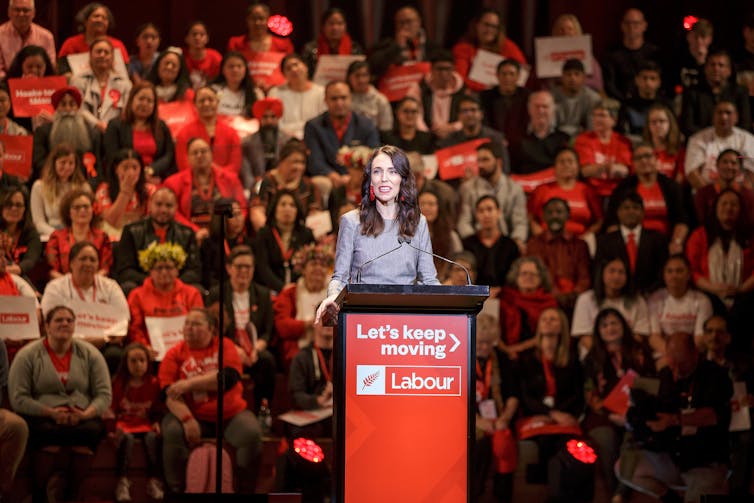
Labor is promising a “living wage” rather than a “minimum wage” if elected.

It will ask the Fair Work Commission to first determine what wage would offer a “decent standard of living for families”, and then to determine the time frame over which it should be phased in, taking into account the capacity of businesses to pay, and the potential impact on employment, inflation and the broader economy.

It is selling the idea of what would be a very big increase on the present minimum wage as “good for workers and good for the economy”.

“Consumer spending makes up 60% of the Australian economy,” its employment spokesperson Brendan O’Connor said. “When low-paid workers get a pay rise, they spend it in the local shops and help small businesses. It’s good for everyone.”

The idea harks back to the 1907 Harvester judgement, in which an arbitration court judge decreed that wages at a Melbourne factory should be based on the cost of living “for a worker and his family”.


Read more: Budget explainer: why is Australia’s wage growth so sluggish?


To get there from the current bare minimum wage of A$18.93 per hour would almost certainly require increases bigger than the sum of productivity growth and inflation, which are running at a combined annual rate of around 3%.

Unacknowledged by Labor in spruiking the policy this week was the fallacy of its consumer spending argument, the cost of the proposal to jobs, and the likelihood that it won’t much help many of the people who need it.

The false increased spending argument

One of the claimed benefits of a living wage is that employees will spend most of their extra income, resulting in large increases in national spending, national income, and even the tax take.

An implicit assumption is that the extra money comes “as manna from heaven” with no second-round effects.

But given that other labour costs won’t come down (it is hard to see executive pay being cut), the labour cost for each affected business will climb, pushing down returns to the providers of capital, including the returns to shareholders and small business owners.

With lower returns, less capital will be put up to invest.

Where businesses can, they will pass on the increased costs not matched by increased productivity by increasing prices.

They will get away with it unless they face competition from imports or other exporters.


Read more: ‘Once upon a time, when Australia had a steel industry …’


Where import competitors and exporters face international competition, they will reduce output. In turn, the greater amount of money sent out of the country will eventually push down the Australian dollar, pushing up the Australian dollar price of import and export products.

In the short term, the increases in prices of goods and services will cut the purchasing power of the wage increase. In the longer term, it might create a vicious cycle of wage and price hikes, with adverse economic consequences.

The bad news on jobs

It is well established that wage increases above the rate of productivity growth plus inflation lead to less employment than there would otherwise be, in both the number of employees and the hours worked per employee.

Labour costs are a major expense for most businesses.

In response to higher labour costs, many employers will choose less labour-intensive ways of making their products. The large and rapid wage increases in the mid-1970s and early 1980s resulted in sharp reductions in employment. In contrast, the recent low rates of labour cost increases have helped drive significant increases in employment and a fall in unemployment.

With the Australian economy facing a likely slowdown over the next year or two, a large increase in wages might be particularly poorly timed.

The false hope for those most in need

Universal education and health care, and the redistribution of income via social security payments funded by a progressive income tax, are the most direct and effective ways to fight household poverty.

The world today is very different to the world of the Harvester case in 1907. Then, most workers were in full-time employment and needed a living wage to support a family. Now, about a third are employed part-time. Redistribution via the tax and payments system is how we support families who need it.


Read more: A national living wage is on the table. Now let’s talk about a global living wage


A higher minimum or “living wage” would provide minimal assistance to some on low incomes, and would lift the incomes of many others not generally considered in need of support.

Many of those below the poverty line who are only employed part-time or not at all would not be lifted out of poverty. A higher living wage would provide more to those already in full-time jobs than it would to part-time workers.

And it would provide more to low-wage employees who are members of high-income families, who probably shouldn’t be our first concern.

We can do more more directly to alleviate poverty by reforming the income tax and social security systems. They are specifically designed to redistribute income according to need.

We should start by reducing income tax on low earnings, automatically indexing tax brackets, and increasing Newstart.

ref. The false hope offered by talk of a living wage – http://theconversation.com/the-false-hope-offered-by-talk-of-a-living-wage-114359

VIDEO: Michelle Grattan on One Nation’s NRA affair and the Morrison’s coal offering

]]>

Source: The Conversation (Au and NZ) – By Michelle Grattan, Professorial Fellow, University of Canberra

University of Canberra Vice-Chancellor Deep Saini speaks to Michelle Grattan about the week in politics. They discuss One Nation seeking donations from the American gun lobby, Scott Morrison’s preference decision on One Nation, the government placating the Nationals by announcing an upgrade for a small coal-fired power station in NSW, and what to look for in next week’s budget.

ref. VIDEO: Michelle Grattan on One Nation’s NRA affair and the Morrison’s coal offering – http://theconversation.com/video-michelle-grattan-on-one-nations-nra-affair-and-the-morrisons-coal-offering-114506

One Nation, guns and the Queensland question: what does it all mean for the 2019 federal election?

]]>

Source: The Conversation (Au and NZ) – By Chris Salisbury, Research Associate, The University of Queensland

Of all the controversies to conceivably bring Pauline Hanson undone, private discussions about gun law amendments wasn’t an obvious candidate.

Yet her recorded comments about the 1996 Port Arthur massacre and subsequent gun law reforms are potentially destructive for her One Nation party. Only potentially, though; Hanson’s supporters have long shown a propensity to forgive or shrug off her party’s outlandish or shocking assertions.


Read more: Grattan on Friday: Scott Morrison struggles to straddle the south-north divide


Already, Hanson and party colleagues have shifted blame for the Al Jazeera “sting” to a media “stitch-up” and, they claimed, foreign political interference by an “Islamist media organisation”.

Presumably some Hanson adherents will find that plausible – the party has made anti-Muslim rhetoric part of its regular platform. Other One Nation supporters might now question the principles the party claims to stand for.

Why guns policy?

Why would One Nation seemingly risk whatever political capital it possesses by flirting with changes to gun controls and seeking assistance (if not funding) from gun lobby groups?

The party’s nativist policy positions on refugees, immigration and foreign investment are well known and readily detailed on its website. Until now, gun law amendment has sat well behind these. One Nation’s listed policies on firearms regulations include increasing penalties for gun-related crime and “streamlining” weapon licensing requirements. Not exactly controversial stuff.

But it is important to remember that the party first emerged in the wake of the Port Arthur shootings and rural resistance to the Howard government’s gun ownership reforms. Hanson and her candidates campaigned in the party’s early years on relaxing John Howard’s laws. They also benefited politically from a mainly regional backlash against these – and against Howard’s National Party partners.


Read more: How Fraser Anning was elected to the Senate – and what the major parties can do to keep extremists out


Recently highlighted connections between Australian gun lobby groups and minor parties, including One Nation and Katter’s Australian Party, bring the backdrop to this policy agenda into sharper relief.

One Nation’s original and more recent platform caters to disaffected, largely non-metropolitan constituents who feel the party’s anti-immigration, anti-foreign business and anti-government intervention policies “speak for them”.

In its recent incarnation, One Nation has tried – and found ready accomplices in sections of the media – to “mainstream” its appeal and some of its positions. It’s been observed that the party’s Senate members have regularly supported the Coalition government’s legislative agenda during this term, on matters ranging from the reintroduction of the Australian Building and Construction Commission (ABCC) to reduced welfare spending.

The party’s suite of published policies covers matters of concern to many Australians, such as power prices, transport infrastructure, water supply and jobs creation.

In this respect, it was perhaps not so surprising that Liberal MPs should describe the party as “more responsible” than its earlier manifestation. Even former prime minister Tony Abbott, Hanson’s one-time political nemesis, endorsed One Nation owing to its “constructive” relationship with the government in parliament.

But this normalisation fails to mask the party’s extreme stances or inconsistent policy positions – even between its own members. One Nation adheres to curious policies decrying United Nations infringement on our sovereignty, as well as questionable claims about evidence-based climate policy.

Then there is the attention-seeking behaviour: Hanson wearing a burqa in the Senate chamber; or Queensland Senate candidate Steve Dickson suggesting the Safe Schools program involved teachers instructing students in masturbation techniques; or New South Wales upper house candidate Mark Latham proposing Indigenous welfare recipients undergo DNA testing. Stunts like these place One Nation firmly on the political fringe – though not without fellow dwellers. Notoriously, Coalition senators scrambled to backtrack on supporting Hanson’s Senate motion decreeing that “it’s OK to be white”.

Stunts such as Pauline Hanson wearing a burqa in the Senate place One Nation on the political fringe. AAP/Mick Tsikas

This latest party engagement in seeking out overseas gun lobby assistance highlights another inconsistency, given Hanson’s vote in the Senate supporting new restrictions on foreign donations.

The Queensland question

Considering this, why do One Nation’s policies seemingly still appeal to significant numbers of voters, particularly in Queensland? Traces of an entrenched conservative political culture thumbing its nose at “the establishment” partly explain the party’s appeal in Queensland (and perhaps some of Peter Dutton’s ill-judged, racially charged comments as immigration minister).

It’s a culture underpinned by a history of less diverse migrant influence than other parts of the country and arguably a more wary, paternalistic past regarding Indigenous and minority communities.

Another reason is the accentuated city-country divide in Australia’s most decentralised mainland state. Here, some agrarian-themed party policies – such as for dam building or vegetation management – directly pander to regional voters. As a minor party not in government, though, One Nation has limited opportunity to carry these through, beyond aiming to wield balance-of-power influence in the Senate.

More telling is One Nation’s claimed inheritance of an old National Party constituency. It is one that feels “left behind” – a sentiment the Shooters, Fishers and Farmers Party successfully tapped into in the NSW election.

As in the past, the Nationals will seek to differentiate themselves from their Coalition partners and marginalise One Nation and other far-right parties ahead of the 2019 federal election.

But that’s no easy feat in Queensland. Since the Liberal and National parties merged in the state to form the LNP in 2008, there has been no distinct outward National Party. Some rural and regional voters in Queensland have felt unrepresented to a certain extent, and their grievances have placed many in a resurgent One Nation camp.

The party’s identification with aggrieved outer-urban and regional conservative interests keeps its voters’ preferences an issue. Again, this is especially so in Queensland, where several LNP MPs hold seats in such areas on tight margins.

But following this week’s revelations, and particularly in the wake of the Christchurch shootings, the preference issue will bedevil the Coalition in this state and elsewhere.


Read more: Guns, politics and policy: what can we learn from Al Jazeera’s undercover NRA sting?


The prime minister’s latest announcement directing the Liberal Party’s state branches to preference Labor ahead of One Nation sends a needed message, but not unequivocally. It apparently leaves Liberals free to place One Nation ahead of the Greens or others, and is ambiguous on how this will apply to all LNP MPs in Queensland, or possibly influence Nationals MPs elsewhere.

But the clamouring of Queensland’s Nationals-aligned MPs for new coal-fired power stations – mirroring One Nation policy – indicates their likely preference leanings in favour of the minor party (and presumably leaves the Greens last of all).

The recorded actions and comments of Hanson and her party colleagues could bring a political reckoning for One Nation at the coming federal election. Voters will soon judge if the party warrants their electoral support and decide if this new controversy is a bridge too far.

For its part, the Coalition is treading a line between getting its hands burned over preference “deals”, as happened at Western Australia’s last election, or doing as John Howard (ultimately) did and jettisoning One Nation preferences altogether.

ref. One Nation, guns and the Queensland question: what does it all mean for the 2019 federal election? – http://theconversation.com/one-nation-guns-and-the-queensland-question-what-does-it-all-mean-for-the-2019-federal-election-114280

The wanted man, the CIA, the Russians and a Tongan king’s jumbo dream

]]>

Julian Pettifer introduces his 1979 BBC series Diamonds in the Sky. Video: Julian Pettifer

ANALYSIS: By Dr Philip Cass

There was an American entrepreneur who claimed he was being pursued by the CIA and an Australian bookmaker whose racing career could best be described as colourful.

There were Libyans with money to spare and political ambitions in the Pacific and Russians after oil and a fishing port in Tonga.

The Australian and New Zealand governments were concerned. The US embassy in Fiji appears to have been slightly frantic.

READ MORE: Quixotic ruler who brought education, health and agricutural reform to his South Pacific kingdom

It was 1977 and as a major diplomatic crisis brewed in Nuku’alofa, in the midst of it all was King Taufa’ahau Tupou IV, who was convinced that the way to prosperity for the kingdom was to build an airport that could handle 747 jumbo jets.

-Partners-

The king believed his dreams would be financed by the Bank of the South Pacific, a financial institution whose existence he had allowed and placed in the hands of John Meier.

The late King Tupou IV of Tonga (left) and fraudster John Meier … colourful dreams. Image: Kaniva News

Meier, an American financial adventurer, once claimed he had once seen the body of his former boss, reclusive billionaire Howard Hughes, in a deep freeze in Florida.

According to a US diplomatic cable released by Wikileaks, other ambitious projects being floated included establishing a Tongan flag airline, establishing aircraft and boat construction industries, funding a pharmaceutical distribution centre and building an industrial park.

Diamonds in the Sky
Speaking to BBC reporter Julian Pettifer for the 1979 television series Diamonds in the Sky, the king said he planned to build a 3657.6 metre long runway that would turn Tonga into “an anchored aircraft carrier in mid-Pacific.”

At the time of the interview Fuaʻamotu International Airport, which started life as an American bomber base during the Second World War, could only take twin engine BAC1-11s (then operated by Air Pacific) and Boeing 737s.

He wanted to upgrade it to be able to take 747 jumbo jets which then stopped at Nadi in Fiji on their way to New Zealand and Australia. He believed that if the runway was available then the bigger airlines would want to use it.

He told Pettifer a dozen airlines had told him that they wanted to put Tonga on their flight schedules.

Pettifer was sceptical, noting the enormous cost of building and maintaining such a facility and remarking that “unfortunately, His Majesty may be unaware that in a world where there are not too many kings remaining, there may be a tendency among commoners to tell royalty what they imagine royalty want to hear.”

Regardless, the king saw a future in which Tonga was the base for an electronics industry, with parts being flown in and assembled by cheap labour. Looking at neighbouring Fiji, he also saw it as a boost for tourism in the kingdom.

All of this would, he believed, be funded by the BSP. Perhaps unknown to the king, Meier was wanted on charges of swindling his employer out of tens of millions of dollars and had fled to Canada before arriving on Tonga.

US government radar
Meier had persuaded the king to establish the Bank of the South Pacific, whose operations would be essentially controlled by Meier rather than the king or the Tongan government. Alongside Meier was a group of people with no apparent banking experience, but all of whom were on the US government’s radar.

Bridging the gap between the Americans and the king was Tonga’s honorary consul general in Sydney and Melbourne, Australian bookie and racehorse trainer Bill Waterhouse. Waterhouse would gain as much notoriety as wins on the track during his career.

Meier’s presence in the kingdom seriously alarmed Washington, Wellington and Canberra, which kept a close eye on proceedings. On September 16, 1977, the US Embassy in Suva sent a cable US diplomatic cable outlining its concerns.

It described the BSP as a merchant bank, but quite how it would work remained the subject of “considerable puzzlement”.

“Main office will apparently remain Vancouver, with Nuku’alofa branch handling offshore activities free of taxes according to charter approved by Privy Council,” the cable said.

The funding for the bank would come from Canadian, Japanese and Arab sources. The bank would be permitted to receive a cut of a head tax on passengers arriving in Tonga and would be involved in buying new aircraft.

The US report said the king had his heart set on an airport extension and had dismissed what it called “the fishy odour” surrounding the operation. It described King Tupou as “bright and determined,” although it said he was often “heedless of practical considerations”.

No truth to rumour
It said he had “smilingly” told the Commander-in-Chief of the US Navy’s Pacific Headquarters in Hawai’i that there was no truth to a rumour that the Soviet Union had approached him about building the airport, claiming the money would come from Canada.

The diplomatic cable warned that if the BSP collapsed the king could well turn to the Russians to improve the airport in return for fishing bases in Tonga. In 1976, Soviet oil companies had expressed interest in prospecting in Tonga and there were negotiations between Tonga and the Soviet Union about a loan to develop Tonga’s airport and make it 11,000 feet long, more than the required length for a fully laden 747.

In March 1978, King Tupou IV visited Libya to talk with President Muammar Gaddafi about a loan for the airport project.

Meier later claimed that in 1978 he had been offered financial assistance with the runway project by a Soviet Embassy official in Wellington. He also claimed that on the flight back to Nuku’alofa he had been warned by an American naval officer that Washington would block the runway project.

What also exercised Washington was that the king had given Meier a diplomatic passport, making him immune to extradition or arrest. Meier was wanted not just for allegedly defrauding the Hughes Corporation, but also for his alleged role in a murder.

Meier would always maintain his innocence and would claim that he had long been targeted by the US government for his role in the Watergate scandal that brought down President Nixon.

Meier travelled extensively trying to sell bonds in the BSP, but as any substantial investment failed to materialise, there was intense pressure to find a way to have him arrested and brought back to the US.

Difficult to judge
How much of this was due to a desire by US authorities to bring Meier to justice and how much was an attempt to make sure the Russians and Libyans did not gain a foothold in the South Pacific is difficult to judge 40 years after the events.

Unfortunately, much of what has been written about John Meier since then often reads more like a conspiracy theory than sound analysis.

In July 1978 Meier was arrested in Sydney on an extradition warrant from the United States alleging fraud and tax evasion. Using his diplomatic passport, which had been endorsed by the Australian High Commission in Suva, Meier walked free, but the US, Australia and New Zealand were anxious to bring the matter to a head

Later that month the Australian High Commissioner in Suva and senior US diplomatic staff flew to Nuku’alofa to meet with King Tupou IV.

Before the meeting, the Tongan Supreme Court had ruled that the charter ordinance on which the BSP was based had been issued extra-constitutionally and would have to be resubmitted to Parliament in statutory bill form.

According to a US diplomatic report on the meeting between the Western diplomats and the king released by Wikileaks, the US Embassy in Wellington reported that the charter of the Bank of the South Pacific would not now be submitted to Parliament for confirmation.

The diplomatic cable said Meier’s associated with Tonga would be ended and he would have to deal with criminal charges as a private citizen. Police were ordered to confiscate his diplomatic passport if he returned to Tonga.

‘Not disturbed’
“The king indicated that he was not disturbed by the actions of the government of Australia or the US government,” the cable said.

The report continued: “The king’s face-saving comment at the end of the audience was that the Tongan government had used Meier as far as it could and that at least he had interested ‘others’ who were now willing to take up the airport project.

“The ‘others’ are apparently Japanese or Arab commercial interests, both of which the king has mentioned recently. We remain sceptics about the possibility of anyone picking up the project at this stage.”

Back in Australia, Meier sent his family to Canada and then – according to one highly colourful account – used a fake New Zealand passport supplied by the Cuban embassy to flee Australia. He reached Canada later that year, but was arrested and extradited to the United States where he was tried and convicted the following year of obstruction of justice.

He later claimed that while in jail the CIA tried to force him to sign a confession that he had deposited large sums of money from Libyan ruler Muammar Gaddafi into King Tupou’s bank account.

Soon after his release from prison he was indicted for murder, but after a tortuous legal process the case collapsed and he was freed after agreeing to a lesser charge, but did not serve any jail time.

Timelines:

Born in 1933, John Meier is believed to be still alive.

King Tupou IV died in September 2006.

Libyan dictator Muammar Gaddafi was overthrown and murdered during a coup on October 20, 2011.

The Russians never did explore for oil or establish a fishing port in Tonga.

The Soviet Union disintegrated in 1991.

Today, the United States, Australia and New Zealand worry about Chinese expansion in the Pacific instead.

Fuaʻamotu airport’s main tarmac runway is now 2681 metres long, just enough for a 747. However, no jumbo jet has ever landed or taken off there because the runway is not strong enough to support its weight.

Dr Philip Cass is a media academic, associate editor of Pacific Journalism Review and editorial adviser to Kaniva Tonga. This article was first published by Kaniva Tonga which has a content sharing arrangement with the Pacific Media Centre.

References:

Print Friendly, PDF & Email

Article by AsiaPacificReport.nz

‘Misconceived hatred’ gives way to Muslim voices finally being heard

]]>
Evening Report
Evening Report
‘Misconceived hatred’ gives way to Muslim voices finally being heard
Loading
/

By Jeremy Rose of RNZ Mediawatch

In 2017, the New Zealand media featured 14,349 stories that included the word Islam – nearly 13,000 of those stories mentioned either terrorism or Islamic Jihad.

The stats are from an academic article in Pacific Journalism Review by Auckland University of Technology’s senior lecturer and Pacific Media Centre board member Khairiah Rahman and Azadeh Emadi of Glasgow University:

READ MORE: Representation of Islam and Muslims in New Zealand media

LISTEN TO MEDIAWATCH

The pair wrote that the paper was necessary because:

“there appears to be a growing misconceived hatred for a faith supported by 1.5 billion of the world’s population, but more importantly, this destructive trend is promoted by the media, consciously or not, and has the potential to ultimately cause an unnecessary and irreparable rift in civil society.”

-Partners-

And they wrote:

“The media can rectify their misrepresentations of Muslims by adopting intercultural dialogue. The outcome would present a holistic story that uses the voices of those involved respectfully.”

In the days since the mass murder at the mosques in Christchurch Muslim voices are finally being heard. It’s beyond tragic that it’s taken an act of such murderous evil to bring that about.

Unsurprising to Muslims
If there’s been a unifying theme among many of the op-eds published in recent days it’s that as shocking as the white supremacist attack was – it wasn’t surprising to Muslims.

Waleed Aly, a co-host of the Australian version of The Project, began last Friday’s programme with an editorial. He said:

“Of all the things I could say tonight, that I’m gutted and I’m scared and I feel overcome with utter hopelessness, the most dishonest thing, the most dishonest thing would be to say that I’m shocked. I’m simply not. There’s nothing about what happened in Christchurch today that shocked me. I wasn’t shocked when six people were shot to death at a mosque in Quebec City two years ago. I wasn’t shocked when a man drove a van into Finsbury Park mosque in London about six months later and I wasn’t shocked when 11 Jews were shot dead in a Pittsburgh synagogue late last year or when nine Christians were killed at a church in Charleston. If we’re honest, we’ll know this has been coming.”

The video has been shared 12 million times and seen Prime Minister Scott Morrison threaten Network 10 with a defamation case.

Writing on the Vice website lawyer and chairperson of the Khadija Leadership Network Pakeeza Rasheed wrote:

“I am sad that this happened but I am equally angry that little had been done to address the issues leading up to this event. As Muslims we have been told our anger is dangerous, our anger is unacceptable. … For so long we have been told to be quiet, to be invisible, to know our place and apologise for our very existence. To be grateful that we were allowed to be a part of a utopian paradise. But let’s not fool ourselves. We have never really been a part of New Zealand. We have merely been allowed to exist—never embraced, never included, never accepted. Muslims have been in New Zealand since the 1800s but we are still treated as outsiders.”

‘We ignored it’
Donna Miles-Mohab writing on Newsroom said:

Islamophobia: you cannot tackle it if you don’t acknowledge it exists. Let’s face it; we ignored it. We chose to look away. We chose to refuse to acknowledge that Islamophobia is a problem in New Zealand. It’s a hard pill to swallow, I know – especially now that most of us feel so devastated by the news and feel so shocked that such an evil act can happen in a country full of love and tolerance. But to many Muslims, especially hijabi Muslim women, the hate that gave rise to this evil act is not entirely unfamiliar.”

And she noted: “An informal survey of 100 young Muslim women conducted by the Islamic Women Council of New Zealand (IWCNZ) showed 80 percent were harassed or discriminated within the previous year.”

On RNZ’s website Saziah Bashir wrote:

“Muslims have been dehumanised and demonised in the media the world over since 9/11. The failure to include Muslim voices in this narrative has left unchallenged the stereotypes painted of us, as if we are a two-dimensional monolith, a single monstrous Other.”

And she had some suggestions…

“Share on social media the commentary from Muslims who are sharing their thoughts and experiences and if you are white then share the immense platform you are often privileged to occupy.”

Plenty of sharing
There’s been plenty of sharing going on. The Manukau Police posted a video on Facebook of Inspector Naila Hassan – New Zealand’s highest ranked Muslim police officer – addressing a vigil marking the tragedy.

In a profile of Inspector Hassan published by Stuff last year, she revealed that it had taken her 20 years to admit to her colleagues she was Muslim – clearly it’s not just the media that at times has felt less than welcoming to Muslim views.

Green MP Chloe Swarbrick used her Facebook page to let her friend Mukseet to tell his story. The post has been shared 10,000 times.

Mukseet writes candidly about growing up in a racist country and then shares this anecdote: .

“I watched my mum bursting with pride as she recounted to my aunty in Bangladesh the story of how she went for a walk this morning, and a white woman came up to her, greeted her as a friend, took her hands and said ‘I’m so sorry for your loss’.”

He continued: “Your messages mean a lot. Your support means a lot. They have brought me to tears, helped to keep me grounded, and brought me back from some really dark places. But if I’m to be honest; they’re not enough. Action is so much harder than apathy. But look where apathy and complacency got us.

“In these times when hate and bigotry no longer have to hide in the shadows; listen to minorities, talk to those around you, if you hear someone spouting hate, call that shit out.”

Earthquake shelter
Dr Anwar Ghani of the Federation of Islamic Societies was asked on TVNZ’s Marae on Sunday about that lack of surprise at the attacks but he had other things he wanted to say first:

This particular mosque at Deans Avenue was a place for shelter when we had the earthquakes and they used to serve meal to three to four hundred people every day. And the community made a point of going the provide at least whatever they could. That was their sense of doing community good.”

And then Dr Ghani answered the question about why the attack hadn’t come as a complete surprise to Muslims.

While we are not surprised but we are certainly shocked that it could happen at this level, this magnitude. We are lost for words. We also know that New Zealand stands together. We have seen at the vigil in Hamilton – such a small community but six seven thousand people came and showed solidarity.”.

One of the biggest challenges coming up for the media is how to deal with the upcoming trial of the man responsible this crime. Anjum Rahman, of the Islamic Woman’s Council, was asked on TVNZ’s Q and A programme about the accused mass murderer’s plan to represent himself in court.

She replied that he would represent himself and like all New Zealanders he had that right but the media had a responsibility not to report everything just for the sake of it. “I would be asking all media to show extreme restraint in terms of which of his messages they choose to put out to the public. Don’t let him play the game.”

If Anjum Rahman was looking forward to the media reporting responsibility, the Spinoff’s Duncan Grieve was looking at how the media was handling some of its less edifying efforts from the past. In an article titled: ‘The quiet deletion of the Islamophobic archives,’ Grieves pointed out that a photo Newstalk ZB’s Mike Hosking holding up a tee-shirt with the Okay symbol that is popular with white supremacists had been removed (Hosking has said he was unaware of the symbol’s associations with the alt-right); and that an article by fellow ZB host Chris Lynch that asked “Does Islam have any place in public swimming pools?” had also been removed.

On-air apology
Mediawatch hasn’t read the the scrubbed op-ed but presumably it objected to women only hours – often popular with non Muslim women as well – on the grounds it was buckling to Islamic demands.

Lynch made an on-air apology.

Newsroom’s Thomas Coughlan took a look at the recent history of politicians criticising Islam and Muslim immigration to New Zealand. (He spoke to Bryan Crump about it on Monday night on Lately.)

He pointed our current foreign and deputy Prime Minister Winston Peters is a repeat offender. Peters is quoted as saying: “They say – ah yes – but New Zealand has always been a nation of immigrants. They miss a crucial point. New Zealand has never been a nation of Islamic immigrants…” .

Coughlan’s list was far from comprehensive. In 2002 Richard Prebble – then the leader of the ACT Party – warned of the dangers of people from desert cultures and advocated taking in white farmers from Southern Africa instead – who he described as real refugees.

The comments barely rated a mention with Scoop and Australia’s Green Left Weekly being the only places online with articles mentioning the press release.

Didn’t rate a mention
And in his self-published 2014 autobiography Don Brash dedicated a whole chapter to the question fundamentalist religion.

Most of the chapter is made of an article that Brash wrote while he was the leader of the National Party but was never published because his colleagues at the time warned him that it would confirm people’s impression that he was a racist.

In it he quotes approvingly from a paper by a former Australian Treasury secretary – “not some kind of extreme right-wing nutter,” according to Brash – which advocated bringing Muslim immigration to a virtual halt because, he claimed, Islam was a culture that “for the past 500 years or so failed its adherents as its inward-looking theocracy has resulted in it falling further and further behind the West”.

Brash’s book was the subject of quite a few interviews but as far as Mediawatch is aware his support for massively restricting Muslim immigration didn’t rate a mention.

This article is republished under the Pacific Media Centre’s content partnership with Radio New Zealand.

Print Friendly, PDF & Email

Article by AsiaPacificReport.nz

From the bronze age to food cans, here’s how tin changed humanity

]]>

Source: The Conversation (Au and NZ) – By Michael Cortie, Physics Discipline Leader, University of Technology Sydney

To mark the International Year of the Periodic Table of Chemical Elements we’re taking a look at how researchers study some of the elements in their work.

Today’s it’s tin, a chemical that has little use by itself, but mix it with other elements and it takes on a whole new life.


Mention tin and most people would think of the typical tin can, used to preserve foods you store in your cupboards. Tin is used here to help protect the can against corrosion (although not all cans today contain tin).

But while the use of tin in canning only dates back to the early 1800s, the mixing of tin with other elements dates back many centuries.

The tin in cans helps to protect them from corrosion. Flickr/Salvation Army USA West, CC BY

Tin – chemical symbol Sn with an atomic number 50 on the periodic table – is soft and silvery in colour, with a melting point of only 232℃. At first sight it doesn’t seem to be a promising prospect for making anything.


Read more: Where did you grow up? How strontium in your teeth can help answer that question


Somehow, humans discovered that adding controlled amounts of tin to copper produced a splendid, golden-yellow alloy we call bronze.

I first became interested in bronze during my final year undergraduate research project in 1978. That interest continues today – I’m working with colleagues in Thailand to reverse-engineer the technologies used to make ancient Thai bronze bangles.

Early bronze

The first known tin bronzes seem to have appeared in the Caucasus region of Eurasia in about 5800 to 4600 BCE. That these very scarce early examples of tin bronze may have been accidentally made from rather rare ores that naturally contained both copper and tin simultaneously.

There is abundant evidence that by about 3000 BCE, tin bronzes were being made in the Aegean and Middle East (Turkey, Syria, Iraq, Iran) by deliberately alloying tin and copper, with the ores being obtained from separate sources.

Clearly, a series of somewhat unlikely events had to occur before this could be the norm.

An accidental melt would have to have been made from suitable minerals containing oxides of tin and copper. The resulting metal would have to be recognised to have desirable properties, such as hardness, colour and toughness, such that superior weapons or ornaments could be produced.

Craftspeople would then have had to be organised enough to be able to work out how to repeat this smelting process to create artefacts such as swords, axe heads, bowls and bangles.

This 4000-year-old bronze axe with a low tin content was found in Sweden. Flickr/The Swedish History Museum, CC BY

Trading networks then had to be established to bring the comparatively rare tin from faraway places, such as Afghanistan or Cornwall in Britain’s southwest, to any foundry. The metallurgical craft would have to be passed on to other practitioners, probably by oral means.

The spread of bronze

The trick of deliberately adding tin to copper then spread throughout the Old World, reaching Western Europe by about 2800 BCE, Egypt by 2200 BCE, the populous North China Plain by 2200 BCE, China’s Yunnan province by about 1400 BCE, Thailand by about 1100 BCE, and southern India by 1000 BC (if not a century or two earlier).

This has led to some robust discussion among archaeometallurgists on whether the special knowledge of tin’s useful attributes spread from a single founding location in the Middle East, or whether it had been repeatedly independently developed by indigenous craftspeople.

In the case of Thailand and Cambodia, arguments have been raised for several scenarios: that the technology was independently developed, that it was brought south from China (or maybe the reverse, exported from northeast Thailand to China), or that it was imported from Bengal.

An ancient Thai bronze bangle from a site at Sa Kweo in east Thailand. Courtesy of Dr Supitcha Supansomboon and Assoc Prof Seriwat Saminpanya, Author provided

With China, some local scholars have favoured the view for independent local discovery of tin bronze, although it the balance of evidence suggests that the knowledge was transmitted by horseriding visitors from West Asia.

African bronze

Tin was also mined in precolonial times in Southern Africa, and some bronze artefacts – such as pieces of metal sheet or ingots – have been recovered at old metalworking sites there.

The available evidence for this region suggests the technology for producing and working iron, copper and bronze appeared contemporaneously at locations in sub-Saharan Africa, beginning about 500 BCE in the north and reaching South Africa in about 300 CE.

How did the metallurgical knowledge get to Southern Africa? Was it an indigenous discovery of the Bantu of East Africa that was then carried with them on their migrations, or was the skill transmitted southwards from the Middle East, and if so by who and how?

As in the case of Asia, interpretation of these issues can be coloured by modern political sensibilities. The question of the source of the metalworking skills that produced the beautiful copper and gold ornaments of the ancient city of Mapungubwe in South Africa, for example, has still not been settled.

Bronze in the Americas

The ancient cultures of the Americas also developed sophisticated skills for processing precious metals, copper and tin.

They were able to manufacture bronze artefacts such as rings, pendants, body ornaments, ornamental tweezers, sheet metal breastplates, large discs, ornamental shields and especially bells, by casting, albeit only from about 1000 CE in South America and then soon afterwards in western Mexico.

In the case of Mesoamerica, the knowledge of bronze was believed to have been carried north from Peru and Ecuador to Mexico by maritime traders.

Clearly, the ancient world, both Old and New, was well connected by lengthy trade routes along which ideas (and in many cases tin) flowed.

The mix of tin

The transmission of the technology can also be followed by paying attention to specific aspects of the physical metallurgy involved.

When more than about 15% tin by mass is added to the copper, the resulting alloy becomes rather brittle in its cast form, even if it still has a wonderfully warm golden yellow colour.

Somebody, somewhere, made the remarkable discovery that if such a casting is rapidly quenched from red heat into water (or better, brine), it becomes softer and relatively more ductile and workable.

The quenching heat treatment leaves a very characteristic needle-like microstructure (known as martensite) in the artefact that can be detected by a microscope. This tells an archaeologist that the part has been manufactured by a comparatively complex process, rather than merely cast.

The presence of martensite needles in microsections taken through high-tin bronze artefacts is a sure sign that they have been quenched into water from red heat. Michael Cortie, Author provided

When the tin content is less than about 15%, no martensite forms and nothing remarkable happens on quenching.

The result obtained when heat-treating a high-tin bronze is counterintuitive because, when iron is treated this way, it becomes hard and brittle. The trick to make the bronze tough is so specific that it is most likely this knowledge was transmitted from person to person.

Its transfer across the Old World would have required knowledgeable individuals travelling significant distance to foreign climes. The appearance of these artefacts at far-flung locations across Eurasia and Africa is another sign of ancient globalisation.

An extra element

There is one more trick that appears in the ancient bronzes, although this one might have been independently discovered at more than one location.


Read more: Hydrogen fuels rockets, but what about power for daily life? We’re getting closer


Some time in the Late Bronze Age or Early Iron Age (around 500 BCE), craftspeople began to add lead to their tin bronze castings. This gives the molten metal extra fluidity, allowing it to flow into fine detail in a mould so that castings with fine details and embossed figures can be made.

As an element, lead is not as shiny or attractive as tin; it is much denser and is found in quite different ores such as galena (lead sulfide). The earliest known cast bronzes with significant controlled additions of lead appear to be from China (500 BCE to 200 CE). Once again, it was clearly a deliberate innovation, and once again it spread rapidly all over Eurasia.

Another ancient bronze from Thailand (measure is in centimetres). Courtesy of Dr Supitcha Supansomboon and Assoc Prof Seriwat Saminpanya, Author provided

As more sites such as the ones in eastern Thailand are excavated, and as the database of alloy compositions and dates increases, it will become possible to cast more light on ancient routes of trade, migration and tech transfer.

The presence and usage of tin at these sites will act as a kind of metallurgical DNA, an indicator for ancient cultural and human exchanges.


If you’re an academic researcher working with a particular element from the periodic table and have an interesting story to tell then why not get in touch.

ref. From the bronze age to food cans, here’s how tin changed humanity – http://theconversation.com/from-the-bronze-age-to-food-cans-heres-how-tin-changed-humanity-114195

The AFL and its clubs must continue to expose and sanction online trolls, it’s the law

]]>

Source: The Conversation (Au and NZ) – By Eric Windholz, Senior Lecturer and Associate, Monash Centre for Commercial Law and Regulatory Studies, Monash University

We have experienced what at times has felt like an epidemic of online trolling of AFL players in recent weeks. Some of the trolling has taken the form of sexual abuse, such as that of Taylor Harris. Others have been racist in nature, such as that of Eddie Betts and Liam Ryan.

It’s beyond doubt that online trolling is a serious issue due to the significant, and potentially long term, impacts cyberbullying can have on the mental health and well-being of its targets, and their families.

Eddie Betts, for example, has described racist comments from fans “wrecking” his enjoyment of the game and bringing his wife to tears. And Taylor Harris similarly has described how vulgar sexist comments make her feel “uncomfortable in my workplace”, not knowing whether the people making them would show up at the football on the weekend.

What to do about online trolling is more problematic.


Read more: Fighting online abuse shouldn’t be up to the victims


Some forms of online trolling are illegal

Some laws already operate to criminalise the behaviour in certain defined circumstances. For instance, under the Australian Commonwealth Criminal Code, it’s an offence for a person to use the internet, including social media:

in a way that reasonable persons would regard as being, in all the circumstances, menacing, harassing or offensive.

And according to the Victorian Crimes Act, it’s an offence to publish on the internet a statement or other material relating to the victim:

with the intention of causing physical or mental harm to the victim […] or of arousing apprehension or fear in the victim for his or her own safety or that of any other person.

Trolling also may constitute unlawful racial hatred under the Commonwealth Racial Discrimination Act if done to offend, insult, humiliate or intimidate another person, or a group of people, on the basis of their race, colour or national or ethnic origin.

And trolling may be defamatory. Defamation generally occurs when a person intentionally publishes – including through social media – information about another person or group of people that damages their reputation, or can make others think less of them.


Read more: Don’t be a bystander: Five steps to fight cyberbullying


But the law is hard to enforce

While declaring trolling to be a criminal offence (and defamatory) is strong on symbolism, enforcement can be slow and costly. And proving intent is difficult. It’s also a reactive, after-the-event remedy. The damage is done well before prosecutorial action is taken.

For this reason, people have been searching for more proactive legal remedies. After all, prevention is better than cure.

This has led to calls for legislation requiring social media companies to act more quickly to identify and remove sexist and racist comments from their sites. Some, including the West Australian Premier Mark McGowan and AFL Players Association Chief Executive Paul Marsh, have even called for legislation to force people to use legitimate names on social media, removing the false bravado that comes from anonymity.

But it’s unclear what more social media companies should do to protect AFL players – especially in a political environment in which governments are calling on them to do more to address child sexual abuse material and extremist content.

Each social media company already has its own rules about what is and is not allowed on their platforms, and the way users are expected to behave towards one another. See, for example, Facebook’s Community Standards Policy, Google’s User Content and Conduct Policy, and Instagram’s Community Guidelines.

These rules generally prohibit sexist and racist content that purposefully targets individuals with the intention of bullying, harassing or degrading them. And each company employs literally thousands of people to monitor and remove content that is in breach of their rules.


Read more: Can Facebook use AI to fight online abuse?


It’s about work health and safety

This then leaves us with the AFL itself, and its clubs. Their immediate response has been positive. The AFL has taken the initiative to expose and sanction the trolls behind recent racist and sexist comments, and, where appropriate, to refer the trolls to the police for investigation.

In the case of Liam Ryan, the AFL was, in a short period of time, able to trace the comments back to a member of the Richmond Football Club, which then imposed a two year ban on the perpetrator attending games.

But the AFL has also signalled there are limits to what it can do. AFL Chief Executive, Gillon McLachlan, said:

It’s a big wide world out there and you can’t do it for all of them.

But this is exactly what the AFL and its clubs must aim to do. Why? Because online trolling is a workplace health and safety issue.

Under work health and safety laws, AFL clubs must, so far as is reasonably practicable, provide and maintain for their players a working environment that is safe and without risks to health. And the AFL, as the sport’s governing body, must ensure, so far as is reasonably practicable, that players are not exposed to risks to their health or safety arising from the conduct of the AFL competition.

We already have observed that online trolling is a risk to mental health. And as Taylor Harris’s comments suggest, it can also make a workplace unsafe.

Through their actions, the AFL and its clubs have demonstrated they are able to expose and sanction trolls. This leans heavily in favour of the measure being reasonably practicable. The courts have made clear that once the availability and suitability of a relevant safety measure is established:

that safety measure should be implemented unless the cost of doing so is so disproportionate to the benefit (in terms of reducing the severity of the hazard or risk) that it would be clearly unreasonable to justify the expenditure.

For the AFL to now do less would not only be morally debatable, it also would be legally questionable.

ref. The AFL and its clubs must continue to expose and sanction online trolls, it’s the law – http://theconversation.com/the-afl-and-its-clubs-must-continue-to-expose-and-sanction-online-trolls-its-the-law-114293

The challenge of drawing a line between objectionable material and freedom of expression online

]]>

Source: The Conversation (Au and NZ) – By Philippa Smith, Senior Lecturer in English and New Media, Auckland University of Technology

When it comes to debates about free speech that needs to be protected and hate speech that needs to be legislated, the idiom of “drawing the line” is constantly referenced by politicians, journalists and academics.

It has surfaced again as New Zealanders struggle to comprehend the abhorrence of the Christchurch terror attack and the issues surrounding the online publication of the alleged perpetrator’s manifesto, now declared objectionable by New Zealand’s chief censor.

Legislation in the digital age

When it comes to drawing a line between hate speech and matters of public interest, several country-specific laws apply. Some legislation, such as Ireland’s 1989 Prohibition of Incitement To Hatred Act is very particular. In other countries, hate speech is covered more broadly under criminal or penal codes or human rights laws such as those held by Denmark, Germany and New Zealand.

Following the Christchurch terror attack, there have been calls for New Zealand to introduce specific hate speech laws. But in a digital age, with its blurring of national boundaries in virtual spaces, it is proving a challenge to come to any consensus on what is, and what is not, acceptable online behaviour.


Read more: Why new laws are vital to help us control violence and extremism online


The academic world demonstrates the diversity of negative online behaviours through the many descriptors that are emerging in scholarly works. Research has focused on topics such as dangerous speech, excitable speech, offensive speech, extremist discourse, cyber bullying, trolling, doxing and flaming.

These negative online behaviours offer potential outlets for online hate and abuse that can be amplified through wide dissemination via the internet. More subtle ways of distributing hateful language have surfaced through deliberate disinformation, fake news and information laundering. It is no surprise that the so-called “line” between hate speech and free speech is problematic.

A thin, grey line

The task force on internet hate, under the auspices of the Interparliamentary Coalition for Combating Antisemitism, notes that when it comes to hate speech “the line is very grey and difficult to interpret”. The European Commissioner, Věra Jourová, stated last year that the line between prohibiting hate speech and censorship on the internet was “very thin”.

Tech companies have also taken up the idiom, as YouTube’s harassment and cyber bullying policy at one stage appealed to users to “[r]espect people’s opinions online but know when it crosses the line”.

These examples highlight a key issue of the online hate speech/free speech debate. Actually knowing when this figurative line has been crossed has become far more complex to interpret and even more challenging to manage.

Who gets to push delete

Historically, tech companies have been reluctant to take responsibility for user-generated content that appears on their platforms. They argued their point in favour of freedom of expression.

Some governments have clearly had enough of online toxicity and called on companies such as Facebook, Google and Twitter to intervene and take down offensive material. These include Germany and the network enforcement law (NetzDG) its government implemented in 2018. It is the most rigorous legislation so far. Companies risk a fine if they fail to take down offending material.

The UK government has been preparing a white paper to support its intention to legislate to improve online safety, and in France President Emmanuel Macron last year called for the larger internet platforms to be liable for publishing “hate content”. New Zealand is the most recent nation to lambast Facebook for enabling the livestreaming of the Christchurch massacre – though it has little power to enforce any action.

Free speech advocates are wary about any moves that dictate who controls the delete button. Whether it relies on government legislation or the humans and algorithms employed by tech companies, the decision-making process as to what content classifies as “extremist, hateful and illegal” is problematic and may impinge on free speech.


Read more: Why it’s a mistake to celebrate the crackdown on hate websites


Other concerns about internet interference prevail. This includes the potential sanitising of the world once all the “bad stuff” has been taken down, or the “chilling effect” where people are reluctant to have their voices heard online because of speech-restricting laws that may result in their prosecution.

Countering hate

Deciding where to draw the line between internet hate and free speech will be an ongoing exercise because online hate can take so many forms and be interpreted in different ways. Perhaps it is time to broaden our thinking when it comes to responding to hate speech.

It may be that this “drawing the line” idiom needs to be reconsidered. After all, it dates back to the late 1700s and relates to the actual drawing of boundaries in the game of tennis or to the separation of opposition parties in parliament to prevent sword fights.

We need to pay greater attention to educating the public on how to counter negative online behaviour. Empowering people to take up effective counter-speech initiatives would be a first step in the battle against hate.

A number of academics, including myself, are developing various taxonomies of counter-speech initiatives to see what might be most effective. Susan Benesch, the director of the Dangerous Speech Project, says that critiquing a poster of inflammatory material in a “civil and productive” way can work and, in some cases, lead an offender to apologise. Certainly, presenting counter arguments through discussion groups or websites can serve to delegitimise those arguments that express hateful ideologies. When this occurs in a public online space it also exposes counter arguments to a wider audience.

Meanwhile a number of organisations such as the Anti-defamation League in the US, the Online Hate Institute in Australia and the No Hate Speech movement in Europe have developed various tools and educational resources, including training sessions for bloggers, journalists and activists. These aim to educate people of all ages to apply critical skills to counteract online hate.

ref. The challenge of drawing a line between objectionable material and freedom of expression online – http://theconversation.com/the-challenge-of-drawing-a-line-between-objectionable-material-and-freedom-of-expression-online-108764

Premiums up, rebates down, and a new tiered system – what the private health insurance changes mean

]]>

Source: The Conversation (Au and NZ) – By Peter Sivey, Associate Professor, School of Economics, Finance and Marketing, RMIT University

If you have private health insurance, or are considering getting it, a series of changes coming into effect on April 1 are worth knowing about.

These include the annual premium increase, a small decrease in rebates, the introduction of a new tiered system designed to simplify things for consumers, and some premium discounts for young people.

This year’s premium increase is quite small compared to recent years, and the reforms are generally sensible. But cost pressures and confusion in private health insurance cannot be fixed overnight.


Read more: Is it time to ditch the private health insurance rebate? It’s a question Labor can’t ignore


A modest increase in premiums

Private health insurance premiums will increase by an average of 3.25% in 2019. These increases are relatively modest, as premiums have been rising at between 4% and 6% per annum for more than 10 years.

However, compared to consumer price index inflation of 1.8% and wage inflation of 2.3%, premiums are still rising substantially in real terms for Australians.

But in the current environment, above-inflation premium rises are not unexpected.

For comparison, consider the public health system, where spending increased at nearly 7% per year in the decade to 2017.

Out-of-pocket spending by patients also had an above-inflation trend of 5.1% per year over the past decade.

So both public and private expenditure on health are increasing substantially. Driving this is the increased usage and price of health care. Hospital visits are growing at 4% a year, and health price inflation is a further 2% per year.

Many hospital procedures such as cardiothoracic surgery, colonoscopies, hip and knee replacements, are increasing in volume by over 5% a year. So as patients use their health insurance more, it’s reasonable for the price to rise.


Read more: Here’s what’s actually driving up health insurance premiums (hint: it’s not young people dropping off)


Rebates continue to decrease slowly

Most Australians with private health insurance receive a rebate from the Australian government to help cover the cost of premiums.

Means testing of rebates along income tiers was introduced in 2012. This sees individuals and households with higher incomes receive lower subsidies.

From 2014, the government began indexing rebates every year, using a formula that is calculated as a difference between the consumer price index, and the industry weighted average increase in premiums.

As a result of indexation, rebate entitlements have been gradually falling.

Government rebates for private health insurance go down a small amount each year. From shutterstock.com

For example, this means in 2013/14, a person aged 65 or below earning less than $88,000 (base tier) would have received a 30% rebate. Today, a person of the same age in the base tier would receive a rebate of just over 25%.

From April 1, rebates will decrease between 0.1% to 0.5% from their levels in 2018/19, depending on the income tiers that people fall into.

For a typical family policy that covers both hospital and extras (with premiums approximately A$140 a fortnight), the decrease in the rebate translates to a very small rise in premiums of A$1 a fortnight.

Basic, bronze, silver or gold?

One key initiative starting on April 1 is the introduction of four tiers of private health insurance coverage: basic, bronze, silver, and gold. This is distinct to the income tiers we talked about above.

In this case, each tier mandates the minimum set of treatments (defined by clinical categories) that insurers must cover.


Read more: If you’ve got private health insurance, the choice to use it in a public hospital is your own


For instance, policies in the “basic” tier are required to cover rehabilitation services, hospital psychiatric services, and palliative care.

Insurers can include other types of treatments which are not mandatory under the basic tier, if they choose to do so. Each additional tier covers a wider range of treatments, in addition to services mandated in lower tiers.


The Conversation/Australian Government, CC BY-ND


This simplified categorisation of policies is designed to help consumers understand how comprehensive their cover is, and enable them to more easily compare products offered by different health funds.

While this initiative provides consumers with greater clarity on the types of services covered by each type of health insurance product, it still does not standardise care completely.


Read more: Private health insurance premium increases explained in 14 charts


Health funds can offer to cover, in lower tier products, treatments that are mandated only in higher tiered policies (such as providing coverage for pregnancy in a basic policy).

This may confuse patients if they assume their policy covering pregnancy will also cover other costly private procedures such as joint reconstructions (bronze), or back, neck and spinal surgery (silver).

Young people

From April 1, health funds will be able to offer discounts on premiums of 2% for each year a person is under the age of 30 when he or she takes up private health insurance. Premium discounts are capped at a maximum of 10%. The discount is retained until the person reaches the age of 41, after which it will be gradually phased out.

This initiative is being introduced to encourage young Australians to purchase private health cover and to stem the decline in private health insurance ownership among younger people. From September to December 2018, the largest net decrease in insured persons was recorded in people aged 25 to 29.

These discounts on premiums for young people complement the Lifetime Health Cover policy introduced in 2000, which was designed to encourage Australians to take up private hospital insurance earlier, and also to maintain cover.

Under the Lifetime Health Cover policy, which is still in force, people above the age of 30 without private cover are required to pay a 2% loading on premiums for each year they are over 30, if they choose to take up private cover later on.

Other changes

Another key change is that health funds are permitted to offer private hospital policies with a higher excess, in return for lower premiums. The maximum permitted excess is increasing from A$500 to A$750 for singles, and A$1,000 to A$1,500 for families.

Travel and accommodation benefits will be allowed to be included in hospital insurance plans for customers living in regional and rural parts of Australia. This will assist patients and their carers to meet the additional costs of having to travel to urban centres or capital cities to receive specialised treatment.

Natural therapies such as yoga, naturopathy, pilates and reflexology will no longer be covered under a general treatment policy. A total of 16 natural therapies are excluded. A review undertaken by the National Health and Medical Research Council concluded there is no clear evidence of the efficacy of these therapies.

Finally, to strengthen consumer protection, the role of the private health insurance ombudsman will be expanded, giving the agency new powers and greater capabilities to address issues and complaints.

ref. Premiums up, rebates down, and a new tiered system – what the private health insurance changes mean – http://theconversation.com/premiums-up-rebates-down-and-a-new-tiered-system-what-the-private-health-insurance-changes-mean-114086

Deadly frog fungus has wiped out 90 species and threatens hundreds more

]]>

Source: The Conversation (Au and NZ) – By Benjamin Scheele, Research Fellow in Ecology, Australian National University

It started off as an enigma. Biologists at field sites around the world reported that frogs had simply disappeared. Costa Rica, 1987: the golden toad, missing. Australia, 1979: the gastric brooding frog, gone. In Ecuador, Arthur’s stubfoot toad was last seen in 1988.

By 1990, cases of unexplained frog declines were piling up. These were not isolated incidents; it was a global pattern – one that we now know was due to chytridiomycosis, a fungal disease that was infecting and killing a huge range of frogs, toads and salamanders.

Our research, published today in Science, reveals the global number of amphibian species affected. At least 501 species have declined due to chytrid, and 90 of them are confirmed or believed extinct.


Read more: Where did the frog pandemic come from?


When biologists first began to investigate the mysterious species disappearances, they were at a loss to explain them. In many cases, species declined rapidly in seemingly pristine habitat.

Species declines typically have obvious causes, such as habitat loss or introduced species like rats. But this was different.

The first big breakthrough came in 1998, when a team of Australian and international scientists led by Lee Berger discovered amphibian chytrid fungus. Their research showed that this unusual fungal pathogen was the cause of frog declines in the rainforests of Australia and Central America.

However, there were still many unknowns. Where did this pathogen come from? How does it kill frogs? And why were so many different species affected?

After years of painstaking research, biologists have filled in many pieces of the puzzle. In 2009, researchers discovered how chytrid fungus kills frogs. In 2018, the Korean peninsula was pinpointed as the likely origin of the most deadly lineage of chytrid fungus, and human dispersal of amphibians suggested as a likely source of the global spread of the pathogen.

Yet as the mystery was slowly but surely unravelled, a key question remained: how many amphibian species have been affected by chytrid fungus?

Early estimates suggested that about 200 species were affected. Our new study reveals the total is unfortunately much larger: 501 species have declined, and 90 confirmed or suspected to have been killed off altogether.

The toll taken by chytrid fungus on amphibians around the world. Each bar represents one species; colours reveal the extent of population declines. Scheele et al. Science 2019

Devastating killer

These numbers put chytrid fungus in the worst league of invasive species worldwide, threatening similar numbers of species as rats and cats. The worst-hit areas have been in Australia and Central and South America, which have many different frog species, as well as ideal conditions for the growth of chytrid fungus.

Large species and those with small distributions and elevational ranges have been the mostly likely to experience severe declines or extinctions.

Together with 41 amphibian experts from around the world, we pieced together information on the timing of species declines using published records, survey data, and museum collections. We found that declines peaked globally in the 1980s, about 15 years before the disease was even discovered. This peak coincides with biologists’ anecdotal reports of unusual amphibian declines that occurred with increasing frequency in the late 1980s.

Encouragingly, some species have shown signs of natural recovery. Twelve per cent of the 501 species have begun to recover in some locations. But for the vast majority of species, population numbers are still far below what they once were.

Most of the afflicted species have not yet begun to bounce back, and many continue to decline. Rapid and substantial action from governments and conservation organisations is needed if we are to keep these species off the extinct list.


Read more: Saving amphibians from a deadly fungus means acting without knowing all the answers


In Australia, chytrid fungus has caused the decline of 43 frog species. Of these, seven are now extinct and six are at high risk of extinction due to severe and ongoing declines. The conservation of these species is dependent on targeted management, such as the recovery program for the iconic corroboree frogs.

The southern corroboree frog: hopefully not a disappearing icon. Corey Doughty

Importantly, there are still some areas of the world that chytrid has not yet reached, such as New Guinea. Stopping chytrid fungus spreading to these areas will require a dramatic reduction in the global trade of amphibians, as well as increased biosecurity measures.

The unprecedented deadliness of a single disease affecting an entire class of animals highlights the need for governments and international organisations to take the threat of wildlife disease seriously. Losing more amazing species like the golden toad and gastric brooding frog is a tragedy that we can avoid.

ref. Deadly frog fungus has wiped out 90 species and threatens hundreds more – http://theconversation.com/deadly-frog-fungus-has-wiped-out-90-species-and-threatens-hundreds-more-113846

Explainer: what are Confucius Institutes and do they teach Chinese propaganda?

]]>

Source: The Conversation (Au and NZ) – By Jeffrey Gil, Senior Lecturer in ESOL/TESOL, College of Humanities, Arts and Social Sciences, Flinders University

Government concerns about Chinese influence in Australia continue. One example is the Foreign Influence Transparency Scheme, which seeks to provide for the public and government

visibility of the nature, level and extent of foreign influence on Australia’s government and political process.

It has been reported the Attorney-General’s Department has written to universities that host Confucius Institutes, asking them to register the institutes under the scheme. Confucius Institutes are Chinese language and culture centres set up through partnerships between an Australian university, a Chinese university and Hanban – an organisation directly under China’s Ministry of Education.

Critics of these institutes consider that the funding Hanban provides gives China influence, if not control, over Chinese language and culture education. But universities have so far reportedly chosen not to register the institutes under the scheme. This indicates they may not consider the institutes’ actions as falling under the scheme’s scope.

So, what are Confucius Institutes, and do they teach Chinese propaganda?

What are they?

Australia has 14 Confucius Institutes at 13 universities and one in the New South Wales Department of Education. There are also 67 Confucius Classrooms, which support Chinese language education in schools. These are usually attached to a Confucius Institute.

According to Hanban’s website, Confucius Institutes:

have provided scope for people all over the world to learn about Chinese language and culture. In addition they have become a platform for cultural exchanges between China and the world as well as a bridge reinforcing friendship and cooperation between China and the rest of the world […]

The usual process for establishing a Confucius Institute involves Chinese and Australian universities jointly submitting an application to Hanban. If approved, Hanban and the Australian university provide equal funding.

Hanban provides start-up funding, annual funding of US$100,000, teaching material and teaching staff. The Australian university provides office space and a director. The Chinese university supplies a deputy director and sometimes teaching materials and teaching staff.

Confucius Institutes are established on five-year contracts, which can be renewed. Schools that host a Confucius Classroom receive A$10,000 in upfront funding, as well as books and other materials to the value of about A$10,000 each year.


Read more: Why the NSW government is reviewing its Confucius Classrooms program


What do they teach?

All Confucius Institutes teach Chinese language and culture but the nature of what they offer varies. Language courses may focus on everyday Chinese, such as those at the University of Sydney’s Confucius Institute, or business Chinese, such as those at the University of Melbourne’s Confucius Institute. The culture courses can vary too, from calligraphy to cooking to tai chi.

Many Confucius Institutes also run a range of activities and events for a general audience. The University of Adelaide’s Confucius Institute, for instance, runs a China Briefing Series – public lectures on political, economic and cultural developments in China.

Confucius Institutes might also organise translating and interpreting services, administer the Chinese language proficiency test, coordinate language competitions and arrange study tours to China.

Confucius Classrooms support Chinese language education in schools. from shutterstock.com

Some Confucius Institutes specialise in a certain area. The one at QUT, for instance, specialises in professional development for teachers and in supporting Chinese language and culture education in schools. The one at Griffith University focuses on language and culture training for tourism purposes. The Confucius Institute at RMIT University mainly teaches Chinese medicine.

These courses are short and aimed at the general public or specific audiences such as business people. For the most part Confucius Institutes don’t offer courses for credits that count towards a university degree. But institute staff may do some teaching in Chinese language courses offered by the university.


Read more: How should Australia respond to China’s influence in our universities?


A student undertaking a university degree could do a course through an institute but this would not be part of their degree. The University of Queensland’s Confucius Institute, for example, offers free courses in Chinese language and culture to students and staff. Students could also participate in the activities and events run by the institutes.

Is there Chinese influence?

The materials Hanban provides, including textbooks, are published in China but it’s up to the institute if and how to use them. One director told me:

We get more than 3,000 books, journals and also DVDs, which are very useful in our classroom teaching.

The University of Sydney’s courses are based on the textbook series Integrated Chinese, published by Cheng & Tsui, an independent publisher based in Boston, USA.

Confucius Institute staff I’ve spoken to have said such materials don’t push Chinese government propaganda. As one director put it:

If you look at the actual content, they are as innocent as strawberries. They look like the language teaching material for any other language you might want to pick up from a democratic parliamentary state.

The concerns of the institutes are of a more practical, rather than political, nature. At a languages and cultures university colloquium in 2017, for example, a teacher working at a Confucius Classroom explained that the TV, desktop computer and printer Hanban donated were not useful because the school was already equipped with smartboards and teachers had laptops. He also said students were unable to read the books Hanban had donated.

Confucius Institutes do nevertheless focus on the positive aspects of China. A recent study of Confucius Institutes’ activities, including some Australian ones, found they focused on traditional Chinese culture and generally avoided politics. Sensitive topics such as the Tiananmen Square massacre or the issue of Tibet were ignored.


Read more: University China centres are vulnerable to vested interests because of a lack of funding


The study reasonably concludes Confucius Institutes portray a selective, rather than propagandistic, view of China. Whether this means Confucius Institutes are deemed to be exerting influence on the part of the Chinese government will be an interesting test of the Foreign Influence Transparency Scheme.

ref. Explainer: what are Confucius Institutes and do they teach Chinese propaganda? – http://theconversation.com/explainer-what-are-confucius-institutes-and-do-they-teach-chinese-propaganda-114274

Christchurch attacks strike at the heart of Muslims’ safe places from Islamophobia

]]>

Source: The Conversation (Au and NZ) – By Rhonda Itaoui, PhD Candidate, Western Sydney University

The terror attacks at the Al Noor and Linwood Mosques in Christchurch send a message to Muslims: there is no safe space from Islamophobia. The attacks have made it more difficult for Muslims in Western cities to find places where they feel safe.

Our research on the geography of Islamophobia identifies the negative impacts of anti-Muslim attacks on how Muslims use and access certain public spaces. From Sydney to San Francisco, young Muslims expect Islamophobic attacks or abuse in certain places. This limits their use of those parts of the city.

This is a direct result of rising Islamophobia in public discourse. The expansion of Islamophobic attitudes affects people around the world. This creeping blight is a national calamity that undermines social cohesion in Western countries.


Read more: Christchurch attacks show Islamophobia is real, deadly and spreading around the world


Sense of belonging under siege

Our ability to access, engage with and use city space is a major indicator of belonging. Some public spaces welcome certain groups. Other spaces exclude. This makes some individuals feel “in or out of place”.

For Muslims across Western cities, their “right to public space” has been challenged. Across Western cities, the development of Muslim sites has been opposed or protested. For example, Switzerland banned the construction of new minarets (as symbols of Islam).


Read more: Mosques, Muslims and myths: overcoming fear in our suburbs


In other parts of the world, political leaders have questioned whether women should be allowed to wear a burqa or hijab. When Muslim men and women do choose to wear Muslim clothing in public, they report being verbally and physically attacked for doing so.

There are other tragic cases of Islamophobic attacks in public places and mosques. For example, in June 2017 during the holy month of Ramadan, 17-year-old Nabra Hassanen had been walking along a road to evening prayers at her local mosque in Virginia, USA, when she was beaten to death. Earlier that year, a Canadian man shot and killed six worshippers at a Quebec City mosque.

These hate crimes against Muslims have made it difficult for Muslims to feel safe. Most concerning is that “Muslim spaces” such as mosques are also under attack and can no longer guarantee respite from Islamophobia.

Protesters against a 2015 anti-Islamic rally at Paramatta mosque try to counter the damage Islamophobia does to Muslims’ sense of belonging. Dean Lewins/AAP

Our surveys of Muslims in the San Francisco Bay area found Muslims expect cases of discrimination in public places. These include parks, beaches and streets. Public transport and airports are also sites of Islamophobia. This restricts the ability of Muslims to travel safely.

A report on the geography of anti-Muslim hatred in the UK found a 200% increase in Islamophobic incidents in 2015. Public areas and transport networks were the most common sites for these attacks.

Impacts restrict access and mobility

Muslims, and visibly Muslim individuals in particular, respond to Islamophobic attacks by avoiding certain public places, travelling in groups and being constantly vigilant against attack.

In Sydney, young Muslims labelled the region of Sutherland as the most Islamophobic part of their city. Their perception of Sutherland was related directly to the Cronulla riots in 2005, when over 5,000 people gathered to exclude and remove any “Arab” or “Muslim” people from Cronulla beach.

The young Muslims we interviewed ten years after the riots stressed that they still felt excluded from that suburban space. They continue to avoid that beach area. This highlights how acts of racist violence restrict Muslim access to city spaces.

The perspectives offered by young Muslims in the interviews included:

Post-Cronulla riots those that would have gone to Cronulla beach I find, just based on observation and talking to people, that they will drive a little bit further and go toward a beach in the national park rather than go to Cronulla Beach because, I think, it’s just – I know it’s been so long, but […] it’s also very raw because it was a direct attack […] directed at a community and a certain faith. – Female, 25, Merrylands, NSW

Cronulla, even if it was a nice beach, just again based on what happened years ago, so for me that’s really ingrained in my mind. – Female, 29, Strathfield, NSW

Some of my Arab friends didn’t like to go to other beaches other than like the whole La Perouse, Brighton circuit […] That’s just because they didn’t want any trouble and stuff like that […] after the Cronulla riots. – Male, 25, Greenacre, NSW


Read more: Friday essay: a response to the Cronulla riots, ten years on


Where can Muslims feel safe?

Our surveys of Muslims in San Francisco and Sydney highlight that Muslims feel the greatest sense of respite, acceptance and belonging in Muslim neighbourhoods. When asked to map their perceptions of Islamophobia, they associated regions with higher Muslim populations as being less Islamophobic. They felt their Muslim identity was most accepted in these regions where they felt the greatest sense of belonging.

On the flipside, many areas with smaller Muslim populations were associated with being the most Islamophobic and less accepting of Muslim identities. Feelings of acceptance and safety in “Muslim geographies” are positive and necessary to the urban experience of belonging.

Attacks against mosques in Christchurch have significantly threatened this sense of safety of Muslims in Western cities. The shooting of worshippers intensifies the general negative effects of Islamophobia around the world.

Steps to create more inclusive cities

A number of steps can be taken to improve the safety and belonging of Muslims in Western cities. These include:

  • greater protection of Muslim sites, particularly for larger congregations on religious holidays such as Eid and for Friday prayers

  • declarative statements from leaders on the expectations of Muslim citizenship and their equal rights to the city

  • locally focused anti-racism interventions that confront hot spots of Islamophobia

  • incorporate Muslim holidays and cultures into social planning policies and strategies

  • legislate discrimination on the basis of religion as an aspect of racial discrimination

  • address whether perceptions of Islamophobia in certain spaces have been exaggerated, with the effect of scaring away Muslims

  • challenge Islamophobia locally where needed, and do so in regionally effective ways.


Read more: Why Australia needs a Religious Discrimination Act


ref. Christchurch attacks strike at the heart of Muslims’ safe places from Islamophobia – http://theconversation.com/christchurch-attacks-strike-at-the-heart-of-muslims-safe-places-from-islamophobia-113922

Bad news. Closing coal-fired power stations costs jobs. We need to prepare

]]>

Source: The Conversation (Au and NZ) – By Paul Burke, Associate Professor, Crawford School of Public Policy, Australian National University

Australia’s electricity sector has begun to transition away from coal, with coal’s contribution to our electricity mix falling from around four-fifths 13 years ago to around three-fifths today.

Twelve coal-fired power stations closed between 2012 and 2017.

There are clear upsides to the transition, among them an ongoing decline in carbon dioxide emissions from the electricity sector.

For local economies, however, the closure of a coal-fired power station can create economic challenges, including higher unemployment.

We’ve quantified the effects of 12 closures

In a new paper in the Australian Journal of Agricultural and Resource Economics, we use detailed Statistical Area Level 4 (SA4) data to quantify the extent to which local unemployment rates have increased following the closures of twelve coal-fired power stations across Victoria, NSW, Queensland, South Australia and Western Australia.

There are 87 SA4 regions in Australia, each with an average population of around 290,000 people. We found that on average the regional unemployment rate climbs by around 0.7 percentage points after a station closes.

The effect remains observable for year or two, although it varies from region to region.

Clearly, labour mobility and the creation of new jobs do not fully make up for the impact of such closures.

This means there is scope and need for strategies to smooth the labour market transition as we move towards a lower-carbon energy system.

What we found

A simple look at the data indicates that local unemployment rates tend to rise after closures, both in absolute terms and relative to what is happening at the state level.

We find that this effect remains when controlling for the impacts of other key factors, such as macroeconomic shocks and the coal export price.


Burke, Best, Jotzo, 2019


Typically the increase in the first year is around 0.7 percentage points – for example, from 6.0% prior to a closure to 6.7% afterwards. It is a sizeable effect. For males the increase is 0.9 percentage points.

The Latrobe Valley in Victoria faces one of the biggest structural adjustment challenges. It has seen two closures of coal-fired power stations in recent years: Morwell in 2014 and Hazelwood in 2017.

As the graph below indicates, the average unemployment rate in the Latrobe-Gippsland SA4 region climbed well above the Victorian average after the first closure, before turning down.


ABS Labour Force, detailed


A multitude of local transition efforts are underway, coordinated by the Latrobe Valley Authority. These have included a worker transfer scheme that has found places for displaced employees at other power stations.

At the even finer-grained level SA2 level, the unemployment rate in the town of Morwell remaines stuck at around 17%, one of the highest rates in Victoria, years after the closure. Before the closure it was around 13%.

The region’s remaining power stations – Yallourn W, Loy Yang A and Loy Yang B – are ageing. Yallourn W is the oldest, at 45 years.

We need to prepare

Structural change is an ever-present feature of a healthy economy. But, especially where rapid structural change happens due to closures of large plants in regional areas, it is important to have measures in place to ease the transition.

The Labor party has promised a national Just Transition Authority to plan for and manage the transition process as coal-fired power stations close. Whether it can help mitigate rises in local unemployment after plant closures remains to be seen.

Many of Australia’s remaining coal-fired power stations are likely to close over the next decade or two as renewable energy becomes more cost competitive and the pressure increases to meet emissions targets. The next cab off the rank is likely to be the Liddell power station in the NSW Hunter Valley, which is due to cease coal-fired operations in 2022.

And then there’s the larger question of the transition away from coal mining. Export demand for coal is set to fall over time, winding back a large export industry in New South Wales and Queensland.

The Just Transition Authority will have its work cut out.


This research was supported by the Coal Transitions Project and the Australian-German Energy Transition Hub. An open access version of the research paper is available here.

ref. Bad news. Closing coal-fired power stations costs jobs. We need to prepare – http://theconversation.com/bad-news-closing-coal-fired-power-stations-costs-jobs-we-need-to-prepare-113369

Friday essay: shadows on the Moon – a tale of ephemeral beauty, humans and hubris

]]>

Source: The Conversation (Au and NZ) – By Alice Gorman, Senior Lecturer in Archaeology and Space Studies, Flinders University

Between 1969 and 1972, a new type of archaeological site was created. For the first time, human bodies and the technology needed to sustain them altered the landscape of another world. The astronauts from the six Apollo missions left a suite of space-age artefacts behind on the lunar surface. And not only that: the missions brought to the Moon new kinds of shadows, cast by machines and bodies and flags and rovers, in an interplay of movement and stillness.

On Earth, the movement of living things, the changing of the environment, both natural and cultural; and the weather, which occludes sunlight to different degrees, make shadows very dynamic. Lunar shadows, however, are more passive at human time scales, their movement identical with the fortnightly passage of the Sun over the surface.

The Apollo missions brought shadows that were not so passive. The speed of the shadows differed, depending on the activity being carried out, and was much faster than the slow passing of the day. Some shadows were solid black and some were lacy and textured, reflecting the mesh on the umbrella-shaped antennas.

They crossed and uncrossed with the angle of the Sun and the movement of the astronauts around the tiny landscapes that constituted their lunar experience. The shadows were captured and frozen in many photographs of the Apollo missions; in these photos, they became another type of artefact.

The Apollo 17 lunar rover and its shadows. NASA

And then some shadows left, never to return, and others stayed to be swallowed by the lunar night and emerge into day again. The shadows of the objects left behind – descent modules, rovers, cameras and other equipment – will continue to be cast over the lunar surface until they decay in tens, hundreds or thousands of years. The objects don’t move, but their shadows circle them in diurnal devotion, sundials without a mission.

The Lunar Reconnaissance Orbiter (LRO), launched in 2009, used the shadows to detect the presence of these orphaned items of material culture. We’ve been able to get images of Tranquility Base, and the other landing sites, from the satellite flying over. The famous Apollo 11 flag, planted in July 1969, is alas no longer standing, probably knocked over when the ascent module lifted off and blew dust all over the Dust Detector Experiment – a tiny cube made out of solar panels designed by Australian space scientist Professor Brian O’Brien.


Read more: Humanity’s next giant leap: our heritage in space is our future too


In my quest for the meaning of lunar shadows, I first had to investigate what kind of thing a shadow actually was. It was not a silhouette, which is the dark outline of an object, generally against a light background. Nor is it a reflection, where an object throws back light to create a counter-image. It’s not albedo, which is the amount of light a surface absorbs. (The more light is absorbed, the darker the surface appears.)

When we look at the Moon from Earth, much of the difference in light and dark areas results from albedo rather than shadows. It was Sir Isaac Newton, in the 17th century, who established that darkness was not a positive force like light, and shadows were caused by the absence of light.

Then there is chiaroscuro, meaning the contrasts between light and shadows – used by artists to create three-dimensional effects on two-dimensional flat surfaces. Chiaroscuro doesn’t just occur on the canvas either: we use shadows in depth perception in everyday life. Shadows themselves are 2D representations of 3D objects.

As I was scrolling through Apollo images in NASA’s online archives, I noted the many shadow astronauts with elongated legs, present yet absent in the photographs they were taking for the audience back on Earth. They seemed so lonely and silent; and I was reminded of a well-known series of paintings by the artist Giorgio de Chirico.

Shadow astronauts: Alan Bean and Peter Conrad, from the Apollo 12 mission in 1969. NASA

Around 1910, he started working on a theme in which shadows figured prominently. The paintings were often of empty town squares with statues, towers and arched building façades. The shadows were sharp and elongated and seemed at odds with the strength of the light. He wasn’t using the shadows to create depth, but to subvert the conventions of “perspective illusionism”.

Piazza, by Giorgio de Chirico, 1913. Museo Nacional de Belles Artes, Argentina

More than the physical perception, shadows are highly symbolic. They represent melancholy, concealment and secrecy. They symbolise death and the soul, the supernatural, dreams and ghosts, the underworld, coolness and rest on a hot day.

Shadows are visible but not tangible. Their disposition varies with the angle of the light sources. I wondered if shadows had been a factor in considering the aesthetic values of heritage sites on Earth.

My searches in the heritage registers of various countries did not produce much. Usually shadows were considered as part of the built environment, and their impacts were mostly characterised in negative terms, as shadows cast by more recent buildings could affect the perception of a heritage feature on an older building.

There were two exceptions I found in the World Heritage List. Both referred to shadows cast by fortified city walls. These shadows created a sense of belonging and protection for the communities living within them. So there was some precedent for considering shadows as part of the fabric and cultural significance of a heritage site.

The shadow of the vampire Nosferatu creeping up the stairs in the classic 1922 German silent film. Director F.W. Murnau used exaggerated shadows to evoke horror and suspense. Prana Film

A descent into darkness

It’s 21 July 1969. Neil Armstrong is descending the ladder from the Apollo 11 landing module. As he sets foot on the Moon, he utters words which have since become immortal. But he also says something else. “It’s quite dark here in the shadow and a little hard for me to see that I have good footing.”

He had descended into something the Moon had never seen before: the shadow cast by a crewed vehicle, the landing module. Shadows were to play a large role in the unfolding lunar mission.

Neil Armstrong working in the shadow of the Apollo 11 descent module. NASA

Landing the Eagle safely meant learning how to interpret what the shadows said about the unevenness of the terrain. Armstrong and Buzz Aldrin had to conduct their scientific work in these unusual shadows, which often made parts of equipment that fell into their deep black invisible. But the shadows were also the subject of investigation. They assessed temperature changes within them. They observed the effects of shadows on visibility.

One of the first things the astronauts did was make observations about the impact of their boots on the lunar regolith, the dry dust and broken rock which covers the Moon’s surface. The ridges in the soles, images of which have been reproduced countless times, were in fact an experiment: the contrast between the light and shade in the ridges was a way to measure the reflectance properties of the dust, and the angles allowed calculation of the depth to which the astronauts sank into it. Armstrong commented:

It does adhere in fine layers like powdered charcoal to the sole and sides of my boots. I only go in a small fraction of an inch, maybe an eighth of an inch, but I can see the footprints of my boots and the treads in the fine, sandy particles.

Over the course of the surface mission, the astronauts took over 600 images and films. In these images we see the long shadows cast by the light of the Sun and Earth around the astronauts, the landing module, flag and other objects.

The Apollo 11 landing module and its shadows. According to the Apollo Lunar Surface Journal, ‘It is possible that this was an unintentional shot’. NASA

The disposition of the shadows forms part of the corpus of conspiracy theories claiming the lunar landings were faked. It’s argued that the angles of the shadows make no sense and are caused by the lighting in a film studio, where actors lumbered about pretending to be in low gravity. This very much reminds me of the counter-intuitive shadows of de Chirico’s paintings.

People with far greater knowledge than I have debunked the theories, but I think there’s another aspect to the shadow conspiracies. Shadows conceal and obfuscate; they create illusions by distorting height and proportions, but Moon conspiracy theorists look to shadows to reveal the truth. In Plato’s famous allegory of the cave, captives only know the world through the shadows cast on the cave wall by people and objects moving behind them. The shadows are an imperfect and distorted reflection of the real form of the objects. In their own minds, the conspiracy theorists are like the escaped captive who emerges from the cave to perceive the true cause of the shadows.

The shadows are signs that can be read, and the LRO used them to locate the six Apollo landing sites. Orbiting as close as 50 kilometres from the surface, it could see the shadows cast by the landing modules, instrument packages and even the flags. The astronaut traverses and rover tracks from Apollo 15–17 were visible as dark wiggles, like the burrowings of an insect in tree bark.

There’s no doubt in my mind, despite their intangible, ephemeral nature, that the Apollo shadows are a significant part of the fabric of the sites and of their cultural significance. Although abandoned by humans, the shadows mean the sites are not still. They’ve altered the temperature and light environment that existed in the landscape prior to the landings.

It is their difference from Earthly shadows which makes them significant; they are the shadows of humans and human artefacts in the light of another world, and they bring novel geometries and textures to lunar shadow topography.

Space archaeologist Beth Laura O’Leary and her team from the Lunar Legacy Project have already catalogued the artefacts at Tranquility Base; I would like to make a catalogue of the shadows. It’s not only the hardware and the relationships between objects at the Apollo sites which could be damaged by careless visitation. The chiaroscuro created by the actions of these first humans could also be destroyed.

The shadows I find most compelling, though, are the shadow selfies of absent astronauts stalking on their long legs over the regolith, camera raised to their visor. They feel like Sigmund Freud’s uncanny double or doppelganger, human but not quite.

Shadow astronauts: Dave Scott and Jim Irwin on the Apollo 15 mission, 1971. NASA

They’re silent, lonely and melancholy, as if Tranquility Base were a town square in a de Chirico painting. But there is also a kind of peace.

The shadow of mining

For a few decades, the lunar sites were safe from disturbance. But now everyone wants to return to the Moon. Distance will no longer protect lunar heritage, if we think it is worth protecting. It’s not all about science or prestige any more, either, in the era when wealth is the driving force behind space exploration. The Moon has resources that entrepreneurs on Earth would like to access.

These include rare earth elements, like yttrium and ytterbium, which are used in lasers, computers, mobile phones and car batteries; helium-3, which might be used as a clean nuclear fuel, and many others, such as water, which could be used to sustain a settlement on the Moon in what’s called In Situ Resource Utilisation.

The water ice hidden in the permanently shadowed polar craters is a resource that could be used to make fuel, as well as for habitation. People are going to be analysing the shadow landscape to locate resources for future industry.

Private companies have been established to pursue lunar and asteroid mining. Countries like the US and Luxembourg have put in place legislation to support commercial ventures on the Moon and in the asteroid belt. People seem to accept that industry on the Moon is not a matter of if any more, but when. And when it happens, there is going to be an almighty lot of abrasive, adhesive and corrosive lunar dust stirred up as rockets and rovers come and go. The future of lunar heritage is at risk.

My years of working in the terrestrial mining industry have suddenly become relevant to the future of space exploration. I think off-Earth mining companies are overlooking some critical processes.

Disturbing the surface of the Moon at an industrial level could have a negative impact on its cultural significance for the entire population of Earth. This is even before you consider possible damage to the lunar landing sites of many nations. There is an urgent need to develop an environmental management framework for space, and cultural heritage must be part of this. Space archaeologists have an important role to play in the next phase of human engagement with the solar system.

There are innumerable technical problems that need to be solved to have a viable lunar industry, but there’s one big one that affects everything we might do on the Moon. The Apollo astronauts found that lunar dust stuck to them and wouldn’t come off. It clogged up their equipment seals and caused mechanical equipment to stop working properly. It coated instrument faces so that they couldn’t be read – and this was after just a few days. We think of the astronauts in blindingly white spacesuits, but they ended up covered in dirt, much like an archaeologist in the trenches.

Magnified lunar dust particles. They have a vesicular texture and sharp edges, compared to terrestrial dusts which are often rounded by wind and water. NASA

The dust contains tiny, sharp spicules of obsidian, a natural glass, that are very abrasive. It’s also electrostatically charged from constant bombardment with solar particles and cosmic rays – there’s little atmosphere to protect the surface, as we have on Earth. This makes it highly adhesive.

With space vehicles ferrying equipment, personnel and commercial products between the Moon and Earth, there’s going to be a lot of dust blown around. If solutions aren’t found to control it, it’s even possible that it will be blown up into lunar orbit and create a dust cloud around the Moon. This is a critical problem to solve before any industrial activity takes place. John Young, the Apollo 16 commander in 1972, said, “Dust is the number one concern in returning to the Moon.”

Naturally the dust problem has occupied the minds of scientists working on lunar mining systems a great deal. Proposals to mitigate dust damage include building blast walls to contain it, fusing the dust into landing pads so that rocket take-offs and landings don’t blow it around, and creating materials that repel it.

Some of these proposals will also minimise dust abrasion damage on historic lunar spacecraft. This is a rare occasion where the research needed to develop lunar resources also helps us protect some of the most significant sites of the 20th century. So there is some hope that we can ensure that the early history of human adaptation to space environments is not erased.

This still leaves the bigger question. What about the Moon itself? How will people feel if they look at the Moon in the night sky, and know that it is being mined before their eyes? The Moon is a universal cultural symbol that unites us from the earliest human ancestors millions of years ago into the deep future of humanity.

So far, all lunar missions have been small-scale and scientific. The presence of human sites, which we can’t see from Earth even with the most powerful telescopes, has not diminished the intangible heritage of people’s beliefs and dreams. But it might be different when we know that private corporations are making a profit from digging up the Moon.

The Bingham Canyon copper mine, owned by Rio Tinto and located in Utah, is the largest open-cut mine pit in the world. It’s been in production since 1906. What started as a tiny pit is now four kilometres across, 1900 hectares in area, and 1.2 kilometres deep. Imagine something like this – but on the Moon. How would we feel if we could see a similar human-made crater from Earth – whether through telescopes or satellite images?

The Bingham Canyon (also known as Kennecott) mine, taken in 2003. The pit could be seen with the naked eye from the Space Shuttle. Wikipedia

We shouldn’t allow ourselves to be taken by surprise. We should be prepared for changes to the Moon we think we know – to have to make new meanings for it, as we have had to for Earth and other places in the solar system, like Pluto. The Anthropocene era involves redistributing minerals and elements in a way that’s geologically visible. If lunar mining goes ahead, there is going to be even more redistribution and exchange of terrestrial and lunar materials.

The search for water ice on the Moon will be a journey into deep cold shadows at the poles which have lain undisturbed for as much as 3.6 billion years. Compared to this, the Apollo shadows are mere blips in lunar history.

Shadows on the Moon create a symbolic landscape which can be read in many different ways. For me, Japanese novelist Junichiro Tanizaki, in his work In Praise of Shadows, captures the essence of these otherworldly shadows perfectly:

And yet, when we gaze into the darkness that gathers behind the crossbeam, around the flower vase, beneath the shelves, though we know perfectly well it is mere shadow, we are overcome with the feeling that in this small corner of the atmosphere there reigns complete and utter silence; that here in the darkness, immutable tranquillity holds sway.

This is an edited extract from Dr Space Junk vs the Universe: Archaeology and the Future, published by New South Books in April 2019.

ref. Friday essay: shadows on the Moon – a tale of ephemeral beauty, humans and hubris – http://theconversation.com/friday-essay-shadows-on-the-moon-a-tale-of-ephemeral-beauty-humans-and-hubris-114077

Grattan on Friday: Scott Morrison struggles to straddle the south-north divide

]]>

Source: The Conversation (Au and NZ) – By Michelle Grattan, Professorial Fellow, University of Canberra

Scott Morrison’s ruling that the Liberals should put One Nation below Labor on their how-to-vote cards is less a stand on principle than a political gesture and a compromise.

A gesture that came because the Prime Minister recognised he must stiffen his spine publicly against One Nation, especially to stem further leaching of the Liberals’ crumbling support in Victoria.

A compromise, because the Liberals are not going all the way to placing One Nation last.

Notably, they are allowing for the Greens to be put under One Nation on Liberal tickets. For those on the right of the party – such as Tony Abbott – the Greens are far more unpalatable than One Nation.

Morrison was pushed by circumstances to make his Thursday announcement.

The New Zealand mosques massacre brought the issue of preferences into focus. Morrison parried, saying it was a matter for later, when candidates were known, and for the party organisation.

But with this week’s revelations about the extraordinary visit to the US gun lobby by James Ashby, Pauline Hanson’s chief of staff, and Steve Dickson, One Nation’s Senate candidate, Morrison’s shilly-shallying became untenable.

Morrison attributed his change of position to those revelations, saying he’d been waiting to see the reaction of One Nation’s leadership, and it had been “unsatisfactory”.

When Hanson appeared a few hours later, it was to claim victim status for One Nation – a pitch that might play quite well with some of her supporters, who see themselves as victims of one kind or another.

“If it wasn’t for Roger Muller and the Islamist Al Jazeera network, One Nation would never, never have had any association with the NRA [National Rifle Association],” she said. She stood by Ashby and Dickson, though Dickson got a mild rebuke for some of his (truly appalling) comments. Steve had been “stitched up”; he was “a victim of entrapment”.

In short, Hanson gave no ground.

She dismissed Morrison as “a fool” who had handed the Lodge keys to Bill Shorten by his preference decision.

In explaining his stand, Morrison harked back to John Howard. “I haven’t rushed into this decision, in the same way that John Howard, who I have been consulting with closely on this matter … did not rush into this decision when he took it 20 years ago. I have followed a similar considered process,” he said.

Did he miss the irony? Indeed, it was the same process (though Morrison didn’t take as long and hasn’t gone as far as Howard did). Far from leading from the front, both Howard and Morrison were pushed from behind. And now, as with Howard in the 1990s, Victorian Liberals, who are fearing a bloodbath in May, have been doing much of the shoving.

But Victoria is only part of the election story, and the Liberals are only one partner in the Coalition, albeit the major one.

Nationals leader Michael McCormack quickly declared his party’s decisions would be made “at a local level”.

McCormack said he personally always put the Greens last – “they represent a greater danger to regional areas than do any other party”. As for whether One Nation should be above or below Labor, he didn’t care – “voters have the choice”.

McCormack’s position is in sharp contrast to that of one of his predecessors. Tim Fischer, asked this week if One Nation should be put at the bottom, said: “My preference? I’d put them last”.

In Queensland the Liberals and Nationals are organisationally merged into the Liberal National Party (LNP). But they sit in different party rooms in Canberra and on preferences they’ll separate into their respective tribes.

The Queensland Nationals, facing a substantial One Nation vote in key seats, will do what they judge will maximise their chances, meaning a number can be expected to play ball with Hanson.

In lower house electorates Coalition preferences don’t matter to One Nation, which is not in the running for a seat. But One Nation preferences are important to some Coalition MPs. One Nation voters are ill-disciplined with their preferences, but in a tight contest a few votes can make the difference.

Leaving aside the fact they’d share certain One Nation policy views, vulnerable Queensland Nationals would be anxious to avoid anything that invites preference retaliation.

Whether Hanson spurns these needy Nationals remains to be seen. After Morrison’s statement Mark Latham, just elected for One Nation to the NSW parliament, was quick to threaten retaliation in Liberal and Nationals seats in that state.

It wasn’t just on preferences that Morrison grappled with the north-south divide this week.

When the government produced its announcement on underwriting “firm power” projects, it was against the background of a concerted pro-coal campaign from Queensland Nationals, supported by Barnaby Joyce (a former Queensland senator, who now holds a NSW seat).

But the commercial arguments can’t be ignored and there was just one coal project among the dozen ventures chosen – and that was an upgrade for an existing operation in NSW.

Beyond the short list, however, the government announced a feasibility study for a new coal-fired power station in Queensland. To be precise, the study would evaluate projects in north and central Queensland that “include but are not limited to a new HELE coal project in Collinsville, upgrades of existing generators as well as gas and hydro projects”.

This was both gesture and compromise.

The chances of such a study leading to a coal-fired power station would be very small, given the investment realities. But politically, it is the fact of the study that counts.

Faced with the Coalition’s coal lobby, for Morrison a feasibility study was an ideal fix. It appears to be doing something. It is relatively cheap. It can be trumpeted by the supporters of coal (as Joyce did). It doesn’t stir up the anti-coal voters in the south too much. And it delays for a long time a real decision.

The announcement of the study seems to have muted the noise from the Nationals on the coal question.

Its another story with the arguments over preferences, not least because it splits Liberal ranks.

Morrison would hope he’s done enough to satisfy supporters in those key Victorian seats.

But Malcolm Turnbull quickly set the bar higher, when he told the Australian Financial Review, “Scott Morrison has obviously gone some way towards that today, but hopefully he will go further.” And Victorian voters do have an ear for what the former prime minister says.

ref. Grattan on Friday: Scott Morrison struggles to straddle the south-north divide – http://theconversation.com/grattan-on-friday-scott-morrison-struggles-to-straddle-the-south-north-divide-114461

How big tech designs its own rules of ethics to avoid scrutiny and accountability

]]>

Source: The Conversation (Au and NZ) – By David Watts, Professor of Information Law and Policy, La Trobe University

Data ethics is now a cause célèbre.

“Digital ethics and privacy” shot into research and advisory company Gartner’s top ten strategic technology trends for 2019. Before that it barely raised a mention.

In the past year governments, corporations and policy and technology think tanks have published data ethics guides. An entire cohort of expert data ethicists have magically materialised.

Why this sudden interest in data ethics? What is data ethics? Whose interests are the guidelines designed to serve?

To understand what is going on, it’s necessary to take a step back and look at how the information landscape has unfolded.

The picture that emerges is of an industry immune from the regulatory constraints that apply to everyone else.

The shine has gone

Over the past few years the information industry has lost its lustre.

The Snowden revelations, the Cambridge Analytica scandal, social media’s enabling of hate speech, the weaponisation of information and its role in undermining democratic institutions have all contributed.


Read more: Four ways social media platforms could stop the spread of hateful content in aftermath of terror attacks


The business model that monetises personal information to sell advertising is now seen as a faustian bargain – perhaps the sacrifice is not worth it, after all. From 2017 to 2018 there was a 6% drop in Facebook users in the United States in the lucrative 12-34 year old market.

These concerns have led to calls for regulation. But these have struggled to gain traction against the prevailing regulatory orthodoxy for the technology sector. This dates back to Al Gore’s five principles for enabling what was then quaintly called the “global information superhighway.”

Principle three was that regulatory policy would “create a flexible regulatory framework that can keep pace with rapid technological and market changes”. This was code for no regulation, or self-regulation. In Australia it was known as “light touch” regulation.

Big tech acted with regulatory impunity, largely freed from the mundane concerns of the “old” economy such as consumer protection or product liability or competition law or, in particular, information privacy.

Circling closer

Europe never completely adopted this laissez-faire approach. Information privacy has always been high on its agenda, culminating in the 2018 General Data Protection Regulation (GDPR). This provides individuals in the European Union with the most comprehensive data protection rights in the world. The rights have extraterritorial reach, involve regulatory oversight, and employ civil fines of eye-watering magnitude. Other jurisdictions are beginning to follow suit.

In parallel, regulators from other disciplines are beginning to circle. Anti-trust regulators are looking afresh at information monopolies and big tech’s use of market power to restrict competition.

In Australia, the ACCC has called for a new regulatory authority to monitor and investigate the effect of algorithms on ranking news and journalistic content.


Read more: The law is closing in on Facebook and the ‘digital gangsters’


The UK Select Committee on Communications report on Regulating in a Digital World has recommended a new Digital Authority to oversee the “fragmented” regulation of the digital environment around ten regulatory principles, noting that “[s]elf-regulation by online platforms is clearly failing”. Human rights regulators are examining the role of algorithms in creating and entrenching discrimination.

Data means money

Big tech does not want to be regulated. It does not want its unlimited ability to harvest personal information to be restricted or for GDPR-type protections to become the global norm. Personal information is the raw material for the algorithms that enable it to monetise our attention.

For an industry that prides itself on being “disruptive”, big tech’s greatest anxiety is to forestall the tightening regulatory environment to avoid being disrupted itself. Data ethics is one of the means it has developed to fight regulation. It does so by appropriating the virtues associated with ethics but by emptying them of content or consequence.

Take Google’s principles for AI. (AI is artificial intelligence). These are:

  • be socially beneficial
  • avoid creating or reinforcing unfair bias
  • be built and tested for safety
  • be accountable to people
  • incorporate privacy design principles
  • uphold high standards of scientific excellence
  • be made available for uses that accord with these principles.

These “principles” are strikingly similar to the feel-good homilies published on Instagram that urge us to “be good to each other” or not to “let the sun go down on our anger”, and are about as useful.

Really? Screen shot captured March 28 2019

Put to the test

Let’s test one of Google’s principles, “be accountable to people”.

There are several layers of ambiguity here. Does it mean that Google’s AI algorithms should be accountable to “people” in general, Google’s “people”, or someone else’s “people” such as an independent regulator?

If the latter, will Google supply the algorithm for analysis, correct any errors, and pay compensation for any harm caused?

If Google’s AI algorithms mistakenly conclude I am a terrorist and then pass this information on to national security agencies who use the information to arrest me, hold me incommunicado and interrogate me, will Google be accountable for its negligence or for contributing to my false imprisonment? How will it be accountable? If I am unhappy with Google’s version of accountability, to whom do I appeal for justice?


Read more: Digital platforms. Why the ACCC’s proposals for Google and Facebook matter big time


Useful ethics involves accountability

Ethics is concerned with the moral principles that affect how individuals make decisions and how they lead their lives.

Ethics have been studied and debated for aeons. Within western traditions, ethics are traced back to Socrates. They include philosophical positions such as deontological (duty-based) ethics, consequentialism, utilitarianism and existentialism, to name but a few. Unsurprisingly, none of these produce the same answers to questions about what an individual must do in any particular circumstances.


Read more: Christchurch attacks provide a new ethics lesson for professional media


“Applied ethics” aims to bring the principles of ethics to bear on real-life situations. There are numerous examples.

Public sector ethics are governed by law. There are consequences for those who breach them, including disciplinary measures, termination of employment and sometimes criminal penalties. To become a lawyer, I had to provide evidence to a court that I am a “fit and proper person”. To continue to practice, I’m required to comply with detailed requirements set out in the Australian Solicitors Conduct Rules. If I breach them, there are consequences.

The features of applied ethics are that they are specific, there are feedback loops, guidance is available, they are embedded in organisational and professional culture, there is proper oversight, there are consequences when they are breached and there are independent enforcement mechanisms and real remedies. They are part of a regulatory apparatus and not just “feel good” statements.

Feelgood, high-level data ethics principles are not fit for the purpose of regulating big tech. Applied ethics may have a role to play but because they are occupation or discipline specific they cannot be relied on to do all, or even most of, the heavy lifting.

The harms linked to big tech can only be addressed by proper regulation.

ref. How big tech designs its own rules of ethics to avoid scrutiny and accountability – http://theconversation.com/how-big-tech-designs-its-own-rules-of-ethics-to-avoid-scrutiny-and-accountability-113457

NZ’s environmental watchdog challenges climate policy on farm emissions and forestry offsets

]]>

Source: The Conversation (Au and NZ) – By Ivan Diaz-Rainey, Associate Professor of Finance & Director, Climate and Energy Finance Group, University of Otago

The greenhouse gases methane and nitrous oxide, from burping and urinating livestock, account for about half of New Zealand’s total emissions. These agricultural emissions have been the elephant in the room of New Zealand climate policy for some time.

A report released by the Parliamentary Commissioner for the Environment (PCE) this week suggests New Zealand should treat biological emissions differently from carbon dioxide emissions. It also says afforestation is a risky approach to combating climate change if planting trees is used to offset carbon emissions.

The report threatens to turn environmental policy and its principal policy tool, the New Zealand Emissions Trading Scheme (NZ ETS), on its head.


Read more: A new approach to emissions trading in a post-Paris climate


Emissions trading in New Zealand

New Zealand’s Emissions Trading Scheme, established by Helen Clark’s Labour administration in 2008, was meant to be a bold first in the world. It was going to cover all greenhouse-gases and all sectors and include forestry as an emissions sink. Critically, it was to include agriculture and the related biological emissions.

But the election of John Key’s National administration in 2009, with their rural electorate, meant agriculture never entered the scheme and was therefore “given a free ride” in the decade or so since. To put this “free ride” into context, the rest of the economy could buy cheap, and in some cases dubious, international carbon units for the bulk of that period.

After international trading was stopped, they could buy relatively cheap domestic forestry units. In truth, it was never much of a free ride for agriculture since no one was working particularly hard to mitigate anyhow.

The PCE report challenges the scheme’s architecture. It makes a number of recommendations. First, it suggests that biological emission should be treated differently to carbon dioxide emissions, with a zero target on carbon dioxide and a much lower but unspecified target for biological emissions.

The second recommendation is to no longer allow forestry sinks to be used to offset carbon dioxide emission, but to continue using them to offset biological emission.

This shifts the burden of mitigation away from biological emissions in agriculture towards carbon dioxide emissions from energy use and transport.

The PCE’s recommendations

The report provides an alternative vision to the “all gasses and all sectors” flexibility envisioned for the original NZ ETS. It differentiates between carbon dioxide and biological emissions since carbon dioxide is a long-lived greenhouse gas, but biological emissions include the long-lived nitrous oxide and the shorter-lived but potent methane.

The recommendation that afforestation sinks should no longer be used to offset carbon dioxide emissions represent a radical departure. It is likely to be opposed by foresters and those not wanting to create too much uncertainty in the NZ ETS. These are fair points that must be balanced against the logic behind the recommendation.

Using afforestation to mitigate carbon dioxide emissions is risky because forests may burn down (especially in a warming world) and release the carbon again. Commercial plantation forests only hold the carbon until the next harvesting cycle, and ultimately the land available for tree planting is limited and may crowd out other land uses.

Using afforestation to tackle carbon dioxide reductions also means we do not work hard enough to decarbonise the economy in more fundamental ways, including switching to electric vehicles, building houses for passive solar heating and making process heat renewable.

The search for cross-party consensus

Overall, the report signals a fundamentally different approach to climate policy from that envisioned for the NZ ETS over a decade ago. Differentiating carbon and biological emissions is sensible both from a science and a political expediency perspective.

The latter is particularly important if we are to have a political consensus behind the proposed Zero Carbon Act. Ultimately, the opposition National party will not back anything that unduly affects its agricultural electorate. Reducing reliance on carbon sinks also seems sensible as it pushes the cost of mitigation into the future, imposing it on future generations.


Read more: A fresh start for climate change mitigation in New Zealand


Does this mean a free ride for agriculture once more? Probably not, but the devil will be in the detail. What the reduction targets for biological emissions should be is not clear. The report cites a range of between 22% to 48% by 2050 as potentially feasible with investment in research and development.

The degree to which afforestation can be used to offset agricultural emissions also needs to be thought about. Unlimited forestry offsets could lead to landscapes that are either planted in trees or relatively intensive dairy farming, with little else in between. This is undesirable as it could lead to changes in biological diversity and water quality and ultimately damage New Zealand’s green and clean brand.

Clearly, there needs to be strong incentives to reduce biological emissions beyond the offset option that push towards more sustainable forms of farming. There is a strong case to limit offsets for agriculture as well, but this might depress the forestry sector.

Finally, to remove the carbon offset option from the market immediately or in the next few years would be unfair to foresters and companies that have been planning to use offsets based on the current architecture. A transition period would be needed to lessen the regulatory shock.

ref. NZ’s environmental watchdog challenges climate policy on farm emissions and forestry offsets – http://theconversation.com/nzs-environmental-watchdog-challenges-climate-policy-on-farm-emissions-and-forestry-offsets-114281

Labor pledges $14m funding boost to Environmental Defenders Offices – what do these services do?

]]>

Source: The Conversation (Au and NZ) – By Amelia Thorpe, Associate Professor, UNSW

The federal Labor Party announced this week that, if elected, it will restore funding to Environmental Defenders Offices (EDOs) across Australia, in a package worth $14 million over four years.

Deputy Opposition Leader Tanya Plibersek explained:

These organisations ensure that ordinary Australians have proper access to the law. We know that big corporations have deep pockets and they’re able to employ expensive legal teams but ordinary Australians – farmers, indigenous communities, ordinary citizens – should have just the same access to the law as anybody with the most expensive lawyers in the country.

What are EDOs?

The first EDO was established in New South Wales in 1985, following the passage of a suite of environmental laws in the late 1970s covering heritage protection, environmental planning approvals, and establishing the Land and Environment Court.

With growing public interest in planning and development, including the celebrated Green Bans movement, those laws introduced new requirements for environmental impact assessment, heritage protection and public participation. They also gave everyone the right to take legal action by bringing environmental matters to court.

Even the best legislation is of little value, however, if people don’t have the means to make use of it. That is where the EDO comes in.

In 1981, shortly after the opening of the new Land and Environment Court, a group of lawyers began working to establish an organisation to empower the community to make use of these new laws to protect the environment. After four years of planning and fundraising, the NSW EDO opened with a staff of one: solicitor Judith Preston.

The idea spread. EDOs were set up in Victoria and Queensland in the early 1990s, and eventually established in all eight states and territories, with an additional office in North Queensland. The various EDOs have always remained separate, each managed by an independent board, although since 1996 they have shared advice and support through a national network.

Punching above their weight

Despite their shoestring budgets, EDO lawyers have proved effective, developing impressive programs of litigation and legal education. With grants from groups such as the Myer Foundation and, later, recurrent funding from state and federal governments, EDOs were a well established part of the Australian legal landscape by the early 2000s.

NSW, Queensland and Victoria were particularly effective in securing funding, each boasting dozens of staff at their peak in the mid-2000s. Thanks to large grants from the NSW Public Purpose Fund and the MacArthur Foundation, the NSW EDO’s staff included not just lawyers but also environmental scientists, an Indigenous solicitor working specifically on Indigenous matters, and a team working from a new regional office in Lismore.

Despite salaries well below market rates, EDO lawyers have consistently punched above their weight. Landmark wins have included defending the WA tourist town of Margaret River against coal mining, and helping the Goolarabooloo community challenge approvals for a liquefied natural gas hub at James Price Point, north of Broome. In 2015 the NSW EDO successfully overturned the approval of Adani’s Carmichael coal mine in central Queensland, although the federal government later reapproved it.


Read more: Carmichael mine jumps another legal hurdle, but litigants are making headway


With success, particularly against Adani, came criticism. After almost 20 years of bipartisan support, the Abbott government abruptly cut funding to EDOs in 2013 amid allegations of activist “lawfare”. Coalition governments in several states followed suit, prompting staff cuts, restructures, and an increase in fundraising efforts among the EDO network. EDO Victoria became Environmental Justice Australia, the Lismore office closed, and EDOs generally reduced the scale and scope of their work.

While EDOs are best known for their litigation – running high-profile cases on issues such as climate change, conservation and alleged water theft in the Murray-Darling Basin – their work is much broader than this. All EDOs provide free legal education and advice, both via telephone and through community workshops and seminars, many in rural and remote areas. They publish plain-language explanations of a complex range of state and federal environmental laws, a vital resource used by government departments and universities as well as members of the public. EDOs also undertake law reform work, making submissions to parliamentary inquiries and giving expert evidence.


Read more: Around the world, environmental laws are under attack in all sorts of ways


This work remains vital. As in the 1980s, laws are only as effective as the people who enforce them. As the Productivity Commission explained in its inquiry into access to justice (see page 711 here), “The rationales for government support for environmental matters are well recognised.”

Legal education, outreach, advice and, occasionally, public interest litigation, are essential for environmental justice and should be funded accordingly.

ref. Labor pledges $14m funding boost to Environmental Defenders Offices – what do these services do? – http://theconversation.com/labor-pledges-14m-funding-boost-to-environmental-defenders-offices-what-do-these-services-do-114360

Kate Mulvany’s The Mares bristles with energetic feminist storytelling

]]>

Source: The Conversation (Au and NZ) – By Jane Woollard, Head of Theatre and Performance, Lecturer in Theatre and Performance, University of Tasmania

Review: The Mares, Tasmanian Theatre Company and Ten Days on the Island


The Mares, a new work by playwright Kate Mulvany, was commissioned by the Tasmanian Theatre Company as a vehicle for some of Tasmania’s leading female performers. The work draws on multiple Greek myths to concoct a contemporary mythological feminist play.

The success of this complex and ambitious work owes a lot to Mulvany’s knowledge of the actor’s craft, and director Leticia Cáceres’ ability to create simple theatrical magic. Each of the performers plays at least three roles, often needing no more than a lighting change and a flick of hat or belt to complete rapid transformations.

The Mares flips between an ancient world and the present day practice of racehorse breeding. The first world depicts an island of warrior women, under the leadership of Queen Hippolyta (Jane Longhurst), who are defending their island from Heracles and his cousin, Alexander the Great. As a result of ongoing war between the male and female societies, Hippolyta’s army has been depleted.

Her loyal band of warriors, Thalestris (Jane Johnson), Penthesilea (Melissa King) and Antiope (Ben Winspear) perform ritual remembrances of their departed sisters, either killed by men or “missing in action”. The list of Greek names chanted by Hippolyta and the warrior women is a theatrical version of feminist activist group Destroy the Joint’s list of Australian women who have died as a result of male violence since 2012.

In the contiguous narrative of the Trainer (Sara Cooper) and her Mare (Jane Longhurst), the Trainer explains to a student observer (Winspear), that the Mare must be kept awake under bright lights to stimulate her reproductive system and advance the breeding season.

Jane Longhurst evokes the Mare with skill, with her faraway gaze, distracted swinging head and heavy back and legs. It’s a powerful evocation of equine movement, which suggests that the Mare exists in two worlds at once – in a brightly lit modern dressage arena, and as companion to the mythological female warriors defending their island from the violent incursions of Heracles’ army.

Sara Cooper as Trainer, Jane Longhurst as The Mare and Ben Winspear as Observer. Amy Brown

But not all is well in Mulvany’s idealised ancient world of feminist sisterhood. Thalestris (Johnson) has fallen in love with Alexander the Great. When the warrior women make their way to a nearby islet for their annual breeding ritual with Greek men, Thalestris slips away to continue her enthusiastic love-making with Alexander (Longhurst).

Meanwhile, the virgin Antiope (Winspear), who is attending the breeding ritual for the first time chooses Theseus (Johnson) as her mating partner. Their awkward, teenage encounter allows for some humour and tenderness, a counterpoint to the high-minded tone of much of the text.

Odd wrinkles of comedy do appear in the fabric of the work. These may have been deliberately placed to break the attentive membrane between performers and audience, or perhaps were the result of off-kilter rhythms on opening night. However, the cast handles the swift shifts between mythological and contemporary worlds with flair.

Jane Johnson as Thalestris, Jane Longhurst as Hippolyta and Ben Winspear as Antiope in The Mares. Amy Brown

Nicholas Higgins’ lighting design flips between bright overhead fluorescence and a golden glow from a bank of lights on the side wall. The rocky rear wall of Hobart’s Peacock Theatre, the foot of an old quarry, is utilised by Cáceres and designer Jill Munro to great effect, as both Johnson and Winspear scramble up its face, vividly evoking Hippolyta’s island realm.

Jessica Dunn’s score provides textured sonic underpinning for the two worlds, as well as ritual song and music for the warrior women.

Mulvany’s text winds up to a violent and inevitable conclusion, as her idealised community of powerful women warriors is subjugated by Heracles and his army. In a final exchange between Hippolyta and Heracles (played in this scene by Cooper), the mythological world now tips into a very recognisable sneering misogyny of the present day. The conquering hero is full of contempt for the defeated Queen, because she “no longer bleeds”.

In the powerful final moments, Mulvany fuses the two worlds of the play. The Trainer cannot allow her Mare to mate with a violent stallion, and turns her back on the lucrative business of breeding champion racehorses. The beaten and violated Thalestris, alone on the island with her baby boy, meets the Trainer’s abandoned yet still proud Mare.

The play’s conclusion leaves us wondering about whether women and men can escape their calcified gender roles, and whether violence against women will ever cease.

The Mares bristles with energetic epic storytelling. It is an outstanding example of how skilled artistic collaborations, courageous commitment to big ideas, and support from state funding bodies can result in exciting new Australian theatre. Although made on the island, The Mares could have many more seasons, and should be seen by audiences in a wider world.


The Mares is playing at the Peacock Theatre in Hobart until March 30.

ref. Kate Mulvany’s The Mares bristles with energetic feminist storytelling – http://theconversation.com/kate-mulvanys-the-mares-bristles-with-energetic-feminist-storytelling-114191

How to challenge racism by listening to those who experience it

]]>

Source: The Conversation (Au and NZ) – By Mohan Jyoti Dutta, Dean’s Chair Professor, Massey University

The terrorist attack in Christchurch was an expression of racist hatred that is being disseminated systematically across the globe by some media, think tanks and grassroots groups.

To actively challenge and dismantle racism, we need to create communication platforms for people who experience it. At the Center for Culture-centered Approach to Research and Evaluation (CARE), we have developed an activist-in-residence programme as a framework for moving voices from the margins to the centre.

This month, Māori activist Tame Iti completed his residency.


Read more: Christchurch mosque shootings must end New Zealand’s innocence about right-wing terrorism


Global network of racist Islamophobia

The Christchurch terror attack is a manifestation of Islamophobia, cultivated by images, disinformation and false narratives that are anchored in the portrayal of a Muslim threat to civilisations, especially western civilisations.

An entire industry has built up to manufacture and amplify hate. It is funded by a small network of foundations, political interests and private donors. They profit from the circulation of hate and propel Islamophobia for political and economic gains.

Hate generates ratings. It captures viewers, justifies neocolonial policies and spawns an entire industry of hate products such as video games and music videos. Individual acts of racist violence have to be seen within this wider context.

Manufacturing a threat

The attack is part of a global network of racist terror that is often legitimised by the structures of the state. We need to examine the close relationship between donors and political parties and grassroots right-wing groups that circulate hatred toward Muslims.

Media images are rife with racist narratives of the Muslim threat, often juxtaposed with narratives of threats posed by migrants and refugees.

The alleged perpetrator of the Christchurch attack referred to US President Donald Trump as an inspiration for the fight to protect white supremacy. This offers an insight into the global reach of the Islamophobia industry. In several speeches on his campaign trail, Trump amplified the trope of Sharia law, stating that Muslims would have to denounce their commitment to Sharia before being granted immigration visas to the US.


Read more: Explainer: what is ‘sharia law’? And does it fit with Western law?


Similarly, politicians of various right-wing parties across western democracies have routinely circulated the image of the Muslim migrant threatening western civilisation. In the US, groups such as ACT for America, led by Brigette Gabriel with over 750,000 members, manufacture the threat of the Muslim “other” to organise communities around hatred of Islam. The group positions itself as a national security organisation, drawing up accounts of unwed Muslim migrant and refugee men who threaten white purity and exaggerating links between the influx of Muslim refugees and the threat of rape. Similarly, the image of the Muslim terrorist is often deployed as a heuristic for cultivating the fear of Muslims.

The effects of hatred

The effects of racism are documented in a substantive body of research. A study comparing reliance on media versus personal contact for information about Muslims found that media spread stereotypes, negative emotions and support for harmful policies. The opposite was found for those who relied on personal contact to learn about Muslims.

The study also observed that perceptions of Muslims as aggressive were associated with support for public policies harming Muslims, including military action in Muslim countries and restricting civil liberties of Muslims. Similar studies have observed that white Americans who rely on media as the primary source of information about African Americans – as opposed to personal contact – are more likely to express stereotypical beliefs and hold prejudicial attitudes.

In our own ethnographic work with African Americans in Gary, Indiana, we have documented the effects of racist attitudes and behaviours on the well-being of communities of colour. Racist discourse not only creates continued stress for people of colour, but has a direct impact through threats of violence. The colonial context of New Zealand is embedded in racist ideology that has an impact on the health and well-being of Māori.

Images of the Muslim “other” help sell entertainment programmes and video games, political campaigns cultivating the narrative of “white genocide” and weapons and new technologies sold by the arms industry.

Transforming Islamophobia through voice

Our research suggests that giving voice to people who experience racism forms the basis for a transformation of racist and colonialist structures. A commitment to challenging the industry of hatred targeting Muslims requires regulation and democratic processes. Everyday forms of normalised Islamophobia need to be challenged as much as extremist articulations of “white genocide”.

Acknowledging racism is the first step toward countering hate. New Zealand’s Prime Minister Jacinda Ardern responded to the attacks by saying “this is not us”. But we can only have a conversation about racism if we acknowledge the white privilege that enables and upholds it.

We need to create opportunities for face-to-face interactions with Muslims in societies that often normalise racism. This means listening to voices that express the uncomfortable experiences of racism.

Recognising the links between racism toward Muslims, immigrants and indigenous peoples is the first step toward dismantling it and beginning a process of decolonising anti-racist interventions.

ref. How to challenge racism by listening to those who experience it – http://theconversation.com/how-to-challenge-racism-by-listening-to-those-who-experience-it-113909

How Fraser Anning was elected to the Senate – and what the major parties can do to keep extremists out

]]>

Source: The Conversation (Au and NZ) – By Adrian Beaumont, Honorary Associate, School of Mathematics and Statistics, University of Melbourne

In the wake of the far-right terrorist atrocity in Christchurch on March 15, there has been much condemnation of independent senator Fraser Anning’s anti-Muslim comments. Anning won just 19 personal votes below the line, so how was he fairly elected?

In the Senate, voters can either vote “above the line” or “below the line”. Above the line votes will go to the party’s candidates in the order they are placed on the ballot paper. Below the line votes are personal votes for a candidate.

At normal federal elections, six senators per state are elected, and a quota is one-seventh of the vote, or 14.3%. As the 2016 election was a “double dissolution”, where all senators were up for election, 12 senators per state were elected, and the quota was reduced to one-thirteenth of the vote, or 7.7%.

Electoral reforms were implemented at the 2016 election. Voters were asked to number at least six boxes above the line, though a “1” only vote would still be accepted. The effect was that voters would direct their own preferences once their most preferred party was excluded from the count. Previously, parties controlled their voters’ preferences, and still do in Victoria and WA, leading to bizarre results.


Read more: Victorian upper house greatly distorted by group voting tickets; federal Labor still dominant in Newspoll


Voting below the line was also made easier. Voters were asked to number at least 12 boxes, though only six numbers were required for a formal vote. Previously, every box below the line needed to be numbered.

In the Senate system, any candidate who has a quota is immediately elected, and their surplus is distributed. Major parties elect multiple senators by this method, as almost all of the top candidate’s surplus goes to the second candidate, and so on.

When there are no more surpluses to distribute, candidates are excluded from the count starting with the candidate with the smallest number of votes, and their preferences distributed. During this process, candidates that reach quota are elected, and their surpluses distributed.

With the current Senate system’s semi-optional preferential voting, there will often be two or more candidates short of a quota with all preferences finished. In this case, the candidates further ahead are elected.

How this applies to Anning

The whole One Nation ticket had over 250,000 votes (9.2% or 1.19 quotas) in the Queensland Senate. Over 229,000 of these votes were above the line ticket votes, and virtually all the rest were personal votes for lead candidate Pauline Hanson.

Hanson was immediately elected, and her surplus was passed on to One Nation’s second candidate, Malcolm Roberts, who had just 77 below the line votes. In the race for the last seat, the Liberal Democrats started the preference phase of the count with 0.37 quotas, and Roberts (0.19 quotas) was also behind Nick Xenophon Team (0.27 quotas), Family First (0.25 quotas), Katter’s Australian Party (0.23 quotas) and Glenn Lazarus Team (0.22 quotas).

With nine candidates left, two of whom were certain to be elected (Labor’s Chris Ketter and the LNP’s Barry O’Sullivan), Roberts already had 0.45 quotas, thanks to voter-directed preferences from Australian Liberty Alliance (0.14 quotas) and the Shooters, Fishers and Farmers (0.14 quotas). At this point, Roberts was tied for the lead with Family First from the seven contenders for the last seat, and ahead of everyone else.

With assistance from Glenn Lazarus Team and Katter’s Australian Party preferences, Roberts defeated Family First for the last seat by 0.78 quotas to 0.69.


Read more: Final Senate results: 30 Coalition, 26 Labor, 9 Greens, 4 One Nation, 3 NXT, 4 Others


When Roberts was disqualified by the High Court in October 2017 over Section 44 issues, he was effectively replaced in the count by Fraser Anning, One Nation’s third candidate. That is how Anning won his seat despite earning just 19 personal below the line votes.

Although the new Senate system makes it easier to vote below the line, above the line votes were still over 90% of all formal Senate votes in all jurisdictions except Tasmania and the ACT at the 2016 election, according to analyst Kevin Bonham. Only one candidate was elected against the party ordering of candidates on personal below the line votes: Labor’s Lisa Singh in Tasmania.


Read more: Tasmanian Senate result: 5 Labor, 4 Liberals, 2 Greens, 1 Lambie


Anning’s 19 personal votes and Roberts’ 77 are far fewer than those received by any other winning candidate in Queensland. The other 11 winners (five LNP, four Labor, one Green and Pauline Hanson) all received at least 1,000 personal votes. Prior to the election, there was no interest in any One Nation candidate other than Hanson.

Can the major parties prevent the election of extreme candidates?

In Queensland 2016, the major parties were not responsible for Roberts’ election. Both Labor’s fourth candidate, Ketter, and the LNP’s fifth candidate, O’Sullivan, started the preference phase of the count well short of a quota. O’Sullivan eventually made quota, but Ketter was elected with 0.97 quotas. O’Sullivan’s tiny surplus assisted Family First rather than Roberts.

In general, the total vote for the major parties has been declining in the past two decades, and as a result, their influence on who wins has been reduced. The combined share for the two major parties in the Queensland 2016 Senate was just 61.7%. By contrast, the last time One Nation was strong, gaining 10.0% of the Queensland Senate vote in 2001, the total major party vote was 75.1%.

In the lower house, Labor will put One Nation behind the Coalition on its how to vote cards, but there has been some infighting within the Coalition over whether to return this favour.

On March 28, Scott Morrison announced that the Liberals would preference Labor ahead of One Nation in all seats; this applies only to the Liberals, not the Nationals, and it is not clear what the Queensland LNP will do. There had been pressure on the Liberals following revelations that One Nation solicited donations from the US National Rifle Association.


Read more: View from The Hill: James Ashby rocks a few boats, including his own


One Nation won one seat at the 2017 Queensland election because the LNP preferenced it above Labor, so putting One Nation below Labor will assist Labor in any seats where One Nation is ahead of the Liberals.

In the Senate, neither major party is likely to put the other major party in its top six preferences for above the line voters. It is likely that, as far as vote recommendations go, both major parties will treat the other major party the same as One Nation in the Senate.

Even if the major parties placed the other major party in the top six preferences on their how to vote material, the follow the card rate was low in 2016. According to Bonham, about 30% of Coalition voters in the mainland states followed the card, 14% of Labor voters and 10% of Greens voters. No other party had a follow the card rate above 10%.

Coalition wins majority at NSW election

The ABC has called all 93 lower house seats for the March 23 New South Wales election. The Coalition won 48 of the 93 seats (down six since the 2015 election), Labor won 36 seats (up two), the Greens three (steady), the Shooters three (up three) and independents three (up one). The Coalition will have a three-seat majority.

Seat changes are compared with the 2015 election results, and do not include Coalition losses in the Wagga Wagga and Orange byelections. If measured against the pre-election parliament, the Coalition lost four seats.

Brexit delayed until at least April 12

On March 21, a European leaders’ summit was held. Leaders of the 27 EU nations, not including the UK, agreed to delay the date of Brexit until April 12 (originally March 29). If UK Prime Minister Theresa May’s deal passes the House of Commons, Brexit would be delayed until May 22 to allow necessary legislation to pass.

European parliament elections will be held from May 23-26. If the UK were to participate in these elections, a longer extension could be given, but the UK must inform the European Commission of its intent to participate by April 12, hence the new deadline.

I wrote for The Poll Bludger about Brexit on March 22. House of Commons Speaker John Bercow has ruled that May’s deal cannot be brought back to the House, but there is a workaround – if May had the votes. May’s deal was defeated by 149 votes on March 12, after a record 230-vote loss on January 15.

ref. How Fraser Anning was elected to the Senate – and what the major parties can do to keep extremists out – http://theconversation.com/how-fraser-anning-was-elected-to-the-senate-and-what-the-major-parties-can-do-to-keep-extremists-out-114011

Michael Andrew: How journalists can improve diversity in our media

]]>

OPINION: By Michael Andrew, of Pacific Media Watch

The New Zealand mainstream media has done two things in the past fortnight – it’s shown just how good it can be with excellent reporting of the Christchurch mosque terror attacks.

And it’s shown – due to the first accomplishment – just how bad it has been in the past.

Suddenly, stories, good stories about Kiwi Muslims and migrants and refugees – people who in the past were typically portrayed negatively while white supremacists went unreported – are filling our newspapers and phone screens, educating readers and enabling help and support to be sent where it is needed most.

READ MORE: Representations of Islam and Muslims in New Zealand media

#TheyAreUs

It’s good news. Proper news. But how long will it last? There are concerns the collective gaze of the media will eventually shift back to the same old Pakeha interest stories after the dust settles in Christchurch.

The media industry, after all, is not comprised of Muslims and migrants. It is comprised mostly of Pakeha.

-Partners-

It was never any big secret that New Zealand newsrooms – and the journalism schools that supply them – lack diversity.

But knowing still doesn’t reduce the shock when your journalism class is asked how many people identify as non-pakeha and six hands out of 30 rise slowly into the air.

The question is then, how do future journalists respond to this reality? What can we do to enhance the diversity around us and ensure that our work fairly represents Aotearoa, the real Aotearoa, all 213 ethnicities of it – and not just in a time of crisis?

Sincere commitment
“It is about a sincere and sustained commitment,” says Professor David Robie, director of AUT’s Pacific Media Centre.

“Any country’s news media should have newsrooms reflecting the cultures and diversity at large. Clearly, ours don’t and so proactive policies need to be put in place to ensure that they do.”

Dr Robie, who founded the PMC in 2007 with the purpose of fostering diversity and inclusiveness, says journalists, especially Pakeha ones, need to start thinking outside the box of mainstream media.

“Journalists need to think much more in terms of development communication styles such as “talanoa journalism” and not be too hung up on “conflict” mode journalism.”

The PMC produces its own media, such as Asia Pacific Report and Southern Cross radio, as a commitment to diversity and “hidden voices”.

A traditional Pacific philosophy, talanoa involves flexible, open communication and dialogue through the sharing of stories and building empathy. For many Pasifika people, it is essential for constructive communication and to prevent ideas being misunderstood or misrepresented.

In a 2008 research paper, Tagata Pasifika executive producer John Utanga wrote, “Pacific people must make sure their side of the story is told in the digital era or face further marginalisation in New Zealand.”

Unless that “side of the story” is told fairly, however, marginalisation, such as what the Muslim community has suffered, remains a real risk.

Misrepresentation
A 2018 research paper in Pacific Journalism Review entitled Representations of Islam and Muslims in New Zealand Media found that in 2017, the New Zealand media featured 14,349 articles with the word Islam. Of those 14,349 stories, 5199 also mentioned the word Islamic Jihad and 7774 mentioned Islamic terrorism.

The author, AUT senior lecturer in public relations Khairiah A Rahman, says this was due to journalists working to an agenda and not adequately conveying the voice of the Muslim subject.

“It’s got to do with understanding the voice, listening, using dialogue when you’re interviewing or recording,” she says.

“We found this to be severely lacking in the stories.”

While Rahman found a small number of articles that adequately captured the subject’s voice, she says these were usually written by a designated “ethnic” correspondent.

In order for other journalists to do the same, she says it is important to be honest, transparent and to understand the particular brand of dialogue of the interviewee.

Experts in the field
This of course means that journalists need to become “experts” in the field on which they’re writing, something Dr James Hollings, the author of several research papers on the state of New Zealand journalism, says is key to increasing reporting diversity.

“Pick something you’re interested in and become an expert in it.”

Journalism programme leader at Massey University, Dr Hollings says that while training and recruiting journalists from minority communities is not easy, it is an essential part of increasing diversity in newsrooms.

“It means actively trying to encourage more Māori and Pasifika journalists, more Indian and Asian journalists, or maybe more journalists who are religious in one from or another.”

However, he says the most important thing is to connect with people from different communities and bring unknown issues into the public space.

“For the newsrooms, I think one thing is to get away from that idea that to report on a community you’ve got to be from that community. You’ve just got to be interested in it.”

In the past fortnight, we’ve seen and felt that interest spread across the country. A community group, which has been regularly regarded with either indifference or fear, is now being embraced through compassion and understanding.

Quality journalism has created genuine interest and there is real desire among the public to learn about New Zealand’s Muslim community: its people, its customs and its stories.

It’s essential for journalists, and those in training, to maintain this momentum and turn their gaze to other communities as well.

Print Friendly, PDF & Email

Article by AsiaPacificReport.nz

Why we still struggle with work-home conflict in women and men

]]>

Source: The Conversation (Au and NZ) – By Kate O’Brien, Associate professor, The University of Queensland

Still in 2019 women and men grapple with how best to balance work and other responsibilities in and out of the home.

Women bare the brunt of household labor, take career hits if they become mothers, and are poorly represented in the upper levels of professional careers. But the careers of men also suffer if they take time out from paid work.


Read more: We can we reduce gender inequality in housework – here’s how


Why do these issues still persist? It may be at least partly from a failure to recognise the full picture of equality.

A new paper gives eight different ways to view gender equality. Each is important but incomplete when viewed on its own in the real world, and the list is not exhaustive. These different aspects of equality need to be considered in tackling both gender inequality and work-home conflict.

My colleagues and I looked at this topic in the context of careers in science, but the findings are applicable across many industries, including medicine, law, engineering and education.

A two-minute wrap of the complexities of solving inequality in science.

Eight facets of inequality

Consider each of the following aspects of equality:

  • gender pay parity
    – success is equal pay for men and women in comparable roles
  • gender-balanced leadership
    – success is when the proportion of female leaders matches the proportion of junior women
  • gender balance across disciplines
    – success is 50% women in all disciplines, including those historically viewed as male
  • gender neutral assessment of individual performance
    – success is objective assessment of performance
  • equal workforce participation by men and women
    – success is when women account for 50% of the workforce
  • domestic labour shared equally by men and women
    – success is when women and men spend equal time on childcare and household labour
  • motherhood does not affect career
    – success is when careers are unaffected by parenthood, for both genders
  • career does not affect motherhood
    – success is when parenting choices are unaffected by career, for both genders.

Let’s look at what happens when we view workplace equality with an overemphasis on one or only a few of these aspects.

Mother of all conflicts

Work-home conflict is both a symptom and a cause of gender inequality, and highlighting the issue can reinforce stereotypes about women as carers. The assumption of “negative spillover” (that family responsibilities impair work performance and vice versa, rather than being mutually enhancing) could well discourage employers from recruiting and promoting primary carers.

Downplaying the importance of work-home conflict is not the solution, however, because it implicitly devalues caring work. The devaluation of caring underpins many aspects of gender inequality, including the pay gap.

Economic analysis trumpets the productivity gains from increasing female workforce participation, but often fails to account for the economic value of unpaid labour currently done by women, a large part of which is care-giving.

Men are called to play a larger role in childcare to promote gender equality, but they are penalised more heavily than women when they take up flexible work arrangements, especially in societies where gender roles are firmly entrenched.


Read more: What if we’ve had gender the wrong way around? What if, for workplace parity, we focused on men?


What would success look like?

So is the issue that women do more low-value caring work, both at home and at work? Or is the problem that caring work is perceived as less valuable because it’s done by women?

This conundrum exposes one of the biggest challenges for workplace gender equality: defining and measuring success. Inequalities between men and women are widespread, well-documented and routinely condemned, and yet it’s not clear how equality is best defined or measured. Each of our eight indicators is valid, but none is sufficient, and our list does not capture all aspects of equality.

For example, gender balance in the workplace is the goal of many equality initiatives. It is particularly important to increase the number of women in traditionally male jobs, and to provide role models and opportunities for women to meet their potential. Since male-dominated sectors attract better pay, this approach also addresses some aspects of the gender pay gap.

But efforts to attract women into traditionally masculine jobs (such as the Science in Australia Gender Equity Initiative) are not matched by equivalent efforts to attract men into feminised sectors (such as nursing and childcare). This imbalance reinforces the perception that men’s work is more important than women’s work. It also fails to address a major cause of the gender pay gap: low pay in industries dominated by women.


Read more: Why women still earn a lot less than men


Further, having more women around does not automatically create gender equality. Paradoxically, research suggests female retention and progression may actually be higher in scientific disciplines where there are fewer women.

Thus increasing the number of women in traditionally male areas is important for equality, but is only one piece of the puzzle. Workplace gender equality also depends on access to leadership roles, pay equality, workforce participation, social norms, flexible work arrangements, dealing with sexual harassment, explicit and unconscious bias, access to affordable high-quality childcare and more.


Read more: If we’re serious about supporting working families, here are three policies we need to enact now


Keeping track

Measuring progress is essential for holding leaders to account and evaluating whether equality initiatives actually work.

Equality metrics need to be used with care, however, because each only captures one dimension of success. For example, increasing the number of women in leadership roles is paramount for gender equality.

Working part-time or taking time off to care for children will almost inevitably slow career progression. Therefore women employees might be pressured to follow the “ideal worker” model to help an organisation achieve their female leadership targets. This model presumes that workers (particularly professionals) devote themselves completely to their work, and have the resources, support and desire to outsource family demands such as caring for young children or elderly relatives. Thus a narrow focus on leadership for women could inadvertently perpetuate the “ideal worker” assumption, which penalises both men and women for flexible work.

Around the world, governments, workplaces, families and individuals are working hard to tackle workplace gender inequality, but no single initiative can deliver on all dimensions of equality.

As we move forwards, it’s important to specify what aspects of equality are the focus of any given action, so that it’s clear what else needs to be done. Focusing too narrowly on any one indicator can have perverse outcomes, undermining other aspects of equality.


Co-authors of this research with Kate O’Brien are Milena Holmgren, Terrance Fitzsimmons, Margaret Crane, Paul Maxwell and Brian Head.

ref. Why we still struggle with work-home conflict in women and men – http://theconversation.com/why-we-still-struggle-with-work-home-conflict-in-women-and-men-112698

Chinese social media platform WeChat could be a key battleground in the federal election

]]>

Source: The Conversation (Au and NZ) – By Wanning Sun, Professor of Media and Cultural Studies, University of Technology Sydney

NSW Labor leader Michael Daley’s “young Asians with PhDs taking our jobs” blunder cost him dearly in the recent NSW state election. His defeat also offered a taste of the crucial role the Chinese social networking platform WeChat could play in the forthcoming federal election.

After Daley’s comments were publicised, Liberal candidate and Chinese-Australian Scott Yung reportedly published articles on WeChat accusing Daley of being a “racist”. Yung says this helped him secure an 8.4% swing in the primary vote in the seat of Kogarah held by Labor candidate Chris Minns.

It’s likely WeChat also played a role played a role in Labor’s disastrous loss in the 2016 federal election, when the Liberal Party successfully harnessed the platform in the key marginal seat of Chisholm in Victoria.

Focusing more attention on the platform is a smart strategy for politicians. The 2016 Census counted approximately 1.2 million people of Chinese ancestry in Australia. Around 510,000 of these voters were born in China, and 597,000 speak Mandarin in the home. A large majority of these Mandarin speakers prefer WeChat as their social media platform.


Read more: How Australia’s Mandarin speakers get their news


Mainstream politicians are getting on board

Scott Morrrison’s WeChat account. Screengrab

Mainstream Australian politicians have long used social platforms like Twitter and Facebook to engage voters, but their use of WeChat is a relatively recent phenomenon.

Prime Minister Scott Morrison opened his official WeChat account in early February in anticipation of the forthcoming federal election. But he wasn’t the first Australian prime minister to open a WeChat account. Kevin Rudd claimed that honour nearly six years ago.

Opposition leader Bill Shorten had already taken to WeChat by May 2017, while Chris Bowen was the first federal Labor politician to own a subscription account. In October 2017, he became the first politician from either side of politics to use WeChat Live to engage and interact in real-time with the Chinese community.

Aiming to up the ante with Morrison, Shorten participated in a WeChat Live interaction session for the first time this week, answering questions from 500 WeChat users.

Major parties at federal and state levels, as well as an increasing number of politicians at federal, state and local levels – including Clare O’Neil, Craig Laundy, David Coleman, Sam Crosby, Chris Minns, Jodi McKay, and many others – have now opened WeChat accounts.

Bill Shorten took questions from 500 WeChat users on WeChat Live yesterday. Screengrab


Read more: Thinking of taking up WeChat? Here’s what you need to know


Candidates of Chinese heritage are using WeChat

Liberal candidate Scott Yung’s WeChat account. Screengrab

WeChat is not only a valuable way for mainstream politicians to reach out to Chinese Australians. It has also provided a crucial campaign platform for political candidates of Chinese heritage to garner support from Chinese communities.

Hong Kong migrant Gladys Liu (Liberal) and Taiwan migrant Jennifer Yang (Labor) are using WeChat to campaign for the federal seat of Chisholm in Victoria.

And Scott Yung, Liberal candidate for Kogarah in the recent NSW state election and possibly also for the federal election, has become such a celebrity on Chinese social media that he caught the attention of China’s CCTV.

These, and other political players, publicise their credentials and policies by posting material on “Moments” – a WeChat feature that allows users to reach everyone within their “circle of friends”. They also maintain an active, and often interactive, presence in the myriad WeChat groups – self-formed interest groups with as many as 500 Chinese-speaking members.

Polticians need a specific WeChat strategy

Whether WeChat will help federal candidates win Chinese votes depends on the extent to which candidates are prepared to invest in WeChat in the next few weeks, and how effective their communication strategies are.

So far, neither major party seems to have a coordinated strategic communication plan for WeChat. Users are yet to see a clearly articulated comparison between their respective policies on key issues. Nor is there evidence that politicians of any persuasion have figured out how to translate policies into information that Chinese voters can relate to or identify with.

The first problem seems to lie in attempts to use WeChat as a top-down, sender-to-receiver, one-to-all instrument of communication. In most cases, their accounts are maintained by Chinese-speaking proxies, which does little more than increase their visibility.

Sam Crosby on WeChat. Screengrab

Language barriers aside, a knowledge of how WeChat works as a culture-specific platform is also crucial. A Sydney Today story provides an example of how Sam Crosby, Labor’s candidate for the seat of Reid, managed to beat his erstwhile opponent Craig Laundy in a “popularity contest” on WeChat.

The story’s attention-grabbing, even sensational, headline uses words such as “secret conversation” and “exposed” to describe a routine WeChat interaction between Crosby and an individual WeChat user to attract readers.

Whether politicians should stoop to such sensationalism to gain popularity is debatable. Nonetheless, politicians need to adopt the communication styles, vernacular and personas that are preferred by Chinese-speaking WeChat users.

With Scott Yung poised for Liberal preselection in Reid, and even more active and better known than Crosby on WeChat, this is a seat to watch closely leading up to election.


Read more: How Tencent became the world’s most valuable social network firm – with barely any advertising


Treating the Chinese community as ‘us’ not ‘them’

One politician who has made effective use of Chinese-language media is Labor’s Jodi McKay, who retained the seat of Strathfield in the recent NSW election.

In addition to having a WeChat account, McKay has frequently engaged with Chinese communities through interviews with opinion leaders as well as various Chinese-language media. The content of these interviews, written in Chinese and relayed through WeChat, was widely circulated among Chinese-speaking WeChat users living in Strathfield and beyond.

Perhaps the biggest obstacle facing politicians is the temptation to use WeChat for political point-scoring. This is most clearly demonstrated in the uproar among Chinese-speaking communities following National Senator Barry O’Sullivan’s comment during a Senate Estimates hearing last month:

There’s a bigger chance of us having a biosecurity breach from some bloody old Chinaman that brings in his favourite sausage down the front of his undies.

Scott Morrison took to WeChat to distance himself from O’Sullivan’s remark. But some Chinese commentators noticed that Morrison’s statement was made only on WeChat, in Chinese.

There seems to be a view among Chinese communities that, in this instance, WeChat was used mainly to pacify a particular community, while also minimising the risk of alienating mainstream voters. This should alert politicians of all stripes that targeting Chinese-speaking communities via WeChat could backfire, if these communities feel that they are being treated as “them” rather than “us”.

It’s clear that WeChat is now a must for politicians, and the contest on this battleground will only intensify as the federal election looms. How best to harness WeChat to win key votes without being shafted by opponents is a trickier question.

ref. Chinese social media platform WeChat could be a key battleground in the federal election – http://theconversation.com/chinese-social-media-platform-wechat-could-be-a-key-battleground-in-the-federal-election-113925

Historic pay equity settlement for NZ care workers delivers mixed results

]]>

Source: The Conversation (Au and NZ) – By Katherine Ravenswood, Associate professor, Auckland University of Technology

For decades, the people caring for the most vulnerable members of society have been paid as little as possible. Care and support workers in residential aged care, home and community care and disability support are predominantly women, and they were seen to be undertaking “women’s work” and paid barely above the minimum wage.

In 2017, after a long and groundbreaking legal battle, care worker Kristine Bartlett won a NZ$2 billion pay equity claim for 55,000 low-paid workers.

Our research, published today, explores the experiences of those directly impacted by the change. It shows that while the increased wages have made a big difference to care and support workers’ lives, there have been unintended negative consequences as well.


Read more: Disability workers are facing longer days with less pay


Women’s work, low value

Care workers have been historically disadvantaged because “women’s work” is seen as low skilled and of low value. But in 2012, Kristine Bartlett took a legal stand.

After three court cases and two appeals, the courts found that historic gender discrimination had suppressed wages for care and support work. To avoid further legal action, and to ring-fence potentially huge costs, the New Zealand government intervened, working with unions and provider representatives to devise a settlement that would address gender discrimination.

Discussions continued for several years until the government fast-tracked new funding arrangements and legislation in 2017. The deal provides for substantial increases in wages for care and support workers rising as a worker completes further qualifications. However, it also prevents further legal action from current care and support workers. The new bottom rate in 2017 was $19 per hour, compared to the minimum wage of $15.75 per hour at the time.

The expectation is that care and support workers are now financially better off. But our research shows mixed results.

Is pay inequity fixed now?

We spoke to nearly 70 people nationwide – managers and care and support workers in residential aged care, home and community care, and disability support – to find out what the pay equity settlement meant for them and their workplace. Looking below the surface we found some benefited, while others continue to struggle.

1) Pay equity was long overdue

Everyone thought it was high time care workers received higher wages There was no doubt that managers and care and support workers thought the work had been underpaid for a long time. Several care and support workers said the pay equity settlement, with its increased wages and training opportunities, made them feel their work is valued now and seen as a skilled career. They love their job, and can afford to keep doing it now.

2) Better lives for care and support workers

Many we spoke to could now afford things that had caused great concern to them previously, including visits to the doctor or dentist, or new glasses. Some were now able to save up to travel to visit relatives they had not seen for years. Some care and support workers who had worked long hours to earn enough to make ends meet could now reduce their hours and have time for their own family, sports or community activities.

3) Changes not fully funded

Most of the care and support workers and managers we spoke to felt they had not been consulted leading up to the final funding policy. It was a government decision, decided at a high level, including both workers’ and managers’ representatives, who were expert negotiators but did not necessarily understand the frontline reality of the work and workplace. That itself is symptomatic of the gender discrimination that has undervalued care and support work for years.

One manager asked why these workers weren’t paid more before. We weren’t privy to the budgets of organisations, but ultimately they are funded by the government – and the government was responsible for the low wages. Managers (in organisations of all sizes) reported that in reality the changes they were required to implement were not fully funded. This left them making difficult decisions about how to keep their businesses operating, providing quality care and managing their staff.

4) Discrimination not over yet

Not all managers have a good grasp of the idea that the increased wages are to address historically unfair low wages, rather than changing the nature of the work. Some of these managers thought that since care and support workers are now paid more, they should do more work. Others have increased care workers’ responsibilities – often delegating care tasks from registered nurses to care and support workers.

Some care and support workers have ended up worse off than before the pay equity settlement. Perhaps in order to make limited funding last the mile, their managers have reduced their hours and made it harder for these workers to maintain the guaranteed hours they are legally entitled to. Some of the care and support workers in home and community care, who were paid the top hourly rate because of their qualifications or experience, had their hours almost halved after the settlement. Because of this some are now struggling to pay mortgages and in some cases have resorted to finding second jobs to make ends meet.

ref. Historic pay equity settlement for NZ care workers delivers mixed results – http://theconversation.com/historic-pay-equity-settlement-for-nz-care-workers-delivers-mixed-results-114283

How challenging masculine stereotypes is good for men

]]>

Source: The Conversation (Au and NZ) – By Michelle Stratemeyer, Associate Lecturer, School of Psychological Sciences, University of Melbourne

A man sits in a doctor’s office after months of his wife’s increasingly desperate pleas for him to seek professional help for his constant coughing. In the end, she was the one who booked his appointment and even drove him there.

Another man is meeting with his manager, anticipating derision and mockery when he mentions he needs to reduce his workload to accommodate the birth of his first child.

A third man has a violent encounter outside a pub, fuelled by binge drinking and machismo. He cops a blow to the head and crumples, hitting his head against the pavement.

These aren’t just stereotypes of men. They are the types of experiences and outcomes that reliably differ between men and women. Men are 32% less likely to visit a health professional than women. Men are also less likely to seek therapy for psychological complaints, such as feeling down or anxious.

Men also experience higher rates of suicide and motor accidents, are more likely to drink excessively and smoke, and are more prone to serious health conditions such as heart attacks, strokes, and vascular disease.

Similarly, men are more likely to both perpetrate and experience violence, and to adopt beliefs and behaviours that increase the risk of violence.


Read more: How can we make families safer? Get men to change their violent behaviour


It is no surprise that men die four years earlier, on average, than women. A woman can expect to live to just over 84, while a man can expect to live to just over 80.

In a bid to improve men’s health and well-being, the American Psychological Association (APA) recently released guidelines for psychologists when working with boys and men.

These guidelines complement the APA’s 2007 guidelines for working with girls and women. Both guidelines share commonalities, such as focusing on gender-appropriate therapeutic practices and education.

The APA is acknowledging that gender issues are relevant to everyone, not just women, and that the experiences of men may differ to those of women.

The guidelines aim to dismantle the ideas that make it difficult for boys and men to express emotions and seek help. Annie Spratt

But despite the positive intentions of the guidelines, their release was met by backlash and unfounded criticisms in some parts of the media.

What do the guidelines actually say?

The guidelines aim to challenge some aspects of traditional masculinity that might cause problems in men’s lives.

Traditional masculinity encompasses a set of norms, ideas and beliefs about what it means to be a man. Such beliefs include identifying men as self-reliant, emotionally reticent, focused on work over family, and oversexed.


Read more: More than half of Aussie men report experiencing sexual difficulties


When these beliefs are taken to an extreme level, they can result in poor outcomes for men, such as being dissatisfied in romantic relationships, having mental health problems, and engaging in more risky behaviours.

To illustrate the impact of these traditional ideas of masculinity on men’s health and well-being, let’s look at three of the ten APA recommendations in detail.

First, the guidelines urge psychologists to address the high rates of problems like violence, substance abuse, and suicide, which are more commonly experienced by men.

The guidelines highlight the link between beliefs about traditional forms of masculinity and the encouragement of aggressive behaviour in boys by family, peers and the media. As a result, men are more likely to display violent behaviours and to be victims of violence.

The guidelines also highlight the negative links between male childhood abuse and victimisation, and later aggressive behaviour, suicidal thoughts, and substance abuse.

Recognising these patterns offers an opportunity for therapists to engage in gender-appropriate conversations and tailor behavioural change to the problems that plague men.


Read more: Clementine Ford reveals the fragility behind ‘toxic masculinity’ in Boys Will Be Boys


Second, the guidelines highlight the importance of encouraging men’s positive involvement in families.

Despite increasing numbers of dual-income households, there is still strong social pressure for men to be the providers and breadwinners rather than taking on nurturing and caring roles. This expectation can come at the expense of men’s relationships with their partners, children and extended family.

Encouraging men’s positive involvement with their families has been shown to improve health and well-being outcomes for men, their children and their partners.

It may have spillover benefits in making work practices more progressive, with better balance between paid work and time spent with loved ones.

Everyone benefits when men take on more nurturing roles. Caroline Hernandez

Third, the guidelines highlight the need for boys and men to more willingly seek help and health care.

Men are more likely than women to die from diseases such as colorectal cancer, which can be prevented with the right health care.

In terms of mental health, men’s reluctance to express emotions and seek help through therapy may underlie the high rates of self-harm and suicide.

Traditional masculinity also encourages risky and competitive actions in men, resulting in unintentional injuries being the leading cause of death in men under 45.

According to the guidelines, we need to shift beliefs around self-reliance so men feel more comfortable looking after themselves and seeking professional help and services when needed.

Taken together, the APA guidelines have the potential to improve the lives of men. The guidelines squarely focus on the disparities in outcomes between men and women, and provide clear suggestions on improving men’s well-being through strategies like strengthening family engagement and changing attitudes towards embracing healthy behaviours.

Many non-profit organisations and advocacy groups are already taking on this challenge to encourage healthy masculinity among boys and men. Our Watch, Australia’s national foundation to prevent violence against women and their children, for instance, provides resources and articles for young people on masculinity and what it means to be a man through their campaign, The Line.

By recognising that gender also affects men, we can move towards improving the way that clinicians, practitioners and society support boys and men.


This article is a co-publication with Pursuit.

ref. How challenging masculine stereotypes is good for men – http://theconversation.com/how-challenging-masculine-stereotypes-is-good-for-men-114300

What is a waterless barrier and how could it slow cane toads?

]]>

Source: The Conversation (Au and NZ) – By Mike Letnic, Professor, Centre for Ecosystem Science, UNSW

A federal parliamentary inquiry into stopping cane toads’ relentless march across Australia has proposed creating “waterless barriers” in the semi-arid land between Western Australia’s Kimberley and Pilbara regions.

Because cane toads need regular access to water to survive, the plan is to fence off man-made watering points like dams and tanks, creating the equivalent of a firebreak the toads cannot cross.

My colleagues and I have been working with the federal inquiry to create this proposal. Here are the facts.

What is a waterless barrier?

There are large areas of Australia that are naturally dry. Except after big rains, there’s very little above-ground water. When people began farming sheep and cattle out in the western ranges, they created artificial water points with the help of dams, tanks and bores.

These water points are refuges for cane toads during droughts and act as stepping-stones when it rains, because the toads can move safely from point to point. This is how they are colonising large areas of Australia.

But if the toads can’t reach open water they cannot live through a dry season. The proposal aims to restrict the toads’ access to the water, but still let the cattle drink.

The poisonous cane toads are considered non-native pests in Australia. Shutterstock

What kind of fences are we talking about?

Many water sources are actually already inaccessible to cane toads. Steel or plastic tanks filled from pipelines or underground dams cannot be reached. Troughs give a very limited supply.

The main problem comes from turkeynest dams (these are classic dams: pools of water in the ground with a mounded earth edge). My colleagues and I did research years ago that found a simple 60cm fence is enough to keep cane toads out.


Read more: We’ve cracked the cane toad genome, and that could help put the brakes on its invasion


This doesn’t mean fencing dams is easy: the stations where this would be most helpful are very remote and have plenty of water sources, so fencing (and maintaining) them all presents a logistical hurdle. However many stations are increasingly replacing dams with tanks, which serve the same purpose (and lose far less water to leakage and evaporation).

Cane toads need moisture to survive. Shutterstock

Another promising development is the number of farmers installing “cut-off switches” for the pumps that fill dams. This is a move away from the older system of turning on a pump and leaving it on until the generator ran out of fuel – perhaps days later. This meant considerable overflow, and created ideal conditions for cane toads. Tanks with solar panels and a cut-off switch that senses when a trough is full can save farms water, power and money, as well as stranding cane toads.


Read more: Yes, you heard right: more cane toads really can help us fight cane toads


Would it affect native animals?

It’s true some of these dams are now part of the landscape – they’ve been there for a long time. On the other hand, we’re talking about areas that did not originally have much above-ground water before people showed up, and most animals native to the area don’t really need the water (of course, they will drink it if it’s there).

The other part of the equation is the presence of cane toads seriously threatens native wildlife. Cane toads are poisonous and kill native predators, with devastating effects to the environment.

Herd cows drinking water from a Northern Territory dam. Shutterstock

How big does the barrier need to be, and won’t the rains let the toads cross anyway?

The cattle stations in northern Australia are huge – often 5,000ha. On this scale, just a handful of stations could make a huge difference.

Research suggests a barrier of 50km across could stop toads in their tracks.

The distance a toad can travel in a day varies highly with the environment and weather. In a hot, humid environment a toad might be able to travel roughly 20-30km during a wet season; during cold or dry weather they’re stuck where they are.

Therefore even after heavy rains there won’t be enough water in standing puddles or river beds to let the toads cross the waterless barrier. The puddles would dry out, leaving the toads stranded and without access to dams they would quickly die.


Read more: The economics of ‘cash for cane toads’ – a textbook example of perverse incentives


Why should we do it?

Cane toads haven’t been found in this part of Australia, but we believe they will be soon. By creating waterless barriers we can cut them off.

Excitingly, this strategy also has potential to be used in other parts of the country to push cane toads back, reclaiming invaded areas.

Most of the pests Australia has really gone to war against affect agriculture. Cane toads, on the other hand, are an environmental pest: they wreak havoc on native fauna, but have comparatively little impact on cash crops.

Eradication of environmental pests receives comparatively little resources. This proposal would be both a win against a devastating invader, and also a symbol of how much we care for our natural environment, and how important it is to protect it.

ref. What is a waterless barrier and how could it slow cane toads? – http://theconversation.com/what-is-a-waterless-barrier-and-how-could-it-slow-cane-toads-114363

Helping teachers ‘practise what they teach’ could help them stay teaching for longer

]]>

Source: The Conversation (Au and NZ) – By Julia E. Morris, Senior Lecturer, Visual Arts Education, Edith Cowan University

Early career teachers are more likely to stay on if they practise what they teach in their own time. We found that practitioner-teachers – such as art teachers practising art and biology teachers observing nature – see themselves as better quality teachers when measured against key principles of learning and teaching. These principles include providing clear assessment objectives and tasks to students or developing activities related to students’ lives.

Those who identified as better quality teachers had a higher intention to remain in teaching than those who did not. In the case of art teachers, we found participating in an art exhibition had a significant effect for teachers at the important five-year mark. Those who had produced even one artwork per year as part of the exhibition had higher intentions to stay in teaching compared to those who did not.

While induction and mentoring programs have supported teachers well in their first year or two, our study shows that encouraging them to practise their discipline could be a solution to retaining quality teachers long-term.


Read more: Teachers are leaving the profession – here’s how to make them stay


Why teachers leave

Australia loses about 30% of teachers in their first five years of teaching. Research consistently addresses why teachers are leaving, including burnout, workload pressures, physical isolation (especially for those teaching in rural areas), and feeling underpaid and undervalued.

One solution to supporting early career teachers (those in their first five years of teaching) has been to introduce induction and mentoring programs. But these programs are often removed after one to two years, which means teachers don’t have long-term support.

Our research explores if “practising what you preach” makes secondary school teachers stay in the game. Aspiring secondary school teachers generally enter the profession because they are passionate about their main subject area, be it art, sport or science. Our hypothesis is that actively engaging teachers with their subject discipline is one solution to the teacher exodus.

Why explore subject discipline?

While teachers might begin passionate about their subject discipline when they enter education, the issues of burnout, stress and workload can cause them to focus more on their teaching and less on their subject practice. As they hone their skills as an expert teacher, they might forget they are also an expert in their subject.


Read more: Teachers who feel appreciated are less likely to leave the profession


Maintaining relevant, up-to-date content knowledge is essential if teachers want to help students be active and informed citizens, ready for life post-school.

Our research follows secondary teachers once they graduate from university. Each year they are invited to participate in a subject-discipline intervention hosted at the university they attended.

We started the research in 2010 with visual arts teachers graduating from the courses we teach. The study has recently extended to include science teachers, and the exhibition has become a cross-disciplinary exposition of both art and science that has (and continues) to follow over 130 teachers.

A biology teacher could be taking photos of his garden as part of his professional practice. from shutterstock.com

Teachers who participate don’t need to be professionals in their field as well, for example, an English teacher with a long list of published novels. It’s more important for teachers to do what they love with achievable targets. For example, the art teacher who continues to develop skills by making art on weekends for fun or the science teacher who takes photographs of their garden for their biology class.

We receive over 100 responses to surveys from teachers every year which broadly show that teachers who practise what they teach see themselves as better quality teachers. One teacher said:

Everything I do in my practice affects my teaching because it provides me with more insight […] and what I have to offer, as a teacher.

Those who believe they are better quality teachers had a higher intention of staying on in the profession. Another teacher told us:

This makes me want to stay. It gives me a much better perspective on who I am as a teacher.

It’s fair to predict a similar approach for other subject disciplines such as sport and maths might elicit similar results.

Establishing a community

The reasons our teachers return to the exposition each year can be applied to any aspiring discipline-practice community.

  • it’s achievable: for time-poor teachers, contributing to one project or output in their subject area is more achievable than maintaining a career in their subject area as well as in teaching
  • it keeps them connected: all participants have a common thread in that they attended the same university. A point of connection increases participants’ sense of belonging to the group. In our study, teachers were both connected by a shared interest in their subject as well as maintaining a connection to their university peers.
  • it has clear deadlines: submitting work for an event means teachers work towards the exposition rather than prioritising other tasks.

One remarkable thing about our intervention is its simplicity: a discipline-based intervention like this doesn’t need to occur in a university setting to be successful. It could be equally effective in schools or with small clusters of teachers.

It has also surprised us that these types of interventions aren’t more commonplace; supporting teachers to grow their subject skills while teaching seems obvious to developing better quality teachers.

ref. Helping teachers ‘practise what they teach’ could help them stay teaching for longer – http://theconversation.com/helping-teachers-practise-what-they-teach-could-help-them-stay-teaching-for-longer-114078

Healthy, happy and tropical – world’s fastest-growing cities demand our attention

]]>

Source: The Conversation (Au and NZ) – By Karine Dupré, Associate Professor in Architecture, Griffith University

What does it take to be a happy and healthy city? In any city, myriad factors go into the mix – and of course we are not dealing with just one kind of city. But, due to the world history of colonisation, models are still too often European-centric. In particular, we need to adjust how we think about cities in the tropics.

For a start, almost half of the world’s population lives in the tropics and more than half of the world’s children. This makes it the fastest-growing region on the planet. The pace of economic and technological development is fastest in the tropics, too.


Read more: How the world is turning tropical before our eyes


The tropics are also home to the greatest diversity of architectural styles and urban places. Sandwiched between the Tropic of Cancer and the Tropic of Capricorn, nearly 50 countries display singular tropical urbanism, which reflects first settlements, colonial history and the more friendly contact with other cultures. Nowhere else on Earth can we see such a mingling of vernacular, pre-Columbian, Gothic, Baroque, Renaissance and Modernist buildings and urban plans.

Designing for the tropics differs considerably from designing for temperate areas. The climate can be very hot and humid, causing extreme discomfort for city residents.


Read more: Requiem or renewal? This is how a tropical city like Darwin can regain its cool


Of course, they too aspire to the good health and well-being that have been promoted as being at the heart of urbanisation from the 18th-century hygienists onwards. Sustainable development entered the picture in the 20th century – the 1987 Brundtland Report coined the term.

Paul James took sustainable development beyond the original social-economic-environmental triad with the circles of sustainability. This draws attention to other significant elements, including culture (e.g. creativity, belief and meaning, etc.) and politics (e.g. organisation and governance, dialogue and reconciliation, etc.).

Paul James developed the concept of circles of sustainability that incorporate elements of politics and culture (this one represents Melbourne in 2011). SaintGeorgeIV/Wikipedia, CC BY-SA

How do cities achieve all these goals?

With the prominence of good health and well-being in the New Urban Agenda and UN Sustainable Development Goals, cities are paying more attention to well-being and happiness indexes and reports. So how exactly can urban design and experience design – the design of how the visitor will live, appreciate and remember the place – enhance well-being and happiness in the world’s growing cities?

The Healthy Happy Cities in Tropical Environment (HHCTE) network was founded in 2018 to investigate these questions and report on best practices, as well as providing for critical exchange through workshops and conferences. Recently, at the inaugural two-day HHCTE workshop, urban researchers, professionals, civil society actors and decision-makers came together to identify challenges in achieving happy healthy cities in tropical environments and to propose solutions. Several significant findings emerged.

Firstly, and very fortunately, we can learn from many examples of best practice in urban design all around the world. These range from free public open-air swimming pools (e.g. in Cairns and Brisbane, both in Australia) to Gardens by the Bay in Singapore and Mumbai Marine Drive in India.

Gardens by the Bay in Singapore is an outstanding example of urban design for a tropical city. Pasi Virtamo, Author provided


Read more: Making a global agenda work locally for healthy, sustainable living in tropical Australia


However, when prompted to identify and describe the processes and principles that delivered such successful urban designs, HHCTE participants articulated very few of these clearly. This can partly explain why we so often face problems with transferring models or principles (besides the change of context, local features, etc.). It demonstrates how the understanding of experiences might be difficult to access and express. This sort of communication needs to be developed.

Second, we all come with bias. Our cultural background might determine, for example, whether it is important to have free or consumption-based urban experiences. For instance, for some the quality of shading and sitting areas through the journey from one place to another might be plenty, while for others the opening of a bright new shopping mall might symbolise a great urban experience.

Pacific Fair on the Gold Coast, one of Queensland’s largest shopping centres, puts the focus on providing an urban experience. Karine Dupre, Author provided

The idea that urban design should cater for multicultural diversity is not new, but the emphasis on money-based urban experiences raises questions about the role and meaningfulness of public spaces. Is this a shift from our traditional paradigm?

Third, when asked “what makes you feel happy and healthy in the city?”, all groups of participants, without exception, mentioned ease of walking, bike paths, greenery, public transport and safety. These urban infrastructures really do matter for everyone.


Read more: Cities can grow without wrecking reefs and oceans. Here’s how


But then, surprisingly, all participants seemed to don their urban designer hats and forgot to express their more personal feelings. The aim seemed to be to use a neutral vocabulary, as well as trying to reach a professional identity and consensus. Yet, when back home, will everyone not dream about something else – such as colours, music, smells, urban atmosphere and so forth – for the city they live in?

What next?

The main aim of participation workshops is to give voice to a variety of stakeholders and engage in bottom-up actions that lead to improvements. While we need to be aware of the pitfalls of participation, such as unbalanced processes, it remains a great tool to take the pulse of one society.

On the specific topic of healthy happy cities, the workshop again demonstrated that citizens have good ideas and are ready to be engaged. Yet it also showed that the broad city scale of the discussion influenced the proposals. Perhaps a discussion at the level of the house or street scales would have been closer to the heart of each participant.

We also learned it takes many little steps and aspirations to become a happy healthy city, all of which are feasible. What, then, are we waiting for?

ref. Healthy, happy and tropical – world’s fastest-growing cities demand our attention – http://theconversation.com/healthy-happy-and-tropical-worlds-fastest-growing-cities-demand-our-attention-112069

The Matrix 20 years on: how a sci-fi film tackled big philosophical questions

]]>

Source: The Conversation (Au and NZ) – By Richard Colledge, Senior Lecturer & Head of School of Philosophy, Australian Catholic University

Incredible as it may seem, the end of March marks 20 years since the release of the first film in the Matrix franchise directed by The Wachowski siblings. This “cyberpunk” sci-fi movie was a box office hit with its dystopian futuristic vision, distinctive fashion sense, and slick, innovative action sequences. But it was also a catalyst for popular discussion around some very big philosophical themes.

The film centres on a computer hacker, “Neo” (played by Keanu Reeves), who learns that his whole life has been lived within an elaborate, simulated reality. This computer-generated dream world was designed by an artificial intelligence of human creation, which industrially farms human bodies for energy while distracting them via a relatively pleasant parallel reality called the “matrix”.

‘Have you ever had a dream, Neo, that you were so sure was real?’

This scenario recalls one of western philosophy’s most enduring thought experiments. In a famous passage from Plato’s Republic (ca 380 BCE), Plato has us imagine the human condition as being like a group of prisoners who have lived their lives underground and shackled, so that their experience of reality is limited to shadows projected onto their cave wall.


Read more: The great movie scenes: The Matrix and bullet-time


A freed prisoner, Plato suggests, would be startled to discover the truth about reality, and blinded by the brilliance of the sun. Should he return below, his companions would have no means to understand what he has experienced and surely think him mad. Leaving the captivity of ignorance is difficult.

In The Matrix, Neo is freed by rebel leader Morpheus (ironically, the name of the Greek God of sleep) by being awoken to real life for the first time. But unlike Plato’s prisoner, who discovers the “higher” reality beyond his cave, the world that awaits Neo is both desolate and horrifying.

Our fallible senses

The Matrix recalls several philosophical thought experiments. Warner Bros

The Matrix also trades on more recent philosophical questions famously posed by the 17th century Frenchman René Descartes, concerning our inability to be certain about the evidence of our senses, and our capacity to know anything definite about the world as it really is.

Descartes even noted the difficulty of being certain that human experience is not the result of either a dream or a malevolent systematic deception.

The latter scenario was updated in philosopher Hilary Putnam’s 1981 “brain in a vat” thought experiment, which imagines a scientist electrically manipulating a brain to induce sensations of normal life.


Read more: How do you know you’re not living in a computer simulation?


So ultimately, then, what is reality? The late 20th century French thinker Jean Baudrillard, whose book appears briefly (with an ironic touch) early in the film, wrote extensively on the ways in which contemporary mass society generates sophisticated imitations of reality that become so realistic they are mistaken for reality itself (like mistaking the map for the landscape, or the portrait for the person).

Keanu Reeves and Hugo Weaving in The Matrix. Warner Bros

Of course, there is no need for a matrix-like AI conspiracy to achieve this. We see it now, perhaps even more intensely than 20 years ago, in the dominance of “reality TV” and curated identities of social media.

In some respects, the film appears to be reaching for a view close to that of the 18th century German philosopher, Immanuel Kant, who insisted that our senses do not simply copy the world; rather, reality conforms to the terms of our perception. We only ever experience the world as it is available through the partial spectrum of our senses.

The ethics of freedom

Ultimately, the Matrix trilogy proclaims that free individuals can change the future. But how should that freedom be exercised?

This dilemma is unfolded in the first film’s increasingly notorious red/blue pill scene, which raises the ethics of belief. Neo’s choice is to embrace either the “really real” (as exemplified by the red pill he is offered by Morpheus) or to return to his more normal “reality” (via the blue one).

This quandary was captured in a 1974 thought experiment by American philosopher, Robert Nozick. Given an “experience machine” capable of providing whatever experiences we desire, in a way indistinguishable from “real” ones, should we stubbornly prefer the truth of reality? Or can we feel free to reside within comfortable illusion?


Read more: Why virtual reality cannot match the real thing


In The Matrix we see the rebels resolutely rejecting the comforts of the matrix, preferring grim reality. But we also see the rebel traitor Cypher (Joe Pantoliano) desperately seeking reinsertion into pleasant simulated reality. “Ignorance is bliss,” he affirms.

The film’s chief villain, Agent Smith (Hugo Weaving), darkly notes that unlike other mammals, (western) humanity insatiably consumes natural resources. The matrix, he suggests, is a “cure” for this human “contagion”.

We have heard much about the potential perils of AI, but perhaps there is something in Agent Smith’s accusation. In raising this tension, The Matrix still strikes a nerve – especially after 20 further years of insatiable consumption.

ref. The Matrix 20 years on: how a sci-fi film tackled big philosophical questions – http://theconversation.com/the-matrix-20-years-on-how-a-sci-fi-film-tackled-big-philosophical-questions-114007

A national living wage is on the table. Now let’s talk about a global living wage

]]>

Source: The Conversation (Au and NZ) – By Shelley Marshall, Vice Chancellor’s Senior Research Fellow, expert in corporate accountability, RMIT University

The idea of the living wage is back on the political agenda. In the United States the Democrats are proposing to double the federal minimum wage. In Australia the federal Labor Party has promised to deliver a living wage.

“A living wage should make sure people earn enough to make ends meet, and be informed by what it costs to live in Australia today – to pay for housing, for food, for utilities, to pay for a basic phone and data plan,” Opposition leader Bill Shorten said this week.

The principle of the living wage is the subject of my book published in January. To write the book I spent five years researching working conditions in countries including Australia, Bulgaria, Cambodia, India and Thailand.

What my research underlines is that there are limits to thinking about a living wage for Australian workers without also making the principle global.

A ‘reasonable’ standard

Australia first embraced the living wage more than a century ago in what is arguably the nation’s most famous labour law case. The Harvester Judgement of 1907 defined a living wage as “fair and reasonable” payment sufficient for an unskilled worker to support a family in reasonable comfort.

In deciding exactly how much income was needed to assure this, Australia’s Conciliation and Arbitration Court examined 11 households to determine the cost of typical living expenses. These included lighting, clothes, boots, furniture, insurance, union membership, sickness, books, newspapers, alcohol and tobacco.


Read more: Explainer: what exactly is a living wage?


Twelve years later the principle was enshrined in international labour law, when the International Labour Organisation was established in 1919. It defined a living wage as one “adequate to maintain a reasonable standard of life as this is understood in their time and country”.

A century on, Australia’s industrial relations system has long abandoned the central premise of the living wage. Around the world being paid enough to live on remains elusive. We are all intimately connected to many of these workers. They have assembled the phones we handle. They have sewn our clothes.

Bangladeshi garment worker Marium lost her left arm when an eight-storey building in Dhaka collapsed in April 2012. A reported 1,134 workers died in the tragedy. Abir Abdullah/EPA

Women in Bangladesh who make clothes for brands such as Big W, Kmart, Target and Cotton On earn as little as 51 cents an hour, according to an Oxfam report published last month.

The report is based on interview with 470 garment workers in Bangladesh and Vietnam. Three-quarters of the Vietnam workers and all of the Bangladeshi workers earned less than a living wage (as calculated by the Global Living Wage Coalition).


Read more: It would cost you 20 cents more per T-shirt to pay an Indian worker a living wage


Fear of capital flight

It is very hard for workers to mobilise for higher wages in many countries around the world. In January 5,000 garment workers in Bangladesh were sacked after going on strike for higher wages. During protests, police shot dead one worker. More than 50 others were injured. Striking garment workers in Cambodia have also been shot dead by police during protests.

Cambodian garment workers assist a woman injured during a protest in Phnom Penh on January 3, 2014. Mak Remissa/EPA

Especially in price-sensitive industries, globalisation exerts strong pressure on governments to keep minimum wages low, lest any increase lead to “capital flight”. This competition pits countries in a race to the bottom.

Should labour costs go up in Bangladesh, for example, its government fears garment brands moving production to, say, Ethiopia. It’s a legitimate fear; in my 15 years of research I’ve seen whole garment factories dismantled and trucked across borders to countries where the labour is cheaper.

Cooperation is the answer

The obvious solution would be for countries to cooperate and raise minimum wages collectively and incrementally (at an agreed percentage every year). This approach would help overcome “first mover risk”. Business would have less incentive to look for cheaper labour elsewhere.

For this to occur would, of course, require huge amounts of international political good will. Nation states would need to put aside the tendency to think in terms of immediate self-interest and work cooperatively for mutual benefit.

Here we face a problem with the architecture of international law in general, and labour law in particular.

Though the principle of a living wage was enshrined in the treaty that formed the International Labour Organisation, it is not codified in any of the eight fundamental international labour conventions. These cover forced labour, child labour, workplace discrimination and the right to unionise.

But even if it was, that wouldn’t necessarily make much difference. International law isn’t the same as national law. Most international treaties, conventions and agreements are not enforceable. There is no real penalty for any country that refuses to sign, nor for any signatory failing to meet its obligations. The ILO cannot enforce targets in the way needed to address a problem this big.

Emulating trade law

However, there is one area of international law that comes close to what we usually think of as law: international trade and investment law.

In addressing goals like reducing tariffs, countries faced similar coordination problems. Beginning with the General Agreement on Tariffs and Trade, which came into effect in 1948, half a dozen major multilateral trade deals were negotiated before the agreement in 1994 to establish the World Trade Organisation.

The WTO has since adjudicated hundreds of disputes in which one nation has accused another of failing to meet its WTO commitments. Investors can also take states to tribunals to seek compensation for unfair behaviour. States take these tribunals very seriously.

Why not emulate this architecture of international trade law for living wages?

Concrete targets for raising wages could be set through multilateral agreements. Countries would increase wages incrementally, by a certain percent each year, in a coordinated fashion, until they reached a living wage level.

An international tribunal would hear claims against states accused of failing to raise or enforce minimum wages as agreed. National tribunals would adjudicate cases involving corporations.

Cambodian garment workers, for example, would be able to take their government to the international tribunal for failing to raise wages or enforce minimum wage laws. A state held liable to pay compensation for wage breaches could pursue factory owners or their international buyers through national tribunals. This would be an incentive for states to police their own labour laws.

Instead of having separate national conversations about living wages, now is a good time to start the conversation at a global scale.

ref. A national living wage is on the table. Now let’s talk about a global living wage – http://theconversation.com/a-national-living-wage-is-on-the-table-now-lets-talk-about-a-global-living-wage-112300

Violence in Papua must end before talks, says NZ Foreign Minister

]]>
A West Papua Liberation Army unit in the Nduga regency, Papua, earlier this month. Image: RNZ file

By RNZ Pacific

New Zealand’s Foreign Minister, Winston Peters, has called for an end to violence in Indonesia’s Papua province.

Peters was responding to a letter from a representative of the West Papua Liberation Army, which is waging an urgency with Indonesia’s military in Papua in a struggle for independence.

The Liberation Army has said it is open to negotiations but dozens have died in gunfire exchanges with soldiers since last December.

READ MORE: Call for Papuan boycott of Indonesian elections

The foreign minister said for peaceful negotiations to succeed, all sides needed to “renounce conflict and cease hostilities.”

Peters said New Zealand “continues to strongly urge all parties to end the violence”.

-Partners-

Peaceful boycott
RNZ Pacific also reports that the United Liberation Movement for West Papua (ULMWP) has urged all Papuans in Indonesia to peacefully boycott next month’s national elections.

Indonesia, which has more than 190 million eligible voters, goes to the polls on April 17. It will be the first time the country’s president, vice-president, and members of the legislature are elected on the same day.

The ULMWP’s chairman, Benny Wenda has encouraged all West Papuans, and those sympathetic to the Papuan independence cause, to boycott the elections.

The UK-based lawyer and parliamentarian Wenda said Papuans did not want a new Indonesian colonial ruler. Instead, they wanted “freedom”.

“These elections are not for the Papuan people – they are for Indonesia. I’m calling on all of my people, whether rich or poor, civil servant or worker, military or civilian, from village or city, to peacefully boycott the Indonesian elections on April 17.”

The upcoming presidential election sees the incumbent Joko Widodo being challenged by former military leader Prabowo Subianto, who lost to Widodo in 2014.

In the previous poll, Widodo won significantly more votes in Papua than Prabowo.

‘Coloniser elections’
Papuan-based voters represent less than 2 percent of the republic’s total voters.

“We respect Indonesia’s right to hold elections in its own territory, but we will oppose the elections of the coloniser when they are forced upon us,” Wenda said

“We have tried participating in the elections of the colonial master before – but we are still killed, tortured and discriminated against every day.”

Indonesia’s government claims the incorporation of Papua into the republic is final, and that Papuans are participants in a democratic system.

However, while pushing the boycott, the ULMWP is encouraging people to rally on April 5 as a global day of action for West Papua.

This date marks the anniversary of the establishment of the Nieuw Guinea Raad (the West Papua National Parliament).

On April 5, 1961, the Kingdom of the Netherlands and the international community formally recognised West Papua’s right to self-determination and eventual statehood.

A US-brokered agreement between the Netherlands and Indonesia in 1962, without Papuan input, subsequently paved the way for an Indonesian takeover of the former Dutch New Guinea.

This article is republished under the Pacific Media Centre’s content partnership with Radio New Zealand.

Print Friendly, PDF & Email

Article by AsiaPacificReport.nz

Politics with Michelle Grattan: Jenny Macklin on inequality and Labor values

]]>

Source: The Conversation (Au and NZ) – By Michelle Grattan, Professorial Fellow, University of Canberra

After more than two decades, Jenny Macklin is in her final days as a Labor MP. Her legacies from her time as a Labor minister include parental leave and the landmark National Disability Insurance Scheme.

In this podcast she tells The Conversation a Labor government would fix “one of the worst” problems of the NDIS by abolishing the cap on the number of staff that could be employed in the agency. “There are other issues as well […] there’s problems with the pricing of services. There just hasn’t been the quick response that has been needed,” Macklin said.

She also speaks about the need to listen to and support Indigenous-led programs to close the gap, as well as implement measures to address increasing inequality in Australia.

New to podcasts?

Podcasts are often best enjoyed using a podcast app. All iPhones come with the Apple Podcasts app already installed, or you may want to listen and subscribe on another app such as Pocket Casts (click here to listen to Politics with Michelle Grattan on Pocket Casts).

You can also hear it on Stitcher, Spotify or any of the apps below. Just pick a service from one of those listed below and click on the icon to find Politics with Michelle Grattan.

Additional audio

A List of Ways to Die, Lee Rosevere, from Free Music Archive.

Image

AAP Image/Lukas Coch

ref. Politics with Michelle Grattan: Jenny Macklin on inequality and Labor values – http://theconversation.com/politics-with-michelle-grattan-jenny-macklin-on-inequality-and-labor-values-114366

- ADVERT -

MIL PODCASTS
Bookmark
| Follow | Subscribe Listen on Apple Podcasts

Foreign policy + Intel + Security

Subscribe | Follow | Bookmark
and join Buchanan & Manning LIVE Thursdays @ midday

MIL Public Webcast Service


- Advertisement -
- Advertisement -
- Advertisement -
- Advertisement -
- Advertisement -