The coalition’s shock victory pushed up the S&P ASX 200 1.7%. The ASX 200 measures the price of Australia’s 200 biggest public companies. The major banks surged by much more – Westpac climbed 9.2%.
All of the polls leading up to the election had Labor ahead, with Labor apparently widening its lead in the final few days.
Punters placing bets also overwhelmingly favoured Labor. Sportsbet was so confident of a Labor victory, it paid out bets on Labor early.
Which means the market jumped in surprise first thing on Monday.
It had been expecting a Shorten victory, and had to suddenly reprice after discovering it had been a Morrison victory.
It’s pretty clear that the jump didn’t reflect anything else, for two reasons:
it is surprises that move markets, because everything else is priced in, and the coalition victory was just about the only surprise over the weekend
we are able to compare the ASX movements with those on other markets ahead of it opening. The ASX normally follows other markets unless there is a clear local reason to do otherwise. In this case, the related market indexes in the United States, Britain and Canada had all fallen in their most recent sessions before the ASX opened. By contrast, the ASX indexes jumped sharply, suggesting a very strong positive reaction to only big piece of local news around on the day
The prospect of prices somewhat stronger than they might have been might help arrest the decline in construction which might help generate employment, which might boost economic growth. Stronger prices bolster consumer confidence and support spending. They can also support it directly as people tap into equity from their homes.
Tax factors: The market generally reacts well to tax cuts. This was the case in the US as Trump’s tax cuts became increasingly likely. This is due in part to the expectation that they would boost the economy. The market generally dislikes tax increases. While it is not clear whether the Coalition’s promised longer-term tax cuts will materialise, they have plans for them that Labor didn’t.
Labor’s dividend imputation policy would have harmed retirees’ incomes. With it off the table they can spend and hold shares had they had before.
Banking and finance: The coalition is generally seen as more concilliatory towards the banking sector, being reticent to impose major penalties following the royal commission, and disinclined to commence it to begin with. The share price of big four banks increased significantly: from 6.27% for the Commonwealth through to 9.21% for Westpac.
Other factors might include the Coalition’s approach to infrastructure and to unions, which are generally business friendly.
Often markets react to what they think markets will do, rather than to anything real. But it’s fair to say that, to start with, they are feeling better.
Will the banking services royal commission have a lasting effect of improving the banking and financial sector? The answer is “no”. A temporary change is apparent, but the problems lie deeper than those addressed by the royal commissioner.
The worldwide pervasiveness of financial sector misconduct is an indication.
This is not a criticism of the Royal Commission as such. It had a limited mandate and limited time, although its approach of focusing on Australian case studies further limited its scope. And a broader investigation of economic and social underpinnings of financial sector misconduct would have required a different sort of Inquiry.
It’ll be hard to act on the report we had
Even then, any recommendations for fundamental changes to financial sector structure and activities needed to inhibit misbehaviour would have to run the gauntlet of gaining political support in the face of vested interests.
The response to, and government capitulation on, the Hayne recommendation regarding mortgage broking fees starkly illustrates the point.
Why will the recommendations not be a lasting solution? An important reason is that the royal commission interpreted “behaviour consistent with community standards” in a limited way to refer to situations in which customers were actually harmed.
But much of community angst over financial sector conduct relates to the broader use of market power and superior knowledge to extract an “unfair” share of the benefits from transactions with customers.
And it missed the broader problem…
Customers don’t get a fair share of the benefits from transactions, competition doesn’t work to make sure they do, and customers are often unaware that they have been exploited.
Why is it happening? The answer lies partly in this comment of Royal Commissioner Kenneth Hayne on page 54 of his interim report:
Much if not all of the conduct identified in the first round of hearings can be traced to entities preferring pursuit of profit to pursuit of any other purpose
Economists will rightly argue that there is nothing inherently wrong with the pursuit of profit or self-interest. It facilitates the efficient allocation of resources.
But unless it is accompanied by a concern with fairness (“do unto others as you would have them do unto you”) in situations of market power and superior information, as typically occurs in financial markets, it will lead to vulnerable consumers being exploited.
…which is a grey zone of unfairness
There is a large and poorly defined grey area between self-interested but clearly fair behaviour and self-interested unfair behaviour, which, in turn, merges into misconduct and illegal activity.
It is difficult for (particularly large) institutions operating in that grey area, even if committed to “fairness”, to ensure their employees do not slide towards the boundary. Or over it.
Moreover, competition between financial institutions in search of profits can lead to a “race to the bottom” in terms of lower financial product quality. This is not always apparent to some (or many) consumers – at their expense.
The financial sector particularly vulnerable to this problem.
First, many financial products and services are “credence goods” where the consumer needs them but is unable to assess their real worth either before or after the purchase.
A perfect example is a visit to the doctor. Often the reason we are visiting the doctor is because we don’t know what’s wrong with us. It makes it necessarily difficult or impossible to tell whether the doctor is good at her job.
Bankers sharpen their claws on each other
Second, much of the activity in financial markets is about trading and making profits (supposedly using superior information and expertise) at the expense of the another party in those markets.
If it is “right” for that part of the entity that does that to make money at someone else’s expense, why is it wrong for the part of the entity that deals with consumers to do that?
Here’s how the Commission could have tackled these problems in order to achieve real, longer term benefits.
Yet we license them…
First, it could have considered whether giving financial institutions a valuable “social licence” to operate in important business areas under advantageous institutional structures should bring with it extra enforceable obligations.
It could have also considered whether, given the lack of misconduct found in the mutual and cooperative sector, banks and other financial institutions could be organised more like mutuals.
Second, it could have recommended changes that would have given stakeholders other than shareholders (such as depositors and employees) a greater say in running those organisations (perhaps at board level) and a say in shaping their culture.
…and we could change the way they’re run
Third, it could have recommended structural separation between the retail and wholesale arms of firms to reduce complexity and the risks of deficiencies in control systems.
Structural separation could have also reduced the risk that the culture of trading and position-taking, in which profits are made at the expense of another party, spilled over into other parts of the institution where it wasn’t wanted.
Finally, it could (and should) have concentrated more on consumer protection.
It is a much broader issue than deterring and penalising misconduct.
Until consumer financial literacy catches up with financial product innovation and complexity, there will continue to be a big “market for financial misconduct”.
Exhorting institutions to do no harm won’t take it away.
The arguments made in this paper are developed in more detail in “The Hayne Royal Commission and Financial Sector Misbehaviour: Lasting Change or Temporary Fix? Economics and Labour Relations Review, Vol 30 (2), June 2019.
As the ash settles upon the smouldering crenels of King’s Landing and a new ruler ascends to the throne, Game of Thrones fans around the world ask … what now?
For eight years, the sprawling epic of this HBO series has unfurled before our eyes. The show’s cultural relevance, its record-breaking global viewership, and the ways it captures the collective imagination are clear. Events in Australian federal politics have been compared to a Game of Thrones script. Even the sitting US President, for good or ill, communicates via GoT memes.
But beyond the final episode, which aired Monday, there is another world to explore. Thousands of fans have transformed the series into something else, creating a multimedia, participatory phenomenon that will endure.
Through memes, tweets, GIFs, videos, blogs, fan-fiction and commentary, shared via social media, these “transmedia” fans have formed communities that analyse and extend the show’s narrative. Pastiches that mash-up GoT with other popular culture references, such as Game of Thrones – 1995 Style, are just one example of the creative material fans produce.
Our research initially looked at online fan reactions to the episode adapting the “Red Wedding”, a bloody plot point from George RR Martin’s A Song of Ice and Fire novels. We are now exploring the community #FakeWesteros, which has existed on Twitter since the show’s inception.
In this community, fans live-tweet/role-play GoT episodes in character. Tweets (usually tongue-in-cheek), are spoken from the perspective of the character, and often include animated GIFs or memes sharing reactions to events. #FakeWesteros has a large following – the account @NiceQueenCersei alone currently has 58,000 followers.
On the blogging and social network site Tumblr, meanwhile, fans have shared memes throughout the series’ run, while GIPHY (an online database of short animated clips known as GIFS) has approximately 1,200 GIFs under HBO’s verified @gameofthrones account. Many more user-created GIFs are tagged as #gameofthrones.
Game of Thrones fans are prolific meme-creators.Reddit
Thousands of hours of commentary have been recorded by fans in podcasts, discussing everything from who will finally ascend the Iron Throne to whether Tormund and Brienne will find love together (sorry Tormund!). Similar conversations are found on discussion site Reddit, where fan communities have debated everything, including whether the unlikeliest character might have been the prophesied Azhor Ahai (sorry Tyrion!).
It is easy to forget that Game of Thrones is an adaptation of Martin’s novels and his series is incomplete. There is more story to tell beyond the end of the TV show. Martin has confirmed that he is writing another book, but given his track record (the most recent one was published in 2011), fans probably shouldn’t hold their breath.
HBO has confirmed at least one spin-off series, reportedly a prequel, is in the works. Even so, some fans are unwilling to let go: in reaction to the rushed storytelling of the final season, some have launched a petition (with more than one million signatures) to remake the last six episodes.
Meanwhile, others are already writing their own endings. Fans’ creations over the last eight years represent a massive amount of content. Currently, there are 927 GoT stories on FanFiction.net and 31,284 on fan fiction site Archive of Our Own.
One example re-writes “The Bells” (the penultimate episode in series eight) by imagining that Daenerys Targaryen controls her worst impulses and does not lay waste to King’s Landing – an outcome that would surely have altered the conclusion of the series.
Although the future may seem murky for GoT transmedia fandom, the fans themselves have no doubts. While their HBO namesakes are no more, two members of the #FakeWesteros community @iMissandei and @IronbornTheon made it clear this week that they remain devoted to the community and fandom.
As “IronbornTheon” put it, “I have realised that just because the show is going off the air, doesn’t mean the community is going anywhere.”
We look forward, then, to the next chapter of this story.
Labor’s finance spokesman Jim Chalmers has confirmed he is considering standing for Labor leader, which would put him up against leftwinger Anthony Albanese, who is already campaigning hard for the position.
Chalmers, 41, from the right and a Queenslander, told the ABC’s Q&A:“I want to play a substantial role in the rebuilding of our electoral fortunes, a rebuilding of our policies up to the next election. The exact nature of that substantial role I think is to be determined.
“I’ve got a mountain of respect for other colleagues who are capable of leading our party. And so I want to take the time to consult properly with people.”
Chalmers said Labor’s job now “is not to engage in some year-long pity party, or drag our arses around – our job now is to rebuild and renew and refresh”. This would involve a review of all policies, he said. Pressed on Labor’s emissions reduction target, he said “everything’s up for grabs” after the election.
Earlier, Labor’s deputy leader Tanya Plibersek abandoned her expected bid for the leadership.
Plibersek had been set to announce on Monday she’d be a candidate for leader. But she said in a statement: “Now is not my time. At this point, I cannot reconcile the important responsibilities I have to my family with the additional responsibilities of the Labor leadership”.
Shadow treasurer Chris Bowen will announce on Tuesday whether he will stand – but he carries the burden of being the driving force behind the unpopular franking credits policy, widely blamed for Labor losing votes.
Sources said Chalmers would not run if Bowen, also from the right, stood.
If there is a contest, the leadership will be decided on a 50-50 basis by ballots of the rank and file and the caucus. The deputy position is decided by a caucus vote.
Bill Shorten, who announced after Saturday’s defeat that he would not seek the leadership again, is continuing until a new leader is chosen.
Plibersek said she would stay as deputy until the leadership was determined. “At that point I will serve in whatever capacity my colleagues best think can help Labor return to government,” she said.
She said Labor did “need to take a serious look at our policies”.
Albanese, who declared his bid on Sunday, said the franking issue “was very difficult for us” – it “impacted on people’s hip pockets and some of those of course weren’t very wealthy people”.
“They were people for whom a small cheque was what they paid their rates with or their car rego, or other essentials in life when it came in – so that clearly had an impact for us”.
Albanese announced he would be running for the leadership on Sunday.Dylan Coker/AAP
Albanese is also stressing Labor must show that it cares not just about the distribution of wealth but also “about the creation of wealth”.
Making his pitch in a series of appearances, Albanese argued he could appeal across the community. He told the ABC he could “walk into a pub in Hughenden or walk into a boardroom in George Street, Sydney, and have a discussion with people which is based upon respect and based upon dealing pretty frankly with people”.
What went wrong for Labor in Queensland had to be examined, Albanese said. “One of the first things I’ll do – if I’m successful – is to go to Queensland, not just to south east Queensland, but throughout Queensland, and to talk with people.”
As the post mortems start in Labor after the unexpected loss, frontbencher Joel Fitzgibbon, who had a big swing against him in his NSW mining seat of Hunter, told the ABC Labor had to “get back to the centre”.
“We have to reconnect to our working class base, reconnect with those blue collar workers, talk more about them and their cost-of-living pressures and less about some of those issues that are more […] aligned with the left side of the debate”.
He criticised Labor equivocating on Adani. The opposition had said Adani had to stand on its own two feet and meet the most stringent environmental hurdles, he said. “But we needed to say a third thing. We needed to make it clear that if it was able to do so, then of course Labor would welcome the investment and jobs. We failed to do that”.
Fitzgibbon threatened he might stand for the leadership himself if there wasn’t someone who indicated “they are the person who is prepared to put us back on track”.
But outgoing senator Doug Cameron tweeted “This is not the time to panic and move to the “centre” as a proxy for abandoning progressive policies and capitulating once again to neoliberalism. There was no Morrison miracle only a scare campaign prosecuted by the billionaires who control the media and the mining industries.“
The government is now assured of a working majority after providing the speaker, with at least 77 seats. Prime Minister Scott Morrison is preparing the reshuffle of his ministry, and held a meeting of cabinet’s national security committee on Monday.
Scientists are among the millions of die-hard Game of Thrones fans digesting the show’s finale today.
The striking landscape of Game of Thrones has led some researchers to build climate simulations that explain the erratic seasons depicted in the show, and others to piece together the geological history.
Inspired by this work, we have built the first plate tectonic reconstruction of the Game of Thrones continents. Tectonic plates are moving slabs that make up the outer layer of our planet, and behave like conveyor belts in the way they carry and drag continents around on the surface.
Even in this fantasy Game of Thrones world, geological processes like tectonic plate movement, earthquakes and volcanic eruptions would have been responsible for building the mountains, carving the rivers and creating vast oceans.
Plate tectonic reconstructions of Westeros and Essos over 600 million years in GPlates (www.gplates.org). Note the brown regions, mountains, that appear when continents collide. And just like on Earth, the forested regions in Game of Thrones are no older than about 400 million years, when the first plants began colonising the continents.
Firstly, because even scientists are allowed a bit of fun now and then. But we also hope this map will help people better understand the science of plate tectonics, which is key to us knowing our past, present and even future world.
We built the tectonic maps using free community software, called GPlates, that we developed for real-world tectonic modelling in the School of Geosciences at the University of Sydney.
The animation first shows our model for Westeros and Essos, but also how we use the same technology to build a detailed representation of Earth’s tectonic evolution. The same technology is also used by hobbyist “planet builders” who create evolving maps that might be used in computer games, movies and TV shows, or other creative pursuits.
There is no doubt high-budget visual effects, a gripping storyline and power-plays between characters are key ingredients to the success of Game of Thrones. But so too are the captivating geological settings of the Seven Kingdoms.
The breathtaking cinematography across sweeping grasslands of the Dothraki steppe to the snow-capped volcanic peaks north of the Wall; each location depicting contrasting topography that has shaped vastly different societies.
The geology also informs the storyline. For example, the all-important Dragonglass (volcanic obsidian rock) and Valyrian steel is extracted from the volcanic cliffs around Dragonstone castle.
How we made our map
In our day-to-day work we use the shapes of continents and the geology they carry to reconstruct how real tectonic plate “puzzle pieces” moved around on Earth over time.
In this project, we worked with “evidence” collected by us and others from the Game of Thrones fictional world. This included evidence of past volcanism and mountain building, which are often the smoking gun for tectonic plate convergence and collision.
The geology and tectonics of Westeros and Essos at present-day. Red sawtooth lines represent ‘subduction zones’ where tectonic plates are converging, leading to mountain building and volcanism (like the Andes).Author modified, digital GIS files from cadei at www.cartographersguild.com
The easiest part of the tectonic reconstruction takes place by working backwards from seafloor spreading, where continents have been ripped apart by the the churning interior of our planet.
In the case of the Games of Thrones world, we’ve assumed the continents of Westeros and Essos broke apart 25 million years ago to open the Narrow Sea. We mapped this occurring much like the unzipping of the African continent along the East African Rift Valley at a similar time.
But as we go deeper in time, we lose a lot of geological evidence. This happens because of erosion, continental collisions that build mountains and subduction, where one tectonic plate sinks beneath another.
In the real world, although India is now part of the Eurasian continent, an ancient seaway called the Tethys once separated them before the continents collided about 45 million years ago. The continental collision uplifted the Tibetan Plateau and the Himalayas, and in the process crushing and destroying geological evidence and obscuring accurate tectonic models of the region.
Our plate tectonic reconstructions back to the Pangea supercontinent at 250 million years ago are fairly accurate by just undoing seafloor spreading, but the restoration of older supercontinents are much more difficult.
Knowing our planet
Tectonic plate “jigsaw puzzles” models are vital for explaining the evolution and liveability of our planet.
Plate tectonics controls the arrangement of continents and seaways on geological timescales, rearranging ocean circulation and altering global climate.
Although much of this geological activity is too slow to be perceptible by humans, the geological past is littered with examples where sudden geological “shocks” to the living creatures on Earth are caused by massive outpourings of volcanic rock and carbon dioxide, sometimes leading to mass extinctions. This may have been a factor in the death of nearly all the dinosaurs.
Tectonic reconstructions can inform climate simulations and help us contextualise current and future climate change. They can also lead us to find mineral deposits that may help create a low-carbon society.
And they’re fun to play with.
Research assistants Cian Clinton-Gray, Irene Koutsoumbis and Youseph Ibrahim contributed to creating the map and writing this article.
Journalism students across Australia collaborated in an immense project to cover this month’s federal election.
Organised through The Junction, a website showcasing and promoting student journalism, the coverage featured in-depth stories profiling every candidate in each electorate throughout the election build up.
Seventeen universities, hundreds of students and 80 staff across the country were involved in the project.
It culminated in a live three-hour broadcast of election night on Saturday. The broadcast was produced from the Royal Melbourne Institute of Technology and featured political analysis, commentary from notable pundits and 31 live crosses to student reporters across the 17 universities.
RMIT communications student Rachael Merritt presenting on election night. Image: Screenshot The Junction Facebook page
It was live streamed on Facebook and broadcast on Melbourne TV station Channel 31 and relayed to Adelaide and Perth, as well as the Community Broadcasting Association of Australia’s network of radio stations.
-Partners-
Incredible Achievement
The Junction editor and director of the Centre for Advancing Journalism at the University of Melbourne, Dr Andrew Dodd, said the project was an incredible achievement.
“All of the people involved right around the country have just done an incredible job. It surpassed expectations,” he said.
“We’ve had all these universities working on their electorates, covering them and getting to know them really well so there is just this incredible reservoir of stories on the website.”
He said Saturday’s live broadcast was near perfect and went up against some heavy competition.
“We went head-to-head with the ABC at the time when it was the most watched channel in the country.”
Diverse voices However, he said the project was more about adding new and diverse voices to the market place.
“I think that was evident by the kinds of faces and the voices that the broadcast included, lots of diversity, lots of young perspectives.”
He said the project’s main objective was to hone the skills of young journalists and expose them to the dynamics of the electoral system.
“Collectively, when journalism schools across Australia work together we have the biggest newsroom in the country.”
Invaluable experience RMIT Bachelor or Communications student Jesse Burns who was a presenter on Saturday’s live broadcast said the experience was incredibly invaluable.
RMIT student Jesse Burns … “Any opportunity like this should always be jumped at.” Image: Screenshot The Junction Facebook page/PMC
“Still being a student, there is so much to learn not simply around presenting itself, but also working with producers, technicians and graphics. I had a team of 15 people on the night working specifically with me.”
He said nerves are inevitable on such a big production but they can also be useful.
“Nervousness shows you care. So for me, I just tried to harness those feelings and I think that helped me present the best I can.
“Any opportunity like this should always be jumped at. Whether that be producing, presenting or even just updated the twitter feed, it’s all such great experience and one that will hold students in good stead going forward.”
The last thing the world needs at a moment of significant trade tensions between the United States and China is a Middle East crisis that would further imperil global growth.
Yet this is what is threatening in the Persian Gulf, where the US and its Arab allies are edging towards a showdown with Iran in a contested waterway through which 20% of the world’s tradeable oil passes daily.
In coordination with its Arab allies, notably Saudi Arabia, and with Israel, the US is ratcheting up pressure on Iran to wind back its support for what it terms “bad actors” in the region.
This includes Syria, Hezbollah in Lebanon, radical groups in the Palestinian territories, including Hamas, the Houthis in Yemen, and disaffected anti-regime elements in the Gulf.
While the US denies it is seeking to bring about regime change in Iran, this clearly is its hope.
Conflict is not inevitable, but risks are elevated by combative talk – and actions – from a Washington that seems bent on engaging in the sort of brinkmanship that threatens more serious conflict in a region already on edge.
Washington’s deployment of an aircraft carrier battle group and B-52 bombers in the Gulf region is amplifying concerns.
President Donald Trump is not helping; to the contrary.
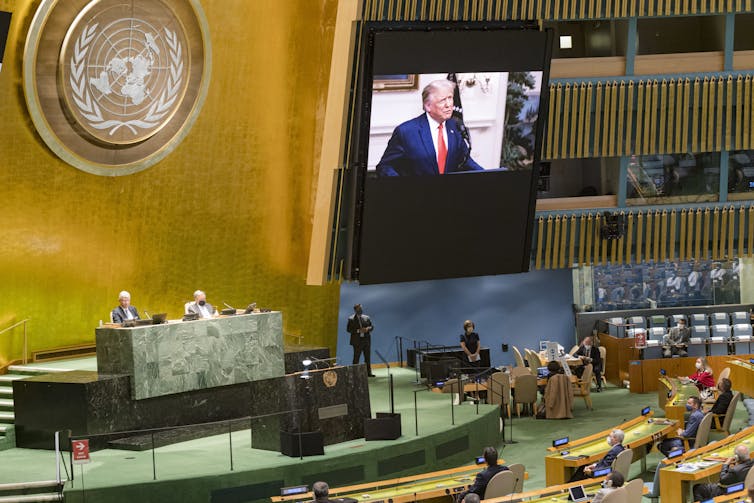
On one hand, he invites Iran’s leaders to talk. On the other, he warns of that country’s annihilation.
This sort of bombast, the antithesis of wielding a big stick and talking softly, coincides with tightening US sanctions that are doing significant damage to Iran’s economy.
These measures include sanctions imposed this month on Iran’s industrial metals sector. This sector accounts for about 10% of its export economy.
How Tehran responds to these harsh assaults on its economic lifelines is anyone’s guess, but what is certain is that its response will not be passive.
Already this month we have witnessed two sets of terrorist attacks on Gulf oil interests Iran, or its proxies, are blamed for an assault on four ships in which explosives damaged the hulls. Two of these vessels are Saudi-owned. In the second, Iran proxies are blamed for drone strikes on a Saudi Arabian oil pipeline.
Drone strikes on a Saudi Arabian oil pipeline are adding to concerns. These strikes have been attributed to Iranian proxies.
In response to terrorist threats to its eastern oil-rich provinces, Saudi Arabia’s state-controlled media have begun calling for “surgical strikes” against Iranian interests.
Such action would provoke a wider conflagration.
What tends to be overlooked in all of this is the ease with which Iran, on a previous occasion, stifled oil shipments from the Gulf.
In 1984, Iran was widely believed to have been responsible for rolling second world war mines into Gulf waterways in the so-called “tanker war” with Iraq. This destroyed several vessels and brought tanker traffic to a halt for weeks.
Adding to jitters are recent reports that a Katyusha rocket fell near the American embassy in central Baghdad. Iranian-backed militias, with their strongholds across the Tigris River in the east of the city, are suspected of launching the rocket.
Washington had already ordered non-essential US personnel out of Baghdad. Oil giant ExxonMobil has begun moving employees out of the region. The US has warned commercial air traffic of increased risks in the Gulf.
This is a movie we have seen before, in the first Gulf War and in the 2003 invasion of Iraq to remove Iraqi dictator Saddam Hussein.
Iran proved to be a significant beneficiary of the chaos that resulted from a destabilisation of the Middle East following the US-led invasion.
None of this is contributing to a stable oil market, on which the global economy rests.
On top of punitive sanctions against Iran, sanctions on Venezuela and disruptions in Libya caused by a civil war have unsettled markets.
Dramatic cuts in Iran’s oil shipments due to US-imposed sanctions followed Washington’s withdrawal last year from the Joint Comprehensive Plan of Action (JCPOA) aimed at forestalling Iran’s nuclear ambitions.
Until sanctions started to bite, Iran was the second-largest exporter among Organisation of Petroleum Exporting Countries (OPEC), behind Saudi Arabia. At their peak, Iranian exports were about 3 million barrels a day.
That number has now slid to 500,000 barrels or less, according to oil market analysts. But in its attempts to skirt US sanctions, Iran is no longer reporting production to OPEC and is not providing definitive information on exports.
As things stand, US sanctions are being adhered to by most importers of Iranian crude, with the likely exceptions being China and India. The US removed waivers on countries accepting Iran’s oil in November after withdrawing from the JCPOA in May 2018.
The 2015 agreement, negotiated by the Obama administration in partnership with the five permanent members of the United Nations Security Council plus Germany, froze Iran’s nuclear program for 15 years. The agreement was designed to provide an opportunity for the West to take counter-measures in case Iran upscaled its production of fissionable material.
By withdrawing from the JCPOA without a fallback position beyond punitive sanctions and threats of military action, the US has separated itself from its allies and left itself few options beyond further sanctions – or military threats.
That is, unless Trump’s offers of direct negotiations with Iran’s leaders bear fruit. At this stage, a tense standoff in the world’s most volatile region is not only dangerous, it could have been avoided by the US adhering to an agreement that was far from perfect, but better than the alternative.
That alternative is estrangement from its allies on Iran, and now real risks of a further security deterioration in the volatile Gulf.
Philip Gordon, a Middle East specialist at the Council on Foreign Relations, summed up the dilemma for US policy and that of its allies rendered anxious by risks of adventurism in the Gulf in pursuit of an American goal of regime change in Tehran. He wrote that barring something extraordinary such as the collapse of the Iranian regime,
It’s hard to see how this current conflict could end without the United States backing down or with a further and very dangerous escalation. The Trump administration should have considered all this before it walked away from the nuclear deal in the first place.

Source: The Conversation (Au and NZ) – By Lucy Deng, Staff Specialist Paediatrician, National Centre for Immunisation Research and Surveillance; Clinical Associate Lecturer, Children’s Hospital Westmead Clinical School, University of Sydney
About 4.1 million Australians are under-vaccinated, meaning they’ve received some vaccinations, but not all the ones they need.
While the vaccination debate generally centres around children, the majority of people who are under-vaccinated are actually adults.
This places them and others at unnecessary risk of preventable diseases. But it is possible to catch up on missed vaccinations.
Why might you have missed some?
It’s possible you were too afraid of needles as a child, or your parents had ideological concerns about vaccination and never took you to get vaccinated at all. This is probably something you would know about.
But even if you believe you had all your vaccines as a kid, there are many reasons you might not be 100% up to date:
new vaccines have been added to the immunisation schedule
if you’ve grown up in another country, you may not have received every vaccine recommended in Australia
previous ways of recording and reminding people to have vaccines were not as good as they are today, so you may have accidentally missed doses without knowing
you may have a medical condition that puts you at higher risk of certain diseases and therefore you need additional vaccine doses.
Whatever the reason and regardless of your age now, it’s worthwhile to check if you’re up to date with your vaccinations. You can do this by having a chat with your GP or an immunisation clinic nurse.
Measles cases show us why it’s important
Being fully up to date with vaccinations is important to protect against diseases such as measles, whooping cough (pertussis) and tetanus.
Globally we’ve seen a 300% rise in measles cases in the first three months of 2019 compared to the same period last year. There have been nearly as many measles cases in the first quarter of this year in Australia as in all of 2018.
The majority of these measles cases were introduced by healthy Australian travellers who were not fully vaccinated and caught the virus while travelling to countries where the measles is still common, such as India, Philipines, Brazil and Ukraine.
Try to locate any written records of past vaccinations and take them to your GP. Your GP can also check your immunisation record on the Australian Immunisation Register, which has records of any childhood vaccinations from 1996 and some adult vaccinations from 2016.
Your GP can help you understand which vaccines you might need as an adult.From shutterstock.com
If you can’t find your vaccination records, it’s generally safe to restart vaccinations from scratch. For example, if you’re already immune to measles, having an extra dose of a vaccine containing measles is safe. It will only further boost your immunity.
Sometimes your GP may do blood tests to check if you already have immunity to certain diseases, including hepatitis B and measles, mumps and rubella.
diphtheria, tetanus and pertussis (whooping cough)
hepatitis B
polio
human papillomavirus (HPV)
measles, mumps and rubella
meningococcal
pneumococcal
varicella (chicken pox)
zoster (shingles).
As an adult, the number of extra vaccines needed is generally lower than what is listed in the childhood immunisation schedule. This is because young babies need more doses of the same vaccine to develop adequate immunity, and because some vaccines are not required by the time you reach adulthood.
If you’re planning on becoming pregnant, it’s vital to ensure you’re immune to viruses such as hepatitis B, rubella and chicken pox (varicella) as they can be passed on to and severely affect the development of an unborn baby.
Whooping cough (pertussis) boosters are important for pregnant women, new parents and grandparents to protect babies who are most at risk of dying from this condition.
Older people should also be getting a booster dose of whooping cough and tetanus vaccines, as immunity can wane over time and these diseases can be serious in older people.
There’s been a huge surge in measles cases in 2019. People who aren’t fully vaccinated might unknowingly bring measles back from a trip overseas.From shutterstock.com
Other vaccines may be recommended depending on your health status, age, lifestyle and occupation – called the “HALO” principle. Certain medical conditions and medical treatments can increase your susceptibility to some vaccine-preventable diseases.
And depending on what you do for work, you may be at higher risk of being exposed to some vaccine-preventable diseases.
For example, the Q fever vaccine is recommended for people working closely with livestock. Q fever is a bacterial infection that often spreads from animals and can cause severe flu-like symptoms.
While guidelines available online are useful, to find out what vaccinations are going to be most appropriate for your personal circumstances, it’s best to chat to your GP.
What if you’ve had a reaction in the past?
If your parents told you not to have a certain vaccine due to a past reaction, it’s worth getting the details and discussing this with your GP.
Certain vaccines, such as the whooping cough vaccine, have changed over time. Some of the reactions seen with previous vaccines are no longer seen in the vaccines used today.
GPs can also discuss specific reactions with an immunisation specialist to develop a plan to safely vaccinate where possible.
The immunisation schedule in Australia is constantly changing. Changes are made in response to new scientific evidence, changes in the circulation of diseases in the community and the development of new vaccines.
For your own health and the health of those around you, it’s important to check in with your GP regularly to make sure your vaccinations are up to date.
Solomon Islands Prime Minister Manasseh Sogavare is coming under increasing pressure from his own MPs to switch the country’s political allegiance from Taiwan to China, report local news media.
Solomon Islands is one of 17 nations that give diplomatic recognition to Taiwan, which provides Solomon Islands with many millions of dollars in aid every year.
Going into last month’s national election in Solomon Islands there was speculation that a diplomatic switch to back China was imminent.
Since being elected Prime Minister, Manasseh Sogavare has said Taiwan remains an important partner although his government is reviewing its global posture.
The Solomon Star reported at the weekend that MPs within the government from Malaita and Guadalcanal are giving the prime minister six months to make the switch, or he would face a motion of no confidence.
-Partners-
The newspaper reported the two provinces MPs had been promised significant help from China to develop infrastructure.
Currently Taiwan’s aid is largely cash and individual MPs have significant discretion over how this is spent.
This article is published under the Pacific Media Centre’s content partnership with Radio New Zealand.
Polls had predicted a narrow win for Labor in this election, so what explains the Coalition victory? Data from the Australian Election Study (AES), based on public opinion surveys conducted after every federal election from 1987 to 2016, provide some indications as to what long-term trends likely contributed to the result.
This includes rising voter disaffection with the major parties and an associated rise in support for independents and minor parties. Adding to the problems for Labor was Bill Shorten’s lack of popularity among voters when compared to other party leaders over the past three decades.
And not least, Labor’s focus on tax policies in the campaign was unwise given the long-term view among voters that the party is less reliable on economic issues.
The rise of independents and minor parties
Voters have become increasingly dissatisfied with democratic politics in Australia. Although the Coalition did win enough seats to form a majority government, voters have been gradually drifting away from the major parties in recent elections and casting protest votes for minor parties and independents in greater numbers.
In this election, the historically safe Liberal seat of Warringah in Sydney went to the centrist independent, Zali Steggall. Another centrist independent, Kerryn Phelps, came close to defeating Liberal Dave Sharma in Wentworth for the second time in the past year. Voters in these electorates may align with the Liberals on economic issues, but they are socially much more progressive than conservative elements within the party.
While progressive voters in Sydney have increasingly moved toward centrist independents, many voters in Queensland, and to a lesser extent elsewhere around the country, moved to parties on the populist right. Many of the preferences for these parties were directed to the Coalition, contributing to the election outcome.
So, although the Coalition won enough seats to form a majority government, there was a small swing overall against both Labor and the Coalition in favour of minor parties, underscoring voter disaffection with traditional party politics.
Shorten’s popularity problem
Leadership is not the only factor that matters in elections, but it is important. According to AES data, in eight of the last 11 elections, the party with the most popular leader won. The exceptions are the elections won by John Howard in 1998 and 2001, and Paul Keating’s win in the 1993 “unlosable” election.
The Australian Election Study has been tracking leader evaluations based on surveys of voters since 1987, providing a good indication of what it takes, at the minimum, for a leader to win an election. The AES has found that generally around 10% of voters cast their ballots based on party leaders.
This can fluctuate depending on leader popularity. When a very popular Rudd was Labor leader in 2007, 20% of Labor voters cast their ballots based on the leader. In contrast, in the 2016 election when Shorten was leader, just 6% of Labor voters did so.
Shorten’s unpopularity has been much discussed in the lead-up to this election. He consistently lagged behind Scott Morrison, and before that Malcolm Turnbull, as preferred prime minister, even while Labor outperformed the Coalition in polls on the two party-preferred basis.
Over the last 30 years, the least popular prime minister to win an election was Tony Abbott in 2013. According to AES surveys, his average evaluation by voters was 4.3 on a scale from zero (strongly dislike) to ten (strongly like). Despite being such an unpopular leader, he benefited from the leadership dramas between Kevin Rudd and Julia Gillard that dominated Labor’s time in government from 2007-13.
In comparison, Shorten’s evaluation in the same survey in 2016 was 4.2 out of ten, lower than any election winner on record. Moreover, the AES has been asking voters to evaluate the party leaders in terms of leadership characteristics since 1993, based on factors like strong leadership, trustworthiness, honesty, intelligence, competence, knowledge and the ability to be inspiring, compassionate and sensible.
The 2016 data showed that Shorten was the poorest performer across these characteristics as a whole in the 23 years the questions had been asked about major party leaders, scoring lowest on seven of the nine characteristics.
So, given this evidence from the 2016 election, why did Labor retain such an unpopular leader? First, the new rules surrounding leadership changes introduced by Rudd in 2013 made it more difficult not just to remove sitting PMs, but also to change the leader while in opposition.
Labor was also eager to project an image of stability following the years of infighting by Gillard and Rudd. Lastly, Labor performed better than expected in the 2016 election (despite the loss), giving Shorten a mandate to continue on for another shot in 2019.
Taxes as a policy centrepiece
In recent elections, health, education and management of the economy have been the main issues that voters mention most frequently in AES surveys.
In the ten elections between 1990 and 2016, Labor polled better than the Coalition as the preferred party on health by an average of 17 percentage points, and on education by 16 points. On management of the economy, however, the Coalition has polled better by an average of 19 points over the last three elections.
Taxation has rarely been among the top issues in elections, the main exception being 1998 when the main issue was the introduction of a GST. But in this election, Labor chose tax policy as one of its policy centrepieces.
This choice was unwise for three reasons. First, Labor has consistently polled worse than the Coalition on taxation in AES surveys over the past 26 years, although the two parties did draw close in the 2016 election.
Second, Labor was unable to adequately explain its tax policies to the electorate in this election campaign. Studies show voters are influenced most by their perceptions of how party policy will affect the overall performance of the economy — what is called “sociotropic” voting. In the absence of a link between Labor’s tax policies and better economic performance in the 2019 campaign, many voters simply saw the proposed changes as an unnecessary imposition.
Third, Labor argued that the tax changes would affect only a small section of the electorate, typically less than one in ten. While the direct effect may have been small, this ignored the much larger group of voters who aspire to gain an investment property, for example, and might have been impacted by Labor’s policies.
Australia has some of the highest levels of property and share investment in the world. The 2016 AES survey found that one in ten respondents said they or someone close to them owned an investment property, while one in three owned shares. The proportion of the electorate potentially affected by Labor’s proposed changes was, therefore, quite sizeable.
Though many political analysts are searching for possible answers to the Coalition’s surprising win, the AES data suggests it wasn’t so surprising after all – long-term trends are consistent with a Labor loss, given the various factors in play in this election.
The above analyses are based on data from Australian Election Study surveys 1987 to 2016, representative public opinion surveys fielded after each Australian federal election. Data for the 2019 election will be available once the post-election survey has been fielded. For reports, data and further information see the Australian Election Study website:www.australianelectionstudy.org
The stars seem to be aligning in favour of the establishment of a socially conservative Christian-based political party, making it more than just a vague possibility. However, some big hurdles remain in place before the National Party can be hopeful that it has a new coalition-friendly party to help it into office at the next election.
The idea that a Christian-based conservative party might help National form a coalition government has long been discussed within National. The need for this type of party, or at least some sort of centre-right party, has become more urgent since the demise of other coalition possibilities such as the Māori Party, United Future, and the greatly-reduced Act.
Botany
There are a number of important factors that make the prospect of a Christian party led by Alfred Ngaro worth taking seriously – not least of which is a ready-made Auckland electorate available for Ngaro to launch his party from. Soper explains how Botany could be invaluable: “There’s a lot of Christian money in the electorate. It has a good number of Pacific Island churches in Otara to the west, a sizeable, conservative, Christian South African community and a significant number of Koreans and Taiwanese Christians.”
Furthermore, “There is also a strong Catholic presence with schools like Our Lady Star of the Sea School and Sancta Maria College. Ngaro, in his third term, would slip comfortably into the electorate which saw National commanding more than 20,000 party votes at the last election, well ahead of Labour with less than half that number.”
In her Friday opinion piece, the Herald’s political editor Audrey Young also details some of Botany’s demographic factors that lean in Ngaro’s favour: “His Christianity would go down well in an electorate in which 48 per cent call themselves Christian, and 50 per cent who were born overseas. And 12 per cent of the electorate is Pacific Island, disproportionately higher than the 7.4 per cent nationally in the last census, which may be attracted to a party led by a Cook Island Kiwi former pastor” – see: The ‘herculean task’ facing Alfred Ngaro (paywalled).
Of course, the fact that Botany doesn’t have a National MP at the moment – despite being a stronghold for National – is also a factor. According to rightwing political commentator Ben Thomas: “Jami-Lee Ross’s implosion in Botany gives National a unique chance to surrender a seat to a client party, and if a new party could pick up that seat then it could channel votes that have been wasted in the past on the Conservatives or Christian parties into a minor party that could support National” – see Jason Walls’National MP Alfred Ngaro won’t comment on speculation he’s setting up a new party but Simon Bridges says Ngaro is ‘considering’ it.
Essentially, if National was to somehow facilitate a new party taking this seat at the next election it wouldn’t have to throw one of its MPs under a bus to do so. More on the problems with this later.
The ideological landscape
In 2019, the growing number of salient ideological issues favourable to a conservative party continue to multiply. By the time of the 2020 election, these could provide the sort of ideological landscape that is perfect for a nascent conservative party to capitalise on.
In her column yesterday, Heather du Plessis-Allan explained how some Christian voters might be open to a new electoral option: “Anecdotally, there seems to be a sense among some Christians that their faith is under attack. Couple that with a possible liberalisation of marijuana laws, an almost certain liberalisation of abortion laws and an – overdue – recognition of the Muslim community in this country, and you might have enough to drive conservative Christians into the arms of a new party” – see: How Nats will game the system (paywalled).
Du Plessis-Allan adds: “it helps hugely that Ngaro is Pasifika. If there were voters to steal from Labour it would be the conservative Christian Pasifika voters, who may well feel uncomfortable with Labour’s progressive policies.”
Andrey Young outlines how these issues are building up to a potential powerful election platform for a conservative party: “The issues that would galvanise the party are the three big social issues before Parliament at present and likely to be so in election year as well: making abortions easier to get, legalising euthanasia, and legalising recreational cannabis. While the first two are conscience issues and the cannabis issue will be put to a referendum next election for some socially conservative voters they are defining issues. It is possible that euthanasia will also go to a referendum next election, depending on if it is supported in the committee stages. That would mean a heavy focus at the election on two issues around which social conservatives could rally.”
And, again, these issues might help a Ngaro-led party drag votes from the left-bloc to the right: “They are issues that could take votes equally from socially conservative Labour and New Zealand First voters as much as National voters.”
Similarly, RNZ’s Craig McCulloch says “the party could feasibly court a conservative Pasifika vote increasingly uncomfortable with a more socially liberal Labour Party… Socially conservative voters might have typically found a home in New Zealand First, but many are frustrated by its decision to form a coalition with Labour over National” – see: Breakaway Christian party a gamble, gambit or godsend?.
In this sense, National leader Simon Bridges could be quite right in saying that “you would expect a Christian values party to be drawing those votes from across the spectrum.”
Alfred Ngaro’s leadership
One of the big problems for fledgling Christian-based parties has been the calibre and reliability of their leaders. This has led to a number of such parties crashing and burning. This is one of the key points made in the weekend by Duncan Garner, who recalls the likes of previous Christian party leaders such as Graham Capill, Graeme Lee, Brian Tamaki, Philip Field, and Colin Craig – see:Can a dose of divine intervention save National?.
In contrast, Alfred Ngaro appears like a much safer pair of hands. As du Plessis-Allan says, it’s hard to think of a more perfect leader for the party at the moment, and she outlines his positive factors: “He’s already in Parliament as a National Party MP. He’s hardly put a foot wrong in eight years in the place. He’s even had some experience as a minister. What’s more, he’s a likeable, friendly, good-looking guy. What more could you ask for? Well, how about someone with impeccable Christian credentials? He’s got them in spades. He’s a former pastor. He’s a proud zionist with Jewish lineage.”
She concludes, “If a weird guy like Colin Craig, who’s not even sure humans landed on the moon, can command 4 per cent of the vote at an election, imagine what a normal guy like Ngaro can do.”
Similarly, I said on Friday on the AM Show that, in contrast to other Christian politicians, Ngaro is a “respectable solid National Party former cabinet minister”, and he’s “actually someone that I think National will be able to trust as being, not going a bit crazy. So he’s a pretty mild sort of Christian politician” – see Dan Satherley’s Alfred Ngaro to set up Christian conservative party – report.
National Party aligned blogger David Farrar has also endorsed Ngaro as someone he is more comfortable with than most social conservatives: “I’m not a natural supporter of conservative or Christian parties, being socially liberal. But if there is to be in Parliament, I’d much rather someone like Alfred led it, than some of the previous contenders such as Capill, Tamaki and Craig” – see: A Christian party?.
But does Ngaro actually have the leadership potential necessary to succeed? Interestingly, Audrey Young says “Ngaro has charm and energy”, and RNZ’s Craig McCulloch, says “Alfred Ngaro is a charismatic former pastor of Cook Islands descent. He’s widely respected in Pasifika and Christian communities as a voice for moderate conservatism.”
Gap in the party system
Having new parties is good for democracy, and the need for diversity means that there is reason to welcome this development. There certainly is a lack of overt political representation at the moment for socially conservative or Christian voters. This is a point well made by long-time Christian political party activist John Stringer in his blog post, Ngaro, National & a New Christian Party.
Here’s his main point: “The conservative ‘family values’ vote is the largest unrepresented block in NZ. It’s often bigger than the Maori roll vote results and has polled strongly (4.2-3.9%) and consistently (1996-2014) when viable leadership has been in place. The ‘Christian vote’ on occasions in the past achieved 4x that of combined smaller parties who were ‘elected’ to parliament on coat-tail arrangements but remained unrepresented. The system is worked and accommodated, but so far Christians have remained unrepresented at party level (although many MPs share these values inside other parties).”
At the moment, there are no other viable Christian or quasi-Christian parties. Yes, Colin Craig’s former party, the Conservatives, have re-branded as the New Conservatives, but show no sign of being able to break through by winning a seat or breaching the five per cent MMP threshold. Their new leader, Leighton Baker, has said he’s worried about a Ngaro-led party splitting the vote, but in all likelihood those involved in existing Christian parties would probably throw their lot in with any new party that is established.
Risk of “dirty deal” backlash
The viability of a Ngaro-led party is likely to rest on whether the National Party is willing to gift them the seat of Botany, and this is far from certain. As Duncan Garner says, there could be a major credibility problem for a public that doesn’t like to see politicians manipulate them or the electoral system: “National could get three or four new MPs by playing the MMP system, which is perfectly legal. And it might be the difference on election night. Except many might see it for what it is: a stunningly cynical manoeuvre that screams desperation and lacks a single pinch of authenticity.”
Interestingly, Heather du Plessis-Allan argues that voters have got used to electorate deals: “I’m not convinced by the criticism that voters will feel icky voting for a party so clearly set up just to support National. Why? Is the problem that it’s such a blatant gaming of the system? Come on. That is a fact of MMP. Surely we’ve got used to gaming by now. Act’s had a sweetheart deal in Epsom for how long? Peter Dunne got a deal in Ohariu too. And, really, if we can accept a system that allows a party with only 7 per cent of the vote to appoint the Prime Minister, grab disproportionate power and billions of dollars to spend on their hearts’ desires, then we have accepted a system open to gaming.”
Since Friday, Simon Bridges has sent mixed signals about any support that National might afford a Ngaro-led party in Botany and nationwide. His most recent pronouncements are that National would in no way gift Botany to Ngaro, telling TVNZ’s Breakfast: “I am saying absolutely we are not going to do a deal on Botany, it is a seat that National has held … and I want to put a strong National candidate in and win that seat for National. We have had no other conversations, Alfred and I, in fact we’ve never discussed Botany for that matter” – see: Bridges making ‘absolutely’ no election deal for Botany even if Ngaro forms new Christian conservative party.
Of course, politicians’ feelings on these matters can so quickly change. And Bridges is promising to provide a more definitive statement at the start of the 2020 election year on National’s orientation to other political parties.
Risk of National tarnishing its brand
National will be highly sensitive to the possibility that their own image and reputation could suffer from being associated with a Christian party, with what some regard as backward and reactionary social stances. Already a number of opponents are highlighting the moral and religious views of Alfred Ngaro.
For example, leftwing activist John Minto argues today that “Ngaro is a Christian Zionist who, like Israel Folau, believes the Old Testament is the literal word of God and a factual account of the history of the Jewish people” – see: The fantasy world of Alfred Ngaro. He concludes that: “Whatever Ngaro may offer the country as a conservative Christian leader it won’t be compassion, tolerance, justice or truth. Instead it will be a conservative straitjacket of bigotry, arrogance and injustice.”
National won’t want to risk this association according to blogger No Right Turn, who argues “religious politics has a toxic reputation in New Zealand for all sorts of reasons: misogyny and homophobia, historic religious parties being dominated by fringe loonies” – see: A handmaid party?.
Although such a new party might be useful to National, “voters are influenced by who a party’s friends are… and if a party’s path to power is to crawl into bed with the religious right, then a fair number of people will be turned off by this, and vote accordingly.”
In the first edition of On the Origin of Species, Charles Darwin mentions dogs 54 times. He does so mainly because the extraordinary variation between dog breeds provides a marvellous illustration of the power of selection. For most of the roughly 15,000 years since their domestication, dogs were selected by humans for their usefulness as hunters, retrievers, herders, guards or companions.
As modern breeds became recognisable, the extent to which a dog aligned with the expected shape, size and coat for its breed (known as “conformation”) became more important. So important, in fact, that just a few years before On the Origin of Species hit the bookshops, the world’s first conformation-based dog show was held in the Town Hall of Newcastle-upon-Tyne in England.
By 1873, the UK Kennel Club was formed to, among other things, regulate the showing and breeding of dogs. Similar organisations soon followed in other countries. The criteria for judging and breeding for conformation were formalised in breed standards that are now administered by kennel clubs around the world.
Unfortunately, breeding for the standard in some breeds resulted in serious compromises to health and welfare, especially in cases where the wording of the standard encouraged exaggeration of certain features.
An Afghan Hound on show during the annual Crufts Dog Show at the NEC Arena in Birmingham, Britain, 7 March 2019.EPA/Nigel Roddis
Breeds to watch out for
The Kennel Club Breed Watch has highlighted roughly 15% of breeds as having “breed-specific conformational issues which may lead to health problems” and a further 4% of breeds in which “some dogs have visible conditions or exaggerations that can cause pain or discomfort”.
So, even if there were no breed standards and dogs were bred solely for health and welfare, many inherited disorders would still occur. In fact, the vast majority of inherited disorders have nothing to do with conformation.
All inherited disorders (and all desirable inherited traits) are, in essence, the result of random mutations in DNA that have occurred and continue to occur in all species.
A boy leads a St. Bernard at a dog show in Bishkek, Kyrgyzstan, 05 May 2019. The International Kennel Club Dog Show was held in Bishkek.EPA/IGOR KOVALENKO
The number of known inherited disorders varies enormously among species, mainly reflecting the extent of research effort. For example, the number of single-gene disorders documented in humans is more than 5,300, whereas the figure for dogs is fewer than 300. As many of the inherited disorders that occur in humans could also occur in dogs, the present number for dogs is likely to be just the tip of the iceberg.
One of us, Paul McGreevy, has been part of an international team that developed a risk-assessment criterion for determining priorities for research and control of inherited disorders. A major component of this score is the prevalence of a disorder in a particular breed.
American Akita dogs waiting for their turn to be judged at a dog show in Bishkek, Kyrgyzstan, 05 May 2019. The International Kennel Club Dog Show was held in Bishkek.EPA/IGOR KOVALENKO
Estimating the prevalence of disorders
Fortunately, digital health has arrived in the veterinary sphere and is set to provide, for the first time, comprehensive estimates of disorder prevalence.
Paul is the chair of VetCompass Australia, based on the highly successful UK VetCompass that he helped to establish ten years ago. It’s the first Australia-wide surveillance system that gathers together clinical records on companion animal diseases and treatments.
Bringing together all seven Australian veterinary schools, VetCompass Australia collects clinical records from hundreds of vets across the country for researchers to interrogate. Analysis of these records will reveal trends in the prevalence of inherited and acquired diseases, identify effective treatments, and help vets and breeders improve dogs’ quality of life.
The vision for this surveillance system is that it will one day provide real-time data on the prevalence of each known disorder and show how effective various control strategies are. Real-time data will also sound the alarm on clusters of new disorders as they emerge.
Complementing VetCompass is MyBreedData, a Finland-based website that collects the results of genetic analyses from huge numbers of dogs to identify mutations known to cause particular inherited disorders. Among other things, this information provides early warning signs of which breeds contain which harmful mutations.
What about hybrid vigour?
Hybrid vigour for a particular trait is the extent to which, on average, the puppies from the mating of a purebred female from one breed with a purebred male from another breed, are better for that trait than the average of the two parental breeds for that trait.
Evidence from other species suggests that hybrid vigour in dogs could occur to a limited extent in traits related to health, welfare, and fitness for purpose. The greater the genetic difference between two breeds, the greater the hybrid vigour is expected to be in first-generation offspring between those breeds.
Specifically, first-generation offspring are unlikely to develop any recessive disorders that are present in only one of the two parental breeds. On the other hand, they can obviously develop inherited disorders that are present in both parental breeds, which is often the case for disorders such as hip dysplasia.
Husky dog waiting for his turn to be judged at a dog show in Bishkek, Kyrgyzstan, 05 May 2019. The International Kennel Club Dog Show was held in Bishkek.EPA/IGOR KOVALENKO
Importantly, breeding beyond first-generation crosses reduces hybrid vigour and unleashes unpredictable variation. This is good news for traditional stud breeders, because it means the most desirable hybrids are the offspring of two purebreds, rather than those bred subsequently.
Mixed-breed (or “designer”) dogs are not new: the Kennel Club has been registering them for more than 50 years. Unfortunately, most peer-reviewed studies of canine cross-breeds do not let us estimate actual hybrid vigour, simply because they fail to report the parentage of mixed-breed dogs.
Fortunately, obtaining evidence of actual hybrid vigour in dogs should be relatively straightforward: it simply requires veterinary records to include the parentage of mixed-breed dogs, when known.
The information being collected by VetCompass and MyBreedData will provide a firm foundation for prioritising research into, and schemes for controlling, inherited disorders within breeds. It also has potential to shed valuable light on the extent to which hybrid vigour exists in dogs. Armed with this information, breeders will be able to combine new technology with the skills of traditional dog breeding to breed dogs that are more likely to look great, be healthy and thrive in the niches we provide for them.
Curious Kids is a series for children. If you have a question you’d like an expert to answer, send it to curiouskids@theconversation.edu.au You might also like the podcast Imagine This, a co-production between ABC KIDS listen and The Conversation, based on Curious Kids.
Why do we not use the magnetic energy the Earth provides to create electricity? – student of Ms Brown’s Year 5 science class, Neerim South Primary School, Victoria.
Hi!
This sounds like a good idea at first, but it’s not very practical. Before I explain why, let me first explain how we generate electricity in case somebody reading this doesn’t already know.
Electricity (let’s say “electrical current”) is when electrically-charged particles flow, like water in a pipe. There are two kinds of electrical charge – positive and negative. Positive charges attract negative charges, but two particles with the same charge (both positive or both negative) will repel. That means they push apart.
In other words, opposites attract.
Usually, electrical current is made of tiny negative charges called “electrons” which come from atoms.
Everything you can touch is made of atoms. Every atom is surrounded by a cloud of electrons moving randomly like bees around a beehive, attracted to the positive charges in the centre (or “nucleus”) of the atom.
An electrical current usually happens when electrons leave their atoms and flow to other atoms.
There are three main ways we produce electrical current.
The first is batteries. In batteries, there is an “electrochemical reaction” that causes electrons to move from one kind of atom onto another kind of atom with a stronger attraction to electrons. A battery is designed to force these electrons to pass through a wire into your electronic devices.
A second way is solar cells. Light energy is absorbed by electrons in something called “semiconductors” (usually silicon) which causes electrons to move, creating electrical current.
But I think you’re asking about the third way that is usually used to generate electrical currents for power sockets in your house.
Spinning a coil of wire in a strong magnetic field
This third way is to move an electrical wire quickly through a magnetic field. You need to do this because electrons in a wire cannot feel the magnetic force unless they are moving.
To get a enough current for everybody, you must move a lot of wire through a magnetic field. We do this by spinning a coil (containing many loops of wire) quickly in a strong magnetic field.
During each turn of the coil, electrons get a kick from the magnetic field, moving them along. This creates electrical current. In this animation, S represents the “south pole” of the magnet and N represents the “north pole”. The animation only shows a single loop of wire spinning in the magnetic field. In a real generator, there would be hundreds or even thousands of loops.
Machines that do this are called generators. You can spin the coil using falling water (that’s called “hydroelectricity”), steam (produced from coal, oil, gas or heat from the Sun), wind turbines that use the wind, and so on.
In most generators, each time the coil does half a turn, electrons get a magnetic kick. In the next half-turn, they get a magnetic kick in the opposite direction. This means the direction of the current keeps swapping through many cycles rapidly.
Electrical current which swaps direction is called “alternating current” or AC for short. Batteries produce current that travels only in one direction, called “direct current” or DC for short.
In generators, we are not taking energy out of the magnetic field. The energy going into electrical current is actually coming from the energy used to spin the coil. Scientists call this “kinetic energy”.
Back to the Earth’s magnetic field
Now (finally!) to answer your question: why don’t we use Earth’s magnetic field to generate electricity?
The amount of current a generator produces, depends mostly on at least three things: 1) how many loops of wire in the coil, 2) how fast the coil is spun and 3) how strong the magnetic field is.
Earth’s magnetic field is very weak, so you would get very little current from your generator.
How weak? Have you ever seen those button-shaped neodymium-iron-boron magnets, also called “neo-magnets”? (Be careful – they can really pinch you).
It was an uncomplicated victory speech. He told us that Australia was a great country, thanked his family and — finally — his party for their roles in running a ruthlessly disciplined campaign and, promised to get back to work for the “quiet Australians”.
-Partners-
This is the most presidential campaign run by a single party in Australian history, pitted against the biggest policy target since John Hewson’s Fightback!. What really made this election singular was the impact of a quarter of voters preferring minor parties as their first preference.
At the beginning of the campaign, the task of defending so many safe seats from an insurgence of would-be liberal independents seemed overwhelmingly difficult. It would leave too many marginal seats under resourced to defend what has been an unpopular government, riven by infighting.
Negative campaign Voters always say that they hate negative campaigns. But they work. Morrison deftly crafted his negative message around the unpopularity of Bill Shorten and the risk he posed to the “promise of Australia”.
Morrison has a gift for easy simplification. To give just one example, he framed the complex franking credits issue into the “retirement tax” scare.
At the same time, Morrison smoothed out this overwhelmingly negative campaign, and rounded out his previous public image as aggressive and shouty, by showing himself to be just another dad in the suburbs.
This is Morrison’s victory, and he will forever be a Liberal hero.
What do the Liberals want to do with three more years of power? By the campaign’s end, it remained a question without a detailed answer. And it is still the most important question.
By delivering a result most thought improbable, Morrison’s personal authority will be titanic within the Liberal party. It is not clear what the government’s agenda is beyond their tax plan. There remain several pressing policy questions particularly around climate and energy.
The government does not have a mandate to act in these policy domains and these are issues that are difficult internally for the Coalition.
Competing political traditions Much is made of ideology within the Liberal Party. It is often presented as the factor that explains the party’s internal woes — and for good reason. The fusion of Australia’s Liberal and Conservative forces in 1909 mashed together what were previously two competing political traditions. They’ve had to co-exist ever since.
But ideological conflict within the liberal party is the symptom. The cause is that the party lacks effective institutional mechanisms to safely and semi-publicly debate ideas.
This also applies to how debates are undertaken. What are the formal rules about who, where and when party members can speak? Just as important are the informal norms around what can be said and in what context.
The Liberal party has traditionally relied on strong leaders to embody and articulate what it stands for. Successful leaders in the Liberal Party (like other conservative parties in Westminster systems) are dominant, but also deft enough to allow sufficient breathing room for their factional rivals.
More importantly, being a proven winner counts for a lot. With this victory, Morrison now has the opportunity to transform himself into precisely this kind of leader.
Liberal leaders’ dominance is reinforced by the way the party machine (but less so its members) has contented itself with setting out broad policy principles. This leaves the parliamentary Liberal party plenty of scope to interpret the political landscape and best position the party for electoral victory.
In the past, the Liberal Party’s links with civil society were strong. It had a healthy branch structure and was embedded in the lives of its core constituents. Today, the average age of its members is around 70, and the decline in party membership means that parties are no longer a key democratic link between representatives and voters.
More independent This ultimately makes leaders more independent of their parties. We’ve seen this trend borne out in Australian parties over many decades, and particularly in Morrison’s campaign.
Finally, the Liberals have famously rejected formally recognised and organised factions. But in doing so, the party has also given up a tool for organising ideological interests and debates.
It’s hard to have both open and robust debate, and a dominant leader. Open debate is very quickly interpreted as dissent or “open revolt” by outside observers. It is even more challenging in government when discipline matters more and dissent is reported by the media as a failure of leadership.
As the party room has declined as a site of robust debate, the Liberal party’s primary mechanism for dealing with difficult ideological debates is leadership change. It is no accident that this party has been unable to resolve its internal debate on climate change, and has had six leaders in 12 years.
Climate change is so potent a debate within the coalition because it is really about changing the relationship between government, economy and citizens. How this ought – whether it ought – to be accomplished calls into question core assumptions about the role of the state and Australia’s sources of prosperity that have traditionally bound together the “broad church” of the Liberal party.
To be clear, the Liberal party has governed successfully under multiple leaders over decades by putting their faith in the leader to listen, but to ultimately set the course. This formula works when leaders’ authority is high. We should also never underestimate that simply keeping Labor out is sufficient reason for government for the conservative side of politics. At its simplest, their politics is one of incremental change, sound finance and fending off the “radicalism” of Labor.
Proven winner Morrison is a proven winner and now has the chance to exercise his personal authority. He will need to address climate policy, because business wants a price signal for carbon emissions. He may follow in the footsteps of another giant of the Liberal Party, Robert Menzies, and poach some of Labor’s more compelling ideas, refashioning them through a Liberal lens.
While questions of the party’s ideology are important, the truth is, the party has always had to navigate tensions between its Liberal and Conservative traditions. This debate has never been settled and it is foolish to suggest that it ever would be.
The more pressing questions relate to how it will govern and win the next election. Over the long term, the party should really be asking how it will seek to renew itself, both in terms of ideas and candidates.
This win should not be an excuse for ongoing organisational drift and complacency.
We measure stuff all the time – how long, how heavy, how hot, and so on – because we need to for things such as trade, health and knowledge. But making sure our measurements compare apples with apples has been a challenge: how to know if my kilogram weight or metre length is the same as yours.
Attempts have been made to define the units of measurement over the years. But today – International Metrology Day – sees the complete revision of those standards come into play.
You won’t notice anything – you will not be heavier or lighter than yesterday – because the transition has been made to be seamless.
Just the definitions of the seven base units of the SI (Système International d’Unités, or the International System of Units) are now completely different from yesterday.
New definitions of the (SI) standards for the kilogram (kg), metre (m), second (s), ampere (A), kelvin (K), mole (mol) and candela (cd).BIPM, CC BY-ND
How we used to measure
Humans have always been able to count, but as we evolved we quickly moved to measuring lengths, weights and time.
The Egyptian Pharaohs caused pyramids to be built based on the length of the royal forearm, known as the Royal Cubit. This was kept and promulgated by engineer priests who maintained the standard under pain of death.
Metrology in action – weighing the souls of the dead and the Egyptian Royal Cubit (the black rod).Brynn Hibbert
But the cubit wasn’t a fixed unit over time – it was about half a metre, plus or minus a few tens of centimetres by today’s measure.
The first suggestion of a universal set of decimal measures was made by John Wilkins, in 1668, then Secretary of the Royal Society in London.
The impetus for doing something practical came with the French Revolution. It was the French who defined the first standards of length and mass, with two platinum standards representing the metre and the kilogram on June 22, 1799, in the Archives de la République in Paris.
Agreed standards
Scientists backed the idea, the German mathematician Carl Friedrich Gauss being particularly keen. Representatives of 17 nations came together to create the International System of Units by signing the Metre Convention treaty on May 20, 1875.
France, whose street cred had taken a battering in the Franco-Prussian war and was not the scientific power it once was, offered a beaten-up chateau in the Forest of Saint-Cloud as an international home for the new system.
BIPM, home of the SI.Brynn Hibbert (2012)
The Pavilion de Breteuil still houses the Bureau International de Poids et Mesures (BIPM), where resides the International Prototype of the Kilogram (henceforth the Big K) in two safes and three glass bell jars.
The Big K is a polished block of platinum-iridium used to define the kilogram, against which all kilogram weights are ultimately measured. (The original has only been weighed three times against a number of near-identical copies.)
International prototype of the kilogram (the Big K).Photograph courtesy of the BIPM
The British, who had been prominent in the discussions and had provided the platinum-iridium kilogram, refused to sign the Treaty until 1884.
Even then the new system was only used by scientists, with everyday life being measured in traditional Imperial units such as pounds and ounces, feet and inches.
The United States signed the Treaty on the day, but then never actually implemented it, hanging on to its own version of the British Imperial system, which it still mostly uses today.
The US may have rued that decision in 1999, however, when the Mars Climate Orbiter (MCO) went missing in action. The report into the incident, quaintly called a “mishap” (which cost US$193.1 million in 1999), said:
[…] the root cause for the loss of the MCO spacecraft was the failure to use metric units in the coding of a ground software file, “Small Forces”, used in trajectory models.
Essentially the spacecraft was lost in the atmosphere of Mars as it entered orbit lower than planned.
Lost on Mars: An investigation found the Mars Climate Orbiter likely burned up in the atmosphere of the red planet due to a clash of metrics.NASA/JPL
The new SI definitions
So why the change today? The main problems with the previous definitions were, in the case of the kilogram, they were not stable and, for the unit of electric current, the ampere, could not be realised.
And from weighings against official copies, we think the Big K was slowly losing mass.
All the units are now defined in a common way using what the BIPM calls the “explicit constant” formulation.
The idea is that we take a universal constant – for example, the speed of light in a vacuum – and from now on fix its numerical value at our best-measured value, without uncertainty.
Reality is fixed, the number is fixed, and so the units are now defined.
We therefore needed to find seven constants and make sure all measurements are consistent, within measurement uncertainty, and then start the countdown to today. (All the technical details are available here.)
The seven unites are now defined by universal constants such as the speed of light c for the metre.BIPM, CC BY-ND
Australia had a hand in fashioning the roundest macroscopic object on the Earth, a silicon sphere used to measure the Avogadro constant, the number of entities in a fixed amount of substance. This now defines the SI unit, mole, used largely in chemistry.
Walter Giardini of the National Measurement Institute Australia holding a silicon sphere as part of the Avogadro project.Brynn Hibbert
From standard to artefact
What of the Big K – the standard kilogram? Today it becomes an object of great historical significance that can be weighed and its mass will have measurement uncertainty.
From today the kilogram is defined using the Planck constant, something that doesn’t change from quantum physics.
The challenge now though is to explain these new definitions to people – especially non-scientists – so they understand. Comparing a kilogram to a metal block is easy.
[…] by taking the fixed numerical value of the Planck constant h to be 6.626 070 15 × 10–34 when expressed in the unit J s, which is equal to kg m2 s–1, where the metre and the second are defined in terms of c and ΔνCs.
After critically assessing the research in this field, we found people use steroids for a variety of reasons. And while steroid use does carry risks, not all users will develop personal problems or cause harm to others.
Anabolic-androgenic steroids are synthetic variations of the male sex hormone testosterone. “Anabolic” refers to the drug’s capacity to increase protein synthesis, which results in increased muscle tissue. “Androgenic” refers to its properties in promoting the development of male sex characteristics (for example, deep voice and body hair).
Population studies (for example, surveys and waste water tests) show the use of steroids and other performance and image enhancing drugs in Australia is relatively low – between 0.1-0.8%.
So we don’t know exactly how many people use steroids in Australia and whether this number is increasing.
Many different types of users
The caricature of non-medical steroid users as narcissistic “gym bros” suffering from body image issues provides a simplistic account of user motivations. It ignores the spectrum of people who use steroids.
People tend to associate steroid use with aggression, but we don’t have clear evidence of a causal link.From shutterstock.com
Certainly many people use steroids for body image/cosmetic purposes, and to develop athletic performance – bodybuilding can encompass both.
But people also take steroids to support occupational performance. For example, police officers, security personnel and prison guards have been reported to use steroids to improve physical performance on the job.
Research has also found some people use steroids to achieve a youthful appearance, to increase sex drive and energy levels, or to aid recovery from illness or injury.
But several serious health harms have been linked with steroid use, too.
There’s a growing body of evidence showing an association between the continued use of steroids and long-term health risks including heart disease and stroke and cognitive deficiencies.
Most knowledge about the harmful effects of steroids is at this stage based on low level evidence, such as expert opinion, case reports or small observational studies, so we still need stronger evidence. Prospective clinical trials which examine the efficacy and long-term effects of recreational steroid use are absent, but there are some important studies underway.
In a number of studies comparing harms from a variety of drugs, relative to other drugs steroids consistently appear low on the list for general health harm as well as for physical, psychological and social harm to both users and society.
Compared with other drugs, the harm resulting from steroid use is low.
We must also appreciate the circumstances in which people use steroids can contribute to their risk of harm. For example, a person could be taking multiple substances simultaneously, or they might be using unverified products sourced illegally.
The type of steroids used, the dosage and the length of time someone has been using steroids are all relevant factors. So depending on their patterns of use, some people who use steroids will run greater health risks than others.
Another frequently cited side effect of non-medical steroid use is aggression and violence. In the mid-1980s, the notion steroid use leads to aggressive or violent behaviour became widespread, giving rise to the term “roid rage”.
There are likely to be many factors influencing the relationship between drugs (including steroids) and aggressive behaviour. This includes personality traits, neuropsychological risks, environmental influences, socioeconomic status, and/or the use of multiple substances at once.
While some people who use steroids report increased irritation, the complexity of the relationship between hormones and behaviour suggests violent outbursts can’t simply be accorded to using steroids.
Acknowledging pleasure
A narrative centred on public health harms, the potential for violent behaviour and psychological disturbance naturally prioritises repressive means to combat the issue (for example, the criminalisation of drug users).
This tends to exclude evidence-based approaches based in public health and harm reduction such as the provision of tailored safe injection advice, drug testing services, and medical monitoring for people who use steroids for non-medical reasons.
Steroids are often obtained illegally without a prescription.From shutterstock.com
Research in the field of alcohol and psychoactive drugs has highlighted the importance of acknowledging the benefits and pleasurable effects of drug use by healthy individuals.
For example, studies exploring motivation for party drug use show fun and pleasure are central for users. Participants in these studies report using drugs gives them energy and confidence, reduces inhibitions, enhances feelings of connection to others, and intensifies sexual experience.
Similarly, bodybuilders derive aesthetic pleasure from their body modification practices. Steroid users have also reported positive and pleasurable feelings such as increased libido, greater confidence and increased well-being and strength.
While the effects of steroid use differ from the “highs” of traditional drugs, they are nonetheless seen as pleasure-inducing and form part of the appeal of taking drugs in this context.
Progressing drug policy
Like all drugs, steroid use has the potential to cause harm. If you’re someone who uses steroids, it’s safest to do so under the advice and guidance of a medical professional.
At the same time, we need to acknowledge the role of pleasure and other benefits in the use of steroids. Failing to do so may hinder our ability to address the phenomenon and explore alternative regulatory models.
Rational and critical debates on this topic are particularly important in a world that appears increasingly eager to explore the opportunities for human enhancement.
Can the design of a climate change message change someone’s beliefs? Absolutely, and with a surprisingly powerful correlation.
My research found climate change messages that spark fear and disgust were more likely to be seen as trustworthy by some audiences, compared to a graphic perceived to come from a corporate source.
Digital technology has surged, and we are exposed to a much higher degree of designed visual messages than we used to be. But climate change is incredibly politicised – especially in Australia – and despite a wealth of literature on climate change communication strategies, little is understood about how visual communication contributes to uptake of the message.
My findings show critical components of visual communication, such as colour, imagery, logos and how they all work together, can convey unintended meanings and lead to distrust, even when the viewer believes climate change is real.
Images that enhance feelings of disgust are linked to promoting trust.Author provided
Interpreting ‘authority’
A CSIRO study from 2015 showed while 81% of Australians agree climate change was happening, more than half weren’t concerned about the implications. And less than half attributed cliamte change to human influence.
These statistics are alarming, so it’s important effective climate change communication is rolled out, with trustworthy designs.
And it matters who or what authority is perceived to be behind the climate change message: whether they are perceived as originating from a grassroots or a more corporate end of the spectrum.
Previous studies have suggested a clear understanding of which type of organisation is speaking can engender trust in a climate change message, particularly in an era when trust in corporate authorities has diminished.
However, my study showed the situation is more nuanced than this.
Even a grassroots message can be misinterpreted due to its visual design, leading to a loss of trust in what could otherwise be considered compelling evidence.
What makes a design trustworthy?
Over a month, I asked a group of participants from the UK and Australia to discuss examples of real-world visual messages on climate change.
These participants were chosen based on their relatively good exposure to media, and stated a range of attitudes towards climate change. I showed them a selection of climate change visuals and focused on how they interpreted its meaning.
Emotion was one of the conditions viewers used to judge the visuals.
Fear and disgust campaigns are typically thought to obstruct communication of more complex issues, prompting viewers to turn away and avoid the message. But this study highlighted that viewers have come to expect a level of emotion in climate change messages, using it to signify a more grassroots-based message than a corporate one.
Emotive imagery triggering disgust, like the image in “Keep Buying Shit” pictured above, actually promoted trust.
More importantly, imagery that wasn’t emotive indicated the message was from a corporate origin for some viewers, corresponding to distrust. This was shown in the image below, which actually came from a more grassroots, pro bono campaign (The Consensus Project).
A more ‘corporate’ appearance can reduce trust.Matt Birdoff, author provided
Another way the viewers judged the message was through the visual identity, or logo.
Where a logo was visible, the ability to judge trustworthiness was simple. Where there was no logo, or a logo they had not seen before, several viewers moved directly to a position of distrust.
Others relied on aesthetic style indicators like colour, typeface, or decorative elements to determine who the author of the message was.
One study participant, a climate change believer, lost trust in The Consensus Project message (above), even though it promoted compelling evidence.
She perceived the colours to be too “corporate”, and what was intended to be a decorative image of an oil well furthered the distrust. She said:
Well, it looks like a corporate website, so it could be a corporation who are trying to justify their position. I mean, it’s got the little oil wells down here, so to me that looks like it perhaps […] could be someone like Texaco or Shell
Understanding these findings is critical to tackling the most important issue of our time. Knowing our audiences better and being informed about how we deploy colour, imagery, logos and other elements in the graphic design of climate change communication helps boost our understanding and engagement.
School bullying can have serious consequences for victims including depression, psychosis, self-harm and suicide. With increasing evidence of harm, a groundswell of school anti-bullying programs and campaigns in Australia and internationally have vowed to stamp out bullying.
The schools’ intentions are good, but often these programs have not been properly evaluated for effectiveness, and studies show some types of programs can actually make bullying worse.
School programs
There is no shortage of anti-bullying programs offered to schools. The programs are varied and can include teaching resources and discipline plans, as well as student and teacher training, parent meetings and improved playground supervision.
Most programs cite a theoretical base to support their approach but not an evaluation of the specific program. For instance, educational campaigns in many countries, including Australia and New Zealand, emphasise the role of student bystanders in standing up against bullying.
Educational videos show students how they can make a big difference by standing up for the victim when they witness bullying.
The theory behind using bystanders to address bullying goes back to an observational study conducted in 2001. Observational studies are where researchers observe behaviour in a natural setting, rather than placing participants in certain experimental conditions.
In the 2001 study, researchers observed 58 children aged 6-12 intervene in bullying. Most (57%) interventions stopped the bullying. Overall, the study showed bullying often stops when students spontaneously stand up for a bullied peer. Since then, many school-based anti-bullying programs have emphasised bystander action.
But a 2010 synthesis of many studies found programs encouraging students to help actually made bullying worse. This study was a meta-analysis, meaning it pulled together results of well-designed studies conducted at that time on the effectiveness of anti-bullying programs.
There are several ways to explain these different findings. Firstly, in the observational study the effect on bullying was judged in the few seconds after the bystander action. We don’t know if bullying resumed the next day. The meta-analysis included studies that examined bullying weeks or months later. We know from previous research that actions that seem effective in the short-term can have harmful long-term effects.
There may also be crucial differences between naturally occurring bystander actions and those encouraged by schools. The effectiveness in natural situations may rely on who the student bystander is and their relationship with those involved in bullying. School programs may encourage students with poor skills to get involved which may escalate the situation.
Future research may explain differences between effective and ineffective bystander actions. In the meantime, schools should exercise caution in using this approach.
Bystander involvement can make bullying worse.from shutterstock.com
Difference among programs
The 2010 meta-analysis showed that, overall, school-based anti-bullying programs decrease bullying and victimisation by around 20%, with similar reductions for cyber-bullying. But this and other meta-analyses report substantial differences between programs.
Another recent meta-analysis looked separately at anti-bullying programs in primary schools and high schools. On average, programs in primary schools were effective. But in high schools, anti-bullying programs were just as likely to make bullying worse as they were to improve it. The exact reason for these differences is not known.
There are many reasons why efforts to change behaviour may have unintended negative effects. Perhaps the emphasis on stopping bullying in high schools provokes student who bully and undermines the reputation of students who are bullied.
So, which programs work?
The 2010 meta-analysis showed programs that reduce bullying are likely to take more time to implement, involve parent meetings, firm disciplinary methods and improved playground supervision.
It can be hard for schools to know what programs are effective because this takes a lot of time. There are independent scientific organisations that evaluate evidence for program effectiveness. These include Blueprints (US) and the Early Intervention Foundation (UK).
To really know if a program works, research needs to compare outcomes over time between students who receive the program and students who don’t. It is also best to randomly allocate students or schools to receiving the program or not, to help ensure the groups are equivalent in the first place. These types of studies are called randomised controlled trials.
Programs that have been shown to be effective by randomised controlled trials include the Friendly Schools Program and Positive Behaviour for Learning. The Friendly Schools Plus program helps schools build supportive practices, teach social skills and build partnerships with parents. A randomised controlled trial showed this program reduced victimisation and observations of bullying over three years.
Positive Behaviour for Learning helps schools improve discipline by teaching expected behaviour and establishing clear rewards and consequences. It is widely used in Australian schools. A randomised controlled trial found this program reduced bullying in primary schools.
Schools are under great pressure to visibly take action against bullying. However, caution is needed, especially in high schools, because many programs that sound like a good idea can make bullying worse. Schools should stick with what they know works and only adopt new programs that have been adequately evaluated.
Source: The Conversation (Au and NZ) – By John Stanley, Adjunct Professor, Institute of Transport and Logistics Studies, University of Sydney Business School, University of Sydney
Other international cities that are also known for their livability typically recorded slower population growth than Melbourne. For example, over the decade to 2016, Vienna grew about half as fast as Melbourne and Greater Vancouver about one-third slower. Vienna and Vancouver are also smaller cities than Melbourne.
Melbourne is also fast becoming an economically and socially polarised city. Cheaper housing may attract people to outer suburban living, but it comes at a price.
If Melbourne is divided into inner, middle and outer urban areas, each containing about one-third of the city’s jobs, the greatest share of the city’s population (46.6%) lives in the outer local government areas (LGAs). This share is increasing as population grows rapidly, accounting for 57.5% of the growth between 2011 and 2016.
Inner, middle and outer Melbourne, each area holding approximately one-third of jobs in Melbourne.Author provided
At the same time, these outer LGAs have the fewest jobs per 1,000 residents. Many workers have to make long commuting trips, with associated congestion impacts.
What are the consequences of this pattern of growth?
Our newly published research examines the capacity of Melbourne residents to capture income, as well as the findings on some important social outcomes.
Over the 1992-2017 period, relative to Victorians as a whole, residents in each of the six fastest-growing outer Melbourne LGAs (Cardinia, Casey, Hume, Melton, Whittlesea and Wyndham) went backwards in terms of their share of income from economic activity.
The findings at LGA level show a number of quite strong spatial associations. Differences in travel time or distance to central Melbourne have particularly clear impacts. As travel times from an LGA to central Melbourne increase, we see declines in:
population and job densities
median house prices
capital stock per person
the proportion of higher educated people
the proportion of jobs that are high-tech
LGA productivity
trust in others
the proportion of people living near public transport, with public transport use to get to work also declining.
Proportion of LGA residents who think most people in general can be trusted
These correlations suggest cheaper housing and better access to open space, which may attract people to outer suburban living, come at a price. These costs are commonly associated with the lower population and job densities at greater distances from central Melbourne.
The fastest-growing outer suburbs tend to show lower levels of some of the drivers or social conditions needed to achieve social inclusion, well-being and health. For example, additional challenges can be seen in higher levels of child development vulnerability, which tend to lead to early school leaving and youth unemployment. This can reduce the ability of individuals to be productive, while at the same time increasing societal expenses in areas such as welfare payments, health costs, law enforcement and remediation costs of family violence and substance abuse.
Increasing inequality, social, congestion and productivity costs are linked with infrastructure spending that has been too low to meet the needs of the rapidly growing population. The research suggests a backlog of around A$125 billion to enable the six fastest-growing outer LGAs to achieve growth in gross regional product per resident of working-age population in line with the state average. Additional spending will be needed to cater for subsequent population growth and to tackle problems beyond the six outer growth LGAs, such as traffic congestion and crowded public transport.
Steps can be taken to reduce the growing scale of future infrastructure spending. These include a more determined focus on delivering the intent of Plan Melbourne 2017-50 that Melbourne becomes a more compact city. This would mean a much higher share of population growth is located in inner and middle suburbs with good public transport access, particularly to the CBD and to the inner and middle urban National Employment and Innovation Clusters identified in the plan.
Outer urban densities also need to increase. There must be a greater focus on delivering a city of 20-minute neighbourhoods. This calls for higher levels of local services, including bus and active transport opportunities (cycling and walking), provided in a more timely manner. A focus on big infrastructure projects can crowd out attention on such locally important priorities.
Regional Victoria can play a bigger role in catering for population growth. However, to do so sustainably it needs to substantially increase its non-farm productivity. This was about one-fifth higher than in Melbourne 20 years ago but is now about one-fifth lower, as Melbourne’s knowledge economy has boomed.
Albo, or Plibersek, or whoever it turns out to be the next Labor leader, might have had a lucky accident. Usually, it’s Labor that inherits an economy turning down.
This time, it’s the Coalition. And because of regular updates from the Reserve Bank and the Bureau of Statistics strikingly at odds with their public position that the economy strong, they ought to be finely attuned to it.
Economic growth, the catch-all that is supposed to show us where the economy has been and where it is headed, is frighteningly small.
The treasury’s best estimate of potential growth – how strongly the economy could be growing over time if things were well managed – is 2.75% per year.
The reality, for the two most recent quarters for which we have data, is 0.3% and 0.2%.
The economy is anaemic, despite the crowing
If you add those two numbers together and multiply by two you discover that for six months the economy has been growing at an annualised pace of just 1% – way, way short of its potential.
Stripping out population growth and minimal price growth, real living standards have been going backwards.
The bank says consumption growth has slowed most noticeably for discretionary items that tend to have the strongest relationship with home buying, such as furnishing and household equipment. It says growth in other types of discretionary spending, such as eating out, has also slowed. Consumption of so-called “essential” items is holding up.
We’re going to need a boost
It means we can’t rely on household spending to revitalise the economy (although the government will give it a go, stumping up a bonus of as much as $1,080 to be delivered with each tax return from July in a much-needed boost that will be disguised as a tax cut rather than spending).
Household spending accounts for three-fifths of gross domestic product. The bank identifies uncertainty over household spending, which itself derives from uncertainty over income growth, as a “key risk” for economic growth:
Should households conclude that low income growth will be more persistent than previously expected, households may adjust their spending by more than currently projected and consumption growth could remain weak for a longer period
Labor would have helped stabilise uncertainty over income growth by immediately intervening before the Fair Work Commission to get higher wages, directing it to draw up a long-term strategy for higher wages, restoring cut penalty rates, and funding the increases of some childcare workers itself.
Having won an election opposing those things, the Coalition will have to try other things, perhaps even bigger and earlier tax cuts.
Prayer would help – prayer that international commodity markets remain strong, that the Reserve Bank cuts rates on June 4 (it is practically certain to), that it cuts them again before the end of the year (financial markets are literally 100% certain that it will) and that home prices stabilise.
Perhaps a very big boost
On the face of it, none of these would be enough to force economic growth back up. If it falls even further, and continues to fall, Australia will enter a recession within this term of government, an outcome to which the academic economists polled by The Conversation in January assigned a 25% probability.
So far employment growth has been the economy’s brightest light, but in its quarterly update released a week before the election, the Reserve Bank pointed out that employment growth can lag economic growth by up to nine months, meaning it might be about to turn down, although it added that it was not unusual for “trends in GDP growth and the labour market to diverge for sustained periods”.
If employment growth does turn down (and the bank says “near-term leading indicators of labour demand have softened”) it is likely to happen first in the construction and retail industries. The construction jobs will come again (and the government is doing its best to bolster them with promises of spending on infrastructure) but the retail jobs might never return, the nature of retailing having changed.
The economy matters more than the surplus
If needed in order to avoid a recession the government will have to be prepared to abandon its promised 2019-20 budget surplus. If the prospect of a recession does loom, it’ll have the political cover. And if it looms early in its term, it might still be able to deliver a budget surplus by the end.
Scott Morrison and his treasurer Josh Frydenberg were elected to manage the economy, and that means doing whatever is needed to avoid a recession and the long term damage to lives and living standards it would deliver. Speaking personally, I’ve no doubt they are up to the task, just as Labor would have been. In a way it’s a pity they didn’t adopt one of Labor’s key economic promises, which was to have a new budget in August, to refresh things.
And they’ve got to focus on lifting living standards over the longer-term, where conveniently, they have a big advantage over Labor.
And it matters more than superannuation
Labor has a blindspot when it comes to superannuation. It wants to lift compulsory contributions from 9.5% of salary to 10% on July 2021, and then by another 0.5% the next year and another 0.5% the next year and so on for five consecutive years, apparently regardless of what it will do to incomes now.
It’s a good thing that unlike Labor, the Coalition will be relaxed about pushing out the timetable if the economy can’t stand it, as it has done before.
Before the election it was preparing to respond to the landmark Productivity Commisson report that found that unintended multiple accounts and the defaulting of new workers into entrenched underperforming funds were costing members an extraordinary A$3.8 billion per year.
The Coalition can set up super for the future
Weeding out the chronic underperformers, clamping down on unwanted multiple accounts and insurance policies, and letting workers choose funds from a short menu of good funds and stay in them for life would give the typical worker entering the workforce an extra $533,000 in retirement.
Scott Morrison’s spectacular win, against all expectations, is attributable to a potent mix of his strengths and Labor’s weaknesses.
Morrison, it turns out, was made in some political heaven where they forge ideal campaigners. This man of faith may well literally believe in miracles, which is an advantage when you’re in a tight corner. Certainly he’s swallowed the book on the power of positive thinking.
He was determined, focused, and John Howard’s successor in talking to the battlers. He brought marketing and tactical skills to the task.
But given the shambolic Coalition performance of the last two terms, he couldn’t have won if Labor hadn’t left itself exposed.
The opposition’s weaknesses are magnified in retrospect. The voters were wary of Bill Shorten. Labor was carrying too much policy weight. And it did not crystallise its messages into one compelling, cut-through theme.
In contrast, Morrison successfully hammered economic management as the facilitator of everything else people wanted, such as spending on health, education, and the NDIS.
Cost of living was a Labor issue but by the campaign’s end, the government had people worried Labor’s tax changes would add to that burden.
While climate change took Liberal votes in heartland areas, overall it didn’t deliver for Labor.
Mixed messaging over Adani was a drag in parts of Queensland. Labor polled only 22.7% in regional Queensland, and minor party preferences worked against it.
Labor over years tried to persuade itself voters’ unwillingness to embrace Shorten didn’t matter. The government had failed to “kill Bill”, and he had triumphed in the “Super Saturday” byelections. But in the ultimate test, his unpopularity was a drag.
Observers will lament that Saturday’s result shows it is impossible for an opposition to win with a robust change agenda. It might, however, be the case that just too much was piled into it.
To finance its big spending, Labor needed its crackdowns on both negative gearing and franking credit cash refunds. Each had losers. More modest changes might have survived the scare campaigns.
But Saturday’s result will reinforce the usual inclination of oppositions to be “small targets” (which can be followed by the voters getting nasty shocks when an opposition goes into government, as we saw with the 2014 budget).
Labor’s regrouping will involve both a new leader and repositioning on policy.
Long-time aspirant Anthony Albanese, from the left, has announced he’ll run for the leadership, which is decided by rank and file and caucus ballots. Deputy leader Tanya Plibersek, another leftwinger, has the support of Shorten for a tilt. Shadow treasurer Chris Bowen, from the right, is considering whether to contest; he carries the burden of being a driving force behind the rejected policy agenda.
There’d be a lot of sense in Labor jumping to the new generation and finance spokesman Jim Chalmers. Chalmers, from the right, is articulate, economically highly literate – and a Queenslander.
Precisely how Labor repositions will depend on who’s leader, and will take time to work out, but logic suggests that next election it will be pulled towards the centre with a less risky pitch.
Not least because that election will potentially be very winnable for the ALP. Whatever the Coalition’s final numbers, they will be wafer thin and it will be vulnerable next time, just as it was this time.
And a note from History: Paul Keating won the unwinnable election in 1993 and lost in 1996.
Morrison gains immense authority from this victory, but in politics euphoria is a very perishable commodity. New rules protect the stability of the prime ministerial leadership, however Morrison’s standing in two years will be a function of how he handles the job from now, not what happened on Saturday.
His first challenge will be crafting a new ministry, and he has quite a lot of spots available. The reshuffle has to be substantial.
Morrison made much of having a record seven women in his cabinet; if he wants to keep up that number, it will require the elevation of a woman to replace Kelly O’Dwyer. Sussan Ley, most recently an assistant minister but once in cabinet, would seem an obvious contender.
Morrison has promised Linda Reynolds defence. He’s also said Melissa Price – notoriously in hiding most of the time – would remain environment minister. That would be a bad idea – we’ll see if he can get out of it.
Arthur Sinodinos, back from illness, should be in cabinet. Attorney-General Christian Porter is being talked of as leader of the house to replace Christopher Pyne, who retired at the election.
In policy terms Morrison is locked into little apart from the budget’s tax cuts. Parliament will be brought back quickly to deal with those; the question is whether the government can get the whole package, including tax relief for higher income earners in later years, through the Senate at that time.
Beyond this, we have minimal idea of what Morrison will make of the coming term. He’s said he’ll “burn” every day for Australians. He’s indicated he intends to call the shots within the party. What this means for policy is unclear.
Notably, will the ideological struggles erupt once again in the Liberal party and how will Morrison handle them? The disruptive power of Tony Abbott has been removed. But there remains a forceful right wing presence. And there are looming issues, such as protections for religious freedom and freedom of speech, that are divisive. It is also hard to believe the internal climate debate won’t continue, as the government has to manage the energy transition.
Morrison prides himself on his pragmatism. Sinodinos has pointed to a possible way of channelling that, suggesting the government should look to Robert Menzies’ course after his near-death experience in 1961, when he “pinched some opposition policies”. Sinodinos thinks Labor’s policies on cancer funding and pensioner dental care are worth considering.
Morrison has proved himself excellent at campaigning. We will find out this term how well he can govern.
Source: The Conversation (Au and NZ) – By Chris Salisbury, Research Associate, School of Political Science & International Studies, The University of Queensland
This was an election brimming with surprises and shocks. An unexpected Coalition victory, and the inaccuracy of opinion poll predictions, have many scratching their heads in the post-election wash-up.
What didn’t defy predictions, though, was another high non-major party vote of close to 25%. At this election, primary vote support for both Labor and the Coalition is slightly diminished, continuing a trend of waning faith in the parties of the political “establishment”.
It is also unsurprising to see the popularity in certain regions of minor parties like Pauline Hanson’s One Nation (PHON) and Clive Palmer’s United Australia Party (UAP). In this, at least, it seems opinion polls were more accurate.
Minor parties in the lower house
As anticipated, though, neither of these minor parties looks to have won lower house seats. But at this point in the count, their voters’ preferences generally appear to have flowed strongly in favour of the Coalition. This has helped support large two-party-preferred swings for government MPs in formerly at-risk marginal seats.
Irrespective of recent controversies, PHON again managed to attract significant numbers of disgruntled voters, particularly in its home state of Queensland. The party’s national vote of 3% is more than double its effort at the 2016 election. In Queensland, PHON’s vote increased by over 3% to 8.7%. In most of the 59 electorates it contested, PHON outperformed its main minor party rival, the UAP.
Palmer stood candidates in all 151 lower house seats and spent an estimated $60m on election advertising. Despite this, the UAP secured just 3.4% of the national vote, and gained roughly an equivalent figure in Queensland. But that remarkable spend may have paid off in different ways.
Major party strategists have claimed that Palmer’s outlay had an impact in shaping the election result. This applies mainly in Queensland, where his omnipresent, bright yellow advertising frequently targeted opposition leader, Bill Shorten, with negative messaging.
In addition to this, though, UAP and PHON – plus Katter’s Australian Party (KAP) and other regionally-focused minor parties – campaigned hard on issues of great local concern to regional Queenslanders.
Prominent among these issues is the Adani coal mine project and, by association, the promise of employment opportunities in regional communities. The extent of desire for such opportunities in regional Queensland, and the likelihood that votes would follow such promises, was a factor in the election lead-up perhaps not fully appreciated outside those regions.
The Greens have again secured approximately 10% of the vote nationwide, consolidating their place as the minor party enjoying highest voter support. Despite running prominent and popular campaigns in government-held seats like Kooyong and Higgins in Victoria, the party has not added to its sole elected MP, Adam Bandt in Melbourne.
In addition, the Centre Alliance’s Rebekha Sharkie and KAP’s Bob Katter, as expected, retained Mayo in South Australia and Kennedy in far north Queensland respectively. Both could play key roles in the potential formation with Prime Minister Scott Morrison of a minority government.
Independents in the lower house
A feature of this election was the number of high-profile independent candidates challenging prominent government MPs in city and regional electorates. But the anticipated independent “wave” – mainly of hoped-for women representatives – crashing through at this election didn’t quite materialise.
The ‘blue ribbon’ contest in Malcolm Turnbull’s former seat of Wentworth is still to be formally decided. But Liberal candidate Dave Sharma looks to have won the seat back from independent MP, Kerryn Phelps, successful there at last October’s high-profile by-election.
In another highly anticipated contest, independent candidate Zali Steggall has succeeded sensationally in capturing the safe Liberal seat of Warringah from Tony Abbott. The former prime minister had held the seat since 1994, yet suffered a two-candidate swing of almost 19% against him.
In Victoria’s Indi, Helen Haines defied doubts about the ability of a new independent to “inherit” a seat from a departing one. Haines secured the seat with the committed support behind her of the “Voices for Indi” movement, which had previously propelled Cathy McGowan into parliament.
As anticipated, independent Andrew Wilkie easily retained his hold on Clark in Tasmania. This, though, was in the face of an improved Coalition standing in the island state, potentially picking up two seats from Labor.
By contrast, Rob Oakeshott failed to win the regional seat of Cowper in New South Wales, despite his recognisable status giving him a good chance of success. At Oakeshott’s second attempt at winning the seat, this time from the retiring Luke Hartsuyker, he was defeated fairly comfortably by the Nationals’ Pat Conaghan.
In all, the lower house crossbench currently stands at six MPs, an increase of only one member from the 2016 election.
The Senate crossbench
The Senate vote count is still underway and only roughly half-completed at this stage. Early totals indicate that the record crossbench of 20 senators elected in 2016 will be reduced in number.
Neither major party, though, will control a majority in the Senate. The Coalition will have to contend with a combination of right-wing and centrist minor party senators (including a returning Jacqui Lambie) in addition to a likely 9 Greens.
In Queensland, where Clive Palmer was given the party’s best chance at winning a Senate seat, the UAP is currently well short of reaching a quota. PHON’s Queensland senate candidate, Malcolm Roberts, will likely capture the final spot in that state and return to the upper house after his disqualification in 2017. Fraser Anning’s attempted re-election under his own party banner has been thwarted.
Significance of preference deals
It remains to be seen exactly how influential the Coalition’s preference dealing with the UAP and (for the Nationals) PHON proved to be. Yet Shorten contended in his election night concession speech that Coalition preference deals with these parties had “hurt” Labor’s support, particularly in Queensland and New South Wales.
The closeness of the two-party-preferred vote – currently 51.1% for the Coalition to 48.9% for Labor – indicates how little margin for error there is in losing voter support.
Significant backing for minor parties and independents at recent federal elections may not have converted to many lower house seats. But it at least ensures that preference dealing – and minor parties themselves – will continue to play a prominent role in our politics.
This year’s Eurovision Song Contest was perhaps the most controversial in its more than half a century history. Held in Tel Aviv, calls for boycotts rang out on social media and elsewhere because of Israel’s treatment of Palestinians. Iceland’s Hatari (more on them later) were one of the few entrants to openly show support for Palestine, but otherwise there was lots of talk about the power of music to bring people together.
Messages of unity have been fairly standard for most of Eurovision’s history, given its creation in the 1950s was intended to bring a war-torn Europe back together after World War II.
The contest has long been known as a yearly spectacle of quirky Euro-kitsch, complete with corny choreography, garish costumes and bizarre performance styles. What has been interesting to watch over the past few years is how muted these once defining elements have become.
Bilal Hassani (centre) of France performs Roi.Abir Sultan/AAP
This year, the contest resembles more mainstream singing talent shows like The Voice or American Idol, with slick production values and an increasingly narrow range of musical styles and genres. For the past few years, this narrowness has been a common complaint on social media. This year’s winner from the Netherlands, Duncan Laurence, for instance, was a contestant on Holland’s version of The Voice.
Winner of the 2019 Eurovision, Duncan Laurence of The Netherlands.Abir Sultan/EPA
This seems to have coincided with a shift in the way in which fans watch the show. British and Australian audiences in particular have tended to view Eurovision through an ironic lens, taking a kind of knowing pleasure in the overly earnest, campy, or just plain weird acts that appear on stage. This is why Graham Norton supplies the sarcastic commentary in the UK and Joel Creasey and Myf Warhurst do the same in Australia.
Ironic fans are everywhere online, and are not just confined to sarcastic comments about Eurovision on Twitter. Fans of other kitsch, camp, or “bad” art produce videos, memes, blogs, Facebook groups, and so forth. Irony is generally defined as saying what is contrary to what is meant. The ironic fan often recognises that there is something woefully deficient or inept within a favoured text (or even politically incorrect or outrageous), but it is usually that very aspect from which the fan derives pleasure.
The last ten years or so of Eurovision has seen a decline in the amount of “outrageous” acts, so any ironic appreciation of the contest now seems a bit hollow. This may not be something to mourn, certainly those who have celebrated post-irony or the new sincerity as a cultural trend would not miss it. But while the songs and singers of Eurovision get increasingly conventional, the desire for a certain mode of ironic appreciation remains.
Sweden’s John Lundvik performs Too Late For Love at the final.Abir Sultan/EPA
There are, of course, unconventional exceptions. In 2019, our very own Kate Miller-Heidke gave us a somehow both oddball and meteoric performance of her song Zero Gravity as she swayed to and fro atop a bendy pole. A song about post-natal depression combining pop and operatic styles, performed with quirky stagecraft, its message is too sincere to invite an ironic response. Ultimately, Australia placed 9th with 285 points.
The other unconventional performance of the night was Hatari, a BDSM-themed, heavy metal synth band from Iceland. The band’s name literally means “hater” and their song Hate Will Prevail muses (loudly) on fascism, nihilism and blood-soaked hedonism. As they screamed through their performance, a figure in leather banged a sledgehammer side to side as if they were a human metronome.
Iceland’s Hatari: a standout in terms of weirdness.Abir Sultan/EPA
All this happened while other performers, in six-inch platform boots, death-dropped all over the stage. In terms of weirdness, Hatari was the standout. While strange and extreme (for Eurovision), this was another song that does not really invite an ironic stance.
Later, Madonna appeared as the votes were counted, and made a similar political statement with one of her dancers bearing the Palestinian flag. While the politics of this have already been much discussed, the presence of a pop icon like Madonna perhaps demonstrates how far Eurovision may have strayed from its “daggy” roots.
Madonna performs at the final. Her presence demonstrates how far Eurovision may have strayed from its ‘daggy’ roots.Orit Pnini / Israeli Broadcasting Union
As with every year, there were plenty of Eurovision clichés; on the nose song lyrics, showy choreography, innovative stage effects, and more key changes than you could throw a wind machine at.
Other notable highlights this year included Slovenia’s entry, where the performers spent most of the song staring lovingly (or creepily?) into each other’s eyes, seemingly oblivious to the audience. Additionally, Russia’s Sergey Lazarev had an interesting gimmick, an illusion of mirrors and getting rained on as he keened about screaming into the night.
Russia’s Sergey Lazarev performs.
But as the acts become more conventional each year, it becomes more obvious that Eurovision is not the kitsch extravaganza it once was. By no means does this mean it is not still an important event, or a whole lot of fun. A fairly conventional song contest with a few flashes of strangeness and a spirit of human unity is definitely something we can all enjoy.
This year’s Eurovision Song Contest was perhaps the most controversial in its more than half a century history. Held in Tel Aviv, calls for boycotts rang out on social media and elsewhere because of Israel’s treatment of Palestinians. Iceland’s Hatari (more on them later) were one of the few entrants to openly show support for Palestine, but otherwise there was lots of talk about the power of music to bring people together.
Messages of unity have been fairly standard for most of Eurovision’s history, given its creation in the 1950s was intended to bring a war-torn Europe back together after World War II.
The contest has long been known as a yearly spectacle of quirky Euro-kitsch, complete with corny choreography, garish costumes and bizarre performance styles. What has been interesting to watch over the past few years is how muted these once defining elements have become.
Bilal Hassani (centre) of France performs Roi.Abir Sultan/AAP
This year, the contest resembles more mainstream singing talent shows like The Voice or American Idol, with slick production values and an increasingly narrow range of musical styles and genres. For the past few years, this narrowness has been a common complaint on social media. This year’s winner from the Netherlands, Duncan Laurence, for instance, was a contestant on Holland’s version of The Voice.
Winner of the 2019 Eurovision, Duncan Laurence of The Netherlands.Abir Sultan/EPA
This seems to have coincided with a shift in the way in which fans watch the show. British and Australian audiences in particular have tended to view Eurovision through an ironic lens, taking a kind of knowing pleasure in the overly earnest, campy, or just plain weird acts that appear on stage. This is why Graham Norton supplies the sarcastic commentary in the UK and Joel Creasey and Myf Warhurst do the same in Australia.
Ironic fans are everywhere online, and are not just confined to sarcastic comments about Eurovision on Twitter. Fans of other kitsch, camp, or “bad” art produce videos, memes, blogs, Facebook groups, and so forth. Irony is generally defined as saying what is contrary to what is meant. The ironic fan often recognises that there is something woefully deficient or inept within a favoured text (or even politically incorrect or outrageous), but it is usually that very aspect from which the fan derives pleasure.
The last ten years or so of Eurovision has seen a decline in the amount of “outrageous” acts, so any ironic appreciation of the contest now seems a bit hollow. This may not be something to mourn, certainly those who have celebrated post-irony or the new sincerity as a cultural trend would not miss it. But while the songs and singers of Eurovision get increasingly conventional, the desire for a certain mode of ironic appreciation remains.
Sweden’s John Lundvik performs Too Late For Love at the final.Abir Sultan/EPA
There are, of course, unconventional exceptions. In 2019, our very own Kate Miller-Heidke gave us a somehow both oddball and meteoric performance of her song Zero Gravity as she swayed to and fro atop a bendy pole. A song about post-natal depression combining pop and operatic styles, performed with quirky stagecraft, its message is too sincere to invite an ironic response. Ultimately, Australia placed 9th with 285 points.
The other unconventional performance of the night was Hatari, a BDSM-themed, heavy metal synth band from Iceland. The band’s name literally means “hater” and their song Hate Will Prevail muses (loudly) on fascism, nihilism and blood-soaked hedonism. As they screamed through their performance, a figure in leather banged a sledgehammer side to side as if they were a human metronome.
Iceland’s Hatari: a standout in terms of weirdness.Abir Sultan/EPA
All this happened while other performers, in six-inch platform boots, death-dropped all over the stage. In terms of weirdness, Hatari was the standout. While strange and extreme (for Eurovision), this was another song that does not really invite an ironic stance.
Later, Madonna appeared as the votes were counted, and made a similar political statement with one of her dancers bearing the Palestinian flag. While the politics of this have already been much discussed, the presence of a pop icon like Madonna perhaps demonstrates how far Eurovision may have strayed from its “daggy” roots.
Madonna performs at the final. Her presence demonstrates how far Eurovision may have strayed from its ‘daggy’ roots.Orit Pnini / Israeli Broadcasting Union
As with every year, there were plenty of Eurovision clichés; on the nose song lyrics, showy choreography, innovative stage effects, and more key changes than you could throw a wind machine at.
Other notable highlights this year included Slovenia’s entry, where the performers spent most of the song staring lovingly (or creepily?) into each other’s eyes, seemingly oblivious to the audience. Additionally, Russia’s Sergey Lazarev had an interesting gimmick, an illusion of mirrors and getting rained on as he keened about screaming into the night.
Russia’s Sergey Lazarev performs.
But as the acts become more conventional each year, it becomes more obvious that Eurovision is not the kitsch extravaganza it once was. By no means does this mean it is not still an important event, or a whole lot of fun. A fairly conventional song contest with a few flashes of strangeness and a spirit of human unity is definitely something we can all enjoy.
The election result was a triumph for the Coalition and a defeat for pundits. The result is even more striking when the drift to the left of public opinion is considered – over the past decade, surveys have found that voters have become more supportive of income redistribution, gay and lesbian rights and climate change action.
There were many causes of Labor’s failure, but central was the failure of the broader labour movement to win the debate on living standards. The election campaign was an old-fashioned one. Many on the left had with gloomy pleasure anticipated a culturally based homophobic campaign by the devout Christian, Scott Morrison. But the campaign themes rhetoric of taxation, government services and economic management revived that of the pre-Tampa era.
Labor’s failure lay in its inability to convince enough voters that its policies could actually improve their material conditions. Labor state governments can provide material things like schools, hospitals and solar panels, and voters delight in these.
Federal Labor claimed that the election was a referendum on wages. This mobilised the left’s mass support base: the unions, public-sector heartland and its remaining private sector outposts. The left created the simulacrum of a social movement: rallies, rallies and rallies, and electoral door-knocking. Outside of the left’s world, this appeal struck little chord.
In the 1990s, Labor had laid waste to the institutions of centralised wage-fixation and economic regulation that established for many otherwise conservative voters a plausible linkage between politics and material conditions.
The focus of unions too much reflected their institutional interests – their desire to become again legislative interlocutors with government or revive the doomed project of enterprise bargaining. In honest moments, some union campaigners admitted that however unhappy many voters were with their conditions, they were profoundly sceptical about the ability of Labor and the unions to do anything to improve them.
Labor’s broader campaign was reluctant to engage with material issues – the living wage was a vague idea – and an increase to Newstart was never promised, despite the aspirations of Labor voters.
Rhetoric about bankers and the “top end of town” substituted for a clear appeal. The British conservative Maurice Cowling once commented that there was a class war and it had to be fought with subtlety and skill. Labor forgot this lesson.
These omissions rendered Labor especially vulnerable to the Coalition’s campaign. Since election night, many on the left have complained that voters prioritised an anti-social individualism over the welfare of the community.
In recent years, the favoured response to this individualism by many on the left such as Shorten advisor Nick Dyrenfurth, has been to exalt values of egalitarianism presumed inherent to the national character.
Yet the “interests” of voters are not their choices alone. Rather, they are largely shaped by institutions. Since the 1990s there has emerged in Australia new political settlement, which Andrew Norton calls “big government conservatism”, akin to what George W Bush designated “compassionate conservatism”. In John Howard’s version this rejected older conservative dreams of the replacement of public services by the private sector. Instead the public sector was retained, but voters were offered the option to access heavily subsidised private sector provision in addition.
Apart from superannuation, this is the terrain of the Coalition: “private” education; health insurance subsidies, tax subsidies for property investment, franking credits that subsidise inheritances. Household debt substitutes for government borrowing as an economic stimulus.
Here, Australian conservatives have heeded Roger Scruton’s advice to be innovative in defence of tradition. Labor’s (relative) scepticism about subsidised private provision echoes the conventional wisdom of “policy wonks” such as the Grattan Institute.
Many voters disagree. In an economy of stagnant living standards, changes to these programs seem a threat to many. I predicted in 2013 that tax resistance would be a problem for the left in a slow growth Australian economy. It took time for this problem to kick in, but a 2019 survey found a sharp fall in the portion of respondents willing to pay more tax in support of social services. Labor’s challenges to the public subsidy of private gain were seen by many voters to threaten their interests, while those who might have benefitted could not be convinced to change their vote.
Bill Shorten is a “true believer”, one who grounded his politics in Labor traditions and history, rather than an explicit ideology. The left often flees to history, even if for most of its members the history of labour is passé compared to the more exciting fields of culture and identity.
Yet the history of Australia is, as Peter Coleman noted in 1962, a history of the right, not the left; from the perspective of 2019, this history appears as the suppression, co-option and ultimately destruction of working-class resistance.
It is not a tale of solidarity forever but division eternal. Shorten’s failure is a familiar chapter in labour history.
On election night 2019, as Australia voted to return the Liberal-National Party government of Scott Morrison, one seat defied the trend – Warringah. Tony Abbott, former prime minster, Howard-era minister, pugilist and would-be priest, had lost this Liberal heartland seat to barrister and former Olympic skier Zali Steggall.
Running from North Sydney to Manly, up to Dee Why and then inland to Forestville, Warringah is a long-held conservative seat, never having been won by Labor or independents in its 97-year history.
Yet, Abbott went into the election as something of an underdog. The key issues for Steggall, climate change and refugees, were both issues that had agitated the electors of Wentworth seven months earlier, when independent Kerryn Phelps won the seat of former Prime Minister Malcolm Turnbull at the byelection caused by his resignation from parliament.
That resignation, brought on by Home Affairs Minister Peter Dutton creating a leadership challenge that would eventually fall to Scott Morrison, had created bitter acrimony in Liberal ranks. Abbott was blamed for destabilising the party since losing the prime ministership himself in the lead up to the 2016 election.
Now the chickens were coming home to roost. Left-wing activist group GetUp! and independent campaigners helped promote Steggall as a viable conservative-leaning independent candidate. GetUp! itself was accused of using Steggall as a front for its activities.
A conservative campaign was also initiated, under the name Captain GetUp, trying to suggest that GetUp! was just a front for Labor, but this failed to spark anything more than derision among watchers of the Captain’s YouTube campaign.
While Abbott also attempted to use YouTube, his fascination in one clip of a roadside library (free, covered book boxes, designed to pass on “good reads”) simply suggested he was out-of-touch with what was going on in his electorate, and built upon the picture of a politician out of step with his voters – as had previously been seen in the same sex marriage plebiscite and on climate change.
This sense of being out of touch, perhaps most strongly exhibited by Abbott’s continued insistence that he would come back to lead the Liberal Party if he was asked to, even when Liberal voters were strongly opposed to this , propelled Steggall’s attempt to wrest the seat from Abbott.
Independent Zali Steggall celebrates winning Warringah from former prime minister, Tony Abbott.AAP/Dylan Coker
Abbott’s own preselection, which might have been thought uncontroversial, was a scene of anger and dismay. Although he won 68% of the votes to endorse him, this also implies that even party members were losing patience with his activities within the party.
However, the campaign itself has been spiteful and angry, with accusations being levelled at both sides of abuse and personal nastiness. This has included defacing of posters, personal abuse at both candidates, opposing campaigners dogging other candidates as they meet and greet, and particularly of the Abbott campaign, the use of media surrogates to promote an anti-Steggall message.
The result in Warringah must be seen as a local phenomenon, especially when taken against the backdrop of the general election and the failure of some other high profile campaigns.
The GetUp! Campaign in Peter Dutton’s seat of Dickson would appear to have had limited effect, considering that Dutton had a 2% swing towards him. Several high-profile candidates who it was thought would struggle to retain their seats (George Christensen in Dawson, and Barnaby Joyce in New England) recorded double-digit swings towards them, suggesting their voters may or may not approve of their personal behaviour, but they do endorse the direction of their party.
This again emphasises the very localised nature of Abbott’s defeat. Far from a repudiation of Liberal values, it has been the repudiation of one individual’s form of political action. Abbott has been a polarising figure, and has been accused of some low politics in the past, although he would not be the only politician who that accusation has been levelled against.
It might then be argued the Australian parliament has lost one of its more colourful characters, but he is also the last of the characters from that 11 year period of Australian political life that saw five prime ministers dispatched, not at an election but while still in office.
Prime Minister Scott Morrison can at least look forward to not having to watch out for his predecessors.
Source: The Conversation (Au and NZ) – By Marija Taflaga, Lecturer, School of Political Science and International Relations, Australian National University
The man that has “always believed in miracles” has just delivered one for the Liberal party. It’s not clear at the time of writing if the government will have minority or a narrow majority. But it is deafening defeat for Labor.
This election result is an extraordinary achievement by a man that has doggedly presented himself as the ordinary, suburban dad. Morrison — a man we are still just getting to know — was triumphant as he addressed a rapturous crowd. It was an uncomplicated victory speech. He told us that Australia was a great country, thanked his family and — finally — his party for their roles in running a ruthlessly disciplined campaign and, promised to get back to work for the “quiet Australians”.
This is the most presidential campaign run by a single party in Australian history, pitted against the biggest policy target since John Hewson’s Fightback!. What really made this election singular was the impact of a quarter of voters preferring minor parties as their first preference.
At the beginning of the campaign, the task of defending so many safe seats from an insurgence of would-be liberal independents seemed overwhelmingly difficult. It would leave too many marginal seats under resourced to defend what has been an unpopular government, riven by infighting.
Voters always say that they hate negative campaigns. But they work. Morrison deftly crafted his negative message around the unpopularity of Bill Shorten and the risk he posed to the “promise of Australia”.
Morrison has a gift for easy simplification. To give just one example, he framed the complex franking credits issue into the “retirement tax” scare. At the same time, Morrison smoothed out this overwhelmingly negative campaign, and rounded out his previous public image as aggressive and shouty, by showing himself to be just another dad in the suburbs.
This is Morrison’s victory, and he will forever be a Liberal hero.
But what next?
What do the Liberals want to do with three more years of power? By the campaign’s end, it remained a question without a detailed answer. And it is still the most important question.
By delivering a result most thought improbable, Morrison’s personal authority will be titanic within the Liberal party. It is not clear what the government’s agenda is beyond their tax plan. There remain several pressing policy questions particularly around climate and energy. The government does not have a mandate to act in these policy domains and these are issues that are difficult internally for the Coalition.
Much is made of ideology within the Liberal Party. It is often presented as the factor that explains the party’s internal woes — and for good reason. The fusion of Australia’s Liberal and Conservative forces in 1909 mashed together what were previously two competing political traditions. They’ve had to co-exist ever since.
But ideological conflict within the liberal party is the symptom. The cause is that the party lacks effective institutional mechanisms to safely and semi-publicly debate ideas.
Institutional design matters
This also applies to how debates are undertaken. What are the formal rules about who, where and when party members can speak? Just as important are the informal norms around what can be said and in what context.
The Liberal party has traditionally relied on strong leaders to embody and articulate what it stands for. Successful leaders in the Liberal Party (like other conservative parties in Westminster systems) are dominant, but also deft enough to allow sufficient breathing room for their factional rivals. More importantly, being a proven winner counts for a lot. With this victory, Morrison now has the opportunity to transform himself into precisely this kind of leader.
Liberal leaders’ dominance is reinforced by the way the party machine (but less so its members) has contented itself with setting out broad policy principles. This leaves the parliamentary Liberal party plenty of scope to interpret the political landscape and best position the party for electoral victory.
In the past, the Liberal Party’s links with civil society were strong. It had a healthy branch structure and was embedded in the lives of its core constituents. Today, the average age of its members is around 70, and the decline in party membership means that parties are no longer a key democratic link between representatives and voters. This ultimately makes leaders more independent of their parties. We’ve seen this trend borne out in Australian parties over many decades, and particularly in Morrison’s campaign.
Finally, the Liberals have famously rejected formally recognised and organised factions. But in doing so, the party has also given up a tool for organising ideological interests and debates.
It’s hard to have both open and robust debate, and a dominant leader. Open debate is very quickly interpreted as dissent or “open revolt” by outside observers. It is even more challenging in government when discipline matters more and dissent is reported by the media as a failure of leadership.
As the party room has declined as a site of robust debate, the Liberal party’s primary mechanism for dealing with difficult ideological debates is leadership change. It is no accident that this party has been unable to resolve its internal debate on climate change, and has had six leaders in 12 years.
Climate change is so potent a debate within the coalition because it is really about changing the relationship between government, economy and citizens. How this ought – whether it ought – to be accomplished calls into question core assumptions about the role of the state and Australia’s sources of prosperity that have traditionally bound together the “broad church” of the Liberal party.
To be clear, the Liberal party has governed successfully under multiple leaders over decades by putting their faith in the leader to listen, but to ultimately set the course. This formula works when leaders’ authority is high. We should also never underestimate that simply keeping Labor out is sufficient reason for government for the conservative side of politics. At its simplest, their politics is one of incremental change, sound finance and fending off the “radicalism” of Labor.
Morrison is a proven winner and now has the chance to exercise his personal authority. He will need to address climate policy, because business wants a price signal for carbon emissions. He may follow in the footsteps of another giant of the Liberal Party, Robert Menzies, and poach some of Labor’s more compelling ideas, refashioning them through a Liberal lens.
While questions of the party’s ideology are important, the truth is, the party has always had to navigate tensions between its Liberal and Conservative traditions. This debate has never been settled and it is foolish to suggest that it ever would be.
The more pressing questions relate to how it will govern and win the next election. Over the long term, the party should really be asking how it will seek to renew itself, both in terms of ideas and candidates.
This win should not be an excuse for ongoing organisational drift and complacency.
Source: The Conversation (Au and NZ) – By Marija Taflaga, Lecturer, School of Political Science and International Relations, Australian National University
The man that has “always believed in miracles” has just delivered one for the Liberal party. It’s not clear at the time of writing if the government will have minority or a narrow majority. But it is deafening defeat for Labor.
This election result is an extraordinary achievement by a man that has doggedly presented himself as the ordinary, suburban dad. Morrison — a man we are still just getting to know — was triumphant as he addressed a rapturous crowd. It was an uncomplicated victory speech. He told us that Australia was a great country, thanked his family and — finally — his party for their roles in running a ruthlessly disciplined campaign and, promised to get back to work for the “quiet Australians”.
This is the most presidential campaign run by a single party in Australian history, pitted against the biggest policy target since John Hewson’s Fightback!. What really made this election singular was the impact of a quarter of voters preferring minor parties as their first preference.
At the beginning of the campaign, the task of defending so many safe seats from an insurgence of would-be liberal independents seemed overwhelmingly difficult. It would leave too many marginal seats under resourced to defend what has been an unpopular government, riven by infighting.
Voters always say that they hate negative campaigns. But they work. Morrison deftly crafted his negative message around the unpopularity of Bill Shorten and the risk he posed to the “promise of Australia”.
Morrison has a gift for easy simplification. To give just one example, he framed the complex franking credits issue into the “retirement tax” scare. At the same time, Morrison smoothed out this overwhelmingly negative campaign, and rounded out his previous public image as aggressive and shouty, by showing himself to be just another dad in the suburbs.
This is Morrison’s victory, and he will forever be a Liberal hero.
But what next?
What do the Liberals want to do with three more years of power? By the campaign’s end, it remained a question without a detailed answer. And it is still the most important question.
By delivering a result most thought improbable, Morrison’s personal authority will be titanic within the Liberal party. It is not clear what the government’s agenda is beyond their tax plan. There remain several pressing policy questions particularly around climate and energy. The government does not have a mandate to act in these policy domains and these are issues that are difficult internally for the Coalition.
Much is made of ideology within the Liberal Party. It is often presented as the factor that explains the party’s internal woes — and for good reason. The fusion of Australia’s Liberal and Conservative forces in 1909 mashed together what were previously two competing political traditions. They’ve had to co-exist ever since.
But ideological conflict within the liberal party is the symptom. The cause is that the party lacks effective institutional mechanisms to safely and semi-publicly debate ideas.
Institutional design matters
This also applies to how debates are undertaken. What are the formal rules about who, where and when party members can speak? Just as important are the informal norms around what can be said and in what context.
The Liberal party has traditionally relied on strong leaders to embody and articulate what it stands for. Successful leaders in the Liberal Party (like other conservative parties in Westminster systems) are dominant, but also deft enough to allow sufficient breathing room for their factional rivals. More importantly, being a proven winner counts for a lot. With this victory, Morrison now has the opportunity to transform himself into precisely this kind of leader.
Liberal leaders’ dominance is reinforced by the way the party machine (but less so its members) has contented itself with setting out broad policy principles. This leaves the parliamentary Liberal party plenty of scope to interpret the political landscape and best position the party for electoral victory.
In the past, the Liberal Party’s links with civil society were strong. It had a healthy branch structure and was embedded in the lives of its core constituents. Today, the average age of its members is around 70, and the decline in party membership means that parties are no longer a key democratic link between representatives and voters. This ultimately makes leaders more independent of their parties. We’ve seen this trend borne out in Australian parties over many decades, and particularly in Morrison’s campaign.
Finally, the Liberals have famously rejected formally recognised and organised factions. But in doing so, the party has also given up a tool for organising ideological interests and debates.
It’s hard to have both open and robust debate, and a dominant leader. Open debate is very quickly interpreted as dissent or “open revolt” by outside observers. It is even more challenging in government when discipline matters more and dissent is reported by the media as a failure of leadership.
As the party room has declined as a site of robust debate, the Liberal party’s primary mechanism for dealing with difficult ideological debates is leadership change. It is no accident that this party has been unable to resolve its internal debate on climate change, and has had six leaders in 12 years.
Climate change is so potent a debate within the coalition because it is really about changing the relationship between government, economy and citizens. How this ought – whether it ought – to be accomplished calls into question core assumptions about the role of the state and Australia’s sources of prosperity that have traditionally bound together the “broad church” of the Liberal party.
To be clear, the Liberal party has governed successfully under multiple leaders over decades by putting their faith in the leader to listen, but to ultimately set the course. This formula works when leaders’ authority is high. We should also never underestimate that simply keeping Labor out is sufficient reason for government for the conservative side of politics. At its simplest, their politics is one of incremental change, sound finance and fending off the “radicalism” of Labor.
Morrison is a proven winner and now has the chance to exercise his personal authority. He will need to address climate policy, because business wants a price signal for carbon emissions. He may follow in the footsteps of another giant of the Liberal Party, Robert Menzies, and poach some of Labor’s more compelling ideas, refashioning them through a Liberal lens.
While questions of the party’s ideology are important, the truth is, the party has always had to navigate tensions between its Liberal and Conservative traditions. This debate has never been settled and it is foolish to suggest that it ever would be.
The more pressing questions relate to how it will govern and win the next election. Over the long term, the party should really be asking how it will seek to renew itself, both in terms of ideas and candidates.
This win should not be an excuse for ongoing organisational drift and complacency.
The election is over, the Coalition has won the most seats. But we don’t yet know if it will form a majority or a minority government. So what happens now?
First, there will be continued counting to determine the outcome of seats in the lower house and the more complex half-Senate election. When the outcomes have been declared by the Electoral Commission, after re-counts if necessary, the names of the winners will be certified and attached to the election writs which will then be “returned” to the governor-general for House of Representatives seats and the state governor for a state’s representatives in the Senate.
The date for the return of the writs is June 28. This will allow the new Senators to commence their terms of office on Monday, July 1. The Constitution then requires that
the Parliament shall be summoned to meet not later than thirty days after the day appointed for the return of the writs.
This means that parliament will have to sit by the end of July. It is likely to be a short sitting to deal with the formalities.
If anyone wants to challenge the validity of an election, including the disqualification of an elected candidate under section 44 of the Constitution, that has to be commenced within 40 days of the return of the writs on June 28.
Majority government and a hung parliament
If a party or coalition of parties wins 77 seats in the House of Representatives, it can govern in its own right, because after providing the speaker, this would give it a majority of 76 to 74 on the floor of the House.
If it wins 76 seats, it is trickier. Either it convinces an independent to take up the Speaker’s office, or it provides the speaker itself. If it provides the Speaker, then it potentially has a 75 to 75 tie on the floor of the House, unless it is supported by independents, meaning that the Speaker would have to give a casting vote.
This would mean that the government, while technically governing in its own right, would in practice need the support of crossbenchers, especially as conventions govern how the Speaker votes in the case of a tie.
If no party or coalition of parties wins 76 or more seats, then we have a hung parliament. The incumbent prime minister, Scott Morrison, then has the right to continue on as prime minister until such time as it is clear that he can command the support of a majority of the House of Representatives (for example by securing “confidence and supply” agreements with sufficient crossbenchers to show majority support) or until he faces the parliament and a test of confidence on the floor of the House of Representatives.
Governments can function for a full term as minority governments, as the Gillard government did. There is no requirement that there be a formal agreement with crossbenchers to support the government in the passage of “supply” (that is, the passing of the budget and the money bills necessary to run the government) or protect it against the passage of a motion of no confidence, but a minority government would most likely seek to secure such an agreement to provide some stability and security for its future.
The role of the governor-general
The governor-general has no role to play until such time as there is a vacancy in the office of prime minister. He cannot fill an office that is not vacant. Unless the prime minister resigns, or unless he is dismissed for refusing to resign when there has been a vote of no confidence passed against his government in the House of Representatives, then the governor-general has nothing to do but sit and watch.
When the governor-general does act to fill a vacancy, constitutional convention requires that he appoint as prime minister the person who is most likely to command the confidence of the House of Representatives. The governor-general is not bound by the advice of the outgoing Prime Minister about who should be appointed.
Once it is clear who will command the confidence of the House of Representatives, which is likely to be ascertained by vote counting and perhaps agreements with crossbenchers before the parliament sits, only then is it likely that the prime minister will resign and be reappointed if he is the one who commands that confidence, or replaced by whoever else does. The prime minister then advises the governor-general to appoint ministers under section 64 of the Constitution.
In the meantime, government goes on
Until a new government is formed, the existing ministers, including the prime minister, remain in office and continue to fill their ministerial functions. There must always be a government in place, even when there is uncertainty about who commands the confidence of the lower house.
During this period, the government operates as a “caretaker government” and does not make significant appointments or enter into significant binding contracts. The caretaker period will not end until it becomes clear who commands the confidence of the lower house and can form a government.
Source: The Conversation (Au and NZ) – By Corey J. A. Bradshaw, Matthew Flinders Fellow in Global Ecology and Models Theme Leader for the ARC Centre of Excellence for Australian Biodiversity and Heritage, Flinders University
The Coalition has won the federal election. So what will this mean for key policy areas?
Our experts take a closer look at what’s in store for health, taxes, the environment, education and infrastructure – five of the most closely watched policy areas in the election campaign.
ENVIRONMENT
Corey J. A. Bradshaw, Matthew Flinders Fellow in Global Ecology, Flinders University
Environment Minister Melissa Price has not been in the portfolio for long — only since August 2018 — but has already developed a strong reputation for either being silent, or merely rubber-stamping Coalition policies.
On the latter, she has never voted against the majority of her party since entering parliament in 2013, which means she voted against the carbon price, boosting investments in renewable energy, stronger marine and freshwater conservation measures and protecting the Great Barrier Reef.
Melissa Price hasn’t made much of a mark as environment minister thus far.Sam Mooy/AAP
In fact, she was even absent from the prime minister’s launch of the Coalition’s environment platform in early May, except for a media release referencing the promise to provide A$100 million to tackle biodiversity loss – an amount deemed inadequate by experts. She has also been consistently silent following various environmental catastrophes such as intense bushfires, floods and fish kills in the Murray-Darling.
Previously, she approved a controversial tourism development in the Tasmanian Wilderness World Heritage Area by concluding it should be exempt from assessment under the Environmental Protection and Biodiversity Conservation (EPBC) Act. She was also allegedly in breach of the EPBC Act itself by delaying decisions on species threat listing — an ironic act considering that her own electorate of Durack has the highest number of threatened species of any Australian electorate.
Finally, Price is probably most infamous for insulting the former president of Kiribati by accusing him of being in Australia only “for the cash” — a denigrating comment for a nation in great peril due to climate change.
TAXES
Miranda Stewart, Professor of Law, University of Melbourne Law School
Returning as treasurer, Josh Frydenberg can count on a mandate for the LNP program of income tax cuts put in place at the last budget. These tax cuts deliver a substantial permanent reduction in tax for wealthy Australians and flatten the overall tax rate structure. But for middle income earners, they barely return bracket creep.
These are going to cost a lot of money over time. A lot more could be done to secure the tax base – increasing its efficiency and fairness, easing compliance and administrative burdens, and closing the tax gap. That includes fixing holes in the income tax base and broadening the base – especially work-related deductions, and addressing the gaps in the GST. But none of that seems likely to happen in this term of government.
What is the LNP tax policy apart from income tax cuts? As usual, there’s a long list of unlegislated tax measures to modify details of the tax system and fix problems in it. But there’s not much big tax policy in the LNP’s agenda.
There is bipartisan support for ensuring multinationals pay their fair share of tax. The G20 ministers will be deciding on – or derailing – proposals to tax the large digital tech companies next month. Australia may need to decide whether it will seek to implement a digital services tax on the tech giants (a decision deferred following a treasury discussion paper last year), or throw support behind a US proposal to allocate their profits more fairly around the globe.
The LNP has a problem with corporate tax domestically. Having failed to persuade the people or the Senate to cut the corporate tax rate to 25% – in spite of rates trending down around the world – its unlikely to have any better luck this time around.
Oh, and your franking credit refund, trust income splitting, superannuation concessions, negative gearing and capital gains tax 50% discount are safe, too.
The Coalition’s tax policies focus on simplifying the tax system, and will cost the government A$158 billion over the next ten years.David Crosling/AAP
EDUCATION
Peter Goss, School Education Program Director, Grattan Institute
The re-elected Coalition government has some big policy decisions to make. In early childhood education, the Coalition needs to shift focus. It favours childcare at the expense of preschool, but both need investment.
Last December’s National School Reform Agreement with the states made matters worse. With the Commonwealth’s blessing, states must ensure private schools, but not public schools, reach 100% of their funding targets.
States can use accounting tricks such as depreciation to meet their Gonski commitments. With depreciation, states can claim the up-front cost of school buildings, which can’t be used to hire teachers, as part of their contribution towards operating costs.
Beyond funding, most of the Coalition’s other policy plans are sensible enough, but small-scale in nature. Many are in progress, but several will be hard to implement. The most promising is the national evidence institute, so long as it is set up with real independence and a broad remit.
The Coalition’s education policy is much as it was before.Mick Tsikas/AAP
HEALTH
Stephen Duckett, Director, Health Program, Grattan Institute
The Coalition made few new health promises during the campaign. Nonetheless, life will not be easy for the minister, Greg Hunt, on his return to the health portfolio.
The first task will be getting the 2019 budget through parliament and implemented.
High on Hunt’s agenda will be the unmentionables – all the things the Coalition avoided talking about in the campaign but which nevertheless loom as challenges in health policy.
Big challenges await Greg Hunt as he returns to the health portfolio.Lukas Coch/AAP
One of these items is whether private health insurance remains viable into the future, for instance. The recent introduction of Gold, Silver, Bronze, and Basic products will not be enough to fix industry sustainability.
Hunt will also need to finalise a new agreement with the states on public hospital funding. The new minister will have to clean up the mess the Royal Commission on Aged Care has uncovered.
And he will have to tackle the issue of rising out-of-pocket costs for patients. Making doctors’ fees more transparent won’t fix the problem – and the Coalition hasn’t yet given any sign that it is willing to fill the biggest gap in our health system, by committing to a universal dental care scheme for Australia.
INFRASTRUCTURE
Phillip O’Neill, Director, Centre for Western Sydney, Western Sydney University
The infrastructure landscape has changed massively since the days when public works, as they were known, were funded from government balance sheets and run by utilities and government agencies.
Banks, financial services providers, savings and investment funds – especially superannuation funds – dominate energy, telecommunications and metropolitan motorway spending. Airports, sea ports and freight rail are run by private capital. Public transport is increasingly delivered via public private partnerships.
Only urban water remains overwhelming in public hands, although behind each city utility lies thick portfolios of private supply and maintenance contracts.
A role for private capital in public infrastructure has become normal, and there seems to be political acceptance of this. Yet there hasn’t been a withdrawal of public sector involvement, and this needs stressing.
But the format for infrastructure ownership and delivery following this election is far from clear.
Three things need sorting:
The first is the political process for identifying how large infrastructure projects are chosen. The planning capabilities of our governments seem long gone. The idea of an independent agency with clear objective vision – such as Infrastructure Australia at the federal level – struggles for legitimacy. The possibility that private sector operators might meet public needs via “unsolicited proposals” has been exposed as heightened rent-seeking.
The second is the role of government in capital formation and risk-taking. In the New South Wales Treasury, this role is outsourced to global financial services firms. Deal-making is opaque, contracts are secret, long-term public liabilities are unknown and the public interest hasn’t been guaranteed.
The third is the value placed on externalities – the expectation that infrastructure will make a city more habitable, more resilient and fairer. This aspiration is foreign territory.
We have had a quarter century of infrastructure experimentation. Rightly, the old left remains unconvinced about the merits of the project. Time for our new federal government to deliver.
The Coalition has been re-elected in a shock result in which Labor lost seats in Queensland, Tasmania and NSW and failed to make more than minimal gains nationally.
But former prime minister Tony Abbott has been routed in Warringah, defeated by high profile independent Zali Steggall, after a bitter contest. “This is a win for moderates with a heart,” Steggall told jubilant supporters.
It is not clear whether the Coalition will be in minority or majority government.
Scott Morrison told a cheering crowd, “I have always believed in miracles”.
“How good is Australia and how good are Australians.” He said the “quiet Australians” had “won a great victory tonight”, and repeated his pledge to “burn” for all Australians “every single day”.
The defeat is shattering for Labor, which ran a high-risk campaign that included tax hikes to pay for big spending programs.
In his concession speech Shorten announced he would not recontest the leadership.David crosling/AAP
After ringing Morrison to concede defeat, Bill Shorten announced he will not recontest the leadership, although he intends to remain in parliament. Anthony Albanese, from the left, will run for the leadership. Many in Labor thought Albanese would have been a better bet as leader than Shorten, who always had bad personal ratings.
A deeply disappointed Shorten said in a gracious speech: “I wish we could have done it for Bob”, a reference to Bob Hawke, who died on Thursday.
“I’m proud we argued for what was right, not what was easy,” he said. He urged supporters to “carry on the fight”, adding “our time will come”.
Shorten said the Coalition’s preference arrangements with One Nation and Clive Palmer had hurt the ALP vote “in a lot of places where it mattered most, particularly in Queensland and NSW”.
In the early hours of Sunday, with more than 70% of the vote counted, the ABC had the Coalition on 74 seats – 77 is needed for a majority after providing a speaker.
The outcome is completely opposite to the polls, which all had Labor ahead going into the election, albeit narrowly and with some tightening during the campaign.
Nationally, the Coalition’s primary vote was 41.6%, while Labor was polling 33.4%.
ABC electoral analyst Antony Green said on a two-party basis there was 1.5% swing to the Coalition across the country.
On Saturday night’s figures, the government was gaining two seats in Tasmania (Bass and Braddon), two in Queensland (Herbert and Longman), and Lindsay in NSW. Labor has gained Gilmore in NSW, and has prospects in some other seats, but its seat of Macquarie (NSW) is in danger.
While Labor appears to have won Dunkley and Corangamite in Victoria, both were notionally ALP after the redistribution. The Liberal seat of Chisholm is knife edge. Labor had hoped for more wins in Victoria.
In Western Australia, Labor failed to make hoped-for gains.
In Wentworth, independent incumbent Kerryn Phelps is neck and neck with Liberal candidate Dave Sharma.
In Indi, vacated by independent Cathy McGowan, independent Helen Haines has pulled ahead of the Liberals’ Steve Martin.
Morrison ran a much stronger campaign than many had expected – even so, the Coalition had been bracing itself for defeat. Labor had thought it would get over the line right to the end, although ALP sources had become increasingly nervous in the last days of the contest, as the Coalition scare campaign over the ALP’s policies to clamp down on negative gearing and franking credit cash refunds increasingly had its effect.
Abbott’s defeat in Warringah came after a ferocious local backlash against him, and he was heavily targeted by Getup in a campaign in which climate change was central.
Abbott, who has held the seat since 1994, told his campaign workers the Coalition’s national performance was “a stupendous result […] Scott Morrison will now, quite rightly, enter the Liberal pantheon forever.”
He said that once Phelps won the Wentworth byelection “I always knew it was going to be tough here in Warringah. […] But I decided back then, in October of last year, that if I had to lose, so be it. I’d rather be a loser than a quitter”.
On the climate issue, he said “where climate change is a moral issue, we Liberals do it tough. But where climate change is an economic issue […] tonight shows we do very, very well.”
Steggall said: “Tonight Warringah has definitely voted for the future. And you all showed that when communities want change, they make it happen”.
“I will keep the new government to account, and make sure we take action on climate change”.
Former Liberal deputy leader Julie Bishop, appearing on the Nine network, said: “You have to be aligned to the thoughts and aspirations and hopes and dreams of your electorate in major issues and two of them; same sex marriage and climate change, Tony was not on the same page.”
The Nationals held all their seats. Nationals federal president Larry Anthony said it had been “an amazing result for the party”.
“The silent majority have voted. They’ve voted with their feet right across Australia and particularly in our rural seats,” Anthony said.
Former prime minister John Howard said: “Tonight is a celebration for the Liberal party”.
Home Affairs Minister Peter Dutton, who retained his marginal Queensland seat of Dickson, said he wanted to quote the words of Paul Keating, “this is the sweetest victory of all”.
With 57% of votes counted in the election, the ABC is projecting that the Coalition will win 74 of the 151 seats, to 66 for Labor and six crossbenchers. Six seats remain in doubt, so the Coalition is likely to reach the 76 seats required for a majority.
The Coalition gained the northern Tasmanian seats of Bass and Braddon, the Queensland seats of Herbert and Longman, and the NSW seat of Lindsay. The only offsetting gain for Labor was the NSW seat of Gilmore. The Coalition thus gained two seats that Labor won at July 2018 byelections after their members were disqualified by the High Court – Braddon and Longman.
The one piece of cold comfort for the left was that Tony Abbott was crushed in Warringah 59-41 by independent Zali Steggall.
Primary vote projections when all votes are counted are 41.7% Coalition (down 1.3% since 2016), 33.2% Labor (down 0.8%), 10.7% Greens (up 0.3%), 3.4% United Australia Party (UAP), 2.8% One Nation (up 1.6%) and 8.1% for all Others (down 2.2%). The Coalition outperformed the polls and Labor underperformed.
The Electoral Commission’s two party preferred projection is showing a 1.1% swing to the Coalition since 2016. The Coalition won in 2016 by 50.4-49.6. If that projection holds, the Coalition wins by 51.5-48.5. Queensland led the way with a 3.9% swing to the Coalition, while Victoria was Labor’s best state with a 1.6% swing to Labor.
Polls throughout the campaign gave Labor between 51 and 52% of the two party preferred vote. The final Newspoll had a Labor lead of 51.5-48.5, with primary votes of 38% Coalition, 37% Labor, 9% Greens, 5% UAP and 3% One Nation. I believe the poll failure was caused by “herding”: polls were artificially too close to each other, afraid to give results that may have seemed like outliers.
While this was a failure for the polls, it was also a failure of the betting markets, which many people believe are more accurate than the polls. These were the Betfair odds just before polls closed in the eastern seaboard states, implying that the Coalition had only an 8% chance of winning.
Similarly confident betting occurred at the UK’s 2016 Brexit referendum, and then at the 2016 US Presidential election. Both Remain and Hillary Clinton lost. It is long past time that the “betting markets know best” wisdom was dumped.
From the time he became PM, Scott Morrison’s approval ratings were roughly neutral, with about as many disapproving as approving of him in Newspoll. With this unexpected victory, Morrison is likely to be hailed as the new John Howard – he won over the conservative voters that Malcolm Turnbull lost, while maintaining support from more centrist voters.
This is a shattering defeat for Bill Shorten and Labor. The lesson will be not to take big policies, such as a strong climate change target or abolition of franking credit cash refunds, to an election where they can be mercilessly attacked by the opposition. The next Labor opposition will pursue a “small target” policy.
Labor’s defeat is also a disaster for meaningful climate change action. As I wrote before, Donald Trump will use the Coalition’s playbook to destroy the Democratic nominee. Voters don’t want real action on climate change if it is perceived to cost the economy.
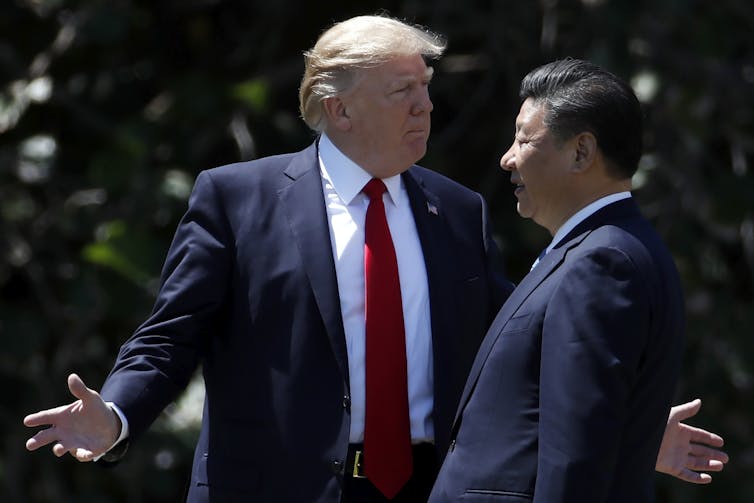
I think the only way the Western world is going to get rid of right-wing governments is if an economic crash occurs that is blamed on right-wing policies, such as Trump’s trade war or a no-deal Brexit.
I will update this article tomorrow morning with more information on the count, and the Senate results.
A Vanuatu Daily Post newspaper reader has protested over Facebook addiction, describing it as ruining the lives of teenagers and youth who spend most of their time on smartphones.
The reader says that Facebook and other social media are undermining the constitution and its preamble that calls for the cherishing of cultural diversity and tradition.
The “concerned citizen” calls on internet providers, Malvatumauri (Council of Chiefs) and communities to “train and teach” social media users to make the “right choices in life” and to restore storytelling in nakamals (meeting places for drinking of kava). The letter said:
As a native Ni-Vanuatu citizen, I wish to appeal to the government and Malvatumauri Council of Chiefs to take up an active participative (sic) regular awareness over the use of social media, particularly Facebook.

-Partners-
As stated by one of our former Ministers, “Ol generation blo today, hemi ol generation blo lukluk down”!
Today as you can see around our different societies in Vanuatu, teenagers and youth spend most of their valuable time with their smartphones to access Facebook, playing games, and accesing other social media apps.
The present era of technology has changed the attitude and behavior of Vanuatu teenagers and youth compared to the past, and it results to (sic) many social problems in our societies.
These behaviors defeat the purpose of our preamble, that is cherish our cultural diversity and traditional Melanesian values and Christian principles. Our cultural norms such as sitting with our parents for family talk, and listening to cultural and historical stories and a frequent “Storian tuketa” in our various nakamal time has been replaced by the high use of smartphones and social media.
Given that, I am suggesting that our government should work closely with the internet providers, Malvatumauri and the communities to train and teach its users, especially teenagers and youth, to understand the causes and effect, in order to make right choices in life and also to reduce disrespectful attitudes.
The provincial elections last Sunday have shaken the political landscape in New Caledonia with an upheaval in the Southern province that will influence developments leading up to the next two referendums on independence.
The poll results – especially in the most populated Southern province – have stunned the Pacific territory for three reasons:
• After three terms and 15 years in power, Caledonia Ensemble and its emblematic leader Phillipe Gomès have lost heavily in the South – and also their majority in the legislative Congress.
Anti-independence Sonia Backès … elected Southern provincial president. Image: Caledonia TV screenshot/PMC
• The anti-independence leader Sonia Backès and her new l’Avenir en Confiance (Future with Confidence) coalition have won by a landslide in the South and yesterday she was elected president of her province.
• A Polynesian political party, Eveil Oceanien (Ocean Awakening), emerged for the first time, supported by the Wallis and Futuna community, and by winning three seats in the Congress it now holds the balance of power.
-Partners-
The turnout was far lower than the historic referendum on independence last November, barely reaching 60 percent.
New Caledonia’s elected provincial presidents elected yesterday (from left) … Paul Neoutyine (Northern), Jacques Lalie (Islands) and Sonia Backès (Southern). Image: Caledonia TV screenshot/PMC
The right-wing 43-year-old Backès ran a campaign by criticising the previously entrenched Caledonia Ensemble (Caledonia Together) and promoting strong anti-independence and security views.
Independence opposed When Caledonia Ensemble proposed negotiations and talks with the pro-independence groups, Backès and her coalition opposed any notion of independence.
Her coalition won more than 28,000 votes out of 72,000 in the Southern province. That won it 16 seats out of the 32 seats dedicated to the South province in the 54-seat Congress.
Caledonie Ensemble gained 7 seats, the pro-independence FNKS 7 seats and Eveil Oceanien 3 seats.
The final lineup in the New Caledonian Territorial Congress in Noumea. Image: PMC screenshot
Eveil Oceanien were regarded as outsiders, completely unknown in political life and now the party is going to play a balancing act between pro and anti-independence blocs – and also within the new anti-independence bloc.
Yesterday’s election of Sonia Backès as the new president of the Southefn province after two voting rounds highlighted that role.
In the Northern province, the charismatic President Paul Neoutyine keeps the majority and his presidency.
However, as in 2014, the race between his Union National (UNI) list for independence and another major pro-independence party, Union Caledonienne-FLNKS, was tight.
Uni won in North In the end, out of the 15 seats dedicated to the Northern province in the Congress, Uni won 7 seats, UC-FLNKS 6 seats and 2 went to the non-independence Agissons Pour Le Nord.
In the Loyalty Islands province, once again the participation rate was low. Many people did not turn out to cast their ballots resulting to a 66 percent participation rate.
Also many Islands province voters have moved to the Southern province for work. The voters retained UC-FLNKS in power.
Yesterday, its representative Jacques Lalie was elected as the provincial president.
Out of the 7 Congress seats allocated to this province. UC-FLNKS won 3 seats, the challengers Palika made significant progress to gain 2 seats, the Labour party won 1 seat and so did Omeyra Nisseline for her Liberation Kanak Socialiste party.
Despite just her first appearance in politics, Nisseline won 1536 votes.
For the voters the choice was difficult as there were 8 lists running for the Island province with 21,000 registered voters – 7 of them being pro-independence.
Slim majority The majority in the Congress is really slim with 28 anti-independence seats and 26 for independence.
The 3 Oceanian seats are going to play a critical role as New Caledonia shapes up for the next two political referendums in independence next year and in 2022 under the Noumea Accord.
Duke Menangois a journalist for the independent northern-based Caledonia Television. He filed this special report for the Pacific Media Centre.
A voter at Mont-Dore. Image: Duke Menango/PMCVoting in the New Caledonian provincial elections. Image: Duke Menango/PMC
Since the news broke of his passing, Bob Hawke has been feted as the “environmental prime minister”. From saving the Franklin River, to protecting Antarctica from mining, conservationists have praised his environmental legacy in the same way economists have lauded his financial reforms.
Hawke was in the Lodge during the crucial period when Australia first became aware of – and tried to grapple with – the issue of climate change. And the trajectory of his leadership, not to mention the manner and timing of his political demise, leaves behind a huge question of what might have been.
Hawke had been in the public eye since becoming head of the ACTU (a far more consequential body back then) in the late 1960s.
Famously, he took the leadership of the Australian Labor Party from Bill Hayden on the morning that then Prime Minister Malcolm Fraser called the 1983 election. That election had a major environmental issue: the proposed damming of the Franklin River in Tasmania.
Labor promised to halt the project if elected, and it duly did so, winning the court case later that year. But elsewhere Labor remained reluctant to use its federal environmental powers in a wholesale way. Although there was a National Conservation Strategy, Hawke and his senior ministers remained focused on transforming Australia’s economy, bringing down tariff barriers, floating the dollar, and much else.
There were specific battles over the Wet Tropics, uranium mining, and other “green” issues. But something was coming down the track that would ultimately outstrip them all.
Climate conundrum
Barry Jones, Hawke’s science minister from 1983 to 1990, tried in vain to get ministers interested in climate change. Jones mournfully noted in 2008 that he had raised the alarm in 1984, but his cabinet colleagues did not listen:
The response from my political colleagues in Canberra was distinctly underwhelming. I think some of them were persuaded by (industry) lobbyists to say sooner or later a technological fix will come up.
Political journalist Niki Savva’s memoir, So Greek (p.136), gives a clue as to the possible reasons behind this:
Bob Hawke couldn’t stand Barry. A few journos, included myself, were talking to Hawke at the back of his VIP aircraft once about his ministers, when one of my colleagues said to him: “Take Barry Jones…” Hawke interrupted and said testily, “No, you take him.”
It would take a different, more politically cunning minister in Hawke’s next cabinet (1987-90) to bend his colleagues’ ears towards the climate question. The incoming environment minister, Graham Richardson, realised the electoral importance of green issues – whether the ozone hole, deforestation or sewage – in helping Labor differentiate itself from the Liberals. Meanwhile, Hawke had other advisors who were also fighting the green fight from within, and noisy large environment groups without.
After the Commission for the Future (a Barry Jones initiative) had launched the Greenhouse Project in 1987, Hawke began to give speeches about the importance of action against the emerging threat of global warming.
In June 1989, Richardson, having proposed a greenhouse emissions target only to see the idea nixed in cabinet by treasurer Paul Keating, noted:
The environment is galloping up the hit parade, and will be top of the pops pretty soon. It’s come from nowhere as an election issue to be Number Two to interest rates.
Hawke’s 1989 statement on the environment (jokingly called the World’s Greatest Environmental Statement) contained little detail on the idea of emissions reductions. Ironically enough, the Liberals went to the March 1990 election with a more ambitious emissions target than Labor.
After winning the 1990 election with Green preferences, the Hawke government established the “Ecologically Sustainable Development” policy process. It featured nine working groups in areas including agriculture, tourism, energy use, and so on, with an overarching “greenhouse” group added later.
However, by 1991, the climate issue was slipping down the charts once more, eclipsed by concerns such as the first Gulf War and the “recession we had to have”. What’s more, Hawke’s relationship with Keating had broken down after he reneged on his promise to stand aside after a third term, and the airwaves were now dominated by political intrigue.
Rising resistance
Meanwhile, the business community was growing more organised in its resistance to environmental regulation. After Hawke vetoed a uranium mine in Kakadu National Park in 1991, industry formed the Australian Industry Greenhouse Network (see Guy Pearse’s High and Dry for the full story) to make sure climate policy didn’t follow the same path.
Hawke stuck to his guns. In October 1991, at a Commonwealth Heads of Government meeting in Harare, Zimbabwe, he pledged to go to the following year’s Earth Summit in Rio and apply maximum pressure for global action.
Hawke’s days as prime minister, however, were numbered. In December 1991, after a lacklustre parliamentary response to John Hewson’s “Fightback!” policy launch, Keating’s forces moved in for the kill. Hawke’s time as leader had begun and ended with leadership coups – a tactic that has become an even more potent threat in recent years as the climate wars have heated up.
Keating didn’t go to Rio in 1992, making Australia the only OECD country that didn’t have its top political leader present at the landmark summit.
Australia produced an eye-wateringly weak National Greenhouse Response Strategy that was not worth the paper it was written on, and was within two years challenged by greens seeking a carbon levy.
There was an effort to get more meaningful domestic policy ahead of the first round of UN climate talks in 1995. But this was defeated by a beefed-up constellation of energy companies, academics and think-tankers, with newspapers and unions helping. Since then, Australian climate policy has been, to put it mildly, inadequate.
Could it have been different?
Hawke had a penchant for the grand gesture – from “no Australian child will be living in poverty” to “Australian servicemen not dying overseas” – and this naturally prompts us to ask “what if”?
What if he had been at Rio? What if Australia had invested properly in energy efficiency, solar and other renewables? Of course it’s entirely conceivable that the business community’s response would simply have been even more ferocious, and the environmental movement’s early-1990s malaise all the more pronounced. But it’s not impossible to imagine that Hawke’s forceful determination would have carried the day, as it did on so many others.
There’s been a lot of carbon dioxide pumped into the atmosphere since Hawke was prime minister, and plenty of hot air pumped into the climate policy debate. But although Hawke fell agonisingly short of finding out who would prevail in 2019, the next prime minister’s climate task is clearer than his, and far more difficult: preparing Australians for inevitable consequences of past policy failures.
Australia has changed in many ways over the past two decades. Rising house prices, country-wide improvements in education, an ageing population, and a decline in religious affiliation, are just some of the ways it has changed. At the same time, political power has moved back and forth between the two major parties. How much can we attribute changes in political power to changes in who we are?
Quite a lot, as it turns out.
Finding the ‘average’ electorate
We analysed election results from 2001 to 2016 and mapped them against data from the census to see how socio-demographic characteristics influence voting patterns, and how this has changed over time.
A simple way to measure voting patterns is to consider the two-party preferred (2PP) vote, looking at only the Coalition and the Labor party.
More than 30 socio-demographic characteristics were considered, and an “average” electorate was created using the national electoral average for these characteristics. The influence of each characteristic is then measured by how much the two-party preferred vote differs from the average electorate due to that particular socio-demographic characteristic.
Successive Labor leaders accuse the Coalition of only caring about the “top end of town”. The Labor party typically campaigns on more progressive policies, which often include tax policies that adversely affect higher income earners. Conversely, the Coalition tend to favour policies that reduce taxes.
So it is no surprise that wealthier electorates are more likely to support the Coalition, with incomes having a strong positive effect on the Coalition’s two-party-preferred vote. Unemployment however, is not as influential.
And since 2007, electorates with higher education levels are associated with supporting the Labor party, although this effect is significant only in 2016. Before 2007, education had a negligible effect.
Industry and type of work
Despite the Construction, Forestry, Mining and Energy Union (CFMEU) traditionally supporting Labor, electorates with higher proportions of workers in “extractive” industries (mining, gas, water, agriculture, waste and electricity) and “transformative” industries (construction or manufacturing) are consistently linked with higher support for the Coalition, with the impact of this effect slightly increasing over the years.
This is not surprising. The Coalition is seen as the party with closer ties to traditional energy industries, which still see a role for fossil fuels in Australia’s energy mix. Labor, on the other hand, introduced the mining tax in 2012 (which was first floated by Kevin Rudd in 2010), and has a renewable energy target of 50% electricity generation by 2030 .
Similarly, electorates with proportionally more workers in managerial, administrative or sales roles are also more likely to support the Coalition.
Diversity
Larger migrant populations from the Middle East and South-Eastern Europe are associated with Labor support. Whereas the number of people born in Asia, the United Kingdom and elsewhere have no discernible effect.
However, speaking languages other than English appears to have a far stronger effect. Electorates with more diverse languages are associated with higher support for the Coalition from 2004 onwards.
In 2016, an electorate with a high proportion of people who speak a language other than English favour the Coalition by more than 12% when compared to the average electorate (on a 2PP % basis).
Other influencing factors: household mobility, relationship types and age
In each of the six elections, electorates with a higher proportion of people that have recently (in the past five years) moved house were more likely to favour the Coalition.
Our analysis controls for characteristics of home ownership and rental prices, so this effect is not simply due to electorates having low rates of home ownership, or due to electorates having high rental prices. Instead, it suggests people who are more transient are also more likely to be conservative voters, regardless of their home ownership or rental status. (This would need further study, as we do not have individual level voting data.)
De facto relationships, but not marriages, are also found to be an important (and significant) predictor of the two-party preferred vote in all six elections, with more de facto relationships associated with higher support for the Labor party.
Older people are often believed to be more conservative, and indeed we found that electorates with a higher median age are more likely to support the Coalition party.
When does an electorate vote very differently from what their socio-demographics would suggest?
The ten electorates with the largest difference between actual and predicted results in 2016 are shown below:
This suggests something beyond socio-demographic characteristics is impacting the results. For example, the Coalition had a much higher vote in Wentworth than predicted in 2016 (and also in 2013), probably due to the popularity of Malcolm Turnbull.
It’s always easy to romanticise the past – in celebrating the prime ministership of Bob Hawke it is important to remember it had its peaks and troughs.
Trouble marked many years – the fall of ministers, nasty spats between the PM and his treasurer – and it ended badly. After winning four elections, Hawke was dumped by caucus.
And Hawke’s successes look easier in retrospect than they were, or appeared, at the time.
Having imposed that reality check, another reality is that without doubt, Hawke did more, and did it better, than any of the prime ministers we’ve had in the last decade, and probably any PM since he left.
Many Liberals put John Howard up there with Hawke, but the totality of his achievements don’t warrant that conclusion, despite his legacies of gun control and the GST.
And Paul Keating’s major contribution was as treasurer. In the top job, his most singular success was clinching the unwinnable election; he had policy victories, such as the Mabo legislation, but it was a prime ministership of unfulfilled promise. Arguably, one factor was he got the post too late.
So if Hawke was the best of our modern prime ministers, what was special about his governing?
Partly – but only partly – the times make the leader.
When Hawke won power in 1983, the Australian economy was under pressure to open itself to the world. Any government would have had to deal with that. It was a question of how to make the adjustments, which inevitably would involve some pain.
While the challenges imposed by the time put exceptional demands on Hawke and his government, they also provided the opportunities to shine.
Although it’s less than four decades ago, this was a very different political environment in which to operate, one with a vigorous mainstream media but without social media or the 24-hour news cycle. Paradoxically, it was an easier time in which to have a serious policy debate.
At the heart of Hawke’s political strength was his character, and his personal story. The Australian people had a great love affair with their future PM well before he entered parliament.
They admired, albeit wondered at, his free-wheeling style – the I’ll-do-it-my-way nature of the man. For many people, Hawke typified what they thought of as the true Australian, even if that was a caricature.
This was vital politically because it enabled Hawke to connect with the public. People were inclined to trust him, even when his government’s policies demanded sacrifices or involved U-turns.
Days before the 1983 election, Hawke paved the way for breaking promises if the circumstances he inherited demanded it. When things panned out that way, there was more public understanding than you’d see today.
Hawke had the temperament for governing. Before he became leader, some critics wondered about his suitability for the job. Would he be too volatile to run a team? Would he lack personal restraint?
In fact he was adept at disciplining himself and, in general, managing his ministers. Secure in his skin – he had a large ego but not a fragile one – he usually knew how much rein to give ministers, and when to rein them in. Gareth Evans wrote: “So long as ministers weren’t screwing up, or deviating too far from the government’s collective storyline, he let us get on with the job”.
The relationship with Keating was highly productive, though progressively harder to handle. On policy, Keating was angry when Hawke overrode him to abandon the push for a broad-based consumption tax, settling for more modest reform. For Hawke, it was a matter of what the traffic would bear.
Hawke’s biggest management failure was his own exit. Having agreed on a succession plan with Keating, he went back on it and stayed too long, fracturing the government and leading to his forced departure.
He was very fortunate in those around him – his cabinets contained some quality players.
Apart from Keating, ministers such as John Button, John Dawkins, Evans, Neal Blewett, Susan Ryan, Bill Hayden, Kim Beazley, Brian Howe, and Peter Walsh were among those who were notable not just in their areas but as contributors to the collective discussions. Hawke and those around him had also learned what not to do from the Whitlam experience.
In Hawke’s day, Labor’s caucus and the ALP’s extra-parliamentary wing were noisier beasts than now. Wrangling the caucus could be testing work, for Hawke, Keating, individual ministers and factional chiefs. Party conferences still had real teeth, and they too, had to be cajoled to endorse what many in the rank and file thought “unLabor” policies.
A linchpin of the Hawke government, facilitating trade offs between economic reform and social wage benefits for workers, was the accord with the union movement. Keating did much of the negotiating under its framework, but Hawke’s deep roots and connections in the union movement were invaluable.
So what can be taken from then and applied to now?
We can’t conjure up a Hawke-style personality. No present leader touches him for charisma, popularity or communications skills, even leaving aside the larrikin history (which some say could never pass muster in our more politically-correct era).
These are harder times in which to govern – because of the low level of public trust in politicians, the nature of the news cycle, and much else. Nor are there those compelling circumstances to help shape a government’s agenda and drive change.
But Hawke’s emphasis on bringing people together, in the community, in his party, in his cabinet, carries lessons for a contemporary prime minister. The ability he showed to look to the longer term while still balancing out the immediate politics is much needed today, as are ministers able and willing to bring intellect to arguing their cases, not just talking points.
Political fallout from a controversial loan taken on by Papua New Guinea’s government five years ago could hinder rather than help attempts to remove Prime Minister Peter O’Neill.
O’Neill and other leading officials have been referred by the Ombudsman Commission to a Leadership Tribunal over a US$1.2 billion loan his government took on from Swiss-based investment bank UBS in 2014.
The ombudman’s report, which was completed last December but only handed to the Parliament Speaker, Job Pomat, late last month, is yet to be tabled in the house.
PNG Ombudsman Commission … UBS loan report implicates key political leaders, but not yet tabled in Parliament. Image: PMC screenshot
However, the report has been published at a time when the parliamentary opposition, bolstered by recent defections from the government, is planning for a vote of no confidence against the prime minister later this month.
-Partners-
The UBS loan was nominally taken for the state to buy a 10 percent stake in oil and gas producer Oil Search, a major player in PNG’s burgeoning petroleum sector.
In last week’s heated Parliament debate the prime minister said it was imperative for the state to regain Oil Search shares.
These were earlier lost after being mortgaged by PNG’s Sir Michael Somare government in 2009 as it sought finance from the United Arab Emirates-based International Petroleum Investment Company to gain equity in the country’s first LNG gas project.
‘Strategic investment’ “The Treasury officials said the Oil Search investment is a strategic investment to government,” O’Neill explained in Parliament last week.
“So the company decided to offer the government of Papua New Guinea at a special issue so we can secure the 10 percent. Why? Because Oil Search, even today, is the biggest company in PNG, is the biggest taxpayer in PNG.
However, the report reveals that the Ombudsman found the prime minister failed to present the government’s proposal on the borrowing of a loan, from UBS’ Australia branch, in Parliament for debate and approval as required by the constitution.
O’Neill was found to have misled the cabinet into approving the loan, among other irregularities. But he was not alone.
The commission’s findings also implicate the former Finance Minister, James Marape, who was found to have signed off the loan’s approval as minister despite knowledge of irregularities and “that his actions were improper”.
According to the opposition’s justice spokesman, Kerenga Kua, the deal and O’Neill’s lead role in pushing it through were very suspicious. He said the greatest transgression in the deal was its commercial injustice.
“In the end we only held that share for about twelve months before it was foreclosed by UBS and sold. So you see we don’t have those shares in our hands any more, because the state fell into default on that loan arrangement.”
Stock price fell PNG was forced to sell its Oil Search shares when the stock price fell sharply, incurring a big loss. On the other hand, UBS profited around US$83 million in fees, interest and trading revenue from the deal.
Kua said the financial professionals involved in arranging the huge loan must have known the transaction was bound to fail for PNG.
“They would have seen this as a scam, a real professional scam. Because everybody knew of the state’s financial vulnerability, and its lack of cash flow to pay for that loan,” Kua said.
“Yet they created a monster, so that within a matter of months it would fall into default, and then you foreclose on the asset, cover yourself. But what are the people of PNG left with? Nothing, except a debt of 3 billion kina [NZ$1.4 billion].”
But an issue over which the opposition has been attacking O’Neill for years is now proving problematic for the MP seeking to replace the prime minister.
Marape, who resigned last month as minister and left the ruling party, has emerged as the opposition’s choice for alternative prime minister in a motion of confidence against O’Neill which it lodged last week.
But along with other officials, including Government Chief Secretary Isaac Lupari, Treasury Secretary Dairi Vele, and the Central Bank Governor Loi Bakani, Marape has also been referred by the Ombudsman Commission for investigation under the leadership code over the UBS loan. This undermines his own recent attacks on the prime minister.
Questions unsuccessful Standing on opposite sides of the Parliament chamber for the first time last week, Marape questioned the prime minister about the loan process. The questions were unsuccessful because the prime minister was able to remind Marape that he was also involved in those decisions himself.
While it remains to be seen whether O’Neill, Marape and others will face the Leadership Tribunal, the opposition continues to portray the prime minister as the lead transgressor in the UBS saga and other controversies.
The former Health Minister, Sir Puka Temu, who also left the government last month, has portrayed the prime minister as exerting too much control on state departments, overriding the authority of ministers.
“I resigned because I saw things were not working well. There were a lot of corrupt practices and there were governance processes from agencies and bodies of the state that the leaders did not support,” Sir Puka said.
O’Neill has denied any wrongdoing, characterising the investigation as politically motivated, and part of a “dirty game” by the opposition as it tries to lure support to change the government.
He has indicated that the issue would be the subject of a judicial review.
Although he was a member of the last Somare government in its later stages, O’Neill has placed blame with that regime for placing PNG in a weak position when it sought finance in Abu Dhabi for the LNG Project.
Country ‘mortgaged’ “When they borrowed that money, when the mortgaged not only Oil Search, but they borrowed every state-owned entity of this country,” O’Neill explained.
“So if we wanted to sell one of the planes in Air Niugini, we had to ask the permission of the Arabs. If we wanted to sell one of the buildings in any of the SOEs, we had to ask the Arabs. So literally, we were mortgaged to the Arabs.”
But Kua said the O’Neill government’s purchase of Oil Search shares under the controversial UBS loan was a far more shoddy deal than the IPIC transaction.
“The IPIC transaction led to PNG owning 19.26 percent in the PNG LNG Project. That equity is still there and annually we are receiving over a billion kina in revenue from that project,” he explained.
The UBS loan was opposed from an early stage by the then Treasurer Don Polye, who ultimately refused to sign off on the deal before resigning in protest.
Polye insisted that the loan required parliamentary approval, warning that taking the loan on would break the country’s official debt ceiling.
The former Kandep MP was also not involved in the negotiations with Oil Search on the purchase of the shares.
‘Cup of coffee’ According to the Ombudsman report, the agreement to buy the shares was reached “over a cup of coffee” in a swanky Port Moresby hotel when O’Neill and Vele met with Oil Search’s managing director Peter Botten and its board chair, Gerea Aopi.
The government’s purchase of the Oil Search shares allowed the company to buy a stake in the Elk Antelope gas field in PNG’s Gulf province. This resource is being developed by French company Total SA to be the second major LNG project in PNG.
The Papua LNG Project agreement was signed by Total and the government last month.
However, the agreement immediately preceded the exodus from O’Neill’s ruling party, and was cited as a causal factor in the move by several of the MPs who resigned, including Marape.
Warning that interests of provinces and landowners were not being protected, the MPs lamented that promised equity and royalty benefits from PNG’s first big LNG gas project, based in Marape’s province, had still not transpired, 10 years after that project agreement.
Meanwhile, the Chief Ombudsman, Richard Pagen, says the commission submitted its final UBS report to the Parliament Speaker, Job Pomat, on April 30.
Asserting that the commission has jurisdiction over the prime minister’s office, Pagen said the Speaker must table the report within 8 sitting days of receiving it.
Public interest However, he added that the commission decided to publish the report as it considered it a matter of public interest
Only one day of Parliament sitting has lapsed since the handover of the report. That was last Tuesday, May 7, the same day the opposition lodged its motion of no confidence, when Pomat adjourned parliament until May 28.
PNG’s Attorney-General has filed a Supreme Court application to which could yet delay the confidence vote against the prime minister proceeding.
Opposition MPs say they’re confident that the vote will go ahead. The group is not likely to change Marape’s nomination as alternative prime minister, but his involvement in the UBS loan may yet count against him.
Source: The Conversation (Au and NZ) – By Andrew Thornhill, Research botanist at the Botanic Gardens and State Herbarium of South Australia/Environment Institute, University of Adelaide
Sign up to the Beating Around the Bush newsletter here, and suggest a plant we should cover at batb@theconversation.edu.au.
On the western side of Mount Bartle Frere, the tallest mountain in Queensland, grows a tree that shares an ancient link to Australia’s most dominant plant group.
To get there, you must find a track hidden by rainforest and then walk for around an hour up and down a dirt path, until you reach cathedral-like giant red barked trees. This is Stockwellia quadrifida, also known as “Vic Stockwell’s puzzle”: a close but anciently separated relative of the eucalypts.
This ancient tree is best suited for wetter and warmer environments, a throwback to when this continent was still connected to South America and Antarctica 40-50 million years ago, in the supercontinent Gondwana.
But this rare plant is now at risk by an introduced threat, myrtle rust, a plant disease that was accidentally introduced to Australia from South America.
Photos courtesy of Stuart Worboys and CSIRO.
Sister to the eucalypts
In my opinion, Stockwellia trees are in the same league as California Redwoods – they’re both old, with very few close living relatives. In fact, they are probably more special, as only around 400 Stockwellia trees remain.
Some of the trees I saw in Queensland have large buttressed roots and are hollowed out so you can walk inside the tree and stare upwards. Their bark is strikingly red, and their enormous size means you have to crane your neck to see the top.
Stockwellia takes its name from a Queensland forest ranger named Victor Stockwell who worked in the Boonjee area on Mount Bartle Frere where the trees grow. While the species wasn’t officially scientifically described until 2002, it had been known to botanists for many decades.
Stockwellia quadrifida can grow up to 40 metres tall. Photo: Stuart Worboys.Author provided (No reuse)
The trees were first identified using aerial photography. For Vic Stockwell, the tree was a “puzzle” because despite his vast experience in the forests of Far North Queensland, he was surprised to come across a species of tree he didn’t recognise.
Ancient rainforest groups
In the early 2000s, a DNA study found Stockwellia belonged to a group of rainforest trees called the “mesicalypts”, a name coined by my colleagues and I.
Mesicalypts are a sister group to Australian eucalypts, and are made up of four species of rainforest plants, including Stockwellia. Eucalypts, on the other hand, have more than 800 species growing all over Australia, in much drier conditions.
DNA results suggest there is also another evolutionary group in between mesicalypts and eucalypts which only grows in New Caledonia, a species called Arillastrum gummifera. We have informally named this single species group “newcalypt” – New Cal-(edonian) (eucal)-ypt – because we didn’t want to make it feel left out from getting a new informal name.
The Conversation/Andrew Thornhill
Puzzling history
Molecular dating of these groups revealed some even more enigmatic things about the divergence of the mesicalypts and the newcalypt from the eucalypts.
The sole New Caledonian species is estimated to have had a common ancestor with the eucalypts around 59 million years ago. This poses an interesting question. How did a plant that old end up on a land mass that we think is only 30 million years old?
We don’t really know yet, and botanists still debate about where it came from and how it got there.
Mesicalypts are also around 60 million years old and we estimate Stockwellia diverged from its nearest living relative around 30-40 million years ago. This was in an epoch called the late Eocene when the world was much wetter and warmer, and when Australia was still connected to South America and Antarctica.
Their bark is strikingly red, and their enormous size means you have to crane your neck to see the top.Stuart Worboys, Author provided (No reuse)
With no fossil record of any ancient mesicalypts, it’s unclear how diverse and widespread they were back then. If we assume more species of mesicalypts once existed, then the ones we see today are the last living survivors from a very different past.
Their history is also the tale of two different fortunes.
The mesicalypts are better suited to live in wetter and warmer environments, and their relatives – the eucalypts – are better suited to drier and hotter conditions.
When Gondwana finally split and Australia started drifting north, one group had to hang on as their suitable growing conditions began to shrink, while the other hit the jackpot and became the dominant vegetation of the continent.
An extinction threat
Once, the main threat to the small number of Stockwellia populations appeared to be only white cockatoos eating their seeds.
But now they are menaced by something more sinister than birds. More than a decade after the species was officially named, I was taken to see the Stockwellia by Stuart Worboys from the Australian Tropical Herbarium.
On this trip Stu found leaves of Stockwellia with myrtle rust on them – the first such recording for the tree.
Myrtle rust is a disease of the Myrtaceae family, and was accidentally introduced from South America in the late 2000s. It attacks plant leaves, fruit and, in some cases, kills the plant outright.
The Australian Myrtaceae have had no time to adapt to myrtle rust. What is happening now could cause the extinction of some extremely unique Australian plants – including Stockwellia.
Myrtle Rust poses a threat to these ancient trees, and the disease might have come from the shoes of tree-hugging visitors.Author provided (No reuse)
It is sad to think a plant group that has hung on for so long, in a secluded part of Australia, minding its own business, now faces an introduced threat.
The hunch is that the myrtle rust was introduced to Stockwellia from the shoes of one of its human visitors. Unfortunately, we may have loved the tree to death.
Let’s hope it’s tough enough to withstand the rust and live for many more millions of years. If it is lost, it would take with it 40 million years worth of evolutionary history in Myrtaceae. And after surviving so much tumultuous history of changing continental climates, cyclones, and everything else that a tropical environment could throw at it, that would be a very sad thing.