Source: The Conversation (Au and NZ) – By Philippa Martyr, Lecturer, Pharmacology, Women’s Health, School of Biomedical Sciences, University of Western Australia
Aspirin is one of the most widely used drugs in the world. Its main ingredient comes from a natural product, salicin, found in plants such as willow and myrtle.
Aspirin is also a good example of how myths build up around ancient medicines.
Its origins have been closely linked with Hippocrates, the famous ancient Greek doctor and so-called father of medicine. He’s said to have used willow for pain relief, inspiring the development of aspirin centuries later.
But his writings barely mention willow. So why do we still believe the myth?
What’s all this about willow?
Practically every history of aspirin tells you Hippocrates prescribed willow to women in labour. Some say he prescribed willow leaf tea. Others say he told them to chew willow bark.
But when we look at what Hippocrates actually wrote, there is just one reference to burning willow leaves to make smoke for “fumigating” the uterus to get rid of a miscarried pregnancy.
This is pretty much the only reference to willow — ιτεα or itea — as a drug in these writings.
Willow bark and leaves were used in some ancient medicines. However, these were often used externally, rather than swallowed. Because ancient weights and measures are confusing — and sometimes missing altogether in recipes — it’s hard to tell whether there was enough salicin in an ancient recipe to make a difference.
The bark of white willow (Salix alba), which Hippocrates may have been talking about, doesn’t contain much salicin, compared with other willows and salicin-rich plants like the myrtle tree.
A clinically effective dose of 60–120mg of salicin would be very hard to obtain from simply chewing white willow bark or drinking willow tea.
White willow also contains toxic, bitter-tasting tannins. These would make it hard to consume enough bark or tea to reach that dose, and would cause stomach pain long before you got there.
Natural salicin is more abundant in other ancient plants, such as the myrtle tree. But even then you would still probably give yourself a terrible stomach ache after ingesting enough of the plant to relieve pain.
Dioscorides was an ancient Roman who wrote a guidebook of medicines, still in print today. He described willow as a remedy for stomach ache, the respiratory disease tuberculosis, and as a contraceptive.
He said if you burned willow bark, soaked it in vinegar, then rubbed it on corns and calluses, it would remove them. He also recommended a hot pack containing willow leaves for gout (which we know now as a type of arthritis).
Celsus, another Roman medical writer, said warm willow packs or poultices would treat a prolapse of the womb or bowel (where the organ literally falls out of the body). Celsus advised to push it back in, and then bandage the warm dressing on the outside.
Salicin is used today to treat corns and warts. But this doesn’t mean Dioscorides’ recipe worked because of the salicin. Vinegar is acidic and is said to soften corns on its own. Applying any kind of warm pack will also relieve pain.
If willow bark and leaves were handy and potent painkillers, we would have used them almost to extinction by now. Instead, by early modern times in Europe, willow was considered largely useless as a medicine.
This doesn’t mean willow was actually useless. It still contained salicin, but this hadn’t yet been isolated or refined into its modern form.
In around 1757, Stone chewed on white willow bark out of curiosity and was struck by how bitter it was. He wondered whether it could be used medicinally, like the bitter cinchona bark (where the malaria drug quinine comes from).
Stone gathered and dried around half a kilogram of willow bark, then ground it to powder, before taking small doses every four hours to reduce his fever. Drying the bark would have concentrated the salicin, making its effect stronger.
When the powder seemed to relieve his fever, Stone tried it on his parishioners when they were sick. In 1763, he wrote to the Royal Society, reporting it worked.
How did a plant extract turn into aspirin?
Italian researchers Brugnatelli and Fontana managed to extract salicin from willow bark in 1826. Then German pharmacologist Johann Andreas Buchner created the name “salicin” in 1828 from the Latin word for willow, salix.
Felix Hoffmann, a researcher at the German company now known as Bayer, chemically modified the related molecule salicylic acid, which was eventually named aspirin. The company patented the name in 1899.
Researchers keep repeating the myth that ancient people understood the link between willow and salicin for pain relief, partly because everyone loves an epic tale. And the story of aspirin can be turned into one, with a bit of imagination. But it’s a good reminder to look at original texts if you can.
It’s also an example of how confirmation bias works. We know salicin is in willow, and salicin relieves pain. So when we find ancient references to willow, we think ancient people discovered salicin before us.
Modern medicine likes a respectable family tree. It helps give today’s manufactured products a good pedigree. It also helps us think of these products as safe, beneficial and part of a long healing tradition.
But the “ancient” history of aspirin has a lot of holes in it. So next time you pop an aspirin, thank Hoffmann rather than Hippocrates.
Source: The Conversation (Au and NZ) – By Marissa Parrott, Reproductive Biologist, Wildlife Conservation & Science, Zoos Victoria, and Honorary Research Associate, BioSciences, University of Melbourne
Antarctica, the world’s last true wilderness, has been protected by an international treaty for the last 60 years. But the same isn’t true for most of the ocean surrounding it.
Just 5% of the Southern Ocean is protected, leaving biodiversity hotspots exposed to threats from human activity.
The Western Antarctic Peninsula, the northernmost part of the continent and one of its most biodiverse regions, is particularly vulnerable. It faces the cumulative threats of commercial krill fishing, tourism, research infrastructure expansion and climate change.
In an article published in Nature today, we join more than 280 women in STEMM (science, technology, engineering, maths and medicine) from the global leadership initiative Homeward Bound to call for the immediate protection of the peninsula’s marine environment, through the designation of a marine protected area.
Our call comes ahead of a meeting, due in the next fortnight, of the international group responsible for establishing marine protected areas in the Southern Ocean. We urge the group to protect the region, because delays could be disastrous.
Why we must establish a marine protected area around the peninsula, right now. Video: LUMA.
Threats on the peninsula
The Southern Ocean plays a vital role in global food availability and security, regulates the planet’s climate and drives global ocean currents. Ice covering the continent stores 70% of the earth’s freshwater.
Climate change threatens to unravel the Southern Ocean ecosystem as species superbly adapted to the cold struggle to adapt to warmer temperatures. The impacts of climate change are especially insidious on the Western Antarctic Peninsula, one of the fastest-warming places on Earth. In February, temperatures reached a record high: a balmy 20.75℃.
The peninsula is also the most-visited part of Antarctica, thanks to its easy access, dramatic beauty, awe-inspiring wildlife and rich marine ecosystems.
Tourist numbers have doubled in the past decade, increasing the risk of introducing invasive species that hitch a ride on the toursts’ gear. More than 74,000 cruise ship passengers visited last year, up from 33,000 in the 2009-10 season.
The peninsula is the most visited region in Antarctica.Shutterstock
The expansion of infrastructure to accommodate scientists and research, such as buildings, roads, fuel storage and runways, can also pose a threat, as it displaces local Antarctic biodiversity.
Eighteen nations have science facilities on the Antarctic Peninsula, the highest concentration of research stations anywhere on the continent. There are 19 permanent and 30 seasonal research bases there.
Another big threat to biodiversity in the peninsula is the commercial fishing of Antarctic krill, a small, shrimp-like crustacean which is the cornerstone of life in this region.
A cornerstone of life
Krill is a foundation of the food chain in Antarctica, with whales, fish, squid, seals and Adélie and gentoo penguins all feeding on it.
But as sea ice cover diminishes, more industrial fishing vessels can encroach on penguin, seal and whale foraging grounds, effectively acting as a competing super-predator for krill.
In the past 30 years, colonies of Adélie and Chinstrap penguins on the Antarctic Peninsula have declined by more than 50% due to reduced sea ice and krill harvesting.
Commercial Antarctic krill fishing is largely for omega-3 dietary supplements and fish-meal. The fishery in the waters of the Western Antarctic Peninsula is the largest in the Southern Ocean.
Krill is a vital part of the food web in Antarctica.Shutterstock
The krill catch here has more than tripled from 88,800 tonnes in 2000 to almost 400,000 tonnes in 2019 — the third-largest krill catch in history and a volume not seen since the 1980s.
How do we save it?
To save the Antarctic Peninsula, one of critical steps is to protect its waters and its source of life: those tiny, but crucially important, Antarctic krill.
This can be done by establishing a marine protected area (MPA) in the region, which would limit or prohibit human activities such as commercial fishing.
An MPA around the peninsula was first proposed in 2018, covering 670,000 square kilometres. But the Commission for the Conservation of Antarctic Marine Living Resources (the organisation responsible for establishing MPAs in the Southern Ocean) has yet to reach agreement on it.
The proposed MPA is an excellent example of balancing environmental protection with commercial interests.
The area would be split into two zones. The first is a general protection zone covering 60% of the MPA, designed to protect different habitats and key wildlife and mitigate specific ecosystem threats from fishing.
The second is a krill fishery zone, allowing for a precautionary management approach to commercial fishing and keeping some fishing areas open for access.
The proposed MPA would stand for 70 years, with a review every decade so zones can be adjusted to preserve ecosystems.
No more disastrous delays
The commission is made up of 25 countries and the European Union. In its upcoming meeting, the proposed MPA will once again be considered. Two other important MPA proposals are also on the table in the East Antarctic and Weddell Sea.
A map of the current and proposed marine protected areas under consideration.Cassandra Brooks, Author provided
In fact, for eight consecutive years, the proposal for a marine park in Eastern Antarctica has failed. Delays like this are potentially disastrous for the fragile ecosystem.
Protecting the peninsula is the most pressing priority due to rising threats, but the commission should adopt all three to fulfil their 2002 commitment to establishing an MPA network in Antarctica.
If all three were established, then more than 3.2 million square kilometres of the Southern Ocean would be protected, giving biodiversity a fighting chance against the compounding threats of human activity in the region.
Source: The Conversation (Au and NZ) – By Claire Wyatt-Smith, Professor of Educational Assessment and Literacy and Institute Director of the Learning Sciences Institute Australia, Australian Catholic University
The recently released report of the NAPLAN review — commissioned by the New South Wales, Queensland, Victorian and Australian Capital Territory education ministers — found many young people are reaching Year 9 without being able to write properly.
The number of students below the national minimum standard is higher in regional and remote areas. The difference in performance between males and females is significant and has been evident each year since 2008.
The review says the NAPLAN data indicate writing has not improved since 2011.
When we talk about writing, we are not talking about the fine motor skills associated with forming letters or handwriting, gripping a pencil or typing. We are talking about writing to communicate meaning and the role of writing in how young people learn in the curriculum.
Being able to write is important for future success. In 2019, the United Nations Educational, Scientific and Cultural Organisation (UNESCO) characterised writing as a:
… foundational skill required for communication, future learning and full participation in economic, political and social life as well as in many aspects of daily life.
But while education systems have prioritised teaching reading, far less attention and expertise has been directed to teaching writing, beyond perhaps spelling.
Our data show there is an emphasis on basic writing skills in primary school. But once students enter secondary school, it appears teaching subject knowledge competes with a focus on teaching basic writing skills.
The dangerous assumption, it seems, is that students have developed these skills in earlier years. For many students this is simply not the case.
How often do teachers teach writing?
Our survey was commissioned by the NSW Education Standards Authority. It was completed by 4,306 NSW teachers, across all sectors, stages of schooling and curriculum areas.
We asked the teachers how much time they spent on teaching writing in the past fortnight, and how often they used specific strategies. Some of these included:
asking students to set goals for their writing
analysing good models of writing with students
modelling good writing
composing text together with students in their chosen genre
allocating time for students to practise specific writing strategies
explicitly teaching students how to plan, draft, revise and edit their work.
Results show teachers in Years K-2 emphasise explicitly teaching writing. This peaks in Years 3-6, and dips significantly in Years 7-10. Following this decline, there is a noted increase in focus on explicitly teaching writing in Years 11-12.
This could reflect the emphasis on writing in most subjects as teachers prepare students for the NSW Higher School Certificate.
For instance, 58.5% of teachers in Years 3-6 spent between one to five hours in the preceding fortnight teaching writing. But this fell to 48.3% in Year 7-10, and it went up again to 56.5% in Years 11-12.
In Years 3-6 nearly 25% of teachers taught writing for five to ten hours in the preceding fortnight, compared to only 6% of teachers in Years 7-10, and 7% in Years 11-12.
What about the way they taught writing
Our survey showed Years 7-10 teachers were less likely (never, or rarely) to use interactive, instructional practices compared to teachers in other year levels. These include asking students to set goals, and helping them analyse a model of good writing to identify what works and what may not.
In K-Year 2, nearly 50% of teachers said they spent most lessons modelling writing to children. This dropped to 25% in Years 3-6, 12% in Years 7-10 and 16% in Years 11-12.
Around 70% of teachers in K to Year 6 allocated time regularly or in most classes for students to practise writing strategies independently. But this fell to 38% in Years 7-10.
Allocating time for students to practise writing strategies with the support of the teacher, and then independently, is critical for student success.
Like other complex skills, if you don’t practise, how can you improve?
Research also suggests explicitly teaching writing strategies such as planning, drafting and revising is a particularly effective method for improving writing skills of all students.
Teachers in the early years of school seem to spend the most time explicitly teaching kids to write.Shutterstock
But while more than 50% of teachers in K to Year 6 explicitly taught students to do this regularly or in most classes, only 35% of teachers did so in Years 7-10. Exactly 50% of teachers did this in Years 11-12 regularly or in most classes.
Explicitly teaching these skills connects thinking and writing and makes such connections visible and meaningful for students.
We also found far less focus on sentence construction in secondary school.
While most K-2 and Years 3-6 teachers indicated they regularly or during most lessons engaged in teaching “sentence structure”, the focus dips in Years 7-10. Only 44% of teachers regularly engaged in the practice.
Secondary teachers need a greater focus on teaching how to structure sentences and paragraphs as part of explicit regular teaching practice.
Writing must be practised, continuously
Teaching writing skills needs to be a baseline requirement for all students. The explicit teaching of these skills must be continuously revisited, building on student knowledge throughout their years of school.
Writing is a difficult skill to master and a difficult skill to teach. At the very least, secondary schools need to allocate more time to teaching this skill and for students to practise writing.
Source: The Conversation (Au and NZ) – By Hal Pawson, Professor of Housing Research and Policy, and Associate Director, City Futures Research Centre, UNSW
These are commendable actions in a long-neglected policy area, even if largely inspired by public health anxieties rather than concern for the welfare of people without a home.
Still, our research also shows the burst of activity over the past six months builds on several years of stepped-up state government action to tackle street homelessness across Australia.
people experiencing homelessness challenged official complacency with direct action, including protest camps in Sydney’s Martin Place and outside Melbourne’s Flinders Street Station during the 2017 Australian Open tennis tournament
In response, several state governments boosted efforts to reduce street homelessness. Measures included expanded outreach services and offers of housing assistance, increased spending on rental subsidies and personal support for former rough sleepers, and leasing of private rental properties as temporary social housing.
Some states even set specific targets to reduce homelessness. New South Wales, for example, pledged to cut rough sleeping on Sydney’s streets by a quarter between 2017 and 2020. Statewide, the aim is to halve street homelessness between 2019 and 2025.
Such targets are a welcome sign of ambition. They could even spur other states and territories to make similar commitments.
Rough sleepers are just the visibly homeless
As our report explains, though, these aspirations raise tricky issues of definition and measurement. And they focus narrowly on rough sleeping. Though highly visible, it’s just one of the forms of homelessness.
This approach risks airbrushing the wider, and much larger, homelessness problem. Of the 116,000 homeless people counted by the 2016 Census some 8,000 were rough sleepers. Homelessness also includes experiences such as as couch surfing and living in badly overcrowded dwellings and short-term, unsafe accommodation like rooming houses.
Crucially, homelessness cannot be overcome purely through better management and co-ordination of existing services. Nor can it be seriously tackled by state/territory governments without federal support.
These protections staved off a new, recession-induced, homelessness crisis through the winter months. But, since mid-year, rough sleeper numbers have been on the rise once again in cities including Adelaide and Sydney. This is almost certainly a problem deferred, rather than a problem avoided.
We know, for example, that many tenants who lost incomes and sought reduced rent have only been granted deferrals. They are building up big arrears.
The extent of any surge in homelessness will depend on the public health situation, the timing and vitality of post-pandemic economic recovery, and on how quickly eviction bans and income-support measures are withdrawn. However, if unemployment hits 10% as predicted, homelessness could rise by 21% according to one projection for NSW.
For state governments, housing the mid-2020 rough-sleeper cohort has been enough of a challenge on its own. Even with stepped-up assistance programs, the states lack the capacity to cope with a surge of households newly evicted from private rental housing.
Lessons from Australia’s success in tackling street homelessness during the pandemic must be integrated with ongoing services. We have to reduce reliance on band-aid interventions that are costly and, at best, only lessen the harm. Homelessness is bad for health and for our society at all times, not just during pandemics.
Governments at all levels must recognise that the growing homelessness problem of the past two decades calls for a comprehensive housing policy rethink.
Yes, governments have partnered with community organisations to get people off the streets during the pandemic, which is something to celebrate. But these successes do not resolve the underlying structural problems.
The federal government has a critical role to play in both policy and funding. It must be far more active in owning and tackling the issue. Essential first steps are to permanently boost JobSeeker payments and the rate of Commonwealth Rent Assistance. And the government should properly index these payments, as it does the Aged Pension.
Beyond this, the Commonwealth must use its greater budget capacity – more than the combined resources of the states and territories – to invest in building new social housing at scale. For almost the entire period since 1996 we’ve been building only 2,000-3,000 social housing units per year. Just to keep pace with a growing population, that needs to be 15,000 a year. It’s essential not just as a stimulus for post-pandemic recovery as proposed, but as a routine national program long into the future.
Such action should be part of a comprehensive national housing strategy to design and phase-in the wide-ranging reforms of taxes and regulations needed to rebalance Australia’s housing system and tackle homelessness at its source.
The authors are very grateful to Peter Mares for his input into this article.
Josh Frydenberg has told us his 2020 Budget is “all about jobs”.
What he hasn’t said is that it is actually aiming for a slower recovery from the recession, as far as unemployment goes, than from most recessions in Australia’s history.
That’s both the budget’s explicit forecast and the result of the measures in it.
You would be forgiven for expecting the recovery from this recession to be faster than the recoveries from previous recessions. Previous recessions haven’t involved the government requiring businesses close their doors.
In most recessions the government isn’t able to switch things back on.
Yet Australia’s recovery from this COVID recession is officially forecast to be on the sluggish side, as our graph of the recovery in the unemployment rate after each of the past eight recessions and slowdowns shows.
The budget expects the unemployment rate to peak at 8% in December this year, but then take three-and-a-half years to fall to 5.5% by mid-2024.
That’s an average decline of 0.71 percentage points per year in the unemployment rate.
Three-month moving average of unemployment rate used. The end date is the month with the lowest unemployment rate in the four years following the. recession peak, excluding any that occur after a subsequent recession. Excludes ’micro recoveries: defined as those with less than 6 months or 0.5 percentage points between peak and trough. Recessions defined using the Sahm Rule.OECD.Stat and Grattan calculations
In the 1990s recession – Australia’s most recent major recession – the unemployment rate peaked at 11.1% in late 1992, then fell to 8.3% by 1996.
That’s an average decline of 0.9 percentage points per year – a good deal faster than expected after this recession.
With, rather than ahead of, the pack
By the standards of past overseas recessions, our recovery is expected to be no more than typical.
We examined 150 past recessions in the countries that make up the Organisation for Economic Co-operation and Development and found that typically unemployment falls by 0.85 percentage points per year – about the same as what Australia expects this time.
This analysis uses all the labour force data kept by the OECD – which in Australia’s case goes back to 1966.
Three-month moving average of unemployment rate used. The end date is the the month with the lowest unemployment rate in the four years following the recession peak, excluding any that occur after a subsequent recession. Excludes ’micro recoveries’, defined as those With less than 6 months or 0.5 percentage points between peak and trough. Recessions defined using the Sahm Rule.Source: OECD.Stat and Grattan calculations
The initial phase of the Australian recovery is forecast to be quite brisk, as you’d expect given the nature of this recession and the budget assumption that a COVID-19 vaccine will be found soon.
After peaking at 8% in late 2020, unemployment is expected to fall to 7.25% by mid-next year. That decline – 0.75 percentage points in 6 months, a 1.5-percentage-point annualised fall – is on the fast side.
We’re removing support too soon
But from there on, the recovery is forecast to stall, particularly in 2022-23 and 2023-24 when only 0.5 percentage points per year is expected to be knocked off the unemployment rate.
The budget papers show that support to date has kept unemployment much lower than it would have been.
Treasury believes that without it the unemployment rate would have peaked at about 13% instead of the predicted 8%.
Which raises the question: why isn’t the government being more ambitious and aiming to bring unemployment down faster?
The rapid recovery in unemployment peters out from mid-2022 because, as this graph shows, the stimulus is set to be withdrawn quickly – the deficit is set to more or less halve next year, and then halve again over the following two years.
Policy decisions made this year actually subtract from the deficit by 2023-24.
Source: Budget 2020-21, Paper 1, Statement 2
And the stimulus is made up of measures not particularly likely to create jobs, such as income tax cuts (where much of the money is likely to be saved rather than spent) and transport infrastructure, which creates fewer jobs per dollar spent than services such as child care, health and aged care.
We shouldn’t be content with a recovery that putters along at a below-average pace.
We calculate that extra stimulus of about $50 billion over and above what was announced in the budget will be needed over the next two years to drive unemployment back down to 5%, a result that would kickstart wages growth nearly two years ahead of the government’s schedule.
Some may appear in upcoming state budgets, but there’s no doubt the Treasurer has more work left to do.
We could get unemployment down quickly
Every year that unemployment remains too high is another year that Australians can expect close to zero real wages growth, and another year that Australians young and old will continue to confront a dearth of job opportunities.
Reserve Bank governor Philip Lowe said last week he wanted to achieve more than just “progress towards” full employment.
In a new series, our writers explore their best worst film. They’ll tell you what the critics got wrong – and why it’s time to give these movies another chance.
The critical consensus on She’s the Man (2006), according to Rotten Tomatoes, is: “Shakespeare’s wit gets lost in translation with […] broad slapstick, predictable jokes, and unconvincing plotline.”
An adaptation of Twelfth Night, here Shakespeare’s heroine is transformed into Viola Hastings (Amanda Bynes) who cross-dresses as her twin brother when the women’s soccer team at her high school is defunded and disbanded.
After donning a dodgy wig and sideburns and comedically lowering her voice an octave, Bynes passes as male soccer player, taking her brother’s place as he ditches school to travel with his band.
She’s the Man was a blatant attempt to capitalise on the success of 10 Things I Hate About You (1999). The high-school set adaptation of Shakespeare’s Taming of the Shrew was a critical and commercial hit.
Dismissed by critics, I find She’s the Man a highly underrated teen film. Screenwriters Kristen Smith and Karen McCullah, best known for writing “chick flicks” like Legally Blonde (2001) and The House Bunny (2008), with director Andy Flickman, take a 400-year-old play about mistaken identities and deceit, and craft a cutting – and hilarious – commentary on gender roles in the 21st century.
One star reviews
Famed Rolling Stone film critic Peter Travers gave the film one star: “There I sit, suffering total numbness of body and brain, no longer having to wonder what it might be like to be buried alive in gooey marshmallow.”
New York Times critic Nathan Lee wrote: “She’s the Man reminds us that girls can do anything boys can do, unless those girls happen to exist in a romantic comedy, in which case their ultimate ambition is to squeeze into an expensive dress and get it on with a dumb stud.”
Roger Ebert echoed these critiques: “Can Amanda Bynes convincingly play a boy? Of course not.”
The distinction between the film’s critical reception and its cultural popularity can be seen in the Rotten Tomatoes ratings. While the critical reception accrued a rating of 43% (rotten), the audience response has been considerably more positive with a rating of 79%.
Many critics dismissed the film on the basis Bynes’ performance of masculinity was “unbelievable” – which completely misses the point.
Constructing gender
Despite being dismissed by the (mostly male) critics, She’s the Man has gained a cult following among young women.
The film satirises the societal expectations that shackle women, while portraying expectations of manhood as equally absurd.
At the end of an aggressive soccer game in the opening scene, Viola’s boyfriend is compelled to reassure Viola of her soccer skills, but she doesn’t need the reassurance — she is confident in her abilities. In contrast, when Viola teases his kissing prowess, her boyfriend requires immediate and verbose reassurance.
It is the masculine characters who have a rigid sense of gender identity and performance. The young women see the possibility and malleability of gender. They understand the absurdity of gender performance.
As Viola says to her mother:
I will not wear high heels. Because heels are a male invention designed to make women’s butts look smaller and to make it harder for them to run away.
The appeal of She’s The Man is watching young women have access to the freedoms available to young men without having to completely surrender their femininity, silliness and passions.
Bynes delivers a complex and nuanced comedic performance which deftly explores how gendered facades shift and falter. A montage of Viola following men and imitating their walks and mannerisms has the bonus of highlighting Bynes’ talent for physical comedy.
Viola’s alter ego, Sebastian, performs masculinity in overt and stereotypical ways, rendering the performance (and masculinity itself) as absurd. In one scene, Viola-as-Sebastian emphasises her sexual desirability to young women: a display of heightened masculine prowess explicitly performed for other men.
The scene where Viola-as-Sebastian claims tampons spotted in her bag are kept on hand for nose bleeds is a great example of how the film plays with cultural and social anxieties around gender — in particular the bodily functions of people with uteruses.
Masculinity is repeatedly framed as more fragile than femininity, evidenced by how many of the male characters are threatened by the mere existence of Viola in what they perceive as “their space” — sport.
In the numerous instances where Viola-as-Sebastian is at risk of being “outed”, the men presume a crisis of masculinity. When the principal catches her playing with her wig, he assumes it is the result of male pattern baldness, not cross-dressing.
The idea gender is up for grabs is outside their worldview.
Girls to the front
Historically, cultural objects beloved by young women – pop music, boy bands, chick flicks – have been culturally devalued or dismissed. But ignore young women and their tastes at your peril.
They’re our future. Our future doctors, lawyers, mothers, presidents, they kind of keep the world going. Teenage-girl fans – they don’t lie. If they like you, they’re there. They don’t act “too cool.” They like you, and they tell you. Which is sick.
Young women don’t follow trends, they set them – as evidenced by then 19-year-old Bynes who encouraged the producers to take a chance on a then largely unknown Channing Tatum, giving him his first role as leading man.
Daniel Andrews’ angst at the weekend about the multiple New Zealanders who arrived in Victoria via the travel bubble from New Zealand to New South Wales is, as much as anything, a pointer to the pressure the premier is under.
Andrews says his state chose not to be part of the bubble at this stage and he didn’t know these people were coming to Victoria. Now, he says, 55 have “turned up” from NZ.
The federal government counters that Victoria was at the meeting of the federal-state health officials committee where issues of New Zealanders travelling on were canvassed.
Andrews claims when Victoria asked the feds for details of the arrivals they were slow to pass it on. The feds deny a delay but say dealing with internal border issues is up to the states anyway.
The point is, this is a dispute of little consequence. New Zealand doesn’t have community transmission – the visitors are at the very bottom end of risk.
Andrews might be annoyed that these New Zealanders, and thus the Morrison government, have found a way to circumvent his refusal to sign up to the COVID “hotspot” definition and become part of the (one way) trans-Tasman bubble.
But Victoria has an open border for people going in (it’s a different matter for those exiting, for whom other states make the rules). So provided they’re told to abide by the current state restrictions, the presence of the New Zealanders is neither here nor there.
Western Australia is also complaining about New Zealand arrivals – it is in a rather different position because it has a hard state border.
The overall takeout is that those travelling from New Zealand in the “bubble” – which also involves the Northern Territory – might need to be given more information about the restrictions in particular states and internal borders before they leave NZ.
The micro takeout is that Andrews is picking an unnecessary fight. The verbal Victorian-federal tennis match over the New Zealanders is another indication of the tensions between the two governments.
Federal ministers tried to twist Andrews’ arm ahead of Sunday’s announcements about the next stages of opening in Victoria.
Andrews announced a range of restrictions would be relaxed from midnight. People can travel 25 kilometres from their home for shopping and exercise (widened from five). Groups of up to ten from two households will be able to gather in an outdoor places for exercise or a picnic.
Hairdressers can open, but people can’t have visitors over to watch next weekend’s AFL final (played in Queensland).
Retail isn’t scheduled to reopen open until November 2, when restaurants will be open to diners (with limits), and people will be able to leave home for any reason.
With new cases in single figures for the last five days, Andrews indicated the timetable could move faster than outlined.
The politically-embattled premier is determined to minimise risks in bringing the state out of lockdown. The federal government and business continue to rail. Andrews may judge that he’s taken the attacks from those quarters and the greater immediate danger to him is the possibility of a fresh tick-up in virus numbers.
The eventual fallout – in lost businesses, in the public’s judgement of Andrews – will be months, possibly years, in the coming.
In the meantime, whether his ultra-caution is excessive or well-judged will be fiercely debated.
He maintains it’s all on the health advice.
When asked how come his advice was at odds with the position of the federal government and epideminologsts who disagree with him, his edginess was obvious.
“I will put it to Minister Hunt and anybody else who has a view about these things, I don’t accept that anybody has a more complete picture of what this virus is doing in Victoria than the Victorian Chief Health Officer, the Victoria deputy Chief Health Officer, the Victorian health Minister and the Victorian premier.” And so he went on.
Some Victorians will welcome the timetable as tangible hope in a bottle. More than a few small business owners will see the hairdresser across the road opening and ask, why not us?
The Australian Industry Group described the announcement as “plodding steps in the right direction”, while raising a nightmare scenario, saying businesses “still have no certainty that [they] will not be forced to shut again after they have been allowed to reopen”.
The federal government’s impatience with Victoria was on show again in a Sunday statement from Scott Morrison, Josh Frydenberg and Greg Hunt, which highlighted economic and mental health costs.
“Victoria’s three-day rolling average is now below two cases per day. Maintaining this result will make a strong case for the retail and hospitality sectors to reopen before the next review date in November,” they said.
“The continued health, mental health and financial impacts of these restrictions will be profound on many Victorians. That is why we encourage Victoria to move safely and quickly towards the NSW model of strong contact tracing and a COVIDSafe but predominately open economy.”
As Morrison and the ministers say, “the national picture is a positive one” in terms of case numbers and handling them. Yet politically, the national handling of COVID continues to fray.
The conflicts around the blunders and inadequacies that led to the Victorian second wave, the imminent Queensland election in which premier Annastacia Palaszczuk is relying substantially on her COVID record, with its tough border policy, and WA’s semi-secessionist mindset are all straining the federation.
The national cabinet initially managed dissent among the various governments. But presently the disunity is swamping the unity. To the extent possible, it is important Morrison keep together what has become an unwieldy beast.
While COVID in Australia may be substantially under control when we say a thankful goodbye to 2020, 2021 will be a challenging year that would only be made more difficult by excessive fractiousness within the federation.
New Zealand Prime Minister, Jacinda Ardern. Image, Wikipedia.
Analysis by Selwyn Manning.
Selwyn Manning, editor of EveningReport.nz.
There’s a mood circulating among some circles that it would end badly for the Green Party in 2023 should it negotiate a part within a now-powerful Labour-led government.
The argument goes; that should the Greens negotiate roles within the new Government, that their voice and policies would be watered down, rendered irrelevant by the large, expanded, Labour Party. That Labour’s success in being able to govern alone would mean the Green Party’s place and purpose would be seen to be irrelevant.
It boils down to a resistance to govern for fear of being seen as mediocre.
But the counter-argument suggests: should the Green Party bow to the above narrative – to shy away from an opportunity to assert its core environmental and climate policies, to abandon the ability to inject itself into the new Executive Government’s priority policy settings – then it would relegate itself into legislative insignificance and potential political oblivion by 2023. It would also pay-waste to the ministerial experience, gains and momentum that its members of Parliament established during the 2017-20 term.
It can be argued, the Greens have proven that the Red-Green tag-team works. Unlike Winston Peters’ New Zealand First, the Greens have experienced an increased share of electoral and party list support, despite one-spectacular own goal, and despite being in government as a smaller party within the 2017-20 Labour-led Government. That is redefining MMP history.
Let’s examine that phenomenon.
Traditional Green support (that withdrew in large numbers during the 2017 election campaign) returned in part in 2020 perhaps to assist their Green Party to survive. The effect: the Green Party avoided the sub-five percent dry horrors and indeed secured a generational-shift with Chloe Swarbrick’s impressive win in Auckland Central.
As such, the Greens have made history, defining a maturing of New Zealand voter behaviour where, as a third party, have increased voter support after presiding over significant ministerial portfolios in partnership with a large party-led government.
New Zealand Prime Minister, Jacinda Ardern. Image, Wikipedia.
The Greens should avoid the cautious, strategic trap. Should the Greens shy away from negotiating, then they will likely commit themselves to a future of legislative irrelevance. That scenario would see its natural partner party Labour – under Jacinda Ardern, an environmentally and climate change sensitive leader – hoover up good and sound Green Party policy and make it its own.
It appears, Labour does not want to do that.
Labour leader and Prime Minister, Jacinda Ardern, indicated on election night and over the weekend, her wish to embark on consensus building. Her call on Sunday to Greens co-leader James Shaw set out a pathway ahead toward negotiations. While refusing to get ahead of herself on the elements of discussions between Labour and the Greens, she clearly indicated an intention to develop a consensus around policy, and use common ground as a basis of dialogue. Those are strong negotiation points that the Green leadership, caucus and membership can leverage from.
Also, both Labour and the Greens share a need to cement in a consensus-driven red-green bloc, a movement of significance, that could reshape Aotearoa New Zealand society, policy-sets, and the political and economic environment for the next two Parliamentary terms. This was a bloc of significance in determining the make-up of Government in 2017, it played a significant part in Labour’s connection to environmentalism in 2020, and will prove absolutely necessary once Labour’s main opponent, the National Party, re-invents itself to campaign as match fit and as a centre-right cabinet-in-waiting in future election cycles.
This, one get’s a sense, is what drives the Prime Minister’s pursuit of consensus building at a time of absolute power. That, in turn, offers the Green negotiators a powerful lever beyond what the numbers would suggest – ie; mutual interest.
It’s likely, Labour knows the 2020 election result is the zenith of its political successes.
Labour is not a broad-tent party. In Jacinda Ardern, it has exceptional leadership. In Grant Robertson, it has solid, assuring, strategic financial leadership. It has a deep and deepening pool of political talent in ministers that stretch well beyond the top-five. It has a ministerial line up that now has significant ministerial experience. It has a pool of caucus members ready to express their commitment to Executive Government representations. One gets the strong sense it is the party, with the politicians, with the policy sets… for this time. Interventionism, Keynesian economics shaped for the 2020 decade, and a Government with the energy to get things done. The most enduring criticism of the Ardern-led Government is the pace of incrementalism. And that, is something that the challenges of these times can demand be addressed. It is also an idiosyncrasy of which the Green Party can challenge with considerable honest broker-ship. One gets a sense that the elements of a unified red-green bloc could well sustain voter enthusiasm through this term and potentially 2023-2026.
Labour’s Prime Minister, Jacinda Ardern’s post-election media stand-ups demonstrate she knows this.
Jacinda Ardern’s wish to build consensus across the centre-centre-left, acknowledges the success of the Green Party’s election campaign. She also has indicated an interest to have discussions with the Maori Party should special votes shore up its election night win in Waiariki. Her comments appear to signal to Maori that the Ardern-led Labour Party wants to work with, and cooperate with, every Maori MP that the Maori electorate voters send into Parliament.
So is the host of Green Party MPs really reluctant to join their successes with Labour’s landslide?
It appears not.
While significant debate is occurring within the party’s membership – again that should the Greens enter into a coalition, then that will end badly for them in 2023 – the Green leadership has indicated an eagerness to negotiate.
Green Party co-leader, Marama Davidson. Image, Wikipedia.
Co-leaders James Shaw and Marama Davidson have been clear, there is much work yet to do beyond what they achieved during the 2017-20 term (despite New Zealand First’s centre-right hand-break) and are keen to have their ministers and caucus talent play their rightful part.
Additionally, Chloe Swarbrick’s impressive performance winning Auckland Central demands recognition of significance. A strong signal of resolve and commitment to the generation Swarbrick represents, would be to promote her to the executive so as to initiate her to the demands of ministerial politics and governance. One get’s the sense Chloe will become a highly significant element of future governments, and now would be the perfect time for her to engage in that journey.
Green Party co-leader, James Shaw. Image, Wikipedia.
Meanwhile, after specials, with a slightly expanded caucus (potentially including the impressive activist Steve Abel) the Greens can definitely broker relevancy on party-based constituency issues, principles, while rolling their collective sleeves up to develop policy throughout the term. Indeed with a larger slice of a Parliamentary Service research budget, the Green caucus can truly embrace opportunities for fact-based environmental activism, and work with like-minded ministers to get real gains for their voters, members, and Aotearoa New Zealand.
Such opportunity does not call for reticence. In other words, the opportunity is reality, the dangers are, at this time, abstract. With political planning, such perceived dangers can be rendered irrelevant and relegated to very last-century thinking.
After all, voters do vote for a party’s policies on the understanding that should they be able to inject those policies into government then real change will be achieved. To shy away from that democratic mandate would be an abuse of the support that the Green Party has been given.
Political commentators and journalists are searching around for the right term to describe Saturday’s election result. “Seismic” or “tectonic” might be the winner – the shift really was of that magnitude. Labour increased their vote from 37% to 49%, which is likely to rise closer to 50% after special votes are counted.
Meanwhile, National was inflicted with what has been called a “blue bloodbath”, especially in the provincial city seats that they lost. National’s party vote is down to 27%, and once special votes are counted will probably fall nearer to 25%. And they have lost the party vote in 68 of the 72 electorates in the country. Added to this, there have been some big wins for minor parties that are also history-making.
The “tectonic” term was used by political scientist Richard Shaw in this way: “This election is tectonic. Ardern has led Labour to its biggest victory since Norman Kirk, and enters the Labour pantheon with Savage, Lange and Clark. Once special votes are counted, Labour could be the first party since 1951 to win a clear majority of the popular vote” – see The Conversation’s Jacinda Ardern and Labour returned in a landslide — 5 experts on a historic New Zealand election.
The analysis of other political scientists is also conveyed in this article. Jack Vowles comments that the pre-election polls were correct, and Labour has been rewarded for being a traditional Labour government in protecting the vulnerable during a pandemic. Bronwyn Hayward points to the fact that the Greens have defied history by increasing their share of vote despite being a minor party in government, and Jennifer Curtin suggests that in the regions Labour has benefited from NZ First’s Provincial Growth Fund.
The main focus for commentators is on Labour leader Jacinda Ardern’s truly central role in her party’s astonishing victory. Rightwing commentator Matthew Hooton even suggests that Ardern might become “the greatest Prime Minister in New Zealand’s history” given the size of her win and the opportunities that it presents her – see: Jacinda Ardern joins the pantheon (paywalled).
Her accomplishment is not only impressive in terms of recent MMP history, but Hooton argues you have to go much further back to find parallels: “At 50 per cent, Ardern joins a pantheon that, since the 1930s, includes only the father of the welfare state Michael Joseph Savage (56 per cent in 1938), war leader Peter Fraser (51 per cent in 1946) and the scourge of the watersiders Sid Holland (54 per cent in 1951). The only other names that stand alongside that lot are Joseph Ward (59 per cent in 1908), King Dick Seddon (58 per cent in 1893) and John Balance (56 per cent in 1890).”
In comparing Ardern’s achievements to such political giants, other commentators have also described her as joining the “pantheon” of the greats. And Herald journalist Simon Wilson says her victory is deserved: “New Zealanders have said thank you, thank you to Jacinda Ardern and have looked at the rest of the world and seen how lucky we are” – see: A victory for history books (paywalled). He continues: “she has been rewarded for her exceptional management skills. She kept a three-way coalition together for an entire term and has personally overseen the entire Covid response: health, economic, the works.”
It almost raises the prospect of whether New Zealand is ready to have portraits of Jacinda Ardern on our walls. Perhaps Michael Joseph Savage can finally be replaced.
It’s the politics of love according to Steve Braunias writing for the Guardian. He recalls how five years ago in a pub, Ardern as a backbench MP told him that “she wished that Labour’s message was about love”, and that now this is what the nation is showing her – see: New Zealanders have recognised the good luck that Jacinda Ardern is ours. Braunias says that the Government’s successful Covid response meant that this “was the happiness election”.
Many are calling it an historic election, too. Sunday Star Times editor Tracy Watkins says its “history in the making” and “It’s an extraordinary result, made possible only by Jacinda Ardern’s extraordinary leadership during some of the most extraordinary events in New Zealand’s history. A mass terrorism attack. A volcanic eruption. And the mother of all disasters, Covid. Ardern truly has been a leader for the times” – see:An extraordinary result made possible by extraordinary leadership.
According to former politician Bryan Gould, the extent of Labour’s win suggests “that something quite fundamental has changed in New Zealand politics”, and he too credits Ardern’s leadership with the shakeup, but only because the mood of the public has changed – see: Lessons from the election.
Here’s the key part of Gould’s argument: “They looked for leadership – that is, leadership that leads, and doesn’t merely calculate how best to buy support from the greatest number at the least cost. They saw themselves not just as individuals, but as members of a society that worked well together and in which they could feel pride. They wanted to be able to congratulate themselves on their achievements. They wanted to feel an affinity with leaders they liked, trusted and admired. They looked beyond our shores and saw examples and instances of leadership in other countries that they rejected and compared unfavourably with our own”
We shouldn’t however be surprised by the extent of Labour’s win, according to political scientist Grant Duncan, who says that the buzz that surrounded Ardern on the campaign trail was an early indication of the tectonic shift: “You just had to follow the crowds. In shopping malls and on university campuses, they flocked to see Jacinda. Judith Collins was resorting to calling up loyal party activists to back her” – see: The crowds gave a clue for Labour’s extraordinary feat.
Duncan also suggests that the opinion polls simply didn’t factor in some of the shifts caused by the referendum: “Opinion polls leading into the election were indicating Labour in the mid-forties. Pollsters failed to sample young voters who lined up to vote for cannabis legalisation and control, and mostly for Labour or the Greens.”
Labour’s overwhelming victory can be seen in how well the party did in the provinces. James Hall explains: “Labour won the party vote in every single South Island electorate, which is the first time this had happened since the MMP voting system was adopted for the 1996 General Election” – see: Labour wins party vote in every South Island electorate.
New Zealanders were not the only ones to go to the polls over the weekend. On Saturday, the Australian Capital Territory also voted, returning Labor for a sixth consecutive term after almost 20 years in office.
Andrew Barr, after almost six years as chief minister, has won a further four years in office.
The result confirms Canberra’s reputation as the most progressive jurisdiction in the Australia.
Big wins for the Greens, losses for Liberals
Labor’s vote remained steady, despite being the nation’s longest-serving government, albeit under different leaders.
The big winner on the night was Barr’s coalition partner, the Greens, led by Minister for Climate Change, Sustainability and Corrections, Shane Rattenbury.
The Greens earned a swing of 3.4%. It looks like the party will go from two to at least three seats, with the possibility of up to six in the 25-seat Legislative Assembly as counting is confirmed.
There are five electorates of five members each under the ACT’s Hare-Clark electoral system and the Greens may have at least one member in each electorate.
The big loser was the Canberra Liberals, under new leader, 36-year-old Alistair Coe. They suffered an equivalent 3.4% swing against them and lost at least one and possibly three seats.
Liberal leader Alistair Coe’s stunt-heavy campaign failed to resonate with voters.Lukas Coch/AAP
With several seats still to be decided, at this stage, the outcome looks like it could be Labor 11, Liberals ten, and Greens four.
At the 2016 election Labor won 12 seats, the Liberals 11, and the Greens two.
A closer contest was expected
The return of the government was predictable, but the result was expected to be much closer.
Commentators predicted the Labor-Green coalition could lose a seat in the small assembly. Instead, they are set to increase their majority.
ACT election watchers were expecting a closer result.Mick Tsikas/AAP
The government ran as an experienced, progressive coalition, tagging the opposition leader as inexperienced and too socially conservative for Canberra. It was a low-key, steady pair of hands approach, in contrast to an opposition relying on stunts and expensive policy proposals.
It was the Greens, coming off a solid 2019 federal election performance, who painted a vision of a “better normal”, including action on climate change and social housing, rather than business as usual.
The Liberal’s slogan was “lower taxes, better services”, playing on community concerns about rate rises and problems in health and transport services. It wanted to “grow the pie” through population growth, by appealing for the return of Canberrans attracted to nearby NSW towns by lower property prices. It also painted the government as arrogant and tired.
But the Liberal campaign, widely acknowledged to be disciplined, failed to cut through and was dogged by its inability to convincingly answer where the money was coming from for better services, if rates were frozen. The Liberals have now campaigned for almost a decade against cost of living rises without any return.
Saturday’s election result also sees the long-running controversy about the government’s investment in light rail resolved in Labor-Greens’ favour.
Despite concerns about the construction and usage of the new transport system, which launched in the city’s north in 2019, it is now seen as a positive. Canberrans in the southern suburbs want to get on board too.
Surprising results
Within the overall result, there were some intriguing variations between and within the parties and regions.
The Liberals’ lost a seat in its hitherto southern heartland, Brindabella. This may have been connected to growing concerns about climate change, fuelled by the bushfires and smoke haze at the beginning of the year.
But in the northern seat of Yerrabi, which benefited from the new light rail, Labor surprisingly looks like losing a seat to the Greens.
It was a strong election for ACT Greens leader, Shane Rattenbury.Lukas Coch/AAP
Independents and new parties made no inroads. The Belco Party, created by former Liberal leader, Bill Stefaniak, fell short in the western seat of Ginnindera, damaging the Liberals in the process.
Stinging criticism of Labor, by former Labor Chief Minister Jon Stanhope, may have driven some Labor voters, not to the Liberals, but to the Greens.
Combined with retirements, the losses among sitting members on both sides may mean as many as seven new faces in the 25-member Legislative Assembly.
COVID elections good for incumbents
Given the small size of the ACT and its traditional Labor-leanings, there are few national lessons from Saturday’s result. But the Greens will be encouraged to campaign again on a positive vision.
Meanwhile, the idea that incumbent governments thrive under pandemic condition elections also received a boost. There will be another opportunity to test this theory when Queensland goes to the polls on October 31.
After days of speculation, today’s announcement by Victorian Premier Daniel Andrews was pretty much as we expected: a significant lifting of restrictions, albeit only a half-step out of lockdown.
From 11.59pm tonight, Melburnians will be able to travel up to 25km from home, with no time limits on exercise or recreation, bringing the chance to play a round of golf or visit the hairdresser.
Even more encouragingly, we may only have to wait a week until the lockdown is lifted, the “four reasons” to leave home are removed, and retailers and other businesses can once again open their doors.
Andrews said the planned move to step three of the COVID-19 roadmap could be brought forward a week from its provisional date of November 1 if case numbers — now tracking at 7.5 new cases a day for metropolitan Melbourne and just 0.5 in the regions — remain favourable.
“Victorians have stayed the course, and we just have a little longer to go,” he said.
I agree Victorians can rightly be proud, because this lockdown was a very big ask. In fact, I see no reason why we can’t remove blanket rules such as the 25km radius and Melbourne’s “ring of steel” immediately.
Buying time
The blanket restrictions in Melbourne, which have been in place since early July, have bought time to rebuild our public health response, with stronger measures for testing, contact tracing and isolating outbreaks. The idea is to “bring the restrictions to the virus”, meaning we can now contain it wherever it might appear.
As a result, restricting the general public’s movements with the help of blanket rules makes less sense, because many Melburnians now have a minuscule risk.
I don’t understand why we need to impose a 25km limit. It’s such a big radius but will still exclude people who live at opposite ends of the city from seeing each other. Perhaps the fear is too many people will congregate in popular or scenic places. But surely that can be managed by scrutinising those particular places.
In contrast, when Singapore was coming off its second wave, it lifted restrictions when COVID-19 cases were at 60 per million people, per day. Melbourne’s current average is just over 1 case per million people, per day. If Andrews were to promote Victoria’s strategy to the rest of the world, I’ve no doubt they would agree it’s been a success, but they would probably also wonder why it is taking so long.
We had an extended blanket lockdown that was enough to quash the virus multiple times over in households. But we weren’t able to contain it in aged care, certain workplaces, and complex households.
With cases now so low, the idea that all public movement equals viral spread is not true. There’s a lot more to this virus than this sort of reductionist approach. We know probably 70% of people don’t even pass it on, and that many cases are the end of a chain of infection. If we do get a cluster, we will likely pick it up. This gives me confidence Melbourne will be able to open up fully next weekend.
Premier Daniel Andrews has told Victorians they may be able to move to step 3 of the COVID-19 roadmap within a week.James Ross/AAP Image
The wholesale rebuilding of our contact-tracing means we are now very much on the front foot. Health authorities should continue urgently interrogating and isolating new cases, particularly mystery ones.
But for the wider public, it is now important to instil a sense that the government trusts people to be sensible for themselves. The more rules we have, the harder it is for people to have a sense of agency.
The rules should now be focused on areas where there is greatest risk. Unnecessary blanket rules might get in the way of people buying in. For instance, the ring of steel shouldn’t be necessary, given the testing and tracing measures we now have in place. What’s more, I think it will be a long time before people go back to their old patterns of movement, given that people have become acclimatised to staying at home.
This also means it’s easier to consider lifting border restrictions. While we’ve been busy fighting off the second wave we’ve built the health response to a point where we can live with the virus. So things like borders become less crucial.
If authorities aren’t busy policing things that don’t make much of a difference, such as the 25km rule, it will free up resources and also mean people have one less rule, and one less fine, hanging over them.
I would also urge authorities to allow people to wear masks only in situations where it makes a real difference, as opposed to everywhere. It’s easier to trust the public to do that when they’re not being told to wear them all the time.
Over more than three months, Victorians have grown used to being told what to do in intense detail. Now it’s time for people to get back some control, and I’m hopeful we can do that in a way that’s safe.
The pre-election polls suggested it might happen. But the fact that Labour and Jacinda Ardern have provisionally won an outright majority and the mandate to govern New Zealand alone is more than an electoral landslide — it is a tectonic shift.
You can see the full results and compare them with the 2017 election here.
This is also not a result the mixed member proportional (MMP) voting system was designed to deliver.
The challenge for Ardern and Labour now will be to translate that mandate — and the fact that their natural coalition partner the Greens have performed strongly too — into the “transformational” agenda promised since 2017.
For now, there is much to digest in the sheer scale of the swing against National and the likely shape of the next Parliament.
The Conversation’s panel of political analysts deliver their initial responses and predictions.
Labour rewarded for its covid response Dr Jack Vowles, professor of political science, Te Herenga Waka/Victoria University of Wellington: It’s an historic MMP result, and that is down to one thing: covid-19. Labour and Ardern made the right calls. Comparative analysis of covid responses internationally shows it’s not just a matter of what you do, it’s a matter of whether you do it soon enough.
Labour did that and have been rewarded electorally.
The polls were largely in line with what looks like the final result will be — the Greens have done a bit better, as has Labour, and National appreciably worse. It’s unlikely they can claw that back to where earlier polls had them. Special votes will be roughly 15 percent of the total and they are likely to go more in Labour’s and the Green’s direction, as they did in 2017.
The swing away from National is pretty dramatic. If it is indeed the first single party majority under MMP and it is very unlikely to happen again for a long time. The big question is whether Labour wants to do a deal with the Greens when they don’t have to.
It might be in their interests to do so in the long run — in 2023 Labour probably will not be in such a strong position. If they have a good relationship with the Greens it might stand them in better stead, but it’s a tough strategic call.
As for New Zealand First, according to analysis of the Reid Research polls over the past months, most of their vote has gone to Labour. And that is simply another reflection of this being a covid election.
Labour was rewarded for protecting New Zealanders, particularly the most vulnerable — and that is in the traditions of the Labour Party.
Prime Minister Jacinda Ardern with her partner Clarke Gayford, second left, on stage at Labour’s election night celebration. Image: Mark Coote/Bloomberg via Getty Images
Labour win masks smaller victories Dr Bronwyn Hayward, professor of politics, University of Canterbury: With a record 1.9 million people casting an early vote, this was always going to be an election with a difference. Younger voters also enrolled in historic numbers, with a significant increase in those aged 18 to 29 enrolling across the country.
A generation’s hopes and aspirations now hang in the balance.
Labour’s victory offers the party command of the house, an unprecedented situation in an MMP government. But it masks some other remarkable achievements. The Māori Party’s fortunes have risen, with very little national media coverage.
ACT has been transformed from a tiny grouping of 13,075 party votes in 2017 to win an astonishing 185,723 party votes this year.
ACT Party leader David Seymour with supporters on election night. Image: Greg Bowker/Getty Images
The Greens defied a dominant mantra that small parties who enter governance arrangements are eclipsed in the next election. They maintained their distinctive brand and should bring ten MPs into the House.
The epic struggle for Auckland Central by Chlöe Swarbrick (Green) and Helen White (Labour) has pushed up both the Green and the Labour vote — a microcosm of the wider shift to a progressive left electorate bloc.
The challenge now is for Labour to decide to open this victory to support parties. What happens next matters as much as the election itself.
Will a Labour government led by the most popular prime minister in New Zealand’s history be incrementalist or transformative in tackling the biggest challenges any government has faced in peacetime?
The Greens’ Chlöe Swarbrick surrounded by supporters at the party’s election night party in Auckland. Image: Phil Walter/Getty Images
The Māori Party returns Dr Lindsey Te Ata o Tau MacDonald, senior lecturer in politics, University of Canterbury: Last night demonstrated that Māori voters continue to waver between the Māori Party via its electorate MPs and Labour via the party vote.
On one side there is the legacy of Tariana Turia and Pita Sharples, and the founding generation of “by Māori, for Māori, with Māori” in the post-settlement era. Rawiri Waititi, who may well take Tamiti Coffey’s seat in Waiariki, is the living embodiment of the success of that struggle.
The other side is exemplified by Koro Wetere’s triumph in 1975 in creating the Waitangi Tribunal. These two stories — struggle via protest and gradual legislative change — were deeply intertwined in Labour’s grip on the Māori seats until 2003.
Then, in one grand racist gesture, Labour proved itself a colonial government by taking the last Māori land, the foreshore and seabed, by statute.
Māori voters have not forgotten the deep betrayal of that removal of their property rights. Hence the close races tonight for those who truly inherit the mantle of the Māori party’s founders, such as Waititi and Debbie Ngarewa-Packer.
John Tamihere’s close run in Tāmaki Makaurau is more just politics, Auckland style, as usual. He may be wondering why he didn’t go with ACT, which has brought in interesting new Māori talent.
What happened to the ‘shy Tories’? Dr Jennifer Curtin, professor of politics and policy, University of Auckland: Two aspects are interesting in this post-MMP history-making election. The first is that Labour has made significant gains in the regions. It is now not solely a party of the cities — it looks to have claimed seats that have long been forgotten as bellwethers (Hamilton East and West), as well as those provincial hubs in Taranaki, Canterbury, Hawkes Bay and Northland.
This suggests that while New Zealand First had been gifted the Provincial Growth Fund to deliver regional economic growth to the regions, it was Labour that reaped the rewards of this largesse.
While covid-19 is definitely part of the reason for Labour’s success, the support is likely to have come from across the political spectrum, bringing its own challenges.
This leads into the second interesting point. Judith Collins reportedly did not share internal polling with her caucus, but public polls suggested National support was in the 30% region. Collins argued the result would be higher, that there were shy Tories who would turn out for National.
In fact, this result suggests it was “shy lefties” the polls had failed to capture. And it appears undecided voters decided National was not for them this time.
With such a mandate, Ardern must deliver Dr Richard Shaw, professor of politics, Massey University: The Prime Minister asked for a mandate and she got it. Final numbers won’t be known for a couple of weeks, but the headline result was one last seen in New Zealand in 1993: a political party in possession of a clear parliamentary majority.
All the same, Jacinda Ardern will be chatting with Green Party leaders Marama Davidson and James Shaw (and perhaps the Māori Party, depending on events in Waiariki) about how Labour and the Greens might work together in the 53rd Parliament. Perhaps a formal coalition, but more likely a compact of some sort.
She doesn’t need the Greens to govern and their leverage is limited. But a lot of people who voted for Labour would not have done so under other circumstances (no Ardern, no covid). At some point they will return home to National.
Labour will already be thinking about 2023 and Ardern knows she will need parliamentary friends in the future.
Mobbed by media and supporters, on election night Jacinda Ardern was already looking ahead. Image: Hannah Peters/Getty Image
But right now Ardern has a chance to consign the centre-right to the opposition benches for the next couple of electoral cycles. There is a chasm between the combined Labour/Green vote (57 percent) and National/ACT (35 percent).
ACT had a good night but the centre-right had a shocker. National now has a real problem with rejuvenation. With a low party vote, and having lost so many electorates, their ranks will look old and threadbare in 2023.
This election is tectonic. Ardern has led Labour to its biggest victory since Norman Kirk, and enters the Labour pantheon with Savage, Lange and Clarke.
Once special votes are counted, Labour could be the first party since 1951 to win a clear majority of the popular vote.
It has won in the towns and in the country. It won the party vote in virtually every single electorate. Labour candidates, many of them women (look for a large influx of new women MPs), have won seats long held by National.
Last night Labour was looking like the natural party of government in Aotearoa New Zealand. Ardern has her mandate — now she needs to deliver.
After days of speculation, today’s announcement by Victorian Premier Daniel Andrews was pretty much as we expected: a significant lifting of restrictions, albeit only a half-step out of lockdown.
From 11.59pm tonight, Melburnians will be able to travel up to 25km from home, with no time limits on exercise or recreation, bringing the chance to play a round of golf or visit the hairdresser.
Even more encouragingly, we may only have to wait a week until the lockdown is lifted, the “four reasons” to leave home are removed, and retailers and other businesses can once again open their doors.
Andrews said the planned move to step three of the COVID-19 roadmap could be brought forward a week from its provisional date of November 1 if case numbers — now tracking at 7.5 new cases a day for metropolitan Melbourne and just 0.5 in the regions — remain favourable.
“Victorians have stayed the course, and we just have a little longer to go,” he said.
I agree Victorians can rightly be proud, because this lockdown was a very big ask. In fact, I see no reason why we can’t remove blanket rules such as the 25km radius and Melbourne’s “ring of steel” immediately.
Buying time
The blanket restrictions in Melbourne, which have been in place since early July, have bought time to rebuild our public health response, with stronger measures for testing, contact tracing and isolating outbreaks. The idea is to “bring the restrictions to the virus”, meaning we can now contain it wherever it might appear.
As a result, restricting the general public’s movements with the help of blanket rules makes less sense, because many Melburnians now have a minuscule risk.
I don’t understand why we need to impose a 25km limit. It’s such a big radius but will still exclude people who live at opposite ends of the city from seeing each other. Perhaps the fear is too many people will congregate in popular or scenic places. But surely that can be managed by scrutinising those particular places.
In contrast, when Singapore was coming off its second wave, it lifted restrictions when COVID-19 cases were at 60 per million people, per day. Melbourne’s current average is just over 1 case per million people, per day. If Andrews were to promote Victoria’s strategy to the rest of the world, I’ve no doubt they would agree it’s been a success, but they would probably also wonder why it is taking so long.
We had an extended blanket lockdown that was enough to quash the virus multiple times over in households. But we weren’t able to contain it in aged care, certain workplaces, and complex households.
With cases now so low, the idea that all public movement equals viral spread is not true. There’s a lot more to this virus than this sort of reductionist approach. We know probably 70% of people don’t even pass it on, and that many cases are the end of a chain of infection. If we do get a cluster, we will likely pick it up. This gives me confidence Melbourne will be able to open up fully next weekend.
Premier Daniel Andrews has told Victorians they may be able to move to step 3 of the COVID-19 roadmap within a week.James Ross/AAP Image
The wholesale rebuilding of our contact-tracing means we are now very much on the front foot. Health authorities should continue urgently interrogating and isolating new cases, particularly mystery ones.
But for the wider public, it is now important to instil a sense that the government trusts people to be sensible for themselves. The more rules we have, the harder it is for people to have a sense of agency.
The rules should now be focused on areas where there is greatest risk. Unnecessary blanket rules might get in the way of people buying in. For instance, the ring of steel shouldn’t be necessary, given the testing and tracing measures we now have in place. What’s more, I think it will be a long time before people go back to their old patterns of movement, given that people have become acclimatised to staying at home.
This also means it’s easier to consider lifting border restrictions. While we’ve been busy fighting off the second wave we’ve built the health response to a point where we can live with the virus. So things like borders become less crucial.
If authorities aren’t busy policing things that don’t make much of a difference, such as the 25km rule, it will free up resources and also mean people have one less rule, and one less fine, hanging over them.
I would also urge authorities to allow people to wear masks only in situations where it makes a real difference, as opposed to everywhere. It’s easier to trust the public to do that when they’re not being told to wear them all the time.
Over more than three months, Victorians have grown used to being told what to do in intense detail. Now it’s time for people to get back some control, and I’m hopeful we can do that in a way that’s safe.
At Saturday’s New Zealand election, Labour won 64 of the 120 seats (up 18 since the 2017 election). This means a Labour eight-seat majority. The opposition National won 35 seats (down 21), the right-wing ACT ten (up nine), the Greens ten (up two) and the Māori party one (up one).
Vote shares were 49.1% Labour (up 12.2%), 26.8% National (down 17.6%), 8.0% ACT (up 7.5%), 7.6% Greens (up 1.3%) and 1.0% Māori (down 0.2%).
Under New Zealand’s system, parties are entitled to a proportional allocation of seats if they either win at least 5% of the overall vote, or win a single-member seat. The Māori party entered parliament by winning one of the seven single-member seats reserved for those on the Māori roll. The Greens and ACT also won single-member seats.
Since the 2017 election, Labour has governed in coalition with the Greens and the populist NZ First. NZ First will not be returned to parliament, as their vote slumped to 2.7% (down 4.5%), and they failed to win a single-member seat.
This will be the first single-party New Zealand majority government since the adoption of proportional representation in 1996.
In February, two polls had National ahead of Labour. But Labour recorded massive poll leads in May owing to Prime Minister Jacinda Ardern’s handling of coronavirus. Labour’s lead narrowed somewhat as the election approached, but final polls understated Labour’s lead; they won by 22 points, not the 15 in final polls.
Greens could win six of 25 ACT seats
With 78% of enrolled voters counted at Saturday’s ACT election, vote shares were 38.4% Labor (down 0.1% since 2016), 33.1% Liberals (down 3.6%) and 13.9% Greens (up 3.6%).
The ACT uses five five-member electorates, with candidates elected using the Hare-Clark system. A quota is one-sixth of the vote, or 16.7%. Preference distribution sheets have been released based on votes cast electronically. Paper ballots will be manually entered.
In Brindabella, Labor has 2.5 quotas, the Liberals 2.3 and the Greens 0.7. The Poll Bludger’s analysis of preferences has it very close between Labor and the Greens for the final seat.
In Ginninderra, Labor has 2.4 quotas, the Liberals 1.6 and the Greens 0.8. Labor leads the Liberals for the final seat, but it could be overturned on late counting.
In Kurrajong, Labor has 2.3 quotas, the Liberals 1.6 and the Greens 1.4. Preferences from Labor and minor parties give the Greens a solid lead over the Liberals in the race for the final seat. So Kurrajong is likely to split two Labor, two Greens and just one Liberal.
In Murrumbidgee, Labor has 2.2 quotas, the Liberals 2.1 and the Greens 0.7. This is a clear two Labor, two Liberals, one Green result.
In Yerrabi, the Liberals have 2.4 quotas, Labor 2.1 and the Greens 0.6. This will be two Liberals, two Labor and one Green.
In summary, Labor is likely to win ten of the 25 seats, the Liberals eight and the Greens five, with two in doubt, one Labor vs Greens and one Labor vs Liberal. In 2016, the result was 12 Labor, 11 Liberals, two Greens. The current Labor/Green coalition has easily retained power.
Queensland Newspoll: 52-48 to Labor
The Queensland election will be held on October 31. A Newspoll, conducted October 9-14 from a sample of 1,001, gave Labor a 52-48 lead, a three-point gain for Labor since a late July Newspoll. Labor’s lead is the same as in a YouGov poll that I covered in early October. YouGov conducts Newspoll, so it is effectively the same pollster.
Primary votes were virtually identical to that YouGov poll, at 37% Labor, 37% LNP, 11% Greens and 9% One Nation; the only difference a one-point drop for the Greens.
63% were satisfied with Premier Annastacia Palaszczuk’s performance and 33% were dissatisfied, for a net approval of +30. These figures are identical to a September Newspoll of the Victorian and Queensland premiers’ ratings.
Opposition Leader Deb Frecklington had a net approval of -7, up one point since the late July Newspoll. Palaszczuk led Frecklington as better premier by 57-32 (57-26 in July).
More state polls: NSW and Victoria
Channel 10 commissioned a uComms NSW poll after revelations of Premier Gladys Berejiklian’s affair with former Liberal MP Daryl Maguire. 63% said Berejiklian should not resign, and just 28% thought she should go.
The only information provided on voting intentions was that the Coalition led Labor by 38-30. William Bowe says that uComms includes undecided in the initial table, and that this implies little change from the 2019 election result.
A YouGov poll for The Sunday Telegraph gave Berejiklian a 68-26 approval rating. By 49-36, voters did not think she had done anything wrong. By 60-29, they wanted her to stay as premier.
A Victorian SMS Morgan poll, conducted October 12-13 from a sample of 899, gave Labor a 51.5-48.5 lead, unchanged since late September. Primary votes were 40% Labor (up one), 40% Coalition (up 0.5) and 9% Greens (down one). Premier Daniel Andrews had a 59-41 approval rating (61-39 previously).
Trump still down by double digits nationally
The FiveThirtyEight national polls aggregate currently gives Joe Biden a 10.6% lead over Donald Trump (52.4% to 41.8%). It’s somewhat closer in the key states with Biden leading by 7.9% in Michigan, 7.8% in Wisconsin, 6.8% in Pennsylvania, 4.0% in Florida and 3.9% in Arizona.
Pennsylvania has returned to being the “tipping-point” state, and is currently polling 3.8% better for Trump than nationally. But Trump needs to get within five points to make the Electoral College competitive.
There appears to be a new surge of coronavirus in the US: over 70,000 new cases were recorded Friday, the highest since late July. Trump is perceived to have handled coronavirus poorly, so the more it is in the headlines, the worse it will probably get for him.
A pandemic can change the foundations of a society. But if this happens in New Zealand over the next three years, it will be for reasons beyond the control of the sixth Labour government. When it comes to the fundamental structure of state and economy, Labour is broadly committed to the status quo.
This was confirmed on election night when Prime Minister Jacinda Ardern, wearing a Labour red dress before a National blue background, declared: “We will be a party that governs for every New Zealander.”
In times of upset, people yearn for normality — and Ardern’s Labour Party was awarded a landslide for achieving something close to this. The risk of a further COVID-19 outbreak is ever present, as today’s announcement of a community transmission case in Auckland reminded us.
Nevertheless, international spectators view our pandemic response with a wistful gaze. At a time when many nations went sour on liberal democracy and rolled the populist dice, New Zealand appears on the world stage like a tribute act to third-way politics, a nostalgic throwback to the relative sanity and stability of the long 1990s.
Yet for many people who live in Aotearoa New Zealand, the status quo isn’t working, and hasn’t for some time. These tensions are only intensifying.
Housing unaffordability is on the rise again, with implications for wealth inequality and deprivation. This is compounded further by the cascading economic effects of the global pandemic and unconventional manoeuvres in monetary policy that are pushing house prices higher.
Without remedial action, this inequality will leave New Zealand society more exposed to future shocks, not only from COVID-19, but also the multiplying risks of climate change, biodiversity collapse, digital disruption and international instability. Inequality ensures uneven impacts, a recipe for further discontent and conflict.
The headline says it all: but what will Labour do with that power?GettyImages
No party for ideologues
Even from a purely electoral perspective, the Labour Party can’t afford inaction. It is easy to forget how precarious the prime minister’s position was at the beginning of the year. She could boast enough policy wins to stack an early campaign video, yet hadn’t pulled a fiscal lever large enough to convince the public that her government was truly “transformational”.
Entering a second term, her policy agenda is more recognisable by what she won’t do than what she will — no capital gains tax, no wealth tax, indeed no new taxes at all beyond a tweak for the highest earners.
This leaves us with the longstanding conundrum of what the Labour Party is and what it really stands for these days. Ardern and her colleagues are not ideologues, but no politics is without ideology — a system of ideas, values and beliefs that orients its efforts.
I’ve argued in the past that Ardern’s government has a spirit of civic republicanism. This has met with reasonable scepticism, yet in the midst of the pandemic it feels more relevant than ever. With borders drastically restricted, and old allies going wayward, there is a renewed sense of separateness, of independence in the world.
Might the pandemic seal New Zealand’s fate as the Commonwealth of Oceana, as a 21st century version of 17th century English republican John Harrington’s utopian island?
Kindness as a political virtue
The first symptom of republicanism belongs to Ardern herself. She is the active citizenpar excellence. She embodies civic commitment and public-spiritedness, along with a good dose of humility. Even in emergencies, she remains one of us: primus inter pares, “first among equals”.
Analysts of Ardern’s political leadership emphasise her openness, honesty, self-discipline, empathy and, above all, her authenticity. For civic republicans, the exercise of such virtues is the lifeblood of public life. Indeed, insofar as Ardern has a distinctive political agenda, it is centred on the virtue of kindness.
Arguably, this has displaced the more principled commitments that might guide substantive structural reform. But kindness also provided vital emotional leadership in the raw moments following the Christchurch mosque attacks and the outset of the pandemic.
As the 18th century philosopher Montesquieu said, “Virtue in a republic is a most simple thing: it is a love of the republic.” Few could doubt Ardern’s devotion to the nation. But for the Labour Party, as for republicans, this has an exclusionary aspect.
Given the emphasis on citizens, republicans have tended to prioritise “us” over “them”. In the Athenian republic, only citizens could participate in democracy, and only wealthy men could be citizens — not women, not slaves, not foreigners.
Similarly, in New Zealand’s “team of five million”, only citizens have the full spectrum of rights and entitlements. For more than 300,000 temporary visa holders, whose compliance with pandemic restrictions was vital for containing the outbreak, there was minimal solidarity from government.
Many were frozen out of jobs during lockdown, unable to relocate due to visa conditions, and excluded from social welfare support. Others were stuck outside the country until very recently, unable to re-enter. From a liberal or internationalist perspective, this is hard to swallow. But there is a nativist strain within the Labour Party which will relish these harder borders.
None of this is to say that Labour’s politics aren’t liberal or social democratic. Ideologies can be mixed in the same way that economies can be. It is to say, more modestly, that some of the qualities that characterise the Ardern government align with civic republicanism.
And this helps to resist the lazy analysis that this government is nothing more than a continuation of what came before, another phase in an undifferentiable centrist blob.
Pasifika Labour Party supporters celebrate as results roll in. The challenge is now to deliver for New Zealand’s least well-off communities.GettyImages
Neither socialist nor purely liberal
But where to next? Firstly, this is not a government of pure socialist intentions. Accusations of this kind come from a place of confusion, delusion, or plain mischief. Socialism, simply put, involves collective ownership of the means of production.
This government already relinquished an unprecedented opportunity to socialise the economy when it implemented its wage subsidy scheme at the outset of the pandemic.
Public debt is growing precisely to keep private businesses in private hands. Labour’s resistance to substantive tax reform, even to reduce the debt it insists it must pay back, reveals its abandonment of redistribution as a practicable tool for social change.
Secondly, this is not a government of purely liberal intentions. It is ambivalent about the free flow of people and capital. Attorney-General David Parker, in particular, has prioritised citizens through restrictions on overseas buyers of housing and the “national interest” test for foreign investment.
Ardern’s government is also unembarrassed about a more active role for the state. Its approach for housing is illustrative — not just its boost to state-owned housing, but especially its embrace of the state’s potential as a developer providing houses directly to market.
Liberals see this as mere interference, but republicans tolerate government intervention wherever it improves the lives of citizens. In the wake of the pandemic, voters will be prone to agree.
The danger of losing trust
This touches on the defining feature of civic republicanism: its commitment to freedom from domination. Republicans accept the kinds of intervention that liberals fear, as long as they free people from situations of oppression and subjugation.
Domination should also be broadly understood to include regulations, poverty, sexism, racism, environmental degradation, employment relations — anything that thwarts our cherished projects.
This is where the republican spirit mostly clearly intersects with the sixth Labour government’s interest in well-being. The purpose of worrying about well-being is to improve people’s capabilities to live the kinds of lives they most value.
Because the aforementioned forms of oppression curtail such freedoms, we have a duty to overturn them, through intervention if necessary. Well-being economics isn’t merely about measurement; it is an emancipatory project.
Ardern’s government is most vulnerable to criticism when it falls short of this ideal — for example, the oppressive practices of Oranga Tamariki or ineffective infrastructure development. If voters won’t punish Ardern for not being socialist or liberal enough, they might still penalise her for failing to make real these republican impulses.
It is said that, in politics, what lifts you up is what will eventually drag you down. When the virtues of openness fail to strengthen transparency, when state intervention fails to deliver outcomes competently or effectively, when appeals to “the people” paper over vital differences, when the politics of kindness fail to prevent suffering — this is where trust will be lost.
The danger of electoral dominance is becoming your own worst enemy.
Labour is celebrating a landslide victory tonight after winning 49% of the vote. The result means Labour could govern alone — the first time this has happened since New Zealand introduced a mixed member proportional (MMP) electoral system in 1993.
In her victory speech, Prime Minister Jacinda Ardern said the result gave Labour “the mandate to accelerate our [COVID-19] response and our recovery, and tomorrow we start”.
Earlier, National Party leader Judith Collins, whose party only won 26.9% of the vote, promised to be a “robust opposition” and “hold the government to account for failed promises”.
You can read the analysis of the results by our five political experts here.
In the new parliament, Labour will have 64 seats, while National has 35, the Green Party ten, ACT ten and the Māori Party is expected to return to parliament with one seat.
The numbers are a reversal of the 2017 results, when Labour polled 36.9%, National had 44.4% of the vote and New Zealand First leader Winston Peters became the kingmaker.
New Zealanders had to wait almost a month before Peters announced he would form a coalition with the Labour Party, becoming deputy prime minister. The Green Party joined the coalition in a confidence and supply arrangement.
In this election, NZ First was ousted from parliament, after the party failed to reach the 5% threshold and neither of its candidates managed to win an electorate seat.
Five parties gained seats in parliament. The Māori Party is expected to win one of seven Māori electorate seats and return to parliament even though it only achieved 1% of the party vote. None of the other minor parties won electorate seats or reached the 5% party vote threshold.
Compared to previous elections, record numbers of New Zealanders voted early in 2020. A day before the election, more than 1.7 million people had already cast their vote, representing more than 60% of the total number of votes cast in the 2017 general election.
Referendum votes will be counted after election day and preliminary results will be released on October 30. We’ll cover the outcomes then.
Mark Coote/Bloomberg via Getty Images
2017 election results
In 2017, the National Party won 44.4% of the votes and on election night, then prime minister Bill English celebrated victory.
But NZ First won 7.5% and held the balance of power. It was the third time for NZ First leader Winston Peters to become the veto player in the government-formation process.
After almost four weeks of negotiations, he opted to go into coalition with Labour, with the Green Party in a confidence and supply role. For the first time under New Zealand’s MMP electoral system, the new government was not led by the party that had won the largest number of seats.
Jacinda Ardern became prime minister in an extraordinary period in New Zealand’s political history. Just three months earlier, Ardern had been the deputy leader of a Labour Party polling in minor party territory.
The pre-election polls suggested it might happen. But the fact that Labour and Jacinda Ardern have provisionally won an outright majority and the mandate to govern New Zealand alone is more than an electoral landslide — it is a tectonic shift.
You can see the full results and compare them with the 2017 election here.
This is also not a result the MMP voting system was designed to deliver. The challenge for Ardern and Labour now will be to translate that mandate — and the fact that their natural coalition partner the Greens have performed strongly too — into the “transformational” agenda promised since 2017.
For now, there is much to digest in the sheer scale of the swing against National and the likely shape of the next parliament. Our panel of political analysts deliver their initial responses and predictions.
Labour rewarded for its COVID response
Jack Vowles, Professor of Political Science, Te Herenga Waka/Victoria University of Wellington
It’s an historic MMP result, and that is down to one thing: COVID-19. Labour and Ardern made the right calls. Comparative analysis of COVID responses internationally show it’s not just a matter of what you do, it’s a matter of whether you do it soon enough. Labour did that and have been rewarded electorally.
The polls were largely in line with what looks like the final result will be — the Greens have done a bit better, as has Labour, and National appreciably worse. It’s unlikely they can claw that back to where earlier polls had them. Special votes will be roughly 15% of the total and they are likely to go more in Labour’s and the Green’s direction, as they did in 2017.
The swing away from National is pretty dramatic. If it is indeed the first single party majority under MMP it’s very unlikely to happen again for a long time. The big question is whether Labour wants to do a deal with the Greens when they don’t have to.
It might be in their interests to do so in the long run — in 2023 Labour probably won’t be in such a strong position. If they have a good relationship with the Greens it might stand them in better stead, but it’s a tough strategic call.
As for New Zealand First, according to analysis of the Reid Research polls over the past months, most of their vote has gone to Labour. And that is simply another reflection of this being a COVID election. Labour was rewarded for protecting New Zealanders, particularly the most vulnerable — and that is in the traditions of the Labour Party.
Prime Minister Jacinda Ardern with her partner Clarke Gayford, second left, on stage at Labour’s election night celebration event.Mark Coote/Bloomberg via Getty Images
Labour win masks smaller victories
Bronwyn Hayward, Professor of Politics, University of Canterbury
With a record 1.9 million people casting an early vote, this was always going to be an election with a difference. Younger voters also enrolled in historic numbers, with a significant increase in those aged 18 to 29 enrolling across the country. A generation’s hopes and aspirations now hang in the balance.
Labour’s victory offers the party command of the house, an unprecedented situation in an MMP government. But it masks some other remarkable achievements. The Māori Party’s fortunes have risen, with very little national media coverage.
ACT has been transformed from a tiny grouping of 13,075 party votes in 2017 to win an astonishing 185,723 party votes this year.
ACT Party leader David Seymour with supporters on election night.Greg Bowker/Getty Images)
The Greens defied a dominant mantra that small parties who enter governance arrangements are eclipsed in the next election. They maintained their distinctive brand and should bring ten MPs into the House.
The epic struggle for Auckland Central by Chlöe Swarbrick (Green) and Helen White (Labour) has pushed up both the Green and the Labour vote — a microcosm of the wider shift to a progressive left electorate bloc.
The challenge now is for Labour to decide to open this victory to support parties. What happens next matters as much as the election itself. Will a Labour government led by the most popular prime minister in New Zealand’s history be incrementalist or transformative in tackling the biggest challenges any government has faced in peacetime?
The Greens’ Chlöe Swarbrick surrounded by supporters at the party’s election night party in Auckland.Phil Walter/Getty Images
The Māori Party returns
Lindsey Te Ata o Tau MacDonald, Senior Lecturer in Politics, University of Canterbury
Tonight demonstrates that Māori voters continue to waver between the Māori Party via its electorate MPs and Labour via the party vote.
On one side there is the legacy of Tariana Turia and Pita Sharples, and the founding generation of “by Māori, for Māori, with Māori” in the post-settlement era. Rawiri Waititi, who may well take Tamiti Coffey’s seat in Waiariki, is the living embodiment of the success of that struggle.
The other side is exemplified by Koro Wetere’s triumph in 1975 in creating the Waitangi Tribunal. These two stories — struggle via protest and gradual legislative change — were deeply intertwined in Labour’s grip on the Māori seats until 2003. Then, in one grand racist gesture, Labour proved itself a colonial government by taking the last Māori land, the foreshore and seabed, by statute.
Māori voters have not forgotten the deep betrayal of that removal of their property rights. Hence the close races tonight for those who truly inherit the mantle of the Māori party’s founders, such as Waititi and Debbie Ngarewa-Packer.
John Tamihere’s close run in Tāmaki Makaurau is more just politics, Auckland style, as usual. He may be wondering why he didn’t go with ACT, which has brought in interesting new Māori talent.
What happened to the ‘shy Tories’?
Jennifer Curtin, Professor of Politics and Policy, University of Auckland
Two aspects are interesting in this post-MMP history-making election. The first is that Labour has made significant gains in the regions. It is now not solely a party of the cities — it looks to have claimed seats that have long been forgotten as bellwethers (Hamilton East and West), as well as those provincial hubs in Taranaki, Canterbury, Hawkes Bay and Northland.
This suggests that while New Zealand First had been gifted the Provincial Growth Fund to deliver regional economic growth to the regions, it was Labour that reaped the rewards of this largesse.
While COVID-19 is definitely part of the reason for Labour’s success, the support is likely to have come from across the political spectrum, bringing its own challenges.
This leads into the second interesting point. Judith Collins reportedly did not share internal polling with her caucus, but public polls suggested National support was in the 30% region. Collins argued the result would be higher, that there were shy Tories who would turn out for National.
In fact, this result suggests it was “shy lefties” the polls had failed to capture. And it appears undecided voters decided National was not for them this time.
Richard Shaw, Professor of Politics, Massey University
The Prime Minister asked for a mandate and she got it. Final numbers won’t be known for a couple of weeks, but the headline result was one last seen in New Zealand in 1993: a political party in possession of a clear parliamentary majority.
All the same, Jacinda Ardern will be chatting with Green Party leaders Marama Davidson and James Shaw (and perhaps the Māori Party, depending on events in Waiariki) about how Labour and the Greens might work together in the 53rd Parliament. Perhaps a formal coalition, but more likely a compact of some sort.
She doesn’t need the Greens to govern and their leverage is limited. But a lot of people who voted for Labour would not have done so under other circumstances (no Ardern, no COVID). At some point they will return home to National. Labour will already be thinking about 2023 and Ardern knows she will need parliamentary friends in the future.
Mobbed by media and supporters, on election night Jacinda Ardern was already looking ahead.Hannah Peters/Getty Images
But right now Ardern has a chance to consign the centre-right to the opposition benches for the next couple of electoral cycles. There is a chasm between the combined Labour/Green vote (57%) and National/ACT (35%). ACT had a good night but the centre-right had a shocker. National now has a real problem with rejuvenation. With a low party vote, and having lost so many electorates, their ranks will look old and threadbare in 2023.
This election is tectonic. Ardern has led Labour to its biggest victory since Norman Kirk, and enters the Labour pantheon with Savage, Lange and Clarke. Once special votes are counted, Labour could be the first party since 1951 to win a clear majority of the popular vote.
It has won in the towns and in the country. It won the party vote in virtually every single electorate. Labour candidates, many of them women (look for a large influx of new women MPs), have won seats long held by National.
Tonight Labour is looking like the natural party of government in Aotearoa New Zealand. Ardern has her mandate — now she needs to deliver.
“We’ve seen that support in both urban areas and rural areas, in seats we may have hoped for but equally those we may not have expected.”
She thanked volunteers, supporters, MPs in an “endless campaign”.
She also thanked those who may have not supported Labour before and said they would not take their support for granted.
“We will be a party that governs for every New Zealander.”
‘Increasingly polarised world’ She said everyone was living in an “increasingly polarised world”, but she hoped this election had shown New Zealand that this was not who we were and that as a nation we could listen and debate.
“Elections aren’t always great at bringing people together, but they also don’t need to tear one another apart,” she said.
“So again, I say thank you. This has not been an ordinary election and this has not been an ordinary time.
“Tonight’s result has been strong and it is clear that Labour will lead the government for the next three years.”
Projected parliamentary makeup in the 120-seat Beehive on provisional trends. Image: TVNZ/PMC screenshot
She said there was much work to do, but the country will build back better after the covid crisis.
She said there was a need to invest in the infrastructure that set New Zealand up for generations to come.
“Our plan is already in action and already working, but after this result we have the mandate to accelerate this response and our recovery and tomorrow we start.
“Now more than ever is the time to keep going, to keep working … let’s keep moving.”
Cliff-hanger for Māori Party Shortly after 10pm, opposition National leader Judith Collins told party faithful she had phoned Labour leader Jacinda Ardern to congratulate her on the election result.
With more than three-quarters of the votes counted, Labour was on 49.0 percent, National on 27.0 percent, the Greens on 7.6 and ACT is on 8.1 percent.
New Zealand First was on 2.6 percent, The Opportunities Party on 1.4 and New Conservatives on 1.5 percent, while the Māori Party is on 1 percent and Advance NZ on 0.9 percent.
However, in Waiariki, there was a desperately close race between Tamati Coffey and the Māori Party’s Rawiri Waititi. If Waititi wins, then he will return the Māori Party to Parliament.
National MP Gerry Brownlee was looking likely to lose his Ilam seat in Christchurch, which he had held since the seat was created in 1996.
There are some clear leaders in some electorates, but others are extremely close.
This article is republished by the Pacific Media Centre under a partnership agreement with RNZ.
Delighted Green Party leadership and supporters … co-leaders Marama Davidson and James Shaw. Image: TVNZ/PMC screenshot
Seventeen passengers from New Zealand who travelled to Sydney under the trans-Tasman bubble arrangements have been caught entering Melbourne, reports the ABC.
The ABC understands the passengers flew to Sydney and got a connecting to flight to Melbourne.
Melbourne is currently not accepting international travellers.
But overnight Victoria’s Department of Health and Human Services (DHHS) confirmed there were 17 passengers, and that the department “does not have legal authority to detain the travellers on arrival”.
“Victoria has not agreed to a travel bubble arrangement with New Zealand and did not expect to receive international travellers as a result of NSW making that arrangement,” DHHS said in a statement.
“The Victorian government has made it clear to the Commonwealth that we expect NZ passengers who have not undertaken quarantine will not be permitted to board flights in Sydney bound for Melbourne.”
‘Matter for states’ In a statement, Australian Border Force said “domestic border restrictions are a matter for states and territories”.
But the Australian Department of Home Affairs says on its website that “quarantine-free travel from New Zealand will initially be to New South Wales and the Northern Territory only. Other states and territories may be added at a later date.”
A spokesperson from the New Zealand Ministry of Foreign Affairs and Trade (MFAT) said: “The Ministry of Foreign Affairs and Trade is aware of media reports, but we have not been approached in relation to this matter.”
Three flights from New Zealand touched down at Sydney Airport earlier on Friday carrying international passengers who, for the first time in seven months, will not need to quarantine upon arrival.
At Sydney Airport there were tears and hugs as loved ones reunited, with many passengers flying one-way.
NSW Health Minister Brad Hazzard described it as a “great day”, but pointed out New Zealanders arriving on Friday would need to prove they are symptom-free and satisfy other health requirements.
There will be a total of 16 flights between the two countries each week, with Jetstar and Qantas joining Air New Zealand and Qatar Airways in advertising the trans-Tasman flights.
No fares beyond Sydney In a media statement yesterday, Air New Zealand said fares beyond Sydney were not able to be booked via the airline due to Australian state restrictions.
“Passengers planning to travel interstate beyond New South Wales will need to ensure they have checked state and territory travel restrictions and have the appropriate exemptions/approvals to travel as these continue to change,” the statement said.
Announcing the travel bubble arrangements earlier this month, Deputy Prime Minister Michael McCormack said to start with, visitors to Australia could only go to New South Wales and the Northern Territory.
McCormack said that was because both jurisdictions impose travel restrictions on places in line with the Commonwealth’s definition of a hotspot – a place with a three-day rolling average of three locally acquired cases per day.
Visitors from New Zealand are only allowed to visit if they haven’t been to a designated hotspot in the last 14 days.
This article is republished by the Pacific Media Centre under a partnership agreement with RNZ.
French Polynesia’s former president Gaston Flosse has tested positive for covid-19, prompting a deferral of today’s appeal court hearing.
Flosse and the current President Edouard Fritch, who is also covid-19 positive, appealed against last year’s joint conviction for abusing public funds.
Fritch had been fined US$50,000 while Flosse had been given a suspended two-year jail sentence and been banned from holding public office.
The two had been convicted for their actions as current and former mayors of the town of Pirae from the late 1980s onwards.
They had arranged for the town administration to pay for the water supply to the upmarket Erima neighbourhood, where Flosse lived.
The appeal court case is now expected to be heard on November 12.
Flosse, who is 89, has not held office since 2014 when he was forced to quit the presidency because of a corruption conviction.
The French territory of Wallis and Futuna has reported its first case of covid-19 and the person is in isolation at the hospital.
The Northern Marianas total of covid-19 cases has hit 80 with three more cases reported.
This article is republished by the Pacific Media Centre under a partnership agreement with RNZ.
French Polynesia’s current President Edouard Fritch … also covid-19 positive. Image: RNZ/AFP
Source: Council on Hemispheric Affairs – Analysis-Reportage
COHA Editorial From Washington DC
On October 18, Bolivians will go to the polls to elect their next president and vice president after eleven months of turmoil in the aftermath of a coup backed by the Organization of American States (OAS) that undermined the electoral victory of the Movement Toward Socialism (MAS) candidates. Despite gross violations of human rights and political persecution by the US-backed de facto regime against MAS activists and their sympathizers, the MAS ticket—Luis Arce and David Choquehuanca—hold a commanding lead in the polls. For this reason pressure is growing on rightwing candidate, Fernando Camacho, to withdraw from the race to unite the rightwing electorate around the candidacy of Carlos Mesa.
A number of missions and organizations now on the ground are preparing to observe or accompany the elections. International missions includethe OAS, the European Union, the Inter-American Union of Electoral Organisms, and the Carter Center. International organizations include the Grupo de Puebla, the Progressive International,Conferencia Permanente de Partidos Políticos de América Latina y el Caribe (COPPPAL), Parlamento del Mercosur (PARLASUR), Grayzone, and Code Pink.Bolivian non-governmental organizations include the alliance La Ruta de la Democracia and Observa Bolivia.A number of independent journalists, including COHA senior research fellow Alina Duarte, will also be documenting the elections.
COHA is concerned, however, about recent incendiary statements by Interior Minister Arturo Murillo, who presided over the brutal repression to consolidate the coup against former President Evo Morales. His threat to jail international observers who “look to generate violence” and credible reports of attempts to intimidate international journalists appear intended to mute potential criticism of the electoral process.
COHA is also concerned that Murillo’s recent visit to Washington DC to meet with State Department officials and the Secretary General of the OAS, institutions that backed the coup during the last attempt at a democratic election in Bolivia, might not be aimed at ensuring transparency and peace on Sunday. For it was during the same visit that Murillo threatened MAS supporters and arranged for arms sales to beef up the police and security forces which will be deployed on election day. All this, said Murillo, will be “to defend democracy at any cost.”
The presidential election in Bolivia will test whether the popular will of the Bolivian people will be allowed to revive badly damaged democratic institutions in the context of a de facto government that has ruled by the force of arms. Is it possible for free and fair elections to be held, whose outcome will effect the balance of forces between US-backed rightwing and more independent left-leaning governments in the region? COHA urges the de facto government and its backers in the OAS to give democracy and peace a chance in Bolivia.
[Credit for all photos: Alina Duarte, Senior Research Fellow at COHA, covering the current events from Bolivia, https://twitter.com/AlinaDuarte_]
The MAS presidential candidate, Luis Arce, who is leading the polls (Credit: Alina Duarte]
Source: The Conversation (Au and NZ) – By Michael Cowling, Associate Professor – Information & Communication Technology (ICT), CQUniversity Australia
Apple has released its new smartphone, the iPhone 12, without an accompanying charger or earbuds. Users have harshly criticised the company for this move and will have to purchase these accessories separately, if needed.
While some see it as cost-cutting, or a way for Apple to profit further by forcing customers to buy the products separately, the technology giant said the goal was to reduce its carbon footprint.
This is the first time a major smartphone manufacturer has released a mobile without a charger. Earlier this year, reports emerged of Samsung considering a similar move, but it has yet to follow through.
But even if abandoning chargers is a way for Apple to save money, the action could have a significant, positive impact on the environment.
Australians, on average, buy a new mobile phone every 18-24 months. In Australia, there are about 23 million phones sitting unused — and therefore likely a similar number of accompanying chargers.
Just as single-use shopping bags contribute to plastic waste, unused and discarded electronic appliances contribute to electronic waste (e-waste).
You can reuse a shopping bag, so why not your phone charger?
Just over a decade ago, Australia started to ban single-use plastic bags, starting with South Australia. Today, every state and territory in Australia has enforced the ban except New South Wales — which intends to do so by the end of 2021.
Since South Australia implemented its ban in 2008, state government estimates suggest it has avoided 8,000kg of marine litter each year — and abated more than 4,000 tonnes of greenhouse gas emissions.
The benefits for the environment have been clear. So, why are we so hesitant to do the same for e-waste?
E-waste is a real, but fixable, environmental issue
E-waste includes different forms of discarded electric and electronic appliances that are no longer of value to their owners. This can include mobile phones, televisions, computers, chargers, keyboards, printers and earphones.
Currently there are about 4.78 billion mobile phone users globally (61.2% of the world’s population). And mobile phone chargers alone generate more than 51,000 tonnes of e-waste per year.
On this basis, the environment would greatly benefit if more users reused phone chargers and if tech companies encouraged a shift to standardised charging that works across different mobile phone brands.
This would eventually lead to a reduction in the manufacturing of chargers and, potentially, less exploitation of natural resources.
Who needs a charger with an Apple logo anyway?
Citing an increase in e-waste and consumer frustration with multiple chargers, the European Parliament has been pushing for standardised chargers for mobile phones, tablets, e-book readers, smart cameras, wearable electronics and other small or medium-sized electronic devices.
This would negate the need for users to buy different chargers for various devices.
Digital consumption is on the rise and unlikely to slow down any time soon. Recycling is one option, but how else can tech companies innovate to reduce environmental harm?Shutterstock
Also, there’s no doubt phone companies want people to regularly buy new phones. Apple themselves have beenaccused of building a feature into phones that slows them down as they get older. Apple responded by saying this was simply to keep devices running as their batteries became worn down.
But even if this is the case, Apple’s decision to ship phones without chargers would indeed reduce the use of precious materials. A smaller product box would let Apple fit up to 70% more products onto shipping pallets — reducing carbon emissions from shipping.
However, it remains to be seen how much this cost will reduce and assist in Apple’s environmental goals, especially if many consumers end up buying a charger separately anyway.
Apple equates its recent “climate conscious” changes to the iPhone 12 with removing 450,000 cars from the road annually — contributing to its target of becoming carbon-neutral by 2030.
Are wireless chargers the answer?
It’s worth considering whether Apple’s main incentive is simply to cut costs, or perhaps push people towards its own wireless charging devices.
Without a shift to a standardised plug-in charger, a wireless charging boom could be an environmental disaster (even though it’s perhaps inevitable due to its convenience). But wireless charging consumes around 47% more power than a regular cable.
This is potentially concerning, as the sustainability advantages of not including a charger may come alongside increased energy consumption. Currently, the Information, Communication and Technology (ICT) sector is responsible for about 2% of the world’s energy consumption.
How many unused devices do you have lying around the house?Shutterstock
The case for a universal plug-in charger
Perhaps one solution to this dilemma is device trade-in services, which many companies already offer, including Apple and Samsung.
Ultimately, however, the best solution would be for tech giants to agree on a universal plug-in charger for all small or medium-sized electronic devices, including mobile phones.
And hopefully, just as we all now take reusable bags to the grocer with us, in a few years we’ll be able to use a common charger for all our devices — and we’ll wonder what all the fuss was about.
Last week the World Health Organisation’s special envoy on COVID-19, David Nabarro, said:
We in the World Health Organisation do not advocate lockdowns as the primary measure for the control of the virus.
This has created confusion and frustration, as many people have interpreted this as running counter to WHO’s previous advice on dealing with the pandemic. Haven’t most of us spent some or most of the past few months living in a world of lockdowns and severe restrictions, based on advice from the WHO?
Dig a little deeper, however, and these comments are not as contrary as they might seem. They merely make explicit the idea that lockdowns are just one of many different weapons we can deploy against the coronavirus.
Lockdowns are a good tactic in situations where transmission is spiralling out of control and there is a threat of the health system being overwhelmed. As Nabarro says, they can “buy you time to reorganise, regroup, rebalance your resources”.
But they should not be used as the main strategy against COVID-19 more broadly. And the decision to impose a lockdown should be considered carefully, with the benefits weighed against the often very significant consequences.
Lockdowns also have a disproportionate impact on the most disadvantaged people in society. This cost is greater still in poorer countries, where not going to work can mean literally having no food to eat.
So if lockdowns are best used as a short, sharp measure to stop the coronavirus running rampant, what other strategies should we be focusing on to control the spread of COVID-19 more generally? Here are four key tactics.
1. Testing, contact tracing and isolation
The key pillars in the public health response to this pandemic have always been testing, contract tracing, and isolating cases. This has been the clear message from the WHO from the beginning, and every jurisdiction that has enjoyed success in controlling the virus has excelled in these three interlinked tasks.
No one disputes the importance of being able to identify cases and make sure they don’t spread the virus. When we identify cases, we also need to work out where and by whom they were infected, so we can quarantine anyone who may also have been exposed. The goal here is to interrupt transmission of the virus by keeping the infected away from others.
Testing is a cornerstone of any successful coronavirus response. You can’t control the spread if you don’t know who is infected.LYNN BO BO/EPA/AAP
Time is of the essence. People should be tested as soon as they develop symptoms, and should isolate immediately until they know they are in the clear. For positive cases, contact tracing should be done as quickly as possible. All of this helps limit the virus’s spread.
Responding to disease clusters in an effective, timely manner is also vitally important. We’ve all seen how certain environments, such as aged-care homes, can become breeding grounds for infections, and how hard it is to control these clusters once they gain momentum.
Bringing clusters under control requires decisive action, and countries that have been successful in combating the virus have used a range of strategies to do it. Vietnam, which has been lauded for its coronavirus response despite its large population and lack of resources, has worked hard to “box in the virus” when clusters were identified. This involved identifying and testing people up to three degrees of separation from a known case.
Once a cluster of infections is identified, a fast and effective response is vital.JAMES GOURLEY/AAP
Another crucial element of a successful coronavirus response is giving the public clear advice on how to protect themselves. Public buy-in is vital, because ultimately it is the behaviour of individuals that has the biggest influence on the virus’s spread.
Everyone in the community should understand the importance of social distancing and good hygiene. This includes non-English speakers and other minority groups. Delivering this message to all members of the community requires money and effort from health authorities and community leaders.
4. Masks
After some confusion at the beginning of the pandemic, it is now almost universally accepted that public mask-wearing is a cheap and effective way to slow disease transmission, particularly in situations where social distancing is difficult.
As a result, masks — although unduly politicised in some quarters — have been rapidly accepted in many societies that weren’t previously used to wearing them.
US private equity firm Bain Capital won’t formally assume control of Virgin Australia until November. But its coup this week against chief executive Paul Scurrah, dumping him for Jayne Hrdlicka, a former Bain employee with a reputation for toughness, signals the start of a classic private equity smash-and-grab operation.
When Virgin’s administrators and creditors formally accepted Bain’s bid for the stricken airline, they did so in part due to undertakings job losses would be minimised. Administrator Vaughan Strawbridge optimistically said in September the deal would provide “certainty for employees and customers” as well as “maintaining a competitive Australian aviation industry for the benefit of consumers”.
Now, just weeks later, Scurrah’s exit indicates Bain’s intentions. He was reportedly reluctant to undertake the cost-cutting Bain wants as part of a plan to position Virgin Australia between Qantas and its budget carrier Jetstar.
Hand-picked appointment
Hrdlicka spent about 15 years working for Bain in both the US and Australia. She joined Qantas as a senior executive in 2010, where she reportedly gained a reputation for being tough on unions. She was appointed group chief executive of Jetstar in 2012 (a position she held until 2017).
Replacing the existing boss with a hand-picked replacement is standard practice in private equity deals. It is one of the most important strategic decisions (and typically the first) a private equity owner makes.
As such, the choice says a great deal about what an owner hopes to achieve, and how it plans to achieve it.
In contrast to the chief executive of a public company (the shares of which are traded on a stock exchange) who must act on behalf of a multitude of shareholders, the head of a private-equity company answers solely to the private equity owners.
This relationship, therefore, is an intensely personal one, with private-equity partners being very “hands-on” owners.
Leaving post-haste: Virgin Australia chief executive Paul Scurrah in August 2020, announcing cutbacks including the sacking of 3,000 employees. Now he’s joining them.Darren England/AAP
Urgency trumps empathy
What are the qualities private-equity owners look for in a chief executive?
According to researchers who interviewed 32 managing partners of private-equity firms to find out what they valued, a handful of key qualities are particularly sought after.
They want candidates with a track record in overcoming setbacks, who are team builders, and who won’t shy away from telling their bosses (the private equity firm) how things are. Previous experience is less important. So too is empathy. As one interviewee told them:
I’m not down on empathy, but there are times when empathy needs to take a back seat to urgency. Some highly empathetic leaders are not able to make the tough personnel decisions that need to be made – which compromises performance.
In this vein, Bain’s jettisoning of Scurrah for Hrdlicka is highly suggestive of the management approach Bain would like to see.
Among other things, it is likely to involve a more combative approach to employee relations with a view to aggressively, and quickly, driving down Virgin’s cost base.
Scurrah’s dumping has already reportedly led to the Transport Workers Union (representing the biggest proportion of Virgin Australia employees) suspending negotiations with management. Unions had reportedly been assured months ago Hrdlicka would not be made chief executive.
Private equity’s poor track record
Yesterday, Virgin’s administrator Vaughan Strawbridge again (somewhat optimistically) “reaffirmed” that “Virgin Australia will not be repositioned as a low-cost airline”:
Virgin Australia will be a ‘hybrid’ airline, delivering high value to its customers by delivering a distinctive Virgin experience at competitive prices.
But Bain’s dumping of Scurrah for Hrdlicka fits the classic narrative of how private-equity players squeeze money for themselves out of takeover targets before bailing out before those companies nose-dive.
As I wrote after Virgin Australia’s August announcement that it would axe its budget brand Tigerair and sack about 3,000 of its 9,000 staff:
Private-equity owners have a poor track record in creating strong, sustainable companies with long-term prospects. At their worst they can act a bit like used-car salesmen who know how to spruce up and turn a profit on a vehicle with underlying mechanical problems.
If the typical private-equity experience is anything to go by, Bain, having acquired Virgin with mostly borrowed money, will seek to maximise cash flow by operating only high-margin, high-volume routes (consistent with servicing “premium corporate” and “budget-focused” travellers). It will abandon other low-margin, mostly regional routes to the vagaries of the Qantas monopoly.
Bain will also likely seek to reduce staffing costs through renegotiating pilot and cabin-crew employment contracts, using the threat of further redundancies as leverage. On the most popular trunk routes, where it will provide a parallel service to Qantas, customers will face cosy duopoly prices.
The upshot of all this: to allow Bain and its co-investors to pay themselves handsome dividends upfront, thereby facilitating an exit at the earliest opportunity at a tidy profit. This would be a classic debt-fuelled private-equity play.
In public-interest terms, however, it will be a costly missed opportunity to build a robust long-term domestic competitor to Qantas.
Inevitably, once the private equiteers have left the building, a once-proud airline will be left labouring under a mountain of debt, marking time until it capitulates at the onset of the next economic crisis; the unfortunate plaything of financial, not aeronautical, engineers.
Today, October 16, marks the 45th anniversary of the Balibo Five – the five Australian-based Australian, British and New Zealand – journalists murdered in East Timor in 1975. Their case remains unsolved.
Roger East, a former ABC journalist, was later murdered when in Timor-Leste investigating the earlier killings and running a Timorese news agency.
This was a marked moment in press freedom history in Australia, yet after investigations were launched to find those responsible and prosecute them, after 1868 days – according to the Media, Entertainment and Arts Alliance (MEAA) – the AFP (Australian Federal Police) had not made one attempt to question the suspect identified by a prior inquest.
The investigation was subsequently dropped.
Since then, nine other Australian journalists have also been murdered, again with complete impunity, reports the Brisbane-based Alliance for Journalists’ Freedom (AJF).
Globally, impunity in cases of journalist murders remains at almost 90 percent.
Professor Peter Greste, director and spokesperson of the AJF, said:
“This trajectory shows a broad and continuing failure of our judicial process, and a lack of political will to address one of the most egregious attacks on the media in our history.
“A liberal democracy stands on the shoulders of a sound legal system, a free press, transparent governance and security forces that protect both the people and the integrity of the system itself.
“Failure to hold those responsible for the Balibo Five murders and those subsequent to them is a failure of our democracy. If we hope to be a strong and flourishing country in the region in future, we must ensure this never happens again.”
Murdered were the three-man Channel Seven crew reporter Greg Shackleton, (29), New Zealand cameraman Gary Cunningham, 27; and 21-year-old sound recorder Tony Stewart; and the two-man Channel Nine crew Scottish-born reporter Malcolm Rennie, 28, and British cameraman Brian Peters.
Journalist Roger East … murdered during the 1975 Indonesian invasion of Timor-Leste. Image: ABC
Roger East opened a one-man news agency in Timor-Leste, stringing for both ABC Radio in Darwin and the AAP news agency in Sydney.
He filed reports on East Timor’s calls for international support and provided the first accounts of the killing of the five journalists at Balibo.
As the sole remaining foreign reporter in East Timor his stories described the approaching Indonesian forces and the plight of the civilian population.
Roger East’s final story for ABC Radio was heard on Correspondents Report on the afternoon of 7 December 1975.
Murdered journalists … Gary Cunningham (New Zealand, from left), Malcolm Rennie, Greg Shackleton, Tony Stewart and Brian Peters (United Kingdom). Image: MEAA
The AJF promotes press freedom and the right of journalists to report the news in freedom and safety. This includes working with Australian governments to ensure legislation supports press freedom. Professor Peter Greste is a director of the AJF and is UNESCO chair in journalism and communication at the University of Queensland (UQ).
With much of the world in the midst of the coronavirus pandemic, there is some talk of cancelling Halloween celebrations this year.
It’s only natural to wonder if we should celebrate an event that, on the surface, seems frivolous and unimportant when so many people around the world are suffering and dying because of the deadly virus.
But it’s precisely because of the current situation that it’s essential to hold on to customs that bring the community together.
Halloween is a celebration of both the living and the dead. The fun and entertaining aspects — sweets, parties, carved pumpkins and over-the-top costumes and decorations — don’t take away from its importance.
The question is: how to celebrate Halloween and stay safe within any local rules you have to follow on social distancing and other measures as part of coronavirus prevention strategies?
Perhaps it’s time to create new traditions to keep the spirit of Halloween alive, without forfeiting our health. The origins and aims of Halloween may provide some good ideas on how to move forward.
A brief history of Halloween
Halloween has a mixed historical heritage. It’s often claimed it originated in Europe in the ancient Celtic festival of Samhain. This was celebrated (roughly) in November, starting on the evening of October 31 — known as “the eve of Samhain”.
Samhain was both a community and a spiritual event, when bonfires were lit and food offered to the spirits who had crossed over from the Otherworld for the night.
Carved vegetables, such as turnips, were placed outside doors to both guide and ward off evil spirits.
Masks were worn as part of the celebration: the aim was either to scare off the spirits or to honour them, depending on which source you consult.
Some claim that when Christianity arrived in the Celtic world in the fourth century it tried to incorporate some of the existing pagan festivals into its rituals, with an aim to perhaps become more appealing to new followers.
Some see the influence of Samhain on the Christian season of Hallowtide, which the church formally established in the ninth century. This incorporates All Hallows’ Eve (October 31), All Saints’ Day (November 1) and All Souls’ Day (November 2). Hallowtide was, and still is, a time to commemorate the dead and celebrate our ongoing connection to them.
Across the centuries, many practices have been part of the Hallowtide celebrations, including “guising”, where children dress up in whimsical costumes and go door to door demanding offerings of foods for the departed.
This practice survives today and most will recognise it by its American name “trick or treating”.
Trick-or-treat is now part of the Halloween tradition for many children.Shutterstock/Rawpixel com
Whether you wish to acknowledge the influence of either pagan or broad Christian belief on Halloween, what remains true is that on this night the boundary between this world and the next is meant to be at its thinnest. Spirits, then, can cross over to visit.
What better way to celebrate the occasion — even if you perceive it as completely secular — than to indulge in fancy dress, games and delicious food.
Halloween traditions 2020 style
This is where our cultural creativity comes in. We need to rechannel what’s at the heart of Halloween, and consider how we can still make celebrations easy and accessible — especially for children.
Remember that Halloween is all about the sharing of food, community celebrations, the appreciation of each other and, above all, a layer of spiritual awareness that keeps us connected to our dearly departed.
If we think about the event in these terms then we can reshape and re-invent our traditions to fit our changed world.
For example, rather than taking our children from door to door to collect sweets, take a leaf from the “Easter egg hunt” and organise a “Halloween treats hunt” at home instead.
This still places an emphasis on finding and collecting food, which is what children tend to be most interested in. The treats don’t have to be sugar-filled and can be adapted to meet the health sensibilities of each home.
A Halloween hunt done in costume provides a good photo/video opportunity for families.
If you can’t imagine not being out in the streets, a useful alternative is to take socially distanced COVID-safe Halloween walks. That way children can still see their friends’ costumes, and show off their own.
If houses are decorated to match the Halloween spirit, inside and out — whenever possible, both physically and financially — this could add an extra touch to the experience of Halloween.
Similar to the 12 days of Christmas, set up a Halloween countdown. The “13 days of Halloween” has an irresistible sound to it. It provides an opportunity to do something a little bit special each day, whether baking Halloween cookies, crafting your own masks, or watching an (age-appropriate) spooky movie.
Spooky!
Carving a pumpkin will, of course, be an unmissable part of the countdown.
While Halloween might be different this year, by embracing new traditions we show the resilience of the event, as well as our own, during difficult times.
The spirit of Halloween must certainly live on.
Follow any local guidelines to stay safe such as wearing a mask.Shutterstock/DavidCarpio
What tips do you have to play safe this Halloween? Share your ideas in the comments below, and remember to follow our community standards.
Same story, in Britain, France and the Low Countries. Chart by Keith Rankin.
Analysis by Keith Rankin.
Exponential growth of cases from late June. Chart by Keith Rankin.
This week’s first chart looks at a familiar island country with the same population as New Zealand. The chart shows daily cases at the top, and daily deaths at the bottom; and it includes world averages for comparison.
The most striking recent feature on the Ireland chart is the straight-line (exponential) growth of cases from late-June to mid-October. While the growth is not as rapid as in March, it is more persistent and more consistent. While this exponential pattern cannot continue forever, with the onset of winter in Ireland, this trend line could project forward for another month. 100,000 daily cases per 100 million people would be equivalent to one percent of the population testing positive over a ten-day period. That would be like 50,000 positive cases in New Zealand over ten days; fortunately, New Zealand has fewer than 2,000 known cases in total.
While death rates are much lower in Ireland now than they were in April and May, they are nevertheless at the world average and are likely to get much higher for the remainder of 2020. Latest death rates per capita can be seen to be about one percent of case rates 15 days prior. The true case fatality rate is probably 0.5 percent, meaning that Ireland’s recent undiagnosed Covid19 cases would be about the same as the recent diagnosed numbers. By way of contrast, at the time of the April peak of the previous Covid19 wave in Ireland, the true number of cases was probably ten times higher than the then known number of cases; that is, an April peak of 200,000 actual cases per 100 million people.
Same story, in Britain, France and the Low Countries. Chart by Keith Rankin.
While Netherlands and Belgium are worst for new cases, France and the United Kingdom are not far behind. Netherlands is of particular note, because it essentially followed the Sweden model of minimal restrictions, though with less honesty than Sweden in its published death tolls. Belgium’s published statistics were the worst of all these countries, and still are. There is no sign at present that Belgium or Netherlands have gained anything like ‘herd immunity’, despite their high early infection rates.
Sweden is looking better now, but only in comparison to these other egregious cases. Sweden’s cases are still on the rise; and its main protection is its much lower population density, and its cultural propensity towards a degree of physical distancing as its norm.
As in the case of Ireland, if you look at the latest death rates, and compare them with the case rates 15 days earlier, we find a (known) case fatality rate of about one percent. (Lower for Sweden, which is most likely now finding a greater proportion of its actual cases, thanks to much higher recent testing rates.)
Covid19 is basically out of control in the featured countries here. While death rates may be ameliorated by better knowledge of effective treatments, these countries certainly look to be in for a grim winter. And the numbers of Covid19 survivors still suffering from long-term after-effects in 2021 can be expected to be one of the biggest media stories next year.
Since 2018, we have tracked public perceptions of the leadership of various Australian institutions — including government — as part of our Australian Leadership Index.
Before the COVID-19 pandemic worsened in Australia in March, public perceptions of the federal and state governments were consistently poor. Political leaders were seen to be serving themselves and other vested interests, rather than the public interest.
However, since the start of the pandemic and the establishment of the National Cabinet in March, this has begun to change.
We collected data at three points during the pandemic — March, June and September. And for the first time since our data collection began in 2018, a majority of people said they felt the federal and state governments were exhibiting leadership for the greater good.
Author provided
State government leadership has improved since March
We have also tracked how the public has viewed the leadership of individual state governments.
While all state governments improved in our surveys from March to September, there have been marked differences in their approval ratings.
The government of WA Premier Mark McGowan has consistently been viewed as displaying the most leadership for the public good — topping out at 65% of respondents in September.
Queensland Premier Annastacia Palaszczuk’s government, meanwhile, has been at the bottom. Just 30% of our respondents said her government has shown a high degree of leadership for the greater good in September — up from 19% in March.
Author provided
These findings are consistent with other surveys — Newspoll and Vox Pop Labs/ABC — from the first wave of the pandemic.
However, perhaps no other leader in the country has been under greater scrutiny than Victorian Premier Daniel Andrews.
Unlike other states, Victoria’s numbers were relatively static from June to September during the state’s harsh second lockdown. In June, 44% of respondents said they believed the Andrews’s government was displaying a high degree of leadership for the greater good, and this modestly improved to 46% in September.
This could be seen as an unexpectedly good result in the context of the hotel quarantine debacle and the prolonged lockdown.
Andrews’s government was not nearly as popular as McGowan’s in our surveys, but it has tracked quite closely to NSW Premier Gladys Berejiklian’s government from March through September, and ahead of the Queensland government.
Closed borders and a budget surplus have helped buoy McGowan’s popularity in WA.Richard Wainwright/AAP
Given the markedly different experience of Victoria and NSW residents during the pandemic, it is instructive to compare public perceptions of both governments’ leadership.
According to the model that underpins the Australian Leadership Index, the public regards an institution as leading for the greater good when it creates social, environmental and economic value for the whole of society in a way that is transparent, accountable and ethical. At least, this is how people judge leadership in normal times.
Among NSW residents, there were some changes in the factors that underpinned perceptions of state government leadership through the pandemic. Transparency became increasingly important, for instance, while balancing the interests of different stakeholders became less so.
There was also a shift in what people felt was needed most by society. In March and June, respondents said good leadership involved creating positive social outcomes for people, but in September, this shifted to creating positive economic outcomes.
Author provided
By contrast, among Victorians, there was a marked shift how people viewed good leadership from the first wave (March-June) to the second wave (June-September).
During the first wave, Victorians thought leadership for the common good was served by balancing the needs of different groups and focusing on the creation of positive social outcomes.
By September, however, far more people were concerned about the ethical standards of the government and its accountability.
Author provided
Will people continue to rate state governments highly?
Despite the furious debate taking place in the media about personal freedoms and the proportionality of government measures to control the pandemic, at the community level, there appears to have been a more settled attitude to the reality of living in a COVID-19 world.
However, there are signs the public mood is turning and politics-as-usual is returning. State premiers are faltering. Federal and state government solidarity is ebbing away. None of this bodes well for community perceptions of government leadership.
Although leadership for the greater good is a complex, evolving phenomenon, people know it when they see it. Let us hope that political leaders have the moral conviction and imagination to sustain it.
Our research shows some people lack access to the essential services and amenities that support healthy and liveable places during the lockdown. We tracked 80,000 location-based tweets from January 2020 to September 2020 to understand how people are responding to Melbourne’s lockdowns.
Social media such as Twitter can provide a window into how people are emotionally managing during the lockdown and how well their neighbourhood meets their needs in this challenging time. This is particularly important as policy conversations turn to the importance of 20-minute neighbourhoods and living locally in the post-COVID city.
Research has shown the inequality of neighbourhood access to services and amenities can have serious physical and mental health impacts. These differences raise issues of equity and whether responses are proportionate to the threat. It also means some neighbourhoods are ill-equipped to support the anticipated increase in people working from home during and after the pandemic.
On August 2, the Victorian government established strict restrictions on movement including a 5km travel bubble and curfew in Melbourne. In a cross-discipline collaboration between Monash’s Art, Design & Architecture and Data Futures Institute, our analysis of Twitter data focused on neighbourhood amenity and opportunity at this point. Our findings reveal the differences in resident well-being across different suburbs during lockdown.
Residents of the suburb of St Kilda have been more likely to keep smiling under lockdown than the city as a whole.Alexa Gower, Author provided
With the introduction of the first lockdown, the number of tweets posted about people’s local neighbourhoods increased by 158% compared to January and February 2020. This highlights how the lockdown turned people’s attention towards their residential area. It also indicates neighbourhood amenities became more significant for people who are no longer commuting to work in Melbourne’s CBD or other places.
People living in areas with poor access to amenities expressed higher levels of negative sentiment about their neighbourhood during the lockdown periods. Sentiment in these areas dropped three times in the year. There was a 13% drop in sentiment in March when the first lockdown came in and another 15.5% fall with the June lockdown 2.0. Sentiment continued to fall by 30% in August.
In contrast, tweets about amenity-rich areas revealed a 4% rise in positive sentiment. These residents detailed how their neighbourhood amenity helped their well-being during this time.
We see contrasting trends in sentiment in tweets from high-amenity and low-amenity neighbourhoods under lockdown.Author provided
We also see that not everyone is as supportive of remote working arrangements as some studies claim. Before the lockdown, tweets about places in Melbourne often highlighted satisfaction with working environments. These tweets spoke of walking between meetings, and places to gather and eat out:
Beautiful day in the city – just perfect for walking between meetings and lunch at the cafe. (Outer Melbourne, March 6).
Under lockdown, the number of tweets with negative sentiment about residential neighbourhoods throughout Melbourne increased by 124%. People posted negative opinions about what was missing from their local area and expressed longing for the amenities found in their workplace. People also missed their daily commute and the opportunity to walk between places outside their neighbourhood:
Although I’m loving working from home, one thing that I really miss is my walk to the office from the station. (Outer Melbourne, July 9).
Moreover, tweets highlighted that some people don’t have enough space to work from home
When I am working at home I’m currently sharing space with the indoor clothes hangers. (Outer Melbourne, April 16).
These tweets remind us of the challenges some people face when working from home and indicate how commuting enables access to amenities that their neighbourhoods lack.
Some areas make work from home a joy
In comparison, tweets that expressed positive neighbourhood sentiment during the lockdown referred specifically to the benefits of parks and public facilities. In high-amenity areas, people expressed gratitude for these places.
Social isolating done right … I’m so #grateful to have these sort of parks right on my doorstep so I can exercise both me and the dogs ?? (Inner Melbourne, March 29)
Being able to experience the natural environment improved their mood.
I went outside for a walk and took a moment to stand in a spot where the onshore bay breeze could freely hit me in the face while I listened to Sign ☮️ the Times. I needed that so badly. #starfishandcoffee’ (Inner Melbourne, April 16)
Some were happy to spend more time locally even when lockdown measures had eased.
The joys of working from home and walking to support our local coffee shop. Then you are pleasantly surprised by Teddy and his marmalade skills. Just sweet! (Outer Melbourne, May 27)
Increased positive sentiment about local amenity continued longer into the year than negative tweets, highlighting the broad benefits local amenities provide to communities.
How people fare under lockdown has a lot to do with where they live.Author provided
Work to be done on neighbourhood amenity
Comparing Melbourne’s Twitter data across different places provides insight into the impacts of neighbourhood amenity on resident well-being during lockdown. It also shows the uneven access to important neighbourhood facilities in different places and the consequences for remote working.
The lockdown experience highlights that if Melbourne is serious about achieving a city of 20-minute neighbourhoods, there is immediate work to do to improve access to everyday amenities and support remote working.
University of Canberra Professorial Fellow Michelle Grattan and University of Canberra Assistant Professor Caroline Fisher discuss the week in politics.
This week the pair discuss a week of ICAC hearings, and evidence concerning Premier Gladys Berejiklian and former MP Daryl Maguire, as well as the resignation of head Victoria bureaucrat Chris Eccles, and scandal for the LNP leading up to the Queensland election.
Three of the world’s most populist leaders of modern times – Donald Trump, Boris Johnson and Jair Bolsonaro in Brazil, have handled the COVID crisis badly.
All three have caught it.
In the Financial Times, chief economics commentator Martin Wolf has asked whether this spells the end of the sort of right wing aggressive populism that has been so successful in recent times.
Martin Wolf – will Covid-19 kill off populism?
Part of his answer is that populism hasn’t lined up neatly against relative success in keeping populations safe.
In the Anglosphere, Trump and Johnson have indeed been much more chaotic in tackling COVID than Canada, New Zealand and Australia.
But other populist governments such as those in Hungary and Poland have done well.
“The really interesting question” he says, turns out to be “is a government actually interested in governing?”.
Trump and Bolsonaro are basically interested in politics as performance.
They don’t care about government but they don’t really understand what government is for and they’re indifferent to it. In some ways and in some cases, they’re actually trying to dismantle the state.
As Wolf says, it’s obvious if that’s what you want to do, you can’t manage a disease well.
But there are other autocratic and indeed populist politicians who understand that ultimately their claim on power depends on being reasonably effective in dealing with such things.
The populists who don’t care about government are likely to be disposed of.
It’s possible for populists to govern well
But, what will replace them will not necessarily be a more effective democratic government, it could just as easily be a more effective dictator who understands the importance of delivering what people care about.
Wolf says that’s what Hungary and, in a different way, Poland has shown.
Alasdair MacIntyre’s concepts of “internal” and “external” goods offer some useful tools with which the think about these issues.
MacIntyre explains them with an example in which a child is taught to play chess and rewarded with candy if she wins.
The skills required for excellence in chess are “internal goods”. They include spatial vision, computational accuracy and competitive intensity. They are “internal” because they emerge organically from the activity.
Candy is an “external good” because it is provided from outside the game.
All of the practices that have acquired any significance in the world, from chess playing to accountancy, from business management to political statesmanship are all entanglements of internal and external goods mutually supporting each other.
Rewards matter, but they are not everything
The internal goods of a practice can’t prosper – can’t exist in the world as more than a hobby – without the external goods such as money (and sometimes candy), power and esteem.
Thought of economically, they enable the practice to bid resources (of people’s attention, time and money) away from other activities.
Medicine is a practice with its own internal goods, but there wouldn’t be much of it unless practitioners were paid.
The converse is also true. People are prepared to part with their scarce resources to fund medicine or some other practice only because they value what it produces. Equally medicine can’t function without internal goods – such as the skills taught at med school.
However, although they complement one another, internal and external goods are in tension.
The girl in pursuit of candy will be tempted to cheat, undermining her incentive to acquire the game’s internal goods. A doctor will be tempted to over-service to obtain more external goods at the cost of sacrificing internal goods.
MacIntyre says it is virtues that keep this from happening.
Without them, in particular, “without justice, courage and truthfulness, practices could not resist the corrupting power of institutions”.
Leaders are getting skilled, at the wrong things
As MacIntyre sees it, the skill of political performance is actually an internal good of politics. It’s an important skill that helps one excel at politics. But it’s a particular kind of internal good.
Many internal goods are unquestionably meritorious unless they’re deliberately used for some nefarious purpose. Such skills include an astronomer’s or a chess player’s accuracy in calculation or the sensitivity of a medical professional’s skills of observation and diagnosis.
External rewards for sport mater more for sport than they used to.
On the other hand the business person’s focus on profit, the sportsperson’s competitive intensity and the politician’s capacity to perform are internal goods that are, in their respective areas, most closely associated with acquiring external goods.
This makes them more morally ambiguous than other internal goods.
This has been true since ancient Athens, but in my view what has changed is the fast foodification of our culture; the growing focus of our institutions on the external rewards of profit, power and prestige.
As fast food is to ordinary food, so porn is to sexuality, memes are to culture and to our capacity to concentrate, auto-tuned formulaic pop is to popular music, and linkbait and trolling are to journalism.
It was MacIntyre’s horror that this was increasingly the case in modern liberal capitalist democracies that motivated his thinking. As he put it
if in a particular society the pursuit of external goods were to become dominant, the concept of the virtues might suffer first attrition and then perhaps something near total effacement, although simulacra might abound.
So how did we get here and what can we do about it?
It seems to have arisen from the way the markets or “theatres of action” have scaled.
A generation ago, party politics had deep roots into the community across the Western world with party membership of around 14% of population.
By the turn of this century average membership had fallen to just 5% of the population and active membership had fallen to a mere fraction of that.
Politicians doorknock less than they used to. After COVID they mighn’t do it much at all.
The mass scale of campaigning has forced politics to be conducted through media far more than it used to be, making the external goods of power and prestige much more dependent on performance in the media.
Fast food media, fast food politics
But the media has been driven by its own competitive imperatives to attract audiences, and so has concentrated on reporting the theatrics of political performance – intensifying the vicious cycle which hollows out political discourse as loss of members and local action has hollowed out party membership.
Citizen juries might be better than politicians.
So much so that politicians do increasingly farcical things for the cameras – none more so than the famously irreligious (or perhaps “areligious’”) Trump photo-op, bible in hand, at a church outside the White House, having walked through public space that had been cleared of demonstrators with tear gas.
Because these phenomena have developed deep structural roots, I’d expect there to be strict limits to the extent that they can be addressed within the existing system – though measures within it to improve integrity such as fundraising limits on political parties might be helpful.
Wolf may also be right that the extraordinary incompetence of the worst of the populists will trigger a backlash against them.
But I fear we’re in the grip of something bigger.
This analysis points to the possible healing qualities of injecting into our system small-scale deliberation of the kind of I have argued for elsewhere through mechanisms that aren’t “scaled” via media performances such as citizen’s juries.
We are prepared to do it for court cases. We are prepared to appoint as our representatives a jury of twelve ordinary people chosen without reference to performance or external rewards.
That Western democracies used to deliver good outcomes is not a good argument for maintaining the status quo. If we care about our institutions we will try to improve them.
Source: The Conversation (Au and NZ) – By Todd E. Caissie, PhD Candidate in Art History and Cultural Heritage and Preservation Studies. Lecturer, Rutgers University
Kyniska (or Cyniska), a Spartan princess, was the daughter of King Archidamus II and sister to King Agesilaus.
She owned a sizable estate where she bred, raised and trained horses, and in 396 BCE, when she was probably between 40 and 50 years old, she became the first woman to participate in the Olympic Games.
Spartan culture believed stronger children come from parents who were both strong, an unusual concept in Ancient Greek society. Spartan authorities encouraged women to train both mind and body.
Unlike Athens and the other Greek city-states where girls were hidden from the public and learned only domestic skills, Sparta held races and trials of strength for girls as well as boys.
Kyniska’s childhood would have been full of athletic training: running, jumping, throwing the discus and javelin, perhaps even wrestling.
Spartan girls married later, allowing more years in education. Aristocratic girls such as Kyniska learned poetry and also trained to dance and sing competitively, so she may have even been literate.
Bronze figure of a Spartan girl running, 520-500 BCE.Wikimedia Commons
Kyniska had wealth and status – but it was her ambition that made her a legend.
This ambition drove her to compete in the four-horse chariot race, or tethrippon, at the Olympics in 396 and 392 BCE.
Her chariot team won both times.
No women allowed
This feat was especially impressive because women could not even step foot on the sacred grounds of the Olympic Sanctuary during the festival. Married women were forbidden on penalty of death from even attending as spectators.
To compete, Kyniska cleverly exploited loopholes.
In sports like wrestling or javelin, the victors individually competed on the field. In the chariot race, the winners were the horse owners, not the riders – who were almost always slaves. Much like with the modern Kentucky Derby or Melbourne Cup, the victors are the horse and its owner, not the rider.
Kyniska didn’t have to drive the chariot to win.
Chariot owners did not have to be the ones physically racing at the games to win.Getty Museum
In fact, chariot team owners did not even have to be physically present at Olympia during the games. Kyniska could enter her chariot team in the race without ever stepping foot on the forbidden sacred grounds.
But Kyniska’s role was not secret. News of an Olympic victory was carried by fast messengers to the victor’s home city, where preparations to celebrate their return were begun at once. News that a woman had won an Olympic contest would have spread quickly.
What motivated a Spartan royal to break through the difficult glass ceiling of male-dominated Olympic competition and culture? The scant sources we have offer different opinions.
The Greek writer Pausanias said Kyniska had personal ambitions to win at Olympia, but Xenephon and the philosopher Plutarch credit her brother, King Agesilaus, for pressuring her to compete.
The answer may involve a bit of both.
Her legacy
Many ancient Greek women won Olympic victories after Kyniska, but none were as famous as she.
Kyniska erected at least two life-size bronze statues of herself at Olympia. The inscription on a remaining fragment of her marble statue base reads:
Kings of Sparta were my fathers and brothers. I, Kyniska, victorious at the chariot race with her swift-footed horses, erected this statue. I claim that I am the only woman in all Greece who won this crown.
Kyniska relished her fame. Agesilaus may have been the catalyst, but Kyniska herself probably decided to compete – at least the second time.
Other women would go on to compete in the chariot races, and by the 1st century CE women were competing directly against men in foot racing events – and winning.
The fact Kyniska didn’t physically compete has caused history to discount her achievements, but this argument marginalises her larger accomplishment. Amid enormous cultural barriers, Kyniska broke gender norms and glass ceilings.
By boldly and proudly celebrating her trailblazing victories with commemorative statues, she transmitted this message to women across the Greek world.
Fuelled by Spartan pride, Kyniska’s accomplishment to be the first woman to compete, and win, in the male-only Olympics is a startling and memorable achievement that deserves a prominent place in Olympic lore.
Shifting Australia to a low-emissions energy system is a big challenge. Much has been said of the need to change the electricity generation mix, from mostly fossil fuels to mostly renewables. Yet our electricity transmission network must also be overhauled.
The transmission network largely consists of high-voltage cables and towers to support them, as well as transformers. This infrastructure moves electricity from where it’s generated, such as a coal plant or wind farm, to an electrical substation. From there, the distribution network – essentially the “poles and wires” – takes the electricity to customers.
On Australia’s east coast, increased renewable energy generation is already stretching the capacity and reach of Australia’s ageing transmission network. New capacity is being built, but is struggling to keep up.
In his budget reply speech last week, Labor leader Anthony Albanese pledged to create a A$20 billion corporation to upgrade Australia’s energy transmission system. So let’s take a look at what work is needed, and what’s standing in the way.
Labor leader Anthony Albanese’s budget reply speech included a $20 billion plan to upgrade transmission networks.Mick Tsikas/AAP
Starting with the basics
The electricity grid covering Australia’s east is part of the National Electricity Market (NEM). It’s one of the largest interconnected electricity networks in the world, and covers every jurisdiction except Western Australia and the Northern Territory.
The NEM comprises:
electricity generators (which produce electricity)
five state-based transmission networks, linked by interconnectors that enable electricity to flow between states
the distribution network (poles and wires)
electricity retailers (which sell electricity to the market)
customers, such as homes and businesses
a financial market in which electricity is traded.
The NEM’s transmission grid currently has a long, thin structure, running from the north of Queensland to the south of Tasmania and the east of South Australia. This reflects the fact that electricity has traditionally been produced by a small number of large, centralised (mostly coal and gas) generators.
Electricity transmission infrastructure is expensive and complex to upgrade.
Who owns and runs transmission networks?
Australia’s electricity networks were originally built and owned by state governments, mostly during the latter half of the 20th century. Over several decades, interstate transmission interconnectors were built to share resources more efficiently across borders. The NEM was formally created in the late 1990s.
Between 2000 and 2015, several states either partly or fully privatised their transmission networks, leading to the mixed model of today. The transmission companies are monopoly providers, and the prices they charge are set by the Australian Energy Regulator (AER).
The Australian Energy Market Operator (AEMO) operates the national market and is responsible for transmission planning. In Victoria, AEMO also decides on transmission investments. In the other jurisdictions, that role rests with the transmission companies.
In the past, electricity companies made some infrastructure investments far beyond what was needed – mostly in distribution networks, but also in transmission. This so-called “gold plating” of networks led to inflated costs for consumers, who ultimately pay for the investments via their power bills.
The cost of transmission upgrades is passed onto power consumers.Julian Smith/AAP
Why do the transmission networks need fixing?
Renewables have increased the total NEM generation capacity from 40 gigawatts to 60 gigawatts since 2007. More than 30 gigawatts of renewable generators and 12 gigawatts of energy storage are expected to come online by 2040.
In mid-2017, a panel led by Australia’s Chief Scientist Alan Finkel recommended a plan be drawn up to create “renewable energy zones”. These would coordinate the development of new renewable projects with new grid infrastructure.
The zones were contained in AEMO’s 2018 “Integrated System Plan (ISP). It identified transmission projects that should start immediately, and possible future projects.
Two initial projects involve expanding the system’s capacity between Queensland, New South Wales and Victoria. Possible future projects include a second interconnector between Victoria and Tasmania.
But upgrading the transmission grid is easier said than done. The large size and cost of new transmission lines means planning and approval is subject to lengthy, intensive economic assessments.
What’s more, renewable energy generators are often built in regional areas, where solar and wind energy are plentiful. In many cases the electricity grid in those areas, designed in a different era, doesn’t have the capacity to accommodate them.
In September, the Energy Security Board (ESB), created by COAG energy ministers, said the transmission grid must be reconfigured along the lines of the ISP to suit the emerging mix of renewable generation and storage. This means upgrading existing interconnectors, and building new interconnectors and intrastate transmission from regional areas to coastal centres.
The Energy Security Board has called for transmission infrastructure upgrades.Shutterstock
Weighing the political promises
Labor leader Anthony Albanese last week released a A$20 billion “Rewiring the Nation” policy to upgrade the grid. It would establish a government-owned body to partner with industry, providing low-cost government finance for the upgrades.
The Morrison government, for its part, is also working on transmission solutions. It’s supporting projects prioritised in the ISP, including up to A$250 million allocated in this month’s federal budget.
Some states have separately accelerated their own high-priority transmission projects. However, none of the above measures effectively solve two big impediments to modernising the transmission network.
First, the processes to identify, analyse and build transmission projects is too slow. Second, a state’s transmission infrastructure is currently paid for by consumers in that state – a poor fit for the increasingly integrated, and therefore shared, national grid.
Much work must be done to address these issues. Perhaps a government-owned national company could be established. It would own the shared transmission system, while AEMO would drive what gets built. Operations could be outsourced to a private company to deliver efficiencies.
Separating planning from owning would minimise the perverse financial incentives that led to past “gold plating”.
To minimise the risk of white elephants being built, strong, up-to-date benefit-cost assessments would be required.
Such alternatives will come with their own challenges. But the transition towards low emissions is too important for radical solutions to be ignored.
Three of the world’s most populist leaders of modern times – Donald Trump, Boris Johnson and Jair Bolsonaro in Brazil, have handled the COVID crisis badly.
All three have caught it.
In the Financial Times, chief economics commentator Martin Wolf has asked whether this spells the end of the sort of right wing aggressive populism that has been so successful in recent times.
Martin Wolf – will Covid-19 kill off populism?
Part of his answer is that populism hasn’t lined up neatly against relative success in keeping populations safe.
In the Anglosphere, Trump and Johnson have indeed been much more chaotic in tackling COVID than Canada, New Zealand and Australia.
But other populist governments such as those in Hungary and Poland have done well.
“The really interesting question” he says, turns out to be “is a government actually interested in governing?”.
Trump and Bolsonaro are basically interested in politics as performance.
They don’t care about government but they don’t really understand what government is for and they’re indifferent to it. In some ways and in some cases, they’re actually trying to dismantle the state.
As Wolf says, it’s obvious if that’s what you want to do, you can’t manage a disease well.
But there are other autocratic and indeed populist politicians who understand that ultimately their claim on power depends on being reasonably effective in dealing with such things.
The populists who don’t care about government are likely to be disposed of.
It’s possible for populists to govern well
But, what will replace them will not necessarily be a more effective democratic government, it could just as easily be a more effective dictator who understands the importance of delivering what people care about.
Wolf says that’s what Hungary and, in a different way, Poland has shown.
Alasdair MacIntyre’s concepts of “internal” and “external” goods offer some useful tools with which the think about these issues.
MacIntyre explains them with an example in which a child is taught to play chess and rewarded with candy if she wins.
The skills required for excellence in chess are “internal goods”. They include spatial vision, computational accuracy and competitive intensity. They are “internal” because they emerge organically from the activity.
Candy is an “external good” because it is provided from outside the game.
All of the practices that have acquired any significance in the world, from chess playing to accountancy, from business management to political statesmanship are all entanglements of internal and external goods mutually supporting each other.
Rewards matter, but they are not everything
The internal goods of a practice can’t prosper – can’t exist in the world as more than a hobby – without the external goods such as money (and sometimes candy), power and esteem.
Thought of economically, they enable the practice to bid resources (of people’s attention, time and money) away from other activities.
Medicine is a practice with its own internal goods, but there wouldn’t be much of it unless practitioners were paid.
The converse is also true. People are prepared to part with their scarce resources to fund medicine or some other practice only because they value what it produces. Equally medicine can’t function without internal goods – such as the skills taught at med school.
However, although they complement one another, internal and external goods are in tension.
The girl in pursuit of candy will be tempted to cheat, undermining her incentive to acquire the game’s internal goods. A doctor will be tempted to over-service to obtain more external goods at the cost of sacrificing internal goods.
MacIntyre says it is virtues that keep this from happening.
Without them, in particular, “without justice, courage and truthfulness, practices could not resist the corrupting power of institutions”.
Leaders are getting skilled, at the wrong things
As MacIntyre sees it, the skill of political performance is actually an internal good of politics. It’s an important skill that helps one excel at politics. But it’s a particular kind of internal good.
Many internal goods are unquestionably meritorious unless they’re deliberately used for some nefarious purpose. Such skills include an astronomer’s or a chess player’s accuracy in calculation or the sensitivity of a medical professional’s skills of observation and diagnosis.
External rewards for sport mater more for sport than they used to.
On the other hand the business person’s focus on profit, the sportsperson’s competitive intensity and the politician’s capacity to perform are internal goods that are, in their respective areas, most closely associated with acquiring external goods.
This makes them more morally ambiguous than other internal goods.
This has been true since ancient Athens, but in my view what has changed is the fast foodification of our culture; the growing focus of our institutions on the external rewards of profit, power and prestige.
As fast food is to ordinary food, so porn is to sexuality, memes are to culture and to our capacity to concentrate, auto-tuned formulaic pop is to popular music, and linkbait and trolling are to journalism.
It was MacIntyre’s horror that this was increasingly the case in modern liberal capitalist democracies that motivated his thinking. As he put it
if in a particular society the pursuit of external goods were to become dominant, the concept of the virtues might suffer first attrition and then perhaps something near total effacement, although simulacra might abound.
So how did we get here and what can we do about it?
It seems to have arisen from the way the markets or “theatres of action” have scaled.
A generation ago, party politics had deep roots into the community across the Western world with party membership of around 14% of population.
By the turn of this century average membership had fallen to just 5% of the population and active membership had fallen to a mere fraction of that.
Politicians doorknock less than they used to. After COVID they mighn’t do it much at all.
The mass scale of campaigning has forced politics to be conducted through media far more than it used to be, making the external goods of power and prestige much more dependent on performance in the media.
Fast food media, fast food politics
But the media has been driven by its own competitive imperatives to attract audiences, and so has concentrated on reporting the theatrics of political performance – intensifying the vicious cycle which hollows out political discourse as loss of members and local action has hollowed out party membership.
Citizen juries might be better than politicians.
So much so that politicians do increasingly farcical things for the cameras – none more so than the famously irreligious (or perhaps “areligious’”) Trump photo-op, bible in hand, at a church outside the White House, having walked through public space that had been cleared of demonstrators with tear gas.
Because these phenomena have developed deep structural roots, I’d expect there to be strict limits to the extent that they can be addressed within the existing system – though measures within it to improve integrity such as fundraising limits on political parties might be helpful.
Wolf may also be right that the extraordinary incompetence of the worst of the populists will trigger a backlash against them.
But I fear we’re in the grip of something bigger.
This analysis points to the possible healing qualities of injecting into our system small-scale deliberation of the kind of I have argued for elsewhere through mechanisms that aren’t “scaled” via media performances such as citizen’s juries.
We are prepared to do it for court cases. We are prepared to appoint as our representatives a jury of twelve ordinary people chosen without reference to performance or external rewards.
That Western democracies used to deliver good outcomes is not a good argument for maintaining the status quo. If we care about our institutions we will try to improve them.
With under 48 hours until polls close in the 2020 election, 1,565,421 New Zealanders have made an advance vote. This represents 60% of the total number of votes cast in the 2017 general election and is the most advance votes ever cast in a New Zealand general election.
Is it possible to read the tea leaves in these numbers and predict what’s going to happen on Saturday?
Earlier this century and facing plummeting voter turnout, the Electoral Commission surveyed non-voters as to why they had not cast a vote. Respondents said they simply forgot or were otherwise busy on election day, away or overseas.
To mitigate these factors, the commission has made it easier for people to vote when and where it suits them. It has opened polling booths two weeks ahead of the election day in a range of locations, including school and church halls, mosques, marae, universities, clubrooms, libraries and pop-ups in retail spaces.
As a strategy to increase the total vote, this appears to have worked. Turnout has risen from a record low of 74.2% of enrolled voters in 2011 to 77.9% in 2014 and 79.01% in 2017.
Advance voting is not the only factor in these statistics. Voter advice applications such as Massey University’s On The Fence have helped first-time voters feel more confident about the voting process. This has led to higher youth voter turnout, contributing to the rise in overall turnout.
Locking in the result: Jacinda Ardern votes in Auckland on the first weekend polls opened.GettyImages
Who benefits from advance voting?
Our major political parties have cottoned on to the advantages they can gain by promoting advance voting. Core major party voters tend to decide their voting choices well before the official campaign period. It’s therefore in major party interests to lock those votes in before random campaign events shake voters’ confidence in their choices at the last minute.
Parties only have to look back at the 2002 election to see the impact of this. When Labour entered the campaign it was hovering around 53% support. Following a random media storm over genetically engineered corn, which blew over as quickly as it arrived, Labour’s vote dropped over ten points to 41.26% on election day.
It was therefore no surprise to see our major party leaders, Jacinda Ardern and Judith Collins, casting their votes on the first weekend polls were open, projecting confidence and role-modelling the acceptability of advance voting. Green co-leader James Shaw and ACT leader David Seymour also voted that weekend, hopeful of locking in the opinion poll gains their parties had made in the middle of the campaign period.
New Zealand First leader Winston Peters has said he will wait until tomorrow to cast his vote. On the grounds of “clanger after clanger after clanger being dropped every day now”, he has warned “only a fool tests the water with both feet”. He has encouraged voters to wait until election day so they know all the facts before casting their votes.
This isn’t just Peters playing amateur philosopher. Currently languishing in the polls, it has never been more important for New Zealand First to discourage advance voting. Peters will know that many of his supporters in previous elections have been protest voters who opted for New Zealand First as a matter of last resort because they liked neither of the major parties’ offerings or leaders.
Unfortunately for the party, some of the clangers this week are own goals. News about the financial scandal concerning the New Zealand First Foundation is more likely to hurt than benefit the party’s election fortunes this close to election day.
The impact of late strategic voting
At least a million voters are still to cast their votes today and tomorrow. History shows many will end up voting the same way they would have two months ago, irrespective of what has transpired during the campaign.
But a good proportion will also have been waiting for last night’s opinion poll to decide how to strategically cast their vote to influence the composition of the next parliament.
If it looks like their preferred party is “safe”, they may give their votes to a minor party to help them form part of a final coalition. If their preferred party is looking unsafe, they may give their votes to a minor party to send a message of disappointment for poor performance.
Since the MMP system began, the minor party vote has been highest in the elections where the pre-election poll gap between the major parties has been widest. With last night’s gap between Labour and National remaining a whopping 15 points, it looks like the Greens and ACT will be the beneficiaries of late strategic voting, not either of the major parties.
This won’t be the result Ardern and Collins were hoping for when they cast their advance votes two weeks ago, but democracy in New Zealand will ultimately be stronger for it.
I recently encountered the concept “pay it forward”, with reference to a debt. While it was in a personal context that I came across this concept, on reflection I am wondering why – as a follower of news media – I have never heard the concept in any current affairs discussion. There is so much hand-wringing about debt – especially government debt – yet so little useful commentary.
In its most simple sense, paying a debt forward is to repay a debt to a third party, and not to the original creditor. In a particularly important sense, however, it is the idea of paying to the future rather than paying back to extinguish a past contract. Thus a generation, raised by its previous two generations, in turn raises the next two generations. We are in debt to our parents (and grandparents) – our specific parents and our parents’ generation – and we pay that debt forward by raising our children and our children’s generation. We also service that debt by enabling our parents’ generation to enjoy the latter part of their lives free from the requirement to be in paid work until they die; and our children service their debt to us in the same way.
By thinking of our existence as a form of debt, we find ourselves under some obligation to lead good lives; good lives which can be understood as including both debt servicing and paying our existential debt forward by reproducing ourselves.
Further, we can extend that thinking back in time to our ‘origin myths’ – eg Adam and Eve, or Ranginui and Papatūānuku. And back further, to the beginning of the universe. ‘God’ becomes the original creditor. (See my Existential Concerns.) Human existence (and other life) is a perpetual process of paying debts forward, until a critical mass of people reneges on that demographic contract.
Personal Debt versus Existential Debt
We can think of debts as sitting on a spectrum, with life-creating existential debts at one end, and simple personal debts at the other end. In the middle are bank debts.
The best example that I can make of a simple personal debt is the situation where two colleagues each want to buy a car, but each only has $10,000 and a car has a $20,000 price tag. So, one friend (Jan) lends $10,000 to the other (May), who goes ahead and buys a car. Each expects to save $11,000 in the next five years. They make a contract that, in five years time, May will pay Jan $11,000, and Jan will use the $11,000 plus her savings to buy a $22,000 car. Each of Jan and May gets something (a car) and gives up something. May gives up the opportunity to buy a better car, and Jan has to wait to buy her car. In the contract, Jan is the creditor and May is the debtor. May services her debt ($1,000 interest) and pays back the debt ($10,000 principal). There is no question that there is a debt contract which involves ‘paying back the debt’, and the whole matter is settled – ie extinguished – once the debt is repaid and both Jan and May have their cars. In this example, there is a clear and unambiguous relationship between creditor and debtor; and the debt contract is terminated by the creditor making her delayed purchase.
Most of the financial debts that most of us participate in involve financial intermediaries, with ‘banks’ being the most familiar and important type of intermediary. Thus, a person who makes a bank deposit is a creditor, and a person who takes out a bank loan (which could be a credit card purchase) is a debtor. Further banks create new debts, through double-entry bookkeeping, enabling their collective balance sheets to expand. These new debts become new deposits, which, when spent, continue to be deposits – albeit deposits owned by someone else. The depositors are creditors of the banks, and the borrowers are debtors of the banks. Debts are assets of the banks. A person who becomes a net creditor runs a financial surplus, and a person who becomes a net debtor runs a deficit. (A person paying back debt is also running a surplus, and a person withdrawing deposits is also running a deficit.) The sum of all surpluses must equal the sum of all deficits; that’s called an ‘accounting identity’. Public deficits necessarily mean private surpluses, and vice versa.
When a person (say, debtor A) repays a debt to a bank, to debtor A it’s a personal debt paid back; but to the bank, that debt is existential. Banks’ responsibility to their shareholders is to maintain or preferably expand their balance sheets; not to allow them to contract or extinguish. Thus, the last thing that banks want is for their assets to disappear. Too much contraction of a bank’s balance sheet would mean the end of the bank’s’ existence.
So, when a loan is repaid by debtor A, a bank must find a new debtor (debtor B) to replace debtor A. The net effect is that the debt of A is paid forward to B; and then B will pay their debt, via the bank, to debtor C; and so on. In this sense, the bank acts as a facilitator in the paying forward process. This is a good process so long as that chain of forward debt contributes to the economy, and does not feed into a process of speculation in financial or property assets.
The banks – necessarily – expand their balance sheets by creating new debts, and prevent their balance sheets from contracting by facilitating the paying forward of existing debts that, from the point of view of borrowers, are being paid back.
The Reserve Bank and Government Debt
The Reserve Bank is essentially the banks’ bank; it can also be the government’s bank. The key assets of the Reserve Bank are the existential debts that constitute a country’s monetary system; thus the Reserve Bank acts to make sure that the banking system is creating new debts – including government debts – at a sufficient pace to support an equitable and sustainable economy.
The Reserve Bank is officially indifferent as to whether bank debt supports private sector business investment spending, government spending, or household spending on newly produced goods and services. Each of these forms of spending constitutes the economy. In times of recession – or near recession – the Reserve bank understands the accentuated need to support government spending and household spending as means to raise business confidence. In non-recessionary times, when business confidence is high, then the Reserve Bank expects banks to be lending in large part to private sector businesses in the economy.
In the years from 2010 to 2016, the New Zealand economy was for the most part in near recessionary conditions. In 2020 it has been in recession. Thus, in the eight mentioned years, the focus should have been for the banking system to expand government debt and consumer debt, with consumer debt including mortgages to support the building and upgrading of houses. Instead, what we found for these years is far too much debt going to the wrong places; in particular into the speculative purchase of existing assets, with the residential land market and the sharemarket being the most obvious examples of this misallocated debt.
In the years from 2011 to 2014, the government – by its own misguided choice – borrowed and spent far too little, meaning that far too much bank lending was deflected into the wrong places. In the years from 2015 to 2017, the government repaid debt – debt that was subsequently paid forward into the property market – while it should have been borrowing more and addressing the issues of inequality and poverty. From 2018 to 2019, while the New Zealand was close to full employment, interest rates had to stay low to maintain this; the government could have taken better advantage of these low rates. The governments – whether National-led or Labour-led – saw themselves as equivalent to personal debtors, having to pay back debt in the same way that May had to pay back the debt she incurred to buy her car. Governments are notoriously insensitive to interest rates; for them, low debt is a misplaced moral imperative.
So the governments repaid debt, and the banks paid that debt forward into the residential land market and into the sharemarket. The net effect was that – by repaying its ‘personal’ debt rather than addressing the problems that governments are expected to address – the government paid much of its debt forward into speculative markets.
In 2020 this unintentional funnelling of debt into secondary (speculative) markets is very clear. The Reserve Bank is injecting massive new amounts of existential debt into the banking system in order to support the Covid19 recessionary economy. The absolute priority is that this new money gets into the hands of governments, and needy households. As Keynes showed in the 1930s, by far the most effective means of getting new money where it is needed is through large deficits in governments’ Budget.
If the newly created debt does not get into the right hands, then it gets into the wrong hands. That’s double jeopardy. Not only are the needy missing out, but the greedy are getting it instead, and speculating with it, on residential land and shares. By not taking on as much debt as it should, the government is fast-tracking the paying forward of debt into the property market.
Monetary policy is not just about the quantity of existential debt required to support the economy; it is also about the service price – the interest rate – on that debt. Thus, in the ‘raining’ 2020 environment, in order to have the amount of existential debt that economies need, existential debt is available at record-low interest rates. New spending is induced by cheap consumer debt, and by discouraging people from holding money in term deposits and savings accounts; to spend their erstwhile ‘rainy day’ money on goods and services. We see this in a number of ways, ranging from home improvements, domestic travel, and such things as laser eye surgery. Monetary policy is about induced spending. Governments, unlike rational households and businesses, are unresponsive to monetary policy; they confuse personal debt with existential debt.
Three Rooms – Three Doors
We can imagine this situation. The Reserve Bank creates new existential debt. That debt can flow into any of three ‘rooms’: government; business; financial speculation (the financial ‘casino’, if you will).
A recessionary environment is an environment of private economic caution. Thus, the ‘business confidence’ door to the business room is at best ajar in a recession. A recessionary environment is when the government door should be wide open to compensate for the ajar business door; instead, the government door is also ajar and with tight springs holding it in that nearly closed position. The result is that the debt being pushed towards the business and government doors is deflected towards the third speculative door, into financial and property assets.
The solution is conceptually simple. In a recessionary environment, the government should open its door, both because of the unmet needs that can be easily resourced, and in order to keep that debt from flooding into the financial markets. The government should not pretend that its debt is equivalent to personal debt. It should understand that, from a wider economy point of view, it is dealing with existential debt. If governments do not spend the Reserve Bank’s existential debt, then that debt will circulate elsewhere – eg raising house prices and house rents to increasingly unaffordable levels – or it will become inert, creating economic inertia or collapse.
The Banks have to push to avoid this inertia, especially the Reserve Bank. Governments need to open their doors, so that the debts created by the banks’ flow into where they are needed, and do not flow to where they are not needed. The consequences of governments committing financial suicide – by not spending what they are required to spend – are dystopic.
Some say that the Reserve Banks try too hard because they err in favour of doing too much rather than too little, to get their countries’ economies moving. Maybe. But they shouldn’t have to push so hard against obstinate governments.
Human Sacrifice
In ancient times, people understood that they were in debt to the Gods. When things went wrong, they performed sacrificial rituals to pay back some of that debt. Some societies practiced sacrifices routinely, as insurance against things going wrong. These practices didn’t work, though – through coincidental timing – they sometimes appeared to work. This approach to debt led to perpetual underachievement.
We still have human sacrifices today, albeit the sacrifices of neglect and bureaucracy. We see far too many people, in New Zealand, subject to oral health disasters because of the ‘financial risk’ of addressing these issues. We see people with untreated cancer (and delayed treatment) and other life-threatening and painful conditions because of the ‘financial costs’ of timely diagnosis and treatment. We have become familiar with seeing people unnecessarily living in appalling housing conditions, or homeless, due to government perceptions that it is financially inconvenient to address these problems. We would rather have another ‘great depression’ and/or rows of near-empty million-plus dollar residential properties, than address these problems. If that’s not human sacrifice, I do not know what is.
Paying the Debt Forward
There are two ways that governments can pay their debts.
They can pay back their debts to the banking system, obliging the banking system to pay forward these debts, either into the private economy (a good thing in principle, though not always in practice) or into the speculative markets (a bad thing). In the latter case, the lives of future generations are undermined, as diminishing numbers of people gain control over the world’s resources. This is what happens, but should not.
Or governments can take a more worldly view, by understanding that our economies are underpinned by existential debt. Thus governments can choose to spend that debt, by investing in their countries’ futures; that’s what paying forward is really about, in spirit. We invest in the future by spending the debt – not extinguishing it – and we service existential debt by leading good lives (and paying the interest!). Public debt should be perpetually rolled forward, growing in recessionary times.
Rolling back the banking system debt – or governments refusing to participate in an economically rational way – is one route to existential disaster. Existential financial debt underpins our economic existence. To sustain future generations, we pay existential debt forward, not back.
New Zealand’s Labour Party leader Jacinda Ardern today spoke on national radio about why she should continue as prime minister on the last day of campaigning before the general election tomorrow.
While Collins this week has been often on the attack, Ardern has largely stuck to maintaining her positions and avoiding upsetting the personal popularity she enjoys.
Collins has evoked a response by continuing to claim Ardern would go back on her word and introduce the Green Party’s wealth tax policy. Ardern has rejected that as desperate tactics and misinformation.
Prime Minister Jacinda Ardern in the RNZ interview. Video: RNZ
Ardern has also been challenged on her government’s record on various measures and commitments it promised at the last election to meet, including child poverty, housing, light rail in Auckland, and climate change.
She told RNZ today her government had been progressive but needed more time to tackle the difficulties presented by covid-19.
Social media algorithms, artificial intelligence, and our own genetics are among the factors influencing us beyond our awareness. This raises an ancient question: do we have control over our own lives? This article is part of The Conversation’s series on the science of free will.
Are criminals responsible for their actions? It’s a question philosophers, criminologists and jurisprudence experts have grappled with for centuries.
Some philosophers and scientists argue no-one has free will and no-one is ever responsible for any crime, no matter how serious. They suggest the impact of genes and formative social environments on us mean there’s no room left for free will.
This radical view, however, is not held by the majority of philosophers working on free will, nor is it held by the courts.
The criminal justice system presupposes people generally are free to decide whether or not to engage in criminal behaviour. If they do choose to commit a crime, it is presumed that they are responsible for what they’ve done.
However, the courts acknowledge not everyone has free will. For example, those who are very young, or sleepwalking, or severely mentally ill may not be held responsible for an offence. You might think of these people as lacking free will because they are unable to reason properly about what to do.
But even before getting to the question of whether a defendant in a criminal proceeding deserves to be punished for an offence, there can be doubt about whether they are sufficiently rational to be tried at all.
Though the law sees most defendants as able to properly participate in their trial, it recognises others cannot.
A defendant’s mental condition may deprive them of the free will needed to properly instruct their lawyers, present their version of events, or follow court proceedings.
This was one of the issues in relation to James Gargasoulas, who is currently serving at least 46 years in prison for killing six people and injuring 27 others in Melbourne’s 2017 Bourke Street massacre.
The law acknowledges some may lack the kind of free will necessary to properly participate in their trial.David Crosling/AAP
Gargasoulas’ actions in driving a car into a busy mall, and his conduct in the run-up to the trial, raised significant questions about his mental health.
Expert witnesses were reportedly divided on whether Gargasoulas had the capacity to properly participate in his trial, despite suffering from paranoid schizophrenia and delusions.
A psychiatrist for the defence said Gargasoulas’ delusional belief system “overwhelms him”; the psychiatrist expressed concern Gargasoulas was using the court process as a platform to voice his belief he is the messiah.
A second forensic psychiatrist agreed Gargasoulas was “not able to rationally enter a plea”.
However, a psychologist for the prosecution assessed him as fit and the prosecution argued there was evidence from recorded phone calls that he was capable of rational thought.
Notwithstanding the opinion of the majority of expert witnesses, the jury found Gargasoulas was fit to stand trial, and later he was convicted and sentenced to life imprisonment.
Working from media reports, it is difficult to be sure precisely what happened in court, and we cannot know why the jury favoured the evidence suggesting he was fit to stand trial. However, it is interesting to consider whether research into the psychology of blame and punishment can shed any light on their decision.
Questions of consequence
Some psychologists argue judgements of blame are not always based on a balanced assessment of free will or rational control, as the law presumes. Sometimes we decide how much control or freedom a person possessed based upon our automatic negative responses to harmful consequences.
we simply don’t want to excuse people who do horrible things, regardless of how disordered their cognitive states may be.
When a person has done something very bad, we are motivated to look for evidence that supports blaming them and to downplay evidence that might excuse them by showing that they lacked free will.
Were the jurors who found Gargasoulas fit to stand trial influenced by how horrendous his actions were? Would their decision have been different had they not known what he’d been charged with?
We may never know. What is clear, though, is that questions about free will continue to challenge the criminal justice system — and will likely continue to do so in the future.
Many of the minor parties vying for votes in the Queensland election will already be very familiar to Australians.
But Pauline Hanson, Clive Palmer and the Katters are not the only minor party players worth watching in the lead up to October 31.
A new party has recently emerged in northern Queensland, with crocodiles and the balance of power on its mind.
It is also a prime example of how issues in northern Queensland can vary wildly from those in the south.
North Queensland First
North Queensland First was set up in October 2019 by member for Whitsunday, Jason Costigan.
Jason Costigan has been the member for Whitsunday since 2012.Glenn Hunt/ AAP
Costigan was expelled from the Liberal National Party earlier last year, following harassment allegations (the woman who made the complaint has since withdrawn it and apologised).
NQ First is aimed at appealing to voters disillusioned with the major parties. It lists establishing a separate state of “North Queensland” among its primary aims and is promoting itself as a possible balance of power holder.
Some north Queenslanders feel every inch of their distance from the state government in Brisbane: the notion of resources being extracted by a negligent, remote government has featured in northern politics for over a century.
That sense of remoteness also manifests itself in policies against crocodiles. Katter’s Australian Party and Bob Katter himself periodically make announcements about killing crocodiles.
Anti-crocodile policies are common in north Queensland.www.shutterstock.com
Last last month, NQ First sought to establish its northern credentials by announcing a “shoot to kill” policy.
This “croc culling” polling has a focus on “public safety”, according to Costigan.
If there is a crocodile on one of our beaches in a populated area, perhaps a tourist spot or in a swimming hole or where workers are at risk of being attacked, it’ll be shot by a licensed contractor whose job it will be to go in and deal with the problem as a matter of urgency.
Do Costigan’s crocodile proposals make sense?
Costigan’s policy was triggered by a September 23 crocodile attack on a snorkeler off Lizard Island.
By the time Costigan released his policy, that crocodile had already been euthanised by government wildlife officers. The current Queensland government crocodile management plan allows for the removal of crocodiles located near centres of population or that attack humans. So, further legislation, as proposed by Costigan, would not speed up that process.
In fact, NQ First’s enthusiasm for killing more large crocodiles might be counterproductive and increase the number of crocodile attacks.
Crocodiles are territorial and when large crocodiles are removed, other crocodiles move in. When the crocodile hierarchy is disturbed, it increases the risks to humans and livestock.
Why do politicians want to kill crocodiles?
Northern Australia is crocodile country, and saltwater crocodiles are capable of killing and eating humans. Australian crocodiles have been fully protected from hunting since 1974 and populations have recovered from heavy hunting after the second world war.
But living with crocodiles can be frightening. Costigan’s press release described crocodiles as “maneaters” and “monsters”, playing on primal human fears.
Politicians talking tough about crocodiles are speaking to residents of northern Australia’s suburban frontier, which is pressing into crocodile habitat as urban areas expand. Crocodile sightings and attacks are increasing as more humans spend time in regions where crocodiles have always lived.
Politicians also target crocodiles because hunting — of other animals, particularly pigs — is popular in the north and big game hunting is big business. Australia still has a safari hunting industry, which started by hunting crocodiles, but now targets other species.
Politicians promoting crocodile shooting appeal to a sense of rugged Australian individualism and environmental competence among their constituents.
However, the reality of legal crocodile hunting in Australia is very different. Safari hunting tends to be restricted to the wealthy.
Will being tough on crocodiles help Costigan?
Costigan has been elected to the seat of Whitsunday three times before, but all three times he was a member of the LNP and only won by slender margins (in 2017 he won by 372 votes). In 2020, he faces numerous challengers.
Both major parties are fielding candidates in Whitsunday, as are the Greens, One Nation, Katter’s Australian Party and the United Australia Party.
Costigan faces numerous challengers to be re-elected on October 31.www.shutterstock.com
Those last three parties are all vying to occupy similar populist territory to Costigan.
Whether suggesting crocodiles should be shot will help Costigan retain his seat remains to be seen. One danger is NQ First’s policy may in fact alienate tourist operators and residents who live off the crocodile’s back.
However, promising even a limited ability to “shoot to kill” crocodiles will still resonate with some north Queenslanders.
Indeed, with a high profile as the sitting member and the LNP struggling with internal divisions and questions about donations, NQ First may well be part of the next Queensland parliament.




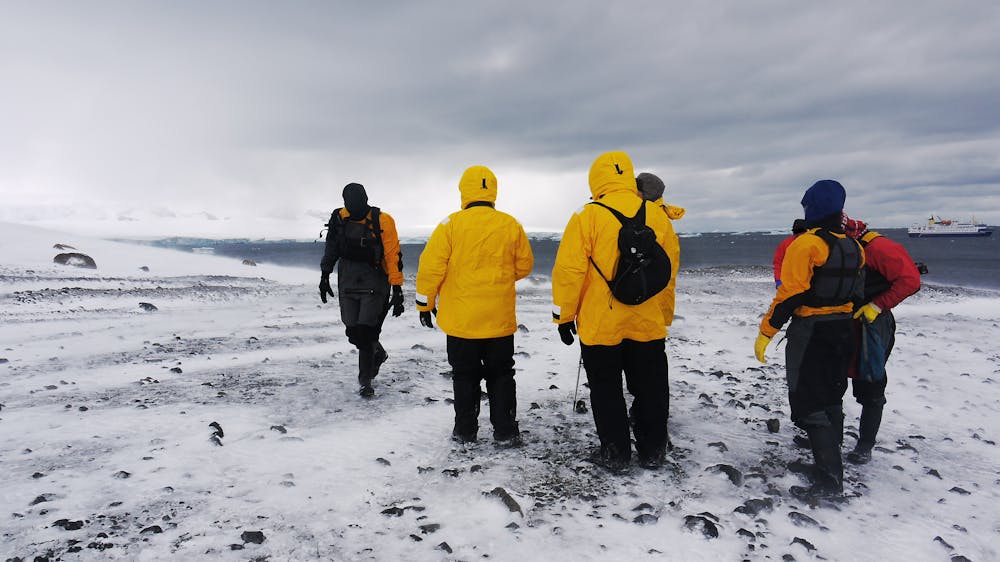

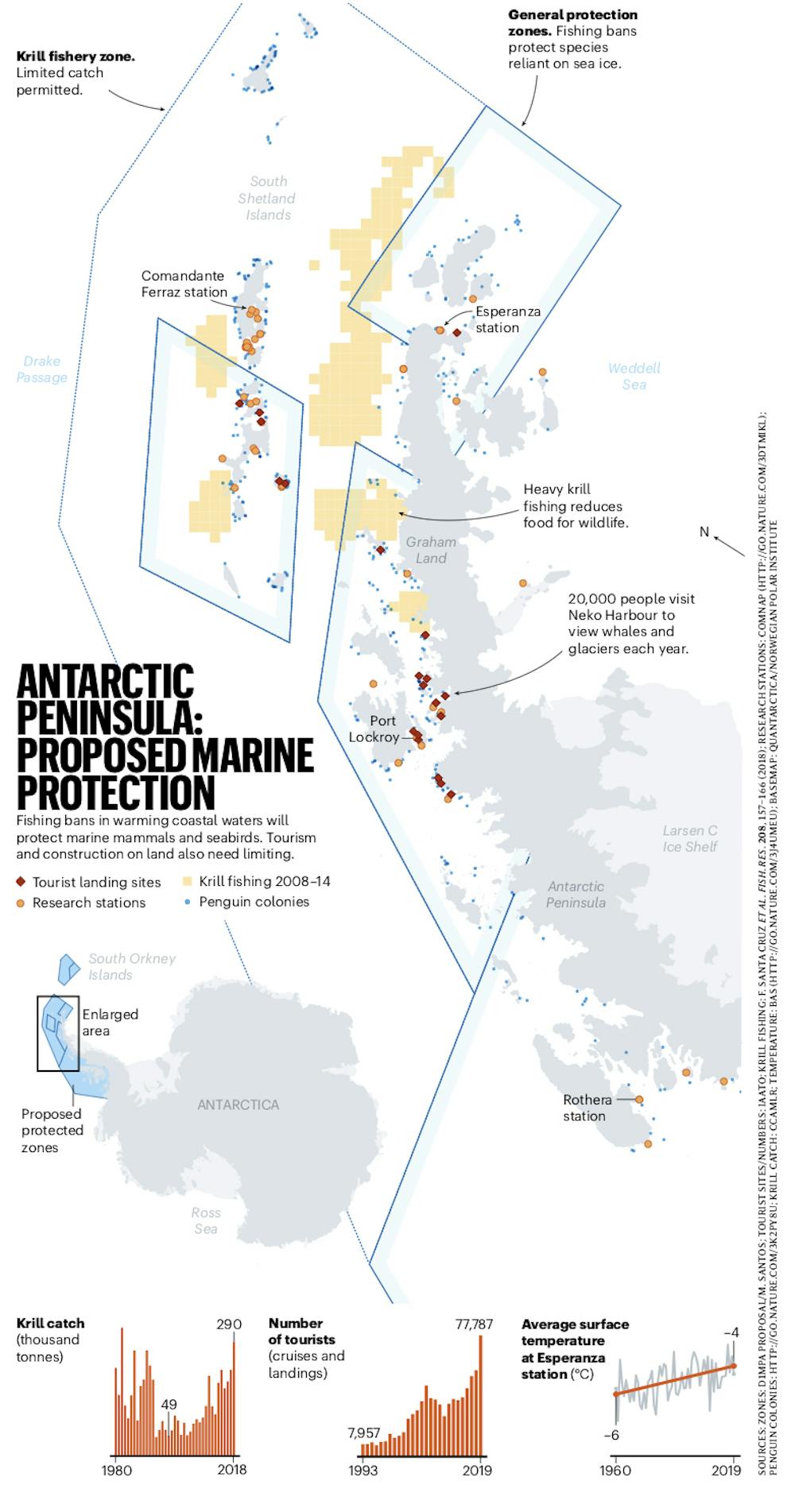
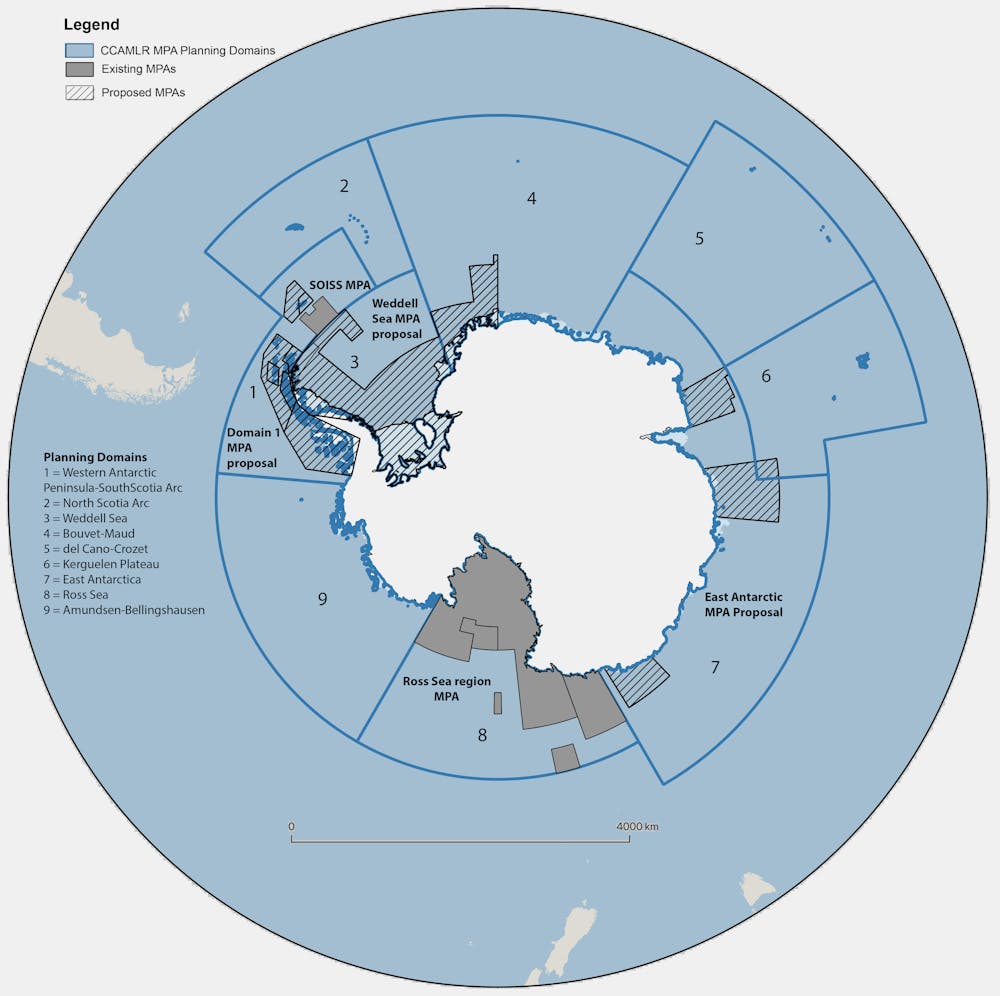
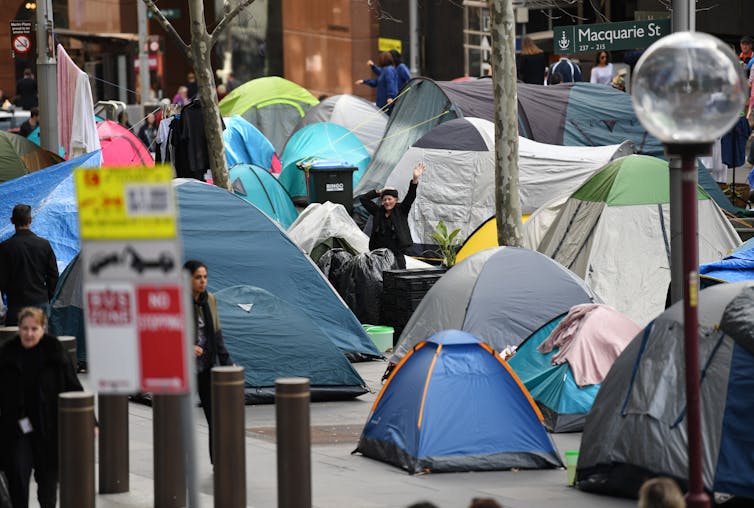
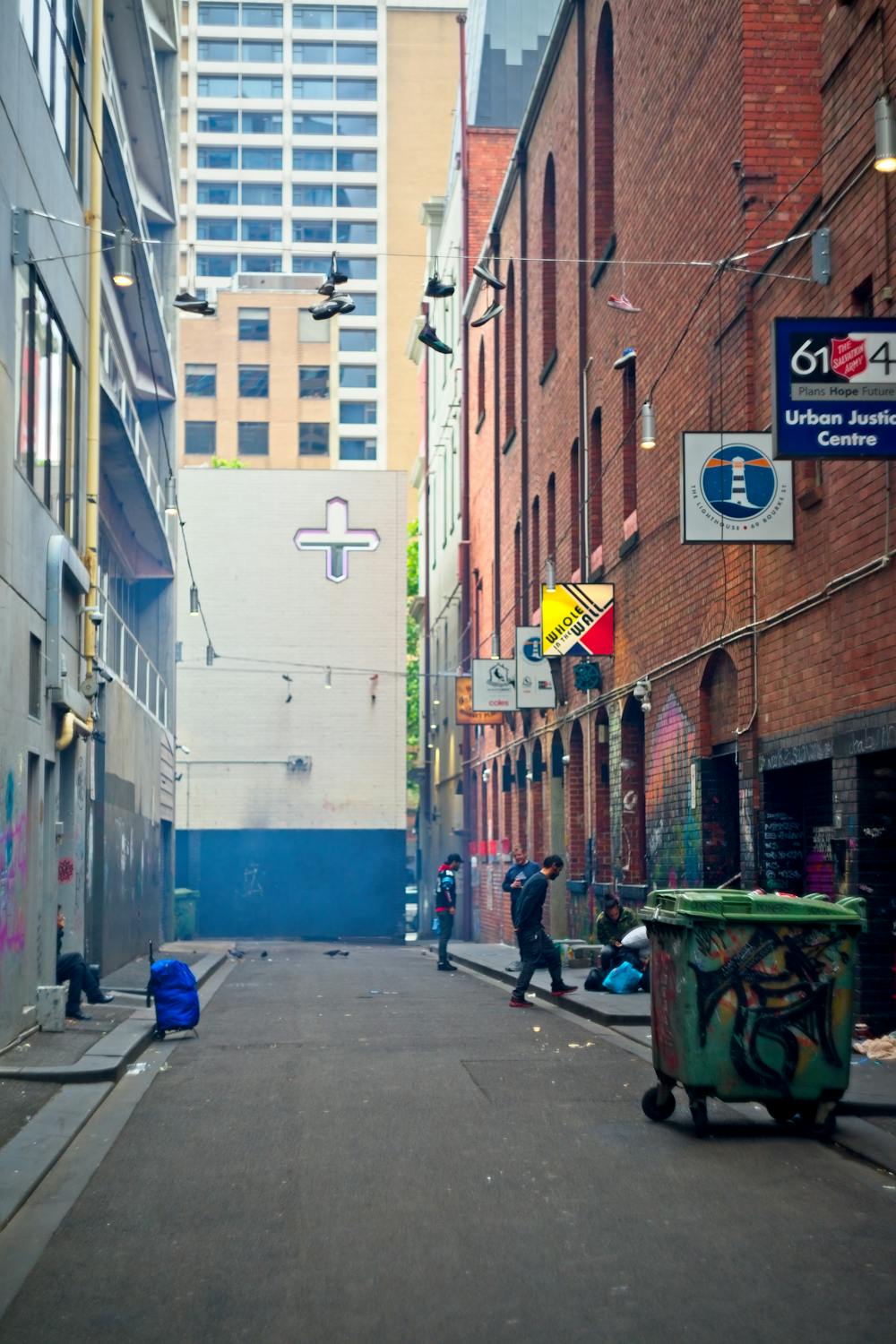
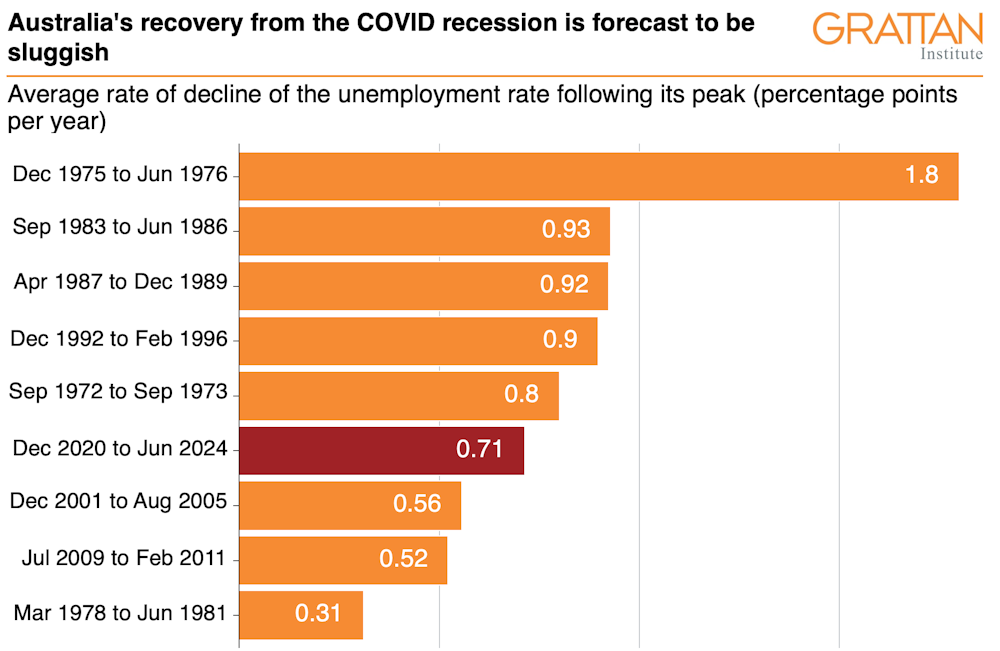
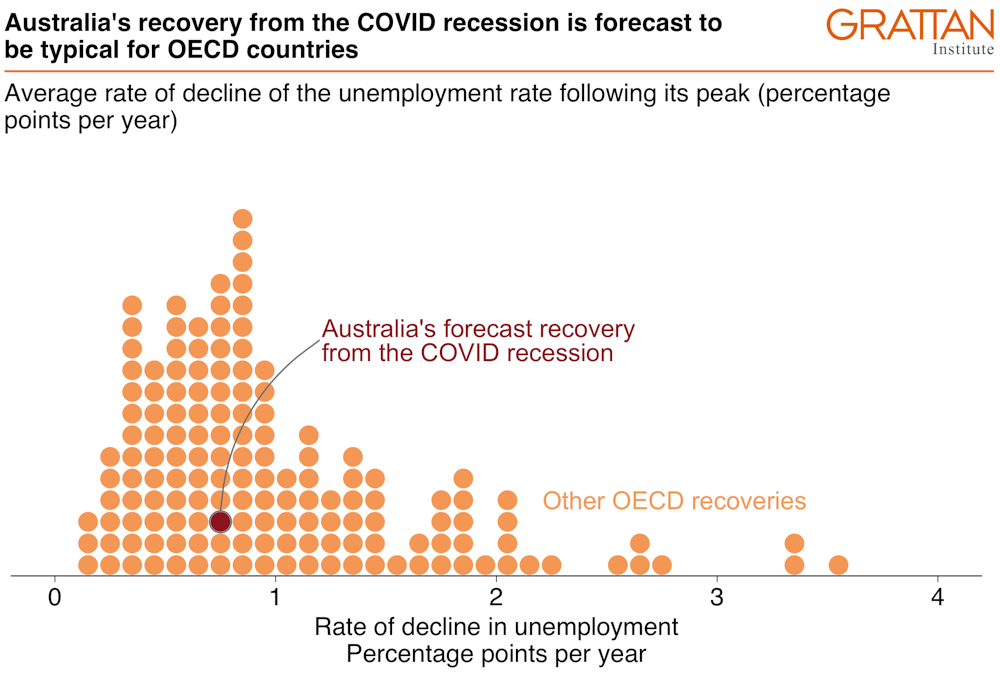

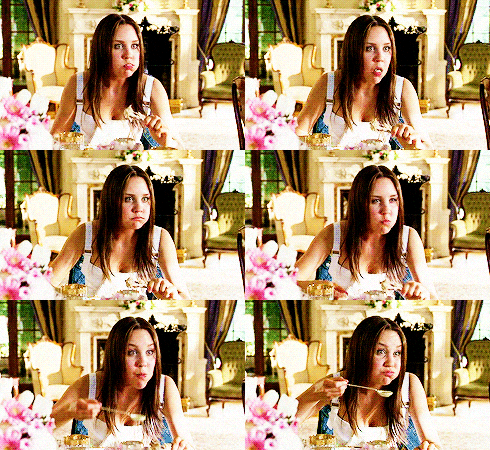
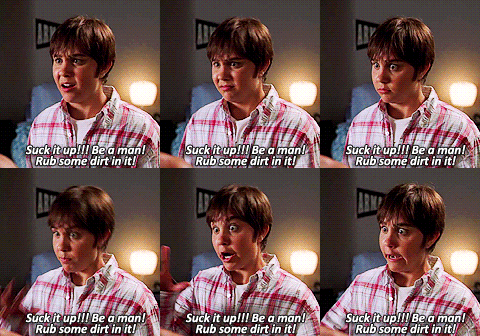
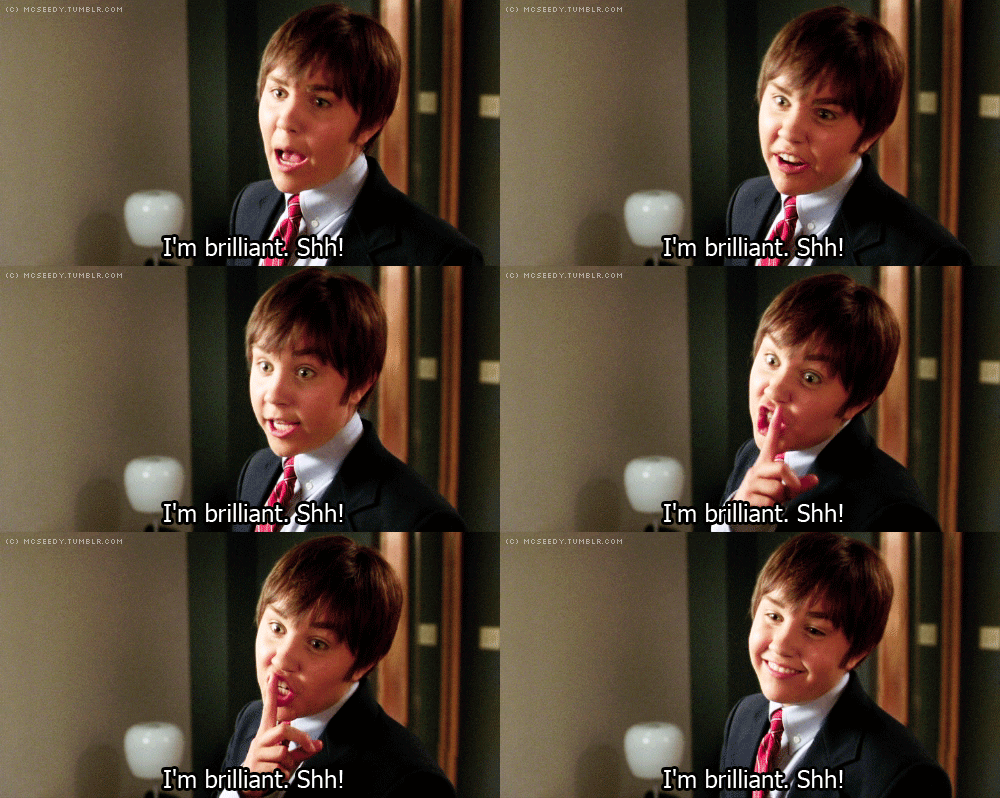
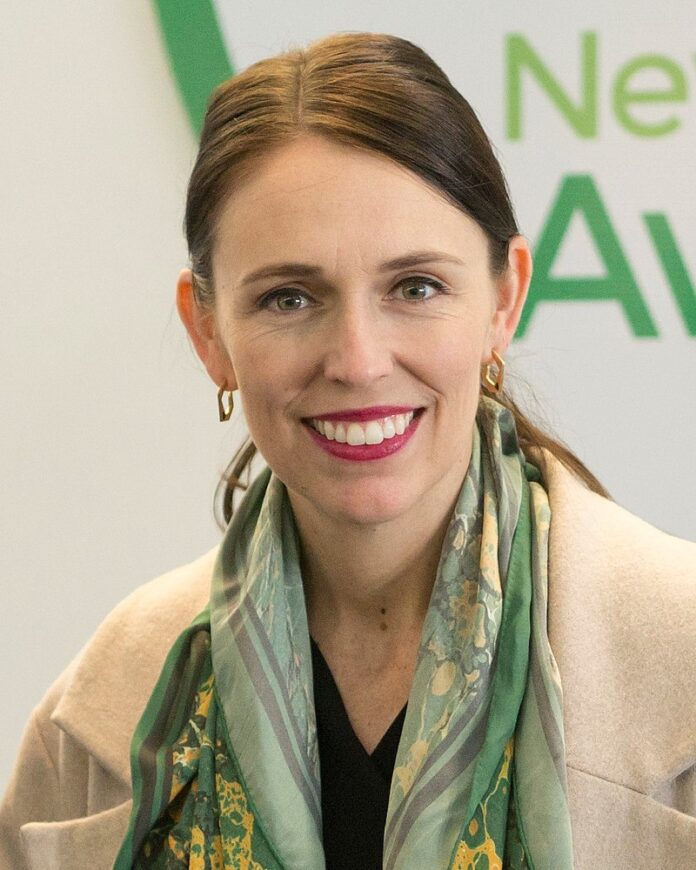





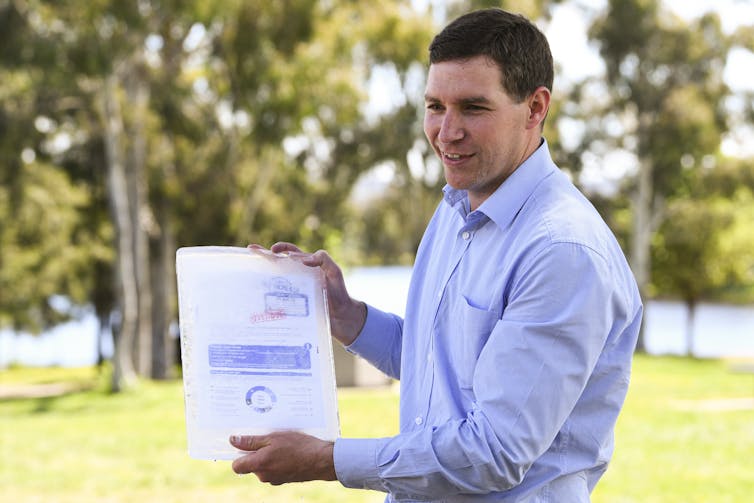
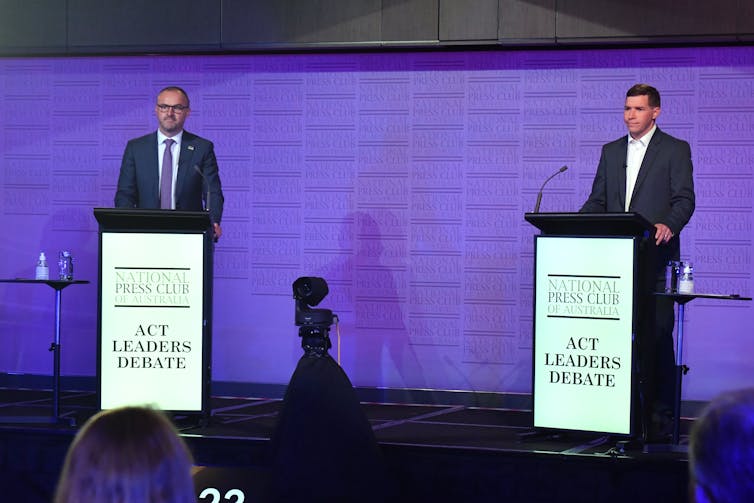
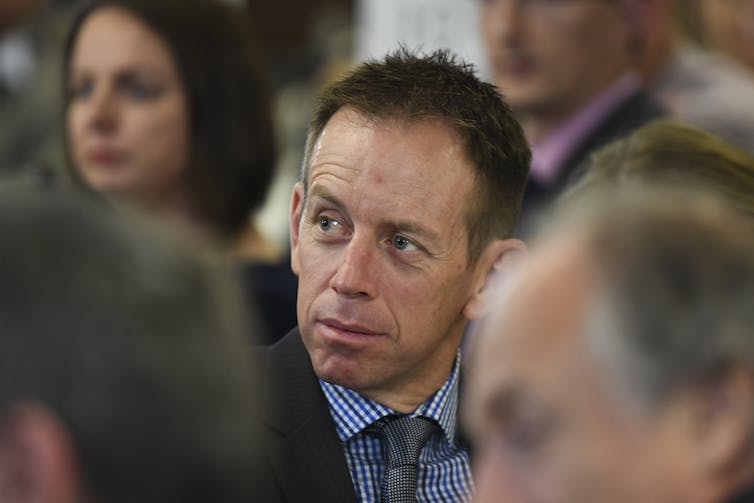
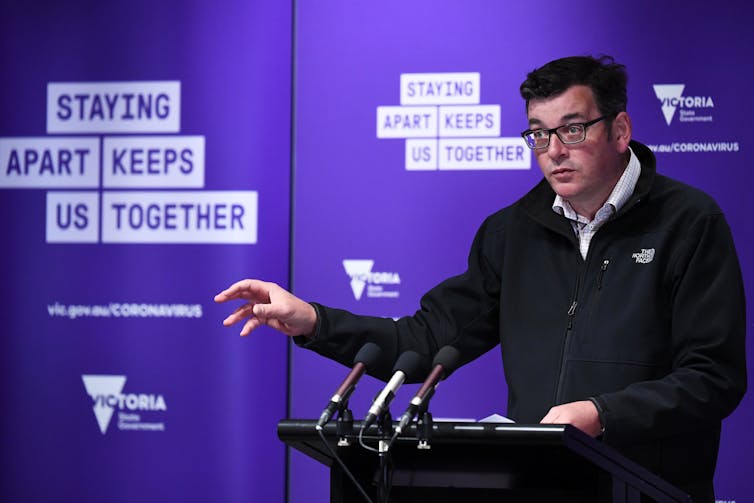
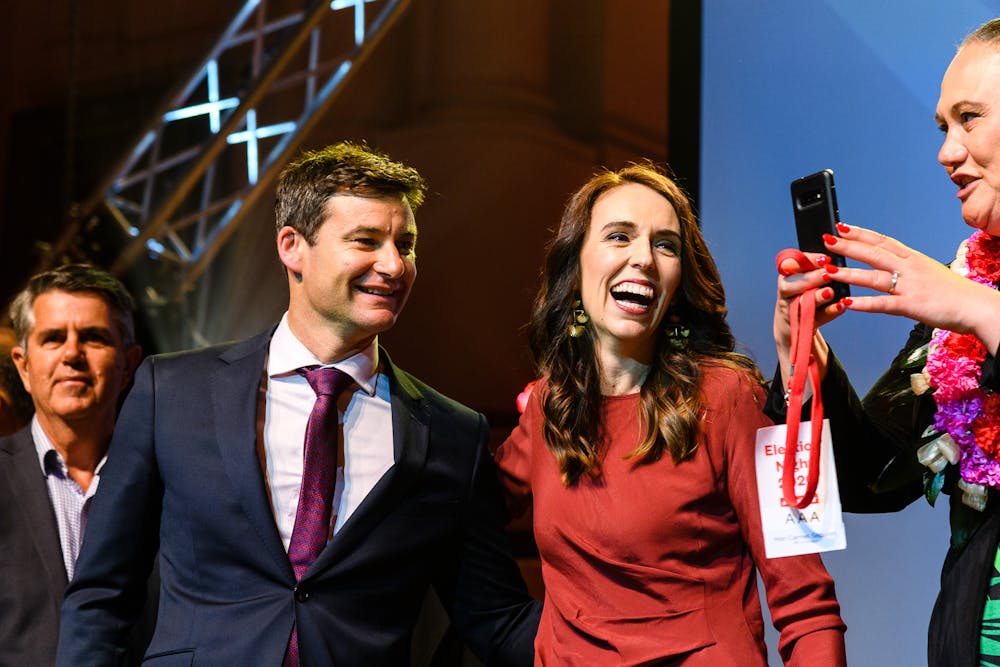
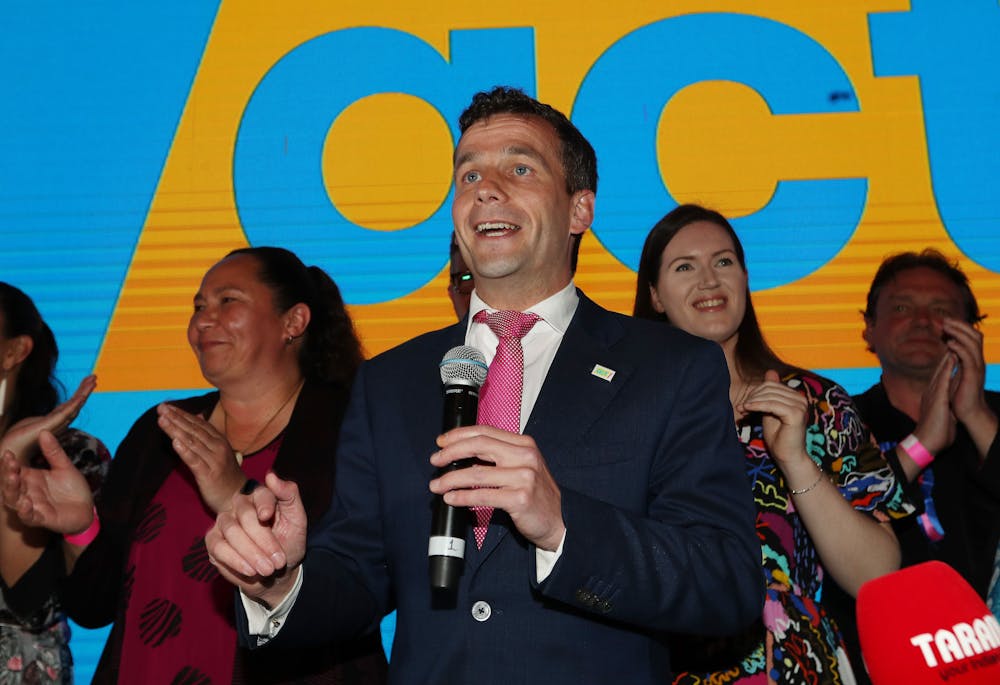





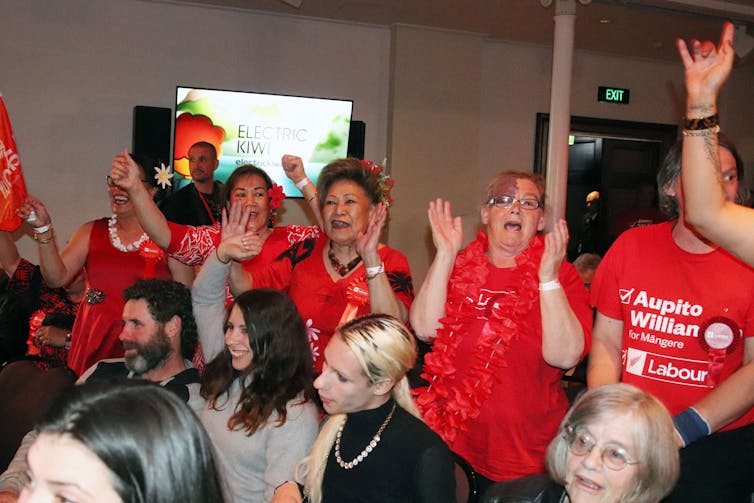
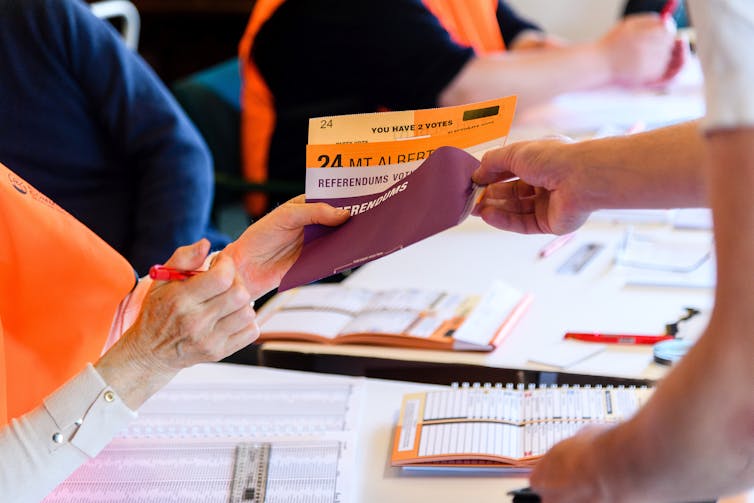
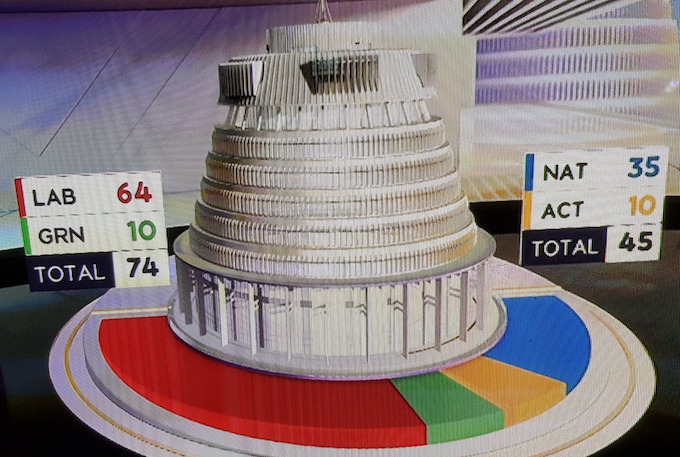
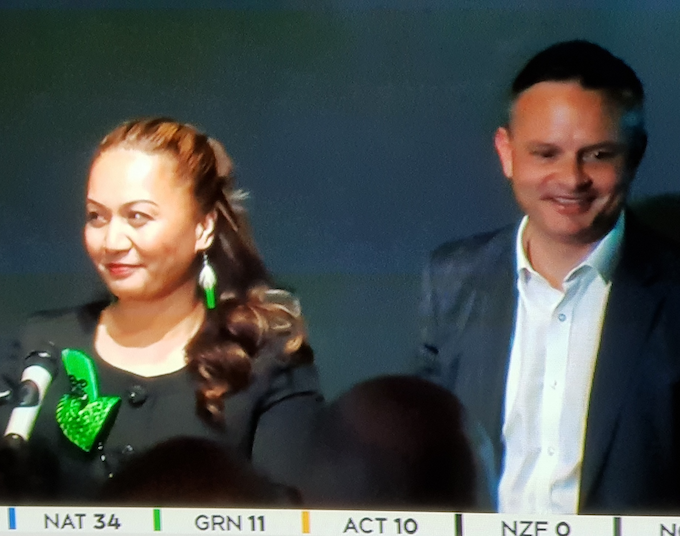


 On October 18, Bolivians will go to the polls to elect their next president and vice president after eleven months of turmoil in the aftermath of a coup backed by the Organization of American States (OAS) that undermined the electoral victory of the Movement Toward Socialism (MAS) candidates. Despite gross violations of human rights and political persecution by the US-backed de facto regime against MAS activists and their sympathizers, the MAS ticket—Luis Arce and David Choquehuanca—hold a commanding lead in the polls. For this reason pressure is growing on rightwing candidate, Fernando Camacho, to withdraw from the race to unite the rightwing electorate around the candidacy of Carlos Mesa.