Page 881

With no end in sight and the world losing interest, the Hong Kong protesters need a new script

Source: The Conversation (Au and NZ) – By Amanda Tattersall, Postdoc in Urban Geography and Research Lead at Sydney Policy Lab. Host of ChangeMakers Podcast., University of Sydney
Today is the 70th anniversary of the founding of the People’s Republic of China, and protesters in Hong Kong intend to upstage Beijing’s celebrations. They will build on the global solidarity protests from the past weekend, staged in 60 cities across the world, including in Australia.

On Sunday in Hong Kong, tens of thousands took to the streets even though no protest permits were granted by the police. Riot control weapons were deployed against the protesters and those near the protests were subject to random searches.

While it might look like these are the same kind of protests that have dominated global headlines for months, Hong Kong is changing. It is moving closer towards crisis. The local government’s previous strategy of “wait them out” is failing, and advised by mainland Chinese officials, the government is exploring legal tools – like the state of emergency provisions – as a response.

Over the past 100 days, the violence between police and students has escalated. Always an asymmetric war, students initially responded in self-defence – using umbrellas, helmets and masks to hold their position on the streets.

As the police’s weapons have become more excessive – tear gas fired in train stations, rubber bullets shot into faces, sponge grenades, water cannons – the students’ responses have become increasingly indignant. They have engaged in targeted actions like street fires, petrol bombs and vandalism to public infrastructure and government sites, like the city’s mass transit system.

Two weeks ago, police representatives argued that live ammunition was justified in response to Molotov cocktails. About the same time, the protesters collectively decided to fight back against police, and not just use self-defence.

It is spiralling. So, where does this end?


Read more: Hong Kong is one of the most unequal cities in the world. So why aren’t the protesters angry at the rich and powerful?


Maintaining local support

The Hong Kong police have tried to turn off the tap of mass support to the young protesters, who are called the Braves. Initially they used images of property damage or acts of aggression on television and social media to try to sway public opinion against the younger members of the movement.

More recently, they’ve shut down the right to mass protest. The police have been increasingly denying permits to protest, limiting the space where people can protest, or revoking permission within hours of a march starting.

None of these tactics has worked. Most Hong Kongers continue to support the “five demands” and the protest movement, while disapproving of Chief Executive Carrie Lam’s handling of the situation. (Her approval rating now sits at just 24.9%).

Most older residents feel they have let the young generation down. They not only support the Braves, many are also part of growing support networks providing them with assistance. For example, drivers pick up stranded protesters around the city and volunteers set up makeshift underground hospitals for students afraid to use state-run services.

The perils of self-righteousness

But there is a problem. The rest of the world is turning away from the weekly battles. The thing that made the protests initially so captivating was their novelty and bravery. But what began as original is now predictable. And this brings danger.

The first danger is increasing violence. The need to hold the world’s attention brings the risk of spiralling into greater violence. There is also a dark recognition that if lethal violence was to occur during a protest – if a protester was shot by live ammunition, for instance, or a brick killed a police officer – it would utterly change the dynamics.


Read more: New research shows vast majority of Hong Kong protesters support more radical tactics


The second, less obvious danger lies in self-righteousness. For most protest movements, there is an inherent tension between the ideals and commitment to the ambitious goals that brought people to the streets en masse and the capacity to negotiate with the powerful to achieve them.

This tension is a universal frustration. Protesters are loathe to be considered “sell outs,” but not making a deal risks not winning anything.

The social movement led by Martin Luther King Jr. in the US, for instance, didn’t achieve civil rights in a single boycott. Waves of different movements over decades, using varied protest tactics, and the art of compromise, brought change incrementally. Push, negotiate, make a deal – repeated as a pattern for victory.

Every night, Hong Kong protesters shout their motto, “Five demands, not one less”, referring to the five concessions they are demanding from the government.

The five demands include universal suffrage and an inquiry into the heavy-handed police response to protesters. Jerome Favre/EPA

But this righteous ritual conceals a growing fear. Hong Kongers, including leaders I interviewed, worry that all they could win from this movement is the permanent withdrawal of the controversial extradition bill that sparked the unrest, which they’ve already achieved.

With the end of “one country, two systems” model in sight in 2047, the stakes are high. Locals are terrified they might not get closer to universal suffrage and that Beijing will continue to encroach on their political freedoms.

That said, this isn’t a simple battle – and winning a “deal” that doesn’t provide a pathway to democracy won’t be good enough. It’s all well and good for distant observers to casually comment that Hong Kongers need to do a deal, but the “five demands” are not an ambit. This was a “joint consensus.”


Read more: Trust Me, I’m An Expert: Why the Hong Kong protesters feel they have nothing to lose


In contrast to the authoritarianism in China (not to mention elsewhere), Hong Kongers hope they can be a beacon for democracy and enlightenment. Taiwan, for one, is certainly seeing Hong Kong as a source of inspiration in their its battle against Beijing’s push for reunification.

The Braves see it as nothing short of a life or death battle for their identity, and unless they believe they are moving towards a more independent future, they plan to keep fighting.

Tens of thousands of people in Taiwan demonstrated in support of Hong Kongers on Sunday. Ritchie B. Tongo/EPA

What Hong Kongers can learn from the French Revolution

So how do you push and negotiate in this context?

Perhaps history can provide some inspiration. In the battle to win democracy in the French Revolution, for example, two important strategies were prosecuted simultaneously.

In Paris, the protesters fought street battles and built barricades, but the leaders also built for themselves the kind of state they envisioned living in. They constructed their own National Assembly, which advanced the idea of universal male suffrage.

This idea of crafting what is known as a “pre-figurative form” might be useful for Hong Kong. Imagine if Hong Kongers, crippled with an undemocratic Legislative Council, created their own Legislative Assembly – a model for their goal of a parliament elected by everyone. The idea has been tried in Hong Kong before; the Occupy Trio who helped lead the Umbrella movement held a people’s referendum calling for universal suffrage in 2014.

The natural inertia of any movement means that a continuation of street battles is likely, which ultimately leads to an escalation of violence. However, if the protesters can channel their energy in a more lasting, organised way, they may be able to achieve even more than the “five demands”.

As well as singing their protest anthem, “Do you hear the people sing?”, the protesters should borrow more ideas from successful democracy movements of the past. This may provide new energy to surprise Beijing and sustain the momentum of frustrated Hong Kongers.


Author Amanda Tattersall hosts the ChangeMakers podcast series which explores the long history of Hong Kong and its protests. The first episode is available here:

ref. With no end in sight and the world losing interest, the Hong Kong protesters need a new script – http://theconversation.com/with-no-end-in-sight-and-the-world-losing-interest-the-hong-kong-protesters-need-a-new-script-124007

1 in 3 young adults are lonely – and it affects their mental health

Source: The Conversation (Au and NZ) – By Michelle H Lim, Senior Lecturer and Clinical Psychologist, Swinburne University of Technology

More than one in three young adults aged 18 to 25 reported problematic levels of loneliness, according to a new report from Swinburne University and VicHealth.

We surveyed 1,520 Victorians aged 12 to 25, and examined their experience of loneliness. We also asked about their symptoms of depression and social anxiety.

Overall, one in four young people (aged 12 to 25) reported feeling lonely for three or more days within the last week.


Read more: Loneliness is a health issue, and needs targeted solutions


Among 18 to 25 year olds, one in three (35%) reported feeling lonely three or more times a week. We also found that higher levels of loneliness increases a young adult’s risk of developing depression by 12% and social anxiety by 10%.

Adolescents aged 12 to 17 reported better outcomes, with one in seven (13%) feeling lonely three or more times a week. Participants in this age group were also less likely to report symptoms of depression and social anxiety than the 18 to 25 year olds.

Young adulthood can be a lonely time

Anyone can experience loneliness and at any point in life but it’s often triggered by significant life events – both positive (such as new parenthood or a new job) and negative (bereavement, separation or health problems).

Young adults are managing new challenges such as moving away from home and starting university, TAFE or work. Almost half (48%) of the young adults in our survey lived away from family and caregivers. Almost 77% were also engaged in some sort of work.


Read more: How ideas of ‘adulthood’, its rights and responsibilities, are changing around the world


Young people at high school may be buffered from loneliness because they’re surrounded by peers, many of whom they have known for years. But once they leave the safety of these familiar environments, they are likely to have to put in extra effort to forge new ties. They may also feel more disconnected from the existing friends they have.

During this transition to independence, young adults may find themselves with evolving social networks, including interactions with colleagues and peers of different ages. Learning to navigate these different relationships requires adjustment, and a fair bit of trial and error.

Is social media use to blame?

Social media has its positives and negatives. freestocks.org

The reliance on social media to communicate is often thought to cause loneliness.

No studies I’m aware of have examined the cause-effect between loneliness and social media use.

There is some evidence that those who are lonely are more likely to use the internet for social interactions and spend less time in real life interactions. But it’s unclear whether social media use causes more loneliness.

While social media can be used to replace offline relationships with online ones, it can also be used to both enhance existing relationships and offer new social opportunities.

Further, a recent study found that the relationship between social media use and psychological distress was weak.

Is loneliness a cause or effect of mental ill health?

Loneliness is bad for our physical and mental health. Over a six-month period, people who are lonely are more likely to experience higher rates of depression, social anxiety and paranoia. Being socially anxious can also lead to more loneliness at a later time.

The solution isn’t as simple as joining a group or trying harder to make friends, especially if one also already feels anxious about being with people.

While lonely people are motivated to connect with others they are also more likely to experience social interactions as stressful. Brain imaging studies show lonely people are less rewarded by social interactions and are more attuned to distress of others than less lonely counterparts.

Making friends can be a stressful experience. Andrew Neel

When lonely people do socialise, they are more likely to engage in self-defeating actions, such as being less cooperative, and show more negative emotions and body language. This is done in an (often unconscious) attempt to disengage and protect themselves from rejection.

Lonely people are also more likely to find reasons people cannot be trusted or do not live up to particular social expectations, and to believe others evaluate them more negatively than they actually do.

What can we do about it?

One way to address these invisible forces is to help young people think in more helpful ways about friendship, and to understand how they can influence others through their emotions and behaviours.


Read more: How parents can help their young children develop healthy social skills


Parents, educators and counsellors can play a role in educating children and young people about the dynamics of evolving friendships. This might involve helping the young person to evaluate their own behaviours and thought patterns, understand how they play an active role in building relationships, and to support them to interact differently.

More specific strategies could include:

  • challenging unhelpful thinking or negative views about others
  • helping young people identify their strengths and learn how they’re important in forging strong, meaningful relationships. If the young person identifies humour as a strength, for instance, this might involve discussing how they can use their humour to establish rapport with others.

Educational programs can do more to address the social health of young people and these discussions can be integrated into health education classes.

Additionally, because young people are already frequent and competent users of technology, carefully crafted digital tools could be developed to target loneliness.

These tools could help young people learn skills to develop and maintain meaningful relationships. And because lonely people are more likely to avoid others, digital tools could also be used as one way to help young people build social confidence and practise new skills within a safe space.


Read more: Many people feel lonely in the city, but perhaps ‘third places’ can help with that


A cornerstone of any solution, however, is to normalise feelings of loneliness, so feeling lonely is seen not as a weakness but rather as an innate human need to connect. Loneliness is likely to negatively impact on health when it is ignored, or not properly addressed, allowing the distress to persist.

Identifying and normalising feelings of loneliness can help lonely people consider different avenues for action.

We don’t yet know the lifelong impact of loneliness on today’s young people, so it’s important we take action now, by increasing awareness and giving young people the tools to develop and maintain meaningful social relationships.

ref. 1 in 3 young adults are lonely – and it affects their mental health – http://theconversation.com/1-in-3-young-adults-are-lonely-and-it-affects-their-mental-health-124267

Gonski’s vision of ‘personalised learning’ will stifle creativity and lead to a generation of automatons

Source: The Conversation (Au and NZ) – By Alan Reid, Professor Emeritus of Education, University of South Australia

The education debate in Australia becomes tangled when the same key concepts are used by various groups and individuals to mean very different things.

Take the concept of “personalised learning”. It can describe a flexible approach to learning which starts with each student’s individual strengths and capabilities, and encourages a wide range of learning activities. Or it can be used to justify a program of rigid and scripted individual learning progressions.

In the past few years the idea of “learning progressions” has garnered a lot of attention in curriculum debates and reviews. Invariably it is argued learning progressions promote “personalised learning”.

It is important therefore to subject this claim to some scrutiny and try to understand the version of “personalised learning” being promoted in policy circles.

From year levels to learning progressions

In 2017 the then Turnbull government appointed David Gonski to lead a review into how to improve Australian schools. The idea was that if the amount of Commonwealth money going to schools was to be increased – as recommended by the earlier Gonski review in 2011 – then we needed guidance as to what the money should be spent on.

A central proposal in the subsequent 2018 report, dubbed as Gonski 2.0, relates to “personalised learning”. Using the well-rehearsed argument that all students should be able to demonstrate a year’s learning growth every year, the report’s first recommendation is that schools move from a year-based curriculum to a curriculum expressed as learning progressions independent of year or age.

It claims this move will enable schools to better meet the individual learning needs of students than does the organisation of schools by year levels. The latter, the report says, is a remnant of the industrial era and must change if schools are to come into the 21st century.


Read more: Gonski review reveals another grand plan to overhaul education: but do we really need it?


Certainly, the idea of scrapping year levels potentially creates greater flexibility for students and teachers. Rather than aiming curriculum at the average of a cohort of students at a particular age, teachers can “personalise” the curriculum by making an individual student’s readiness for learning the key criterion for curriculum planning.

Of course, a number of schools already do this, and in many other schools where year levels are still used, teachers use adaptive or differentiated teaching to cater for individual interests.

There is always a danger removing year levels will result in a return to streaming if teachers group students according to perceived ability levels rather than age, but this is not an automatic outcome and can be guarded against.

However, the question of removing year-level structures can’t be separated from the issue of what is taught and how. And it is here that it seems the report has taken a progressive idea like personalisation and colonised it with an instrumental purpose.

Gonski’s version of personalised learning

There are different approaches to personalising learning. Some enable teachers and students to negotiate learning programs based on students’ interests and learning needs.

For instance, in the Big Picture schools in Australia and the US, students investigate topics or issues individually or in groups and report on their findings.​The key to this kind of learning is skilled teachers helping students make connections across the curriculum, because key concepts are understood through negotiation and collaboration.

This approach prizes student agency and group as well as individual activities. It recognises learning is not a linear and scripted activity.

There are many approaches to personalised learning, some of which include indivudal and group activities. from shutterstock.com

But that is not the version of personalised learning proposed in the 2018 Gonski report. This report recommends an approach where content and skills across every area of the curriculum are atomised into bite-sized chunks of knowledge, and then sequenced into progression levels.

Students work on their own and, at regular points, use online assessment tools to test their readiness for the next chunk of knowledge. Once one level is mastered, they move onto the next.

The report recommends that, over the next five years, the recently developed and implemented Australian Curriculum should be rewritten so every learning area and general capability is written up as a number of progression levels.

It offers an example of “spelling” being broken into a 16-level progression, with students mastering each step before moving lock-step onto the next level.

The Gonski version of personalised learning bears an uncanny resemblance to the model of direct instruction​ developed in the US in the 1960s. This is a tightly scripted, step-by-step approach that follows a predetermined sequence through packaged resource materials.

Assessment follows each instruction phase with tests aligned to the behavioural goals of the program. The results are fed back to the teacher and student, and the stage is then set for the next phase.


Read more: Explainer: what is explicit instruction and how does it help children learn?


Similarly, Gonski suggests students advance incrementally through progression levels. At regular intervals they should be assessed by an online assessment tool against the learning progressions that measure student attainment and growth in attainment levels over time.

The tool could also suggest, for consideration by the teacher, potential interventions to build further progress.

Although there is an apparent nod in the direction of teacher decision making, it is inevitable the tightly scripted nature of the process will result in a reliance on the use of online resources.

Online assessment tools make students automatons

The National Education Policy Centre in the United States recently reviewed a number of personalised learning programs in the country that have adopted similar characteristics to those Gonski prescribes. The report concludes that they reflect

[…] a hyper-rational approach to curriculum and pedagogy that limits students’ agency, narrows what they can learn in school, and limits schools’ ability to respond effectively to a diverse student body.

The manifestation of this model in the US has been a financial bonanza for private technology companies such as Summit, owned by Facebook founder Mark Zuckerberg. These companies have developed online tests and learning resources capable of tracking the progress of, and devising programs for, individual students.

With such programs, students become individual automatons moving through standardised progression levels. Creativity and critical thinking are stifled as students are steered down an already determined path. And teachers are increasingly excluded from the process, as planning and decision-making is done by algorithms.


Read more: It’s back to school for Facebook, and it’s personal


The result is a narrow and highly individualised learning experience that is unlikely to prepare students adequately for the challenges of the 21st century.

The point is that “personalised learning” can take many forms. Some approaches will liberate learners, some will tightly constrain them. The model proposed by Gonski is more likely to do the latter. Far from moving schools away from an industrial model, Gonski’s model would entrench it.

Rather than immediately adopting a model such as “progression levels”, surely it would be better to clarify our understanding about personalised learning, including the theories and assumptions on which various versions are based.

Then, if personalised learning is the goal, why not evaluate a number of different models of personalised learning?

The version of personalised learning Australia promotes should be one that nurtures a love and a passion for learning, not one that reduces it to a checklist.

This is an edited extract from Alan Reid’s book, Changing Australian Education: How policy is taking us backwards and what can be done about it, (Allen and Unwin: Sydney), available from October 1, 2019.

ref. Gonski’s vision of ‘personalised learning’ will stifle creativity and lead to a generation of automatons – http://theconversation.com/gonskis-vision-of-personalised-learning-will-stifle-creativity-and-lead-to-a-generation-of-automatons-124000

Buried beneath the trees: a plan to solve our shortage of cemetery space

Source: The Conversation (Au and NZ) – By David Neustein, Associate, School of Architecture, University of Technology Sydney

There’s a lack of new cemetery space in parts of Australia but we could solve that problem by burying the dead among newly planted vegetation belts near our towns and cities.

Burial Belt is a proposal we’ve been working on for reinventing the Australian cemetery landscape by creating near-limitless land for burial. Our idea is currently on exhibition at the Oslo Architecture Triennale, in Norway.

This new approach to burial would feature native trees rather than rows of headstones.


Read more: Housing the dead: what happens when a city runs out of space?


It would reforest cleared land and provide an alternative to high-emissions livestock grazing. It could even prevent suburban sprawl by safeguarding green space in perpetuity.

All it requires is a new way of thinking about what happens to our bodies when we die.

Burial space is running out in some Australian cemeteries. Flickr/Wendy Harman, CC BY

After life

Traditional burial in a local cemetery was the norm for most Australians until late in the 20th century. Today an increasing proportion of Australians choose cremation.

Unlike burial, cremation seems clean, efficient and free of the emotional weight of a sombre headstone in a grid of other graves. Cremation doesn’t have to take up space and ashes can be stored in a special place or dispersed into a favourite landscape.

Cremation now accounts for more than 70% of all Australian interments. That is not surprising when you consider that the average cost of cremation is less than half that of burial.

Soaring land costs and dwindling reserves of existing cemetery space have also contributed to the high cost of burial.

Australian burial plots are among the most valuable real estate in the country.

What else goes up in smoke?

Most people we speak to are surprised to learn that cremation is an energy-intensive and toxic process.

The energy consumed by a single cremation is equal to about one person’s average monthly domestic use.

Each cremation releases on average about 50kg of CO2 and other toxins.

When you consider both the economic and environmental costs of cremation, the obvious solution is to provide more affordable burial space.

But with scarce land available for this purpose close to our city centres, any solution is contingent on persuading large numbers of people to not only return to burial, but to reconsider the entire cemetery experience.

A more natural burial

The Burial Belt proposal relies on a societal shift from traditional burial and cremation to natural burial. Natural burial does away with embalming, wooden coffins, concrete shafts and expanses of tarmac.

Bodies are placed in direct contact with the soil and buried within reach of microbes, where they can then truly return to the earth.

Natural burial is also much cheaper to implement than traditional burial.

Where would this take place? That’s where the Burial Belt proposal comes in.

Our future burial parkland already exists, just beyond the outermost suburban lots that ring Australian cities. This border land is currently occupied by sheep and cattle pastures but is increasingly being rezoned and amalgamated into an ever-expanding urban footprint.

Converting this territory into burial parkland, rather than housing subdivision, would protect whatever wildlife and vegetation remains in this cleared and denuded landscape, while curtailing urban sprawl.

Preserved forever

The key element of this proposed transformation is that, while natural burial land quickly becomes indistinguishable from bushland, current legislation provides for preservation of cemetery spaces in perpetuity.

Incorporating burial within the forest establishes a covenant over the revegetated grazing land that cannot be reversed. No more urban sprawl.

Fields and allotments would be individually acquired by public or private entities and converted into burial forest. Adjoining sections of forest would be gradually amalgamated into a single Burial Belt, a linear green swathe that halts further development and protects agricultural land and remnant habitat on the other side.

View of a burial ring at the edge of a clearing in a proposed Burial Belt. Other Architects, Author provided

From an architectural point of view, there are many ways this general idea could be implemented to suit different site conditions and communities.


Read more: Increasing tree cover may be like a ‘superfood’ for community mental health


In the current proposal, large clearings are carved out of the immensity of the forest, with smaller hollows containing intimately-scaled burial spaces dispersed around the edges of these clearings.

Access could be provided via boardwalks and other temporary facilities similar to those found in national parks. The proposed forest cemetery requires little upkeep. Rather than returning periodically to sweep away leaves or lay flowers on a loved one’s traditional grave, visitors are free to let nature do its work.

There is no reason why the Burial Belt idea could not be widely implemented by local operators and councils as an effective method of funding habitat regeneration while providing for the community’s long term burial needs.


This article draws on UTS Master of Architecture design studios conducted by David Neustein and Grace Mortlock, and specific research contributions from UTS students Rowan Lear and Sora Graham.

ref. Buried beneath the trees: a plan to solve our shortage of cemetery space – http://theconversation.com/buried-beneath-the-trees-a-plan-to-solve-our-shortage-of-cemetery-space-124259

Forgotten citadels: Fiji’s ancient hill forts and what we can learn from them

Source: The Conversation (Au and NZ) – By Patrick D. Nunn, Professor of Geography, School of Social Sciences, University of the Sunshine Coast

Far away from Fiji’s golden beaches and turquoise seas lies what might appear to many people – visitors and Fijian alike – another reality. One that is hidden, almost forgotten, yet one that recent research is helping bring out from the shadows.

Fiji is not known for its hill forts, but it was not so long ago that they were almost ubiquitous. Consider the comment of colonial official Basil Thomson in 1908 who noted that “almost every important hilltop in western Viti Levu [the largest island in Fiji] is crowned with an entrenchment of some kind”.

The evidence for people having once occupied mountain tops in Fiji is plentiful yet today barely known and hardly studied. This evidence hits you the first time you see it. You are on a perspiring, muscle-aching uphill walk along one of the steep-sided volcanic ridge lines when suddenly the ground in front of you unexpectedly drops away.

There is a deep ditch artificially cut across the ridge, an impediment to your progress today but doubly so 400 years ago when its base would have been lined with sharpened sticks to impale unwanted visitors. On the upslope side of the ditch you find a stone platform – on which a guard house would have been built – and above, a series of cross-ridge stone walls.

In the case of the hill fort of Vatutaqiri on the Vatia Peninsula (northern Viti Levu), we mapped a series of five concentric stone walls built from hundreds of rocks that must have been rolled uphill from the base of the mountain. Like many such hill forts, the Vatutaqiri summit comprises an artificial mound, in this case some 12 metres high, with a flat top, likely to have been a symbolic refuge and/or a lookout post.

One of the five concentric stone walls on the flanks of Vatutaqiri hill fort, Vatia Peninsula, Fiji. Patrick Nunn

Researching and dating the hill forts

A three-year research project, just concluded, in collaboration with the Fiji Museum sought to understand the hill forts of Bua (northern Fiji). At the outset, we knew only that such places existed here because written accounts described them.

These include that of Commodore Wilkes of the US Navy who described in 1845 “a high and insulated peak […] which has a town perched on its very top.” We identified this peak as Seseleka, 420 metres above sea level, and mapped and excavated it as part of this project.

Maps of Seseleka hill fort, Bua, Fiji. Map A shows the approach to the summit of Seseleka along steep-sided ridge lines cut by artificial ditches and stone walls. Map B shows the summit of Seseleka with the main residential area to the west (with yavu or stone house platforms) and lookout mounds along its axis. Patrick Nunn

As shown in our map, the flat-topped summit of Seseleka comprises an ocean-facing terrace with the remains of residence platforms (yavu) slightly below a series of three artificial mounds used as lookouts.

Pot shards and edible shellfish remains are scattered around, the latter well suited to radiocarbon dating. There is also an artificial pool (toevu) on top of Seseleka from the mud in the bottom of which we extracted carbon samples for dating.

The results show that people were living on top of Seseleka as early as AD 1670, probably earlier, utilising earthenware for cooking and storage, periodically going down to the coast to collect shellfish that were brought back for less-mobile inhabitants to consume.

In total, we re-discovered 16 hill forts in Bua and, through a range of techniques from radiocarbon dating to the collection and analysis of oral traditions, have helped fill in some details of this poorly-known period of Fiji history.

A plausible explanation is that some 700 years ago, when sea levels in Fiji fell slightly, a food crisis resulted, which led to warfare and the abandonment of coastal sites for mountain-top ones.


Read more: Rise and fall: social collapse linked to sea level in the Pacific


A few weeks ago, we returned from a reconnaissance trip looking for hill forts in the high volcanic islands of the Kadavu group (southern Fiji). On the pristine stellate island of Ono, we visited and mapped five hill forts, including ones on the summits of Qilai and Uluisolo, the latter reputed to be the place where the god Tanovu who battled the recalcitrant god of distant Nabukelevu island once lived.

But the least expected find was on top of the mountain named Madre where numerous large rocks have been rolled up onto its summit and arranged, it seems, in ways consistent with megalithic structures elsewhere in the world.

In a first for Fiji, there seems to be the remains of a dolmen (a stone tomb) on the summit of Madre.

The dolmen on the hill fort at the summit of Madre, Ono Island, Fiji. Patrick Nunn

The Fijian word for village is “koro”, used today to refer to any nucleated settlement, mostly along the islands’ coasts. But up until about the 1830s, the word koro was used only to refer to a mountain-top village, thus the name Korolevu means “big village”, Korovatu means “rocky village” and Koronivalu means “war town”. The study of place names can help illuminate history in countries like Fiji where written history is incomplete.

On Ono Island in Kadavu, the researchers stayed in the villages of Vabea and Waisomo and made several ascents of the formidable mountain behind them. This mountain – and the impressive hill fort that sprawls across it – is named Korovou, meaning “new village”, in this sense a new hill fort built, presumably, after another was abandoned. Where its predecessor was, no one is sure … yet.

The author would like to acknowledge his co-researchers in the three-year study of Buan hill forts – Elia Nakoro and Niko Tokainavatu (Fiji Museum), Michelle McKeown (Landcare New Zealand), Paul Geraghty and Frank Thomas (University of the South Pacific), and Piérick Martin, Brandon Hourigan and Roselyn Kumar (University of the Sunshine Coast).

ref. Forgotten citadels: Fiji’s ancient hill forts and what we can learn from them – http://theconversation.com/forgotten-citadels-fijis-ancient-hill-forts-and-what-we-can-learn-from-them-121103

Any prosecution of journalists for national security offences to require attorney-general’s approval

Source: The Conversation (Au and NZ) – By Michelle Grattan, Professorial Fellow, University of Canberra

As the battle between the government and media organisations over press freedom continues, Attorney-General Christian Porter has ordered that any prosecution of a journalist for an offence relating to national security must have his approval.

He has issued a direction under the Commonwealth Director of Public Prosecutions Act that where the CDPP considers there is a public interest in prosecuting a journalist, “the consent of the attorney-general will also be required as a separate and additional safeguard”.

The media freedom issue burst into prominence with the police raids into the home of News Corp journalist Annika Smethurst (over a story about a proposal to change the remit of the Australian Signals Directorate) and the ABC (over alleged bad behaviour by Australian special forces in Afghanistan).

Both media organisations have launched legal challenges over the raids. The Australian Federal Police have not ruled out charging the journalists involved.

Porter did not refer to the current investigations, but his direction effectively indicates the journalists will be protected from prosecution. It also sends a message to the AFP (although it does not come under his ministerial authority) not to push for prosecutions.

He said it was appropriate to issue the direction “given the significance of a free press as a principle of democracy”.


Read more: Media raids raise questions about AFP’s power and weak protection for journalists and whistleblowers


The new provision “will allow the most detailed and cautious consideration of how an allegation of a serious offence should be balanced with our commitment to freedom of the press,” Porter said.

“I have previously said that I would be seriously disinclined to approve prosecutions of journalists except in the most exceptional circumstances and would pay particular attention to whether a journalist was simply operating according to the generally accepted principles of public interest journalism.

“If such a request came before me, I would, as first law officer consider the evidence, and it would be inappropriate to form a view before this time.”

The direction refers to specific sections of various relevant acts – the Australian Security Intelligence Organisation Act, the Crimes Act, the Criminal Code, and the Defence Act.

In August Home Affairs Minister Peter Dutton gave a direction to the AFP – which comes under his ministerial umbrella – to prevent repeats of the media raids when leaks are being investigated.

Dutton said his direction did not constrain police investigation of a leak. But “where consistent with operational imperatives, I expect the AFP to exhaust alternative investigative actions prior to considering whether involving a professional journalist or news media organisation is necessary.”


Read more: Morrison and Albanese to discuss inquiry into press freedom


The Law Council of Australia was immediately critical of the Porter move, saying it would not improve press freedom.

Council president Arthur Moses said he had “grave concerns that this sort of direction undermines the independence of the CDPP by requiring her to obtain the consent of the attorney-general before prosecuting an offence.

“What will enhance press freedoms in this country is a proper review of our laws to ensure that the actions of journalists doing their job as a watchdog of government are not criminalised and put at risk of prosecution.”

Moses said the new requirement was not only inconsistent with principles of the separation of powers and press freedom but put both an attorney-general and the media in a very difficult position.

“It puts the attorney-general – a politician – in the position of authorising prosecutions of journalists in situations where they may have written stories critical of his government.

“It creates an apprehension on the part of journalists that they will need to curry favour with the government in order to avoid prosecution. The media must be able to lawfully report on matters of public interest without fear or favour.”

The Law Council has urged improved safeguards for warrants authorising investigative action and a Public Interest Advocate to provide greater transparency and accountability for search warrants relating to journalists.

ref. Any prosecution of journalists for national security offences to require attorney-general’s approval – http://theconversation.com/any-prosecution-of-journalists-for-national-security-offences-to-require-attorney-generals-approval-124446

Australia needs to ‘step up’ on West Papua, says Vanuatu at UN assembly

Pacific Media Watch Newsdesk

Vanuatu leaders have taken the podium at the United Nations General Assembly to speak out against the military repression of anti-racism and independence demonstrations in West Papua, reports SBS news.

Addressing world leaders at the New York gathering – which has so far been a platform for powerful climate change activism – Vanuatu Prime Minister Charlot Salwai said his country “condemns, emphatically” the ongoing human rights abuses in West Papua.

He also lamented how some Pacific territories are yet to break the shackles of colonialism, citing France’s territories of New Caledonia and French Polynesia, as well as Indonesian-ruled West Papua, reports RNZ Pacific.

READ MORE: Vanuatu and Solomons raise Papua at UN rights council

His colleague, Foreign Minister Ralph Regenvanu said the current situation in West Papua “fits the criteria for genocide” and implored world leaders to address it.

“History will judge us and we have to be on the right side of history.”

– Partner –

He targeted Australia specifically, saying that its status as a Pacific country meant that it had responsibilities in the region.

“Australia’s got to step up substantially on the issue of West Papua, particularly because it’s on the Human Rights Council, it is a member of the Pacific Islands Forum.”

Among the Vanuatu delegation to the UN was exiled West Papua Independence Leader Benny Wenda. Along with other Pacific leaders, he met with the UN Secretary-General António Guterres to stress the importance of a UN visit to West Papua.

“So I hope that Indonesian government and President Jokowi will allow the UN High Commissioner to visit West Papua because this is a human rights crisis happening right now in West Papua,” he said.

According to Antara, Wenda was not permitted entry into the UN Assembly Hall along with the Vanuatu delegation as the UN rules stipulate that diplomats must be nationals of the country they are representing.

Indonesian authorities have blamed Wenda for inclinting the West Papua unrest, including last week’s clashes which reportedly claimed the lives of at least 40 people.

According to The Guardian, testimonies of the clashes from eyewitnesses differ greatly from the official Indonesian account.

While authorities maintain that those killed were mostly non-Papuans who died as a result of the destruction caused by the Papuan demonstrators, one eye witness said that police directly opened fire on protestors killing “16 to 20” of them.

Another witness said that children were among the dead, reports The Guardian.

The unrest has prompted further tension throughout the Wamena community, with non-native residents allegedly arming themselves with machetes to protect their properties.

Others have fled en masse to military bases where they are awaiting evacuation to safer parts of the region, reports ABC.

Print Friendly, PDF & Email

Article by AsiaPacificReport.nz

The AFL sells an inclusive image of itself. But when it comes to race and gender, it still has a way to go

Source: The Conversation (Au and NZ) – By Matthew Klugman, Research Fellow, Institute for Health & Sport, Victoria University

A heart-warming ad kept playing on TV screens across Australia as Richmond kicked goal after goal against Greater Western Sydney on Saturday in the grand final of the Australian Football League’s men’s competition.

Kids awoke to find that they had been transformed into childhood versions of their footy heroes – Bachar Houli, Anthony McDonald-Tipungwuti, Richelle “Rocky” Cranston, Justin Westhoff and Tayla Harris.

It was a vision of the AFL as the league, and their corporate sponsors, would like to be seen. A celebration of difference and meritocracy. That footy gives everyone an equal chance to succeed and be adored.

But 2019 also showed how far the AFL has go before its deeds match the stories that it tells about itself.

Responding to the shameful treatment of Goodes

Much of the AFL(M) season was overshadowed by the shame of the recent past – the way one of the greatest Indigenous players of all time was booed out of the game in 2015. The very public vilification directed at Adam Goodes was the focus of two powerful documentaries released during the year: The Final Quarter, and The Australian Dream.

To its credit, the AFL not only formally apologised to Goodes, it endeavoured to use The Final Quarter documentary to raise consciousness throughout the league of the racist hatred directed at Goodes, and of the need to respond better in the future.

The Adam Goodes documentary has become essential viewing for AFL players. Stefan Postles/AAP

The players, leaders and key administrative staff at each AFL club attended screenings of the documentary. There was a Q&A session at the conclusion of each one, with those in attendance invited to ask questions that held the AFL to account.

Hopefully, this process will help the AFL – and those in the football industry more generally – understand the need to intervene when someone is made to feel unsafe in their workplace. And to realise that they need to be proactive rather than reactive when similar situations arise in the future.

To understand, in other words, that it is an unfair double-burden for the person being vilified to have to be in charge of managing the response to that vilification.

But consciousness-raising needs to lead to strong actions, not just words.

The AFL needs to begin redressing the structural barriers that Indigenous players and other minorities face in the football industry. The diversity reflected in the Mini Legends advert is sorely lacking in the upper echelons of the sport, from coaches, to recruiters, to those who commentate on the game, and of course the senior leadership of the AFL.


Read more: Our national anthem is non-inclusive: Indigenous Australians shouldn’t have to sing it


Some needed changes are symbolic, others more practical. Why does the AFL not at least have a version of the US National Football League’s (NFL) Rooney Rule, where a minimum of one minority person needs to be interviewed for every senior coaching and administrative vacancy?

And why is Sir Doug Nicholls not yet in the Australian Football Hall of Fame when he contributed to the game (and Australia more broadly) like few others have?

Sexist abuse of AFLW players online

The kick by Tayla Harris that led to a storm of online trolling. Michael Willson/Women Sport Australia

Any consciousness-raising also needs to also apply to women’s football. The biggest story of the 2019 AFLW story was the sexist trolling directed at Tayla Harris after a superb picture of her kicking was posted online.

The AFL and its media partners failed to keep Harris safe, with the initial response being to take the photo off the internet rather than to support and celebrate Harris and the image of her.


Read more: Three years in, is the AFLW kicking goals?


The lack of social media moderation with women’s football remains an issue. Both female players and female commentators are much more likely to be abused online than their male counterparts.

Like Goodes, Harris was vilified as part of ongoing cultural battles around the past, present and future of Australia. In order to protect Indigenous and female players, the AFL has to proactively enter battles. But will it?

AFLW players still struggling for equal treatment

The AFL had launched its 2018 season with another heartwarming ad, this one about a Muslim girl playing footy for a team in Sydney’s south-western suburbs.

In the preceding months, however, the AFL spent most of its time promoting its latest glittery object, AFLX – a version of Australian Rules football played on a rectangular ground that the league hoped might appeal more to those more familiar with football (soccer), American football and the rugby codes.

Conducted as part of the AFL(M) pre-season, AFLX games were scheduled at the same time as the second (2018) and third (2019) AFLW seasons. The AFL therefore managed to undermine its marquee female product with another competition of its own creation.

And in 2019, male players were paid more than triple to captain the four AFLX teams in a one-day tournament than what most AFLW players received for the whole season. (The captains received $50,000, whereas most AFLW players received just $13,400 for the season.)

The AFL has since abandoned the AFLX competition for 2020, claiming that this would help it focus more on AFLW.

Yet despite investing tens of millions of dollars in its AFLM expansion teams – Greater Western Sydney and Gold Coast – the AFL continues to pay AFLW players less than a living wage, and is resisting calls from AFLW players for a longer season.

When it comes to women’s Australian Rules football, the meritocracy of the Mini Legends advert remains aspirational at best. If the AFL wants to pay more than lip service to women’s footy, it needs to listen to its female players, make the AFLW a priority for the present and future, and invest financially like it has done with Greater Western Sydney and Gold Coast.


Read more: More than a kick: sporting statues can enshrine players and also capture pivotal cultural moments


Steps forward and back

Meanwhile, the more toxic elements of the game’s masculine culture reemerged during the AFLM finals series, with controversy over repeated eye-gouging the biggest story line. (Unsurprisingly there was no “unsociable football” in the Mini Legends advert – no eye gouging, jumper punches or late hits to make opponents “earn it”.)

However, this season did show some encouraging signs of change for the AFL.

Despite the initial defensiveness of the league and its media partners, the Tayla Harris photo has already become an iconic image. AFLW sponsor NAB also capitalised on it, unveiling a statue of the image at Melbourne’s Federation Square.

Tayla Harris taking a selfie with fans at the unveiling of the statue in Melbourne. David Crosling/AAP

Another statue dedicated to an iconic photo – the moment in 1993 when Noongar footballer Nicky Winmar declared he was “black and proud” in the face of racist abuse – was also unveiled in Perth on Noongar land.

But these images highlight both the enduring legacy – and present reality – of racism and sexism that the AFL (and the nation) is yet to adequately redress.

ref. The AFL sells an inclusive image of itself. But when it comes to race and gender, it still has a way to go – http://theconversation.com/the-afl-sells-an-inclusive-image-of-itself-but-when-it-comes-to-race-and-gender-it-still-has-a-way-to-go-124351

Curious Kids: which is smarter – a blue whale or an orca?

Source: The Conversation (Au and NZ) – By Kerstin Bilgmann, Lecturer in Biological Sciences, Macquarie University

If you have a question you’d like an expert to answer, send it to curiouskids@theconversation.edu.au.


Which is smarter: blue whales or orcas? – Prasaad, age 6.


There’s no simple answer. We don’t know for sure which one is smarter, because not everyone agrees on what “intelligence” means.

It’s true that blue whales and orcas (also called killer whales) are both smart. They both have very large brains. Orcas have particularly large brains compared to their overall body size.

But it’s not just about brain size. When it comes to measuring intelligence, we might also consider things like:

  • the number of nerve cells in the brain;
  • ability to navigate the deep, wide oceans;
  • solving difficult problems;
  • communicating;
  • working in teams.

Let’s look at which animal is good at which skill.


Read more: Curious Kids: What sea creature can attack and win over a blue whale?


What can a blue whale do?

There’s no doubt a blue whale is a very intelligent animal.

Blue whales eat krill, which are very tiny prawn-shaped animals that gather in huge swarms that are often far away from where blue whales give birth to their children. Despite the distance, blue whales are masters of finding krill. They are very good at navigating along coasts and across the deep, wide oceans.

In fact, blue whales are so smart they can work out if a swarm of krill is worth chasing. Blue whales are very good at finding krill that are fat and in big swarms so they do not waste their energy catching smaller swarms. Blue whales catch krill by rolling on their side and opening their mouths. It is a lot of work and they have to use a lot of energy to do it.

Blue whales also have excellent systems for communicating with each other.

Blue whales are very good at navigating along coast and across the deep, wide oceans. Shutterstock

What can an orca do?

Orcas are a kind of large dolphin and they have different strengths.

They are very good at working together. They form groups and hunt together for fish or other sea mammals – including whales. This is why they are called “killer whales”.

They are also expert communicators and have their own language – even certain noises that are used by a particular group of orcas to show they are in the group.

Orcas form groups and hunt together. Shutterstock

They both are very intelligent in their own way

Some scientists have wondered if you could measure intelligence by looking at how well animals teach their children how to behave – for example, how to find food, fight or stay safe.

Orcas are masters at teaching their children exactly what to do. This involves things like hunting in groups or sneaking up on a seal and grabbing it before sliding back into the water.

However, blue whales are also good at teaching their offspring skills such as long-distance navigation – in other words, finding their way around the vast oceans.

Both blue whales and killer whales have their own special behaviours and skills. We really can’t say which one is more intelligent because both are very intelligent in their own way.


Read more: Curious Kids: how do creatures living in the deep sea stay alive given the pressure?


Hello, curious kids! Have you got a question you’d like an expert to answer? Ask an adult to send your question to curiouskids@theconversation.edu.au

ref. Curious Kids: which is smarter – a blue whale or an orca? – http://theconversation.com/curious-kids-which-is-smarter-a-blue-whale-or-an-orca-122789

The Shadow Whose Prey the Hunter Becomes review: Back to Back Theatre’s exciting reframing of disability

Source: The Conversation (Au and NZ) – By Bryoni Trezise, Senior Lecturer in Theatre and Performance Studies, UNSW

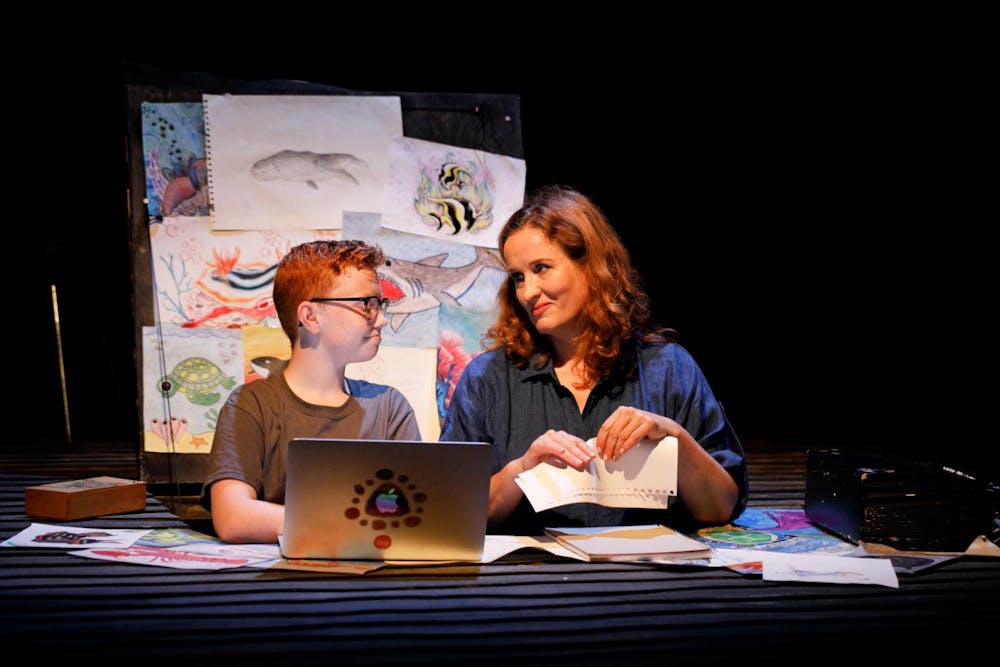
The Shadow Whose Prey the Hunter Becomes, directed by Bruce Gladwin, Back to Back Theatre

In 2009 I wrote an email to the artistic director of Back to Back Theatre, Bruce Gladwin, gushing about what I could only describe as a painful form of spectatorship. Food Court – the theatrical work I had just experienced – was profoundly, spectacularly unsettling.

The work was sumptuously visual and sonically relentless. It re-coded the audience’s gaze by focusing on theatre’s role in the brutal subjugation of neuro-diverse people. It pummelled right into the sticky classification of disabilities and their other.

Ten years on and public discourse, disability theatre scholarship, and the Back to Back ensemble have intensified their reach.


Read more: How Back to Back challenges the way we see actors with disabilities


The Shadow Whose Prey the Hunter Becomes is the third of the company’s works to present at Sydney’s Carriageworks. A town hall meeting offers a sparse anti-aesthetic. It is decidedly unspectacular.

An unexplained gathering

At the centre of a cavernous space, five humble chairs are being set up. The performers are discussing masturbation. And the rules of public versus private touching. And the rules of being touched appropriately by another. Or not.

On the distant back wall, spoken dialogue is live captioned. Through the space sounds an alien whistling which evolves to become a lazy, rolling jazz. The audience lights remain on. We will not be relaxing in the comfort of anonymity this evening.

Why have we gathered in this form of assembly? Why have we been gathered as a public?

When theatre disguises itself as civic action, or when civic action disguises itself as theatre, spectators sit in the thorny tension of being – as Judith Butler described – either “the people” or “the people who are not ‘the people’.”

What kind of people are we?

Michael Chan, in a suit and thongs, enters to open the meeting. The beginning might have begun. Yet Chan’s Acknowledgement of Country is sharply upended by Scott Price who takes issue with his pronunciation and tells Michael to – as the surtitles render it – “far king step up.”

Simon Laherty slides off his chair to speak. He might be speaker to begin the beginning. But suddenly, he falters. The words have evacuated. He’s out.

Simon Laherty ‘falters’ as the play begins, or is delayed beginning. The audience cannot tell. Zan Wimberley/Back To Back Theatre

The drama of misfire is central to Back to Back’s work. With each apparent failure, spectators reckon with the theatrical frame: do we consider these failures more real than in other performances, because these actors have been traditionally perceived as nonprofessional?

Back to Back seamlessly, ruthlessly, challenge and unsettle the ways audiences read the veracity – or virtuosity – of the performers. These actors are seasoned at playing a version of themselves. Slippages between authenticity and fabrication are masterfully delivered. The performers work the text to precision timing. Beats are rarely missed – except when that is the point.

Who decides who we are?

The performers out themselves as activists whose mission is to give everyone a voice – but on whose terms? For one performer, “disability” is an offensive term, another finds it useful. One finds “neuro-diverse” an effort in language avoidance. Sarah Mainwaring finds the surtitles patronising, a point re-laboured as the screens flicker these very words in temporal catch up.

The dialogue ducks and weaves. The performers continuously upend each other and the audience from landing anywhere comfortable.

The design ‘is decidedly unspectacular.’ Zan Wimberley/Back to Back Theatre

In front of Mark Deans, they debate the merits of “taking advantage of Mark.” He is “probably quite vague […] like he’s not in the room,” they say.

“Mark,” they ask, “are you following this?”

“No”, comes the rehearsed reply.

The play begins again.

A lectern is raised and Scott delivers a feverish account of the atrocities committed against people with perceived disabilities. Perhaps the audience has been summoned to witness this history, to learn from this past?


Read more: Finally, people with disabilities will have a chance to tell their stories – and be believed


When we might feel the build of momentum, the list of atrocities is followed by a list of board games, descending the bleakly historical into farce. Apple’s Siri is called upon to verify facts and to receive confessions. The meeting spirals downhill.

The Shadow Whose Prey The Hunter Becomes Carriageworks Back to Back Theatre Image Zan Wimberley. Zan Wimberley/Back to Back Theatre

It is a frustrated call to arms. We are a failed audience. We are “not getting it,” our “comprehension is mild.”

What kind of people are we, sitting and watching the theatre being played before us? What is our role? What are the limits of our understanding?

We face a future, we are told, in which we will all be outstripped by AI. In this world where artificial intelligence leaves behind human intelligence, we will all have intellectual disabilities. So where will this leave us?

This is the purpose of the meeting: to consider what kind of public we ought to be.

Back to Back Theatre give us no answers. Just encounters with ourselves.

The Shadow Whose Prey the Hunter Becomes was reviewed at Carriageworks, Sydney. Season closed. Tour continues to Geelong Arts Centre, Oct 3-6; Melbourne International Arts Festival, Oct 9-20; and the USA in 2020.

ref. The Shadow Whose Prey the Hunter Becomes review: Back to Back Theatre’s exciting reframing of disability – http://theconversation.com/the-shadow-whose-prey-the-hunter-becomes-review-back-to-back-theatres-exciting-reframing-of-disability-124003

How to turn Auckland’s inner city streets into public spaces people can enjoy

Source: The Conversation (Au and NZ) – By Carl Douglas, Lecturer in Spatial Design, Auckland University of Technology

There’s a difference between a road and a street. Roads take you from one place to another, but streets are more than functional channels. They are public spaces.

The streets of downtown Auckland, New Zealand’s largest city, are about to be transformed. A masterplan for the city centre was approved back in 2012, and now a proposed design is open for feedback.

The idea behind this masterplan is to design the central city as a cohesive public space rather than simply the sum of a thousand independent decisions.

The design will include further changes in support of walking, cycling and public transport, and less space for cars. Significantly, sections of Queen Street, which runs through the centre to the waterfront, may be closed to cars completely.

We can expect to see outraged responses from those wedded to their cars, those who see the project as an expensive beautification scheme, and those who resent the idea of Auckland’s population intensifying.


Read more: Don’t forget the footpath – it’s vital public space


A shared world

This is a good time to reflect on what we mean by “public space” and what we need it for.

Streets are some of our most important public spaces, but are often managed as if they were mainly pipes for cars (or, if we’re lucky, bicycles and pedestrians). Roadways, water pipes, optical fibres and pedestrian walkways are “bundled” together.

Because it is relatively easy to assign metrics to these flows, it is easy to think of streets as technological problems. The implicit ideal is for a city to be a “sleek, efficient machine” with a “rationalised circulatory network”, as architectural historian Spiro Kostof put it. The idea is at least as old as Baron Haussmann’s 19th century rebuilding of Paris.

Today’s smart cities are just the latest corporate version of the perfectly rationalised city. The automated city sounds great, but uncritical reliance on metrics locks in technological assumptions and biases. Airy promises and overhyped technological solutions divert from the more mundane but ultimately critical job of making public space.

How to define public space

Philosopher Hannah Arendt wrote of public space as a “space of appearance”, a place where we can become meaningfully visible to one another, and where we can present ourselves on our own terms, not as data points, customers, stereotypes or debating partners.

As social theorist Michael Warner put it, “a public is a relation among strangers”. To be in public, I have to negotiate my relationship with strangers, and recognise that I am also a stranger.

Arendt believed that democracy itself could be understood as a project for public space, the creation of a shared world. Māori, New Zealand’s first people, have also long thought of our shared world as a place of connections.

In other words, there is more at stake with the council’s plan than pleasant streetscapes or well-engineered infrastructure. To make Auckland’s streets good public space, I offer five suggestions:

1) Good public space is meaningful and enabling

It helps us make sense of our relationships, and supports our self-determination. It should be a platform on which we can all build, something like the old concept of the commons. Public space is filled with people pursuing various goals, individually and collectively, according to various value systems and ways of living. To imagine new kinds of public space is to imagine new ways to enable people.

2) Public space needs to accommodate informal uses

Streets, unlike roads, are not just spaces to move through, but places to do things. The famous American urban activist Jane Jacobs famously pointed to the significance of children playing in the street, and the importance of minor interactions like holding a neighbour’s mail, or leaving a key for someone at the corner store.

Similarly, the iconoclastic theorist of human-centred design Christopher Alexander even suggested that a marker of healthy public space is people feeling comfortable enough to take naps there. Informal uses of space like this should be maximised. Public space should be a bit of a mess, not a perfectly optimised machine.

3) Public space allows for discontent

Streets are places for people to gather. The Arab Spring uprisings of 2010-11, the subsequent Occupy movement, ongoing protests in Hong Kong, and Auckland’s own land occupation at Ihūmatao, may have been coordinated on social media, but were ultimately powered by the physical presence of people in public space.


Read more: How New York’s Union Square helped shape free speech in the US


Public spaces are stages where collective identities can be expressed. If we want places where people can appear authentically as themselves, we also need to recognise public space hosts difference, disagreement and potentially conflict.

4) Good public spaces requires joined-up, human-centred thinking

It might seem efficient to treat roads, plumbing, architecture, gardens, community events, public art, planning rules, maintenance, commerce and so on as separate domains best handled by experts in each area. Detailed expertise is essential, but to design good public space we need to join the dots. This isn’t easy.

In recent years, Auckland Transport, nominally a council-controlled organisation, has asserted its independence, proposing its own plans that are in conflict with the council’s aims. We need to dissolve silos, get more people around the table, and maintain a clear focus on who and what our public spaces are for.

5) Public space needs public involvement

Public space doesn’t just happen. Arendt told us to see it as an ongoing labour, something to achieve together, not something that exists by default. Auckland’s masterplan is a step in the right direction but good public space needs public involvement.

Public consultation can be a fraught process. Typically, only a few people respond, and they are disproportionately older, wealthier and white. The council has a duty to seek public input. We as the public have a responsibility to make ourselves heard.

ref. How to turn Auckland’s inner city streets into public spaces people can enjoy – http://theconversation.com/how-to-turn-aucklands-inner-city-streets-into-public-spaces-people-can-enjoy-122396

6 ways to stop daylight saving derailing your child’s sleep

Source: The Conversation (Au and NZ) – By Julie Green, Principal Fellow, Murdoch Children’s Research Institute

Daylight saving will begin this weekend across most of Australia, signalling warmer weather, longer days and new opportunities for children to make the most of time outside.

It can also mark the start of a rough patch in the sleep department. Children’s body clocks can struggle to adjust as the hour shift forwards means they aren’t tired until later.

There are things parents can do to ease the transition to daylight saving and planning ahead is key. And if things get wobbly, there are also strategies to get them back on track.

But first, let’s look at where the problem starts.


Read more: Spring forward, fall back: how daylight saving affects our sleep


Children’s body clocks

The body clock – also known as our circadian rhythm – controls when we sleep and wake.

Several environmental cues affect our body clock, the most common of which is the light-dark cycle. When it’s dark, our bodies produce more of the hormone melatonin, which helps bring on sleep. And when it’s light, our bodies produce less, so we feel more awake.

When daylight saving begins, children’s bodies aren’t getting the usual environmental signals to sleep at their regular time.

But a later bedtime means getting less sleep overall, which can impact on their concentration, memory, behaviour and ability to learn.

So, how do you plan for the daylight saving switchover?

1. Take a sleep health check

This is a good opportunity to look at how your child is sleeping and whether they’re getting enough sleep overall. Individual needs will vary but as a guide, here’s what you should aim for:

Most children wake themselves in the morning, or wake easily with a gentle prompt, if they’re getting enough good-quality sleep.

But sleep problems such as trouble getting to sleep and staying asleep are common and persistent. Around 50% of problems that begin before a child starts school continue into the early school years. So, early intervention makes a difference.


Read more: Sleep problems that persist could affect children’s emotional development


2. Review the bedtime routine

As well as the light-dark cycle, children’s circadian rhythms are synchronised with other environmental cues, such as timing around bath and dinner. A positive routine in the hour before bed creates consistency the body recognises, helping children wind down in preparation for sleep.

Bedtime routines work best when the atmosphere is calm and positive. They include a bath, brushing teeth and quiet play – like reading with you – some quiet chat time, and relaxing music.

Reading stories before bed is calming and helps create a predicable routine. Shutterstock

Keeping quiet time consistent makes it easier to say goodnight and lights out. Doing a quick check on whether they’ve had a drink, been to the toilet and so on can help address things they might call out for later.

Gently reminding children what you expect and quiet praise for staying in bed helps too.

3. Keep regular sleep and wake times

Sticking to similar daily bedtimes and wake times keeps children’s circadian rhythms in a regular pattern.


Read more: Regular bed times as important for kids as getting enough sleep


It’s best to keep this routine during weekends and holidays – even though these are times when older children in particular are eager for later nights. This is worth remembering to avoid a double whammy of sleep disruption as daylight saving and the school holidays coincide.

If your child is not tiring until later, try making bedtime 15 minutes earlier each day until you reach your bedtime target.

4. Control the sleep environment

Darkening the room is an important cue to stimulate melatonin production. This can be challenging during daylight saving, depending on your home. Trying to block out light – say, with thicker curtains – is a good strategy. Keeping the amount of light in the room consistent will also make for better sleep.

Research suggests the blue light emitted by screens from digital devices might suppress melatonin and delay sleepiness. It’s advisable to turn screens off at least an hour before bed and to keep them out of the bedroom at night.

Turn screens off an hour before bed. Ternavskaia Olga Alibec/Shutterstock

Read more: Wired and tired: why parents should take technology out of their kid’s bedroom


Temperature plays a role in priming children for sleep, as core body temperature decreases in sync with the body clock. So, check the room, bedding or clothing aren’t too hot. Between 18℃ and 21℃ is the ideal temperature range for a child’s bedroom.

5. Consider what happens during the day

Making sure your child gets plenty of natural daylight, especially in the morning, keeps them alert during the day and sleepy in the evening.

Daytime physical activity also makes children tired and ready for a good night’s sleep.

For children over five, keep naps early and short (20 minutes or less) because longer and later naps make night sleep harder.

For younger children, too little daytime sleep can make them overtired and therefore harder to settle into bed.

6. Focus on food and drink

Think about dinner timing because feeling hungry or full before bedtime can delay sleep by making children too alert or uncomfortable.

It’s also important to avoid caffeine in the late afternoon and evening. Caffeine is in chocolate, energy drinks, coffee, tea and cola.


Read more: Kids’ diets and screen time: to set up good habits, make healthy choices the default at home


In the morning, a healthy breakfast helps kick-start your child’s body clock at the right time.

Finally, worries, anxiety, and common illnesses can also cause sleep problems. If problems last beyond two to four weeks, or you’re worried, see your GP.

ref. 6 ways to stop daylight saving derailing your child’s sleep – http://theconversation.com/6-ways-to-stop-daylight-saving-derailing-your-childs-sleep-123871

Disability and single parenthood still loom large in inherited poverty

Source: The Conversation (Au and NZ) – By Deborah Ann Cobb-Clark, Professor of Economics, University of Sydney

Australians like to think we live in a country of the fair go, where anyone with the talent and willingness to work hard can succeed.

But the evidence show success is still partly inherited. Children with poor parents are more likely to grow up and be poor as adults.


Read more: Here’s why it’s so hard to say whether inequality is going up or down


The latest biennial report of the Australian Institute of Health and Welfare highlights the ways in which social and economic position is transmitted between generations.

Research points to several key factors in inherited disadvantage — notably parental disability, family structure and unemployment.

Gender patterns

Understanding the nature and extent of inherited disadvantaged in Australia has been aided by five significant research studies in the past five years. Four of them use data from the comprehensive Household, Income and Labour Dynamics in Australia (HILDA) Survey. The fifth used tax records to estimate the intergenerational mobility of people born between 1978 and 1982.

Among the results to come from these studies are estimates of the degree to which a 10% increase in fathers’ earnings affect their sons’ earnings. The studies offer a range of 1% to 3.5% – with a higher percentage meaning less social mobility.

One study highlights some interesting gender variations. It found a 10% increase in a father’s earnings associated with a 2% increase in sons’ earnings, but only a 0.8% increase in daughters’ earnings. A 10% increase in mothers’ earnings was linked to a 1.6% increase in sons’ earnings and a 1.5% increase in daughters’ earnings. This suggests girls’ earning trajectories are slightly less determined by their parents’ experience.

Other findings, however, point to certain types of disadvantage being most inherited by women. For example, those raised by a single parent receiving parenting payments are 2.2 times more likely to become a single-parent payment recipient themselves – and women make up more than 80% of single-parent payment recipients.

Patterns of transmission

The single-parenthood pattern was among those identified in research published in 2017 by myself, Sarah Dahmann, Nicolas Salamanc and Anna Zhu. The importance of family structure is underlined by the fact young adults are more likely to receive a range of welfare payments if they grow up in single-parent families.

The following graph shows the results of our research.


A larger disparity in the relative chance of receiving welfare given parental welfare receipt indicates a greater degree of intergenerational transmission of disadvantage. AIHW, Australia’s welfare 2019 data insights, Author provided (No reuse)

Overall, we found young Australians aged 18-26 were 1.8 times more likely to receive welfare if their parents ever received welfare. That is, 58% of young people whose parents ever received welfare were also on welfare, compared with 31.8% of those whose parent were not.

Young people whose parents received unemployment payments while they were growing up were 1.6 times more likely to receive unemployment payments before age 22, and 1.3 times after age 22.

Intergenerational disability

But the strongest relationship in intergenerational disadvantage involves parental disability.

Our results showed young people whose parents received disability support payments were 2.8 times more likely to receive disability support payments.

Young people whose parents received the Disability Support Pension for mental health reasons were almost three times as likely to be receiving the mental health-related disability benefits as other young people. They were also more likely to need other social assistance payments

The intergenerational relationship between youth unemployment and parental disability, for example, and was just as strong as that with parental unemployment.

These findings do not imply that poor children would have been better off had their parents not received social assistance — only that poor children are more likely to need assistance than non-poor children.

Stretching the rungs

Social mobility is higher in Australia than many other developed countries (most notably the United States). But it remains lower than the Scandinavian countries, and is threatened by any increase in inequality.


Read more: What the Bureau of Statistics didn’t highlight: our continuing upward redistribution of wealth


A growing gap between richest and poorest grows pulls the the rungs of the socioeconomic ladder further apart, making it harder for disadvantaged Australian children to avoid becoming disadvantaged adults.

ref. Disability and single parenthood still loom large in inherited poverty – http://theconversation.com/disability-and-single-parenthood-still-loom-large-in-inherited-poverty-123086

What fictional superheroes can tell us about devotion and why we believe in gods

Source: The Conversation (Au and NZ) – By Thomas Swan, Assistant Research Fellow, University of Otago

The relentless supply of movies about superheroes and supervillains is difficult to ignore. Some people can’t get enough. Others hope to avoid them. But psychological researchers see a cultural phenomenon worthy of study.

Fictional characters with supernatural powers are often based on mythical gods and goddesses, fighting an ancient battle between good and evil with abilities that violate our intuitive expectations about the world.

In our recently published research, we asked 300 study participants to describe features of fictional supernatural beings and we compared them with features of the gods people worship. We found some striking differences that provide clues as to why some beings attract religious devotion, while others do not.


Read more: Avengers Endgame: how the Marvel Universe helps children (and adults) understand the world around them


What makes religious beings special

The question of why religious beings are special is more puzzling than it first appears. Initially, it seems obvious that an ancestral spirit that, for example, reads minds and walks through walls, could be an object of worship. We expect minds to be private, living things to die, and solid objects to be impermeable. Entities that defy such expectations – which researchers call “folk theories” – are remarkable and memorable.

The problem is, many other entities violate our folk theories in the same way. Some superheroes can read minds and walk through walls as well, and yet these characters rarely elicit belief. Still other entities with superhuman powers, such as Bigfoot, vampires or werewolves, are occasionally believed in, but not prayed to.

Why don’t people worship such entities, which defy our expectations just as well as Jesus, Allah and Zeus do?

Our work points to an answer that has been proposed by philosophers and psychologists for centuries, from David Hume to Sigmund Freud. We believe in gods because it is comforting.

When we asked participants about the traits they ascribe to supernatural religious figures, we found that, on average, they rated them as more beneficent than fictional beings that people do not worship. In other words, religious beings are better equipped to improve people’s lives in significant ways than fictional characters with superhuman abilities.

Gods are seen as beings that can improve our lives. Supplied, CC BY-ND

The comfort theory

Religious beings were also found to routinely defy folk theories about psychology in particular – possessing abilities such as omniscience, mind-control, telepathy and precognition – rather than defying folk theories about biology (such as regeneration) or physics (flight).

In our current research, we found people believe that beings with such psychological abilities are better equipped to help us. This may be because threats to our species have become increasingly social over evolutionary time. Detecting deception, maintaining one’s reputation and avoiding social exclusion have become more significant concerns than avoiding predators and finding shelter. Religious beings with the ability to mitigate these social threats should be particularly appealing.

Other features pointed to the comfort theory in less obvious ways. We found that abilities attributed to religious beings were more ambiguous than those attributed to fictional characters. For example, omnipotence and weather control certainly defy expectations, but which ones, and how many? Is god manipulating a storm with his mind, or physically pulling it into position? This ambiguity may best be described with the phrase “God works in mysterious ways.”

Research has shown that when we want to believe in something, such as personally possessing a positive trait, it helps if the trait is ambiguous (e.g. sophisticated) rather than precise (e.g. punctual). This gives us latitude to interpret a variety of evidence in its favour.

The same argument can apply to gods we want to believe in. One person may prefer the god that pulls storms into position. Another may prefer the telekinetic god. If both interpretations are allowed, the god can be made to fit what each person finds plausible. Ambiguous features therefore make it easier to believe in comforting gods.


Read more: Friday essay: is this the Endgame – and did we win or did we lose?


Gods are neither heroes nor villains

The final feature of religious beings we discovered is that they do not easily fit into the superhero or supervillain categories that often distinguish fictional beings. Gods are more beneficent, but they are also more ambivalent, than fictional characters.

They have the ability to reward, but also to threaten and punish. While a mix of carrots and sticks undoubtedly helps gods enforce religious and moral rules, we suggest that ambivalence is also crucial for eliciting religious rituals and prayers, which in turn reinforce belief.

Indeed, there is little point in beseeching a purely benevolent or malevolent god: the former will always grant your request, and the latter never will. Only an ambivalent god can be swayed by an act of faith or a faithfully performed ritual.

A similar account might help explain why polytheistic religions typically contain a mix of positive and negative gods, the latter of which provide little comfort on their own.

In summary, gods are more beneficent, ambivalent, ambiguous and psychologically astonishing than fictional characters and, notably, these are precisely the traits that encourage belief. So even if you shudder at the thought of yet another Marvel movie, the fictional universe has taught us quite a bit about what makes gods special and what motivates some of us to believe in them.

ref. What fictional superheroes can tell us about devotion and why we believe in gods – http://theconversation.com/what-fictional-superheroes-can-tell-us-about-devotion-and-why-we-believe-in-gods-123860

‘We will never forgive you’: youth is not wasted on the young who fight for climate justice

Source: The Conversation (Au and NZ) – By Danilo Ignacio de Urzedo, PhD candidate, University of Sydney

This week’s United Nations climate summit may go down in history – but not for the reasons intended. It was not the tipping point for action on global warming that organisers hoped it would be. It will instead probably be remembered for the powerful address by Swedish teen activist Greta Thunberg, who castigated world leaders on behalf of the generation set to bear the brunt of inaction.

Young people are not sitting back and waiting for older generations to act on the climate crisis. Days before the summit, school students led a climate strike attended by millions around the world. And at the first ever UN youth climate summit, more than 500 young people from 60 countries, including myself, explored how to meet the commitments of the Paris Agreement.

This group of activists, innovators, entrepreneurs, and change-makers aged between 18 and 30 showcased potential solutions and put global political leaders on notice: they must fight off the climate crisis at the scale and pace required.

A young boy takes part in the global climate strike on September 20 at Parliament Square in London. Neil Hall/EPA

Youth voices matter

Youth aged 15 to 24 years represent 16% of the world population and will reach 1.3 billion people by 2030. Obviously the action (or otherwise) of today’s decision makers on climate change and other environmental threats will affect generations to come – a principle known as intergenerational equity.

Millions of young people around the world are already affected by climate change. Speaking at the youth summit, Fijian climate action advocate Komal Kumar said her nation was at the frontline of a crisis and worldwide, young people were “living in constant fear and climate anxiety … fearing the future”.


Read more: Highly touted UN climate summit failed to deliver – and Scott Morrison failed to show up


“Stop hindering the work [towards a sustainable future] for short term profits. Engage young people in the design of adaptation plans,” she said. “We will hold you accountable. And if you do not remember, we will mobilise to vote you out.”

UN Secretary-General António Guterres attended the event and his deputy Amina Mohammed took part in a “town hall” with the attendees, alongside senior representatives from government and civil society.

Young people are not sitting idly by

Technological solutions presented by youth summit participants included 3D printing using plastic waste, data storage in plant DNA, a weather app for farmers and an accountability platform for sustainable fashion.

Participants learnt how to amplify their voices using Instagram and how to create engaging videos with their mobile phones. An art workshop taught youth how creativity can help solve the climate emergency, and a networking session showed ways that youth leaders to stay connected and support each other.

Greta Thunberg, second from right, speaks as United Nations Secretary-General Antonio Guterres and young climate activists listen at the start of the United Nations Youth Climate Summit. Justin Lane/EPA

Elsewhere, you don’t have to look far to see examples of young climate warriors, including in the developing world.

Programs funded by the UN development program include in Kazakhstan where youth are helping implement an energy efficiency project in schools, and in Namibia where young people are being trained as tour guides in national parks and nature reserves. In Nepal, young people cultivate wild Himalayan cherry trees as a natural solution to land degradation.

Harness the power of nature

Kenyan environmental activist Wanjuhi Njoroge told the youth summit of her nation’s progress in restoring the country’s forest cover.

Nature-based solutions to the climate crisis – such as conserving and restoring forests, grasslands and wetlands – were a key focus at the summit. Efforts to meet the Paris climate goals often focus on cutting fossil fuel use. But nature has a huge ability to store carbon as plants grow. Avoiding deforestation keeps this carbon from entering the atmosphere.

Thunberg and British writer George Monbiot released a film ahead on the New York summit calling on world leaders protect, restore and fund natural climate solutions.

A film by Greta Thunberg and George Monbiot calling for more nature-based climate change solutions.

To date, such solutions have received little by way of investments and funding support. For example in 2015, agriculture, forestry and land-use received just 3% of global climate change finance.

Appearing at the youth summit, the global Youth4Nature network told how it mobilises young people to advocate for nature-based solutions. Their strategy has included collecting and sharing youth stories in natural resources management in more than 35 countries.

Youth ‘will be watching’ their leaders

When it comes to climate change, young people have specific demands that must be acknowledged – and offer solutions that other generations cannot.

But globally there is a lack of youth representation in politics, and by extension, they are largely absent from climate change decision-making.


Read more: The rise of ‘eco-anxiety’: climate change affects our mental health, too


Some youth summit participants reportedly questioned whether it achieved its aims – including the value of some workshops, why celebrities were involved and whether anything tangible was produced.

A young girl attends the the global climate strike in Brisbane. Dan Peled/AAP

Certainly, there was little evidence that world leaders at the climate summit were listening to the demands of young people. This was reflected in the failure of the world’s biggest-polluting countries to offer credible emissions reduction commitments.

But the youth summit went some way to granting young people space and visibility in the formal decision-making process.

Pressure from young people for climate action will not subside. Thunberg said it best when she warned world leaders that youth “will be watching you”.

“The eyes of all future generations are upon you,” she said. “If you choose to fail us, I say we will never forgive you”.

ref. ‘We will never forgive you’: youth is not wasted on the young who fight for climate justice – http://theconversation.com/we-will-never-forgive-you-youth-is-not-wasted-on-the-young-who-fight-for-climate-justice-123985

Anti-rape devices may have their uses, but they don’t address the ultimate problem

Source: The Conversation (Au and NZ) – By Bridget Harris, Senior Lecturer, School of Justice; Crime, Justice and Social Democracy Research Centre, Queensland University of Technology

Crime prevention initiatives targeting sexual violence are by no means new. But as technology advances and costs decrease, we are seeing an abundance of digital and technological strategies emerge.

Last month, an invisible anti-groping stamp sold out within an hour of its launch in Japan.

The stamp can be used by victims to mark someone who gropes them on public transport. This mark can only be seen when a black light (that comes with the device) is cast over it.

But we need to ask: are apps, wearables and virtual reality programs really reducing incidents, improving safety or transforming responses to harm?

Ultimately, there can be benefits to using technology to prevent sexual violence, but we must also encourage social shifts that tackle the heart of the problem.

Wearables and devices

Anti-rape wear, promoted as “wearable protection for when things go wrong”, was introduced to the market around 2013.

Designed to be worn by women, anti-rape underwear and shorts are resistant to attempts at cutting, tearing and pulling. Some designs have a coded padlock and siren which sounds if someone tries to forcibly remove the clothing. Sirens can also be activated on demand.


Read more: How women are harmed by calling sexual assault ‘locker room talk’


Anti-vaginal penetration devices have also been designed. Rape-aXe, introduced in 2010, is a “female latex condom” with rows of serrated “teeth” that latch onto a penis during penetration.

In 2014, undergraduate students at North Carolina University began promoting the Undercover Colors nail polish. The polish supposedly changes colour when dipped into a drink laced with date-rape drugs such as GHB, Rohypnol or Xanax.

The team now involved with the company has since launched SipChip, a “coin-sized drug test” on a key fob that can be slipped into a pocket or fixed onto a phone cover.

Ideally, these tests can be carried out discretely.

Fundamental flaws

Overwhelmingly, these digital devices are targeted at possible victims (typically women), asking them to assume responsibility for own their safety and management of risk. But as critics have noted, they can reinforce misconceptions about sexual violence instead of challenging them.

Victim-blaming of those who have experienced sexual assault is unfortunately common. It occurs in a variety of domains, including in the media, community, and criminal justice settings.

All too often, victim/survivors are asked what they might have done to facilitate or provoke an attack. In expecting women to control their bodies and environments with the help of anti-rape devices, the question of “what were you wearing” could be reframed as “what anti-rape devices were you wearing?”.

“How much did you drink” could turn into “did you check the drink was drugged?”.

The constant vigilance expected of women cannot be overlooked.

Anti-rape apps and devices are specifically designed to intervene in risky situations. They can potentially be valuable in preventing particular incidents.

But such measures may only deter perpetrators from harming one person, not necessarily from harming others, or attacking the target at another time.

Problematic perspectives

Assaults on public transport and in public spaces are undoubtedly an issue. But focusing on the “unknown” danger from strangers can take away focus from the higher level of sexual violence enacted by acquaintances, friends, dates, and intimate partners – often in private places.

The most recent National Community Attitudes toward Violence against Women Survey documented alarming attitudes about violence against women among young people.


Read more: Rape myths like ‘stranger danger’ challenged by global drug survey


About one in seven young Australians reported a man would be justified in using force if a woman initiated sex but subsequently changed her mind about continuing. Almost one in four young men also believed women find it flattering to be persistently pursued, even if they are not interested.

Such “problematic attitudes to violence against women” were said to be common among young people with mainly male friends.

When it comes to technological responses to sexual violence, perpetrators and bystanders are rarely the focus. This is an oversight that warrants attention.

Digital support solutions

Technology can offer support for women in the aftermath of an incident.

Victim/survivors use digital channels to call out sexual hostilities, aggression or unfavourable experiences on dating apps. Examples include public Instagram accounts such as tindernightmares.

Bye Felipe also features posts “calling out dudes who turn hostile when rejected or ignored”.

Advocates have created apps that provide victim/survivors with ways to report violence and seek assistance. For instance, Sunny helps survivors with disabilities share their stories and locate information about their rights and support.


Read more: Cyber justice: how technology is supporting victim-survivors of rape


Apps such as SmartSafe+ and Arc, developed by the Domestic Violence Research Centre Victoria, can help in evidence collection.

Prevention before reaction

Virtual reality is another innovative channel we can use to promote and practice bystander intervention in a simulated environment.

Users can see and experience how bystanders – which could be any of us – might intervene to prevent sexual violence.

Ideally, this would be trialled alongside discussions about ideologies and behaviours that foster perpetration, and how consent can be understood and respected.

In many ways, technology can provide tools that help prevent sexual violence and offer support to victim/survivors. But we must develop digital initiatives that seek to promote real world, social shifts.

Technologies should seek to engage with and prevent perpetration, promote bystander intervention and challenge the myths, attitudes and underlying structures that facilitate sexual violence.

In other words, we need to prevent sexual violence at its source.

ref. Anti-rape devices may have their uses, but they don’t address the ultimate problem – http://theconversation.com/anti-rape-devices-may-have-their-uses-but-they-dont-address-the-ultimate-problem-123011

Australia has enacted 82 anti-terror laws since 2001. But tough laws alone won’t make us safer

Source: The Conversation (Au and NZ) – By Nicola McGarrity, Senior Lecturer, Faculty of Law, UNSW

In late September, Home Affairs Minister Peter Dutton introduced a new bill that would give him stronger powers to strip the Australian citizenship off dual nationals convicted of terror-related offences or who engage in related activities.

In response to the prospect of foreign fighters returning from conflicts overseas, the bill proposes extending the current citizenship revocation law to any dual national who is convicted of a terrorism offence carrying at least three years imprisonment (compared to the current six).

It would also be back-dated to account for any terrorism convictions or conduct from May 2003 onwards (compared to the current cut-off date of December 2015).

To protect the rights of dual nationals, the bill proposes changing the process for revoking citizenship. Instead of it automatically ceasing when people engage in terror-related conduct, the minister would have the sole power to decide if they should be stripped of their citizenship.

This procedural change is unusual because moves to repeal or wind back anti-terrorism laws have been few and far between.

Unfortunately, however, in all other respects, the new citizenship bill fits squarely within the pattern of overzealous Australian anti-terror law-making over the past 18 years.


Read more: Preventing foreign fighters from returning home could be dangerous to national security


A new law every 6.7 weeks

Since the September 11, 2001, terrorist attacks in the United States, the Australian parliament has responded to the threat of terrorism here and overseas by enacting dozens of new laws or amending existing laws.


Note: Hover on desktop to see names and links of individual Acts.

In 2011, University of Toronto Professor Kent Roach famously described this response in Australia as one of “hyper-legislation”.

Another expert, UNSW Professor George Williams calculated that between the September 11 terrorist attacks and the defeat of the Howard government in November 2007, a new anti-terror law was enacted on average every 6.7 weeks.

The declaration of a caliphate by the Islamic State in mid-2014 led to another flurry of legislative activity in parliament.

This started with the National Security Legislation Amendment Act (No 1) 2014 (Cth), which controversially exempted undercover ASIO officers from criminal prosecution, expanded that organisation’s access to computer networks, and restricted the leaking of sensitive information.


Read more: National security bills compound existing threats to media freedom


In the five years since then, 19 more anti-terrorism laws have been passed. That brings the total number of substantive anti-terrorism laws enacted by parliament to 82 since the Sept. 11 attacks, with a further six bills either currently before parliament or about to be introduced.

This is a staggering number of laws, and far exceeds the volume in the United Kingdom, Canada and even the United States in response to Sept 11.

Draconian and unworkable laws

It is not only the sheer number of laws, but also their scope, which makes Australia stand out among Western democracies.

At the core of Australia’s anti-terrorism regime is a carefully considered and, in the eyes of most commentators, balanced definition of terrorism.

However, as the years have gone by, increasingly draconian, and often unworkable, legislation has spiralled out beyond this definition. For instance, the mere act of travel to certain areas, such as Mosul in Iraq, has been criminalised, as well as advocating terrorism.

Instead of working with companies like Facebook and Twitter in the aftermath of the Christchurch terrorist attacks, the government imposed impractical obligations on them to scrutinise the online activities of their customers (with further laws threatened in the event of non-compliance).

In addition to the stripping of the citizenship of dual nationals, another bill would prevent anyone from returning home from overseas conflicts for a considerable period of time under a Temporary Exclusion Order, even Australians who don’t hold another passport.


Read more: There’s no clear need for Peter Dutton’s new bill excluding citizens from Australia


Another bill before parliament would require people who have previously been charged with a terrorism offence (regardless of whether they were ultimately acquitted) to prove extraordinary circumstances before being granted bail for a subsequent offence.

This demonstrates just how far lawmakers have strayed from the fundamental human rights and principles of criminal justice.

Home Affairs Minister Peter Dutton would have the power to decide on revoking citizenship for those convicted of terror offenses under a new bill before parliament. Sam Mooy/AAP

What anti-terror laws are intended to do

In the immediate aftermath of the September 11 attacks, Australian lawmakers might have been excused any overreaction on the grounds the country didn’t have much historical experience with terrorism or in legislating in response to this threat.

At the time, there were no specific anti-terrorism laws at the federal level in Australia. This was undoubtedly a significant oversight which needed to be remedied.

Even today, more than 18 years on and with over 80 laws in place, it’s somewhat understandable lawmakers react to terrorist attacks by seeking to take swift action.

One of the (few) downsides of a democratic political system is that parliamentarians are hit with the full force of public hysteria about actual and perceived terrorist threats. The most obvious way for the parliament to address these fears is through the enactment of laws.

As Roger Wilkins, a former secretary of the Attorney-General’s department, said in support of proposals to strengthen the control orders laws in the aftermath of the November 2015 Paris terrorist attacks:

In a modern, liberal democracy, that’s about the only thing you can do.

Despite frequent claims to the contrary, this is not just a case of political opportunism on the part of the governing party. The steps taken by lawmakers are crucial in re-establishing the community’s sense of security.

We need to acknowledge, above all, that the buck stops with our elected representatives to protect the lives of the Australian people. They bear both the personal and professional responsibility if a terrorist act occurs which could have been prevented.

It is this, as much as anything else, that explains the rapid and bipartisan passage of so many laws through the parliament.

Terrorism can’t be defeated through laws alone

Having said all this, it’s unfortunate successive Australian governments on both sides seem to have learned little over the course of the last 18 years.

Statements made in the aftermath of every terrorist attack, and, most recently in responding to concerns about foreign terrorist fighters, have identified the ultimate goal as being to “defy” and “defeat” terrorism.


Read more: How the Australian government is failing on countering violent extremism


While statements such as this are clearly rhetorical, what underpins them is a failure to recognise the permanence of terrorism.

Terrorism in one form or another has always existed, and will always continue to exist. Neither legislation nor anything else will be able to eliminate this threat.

The idea of managing the threat of terrorism, in the sense that some degree of terrorism is acceptable or at least to be expected, might seem politically unpalatable. However, open acceptance of the permanence of terrorism means lawmakers will no longer be chasing – and the public no longer demanding – the achievement of an impossible goal.

It will also, in turn, facilitate a more proportionate response to the challenges posed by the foreign fighters phenomenon and the threat of terrorism more generally.

A better way forward

In a quest to eliminate terrorism, laws have been enacted that make ever-increasing intrusions into people’s lives and curtail human rights for diminishing returns in terms of security.

Some have even suggested these laws make us less safe. In its submission to the Parliamentary Joint Committee on Intelligence and Security’s inquiry into the citizenship stripping laws, ASIO said these measures could:

have unintended or unforeseen adverse security outcomes – potentially including reducing one manifestation of the terrorist threat while exacerbating another.

It will never be appropriate or desirable for governments to sit back and take no action in response to the threat of terrorism. But what we need is a sharp change in approach.

Countering violent extremism programs have been used in Australia and other countries as another tool for responding to terrorism threats. Instead of treating such programs as a “backup” option, as they currently are in Australia, these should be brought to the fore.

The critical lesson of the past 18 years is that we must think creatively about how to combat the threat of terrorism, rather than continually reworking existing – and often demonstrably unsuccessful – strategies.

ref. Australia has enacted 82 anti-terror laws since 2001. But tough laws alone won’t make us safer – http://theconversation.com/australia-has-enacted-82-anti-terror-laws-since-2001-but-tough-laws-alone-wont-make-us-safer-123521

How to check if your mum or dad’s nursing home is up to scratch

Source: The Conversation (Au and NZ) – By Lee-Fay Low, Associate Professor in Ageing and Health, University of Sydney

If you’ve read the headlines about poor standards in Australia’s nursing homes, it’s only natural to be concerned about your own family or friends in residential aged care.

For instance, there was news in recent weeks that 45 of 72 Bupa nursing homes in Australia had failed to meet all health and safety standards, with 22 putting residents at “serious risk”.

Then there are the harrowing stories of neglect and abuse coming from the Royal Commission into Aged Care Quality and Safety, which is due to release an interim report by the end of October.

So, how do you check if your loved one’s nursing home is really up to scratch? How do you interpret audit reports about residents’ health and safety? And how else could you find out if your mum or dad’s nursing home lives up to the promise of its marketing brochures?


Read more: Bupa’s nursing home scandal is more evidence of a deep crisis in regulation


Who keeps an eye on nursing home standards?

Every nursing home in Australia receiving government funding is assessed and accredited by the Australian Aged Care Quality and Safety Commission. Assessments are conducted every three years or more often if there are concerns.

Commission staff check if each nursing home meets eight minimum standards. These include whether residents are treated with respect, the nursing home is providing safe and effective clinical care, and staff have adequate qualifications and training to do their jobs.


Read more: What is ‘quality’ in aged care? Here’s what studies (and our readers) say


Commission auditors interview residents, families and staff; observe care; and review the facility’s documentation. Visits can be unannounced to get a better picture of what regular care is like. Auditors then use that information to write a site audit.

It takes about a month after a site audit for the commission to decide on the quality of care. Then there’s up to another month for the audit report to be posted online.

Posting the decision publicly can be delayed further if a nursing home asks for the decision to be reconsidered. We understand this often happens if a home receives a poor report.

What is a bad report?

When a home is judged as not meeting standards, the commission will decide how serious it believes these deficiencies are. In increasing order of seriousness, the report says if a home is:

1. Not meeting standards. Nursing homes can be judged as not meeting one or more of the eight minimum aged care standards. Each standard has three to seven individual requirements. Nursing homes don’t have to meet all the individual requirements to meet the overall standard. The more standards or requirements a nursing home fails to meet, the poorer the care.

2. Serious risk. If a nursing home is given a “serious risk” judgement, the quality of care has placed or may place the safety, health or well-being of a resident at serious risk. An example might be a home not having enough skilled staff, leading to clinical mistakes, such as the wrong medication administered often.

3. Sanctions. Sanctions are imposed on homes when care places an immediate and severe risk to residents’ health, safety or well-being. This might be for multiple organisational problems (such as with clinical care, staffing, wounds not being cared for), leading to multiple poor outcomes (such as assault, avoidable illness, and the dangerous administration of medication). Homes can also be sanctioned if they do not fix continued non-compliance.

Families are notified in writing, and facilities must hold a meeting for residents and families to tell everyone what the problems are and how they will fix them by a certain date.

When a nursing home is sanctioned, it is penalised in several ways, depending on what was poor about the care:

  • the home is not allowed to receive Commonwealth subsidies for any new resident for a set time (usually six months)

and

  • an adviser and/or administrator is appointed to the home to help it comply with its responsibilities

and/or

  • the home provides specified training to staff within a set time.

Read more: Nearly 2 out of 3 nursing homes are understaffed. These 10 charts explain why aged care is in crisis


A home’s history of non-compliance, serious risk decisions and sanctions are archived online (see below for details). So it might be worth taking a look when choosing a nursing home, as well as checking on an existing one.

4. Revoking accreditation status. If sanctions are imposed and there is no improvement, the commission can revoke a home’s accreditation status. This means a home cannot take new residents or receive government subsidies. Some of these homes reapply for accreditation, others shut down.

How do I find out? Looking online

The most up-to-date information on nursing homes not meeting standards (non-compliance) and sanctions is through myagedcare’s non-compliance checker. This allows you to see if an individual home has not met standards, is sanctioned currently or has been in the past. Some archived sanctions on the website go back to 2002.

However, the myagedcare website doesn’t list “serious risk” reports. For those, you have to go to the Aged Care Quality and Safety Commission’s website.

There’s lots of information online about nursing home standards and care, not all of it easy to understand. from www.shutterstock.com

You can also search the commission’s website for audit and consumer experience reports, which provide more detail on the quality of care.

Audit reports can be difficult to understand because their intended audience is aged care professionals, not the general public. Reports before July 2019 are on the 44 old aged care standards. Reports from July 2019 are on the new eight standards.

Consumer experience reports show what residents said about their care. That’s from whether staff followed-up when they raised an issue, to what they thought about the food. These reports are easier to follow.

How do I find out? Other ways

It can be hard for family to know if their expectations for care are reasonable, particularly when feelings of sadness and guilt colour those expectations.

So, it can help to consider the aged care standards when making your own decisions about whether the quality of care is good enough.

You can do this by observing what happens day to day. Do residents wait too long for attention, for instance, to be taken to the toilet? Do staff speak respectfully and kindly to residents? Are meals appetising and healthy? What happens when residents are distressed? Is there high staff turnover?

Does the nurse on duty know the detail of your loved one’s clinical needs, for instance, diet, illnesses or medications? Is the manager responsive when you raise issues?

You can also talk to other families about their experiences of care.

What should I do next?

If you find that your loved one’s home doesn’t meet standards or is sanctioned, here’s what to expect.

The commission gives the home a set period of time (usually three or six months) to improve care. Commission staff keep visiting the home until they are confident the home is meeting standards.

Commission staff come back to the nursing home until they are confident standards are being met. from www.shutterstock.com

You will probably want to visit regularly and keep an even more careful eye on your mum or dad’s care. Speak to the home or commission about any concerns.

You can ask your home’s management:

  • about its plan to improve care

  • about staff changes and staff ratios — staff often leave or are asked to leave when there are sanctions and lots of new and agency staff are a challenge to providing quality care

  • for regular written updates and meetings including actions taken and the outcomes. This could be data on the home’s use of antipsychotic medications, and how often residents have falls, critical incidents or pressure ulcers.

As a resident or nominated family member, you have a right to information and to complain about your loved one’s aged care.


Read more: So you’re thinking of going into a nursing home? Here’s what you’ll have to pay for


When should I consider switching to another home?

The issue of whether to move a loved one to a new nursing home is a difficult one. It’s a personal decision involving weighing up the negative impacts you think the care is having with your own energy levels, funds and whether you can find a suitable new home.

Government reforms presume market forces will drive up the quality of aged care. In the meantime, we hope the resources in this article will help you make a more informed decision about your loved one’s care.

ref. How to check if your mum or dad’s nursing home is up to scratch – http://theconversation.com/how-to-check-if-your-mum-or-dads-nursing-home-is-up-to-scratch-123449

Australia’s temporary graduate visa attracts international students, but many find it hard to get work in their field

Source: The Conversation (Au and NZ) – By Ly Tran, ARC Future Fellow, Deakin University

The number of international students who stay in Australia after graduating on the temporary graduate visa – often referred to as the 485 visa – is growing fast. There were nearly 92,000 temporary graduate visa holders in Australia as of June, 2019. That’s up from from around 71,000 in June 2018 – a 29% increase.

The 485 visa was introduced in 2008 and updated in 2013, taking on recommendations from the 2011 Knight Review, which recognised post-study work rights for international students as crucial for Australia to remain competitive in the education export market.

Under the visa, international recent graduates of a degree or qualification from an Australian institution can stay in Australia for two to four years, depending on the qualification. The government points to the visa as providing an opportunity for international students to remain in Australia for a limited period of time and gain international work experience.


Read more: 457 visa changes won’t impact on wider temporary education workforce. And maybe that’s deliberate


In our recent study, we examined the effects of the 485 visa policy on international students in Australia and on the labour market.

Out of the visa holders we surveyed, 76% said access to the visa was an important factor in their decision to study in Australia. And the majority of past (89%) and current (79%) 485 visa holders in Australia participated in the labour force. (Past holders of the visa refer to either those who have returned to their country or remained in Australia but moved on to another visa).

But many graduates did not work full-time, and they did not necessarily work in their field of study. A considerable number of graduates were employed in retail, hospitality or as cleaners.

The numbers

We collected data through an online survey from 1,156 international graduates, some of whom are in Australia and others back in their home countries. We also conducted in-depth interviews with students and other key stakeholders such as employers.

Our analysis included that of government figures and policy.

The top five citizenship countries of 485 visa holders in Australia (India, China, Nepal, Pakistan, Vietnam) have also been the top five source countries of international enrolments in Masters by coursework (China, India, Nepal, Pakistan, Vietnam) programs since 2013.


Up to 56% of current visa holders either worked outside their field of study (35%) or were unemployed (21%), which puts these groups at risk of financial stress and vulnerability.


Australian government data shows occupations such as “sales assistants and salespersons” as well and “cleaners and laundry workers” are in the top three for 485 visa holders across all occupations.


Were visa holders satisfied?

We asked participants to rate how satisfied they were (on a five point scale form extremely dissatisfied to extremely satisfied) with their employment experience while on visa 485. There was an overall satisfaction rate of 66%.

Those who reported being dissatisfied did so for five main reasons:

  1. the two-year time limit was too short to give employers confidence, to help graduates gain membership with a professional body, and to build work experience and secure employment
  2. employers prefer applicants with permanent residency (PR) and lack understanding of the 485 visa
  3. there’s a lack of flexibility in extending or renewing the visa
  4. there’s a lack of support from related stakeholders (including continuing access to institutional career support services) and lack of advice around temporary graduate visa and post-graduation pathways
  5. the temporary graduate visa isn’t an easy pathway to permanent residency, even though many think it is.

One international graduate told us:

Most of the employers don’t know what post study work visa is […] when I was applying for a job […] the recruiter liked my profile but in the last stage, when I told them I am on temporary graduate visa, they don’t know what exactly is it and they don’t care for the explanation you give about the same […] 50% of the good jobs out there ask for PR and citizenship when the term they offer employment for only one year.

Stereotyping about international students such as that they are “mere PR hunters” is also a barrier to job seeking. The importance attached to being a good “cultural fit” or “best fit” in recruitment is a form for racism, disadvantaging international students and graduates in the Australian labour market.

It’s important to note, however, that the education department’s Graduate Outcomes Survey also indicates that since the Global Financial Crisis, domestic graduates have also taken longer to gain employment, especially in their area of expertise.

Some positives

Many international graduates identified a number of benefits to the 485 visa. Some saw the visa as a way to buy time in Australia to enhance their English language proficiency, acquire different forms of work experience and develop professional and social networks.

In other cases, international graduates were able to repay their study loans while working in jobs unrelated to their field of study.

Working in odd jobs also helped some international graduates improve their communication and soft skills. These are necessary for them to get their foot in the door and gain employment that’s more appropriate to their qualifications.


Read more: Are international students passing university courses at the same rate as domestic students?


Our study also found 52% and 49% of those who graduated in 2015 and 2016 respectively reported they secured full-time jobs in their field of study in 2019. This indicates securing a full-time job in their field of study improved over time and specifically for those who were able to secure permanent residency.

It’s important to raise local businesses’ awareness of the temporary graduate visa, its purpose and scope to decrease stereotyping and give international graduates more of a chance to gain skills in their field.

It’s crucial for the international education sector, universities and related stakeholders to have specific campaigns, as well as flexible and practical approaches to align employers’ needs and international graduates’ strengths.

It’s important for the government to include an option to extend or renew the 485 visa for an additional one or two years for those who have been employed full or part-time in their field of study for at least six months, or those who have started their own business in or outside their field of study with a certain level of income.


Read more: Australia should try to keep more international students who are trained in our universities


Importantly, this option needs to be communicated clearly to employers to address their concerns and hesitations about the short-term nature of the temporary graduate visa.

It’s in Australia’s interest to ensure temporary graduates on 485 visas gain employment in their field. This will deliver benefits to local businesses, community and the economy. Positive employment outcomes will also enhance Australia’s reputation for international education globally.

ref. Australia’s temporary graduate visa attracts international students, but many find it hard to get work in their field – http://theconversation.com/australias-temporary-graduate-visa-attracts-international-students-but-many-find-it-hard-to-get-work-in-their-field-123997

5,800 defence veterans homeless in Australia, that’s more than we thought

Source: The Conversation (Au and NZ) – By Fiona Hilferty, Senior Research Fellow, Social Policy Research Centre, UNSW

The number of homeless defence veterans in Australia is far bigger than previously thought, according to a new study.

Our research puts the figure at almost 5,800 veterans experiencing homelessness in a 12 month period.

Veterans are also more likely to be homeless than other people in the Australian community.


Read more: ‘We all slept in the car, five of us’. Young refugees talk about being homeless in Australia


We found the homelessness rate for veterans who recently left the ADF was 5.3% – significantly higher than the 1.9% for the general population.

A lack of data

Before the release of this estimate, an accurate number of homeless veterans in Australia was not known, and estimates varied widely. That is because there is limited national data available to count homeless veterans.

Prevalence rates are typically calculated by dividing the number of people with a specific characteristic (such as not having a secure home) by the total number of people in the population of interest (such as veterans).

This method is not possible in Australia as there is no data set that defines the veteran population. We do not even know how many veterans there are in Australia, because reliable data of serving personnel is only available from 2001.

One previous attempt at determining prevalence of homelessness among veterans was the Veterans at Risk report in 2009, funded by the Department of Veterans’ Affairs (DVA). This relied on census data (which does not identify veterans) and produced an estimate of around 3,000 homeless veterans.

Another attempt was made by DVA in 2016. No information was provided on how it estimated there to be around 200-300 homeless veterans throughout Australia.

This knowledge gap was a concern for government policymakers as well as veteran advocates who have been calling for further research and an increased service response for years.

Without a baseline count, they are unable to determine whether veteran homelessness is increasing, plan an appropriate service and policy response, or assess the effectiveness of any interventions.

It is therefore vital to establish a more robust estimate.

How we came up with our estimate

Our estimate is obtained from survey data representative of all veterans who left regular Australian Defence Force (ADF) service between 2010 and 2014.

The survey was done as part of the DVA and Defence Department-funded Transition and Wellbeing Research Programme. This is the most comprehensive study in Australia that examines the impact of military service on the mental, physical and social health of serving and ex-serving personnel.

The survey was completed by 4,326 men and women who left the ADF in the five-year time period. The results were weighted to represent the entire population of Australian Defence Force personnel that left between 2010 and 2014.

We used the Australian Bureau of Statistics’ definition of homelessness. This classifies as homeless anyone who is sleeping rough, couch-surfing, or living in emergency or temporary accommodation such as shelters.

We found around 5.3% of these veterans reported they had been homeless within the past 12 months.

To calculate the prevalence of homelessness we extrapolated this proportion to the total population of veterans who enlisted after January 1, 2001, and were discharged sometime between 2001 and 2018.

The veteran population total is 108,825, so taking 5.3% of this figure gives us an estimate of 5,767 of veterans who were homeless within a 12-month period.

This extrapolation reasonably assumes the homelessness rate is similar between veterans who transitioned from Regular ADF service between 2010 and 2014 and the total population of veterans (2001-18).

Both groups fall within the cohort described as contemporary veterans by the DVA. These veterans have seen military operations from 1999 onward and often share features of recent service, such as the impact of multiple deployments in smaller contingents and the use of new technologies.

While the 12-month homelessness rate for veterans (5.3%) and the general Australian population aged over 15 (1.9%) were calculated using different techniques, the comparison shows veterans are overrepresented in the Australian homeless population.

The best estimate, so far

We believe our method provides the best estimate to date of homelessness among veterans in Australia, but it is still likely to be an underest.

Homeless veterans are an extremely hard group to reach. It is likely that many potential survey participants who were homeless at the time the survey was conducted, did not complete the survey.

Our estimate also excludes all those who served in the ADF prior to January 1, 2001. Older veterans such as those who served in Vietnam do experience homelessness in Australia, but the prevalence among this group is unknown.

As part of our research, eight of the 29 homeless veterans we interviewed were aged over 55, with the oldest being 74. US research says there is often a long time lag between transition from military service and becoming homeless.

Lest we forget

Our research puts a new number on the problem. We still do not know whether veteran homelessness is increasing over time, but the broader context of homelessness increasing throughout Australia suggests this may be the case.


Read more: Homelessness soars in our biggest cities, driven by rising inequality since 2001


As Remembrance Day approaches, and Australians prepare to thank our military men and women for their service, we suggest that attention should also turn to addressing this national shame.

Our research also identifies ways that service responses can be improved. It will require a great deal of will and significant funding to address what has until now been an underestimated problem.

ref. 5,800 defence veterans homeless in Australia, that’s more than we thought – http://theconversation.com/5-800-defence-veterans-homeless-in-australia-thats-more-than-we-thought-123695

Five questions about superannuation the government’s new inquiry will need to ask

Source: The Conversation (Au and NZ) – By Peter Martin, Visiting Fellow, Crawford School of Public Policy, Australian National University

The government’s new retirement incomes review will need to work quickly.

On Friday Treasurer Josh Frydenberg said he expected a final report by June, just seven months after the issues paper he wants it to deliver by November.

The deadline is tight for a reason. In recommending the inquiry in its report on the (in)effeciency of Australia’s superannuation system this year, the Productivity Commission said it should be completed “in advance of any increase in the superannuation guarantee rate”.

In other words, in advance of the next leglislated increase in compulsory superannuation contributions, which is on July 1, 2121.


Read more: Government retirement incomes inquiry puts superannuation in the frame


The next increase (actually, the next five increases) will hurt.

The last two, on July 1 2013 and July 1 2014, took place when wage growth was stronger. In 2013 wages growth was 3% per year.

Source: Australian Tax Office

And they were small – an extra 0.25 per cent of salary each.

The next five, to be imposed annually from July 1 2021, are twice the size: 0.5% of salary each.

If taken out of wage growth, they’ve the potential to cut it from its present usually low 2.3% per annum to something with a “1” in front of it, pushing it below the rate of inflation, for five consecutive years.

If we were going to do that (even if we thought the economy and wage growth could afford it) it would be a good idea to have a good reason why. After all, compulsory superannuation is the compulsory locking away of income that could otherwise be spent or used to pay down debt or saved through another vehicle, regardless of the wishes of the person whose income it is.

Question 1. What’s it for?

Fortunately, the new inquiry doesn’t need to do much work on this one.

For most of its life compulsory super hasn’t had an agreed purpose. At times it has been justified as a means of restraining wage growth, at times as means of restraining government spending on the pension, at times as means of boosting national savings.

In 2014, more than 20 years after compulsory super began, the Murray Financial System Review asked the government to set a clear objective for it, and two years later the government came up with one, enshrined in a bill entitled the Superannuation (Objective) Bill 2016.

The bill lapsed, but the objective at its centre lives on as the best description we’ve come up with yet of what compulsory super is for:

to provide income in retirement to substitute or supplement the age pension

Which raises the question of how much we need. For compulsory super, the answer is probably none. People who want more than the pension and their other savings can save more through voluntary super. People who don’t want more (or can’t afford to save more) shouldn’t.

Question 2. How much do people need?

Assuming for the moment that how much people need in retirement is relevant for determining how much compulsory super they need, the inquiry will need to examine what people need to live on in retirement.

The “standards” prepared by the Association of Superannuation Funds of Australia are loose. The more generous of the two allows for overseas travel every two or so years, A$163 per couple per fortnight on dining out, $81 on alcohol “or equivalent spent with charity or church”.


Read more: Why we should worry less about retirement – and leave super at 9.5%


It isn’t a reasonable guide to how much people need to live on, and certainly isn’t a reasonable guide for how much the government should intervene to make sure they have to live on. They are standards it doesn’t intervene to support while people are working.

And there’s something else. Super isn’t what will fund it. Most retirement living is funded outside of super, either through the age pension, private savings, or the family home (which saves on rent). Most 65 year olds have more saved outside of super than in it, and a lot more than that saved in the family home.

It’s a slight of hand to say that retirees need a certain proportion of their final wage to live on and then to say that that’s how much super should provide.

Question 3: Does it come out of wages?

The best guess is that, although paid by employers in addition to wages, compulsory super comes out of what would otherwise have been their wage bill.

Treasury puts it this way:

Though compulsory superannuation guarantee contributions are paid by employers, wage setting generally takes into account all labour costs. As such, it is widely accepted that employees bear the cost of higher superannuation guarantees in the form of lower take home pay.

The inquiry will probably make its own determination. If it finds that extra contributions do indeed come out of what would have been pay rises, it will have to consider the tradeoff between lower pay rises (and they are already very low) and the compulsory provision of more superannuation in retirement.

Question 4: Does it boost private saving?

It’d be tempting to think that the compulsory nature of compulsory superannuation meant that each extra dollar funnelled into it increased retirement savings by an extra dollar. But it doesn’t, in part because wealthy Australians who are already saving a lot have the option of offsetting it by saving less in other ways.

For them, the increase in saving isn’t compulsory.

For financially stretched Australians unable to afford to save (or for Australians at times in times life when they can’t afford to save) the compulsion is real, and unwelcome.

The inquiry will have to make its own assessment, updating Reserve Bank research which found in 2007 that each extra dollar in compulsory accounts added between 70 and 90 cents to household wealth.

Question 5: Does it boost national saving?

Boosting private saving (at the expense of people who are unable to escape) is one thing. Boosting national savings (private and government) is another. The tax concessions the government hands out to support compulsory super are expensive. The concession on contributions alone is set to cost $19 billion this year and $23 billion in 2022-23, notwithstanding some tightening up. It predominately benefits high earners, the kind of people who don’t need assistance to save.


Read more: Myth busted. Boosting super would cost the budget more than it saved on age pensions


On balance it is likely that the system does little for national savings, cutting government savings by as much as it boosts private savings. But because the question hasn’t been asked, not since the Fitzgerald report on national saving in 1993 shortly after compulsory super was introduced, we don’t know.

It’ll be up to the inquiry to bring us up to date.

ref. Five questions about superannuation the government’s new inquiry will need to ask – http://theconversation.com/five-questions-about-superannuation-the-governments-new-inquiry-will-need-to-ask-124400

Federal arts funding in Australia is falling, and local governments are picking up the slack

Source: The Conversation (Au and NZ) – By Ben Eltham, Lecturer, School of Media, Film and Journalism, Monash University

The Australian cultural sector has rarely lacked for innovation or creativity, but it has consistently failed to properly lobby for itself. Culture in Australia employs around 400,000 workers and represents A$112 billion of economic activity. But it has negligible political clout compared to industries like agriculture, mining or gambling.

Enter The New Approach, a newish think-tank in Canberra with lofty goals of improving the public perception of Australian culture.

A New Approach is funded by wealthy philanthropists from the Myer, Fairfax and Keir families, and managed by the Australian Academy of the Humanities. After an initial burst of publicity, it has spent several years getting itself set up, appointing a director, and generally getting its act together.

So it’s fair to say its very first report was awaited by Australia’s arts community with some interest. Australian culture could do with a pep up just now.


Read more: A new approach to culture


The election of the Morrison government was a huge disappointment for many in the sector. While Bill Shorten and Labor put forward a proper arts policy with more than A$300 million in funding promises, the Coalition didn’t bother with a cultural policy at all (although some small promises were made to the music industry).

The New Approach’s first report is a topic of perennial interest to the cultural sector: government funding. The report collates available public data on cultural funding across the three levels of government, giving us an overall picture in an easily digestible form for the first time.

A high point for funding?

The report’s number one finding will surprise many: cultural funding “reached its highest point ever” in 2017-18. The big picture findings show that cultural funding has been increasing in recent years. All up, across federal, state, territory and local governments, cultural spending by governments was A$6.86 billion last fiscal year, up from A$6.31 billion in 2007-08.

Total combined cultural funding by all levels of government (adjusted to June 2018 wage price index and non-adjusted) 2007–08 to 2017–18. A New Approach

There is a hole in the time series throughout the report, with data for several years after 2013 missing. That’s because Tony Abbott and Joe Hockey cut funding to the Australian Bureau of Statistics in 2014. The ABS then had to discontinue the data collection.

Rather diplomatically, A New Approach’s Kate Fielding told The Conversation this was “very disappointing.”

While funding is up overall, in per capita terms the picture is less rosy: funding per person has been trending down for a decade, from $289 per person in 2007-08 to $275 last year – a 4.9% fall in 11 years.

Cultural funding per capita (adjusted to June 2018 WPI) for all levels of government combined. A New Approach

Actually, that “highest ever” line is a bit misleading. The report has adjusted figures to 2018 dollars, by indexing them to the wage price index. But wages have been growing very slowly in Australia over the past decade. By the more conventional inflation measure of the consumer price index, cultural funding is well down on 2007-08 figures.

Decomposing the figures across the three levels of government shows why. The Commonwealth has embarked on a swingeing austerity drive in cultural spending, particularly since the Coalition was elected in 2013.

As anyone in the arts sector could tell you, the past six years have been a bumpy ride. The report refers to the “volatility” of funding, and that’s evident from the data series.

Cultural funding fell dramatically in the Abbott years, but has risen by around 11% since. And the culprit does appear to be the federal government: according to The New Approach, Commonwealth funding has fallen by 19% per person since 2007-08.

Cultural funding per capita by different levels of government (adjusted to June 2018 wage price index), 2007–08 to 2017–18. A New Approach

But there is some good news. Local government in particular has picked up its game, increasing funding per capita by 11% since 2007-08.

A stark story

“The most interesting element is that local governments are clearly playing a bigger role in public support for arts and culture,” Fielding wrote in an email.

“Across the 11 years reviewed, the balance shifts from the federal government being a major supporter to a far more even split between the three levels of government,” she wrote.


Read more: With support for arts funding declining, Australia must get better at valuing culture


Fielding is also concerned about falling per capita funding.

“As with other areas of government expenditure that don’t keep up with population growth, we risk a decline in the relevance and accessibility of cultural opportunities for people right across the country.” She argues there is a “pressing need” for more cooperation between the three levels of government.

There’s been a fair degree of skepticism in the cultural sector about The New Approach, and whether it will deliver anything tangible. This new report should start to allay some of those concerns. Pulling together the available statistics on public funding of culture in this country is a worthy task. The picture, now painted, tells a stark story.

Australia’s artists and cultural leaders now have a very simple question they can put to Scott Morrison’s new arts minister, Paul Fletcher: when will the austerity end?

ref. Federal arts funding in Australia is falling, and local governments are picking up the slack – http://theconversation.com/federal-arts-funding-in-australia-is-falling-and-local-governments-are-picking-up-the-slack-124160

Government retirement incomes inquiry puts superannuation in the frame

Source: The Conversation (Au and NZ) – By Michelle Grattan, Professorial Fellow, University of Canberra

The government has announced very broad terms of reference for its inquiry into Australia’s retirement income system, which will trigger fresh debate about the planned future rises in the superannuation guarantee rate.

Treasurer Josh Frydenberg and Assistant Minister for Superannuation Jane Hume said in a statement the review “will cover the current state of the system and how it will perform in the future as Australians live longer and the population ages”.

It would “establish a fact base of the current retirement income system that will improve understanding of its operation and the outcomes it is delivering for Australians.”

It is understood the government is not looking for the review to make recommendations.

The terms of reference say:

It is important that the system allows Australians to achieve adequate retirement incomes, is fiscally sustainable and provides appropriate incentives for self-provision in retirement.

They refer to the retirement income system’s three pillars: a means-tested age pension; compulsory superannuation; and voluntary savings, including home ownership.

The review is asked to identify:

•how the retirement income system supports Australians in retirement;

•the role of each pillar in supporting Australians through retirement;

•distributional impacts across the population and over time; and

•the impact of current policy settings on public finances.

Michael Callaghan, a former executive director of the International Monetary Fund and a former senior Treasury official, will chair the review.

The other panellists will be Carolyn Kay, who has long experience in the finance sector in Australia and abroad, including on the Future Fund Board of Guardians, and Deborah Ralston, a professorial fellow in banking and finance at Monash University, a member of the RBA’s Payments System Board, and most recently chair of the Alliance for a Fairer retirement, a group set up in response to Labor’s proposal to disallow refunds of excess franking credits.

There will be a consultation paper released in November and the report will be done by June next year.

A review was recommended by the Productivity Commission, which said there should be an “independent public inquiry into the role of compulsory superannuation in the broader retirement incomes system, including the net impact of compulsory super on private and public savings, distributional impacts across the population and over time, interactions between superannuation and other sources of retirement income, the impact of superannuation on public finances, and the economic and distributional impacts of the non-indexed $450 a month contributions threshold.”

The PC said this inquiry should be done before there was any rise in the superannuation guarantee rate.

The superannuation guarantee – increases in which have been pause – is due to start rising again from mid-2021.

Under the law in place, the increases would take the rate gradually from the current 9.5% to 12% by 2025.

The review’s broad terms of reference will reactivate a vocal group of government backbenchers who want to stop any further rise in the guarantee rate.

This is regardless of the government’s commitment to the legislated rise and Frydenberg’s answer, when asked on Friday whether that position still stood. “The government’s policy on the superannuation guarantee has not changed,” he said.

Frydenberg also reaffirmed, in relation to the family home,“As I said in parliament in July, including the family home in the pension assets test is not our policy and never will be.”

The retirement incomes issue is highly charged politically, so the government is potentially opening a can of worms.

Industry Super Australia chief executive Bernie Dean welcomed the “government’s acknowledgement of compulsory superannuation as one of the key pillars of Australia’s retirement income system.

“With the superannuation guarantee legislated to increase to 12% by 2025, ISA agrees with the government that sensible and evidence-based reform is needed to improve the efficiency of the compulsory savings system and ensure that members get even more out of every dollar they’ve been promised,” he said.

“In particular, ISA welcomes the review’s intention to examine the distributional impacts … This is an opportunity to address some of the inadequacies in our current system, where we see lower income and vulnerable workers, those with interrupted work patterns and in particular women, retire with significantly less super than other Australians.”

ref. Government retirement incomes inquiry puts superannuation in the frame – http://theconversation.com/government-retirement-incomes-inquiry-puts-superannuation-in-the-frame-124373

Intimidation of journos in Papua condemned

By RNZ Pacific

Journalist organisations in Indonesia have condemned alleged discrimination towards their colleagues by police in West Papua.

Three leading journalists in Papua were prevented from covering a protest by university students in Jayapura on Monday.

Monday’s unrest in Jayapura resulted in an Indonesian soldier being fatally stabbed, and three Papuan students shot dead by security forces.

READ MORE: Indonesian journalists ‘bought, broken and soul searching’, says researcher

Yet before events spiralled out of control, police blocked three journalists who work for The Jakarta Post (Beny Mawel), Suara Papua (Ardi Bayage) and Tabloid Jubi (Hengky Yeimo) from covering the student gathering.

The journalists reported being forced not to cover the events, verbally abused by police and taken to the police station.

– Partner –

Arnold Belau of the Papuan Native Journalist Forum said the police actions were discriminatory and violated Indonesia’s press law.

“The law guarantees the journalist to do their work, free from intimidation and restriction from any party,” he explained.

“What the police have done to the three Papuan journalists today is proof of how far police understand the tasks and functions of the press.”

Police officers were reported to have called some of the journalists “provocateurs” and “dogs”.

Belau urged police to provide guarantees for journalists to do their work without pressure from any party.

“Officials in Papua must change their perspective and stop having suspicion on the journalists in Papua, especially native Papuan journalists who are too often being victims when doing their job.”

This was echoed by Lucky Ireeuw from the Alliance of Independent Journalists in Jayapura who characterised the police actions as an affront on the public who have a right to know what’s going on.

“AJI Jayapura strongly regrets such arbitrary actions, moreover, it was carried out by police officers who are protector of the people,” Ireeuw said.

“Indonesia is a democratic country, where the press is the fourth pillar. In democracies, journalists at work are protected by the press law.

“Start looking for news, obtain, process, store, to convey the information received to the public.

“Moreover, what is conveyed by journalists is, of course, in the public interest.

“If journalists are intimidated, discriminated against and hindered by their work, the right of the people to obtain valid and accurate news will be impeded,” Ireeuw said.

The latest unrest in Jayapura came on the same day as deadly violence around a student protest in the Papuan city of Wamena which resulted in around twenty deaths.

Indonesia’s government has subsequently blocked access to the internet in Wamena.

  • This article is published under the Pacific Media Centre’s content partnership with Radio New Zealand
Print Friendly, PDF & Email

Article by AsiaPacificReport.nz

VIDEO: Michelle Grattan on Morrison’s US trip – and the ACT’s marijuana legislation

Source: The Conversation (Au and NZ) – By Michelle Grattan, Professorial Fellow, University of Canberra

University of Canberra Vice-Chancellor Deep Saini discusses Scott Morrison’s trip to Washington – including the state dinner thrown in his honour, his speech at the UN General Assembly, and his message to China – with Michelle Grattan. They also talk about possible Commonwealth intervention after the ACT passed a bill legalising marijuana for personal use.

ref. VIDEO: Michelle Grattan on Morrison’s US trip – and the ACT’s marijuana legislation – http://theconversation.com/video-michelle-grattan-on-morrisons-us-trip-and-the-acts-marijuana-legislation-124359

Want to really understand football culture? Here are 6 things to watch out for on Grand Final Day

Source: The Conversation (Au and NZ) – By David Caldwell, Lecturer in Language and Linguistics, University of South Australia

The AFL Grand Final is more than a physical contest between professional athletes.

It is a culture unto itself, crafted through a distinct set of social practices enacted by players, coaches, supporters, and the media, realised by a set of shared meaning making and communicative practices.

Meaning making” is a term used in disciplines like linguistics and semiotics to refer to the human processes of production (speaking, writing, creating) and reception (listening, reading and viewing) and their role in shaping culture. We can understand the culture of an AFL grand final as it is realised through these meaning making practices.

As linguists with an interest in sports discourse, we present six significant moments of meaning making for supporters on AFL Grand Final Day.

1. The roar of the crowd

The crowd is cheering!

They’re yelling and jeering; booing and grunting.

They’re mumbling: softness, a slow rhythm, a lax voice quality, a low pitch.

They’re screaming: loudness, speed, tension, and high pitch.

This is spoken language at its most emotive, the way supporters participate in the play: at the oval, at the pub, or at the BBQ.

Language in this form is a physical response to tension – or a release from tension – brought about by the game. Think about the way your body reacts when a player on your team is about to be tackled. You tense your body, clasp your hands, lean forward into the action.

The seconds seem like hours.

This tension is released as sound and language: “kick it, kick it, kick it… Arghhh!”

This physical expression of language is heightened during a grand final. As the tension reaches its peak for the season on the field, the tension reaches its peak in your body.

For the 2015 AFL Grand Final between Hawthorn and West Coast, the AFL produced a video capturing the sound of the crowd at important moments in the game.

Listen to this video without viewing the footage. The sound from the crowd of over 90,000 people is a unified soundscape, never silent, shifting from cheers to boos, with crescendos and decrescendos throughout the game.

As the game comes to its conclusion, the variation in the soundscape expands to include a “bronx” cheer (a sarcastic cheer), chanting, and then a final siren cheer that surpasses all others in volume.

2. High-stakes commentary

Commentary has multiple functions: it describes the real-time sporting event; provides context and statistical; and it can include emotive language from the commentators with the aim to keep an audience interested.


Read more: Why AFL commentary works the same way as Iron Age epic poetry


An AFL grand final is especially high-stakes for commentators: they need to perfectly capture through language iconic moments, as their commentary becomes part of the history of the game.

Mike Williamson’s “Jesaulenko, you beauty” from the 1970 VFL Grand Final is noteworthy for its timing, simplicity and use of Australian vernacular. It has become an Aussie classic with a life of its own.

Ted Whitton’s “Hit the boundary line!” in the final minutes of the 1966 Grand Final as St Kilda led Collingwood by one point wonderfully captures the tension felt at that moment in the game.

Stephen Quartermain’s “Leo Barry, you star!” from 2005 has become iconic, as the Sydney Swans defender took a high-flying mark to secure victory.

Supporters not only remember the iconic physical on-field acts, but also the words that accompanied their viewing.

3. The Record

The Football Record from 1919, where Geelong played Essendon.

The beloved Footy Record. The title says it all. The official written artefact of the game.

On the one hand, it functions as a record of the game. Possession of it signifies in-person attendance.

Supporters read the text, analyse the numbers, and view the images. They record scores and make notes.

They are active producers of the meaning making: they mark the artefact and help share in its production.

4. Showing allegiances

Meaning making is not exclusively words on a page or sounds from vocal tracts.

Supporters make meaning through the clothes they wear and the objects they possess.

This is especially the case on AFL Grand Final Day, as supporters go to extremes to show their allegiances through scarves, hats, socks, jumpers, face painting – even underwear.

They do the same with objects: balloons, flags, footballs, teddy bears and the icing on the cake is, well, icing on a cake.

From a meaning making perspective, two factors are particularly important: colour and symbols.

Here, Collingwood supporters at the 2018 Grand Final deployed the colours black and white through a range of dress and paraphernalia.

The black and white crowd show their allegiance through colours alone. David Crosling/AAP

The symbol of the magpie shows their allegiance: to their team, and to each other.
You don’t need to tell the world through language you are aligned with one team or another: your paraphernalia says it all.

5. The post-match interview

Post-match interviews are critical moments of meaning making in sport.

Supporters listen to player’s responses to journalist’s questions, hoping to get insight into the mindset of their respective teams; a glimpse of their favourite player’s character; and a better understanding of what happened on the field.

Typically, these interviews are cliched events. Linguistic analysis of AFL post-match interviews has shown players follow a strict pattern: they avoid being overly positive, because this is perceived as arrogant; they avoid being overly negative, because this is perceived as weak.

The result is a predictable language pattern of low commitment, and countering positivity with negativity (and vice versa).

In this video, Dayne Beams is asked about Collingwood beating the Brisbane Lions, 123 points to 61.

“It was a really even team performance tonight. Everyone played their role and chipped in. Um. Yeah. We came away pretty comfortable.”

Post-match interviews on AFL Grand Final Day present a deviation from this norm.

Players express heightened emotional language, they swear and they boast. They are less formal, less predictable, and less cliched.

They don’t reference “next week.” They reference loved ones and support networks. They scream and they cry.

A grand final post-match interview is worth observing for what it is not, as much as for what it is. This is illustrated wonderfully in the following exchange, after Richmond ended its grand final drought in 2017:

“Dusty, are you happy to stay at Tigerland?”

“Oh fucking oath! Richmond fans! It’s awesome! Come on!”

6. Songs to bond

The team song. A meaning making act exclusively for the victorious team. This is the ultimate moment of bonding between players, coaches and staff.

At the 2012 Grand Final, the Sydney Swans refused to begin the song until all players were linked together in a circle.

For supporters, the team song is also significant vocal ritual. Unlike the game itself, supporters don’t have to watch the players sing. They actively participate. They sing in chorus, in physical and semiotic unison with their heroes.

Passion play

To participate in AFL Grand Final Day is to make meaning.

Supporters speak, they listen, they create and they consume. They reveal identities and allegiances. The game and its culture is much more than players on the field – it is also about us in the stands or at home, barracking along, feeling every bit a part of the game as the professionals.

When you watch the game this weekend, try and step back for a moment and look at the range of shared systems of meaning making which bond us as a culture.

In this case: a culture with a serious passion for sport.

ref. Want to really understand football culture? Here are 6 things to watch out for on Grand Final Day – http://theconversation.com/want-to-really-understand-football-culture-here-are-6-things-to-watch-out-for-on-grand-final-day-124088

The dirty secret at the heart of the projected budget surplus: much higher tax bills

Source: The Conversation (Au and NZ) – By Peter Martin., Visiting Fellow, Crawford School of Public Policy, Australian National University

The budget is bouncing out of deficit and is set to stay in surplus for the decade to come.

That’s what the April budget and the final budget outcome for 2018-19 tell us, and Thursday’s report from the Parliamentary Budget Office doesn’t say any different.

It isn’t allowed to. The Parliamentary Budget Office is required to take the government’s surplus and deficit projections, economic forecasts and tax and spending decisions as given, whether realistic or not.

What it is allowed to do, and does once a year in a publication entitled medium-term fiscal projections, is to set out the implications of those projections.

Those implications, spelled out on Thursday, show the projected budget surplus to be so fragile as to be unrealistic, except the parts that rely on much higher personal income tax collections.

That’s right: much higher income tax collections per person, even after taking into account the coming decade of legislated tax cuts.

Middle earners hit hardest

Parliamentary Budget Office

But it won’t be higher for all of us.

The middle fifth of earners will pay far more of their income in tax in ten years’ time under the government’s projections, according to the PBO’s calculations. Instead of paying 14.9% of their income in tax, by 2028-29 they will pay 18.8%.

That’s after taking into account the long-term tax cuts the government pushed through parliament in May and went to the election on.

Without those legislated tax cuts, they would have been paying an extra 6.3% of their income in tax. With the legislated cuts (and others pencilled in by the PBO to keep the government’s tax take within its promised ceiling) they will be paying an extra 3.9%.

Put another way, the government’s tax cuts will undo some of the damage caused by bracket creep as more of each pay packet climbs into higher brackets, but not most of it.

It’s the same for pattern for the second-lowest fifth of earners. They will move from paying 5.3% of their income in tax to 9.9%, a near doubling, which is taken is taken into account in the surplus projections.


Read more: Those future tax cut promises… they’re nowhere near as big as you’d think


The second-highest fifth will move from paying 22% of their income in tax to 23.4%, even after the tax cuts. The bottom fifth, who don’t pay much tax, will move from paying 0.6% to 1.2%.

Highest earners escape

But workers in the top fifth, which at the moment is workers earning above A$90,000, won’t pay a cent more, at least not on average.

The government’s projections, as spelled out by the PBO, have them paying less of their income ten years from today than they do today.

Put another way, they are the only fifth of the population that won’t be expected to wear pain to keep the budget surplus.


Parliamentary Budget Office

There are other contributors to the budget surplus. One is a pretty hefty assumed decline in government spending over the next decade, amounting to 1% of GDP, taking it from 24.9% to around 23.9% of GDP.

If it was all to come from wages it would be the equivalent of firing every 25th public servant. But the PBO says the bulk of it is projected to come from tighter eligibility criteria for payments such as the Newstart unemployment benefit and the disability support pension.

And it sounds this warning:

The spending restraint seen over the past few years may be increasingly difficult to maintain over coming years given the length of time over which restraint has been applied, the pressures emerging in some spending areas, and the potential need for fiscal stimulus, noting that the projected improvement in the budget balance is mildly contractionary.

What it is saying, gently, is that it the longer the government attempts to restrain spending (for instance by imposing tough conditions on access to benefits and using debt collectors to recover alleged overpayments), the harder it will get.

And it is saying the government might need to spend in ways it hasn’t accounted for, including on measures to support the economy in the event of a downturn.

Budget conventions to the rescue

The projections assume the opposite of a downturn.

No blame should attach to this government for them, but our rather odd budget conventions dictate that the worse the economy is, the better the budget’s projections for economic growth. That’s right: the weaker our current economic growth, the stronger the budget’s projections for future economic growth.

The thinking is that over the long term, the economy should grow at roughly its long-term average growth rate. To get there when the economy is weak, as it is now, the budget assumes several years of stronger than normal economic growth to catch up.


Read more: Their biggest challenge? Avoiding a recession


In this case it’s five years of stronger than normal economic growth.

The PBO contents itself with the observation that economic growth that was merely normal (or worse, remained weaker than normal) for some of those years would have a “significant and compounding effect on the budget position over time.”

The surplus is far from assured, and it shouldn’t be. The government might well find that it can’t and shouldn’t restrain spending on payments as much as is projected in the decade ahead, and it might find it needs to spend to support the economy.

It will almost certainly find that lifting the tax take on middle Australians from 14.9% of income to 18.8% is intolerable.

ref. The dirty secret at the heart of the projected budget surplus: much higher tax bills – http://theconversation.com/the-dirty-secret-at-the-heart-of-the-projected-budget-surplus-much-higher-tax-bills-124273

How to manage grass pollen exposure this hay fever season: an expert guide

Source: The Conversation (Au and NZ) – By Janet Davies, Professor, Queensland University of Technology

Nearly one in five Australians are affected by hay fever. If you’re one of the unlucky ones, you’ll know how troublesome the symptoms can be.

Grass pollen is the major outdoor trigger of hay fever and allergic asthma. Pollen grains contain a variety of allergens that can trigger allergic reactions in people who are sensitised to pollen.

The good news is, if pollen is a problem for you, there are things you can do to manage your exposure to it. By adopting some simple tips alongside preventative medications, you may find this hay fever season a little more manageable.


Read more: How do you know if your child has hay fever and how should you treat it?


What causes hay fever?

People who are genetically prone to develop allergies may become sensitised to pollen.

Sensitisation involves development of specific antibodies (called Immunoglobulin E, or IgE) that can bind to the triggering allergen. Repeated exposure to the triggering allergen leads to the activation of inflammatory cells, causing the release of histamine and other mediators. That’s when the symptoms kick in.

An allergic reaction to pollen can lead to hay fever symptoms affecting the upper airways, including itchy, watery eyes, an itchy, inflamed throat, a runny or blocked nose, and sneezing.

Pollen allergy can also lead to what we call allergic asthma – if the allergen components enter deeper into the lungs, this can cause inflammation and symptoms of asthma, like shortness of breath.

While hay fever has long been regarded a trivial condition, it can be a serious chronic disease associated with other problems such as sinusitis, sleep disturbance because of nasal blockage, and asthma, leading to fatigue and poor performance at work or school.

What can you do to reduce exposure to pollen allergens?

The tragic thunderstorm asthma epidemic of November 2016 in Melbourne shocked many and elucidated the potential harm of grass pollen exposure.

Lessons from this event illustrate staying indoors with the windows closed reduces risk of experiencing severe symptoms.

Many people affected by thunderstorm asthma recall being outside prior to the passage of the thunderstorm across the greater Melbourne region during the late evening of November 21, 2016.


Read more: What’s the link between hay fever and asthma, and how are they treated?


Of course, this was an uncommon event, and the majority of people who get hay fever will not experience this level of illness.

On high pollen days, or after thunderstorms in spring, people who are allergic to pollen should stay inside with windows closed when possible. They should also drive with the car windows closed and the air on a setting where it’s circulating, rather than coming in from outside.

Other actions people can take to reduce allergen exposure are to hang washing inside or use a tumble dryer on high pollen days, avoid activities such as mowing the lawn, wear sunglasses outdoors, and shower after activities likely to involve pollen exposure.

Close to one in five Australians suffer from hay fever. From shutterstock.com

A national standardised pollen monitoring network

For people with hay fever, knowing when the pollen count is likely to be high can be helpful in managing exposure. There are an increasing number of mobile apps you can use to monitor the pollen count in your area in real time.

A screenshot from pollen monitoring app ‘Melbourne Pollen Count’. Screenshot

In 2016, the National Health and Medical Research Council funded the AusPollen Partnership. Since its inception, and with the efforts of many researchers, a national standardised pollen monitoring network is being established to help address unmet needs of patients with hay fever and allergic asthma in our community.

The AusPollen Partnership seeded the growth of a number of projects in which pollen monitoring is a key activity; for instance AirRater in Tasmania and VicTAPS in Victoria. Australian pollen monitoring sites now adopt standard protocols to harmonise pollen monitoring processes so data is comparable between locations.

While expanding the pollen monitoring network, we’ve had the opportunity to evaluate how providing people with local, current daily pollen information helps.

In a pilot study, we found people who didn’t have access to local pollen information indicated a desire to have local pollen information, while people who did have access to pollen information reported it was very useful. Respondents used pollen information to plan their daily activities, to minimise pollen exposure and to optimise medication use.


Read more: Health Check: what are the options for treating hay fever?


Preventative medication has an important role

While minimising exposure to pollen may help reduce symptoms when pollen levels are high, the cornerstone to symptom management and safety during the pollen season is preventative medication like steroid nasal sprays and antihistamines. These can reduce the underlying allergic inflammation and alleviate symptoms of hay fever.

Before the onset of the pollen season, people who are allergic to pollen and suffer from troublesome symptoms should start using medications daily. Control of underlying allergic inflammation in the upper airways is best achieved with nasal sprays containing a topically active steroid. Non-sedating antihistamine tablets and eye drops provide symptom relief (but don’t alter the underlying inflammation).

Seasonal asthma and/or thunderstorm asthma can occur during the grass pollen season in some people with pollen allergy. Those who experience lower airway symptoms during the grass pollen season such as a cough, tight chest, breathlessness or wheeze, should seek medical attention to consider whether they have undiagnosed asthma.


Read more: Thunderstorm asthma: who’s at risk and how to manage it


ref. How to manage grass pollen exposure this hay fever season: an expert guide – http://theconversation.com/how-to-manage-grass-pollen-exposure-this-hay-fever-season-an-expert-guide-123271

Curious Kids: what has the search for extraterrestrial life actually yielded and how does it work?

Source: The Conversation (Au and NZ) – By Danny C Price, Astrophysicist, Swinburne University of Technology

If you have a question you’d like an expert to answer, send it to curiouskids@theconversation.edu.au.


What has the search for extraterrestrial life actually yielded and how does it work? – Rose, age 13.


Hi Rose, great question!

I am lucky enough to be a professional “alien hunter” for the Breakthrough Listen project, which is the biggest search for extraterrestrial intelligence we humans have ever undertaken.

My role in the search is to use data from the Parkes radio telescope in Australia to look for signals from space that might have been be sent by intelligent extraterrestrial life.

The Breakthrough Listen program has been going for three years, and we have another seven years of searching to go. But people have been searching the skies for signs of intelligent life since the 1960s and to date we have found… zero aliens.

But don’t lose hope! The Universe is mind-bogglingly large, and with the latest technology, the search is only just starting to heat up.

There are three exciting ways we might detect life beyond Earth in the coming years.


Read more: Curious Kids: why has nobody found any life outside of Earth?


Probes to planets and moons

The first is by sending probes to planets and moons in the Solar system. We already know there isn’t any other intelligent life in the Solar system, but there could be simpler life like microbes.

You may have heard about the NASA missions to Mars – the latest is the Curiosity Rover, and it has special equipment that might detect simple life like microbes on the red planet’s surface.

NASA has sent the Curiosity Rover to Mars to investigate the planet’s surface. Shutterstock

Curiosity recently uncovered an intriguing mystery: occasionally its sensors pick up methane gas in the atmosphere. Methane is produced here on Earth by animals (in particular, cows and sheep), so finding methane could point to there being some microbes in the soil.

That would be an amazing discovery, but it could still be something less interesting, like a chemical reaction between rocks. Another upcoming mission is called Dragonfly, which will venture to Saturn’s moon Titan (which, amazingly, has an atmosphere) and will fly around looking for signs of life.

NASA says its Dragonfly drone will fly around Saturn’s moon Titan looking for signs of life.

Studying the atmospheres of other star systems

The second way we might detect life is by looking closely at the atmospheres of planets in other star systems, which are called exoplanets.

Astronomers have detected lots of exoplanets, and recently found water in the atmosphere of one exoplanet, but we still can’t tell if there is life on the surface.

Excitingly, the next generation of optical telescopes will be able to detect gases in the atmospheres of nearby exoplanets. If we see that an exoplanet’s atmosphere has a mix of gases like Earth, that would be strong evidence that we are sharing the galaxy with other beings.

The search for extraterrestrial intelligence or ‘SETI’

The search for extraterrestrial intelligence, or “SETI” as it is known, is the third way scientists are looking for life. In SETI, we look for signals from space that look artificial or that don’t seem natural. Detecting an artificial signal would tell us that there was not only life, but life capable of producing advanced technology.

SETI could detect an artificial signal from much, much further away than the other two methods; the disadvantage is that intelligent life is almost certainly rarer. We just don’t know yet how rare, and that’s the reason we need to look.

The best explanation for why we haven’t found life beyond Earth yet is simply that we haven’t been looking hard and long enough, and our technology has not advanced enough. There are hundreds of billions of stars in the Milky Way alone, and there are more stars in the Universe than there are grains of sand here on Earth.

As SETI pioneer Jill Tarter is fond of saying:

You wouldn’t dip a glass in the ocean, come up with no fish inside and conclude, ‘No fish exist’.

The tide pools and coral reefs of the Universe may be filled with life, we just need to keep dipping our glasses into the darkness.


Read more: Curious Kids: What plants could grow in the Goldilocks zone of space?


Hello, curious kids! Have you got a question you’d like an expert to answer? Ask an adult to send your question to curiouskids@theconversation.edu.au

ref. Curious Kids: what has the search for extraterrestrial life actually yielded and how does it work? – http://theconversation.com/curious-kids-what-has-the-search-for-extraterrestrial-life-actually-yielded-and-how-does-it-work-122454

The showy everlasting is endangered, but a primary school is helping out

Source: The Conversation (Au and NZ) – By Leonie Monks, Research scientist, Murdoch University

Western Australia boasts seemingly endless fields of pink, white and yellow everlasting daisies. But while there might seem to be an infinite number, one species in particular is actually endangered. The showy everlasting (or Schoenia filifolia subsp. subulifolia) once grew in the Mid West of WA. Now it is found in just a few spots around the tiny inland town of Mingenew.

But a WA primary school is helping my colleagues and me save the beautiful showy everlasting. With new seed banks, a genetic project and a whole lot of digging, we’re hopeful we can keep this gorgeous native daisy around for the next generation.


Read more: The phoenix factor: what home gardeners can learn from nature’s rebirth after fire


A grower and a shower

The first European to collect the showy everlasting was eminent botanist James Drummond, most likely in the mid-1800s. Initially the species was placed in the Helichrysum family (a group of plants also known as everlastings), but in 1992 botanist Paul Wilson formally described the species based on a specimen collected from Geraldton.

The genus name Schoenia is in honour of the 19th-century eye specialist and botanical illustrator Johannes Schoen, and the species name filifolia refers to its long, slender leaves.

Showy everlastings retain their colour long after they’re picked and dried. Andrew Crawford, Author provided

Everlastings get their name from the fact that that the flowers hold their colour long after they have been picked and dried. The species is known as the showy everlasting because its large, brightly coloured flowers put on a spectacular show when in bloom.

The showy everlasting is an annual plant, growing around 30cm high, with long narrow leaves. Its bright yellow flowers bloom from August to October. The showy everlasting has two closely related sister species: the more common Schoenia filifolia subsp. filifolia, found throughout the WA Wheatbelt, and Schoenia filifolia subsp. arenicola, which grows around Carnarvon but hasn’t been collected for decades. The main differences between the showy everlasting and its sister species are the much larger flowers and the shape of the base of the flower, which is hemispherical rather than vase-shaped.


Read more: Waratah is an icon of the Aussie bush (and very nearly our national emblem)


Collections of the showy everlasting housed in the Western Australian Herbarium indicate the species was once more widespread. It’s likely land clearing for farms and infrastructure led to the disappearance of the species from much of its known range.

It was listed as endangered in 2003. At that time the species was found in just three locations. At each of these sites, threats such as chemical drift from nearby agricultural land, grazing by animals, competition from weeds, and increasing soil salinity were all jeopardising the survival of the species.

Unfortunately, by the late 2000s two of these three populations had succumbed to these threats and were lost. However, continued search efforts since then have uncovered two new populations. The showy everlasting is hanging on, but a concerted conservation effort is needed to ensure its survival in the wild.

New populations needed

To ensure the long-term survival of the showy everlasting, we need to establish new populations – a process called translocation.

As an insurance policy, in 2007 seeds were collected and frozen in the Threatened Flora Seed Vault at the Western Australia Seed Centre. In 2015 my colleagues and I used some of these seeds in small-scale translocation trials, successfully getting new plants to grow, flower and seed in three small populations.

Despite this success, we knew the populations would need to be much, much larger and we would need many more populations to ensure persistence of the species. And for that we needed more information about the showy everlasting’s biology, and larger amounts of seed.

Currently a genetic study is underway to look at the difference between the showy everlasting in different locations and its sister species. As part of my PhD study with Murdoch University, I am running a glasshouse experiment to see whether different populations of the showy everlasting can cross and produce viable seed, and whether there are benefits or risks to such crosses.

The initial translocation trials have proved we can successfully establish new populations, but we’re currently limited by the amount of available seed. This is because our trials showed the most efficient way to establish the showy everlasting is by planting seeds directly into the ground. However, this process uses a lot of seeds – more than we have stored in the Seed Vault. Rather than denude the wild populations, we needed a new source.

Fortunately, at this time Andrew Crawford, manager of the Threatened Flora Seed Vault at the Western Australian Seed Centre, was approached by the principal of the Woodlupine Primary School, Trevor Phoebe. He was looking for a meaningful way to involve his students with plant conservation. This led to the establishment of a seed production area at the school which aims to grow and harvest seed of the showy everlasting. The students at the school are involved with planting, monitoring and taking care of the plants, and will help collect the seed when they ripen.


Read more: The meat-eating bladderwort traps aquatic animals at lightning speed


It is still early days for this project, however early signs are promising. Seedlings have established well and have begun flowering. Seed collection is planned for later in the year.

The seed harvested will be used in the future to boost plant numbers in the existing populations, and to establish new sites, hopefully securing this beautiful species in the wild so that everyone can enjoy the showy everlasting for decades to come.


Do you love native plants? Sign up to The Conversation’s Beating Around the Bush Facebook group.

ref. The showy everlasting is endangered, but a primary school is helping out – http://theconversation.com/the-showy-everlasting-is-endangered-but-a-primary-school-is-helping-out-123523

Lessons for a destabilising planet: insights from the 2009 South Pacific earthquake-tsunami disaster

Source: The Conversation (Au and NZ) – By Dale Dominey-Howes, Professor of Hazards and Disaster Risk Sciences, University of Sydney

Just before 7am on September 29, 2009, a magnitude 8 earthquake struck the sea floor in the central South Pacific, about 190kms south of Samoa. It was exactly the sort of earthquake – in fact, it was two almost simultaneous quakes – that create devastating tsunami.

The Earth’s crust tore apart, triggering a region-wide tsunami. Within minutes it inundated Samoa’s coastline, before rolling on to American Samoa and Tonga.


Read more: Explainer: after an earthquake, how does a tsunami happen?


While a tsunami warning was issued by the Pacific Tsunami Warning Center and relayed by Samoan officials, it was not rebroadcast everywhere. Regardless, the tsunami arrived too quickly for many to escape. In Samoa, 189 people died when the tsunami reached up to 14 metres above normal sea level and many more were injured across the region. Hundreds of millions of dollars of damage was done.

Ten years on from this tragedy, it’s time to look back at the lessons we learned – and how they can help us adapt to a rapidly changing climate, which is making similar natural disasters more and more likely.

Location of earthquake shown by yellow star in South Pacific south of Samoa (Source: USGS)

A new approach to post-disaster research

As is common after a major disaster, Samoa’s government and emergency services quickly began assessing the damage and the needs of affected communities, to direct relief and recovery efforts. The government did an excellent job given the logistical challenges that face small island developing states after such events.

It is also common for researchers from a wide range of disciplines, from earth sciences to engineering to health studies, to visit impacted areas to study the causes and effects of such disasters, and make suggestions to improve future disaster management planning and practice.

Such researcher-led field reconnaissance surveys are usually small, comprising just a few individual researchers and usually from the same discipline. These expeditions are quickly organised, and the researchers get in and out fast – too often focused on their own interests, and not working with the government or scientists of the affected country. This means serious ethical issues can arise.


Read more: Making waves: the tsunami risk in Australia


After this earthquake and tsunami, I thought we could do better.

I proposed bringing incoming researchers from multiple disciplines, to collaborate with local communities and Samoan researchers and officials. This proposal was accepted, and I was quickly appointed to head up what became the largest ever international post-tsunami survey team.

Our team ended up comprising nearly 200 local and international participants working in multidisciplinary teams for up to a month between October and November 2009.

Critically, for the first time, the team negotiated between incoming scientists with specific questions, and local scientists and the government to ensure their research really did benefit Samoan communities.

As team leader, I reported daily to the prime minister and King of Samoa updating them on research findings, gave local TV and radio interviews on how things were going and worked with researchers to nudge field activity in directions that benefited everyone.

At the end of the survey the team provided a report to the prime minister and government on our findings. This set a new global benchmark for how post-disaster surveys could be done.

A boy looks through the wreckage of a Samoan village after the 2009 tsunami. Paul Miller/AAP

The lessons we learned

As a consequence of this approach, I was appointed by the United Nations to co-lead a global working group that rewrote the handbook on how post-disaster surveys should be organised and operated.

We learned so much from the Samoan survey team, and from continuing research efforts over the last ten years following other major disasters such as the 2011 Japan earthquake-tsunami and 2013 Philippines Typhoon Haiyan disasters. Key lessons include that:

  • geological studies show us these large hazard events occur much more frequently than we realised before

  • natural ecosystems on which humans depend exhibit both great vulnerability and resilience to the forces of nature, but human management of those ecosystems really affects resilience

  • different types of buildings experience damage and destruction in different ways. This knowledge can be used in land use zoning and improving building codes and design standards

  • despite continuing public education campaigns about natural hazards and disasters, individuals, families and communities still don’t always do what emergency management agencies want them to do (for example, evacuate to high ground if you feel a strong earthquake at the coast)

  • human beings are the most remarkable of species – capable of incredible resilience and generosity in the aftermath of disasters

  • there is still so much we do not understand about natural hazards and disasters

  • as a global community, we must work hard to reduce inequality which makes too many people vulnerable to disasters, and rise to the challenge presented by human-induced climate change.

Future disasters on a rapidly changing planet

Disasters are on the rise and climate change will only make things much worse. Earth is destabilising rapidly.

Climate change (coupled with environmental degradation and an increasing population which increases exposure to hazard events) are driving more frequent and intense disasters.


Read more: Explainer: are natural disasters on the rise?


In fact, according to the United Nations Office for Disaster Risk Reduction, weather and climate related disasters have more than doubled over the last 40 years. They have said,

90% of recorded major disasters caused by natural hazards from 1995 to 2015 were linked to climate and weather including floods, storms, heatwaves and drought.

Number of people affected by disasters of different types between 1998 and 2017. UNISDR

A heart wrenching factor is the poorest people around the world always bear the greatest burden of loss to natural disasters due to inequality and poverty. Layered on top of the particular vulnerability of poorer people to disasters, global statistics show the Asian region experiences the most disasters of all types.

Occurrence of different types of disasters by regions. Cylinders show the percentage of each particular disaster in a given region in relation to the whole world. Alcantara-Ayala, 2002

Earth is unique, dynamic, fragile and dangerous. Human activity is driving changes that, if not addressed soon, will result in disasters in the near future that are outside our experience and capacity to cope with.

ref. Lessons for a destabilising planet: insights from the 2009 South Pacific earthquake-tsunami disaster – http://theconversation.com/lessons-for-a-destabilising-planet-insights-from-the-2009-south-pacific-earthquake-tsunami-disaster-124275

Hong Kong is one of the most unequal cities in the world. So why aren’t the protesters angry at the rich and powerful?

Source: The Conversation (Au and NZ) – By Toby Carroll, Associate Professor, City University of Hong Kong

There have been many explanations for the turmoil in Hong Kong, which is now heading toward its 16th weekend. However, the powerful links between the economic and political elites in the city and the grossly inadequate system of governance they preside over are too often ignored.

In explaining the source of Hong Kong’s unrest, many leaders have predictably blamed the teaching of liberal studies in schools. The notion that students should gain a critical understanding of politics and society – not to mention actively participate in these – is simply too much for those who believe they must make the big decisions.

On the other side, the ire of many protesters is overwhelmingly directed toward China and the Hong Kong government, particularly Chief Executive Carrie Lam. Lam’s actions – first disappearing and then reappearing with equal measures of bureaucratic steeliness and obstinacy – have only made matters worse, as have the actions of a police force once revered by many as “Asia’s finest” and the posturing of Chinese forces.


Read more: Hong Kong protesters don’t identify as Chinese amid anger at inequality – survey suggests


Indeed, the sum total of these efforts has been a hardening localist identity that has become more apparent among the protesters as the unrest has continued.

Moreover, mutual animosity has grown to such an extent that backing down by either side would seem unlikely. Indeed, for the last few weeks it has been much easier to imagine escalation than the opposite.

Decline without hope

However, the most likely explanation for the unrest lies not in the education curriculum or Beijing’s influence over the city, but rather the nature of Hong Kong government and society itself.

Despite the way the Hong Kong government markets itself to the world – emphasising the rule of law and promoting the city’s high-quality business environment – the city has actually been in decay for decades.

Firstly, Hong Kong has been subject to the “hollowing out” processes that have plagued many former industrial economies – a situation in which industry leaves and nothing replaces it.

Importantly, this has been coupled with an inability of those at the top end of town to recognise the vast inequalities this has contributed towards. According to government statistics, Hong Kong’s wealth gap hit a historic high in 2017, with the wealthiest households earning 44 times the poorest.

For many here, life is experienced in the form of stalling or declining social mobility, sky-high housing prices (the most expensive in the world), dire air quality, crumbling infrastructure (the subway system and airport being the only exceptions), highly uneven education and health services (despite the trumpeted statistics), and lack of decent public spaces.


Read more: New research shows vast majority of Hong Kong protesters support more radical tactics


Long delays to move into public housing are the norm. “Nano apartments” smaller than a parking bay are the only housing option for many, with many flats in the city housing multiple generations of families.

Young Hong Kongers who have been raised on the city’s golden age stories of tycoons like Li Ka Shing (known here affectionately as “Superman”) also face depressing futures in low-paying service jobs.

Moreover, higher education hasn’t helped young people secure higher-paying jobs. One recent survey found that average graduate salaries are significantly lower than they were in 1987.

Student protesters taking part in a human chain in Hong Kong this month. Fazry Ismail/EPA

While market fundamentalists like Milton Friedman famously heralded the entrepreneurialism of Hong Kong. In reality, it’s laissez-faire for the top end of town, and colonial-era bureaucracy for the rest. Young people contemplating opening a business face oligopolies, rapacious landlords eager to gain from the first signs of success and, in some sectors, rigid government regulations.

Making matters worse, anything vaguely progressive in a redistributive sense is often dismissed by anti-government protesters as too narrowly focused on economic factors at the expense of democratic reforms.


Read more: Beijing is moving to stamp out the Hong Kong protests – but it may have already lost the city for good


Much like the United States, which has become a positive reference point for many protesters, a pull-yourself-up-by-the-bootstraps individualism prevails in Hong Kong.

Frustratingly, rather than taking aim at the tycoons and conglomerates that dominate the economy, or the property developers and landlords who control the housing market, the main target of the protesters has been the government.

And the protesters don’t condemn the government for protecting the elite’s economic interests to the exclusion of many Hong Kongers, but rather for implementing the will of Beijing.

Why protesters aren’t focusing on economic elites

Indeed, even after some of the richest people in the territory voiced support for the government in recent weeks, very few in the protesting camp have turned their anger towards the city’s economic elites.

This fact speaks to the power of the founding myths of modern Hong Kong and how the city’s rich made good. There’s a certain reverence for the city’s tycoons that persists here, along with a lack of class consciousness and an ingrained ideological hostility towards anything vaguely left-leaning politically.

Moreover, while universal suffrage is a key part of the demands made by protesters, this overwhelmingly relates to the selection of the chief executive, not the structure of the government itself.

For instance, under an anachronistic colonial arrangement known as the “functional constituencies”, a host of economic sectors (such as the financial services, real estate and tourism) gain political representation in the Legislative Council at the expense of citizens.

Crucially, too, little effort has been made to explain why universal suffrage would be so important in Hong Kong beyond thwarting China’s influence. This has limited the formation of lasting coalitions within the protest movement that could rally around the idea of using increased political power to resolve pressing social issues.

Combined with some protesters flying American, British and colonial flags and waving pictures of US President Donald Trump on top of a tank, the movement often appears to be erring closer towards being just another form of reactionary populism.

US flags have been a common sight at many protests in Hong Kong. Jerome Favre/EPA

Rebuilding hope and the city

The fact that young people are grappling with forging a more positive future is to be admired. However, for Hong Kong to have any reasonable future, the city requires nothing short of large-scale economic and political transformation.

Universal suffrage is one part of this, but in isolation it is insufficient. The question for Hong Kong is whether the protesters and other members of society recognise what needs to be done in a holistic sense and can pull together to make it possible.

In a city characterised by vast inequalities in economic and political power, this challenge is nothing short of revolutionary in the genuine sense of the word.

ref. Hong Kong is one of the most unequal cities in the world. So why aren’t the protesters angry at the rich and powerful? – http://theconversation.com/hong-kong-is-one-of-the-most-unequal-cities-in-the-world-so-why-arent-the-protesters-angry-at-the-rich-and-powerful-123866

The odds you’ll gamble on the Grand Final are high when punting is woven into our very social fabric

Source: The Conversation (Au and NZ) – By Ross Gordon, Professor, Queensland University of Technology

With the AFL Grand Final between Richmond and Greater Western Sydney this Saturday on the hallowed turf of the MCG, punters around the country will be encouraged to place their bets hoping they can score a sweet victory.

Many will even have personalised messages to bet sent to their phones.

But there have been major concerns at the links between sports betting and the AFL this year. In recent months, Collingwood’s Jaidyn Stephenson bet on AFL matches, which led to him being banned for ten games. This brought the issue back onto the public radar.


Read more: More than a kick: sporting statues can enshrine players and also capture pivotal cultural moments


Stephenson announced during a press conference he was regretful, would take responsibility for his actions, and promised to do better in the future.

But what if Stephenson was merely reflecting the norms of Australian society, which has seen the establishment of sports betting as an everyday social practice?

Australia is the gambling world leader by a mile. Australia’s betting losses per adult are the highest in the world, and they’re around 50% higher than the country in second place, Singapore.

And with sports betting heavily marketed and apps making it easier than ever to bet, punting will only become more deeply entrenched in Australian culture. If we really want to do something about tackling gambling related harm, we need to de-normalise sports betting as an everyday social practice in Australia.

A season of gambling debates

Debate about the AFL’s relationship with sports betting has raged all season. Collingwood coach Nathan Buckley called the punishment of Jaidyn Stephenson a hypocrisy given the AFL has a long-standing sponsorship deal with BetEasy.

Brisbane Lions have announced betting company Neds will appear on their guernsey from next season. And concerns about AFL’s relationship with gambling companies even led Western Bulldogs captain Easton Wood to say he would support players taking a pay cut to end gambling sponsorship.

In recent months Jaidyn Stephenson was banned for ten matches for breaking an AFL betting ban. But was this hypocritical? AAP Image/Julian Smith

These concerns are related to the effect gambling has on society. Gambling expenditure in Australia was estimated at A$23.7 billion in 2016–2017, an average of A$1,251 per adult who gambled. Research estimates between 80,000 and 160,000 Australian adults suffer from severe gambling problems; and between 250,000 and 350,000 are identified as at moderate risk.

Problem gambling can lead to a severe harms for the partners, families, communities and employers of gamblers – including financial hardship, family breakdown, headaches and nausea, stress, anxiety, and depression. In fact, the social cost of gambling harm is conservatively estimated at A$4.7 billion per annum.

Australians associate sport with betting

While gambling and related harm has traditionally been understood as an individual issue, this is changing with growing recognition forms of gambling such as sports betting are becoming normalised.

Sports betting is now the fastest growing sector of the gambling market. What’s more, sports betting is heavily marketed, especially during the television broadcast of sports like the AFL. And a recent report pointed to how Sportsbet – one of the biggest players in the market, has spent nearly half a billion dollars over the past five years on marketing to Australians.


Read more: The long and complicated history of Aboriginal involvement in football


Technological advancements, such as the introduction of mobile phone sports betting apps, now mean Australians can bet on sports anywhere, anytime, and on anything.

Australians now punt on their phones in the home, at work, at the game, or out with their friends. Research has shown sports betting apps relate to social grouping, passion, mateship, competition, and knowledge of the game, creating social norms that associate sport with betting.

It also means people who would not traditionally bet, such as females on a night out with male friends, are now getting involved.

So, it’s no surprise AFL stars such as Jaidyn Stephenson are engaging in sports betting. Their behaviour merely reflects the norms in Australian society.

Don’t blame the players when betting is in our social fabric

If we wish to tackle gambling related harm, and prevent sports stars from having a punt, then we need to first understand and address these norms.


Read more: We took a gamble on Premier League betting odds – and showed that football bets should come with a health warning


Some suggestions include the AFL phasing out gambling sponsorship much the same way as they did with tobacco 30 years ago.

However, we still don’t know enough about how, why, where and when people use mobile phone sports betting apps.

This is the focus for a new government funded project: In it to win it – An interdisciplinary investigation of sports betting. The project aims to understand how young adults use, communicate about and experience mobile phone sports betting applications.


Read more: Loud, obnoxious and at times racist: the sordid history of AFL barracking


The research – led by myself with a team of sociologists, geographers and neuroscientists – will combine visual ethnography and cognitive neuroscience methods, such as eye tracking, to examine how people use mobile phone sports betting apps and how this shapes sports betting practices.

The project findings will enhance understanding of social practices of sports betting and the role of mobile phone sports betting apps, to help inform gambling policy and programs to support better health and social outcomes.

So, next time an AFL star is caught and pilloried for betting on a game we should recognise they are merely reflecting our social fabric. The AFL could make a start by taking responsibility and rejecting gambling sponsorship.

ref. The odds you’ll gamble on the Grand Final are high when punting is woven into our very social fabric – http://theconversation.com/the-odds-youll-gamble-on-the-grand-final-are-high-when-punting-is-woven-into-our-very-social-fabric-124157

Afghanistan’s suffering has reached unprecedented levels. Can a presidential election make things better?

Source: The Conversation (Au and NZ) – By Safiullah Taye, Phd. Candidate and Research Assistan, Deakin University

After months of delays and uncertainty, Afghanistan is set to hold its presidential election on Saturday. This election, the third since the overthrow of the Taliban regime in 2001, has critical implications for the political stability and security of the country.

Most importantly, it will test the resilience of the country’s fragile democratic process and shape the conditions under which the now-defunct negotiations between the United States and the Taliban can be resumed with more meaningful participation from Kabul.

And if the vote produces a broadly acceptable and functioning government – which is not a guarantee after the last presidential election in 2014 and parliamentary elections in 2018 – it will have profound repercussions for the Afghan people.


Read more: How to end Afghanistan war as longest conflict moves towards fragile peace


Nearly two decades after the US-led coalition invaded the country and ousted the Taliban, Afghanistan is still in a downward spiral. In June, the country replaced Syria as the world’s least peaceful country in the Institute for Economics and Peace’s Global Peace Index report. The BBC tracked the violence in the country in August and found that on average, 74 Afghan men, women and children died each day across the country.

Further, the number of Afghans below the poverty line increased from 33.5% in 2011 to nearly 55% in 2017.

And in another bleak assessment of where things are at the moment, Afghan respondents in a recent Gallup survey rated their lives worse than anyone else on the planet. A record-high 85% of respondents categorised their lives as “suffering”, while the number of people who said they were “thriving” was zero.


Tests of democracy in Afghanistan

Despite the major challenges posed by insecurity and risks of electoral fraud, Afghanistan’s recent elections have been serious contests between the country’s various political elites.

Ordinary voters take extraordinary risks to participate in the polls. Thanks to a dynamic media sector, these contests involve spirited debates about policy-making and the visions of the candidates. This is particularly true when it comes to presidential elections, as the country’s 2004 Constitution concentrated much of the political and executive power in the office of the president.

There have been serious tests of Afghanistan’s nascent democracy before, however. The 2014 election was tainted by allegations of widespread fraud, pushing the country to the brink of a civil war.

The political crisis was averted by the formation of the national unity government, in which Ashraf Ghani became president and his main challenger in the election, Abdullah Abdullah, took the position of chief executive officer, with powers similar to a prime minister.

Abdullah Abdullah is again the main challenger for President Ashraf Ghani, similar to the 2014 vote. Jalil Rezayee/EPA

Negotiations with the Taliban

Since the withdrawal of most of the US and NATO forces from Afghanistan in 2014, the Taliban has considerably expanded the areas under its influence. Nonetheless, the insurgent group has been unable to score any strategic military victories by gaining control of provincial or population centres.

In 2016, President Donald Trump came to the White House with the promise of ending the war in Afghanistan. However, after a meticulous assessment of the risks associated with a complete troop withdrawal, he backed away from that pledge.

Trump instead called the 2014 departure of most US troops a “hasty withdrawal” and declared a new strategy that included an increase in the number of US forces in Afghanistan.

Afghan President Ashraf Ghani (centre) has adopted a populist style in his re-election campaign to connect better with voters. Ghulamullah Habibi/EPA

The deployment of additional troops significantly escalated the military campaign against the Taliban but failed to decisively change the security dynamics in the country.

Then, in 2018, the Trump administration formally began engaging the Taliban in a series of direct negotiations in Qatar. The process was called off by Trump earlier this month when it was reportedly at the threshold of an agreement.


Read more: A peace agreement in Afghanistan won’t last if there are no women at the table


Critics noted, however, the many flaws of this approach and the haste with which the negotiations were conducted by Zalmay Khalilzad, the US special representative for Afghan reconciliation.

Ironically, at the insistence of the Taliban, the process excluded the government of Afghanistan, which the Taliban refuses to recognise as the legitimate authority in the country. This led to phased negotiations, whereby a deal between the US and the Taliban was expected to be followed by an intra-Afghan dialogue and eventually a ceasefire.

A successful presidential election that produces a broadly acceptable outcome can significantly strengthen the position of the new government in negotiating and implementing a peace process with the Taliban. This is one reason why Ghani does not want to be sidelined from the negotiations.

Challenges for the upcoming vote

The election involves a significant number of political players and coalitions, but is essentially a replay of the 2014 poll between Ghani and Abdullah. While none of the other 13 candidates have a realistic chance of winning, they can split the votes to prevent one of the leaders from claiming victory in the first round. A run-off was required in the last two presidential elections in 2009 and 2014.

Another factor is the threat of violence from the Taliban. The group has already vowed to violently disrupt the election. In recent weeks, it has claimed responsibility for deadly attacks on election rallies, including a devastating attack on the campaign office of Amrullah Saleh, the first vice-president on Ghani’s ticket.

Supporters of incumbent President Ashraf Ghani at a rally in Jalalabad this month. Ghulamullah Habibi/EPA

Insecurity will also likely prevent significant numbers of people from participating in the process. The number of polling stations has significantly dropped to less than 5,000 this year compared to 7,000 in 2014, highlighting the deteriorating security conditions.

There are also fears that more polling stations will be closed on election day, both for security reasons and political reasons (the latter in areas that are likely to vote for opposition candidates).


Read more: Afghanistan election: with Kabul in lockdown, we watch and wait


This election is unlikely to be a game changer in the face of the magnitude and complexity of the challenges facing Afghanistan and its people.

Nonetheless, the election presents a rare opportunity for the country’s people to exercise their rights to choose who governs the country.

And if the supporters of the leading candidates stay committed to a transparent process, even a reasonably credible outcome can go a long way in restoring confidence in the country’s shaky institutions and strengthening the position of the government in any future peace negotiations with the Taliban.

ref. Afghanistan’s suffering has reached unprecedented levels. Can a presidential election make things better? – http://theconversation.com/afghanistans-suffering-has-reached-unprecedented-levels-can-a-presidential-election-make-things-better-121558

‘How do I control my oily skin and prevent pimples?’ A dermatologist explains

Source: The Conversation (Au and NZ) – By Celestine Wong, Consultant Dermatologist, Monash Health

How can I control the excessive oil secretions on my face that leads to acne? Anonymous

Pimples are the worst! They hurt, pop up overnight and can be impossible to hide.

You’re right that oily skin is believed to be the most critical factor for causing acne.

But rest assured, there are a few things you can do to keep your oil at bay and control the likelihood of a break out.

Why am I so oily… all the time!

Before we start talking about how to avoid acne, let’s chat about why oily skin causes acne.

Oily skin is caused by the overproduction of sebum by an overactive oil gland (also known as the pilosebaceous unit, which is just a fancy term for a hair follicle and its oil gland).

There are a few reasons we get acne, one being the pore of the oil gland can be blocked – this can be made worse by using certain types of makeup.

Some of our hormones during puberty drive sebum overproduction, hence acne-overload. Fun fact: anabolic steroids, typically used by bodybuilders, can trigger acne too.

Acne bacteria lives on the skin and its overgrowth around your oil glands can worsen inflammation and pus formation. This is what causes acne to hurt sometimes.

If there’s a strong history of acne in your family, there’s a good chance you might get it too.

It is also linked to medical conditions such as polycystic ovarian syndrome.


Read more: ‘What is wrong with me? I’m never happy and I hate school’


Trust me on this, a proper skin routine is everything

As a dermatologist, I recommend cleaning your face every morning and evening. If you wear make up, ALWAYS wipe it off before going to bed – no excuses!


The Conversation, CC BY-ND

Using pore-clogging oil-based make up can worsen or cause acne. This can become worse if make up is not thoroughly removed!

If you want to hide your acne with make up, just be sure to use brands that contain good ingredients (I talk a bit more about this below).

A few tips to help keep your skin clear ?

  1. Diet: Eat a healthy balanced diet containing low glycaemic index food groups with complex carbohydrates and omega-3 fatty acids. There might be a role for oral zinc supplements. It is best to avoid sugary, processed and refined food.

  2. Make up and hair products: If you choose to wear make up, opt for mineral-based foundations, eg. La Roche Posay, Bare Minerals, Nude by Nature, Jane Iredale, Youngblood and Ultraceuticals. Wash your hair regularly with shampoo, especially if you’re using hair products and if you have oily hair or scalp. Avoid using oil-based products on your face and beware of oil-based pomades and hair wax, especially near your forehead.

  3. Regular use of a good quality broad spectrum SPF 30 and above ultralight sunscreen lotion: This reduces early onset wrinkles, pigmentation issues and in the long-term reduces your risk of developing sunspots and dangerous skin cancers.

  4. Maintain a healthy weight and embrace exercise: Not only is this good for mental health (stress can lead to acne), it also reduces levels of acne-causing hormones.


Read more: Common lumps and bumps on and under the skin: what are they?


About to leave the house and still feel oily?

I recommend using a blotting paper or oil-control film when this happens. They aren’t too expensive – Target sells packs of 100 for A$5 – and can be bought at supermarkets and pharmacies.

You can also apply a thin layer of mattifying gel or a mineral-based loose powder foundation to reduce and absorb excess oil.

Some final words of advice

  1. Use oil-free and non-comedogenic cleansers, moisturisers and make up. When picking a foundation opt for “oil free” liquid silicone (dimethicone or cyclomethicone) matte foundations over oil foundations

  2. remember to thoroughly remove your make up with a make up remover

  3. avoid touching, picking or scratching your pimples

  4. if you feel your acne is particularly bad, make sure you see your GP or get a referral to see a dermatologist. It’s always best to get on top of your acne and reduce risk of acne scarring.


I Need to Know is an ongoing series for teens in search of reliable, confidential advice about life’s tricky questions.

If you’re a teenager and have a question you’d like answered by an expert, you can:

Please tell us your name (you can use a fake name if you don’t want to be identified), age and which city you live in. Send as many questions as you like! We won’t be able to answer every question, but we will do our best.

ref. ‘How do I control my oily skin and prevent pimples?’ A dermatologist explains – http://theconversation.com/how-do-i-control-my-oily-skin-and-prevent-pimples-a-dermatologist-explains-120222

Shark nets and culls don’t necessarily make Australian beaches safer

Source: The Conversation (Au and NZ) – By George Roff, Postdoctoral Research Fellow, The University of Queensland

Most of the 24 million annual visitors to Queensland don’t notice the series of seemingly innocuous yellow buoys at many popular beaches. Beneath the waves lies a series of baited drumlines and mesh nets that aim to make Queensland beaches safe from the ominous threat of sharks.

Earlier this week the Queensland government lost a legal challenge in the Federal Court to continue its shark culling program in protected areas of the Great Barrier Reef, and Fisheries Minister Mark Furner has written to the federal government to request legal changes to keep the program operating.


Read more: Why we’re opposing Western Australia’s shark cull: scientists


Since the Queensland Shark Control Program began in 1962, more than 50,000 sharks have been removed from Queensland beaches at a cost of some A$3 million per year.

While proponents of the program argue the absence of human deaths at beaches with shark control gear is proof of the program’s success, leading shark experts are not so sure.

Can shark control programs control sharks?

Large sharks roam across very large swathes of the ocean. Photo courtesy of Juan Oliphant, Author provided

Through a series of baited drumlines and mesh nets, shark control programs aim to reduce local populations of large sharks, thereby reducing the number of times humans and shark meet along our coastline.

This approach assumes that the risk of shark bites directly correlates with the number of sharks, yet evidence for this is surprisingly lacking. As part of its safety at the beach program, the Queensland government states that:

Scientists believe that resident sharks may learn that nets and drumlines placed in their local areas represent an obstacle and actively avoid them. This in itself deters and reduces the local population of large sharks in that particular area.


Read more: FactFile: the facts on shark bites and shark numbers


There are two problems with this logic. First, large apex sharks are not local to individual beaches – satellite tracking data indicates they are highly mobile, moving thousands of kilometres across coasts, reefs and open oceans every year. Sharks tagged in the Whitsundays and Cairns have travelled thousands of kilometres throughout the Great Barrier Reef and beyond.

Second, there’s no clear evidence that sharks avoid drumlines. In fact, baited drumlines and nets actively attract, not deter, large sharks. Similar programs in Hawaii were stopped after an expert review concluded their effectiveness had been overstated.

Do shark control programs make our beaches safer?

Nets do not place an impenetrable barrier between swimmers and sharks. It is true only one death has occurred at beaches with nets and drumlines, but over the same period there were 26 unprovoked non-fatal incidents.

While a reduction in fatalities is often attributed to the success of the shark control program, it could also be that reduced response times and better medical interventions are more successful at saving lives in recent decades.

Culls, nets and baited drumlines are a blunt tool, unable to completely remove the threat of people and sharks meeting on our beaches. Advances in technology and improved education of swimmers may be a more effective way to create safer beaches in Queensland with less ecological cost.

Smart technology

Modern technology allows us to help people avoid sharks, by modifying our behaviour at beaches. Shark-detecting drones are being trialled on New South Wales beaches as part of that state’s A$16 million shark management strategy, allowing for real-time monitoring of popular coastal areas.

Technology like drones and smart buoys are increasingly good at spotting sharks. Matt Pritchard/Wikimedia Commons

Underwater “clever buoys” installed at NSW beaches in place of baited drumlines allow for real-time detection of sharks using sonar technology, instantly notifying lifeguards of the location, size and direction of sharks. Solar-powered, beach-based shark warning systems operate on remote beaches in Western Australia, cutting the response time between shark sightings and authorities alerting beachgoers from nearly an hour to a matter of minutes.

Education about shark behaviour can also help. Sharks are more active in certain places, like river mouths, and at certain times, such as at dawn and dusk.

In fact, the Queensland government is prioritising research into shark and human behaviours. This research could support education that mitigates the risk of shark interactions, without causing ecological harm.

Earlier this year the Queensland government committed to a A$1 million annual funding boost towards trialling alternative technologies. Adoption of modern innovations and better education for the general public would improve beach safety while avoiding the expensive and ineffective methods of culls, baited drumlines, and nets.

The cost of shark control programs

While we will never have an exact idea of how many sharks used to roam the eastern coastline, historical estimates from shark control programs suggest that the number of large sharks has declined by 72-97% in Queensland and by as much as 82% in NSW since the middle of the 20th century.

Shark nets, culls and baitlines are expensive and ineffective. Nicole McLachlan, Author provided

NSW and Queensland shark control programs combined have removed more than 1,445 white sharks from the eastern Australian coastline since the middle of the 20th century. To put this in context, current estimates indicate that the eastern population of white sharks sits at around 5,460 individuals in total.


Read more: Sharks: one in four habitats in remote open ocean threatened by longline fishing


The idea that sharks numbers have boomed in recent years represents a classic example of shifting baseline syndrome. The number of sharks on our beaches may seem to have grown since the late 1990s, but it is a fraction compared with a 1960s baseline, and long-term trends indicate that declines are ongoing.

The number-one priority at our beaches is keeping swimmers safe. At the same time, we have a responsibility to protect threatened and endangered species. There are smarter ways to manage both humans and sharks that will make our beaches safer and help protect sharks.

ref. Shark nets and culls don’t necessarily make Australian beaches safer – http://theconversation.com/shark-nets-and-culls-dont-necessarily-make-australian-beaches-safer-124156

- ADVERT -

MIL PODCASTS
Bookmark
| Follow | Subscribe Listen on Apple Podcasts

Foreign policy + Intel + Security

Subscribe | Follow | Bookmark
and join Buchanan & Manning LIVE Thursdays @ midday

MIL Public Webcast Service


- Advertisement -
- Advertisement -
- Advertisement -
- Advertisement -
- Advertisement -