Page 878

Cosmic theorist and planet-hunters share physics prize as Nobels reward otherworldly discoveries

Source: The Conversation (Au and NZ) – By Michael Cowley, Astrophysics Research and Teaching Associate, Queensland University of Technology

This year’s Nobel Prize in Physics has been awarded to three researchers for their contributions to two unique fields.

Half of the 9 million Swedish krona (A$1.34 million) award goes to James Peebles, a Canadian cosmologist at Princeton University, “for theoretical discoveries in physical cosmology”.


Read more: Nobel Prize in Physics: James Peebles, master of the universe, shares award


The other half is split between two Swiss astronomers, Michel Mayor of the University of Geneva, and Didier Queloz from the University of Geneva and University of Cambridge, “for the discovery of an exoplanet orbiting a solar-type star”.

Göran Hansson, Secretary General of the Royal Swedish Academy of Sciences, said that together, these contributions provide us with an “understanding of the evolution of the Universe and Earth’s place in the cosmos”.

L-R: James Peebles, Michel Mayor, Didier Queloz. Niklas Elmedhed/Nobel Media.

Cosmology

Peebles’ theoretical calculations have allowed cosmologists to interpret the cosmic microwave background (CMB), leftover radiation from the aftermath of the Universe’s birth 13.8 billion years ago. Discovered by accident more than 50 years ago, the CMB represents a goldmine for cosmologists, containing secrets to the Universe’s origins, age, and composition.

The cosmic microwave background, based on Planck data. ESA and the Planck Collaboration

While Peebles’ theoretical framework has provided the key to unlocking the secrets of the CMB, it has also left cosmologists with an even bigger question – one that revolves around the composition of the Universe.

Currently, regular matter – the stuff that makes up the stars, the planets, and everything on Earth – is believed to comprise only 5% of the total mass and energy in the Universe. The remainder includes a mixture of dark matter (25%), a mysterious form of matter that is invisible to traditional observational techniques, and dark energy (70%), which is thought to be the reason for the Universe’s expansion.


Read more: From dark gravity to phantom energy: what’s driving the expansion of the universe?


While these “dark” components remain mostly elusive, the pioneering work of US astronomer Vera Rubin proved almost beyond doubt that dark matter exists. Rubin’s ideas revolutionised cosmology, but sadly she never won a Nobel Prize and passed away in 2016.

Exoplanets

Mayor and Queloz were honoured for their 1995 discovery of an exoplanet – a planet outside our Solar system – orbiting a Sun-like star.

Using custom-made instruments on the Observatoire de Haute-Provence telescope in France, Mayor and Queloz observed a distant star in the constellation Pegasus, called 51 Pegasi, and found it to be wobbling.

This wobble is caused by the gravitational effects of a planet tugging on its host star and is observable via the changing nature of the star’s light. When viewed by a distant observer, the wobble affects the star’s light spectrum. If the star is moving towards an observer, its spectrum appears slightly shifted towards the blue end, but if it is moving away, it is shifted towards the red end.

By looking at these “Doppler shifts” using an observational method known as radial velocity, astronomers can not only detect the presence of a planet, but also estimate its mass and orbital period (the length of the planet’s “year”).

Radial velocity method of detection. Johan Jarnestad/Royal Swedish Academy of Sciences

Mayor and Queloz discovered a Jupiter-mass planet, dubbed 51 Pegasi b. Its orbital period was just 4.2 days, compared with Earth’s 365-day journey around the Sun. This itself was a surprise, as astronomers didn’t expect such a massive planet to orbit so quickly and closely around its host star. The discovery gave rise to the nickname “hot Jupiter” for these types of planets, and heralded a new era of exoplanet research.


Read more: Nobel Prize in Physics for two breakthroughs: Evidence for the Big Bang and a way to find exoplanets


Today, more than 4,000 exoplanets have been discovered in the Milky Way galaxy, with many more expected in the years to come. Besides giving astronomers new insights into how our Solar system and its planets formed and evolved, exoplanet research may also answer the ultimate question of whether we are alone in the Universe.

ref. Cosmic theorist and planet-hunters share physics prize as Nobels reward otherworldly discoveries – http://theconversation.com/cosmic-theorist-and-planet-hunters-share-physics-prize-as-nobels-reward-otherworldly-discoveries-124973

Tagata Pasifika: Youth lead indigenous storytelling at Moana Loloto

Pacific Media Centre Newsdesk

Young Pasifika performers and artists came together last week for Moana Loloto, a night of indigenous storytelling to explore four pressing issues the Pacific and its people are facing.

Held at the Mangere Arts Centre in South Auckland, young people of Te Moana-nui-ā-Kiwa used dance, art and stories to discuss West Papua, the land occupations at Ihumātao and Mauna Kea and climate change, with a specific focus on Kiribati.

Tagata Pasifka spoke to some of the young “Pacific influencers” who were helping to bring these issues into the spotlight.

READ MORE: UN Security-General tells youth be ‘noisy as possible’ on climate change

Mission 2 Zero’s Emily Muli said that it was a space to nurture stories and told the Pacific way.

“We just wanted to give space to people to talk about that in our ways so that’s through talanoa and creative arts.”

– Partner –

She said there has been a lot more engagement with issues like climate change over the past two years and this could be seen in the number of events that are being held.

Also speaking was Pelenise Alofa of the Kiribati Climate Action Network who told Tagata Pasifika that her work to help build resilience on Kiribati was made harder by a lack of political will in developed countries.

“My government and my people are trying their best, we try to adapt but we need more support from the developed countries to help us.”

  • This video was republished through Pacific Media Centre’s partnership with Tagata Pasifika
Print Friendly, PDF & Email

Article by AsiaPacificReport.nz

Quiz: Does destiny shape your decisions? Your answer could affect your marriage satisfaction

Source: The Conversation (Au and NZ) – By Wang-Sheng Lee, Associate professor, Deakin University

Married couples make a number of important decisions together, such as where to live, what type of house to buy, how many children to have and how to educate them. And the extent to which a person believes in powerful forces – like fate, luck or destiny – is among the personality characteristics that influence the way these decisions are made.


Read more: Have you found ‘the one’? How mindsets about destiny affect our romantic relationships


This is known as “locus of control”, a psychological term referring to how much a person thinks they have control over the outcomes of their lives, rather than feeling like their lives are influenced by external forces.

For example, having an “internal orientation” means you’d expect you could solve problems on your own. On the other hand, an external orientation means you think luck, fate, destiny, a higher power, or other outside influences will be more important to help resolve issues.

Our new published research, which crunched survey data from thousands of Australian heterosexual couples, showed those who felt a strong sense of control over their lives (internal locus of control) were far more satisfied in their marriage than those who put a greater emphasis on outside forces (external locus of control).

Are you my density? I mean, destiny?

Marriage satisfaction

We tested the impact of “locus of control” on marriage satisfaction with a nationally representative group of married couples. Data was taken from the Household, Income and Labour Dynamics in Australia (HILDA) project, collected from more than 7600 households between 2001 and 2017.

And we analysed questions such as whether your own locus of control, or that of your spouse, has a greater impact on how happy you are in your marriage.


Read more: All you need is love: the psychology of romance


There were four key findings.

First, we found having an internal locus of control and a partner who is also internally oriented is associated with higher marriage satisfaction. In other words, if neither you nor your partner believe in powerful external forces like fate, you’re more likely to be in a happy marriage.

You had me at ‘internally oriented locus of control’. IMDb

We also found that for both men and women, your own locus of control is more important for how happy you are in a marriage, rather than your partner’s locus of control.

And spouses sharing a similar level of locus of control is beneficial to a marriage because they’d typically have similar views about how problems can be solved. But having a similar locus of control is still less important for your own marriage satisfaction than you having an internal locus of control.

Finally, we found heterosexual couples with a more externally oriented husband experience a greater decline in marriage satisfaction over time, compared with couples where the husband is more internally oriented. We did not find a corresponding effect for wives.

Locus of control is important because it affects couple interactions. It could lead to disagreements and misaligned perceptions regarding how household decisions are made.

For example, one variable we looked at was financial decisions. And we found externally oriented husbands married to more internal wives were more likely to report financial decisions were usually made by the wife, and less likely to report financial decisions were shared equally. However, internal wives perceive matters differently and view they aren’t solely making these decisions.

Our findings are particularly pertinent for couples considering marriage, because locus of control doesn’t generally change much over time, unless you make an active effort to do so – for example, through couples therapy.

Quiz: what’s your locus of control?

So before deciding to get married, couples could take this test determining your individual locus of control. This will offer a better idea of what to expect, based on the orientation of their partner and their own locus of control.


Read more: This trait could be key to a lasting romance


You can answer a few questions to determine your own locus of control. How much do you agree or disagree with each of the following statements?

It is important to note locus of control is a continuum. Most people lie somewhere between the two extremes.


Broadly speaking, a score of 13 or lower implies you have an internal orientation, while a score of 21 or higher implies you have an external orientation. A score in-between 14 to 20 implies you have a midlevel orientation.

Now get your partner to do the test and have a chat!

ref. Quiz: Does destiny shape your decisions? Your answer could affect your marriage satisfaction – http://theconversation.com/quiz-does-destiny-shape-your-decisions-your-answer-could-affect-your-marriage-satisfaction-123345

Can hiding likes make Facebook fairer and rein in fake news? The science says maybe

Source: The Conversation (Au and NZ) – By Marian-Andrei Rizoiu, Lecturer in Computer Science, University of Technology Sydney

This is the first article in a series looking at the attention economy and how online content gets in front of your eyeballs.


You may have read about – or already seen, depending on where you are – the latest tweak to Facebook’s interface: the disappearance of the likes counter.

Like Instagram (which it owns), Facebook is experimenting with hiding the number of likes that posts receive for users in some areas (Australia for Facebook, and Canada for Instagram).

In the new design, the number of likes is no longer shown. But with a simple click you can see who liked the post and even count them.

It seems like Facebook is going to a lot of trouble to hide a seemingly innocuous signal, especially when it is relatively easy to retrieve.

Facebook prototypes hiding like counts.

Facebook’s goal is reportedly to make people comfortable expressing themselves and to increase the quality of the content they share.

There are also claims about ameliorating user insecurity when posting, perceived liberty of expression, and circumventing the herd mentality.

But are there any scientific grounds for this change?

The MusicLab model

In 2006, US researchers Matthew Salganik, Peter Dodds and Duncan Watts set out to investigate the intriguing disconnect between quality and popularity observed in cultural markets.

They created the MusicLab experiments, in which users were presented with a choice of songs from unknown bands. Users would listen online and could choose to download songs they liked.

The users were divided into two groups: for one group, the songs were shown at random with no other information; for the other group, songs were ordered according to a social signal – the number of times each had already been downloaded – and this number was shown next to them.


Read more: Users (and their bias) are key to fighting fake news on Facebook – AI isn’t smart enough yet


A song’s number of downloads is a measure of its popularity, akin to the number of likes for Facebook posts.

The results were fascinating: when the number of downloads was shown, the song market would evolve to be highly unequal (with one song becoming vastly more popular than all the others) and unpredictable (the winning song would not be the same if the experiment were repeated).

Based on these results, Australian researchers proposed the first model (dubbed the MusicLab model) to explain how content becomes popular in cultural markets, why a few things get all the popularity and most get nothing, and (most important for us) why showing the number of downloads is so detrimental.

They theorised that the consumption of an online product (such as a song) is a two-step process: first the user clicks on it based on its appeal, then they download it based on its quality.

As it turns out, a song’s appeal is largely determined by its current popularity. If other people like something, we tend to think it’s worth taking a look at.

So how often a song will be downloaded in future depends on its current appeal, which in turn depends on its current number of downloads.

This leads to the well-known result that future popularity of a product or idea is highly dependent on its past popularity. This is also known as the “rich get richer” effect.

What does this have to do with Facebook likes?

The parallel between Facebook and the MusicLab experiment is straightforward: the songs correspond to posts, whereas downloads correspond to likes.

For a market of products such as songs, the MusicLab model implies that showing popularity means fewer cultural products of varying quality are consumed overall, and some high-quality products may go unnoticed.

But the effects are even more severe for a market of ideas, such as Facebook. The “rich get richer” effect compounds over time like interest on a mortgage. The total popularity of one idea can increase exponentially and quickly dominate the entire market.

As a result, the first idea on the market has more time to grow and has increased chances of dominating regardless of its quality (a strong first-mover advantage).


Read more: We made deceptive robots to see why fake news spreads, and found a weakness


This first-mover advantage partially explains why fake news items so often dominate their debunking, and why it is so hard to replace wrong and detrimental beliefs with correct or healthier alternatives that arrive later in the game.

Despite what is sometimes claimed, the “marketplace of ideas” is no guarantee that high-quality content will become popular.

Other lines of research suggest that while quality ideas do make it to the top, it is next to impossible to predict early which ones. In other words, quality appears disconnected from popularity.

Is there any way the game can be fixed?

This seems to paint a bleak picture of online society, in which misinformation, populist ideas, and unhealthy teen challenges can freely flow through online media and capture the public’s attention.

However, the other group in the MusicLab experiment – the group who were not shown a popularity indicator – can give us hope for a solution, or at least some improvement.

The researchers reported that hiding the number of downloads led to a much fairer and more predictable market, in which popularity is more evenly distributed among a greater number of competitors and more closely correlated to quality.

So it appears that Facebook’s decision to hide the number of likes on posts could be better for everyone.

In addition to limiting pressure on post creators and reducing their levels of anxiety and envy, it might also help to create a fairer information exchange environment.

And if posters spend less time on optimising post timing and other tricks for gaming the system, we might even notice an increase in content quality.

ref. Can hiding likes make Facebook fairer and rein in fake news? The science says maybe – http://theconversation.com/can-hiding-likes-make-facebook-fairer-and-rein-in-fake-news-the-science-says-maybe-124671

No, serving sizes on food labels don’t tell us how much we should eat

Source: The Conversation (Au and NZ) – By Emma Beckett, Lecturer (Food Science and Human Nutrition), School of Environmental and Life Sciences, University of Newcastle

The Australian Guide to Healthy Eating sets out how much we should eat from each of the food groups. If we eat the recommended number of “standard serves” from each food group for our age and sex, it puts us in a good position to have a healthy, balanced diet.

But what is a standard serve? And does it match what’s on our food labels?

Standard serves

Despite the name, standard serves are not very standard, even in the Australian Guide to Healthy Eating. Serves can be described by energy (kilojoules or kJ for short) contained in a serve, units of food such as “one medium apple”, or “one slice of bread”, by weight, or by volumes like a cup.


Read more: Food as medicine: why do we need to eat so many vegetables and what does a serve actually look like?


A “serve” is also different between each of the food groups and even within the food groups.

One serve of grains is about 500kJ. That’s one English muffin but only half a bread roll. Or it could be half a cup of porridge, one-quarter of a cup of muesli, or three-quarters of a cup of wheat cereal flakes.

One serve of dairy is 500-600kJ, which could be one cup of milk, but is only three-quarters of a cup of yoghurt, or a half cup of ricotta cheese. Hard cheeses are defined by slices, with two slices to a serve, assuming each slice is about 20g.

Australia’s Guide to Healthy Eating outlines the number of serves we need each day to stay healthy. eatforhealth.gov.au

Serves on food labels

Nearly all packaged foods in Australia have nutrition information panels. These include information meant to help us make better food choices.

The exact information depends on the food. But they have to at least include how much energy (kJ), protein, fat (total and saturated), carbohydrates (total and sugars) and salt (sodium) is in the product. These contents are always listed twice, per 100g (100mL for liquids) and per serving.

The manufacturer sets the food label’s serving size. Andrey_Popov/Shutterstock

But the serving on the label has nothing to do with the standard serves in the Australian Guide to Healthy Eating. The serving size on the label is not a recommendation on how much you should eat – it is decided by the manufacturer. It’s based on how much they expect a person to typically eat, or the unit size the product is eaten in.

This could be very different to a standard serve. For example, the labelled serving size on a chocolate bar might be “one bar” – 53g of chocolate containing 1,020kJ. But the Australian Guide to Healthy Eating says a serve is half a small bar (25g) or about 600kJ, and it’s recommended we limit discretionary food (junk food) to one serve per day.

Comparing serving sizes between brand and package sizes

In Australia, there are no rules about how these serving sizes are set. A serving might not be the same in similar products, or in different brands of the same product.

This can make products hard to compare. The serving size of a soy sauce in one brand, for example, could be one-tenth of a soy sauce made by another company.


Read more: Fat free and 100% natural: seven food labelling tricks exposed


To add to the confusion, a serving also doesn’t necessarily reflect portion size: how much a person consumes in a meal or sitting.

A 250g packet of microwave white rice, for example, might be labelled as having two 125g servings. This is because the manufacturer expects it to serve two people. But one of those labelled servings is almost two standard serves of grains.

To make it even more confusing, in the same brand of rice, a 450g family pack could be labelled as having four serves, with each serve 112g. That’s 10% smaller than the serving size in the smaller packet. But it assumes a family of four could split the pack between them in a meal. So, in this package, one labelled serving size would be the equivalent of about 1.7 standard serves of grains.

How serves on labels impact our food choices

Even though labelled serving sizes are not related to standard serves or the recommended amounts that should be eaten, research shows consumers often interpret the labelled servings as being recommendations for portion size or for following dietary guidelines.

Studies show the listed serving size impacts how much people choose to eat. Larger serving sizes on labels can make it appear that a large serve is recommended, leading to people eating or serving themselves more. This has been shown with several foods, including cookies, cereal, lasagne and cheese crackers.

A larger serving size on the lasagne label might mean you’re likely to eat more of it. Stockcreations/shutterstock

But for some foods, like lollies, larger serving sizes can make them look less healthy, leading to reduced consumption or smaller portion sizes. This is likely because the large number of kilojoules stands out in the per serving data.

So what should you do?

Because serving sizes can vary by product and manufacturer, it’s easiest to use the per 100g or 100mL information, instead of the per serve information when comparing products. But think about the actual weight or volume you will consumer when you consider how it fits your daily intakes.

The recommended diet for the average adult is based on eating 8,700kJ of energy per day. To get this much energy from a balanced diet, that’s 50g protein, 70g fat and 310g carbohydrates. We also want to aim for 24g or less of saturated fats, and 30g or more of fibre.

But needs will differ by life stage, activity level, sex, your current weight and your weight goals. There are online calculators to estimate your requirements.

Memorising serving sizes and guidelines can be hard. To make it easy, you can print a copy of the Australian Guide to Healthy Eating food groups and serving sizes to keep where you can see them when preparing food.


Read more: Health Check: how to work out how much food you should eat


ref. No, serving sizes on food labels don’t tell us how much we should eat – http://theconversation.com/no-serving-sizes-on-food-labels-dont-tell-us-how-much-we-should-eat-123755

Climate explained: why some people still think climate change isn’t real

Source: The Conversation (Au and NZ) – By David Hall, Senior Researcher in Politics, Auckland University of Technology

CC BY-ND

Climate Explained is a collaboration between The Conversation, Stuff and the New Zealand Science Media Centre to answer your questions about climate change.

If you have a question you’d like an expert to answer, please send it to climate.change@stuff.co.nz

Why do people still think climate change isn’t real?

At its heart, climate change denial is a conflict between facts and values. People deny the climate crisis because, to them, it just feels wrong.

As I’ve argued elsewhere, acknowledging climate change involves accepting certain facts. But being concerned about climate change involves connecting these facts to values. It involves building bridges between the science of climate change and peoples’ various causes, commitments and convictions.

Denial happens when climate science rubs us up the wrong way. Instead of making us want to arrest the climate crisis, it makes us resist the very thought of it, because the facts of anthropogenic global heating clash with our personal projects.

It could be that the idea of climate change is a threat to our worldview. Or it could be that we fear society’s response to climate change, the disruption created by the transition to a low-emissions economy. Either way, climate change becomes such an “inconvenient truth” that, instead of living with and acting upon our worries, we suppress the truth instead.


Read more: Five climate change science misconceptions – debunked


Negating reality

Sigmund Freud and his daughter Anna were the great chroniclers of denial. Sigmund described this negation of reality as an active mental process, as “a way of taking cognisance of what is repressed”. This fleeting comprehension is what distinguishes denial from ignorance, misunderstanding or sheer disbelief. Climate change denial involves glimpsing the horrible reality, but defending oneself against it.

Contemporary social psychologists tend to talk about this in terms of “motivated reasoning”. Because the facts of climate science are in conflict with people’s existing beliefs and values, they reason around the facts.

When this happens – as social psychologist Jonathan Haidt memorably put it – they aren’t reasoning in the careful manner of a judge who impartially weighs up all the evidence. Instead, they’re reasoning in the manner of a defence lawyer who clutches for post hoc rationalisations to defend an initial gut instinct. This is why brow-beating deniers with further climate science is unlikely to succeed: their faculty of reason is motivated to defend itself from revising its beliefs.

A large and growing empirical literature is exploring what drives denial. Personality is a factor: people are more likely to deny climate change if they’re inclined toward hierarchy and against changes to the status quo. Demographic factors also show an effect. Internationally, people who are less educated, older and more religious tend to discount climate change, with sex and income having a smaller effect.


Read more: Climate explained: Why are climate change skeptics often right-wing conservatives?


But the strongest predictor is one’s politics. An international synthesis of existing studies found that values, ideologies and political allegiances overshadowed other factors. In Western societies, political affiliation is the key factor, with conservative voters more likely to discount climate change. Globally, a person’s commitment to democratic values – or not in the case of deniers – is more significant.

This sheds light on another side of the story. Psychology can contribute to explaining a person’s politics, but politics cannot be entirely explained by psychology. So too for denial.

The politics of denial

As the sociologist Stanley Cohen noted in his classic study of denial, there is an important distinction between denial that is personal and psychological, and denial that is institutional and organised. The former involves people who deny the facts to themselves, but the latter involves the denial of facts to others, even when these “merchants of doubt” know the truth very well.

It is well established that fossil fuel companies have long known about climate change, yet sought to frustrate wider public understanding. A comprehensive analysis of documentations from ExxonMobil found that, since 1977, the company has internally acknowledged climate change through the publications of its scientists, even while it publicly promoted doubt through paid advertorials. The fossil fuel industry has also invested heavily in conservative foundations and think tanks that promote contrarian scientists and improbable spins on the science.

All this is rich manure for personal denial. When a person’s motivated reasoning is on the hunt for excuses, there is an industry ready to supply them. Social media offers further opportunities for spreading disinformation. For example, a recent analysis of anonymised YouTube searches found that videos supporting the scientific consensus on climate change were outnumbered by those that didn’t.

Undoing denial

In sum, denial is repressed knowledge. For climate change, this repression occurs at both the psychological level and social level, with the latter providing fodder for the former. This is a dismal scenario, but it shines some light on the way forward.

On the one hand, it reminds us that deniers are capable of acknowledging the science – at some level, they already do – even though they struggle to embrace the practical and ethical implications. Consequently, climate communications may do well to appeal to more diverse values, particularly those values held by the deniers themselves.

Experiments have shown that, if the risks and realities of climate change are reframed as opportunities for community relationship building and societal development, then deniers can shift their views. Similarly, in the US context, appealing to conservative values like patriotism, obeying authority and defending the purity of nature can encourage conservatives to support pro-environmental actions.

On the other hand, not all deniers will be convinced. Some downplay and discount climate change precisely because they recognise that the low-emissions transition will adversely impact their interests. A bombardment of further facts and framings is unlikely to move them.

What will make a difference is the power of the people – through regulation, divestment, consumer choice and public protest. Public surveys emphasise that, throughout the world, deniers are in the minority. The worried majority doesn’t need to win over everyone in order to win on climate change.

ref. Climate explained: why some people still think climate change isn’t real – http://theconversation.com/climate-explained-why-some-people-still-think-climate-change-isnt-real-124763

Kangaroos (and other herbivores) are eating away at national parks across Australia

Source: The Conversation (Au and NZ) – By Patrick O’Connor, Associate Professor, University of Adelaide

Protected land, including national parks, are a cornerstone of conservation. Once an area is legally protected, it is tempting to assume that it is shielded from further degradation.

However, our research, published in the journal Global Ecology and Conservation, has found Australia’s national parks are under serious threat of overgrazing. Significantly, native kangaroos are major contributors to the problem.

In some places we looked at, the effect of overgrazing in protected areas was just as pronounced as on private land with no legal protection at all.

In the public debate over culling and otherwise managing kangaroo populations, attention is typically divided between their economic impact on people versus welfare concerns. But there’s a third unwilling participant in this dilemma: the thousands of other native species affected when native grazer populations grow out of control.

Native birds like the diamond firetail are threatened when abundant grazing animals eat the plants the birds depend on. Tom Hunt

Protected from what?

National parks and other protected areas can be safeguarded in a variety of legal ways. Activities such as grazing of domestic stock, building, cropping and some recreational activities (hunting, fishing, dogs) are usually restricted in protected areas. However, previous research has found protected areas continue to face intense pressure from agriculture, urbanisation, mining, road construction, and climate change.

Less conspicuously, the loss of predators from many Australian ecosystems has let herbivore populations grow wildly. Overgrazing, or grazing that leads to changes in habitat, is now a key threat to biodiversity.

Overgrazing by herbivores affects native species such as the diamond firetail, which is declining in southeastern Australia due to loss of habitat and the replacement of native grasses with exotic species after overgrazing and fire. Overgrazing has also been shown to reduce the abundance and diversity of ground-dwelling reptiles.

In the face of a global extinction crisis, we need good evidence that national parks and reserves are serving their purpose.


Read more: The alpine grazing debate was never about science


To determine whether protected areas are being overgrazed, we assessed grazing impact on native vegetation at 1,192 sites across the entire agricultural region of South Australia. We looked at more than 600 plant species in woodlands, forests, shrublands, and grasslands.

The data were collected by monitoring programs, some of which included citizen scientists, aimed at tracking change in the condition of native vegetation.

Researchers looked at hundreds of sites across Southern Australia to check how grazing animals were affecting the environment. Tom Hunt

We found that grazing pressure was already high on unprotected land when we began monitoring around 2005, and grazing impact has grown since then. On protected land, three things are happening as a consequence of inadequate management of grazing by native and introduced animals:

  1. grazing impact in protected areas has substantially increased,

  2. protected areas in some regions now show equally severe effects from grazing as seen on private land without any conservation protections, and

  3. the character of our landscapes, including national parks, is set to change as the next generation of edible seedlings is lost from protected and unprotected ecosystems.

The increased severity of grazing in protected areas paints a dire picture. This threat adds to the rising pressure on protected areas for recreational access (and other uses).

The grass is not greener

It’s well accepted that introduced species such as deer, goats, horses, camels and rabbits badly affect Australia’s native vegetation. There are a variety of control measures to keep their populations in check, including culls and strong incentives for control on farmland. Control of feral animals is normally less contentious than control of endemic species like kangaroos, because we feel a custodial responsibility for native species.

But the numbers of native kangaroos and wallabies has also increased dramatically since 2011 as populations across Australia responded to an increase in feed at the end of the Millennium drought and reduced culling in settled areas due to changes in regulation and growing opposition to culls on animal welfare grounds.


Read more: Plants are going extinct up to 350 times faster than the historical norm


Managing kangaroo populations, on the other hand, is a polarising issue. Arguments about culling kangaroos can be bitter and personal, and create perceptions of an urban-rural divide.

However, a few species – even if they are native – should not be allowed to compromise the existence of other native plants and animals, especially not where we have dedicated the land to holistic protection of biodiversity.

Extinction rates in Australia are extremely high, especially among plants. Research has also found conservation funding is disproportionately aimed at individual species rather than crucial ecosystems. We must address our reluctance to manage threats to biodiversity at the scale on which they operate.

Protected areas must be managed to meet clear biodiversity targets and control overgrazing, including from native species.


Read more: Fixing Australia’s extinction crisis means thinking bigger than individual species


Welfare concerns for conspicuous native species need to be weighed against the concern for the many other less obvious native plant and animal species. If our national parks and reserves are not managed properly, they will fail to meet the conservation need for which they were established.

ref. Kangaroos (and other herbivores) are eating away at national parks across Australia – http://theconversation.com/kangaroos-and-other-herbivores-are-eating-away-at-national-parks-across-australia-122953

Universities don’t control the labour market: we shouldn’t fund them like they do

Source: The Conversation (Au and NZ) – By Denise Jackson, Associate Professor / Coordinator of Work-Integrated Learning (WIL) programs, ECU School of Business and Law, Edith Cowan University

From 2020, universities will receive a certain amount of government funding based on four performance measures: student drop-out rates; participation of Indigenous, lower socioeconomic status and regional and remote students; student satisfaction with the university experience; and employment outcomes.

The government finalised the funding model in recent days and announced:

Graduate employment outcomes will be the most important factor under the performance-based funding model for universities[…]

This model will determine more than A$80 million of extra university funding (on top of the A$7 billion annual government subsidies), which is based on population growth estimates in the Commonwealth Grant Scheme.

Graduate employment outcomes will account for 40% of this money. That’s double the weighting of the other three funding criteria.


Read more: Government funding will be tied to uni performance from 2020: what does this mean, and what are the challenges?


Universities can do some things to improve graduate employment prospects, but their power over this aspect of “performance” is limited. Employment opportunities and outcomes are dictated mainly by the labour market.

And focusing on churning out employable graduates could, in fact, lead universities to discriminate against students who statistically have lower employment outcomes, such as those from lower socioeconomic backgrounds.

Here are three reasons giving employment outcomes twice the weight of other performance measures is a problem.

1. The labour market determines employment outcomes

Universities can make a difference to how employable a student is. They can do so through curriculum initiatives such as work-integrated learning, where students engage with industry and the community as part of their degree.

Research shows internships during study were a key reason for graduates’ ability to secure a quality job.

But it’s the wider market factors that ultimately account for how many graduates find work. Figures show employment outcomes for graduates steadily improved for the last three years, in line with the falling rate of overall unemployment in Australia.

Between 2016 and 2018 – when the unemployment rate fell from 5.8% to 5% – the overall graduate employment rate rose from 86.4% to 87%.


Read more: Graduate employment is up, but finding a job can still take a while


External factors determine the availability of graduate job roles, recruitment bias (such as institution status), as well as wider domestic economic conditions (such as economic uncertainty and business confidence) and globalisation (including trends in outsourcing labour).

2. It’s a blunt measure

The government-commissioned final report on performance-based funding, released in August 2019, recommends employment outcomes be measured by “overall graduate employment rates for domestic bachelor students”.

These are tracked in the Graduate Outcomes Survey. Graduates complete this survey four months after they finish their course.

Using “overall rates” is a blunt measure that doesn’t take into account the type of employment the graduate is in. It applies to any kind of employment – including full-time, part-time or casual work – as a percentage of graduates available for employment.

Nor does this measure give any insight into whether the work is related to the graduates’ degrees or is meaningful and satisfying for them.


Read more: Should university funding be tied to student performance?


Rising graduate underemployment means graduates are increasingly overqualified in their roles and not drawing on the skills acquired at university. This is particularly problematic for those in more general degrees such as humanities, creative arts and social sciences.

Because the survey is conducted four months after course completion, the data represent graduates’ transition to the workforce, rather than giving much insight into their actual labour market achievements.

3. It could lead to discrimination

Some people are more employable than others. This means a university’s graduate employment outcomes will depend on its cohort of graduates.

One of the performance-based measures encourages universities to engage with equity groups – Indigenous, lower socioeconomic status and regional and remote students. But evidence shows low socioeconomic status students are less likely to find work than their peers.

Giving employment outcomes more weight may lead to unis discriminating against student groups that could lower it. from shutterstock.com

Giving “employment outcomes” double the weight of “participation by equity groups” may lead universities to prioritise enrolling students who are more likely to help them score better on the first measure.

What could the government do instead?

The measure of “overall employment” does acknowledge not all graduates can, or want to, work full-time. Yet, whether they have a job or not doesn’t give any insight into quality. In a recent study, graduates rated enjoyment and interest in their job higher than job security when it came to defining career success.

It’s important for universities to support their graduates in finding quality roles. But whether or not this is happening can only be realistically gauged over a longer period than four months.

The United Kingdom now includes measures for satisfaction and well-being in its own graduate outcomes survey, which it has shifted from six to 15 months after course completion. The UK has done this in recognition of the importance of intrinsic measures, such as career satisfaction, and the need to give graduates time to find their feet in the labour market.


Read more: Surveys are not the best way to measure the performance of Australian universities


The purpose of education is not just about getting a job. It’s also about empowering students to achieve meaningful and sustainable careers for social and economic good. If the government wants to link universities’ performance to graduate outcomes, it needs an outcomes-based performance measure that universities have greater control over and that is related to students’ career readiness.

Universities could have some control of this by gauging the professional capabilities of students that employers consider important. These include teamwork, communication, critical thinking and problem solving.

Students complete the Student Experience Survey when they start and complete their studies. These data on self-reported capability development could also be linked to later post-graduation responses on career success. This could be done with a more meaningful measure, such as career satisfaction.

ref. Universities don’t control the labour market: we shouldn’t fund them like they do – http://theconversation.com/universities-dont-control-the-labour-market-we-shouldnt-fund-them-like-they-do-124780

Looking to rent a home? 6 things that will help or hinder you

Source: The Conversation (Au and NZ) – By Bronwyn Bate, PhD Candidate, Urban Research Program, Western Sydney University

Two-thirds of tenants in Australia rent through a real estate agent. A national shortage of private rental housing forces these tenants to impress the real estate agent to secure a property – their application needs to stand out from other applications.

An analysis of articles on leading online real estate sites www.realestate.com.au and www.domain.com.au identifies six aspects of interactions between the real estate agent and tenant that affect a tenant’s ability to secure a rental property. My research reveals the power of the agent over the tenant. Agents strongly stigmatise certain tenant characteristics during the property search.

These real estate articles typically fail to recognise the systemic issues of housing shortages in Australia. As owner-occupied housing becomes more unaffordable and public housing becomes less available, a variety of household types are competing in a high-demand private rental market.


Read more: Affordable housing lessons from Sydney, Hong Kong and Singapore: 3 keys to getting the policy mix right


Households have differing economic, cultural and social capital. This puts some applicants for a rental property at a disadvantage. But real estate sites present the issue of secure rental housing as an individual problem that can easily be overcome once a tenant understands how to highlight their desirable characteristics when applying for a rental property.

How do agents assess tenants?

When assessing a rental application, the two most important qualities a real estate agent looks for are a tenant’s ability to pay the rent on time and their ability and/or willingness to care for the rental property.

In addition, a tenant’s ability to impress the real estate agent matters. My research identifies six aspects of interactions between agent and tenant that affect the ability to secure a rental property:

  1. responsibility – positive reference/s from previous agents and/or landlords help demonstrate this
  2. making an impression – dress appropriately and be on time for inspections, engage with the agent and present an easy-to-read, error-free application form
  3. established relationships – a previously established relationship with the agent or landlord improves the tenant’s chances
  4. honesty – tenants are encouraged to be honest with their agent about their lifestyle
  5. flexibility – be flexible about lease length and the cost of rent
  6. creative thinking – for example, bringing cupcakes to a rental inspection.

Through these interactions, tenants can highlight their desirable characteristics while downplaying their undesirable characteristics.

Selection process reinforces disadvantage

The ability to make a good impression on the agent, however, is largely based on a variety of factors that place some tenants at a disadvantage.

A pet, no matter how cute, is unlikely to help you secure a rental property. Shutterstock

For example, tenants are advised that several lifestyle factors may hamper their ability to secure a property. These include pets, dependent children, age, a negative rental history and other potential housemates.

These findings match those of an Australian survey of private renters, commissioned by Choice, National Shelter and the National Association of Tenant Organisations. It found 50% of renters have experienced discrimination in the private rental sector. This includes discrimination on the basis of: pets (23%), receiving government payments (17%), age (14%), having young children (10%), being a single parent (7%), race (6%), needing to use a bond loan (5%), gender (5%), disability (5%) and sexuality (2%).


Read more: A white face can be a big help in a discriminatory housing market


Further, when it comes to making an impression, some tenants are at a significant advantage. For example, factors such as English proficiency and the ability to “dress to impress” are often a reflection of economic and cultural capital.

The articles assume that presenting an application form with no spelling and grammatical errors is simply a matter of taking a little extra care. However, a newly arrived migrant may find this difficult, not because of laziness but because they may not yet be proficient in English.

The articles also highlight a tenant’s willingness to be flexible as important. Flexibility is presented in the following ways:

  • where demand for properties is high, tenants are advised to offer more rent
  • when a tenant has no rental history, they are advised to offer to pay rent in advance
  • tenants are also advised to cater to the needs of the real estate agent and landlord by being flexible about the length of the lease.

Tenants’ ability to be flexible in these ways varies greatly. For example, not all tenants have the means to offer more rent or pay rent in advance. The ability to be flexible about lease length also differs depending on individual circumstances.

My research shows the process of securing a rental property could reinforce the disadvantage of some tenants. This raises an important question. When private rental housing is the only option, what happens to those tenants who fail to impress the real estate agent?


Read more: Informal and illegal housing on the rise as our cities fail to offer affordable places to live


ref. Looking to rent a home? 6 things that will help or hinder you – http://theconversation.com/looking-to-rent-a-home-6-things-that-will-help-or-hinder-you-123753

Painting Qantas chief executive Alan Joyce as a superhero is part of a long Australian tradition

Source: The Conversation (Au and NZ) – By Claire Wright, Research Fellow, Centre for Workforce Futures, Macquarie University

Alan Joyce is Australia’s highest-paid chief executive.

Alan Joyce is one of the Financial Review’s ten most covertly powerful people.

Alan Joyce writes heartwarming notes to children.

Alan Joyce is getting married.

And he is apparently some sort of superhero.

Something about chief executives brings forth testimonials like this, published in the News Corporation tabloids last month, which followed the revelation that Joyce was Australia’s highest paid corporate chief (taking home A$24 million in 2018-19).

Penned by Angela Mollard, a journalist specialising in celebrities, it said he had

turned around a failing company, put thousands of dollars in shareholders’ pockets, boosted the superannuation of Mr and Mrs Average and prevented thousands from losing their jobs.

Joyce, and all the best chief executives, she argued, were

alchemists, strategists, innovators and geniuses. They have the sort of agile brains that produce solutions to problems which seem intractable. They lead not from a textbook but from an internal well of brilliance that seems constantly replenished.

Further, executives like Joyce deserved to be rewarded for

the risks they take, the entrepreneurship they exhibit, the education they’ve invested in and the particular brand of brilliance that comes along all too rarely.

It’s been said before

I’ve been examining the language used to describe Australia’s elite executives over the past 100 years, and what’s being said about Joyce is familiar – right down to the use of the word “genius”.

This kind of talk, repeated for more than a century now, leads us astray if we keep repeating it. It creates misunderstandings about how large companies work. Chief executives aren’t superhuman, their characteristics are not those of their companies, they don’t single-handedly determine the fate of those companies or personally employ their workers, they aren’t necessarily selfless or patriotic, and they don’t necessarily have the best interests of the nation at heart.


Read more: CEOs who take a political stand are seen as a bonus by job applicants


Sir Charles Mackellar, chairman of the Mutual Life & Citizens’ Assurance Company and a director of a host of other companies including the Colonial Sugar Refining Company was labelled a “genius” when he died in 1914.

FA Govett, the London-based head of Australia’s Zinc Corporation was labelled as a “man of exceptional ability” in 1926.

Often they had higher ideals.

Sir William Lennon Raws, a director of four of Australia’s biggest companies including BHP and Elder Smith, was a “well-meaning capitalist with a dream”.

Like Joyce and his contemporaries that work their “butts off to do the right thing”, Raws was

palpably rich and could be richer; but I doubt if the making of another million would be as much to him as the achievement of one of his cherished hopes.

It’s their own work

Daily Telegraph, May 6, 1926

Executives have long been seen as the sole reason for their company’s success. In 2019, Joyce single-handedly “took a beleaguered company and transformed it”.

Similarly, in the late 1800s, BHP director William Jamieson was solely responsible for the development of the Broken Hill region.

Robert Philp of Burns Philp and Company was an Australian patriot who “controlled her destinies during a critical period”.

Industrialist and car manufacturer Edward Holden worked tirelessly to “benefit the state and the company”.

Corporate director and university chancellor Sir Normand Maclaurin was “endowed with talents of a very high order […] having at heart the welfare of the nation”.

They’re exceptional

Joyce’s success might be due to his “big dick energy”, but he wasn’t the first. In the early 1900s, Joseph Pratt – director of the National Bank of Australasia, the Land Mortgage Bank, the Melbourne Tramway and Omnibus Company and Metropolitan Gas Company – was described in the most masculine of terms as a big man

tall, erect, well-made and muscular. He has a pleasant, manly face, indicative of straightforwardness and goodness of disposition, and upon which grows a russet beard, containing a few grey hairs…

Sir Mark Sheldon – chairman of the Waterloo Glass Bottle Works, a director of the Australian Bank of Commerce, and vice president of the Sydney Chamber of Commerce – also also big ,

big in his outlook, his ideas, and his accomplishments. Perhaps his height (6 feet, 1.5 inches) enables him to look a bit farther ahead than the ordinary man

Painting corporate chiefs like this gives corporations a human face. It helps convince customers and investors that their money is in safe hands. If Alan Joyce is a ‘good man’, then the Qantas Group is seen as a good company.


Read more: Swollen executive pay packets reveal the limits of corporate activism


It also makes executives untouchable. After all, if they are blessed with unique or exceptional abilities, and if their company is doing well (whatever the reason), it is hard to argue with the millions being spent on them.

Even if it’s $24 million, even if it’s more.

ref. Painting Qantas chief executive Alan Joyce as a superhero is part of a long Australian tradition – http://theconversation.com/painting-qantas-chief-executive-alan-joyce-as-a-superhero-is-part-of-a-long-australian-tradition-124167

Honk if you love Untitled Goose Game: why we should invest more in our indie game creators

Source: The Conversation (Au and NZ) – By Luke Brook, Lecturer – Games & Interactivity, Edith Cowan University

A new comedic video game about a mischievous goose has become a viral sensation – reaching the top of the digital sales charts, inspiring a steadily increasing stream of memes and fan-art, and earning celebrity endorsements from the likes of Blink 182 and Chrissy Teigen.

Untitled Goose Game is the latest release by Melbourne-based indie developer House House.

The game takes place in a quiet and unsuspecting English village and tasks the player – a mischievous goose – with making life unpleasant for the townsfolk. “It’s a lovely morning in the village and you are a horrible goose,” reads the promo text.

Funded through Film Victoria, Untitled Goose Game is an indication of what the Australian games industry is capable of with funding and support.

A funded success

Untitled Goose Game is the latest in a long line of globally successful video games developed by small-team indie developers in Australia, joining the likes of HalfBrick’s Fruit Ninja, Hipster Whale’s Crossy Road, and Black Lab Games’ Battlestar Galactica Deadlock.

These developers all received funding and backing from various government support programs.

The same cannot be said for vast majority of independent game development studios across Australia, which continue to operate and succeed despite practically no recognition or support, and the discontinuation of many federal and state government support and funding schemes. The federal government’s Interactive Games Fund was axed in 2014.


Read more: No country for new videogames: Brandis and Abbott are playing with our creative future


In 2018, Australians spent in excess of A$4 billion on video games, and the income generated by Australian game development studios totalled A$118 million, 80% from overseas sales.

The global industry generated revenue of almost US$138 billion (A$205 billion) in 2018 and is estimated to reach US$180 billion (A$267 billion) by 2021.

An evolving industry

Australia was once home to several big studios, including 2K Australia, Blue Tongue, Pandemic, THQ Australia, and Team Bondi.

Over the last decade, one-by-one the studios closed their doors due to excessive operating costs, the global financial crisis, and changes to production and distribution pathways.

The closure of large studios has paved the way for a new era of development, reminiscent of the golden age of video game design.

During the mid-1970s and early-1980s, game developers often funded and developed video games in their homes and distributed software independently.

As the industry grew, it was increasingly dominated by corporations. Publishers provided financial support to studios and took over the manufacturing, marketing and distribution of games. The market grew too fast, and became over-saturated with poor quality games. In 1983, the industry crashed.

The industry started to recover following the release of the Nintendo Entertainment System (NES) in 1985. Previous systems, such as Atari, gave unrestricted freedom to third-party developers. The NES introduced strict quality control measures and controlled what games were available on the system. With quality control came additional costs, and many independent developers were unable to operate without a publisher.

Publishing terms became progressively worse, with development studios having to sacrifice creative control and intellectual property to publishers. It hasn’t been uncommon for developers to be run into the ground.

But since 2012, independent video game development has been on the rise, and the game industry is now in an “indie game renaissance”.

The rise of the internet has enabled developers to use alternative, low-cost methods to develop, market and distribute their games. Independent studios can now reach customers directly with reduced costs for production and distribution.

However, reduced costs do not mean no costs: small-scale studios would benefit greatly from grants and funding schemes.

A model for success

The popularity of Untitled Goose Game comes from a perfect confluence of factors: a stylistic and playful art style, slapstick humour, an adaptive soundtrack, logical puzzle solving, and the high level of accessibility and short learning curve due to the simplistic control scheme.


Read more: Music that you help make: composition for video gaming draws on tradition and tech


The game’s success shows great things can come from investing in small, independent teams.

Canada’s media strategy, where video games are an industry of focus, shows us what the right levels of support and financial investment can help to achieve.

Due to the collaborative support of the Canadian Trade Commissioner Service and Canada Media Fund, Canada’s video game industry is booming. Canada’s video game industry ranks among the largest of any country in the world, with over 21,000 full-time employees and contributing C$3.7 billion (A$4.1 billion) to the country’s economy.

Despite these success stories and recommendations, the Australian government appears reluctant to provide any assistance to support the industry.

For now, we can only imagine what we could achieve if we invested more in our indie creators.

ref. Honk if you love Untitled Goose Game: why we should invest more in our indie game creators – http://theconversation.com/honk-if-you-love-untitled-goose-game-why-we-should-invest-more-in-our-indie-game-creators-124508

View from The Hill: Malcolm Turnbull delivers the unpalatable truth to Scott Morrison on climate and energy

Source: The Conversation (Au and NZ) – By Michelle Grattan, Professorial Fellow, University of Canberra

Sometimes birthdays are best let pass quietly. The Liberals are finding the 75th anniversary of their founding another occasion for the blood sport they thought they’d put behind them.

Tony Abbott and Malcolm Turnbull are out of parliament – for which Scott Morrison is much thankful – but their passions are unabated. Each has let fly in interviews with The Australian’s Troy Bramston to mark the anniversary.

Abbott repeated that it was Turnbull’s undermining which did him in (only the partial truth) and indicated he wouldn’t mind returning to parliament but didn’t think the Liberal party would ask him (absolutely true).

Turnbull’s was the more pertinent and, from where the government stands, pointed interview because it fed very directly into central issues of the moment, climate change and energy policy.

“The Liberal Party has just proved itself incapable of dealing with the reduction of greenhouse gas emissions in any sort of systematic way,” Turnbull said.

“The consequence … is without question that we are paying higher prices for electricity and having higher emissions.”


Read more: Morrison has led the Coalition to a ‘miracle’ win, but how do they govern from here?


He knows what he’s talking about. These issues were critical (though not the only factor) in Turnbull losing the leadership twice – first in opposition and then in government. And that was despite doing deals and trade offs to try to satisfy the right in his party.

He still frets about the battles which cost him so much for so little gain. He told the Australian, amid boasts about what his government had done, that his biggest regret as PM was not settling a new energy policy.

What Scott Morrison really thinks on the climate challenge, or what he would do if he were just driven by policy concerns without regard to party considerations or electoral judgements are in that category of known unknowns.

In few areas can Morrison’s beliefs be divined free of political context.

But we do know two things.

Firstly, we don’t have a satisfactory energy policy: emissions are rising; power prices are too high; investment is being discouraged. An analysis released by the Grattan Institute this week was damning about how federal government policies were discouraging investment including by “bashing big companies” (the so-called “big stick” legislation, allowing for divestment when an energy company is recalcitrant, is still before parliament).

Secondly, climate change is again resonating strongly in the community.


Read more: Can the Liberal Party hold its ‘broad church’ of liberals and conservatives together?


Critics dismiss the attention young activist Greta Thunberg has received internationally, and this week’s “Extinction Rebellion” demonstrations, and many in the government would point to the election result to note that climate change did not carry the day with the “quiet Australians”.

The Morrison win, however, doesn’t mean the issue lacks cut through, or won’t have potency in the future. And although the Liberals like to talk about the miracle victory, it should be remembered the win was by a sliver, not by 30 seats. What made it so notable was that it defied expectations.

Turnbull said in his interview the Liberal party had been influenced by a group that was denialist and reactionary on climate change.

It still is, but this group is not giving trouble at the moment because Morrison, unlike his predecessor, is not provoking them.

The problem for Morrison is that keeping his party calm doesn’t solve the policy problem. Unless that is more effectively tackled, it could come back to bite him, regardless of the positive tale he tries to spin, such as in his United Nations speech.

Turnbull also said in his interview that, among much else, in government he had been “very focused on innovation” which, as we remember, was his catch cry in his early days as PM.

And, if we take information from the Harvard Kennedy School’s Center for International Development, reported in Tuesday’s Australian Financial Review, Australia needs innovation to be a much higher priority.

Australia fell from 57th to 93rd between 1995 and 2017 on the index of economic complexity, which measures the diversity and sophistication of countries’ exports. Our wealth comes from the minerals and energy that form the bulk of our exports but “Australia⁩ is ⁨less complex than expected⁩ for its income level. As a result, its economy is projected to grow ⁨slowly.⁩ The Growth Lab’s ⁨2027⁩ Growth Projections foresee growth in ⁨Australia⁩ of ⁨2.2%⁩ annually over the coming decade, ranking in the ⁨bottom half⁩ of countries globally,” the data says.

“Economic growth is driven by diversification into new products that are incrementally more complex. … ⁨⁨Australia⁩ has diversified into too few products to contribute to substantial income growth.⁩”


Read more: The Turnbull government is all but finished, and the Liberals will now need to work out who they are


Turnbull’s talk of innovation, agility, and the like was seen by many in his ranks, particularly in hindsight, as too high falutin’. It certainly went down badly in regional areas, which is why in 2016 the Nationals sharply differentiated themselves in the election campaign.

The Harvard work suggests Turnbull’s innovation ambition was on the right track. But the political evidence showed he was a bad salesman for this (and a lot else).

Morrison is a good marketing man. But the test of his prime ministership will be whether he can use his marketing skills to sell policies that the country needs, rather just what he thinks will go over easily with his constituency.

The most effective leaders (and that excludes both Abbott and Turnbull) can both identify what the nation requires and persuade enough of the voters to embrace it, even when it’s difficult. They operate not on the principle of the lowest common electoral denominator, or simplistic descriptions of their supporters – rather they pursue the highest achievable goals.

ref. View from The Hill: Malcolm Turnbull delivers the unpalatable truth to Scott Morrison on climate and energy – http://theconversation.com/view-from-the-hill-malcolm-turnbull-delivers-the-unpalatable-truth-to-scott-morrison-on-climate-and-energy-124889

Malcolm Turnbull delivers the unpalatable truth to Scott Morrison on climate and energy

Source: The Conversation (Au and NZ) – By Michelle Grattan, Professorial Fellow, University of Canberra

Sometimes birthdays are best let pass quietly. The Liberals are finding the 75th anniversary of their founding another occasion for the blood sport they thought they’d put behind them.

Tony Abbott and Malcolm Turnbull are out of parliament – for which Scott Morrison is much thankful – but their passions are unabated. Each has let fly in interviews with The Australian’s Troy Bramston to mark the anniversary.

Abbott repeated that it was Turnbull’s undermining which did him in (only the partial truth) and indicated he wouldn’t mind returning to parliament but didn’t think the Liberal party would ask him (absolutely true).

Turnbull’s was the more pertinent and, from the government’s point of view, pointed interview because it fed very directly into central issues of the moment, climate change and energy policy.

“The Liberal Party has just proved itself incapable of dealing with the reduction of greenhouse gas emissions in any sort of systematic way,” Turnbull said.

“The consequence … is without question that we are paying higher prices for electricity and having higher emissions.”


Read more: Morrison has led the Coalition to a ‘miracle’ win, but how do they govern from here?


He knows what he’s talking about. These issues were critical (though not the only factor) in Turnbull losing the leadership twice – first in opposition and then in government. And that was despite doing deals and trade offs to try to satisfy the right in his party.

He still frets about the battles which cost him so much for so little gain. He told the Australian, amid boasts about what his government had done, that his biggest regret as PM was not settling a new energy policy.

What Scott Morrison really thinks on the climate challenge, or what he would do if he were just driven by policy concerns without regard to party consideration or electoral judgements are in that category of known unknowns.

In few areas can Morrison’s beliefs be divined free of political context.

But we do know two things.

Firstly, we don’t have a satisfactory energy policy: emissions are rising; power prices are too high; investment is being discouraged. An analysis released by the Grattan Institute this week was damning about how federal government policies were discouraging investment including by “bashing big companies” (the so-called “big stick” legislation, allowing for divestment when an energy company is recalcitrant, is still before parliament).

Secondly, climate change is again resonating strongly in the community.


Read more: Can the Liberal Party hold its ‘broad church’ of liberals and conservatives together?


Critics dismiss the attention young activist Greta Thunberg has received internationally, and this week’s “Extinction Rebellion” demonstrations, and many in the government would point to the election result to note that climate change did not carry the day with the “quiet Australians”.

The Morrison win however, doesn’t mean the issue lacks cut through, or won’t have potency in the future. And although the Liberals like to talk about the miracle victory, it should be remembered the win was by a sliver, not by 30 seats. What made it so notable was that it a result that defied expectations.

Turnbull said in his interview the Liberal party had been influenced by a group that was denialist and reactionary on climate change.

It still is, but this group is not giving trouble at the moment because Morrison, unlike his predecessor, is not provoking them.

The problem for Morrison is that keeping his party calm doesn’t solve the policy issue. Unless that is more effectively tackled, it could come back to bite him, regardless of the positive tale he tries to spin, such as in his United Nations speech.

Turnbull also said in his interview that, among much else, in government he had been “very focused on innovation” which, as we remember, was his catch cry in his early days as PM.

And, if we take information from the Harvard Kennedy School’s Center for International Development, reported in Tuesday’s Australian Financial Review, Australia needs innovation to be a much higher priority.

Australia fell from 57 to 93 between 1995 and 2017 on the index of economic complexity, which measures the diversity and sophistication of exports. Our wealth comes from the minerals and energy that form the bulk of our exports but “Australia⁩ is ⁨less complex than expected⁩ for its income level. As a result, its economy is projected to grow ⁨slowly.⁩ The Growth Lab’s ⁨2027⁩ Growth Projections foresee growth in ⁨Australia⁩ of ⁨2.2%⁩ annually over the coming decade, ranking in the ⁨bottom half⁩ of countries globally,” the data says.

“Economic growth is driven by diversification into new products that are incrementally more complex. … ⁨⁨Australia⁩ has diversified into too few products to contribute to substantial income growth.⁩”


Read more: The Turnbull government is all but finished, and the Liberals will now need to work out who they are


Turnbull’s talk of innovation, agility, and the like was seen by many in his ranks, particularly in hindsight, as too high falutin’. It certainly went down badly in regional areas, which is why in 2016 the Nationals sharply differentiated themselves in that campaign.

The Harvard work suggests Turnbull’s innovation ambition was on the right track. But the political evidence showed he was a bad salesman for this (and a lot else).

Morrison is a good marketing man. But the test of his prime ministership will be whether he can use his marketing skills to sell policies that the country needs, rather just what he thinks will go over easily with his constituency.

The most effective leaders (and that excludes both Abbott and Turnbull) can both identify what the nation requires and persuade enough of the voters to embrace it, even when it’s difficult. They operate not on the principle of the lowest common electoral denominator, or simplistic descriptions of their supporters – rather they pursue the highest achievable goals.

ref. Malcolm Turnbull delivers the unpalatable truth to Scott Morrison on climate and energy – http://theconversation.com/malcolm-turnbull-delivers-the-unpalatable-truth-to-scott-morrison-on-climate-and-energy-124889

Trump decision to withdraw troops from Syria opens way for dangerous Middle East power play

Source: The Conversation (Au and NZ) – By Tony Walker, Adjunct Professor, School of Communications, La Trobe University

US President Donald Trump’s precipitate announcement he was withdrawing American forces from northeast Syria to enable Turkey to assert its authority along the border risks wider regional bloodshed – and further destabilisation of one of the world’s most volatile corners.

If implemented against a furious pushback from his own side of politics, the Trump decision threatens a region-wide conflagration. These are the stakes.

Trump has given contradictory signals before on the same issue. It remains to be seen whether he gives ground again after what appears to have been a hasty, certainly ill-considered, decision following a phone conversation with Turkish leader Recep Tayyip Erdogan.

Now under enormous stress from his own side, Trump is resorting to bombast. He tweeted:

Leading the charge against the Trump decision is his close ally, South Carolina Senator Lindsey Graham. He has threatened to introduce a Senate resolution opposing the administration’s decision, describing the move as a “stain on America’s honour”.

Like plucking a thread from a finely woven Turkish rug, the administration’s announcement effectively to abandon a Kurdish militia could lead to a complete unravelling of that part of the Middle East in which various forces have collided since the Syrian civil war broke out in March 2011.


Read more: Iran and US refusing to budge as tit-for-tat ship seizures in Middle East raise the temperature


America’s Kurdish allies, the Syrian Democratic Forces (SDF) militia arm (known as the YPG), would be at the mercy of a Turkish thrust across the Syrian border into territory the Kurds now control.

Turkey has made no secret of its intention to create what it is calling “safe zones” up to 30 kilometres inside the border in northeast Syria. This would enable it to relocate tens of thousands of Syrian refugees among the 3.6 million on Turkish soil.

In the face of such a Turkish move, the YPG would be hard put to hold sway against both Turkey’s military and Islamic State fighters seeking to take advantage of militia weakness in the absence of US support on the ground and in the air.

The ABC reports that something like 70,000 members of Islamic State or their supporters are being held in camps in SDF-controlled territory. Around 60 people of Australian origin, including children, are in this situation.

Thousands of IS militants are being held in prison camps in SDF-controlled territory. These fighters have already sought to stage mass breakouts from prison facilities.

Turkey views the YPG militia as cross-border allies of Kurdish separatists – and it regards the Kurdish separatists as terrorists.

The situation along the Turkish-Syria border is, by any standards, an explosive mix.

At the same time, Syrian forces of Bashar al-Assad, backed by Iran and Russia, would inevitably be poised to take advantage of chaos and regain territory lost in the civil war. This is a highly destabilising scenario.

In other words, Trump’s announcement could hardly portend a more worrisome outcome in a part of the world riven by years of conflict.

The US announcement also sends a disturbing signal to the wider Middle East that the Trump administration is intent on pulling back from its commitments in an unstable region.

Confidence in American steadfastness is already precarious due to Trump’s repeated statement that America wants to remove itself from “endless” wars in the Middle East.

In a Twitter message early this week that amplified a White House announcement, Trump said it was time for the US to withdraw from “these ridiculous Endless Wars”.

Trump also attacked European allies over their failure to take back their nationals among IS fighters held in SDF-run detention centres in northeast Syria. Some 10,000 prisoners are being detained.

This is a situation ripe for Iran’s Revolutionary Guard Corps (IRGC) and Vladimir Putin’s Russia. The latter is seeking to reassert itself in a region it regards as its own sphere of influence. Moscow’s support for Damascus is part of this regional power play.


Read more: Twenty-five years after the Oslo Accords, the prospect of peace in the Middle East remains bleak


These are telling moments. Signs of an apparent American lack of commitment might well encourage Iran and Russia, as well as Islamic militants such as IS and al-Qaeda. These groups have been biding their time.

None of America’s regional friends, including Gulf states and Israel, will draw any comfort at all from the Trump decision – if implemented – to head for the exit.

By any standards, this is a mess of Trump’s own making.

ref. Trump decision to withdraw troops from Syria opens way for dangerous Middle East power play – http://theconversation.com/trump-decision-to-withdraw-troops-from-syria-opens-way-for-dangerous-middle-east-power-play-124784

‘The Australian government is not listening’: how our country is failing to protect its children

Source: The Conversation (Au and NZ) – By Faith Gordon, Lecturer in Criminology, Monash University

Last month, Australia appeared before the UN Committee on the Rights of the Child in Geneva for a five-year assessment of the government’s progress in protecting the rights of children. The hearing included submissions from the Australian government, the Australian Human Rights Commission and civil society organisations on everything from youth justice issues to children’s health and well-being.

Among those who spoke at the hearing was 12-year-old Dujuan Hoosan from Arrernte and Garrwa country in central Australia, who called on the Australian government to stop imprisoning 10-year-olds, support Aboriginal-led education programs, and respect the culture and rights of all children in Australia.

I came here to speak with you because the Australian government is not listening. Adults never listen to kids like me. But we have important things to say.

He is believed to be the youngest person ever to address the UN Human Rights Council.

On Friday, the UN committee handed down its report – and it paints a gloomy picture.


Read more: Australia must do better at protecting children’s rights


The committee was extremely critical of the Australian government on a range of issues. These included the high numbers of children in care and the criminal justice system, the continued forced sterilisation of children with disabilities, the government’s treatment of refugee and asylum-seeking children, and the lack of meaningful opportunities for children to participate in decision-making on policies that affect their lives.

Many of the recommendations go to the heart of the ingrained political, cultural and legal inferiority of children in Australia.

Children and the criminal justice system

The Australian government played a major role in the drafting and passage of the UN Convention on the Rights of the Child nearly 30 years ago and was among its first signatories. The convention is one of the most ratified human rights treaties in history. It plays an important role in defining and upholding the rights of children.

Despite this, Australia still does not have a national strategy to ensure the implementation of appropriate protections of children’s rights.

The youth justice system in Australia, for example, has been described for some time as being in crisis.

In 2017, the Royal Commission into the Protection and Detention of Children in the Northern Territory shone a light onto some of the most serious violations in Australia’s youth justice system. It found that over the past decade, children in the NT were frequently mistreated, abused, humiliated and left alone for long periods. The local government has done little to address the issues since then.


Read more: One year on from Royal Commission findings on Northern Territory child detention: what has changed?


Queensland’s youth justice system is now under scrutiny, after media reports earlier this year found that children as young as 10 were being housed in adult watch houses.

Nationally, media reports and official statistics show the rising numbers of children being remanded in prison rather than being granted bail. This is contrary to international guidelines, which say that prison should only be used as a “last resort”.

The UN committee report made a number of major recommendations on criminal justice issues, including urging the Australian government

  • to immediately raise the minimum age of criminal responsibility from 10 to an internationally acceptable age of 14

  • to immediately implement the 2018 recommendations of the Australian Law Reform Commission to reduce the high rates of Indigenous children who are imprisoned

  • to prohibit the use of isolation and force against children in detention, including the use of restraints, and immediately investigate all cases of abuse and mistreatment of children in detention

  • to urge the Northern Territory and Western Australia to review and repeal mandatory minimum sentences for children.

Some of these recommendations were tabled over a year ago by the royal commission, but no major steps have been taken since.

The committee also urged Australia to explicitly prohibit corporal punishment of children in all settings, including homes, schools, detention centres and alternative care. It also called for laws in states and territories that permit “reasonable chastisement” to be repealed.

These laws currently allow adults to physically discipline children as long as it is “reasonable” in the circumstances. As campaigners against the practice rightly argue, “reasonable” is a vague term and open to interpretation. The UN committee wants it banned, as has recently taken place in Scotland.

Mental health and suicide

The committee also said it was “seriously concerned” that the number of Australian children with mental health problems was on the rise. This is particularly so for children in Aboriginal and Torres Strait Islander communities or alternative care, those who are homeless, living in rural and remote areas or asylum-seekers, those from culturally diverse backgrounds and LGBTI children.

The report noted that

almost one in seven children were assessed with mental health problems, with suicide being the leading cause of death for those aged 15-24.


Read more: How we can help refugee kids to thrive in Australia


Among its recommendations to the government were

  • prioritising mental health service delivery to children in vulnerable situations, such as those groups listed above

  • strengthening measures to ensure the side effects of certain drugs for ADHD are fully communicated to parents/guardians and children and that they are prescribed “as a measure of last resort”

  • continuing to provide children with education on sexual and reproductive health as part of the mandatory school curriculum.

Political attitudes toward children

Finally, the committee also addressed the ways in which Australian politicians responded to children who took part in recent climate strikes.

Prime Minister Scott Morrison brushed off children’s demands for climate action, while others made patronising comments about them being better off in the classroom than on the streets protesting.

The committee emphasised that the effects of climate change have an undeniable impact on children’s rights and expressed “its concern and disappointment” that the children’s climate change protests

received a strongly worded negative response from those in authority, which demonstrates disrespect for their right to express their views on this important issue.

Time for change

None of these changes will happen without political will. Civil society, human rights groups and state children’s commissioners have crucial roles to play in continuing to advocate on behalf of children and speak up when they are being mistreated and their rights are being infringed.

The committee’s report card is not a badge of honour, and it puts Australia on a list of countries that have the necessary resources to support their next generation, but are failing to do so.

ref. ‘The Australian government is not listening’: how our country is failing to protect its children – http://theconversation.com/the-australian-government-is-not-listening-how-our-country-is-failing-to-protect-its-children-124779

‘Stop playing politics’: refugees stuck in Indonesia rally against UNHCR for chronic waiting

Source: The Conversation (Au and NZ) – By Chrisanthi Giotis, Postdoctoral Research Fellow, School of Communication, University of Technology Sydney

One evening last month, the young man from Afghanistan, of Hazara ethnicity, arrived in Jakarta. His people-smuggler dropped him at the UNHCR entrance reserved for refugees, where he was told to wait.

The next day, mid-morning, he was still outside waiting to speak to someone. He was too afraid to give me his name or even his age, but he appeared to be in his early 20s.

He had been fleeing for 20 days, ten days hiding in wait in Kabul, then another ten days in transit through three countries. His choice to come to Indonesia was based solely on escaping immediately.

Through a translator he said:

I needed to get out quick. I just wanted to come as soon as possible so I came through an agent. My agent brought me here, I have no shelter so I am just waiting for the UNHCR for information.


Read more: Refugee-run school in Indonesia a model for governments to emulate


I’ve been working with a refugee-run school in Indonesia for the past year. There, refugees aren’t allowed access to education or work, and asylum seekers can be arrested at the whim of authorities. This, compounded with chronic waiting, has led to a straining relationship with the UNHCR, the key institution in their lives.

Only 509 of 14,016 people (3.5%) were resettled in Indonesia last year. Of those , only 84 came to Australia. And so far this year, the number of people resettled from Indonesia to Australia is just eight.

Figures like these explain why, for many months now, the UNHCR office in Jakarta has been the subject of ongoing protests made up of street protests outside the building in the city centre and civil disobedience in the upscale suburb of Kalideres. Refugees and asylum seekers have refused to vacate a disused military building temporarily allocated to them.

Like false advertising

Refugees argue the very existence of the UNHCR Jakarta office is a kind of false advertising.

Twenty-four-year-old Ali Jawad Haidari has been in Indonesia for over seven years. He said:

If you cannot support refugees you should close your office. You should say we cannot support refugees, announce in the media we cannot do anything.

At Kalideres, the broken trust is visceral. People question the staff’s willingness to prosecute cases, and why they visited Kalideres with security guards when there was never a hint of violence in the months of protest (and for that matter, why they were not allowed to enter the main UNHCR building through the front door).

They also questioned the ethics of the UNHCR, when the institution offered a one-off payment of roughly a month’s living expenses to the refugees in exchange for leaving the Kalideres site. The refugees initially thought this would be the beginning of ongoing UNHCR support.

And they questioned why the agency supposed to protect them would turn off their electricity and water.


Read more: Over a month on in post-election Australia: No mercy for refugees in Indonesia


In fact, “The UNHCR is making me sick” is a refrain I heard multiple times during interviews.

Hassan Ramazan, a spokesperson for the Hazara refugees at Kalideres, said the sit-in protests exist because their community and the relatives who support them by sending cash, are at breaking point. He said:

There are people here since 2009, 10, 11, 12, 13, their supporters can not support them any more.

The refugees who wait

Ramazan also points to the seeming arbitrariness of resettlement. Interview wait times to determine refugee status vary, with some who arrived more recently resettled than those who’ve been waiting for years.

What’s more, single men believe they are treated with suspicion in western countries. Twenty-eight-year-old Muhammad Hanif is one of those single men, who received his refugee registration in 2013. He said:

Lots of singles have been here seven or eight years, we also pray for families to be resettled, but also for us, it should be fair.

And Haidari points out people may have arrived alone but are still family members – brothers, sons, fathers.

My friend arrived alone and is still waiting. Recently his 13-year-old son was injured in a bomb blast in Afghanistan, spent two months in hospital, and still the UNHCR said they can’t do anything.

My friend when he came here his son was six, now he’s 13-years-old and injured.

Work rights could alleviate chronic waiting

Waiting is a contemporary strategy of migration management.

But chronic waiting must be taken into account in refugee policy, as it causes and prolongs psycho-social damage and changes the nature of societal and institutional relationships.


Read more: The right to work can empower refugees in Malaysia


For the majority of refugees, chronic waiting is unlikely to result in effective protection unless a refugee’s country of origin becomes safe to return to. This is unlikely in the foreseeable future for the major refugee producing countries.

Even in countries with major refugee populations, their plight is mostly ignored.

But not always. In Malaysia – where the refugee population is ten times that of Indonesia and work has been informally accessed for years – there are moves to make work legal for refugees.

Work could help alleviate economic pressures and restore agency and dignity lost in waiting. But the refugees are keenly aware of Indonesia’s local poverty and insecure work conditions. And because Indonesia is not a signatory to the 1951 Refugee Convention, it is not obliged to look after refugees.

Masooma, her two-year-old daughter Zahra and her husband Ali are one of the families protesting in Kalideres. Author provided

Nevertheless, ways for refugees to sustain themselves are supposedly being discussed in Indonesia.

For Haidari, a martial arts champion, work would solve many of his problems. But the authorities have stopped him from competing. He said:

If I could just fight I would never knock on the UNHCR door again.

Refugee spokesperson Ramazan doesn’t see work rights as the ultimate solution, but he does ask what sort of generation is being created. They’re living on the streets, without access to education or the example of seeing their parents work.

Thirty-seven-year-old Masooma, who is in the Kalideres complex with her husband and two-year-old daughter, has another, pointed, question.

They say the first priority is for people with critical problems, who are sick, and that’s the reason resettlement is slow.

Since they don’t give us support and assistance of course we will get sick, and then what should we do with that process? What will we do if we get sick and then go to another country?

Essentially, there is no point in breaking people, then helping them.

ref. ‘Stop playing politics’: refugees stuck in Indonesia rally against UNHCR for chronic waiting – http://theconversation.com/stop-playing-politics-refugees-stuck-in-indonesia-rally-against-unhcr-for-chronic-waiting-124176

There are differences between free speech, hate speech and academic freedom – and they matter

Source: The Conversation (Au and NZ) – By Dominic O’Sullivan, Associate Professor of Political Science, Charles Sturt University

Last week, posters appeared at the University of Auckland inviting young white men to “assume the mantle of re-taking control of our own country” and to confront “anti-racism ideology”.

The group was obviously unaware of the significance of the British High Commissioner’s expression of regret, in the same week, for the killing of several Māori people during their first encounter with the English explorer James Cook in 1769.

At least 1,300 academics and students signed an open letter, arguing that racism and white supremacy have no place at the university and challenging the Vice Chancellor’s initial position that there is no justification for removing the posters.

This week, the Vice Chancellor changed his position, telling staff that a debate about free speech should be put to one side for now, as the most important matter was the “real hurt and sense of threat that some people in our university community feel in response to these expressions of white supremacist views”.


Read more: Academic freedom is under threat around the world – here’s how to defend it


Free speech vs academic freedom

Neither the Vice Chancellor nor the signatories to the open letter bring academic freedom into the debate. But minister of justice Andrew Little, a former president of the New Zealand University Students’ Association, argued that there is “no principle of academic freedom” that says white supremacy ought to be protected.

Free speech, hate speech and academic freedom are related but different. And the differences matter.

Free speech is the right to say whatever one likes. It is unconstrained by the disciplines of reason and objectivity. It doesn’t require factual accuracy. As with academic freedom, it doesn’t matter if one’s opinion is unpopular. Both free speech and academic freedom are essential to democracy.

Free speech belongs in universities as much as anywhere else. It is the right to hold opinions and to challenge the opinions of others. A Chinese student in New Zealand once asked me if it was alright to criticise the prime minister in an essay. This underscores the importance of free speech, but also the need for great caution in setting its limits.

Academic freedom protects free speech on the one hand, but conditions it on the other. Universities cannot support the unrestricted pursuit of knowledge if one cannot think freely. But knowledge cannot be tested and doesn’t advance if there isn’t also a duty to be well informed and reasoned – and willing to have one’s ideas scrutinised by others.

In a university, the test of a reasonable opinion is higher. One cannot say whatever one likes and call it academic freedom.

Hate speech as a limit

Both free speech and academic freedom are limited by hate speech.

According to the United Nations, hate speech is:

any kind of communication in speech, writing or behaviour, that attacks or uses pejorative or discriminatory language with reference to a person or a group on the basis of who they are, in other words, based on their religion, ethnicity, nationality race, colour, descent, gender or other identity factor.

When people say that they want to “reclaim” a country as their own and contest “anti-racism” they are saying overtly and unapologetically that they don’t want others to have a democratic presence. They are saying that they don’t want others to have free speech. Nor do they want academics who are not “young white men” to have academic freedom.

These aren’t democratically legitimate differences of opinion because “toleration is not the solution to intolerance”.

There are differences between what is wrong and what is intolerably wrong. There are some views that a free society can’t tolerate.

Racism is intolerably wrong because it denies some people human equality. It creates a hierarchy of human worth and causes serious harm to its targets.


Read more: Friday essay: networked hatred – new technology and the rise of the right


A ‘right to be bigots’

In Australia, free speech is restricted under the Racial Discrimination Act 1975 which provides that:

It is unlawful for a person to do an act, otherwise than in private, if: (a) the act is reasonably likely, in all the circumstances, to offend, insult, humiliate or intimidate another person or a group of people; and (b) the act is done because of the race, colour or national or ethnic origin of the other person or of some or all of the people in the group.

There are significant qualifications to these restrictions. But, in spite of these, in 2014 the attorney general told parliament that the act imposed unreasonable constraints on people’s “right to be bigots”.

The conservative think tank the Institute of Public Affairs claimed in 2018 that university policies curtailing free speech had dramatically increased in the preceding two years. The University of Sydney’s Vice Chancellor argued that robust processes “ensure that freedom of speech from all parts of the spectrum is alive and well on our campuses”.

But earlier this year, a government-commissioned inquiry found that “claims of a freedom of speech crisis on Australian campuses are not substantiated”. The review also found that universities should not allow visitors to use their premises to “advance theories or propositions … which fall below scholarly standards to such an extent as to be detrimental to the university’s character as an institution of higher learning”.

Defending a right to bigotry, or to express hate speech, trivialises what the denial of both free speech and academic freedom can really look like. In China, for example, the state has warned against the presence of “mistaken views” in universities, including the study of constitutional democracy, civil society, economic liberalisation, freedom of the press, challenges to socialism with Chinese characteristics and discussion of universal values including academic freedom.

In the case of the white supremacy posters, it would seem that University of Auckland academics, not the Vice Chancellor, had the stronger argument.

ref. There are differences between free speech, hate speech and academic freedom – and they matter – http://theconversation.com/there-are-differences-between-free-speech-hate-speech-and-academic-freedom-and-they-matter-124764

How women’s life-long experiences of being judged by their appearance affect how they feel in open-plan offices

Source: The Conversation (Au and NZ) – By Rachel Morrison, Senior Lecturer, Business School, Auckland University of Technology

A key reason many organisations want to move their employees to open-plan workspaces is to encourage collaboration and improve communication. The assumption is that the increased visibility and access workers have to one another will ease the flow of information and enhance learning, well-being, and collegiality.

Research suggests that, in some circumstances, this can indeed be the outcome. But another study recently found found exactly the opposite, with workers engaging in 73% fewer face-to-face interactions, along with a 67% increase in electronic communication.


Read more: A new study should be the final nail for open-plan offices


It is not just face-to-face communication that becomes worse in open-plan offices. There are findings that satisfaction decreases, well-being is impacted, privacy decreases, and people become less friendly.

One undeniable aspect of open-plan offices is the increased exposure and access to others they offer. This is sometimes deemed a benefit – particularly because it increases opportunities to learn from, and network with, high-status colleagues. But our research suggests that being more visible may not be good for everyone.


Read more: Get out of my face! We’re more antisocial in a shared office space


Gender differences

Our study in a large open-plan law firm in Auckland found that, although occupants generally liked this well designed work environment, there was a gender difference in the responses. Every survey respondent who specifically mentioned being visible, watched, observed, exposed or more accountable was a woman. The male occupants, it seems, were oblivious to their increased exposure. This difference in responses was especially striking since we did not set out to explore the gender effects of open-plan work spaces.

It wasn’t that all the women especially disliked being so exposed. In fact, being visible came up several times when they were describing positive aspects of the space, outlining how the open office improved their productivity. One lawyer said:

Overall the effect on my productivity is positive – can always be seen, so always working unless nobody is around.

Another woman commented:

Knowing that other people can see what I am doing also motivates me to be productive.

But this female lawyer was keenly aware of the downside of being so visible:

I don’t like that sometimes it feels like people are judging you for not giving enough face time as everything is so visible. Back at [previous office] there was more of a motto of getting the work done in the time needed and then go home. Now, with open space, it feels more like a fish bowl and I have noticed more subtle pressure to stay later even if you don’t technically need to – based on looks some seniors, even from entirely different teams, give you.

Other research looking at the effect of working in a glass open-plan, largely transparent office, revealed the unexpected outcome of women becoming hyper-aware of being continually observed and evaluated, just as we found. Women (but not men) in this study reported becoming more image conscious, changing the way they dressed, how and where they walked, and feeling exposed.

Why is this? Are women really being looked at more than their male colleagues?

Research into the male gaze and surveillance behaviour on nudist beaches suggests they are. But, whether they are or not, women are socialised, practically from birth, to believe they are being looked at.

Evaluated on appearance

Through their life experiences and their exposure to media, women and girls learn that they are almost constantly being evaluated and appraised. Women are aware of being observed in a way that men are not, simply because their life experiences have routinely included instances of being looked at.

Every time a girl is told she is cute or pretty, or even described in gender-neutral, objective terms such as being tall, she is actually being told she is being looked at and assessed on her appearance. Boys are far more likely to have their behaviour or personality commented on by adults, rather than their appearance – being brave, adventurous or clever.

Even more insidious is the notion that appearance evaluations genuinely matter in numerous situations. The benefits that attractive women receive include everything from social mobility and college admissions to educational attainment and job offers. Women rated as being unattractive or unfeminine are more negatively evaluated than comparably unattractive men.

Better office designs

Given that women’s outcomes are, at least in part, determined by their appearance, it is not surprising that, compared to their male colleagues, female workers are comparatively more aware of their visibility.

Research suggests we should question the notion that, just because we can see and hear our colleagues, we will have more and better in-person conversations. The communication benefits of increased exposure to others afforded by open-plan space may be overstated, and the downside of being so visible may disproportionately impact women in the workplace.

The idea that female and male employees differ in their perceptions of being observed should be acknowledged and incorporated into office design.

How? By ensuring that, within open-plan environments, female workers are afforded opportunities for privacy. This includes allowing them to work with their backs to the wall or to be seated away from busy thoroughfares, and by positioning desks so that women are not forced to walk past numerous colleagues on their way to amenities such as the kitchen or the bathroom.

Or, best of all, allowing people to work remotely (and in total privacy) for at least part of the week.

ref. How women’s life-long experiences of being judged by their appearance affect how they feel in open-plan offices – http://theconversation.com/how-womens-life-long-experiences-of-being-judged-by-their-appearance-affect-how-they-feel-in-open-plan-offices-124765

Extinction Rebellion protesters might be annoying. But they have a point

Source: The Conversation (Au and NZ) – By Samuel Alexander, Research fellow, Melbourne Sustainable Society Institute, University of Melbourne

If you live in a major Australian city, expect your daily routine to be disrupted this week. Protest group Extinction Rebellion is carrying out week of flash mobs, sit-ins and marches to block traffic and bring more attention to the pressing problems of climate change and biodiversity loss. Many arrests are expected.

Extinction Rebellion protesters say peaceful civil disobedience is an important social and political strategy for achieving a just and sustainable world.

Their protest actions may make us feel uncomfortable, annoyed or worse. But it is important that the general public understands the reasoning that underpins civil disobedience and why this radical strategy is being deployed this week.

Resistance movements are no stranger to law-breaking

The Extinction Rebellion movement has three bold demands of governments. First, government should declare a climate and ecological “emergency”. Second, by 2025 governments should decarbonise the economy and halt biodiversity loss. Third, citizens’ assemblies should be established to work with scientists to inform environmental policy-making.

Many aspects of Extinction Rebellion deserve, and have received, critical analysis, including whether its decarbonisation timeframe is unrealistic and whether their disruption tactics will alienate rather than inspire the general public.

The movement’s civil disobedience strategy is one of its most controversial. Civil disobedience is defined as public, non-violent and conscientious breaches of law which aim to change government policies.


Read more: As conservation scientists, we are compelled to rebel against extinction – and researchers across the world should join us


Law-abiding citizens are right to be concerned about others deliberately breaking the law to advance their social, political or environmental goals. But many of the most significant social and political advances over the past century owe much to social movements that relied on this tactic. Think of Gandhi’s independence movement against British rule in India, the suffragette fight for the right of women to vote and the US civil rights movement.

These precedents raise the question: might future societal advances also demand peaceful acts of civil disobedience?

Images from the 1965 Selma to Montgomery marches, a series of protests in the US state of Alabama against entrenched racist policies. The US civil rights movement deployed civil disobedience strategies. Wikimedia

Civil disobedience: the case for and against

Imperfect though it is, the basic theory of democracy is that we vote on who represents us in government. In this way, democratic societies are said to have created the institutions and processes needed for their own peaceful improvement.

So critics of civil disobedience argue that people shouldn’t just break the law because they disagree with it. They say if you do not like a policy or law, you are free to campaign for change, including for the election of a new government.

But proponents of civil disobedience argue that democracy is flawed and in some cases, non-violent breaches of law can be justified.

First, they say laws and policies can be shaped undemocratically by powerful mass media, corporate lobby groups, or billionaires. Proponents say citizens do not always owe political allegiance to laws and policies that are not produced through fair, robust, and representative democratic processes.


Read more: Extinction Rebellion: how to craft a protest brand


Second, many political and legal theorists say just because something is enshrined in law, that does not mean it is necessarily just. This was the view advanced by American writer and philosopher Henry David Thoreau in his 1849 essay Civil Disobedience, which inspired both Gandhi and Martin Luther King Jr.

Throughout history, many laws and policies produced in democracies were grossly unjust. These include laws which institutionalised slavery, legally entrenched racial segregation, criminalised homosexuality or particular religious practices, or prohibited women and people of colour from voting.

When a law or policy is clearly unfair, a case can be made that there is a place for civil disobedience. We must accept that even laws produced in a democracy get it wrong sometimes.

An Extinction Rebellion protest in Melbourne on Monday, October 7, 2019. James Ross/AAP

Will Extinction Rebellion fall on the right side of history?

The Extinction Rebellion is promoting civil disobedience because it says across the world, governments have failed to respond adequately to the climate crisis and the steep decline in wildlife populations. It argues that the political system underpinning this failure must be resisted, even if this causes inconvenience to the general public.

The movement’s supporters include 250 Australian academics who signed an open letter saying they feel a “moral duty” to rebel and “defend life itself”.

It could be argued that the activists should wait until governments take action. But judging by recent history – including a lack of substantial progress at last month’s UN climate summit – an adequate, timely global response to the climate crisis seems highly unlikely. In this case, waiting for government action means being complicit in an unjust system.


Read more: A landmark report confirms Australia is girt by hotter, higher seas. But there’s still time to act


Some people will inevitably dismiss Extinction Rebellion protesters as troublemakers and criminals. But their actions must be assessed against the big picture. The world’s best climate scientists overwhelmingly agree that if global warming is not kept below the 1.5℃ limit, Earth’s natural and human systems will suffer dire consequences. The legitimacy of Extinction Rebellion’s disobedience must be weighed against the wrongs that triggered it.

As Extinction Rebellion causes chaos in our cities, we must avoid superficial, kneejerk reactions. Whatever your views on civil disobedience, the climate emergency would be far less serious if governments had taken action decades ago. Further inaction will only lead to more numerous and active social movements, driven by the same mixture of love and rage that provoked Extinction Rebellion.

ref. Extinction Rebellion protesters might be annoying. But they have a point – http://theconversation.com/extinction-rebellion-protesters-might-be-annoying-but-they-have-a-point-124490

Do women’s life-long experiences of being judged on appearance change how they feel in open-plan offices?

Source: The Conversation (Au and NZ) – By Rachel Morrison, Senior Lecturer, Business School, Auckland University of Technology

A key reason many organisations want to move their employees to open-plan workspaces is to encourage collaboration and improve communication. The assumption is that the increased visibility and access workers have to one another will ease the flow of information and enhance learning, well-being, and collegiality.

Research suggests that, in some circumstances, this can indeed be the outcome. But another study recently found found exactly the opposite, with workers engaging in 73% fewer face-to-face interactions, along with a 67% increase in electronic communication.


Read more: A new study should be the final nail for open-plan offices


It is not just face-to-face communication that becomes worse in open-plan offices. There are findings that satisfaction decreases, well-being is impacted, privacy decreases, and people become less friendly.

One undeniable aspect of open-plan offices is the increased exposure and access to others they offer. This is sometimes deemed a benefit – particularly because it increases opportunities to learn from, and network with, high-status colleagues. But our research suggests that being more visible may not be good for everyone.


Read more: Get out of my face! We’re more antisocial in a shared office space


Gender differences

Our study in a large open-plan law firm in Auckland found that, although occupants generally liked this well designed work environment, there was a gender difference in the responses. Every survey respondent who specifically mentioned being visible, watched, observed, exposed or more accountable was a woman. The male occupants, it seems, were oblivious to their increased exposure. This difference in responses was especially striking since we did not set out to explore the gender effects of open-plan work spaces.

It wasn’t that all the women especially disliked being so exposed. In fact, being visible came up several times when they were describing positive aspects of the space, outlining how the open office improved their productivity. One lawyer said:

Overall the effect on my productivity is positive – can always be seen, so always working unless nobody is around.

Another woman commented:

Knowing that other people can see what I am doing also motivates me to be productive.

But this female lawyer was keenly aware of the downside of being so visible:

I don’t like that sometimes it feels like people are judging you for not giving enough face time as everything is so visible. Back at [previous office] there was more of a motto of getting the work done in the time needed and then go home. Now, with open space, it feels more like a fish bowl and I have noticed more subtle pressure to stay later even if you don’t technically need to – based on looks some seniors, even from entirely different teams, give you.

Other research looking at the effect of working in a glass open-plan, largely transparent office, revealed the unexpected outcome of women becoming hyper-aware of being continually observed and evaluated, just as we found. Women (but not men) in this study reported becoming more image conscious, changing the way they dressed, how and where they walked, and feeling exposed.

Why is this? Are women really being looked at more than their male colleagues?

Research into the male gaze and surveillance behaviour on nudist beaches suggests they are. But, whether they are or not, women are socialised, practically from birth, to believe they are being looked at.

Evaluated on appearance

Through their life experiences and their exposure to media, women and girls learn that they are almost constantly being evaluated and appraised. Women are aware of being observed in a way that men are not, simply because their life experiences have routinely included instances of being looked at.

Every time a girl is told she is cute or pretty, or even described in gender-neutral, objective terms such as being tall, she is actually being told she is being looked at and assessed on her appearance. Boys are far more likely to have their behaviour or personality commented on by adults, rather than their appearance – being brave, adventurous or clever.

Even more insidious is the notion that appearance evaluations genuinely matter in numerous situations. The benefits that attractive women receive include everything from social mobility and college admissions to educational attainment and job offers. Women rated as being unattractive or unfeminine are more negatively evaluated than comparably unattractive men.

Better office designs

Given that women’s outcomes are, at least in part, determined by their appearance, it is not surprising that, compared to their male colleagues, female workers are comparatively more aware of their visibility.

Research suggests we should question the notion that, just because we can see and hear our colleagues, we will have more and better in-person conversations. The communication benefits of increased exposure to others afforded by open-plan space may be overstated, and the downside of being so visible may disproportionately impact women in the workplace.

The idea that female and male employees differ in their perceptions of being observed should be acknowledged and incorporated into office design.

How? By ensuring that, within open-plan environments, female workers are afforded opportunities for privacy. This includes allowing them to work with their backs to the wall or to be seated away from busy thoroughfares, and by positioning desks so that women are not forced to walk past numerous colleagues on their way to amenities such as the kitchen or the bathroom.

Or, best of all, allowing people to work remotely (and in total privacy) for at least part of the week.

ref. Do women’s life-long experiences of being judged on appearance change how they feel in open-plan offices? – http://theconversation.com/do-womens-life-long-experiences-of-being-judged-on-appearance-change-how-they-feel-in-open-plan-offices-124765

Anthem review: a portrait of Melbourne’s working class

Source: The Conversation (Au and NZ) – By Sandra D’urso, Researcher, The Australian Centre, University of Melbourne

Anthem, directed by Susie Dee, Arts Centre Melbourne for Melbourne International Arts Festival

What does it mean to be an “ordinary” Australian in an atomising and globalised world economy?

Anthem brings together the writers behind the celebrated 1998 Melbourne Workers’ Theatre production of Who’s Afraid of the Working Class?, revisiting core themes of the earlier play in a distinctly post-Trump, post-Global Financial Crisis setting.

Twenty years separate these productions and the socio-political contexts in which they are produced. Economic rationalism under then Prime Minister John Howard has reached its zenith, with welfare recipients and those on disability and age pensions absorbing the hardest hits.


Read more: It’s Newstart pay rise day. You’re in line for 24 cents, which is peanuts


We’ve witnessed the advance of military forces as part of the Northern Territory Intervention; the divisive same-sex marriage plebiscite; and the return of openly xenophobic senators to parliament.

Meanwhile, every aspect of private life is governed, mined and mediated by the ubiquitous presence and seductiveness of social media.

Writers Andrew Bovell, Patricia Cornelius, Melissa Reeves, and Christos Tsiolkas, with composer Irine Vela, drill down into the lives of commuters. Loosely interconnected stories are braided together and presented as vignettes, supported by a continuous live musical score and punctuated with eruptions of choreography.

Directed by Susie Dee, Anthem is a parable of Australian democracy.

A local play

On Melbourne’s railway network from the Pakenham line to the Mernda, Anthem is unapologetic in addressing its local audience, touching on our fondness and frustration for Melbourne’s public transportation system.

Railway stations are liminal spaces where people wait to journey from one place to another among the ebb and flow of bodies. There are personal stories here: struggles, tensions, expressions of kindness, outbreaks of violence.

The set (Marg Horwell) is three identical train platforms nestled against what could be the foot of the iconic escalators at Parliament station. It is a simple but effective design, with moveable parts operated by the actors themselves.

Two strangers (Thuso Lekwape and Eryn Jean Norvill) sit opposite each other on a Eurostar train, discussing Brexit, austerity, Trump; then on to populism, racism, the gilet jaunes (the yellow vest protesters in France) and the conditions for a revolution.

Set high above the rest of the action, this scene provides a counterpoint to the rest of the play, which takes place literally down under. We are offered a broad frame of reference to consider our collective position as Australians – and perhaps our political apathy.

Charity (Ruci Kaisila) walks the platforms and carriages belting out anthemic tunes while shaking a can. An argument erupts about whether to give her money. Elaine (Maude Davey) offers the singer a single coin. “I want you to promise me that you won’t buy cigarettes or alcohol or any other substance of abuse”, she says.

Loki (Sahil Saluja) holds up his old boss at 7-Eleven, demanding unpaid wages. His girlfriend Lisa (Norvill), an employee of Chemist Warehouse, is turned on by the idea of hunting down the corporate bosses. A comical revenge plot ensues, with Norvill nailing her rendition of a selfie-obsessed, endearingly narcissistic check-out operator.

An unemployed single mother (Eva Seymour) struggles to get her troubled five-year-old son to his father on time. She will contravene a court order if late. She is apprehended by the transit police, and fined for unauthorised travel.

Chi (Amanda Ma) recognises Elaine, who she used to clean for. She demands unpaid wages from her well-dressed ex-employer. The once middle-class woman, now divorced and destitute, begs for forgiveness and friendship.

Three siblings – “one black, one white, and one brown” – share a mother, who has recently died. They are physically exuberant, jumping from platform to platform. They use expletives freely; they menace “the Asians” and “the wogs”. Choreographed sequences between the siblings are a highlight of the production.

The trains and platforms of Melbourne become spaces of struggles, tensions, expressions of kindness, outbreaks of violence. Pia Johnson/MIAF

This trio are to reunite with their brother Jamie (Lekwape) who left the family to pursue a life Lyon. Unlike Australia, he says, France is a place where he can breathe.

Themes of breathing or not being able to breathe, recur, threaded into sequences where the cast perform as a chorus. We might see here a reference to police violence against people of colour in the US, and as having parallels to Indigenous deaths in custody and political fear mongering about “African gangs” – both being attributable to institutionalised racism.


Read more: Deaths in custody: 25 years after the royal commission, we’ve gone backwards


The siblings resent and reject their brother, who offers them money on the condition they return to study. This is a domestic drama: the story of a blended family locked in a cycle of poverty while one sibling escapes and thrives. It is also a story about Australia as a nation. Do we invite our “brothers” in, or remain small and parochial? Isn’t there a kind of dignity in parochialism and in not accepting friendship or charity from outsiders who feel superior to us?

Panorama, not minutiae

The trouble with the panoramic view is we miss out on exploring the granular tension that arises when the personal intersects with politics writ large. Sometimes the production is lacking in the kind of intimacy that might generate the ratcheting racial tension of Norm and Ahmed, or the gender-based violence so acutely present in Cornelius’s Shit.

The tone of the production skews towards the light-hearted, with comedic delivery tempering heavy themes. We lose out on a sense of theatrical risk, on the opportunity to show the eviscerating pressure of neoliberalism, structural racism, class disparity, and gender inequality.

In Anthem, ‘the tone of the production skews towards the light-hearted.’ Pia Johnson/MIAF

In Anthem, the Melbourne public transportation system behaves as a microcosm of larger political tensions and anxieties. This team of writers haven’t shied away from a complex intersectional inspection of racism, gender and class as they see it in Australia today.

This is not a small play in any sense of the word: not its political objectives, its feelings, themes, aesthetics, content or cast. It has a lot of heart, energy, and fire.

ref. Anthem review: a portrait of Melbourne’s working class – http://theconversation.com/anthem-review-a-portrait-of-melbournes-working-class-124767

A dormant volcano: the black hole at the heart of our galaxy is more explosive than we thought

Source: The Conversation (Au and NZ) – By Joss Bland-Hawthorn, Director, Sydney Institute for Astronomy, University of Sydney

The supermassive black hole at the heart of our Galaxy spat out an enormous flare of radiation 3.5 million years ago that would have been clearly visible from Earth.

In new research that will soon be published in the Astrophysical Journal my colleagues and I found that the flare left traces in a trail of gas called the Magellanic Stream that lies some 200,000 light years away and encircles the Milky Way.

The team includes Ralph Sutherland and Brent Groves at the Australian National University and ASTRO-3D; Magda Guglielmo, Wen Hao Li and Andrew Curzons at the University of Sydney; Philip Maloney at the University of Colorado; Gerald Cecil at the University of Carolina; and Andrew J. Fox at the Space Telescope Science Institute in Baltimore.

The discovery changes our view of our galaxy’s central black hole, which has appeared dormant throughout recorded human history. Astronomers are coming to realise that it has been hugely active, even explosive, in the relatively recent past in galactic terms (measured in millions of years).

Radiation flashes out from the hot spinning gas around the supermassive black hole at the centre of the Milky Way, leaving traces in the Magellanic Stream. Credit: James Josephides / Swinburne University.

This activity has been flickering on and off for billions of years. We don’t understand why this activity is intermittent, but it has something to do with how material gets dumped onto the black hole. It might be like water droplets on a hot plate that sputter and explode chaotically, depending on their size.

Our situation on Earth resembles living near a largely dormant volcano like Mount Vesuvius that is known to have been explosively active in the past, with disastrous consequences for Pompeii.

Despite this, there’s no need to be alarmed: as far as we can tell, we are safe here in orbit about a cool dwarf star far from the centre of the Milky Way.

The bright area in the lower left is the centre of the galaxy. Only the densest clouds of dust can be seen in this infrared image. Atlas / 2MASS / University of Massachusetts / California Institute of Technology

Why is there a black hole at the centre of the galaxy?

If you look along the Milky Way in the direction of the constellation Sagittarius, you will see the dense agglomeration of stars around the centre of the galaxy. The galactic centre is marked by a very dense, very massive cluster of stars orbiting the supermassive black hole.

Earlier this year, the ESO Gravity team found a star close to the black hole travelling at up to 10,000 km per second, a few percent of the speed of light. This let them weigh the black hole to a precision of 1%, arriving at a number of about 4 million times the Sun’s mass.


Read more: Einstein’s theory of gravity tested by a star speeding past a supermassive black hole


As galactic supermassive black holes go, this is a featherweight. For example, our neighbouring galaxy Andromeda also has a supermassive black hole, but it is 50 times heavier than ours.

Essentially all large galaxies have central massive black holes. We don’t know exactly why this is so, but we know it’s important and that the growth phases of these monsters are likely to have affected the galaxy as a whole.

Understanding the effect of interactions between black holes and host galaxies is one of the hottest topics in modern astrophysics.

Some black holes are more active than others

But if we look out across the Universe, we see only a few percent of galaxies appear to have “active” black holes. By active, we mean that gas and stars spiralling into the black hole form an extremely hot ring of gas.

This ring, called an accretion disc, gets so hot that it drives jets, winds and radiating beams of light out across the galaxy. The effects of these explosions are particularly impressive in more massive galaxies.


Read more: Sizes matters for black hole formation, but there’s something missing in the middle ground


For decades, Australian radio telescopes have mapped out jet flows that are far larger than the visible galaxy in the middle.

The radio jets in the galaxy Centaurus A extend more than 10 degrees across the sky – that’s the size of 20 full moons next to each other. This is remarkable given Centaurus A is 10 million light years away.

An enhanced radio image of Centaurus A. The inset picture zooms in on the jets coming from the central black hole. CSIRO/ATNF; ATCA;ASTRON; Parkes;MPIfR; ESO/WFI/AAO (UKST); MPIfR/ESO/APEX; NASA/CXC/CfA

The Milky Way explosion

Some three million years ago, our direct ancestor Australopithecus afarensis walked the Earth. They may well have looked up towards Sagittarius and seen cones of light shooting sideways from the Milky Way, brighter than any star in the night sky.

The lightshow would have appeared as static beams on a human timescale, only flickering on timescales of thousands of years. Today, the only visible remnant of that immensely powerful event is the cooling gas along the distant Magellanic Stream.

So how would life on Earth have fared if the explosive jet was directed straight at us? This is a valid question, because we believe that the spin axis of the accretion disc flops around wildly in lightweight supermassive black holes.

The beams of radiation from the black hole’s accretion disk flop around in different directions over thousands of years. Credit: Phil Hopkins / Caltech.

If the beam was pointing at the Solar System, the jet would have to plough through the Milky Way disc, and it would take about ten million years to reach us.

So it’s possible that a more ancient explosion could have produced a powerful jet that is yet to reach us.

But we need not worry – at its peak, the intensity of the jet when it reaches us is unlikely to exceed the most energetic solar flares. These are known to knock out satellites, and pose a threat to space-walking astronauts, but our own atmosphere largely protects us on Earth.

ref. A dormant volcano: the black hole at the heart of our galaxy is more explosive than we thought – http://theconversation.com/a-dormant-volcano-the-black-hole-at-the-heart-of-our-galaxy-is-more-explosive-than-we-thought-124696

Dams are being built, but they are private: Australia Institute

Source: The Conversation (Au and NZ) – By Michelle Grattan, Professorial Fellow, University of Canberra

A report from The Australia Institute rejects government claims new dams are not being built, saying at least 20 to 30 large private dams have been constructed in the Murray-Darling basin in recent years.

While information on the number of private dams and the cost of their taxpayer subsidy is limited, the report says “it appears that just two of these dams cost taxpayers nearly $30 million”.

“Over $200 million was spent on dam-related projects [in the Murray-Darling Basin] according to official data, although not all of this will have been specifically on dams,” it says,

Maryanne Slattery, senior water researcher at the institute, said politicians don’t want to talk about these dams because “they do nothing for drought-stricken communities, the health of the river or struggling farmers”.

“These dams have been built on private land and are for the exclusive use of corporate agribusiness, such as Webster Limited,” she said.

“Politicians are reluctant to talk about why millions of taxpayer dollars have been spent subsidising dams that make the problems of the Murray Darling Basin worse”.

Water Minister David Littleproud has repeatedly berated the states for not building new dams. He said recently that of the 20 dams completed since 2003, 16 were in Tasmania.

“If NSW, Queensland and Victoria don’t start building dams, their water storage capacity will fall by more than 30% by 2030,” he said. “We put $1.3 billion on the table in through the national water infrastructure development fund in 2015 and have still had to drag most states kicking and screaming to build new dams.”

The report says new public dams would require public consultation, including with stakeholders who had environmental and economic concerns.

But private dams involved “minimal public consultation and can be approved and constructed based on environmental assessments commissioned from private consultants by dam proponents”.

The report looked at three dams in detail, on properties in the Murrumbidgee Valley owned by Webster Ltd – Glenmea, Bringagee and Kooba Station. The dams were funded out of the federal government’s $4 billion water efficiency program.

The report argues such dams are not the best way to save water. It points to the department of agriculture and water resources saying new dams can save water where they replace shallower ones (which have more evaporation), or where they collect recycled irrigation water.

“However, none of the three case-study dams in this report save water in this way. They are new dams, not replacing smaller, shallower dams. Water stored behind their approximately eight metre high walls would otherwise be stored in public headwater dams around 100 metres deep.”

These dams are designed to divert normal irrigation water and “supplementary water” – not to simply recycle irrigation water, the report says. Thus “they increase both evaporation and irrigation water use”.

Supplementary water is water that is surplus to consumptive needs. It is important environmentally and to downstream users, historically making up almost all the water flowing from the Murrumbidgee into the Murray, the report says.

“With major dams now targeting this water, the Murrumbidgee could be disconnected from the Murray in most years. This has implications for all NSW Basin water users, who are already grappling with how to meet downstream obligations within the Murray’s constraints and with no water coming down the Darling.”

The report says a Canadian pension fund had just been reported as “swooping” on Webster, “with specific mention of a property with one of these new dams”.

“The new dams that Australian taxpayers helped build appear to be highly valued by international investors,” the report says.

ref. Dams are being built, but they are private: Australia Institute – http://theconversation.com/dams-are-being-built-but-they-are-private-australia-institute-124807

Only 2 in 3 physios provide ‘recommended care’, but that’s still higher than medicine

Source: The Conversation (Au and NZ) – By Joshua Zadro, Postdoctoral Research Fellow, University of Sydney

When people visit a GP clinic or hospital in Australia or the United States, they receive the recommended care around 55-57% of the time.

Recommended care means they get the tests or treatments that evidence-based guidelines say a patient should receive for their condition. This is usually because they’re the most effective or cost-effective option. The recommended care for people with knee osteoarthritis, for example, is exercise and weight loss.

Clinicians may not provide recommended care for several reasons. These include wishes of the patient, lack of trust in the evidence or guidelines, or experience providing certain types of care.


Read more: Man v mountain: how to overcome the evidence overload


Doctors often refer patients with musculoskeletal problems such as back pain and osteoarthritis for physical therapy. But until now, it has been unclear how often physiotherapists provide the recommended care for these patients.

Our review of the international evidence, published today in BMJ Open, found 63% of physiotherapists provided recommended treatments. But 27% provided treatments that weren’t based on evidence and which the guidelines recommended against.

Fortunately, failing to provide recommended care is unlikely to harm patients. Nevertheless, ditching non-recommended treatments could result in more efficient care and fewer resources being wasted.

Our study

We reviewed 94 studies from 19 countries, including Australia, to investigate the treatments physiotherapists provided for a range of musculoskeletal conditions. These included back pain, knee osteoarhtirits, neck pain, whiplash, foot or ankle pain and shoulder pain.

We used physiotherapists’ clinical notes to determine which treatments they provided. We then compared their treatment choices with recommendations from evidence-based guidelines, or guidelines that were considered most credible for each condition.

Overall, we found 63% of physiotherapists provided recommended treatments, which appears higher than in hospitals and GP clinics overall. A 2012 Australian audit, for example, found 57% of patients surveyed received recommended care.

But in our study, almost half of physiotherapists (45%) provided treatments that guidelines didn’t mention because there wasn’t enough evidence to say if they worked or not.

And one in four (27%) provided treatments the guidelines recommend against. This was usually because the evidence showed they’re ineffective.

Often, the recommended treatment for pain conditions is to advise patients to stay active. Aleksandra Suzi/Shutterstock

Physiotherapists can provide a range of treatments, some recommended and others not, so these percentages don’t add up to 100. Of the 63% who provide recommended care, for instance, some might also be providing treatments that are not recommended or that are not mentioned in guidelines.

Why does it matter?

Back pain, neck pain, osteoarthritis and other musculoskeletal conditions can have a substantial impact on people’s lives, and often cause disability.

Traditionally, these conditions were managed with medication and surgery. However, medications such as opioids cause harm and there is growing evidence some common surgical procedures are ineffective. This has prompted a shift in what is recommended for musculoskeletal conditions.


Read more: The guidelines on low back pain are clear: drugs and surgery should be the last resort


Today, clinical practice guidelines recommend treatments provided by physiotherapists over medication and surgery.

There is, however, a range of treatments physiotherapists can provide. Some treatments are effective, such as exercise for knee osteoarthritis. Other treatments are not, such as acupuncture for low back pain.

To ensure patients receive the right care, physiotherapists are expected to follow recommendations from clinical practice guidelines. These guidelines are often multidisciplinary and intended to be used by GPs, physiotherapists, and surgeons.

Physios manage some pain better than other pain

When it comes to following clinical guidelines, we found physiotherapists manage some conditions better than others.

For shoulder pain, up to 76% of physiotherapists provided recommended treatments (such as strengthening exercises and massage). Only 8% provided treatments that were not recommended (such as magnetic field therapy, which uses an electrical current to alleviate pain).

There is room for physiotherapists to improve their use of recommended treatments for knee osteoarthritis and low back pain.

For knee osteoarthritis, 65% of physiotherapists provided recommended treatments (to advise patients to stay active, undertake aerobic and strength exercises and lose weight). One in five (21%) provided treatments that were not recommended (such as acupuncture and advice to reduce activity levels).

For low back pain, half provided recommended treatments (advice to stay active and reassure patients that most people recover from back pain without formal treatment); while 18% provided treatments that were not recommended (acupuncture, lumbar braces, or advice to rest in bed until the pain goes).


Read more: Pain drain: the economic and social costs of chronic pain


Physiotherapists have a lot to offer patients with musculoskeletal conditions. But it’s important they don’t dilute appropriate care with inappropriate care.

Better adhering to clinical practice guidelines could increase the efficiency of physiotherapy services and ensure patients only receive care that is truly necessary.

ref. Only 2 in 3 physios provide ‘recommended care’, but that’s still higher than medicine – http://theconversation.com/only-2-in-3-physios-provide-recommended-care-but-thats-still-higher-than-medicine-122931

Governments took the hard road on clean energy – and consumers are feeling the bumps

Source: The Conversation (Au and NZ) – By Guy Dundas, Energy Fellow, Grattan Institute

More than two years on from the sudden closure of Victoria’s Hazelwood coal power station, quite a mess remains. It is clear the federal government’s market interventions have not worked. Electricity prices are higher and supply is tight. Consumers are not happy.

In the face of this, federal and state governments have felt pressured to act – especially after several severe blackouts attracted fever-pitch media coverage and prompted a national debate about electricity reliability. But their approach has been ad hoc and has made things worse in the long run.

Australia is in the midst of a great energy transition. The nation’s entire coal fleet will close over the next few decades, and the government must urgently improve its policy response or electricity consumers will continue to suffer. We propose a solution that ensures coal plants close in an orderly way.

A high-voltage electricity transmission tower in Brisbane. A new report says governments are hindering the clean energy transition. AAP/Darren England

We can’t afford a repeat of the Hazelwood mess

The aftermath of the sudden Hazelwood closure is a good case study in failed government intervention.

Hazelwood closed in March 2017 after supplying Victoria with cheap brown coal-fired electricity for more than half a century. The plant’s owner, French energy company Engie, gave only five months’ notice of the shutdown. This left no time to build replacement electricity generation, so prices rose and supplies became less reliable.

In the years since Hazelwood’s closure, the federal government failed to clear up more than a decade of uncertainty around national climate and energy policy – including last year when it dumped the National Energy Guarantee. This has left investors wondering when a framework to cut emissions in the electricity sector will be imposed.

Instead of creating investor certainty, the federal government has adopted a “picking winners” approach. It plans to build new generation assets such as the Snowy 2.0 pumped hydro project, and subsidise others through a program of underwriting investments. Alongside this, the government’s proposed “big stick” laws would give it vast powers including those to break up big energy companies. Our research has confirmed this has a chilling effect on investment.

The sudden closure of large coal power stations is challenging enough without being made worse by ill-conceived policy responses. Hazelwood will be the first of many closures. Australia’s entire coal fleet is expected to retire over coming decades as it ages and gets displaced by low-cost solar and wind energy.


The Grattan Institute, CC BY-ND

Flogging the life out of coal plants is not the answer

The crucial lesson from Hazelwood is that Australia needs adequate notice of impending coal plant closures. This allows timely replacement investment to occur, minimising the price and reliability impacts on consumers.

New South Wales’ Liddell power station is due to close next and its owner AGL has given plenty of notice. In 2015 it announced a 2022 closure, and this year firmed up its plans for full closure by 2023. One unit of four will close in 2022.


Read more: When it comes to climate change, Australia’s mining giants are an accessory to the crime


Federal Energy Minister Angus Taylor is so concerned at Liddell’s closure he set up a taskforce to examine how to manage it, including extending its life or replacing the lost generation like-for-like.

But his concerns are misplaced. The Australian Energy Market Operator’s 2019 reliability projection for New South Wales is that the outlook is improving more rapidly than it was in 2018. About 2.3 gigawatts of solar and wind energy has been committed in NSW since the start of 2017 – and more is planned.

The best way to maintain reliability is through investment – not by trying to keep an ageing power station running on hot summer days.

The now-closed Hazelwood coal-fired power station in the Latrobe Valley, Victoria. Global Warming Images/Cover Images

Laws on coal plant closures must grow teeth

Liddell’s closure is very likely to prove manageable. But this cannot be taken for granted in all future cases.

A new rule introduced late last year requires generators to give at least three years’ notice of closure. It’s a step in the right direction, but the rule lacks teeth. The penalties for non-compliance are small, and the mechanism could be gamed by generators nominating a closure date and then continuously delaying closure. We need better insurance to avoid future disruptive closures.

Past Australian experience gives some lessons on what not to do. In 2011 the Gillard Labor government proposed paying coal generators to close, on the grounds that otherwise they might continue operating indefinitely. Four of the five short-listed generators have since closed – without being paid a cent of government money. We are now dealing with the opposite problem, but the lesson holds – taxpayers will be taken for a ride if government money is used to delay or otherwise “manage” coal closures.

International experience is not likely to translate well to Australia. Germany’s coal closure commission built on deep cooperation between business, unions and governments that is not present here. The UK and Canada legislated coal phase-outs, but they did so at a time when coal provided only 10% of their power, compared to more than 60% in Australia today.

Prime Minister Julia Gillard during a visit to the Acciona windfarm near Gunning, NSW, in 2011. Labor’s incentives for coal stations to close were also misguided. AAP/Alan Porritt

Make coal plants guarantee orderly closure

The Grattan Institute’s latest report, Power play: how governments can better direct Australia’s electricity market, proposes a new approach. Coal generators should be required to put money – indicatively several hundreds of millions of dollars each – into a fund, managed by an independent third party, to be held as security. Generators would be allowed to nominate their own closure window, but would get these funds back only if they closed within this window – providing a strong financial incentive for predictable and orderly closure.

Circumstances change and generators cannot reasonably fix closure decades in advance. To balance flexibility and certainty, younger generators would be allowed to nominate relatively long windows, but they would need to tighten these windows as they age.


Read more: How to transition from coal: 4 lessons for Australia from around the world


Limited exemptions would be available if early closure did not harm the reliability of the market, or conversely if continued operation of the coal plant in question was absolutely necessary to maintain reliability.

This policy would come with costs. Collectively generators would need to place several billions of dollars into the fund. As generators have a higher cost of capital than would be earned on the held funds, this would cost them, collectively, several hundreds of millions of dollars a year. But the measure would provide low-cost insurance against the destabilising effect of poorly managed coal closures on the A$18 billion National Electricity Market.

The policy would give a clear signal for investment in new, clean power supply before – not after – coal closures, and better manage Australia’s energy transition.

ref. Governments took the hard road on clean energy – and consumers are feeling the bumps – http://theconversation.com/governments-took-the-hard-road-on-clean-energy-and-consumers-are-feeling-the-bumps-124575

The Real Dirty Dancing reduces a political film to little more than coy dance numbers

Source: The Conversation (Au and NZ) – By Jessica Ford, Lecturer in Film, Media and Cultural Studies, University of Newcastle

It’s 1963. Frances “Baby” Houseman (Jennifer Grey) is a college-bound teenager staying at Kellerman’s Mountain Lodge with her family. Johnny Castle (Patrick Swayze) is a dance instructor at the resort – and Baby’s love interest.

Dirty Dancing is one of those films almost everyone has at least some knowledge of, even if only second-hand. It is therefore not surprising it has inspired a reality TV show: The Real Dirty Dancing.

At the “real Kellerman’s” resort in Virginia, B-list Australian celebrities take dancing lessons, visit set locations, and reminisce about the movie.

It is a predictable, bland and heteronormative reality TV show, with low stakes and little to say about the film beyond “how romantic” it is.

But the 1987 film has a lot to say about Jewish identity, class stratification, shifting gender expectations, and the importance of access to legal and safe abortions.

The reality show emphasises authenticity through locations, costumes and choreography – but by isolating the musical numbers, the film’s complex politics are erased.

You don’t own me

The premise of the film – “dirty” dancing – is unavoidably tied to black culture and the history of “race music.”

In the early 20th century, music by black artists was specifically marketed towards African-American audiences with its own record companies, radio stations and music stores.

This changed as white fans starting listening to African-American music in the 1950s and 1960s.


Read more: Fats Domino: rock’n’roll’s quiet rebel who defied US segregation


There were (and continue to be) issues of cultural appropriation when white musicians performed covers of songs by black artists. Black bodies and black music is repeatedly presented as sexualised, exotic and erotic in much American media, even today.

In the film, Johnny teaches upper-class Jewish-American families “classical” dances: the foxtrot and the waltz. The lower-class resort workers partake in “dirty” dancing. These after-hours parties are coded as fun and illicit – with dancing too erotic for tight-laced holidaymakers.

In the first iconic dirty dancing party scene, Baby is shocked to see the Kellerman’s staff grinding and twisting against each other.

We watch interracial couples dancing and grinding in a scene set four years before Loving v. Virginia made interracial marriage legal in 1967.

Two songs by African American artists play: The Countour’s Do You Love Me (1962) and Otis Redding’s Love Man (1969). These songs were hits on the R&B charts in the 1960s, but neither made the Billboard year-end Hot 100 list.

Be my baby

Part of a cluster of Hollywood dance-based teen-films, Dirty Dancing featured a mix of 1960s pop tunes by big names like The Shirelles and Frankie Valli, as well as original songs – including (I’ve Had) The Time Of My Life.

The soundtrack’s nostalgic pastiche went on to become a huge commercial success, shooting to number one on the charts and becoming one of the best-selling soundtrack albums of all time.

The movie’s musical numbers have become stand-alone properties, famous in their own right. But when these numbers are considered in isolation (as in The Real Dirty Dancing, in wedding videos on YouTube, and in films like Crazy Stupid Love), the original film’s messy class, race and gender politics are sidelined.

Will you love me tomorrow

Much of the film’s plot revolves around an illegal abortion.

Dirty Dancing is set ten years before Roe v. Wade protected a woman’s right to abortion in America. When Johnny’s dance partner Penny needs an abortion, Baby loans the money to pay for the procedure and steps in to learn the routine to ensure the dancers’ employment the following summer.

But when Baby asks her father, a doctor, to help Penny after the botched abortion, he bans her from seeing “those people.”

The film makes explicit the class distinction between those who holiday at Kellerman’s and those who work there: the romance centres on overcoming class differences. But there is also the added barrier of culture, as Baby is Jewish-American and Johnny is of Irish heritage.

Baby and her sister Lisa represent two different models of Jewish-American femininity prized in the 1980s. Baby is going to, in her father’s words, “change the world,” while her sister is going “to decorate it.” Baby is socially conscious and book-smart, while Lisa is a Jewish American Princess.

Baby (Jennifer Grey) and Lisa (Jane Brucker) represented two different models of 1980s Jewish femininity. Vestron Pictures

Big girls don’t cry

The Real Dirty Dancing elides the gender and racial issues by focusing simply on learning the intimate dance moves.

It does, however, raise some interesting questions about sexuality and erotic dancing. Many of the female contestants express their discomfort with the intimacy and vulnerability needed to “be Baby.”

As Jessica Rowe says in the second episode, “The scariest thing about Dirty Dancing is the ‘dirty’ dancing.”

Much of The Real Dirty Dancing’s promo material features Jessica Rowe’s struggles with her body image, sexuality, and conflicting feelings about being sexy as a mum. A scene where the female contestants are trying on revealing costumes, is used as an opportunity to highlight the women’s insecurities about their bodies.

In a straight to camera interview, Jessica Rowe breaks down saying, “When you become a mum, you almost feel sometimes like a part of yourself shuts down. That part of you that is just for you.”

On The Real Dirty Dancing, Jessica Rowe confronts the way her body image shifted after becoming a mother. Seven

It is an interesting and powerful moment that betrays the show’s fluffy low-stakes premise.

We’d like to think the parameters of ideal femininity have shifted since the 1960s when Dirty Dancing was set, or the 1980s when the film was made. As Rowe’s comments reveal, there are still strict rules about how women are expected to best perform motherhood, sexiness and wifedom.

The appeal of reality television is watching ordinary people achieve extraordinary things like a difficult dance lift. By focusing on just the dance moves The Real Dirty Dancing ignores the difficult politics of the film and keeps Baby in the corner.

ref. The Real Dirty Dancing reduces a political film to little more than coy dance numbers – http://theconversation.com/the-real-dirty-dancing-reduces-a-political-film-to-little-more-than-coy-dance-numbers-124483

Aerial threat: why drone hacking could be bad news for the military

Source: The Conversation (Au and NZ) – By Mohiuddin Ahmed, Lecturer of Computing & Security, Edith Cowan University

Unmanned aerial vehicles, more commonly called drones, are now a fundamental part of defence force capability, from intelligence gathering to unmanned engagement in military operations. But what happens if our own technology is turned against us?

Between 2015 and 2022, the global commercial drone market is expected to grow from A$5.95 billion to A$7.47 billion.

Drones are now being used in a host of applications, including agriculture, media, parcel delivery, and defence.

However, as with all IT technology, manufacturers and users may leave the digital doors unlocked. This potentially leaves opportunities for cyber-criminals and perhaps even cyber-warfare.


Read more: Police drones: can we trust the eyes in the skies?


Imagine a defence operation in which a drone is sent out to spy on enemy territory. The enemy identifies the drone but instead of disabling it, compromises the sensors (vision, sonar, and so on) to inject false data. Acting upon such data could then result in inappropriate tactics and, in a worst case scenario, may even lead to avoidable casualties.

UK cybersecurity consultant James Dale warned earlier this year that “equipment is now available to hack drones so they can bypass technology controls”.

Drones are relatively cheap technologies for military use – certainly cheaper than the use of satellites for surveillance. Off-the-shelf drones can be used to gather intelligence, without any significant development effort.

Meanwhile, governments have cracked down on illegal civilian drone use, and imposed no-fly zones around secure infrastructure such as airports. Drone manufacturers have been forced to provide “geofencing” software to avoid situations such as the recent drone strike in a Saudi oil field. However, cyber criminals are smart enough to bypass such controls and openly provide services to help consumers get past government and military-enforced no-fly zones.

It doesn’t cost much to skirt around the no-fly rules. Author provided

Russian software company Coptersafe sells such modifications for a few hundred dollars. Anyone can buy a drone from a retail store, purchase the modifications, and then send their drone into no-fly zones such as military bases and airports. Ironically, Russia’s military base in Syria came under attack from drones last year.

Australia on the frontline

Australia is at the frontier of the military drone revolution, equipping itself with a fleet of hundreds of new drones. Lieutenant Colonel Keirin Joyce, discussing the program in a recent defence podcast, declared Australia will soon be “the most unmanned [air vehicle] army in the world per capita”.

It will be essential to safeguard every single component of this sophisticated unmanned aerial fleet from cyber attack.

When drones were developed, cyber security was not a priority. Let’s explore a few potential threats to drone technology:

  • drone navigation is based on the Global Positioning System (GPS). It’s possible an attacker can break the encryption of this communication channel. Fake signals can be fed to the targeted drone and the drone effectively gets lost. This type of attack can be launched without being in close physical proximity

  • with knowledge of the flight controller systems, hackers can gain access using “brute force” attacks. Then, the captured video footage can be manipulated to mislead the operator and influence ground operations

  • a drone fitted with sensors could be manipulated by injecting rogue signals. For example, the gyroscopes on a drone can be misled using an external source of audio energy. Cyber criminals may take advantage of this design characteristic to create false sensor readings

  • drones’ onboard control systems are effectively small computers. Drone control systems (onboard and ground-based controllers) are also vulnerable to malicious software or Maldrone (malware for drones). The founder and CTO of CloudSEK, Rahul Sasi discovered a backdoor in the Parrot AR.Drone. Using malicious software, an attacker can establish remote communication and can take control of the drone. Attackers can also inject false data to mislead the operators. This type of malware can be installed silently without any visible sign to the operators. The consequences are significant if the drones are used for military operations.


Read more: Eye in the Sky and the moral dilemmas of modern warfare


As with traditional cyber-crime, it’s likely 2019 will see a sharp rise in drone-related incidents. However, these security breaches should not discourage the use of drones for personal, industrial or military applications. Drones are great tools in the era of smart cities, for instance.

But we should not forget the potential for cyber crime – and nowhere are the stakes higher than in military drone use. Clearly, the use of drones needs to be carefully regulated. And the first step is for the government and the Australian Defence Force to be fully aware of the risks.

ref. Aerial threat: why drone hacking could be bad news for the military – http://theconversation.com/aerial-threat-why-drone-hacking-could-be-bad-news-for-the-military-124588

Climate change poses a ‘direct threat’ to Australia’s national security. It must be a political priority

Source: The Conversation (Au and NZ) – By Chris Barrie, Honorary Professor, Strategic and Defence Studies Centre, Australian National University

This is part of a new series looking at the national security challenges facing Australia, how our leaders are responding to them through legislation and how these measures are impacting society. Read the rest of the series here.


It is evident from Australia’s increasingly severe droughts and record-breaking heatwaves that time is running out to take action on climate change.

Yet, despite persistent calls from eminent scientists to reduce global dependence on fossil fuels, a call to action has gone unanswered by our political leaders.

And we aren’t just facing an environmental threat alone in Australia – there are significant implications for our national security and defence capabilities that we haven’t fully reckoned with either.

This point was made abundantly clear in a speech prepared for Defence Force Chief Angus Campbell at an event in June, excerpts of which have been recently published by the media. It noted that Australia is in

the most natural disaster-prone region in the world … [and] climate change is predicted to make disasters more extreme and more common.

If the predictions are correct, [climate change] will have serious ramifications for global security and serious ramifications for the ADF [Australian Defence Force].

What kinds of security risks do we face?

Climate change works as a threat multiplier – it exacerbates the drivers of conflict by deepening existing fragilities within societies, straining weak institutions, reshaping power balances and undermining post-conflict recovery and peacebuilding.

This year’s IISS Armed Conflict Survey noted how

climate-related drivers for armed violence and conflict will increase as climate change progresses.

The survey points out that the 2011 uprising against Syrian President Bashar al-Assad that escalated into civil war was preceded by the country’s deepest and most prolonged drought on record. One study has found the drought was two to three times more likely to happen due to climate change, and that it helped fuel migration to large cities, which in turn exacerbated the social issues that caused the unrest.

In May 2018, I was among numerous experts who provided evidence to a Senate committee examining the potential impacts of climate change on Australia’s national security.

Increased climate migration and disasters

One of the biggest threats I identified was the possibility of mass migration driven by climate change.

There will be nearly 6 billion people in the Asia-Pacific region by 2050. And if the region has become increasingly destabilised due to climate change, many people will likely be affected by rising sea levels, water and food shortages, armed conflicts and natural disasters, and desperate to find more secure homes.

This is already happening now. Since 2008, it’s estimated that an average of 22.5 million to 24 million people have been displaced globally each year due to catastrophic weather events and climate-related disasters.


Read more: US military strategists warn that climate is a ‘catalyst for conflict’


And a new World Bank report estimates that 143 million people in three developing regions alone – sub-Saharan Africa, South Asia and Latin America – could become climate migrants by 2050.

They will migrate from less viable areas with lower water availability and crop productivity and from areas affected by rising sea level and storm surges. The poorest and most climate-vulnerable areas will be hardest hit.

Australia, with its very low population density, will likely be an attractive place for climate migrants to attempt to resettle. The World Bank has called on Australia to allow open migration from climate-affected Pacific islands, but successive governments haven’t exactly been open to refugees and asylum seekers in recent years.


Read more: Refuge City, a new kind of city for our times


If we don’t have a plan in place, our estimated 2050 population of 37.6 million could be overwhelmed by the scale of the national security problem.

Other experts agreed. American climate security expert Sherri Goodman described climate change as a “direct threat to the national security of Australia”, saying the region is

most likely to see increasing waves of migration from small island states or storm-affected, highly populated areas in Asia that can’t accommodate people when a very strong storm hits.

Australia would also struggle to respond to worsening natural disasters in our region either caused by or exacerbated by climate change.

As part of the Senate inquiry, the Department of Defence noted an “upwards trend” in both disaster-related events in the Asia-Pacific region and disaster-related defence operations in the past 20 years.

As alluded to in the speech prepared for Campbell in June, we could easily find ourselves overwhelmed by disaster relief missions due to the severity and scale of future weather events, or due to a series of events that occur concurrently in dispersed locations.

This would stretch our available first responder forces – defence, police, ambulance, firefighters and other emergency services – even in the absence of any other higher priority peacekeeping missions around the world.

The HMAS Canberra transporting Army vehicles to Fiji to assist with disaster relief following Cyclone Winston in 2016. LSIS Helen Frank/Royal Australian Navy

Recommendations for a way forward

The Senate report listed 11 recommendations for action by national security agencies and the government.

Among these were calls for:

  • the government to develop a climate security white paper to guide a coordinated government response to climate change risks

  • the Department of Defence to consider releasing an unclassified version of the work it has undertaken already to identify climate risks to the country

  • the government to consider a dedicated climate security leadership position in Home Affairs to coordinate climate resilience issues

  • and the Department of Defence to create a dedicated senior leadership position to oversee the delivery of domestic and international humanitarian assistance and disaster relief as climate pressures increase over time.

Some of these findings were contested. In their comments, the Coalition senators made a point of saying how well the government has been doing on climate change in the defence and foreign affairs portfolios. Sufficient strategies are in place

to ensure Australia’s response to the implications of climate change on national security is well understood and consistent across the whole of government.

They also considered that a separate recommendation on defence emissions reduction targets fell outside the spirit of the inquiry. They did not support it.

A lack of urgency and response

The findings in the report are a cause for concern. The recommendations lack timetables for action and a sense of urgency.

The Senate committee also admitted its own shortcomings. For instance, it couldn’t adequately examine the potential impacts of climate change on Australia’s economy, infrastructure and community health and well-being due to a lack of substantial evidence on these issues.


Read more: Senate report: climate change is a clear and present danger to Australia’s security


Furthermore, and most worryingly, it seems the government just doesn’t care enough. It has yet to table a response to the report more than a year later.

A welcome development would be if the government announced a climate change security white paper that clearly spells out where ministers stand on the issue and the specific measures we need to take to prepare for the threats ahead. It would also dispel the concerns of many Australians about our future readiness.

But the Coalition’s response to the Senate report is breathtakingly complacent and smacks of reckless negligence since Australia is on the front line when it comes to climate change and our national security faces undeniably serious risks.

Climate change is already presenting significant challenges to governance, our institutions and the fabric of our societies. It’s time we recognise the potential threats to security in our region, as well.

ref. Climate change poses a ‘direct threat’ to Australia’s national security. It must be a political priority – http://theconversation.com/climate-change-poses-a-direct-threat-to-australias-national-security-it-must-be-a-political-priority-123264

Students from China may defend their country but that doesn’t make them Communist Party agents

Source: The Conversation (Au and NZ) – By Diarmuid Cooney-O’Donoghue, PhD student, Monash University

Chinese students with nationalist sentiments can be seen as agents of the Chinese Communist Party (CCP). Such concerns were particularly evident during reports of clashes at Australian and New Zealand universities between pro-CCP and pro-Hong Kong students.

In similar recent clashes in Sheffield, UK, onlookers claimed Chinese students were threatening citizens’ right to protest and freedom of speech. There have been concerns the Chinese government is extending its influence into Western universities, threatening academic freedom, freedom of speech and liberal values.

Confucius Institutes are criticised as tools through which the Chinese government spreads its propaganda under the guise of teaching Chinese culture and language. Chinese students who aggressively protect their country’s reputation may be lumped into the same category.


Read more: Explainer: what are Confucius Institutes and do they teach Chinese propaganda?


But research shows Chinese students come to Australia to study for much the same reasons as students from other countries – to gain a competitive edge over graduates in their home country by learning English and experiencing another culture.

Why students from China go overseas

Over the past 20 years, Chinese international students have become highly visible on Australian campuses. International students account for more than 50% of enrolments at some Australian universities and Chinese students make up nearly 40% of all international students.

While Chinese students study in Australia for many reasons, a recent study showed most were here for economic reasons. Having an international degree and English language skills can give job seekers an edge over their locally educated peers.

Acquiring permanent residency in Australia is also a common aim, although changes in policy are making this increasingly difficult. A 2010 study showed an American degree can also increase Chinese students’ social status in China.

A 2018 study of Chinese women studying in Australia showed studying abroad could be an opportunity to escape traditional expectations such as marrying early and having children. It also provides a chance for the students to explore their sexuality.

Does the CCP control Chinese students overseas?

Since the 1990s China has intensified its “ideological education” or “moral education” programs. These begin in the early years of school and continue throughout university. Ideological education aims to bolster support for the CCP and make liberal democracy less attractive.

Chinese international students have grown up with this education and have benefited from the economic success of the China Model. Some students from China fear political change inside China could threaten the country’s stability. But this doesn’t automatically mean they are hostile to liberal values.


Read more: Why Chinese and Hong Kong students clash in Australia: the patriotic v the protest movement


Some students believe democracy is suited to Western nations only, or that multi-party democracies are more responsive to citizen demands. Others may be supportive of democracy, but still see criticism of China as Western bias.

The CCP recognises that international education can have a liberalising impact on students. In response, it seeks to extend its influence over students abroad, especially by providing economic and employment incentives to international students who support the CCP on their return to China.

Chinese Students and Scholars Associations maintain links between the PRC and Chinese students by holding social events and emphasising patriotism.

Some students who engage in anti-CCP activities have reported being threatened by the CCP. One Chinese student, who discussed sensitive political issues on social media in the US, claimed she was questioned for hours by state security when she returned to China.

The CCP encourages overseas students to challenge liberal values and shape China’s global image. Some Chinese students have challenged Australian lecturers who criticise China. If these challenges become hostile, students and lecturers may avoid discussing contentious topics such as human rights, the status of Taiwan, or the Tienanmen protests.

But students who reject criticism of China also demonstrate that they are expressing their right to free speech and confronting and learning about ideas contrary to their beliefs.


Read more: Recent campus attacks show universities need to do more to protect international students


When Chinese students don’t support the CCP, it is still pragmatic for them to show support for the PRC, or at least keep a low profile to avoid risk to themselves and their families. Upholding the safety of students in Australia should be a priority for universities, even if it upsets the CCP.

Australian universities’ responsibilities to students from China

Australian universities promote themselves as internationalised, culturally diverse places where students can build global friendships. However, international students’ experiences often don’t reflect this.

Studying overseas is frequently alienating, and Chinese students’ experiences in Australia are no different.

PRC students mostly live in a “parallel society” without Australian friends. Brief interactions, or group work at university, can increase negative feelings because both international and local students believe the other’s opinions are biased, while language barriers also cause frustration.

Ideally, engaging Chinese students with liberal values would involve them studying social sciences in small classes. But universities and students have not pursued this; almost 80% of Chinese international students in Australia study engineering, science, IT, commerce and architecture in large lecture-style classes.

Encouraging students to engage in politics is an effective way of exposing them to democratic political processes and values. Discouraging or denying Chinese students the right to participate in student and national politics because of suspicions about their political loyalty is the exact opposite of the approach universities should be taking.

ref. Students from China may defend their country but that doesn’t make them Communist Party agents – http://theconversation.com/students-from-china-may-defend-their-country-but-that-doesnt-make-them-communist-party-agents-124497

All the signs were there: lessons from the collapse of White Ribbon Australia

Source: The Conversation (Au and NZ) – By Michelle Cull, Senior Lecturer in Accounting and Financial Planning, Western Sydney University

Few Australian charities have been as high-profile as the White Ribbon organisation. In its stated mission to prevent men’s violence against women, it garnered the support of politicians, sporting champions, celebrities and the general public.

But now White Ribbon Australia has collapsed under the weight of its debts, after losing A$840,000 last financial year. Clearly something went very wrong.


Read more: Celebrity charities just compete with all other charities – so why start one?


Understanding how this could happen is important. We have a collective interest in ensuring charities are run well. Australians donate more than A$12 billion a year to charities and not-for-profit organisations. Donors want their contributions to make a positive difference. It’s important for society that they do.

But too few of us know anything about the inner workings of the organisations to which we donate. We trust regulation to ensure they are well run and spend donations efficiently and effectively.

Thousands take part in Sydney’s annual White Ribbon Day Walk in November 2017. Peter Rae/AAP

Accounting experience

Charities are regulated by the Australian Charities and Not-for-profit Commission. It has governance standards that state organisations should be run by “responsible persons” in an “accountable and responsible way”.


Read more: Australian charities are well regulated, but changes are needed to cut red tape


A clear problem with White Ribbon Australia is with how it ensured this at board level. Its directors had relevant skills and qualifications, particularly in social work. But was only a few months ago that it added someone with a strong accounting background – KPMG partner and qualified auditor Julian McPherson.

By comparison, more than a third of directors on the boards of the Australian Securities Exchange’s top 200 companies have accounting and finance backgrounds.

Directors of large listed companies are, of course, usually well paid compared to not-for-profit board members (who may not be paid at all), but White Ribbon Australia still should have recognised the need for certain skills on the board. It might have ticked the box on some diversity criteria but it appeared to have failed on others.

Shuffling deckchairs

It’s important in any organisation to get the balance right between stability and renewal. Changes at the top of White Ribbon Australia could well have contributed to its troubles.

Libby Davies retired in July 2018 after eight years as chief executive. Her replacement, Tracy McLeod Howe, lasted just three months. McLeod Howe’s replacement, Delia Donovan, took over in an acting capacity in November 2018, before being formally appointed in March.

Chairman Nicholas Cowdery meanwhile resigned in October 2018 due to criticism of comments he made about convicted baby killer Keli Lane.

Another director, Dan Gregory, left the board in April 2018, with three new board members – Trish Egan, Sean O’Brien and Vanessa Swan – appointed since December 2017.

While some board refreshment can help provide a new perspective to an organisation, high turnover of board members can signal underlying issues and instability, with a higher risk of poor financial performance and poor management oversight.

Bipartisan appeal: Australian Greens leader Christine Milne with federal Opposition leader Tony Abbott at a White Ribbon event at Parliament House in November 2012. Lukas Coch/AAP

Flash over substance

White Ribbon Australia’s annual report was full of pretty pictures and charts but otherwise superficial. There was limited financial disclosure and minimal information within the notes to the financial reports, which were not included in the annual report.

Given this was a relatively large registered charity, with an annual revenue more than A$1 million, the lack of detail was a clear warning sign.

This is confirmed by the audited financial statements the charity was required to lodge with the Australian Charities and Not-for-profits Commission, which can be accessed via the commission’s website. A quick analysis of the income statements reveals:

  • revenue from sales of merchandise (such as white ribbons and wristbands) declined from A$1,197,445 in 2017 to A$723,729 in 2018
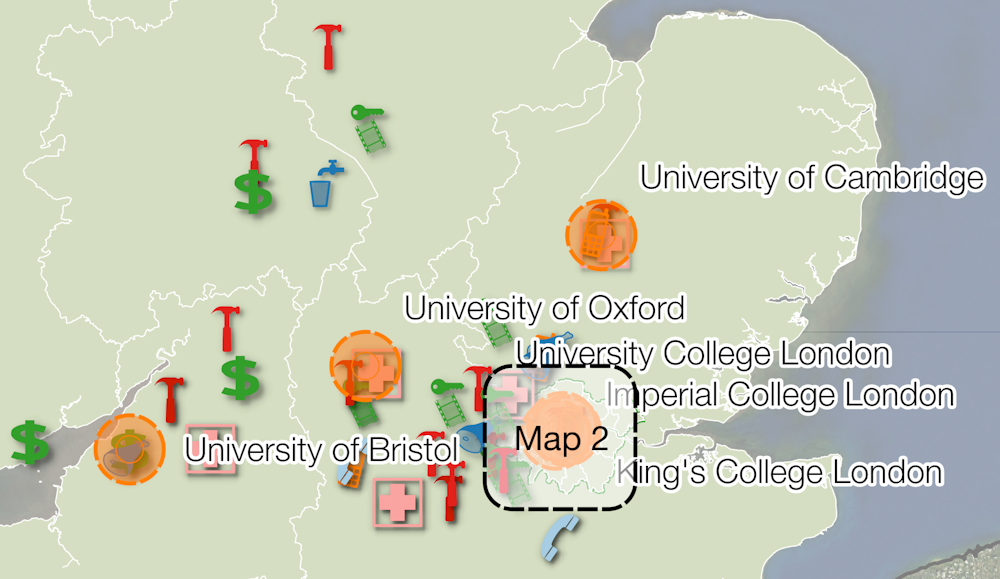
  • employee costs jumped from about A$2 million in 2016 to nearly A$4 million in 2018

  • “other expenses” were A$750,000 in 2015, almost A$850,000 in 2017 and more than A$1 million in 2018

  • “other admin expenses” of nearly A$2 million in 2017 and 2018 for which no additional information was available within the notes to the financial statements.

The annual report’s commentary focuses on income and expenditure while neglecting cash flow. But it is cash flow on which an entity usually depends to continue trading. White Ribbon Australia had negative cash flow; it spent more money than what was coming in. Last financial year it borrowed almost A$300,000 to keep operating. This was unsustainable.

Regulatory responsibilities

So all the warning signs were there, for those with the management and accounting knowledge. Leadership was in flux. Some traditional sources of revenue were declining. Expenses were increasing. Reports were light on detail and heavy on pretty graphs and “highlights”. Income and expenditure information was summarised in the form of pie charts, making year-to-year comparisons difficult.

Perhaps the regulator should do more than simply require large charities to lodge financial statements. It could be more prescriptive with the financial disclosures it requires organisations to publish. One suggestion is that organisations produce a one-page “snapshot” document facilitating comparison with other organisations.

Without enough accountability and transparency, we will end up with similar situations.

ref. All the signs were there: lessons from the collapse of White Ribbon Australia – http://theconversation.com/all-the-signs-were-there-lessons-from-the-collapse-of-white-ribbon-australia-124771

When mothers are killed by their partners, children often become ‘forgotten’ victims. It’s time they were given a voice

Source: The Conversation (Au and NZ) – By Silke Meyer, Associate Professor in Crimninology; Monash Gender and Family Violence Prevention Centre, Monash University

Last month, eight women died as the result of male violence in Australia. Five were within one week. In six of the cases, the alleged perpetrator was a current or former partner.

These figures seem all too familiar. This time last year, seven of the nine women allegedly killed by a male perpetrator were in the context of an intimate relationship. And like this time last year, media coverage, national and political outcry remained relatively limited.


Read more: After a deadly month for domestic violence, the message doesn’t appear to be getting through


But there’s another side to the crisis of women being killed by an abusive partner or ex-partner that remains somewhat invisible in national conversations. In most of these cases, the women killed were mothers.

While children remain physically unharmed in many intimate partner homicides, they experience trauma and abandonment. All face the loss of the victim parent who also tends to be their protector and primary carer.

Many children also face the loss of the perpetrator parent. In some cases it’s because the perpetrator takes his own life. In others, because the perpetrator is facing years in prison.

Yet, children become forgotten victims when their protector parent is killed as ethical safeguards stop them from being included in the public narrative. It’s time we better understood their trauma beyond their immediate grief by giving them their own voice.

Children are more often treated as witnesses, not victims

Research has shown for at least two decades that children’s exposure to domestic and family violence, along with other adverse childhood experiences, can have lasting effects on their social, emotional and cognitive development.


Read more: Domestic abuse or genuine relationship? Our welfare system can’t tell


More recently, we have begun to understand the negative impact on children’s brain development when growing up with domestic violence.

Negative developmental outcomes can include problems at school, early onset mental health problems, substance misuse, an increased risk of suicidal feelings and an increased risk of using or experiencing domestic family violence in their own future relationships.

And it doesn’t just impact children’s well-being – exposure to domestic violence is costly. A recent Australian study by Deloitte Access Economics highlighted that, if left unaddressed, childhood trauma costs the Australian economy more than A$34 billion each year.

In the homicides that occurred last month, four of the six women killed by an intimate partner or ex-partner (called intimate partner homicide) were identified as mothers. They reportedly left a total of eight children behind.

But we rarely hear about the impact of intimate partner homicide on children. While this is partly to keep children out of media reporting, it fails to acknowledge the wider impact of intimate partner homicide and the need for child-centered support mechanisms.

In research, children are understood as primary victims, but in the public narrative and service responses, children continue to be treated as witnesses whose needs are automatically addressed by addressing the domestic violence of their parents.

Responses to children exposed to domestic violence often end when the exposure is seen as resolved. This may be through parental arrest or the removal of children by child protection.

The availability of ongoing trauma-informed recovery support for children exposed to parental domestic violence remains scarce.

However, evidence derived from studies (such as from Deloitte Access Economics and an Adverse Childhood Experiences study) clearly highlight, if forgotten at the time of initial intervention, children carry the lifelong burden of parental domestic violence and homicide.

Limited research on how domestic homicide affects children

The many studies on non-fatal domestic violence suggests the victim parent also tends to act as a protective parent and counterbalances some of the negative effects of the perpetrator parent.

But little remains known about the outcomes and recovery needs of children when the domestic violence does become fatal and a parent is killed. This is partly due to a lack of research in this area.

One of the few studies conducted on how domestic homicides impact children highlights the excessive trauma they suffer when one parent or carer is killed by another. While many children have been desensitised by repeat prior exposure to non-fatal parental violence, the loss of the protective parent is often beyond comprehension.


Read more: ‘Silent victims’: royal commission recommends better protections for child victims of family violence


Stringent ethical safeguards often restrict the inclusion of children in research. This applies in particular when children fall into highly vulnerable categories, such as “victims of trauma”, and means researchers at times can’t include children in their studies.

As a result, research evidence is primarily based on parent and practitioner voices.

However, a number of researchers in Australia argued in 2012 for the inclusion of children in ethically safe research on domestic family violence.

They write their inclusion can lead to deeper findings about children’s lives that can inform otherwise adult-centric research, policy and practice initiatives.

Giving children a voice

An innovative University of Melbourne research project from 2017 highlighted children are keen to have a say in research that relates to their well-being.

More importantly, it revealed children have expectations of their relationship with the perpetrator parent.

Children’s needs are not simply addressed by responding to parents in their roles as victims or perpetrators through victim support or perpetrator interventions.

Many children will have ongoing contact with the perpetrator parent whether victims separate or not. In some cases, even when the perpetrator kills the other parent and removes the protective parent from the child’s life.


Read more: Another stolen generation looms unless Indigenous women fleeing violence can find safe housing


Children therefore need ongoing support to assist their recovery process. And they should have a say about the type of relationship they are willing to maintain or rebuild with the perpetrator parent and the expectations they have for the remaining parent to make amends.

This seems to be particularly crucial at a time where a member of parliament raised claims mothers make up tales of domestic violence in court proceedings designed to protect their children.

If we continue to ignore children as victims in their own right, we exacerbate the experiences of a forgotten group that grows up to endure the long-term impact of childhood trauma long beyond the immediate grief for their mothers and the prison sentence of their fathers.


The National Sexual Assault, Family & Domestic Violence Counselling Line – 1800 RESPECT (1800 737 732) – is available 24 hours a day, seven days a week for any Australian who has experienced, or is at risk of, family and domestic violence and/or sexual assault.

ref. When mothers are killed by their partners, children often become ‘forgotten’ victims. It’s time they were given a voice – http://theconversation.com/when-mothers-are-killed-by-their-partners-children-often-become-forgotten-victims-its-time-they-were-given-a-voice-124580

Nursing homes for all: why aged care needs to reflect multicultural Australia

Source: The Conversation (Au and NZ) – By Helen Rawson, Senior Research Fellow, Deakin University

This week, the aged care royal commission looks at diversity in aged care, an issue becoming increasingly relevant to both residents and the staff who care for them.

Diversity includes gender, sexual orientation, religion and social background. The issue is important because if we aim to offer older people and families choice and control in aged care, we must meet the diverse needs of all older people.


Read more: Our culture affects the way we look after ourselves. It should shape the health care we receive, too


Australia’s rich diversity is reflected in its older population. In 2016, more than one-third (37%) of Australians aged 65 and over were born overseas and one-fifth (20%) were born in a non-English speaking country.

These figures have increased continually since 1981, when one-quarter (25%) of older people were born overseas.

Diversity within diversity: culture and language

Culture is important for every person. It indicates a way of life based on customs, beliefs, language and experiences shared with family and a wider community or group.

According to the Federation of Ethnic Communities’ Councils of Australia, many people from culturally and linguistically diverse backgrounds don’t want to move to a nursing home. This is for a number of reasons.

They may not want to be away from family and community, they might speak a different language to staff and other residents, and homes may not understand or meet their individual cultural needs.

Our previous research showed living in an aged care facility could make some older people feel disempowered. Language and cultural diversity can further add to that disempowerment. For the older people we studied, communication, companionship, and staff knowing them as individuals was very important.


Read more: Between health and faith: managing type 2 diabetes during Ramadan


Language is particularly important for older people’s physical health and well-being. Many culturally and linguistically diverse older people say they speak English well. However, with age and cognitive decline, they may lose the ability to communicate in English and revert to their first language.

And as more than half of nursing home residents have dementia, with the associated deterioration in language and cognition, communication can be more difficult still.

Appreciating someone’s cultural background can help residents make friends. from www.shutterstock.com

Being aware of their peer’s culture and language can help residents build relationships with each other, family and staff.

Different cultural expectations and language barriers can create misunderstanding and resident and family dissatisfaction. This can affect residents’ care and quality of life.


Read more: How to check if your mum or dad’s nursing home is up to scratch


How can we support appropriate care?

Aged care needs to be responsive, inclusive and sensitive to a person’s culture, language and spiritual needs. So it is important for nursing homes to understand those needs.

For those who are culturally diverse, government-funded support and culturally specific nursing homes can help. These include services for Greek, Italian, Dutch, Jewish and Chinese older people, reflecting post-war migration.

However, organisations like these cannot meet everyone’s needs. So all residents need care that respects cultural and social differences, works with older people and family, and supports choice.


Read more: What do Aboriginal Australians want from their aged care system? Community connection is number one


What might appropriate care look like?

Staff need ongoing cultural competence training to deliver appropriate and supportive care.

Staff cannot know everything about the many cultural and language groups in Australia. They can, however, practise in way that is culturally appropriate, by:

  • never making assumptions about someone’s culture, heritage, language or individual needs. No two people are the same, even if they are from the same culture and language background

  • talking to the resident with an interpreter, if needed

  • learning what is important to the resident. For example, staff could ask family members or close friends to bring in photos or mementos important to the older person

  • talking with family of residents who are unable to communicate in English to make a list of key words or phrases for staff. This could include how to say “hello”, or how to ask “are you comfortable?”, or “are you in pain?”

  • making sure the older person isn’t isolated in the nursing home. This could involve working with the local community of the person’s culture, and asking for volunteers who could come and visit the older person.

Family members can be a huge help to staff in understanding the resident’s language, culture and preferences. Nadya Chetah/Shutterstock

Appropriate and respectful aged care is a human right

Culture and language diversity in aged care is a fundamental human right. Embedding diversity in all aspects of aged care is also recognised by government, and in how the quality of aged care is assessed.

New aged care quality standards, which came into effect this July, include being treated with dignity and respect, with identity, culture and diversity valued, and all residents able to make informed choices about the care and services they receive.


Read more: Nearly 1 in 4 of us aren’t native English speakers. In a health-care setting, interpreters are essential


If the outcomes of this royal commission are to benefit Australians now and especially in the future, older people from culturally and linguistically diverse backgrounds must not be an afterthought in the aged care discussion. They must be part of the planning.

ref. Nursing homes for all: why aged care needs to reflect multicultural Australia – http://theconversation.com/nursing-homes-for-all-why-aged-care-needs-to-reflect-multicultural-australia-123373

Filipino human rights lawyer uninjured after gunmen ambush car

Pacific Media Centre Newsdesk

A Filipino human rights lawyer has come away uninjured after unidentified motorcyclists fired gunshots into her car on the central Philippines island of Panay, reports The Sun Star.

According to the report, Criselda Heredia was with her daughter and a client when the attack happened last month.

“I was just ambushed. Two bullet holes… There are nine bullets recovered by the police. The police however suspect that there are more,” she said in a Facebook post.

READ MORE: Duterte accused of ‘creating conditions’ leading to martial law declaration

A member of the National Union of Peoples’ Lawyers (NUPL) Heredia is an anti-mining campaigner on the island and handles pro bono cases for farmers, human rights defenders and political prisoners.

In an official statement, the International Coalition for Human Rights in the Philippines condemned the “outright attack against Filipino human rights lawyers,” saying that it was part of an ongoing pattern of attacks.

– Partner –

“There is a clear pattern of vilification and harassments which then lead to political killings,” said Peter Murphy, chair of ICHRP’s Global Council.

“This only shows the continuing climate of impunity and the worsening human rights situation in the Philippines under President Duterte.”

According to NUPL, before the shooting Heredia had been receiving death threats from unidentified men visiting her office and was red-tagged in posters in a similar fashion to human rights lawyer Benjamin Ramos, who was murdered on the nearby island of Negros last year.

The statement said that this attack on Heredia brings the total number of attacks on lawyers under the Duterte administration to 61, with 49 killed and 12 survivors.

It went on to emphasise the danger that Filipinos are facing on a regular basis.

“ICHRP reiterates its commitment to redouble our campaigns to alert the international community of the massive repression of the basic rights of the Filipino people that are continually taking place,” said Murphy.

“We are also calling on all human rights defenders and advocates to denounce the looming fascism of President Rodrigo Duterte’s government and to support the Filipino people’s struggle for justice.”

Print Friendly, PDF & Email

Article by AsiaPacificReport.nz

Trust Me, I’m An Expert: forensic entomology, or what bugs can tell police about when someone died

Source: The Conversation (Au and NZ) – By Sunanda Creagh, Head of Digital Storytelling

A few episodes ago, we heard from forensic scientists at the Australian Facility for Taphonomic Experimental Research (AFTER) – that’s the official name for what, in books and movies, they would call a body farm. It’s there, at a secret bushland site, researchers are making some surprising discoveries about how donated human bodies decompose in Australian conditions.

One of the researchers there is Professor James Wallman, Head of the School of Life Sciences at the University of Technology Sydney, and one of the nation’s few forensic entomologists.

It’s his job to unpack little clues left behind by insects – including the much maligned blowfly – that can help police solve crimes when a body is found.

Today, James Wallman explains how and why insects have a really profound influence on decomposition.

We’re also re-broadcasting a clip from Maiken Ueland, the interim director of the AFTER facility, on how research underway there is changing what we thought we knew about determining time since death.

And if you’re interested in finding out more about how to donate your body for such research, you can start here.


Read more: ‘This is going to affect how we determine time since death’: how studying body donors in the bush is changing forensic science


New to podcasts?

Podcasts are often best enjoyed using a podcast app. All iPhones come with the Apple Podcasts app already installed, or you may want to listen and subscribe on another app such as Pocket Casts (click here to listen to Trust Me, I’m An Expert on Pocket Casts).

You can also hear us on Stitcher, Spotify or any of the apps below. Just pick a service from one of those listed below and click on the icon to find Trust Me, I’m An Expert.


Read more: Trust Me, I’m An Expert: what science says about how to lose weight and whether you really need to


Additional audio

Kindergarten by Unkle Ho, from Elefant Traks.

Backyard by David Szesztay from Free Music Archive

Images

Shutterstock

ref. Trust Me, I’m An Expert: forensic entomology, or what bugs can tell police about when someone died – http://theconversation.com/trust-me-im-an-expert-forensic-entomology-or-what-bugs-can-tell-police-about-when-someone-died-124416

New research shows pokie operators are not nearly as charitable as they claim

Source: The Conversation (Au and NZ) – By Charles Livingstone, Associate Professor, School of Public Health and Preventive Medicine, Monash University

Gambling operators often seek to persuade governments and the public of their virtue by funding “good causes”. Lotteries, for example, have been used to fund such things as the Sydney Opera House, hospitals in Queensland and health, arts, sport and education initiatives in the UK.

In Australia, and other countries, gambling operators are also required by law to donate some of their revenue for community and charitable purposes. In Victoria, for example, club pokie operators must document their contributions annually. This qualifies them for a reduction in gambling tax.

Our recently published research examined three years of these contributions in the state of Victoria. We sought to determine how much of the money claimed as benefits to the community did, in fact, reach such charitable or philanthropic causes.

What we found was that clubs donated mostly to themselves. Operating expenses accounted for the vast majority of ‘community benfits’. This is permitted under the regulations, but is strongly at odds with the claim that that clubs provide significant support to the community.

What clubs are required to give under the law

These charitable contribution schemes tacitly acknowledge that gambling is a harmful activity. It has significant costs to individuals, families, communities and government.

In Victoria, a study funded by the Victorian Responsible Gambling Foundation estimated the social costs of gambling in the state at $7 billion for 2017. These costs include health impacts, relationship breakdowns and divorce, neglect of children, loss of major assets, bankruptcy, crime and imprisonment, and suicide.

Because of this, it’s important to know whether community contributions from gambling actually offset some or all of this harm.

Gambling losses in Victoria in 2017, meanwhile, totalled $5.5 billion, and total state government revenue from gambling was $1.9 billion.


Read more: The Crown allegations show the repeated failures of our gambling regulators


The Victorian community benefits scheme is unique in its relative transparency. Clubs are required by law to spend at least 8.33% of total pokie losses on community contributions.

These community benefits are defined by a ministerial direction, last amended in 2012. This allows clubs to claim philanthropic, charitable, or benevolent contributions, as well as operating expenses.

If this target is met and documented, clubs enjoy an 8.33% tax break compared to hotel operators. The law requires clubs to provide an annual statement of contributions and these reports are published online.

We used these records, published by the Victorian Commission for Gambling and Liquor Regulation, as the basis for our research.

Clubs fall far short in charitable giving

In the three-year period from July 2012 to June 2015, Victorian clubs took in net gambling revenue of $2.6 billion (adjusted for inflation at 2014-15 values).

From this amount, they claimed $853 million (32.5%) as benefits provided to the community.

Our research sought to determine the actual extent to which claimed benefits were, in fact, provided to charitable or philanthropic purposes. Considerable media attention (and some previous research) has suggested that such benefits may be largely illusory.

We found that contributions to charitable or philanthropic purposes amounted to just $38.7 million, or 1.5% of total net gambling revenue. This is obviously far less than the mandated 8.33%.


Read more: The odds you’ll gamble on the Grand Final are high when punting is woven into our very social fabric


In contrast, venue operating costs amounted to $602.5 million, 70.7% of all community benefit claims. This included wages and on-costs, capital costs, outfitting and update of club equipment, insurance and utilities.

This is indeed permitted under the ministerial direction. But when these operating costs are taken into account, the clubs are falling well short of their claims of contributing substantially to the philanthropic or charitable needs of their communities.


In a statement in response to our research, Community Clubs Victoria refuted suggestions

there is such little community benefit to club members and the local communities from the revenues derived from clubs with gaming.

The group said the gaming machines allow it to pay for, among other things, maintenance of sporting fields, team jumpers for junior sporting members, opportunities for volunteers and sporting competitions.

What AFL, golf and racing clubs gave

We also examined three categories of clubs that operate pokies in greater detail – AFL clubs, golf clubs and racing clubs.

Golf clubs spent 96% ($109 million) of their supposed community contributions on business operating costs. Direct contributions to the community in the form of donations to charities and other community-based organisation, for example, amounted to just $1.6 million, or 0.75% of net gambling revenue.

Racing clubs spent 94% ($211.5 million) of their community contribution claims on business operating costs. Their direct donations to communities were $1.7 million (0.45% of net gambling revenue).

AFL clubs claimed a more modest 74% ($38 million) of community contributions as business operating costs. These clubs donated $6.7 million directly to communities, or 2.7% of net gambling revenue.

Although Victorian clubs did not give the required 8.33% of total pokie losses on what might reasonably be regarded as actual community contributions, they did claim the 8.33% tax break offered by the state.

This meant the clubs received a tax discount of $217.4 million over the three-year period. Note that clubs, as mutual organisations, do not generally pay corporations tax. This is despite many operating as highly profitable businesses.

Similar disparities in other states

Our research is backed up by the Productivity Commission, which was scathing of the community benefit schemes operating in most Australian states:

The (gross) value of social contributions by clubs is likely to be significantly less than the support governments provide to clubs through tax and other concessions.

Given this, there are strong grounds for the phased implementation of significantly lower levels of gaming revenue tax concessions for clubs, commensurate with the realised community benefits.

Indeed, this is not just a problem of the Victorian system. The ACT auditor-general raised similar concerns in a 2018 review of the charitable giving regulations there.

Betty Con Walker, a former NSW state treasury officer, criticised the system in NSW, as well. She noted that claims for business expenses by gambling operators in that state also far exceeded contributions to actual community purposes.


Read more: Australia has a long way to go on responsible gambling


The Victorian community contributions scheme allows for scrutiny of charitable giving to a much greater extent than other states.

However, from examining the available data, we know that claims of community benefits in NSW amounted to just $120 million in 2015, or 2.1% of net pokie revenue. And in Queensland, community contributions amounted to $36.5 million in 2012, or 1.9% of total pokie revenue.

It may be that pokie operators do support worthy causes. However, in the absence of readily available and transparent data, we don’t know.

Data about how much benefit clubs provide to the community are not presented transparently. They do not accord with a straightforward understanding of what constitutes community benefit.

Because of this, an accurate assessment of the costs and benefits to the community of the gambling industry is close to impossible. What is certain, however, is that the amounts actually contributed to good causes by gambling operators are a tiny fraction of the money lost by people using pokies. They are also a miniscule proportion of the best available estimate of social harms.

If we persist with the idea that gambling can support community causes, we need community benefit systems that demonstrably deliver such benefits. Instead, we have what appears to be a smokescreen.

Behind this, industry claims to support communities, while redirecting most of the money back to themselves. Governments receive significant tax revenue from gambling. They need to make sure that they are not justifying their dependence on harmful products with such schemes.

A transparent scheme that defines community benefits clearly, and in line with reasonable community expectations, is long overdue.

ref. New research shows pokie operators are not nearly as charitable as they claim – http://theconversation.com/new-research-shows-pokie-operators-are-not-nearly-as-charitable-as-they-claim-124085

Pharmacists can vaccinate adults against whooping cough, measles and the flu, but it might cost you more

Source: The Conversation (Au and NZ) – By Catherine Tran, Senior Research Officer and Pharmacist, National Centre for Immunisation Research and Surveillance, University of Sydney

Vaccines have long been available from GPs and nurses. But in recent years, laws have changed to add pharmacists to the list of health professionals who can give select vaccines without a prescription.

This may improve vaccination coverage against the flu, whooping cough and measles. But there’s a chance it could cost you more than if your saw your GP for the same shot.

Overcoming resistance

Before 2014, pharmacists couldn’t give vaccinations in Australia. Then a pilot study allowed a select group of Queensland pharmacies to offer the flu vaccine.

By this time, pharmacists had been giving certain vaccines in Canada, New Zealand, the United States and the United Kingdom for some years.

But in Australia, pharmacists didn’t have the skills and the law didn’t allow it. Another barrier was the attitudes of other health professionals, such as doctors, that pharmacists couldn’t or shouldn’t give vaccinations.


Read more: How rivalries between doctors and pharmacists turned into the ‘turf war’ we see today


The Queensland pilot study concluded pharmacists could safely and effectively administer certain vaccines to adults, once they were trained. This training included how to administer injections and what to do if something went wrong, such as managing anaphylaxis and performing CPR.

State and territory regulations have changed since 2014 and pharmacist vaccination services have quickly grown. In Victoria, for example, the number of pharmacies registered to give vaccines grew, from 36 in 2017 to 489 in July 2019.

What vaccines can you get at the pharmacy?

The rules vary in each state and territory. Generally, if you’re 16 and over, pharmacist immunisers can give you the following three vaccines:

  • influenza (flu)
  • diphtheria, tetanus and pertussis (whooping cough) – except Tasmania
  • measles, mumps and rubella (MMR) – except Tasmania and the ACT.

These are important vaccines that are sometimes needed if adults missed doses earlier in life or have waning immunity. The influenza vaccine needs to be given every year in a short time frame.


Read more: Health Check: are you up to date with your vaccinations?


There are some further exceptions.

In the Australian Capital Territory, pregnant women can’t be vaccinated by a pharmacist.

In Tasmania and Western Australia, the flu vaccine can be given by a pharmacist to those aged ten and over.

Pharmacist immunisers are gradually being allowed to give more types of vaccines. In Western Australia, for example, pharmacists can now deliver the meningococcal ACWY vaccine to those aged 16 and over. This vaccine protects against around half of the strains that cause meningococcal disease in Australia.


Read more: What is meningococcal disease and what are the options for vaccination?


It might cost you more

Some vaccines that would be free from your GP, practice nurse or immunisation clinic will need to be paid for if given at a community pharmacy. That’s because pharmacist immunisers aren’t able to access the government-funded vaccines that your clinic can.

Victoria is an exception – pharmacists can give select government-funded vaccines. And in the ACT and WA, the over-65s can access government-funded flu vaccines at pharmacies.

Pharmacists can’t usually access government-funded vaccines, aside from in Victoria. Dragana Gordic/Shutterstock

The cost of vaccines at pharmacies varies. In Victoria, for example, the total fee charged for people not eligible for a government-funded vaccination is around A$20 for influenza and A$43 for pertussis (whooping cough).

Even if the vaccine is free, the pharmacy may still charge a consultation fee.

If you see your GP, they may either bulk bill you for the appointment or charge a consultation fee.

The best thing is to check ahead about any out-of-pocket expenses for vaccination when you make your booking.

Do you need to see a GP?

Pharmacy vaccination increases access to preventative health care, especially for those living in rural and remote areas, where it’s difficult to visit a doctor or clinics are infrequent.

Having pharmacists as immunisers also increases the immunisation workforce capacity for public health responses. To help address an outbreak of meningococcal disease last year in Tasmania, pharmacist immunisers administered the meningococcal ACWY vaccine to people aged 10 to 21.

Going to the pharmacist for some vaccines may take some pressure off family doctors and free GPs to deliver more complex care that only they can perform.


Read more: The role of pharmacists should be overhauled, taking the heat off GPs


But there may be instances when it’s better to go to your GP for a vaccination, for example, if you’re pregnant, have a chronic health condition or need some blood tests related to vaccination. Or you might have other things to discuss with your doctor other than vaccines.

ref. Pharmacists can vaccinate adults against whooping cough, measles and the flu, but it might cost you more – http://theconversation.com/pharmacists-can-vaccinate-adults-against-whooping-cough-measles-and-the-flu-but-it-might-cost-you-more-122191

It takes 21 litres of water to produce a small chocolate bar. How water-wise is your diet?

Source: The Conversation (Au and NZ) – By Brad Ridoutt, Principal Research Scientist, CSIRO Agriculture, CSIRO

Our diets can have a big environmental impact. The greenhouse gas emissions involved in producing and transporting various foods has been well researched, but have you ever thought about the water-scarcity impacts of producing your favourite foods? The answers may surprise you.

In research recently published in the journal Nutrients, we looked at the water scarcity footprints of the diets of 9,341 adult Australians, involving more than 5,000 foods. We measured both the amount of water used to produce a food, and whether water was scarce or abundant at the location it was drawn from.

The food system accounts for around 70% of global freshwater use. This means a concerted effort to minimise the water used to produce our food – while ensuring our diets remained healthy – would have a big impact in Australia, the driest inhabited continent on Earth.

Biscuits, beer or beef: which takes the most water to produce?

We found the average Australian’s diet had a water-scarcity footprint of 362 litres per day. It was slightly lower for women and lower for adults over 71 years of age.

A water-scarcity footprint consists of two elements: the litres of water used, multiplied by a weighting depending on whether water scarcity at the source is higher or lower than the global average.

Foods with some of the highest water-scarcity footprints were almonds (3,448 litres/kg), dried apricots (3,363 litres/kg) and breakfast cereal made from puffed rice (1,464 litres/kg).

In contrast, foods with some of the smallest water-scarcity footprint included wholemeal bread (11.3 litres/kg), oats (23.4 litres/kg), and soaked chickpeas (5.9 litres/kg).


Read more: What’s made of legumes but sizzles on the barbie like beef? Australia’s new high-tech meat alternative


It may surprise you that of the 9,000 diets studied, 25% of the water scarcity footprint came from discretionary foods and beverages such as cakes, biscuits, sugar-sweetened drinks and alcohol. They included a glass of wine (41 litres), a single serve of potato crisps (23 litres), and a small bar of milk chocolate (21 litres).

These foods don’t only add to our waistlines, but also our water-scarcity footprint. Previous studies have also shown these foods contribute around 30% of dietary greenhouse gas emissions in Australia.

Sheep drink from a dried-up water storage canal between Pooncarie and Menindee in western NSW. Water shortages along the Murray Darling Basin have devastated ecosystems and communities. Dean Lewins/AAP

The second highest food group in terms of contributing to water-scarcity was fruit, at 19%. This includes whole fruit and fresh (not sugar-sweetened) juices. It should be remembered that fruit is an essential part of a healthy diet, and generally Australians need to consume more fruit to meet recommendations.

Dairy products and alternatives (including non-dairy beverages made from soy, rice and nuts) came in third and bread and cereals ranked fourth.

The consumption of red meat – beef and lamb – contributed only 3.7% of the total dietary water-scarcity footprint. These results suggest that eating fresh meat is less important to water scarcity than most other food groups, even cereals.

How to reduce water use in your diet

Not surprisingly, cutting out discretionary foods would be number one priority if you wanted to lower the water footprint of the food you eat, as well as the greenhouse gas emissions of production.

Over-consumption of discretionary foods is also closely linked to weight gain and obesity. Eating a variety of healthy foods, according to energy needs, is a helpful motto.

Aside from this, it is difficult to give recommendations that are relevant to consumers. We found that the variation in water-scarcity footprint of different foods within a food group was very high compared to the variation between food groups.


Read more: Curious Kids: why can’t we just build a pipe to move water to areas in drought?


For example, a medium sized apple was found to contribute a water-scarcity footprint of three litres compared with more than 100 litres for a 250 ml glass of fresh orange juice. This reflects the relative use of irrigation water and the local water scarcity where these crops are grown. It also takes more fruit to produce juice than when fruit is consumed whole.

Two slices of wholegrain bread had a much lower water-scarcity footprint than a cup of cooked rice (0.9 litres compared with 124 litres). Of the main protein sources, lamb had the lowest water-scarcity footprint per serve (5.5 litres). Lambs are rarely raised on irrigated pastures and when crops are used for feeding, these are similarly rarely irrigated.

Consumers generally lack the information they would need to choose core foods with a lower water-scarcity footprint. Added to this, diversity is an important principle of good nutrition and dissuading consumption of particular core foods could have adverse consequences for health.

Workers process punnets of strawberries at a Queensland strawberry farm. Dan Peled/AAP

Perhaps the best opportunities to reduce water scarcity impacts in the Australian food system lie in food production. There is often very large variation between producers in water scarcity footprint of the same farm commodity.

For example, a study of the water scarcity footprint of tomatoes grown for the Sydney market reported results ranging from 5.0 to 52.8 litres per kg. Variation in the water-scarcity footprint of milk produced in Victoria was reported to range from 0.7 to 262 litres. This mainly reflects differences in farming methods, with variation in the use of irrigation and also the local water scarcity level.

Water-scarcity footprint reductions could best be achieved through technological change, product reformulation and procurement strategies in agriculture and food industries.

Not all water is equal

This is the first study of its kind to report the water-scarcity footprint for a large number of individual self-selected diets.

This was no small task, given that 5,645 individual foods were identified. Many were processed foods which needed to be separated into their component ingredients.


Read more: Climate explained: what each of us can do to reduce our carbon footprint


It’s hard to say how these results compare to other countries as the same analysis has not been done elsewhere. The study did show a large variation in water-scarcity footprints within Australian diets, reflecting the diversity of our eating habits.

Water scarcity is just one important environmental aspects of food production and consumption. While we don’t suggest that dietary guidelines be amended based on water scarcity footprints, we hope this research will support more sustainable production and consumption of food.

ref. It takes 21 litres of water to produce a small chocolate bar. How water-wise is your diet? – http://theconversation.com/it-takes-21-litres-of-water-to-produce-a-small-chocolate-bar-how-water-wise-is-your-diet-123180

- ADVERT -

MIL PODCASTS
Bookmark
| Follow | Subscribe Listen on Apple Podcasts

Foreign policy + Intel + Security

Subscribe | Follow | Bookmark
and join Buchanan & Manning LIVE Thursdays @ midday

MIL Public Webcast Service


- Advertisement -
- Advertisement -
- Advertisement -
- Advertisement -
- Advertisement -