This weekend marks 50 years since the television premiere of Young Talent Time — a pastel-coloured, saccharine-sweet mix of talent competition, pop music tribute show and star factory.
Young Talent Time (YTT) first aired April 24, 1971 and ran for 18 years. It was launched at a time when music television was still dominated by local performers doing covers of (or even just lip synching) hits from the American and British hit parades.
YTT was Saturday evening viewing for a generation of families. It helped shape not only its young stars but also viewers’ musical tastes.
Doing the Neutron dance and partying like it was 1999 (even though it was much earlier than that.)
Produced and created by Johnny Young, YTT was a play on his surname as well as the faces on screen. Young was a record producer, composer and pop star who had already appeared on music television as a young (sorry) performer and host of The Go Show and Club Seventeen.
He had a sweet face and voice, and was exactly what the teenagers of the day wanted, while still being clean-cut enough to avoid worrying their parents.
Young Johnny.
Perhaps Young’s biggest claim to fame (pre-YTT) was writing The Real Thing, Russell Morris’ hit song that still stands as the sound of a psychedelic generation and movement. The song is also remarkable for Young’s collaboration with another television icon, track producer and future Countdown host Ian “Molly” Meldrum.
Unlike Countdown (which hit screens a few years later) or Bandstand, YTT wasn’t necessarily about the stars of today but the stars of tomorrow. The idea drew some inspiration from The Mickey Mouse Club on US television and extended off screen with Johnny Young Talent Schools popping up (and still operating) around the country.
Sure, there were other talent quests around, but YTT was more of a celebration rather than a cut-throat competition.
The “musical family” feeling was built into each episode with its regular all-in finale singalong of The Beatles’ All My Loving. The host, who today goes by John Young, recalls, “People used to tune in, just to see that”, tempting us to imagine a whole nation apparently tuned in for wholesome entertainment. It was always followed by Young’s smiley send-off: “Goodnight Australia!”
‘Remember I’ll always be true.’ Featuring tiny Tina Arena.
Beyond the bright young things, catchy tunes and shiny sets were significant developments in the Australian entertainment industry. The show’s long run served as a bridge between old and new forms of music television.
When YTT began, radio was still king and Australian artists were largely dependent on international markets and trends to make their way. With the odd exception (like Young himself), the Australian music industry still prioritised songs and artists that had “made it” overseas.
By the end of YTT’s run, the tide was starting to turn. Local artists and audiences wanted to see and hear more of their own performing their own work.
The biggest stars from the show, including Debra Byrne, Danni Minogue (and sister Kylie Minogue who appeared as an occasional YTT sibling guest) and Tina Arena, all went on to have careers presenting work in their own distinctive voices.
Dannii Minogue and Bevan Addinsall are resplendent in a sunshiney Footloose cover.
There was a limited 2012 YTT reboot hosted by Rob Mills, but it didn’t really take. Music television today like The Set, which will start its new season on YYT’s anniversary, is dominated by original work by a diverse range of Australian artists.
But how many snapshots into the lives of “ordinary Australians” remain captured in the YTT archive? For every Tina, Danni, Bevan or Vince, there were thousands of kids in the audience at home or in the studio cheering them on and connecting through music.
A cast of impossibly fresh faces, nailing the hits of the day.
The NFSA celebration is understandably chock full of Minogues and mini-epic feats of costuming, choreography and pizzazz. But somewhere in storage there might be the many audition tapes, one-off appearances, studio audience snippets and letters to the stars. Not to mention the DIY shows in backyards, bedrooms and playgrounds around the country, perhaps captured on cassette or VHS. What could we learn from those wonderful pieces?
Young Talent Time was significant for its national reach and accessibility — a way for audiences, especially young audiences, to connect through music. While there were many flashes in the pan that fizzled, others have continued to burn bright. The joy for the audience (then and now) is the glow of having a go.
Michelle Grattan discusses the week in politics with University of Canberra Associate Professor Caroline Fisher.
This week the pair discuss some of the developments in the Biden climate summit, which commenced Thursday night. They also discuss the federal government’s “tearing up” of Victoria’s belt and road agreement with China, the latest in the vaccine rollout, and the announcement that controversial LNP backbencher George Christensen will not be contesting his seat at the next election.
Source: The Conversation (Au and NZ) – By Pradeep Taneja, Senior Lecturer in Asian Politics, School of Social and Political Sciences, The University of Melbourne
India reported 314,000 new cases of COVID-19 on April 22, the highest-ever infection tally recorded by any country on a single day.
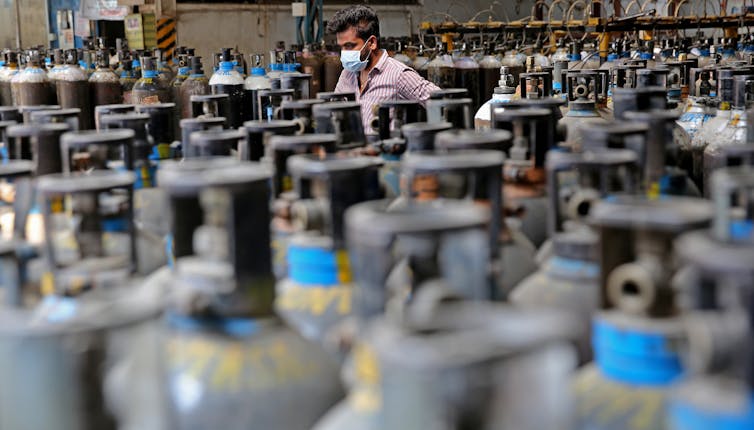
Many hospitals across the country are unable to cope with the unprecedented demand for life-saving necessities. Family members are scrambling to buy oxygen cylinders and medication for their loved ones in hospitals, often paying exorbitant prices in the black market.
Around the world, several countries such as the UK, Australia, New Zealand, Canada and Pakistan, have imposed new restrictions on travellers from India, including flight bans.
While many countries around the world have faced multiple waves of infections, what has led to this massive — and sudden — spike in India?
Complacency is certainly to blame. But so, too, is the government’s feckless handling of the crisis, particularly Prime Minister Narendra Modi’s ineffective leadership in recent weeks.
Perhaps nothing illustrates this more clearly than Modi’s televised address this week in response to the growing crisis, when he sought to use his personal appeal to encourage Indians to practice COVID-safe behaviour.
He offered little in the form of concrete measures to contain the surge in infections, and counselled the state governments against using lockdowns. Unlike Modi’s public addresses during last year’s first wave, there was little that appeared to resonate across society.
Empty oxygen cylinders returned from hospitals at an oxygen filling center in Bangalore.JAGADEESH NV/EPA
Pandemic fatigue sets in
India was one of the first countries to enforce a nationwide lockdown when infection rates started to rise in March 2020, and this response, along with public vigilance, appeared to be successful in bringing cases under control. New cases peaked at nearly 100,000 in mid-September to under 10,000 in early February.
As case numbers declined, Modi’s popularity soared. And since late last year, businesses, government offices and ordinary people have returned to their pre-COVID routines, with many defying guidelines on wearing masks or practising social distancing. Some did so out of necessity to enable them to work, while others simply flouted norms out of arrogance or sheer ignorance. It was as if COVID-19 was no longer a major concern.
The complacency and pandemic fatigue evident in society was echoed in the actions of the Modi government. The government dropped its guard and started to boast about its success at controlling infections and India’s low mortality rate compared to many other countries.
Following a win for his party in the elections in the populous state of Bihar in November, Modi claimed the
results have endorsed the way we have tackled the coronavirus crisis situation in the country.
However, the situation in the country now is looking increasingly grim. So, what did the government get wrong?
Conflicting messaging and a botched vaccine roll-out
First, the government did not prepare the country for the possibility of COVID-19 returning with a vengeance, as had happened in other parts of the world.
Despite rolling out a national vaccination drive, it did very little to shore up capacity in hospitals to handle a sudden surge of infections and hospitalisations. This has led many hospitals across the country to panic, struggling to meet the growing demand for oxygen.
Second, even as the virus spread like a wildfire, Modi and his cabinet ministers kept campaigning in state elections in five states, addressing massive rallies and praising the crowds for turning out in large numbers.
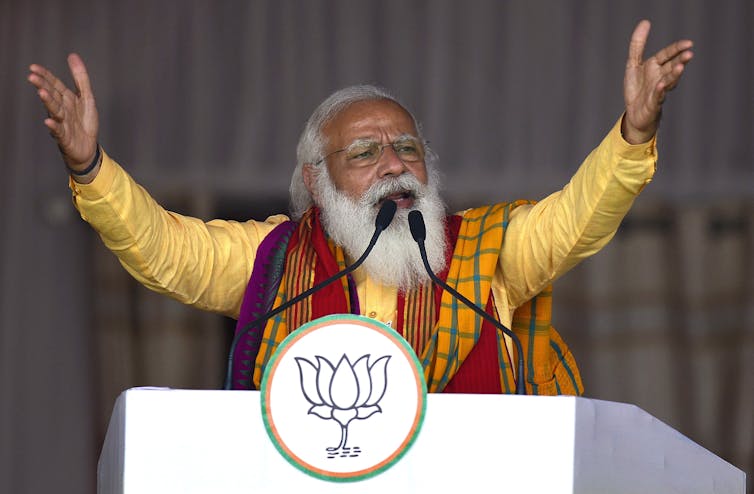
A maskless Modi addressing his party’s supporters during an election rally in Assam in early April.PRANABJYOTI DEKA/EPA
This resulted in conflicting messaging. It mattered little to the government that pandemic protocols were being flagrantly violated by those organising and attending the rallies. As cases continued to soar, Modi was forced finally to call off election rallies in the state of West Bengal.
Third, the second wave of infections has been fuelled by one of the world’s largest religious festivals, the Kumbh Mela, held in the holy city of Haridwar every 12 years. It became a super-spreader event.
Kumbh Mela is one of the most sacred pilgrimages in Hinduism.Karma Sonam/AP
From April 10–14, over 2,000 people who attended the festival tested positive for the virus. By the time Modi appealed to the religious leaders in a tweet on April 17 to keep the Kumbh Mela “symbolic” — meaning not to attend in person — the festival had already been going for more than two weeks. Two prominent Hindu seers had also died of COVID.
Finally, this week, religious leaders decided to wind down the festivities.
And the fourth misstep of the government has been in its handling of the vaccine rollout. While nearly 10% of India’s population has received the first dose, many vaccine distribution centres have in recent weeks run short on supplies.
Vaccine shortage notices have been a common sight in India’s major cities.Rafiq Maqbool/AP
This is partly a result of the Modi government prioritising its vaccine diplomacy initiatives rather than vaccinating its own people. According to the Indian Express, India had exported more vaccines (60 million doses to 76 countries) by late March than it had administered to its own citizens (52 million doses).
As India is one of the world’s largest manufacturers of vaccines, it could have used this as an opportunity to vaccinate a greater share of its population while simultaneously addressing the fault lines within the health system that have been exposed by the second wave of infections.
But the government didn’t take this approach — and now India is paying the consequences. Perhaps the Modi magic is finally beginning to wear off.
Prime Minister Scott Morrison overnight addressed a much anticipated virtual climate summit convened by US President Joe Biden, claiming future generations “will thank us not for what we have promised, but what we deliver”.
But what will his government actually deliver?
Morrison’s speech was notable for its stark lack of ambition and a defensive tone at odds with the urgent, front-footed approach of other world leaders. He resisted the peer pressure to enter the global fold on climate action by setting clear goals, saying Australia made only “bankable” emissions-reduction commitments.
Morrison instead pointed to Australia’s “transformative technology targets”. As we will explain below, those targets are small, vague and certainly not “bankable”. And the spending commitments pale in comparison to the past and future cost of extreme weather in Australia.
Expectations of Australia heading into the summit were low – a fact perhaps reflected in the summit’s agenda. Morrison’s address was way down in the running order – he was 21st of 27 speakers. Biden was reportedly not in the room when Morrison spoke. And in an unfortunate glitch, Morrison’s microphone was on mute at the start of his speech.
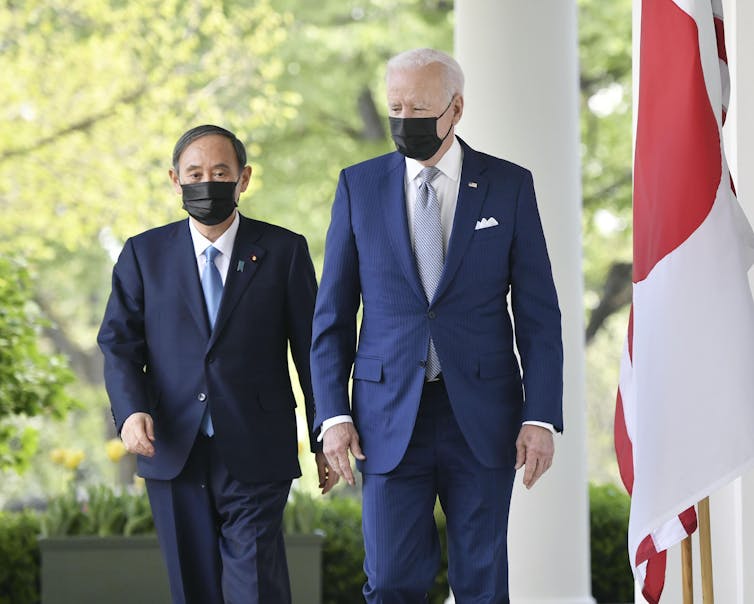
The summit did deliver some major gains. There was palpable relief as Biden brought the US back to the table on global climate efforts, committing to an emissions-reduction target twice the ambition of Australia’s. Other nations including Japan, Canada and Britain also outlined major new commitments.
But sadly for Australians, the summit revealed the stark contrast in climate policy leadership between Morrison and his international peers.
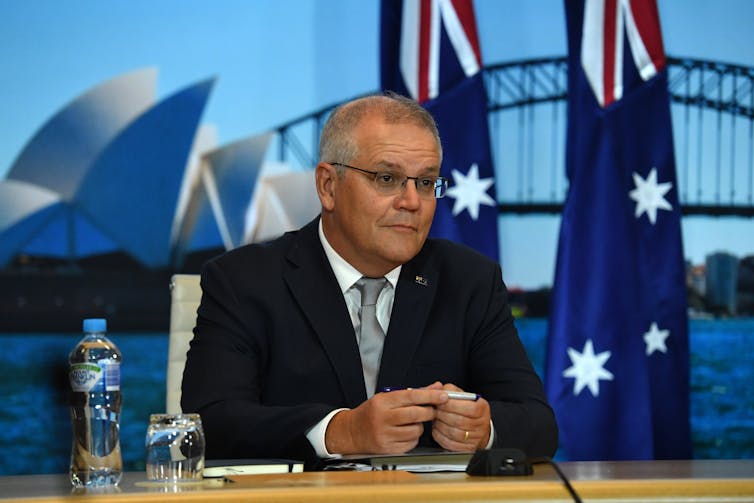
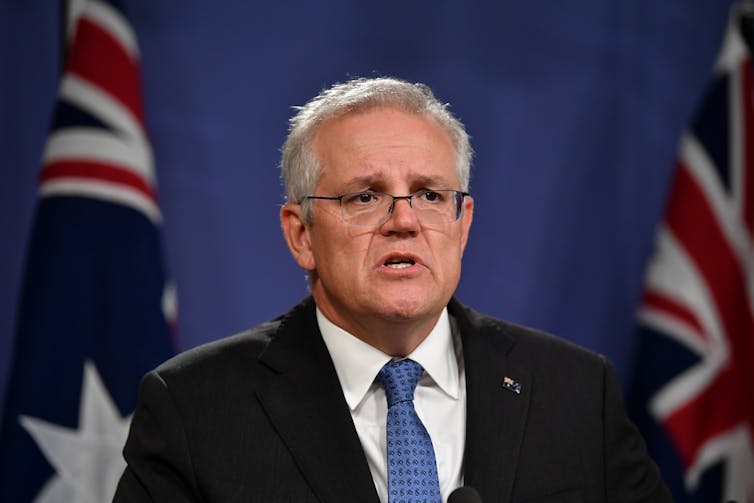
The contrast on climate policy leadership between Scott Morrison and Joe Biden was on display at the summit.Mick Tsikas/AAP
The world steps up
Biden opened the summit by emphasising the urgent need to keep global warming below 1.5℃ This century. Failing to do so, he said, would bring:
More frequent and intense fires, floods, droughts, heat waves, and hurricanes tearing through communities, ripping away lives and livelihoods, increasingly dire impacts to our public health […] We can’t resign ourselves to that future. We have to take action, all of us.
Biden committed the US to a 50-52% emissions reduction by 2030 compared with 2005 levels. Other notable emissions-reduction pledges included:
There were hopes Morrison would use the summit to announce Australia would finally join more than 100 countries to set an emissions target of net-zero by 2050. (Australia’s current emissions trajectory has us on track to get to net-zero in the year 2167).
But Morrison dashed those hopes early, telling world leaders: “For Australia, it is not a question of if or even by when for net-zero, but importantly how”.
He pointed to the government’s Technology Investment Roadmap, including A$20 billion to bring down the cost of clean hydrogen, green steel, energy storage and carbon capture. He also spoke of a goal to produce clean hydrogen for A$2 a kilogram, and his dream that Australia’s hydrogen industry would one day rival the scale of California’s Silicon Valley.
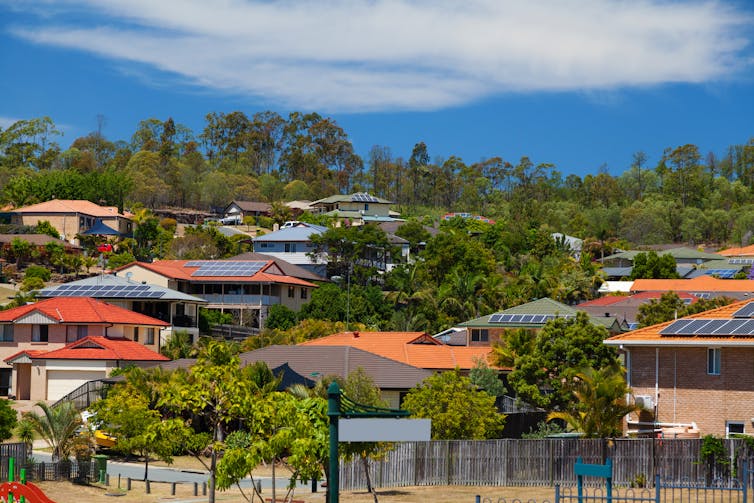
Morrison spruiked Australia’s high uptake of rooftop solar.Shutterstock
Will technology save us? Not likely
Earlier this week, Morrison set the scene for his address by announcing a suite of technology funding commitments. Let’s take a closer look at them.
On Wednesday Morrison announced A$540 million for regional hydrogen hubs and carbon-capture and storage (CCS) projects. Some A$275 million will be committed to seven hydrogen hubs in regional areas over five years – that’s about A$7.8 million per hub each year.
It’s hard to see this buying much more than a plan on a piece of paper. Further, there’s little detail on how much will be spent on clean vs dirty hydrogen – that is, hydrogen generated from renewables vs fossil fuels. However the proposed location of some of these hubs in fossil-fuel rich areas, such as the Latrobe Valley and Hunter Valley, does not bode well.
A further A$263.7 million over ten years will fund CCS projects. Since 2003, the Australian government has spent more than A$1 billion on CCS projects, with very little to show for it.
Globally, CCS has been criticised as unproven and expensive, simply designed to extend the life of fossil fuel industries.
CCS critics say it is simply a move to prop up fossil fuel industries.Shutterstock
The third tranche of funding, announced on Thursday, is A$566 million for research partnerships with other countries for new technology such as green steel, small modular nuclear reactors and soil carbon storage. There was little detail in the announcement, so for now it remains rather hypothetical.
In sum, the government will spend a relatively small amount on hydrogen production and CCS, spread wafer thin in various regional areas (and at least some of it subsidising fossil fuels), plus hypothetical funding for research.
Compare this to the A$35 billion cost of extreme weather disasters in Australia between 2010 and 2019, as detailed in this Climate Council report.
More recently, the New South Wales government estimated the potential cost of last month’s devastating floods at A$2 billion. A report by the NSW Treasury estimated by 2061, future economic costs of climate impacts in four key risk areas (bushfires, sea level rise, heatwaves and agricultural production) could reach up to A$17.2 billion a year – and this is just for NSW.
The recent NSW floods caused $2 billion in damage, the state government says.James Gourley/AAP
A tale of two leaders
Morrison told world leaders Australia would update its emissions-reduction target ahead of the Glasgow climate summit later this year. The current target – a 26-28% cut by 2030, based on 2005 levels – is broadly viewed as woefully inadequate.
Any increased ambition would be long overdue. However, more broadly, the contrast on climate policy between Morrison and Biden could not be clearer. Biden used the summit to tell world leaders:
Your leadership on this issue is a statement to the people of your nation and to the people of every nation, especially our young people, that we’re ready to meet this moment […] We really have no choice. We have to get this done.
Morrison, depressingly, showed little sign of hearing that message.
It is rare to get excited about institutional reform, but the government’s announcement of wholesale changes to the health system has the potential to be transformative.
The restructure comes in response to last year’s Health and Disability System review. Among other changes, it will create a centralised organisation, Health NZ, which will replace 20 district health boards and take responsibility for the day-to-day running of the health system.
The new system will be akin to the UK’s National Health Service (NHS). My research suggests this could begin to reduce inequalities and improve how New Zealand tackles major health conditions.
The health system was legislated a decade before the UK’s NHS. It provided for universal healthcare with publicly funded hospital treatment, free medicines, a maternity benefit and subsidised doctor’s visits. It sought to make healthcare free for all.
Fierce opposition by general practitioners at the time resulted in them being given the right to charge patients for their services. But over time, the level of user charges created a significant barrier to access to primary healthcare for poorer New Zealanders.
New Zealand now has a chance to finally develop a more constructive relationship with general practitioners and seek to resolve the problem of access, this time with a partner Māori health authority to honour obligations under the Treaty of Waitangi. This could begin to resolve health inequalities.
General practitioners have applauded the reform. If the new NHS-type crown entity and the Māori health authority can collaborate in a way that truly engages general practitioners, this could be revolutionary.
Comparison with England
My comparative research into health disparities and their many drivers compared GP services in New Zealand and England between 2004 and 2014, when both were responding to a new national pay-for-performance scheme designed to improve quality of care.
It was abundantly clear that the close partnership of general practice and the NHS in England, which reduced variations in care quality related to deprivation, was the secret weapon in reducing health inequalities in that country. There were continuous improvements in life expectancy until 2011, although progress has now stalled as a result of austerity-based policies.
By comparison, New Zealand’s pay-for-performance scheme made only small, albeit promising, progress towards reducing admissions to hospital for conditions that should have been treated in primary care, before it was abandoned in 2017.
This shows why New Zealand needs the kind of institutional reform the government has proposed.
Disease prevention
We can look at the prevention and care of diabetes as an example. In 2018, English academics reported on a successful trial of a prevention programme which delivered interventions compliant with best practice nationally to attack the onset of diabetes.
Through close partnership with its general practitioners, England has gone on to attack major health issues such as diabetes more effectively than New Zealand.
Through a single central contract with all general practitioners, NHS England provides financial incentives to deliver best practice diabetes diagnosis, prevention and care (along with incentives linked to many other conditions).
General practitioners are rewarded with additional payments where their care of patients meets these nationally agreed quality standards and their practice data provides evidence for this.
New Zealand could build similar partnerships with general practitioners to tackle our most costly and debilitating health conditions through a centralised approach. This has the potential to bring better healthcare to every New Zealander — and this is worth getting excited about.
This review contains spoilers for the first three episodes of The Handmaid’s Tale season four.
Dystopian drama The Handmaid’s Tale is at a crossroads. Four years on from its critically acclaimed debut, and well past the bounds of its literary source material, the series faces challenges that relate to violence, representation and narrative.
Earlier seasons posed questions about the conditions under which political extremism and misogyny might thrive — and how and why individual women might support such endeavours.
They showed everyday sexism and religious fundamentalism metastasising into a full-blown political movement.
But the audience has also always been complicit in this violence. The series’ much-celebrated beauty is a trap.
The painterly, geometrical aesthetic of totalitarian Gilead combines claustrophobia with an uncomfortable appreciation for the sleek aesthetics of fascism.
This allure has been a strength of the series, and its core tension. How can something so awful be so pretty?
But watching season four, I now find myself asking: to what extent are we meant to be enjoying all this atrocity?
Bureaucracy and ghoulish violence
Season four picks up where we left off: in crisis. More than 80 children have been smuggled out of Gilead by renegade Handmaid June (Elisabeth Moss) and the guerrilla organisation Mayday, and war looms.
In Canada, the imprisoned Waterfords are trapped within a chiaroscuro film noir, with chain-smoking Serena (Yvonne Strahovski) playing the part of the elegant femme fatale who’s been caught out in the final act.
Formerly a Commander’s wife, Serena Joy is now reframed as a duplicitous femme fatale.SBS
Gilead refugees and their supporters seem stuck in a bleak legal drama: battling bureaucracy, compassion fatigue and PTSD.
These storylines struggle to achieve the momentum of the action we are shown back in Gilead, where we dance between two modes of horror.
The first is the rape-revenge genre, whose somewhat tawdry pedigree has been increasingly appropriated by female filmmakers to interrogate trauma, power and agency.
In episode one, “Pigs”, June and the other escaped Handmaids find respite at a farm overseen by a 14-year-old wife, the unpredictable Mrs Keyes (Mckenna Grace), who dreams of retribution against her many abusers.
The show is more didactic now than in earlier seasons. It explicitly discusses rape, but it also takes an almost ghoulish interest in disclosures of victimisation.
June and Mrs Keyes develop a fractious mother/daughter relationship. “Good girl — make me proud” whispers June, before Mrs Keyes butchers a Guardian — one of her abusers — like one of the farm’s pigs.
The show feels increasingly numb to the violence it depicts — as do we in the audience.SBS
The Handmaids look on, their faces bright with ferocious hunger. The girl, her teal dress coat blackened with blood, then joins June for a cuddle in bed to one of the show’s many on-the-nose musical cues: “(You Make Me Feel Like) A Natural Woman”.
In Canada, ex-Martha Rita (Amanda Brugel) speaks at a fundraising event: “Gilead has a way of bringing out the worst in people, but in June it brought out the best”.
The irony is weighty.
Again, we must ask how and when violence is justified — but also when we, the increasingly numb audience, might be encouraged to get the popcorn out and enjoy it.
But we know this period of relative freedom can’t last. After inspiring another satisfying terrorist act, June is recaptured.
A world without God
The opening of season four also draws from the aesthetics of so-called “torture porn”, a contentious sub-genre of horror that became prominent in the 2000s, particularly in the wake of 9/11. These films combined extreme violence, nihilism and a sensationalist love for the grotesque.
Earlier seasons, although shocking, toyed with the balance between violence and restraint. Now, it’s all gritty cinematography, screams and clanking chains.
There are muzzles and stainless steel benches, red-lit concrete corridors, cheery torturers, and punishments so baroque they almost stray into parody.
Aunt Lydia (Ann Dowd) has become a mad-eyed harpy torn between punitive action and finishing her needlework.
There is no God in Gilead, just power-hungry monsters.
In these sequences, the series is in danger of collapsing under the weight of its own excess. Mid-interrogation, June is “treated” to a meal with turncoat ally Commander Lawrence (Bradley Whitford). They sit at a lavish candlelit table while a Chopin nocturne plays in the background.
Later, as she is washed down with hoses, the camera lingers on her naked, injured back. We are forced, once more, to look at — to relish in — this degradation.
Bonds of shared trauma
The Handmaid’s Tale remains suspenseful, beautifully shot and impeccably acted, but it’s a frustrating watch. Escalating narrative stakes have produced increasingly graphic violence. Yes, Gilead is horrific, but the show’s approach to violence is so gleeful in parts it can feel exploitative.
The show is also trapped in an intensifying hurt/comfort cycle. Despite the horrors and injuries she has experienced, June is effectively invincible. She fights, doubts herself, rallies, is viciously punished, then starts over.
Over the seasons she has become a cipher, pulled between wrathful freedom fighter, devoted mother and traumatised victim so much that her characterisation and motives have become muddy.
The Handmaid’s Tale can’t always decide if it is critiquing violence against women — or luxuriating in it.SBS
But episode three, “The Crossing”, concludes with a series of unexpected transitions that might help break this Groundhog Day-like narrative cycle and allow for a less indulgent focus as season four develops.
A heartfelt flashback to the Handmaids’ “training” revisits the bonds formed by shared trauma. Their arms cross the gaps between their cots, hands clasped in solidarity above the Gilead seals on the floor. It’s a reminder of the humanity of the women at the centre of the story, and the way sisterhood can offer solace and redemption.
The episode’s punishing conclusion, although devastating, offers real hope for June, Mayday and the fall of Gilead — but also for the development of a show that can’t always decide if it is critiquing violence against women, or luxuriating in it.
The Handmaid’s Tale season four begins April 29 on SBS in Australia and Neon in New Zealand.
Source: The Conversation (Au and NZ) – By Rowan Light, Lecturer / Project Curator – University of Auckland / Auckland Museum, University of Auckland
While economists and politicians have celebrated the opening of the trans-Tasman bubble and its promised relief for struggling businesses, it’s also a reminder of something we’ve missed for more than a year now due to the pandemic: the ability to gather and collectively remember the past.
In recent weeks, Muslim New Zealanders have come together to mourn the victims of the March 15 shootings, iwi and hapū have held commemorative services at various New Zealand Wars battle sites, and churches were able to observe Easter.
This Sunday also marks the full return of the country’s most prominent day of remembrance. After widespread cancellations in 2019 due to the Christchurch terror attacks, and in 2020 because of the COVID-19 lockdown, many of this year’s Anzac ceremonies will be the first in over two years.
The revival of these commemorations points to a paradox. Shared memories connect us and our families to collective identities. But they are also a chance to interrogate and adapt. On commemorative days and festivals, we ask ourselves: ko wai tātou? Who are we all together?
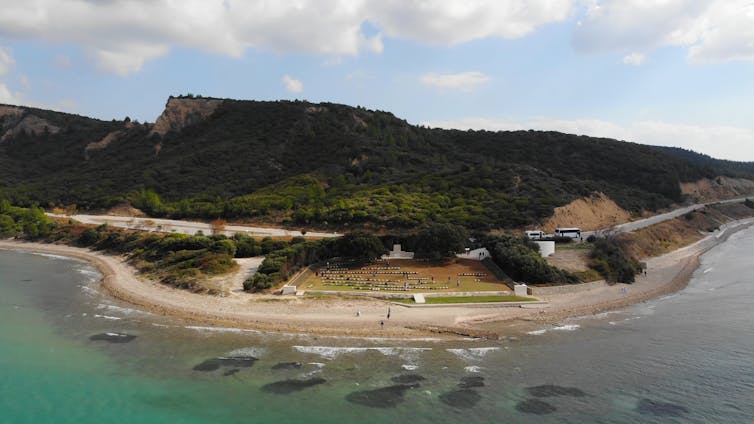
Anzac Cove in Turkey today: still a site of pilgrimage.www.shutterstock.com
Potent acts of belonging
The theme of Māori Television’s 2021 Anzac programming – Te Rongo Toa, The Victory of Peace – seems appropriate for the national mood, even as the pandemic continues to thrash the international community.
My research on Māori Television’s remembrance programs since its inaugural, all-day broadcast in 2006 – Nā Rātou, Mō Tātou, Let’s Honour Them, Together – shows how the broadcaster has reflected the way diverse New Zealanders experience commemoration, neither glorifying military violence nor fixating on an enemy “other” from which to construct our own national identity.
Instead, the laying of a parekawakawa (mourning wreath) by individuals and groups has been one of our most potent acts of belonging. Many participants in the dawn service will wear the medals of their grandparents, a link to a shared past.
And the recent gifting of medals to Māori Battalion whānau points to the ways these small, factory-produced pieces of metal become, through the invocation of collective memory, powerful signs of mana. The importance of Anzac commemoration extends far beyond the rituals of April 25.
Waves of change
The disruption of the pandemic arrived just after the WWI centenary, which saw the largest, most expensive commemorative project ever organised by the New Zealand government. Bumper crowds attended at Anzac Cove in Turkey, dawn services and RSA celebrations across New Zealand and Australia.
But as Australian historian Romain Fathi has pointed out, this high point was swiftly followed by a decline in Anzac Day attendance. Fathi asks whether this lull is an opportunity to rethink the tightly coiled focus of Anzac nationhood, noting the day itself has undergone waves of change in the past century.
New Zealand’s Anzac history shows this, too. To mark the first anniversary of the Gallipoli landing in 1916, for example, the Maunsell family raised the Tīnui cross in the Wairarapa. One of New Zealand’s earliest WWI memorials, it provided a focal point to make sense of the ongoing violence, but also to signal this was a sacrifice that would echo in the landscape itself.
When returned service groups lobbied for post-war reparations, their members thought of themselves not as victims but as citizen-soldiers, with all the rights and obligations that came with that status.
Nowadays, Anzac Day speeches tend to downplay the imperial loyalty that defined New Zealand society’s commitment to the wars. Instead, the focus is on the physical and psychological wounds – communal and personal – left by mass violence.
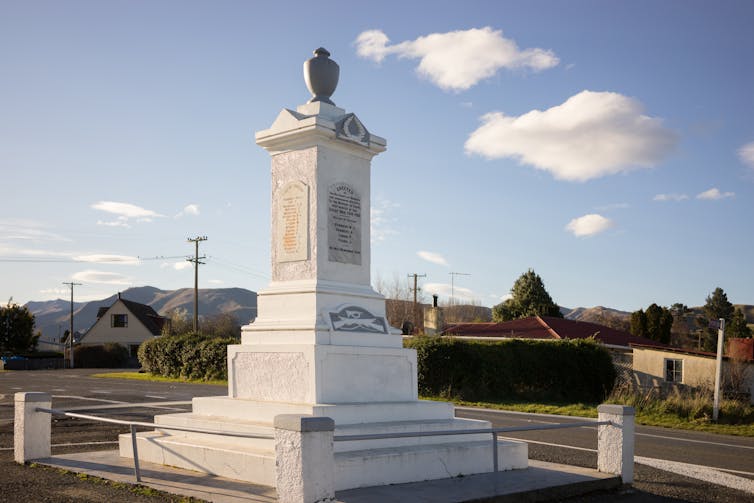
Most New Zealand towns have a WWI memorial – this one is in the little settlement of Dunback in Otago.GettyImages
War and protest
While the commemoration still retains some of its global resonance, we are more likely to hear about the Anzac “friendship” with our Tasman neighbours than the military alliances of empire.
What remains are the ways in which remembrance represents public sentiment. What we choose as the focus of collective memory is what we hold to be important — an emphasis that can change over time.
During the 1970s and 1980s, for example, protests by anti-war, feminist and Māori rights groups used Anzac Day – with its focus on what protesters saw as the glorification of war and misguided focus on heroism and sacrifice – as a platform to advance wider social criticism.
That history of protest has been largely submerged by the enormous popular appeal of the commemoration, especially among young people, since the 1990s. Thousands of young Australians and New Zealanders have flocked to Gallipoli as part of their “overseas experience”.
This form of “remembrance tourism” was encouraged by the Turkish government, which saw the economic and diplomatic benefits of welcoming Australasian pilgrims to Anzac Cove every year.
Remembrance tourism: young New Zealanders at the 99th Anzac Day commemorations at Gallipoli, 2014.GettyImages
The blood we share
In Aotearoa, Anzac commemoration now looks like it’s changing yet again, though not without its tensions. When the Titahi Bay RSA in Wellington attempted to broaden its commemoration to remember the Christchurch mosque victims with a prayer from the Quran, it was scrapped amid complaints and even online threats of violence.
One could argue the links between anti-fascism and Anzac Day make such an accommodation possible in the future. But this contested nature of commemoration reminds us of how community remembrance, as the late Rabbi Jonathan Sacks argued, can be a source of difference and solidarity:
We need direct encounters with other human beings. We have to be in their presence, open to their otherness, alert to their hopes and fears, engaged in the minuet of conversation, the delicate back-and-forth of speaking and listening.
Days of commemoration provide these kinds of vital encounters, days when we reflect on the meaning of truth and justice and re-enact the relationships of the past.
And despite trans-Tasman animosity over the deportation of New Zealand-born Australians, for better or worse we have a deeply traumatic shared experience in the form of Anzac. As another theme of Māori Television’s programming emphasises: nō tātou te toto, the blood we share.
As borders open again, it’s the collective practices of our communities, as much as consumption through shopping malls and tourism, that are our lifeblood and which are so crucial in the face of global catastrophe — past, present and future.
We think we know a lot about Australian and New Zealand soldiers’ health in the first world war. Many books, novels and television programs speak of wounds and war doctors, documenting the work of both Anzac nations’ medical corps.
Often these histories begin with front-line doctors — known as regimental medical officers — who first reached wounded men in the field. The same histories often end in the hospital or at home.
Yet, much of first world war medicine began and ended with the soldiers themselves. Australian and New Zealand soldiers (alongside their British and Canadian counterparts) cared for their own health in the trenches of the Western Front and along the cliffs of Gallipoli.
This “vernacular” medicine spread from solider to soldier by word of mouth, which they then recorded in diaries and letters home. It spread through written texts, such as trench newspapers and magazines, and through constant experimentation.
Soldiers presented a unique understanding of their experiences of illness, developed their own health practices, and formed their own medical networks. This formed a unique type of medical system.
Soldiers’ vernacular medicine becomes clear when looking at one significant example of war diseases — infestation with body lice — which caused trench fever and typhus.
The men’s understandings of the effect of lice on the body often contrasted to that of medical professionals.
Soldiers described lice as a daily nuisance rather than vectors of disease. The men sitting in the trenches were preoccupied with addressing the immediate and constant discomfort caused by lice, whereas medical researchers and doctors were more concerned with losing manpower from lice-borne disease.
Many men focused on the endless itching, which some said drove them almost mad.
Corporal George Bollinger, a New Zealand bank clerk from Hastings, said: “the frightful pest ‘lice’ is our chief worry now”.
Australian Private Arthur Giles shuddered when he wrote home about the lice, noting it: “makes me scratch to think of them”.
Soldiers experimented
Soldiers’ reactions to lice, as a shared community, inspired them to experiment and share practical ideas of how to manage their itchy burdens. This included developing their own method of bathing.
When New Zealand Corporal Charles Saunders descended the cliffs to the beaches around Anzac Cove, he would “dive down and nudge a handful of sand from the bottom and rub it over [his] skin”, letting “the saltwater dry on one in the sun”. He also rubbed the sand across his uniform hoping to kill some of the lice eggs in the seams of his shirt and pants.
In some locations, fresh water was scarce and reserved for drinking. Without access to water, soldiers’ extermination methods became more offbeat, creative and original.
Men sourced lice-exterminating powders, such as Keating’s and Harrison’s, from patent providers — retail pharmaceutical sellers in the UK or back home in Australia and New Zealand — and rubbed various oils over their bodies.
Yet, one of the most popular extermination methods was “chatting” — popping the louse between the thumbnails.
An Australian bootmaker, Lieutenant Allan McMaster, told his family in Newcastle it was “amusing indeed to see all the boys at the first minute they have to spare, to strip off altogether and have what we call a chating [sic] parade”.
Corporal Bert Jackson, an orchardist from Upper Hawthorn in Melbourne, took his “shirt off and had a hunt, and then put it on inside out”. He said that if he “missed any, the beggars will have a job to get to the skin again”.
Soldiers shared their knowledge
These soldiers shared their practices via their own medical networks, such as trench newspapers.
For instance, soldiers wrote humorous poems that also educated their fellow men. Australian Lance Corporal TA Saxon joked about lice-exterminating powders in his poem A Dug-Out Lament:
[…] They’re in our tunics, and in our shirts,
They take a power of beating,
So for goodness sake, if you’re sending us cake, Send also a tin of Keating.
Soldiers shared cartoons and jokes about delousing via magazines and newspapers, such as this one in March 1918.Mitchell Library, State Library of NSW (Q91/244, FL3509202)
One image from the trench newspaper “Aussie: the Australian soldiers’ magazine” came with the caption “Chatting by the Wayside” that drew on the well-trod joke about the double meaning of the word chatting.
What can we learn?
Reflecting on these often-overlooked aspects of the past helps us rethink medicine today.
For marginal groups in particular, access to professional health care can, and has often been, an expensive, alienating, or culturally foreign and abrasive task. So even in today’s globalised world, networks of non-professional medicine are as active as ever.
With many people isolated and at the mercy of much conflicting information, informal medical networks (often found on social media) present an opportunity to allay fears and swap information in a similar manner to how Anzac soldiers communicated via trench newspapers.
Perhaps some forms of vernacular medicine are occurring right under our noses.
Scientists already know the oceans are rapidly warming and sea levels are rising. But that’s not all. Now, thanks to satellite observations, we have three decades’ worth of data on how the speeds of ocean surface currents are also changing over time.
In research published today in the journal Nature Climate Change we detail our findings on how ocean currents have become more energetic over large parts of the ocean.
Ocean currents in the North Atlantic. The Gulf Stream carries warm water across the Atlantic Ocean, from the Gulf of Mexico to Europe. All over the ocean we distinctly see circular flow features we call “ocean eddies”. (NASA/Goddard Space Flight Center Scientific Visualisation Studio)
What are ocean eddies?
If you looked down at the ocean from a bird’s eye view, you would see some mesmerising circular motions in the water. These features are called “ocean eddies”. They give the ocean an artistic flavour, reminiscent of Van Gogh’s Starry Night.
Van Gogh’s Starry Night (1889) shares resemblance with the features we see in ocean circulation, in particular ocean eddies.
Eddies span somewhere between 10 and 100 kilometres across. They’re found all over the oceans. Certain regions, however, are particularly rich in eddies.
These include the Gulf Stream in the North Atlantic, the Kuroshio Current in the North Pacific, the Southern Ocean which surrounds Antarctica and, closer to Australia, the East Australian Current — made famous by the film Finding Nemo.
Ocean eddies are an integral part of ocean circulation. They move warm and cold waters from one location to others. They mix heat, carbon, salt and nutrients, and affect ocean conditions both regionally and globally.
One way we monitor movement on the ocean’s surface is by using specialised, powerful satellites orbiting Earth. Although these satellites are thousands of kilometres above us, they can detect even just a few centimetres of change in the sea’s surface elevation.
Then, through data analysis, we can take the change in sea surface elevation and translate it into ocean flow speeds. This can then tell us how “energetic” an ocean eddy is.
By carefully analysing satellite observations, our team discovered clear changes in the distribution and strength of ocean eddies. And these changes have never been detected before.
How eddies have been changing
Using available data from 1993 until 2020, we analysed changes in the strength of eddies across the globe. We found regions already rich in eddies are getting even richer! And on average, eddies are becoming up to 5% more energetic each decade.
One of the regions we found with the biggest change is the Southern Ocean, where a massive 5% increase per decade was detected in eddy activity. The Southern Ocean is known to be a hotspot for ocean heat uptake and carbon storage.
Until recently, scientists could only observe changes in ocean eddies by using either sparse ocean measurements or the limited satellite record. The satellite record has only just become long enough for experts to draw robust conclusions about the likely longer-term trends of eddy behaviour.
Josué Martínez-Moreno gives a three-minute summary of our recent findings.
Why is this important?
Ocean eddies play a profound role in the climate by regulating the mixing and transport of heat, carbon, biota and nutrients in the oceans. Thus, our research may have far-reaching implications for future climate.
Scientists have known for decades that eddies in the Southern Ocean affect the overturning circulation of the ocean. As such, changes of the magnitude observed for eddies could impact the rate at which the ocean draws down heat and carbon.
But eddies are often not taken into account in climate predictions of a warming world. Since they are relatively small, they remain practically “invisible” in current models used to project future climate.
The impact of eddies is therefore either not resolved in climate projections, or is severely underestimated. This is particularly concerning in light of our discovery eddies are becoming more energetic.
Our research emphasises how crucial it is to incorporate ocean eddies into future climate projections. If we don’t, we could be overlooking a critical detail.
Source: The Conversation (Au and NZ) – By Robert Norman, Professor of Reproductive and Periconceptual Medicine, The Robinson Institute, University of Adelaide
An expensive IVF technique, routinely offered in fertility clinics around the world, offers no extra benefits to standard IVF in the vast majority of cases, our new research shows.
The technique, known as intracytoplasmic sperm injection or ICSI, was developed to help couples where the man has a low sperm count. But it is now the main fertilisation method clinics use in Australia and New Zealand, even when sperm counts are normal.
In an article published today in The Lancet we show that when there’s a normal sperm count, ICSI does not improve the chance of a baby when compared with standard IVF. So why do clinics routinely offer it?
In IVF, several thousand sperm compete to be the one to fertilise an egg. However, for the small percentage of couples with what doctors call severe male-factor infertility — for instance, where there is a very low sperm count or the sperm doesn’t look or move normally — IVF is not an option.
In 1992, ICSI was introduced, where a single sperm was injected into the egg using a glass needle. This allowed the expansion of IVF to people where low sperm counts or poor sperm quality was an issue.
Its introduction across the world has helped thousands of couples have biologically related children, who otherwise would have needed donor sperm or remained childless.
With IVF, thousands of sperm compete to fertilise an egg. But with ICSI, a single sperm is injected into the egg.from www.shutterstock.com
How common is it?
ICSI was expected to be used only where male infertility was an issue, but over time it has become the most used method of fertilisation even when it isn’t.
In the United States, between 1996 and 2012, ICSI use increased from 15% to 67% of couples where the male has a normal sperm count; in Europe about 70% of cycles use ICSI.
In Australia around 60% of cycles used ICSI in 2018. This is even though only 30% of infertile couples have male infertility and 15% severe male infertility.
Clinics in Australia use ICSI to different extents. For instance, in Victoria in 2019-20, ICSI was used between 34% and 89% of the time, depending on the clinic.
Today we report, with our collaborators in Vietnam, the results of a large study in which more than 1,000 infertile couples with a normal sperm count were randomly allocated to ICSI or IVF. We found couples in either group were just as likely to have a baby.
This adds to evidence from other large observational studies in as many as 15,000 women that the widespread use of the more expensive and technically demanding ICSI does not offer any benefit to couples where the man has a normal sperm count.
Excellent clinics internationally and in Australia perform ICSI in fewer than 35% of their treatments, while achieving success rates equal to or better than clinics using ICSI more commonly.
Some are relatively cheap, such as vitamins and antioxidants. Others are invasive or expensive. These include endometrial scratching (where the lining of the uterus is scraped with a thin tube, which is said to improve the chance of an embryo implanting), video microscopy of embryos, and pre-implantation genetic diagnosis for potential chromosome abnormalities (where an embryo is tested for genetic disease before being implanted).
In fact, ICSI is about A$500 more expensive than standard IVF, although costs vary between clinics, and some costs can be claimed on Medicare under specific circumstances.
So why are these so-called “add-ons” or “adjuvants” so common?
Fertility treatment, especially IVF and ICSI, is overwhelmingly practised in the private sector in Australia and New Zealand. It is strongly marketed to the public and promoted in social media by individual doctors, clinics and corporations. Doctors and clinics also compete for patients, often offering unproven therapies.
Couples may overlook a doctor seeking to practise fertility medicine based solely on evidence, and instead find a nearby clinic or doctor prepared to offer add-ons they believe will improve their chance of a baby.
In the case of ICSI, doctors may recommend it for fear of patients’ reactions if the eggs don’t fertilise, even if ICSI doesn’t improve the ultimate chance of a baby for those with a normal sperm count.
What can we do about it?
Infertility is distressing and, in most cases, can be easily treated with good advice, simple drugs and, if needed, quality assisted reproductive procedures such as IVF.
However, unrestrained, unnecessary use of ICSI is a salutary example of why we need to act on widely accepted evidence.
Until now, the fertility industry has promoted self-regulation over being made to follow government-imposed, evidence-based guidelines of which fertility treatments are needed. And there’s a growing concern the industry is not doing enough to combat unproven and expensive treatments.
Couples with infertility belong to a very vulnerable group who will do almost anything to achieve a pregnancy. They deserve our dedicated care and evidence-based treatment.
The revival of interest in Anzac since the 1980s has depended in part on the repositioning of soldiers as victims. We rarely celebrate their martial virtues, and instead note their resilience, fortitude and suffering.
This shift in emphasis opens up more promising space for the inclusion of women. Nurses were not warriors – they were caregivers. But they too suffered trauma as a result of their service.
In what must be regarded as something of a miracle, no Australian nurses were killed. But like the men they devoted themselves to, they were worn down and in some cases shattered by the horrors they witnessed.
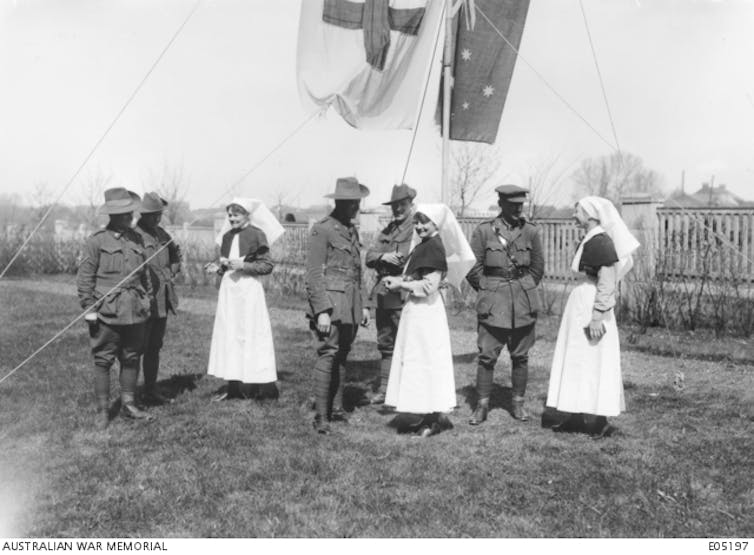
From 1916, Australian nurses served in Casualty Clearing Stations (CCS), almost on the front line, often under fire and always under immense pressure. This was the most dangerous and intense working environment in which they could serve. It was far removed from the hospital ship environment at Gallipoli, or the hospitals further from the lines, where there was at least the prospect of regular respite.
The CCS was a 1915 innovation designed to provide treatment to men as soon as possible after they were injured. They operated close to the front lines, and so took nurses into the danger zone. CCS nurses were assailed by the realities of trench warfare and the demands of treating damaged men. Soldiers came to the CCS within hours of wounding, bloody and dying, needing urgent surgery for their shattered limbs and mangled bodies, or blistered and blinded from gas attacks.
The sight of the battle front was terrifying and compelling — Sister Elsie Tranter, for one, was captivated. She wrote in her diary that on her first night at a CCS near Grevillers, in March 1918 she:
[…] had the flaps on the tent fastened back and spent most of the night watching the flashes in the sky from the guns […] everything seemed so surreal.
For Sister May Tilton, it was the industrial sounds of battle that impressed. She wrote that the Third Battle of Ypres (also known as the Battle of Passchendaele) started with:
[…] a continuous rumble and roar, as of an immense factory of vibrating machinery filled the night. The pulsing sounds and vibration worked into our bodies and brains; the screech of the big shells, and the awful crash when they burst at no great distance, kept our nerves on edge.
Shrapnel falling to the ground, the thrilling sight of aerial dog fights, damp and dirty dugouts, sandbagged tents, constant artillery fire, the smell of gas, the tremble of the earth — this was the landscape of the CCS.
Nurses and soldiers at the 3rd Casualty Clearing Station.Australian War Memorial
Sister Connie Keys did not expect they would come through safely, and later confided to her mother that now “I’m only afraid of being afraid”. She had experienced terror beyond measure.
CCSs struggled to cope at the height of battle, and staff worked extremely long hours to deal with the flood of casualties. One of them, 2nd Australian CCS, had a nursing staff of 20 and put through 2,800 patients in the first 18 hours of the “Messines push”.
May Tilton recalled in her memoir that she often “went on duty at 8pm, worked continuously during a ‘stunt’[a minor military operation], until the following midday, with ten minutes for supper at midnight, and half an hour for breakfast at 8am”.
The experience of nurses attests to the aphorism of war as long periods of boredom interspersed with brief periods of terror.
Static attrition warfare, conducted through artillery bombardment, gassing and close fighting, produced fighting conditions and wounds that appalled both the victims and those who cared for them.
The resuscitation wards were the greatest test for nurses. Tilton recalled that:
[…] only the worst cases could we possibly hope to attend to. The work in the resuscitation ward was indescribable. The butchery of these precious lives […] To watch them dying was ghastly.
The night sister confessed
I cannot speak of it […] I want to scream and scream.
Nurses were brought to despair – not because they were unable to save lives, for nurses were accustomed to death, but because they were unable to care for patients as they would have done “at home”. They had been trained to fashion order out of chaos, to bring a patient through the days and nights of a health crisis with patience, gentleness and watchful vigilance, and in some cases to ease their path to a painless and tranquil death.
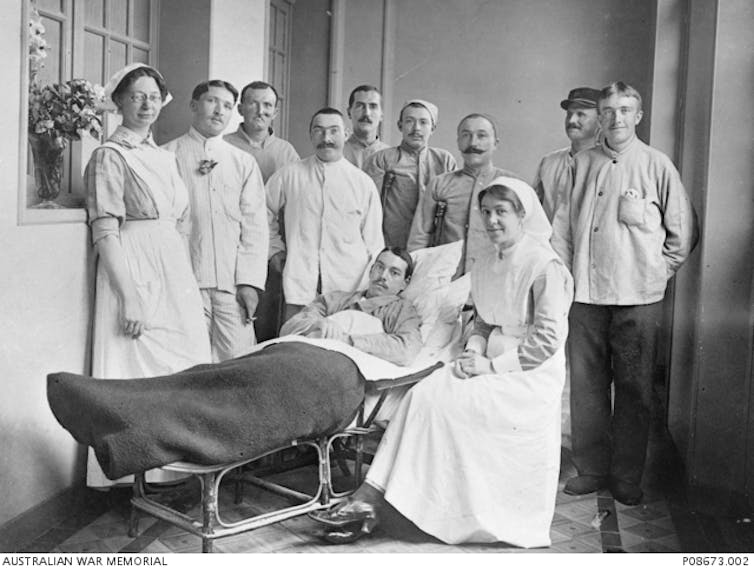
Nurses and patient at the Auxiliary Hospital Unit in Belgium.Australian War Memorial
But in war, they wrestled with the irresolvable conflict between duty and fear, and between their compassion and the realities of conflict. Death on the Western Front was ugly, chaotic and painful, so much so that some “ministering angels” came to doubt their Christian faith. “I can’t believe there is a God,” wrote Sister Alice Ross King after the Ypres Offensive, “it is too awful for words”.
Nurses, like soldiers, knew when they were at breaking point, and feared being unable to fulfil their duties. Tilton confessed:
[…] the privacy of our tents was a welcome relief for the weakness we dared not show before our brave, suffering boys.
Even the Armistice, when it eventually came on November 11 1918, brought little comfort. Anne Donnell became terribly depressed and, like many, found joy impossible when she contemplated the sadness of empty homes and hearts.
Nurses carried the burden of putting back together the victims of conflict, yet struggled to maintain their own physical and mental health. For many, their return to Australia was marred by ill-health, and what we would now call post-traumatic stress disorder.
But they also displayed courage and resilience. The experiences of Australian Army nurses on the Western Front can be a starting point, reaching through all Australia’s wars, for discussion of the response to extreme physical and psychological stress borne by those who treat the casualties of war. They too were war’s victims.
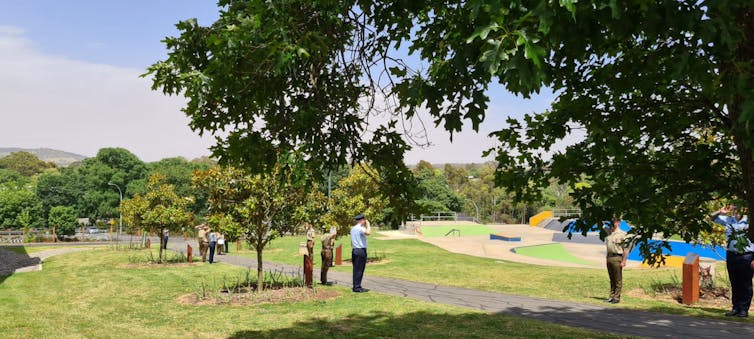
On Anzac Day each year, Australians remember those who served and died in wars and conflicts. We may attend a dawn service, go to a march or lay a wreath at a war memorial. But across Australia lie living war commemorations you may pass every day, without realising their significance.
Dating back more than a century, Avenues of Honour exist to remind us of the sacrifice and suffering of our servicemen and women. They might comprise sentinel trees lining one or both sides of a street, or a path through a park. These trees might also form a grove, or consist of a magnificent lone specimen.
The earliest recorded Avenues of Honour were created in response to colonial Australia’s participation in the Boer War, but most were established during and after World War I. In some cases, each tree was planted in memory of a specific fallen soldier – a tangible way for grieving loved ones to remember their dead.
Sadly over time, some memorial trees have died or been uprooted. Others have survived but are neglected. The race is on to ensure the remaining trees are documented, preserved and restored.
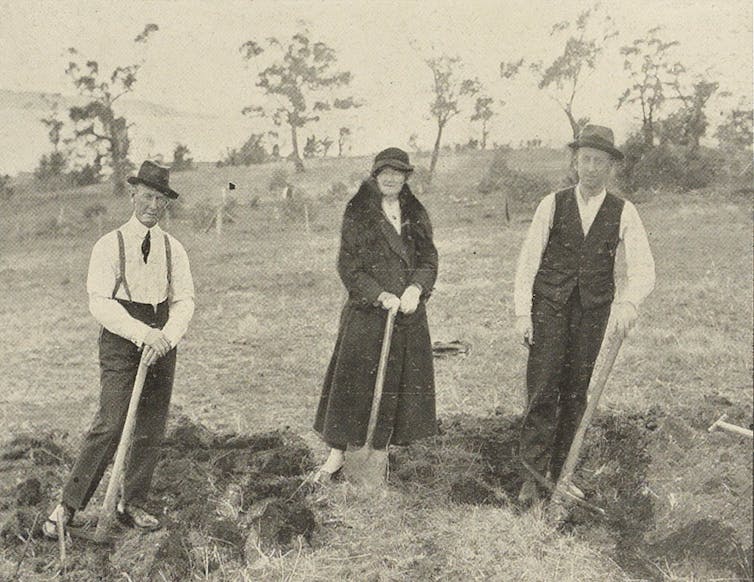
A working bee at the Soldiers Memorial Avenue in Hobart, dated June 27, 1918.Friends of the Soldiers Memorial Avenue
They shall not grow old
Avenues of Honour became common in Australia during and after World War I. At one point, 325 existed in Victoria alone.
More than 60,000 Australians were killed in World War I and the Australian government did not repatriate their bodies. So a tree in an Avenue of Honour, close to the family home, became an important physical memorial. It also respected the wishes of returned servicemen who wanted a fitting tribute to all those who died and served in the war.
The plantings were often organised by women or close family members of a dead soldier.
Some avenues consisted of native species such as eucalypts and kurrajongs – in fact, some represent the first major use of native vegetation in civic landscapes. Some avenues were planted with conifers such as pines and cypresses, walnut trees, mangoes and even palms. Many consisted of exotic deciduous species such as elms and oaks.
For example, in 1918 an Avenue of Honour was planted at Woodend, in Victoria’s Macedon Ranges. According to the National Trust it initially consisted of 162 English and Algerian oak trees planted each side of the Calder Highway.
The trees were dedicated to individuals, 38 of whom were killed in war. Attached to each tree was a plaque bearing the names of those remembered. But many of these plaques were lost or damaged over time.
In many cases, trees were planted to honour each fallen soldier, who was identified with a plaque.Glenn Williams/Avenues of Honour
Age has wearied them
As the years wore on, many Avenues of Honour aged and declined or disappeared completely. Some lost so many trees they were no longer avenues.
An Avenue of Honour planted in 1917 at the Melbourne beachside suburb of Sandringham once consisted of 171 red flowering gums. Each represented a lost soldier or nurse. But by 2013, just 32 trees remained.
In 2000, fewer than 200 Avenues of Honour were recorded across Australia – most in Victoria. However, data were scarce and many more unrecorded and forgotten avenues were thought to exist. Work began around this time to uncover them.
In 2004, non-profit organisation TREENET launched its Avenues of Honours program. It aimed to honour, with a tree, the memory of every Australian who had died in war. Original avenues would be documented, preserved and reinstated. Where necessary, new avenues would be established.
By late 2006, 567 avenues had been identified – three times more than originally known. They were estimated to contain more than 100,000 trees, however many were depleted or in poor condition. It was also clear other avenues remained elusive.
By now, the centenary of World War I was approaching, and work to revive Avenues of Honour picked up.
The Soldiers Memorial Avenue in Hobart was restored. In Willunga, South Australia, a consortium of industry and community groups established a new avenue consisting of 100 Algerian oaks.
But the future of other avenues is not assured. Ballarat, for example, is home to Australia’s longest Avenue of Honour. It runs for 22km and comprises 3,771 trees, each bearing a plaque dedicated to men and women who served in World War I. But the avenue is under constant threat from roadworks.
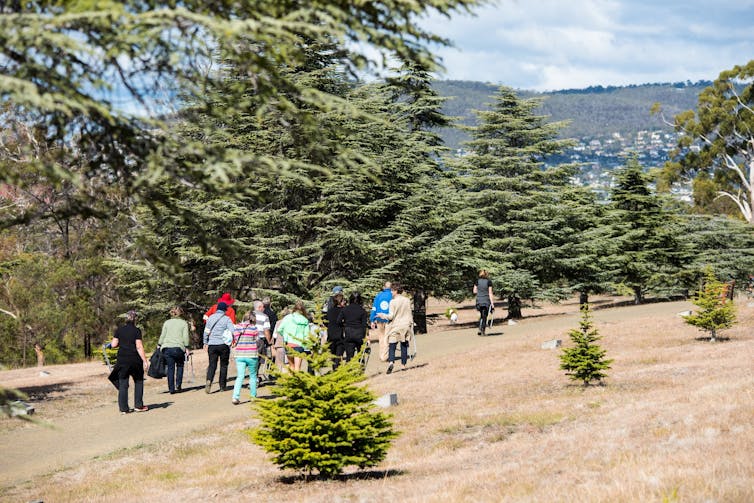
Hobart’s Soldiers Memorial Avenue has been restored.Friends of the Soldiers Memorial Avenue
We will remember them
Over the years, efforts to identify and restore Avenues of Honour have struggled to attract government funding. But this has not deterred many dedicated local custodians, community groups, RSL members, historians and others from continuing the work.
Some avenues have been restored or are now better managed. And the Avenues of Honour project is now in its 17th year, made possible by private donations.
As of 2020, the project had identified 605 Avenues of Honour, spread across most states and territories as follows:
ACT: 3
NSW: 77
QLD: 57
SA: 54
TAS: 70
VIC: 317
WA: 27
Despite all the good work, there has been no large-scale replacement of lost trees and avenues. Nor is there a national strategy to manage and replace these iconic elements of the Australian urban and rural landscape.
For many avenues, nature will take its course as the trees age. Soon, there will inevitably be fewer trees left. But this Anzac Day provides a chance to consider how to preserve the trees that remain, and restore those lost.
Do you know of an Avenue of Honour in your area? If so, please take a photo and send it, along with a description, to editorial@theconversation.edu.au. Or click here to find your local Avenue of Honour, identify a new one, provide information about an existing avenue or donate to the preservation effort.
An Avenue of Honour at Mount Barker in South Australia. Such avenues should be protected before it’s too late.Glenn Williams/Avenues of Honour
The European Union has committed to very significant emission cuts — 55% on 1990 levels by 2030, and zero net emissions by 2050.
To help it get there without too much disruption, the president of the European Commission proposed a carbon tariff – known as the carbon border adjustment mechanism, or CBAM.
The details will be tabled in the European Parliament later this year.
A carbon tariff is a tax on imports based on the carbon dioxide emissions involved in making them. Its purpose is to level the playing field with the domestic producers who will be made to pay a carbon price based on their emissions.
At the Victoria University Centre of Policy Studies we have modelled the effect on Australia’s economy.
Initially, we find it will reduce demand for Australian exports of coal, and steel and other emissions-intensive commodities, lowering both export prices and volumes.
But then a range of second round effects will kick in.
Less coal, lower dollar
Lower export income will lower the Australian dollar, pushing up prices for Australian households, particularly the price of imports.
The lower dollar will also make exporters not directly affected by CBAM more attractive to customers overseas.
How big will these effects be?
We have used simulations from the Victoria University Regional Model to run the numbers taking into account emissions intensities, the importance of the EU as a destination for individual Australian exports and the extent to which Australian producers are able to divert each export from the EU to other markets.
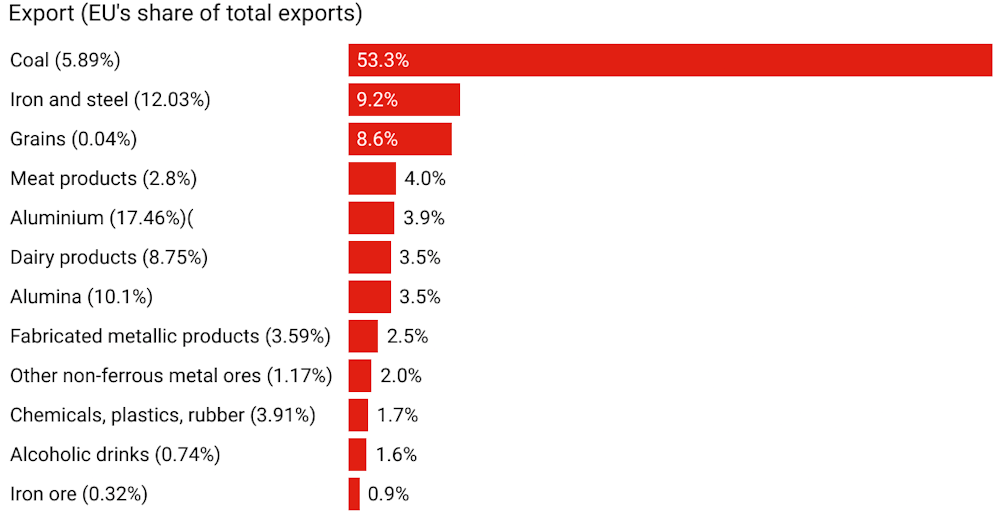
Increase in price of exports to EU under carbon border adjustment mechanism
Assumes an EU carbon price of 60 euro per tonne, which is roughly today’s price; assumies the CBAM covers CO2 emissions including fugitive emissions involved in production other than direct combustion emissions that are priced already by the EU Emissions Trading Scheme.
We find that some of the price effects are big (especially for coal) but, with a few exceptions, the EU isn’t an important market for Australian exports.
The exceptions are steel, alumina and aluminium where the EU accounts for between 10% and 20% of Australia’s exports.
Our simulations suggest that for the most part that the projected impacts on the Australian economy are small.
A week’s worth of economic growth
The long-run projected loss in gross domestic product is 0.05%, which is equivalent to a fall in weekly income of less than $1 per person or about one weeks’ worth of normal growth.
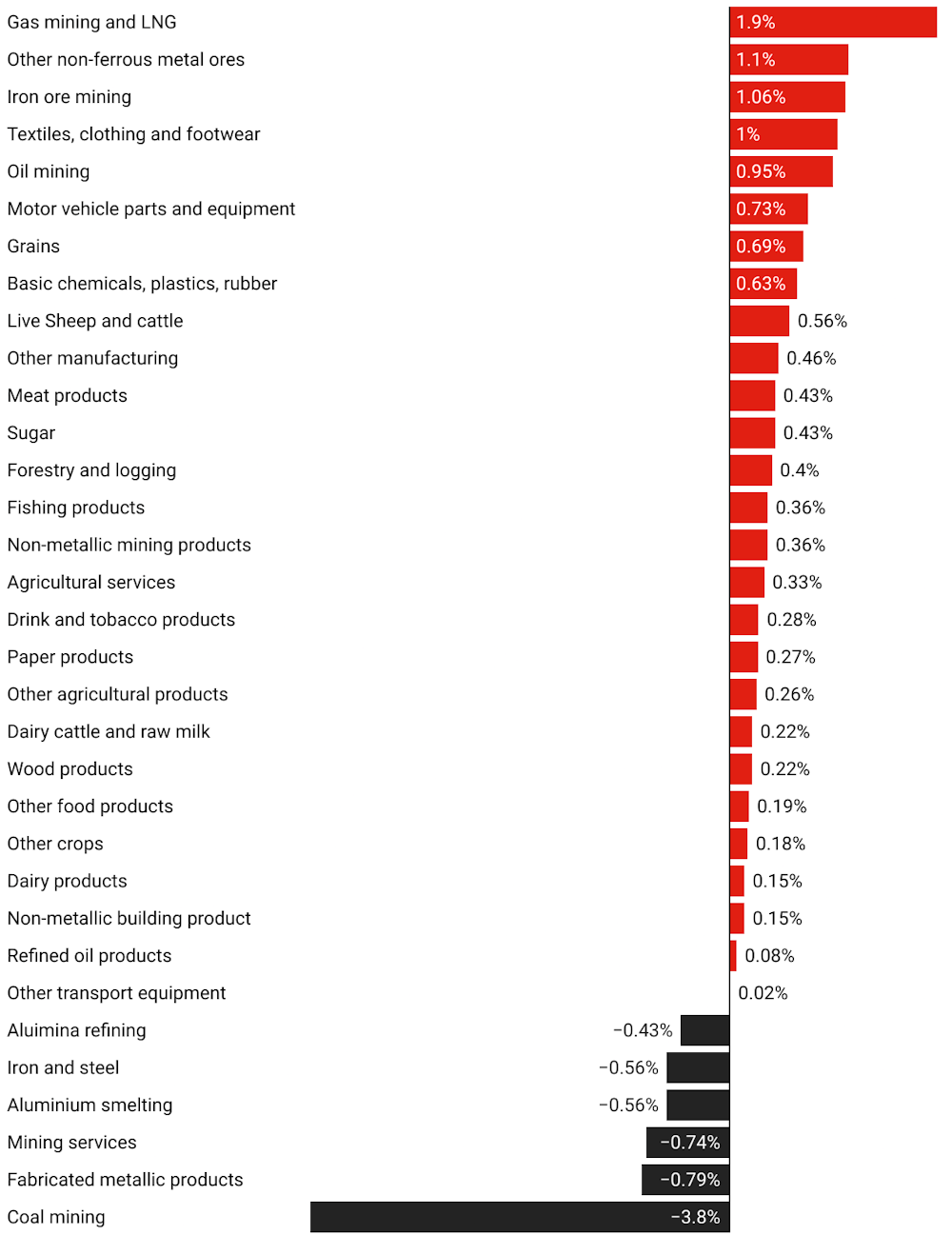
At an industry level, most industries slightly increase production, the fall in EU demand being more than compensated for by the weaker exchange rate.
Following a temporary increase in unemployment, job losses in declining industries are offset by expansion in other industries.
Change in industry output under carbon border adjustment mechanism
The main loser is coal mining. The carbon border adjustment mechanism has the potential to increase the landed duty-paid price of Australian-produced coal in the EU by more than half, effectively excluding it from the EU market.
Overall, it is projected to cut Australian coal production by 3.8% relative to where it would have been with the loss of about 3,000 jobs.
Jobs lost, jobs gained
The mechanism is projected to increase the buying price of iron and steel in the EU by almost 10%. While the EU is an important export market for Australian iron and steel, most of it is sold within Australia, meaning total production should fall by only 0.6%.
The decline in production should be relatively small, costing around 200 jobs.
The job losses in mining and metal industries would be offset by the gains in the other industries which are able to take advantage of the lower exchange rate, including agriculture, some parts of manufacturing, tourism and education.
A temporary increase in unemployment as workers transition out of affected industries could be eased by training and other support for displaced workers.
Breaking down the old boys’ club in business, government and other organisations is intrinsically important. Ensuring greater diversity in organisations – on gender, racial, ethnic and other lines – is, simply put, the right thing to do.
But some advocates of greater diversity make an extra claim: that it improves the quality of decisions, and hence an organisation’s performance. Do the right thing and increase profits or effectiveness. What’s not to like?
Robust empirical evidence to support this claim – that more diverse organisations perform better – is tricky to provide. One can look at more diverse organisations and compare them to less diverse ones. Suppose that more diverse organisations do, in fact, perform better. What does one conclude?
Well, what one should definitely not conclude is that greater diversity causes better performance.
Those things may be correlated. But that could easily be because higher quality organisations want to or can afford to be more diverse. Or it could be some other factor correlated with diversity is the true driver of superior performance.
Economists call these “endogeneity problems” – challenges to interpreting a mere correlation between two variables (A and B, say) as evidence that A causes B.
Yet the causal effect of diversity on the performance of organisations is a deeply important question. Ideally one would like to run an experiment where diversity within teams in an organisation is randomly assigned.
Just as pharmaceutical trials randomly assign some patients medication and others a placebo, economists in recent decades have performed field experiments to measure the impacts of all manner of interventions.
The quintessential example of this paradigm are the experiments that led to development economists Abhijit Banerjee, Esther Duflo and Michael Kremer winning the 2019 Nobel Prize in economic sciences.
Economist Abhijit Banerjee receives the Sveriges Riksbank Prize in Economic Sciences in Memory of Alfred Nobel from King Carl XVI Gustaf of Sweden in Stockholm on December 10 2019.Jonas Ekstromer/POOL/EPA
A pharmaceutical trial of, say, heart medication can determine its causal effect by looking at the average number of cardiac events in the group taking the medication compared with the control group (those on the placebo). Field experiments in economics can determine the causal effect of all manner of social and economic interventions.
That is why a research paper by three economists – Benjamin Marx, Vincent Pons and Tavneet Suri – released this month is both interesting and important. It is about just such a field experiment centred on diversity and team performance.
A diversity experiment
Their experiment involved people working as canvassers for a non-profit organisation in Kenya. The work involved going door to door to promote voter registration. Workers were randomly assigned a teammate, a supervisor and a bunch of people to canvass.
Diversity within the teams was along ethnic lines. This led to:
“random variation within teams in the degree of horizontal diversity (between teammates), vertical diversity (between teammates and their supervisor) and external diversity (between teams and the individuals they canvassed)”.
Measuring team-level performance, the authors conclude that “horizontal ethnic diversity decreases performance, while vertical diversity often improves performance, and external diversity has no effect”.
Specifically, teams that were ethnically homogeneous were 20% more efficient in completing their visits than diverse teams. But teams with a manager of the same ethnicity as one of the teammates were about 7.5% less efficient.
Horizontal versus vertical
There may be a potential trade-off between different horizontal and vertical effects of diversity in organisations.
Diversity within teams might increase “communication costs” due to lack of shared experience or common understanding of how to perform tasks together. Or it might be that people prefer working with people most similar to themselves.
On the other hand, homogeneity throughout an organisation hierarchy may well lead to managers favouring subordinates they more easily relate to.
This is a simple theory, but the authors’ experiment bears it out. Vertical diversity increases performance, perhaps by reducing favouritism. Horizontal diversity decreases performance, perhaps by increasing communication costs.
As with all experiments, how well the results translate to other contexts is an open question – what is known as “external validity”.
It is possible the results apply only to ethnic diversity among non-profit organisations doing voter registration in Kenya.
Or perhaps there are broader lessons. One might be that vertical diversity is particularly important for breaking down inefficient favouritism. This might be as true in Australia or Japan as in Kenya.
But to know for sure we’d need to see a randomised controlled trial in those exact environments.
The other lesson is that perhaps the downsides of horizontal diversity might be mitigated or overcome through improving training or communication protocols. It might be the “diversity cost” goes away as people get to know each other better.
Diversity is inherently important. Creating more diverse organisation across society is the right thing to do. It can also lead organisations to perform better.
But the latter isn’t automatic. It depends on how the organisation is structured and managed.
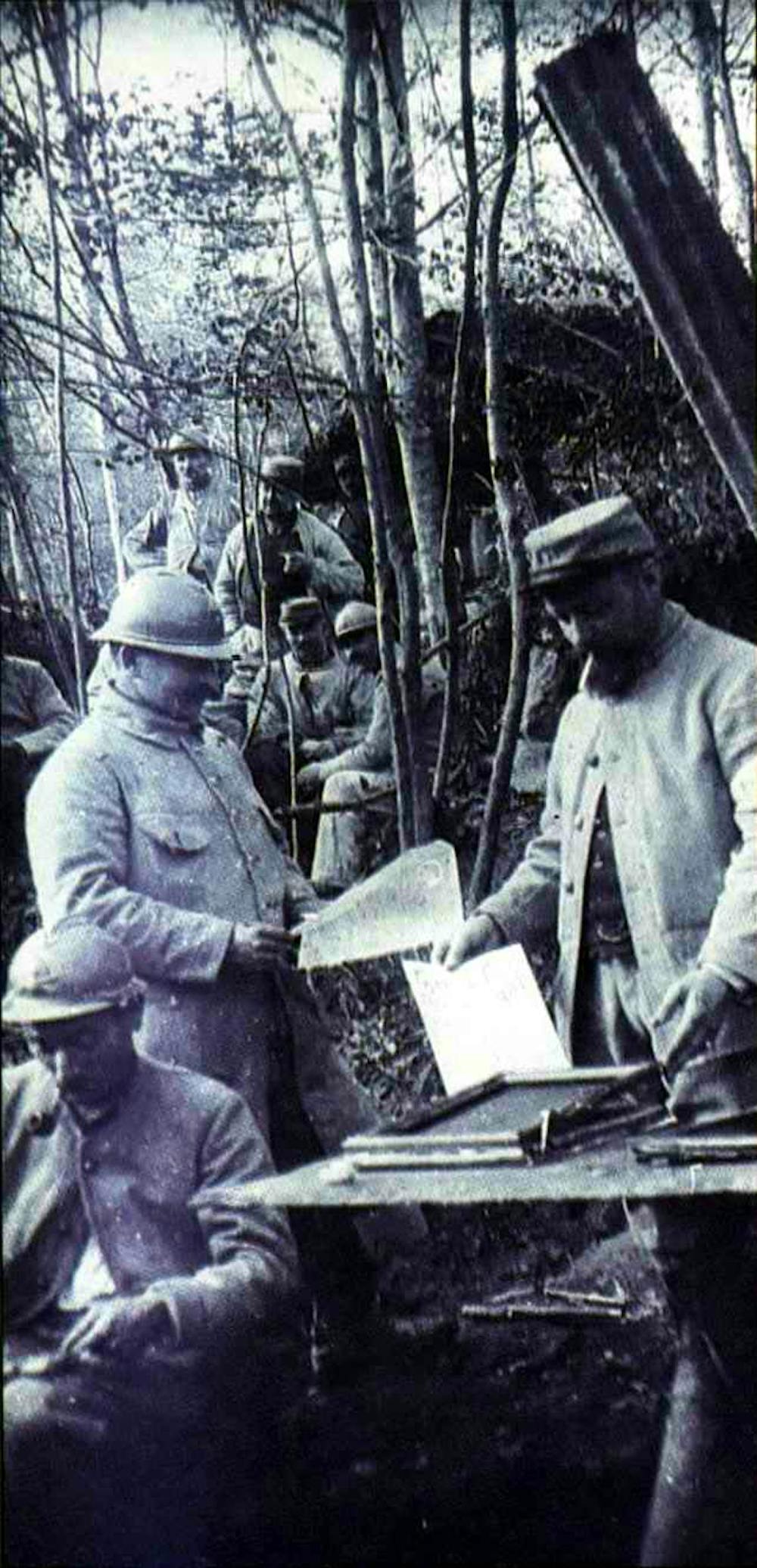
Modern warfare produces both trauma and boredom in equal measure. During the first world war, one way troops found solace was by writing and reading magazines created by soldiers, for soldiers.
Throughout the war, these magazines were produced in trenches, on troopships, in camps and in hospitals. Some were written by hand; others produced on makeshift printing presses soldiers came upon in war-torn towns of France and Belgium.
They could be simple pencilled sheets reproduced with carbon paper or made using jelly or spirit duplicators. Others were more sophisticated multi-page publications, often featuring illustrations.
Some magazines were reproduced using jelly or spirit duplicators.BNF/Gallica
The Australian War Memorial holds 170 troopship journals and over 70 trench magazines. Many other trench publications have disappeared; some can’t be read anymore because their ink has faded.
Our research focuses on how these magazines cared for soldiers, considering their significant psychological and emotional benefits.
Bran Mash and Aussie
One of the first Australian magazines was the Bran Mash, created by the 4th Australian Light Horse Regiment on Gallipoli.
Written in pencil on two leaves of official typing paper, and duplicated with carbon paper, there was only a single issue. It included a selection of the rumours, or “furphies”, circulating on Gallipoli.
Many trench journals published a single or limited number of issues. They were often forced to stop production because of troop movements, the loss of an editor or printing press, or lack of paper.
Phillip L. Harris, editor of trench magazine Aussie: the Australian Soldiers’ Magazine, once wrote he had made “a fortunate discovery in the cellar of a printery at Armentiéres”.
There, he found ten tons of paper, with which he printed 100,000 copies of the third issue of Aussie. With Harris at the helm, 13 issues of Aussie were produced in the Western Front trenches through 1918 and 1919.
Evening in the basement, from the French trench magazine L’Argonnaute 1916.BNF/Gallica
These magazines all reflected the humour, sentiment and preoccupations of soldiers and soldier-patients. The handwritten The Dinkum Oil, produced at Gallipoli over eight editions in 1915 was a place to express national identity — not least through the use of Australian slang.
These magazines offered therapeutic value through their reading, and writing. Stories, verse and jokes were all welcome, alongside items airing complaints: a much-needed release valve for the disgruntlements of military life.
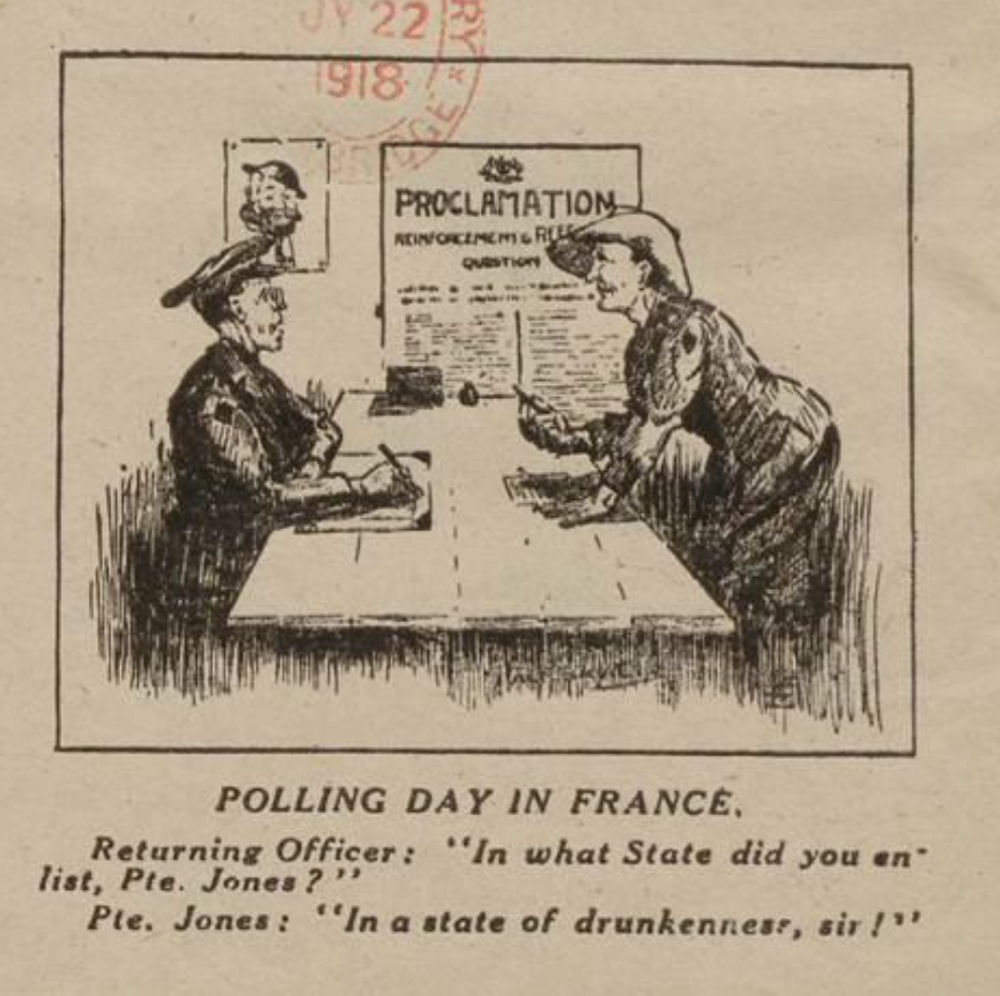
Humour runs through them. A cartoon in Aussie, captioned “Polling Day in France”, showed two officers talking. “In what State did you enlist?” asks the senior officer. Private Jones replies: “In a state of drunkenness, sir”.
This cartoon was published in the first edition of Aussie.Cambridge University Library
Other anecdotes captured misunderstandings between the Australian soldiers and French civilians, with “bon soir” misheard as “bonza war!”
The editors called for “bright, short contributions”, as The Rising Sun, an Australian magazine produced from December 1916 to March 1917, put it.
French trench magazine Le Poilu (“The Hairy One”, a slang term for an infantryman) stated its ambition as being “simply to entertain you for a moment, between two heavy mortar shells, or even between two fatigue-duties.”
The Harefield Park Boomerang, published at the No. 1 Australian Auxiliary Hospital at Harefield House in Middlesex, England, committed to having a “cheery tone”, despite the sometimes grim content of their publication.
While the Harefield Park Boomerang could be grim, it also played with humour.Harefield Park Boomerang, Vol 1, No 8 (1917), Author provided (No reuse)
Alongside news of activities in the hospital and updates on sports news, it included mentions of men who died (“our fallen comrades”) and their funeral details, as well as updates on donations to the “headstone fund appeal”.
Alongside the grim realities, black humour is very apparent. A poem in Mountain Mist, a magazine produced by soldier-patients at the Bodington sanitorium in the Blue Mountains for returned soldiers suffering tuberculosis, played on the popular soldier songParlez Vous with words changed to reflect the experience of the tubercular soldier:
Digger had a little cough
It wasn’t much you know
Yet everywhere that Digger went
His cough it had to go.
Sentiment also figured strongly. Poems praising mothers and sisters were common, and there were many invocations of home.
In 1917, J.J. Collins wrote a poem “To my mother”, published in the Harefield Park Boomerang, comforting her he was not defeated by his wounds:
I’ll bring home marks of a German shell.
But what does it matter, mother dear?
Dry from your eye that glistening tear.
Let your heart rejoice at the pain I’ve borne.
These magazines were also sent home, giving loved ones a glimpse of war life.
Hospital magazines could provide some reassurance to loved ones, but the picture they painted was incomplete. Soldier-patients were typically presented as stoic, cheerful and able to cope with whatever was thrown at them – as the poem by Collins shows.
But the reality for many returned soldiers who had been wounded would be a legacy of ill-health and early death.
For soldiers wounded in ways that would forever change them, this was perhaps how they preferred to be seen — still men, still warriors. These magazines reworked the traumas of war to try and make the experience palatable for the men, and for their loved ones.
These early trench and hospital magazines played an essential psychological function. In providing entertainment and in keeping soldiers’ minds occupied, they were a much-needed form of therapy and mental comfort in difficult times.
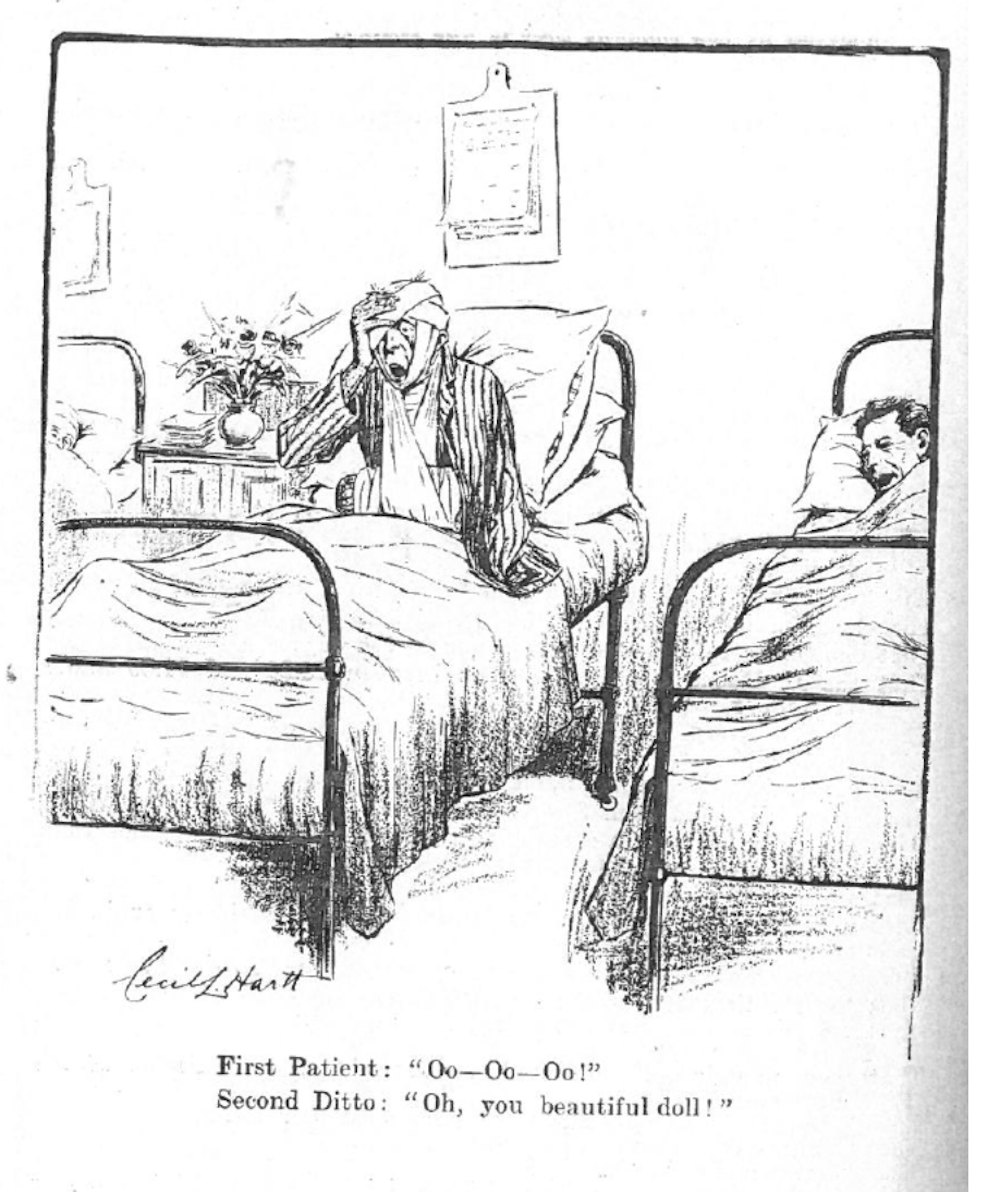
The magazines – by and for the soldiers – were often lovingly self-deprecating, as seen here in Aussie.Cambridge University Library
The place these magazines held in soldiers’ hearts was perhaps illustrated in the reprinting of all the wartime editions of Aussie magazine in 1920.
Phillip Harris subsequently revived the paper, now to be a general newspaper that would transfer the “splendid spirit of comradeship, enthusiasm and patriotism” of the Australian soldiers to the Australian population at large. It lasted until 1931.
Source: Council on Hemispheric Affairs – Analysis-Reportage
By David Vine From Washington DC
Amid renewed fear mongering about an “invasion” at the U.S.-Mexico border, this week’s 175th anniversary of the 1846–1848 war the U.S. government instigated with Mexico is a reminder that throughout U.S. history, invasions have gone almost exclusively from north to south, not vice versa. A near-continuous series of invasions—military, political, and economic—moving from north to south has helped produce the poverty, violence, and insecurity driving people to migrate from south to north. The current humanitarian crisis at the border, with record numbers of unaccompanied minors desperately fleeing violence, insecurity and poverty, reveals the consequences of an interventionist policy that’s even older than the U.S.-Mexico war.
To be honest, interventionist is an all-too-common euphemism for imperialist invasions. The first invasion came in 1806 when U.S. military forces entered Mexican territory (then still controlled by Spain) and established a military base in today’s Colorado. In total, including the 1846–1848 war that resulted in the U.S. government seizing nearly half of Mexico, the U.S. military has invaded Mexico at least ten times.[1] Across Latin America, U.S. forces have invaded southern neighbors more than 70 times, leaving occupying armies for months, years, and in some cases decades.[2]
Today the U.S. State Department acknowledges that U.S. troops instigated the war with Mexico.[3] In early 1846 President James Polk deployed forces into disputed territory along the Rio Grande River. “We have not one particle of right to be here,” U.S. Colonel Ethan Allen Hitchcock wrote from near the river. “It looks as if the government sent a small force on purpose to bring on a war, so as to have a pretext for taking California and as much of this country as it chooses.”[4] After fighting ensued, Polk used what he knew to be false claims that Mexico had “invaded our territory and shed American blood on American soil” to win a Congressional declaration of war.[5]
Once the war started, many U.S. soldiers questioned the invasion of a neighbor posing no threat to the United States. Angry volunteer troops from Virginia, Mississippi, and North Carolina mutinied. Thousands of soldiers deserted. Several hundred Irish-American soldiers switched sides to fight for Catholic Mexico in the San Patricio Battalion. Casualty rates were unusually high for U.S. forces. They were higher still for Mexicans, including civilians subjected to U.S. bombardment and wartime atrocities. Commanding generals inflicted “extravagant violence” against Mexicans, following the pattern of scorched earth-style warfare employed against Native American civilians.[6] “Murder, robbery, & rape on mothers and daughters, in the presence of the tied-up males of the families, have been common all along the Rio Grande,” reported U.S. General Winifred Scott in 1847.[7] A young soldier at the time, future general and president Ulysses Grant said, “I do not think there was ever a more wicked war than that waged by the United States on Mexico.”[8]
When U.S. and Mexican officials signed a treaty to end the war in 1848, the U.S. government took almost half of Mexico’s pre-war territory. This included around 525,000 square miles that today are the U.S. states of Arizona, Utah, Nevada, and California, and parts of New Mexico, Colorado, and Wyoming. President James Polk had wanted even more territory: he had plans to invade the Yucatán Peninsula (and also hoped to buy Cuba from Spain).[9] Some expansionist Democrats in Polk’s party pushed for annexing all of Mexico. They were among a group of southerners who dreamed of expanding the United States’ growing North American empire into the Caribbean, Central America, and Mexico based around enslaved labor and new slave-holding territories. Some led “filibustering” campaigns— private military invasions—in the 1850s into Mexico and Central America, although all failed.[10]
From Mexico to Nicaragua to Panama and Beyond
The most infamous of the filibusters was William Walker. Walker led a private army, mostly composed of southerners, in an 1853 invasion of Mexico’s Baja Peninsula. He declared himself president of what he called the Republic of Sonora. After Mexicans forced him to retreat to California, Walker led at least six separate campaigns into Nicaragua between 1855 and 1860. For a brief period, he declared himself president of Nicaragua, earned recognition from U.S. President Franklin Pierce, declared English the national language, legalized slavery, invaded Costa Rica, and announced his intention to take over all of Central America. Twice, the U.S. Navy captured him and returned him to the United States; in 1859, the administration of President James Buchanan ordered him released. Walker soon landed in Honduras during another attempt to take over Nicaragua. This time, Hondurans captured Walker, tried and executed him with a firing squad.[11]
While U.S. government officials generally opposed private invasions like Walker’s, the U.S. military invaded parts of Latin America and the Caribbean throughout the second half of the nineteenth century. U.S. forces invaded Nicaragua in 1853, 1854, 1867, 1894, 1896, 1898, and 1899; Panama in 1856, 1860, 1865, 1873, 1885, and 1895; and Haiti in 1891 (with another invasion threatened in 1888).[12] In 1903, U.S. officials and Navy warships helped Panamanian secessionists declare independence from Colombia to help advance plans to build a canal across the new country. Panama soon became a U.S. “colony in all but name.”[13] The Panama Canal Zone was a U.S. colony, full stop, until its return in 1999. Between 1856 and the 1989 U.S. war in Panama, the U.S. military would invade Panama a total of 24 times.[14] U.S. military bases in the Panama Canal Zone served as launch pads for yet more invasions elsewhere in Latin America.
New U.S. Colonies in Cuba and Puerto Rico
During the U.S. war with Spain of 1898, U.S. troops conquered Cuba and Puerto Rico, as well as the Philippines. U.S. officials turned Puerto Rico into a colony while officially granting Cuba its independence. In practice Cuba became a quasi-colony. To a greater extent than even the Panama Canal Zone, Guantánamo Bay became a U.S. colony, camouflaged by a U.S.-imposed “lease” that has no end date and that can only be terminated with the agreement of both governments. This arrangement amounts to an eviction-proof lease.
In 1901 U.S. officials also inserted an amendment into the new Cuban constitution allowing U.S. troops to invade at will. They soon did. An “Army of Cuban Pacification” occupied the island for almost three years in 1906-1909. U.S. forces occupied the country again in 1912 and for five years in 1917-1922.
Elsewhere in Latin America, the U.S. military occupied the Dominican Republic in 1903-1904 and 1914, and for nine years in 1915-1924. Neighboring Haiti suffered new occupations in 1914 and for nearly 20 years in 1915-1934. In Central America, Honduras experienced eight invasions and occupations in 1903, 1907, 1911, 1912, 1919, 1920, 1924, and 1925. The U.S. military occupied Nicaragua for two years in 1909-1910 and for around three decades in 1912-1933. U.S. troops invaded Guatemala in 1920. Naval vessels threatened the use of force in the waters of Costa Rica and Panama in 1921 and El Salvador in 1932.[15] U.S. warships entered Latin American ports some 6,000 times between the mid-nineteenth century and 1930, in classic “gunboat diplomacy” style—in other words, political-economic bullying through displays of military force.[16]
Covert Invasions
President Franklin Roosevelt’s “Good Neighbor” policy of the 1930s brought a brief pause in the invasions and occupations. After World War II, however, new, increasingly covert U.S. invasions largely replaced the overt wars and occupations. These invasions included CIA-backed coups in Guatemala, the Dominican Republic, and Chile; weapons, training, and logistics support for right-wing forces in Central America’s horrific civil wars of the 1980s; Plan Colombia-style military deployments amid the “war on drugs”; and a growing number of U.S. military bases in the region. U.S. support for recent coups and coup attempts in Honduras, Bolivia, and Venezuela illustrates the persistence of such strategies.
U.S. military and CIA invasions into Latin America always have been matched by U.S. economic and corporate invasions, as Mexico demonstrates. Following the end of the war that began in April 1846, Mexico became as much of an economic dependency of the United States as it had been to its Spanish colonizer: mines were controlled by U.S. firms; railroads were designed to ship the wealth of the mines from south to north; the oil industry was dominated by Rockefeller, Mellon, and other oil giants; the peso was pegged to the dollar; Mexico was deeply indebted to U.S. banks.[17] While Mexico has more power now relative to its northern neighbor than it did in the early twentieth century, the pattern of northern dominance largely has persisted.
Much of Central America and some other parts of Latin America have remained far more dominated by the United States than Mexico. There’s a reason that Honduras was the model for writer O. Henry when he coined the term “banana republic”: Honduras was under the near-complete control of U.S. banana companies and their political and military muscle, the U.S. government. Perhaps distracted by the clothing brand, many forget the original meaning of the term “banana republic”: a weak, impoverished, marginally independent country facing overwhelming foreign economic and political domination. In other words, a de facto colony—which is what Honduras and some other Latin American countries became in the twentieth century; in some cases they remain so today.
The U.S. government and U.S. corporations are not solely responsible for the violence, poverty, and insecurity that are at the root of today’s migration from Latin America to the United States. Other government and corporate actors within and beyond the region also bear responsibility. They include corrupt national leaders, European governments, and European, Canadian, and Asian corporations that have shaped Latin America through history.
One hundred and seventy five years after a U.S. president instigated a war with Mexico that resulted in the seizure of California and other lands that have been major sources of U.S. wealth, the current U.S. president and others in the United States should acknowledge the disproportionate role that U.S. leaders have played in invading and plundering to the south as well as the role these invasions and plunder have played in spurring mass migration northward.
Beyond recognizing U.S. culpability, President Biden has a historic opportunity to repair some of the damage our country has caused and stop causing more harm. This means abandoning the immoral and largely ineffective strategy of President Trump and his two presidential predecessors to outsource immigration control to the military and police forces of southern neighbors.[18] It means admitting tens of thousands of Latin American asylum seekers per year as a start of paying off a long-owed “imperial debt.”[19] If Biden is serious about addressing the “root causes” of migration, he and Vice President Kamala Harris must go beyond pitifully small increases in humanitarian aid to Central America[20] to end more than 200 years of military, political, and economic invasions that are at the root of those root causes.
David Vine is Professor of political anthropology at American University in Washington, DC. This article is adapted from Professor Vine’s new book The United States of War: A Global History of America’s Endless Conflicts, from Columbus to the Islamic State (University of California Press). David Vine is also the author of Island of Shame: The Secret History of the U.S. Military Base on Diego Garcia (Princeton University Press, 2009) and Base Nation: How U.S. Military Bases Abroad Harm America and the World (Metropolitan/Henry Holt, 2015). See davidvine.net and basenation.us for more information.
Patricio Zamorano, Director of COHA, and Fred Mills, Deputy Director, collaborated as editors.
[Credit Main Photo: Flickr, common license, https://www.flickr.com/photos/west_point/48397922177/in/photostream/]
[2] “Instances of Use of United States Armed Forces Abroad, 1798-2020,” https://fas.org/sgp/crs/natsec/R42738.pdf; The United States of War: A Global History of America’s Endless Conflicts, from Columbus to the Islamic State,
A West Papuan envoy who was gagged while addressing the United Nations Permanent Forum on Indigenous Issues two years ago is due to speak again today.
For six years, John Anari, leader of the West Papua Liberation Organisation (WPLO) and an “ambassador” of the United Liberation Movement for West Papua (ULMWP), has been appealing to the forum to push for the Indonesian-ruled Melanesian region to be put back on the UN Trusteeship Council.
He is speaking for the two groups combined as the West Papua Indigenous Organisation (WPIO), or Organisasi Pribumi Papua Barat.
West Papuan envoy John Anari’s petitioning letter to the UN Secretary-General. Image: PMC screenshot
“I believe West Papua has been a UN Trust Territory since 1962 when the General Assembly authorised [the] United Nations and Indonesia’s administration of West Papua,” he is expected to say in his short decaration.
“I believe there is a moral and legal obligation for news of the authorisation, General Assembly resolution 1752 (XVII), to be placed on the agenda of the United Nations Trusteeship Council so that the Council can then ask the International Court of Justice (ICJ) for its advisory opinion on the proper status of West Papua in relation to the Charter of the United Nations.
West Papuan envoy John Anari and the Morning Star in Times Square, New York. Image: FB screenshot
“To restore United Nations awareness of the sovereign and human rights of our people, for six years I have been asking this Permanent Forum [UNPFII] to advise the Economic and Social Council that it can and should place the missing agenda item on the agenda of the Trusteeship Council.
“Not only has this forum failed to relay our request, two years ago the moderator attempted to stop my reiteration of our request. This year I am also petitioning the Secretary-General to put news of the United Nations subjugation of West Papua on the agenda of the Trusteeship Council.
“If this forum will not relay our request, I ask you to explain to the international news media why this forum has not told the Economic and Social Council about General Assembly resolution 1752 under which West Papua is still suffering foreign administration and looting.”
The petition has been presented to the Secretary-General, António Guterres.
Samoa could end going back to the polls should a tie of 26/26 between the Human Rights Protection Party (HRPP) and the Fa’atuatua i le Atua Samoa ua Tasi (FAST) party ensue.
The caretaker Prime Minister, Tuilaepa Sa’ilele Malielegaoi, told the media yesterday of the possibility of a united government to avoid Samoa having a hung Parliament.
“If I call Parliament to meet tomorrow with such numbers 26/26, then there is no other way but to ask the Head of State to dissolve Parliament and call fresh elections,” said Tuilaepa.
He said when the results came back on election day, he called independent Tuala Ponifasio to congratulate him, and then texted him the following Sunday asking for a meeting.
“I told him that he held the balance for a government and that it was a good thing for his children and his constituency, and that I wanted to help him decide no matter which side he will take,” said Tuilaepa.
He also informed Tuala that a government cannot be formed should he continue as an independent, and the only option is for the Head of State to declare another election.
Asked about a media report that Tuala had asked him to step down, Tuilaepa said the meeting was between two professionals.
Report ‘a bit harsh’ “The report was a bit harsh but it was not in that tone as we talked as two professionals,” said Tuilaepa.
On the second and last meeting, Tuala asked for some of his senior members to be present. But Tuala was late and the meeting was not long “as the party was waiting for our evening prayers,” said Tuilaepa.
After that meeting, Tuala said he was announcing his decision on Wednesday this week after he meets his constituency.
Tuilaepa has confirmed that his party is preparing legal challenges against FAST and he was mindful of possible petitions against HRPP.
How long these legal battles take is unpredictable and it could take more than a month for some.
Tuilaepa, however, said that the hearing of the legal challenges will not stop the formation of a government, and the outcome of the cases will also determine the fate of the government of the day.
He referred to 1982 when Samoa had four different governments and prime ministers in one year as a result of court cases following the general elections.
Meanwhile, the court decisions against cases before it will have an impact on the numbers of elected members for each party and may influence the formation of a new government.
The numbers of Australian citizens and permanent residents allowed to return from India and other COVID “high risk” countries are to be restricted.
With COVID surging in India, the cases in quarantine among people arriving from India have risen significantly.
On Thursday India had recorded 314,835 new cases over the previous 24 hours – the highest daily rise recorded anywhere.
National cabinet decided to reduce the number of passengers on government-facilitated flights from India going to the quarantine centre at Howard Springs in the Northern Territory.
There will be a cut of about 30% in passenger numbers for people returning from India on government-facilitated flights next month.
Four of the scheduled facilitated flights will be delayed from May until June.
There will be a 30% cut on commercial flights direct from India to Australia.
Western Australian premier Mark McGowan had pressed for the restriction on arrivals from India, after about 40% of COVID cases in WA hotel quarantine in the last month had recently been in that country.
Federal officials are preparing a list of other high risk countries.
Anyone entering Australia who has been in a high risk country in the previous fortnight, and is transiting through a third country, will need to return a negative COVID test 72 hours before arriving from their last embarkation point.
The government will further restrict exemptions for travel to high risk countries. These will only be provided for “strictly essential” travel.
National cabinet also agreed to a recalibration of the vaccine rollout that will bring forward vaccinations for people aged between 50 and 69. They will get the AstraZeneca vaccine.
This will commence with general practice respiratory clinics and state and territory vaccination sites from May 3, followed by GP clinics from May 17.
The recalibration of the rollout follows the medical advice that people under 50 should not receive the AstraZeneca vaccine because of the very small risk of blood clots.
Access to the Pfizer vaccine is limited to people under 50, for whom it is the preferred vaccine, and certain other designated groups.
The Pfizer vaccine has to come from overseas. The secretary of the Health Department, Brendan Murphy, declined to give numbers for weekly projected arrivals of vaccines from overseas.
We shouldn’t be surprised at the Kevin Rudd-Malcolm Turnbull bromance. After all, we saw the same with Malcolm Fraser and Gough Whitlam.
The stronger the earlier political antipathy, it seems, the closer the later collaboration. Rudd’s fury over Turnbull’s refusal to back him for United Nations secretary-general might never have existed.
With Whitlam and Fraser, the republican cause and media issues were unifiers.
With Rudd and Turnbull, a mutual commitment to action on climate change and a passionate hatred of the Murdoch media provide the glue.
Each of them, in his ascendancy, regarded the Murdoch empire more benignly than now. But they’ve both been consistent on climate change, an issue central in Turnbull losing his leadership twice, and important in Rudd’s 2010 ousting from the prime ministership.
This week, ahead of US President Joe Biden’s (virtual) climate summit, the duo co-authored an article in The Guardian, in which they argued: “The main thing holding back Australia’s climate ambition is politics: a toxic coalition of the Murdoch press, the right wing of the Liberal and National parties, and vested interests in the fossil fuel sector.”
Despite community concern about the issue, until recently the government, post Turnbull, judged it could slough off criticisms of Australia’s inadequate climate policy. After all, wasn’t Labor the side with the problem?
Now that’s changed. There are multiple reasons but most immediately the election of Biden, who has put climate change at the heart of his international agenda, has left Australia without a fig leaf and with nowhere to hide.
It has to account for itself at high-profile international occasions. After the Biden summit comes the June G7 meeting in the United Kingdom, to which Australia has been invited. Then there’s the November United Nations climate change conference in Glasgow.
Scott Morrison understands he must pivot the government’s climate policy – specifically, that sometime this year he needs to formally embrace the widely accepted target of net-zero emissions by 2050.
He knows market forces are driving much of the pace on climate policy. Climate risk is increasingly significant in investment decisions.
And, in trading terms, other countries could disadvantage Australia for being a laggard. The European Union is preparing a plan for a price on the carbon content of imported goods. This is due to be tabled this year and, after consultations, imposed in 2023.
As he manoeuvres on climate policy, Morrison is rather like the boy on the skateboard trying to navigate an awkward change of direction.
He insists the government’s approach will be based on “technology not taxes”. By stressing advances in technology, he’s preparing the way to sign up later to the 2050 target.
Ahead of the Biden summit, the government announced more than $1 billion in funding (spread over a decade) to support the development of technology. Morrison’s rhetoric casts Australia as an international leader on that front.
According to his current mantra, “‘when’ is not the question [in climate policy] anymore. ‘How’ is the question.”
But climate leaders are very much focused on the “when”. With Britain and the United States upping their medium-term ambitions, the debate is about toughening 2030 targets, and the paucity of Australia’s position is further exposed.
As Morrison inches towards the 2050 commitment, international attention is shifting to what should be done 20 years before that. But Morrison had no revised medium-term Australian target to put on Biden’s summit table.
If Morrison had been dealing with this challenge in late 2019, after his unexpected election triumph, it would be a whole lot easier. He’d have had maximum authority to make shifts of policy.
But the PM’s authority, while still substantial, has been eroded, especially by the setbacks in the vaccine roll-out. Within his own ranks, there’s more criticism, and it’s no longer assumed he couldn’t lose next year’s election.
The government’s parliamentary numbers are on a knife edge after the exit of Craig Kelly to sit as an independent.
Morrison is acutely aware he has to keep his ranks solid – hence his failure to demand Queensland Liberal Andrew Laming be forced to the crossbench.
Resistance to a meaningful shift in climate policy is strongest among the rebels in the Nationals, including the outspoken Queensland senator Matt Canavan, a big spruiker for coal. These are the people who’d seize any excuse to move on Nationals leader and Deputy Prime Minister Michael McCormack. The last thing Morrison wants is a destabilising stoush within the Coalition’s minor partner.
The dilemma faced by Australia – and Morrison – was bluntly called out in a pre-summit briefing given by Biden administration officials.
Asked where Australia’s policy was, and what the US expected in increased ambition, one briefer pointed to the “very difficult political conversation” in Australia about “how much ambition is there”.
“I think that our colleagues in Australia recognise that there’s going to have to be a shift,” the official said. “It’s insufficient to follow the existing trajectory and hope that they will be on a course to deep decarbonisation and getting to net-zero emissions by mid-century.
“I think the differences are very largely about what the trajectory is and how do you get on it. One view of the world says, ‘Don’t worry, technology will solve the problem.’ The other view of the world says, ‘At the end of the day, technology will contribute but is insufficient on its own to solve the problem, and you have to have a set of policies, you have to have national intent, you have to follow up with actions and commitments.’
“I think that there’s movement. […] We are hopeful [Morrison] will come to the summit and make announcements around both and commit the country to next steps that we think would be critical.”
With the message that technology is not enough to deal with the climate challenge, the US official pricked the balloon into which Morrison had been assiduously blowing as much air as he could.
The first ‘podcast’ listed above includes interviews with two highly competent economists, University of Auckland property economist Michael Rehm, and former Reserve Bank monetary economist Michael Reddell. The hologram of another such economist, Arthur Grimes, was present also. The interviewer is Kathryn Ryan, certainly one of our more intelligent journalists, more prepared than most to dig a little, though prone to asking questions heavily laden with assumptions.
Kathryn Ryan to Michael Rehm: “Do you believe house prices will correct [ie, in times of low inflation, ‘fall substantially’], and how?”
Michael Rehm: “I have long believed that house prices will correct … around five years ago Arthur Grimes called for, with what seemed like madness [ref. John Key asking: “Where you’d get a 150,000 homes from overnight, I don’t know?”] at the time, for house prices to be engineered into a 40% drop … if we’d done it back then we’d be in a much better or healthier position now … house prices are completely out of whack with respect to fundamentals, especially incomes.”
It is tempting to interpret Arthur Grimes’ 2016 article as a King Canute exercise, in the true historical context of Canute’s best known act. Canute (aka Knut or Cnut) – King of England 1,000 years ago – is chronicled as having commanded the incoming tide to recede as a demonstration of the limitation of kingly powers; the message was meant to be that, despite being a king (and, I understand, a rather good king; grandson of Bluetooth, he was Cnut the Great, creator of England as a distinct polity), there were substantial limits to his and any other king’s powers. Unfortunately, Canute’s actions have been misinterpreted as Canute actually believing that the ocean could be turned back, and that he was the man who could do it. Grimes’ article, if not understood as satire, appears as advice to John Key to ‘turn back the tide’ by ‘flooding the market’ [please excuse the contradictory metaphors!]. Key, like the real Canute, was aware that he did not have such power; Key also strongly suspected that turning back the ocean by flooding the market was not entirely a good idea, even if it was possible.
Dr Rehm seems to believe that the Key-led government really did have the power five years ago to turn back the tide 40%, and that Key could have done it over a short time period; ie much less than the six years that Grimes mentioned. Further, Rehm is, in an important sense, historically wrong. In 2017, Phil Twyford – a foolish prince rather than a wise king – did believe that he had the powers of the mythologised Canute, and launched KiwiBuild to its inevitable failure. The Labour-led government of New Zealand did actually try to do something like what Grimes had satirically requested. Indeed, that attempt was just about the only genuine policy initiative of the 2017 to 2020 coalition government.
Ryan goes on to ask a couple of long questions, which include an assumption about the role of immigration in the 2013-16 house price inflation, and a reference in Rehm’s writing to a “Ponzi scheme” analogy, though she may have been confusing a Ponzi scheme with a the manic behaviour that fuels a speculative ‘mania‘ or ‘bubble’ (refer Kindleberger and Knoop).
Rehm’s main response – his ‘following the money’ point – was a good one; the price inflation this century of “land-house packages” – in the regions as well as in Auckland and Wellington – was most determined by the “pumping of money” into the real estate sector. He blames commercial banks’ competitive lending policies, rather than interest rates or immigration or financial greed, to explain why “house prices are so disconnected from fundamentals”. [By ‘fundamentals’, Rehm means house tenants’ rents, and is correctly indicating that house price movements should follow movements in house rents.]. But he largely missed the international dimension of this money supply problem, which has included loans into New Zealand banks (eg ANZ Australia lending to ANZ New Zealand, and a high connectedness of many NZ residents to foreign sources of finance). Of particular importance is that Rehm has studied the pre-2008 real estate bubbles, and he therefore was aware of the need to downplay the role of very low interest rates in stimulating land-house bubbles.
Indeed, Rehm noted that, from the very first years of this century, there was a substantial change in monetary flows, though did not explain this change. My knowledge of countries’ changing financial balances since the 1980s indicates that – especially in the United States and the United Kingdom – the corporate sector became a ‘saving/lending’ sector rather than a ‘borrowing/investing’ sector. This meant that there was immense pressure on the household sector to absorb the supply of loanable funds that was no longer going into the businesses. That pressure on households still exists, and is exacerbated by government policies aimed at helping ‘first-home buyers’ onto the ‘property ladder’.
Re Michael Reddell, he, like Arthur Grimes, emphasises land supply at cities’ peripheries, and, in a return to satire, believes that in Wellington there is plenty of easily developed land along its hillsides; land “not much use for anything except housing” [at least he acknowledges that alternative land uses represent an important part of the cost of housing, though he failed to mention such things as water supply]. Like Rehm, and correctly, he notes that easy “monetary policy” (read ‘low interest rates’) is not to blame. And he correctly notes that what we call “the cost of a house” is mainly “the cost of the land under it”.
Reddell’s bugbear is “land-use regulation”. He says that “you have got to fix up the land market”. He fails to acknowledge the central axiom of classical liberal economics, which is that land by its very nature is scarce and that, as a consequence, rising populations raise the rental value of land and hence the price or ‘cost’ of land. While Michael Reddell is correct to note that land prices in much of New Zealand (and Toronto, Canada) are presently higher than can be attributed to any laws of economics, the solution is not to – like the mythical Canute – try to use demigod powers to conjure up more residential land. Even the Dutch – history’s premium land conjurors – understand the limitations of a land expansion strategy. All land, when repurposed, incurs an opportunity cost. In practice – in Auckland, and in Wellington’s residential corridors – it is the best horticultural land that is lost to land sprawl. (I understand that the Maya in Central America tried the same thing close to 1,000 years ago; subsequently their civilisation collapsed due to urban expansion undermining their food supply. Ancient Rome had to conquer Egypt to avoid the same problem.)
Ryan: “How does this central bank and government – who are working parallel to each other – exit this huge period of quantitative easing that has inflated asset prices everywhere, it’s the stock market as well. What is the endgame, the bond buying, the Reserve Bank prints money and buys government debt with that money through the secondary market; that keeps a lid on the cost of borrowing. Basically, that’s the means by which the government can spend and borrow. That stimulus is massive. At what point does it begin to have negative consequences?”
Reddell essentially bats the question away. Both economists already substantially (and correctly) downplayed easy monetary policy as any kind of problem. But the widely-alleged ‘big post-stimulus reckoning’ remains a big problem in the minds of many journalists, and indeed much of the public at large. With regards to the substantive ‘endgame’ question, Michael Reddell noted that it’s not really a problem; once the United States economy picked up in 2015, the Federal Reserve simply eased up on their monetary easing. I would note, though, that premature attempts from 2010, in the European Union including the United Kingdom, to force an endgame through fiscal consolidation (aka ‘austerity’) created substantially more problems than they solved.
The key problems embedded in Kathryn Ryan’s assumptions were: (i) that loads of printed money were going directly to the government (Reddell, properly, refuted that) when in fact it was only going into the ‘secondary market’ (pushing up the prices of existing bonds); and (ii) that there was in 2020 a parallel monetary and fiscal stimulus, whereas in fact there was only a monetary stimulus.
The New Zealand government, indeed, is fiscally austere to its core. Even with the opportunity to address substantial social and economic problems last decade by borrowing at record-low interest rates (and using its balance sheet to facilitate local government borrowing), the government – irrationally – has refused to budge; it has neither invested in our people nor our capital. Rather our governments have left the masses of available money to the land speculators to do with it whatever they have wanted to do; to create illusory wealth, and to borrow against that wealth to create a society characterised by unsustainable middle class imported consumption.
It’s actually too late now, given the supply chain and skilled labour constraints that New Zealand faces. Inflation – maybe substantial inflation – is likely to become a problem this decade; not inflation as a monetary phenomenon, but inflation as a ‘supply inelasticity’ problem. It is not only land in New Zealand that is supply constrained. New Zealand has become unbelievably dependent on (and cruel to) the foreign labour which Immigration New Zealand now belligerently seeks to keep out of New Zealand. And food supplies are not as secure as we might assume. The best horticultural land is under threat, and the need to export food to pay higher prices for our imported supplies is placing us in the traditional Third World predicament. The benign ‘terms of trade’ environment that has blessed fortune on us in the first two decades of this century is about to change.
Academic tunnel vision occurs when academics assume that the big truths – especially the truths required to drive public policy – derive only from their own discipline; they advocate remedies which involve extradisciplinary costs which they have not considered. We observe that both economists and public health academics hold to such siloed visions which discount wider truths understood through other academic disciplines. In present specialised times, this optical malady extends to academic sub-disciplines; for example, monetary economists versus agricultural economists, with the former ignoring truths which the latter could easily supply.
————
These other Radio New Zealand podcasts, below, add to the commentary about the issues I have raised.
I provide no comment on these, other than to note that the 1989 New Zealand Reserve Bank Act was intended to cement into the public mind the monetarist (Friedmanite) proposition that “inflation is everywhere and always a monetary phenomenon”, a quote mentioned by Kathryn Ryan in her interview with Michael Reddell. While that supposition about inflation was dangerously false demagoguery in the 1980s, these simplistic notions haven’t entirely gone away. High inflation, like physical pain, is a symptom of something being not quite as it should be. In a sense, it’s is an aspect of the market economy’s immune system; pain from a fever, for example, is a side-effect of the body’s immunological response. Inappropriate anti-inflation monetary policies suppress the pain, the inconvenience, or indeed the natural cure. Such policies rarely address the underlying problem; indeed euthanasia – voluntary or involuntary – is one way of suppressing pain, a method regularly applied to domestic animals, for whom euthanasia is deemed an effective low-cost pain remedy. Friedmanite monetary policy was not unlike euthanasia, and, by and large, was applied to problems that were in the process of self-resolution.
The Morrison government’s decision to scrap Victoria’s Belt and Road Initiative (BRI) agreement with China was based on Australia’s new Foreign Relations Act, which says the foreign minister may
ensure that arrangements entered by state or territory governments, and associated entities, are not negotiated, entered or continue in operation where they adversely affect Australia’s foreign relations or are inconsistent with Australia’s foreign policy.
In explaining her decision on Victoria’s BRI agreement, Foreign Minister Marise Payne reiterated that it was
about prioritising Australia’s national interests and ensuring there is consistency across our foreign relations.
The implication, of course, being that Victoria’s BRI agreement was not in “Australia’s national interests”.
Yet, the nature of the agreement itself, the controversy and debate surrounding it, and the overall trajectory of Australia-China relations suggests that the decision was as much performative as a practical defence of Australia’s “national interests”.
Vague agreements to ‘promote cooperation’
The nature of Victoria’s BRI “deal”, contrary to some of the breathless commentary surrounding it, was a largely a hum-drum affair.
The deal amounted to two non-legally binding memorandums of understanding (MOUs), signed in October 2018 and October 2019. These spoke vaguely of mutual commitments to “promote practical cooperation” of Chinese firms in Victorian infrastructure and Victorian firms in “China and third-party markets”.
The first MOU received input from the Department of Foreign Affairs and Trade (DFAT), while the second proceeded without federal oversight.
Although Canberra was arguably right to be concerned that the second MOU proceeded without input from DFAT, the federal government’s position on the Belt and Road Initiative was not definitively settled. It was sending mixed messages.
For instance, then-Trade Minister Steve Ciobo represented Australia at China’s Belt and Road Forum in Beijing in May 2017. And several months later, the federal government signed an MOU that committed to allowing Australian companies to cooperate with Beijing on BRI-related infrastructure projects in third-party countries.
Prime Minister Scott Morrison himself also stated in an interview with a Chinese magazine in November 2018 that
Australia welcomes the contribution the Belt and Road Initiative can make in meeting the infrastructure needs of the region, and we’re keen to strengthen engagement with China in regional trade and infrastructure developments that align within the international standards of governance and transparency.
Morrison has maintained that foreign policy is the domain of the Commonwealth government and the Victorian premier should have discussed the deal with him first.Joel Carrett/AAP
Simultaneously, however, the Morrison government resisted signing a general Belt and Road MOU with Beijing, and voiced concerns about the transparency and ultimate aims of the initiative.
DFAT Secretary Francis Adamson noted in November 2017 that Canberra would
think constructively yet clearly about the principles, rules and institutions that underpin an initiative such as Belt and Road given its scale, ambition and complexity.
What will this move mean going forward?
In the years since, Canberra’s position on BRI has clearly been informed by its concerns about its geopolitical effects.
The Morrison government also has a desire to develop alternatives to Beijing’s gambit in our immediate neighbourhood, such as signing on to the “Blue-dot Network” infrastructure investment program with the United States and Japan in November 2019.
More broadly, as relations with China have deteriorated rapidly as a result of Beijing’s “wolf warrior” diplomacy, concerns about Chinese influence and interference in Australia, and Canberra’s ill-fated pursuit of an independent inquiry into the origins of COVID-19 — among other issues — it is unsurprising the federal government has now made use of its powers under the Australian Foreign Relations Act.
The question remains as to the ultimate effect of this latest development in Australia-China relations.
Given that Victoria’s BRI agreement was almost practically meaningless, the decision appears largely symbolic in nature. It’s designed to demonstrate to the Australian public, the Chinese leadership, and Australia’s allies that Canberra is holding firm in its “push back” against Beijing.
While Payne has asserted the government remains “absolutely committed to our continuing engagement with China”, it is difficult to see how this decision contributes to that goal.
Indeed, Beijing predictably responded with anger, claiming the decision demonstrates the Morrison government has “no sincerity in improving China-Australia relations”.
China’s embassy in Australia said the move would only ‘bring further damage to bilateral relations’ and Australia ‘will only end up hurting itself’.Mick Tsikas/AAP
Biden reasserting US leadership in region
That, in fact, may precisely be the point as far as Canberra is concerned, given not only the current state of bilateral relations but also the emerging approach of the Biden administration.
US President Joe Biden has already asserted that US-China relations will be defined by “extreme competition”. And his secretary of state, Antony Blinken, has sparred with his Chinese counterpart on China’s “unfair” economic practices, repression in Hong Kong and Xinjiang, and Beijing’s “regional assertiveness”.
Moreover, Biden has proclaimed that “America is back”, and that it will work with allies and partners around the world
to secure the peace and defend our shared values and advance our prosperity.
These signals have been music to many ears in Canberra because they appear to demonstrate both the Biden administration’s recommitment to US leadership in the region and Biden’s acceptance that strategies of “engagement” with Beijing have failed.
All of this simply reinforces the downward trajectory of Australia-China relations.
Although Canberra may well be comfortable with this state of affairs, it should remain wary of locking itself into an adversarial relationship with its largest trading partner while its alliance partner’s ultimate strategy toward China remains a work in progress.
Two key Biden administration officials (National Security Council Indo-Pacific Coordinator Kurt M. Campbell, and National Security Advisor Jake Sullivan, for instance, have noted that American strategy toward Beijing should “seek to achieve not a definitive end state akin to the Cold War’s ultimate conclusion”, but rather “a steady state of clear-eyed coexistence on terms favourable to US interests and values”.
Canberra needs to remain alive to the possibility the Biden administration may seek to attenuate the costs of “extreme competition” through a strategy of “coexistence”. In such a scenario, performative “push back” leaves Australia vulnerable.
Source: The Conversation (Au and NZ) – By Stefan Broer, Head of molecular nutrition group, College of Medicine, Biology and Environment, Australian National University
From time to time, generally when there’s a public case of a hunger strike, people ask me how long a person can survive without food.
The hunger strike generating attention at the moment is that of Russian opposition leader Alexei Navalny. Navalny, who was arrested in January after returning to Russia, began refusing food on March 31 in protest at not being able to access medical care in prison. This means he’s been fasting now for more than three weeks.
Based on the science of long-term fasting, Navalny could theoretically continue his hunger strike for another number of weeks. But reports suggest he’s experiencing problems with his kidneys, which may be caused by underlying health issues. He’s now in a prison hospital, with concerns circulating he is very ill.
To put the specifics of Navalny’s situation aside, a normal adult human can actually survive a surprisingly long time without food, provided they have an adequate intake of water, which contains some minerals.
Starvation is a long process
I advise my undergraduate students to avoid hunger strikes to generate public pressure, because generally it takes too long for health risks to become severe enough to garner the expected attention.
Evolution has prepared us well to starve. It’s conceivable early hunter-gatherers and early farmers endured extended periods without adequate food. We’re also aware of pictures of prisoners of war with a skeletal appearance who were undernourished for months, if not years.
The science is pretty well understood, thanks to a pioneer in this field, George F. Cahill, and his colleagues. In the 1960s Cahill worked with volunteers in fasting experiments of up to 40 days, and established many of the ways our bodies seem to adapt to long periods without food.
The main challenge to long-term fasting is our brain. It consumes 20% of our total energy, regardless of mental activity. It also loves glucose, our preferred energy provider when we’re eating normally.
The body’s stores of glucose are fairly limited and run out in less than one day when we stop eating. But your body knows what to do. While you’re sleeping or fasting, your body starts to convert muscle mass into glucose, thereby keeping glucose levels up.
Producing glucose from muscle protein is a good way to keep up glucose in the short term, but you don’t want to lose muscle mass in case you need to be active again.
When we don’t eat, our body’s stores of glucose — an important energy provider — run out. So our body draws on other reserves for energy.Shutterstock
Enter fat. Fat is our best energy store. In contrast to glycogen (our stores of glucose in the body), fat doesn’t need water to be stored with it, meaning it gives you far more energy for an equivalent amount. Per gram, fat has more than twice the energy content of carbohydrates and protein.
Even a person at a normal weight has about 15kg of fat and 6kg of protein in the form of muscle. Almost all the fat is dispensable, but only part of the muscles can be wasted to avoid damage to vital organs.
So fat stores are mobilised during fasting to sustain the body. But they provide limited capacity to generate glucose. To keep your brain happy, your body has two tricks up its sleeve. First, fat is converted into ketone bodies — an alternative energy supply to glucose — through a process called ketogenesis.
You can push your body to make ketone bodies by eating a lot of fat and minimal glucose (think ketogenic diets), or by starving. The levels of ketone bodies in blood rise after a couple of hours of fasting, and skyrocket over the next couple of days of fasting. Importantly, your organs prefer them over glucose to generate energy.
The second trick is that your brain starts using ketone bodies as an energy source as well. This is an important trick to minimise the loss of muscle mass, by reducing the demand for glucose. The brain works very well on ketone bodies and there’s no reduction of intellectual capacity.
In summary, the body has some nifty ways of using muscle mass and fat to produce the energy we need, when it’s not coming directly from glucose. And we can usually survive until these alternate supplies are depleted.
So, how long?
A normal person might last for almost three months without eating if resting; two months is considered a safe bet.
An obese person could take much longer to starve, perhaps 6-12 months, because of the considerably larger fat mass their body can draw on for energy supplies. However, loss of muscle mass could impair mobility, heart and kidney function.
For a person on a hunger strike, the feeling of hunger first increases but then subsides. In response to starvation and malnutrition, a person is likely to experience chronic fatigue, and a range of negative effects on their mood.
However, not drinking any water is much more dangerous than abstaining from food. It will cause serious health problems and death a lot more quickly.
It’s no secret our diet can have a major impact on our health. But our new umbrella review, published this week in Advances in Nutrition, provides compelling evidence that pro-inflammatory diets increase the risk of 27 chronic diseases and premature death. An umbrella review is a review of multiple reviews, and is among the highest levels of evidence.
What’s more, reducing inflammation by eating better could cut our risk of developing certain chronic diseases.
A pro-inflammatory diet is one that, over the long-term, may lead to increased inflammation in the body. Such a diet often includes high amounts of commercially baked goods, fried foods and fatty meats, and at the same time is low in fruits, vegetables and other healthy foods.
We reviewed and pooled data from 15 meta-analyses, which is a type of study that summarises data from lots of individual studies. All up, we looked at 38 health outcomes from four million people from across the world.
We found strong evidence for a link between pro-inflammatory diets and heart attacks, premature death and certain cancers including bowel cancer, pancreatic cancer, respiratory cancers and oral cancers. There was also evidence pro-inflammatory diets were linked with depression.
By bringing together data from populations all over the world, we were able to provide a comprehensive and reliable overview of the research to date. We also looked at the strength of the evidence of studies and found that for most outcomes, evidence was limited, highlighting the need for more research.
Because of the type of study we did, we were unable to determine cause and effect, so we can’t conclusively say pro-inflammatory diets cause these chronic diseases yet. But we found clear evidence a pro-inflammatory diet is linked with an increased risk of developing certain chronic diseases and premature death.
Dietary patterns that contain lots of calorie-dense, ultra-processed foods can contribute to inflammation and increase your risk of certain chronic diseases.Shutterstock
But what is inflammation, and what role does our diet play?
Inflammation is part of our body’s natural defence processes. It’s our immune system’s response to an irritant, be that an infection or injury, and is often a welcome sign our body is working to protect us. For example, swelling when you roll your ankle delivers resources to help repair the damage.
But when inflammation can’t be turned off, this process may start to work against us.
Persistent low levels of inflammation (known as chronic inflammation) can be problematic and is linked to premature death and conditions including coronary heart disease and depression, to name a few.
We can detect whether chronic inflammation exists by a simple blood test that looks at levels of inflammatory markers in the blood. Our diet is one factor that influences levels of these inflammatory markers, among many.
Take the “Western diet”, for example, which consists of calorie-dense, ultra-processed foods and is low in fruits, vegetables and other plant-foods. This type of dietary pattern has been linked to higher levels of inflammation.
Conversely, healthy dietary patterns have been linked to lower inflammatory markers. This includes the Mediterranean diet, which is high in fruits, vegetables, legumes, olive oil and oily fish, and low in ultra-processed, refined foods.
The potential for diets to be pro- or anti-inflammatory can be measured using a tool known as the Dietary Inflammatory Index.
The index takes into account a number of nutrients, compounds, and foods that have been identified in research as having either anti- or pro-inflammatory properties.
Using foods to fight inflammation
Despite promising marketing claims you might see online, there’s no magic supplement or superfood to combat all our inflammation woes.
Instead, you should focus on improving your overall diet quality, rather than on a single food or nutrient. This is because many nutrients and foods interact with one another and can work together to improve inflammation.
A Mediterranean diet full of oily fish, fruit, vegetables and legumes has been linked with lower levels of inflammation.Shutterstock
As for what to eat?
Load up your plate with a wide variety of plant foods such as fruits, vegetables, wholegrains and legumes, like chickpeas and lentils. These foods are high in anti-inflammatory nutrients, such as fibre and a range of vitamins. They also contain unique “phytochemicals”, such as polyphenols which are plant compounds that have potential antioxidant and anti-inflammatory effects
Flavour your food liberally with herbs and spices, and sip on tea and coffee regularly. These are also great sources of polyphenols
Enjoy oily fish regularly, such as salmon, sardines and mackerel, which are rich in anti-inflammatory omega-3 fatty acids
Reduce your intake of foods that may fuel inflammation. These include foods high in trans and saturated fats, found in commercially baked goods, fried foods and fatty meats.
Given almost half of us live with a chronic disease, and many more are likely at risk, adopting an anti-inflammatory diet could be very beneficial for your health, and may help you live longer too.
Two videos were removed this week from the Australian government’s recently released sexuality education resource for schools.
The government released the Good Society resource in mid April, which consists of more than 350 materials including videos, digital stories and podcasts to teach respectful relationships in schools. The two videos that were removed had been widely criticised by politicians, sexuality educators, and sexual assault support groups for missing the mark on sex education.
One clip, showing a couple on a film set that looks like a retro diner, aims to teach about consent through the metaphor of a milkshake. After a young man rejects a young woman’s milkshake, she smears milkshake in his face, saying sentence “Drink it all!”.
The scene is followed by somewhat confusing diagrams of a football field with a voiceover explaining ideas about shared decision making.
I’m a visual culture researcher interested in how information about sexuality and relationships can effectively be communicated to young people. I have compiled several examples of sexual education videos that better meet the needs of young people.
What works in sexual education?
The milkshake metaphor in the Good Society video is confusing because it is meant to teach about sexual consent, but doesn’t ever mention sex. Nor does it explain what the metaphor stands for.
Young people already see a explicit and distorted representation of sex in pornography. Generally, boys start watching around the age of 13 and girls around 16. So, it seems antiquated to produce sexuality education resources that don’t speak directly about sex.
Research shows straightforward language is best when teaching young people about sexuality and relationships.
The Good Society resource attempts to use humour to engage the audience. Research shows humour can be an effective strategy in public health campaigns. However, sustained behaviour change relies on easily understood messages, a feeling the information is personally relevant to the targeted audience, and a sense of self-efficacy (the individual knowing how to act on the information they see).
Because the Good Society resource was confusing, the humour was confusing as well. And the video failed to create a clear sense of personal relevance and self-efficacy.
Here are videos that work better.
Australia — rhinos and astronauts
The Practical Guide to Love, Sex and Relationships was developed by expert sexuality education researchers at the Australian Research Centre in Sex, Health and Society (ARCSHS) at La Trobe University.
The resource includes a series of humorous but straightforward animated videos dealing with sex, pornography, relationships, consent and gender.
One video for students in years 9 and 10, illustrates sexual desire and consent by using a couple of astronauts and then a couple of pirates.
Though these depictions may sound as confusing as the milkshake metaphor, the metaphors in these videos are clearly explained. And the use of colloquial language provides a sense of relevance. The narrators of the videos talk directly to young people:
“You’re 14, 15, 16 … there’s a lot of shit going on,” says a female narrator.
“That looks like electricity”, a male narrator says when lightning bolts are drawn coming towards the head of a boy.
“It’s a metaphor for all the shit going on,” the female narrator responds.
This video uses many metaphors such as roller coasters, astronauts and even a hilarious parody of John Travolta trying to grope Olivia Newton-John to discuss relationships and consent.
The drawings are informal and engaging, as opposed to the football field diagrams used in The Good Society resource.
The video ends with a set of questions teenagers can ask themselves to gauge whether they feel comfortable in a situation. Clear advice helps create a sense of self-efficacy.
Another video, with the same two narrators discusses the stereotypes women and men have to grapple with. It uses a rhinoceros as a metaphor for sexual desire, with a man and woman on top.
The male voice says: “I’m the guy, I’m supposed to be ‘oh yeah, can’t wait to get in her pants.’”
Then the female voice says: “And I’m the girl, I’m supposed to be ‘umm, I don’t know, ummm, I’m not sure umm …’”
A rhinoceros is a metaphor for sexual desire, but the narrators acknowledge that and make a bit of a joke out of it.
Sweden’s explicit cartoon
Scandinavia is known for leading the way in progressive sexuality education. The low teenage pregnancy rates in Scandinavian countries (Norway and the Netherlands have some of the lowest teen rates in the world and Sweden’s is roughly one-fourth of Great Britain’s) are regularly touted as proof of its effectiveness.
In Sweden, an animated video produced by The Swedish Association for Sexuality Education follows four teenagers receiving an unexpected lesson from a substitute teacher.
As they ask the teacher questions, many topics are discussed from the appearance of genitalia, to respect in relationships and STDs.
The Swedish video discusses many topics related to sex, from the appearance of genitalia to the discomfort of putting on condoms.Screenshot from Sex on the Map video
The animation includes a scene where two of the students try to have sex, but fumble with condoms and nerves. The scene seems very real, and would be relevant to the lived experience of many teens.
Incorporated into the narrative are gay and lesbian storylines, making it relevant to a diverse audience. The fact the story is animated allows for more explicitness, without moving into the realm of pornography.
Although not part of a school education program, the New Zealand government campaign, Keep it Real Online, aims to help parents navigate digital safety. A video shown on television is a good example of how humour can be used effectively to approach sensitive topics.
In the clip two porn stars visit a mother, saying her son has been watching them on every device possible. What makes the video great is its ability to be funny and engaging. And the same time, it allows the viewer to identify with the shocked boy, who is told the porn stars would never act like that in real life, and with the mother, who realises it is time to have frank conversation with her son about sex.
The humour is disarming, but the lesson is clear: porn is scripted and performed by actors, and should not be perceived as real life.
This hilarious video uses disarming humour to get its message across.
And then there’s the cup of tea
And finally, there’s the very well-known video which explains consent through the metaphor of offering someone a cup of tea. Again, it clearly identifies the metaphor in the beginning, and goes through the idea of asking someone for sex, but instead replacing sex with tea. If you ask someone if they want a cup of tea and they’re not sure if they do, then the video advises
you can make them a cup of tea or not, but be aware they might not drink it, and if they don’t drink it then — and this is the important part — don’t make them drink it.
This well-known video explains consent through a relatable metaphor of a cup of tea.
It is crucial we get sexuality education right for teenagers who need to not only navigate sexuality and relationships, but also deal with the proliferation of pornography and technology.
If we want to teach teenagers about sexual consent, we will need to talk about sex not milkshakes.
The 2013 Dhaka garment factory collapse, killing more than 1,100 workers and injuring 2,600 more, is the clothing industry’s worst ever industrial incident.
It is not just the body count, though, that made the collapse of the Rana Plaza, a nine-story building in the Bangladeshi industrial city of Savar (near Dhaka ) capture global attention (briefly) and spur activism around the world to improve the treatment of garment workers.
This had been an accident waiting to happen. Structural cracks in the building had been discovered the day before. Businesses on the lower floors (shops and the bank) were closed immediately. The five garment factories on the upper floors made their workers keep working. On the morning of April 24 2013 there was a power outage. Diesel generators at the top of the building were turned on. Then the building collapsed.
Rescue workers search for survivors in the ruins of the collapsed Rana Plaza building on April 25 2013.Abir Abdullah/EPA
The official death toll is 1,132. But these things are never clear-cut. That number doesn’t include, for example, Nowshad Hasan Himu, a volunteer who spent 17 days in the rescue work that pulled more than 1,000 survivors from the rubble. Some could be only be freed by amputating limbs. Himu rescued dozens alive, and also moved the dead. On April 24 2019, the sixth anniversary of the disaster, he committed suicide.
He could not forget. We should not forget.
Global attention
The Rana Plaza collapse briefly shone a spotlight on the underbelly of the global fashion business, a US2.4 trillion industry that employs about 40 million of the world’s poorest workers in in dangerous and degrading conditions. About 4 million of them in Bangladesh, the second-biggest “ready made garment” exporter in the world, after China.
Activist groups such as Clean Clothes Campaign lobbied for compensation for the victims – many still suffer from their injuries – and better conditions for garment workers generally. For this was no isolated incident. Garment workers routinely died in factory fires and faced other dangers.
Relatives arrive to collect the body of garment worker Mohammed Abdullah on April 27 2013 at the makeshift morgue set in a schoolyard near the Rana Plaza site.Kevin Frayer/AP
At least 29 global brands were identified as doing business with one or more of the five factories in the Rana Plaza building.
Each was “a complicit participant in the creation of an environment that ultimately led to the deaths and maiming of thousands”, said Clean Clothes Campaign. Yet the problem was far wider than just those brands. It was a systemic problem. In a sense every shopper choosing clothes on the basis of cheapest price was complicit.
Things have improved. But not enough. Eight years on, the fundamental problems in global supply chains – the disconnect between profits, accountability and responsibility – remains.
Compliance a charade
This disconnect was glaring when we interviewed Bangladesh manufacturers and Australian retailer in 2018 as part of our research.
But manufacturers told us their compliance was often a charade. As one said:
Changes brought in after Rana Plaza, such as limiting the worker overtime hours and availability of a nurse and a childcare worker in the facility, are often only done for the day of auditing.
The reason: to keep costs low. As another manufacturer said:
Though we are complying to the rules established by the retailer to promote safe production practices, price and quality still plays an important role in getting the orders.
Pocketing the profits
Here’s the problem illustrated in terms of a T-shirt.
According to Clean Clothes Campaign – an organisation backed by 230 unions, non-government organisations and research bodies – just 0.6% of the retail price of a t-shirt goes to the worker. The factory owner takes 4% as profit. The brand label takes 12%. But the retailer takes 59%.
These numbers are, of course, averages. They don’t claim to be the exact profit split for every shirt. But they do give a fair impression of how the system is weighted. Next time you see a t-shirt for less than $10, therefore, think about how much the maker made.
Improving conditions for workers must certainly involve internal reforms in Bangladesh, both through more stringent labour and health and safety laws as well as regulation and enforcement. But easing the incessant pressure placed by buyers on suppliers to cut costs is also crucial.
Factory operators told us they wanted buyers to insist on better conditions for workers, and to pay enough to ensure that could happen. They welcomed contracts that stipulating spending money on safer building and higher pay.
Economic pressures increasing
But it is the pressure to cut costs that has intensified with the COVID crisis.
Between March and June 2020, brands cancelled clothing orders worth billions of dollars to Bangladeshi makers. By September more than 357,000 of the nation’s 4 million garment workers had lost their jobs, and many more were forced to accept lower pay. (Total textile exports for 2020 were down nearly 17%, according to the Bangladesh Garment Manufacturers and Exporters Association.)
In November 2020, Oxfam in partnership with Monash University published a report raising “serious questions about the commitment of brands to ensuring workers in their supply chains are paid living wages and work in decent conditions”.
Based on about 150 surveys and 22 in-depth interviews with industry stakeholders, it rated purchasing practices of Australia’s 10 leading fashion retailers.
Overall rating of Australia’s top 10 fashion retailers’ purchasing decisions, rated from 0 to 4.Oxfam, CC BY-ND
Overall, manufacturers rated H&M Group the best (3 out of 4). Big W, Kmart and Target Australia got 2.5. Best&Less, Cotton On, Inditex and Myer scored 2.
Worst performers were The Just Group (Just Jeans, Jay Jays, Jacqui E, Peter Alexander, Portmans, Dotti) and Mosaic Brands (Millers, Rockmans, Noni B, Rivers, Katies, Autograph, Crossroads and Beme). These two companies, along with Myer, also declined to participate in the research.
To solve the disconnect between profits, accountability and responsibility, retailers and brands must be much more closely involved in knowing and caring about what goes on in the factories they source from.
As tensions with China continue to grow, Japan is making moves to join the “Five Eyes” intelligence-sharing alliance. This week, Japan’s ambassador to Australia, Shingo Yamagami, told The Sydney Morning Herald he was “optimistic” about his country coming on board.
[I] would like to see this idea become reality in the near future.
This comes as New Zealand voices its concerns over using the Five Eyes process to pressure China.
What is this spy alliance? And what are the benefits and risks to bringing Japan on board?
What is the Five Eyes?
Beginning as an intelligence exchange agreement between the United States and United Kingdom in 1943, it formally became the UKUSA Agreement in 1946. The agreement then extended to Canada in 1948, and Australia and New Zealand in 1956.
This long-running collaboration has been particularly useful for sharing signals intelligence, or intelligence gathered from communications and information systems. The group’s focus has shifted over time, from targeting the USSR during the Cold War, to Islamist terrorism after the September 11 attacks in 2001, to the rising challenge from China today.
Japan’s intelligence infrastructure
There is a significant intelligence tradition in Japan. After the Meiji Restoration of the 19th century, the imperial Japanese army and navy and Ministry of Foreign Affairs developed extensive intelligence networks. These aided the rise of the Japanese empire in its wars against China, Russia and eventually the Western allies in the second world war.
After the war, Japan’s intelligence services were revamped under American supervision. Japan has since been an important base of operations for US intelligence operations in Asia, particularly by military intelligence, the CIA and the National Security Agency.
The Japanese intelligence community now comprises a range of services, including the Ministry of Defense’s Directorate for Signals Intelligence, which provides expertise in regional signals intelligence. Given Japan’s proximity to China, North Korea, and Russia, Japan may well be an attractive addition to the Five Eyes alliance.
There is also a precedence for formal intelligence sharing with the West. As well as its long-running collaboration with the US, an Information Security Agreement was signed between Australia and Japan in 2012. At the end of 2016, the US, Japan and Australia signed a similar trilateral agreement deepening the extent of covert security cooperation.
Japan’s close relationship to the US is seen in Prime Minister Yoshihide Suga’s visit last week to the US, the first foreign leader to be officially hosted by President Joe Biden. The talks in Washington focused heavily on China.
Previous reluctance to expand the group
While the Five Eyes group has often cooperated with the intelligence services of Japan on an ad hoc basis — as well as those of France, Germany and Israel — there has so far been reluctance among the Five Eyes members to formally broaden the alliance.
The US especially has had doubts in the past about the security and reliability of the Japanese intelligence community. In particular, this is due to concerns over its relative lack of overseas experience.
Suga was the first foreign leader to be hosted formally by President Joe Biden.AAP/AP
In 2013, the Abe government passed a controversial Designated State Secrets Law to reduce these vulnerabilities and present Japan as a more valuable security partner. The ensuing revamp of the intelligence services, under firmer central direction of a National Security Council, has reformed Japan’s capabilities to some extent.
But further complicating matters, New Zealand has now shown its hesitancy about using Five Eyes to pressure China. This threatens to undermine the unity and stability of the alliance, even raising the prospect of New Zealand leaving Five Eyes altogether.
What about China?
Japan’s relationship with China — its neighbour and main trading partner — could potentially be a stumbling block. This relationship was managed fairly successfully under the Abe government, where the mutual benefits of trade and investment were prioritised.
This has largely continued under Suga, but more hawkish members of the government are starting to push a tougher line against China.
With the ongoing territorial dispute over the Senkaku Islands, and more assertive demonstrations of force by the People’s Liberation Army, relations between China and Japan have become much frostier. As Japan is on the “frontline” with China, becoming a Five Eyes member has the potential to improve its strategic position via stronger support from its alliance partners.
Leadership change in Japan?
The best prospect for Japan joining Five Eyes probably lies with cabinet minister Taro Kono. He is the minister for administrative reform, responsible for supervising Japan’s COVID-19 vaccine rollout. In his previous tenure as defence minister, Kono was enthusiastically in favour of Japan joining Five Eyes.
The energetic, media-savvy and ambitious Kono is widely favoured to replace Suga as prime minister if he does not survive a vote for leadership of the ruling Liberal Democratic Party in September. An election for the lower house of the Diet (Japan’s parliament) also must be held by October.
Security environment could make the decision
A more threatening security environment overall may hasten the push towards a “Six Eyes” anyway.
This week, the Tokyo Metropolitan Police have blamed the People’s Liberation Army for organising hundreds of cyber attacks on Japanese companies, universities and government departments, including Japan’s space agency JAXA. This is certain to harden opinion against China.
If all members agree, especially with encouragement from the US, it would be fairly straightforward for Japan to formally join the Five Eyes. If the regional security environment continues to deteriorate, the declaration of a Six Eyes alliance incorporating Japan would be a clear diplomatic signal of a determination to confront China in intelligence and espionage.
The recent crash of a Tesla car in the United States, in which two people died, has reignited debate about the capabilities and safety of today’s “self-driving” technologies.
Tesla cars include an “autopilot” feature which monitors surrounding traffic and lane markings, and the company is currently rolling out a more advanced “full self-driving” system which promises automatic navigation, stopping at traffic lights, and more.
Investigators say it appears nobody was in the driver’s seat of the vehicle when it crashed. Tesla chief executive Elon Musk has said no self-driving features were in use at the time.
Nonetheless, the tragic incident has raised questions over self-driving technology: how safe is it, and how much attention does it require from drivers?
What do we mean by ‘self-driving’?
Experts talk about six levels of autonomous vehicle technology, ranging from level 0 (a traditional vehicle with no automation) to level 5 (a vehicle that can independently do anything a human driver can).
Most automated driving solutions available on the market today require human intervention. This puts them at level 1 (driver assistance, such as keeping a car in a lane or managing its speed) or level 2 (partial automation, such as steering and speed control).
These capabilities are intended for use with a fully attentive driver prepared to take control at any moment.
The standard levels of vehicle automation.Shutterstock
Level 3 vehicles have more autonomy and can make some decisions on their own, but the driver must still remain alert and take control if the system is unable to drive.
In the past few years, several fatal crashes involving level 2 and level 3 vehicles have occurred. These crashes were largely attributed to human error, and to mistaking these levels of automation for full self-driving capabilities.
Vehicle manufacturers and regulators have been criticised for not doing enough to make these systems more resilient to misuse by inattentive drivers.
The path towards higher levels of automation
For higher levels of automation, a human driver won’t necessarily be involved in the driving task. The driver would effectively be replaced by the AI self-driving software.
Level 4 is a “self-driving” vehicle that has a bounded scope of where and when it will drive. The best example of a level 4 vehicle is Google’s Waymo robotaxi project. Other companies are also making significant progress in developing level 4 vehicles, but these vehicles are not commercially available to the public.
Level 5 represents a truly autonomous vehicle that can go anywhere and at any time, similar to what a human driver can do. The transition from level 4 to level 5, however, is orders of magnitude harder than transitions between other levels, and may take years to achieve.
While the technologies required to enable higher levels of automation are advancing rapidly, producing a vehicle that can complete a journey safely and legally without human input remains a big challenge.
Three key barriers must be overcome before they can be safely introduced to the market: technology, regulations and public acceptance.
Machine learning and self-driving software
The self-driving software is a key differentiating feature of highly automated vehicles. The software is based on machine learning algorithms and deep learning neural networks that include millions of virtual neurons that mimic the human brain.
The neural nets do not include any explicit “if X happens, then do Y” programming. Rather, they are trained to recognise and classify objects using examples of millions of videos and images from real-world driving conditions.
The more diverse and representative the data, the better they get at recognising and responding to different situations. Training neural nets is something like holding a child’s hand when crossing the road and teaching them to learn through constant experience, replication and patience.
How a self-driving car sees the world.Waymo
While these algorithms can detect and classify objects very accurately, they still can’t mimic the intricate complexities of driving. Autonomous vehicles not only need to detect and recognise humans and other objects, but must also interact with, understand and react to how these things behave.
They also need to know what to do in unfamiliar circumstances. Without a large set of examples for all possible driving scenarios, the task of managing the unexpected will be relatively resistant to deep learning and training.
Regulations
Policy-makers and regulators around the world are struggling to keep pace. Today, the industry remains mostly self-regulating, particularly in determining whether the technology is safe enough for open roads. Regulators have largely failed to provide criteria for making such determinations.
While it is necessary to test the performance of self-driving software under real-world conditions, this should only happen after comprehensive safety testing and evaluation. Regulators should come up with a set of standard tests and make companies benchmark their algorithms on standard data sets before their vehicles are allowed on open roads.
In Australia, current laws do not support the safe commercial deployment and operation of self-driving vehicles. The National Transport Commission is spearheading efforts to develop nationally-consistent reforms that support innovation and safety to allow Australian to access the benefits of the technology.
A graduated approach to certification is needed, in which a self-driving system could first be evaluated in simulations, then in controlled real-world environments. Once the vehicles pass specific benchmark tests, the regulators can allow them on open roads.
Public acceptance
The public must be involved in decisions regarding self-driving vehicle deployment and adoption. There is a real risk of undermining public trust if self-driving technologies are not regulated to ensure public safety. A lack of trust will affect not only those who want to use the technology, but also those who share the road with them.
Trials of self-driving technologies can help improve public perception and acceptance.Shutterstock
Finally, this incident should serve as a catalyst to bring regulators and industry to establish a strong and robust safety culture to guide innovations in self-driving technologies.
Without this, autonomous vehicles would go nowhere very fast.
A View from Afar host Selwyn Manning and political scientist, Paul G Buchanan dig into the big foreign policy issues.
A View from Afar
PODCAST: Buchanan and Manning on NZ Govt's Commitment to Foreign Policy Independence - Is it an Achievable Quest?
/
RSS Feed
Share
Link
Embed
A View from Afar: In this week’s podcast Selwyn Manning and Paul Buchanan debate: How this week, New Zealand’s minister of foreign affairs, Nanaia Mahuta, delivered a significant speech detailing how this Labour-led Government defines its foreign policy.
BACKGROUND: In short, Mahuta anchored New Zealand within the Asia Pacific region as an independent Pacific Island state, with independence being the foundation of how it will engage with the outside world, and with multilateralism being the thread that knits this foreign policy together.
If we look back over the three years since 2017 when Jacinda Ardern first became Prime Minister, to 2020 when her Labour Party had a landslide election victory, we can see the incremental steps (albeit small) that transported this Government along this journey.
If we can define this trajectory, can we predict where will it lead? To true independence away from the hegemonic grip of global powers? Toward a true honest-broker-state that engages via multilateral relationships and bodies to play its part in global affairs?
Or is New Zealand Government setting itself up to fail in a role too serious to contemplate misfiring?
WE INVITE YOU TO PARTICIPATE WITH COMMENTS AND QUESTIONS IN THE RECORDING OF THIS PODCAST:
You can comment on this debate by clicking on one of these social media channels and interacting in the social media’s comment area. Here are the links:
The thylacine (Thylacinus cynocephalus), commonly known as the Tasmanian tiger, is an Aussie icon. It was the largest historical marsupial predator and a powerful example of human-caused extinction. And despite being extinct since 1936, it still gets featured in popular media.
But much is still unknown about the thylacine, as its extinction left us with almost no direct observational data. We do know it was a member of the canid family which includes dogs, wolves and foxes. But several mysteries remained regarding its specific ecology, including the question of whether it was more wolf-life or dog-like.
In a new study published in BMC Ecology & Evolution, my colleagues and I tackle this question. We show the thylacine was actually most similar to canids which evolved to hunt small animals — not to the wolf (Canis lupus) or wild dog/dingo (Canis lupus dingo), which are large-prey specialists.
When European colonisers first saw the thylacine, they noted its wolf-like appearance and judged it based on that assumption: like the wolf, it would pose a threat to their livestock.
The thylacine and its canid comparatives.Thylacine photo by E.J.K. Baker and colourised by D.S. Rovinsky; wolf photo by Neil Herbert; dingo photo by Jarrod Amoore., Author provided
This superficially wolf-like appearance has been taken to mean the thylacine is a textbook example of convergent evolution: where two unrelated animals evolve similar traits in response to similar pressures. The similarities are so striking it’s even sometimes called the “marsupial wolf”.
Although Eurhinosaurus (bottom) is a reptile and Eurhinodelphis (middle) is a mammal, both are strikingly convergent with the modern swordfish. Thus, we can infer a great deal about their ecology.D.S. Rovinsky
Studying convergent evolution is a promising way for scientists to infer the behaviour and ecology of extinct animals that can’t be directly observed. Ecology is the study of how species interact with their physical surroundings. So, if an extinct animal shares a similar shape with one living today, we can assume they probably filled a similar ecological niche.
Since the thylacine’s ecology is uncertain, comparisons with comparable species are one of the only ways to understand it. And it’s wolf-like appearance at face value has led to the thylacine and its ecology being assumed similar to that of the grey wolf and its closest relatives, such as the dingo.
But what if that was wrong?
Getting into the right headspace
We decided to put this assumption of ecological similarity to the test. To do so we needed a wide range of ecologically meaningful animals to compare with the thylacine. After all, even though the thylacine was a marsupial (like a koala) it’s fair to say it wasn’t hanging out in trees munching on eucalyptus!
Using hand-held 3D scanners, we scanned hundreds of skulls from 56 different species of carnivorous mammals, with specimens obtained from more than a dozen museums around the world. This enabled us to build a skull “shapespace” to then see where the thylacine would fit among the others.
A broad selection of ecologically-meaningful species, shown on this wheel-shaped evolutionary tree, were selected to compare to the thylacine.D.S. Rovinsky
We looked for evidence of convergent evolution by observing which of the other carnivorous mammals’ skulls were shaped most like the thylacine’s.
A case of mistaken identity
It turns out the skull shape of the thylacine is significantly convergent with that of some canids, but not with the usual suspects. We found no meaningful level of convergence with either the grey wolf or the dingo, and only a small degree with the red fox.
What we did find, however, was strong support for convergent evolution between the skulls of the thylacine and another rag-tag group of canids: African jackals and South American “foxes” (which aren’t actually foxes). Ecologically, these canids are vastly different from the wolf and dingo. Also, unlike the wolf, they specialise in hunting small prey.
The wolf skull on the left is more different (shown by colour) to the thylacine skull than the skull in the middle, which is the average skull shape of the significantly convergent canids. White areas are more similar to the thylacine skull, while blue and red respectively show constriction or expansion. The difference is especially strong in the facial area, where the biting happens!D.S. Rovinsky
This brings us back to one of the more powerful uses of studying convergent evolution: the ability to infer the ecology of an extinct animal. Since the thylacine’s skull shape was more similar to that of the African jackals and South American “foxes” than the wolf, it likely shared a similar ecological niche with the former.
The canids most like the thylacine are all small-prey hunters with relatively delicate faces — not robust big-biters like the wolf or dingo.D.S. Rovinsky
Interestingly, however, one of the most striking findings was that the thylacine did not actually overlap with any of the other predators, canid or otherwise. While it was similar to some canids, it was not identical. This highlights that even our more precise analysis may paint the thylacine with too broad a brush.
Judged by appearance
The thylacine was hunted to extinction for its wolf-like appearance. This reaction, like most based on first glance, was devastatingly wrong. Although the thylacine turns out to not be very wolf-like, it’s still a wonderful example of convergent evolution.
Then again, it truly was different enough from other carnivorous mammals that we still can’t say we precisely understand its ecological niche. When we lost the thylacine, we lost something truly unique for its time.
Our understanding of the thylacine is, even now, that of a faded and blurry snapshot. Perhaps, with more research in the coming years, we can make it a little more clear.
After the Bank of Queensland agreed to buy ME Bank from Australia’s industry superannuation funds in February, it needed to raise A$1.35 billion quickly.
The way it did it depleted the wealth of quite a few retail shareholders.
Its shares had been trading for $8.41 each. It offered big institutions extra shares for $7.35 each, about 12% less than the going price, and even less than the $9.11 the shares rose to within days.
The retail investors (usually small investors) who owned more than 60% of the company, got an opportunity to take part as well, but the offer document gave them just ten days to do so.
An earlier takeover meant many of the small shareholders lived in Western Australia and some didn’t get their offer documents in time to get them back by the deadline, an outcome the Bank has sheeted home to Australia Post
In the event,around half of the company’s tens of thousands of retail shareholders did not part, losing about $900 each on average.
Like petrol, shares can get diluted
To understand why, and to understand how we made that calculation, it helps to use an analogy.
Suppose your car’s petrol tank is half full with fuel worth $1.60 a litre.
Then suppose you fill the rest of the tank with discounted fuel that costs $1.40 a litre. The value of the blended fuel in the tank is $1.50 per litre.
It’s the same with company shares issued at a discount.
Afterwards the average value of all of the shares is lower, because the new ones were issued at a lower price.
The amount lost by shareholders who didn’t avail themselves of the opportunity to buy extra shares at a discount can be worked out using a bit of maths involving the size of the issue and the discount. That can give us the theoretical ex-rights price, known as TERP.
The TERP is “theoretical” because it assumes no factors other than the discounted issue affect the share price. For the Bank of Queensland, the TERP was $8.11.
Shareholders might have lost $900 each
For an average retail shareholder with about 3,000 Bank of Queensland shares (worth about $25,000 before the issue) the loss from not taking part in the issue of discounted shares can be calculated easily.
The TERP calculation implies that the share issue caused their 3,000 shares to fall in value from $8.41 to $8.11, losing them around $900.
The Bank of Queensland blamed Australia Post for shareholders missing out.
(As it happened, other share market events, and investor views on the bank’s prospects meant the actual price jumped.)
Why wouldn’t small shareholders have taken part?
One reason might be to avoid increased exposure to the issuer (the Bank of Queensland). Another might be that they didn’t have the funds.
Yet another might be that they didn’t understand that their shares would be devalued, or that they didn’t receive the offer documents in enough time to mail them back by the deadline.
Regardless, they’ve lost money as a result of the bank’s decision to issue discounted shares.
The institutions and retail shareholders who did take part did well at their expense. And it needn’t have happened.
An alternative that David Petrie of Stratford Advisory Group has identified and that we have developed could ensure the holdings of non-participating shareholders are not devalued.
It needn’t have happened
Our proposed alternative would require companies that offer shares at a discount to also issue bonus shares at no-cost to existing shareholders who don’t take part.
The size of the required bonus can be easily calculated using the TERP.
Issuing bonus shares would have a very low administrative cost — little more than the stroke of a pen.
With such a mechanism in place, the companies could concentrate on efficiently raising funds, confident that none of their retail shareholders would have their holdings devalued.
This ought to be attractive to companies and to governments wanting to protect small shareholders. Institutional investors mightn’t like it because they would no longer gain from losses imposed on existing retail investors.
While there are some details of the proposal that space precludes us from spelling out here, we would hope that the government and regulators such as the Australian Securities Exchange would see its merits.
But they would need to stand up to vested interests well aware of how much they benefit from the way things are.
Papua New Guinea’s parliament has adjourned for almost four months, dashing an attempt to oust Prime Minister James Marape.
The adjournment allows Marape to avoid a no confidence vote.
Earlier, the opposition had tabled a motion of no confidence against Marape.
The opposition listed the former prime minister Peter O’Neill as its nominee for alternate prime minister.
However, PNG’s constitution doesn’t allow confidence votes against a sitting prime minister in the 12 months before an election.
The country is due to go to the polls in July next year.
The opposition is expected to challenge the adjournment in court, with O’Neill alleging it was in breach of rules around parliament’s minimum number of sitting days.
Covid-19 outbreak But the adjournment was deemed necessary by government after the announcement of figures indicating a quarter of staff at Parliament are infected with covid-19.
Parliament’s speaker, Job Pomat, told MPs that from preliminary sampling of 167 people within the parliament precinct, 42 – or 25 percent of them – tested positive for the virus.
RNZ Pacific reports that most of those infected were staff rather than MPs, but several MPs tested positive earlier this year, and Pomat said the situation was serious.
ICYMI – Preliminary testing for Covid-19 among staff at Papua New Guinea’s parliament precinct indicates a quarter of them are infected.https://t.co/qJ6OJkFLu1
On the advice of the National Pandemic Response Controller, David Manning, Pomat said all staff and members were to undergo compulsory testing for the coronavirus.
Pomat said that prior to the letter he had already issued a similar directive.
“I have now issued further directives for compulsory testing to be conducted to both members of staff of parliament and political staff,” Pomat explained.
Another Vote of No Confidence is being lodged – former PM Peter O’Neill expected to be listed as the Opposition’s candidate for PM. https://t.co/YrU1vT1D3B
Source: The Conversation (Au and NZ) – By Dominic O’Sullivan, Adjunct Professor, Faculty of Health and Environmental Sciences, Auckland University of Technology and Professor of Political Science, Charles Sturt University
The authority will be able to commission primary health services and make joint decisions with a newly created centralised health agency. It’s a simple idea, and one with radically transformative potential. But it’s not new.
In 2019, the Waitangi Tribunal found consistent Crown failure in the health care and well-being of Māori. It recommended establishing an independent authority to oversee Māori primary health services.
The government’s announcement responds to a 2020 Health and Disability System review, which also called for a separate Māori health authority, but could not come to a consensus on the powers it should have. Four of the six members thought the idea that it should have the power to commission health services had such merit they dissented from the recommendation the authority should have only advisory powers.
The potential is for a Māori primary health system explicitly focused on Māori needs. Māori decision makers would decide what needs to be done, how and by whom. The success of the authority hinges on how independent it will be, and its accountability to Māori people.
By Māori for Māori
The 2019 Waitangi Tribunal report also found that decision-making models don’t adequately reflect Māori experiences of what works and why. Tureiti Lady Moxon, one of the claimants to the tribunal, explained the proposed authority’s logic:
We would prefer to be the designers of our own destiny.
While the new authority will provide policy advice, its most important influence will come from the decisions it makes about the primary health services to purchase and from whom. It will then be able to decide whether these providers do a good enough job to have their funding continued.
Opposition leader Judith Collins claimed there wouldn’t be much public support for a “separatist model” that would give “people operations based on race, not on need”.
But the idea that anybody would demand an operation they don’t need is not a sensible starting point for the serious debate we need to have about how the authority should work with other parts of the revamped health system.
Getting funding levels right and eliminating racism
The tribunal found chronic underfunding is one of the reasons for poor Māori health outcomes. It recommended the Crown and the health inquiry claimants work out a methodology for determining how much money is needed to achieve fair outcomes.
It’s a complex question at the intersection of te Tiriti o Waitangi policy, moral philosophy and health economics. Answering it accurately will determine how well the authority can do its job.
But an equally important question is the institutional racism the tribunal found in the health system, and how this gets in the way of people’s opportunities for good health.
Many questions remain about the scope the authority will have to develop the health system to give everybody the same opportunity for good health.
How will it be accountable to Māori as well as to the health minister? How will Māori be able to show they have confidence in the knowledge and expertise of the people appointed to the authority?
What relationships will it have with the ministry of health and the newly created public health agency? How independent will it be and will there be significant Māori engagement in the ministry’s oversight function?
Yesterday’s announcement spoke of enabling Māori “leadership and partnership”. But leadership and partnership don’t always work well together.
The bicultural partnership people often read into te Tiriti o Waitangi (the Māori text) or the Treaty of Waitangi (English version) usually positions the Crown as senior partner and Māori as the junior partner. This view doesn’t foster the independent leadership the authority will need if it’s to make a real difference and, as the health minister said, give “true effect to tino rangatiratanga”, or Māori people’s authority to make decisions for themselves.
Considering te Tiriti in all decisions
We have developed the Critical Tiriti Analysis policy framework, which could help ensure the transformed health system respects te Tiriti and puts the Māori health authority in the best position to succeed.
The framework requires policy makers to consider how te Tiriti informs both existing and new policies. In relation to yesterday’s announcements, it provokes the following questions:
How will the health system maintain tika (correct) relationships with mana whenua (groups with authority over land), mātāwaka (kinship groups) and other Māori communities?
How will the health system’s processes, actions and decision making be informed and shaped by Māori worldviews?
How will Māori-led decision making and leadership (which is a bigger aspiration than partnership) be put into practice across the sector?
How will barriers to Māori advancement, such as institutional racism, be eliminated?
Given the history of health inequities, how will resources be distributed and prioritised to ensure equitable outcomes for Māori?
How will Māori worldviews, values, tikanga (correct processes) and wairuatanga (spirituality) be normalised within the health system?
The proposed changes are potentially transformative. But just how transformative depends on how these questions are answered and on the strength of the government’s commitment to no further breaches of te Tiriti.
Abolishing the authority, as the opposition National party proposes, would be such a breach.
New Zealand Parliament Buildings, Wellington, New Zealand.
Editor’s Note: Here below is a list of the main issues currently under discussion in New Zealand and links to media coverage. Click here to subscribe to Bryce Edwards’ Political Roundup and New Zealand Politics Daily.
Childhood should be a happy and carefree time, but often it doesn’t work out that way. Children are exposed to all the stresses and strains that affect the families and communities in which they grow up. Recent research shows this can have lifelong implications for health.
In a study conducted by our research group at the Murdoch Children’s Research Institute, we found one in three children (and their mothers) in the study had experienced intimate partner violence or domestic abuse by the time the children in the study turned ten.
Findings from the same study, published today in the British Medical Journal’s Archives of Childhood Disorders, show children exposed to intimate partner violence by age ten are two to three times more likely to have a psychiatric diagnosis and/or emotional and behavioural difficulties.
And it isn’t just children’s mental health affected, but their physical health and development too. We found children exposed to intimate partner violence were also two to three times more likely to have impaired language skills, sleep problems, elevated blood pressure and asthma.
Mothers in the study completed questionnaires three, six and 12 months after giving birth, and in the fourth and tenth years after having their first child.
At age ten, we studied a smaller group of the children via face-to-face activities designed to assess their cognitive and language development. We also interviewed mothers to assess their child’s mental health.
How can services and schools help?
Our findings have important implications for policy. Up to half of all children in our study who had language difficulties and mental and physical health problems had been exposed to intimate partner violence before age ten.
The findings highlight the need for health services and schools to be very attentive to the role intimate partner violence might be playing in children’s health, behaviour and language development.
If child health services and schools don’t recognise and respond to intimate partner violence, interventions to support children with health and developmental problems are likely to be less effective.
Given one in three families are affected, and an even higher proportion of children experience health and language difficulties, this shouldn’t be something health services and schools put in the “too hard basket”.
Mothers’ and children’s health are linked
Our research highlights the extent to which the health and well-being of mothers and their children are inextricably linked. In our paper published in BMJ Open earlier this year, we showed mothers who had experienced intimate partner violence in the ten years after the birth of their first child were three to five times more likely to experience anxiety, depression and post-traumatic stress (PTSD) symptoms. And they were around twice as likely to experience back pain and incontinence.
The health of mothers and their children are tightly connected.Shutterstock
This extra burden of ill health experienced by both women and children exposed to intimate partner violence compounds other social and economic challenges women face in trying to achieve safety for themselves and their children. It’s critical women and children in need of support to heal and recover from the impact of intimate partner violence are able to access affordable and culturally appropriate health care.
Studies consistently show there are many barriers women have to overcome, including shame, fear of judgement, and cost and availability of health care and other support services in regional communities. For women whose first language isn’t English, and Aboriginal women, there are extra cultural, language and systems-level barriers. Systems-level barriers include the persistence of cultural stereotypes, limited availability of language services, and experiences of discrimination when seeking care and support.
While the type and severity of adversity may overwhelm some children, there’s evidence individual skills (such as the ability to regulate emotions), relationships with extended family, and supportive school environments that foster a sense of belonging do support children’s resilience.
Communities, schools and health services all have important roles to play in fostering children’s resilience and supporting mothers to access care for their children when needed.
Anyone at risk of family and domestic violence and/or sexual assault can seek help 24 hours a day, seven days a week, either online or by calling 1800 RESPECT (1800 737 732). Information is also available in 28 languages other than English.
If this article has raised issues for you or if you’re concerned about someone you know, call Lifeline on 13 11 14 or beyondblue on 1300 22 4636.
Days out from a much-anticipated climate summit convened by US President Joe Biden, the federal government has moved to position itself as serious about emissions reduction.
On Wednesday Prime Minister Scott Morrison pledged A$539 million to advance two emerging technologies: clean hydrogen and carbon-capture and storage (CCS).
When Morrison takes the virtual global stage this week, we can expect he’ll point to this investment and other dubious climate policies, as well as roll out carefully chosen facts to paint the government in the best possible light.
Such an approach may appease the Coalition party room, and perhaps some voters. But most Australians want real action on climate change. And the rest of the world, accustomed to Australia’s shifty climate stance, is unlikely to fall for Morrison’s diversion tactics.
The world is watching Australia’s climate policies closely. Pictured: a protestor wearing a face mask depicting Morrison during a protest in March.Darren England/AAP
A perfect storm
Biden has invited 40 world leaders to the virtual summit, which begins on Thursday night our time. He is expected to announce a significant new emissions reduction commitment for the US, and call on other nations to ramp up climate action.
Australia goes into the meeting firmly on the back foot. It’s widely viewed as a laggard on emissions reduction and in 2020 ranked last on climate policy among 57 countries and the European Union.
Australia’s key coal export markets in China, South Korea and Japan have all recently outlined a timetable for net zero emissions, while the European Union committed to this target long ago.
Morrison says a net-zero goal is his preference but has not yet committed to it.
Australia will also face pressure to up its climate game while negotiating post-Brexit trade deals with the UK and EU. The EU has already announced plans to introduce a carbon levy on all imports.
Pacific leaders want Australia to transition away from fossil fuels.Mick Tsikas/AAP
Closer to home, Australia’s Pacific neighbours – for whom climate change is an issue of survival – have demanded Australia transition away from fossil fuels. Australia committed to increase its diplomatic engagement with the region through the so-called Pacific Step-Up, but there are clear signs our poor climate action performance is undermining this pledge.
Ahead of the summit, the Morrison government also faces domestic pressure on climate policy. Even before the devastating Black Summer bushfires, a survey found Australians considered climate change as the most serious threat to the national interest. And Lowy polls consistently point to public support for strong climate action.
Even Australian-based industry groups and businesses have called for a transition away from fossil fuels. This includes the traditionally conservative National Farmers Federation, which is calling for a net-zero commitment.
But any attempt by Morrison to embrace a stronger climate stance will be met with opposition from some in the Coalition party room. Queensland Nationals senator Matt Canavan sent a public warning to the Prime Minister on Tuesday, tweeting:
Morrison’s smoke screen
So where does this leave Morrison as he prepares to address the leaders summit? As US climate scientist Michael Mann pointed out in The Guardian, the Morrison government appears to be deploying a smoke-and-mirrors approach – loudly promoting policies such as its low-emissions technology roadmap “to distract from their clear record of inaction on climate”.
The announcement of A$539 million for clean hydrogen and carbon-capture and storage (CCS) seems proof of that. And there are plenty of reasons to be concerned if the government sees this spending as a core pillar of its response to the climate emergency.
Carbon capture and storage requires significant amounts of water for cooling. It’s extremely expensive to establish and run, and only applies to electricity generation. The method is unproven at scale, and still releases substantial CO₂. CCS also involves subsidising the fossil fuel sector, rather than investing funds into new forms of renewable energy.
Hydrogen is potentially a clean energy source, but only when produced using renewable electricity. The government has left the door open to supporting hydrogen produced using fossil fuels, where the carbon is captured and stored.
There are also concerns Australia has radically overestimated the likely extent of the export market for hydrogen.
We can expect Australia to trot out other dubious claims to climate action at this week’s summit. Morrison this week told a business dinner that “domestic emissions have already fallen by 36% from 2005 levels” – a figure that conveniently omits fugitive emissions from coal and gas produced for export.
And Morrison is sure to spruik the decline in Australia’s per capita emissions. But as I’ve pointed out before, our emissions per capita remain disproportionately high, even among key trading partners.
The world is watching
The technology funding is Morrison’s attempt to walk the line between competing pressures. It throws a lifeline to the fossil fuel industry and placates internal party dissent, while attempting to appear to the rest of the world that Australia is acting on climate change.
But the announcement is telling for what it isn’t: a clear commitment to achieving net zero emissions by the middle of the century, or an increase in its Paris Agreement targets – currently set at a 26-28% emission cut between 2005 and 2030. Reports suggest Morrison is not expected to make a concrete pledge on either policy at the summit.
But public concern, international action and market forces are all pushing in the opposite direction to the Morrison government. This creates a sense the government’s position on climate change simply isn’t sustainable.
And this week’s summit puts Australia under global scrutiny like never before. As US Secretary of State Antony Blinken warned this week:
Our diplomats will challenge the practices of countries whose action – or inaction – is setting the world back […] When countries continue to rely on coal for a significant amount of their energy, or invest in new coal factories, or allow for massive deforestation, they will hear from the United States and our partners about how harmful these actions are.
It appears the US, at least, won’t be convinced on the sincerity of the Morrison government’s climate concern, or the adequacy of its actions.
Ultimately, our use of and access to freshwater resources come down to how they are managed. To that end, the government is working on big changes to freshwater governance structures.
The so-called Three Waters initiative includes a controversial proposal to shift control of water services from local authorities to publicly owned multi-regional agencies.
But while local control has clearly not been ideal, water policies developed by central government have also been inadequate. As was recently reported, the working group studying nitrates in freshwater met only twice in 18 months and was recently disbanded.
The Ministry for Primary Industries opposed the introduction of stricter nitrogen levels in rivers because of the potential economic impact on agriculture and horticulture.
Given access to clean water is a fundamental human right and the majority of New Zealanders would benefit from cleaner water, we have to ask: how democratic are New Zealand’s water policies?
Agriculture such as dairy farming has an impact on water quality but the public has little say in environmental policy-making.GettyImages
The democratic deficit
While the primary industry sector undeniably plays a key role in New Zealand’s economy (5-7% of GDP for agriculture), its true contribution might look quite different if environmental impacts – and freshwater quality in particular – were taken into account.
Currently, New Zealand taxpayers shoulder the heavy cost of lax oversight and regulation of freshwater. While the public is aware of the issue of freshwater quality, arguably there is less awareness of the democratic deficit contributing to the problem.
In a liberal representative democracy such as New Zealand’s, political decisions result from elections. The three-yearly electoral cycle, however, tends to encourage symbolic politics geared towards winning votes rather than generating long-term solutions to complex problems like freshwater quality.
In 2017, for example, Labour campaigned on cleaning up our waterways. Its eventual plan, “Essential Freshwater: Healthy Water, Fairly Allocated”, appeared promising but is ambiguous and short on detail or substance. Some of the promised reforms have since been delayed.
Elections won’t help
With no real mechanism for public participation beyond the next general election or non-binding public consultation and submission processes, New Zealanders are left largely powerless.
A vote for the National opposition would only exacerbate the problem, given the party has said Labour’s proposed freshwater standards would be “gone by lunchtime” if it was elected.
So far, the Three Waters proposal to centralise responsibility for water services seems unlikely to increase opportunities for public participation in policy formation.
For all these reasons, we argue that by first improving our democratic system we can then begin to solve environmental problems such as freshwater quality.
Fresh water requires fresh ideas
Effective alternatives already exist but these require challenging the assumption that democracy is synonymous with elections.
The first step would be to reinvigorate democracy at the local level. Although many important environmental decisions are made locally, public participation in local body elections remains very low in Aotearoa New Zealand.
Perceived council failures, infighting and financial strife have eroded public confidence and led to calls to radically reform the current system.
Enabling the public to play a key role in a real, participatory process could change this. It might also counter the tendency for local government to be captured by vocal, self-selecting, minority interest groups.
One way of achieving that is through a system known as “sortition”. This involves selecting representative assemblies by lottery instead of election or appointment. This model has two main goals: genuine representation and informed public input.
Assemblies are randomly selected from the population and then filtered to create a microcosm of the community in terms of age, gender, ethnicity, location, socio-economic status and even attitudinal bias.
The case for ‘sortition’
Unlike referendums, sortition emphasises quality over quantity. The selected citizens deliberate with experts to reach informed conclusions. The outcome of this deliberative process is then used to guide policy-making.
These deliberative assemblies can be temporary and focused on specific issues, or they can be embedded as permanent mechanisms within the institutions of a territorial or state authority. Remuneration is sometimes offered as an incentive to participate.
Sortition is becoming increasingly popular around the world as a potential remedy for “democratic fatigue” and populist politics. In Utrecht in the Netherlands, for example, sortition was used to design the city’s energy plan.
Reinvigorating local democracy with sortition-based citizen assemblies might not only prevent policy capture by vested interests but also help keep central government accountable.
Improved local democracy would increase public trust in political institutions in general. But it might also lead to more practical, equitable solutions to problems that directly affect citizens — such as the quality of their water.
Career-related motivations are among the most important factors in Australian students’ decision to undertake higher education. This means universities must demonstrate their graduates’ ability to find work when seeking to recruit students in an increasingly competitive tertiary education marketplace. Our research shows double degrees (students study for two degrees at once) can greatly improve new graduates’ prospects of finding full-time work.
Some combinations increased the success rate by as much as 40% compared to students with a single “generalist” degree. The gains were biggest for students in the arts and sciences.
Yet double degrees are often overlooked as a way to improve graduates’ employability. Universities’ efforts to improve graduates’ employment outcomes generally focus on curricular and extracurricular programs such as work-integrated learning, internships and workshops. These will continue to grow in importance, as graduates are increasingly competing in a labour market where the supply of high-quality graduate jobs is failing to keep up with the production of graduates.
However, recent Monash University research, as yet unpublished, shows something even more fundamental to universities — the structure of our educational offerings – can have a major impact on graduates’ employment outcomes. In particular, offering double degrees for undergraduates can make a significant difference.
Why offer double degrees?
Monash University has had a long-term focus on strengthening its double-degree offerings. The aim is to give students a more versatile skill set that increases their career flexibility and opportunities.
This focus on double degrees involves a huge resource commitment. It shapes many facets of Monash’s operations, from the design of our courses to the physical layout of our campuses.
Our approach is designed to prepare graduates to adapt to varying labour market demand for skills across different academic disciplines. The demand for specific disciplines expands and contracts based on economic forces that are often hard to predict.
A problem graduates then face is that the skills acquired in one academic discipline are not universally transferable. A student completing a law degree, for example, might be highly capable, but would struggle to leverage their skills (at least without substantial retraining) to become an engineer if that discipline was in greater demand. To improve employment outcomes, then, graduates need a broad skill set that allows them to be productive across different sectors.
When the results of the most recent national Graduate Outcomes Survey were released, a key question for Monash was whether our investment in double degrees had helped graduates weather the labour market shocks of the pandemic. The national employment rate for new graduates fell from 72.5% in 2019 to 69.1% in 2020.
We examined undergraduate employment rates across Monash’s faculties based on whether students had undertaken double degrees. This yielded a number of interesting findings.
First, double-degree students have significantly higher full-time (FT) employment rates around six months after course completion for second degrees in humanities and social sciences (HASS) and in science, technology, engineering and mathematics (STEM).
Second, we found this effect is greatest for so-called “generalist” degrees. These do not have career pathways as clearly defined as other disciplines. Specifically, graduates from courses in science and in arts/art, design and architecture were much more likely to find full-time work if they completed a double degree.
The effect is less pronounced for more vocationally oriented courses, such as education, engineering (paired with STEM) and law (paired with HASS). This is not to suggest double degrees are not valuable for students in these disciplines. Double degrees allow students to keep their options open, insulating them somewhat from the notoriously unpredictable supply and demand for graduate skills.
Isn’t it just the kind of person who does double degrees?
These results prompted the question: are double degrees responsible for these strong employment outcomes, or are the people who study double degrees inherently more employable to begin with? In other words, do double degrees improve graduate employability, or do they merely reflect graduate employability?
To investigate this, we modelled graduate employment based on double-degree completion and students’ background characteristics. The effect held — the advantage associated with double degrees does not appear to be simply an artefact of the type of individual who chose to enrol in one.
Ultimately, Monash’s commitment to double degrees played a substantial role in achieving the highest full-time undergraduate employment rate of Victorian-based universities in 2020.
What explains the employability benefit?
So, why do double degrees give graduates such an advantage in the labour market? This is a much harder question to answer.
There is likely to be a human capital benefit, in that double-degree holders have gained a greater depth and breadth of skills than those with single degrees. The labour market recognises this through a greater likelihood of receiving a job offer.
There is likely also to be a signalling benefit as employers, faced with very little information on the productivity of the graduates sitting opposite them in job interviews, use the double degree as a sign of their productivity. It’s likely they make offers to graduates on this basis.
In a practical sense, the mechanism behind the effect of double degrees on employability is less important than the existence of the effect itself. Whether the effect is due to human capital factors, signalling or their combined effect, double degrees offer a significant employment benefit to the students who complete them and to the universities that develop and promote them.
Each year, The Stella Prize honours writing by women. Good. We’ve come a long way. We’ve a long way to go.
The 2021 shortlist encompasses contemporary fiction, historical fiction, and non-fiction, and undertakes impressive trapeze acts across genre boundaries.
The books investigate the riddle of familial duty and the cost of patriarchy; Australia’s racist colonial history; species-ism and humanity as it exists within the natural world; the devastating impact of sexual violence for victims as well as criminal justice professionals; the trauma associated with physical violence inflicted upon women.
The authors write about sacrifice, grief, mental illness, power, privilege and connectivity.
Collectively, the books are testament to the minds of thinking, writing women mapping the architecture of social and cultural change.
Fathoms: The World in the Whale by Rebecca Gibbs
Many of us enjoy venturing a few metres out into the sea to swim, surf or just cool off. Rebecca Gibbs’ enthralling Fathoms: The World in the Whale presents whales as immense, enigmatic, intelligent and majestic sea creatures, but also vividly describes the intricate ecosystem of the vast oceans in which they live and die.
Drawing from science, history, literature, art and mythology, Fathoms is both epic in scale and rich in detail about the life cycle of whales, their behaviours and sociality.
This sweeping research is interspersed with Gibbs’ own quest for understanding, which begins at a whale stranding and continues through experiences of eating whale meat and closely observing these mammals on a whale watching tour.
This makes Fathoms filled with information but also personal, as Gibbs weaves her own insights and feelings about whales and the natural world into the narrative.
Arguing passionately for whales’ right to survive, many of her stories of our treatment of these creatures are heartbreaking and haunting. Whether it is humans hunting and killing whales and overfishing their food sources, or our polluting the oceans and destroying their habitats, whales remain highly vulnerable.
This could make for profoundly depressing reading. Instead, Fathoms is optimistic. We can address over-fishing, stop polluting the seas and start working seriously on restorative remediation.
This message is especially important in a year in which concern for the environment has fallen behind the issues raised by the COVID-19 pandemic.
Fathoms calls for a new “Save the Whales” campaign. Public activism has stopped most whaling and we can rise to this new challenge, in the process also safeguarding countless numbers of no less important sea creatures.
–Donna Lee Brien
Revenge: Murder in Three Parts by S. L. Lim
Revenge: Murder in Three Parts has a vortex-like rhythm, with its gut-wrenching tale about the cost of fortitude and self-sufficiency.
If you break between sittings, you are likely to dream in the way narrative wires us to dream: circling standalone memories that never stand alone in the mind’s eye, turning time inside out.
Yannie lives in Malaysia, her life largely devoted to caring for her parents.
Despite her intellectual feats, which exceed her brother’s exponentially, her parents tell her they can’t afford to send her to university. They have agreed to provide additional support for Yannie’s brother to undertake further study. He, too, betrays Yannie.
The reader falls for Yannie, wanting to know and unknow her in the way we want to unknow all of those things we know innately and immediately yet incompletely.
Yannie is highly emotionally intelligent, artistic and thoughtful. Her everyday practice is self-denial. The word “entropy” emerges literally and metaphorically throughout the novel. Lim invites us to consider the ramifications of the slow seep of unused energy, the cost of duty and sacrifice, deep inequity, unrequited longing.
Revenge is an unflinching investigation of how a life cultivates a mind. Lim pushes us to consider the enduring and sometimes devastating impact of missed moments and our thinking upon them.
Books that do not end, and will never end, leave us with questions. At the heart of this book is the following question: “What does it take, to see and not see […] at the same time?”
–Julia Prendergast
The Animals in that Country by Laura Jean McKay
The Animals in that Country is that rare thing: an intellectually ambitious, formally innovative Australian novel that is accessible to a broad readership. It’s also wonderfully macabre.
The central character is Jean, a mature-aged alcoholic working her way up at a remote wildlife park. She used to clean the dunnies, now she drives the little tourist train.
Jean’s ambition is to become a ranger, but anyone can see she’s incapable of completing the required certificate. Her boss changes the subject whenever it comes up.
Jean has one sober day per week: it’s a massive effort, but it’s a service in aid of maintaining her primary human relationship with her six-year-old granddaughter, Kimberly.
Kimberly and Jean love animals. They work tirelessly together on a scrapbook filled with plans for their own animal park. The relationship between these two is precious, refreshingly full and beautifully rendered by McKay: cementing Jean, despite all her faults, as a heroine with true heart.
I was surprised at how bloody funny this book is. The first 50 pages move a little slowly, and at times the Aussie vernacular is too over-cooked, even for comic effect, but once Jean hits the road in pursuit of Kimberly, who has been stolen by her mother’s ex, the narrative takes a sophisticated turn and the book’s extraordinary, slightly surreal central project, takes off. Down the highway, we’re in the realm of horror.
This is a work of fiction utterly capable of swaying the cultural imaginary.
McKay completed this novel as part of a creative writing PhD at the University of Melbourne, and it is a testament to the quality of writing coming out of Australia’s higher-degree writing programs: well-researched, impeccably crafted, and, above all, intelligent.
–Julienne van Loon
Witness by Louise Milligan
Sexual assault and murder carry high maximum sentences for good reason. They cause damage, havoc and lifelong pain and can rip society apart. None of us want perpetrators to stay hidden and unjudged. We want the criminal justice system to do its work.
And so, when victims of sexual assault envy murder victims “because they don’t have to relive being killed, over and over”, when what finally breaks them is not the crime but what happens next, we all have a stake in making justice work better.
In Witness, Louise Milligan asks where is the balance to be struck between the rights of defendants and the rights of witnesses – and of complainants in particular.
Can we presume an accused person to be innocent – as she agrees we should – without irreparably damaging the lives of those who report sexual crimes and give evidence?
Milligan has the credentials: court reporter; investigative journalist; witness in the trial of Cardinal George Pell; and the victim of the crime committed by an invisible stranger who repeatedly threatened to kill her.
Milligan has clearly earned the trust not only of victims, but also of judges and senior barristers who speak candidly about the impact of vicarious trauma on them and their colleagues, and who know they are working in an imperfect system.
She writes about the “cognitive dissonance” required for a barrister to be able to belittle a child witness, ultimately proved to be telling the truth about sexual abuse, and then go home to their own children.
Witness is a harrowing read. Not because Milligan has sensationalised the experiences described to her: the court transcripts speak for themselves. But because she exposes the damage done, not only to complainants, but to everyone involved in the criminal justice system, and makes it our concern.
-Julia Prendergast
Stone Sky Gold Mountain by Mirandi Riwoe
Stone Sky Gold Mountain is a bellwether novel, acknowledging Australia’s racist colonial history, suggesting that settlers from many countries were complicit in the worst outrages against Indigenous people, and underlining centuries of attack and control of women by men.
Set in 1877 in Queensland’s Palmer River goldfields the novel imagines a gap in Australian history, bringing to the foreground young working women, shackled by class, gender and race, seeking freedom and tenderness in a violent shanty town.
The story begins with the exiled Lai Yue and his sister Ying questing for gold to free their siblings, sold into slavery to pay their father’s gambling debts; and with the grieving and myopic Meriem, a single mother keeping house for a whore.
Ying dresses as a boy to survive. Meriem and her employer Sophie ply traditional women’s trades – housekeeping and sex work – and the three defend each other.
We fear for Lai Yue, burdened with filial duty, paying the price of men’s brutality to each other. Chinese speculators outnumber Europeans yet remain vulnerable to racism, their homeland criminal gangs, known as tongs, and starvation. Is Ying’s brother enlivened only by conscience, or is his inner voice darker, more unsettling than that? Who is responsible when an explosion of frontier violence subsumes him?
Taken deep into each character’s consciousness, we absorb their trauma and resilience.
The bush and riverscape seethe with heat and humidity. Riwoe’s language is assured, lyric and lush with vivid imagery of transplanted Chinese culture.
Historical detail is always immediate and visceral. As befits a good crime novel, each chapter cranks up tension, escalates action, and coded objects – a green ribbon tied around a tree, blackbirds, snakes’ eyes and sour plums, talismanic wood carvings – lead readers towards inevitable climaxes.
Ghosts and opium memes bring foreboding. How does one tell white men apart when they all look the same? Ever ironic, Riwoe. Read in two sittings. Twice.
–Gay Lynch
Bass Rock by Evie Wyld
At the opening of Evie Wyld’s The Bass Rock a young girl discovers a suitcase washed up on the beach: a dead woman’s fingers inching out, and between them, an eye that blinks.
At the novel’s closing, a woman is hurriedly packing a suitcase for her and her daughter, intending to leave an abusive marriage. She is waiting for a taxi when the front door quietly closes.
These two short scenes frame a novel that dwells on the violence inflicted on three women by manipulating and aggressive men. Set on the coast of Scotland, the dark volcanic Bass Rock looms over North Berwick as a dark presence around which the stories are fashioned.
In the 21st century, Viviane is living an unpredictable existence in London, when her Uncle Christopher requests she look after the family home in North Berwick until it is sold.
Shortly after the second world war, Ruth is living in the same North Berwick house with new husband Peter and his two sons.
In the 18th century, Joseph recounts how Sarah, accused of being a witch and brutally raped by village boys, is saved from being burned by his father. But when the thugs rally support, the girl and family must run, or they could all burn.
The Bass Rock has seven sections, each containing five chapters that move from the present through to the past and back again. Themes of mental illness and grief are braided into the novel, and the young children in Ruth’s story, become the older characters in Viviane’s.
At the end of each section a short tale is recounted about a nameless woman; each woman suffering maltreatment.
This is a deeply disturbing novel, yet one also revelling in grace and the small wonders of life: new and fragile friendships, tender moments of love and unearthly happenings.
–Catherine McKinnon
The 2021 Stella Prize winner will be announced at 8pm AEST tonight, April 22.
The Morrison government has cancelled the belt and road agreements Victoria has with China.
In the first decisions under the government’s new foreign arrangements scheme allowing it to quash arrangements states, territories and public universities have with foreign governments, Foreign Minister Marise Payne announced four Victorian agreements would end.
Two are with China, and the others are with Iran and Syria.
The agreements with China are the memorandum of understanding on the belt and road initiative signed in October 2018, and a subsequent more detailed framework agreement signed in October 2019.
The agreement with Iran related to student exchanges and dates from 2004. The protocol with Syria was for scientific co-operation, and goes back to 1999.
Payne, who makes the determinations under the law, said the agreements were “inconsistent with Australia’s foreign policy or adverse to our foreign relations” under the scheme’s test.
The action is likely to elicit another sharp response from China, which is extensively targeting Australian trade and regularly delivers rhetorical attacks.
The Victorian buy-in to the belt and road network – China’s global infrastructure and development strategy – was seen as a prime target when the government first announced its plan to overhaul agreements with foreign governments and their entities.
Scott Morrison said last year about belt and road that it was a program Australia’s foreign policy did not recognise “because we don’t believe it is consistent with Australia’s national interest”.
The foreign arrangements scheme, operating since December, was driven substantially by concern about foreign interference in Australia, in particular from China.
It also reflects the broader principle that foreign relations are a national matter and agreements by states and territories with foreign governments should not be at odds with the federal government’s policies.
Federal sources say the Victorian agreements with China have not yielded any tangible outcomes for the state.
The other two agreements have been overtaken by major changes in relations with those countries.
Payne said under the audits of existing and proposed foreign arrangements required by the new law, she had been notified of more than 1000 arrangements.
“States and territories have now completed their initial audit of existing arrangements with foreign national governments.
“The more than 1,000 notified so far reflect the richness and breadth of Australia’s international interests and demonstrate the important role played by Australia’s states, territories, universities and local governments in advancing Australia’s interests abroad.”
Payne has approved a proposed Memorandum of Understanding on Cooperation on Human Resources Development in Energy and Mineral Resources Sector between the Western Australian and Indonesian governments.
A spokesperson for the Victorian government said the law was “entirely a matter for the Commonwealth government”.