Page 746

LIVE: Paul Buchanan + Selwyn Manning Discuss – What would a Biden Administration Foreign Policy Look Like

Welcome to Evening Report’s A View from Afar

As always, we are joined by political scientist Paul Buchanan and this week we will discuss:

How the ‘probabilities’ of Presidential incumbent Donald Trump being re-elected, look increasingly unlikely. It’s still possible, but more improbable.

If Democrat candidate Joe Biden wins the presidency, what would this mean for the rest of the world?

What would Joe Biden’s foreign policy look like?

And, who would be the likely contenders to join a Biden Administration?

INTERACTION: Remember, if you are joining us LIVE via social media (SEE LINKS BELOW), you can make comments and include questions. We will be able to see your interaction, and include this in the LIVE show.

You can interact with the LIVE programme by joining these social media channels. Here are the links:

And, you can see video-on-demand of this show, and earlier episodes too, by checking out EveningReport.nz

The long history of political corruption in NSW — and the downfall of MPs, ministers and premiers

Source: The Conversation (Au and NZ) – By David Clune, Honorary Associate, Government and International Relations, University of Sydney

New South Wales Premier Gladys Berejiklian has become ensnared this week in the sensational ICAC hearings into alleged corruption by former MP Daryl Maguire — and suddenly finds her future very much in doubt.

In yesterday’s hearing, Maguire admitted to using his parliamentary office and resources to conduct private business dealings, including receiving thousands of dollars in cash as part of a visa scam.

Meanwhile, Berejiklian, who has denied any wrongdoing by maintaining a personal relationship with Maguire even after he was forced to resign as MP, has faced calls from the Opposition for her to resign.


Read more: Brand Gladys: how ICAC revelations hurt Berejiklian’s ‘school captain’ image


Whether Berejiklian will be forced to step down remains to be seen. But it’s becoming clearer by the day that, at the very least, her reputation will be seriously tarnished by the explosive revelations.

Berejiklian is hardly the first NSW politician to become enmeshed in scandal.

Corruption has been ingrained in the political culture of NSW, from the days of its founding in the 19th century. This is the very reason the Independent Commission Against Corruption was formed in 1988 — and why it remains a vital watchdog over the inner workings of state government.

Maguire told ICAC he accepted ‘thousands of dollars’ as part of a cash-for-visa scheme. ICAC

A corrupt old town

Before NSW began governing itself in 1856, the colony was run for many years by the upright, dedicated and incorruptible Colonial Secretary Edward Deas Thomson.

With a fully elected parliament and premier, however, things changed. And democratic politics attracted corruption from the beginning.

Historian John Hirst said that after 1856,

to conservatives it appeared as if the government had been debased into a giant system of corruption with needy ministers and members bound together by their joint interest in plunder.

Politics then (and now) was a honey pot: needy, greedy ministers and MPs were always looking to benefit from public works, jobs, development and government contracts, as well as through the manipulation of the criminal justice system.

NSW has also always had a sleazy subterranean network of fixers and door-openers who could influence decisions for the right price.

Sydney has traditionally been thought of as a corrupt old town. Whether this was because of its buccaneering origins in the convict era or because it was where all the action took place has long been an open question.

A few of NSW’s not-so-finer moments

The colony’s early days set the stage for a long history of political and public corruption. Among the more notable episodes:

ICAC is formed — and then brings down its founder

In response to the storm of corruption allegations in the Wran years, Liberal Premier Nick Greiner created the Independent Commission Against Corruption (ICAC). The new body had wide powers, a broad anti-corruption brief and iron-clad independence.

Ironically, Greiner was an early victim of the new body. In 1992, it found him guilty of corruption for appointing renegade Liberal MP Terry Metherell to a senior public service position to allow the government to regain his safe seat.

The finding was overturned by the courts on appeal and most today would agree that Greiner had acted corruptly in only a technical sense. (He had not benefited personally and in the pre-ICAC era, this would have been seen as an astute bit of politics.)

Greiner’s political career ended in 1992 after ICAC expressed concerns over his integrity. DAN HIMBRECHTS/AAP

Greiner’s downfall was a vivid indication of the seismic shift that had taken place in NSW politics to try and rid the state of corruption.

The previous “nudge, nudge, wink, wink” era of political favours was gone. A problem could no longer be fixed with the right contacts and right sum of money, and turning a blind eye to improper behaviour by “mates” was no longer acceptable.

Everyone in the public sector was on notice that corrupt dealings would be investigated and punished and offenders publicly shamed.


Read more: History repeats: how O’Farrell and Greiner fell foul of ICAC


ICAC itself comes under scrutiny

In 2012-13, ICAC investigations exposed former minister and power-broker Eddie Obeid’s extraordinary influence on the Labor governments of Morris Iemma and Kristina Keneally and the insidious tentacles of the Obeid family’s covert business empire.

Then, in 2014, Liberal Premier Barry O’Farrell resigned after falsely denying to ICAC he had received a bottle of expensive wine from an associate of Obeid’s, who was lobbying for a valuable government contract.

Barry O’Farrell resigned over his inability to remember being gifted a $3,000 bottle of wine. DAN HIMBRECHTS/AAP

O’Farrell admitted to a massive failure of memory but was cleared of any wrongdoing by ICAC. Nonetheless, he took the honourable course and resigned.

In recent years, ICAC itself has come under scrutiny. In 2015, it was accused of overreach, particularly in its pursuit of Deputy Chief Crown Prosecutor Margaret Cunneen.

David Levine, ICAC’s inspector and a former judge, harshly criticised the commission’s investigation of Cunneen, calling it “unjust, unreasonable and oppressive”.

Levine called the inquiry into Cunneen a ‘low point’ in ICAC’s history. JOEL CARRETT/AAP

Reforms are brought in, but are they enough?

As a result, ICAC was restructured in 2016. The existing single commissioner was replaced by a panel of three — a full-time chief commissioner and two part-time ones.

A decision to proceed to a compulsory examination or public inquiry needed majority approval of the three commissioners. More emphasis was placed on procedural fairness in inquiries.

And the highly respected Supreme Court judge Peter Hall replaced Megan Latham as chief commissioner in August 2017.


Read more: The ‘sports rorts’ affair shows the need for a proper federal ICAC – with teeth


Levine had also proposed abolishing public inquiries, which he said had resulted in the undeserved trashing of reputations.

He recommended an exoneration protocol for those who had a finding of corrupt conduct made against them but were acquitted in court, and judicial review of ICAC decisions.

These recommendations were rejected at the time, but they may be worth reconsidering — particularly if the inquiry into Maguire’s actions unfairly jeopardises Berejiklian’s premiership.

ref. The long history of political corruption in NSW — and the downfall of MPs, ministers and premiers – https://theconversation.com/the-long-history-of-political-corruption-in-nsw-and-the-downfall-of-mps-ministers-and-premiers-147994

Kanaky New Caledonia could become ‘associated’ with France, says Wamytan

By RNZ Pacific

The president of New Caledonia’s parliamentary Congress says the Pacific territory could become an independent state associated with France.

The suggestion was made by Roch Wamytan in an interview with the Catholic newspaper La Croix after the October 4 independence referendum in which 53 percent voted for the status quo, a reduced majority from the previous vote in 2018.

Wamytan, who was a signatory to the 1998 Noumea Accord, said if support for independence continued its growth to the third and last referendum in 2022, New Caledonia would become independent.

He said this was inevitable because of the provisions of the French constitution and the UN resolutions which placed New Caledonia on the decolonisation list.

Last week, the pro-independence FLNKS movement said it would invoke the option of a third referendum, which could be requested at the earliest next April.

Opponents of independence are against another such vote and asked Paris to become proactive to stop it.

Wamytan said an independent Kanaky New Caledonia would want to revisit its ties with France and join the ACP group of countries linked to the European Union.

Avoiding African-style model
He said he wanted to avoid a replication of the type of post-colonial relations which France built with its African colonies, which he said slowed their development.

Wamytan emphasised a desire to broaden ties within the Asia-Pacific region, including with Australia and New Zealand as well as the Melanesian countries.

With China having New Caledonia’s resources in its sights, he said New Caledonia needed to balance its ties.

Wamytan said France might want to keep a military base in New Caledonia which would be preferred, should China wish to establish itself.

Before the last referendum, he told a campaign rally that France was in no position to protect New Caledonia during the Second World War and the territory was protected by Americans, Australians and New Zealanders.

Wamytan also said France might still be interested in access to New Caledonia’s exclusive economic zone which could be granted at a cost.

Wamytan said the pro-independence side would meet the visiting French Overseas Minister Sebastien Lecornu but ruled out what he called a “consensual solution”.

This article is republished by the Pacific Media Centre under a partnership agreement with RNZ.

Print Friendly, PDF & Email

Article by AsiaPacificReport.nz

Robot take the wheel: Waymo has launched a self-driving taxi service

Source: The Conversation (Au and NZ) – By James Jin Kang, Lecturer, Computing and Security, Edith Cowan University

The age of the driverless taxi has arrived – at least in parts of Phoenix, Arizona. Self-driving car company Waymo, owned by Google’s parent company Alphabet, announced its autonomous vehicles are now available to the general public (or at least paying customers).

The service is only available in a limited area for now, both because regulations in Arizona are relatively permissive and because the cars need a detailed three-dimensional map to tell them all about the road environment.

Until earlier this year, the self-driving vehicles were under testing and were used in 5-10% of Waymo’s rides. The service has been shut because of the pandemic, but is now back and Waymo is aiming to increase availability.

Are the cars really ‘self-driving’?

Waymo One currently requires a human driver to be present to supervise the self-driving care and override it when necessary, but the new announcement means fully autonomous, unsupervised vehicles. If successful, passengers will have entirely free time in the back seat.

Safety is still a concern though. Waymo claim trials in excess of 20 million miles of autonomous driving as of January 2020. While this sounds reassuring, with current US death rates at 1 per 100 million miles this is woefully small to demonstrate safety on par with human drivers.

However, some research suggests deploying “good enough” self-driving cars will save lives by getting rid of human errors – and that waiting for the technology to become near-perfect before deploying it would be a mistake.


Read more: Autonomous cars: five reasons they still aren’t on our roads


Waymo’s plan

Much of Waymo’s success is down to rigorous simulation and training. The company has its roots in Google’s self-driving car project, which began in 2009.

Unlike some other companies working on autonomous vehicles, such as Tesla and Volvo, Waymo is not trying to make a vehicle it can sell to consumers. At present, Waymo is only focused on offering a taxi service, though Avis Budget Group will manage the physical fleet of vehicles.

This may be a smart move. From a consumer psychology perspective, buying a Tesla or any other branded autonomous vehicle is expensive, but getting a driverless taxi will feel just as futuristic at a much lower cost.

The road ahead for autonomous vehicles

Even if Waymo’s technology proves safe and effective in practice, commercial success will depend on whether consumers adopt it. We still see customers in banks who prefer to go to a teller instead of making a transaction via a kiosk or ATM, and computer users who are reluctant to upgrade systems and services to newer versions.


Read more: Airports, ATMs, hospitals: Microsoft Windows XP leak would be less of an issue, if so many didn’t use it


There are still drivers resistant to the usage of (any) electronics in cars, so, for some, robot-driven cars will be a hard sell. What’s more, self-driving cars still struggle to manage everyday unexpected obstacles, such as potholes or broken traffic lights. Weather can also take a toll by affecting sensors.

Billions of dollars have been spent on autonomous car research, but they are far from perfect. High-profile deaths) involving autonomous vehicles have also taken some of the shine off the technology.

So, are we ready to embrace the technology and service?

Waymo provided the service before the pandemic; proved the technology works; and, showed there is public demand for such a service. They will now be aiming to convince stakeholders such as governments and business partners that now is the time for autonomous vehicles.

While seeking to address technical reliability issues – such as the requirement for a 5G mobile network – and customer acceptance of their product, Waymo will be hoping they won’t experience any catastrophic accidents as some of their competitors have.


Read more: Legal lessons for Australia from Uber’s self-driving car fatality


ref. Robot take the wheel: Waymo has launched a self-driving taxi service – https://theconversation.com/robot-take-the-wheel-waymo-has-launched-a-self-driving-taxi-service-147908

Could Schrödinger’s cat exist in real life? Our research may soon provide the answer

Source: The Conversation (Au and NZ) – By Stefan Forstner, Postdoctoral Research Fellow, The University of Queensland

Have you ever been in more than one place at the same time? If you’re much bigger than an atom, the answer will be no.

But atoms and particles are governed by the rules of quantum mechanics, in which several different possible situations can coexist at once.

Quantum systems are ruled by what’s called a “wave function”: a mathematical object that describes the probabilities of these different possible situations.

And these different possibilities can coexist in the wave function as what is called a “superposition” of different states. For example, a particle existing in several different places at once is what we call “spatial superposition”.

It’s only when a measurement is carried out that the wave function “collapses” and the system ends up in one definite state.

Generally, quantum mechanics applies to the tiny world of atoms and particles. The jury is still out on what it means for large-scale objects.

In our research, published today in Optica, we propose an experiment that may resolve this thorny question once and for all.

Erwin Schrödinger’s cat

In the 1930s, Austrian physicist Erwin Schrödinger came up with his famous thought experiment about a cat in a box which, according to quantum mechanics, could be alive and dead at the same time.

In it, a cat is placed in a sealed box in which a random quantum event has a 50–50 chance of killing it. Until the box is opened and the cat is observed, the cat is both dead and alive at the same time.

In other words, the cat exists as a wave function (with multiple possibilities) before it’s observed. When it’s observed, it becomes a definite object.

What is Schrödinger’s Cat?

After much debate, the scientific community at the time reached a consensus with the “Copenhagen interpretation”. This basically says quantum mechanics can only apply to atoms and molecules, but can’t describe much larger objects.

Turns out they were wrong.

In the past two decades or so, physicists have created quantum states in objects made of trillions of atoms — large enough to be seen with the naked eye. Although, this has not yet included spatial superposition.


Read more: Experiment shows Einstein’s quantum ‘spooky action’ approaches the human scale


How does a wave function become real?

But how does the wave function become a “real” object?

This is what physicists call the “quantum measurement problem”. It has puzzled scientists and philosophers for about a century.

If there is a mechanism that removes the potential for quantum superposition from large-scale objects, it would require somehow “disturbing” the wave function — and this would create heat.

If such heat is found, this implies large-scale quantum superposition is impossible. If such heat is ruled out, then it’s likely nature doesn’t mind “being quantum” at any size.

If the latter is the case, with advancing technology we could put large objects, maybe even sentient beings, into quantum states.

Illustration of a wave function.
This is an illustration of a resonator in quantum superposition. The red wave represents the wave function. Christopher Baker, Author provided

Physicists don’t know what a mechanism preventing large-scale quantum superpositions would look like. According to some, it’s an unknown cosmological field. Others suspect gravity could have something to do with it.

This year’s Nobel Prize winner for physics, Roger Penrose, thinks it could be a consequence of living beings’ consciousness.


Read more: 2020 Nobel Prize in physics awarded for work on black holes – an astrophysicist explains the trailblazing discoveries


Chasing miniscule movements

Over the past decade or so, physicists have been feverishly seeking a trace amount of heat which would indicate a disturbance in the wave function.

To find this out, we’d need a method that can suppress (as perfectly as is possible) all other sources of “excess” heat that may get in the way of an accurate measurement.

We would also need to keep an effect called quantum “backaction” in check, in which the act of observing itself creates heat.

In our research, we’ve formulated such an experiment, which could reveal whether spatial superposition is be possible for large-scale objects. The best experiments thus far have not been able to achieve this.

Finding the answer with tiny beams that vibrate

Our experiment would use resonators at much higher frequencies than have been used. This would remove the issue of any heat from the fridge itself.

As was the case in previous experiments, we would need to use a fridge at 0.01 degrees kelvin above absolute zero. (Absoloute zero is the lowest temperature theoretically possible).

With this combination of very low temperatures and very high frequencies, vibrations in the resonators undergo a process called “Bose condensation”.

You can picture this as the resonator becoming so solidly frozen that heat from the fridge can’t wiggle it, not even a bit.

We would also use a different measurement strategy that doesn’t look at the resonator’s movement at all, but rather the amount of energy it has. This method would strongly suppress backaction heat, too.


Read more: Seven common myths about quantum physics


But how would we do this?

Single particles of light would enter the resonator and bounce back and forth a few million times, absorbing any excess energy. They would eventually leave the resonator, carrying the excess energy away.

By measuring the energy of the light particles coming out, we could determine if there was heat in the resonator.

If heat was present, this would indicate an unknown source (which we didn’t control for) had disturbed the wave function. And this would mean it’s impossible for superposition to happen at a large scale.

Is everything quantum?

The experiment we propose is challenging. It’s not the kind of thing you can casually set up on a Sunday afternoon. It may take years of development, millions of dollars and a whole bunch of skilled experimental physicists.

Nonetheless, it could answer one of the most fascinating questions about our reality: is everything quantum? And so, we certainly think it’s worth the effort.

As for putting a human, or cat, into quantum superposition — there’s really no way for us to know how this would effect that being.

Luckily, this is a question we don’t have to think about, for now.

ref. Could Schrödinger’s cat exist in real life? Our research may soon provide the answer – https://theconversation.com/could-schrodingers-cat-exist-in-real-life-our-research-may-soon-provide-the-answer-147752

A long history of political corruption in NSW — and the downfall of MPs, ministers and premiers

Source: The Conversation (Au and NZ) – By David Clune, Honorary Associate, Government and International Relations, University of Sydney

New South Wales Premier Gladys Berejiklian has become ensnared this week in the sensational ICAC hearings into alleged corruption by former MP Daryl Maguire — and suddenly finds her future very much in doubt.

In today’s hearing, Maguire admitted to using his parliamentary office and resources to conduct private business dealings, including receiving thousands of dollars in cash as part of a visa scam.

Meanwhile, Berejiklian, who has denied any wrongdoing by maintaining a personal relationship with Maguire even after he was forced to resign as MP, has faced calls from the Opposition for her to resign.


Read more: Brand Gladys: how ICAC revelations hurt Berejiklian’s ‘school captain’ image


Whether Berejiklian will be forced to step down remains to be seen. But it’s becoming clearer by the day that, at the very least, her reputation will be seriously tarnished by the explosive revelations.

Berejiklian is hardly the first NSW politician to become enmeshed in scandal.

Corruption has been ingrained in the political culture of NSW, from the days of its founding in the 19th century. This is the very reason the Independent Commission Against Corruption was formed in 1988 — and why it remains a vital watchdog over the inner workings of state government.

Maguire told ICAC he accepted ‘thousands of dollars’ as part of a cash-for-visa scheme. ICAC

A corrupt old town

Before NSW began governing itself in 1856, the colony was run for many years by the upright, dedicated and incorruptible Colonial Secretary Edward Deas Thomson.

With a fully elected parliament and premier, however, things changed. And democratic politics attracted corruption from the beginning.

Historian John Hirst said that after 1856,

to conservatives it appeared as if the government had been debased into a giant system of corruption with needy ministers and members bound together by their joint interest in plunder.

Politics then (and now) was a honey pot: needy, greedy ministers and MPs were always looking to benefit from public works, jobs, development and government contracts, as well as through the manipulation of the criminal justice system.

NSW has also always had a sleazy subterranean network of fixers and door-openers who could influence decisions for the right price.

Sydney has traditionally been thought of as a corrupt old town. Whether this was because of its buccaneering origins in the convict era or because it was where all the action took place has long been an open question.

A few of NSW’s not-so-finer moments

The colony’s early days set the stage for a long history of political and public corruption. Among the more notable episodes:

ICAC is formed — and then brings down its founder

In response to the storm of corruption allegations in the Wran years, Liberal Premier Nick Greiner created the Independent Commission Against Corruption (ICAC). The new body had wide powers, a broad anti-corruption brief and iron-clad independence.

Ironically, Greiner was an early victim of the new body. In 1992, it found him guilty of corruption for appointing renegade Liberal MP Terry Metherell to a senior public service position to allow the government to regain his safe seat.

The finding was overturned by the courts on appeal and most today would agree that Greiner had acted corruptly in only a technical sense. (He had not benefited personally and in the pre-ICAC era, this would have been seen as an astute bit of politics.)

Greiner’s political career ended in 1992 after ICAC expressed concerns over his integrity. DAN HIMBRECHTS/AAP

Greiner’s downfall was a vivid indication of the seismic shift that had taken place in NSW politics to try and rid the state of corruption.

The previous “nudge, nudge, wink, wink” era of political favours was gone. A problem could no longer be fixed with the right contacts and right sum of money, and turning a blind eye to improper behaviour by “mates” was no longer acceptable.

Everyone in the public sector was on notice that corrupt dealings would be investigated and punished and offenders publicly shamed.


Read more: History repeats: how O’Farrell and Greiner fell foul of ICAC


ICAC itself comes under scrutiny

In 2012-13, ICAC investigations exposed former minister and power-broker Eddie Obeid’s extraordinary influence on the Labor governments of Morris Iemma and Kristina Keneally and the insidious tentacles of the Obeid family’s covert business empire.

Then, in 2014, Liberal Premier Barry O’Farrell resigned after falsely denying to ICAC he had received a bottle of expensive wine from an associate of Obeid’s, who was lobbying for a valuable government contract.

Barry O’Farrell resigned over his inability to remember being gifted a $3,000 bottle of wine. DAN HIMBRECHTS/AAP

O’Farrell admitted to a massive failure of memory but was cleared of any wrongdoing by ICAC. Nonetheless, he took the honourable course and resigned.

In recent years, ICAC itself has come under scrutiny. In 2015, it was accused of overreach, particularly in its pursuit of Deputy Chief Crown Prosecutor Margaret Cunneen.

David Levine, ICAC’s inspector and a former judge, harshly criticised the commission’s investigation of Cunneen, calling it “unjust, unreasonable and oppressive”.

Levine called the inquiry into Cunneen a ‘low point’ in ICAC’s history. JOEL CARRETT/AAP

Reforms are brought in, but are they enough?

As a result, ICAC was restructured in 2016. The existing single commissioner was replaced by a panel of three — a full-time chief commissioner and two part-time ones.

A decision to proceed to a compulsory examination or public inquiry needed majority approval of the three commissioners. More emphasis was placed on procedural fairness in inquiries.

And the highly respected Supreme Court judge Peter Hall replaced Megan Latham as chief commissioner in August 2017.


Read more: The ‘sports rorts’ affair shows the need for a proper federal ICAC – with teeth


Levine had also proposed abolishing public inquiries, which he said had resulted in the undeserved trashing of reputations.

He recommended an exoneration protocol for those who had a finding of corrupt conduct made against them but were acquitted in court, and judicial review of ICAC decisions.

These recommendations were rejected at the time, but they may be worth reconsidering — particularly if the inquiry into Maguire’s actions unfairly jeopardises Berejiklian’s premiership.

ref. A long history of political corruption in NSW — and the downfall of MPs, ministers and premiers – https://theconversation.com/a-long-history-of-political-corruption-in-nsw-and-the-downfall-of-mps-ministers-and-premiers-147994

NZ election 2020: why gender stereotypes still affect perceptions of Jacinda Ardern and Judith Collins as leaders

Source: The Conversation (Au and NZ) – By Suze Wilson, Senior Lecturer, Executive Development, Massey University

Women leading both of New Zealand’s largest political parties is something to celebrate. Watching Jacinda Ardern and Judith Collins go head to head in three televised or online pre-election debates should surely dispel any doubt about whether women are up to the demands of leadership at the highest level.

As tonight’s final debate will also surely demonstrate, both women are confident, assertive and resilient under pressure, attributes widely expected of leaders. And yet gender bias continues to define aspects of their careers and performance.

While the format has offered limited in-depth policy discussion, the debates have been a far cry from the “gladiatorial masculinity” displayed by Donald Trump in the recent US presidential debate with Joe Biden.

Nonetheless, subtle but still influential gendered dynamics are at play in the New Zealand election campaign. Ardern and Collins navigate these dynamics in quite distinctive ways, which may help explain why they each evoke such different emotions in voters. But how do people form these opinions?

Even without formal study, everyone develops their own ideas about what good leadership involves. Researchers call these ideas “implicit leadership theories”, and they shape how leaders are perceived.

While these personal theories might not be correct — in the sense that someone might value leader behaviours that research shows are actually ineffective or harmful — they are nonetheless influential.

two men gesticulating
Gladiatorial masculinity: Donald Trump and Joe Biden during the first presidential debate in late September. AAP

What makes an effective leader?

Research on these implicit theories shows that behaviours traditionally associated with masculinity are more likely to be seen as leader-like: this means when some people think “leader” their default is also to think “male”.

This results in people expecting leaders to be “strong” in the sense of being “tough” and “commanding”, attributes associated with traditional expectations of men. Similarly, being intimidating, power-hungry, risk-taking, demanding and domineering are often qualities people link to leadership.


Read more: NZ election 2020: Jacinda Ardern promised transformation — instead, the times transformed her


However, a significant body of research suggests these behaviours are not, in fact, the key qualities that make for effective leaders. Rather, they tend to undermine innovation, inhibit quality decision making and fail to draw out the best from people. Instead, humility, collaboration, team building and inspiring people to work for a common good are more important. These are also qualities women often exhibit.

But because they are judged against an implicitly masculine norm, women continue to find it harder to attain leadership roles, and to then succeed in those roles.

Playing to others’ expectations

Given all this, it is not surprising that Judith Collins often adopts an overtly combative, masculine style to appeal principally to a more traditionally-minded voter base.

There are clear echoes of the former British prime minister Margaret Thatcher — the so-called Iron Lady — in Collins’s approach. She presents herself as a potential prime minister who would be tough, in command, in control, brooking neither dissent nor failure.


Read more: NZ election 2020: as the ultimate political survivor, Judith Collins prepares for her ultimate test


The reality of gendered leadership expectations means that to do otherwise would risk Collins not being seen as leader-like by those whose implicit leadership theories favour such traditionally masculine notions.

But this is not a guaranteed winning strategy by any means. As British leadership scholar Keith Grint argues, it’s generally unwise for leaders to proclaim complex problems can be solved by way of simple solutions.

two women at podiums
Gendered perceptions: Jacinda Ardern and Judith Collins during the second TV leaders’ debate, the day after the US presidential debate. AAP

Strong vs nice

Collins is also caught by what researchers call the “double bind” that affects women leaders. If they display traditionally feminine behaviours, focussing on relationships and concern for others, they risk being seen as a good woman but not an effective leader. If they display masculine behaviours they risk being seen as a competent leader but a “not nice” woman.

The more Collins plays to traditional expectations of a combative, masculine style of leadership, therefore, the more she risks alienating people — including within her own voter base.

Ardern is equally at risk of the double bind but in the opposite way. Her emphasis on being kind and showing concern for others means she is seen by some as a nice woman but not an effective leader.


Read more: Contrasting styles, some substance: 5 experts on the first TV leaders’ debate of NZ’s election


Soft skills, tough challenges

However, “sensitivity” — meaning to be caring, sympathetic, compassionate, kind, empathetic, selfless and friendly — also features in implicit leadership theories.

There is evidence to suggest that these so-called “soft skills” are, in fact, key to effective leadership. So, while Ardern’s style risks lacking credibility with those who cleave to more traditional, masculine views of leadership, this does not mean she is an ineffective leader.

In a political contest between two very determined, confident and resilient women, it should be remembered that some voters will inevitably be influenced by gendered preconceptions of what makes a good leader — and that this is just one more challenge such female leaders face.

ref. NZ election 2020: why gender stereotypes still affect perceptions of Jacinda Ardern and Judith Collins as leaders – https://theconversation.com/nz-election-2020-why-gender-stereotypes-still-affect-perceptions-of-jacinda-ardern-and-judith-collins-as-leaders-147837

Europe’s second wave is worse than the first. What went so wrong, and what can it learn from countries like Vietnam?

Source: The Conversation (Au and NZ) – By Maximilian de Courten, Health Policy Lead and Professor in Global Public Health at the Mitchell Institute, Victoria University

Europe is again in the grip of a COVID-19 resurgence, with outbreak hot-spots in the United Kingdom, Spain and France each reporting thousands of new daily cases.

The level of infections are now higher than in March and April across many countries, after restrictions were significantly eased over summer. But now many areas are being forced to re-introduce varying levels of restrictions, though most countries are resisting nationwide lockdowns.

Second wave peaks are significantly higher than in the first wave

During the country’s first wave, France’s daily new case numbers reached a peak of just over 7,500 on March 31. Its new peak was recorded on Sunday with 26,675 new cases in the previous 24 hours, over three times higher than the first peak.

Spain has recorded over 30,000 cases in the last week, with more than 20,000 of these coming from the Madrid region alone.

In the first wave, the UK had a peak number of 7,860 daily cases on April 10, which has jumped to a peak of 17,540 on October 8.

However, these are only the new cases reported from the testing sites. These numbers are known to underestimate the true number of infections, because many people have no symptoms and so are unlikely to get tested.

Researchers from the Imperial College London tested 175,000 people in the UK — whether they reported symptoms or not. They found 824 were positive, and used this to estimate there were around 45,000 new daily infections between September 18 and October 5. This would amount to more than double, or often more than triple, the official daily new positive tests results reported during that time.

‘Restriction fatigue’ bites amid European summer

Summer is the vacation season and a “golden goose” for European economies, so many countries lifted various restrictions to enable tourism.

Many people had a sense of regained freedom and a feeling of lesser need to adhere to physical distancing measures over the summer months. This was reflected in another ongoing research project by Imperial College. Researchers found many Europeans surveyed had relaxed their behaviour in the last few months, compared to in April.

Indeed, Europe’s second wave points to an element of restriction fatigue after months of restrictions on daily life and with economies faltering. WHO Europe director Dr Hans Kluge acknowledged “It is easy and natural to feel apathetic and demotivated, to experience fatigue”. He called on European authorities to listen to the public and work with them in “new, innovative ways” to reinvigorate the fight against COVID-19.

Health-care workers treating a patient in Madrid, Spain.
Health-care workers attend to a patient in Madrid, Spain. Intensive care wards are filling up across the city amid a resurgence of the virus. Bernat Armangue/AP/AAP

Restrictions are returning, but no national lockdowns yet

In recent weeks, many European leaders have announced targeted, localised restrictions, but no national lockdowns as yet.

The French government reimposed restrictions in many urban areas, including limiting the capacity of restaurants and classrooms, and closing bars and gyms.

Spanish Prime Minister Pedro Sánchez introduced travel restrictions to and from Madrid, which inspired protests and earned his government a “criminal and totalitarian” label from dissenters and their political opponents on the far-right.

Like France and Spain, the UK government is not planning to reimpose a national lockdown despite a record number of cases. Prime Minister Boris Johnson has opted for “a balanced approach” enforcing a three-tier alert system across England — medium, high, and very high — depending on the severity of outbreaks.

Before the emergence of the European second wave, Germany was a role model for its successful approach to combating the virus. This image will be hard to sustain though, as in the past few days the country has experienced its highest daily increase in cases since its peak in early April. The country’s capital Berlin, famed for its rich nightlife, entered its first curfew in 70 years from October 10.

Empty chairs and tables in Liverpool, England
Pubs and gyms have been forced to close in Liverpool, England this week. Peter Byrne/AP/AAP

Europe could look to the success of countries like Vietnam

By contrast, several South-East Asian countries are doing exceptionally well. Over the past two weeks, Vietnam, Thailand and Cambodia have reported around 0-5 daily new cases on average despite dense populations. It’s important to note there may be undercounting in case counts and deaths, but this doesn’t detract from the overwhelming success these countries have had.

Vietnam’s total number of cases is just 1,113, which is extremely low for a population of nearly 100 million. One tactic used by health authorities has been targeted testing, where they’ve focused on high-risk individuals and on buildings and neighbourhoods where there have been confirmed cases. Health authorities have also implemented extensive contact tracing, and aimed to identify those at risk of exposure regardless of symptoms. The country also set up quarantine facilities for infected people and international travellers, minimising spread inside households.

In Thailand, health volunteers have been visiting areas of clusters, triaging cases, sending people with symptoms to medical clinics for testing, and dispelling rumours and misinformation. They have also taught people how to properly wash their hands, emphasised the importance of masks, and dispensed hand sanitisers. In addition, the Thai Department of Disease Control has been contacting hospital staff from every province to ensure they know how to detect cases and how they can prevent outbreaks in the hospitals. This education, and the army of volunteers, have helped keep total number of cases to just over 3,500.

Graffiti saying
Graffiti in the Vietnamese capital, Hanoi. Despite a population of nearly 100 million, the country has recorded just over 1,100 COVID-19 cases. LUONG THAI LINH/EPA/AAP

Despite having a relatively weak medical system, Cambodia’s total case numbers are extremely low at just 283, with zero deaths. The country has conducted extensive contact tracing, utilising 2,900 health-care workers who were trained in contact tracing at the start of the year. The country also went into a strict lockdown early in the pandemic including by shutting schools and entertainment venues. Travel has also been restricted. Almost 80% of Cambodia’s population lives in rural areas with a low population density, making it easier to manage the spread and to allocate resources to denser, higher-risk locations such as Phnom Penh, Siem Reap and Sihanoukville.


Read more: Good news stories from Vietnam’s second wave – involving dragon fruit burgers and mask ATMs


Having experienced the SARS and avian flu epidemics, many Asian countries took the threat of COVID-19 seriously right from the beginning. In addition, many countries implemented strict mask wearing and physical distancing early. Targeted testing, education and the involvement of the community are critical in responding to COVID-19.

ref. Europe’s second wave is worse than the first. What went so wrong, and what can it learn from countries like Vietnam? – https://theconversation.com/europes-second-wave-is-worse-than-the-first-what-went-so-wrong-and-what-can-it-learn-from-countries-like-vietnam-147907

Forget your fixie, we’re more likely to ride bikes if we can carry more on them

Source: The Conversation (Au and NZ) – By Robbie Napper, Senior Lecturer, Design, Monash University

Under COVID-19 lockdowns, bike sales have been booming. Quiet streets and more time at home have opened a new opportunity for bicycles in our otherwise car-dominated culture.

Every day in Victoria, more than 2.2 million trips under two kilometres are driven in cars. And in the 2016 census, more than half of households with fewer than five people owned more than one car.


Read more: Physical distancing is here for a while – over 100 experts call for more safe walking and cycling space


It’s no wonder the transport sector is Australia’s second-largest polluter, making up almost a fifth of our greenhouse gas emissions.

Cutting our emissions could be as simple as walking or riding to the shops occasionally. But the Australian bicycle fleet is largely influenced by sport, not utility, which makes short, easy trips unnecessarily difficult.

Transport, not sport

Unlike car trips, bicycle trips provide a measurable benefit to individuals and society through health, reduced emissions and less noise pollution. While many Australian adults can ride bikes, however, few do so on a regular basis. The overwhelming majority of these trips are recreational.

In our recent analysis, my colleagues and I looked at the bikes people ride for transport, and we found more than half of them aren’t well equipped for this purpose.

Few people actively engage in competitive “cycling”, yet this sporty image trickles down in bike design — from elite machines to cheaper simulations of them. These are the bicycles most people ride.

Most Australian cyclists use sports-like bikes. This is not practical. Shutterstock

But sports bikes are too valuable, have no carrying capacity and are delicate. Urban trips to the shops are short — as suggested by the millions of daily sub-2km car journeys — so a cheap, but useful, bike would be a good vehicle for this purpose.

The good news is a lot of sport bikes can be adapted for utility, for example, by adding a kickstand and a luggage rack or basket.

Given our willingness to pay annual registration costs for all those cars, I surmise there’s room in the market for utility bikes around the same price as a year’s rego.

Utility bikes are an obvious solution

Australians are utility bicycling laggards. We own plenty of bikes, but on average only 1% of trips are cycled — it’s higher in cities, lower outside them.

We can’t simply wish for more bicycle mobility with inadequate vehicles and infrastructure. Some changes are necessary.


Read more: Cycling and walking to work lowers risk of cancer, heart disease and death – new research


First, bikes need to be useful. Any bike, by definition, can provide transport for a person. Utility bikes add to this with lock, lights, and luggage and passenger capacity, just like a car. At their simplest, a utility bike can carry a carton of milk home from the shops.

At the other end of the scale, a cargo bike can carry larger loads and multiple passengers.

The author riding a cargo bike.
The author riding a cargo bike. Cargo bikes can replace car trips. Robbie Napper, Author provided

Both cargo and utility bikes can replace many motor vehicle trips. Those willing to pay more can have their bike as an electric assist ebike, increasing load capacity, range and effectively flattening hills.

Utility and cargo bikes are on the market in Australia. They’re also available to borrow in some cities through bikeshare schemes, which provide bikes with lights and luggage capacity designed to trade off some speed for more comfort and usefulness.

This is indicative of shift in Australia away from the prevailing sports and leisure cycling culture.

So, useful bikes are readily available, they can be trialled as bikeshare, and Australians are in the midst of a mini bike-boom. But how can we replace car trips with bike trips?

We need infrastructure to suit the vehicles

Like any vehicle, a utility bike relies on suitable infrastructure. Yet our road design manuals do not provide adequate detail on how much space a bicycle and rider needs.


Read more: COVID-19 has created more cyclists: How cities can keep them on their bikes


While Europe is forging ahead with utility and cargo bike use, we don’t even have the infrastructure yet in Australia to support riding them.

I rode a huge box trike through the centre of Copenhagen last year. It was a remarkable journey because it was completely normal, easy even, to ride this large bike on dedicated, smooth, wide paths built just for bikes.

A woman takes her two kids in a cargo bike, in Copenhagen.
In places like Copenhagen, it’s safe to cycle on the road with your kids. Shutterstock

But in Australia, when I ride my cargo bike with two kids on board, I’m too scared to ride on the road when there’s no bike infrastructure. This puts a 150kg vehicle on the footpath. It’s legal, but it’s not good, and I ride slowly to avoid crashes.

In the same way suburban streets are designed to accommodate garbage trucks, we need to design bike infrastructure that fits cargo bikes (and useful bike parking wouldn’t hurt, either).

In Australia, we’re at the beginning. During COVID, our bike-delivery businesses such as Easi and Deliveroo have flourished. We need the bikes, habits and infrastructure to take the step from white vans to cargo bikes in urban areas.

Utility bikes are comfortable, low effort and useful because they can carry something. We don’t all need to be “cyclists”, but to just get our stuff done on a bike. If that’s part of the new normal in Australia, we have something larger to gain.


Read more: COVID-19 has created more cyclists: How cities can keep them on their bikes


ref. Forget your fixie, we’re more likely to ride bikes if we can carry more on them – https://theconversation.com/forget-your-fixie-were-more-likely-to-ride-bikes-if-we-can-carry-more-on-them-133441

In 20 years of award-winning picture books, non-white people made up just 12% of main characters

Source: The Conversation (Au and NZ) – By Helen Caple, Associate Professor, UNSW

A highlight for Australian children’s literature is the announcements of the Children’s Book Council of Australia (CBCA) Book of the Year award winners. This year’s winners will be announced on Friday October 16 — right before the start of CBCA’s Book Week on October 19.

Making the shortlist brings great exposure for the books and their creators. The shortlisted books are put on special display in public school libraries and supermarket shelves. They are even made into teaching resources, suggesting an exploration of the book’s themes, for instance.

Crucially, award lists contribute to the “canon” of literary works that become widely read. This canon is distributed through libraries, schools and homes. Sometimes, benevolent relatives give them as gifts.

We investigated the diversity — including ethnicity, gender and sexuality — of the 118 shortlisted books in the early childhood category of Book of the Year between 2001 and 2020. We also examined diversity among the 103 authors and illustrators who have made the shortlist over the past 20 years.

Our yet unpublished study found most (88%) human main characters in the shortlisted books were white; none of the main characters were Asian, Black or Middle Eastern.

Why diversity matters

The CBCA was formed in 1945, as a national not-for-profit organisation promoting children’s literary experiences and supporting Australian writers and illustrators. The first awards began in 1946.

There were originally three categories for Book of the Year: older readers, younger readers and picture book.

In 2001, “early childhood” was added as a category. This was for picture books for children up to six years old.

Picture books are significant for not only developing early literacy skills, but also for the messages and values they convey about society. They help children learn about their world.


Read more: Children’s books must be diverse, or kids will grow up believing white is superior


The diversity children see represented in that world affects their sense of belonging and inclusion. At this age, cultural values and bias settle in and become the foundation for how we develop. These values and biases have a profound influence on our successes and struggles in our adult lives.

A positive for gender diversity, but not ethnicity

We used visual content analysis to examine ethnic diversity, we well as gender, disability, sexuality and linguistic variation in the 118 early childhood category shortlisted books — between 2001 and 2020.

The cover of picture book Go Home Cheeky Animals
Illustrator Dion Beasley. Allen & Unwin

We also examined diversity among the 103 authors and illustrators who have made the shortlist over the past 20 years. Only one person — Alywarr illustrator Dion Beasley, from the Northern Territory, and winner in 2017 for Go Home Cheeky Animals — identifies as Indigenous.

Female authors and illustrators, however, were more represented (66%) than male (34%).

Looking at the picture books, we first identified four major types of characters: human (52.5%), animal (41.5%), object (4.4%) and imaginary (1.4%).

We then distinguished between main characters and those in supporting roles that make up the story world in which the main characters act.

One of the most encouraging findings was the gender parity among main characters. We identified 52 solo human main characters across all 118 books. Fifty-one of these are children, with 25 boy and 24 girl main characters (two main characters were not identified by gender).


Read more: Five tips to make school bookshelves more diverse and five books to get you started


This placed boys and girls equally in the role of the protagonist, which stands in contrast to previous research looking at best-selling picture books.

But in terms of ethnicity, the human main characters are overwhelmingly white (88%). There are just two Indigenous main characters and one who is multiracial. There have been no Asian, Black or Middle Eastern main characters.

Looking at the wider story world, supporting characters are still overwhelmingly white. But this world does marginally include characters of Asian, Black and Middle Eastern heritage. Overall, human characters appear in 85 (72%) of the 118 books.

White characters appear in 74 of these books, and only nine books have no white characters. Non-white characters appear in a total of 18 books (21%).

Our results for ethnic diversity don’t correlate well with the latest Australian census data (from 2016). The cultural heritage of Australia’s population is described as: 76.8% white, 10% East and Southeast Asian, 4.6% South Asian, 3.1% West Asian and Arabic, 2.8% Aboriginal and Torres Strait Islander, 1.5% Maori and Pacific Islander, 0.7% African, 0.6% Latin American.

The 2020 Early Childhood Book of the Year shortlist. CBCA/Screenshot

The CBCA early childhood shortlist minimally represents other forms of diversity. We see only two main characters living with a disability and no characters who are sexually and gender diverse.

Other types of diversity

Linguistic variation is also minimal, in only four books, which does not reflect the linguistic diversity of the wider Australian population.

In response to our queries regarding their judging criteria, the CBCA said:

we do not select books for entry into our awards. It is the publishers and creators who select the books for entry. Our main criterion is literary merit, we do not actively exclude diversity, themes or genre.

Only two of the six 2020 shortlisted books in the early childhood category have human main characters. And these are both white.

The age of zero to six years is a crucial stage of development. It is important for young readers to see people and surroundings that are like their own to cultivate a sense of belonging. It is equally important to see a different world they are not familiar with.


Read more: 5 reasons I always get children picture books for Christmas


If award-winning books sit at the top of reading lists, these books also need to embrace and reflect the full and rich diversity that makes up our country.

ref. In 20 years of award-winning picture books, non-white people made up just 12% of main characters – https://theconversation.com/in-20-years-of-award-winning-picture-books-non-white-people-made-up-just-12-of-main-characters-147026

Dissecting the Nobel: how Milgrom and Wilson changed the face of auctions

Source: The Conversation (Au and NZ) – By Jacob K. Goeree, Scientia Professor, UNSW

The most celebrated theory in all of economics, the so-called First Welfare Theorem, says that, provided there is perfect competition and perfect information, free markets allocate resources resources efficiently.

In other words, it says the father of economics Adam Smith was right, that the “invisible hand” of the market works in the best interest of society.

Often the conditions are not met, and much of modern economics is about how to improve the otherwise suboptimal outcomes delivered by unfettered markets.

That needn’t mean economists giving up on markets, it might just mean acting more like engineers, ensuring they work better.

In the early 1970s, petroleum engineers Capen, Clapp, and Campbell noticed that the market for US oil leases was performing badly.

Companies that had won auctions suffered unexpectedly low returns, a phenomenon that became known as the “winner’s curse”.

The reason was that the highest bid for the leases reflected the most optimistic estimate of the oil they contained, while the true value was probably closer to the average bid. It meant the winner was likely to have overpaid.

The first to tackle the problem was Robert Wilson, one of the winners of this year’s Nobel Prize in Economics, coming up with the idea of a common value auction, in which information about the nature of what was for sale was shared.

When houses are sold, it can take the form of an independent inspection report handed to all bidders.

The most optimistic bidder often overestimates the common value of an auctioned object, ©Johan Jarnestad/The Royal Swedish Academy of Sciences

Perhaps surprisingly, the sharing of information can result in higher prices, because bidders don’t feel the need to underbid to avoid the winners curse.

Wilson’s PhD student with whom he shares this year’s Nobel Prize, Paul Milgrom, added further realism by incorporating private values.

In the case of oil, it might be that the value of the lease is determined not only by the amount of oil but also by the bidder’s unique method of exploitation. In the case of a house, it might be that a family of five really needs four bedrooms, but for a smaller family they are less important.

Until Milgrom, auctions were auctions

The prevailing auction wisdom at the time was based on William Vickrey’s “Revenue Equivalence Theorem,” which said that all types of auction yielded the same result for the seller.

Milgrom’s crucial discovery that in settings with both common and private values, the format matters.

In an ascending so-called English auction, bidders use the prices at which other bidders drop out to update their estimates of the product’s worth. The auction allows them to revise their estimates back to the mean and protects them from overbidding.

But no such learning is possible in a sealed-bid tender where bidders simultaneously submit their offers in a single round, exposing them to the winner’s curse.

The “greatest auction ever”

The 1994 United States broadcast spectrum auction was hailed by the New York Times as “the greatest auction ever”. It set off a chain of spectrum auctions worldwide that raised over US$200 billion.

Participants in auctions of multiple interrelated objects – such as radio frequencies – often want to bid on packages. ©Johan Jarnestad

Before then frequencies had mainly been given away to worthy recipients or allocated by lottery.

The problem Wilson and Milgrom faced in designing it was that if the value to an operator of a licence in one region depends on whether it has a licence in an adjoining region, a one-off set of simultaneous auctions will make it impossible for it to know how much to bid.

As well, a speculator can try to buy a blocking region, hoping to be bought out later so the overall winner can create a national network.

So they invented an entirely new auction format, the Simultaneous Multiple Round Auction which starts with low prices and allows repeated bids across many areas, so that geographic patterns of ownership can evolve in a single process.

In 2012 Milgrom designed a two-stage “incentive auction” for the Federal Communications Commission in which broadcasters were asked to nominate the price at which they would give up parts of the spectrum they owned which the Commission would then resell to phone companies and others at a huge profit.


Read more: Nobel economics prize: Wilson and Milgrom’s insights into auctions could drive down carbon emissions


Eventually conducted in 2017, the twin auctions freed up 84 MHz at a cost of US$10.1 billion. The Commission sold 70 MHz for US$19.8 billion, leaving 14 MHz free and delivering taxpayers a profit of US$10 billion.

Economists as engineers

Market design has since matured into an interdisciplinary field where economists, computer scientists, and operations researchers collaboratively design, test, and build new solutions for problems of government, businesses, and society.

In Australia, the AGORA Centre for Market Design designed a novel exchange for trading rights to catch fish in the state of NSW.


Read more: Making auctions work: the winning ideas behind this year’s Nobel Prize in economics


It ended two decades of political debate by providing a market-based response to a major problem faced by fisheries worldwide – the reallocation of rights in programs designed to prevent overfishing.

The “economist as engineer,” a vision first articulated by 2012 Nobel Prize winner Alvin Roth (another student of Wilson) has become reality in no small part due to Milgrom and Wilson’s pioneering work.

ref. Dissecting the Nobel: how Milgrom and Wilson changed the face of auctions – https://theconversation.com/dissecting-the-nobel-how-milgrom-and-wilson-changed-the-face-of-auctions-147988

Can a mining state be pro-heritage? Vital steps to avoid another Juukan Gorge

Source: The Conversation (Au and NZ) – By Jo McDonald, Director, Centre for Rock Art Research + Management, University of Western Australia

The destruction of 46,000-year-old Juukan Gorge sites in the Pilbara has created great distress for their traditional owners, seismic shockwaves for heritage professionals and appalled the general public.

The fallout for Rio Tinto has been profound as has the groundswell of criticism of Western Australia’s outdated heritage laws. A path forward must ensure a pivotal role for Indigenous communities and secure Keeping Places for heritage items. More broadly, we need more Indigenous places added to the National Heritage List, ensuring them the highest form of heritage protection.

In a state heavily dependent on mining, the model for this could follow the successful seven-year heritage collaboration I have been part of on-country with Murujuga Aboriginal Corporation (MAC) and Rio Tinto in the Dampier Archipelago (Murujuga).

As Director of the Centre for Rock Art Research and Management at the University of Western Australia, I am funded to undertake research supported by Rio Tinto’s conservation agreement with the Commonwealth.

This Rio Tinto funding enables research documenting the significant scientific and community values of the archipelago, feeding into the management of this estate by MAC, who represent the local coastal Pilbara groups. It also resources Indigenous rangers and trains undergraduate students.

The Murujuga conservation agreements, made between the Commonwealth and both Rio Tinto and Woodside, were negotiated when the archipelago’s one million-plus engravings and stone features were added to Australia’s National Heritage List in 2007.


Read more: Explainer: why the rock art of Murujuga deserves World Heritage status


Murujuga is one of only seven Indigenous rock art places on the National Heritage List. There are 118 listings in total in Australia (only 20 of them Indigenous). Murujuga is the only listed Indigenous site here with a conservation agreement requiring industry to fund heritage protection.

Rio Tinto does not have a similar agreement with the traditional owners of Juukan Gorge, the Puutu Kunti Kurruma Pinikuru (PKKP) peoples — nor do any of the other Pilbara resource extraction companies with their host native title communities. These mining tenements are managed by a range of royalty agreements, which recognise native title rights but are flexible and require transparency.

Despite working closely with Rio Tinto, I have been dismayed by the Juukan incident and the fault lines it has revealed in Rio Tinto’s historically significant investment in heritage management and agreement-making with Aboriginal people.

PKKP this week expressed their distress at the company’s behavior. Clearly, there is much for Rio Tinto to improve. But similarly, the regulation process is seriously flawed.

A screenshot of a supplied video taken in 2015 showing one of the Juukan Gorge rock shelters in Western Australia before they were destroyed by Rio Tinto in May 2020. PKKP AND PKKP Aboriginal Corporation.

Read more: Rio Tinto just blasted away an ancient Aboriginal site. Here’s why that was allowed


Conserving Aboriginal heritage

Many of the changes in the WA Government’s new Aboriginal Cultural Heritage Bill 2020 are welcome: in particular, the recognition of native title, allowing “stop work orders” if an Indigenous community says mining work was begun without their permission, and increased penalties for damaging heritage.

But Aboriginal groups, including many in the Kimberley and south-west WA, fear the onus for this regulatory process will be passed onto them and — despite being the appropriate people to manage their own heritage — they will not be adequately resourced to do so.

The number of heritage sites likely to be at risk in the future will number in the thousands, given the current footprint of mining is a mere 1% of the planned expansion over the next century. A new paradigm is needed in managing heritage. There needs to be a process of identifying regionally significant landscapes and earmarking them for conservation before future development footprints are determined.

And there need to be more conservation agreements like the Murujuga one, with industry-funding heritage and conservation rather than just mining clearance work.

In the Pilbara, for instance, there are three national parks, Karajini, Millstream-Chichester and Murujuga, where mining cannot occur. But more are needed in other native title areas. They need to be resourced so Aboriginal heritage rangers can manage them, with appropriate facilities for tourists.

Members of the Wintawari Guruma Rock Art Project recording contemporary values with traditional custodians, university researchers and Rio Tinto heritage personnel. Jo McDonald CRAR+M Database reproduced with permission of Wintawari Guruma Aboriginal Corporation

Mining compliance surveys, which “manage harm” to heritage are a significant economy for many Aboriginal communities.

But a number of Pilbara Aboriginal Corporations, including Wintawari Gurama, with whom I have developed a rock art research project, don’t want to just participate in the mining economy, which is tantamount to destroying their heritage.

They want to train local rangers, and document, record and manage their own heritage estates, enabling elders and young people to earn a living on country.

A Murujuga Ranger recording rock art. Jo McDonald CRAR+M Database reproduced with permission of Murujuga Aboriginal Corporation

This approach is equally required in places like the Kimberley, where fracking could be the next resources “boom”.

Aboriginal communities need Keeping Places.

Across the Pilbara, items such as the 7,000 heritage items salvaged from Juukan Gorge, are being housed in locked shipping containers. Secure air-conditioned Keeping Places are an urgent requirement.


Read more: Destruction of Juukan Gorge: we need to know the history of artefacts, but it is more important to keep them in place


These, too, could be funded by industry, becoming the focus of heritage tourism and ranger training, and hosting collaborative research on heritage, biodiversity and conservation.

Murujuga, which has been added to the World Heritage Tentative List, has a tourism management plan. A Living Knowledge Centre is planned, and additional interpretation facilities.

Ngajarli (Deep Gorge) bird track panel on Murujuga with evidence of industry visible in the background. Jo McDonald CRAR+M Database reproduced with permission of Murujuga Aboriginal Corporation

The state government and industry stakeholders are funding the Murujuga Rock Art Strategy, which will monitor and assess emissions from nearby industry. There are, however, concerning plans to introduce new industry in the adjacent Burrup Industrial Estate. This is an issue, too, for the federal government, which has ultimate oversight of heritage on the national list.

In WA, the state government asserts that heritage can co-exist with industry. But this will only be possible if the state recognises heritage is non-renewable — just like the mineral wealth of this country.

ref. Can a mining state be pro-heritage? Vital steps to avoid another Juukan Gorge – https://theconversation.com/can-a-mining-state-be-pro-heritage-vital-steps-to-avoid-another-juukan-gorge-146211

How worried should I be about news the coronavirus survives on surfaces for up to 28 days?

Source: The Conversation (Au and NZ) – By Lara Herrero, Research Leader in Virology and Infectious Disease, Griffith University

During a typical day, we touch the surfaces of many different objects, often without noticing: money, phones, door handles, elevator buttons, cups, desks, keyboards, petrol pumps and shopping trolleys.

Objects with surfaces that carry pathogens (such as bacteria or viruses) can pass on infections when we touch them. So it makes sense contact with these contaminated surfaces (often called “fomites”) might increase our infection risk.

Now a study published by CSIRO researchers suggests SARS-CoV-2, the virus that causes COVID-19, can survive up to 28 days on common surfaces.

So, is this cause for panic? The answer is, not necessarily.

What did the study find?

The researchers applied SARS-CoV-2 to Australian plastic banknotes, paper banknotes, stainless steel, glass, vinyl and cotton cloth.

They exposed the objects to three different temperatures — 20℃, 30℃ and 40℃ — all in the dark and with 50% humidity. They then measured the amount of surviving live virus over time.

At 20℃, the virus survived longer (up to 28 days) on smooth surfaces, such as glass and banknotes (both plastic and paper), than on porous surfaces such as cotton.

At 30℃ the virus was not detected beyond day seven on any surface except paper banknotes, where it survived up to day 21.

At 40℃, the virus was rapidly inactivated, meaning it couldn’t cause infection.


Read more: How to clean your house to prevent the spread of coronavirus and other infections


What does this mean for our daily routine?

The study was designed to mimic the spread of the virus indoors on surfaces under dark conditions only. In Australia, 28 days of darkness would not be considered normal.

However, this is the first study to show long-term survival (28 days) of the virus on non-porous surfaces such as glass, steel and banknotes.

Previous studies indicated the virus survives for much shorter periods. This is from a few hours to less than seven days, inside, at temperatures under 25℃, and in lit environments with varying humidity.

Although the CSIRO findings are scientifically significant, their relevance to the everyday transmission of the virus remains uncertain.

Where does this leave us?

Many of the object surfaces we touch certainly deserve consideration as sources of SARS-CoV-2 transmission. However, how long the virus survives on them depends on several environmental and other factors, not all of which researchers have sufficiently studied.

Light

Could exposing the object surfaces to light have affected the results? At this stage, we just don’t know.

Other researchers have looked at the ability of a form of ultraviolet light (known as UVC) to inactivate the virus.

However, this form is not abundant in sunlight. So we cannot simply leave objects (possible fomites) in the sun hoping to deactivate any potential viruses hitching an unwelcome ride.


Read more: Ultraviolet radiation is a strong disinfectant. It may be what our schools, hospitals and airports need


This and other research means we still don’t fully understand the impact of sunlight or other sources of light on the viability of the virus on common objects under everyday conditions. This could be in the home, workplaces or shopping centres, or in enclosed spaces such as in cars or on public transport.

Most of the research so far on using light to inactivate the virus has focused on hospitals or other controlled settings, and using artificial light.

Humidity

Humidity is also likely to play a role in the survival of SARS-CoV-2, but there is no certainty on what the role is.

Most studies analysing humidity have been observational, meaning researchers are observing the spread of virus in a population under certain weather conditions.

So far observations are that increasing humidity may be worse for virus survival.

This has also been demonstrated in a controlled laboratory, with increasing humidity decreasing the virus’ survival on fomites. However we’re not certain whether this is relevant to everyday life.

Type of secretion

We know the virus is mainly transmitted through the air, by inhaling respiratory secretions containing the virus.

While there is ongoing debate about whether the virus is spread via droplets or is airborne, this is merely a debate on how small a particle can be while still successfully transferring the virus and causing infection.

Research to conclusively prove SARS-CoV-2 can be transmitted via micro particles (5 micrometres or less, the definition of airborne transmission) is still ongoing.

For now, if a SARS-CoV-2 infected person coughs, sneezes or wipes respiratory secretions onto an object, this object may become a fomite.


Read more: Is the airborne route a major source of coronavirus transmission?


In a nutshell

The CSIRO study furthers our understanding of SARS-CoV-2. However, it does not suggest fomites are a significantly greater source of infection than what we are currently managing with existing COVID-19 hygiene practices.

We need to continue frequently washing and sanitising our hands and surfaces, wearing personal protective equipment such as masks if in high-risk situations or when mandated, and physically distancing.

ref. How worried should I be about news the coronavirus survives on surfaces for up to 28 days? – https://theconversation.com/how-worried-should-i-be-about-news-the-coronavirus-survives-on-surfaces-for-up-to-28-days-147919

Children can’t always read between the lines. Sometimes it’s better to be explicit

Source: The Conversation (Au and NZ) – By Lyn Tieu, Senior Research Fellow, Western Sydney University

When we communicate, there is often just as much meaning in what we don’t say as in what we say overtly.

For example, if I say “Sally coloured the circle or the triangle”, you will probably take this to mean she coloured only one of them, not both, even though I didn’t say so explicitly.

In linguistics, we call this implied not both meaning a “scalar implicature”.

Scalar implicatures have some interesting properties. In particular, they show up with certain positive sentences, but disappear when those sentences are made negative.

For example, “Sally coloured the circle or the triangle” implies she coloured only one and not both. Compare this to the negative version: “Sally didn’t colour the circle or the triangle.” This usually means she failed to colour both shapes.

Scalar implicature meanings seem to be difficult for children to get, even as late as nine years of age. For example, children don’t seem to get the not both meaning of the positive “or” sentence.

Instead, for them, “Sally coloured the circle or the triangle” can mean she coloured one or both shapes.

DIfferent colour circles.
Did Sally colour one circle or a few? It matters how you say it. Shutterstock

On the other hand, children don’t have any issues understanding the negative versions of such sentences. When presented with the negative “or” sentence (“Sally didn’t colour the circle or the triangle”), they get the neither interpretation, just like English-speaking adults do.

Other examples of hidden meaning

The not both meaning of “or” is just one example of a scalar implicature.

Linguists have recently studied sentences that contain plural nouns, like “circles”. The sentence “Sally coloured circles” usually means she coloured more than one circle.

According to some theories, this more than one meaning is also a scalar implicature. That’s because it shows up in positive sentences, and disappears when the sentences are negated.

The negative sentence, “Sally didn’t colour circles” means she didn’t colour any circles. It doesn’t imply she coloured one but not more than one circle.


Read more: Tinker Bell, Batman, Ben 10… if your kids are in character, they’re more likely to help around the house


One common way linguists study how children understand sentences is through a “truth value judgement task”. Here, the experimenter presents the child with a scenario, and asks them to judge whether a particular sentence can describe that scenario.

Whether the participant says “yes” or “no” tells us how they interpret the sentence.

In our latest experiments, we wanted to know how children interpret sentences with plural nouns. In two separate experiments, four– and five-year-old children listened to short stories told through cartoon images.

At the end of each story, a puppet, who had listened to the stories too, described what had happened in the cartoon.

For example, after seeing a little girl colour one of two circles in her colouring book, the puppet might say: “I know what happened! Sally coloured circles!”

A puppet.
Researchers used a puppet to communicate with children. Shutterstock

Children would then be asked to judge whether the puppet was right. If they said “yes”, this would tell us they found the sentence with the plural noun “circles” an acceptable description of what had happened in the story.

Because only one circle was coloured, this would mean for these children, a plural could mean just one and not necessarily more than one.

This is what we observed. While adults rejected the use of positive plural sentences to describe singular contexts (they didn’t think “Sally coloured circles” meant she coloured just one), children tended to agree with the puppet in these cases.


Read more: 8 tips on what to tell your kids about coronavirus


And we know the children weren’t simply saying “yes” to anything the puppet said. When Sally coloured one circle, children rejected the negative sentence “Sally didn’t colour circles”, just like adults did.

In other words, as with “or”, children interpret plurals like adults do in negative sentences, but not in positive ones.

Such data help us better understand how language works. In this case, similarities between plurals and other implicatures support the theory that plural meanings are just another kind of scalar implicature.

Why it’s better to be explicit

Adults communicate quite a bit of hidden meaning, expecting our conversational partners to read between the lines. But experiments like ours show conversational partners, particularly children, may not always interpret what we say the way we intend it.

In some cases, it might be worth making explicit what we mean. As a parent, if it matters our child choose only one of two toys, it might be better to say explicitly: “Choose only one of these toys. Either the red or blue one, but not both.”

Likewise, if we’d like them to read more than one book, we might want to say, “Let’s read all three of these books” explicitly, rather than leaving the child to infer it.

ref. Children can’t always read between the lines. Sometimes it’s better to be explicit – https://theconversation.com/children-cant-always-read-between-the-lines-sometimes-its-better-to-be-explicit-147008

Fundraising questions have interrupted the Queensland LNP’s election campaign. What does the law say?

Source: The Conversation (Au and NZ) – By Graeme Orr, Professor of Law, The University of Queensland

The Liberal National Party has referred some of its own fundraising activities to the Electoral Commission of Queensland (ECQ).

As the ABC reported on Tuesday, this implicates its own parliamentary leader, Deb Frecklington.

Why would a party administration raise concerns with the electoral authorities? The timing of these revelations — in the midst of a tight election campaign — is a problem in itself.

To understand the law behind this, we need to think about two things. The first is the strict rules against electoral donations by property developers. The second is the investigatory power and processes that can be brought to bear.

Yet in many ways, the politics behind all this are at least as curious as any legal implications.

What is the story?

The ABC reported the LNP leader attended private events earlier this year, where property developers were also present.

Frecklington, for her part, denies any wrongdoing. And an LNP spokesperson said

the ABC’s allegation that the LNP has referred Deb Frecklington to the ECQ is false. It has not. The LNP regularly communicates with the ECQ to ensure that we comply with the act.

Inquiries, to date, have not exposed evidence of forbidden developer money in the mix, just of developers attending small gatherings at which Frecklington was a guest and which were treated by others as political fundraisers.

There is also an allegation that, behind the scenes, people may have considered trying to give money indirectly.

What is the ban on property developers?

Why would this be a problem?

Property developers are “prohibited donors” in Queensland. There is a ban on registered political parties, candidates and electoral groups receiving donations (whether gifts of money, or unpaid-for-resources) from any company that makes property development applications, their directors or close associates.


Read more: Remember Quexit? 5 reasons you should not take your eyes off the Queensland election


Property industry organisations are also prohibited donors.

A developer who makes such a donation — directly or through a conduit — commits an offence, punishable by up to two years in jail. So too do party agents, if they solicit such donations. The party must disgorge twice the amount of the donation if they know the donor is prohibited.

Above all, if people connive to try to get around the ban on developer donations, each may be guilty of a serious crime, punishable by up to ten years in jail.

Why is there a ban?

In 2018, the Palaszczuk government introduced the ban on property developer donations. So these offences are not long established in Queensland. Nor did they originate in the state.

Queensland Premier Annastacia Palaszczuk in parliament.
The Palaszczuk Government introduced a ban on donations from developers in 2018. Dan Peled/AAP

NSW has had such a ban on property developers donating since 2010. In 2014, an anti-corruption commission inquiry “Operation Spicer” brought down numerous state MPs over donations from developers.

The High Court has upheld such bans twice. It reasons the bans are compatible with freedom of political communication. It also argues they are a rational anti-corruption measure and developers are still free to join parties and to campaign in their own name.

Above all, liberty needs to be tempered by an idea of fairness, which the High Court calls the “equality of opportunity to participate politically”.

Wealth buys a lot of things, but it’s not meant to buy political influence, let alone power.

What happens if property developers donate anyway?

Political finance affairs often involve an intricate money trail and take many months to plumb.


Read more: How big money influenced the 2019 federal election – and what we can do to fix the system


The Queensland Crime and Corruption Commission does not have a broad remit over electoral law. It may only lawfully investigate a matter if there is a suspicion of wrongdoing affecting public officials.

For its coercive powers, or public hearings, to be brought to bear, there has to be more than electoral donations at stake.

The Electoral Commission of Queensland, however, has wide new powers. These include entering premises with a warrant and the ability to demand records and to obtain statements. That said, it cannot require someone to give a statement incriminating themselves.

What’s the politics?

Beyond the law, what is the politics behind all this?

The macro politics is simple. The LNP strongly opposes bans on developer donations. They see them as illiberal and unfairly aimed at an industry that happens to be tight with the party and its ideology.


Read more: Queensland’s unpredictable election begins. Expect a close campaign focused on 3 questions


Queensland Labor and the Greens support the law, pointing to a 2017 Crime and Corruption Commission report recommending such a ban for local government politics.

The Palaszczuk government extended that recommendation to all of state politics. Its rationale was development projects and Crown land use are often matters of state policy, just as zoning issues and particular development applications are matters for local government.

Internal politics also at play

What of the micro, or internal party, politics? Why would the administrative wing of a party refer its own messy linen to an electoral commission?

One explanation is due diligence. The LNP says the laws are complex and it relies on the commission for advice. Another aspect is parties have two sides to them, which generate different ethical pressures.

LNP leader Deb Frecklington
Queensland opposition leader Deb Frecklington has been in the job since 2017. Dave Hunt/AAP

Current politicians want to build networks of support and to win the next election. Party machines have a longer-term view and concern for their own reputation.

In this case, the ABC reports the LNP’s administrative wing advised its MPs and leaders to avoid property developers including at “private” events. Frecklington either missed the memo, or didn’t care for that advice.

Shadowing all this is a history of tension between the LNP’s parliamentary leadership and its machine. Earlier this year, this erupted through public fissures, burning the administrative wing.

The conflict has been massaged and suppressed, in the lead up to the election. But as we have seen this week, it has not been fully resolved.

ref. Fundraising questions have interrupted the Queensland LNP’s election campaign. What does the law say? – https://theconversation.com/fundraising-questions-have-interrupted-the-queensland-lnps-election-campaign-what-does-the-law-say-147992

Treating workers like meat: what we’ve learnt from COVID-19 outbreaks in abattoirs

Source: The Conversation (Au and NZ) – By Shelley Marshall, Associate Professor and Director of the RMIT Business and Human Rights Centre, RMIT University

From the United States to Brazil, Britain, Germany and Australia, meat-processing plants have played a peculiar role in spreading COVID-19.

In Brazil, union officials allege one-fifth of the industry’s employees – about 100,000 meat plant workers – have been infected. In the US, meat-processing facilities have been linked to more than 38,500 cases and at least 180 deaths. Meat works made up almost half of US COVID-19 hotspots in May. They were also the major initial source of infections in Australia’s June “second wave” outbreak in the state of Victoria.

One reason for these transmissions is that meat processing takes place in confined refrigerated spaces. But the fact the industry has not been linked with large viral outbreaks in all countries and regions suggests other, controllable factors have also been instrumental.

The fundamental lesson from these outbreaks is that unhealthy working conditions and precarious work need to be addressed to stop the meat industry acting as an incubator of COVID-19.

Unhealthy work conditions

Past studies have shown influenza and other coronaviruses (SARS and MERS) are more stable and therefore spread more easily in lower temperatures. Though lower temperatures have not yet been conclusively proven to increase COVID-19 transmissions, Australian researchers have identified an association with lower humidity.

Meat-processing production line.
Shutterstock

This alone increases the risk to meat-processing workers, who perform strenuous manual labour on a production line in relatively close proximity to others. But that risk is compounded by other factors – particularly poor air quality contributing to respiratory illness, which makes any COVID-19 infection more severe.

As noted by the US Occupational Safety and Health Administration, among the “many serious safety and health hazards” long associated with meat-processing work are “biological hazards associated with handling live animals or exposures to faeces and blood which can increase their risk for many diseases”.

A 2017 study found respiratory disorders such as coughing, breathlessness and wheezing three to four times more prevalent among slaughterhouse workers than office workers. Among poultry workers, a 2013 study found more than 40% had asthmatic symptoms (compared with about 10% of all adults). This was attributed to “poultry dust”, a biologically active combination of chicken residue, feathers and moulds.

Chickens in poultry factory.
Shutterstock

Insufficient ventilation makes the spread of the coronavirus 20 times more likely, according to a report published by the European Federation of Food, Agriculture and Tourism Trade Unions in June.

That report lists other factors too, such as inadequate social distancing and a dearth of appropriate personal protective equipment. But ultimately, poor air-quality is symptomatic of the lack of a healthy and safe workplace for many meat-processing workers.

It is also pertinent to the rest of us. The American Society for Heating, Refrigeration, and Air‐Conditioning Engineers, for example, has recommended ventilation air intake in all buildings should now be three air changes an hour. That’s three to five times higher than the minimum standard for offices.

What this all comes down to is a critical need to improve health and safety standards in abattoirs and meat processing facilities across the board.


Read more: The death of the open-plan office? Not quite, but a revolution is in the air


Increase job security and sick leave entitlements

The other main lesson to be drawn from the meat-processing industry is the risk posed by “precarious work”, where workers lack the rights and protections of being an employee.

It is no coincidence, as the European Federation Union report argues, that the vast majority of meat workers testing positive in Europe have been migrant workers, hired through subcontractors, with few employment rights and often living in overcrowded accommodation.

An estimated 80% of meat workers in the Netherlands, for example, are from central and eastern Europe, employed through temporary agencies.

Workers are typically employed as casuals, or “daily hires” (meaning their jobs technically terminate at the end of every shift) or through subcontracting arrangements that deem them “self-employed”. As the report notes:

Employment conditions for many meat workers are extremely precarious. Moreover, the level of sick pay allowances can be very low. This may have determined the fact that in case of experiencing COVID-19 symptoms some workers have not reported the status of their health conditions for fear of losing their job or for not being able to afford a decent living with sick pay allowances.

Beef carcasses hanging in abattoir
Shutterstock

These things can be fixed

Evidence from a number of countries shows these things can be fixed.

Denmark is the poster-child for the automation of meat processing and decent pay, allowing for social distancing within factories and thus low COVID-19 outbreaks.

In Spain, a collective agreement that guarantees subcontracted workers the same conditions as other employees has been credited with controlling COVID-19 transmissions.

In Germany, transmissions linked to meat processing slowed after abattoirs were banned from hiring temporary workers in May.

In Victoria, Australia, ensuring all workers have access to paid pandemic leave (along with other measures including the government mandating strict physical distancing and safety protocols in plants) appears to have proven successful.

But many of these responses are only temporary emergency responses. The global pandemic has brought global attention to the longer-term need for systemic reform to eliminate the dangers of unhealthy workplaces and disempowered workers, and ensure that workers can afford to stay home when they are sick.

In a sense we are all complicit in a system that has seen working conditions worsen over the last decade. We’ve accepted the rise of complex subcontracting and fake “phoenix” companies designed to strip workers of employee status, and supermarket and fast-food chains pushing cost pressures down supply chains, simply because we like cheap meat.


Read more: Workplace transmissions: a predictable result of the class divide in worker rights


There are moves in Europe to address this lack of accountability through extending legal liability throughout the whole subcontracting chain. Other countries would do well to learn from these examples.

One way or the other, our love of cheap prices shouldn’t see workers getting treated like meat.

ref. Treating workers like meat: what we’ve learnt from COVID-19 outbreaks in abattoirs – https://theconversation.com/treating-workers-like-meat-what-weve-learnt-from-covid-19-outbreaks-in-abattoirs-145444

Cobra Kai, Bill & Ted: comebacks redefine middle-aged masculinity, but where are the women?

Source: The Conversation (Au and NZ) – By Panizza Allmark, Associate Dean of Arts, Associate Professor Media & Cultural Studies, Edith Cowan University

There are certain film roles that can define an actor’s career. Ralph Macchio has starred in over 25 films, yet he is most identifiable as the teenage Danny Larouso in The Karate Kid (1984). Similarly, Alex Winter has had a long career as a director and actor, but is best known as high school student Bill S. Preston, Esquire in Bill and Ted’s Excellent Adventure (1989).

The recent popularity and role reprisals by these actors: Winter in Bill and Ted Face the Music (2020) and Macchio in Cobra Kai (2018–), combined with celebrities reading aloud the scripts of old teen film classics via Zoom suggests nostalgia. It is also an opportunity to revisit and consider the nuances of characters and gender roles with greater maturity and a wiser perspective.


Read more: Bill & Ted Face the Music review: party on, dudes – this film is as sweet and daggy as its predecessors


Dads today

Generation X, born 1965–1980, were in their adolescence when these two films premiered. Both movies present a version of teenage masculinity that was in remarkable contrast to male adult roles in action films of that time. In the 1980s, tough muscular bodies were pictured on screen in films such as Rambo (1982, 1985, 1988), Conan the Barbarian (1982), Bloodsport (1988), and Die Hard (1988).

While the young male protagonists in The Karate Kid and Bill and Ted possess purposeful strength, they display a vulnerability, a gentle resilience, a sense of humour with suburban heroism. (Indeed nerd teen archetypes meet tough jocks in detention in 1985’s The Breakfast Club.)

Young actors in Bill and Ted movies scene.
Though he hasn’t had the screen success of his old pal Keanu Reeves, Alex Winter has continued to work in movies. IMDB

Their hero’s journey is relatable yet undeniably epic. The films depict the story of the underdog, of young males who don’t quite fit into the mould and, significantly, are fine with this.

There is a desire to learn, whether from history, as in Bill and Ted, or from older characters sharing their wisdom, as in The Karate Kid. Accordingly, the phrase “wax on, wax off” became popular shorthand for a stern lesson in patience and skill development.

Now, as the characters return to our screens older and in the 21st century, there are still lessons to be learnt.

Rather than entering a mid-life crisis — popularly depicted with older males seeking renewed vigour in the embrace of young mistresses or new sports cars — these middle-aged characters convey the opportunity to relive, redo and revisit past triumphs.

The role reprise is also an opportunity to transform the tribulations of the past. Indeed, Cobra Kai is more focussed on Macchio’s onscreen karate opponent, Johnny Lawrence, played by William Zabka. Now a “deadbeat dad”, Johnny reboots the Cobra Kai dojo and his sense of purpose.

As adult characters, now husbands and fathers, the midlife narrative can navigate an updated definition of masculinity. They may be comeback dudes, but they are also dads. In both the new Bill and Ted movie and the Cobra Kai series, the characters’ children have the opportunity to actualise the dreams of their fathers.

Character revivals provide a chance for a ‘do-over’.

Read more: Why do we find it so hard to move on from the 80s?


‘Be excellent’ but it’s also complicated

The 1980s films challenge toxic masculinity. The teen protagonists are undeniably nice, likeable guys who try to do the right thing. Bill and Ted are guided by a moral imperative to “be excellent to each other”.

The famous quote summarises a positive life mantra and shows how good and bad are clearly defined in the original films. The middle aged comeback vehicles show a more mature understanding of the moral complexities of life.

In reprising their roles, the notion that Macchio, Zabka and Winters have aged does not act as a hindrance but a point of identification for Generation X audiences. There is a strong connection to viewers’ own past lives. Seeing the actors again on screen is akin to seeing long lost friends at a high school reunion.

Macchio and Zabka remind us of the high school tensions that are painfully never quite resolved. Seeing Winter with Keanu Reaves’ Ted provides a joyous reminder of the strong bonds of same-sex friendships of our youth. And like a high school reunion there is a lot of reminiscing about the way things were compared to what life is like now.

Turns out everyone got older.

Read more: The new Seachange is a sad case of Zombie TV: when your favourite programs come back from the dead


What about the comeback mothers?

Significantly, there are fewer female role revivals to remind us of the character growth related to womanhood.

Iconic teenage female actors seem more likely to have comebacks in supporting roles as mothers, rather than as the protagonists.

Examples here are Molly Ringwald in The Secret Life of an American Teenager (2008-2013), Holly Marie Combs in Pretty Little Liars (2010-2017) and Winona Ryder in Stranger Things (2016-).

Perhaps the current success of Bill and Ted, and Cobra Kai, could see Molly Ringwald’s iconic role in Sixteen Candles (1984) remade as Fifty-two Candles? Similarly, is time for an update of Legally Blonde (2001) to Legally Grey?

Woman looks shocked
While comeback dads get to fulfill their destinies, comeback mums — like Winona Ryder in Stranger Things — return in a supporting role. Netflix

ref. Cobra Kai, Bill & Ted: comebacks redefine middle-aged masculinity, but where are the women? – https://theconversation.com/cobra-kai-bill-and-ted-comebacks-redefine-middle-aged-masculinity-but-where-are-the-women-147257

Bid to oust USP’s pro-chancellor thwarted by Fiji ‘stalling’

By Samisoni Pareti in Suva

Attempts to remove the University of the South Pacific pro-chancellor and one of its council’s committee chairperson – both of Fiji – were thwarted yesterday when the USP Council special meeting ran out of time.

Fiji’s five-member delegation led by its Attorney-General Aiyaz Sayed-Khaiyum were accused of stalling the deliberation of the council when it met via zoom.

Council interim chair Lionel Aingmea, who is also President of Nauru, adjourned the meeting at 4.30pm Fiji time as a number of council members had exited the zoom platform.

A council member who spoke to Islands Business on the condition of anonymity says Fiji’s AG made several attempts to introduce motions that were not on the meeting agenda.

This included a motion for the USP Council to reopen investigations into its Vice-Chancellor, Professor Pal Ahluwalia.

He also proposed to table a letter, the content of which he did not disclose.

After much opposition from several council members, some of whom questioned the non-adherence to meeting protocol or convention, both Fiji’s motions were put to the vote and defeated.

Lunch break needed a vote
Even the decision to adjourn the meeting for lunch had to be voted upon.

The only successful motion passed by the council yesterday was the vote to adopt the agenda that President Aingmea had submitted (and not the one Fiji proposed), and the election of Professor Pat Walsh, representative of the New Zealand government to the USP Council, as the new deputy chair.

He replaces Tongan accountant Aloma Johansson, whom Fiji had nominated to have her term renewed.

The abrupt adjournment of today’s meeting meant that controversial Fiji government reps in the council of Winston Thompson and Mahmood Khan would stay.

The next meeting is now scheduled for mid-November.

Samisoni Pareti is editor of the regional news magazine Islands Business.

Print Friendly, PDF & Email

Article by AsiaPacificReport.nz

Keith Rankin Analysis – Existential Concerns

Keith Rankin.

Analysis by Keith Rankin.

Keith Rankin.

This 21st century epoch is coming to be one of ‘existential crises’, meaning that various large-scale dangers are increasingly coming to be seen to threaten ‘our’ existence, where ‘our’ most commonly relates to people, but may also relate to multicellular life on Earth. An existential catastrophe might fall short of human extinction; a loss of civilisation would also qualify.

The greatest threats to humanity?

In May on RNZ (Radio New Zealand), Toby Ord discussed a whole range of threats, but emphasised ‘man-made’ threats of human origin over geological and celestial risks such as volcanoes, earthquakes, and asteroids. In his discussion, pandemics were treated as essentially ‘man-made’.

The main existential threats of human origin mentioned were – in no particular order – pandemics, artificial intelligence, climate change, world war, and global poverty. The latter – global poverty – was particularly noted as a problem of ‘moral paralysis’. He believes that “if global poverty was to no longer exist [in the future] at the current levels it was it now, then people would look back and be dumbfounded by the moral paralysis of people”.

While he said, “it was crucial to devote resources to ensure we do not fail the future or past generations”, it is not clear that the form of ‘effective altruism’ that he subscribes to is the answer to the conundrum posed. In our cynical world, we are much better at identifying problems than at actually addressing them.

The Social Dilemma

I watched this Netflix feature documentary about social media and artificial intelligence – The Social Dilemma – a few days ago. The trailer finishes: “If technology creates mass chaos, loneliness, more polarisation, more election hacking, less ability to focus on the real issues, [then] we’re toast. This is checkmate on humanity.”

The existential issue here is the way that, in commercial societies, the mass of people are manipulated (‘influenced’, ‘nudged’) to behave in ways that enable a small elite to successfully pursue the petty yet destructive end of ‘making money’. (In market economies, money works as a ‘means’, not as an ‘end’.) While advertising and other forms of persuasion and guided misinformation have been around for as long as people have existed – and there’s also plenty of deception practiced in nature by other species – the nature of 21st century social media technology makes the processes of manipulation and deception so much faster and more overwhelming. The manipulators now have the means to ‘win’ by creating something akin to a monetary black hole, an outcome that represents the destruction of manipulated and manipulators alike.

This is the ‘artificial intelligence’ variant of the ‘moral paralysis’ problem identified by Ord.

Non-Existence

Of course, to properly understand existence, we have to have some sense of non-existence. Human extinction is no more non-existence than is the death – or non-birth – of an individual person. To appreciate the boundaries of the universe – boundaries in time and space – many of us turn to cosmologists and their astrophysicist colleagues.

On Sunday, RNZ listeners heard astrophysicist Katie Mack discussing cosmic endings, including the eventual fate of the universe. (Interestingly, although the scenarios posited related to billions of years in the future, listeners were engaging from a human-centric viewpoint, pretty much in denial that humans may well be practically extinct by the year 2525, as the famous song goes, long before any cosmic event could possibly affect us.)

The problem with this scientific approach is that it is unable to give any meaning to the concept of ‘non-existence’. We are left to, sort of, imagine a universe that is infinite in both space and time, and also completely empty of mass and energy. But that’s not non-existence.

For non-existence we have to go outside the realm of physical science, and to imagine a ‘being’ that does not exist; an ‘entity’ that does not exist, except, that is, in the imagination of those with a capacity for abstract thought. Such a ‘being’ is of course ‘God’, Who exists only in the non-physical realms of human experience, and Who therefore is not subject to the laws of physical existence. ‘God’ is a very neat and universal solution to the problem of non-existence, and can be applied through literature or mathematics to all aspects of non-existence; not only to the non-existence of the physical universe.

I learned maths before the era of Google. And I was fortunate to have had the same very very good maths teacher from the third form to the fifth form. (I remember him carefully erasing the blackboard of modular arithmetic calculations, so that the next class to use the classroom would not think that he was mad; in one useful version of modular arithmetic, 7+7=2. I also remember learning about Group Theory, and the reaction of one classmate who cried out “What is the use of this?”; and the story told about how the foundations of Group Theory were rapidly scribbled in 1831 by a 20 year old youth – Évariste Galois – who knew he would die in a duel the following morning. That’s a personal existential crisis, if ever there was one.)

As a young man, there were two numbers that particularly fascinated me. One was googol. In those days, ‘googol’ was unambiguously a number, a very big number. The name was coined by a nine-year old, in 1920, so we should actually be celebrating the centenary of googol this year. A googol is 10100; that is, 1 followed by 100 zeros. Googol took hold of my youthful imagination. (Actually, since then, the number that fascinates me more, today, is 1 googol minus 1. That’s 100 nines; or IG in post-modern Roman Numerals. Quite easy to write, but I challenge anyone to name that number.)

The other number that truly fascinated (and fascinates) me is the number that, for me, best describes God. It is the solution to the simple equation:

  •   x²+1 = 0      (alternatively, this means that x is the square root of minus one)

There is no solution. The solution for x does not exist. But, just as the physical universe (universes?) may be best described mathematically as an 11-dimensional multiverse, this little problem of non-existence is not going to get in the way of a creative mathematician. It turns out that, while non-existent, this particular entity is mathematically useful. Just as God is useful enough to have been imagined. The solution to this little algebraic problem is ‘i’, which stands for ‘imaginary number’; it could also stand for ‘abstract intelligence’. Or for God. God is the intelligent construct of the imagination, that enables us to conceive non-existence in a practical and useful way. Practical abstract intelligence, through mathematics and through faith, was the precursor to civilisation.

Our Maker as an Accountant

This brings me to Judith Collins, putative Prime Minister of a National Party led government.

Two weeks ago, she invoked our Maker in an ambiguous political speech, and proceeded over the next few day to reiterate her belief in God – and to pray in view of the television cameras after she voted.

Collins said that a prominent critic of hers “still needs to meet his Maker”. She subsequently explained that we all die one day, and that we all meet our Maker. This idea is an excellent example of the practical utility of God. The idea is that we should live our lives as if – at our ‘end of life’ – we will have to account for our actions and choices. It’s an idea that no doubt helps many of us to lead better – more moral – lives than we otherwise would.

Accountancy is the world’s oldest profession; no other occupation could be called a profession in the absence of an accounting mindframe. So, it is appropriate that our most practical image of God is as an Accountant Creator, deft in the art of existential double-entry bookkeeping. The cosmic Big Bang is most practically thought of as the Creation of the universe from which nothing (literally nothing) became a universe of matter and energy, and a parallel universe of anti-matter and anti-energy. The end of the universe will be when God’s ledger once again balances at zero on both sides.

The universe is a miracle. Indeed, it is good to have political leaders who believe in miracles. And so, each individual life is also a miracle. It is a matter of practical convenience to think of our Maker as also our Accountant (as distinct from our accountant). We are in our Maker’s debt. Should we pay the debt back? Is that what we do when we meet our maker? Or, could we think as a good life as ‘servicing’ our existential debt?

Should we pay the debt forward instead of paying it back? Paying the debt forward would seem to me to be the central concept that underpins the effective altruism which Toby Ord understands as necessary to get us past the year 2525.

Nicaragua, attacked for following the same US policies against foreign meddling

Source: Council on Hemispheric Affairs – Analysis-Reportage

Print Friendly, PDF & Email

John Perry
From Masaya

US Secretary of State Mike Pompeo launched another attack on Nicaragua’s Sandinista government last month, accusing President Daniel Ortega of being a “dictator” who is “doubling down on repression and refusing to honor the democratic aspirations of the Nicaraguan people.”[1] The State Department openly supports what it calls “a return to democracy in Nicaragua”, saying that “the people of Nicaragua rose up peacefully to call for change.”[2]

Pompeo’s accusations came in a month in which Nicaragua’s National Assembly made three new legislative proposals, the most important of which aims to limit this kind of foreign interference in Nicaraguan politics. Predictably, a range of international bodies echoed Pompeo’s criticisms. Human Rights Watch said that Ortega is “tightening his authoritarian grip.”[3] Amnesty International claimed that Daniel Ortega plans “to silence those who criticize government policies, inform the population and defend human rights.”[4] Reporters without Frontiers, the Committee to Protect Journalists and PEN International all sprang to the defense of press freedom.[5] Fox News called this response “an international outcry” and Reuters said that the government plans to “silence” the opposition.[6]

So what is the Nicaraguan government really doing? Are its action unusual compared with other countries?  Is there a need for the new law?

Three bills have been introduced in the Nicaraguan legislature, its National Assembly, and are currently being debated:

  • One is to regulate “foreign agents.” New regulations would require those receiving foreign money for “political purposes” to register with the Ministry of the Interior and explain what the money is used for. Similar regulations exist in the US.
  • The second is to tackle cybercrime and penalize hacking; it would prohibit publication or dissemination of false or distorted information, “likely to spread anxiety, anguish or fear.”
  • The third is to enable sentences of life imprisonment for the worst violent crimes (as applies in the US, except of course in states which use capital punishment).

This article concentrates on the first of these new laws, as it is the most controversial, but we will briefly explain the other two.

Fake news and fake deaths

The second proposal arises from the desire to curb the massive “fake news” campaigns that began in 2018, with announcements of deaths that never took place. It also aims to prevent social media posts that call for attacks on people or publicize violent crimes such as torture by filming them and posting them. Most recently, there have been campaigns aimed at convincing people with COVID-19 symptoms not to go to hospital, and these undoubtedly did deter some people from getting help and made it more difficult for the government to control the pandemic.[7] Whether such fake news can be successfully restricted is, of course, a debatable point, but the government’s legislative changes are explicable even if their likely effectiveness might be uncertain.

The third proposal also has origins in the violence of 2018, when opposition mobs kidnapped and tortured police officers, government officials and Sandinista supporters. But its immediate justification is the recent horrific rape and murder of two young sisters in the rural town of Mulukukú, by a criminal who had taken part in an opposition attack on the local police station in 2018, in which three police officers were killed.[8] He had been captured in 2018, found guilty and imprisoned, but was included by the opposition in their list of so-called “political prisoners.” He was then released as part of the general amnesty of June 2019, instituted by the government under tremendous international pressure. Nicaragua’s legal system has no death sentences and limits prison terms to a maximum of 30 years; the law would enable judges to imprison for life those found guilty of the worst crimes. The Washington Post interpreted the law as threatening life sentences for government opponents, which is far from the truth.[9]

The law to regulate “foreign agents”

The proposal causing the biggest outcry is the far more straightforward “foreign agents” bill. It would require all organizations, agencies or individuals, who work with, receive funds from or respond to organizations that are owned or controlled directly or indirectly by foreign governments or entities, to register as foreign agents with the Ministry of the Interior. Anonymous donations are prohibited. Donations must be received through any supervised financial institution and must explain amounts, destinations, uses and purposes of the money donated. Foreign agents must refrain from intervening in domestic political issues, which means that any organization, movement, political party, coalition or political alliance or association that receives foreign funding could not be involved in Nicaraguan politics. Wálmaro Gutiérrez, Chairman of the National Assembly Committee responsible for scrutiny of the new bill, offered this synopsis: “Only we Nicaraguans can resolve in Nicaragua the issues that concern us. In summary, that is what the foreign agents law says.”[10]

Despite the protests from Amnesty International and others, and the Financial Times calling the new measure “Putin Law,”[11] the world is full of precedents to control foreign involvement in political activities. For example, of the countries within the European Union, 13 have very strict laws relating to foreign political funding and only four have no restrictions at all.[12] In Sweden, receiving money from a foreign power or someone acting on behalf of a foreign power is a criminal offence if the aim is to influence public opinion on matters relating to governance of the country or national security.[13] The US Library of Congress has further examples from many different countries illustrating the wide range of different powers used.[14]

Perhaps not surprisingly, the widest and strictest legal provisions apply in the United States.[15] They prevent not just foreign governments, but foreign entities of any kind, from involvement in US political activity. Particular restrictions are imposed by the Foreign Agent Registration Act (FARA), which requires a wide range of bodies that receive foreign funding to register as “foreign agents,” with severe penalties for non-compliance.[16] A recent case involving a non-governmental organization (NGO) showed that the law requires registration for activities that are so broad in scope that most people would not consider them to be “political” at all (the NGO deals with environmental projects).[17] The lawyers reporting this case advise NGOs that “they may be required to register under FARA, even if funding they receive from foreign governments is only part of the organization’s financial resources and the proposed work aligns with the non-profit’s existing mission.”

Political parties are not the only target of the new law

Why is the new law not limited to political parties, like the similar restrictions in (for example) some European countries? The reason is that Nicaragua has a small number of very politicized third-sector organizations: NGOs, “human rights” bodies and media organizations that receive foreign funding for political purposes (it also, of course, has thousands of NGOs that receive foreign money for legitimate purposes, such as poverty relief). An example occurred as this article was being written.

Photos courtesy of Stephen Sefton.

Posters have appeared on the streets of the capital, Managua, with messages such as “For Nicaragua, I’m able to change” or “Nicaragua matters to me” (see first photo). Allegedly, the poster campaign, run by Nicaragua’s Bishops’ Conference, began after Catholic bishops who support opposition groups met with US embassy officials, who agreed to pay the costs of the campaign.[18] Whether or not this is true, the purpose of the posters is clear. While to someone unfamiliar with Nicaraguan politics the messages may appear harmless or even anodyne, to local people the words and colors make it obvious that they are publicity supporting the loose coalition of groups and parties who aim to oust Daniel Ortega in next year’s election. Indeed, as can be seen from the second photo, memes parodying the originals have already begun to appear in social media.

The posters may also form part of the latest US operation, known as “RAIN” (“Responsive Resistance in Nicaragua”),[19] recently reported by COHA, through which the US plans to interfere in Nicaragua’s 2021 elections via USAID. But the US government’s practice of using third-sector bodies to influence Nicaraguan politics has a long history. It dates back at least to the time of the “Contra” war in the 1980s, a massive illegal operation funded and directed by the US that left tens of thousands of Nicaraguans dead and for which the International Court of Justice ordered the United States to pay compensation to Nicaragua. One of the legacies of that proxy war is that the Reagan administration created a Nicaraguan “human rights” NGO, the Nicaragua Association for Human Rights (ANPDH), to whitewash evidence of atrocities by the US’s own Contra forces. That NGO still operates today and continues to answer to the US by attributing opposition atrocities to the Nicaraguan government. (A short history of the ANPDH and similar bodies and their links to the US has appeared in The Grayzone.)[20]

US funding of Nicaraguan “civil society” organizations resumed soon after the Sandinistas regained power in the election of 2006. The blog Behind Back Doors published documents revealing that one US agency, USAID, began a strategy in 2010 to influence the Nicaraguan elections over the following decade, allocating $76 million to projects with political parties, NGOs and opposition media.[21] Some of this funding was directed via the National Democratic Institute (NDI), specifically to strengthen six opposition political parties (even though equivalent work by a foreign government in the US would of course be illegal). Among the many NGOs to receive funding was one, the Violeta Barrios de Chamorro Foundation (named after the president who succeeded Daniel Ortega in 1990, and run by the most prominent of the opposition political families), which received over $6 million that it then directed to opposition media outlets (including ones owned by the Chamorros themselves). The aim of the program was to “undermin[e] the image of the Nicaraguan government at the beginning of the electoral process of 2016.” In the last two years, USAID audits, the most recent from August 2020, show that a further $2 million has been allocated under the same program.[22] As Nicaraguan commentator William Grigsby explained in his radio program Sin Fronteras, one result of US funding is that more than 25 TV and radio stations, syndicated TV and radio programs, newspapers and websites freely produce anti-Sandinista rhetoric.[23]

It is noteworthy that, when the Financial Times (FT) reported critical responses to the planned new laws, they included ones from the Chamorro family and from the body that represents the “independent” press, without pointing out their financial stake in continued US funding.[24] The FT also reported criticism by the US National Endowment for Democracy (NED), without pointing out that it is one of the US state organs that is driving the problem which the Nicaraguan government seeks to tackle.

Why is the funding of local NGOs being challenged now?

Sandinista governments have been in power over much of the period since the overthrow of the Somoza dictatorship in 1979, during most of which time opposition NGOs have been able to operate within a normal framework of regulation of a kind that operates in most (if not all) countries of the world. The need for tighter controls became apparent two years ago. April 2018 saw the start of what the US still calls “peaceful public protests” but which in fact were very violent, with several NGOs, “human rights” bodies and opposition media actively supporting the violence or creating fake news as to who was responsible for it.

There is plentiful evidence of this violence, of course. The most recent, detailed reports come from central Nicaragua, in a series of harrowing interviews with victims recently conducted by Stephen Sefton.[25] The NGOs and media bodies being targeted by the new law either denied that this violence was occurring or attempted to blame it on the police or Sandinistas. Many of the same NGOs and media were also involved in undermining the government’s strategy for dealing with the COVID-19 crisis, as COHA has already reported.[26] Their campaigns caused suffering and loss of life among people deterred from going to public hospitals as a result of fake news about clandestine burials, deaths of prominent public figures or a collapse of the hospital system, often illustrated with photos or videos from other countries which they claimed were from Nicaragua.

As the 2021 election year approaches, the scale of the newly started “RAIN” project suggests to many observers that it has a dual purpose: supporting the opposition’s election campaign, but also laying the groundwork to delegitimize the elections in the event of another Sandinista victory. The US Embassy and the State Department will continue to assert that the Nicaraguan government is running “a sustained campaign of violence and repression,” contrary to Nicaraguans’ “right to free assembly and expression,” regardless of whether the new law is implemented. It is clearer than ever that some NGOs and similar bodies are an integral part of this offensive.

This abusive extension of the role of NGOs is, of course, a trend across Latin America and indeed the rest of the world. An article in the magazine of the International Red Cross and Red Crescent, asks whether the “N” in “NGOs” has gone missing?[27] It warns that, as “a significant proportion of their income comes from official government channels, NGOs will resemble more an instrument of foreign policy and less a force for change and advocacy.” In particular, it might be argued, those NGOs that allow themselves to be enlisted by the US government in its beneficial-sounding programs to “promote democracy” in different countries are in practice signing up to a very different purpose. There is now a range of US government bodies and private US institutions who work together to exercise soft power on behalf of the US regime change agenda in various countries through the medium of local NGOs.[28]

William Robinson, who worked in Nicaragua in the 1980s, argues that the real objective is not only regime change:[29]

“‘Democracy promotion’ programmes seek to cultivate these transnationally oriented elites who are favourably disposed to open up their countries to free trade and transnational corporate investment. They also seek to isolate those counter-elites who are not amenable to the transnational project and also to contain the masses from becoming politicized and mobilized on their own, independent of or in opposition to the transnational elite project by incorporating them ‘consensually’ into the political order these programmes seek to establish.”

In the context of Nicaragua, this suggests that democracy promotion through local NGOs, “human rights” bodies and media organizations is not merely about seeking Daniel Ortega’s defeat at the polls, but achieving a paradigm shift away from governments that prioritize the needs of the poor to put power back into the hands of the elite who answer to transnational interests, as in other countries of Central America which have not experienced Nicaragua’s revolutionary change.

Nicaragua is only exercising the same rights as those used by the United States

Chuck Kaufman of the Alliance for Global Justice maintains that Nicaragua has the right to know about and protect itself from foreign funding of its domestic opposition. He goes on to argue that “a country is not required to cooperate in its own overthrow by a foreign power.”[30] This does of course have echoes of the United States’ own actions in rejecting foreign interference in its domestic politics. William Grigsby of Radio La Primerísima argues that the US is hypocritical in criticizing Nicaragua’s restrictions on foreign influence on local media outlets when the US government has itself put restrictions on the US media operations of companies based in China, Venezuela, Russia, and Qatar.[31] Former libertarian Congressman Ron Paul is reported to have said, “It is particularly Orwellian to call US manipulation of foreign elections ‘promoting democracy.’ How would we Americans feel if for example the Chinese arrived with millions of dollars to support certain candidates deemed friendly to China?”[32]

A year ago the US Senate Intelligence Committee, reviewing foreign interference in the 2016 US election, decried the fact that “Russia’s goals were to undermine public faith in the US democratic process, denigrate Secretary Clinton, and harm her electability and potential presidency.”[33] Yet if this sentence were amended to refer to “US goals,” “Nicaragua’s” democratic process and “Daniel Ortega,” it would precisely describe the dishonest practices that the US is following in Nicaragua, which the Sandinista government is determined to stop.

John Perry is a writer living in Managua, Nicaragua.

 [Credit photo: Rosa_Poser, from Flirck.com. Open source]


End notes

[1] “The United States Condemns the Ortega Regime’s Attack on the Free Press,” https://ni.usembassy.gov/press-statement-the-united-states-condemns-the-ortega-regimes-attack-on-the-free-press/

[2] “U.S. Support for a Return to Democracy in Nicaragua,” https://www.state.gov/u-s-support-for-a-return-to-democracy-in-nicaragua/

[3] “Ortega tightening authoritarian grip,” https://www.hrw.org/news/2020/10/08/nicaragua-ortega-tightening-authoritarian-grip

[4] “Nicaragua: Ortega government appears to be preparing for a new phase of repression,” https://www.amnesty.org/en/latest/news/2020/09/nicaragua-gobierno-pareciera-preparar-nueva-fase-represion/

[5] “RSF and PEN urge Nicaraguan legislators to reject ‘foreign agents’ bill,” https://rsf.org/en/news/rsf-and-pen-urge-nicaraguan-legislators-reject-foreign-agents-bill; “Nicaraguan ruling party legislators propose law requiring some media outlets, journalists to register as ‘foreign agents’,” https://cpj.org/2020/09/nicaraguan-ruling-party-legislators-propose-law-requiring-some-media-outlets-journalists-to-register-as-foreign-agents/

[6] “Nicaragua proposed law seeks to make fake news punishable by prison,” https://www.foxnews.com/world/nicaragua-proposed-law-seeks-to-make-fake-news-punishable-by-prison; “Nicaragua proposes limits on media, NGOs; critics see attempt to silence opposition,” https://uk.reuters.com/article/uk-nicaragua-human-rights/nicaragua-proposes-limits-on-media-ngos-critics-see-attempt-to-silence-opposition-idUKKBN26J393?il=0

[7] “Coronavirus y noticias falsas en Nicaragua,” https://juventudpresidente.com.ni/coronavirus-y-noticias-falsas-en-nicaragua/

[8] See https://elindionica.wordpress.com/2020/09/15/rosario-soza-centeno-el-preso-politico-que-la-derecha-no-reclamo/https://juventudpresidente.com.ni/mulukuku-muertes-silenciadas/

[9] “Nicaragua’s Ortega threatens life sentences for opponents,” https://www.washingtonpost.com/world/the_americas/nicaraguas-ortega-threatens-life-sentences-for-opponents/2020/09/16/6f2b5958-f7d4-11ea-85f7-5941188a98cd_story.html

[10] Interview with Alberto Mora. See https://www.el19digital.com/articulos/ver/titulo:107753-nicaragua-ley-de-regulacion-de-agentes-extranjeros-en-proceso-de-consulta-y-dictamen

[11] See https://www.ft.com/content/2c0ed64d-db7b-4bd4-acd1-61a978da9f84

[12] “Foreign Funding Threats to the EU’s 2019 Elections,” https://www.gmfus.org/blog/2018/10/09/foreign-funding-threats-eus-2019-elections

[13] See details at http://www.aalep.eu/ban-donations-foreign-interests-political-parties-th-eu

[14] See details at https://www.loc.gov/law/help/elections/foreign-involvement/index.php and linked pages.

[15] See details at https://www.fec.gov/updates/foreign-nationals/

[16] “Registering As A “Foreign Agent:” Advisors to Foreign Entities Risk Criminal and Civil Penalties as DOJ Doubles Down on FARA Enforcement,” https://www.natlawreview.com/article/registering-foreign-agent-advisors-to-foreign-entities-risk-criminal-and-civil

[17] “Foreign Agent Registration Act Advisory Opinion Update,” https://www.lexology.com/library/detail.aspx?g=c0743ab9-3a2c-40f4-bed3-7d36bf365070

[18] See https://www.facebook.com/groups/SandinistaNicaraguaFriends/permalink/677150526543297/

[19] “The US contracts out its regime change operation in Nicaragua,” https://www.coha.org/the-us-contracts-out-its-regime-change-operation-in-nicaragua/

[20] “Counting deaths for dollars: The rise and fall of Nicaragua’s ‘human rights’ organizations,” https://thegrayzone.com/2019/08/25/deaths-for-dollars-nicaraguas-human-rights-organizations/

[21] See https://bbackdoors.wordpress.com/2018/11/06/how-the-usaid-prepared-the-conditions-for-a-non-violent-coup-detat-against-the-nicaraguan-government-part-i/

[22] See https://oig.usaid.gov/search-content?keys=Fundaci%C3%B3n+Violeta+Barrios+de+Chamorro

[23] See https://www.youtube.com/watch?v=0oL4Kv59D8A

[24] “Nicaragua raises alarm with repressive draft laws,” https://www.ft.com/content/2c0ed64d-db7b-4bd4-acd1-61a978da9f84

[25] See http://www.tortillaconsal.com/tortilla/node/10378

[26] See https://www.coha.org/nicaragua-battles-covid-19-and-a-disinformation-campaign/

[27] See http://www.redcross.int/EN/mag/magazine1996_3/18-19.html

[28] “Soft Power: Democracy-Promotion and U.S. NGOs,” https://www.cfr.org/backgrounder/soft-power-democracy-promotion-and-us-ngos

[29] “Promoting polyarchy: 20 years later,” https://journals.sagepub.com/doi/10.1177/0047117813489655a

[30] Author’s personal communication with Chuck Kaufman, October 6, 2020.

[31] See http://radiosegovia.net/medios-de-comunicacion-independientes-que-reciben-financiamiento-de-la-usaid-en-nicaragua/

[32] See http://dailyalochona.blogspot.com/2011_02_23_archive.html

[33] “Senate Intelligence Committee Report on Russian Active Measures: Part Two,” https://www.lawfareblog.com/senate-intelligence-committee-report-russian-active-measures-part-two

Australia – ‘Devastating’: The Morrison government cuts uni funding for environment courses by almost 30%

Source: The Conversation (Au and NZ) – By Dianne Gleeson, Professor, Science, University of Canberra

There has been much attention on how the Morrison government’s university funding reforms will increase the cost of humanities degrees. But another devastating change has passed almost unnoticed: a 29% cut to funding to environmental studies courses. This is one of the largest funding cuts to any university course.

Universities will receive almost A$10,000 less funding for each student undertaking environmental studies. The cut will undoubtedly lead to fewer students and lower-quality learning experiences.

Environmental studies encompasses the biological and earth sciences, as well as management and planning. Graduates go on to work as government policy officers, and managers in fields including water resources, the environment, urban planning and climate change adaption.

We are senior members of the Australian Council of Environmental Deans and Directors, with more than 80 years of collective experience in various environmental fields. At a time of unprecedented pressures on our environment, expertise in these fields is clearly needed more than ever.

Scientist working underwater
Cuts to university funding for environmental studies will have far-reaching effects. Catlin Seaview Survey

Clear-felling environmental expertise

The government’s Job-ready Graduates package applies to future students from 2021. It will cut the student contribution for environmental studies from A$9,698 to A$7,700 a year, and reduce the Commonwealth contribution from A$24,446 to A$16,500 per year. The move has been widely questioned.

We welcome any reduced fees for students. However the government contribution was not raised to cover the shortfall, so overall, the changes represent a cut of A$9,944 per year per student – a 29% decrease on current levels.

Currently, environmental studies funding is spent on specialised facilities such as labs equipped with cutting-edge technologies and field centres to support both teaching and research. It’s also spent on supporting students to gain practical and industry experience. This ensures world-class graduates skilled in the latest techniques and technologies.


Read more: The government is making ‘job-ready’ degrees cheaper for students – but cutting funding to the same courses


More than 5,000 Australian students are currently enrolled in undergraduate environmental studies courses. While current students will not be affected by the changes, the enrolment number may drop in future due to fewer places being offered.

The funding cuts may also lower the quality of experiences offered to students or require cross-subsidisation. Some universities may also deem environmental studies courses unviable, and close them, while prioritising higher revenue-generating courses.

The change may also likely to lead to fewer staff, with specialist expertise in areas such as geospatial science, water chemistry and fire management. This will lead to smaller teaching teams with less expertise, who will in turn face increased teaching loads and less time for quality research.

Until now, Australia has been a world leader in training the next generation of environmental managers and scientists. Thirty of our universities have recently been rated as producing research in environmental science significantly above world standard. And environmental science at four Australian universities – Australian National University, University of Melbourne, UNSW and University of Sydney – was recently ranked in the top 50 worldwide.

Without adequate funding, this global standing is threatened.

Scientists working in a creek
Australia’s world reputation as a leader in environmental science is threatened. CESAR

The bigger picture

Fewer and less well-trained environmental studies students will inevitably have a knock-on effect in sectors and industries that need quality graduates with specialist environmental knowledge, such as:

  • local, state and federal government, to ensure developments are sustainable and broadly benefit communities

  • agriculture, to address threats as diverse as water quality in the Great Barrier Reef, better retention of nitrogen fertilisers in soils and adaptation to climate change

  • mining, for advice on site planning and restoration to ensure minimal environmental harm during and after the mine’s operation

  • water management in rivers and wetlands, to respond to climate change and higher demand from growing populations.

What’s more, environmental studies courses – either as double degrees or core courses – are often part of other degrees such as law, journalism, teacher education, and engineering. This provides these professions with a critical understanding of the environment and sustainable management.

Two scientists working on a. boat.
Environmental scientists are critical to a range of sectors. Catlin Seaview Survey

We need environmental experts

Australia’s recent, brutal experience with bushfires and drought shows just how badly we need world-class environmental expertise. As climate change grows ever worse, these experts will be critical in steering us through these challenges.

What’s more, the COVID-19 pandemic – linked to land clearing and more human-wildlife interaction – shows just what can happen under poor environmental management.

Australia is uniquely vulnerable to climate change, and in 2019, recorded its worst-ever environmental conditions. These university funding cuts affect the people with the answers to our pressing environmental problems – they are a blow to the future of all Australians.


Read more: A major scorecard gives the health of Australia’s environment less than 1 out of 10


ref. ‘Devastating’: The Morrison government cuts uni funding for environment courses by almost 30% – https://theconversation.com/devastating-the-morrison-government-cuts-uni-funding-for-environment-courses-by-almost-30-147852

Which ‘milk’ is best for the environment? We compared dairy, nut, soy, hemp and grain milks

Source: The Conversation (Au and NZ) – By Dora Marinova, Professor of Sustainability, Curtin University

Making eco-conscious choices at the shops can be tricky when we’re presented with so many options, especially when it comes to milk. Should we buy plant-based milk, or dairy? We’ve looked at the evidence to help you choose.


Read more: Soy, oat, almond, rice, coconut, dairy: which ‘milk’ is best for our health?


Dairy has the biggest environmental footprint, by far

Any plant-based milk, be it made from beans, nuts or seeds, has a lighter impact than dairy when it comes to greenhouse gas emissions, as well as the use of water and land. All available studies, including systematic reviews, categorically point this out.

Cows with yellow tags on their ears.
Dairy generally requires nine times more land than plant-based alternatives. AAP Image/Dan Peled

A 2018 study estimates dairy to be around three times more greenhouse gas emission-intensive than plant-based milks.

In the case of cow’s milk, its global warming potential — measured as kilogram of carbon dioxide equivalent per litre of milk — varies between 1.14 in Australia and New Zealand to 2.50 in Africa. Compare this to the global warming potential of plant-based milks, which, on average, is just 0.42 for almond and coconut milk and 0.75 for soy milk.

What’s more, dairy generally requires nine times more land than any of the plant-based alternatives. Every litre of cow’s milk uses 8.9 square metres per year, compared to 0.8 for oat, 0.7 for soy, 0.5 for almond and 0.3 for rice milk.

Water use is similarly higher for cow’s milk: 628 litres of water for every litre of dairy, compared to 371 for almond, 270 for rice, 48 for oat and 28 for soy milk.

Milks from nuts

Milk can be made from almost any nuts, but almond, hazelnut and coconut are proving popular. Not only do nut milks generally require smaller land areas, the trees they grow on absorb carbon and, at the end of their life, produce useful woody biomass.

Still, there are vast differences in the geographical conditions where various nut trees are grown.

A cluster of hazelnuts on a tree.
Hazelnuts, and other nuts, grow on trees which require smaller land areas. Shutterstock

Almond

California is the largest producer of almond milk in the world, followed by Australia.

Compared to other plant-based milk options, its water use is much higher and largely depends on freshwater irrigation. One kernel of California almond requires 12 litres of water, which raises questions about the industrial production of these nuts in water-scarce areas.


Read more: Almonds don’t lactate, but that’s no reason to start calling almond milk juice


However the biggest environmental concern with almond production in the US is the high mortality of bees, used for tree cross-pollination. This might be because the bees are exposed to pesticides, including glyphosate, and the intensive industrial agriculture which drastically transforms nature’s fragile ecosystems.

In Australia, where almond orchards are smaller-scale and less industrialised, beekeepers do not experience such problems. Still, millions of bees are needed, and fires, drought, floods, smoke and heat damage can threaten their health.

Coconut

Generally, the environmental performance of coconut milk is good – coconut trees use small amounts of water and absorb carbon dioxide.

Yet as coconuts are grown only in tropical areas, the industrial production of this milk can destroy wildlife habitat. Increasing global demand for coconut milk is likely to put further pressure on the environment and wildlife, and deepen these conflicts.

Hazelnut

Hazelnut is a better option for the environment as the trees are cross-pollinated by wind which carries airborne dry pollen between neighbouring plants, not bees.

Hazelnuts also grow in areas with higher rainfall around the Black Sea, Southern Europe and in North America, demanding much less water than almond trees.

Hazelnut milk is already commercially available and although its demand and production are rising, the cultivation of the bush trees is not yet subjected to intensive large-scale operations.

Milks from legumes

Soy milk has been used for millennia in China and has already an established presence in the West, but the hemp alternative is relatively new.

A field full of hemp.
Industrial hemp growing in a field in North Dakota. North Dakota Department of Agriculture via AP

All legumes are nitrogen fixing. This means the bacteria in plant tissue produce nitrogen, which improves soil fertility and reduces the need for fertilisers. Legumes are also water-efficient, particularly when compared with almonds and dairy.

Soy

Soy milk has a very good environmental performance in terms of water, global warming potential and land-use.

The US and Brazil are the biggest suppliers of soybeans, and the plant is very versatile when it comes to its commercial uses, with a large share of the beans used as livestock feed.


Read more: Soy versus dairy: what’s the footprint of milk?


However, a major environmental concern is the need to clear and convert large swathes of native vegetation to grow soybeans. An overall reduction in the demand for meat and animal-based foods could potentially decrease the need to produce large amounts of soybeans for animal feed, but we’re yet to witness such changes.

Hemp

The environmental benefits of hemp milk make it a game-changer.

Its seeds are processed for oil and milk, but the plant itself is very versatile — all its parts can be used as construction material, textile fibres, pulp and paper or hemp-based plastics.

Its roots grow deep, which improves the soil structure and reduces the presence of fungi. It’s also resistant to diseases, and it produces a lot of shade, which supresses the growth of weeds. This, in turn, cuts down the need for herbicides and pesticides.

Hemp requires more water than soy, but less than almond and dairy. Despite being one of the oldest crops used, particularly in Europe, hemp is produced in very low quantities.

Milks from grains

We can produce plant-based milk from almost any grains, but rice and oat are proving popular. However, they require more land compared with nut milks.

Rice

Rice milk has a big water footprint. More notably, it’s associated with higher greenhouse gas emissions compared to the other plant-based options because methane-producing bacteria develop in the rice paddies.

In some cases, rice milk may contain unacceptable levels of arsenic. And applying fertilisers to boost yields can pollute nearby waterways.


Read more: Are we eating too much arsenic? We need better tests to know


Oat

Oat milk has been becoming increasingly popular around the world because of its overall environmental benefits.

But similar to soy, the bulk of oat production is used for livestock feed and any reduction in the demand for animal-based foods would decrease the pressure on this plant.

Currently grown in Canada and the US, most oat operations are large-scale monoculture, which means it’s the only type of crop grown in a large area. This practice depletes the soil’s fertility, limits the diversity of insects and increases the risk of diseases and pest infection.

Oat milk carton beside a coffee
Oat production is mostly used to feed livestock. Kaffee Meister/Unsplash, CC BY

Oats are also typically grown with glyphosate-based pesticides, which tarnishes its environmental credentials because it can cause glyphosate-resistant plant, animal and insect pathogens to proliferate.

The final message: diversify your choices

Organic versions of all these plant-based milks are better for the environment because they use, for example, fewer chemical fertilisers, they’re free from pesticides and herbicides, and they put less pressure on the soils. Any additives, be it fortifiers, such as calcium or vitamins, flavours or additional ingredients, such as sugar, coffee or chocolate, should be taken into account separately.

Packaging is also very important to consider. Packaging contributes 45% of the global warming potential of California’s almond milk. And it’s worth keeping in mind that wasting milk has a much bigger environmental footprint, and questions the ethics of how humans exploit the animal world.


Read more: Recycling is not enough. Zero-packaging stores show we can kick our plastic addiction


If, as a consumer you are trying to reduce the environmental footprint of the milk you drink, the first message is you should avoid dairy and replace it with plant-based options.

The second message is it’s better to diversify the plant-based milks we use. Shifting to only one option, even if it’s the most environmentally friendly one for the time being, means the market demand may potentially become overexploited.

ref. Which ‘milk’ is best for the environment? We compared dairy, nut, soy, hemp and grain milks – https://theconversation.com/which-milk-is-best-for-the-environment-we-compared-dairy-nut-soy-hemp-and-grain-milks-147660

How much do our genes restrict free will?

Source: The Conversation (Au and NZ) – By Hannah Critchlow, Science Outreach Fellow at Magdalene College, University of Cambridge

Social media algorithms, artificial intelligence, and our own genetics are among the factors influencing us beyond our awareness. This raises an ancient question: do we have control over our own lives? This article is part of The Conversation’s series on the science of free will.


Many of us believe we are masters of own destiny, but new research is revealing the extent to which our behaviour is influenced by our genes.

It’s now possible to decipher our individual genetic code, the sequence of 3.2 billion DNA “letters” unique to each of us, that forms a blueprint for our brains and bodies.

This sequence reveals how much of our behaviour has a hefty biological predisposition, meaning we might be skewed towards developing a particular attribute or characteristic. Research has shown genes may predispose not only our height, eye colour or weight, but also our vulnerability to mental ill-health, longevity, intelligence and impulsivity. Such traits are, to varying degrees, written into our genes — sometimes thousands of genes working in concert.

Most of these genes instruct how our brain circuitry is laid down in the womb, and how it functions. We can now view a baby’s brain as it is built, even 20 weeks before birth. Circuitry changes exist in their brains that strongly correlate with genes that predispose for autism spectrum disorder and attention deficit-hyperactivity disorder (ADHD). They even predispose for conditions that might not emerge for decades: bipolar disorder, major depressive disorder and schizophrenia.


Read more: Genes shown to influence how well children do throughout their time at school


Increasingly we are faced with the prospect that predispositions to more complex behaviours are similarly wired into our brains. These include which religion we choose, how we form our political ideologies, and even how we create our friendship groups.

Scientists are revealing that our genes predispose us to certain complex behaviours like how we form our political beliefs, not only superficial things like hair and eye colour. Glenn Hunt/AAP

Nature and nurture are intertwined

There are also other ways our life stories can be passed down through generations, besides being inscribed in our DNA.

“Epigenetics” is a relatively new area of science that can reveal how intertwined nature and nurture can be. It looks not at changes to genes themselves, but instead at the “tags” that are put on genes from life experience, which alter how our genes are expressed.

One 2014 study looked at epigenetic changes in mice. Mice love the sweet smell of cherries, so when a waft reaches their nose, a pleasure zone in the brain lights up, motivating them to scurry around and hunt out the treat. The researchers decided to pair this smell with a mild electric shock, and the mice quickly learned to freeze in anticipation.


Read more: Epigenetics: what impact does it have on our psychology?


The study found this new memory was transmitted across the generations. The mice’s grandchildren were fearful of cherries, despite not having experienced the electric shocks themselves. The grandfather’s sperm DNA changed its shape, leaving a blueprint of the experience entwined in the genes.

This is ongoing research and novel science, so questions remain about how these mechanisms might apply to humans. But preliminary results indicate epigenetic changes can influence descendants of extremely traumatic events.

One study showed the sons of US Civil War prisoners had an 11% higher death rate by their mid-40s. Another small study showed survivors of the Holocaust, and their children, carried epigenetic changes in a gene that was linked to their levels of cortisol, a hormone involved in the stress response. It’s a complicated picture, but the results suggest descendants have a higher net cortisol level and are therefore more susceptible to anxiety disorders.


Read more: Extreme stress in childhood is toxic to your DNA


Do we have any scope for free will?

Of course, it’s not simply the case that our lives are set in stone by the brain we’re born with, the DNA given to us by our parents, and the memories passed down from our grandparents.

There is, thankfully, still scope for change. As we learn, new connections form between nerve cells. As the new skill is practised, or the learning relived, the connections strengthen and the learning is consolidated into a memory. If the memory is repeatedly visited, it will become the default route for electrical signals in the brain, meaning learned behaviour becomes habit.

Take riding a bike, for example. We don’t know how to ride one when we are born, but through trial and error, and a few small crashes along the way, we can learn to do it.


Read more: What is brain plasticity and why is it so important?


Similar principles create the basis for both perception and navigation. We make and strengthen neural connections as we move around our environment and conjure our perception of the space that surrounds us.

But there’s a catch: sometimes our past learnings blind us to future truths. Watch the video below — we’re all biased towards seeing faces in our environment. This preference causes us to ignore the shadow cues telling us it is the back end of a mask. Instead, we rely on tried and tested routes within our brains, generating the image of another face.

You probably won’t notice that Albert Einstein’s face is the back side of a mask, rather than the front, because our brains are biased towards seeing faces in our environment.

This illusion illustrates how difficult it can be to change our minds. Our identity and expectations are based on past experiences. It can take too much cognitive energy to break down the frameworks in our minds.

Elegant machinery

As I explore in my latest book published last year, The Science of Fate, this research touches on one of life’s biggest mysteries: our individual capacity for choice.

For me, there’s something beautiful about viewing ourselves as elegant machinery. Input from the world is processed in our unique brains to produce the output that is our behaviour.

However, many of us may not wish to relinquish the idea of being free agents. Biological determinism, the idea that human behaviour is entirely innate, rightly makes people nervous. It’s abhorrent to think that appalling acts in our history were perpetrated by people who were powerless to stop them, because that raises the spectre that they might happen again.

Perhaps instead, we could think of ourselves as not being restricted by our genes. Acknowledging the biology that influences our individuality may then empower us to better pool our strengths and harness our collective cognitive capacity to shape the world for the better.

ref. How much do our genes restrict free will? – https://theconversation.com/how-much-do-our-genes-restrict-free-will-134330

Our cities are full of parks, so why are we looking to golf courses for more open space?

Source: The Conversation (Au and NZ) – By Wendy Walls, Lecturer in Landscape Architecture, University of Melbourne

The recent opening of a golf course to the public in the inner north of Melbourne caused a flurry of excitement. Since then, thousands of visitors have explored the expanse of manicured rolling greens, fairways and rough. Under COVID restrictions that require Melbournians to stay within 5km of their homes, access to a very large and beautiful open space has provided welcome relief from the well-worn tracks up and down local creeks and around local ovals.

But beyond just exploring somewhere new, the meticulously crafted landscape of the Northcote public golf course offers a rare experience in Melbourne’s ever more densely developed inner suburbs.


Read more: 340,000 Melburnians have little or no parkland within 5km of their home


The past six months of lockdowns have sparked many discussions about our cities and lifestyles. And the importance of local parks has come to the fore. There are issues of equity in access to parks, walkability, housing, and the measured health and well-being effects of being outdoors.

These target-driven discussions fit with the dominant planning methods of Australian cities. From walking times to tree cover targets, function has long dominated quality when defining urban open space. But this planning approach to open space significantly limits how parks are conceived.

Why the pressure on golf courses?

Now, as people swarm to urban parks and gardens in record numbers, we need to give open space the same status as other valued urban assets such as roads and rail. And we need to work out what government, the private sector, design professionals and the community can contribute to create better public open space over the next decade.


Read more: Twitter posts show that people are profoundly sad – and are visiting parks to cheer up


Returning to the Northcote golf course, a community group is lobbying for ongoing community access. It’s part of a wider discussion about the future of urban golf courses across Australia. In Sydney, the Inner West Council recently voted down a hotly debated plan to give over half the Marrickville golf course to public green space. In Brisbane, the Victoria Park Golf Course is being converted to public parkland.

Urban golf courses are in the spotlight because of their rarity as large green open spaces with mature plantings. The golfing community is under pressure to justify why so much precious city space is being reserved for their sport.

This discussion masks the underlying issue of inadequate urban planning. Successive governments have failed to set aside enough open space to cater for population growth.

For decades, the planning of our cities has occurred through growth models that give priority to economic development. Missing are significant large parks – the modern equivalents of the much-loved colonial layers of the Domains in Sydney and Melbourne, Hyde Park, Royal Park or Kings Park – to offset this growth.

The issue of open space quality becomes even more pressing when we turn to the outer suburbs. Lacking access to bays and beaches, the outer suburbs no longer have the “Australian dream” of the quarter-acre block as a counterbalance. Houses are constructed gutter to gutter, cars crowd the front yards, and the local park is often a footy oval with a playground.


Read more: Vanishing Australian backyards leave us vulnerable to the stresses of city life


Playground in front of a football oval.
For many suburbs, their most substantial public open space is a football oval and playground. Mattinbgn/Wikimedia Commons, CC BY-SA

Time to make open space a priority

COVID and the slowing economy provide an important opportunity to rethink our models for open space.


Read more: Reclaiming the streets? We all can have a say in the ‘new normal’ after coronavirus


We need to challenge the binaries of competing values – public versus private, environment versus community – that structure our cities. Our parks should not emerge through a debate over the best use of limited green space: biodiversity, community gardens, bike paths, wetlands, sport facilities, playgrounds and dog walking. None of these agendas are wrong, but there is a limit to how much space can be shared.

There are, of course, many examples of councils wanting to add more open green space. But it is important to have larger-scale and longer-term perspectives that can operate independently of local and state politics.

Global examples of open-space governance reveal shifts towards alternative funding models and public-private relationships for delivering quality, not just quantity. For example, in New York, the NGO Design Trust for Public Space works across government, community groups and the private sector to guide public space development. In Australia, the appointment of a minister for public spaces in Sydney and the Living Melbourne strategy both acknowledge the importance of overarching spatial governance.


Read more: New minister for public spaces is welcome – now here are ten priorities for action


The private sector is responsible too. Enabling large and high-quality open space across our cities means reviewing our expectations of funding and exploring new models led by the private sector. This includes not just funding construction but finding cash for ongoing park maintenance.

COVID has highlighted why the scale of open space is important. It’s needed for maintaining distance between users but also for providing a sense of escape from increasing urban density, compounded by the many hours spent indoors.


Read more: A radical nature-based agenda would help society overcome the psychological effects of coronavirus


It is widely recognised that an experience of nature is valuable for health and well-being. It’s now time to link this directly to a diversity of high-quality park experiences.

All parks have not been created equally. Let’s use this moment to determine a more ambitious future for our urban open spaces.

ref. Our cities are full of parks, so why are we looking to golf courses for more open space? – https://theconversation.com/our-cities-are-full-of-parks-so-why-are-we-looking-to-golf-courses-for-more-open-space-147559

That advice to women to ‘lean in’, be more confident… it doesn’t help, and data show it

Source: The Conversation (Au and NZ) – By Leonora Risse, Lecturer in Economics, RMIT University

“Just be more confident, be more ambitious, be more like a man.”

These are the words of advice given over and over to women in a bid to close the career and earnings gaps between women and men.

From self-help books to confidence coaching, the message to “lean in” and show confidence in the workplace is pervasive, propelled by Facebook Executive Sheryl Sandberg through her worldwide Lean In movement:

Women are hindered by barriers that exist within ourselves. We hold ourselves back in ways both big and small, by lacking self-confidence, by not raising our hands, and by pulling back when we should be leaning in

The efforts are well intended, because women are persistently underrepresented in senior and leadership positions.

But where is the proof they work?

Repeated advice needn’t be right

As a labour economist, and a recipient of such advice throughout my own career, I wanted to find out.

So I used Australian survey data to investigate the link between confidence and job promotion for both men and women. The results have just been published in the Australian Journal of Labour Economics.

The nationally-representative Household, Income and Labour Dynamics in Australia (HILDA) survey includes a measure of a person’s confidence to take on a challenge.

The measure is called achievement motivation.


Read more: ‘Walking into a headwind’ – what it feels like for women building science careers


It is made up of hope for success which we measure by asking people how much they agree with statements such as

  • when confronted by a difficult problem, I prefer to start on it straight away

  • I like situations where I can find out how capable I am

  • I am attracted to tasks that allow me to test my abilities

And it is made up of fear of failure which is measured by a person’s agreement with statements such as

  • I start feeling anxious if I do not understand a problem immediately

  • In difficult situations where a lot depends on me, I am afraid of failing

  • I feel uneasy about undertaking a task if I am unsure of succeeding

More than 7,500 workers provided answers to these questions in the 2013 HILDA survey.

Confidence matters, with a catch

Using a statistical technique called Oaxaca-Blinder decomposition I investigated the link between their answers and whether or not they experienced a promotion in the following year.

After controlling for a range of factors, including the job opportunities on offer, I discovered higher hope for success was clearly linked to a higher likelihood of promotion.

But there was a catch: the link was only clear for men.


Read more: Gender differences at work: relishing competence or seeking a challenge?


For women, there was no clear evidence stronger confidence enhanced job promotion prospects.

Put differently, “leaning in” provides no guarantee of a payoff for women.


Promotion rate for men and women by hope for success

Promotion probabilities are estimated for 2013 using hope for success responses. collected in 2012. Categories at the lower levels are grouped due to small sample sizes. Source: Author’s analysis using the HILDA Survey

Personality traits reveal further gender patterns.

Men who display boldness and charisma, reflected by high extraversion, also experience a stronger likelihood of promotion. As do men who display the attitude that whatever happens to them in life is a result of their own choices and efforts, a trait we call “locus of control”.

But again there is no link between any of these traits and the promotion prospects for women.

Collectively these findings point to a disturbing template for career success: be confident, be ambitious… and be male.

Be male and unafraid

This template for promotion also prescribes: don’t show fear of failure. Among managers, though not among workers as a whole, fear of failure is linked to weaker job promotion prospects — but more profoundly for men than women.

This echoes the way society penalises male leaders for revealing emotional weakness. Both men and women are hindered by gender norms.

So what’s the harm in confidence training?

For women, it could do more harm than good. In a culture that does not value such attributes among women, contravening expected patterns carries risks.

‘Fixing’ women is itself a problem

Imploring women to adopt behaviours that characterise successful men creates a culture that paints women as “deficient” and devalues diverse working styles.

A fixation on fixing women — without proof it pays off — steers resources away from anti-discrimination initiatives that could actually make a difference.

In any case there is very little evidence confidence makes good workers. Overconfident workers can be liabilities.


Read more: Gap or trap? Confidence backlash is the real problem for women


Workplaces would be served better by basing their hiring and promotion decisions on competency and capability rather than confidence and charisma.

My study is one of a steadily growing number suggesting gender equity shouldn’t be about changing women, it should be about changing workplaces.

ref. That advice to women to ‘lean in’, be more confident… it doesn’t help, and data show it – https://theconversation.com/that-advice-to-women-to-lean-in-be-more-confident-it-doesnt-help-and-data-show-it-146998

James Bond is more than a (sexist) secret agent. He is a fertility god, a Dionysus of the modern era

Source: The Conversation (Au and NZ) – By Nicole Lenoir-Jourdan, PhD candidate and author, Deakin University

“History isn’t kind to people who play God,” quips James Bond to supervillain Safin in the trailer for No Time to Die. The film’s release has been delayed yet again, to April 2021. It will mark Daniel Craig’s swansong as 007 and speculation continues as to who will be the next Bond. Will it be Idris Elba, Tom Hardy or perhaps a woman?

Bond has long been criticised for his sexist attitudes, with even Judi Dench’s M in GoldenEye (1995) dubbing him a “sexist, misogynist dinosaur” . But what if we view him through the prism of Greek mythology? Is Bond, in fact, a contemporary incarnation of Dionysus, the god of wine, pleasure and fertility?

In Greek mythology, the gods punish mortals for the sin of hubris. In our pop-culture pantheon, Bond is a deity.

Dionysus travelled throughout the ancient world, sometimes by boat in the Aegean islands, sometimes in a winged chariot. Bond also circumnavigates the globe, equally at home on yachts or in helicopters. But his chariot of choice is an Aston Martin.

Its logo? A pair of wings.

Daniel Craig as Bond
Bond and his car in Skyfall (2012). AP Photo/Sony Pictures, Francois Duhamel

Read more: A black, female 007? As a lifelong James Bond fan, I say bring it on


Secrets of wine – and martinis

Wherever Dionysus went he initiated his followers in the secrets of wine-making. Wherever Bond goes he initiates the mixologist in the secrets of making the perfect Vesper martini.

In Ian Fleming’s Diamonds are Forever (1956), Bond tells the bartender to combine three measures of Gordon’s gin, one of vodka and half a measure of Kina Lillet with a thick slice of lemon peel and poured into a deep champagne goblet. In Casino Royale (2006), he adds the martini must be shaken “until it’s ice cold.”

Roger Moore and Maud Adams in The Man with the Golden Gun (1974)
Dionysus and Bond were both experts in exactly how and when alcohol should be served. IMDB

Unlike mortals, Bond’s prodigious consumption of alcohol does him no harm, indeed he is hailed as “the best shot in the Secret Service.”

In a study of the novels published in the British Medical Journal in 2013, researchers estimated Bond consumed an average of 92 units of alcohol per week with a maximum daily intake peaking at 49.8 units.

There were days when Bond abstained — 12.5 out of a total 87.5 days — but mostly because he was being held prisoner.


Read more: Cap your alcohol at 10 drinks a week: new draft guidelines


Weapons of disguise

Dionysus carries a thyrsus: a sacred pinecone-tipped staff wreathed in vines. The thyrus is a phallic symbol, sometimes displayed with a kantharos wine cup, denoting female sexuality.

Pottery: red-figured bell-krater: Dionysos, satyrs and maenads
Greek pottery dating to 400-380BC depicting Dionysus (seated centre) surrounded by admirers. © The Trustees of the British Museum, CC BY-NC-SA

The union of the two created a powerful representation of fertility and rebirth. Dionysus also turned his thyrsus into a dangerous weapon by secreting an iron tip in its point.

As a secret agent, Bond conceals his Walther PPK pistol in a hidden holster, but one of his most lethal weapons is disguised as a cigarette – a potent symbol of sexual union in cinema, where smoking a cigarette signifies the completion of copulation.

Sean Connery holds a cigarette in You Only Live Twice
When facing Bond with a cigarette, secondhand smoke is the least of your worries. IMDB

In You Only Live Twice (1967) the villain makes the fatal mistake of allowing Bond “one last fag.” It turns out to be tipped with a rocket-propelled bullet, proving that cigarettes aren’t just lethal for smokers.

Gods of possession

Dionysus was deeply attractive to his female followers, Maenads, who would drink themselves into a frenzy to be possessed by the god. Likewise, Bond is pursued by a bevy of beautiful women — Pussy Galore, Plenty O’Toole and Honey Rider — panting to be possessed.

A very 80s collection of women surround Bond
Bond – here Timothy Dalton in The Living Daylights (1987) – found himself surrounded by devoted women. IMDB

As with the Maenads, devotion to Bond comes with its perils. In Live and Let Die (1973), Bond girl, Solitaire loses her psychic powers after a close encounter of the passionate kind with Bond and becomes a target for heroin baron, Dr Kananga.

In Goldfinger (1964), Jill Masterton is punished by the eponymous villain for betraying him to Bond, dying of skin suffocation when he covers her in gold paint.

This puts a new spin on the Midas myth in which Dionysus granted the king’s wish to be blessed with the golden touch, only to discover that it is a curse making it impossible to eat or even embrace his daughter without turning her into metal.

Ecstasy and death

In ancient Greece, the number seven was sacred and composed of the number three (the heavenly male) and the number four (the heavenly female). Bond’s number in the secret service — Agent 007 — is thus the perfect number to represent a modern-day fertility god.

Pierce Brosnan and Michelle Yeoh in Tomorrow Never Dies
Pythagoreans believed three was male and four female – their unity in 007 makes perfect sense. IMDB

Like Dionysus who is depicted in a number of forms which range from an older, bearded god to a long-haired youth, Bond has appeared in a variety of guises from the debonair David Niven to the strapping Daniel Craig.

Yet regardless of his age and physique, Bond’s dual Dionysian nature brings either divine ecstasy in bed, or brutal death to his foes.

Dionysus almost dies before he is born but his father Zeus saves him. Later he returns from the dead after he is dismembered by the Titans.

Bond says, “You only live twice: once when you are born and once when you look death in the face.”

Like Dionysus, Bond is resurrected in Skyfall (2012) after he is accidentally shot by Moneypenny. The bullet penetrates his body causing him to fall off a train and into a waterfall where he sinks to the bottom. But Bond is immortal. He returns to save another day.

When it finally reaches cinemas, No Time to Die will be the last hurrah for Craig, but gods do not die. Bond will live on.

ref. James Bond is more than a (sexist) secret agent. He is a fertility god, a Dionysus of the modern era – https://theconversation.com/james-bond-is-more-than-a-sexist-secret-agent-he-is-a-fertility-god-a-dionysus-of-the-modern-era-131040

NZ election 2020: Jacinda Ardern promised transformation — instead, the times transformed her

Source: The Conversation (Au and NZ) – By Richard Shaw, Professor of Politics, Massey University

Three years ago everything felt so different. Our borders were open, no one knew what PPE stood for, and social distancing was something people did when they felt awkward at parties.

Jacinda Ardern had not long taken over leadership of the New Zealand Labour Party. Amid breathless talk of “stardust”, “Jacindamania” and “transformation”, she was busy hauling the party out of the polling doldrums towards 36.9% of the vote at the 2017 election — and the prime ministership.

Then a lot of things happened. A white supremacist murdered 51 of our people at two Christchurch mosques. Whakaari/White Island erupted, killing 21 and injuring more. And a global pandemic spread, leading to two extended periods of lockdown in New Zealand and a decision by Ardern to postpone the election from September 19 to October 17.

These three crises have defined Ardern’s first term in office. At least for now, a great many people are withholding judgement on her administration’s modest (at best) performance on reducing child poverty, replenishing the stock of public housing and shifting the dial on income and wealth inequality.

Instead, it is Ardern’s poise under pressure, calmness and ability not to rise to anything faintly resembling bait that has deeply resonated. As much as anything else, in times of crisis it has been her way with words that has registered: “They are us”, “The team of five million” and “Go hard and go early” are now part of the vernacular. Ardern’s language is one that New Zealanders intuitively understand.

Some of this may stem from Ardern’s understated background in what is colloquially described as the “real” New Zealand. It’s a misleading term, of course, because it implies there are parts of the country that are somehow not real.

But people know what it means: a modest upbringing in a small town, a bit of religion, some part-time work while at school. They hear these things in Ardern’s accent, and see them in her green Facebook sweatshirt. It makes her approachable — the nerdy kid you know would give you a hand with your homework if you needed it.

ambulance officers with Jacinda Ardern
Authenticity and reassurance: Jacinda Ardern meets ambulance officers who helped those injured in the Whakaari/White Island volcano eruption. GettyImages

From transformation to recovery

This sense of authenticity goes at least some way to explaining why the prime minister and her party have polling figures to die for as they head into the final days of the election campaign.

Notwithstanding a second spell in lockdown, public confidence in the government’s handling of the COVID crisis remains high. As preferred prime minister, Ardern is streets ahead of her major rival, National’s Judith Collins. Despite some tightening in recent weeks, on present polling Labour is still within range of governing alone, something that has never happened under the country’s MMP electoral system.


Read more: NZ election 2020: as the ultimate political survivor, Judith Collins prepares for her ultimate test


Labour’s polling is just one thing setting this year’s election apart from the last one. The emotional climate is also strikingly different. Labour’s campaign slogan — Let’s Keep Moving — is just this side of beige. There are no big-ticket policy items to match 2017’s proposed capital gains tax, KiwiBuild or plans for light rail in Auckland. The rhetoric of transformation has been replaced by the language of recovery.

Yet transformation is not far off the mark, especially where Ardern herself is concerned. Three years ago she was the newly minted leader of her party and something of a political curiosity. Many doubted she had the ability to save her party from an electoral thrashing, let alone become prime minister.

Since then, she has become a mother, led the country through a series of crises, and made more hard calls and tough decisions than any New Zealand prime minister in recent memory. She has become a seasoned leader — and one of the most popular prime ministers in the nation’s history.

Jacinda Ardern speaking with crowd behind
A slogan just this side of beige: Ardern speaks at the Labour Party election campaign launch in August. GettyImages

Pragmatism over ideology

Ardern’s personal trajectory mirrors — and to some degree has driven — a shift in the tone of New Zealand politics. Transformation is probably too strong a word for it, but something is happening and it is reflected in Ardern’s approach to leadership.

The prime minister appeals less to conviction than to disposition. Her approach resonates with people for whom politics is fundamentally relational rather than ideological.

Ardern is no ideologue. She gives people who don’t agree with her party’s policies permission to vote for her. It’s the kind of leadership that can change what counts as political common sense, and it appeals to a lot of people in times of stress and uncertainty.


Read more: Analysis shows how the Greens have changed the language of economic debate in New Zealand


Ardern’s pragmatism has led to accusations from the left that she has been insufficiently adventurous, that she has morphed from transformational candidate into conservative leader.

Exhibits A and B for the prosecution are Labour’s small-t tax policy and the response to the gendered employment effects of COVID: a disproportionate number of women have lost their jobs this year, but the bulk of the “shovel-ready” projects supported by the government as part of the COVID response are in industries in which women remain under-represented.

On the other hand, Ardern’s modus operandi is reassuring to those moderate, small-c conservatives who don’t do conviction politics but who do decide election outcomes in New Zealand. “Let’s keep moving” may not be all that uplifting, but it speaks to a pragmatism that lies deep in New Zealand’s sense of itself.
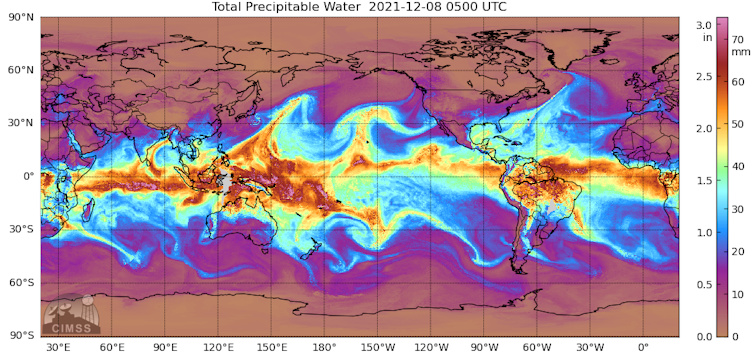
From Jacindamania to Aunty Jacinda

There’s a reason why Ardern has framed it as the COVID election — it legitimates a focus on leadership. One of the two major party leaders has led her party for just three months. The other has led the country through a series of crucibles. The polls indicate people know which one is which.

A focus on leadership also allows Ardern to dominate field position and play to her strengths. To the intense frustration of the opposition, the prime minister’s image is ubiquitous and her skills as a communicator on regular display.

And New Zealanders love a good underdog, especially if it’s us. We look out at the world and see more populous, powerful nations struggling, and take considerable pride in having kept the virus largely at bay. The prime minister and her administration are being given credit for allowing us to be the little country that could.

For all that the election may appear to be a foregone conclusion, there remains a lot to play for — much of it hinging on whether Labour will be in a position to govern alone once votes have been counted.


Read more: The rise of ACT in 2020 highlights tensions between the party’s libertarian and populist traditions


A second term, this one in command of a parliamentary majority, could well give full expression to Ardern’s centrist political instincts. But if Labour is forced (or chooses) to govern with the Greens (and/or even the Māori Party, assuming it wins at least one of the seven Māori electorates), the likelihood of a shunt to the left increases. There would be pressure on Ardern to move back towards the socialism of her youth.

Either way, it was inevitable that the “stardust” of Ardern’s meteoric rise would dissipate. But it may have been replaced by something more powerful.

Here in Aotearoa New Zealand the term “Aunty” is often used to denote a woman of influence, standing and authority. Adopted from Māori practice, it is a term of respect as much as one of kinship, and a means of expressing affection and affinity. On social media and out on the campaign trail, it’s “Aunty Jacinda” they’re talking about now.

ref. NZ election 2020: Jacinda Ardern promised transformation — instead, the times transformed her – https://theconversation.com/nz-election-2020-jacinda-ardern-promised-transformation-instead-the-times-transformed-her-142900

Obesity ‘a weakness’ and don’t blame state system, claims Collins

By RNZ News

National Party leader Judith Collins has described obesity as a weakness and says people should not “blame systems for personal choices”.

She was asked about her view on obesity during a radio interview yesterday and was today asked about that by media on the New Zealand election campaign trail.

Collins said people who were obese needed to take some personal responsibility.

READ MORE: Other Asia Pacific Report election stories

NZ ELECTIONS 2020 – 17 October

When told that some had called her comments heartless, Collins said: “Do you know what is heartless? Is actually thinking someone else can cure these issues. We can all take personal responsibility and we all have to own up to our little weaknesses on these matters.

“Do not blame systems for personal choices.”

Statistics from the Ministry of Health show that one in three New Zealanders over the age of 15 are obese.

Those living in areas of socio-economic deprivation are also more likely to be obese than those living in the least deprived areas.

Obesity prevalence by ethnicity
In addition, the statistics show the prevalence of obesity among adults differs by ethnicity, with 67 percent of Pacific, 48 percent of Māori, 29 percent of European/other and 14 percent of Asian adults obese.

About one in nine children aged two to 14 years old are obese.

Labour leader Jacinda Ardern was also asked about obesity today.

“I think on an issue like this, people are, we are all, products of our environment. You can’t deny that and so we do have to look at all the multiple factors that contribute to obesity issues in New Zealand.
“I think if you are so simplistic simply to call it an issue of personal responsibility, then it’s never going to be an issue that we collectively resolve.”

She thought it demonstrated that “under National we won’t see any progress on the issue”.

“If it’s just a view that they’ve got no role to play and that there’s no difference that government can make on these issues, then it does tell you that on one of the most significant health issues we have you’ll see nothing from the opposition on it.”

Peters on ‘tsunami of obesity’
New Zealand First leader Winston Peters was asked about the issue as well.

“There’s a tsunami of obesity problems coming down our track, it’s a critical matter and our health system faces a nightmare unless we get going right here and right now to do something about it.”

Asked if it was a matter of personal responsibility or external factors, he said: “It’s a combination – frequently it’s external factors, frequently it’s some people sadly [have] got two or three jobs – their chances of actually stopping to … follow good dining practices is not affordable. They are flat out with takeaway meals and what have you.

“We can all condemn them and say what we like but the reality is, they’ll have sadly truncated lives and many illnesses which are avoidable and I’d like to think that this country has a seriously practical dialogue about it rather than just condemning people.”

This article is republished by the Pacific Media Centre under a partnership agreement with RNZ.

Print Friendly, PDF & Email

Article by AsiaPacificReport.nz

Scott Morrison pledges ‘absolute support’ for Gladys Berejiklian

Source: The Conversation (Au and NZ) – By Michelle Grattan, Professorial Fellow, University of Canberra

Scott Morrison has thrown his weight behind the embattled Gladys Berejiklian, ahead of Wednesday’s evidence to the Independent Commission Against Corruption from disgraced former MP Daryl Maguire, with whom she had a “close personal relationship” for five years.

Morrison said Berejiklian, who had been “a tremendous premier”, had his “absolute support”.

Maguire, former Liberal member for Wagga Wagga, is due to give evidence over two days.

Berejiklian was grilled for several hours on Monday at ICAC, which is investigating whether Maguire misused his parliamentary position for financial gain. Tapped phone conversations were played in which he talked to her about his efforts to broker deals for property developers, notably a sale of land owned by Louise Waterhouse near Badgerys Creek, from which he hoped to get a huge commission.

Berejiklian, who says she did nothing wrong and is not being investigated, told a news conference after her ICAC appearance that she had “stuffed up” her personal life.

She only severed her secret relationship with Maguire recently, despite his resignation from state parliament in 2018, after his property activities came to light in an earlier ICAC inquiry.

Morrison said Berejiklian had shown “a lot of courage” on Monday.

“But I also thought she showed a lot of humility, which is the Gladys I know.

“We’re all human. And particularly in those areas of our lives, and Gladys is an extremely private person, and a person of tremendous integrity. She’s a great friend. And I know she’s been getting many messages of support from her friends and colleagues and including from me … and Jenny.”

Morrison thanked state ministers “Dom Perrottet and Brad Hazzard and the whole team down there in the New South Wales government” for “getting in behind her.”

The last thing Morrison would want at the moment would be the removal of Berejiklian – he has repeatedly praised her government’s performance as the “gold standard” in handling the pandemic and highlighted NSW’s economic progress. So far there has been no sign of a move against her by colleagues and she has indicated her determination to tough out the scandal.

At ICAC on Tuesday Maggie Wang, a former business associate of Maguire, related what he had told her after his appearance at the earlier ICAC investigation. He had said words to the effect, “There’s been an unfortunate accident where my phones and iPad have been run over by a tractor”.

ref. Scott Morrison pledges ‘absolute support’ for Gladys Berejiklian – https://theconversation.com/scott-morrison-pledges-absolute-support-for-gladys-berejiklian-148024

Victoria’s money for tutors is necessary, but there are 5 things it needs to do to ensure they’re successful

Source: The Conversation (Au and NZ) – By Julie Sonnemann, Acting Program Director, Grattan Institute

Victorian Education Minister, James Merlino, announced A$250 million on Wednesday for 4,100 tutors to be deployed across Victorian schools from the first term in 2021.

The vast majority of Victorian students spent much of terms two and three learning remotely — this is about half the school year. The government expects this money will support more than 200,000 students across the state who have been left behind during the remote learning period.

In announcing the package, the minister said about one in five students will need extra support. Our report (from the Grattan Institute) in June found a large cohort of disadvantaged students — especially those from the poorest families, with learning difficulties, or where languages other than English are spoken at home — will have fallen much further behind than their classmates during the school closures.

Our analysis shows disadvantaged students in Victoria are likely to have lost somewhere between two and six months of learning over the remote schooling period. The equity gap between advantaged and disadvantaged students grows at triple the rate during remote schooling.

These learning losses compound an existing equity problem in schools, and increase the risk of students disengaging.

The Victorian government’s funding is critical. Without it, schools would not have the resources needed to help students catch up. But the government needs to take several extra steps, including ensuring the quality of tutors, so this funding has its desired effect.


Read more: Victoria’s Year 12 students are learning remotely. But they won’t necessarily fall behind


What’s in the package?

James Merlino’s promise to parents is: “If your child has fallen behind, we will bring them back up to speed”.

To bring these students up to speed, the package includes:

  • A$209.6 million for every government school (primary, secondary and specialist) to attract and employ 3,500 tutors across the 2021 school year, to deliver small group learning to students who need it

  • tutoring for small groups from one to five students

  • $30 million towards employing 600 tutors at non-government schools

  • $8.6 million towards schools working with families to lift student outcomes and re-engage students with learning.

The package not only benefits students, but also provides employment for young people and women who have been most impacted financially by the pandemic. The government estimates 80% of tutor roles will be filled by women.

Is it enough?

Tutoring is expensive, but can provide big benefits in quick time. Tutoring programs overseas have consistently proven beneficial, with some students gaining an additional three to five months of learning over just one to two terms of schooling.


Read more: Disadvantaged students may have lost 1 month of learning during COVID-19 shutdown. But the government can fix it


If implemented well, this package would be enough to stem much of the predicted learning losses for disadvantaged students. But the Victorian government should take five extra steps to ensure it gets its money’s worth:

  1. the initiative relies on teachers to correctly identify students who are struggling, and why. The government should ensure some of the money is spent on extra training for teachers who need it

  2. successful tutoring depends on selecting high-quality, well-trained tutors. Schools can’t be expected to screen the quality of tutor recruits by themselves. The government should set the quality standards, and could commission a third party to ensure only the best tutors are hired

  3. The government should give schools guidance on effective literacy and numeracy programs that involve small-group or one-on-one tuition. There are existing programs that, on evaluation, show they can have large impacts in specific areas such as maths, oral language skills or certain aspects of reading

  4. the government should evaluate the impact of the catch-up tutoring to give insight on what works for a COVID response, but also to close the much larger existing equity gap for disadvantaged students long-term. This is a once-in-a-lifetime opportunity that must not be missed

  5. the government should require accountability from schools on how the extra funds are spent. For example, schools should be expected to invest in tutoring where it is relevant, or to explain the nature of investments in other initiatives which the school believes are needed.

Victoria’s plan to find high-quality tutors from existing retired, casual, or student teachers is a good start. But if it proves difficult to find enough quality candidates from this pool, other options should be considered. University graduates from all disciplines and teaching assistants can have large benefits, as well as large tutoring providers.

The UK’s new national tutoring scheme has a lot of quality assurance built into it. For example, schools can either choose to employ a tutor directly who has been trained and screened, or use a tutor from a “quality assured” tutoring provider. Financial incentives encourage schools to choose tutoring providers that have demonstrated high evaluation standards.

What about other states?

Although remote schooling did not last as long in the other states and the territories, disadvantaged students would still benefit from a similar package — just a smaller one to Victoria’s.

Extra support should be available so students across Australia don’t slip through the cracks. Victoria’s tutoring announcement this week should become a model for all Australian states and territories.

ref. Victoria’s money for tutors is necessary, but there are 5 things it needs to do to ensure they’re successful – https://theconversation.com/victorias-money-for-tutors-is-necessary-but-there-are-5-things-it-needs-to-do-to-ensure-theyre-successful-147990

Brand Gladys: how ICAC revelations hurt Berejiklian’s ‘school captain’ image

Source: The Conversation (Au and NZ) – By Mark Rolfe, Honorary associate, School of Social Sciences, UNSW

“Blindsided” is a word originally derived from American football and means to be hit from a totally unexpected quarter by shocking information. Unsurprisingly, it’s a word used often with the flashy US president, Donald Trump.

Until this week, it was not a word the people of New South Wales associated with the modest, determined and workaholic Gladys Berejiklian. This is the premier who has enjoyed a public approval rating of between 59% and 70% for her handling of coronavirus.

‘Close personal relationship’

In an appearance before the NSW Independent Commission Against Corruption (ICAC) on Monday, Berejiklian admitted to a “close personal relationship” with Daryl Maguire, the former Liberal member for Wagga Wagga who resigned from NSW Parliament in 2018.

Daryl Williams leaving an ICAC hearing in 2018.
Former Wagga MP Daryl Williams appeared also before ICAC in 2018. Erik Anderson/AAP

Two years ago, he was targeted by ICAC for allegations he was using his public office for personal gain through commissions for Sydney property projects. Since then, we have found out he may have been involved in a “cash for visas” scheme.


Read more: Gladys Berejiklian determined to tough out scandal of secret relationship with disgraced former MP


This was the person the premier had a “close personal relationship” with for five years until recently. Former Labor leader Bill Shorten said what many were thinking when he told Channel Nine:

She’s a smart lady who I think has been punching below her weight with perhaps a much more average guy.

A lightening strike

So, what transpired on Monday was like a lightning strike from a clear blue sky. This jolted people to hurried conclusions, including calls from NSW Labor leader Jodi McKay for the premier’s resignation to predictions her political future was doomed.

Screengrab of Gladys Berejiklian at the ICAC hearing on Tuesday.
Gladys Berejiklian game evidence during the ICAC hearing into Daryl Maguire on Monday. Supplied/ICAC

Unless something more eventuates from the ICAC hearings — which will continue this week — we haven’t heard evidence of Berejiklian using her public position for some private gain.

At this stage, she is guilty of bad political judgement and bad personal judgement, the latter of which she shares with the rest of us on occasions.

Brand Gladys

The damage at this point is to her hitherto squeaky clean reputation. Berejiklian’s story had always been about hard work, as well as her immigrant family history.

We got some indication of her drive from a 2019 interview, when she spoke of her twin sister, who didn’t survive birth:

It was just luck that I came out first. Imagine if you had a twin; you came out first, they didn’t make it, I feel like I’ve got to justify my existence by sacrificing. So I don’t care if I’m not happy all the time. I feel like I’ve got to work hard.

Until this week, the premier has always been an intensely private person who even talked in media interviews of her dedication to a political career that came at the expense of a personal life and marriage. All fair enough.

Quick verdicts

However, the sudden revelations have catapulted many to quick verdicts about Berejiklian’s career prospects, while bringing out the armchair psychologist in us all.

We wonder about the secret life of this 50-year-old woman, who retains the air of the captain that she was at high school in North Ryde. She told no one about this relationship, not even her own, very close family.

So, this can’t help but make us ask: what other information is she not sharing?

Support from colleagues

At the moment, Berejiklian is being supported by her colleagues. As a member of the moderate faction, she is possibly under threat from the right of the party, but importantly, Treasurer Dominic Perrottet was by her side on Monday.

NSW Premier Gladys Berejiklian in a press conference at NSW Parliament.
The NSW Premier will continue to face questions over her relationship with former MP Daryl Maguire. Dan Himbrechts/ AAP

This conservative faction leader backed the premier continuing in her job and with good reason. Any undermining of her leadership would threaten the current factional peace, publicly confirm there was something amiss with Berejiklian, and give the public the impression that the bad old days are back with revolving door premiers.

And all in the middle of a pandemic.


Read more: NSW Premier Gladys Berejiklian avoids a spill but remains in troubled waters


On Tuesday, Berejiklian apologised to the party room. So far, the public criticism is limited to MPs such as conservative backbencher, Matthew Mason-Cox, who has form as a rogue operator.

But Berjiklian’s image will not be same again

So, it gets back to Brand Gladys.

Until ICAC finds something more about her, she should survive this episode with the backing of her party, unless another surprise eventuates in the future.

But her rather perfect public image will never be the same.

ref. Brand Gladys: how ICAC revelations hurt Berejiklian’s ‘school captain’ image – https://theconversation.com/brand-gladys-how-icac-revelations-hurt-berejiklians-school-captain-image-147986

Where did Victoria go so wrong with contact tracing and have they fixed it?

Source: The Conversation (Au and NZ) – By Catherine Bennett, Chair in Epidemiology, Deakin University

Victoria’s contact tracing system has faced criticism in the past for being inefficient, with officials flying to NSW in September to learn from that state.

Comparisons are difficult in a pandemic because each outbreak has its own unique characteristics. That said, there are some key features that underpin the differing responses of NSW and Victoria when it comes to contact tracing.

Fundamentally, NSW’s system of decentralised local area health districts meant when the second wave hit, that state was able to draw on teams embedded in their local communities to manage contact tracing. These teams worked independently but also in concert under the mothership of NSW Health.

In Victoria, a legacy of cuts left the Department of Health and Human Services under-resourced and highly centralised, meaning there was a smaller base upon which to build the surge contact tracing capacity (with some contact tracers coming from interstate).

This was further challenged with the rapid rise in daily new cases, from 65 to 288 in one week alone in July. Systems had to be developed quickly to manage large quantities of data and feed it back to a central hub. The state had to “build the aeroplane while flying”.

Much has changed since then, and for the better. Some hard lessons have been learned along the way but the contact tracing system in Victoria is now very comprehensive and increasingly robust.

A sign out the front of Chadstone shopping centre in Melbourne
Melbourne’s Chadstone outbreak is a reminder of how quickly clusters can grow. But Victorians can be optimistic the state’s contact tracing has improved significantly in the last few months. James Ross/AAP

Read more: A 14-day rolling average of 5 new daily cases is the wrong trigger for easing Melbourne lockdown. Let’s look at ‘under investigation’ cases instead


Community engagement, local knowledge

Community engagement and local knowledge might seem like buzzwords but in a pandemic, they’re vital to ring-fencing a cluster.

NSW’s system of devolved public health units and teams meant when local outbreaks occurred, locally embedded health workers were at an advantage. They’re already linked with local area health providers for testing, they already have relationships with community members and community leaders, and they know the physical layout of the area.

If you’re doing a contact tracing interview with someone and they’re talking about a key landmark at a certain time of day, you can visualise it and understand what it means in terms of risk.

What’s crucial is a nuanced understanding of local, social, and cultural factors that may facilitate spread or affect how people understand self-isolation and what’s being asked of them. It can also make a critical difference in encouraging people to come forward for testing.

It’s not just about making sure you have materials printed in the right language. It’s about understanding how people view the health system from their context. If you have people who come from a part of the world with a health system that operates differently to ours, they will bring that understanding with them.

If local health workers and contact tracers are already part of a community, they can bring that expert knowledge into the mix; they can make sure public health messaging is meaningful for local communities.

New South Wales Chief Health Officer Dr Kerry Chant
New South Wales’ decentralised public health teams know their local areas well, helping them conduct timely contact tracing. Dan HimBrechts/AAP

When NSW’s second wave came with the cases at the Crossroads Hotel, they were on high alert, with a system ready to jump on it and chase down every lead.

Victoria had to build its contact tracing capacity on the hop. That local knowledge had to be developed and integrated as they went, often when dealing with large and complex local clusters.


Read more: Victoria’s coronavirus contact tracing is about to get faster. Let’s make it the first step in a larger digital boost


Evolution is underway

Since August, the Australian Department of Health has published the Common Operating Picture, which provides a weekly traffic light report of the coronavirus situation across Australia.

In the earlier part of the second wave, you can see Victoria gets an amber or red light for some elements relating to case notifications and outstanding case interviews — in other words, its system was under stress. That’s understandable; when an outbreak gets to a certain size, strain is inevitable.

It has been impressive to see Victoria’s more recent progression to green, meaning the system is coping well.

Coronavirus common operating picture – 8 October 2020. Common Operating Picture/Australian Department of Health

In fact, the contact tracing system in Victoria is now so comprehensive that in Kilmore the department trialled a system of tracing “close contacts of close contacts”. When a confirmed case is identified, the contact tracers track down that person’s close contacts (people with whom they’ve spent 15 minutes or more). They then also track down the close contacts of each of those close contacts.

It’s incredibly resource- and labour-intensive, but it’s also a game-changer that will allow outbreaks to be contained quickly. Hopefully, this will be the standard approach state-wide where the circumstances permit and, combined with good cooperation from the public in getting tested early, it’s likely to be very effective.

Victoria has also got better over time at naming exposure sites clearly (in earlier days it could be quite vague).

You can see the evolution of the system happening. What’s admirable in Victoria is they did set about rebuilding their response, including creating regional hubs, while case numbers were high.

Public co-operation matters

I have faith in the design of Victoria’s contact tracing system now, and Kilmore is showing us how it can be rolled out to good effect. Half the latest batch of contact tests results came back on Tuesday, all negative.

There will always be room for improvement and we will learn as we go.

New South Wales health workers outside the Crossroads Hotel
NSW’s Crossroads Hotel outbreak showed the state’s public health team was set up and ready to conduct efficient contact tracing. James Gourley/AAP

Key to the system working is people cooperating with masks, hygiene and personal distancing, along with broader critical rules limiting home visits and not leaving home if unwell.

Most important is getting tested early, whether you have symptoms or have been at a known exposure site, do it and do it fast. This is how we limit the risk of spread, and reduce the risk families and immediate close contacts will even need to be isolated, much less deal with being infected.

People on the frontline are working incredibly hard within a system being rebuilt around them. They are engaging with people in the community who are frustrated and getting mixed messages.

It pays for all of us to remember the effectiveness of our public health system and Victoria’s public health response is down to the sum of people’s contributions. We all have a role to play.


Read more: Vital Signs: batch testing and contact tracing are the two keys to stop the lockdown yo-yo


ref. Where did Victoria go so wrong with contact tracing and have they fixed it? – https://theconversation.com/where-did-victoria-go-so-wrong-with-contact-tracing-and-have-they-fixed-it-147993

Tinder fails to protect women from abuse. But when we brush off ‘dick pics’ as a laugh, so do we

Source: The Conversation (Au and NZ) – By Rosalie Gillett, Research Associate in Digital Platform Regulation, Queensland University of Technology

An ABC investigation has highlighted the shocking threats of sexual assault women in Australia face when “matching” with people on Tinder.

A notable case is that of rapist Glenn Hartland. One victim who met him through the app, Paula, took her own life. Her parents are now calling on Tinder to take a stand to prevent similar future cases.

The ABC spoke to Tinder users who tried to report abuse to the company and received no response, or received an unhelpful one. Despite the immense harm dating apps can facilitate, Tinder has done little to improve user safety.

Way too slow to respond

While we don’t have much data for Australia, one US–based study found 57% of female online dating users had received a sexually explicit image or image they didn’t ask for.

It also showed women under 35 were twice as likely than male counterparts to be called an offensive name, or physically threatened, by someone they met on a dating app or website.

Tinder’s Community Guidelines state:

your offline behaviour can lead to termination of your Tinder account.

As several reports over the years have indicated, the reality seems to be perpetrators of abuse face little challenge from Tinder (with few exceptions).

Earlier this year, the platform unveiled a suite of new safety features in a bid to protect users online and offline. These include photo verification and a “panic button” which alerts law enforcement when a user is in need of emergency assistance.


Read more: Tinder’s new safety features won’t prevent all types of abuse


However, most of these features are still only available in the US — while Tinder operates in more than 190 countries. This isn’t good enough.

Also, it seems while Tinder happily takes responsibility for successful relationships formed through the service, it distances itself from users’ bad behaviour.

No simple fix

Currently in Australia, there are no substantial policy efforts to curb the prevalence of technology-facilitated abuse against women. The government recently closed consultations for a new Online Safety Act, but only future updates will reveal how beneficial this will be.

Historically, platforms like Tinder have avoided legal responsibility for the harms their systems facilitate. Criminal and civil laws generally focus on individual perpetrators. Platforms usually aren’t required to actively prevent offline harm.

Nonetheless, some lawyers are bringing cases to extend legal liability to dating apps and other platforms.

The UK is looking at introducing a more general duty of care that might require platforms to do more to prevent harm. But such laws are controversial and still under development.

The UN Special Rapporteur on violence against women has also drawn attention to harms facilitated through digital tech, urging platforms to take a stronger stance in addressing harms they’re involved with. While such rules aren’t legally binding, they do point to mounting pressures.

Illustration of distressed woman at computer.
Online abusers on Tinder have been reported blocking victims, thereby deleting all the conversation history and removing proof of the abuse. Shutterstock

However, it’s not always clear what we should expect platforms to do when they receive complaints.

Should a dating app immediately cancel someone’s account if they receive a complaint? Should they display a “warning” about that person to other users? Or should they act silently, down-ranking and refusing to match potentially violent users with other dates?

It’s hard to say whether such measures would be effective, or if they would comply with Australian defamation law, anti-discrimination law, or international human rights standards.

Ineffective design impacts people’s lives

Tinder’s app design directly influences how easily users can abuse and harass others. There are changes it (and many other platforms) should have made long ago to make their services safer, and make it clear abuse isn’t tolerated.

Some design challenges relate to user privacy. While Tinder itself doesn’t, many location-aware apps such as Happn, Snapchat and Instagram have settings that make it easy for users to stalk other users.

Some Tinder features are poorly thought out, too. For example, the ability to completely block someone is good for privacy and safety, but also deletes the entire conversation history — removing any trace (and proof) of abusive behaviour.

We’ve also seen cases where the very systems designed to reduce harm are used against the people they’re meant to protect. Abusive actors on Tinder and similar platforms can exploit “flagging” and “reporting” features to silence minorities.

In the past, content moderation policies have been applied in ways that discriminate against women and LGBTQI+ communities. One example is users flagging certain LGBTQ+ content as “adult” and to be removed, when similar heterosexual content isn’t.


Read more: Looking for love on a dating app? You might be falling for a ghost


Tackling the normalisation of abuse

Women frequently report unwanted sexual advances, unsolicited “dick pics”, threats and other types of abuse across all major digital platforms.

One of the most worrying aspects of toxic/abusive online interactions is that many women may — even though they may feel uncomfortable, uneasy, or unsafe — ultimately dismiss them. For the most part, poor behaviour is now a “cliche” posted on popular social media pages as entertainment.

It could be such dismissals happen because the threat doesn’t seem imminently “serious”, or the woman doesn’t want to be viewed as “overreacting”. However, this ultimately trivialises and downplays the abuse.

Messages such as unwanted penis photos are not a laughing matter. Accepting ordinary acts of abuse and harassment reinforces a culture that supports violence against women more broadly.

Thus, Tinder isn’t alone in failing to protect women — our attitudes matter a lot as well.

All the major digital platforms have their work cut out to address the online harassment of women that has now become commonplace. Where they fail, we should all work to keep the pressure on them.

If you or someone you know needs help, call Lifeline on 13 11 14.

ref. Tinder fails to protect women from abuse. But when we brush off ‘dick pics’ as a laugh, so do we – https://theconversation.com/tinder-fails-to-protect-women-from-abuse-but-when-we-brush-off-dick-pics-as-a-laugh-so-do-we-147909

Lindy Lee’s Moon in a Dew Drop: art driven by a sense of wonder, born of hard struggle

Source: The Conversation (Au and NZ) – By Joanna Mendelssohn, Principal Fellow (Hon), Victorian College of the Arts, University of Melbourne. Editor in Chief, Design and Art of Australia Online, University of Melbourne

Review: Lindy Lee: Moon in a Dew Drop, Museum of Contemporary Art, Sydney.

At a time when the rapidly heating earth seems to put the very future of humanity at risk, in an age when the world appears to be largely governed by clowns, criminals or those who are a combination of both, Lindy Lee’s art soothes the soul, restoring harmony.

Lindy Lee. Photo Saul Steed

Moon in a Dew Drop, curated by Elizabeth Ann Macgregor, does not show easy patterns or sweet sentiment. Rather it is an expression of tranquillity obtained as the result of hard struggle and rigorous self-examination.

Lee could be described as a typical Australian. She is the child of immigrant refugee parents. Her father came to Australia alone in 1947, before the Communist victory, but her mother was not allowed to follow for some years as our racist immigration policies strictly limited the number of Chinese people allowed to settle here.

Lee became an artist at a time when it was widely assumed that all art was made by men but by an accident of timing her professional career placed her in the vanguard of successful Australian artists who were neither ethnically European or male.

In a catalogue essay translated by Fiona He, the Chinese writer Shen Qilan notes that Lee’s art is a continual exploration of “‘Who am I?’ – the first and ultimate philosophical question”.

Lindy Lee, The Long Road of the River of Stars, 2015 from The Tyranny and Liberation of Distance, UV-cured pigment inkjet print, black mild steel, fire 109.6 x 117.6 x 3.2 cm overall. National Gallery of Australia, purchased 2018

When she was a child, Lee wondered at motes of dust caught in the sunlight. As an adult she is still driven by a sense of wonder in the world around her.

The exhibition arcs over the entire trajectory of Lee’s career, starting with early photocopies of Renaissance and Baroque works. As with most women of her generation, Lee had assumed all great artists were men until she visited Italy and saw the work of Artemisia Gentileschi. Here was an artist who painted women as heroes and whose favourite subject was the Biblical Judith, beheader of Holofernes.


Read more: Explainer: Artemisia Gentileschi, a Baroque heroine for the #MeToo era


After Lee returned to Australia she studied at the Sydney College of the Arts, at first using photocopies as an aide memoir. The process of photocopying entranced her as she began to see these copies as objects in their own right.

Lindy Lee, Untitled (After Jan van Eyck), 1985. Courtesy the artist and Sullivan+Strumpf, Sydney and Singapore

The act of translation through art served as a metaphor for her experience as an Australian with an Asian background, seeing the world at a distance, turning “reality” into something else. From photocopies she turned to black pigmented beeswax, scraping back the European past to create an original present.

Cultural dislocation

In 1985, her painting, White Sacrament, a meditation on an El Greco painting of St Andrew, was purchased for the National Gallery of Australia. Lee was intrigued by the intensity of El Greco’s spirituality and the way this was reflected in his art. Her investigations into spirituality developed in tandem with a sense of cultural dislocation.

As with many Australians born of immigrant parents, Lee did not at first feel a connection to their country or culture. Later she came to understand that her preoccupation with photocopies was also a reflection of seeing herself as a replica, not the real thing, not a part of Australia. It could be argued that all her subsequent art is an exploration of the nature of reality, and a sense of time.

Her 2003 installation, Birth and Death, recreated for this exhibition, comprises 100 red, Chinese accordion books, printed with digitised images of members of her family, past and present, alive and dead. We are all a part of those who go before and who come after.

In 1995, Lee paid her first visit to China and realised that she was neither wholly Chinese nor completely Australian. Instead she continued to draw on both cultures for her understanding of self. The result was her installation, No Up, No Down, I Am the Ten Thousand Things.

Lindy Lee , No Up No Down I Am the Ten Thousand Things, 1995/2020. Courtesy the artist and Sutton Gallery, Melbourne

In a catalogue interview with Macgregor she describes this work as the result of being “released from the imprisonment of trying to find my identity as being either Chinese or Anglo or this or that”.

The title is a reference to the Zen philosopher, Dogen who said, “If you want to know your self, forget yourself and be actualised by the 10,000 things.”

In subsequent visits to China, Lee became intrigued by the Daoist tradition of flung ink calligraphy, where the artist allows fate to decide where the pigment falls. In recent years, she has begun to work with the UAP Foundry in Brisbane, making flung pieces out of drops of molten bronze.

The jewel-like fragments look as though they could never be the result of accident, but one of the highlights of the exhibition is the video installation showing Lee almost dancing as she flings down the hot metal as it turns into art.

Lindy Lee, Unnameable, 2017. Courtesy the artist and Sullivan+Strumpf, Sydney and Singapore with the assistance of UAP

Moonlight Deities, an installation where light shines through multiple, circular holes making entrancing shadow patterns, was made especially for this exhibition, as was the sculpture Secret World of a Starlight Ember.

Lindy Lee, Secret World of a Starlight Ember. Ken Leanfore

In both works it is easy for the viewer to immerse themselves in the patterns of light, to move with the shadows, to consider themselves as parts of the never ending universe.

This world in which we find ourselves is but a speck in the enormity of the universe, and at the same time a revelation of wonder that we who are so small can be a part of a universe, so large.

Lee tells Macgregor the Buddhist story of the net of Indra, the infinite net, as a metaphor for what she is trying to say through her art.

It’s a Buddhist story. The universe is this infinite net and at each end of the ties of the net there is a jewel. The jewel is perfect and utterly singular, but its perfection, beauty and singularity comes from reflecting every other jewel in the universe.

Lindy Lee: Moon in a Dew Drop is at the Museum of Contemporary Art, Australia until 28 February 2021.

ref. Lindy Lee’s Moon in a Dew Drop: art driven by a sense of wonder, born of hard struggle – https://theconversation.com/lindy-lees-moon-in-a-dew-drop-art-driven-by-a-sense-of-wonder-born-of-hard-struggle-147185

Paper chase: why Kevin Rudd’s call for a royal commission into News Corp may lead nowhere

Source: The Conversation (Au and NZ) – By Denis Muller, Senior Research Fellow, Centre for Advancing Journalism, University of Melbourne

Kevin Rudd’s petition to parliament for a royal commission into the dominance of the Murdoch media in Australia is entitled to be seen as more than an embittered ex-politician’s desire for revenge.

The fact is that in the three mature English-speaking democracies where Rupert Murdoch’s News Corporation has a dominant presence – the United States, the United Kingdom and Australia – politics are deeply polarised and conducted with a toxicity and dishonesty that is harmful to the public good.

There are differences in degree, of course. Australia has not elected a reactionary extremist such as US President Donald Trump, nor found itself riven with political divisions of the kind shown up by the Brexit referendum. Neither has Australian political discourse descended to the depths of racism that have scarred politics in those two countries.

Australia has not seen its national leader equivocate over white supremacy, as Trump did after the Charlottesville protests of 2017. It has not seen a political campaign poster about immigration modelled on a Nazi poster on the same subject, as the United Kingdom Independence Party (UKIP) produced during the Brexit referendum campaign.

Yet there is one fundamental similarity among the three countries that reflects the anti-democratic influence of the Murdoch media: in each country, political leaders see Murdoch as a decisive factor in electoral success.

He controls about two-thirds of Australia’s capital city daily newspaper circulation, owns The Times, The Sunday Times and mass-circulation The Sun in England, and Fox News, the most-watched cable TV service in the US.

A procession of Australian prime ministers or would-be prime ministers from Bob Hawke onwards, including Rudd, have openly and publicly paid court to Murdoch, on occasion travelling to the other side of the world to do so.

Successive leaders have paid court to Rupert Murdoch, including Kevin Rudd when he was prime minister. Dean Lewins/AAP

In the UK, Tony Blair travelled all the way to Hayman Island to obtain Murdoch’s blessing in the lead-up to the 1997 election. He obtained the blessing and won the election.

In episode three of the recent television documentary, The Murdoch Dynasty, Nigel Farage, who led UKIP in the Brexit referendum, said Murdoch’s support was crucial to the success of the “Leave” campaign.

In the same documentary, a Trump campaign insider from 2016 said Murdoch’s Fox News was indispensable to Trump’s success in that year’s US presidential election.


Read more: James Murdoch’s resignation is the result of News Corp’s increasing shift to the right – not just on climate


The benefit of a royal commission would be to lay bare the nature of the interactions between the elected politicians and the unelected Rupert Murdoch.

Details of the supplications, threats, deals, promises, attitudes and motives that are the stuff of these interactions would shed extraordinarily valuable light on a highly influential aspect of the way Australia’s democracy works.

It would enable the public to assess just how extensive Murdoch’s influence is, and what effect it has on public policy and electoral outcomes.

It’s highly improbable it would lead to greater diversity in media ownership. If it created a public clamour loud enough to make politicians think there were votes in it, then it might be possible one of the main parties would adopt media diversity as policy, and propose ways to achieve it.

News Corporation’s support was vital to the ‘Leave’ campaign in the Brexit vote. AAP/EPA/Neil Hall

However, history tells us this is extremely unlikely.

A royal commission in England in 1947-49 dodged the issue; another in 1961-62 resulted in significant mergers being referred to the Monopolies and Mergers Commission. However, this was circumvented by Prime Minister Margaret Thatcher in 1981, when she pushed through Murdoch’s acquisition of The Times and The Sunday Times.

In Australia, both main parties have been complicit in creating the present state of affairs.

The Hawke-Keating government created the conditions that allowed Murdoch to take over the Herald and Weekly Times group, giving him Melbourne’s Herald Sun and daily newspaper monopolies in Brisbane, Adelaide and Hobart.

The Turnbull government made the situation worse in 2017 by abolishing rules about cross-ownership, market dominance and audience reach.


Read more: Why media reform in Australia has been so hard to achieve


For another thing, the Australian public has shown an astonishing complacency and lack of interest in the health of the media. This has remained the case even as media freedom has been directly assaulted by a succession of laws since 2001 that criminalise journalism in the name of national security.

Perhaps the rush to sign the Rudd petition, which is credited with causing the parliamentary website to crash, indicates a change of attitude, or it might just be clicktivism.

Finally, Australian parliaments have shown little interest in, and less appetite for, fixing the problem.

In 1980, the Victorian government of Rupert Hamer established a committee of inquiry under the chairmanship of Sir John Norris, a retired Supreme Court judge, into the ownership and control of newspapers in Victoria.

The Norris report was presented in September 1981. It recommended an independent statutory authority be established to scrutinise proposed newspaper acquisitions, to ensure undue concentration of ownership would not result.

It aroused indignant opposition from the newspaper companies and went nowhere.

In 1992, the federal House of Representatives established a Select Committee on the Print Media to examine many of the same issues. It produced a report called News and Fair Facts, a laboured pun on “Fairfax”. It too disappeared without trace.

Even if Rudd gets his royal commission, its report risks going the same way, unless it probes deeply enough to tell us something important about the way Australian democracy works.

ref. Paper chase: why Kevin Rudd’s call for a royal commission into News Corp may lead nowhere – https://theconversation.com/paper-chase-why-kevin-rudds-call-for-a-royal-commission-into-news-corp-may-lead-nowhere-147996

The budget has more money for school programs for Indigenous boys than girls

Source: The Conversation (Au and NZ) – By Beth Madsen, PhD Candidate (confirmed) and casual academic at the University of Queensland, The University of Queensland

The recent federal budget included A$39.8 million to expand the Clontarf Foundation’s Academy program for 12,500 Indigenous boys and young men.

The Clontarf Foundation aims to improve confidence in Indigenous young men, and help them finish school and find work.

A study conducted by one of us, Beth Madsen, (using data from the Australian government’s grants information system), has found the Clontarf Foundation received A$74,809,900 in federal grants between July 2014 and July 2019.

While Clontarf’s aim to support young men is important, it receives significantly more funding than other programs, including those that support young women.

What programs get funding?

Beth Madsen’s PhD study has been mapping funding to nine external service providers that aim to improve school attendance for Indigenous students across Australia. The nine programs each received federal grants of more than A$1 million between July 2014 and July 2019.

The programs received a total of $123,660,900 in funding for the same period. A program with the Clontarf Foundation, designed to work solely with Indigenous boys, was the top funded. The $74,809,900 in federal grants it received made up about 60% of the total funding across the nine programs.

Between 2014 and 2019, the federal government funded four programs (out of the nine studied) to work with young Indigenous women: the Girls Academy, run by Role Models and Leaders Australia ($12,100,000), the Stars Foundation ($16,324,000), the Shooting Stars Program, run by Glass Jar Australia ($8,800,000) and the Cairns Hockey Aspire to be Deadly Program ($3,124,000).

These programs combined received a total of $40,348,000 (around 33% of the total funding for the nine programs), a little more than half of what the Clontarf Foundation received. The remaining 7% of funding for these nine programs was for programs that work with both genders.


Read more: Closing the gap in Indigenous literacy and numeracy? Not remotely – or in cities


It’s important to note the Clontarf Foundation works with a larger number of young people than the four other programs combined. And some of the female-targeted programs have acknowledged their inspiration comes from the Clontarf Foundation’s reported successes.

Still, multiple programs must compete to attract grants to support Indigenous young women.

So, why are Indigenous boys’ programs receiving significantly higher funding than girls’ programs? Arguments Indigenous boys are being left behind in relation to school attendance and year 12 completion are not supported by the government’s own data.

According to the 2019 Closing the Gap report, school attendance for Indigenous girls is only 1.3% higher than attendance rates for Indigenous boys. The report also outlined only marginally more Indigenous young women (aged 20-24) are likely to have a Year 12 or equivalent qualification to their male peers — around a 3% difference.

Independent, Indigenous-led evaluation is crucial

Aside from the issue of the gender split of public funding, many have called for more comprehensive, transparent and easy-to-access data on how effectively public funded programs create positive outcomes over time. This evaluation should be independent and Indigenous-led.

A recent report by the Productivity Commission noted:

there continues to be limited evidence about the effectiveness of many policies and programs designed to improve outcomes for Aboriginal and Torres Strait Islander people.

A 2010 report on programs that aimed to improve school attendance and retention of Indigenous Australian students noted:

A review of the literature that evaluated which programs work to increase attendance or retention found that there were very few high-quality evaluations that had been conducted in this area.

Another study noted, in general, there was “a lack of rigour around the collection, reporting and evaluation of the value” of programs that aimed to improved outcomes of Indigenous students.


Read more: The Imagination Declaration: young Indigenous Australians want to be heard – but will we listen?


In short, many expert voices have called for greater monitoring and evaluation of publicly funded programs aimed at improving outcomes for Indigenous students.

There are endless possibilities for funding to be re-imagined to respond to local needs. Evidence, rigour and equity are crucial to ensuring funding is allocated to achieve the best results.

ref. The budget has more money for school programs for Indigenous boys than girls – https://theconversation.com/the-budget-has-more-money-for-school-programs-for-indigenous-boys-than-girls-147746

Climate explained: does a delay in COP26 climate talks hit our efforts to reduce carbon emissions?

Source: The Conversation (Au and NZ) – By Chris Turney, Professor of Earth Science and Climate Change, Director of Chronos 14Carbon-Cycle Facility, Director of PANGEA Research Centre, and UNSW Node Director of ARC Centre for Excellence in Australian Biodiversity and Heritage, UNSW

CC BY-ND

Climate Explained is a collaboration between The Conversation, Stuff and the New Zealand Science Media Centre to answer your questions about climate change.

If you have a question you’d like an expert to answer, please send it to climate.change@stuff.co.nz


Will the delay of the COP26 UN climate negotiations impact international action to decarbonise? Would catch-up talks help? Could the talks collapse because countries stopped paying their dues?

The 26th Conference of the Parties — better known as COP26 — is the United Nations climate change conference that was scheduled to be held in Glasgow, UK, during the first two weeks of November 2020.

But in April this year the COVID-19 pandemic led to the event being postponed, then later rescheduled to November 2021.

That’s a 12-month delay on a meeting of representatives from nearly 200 countries, including New Zealand, charged with monitoring and implementing the UN’s Framework Convention on Climate Change (UNFCCC).


Read more: Climate explained: does building and expanding motorways really reduce congestion and emissions?


It will be crucial to make progress towards the goals of the 2015 Paris Agreement, which aims to limit average global warming to 1.5-2℃ this century, relative to the 1890s (the so-called “preindustrial period”).

Preventing ‘Hothouse Earth’

The temperature target agreed in Paris was carefully chosen. Numerous scientific studies show an increase beyond 2℃ would activate self-reinforcing feedbacks in the climate system (such as a weakening of ocean and land carbon sinks). This would tip our planet into an extreme “Hothouse Earth” that could persist for millennia, regardless of what happens with future emissions.

To avoid this scenario, the legally binding UN agreement encourages all participating nations to reduce their emissions of greenhouse gases as soon as possible.

As part of the Paris Agreement, developed countries agreed to provide, from 2020, US$100 billion to support developing countries to mitigate and adapt to climate change.

Unfortunately, the current trajectory of global emissions is on track to increase global average temperatures by more than 2℃ and possibly as much as 4℃, far exceeding the target set in Paris.

One recent study put the economic costs of failing to meet the Paris goals up to an eye-watering US$600 trillion by 2100, effectively keeping the planet in permanent recession.

National representatives are expected to arrive in Glasgow next year with substantially strengthened plans to reduce emissions and meet their commitments to support developing countries.

The pandemic and emissions

There is no doubt the gathering of 30,000 delegates in Glasgow will come at a time of ongoing uncertainty about COVID-19 and the largest shock to the global economy since the Great Depression of the 1930s. The pandemic is a game changer but it’s not yet clear whether this is good or bad for reducing emissions.

Many of us have made substantial cuts to our travel and embraced remote work and online video chat, particularly at the height of the pandemic. Google and Apple data suggest more than half of the world’s population reduced their travel by more than half in April.

Unfortunately, greenhouse gas emissions have remained stubbornly high. Daily global carbon dioxide emissions fell by as much as 17% in early April. But as the world’s economy started to recover, emissions bounced back, according to the UN, with 2020 likely experiencing only a 4-7% decline in carbon dioxide relative to 2019.

To meet the Paris target and limit warming to 1.5℃, the world needs to achieve cuts of 7.6% year-on-year for the next decade, and effectively reach zero emissions by 2050.

More work to do

The sobering reality is nations have a lot more work to do to decarbonise their economies. But for many national governments, the thorny question is how to achieve more ambitious emission targets while at the same time rebuilding economies battered by COVID-19.

Although the UN has a large financial shortfall of US$711 million (at the end of 2019) due to some nations failing to pay their annual dues — with the US, Brazil and Saudi Arabia the worst offenders — there is no suggestion of cancelling the COP26 meeting next year.

Catch-up talks have indeed been mooted but so far nothing has been publicly announced. That’s not to say there aren’t intensive negotiations and commitments being made in advance of the COP26 meeting in Glasgow. And there are some positive signs.

A pandemic recovery

As the world moves towards an economic recovery after the pandemic, some major economies are tilting towards a green stimulus and public commitments to reduce fossil fuel investments.

For example, China is the world’s largest emitter of carbon dioxide and took the opportunity at the UN General Assembly 75th anniversary last month to announce it will reach peak carbon emissions by 2030 and achieve carbon neutrality by 2060.


Read more: China just stunned the world with its step-up on climate action – and the implications for Australia may be huge


Arguably more ambitious is the proposed European Green Deal announced in late 2019. It aims to slash greenhouse gas emissions by half over the next decade and make Europe the first carbon-neutral continent.

To help achieve this, a carbon tax is proposed for imports into the European Union. This threatens to have far-reaching implications for European trading partners such as New Zealand and Australia.


Read more: Climate explained: are we doomed if we don’t manage to curb emissions by 2030?


In parallel to these government announcements, industry is also making commitments to decarbonise. The multi-trillion-dollar financial sector is adding pressure by focusing on companies at risk from climate change and identifying so-called “stranded assets”.

These pronouncements will help boost the negotiations for more stringent cuts to emissions as delegates prepare for the COP26 meeting in Glasgow next year. This can only put more pressure on all nations to be more ambitious.

Attention will inevitably focus on the world’s largest historic emitter, the US, which is formally leaving the Paris Agreement on November 4 this year, the day after the 2020 presidential election.

So the COP26 won’t collapse, but the year’s delay to the meeting may give the world the breathing space it so desperately needs to realise the ambition of the Paris Agreement and avoid the worst of climate change.

ref. Climate explained: does a delay in COP26 climate talks hit our efforts to reduce carbon emissions? – https://theconversation.com/climate-explained-does-a-delay-in-cop26-climate-talks-hit-our-efforts-to-reduce-carbon-emissions-146762

Curious Kids: how do vaccines kill viruses?

Source: The Conversation (Au and NZ) – By Kylie Quinn, Vice-Chancellor’s Research Fellow, School of Health and Biomedical Sciences, RMIT University

How are vaccines made to kill a virus? Layla, aged 7

Thanks Layla. This is a very important question, especially now, as scientists all around the world are working hard to develop a vaccine to protect us against the coronavirus. Actually, scientists are trying to find vaccines for many different diseases.

To understand how vaccines are made, we first need to understand how viruses make us sick, and how special cells in our bodies defend us against infections.


Read more: Curious Kids: what are cells made out of?


Viruses are pretty sneaky

Viruses make us sick when they invade our cells. The way this works is kind of complicated — us scientists have to study for many years to fully understand it. But you can think of it like this.

Viruses can get inside our cells by using a special key that fits into a lock on the outside of our cells. Once inside, the virus hijacks the cell, forcing it to make more virus by turning cells into tiny virus factories.

Viruses use a special key to get inside our cells and start to make us sick. Palak Mehta, Author provided

This is stressful for our cells, which can make us start to feel sick. The virus made in the virus factories can spread the infection through our body, to make us even sicker.

It can also spread from our body to infect other people, and make them sick too.

Your immune system is your defence force

Your immune system is made up of immune cells — very special cells that live all throughout your body. Their job is to look out for any signs of an infection and defend all the other cells in your body when there is a threat.

There are many types of immune cells that work as a team to stop and even kill the virus. Two very important immune cells are B cells and T cells.

Our immune cells — T cells and B cells — can defend us against viruses. Palak Mehta, Author provided

B cells make a secret weapon called antibodies. Antibodies are tiny Y-shaped particles that are incredibly sticky — they stick all over the key on the virus so it no longer fits into the lock on our cells. This stops the virus from getting in and causing an infection.

If a virus does sneak past the B cells and get into our cells, T cells can deal with it — they are the ninjas of our immune system! They kill any cells that get infected to stop the virus from spreading within our body.

Our body comes across viruses — like the common cold, for example — every day, and they don’t always make us sick because our immune cells can protect us. But our immune cells are much better at their job if the virus is one they’ve seen before.

If we come across a new virus — like the coronavirus, for example — our immune cells can’t recognise it straight away. This gives the virus a chance to infect our cells and it can start to make us sick.


Read more: Curious Kids: how does our blood fight viruses like chicken pox and colds?


Vaccines teach our immune cells about the virus

All vaccines contain a little piece of the virus, which our immune cells pick up and start to show to each other. Our B cells and T cells can then recognise that little piece of virus and remember it, sometimes for years.

Vaccines protect against viruses by teaching our immune cells what the virus looks like. Palak Mehta, Author provided

The next time we see that virus, our immune cells recognise it straight away and kick into action.

If our immune cells can act quickly enough, we won’t get sick, and our bodies won’t make more virus that could make other people sick.

So, we hope that answers your question Layla. Your immune system is a powerful defence force — it protects you every day from infections. But sometimes it needs a little help from a vaccine, especially with a new virus it hasn’t seen before.


Hello, curious kids! Have you got a question you’d like an expert to answer? Ask an adult to send your question to curiouskids@theconversation.edu.au


ref. Curious Kids: how do vaccines kill viruses? – https://theconversation.com/curious-kids-how-do-vaccines-kill-viruses-147266

- ADVERT -

MIL PODCASTS
Bookmark
| Follow | Subscribe Listen on Apple Podcasts

Foreign policy + Intel + Security

Subscribe | Follow | Bookmark
and join Buchanan & Manning LIVE Thursdays @ midday

MIL Public Webcast Service


- Advertisement -
- Advertisement -
- Advertisement -
- Advertisement -
- Advertisement -