Hans Zimmer on stage in Cologne, Germany, March 2022.GettyImages
As important to films as acting, writing, and design, music can instantly create a realistic or fantastic world, guide emotions and enhance storytelling. Yet the annual Academy Award nominations for best original score are one of the few times film music gets a look in with the general public.
And because they are chosen by Academy members who work professionally in the world of film music, the nominations also serve as a bellwether for current trends in film scoring. The five nominated scores are the ones film musicians themselves have found the most compelling, and are therefore worth the attention of moviegoers.
The 94th Academy Awards will be held in Hollywood on March 27. And so, the nominees for best original score are…
Dune – Hans Zimmer
Hans Zimmer is the most influential composer working in Hollywood today, having scored more than 200 films over his 30-plus years in the industry, including Gladiator, Thelma and Louise, Blade Runner 2049 and the Dark Knight trilogy.
As well as his own nominated score for Dune, his influence can be heard in most of this year’s other nominated work.
Where John Williams, the most influential film composer in the 1980s and 1990s, used thematic melodies and rapidly shifting harmonies to “musicalise” the events and emotions on screen, Zimmer uses varied instrumental or electronic textures and slowly shifting chords to sit beneath action and dialogue.
Dune is a textbook example of his style. Music is as prominent in the mix as the sound effects, and pervades the film in long, slow-burning passages (which film composers call “cues”).
Oscillating semitones and meandering scale figures, often made with an Armenian instrument called the duduk (popularised in film scoring by Zimmer himself in his score for Gladiator in 2000), are played over chugga-chugga rhythms provided by acoustic and electronic drums.
This can all be heard in the cue “Ripples in the Sand”. There is little subtlety in the music, but director Denis Villeneuve and his collaborators compensate with nuanced production design and acting. The film’s best moments produce an interesting contrast with the bluntly expressive music.
Don’t Look Up – Nicholas Britell
What we might call the softer side of Zimmer’s influence is evident in Nicholas Britell’s score for Don’t Look Up, the climate change satire that has divided viewers and critics.
Britell’s cues use the repeating harmonic modules of Zimmer, adding a jazz influence in the timbre (a large brass section and prominent mallet percussion) to cannily suit the satirical tone of the film.
The music cues are mostly short, punctuating major events in the story and covering transitions. Britell is skilful in his ability to convey a scene’s meaning in musical microcosm. For example, the cue “My Boyfriend Broke Up With Me” takes only 30 seconds to set the film’s mood.
Encanto – Germaine Franco
The Zimmer style is also heard in Germaine Franco’s score for Encanto. Franco takes Zimmer’s typical aesthetic markers and adapts them to the animated family film genre.
In fact, the music often sounds a lot like Zimmer’s Lion King score, albeit with South American musical features rather than African ones.
Listen to “Antonio’s Voice”, for instance, which incorporates Colombian chanting in its textured motives. It is an effective score for a charming film, but very much a long shot to win the Oscar, which nearly always goes to dramas or epics.
Parallel Mothers – Alberto Iglesias
Alberto Iglesias is not as well known in the English-speaking world as some of the other nominated composers, and most of his work has been in his native Spain.
That may change, with his nomination being the first in many years for a non-English language film. Scored for his frequent collaborator, director Pedro Almodóvar, Iglesias’s music helps make Parallel Mothers a must-see melodrama about motherhood and Spanish national trauma.
Like Zimmer, Iglesias is largely influenced by Alfred Hitchcock’s favourite composer, Bernard Herrmann. And like Herrmann, he uses repeating but subtly shifting musical modules, usually favouring strings.
The film’s trailer (which uses the actual music from the film, surprisingly unusual in trailers) demonstrates how well the score fits the mood Almodóvar creates with his images.
The Power of the Dog – Jonny Greenwood
The one major exception to the Zimmer influence among this year’s nominees is Jonny Greenwood’s score for The Power of the Dog. And for me, it’s the standout because of its different approach to matching music with onscreen action.
Greenwood makes careful use of melody, harmony and texture, not just to serve as wall-to-wall aural carpeting, but rather to actually interpret the dramatic setting and what is happening between the characters.
His music doesn’t merely reinforce what we can already see, but adds a layer of meaning, effectively amplifying Jane Campion’s languid yet intense storytelling.
Greenwood’s favourite composer, Olivier Messiaen, is very much in evidence, but he finds his own version of Messiaen’s innovations in melody and harmony. Greenwood also incorporates certain stylistic features from maverick 20th century American composers Charles Ives and Conlon Nancarrow, matching the film’s 1920s western setting. The cue “Best Friends” illustrates this well.
The envelope please…
The front runners seem to be Dune and The Power of the Dog, both of which have done well in other awards this year. But with the final decision voted on by the full Academy membership, rather than just the music branch, the Oscar is somewhat more of a popularity contest.
Setting my own tastes aside, however, all five are worthy nominees and undoubtedly represent the foremost current trends in film composing.
Gregory Camp does not work for, consult, own shares in or receive funding from any company or organisation that would benefit from this article, and has disclosed no relevant affiliations beyond their academic appointment.
In the very marginal Sydney eastern suburbs seat of Wentworth, where the Liberals are being challenged by a high profile “teal” candidate, Scott Morrison is unpopular, Anthony Albanese is preferred PM, and climate change tops issues people say will influence their vote.
Facing an election within two months, Liberal incumbent Dave Sharma at this point is only a nose ahead – 51-49% – of independent Allegra Spender on a two-candidate vote, according to polling done for the University of Canberra’s Centre for Change Governance and The Conversation’s Wentworth Project.
Notably, Wentworth electors are evenly split on which side Spender, if she won, should support to form government if the May election resulted in a hung parliament.
The Wentworth Project will chart the campaign for this seat in coming weeks. Automated polling of 1036 voters done by KJC Research from Saturday to Monday is reported here. Focus groups will be run during the formal election campaign. The research is not predictive, but will give an insight into one of the election’s closely-watched contests.
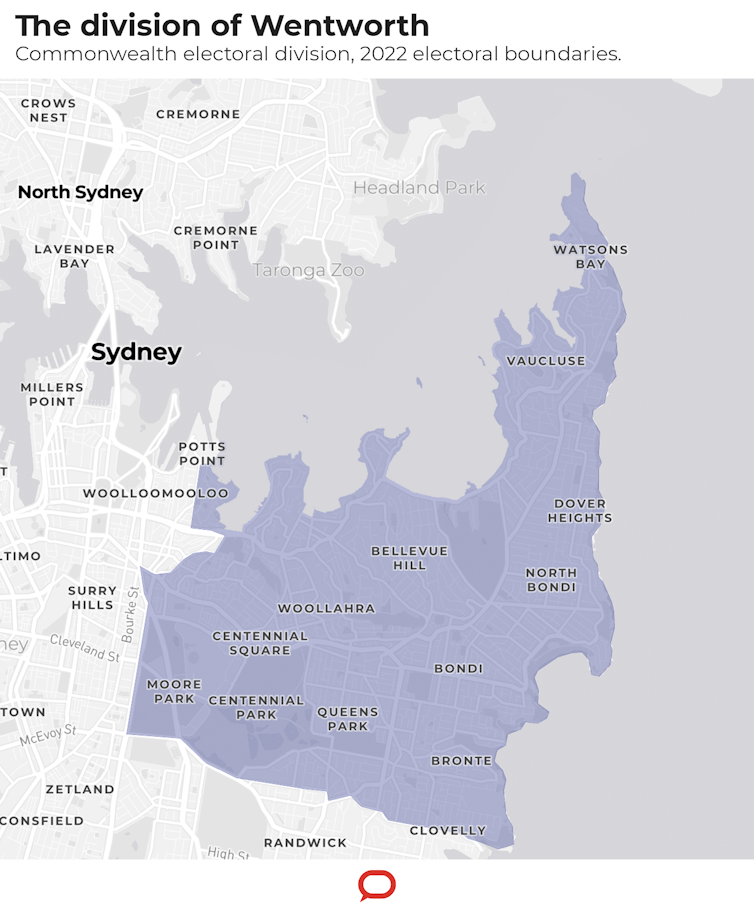
Encompassing some of the country’s most exclusive real estate, Wentworth covers many of Sydney’s most affluent suburbs. The second smallest electorate (38 square kilometres), it includes well known areas such as Darling Point, Double Bay, Vaucluse, Paddington, and Bondi Beach.
Wentworth.
Based on 2016 census data (the latest available), Wentworth has a gender split of 48% male and 52% female, and a medium age of 37 years old. Of its families, 42% are couple families with children, 45% couple families without children, and 11% one parent families – 19% of single parents are male. This is a well-educated electorate: 47% of the population hold a bachelor’s degree level or above, and 9% an advanced diploma or equivalent.
The most common occupations, on the census data, include professionals (41%), managers (21%), clerical and administrative workers (11%,), community and personal service workers (8%), and sales workers (8%).
The most frequent response on religion is “no religion” at 33% and Catholic at 20%. The seat includes a large Jewish community with 12.5% nominating Judaism. The most common ancestries are English (23%), Australian (16%), Irish (10%), Scottish (6%), and Italian (3%); 32% of people had both parents born in Australia and 43.5% of people had both parents born overseas.
The seat includes a large LGBTQ+ community.
A historically conservative seat that dates back to federation, Wentworth has been political home to four ministers and a prime minister since World War 2. Malcolm Turnbull held it from 2004 and 2018. After Turnbull lost the prime ministership in 2018, a by-election saw independent Kerryn Phelps wrest the seat briefly from the Liberals.
Sharma won it at the 2019 election with 48.5% of the primary vote; Phelps secured 32.4%. While Phelps recorded 51.3% of the two-candidate preferred vote on election day, a strong Liberal performance with pre-poll and postal votes ultimately handed Sharma victory. The 2019 election saw a Liberal majority recorded in only 11 of the 40 polling places.
Phelps’ strong 2019 performance meant the Liberals were extremely relieved when she did not run this election .
Sharma is one of the Liberal moderates; he was among those who crossed the floor during the all-night debate on the religious discrimination bill. Challenged over his “teal”- coloured campaign material (that didn’t mention Liberal) he retorted, “No one owns a colour”.
Allegra Spender is often dubbed as being of Liberal “royalty”: her father and grandfather served in federal parliament. Her mother, the late Carla Zampatti, was an icon of Australia’s fashion industry. Spender, who has an economics degree from Cambridge University, is a businesswoman. She is among a slew of independents, mostly women, challenging Liberals in “leafy” seats, including Mackellar and North Sydney, and Goldstein in Victoria.
Our polling asked Wentworth electors about their attitudes to Sharma and Spender, their voting intentions, issues they say will most influence their votes, and their views of Scott Morrison and Anthony Albanese and of the government’s performance.
The Liberals’ primary vote in the polling is on 42%, with Spender – who needs to come in second to have a chance of winning the seat – on 27%. Labor is polling 14%, the Greens 9%, with the rest going to small parties and others.
When voters were asked to choose between Sharma and Spender, Sharma polled 49% and Spender 46%, with 5% “don’t knows”. Eliminating the “don’t knows’ gives a two candidate vote of 51-49% in Sharma’s favour. Three quarters of voters (74%) said they were already certain how they’d vote.
Sharma is more popular than Spender, but also more unpopular, with the polling showing she has yet to become as known and defined in the voters’ minds as he is.
Some 44% had a “favourable” view of Sharma, compared to 34% for Spender. More than a quarter (27%) had an unfavourable opinion of Sharma, while Spender’s unfavourable rating was 17%. So the net favourability for each is the same – plus 17. But Sharma is much better known, with just 5% who were unaware of him, compared to a hefty 18% who were unaware of Spender.
One quarter of voters (24%) were neutral towards Sharma, compared to 31% who were neutral towards Spender.
Climate change is a major campaigning issue for most of the teal independents in Liberal seats, many of whom (including Spender) are receiving financial backing from Climate 200, founded by Simon Holmes à Court.
Asked which, out of a list of six issues, would have most influence on their vote, climate change was well ahead.
The results were: climate change and the environment (28%), jobs and economic management (20%), integrity in politics (14%), national security and defence (14%), cost of living pressures (12%), health and COVID management (4%).
The ranking reflects the inner-city nature of the electorate – for instance, cost of living would likely rate higher in outer suburbia.
Wentworth voters are clearer in their views about Scott Morrison than about Albanese. Asked whether their opinion of each leader was favourable, neutral or unfavourable, 55% were negative towards Morrison. Three in ten (30%) had a favourable view and 13% were neutral.
Albanese had an unfavourable rating of 37%, while 30% were favourably disposed towards him and 30% neutral.
On the question of preferred prime minister, Albanese led Morrison 43-39%.
The Morrison government gets a bad rap from the Wentworth voters. Only 33% rate its performance as good or very good (14% very good, 19% good), compared to 46% who said it was poor (15% poor, 31% very poor). Nearly one in five (19%) rated its performance as average.
If Spender won, 39% say she should support the Coalition to form government (if the parliament were hung), the same proportion say Labor, and 12% say she should support neither.
With the budget looming and the election date to be announced soon after, the polling highlights the challenges for the two main contenders in a close and potentially fluid contest.
Dave Sharma is handicapped by an unpopular prime minister and a government of which many voters are critical. Allegra Spender has the strong concern over climate change running in her favour but the task ahead of becoming better known.
The authors do not work for, consult, own shares in or receive funding from any company or organisation that would benefit from this article, and have disclosed no relevant affiliations beyond their academic appointment.
Source: The Conversation (Au and NZ) – By David Rowe, Emeritus Professor of Cultural Research, Institute for Culture and Society, Western Sydney University
Ash Barty has always done things her own way.
The shock retirement of the world number one women’s tennis player at the age of 25 was pure Barty in action.
The razzmatazz of a major media conference with jostling journalists and clicking camera shutters was not for her. When basketball superstar LeBron James switched teams in 2010, a live television special entitled The Decision ran for 75 minutes and extracted as much publicity as possible beforehand.
In contrast, Barty called time on her tennis career in a six-minute Instagram video post via a one-on-one conversation with her close friend and former doubles partner Casey Dellacqua. The inevitable big media conference was scheduled for the following day, but Barty made sure she set the agenda and, at least initially, controlled the narrative.
A multi-talented athlete and restless spirit
Her idiosyncratic history in sport has always involved keeping those outside her tight inner circle off balance. In 2014, Barty took a break from the game and played cricket with some success before returning to tennis two years later.
The unexpected news of her permanent retirement is consistent with the restless spirit of a multi-talented athlete (she is also a very accomplished golfer) who has always looked far beyond the tennis court’s baseline.
It’s not even been two months since I wrote about Barty riding the crest of a wave after victory in the Australian Open women’s singles final.
The other main subject of the article was Nick Kyrgios, who with Thanasi Kokkinakis had won the men’s doubles title.
Both Barty and Kyrgios are far from being cookie-cutter pro tennis players, but they’re vastly different in style. Kyrgios, like Barty, has proclaimed that tennis isn’t his life. But his way of dealing with the world is not to train too hard and to stage a show many people will watch because of his brash unpredictability.
Barty, on the other hand, projects her ordinariness. She drew attention to her play and her team, not her personal image. Barty reached the pinnacle of the sport, including winning three singles Grand Slam titles. Kyrgios, though, who has often foreshadowed his own retirement, has to a degree squandered his extravagant talent.
In public esteem ranking, Kyrgios is a polarising figure, whereas Barty is astonishingly well regarded. Her combination of success and humility means her departure from tennis has made many fans genuinely sad.
Typically, she has suggested a new, though as yet undeclared, game plan that will keep her in the public eye.
What next for the Barty party?
In her social media retirement discussion with Dellacqua, Barty said she had given all she could as an elite tennis player, and was “spent”.
But this seemed to be more than simple exhaustion. Having climbed to the summit of the sport at Wimbledon last year, she experienced the familiar feeling of the ultra-successful – that it was somehow not enough. We could almost hear the strains of the famous lament in the 1960s Peggy Lee hit (covered by PJ Harvey and many others), Is That All There Is?
The home win at Melbourne Park seemed to convince Barty she didn’t want just to “keep dancing”, as the song goes. Instead of getting on the plane to the US for Indian Wells and going into intense preparation for the French Open and following tournaments, it was time to enter a new phase of life.
Tennis has given Barty wealth, influence and a global profile beyond the imagination of most late millennials. She has multiple options that will no doubt soon be exercised. As a Ngaragu woman who is the national Indigenous tennis ambassador for Tennis Australia, it’s probable she will remain deeply committed to First Nations causes.
There might be the familiar move into media commentary. No doubt many organisations, large and small, will beat a path to her door. Having the face of Barty in the service of a company or campaign would be a highly valuable asset.
But this very singular woman wants to spend more time at home in southeast Queensland, and her recent engagement indicates that at some point there will be a wedding to organise.
Barty’s self-effacing, open manner gives many a sense they somehow know her personally, and they can “read” her intentions and mind.
This is an attractive illusion. Right to the end of her tennis career, she kept the world at bay with a disarming smile and an engaging disposition.
Will there be another tennis comeback for Barty? Perhaps. There have been few sporting champions as adept at keeping the curious guessing. But we can be sure that any choice will be strictly on her terms.
David Rowe has received funding from the Australian Research Council for the Discovery Projects ‘A Nation of “Good Sports”? Cultural Citizenship and Sport in Contemporary Australia’ (DP130104502) and ‘Australian Cultural Fields: National and Transnational Dynamics’ (DP140101970).
On 1 December 2021 the CCCFA (Credit Contracts and Consumer Finance Act) entered Aotearoa New Zealand with more stealth than the Omicron BA2 variant. It resulted in unintended consequences that were (and are) entirely predictable.
There are two sets of ‘unintended but predictable consequences’: those consequences that make anxious and desperate people more anxious, more desperate, and more detached from mainstream law-abiding living; and those consequences which aggravate the systemic problems of our system of primitive capitalism.
Anxious People
A starting point for this topic might be the Swedish novel Anxious People (now condensed into a Netflix series, that should appeal to the same people who enjoyed The Detectorists). Set in a small city not-too-far from Stockholm, the story starts with a man committing suicide. The trigger for his suicide turned out to be the rejection of an application for a bank loan. Then, the main antihero of the story also found herself in an incredibly difficult situation, in part because of the Family Court and social assistance bureaucracies, and in part because of petty ‘rules-based’ rejection by the bank, following her attempt to gain a small personal loan. The story was bittersweet, neither tragedy nor comedy; uplifting because of the way that the community of ‘ordinary people’ (people each with their own issues) resolved their personal issue through what might be called ‘genuine community kindness’.
In New Zealand we have many anxious people, brought to critical states of anxiety for a number of different reasons. (In this RNZ story, The Science behind a Broken Heart 21 Mar 2022, the interviewee states that “scientists are figuring out that when we feel lonely, when we feel abandoned, our immune systems change”. This is an important undisproved hypothesis – that escalating anxiety itself may be the equivalent of a pandemic, in terms of physical health – that needs much more discussion and scientific investigation. We remind ourselves that ‘scientific’ truths are not ‘facts’; rather they are undisproved hypotheses, with some of these truths having been subject to more scrutiny than others.)
One of the most important reasons relates to housing: both getting home loans, and negotiating the rental market. Too many twenty-somethings are too anxious, and/or too poor, to leave the parental home. Many people in Aotearoa need to borrow money in order to forestall immediate problems in their lives. The last thing that they need is to have to confront an intrusive lender bureaucracy; a form of officialdom that can be as stressful to face as the government ‘we are here to help’ bureaucracy.
Banks lend to people who can jump certain hurdles. The government’s ‘here to help’ agencies target people who cannot jump similar hurdles. One day an anxious person may visit a government agency, dressing downbeat, and spinning their answers to emphasise their incapacity. On another day, such an anxious person may go to the bank, dress upbeat; and must re-spin their answers to essentially the same questions, to emphasise their capacity. Always there are lengthy forms to complete, so that the assessors can tick – or not tick – their formulaic boxes. The banks tended to be the lesser evil; that is, until 1 December 2021.
Capitalism works well when the income distribution system is working well. Government-targeted welfare is a part of the income distribution system; albeit a charity band-aid to a market system that fails. Primitive capitalism fails because it emphasises private property rights – including labour rights – while rejecting public property rights. And we note that the word ‘targeted’ is a euphemism for ‘allocation by means of intrusive bureaucracy’.
Lending and borrowing – credit and debt – is capitalism’s number one backstop for when the income distribution system fails to maintain its necessary equity and circulation objectives. Borrowing, while indeed a backstop, is actually much more than a backstop. It’s an integral component of any form of capitalism, primitive or developed.
People with less income than they need to meet their reasonable aspirations have just a few options; options which may help them get by in the present (eg as renters instead of home purchasers), or may give them sufficient means to escape from an income trap. These options are: borrowing, gambling, private charity, disreputable self-employment, and overt crime. If we take away the better of these options, that pushes people towards the worse of these.
Despite (or because of) the failings of the income distribution system, the lending/borrowing system in New Zealand was working surprisingly well. It was getting much money into the bank accounts of those who needed it to meet their aspirations, and the aspirations of the many resilient but stressed businesses who sold goods and services to people spending borrowed as well as earned funds.
The CCCFA was an attempt to fix a problem, which, except at the margins, did not exist. Once again from the government, a solution in search of a problem. And where, at the margins, a problem of exploitation did exist, there were better solutions available than deterrence through bureaucracy.
What happens if we make our financial markets under-accessible to ordinary households and small businesses? It means a circulation problem; see below. And it means that ordinary New Zealanders must increasingly look to these: the bank of mum and dad, gambling, private charity, disreputable self-employment, and overt crime.
Gambling gives people a chance of meeting an aspiration; it makes rational sense when they would otherwise have no chance of meeting that aspiration. Private charity includes various forms of individual and community ‘giving’: foodbanks is an obvious one, as is giving money to street beggars. Less obviously, it includes the many and varied forms of charity that parents may provide to their adult children. Related to this last form of charity is the bank of mum and dad, where loans – usually soft-loans – are made between parents and adult children. The bank of mum and dad tends to reinforce existing privileges in the income distribution landscape.
Overt crime here is theft, which includes running businesses that sell illegal goods or services. Disreputable self-employment is either selling marginally legal services – such as prostitution – or working as a ‘contract employee’ for an illegal or a marginally legal business. These activities represent the ‘black’ and ‘grey’ economies.
The key point here is that, as people’s lives become more precarious, and as relatively good options (such as borrowing money) diminish or close, then people get pushed into the much worse options to either maintain a basic living standard, or to meet aspirations of success.
We note that even bankruptcy represents an important part of the better options. Life for the economically insecure does involve hopeful borrowing that in some cases leads to bankruptcy. In practice, undertaking debt with a risk of bankruptcy is a far better option – for individuals, businesses, and society in general – than is resort to the criminal underworld. One doesn’t have to read or watch too many Dickensian stories to appreciate the need for an alternative to crime and criminalised debt. Indeed, the modern concept of bankruptcy – the decriminalisation of debt default – was one of the most important and socially progressive developments of the Victorian era.
Policies which make personal debt harder to access represent a reversal of post-Dickensian social progress.
Circulation of Money and Wage Goods
The other, and in some ways even more important problem with the bureaucratisation of household and small business finance, is that of impaired circulation of income and spending. Income and spending together make up ‘the circulatory economy’; or, for short, ‘the economy’.
An important concept here is that of ‘wage goods’; a term used a lot by economists in the period from circa 1850 to 1950, but not a lot these days. Wage goods are the goods and services that ordinary people buy; they include ‘necessities’ but go well beyond being necessary goods. They include basic aspirational goods and services. Thus, they represent mass markets. The key to the success of industrial capitalism – an extension of primitive capitalism which arose from the industrial revolution – is the ability of ordinary people to buy goods manufactured at scale, through the ‘factory system’.
During the twentieth century, cars and houses became wage goods. In the more-populated early twenty-first century, we might say an apartment rather than a detached or semi-detached house. The larger wage goods – which include household devices – always have and always will require recourse to borrowed money. This recourse is called ‘personal finance’; and involves a lifecycle mix of borrowing and saving. Further, large wage goods can be either rented or purchased; ideally with the lessors being people and businesses embedded in the circulatory economy.
To these wage goods we can add ‘social wage goods’. Think of education, healthcare, defence, and environmental and public health subsidies. In normal times, these will be funded from public revenue; taxation for the most part. But, and especially when public revenue systems are under strain, it is essential that they be funded by other means, rather than being unprovided or underprovided.
An efficient monetary circulation system has two requirements. The first of those is an income distribution system that maintains a stable (and not excessive) degree of inequality. By ‘stable’, we mean that the distribution of income inequality should be essentially the same in 2022 as it was in 1972; and (assuming that 1972 was a good year) in all years in-between, and all years in the future.
The second requirement is that there is a stabilising financial system (including an international system, which is beyond the scope of this essay). Such a system has three components: personal finance, business finance, and government finance.
Personal finance has already been alluded too. Business finance represents the core of capitalism; in particular, the financing of businesses which supply (create and sell) goods and services. Businesses invest in capital goods, and in inventories. Government finance – the third leg of the financial stool – is a critically important for investment in capital infrastructure, to maintain the income distribution system through what would otherwise be ‘hard times’, and to maintain the supply of social wage goods. As the third leg of the stool, government finance stabilises the stool – the system – compensating for the collective vagaries associated with personal spending and business investment. Of particular importance is the privileged (and necessary) ability of central governments to maintain a ‘balance sheet’ that enables them to be ‘borrowers of last resort’ while undertaking their core roles even in – no, especially in – hard times.
What I have outlined above is what we call ‘the economy’. When functioning well, with due recognition of public as well as private rights, the economy has transitioned from primitive to democratic capitalism.
What happens if we have legislation that hobbles the efficient cycling of money into the production of wage goods (including social wage goods), and capital goods (private and public)? Where does the money go when it doesn’t go where it should go? The short answer is that it flows to a relatively small number of asset-rich people. Part is this is cycled back into the economy through their purchases of luxury goods (those private goods and services which are not wage goods). Part of it just sits in banks and other repositories; it does not circulate at all. And the third part circulates in another place; a place that may be called ‘the casino’.
The casino is a whole suite of secondary markets – real estate, company shares, bonds, financial derivatives, foreign bank deposits, crypto-currencies, gold, artefacts, artworks, football teams, non-fungible-tokens; once upon a time there was even a speculative secondary market in tulip bulbs. Capitalism always has its casino, inhabited in the main by oligarchs and plutocrats. The circulation system is inefficient – and unstable – when ‘the casino’ is too big relative to ‘the economy’; and particularly when the casino grows faster than the economy.
In this last ‘uneven growth’ case, the flow of unspent money into the casino from the economy exceeds the flow of spent money from the casino back to the economy. It is in these times – a net flow of money from the economy to the casino – when most asset prices rise; this may be facilitated by monetary policies which inject new money into the casino rather than into the economy.
The easiest way by far for injecting new money into the national economy is via the government’s balance sheet. The big problem here is when debt-averse governments resist this process, thereby forcing money that should be going into the economy, into the casino instead. When this happens, the casino grows faster than the economy; asset prices increase, creating an illusion of wealth creation, but really only pumping up the prices of tradable assets. Rather than a bottomless money pit, the casino is a gravityless monetary sky.
New Zealand’s present regime of ‘Authoritarian Social Neoliberalism’
Finally, I will present this label that I think fits. Neoliberalism, by the way, means – more than anything else – the centrality of both private property rights (as a basis for the distribution of income) and restrictive public finance (aka government debt-aversion).
The government takes an authoritarian ‘top down’ approach to execute both a social policy agenda and its responses to exogenous events. The alternative is a democratic approach where informed – through discussion, not narrative – populations find their own solutions, and are supported by governments to do so. And the government pursues its debt-averse interpretation of neoliberalism, both with respect to its own balance sheet, and in its supposition that households and businesses also should behave as debt-minimisers.
The result is that both personal savings and new money flow, substantially and excessively, into ‘the casino’; the financial stratosphere inhabited by those with large portfolios of ‘financial wealth’, meaning the tradable assets mentioned above. When subject to this kind of casino-enriching policymaking – albeit policy making that is not understood by the policymakers in this way, due to regime wilful blindness – there are necessarily large net flows of money entering the world of asset trading. That is the consequence of public policy developed in the spirit that underpinned the CCCFA.
If we don’t allow money to flow towards where it can be usefully spent within the economy, then we push people towards more desperate options, such as crime. And we prioritise the casinoisation of the economy, which includes the designation (and resigned acceptance) of land as an appreciating asset, rather than as places to live and grow food. Authoritarian social neoliberal governments don’t understand that this is what they are doing; nevertheless, that’s what they do, though they would rather not know it.
Keith Rankin (keith at rankin dot nz), trained as an economic historian, is a retired lecturer in Economics and Statistics. He lives in Auckland, New Zealand.
You pick up a piece of plastic litter from the beach, and get a small buzz. You’ve done something for the environment. But then you look around, and see plastic everywhere. It’s much more than you could pick up.
Earlier this month, the United Nations endorsed a new resolution on ending plastic pollution.
While that sounds positive, focusing on pollution is missing the elephant in the room: production. Why is more and more plastic being produced, with some ending up in forests, rivers and oceans near you?
Our research has shown that to actually make a difference to the ever-growing amount of plastics in our oceans, our soils and our bodies, we must focus on why our societies use and throw away ever more single use plastics.
The answer lies in our systems. If you’re a time-poor parent, stressed by juggling kids, work and the mortgage, it can be much easier and faster to reach for heavily packaged ready-made meals, or get dinner delivered in many layers of plastic.
When we’re time poor, we’re more likely to choose plastic-heavy food options. Shutterstock
It’s time to stop focusing just on plastic waste
Plastic pollution is out of control, with almost 80% of the 8.3 billion tonnes we have produced thrown away into landfill or the environment.
Why, then, is the UN focused only on the problem of waste, rather than production? We are producing more plastics than ever. Plastics are created from oil, and will account for one-fifth of all oil consumption by 2050. Not only this, but 40% of all the plastics we produce is used for packaging. Just over a third of these plastics are for food packaging.
Our research has shown mainstream approaches such as the UN resolution are ineffective and even counterproductive.
If we want to make a dent in the major problem of plastic pollution, we have to make systemic changes.
Why? Consider recycling and the notion of the circular economy, often held up as an answer to plastic waste. The issue here is that plastic degrades every time it is cycled through. Not only that, but recycling itself is often highly energy-intensive with its own set of environmental impacts.
Plastics degrade during recycling. Shutterstock
Recycling only delays the final disposal of plastics. Similarly, the concept of a circular economy is only put into practice when profitable.
Could we switch en masse to alternative disposable materials, like bio-based packaging?
Both recycling and switching to bio-based packaging are drawn from the technocraticgreenwashing playbook, in which we look to technology to let us keep living in an unsustainable way.
Why do we use and throw away so much plastic?
What we actually need is to consider how we can reduce how much plastic we make and consume, so we have a better chance of living within the planet’s ecological boundaries.
Our current capitalist system gives producers the incentive to make as much plastic as they can sell, and to create new market niches for their products. It’s no surprise the result is an avalanche of plastic.
Take food packaging. The use of plastics to cover food has increased dramatically since the 1960s, alongside the expansion of the globalised food market.
There is a link. As food production has gone global, it has displaced some local food production, manufacturing and consumption. Major corporations have profited from this shift, which requires longer and more complex supply chains. And longer supply chains means more packaging to keep food saleable.
To us, this suggests that the problem of plastic runs much deeper than how we prevent the waste entering our rivers and oceans. We believe the central issue stems from the growth-at-all-costs capitalist system.
Consider: packaged food is sold as “convenient”. Why do we need convenient ready-to-eat meals or those with minimal preparation, like frozen dinners, instant noodles and fast food? Because we are time-poor.
Why are we time-poor? Because in our fast-paced capitalist economies, people need to fit food preparation around their inflexible paid labour, which may often require long hours or fitting into a casualised system.
As a result, many of us get to the end of the day with little time and energy to shop in local stores, cook our meals from scratch using fresh ingredients, or grow our food.
It’s well established that time deprivation has increased how much processed packaged food we eat.
Manufacturers have financial incentives to produce ever-more plastic. Shutterstock
Waste is just a symptom
We do not hold out great hopes for the new UN agreement on plastics, based not only on the failure to address the root causes but also the poor implementation of previous climate commitments and other international environmental agreements such as e-waste management.
Proposals to reduce plastic pollution which skim over the root causes will do very little to reduce our overall use of plastics and alleviate the significant damage they do to our societies and the environment.
If we are serious about reducing the damage, we must look at deeper solutions, One might be transitioning towards a degrowth society, which would help us re-localise food systems.
In a degrowth society, we would gradually shift back to local food production, which would reduce the globalisation of food and shorten supply chains. That, in turn, would slash the need for packaging.
Degrowth would also help us address time poverty by, for example, reducing working hours or introducing a work-sharing mechanism.
There would be more free time in a degrowth society, and local food systems would provide healthy, fresh, seasonal produce requiring minimum packaging.
Locally grown food can reduce dependence on plastic packaging. Shutterstock
Supporting local farmers or pursuing more free time for all might well be a more effective solution to the issue of plastic pollution rather than simply pushing for improved recycling schemes.
Is this just blue sky thinking? No. Consider how our society was able to react to the COVID pandemic and get organised differently.
The pandemic showed us we are capable of large-scale change if a problem is taken seriously. If we begin to prioritise our social and ecological well-being over company profits, we will see change.
Sabrina Chakori receives funding from Australian Government Research Training Program Scholarship.
Martin Calisto Friant receives funding from the European Union’s Horizon 2020 research and innovation programme under the Marie Skłodowska-Curie grant agreement No 765198.
Ammar Abdul Aziz and Russell Richards do not work for, consult, own shares in or receive funding from any company or organisation that would benefit from this article, and have disclosed no relevant affiliations beyond their academic appointment.
For as little as A$1 a tin, canned tuna is an excellent, affordable source of protein, polyunsaturated fats and other nutrients. A tin of tuna is significantly cheaper than many types of fresh meat or fish.
Sounds good, but how much can you eat before you need to worry about mercury?
It is safe for everyone (including pregnant women) to consume canned tuna as part of their fish intake.
Canned tuna generally has lower levels of mercury than tuna fillets because smaller tuna species are used and the tuna are generally younger when caught.
But how many tins a week?
Lab tests we did for the ABC TV science program Catalyst in 2015 suggest – depending on your body weight and the exact brand of tuna you buy – you could eat anywhere between 25 and 35 small tins (95g each) of tuna a week before you hit maximum mercury limits.
That’s a level even the most keen tuna-lover would be hard pressed to consume.
Mercury is naturally present in our environment but can biomagnify to relatively high concentrations in fish – particularly predatory fish.
In other words, it builds up as smaller fish get eaten by middle-sized fish, which get eaten by large fish, which get eaten by us. So the bigger the fish, the higher the likely mercury content.
Most forms of mercury are potentially very toxic to humans. But to make matters worse, a substantial proportion of mercury in fish is present as methylmercury – a potent neurotoxin formed by bacteria in waters and sediments.
Although mercury pollution has increased since industrialisation, accumulation of methylmercury in animals is a completely natural phenomenon.
Even fish caught from the middle of the ocean, far from any polluting sources, will contain methylmercury.
Tinned tuna is cheap, tasty and nutritious. Shutterstock
Tuna in Australian cupboards is likely smaller species
Over the years, some scientists have raised concerns about high concentrations of mercury in canned tuna.
Mercury concentrations are higher in predatory fish such as tuna and generally increase with age and size. So this concern has largely been associated with the use of tuna species such as albacore and larger tuna specimens.
Skipjack and yellowfin are the main tuna species listed as ingredients in canned tuna in brands sold at Australian supermarkets.
Skipjack are the smallest of the major tuna species, while yellowfin are larger.
So, the fact the canned tuna in Australian cupboards is likely to contain smaller species is already a bonus when it comes to reducing mercury risk.
Two separate maximum levels are imposed for fish ― a level of 1.0 mg mercury/kg for the fish that are known to contain high levels of mercury (such as swordfish, southern bluefin tuna, barramundi, ling, orange roughy, rays and shark) and a level of 0.5 mg/kg for all other species of fish.
However, whether mercury is harmful or not also depends on the amount of fish you eat and how often. After all, it is the dose that makes the poison.
Based on international guidelines, Food Standards Australia New Zealand also provides recommended safe limits for dietary intake. In other words, how much mercury you can safely have from all food sources (not just fish).
This limit is known as the “provisional tolerable weekly intake” or PTWI.
The maximum dose of mercury set for the general population is 3.3 micrograms per kilogram of body weight per week. 1,000 micrograms (µg) is 1 milligram (mg).(The guidelines assume all mercury in fish is present as the more harmful methylmercury as a worst case scenario).
Pregnant women are advised to limit their fish intake because of placental transfer of mercury to the unborn foetus and the effect of mercury on neural development.
Whether mercury is harmful or not also depends on the amount of fish you eat and how often. Shutterstock
Testing three tins
Our laboratory is well equipped to measure mercury concentrations in fish. As part of the Catalyst program in 2015, we analysed mercury concentrations in Australian fish including three tins of canned tuna purchased from the supermarket.
Given the very low sample numbers, our data is just a snapshot of mercury concentrations. More research is clearly needed.
We found none of the canned tuna brands exceeded the safe consumption levels for mercury of 0.5 milligrams of mercury a kilogram. All three tins had slightly different levels of mercury but even the “worst” one wasn’t that bad.
You would have to eat around 25 tins (at 95g a tin) of it a week before you hit the maximum tolerable intake of mercury. For pregnant people (or people trying to get pregnant), the limit would be around 12 tins (at 95g a tin) a week.
It is unlikely many consumers will reach these limits.
But watch out for other species of fish
Some Australian fresh fish can contain higher mercury concentrations than canned tuna.
Food Standards Australia New Zealand recommends that, for orange roughy (also known as deep sea perch) or catfish, people should limit themselves to one 150 gram serving a week with no other fish that week. For shark (flake) or swordfish/broadbill and marlin, the limit is one serving a fortnight.
The authors do not work for, consult, own shares in or receive funding from any company or organisation that would benefit from this article, and have disclosed no relevant affiliations beyond their academic appointment.
The Samoa government has extended its alert level three lockdown for another two weeks, due to the rapid spread of the covid-19 in the community.
There are 467 confirmed covid-19 cases, 15 of which are imported cases of passengers on the repatriation flight from New Zealand in early March.
As case numbers climb there is real concern frontline workers will be most at risk of contracting the virus.
Prime Minister Fiame Naomi Mata’afa said the surge in the community cases was expected and would continue to increase due to the transmissibility of the virus.
“However it is clinically proven, that promoting the practices of simple protective behaviours that can reduce risk to ourselves, our friends and families; such as staying home, to reduce contact, and adhering to the preventative health measures will help reduce new infections, and subsequently contain community transmission,” she said.
Fiame added that these were crucial components of Samoa’s national response to covid-19 which would support the Ministry of Health to undertake all necessary health measures to contain the spread of the virus and respond to cases requiring hospital care.
She said enhancing surveillance and maintaining high surveillance rates needed the rollout of the paediatric Pfizer vaccine for children 5-11 years old, expected to start in Savai’i this week.
Vaccination rollout “And the continuation of the vaccination rollout for everyone including booster does once the bulk supplies arrive over next week.”
The Prime Minister said their message at the outset of the covid-19 national response is that vaccines are highly effective in protecting against severe disease.
Unfortunately, the tests conducted this week, showed that some had not even started their vaccination or completed their second vaccine.
“This is a concern,” said the Prime Minister.
Fiame said every phase of Samoa’s journey would present new difficulties but they must remain resilient and unified and accept that everyone contributed to maintaining the well-being and health of the nation.
This article is republished under a community partnership agreement with RNZ.
New Zealand’s Director-General of Health, Dr Ashley Bloomfield, says covid-19 case numbers have passed their peak in Auckland, the country’s largest city, but that people should remain vigilant.
He said the latest analysis showed covid-19 case numbers had passed their peak in Auckland, and were tracking down in all three district health boards.
Dr Bloomfield said that analysis also showed case numbers nationally — not including Auckland — were also slowing. They increased just 1 percent in the seven days to March 20, compared to a 44 percent increase in the week ending March 13.
The pattern did differ by DHB, with cases still increasing in the South Island, although there were encouraging signs they were peaking in the Midland region and in the Wellington region.
He said case numbers appeared to be largely now following the modelling for a high-transmission scenario. Case numbers were higher than the modelling suggested, and Dr Bloomfield said this may be because most cases in New Zealand were the BA.2 subvariant.
Hospitalisations in the northern region were also levelling off.
“We’re watching carefully and the expectation is that they will start to drop as the week progresses,” Dr Bloomfield said.
“The average length of stay for people on wards in the Auckland hospitals who have been discharged is now 3.2 days compared to just over two days last month, and the average stay in intensive care is five days.
“This increase in average length of stay reflects that we’re now seeing that people who are needing longer care, they may even be over their covid infection but they have symptoms that need to be managed, often from underlying conditions.”
Watch the update
Video: RNZ News
Dr Bloomfield said that even though cases in hospital in Auckland were staying high, the number of new admissions each day was dropping quickly. But because those being admitted now were sicker and required longer care in hospital, the total number of people in hospital remained fairly steady.
Emergency department admissions testing positive remain highest at Middlemore, but they had fallen from 40 percent last month to 28 percent now. Auckland Hospital was down from 30 percent to 22 percent, while Waitematā was steady about 18 percent.
Whangārei’s ED positivity rate was still increasing, he said.
“Admissions in the rest of the country are growing and we will continue to see them grow.”
Dr Bloomfield said hospitalisation rates during the delta outbreak was about 8 percent, whereas the omicron outbreak had been about 0.9 percent.
“That hospitalisation rate will appear to increase over coming weeks, because as the cases drop yet people remain in hospital we’ll see the denominator decline much quicker … hospitalisations will decline but more slowly,” he said.
“The number of deaths each day is also likely to increase and will take longer to decline.”
He said staffing shortages were a major pressure on the health system, and there was real pressure in hospitals as well as care in the community, including rest homes.
‘Covid isn’t done with the world just yet’ Dr Bloomfield said New Zealand could expect ongoing waves of covid, and looking across the Tasman was instructive.
“The number of people hospitalised with covid in New South Wales never dropped below 950 after their first omicron wave … it’s now back over 1000 as cases started to increase again.
“In contrast, in Victoria the number of hospitalisations declined down to around 200 and remained steady there … so two quite different pictures.”
He said this showed New Zealand should expect to see a residual number of cases and people in hospital.
The UK had seen increased case numbers with the BA.2 subvariant, with Scotland hit hardest.
“Case numbers there are just below their previous peak, and hospitalisation figures the highest they have been since 2020. Globally it’s likely there will continue to be further waves of omicron and likewise there will be new variants of concern.”
He said New Zealand would face these just as other countries would.
Ahead of the announcement, Dr Bloomfield said New Zealand was still in the middle of a global pandemic which had thrown curveballs before and would continue to.
“We need to be prepared to redeploy the measures that we already have in place or have used in the past.”
He said there was a balance between protecting the population — particularly vulnerable groups — and only using restrictions for the extent they were needed.
At the moment, total ICU and HDU beds were about 60 percent occupied, he said. Each day hospitals were looking at the number of beds available and staffing those accordingly.
This article is republished under a community partnership agreement with RNZ.
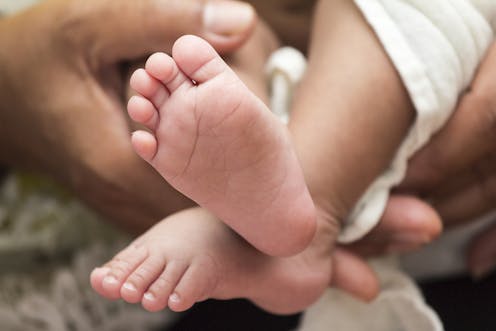
Many Australian women rely on and trust maternity services to see them through pregnancy, labour and the early stages of new parenting.
But for First Nations women, these same services can be confronting and can result in poor outcomes. Many women must travel far from family and community to birth. And if they don’t, they often feel misunderstood and judged by mainstream health services.
There is another way. Birthing on Country means First Nations women give birth on their ancestral country. It acknowledges First Nation peoples’ continued ownership of land and unique birthing practices.
What can Birthing on Country services do?
Birthing on Country services centre First Nations values, and are designed to meet First Nations people’s social, emotional, cultural and health needs. The services are embedded within larger health service networks.
Our team works in partnership with First Nations communities to deliver Birthing on Country maternity services that address health inequities.
Our partners in one urban setting saw a profound reduction in preterm birth and increased antenatal attendance and breastfeeding.
This was achieved through integrating within a wraparound system of care, designed as a one-stop-shop in an Aboriginal community controlled setting.
It also involved redesigning the service using a successful blueprint that prioritises investing in the workforce, strengthening families’ capabilities, and embedding First Nations governance and control in all aspects of maternity service planning and delivery.
However, Birthing on Country services are yet to be trialled in regional and remote Australia. So there is much work to do to ensure all First Nations women can access these services.
be self-determining and participate in the design of health services
include and revitalise cultural practices, languages, and medicines.
Birthing on Country services are one example of how this can be achieved.
Commitment to uphold the UN declaration requires resourcing and monitoring to support and celebrate the world’s oldest midwifery practices and cultures.
2. Acknowledge how health systems fail First Nations people
Racial bias has been identified as a contributing factor in First Nations maternal deaths. This includes health services dismissing women’s concerns and turning them away from hospital when seeking care – even when they have life-threatening symptoms.
This can make First Nations families feel unsafe and uncomfortable accessing maternity health services.
Large organisations make Western ways of “knowing and doing” dominant in every work practice. This often results in institutionalised racism and dismisses other forms of knowledge suggesting we should or could be doing things differently.
Australia’s health system was designed to serve those who designed it.
First Nations people have been explicitly excluded from decision-making about the services provided to them.
First Nations people want and need to be at the decision-making table, and ensure “nothing about us” is decided “without us”.
First Nations people need to be involved in designing health services. Shutterstock
Participatory action research is one evidence-based way to work collaboratively with stakeholders to respond to needs identified by the community.
First Nations people value the process as it aligns with principles of self-determination and equity. And it privileges the voices of those often marginalised in research.
Engaging community in design, implementation and evaluation of maternity services brings local knowledge, community activation and investment that leads to lasting change.
4. Recognise how First Nations peoples can improve health care for everyone
Our colleagues in Aotearoa (New Zealand) found maternity systems that privilege whiteness cannot provide equitable health care for all.
All people can benefit from ethical knowledge systems that have safely guided childbirth and the flourishing of First Nations people for millennia.
Relationality – being connected with all human and non-human beings – is at the centre of First Nations values, ways of knowing, doing and being. It ensures our responsibility to be in good relations with each other, whether with community, Country or our research partners.
The current system does not embed relationality in its design; rather encourages capitalism and competition for scarce resources over genuine partnership and equitable care.
Our task is to re-centre good relations in our everyday work to make health and wellness gains. We do this by:
ensuring our work is community-driven
using methodologies that represent First Nations views
presenting and defending findings at community forums
ensuring our research leads to action at the local, state and national level.
5. Share findings in accessible ways
The Caring for Mum on Country project is a community-driven action research project piloting doula (birthing companion) training and exploring reproductive health literacy.
It has shown the power of grassroots community activation in finding Yolŋu solutions to local needs.
Charles Darwin University researchers Sarah Ireland (a co-author of this article) and Ḻäwurrpa Maypilama (in partnership with the Australian Doula College and Yalu Aboriginal Corporation) used community action research to pilot First Nations doula training, locally known as djäkamirr–caretakers of pregnancy and birth.
Film is an impactful way to discuss research. Finding creative and accessible ways to share research findings is imperative to bringing learnings to people who can benefit from and enact change.
Health inequities in childbirth will persist until health systems relinquish control and acknowledge the value of First Nations knowledge systems centred on relationality and wellness.
We must work in partnership with First Nations communities to redesign health services and work differently with communities in their journeys to implementing Birthing on Country maternity services.
Sarah Ireland receives funding from NHMRC Partnership Grant 2021: “To Be Born Upon a Pandanus Mat” APP2010289.
Yvette Roe receives funding from NHMRC .
CI A Prof Yvette Roe, NHMRC Centre of Research Excellence: 2020 Redesigning maternal, newborn and child health services for the best start in life for First Nations families. APP1197110
CI A Prof Yvette Roe, NHMRC Partnership Grant 2021: “To Be Born Upon a Pandanus Mat”. APP 2010289
Sophie Hickey does not work for, consult, own shares in or receive funding from any company or organisation that would benefit from this article, and has disclosed no relevant affiliations beyond their academic appointment.
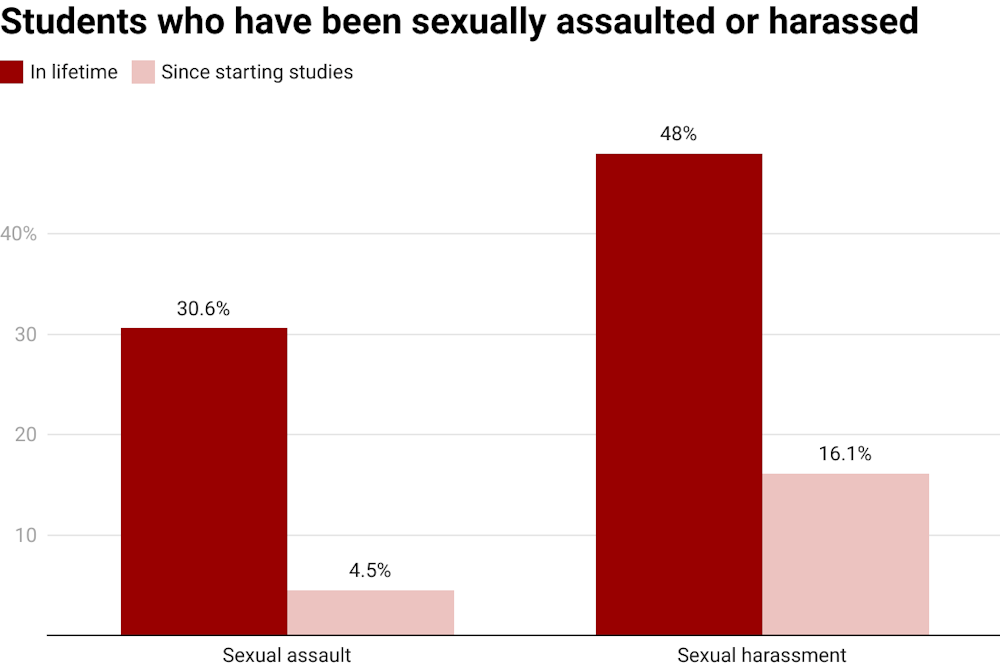
One in three university students (30.6%) have experienced sexual assault at least once in their lifetime. This is one finding from the 2021 National Student Safety Survey (NSSS) report, released today.
The survey responses from 43,819 students enrolled in 38 Australian universities, as well as written responses from 1,835 current and former students, demonstrate the extent and impacts of sexual violence in and beyond the higher education sector.
The survey also found one in 20 (4.5%) had been sexually assaulted in a university context since starting their studies. In the 12 months preceding the survey, 1.4% of women and 0.6% of men reported experiencing sexual assault in a university context.
Chart: The Conversation. Data: Author provided, CC BY
Rates of sexual harassment were much higher. One in two students (48.0%) had experienced it at least once. One in six (16.1%) had been sexually harassed in a university context since starting their studies, and one in 12 (8.1%) in the preceding 12 months.
Sexual violence reflects patterns of inequality
Universities Australia funded the survey under the Respect Now Always initiative. It builds on a legacy of previous work, including the Australian Human Rights Commission’s 2016 national survey of university students on sexual assault and sexual harassment. That led to its 2017 report, Change the Course.
The 2021 survey also explored student attitudes and knowledge about sexual violence and reporting processes, establishing a benchmark against which universities can measure their progress into the future.
The past two years however have been a time of COVID lockdowns – and it’s likely this impacted on the 12 month results of sexual harassment and assault in university contexts. Only a third of students (33.6%) in the 2021 survey said they had been able to take part in some or all of their classes on campus. It is also worth noting improvements to the survey methodology mean the 2021 prevalence results are not directly comparable with the 2016 results.
Nonetheless the 2021 data still suggest about two students in a tutorial class of 25 would have been sexually harassed or assaulted in a university context at least once in the preceding 12 months.
And it is not an evenly spread problem either. Much like the 2016 survey, rates were highest for students who were women, non-binary gender or transgender, sexuality diverse, disclosed a disability or were younger (18 to 21 years).
It happens on and off campus, and is rarely reported
For sexual violence on campus, we can expect universities to be responsible for ensuring a just and timely response, and to take action to prevent these harms. Many of the instances of sexual harassment and sexual assault that impacted people most, as reported in the 2021 survey, did happen in settings such as lectures and classes, libraries, clubs and events, and student accommodation.
But, of course, not all such experiences were on campus. As is the case in society more generally, sexual assault in particular often happened in private homes or residences.
Whether on or off campus, though, a majority of perpetrators were known to the victim through their university. This has significant implications for victim-survivors’ safety and well-being in their ongoing studies.
It is also telling that one in two students who responded to the survey said they knew little or nothing about their university’s reporting or complaint processes.
Overall, few students, about one in 20, formally reported the experience that impacted them most to their university. Many thought it would be too hard to prove, or that they wouldn’t be taken seriously.
Our universities have a crucial role to play in responding to sexual violence. Whether it happens on campus or elsewhere, universities can help ensure victim-survivors are supported to feel safe in continuing their studies – rather than bearing the impacts of sexual violence alone.
Yet universities also have a role in preventing sexual violence through addressing the inequality and discrimination that fosters these harms.
Some efforts, such as the Educating for Equality initiative, have begun to be implemented. But clearly, more needs to be done.
University students themselves have a clear vision of the role of universities to address and prevent sexual violence.
Through the 2021 research they called for more transparent reporting processes, as well as awareness campaigns so students know what sexual violence is and how to report it or seek help. They wanted visible and proportionate disciplinary action for perpetrators to show universities take such reports seriously. And they wanted properly resourced supports for victim-survivors.
Beyond this, students called for universities to work collaboratively with victim-survivor advocates, and take a more active role in promoting equality and respect on their campuses and beyond.
The 2021 NSSS research tells us sexual violence remains a problem and students are demanding action.
What remains is for universities to demonstrate they are fully implementing and funding the necessary actions – and in doing so, to ensure no institution is left behind.
The author acknowledges the contributions of the Social Research Centre as the lead organisation on the 2021 NSSS reports. In particular, acknowledgement is made to Dr Paul Myers and Dr Wendy Heywood.
If this article has raised issues for you, or if you’re concerned about someone you know, call 1800RESPECT on 1800 737 732. In immediate danger, call 000.
Anastasia Powell receives funding from the Criminology Research Council and Australia’s National Research Organisation for Women’s Safety (ANROWS). Anastasia is also a director of Our Watch (Australia’s national organisation for the prevention of violence against women), and a member of the National Women’s Safety Alliance (NWSA). She was a commissioned researcher on the National Student Safety Survey reports.
Source: The Conversation (Au and NZ) – By Kyle J.D. Mulrooney, Senior Lecturer in Criminology, Co-director of the Centre for Rural Criminology, University of New England
Shutterstock
While drink driving fatalities and injuries have declined in recent decades, it still remains a major problem on Australian roads.
Blood alcohol concentration (BAC) limits have helped since they were put in place over 25 years ago, but new technology may now be able to stop drink driving altogether.
In the US, the massive infrastructure bill passed by Congress last year mandated car manufacturers equip vehicles with advanced drink-driving prevention technology. These systems can either monitor a driver’s performance to detect if they are impaired, or test a driver’s BAC to determine if it’s above the legal limit.
The US Department of Transportation has been given latitude to choose the type of system that manufacturers use, with a requirement for it to be installed in new cars by 2027.
These systems monitor things such as steering, braking and driving trajectory, enabling the car to “infer” the driver’s alertness and activate warnings or even corrective action, such as autonomous emergency braking, where necessary.
More recent advancements in DMAS have focused on the driver specifically, using real-time video to track things such as head position, eyelid closure and eye gaze direction to detect driver impairment.
In an emergency situation, these systems can also work together to prevent a crash. The cameras can establish a driver’s impairment, for example, while the automated driving technology steers the vehicle to safety.
Such technologies have been been integrated into vehicles since the early 2000s, primarily to monitor fatigue and distraction. Today, most new vehicles come with such systems and they’ve become increasingly sophisticated.
New technologies to target drink driving specifically
Other technologies are being developed to target drink driving more specifically through detection systems that use alcohol sensors.
One is a breath-based system that can determine a driver’s blood alcohol content from normal breathing in the car. Another is a touch-based system that uses sensors in the ignition button or gear shift to determine a driver’s blood alcohol content below the skin surface.
If either system determines the driver is impaired or over the legal limit, it will take action. This could mean not allowing the car to start or move, giving the driver a warning or actively pulling the driver off the road.
This new technology will be available for open licensing in commercial vehicles later this year.
Others have decried the loss of freedom and inconvenience that might result from system failures.
How our current drink-driving approach is failing
Yet, this new technology may be a vast improvement on our current system for policing drink driving, which is expensive, unreliable and hasn’t been effective in stamping out the problem.
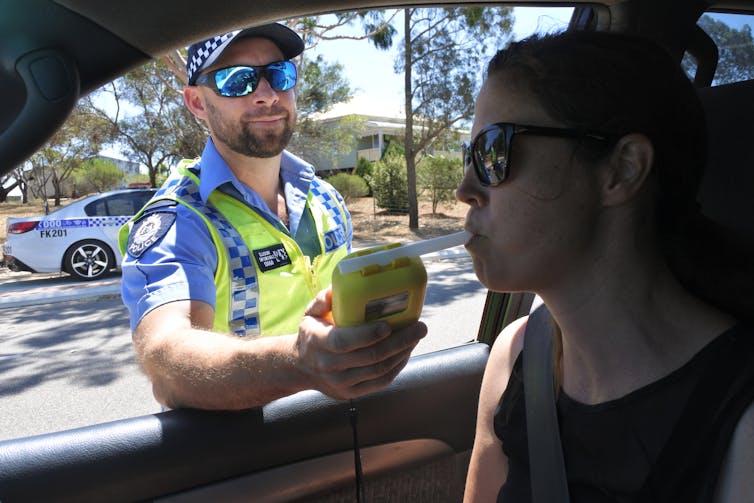
Australia and other countries rely largely on impairment tests following random or “probable cause” police stops or from systematic police roadblocks. The very randomness of these interventions limits their effectiveness, especially in non-urban environments. Punitive measures such as prison time also do not appear to have an impact, particularly with repeat offenders.
Additionally, the breath analysis tests used by police may be flawed and are subject to human error.
There are many issues with our current system for catching drink drivers. Shutterstock
Our current enforcement methods can also infringe on people’s rights and contribute to discriminatory practices through the over-policing of specific areas or minority groups.
For example, while Aboriginal and Torres Strait Islander peoples are less likely to drink alcohol than other Australians, those who do are more likely to drink at dangerous levels, have significantly higher drink-driving conviction rates and be over-represented in alcohol-related road crashes.
Research has suggested a range of contributing factors for these higher rates, many of which are grounded in the long history of colonial violence, mistreatment and dispossession of First Nations peoples.
While a passive driver impairment detection system will not directly address such causal factors, these technologies will at least reduce the likelihood of people’s interactions with the criminal justice system and subsequent legal repercussions, which can have lifelong consequences.
A reduced focus on reactive and punitive responses should create more opportunity for attention to social, cultural and health-based interventions. This is particularly relevant when we consider the role of alcohol dependence in drink driving, and the fact many drink drivers face a range of social, economic and health problems, especially repeat offenders.
Technological design innovations have been used successfully to prevent car thefts. So, if the privacy concerns can be addressed and managed, these systems may be a way to curb drink driving at a reduced financial cost to communities, while also minimising the harms caused by our current legal framework.
Les auteurs ne travaillent pas, ne conseillent pas, ne possèdent pas de parts, ne reçoivent pas de fonds d’une organisation qui pourrait tirer profit de cet article, et n’ont déclaré aucune autre affiliation que leur organisme de recherche.
New Zealanders are about to enjoy cautiously relaxed COVID restrictions under the country’s COVID-19 Protection Framework, starting from this weekend.
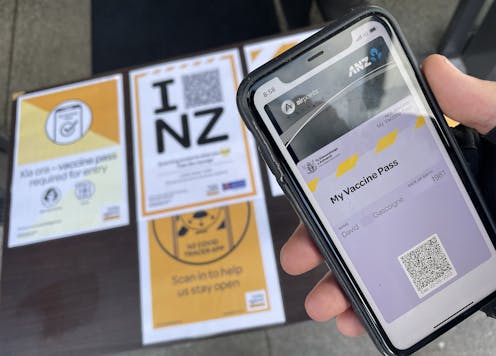
Prime Minister Jacinda Ardern announced the relaxations today, signalling the end “for now” of vaccine passes, QR codes and vaccine mandates in the education, police and defence sectors from April 4.
Mandates will still apply for health, aged-care, corrections and border control workers, pending more official advice. Settings within the traffic light system have also been revised, but the country remains at the red level and indoor mask use is still required.
New Zealand’s vaccine pass system was designed when we were in the middle of the vaccine rollout, only about one in 400 New Zealanders had had COVID-19, and nobody had even heard of Omicron.
At that time, unvaccinated people had a much higher risk of catching the virus and spreading it to others.
For this reason, vaccine passes were an important part of safely relaxing the Auckland lockdown. They helped us enjoy a summer with very low case numbers and minimal restrictions. Crucially, this meant we avoided the dual Delta-Omicron epidemic that significantly added to the health burden in places such as New South Wales.
The situation we face today is very different. Vaccines remain highly effective at preventing severe illness but aren’t as good at stopping people catching Omicron. And the protection they do provide against infection wanes fairly quickly.
At the same time, increasing numbers of people have some temporary immunity as a result of having had the virus. This means vaccine passes are far less effective as a public health intervention now than they were a few months ago.
But as vaccine passes are phased out, it is important to consider what measures we can use to reduce transmission.
Vaccines still work
Vaccines are still highly effective at preventing severe illness and death from COVID-19. Like New Zealand, Hong Kong is now experiencing a major Omicron wave after initially following an elimination strategy. But in the last two months, Hong Kong has had close to 4,000 deaths per five million people compared to New Zealand’s 130.
But it’s clear vaccines are less effective at preventing infection with Omicron. The UK Health Security Agency estimates the effectiveness of two doses of the Pfizer vaccine against symptomatic COVID-19 drops to just 10% after about 25 weeks following the second dose. This jumps to 65% after a booster but also wanes quite quickly to around 40% 15 weeks later.
The proportion of unvaccinated people testing positive is not that different from fully vaccinated people. So if you go to a cafe, a hairdressers or a bar, whether or not there are unvaccinated people there makes little difference to your risk of catching the virus.
Other risk factors are more important: are people wearing masks, is it crowded, is the venue well ventilated or outdoors, are people staying away if they have symptoms?
We still need public health measures to mitigate COVID
The limitations the vaccine pass system has placed on people’s freedoms are much harder to justify now. But that doesn’t mean we can end all vaccination requirements or remove all public health measures.
COVID-19 is an airborne disease but a comparison with diseases spread through contaminated water is useful. The spread of cholera from contaminated water is one of the earliest examples of an effective public health response to an infectious disease.
The first response was a “boil water” notice, the equivalent of mask wearing to prevent the spread of infections. Longer-term measures involve systemic changes, such as infrastructure for clean water or, in the case of COVID, infrastructure for clean air through ventilation and filtration.
The time to remove boil-water notices is not when case numbers are peaking, or even when they are back at half of their peak level. It is when there are sufficient systemic changes in place to keep people safe.
Similarly, isolation periods are intended to stop people from infecting others. For Omicron, studies suggest half of all cases were still infectious on day five and the infectious period may be as long as ten days. Given wider availability of rapid antigen tests, we could introduce a test-to-return policy to require a negative test before people leave isolation.
Some vaccine mandates remain
People working in specific high-risk situations, like healthcare and aged residential care, will still be required to be up to date with their vaccinations to protect the vulnerable people they work with.
We are currently in the middle of a major Omicron wave, with hospitalisations and deaths at record levels. At least as many people will get infected on the way down from the peak as on the way up.
And even when this wave subsides, COVID-19 isn’t going to go away. It’s likely we will continue to see daily case numbers in the thousands for some time. Added to other respiratory illnesses like influenza and RSV, this could cause significant strain on healthcare over the winter months.
Altogether, this means we still need a set of sustainable mitigations to reduce transmission and the health impacts of the virus. This includes strategies to address vaccine inequity and increase booster uptake, mask use when cases are high, better ventilation and adequate financial support for people to take time off work when they are sick.
COVID vaccine passes have outlived their usefulness at least for now. But COVID-19 is going to be with us for the forseeable future.
Michael Plank is affiliated with the University of Canterbury and is funded by the New Zealand Government for mathematical modelling of Covid-19.
Dion O’Neale receives funding from the NZ Department of Prime Minister and Cabinet for providing modelling and analysis related to COVID-19 and from the NZ Health Research Council for research on modeling and equity impacts of COVID-19 in Aotearoa. He is affiliated with COVID Modelling Aotearoa, The University of Auckland, and Te Pūnaha Matatini.
Emily Harvey receives funding from the NZ Department of Prime Minister and Cabinet for providing modelling and analysis related to COVID-19 and from the NZ Health Research Council for research on modeling and equity impacts of COVID-19 in Aotearoa. She is affiliated with COVID-19 Modelling Aotearoa, ME Research, Te Pūnaha Matatini, and the University of Auckland.
New Zealand Parliament Buildings, Wellington, New Zealand.
Editor’s Note: Here below is Dr Bryce Edwards’ New Zealand Political Roundup – which analyses one prominent topic being debated in New Zealand and links to media coverage. You can sign up to NZ Political Roundup for free here.
Political Roundup: Bouquets and brickbats for the Government’s move against corruption
The Government has announced that it will legislate to force greater transparency around the ownership and control of private companies in New Zealand. This is a positive move that will help the fight against domestic corruption, money laundering, tax evasion, and the general use of New Zealand as a haven to hide the money of foreign oligarchs.
Commerce Minister David Clark announced yesterday that Cabinet has agreed to introduce legislation to establish a public register of the “beneficial ownership of companies”. This will require the accurate listing of who really owns and controls businesses here. And it will involve some strong compliance measures.
This is a real blow to wealthy vested interests attempting to keep any riches and ill-gotten gains secret from the public. Corporate New Zealand is being made to tidy up its act.
The fact that the current system has existed for so long should be a huge concern for those New Zealanders wanting to create a fairer society that is less influenced by the pernicious impact of oligarchs and the corrupt. For although New Zealand is often seen as the least corrupt and most transparent country in the world – and we regularly top the annual Transparency International Corruption Perception Index to reinforce this – current laws make it very easy for wealth and its owners to hide here.
The existing companies register simply isn’t much use, something the recent passage of the Russia Sanctions Act 2022 exposed to public view. In reality neither the government nor the public can easily locate the companies in which the oligarchs hide their riches here.
Some call this “legitimised secrecy”. According to the NGO Tax Justice Aotearoa, a “convoluted structure of companies and trusts” are established “so that minimal tax is paid and no-one knows who owns what or where.” Corruption and money laundering are naturally allowed to flourish in such secrecy.
Those against greater transparency cite the need for New Zealand to retain its world-leading “ease of doing business” here. They say compliance costs will also be too great on the corporates. The Government says it has come up with a scheme that balances the privacy and costs of business versus the right of the public to know and be protected from corruption. The complaints of vested business interests about this new law should give some certainty to the public that the right thing is being done. NZ Venture Capital Association protesting the new law is probably something the Labour Government will celebrate.
Reform has been a long time coming
The Government will introduce legislation later this year, but it’s already been a very long time coming. New Zealand has been signed up to the inter-governmental global money laundering alliance, the Financial Action Task Force, for decades, and increasing pressure has been applied on this country by that body for nearly a decade. Judith Collins first made some noises about implementing such a law in 2016 when she was Minister of Commerce. Then, with the change of government, Kris Faafoi got the ball rolling, but it seemed to get lost in consultation for years.
This week the Financial Action Task Force put public pressure back on countries like New Zealand, which may have led to the announcement yesterday. Oddly, David Clark says that Cabinet actually made the decision back in December but has kept it secret until now.
Loopholes in the new rules
Along with a bouquet, the Labour Government also needs to take a brickbat for giving an exemption to trusts. Although this long-contentious sector was recommended to be included, the Government suggests it would be too much hard work to extend the rules to trusts.
The International Financial Action Task Force will be disappointed, as they strongly advocated for trusts to be included. Similarly, Tax Justice Aotearoa (TJA) and Transparency International will have their excitement about the new initiative heavily tempered. One TJA spokesperson, Louise Delaney, commented that “trusts are cleverer than companies at hiding assets.”
Today’s editorial in Stuff newspapers also condemns this omission, pointing out that the Ministry of Business, Innovation and Employment “didn’t recommend that move, acknowledging that privacy and confidentiality have historically been recognised as an essential virtue of trusts. Many a rogue would concur.”
So why were trusts left out of the new legislation? Obviously, law firms have lobbied hard for the exemption. The compliance costs for them would be considerable, concerns about privacy for trust owners have been highlighted, and threats of lengthy legal challenges would have made the Government think twice about venturing into a fight with the legal firms.
However, there is some impact on trusts. David Clark has explained that the proposed changes would still capture cases where shares in companies are owned by trusts.
There is good cause to be sceptical about how much change this really represents, given the track record of previous efforts. The Herald’s Matt Nippert – a long-time investigator into this area – says: “Herald reporting last October on the Pandora Papers showed, despite past reforms, New Zealand trust and company structures were still being misused by wildly controversial figures – including Russian billionaires convicted of fraud, and a Moldovan oligarch facing sanctions in the United States.”
The public will soon get a chance to have its say on the proposed legislation. As often with such complex legislation there might well be fishhooks and unintended consequences from this type of regulation.
The consultation period will be a time for those interested in tax fairness, corruption, and transparency to support the reforms, but also to push the Government to strengthen them. Hopefully, there will be a particularly strong focus on the elephant in the room – the exemption being given to the hundreds of thousands of trusts. If such secretive vehicles are allowed to continue to be shielded from the sunlight of public inquiry, then confidence in the new system will be more than just a little dented.
Victor Billot (Newsroom): Protest, 2022: a great variety of morbid symptoms
As the fallout from the Parliamentary Grounds protest rolls on, a “lifelong socialist” recounts his years of robust protest involvement, and gives a very thoughtful discussion on how we have ended up in such a politically unhealthy environment. He comments: “The self-defined left have dissolved into competing tribes of lunatics shouting at each other on Twitter, irrelevant to the majority.”
Matthew Hooton (Patreon): Thought experiment on how not to be a d*ck at 11am (paywalled)
The Prime Minister’s “Beyond Omicron” speech is this morning, and Matthew Hooton ponders what the reaction to today’s Covid announcements would be if Christopher Luxon was revealing identical decisions. He suggests that partisan tribalists would be wise to think about how they would react if National was implementing the exact same liberalisation of Covid rules that Ardern is going to do.
Peter Dunne: $1.9 billion spend on mental health produces no results
Former Minister responsible for mental health Peter Dunne argues that for better “care in the community” delivery, the Government needs to move away from using “centralised agency like the Ministry of Health, or even district health boards”.
Jenée Tibshraeny (Interest): Treasury puts $5 billion price tag on Reserve Bank’s QE programme
When the Reserve Bank first started printing more money during the Covid crisis, it Treasury expected it to be cost-neutral. Now they say it “estimates the net direct fiscal cost will come in at $5.1 billion.”
Ian Llewellyn (BusinessDesk): Councillors’ conflicts face sunlight soon (paywalled)
A select committee has reported back on a proposed law bringing in a pecuniary interests register for local government politicians, and so it now looks like it will be brought into law next year, and will apply to those elected at the upcoming elections.
In the past few years, Australia has formed its own space agency and launched a defence “space command”. Billions of dollars for defence, and hundreds of millions for civilian space, have been allocated from the public purse to develop capability in this growing sector.
This level of investment is unquestionably a good thing. But the great majority of it supports applied research and engineering, and commercialisation of outcomes. None of the new funding goes to basic research.
In the United States, Canada, United Kingdom, France, Germany, Italy, India, South Korea, China, Russia, and United Arab Emirates – to name a few – basic research in space and planetary science, and science missions, are key elements in strategies to grow their sectors. In Australia, this kind of fundamental work only gets around A$2 million a year. It hasn’t budged in a decade.
Why basic research is important
Applied research and engineering aims to provide practical solutions to well-defined problems by applying existing knowledge.
Basic research aims to expand knowledge. It’s the most successful mechanism humans have ever invented for generating new knowledge.
Every other major spacefaring nation funds basic research in space and planetary science from the public purse. They do it for a good reason, and it’s not to make planetary scientists like me happy.
It’s because in space science, an unusually short thread connects basic research, applied research and engineering, commercial outcomes, and a trained workforce.
Basic research isn’t an optional extra: it’s a crucial catalyst for everything else.
How it works
In other nations, scientists like me come up with an idea or hypothesis. Something big and exciting about how we think our Solar System works.
To test that hypothesis, we develop a space mission with engineers from both industry and academia. Because the universe defines the problem, not a human, that team is continually presented with unique challenges, requiring completely new technical solutions.
As a happy byproduct, this process creates an environment that is almost perfectly optimised for technology breakthroughs. I learned this lesson on the very first mission I was on: the UK’s Beagle 2 Mars lander.
The mission didn’t succeed. We didn’t get to sniff for trace methane on Mars. But the technology turned out to be a great way to detect early-onset tuberculosis.
Exploring the solar system is the kind of inspiring project that draws people to space science. NASA
And exploring the Solar System to make fundamental new discoveries is a great way to inspire young engineers and scientists. So you inspire your public, you get students interested in STEM careers, and in the long term you get your highly trained workforce of the future.
I see this all the time. It’s one of the joys of my job.
Our space program at Curtin University is called Binar, from the Nyungar word for “fireball”.
At any one time, around 60 undergraduate engineers are involved in Binar. Last week, dozens of high school students visited us. WA government is supporting a program that will see them flying experiments on Binar spacecraft from next year. That’s what inspiration looks like.
And yes, a collateral benefit is that you make planetary scientists happy. But their discoveries win you credibility and visibility on the world stage, so that’s not a bad thing either.
In Australia, basic research is formally excluded from the new funding schemes (for example, the Moon-to-Mars Demonstrator Mission scheme states “STEM, scientific or research projects without a clear commercialisation pathway” are ineligible activities). So no science missions.
That exclusion, and the lack of funding, means that planetary science is no longer seen as a strategic area by universities. As a result it has been one of the first areas to be cut as belts have been tightened because of COVID.
Colleagues at the Australian National University and Macquarie University have lost their jobs. In fact, our team at Curtin University is the only substantial group left in Australia.
Not a zero-sum game
The Australian model is consistent with a belief that each dollar you spend on science is a dollar less for industry. Is this the case?
NASA doesn’t think so. Its model is built around basic research and science missions.
A recent NASA-commissioned study found this model was extremely successful at generating benefits for the wider economy. Over a single year, every dollar spent on the agency generated around US$3 in total US economic output. Over longer timescales the return is even higher.
Other agencies, large and small, can demonstrate a similar return on investment with science-based models. Each ₤1 the UK Space Agency invests in space science and innovation yields ₤3-4 in direct value to the space industry and additional spillover impacts of ₤6-12.
No other major spacefaring nation has implemented a strategy that formally excludes basic research. It follows that Australia is engaged in a unique experiment to see whether growth of our space sector is optimised by minimising our ability to generate new knowledge.
With hundreds of millions in new funding for civilian space, and billions for defence, our space sector can’t help but grow. The question is whether that investment is efficiently generating growth. Will our taxpayers see the same return on their investment as taxpayers in those other nations if we delete science?
Overseas space agencies can point to an economic return of three to 12 times the original investment. Can our space agency do better with a model that formally excludes basic research and science missions?
I don’t know the answer. Unfortunately, no one does, because there are no examples or studies to draw on.
My hunch is that this novel strategy is not optimal. Hedging our bets – learning from the strategies of other nations – wouldn’t cost much.
It would mean looking again at that A$2 million of annual funding for basic research. Engaging scientists in how research programs are defined. Possibly even the odd science mission. Doesn’t seem like a lot if it buys you peace of mind.
Phil Bland receives funding from the Australian Research Council, and the Australian Space Agency under its Demonstrator Mission Feasibility scheme.
Source: The Conversation (Au and NZ) – By Peter J. Dean, Chair of Defence Studies and Director, UWA Defence and Security Institute, The University of Western Australia
Unless you have been under a political rock for the past few weeks, you could not have missed the emergence of a “khaki election”.
Obviously thinking it is a vote-winner and a Coalition strength, the Morrison government is hell-bent on putting national security and defence front and centre in the lead-up to the May election.
It becomes glaringly obvious if you look at Prime Minister Scott Morrison’s schedule in March. From a major foreign policy speech to the Lowy Institute on March 7 through to his visit to Perth on March 16-17, Morrison has announced seven major initiatives on national security and defence in a ten-day period. In this time, he took every opportunity to talk about his credentials on defence and attack the opposition’s record on defence spending.
This is occurring with the government well behind in the polls and the PM struggling with his popularity. But the Coalition clearly sees national security as safe political ground and a weak spot for Labor. As journalist Philip Coorey noted:
As the election nears, the Coalition is tidying up its pitch, tying together economics and national security, to a population ready to point the finger over the massive east coast floods and cost of living.
Is the electorate buying?
The early signs for the government’s strategy are not promising. National security does not seem to have the same cut through that it has had in previous elections. Polling suggests voters trust Labor more than the Coalition to manage the relationship with China, while they are neck and neck as the preferred political party to handle the Russian invasion of Ukraine.
The prime minister’s attack on Labor also risks collateral damage by dividing the community and some voters (especially those of Chinese heritage), while laying open the government’s patchy record on defence issues to scrutiny.
Over the past nine years of government, the Coalition has thrown record spending at defence. But this spending has not necessarily translated into actual capability for the ADF. This is especially important as the government ended, in 2020, defence’s long-standing ten-year warning time for major conflict in our region.
But the PM is known for taking political risks. He seems to be banking on a national security election strategy on the basis that while it will not necessarily help Labor to win the election, it may well cost them enough votes to lose one.
Both major parties make missteps
Morrison’s first major tactical approach was to accelerate attacks on the Labor opposition over China. In the last sitting week of parliament, Morrison accused Deputy Labor Leader Richard Marles of being a “Manchurian candidate” for the Chinese Communist Party.
It was a week of relentless attacks, but Labor easily batted these away, using support from former ASIO head Dennis Richardson and current ASIO head Mike Burgess, who warned such divisions could undermine national unity and security.
Labor then weakened its position somewhat when Anthony Albanese also used parliament to accuse the prime minister of being the real “Manchurian candidate”. It was an unedifying week in national politics from the Government – but, most significantly, it did not seem to move the opinion polls at all.
In the second week of March, both leaders made their way to the Lowy Institute for major foreign policy speeches. Here we were able to assess the different world views and different policy approaches to national security of both sides.
So, how do they compare on national security?
While many of the themes and pledges were similar, especially on defence spending and China, the focus of the two leaders diverged on key issues. While Morrison focused on an “arc of autocracy” – drawing immediate comparisons to George W. Bush’s “axis of evil” – and a commitment to a new submarine base for the east coast, the Labor leader emphasised climate change, sovereign supply chains, national resilience and unity, as well as the need to accelerate the Australian Defence Force’s (ADF) strike capabilities.
Albanese knows national security is not perceived as safe political ground for Labor, so his main strategy is to try to neutralise Morrison’s lines of attack. Tactically, the opposition has dealt with this through bipartisanship, effectively drawing closer to the government in key areas.
Bipartisanship has become the byword on national security for Labor in opposition since the last election. However, it can be a doubled-edge sword. Too much of it and Labor looks, as Paul Kelly has argued, like a cardboard cut-out of the government. It also narrows Labor’s room to attack the Coalition’s vulnerabilities.
An image from the week spoke volumes: While the government was under fire for being too slow in deploying the military to support flood victims Morrison and Defence Minister Peter Dutton announced the biggest expansion of the ADF since the Vietnam War in Brisbane, while half the city was underwater.
Labor has no such qualms on climate. This issue has also allowed Labor to reposition itself in contrast to the government on the ANZUS Alliance, because US President Joe Biden has directly linked climate and security, and made it a policy priority.
Labor leader Anthony Albanese has had no problems tying together national security and climate change. Jason O’Brien/AAP
Labor’s counter-attack is built around the government’s poor performance on defence spending. This includes problems with major projects such as helicopters and new frigates for the navy. But the biggest hole that currently exists is in submarine capability.
We can expect Labor to be relentless on this issue. But submarines are the “third rail” of Australian defence policy – for both sides of politics. Generally, when you touch it, you get burned, badly.
Since 2013, the Coalition has overseen what is the biggest procurement disaster in defence history – and we currently have no submarine contract. However, Labor, as former Secretary of Defence Dennis Richardson noted this week, has its own history with submarine capability.
Meanwhile, the Coalition is keen to focus on money and leadership. Morrison and Dutton have been relentless in attacking Labor’s past performance on defence spending. They have revived, ad nauseam, Tony Abbott’s line from 2013 that Labor in government had driven defence spending down to its lowest level since 1938. Labor has attempted to counter this by committing to reaching the mythical 2% GDP on defence spending, or above.
In fact, using the percentage of GDP to measure defence spending is a poor practical measurement. But it has become the main political measure that counts on defence funding, and there seems little chance of that changing.
Focusing on funding is not the certain the win the government thinks it is. A quick look at other measures of defence spending shows the Morrison government does not compare so well. As a percentage of actual government outlays in the budget, Labor spent 6.65% and 6.52% in its last two years in office. The Morrison government spent 5.1% and 5.8% in 2021 and 2022.
No matter what measures are used, expect defence spending to be shouted at voters until election day.
On to election day
The budget later this month will be a key marker post, and I suspect it will have a heavy national security and defence focus. It seems the government has set the political playing field by using announcements of big-ticket items far off into the budget forward estimates (such as nuclear-powered submarines, submarines bases, increases to the size of the ADF) to lay the groundwork.
The Coalition’s next tactic is to pour on the announcements that will have a more immediate impact on jobs and security. Examples include the WA dry dock and the army’s LAND 400 infantry fighting vehicle project.
Labor will attack the Coalition over its record in office, and will link defence spending to the government’s (mis)handling of the pandemic and the rising cost of living. Morrison will use the benefits of incumbency to relentlessly attack Albanese and his lack of experience in national society portfolios.
But the overarching question is: does this matter to the electorate and will it change votes?
Long-term polling on this issue shows the ADF is one of the most trusted institutions in Australia. But, as Danielle Chubb and Ian McAllister have shown, being supportive of the defence force does not translate into supporting greater funding for defence.
Irrespective of this evidence, the international security landscape in the Indo-Pacific has shifted radically in recent years. We are in uncharted geo-strategic waters, and with a problematic domestic political record the government thinks national security is a vote winner.
Peter J. Dean receives funding from The Australian Research Council, Department of Foreign Affairs and Trade, The Department of Defence and the US State Department.
Source: The Conversation (Au and NZ) – By Sarah Hellewell, Research Fellow, Faculty of Health Sciences, Curtin University, and The Perron Institute for Neurological and Translational Science, Curtin University
Far from the respiratory disease it seemed at first, COVID can impact almost all parts of the body, including the brain. For a small number of people, COVID infection may be accompanied by an episode of post-COVID psychosis, a break from reality which can be frightening for the patient and their loved ones.
Psychosis is a condition characterised by confused thoughts, delusions and hallucinations. People with psychosis can struggle to tell what’s real from what isn’t. Psychosis occurs in “episodes” which may last for days or weeks. Since the start of the COVID pandemic, reports of post-COVID psychosis have come from all over the world.
Post-COVID psychosis is different to psychosis seen in other brain illnesses and diseases. So-called “first episode psychosis” is usually seen in teens or young adults in the development of schizophrenia, or alongside dementia in elderly people.
But people experiencing post-COVID psychosis are typically in their 30s, 40s and 50s, and are experiencing psychosis for the first time. They usually do not have any family history of psychosis. People with post-COVID psychosis also frequently have insight into the way they are feeling. They can recognise this is not normal for them, and something has changed in the way they are thinking.
Based on the small number of reports so far, the start of psychosis has been days, weeks or even months after COVID diagnosis. While the symptoms of post-COVID psychosis can be varied, there are some commonalities: people usually have problems sleeping, followed by paranoid delusions and hallucinations. Some people feel compelled to hurt themselves or others.
The scientific evidence of post-COVID psychosis comes mostly from “case reports”, which are research papers describing symptoms and recovery of individual patients.
In the first and most widely reported case, a 36-year-old American woman developed psychosis approximately four days after she started having mild COVID symptoms. She became delusional, thinking that her partner was trying to kidnap her children. She was convinced she was being tracked through her mobile phone.
After trying to pass her children through a fast-food restaurant drive-through serving counter to protect them, she was taken to hospital for care. After one week of in-patient care to treat her psychosis, she was discharged. Her delusions did not return.
In another case, a 43-year-old Bulgarian man
began experiencing psychois two days after he was discharged from hospital for severe COVID.
He believed the doctors had faked the results saying his COVID illness had resolved. He also had delusions that he had already died and his organs were rotten. He became a danger to his family, believing he should kill them to “spare them the same slow suffering”. After two weeks of treatment in hospital, his psychotic symptoms resolved and did not return.
There is new evidence that brain areas undergoing change in mild COVID infection may also be areas that change in people who are at risk of, or who are experiencing, first-episode psychosis (that is, not after COVID infection). These areas are the orbitofrontal cortex
at the front of the brain, and the parahippocampal gyrus – a key memory region deep in the brain. These regions may shrink in both mild COVID and psychosis.
However, more research is needed to understand this link.
COVID is not the first virus to be linked to psychosis. During the “Spanish flu” influenza pandemic of 1918 there were reports of post-viral psychosis.
Psychosis has been reported after infections with the other human coronaviruses, like those that cause Severe Acute Respiratory Syndrome (SARS) and Middle East Respiratory Syndrome (MERS). Links between coronaviruses, immune system activation and psychosis have also been found, suggesting COVID may not be the only coronavirus capable of causing psychosis.
Just how common is post-COVID psychosis? The evidence to date suggests it is rare, occurring in about 0.25% of COVID cases who are not hospitalised (and likely have a mild infection), and 0.89% of people who are hospitalised for COVID.
Because there have been so many cases of COVID worldwide, isolated reports of post-COVID psychosis may stand out more. The frightening nature of what people might experience means we might hear more and more about them on social media and in the news.
Although the risk of post-COVID psychosis is low, people who have had COVID and their families should look out for any sudden changes in personality, paranoia or delusions in the days, weeks and months following infection.
If these signs are noticed, seeking medical help is vital. Most cases of post-COVID psychosis resolve quickly with proper psychiatric care and treatment with medication.
If this article has raised issues for you, or if you’re concerned about someone you know, call Lifeline on 13 11 14.
Sarah Hellewell does not work for, consult, own shares in or receive funding from any company or organisation that would benefit from this article, and has disclosed no relevant affiliations beyond their academic appointment.
A photo of Lake Pedder before it floodedStefan Karpiniec/Wikimedia, CC BY-SA
Fifty years ago this week, the world’s first “green” political party was born in Tasmania after the state government purposefully flooded the magnificent Lake Pedder.
The flooding made way for a hydro-electricity scheme, transforming the nearly 10-square-kilometre lake into a reservoir spanning almost 250 square kilometres today. This damaged the surrounding wilderness – now recognised as part of Tasmania’s World Heritage Area – and greatly tarnished its natural beauty.
The controversial move sparked nationwide outcry. In an effort to save the lake, the United Tasmania Group was formed on March 23, 1972 by fielding candidates in the state election that year. The party was the forerunner to the Australian Greens and saw other green-oriented political parties soon follow worldwide, including New Zealand’s Values Party and Switzerland’s Popular Movement for the Environment.
Now, half a century later, environmentalists are upping their campaign to restore the lake to its former glory. It symbolises the broader contest between unsustainable industrialisation and a greener economy that addresses challenges such as climate change.
The combination of Lake Gordon and Lake Pedder is the largest water storage in Australia. Shutterstock
The lake was once beautiful
Before 1972, Pedder was a remnant glacial lake flanked by a spectacular, pink-quartzite beach and mossy rivulets.
Nestled amid a primeval mountain range 300 metres above sea level, the alpine lake had geomorphological significance as it was formed in the outwash of a glacier an estimated 1 million years ago, when ice sheets covered much of the planet.
And it was spectacularly wild. Prior to the flooding, Lake Pedder was difficult to access, known best to serious bushwalkers and tourists chartering light aircraft. These tourists and hikers brought the lake’s beauty and geological significance to a broader public when threats of flooding began to materialise.
The flooding saw heavy ecological losses. The massive hydropower dam drowned about 250 square kilometres of surrounding wilderness. This included a mosaic of diverse ecosystems including wetlands, temperate rainforest and buttongrass moorlands, along with several rare plant species.
The Lake Pedder galaxias (Galaxias pedderensis), a fish once endemic to the lake, is now considered extinct in its natural habitat after 350,000 trout, a predator, were put in.
Four other species of invertebrate fauna, also endemic to the original Lake Pedder, have disappeared or dramatically declined due to the altered habitat.
An aerial view of Lake Pedder, nestled in primeval Tasmanian mountains. Elspeth Vaughan, Author provided
The birth of Green politics
The loss of Pedder helped trigger the formation of the United Tasmania Group (UTG), which is generally credited as the world’s first political party with a foundation in environmental values.
While the UTG didn’t win seats in that or subsequent elections it contested during the 1970s, it was the forerunner to the Tasmanian Greens and, nationally, the Australian Greens.
But the UTG didn’t spring purely from the Lake Pedder controversy. As historian and journalist Paddy Manning identifies in his book on the history of the Greens, the UTG was part of broader global shift to greater environmental awareness in the 1970s. For example, the first Earth Day was held in 1970, and saw 20 million people in the United States demonstrate against the impacts of industrial development.
The name “Green” for environmentally minded political parties, however, came later. Indeed, it was derived from another Australian-first: the “Green Ban” movement in Sydney in the 1970s that united building workers and community groups to save cultural and natural heritage from destruction.
Footage in 2020 confirming Lake Pedder’s iconic pink quartzite beach remains intact.
Restoring the lake today
The former Australian Greens leader Christine Milne is presently leading the campaign to restore Lake Pedder. This campaign actually began in the immediate aftermath of the damming for the hydropower scheme, when the Whitlam government appointed an inquiry in 1973 to advise on the area’s future, including possible restoration.
In 1994, the Pedder 2000 initiative was launched, which sought federal assistance to reinstate the lake by the start of the new century. A year later, a federal parliamentary inquiry confirmed the scientific feasibility of restoring the lake.
However, the inquiry concluded that the most compelling reasons to restore the lake were aesthetic rather than for nature conservation. It said the economic costs and opposition by Tasmania’s major political parties meant restoration had “no real prospect of proceeding in the foreseeable future”.
Now, over two decades later, the campaign is once again gaining traction. The United Nations declared 2021-2030 the Decade on Ecosystem Restoration, calling for projects to replant forests, remove dams, rehabilitate wetlands and more. The 2021 Glasgow Climate Conference reinforced this message by affirming the importance of ecological restoration in mitigating and adapting to climate change.
Restoring Lake Pedder would entail more than pulling the plug on the dams, and it would likely take several decades for the original ecosystems to flourish again. Yet, the major geomorphological features such as the lake’s iconic beach would quickly return as the waters retreated.
The fight to restore the once-beautiful lake has recently begun to gain momentum. Rob Blakers, Author provided
The arguments against Pedder’s restoration today primarily rest on its contribution to Tasmania’s electricity generation and its desire to be Australia’s “battery of the nation”.
But the economic advantages from Lake Pedder’s restoration may outweigh its value for electricity production, as new renewable energy projects step in to meet demand, coupled with the benefit of foregoing the growing cost of maintaining the ageing dams.
What’s more, once it is restored, the lake could become a major international tourist attraction. It truly was a scenic wonder on par with Uluru and the Great Barrier Reef, one we should fight to bring back.
Benjamin J. Richardson is affiliated with the Restore Lake Pedder campaign and a member of the Tasmanian Greens
Source: The Conversation (Au and NZ) – By Philip Zylstra, Adjunct Associate Professor at Curtin University, Research Associate at University of New South Wales, Curtin University
WA Department of Fire and Emergency Services
As coal-fired climate change makes bushfires in Australia worse, governments are ramping up hazard-reduction burning. But our new research shows the practice can actually make forests more flammable.
We found over time, some forests “thin” themselves and become less likely to burn – and hazard-reduction burning disrupts this process.
What does that mean as Australians face a more fiery future? Is there a smarter and more sensitive way to manage the bushfire risk?
To find out, we looked at the forests of south-western Australia, where hazard-reduction burns are very frequent.
A jarrah forest in Western Australia after a prescribed burn. Another prescribed burn nine years earlier had triggered dense understory growth, making the next burn very intense. Roger D’Souza
Lessons from Black Summer
Hazard reduction burning, also known as prescribed or controlled burning, is the practice of deliberately burning off flammable material in a forest, such as leaf litter, grasses and shrubs. It aims to slow the spread of any subsequent bushfires by reducing the amount of fuel available.
In the summer of 2019-20, the Black Summer bushfires ravaged Australia’s south-east. In the decade before the fires, the New South Wales National Parks and Wildlife Service doubled the area of prescribed burns compared to the previous decade.
In fact, the area of national park burned that decade was the largest in the state’s history. But as we now know, it had little effect.
Where prescribed burns had very recently been carried out, the bushfires were marginally less severe, about half of the time. But the bushfires ultimately burned ten times more forest than any other Australian forest fires on record.
The Black Summer bushfires ravaged Australia’s south-east. Sean Davey/AAP
Forests control their own flammability
We wanted to measure how past fires – planned and unplanned – affected the bushfire risk in the forests of Australia’s south-west.
This 530,000 hectares of forest spans the dry jarrah and tuart near Perth, down to Margaret River and east, through tall wet karri and tingle forest, to Denmark and Albany.
We examined official records showing where fires had burned over 65 years in national parks. The results were stark.
Forests were unlikely to burn for five to seven years after a prescribed burn. This finding supported earlier work in the same region.
But there’s more to the story.
Other studies have shown fires cause a massive flush of understorey growth in WA’s karri and jarrah forests.
During bushfires, the understorey is the main driver of large flames which cause destructive crown fires.
Left: a section of burnt jarrah forest, with dense understorey growth. Right: adjacent old growth jarrah with much less understorey brush. Author provided
Our research corroborated these earlier findings. We found as the understorey grew back, becoming taller and denser, fire risk greatly increased for the next 37 to 49 years.
The trend did not change as the climate warmed from the 1980s onward, although the burned area grew larger.
What about older forests?
Ecologists have long known shrub layers often “self-thin” as a forest grows.
Past studies in WA have shown 25 years after fire, there were 13 times fewer shrub stems in karri forests. In jarrah forests, only a quarter of the previous understorey fuel remained 50 years after fire.
Since the 1800s in Australia, there have been concerns that fire, including prescribed burning, converts self-thinned understoreys into dense thickets.
But we didn’t know how self-thinning affected the flammability of older forests in Australia’s southwest. Our research set out to find the answer.
As the below graph shows, 43 to 56 years after a fire, the forests had thinned their shrub layers. We found this meant they were, on average, seven times less likely to carry a bushfire than forests burned more recently.
In other words, burning made forests on average seven times more flammable for 43 to 56 years.
Graph showing the mass of fine shrubs in a forest in the years following fire, taken from figure 5-7 at https://openresearch-repository.anu.edu.au/handle/1885/10037. Philip Zylstra
In the hottest and driest climate conditions, old, self-thinned forests even out-competed recent prescribed burns – those up to seven years old. Bushfires were three times less likely in old forests than they were in recent prescribed burns.
Our previous work in the Australian Alps found similar trends; mature forests there are dramatically less likely to burn.
Cooperating with country
Early Australian colonists recorded many Australian forests as park-like with open understoreys.
This reflected First Nations’ care for country. In southwest Australia, as in many parts of the continent, Indigenous fire use was precise and focused. Unlike prescribed burns, Indigenous practitioners did not attempt to burn vast areas at once.
Grant Stewart, a ranger from Kanyirninpa Jukurrpa. Unlike prescribed burns, Indigenous fire management does not burn vast areas. Louie Davis
Instead, they cooperated with natural processes such as self-thinning, so country was allowed to age.
Australia’s forests have controlled their own fire risk since they were part of the Gondwana super-continent. We should respect, rather than disrupt, these ancient natural processes.
Cooperating with country today means moving away from prescribed burning across large areas. Frequent burns may be useful only close to homes, or in other locations where we know with confidence they can achieve an ecological goal or help firefighters stop a burning edge.
Elsewhere, we should work with forest landscapes and allow them to become open again. We can support this process by refocusing fire management to quickly suppress fire when it does break out.
Philip Zylstra received funding for this study from the San Diego Zoo and Botanical Garden via the Australian Network for Plant Conservation.
David Lindenmayer receives funding from The Australian Government, the Victorian Government and the Australian Research Council
Don Bradshaw does not work for, consult, own shares in or receive funding from any company or organisation that would benefit from this article, and has disclosed no relevant affiliations beyond their academic appointment.
The short-video platform is again behind the creation of a hit song. TikTok is changing the music industry, how hits are made and how the platform opens a new way to discover new artists and new music.
At the heart of the phenomenon are viral challenges or trends, in which creators use short clips from a song that are re-used by thousands or millions of other users in their videos.
But how do trends, challenges, and memes make hits? The answer lies in how music has become creative material for social storytelling on TikTok, and how storytelling works when videos are only a few seconds short.
Social storytelling with music
Tom van Laer, associate professor of narratology at The University of Sydney Business School, explains what makes for good storytelling:
For a good story, you need three things. A story has a plot and a character… That’s the minimum for a story. For a good story you need a third thing, which is a dramatic curve.
And this is where the music comes into play. When a challenge or trend emerges on TikTok, it always features the same clip from a particular song, which serves as a common story element across all those videos. As van Laer explains:
What you then get is a certain cultural capital or cultural knowledge that is already there. So then every new iteration is just added to that. And if you’re on the inside, if you in the know, then that is still something you could easily follow because you see the one video of 15 seconds only as another event in the bigger story.
Because the clip is instantly recognisable by the audience it ties together all the videos that make up a TikTok challenge or trend. It acts as the meta-narrative that allows each creator to contribute their own interpretation of the story.
This can take the form of imitations, such as in the “Jamie Big” trend, based on a original video that has been viewed more than 200 million times. It shows a man dancing to Nelly Furtado’s Say It Right in front of his bathroom mirror.
Thousands of videos have since imitated the original, whereby a creator always films themselves in front of their bathroom mirror, switching to the original video on the beat change of the song.
Other trends work by offering different interpretations of the same story line. A good example is the “Things that just make sense…” trend, set to Che la luna, a version of a classic Sicilian folk song. In this video contributors film themselves showcasing the features of a particular location, each doing the same characteristic hand gestures.
An example is Australian Olympian Scott James filming his room at the Olympic village in Beijing.
Because the audience always recognises the characteristic song, they are instantly familiar with the story’s plot; they know what to expect and can thus simply enjoy each interpretation of the theme. The music provides the glue that holds together a social story, collectively told across many videos.
A challenge or trend is thus a form of social storytelling, with the music acting like shorthand to provide the context for all the videos.
We Don’t Talk About Bruno has provided material for a number of different trends, each driving its popularity. And besides the many Encanto fan edits featuring parts of the song, there is a particular clip with a catchy hook that underpins a story-line in which creators try to do a task in the first take of the video and after the beat change reveal why the task is so difficult. This features dance moves from the Encanto movie.
Music as creative material
To understand what makes TikTok such a powerful platform for the music industry, we must “unlearn” music as something we just listen to. On digital platforms like TikTok music is rapidly becoming a material for creating, for self-expression, for storytelling.
Virality is then a by-product of the use of music as creative material for collective storytelling – one that provides the canvas, or meta-narrative, for each creator’s interpretation of the emerging story-line.
The authors do not work for, consult, own shares in or receive funding from any company or organisation that would benefit from this article, and have disclosed no relevant affiliations beyond their academic appointment.
New Zealand is no stranger to protest, or protest violence. But what happened in the grounds of parliament over 23 days in February and March was unique – and, in the end, extreme.
A country that grinds its teeth at unruly freedom camping by tourists ended up with an unapproved campsite in one of the least appropriate places imaginable. And it ended violently.
How the government and parliament responds to what happened is important for both the future of legitimate protests and for the security of parliament itself.
A review of security arrangements for parliament has already been signalled, but the nature and funding of the protest itself also demands scrutiny. Overall, it may be that a law change, specific to the parliamentary precinct, is needed.
Keeping the grounds open
There is no specific legal right to protest. Rather, it is a manifestation of the wider rights to freedom of movement, association and peaceful assembly. Internationally, these are protected by the Universal Declaration of Human Rights and its related framework of human rights treaties, and domestically by the New Zealand Bill of Rights Act.
In practice, the right to protest is evident in the country’s history. Events that shaped generations and made New Zealand one of the freest and most liberal democracies occurred outside on the parliamentary grounds as much as within the legislative chamber.
From women’s rights and redress for injustices done to Māori, to workers’ rights and foreign policy reform, parliament grounds have been a forum for dissent. Indeed, if there was room for another sculpture in the grounds, it should be of ordinary people delivering a petition to lawmakers.
Keeping the grounds as open and unfenced as possible is therefore critical. A new, bespoke law for the parliamentary precinct – including clear pathways for lawful and orderly protest – should be created.
Parliament grounds are undergoing repairs after damage caused during the 23-day occupation by anti-government protesters. GettyImages
Rules with consequences
It’s important to remember that the right to protest is not absolute. There is no right to violent or unlawful protest. But while existing laws for prosecuting lawbreakers are adequate, there are clear gaps.
Firstly, New Zealand has more laws about respecting the flag than about protecting the epicentre of its democracy. Even at a symbolic level, this needs to change.
A starting point would be to place parliament alongside Te Pitowhenua, the Waitangi Treaty Grounds, as a national historic landmark. Citizens should be encouraged to look at the capital of the nation’s political and legal history with the same respect.
Currently, parliament grounds are vested in the Queen under the effective control of the Speaker of the House, whose job it is to allow and moderate protests. The rules prohibit a variety of actions, including:
damaging lawns and flower beds
interfering with traffic flows and driving onto the grounds
mounting the main steps of parliament or interfering with the use of parliament buildings
excessive amplified sound and erecting structures such as tents
general breaches of the peace and protests lasting more than eight hours or into the night.
To enforce the rules, the speaker can issue a notice under the Trespass Act. But the ineffectual nature of these powers was laid bare during the occupation, with protesters largely indifferent to the weak penalties.
Any new law specific to the parliamentary precinct should uphold the existing right and ability to lawfully and peacefully protest, but increase the penalties for non-compliance.
Riot police move in to end the occupation of parliament’s grounds and surrounding streets. GettyImages
Funding and foreign interference
Beyond the behaviour of protesters, their ideological origins and funding need to be better understood. Similar “anti-mandate” protests elsewhere are suspected of having received foreign funding. Did this happen in New Zealand?
It’s an important and difficult question. The flow of charitable support across borders for lawful purposes is a good thing. But charitable or other financial support may not always be benign.
There are already laws to protect New Zealand elections from foreign interference by banning foreign donations to political parties and candidates. That concern needs to extend to foreign interests trying to foster lawless or extremist behaviour within New Zealand protest movements.
None of this is simple. And in the past, New Zealand has sometimes responded to protest or dissent heavy-handedly – for example after the hunger marches in 1932 and the waterfront lockout of 1951.
At other times, wiser counsel prevailed when it came to mending the fabric of society. An example of this was the creation of Independent Police Conduct Authority in the decade after the 1981 Springbok tour protests.
The challenge for lawmakers this time is to reach for deeper solutions t*hat address the importance of protest, but also fix the problem of how poorly the epicentre of our democracy was respected and defended. At the same time, understanding how this protest was different will be important.*
Clamping down on future protests is not the answer. Equally, preventing another episode such as the country has just witnessed is urgent.
The authors do not work for, consult, own shares in or receive funding from any company or organisation that would benefit from this article, and have disclosed no relevant affiliations beyond their academic appointment.
Fiji’s police chief Sitiveni Qiliho looks to have dug out an old playbook that was used over a couple of years ahead of Voreqe Bainimarama’s 2006 coup.
Qiliho is on a shorter game plan though, he’s got to sow uncertainty and fear in Fiji’s population quickly — before the June general elections.
If he doesn’t, then Bainimarama and his Sancho Panza, Aiyaz Sayed-Khaiyum, will lose the elections and the likely winner will be 1987 coup maestro Sitiveni Rabuka.
Today the Fiji Sun came out with this: “Police ready to prevent potential unrest.”
The one-sided slavish account of a ramble by Qiliho carried no details or names of those “elements” or what they might do. Other than to explicitly mention Rabuka.
Undoubtedly 1987 with its two coups — staged by Rabuka — was a disaster, but the unrest and uproar was not all his work. As we know now, Sayed-Khaiyum himself was one of the 1987 “elements”.
Arson investigative skills Qiliho himself had arson investigative skills in another coup or two.
But the Fiji Sun left that out.
“We’ve had past history where some people have utilised elements to create instability,” Qiliho is quoted in the Fiji Sun as actually saying. “Not in particular during election period, but there have been reports with our history from 1987 that people can be utilised for the wrong reasons.”
Qiliho and the intelligence boys are planning countermeasures.
The Fiji Sun today … another beat-up before the June elections. Image: Fiji Sun screenshot APR
“We are awake to that and our intelligence bureau and other stakeholders that we continue to discuss these issues with, we are well awake to that to see that there is no political influence on those types of activities,” he said.
“In terms of the security landscape it’s important for us to provide that security and stability so that elections can run smoothly and keep the criminal landscape stable as well.
“We don’t want to be used as a political football if we don’t provide that secure environment so that is important now.”
Qiliho has a short memory.
‘Dirty politics at its worst’ Ahead of the May 2006 elections, which saw Prime Minister Laisenia Qarase reelected, Bainimarama was one of those “elements” that Qiliho now talks of. Bainimarama referred to “Mr Qarase and his cronies” and said Fijian politics was “dirty politics at its worst…it is cannibalistic.”
Qarase responded that Bainimarama’s “stated intention of involving the military in the national election campaign is a threat to peace and stability, and the conduct of free and fair elections. It goes against the rule of law and good governance.”
It would appear Qiliho – a military officer rather than a constable — is keen on getting 4576 police into the political game. What roll the 10,000 strong Fiji Military Force — the traditional leader of coups – is not spelt out.
In 2006 Bainimarama was explicit about the May elections and said that if the result was not to his liking, then he would act.
Has Qiliho with his piece today stuck his toe into the tub?
As well as her interviews with politicians and experts, Politics with Michelle Grattan now includes “Word from The Hill”, where she discusses the news with members of The Conversation politics team.
In this podcast, Michelle and politics + society editor Amanda Dunn talk about Anthony Albanese’s handling of the bullying allegations mounted by friends of the late senator Kimberly Kitching, Labor’s sweeping victory in the South Australian election, and next week’s budget which will contain measures targeting the cost of living, which is escalating as an election issue.
Michelle Grattan does not work for, consult, own shares in or receive funding from any company or organization that would benefit from this article, and has disclosed no relevant affiliations beyond their academic appointment.
Windmill Islands, near Casey Research Station, Antarctica Dana M Bergstrom, Author provided
Record-breaking heatwaves hit both Antarctica and the Arctic simultaneously this week, with temperatures reaching 47℃ and 30℃ higher than normal.
Heatwaves are bizarre at any time in Antarctica, but particularly now at the equinox as Antarctica is about to descend into winter darkness. Likewise, up north, the Arctic is just emerging from winter.
Are these two heatwaves linked? We don’t know yet, and it’s most likely a coincidence. But we do know weather systems in Antarctica and the Arctic are connected to regions nearest to them, and these connections sometimes reach all the way to the tropics.
And is climate change the cause? It might be. While it’s too soon to say for sure, we do know climate change is making polar heatwaves more common and severe, and the poles are warming faster than the global average.
So let’s take a closer look at what’s driving the extreme anomalies for each region, and the flow-on effects for polar wildlife like penguins and polar bears.
At this time of year, Adélie penguin chicks leave the nest to go hunting at sea on their own. Shutterstock
What happened in Antarctica?
Antarctica’s heatwave was driven by a slow, intense high pressure system located southeast of Australia, which carried vast amounts of warm air and moisture deep into Antarctica’s interior. It was coupled with a very intense low pressure system over the east Antarctic interior.
To make matters worse, cloud cover over the Antarctic ice plateau trapped heat radiating from the surface.
Recent storm clouds over East Antarctica. Barry Becker, Author provided
Since it’s autumn in Antarctica, temperatures in the continent’s interior weren’t high enough to melt glaciers and the ice cap. But that’s not to say large swings in temperature didn’t occur.
For example, Vostok in the middle of the ice plateau hit a provisional high of -17.7℃ (15℃ higher than previous record of -32.6℃). Concordia, the Italian-French research station also on the high plateau, experienced its highest ever temperature for any month, which was about 40℃ above the March average.
Air temperature anomalies across Antarctica at 2m above ground for the Mar 18. 2022. ClimateReanalyzer.org
The story is very different on the coast as rain fell, which isn’t really common for the continent.
The rain was driven primarily by an atmospheric river – a narrow band of moisture collected from warm oceans. Atmospheric rivers are found on the edge of low pressure systems and can move large amounts of water across vast distances, at scales greater than continents.
Despite their rarity, atmospheric rivers make an important contribution to the continent’s ice sheets, as they dump relatively large amounts of snow. When surface temperatures rise above freezing, rain rather than snow falls over Antarctica.
Last Monday (March 14) air temperatures at the Australian Casey Station reached a maximum of -1.9℃. Two days later, they were more like mid-summer temperatures, reaching a new March maximum of 5.6℃, which will melt ice.
This is the second heatwave at Casey Station in two years. In February 2020, Casey hit 9.2℃, followed by a shocking high of 18.3℃ on the Antarctic Peninsula.
Adélie penguins, which live across the entire Antarctic coastline, have recently finished their summer breeding. But thankfully, the Adélie penguin chicks had already left for sea to start hunting for food on their own, so the heatwave did not impact them.
The rain may have affected the local plant life, such as mosses, especially as they were in their annual phase of drying out for the winter. But we won’t know if there’s any damage to the plants until next summer when we can visit the moss beds again.
Snow on moss beds outside Casey research station 21 March 2022. Chris Gallagher
What about the Arctic?
A similar weather pattern occurred last week in the Arctic. An intense low pressure system began forming off the north-east coast of the United States. An atmospheric river formed at its junction with an adjacent high pressure system.
This weather pattern funnelled warm air into the Arctic circle. Svalbald, in Norway, recorded a new maximum temperature of 3.9℃.
US researchers called the low pressure system a “bomb cyclone” because it formed so rapidly, undergoing the delightfully termed “bombogenesis”.
Arctic air temperature anomalies at 2 metres above the ground for March 17, 2022. ClimateReanalyzer.org
Winter sea ice conditions this year were already very low, and on land there was recent record-breaking rain across Greenland.
If the warm conditions cause sea ice to break up earlier than normal, it could have dire impacts for many animals. For example, sea ice is a crucial habitat for polar bears, enabling them to hunt seals and travel long distances.
Early melting of Arctic ice sheets could have dire consequences for polar bears. Shutterstock
Many people live in the Arctic, including Arctic Indigenous people, and we know losing sea ice disrupts subsistence hunting and cultural practices.
What’s more, the bomb cyclone weather system brought chaotic weather to many populated areas of the Northern Hemisphere. In northern Norway, for instance, flowers have began blooming early due to three weeks of abnormally warm weather.
A harbinger for the future
Modelling suggests large-scale climate patterns are become more variable. This means this seemingly one-off heatwave may be a harbinger for the future under climate change.
In particular, the Arctic has been warming twice as fast as the rest of the world. This is because the melting sea ice reveals more ocean beneath, and the ocean absorbs more heat as it’s darker.
In fact, the Intergovernmental Panel on Climate Change (IPCC) projects Arctic sea ice to continue its current retreat, with ice-free summers possible by the 2050s.
Antarctica’s future looks similarly concerning. The IPCC finds global warming between 2℃ and 3℃ this century would see the West Antarctic Ice Sheet almost completely lost. Bringing global emissions down to net zero as fast as possible will help avoid the worst impacts of climate change.
Dana Bergstrom works for the Australian Antarctic Division and is a Visiting Fellow at the University of Wollongong. Her research and fieldwork in Antarctica was supported by the Australian Antarctic Division.
Sharon Robinson works for the University of Wollongong. She receives funding from the Australian Research Council and Antarctic Science Grants. She is a member of the United Nations Environment Programme Environmental Effects Assessment Panel.
Simon Alexander works for the Australian Antarctic Division and is part of the Australian Antarctic Program Partnership at the University of Tasmania. His Antarctic research was supported by the Australian Antarctic Division
New Zealand’s Omicron wave may be peaking, but we’ll continue to record thousands of new cases each day and most people who test positive or are hospitalised with COVID will have been vaccinated.
This is exactly what we should expect and it’s no reason to doubt vaccine effectiveness.
The principal reason why a lot of COVID cases are vaccinated is because most New Zealanders are now vaccinated. As of today, about 94% of people 12 years and older have had two or more vaccine doses, and even if their risk of catching COVID is significantly lower than for an unvaccinated person, they vastly outnumber those who aren’t.
In the week ending March 13, about 93% of the 118,000 confirmed cases 12 years and older were in people with two or more doses. But such crude proportions of cases aren’t all that good an indicator of vaccine effectiveness.
Last year, during the Delta outbreak, the proportions were misleading in the other direction. The rate of cases in people who were unvaccinated was about 20 times that in vaccinated people.
Unfortunately, some commentators talked about that ratio as if it was all a real benefit of vaccination. It wasn’t.
The outbreak in Auckland was nearly under control and was spreading among unvaccinated people partly because they had less resistance to infection, but also because they were more likely to come into contact with infected people. Social clustering leads to disease clustering.
What case numbers can tell us
For Delta, two doses of the vaccine produced very good immunity, especially in the short term. The vaccine is less effective for Omicron; two doses give only partial immunity even in the short term, and the effectiveness wears off over time.
About 60% of people 12 years and older have had a booster dose, and in the week ending March 13, only 42% of cases were in people who had been boosted. We can see that boosters help.
Counting cases remains important, because even a non-hospitalised case of COVID can be unpleasant, and because we don’t know how likely a mild case is to lead to long COVID and months or years of disability. We can’t draw strong conclusions from numbers of cases, though.
Many cases, probably most cases, are not being diagnosed at the moment. Unvaccinated people will be less likely to get tested, especially in mild cases of the disease, either because of poor access to the health system or because they don’t think COVID is important. We can’t really tell how much bias this introduces into the numbers.
Hospitalisations and deaths are much more reliably counted than cases. Results from clinical trials and careful population studies of COVID vaccines consistently show the vaccines to be more effective in preventing more serious disease, especially with the new variants. There are plausible biological explanations for this, based on different parts of our immune response.
Antibodies against the COVID virus seem to be affected more by differences between strains than T-cells are; antibodies are probably more important for preventing initial infection and less important for fighting serious disease.
More benefit in protecting from serious disease
When we look at hospitalisations and deaths, the difference between vaccinated and unvaccinated people is much more dramatic. In the week ending March 13, 65% of people over 12 hospitalised were vaccinated, compared to 94% in the population; 32% had a booster dose, compared to 60% in the population. The 5% of unvaccinated people over 12 contributed 20% of hospitalisations.
The number of deaths is, fortunately, too small for the Ministry of Health to publish detailed weekly breakdowns, but vaccinated people are a minority over the period since August.
The relatively small number of deaths in New Zealand’s Omicron wave also shows the effectiveness of the vaccine. Hong Kong had largely eliminated COVID until Omicron; they are now getting a large outbreak similar to New Zealand’s, but only in the number of cases. Over the past week, Hong Kong averaged 280 deaths per day, in a population less than twice that of New Zealand.
The vaccination rate in Hong Kong is much lower. About 71% are fully vaccinated and only 30% have had a booster. Among elderly people, who are at much greater risk from COVID, the vaccination rate is especially lower, with two-thirds of people over 80 and more than a third of those aged 70-80 having been unvaccinated when Omicron hit.
Towards fair comparisons
Comparing across whole populations this way gives some indication of the vaccine benefit, but it is very imprecise. We don’t choose randomly who gets the vaccine and who doesn’t.
In New Zealand, for example, essentially everyone over 75 has been vaccinated. Since people over 75 are much more likely to need hospital care than younger people, the higher vaccination rate in people over 75 makes the vaccine look less effective than it really is.
Statisticians call this “confounding by indication”. Auckland has always had more exposure to new outbreaks and had higher vaccination rates than the rest of the country; this again tends to make the vaccine look less effective that it really is.
More reliable comparisons require either random allocation of vaccine to people, as in the clinical trials performed before the vaccines were approved, or careful statistical matching of vaccinated and unvaccinated groups to get a fair comparison.
Omicron is too recent to have useful clinical trial data, but peer-reviewed statistical analyses of individual case data from the United Kingdom, the United States, and South Africa all agree the vaccines are beneficial.
There’s some evidence vaccination also reduces the risk and severity of long COVID, the most likely bad outcome for healthy people. But there obviously hasn’t been time to do this sort of comparison specifically for the Omicron variant.
Overall, the most reliable comparisons between vaccinated and unvaccinated people have consistently shown a benefit of vaccination. The effectiveness of the vaccines does wear off over time, and the effectiveness is lower against Omicron than it was against Delta or the original COVID strain, but it still improves your chances of avoiding infection, keeping out of hospital and making a full recovery.
Thomas Lumley does not work for, consult, own shares in or receive funding from any company or organisation that would benefit from this article, and has disclosed no relevant affiliations beyond their academic appointment.
You don’t have to look to far to find examples of poor quality residential aged care. Most recently, residents have too often been un-vaccinated, frightened, isolated, and have died alone in aged care facilities during the pandemic.
It’s tempting to see poor quality as simply the result of extreme circumstances or bad actors behaving incompetently or unscrupulously.
Unlike other sectors, such as disability and mental health, Australia doesn’t have a clearly defined, rights-based framework of outcomes for older people when they need care.
Instead, the emphasis has been on managing costs. This has been a particular problem for residential aged care. As a result, Australian residential care has become more privatised and marketised over the past 25 years.
So how has that affected the quality of care? And what can governments do to address this issue?
Snapshot of residential aged care in Australia
The Australian residential aged care system includes around 2,700 services. These are made up of:
private for-profit organisations, which operate 34% of services
not-for-profit providers, 57% of services
government providers, 9% of services.
Around 200,000 Australians live in residential care, at an average cost of around A$90,000 per year. Tax payers contributed around A$13.6 billion in 2019–20.
How do these facilities compare?
Governments want the aged care sector to provide high quality care as efficiently as possible.
In theory, the introduction of private operators promotes market competition. Competition should improve efficiency while maintaining quality.
State government services, which tend to be smaller, charge residents less and provide better quality care than for-profit and not-for-profit providers. This includes nursing hours worked per resident, the rate of assaults per resident, complaints per resident, the use of antipsychotic drugs, and avoidable early deaths.
In research classifying different types of aged care into three tiers of quality (best, middle or worst), just 4% of for-profit providers were in the highest quality tier.
Profits increase when costs are kept down. For-profit providers have to deliver returns for their share holders, which leaves less money to reinvest in services compared with not-for-profit and government services.
Pressure to increase efficiency reduces quality through cost-cutting. This includes reduced staffing levels, lower wages and reduced spending on food and other living items for residents. These pressures are there for all aged care providers, but they are greater when profits have to be maintained.
Providers reduce staffing costs through the management of staffing ratios and the use of less costly (unskilled) labour. This includes spreading activities such as showering and meals over longer periods, limiting the time scheduled for individual support, and increasing the size of resident groups supported by individual staff members.
The result has been residential care staff are poorly paid and it’s hard to attract and retain them. By international standards, more than half of aged care residents live in facilities with unacceptable levels of staffing. These pressures are greater among for-profit providers.
Staff ratios and staff skills and capabilities directly affect the quality of care. Yet one-third of the personal care staff in residential care facilities lack formal qualifications in aged care.
Under-staffing and inadequate training increases the risk of inappropriate and unsafe care and reduces the chance of residents receiving timely care and support. This results in neglect, loneliness and poor health outcomes.
Economies of scale
Private providers optimise profits by building larger institutions where they can more easily manage costs.
Large scale services with more than a hundred beds made up nearly half of the 220,000 residential places available in 2020. And they have increased rapidly, particularly in the private sector. Between 2010 and 2020, private for-profit places increased by one-third and the number of large-scale private places more than doubled.
Large scale institutions, meanwhile, lead to routinised and impersonal environments for both staff and residents. The larger the residential facility, the more likely you are to eat, sleep, shower and move about “on the clock” according to institutional routines.
There has been too much emphasis on cost and profit for providers and not enough on quality and outcomes for residents.
The federal government needs to restructure residential aged care to get a better balance between quality and cost. This will require an overhaul of regulation, funding and system management, to put much more emphasis on the quality of resident outcomes and experience.
In particular, residential care should be required to provide:
small scale, home-like environments
better integration with community services and facilities for residents
improved staffing ratios and staff qualifications.
The outcomes residents experience in residential services should be monitored much more regularly. And providers must be held accountable for the quality and performance of their services, with funding tied to quality and outcomes – with real consequences for providers who fail to meet these outcomes.
Aged care reform may become a key election issue in the coming months, so we’ll be watching next week’s federal budget closely for new announcements.
Hal Swerissen is a non Executive Director of the Murray PHN.
The biggest question relating to the management of the economy right now has nothing to do with next week’s budget. It has everything to do with the Reserve Bank and the board meetings that will follow it.
The question facing the board – the biggest there is when it comes to how the next few years are going to play out – is whether to hike interest rates just because prices are climbing.
On the face of it, it seems like no question at all. It is widely believed that that’s what the Reserve Bank does, mechanically. When inflation climbs above 3% (it’s currently 3.5%) the board hikes interest rates to bring it back down to somewhere within the bank’s target band of 2-3%.
It’s what it did the last time inflation headed beyond its target zone in 2010.
But the inflation we’ve got this time is different, and failing to recognise that misreads the bank’s rationale for pushing up rates, and what it is likely to do.
Inflation, but not as we’ve known it
The Reserve Bank does indeed target an inflation rate of 2-3%. The target is set down in a formal agreement with the treasurer, renewed each time a new treasurer or governor takes office.
Just about the only tool the bank has to achieve its inflation target is interest rates. If inflation is below the target, it can cut interest rates to make finance easier in the hope the extra money will encourage us to spend more and push up prices.
If inflation is above the target, it can push up rates so it becomes harder to borrow and interest payments become more onerous, taking money out of the economy and giving us less to push up prices with.
If the economy is growing very strongly, demand is very buoyant and that’s pushing up prices, we might need to raise interest rates to slow the economy, to get things back onto an even keel.
Note the qualifier: “if demand is very buoyant and that’s pushing up prices”.
Buoyant demand (spending) is most certainly not the main thing pushing up prices now. The main things are beyond the Reserve Bank’s power to control.
Petrol prices have skyrocketed because of an invasion half a world away. It’s also the reason the global prices of wheat, barley and sunflower oil are climbing.
And trucks and cars themselves are climbing in price because of a global shortage of computer chips.
And it might get worse. Last week China locked down the high tech hub of Shenzhen, said to be the source of 90% of the world’s electronic goods, among them televisions, air conditioning units and smartphones. It reopened the city this week after testing its 17.5 million residents for COVID.
It’s easy to see why prices have shot up, and easy to see why they might not come down for a while. What is harder to see is how pushing up interest rates to crimp demand, to force Australians to spend less, would do anything to stop it.
What’s missing is inflation psychology
It’s a view Reserve Bank Governor Philip Lowe seems to endorse. He said this month that what he is on the lookout for is “inflation psychology” – the view that price rises will lead to wage rises, which will lead to price rises in an upward spiral.
It used to be how things worked. Australians who are old enough will remember when, if they saw something at a price they liked, they rushed out to buy it before it climbed in price. Australians born more recently have learnt not to bother.
The old psychology could come back, but wages growth – which would have to be high if that sort of thing was to happen – has remained historically low at 2.3%, little more than it was before COVID.
When surveyed, trade union officials expect little more (2.4%) in the year ahead.
It is true that these days most Australians aren’t in trade unions. So the Reserve Bank seeks out the views of ordinary households. On average, those surveyed expect wage growth in the year ahead of just 0.8%, which is next to nothing. The psychology hasn’t taken hold.
Until it does, it is best to think about most of what has happened as a series of isolated externally-driven price rises that have dented our standard of living.
Pushing up interest rates to dent living standards further won’t stop them.
The Reserve Bank is right to be on the lookout for internally-driven, self-sustaining inflation. We will know it when we see it – but we’re not seeing it yet.
Asked on ABC’s 7.30 this week whether there was a role for higher interest rates in an oil crisis, a former Reserve Bank board member, Warwick McKibbon, said
the worst thing a central bank can do in a supply shock or an oil crisis is to target inflation, because by targeting inflation you push downward pressure on the real economy
He went on to say that if the bank did it without success and then kept doing it, it would bring on a recession. I am sure the bank doesn’t want to do that.
Peter Martin does not work for, consult, own shares in or receive funding from any company or organisation that would benefit from this article, and has disclosed no relevant affiliations beyond their academic appointment.
Fearing Russia’s elite will evade economic sanctions by converting their wealth to cryptocurrency, high-profile US Democratic senator Elizabeth Warren has introduced a bill into US Congress to stymie Russian crypto transactions.
So no one can argue that Russia can evade all sanctions by moving all its assets into crypto. But for Putin’s oligarchs who are trying to hide, you know, a billion or two of their wealth, crypto looks like a pretty good option.
The bill does not seek to impose a blanket ban on all Russian cryptocurrency transactions. But it would give the US government the authority to ban US companies from processing cryptocurrency transactions connected to sanctioned Russian accounts, and to apply secondary sanctions to foreign cryptocurrency exchanges doing business with sanctioned Russian individuals, companies or government agencies.
But is it even necessary?
Even though the evidence shows that Russian cryptocurrency transactions have been increasing in both number and value in the past month, the scale suggests buyers are ordinary Russians seeking to hold on to their savings as the value of the ruble crashes.
The economic sanctions imposed on Russia for invading Ukraine are naturally hurting the entire Russian economy. Their intended target, though, is to hit Putin and the billionaire oligarchs who support his rule where it hurts most.
A cornerstone of this strategy is stopping these individuals from using or moving their wealth around by freezing the assets they hold overseas and blocking financial transactions.
But the continued operation of cryptocurrency exchanges in Russia, such as Binance, Yobit and Local Bitcoins, has been worrying US officials for some time. Even before Russia’s latest invasion of Ukraine, the US Treasury Department warned cryptocurrencies could undermine the sanctions already imposed on Russia over its 2014 annexation of Crimea.
Ruble’s falling value
Our first graph below shows why ordinary Russians have good reason to buy cryptocurrency.
Since the February 24 invasion of Ukraine, the ruble’s value against the US dollar has fallen by as much as 40%, from $US1 being worth 76 rubles to 132 rubles. At the time of publication, $US1 was worth about 109 rubles.
The next graph shows the value of Bitcoin transactions by Russian accounts in rubles.
Bitcoin is not the only cryptocurrency Russians could buy, but it is by far the most traded and trusted of all cryptocurrency offerings, so is a useful proxy for the market. This data comes from Coin Dance, a leading Bitcoin statistics and services company.
Since the war began on February 24 until time of publication, spending on Bitcoin using rubles has increased by 260%.
Bitcoin trading volumes by Russian accounts in rubles (weekly)
This is an impressive rise, but less impressive when the devaluation of the ruble is factored in. The weekly value of rubles being converted into Bitcoin was about $US28 million last week, compared with about $US14 million in mid-February. That’s a 100% rise.
In global terms, this is still a tiny percentage of the money going into Bitcoin. According to cryptocurrency data provider Kaiko, each week between $US20 billion to US$40 billion is spent on Bitcoin. So the Bitcoin-ruble trade represents less than 0.14% of the total.
Small transaction size
It is also important to consider the number of accounts and size of average transactions.
According to Glassnode, another cryptocurrency data service, the number of Russian Bitcoin accounts has increased from 39.9 million to 40.7 million since the February invasion. (The Russian population is about 144 million.)
The daily average size of each Bitcoin-ruble transaction – based on data from the the largest exchange in Russia, Binance – has risen to $US580 by mid-February. This compares to the average value of American transactions being $US2,198 at the same time.
The capacity to put large amounts of rubles through crypto exchanges operating in Russia is also heavily constrained by the relatively low liquidity in Russian crypto trade.
Liquidity refers to the ease with which an asset or security – in this case Bitcoin – can be converted from or into cash without affecting its market price. When a market has more buyers and sellers, it becomes easier to complete a transaction, and the less impact there is on the exchange rate. With fewer buyers and sellers, it is harder.
A measure of the liquidity of the Russian Bitcoin exchanges is the value of orders submitted by buyers and sellers at any given time. This is about US$200,000, compared with $US22 million for US-based crypto exchanges – a volume 110 times larger.
These statistics suggest anyone wishing to trade large volumes of Bitcoin against the ruble will have difficulties.
Small-time investors
The evidence therefore points to most of the uptick in Russian cryptocurrency trading being dominated by small-time investors.
It is possible that Putin and his cronies could be using hundreds or thousands of accounts to perform many small-scale transactions to move their fortunes around.
But it’s more likely their wealth is mostly invested through shell companies in assets in places like Monaco, the British Virgin Islands, Ireland or even the US district of Delaware.
There is little argument against the strategy of using economic sanctions to combat recalcitrant regimes. Other than direct military intervention, there are few other meaningful weapons available. But a detailed analysis of any proposed sanction beforehand is needed so as to not overestimate its likely effectiveness.
The authors do not work for, consult, own shares in or receive funding from any company or organisation that would benefit from this article, and have disclosed no relevant affiliations beyond their academic appointment.
Source: The Conversation (Au and NZ) – By Ronli Sifris, Senior lecturer in law, Deputy Director of the Castan Centre for Human Rights Law, Monash University
Shutterstock
Russia’s invasion of Ukraine is a nightmare for prospective parents engaged in surrogacy arrangements in the country.
Ukraine has become a popular destination for surrogacy. While exact numbers are difficult to obtain, it’s estimated between 2,000 and 2,500 babies are born each year via surrogacy in Ukraine.
BioTexCom, one of the largest fertility clinics in Ukraine, is expecting 200 babies to be born via surrogacy by the end of May.
But it’s currently extremely challenging for such parents to cross the border into Ukraine to meet their babies. This is a disaster for the babies, the surrogates and the intended parents.
The babies are left in limbo, born into a war zone without their parents to look after them. The surrogates have to give birth in a war zone and then aren’t able to hand the babies over to the intended parents.
As for the intended parents, one can hardly imagine how distressing it must be to know your baby has been born, or is about to be born, but not know how or when you can reach them.
The situation highlights why Australia must change its surrogacy laws.
Why are Australians travelling to Ukraine for surrogacy?
Ukraine is a popular surrogacy destination for several reasons.
One is financial. Surrogacy in Ukraine is more affordable than in the United States, for example. Surrogacy in Ukraine is estimated to cost approximately USD $40,000 (A$54,000), whereas surrogacy in the United States can cost as much as USD $150,000 (A$202,000).
Another is legal. Under Ukrainian law, unlike in Australia for example, the intended parents are recognised as the legal parents of a child born through surrogacy at birth.
Although it’s worth noting only heterosexual married couples are able to access surrogacy in the country.
For the vast majority of people, surrogacy isn’t their preferred way to have a child, but an option of last resort.
For example, for one Australian couple, the topic of a recent Sydney Morning Herald article, surrogacy was their only option. They’d lost three pregnancies, and their use of surrogacy in Ukraine was the culmination of an excruciating six-year journey.
Australian laws encouraging cross-border surrogacy
The stress involved in cross-border surrogacy highlights this further. The vast majority of Australians who travel overseas to access surrogacy arrangements would prefer to do so back home, but Australian law presents a significant obstacle.
In Australia, only “altruistic surrogacy” is permitted, where the surrogate mother doesn’t benefit financially from the arrangement.
But “compensated” or “commercial” surrogacy, where the surrogate does receive a financial benefit, is prohibited.
The prohibition of compensation is problematic for a number of reasons. From the perspective of the surrogate, it’s inherently exploitative to refuse to allow a woman to be paid for her reproductive labour. And the obsession with “altruism” amplifies problematic stereotypes and expectations of the “self-sacrificing woman”.
From the perspective of intended parents, the prohibition of compensation has led to a predictable dearth of Australian women willing to become surrogates.
This has fuelled the popularity of cross-border compensated surrogacy, which is illegal for residents of New South Wales, Queensland and the ACT but widely undertaken.
For some, surrogacy is their only option. Shutterstock
What’s the solution?
All Australian states and territories should amend their laws to allow for compensated surrogacy.
Regulating behaviour that is already occurring, and to which law enforcement is turning a blind eye, has three key benefits:
regulation ensures the rights of all parties are protected properly. Regulation in Australia can prevent exploitation abroad
in a country like Australia, which has a social safety net in place to protect those who are most vulnerable, the question of compensation can be separated from exploitation
compensation is a matter of justice. It’s unjust to allow many of the people involved in providing surrogacy – clinics, lawyers, counsellors and others – to be compensated for their time and services, but not the person doing the most labour and assuming the greatest risk.
The anxiety around legalising and regulating compensated surrogacy in Australia does not make sense.
Australia’s legal system has the capability to do this, and in doing so, would minimise the risk of exploitation.
This would also likely reduce the number of Australians going overseas for compensated surrogacy, with the risks and stressors that comes with that.
The most sensible solution, and the solution that best protects the rights of all involved, is for Australia to properly regulate (rather than prohibit) compensated surrogacy arrangements so desperate intended parents aren’t forced overseas.
Ronli Sifris does not work for, consult, own shares in or receive funding from any company or organisation that would benefit from this article, and has disclosed no relevant affiliations beyond their academic appointment.
Source: The Conversation (Au and NZ) – By Hannah Dahlen, Professor of Midwifery, Associate Dean Research and HDR, Midwifery Discipline Leader, Western Sydney University
Shutterstock
While most expectant mothers are excited, many are also anxious about giving birth, especially first-time mothers. Perineal trauma is something many expectant mums are fearful about.
It is hard to comprehend being able to give birth to an entire human, but a woman’s vagina is pretty amazing, and nature has designed it to accommodate the baby. Hormones, increased blood supply and a clever, stretchy design all play a role in making this happen. No muscles in the female body are able to stretch without rupturing as much as those of the pelvic floor.
The perineum is the soft tissue between a woman’s vagina and anus, and it has the capacity to stretch significantly during birth. However, it can tear, or may be surgically cut if medically indicated and consented to by the woman (called an episiotomy).
When women have their first baby, they are more likely to have some perineal tearing. Most tears heal well and are never thought about again, but for some women there is ongoing pain and psychological trauma.
There are different degrees of perineal trauma (1st, 2nd, 3rd and 4th). First-degree (involves skin but not muscle) and second-degree tears (involves perineal muscles) are the most common. Third- and fourth-degree tears, known collectively as “severe perineal trauma” are more serious, as they also involve the anal area and can lead to long term consequences, such as pain and incontinence for women.
Many women are anxious about child birth. Shutterstock
In Australia, the latest statistics show more than one in four women have no perineal tearing during the birth (more likely when not the first baby), 21% have a 1st degree tear, 30% have a 2nd degree tear and less than 3% have a 3rd or 4th degree tear (more common with the first baby).
Around 24% have an episiotomy, which is worrying as this has doubled in the past ten years (12% in 2009), and there is evidence the recovery is more painful than if the perineum tears naturally.
There is little doubt the rates of perineal trauma have increased over the past 100 years, with early midwife records indicating most women had no tearing.
An increase in the use of birthing interventions such as vacuum, forceps and episiotomy (which can cause further tearing), women giving birth at an older age to fewer babies, and greater vigilance by midwives and doctors when examining the perineum after birth have all played a role in the increased perineal trauma rates we see today.
Rates of perineal trauma vary across the country, with one report finding a 12-fold difference between hospitals, ranging from six per 1,000 births in some hospitals to 71 per 1,000 births in others.
This difference could come from varying hospital practices such as more frequent use of forceps and vacuum, or from the demographics of the women in a given area (more women having their first baby, or even the country of birth of the women).
There are ways to reduce the risk of perineal tearing. Jimmy Conover/Unsplash
How to reduce perineal tearing
There are recommendations on how to reduce the chance of perineal tearing and trauma, based in part on our research.
During pregnancy:
1) perineal self-massage (or with help from your partner) after 34 weeks of pregnancy can help protect your perineum and reduce the risk of third- and fourth-degree perineal tears
2) pelvic floor muscle training may help prepare you for labour and birth and reduce the possibility of a third- or fourth-degree perineal tear.
Warm compresses and pre-birth exercises have been shown to reduce perineal tearing. Shutterstock
During a vaginal birth:
3) applying warm compresses to the perineum during the second stage of labour (when pushing and giving birth) can significantly reduce the risk of a third or fourth degree perineal tear
4) slowing the rate at which the baby’s head and shoulders emerge, with the help of your birth attendants, may help prevent perineal injuries
5) perineal massage performed by your health-care professional during the second stage of labour may reduce the risk of third- and fourth-degree perineal tears. However, some women may not feel comfortable with this option, and it is not recommended for everyone
6) listening carefully to your midwife’s voice and following their instructions can help the baby emerge from your vagina gently and slowly. For example, your midwife will tell you to breathe and not push just before your baby is born
7) perineal trauma is less common when women give birth in home-like environments such as at home or in a birth centre, where they have less medical intervention, can use water for pain relief and give birth in upright birth positions.
In a new paper we have also found having two midwives in the room in the late stage of birth, instead of one, can reduce perineal trauma by up to 31%. Our study found having a second midwife in the room meant one of them was focused on the woman at all times, and was not distracted by other things that needed to be done. It also meant they could give suggestions and reinforce the first midwife’s words to the mother during the birth.
Following the birth, your midwife or doctor will stitch any perineal trauma that needs to be repaired in the birthing room, and these stitches dissolve over the coming weeks. Some tears are minor and do not require stitches.
Most perineal wounds heal well by resting, applying ice for the first day or two if swollen, changing sanitary pads and keeping the perineum clean, gentle pelvic floor exercises after a couple of days to help healing, and adequate pain relief.
After birth, if you have problems with your perineum, don’t just put up with it. Contact your midwife or doctor to get further advice.
Hannah Dahlen receives funding from NHMRC and ARC.
Christine Rubertsson receives funding from Lund university, Regional South Funds (SUS), Government ALF research grants from Lund university and Lund university Hospital, Jan Hains Foundation.
Malin Edqvist receives funding from The Swedish Council for Health, Working Life and Welfare.
Readers are advised that the following article contains mentions of sexual assault.
The Teach Us Consent movement – founded by Chanel Contos in 2021 – has gained bipartisan political support to mandate consent education in Australian schools from 2023. The movement was rapidly successful after collecting over 6,600 stories of people who had experienced sexual assault by someone when they were at school.
This was followed quickly by the federal government committing $189 million over five years to strengthen prevention and early intervention efforts in family, domestic and sexual violence.
Consent isn’t just about sex. Consent needs to be taught in the context of our rights to say no to anything we’re not comfortable with. That education needs to start early, hence why the proposed curriculum is from school years K-12.
Teach Us Consent has advocated for comprehensive consent education that moves beyond simply teaching the law or explaining that “no means no”. Consent in a sexual context includes – but is not limited to – respect, healthy relationships, gender stereotypes, ethics, communication and empathy.
As strong and emotive reactions to recent speeches by Grace Tame and Brittany Higgins show, issues of sexual violence and consent are gaining momentum at a national level. Yet, within these important discussions, the voices, experiences and needs of First Nations people are not widely represented or heard.
Drawing on the current momentum and interest in consent education, there is an opportunity to fund place-based, culturally appropriate and co-designed consent education with First Nations young people.
The response to sexual violence must move beyond simply adding “dot paintings” to mainstream curricula to address the conditions that make sexual violence an issue for many.
To have a real impact on young people and our communities, we need to be telling the whole story of women, gender and sexual violence in Aboriginal and Torres Strait Islander people’s lives against the backdrop of colonisation.
Before colonisation, our diverse cultures were grounded in collective rights and responsibilities for people and Country.
Women were keepers of knowledge and Lore, and were responsible for passing knowledges down through our kinship lines. This involved educating and nurturing young girls as they transitioned into adulthood.
There were laws that regulated behaviours – sexual and otherwise – and women were revered in their roles as Elders, mothers and healers.
However, when Australia was colonised, Aboriginal women’s roles as teachers and matriarchs were rendered invisible by the colonisers’ gaze, guns and violence.
When children were taken and family members murdered, this led to families and communities being displaced, and their cultural roles disrupted. Australia’s assimilation policies laid the foundation for the entrenched racism and displacement we experience today.
This has contributed to First Nations people’s ongoing experience with inequalities in social and health indicators – including sexual and other violence.
The ongoing impact of colonisation, racism and cultural loss are key drivers of violence in First Nations communities. This needs to be understood and addressed if our experiences are to be genuinely included in the national narrative around sexual consent and violence.
Growing relationships with First Nations people, communities and organisations based on genuine respect and cultural strength is fundamental to developing culturally safe education around consent.
Our Watch – a national leader in the primary prevention of violence against women and children in Australia – has worked closely with First Nations people to develop Changing the Picture. This is a resource to support the prevention of violence against Aboriginal and Torres Strait Islander women and children.
A co-design process would complement and build on the good work of Our Watch and those programs highlighted through this resource. It would draw on the professional and lived experiences of staff and communities working in this space.
Ways to approach consent education will vary depending on cultural, historical and local differences. Our communities need a curriculum that is flexible and adaptable enough to honour these diverse local and cultural needs.
To achieve this, collaboration must occur at all levels and stages of the design, rollout and evaluation of the new consent curriculum.
There has been further commitment to fund responses beyond the national curriculum development, but there must be targeted funding for First Nations to ensure the responses are culturally appropriate.
Making decisions “with” people instead of “for” people
Co-design with First Nations communities and organisations is about all stakeholders – government, experts on sexual violence, community, advocacy bodies, young people and researchers – working together.
A key principle of co-design is that lived experience participants – in this case Aboriginal and Torres Strait Islander people – are valued and respected and their knowledge is privileged.
A good example of culturally secure co-design is the Looking Forward project at Curtin University, in which methods were developed in a collaboration between Elders and young people.
The project includes two key truth-telling activities that build relationships and trust, ensuring the space is culturally secure: Storying and On Country.
Storying is the process of sitting as equals and sharing the story of who you are as a person outside your professional role or qualifications. Equally as important is the deep listening and connecting with others in the room through our shared experiences.
Storying is followed by an On Country event. Activities are led, held and weaved together by Elders who share stories and knowledge about Country. This helps to better understand the central role culture has in people’s social and emotional well-being and how to include this in work practices.
Due to the complex legacies of colonisation, the relationships that begin to form through Storying and On Country events are integral in building trust with First Nations people. This enables non-Indigenous people to develop an understanding of culture, kinship and spirit. These activities are part of addressing the racialised power differences and developing a genuine commitment from non-Indigenous people.
This approach forms the foundation for robust discussions that need to occur in the development of any consent education around sexual violence.
These programs may not use the words “consent education”, but they do address the legacy of colonisation that is a driver of sexual violence. Importantly, these examples create culturally safe spaces for all members of the community to engage in conversations about violence against women.
Growing relationships with First Nations people is fundamental to developing culturally safe education. shutterstock
The federal government’s move to mandate consent education is a step in the right direction. If funded and resourced appropriately, it provides a unique opportunity to address sexual violence at a national level.
Moving forward, the voices, experiences and expertise of Aboriginal and Torres Strait Islander peoples must be listened to. Historical and current colonial violence, as well as the strengths of culture, must be understood and incorporated.
Engaging with First Nations people working in and for the community is where we need to start.
Amanda Sibosado works for the Looking Forward Research Team, on Our Journey Our Story at Curtin University. Our Journey, Our Story is funded by the Medical Research Future Fund (MRFF) Million Minds Mission.
Michelle Webb works for the Looking Forward Research Team, on Our Journey Our Story at Curtin University. Our Journey, Our Story is funded by the Medical Research Future Fund (MRFF) Million Minds Mission
The Green Party says New Zealand has put its relationship with the NATO security alliance ahead of saving lives in Ukraine.
Prime Minister Jacinda Ardern yesterday announced $5 million would go to a NATO fund for the purchase of “non-lethal military assistance” such as fuel, rations and first aid equipment.
The North Atlantic Treaty Organisation, or NATO, is a security alliance including the United States, Canada and 28 European nations.
Green Party Foreign Affairs spokesperson Golriz Ghahraman told RNZ the funding appeared to be a “diplomatic nod” and could have been put to better use.
“It looks like we’re trying to be part of the ‘Coalition of the Willing’ — so to speak — when that’s not actually our best contribution,” Ghahraman said.
“That $5m could have gone to aid where it would immediately be saving lives … versus us ticking-the-box of being in the NATO circle while giving very little by way of actually helping people in this conflict.”
Ghahraman said Ukrainian refugees were desperately in need of food, blankets, medicine and shelter.
‘Contending with covid’ “They are contending with covid at the same time they’re living through a European winter — millions upon millions, displaced in refugee camps or in need of resettlement.”
To date, New Zealand has contributed $6m in humanitarian aid, mostly through the Red Cross. The government has also created a special visa to assist Ukrainians to join their relatives in New Zealand.
Speaking at a media conference on Monday, Ardern said the “extraordinary measures” to help Ukrainian forces were in direct response to requests from Ukraine.
Asked to explain the pivot from humanitarian aid to military assistance, Ardern described Russia’s invasion of Ukraine as “a massive disruption to the international rules-based order”.
The Defence Force will also donate surplus stock of 1066 body armour plates, 571 camouflage vests and 473 helmets to Ukrainian forces.
ACT leader David Seymour said New Zealand’s contribution was “pathetic” and should include direct weapon support.
“How long do we want to be the weakest link in the West? We have to answer the call and provide what we have to help these people defend their homes.”
Send missile launchers Seymour said New Zealand should immediately send Ukraine its supply of Javelin medium-range missile launchers.
“They’re not doing much here — I haven’t seen any Russian tanks in New Zealand lately — but they could do a lot over there,” Seymour said.
Ardern said directly providing weapons would be a “fundamental change” in the country’s approach to the conflict, but the option remained on the table.
She noted New Zealand did not have a large supply of such equipment.
National Party Foreign Affairs spokesperson Gerry Brownlee told RNZ the government’s response, so far, was appropriate.
“The circumstances here are very different than anything we’ve had to deal with before,” Brownlee said. “We should be doing our bit.”
Providing firepower Brownlee said the option of providing firepower could potentially be considered “further down the track”.
“Our contribution would be so small compared to that from the United States or Great Britain,” Brownlee said.
“Whatever we do, clearly we’re going to have to operate through NATO and their connections into Ukraine to make sure that whatever assistance is given does get to the right place.”
This article is republished under a community partnership agreement with RNZ.
It is doubtful Vladimir Putin has visited the memorials along the Alley of the Heavenly Hundred Heroes in central Kyiv.
If he had, he might not have underestimated the will of ordinary Ukrainian people to fight – and die – for their country’s independence and their right to determine its future.
Many countries revere soldiers who have given their lives for their country. What is special about Ukraine’s memorialising is the depth of respect for individual citizens who died defending Ukraine’s liberation and continued independence.
Kyiv’s street memorial to the Heavenly Hundred Heroes features images of ordinary people killed during the 2014 Revolution of Dignity which overthrew the government of pro-Russian President Viktor Yanukovych.
Those who died range in age from 16 to 83. They came from different age groups, genders, educational backgrounds and nationalities. They were entrepreneurs, pensioners, scientists, artists, students and activists.
The memorial to the Heavenly Hundred Heroes features images of ordinary people killed during the 2014 Revolution of Dignity. spoilt.exile/flickr, CC BY-SA
After three months of peaceful demonstrations, they were attacked by government forces. They protected themselves with rudimentary, low-impact weapons including a catapult.
The Order of the Heavenly Hundred Heroes was established to recognise civil courage, patriotism, upholding the principles of democracy, human rights and freedoms.
Remembering the individuals
There are many ways Ukrainians remember the courage of ordinary individuals.
In 2015, the Soviet-era Defenders of the Fatherland Day was replaced by the Day of the Defenders. This holiday was created to honour veterans and fallen members of the armed forces. Its slogan is “strength of the unbowed”.
March of the Defenders of Ukraine, Kyiv, Independence Day, 24 September 2020. from Kyiv. spoilt.exile/flickr, CC BY-SA
At marches on the Day of the Defenders and on Independence Day, people hold photographs of family members who have died supporting Ukraine’s independence.
Since the Russian invasion of Crimea in 2014, Ukrainians have increasingly sought to erase Soviet ideological influence on their lands. Some Soviet-era monuments have been dismantled or reworked to emphasise Ukrainian identity.
This monument to the Soviet Army in Sofia was reworked as Glory to Ukraine in 2014. Luchesar V. ILIEV/Wikimedia Commons, CC BY-SA
Ukrainian memorials built over the last decade have been designed to bring attention to suppressed national memories, and to strengthen Ukrainian identity. Many of these were built out of grassroots initiatives, commemorating those who fell in the Russia-Ukraine conflict.
A recent study by one of us (Anna Grew) looked at the intensely personal quality of these memorials. Funded by family members, colleagues or local authorities, these monuments do not depict Ukrainians as victims. They show the dead not as an abstract group, but as complex and full people with hobbies, hopes and dreams, and a readiness to fight for their country.
Left: A commemorative stand in a small town of Opishnia (Poltava oblast), showing pictures of the local fallen soldiers asking the audience to remember they sacrificed their lives for Ukraine’s independence. Right: Monument to the soldiers in Poltava, where a digital screen loops photographs and biographical details of local fallen soldiers. Anna Grew, Author provided
Writing today’s history
Russia has been using heritage as a tool in this conflict, placing Ukraine’s cultural heritage at risk.
Across the country, Ukrainians are working to protect heritage objects and places. Historic statues are wrapped. Museum objects are being relocated to basements and other more secure locations. Disaster plans are being enacted.
Important sites and collections have already been destroyed, and others are under threat.
In early March, Babyn Yar – a site where thousands of Jews were killed during the Holocaust, and which today is the site of a Holocaust memorial – was bombed. President Volodymyr Zelenskyy said this act aimed to “erase the true history of Babyn Yar.”
In the village of Ivankiv, north of Kyiv, a local history museum burned down. It held works by the famous Ukrainian folk artist Maria Pryimachenko. There is widespread concern Russia has a strategy to diminish Ukraine’s identity as a separate nation by destroying its authentic culture and history.
The National Museum of the Holodomor-Genocide is ensuring the experiences of individuals are not forgotten. On March 15 the Ministry of Culture and Information Policy established a new platform My War, where people can describe their experiences of the war.
As 29-year-old Vladimir Strashko writes:
we are strong, confident and united. We are together. We are Ukrainians.
‘People who do care’
Zelenskyy has prepared Ukraine for a Russian invasion from the day he was elected. He has nurtured Ukrainian unity, recognising it is critical to the outcome of any war.
In a statement from December, he encouraged Ukrainians to sign up as volunteers in the army:
because it is impossible to defeat an army whose number is unknown. An army, the ranks of which in one moment is reinforced by tens, hundreds of thousands, millions of people who do care.
On March 3, Zelenskyy posted on his Facebook page:
They wanted to destroy us so many times. They failed. We’ve been through so much! And if someone thinks that, having overcome all this, Ukrainians will be frightened, broken or surrender, he knows nothing about Ukraine. And he has nothing to do in Ukraine.
Zelenskyy’s message throughout the war has been about the ability and willingness of Ukrainians to defend their country. When we look at symbols like the Alley of the Heavenly Hundred Heroes, we understand the valour of ordinary citizens is at the heart of Ukrainian national character.
The authors do not work for, consult, own shares in or receive funding from any company or organisation that would benefit from this article, and have disclosed no relevant affiliations beyond their academic appointment.
Students from West Papua have been facing a stressful time in New Zealand since the beginning of the year after Indonesia said it would no longer fund their autonomous Papuan scholarships and wanted them repatriated home.
One student from the Central Highlands in West Papua that RNZ Pacific has spoken to says he has had his dreams of a brighter future shattered by the Indonesian government.
Laurens Ikinia is a Master of Communications student at Auckland University of Technology (AUT), who has been ordered home just when he was due to complete his studies this month.
“The government has terminated the scholarships of 42 students here in Aotearoa who are the recipients of Papua provincial government scholarships and I am one of the students who was terminated, and this is worrying me,” Ikinia said.
West Papua’s struggles began in 1962 when the former Dutch colony was controversially and forcibly annexed by the Indonesian military through the New York agreement signed by the Netherlands and Indonesia.
In 1969, Western countries oversaw the takeover from the Netherlands to Indonesia and the right of self-determination was stripped from West Papuans.
“We are just surviving and do some part-time jobs as long as we can but, unfortunately, some students cannot work because of their visa conditions. I don’t know how long it’s going to take us but that’s what we are doing just to survive,” Ikinia said.
Of the 42 students impacted on by the new policy, 27 were on course to finish their studies.
‘Lame’ reason for policy change The reason given by Indonesian authorities that the students were being recalled because they were failing in their studies was “lame”, Ikenia said.
“We don’t see that there will be a good future when the concerned students will go home. Most of the students come from low-income families. Even some parents cannot afford to send their children to pursue education up to tertiary level.
“I have not finished my thesis yet because my team and I have been busy with advocacy. However, I am determined to finish my study within this month,” he said.
“We have tried our best through various channels to communicate and negotiate with the Indonesian government in Jakarta, and the Papuan provincial government. However, as of today, there is no positive response.
“The provincial government stated in the letter that they would no longer support the students on the list. We have provided the complete data of the concerned students to clarify the data that the provincial government has, but they still stick to their decision to repatriate the concerned students.
“We are so heartbroken by this decision,” Ikinia said.
The students have approached the Green Party to lobby the New Zealand government on their behalf to try to resolve the issue.
Some of the West Papuan students in Aotearoa New Zealand pictured with Papua Provincial Governor Lukas Enembe (front centre) during his visit in 2019. Image: APR
Green MPs meet students Green Party MPs Ricardo Menendez March and Teanau Tuiono met with West Papuan students last week.
The Greens have asked the government for a scholarship fund to support those West Papuan students impacted by this funding decision.
They are also seeking a residency pathway for West Papuan students whose welfare is impacted on as a result of their scholarship fund being cut.
Additionally, they have asked the government to ensure students from West Papua remain safely housed in affordable accommodation because many students are on the verge of termination by their landlords.
The Greens were awaiting a response from the government.
All the West Papuan students, the recipients of the Papua provincial foreign scholarship in New Zealand, have not received their allowance and living costs since January.
“We have been receiving a lot of pressure from landlords and property owners. Some students have received a final warning from the owners,” Ikinia said.
“I still don’t know what is going to happen if we don’t pay the rent. For instance, I received the final warning email today.”
He thanked AUT for understanding his plight.
This article is republished under a community partnership agreement with RNZ.
Samoa’s total number of active covid-19 cases has increased to 196 with the government confirming 192 cases in Upolu and 4 cases in Savai’i.
The Government Press Secretariat’s community transmission update, which was distributed to the local media today, advised that health authorities had identified 85 new community cases by 2pm Sunday.
The new community cases, when added to the 15 imported active cases, pushes Samoa’s total active cases to 196.
The Ministry of Health confirmed that a total of 2207 tests were carried out since 18 March 2022 in six designated covid-19 screening sites, in addition to tests conducted at health facilities.
Out of the 181 active community cases reported, 62 positive cases were confirmed from the six screening sites with 119 cases confirmed in health facilities.
The Red Cross Headquarters at Tuanaimato screening site has so far recorded the highest percentage of positive cases at 47 percent of total covid-19 positive cases confirmed, according to the Press Secretariat.
The ministry has also identified 428 close contacts who are currently under investigation.
Summary of cases A summary of the statistics provided by the Press Secretariat is that there are 192 active cases in Upolu and 4 in Savai’i with both Manono-Tai and Apolima-Tai still recording zero cases since the first community case was recorded last Thursday.
Current active imported cases stand at 15 (including 3 frontline workers); active community cases total 181; while those currently in the isolation ward at the Tupua Tamasese Meaole National Hospital at Moto’otua total 11.
According to the Press Secretariat update, there are currently no covid-19 positive cases in the national hospital’s intensive care unit.
The number of community cases are expected to increase following the detection of the country’s first community case last Thursday.
The authorities are yet to ascertain where the individual picked up the infection, as she has been a resident in Apia and did not travel abroad after her arrival in Samoa.
On Saturday, the ministry uploaded an instructional video onto its official Facebook page to show families how they could safely manage home isolation for a family member who tested positive for covid-19 in their own homes.
Impact being felt The publishing of this instructional video confirmed Samoa’s health apparatus was beginning to feel the impact of the rise in covid-19 cases and now sees home isolation as an alternative to managed isolation in hospitals.
Lalomanu District Hospital’s first community case, which was recorded on Saturday when a man went in and got tested to return positive results, is now in isolation at home with his family which include children.
Staff at the district hospital told the Samoa Observer that he got sick and began to show symptoms of covid-19 after his return to the village from Apia the previous weekend.
Alexander Rheeney is an editor (development) with the Samoa Observer. Republished with permission.
He told RNZ Morning Report that looking around the world other countries did not go straight up and down with their peaks and New Zealand would be at risk of “yo-yoing around” if vaccine passes and other public health interventions were removed too soon.
Vaccine passes should be retained until it was clear that the omicron outbreak was just about over, he said.
‘We’re at the top’ “We’re at the top at the moment. It makes absolutely no sense to remove any effective public health measures when we’re still at the top.
“It’s crazy. I think it’s political nonsense to be pushing to take them away now.”
Professor Jackson said more than 1 million New Zealanders still needed to get their booster. As well, the unvaccinated were twice as likely to catch covid-19, three times as likely to transmit it than fully boosted people and five times more likely to be in hospital.
“We’re not over it yet … those relatively small numbers of people, when you do all of those multiplications, they are sufficient to overwhelm our health system.”
He referred to what was happening in the UK and parts of Australia where there were rising case numbers.
“I know there’s huge pressure to take away the vaccine passes but I think it’s a mistake.”
Professor Jackson said it was business which forced the government to introduce vaccine mandates and he did not believe they were hugely in favour of taking them away now.
“I think this is politicking.”
Makes no sense It did not make sense to change the traffic light setting in the next few days either.
“We’ve got more people in hospital today than we’ve ever had. We’ve got more deaths than we’ve ever had.
“It just doesn’t make any sense to be relaxing public health measures that have proven to be incredibly effective at the peak of an outbreak.”
Prime Minister Jacinda Ardern told Morning Report that the traffic light system must be “no more restrictive” than needed and mandates would not be as necessary after the first omicron wave.
The changes will mark the biggest domestic shake up to covid-19 restrictions since omicron arrived on Aotearoa’s shores.
“We know that in the future we’re likely to have have additional waves of omicron… We’re already seeing that in other countries,” Ardern said.
“So let’s make sure we get the covid protection framework, that traffic light system, right for the future.
“We want it to be no more restrictive than it needs to be, so if there are areas we can pare it back, we will.”
She said that with a highly vaccinated population the government believed mandates and vaccine passes would no longer be as necessary once the omicron outbreak had peaked.
This article is republished under a community partnership agreement with RNZ.
It seems not a day goes by without learning someone in our inner circle of family, friends and colleagues has covid. When we ask how unwell our acquaintance is, the responses vary from “they’re really crook” to “you wouldn’t even know they had it”.
Given the ubiquitous presence of this highly infectious coronavirus in our community and the high rate of asymptomatic illness, those who have not been diagnosed with covid might wonder, “how would I know if I had been infected?”
And, “does it matter if I have?”.
How covid is diagnosed Most people know they’ve had covid because they had a fever or upper respiratory tract symptoms and/or were exposed to an infected person AND had a swab test (PCR or rapid antigen) that detected the covid virus (SARS-CoV-2) in the upper airway.
At the beginning of 2022, many people with consistent symptoms or high-risk exposures were not able to access PCRs or RATs to confirm their diagnosis, but instead presumed themselves positive and quarantined.
It is possible to diagnose past infection in those who never tested positive. A blood test can look for SARS-CoV-2 antibodies (also known as immunoglobulins). When we are infected with SARS-CoV-2, our immune system launches a precision counter strike by producing antibodies against viral targets, specifically the Spike (S) and Nucleocapsid (N) proteins.
Covid vaccination induces a similar immune response against the S protein only. The S antibody “neutralises” the invader by preventing the virus from attaching to human cells.
These antibodies can be detected within one to three weeks after infection and persist for at least six months — potentially much longer. A blood test that shows antibodies to S and N proteins indicates someone has been previously infected. Detection of antibodies to the S protein only indicates vaccination (but not infection).
The problem with antibody tests Before you rush off to get a covid antibody test, there are a few notes of caution. There is still much to learn about the characteristics of the immune response to covid infection.
Not everyone mounts a detectable antibody response following infection and levels can decline to undetectable levels after several months in some people.
Because there are other circulating seasonal coronaviruses (such as those that cause the common cold), tests may also pick up antibodies to non-SARS-CoV-2 strains, leading to “false positive” results.
Commercial and public hospital pathology labs can perform SARS-CoV-2 antibody testing, but the interpretation of results should be undertaken carefully.
So, antibody testing should really only be done when there’s a good reason to: say, when confirming past infection or effectiveness of vaccination is important for the current care of an individual.
Diagnosing a post-infectious complication or eligibility for a specific treatment, for example. It could also be useful for contact tracing or for assessing the background population rate of infection.
Antibody testing a population “Seroprevalence studies” test for the presence of SARS-CoV-2 antibodies in repositories of stored blood that are representative of the general population, such as from a blood bank. This data helps to understand the true extent of covid infection and vaccination status in the community (and informs our assessment of population susceptibility to future infection and reinfection). It’s more useful than daily reported case numbers, which are skewed towards symptomatic individuals and those with access to swab testing.
New research from the World Health Organisation, which is yet to be reviewed by other scientists, reported the results of a meta-analysis of over 800 seroprevalence studies performed around the world since 2020. They estimated that by July 2021, 45.2 percent of the global population had SARS-CoV-2 antibodies due to past infection or vaccination, eight times the estimate (5.5 percent) from a year earlier.
There are plans to conduct fresh seroprevalence studies in Australia in the coming year, which will update local data and help us understand to what extent the omicron wave has washed through the population.
Even after ‘mild’ cases, a new study by this @CurtinUni expert finds “long COVID” symptoms may persist. This includes “brain fog”, fatigue, and problems with concentration and memory. https://t.co/4lckYrks0Y
Does it matter if I have had covid and didn’t know? For most people, knowing your covid infection status is unlikely to be more than a topic of dinnertime conversation.
While some studies have pointed to a less robust and durable antibody response following mild or asymptomatic infection compared with severe illness, it is not known how this influences protection from reinfection. Certainly, the knowledge we have antibodies from past infection should not deter us from being fully up-to-date with covid vaccination, which remains the best protection against severe illness.
There are reports of people with mild or asymptomatic covid infection developing ‘long covid’ — persistent or relapsing symptoms that last several months after initial infection. Symptoms can include shortness of breath, physical and mental fatigue, exercise intolerance, headaches, and muscle and joint pain.
However, the likelihood of developing this condition appears higher in those who suffer a heavier initial bout of covid illness. This might be linked with higher viral load at that time.
Bottom line As we enter the third year of the covid pandemic and given that up to one in three infections may be asymptomatic, it is likely many of us have been infected without knowing it.
If you are experiencing lingering fatigue, brain fog or other symptoms that could be long covid, you should talk to your GP. Otherwise, knowing our covid infection status is unlikely to be of much practical benefit. Antibody testing should be reserved for specific medical or public health indications.
Being up-to-date with covid vaccination is still our best defence against severe illness moving forward.
New Zealand Parliament Buildings, Wellington, New Zealand.
Editor’s Note: Here below is Dr Bryce Edwards’ New Zealand Political Roundup – which analyses one prominent topic being debated in New Zealand and links to media coverage. You can sign up to NZ Political Roundup for free here.
Political Roundup: Is it time for Labour to introduce public dental care?
Dental care is out of the financial reach of a large proportion of our population. At the moment about half of the public put off trips to the dentist due to the burden of paying in a private system.
With the Labour Government currently struggling to enact a programme of transformation, risking the loss of its traditional working class constituency, perhaps it’s time for it to introduce their promised free dental care for adults. Health Minister Andrew Little could fold dental services into the public health system, fixing the historic anomaly in which dentistry has been treated as separate from the rest of the health system.
Such a merger would cost Grant Robertson’s Budget a hefty amount, but making dental care universally available would be of immense benefit to poor and ordinary New Zealanders. This could be seen as something of a reward for the hard work in carrying the country through the Covid crisis, and as some sort of partial justice to balance the explosion of inequality that has resulted from Covid policies. It is estimated that about $1 trillion has been transferred to the wealthy in the last two years.
Such a transformative policy would be a true legacy for this Government, which must be looking especially attractive now, as the likelihood of Ardern’s administration being a two-term government increases. Covid aside, Labour and Jacinda Ardern have nothing much else for the history books.
In fact, making adult dental visits free is Labour Party policy – it was adopted by the party in 2018. Since then, the various ministers of health and the Prime Minister have dragged their feet, seemingly embarrassed by the lack of progress in implementing the policy. At the last election, Ardern said that it would be too expensive, saying “We need to prioritise” blaming the cost of the pandemic.
At the same time the Government fought to keep the estimated cost of better public dental care secret. There was an attempt to bury a Ministry of Health report which showed that full universal dental care would cost $648 million a year. The report also indicated that if the Government simply extended free dental care for children until the age of 28, the cost would be only $96 million.
Instead, Labour promised that, if it was re-elected, emergency dental grants for beneficiaries would be increased from $300 to $1000. Even this has not been implemented.
The health portfolio has shifted from David Clark to Chris Hipkins to Andrew Little, and each new health minister has to make excuses for not fixing a historic anomaly that is causing serious damage to New Zealanders’ health.
And the crisis is getting worse. There are continued reports of skyrocketing emergency admissions to hospital of people who can’t afford to see the dentist for minor problems that turn into major ones. Last year, more than 6000 people went to hospital emergency departments for problems that should have been fixed earlier by a dentist.
A New Zealand Medical Journal study released last week showed that nearly one per cent of emergency department patients turn up because they can’t access dental care, and that this is putting a strain on ED resources.
The notion of public dental health has also just received a push with the publication this week of a cover story in the April edition of North & South titled “The Shocking State of Dental Care“, by Helen Glenny. You can read an 800-word preview of this online.
This must-read article explains that when New Zealand’s public health system was established, lobbyists for the private dental sector successfully pushed the Government to exclude dentistry from the system, so that they could carry on without competition. The compromise was to only fund public dental care for those under the age of 18.
The article argues that “Dental care in New Zealand is the gaping abyss in our health system.” It interviews dental health scholars who say free dental care for children has had a remarkable impact on lowering dental inequality. Prof Jonathan Broadbent at Otago University is quoted saying: “By the age of 26, a few short years after a publicly funded system finishes, [the inequalities] open up, and they open up really wide.”
Researchers say there are large returns to be made from government investment in public dental care. For example, the New Zealand Dental Association says “the government could expect $1.60 returned on every dollar spent. This would come from savings to DHBs by reducing oral health issues that have to be treated in hospitals – as well as the tax revenue from increased productivity, given the impact of dental problems on employment.”
Meanwhile, a 2018 recent study shows “dental inequality” in New Zealand is worse than in comparable countries such as Australia, Canada and the United States.
So is it time to get rid of the user-pays system, and bring it under the public hospital system? It would certainly be popular. A recent Colmar Brunton survey showed that 64 per cent of the public backs free dental care.
The public are very happy to pay taxes for other parts of the welfare system to be universal – especially other elements of primary health care – and they would surely welcome transformation in this area when Andrew Little carries out his health reforms. Further reading on dental health care
Barry Soper (Herald): Why can’t this Government make a decision and announce it at once?
Looking at the Government’s announcement on the future of Covid mandates and passes, Newstalk ZB’s Barry Soper bemoans: “yet again there will be an upcoming announcement of an announcement on Wednesday, from the announcement of the announcement made after Cabinet today.”
Jason Walls (Newstalk ZB): Cost of living to dethrone Covid as the most important issue to Kiwis
Back in October surveys showed that 32% of the public thought Covid was the most important issue facing New Zealand, and only 1% thought it was cost of living. Now both are on about 7%, and the “economy” is on 16%.
Chris Trotter (Daily Blog): Democracy’s a drag
The public’s view of democracy has been steadily tarnished over recent decades, and Chris Trotter reviews why this has occurred and where it might take us.
Emile Donovan (RNZ): Teaching Aotearoa’s history
Explaining the rollout of the new history teaching curriculum, and the contentious issues of explaining colonisation.
Simon Wilson (Herald): 7 big things I’d like to see in Grant Robertson’s budget (paywalled)
Here’s what the Herald’s Simon Wilson would do in the upcoming Government Budget: Take the GST off vegetables and fruit; Supersize the prefab housing sector; Health system reform; Pour money into poor schools; Vastly extend the public transport subsidy; Free e-bikes; Tax relief where it’s needed
Phil Pennington (RNZ): ‘No transparency’ on DHBs’ contractor spending
About half a billion dollars is spent on contractors in the public health system, but research shows that there are some “big holes and major discrepancies” in how this spending is reported.
Jane Patterson (RNZ): Where are the promised inquiries into the Parliament protest?
RNZ’s political editor reports on the different views on who should be reviewing the recent unprecedented protest outside Parliament and how it was handled by authorities.
Glen Scanlon (Stuff): Racist and cultural insults offend us most
The chief executive of the Broadcasting Standards Authority reports on survey evidence showing a significant decrease in public tolerance for racial and cultural insults.
Chris Trotter (Interest): Holding National together
How can National deal with its very different factions of social liberals and conservatives?
Danyl McLauchlan (Spinoff): On Too Much Money, a book about what divides us
There’s been a shift back to concerns about class and inequality. Danyl McLauchlan reviews Max Rashbroke’s latest publication on wealth: “Too Much Money”.
In 2019, my colleagues and I discovered spooky glowing rings in the sky using CSIRO’s ASKAP radio telescope in Western Australia. The rings were unlike anything seen before, and we had no idea what they were.
We dubbed them odd radio circles, or ORCs. They continue to puzzle us, but new data from South Africa’s MeerKAT telescope are helping us solve the mystery.
We can now see each ORC is centred on a galaxy too faint to be detected earlier. The circles are most likely enormous explosions of hot gas, about a million light years across, emanating from the central galaxy.
Our paper showing these results has been peer-reviewed and accepted for publication by Monthly Notices of the Royal Astronomical Society.
A closer look
We now have beautiful images of one of these rings taken with South Africa’s MeerKAT radio telescope, which shows the ORC in stunning detail.
The MeerKAT (green/grey) image of the odd radio circle ORC1 superimposed on an optical image from the Dark Energy Survey. Created by Jayanne English using data from MeerKAT and the Dark Energy Survey.
For example, MeerKAT sees a small blob of radio emission in the centre of the ring, which is coincident with a distant galaxy. We are now fairly certain this galaxy generated the ORC.
We see these central galaxies in other ORCs too, all at vast distances from Earth. We now think that these rings surround distant galaxies about a billion light years away, which means the rings are enormous – around a million light years across.
From modelling the faint cloudy radio emission that MeerKAT detects within the rings, it seems the rings are the edges of a spherical shell surrounding the galaxy, like a blast wave from a giant explosion in the galaxy. They look like rings instead of orbs only because the sphere appears brighter at the edges where there is more material along the line of sight, much like a soap
bubble.
Artist’s impression of odd radio circles exploding from a central galaxy. It is thought to take the rings 1 billion years to reach the size we see them today. The rings are so big (millions of light years across), they’ve expanded past other galaxies. Sam Moorfield/CSIRO
Energetic electrons
MeerKAT has also mapped the polarisation of the radio waves, which tells us about the magnetic field in the ring. Our polarisation image shows a magnetic field running along the edge of the sphere.
This suggests that an explosion in the central galaxy caused a hot blast to collide with the tenuous gas outside the galaxy. The resulting shock wave then energised electrons in the gas, making them spiral around the magnetic field, generating radio waves.
Lines around the edge of the ORC show the direction of the magnetic field. A circular magnetic field like this indicates it has been compressed by a shock wave from the central galaxy. Created by Larry Rudnick from MeerKAT data.
One big surprise from the MeerKAT result is that within the ring we see several curved filaments of radio emission. We still don’t know what these are.
But we do know that the sphere is so huge that it has swallowed up other galaxies as it blasted out from the central galaxy. Perhaps the filaments are trails of gas ripped off the galaxies by the passing shock wave?
Colliding black holes or the birth of millions of stars?
The big question, of course, is what caused the explosion. We are exploring two possibilities.
One is that they were caused by the merging of two supermassive black holes. Such a “merger event” releases an enormous amount of energy, enough to generate the ORC.
Another possibility is that the central galaxy went through a “starburst” event, in which millions of stars were suddenly born from the gas in the galaxy. Such a starburst causes hot gas to blast out from the galaxy, causing a spherical shock wave.
Both black hole mergers and starburst events are rare, which accounts for why ORCs are so rare (only five have so far been reported).
The puzzle of ORCs is not solved yet, and we still have much to learn about these mysterious rings in the sky. So far, we have only detected them with radio telescopes – we see nothing from the rings at optical, infrared, or X-ray wavelengths.
Getting a better view
To find out more, we need a tool even more sensitive than MeerKAT and ASKAP. Fortunately, the global astronomical community is building just such an observatory – the Square Kilometre Array (SKA), an international effort with telescopes in South Africa and Australia.
ASKAP and MeerKAT were built to test the sites and technology for the SKA. Quite apart from their role as precursors for the SKA, both telescopes have been hugely successful in their own right, making major discoveries in their first years of operation.
Their success in discovering and studying ORCs therefore bodes well for the SKA.
The two telescopes are also beautifully complementary – ASKAP is superb at surveying large areas of sky and finding new objects, while MeerKAT is unrivalled for zooming in on those objects and studying them with higher sensitivity and resolution.
The SKA promises to surpass both. No doubt the SKA will find many more ORCs, and will also be able to probe them to find out what they are telling us about the lifecycle of galaxies.
Many commentators have already debunked Russian President Vladimir Putin’s absurd claim to be waging war to “de-nazify” Ukraine.
Some have pointed out the far right received only 2% of the vote in Ukraine’s 2019 parliamentary elections, far less than in most of Europe. Others have drawn attention to Ukraine’s Jewish president, Volodymyr Zelenskyy, and the efforts of the Ukrainian state to protect minorities like Crimean Tatars and LGBTQ+ people, who are subject to brutal persecution in Russia.
What has received less coverage is the Putin regime’s own record of collaboration with far-right extremists. Even as Russian diplomats condemned “fascists” in the Baltic states and Kremlin propagandists railed against imaginary “Ukronazis” in power in Kyiv, the Russian state was cultivating its own homegrown Nazis.
The origins of this relationship date to the late 1990s, when Russia was shaken by a wave of racist violence committed by neo-Nazi skinhead gangs. After Putin’s accession to the presidency in 2000, his regime exploited this development in two ways.
First, it used the neo-Nazi threat to justify the adoption of anti-extremism legislation, a longstanding demand of some Russian liberals. Ultimately, this legislation would be used to prosecute Russian democrats.
Second, the Kremlin launched “managed nationalism”, an attempt to co-opt and mobilise radical nationalist militants, including neo-Nazis, as a counterweight to an emerging anti-Putin coalition of democrats and leftist radicals.
This cooperation expanded in the aftermath of Ukraine’s Orange Revolution of 2004. To insulate Russia against the contagion of pro-democracy protest, the Kremlin transformed Moving Together into a more ambitious project called “Nashi”, or “Ours”.
As part of its preparations to confront a potential democratic uprising in Russia, Nashi enlisted football gang members, whose subculture overlapped with the neo-Nazi underground.
During 2005, Nashi’s thugs staged a series of raids on anti-Putin youth groups. The most violent attack, which left four left-wing activists in hospital, led to the arrest of the assailants. They were released after a visit to the police station from Nikita Ivanov, the Kremlin functionary who supervised the regime’s loyalist youth organisations.
The resulting scandal provoked a reconfiguration of “managed nationalism”. While Nashi distanced itself from football gangs, its radical militants migrated to two rival Kremlin proxies, the nationalist “Young Russia” group and the anti-immigration “Locals” group. These organisations became bridges between the neo-Nazi subculture and the Kremlin.
Members of the pro-Kremlin Nashi movement celebrate the victory of Putin’s party in parliamentary election in 2007. MISHA JAPARIDZE/AP
Neo-Nazi leaders implicated in killings
As I demonstrated in a recent study of the Kremlin’s relationship with Russian fascists, these linkages made possible a bold experiment to create a pro-Putin neo-Nazi movement.
In 2008-09, the Kremlin was threatened by Russian opposition activist Alexei Navalny’s efforts to build an anti-Putin coalition of democrats and radical nationalists in Russia. In response, the Kremlin began to work with Russkii Obraz (“Russian Image”, or “RO” for short), a hardcore neo-Nazi group best known for its slick journal and its band, Hook from the Right.
With the assistance of Kremlin supervisors, RO attacked nationalists who were abandoning the skinhead subculture for Navalny’s anti-Putin coalition. In return, RO was granted privileged access to public space and the media.
The problem for the Kremlin was that RO’s leader, Ilya Goryachev, was a fervent supporter of the neo-Nazi underground, the skinheads who committed hundreds of racist murders in the second half of the 2000s. The authorities turned a blind eye to RO’s production of a two-hour internet “documentary” titled Russian Resistance, which celebrated these killers as patriotic heroes and called for armed struggle against the regime.
But they could not ignore the arrest on murder charges of Nikita Tikhonov, an ex-skinhead and cofounder of RO. Tikhonov was the leader of BORN (“Fighting Organisation of Russian Nationalists”), a terrorist group that committed a string of murders of public figures and antifa militants.
The police investigation revealed that Goryachev regarded BORN and RO as the armed and political platforms of a neo-Nazi insurgency, on the model of the IRA and Sinn Féin in Ireland and Northern Ireland.
The adverse publicity wrecked the careers of some of the Kremlin’s Nazi promoters, but veterans of RO flourished in the propaganda institutions of Putin’s increasingly autocratic regime.
One of them is Anna Trigga, who worked for the Internet Research Agency, the trolling factory that interfered in the 2016 US presidential election and tried to foment anti-Muslim hatred in Australia. Another is Andrei Gulyutin, editor of the website Ridus, an important platform of pro-Putin Russian nationalism.
Promoting neo-Nazis overseas
No less important is the role of neo-Nazis and other right-wing figures in Russia’s onslaught against Ukraine.
Today, RO’s Dmitrii Steshin, a celebrated war correspondent for a mass circulation tabloid, disseminates lies blaming Ukrainian false-flag operations for atrocities committed by Russian forces.
The Kremlin’s cultivation of domestic neo-Nazis is matched by its promotion of neo-Nazis in the West. Some have amplified anti-Western conspiracy theories as “experts” on RT, the Kremlin’s cable TV propaganda channel.
Others have served the Kremlin as “monitors” who applaud the conduct of fraudulent elections. Meanwhile, Rinaldo Nazzaro, an American, has been quietly running The Base, the international neo-Nazi terrorist organisation, from an apartment in St Petersburg.
Putin’s weaponisation of neo-Nazis was always a risky strategy, but it was not irrational. Unlike mainstream nationalists, who tend to support the idea of free elections, neo-Nazis reject democratic institutions and the very idea of human equality. For a dictator dismantling democracy and constructing an authoritarian regime, they were ideal accomplices.
If you’ve had a skin cancer check lately, you might have been told to consider adding a daily vitamin B3 pill to your skin safety regime (hopefully, you already use sunscreen, wear sun-smart clothes and avoid sun exposure in the middle of the day).
So, what is this vitamin and why is it sometimes recommended as a way reduce skin cancer risk?
Australia is the skin cancer capital of the world, where two-thirds of people can expect to develop some form of skin cancer by retirement age. It is the most common type of cancer and also exerts the costliest burden on the health-care system. Anything that can help minimise the burden of skin cancer is worth considering.
Anything that can help minimise the burden of skin cancer is worth considering. Shutterstock
Supplementing your diet with with vitamin B3 may benefit the skin
The key chemical you need to know about is called nicotinamide (also known as niacinamide).
Nicotinamide or niacinamide is a variant of vitamin B3. It’s found in dietary sources such as meat, fish, nuts, grains and mushrooms. It is the precursor of nicotinamide adenine dinucleotide (NAD+), essential for many physiological reactions that help cells obtain energy.
If you don’t get enough vitamin B3, you can get the disease pellagra. Pellagra affects organs with high cellular energy requirements such as the brain, skin and gut, manifesting with what medical professionals sometimes call the “4 Ds” – dermatitis, diarrhoea, dementia and death.
Recently, emerging evidence suggests supplementing your diet with with vitamin B3 may have a range of benefits, particularly for the skin.
Nicotinamide has been shown to replenish cellular energy, enhance DNA repair, act as an anti-inflammatory and modulate some of the local immunosuppression caused by ultraviolet radiation.
Much of the work in this field has been led by Professor Diona Damian, Head of Dermatology at Royal Prince Alfred Hospital, Sydney. Building on from her pioneering laboratory work in the field, she went on to lead the landmark ONTRAC trial published in the New England Journal of Medicine in 2015.
In this phase 3, double-blind, randomised controlled study, 386 patients at high risk of skin cancer took either nicotinamide 500mg twice daily or a placebo for 12 months. The results were striking: the rate of new non-melanoma skin cancer was 23% lower in the nicotinamide group than in the placebo group.
Similar improvements have been observed in a small studies of renal transplant patients – a group well known to be at increased risk of developing skin cancer.
Nicotinamide is also becoming increasingly employed in cosmetics and skincare products. Several small clinical studies have demonstrated niacinamide may help improve wrinkles, excess pigmentation, redness, sallowness and elasticity of the skin.
Aged skin has less nicotinamide adenine dinucleotide in it. The theory is supplementing with nicotinamide may help replenish these levels, which then helps repair cellular dysfunction.
Taking niacinamide supplements
Nicotinamide is a well-tolerated supplement. It is easily available from most pharmacies or supermarkets, costing less than 10c per capsule.
You should be aware different formulations of vitamin B3 exist over the counter, such as niacin (which can cause profound flushing upon consumption). It is better to seek out the niacinamide formulation.
The optimum long-term niacinamide dose is not known, but given the ONTRAC study used a regime of 500mg twice daily, this is generally what is recommended.
Its role in children is less clear. It appears to be safe, but the therapeutic benefit offered by niacinamide in paediatric patients is yet to be determined.
Based on the scientific literature to date, it is reasonable to recommend niacinamide for people at high risk of skin cancer.
It is, however, is only one of the pillars of sun safety. Using sunscreen and sun-smart clothing, avoiding sun exposure during the middle of the day and being aware of new or changing spots on the skin all remain crucial.