Incentives, the Freakonomics author Steven Levitt once quipped, are the “cornerstone of modern life”. To this I would add: only if the incentive is big enough.
In Australia at present there is considerable support for increasing the JobSeeker unemployment payment by a significant amount to make up for decades in which it has fallen relative to wages and other payments.
I have reviewed this claim in recent research and find even a substantial increase in JobSeeker wouldn’t be big enough to make a difference.
If JobSeeker was to climb A$125 per week from $282.85 to $407.85, it would still be only a little more than half the national minimum wage.
The increase would leave JobSeeker recipients at the very bottom of the distribution of earnings of full-time adult workers – the bottom percentile. This means 99 out of every 100 full-time jobs would pay more.
A higher JobSeeker payment of $125 per week could also preserve a significant financial incentive for recipients to take on extra days of paid work.
Under the current income test, the marginal gain from working an extra day at the minimum wage would range from $93 (for the first day) to $34 (third day).
Under a better income test the gain could be smoothed across the week.
The real-life experiment
We have just had a real-life experiment that has told us what happens to incentives to shift into paid work when JobSeeker is nearly doubled.
The payment was almost doubled between March and September 2020, being boosted by a coronavirus supplement of $275 per week.
If getting the doubled payment meaningfully reduced incentives to take up paid work, JobSeeker recipients would be less likely to move from unemployment into employment than before, and job vacancies would take longer to fill.
Neither happened while JobSeeker was doubled.
Compared to the previous years of 2017, 2018 and 2019 the flow from unemployment into employment collapsed in April when the onset of COVID-19 cost 607,000 people their jobs.
But in the following months, while JobSeeker remained doubled, the proportion of unemployed people who transitioned into employment returned to previous monthly benchmarks.
Second, there is no evidence of a rise in the vacancy rate, as would be expected if the increased JobSeeker payment was having a major impact on incentives to work.
The vacancy rate fell between February and April as would be expected, and then regained some losses, but at no point climbed higher than before the collapse, even with higher JobSeeker payments.
More JobSeeker might help
Searching for jobs takes time and costs money. More income from JobSeeker means less financial stress and more “bandwidth” to commit to job search, and more resources such as the ability to pay for transport to and clothing for interviews.
The Organisation for Economic Co-operation and Development made this point a decade ago in its review of Australia.
It said Newstart (the old name for JobSeeker) had fallen to the point where questions could be asked about its “effectiveness in providing sufficient support for those experiencing a job loss, or enabling someone to look for a suitable job.”
Language is like archaeology. It lays down evidence for following generations to excavate and write PhD theses about. Layers of the stuff. And such has been the language of the year of COVID.
Not surprisingly, COVID has spawned an efflorescence of words and expressions. And these will certainly be dug up for analysis by our descendants.
In Australia we have a characteristic way of repurposing words, and we have applied it to COVID. Isolation became “iso”, which was crowned (joke: corona is Latin for crown) Word of the Year, or WOTY, by the Australian National Dictionary.
And coronavirus became “rona”, the Macquarie Dictionary’s COVID WOTY for 2020, announced today.
The Macquarie has departed from its usual practice (as has the Oxford English Dictionary) and anointed not one but two WOTYs (should that be WOTIES?): one to honour the way COVID has dominated our world, thinking and language this year; and another across-the-board WOTY as well. Their latter choice was “doomscrolling”, the practice of continuing to read news online or on social media when you know there’s nothing new in the news, and it’s all miserable.
Iso and rona are diminutives or hypocoristics. I have a database of over 6,000 of these in Australian English. These are derived forms of words that express an emotional overtone, usually amiable and solidaristic (“barbie” for barbecue; “servo” for service station), sometimes pejorative (“commo” for communist, “drongo” for well, an idiot).
But my personal nomination for the 2020 WOTY is “quazza” for quarantine. I predicted its birth and was fulfilled when it duly appeared.
Quazza follows a pattern in Australian English where R becomes Z: Terry gives “Tezza”, Barry gives “Bazza”, and quarantine yields “quazza”. Which is a long way from the Italian word quarantina, a reference to the 40-day period ships had to anchor off Italy in days gone by to prove there was no plague on board.
These diminutives serve an important purpose. They de-demonise threatening words. Without reducing the level of the words’ threat, the diminutives imply: this is something we can get our minds around and manage.
And gradually, with some temporary reversals, that is what we have done, and much more effectively than most other countries. Though whether the diminutives have medical force is not yet proven.
‘Doomscrolling’ captures the intersection of this year’s unfolding catastrophes and social media.Unsplash, CC BY
Getting the message
Of course, there’s more to the influence of language under COVID than diminutives. In terms of public health and communication, three key agencies have driven our handling of the pandemic: scientists, policymakers and the public.
In Australia, the passage of information and action between these three entities has worked rather well. Science has transmitted reliable and helpful analyses of coronavirus and COVID-19 to policymakers. They informed our understanding of specific pandemic terms like “incubation” and “reinfection”.
State and federal governments have issued action guidelines with terms like “COVID safe”. And the public has created their own shorthand like the diminutives described above to make it all a bit friendlier.
Australians have accessed the science through the media and the internet, and have generally acted responsibly.
Using words consistently and specifically is vital when it comes to health messages.Unsplash/United Nations, CC BY
The key mechanism for communicating along the three axes between science, policymakers and the public involves messaging. Words matter in this context. What is needed is simple, direct, transparent and plausible language. Translations for multilingual communities are also vital.
Australian authorities have used words effectively and fairly consistently (though not always). The words and terms have fallen within four broad lexical categories:
1. isolation — lockdown, isolation, quarantine
2. distance — social distancing, venue capacity
3. hygiene — handwashing, sanitiser (or “hand sanny” in Australian slang), masks
3. social — COVID safe, flatten the curve, stop the spread, WFH (work from home).
The British messaging was much less effective, moving from “Protect the NHS” (National Health Service) to “Stay alert” without specifying what people should be alert to.
Unfortunately, many countries took up the phrase “social distancing”, when what was needed was “physical distancing”, continuing social interaction as an important part of maintaining well being. The World Health Organisation agrees.
Next time — and there certainly will be a next time — we need to be better prepared.
There will be new vocabulary to describe, and perhaps to help tame, potential new threats. The messaging may be very similar, and we will know, from our experience with COVID-19 in 2020, how best to stop “covidiots” from acting “coronacrazy”.
Australia’s aged-care system is in sore need of transformation. This is becoming increasingly clear. If the Royal Commission into Aged Care Quality and Safety — whose interim report was titled Neglect — was not enough to demonstrate the need for change, the tragic impact of COVID-19 on residential care has tipped it over the edge.
Many older Australians say they are not getting the care and support they need. Families complain of unchecked neglect and abuse. Many aged-care providers are saying the sector’s services are underfunded. Care staff say they are overworked and underpaid. And many older Australians are waiting more than a year to get the home care package they need.
At its core, Australia’s aged care is a Soviet-style, centrally planned and rationed system that controls availability of home care packages and beds from Canberra. It focuses on the transactional relationships between government and providers, rather than on delivering for the vulnerable older Australians it is meant to support.
The royal commission’s findings have prised open a window for reform. Before it slams shut again, we need to reshape the aged-care system to put the rights of older Australians at its heart.
Last month, Grattan Institute published a report that argued a reformed system should be based on enhancing the rights of older Australians.
Today, we release a second report detailing what this actually means in practice. It sets out a new rights-based system design with a new funding and governance model.
The report identifies three key changes needed to create a rights-based system that would empower older Australians to get the support they need to be independent and engaged in the community for as long as possible.
1. Tailor services to people’s needs
Currently, the aged-care system is capped, meaning the government supports only a certain number of people in home care and residential care at a given time. This means many older Australians are left without the support they need. As a result, some people end up in residential care when home care would have been better for them and, potentially, cheaper for taxpayers too.
Many older Australians would rather stay in their own homes to receive care, but the system currently caps these options.Cade Martin/Unsplash, CC BY-SA
We believe older Australians who need support should have universal access to care. Just like Medicare, access to aged care should be based on need, not on people’s capacity to pay.
Under our proposed model, funding for aged care would match a person’s individual care needs. This should be documented in individual support plans, which then form a contract about the care that person should receive. This would cater for people’s diverse care needs and allow more people to receive care at home.
But this universality should only cover necessary care services, such as nursing. Non-care services, such as cleaning or gardening, should be means-tested.
Older Australians should receive face-to-face help to obtain a range of high-quality service options.
Instead of a poorly regulated and fragmented system with accountability far away in Canberra, 30 regionally based independent “system managers” across the country should be made responsible for the care of older Australians in a defined geographic area.
They should be the local gateway for older people into the aged-care system and provide a “one-stop shop” for all older people who need care – helping them develop their support plans and negotiate access to services.
They should manage the local service system in their region, and only accredit service providers dedicated to the rights of older Australians. A “national system steward”, like an independent Australian Aged Care Commission, would hold the regional bodies to account and ensure equity and performance across the whole system.
3. Enhance the voice of older Australians
Rather than viewing older Australians as passive recipients of care, we should empower and encourage them to raise issues and engage socially in the community.
Community representative committees in each region should be established that are connected to a national body. Working with regional system managers, they should enhance the independence of older people through social participation programs, promoting healthy ageing, and better integrating the aged-care system with health care and other non-aged-care services.
Funding is vital
These three measures on their own won’t be enough. A raft of fundamental changes will be needed to fix the system, and nothing will improve unless the federal government spends more on aged care.
We estimate our proposed changes will require an extra A$7 billion per year – a 35% increase on current spending. And even more will be needed as the population continues to age.
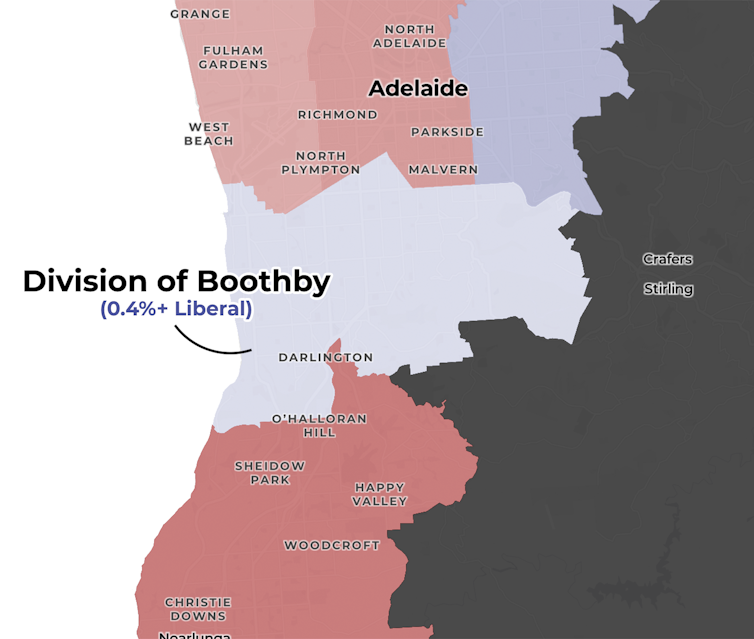
Of course, creating a new aged-care system will take time. We propose that our model be phased in over three years, beginning with a trial in the smaller states of South Australia and Tasmania, and with emergency funding measures to immediately lift the quality of residential care.
Australia cannot let this window for change close without demanding a better support system that upholds the rights of older Australians.
The government is getting itself onto very sticky paper in the developing row over revoking the citation awarded to the Special Operations Task Group that served in Afghanistan because of alleged atrocities committed by a number of its members.
Announcing the findings of the Brereton inquiry, the Chief of the Defence Force, Angus Campbell, was crystal clear.
He’d accepted the report’s recommendation “and will write to the Governor-General requesting he revoke the Meritorious Unit Citation for Special Operations Task Groups who served in Afghanistan between 2007 and 2013”.

The rationale was that “units live and fight as a team. The report acknowledges, therefore, that there is also a collective responsibility for what is alleged to have happened,” he said.
It should be noted this citation is distinct from honours and awards made to individual soldiers, which will be reviewed on a case-by-case basis.
The planned revocation generated an immediate backlash from some of those who’d served, and their supporters, with a petition gaining many thousands of signatures.
Now, the future of the citation is up in the air.
The Defence Department told Sunday’s ABC Insiders program: “Defence is preparing a comprehensive implementation plan to action the Inspector-General’s recommendations, with the oversight of the Minister for Defence through the recently established Afghanistan Inquiry Implementation Oversight Panel. Relevant agencies are being consulted, and advice will be provided to Government.
“It is important to note that this will take time due to the complexity of the issues outlined in the report. Final decisions on this advice will be a matter for Government.
“Any further action on the Meritorious Unit Citation, including any recommendation to the Governor-General, will be considered as part of the implementation plan.”
So when Campbell said he had accepted the Brereton recommendations in general, and the citation one in particular, it apparently did not mean quite what it seemed. The government appears to be leaving its options open to override the CDF.
Scott Morrison is highly sensitive to issues concerning the military – those serving and veterans.
Last week, asked on 2GB whether he supported the removal of the citation from some 3000 troops Morrison said: “Well, I’m waiting for General Campbell to be able to finalise his set of recommendations about what he proposes to do. And I know this is a very sensitive and controversial issue. It’s complex.”
So what are the factors in this complexity?
One: The Brereton report was unequivocal. “Although many members of the Special Operations Task Group demonstrated great courage and commitment, and although it had considerable achievements, what is now known must disentitle the unit as a whole to eligibility for recognition for sustained outstanding service.”
Justice Brereton was not unmindful of the proper behaviour of many of the soldiers. But he made the point that revocation was being recommended “as an effective demonstration of the collective responsibility and accountability of the Special Operations Task Group as a whole for those events”.
Two: Campbell was in no professional or moral doubt what he should do.
Three: The government is feeling it may not be worth the public fight and the angst to have the citation quashed.
Its removal would have costs.
But so would heading off its removal.
It would be a repudiation of the judgement of the independent inquiry.
It would also be over-ruling the professional judgement from the government’s principal military adviser and the holder of a senior statutory office. Would Campbell go along with that, or would he feel he should consider his position?
One interesting bit of speculation is whether the Governor-General, David Hurley, a former chief of the defence force himself, might offer the prime minister some informal counsel along the way.
The West Papua regional police (Polda) have arrested 36 people in Manokwari and Sorong city following a demonstration commemorating the anniversary of the West Papua New Guinea National Congress (WPNGNC) at the weekend, reports CNN Indonesia.
West Papua regional police spokesperson Assistant Superintendent Adam Erwindi said that the people arrested on Friday were currently being questioned by police.
“The Manokwari Polres [district police] backed up by West Papua Polda Brimob [Mobile Brigade paramilitary police] have secured them and are taking information,” said Erwindi .
Erwindi said that the protesters did not provide prior notification of the rally with police. The police claimed they had the authority to break up the protest as a result.
In addition to this, Erwindi said, the protest action was disrupting public order and blocking roads so that road users were unable to pass.
“The substance of the demo violated Article 6 of Law Number 9/1998 [on demonstrations]”, he said.
This article stipulated that in conveying an opinion people must respect the rights and freedoms of others, respect morality and safeguard security and public order.
Protesters told to consider security Erwindi asked that those who wanted to hold protest actions pay attention to the security situation and public order. He also warned that all protest actions must be in accordance with regulations.
“If they’re not in accordance with the above then police in accordance with mandated laws are obliged to break them up,” he said.
At least two Brimob members were injured after being hit by stones when the rally was being broken up.
According to the Antara state news agency, the demonstrators refused to disperse and pelted police with stones and bottles until they were pushed back by teargas.
The demonstrators who were forced back became even more brutal and continued pelting police with rocks and bottles. They also ignited firecrackers and threw them at police.
The demonstrators shouted “Free Papua” as they threw stones in the direction of police.
Australia West Papua Association protest The Australia West Papua Association has protested to Foreign Minister Marise Payne, saying Indonesian police threats against Papuan protesters ahead of the December 1 flag-raising protests are of “grave concern”.
“I am writing to you concerning the issue of West Papua and in particular regarding comments made by the Indonesian national police spokesperson, Brig. Gen. Awi Setiyono on the 23 November 2020, which is of grave concern.
“Tempo News (24 November) reported the police spokesperson as saying that the “The Indonesian national police (Polri) together with the National Armed Forces (TNI) will conduct massive joint patrols ahead of the commemoration day of the 1 December. He also made an announcement that locals should not participate in the annual anniversary.
“I am sure you are aware that the 1st of December is West Papuan National day or National Flag day and it is of great importance to the West Papuan people. Fifty-nine years ago on the 1st of December in 1961, the Morning Star flag was flown for the first time officially beside the Dutch Tricolor. The Dutch were finally about to give the West Papuan people their freedom. However, it is one of the great tragedies that at their moment of freedom it was cruelly crushed and West Papua was basically handed over to Indonesia in 1963. After 6 years administration of the province, Indonesia held a sham referendum called the “Act of Free Choice” under UN supervision. The Papuans call this the’ act of no choice’.
“The West Papuan people continue to raise their flag as an act of celebration but also of protest against the injustices they suffer under Indonesian rule. They can face up to 15 years jail for doing so. Just two weeks ago 23 Papuans were given jail terms of between 1 and 2 years. They were arrested in December 2019 while on their way to take part in a flag raising ceremony on the 1 December (2019) in Fak Fak.
“The human rights situation in West Papua is deteriorating with the security forces conducting operations to intimidate local people. There is also an increase in violence towards villagers who the security forces suspect of supporting independence or to those they believe have what the security forces term “separatist” sympathies. There have been a number of killings and arrests by the security forces in the past few weeks in West Papua. Indonesian police arrested 54 participants at a public hearing organised by the Papuan People’s Council (MPR) in Merauke on the 17 November. They were arrested for alleged makar (treason). Yet all they participants were doing were holding a meeting to discuss Indonesia’s intention to extend the Special Autonomy laws. Although they were eventually released the arrests show there is no freedom of expression or freedom of assembly in West Papua.
“There have been reports that on 20-21 November 2020, 4 West Papuan school students aged between 13 and 19 and 1 West Papuan man aged 34 were shot by the Indonesian Security Forces. Eighteen year-old Manus Murib, who survived the shootings remains in a critical condition in hospital. When he was first shot Manus passed out and when he came to reported that he found that men wearing black uniforms, vests and helmets were placing guns across his chest and taking photographs. The troops were possible Detachment 88 troops which are trained by Australia.
“There have been ongoing security force operations in West Papua in the regencies of Nduga, Intan Jaya, Mimika and Puncak Jaya since the end of 2018 resulting in the loss of civilian life not only by armed conflict but also by sickness and malnutrition as these operations have created a large number of internal refugees who are reluctant to return to their villages because of their fear of the security forces.
“As recently as the 27 November 36 people were arrested by the police after being involved in rallies in Manokwari and Sorong. They were simply commemorating the anniversary of the West Papua New Guinea National Congress (WPNGNC).
“Twenty civil society organisations that are members of the Papua Civil Organisation, Solidarity (SOS), have called on the Indonesian president to“withdraw all organic TNI-Polri troops from the areas in Nduga Regency, Intan Jaya Regency, Mimika Regency and Puncak Jaya Regency which have given birth to serious human rights violations in the form of refugees and violations of the right to life”.
“I urge you to support the call by the West Papuan civil society groups and raise the matter of the human rights situation in West Papua with the Indonesian President.
“I also urge you to use your good offices with the Indonesian Government asking that it control its military in West Papua and asking it to inform the security forces that it should allow any rallies called to celebrate West Papuan National flag day to go ahead peacefully, without interference from the security forces.”
Once about as high as the pension, the JobSeeker (Newstart) unemployment payment has fallen shockingly low compared to living standards.
It’s now only two thirds of the pension, just 40% of the full-time minimum wage and half way below the poverty line.
JobSeeker has fallen relative to other payments because while the pension and wages have climbed faster than prices, JobSeeker (previously called Newstart) has increased only in line with prices since 1991.
In an apparent acknowledgement that JobSeeker had fallen too low, the government roughly doubled it during the coronavirus crisis, introducing a supplement to enable people to “meet the costs of their groceries and other bills”.
But that supplement is being wound down, from A$225 per week to $125 on September 25, and again to $75 on January 1, before expiring on March 31.
After March, the single rate of JobSeeker (including the $4.40 per week energy allowance) will drop back to about $287.25 per week.
Ahead of a decision about any permanent increase expected early next year, The Conversation and the Economic Society of Australia asked 45 of Australia’s leading economists where they thought JobSeeker should settle.
Only four think it should revert to $287.25 per week.
All but eight want a substantial increase. More than half (24 out of 45) want an increase of at least $100 per week.
Economic Society of Australia/The Conversation, CC BY-ND
The results suggest the economists would be dissatisfied with a decision to merely increase JobSeeker by $75 per week in line with the supplement that is due to expire at the end of March.
The 45 members of the society’s 57-member panel who responded include Australia’s preeminent experts in the fields of microeconomics, macroeconomics economic modelling, labour markets and public policy.
Among them are former and current government advisers, a former member of the Reserve Bank board and a former member of the Fair Work Commission’s minimum wage panel.
Many want an increase of about $150 a week to bring JobSeeker close to the age pension and 50% of median income.
Curtin University’s Harry Bloch asked (rhetorically) whether unemployed people had “lower needs than those on the aged pension”.
Labour market specialist Sue Richardson said keeping payments so low that people lost dignity and hope and suffered material deprivation hurt not only the people who were unemployed, but also the thousands of children who grew up in their households.
A scant incentive to shirk
She knew of no evidence that suggested a low rate of JobSeeker increased the likelihood of an unemployed person getting a job.
Jeff Borland said even if JobSeeker was increased by $125 per week, those on it would still earn less than all but 1% of full-time adult workers and would face plenty of remaining financial incentives to get paid work.
In research to be published in The Conversation on Monday he examines a real-life experiment: the temporary near-doubling on JobSeeker between March and September, and finds it played no role in creating unfilled vacancies.
Emeritus Professor Margaret Nowak said JobSeeker had been driven to the point where it denied unemployed Australians the shelter, food and transport they needed to find work.
Former Liberal party leader John Hewson described the failure to adjust JobSeeker for three decades as “immoral”, and a national disgrace driven by “little more than prejudice”.
Going forward, there was overwhelming agreement among those surveyed that once JobSeeker was restored to an acceptable level, it should be linked to wages (in line with the pension) rather than increase with prices as before.
Economic Society of Australia/The Conversation, CC BY-ND
Two thirds of those surveyed want JobSeeker increase in line with wages, and of those who do not, several want the pension to increase more slowly in order to ensure the two move in sync.
Gigi Foster and Geoffrey Kingston propose a half-way house – increases in both the pension and JobSeeker halfway between increases in the consumer price index and wages.
Wages determine living standards
Others suggest practical measures to make JobSeeker better at getting Australians into jobs. Beth Webster suggests reducing the rate at which JobSeeker cuts out with hours worked to encourage part-time workers to take on more hours.
Tony Makin suggests a relocation allowance to help people take on jobs distant from their current place of residence.
None of the economists surveyed expressed concern about the budgetary cost of restoring the relative position of JobSeeker, estimated by the Parliamentary Budget Office to be $4.8 billion per year for an increase of $95 per week.
Several expressed a desire to put the issue behind them, increasing JobSeeker to a reasonable proportion of the pension or median wage and leaving it there so that, in the words of Saul Eslake, “this issue never arises again”.
An appeal for a 40-day fast across the region by the Pacific Council of Churches in support of West Papua closes next week with no result in sight.
The secretary-general of the PCC, Rev James Bhagwan, and West Papua Church Council (WPCC) are still waiting for the Indonesian government to respond to their demands on stopping militarisation in West Papua.
Due to the government reluctance to respond to the call of church leaders about the prolonged conflict, indigenous Melanesians in West Papua will not celebrate their Christmas, – particularly in Nduga, Intan Jaya, Puncak Ilaga regencies – for the third year in a row.
Yones Douw, head of the justice and peace department of the Papua Kemah Gospel Church, said there was “no hope for us at all”, reports Asia Pacific Report.
“Why is [the violence] increasing like this? Well, if you find a pastor who is speaking about the suffering of his congregation, he will be called a separatist. Anyone who speaks about human rights will be called as separatist, anyone who speaks about the welfare of Papuan people will be labelled separatist,” said Douw.
Pastor Nahor Maiseni, from Moni tribe in Intan Jaya said that the duty of pastors, priests, catechists and other religious workers was to not harm the congregation, reports Tabloid Jubi.
‘Their core duty was to spread the gospel and to look after congregation.
‘Worship, education paralysed’ “With the murder of Pastor Jeremia Zanambani and the conflict in Hitadipa, the members of the GKII Klasis Hitadipa congregation have experienced bad conditions. From the spiritual aspect, the congregation no longer performs worship as usual and educational activities are paralysed,” he said.
The report said shooting the priests and preachers in Intan Jaya was like “going against God”.
“Their daily role and activities (priests, pastors, and catechists) was to pray for the peace and safety of all God’s people on this earth regardless of class,” said Pastor Maiseni.
“Whether the TNI or the TPN-PB, or any group which intends to kill a pastor, pastor and catechist … is like fighting God or fighting with God, not with humans,” said Maiseni.
TNI is the Tentara Nasional Indonesia (Indonesian National Army) and TPN-PB represents Tentara Pembebasan Nasional Papua Barat (West Papua National Liberation Army).
Prayers for peace Benny Wenda, chair of the United Liberation Movement for West Papua (ULMWP), said that as well as being a special month of Christian prayer for West Papuans, December was also a “historical month” for West Papuans, especially December 1.
“All West Papuans, from Sorong to Samarai, across Melanesia and throughout the globe: I invite you to hold mass prayer meetings on December 1, 2020, to commemorate this historic day for our people,” he said in a statement.
“In the last few months we have suffered greatly. West Papuans are being systematically killed at the hands of the Indonesian military. Our religious leaders, like Pastor Yeremia Zanambani and Catholic Church worker Rufinus Tigau, have been tortured and killed.
“A 19-year-old woman in Sentani, Dimisi Balingga, was killed by Indonesian troops on November 4.
“West Papuan students are being arrested and brutalised just for holding a small demonstration. We are not safe under Indonesian rule,” said the statement.
Wenda, the London-based independence movement leader, said that the Special Autonomy status should end this year peacefully.
“We will not bow down to any offer from Jakarta short of a referendum on independence. We are not bound by any law imposed by Jakarta,” said the statement.
102 groups sign protest petition Asia Pacific Report previously reported that 90 civil and church organisations had joined together to reject the extension of special autonomy.
Victor Yeimo … 102 organisations have joined and signed the protest petition. Image: Suara Papua
Suara Papua reports that Victor Yeimo, international spokesperson of National Committee of West Papua, said 102 organisations had joined and signed the protest petition.
He said that during special autonomy status period many West Papuan had been killed, tortured, brutally oppressed, and physically threatened.
At the end of the press conference, Yeimo declared that West Papua was a non self-governing territory – “the last colony in the Pacific” – and rejected the second version of special autonomy.
The statement also reaffirmed the “right of peaceful and democratic self-determination for the people of West Papua to determine their political destiny”.
Reported by a postgraduate communication studies student at Auckland University of Technology.
Source: Council on Hemispheric Affairs – Analysis-Reportage
By Danny Shaw and William Camacaro From NY and Caracas
The fighting peoples of the world lost a humble legend yesterday. Diego Armando Maradona was 60-years-old. Arguably the greatest soccer player to ever grace the pitches, the spirited striker combined unparalleled skills in his sport and an unflinching outspokenness before oppression. No other sports figure’s public statements and transformation has equally captured the changing momentum across Latin America.
The hundreds of thousands of tributes being paid throughout the world portray a particular image: Maradona in close solidarity with the biggest progressive leaders of the social reformist wave embraced by the peoples of Latin America, the so called Pink Tide. In fact, Maradona put to the service of the Bolivarian revolution in Latin America all his fame, his influence and his skilled legs. He embraced the peoples of Cuba, Venezuela, Brazil, Bolivia, Nicaragua, Argentina and more, by developing deep friendships with Fidel, Raúl, Lula, Evo, Hugo, Nicolás, Daniel, the Kirchners, and many more.
Maradona was for the people of South America what Mohamed Ali was for Black America.
The Falklands War
Born in the oppressed community of Villa Fiorito in the outskirts of Buenos Aires, “the golden kid’s” (pibe de oro) talent from an early age fetched him million dollar contracts first in his homeland and then in Barcelona and Napoli.[1] No stranger to controversy, “the soccer god,” with his rebellious natural hair, was irreverent before elites and defiant to the core. When a Spanish player hurled racist epithets at him because of his indigenous ancestry, Maradona headbutted him leading to a brawl that was broadcast before King Juan Carlos, in front of a hundred thousand fans in the stadium and with half of Spain watching on television.
Maradona, who was 22-year-old years old at the time, was radicalized by England’s 1982 Falklands War assault on his homeland, known in Latin America as “la guerra de las Malvinas” and “la guerra del Atlántico Sur”. Causing untold agony and trauma, hundreds of soldiers died on both sides and hundreds of veterans committed suicide for years after. Reagan’s US claimed to be a “mediator” but stayed faithful to their junior colonial partner led by the ultra-conservative Margaret Thatcher.
This was the backdrop of the 1986 semi final showdown between the two countries, without diplomatic relations, at the World Cup in Mexico City. Argentina was South America and South America was Argentina.
During this fateful match, Maradona famously scored a crafty goal where slow motion highlights show he illegally used his hand to redirect the ball into the English net. When the English team accused him after the game at the press conference of cheating by using his hand, he responded that “sería la mano de dios,” “it must have been the hand of god.”[2] Sports analysts applauded the “picardía” or Argentine cunningness behind the maneuver.[3] The second goal was a miracle of human athletic skill. Maradona made a full sprint, starting on the Argentinian side, far from the English goalkeeper, and clearing a path through a minefield of English defenders, to execute a stunning goal that went down in sports history as “the goal of the century.” [4]
These heroic acts sealed Diego’s destiny as an idol of the masses combatting neo-colonialism.
To beat England in Latin America was to exact revenge on the invading enemy. The soccer field was an extension of the battlefield; the arrogant English were expelled. This was the symbolic recuperation of Argentine and South American dignity.[5]
“Patria es humanidad” (“The homeland is humanity”)
Jose Marti wrote that “our homeland is humanity.” The relationship Maradona established with Cuba was the full expression of the Cuban poet’s words.
In 2000, an overweight and beleaguered Maradona travelled to Cuba to treat his drug addiction.[6] Fidel Castro visited him in his worst moments and helped take care of him. The Cuban president took off his military coat and gave it to the patient. Maradona said he adored Fidel because he was “genuine and cared about human problems that others brushed aside.”[7] The down-and-out “wretched of the earth” was not rejected in Havana; he was accepted, treated like a dignified human being and loved. This moment of healing was another of Maradona’s entry points into the tide of resistance that was flowing across the Americas.
Jose Marti wrote that “our homeland is humanity.” The relationship Maradona established with Cuba was the full expression of the Cuban poet’s words.
The same year, Japan denied Maradona a visa because of strict laws barring anybody from the country who had a history with drugs.[8] Today, however, past and present Japanese soccer players pay tribute to Maradona.[9]
The Frontlines in the Battle of Ideas
The Argentinian took great pride in the rising of Latin America’s second independence which began on December 6th, 1998 with Hugo Chávez’s electoral victory in Venezuela.
In 2005, the Frente Amplio’s Tabaré Vázquez received George Bush in Uruguay in a move that was considered a betrayal by his party and the region. Bush was promoting the FTAA, the Free Trade Agreement of the Americas.[10] “Free trade” to Maradona and millions of Latin Americans is the freedom of the U.S. and transnational capital to expand its tentacles across more of the continent.
The Bolivarian Revolution was advancing across Latin America and had recently paid off Argentina’s foreign debt. Hugo Chávez traveled to Argentina to contest the interventionist and free trade agenda of the U.S. leader. La Plata river divided the two countries and the two sides of history. Rising to the historical occasion, with Diego by his side donning a “Stop Bush” t-shirt, the Venezuelan leader famously chanted: “El que no brinca es yankee” (If you don’t jump you’re an imperialist.) Maradona gave credence to Evo Morales’ catch phrase: “the empire stands with the right wing, football stands with the left.”[11]
This was the battle of ideas Castro spoke of.
A strong backer of the Pink Tide
It is perhaps difficult to appreciate Maradona’s greatness in a country whose sports loyalties are divided between baseball, American football and basketball. In South America and Europe, soccer is king. In Napoli, restaurants have alcoves reserved for hanging religious idols. There beside them is Maradona. The mayor has announced the famed Saint Paul stadium should be renamed after one of the city’s most beloved.[12]
Rising to the historical occasion, with Diego by his side donning a “Stop Bush” t-shirt, the Venezuelan leader Hugo Chávez famously chanted: “El que no brinca es yankee” (If you don’t jump you’re an imperialist.)
And Maradona gave credence to Evo Morales’ catch phrase: “the empire stands with the right wing, football stands with the left.”
The mainstream press is also remembering the football titan but consciously shying away from his political commitments. Other outlets are accusing Maradona of being anti-American. Like the political leadership he so admired, Maradona never expressed ire towards the people of the United States but rather towards its political leadership who thought they were “the county sheriff.”[13]
Through the years of the Pink Tide, Maradona was a regular on television programs and at rallies with Luiz Inácio Lula da Silva, Daniel Ortega, José “Pepe” Mujica and other anti-imperialist figures of the continent. His tattoos of Ernesto Che Guevara and Fidel Castro brought a new meaning to the phrase “he wore his feelings on his sleeve.” His program “De Zurda” on TeleSUR in 2014 with Víctor Hugo Morales, the famed Uruguayan sportscaster, combined humor, sports analysis and leftest political commentary. Last year, following a coaching win in April, he stated: “I want to dedicate this victory to Nicolás Maduro and all Venezuelans, who are suffering. These Yankees, the sheriffs of the world, think just because they have the world’s biggest bomb they can push us around. But no, not us.”[14]
Those who had the honor to meet Dieguito remember him as a people’s person who was always accessible. Though he had his own personal struggles, he never wavered in his commitments to elevating the voices of the poor and defending the underdog. Yesterday, on the fourth anniversary of Fidel Castro’s passing, one of his students and admirers joined him in eternity, having left so much for us all to savor and learn from.
Danny Shaw is Senior Research Fellow at COHA; William Camacaro is COHA’s Senior Analyst.
End Notes
[1] “Los apodos de Maradona: ¿por qué le llamaban Pelusa, Barrilete Cósmico o D10S?”
[2] “PAYBACK Argentina legend Diego Maradona says ‘Hand of God’ goal against England was symbolic revenge’ for the Falklands War”, https://talksport.com/football/559182/argentina-legend-diego-maradona-says-hand-of-god-goal-against-england-revenge-falklands-war/
[3] “El otro lado de ’La Mano de Dios’ – El mítico gol de Diego Maradona a Inglaterra en México ’86”,
[5] “PAYBACK Argentina legend Diego Maradona says ‘Hand of God’ goal against England was symbolic revenge’ for the Falklands War”, https://talksport.com/football/559182/argentina-legend-diego-maradona-says-hand-of-god-goal-against-england-revenge-falklands-war/
[6] “Muere Maradona: la amistad entre el astro argentino y Fidel Castro, dos polémicos íconos de América Latina que murieron el mismo día”,
[7] “Maradona viajó a Cuba para continuar su tratamiento contra las drogas”, https://www.abc.es/deportes/futbol/abci-maradona-viajo-cuba-para-continuar-tratamiento-contra-drogas-200409200300-9623741839090_noticia.html
[8] “La Copa Europeo-Sudamericana. Maradona, sin visa para ir a Japón”,
The makers of Coon cheese will no doubt have paid close attention to the publicity surrounding Nestle’s rebadging of its Red Skins and Chicos confectionary brands.
While the change of Chicos to Cheekies was uncontroversial, the change of Red Skins to Red Ripper – a name given decades to Soviet serial killer Andrei Chikatilo – was widely mocked.
The perils of rebranding helps explain the length of deliberations by Canadian-owned Saputo Dairy Australia, which has controlled the Coon brand since 2015. It announced in July it would “retire” the name, in the wake of increasing activism about brand names considered to have racist connotations.
“We are working to develop a new brand name that will honour the brand-affinity felt by our valued consumers while aligning with current attitudes and perspectives,” it said at the time.
Saputo reaffirmed this month it would change the name, but was still “working on the new brand development and look forward to revealing it to our customers and consumers once completed”.
That change can’t come soon enough for Indigenous activist Stephen Hagan, who has lobbied for Coon’s retirement from the Australian market for more than two decades.
But the Nestle experience explains why the Coon deliberations are taking so long.
A well-known brand identity is hugely valuable in the food market. It’s how shoppers find and choose things in supermarkets that stock as many as 40,000 more products than they did 50 years ago. Re-establishing a brand, with a new identity, is expensive and risks losing market share.
The average supermarket now has 40,000 more products than 50 years ago.Shutterstock
How Coon cheese got its name
Previous owners of the Coon brand, Kraft and Dairy Farmers, resisted demands for a name change on the grounds the association with an American racial slur for African Americans was mere coincidence, with the cheese being named after its American creator Edward William Coon, who patented his method for making it – known as “Cooning” – in the 1926.
Australian dairy manufacturers began making cheese using Coon’s methods in the mid-1930s. In keeping with a common branding strategy at the time, the cheese was marketed using the name of its creator.
It is not known if that decision was made with knowledge the word had by then been in use in the US as a derogatory term for African Americans for a century.
In any event, the brand lived on in the Australian market. Coon is now the leading brand in the hard/cheddar cheese category, with a 9% market share (followed by Bega with 7.7%).
That share has been built over decades. Research shows strong brand loyalty in the cheese market, particularly for cheddar and sliced cheese. Coon’s owners will therefore be carefully weighing how to rebrand Coon to minimise the risk of shoppers failing to recognise it by another name and opting for another well-known brand.
Brands on the run
Given all this, it is reasonable to assume the retirement of Coon is being done under some duress.
But social media, woke activism and the internationalisation of the Black Lives Matter movement has changed the landscape, putting pressure on companies to retire all brand names associated with historic racial stereotypes.
Those brands include Minnesota-based Land O’Lakes butter (dropping its logo featuring a native American woman), Eskimo Pie ice-cream (now Edy’s Pie), and US Conagra Foods’ Mrs Butterworth’s brand of syrups, packaged in bottles the shape of a “matronly” woman.
The biggest brand to fall is the “Aunt Jemima” brand of pancake mixes, syrups and breakfast foods. In June, Quaker Foods North America (owned by PepsiCo) announced it would finally retire in use since 1889 and named after a character from 19th century minstrel shows.
Aunt Jemima’s brand.Shutterstock
Like Coon’s owners, Aunt Jemima’s owners are still deliberating on how to rebrand.
Should it, for example, attempt to replace the Aunt Jemima visual identity with another character (or characters) better representing people of colour? Or will it simply “deracialise” the brand. After all, while removing stereotypical black faces from brands achieves one objective of the Black Lives Matter movement, removing all black faces isn’t necessarily a step forward in promoting diversity.
But that would be an extremely difficult feat to pull off.
It’s more likely Quaker Foods will emulate the approach taken by US multinational Mars, which in September announced the end of Uncle Ben’s, a rice brand launched in 1946 named after an African American rice farmer whose logo features a bow-tied “Chicago chef and waiter named Frank Brown”. Mars has opted to rebadge as “Ben’s Original” and drop the face.
Uncle Ben’s rebranding as Ben’s Original.https://www.foodnavigator-usa.com/Article/2020/09/23/We-listened-we-learned-we-re-changing-Uncle-Ben-s-rebrands-to-more-inclusive-Ben-s-Original, CC BY-ND
The gravity of the deliberation over Aunt Jemima’s is exemplified by the sales boost for a competitor in the syrup market, Michele Foods, founded by African American woman Michele Hoskins. She told Forbes that July sales of her company’s syrups – based on a recipe handed down to her from her great great grandmother, America Washington, a freed slave – were 78% higher than the year before.
The Michele’s brand features Hoskins herself on the label. But as she told Forbes: “People want authentic products.”
Whatever Saputo decides is the next name for Coon, its intention will be to quell criticism without dramatically changing brand identity.
It will seek to do what Nestle clearly sought to do with renaming its Red Skins and Chicos confectionery. It will want to change the name as little as possible and retain continuity with brand colours and styling.
From Red Skins to Red Ripper: little else in the brand identity has changed.The Conversation
Note the new branding for Red Rippers looks almost identical to Red Skins (and the same with Chicos to Cheekies). So long as supermarkets stock these products in the same place on the shelves, customer confusion should be minimised.
This week’s charts extend the period covered to January 2020, when almost all recorded cases were in China. Cases came into other countries in late January, including the United States in dribs and drabs, and were largely contained. All this changed with the European outbreak in mid-February.
Thus, the First Wave of Covid19 was the China wave, and the Second Wave was the massive European outbreak which quickly extended into the United States, especially New York City. By the very end of February, the rest of the world overtook China, with the vast majority of cases then being in Europe, but also many cases in South Korea. At the very beginning of March, the United States overtook China.
At the beginning of April – day 70 – the second wave peaked in the United States, but Covid19 effectively plateaued, the decline in new cases was very slow. For the world as a whole, Covid19 continued to grow – albeit at a slower pace – as it spread through more countries and continents.
By day 90 – the third week of April – Covid19 incidence had dropped to ‘magnitude zero’ in China, where magnitude zero represents one case per 100 million people (ten cases per billion). The world was then at ‘magnitude three’ (1,000 times worse than China) and the United States at ‘magnitude four’ (10 times worse than the world as a whole). China has averaged magnitude one since then, with a couple of outbreaks which were quickly snubbed out. The steady diet of about 14 cases per day in China can presumably be attributed to cases caught at the border.
The Third Wave of Covid19 began as a new wave of global exponential growth around day 110 – the beginning of June. It showed up strongly in the United States in July, and can be understood as the South American wave. World cases then flattened in August, although that was the panic month in Australia and New Zealand.
The Fourth Wave began late in September – around day 250. It was most likely linked to holidaymakers returning to Europe and United States at the end of the northern summer. This fourth wave accelerated in October (especially in Europe), as winter beckoned, and then accelerated further in early November in the United States. This second European wave was offset, in October in the global data, by case reductions in South America, moving out of winter.
Globally, there has been exponential growth from April, interspersed with two periods of near-zero growth; but no periods of decline. World incidence of Covid19 is now close to ‘magnitude four’ (10,000 times worse than China’s baseline). While the United States appears to have reached its fourth wave peak, it may in fact resurge to Covid19 ‘magnitude five’ as a result of Thanksgiving this week and, in a month, Christmas and New Year; indeed the reduction in reported cases today is probably because of yesterday’s national holiday in the USA.
Estimates of Actual Daily Incidence of Covid-19 in the World. Chart by Keith Rankin.
The second chart expands on the world data, showing cases in purple and death in brown. The death statistics represent a sad but steady stream for the eight months from the beginning of April. Daily deaths are now at their highest to date (ie at around day 305), nearly 50 percent higher than the second wave peak (day 84).
I have made conservative estimates of the true global incidence of Covid19, from the recorded death rate, and allowing for a 10-day lag (ie deaths tend to peak 10 days after cases). For cases in November, I have assumed a death rate of five in a thousand. At the beginning of the pandemic, I assumed a death rate of ten in a thousand.
My daily case estimate for this week is 30,000 in 100 million; which means three people in 10,000 are being infected by Covid19 every day; equivalent to five people in Feilding getting Covid19 every day on average.
These case estimates will still be underestimates, because the known death figures themselves are underestimates, with recording practices varying significantly on a country by country basis. If we allow for this, then there are now three million people in the world catching Covid19 every day, five times more than the reported global daily count of 600,000.
Source: The Conversation (Au and NZ) – By Thea van de Mortel, Professor, Nursing and Deputy Head (Learning & Teaching), School of Nursing and Midwifery, Griffith University
As restrictions ease around the country and the prospect of travel beckons, many of us will be planning road trips for the holiday season.
To ensure your trip is memorable in the best rather than the worst way, here are some things you and your fellow travellers can do to reduce the risk of becoming infected with, or spreading, COVID on your trip.
Before you go
1. Check for any travel or other COVID-specific restrictions or rules in the areas you will be travelling through or to, before you go. These can change rapidly and may include restrictions on how far you can travel, how many people per square metre are allowed in public spaces, and whether you need border passes or to wear a mask. Each state or territory has its own health department or government COVID website you can check.
2. Don’t take COVID with you. If anyone in your group has COVID-like symptoms, however mild, it is important to be tested and cleared for COVID before leaving. Common symptoms may include fever or chills, muscle aches, sore throat, cough, runny nose, difficulty breathing, new loss of taste or smell, and vomiting or diarrhoea.
3. Pack masks, disinfectant wipes and hand sanitiser. The two most likely ways of catching COVID are inhaling viral particles an infected person sheds when they cough, sneeze, laugh, talk or breathe; and ingesting particles by touching contaminated objects and then touching your face or food. Masks (and social distancing) can help reduce the former risk, while avoiding touching your face, frequent hand hygiene and cleaning surfaces can reduce the latter. So pack masks, wipes and hand sanitiser. Hand sanitiser should containat least 60% alcohol.
4. Pack your own pillows and linen. We know people infected with SARS-CoV-2, the virus that causes COVID, can shed virus onto linen and pillows (and other surfaces), even when asymptomatic. We also know respiratory viruses can penetrate pillow covers and get into the microfibre stuffing. So you might want to consider bringing your own pillows and linen.
On your trip
5. Use disinfectant wipes to clean high-touch surfaces in your hire car. These would include door and window handles or buttons, light switches, seat adjuster controls, radio controls, the steering wheel, glove box button, gear/drive and handbrake levers, rear-view mirrors and mirror controls.
6. How about singing in the car? The more vigorous the activity, the greater the opportunity to release droplets and aerosols and the further these will travel. So, laughing and singing will release more of these than talking, and talking will release more than breathing. However, if you are travelling in a family group, or with your housemates, then you have been in close contact with one another at home and the additional risk would be low.
7. Maintain social distancing at service stations. Leave at least 1.5 metres between you and the next person while paying for fuel, ordering food and when using the bathroom. Make sure you wash or sanitise your hands after touching surfaces such as petrol pumps, door handles, bathroom taps, and before getting back in your car.
Wash or sanitise your hands after using the petrol pump.Shutterstock
8. Pay with cards rather than cash to avoid touching money. Many people can handle bills and coins over a long duration of time, providing many opportunities to transfer disease-causing microbes from one person to the next. Using contactless payment also helps maintain social distancing.
9. It’s safer to eat outdoors than indoors if stopping for a snack or lunch. That’s because large volumes of air dilute the density of viral particles in the air. Evidence from a study of COVID clusters in Japan suggests the chance of transmitting COVID is more than 18 times higher inside than outside.
10. Is your hotel or rented accommodation COVID-safe? Ask the accommodation provider what steps they have taken to make the place less conducive to spreading COVID. For example, have they introduced extra cleaning or disinfection?
11. Use disinfectant wipes in rented accommodation to clean high-touch surfaces such as door handles, light switches, cupboard handles, taps and toilet flush buttons. You can also put dishes and cutlery through the dishwasher on a hot cycle. This is because the virus can remain viable (able to cause infection) on surfaces for many days.
Following these simple steps can help to keep your trip memorable in the best possible way. Happy holidays!
Source: The Conversation (Au and NZ) – By John Hawkins, Senior Lecturer, Canberra School of Politics, Economics and Society, University of Canberra
The “team of rivals” was the term historian Doris Kearns Goodwin used to describe US President Abraham Lincoln’s cabinet. It included three men who had run against Lincoln for the Republican nomination for president in 1860: William Seward (secretary of state), Salmon Chase (treasury secretary) and Edward Bates (attorney general).
Appointing these strong-willed figures could have been disastrous were it not for Lincoln’s personal qualities.
Goodwin describes how Lincoln was willing to acknowledge when policies failed and change direction. He gathered facts on which to base decisions. He sought compromise but took full responsibility for his decisions, respected his colleagues and set an example of dignity. (In all these, he sounds like the antithesis of Donald Trump.)
President-elect Joe Biden has taken a different approach to filling out his cabinet so far. Aside from choosing Kamala Harris as his vice president, he’s looked past his main Democratic rivals for the nomination — Elizabeth Warren, Bernie Sanders — and appointed mainly technical experts with relevant experience and an international outlook.
Biden may have seen these more technocratic appointments as fitting with his less partisan style. It also sends a signal to the world that the US wants to reengage.
Linda Thomas-Greenfield is a career diplomat and former ambassador to Liberia.AHMED JALLANZO/EPA
Team of talent
Biden may not have filled his cabinet with rivals, but he has also not surrounded himself with clones or an “echo chamber”. He made clear he wanted his cabinet to
tell me what I need to know, not what I want to know.
As secretary of state, he has appointed Antony Blinken. A francophone internationalist, Blinken served as former President Barack Obama’s deputy national security adviser and deputy secretary of state.
He once made a charming appearance on Sesame Street, telling Grover about the United Nations and refugees. He commented
we all have something to learn and gain from one another even when it doesn’t seem at first like we have much in common.
The message is a long way from “America first” and the disdain for the rest of the world shown by the Trump administration.
Advocates of free trade and climate change action
As treasury secretary, Biden has appointed Janet Yellen. She was chair of the Federal Reserve from 2014–18 and currently heads the American Economic Association. Nobel laureate Joseph Stiglitz recalled her as one of his brightest students.
It is quite an achievement to be the most famous economist in a family that includes a Nobel Prize winner (her husband George Akerlof).
Janet Yellen is a strong supporter of open trade.Craig Ruttle/AP
An advocate of free trade and expert in labour markets, she understands the damage that Trump’s trade wars, especially with China, have done to working Americans.
Being chair of the Federal Reserve also gave Yellen an important role in international organisations, such as the Bank for International Settlements.
John Kerry has been appointed to the new post of climate envoy. He is globally respected as a former secretary of state, and ran unsuccessfully for president himself in 2004.
His appointment signals that the Biden administration recognises the importance of recommitting the US to climate action. Most significantly, Kerry was highly influential in the final week of negotiations of the Paris Agreement in 2015 and signed it for the US the following year with his granddaughter on his lap.
Kerry was personally involved in pushing the Paris Climate Agreement over the line.Mark Lennihan/AP
And following four years of Trump’s anti-immigration policies, Biden has selected a Cuban-born immigrant, Alejandro Mayorkas, to lead the Department of Homeland Security. After his nomination, Mayorkas spoke of his desire
to advance our proud history as a country of welcome.
Potential roadblocks in the Senate
Biden has assembled a team with an international outlook that will re-commit the US to supporting international organisations, such as the World Health Organisation, and treaties like the Paris Agreement. He will seek to reform rather than just impede the World Trade Organisation.
But there’s one significant hurdle still looming. If the Democrats can’t gain control of the Senate by winning the two run-off elections in Georgia in early January, the Republican-led chamber will likely aim to block Biden’s aims of resuming a constructive global role.
Senate majority leader Mitch McConnell once described Biden as a ‘trusted partner’, but it remains to be seen how well the Republicans will work with the new administration.Susan Walsh/AP
Optimists have compared Biden to former President Lyndon Johnson (also known as LBJ), who may be able to use his decades of legislative experience to achieve more change than was possible for John F. Kennedy or Obama.
Ron Klain, recently announced as Biden’s chief of staff, once put it well:
LBJ might not have been the wokest, coolest, hippest Democrat, but he’s the person who got the most actual progressive social justice legislation done since FDR […] he knew how to make the Senate work.
The rest of the world will hope Klain is right and that the Senate does not block the program of this promising new cabinet.
The New Zealand government has offered help to the under-pressure horticultural sector by allowing 2000 registered seasonal employer (RSE) workers in to help pick fruit and vegetables this summer.
Growers had complained that without these workers, some produce would rot unpicked.
The government has however imposed strict conditions.
The workers would have to be paid the living wage, of at least $22.10 an hour.
Their quarantine costs would have to be paid by their employer and workers would be paid for at least 30 hours a week while in quarantine.
Recruits would come from island nations in the Pacific, but the government has not specified which countries would be chosen.
Repatriation after the picking season is finished would have to be worked out before the workers could come in.
They would arrive between January and March next year.
‘Listened to the concerns’ “The government has listened to concerns raised by the [horticulture and wine growing] sectors,” Agriculture Minister Damien O’Connor said.
“We understand their importance for our covid economic recovery. These changes will help support their ongoing success.
“We accept they need help to meet labour shortages that threaten harvests this coming season, so we are acting to allow up to 2000 experienced RSE workers to come to New Zealand from certain Pacific Island countries.”
Due to limited capacity in managed isolation and quarantine facilities, entry would be staggered, with workers coming in groups, O’Connor said.
The 2000 workers being allowed in will augment approximately 6000 RSE workers who did not go home last year.
But it still falls short of the total number that came in earlier – up to 14,400 RSE workers arrive in New Zealand annually.
With many only staying for part of the season, the highest number of RSE workers in New Zealand was 10,500 at the peak of last season.
Blocked by covid restrictions Their return this year has been blocked by covid-19 border restrictions.
In addition to the RSE exception, working holiday visa holders still in New Zealand with visas expiring between October 2020 and March 2021 will be, or have already been, automatically granted another visa to enable them to work in the horticulture and wine industries this summer.
Immigration Minister Kris Faafoi said the seasonal workers would arrive after the rush on managed isolation facilities as people return to New Zealand for Christmas.
“We are apportioning some of the managed isolation facilities, we’ve planned for this, so there should be plenty of capacity for managed isolation for those Kiwis who have the right, and we expect, to come home,” he told RNZ Morning Report.
There had been some “challenging discussions” with employers over paying a living wage and other conditions, with some in the sector more willing than others.
Individual growers would decide whether to extend the living wage to New Zealanders and visa holders, Faafoi said.
“RSA workers coming to New Zealand are very experienced so making sure they are paid for that experience and for the productivity is important.
“We have certainly seen proposals from sectors and regions of New Zealand where they are quite willing to meet those kinds of conditions, to meet the challenge that they have with the labour supply.”
Financial incentives for New Zealanders There is also financial help for New Zealanders wanting to work in these seasonal industries.
Minister of Social Development Carmel Sepuloni said unemployed people who move for a season’s work, and are still paying for housing in their home area, will get up to $200 for 13 weeks for accommodations costs.
There would be a $1000 incentive payment for workers who completed jobs of six weeks or longer.
Changes have also been made to the Seasonal Work Assistance Programme for those who have moved off a benefit to take up a seasonal job, but haven’t been able to work due to bad weather and as a result have lost income. Workers will now be able to receive the equivalent of minimum wage up to 40 hours a week, depending on the number of hours lost.
She said labour shortages in the horticulture industry were not unusual and better workforce planning was needed.
Sepuloni told Morning Report the government would like to see wages go up, and there were examples of employers paying more, but it was not industry-wide. “We need to continue to work on that and we’re continuing to do that.”
“We require better workforce planning. It is not just government, it is the industry that also needs to step up.”
2000 RSE workers ‘probably not enough’ Seeka kiwifruit company chief executive Michael Franks said RSE workers would usually make up 1200 of its 3500 workforce, but at the moment there were fewer than 200.
“Our labour shortage coming up at harvest is going to be acute. Anything that takes that acute pressure off is appreciated – but probably 2000 is not enough.”
Seeka was working with MSD and Ngāti Hine in Northland and Te Arawa in Bay of Plenty to try and train more New Zealanders into horticulture work, as well as setting up a programme for workers displaced from other industries.
Paul Paynter, general manager at Hawkes Bay firm Yummy Apples, said workers would have made the living wage or more last year, so pay was not an issue.
There were issues of productivity when the labour market was tight and the company increasingly employs people who may be struggling.
“They’ve had injuries or they’re dealing with mental health issues, or whatever, so we have a lot of people who are not so productive, and we really welcome them, but those are the ones we end up topping up to the minimum wage, because they might pick two bins of apples a day wheras the average worker is picking five.”
For Central Otago grower Stephen Darling, backpackers made up a large part of the workforce, since there is was no large population centre nearby as a source of local workers.
A welcome start While 2000 RSE workers was a welcome start, the region needed all the workers under the scheme, he said.
The harvest volume will drop and pressure will go on prices a result of the labour shortage, he said.
To date the government has provided border exceptions for up to 30 veterinarians, up to 570 deep water fishing crew, and up to 210 agricultural machinery operators.
In the end many of these did not take up their allocation because of a shortage of places in managed isolation.
This article is republished by the Pacific Media Centre under a partnership agreement with RNZ.
Today Victoria satisfied a common definition of elimination for COVID-19, recording its 28th consecutive day of zero new cases. While there is no international definition of elimination, two average incubation periods without community transmission is widely accepted as local elimination, especially in a geographically isolated country like Australia.
It’s a remarkable achievement following a severe second wave which peaked at daily new case rates of around 700 in early August. But elimination is not eradication, and we can expect the virus to return at some point, as has happened in several countries that previously boasted minimal or no community transmission.
So how did Victoria get here, and what can it do to keep numbers as low as possible?
Elimination is not eradication
There’s no universal definition of elimination. As applied to other infectious diseases such as polio and measles, it means a prolonged period of zero local transmission in a country or region. For measles, the World Health Organisation (WHO) is very exacting and demands no community transmission for 36 months.
With more than 500,000 new daily COVID cases being reported globally, preventing new local transmission in Victoria will depend on the state building a virus-proof defence.
Several countries have shown the virus can return after a long period of minimal local transmission. The most pertinent example is New Zealand, which experienced 102 consecutive days of zero community transmission before a cluster cropped up in Auckland on August 11. Israel, South Korea, Vietnam and Hong Kong have also experienced reemergence of the virus following significant periods of minimal community transmission. And this month, we witnessed a cluster in suburban Adelaide that originated in a quarantine hotel, after South Australia had experienced many months of no community transmission.
Indeed elimination doesn’t mean the virus is completely gone. For example, Australia eliminated local transmission of polio in 1972. But it wasn’t until 30 years later, in 2002, that the WHO declared Australia polio-free.
Almost 20 years after that declaration, we still can’t say we’ve eradicated polio because eradication refers to the global removal of a human pathogen; only smallpox has achieved that status. One strain of the polio virus continues to circulate in Afghanistan and Pakistan. In 2007, a 22-year-old student from Pakistan was diagnosed with polio at Box Hill Hospital in Melbourne’s East.
Victorians are now enjoying relative freedom as coronavirus restrictions eased significantly.Erik Anderson/AAP
So, how did we get to zero?
Since the grim height of Victoria’s second wave in July and August, several coordinated interventions have eventually borne fruit. One of the most important was the strengthening of the test-trace-isolate-support system. While details are emerging during the parliamentary inquiry into Victoria’s hotel quarantine system, some of the features of this strengthening are known:
decentralisation through regional hubs and metropolitan public health units
increased engagement and involvement of communities, through programs aimed at public housing estates and local initiatives led by GPs and community health centres
adoption of “upstream” contact tracing, identifying contacts of index cases before they developed symptoms as well as after developing symptoms. In both groups, contacts of contacts were identified. This led to the rapid control of clusters such as those in Kilmore and Shepparton.
Other important initiatives included the joint federal-state Victorian Aged Care Response Centre, which eventually managed the explosive outbreaks in residential aged care facilities, and more effective infection prevention and control in health-care settings.
And there were the containment measures that kept people from intermingling. Stage 3 restrictions were reimposed on July 8, limiting the reasons people could leave home. A study published in early August found these restrictions averted between 9,000 and 37,000 cases. From July 23, masks were mandatory at all times outside the home. On August 2, stage 4 restrictions and a night curfew effectively shut down Melbourne. From then on, the number of new cases steadily declined.
Perhaps the greatest achievement of Victoria’s response was to maintain a strong health focus amid a chorus of criticism, much of it from Canberra or the Sydney-based media, pushing the “economy first” mantra. In fact, data show countries that managed to protect the health of their citizens have generally protected their economy more effectively.
The first requirement is an effective quarantine system for returned travellers. With cases surging globally, the proportion of travellers who are infected will increase significantly from the 0.7% reported between March and August. This will require arrangements that employ well-trained and adequately paid workers who are regularly monitored by infection control and occupational health and safety experts. The advance contact tracing, which will identify the close contacts of staff before they might test positive for the virus, announced by Premier Daniel Andrews would be a useful adjunct as long as confidentiality is assured.
Crucially, experienced teams of contact tracers must be on standby. They need to maintain the rigorous standards developed over the past few months and engage in simulation exercises that test their capacities. They must retain a focus on community trust and avoid the vilification of individuals that marred the South Australian response.
What’s more, the state must sustain proven containment measures such as physical distancing, hand hygiene, masks indoors, and getting tested if you have symptoms.
Australia is an almost COVID-free oasis, surrounded by a tsunami of virus. Maintaining this status for the next six months or so, while at the same time opening up, will be a huge challenge. Recent responses in Victoria, NSW and SA suggest we are up to it.
And as the story of the sharp-eyed doctor in Adelaide showed us — when she tested a patient in the emergency room who’d initially felt “weak” but had very few COVID symptoms, alerting authorities to the previously silent spread of the virus — to maintain elimination we’re also going to need a little luck.
What an interesting question! Well, technically dinosaurs are still here in the form of birds. Just like you’re a direct descendant of your grandparents, birds are the only remaining direct descendants of dinosaurs.
Tyrannosaurus rex belonged to a dinosaur group called theropods.Shutterstock
But I suppose what you’re really asking is whether dinosaurs like Tyrannosaurus or Triceratops could ever exist again. Although that would be fascinating, the answer is almost definitely no.
While there’s only one generation between you and your grandparents – that is, your parents – there are many millions of generations between today’s birds and their ancient dinosaurs ancestors.
This is why today’s birds look, sound and behave so differently to the prehistoric beasts that once roamed Earth.
Animals evolve to change, but can’t choose how
To understand this, we have to understand “evolution”. This is a process that explains how every living thing (including humans) evolved from past living things over millions, or even billions, of years.
Different animals evolve their own differences to help them survive in the world. For example, 66 million years ago, birds survived the catastrophic event that killed all other dinosaurs and marked the end of the Mesozoic era.
Fossils suggest face-offs between T. rex and Triceratops were common.Shutterstock
After this, a blanket of ash wrapped around the world, cooling it and blocking out the sunlight plants need to survive. Plant-eating animals would have struggled to stay alive.
But birds did, perhaps because they were small even then. They likely ate seeds and insects and took shelter in small spaces. And being able to fly would have helped them explore far and wide for food and shelter.
That said, if the conditions that came after the dinosaur extinction event returned today, no modern animal would evolve back into a dinosaur. This is because animals today have a very different evolutionary past to dinosaurs.
They evolved to have features that help them survive in today’s world, rather than a prehistoric one. And these features limit the ways they can evolve in the future.
Which came first, the chicken or the dinosaur?
For an animal to be an actual “dinosaur”, it must belong to a group of animals known by scientists as Dinosauria. These all descended from a common ancestor shared by Triceratops and modern birds.
Other than birds, Dinosauria doesn’t include any living creature. So for a dinosaur to re-evolve in the future, it would have to come from a bird.
This animation helps paint a picture of how dinosaurs eventually evolved to become birds. (American Museum of Natural History/Youtube)
Dinosauria’s extinct members included sauropods, stegosaurs, ankylosaurs, ornithopods, ceratopsians and non-bird theropods. Modern birds evolved from a small group of theropods. However, since so much time has passed, this link is limited.
Specifically, birds have a very different collection of “genes”. These are the same built-in “rules” your parents passed down to you that decide, for example, what colour your eyes will be.
The more generations that pass between an ancestor and their descendant, the more different their genes will be.
Even if it could happen, what would this take?
Think of how much a bird would need to change to look like Tyrannosaurus rex or Triceratops. A lot.
Dinosaurs had long tails with bones all along them. Birds’ tails are stumpy and have been for more than 100 million years. It’s unlikely this would ever be reversed.
While some types of birds have long tail feathers, such as falcons (above) and pheasants, on the inside their tails are short.Shutterstock
Also, modern birds walk on their back legs only and (in most cases) have four toes and three “fingers” in their wings.
Compare that with Triceratops, which walked on all four limbs, had five fingers on its front feet (the inner three of which were weight-bearing) and four toes on its back feet.
It may not be impossible for birds to gain two more fingers to have five like Triceratops; some people with a condition called “polydactyly” have more than five fingers, but this is very rare.
There aren’t really any situations where an extra finger (or one less) would be necessary for a bird’s survival. Thus, there’s little to no chance birds will evolve to change in this way.
Most birds have four toes and three ‘fingers’ in their wings.Shutterstock
Even if birds did eventually start to walk on all four limbs (legs and wings), they wouldn’t move the same way a Triceratops did because the purpose of a bird’s wings is very different to that of a Triceratops’s legs.
Dinosaurs are history
We know from fossil discoveries that Triceratops and Tyrannosaurus had scaly skin covering most of their bodies. Most modern birds have scaly feet, but none are scaly all over.
Although Triceratops had a ‘beak’ this was very different to a bird’s beak.Stephen Poropat/American Museum of Natural History
It’s hard to imagine what would force any bird to naturally replace its feathers with scales. Birds need feathers to fly, to save energy (by staying warm) and to put on special displays to attract mates.
Triceratops did have a “beak” at the front of its mouth, but this evolved completely separately to the beaks of birds and had two extra bones — something no living animal has.
What’s more, behind its beak and jaws, Triceratops had rows of teeth. While some birds such as geese have spiky beaks. No bird in the past 66 million years has ever had teeth.
Considering these huge differences, it’s really unlikely birds will ever evolve to look more like their extinct dinosaur relatives. And no extinct dinosaur will ever come back to life either — except maybe in movies!
Geese don’t have actual ‘teeth’, but they do have sharp points in their mouth to hold onto slippery things.Shutterstock
New South Wales premier Gladys Berejiklian, who last week carried on working for up to two hours while awaiting the results of a rapid COVID test, wasn’t the first Australian to “soldier on” in the face of health concerns and a big day at work.
And she almost certainly won’t be the last, despite the COVID pandemic making it clearer than ever before it’s important to take time off if you’re sick or self-isolating.
Soldiering on — also known as “sickness presenteeism” — is alive and well even in 2020. Many people, from state premiers to minimum-wage workers, feel they have no choice but to show up and carry on. Those with precarious employment may feel as if their entire job hinges on it.
If a pandemic won’t get workers to call in sick, then what will? What we need is for managers and leaders (state premiers included) to model responsible behaviour, and foster a healthy workplace culture in which soldiering on isn’t celebrated as heroic.
A 2016 report by Pathology Awareness Australia estimated the economic costs of workers turning up sick or putting in unnecessary extra hours at more than A$34 billion a year, due to productivity loss and the spread of infection to coworkers.
Since the advent of COVID, it has become a significant public health issue too. Cases have been traced to workers spreading the virus at work, including abattoirs and health-care facilities.
Presenteeism is found throughout the employment spectrum, but is more prevalent among “essential” workers, such as those in health care, who typically report feeling “socially obligated” to attend work.
A 2019 survey of 6,387 women in the public sector found 90% had gone to work while sick in the preceding 12 months. The main reasons included workload pressures (52%), and the perception they weren’t sick enough to stay home (54%).
But why is sickness presenteeism still a thing in 2020? The sad fact is that even amid a pandemic, workers in essential services such as aged care and teaching report feeling pressured by their managers to turn up to work.
Another reason is the broader socioeconomic issue of job insecurity. Workers on temporary or casual contracts may not have sick pay entitlements at all, or feel their job is at risk if they are absent. Coupled with the workload pressures typical of precarious work, these people face an almost impossible dilemma when sick or self-isolating.
Many essential workers, like aged care staff and teachers, feel pressured to present to work even when feeling sick.James Ross/AAP
How workplaces can help
The onus is on businesses and organisations to ensure a safe working environment. This means establishing clear expectations and protocols regarding staying home when unwell, and should also include the opportunity for remote working when workers feel well enough to work but may still be infectious. Workplaces should also provide appropriate personal protective equipment, hand hygiene, and social distancing measures.
Organisations should offer medical and well-being support and care to employees at risk of suffering most under sickness presenteeism, such as essential workers and those in precarious employment.
More broadly, managers and organisations should understand that tacitly encouraging people to come to work while unwell impairs organisational performance. Leaders should not preside over a culture in which overwork and “always being on duty” are lionised. Instead, they should communicate that it’s OK not to come to work if you’re not well, and that it’s important to take a sick day if you’re sick.
A crucial element of this is to prepare contingency plans for absences, so employees know that work can still be done without them and their absence won’t be disastrous.
It should go without saying that you shouldn’t have to go to work when you’re sick (or self-isolating, which is the 2020 twist on a sick day). Many of us — especially those on the COVID frontline — may identify very strongly with our job, and view going to work as crucially important. But amid a pandemic, following health guidelines is paramount.
Unfortunately, the pressure to turn up to work regardless of illness comes from a range of sources: unsympathetic bosses, unfair employment conditions, or a personal reluctance to change your schedule. But as the backlash against Gladys Berejiklian proved, it’s rarely a wise move to soldier on.
Source: The Conversation (Au and NZ) – By Tootoooleaava Dr. Fanaafi Aiono-Le Tagaloa, Law Lecturer and Convenor of Pacific Engagement, University of Waikato
Within minutes of news that crew members of the cargo ship Fesco Askold had tested positive for COVID-19, a social media storm broke across Samoa. COVID-free until then, the island nation’s anxiety was understandable. More so when you consider its history.
Memories of the deadly 2019 measles outbreak were still fresh. But more distant events resonated just as much. Next to images of the cargo ship in the harbour, people were posting pictures of the Talune, the infamous “ship of death” that brought the Spanish influenza virus to Samoa in 1918, devastating the population.
The Fesco Askold had docked in Apia, Samoa, on November 7, before sailing to Pago Pago in American Samoa, where the crew apparently tested positive. Panic increased when a hoax email claimed a school child was a direct contact of a port worker and all parents should immediately collect their children.
The government later corrected the arrival date of the cargo ship in Apia to November 8. None of the crew had left the ship and there was no contact between them and Samoan harbour pilots. Offloaded containers had been sterilised.
The crisis passed, but within weeks another positive COVID-19 test was reported in a quarantined sailor who had arrived in Samoa on a repatriation flight from New Zealand on November 13.
When further tests showed negative results, swabs were sent to Wellington for more analysis. When these were inconclusive, blood samples were sent, with results still pending.
Meanwhile, a chartered flight from the US was due to arrive in Samoa with up to half of the 300 passengers returning sailors. The flight was postponed this week. Two more repatriation flights from New Zealand scheduled for early December are still to be confirmed.
The SS Talune docked in Apia in 1918, bringing the Spanish flu to Samoa.Alexander Turnbull Library, CC BY-NC
The influenza and measles tragedies
Both New Zealand and Samoa are highly sensitive to the risks of disease spreading. The Talune was quarantined in Fiji in 1918, but no such precautions were taken in Samoa, then under New Zealand administration. Infected passengers were allowed to disembark. Over a fifth of the Samoan population died as a result.
In 2002, the then New Zealand prime minister, Helen Clark, made a formal apology in person to the people of Samoa for the grievous error of a past government. But in 2019 a measles epidemic that began in New Zealand rocked Samoa, killing 83, nearly all young children. Official inaction by New Zealand was blamed for the tragedy.
While Aotearoa New Zealand has done well controlling COVID-19, Samoa is not nearly as well resourced. Health facilities and expert staff are stretched at best. Furthermore, there are many existing health problems, making the population particularly vulnerable to the virus.
Pictures from other countries of mass graves being prepared for COVID-19 victims trigger traumatic memories in Samoa. Many were buried in this way in 1918 — and even more recently after the devastating 2009 tsunami.
My own family was not spared in what is known as the great Faamai — plague — of 1918. One of my great grandfathers and one of my great, great grandfathers died — two generations in one event.
For Samoans, as for all Pasifika people and Māori, a mass grave is particularly soul-destroying. To be buried without identification and acknowledgement of who the dead are, and their many familial connections, goes against custom and culture.
Samoans mark every rite of passage from the womb to the tomb. This is the basis of our communal structure, embedded in the customs and practices of the Faamatai — more commonly known as the Faa-Samoa or “the Samoan way”.
Volunteers and aid workers in Apia, Samoa, during the measles vaccination campaign in 2019.GettyImages
The lasting effects of 1918
The impact of the 1918 epidemic is also still felt in the laws and political systems of Samoa. In the Land and Titles Court, for example, people represent themselves in an inquisitorial forum reflecting Samoa’s history as a German colony from 1900-1914.
Since 1918, it is not unusual to hear (or read in written petitions) a heartbreaking phrase: Ua tuua ia tama lenei aiga — in our family only the children remained.
For many Samoan families the tragedy resulted in the loss of matai (chiefly) titles and the customary lands owned by those names. The fight by later generations to reclaim their heritage has, rightly or wrongly, given the court its contemporary power, influence and value.
Right now, Samoans are preparing for a general election in April 2021. The government’s handling of the pandemic is likely to play a major part in campaigning and voting. As a recent Newsline Samoa opinion column was headlined: COVID-19 is a Deadly Virus Not an Election Winner.
Given the current situation and the country’s history, the panic of November 9 was to be expected. Prayers and pleas that this latest plague will pass over Samoa and spare its people are still on the lips of every Samoan, whether they live there or elsewhere.
They know their country could not withstand the ravages of COVID-19 should it reach their shores. In Samoa, 1918 is not a distant memory.
They may have been around for hundreds of millions of years — long before trees — but today sharks and rays are are among the most threatened animals in the world, largely because of overfishing and habitat loss.
Climate change adds another overarching stressor to the mix. So how will sharks cope as the ocean heats up?
Our new research looked at Port Jackson sharks to find out. We found individual sharks adapt in different ways, depending where they came from.
Port Jackson sharks in Jervis Bay may be better at responding to climate change than those from The Great Australian Bight.Connor Gervais, Author provided
Port Jackson sharks from cooler waters in the Great Australian Bight found it harder to cope with rising temperatures than those living in the warmer water from Jervis Bay in New South Wales.
This is important because it goes against the general assumption that species in warmer, tropical waters are at the greatest risk of climate change. It also illustrates that we shouldn’t assume all populations in one species respond to climate change in the same way, as it can lead to over- or underestimating their sensitivity.
But before we explore this further, let’s look at what exactly sharks will be exposed to in the coming years.
The southeast of Australia is a global change hotspot, with water temperatures rising at three to four times the global average. In addition to rising water temperatures, oceans are becoming more acidic and the amount of oxygen is declining.
Any one of these factors is cause for concern, but all three may also be acting together.
Oceans act like a heat sink, absorbing 90% of the heat in the atmosphere. This makes marine environments highly susceptible to climate change.Shutterstock
One may argue sharks have been around for millions of years and survived multiple climate catastrophes, including several global mass extinctions events.
To that, we say life in the anthropocene is characterised by changes in temperature and levels of carbon dioxide on a scale not seen for more than three million years.
Rapid climate change represents an existential threat to all life on Earth and sharks can’t evolve fast enough to keep up because they tend to be long-lived with low reproductive output (they don’t have many pups). The time between generations is just too long to respond via natural selection.
Dealing with rising temperatures
When it comes to dealing with rising water temperature, sharks have two options: they can change their physiology to adapt, or move towards the poles to cooler waters.
Moving to cooler waters is one of the more obvious responses to climate change, while subtle impacts on physiology, as we studied, have largely been ignored to date. However, they can have big impacts on individual, and ultimately species, distributions and survival.
Juvenile Port Jackson sharks from our study.Connor Gervais, Author provided
We collected Port Jackson sharks from cold water around Adelaide and warm water in Jervis Bay. After increasing temperatures by 3℃, we studied their thermal limits (how much heat the sharks could take before losing equilibrium), swimming activity and their resting metabolic rate.
While all populations could adjust their thermal limits, their metabolic rate and swimming activity depended on where the sharks were originally collected from.
With a rise in water temperature of just 3℃, the energy required to survive is more than twice that of current day temperatures for the Port Jackson sharks in Adelaide.
The massive shift in energy demand we observed in the Adelaide sharks means they have to prioritise survival (coping mechanisms) over other processes, such as growth and reproduction. This is consistent with several other shark species that have slower growth when exposed to warmer waters, including epaulette sharks and bonnethead sharks.
The smaller egg to the left is from Port Jackson sharks near Adelaide, while the right egg is from sharks in Jervis Bay.Connor Gervais, Author provided
On the other hand, a 3℃ temperature rise hardly affected the energy demands of the Port Jackson sharks from Jervis Bay at all.
Threatening the whole ecosystem
Discovering what drives responses to heat is important for identifying broader patterns. For example, the decreased sensitivity of the Jervis Bay sharks likely reflects the thermal history of the region.
Australia’s southeastern coastline is warmed by the East Australian Current, which varies in strength both throughout the year and from year to year. With each generation exposed to these naturally variable conditions, populations along this coastline have likely become more tolerant to heat.
Populations in the Great Australian Bight, in contrast, don’t experience such variability, which may make them more susceptible to climate change.
So why is this important? When sharks change their behaviour it affects the whole ecosystem.
The implications range from shifts in fish stocks to conservation management, such as where marine reserves are assigned.
Sharks and rays generally rank at the top or in the middle of the food chain, and have critical ecosystem functions.
Port Jackson sharks, for example, are predators of urchins, and urchins feed on kelp forests — a rich habitat for hundreds of marine species. If the number of sharks decline in a region and the number of urchins increase, then it could lead to the loss of kelp forests.
Port Jackson sharks feed on feed on urchins in kelp forests.Connor Gervais, Author provided
What’s next?
There’s little research dedicated to understanding how individuals from different populations within species respond to climate change.
We need more of this kind of research, because it can help identify hidden resilience within species, and also highlight populations at greatest risk. We have seen this in action in coral bleaching events in different parts of Australia, for example.
We also need a better handle on how a wide range of species will respond to a changing climate. This will help us understand how communities and ecosystems might fragment, as each ecosystem component responds to warming in different ways and at different speeds.
Steps need to be taken to address these holes in our knowledge base if we’re to prepare for what follows.
Australian universities also have other challenges to overcome.
The unravelling relations between Australia and China, if not managed well, may cast a dark shadow over educational exchanges.
Besides, Australia’s pilot plans are small in scale and slow in pace compared to its competitors. British universities such as Queens University Belfast and the University of Manchester have chartered flights to bring students from China back to campus. Canada re-opened its border to all international students on October 20.
The Australian government and higher education sector must be more proactive to remain competitive in international education. Based on my experience as a teacher and researcher of Chinese international students, five approaches are worth considering.
Treat those who are here better
Perhaps somewhat counter-intuitively, a majority of Australia’s international students remain onshore. The most direct and probably most efficient measure to attract more of these students is to treat those who are already here better.
Universities also have professional and moral obligations to look after students who could not return home to their loved ones. Many are far away from their support networks and unfamiliar with support arrangements in Australia.
Australia is very different from their home country in language, culture, values, governance and politics. COVID amplified the culture shocks and psychological pressures.
Despite being unable to travel due to border closures, international students know and often compare how different countries are treating them. Their opinions, based on first-hand experience, can influence decisions on studying abroad by friends and relatives back home as well as members of their social networks.
Students have many international education destinations to choose from.leungchopan/Shutterstock
According to my Chinese international students onshore, fee reductions, personalised care, Chinese-language support services and internship and work opportunities are among the best ways to win them over.
Integrate all students in virtual communities
It’s unlikely students now in China will be allowed to enter Australia en masse any time soon. Many universities continue educating these students through remote teaching and learning activities. However, as one Chinese international student said, her friend in China who attends classes on Zoom “constantly feels lost” due to the “lack of personal experiences [of Australia]”.
Universities need to do much more than providing extra study materials to download. To keep offshore students engaged, universities must ensure they remain full members of the class despite their physical absence. Ways to do this include deliberately mixing them with onshore students for peer mentoring and collective assignments.
Research shows local students are much more likely to engage with international students when they can learn from them. And creating opportunities for international students to share their knowledge can empower them.
Remote education, if well designed, can keep some offshore students enrolled. However, as Monash University vice-chancellor Margaret Gardner points out, teaching online is “a stopgap, not a solution”, because students don’t “have the full experience”.
Considering that both Australia and China have largely controlled the virus, the time is ripe for planning a “travel bubble”. Making travel between the countries easier could win the favour of many Chinese students.
Send the right signals
Prime Minister Scott Morrison’s “go home” message to international students in early April was widely regarded as selfish and unsympathetic in Chinese social media. The damaging effect of such remarks can outweigh other messages of solidarity with these students.
The government’s decision in August to revoke the visas of two leading Australian studies experts from China also shocked many Chinese-born academics and students in Australia. The lack of information, beyond citing security concerns, left room for speculation about whether broader anti-China politics was involved.
Chinese students will only enrol in Australian universities if they and their parents consider the country safe and comfortable to study and live. For Australia to remain a desired study destination, the government needs to send clear and consistent signals.
Embrace Australia’s multiculturalism
Multiculturalism is one of Australia’s finest achievements. Unfortunately, the pandemic has surfaced a degree of exclusion and racism towards temporary visa holders, including international students. Anti-Chinese incidents prompted the Chinese government to warn in June against studying in Australia.
Chinese-born communities, including international students, have greatly enriched the diversity of Australian society. Yet many policymakers and educators have long framed the need to engage with Asia and China along utilitarian lines such as creating jobs or bringing in money.
These discourses may unintentionally create a status of otherness for Australia’s Chinese-born communities. Many of my students have told me they believe the universities see them as cash cows. They, in turn, consider themselves more as customers than learners.
To get ahead in the increasingly competitive global education market, Australia should integrate international students more meaningfully into its society. Ultimately, making these students feel proud of their contribution to Australian multiculturalism is probably the most sustainable way to strengthen their bonds with their host country.
Five food-delivery cyclists have died on Australian roads in the past three months, four in Sydney. Most commentary has focused on the harsh employment conditions that force people to take risks they shouldn’t have to. These problems should of course be fixed, but cycling in general is too dangerous in our cities.
We need to look not just at labour laws but at the laws that shape our streets: things like road rules, planning requirements and engineering standards. Food delivery is a compelling example because it shows cycling is the most efficient way to get around the city.
Despite the efforts of supposedly business-minded people like shock jock Alan Jones and New South Wales’ former roads minister, Duncan Gay (who infamously ripped up infrastructure including a cycleway along College Road in central Sydney and a rainbow crossing on Oxford Street in Surry Hills), businesses have worked out bikes are the best way to move around the city.
Bikes are fastest for distances up to 5km, even for beginners. For more experienced cyclists and during peak hour, bikes are faster for trips of 10km and often even more.
Cycling has wider benefits too. Swapping cars for bikes can reduce the tens of billions of dollars lost in traffic congestion, the many gigatonnes of greenhouse gas emissions and the health impacts of sedentary lifestyles. Even after accidents are taken into account, the health benefits of cycling far outweigh the costs.
Cycling can also help to improve equity and social inclusion, since the burdens of car-centric development are suffered most by people who are already vulnerable. They include the largely migrant food-delivery workforce.
Food delivery riders are doubly vulnerable because of their working conditions and the risks of cycling in our cities.Joel Carrett/AAP
Food-delivery cyclists are not the only people dying in car crashes. Worldwide, traffic accidents cause more than 1.35 million deaths every year and are the leading killer of children.
Blaming the victims
Instead of focusing on the dangers created by cars and trucks, however, NSW Transport and Roads Minister Andrew Constance this week blamed the victim:
If people are riding around, particularly at night, they have an obligation to make sure they are wearing high-visibility jackets. They’ve obviously got to have the requisite lighting in terms of the bike. They themselves should obviously be putting protective and high-vis clothes on.
Before this week, news stories about food-delivery cyclists were mostly negative. Just last month, police announced a crackdown on delivery cyclists riding on footpaths.
Despite our heavy reliance on their services during the pandemic, much of the media coverage of delivery riders has been negative.Erik Anderson/AAP
Fears about cyclists injuring pedestrians receive a lot of attention, yet car driving kills three times more people per kilometre than cycling. The danger created by trucks is more than ten times greater per kilometre (and vastly greater overall).
Of course, we have all seen cyclists doing risky things. But the issue is less about individual behaviour and more about the regulatory environment. In Sydney and many other places, a plethora of state and federal rules and regulations give priority to cars in our cities.
Road rules and policing practices also enforce the dominance of cars on streets. An example is penalising pedestrians who step onto or cross the road within 20 metres of a zebra crossing. In contrast, sanctions for dangerous driving are weak and poorly enforced, and cycling is left out of driver education.
Infrastructure is a problem too
Lopsided budget allocations and infrastructure make the situation worse. Even projects supposedly aimed at pedestrians and cyclists often benefit cars far more. An example is overpasses that increase walking and cycling distances, while giving cars a smooth, lights-free ride.
The challenge is particularly acute in older areas, where streets were not designed for high car use. Calls for bike lanes, widened footpaths and other infrastructure for pedestrians and cyclists are often refused on the grounds of lack of space. But why do cars get what little space there is?
The site of Sunday’s death is a clear example. The intersection where the cyclist was killed by an excavator-carrying truck is not a highway but a relatively narrow street with houses and a school. Should large trucks really be driving on streets like this?
The greatest dangers on our roads are posed not by cyclists but by trucks and cars.Matt Black Productions/AAP
Internationally, there is a growing recognition that legal reform is needed to improve safety, and in turn to achieve both individual and national benefits. The Dutch approach has long been celebrated, both for the high quality of cycling infrastructure and the high level of liability for car drivers. The Swedish Vision Zero has also been influential, with cities around the world introducing laws and policies to eliminate deaths in traffic.
Even in the US, where car culture is deeply entrenched, many cities are adopting complete streets legislation. These laws require streets to be planned, designed, operated and maintained to enable safe, convenient and comfortable access for users of all ages and abilities, regardless of their transport mode.
In Australia, councils like the City of Sydney are taking very positive actions to support cycling, but this alone is not enough. To save the lives of delivery riders – and everyone else – we need legal reforms at the state and federal levels.
It is widely tipped that US president-elect Joe Biden will nominate Janet Yellen as Treasury Secretary – one of the most important posts in any administration.
She will make for a terrific Treasury Secretary, bringing with her a wealth of experience and a lot of IQ points. Her appointment also signals what kind of president Biden is likely to be.
Yellen (born August 13, 1946) comes with impeccable credentials. She received her PhD in economics from Yale under Nobel-prize-winning economist James Tobin. She was on the faculty at Harvard and for a long time at the University of California, Berkeley. She was chair of the Council of Economic Advisers for President Bill Clinton and went on to be president of the San Francisco Federal Reserve Bank.
President Barack Obama nominated her in 2010 to be vice-chair of the US Federal Reserve. In 2013 she succeeded Ben Bernanke to become the Fed’s 15th chair.
With apologies to Gilbert and Sullivan, she is the very model of a modern policy maker.
A centrist and experienced administrator
Yellen is in many ways a traditional centre-left economist. Her academic work focused mainly on imperfections in labour markets and how unemployment can arise.
One of her best-known papers concerns how workers will put in less effort if they think they are being paid below what they consider to be a “fair” wage.
As chair of the Federal Reserve, given the tough position the US economy was in, Yellen used monetary policy in a conventional and aggressive way – much like her more conservative successor Jerome Powell has done.
But she also championed tougher financial regulation and emphasised that economic inequality was not merely an intrinsic concern but could be a drag on economic growth.
The Federal Reserve chair Janet Yellen testifies at a hearing of the Federal Reserve Board Joint Economic Committee in November 2017,Jacquelyn Martin/AP
Though Yellen is in every way an excellent choice to head the US Department of the Treasury, Biden had other options.
He was under pressure to nominate someone much further to the left. Senator Elizabeth Warren, one of Biden’s rivals for the 2020 Democratic Party presidential primaries, reportedly wanted the job herself – although to her credit she has praised Yellen as “an outstanding choice” in recent days.
Yellen may believe in tougher financial regulation, but Warren would have been more than that; she has called the business of Wall Street “legalised looting”, indicated her desire to destroy the entire private equity industry, and to impose a wealth tax of 6% a year – enough to destroy capital accumulation, if not capitalism itself.
All of this signals that Biden, in eschewing the more radical Warren, is (a) not crazy, and (b) planning to run a centrist administration.
It is hard for Australians to understand just how important the role of Treasury Secretary is in the US government. Yes, the role of Australia’s federal treasurer is regarded as second only to the Prime Minister, but that is in the context of cabinet government with an expenditure review committee.
By contrast, the US Treasury Secretary (with the support of the US president) wields almost unfettered economic authority.
That might be a blessing and a curse for Yellen, for she will take office with the US in the worst economic shape since the Great Depression.
From day one the whole Biden administration, Yellen included, will face huge challenges.
First, it must get the COVID-19 pandemic – now running rampant – under control. As any amount of international evidence has shown, one can’t have a functioning economy during a pandemic.
Pandemic control itself will not be Yellen’s job. But what will be immediately important, and within her purview, is getting Congress to pass a stimulus package to boost the US economy while the virus is brought under control through various measures – perhaps even including the rollout of a vaccine.
That will be no easy task. Republicans in “red” states that have set aside so-called “rainy-day funds” feel loathe to fund what they basically see as a bailout to Democratic “blue” states who haven’t done the same. Senator Mitt Romney made exactly this point when talking to CNN podcast host and former Obama advisor David Axelrod last week.
Beyond the immediate coronavirus response, Yellen will also face big challenges – perhaps the most vexing ones of all.
Economic problems beyond the pandemic
Prior to COVID-19, the US economy was in a low-growth, low-inflation funk. Something former treasury secretary Larry Summers has famously referred to as “secular stagnation”.
This is where Janet Yellen, labour economist, may be just the person to be in charge of the treasury.
What economists and policy makers alike still don’t understand is why the speed limit of the US (and other advanced) economies seems to have dropped. Why is it unemployment needs to be close to 3% to get wage growth moving in the US? Why is inflation persistently low even in the face of very loose monetary policy?
This is also where Janet Yellen, former Fed chair, may also be the perfect person to be in charge. Thinking hard about how very low interest rates and fiscal policy interact in a practical way is a deeply important issue.
Plenty of smart people are working on that problem, but there is something unique about a former Fed chair and current Treasury Secretary marshalling an effort to provide a better understanding of this interaction.
When Biden officially announces (and the Senate confirms) Yellen’s appointment, we can look forward to one of the great economic policy makers of our time helping to deal with some of the most pressing challenges of our time.
Two new Australian museums are emerging from old ones as the year draws to a close.
The new Chau Chak Wing Museum at the University of Sydney assembles rich collections from across the campus, and the WA Museum Boola Bardip (Noongar for “Many Stories”) has opened in Perth. Museums remain relevant in a globalised world where stories of objects and collecting connect people, institutions, places and ideas.
Our Collecting the West Project, in collaboration with the Western Australian Museum, the State Library of WA, the Art Gallery of WA and the British Museum, explores the history of collecting in WA since the late 1600s.
We are tracing the role of collecting in histories of empire, exploration and colonisation; the relations between natural history and ethnographic collecting; the role of state instrumentalities and private individuals; and the networks between them.
Here, we highlight five objects, some displayed in Boola Bardip’s Treasures Gallery, to reveal how they can provide us with insights into history, values, emotions and power.
One of the new exhibition spaces, the Ngalang Koort Boodja Wirn gallery at Boola Bardip.c Michael Haluwana Aeroture
1. Everything was contemporary once — Corona Smoking Bucket, 2020
On March 26 2020, the WA government suspended tourist operations on Rottnest Island (Wadjemup) to support the government response to the pandemic. Australian citizens aboard the Vasco de Gama cruise ship were directed to be quarantined on the island from Monday March 30.
Whadjuk monitors Ben Ugle and Brendan Moore were on the island to support conservation works at the heritage site — a prison that once held Aboriginal people from all over WA, where many died.
The two Whadjuk men chose to perform a smoking ceremony for the island’s transition to pandemic quarantine facility. Smoking ceremonies are often conducted to cleanse a place spiritually, such as after a death, to welcome people, and as a sign of respect to people including past elders.
Corona Smoking Bucket: a metal beer bucket used for a smoking ceremony.Courtesy of Wadjemup Museum Collection.
A metal tin was found for the smoking ceremony — given the unplanned nature of the event, the only suitable vessel they could find was a Corona beer bucket. Seeing the irony in the serendipitous use of this object, the “Corona Smoking Bucket” was collected for The Wadjemup Museum on Rottnest Island in March 2020.
Like many objects, this bucket symbolises several histories: the fact of its collection, the impact of a global pandemic at a local level, growing recognition of Indigenous cultural practices and the connection between an Indigenous smoking ceremony and the island’s dark history of Aboriginal incarceration (circa 1838-1931).
These histories compete also with the island’s later use — as the site of decades of annual school leavers’ celebrations, reflected in the presence of the Corona bucket.
2. Collections carry emotions — Shell, Shark Bay, 1820
This watercolour and ink drawing of a beautiful shell — the Volute ethiopienne — was drawn from a specimen brought back from Shark Bay in 1820 as part of the French Freycinet expedition. It can now be found in the State Library of Western Australia.
Shells from WA were prized for their beauty, part of the Enlightenment’s love affair with discovering the diversity of the natural world.
Drawing of Volute ethioienne specimen, Shark Bay, 1820. A. Provist.Freycinet collections, State Library of Western Australia, ACC 5907A/12.
Aboriginal people have long valued shells for ornamentation and exchange. Shells were also attractive items for some of the earliest European explorers of the WA coast.
In 1697, for instance, Willem de Vlamingh, a Dutch sea captain working for the Dutch East India Company, collected a number of shells from Shark Bay, including a nautilus and a conch. He failed to find the shipwreck he was searching for, but helped to chart the coast. The English explorer William Dampier arrived in 1699 and some of the shells he collected in Shark Bay ended up in Oxford’s Ashmolean Museum.
French explorers followed. Nicolas Baudin’s expedition took a considerable number of shells back to Paris, where they can now be seen at the Museum National d’Histoire Naturelle.
In his journal of the Baudin expedition, the naturalist François Peron described a mussel he found on the shore:
Of all the species of mussels known so far, the one that I discovered [in Shark Bay] is incontestably the most beautiful. Stripped of its marine coating, it shines with the most vivid colours of the prism and precious stones; it is dazzling, if I may say so.
3. Mokare’s place — Spear-thrower, King George Sound, (Albany), c.1831
This spear-thrower was collected by Alexander Collie, the government resident at King George Sound between 1831-33, who formed a close friendship with Menang Noongar man Mokare.
Such historic objects remind us that many collections of plants and objects were formed with the expert assistance of Aboriginal people who knew the land intimately.
Spear-thrower, Albany.British Museum, 1613225872
The spear-thrower also highlights how objects can embody moments of unexpected friendships, such as the close relationship that developed between Collie and Mokare. Mokare lived with Collie in his hut in the settlement of Albany in 1831, and when near death, Collie asked to be buried beside his friend.
Collie had worked as a naval surgeon and sent objects he collected back to the Royal Navy’s Haslar Hospital Naval Museum at Portsmouth, to assist in naval education. In 1855 the admiralty disbanded the museum, depositing the spear-thrower and other objects in the British Museum.
In 2016-2017, the spear-thrower, along with other objects collected by Collie, returned to Albany to be displayed in the Yurlmun exhibition, which focused on the meaning of these collections to Menang Noongar people today. Despite these objects being only a temporary loan from the British Museum (where they are now in storage), the Menang people viewed their arrival as a “return home to country”.
The objects collected by Collie point to the role of the Royal Navy as a key network of colonisation; the agency of individual Aboriginal people in processes of colonial collection and the potential of these collections to highlight not only the role played by Indigenous people such as Mokare but also the cultural knowledge contained in the objects themselves.
A portrait of Mokare by Louis de Sainson (1833).Wikimedia Commons
A much earlier collection of weapons, also from Albany, hints at the complexity of collecting practices undertaken within colonial contexts. A Royal Navy surveying expedition, captained by Phillip Parker King, visited King George Sound in December 1821. The crew were engaged with the Menang people in a prolonged and intimate trading exchange for two weeks. In exchange for ships’ biscuit, the crew collected:
one hundred spears, thirty throwing sticks, forty hammers, one hundred and fifty knives and a few hand-clubs.
By contrast, at Hanover Bay on today’s Kimberley coast, a few months earlier, a cache of Worrorra weapons and artefacts were taken as a retaliatory theft for the spearing of the crew’s surgeon.
The crew members related this theft in their journals with the language of revenge: “taking possession of”, “riches”, “spoil”, “prize” and “treasure”, where they took pleasure in “capturing” an Aboriginal “depot”.
These collecting moments reveal different kinds of intimacies — of friendships and violence, trade and exchange — that occurred during early coastal encounters. They also explain why there is no early material from WA in Western Australian collections — most went to Britain as a result of these imperial networks.
4. Colonialism never dies — Wooden dish, Broome, pre 1892
This small wooden bowl carries a history that hints at the role of colonial state instrumentalities in collecting. It is part of a large collection at the WA Museum known as the Phillips Collection.
Wooden dish from Broome, pre-1892, made by Yawuru people, presented by the Commissioner of Police to the WA Museum.Courtesy of the WA museum
George Braithwaite Phillips was the commissioner of police between 1887-1890. His family was amongst the first colonists to emigrate to the Swan River Colony (now Perth), coming from Barbados, where they owned sugar plantations.
Phillips had been a high profile civil servant and the commandant of the Western Australian Military Forces. From those positions he was able to commandeer a large network of policemen throughout the colony to collect both Aboriginal material culture and human remains.
Many of the Aboriginal objects collected by police, though not the ancestral human remains, were displayed at International Exhibitions in Paris, Glasgow and Melbourne.
The collection, which included this bowl from Broome, made by Yawuru people, helped form the new Western Australian Museum and Art Gallery in 1894. (The bowl can now be seen at WA Museum Boola Bardip.)
Bernard Woodward, the museum’s first director, continued to ask Phillips for help in sourcing both ethnographic objects and human remains, many of them destined to be exchanged for natural history specimens and ethnographic material from other parts of the world.
So, this bowl is a powerful object. It speaks to Aboriginal cultural practices, the police as active agents of colonisation, and the complex terrain of colonial encounters and their aftermath that form part of the museum’s own inheritance — now slowly being addressed in consultation with relevant communities.
5. Collections are commodities — Red figure hydria, 350-320BC
This red figure vase (circa 350-320BC), probably from Bari — then a Greek colony — was, according to the museum’s first art and craft register, given by Professor E H Giglioli in 1902. Giglioli (1845-1909) was the Director of the Museo Zoologico in Florence — a zoologist and anthropologist remembered as the father of Italian science.
Red figure hydria (water jar), Bari, Apulia, southern Italy.Courtesy of the WA Museum.
He visited Australia in 1867, writing a book on Australian Aboriginal people. Giglioli understood the uniqueness of WA’s flora and fauna, seeking valuable specimens with which to build his own collection and to trade for other specimens from elsewhere in the world.
Giglioli sent Roman and Etruscan antiquities he acquired in Italy to Perth in exchange for natural history specimens, human remains and ethnographic material.
Collections circulated through collecting institutions, often exchanged or bartered. Giglioli exchanged the WA material with the Smithsonian Museum.
In Australia, antiquities from Europe had their own rarity value. Widely understood as the foundation of Western culture and aesthetics, antiquities were hard to come by in colonial society.
In 1904, Woodward wrote:
it is of paramount importance that the local craftsmen should have good examples to study, in order that they may successfully compete with their fellows in the older centres of civilisation.
The notion of civilisation was especially important in a young nation. Colonial societies, wanting to demonstrate their rightful place amongst civilised societies, often purchased copies of originals.
So it is not surprising Woodward wanted to exchange Western Australian natural history and ethnographic specimens for objects representing the high end of European artistic production or material representing the birth of European civilisation.
This was part of his effort to educate Western Australians into what they thought was the best that Western civilisation offered.
While this was a way for museums around the world to build their collections, it also involved practices that are totally discredited today and which many find deeply distressing. It is important to know about this history and address its legacies.
The collections made by early explorers and settlers, sometimes in collaboration with Indigenous peoples, are important for their role in the development of knowledge about WA, opening up areas of scientific discovery and knowledge about First Peoples, the richness of the state’s flora and fauna and our shared historical experiences.
They are also tangible symbols of colonialism and its legacy today.
The government’s provision of a RAAF plane for Mathias Cormann’s barnstorming campaign to become OECD secretary-general has stirred predictable outrage, especially when linked to the understandable emotion around the (unrelated) struggle of Australians trying to return home.
But the reaction is, in my view, not justified.
The post is a significant one. If Cormann lands the job – it’s a very tough contest – this would be useful for Australia, especially as the world crawls out of the COVID hole (although he’d be appointed as an individual, rather than Australia’s representative).
The OECD, with 37 members, mostly developed countries, is an intergovernmental body that is, in the words of a former director, Adrian Blundell-Wignall, “the only place where government officials sit down to discuss common problems at the working level in a shifting dynamic world”.
Yes, Cormann could have travelled commercially, but it would have been difficult in the age of COVID. A Zoom campaign would have been possible, but probably not have given him the best chance of success.
So the government is easing his path, making available staff for his campaign as well as the plane. And the prime minister is lobbying anyone of significance he speaks to. Scott Morrison was in Joe Biden’s ear about Cormann in his phone call congratulating the president-elect, and in the ear of the Japanese prime minister during their meeting.
But in the battle for votes Cormann, with plenty of qualifications (long-term former finance minister, multilingual) is carrying a big handicap. Australia is seen as a laggard on climate policy, and his own credentials on the issues go against him.
Way back in 2009 when he resigned from Malcolm Turnbull’s shadow ministry, climate change was at the heart of it. He and two other frontbenchers who were quitting said in a joint statement: “We are opposed to the passage of Labor’s Emissions Trading Scheme prior to the United Nations Climate Change Conference in Copenhagen and before any similar action by our major trading partners. Consequently, we are unable to support the Leader of the Opposition’s decision to support the passage of these bills.”
Only too aware of the problem he has, Cormann is taking on as much of a green tinge as he can to assist him in his campaign.
In his “vision statement” for the job, Cormann says, “Climate policy responses will increasingly need to factor into long-term planning,” and “we must get to zero net emissions as soon as possible”.
The Australian Greens are lobbying OECD countries not to support Cormann.
Greens leader Adam Bandt has written to them saying the organisation “requires a leader with a clear commitment to addressing the climate crisis”, but Cormann’s “record on climate change has been to block action at every turn”.
While Cormann works to convince the OECD he’d be in tune on climate policies Morrison, driven by his own political needs, is slowly repositioning his government on the issue. Morrison knows he’ll be operating in changed circumstances in the next year, and he’s manoeuvring to adapt to them.
Tony Abbott once famously described himself as a “weathervane” on climate policy. Morrison is a genuine weathervane on many things. And, as he looks towards 2021, he is aware Australia risks being severely buffeted unless it is seen to be more credible in its climate policy.
Biden’s appointment this week of John Kerry, former secretary of state and former presidential candidate, as the US climate envoy underscores the importance the new administration is putting on the issue. Kerry calls it “the biggest challenge of this generation and those that will follow”.
Morrison has already sought to find common ground with Biden by stressing, when they spoke, their mutual interest in elevating the role of technology in reducing emissions.
In an address this month Morrison told business leaders the government’s “ambition” was to avoid using Australia’s Kyoto carryover credits (gained by exceeding previous targets) in meeting its Paris targets. The potential use of these credits has been widely criticised.
He flagged he’d have “more to say about this before the end of the year as we update our emissions projections”. This suggests he knows these figures will point to a likely positive story on the carryovers.
Morrison has already pivoted from coal. It seems only yesterday that, when treasurer, he brandished a lump of coal in the House of Representatives – but for him it’s a lifetime ago. Former resources minister Matt Canavan, from the Nationals, is still spruiking the case for building coal-fired power stations, but he’s baying at the moon. Experts don’t expect the feasibility study for a Queensland coal-fired project to return a positive result.
As he’s moved away from coal, Morrison has talked up gas excessively, inviting a mixture of condemnation and scepticism. But in practice gas is likely to settle into a relatively modest place to help the transition to renewables.
In terms of symbols and intentions, the major test for Morrison has become whether he signs Australia up to reaching net zero emissions by 2050.
You can see this target as meaning everything and not that much.
Not that much because, even acknowledging the need for long-term planning, 30 years is a time-frame in which anything can happen and a government making promises today knows it won’t be around for the reckoning.
But the target means everything because, in the current international and domestic context, accepting it would demonstrate good faith and serious intent. It would bring Australia into line with the majority of countries and – significantly – with all Australian states and territories.
How can it be that the federal government is out of step with every other Australian government? It seems ridiculous.
Morrison is crab-walking towards the target. “Looking beyond 2030 we want to reach net zero emissions as quickly as possible and to achieve this through technology, not higher taxes,” he said in his business speech.
The question is whether, pushed by international forces and the approach of an election, Morrison will adopt the target ahead of the Glasgow climate conference late next year.
Liberal backbencher and former diplomat Dave Sharma wrote this week: “Australia will work closely with Britain to make the next global climate change conference, COP26, a major step forward in dealing with climate change.”
To do that, Australia will need to accept the 2050 target. British PM Boris Johnson has already stressed to Morrison “the importance of setting ambitious targets to cut emissions and reach net zero”.
In his nomination speech this week, Kerry said: “At the global meeting in Glasgow one year from now, all nations must raise ambition together or we will all fail together. And failure is not an option.”
If Australia is not to be an outlier at Glasgow, Morrison has less than a year to move from a commitment to reach net zero “as quickly as possible” to Australia doing it “by 2050”. For him, it’s not a large step; within the Coalition it’s very slippery ground.
Source: The Conversation (Au and NZ) – By Tambri Housen, Epidemiologist | Senior Research Fellow, National Centre for Epidemiology and Population Health, Australian National University
“Test, trace and isolate” has become the catch cry of the COVID-19 pandemic. It’s recognised as an essential strategy for containing the spread of the virus.
The “trace” part, of course, refers to contact tracing — the process of identifying people who may have come into contact with an infected person, so we can prevent further transmission of the virus.
Contact tracing can only be successful if three things happen:
the contact tracer asks the right questions
the person who has tested positive provides detailed and accurate information on whom they’ve had contact with
every person identified as a close contact can be reached and quarantines as requested.
So what can you expect if a contact tracer calls you?
If you’ve tested positive for COVID-19, a public health officer will call to interview you. The contact tracer is interested in two specific time periods.
The first piece of the contact-tracing puzzle is the time from two days before you developed your first symptoms until the time you began your isolation. This is known as the “infectious period”.
If you didn’t develop symptoms, you will be asked about the two days prior to your test and the period after you were tested until you began isolating.
Contact tracers are interested in the infectious period because this is when someone who has tested positive is most likely to infect others.
Contact tracers seek to find out who you might have passed the virus onto.Shutterstock
Contact tracers will ask you to recall everywhere you went during your infectious period, whom you were with, what type of contact you had with each person, and for how long.
For example, if you went to the pub for dinner you’re likely to be asked:
where did you sit?
who was with you?
how long were you at the pub for?
did the staff serve at the table or did you order at the bar?
did you go to the bathroom?
was there social distancing?
did you talk to anyone else (other than the people you were with)?
There might be more questions too.
Based on all this information, contact tracers will determine who meets the definition of a close contact and therefore needs to be called, asked to quarantine, and followed up to check if they develop symptoms.
The second piece of the puzzle is the “incubation period”. Experts believe the incubation period for COVID-19 is up to 14 days. This means if you’re going to develop COVID symptoms, it’s likely to happen within 14 days of you being exposed to the virus.
So, if you test positive, contact tracers will also ask you where you’ve been and whom you were with for the 14 days before you developed symptoms.
For contact tracers this information is essential. It can be the difference between being able to stop the spread or seeing many more people become infected with the virus.
When two or more people who have tested positive for COVID-19 report being at the same place at the same time, this leads to a more in-depth epidemiological investigation, and can help identify other people who may have also been exposed to the virus at this place and time.
Essentially, the first piece of the puzzle is about ascertaining to whom you might have spread the virus, whereas the second is more concerned with whom you might have picked it up from.
What if I can’t remember?
Many of us can’t remember what we did two days ago, let alone every day for 14 days. Contact tracers may use a variety of tools to help you remember where you were and what you were doing.
They may ask you to look up your bank statements to recall where you used your debit or credit card (they won’t ask to see this, but it can help jog your memory). They may also ask you to check your text messages, social media posts and photos you’ve taken on your phone as a way of helping you remember.
What about my right to privacy?
It’s not usual to be asked about where you were every minute of every day. On top of dealing with the diagnosis of COVID-19, this can be a confronting experience. It can feel like an invasion of privacy and it might feel threatening.
Some people may be involved in things they don’t want others, including people close to them, to know about. For example, a teenager may not want their parents to find out they were somewhere they shouldn’t have been; an adult having an affair or taking part in an illegal activity may want to keep their movements private.
There are many reasons people may not feel comfortable disclosing their exact movements at every moment of the day to a stranger on the phone.
However, if you are in this position, to keep your loved ones and community safe, it’s essential you answer the contact tracer’s questions honestly and to the very best of your ability.
Contact tracers are not there to judge you, report you or get you into trouble. They’re bound by the Privacy Act 1988, which sets out that health information can only be used for the primary purpose for which it is collected. So information collected through contact tracing can only be used for contact tracing.
A contact tracing call can be confronting.Shutterstock
Ensuring confidence in the process
It’s important to understand there may be many reasons why people make decisions to disclose or not disclose particular things.
Last week, authorities made judgemental statements and revealed the gender, nationality and place of work of the person in South Australia who tested positive for COVID-19 and didn’t fully disclose their movements. This “blame game”, which spread to the media and onto social media, is not OK.
We need to build a culture of trust so people feel comfortable disclosing personal and private information, knowing they won’t be judged or punished as a result. This is how we’ll get the best results from contact tracing.
Australian-British academic Kylie Moore-Gilbert’s release from an Iranian prison after more than two years’ detention is certainly a welcome development.
However, the circumstances raise some uncomfortable questions for Australian and Western diplomats related to Iran’s penchant for using hostage-taking as a bargaining chip for the release of its own citizens detained abroad for suspected or proven crimes, including terrorism.
There seems little doubt Moore-Gilbert was released as part of a prisoner exchange. Iranian state media has shown pictures of the academic with Australian embassy officials in Tehran, juxtaposed with film of three Iranian men being welcomed by Iranian officials, apparently at Tehran’s airport.
The Iranian media says she was exchanged for an Iranian “economic activist” and two Iranian citizens, who had been detained “abroad on trumped-up charges”. The report does not name the men.
Australian Prime Minister Scott Morrison has given a carefully worded statement in response to questions about a prisoner swap.
If other people have been released in other places, they are the decisions of the sovereign governments. There are no people who have been held in Australia who have been released.
Morrison would not speak directly about the prisoner swap to ensure the safety of any other Australians detained overseas.Lukas Coch/AAP
That may be true as far as Australia is concerned. But a report by The New York Times, quoting Iranian social media channels associated with the Islamic Revolutionary Guards Corps (IRGC), identifies the three Iranians as Saeed Moradi, Mohammad Khazaei and Masoud Sedaghat Zadeh.
The three had been detained in Thailand since 2012 on charges of planning to plant bombs in Bangkok and assassinate Israeli diplomats there. One of those men had reportedly lost his legs when a bomb he was carrying exploded prematurely.
Dehbashi Kivi had allegedly been seeking to export radar equipment for detecting stealth planes in contravention of US sanctions. The ABC reported at the time the US was seeking his extradition.
Quiet diplomacy usually works best
The Australian government is depicting Moore-Gilbert’s release as a win for quiet diplomacy in assisting Australians arrested abroad.
There is no doubt a calm and measured approach is the most effective way of resolving knotty consular cases – even when the charges levelled against our citizens seem highly doubtful, as was the case with Moore-Gilbert.
This approach worked with the release of journalist Peter Greste from detention in Egypt in 2015, although there is no evidence of any prisoner exchange or other quid pro quo in that case.
Peter Greste waves to supporters after arriving in Australia following his release from an Egyptian prison.Tertius Pickard/AP
In the Moore-Gilbert case, the apparent prisoner exchange would have required the agreement of the Thai government, and possibly clearing the arrangement with Israel as well, given the Iranians held in Thailand had reportedly been plotting attacks against Israeli interests. Quite an effort for “quiet diplomacy”.
Australians travelling abroad are constantly reminded they are subject to the laws of the country they are visiting. If an Australian is detained abroad, the most consular officials can usually do is ensure that person is treated fairly and humanely in accordance with local laws.
Thumping the table and making demands, even if the charges seem totally outrageous, is usually totally counter-productive.
A fraught relationship
The situation for Australians who get into trouble in Iran is particularly fraught. Australia’s relations with Iran are tense at normal times. The Iranian security authorities see Australia as close not only to the US, but to Israel, and are therefore suspicious of Australians.
If an Australian is a dual-Iranian national, Iranian law treats him or her as an Iranian citizen, further complicating the task of consular officials when individuals are detained.
Iran has reason to be particularly suspicious of US and Israeli hostility at the moment.
In July, there were reports of a series of explosions at sites linked Iran’s missile and nuclear programs.
A satellite image shows a damaged building after a fire and explosion at Iran’s Natanz nuclear site in July.Planet Labs Inc./AP
Media reports suggested Israel was responsible. Israel has a history of unattributed attacks on Iran’s nuclear program, including use of the Stuxnet computer virus, which US officials have confirmed was developed in partnership with the US.
Moreover, under the Trump administration, the US has had a policy of “maximum pressure” on Iran’s economy, which has drastically curtailed Iran’s oil exports. Israel’s Defence Forces have also been instructed to prepare for the possibility Trump may order a military strike against Iran in the final days of his presidency, according to Axios.
Other Westerners still being detained
Complicating Australia’s relationship with Iran even further are the different power centres in Iran.
Iran’s IRGC has the power to overrule all civilian authorities, including President Hassan Rouhani. It was significant that Moore-Gilbert was arrested when seeking to leave Iran after attending an academic conference to which she had been formally invited. This implied official approval to enter and leave the country.
Diplomatic and consular officials in Tehran must also deal with the Iranian Foreign Ministry in cases involving detained foreigners. The foreign ministry is often powerless in cases in which the IRGC has an interest.
So Moore-Gilbert’s release at this time is remarkably fortuitous, particularly as Iran currently holds more than 10 Westerners or dual-national citizens captive.
However, if it is confirmed that the deal is a direct prisoner exchange, criticism here and among our allies that Australia has aided and abetted Iran’s hostage taking strategy is bound to grow.
Earth is the only planet we know contains life. Is our planet special? Scientists over the years have mulled over what factors are essential for, or beneficial to, life. The answers will help us identify other potentially inhabited planets elsewhere in the galaxy.
To understand what conditions were like in Earth’s early years, our research tried to recreate the chemical balance of the boiling magma ocean that covered the planet billions of years ago, and conducted experiments to see what kind of atmosphere it would have produced. Working with colleagues in France and the United States, we found Earth’s first atmosphere was likely a thick, inhospitable soup of carbon dioxide and nitrogen, much like what we see on Venus today.
A rocky planet like Earth is born through a process called “accretion”, in which initially small particles clump together under the pull of gravity to form larger and larger bodies. The smaller bodies, called “planetesimals”, look like asteroids, and the next size up are “planetary embryos”. There may have been many planetary embryos in the early Solar System, but the only one that still survives is Mars, which is not a fully fledged planet like Earth or Venus.
The late stages of accretion involve giant impacts that release enormous amounts of energy. We think the last impact in Earth’s accretion involved a Mars-sized embryo hitting the growing Earth, spinning off our Moon, and melting most or all of what was left.
The impact would have left Earth covered in a global sea of molten rock called a “magma ocean”. The magma ocean would have leaked hydrogen, carbon, oxygen and nitrogen gases, to form Earth’s first atmosphere.
What the first atmosphere was like
We wanted to know exactly what kind of atmosphere this would have been, and how it would have changed as it, and the magma ocean beneath, cooled down. The crucial thing to understand is what was happening with the element oxygen, because it controls how the other elements combine.
If there was little oxygen around, the atmosphere would have been rich in hydrogen (H₂), ammonia (NH₃) and carbon monoxide (CO) gases. With abundant oxygen, it would have been made of a much friendlier mix of gases: carbon dioxide (CO₂), water vapour (H₂O) and molecular nitrogen (N₂).
So we needed to work out the chemistry of oxygen in the magma ocean. The key was to determine how much oxygen was chemically bonded to the element iron. If there’s a lot of oxygen, it bonds to iron in a 3:2 ratio, but if there is less oxygen we see a 1:1 ratio. The actual ratio may vary between these extremes.
When the magma ocean eventually cooled down, it became Earth’s mantle (the layer of rock beneath the planet’s crust). So we made the assumption that the oxygen-iron bonding ratios in the magma ocean would have been the same as they are in the mantle today.
We have plenty of samples of the mantle, some brought to the surface by volcanic eruptions and others by tectonic processes. From these, we could work out how to put together a matching mix of chemicals in the laboratory.
In the lab
In the experiments we levitated a miniature magma ocean on a stream of gases, kept molten by the heat of a powerful laser. This allowed us to calibrate the chemical reaction between iron and oxygen in the magma and relate this to the composition of the atmosphere.IPGP, Author provided
We determined this atmosphere was composed of CO₂ and H₂O. Nitrogen would have been in its elemental form (N₂) rather than the toxic gas ammonia (NH₃).
But what would have happened when the magma ocean cooled down? It seems the early Earth cooled enough for the water vapour to condense out of the atmosphere, forming oceans of liquid water like we see today. This would have left an atmosphere with 97% CO₂ and 3% N₂, at a total pressure roughly 70 times today’s atmospheric pressure. Talk about a greenhouse effect! But the Sun was less than three-quarters as bright then as it is now.
How Earth avoided the fate of Venus
An ultraviolet view shows bands of clouds in the atmosphere of Venus.ISAS / JAXA, CC BY
This ratio of CO₂ to N₂ is strikingly like the present atmosphere on Venus. So why did Venus, but not Earth, retain the hellishly hot and toxic environment we observe today?
The answer is that Venus was too close to the Sun. It simply never cooled down enough to form water oceans. Instead, the H₂O in the atmosphere stayed as water vapour and was slowly but inexorably lost to space.
On the early Earth, the water oceans instead slowly but steadily drew down CO₂ from the atmosphere by reaction with rock – a reaction known to science for the past 70 years as the “Urey reaction”, after the Nobel prizewinner who discovered it – and reducing atmospheric pressure to what we observe today.
So, although both planets started out almost identically, it is their different distances from the Sun that put them on divergent paths. Earth became more conducive to life while Venus became increasingly inhospitable.
Biomethane technology is no longer on the backburner in Australia after an announcement this week that gas from Sydney’s Malabar wastewater plant will be used to power up to 24,000 homes.
Biomethane, also known as renewable natural gas, is produced when bacteria break down organic material such as human waste.
The demonstration project is the first of its kind in Australia. But many may soon follow: New South Wales’ gas pipelines are reportedly close to more than 30,000 terajoules (TJs) of potential biogas, enough to supply 1.4 million homes.
Critics say the project will do little to dent Australia’s greenhouse emissions. But if deployed at scale, gas captured from wastewater can help decarbonise our gas grid and bolster energy supplies. The trial represents the chance to demonstrate an internationally proven technology on Australian soil.
The project would turn Sydney’s sewage into a renewable gas.Shutterstock
What’s the project all about?
Biomethane is a clean form of biogas. Biogas is about 60% methane and 40% carbon dioxide (CO₂) and other contaminants. Turning biogas into biomethane requires technology that scrubs out the contaminants – a process called upgrading.
The resulting biomethane is 98% methane. While methane produces CO₂ when burned at the point of use, biomethane is considered “zero emissions” – it does not add to greenhouse gas emissions. This is because:
it captures methane produced from anaerobic digestion, in which microorganisms break down organic material. This methane would otherwise have been released to the atmosphere
it is used in place of fossil fuels, displacing those CO₂ emissions.
Biomethane can also produce negative emissions if the CO₂ produced from upgrading it is used in other processes, such as industry and manufacturing.
Biomethane is indistinguishable from natural gas, so can be used in existing gas infrastructure.
The Malabar project, in southeast Sydney, is a joint venture between gas infrastructure giant Jemena and utility company Sydney Water. The A$13.8 million trial is partly funded by the federal government’s Australian Renewable Energy Agency (ARENA).
Sydney Water, which runs the Malabar wastewater plant, will install gas-purifying equipment at the site. Biogas produced from sewage sludge will be cleaned and upgraded – removing contaminants such as CO₂ – then injected into Jemena’s gas pipelines.
Sydney Water will initially supply 95TJ of biomethane a year from early 2022, equivalent to the gas demand of about 13,300 homes. Production is expected to scale up to 200TJ a year.
The project involves cleaning and upgrading biogas from the Malabar Wastewater Treatment Plant.Sydney Water
Biomethane: the benefits and challenges for Australia
A report by the International Energy Agency earlier this year said biogas and biomethane could cover 20% of global natural gas demand while reducing greenhouse emissions.
As well as creating zero-emissions energy from wastewater, biomethane can be produced from waste created by agriculture and food production, and from methane released at landfill sites.
The industry is a potential economic opportunity for regional areas, and would generate skilled jobs in planning, engineering, operating and maintenance of biogas and biomethane plants.
Methane emitted from organic waste at facilities such as Malabar is 28 times more potent than CO₂. So using it to replace fossil-fuel natural gas is a win for the environment.
It’s also a win for Jemena, and all energy users. Many of Jemena’s gas customers, such as the City of Sydney, want to decarbonise their existing energy supplies. Some say they will stop using gas if renewable alternatives are not found. Jemena calculates losing these customers would lose it A$2.1 million each year by 2050, and ultimately, lead to higher costs for remaining customers.
The challenge for Australia will be the large scale roll out of biomethane. Historically, this phase has been a costly exercise for renewable technologies entering the market.
Biomethane will be injected into the existing gas network and delivered to homes.Shutterstock
The global picture
Worldwide, the top biomethane-producers include Germany, the United Kingdom, Sweden, France and the United States.
The international market for biomethane is growing. Global clean energy policies, such as the European Green Deal, will help create extra demand for biomethane. The largest opportunities lie in the Asia-Pacific region, where natural gas consumption and imports have grown rapidly in recent years.
Australia is lagging behind the rest of the world on biomethane use. But more broadly, it does have a biogas sector, comprising than 240 plants associated with landfill gas power units and wastewater treatment.
In Australia, biogas is already used to produce electricity and heat. The step to grid injection is sensible, given the logistics of injecting biomethane into existing gas infrastructure works well overseas. But the industry needs government support.
Last year, a landmark report into biogas opportunities for Australia put potential production at 103 terawatt hours. This is equivalent to almost 9% of Australia’s total energy consumption, and comparable to current biogas production in Germany.
The distribution of reported operational biogas upgrading units in the IEA Bioenergy Task 37-member countries.Current use of biogas in Australia.
A clean way to a gas-led recovery
While the scale of the Malabar project will only reduce emissions in a small way initially, the trial will bring renewable gas into the Australia’s renewable energy family. Industry group Bioenergy Australia is now working to ensure gas standards and specifications are understood, to safeguard its smooth and safe introduction into the energy mix.
The Morrison government has been spruiking a gas-led recovery from the COVID-19 recession, which it says would make energy more affordable for families and businesses and support jobs. Using greenhouse gases produced by wastewater in Australia’s biggest city is an important – and green – first step.
Can computers read and apply legal rules? It’s an idea that’s gaining momentum, as it promises to make laws more accessible to the public and easier to follow. But it raises a host of legal, technical and ethical questions.
The OECD recently published a white paper on “Rules as Code” efforts around the world. The Australian Senate Select Committee on Financial Technology and Regulatory Technology will be accepting submissions on the subject until 11 December 2020.
Machines cannot read and respond to rules that are expressed in human language. To make rules machine-readable and actionable, the interpretation of the rules must also be coded. Determining how best to code law is important as we venture deeper into a digital future.
Decades in the making
The coding of legal rules is not entirely new. Over the past five decades, artificial intelligence and law researchers have produced a range of formally coded versions of tax and other laws.
In 1986 UK computer scientists Bob Kowalski and Marek Sergot, for example, coded the British Nationality Act. More familiar examples of the results of such work would include guiding instruments and tools provided by the Australian Tax Office to assist taxpayers.
Over the past decade Data61, the data science arm of the CSIRO, has developed a way to re-imagine regulation as an open platform, based on digital logic. This platform makes it easier to develop software that can automatically check whether the processes of a business or other organisation comply with relevant rules. For example, this could be used to check whether a new company needs to apply for any permits, and if so how to do it.
What is ‘Rules as Code’?
Coding legal rules is often complex. Rules written in human language are not drafted with coding in mind. Vague, broad rules may be difficult to interpret and to apply to specific cases.
The coding process is painstaking and resource-intensive. Law and technology experts must grapple with each rule in sets of rules that are often very large.
In response, government projects in New Zealand and New South Wales (both closely linked to Australian digital government expert Pia Andrews) and in France, Canada and other countries have tried a different approach: “Rules as Code”. This means that drafters and coders develop legal rules together, producing a human-language text as well as an official coded version.
The recent OECD report contends that Rules as Code “could allow businesses to consume machine-consumable versions directly from government, reducing the need for individual interpretation and translation”. Further, technical capacity to translate human-readable rules into machine-consumable ones:
may eliminate (or, substantially minimise) the need for multidisciplinary cooperation and learning, thereby reducing the need for different types of experts to adjust their ways of working to improve the overall rule quality.
Loss of flexibility
While Rules as Code may hold efficiency benefits, it may also lead to a loss of flexibility in how laws are interpreted. Interpretation of law is carried out by various stakeholders, the courts being the final authority.
Coding makes it easy to apply the rules to cases that the rule-makers addressed, as well as ones they may have foreseen even if they didn’t address them explicitly. However, the coded version produced during drafting may be too rigid to respond appropriately and fairly to unforeseen cases.
Rules as Code raises a number of thorny legal issues. Would it be constitutional when applied to complex laws, or would it be viewed as appropriating, undermining or limiting the role of courts to interpret the law? How authoritative is the drafter and coder’s view of the meaning of the new law?
If a Rules-as-Code tool informed by an incorrect interpretation provides wrong information how will the mistake be identified and who will be liable? A possible example would be a tool that erroneously advises a user they are ineligible for a welfare payment.
Understanding the risks
Excitement about the potential of Rules as Code should be balanced by a deep understanding of the structural risks. Rules as Code assumes the law, regulations and the role of government remain the same as they were in the 20th century.
However, technology is transforming law and empowering people and other entities. Colin Rule, a global leader in online dispute resolution, recently asserted this will have a significant impact on the future of justice.
Citizens use technology in almost every area of their lives, and they have the fundamental right to use, interpret and respond to rules in a way that is consistent with the law (that is, with what a court would hold). This is true whether or not it agrees with the government’s own interpretation built into code.
Regulatory computer systems that implement a single “authoritative” or “official” view of the relevant rules can undermine the rules themselves, human freedoms, and democracy.
The long-standing approach to coding law and the new Rules-as-Code approach both provide important building blocks for digital law in the future. But neither approach can successfully navigate the legal challenges and demands while producing coded law at the scale required to support general AI solutions.
How to make it work
A better approach would be to build AI solutions that can interpret and code legal rules with sophistication and transparency, advancing the objectives of the rules while supporting the complex rights of individuals. This is a future vision that requires, among others, the development of mechanisms to determine when to interact with human regulators and domain experts, as well as institutions that would ensure the integrity of the outcomes.
A range of expert knowledge – not only legal, but also ethical, economic, financial, medical, psychological, and so on – is essential to correctly determine how this can be achieved.
Australia should support broad, collaborative, multi-disciplinary, public-private research partnerships into legal technologies or “lawtech”. This would harness our existing knowledge and capacity in AI and Rules as Code. By combining the right expertise and resources we can enable Australia to embrace the future opportunities and properly address the challenges of coding law.
Genome sequencing has showed the Air New Zealand crew member who tested positive for covid-19 in China is not linked to known cases in New Zealand, the Ministry of Health says.
In a statement, the ministry reported one new case of the coronavirus in managed isolation today.
The person arrived on November 14 from the United Kingdom via the United Arab Emirates and Malaysia and tested positive around day 12 of their stay in managed isolation.
The ministry said genomic results had been returned for the case of the Air New Zealand crew member who tested positive for covid-19 on November 18 after arriving in Shanghai, China, and was confirmed with testing in New Zealand yesterday.
This indicates the person was likely exposed to the virus overseas, but the ministry said it would continue to take precautions because the source of infection was still unknown.
The ministry had been acting as though it was a case of transmission from New Zealand out of an “abundance of caution”.
The crew member returned to New Zealand yesterday morning on a flight with crew in PPE, who were being monitored, isolated and tested.
Contacts in isolation The ministry said it had incorrectly reported yesterday that all the person’s contacts were in isolation, saying one person of the 11 reported yesterday was a “potential” close contact under investigation.
Today, the ministry said 12 close contacts had been identified.
All the contacts had undergone further testing, with nine returning negative tests, the ministry said.
It said it sent notifications through the Covid Tracer app for six locations visited by the crew member, which by 10am had been received by 96 app users.
New Zealand’s total number of confirmed cases is 1684. The Air New Zealand crew member is not counted in this figure, as it was initially reported in China, so is being counted as a case in China.
Laboratories completed 9083 tests yesterday, bringing the total number of tests completed to date to 1,252,601.
Review: David Byrne’s American Utopia, directed by Spike Lee
Two years ago, on a warm Broadbeach night strolling back to our hotel, my teenage daughter gathered up what we were thinking in eight words: “That was the best night of my life”.
We had travelled south from Brisbane to see show number 141 of a 143-date world tour of David Byrne’s American Utopia.
It takes a lot to prise us loose from our suburban setting, but memories of Talking Heads’ first Australian tour came back into focus and gave me a nudge.
The Festival Hall show in the winter of 1979 had been sharp and groovy. A gaggle of us walked the two blocks back to their hotel with the band. I followed Byrne into the lift, where we suffered in pained silence until his floor. I was too shy to speak.
Back in the bar with the rest of the band, bottles of red wine and my silly, punky buddies I was probably loquacious as hell.
The Byrne on stage in Broadbeach was 40 years older but no less energetic or committed. The energy was different — smoother and more focused than the frenetic twitch of the 70s — but the commitment was clear.
This show was a transformation. A new way of looking at live music.
Redefining performance
A bare stage. An oblong light illuminates Byrne on a basic wooden chair, his hands flat on a wooden table framing a human brain.
The music delicately builds as he lifts the brain and sings:
Here is a region of abundant detail, here is a region that is seldom used.
Thin cables raise mounds of chains gathered on the floor. A set has been created: three walls of shimmering metal curtain.
Spike Lee filmed five shows at the Hudson Theatre in New York in order to create David Byrne’s American Utopia. The result is stunning.
The breadth of the show — the shape and swing of it — are captured in shots from the audience’s perspective. Precise overhead shots of the stage provide neat patterns of light and movement. But, edited by Adam Gough, it is the feeling of being onstage with the performers, the close-ups and crane shots, which bring this remarkable story home.
Byrne and his band come and go through the walls, barefoot, in matching grey suits and shirts. After the opening of Here, the band are slowly revealed through slices of the Byrne/Talking Heads catalogue. Beautiful versions of Don’t Worry About the Government, This Must Be the Place (Naïve Melody) and then I Zimbra, when the whole band finally appears onstage.
American Utopia redefines what a band onstage looks like.Universal Pictures
There are five drummer/percussionists, guitar, bass and keyboards, two wonderful singers and Byrne. All are “untethered” as he describes it later – wireless mics and marching band rigs allow them to be anywhere, redefining the idea of what a band onstage looks like.
There are some songs, like The Bullet or One Fine Day, which have a slow, almost static quality, but mostly the movement is constant. Annie-B Parsons’ choroeography is delightfully appropriate to Byrne’s style, and as intrinsic to the film as the music.
The choreography is a delight; the movement is mesmerising.Universal Pictures
Somewhere around the middle of the film, he is thrown into the spotlight — a floppy man, a rag doll — for Once In A Lifetime. People on stage sway and swoop, sometimes chaotic, sometimes ordered and symmetrical.
The constant movement is mesmerising, often with Byrne at the centre and the players snaking and skipping around him.
Connections
As in Johnathon Demme’s 1984 concert film Stop Making Sense, Byrne has much to say.
He carefully illustrates the importance of voting, asking people to register at the table in the foyer. He tells the story of Kurt Schwitters’ Ursonate, and of Hugo Ball’s poem Gadji beri bimba which became I Zimbra. He remembers Janelle Monáe singing Hell You Talmbout at the Women’s March on Washington in 2017 before performing his own powerful version.
Lee makes this moment bigger and stronger by cutting in pictures of the names being spoken: relatives holding up the faces of their murdered sons and daughters on an empty stage.
But what resonates most with me, maybe because it feels so personal, is the thread which begins with the brain in Here. We start life with a myriad connections between the hemispheres, discarded as we grow and we make choices on our way.
As the show comes to a close, Byrne proposes these connections, seemingly lost, can be reconstructed in our relationships with others; that music and performing are his way of rebuilding those potent connections with which we are born.
American Utopia had a profound effect on audiences around the world. The movie honours that love. Lee has created a live performance film that can sit up there happily with the best of the genre.
As real as the relationship between artist and audience can be.Universal Pictures
And then the chains rise and disappear, leaving black walls and the band onstage singing the beautiful a capella introduction to Road to Nowhere. Then the instruments kick in and they slide off the stage and around the theatre, making the connection between performer and audience as real as it can be.
The song finishes, Byrne hooting and high-fiving the audience, and looking genuinely happy as he exits the stage door on his bicycle, heading off into the chilly New York night.
My kid was right. That was the best night of my life.
American Utopia is in Australian cinemas from today.
Source: The Conversation (Au and NZ) – By Dorothy Ann Lee, Stewart Research Professor of New Testament, Trinity College, University of Divinity, University of Divinity
Almost three years on from same-sex marriage becoming legal in Australia, the issue is threatening to break up the Anglican Church in this country.
This is the gravest threat to the church’s unity in its more than 200-year history. For the three million-plus Australians who identify as Anglican, it could mean at the least sharp disagreement and at worst, damaging disunity.
Same-sex blessings approved
Long-simmering tensions within the church have come to a head with a recent judgement that supports the right of clergy to bless civil marriages, regardless of sexual orientation.
Last year, the dioceses of Wangaratta and Newcastle approved services for marriage blessings. Wangaratta diocese, once conservative, has become more progressive, while Newcastle has long had progressive stance.
Their new services are just for blessings of couples married in civil ceremonies, not actual church marriages.
Nevertheless, the services sparked fierce opposition from the fundamentalist Diocese of Sydney. During the same-sex marriage debate in 2017, Sydney Diocese gave $1 million to the “No” campaign, because Sydney and its conservative allies condemn same-sex relationships as sinful and bound for hell-fire.
Church’s court weighs in
Given the disagreement, the blessing services were immediately referred to the church’s highest court, the Appellate Tribunal, to see if they conformed to the basic principles of the national church’s constitution.
On November 11, the court ruled by a majority of five to one in favour of same-sex blessings. The one person who opposed the majority view was a lawyer from the Sydney Diocese, and whose minority view is included in the tribunal’s report.
The bishops of all the Australian dioceses then held rapid virtual meetings to review the tribunal decision, and it was expected they would decree no blessings should go ahead in the interests of church unity.
At this point, those in favour of the blessings, including Equal Voices Anglican, feared progressive bishops would give in to a conservative push to do nothing until the next meeting of the General Synod. The synod, the church’s national “parliament”, is not scheduled to meet until mid next year. But given the pandemic, even that timing is uncertain.
Some Anglicans want to see same-sex marriages ‘blessed’ by the Church.www.shutterstock.com
A statement issued by the bishops on November 20 acknowledges “there is not a common mind” on same-sex issues among them. This is a significant comment, as this group has traditionally agreed in formal statements — however artificial — in the interests of church unity.
While the bishops say the General Synod will be able to address the issues, they have nevertheless urged clergy to consider carefully “whether or how to bless those married according to the Marriage Act” (which allows for same-sex marriage). In other words, the Australian bishops have officially recognised these blessings can now go ahead.
But disagreement continues
This will not be the end of heated disagreement. The Sydney Diocese will not easily give in on this issue. On same-sex relationships, they base their stance on a few contested Bible texts.
Most biblical scholars, however, see those texts as referring to predatory forms of sexual behaviour rather than loving monogamous relationships. They claim there is nothing in the Christian scriptures condemning same-sex marriage.
Other Anglican churches have split
The dispute is very real. There have already been splits in Anglican churches around the world over this issue. Whole dioceses and individual parishes have broken away from national churches to form conservative enclaves in the United States, Canada, and New Zealand.
Last year, Archbishop of Sydney Glenn Davies told Anglican supporters of same-sex marriage they should leave the church. Other Anglicans accused him of trying to force a split.
Newcastle Anglicans voted to support same-sex blessings in 2019.Darren Pateman/AAP
An amicable agreement might yet be possible across the Australian church, because there is already considerable diversity among the dioceses on numerous issues, such as women as priests and bishops, the submission of wives to husbands, and the remarriage of divorced persons.
But same-sex issues might well prove to be the Rubicon, because they have become an international Anglican issue in the era of the internet. This can be seen from the “Jerusalem Declaration” from the first meeting of the influential Global Anglican Future Conference in 2008.
We acknowledge […] the unchangeable standard of Christian marriage between one man and one woman as the proper place for sexual intimacy and the basis of the family.
Once some clergy go ahead and bless some same-sex marriages, the Sydney Diocese might push for some form of division in the Anglican Church in the coming months. The crucial issue will be what form it would take.
Would progressives have to abandon the church?
The Sydney Diocese is by far the largest diocese in Australia, and would not countenance being part of an offshoot church. It would want to establish itself as the “true” Anglican Church in this country, laying claim to the name and status. It would draw other conservative dioceses into its boundaries, and possibly even parishes and individuals from within progressive dioceses.
Progressive dioceses might be forced to abandon the national church structure, and be left impoverished. The battle over this issue, and who owns the name and church property, could well tie up lawyers and civil courts for years to come.
Such a split would also further diminish Anglicanism as a voice for justice and equality in Australian society.
However, such a split is not inevitable. Church leaders across the board will have to work hard in the coming months to find a way to prevent it, while allowing conservative and progressive forms of Anglicanism to flourish side-by-side, with mutual respect.
The decisions the leaders make in 2021 will be the most critical they have ever faced.
PODCAST: China's Influence Operations in the Asia-Pacific - Paul Buchanan & Selwyn Manning
/
RSS Feed
Share
Link
Embed
PODCAST: Paul G. Buchanan and Selwyn Manning present A View from Afar.
This week we discuss:
How nations that have a long history of trading with China, are becoming intolerant to the People’s Republic’s covert influence operations. Specifically:
* Why is China pursuing this 21st century-style of covert spying on its supposed trade-allies?
* How damaging are China’s influence operations among its Indo-Pacific trading partners?
* How can independent Asia-Pacific states walk a tight-rope where, on one hand they progress two-way trade with China, while ridding themselves of interference in their respective democracies and security-intelligence engagements?
The new Netflix miniseries The Queen’s Gambit has received rave reviews around the world. Surprisingly for a chess-themed show, it received a warm reception by the global chess community, which is usually highly critical of portrayals of tournament chess in film.
The experiences of star character Beth Harmon loosely correlate to those of Bobby Fischer, a US chess prodigy and arguably the most talented player in history. Fischer rose to fame in the 1950s, becoming the youngest ever US Champion at age 14 and breaking the record for the youngest international grandmaster one year later.
His meteoric rise ignited an explosion of popularity in the Western world for the historically Soviet-dominated game. Fischer’s victory in the World Chess Championship in 1972 against the Russian-born Boris Spassky came in the midst of the Cold War and captured the attention of the general population around the world.
But chess in Australia during the 1960s, the period of The Queen’s Gambit, was a far cry from the popularity of the game in the US.
Fischer’s famous match is emulated in the final episode of The Queen’s Gambit, in which the American Harmon plays her own Soviet nemesis in Russia.PHIL BRAY/NETFLIX
Australia had no recognised chess grandmasters at the time. Its geographic isolation presented logistical and financial obstacles to chess improvement.
It proved almost prohibitively difficult for Australian players to acquire chess learning materials and travel abroad to tournaments.
The chess scene was largely dominated by two men, Gary Koshnitsky and Cecil Purdy. Koshnitsky was born in Kishinev, in what’s now Moldova but was then part of the Russian Empire. He emigrated to Australia as a child, where he went on to become Australian champion.
Gary Koshnitsky went on to become Australian champion.Cathy Rogers, Author provided
Purdy was born in Egypt but his family eventually moved to Australia, and he taught himself chess as a teen. He won the inaugural World Correspondence Chess Championship, in which individual moves were sent and received by post in the early 1950s, and earned titles of international chess master and international grandmaster of correspondence play during the same decade. (He collapsed while playing a chess tournament in 1979 and died that day. Reportedly, his last words were about his final game: “I have a win, but it will take some time.”)
Purdy and Koshnitsky wrote a book titled Chess Made Easy. It was hugely popular worldwide, selling 600,000 copies in Australia alone.
Until recently, Purdy and Koshnitsky’s book was the top selling chess book of all time, selling 500,000 copies in Australia alone.The State Library of South Australia
Australia’s first grandmasters
Things started to pick up in the 1970s and ’80s, primarily in Melbourne, where the third-largest chess library in the world, the MV Anderson Collection at the State Library of Victoria, was hosted. It was, and still is, enormously helpful as a place for chess players to acquire knowledge and meet other players.
Ian Rogers was Australia’s top player for a quarter of a century.Graeme Gardiner, Author provided
The title of grandmaster is awarded by the world chess federation (also known as Fédération Internationale des Échecs or FIDE). To earn it, a player must achieve three grandmaster “norms” (based on an outstanding performance in an international chess tournament), each of which typically requires beating several players of master level in a single event.
Australian players such as Darryl Johansen lived out of suitcases in Europe for periods of the 1980s.Graeme Gardiner, Author provided
For Rogers and Johansen, this meant living out of suitcases in Europe for periods of the 1980s and giving up the option of a regular job and steady income to pursue their chess careers.
Their sacrifices blazed a trail for other Australian chess players to follow. There was substantial growth in the chess community and particularly in the development of the junior ranks during the 1990s.
Another significant factor was the introduction of “chess in schools” businesses in the late 1990s. Coupled with the formation of a national competition for schools, this led to a dramatic increase in the number of Australian children learning chess, a trend that continues today.
A tipping point for Australian chess
Despite these developments, it was still some time before an Australian player was again able to break into the grandmaster ranks.
This coincided with a tipping point for Australian chess. By 2009, the number of Australian grandmasters had doubled from two to four, and by 2020 it had risen to ten.
In recent years, a number of individual and team achievements paint a promising picture for the future. At the 2016 chess Olympiad in Azerbaijan, an Australian earned a draw against the reigning World Champion for the first time.
The championship was held online due to COVID restrictions; chess has been one of the few sports largely unscathed by the pandemic, and in fact has significantly increased its membership during 2020.
Another significant boost for Australian chess came from the introduction of ‘chess in schools’ businesses in the late 1990s.Shannon Morris/AAP
Queens and Kings
The steep increase in popularity of internet chess has helped level the playing field for traditionally less prominent chess nations in Australia, Asia and Africa.
This is personified in another success of chess on the screen: the 2016 film Queen of Katwe. It tells the true story of a 10 year old Ugandan girl, Phiona Mutesi, who learned chess in the slums of Kampala. Mutesi would eventually go on to represent her country at the 2010 chess Olympiad in Siberia, and has proved an inspiration for chess-playing girls in Uganda and other African nations.
The 2016 film Queen of Katwe tells the true story of a 10 year old Ugandan girl, Phiona Mutesi, who learned chess in the slums of Kampala.IMDb
Not all the elements in The Queen’s Gambit reflect reality. No female player worldwide has ever contested the chess World Championship, and only one has been ranked in the world’s top ten.
Men dominate participation rates as well: only 15% of the players with international chess ratings are female.
Many hope the unexpected success of the Netflix series may spark a boom for women’s chess not unlike Fischer’s impact on chess in the West.
Though women’s chess in Australia is still waiting for its own tipping point, there are promising signs. In 2017, a Queensland woman, Heather Richards, achieved the first victory by an Australian female over a grandmaster since the turn of the century (unfortunately, the victim was one of us – David Smerdon).
Hopefully, it is only a matter of time before we see the emergence of our own Australian Beth Harmon or our own Queen of Queensland.
Many hope the unexpected success of the Netflix series may spark a boom for women’s chess.PHIL BRAY/NETFLIX
VIDEO: Paul G. Buchanan and Selwyn Manning present A View from Afar.
This week we discuss:
How nations that have a long history of trading with China, are becoming intolerant to the People’s Republic’s covert influence operations. Specifically:
* Why is China pursuing this 21st century-style of covert spying on its supposed trade-allies?
* How damaging are China’s influence operations among its Indo-Pacific trading partners?
* How can independent Asia-Pacific states walk a tight-rope where, on one hand they progress two-way trade with China, while ridding themselves of interference in their respective democracies and security-intelligence engagements?
INTERACTION: Remember, if you are joining us LIVE via social media (SEE LINKS BELOW), you can make comments and include questions. We will be able to see your interaction, and include this in the LIVE show.
You can interact with the LIVE programme by joining these social media channels. Here are the links:
Three government members of Papua New Guinea’s Parliament have tested positive for covid-19.
The MPs, whose names haven’t been publicised, have been in Prime Minister James Marape’s camp during the ongoing political standoff.
PNG’s Pandemic Response Controller David Manning said that an MP was initially tested at the weekend and returned a positive result.
According to Manning, the MP was isolated away from the rest of the government camp at Loloata Island, but that contact tracing unearthed more cases.
“As a result of further tests we did pick up another two positive cases, and of course they have now been isolated as well,” Manning told a media conference in Port Moresby.
“I have written in my capacity as controller to the Speaker of the national Parliament, advising him of the three positive cases, and as such I have recommended to him, consistent with our procedures as to what we expect in how to respond to this in so far as the Parliament is concerned.”
Health officials said any recall of parliament would need to follow safety guidelines. In the meantime any other MPs or parliamentary staff who have been in contact with the MP at the Loloata resort are to be isolated and tested.
All three cases are described by health officials as having “mild symptoms”. The new cases in the National Capital District take PNG’s total number of confirmed infections to date to 633.
PNG Pandemic Controller David Manning … contact tracing unearthed more cases. Image: EMTV News
Local media is also reporting that another MP who had been at the Loloata camp had since also left for Vanimo in PNG’s northwest, where opposition MPs are camped.
Health officers in Vanimo have been directed to test the MP and close contacts.
Supreme Court seeks consensus on date for Parliament Meanwhile, the PNG Supreme Court case on the legality of last week’s sitting of Parliament has been adjourned until today.
The application filed by former prime minister Peter O’Neill challenges the constitutionality of reconvening Parliament just over a week ago.
Speaker Job Pomat hastily called the sitting despite an earlier adjournment to next week allowed by his deputy.
The recall resulted in Parliament being adjourned to April.
This would enable Prime Minister James Marape to avoid a likely vote of no-confidence after dozens of MPs defected from his coalition this month.
According to the NBC, Chief Justice Sir Gibbs Salika urged parties in the proceedings to reach a consensus before the matter goes back for directional hearing tomorrow.
He suggests that if the opposition’s desired date for Parliament sitting on December 1 can be moved to another date, it can give time for the Supreme Court application to be heard.
This article is republished by the Pacific Media Centre under a partnership agreement with RNZ.
US Secretary of State-designate Antony Blinken promises both awkwardness and opportunity for Australia’s Morrison government.
Blinken could hardly represent a more striking contrast with his soon-to-be predecessor Mike Pompeo in his views on the need for America to reinvigorate alliances and address pressing global issues such as climate change.
He will bring to the job a lifetime of experience as a staff member of the Senate Foreign Relations Committee, foreign policy aide to President-elect Joe Biden over many years, and deputy secretary of state in the Obama administration.
The Blinken worldview could be summed up as “America together”, not “America first”. It was given expression in useful detail at a July 9 Hudson Institute dialogue on American Foreign Policy. This document should be compulsory reading for Coalition foreign policy advisers.
Pressure on climate change
First, let us consider the awkwardness for Australia of a Biden administration in which Blinken will play a central role.
After loitering in the shadows of a virtually non-existent US climate policy, the Australian government will now have little choice but to engage more constructively in global efforts to address global warming.
Morrison and his ministers will find it increasingly awkward to avoid a commitment to net zero global greenhouse emissions by 2050, in line with the policies of a new US administration.
Biden has foreshadowed such a commitment as a cornerstone of US foreign policy.
Likewise, Australia’s fudge of making use of leftover Kyoto carbon credits to enable it to meet its climate targets under the Paris Agreement will be difficult to sustain in a new more climate-activist era.
President-elect Joe Biden has signalled he will move to net zero carbon emissions by 2050. Australia has yet to make such a commitment.AAP/AP/Carolyn Kaster
This state of affairs will have implications for Australian domestic politics, in which counterproductive climate politicking has left the country without a sustainable energy policy for more than a decade.
Quite simply, [climate change] is arguably the one truly existential issue that we face. It has to be, and under a Biden administration would be, a number-one priority.
Blinken said that among early priorities of a Biden administration would be the convening of a summit of the world’s major carbon emitters to:
…rally countries not just on sticking with Paris, but to actually raise their ambitions and try to push progress further and faster.
He gave notice the US would work to insist that China:
…stop subsidising coal exports and outsourcing pollution to other countries by financing billions of dollars’ worth of dirty fossil fuel energy projects through the Belt and Road Initiative.
These initiatives will inevitably have implications for Australian coal exporters.
Blinken also talked about “locking in enforceable commitments to reduce emissions in global shipping and aviation”.
These are ambitious goals by any standards, and will inevitably feed into Australian policy debate. The Morrison government’s choice is either to get with the program or allow itself to be regarded as an outlier, along with Brazil and Saudi Arabia, of countries resistant to coordinated global efforts to bring down carbon emissions.
A chance to thaw the frost with China
On China, where Australian government policy has been all at sea, the incoming administration presents Australia with a chance to reset its relationship with its most important economic partner.
The incoming US administration should offer the Australian government, among other things, a chance to again re-set its testy relationship with China.
Those attempts at such a reset surfaced in a speech this week by Morrison to the UK Policy Exchange, a London-based conservative think tank. Here, the prime minister put aside some of the bluster that has characterised recent exchanges, in which Australia promised not to succumb to Chinese bullying.
In light of real harm being rendered to Australian businesses by Chinese boycotts, Morrison sounded more conciliatory:
Australia is not and has never been in the economic containment camp on China […] Australia desires an open, transparent and mutually beneficial relationship with China as our largest trading partner.
These words are unexceptional in themselves. But they clearly amount to an attempt by Morrison to take advantage of the potential for a fresh start offered by a new administration in Washington.
Blinken’s remarks on China to the Hudson Institute should be given close attention in Canberra. He points to the need for America to restore confidence in its own democracy first, so as to be in a sounder position to counter China’s rise.
Beijing had been able to take advantage of America’s inward-looking domestic turmoil over the past four years to advance its own global reach.
In turn, the US needed to revitalise its alliances to deal with China’s rise. Once that is done, a Biden administration would be able to:
…engage China and work with China, in areas where our interests clearly overlap, whether it is again contending with climate change, dealing with global health and pandemics, [or] dealing with the spread of dangerous weapons. We’re much better off, though, finding ways to cooperate when we’re acting from a position of strength than from a position of weakness.
These sentiments should be welcomed in Canberra, where a ragged China policy in recent years has tended to be consumed by security concerns. Restoring balance to that policy in coordination with an American push to bolster alliances of Western democracies would be desirable.
At his Hudson Institute event, Blinken addressed a range of contentious foreign policy issues. These included the vexed question of what to do about Iran’s nuclear ambitions. Biden has indicated he would like to revive America’s participation in the Iran nuclear deal abandoned by Donald Trump. However, this will be easier said than done, given the progress Tehran has made towards acquiring a breakout nuclear capability.
On the Middle East more generally, Blinken said:
I think we would be doing less not more in the Middle East.
This view no doubt reflects frustrations Blinken himself has experienced over many years in seeking to bridge seemingly intractable conflicts, such as the Palestinian issue, at the expense of other priorities.
Former Secretary of State John Kerry’s designation as America’s climate envoy attests to a Biden administration’s commitments on the global warming front. Kerry was one of the architects of the Paris Agreement.
Blinken’s nomination as secretary of state should be regarded as a positive development from Australia’s perspective, given his significant foreign policy experience and his proclaimed willingness, indeed determination, to work with friends and allies.
The Australian government, marinaded in a security mindset, would be advised to buy into what promises to be a much more expansive American foreign policy with climate as its centrepiece.
Source: The Conversation (Au and NZ) – By Nigel McMillan, Program Director, Infectious Diseases and Immunology, Menzies Health Institute, Griffith University
Early in the pandemic, many researchers feared people who contracted COVID could be reinfected very quickly. This was because several earlystudies showed antibodies seemed to wane after the first few months post-infection.
It was also partly because normal human coronaviruses, which are one cause of common colds and are cousins of SARS-CoV-2, do not generate long-lasting immunity, so we can get reinfected with them after 12 months.
But newpreliminary research suggests key parts of the immune system can remember SARS-CoV-2 for at least eight or nine months, and possibly for years.
Immune memory
When a country is invaded by an enemy, it rallies its forces, fights the war and hopefully repels the invaders. While the enemy has disappeared back to their own territory, a smart country sets up watchers to look for any signs of a new invasion. These lookouts know what the enemy looks like and are familiar with their uniform and how they travel.
Our immune system is exactly the same. Whenever we fight a bacterial or viral infection we leave behind certain cells that remember exactly what this invader looks like. These are called memory cells and their job, in the event of another “invasion”, is to warn our immune system early and ensure the right sort of response is mounted. It means we don’t have to start all over again to make a new response, and so reinfection is either eliminated or the time to recovery is much reduced.
This long-lived memory response can last a lifetime for some viruses such as measles.
We have two main parts of our adaptive immune response: B cells and T cells. Both of these cells can generate “memory”.
We’ll talk about B cells first. They make antibodies, which latch onto and destroy disease-causing agents such as viruses and bacteria.
A team of researchers from Australia, led by Menno van Zelm at Monash University, published a preliminary study last week showing the body can generate memory B cells specific to SARS-CoV-2. The research showed these cells last at least eight months, and likely even longer. This means these memory B cells could still rapidly produce antibodies against SARS-CoV-2 eight months post-infection, if the person were to be exposed to the virus again (although this work has not yet been peer-reviewed so should be treated with caution).
Other researchers from the United States showed memory B cells lasted at least six months, in a preliminary study also released last week.
While the researchers from Australia saw a drop in circulating antibodies against the virus after two months in the blood of the 25 patients they looked at, they found memory B cells against two important parts of the virus: the spike protein (what most vaccines are designed to target) and the “nucleocapsid”, another structural protein of the virus.
They say this should give long-lasting immunity.
But we can’t directly prove this, because that would involve reinfecting patients, which would be unethical. So to study this further, we have to rely on natural reinfections.
There have been just 26 confirmed cases of reinfection reported worldwide so far, according to a COVID reinfection tracker by Dutch news agency BNO News (although the true tally is likely higher). With 60 million people infected globally so far, reinfection therefore seems to be a very rare event.
Illustration of an antibody-producing B cell. New research suggests our immune system can remember how to produce antibodies against SARS-CoV-2 at least eight months after infection, and probably even longer.Shutterstock
What about T cells? These are cells that bind directly to infected human cells within the body and destroy them. All infected cells smuggle out bits of the invading pathogen onto their surface, as a kind of “SOS” signal that allows T cells to find the hidden enemy.
Researchers from the University of Oxford published a study in September showing memory T cell responses to SARS-CoV-2. This means certain T cells could remember how to respond to virus-infected cells, long after the initial infection was cleared —although there was no data on how long this may last.
A more recent study, published as a preliminary report last week from researchers in China and Germany, answers this question.
They studied patients from Wuhan, where the first reported COVID cases occurred, and who therefore have the oldest immune responses. They showed T cell memory responses were still present nine months after infection.
So what does this all mean going forward?
It would seem SARS-CoV-2 is not like its normal common cold coronavirus cousins. People’s immune responses to common cold coronaviruses typically don’t last very long, meaning we typically get reinfected by 12 months.
But it’s clear people’s immune systems can “remember” and respond to SARS-CoV-2. Interestingly, more severe coronavirus infections SARS and MERS appear to elicit longer-lasting responses up to three years.
So, people who’ve been naturally infected with SARS-CoV-2 can expect reinfection to be rare. If it does occur it will probably result in very mild disease, but otherwise they should be fully protected for at least eight or nine months after their first infection.
But we still don’t know what would happen if someone was re-exposed after this timeline — only time will tell.