The Australian government has announced big changes to its child-care subsidy ahead of the May 11 federal budget.
The changes involve adding A$1.7 billion to the A$10.3 billion a year already budgeted for child care. This spending will particularly benefit families with two or more children under five. It will also help couples with a combined income of more than A$189,390, by removing the subsidy cap that restricts them to a maximum of A$10,560 per child a year.
The government says the changes “deliberately target low and middle income earners, with around half the families set to benefit having a household income under $130,000”.
How will these changes affect you? In the short term, not at all. They won’t affect anyone until July 2022. After that some families will see great benefit.
But our analysis suggests the policy package won’t do much to improve the affordability of child care for many families on low to middle incomes. Nor will it do anything to address systemic problems.
A lot of the discussion on child-care affordability focuses on per-hour costs and anecdotal evidence based on individual families’ circumstances.
Families’ lived experiences are important, as are average out-of-pocket fees. But without understanding what affordability means, it’s very difficult to pin down how much of an issue child-care affordability actually is.
Australia has tackled the question of affordability in relation to housing and energy costs. Housing stress for lower-income households, for example, is defined as a lower-income household spending a more than 30% of gross income on accommodation.
In Australia, we don’t have a comparable threshold for child-care affordability.
The US Department of Health and Human Services has set an “affordability threshold” for low to middle income families of 7% of take-home income. If they’re spending more than 7%, child care is considered “unaffordable”.
How these measures affect affordability
Increasing subsidies for families with two children under five in child care will make a big difference to families in that situation. But child care will remain unaffordable for many.
The government has stated this package will help 250,000 families. However, there are almost 1 million families using child care, so the majority are unlikely to benefit from these changes.
Our analysis suggests 41% of families with one child aged under five years will continue to spend more than 7% of their disposable income on child care.
That includes half of all households with annual disposable income between A$100,001 and A$125,000.
For example, a family with a combined gross annual income of A$102,000 will still face out-of-pocket costs for full-time child care of about A$11,000 a year.
So although the measures aim to make child care more affordable for those families “who really need it most”, our analysis suggests child care will remain unaffordable for hundreds of thousands of Australian families.
Nor will it make child-care funding and subsidies any less complicated, despite recent reforms aimed at simplifying the system.
Marise Payne, the federal minister for women (and foreign minister), plays with props at the government’s child-care media announcement at Narrabundah Cottage Childcare Centre, Canberra, on Sunday May 2 2021.Lukas Coch/AAP
What about preschool?
One issue not yet clear is how the changes will interact with other parts of the early childhood education and care system.
A child going to preschool, for example, is eligible for a different set of subsidies. Significant increases to child care subsidies could see families withdraw children from dedicated preschools and use cheaper child care services instead.
Given preschools tend to achieve higher quality ratings, and are important in supporting children’s transition to school, this would be a very perverse outcome.
The focus on economic growth and female workforce participation also comes at the expense of greater focus on providing a quality service for children and a decent career path for early childhood educators.
These changes are intended to increase demand for child care. Scaling up the sector to meet that demand, however, will present the same challenges that come with scaling up any service. There are risks of compromised quality – which is crucially important in an area that so intimately affects children’s health, well-being and development.
So while these changes will be welcomed by many, the more complex issues remain, with no real indication as yet of any plan to address them.
Source: The Conversation (Au and NZ) – By Adrian Beaumont, Honorary Associate, School of Mathematics and Statistics, The University of Melbourne
With 79% counted in Saturday’s Tasmanian election, the ABC is calling 12 of the 25 Tasmanian lower house seats for the Liberals, eight for Labor, two Greens and three undecided. Vote shares were 48.7% Liberals (down 1.5% since the 2018 election), 28.4% Labor (down 4.3%), 12.2% Greens (up 1.9%) and 6.3% for independents.
Tasmania uses the Hare-Clark system, with five electorates each returning five members. A quota is one-sixth of the vote, or 16.7%.
In The Poll Bludger’s projections, the Liberals are on 3.6 quotas in Bass, Labor 1.6 and the Greens 0.6. The Liberals will win three, Labor one and the last is Labor vs Greens.
In Braddon, the Liberals have 3.4 quotas, Labor 1.6, the Greens 0.3 and an independent 0.4. The most likely result is three Liberals and two Labor.
In Lyons, the Liberals have 3.1 quotas, Labor 2.0 and the Greens 0.5. A clear three Liberals, two Labor.
In Franklin, the Liberals have 2.5 quotas, Labor 2.0 and the Greens 1.1. The Liberals will win two, Labor two and the Greens one.
Finally in Clark, the Liberals have 1.9 quotas, Labor 1.3, the Greens 1.2 and Independents Kristie Johnston and Sue Hickey 0.7 and 0.6 respectively. If this projection holds up, it is hard to see the Liberals not getting two Clark seats and a majority.
Adding it up, the most probable result of the Tasmanian election is 13 Liberals (steady since the 2018 election), eight Labor, two Greens, one Labor vs Greens in Bass and one independent in Clark (Hickey or Johnston).
Premier Peter Gutwein had called this election ten months earlier than scheduled, hoping to take advantage of high ratings attributable to COVID. A June 2020 Newspoll gave Gutwein an astonishing rating of 90-8 satisfied, almost certainly the best approval polled by any premier or PM in Australian polling history.
Gutwein gambled that his COVID popularity would get the Liberals to a majority while it remained an issue. It looks as if his gamble has succeeded. The Liberals are likely to retain government in Tasmania for a third term, while the same party is in power federally. This is a big achievement in a state that voted for Labor by 56.0-44.0 at the 2019 federal election.
The last publicly released poll, an EMRS February poll, gave the Liberals 52%, Labor 27% and the Greens 14%. In my election preview, a uComms poll for The Australia Institute gave the Liberals 41.4%, Labor 32.1%, the Greens 12.4%, Independents 11.0% and Others 3.1%.
This commissioned poll was too low on the Liberals and too high on Labor and independents.
Liberals likely to gain Windermere in upper house, but Labor retains Derwent
Two of the 15 upper house seats were up for election for six-year terms. In Derwent, which Labor has held since 1979, they led the Liberals by 48.7% to 41.2%, with 10.0% for Animal Justice. In Windermere, held by a retiring conservative independent, the Liberals had 37.7% to Labor’s 26.8% with 21.2% for an independent.
Preferences have not yet been distributed for either seat, but Labor will clearly retain Derwent while the Liberals are likely to gain Windermere. The upper house will retain its 9-6 left-right split.
After first 100 days, Biden has 54% approval rating
It is 101 days since Joe Biden began his term as US president on January 20. In the FiveThirtyEight aggregate, his ratings with all polls are 53.9% approve, 41.4% disapprove (net +12.5%). With polls of likely or registered voters, Biden’s ratings are 53.8% approve, 42.0% disapprove (net +11.8%). For the duration of his presidency, Biden’s approval has been between 53% and 55%.
FiveThirtyEight has ratings of presidents since Harry Truman (president from 1945-53). At this stage of their presidencies, Biden’s net approval is only ahead of Donald Trump and Gerald Ford (who took over after Richard Nixon’s resignation in 1974).
The US economy, boosted by stimulus payments, appears to be recovering very well from COVID, but attempted illegal immigration has surged since Biden became president. The key question is how Biden’s ratings look at the November 2022 midterms, when the president’s party normally loses seats.
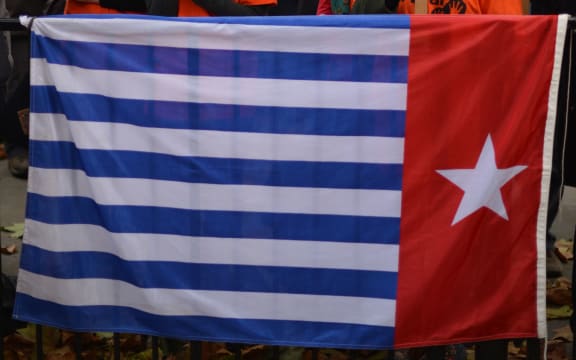
Branding armed Papuan groups as “terrorists” has sparked strong condemnation from human rights groups across Indonesia and in West Papua, some describing the move as desperation and the “worst ever” action by President Joko Widodo’s administration.
Many warn that this draconian militarist approach to the Papuan independence struggle will lead to further bloodshed and fail to achieve anything.
Many have called for negotiation to try to seek a way out of the spiralling violence over the past few months.
Ironically, with the annual World Press Freedom Day being observed on Monday many commentors also warn about the increased dangers for journalists covering the conflict.
Setara Institute for Peace and Democracy chairperson Hendardi (Indonesians often have a single name) has criticised the government’s move against “armed criminal groups” in Papua, or “KKB)”, as they are known by military authorities.
The move to designate them as terrorists is seen as a short-cut and an expression of the government’s “desperation” in dealing with the Papuan struggle for independence.
“The labeling of resistance groups in Papua will not break the long and recurring cycle of violence”, Hendardi said, according to a report in Merdeka by Yunita Amalia.
Failure of the security forces Hendardi said that the failure of security forces to cripple armed groups in Papua had largely been caused by the lack of support and trust by local people.
This was as well as the difficult and rugged terrain while local resistance groups were very familiar with their mountainous hideouts.
“The terrorist label and the subsequent [military] operations is Jokowi’s [President Joko Widodo] worst ever policy on Papua,” he claimed.
Setara Institute chairperson Hendardi … “The labeling of resistance groups in Papua will not break the long and recurring cycle of violence”. Image: CNN Indonesia
Coordinating Minister for Security, Politics and Legal Affairs Mahfud MD officially announced that the Papuan KKB had been included in the category of terrorist organisations.
He cited Law Number 5/2018 on the Eradication of Terrorism as a legal basis.
“The government considers that organisations and people in Papua that commit widespread violence are categorised as terrorists,” Mahfud told a media conference broadcast on the ministry’s YouTube channel.
Amnesty International Indonesia’s Usman Hamid … “The government should focus on investigating [human rights violation] cases and ending the extrajudicial killings.” Image: Kompas
Adding to list rights violations Amnesty International Indonesia said the move had the potential to add to a long list of human rights violations in the region.
Amnesty International executive director Usman Hamid believes that branding the armed groups terrorist will not end the problems or human rights violations in Papua.
“Even if they are so easily labelled terrorist, this will in fact have the potential of adding to the long list of human rights violations in Papua,” Hamid told Kompas.com.
Based on Amnesty International Indonesia’s records, there were at least 47 cases of extrajudicial killings committed by Indonesian security forces between February 2018 and December 2020 resulting in the death of about 80 people.
Also, already in 2021 there had been five cases of alleged extrajudicial killings by security forces resulting in the death of seven people, said Hamid.
“The government should focus on investigating these cases and ending the extrajudicial killings and other human rights violations by law enforcement agencies in Papua and West Papua, rather than focus on the terrorist label,” he said.
‘Transparent, just, accountable’ law enforcement National Human Rights Commission (Komnas HAM) Deputy Commissioner Amiruddin Al-Rahab said he was disappointed with the government’s decision.
“Pak Menko [Mr Security Chief] announced that the solution is to add the terrorist label. Speaking frankly I feel disappointed with this,” said Al-Rahab.
Al-Rahab believes that it is more important to prioritise “transparent, just and accountable” law enforcement as the way to resolve the Papua problem rather than labelling armed groups in Papua as terrorists.
“It is far more important to prioritise this rather than transforming labels,” he said.
The United Liberation Movement for West Papua (ULMWP) has also criticised the Indonesian government’s decision, dismissing the “terrorist label” as a colonial creation.
ULMWP executive director Markus Haluk said that the government often attached “certain labels” on the Papuan nation which were intentionally created.
“The terms KKB, GPK [security disturbance groups] and so forth are terms created by Indonesian colonialism, the TNI [Indonesian military] and the Polri [Indonesian police]. So, the Papuan people don’t recognise any of these”, Haluk told CNN Indonesia.
Haluk said that the National Liberation Army (TPN) and the OPM (Free Papua Organisation) were born out of a humanitarian struggle and that they opposed humanitarian crimes and systematic racist politics.
Indonesian human rights lawyer Veronica Koman with New Zealand journalist David Robie … “Indonesia has just burnt the bridge towards a peaceful resolution.” Image: Bernard Agape
Severing attempts for peaceful solution Lawyer and human rights activist Veronica Koman condemned the Indonesian government’s move.
Through her personal Twitter account @VeronicaKoman, she said that the decision would sever attempts to find a peaceful resolution to the conflict in Papua.
“Indonesia has just burnt the bridge towards a peaceful resolution,” she wrote in a tweet.
Indonesia has just declared the West Papua National Liberation Army a terrorist organisation.
Indonesia has just burnt the bridge to a peaceful resolution. Expect escalating armed conflict and human rights abuses.
Koman believes that the label could trigger an escalation in the armed conflict in the “land of the Cenderawasih”, as Papua is known. Not to mention, she said, concerns over possible human rights violations.
The OPM declared that it would challenge the decisions with the International Court of Justice (ICC).
The ICC is the United Nation’s top judicial body whose principle function is to hear and resolve disputes between member nations.
“The TPNPB [West Papua National Liberation Army] already has lawyers, we will send two of our lawyers [to the ICC] if Indonesia is prepared to include the TPNPB as a terrorist organisation, so we are very much ready to take the issue to the International Court”, said TPNPB-OPM spokesperson Sebby Sambom.
Journalist and editor Victor Mambor … “I’m worried about my family and colleagues at Jubi.” Image: APR screenshot
Threats to balanced media Meanwhile, a prominent Papuan journalist, Victor Mambor, has expressed concern about the implications for media people trying to provide balanced coverage of the Papuan conflict.
Mambor, founding editor of Tabloid Jubi, contributor to The Jakarta Post, and a former Papuan advocate for the Alliance of Independent Journalists (AJI), is among many media people who have been targeted for their robust reportage of the deteriorating situation in Papua and human rights violations.
Just last week his vehicle had its windows smashed and was daubed with spray paint. The attack was featured in Suara Papua, but as Mambor admits this was just the latest of a series of attacks and attempts at intimidating him in his daily journalism.
Mambor, who visited New Zealand in 2013, told Asia Pacific Report that there had been no progress so far in the investigation into the attack. A police forensics team had checked his car.
“I am not worried about my safety because if have experienced a lot of terror and intimidation that has let me know how to deal with these actions against me,” he said. “Even worse things have happened to me.
“But I’m worried about my family and colleagues at Jubi.”
“These developments have an impact on media workers like me or fellow journalists at Jubi who try to maintain a ‘covering both sides’ principle to report on the conflict in Papua,” he said.
“The terror attack that I experienced explains that. Journalists who report on the Papua conflict with a different perspective other than what the security forces want will be subject to problems and pressure. This is what I’m worried about.
“However, I am also worried about the continued existence of a single narrative developed by the security forces on the conflict and armed violence in Papua.”
With thanks to some translations by James Balowski for IndoLeft News.
New Zealand Rugby is accusing the Players’ Association of misrepresenting the reasons for their opposition to the Silver Lake deal.
Thursday’s NZR annual general meeting unanimously backed the selling of a minority stake in its commercial arm to the US private equity firm.
Holding up the NZ$387.5 million (($281.8m) deal is the sign-off from the players, with All Blacks hooker Dane Coles yesterday saying the reservations were not just about the money.
New Zealand Rugby chairman Brent Impey questioned the players representatives.
“I do believe that the Players Association have not represented exactly what their position is, which was we are opposed to the deal philosophically but we’ll give that away if you give us more money,” said Impey.
Mediation between New Zealand Rugby and the Players’ Association is currently on hold.
Coles had said that they weren’t about to be rushed into any decision.
‘No rush to get into it’ “There’s no rush to get into it, this is a very big decision and it’s something we could look back on in a hundred years [and say] why did we make that decision, or we look back in a hundred years and be glad we made that decision,” Coles said.
“I know the Players’ Association have got the players best interest at heart.”
“If it was about the money we would say yes, but it’s not about the money, it’s about leaving the game in the best hands and having the future as bright as we can and looking after everyone,” said Coles.
Impey said the deal would help the game at all levels.
“This is a commercial deal and is therefore going to benefit clubs, the 26 provinces and everybody in the game by getting money into it,” he said.
“Eighty percent of what we spend on rugby goes into the professional game, only 20 percent goes into the community game and so we need to change the paradigm because the game is struggling big time in our community, so this is all about money.”
Impey said the Players’ Association wanted 40 percent of what was coming in.
The Players Association has not commented since yesterday’s vote was taken at the New Zealand Rugby AGM.
Impey said Silver Lake was delighted with yesterday’s vote and they were being very patient over the ongoing stand-off with the players.
“We will go back into good faith bargaining [with the Players’ Association] over the next few weeks, but we are hopeful we will be able to strike a deal.”
This article is republished under a community partnership agreement with RNZ.
ANALYSIS:By Tim Murphy and Mark Jennings, co-editors of Newsroom
Less than half the New Zealand public now professes “overall trust” in news media outlets, despite big rises in audience numbers during the covid-19 pandemic and economic crisis.
The 2021 Trust in News in New Zealand survey released yesterday found the level of overall trust falling from 53 percent in 2020 to 48 percent in 2021 and trust in the news sources used by respondents themselves falling by 7 points from 62 percent to 55 percent.
The drops in NZ mirrored international research findings in the Reuters Digital News Report 2020, which put trust in media at the lowest level since it began seeking such data in 2016. But our overall trust figure at 48 percent remains high compared to the international average of 38 percent.
The local survey of 1200 people, run online nationwide by Horizon Research in March on behalf of AUT’s research centre for Journalism, Media and Democracy found all news brands experienced erosion in trust over the 12 months, with Newshub and Newstalk ZB suffering “statistically significant” falls.
Trust score for New Zealand news brands in 2020 and 2021. Image: Trust in media 2021 report
Respondents were asked to rate 11 media brands out of 10 for trustworthiness (with 10 being completely trustworthy). Average scores out of 10 were calculated from those who knew of each source.
“In general, trust in the news has declined because the news media is seen as increasingly opinionated, biased, and politicised,” says JMAD co-director Dr Merja Myllylahti.
The survey shows New Zealanders want factual information and not opinion dressed up as news, the researchers say.
While news organisations reported fully on the covid outbreak and were rewarded with big rises in readership, viewership and even user donations, the ebbing away of trust will puzzle some newsrooms.
The JMAD report suggests reasons for mistrust in the media include:
political bias, especially in talkback radio (“They’re pretty right-wing”)
politicisation of media
media pushing certain social/other agenda (including climate change)
media offering opinions, not factual news and information
not offering a full picture of events
selective reporting
poor standard of journalism, including poor sourcing, factual mistakes, poor grammar and low standard of writing
Readers’ trust in news encountered on social media is particularly low, at 14 percent (down 2) in New Zealand and 22 percent (down 1) internationally, and just 12 percent here would trust social media for good news and information on the pandemic.
How New Zealand compares to selected other countries over trust in media. Image: Trust in media 2021 report
Trust in news in New Zealand is clearly below Finland, Portugal and Turkey, but much higher than in countries such as Australia, the US and the UK.
The most trusted sources for news and information on the covid-19 virus and pandemic were RNZ and TVNZ, both state owned.
RNZ riding high in online audience Not only is RNZ the country’s most trusted news source, it has also surged in the online readership stakes, overtaking TVNZ and now closing in on Newshub for third biggest website audience in the latest, March, Nielsen monthly ratings.
In first place, nzherald.co.nz has pushed back to its near record monthly unique audience at 1.95 million, with Stuff – at 1.77m – now around 300,000 down on its own highs of 2.1m due to removing its content from Facebook. Newshub recorded 890,000, just holding off RNZ at 860,000, with 1News some distance back among the second tier sites, at just 720,000.
The rnz.co.nz audience now is about 60 percent higher than before the Covid-19 pandemic hit a year ago, having spiked like those of many news outlets at the beginning of the outbreak in March and April 2020, but unlike some, holding on to much of its gain.
Stuff is no longer officially part of the Nielsen measurement, so its monthly unique number would be less reliable than others, but the Herald site went past it last year and has not been bested for months on end. When Stuff left Facebook, it was anticipated its total audience would drop as most sites receive major contributions to their readership from referrals from the social media giant.
If the government’s mooted merger of TVNZ and RNZ into a new public broadcaster comes to fruition, the joint public news website could be expected to be a serious challenger (even when the current, separate Nielsen audience numbers are unduplicated) to the Stuff and nzherald.co.nz pairing at the pinnacle of online audiences.
Newsroom is not part of the Nielsen survey.
Discovery discovers cost cutting It was always going to be on the cards. Four months after taking over MediaWorks’ television arm, Discovery Inc is looking to make cost savings.
The process of talking to staff began last week and will play out over the next couple of months. The company is positioning the cuts as the integration of its Australasian businesses.
Discovery already owned the small free-to-air channels, Choice and HGTV when it bought Three, Bravo, and Edge TV off MediaWorks. Sales and back office functions are obvious areas for rationalisation, although the savings are likely to be minor.
In Australia, free-to-air channel, 9Rush is a joint venture between Discovery Inc and Nine entertainment. Discovery also supplies content to Aussie pay TV networks Foxtel and Fetch.
MediaWorks sold its TV arm because it had been losing millions year after year and dragging the profitable radio operation down. Discovery’s options to cut the loses seem limited unless it gives Three a supply of cheap reality programming, but this risks a ratings drop as TVNZ further ramps up its local production.
Three’s news operation is unlikely to escape the cost-cutters’ attention. Sources say Newshub is part of the cost review but staff are likely to be redeployed rather than axed.
Tim Murphy is co-editor of Newsroom. He writes about politics, Auckland, and media. Twitter: @tmurphynz Mark Jennings is co-editor of Newsroom. This Newsroom article is republished with permission.
Over recent weeks, news reports have indicated some women are experiencing irregularities in their menstrual cycles after receiving a COVID vaccine.
This has included periods arriving early and being heavier than usual, or being absent or late, among other changes.
At this stage, there’s no research evidence to support these anecdotal reports. But it is plausible there might be a link, and it’s worth researching further.
In the original trials of the COVID vaccines, the researchers looked for whether the vaccine was effective at preventing symptomatic COVID-19, comparing it to a placebo injection.
They also looked for any serious complications, such as allergic reactions, and side effects sometimes associated with vaccination, like fever.
But the original studies didn’t report on any changes to menstrual cycles, such as if periods would come early or late, if they would be heavier or lighter, or if they would be more or less painful. This is not particularly surprising — clinical trials don’t commonly measure this outcome.
Unfortunately, without any data, we can’t provide public health information on this potential side effect. So women of reproductive age don’t know what to expect. And if they do notice their next period is different from usual, they can understandably become worried.
Reports from around the world have suggested some women are experiencing changes to their periods after the COVID vaccine.CDC/Unsplash
It is possible
In theory, a vaccine could affect a woman’s period. A vaccine is meant to induce an immune response in the body, and this immune response could have an impact on the menstrual cycle.
The menstrual cycle is primarily under the control of a complex interplay of hormones released by the brain and acting on the ovaries and in turn, on the uterus.
In the first half of the cycle, which is dependent on the female sex hormone oestrogen, the endometrial lining is starting to build up in the uterus and the follicles (eggs and their surrounding tissue) are maturing in the ovary.
In the middle of the cycle, a surge in a hormone called luteinising hormone acts on the ovary to release an oocyte (egg) from the most mature of the follicles, or ovulation.
In the second half of the cycle, which is dependent on another sex hormone called progesterone, the endometrial lining thickens significantly in preparation for a fertilised egg to implant. If pregnancy doesn’t occur, then progesterone falls quickly, leading to a shedding of the lining of the uterus, or menstruation.
The cycle is also mediated in part by the immune system. For example, certain immune cells, such as macrophages, mast cells and neutrophils, are found in the endometrial lining, and involved in the shedding of the lining of the uterus during the menstrual cycle, and rebuilding it for the next cycle.
So it’s possible receiving a vaccine and having the expected immune response could affect the complex interplay between immune cells and signals in the uterus, and lead to the next period being heavier, more painful or longer.
We need studies to explore this
A researcher in Illinois is asking volunteers to participate in an online survey about their experiences with menstruation after receiving a COVID vaccine.
This may help figure out how many women are observing menstrual irregularities after the vaccine. But one problem is there’s no comparison group — namely women who didn’t receive the vaccine.
Further, the data being collected are retrospective, which are limited by recall bias. If you believe menstrual issues are related to the vaccine, you may be more inclined to remember that after the vaccine you had several months ago, you did have a heavier period.
A better way to study this would be to enrol women of reproductive age into a study in advance, get them to track three months of cycles, then give them the vaccine or a placebo injection, and get them to track the following three months.
There’s no data to support a link between the COVID vaccines and irregular periods — but that doesn’t mean it’s not possible.Shutterstock
There are many reasons your period might be irregular
Anything that impacts hormones or your immune system, such as stress, diet, exercise, sleep or illness, could impact your cycle.
In this regard, the vaccine could possibly affect your cycle indirectly too. Some women may be stressed about getting the vaccine, while others will feel relieved at being vaccinated.
The good news is that if you experience disruptions to only one cycle — whatever the reason — there’s likely no need to be concerned. If irregular, painful or heavy periods persist for more than three months, then speak to your doctor.
The focus on this issue in the media is a good way to start a public discussion about menstruation. And emerging research is an important means to get more information about what women of reproductive age can expect after the vaccine.
But anecdotal reports of some menstrual irregularities is not a reason to avoid getting the vaccine. Getting infected with COVID-19 is much more likely to interfere with your health, including your menstrual health.
There’s certainly no scientific basis to reports some women have experienced changes to their periods from simply being around people who have been vaccinated.
If you’re eligible to receive a vaccine, then do so. And if you do have a heavier period next month, think of it like a temporary side effect, and try not to worry.
University of Canberra Professorial Fellow Michelle Grattan and University of Canberra Vice-Chancellor and President Professor Paddy Nixon discuss the week in politics.
This week Michelle and Paddy discuss the coronavirus situation in India, where more than 300,000 new cases have been recorded each day this week. The pair dive into what the government is and isn’t doing to support the developing country, and Australian citizens stranded there. The pair also discuss the ‘drums of war’ heard by Secretary of the Home of Affairs Department Mike Pezzullo, and the upcoming budget.
Australia’s trucking industry is making moves to go electric. The latest development — a system for using swappable batteries instead of time-consuming recharge stations for long-haul trucks between Sydney and Brisbane — shows how this transition is gathering momentum.
There will be clear socio-economic, environmental and health-related benefits from the switch to electric trucks — for the broader community as well as for the trucking industry and truckies themselves. As electric vehicle researchers, we think swappable batteries could work well for trucking, but are perhaps less suitable for everyday electric cars.
Electric trucking
There are many benefits from electrifying truck transport. Companies such as Woolworths and Ikea have already started to transition to electric delivery vans for the environmental benefits (and a possible boost for their brands).
Many leading truck manufacturers such as Scania, Mercedes Benz and Volvo are proceeding apace with trials and plans to make their trucks electric.
Trucks make up 20% of the vehicles in Australia, and Australia’s transport emissions are still growing.
Australia’s motor vehicles consume more than 33 billion litres of fuel each year. The transport sector was responsible for about 100 million tonnes of carbon dioxide emissions in 2019.
Australia spent some A$31 billion in 2019 to import oil, with half used for road transport. This not only affects Australia’s balance of trade, but poses a risk to our freight industry (including supermarket deliveries) if geopolitical instability affects fuel imports (which mainly come from just a few countries).
The trucking company Linfox appears to have understood the advantages that transition to electric trucks can bring to its business, and is one of the early adopters trialling them here in Australia.
Not just trucking companies
Many big companies are making commitments to cut their carbon emissions, such as Fortescue Metals’ target of net zero operational emissions by 2040. Its mining fleet operations account for half of its operational emissions.
Procurement of electric trucks by government and mining fleets could not only help reduce transport emissions but signal to the community that the transition away from more polluting vehicles can be done.
Innovative solutions such as the truck battery swap system mean that not only big companies but also sole operators can make the change, by converting existing trucks and leasing batteries.
A typical articulated truck uses 53.1 litres of diesel per 100 kilometres. A trip from Brisbane to Sydney could cost more than A$600 in fuel (which you, the consumer, help pay for when you purchase transported goods). Going electric would not only at least halve that cost but reduce maintenance costs and reduce emissions, even if batteries are recharged from the grid.
Swapping out depleted batteries, rather than stopping to recharge, is a great solution for trucks: they make regular trips along major routes with regulated rest stops for drivers, which means you only need battery-swapping stations at key points along the routes.
However, battery swapping for ordinary passenger vehicles may be a different story. It has been tried before, but didn’t take off.
A US-based company called Better Place, founded in 2007, got as far as setting up trial stations (with one even planned for Canberra). But the company collapsed in 2013.
One problem was that car manufacturers would have had to agree to use a common battery platform to enable swapping, and only Renault came on board. Another was that the cost of installing enough battery swap stations to satisfy the wider community was enormous.
Trucks travelling on major transport routes won’t face this problem, so battery-swapping has a better chance of success.
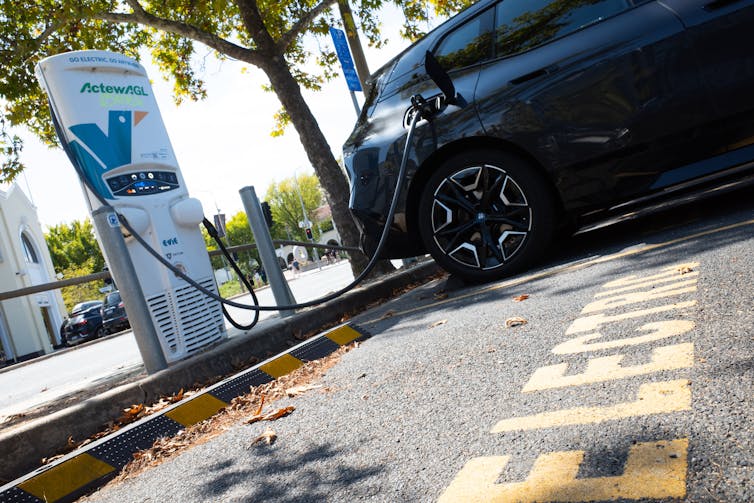
Public charging stations like this one in the UK could make it easier to own an electric vehicle.Kirsty Wigglesworth / AP
How to go electric
Our ongoing research on policies to foster electric vehicle adoption has found that electric passenger cars are mostly recharged at home. This means we need solutions to help those without off-street parking get access to convenient local rechargers. This will help Australia reduce its balance of trade problems, reduce our health costs, and help the environment.
We just have to hope our government comes on board with suitable regulatory action to help us all go electric. One step might be to follow the US government’s recent announcement that it will electrify its entire fleet of vehicles. This will help car manufacturers, help bring down carbon emissions, help reduce the nation’s health budget and also help everyday people reduce their transport costs, which would be fairer and more sustainable.
She published more than 70 novels and sold more than 34 million books translated into 29 languages, making her one of Australia’s most successful and prolific authors. Yet many are not familiar with her name.
Valerie Parv passed away suddenly last weekend, a week before her 70th birthday. She began as an advertising copywriter, and her first books, non-fiction home and garden DIY guides, were published in the late 1970s. In the 1980s, she began to publish in the genre she was most well-known for: romance fiction.
Her first romance novel, Love’s Greatest Gamble, was published by Harlequin Mills & Boon in 1982. This was, as Parv noted, a book which “broke a few moulds at the time”, featuring a widowed single mother heroine dealing with the fallout of her late husband’s PTSD-induced gambling addiction.
Parv went on to write 56 more romances across various Harlequin imprints. With these books, she was primarily working in the genre known as category romance — most frequently associated with Mills & Boon in Australia, and sold in print at discount department stores like Kmart, Big W and Target.
Romance fiction is often derided as formulaic. This is especially true for category romance fiction, as publisher guidelines can dictate things like length, setting and level of sexual content. Parv, however, firmly rejected this notion.
“All fiction has conventions but formula, hardly,” she wrote earlier this month.
“Not when people and their stories are so varied.”
Romance, and aliens
In addition to writing romance, Parv also wrote science fiction novels and a number of non-fiction works. She is the only Australian recipient of the Romantic Times Book Reviews Pioneer award, which honours those who have broken new ground in the development of the romance novel.
Parv was unafraid to experiment, enjoining aspiring authors to “write dangerously” rather than to satisfy the market, and often hybridised genres in her work.
She frequently told an anecdote about her 1987 book The Leopard Tree, which raised the possibility its hero might have arrived by UFO.
While she received pushback on this from the English Harlequin imprint Mills & Boon, the book was published by the American imprint Silhouette, where the book, she would say, “became the poster-child for cutting edge romance for some years afterward”.
Completing her masters degree in 2007, Parv’s thesis was inspired by a question often posed to her by aspiring authors: “where do you get your ideas?”
She explored this question in relation to both her own work and the work of other authors, concluding authors often revisit themes and ideas resonant with their own lives, whether consciously or unconsciously.
In her own work, she observed a consistent preoccupation with characters resolving feelings of alienation, which she linked to the fact her family emigrated from Britain when she was seven, leaving her with a sense of rootlessness.
A writers’ writer
Parv’s professional career is as much a story of community-building as it is the story of an individual author.
An enormous part of her legacy will be her bestselling guides on the craft of writing, including The Art of Romance Writing (1993), Heart and Craft (2009), and, most recently, her part memoir/part writing advice volume 34 Million Books (2020), the title of which is a wink to her own prolific success.
In her writing guides, Parv focused unerringly on practical advice for writing, but also steered away from prescriptivism.
“There’s no one way to write a romance novel, no ‘secret’ that can be applied to every writer and every story,” she wrote in the introduction to Heart and Craft.
Parv was also strongly committed to mentorship. For 20 years, the Valerie Parv Award was run through the Romance Writers of Australia. Winners of the award — fondly referred to by Parv as her “minions” — received a year’s mentorship with Parv.
Nearly all of Parv’s minions have gone on to have works published. Their numbers include several highly successful romance authors, such as Kelly Hunter, Rachel Bailey and Bronwyn Parry.
In 2015, Parv was made a Member of the Order of Australia for significant contributions to the arts — both as a prolific author and as a mentor.
‘I believe in romance’
As a genre, romance fiction has never enjoyed an enormous amount of respect from outside its readership. For this reason, Parv — like her highly prolific and successful peer Emma Darcy, who predeceased her by four months — may never be a household name, despite her service to Australian literary culture: a fact of which she was well aware.
Despite this, she never ceased to advocate for the genre in which she made her career, and in which she assisted so many others to do the same.
“I will never send up romance in any form, because I believe in romance,” she commented on the Secrets From The Green Room podcast one month before her death.
“I’ve been in love, and I know how important it is to my life, and how it is to most people’s lives.”
Imagine constantly living with mice. Every time you open a cupboard to get linen, clothes or food, mice have been or are still there. When you go to sleep they run across your bed and, in the morning, your first job is to empty traps filled with dead mice. And the stench of dead mice fill the streets.
Even the cats and dogs get sick of mice and stop chasing them.
This is the dystopian reality for many towns as, over recent months, mouse numbers in northern NSW and southern Queensland have risen to plague proportions, devastating summer crops and fodder storages. One farmer told me he’s removing 100 dead mice from his swimming pool each night.
This week, for example, truckloads of sorghum from Southern Queensland farms have been rejected from sale after mouse droppings were discovered. This means loads of grain need to be cleaned before they’re suitable for sale.
No one ever forgets living through a mouse plague.
One of the largely unquantified repercussions of mice is the social and mental health impact on farmers, their families and rural communities — places only just starting to recover from the recent, devastating drought.
I work with scientists and rural communities to reduce the impact of mice. So, with no end to the plague in sight, let’s look at the issue in more detail.
Mice outbreaks in Australia
The earliest accounts of mouse outbreaks in Australia are from the late 1800s, after the house mouse, Mus musculus, was likely introduced in the late 1700s as stowaways with the First Fleet. Similar plagues are uncommon in other countries — even though mice are found worldwide — as favourable climates lead to lots of food and shelter, which sustain high mouse populations in Australia.
Outbreaks like we’re seeing now tend to follow a run of dry years. The house mouse is very well adapted to live in Australian conditions, and they can survive through protracted dry periods and thrive when there’s lots of food and moisture. While often not conspicuous, they’re present in most environments — all the time.
As climatic conditions become favourable for crop production, they’re also favourable for mouse breeding. And mice reproduce alarmingly fast.
They start breeding at six-weeks old and give birth to a litter of six to ten pups every 19 to 21 days after that. After giving birth to one litter, females can immediately fall pregnant with the next litter, meaning there’s no break in the production of offspring.
In good seasons, when the rate of survival is high, the rate of population increase is dramatic. A single pair of mice can give rise to 500 mice in a breeding season. This year, the breeding season has lasted through summer and into autumn, as the weather has been milder with lots of rain.
Desperate times, desperate measures
Mouse outbreaks or plagues occur across the cropping zone — the extensive area where crops are grown in Australia — approximately every five years. However major outbreaks like the one we’re experiencing today are less frequent.
In some towns across the cropping zone, the smell of dead and decomposing mice is becoming a significant problem in shops, rubbish bins and under buildings and homes, where mice that have been baited have gone to die.
And the outbreak is growing. I’m getting reports from farmers of high mouse numbers from other parts of the cropping zone, through southern NSW, Victoria and South Australia.
1,600 bales of hay, completely decimated by mice.Adam Macrae, Author provided
Mice can cause damage during all stages of crop growth, and they don’t limit themselves to cereals. Farmers have reported significant damage in canola, lentils and other pulse crops. Likewise, mice removing freshly sown seed, browsing shoots and feeding on developing heads and seed pods all reduce crop yield.
Mice also cause significant damage to on-farm storages of grain and fodder. Contamination of grain with mouse faeces can lead to grain distributors and export markets rejecting produce (such as with sorghum in Southern Queensland).
This year has been so bad, farmers say they’re giving up on efforts to control mice with bait, and instead ploughing their summer crops back into the ground. Other desperate measures include burying entire haystacks to protect them from total decimation by mice.
The cotton industry, rarely impacted by mice, has even sought an emergency permit to allow control of mice in cotton crops using zinc phosphide baits, the only approved chemical control measure for mice in broad-scale agriculture in Australia.
So how does this horror end?
The drivers for the end of a mouse outbreak are not well understood. It’s thought a combination of high numbers, food running short and disease leads to mice turning on each other, eating sick and weak animals and offspring, resulting in a dramatic crash in the population. Farmers, in previous outbreaks, have reported mice disappearing almost overnight.
CSIRO is developing strategies to reduce the impact of mice in agriculture.Sharon Watt, Author provided
CSIRO, with the support of the Grains Research and Development Corporation, is working on developing a range of new ways to reduce the impact of mice in crop production systems. Key focuses include monitoring populations to make predictions about future outbreaks and developing of better predictive models.
We’re also investigating how current cropping practices influence mouse behaviour and their population dynamics. This will help us assess potential new control strategies, develop more effective baiting procedures, and consider the potential of future genetic control technologies.
Still, the introduced house mouse will be an ongoing problem in Australian farms and rural communities for years to come. We must urgently find ways to reduce the economic and social impact of mice, not only for the sustainable production of crops, but also for the mental well-being of rural communities.
Mummy, why do we have eyebrows? — Alexander, age 3, Brisbane.
What a great, eyebrow-raising question, Alexander!
Eyebrows come in a range of shapes, sizes and colours. They help make our faces unique. But there’s more to eyebrows than meets the eye.
Eyebrows help us express our feelings
Our eyebrows say a lot about how we are feeling. We scrunch our eyebrows when angry, and perk them up when surprised.
Moving our eyebrows can also tell people if we’re happy, confused, sad or upset. These expressions help us communicate. So, eyebrows can tell a story without saying a word.
How quickly we move our eyebrows also matters. When we’re sad, we move our eyebrows slowly. When we’re angry, we move them faster. And when we’re happy, we move them the fastest.
Eyebrows protect your eyes
If you have been running around on a hot day, you might notice some sweating on your forehead. The shape of the bones and skin around the eyebrows helps direct the sweat toward the side of our faces. That stops water from running directly into our eyes.
How our eyebrow hairs are lined up, and the direction they grow in, also help protect our eyes from sweat, as well as from dirt, dust and water.
In fact, when dust lands on our eyebrows, we often blink automatically to get rid of the dust. Even if dust lands on one eyebrow, we can’t help blinking both eyes.
Our eyebrows also shade our eyes from bright lights. The eyebrow hairs stick out from our face, which reduces the amount of sunlight entering our eyes.
Eyebrows can help block how much bright light enters our eyes.Christian Moro/Author provided
And when we’ve had a tiring day, or when we’re asleep, eyebrows help us relax our eyes. They reduce strain on our eye muscles and help us shut our eyelids.
Eyebrows form part of our identity
Whether we have big bushy eyebrows, or styled “brows”, our eyebrows play a big part in making us look unique.
They also help us recognise familiar faces. So if we didn’t have eyebrows, we might not so easily recognise our friends or family.
Looking at eyebrows also helps us know if someone’s a man or a woman. That’s because men tend to have thicker eyebrows closer to the eyes, and women have thinner eyebrows higher above the eyes.
And older people, like our grandparents, can have tired or droopy looking eyebrows. That’s because, as people get older, their eyebrow muscles become worn out and gravity pulls them down.
Since ancient Egyptian times, people have linked eyebrows with beauty. Men and women used to paint on dark, arched eyebrows with a black powder to show respect to Egyptian gods. Eyebrows were also thought to give people supernatural powers!
Even today, people tweak the look of their eyebrows. They can remove hairs by tweezing or waxing. They can even dye their eyebrows or tattoo them.
So, next time you look in the mirror, take a closer look at your eyebrows. They tell others how you’re feeling and help protect your eyes. They also play a big part in what you look like and who you are.
Hello, Curious Kids! Have you got a question you’d like an expert to answer? Ask an adult to send your question to curiouskids@theconversation.edu.au
Source: The Conversation (Au and NZ) – By Jonathan Pryke, Director, Pacific Islands Program, Lowy Institute for International Policy; Centre Associate at the Development Policy Centre, Australian National University
For most of the last year, the Pacific Islands have been remarkably isolated from the devastating effects of the COVID crisis. By walling themselves off early from the outside world, most Pacific nations remain completely COVID free.
Historians will look back on this as a remarkable achievement by Pacific nations, and a great credit to the swift actions taken by their leaders.
While isolation has proven itself to be an effective preventative strategy, it is not a perfect one. Border closures have taken an severe toll on these nations’ fledgling economies.
And even the most robust border and quarantine control systems can break down. In the Pacific, the cracks are now starting to show.
The most obvious case is in Papua New Guinea, where caseloads started surgingexponentially two months ago.
With a porous land border with Indonesia and weak quarantine controls, it’s remarkable the virus did not get out of control sooner. However, it is now running unchecked in the capital, Port Moresby, and has spread to every province in the country.
The health system came very close to complete breakdown in March, and despite hopeful signs of case numbers stabilising in the capital (now at a much higher level), the country remains in dire need of further assistance.
Fiji was the most successful nation in the region in containing community transmission a year ago. It, too, is now showing cracks in the armour.
In a familiar story, a soldier working at a quarantine facility caught the virus from a traveller who had recently returned from India. Now identified as the new and extremely infectious Indian strain, it has quickly spread.
Much of the country’s main island of Viti Levu is in lockdown as contact tracing is conducted. While Fiji is the most capable country in the region to handle an outbreak, it also comes at a terrible time for the tourism-dependent nation, which is desperate to reopen to the Australian and New Zealand markets.
Over in Vanuatu, the dead body of a Filipino sailor from a visiting cargo vessel that washed ashore on April 11 tested positive for the virus. The vessel is now in Australian waters, with all but one of the 12 sailors on board testing positive for COVID-19.
Getting vaccines is step one
The solution to the Pacific’s imperfect isolation strategy is the same as Australia’s – vaccines.
Given the enormous global demand for vaccines, and the small size and limited bargaining power of Pacific Island nations, there has been a very real threat they would be left at the back of the queue in the vaccine scramble.
However, assertive work by donor nations like Australia and New Zealand, combined with access to the World Health Organisation-led global COVAX facility, has so far meant Pacific nations are not being left out in the cold.
The North Pacific nations of Federated States of Micronesia, Marshall Islands, and Palau are well on their way to being fully vaccinated courtesy of the United States’ Operation Warp Speed program.
Initial batches of between 4,800-132,000 doses of AstraZeneca vaccines have also been delivered to Fiji, Nauru, PNG, Samoa, Solomon Islands, Tonga and Tuvalu via the COVAX initiative.
Both PNG and the Solomon Islands are adamant that they will not roll out the vaccine until it receives approval by the WHO, but the presence of Chinese vaccines ups the stakes for the vaccine diplomacy battle now underway in the Pacific.
Just two months ago, the worry for most Pacific nations was getting hold of vaccines. For many, the challenge has now quickly morphed to a larger, and much more challenging, question — how to roll them out.
There are enormous challenges involved with an effective rollout campaign in many countries, especially those with many islands like Kiribati or Solomon Islands or with large populations in remote communities spread across mountains and islands, like PNG.
Pacific leaders and health professionals also face widespread misinformation about vaccines, cultural stigma (many Pacific nations have never run an adult vaccination campaign), and logistical challenges related to cold chain storage and their already-stretched health systems.
Illustrating this point, of the 8,000 doses Australia provided to PNG more than a month ago, only 2,900 have been administered. While some nations, like Fiji, have quickly run through their allotted COVAX vaccines, others, such as PNG, run the risk of vaccines expiring before they get into people’s arms.
It will take a much more significant and coordinated effort from Pacific nations, and all of their donor counterparts, to effectively vaccinate the region.
A massive logistics campaign tailored to the needs of each nation must now get underway. NGOs, churches, and the private sector should all be expected to do their part. Alongside this, the Pacific nations need smart and widespread information campaigns to promote the efficacy and importance of the vaccines and help overcome misinformation and stigma.
If more concerted effort is not applied to getting needles into Pacific Islanders’ arms, then at best these countries will be left behind as other economies open up to one another, and at worst quarantine systems will fail and the virus itself will overwhelm their vulnerable systems.
The Pacific region has done extremely well in combating the COVID crisis to date. Let’s not stop now.
While many of these changes are minor tweaks and refinements, much like a curriculum oil change and tune-up, there are some noteworthy changes in the mix.
They include a more accurate reflection of the historical record of First Nations people’s experience with colonisation, with a commitment to “truth telling”. This means in part recognising Australia’s First Nations peoples viewed Britain’s arrival as an “invasion”.
There is also much stronger emphasis on cultural diversity and inclusion in the Humanities and Social Sciences curriculum.
Here is a summary of some of the good and the bad detail in the proposed curriculum changes.
Why is the curriculum being reviewed?
The Australian Curriculum was originally introduced in 2012 to provide support and greater consistency for what students learn in Australian schools in eight key learning areas. These are: English, Mathematics, Science, Humanities and Social Sciences, The Arts, Technologies, Languages, and Health and Physical Education.
In 2014, conservative commentator, Kevin Donnelly, and business academic, Ken Wiltshire, conducted the first review of the curriculum.
Their report called for greater emphasis on Western literature and Judeo–Christian heritage, as well as an increased focus on literacy and numeracy in the early years of primary school.
The Donnelly–Wilshire review also recommended the Australian Curriculum be reviewed every five years.
An updated Australian Curriculum was released in 2015. This has since been used by state and territory education authorities, and independent and Catholic schools to inform their curriculum planning.
The Australian Curriculum is not prescriptive, with each state and territory having jurisdiction over its own curriculum frameworks. For example, New South Wales has its own suite of syllabuses for each course. These include the knowledge, skills, values and attitudes expected in each course.
Similarly, the Victorian Curriculum incorporates the Australian Curriculum but reflects standards set out by Victoria.
In June 2020, the Australian Curriculum, Assessment and Reporting Authority announced the first five-year review of the Australian Curriculum. One of the aims was to refine and reduce the content across the eight learning areas.
The good: arrival of the British seen as ‘invasion’
Aboriginal and Torres Strait Islander communities maintain a special connection to and responsibility for Country/Place.
This has been changed to:
The occupation and colonisation of Australia by the British, under the now overturned doctrine of terra nullius, were experienced by First Nations Australians as an invasion that denied their occupation of, and connection to, Country/Place.
The new curriculum acknowledges the denial of First Nations’ peoples land and culture with the arrival of the British.Alessia Francischiello/Unsplash
Another statement in the current curriculum is very broad:
Aboriginal and Torres Strait Islander societies have many Language Groups.
But the review has the statement changed to:
First Nations Australian societies are diverse and have distinct cultural expressions such as language, custom and beliefs. As First Nations Peoples of Australia they have the right to maintain, control, protect and develop their cultural expressions, while also maintaining the right to control, protect and develop culture as Indigenous Cultural and Intellectual Property.
The proposed Humanities and Social Sciences curriculum changes signal a much stronger emphasis on cultural diversity and inclusion. This sits at odds with the 2014 review’s focus on Western culture and Christianity.
For example, currently in Year 7 Civics and Citizenship, students learn:
How Australia is a secular nation and a multi-faith society with a Christian heritage.
The proposed change will recommend students learn:
How Australia is a culturally diverse, multi-faith, secular and pluralistic society with diverse communities, such as the distinct communities of First Nations Australians.
The backlash to these proposed changes in the conservative media has already begun with an editorial in The Australian claiming “no faith-based school worth its salt could tolerate such bias”.
The bad: ‘back to basics’
Just like in 2014, there has been a reductive push in the first years of primary schooling to focus on literacy and numeracy at the expense of other rich curriculum experiences, such as the arts.
For example, the Foundation to Year 2 English curriculum has been substantially revised, with an increased emphasis on phonics and decoding, while the use of computer word processing has been moved to the Technology curriculum.
To make room for the additional focus on literacy and numeracy in the early years, both the Arts and Humanities and Social Sciences curriculum have been significantly reduced.
And in what appears to be an odd curriculum change, learning times tables in Mathematics has been postponed from Year 3 to Year 4.
Controversy
The proposed changes will likely continue to generate some harsh criticism, especially from conservative commentators who feel a stronger commitment to cultural diversity and social inclusion in the curriculum will come at a cost to students learning about the Western literary canon and Australian history since 1788.
But these changes are not a zero-sum game. They are a long-overdue recognition of the diverse communities and heritages that make up contemporary Australia and deserve to be studied and celebrated.
The curriculum may a usual flare up of the ‘reading wars’.Shutterstock
There will also be the usual flare-up of the “reading wars”, in which advocates of teaching phonics (teaching children the sounds made by individual letters or letter groups) will claim there is still not enough of it in the curriculum.
Other educators will argue the increased emphasis on phonics removes the opportunity for children to understand the broader meaning of texts as part of their literacy learning in primary school.
Inequality still prevails
Tinkering with the curriculum fails to address the biggest issue in Australian schooling, which is social disadvantage and inequity.
While elite private schools receive generous government funding in addition to tuition fees charged to families, some of the most disadvantaged public schools continue to be inadequately resourced.
Australian schooling is one of the most inequitable in the world and disadvantaged Australian students are up to three years behind the most-advantaged students.
Without adequate resourcing and funding models in place, no amount of reform will ensure all students receive access to a rich curriculum.
The public consultation window for the proposed curriculum is ten weeks — from April 29 until July 8 2021.
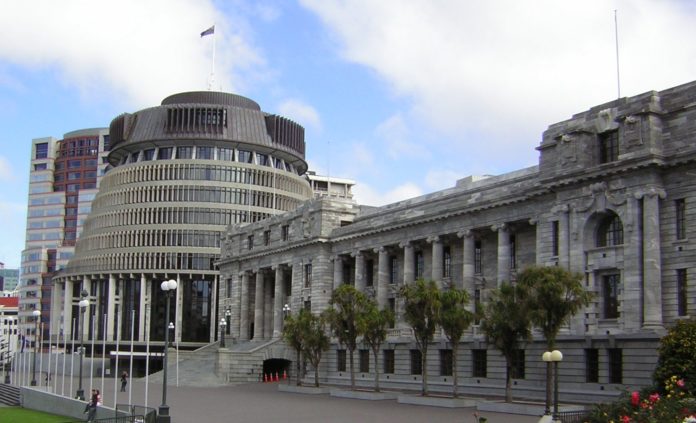
New Zealand Parliament Buildings, Wellington, New Zealand.
Editor’s Note: Here below is a list of the main issues currently under discussion in New Zealand and links to media coverage. Click here to subscribe to Bryce Edwards’ Political Roundup and New Zealand Politics Daily.
Source: The Conversation (Au and NZ) – By Corey J. A. Bradshaw, Matthew Flinders Professor of Global Ecology and Models Theme Leader for the ARC Centre of Excellence for Australian Biodiversity and Heritage, Flinders University
We know it is more than 60,000 years since the first people entered the continent of Sahul — the giant landmass that connected New Guinea, Australia and Tasmania when sea levels were lower than today.
But where the earliest people moved across the landscape, how fast they moved, and how many were involved, have been shrouded in mystery.
Our latest research, published today shows the establishment of populations in every part of this giant continent could have occurred in as little as 5,000 years. And the entire population of Sahul could have been as high as 6.4 million people.
This translates to more than 3 million people in the area that is now modern-day Australia, far more than any previous estimate.
The first people could have entered through what is now western New Guinea or from the now-submerged Sahul Shelf off the modern-day Kimberley (or both).
But whichever the route, entire communities of people arrived, adapted to and established deep cultural connections with Country over 11 million square kilometres of land, from northwestern Sahul to Tasmania.
Map of what Australia looked like for most of the human history of the continent when sea levels were lower than today.Author provided
This equals a rate of population establishment of about 1km per year (based on a maximum straight-line distance of about 5,000km from the introduction point to the farthest point).
That’s doubly impressive when you consider the harshness of the Australian landscape in which people both survived and thrived.
Previous estimates of Indigenous population
Various attempts have been made to calculate the number of people living in Australia before European invasion. Estimates vary from 300,000 to more than 1,200,000 people.
The 2016 census figures show an estimated Aboriginal and Torres Strait Islander population of about 798,400.
But records prior to the modern era are unreliable because Aboriginal and Torres Strait Islander people were only fully included in the national census from 1971, after the historic 1967 Referendum.
Before 1971, population estimates were attempted by anthropologists and government authorities. For example, the 1929 census reported 78,430 Aboriginal people.
Then, in 1930, the first thorough Australia-wide survey of Aboriginal populations estimated a minimum population of 251,000 at the time of European invasion.
This was based on accounts of European settlers adjusted by anthropological concepts about group sizes and ideas about environmental productivity.
Yet almost all of these older estimates are uncertain because of haphazard or incomplete data collection, and even a healthy dose of guesswork.
A new approach needed
We developed an entirely different approach to tackle the question of how many people were in Sahul, and through which parts they would have moved first as they adapted to a range of challenging new landscapes.
We developed a simulation model grounded in the principles of human ecology and behaviour, based on anthropological, ecological and environmental data.
Animation of our model shows the spread of people across Sahul. Source: Corey Bradshaw.
For example, we estimated the number of people the landscape could support based on climate and vegetation models that recreated ecosystems during the time of the first peopling of Sahul.
We also gathered real-world anthropological information on immigration and emigration rates, long-distance movement, human survival and fertility. We even looked at the probability of disasters such as bushfires and cyclones.
After running 120 scenarios of the model many times each, our research found that after expanding to all corners of the continent, the population of Sahul could have been as high as 6.4 million people, with initial entry most consistent with 50,000 or 75,000 years ago.
How good is our model?
We tested our predictions by comparing the model’s results against the ages and locations of the oldest known archaeological sites from Australia and New Guinea.
If the model predicts realistic movements (even though it’s unlikely we’ll ever know exactly what occurred), we expect its results should at least partially match the patterns observed from the archaeological data.
A map showing the locations of the oldest archaeological sites in Sahul.Sean Ulm, Author provided
That’s exactly what we found.
For example, while previous modelling says the northern route of entry through New Guinea would probably have been easier for people to negotiate, our model suggests the southern route through modern-day Timor and into the Kimberley was potentially the dominant entry point.
Why our estimate is higher than others
Our model covers the entire landmass of Sahul, including both New Guinea and the now-submerged continental shelves, which represent about 30% of the total landmass of Sahul. No previous population estimates have included this expansive region.
There is also plenty of precedent for the population densities our estimates imply.
If you divide our total 6.4 million population estimate by the land area available at the time (11,643,000 km²), it comes out to around 55 people per 100 km². This compares well to estimated densities of 34 people per 100 km² in some coastal regions of Australia, and 437 people per 100 km² in swidden-farming agricultural societies in New Guinea.
Population estimates immediately following European invasion are also likely to be low because of the heavy death rates Aboriginal and Torres Strait Islander people suffered from exposure to European diseases such as smallpox, and the devastating history of genocide committed by colonists.
Our findings add to the new evidence constantly being revealed to paint a more complete picture of life so long ago.
With sophisticated modelling tools combined with an ever-increasing pool of data covering all aspects of pre-European life in Australia, and guided by Indigenous knowledge, we are coming to appreciate the complexity, prowess, capacity and resilience of the ancestors of Indigenous people in Australia.
The more we look into the deep past, the more we learn about the extraordinary ingenuity of these ancient and enduring cultures.
Source: The Conversation (Au and NZ) – By Stefani Crabtree, Assistant Professor for Social-Environmental Modeling @ Utah State University and Associate Investigator ARC Centre of Excellence for Australian Biodiversity and Heritage and ASU-SFI Biosocial Complex Systems Fellow, Santa Fe Institute
There are many hypotheses about where the Indigenous ancestors first settled in Australia tens of thousands of years ago, but evidence is scarce.
Few archaeological sites date to these early times. Sea levels were much lower and Australia was connected to New Guinea and Tasmania in a land known as Sahul that was 30% bigger than Australia is today.
Our latest research advances our knowledge about the most likely routes those early Australians travelled as they peopled this giant continent.
Modelling human movement requires understanding how people navigate new terrain. Computers facilitate building models, but they are still far from easy. We reasoned we needed four pieces of information: (1) topography; (2) the visibility of tall landscape features; (3) the presence of freshwater; and (4) demographics of the travellers.
We think people navigated in new territories — much as people do today — by focusing on prominent land features protruding above the relative flatness of the Australian continent.
To map these features, we built the most complete digital elevation model for Sahul ever constructed, including areas now underwater.
How the Sahul landmass would have looked more than 50,000 years ago.Author provided
We used this digital elevation model to understand what was visible to early travellers. Essentially, from each point in the continent we asked “what can you see from here?” This moving window calculates the largest “viewshed” map ever created. When our virtual travellers move, they reorient based on visible terrain everywhere they go. The figure above shows the prominence of features across the continent as increasingly yellow shades against the blue background.
You can clearly make out features such as the the New Guinea Highlands, the Flinders Ranges in South Australia, the Great Dividing Range in the east, and the Hamersley Range in the Pilbara region of Western Australia.
But navigation using prominent landscape features isn’t enough to tell us where the most commonly travelled routes were.
For this we also need to take into account other factors, such as the physiological capacity of people travelling on foot, how difficult the terrain was to traverse, and the distribution of available freshwater sources in a largely arid continent.
Billions and billions of routes
We put all these different bits of information together into a mega-model, known as From Everywhere To Everywhere (FETE), and created more than 125 billion possible pathways from everywhere on the continent to everywhere else. Each route represents the most efficient way to move from one location to another. This was the largest movement simulation of its kind ever attempted.
This gives us an idea of the relative ease or difficulty of walking across all of Sahul.
We cannot possibly examine every metre of the 125 billion pathways we created, so we needed a way to weight the relative importance of likely pathways. To do this, we compared all plausible pathways with the distribution of the oldest known archaeological sites in Sahul, providing weighted probabilities for each path.
This provided a scale going from the “most likely” to the “least likely” chosen paths.
Super-highways of the initial peopling of Sahul, with known archaeological sites older than 35,000 years indicated by the grey dots. Megan Hotchkiss Davidson, Sandia National Laboratories (map) and Cian McCue, Moogie Down Productions (animation).
The most likely pathways in the map above are what we are calling the “super-highways” of Indigenous movement. The next most likely paths are marked by dotted lines.
This allows us to discard many of the billions of paths as less likely to be chosen, helping us focus on those that were the most probable.
We now have a first glimpse into where Indigenous Australians likely travelled tens of thousands of years ago.
Pathways well trodden
These super-highways might have been more than just routes used for the initial peopling of Sahul.
Several of the super-highways our models identified echo well-documented Aboriginal trade routes criss-crossing the country. This includes Cape York to South Australia via Birdsville in the trade of pituri native tobacco, and the trade of Kimberley baler shell into central Australia.
There are also striking similarities between our map of super-highways and the most common trading and stock routes used by early Europeans. They followed already well-known routes established by Aboriginal peoples.
Early routes of European explorers in Australia.Courtesy of Universal Publishers Pty Ltd
These Aboriginal exchange routes and the relatively recent trade routes of early Europeans cannot be used directly to validate a map from tens of thousands of years ago. But there are strong similarities that might suggest an extraordinary persistence of routes across the entire time period of human occupation of Australia.
We infer that early populations spread across the broad plains on the western and eastern margins of the continent (now under water) and through the region that now forms the Gulf of Carpentaria, which connected Australia to New Guinea.
It is worth noting these early people traversed and lived in all environments of Australia, ranging from the tropics to the arid zone. The ease of adaptation to all ecosystems is remarkable and one of the reasons for the success of the human species across the globe today.
[This] modelling establishes the infrastructure for detailed local and regional studies to engage respectfully with Indigenous knowledges, ethnographies, historical records, oral histories, and archives.
The fundamental rules we described apply even to questions about how the first migrations of people out of Africa might have occurred, and how people ultimately proceeded to inhabit the rest of the planet.
This work might even have implications for humanity’s future, if climate scenarios require large-scale migrations. Learning from those who have been present in Sahul from more than 60,000 years ago could help us anticipate migration patterns in the future.
Australians woke up to the freelancing advice this week that “drums of war” were beating louder in their neighbourhood, according to the country’s top security official.
It is hardly news that regional anxiety is rising as the countries of the Indo-Pacific scramble to accommodate China’s surging power and influence.
This is what Pezzullo, whose responsibilities include the domestic spy agency the Australian Security Intelligence Organisation, said in a message to his staff without directly mentioning the dragon in the room — China.
In a world of perpetual tension and dread, the drums of war beat sometimes faintly and distantly, and at other times more loudly and ever closer […] until we are faced with the only prudent, if sorrowful course — to send off, yet again, our warriors to fight the nation’s wars.
Pezzullo said in his ANZAC Day message that Australia must be prepared ‘to send off, yet again, our warriors to fight’.Lukas Coch/AAP
These words, untethered from any immediate threat, might have been put aside, but their timing has helped focus attention on the security challenges facing Australia at a moment of considerable strategic uncertainty.
The change of administration in Washington, along with a continuing deterioration in relations between Canberra and Beijing, has further unsettled Australia’s national security calculations in an age of regional uncertainty.
The simple question in all of this is whether conflict with China has become more likely, even inevitable? And whether hawkish elements in the Australian national security establishment, like Pezzullo, are overstating the risks?
All of these issues cause tensions with its neighbours and the wider international community.
However, it is China’s recent threats against Taiwan that have emerged as the most vexed issue. They present a risk, however remote, of a military confrontation between superpowers.
Barring a miscalculation by either side in a tense environment, the likelihood of open conflict is low, given the potential costs involved on either side.
On the other hand, unless Washington and Beijing achieve new understandings that lower the temperature in and around the Taiwan Strait, Taiwanese security will continue to weigh heavily on America and its alliance partners in the Asia-Pacific.
As an ANZUS Treaty ally of the United States — and with its own regional security preoccupations — Australia cannot avoid contemplating the possibility of a meltdown in the Taiwan Strait.
This includes the perennial question of whether Australia would involve itself militarily against China if asked to do so by its treaty ally. Such an outcome hardly bears contemplating.
In its initial interactions with China on the Taiwan issue, the new Biden administration is treading carefully. This is in contrast to its predecessor, whose foreign posturing tended to follow the fluctuating whims of Donald Trump.
Among the options for Biden’s State Department is one that would transition America’s approach to Taiwan from one of strategic ambiguity to clarity.
This means rather than taking a non-explicit approach — leaving open the option of a military response should China seek to reunify Taiwan by force — the US would make an explicit declaration that it would would, in fact, respond militarily.
This approach is gaining support in Congress, where sentiment has hardened against China’s behaviour on various fronts.
Former Senator Chris Dodd led a US delegation to Taiwan this month to reaffirm Washington’s commitment to the self-governing island.Taiwan Presidential Office/AP
It would be premature to declare a watershed has been reached on the Taiwan issue in which the US would make clear its intentions. But the debate appears to be heading in that direction.
The time has come for the United States to introduce a policy of strategic clarity: one that makes explicit that the United Sates would respond to any Chinese use of force against Taiwan. Such a policy would lower the chances of Chinese miscalculation, which is the likeliest catalyst for war in the Taiwan Strait.
Haass has a point.
In another essay published this month by three veteran security analysts, however, the authors issue a warning that “hyping the threat China poses to Taiwan does China’s work for it”.
As troubling as the trend-lines of Chinese behaviour are, it would be a mistake to infer that they represent an unalterable catastrophe. China’s top priority now and in the foreseeable future is to deter Taiwan independence rather than compel unification.
Why China favours a less risky approach
Beijing’s crude policy of conducting war games in Taiwan’s vicinity, including intrusions into its airspace, might suggest China is preparing retake the island. But the question is at what cost to its international standing, economic interests, and internal stability?
What is much more likely, Haass argues, is China will continue to exert pressure on Taiwan by various means in the hope that “once ripe the melon will drop from its stem”.
It shouldn’t be overlooked that in its latest five-year plan, China reaffirmed a policy guideline of pursuing “peaceful development of cross-strait relations”.
Finally, in all of this, there is the cold hard calculation of the military balance in the Taiwan Strait.
In its latest annual report to Congress, the US Department of Defence acknowledged China had “achieved parity with — or even exceeded – the United States” in three areas: shipbuilding, land-based ballistic and cruise missiles, and air defence.
In other words, the military balance in the Taiwan Strait is continuing to shift in China’s favour. This reality makes loose talk of Australian “warriors” responding to the trumpet call of war even less palatable.
In the heart of the world’s deserts – some of the most expansive wild places left on Earth – roam herds of feral donkeys and horses. These are the descendants of a once-essential but now-obsolete labour force.
These wild animals are generally considered a threat to the natural environment, and have been the target of mass eradication and lethal control programs in Australia. However, as we show in a new research paper in Science, these animals do something amazing that has long been overlooked: they dig wells — or “ass holes”.
In fact, we found that ass holes in North America — where feral donkeys and horses are widespread — dramatically increased water availability in desert streams, particularly during the height of summer when temperatures reached near 50℃. At some sites, the wells were the only sources of water.
Feral donkeys and horses dig wells to desert groundwater.Erick Lundgren
The wells didn’t just provide water for the donkeys and horses, but were also used by more than 57 other species, including numerous birds, other herbivores such as mule deer, and even mountain lions. (The lions are also predators of feral donkeys and horses.)
Incredibly, once the wells dried up some became nurseries for the germination and establishment of wetland trees.
Numerous species use equid wells. This includes mule deer (top left), scrub jays (middle left), javelina (bottom left), cottonwood trees (top right), and bobcats (bottom right).Erick Lundgren
Ass holes in Australia
Our research didn’t evaluate the impact of donkey-dug wells in arid Australia. But Australia is home to most of the world’s feral donkeys, and it’s likely their wells support wildlife in similar ways.
Across the Kimberley in Western Australia, helicopter pilots regularly saw strings of wells in dry streambeds. However, these all but disappeared as mass shootings since the late 1970s have driven donkeys near local extinction. Only on Kachana Station, where the last of the Kimberley’s feral donkeys are protected, are these wells still to be found.
In Queensland, brumbies (feral horses) have been observed digging wells deeper than their own height to reach groundwater.
Some of the last feral donkeys of the Kimberley.Arian Wallach
Feral horses and donkeys are not alone in this ability to maintain water availability through well digging.
Other equids — including mountain zebras, Grevy’s zebras and the kulan — dig wells. African and Asian elephants dig wells, too. These wells provide resources for other animal species, including the near-threatened argali and the mysterious Gobi desert grizzly bear in Mongolia.
These animals, like most of the world’s remaining megafauna, are threatened by human hunting and habitat loss.
Other megafauna dig wells, too, including kulans in central Asia, and African elephants.Petra Kaczensky, Richard Ruggiero
Digging wells has ancient origins
These declines are the modern continuation of an ancient pattern visible since humans left Africa during the late Pleistocene, beginning around 100,000 years ago. As our ancestors stepped foot on new lands, the largest animals disappeared, most likely from human hunting, with contributions from climate change.
If their modern relatives dig wells, we presume many of these extinct megafauna may have also dug wells. In Australia, for example, a pair of common wombats were recently documented digging a 4m-deep well, which was used by numerous species, such as wallabies, emus, goannas and various birds, during a severe drought. This means ancient giant wombats (Phascolonus gigas) may have dug wells across the arid interior, too.
Likewise, a diversity of equids and elephant-like proboscideans that once roamed other parts of world, may have dug wells like their surviving relatives.
Indeed, these animals have left riddles in the soils of the Earth, such as the preserved remnants of a 13,500-year-old, 2m-deep well in western North America, perhaps dug by a mammoth during an ancient drought, as a 2012 research paper proposes.
Feral equids are resurrecting this ancient way of life. While donkeys and horses were introduced to places like Australia, it’s clear they hold some curious resemblances to some of its great lost beasts.
Our previous research published in PNAS showed introduced megafauna actually make Australia overall more functionally similar to the ancient past, prior to widespread human-caused extinctions.
Donkeys share many similar traits with extinct giant wombats, who once may have dug wells in Australian drylands.Illustration by Oscar Sanisidro
For example, donkeys and feral horses have trait combinations (including diet, body mass, and digestive systems) that mirror those of the giant wombat. This suggests — in addition to potentially restoring well-digging capacities to arid Australia — they may also influence vegetation in similar ways.
Water is a limited resource, made even scarcer by farming, mining, climate change, and other human activities. With deserts predicted to spread, feral animals may provide unexpected gifts of life in drying lands.
Feral donkeys, horses (mapped in blue), and other existing megafauna (mapped in red) may restore digging capacities to many drylands. Non-dryland areas are mapped in grey, and the projected expansion of drylands from climate change in yellow.Erick Lundgren/Science, Author provided
Despite these ecological benefits in desert environments, feral animals have long been denied the care, curiosity and respect native species deservedly receive. Instead, these animals are targeted by culling programs for conservation and the meat industry.
Source: The Conversation (Au and NZ) – By Sharon Goldfeld, Director, Center for Community Child Health Royal Children’s Hospital; Professor, Department of Paediatrics, University of Melbourne; Theme Director Population Health, Murdoch Children’s Research Institute
Around one in three (36%) Australian children grow up in families experiencing adversity. These include families where parents are unemployed, in financial stress, have relationship difficulties or experience poor mental or physical health.
Our recent study found one in four Australian children experiencing adversity had language difficulties and around one in two had pre-reading difficulties.
Language difficulties can include having a limited vocabulary, struggling to make sentences and finding it hard to understand what is being said. Pre-reading difficulties can include struggling to recognise alphabet letters and difficulties identifying sounds that make up words.
Learning to read is one of the most important skills for children. How easily a child learns to read largely depends on both their early oral language and pre-reading skills. Difficulties in these areas make learning to read more challenging and can affect general academic performance.
What are language and pre-reading difficulties?
International studies show children experiencing adversity are more likely to have language and pre-reading difficulties when they start school.
Language difficulties are usually identified using a standardised language assessment which compares an individual child’s language abilities to a general population of children of the same age.
Pre-reading difficulties are difficulties in the building blocks for learning to read. For example, by the age of five, most children can name at least ten letters and identify the first sound in simple words (e.g. “b” for “ball”).
Most five year old children can name at least ten letters and identify the first sound in simple words.Shutterstock
Children who have not developed these skills by the time they start school are likely to require extra support in learning to read.
1 in 4 children in adversity had language difficulties
We examined the language, pre-reading and non-verbal skills (such as attention and flexible thinking) of 201 five-year-old children experiencing adversity in Victoria and Tasmania.
We defined language difficulties as children having language skills in the lowest 10% compared to a representative population of Australian 5-year-olds. By this definition, we would expect one in ten children to have language difficulties.
But our rates were more than double this — one in four (24.9%) of the children in our sample had language difficulties.
More than half couldn’t name alphabet letters
Pre-reading difficulties were even more common: 58.6% of children could not name the expected number of alphabet letters and 43.8% could not identify first sounds in words.
By comparison, an Australian population study of four year olds (children one year younger than in our study) found 21% could not name any alphabet letters.
Again, our rates were more than double this.
Interestingly, we didn’t find these differences for children’s non-verbal skills. This suggests language and pre-literacy skills are particularly vulnerable to adversity.
Families experiencing adversity may also have fewer resources (including time and books) to invest in their children’s early language and learning.
Why is this important?
It is really challenging for children starting school with language and pre-reading skills to catch up to their peers. They need to accelerate their learning to close the gap.
It is challenging for children entering school behind their peers to catch up.Shutterstock
Put into context, if a child starts school six months behind their peers, they will need to make 18 months gain within a year to begin the next school year on par with their peers. This is not achievable for many children, even with extra support, and a tall order for many schools.
These can include struggling academically, difficulties gaining employment, antisocial behaviour and poor well-being.
What can we do?
These results should be concerning for us all. There are clear and extensive social costs that come with early language and pre-reading difficulties, including a higher burden on health and welfare costs and productivity losses.
These impacts are particularly worrying given the significant school disruptions experienced due to the COVID-19 lockdowns. School closures will have substantially reduced children’s access to additional support and learning opportunities, particularly for those experiencing adversity, further inhibiting opportunities to catch up.
Our best bet is to ensure as many children as possible start school with the language and pre-reading skills required to become competent early readers.
For example, ensuring all children have access to books at home has shown promise in supporting early language skills for children experiencing adversity.
We know which children are at greatest risk of struggling with their early language and pre-reading skills. We now need to embed this evidence into existing health and education services, and invest in supports for young children and families to address these unequal outcomes.
“It’s difficult to make predictions,” the saying goes, “especially about the future.” The many predictions federal budgets make about the economy over the coming four years must therefore be taken with a large grain of salt.
But in the lead-up to the 2021 budget (to be announced by Treasurer Josh Frydenberg on May 11) three notable economic facts, about which no speculation is required, loom large.
Inflation at record low
Fact No. 1 is the inflation figure for the first quarter of 2021, published by Australian Bureau of Statistics this week.
Using the commonly accepted measure known as the “trimmed mean” – which strips out short-term fluctuations by trimming away the largest upward and downward movements – underlying inflation rose by just 1.1% over the past year.
This, as the bureau notes, is “the lowest annual movement on record” for the March quarter.
What this highlights is the absence of significant inflationary pressures in the economy. It validates the Reserve Bank’s view that both aggressive monetary and fiscal stimulus are required to revitalise the economy. The central bank can keep interest rates at historically low levels without triggering a dangerous spike in inflation.
Debt levels manageable
Fact No. 2 concerns the sustainability of government debt levels, which have risen due to Australia’s fiscal response to the pandemic.
Gross debt has increased from 28 per cent of GDP before the pandemic to over 40 per cent of GDP in 2020-21, and is expected to increase to over 50 per cent of GDP in 2022-23. The government projects debt will remain above 50 per cent of GDP for at least the next decade.
There is no shortage of deficit hawks who find those debt levels alarming, despite them being among the lowest among advanced economies.
But as the PBO points out, the historically low levels of interest rates mean the government is able to borrow cheaply, making these debt levels comfortably sustainable:
Our scenarios for GDP growth, interest rates and the budget balance suggest that the government will be able to maintain a sustainable level of debt relative to GDP over the coming decades. We present 27 different scenarios, showing government debt stabilising or falling beyond the next decade. Debt interest payments also remain manageable.
This means the government can avoid a damaging pullback on spending in this and future budgets. Rather than introducing austerity measures when unemployment is “comfortably below 6%” as Treasurer John Frydenberg previously signalled, it can continue to invest strongly in social and physical infrastructure to increase productivity and help push down unemployment towards 4%.
These are unusual and uncertain times. For these reasons, we remain firmly in the first phase of our economic and fiscal strategy.
This is important for at least three reasons.
First, the RBA has pushed monetary policy to its limits with record low interest rates. So fiscal policy – how the government taxes and spends – is the only available lever to stimulate the economy and reduce unemployment.
Second, the chance to get unemployment down to levels not seen for a sustained period in decades would make a huge difference to the lives of more than 100,000 Australians who would otherwise be unemployed.
Third, both the RBA and Treasury have pointed out than unemployment needs to get below 5%, perhaps lower, to get wages growth moving again.
Australia exported a record A$14 billion of iron ore in March, according to ABS data. This accounted for a staggering 39% of the nation’s total exports for the month.
That value was due to higher volumes being sold as well as a rising iron ore price – now more than US$190 a tonne. This is a level not seen in a decade. Analysts are tipping it will soon break US$200.
This leads to a big jump in government tax revenues, which gives Frydenberg more scope to spend up big while keeping the deficit to manageable levels.
An election budget
The May 11 budget is likely to be the last before the next federal election. That’s worth noting. Only a foolhardy treasurer would slash spending just before going to the polls.
But as I and most other mainstream economists have been saying for some time – see a distillation here – continued fiscal support is vital to get economic growth up, unemployment down and real wages moving again.
So the treasurer not only has electoral incentives to do the right economic thing but the economic data to support that move.
Many languages in the world allude to body parts to describe emotions and feelings, as in “broken-heart”, for instance. While some have just a few expressions like this, Australian Indigenous languages tend use a lot of them, covering many parts of the body: from “flowing belly” for “feel good” to “burning throat” for “be angry” to “staggering liver” meaning “to mourn”.
As a linguist, I first learnt this when I worked with speakers of the Dalabon, Rembarrnga, Kune, Kunwinjku and Kriol languages in the Top End, as they taught me their own words to describe emotions.
Recently, with the help of my collaborator Kitty-Jean Laginha, I have looked systematically for such expressions in dictionaries and word lists from 67 Indigenous languages across Australia. We found at least 30 distinct body parts involved in about 800 emotional expressions.
Where do these body-emotion associations come from? Are they specific to Australian languages, or do they occur elsewhere in the world as well? There are no straightforward answers to these questions. Some expressions seem to be specific to the Australian continent, others are more widespread. As for the origins of the body-emotion association, our study suggests several possible explanations.
Distribution of emotions across the body, based on 67 Indigenous languages of Australia.Author provided
Firstly, some body parts are involved in emotional behaviours. For instance, we turn our back on people when we are upset with them. In some Australian Indigenous languages, “turn back” can mean “hold grudge” as a result of this.
Secondly, some body parts are involved in our physiological responses to emotion. For instance, fear can make our heart beat faster. Indeed, in some languages “heart beats fast” can mean “be afraid”.
Thirdly, some body parts represent the mind. This can be a bridge to emotions linked to intellectual states, like confusion or hesitation. For instance, “have a sore ear” can mean “be confused”.
It is likely some body parts also end up in emotional expressions without any association in the real world. Instead, the association results from purely linguistic mechanisms (explained below).
Here are the body parts with the most emotional associations in the Australian Indigenous languages we surveyed. We cannot possibly do justice to the wealth of creative associations found in these languages, but readers who would like to know more can take a look at the website we have created explaining how this body-emotion association works.
In many languages, the head represents the mind and intelligence. This is the case in some Australian Indigenous languages too. For instance, speakers of Dalabon, in Arnhem Land, use expressions meaning “head covered” for “forget”.
The head has strong associations with shame because the mind is connected to social awareness. In many Australian groups, the notion of “shame” includes respect, which results from an understanding of social structures. Accordingly, many Australian languages, like Ngalakgan (Top End) for instance, have expressions like “head ashamed”.
More generally, intelligent people are expected to behave appropriately and therefore, the head is associated with social attitudes such as being agreeable, responsible, selfish, socially distant, obedient or stubborn, among others. In Rembarrnga (Arnhem Land), one can say “head breaks” for “be sulky”. In many languages, “hard head” means “stubborn”.
Maggie Tukumba talking about emotions in Dalabon, Bodeidei, near Weemol, 2012.Author provided
The forehead and nose
The forehead and the nose both symbolise negative social attitudes. There are resemblances between forehead and head expressions — which is unsurprising, since the forehead is a prominent part of the head. Most forehead expressions describe people who are stubborn (“hard forehead”), selfish, inconsiderate, or are socially distant.
The nose targets the same emotions, with a stronger focus on selfishness and greed. Many expressions associate these emotions and attitudes with the shape of the nose. That is, expressions meaning “long nose”, or “sharp nose”, can mean “selfish” as reported by the Kukatja dictionary (Western Desert).
The ears: hearing, understanding and good manners
Along with the head, many Australian Indigenous languages also associate the mind with the ear. Commonly, verbs meaning “hear” also mean “understand”; and such verbs can mean “obey” as well. Think of how, in English, people say that children “don’t listen”.
In the same vein, ear expressions associate with emotions related to compliance and agreeableness. Many Australian languages have expressions that mean literally “ear blocked”, or even more commonly “no ear”.
They describe people who are stubborn or disagreeable for instance, like in Warlpiri (Central Australia), where “hard ear” can mean “disobedient, stubborn”. Conversely, in some languages “good ear” can mean “good mannered” or “peaceful”.
Some ear expressions describe emotions that arise from uncomfortable intellectual states, like confusion or hesitation. One widespread association is between an overly active mind and emotional states of obsession. For instance, expressions that allude to “active ears” can mean “keep thinking, keep worrying about, be obsessed with”.
Ear expressions can allude to an overly active mind.shutterstock
The eyes: desire and surprise
The linguistic association of emotions with the eyes is one of the most common in Australian Indigenous languages. Expressions with the eyes often express attraction or jealousy, as well as fear and surprise.
People tend to intensely watch those they are in love with (or jealous of), and some expressions reflect this. For example, the Kaytetye dictionary (Central Australia) reports expressions meaning literally “look with flashing eyes” to describe attraction, jealousy, or even anger.
Another common pattern is for expressions meaning “big eyes”, “eyes pop out” and the like to describe surprise, alluding to the way people look when they are surprised. We see this in the Kukatja language from the Western Desert, for instance.
For those of us who only know English or other European languages, the association of emotions with the throat is perhaps one of the least familiar. It is indeed less common across the world than the other body part associations presented here.
It is also less widespread in Australia, mostly concentrated in certain regions. In some languages, like Alyawarr or Kaytetye, both in Central Australia, speakers use throat expressions to talk about attraction, want and frustration.
In other parts of Australia, for instance in Kaurna in South Australia, or in Pitjantjatjara in the Western Desert, the throat represents anger. The most frequent figurative representation is a dry or burning throat, usually to mean “angry”.
The belly: feelings for others
Across Australia, the belly (or stomach) is by far the most frequent body part in emotional expressions. A large number of expressions with the belly simply mean “feel good” or “feel bad”. Usually, this corresponds to “good belly” or “bad belly”.
Beyond these generic emotions, belly expressions also frequently describe what one feels towards other people. Anger is first and foremost, most typically associated with a “hot belly”. The belly also links to attachment for others, with emotions like affection, compassion, grief, etc.
Some belly expressions suggest a link between emotional states and digestive states. For instance, in Kaytetye (Central Australia), “have a rumbling stomach from something you ate” also means “feel worried or anxious” or “feel jealous”.
In Dalabon (Arnhem land), people use “tensed belly” for “anxious”. Some of us know all too well that abdominal discomfort and negative emotions often come hand-in-hand. This could have inspired the association of the belly with emotions.
Ingrid Ashley talking about emotions in Kriol, Beswick, 2014.Author provided
Because Australian Indigenous languages contain myriads of belly expressions, they offer a wealth of creative ones. For instance, the belly is often described as hard. This can represent negative attitudes such as being unkind; as well as strength of character, which is positive.
Many expressions feature a damaged belly: it can be broken, cut, torn, among other things. In a number of languages, like Kriol, spoken in the Top End, a “cracked belly” describes the shock experienced when hearing a relative has passed away.
Some expressions evoke more violent actions, like grabbing, pushing, catching, biting, striking the belly. Most of the time, these describe negative emotions.
The heart: affection, love and fear
After the belly, the heart is the next most frequent body part in emotional expressions in Indigenous Australian languages. Some of the associations will sound familiar to speakers of English. Indeed, the heart links with love in a broad sense, including affection for relatives as well as romantic love.
However, some of the metaphors can be quite different from the English ones: in Dalabon (Arnhem Land) for instance, we find “heart sits high up” for “feeling strong affection”.
In addition, many heart expressions describe fear. Words for “fast heartbeat” sometimes mean “afraid” or “anxious”. The physical response to fear may have inspired the linguistic association.
Liver expressions are less frequent than belly and heart ones — and don’t seem to link to a physical state of the liver triggered by emotions. Since we don’t really feel sensations in our liver, it is harder to explain why this body part is associated with emotions.
It is possible that, in some languages, liver expressions originated as belly expressions, and the word for “belly” evolved to mean “liver”. In all languages around the world, words change meaning all the time. In particular, words for body parts often evolve to designate adjacent body parts.
The emotions described by liver expressions in Indigenous languages resemble those described using the belly. Common emotions between the two include anger, affection, compassion and grief.
Some expressions may have been inspired by the external appearance of liver, observed from game or when cooked (rather than from internal sensations as with the belly and heart). Liver expressions feature colour metaphors, including “red liver”, but also “green liver”, as in Alyawarr (Central Australia), which describes jealousy.
The abdomen and chest
Expressions with words for the broader abdominal area and chest associate with the same set of emotions as the belly and heart. They also display similar metaphors.
Abdomen expressions probably started as heart or belly ones.Dave Hunt/AAP
In Anindilyakwa (Groote Eylandt, Top End) for instance, where speakers use a lot of chest expressions, “bad chest” means “feel bad”, and “chest dies” represents fear. Like liver expressions, chest and abdomen expressions probably started as belly or heart expressions changing meaning, as they moved to a different part of the body.
Of course, there is a lot more to learn about how the human body associates with emotions in languages, in Australia and elsewhere. To find out more, you can visit www.EmotionLanguageAustralia.com.
Or, you can open up your ears: who knows what you will hear if you listen with your heart to all those around you who know a language other than English?
I would like to express my most profound gratitude to speakers of the Dalabon, Rembarrnga, Kunwinjku, Kune and Kriol languages, who taught me the emotion metaphors of their own languages. So many people generously helped me that I cannot list them all here, but I would like to name Maggie Tukumba, Lily Bennett, Quennie Brennan, Nellie Camfoo, Maggie Jentian, Michelle Martin, June Jolly-Ashley, Angela Ashley and Ingrid Ashley.
Members of the advisory committee for EmotionLanguageAustralia are Dr Alice Gaby (Monash University), Dr Doug Marmion (AIATSIS), Dr Yasmine Musharbash (Australian National University), Denise Smith-Ali (Noongar Boodjar Language Centre) and Dr Michael Walsh (The University of Sydney). Many thanks to all the linguists who have contributed data and advice, as well as to the Australian Institute of Aboriginal and Torres Strait Islander Studies for giving us access to some of the archived material.
Getting the right “balance” is one of the main challenges when framing and executing policies. The difficulties of achieving this are being exposed currently on two fronts – the repatriation of Australians and relations with China.
The politics of risk and fear have been central in managing COVID from the start. State and territory leaders in particular have been risk-averse, and they’ve won praise and votes for it.
With this week’s federal government decision to suspend flights bringing Australians home from India, Scott Morrison, who has believed some premiers have been excessively cautious during the pandemic, showed himself just as reluctant to take a risk.
As COVID rages in India, with thousands dying daily, more than 9,000 Australian citizens and residents are trapped. Flights, government-sponsored and commercial, are “paused” until at least May 15. Indirect routes back are mostly blocked too.
The decision to suspend was prompted by the escalating crisis leading to returnees from India suddenly forming a high proportion of the COVID cases in Australian quarantine.
One of these returnees was at the centre of the recent Perth COVID leakage from quarantine that led to a three-day lockdown there and had Premier Mark McGowan slash the number of quarantine arrivals he was willing to accept.
But where is the right “balance” here between the safety of the community and the rights of Australians in danger to be protected by their government? Moral as well as practical issues should be weighed.
There is a strong argument the government has got the balance wrong.
Obviously the prospect of outbreaks in the Australian community has to be minimised. At the same time, the well-being of our fellow Australians in India, some 650 of whom are described by the federal government as “vulnerable”, should also be a priority.
To do the proper thing by these people could mean a slightly higher risk level for the community at home. But it would be very small.
There have been breaches, but our quarantine system is basically effective. Lessons have been learned and arrangements progressively strengthened (although more still needs to be done).
Also, it should not be beyond the wit of government to obtain extra quarantine capacity even if only on a temporary basis, or to rearrange other arrivals for a few weeks. And the Howard Springs facility (which has had many COVID cases from India, but no breakouts) in the Northern Territory is about to expand.
If we can’t move, at a minimum, the vulnerable (and preferably a lot more) people out of India ASAP, it doesn’t say much for us as a country, morally or organisationally.
The “balance” we should be seeking in relation to policy on China involves very different issues.
Australia needs to firmly back its national interests while avoiding unnecessary provocation.
It’s been clear for some time Australian foreign and defence policy is operating on the assumption China will be a growing threat over the medium term. This goes well beyond the present tensions in the bilateral relationship, which have seen China retaliate against Australian exports.
Australian defence policy has been, and is being, reset as China becomes more assertive, militarily and diplomatically, in the region. Australia’s attention to its Pacific neighbours has been stepped up in response to China’s efforts to woo them.
On the evidence, the reset is justified, although China experts differ among themselves about the potential threat. More disputed than the basic strategy, however, is the wisdom of individual measures and statements that rile the Chinese.
For example, some critics suggest the federal government was ill-advised when, with a fanfare of publicity, last week it quashed the Victorian government’s agreements made under China’s Belt and Road Initiative. The action was taken following new federal legislation enabling the review of agreements between states, territories and public universities and foreign governments.
The Lowy Institute’s Richard McGregor has written: “There can be little argument that Victoria should not have entered into these agreements. But that doesn’t mean they should have been unwound in the frontal manner in which they were.”
McGregor suggests a more subtle approach could have been used, such as persuading Victoria “to allow the agreements to die a natural death, without fanfare”.
The Victorian agreements certainly pale in importance compared with the deal the Northern Territory government did a few years ago to lease the Port of Darwin to a Chinese company.
This agreement does not fall under the recent legislation; while there is concern in hindsight, ending the arrangement would cause serious friction.
Much drama has centred this week on the Anzac Day missive Mike Pezzullo, secretary of Home Affairs, sent to his departmental staff.
“In a world of perpetual tension and dread, the drums of war beat — sometimes faintly and distantly, and at other times more loudly and ever closer,” Pezzullo wrote.
“Today, as free nations again hear the beating drums and watch worryingly the militarisation of issues that we had, until recent years, thought unlikely to be catalysts for war, let us continue to search unceasingly for the chance for peace while bracing again, yet again, for the curse of war.”
Pezzullo didn’t mention China but he didn’t need to. The Chinese had no doubt they were in the frame and condemned the senior Australian public servant as a “troublemaker”.
The Chinese know Pezzullo well – he was the lead author of the 2009 defence white paper which gained attention for its blunt warning about growing Chinese military power.
Pezzullo’s Anzac comments – reported in The Times in the UK under the headline “‘Drums of war beating’ warns Australia as China tension grows” – can be viewed as a lofty statement of the obvious, or as spelling out too explicitly what the diplomats might prefer left unsaid.
Critics wonder at the Anzac Day timing of such forward-looking comments and say it’s not the place of a public servant to be speaking out anyway.
Before he issued it, Pezzullo gave his statement – as a courtesy, rather than for vetting – to his new minister, Karen Andrews, who raised no objection.
But it did not go to Morrison who, when asked for his reaction, stressed the pursuit of peace. The PM, in the Northern Territory this week talking about defence, was less than pleased to have a bureaucrat unbalancing his messaging.
After Peter Dutton shifted from home affairs to defence in the recent reshuffle, Pezzullo was touted as possibly following him. But Morrison has no plans to move him, least of all when Andrews, without national security experience, has just arrived in this home affairs behemoth.
The attention on Pezzullo will subside but Dutton will be closely watched for what balance he strikes in his new post.
Dutton wants a high profile as defence minister, and he’s never been one to mince his words.
And tough words on China can play well with voters who, according to surveys, have become very suspicious of that country. Dutton is the leader of the right in the Liberal Party and aware of his hawkish base.
Keeping in the spotlight while not causing unnecessary diplomatic trouble will require a delicate dance. Dutton doesn’t look like a man light on his feet, but we’ll see.
An unverified video clip purportedly from a military YouTube channel claiming that nine Papuan rebels had been shot, 28 April 2021. The video of an unknown location or unit has been circulated on social media today. Video: EKA PR33DATOR 57
Armed violence has escalated in Puncak Regency in the “land of Papua” – known internationally as West Papua – following President Joko “Jokowi” Widodo’s order to crack down on the rebels seeking independence, reports the Papuan newspaper Jubi.
Widodo ordered the capture of all members of the West Papua National Liberation Army (TPNPB) while the Peoples Consultative Assembly (MPR) Speaker in Jakarta, Bambang Soesatyo, demanded that the government “talk about human rights later” after totally “exterminating” the TPNPB.
“I demand that the government deploy the security forces at full force to exterminate the armed criminal groups (KKP) in Papua which has taken lives. Just eradicate them. Let’s talk about human rights later,” Soesatyo told CNN Indonesia on Monday.
Soesatyo, who last year proposed that 9mm pistols be made legally available to certified gun owners for “self-defence”, also asked the National Counterterrorism Agency (BNPT) to declare the group a terrorist organisation.
The human rights watchdog Setara Institute deemed the politician’s statement would only trigger a spiral of violence and add to the complexity of the Papua conflict, resulting in more casualties.
“Numerous cases of fatal shootings, which have claimed the lives of people, mostly civilians, has shown that the security approach is not the answer to the problem in Papua,” Setara Institute deputy Bonar Tigor Naipospos said in a statement.
Naipospos criticised Soesatyo’s suggestion to brush human rights aside, saying such rights as stipulated in Article 28i of the Constitution, could not be reduced by anyone, in including in war and emergencies.
Stop branding rebels ‘terrorist’ Secretary of Papua Pegunungan Tengah Student Association (AMPTPI) Ikem Wetipo asked the government to stop calling the TPNPB a “terrorist” group or calling for their “killing”, as in Soesatyo’s comment, which justified human rights violations in West Papua.
Indonesian People’s Consultative Assembly (MPR) Speaker Bambang Soesatyo … calling on security forces to deploy their full strength and totally destroy armed criminal groups (KKB). Image: IndoLeft News/CNN Indonesia
“Stop making reckless statements, [such as from] the MPR speaker and the President about capturing, eradicating the TPNPB. It means that the state justifies casualties in the process of pursuing the group,” Wetipo said.
Armed conflict has been escalating in Puncak Regency since April 8, 2021, when the TPNPB shot dead Oktavianus Rayo, a teacher in Beoga District suspected by the group as an Indonesian spy.
Since then, five people have died including the intelligence chief in Papua, Major General Anumerta IGP Danny NK, who was killed in crossfire last Sunday. The TPNPB was also accused of burning schools in Beoga.
A Jubi source was told that the Indonesian Military (TNI) and the National Police were seen pursuing the TPNPB troops in North Ilaga District since Tuesday at 9 am local time.
“We saw the security forces in three helicopters, [flying over] in Misimaga, Efesus, and Tegelobak Village. The helicopter landed at the Mayuberi creek, [then flew and] has not returned. Whether [the helicopter] has gone to Sinak or Beoga, we don’t know,” he said.
At 5 pm, firefights broke out between the TPNPB led by Lekagak Telenggen and the TNI and police in Makki, Misimaga, Efesus, and Tegelobak Village. The security forces also reportedly bombarded the villages, prompting villagers to evacuate to churches, forests, and nearby villages such as Tanah Merah and Gome.
No civilian casualties There were no reports of civilian casualties reported by yesterday.
However, two Mobile Brigade (Brimob) personnel were wounded and one died in the crossfire, Papua Police spokesperson Senior Commander Ahmad Musthofa Kamal confirmed.
The wounded policemen are Second Insp. Anton Tonapa who was reportedly shot in the back and Chief Brigadier M Syaifudin, shot in the stomach. Meanwhile, Second Agent Komang died of a gunshot wound.
All wounded military personnel have been evacuated to Mimika General Hospital.
Meanwhile, TPNPB commander Egianus Kogeya claimed his party had shot dead three TNI members in Nduga Regency on Monday, who Kogeya accused of burning five houses in Alguru District.
TPNPB spokesperson Sebby Sambom, responded to Jokowi’s order and Soesatyo’s statement, saying the group would never back down in the face of the Indonesian government’s military operations.
“TPNPB is ready,” Sambom told Jubi.
“We are standing on our own land. Indonesia with the TNI and police are the thieves coming to steal our natural resources while killing us,” he said.
Sambom urged the Indonesian government to act in a “democratic” way and send a negotiator, instead of security forces, to meet with the TPNPB.
“We warn President Jokowi not to sacrifice any more [Indonesian] soldiers. President Jokowi must be open to negotiations with TPNPB’s negotiators,” he said.
One of the world’s first deep sea mining pilot tests has resulted in a huge machine being stuck on the seafloor of the Pacific Ocean, reports Greenpeace.
A broken cable has resulted in the mining company Global Sea Mineral Resources (GSR) losing control of its 25-tonne robot “nodule collector” Patania II on the deep seabed in its Clarion Clipperton concession zone.
GSR has confirmed that “the connection between the Patania II and the cable has indeed come loose, so that Patania II is currently on the seabed.”
Dr Sandra Schoettner, a deep-sea biologist from Greenpeace Germany speaking from on board the Rainbow Warrior nearby in the Pacific Ocean, said: “It’s ironic that an industry that wants to extract metals from the seabed ends up dropping it down there instead.
“This glaring operational failure must act as a stark warning that deep sea mining is too big a risk. Losing control of a 25-tonne mining machine at the bottom of the Pacific Ocean should sink the idea of ever mining the deep sea.
“The deep sea mining industry claims it’s ready to go, but investors and governments looking at what happened will only see irresponsible attempts to profit from the seabed spinning out of control.
“This industry has ‘risk’ written all over it and this is exactly why we need proper protection of the oceans – a Global Ocean Treaty that helps to put huge areas off-limits to industrial activity,” said Dr Schoettner.
Not the first time This is not the first time GSR’s Patania II has failed during pilot tests. In 2019, the company had to stop the trial of the same prototype nodule collector due to damage caused to the vehicle’s communications and power cable (‘umbilical cable’).
Last week, Greenpeace International activists painted “RISK!” across side of the ship Normand Energy, the ship chartered by GSR to operate the Patania II, to highlight the threat of deep sea mining to the oceans.
GSR has been awarded a 75,000 sq km exploration contract area – 2.5 times the size of Belgium – to operate in and was scheduled to do another test series in Germany’s contract area.
Exploration contract areas for polymetallic nodules in the Clarion-Clipperton Zone, central Pacific basin. Image: International Seabed Authority 2017
The tests were supposed to be a significant step for the industry’s planned development.
So far, environmental groups, iwi and hapū have successfully opposed attempts by Australian mining company Trans Tasman Resources to begin a 30-year mining operation off the Taranaki Coast, but Greenpeace Aotearoa is now calling on Jacinda Ardern to make New Zealand the first country to ban the risky practice altogether.
Already, almost 10,000 people have signed the petition to ban seabed mining in New Zealand since its launch earlier this month.
A Greenpeace deep sea mining protest last week on the starboard side of the GSR-chartered Belgian ship Normand Energy. Image: Greenpeace
One of Fiji’s latest two cases of covid-19 remains a concern for health authorities.
The Health Ministry said a 53-year-old caretaker from the town of Rakiraki would require further investigation into his contacts to determine whether he is linked to other covid-19 patients.
Health Secretary Dr James Fong, who was reported by The Fiji Times today as issuing a warning to the public, said the man showed symptoms of the virus when he visited the health centre on Saturday.
Dr Fong said the man was being isolated at Lautoka Hospital.
He said the other latest case was linked to a woman who contracted the virus from her husband, a worker at the MIQ facility in Nadi.
“There are others out there who may have been in contact with this individual. We need all Fijians living in the Rakiraki area to be alert of any potential covid-19 symptoms and if they are feeling unwell, follow this man’s example.”
Either visit your nearest screening clinic or dial 158 for the Ministry of Health officials to come and check on you,” he said.
Three people charged Three people have appeared in court over charges relating to a breach of the Public Health Act.
The trio’s arrest on Tuesday came as the authorities warned that a surge in covid-19 cases on the main island of Viti Levu threatens 60 percent of the country’s population.
Fiji health officials Dr Aalisha SahuKhan (left) and Health Secretary Dr James Fong. Image: RNZ/Facebook/Fiji govt
Police say the three men were found intoxicated in Suva during the lockdown restrictions imposed since Monday.
Dr Fong said following basic safety measures could save lives.
“Even if we are not showing any symptom of the virus we need to behave as if we have got covid-19. By doing so and thereby wearing masks, staying at home and turning on your careFiji App you will be saving lives.
“With every new case, this crisis brings new and more personal meaning for more Fijians. Not only for Fijian members but for neighbors and the entire community,” said Dr Fong.
Fiji has 111 covid-19 cases, 44 active with 26 of them locally-transmitted cases.
There have been 65 recoveries and two deaths reported since the country’s first case was detected on March 19 last year.
‘Start listening’ appeal The Wold Health Organisation (WHO) said Fijians needed to start listening to all advisories and take immediate action to safeguard themselves from the B1617 variant of covid-19.
The WHO acting head of the Pacific, Dr Akeem Ali, said Fijians needed to take heed and work to protect themselves.
He told FBC News that the impact of the variant on India showed that Fijians needed to be prepared.
Dr Ali said people must be attentive to directions and the advice given by the government.
He said when authorities say stay at home, it means stay at home, when they say wear masks, it means wear masks.
Dr Ali said the need for beds, ventilators and other equipment to fight the virus had become paramount, and the WHO stood ready to assist.
This article is republished under a community partnership agreement with RNZ.
Deported Canadian academic Professor Pal Ahluwalia is still vice-chancellor and president of the University of the South Pacific, says chancellor Lionel Aingimea.
Professor Ahluwalia and his wife, nursing lecturer Sandra Price, were forced to leave Fiji in early February after the Fiji government claimed the couple had breached provisions in their work permits.
Aingimea, who is also Nauru’s President, said once issues relating to the academic’s departure were cleared at the council level, Professor Ahluwalia would be allowed to operate out of any USP member country, except Fiji.
Aingimea’s comments comes amid a council meeting this week to discuss a report which had highlighted governance issues at the regional institution.
The report was compiled in 2019 by forensic accountant BDO Auckland following allegations by Professor Ahluwalia of “serious mismanagement and abuse of office” at the USP.
The fallout between the university’s governing body, the USP Council, and the head office host nation, Fiji, came to the fore following the deportation of Ahluwalia.
Aingimea had condemned the deportation.
USP not informed He said the USP Council, Professor Ahluwalia’s employer, was not informed of his deportation by the Fijian authorities.
The council had not revoked Professor Ahluwalia’s contract, Aingimea said.
He told the Fiji Times newspaper last week that he had received a lot of letters from USP students and staff expressing their disappointment that issues remained unresolved.
The question of Professor Ahluwalia’s role was put to a subcommittee, Aingimea said, and the subcommittee had returned it to the council meeting this week with some recommendations.
“As far as I am personally concerned, he [Ahluwalia] is still the VC of the USP,” he said.
On Ahluwalia not being able to return to Fiji, Aingimea said he could operate from any member country.
“As far as I am concerned there are other campuses around the region, USP is a regional institution and, therefore, the VC can, as far as I am concerned, operate out of Samoa, Vanuatu or Nauru or any other country for that matter.”
Ahluwalia and his wife were taken from their Suva home late at night on February 3 and driven to Nadi International Airport to be put on a flight to Australia.
According to the Fiji government, Alhuwalia and Sandra Price had continuously breached Section 13 of the Immigration Act which led to their deportation.
The couple have denied the claims.
This article is republished under a community partnership agreement with RNZ.
Delhi, and other places with more rich people have more Covid-19. Chart by Keith Rankin.
Analysis by Keith Rankin.
Delhi, and other places with more rich people have more Covid-19. Chart by Keith Rankin.
The present wave of the Covid19 pandemic is far from evenly spread through India; indeed our news coverage is biased by most of the reporting coming from New Delhi, and from journalist assumptions labelling big outdoor events as ‘super-spreader’ events.
The chart shows, that, two days ago, Delhi and Goa had the most deaths, and among the most confirmed cases. In each of these city states, in one day there were nearly 20 recorded deaths per million people, and just over 1,200 newly confirmed cases. Goa is India’s Macao, a Portuguese heritage enclave, and a popular destination for tourists from Mumbai and New Delhi, as well as with foreign visitors.
We should also note that, in India’s smallest state – popularly known as the Coral Islands – two in a thousand people (0.2%) got Covid19 in a single day. Probably many were domestic tourists rather than locals; but this makes the local service workers prime candidates for catching the virus.
Mumbai, India’s commercial capital, is in Maharashtra state; it’s statistics are almost certainly worse that the average for Maharashtra state. Once again – as has happened in the world since Covid19 began – it is the richest cities that tend to have the most cases, though the deaths are not necessarily the richest people in those cities.
In India’s second tier of affected states, the most affected by Covid19 are in the north – near the Himalaya mountains – and in tourist centres such as Kerala and Puducherry (Pondicherry, the French colonial city south of Chennai).
Chhattisgarh and Jharkhand are unremarkable states to the southeast of New Delhi, with minimal connection to the River Ganges. Neither seems to be particularly affected by regional elections, and the rallies that accompany elections in India.
Bangalore (Bengaluru) – India’s ‘Silicon Valley’ is in Karnataka, and Hyderabad is in Telangana. These states are in the ‘middle of the pack’, though Bangalore seems to be getting quite a few new cases.
The principal states on the River Ganges – Uttar Pradesh, Bihar and West Bengal – are among India’s poorest and most populated. They all have well below average numbers of cases, despite the television pictures we see of alleged super-spreader events, of masses of people bathing in the holy Ganges. Similarly, Tamil Nadu – largest state in the south (and containing Chennai, formerly Madras) – has had comparatively low case numbers. So far, Kolkata (formerly Calcutta) in West Bengal has been largely spared, especially compared to the richer comparator cities of New Delhi and Mumbai.
The five states with Legislative assembly general elections are: Assam, West Bengal, Tamil Nadu, Puducherry, and Kerala. The first three have had, so far, comparatively low incidences of Covid19 in the present outbreak. The latter two – Puducherry and Kerala, both important domestic tourist destinations – have had high incidences of Covid19, but this is probably not due to election rallies in these places.
For interest, New Zealand’s Associate Minister of Health – Ayesha Verrall – is of Maldivian descent. The Maldive Islands – a popular tourist destination near to India – had 700 new reported cases per million people. That would have placed the Maldives at fifth place in the chart, had it also been an Indian province.
We should also note that the data coming from India almost certainly understate the problem there. I heard one suggestion that there are 30 times more cases than are being reported. For New Delhi, 30 times 1,250 is 37,500 case per million, or 3.75 percent of Delhi’s population. Cities in Europe such as Prague and Budapest almost certainly now have about 75% of their people who have been infected with Covid19. New Delhi is certainly tracking in that direction, but will probably end up no worse affected that these two European cities. Kolkata will not follow that trajectory; Covid19 remains a condition transmitted by richer more mobile people who work indoors. Kolkata has too few rich people.
Australia’s top economists have overwhelmingly backed a decision by Treasurer Josh Frydenberg to reset the budget strategy so that it prioritises achieving an unemployment rate of between 4% and 5% over reducing debt.
Australia hasn’t had an unemployment rate below 5% since 2011.
It hasn’t had an unemployment rate below 4% since the early 1970s.
The new wording of the fiscal strategy required in the budget as part of the Charter of Budget Honesty will commit the government to quickly drive down unemployment until the unemployment rate is between 4% and 5%.
Only when the unemployment rate is sustainably within that band will the strategy switch to a focus on reducing government debt as a share of GDP.
The existing wording, introduced in last year’s budget in response to the COVID crisis, only commits the government to drive down unemployment until the rate is “comfortably below 6%”.
Treasurer Frydenberg spelled out the new strategy in an address to the Australian Chamber of Commerce and Industry on Thursday saying both the treasury and the Reserve Bank now believed the so-called non-accelerating inflation rate of unemployment was lower than 5%.
“In effect, both the bank and treasury’s best estimate is that the unemployment rate will now need to have a four in front of it,” he said.
Like it was under Menzies
The Reserve Bank was limited in its ability to cut interest rates further, meaning greater weight would have to be placed on the budget to bring unemployment down to between 4% and 5%.
The exact wording of the new strategy will be unveiled on budget night, May 11.
The increased ambition means the government plans to usher in an era of sustained low unemployment not seen since the prime ministerships of Robert Menzies, Harold Hold, John Gorton and William McMahon.
Backed by 6 in 10 leading economists
Of the 60 leading Australian economists surveyed by the Economic Society of Australia and The Conversation ahead of the announcement, more than 60% wanted the target strengthened to an unemployment rate below 5%.
Some 21% (13 of the 60 surveyed) want the target strengthened to an unemployment rate below 4%.
Five want the target strengthened to an unemployment rate below 3%.
Only one of the 60 top economists surveyed wanted an immediate tightening of the budget regardless of the unemployment rate.
Tony Makin, a former International Monetary Fund and treasury economist who was critical of Australia’s stimulus program during the global financial crisis says the present ultra-low interest rate settings are more than enough to drive unemployment as low as it can get without stoking runaway inflation.
He says the extra government debt that would be created by a push for even lower unemployment would put Australia’s credit rating at risk and push up interest rates and the Australian dollar, making Australian exports less competitive.
‘Unusual opportunity’
The economists chosen by the Economic Society to take part in the survey are recognised leaders in fields including microeconomics, macroeconomics, economic modelling and public policy.
Among them are former and current government advisers, former heads of government departments and a former member of the Reserve Bank board.
Labour market specialist Sue Richardson said Australia faced an unusual opportunity to test how low unemployment can go before a tight labour market produces unacceptable stresses.
US unemployment got down to 3.5%
The combination of reduced temporary migration, very low inflation and inflation expectations and a relaxation in the focus on containing the size of government debt made this a rare moment.
Consultant Nikki Hutley said if the experience of the United States before COVID was any guide, Australia might be able to get its unemployment rate down to 3.5% without stoking accelerating inflation.
With interest rates at such low levels, investing in Australia’s economic future could not be a better decision.
Taking pressure off the Reserve Bank
Economist Saul Eslake said it wasn’t unreasonable for the treasurer to have proposed a threshold of an unemployment rate “comfortably below 6%” before beginning budget repair last year, given that at that time the conventional wisdom was that unemployment was headed to 10%.
But now both the Treasury and the Reserve Bank have made it clear unemployment can be forced lower without stoking inflation, “four point something” is realistic.
Another reason for the government to delay cutting debt is it will give the Reserve Bank the opportunity to lift interest rates sooner, giving it greater ability to cut interest rates to fight downturns in the future.
A report released by the Parliamentary Budget Office on Wednesday said reducing the government’s debt-to-GDP ratio to pre-pandemic levels would take decades, “even under relatively optimistic scenarios”.
But it added that debt servicing costs should remain subdued as the existing debt was borrowed at historically low interest rates.
Macquarie University’s Geoffrey Kingston said it was the wrong time to be thinking about either an unemployment or a debt target. What mattered, this year more than most, was the composition of government spending.
This meant better supplies of the Pfizer and Moderna vaccines, more facilities for mass vaccinations and safer quarantine.
Peripheral programs such as subsidising airfares to holiday destinations at a time when it remained imprudent to encourage air travel were much less important — even if they helped fight unemployment.
As COVID-19 ravages India, Prime Minister Narendra Modi’s government is becoming increasingly draconian in its crackdown on social media, particularly when it comes to any criticism of its response.
Cries of help and outbursts of anger have been spilling out on Facebook, Twitter and other platforms since the second wave began to worsen in recent weeks. Indians are using hashtags such as #ModiMadeDisaster and #ModiFailsIndia to place the blame directly on the government — and Modi himself — as the human tragedy unfolds.
In one Twitter post, for instance, a photo of burning pyres is accompanied by the tagline, “First in the world ‘24/7’ crematorium launched by Modi Govt in India”.
Another hashtag, #ResignModi, was spreading across Facebook this week before posts containing it mysteriously disappeared for several hours. Facebook told BuzzFeed News the posts were temporarily hidden by “mistake” and not because the Indian government asked the company to do it.
But the government has been taking a harder line on any social media content it finds objectionable, with the purported aim of preventing the spread of misinformation and sparking panic. Opponents are concerned its true objective is to stifle criticism and dissent.
Blocking tweets for purported misinformation
Last week, the Ministry of Electronics and Information Technology issued an edict to Twitter, Facebook and other platforms to remove some 100 posts the government claimed were spreading misinformation and creating panic.
The request was made under section 69A of the Information Technology Act, an amendment passed in 2008 that gives the government the power to direct social media companies to block content in the interest of the sovereignty, integrity and defence of India.
Various news media reports said over 50 tweets were subsequently censored on Twitter from a variety of sources — including opposition politicians and journalists. Twitter said it had done so after receiving a “valid legal request”.
But media reports say some of the censored content merely criticised the government for its handling of the pandemic or showed images of patients being treated in cramped hospitals or makeshift tents.
Internet shut downs and increasing regulations
The government has denied it is sensitive to criticism. But this is not the first time the government — and Twitter, for that matter — has come under fire for removing or blocking users’ content.
In February, the Ministry of Electronics and Information Technology ordered the blocking of hundreds of Twitter accounts that supported the ongoing farmer protests across the country. The government claimed the accounts were spreading misinformation and provocative content with the hashtag #farmergenocide.
However, following public outrage, the accounts were restored by Twitter. A subsequent demand to block over 1,000 accounts was only partially fulfilled by Twitter after the government issued a notice of noncompliance.
Meanwhile, the Indian government continues to be the biggest instigator of internet shutdowns in the world, according to the digital rights group Access Now. Last year, Indian governments shut down the internet at least 109 times, violating citizens’ rights to information and expression.
India’s Supreme Court is currently considering a petition filed by a member of the ruling BJP party seeking greater regulation of content on social media platforms.
Opponents point to the lack of legislative backing and parliamentary scrutiny for the regulation. They argue it could be used to target major online news media players such as The Wire, Scroll.in, Newsclick, The News Minute and other outlets for their criticism of the government.
Numerous media, civil society and digital rights groups have expressed alarm over these attempts to increase government control over social media platforms. Said one group in an urgent warning after the blocking of Twitter accounts in February:
Such actions are harmful not only for operational transparency but also for India’s democratic ethos. […] The secrecy and lack of a clear process with respect to the blocking of the accounts is especially concerning if directions have indeed been made under Section 69A of the Information Technology Act, 2000.
From news reports no show cause notice or opportunity to present a defence has been provided to the users of these accounts. Indeed, Twitter did not even notify most of these accounts about their access being withheld.
From social media darlings to silencing critics
Modi and his Bharatiya Janata Party swept into power in 2014 on the back of the first-ever social media election in India. Modi himself has since become one of the top three most followed political leaders in the world on social media. His every movement, policy announcement and campaign is multicast on numerous platforms.
His party extended its lead in the 2019 election by using data collected from conversations on messaging apps such as WhatsApp and Modi’s eponymous “NaMo” app.
Now, however, Modi’s party is seen as increasingly intolerant of public criticism online. And counter to its own claims of rampant misinformation in the country, his BJP party has been accused of distributing false and misleading information on these platforms itself.
Modi is known for his ability to speak to the masses, while BJP President Amit Shah is known for his organisational abilities. The combination has won election after election for their party. It is time for both these leaders to speak candidly with their citizens about the COVID crisis and not attempt to silent critics and dodge accountability for their actions through censorship.
The go-ahead for Australian Olympians to be vaccinated against COVID-19 before others the same age has led to allegations of “queue-jumping”.
One of the issues at stake is whether athletes should be vaccinated ahead of the Tokyo Olympics with the Pfizer vaccine we know is currently in short supply. This is at a time when so many vulnerable Australians have yet to receive their shots.
Prioritising Olympians can be justified. The trouble is, they shouldn’t be prioritised for the Pfizer vaccine given the interests and claims of other deserving Australians.
The explanation for this is much more nuanced and ethically interesting than it seems at first.
Before this week’s announcement, Olympic athletes would have been part of the phase 2b vaccine rollout, alongside the bulk of adults under 50.
But this week, federal health minister Greg Hunt said “vulnerable Australians remain an absolute priority” for vaccination but “our athletes deserve the opportunity to compete” without having to worry about the coronavirus.
So athletes were moved up to phase 1b, the same group as some health workers, and people with disabilities or underlying medical conditions.
If these health workers and vulnerable people are under 50 — and many of them will be — they should receive the Pfizer vaccine, the recommended vaccine for this age group. This is the vaccine now also earmarked for Olympic athletes, as they are under 50.
So who has the stronger ethical claim to the Pfizer vaccine?
Olympians should be prioritised …
Australian Olympians can make a strong claim to priority access for the Pfizer vaccine. Competing in the Olympics is unbelievably hard work and a rare honour. Most Olympians toil for years to compete at the pinnacle of their sport, which only happens every four years.
So having the COVID-19 vaccine would allow them to safely fulfil an important “personal interest” that requires incredible sustained effort over a long period of time.
Think of a personal interest as someone’s stake in something, where fulfilment of this interest contributes to their well-being and happiness.
All of us have such personal interests, whether it’s playing a sport, painting or reading. In a sense, they’re trivial pursuits as nothing life-or-death depends on them. But they’re still important; they’re part of what makes us human.
We have special admiration and respect for people whose interests represent the pinnacle of human achievement, such as Olympians. And you could certainly argue Australia values elite sporting achievement.
So there are two mutually reinforcing reasons why Australia’s Olympic athletes should be prioritised for the Pfizer vaccine over other Australians:
it will help them safely achieve a rare personal interest for which they’ve worked hard and represents a pinnacle of sport
we generally agree society should support people in their pursuits of such amazing interests, all else being equal.
… just not right now
However, the challenge rests on claims other Australians can make to the Pfizer vaccine. This is particularly so when there are claims for scarce resources, like the vaccine in Australia at the moment. While Australia has ordered more Pfizer vaccine, this is not scheduled to arrive until the last quarter of 2021, after the Olympics has finished.
When scarce resources are necessary to protect interests in being alive, we usually — and rightly — give priority to those interests. In other words, a person’s interest in staying alive and healthy should trump another person’s personal interest, which may be important, but not life or death.
Let’s return to those people currently listed in phase 1b, particularly health-care workers and people with underlying conditions or disabilities. Their claim to the Pfizer vaccine is clearly in the public interest.
Access to the vaccine would protect and promote the health of others (as in the case of health care workers) or the very preservation of life itself and protection against serious disease (as in the case of persons with disabilities).
If we were to rank these various competing interests, it becomes clear why Olympians should not be prioritised over others in phase 1b.
The athletes’ justification for being prioritised for vaccines still holds moral weight, though, when it comes to other Australians.
All Australians under 50 will have important interests they’d like fulfilled that will depend on getting the Pfizer vaccine (for example, international travel). But the vast majority of these interests aren’t the pinnacle of achievement or take years of hard work.
If this were the trade-off at hand, Olympians should get the vaccine first. So the issue isn’t whether Olympians should be prioritised, but when.
They could be prioritised in their existing cohort, phase 2b. Alternatively, they could be vaccinated as part of phase 2a, alongside other “high-risk workers”.
Doing so might be the compromise we need to protect Olympians, their safety, and their efforts while respecting the interests and claims of those more deserving.
Controversial LNP Queensland MP Andrew Laming yesterday revealed he has recently been diagnosed with attention deficit hyperactivity disorder (ADHD).
In an interview with news.com.au, Laming suggested the condition could explain some of his erratic behaviour, which has most recently included reports he harassed women online, and took an inappropriate photograph of a woman.
Laming’s comments linking these actions with ADHD have attracted criticism. But as an expert in ADHD, I do see certain aspects of his behaviour as possible manifestations of some of the symptoms associated with the condition.
ADHD in adults
We most commonly hear about ADHD in children. But it affects adults too: up to 5% of adults, research suggests.
In the 1990s, the rate of recognising ADHD in childhood increased. But people who grew up before that are often only diagnosed in adulthood.
The characteristic symptoms of ADHD in adults are broadly similar to those in children. One of the biggest challenges with ADHD is difficulty with sustained concentration, or a short attention span, particularly for tasks that don’t have a high level of interest.
Another notable symptom is impulsiveness — reacting quickly without taking a moment to stop and think first, or making a decision based on emotion instead of thinking through the consequences.
Often, in adults, the symptoms are better managed because the person has been dealing with these problems for longer and has developed good coping strategies. But sometimes a person may have significant problems without realising these challenges are due to undiagnosed ADHD.
I’m not Laming’s treating doctor and I don’t know all the details of his situation. However, I can offer some general observations about the link he’s proposed between ADHD and his behaviour.
There’s no doubt recent reports indicate some not very sensible behaviour. Impulsiveness — one of the key behaviours associated with ADHD — could go some way to explaining it.
For example, if he’d thought a little longer before taking the photograph, or publishing a disrespectful post online, perhaps he might have reconsidered and come to the decision these actions were inappropriate.
That’s not to say having ADHD excuses these behaviours, or that other people with ADHD necessarily behave in this way. ADHD presents in a wide variety of different ways, and this unfortunate behaviour could be the way it presented for Laming.
We often associate ADHD with children. But it affects adults too.Shutterstock
Another characteristic worth considering is what’s called the reward mechanism. If you think about what keeps you in a good mood, it’s largely about all the positive achievements you have in a day. But for people with ADHD, their reward mechanisms may not work as well as they should.
This reward mechanism imbalance in the brain means a person with ADHD may not feel the same level of satisfaction from completing a particular task as a person without ADHD would. And if they don’t get that sense of satisfaction, they may go looking for quicker or bigger rewards.
Humans are a social species, so the big rewards are often social rewards — that is, getting a response from other people. Generating an emotional response, even a negative one, can provide a bit of a buzz, and lift one’s mood.
We might call on this mechanism to understand some instances of Laming’s poor behaviour. It’s possible he was subconsciously looking for a quick reward, and has sought this by shocking people or doing something outrageous, and generated that emotional response.
Notwithstanding the recent scandals, a bit of research into Laming’s life points to a terrific achiever.
He studied medicine, specialising in both ophthalmology and obstetrics and gynaecology. He has several Masters degrees, including one from Harvard University. He spent a short stint clearing landmines and providing medical aid in Afghanistan. After several years working in medical research, practice and policy, he of course turned to politics.
A couple of things stick out to me. First, he is obviously very intelligent. What I find in children is the smarter someone is, the further they can go in life before ADHD starts to impinge on their functioning, and becomes apparent. But if a person with ADHD wants to achieve their full potential, sooner or later their ADHD is likely to cause problems and can hold them back.
And second, he’s changed track a lot of times. This is a pattern we see in many people with ADHD, perhaps because they get bored and start looking for a new challenge that can hold their attention.
What now?
ADHD may go some way to explaining Laming’s behaviour, but it doesn’t justify it. Everyone needs to take responsibility for their behaviour. Everyone is born with different strengths and weaknesses, and must understand these within themselves and learn how to manage them.
Now he has a diagnosis, Laming will need to get to know himself all over again. He will need to get to know himself on medication, and that’s going to be a slightly different Andrew Laming to the one he’s known all these years.
Hopefully it will be a different Andrew Laming to the one we’ve known in recent times, too. I wish him well and congratulate him for being open about his diagnosis.
When I began researching the transmission of transgenerational trauma and literary trauma testimony in 2010, I rarely encountered the word “trauma” in the media and national conversation.
Trauma as a concept mostly only preoccupied trauma studies researchers, trauma-educated survivors, and those working on trauma’s front lines, such as mental health professionals.
Now, for the first time in Australian history, trauma is trending in the wider public discourse.
Brittany Higgins’ rape allegation and the historic rape allegation against Christian Porter have ignited a firestorm of discussion about sexual assault. A Royal Commission into veteran suicide is expected to highlight veteran post-traumatic stress disorder. Seven Indigenous Australians have died in custody since the start of March. And we’re finally naming trauma when we talk about these kind of crimes and realities.
But what, exactly, is trauma? What does this shift in public consciousness mean, and where is it taking us?
The English word “trauma” comes from the Greek word for “wound”: traumatikos, which referred to physical injury. Western conceptualisation of psychological trauma is relatively recent, with understanding progressing since the explosion of interest in the origins of “neurosis” toward the end of the 19th century.
Trauma occurs when the psyche fails to register and process an experience because it happens too fast or too forcefully, overwhelming the thinking brain and the nervous system.
It is closely related to, but distinguished from, stress and distress. Crucially, traumatic experience alters brain function.
Brittany Higgins’ rape allegation and the historic rape allegation against Christian Porter have ignited a firestorm of discussion about sexual assault.AAP Image/Lukas Coch
Elizabeth Stanley, Associate Professor of Security Studies at Georgetown University, offers a pithy description of the difference in her mindfulness-based mind fitness training. She explains stress becomes trauma when a threatening experience exceeds an individual’s stress capacity threshold in the context of perception of powerlessness or a lack of agency, and that stress arousal is not able to be regulated so the body can return to a state of balance.
This process is not fully conscious or subject to conscious control. Traumatic experience reverberates as if the event is not over, and emotional dysregulation and other symptoms can appear long after the disturbing event has ended. There is growing evidence trauma can be transmitted.
Post-traumatic conditions have historically gone by various names, including hysteria and shell shock. The Diagnostic and Statistical Manual of Mental Disorders added Post-traumatic Stress Disorder (PTSD) in 1971. PTSD features four symptom clusters: intrusive memories, avoidance, negative changes in thought and mood, and altered physical and emotional reactions.
Judith Herman, author of the seminal Trauma and Recovery: The Aftermath of Violence — From Domestic Abuse to Political Terror, coined the term Complex Post-traumatic Stress Disorder. CPSTD is a more pernicious form of PTSD resulting from chronic trauma and childhood trauma. Shame is a distinctive driver, along with dissociative symptoms and interpersonal instability.
The Australian Institute of Health and Welfare reports that 57-75% of Australians will experience a traumatic event in their lifetime, and 62-68% of young people have experienced at least one event by age 17.
There is less data on CPTSD, but US researchers Cloitre et al. estimated a CPTSD community rate of between 0.5%-3.8% in 2019. Michael Salter and Heather Hall note that
‘Trauma exposure and CPSTD are not equally distributed throughout the community and are inextricably linked to social problems including gender inequality, racism, and poverty.’
What we’re getting right
Shame and confusion around trauma have led to individual and collective denial, silence and stigmatisation.
I’ve lost count of the number of times someone confided that their father or grandfather served in a war, never to speak of it despite bearing life-long psychic scars.
Silence does not stop trauma from transmitting and adversely affecting others; indeed, silence, shame, and secrecy make it more likely. Herman maintains there are three stages of recovery. The first centres on trauma identification and information, the second on remembrance and mourning, and the third on reconnection. Sufficient safety and support are necessary for all three stages.
Growing awareness, open dialogue, and shame-reduction around trauma is a desirable evolution toward comprehending the plight of people with post-traumatic conditions and associated mental illness.
Not all trauma is preventable, but much of it is. In my book, Traumata, I argue patriarchy perpetuates trauma and we need to come to terms with the collective “endemic traumata” of a society birthed by male dominance and white supremacy to achieve social justice and equity.
The link between trauma and social justice has been foregrounded over the past five years, aided by movements like #MeToo and #BLM, and the rise of climate justice activism.
Understanding the role trauma plays is essential for developing both prevention and response strategies. In the past few months, a domino of allegations, op-eds, and tweets have testified to widespread sexual assault.
Headlines stream gendered and family violence, fuelled by what writer Jess Hill calls “humiliated fury”. There is justifiable outrage in Aboriginal and Torres Strait Islander communities at the apparent apathy demonstrated by leadership and non-Indigenous Australians in the face of escalating Aboriginal deaths in custody. Youth suicide in Aboriginal communities is skyrocketing. Trauma is all around us, and we increasingly see it for what it is.
There is justifiable outrage in Aboriginal and Torres Strait Islander communities at the apparent apathy demonstrated by leadership and non-Indigenous Australians in the face of escalating Aboriginal deaths in custody.AAP Image/JOEL CARRETT
What we’re getting wrong
Trauma is still frequently misconstrued and misrepresented. Misunderstandings circulate due to a lack of trauma education and specious social conditioning. The media has an ethical responsibility to produce trauma-informed reportage and commentary, as Michael Salter and I have argued.
Trauma is also sometimes evoked in problematic ways. When Prime Minister Scott Morrison bemoaned his “traumatic month” after being confronted with a series of parliamentary-related rape and sexual misconduct allegations, he was lambasted as inaccurate and tone-deaf. Privilege does not preclude trauma. But paying lip service and trivialising trauma from a position of power is not helpful.
Many people associate trauma solely with catastrophic events like war, but research indicates that “insidious trauma” can be as detrimental.
Racial trauma tends to be repetitive and multigenerational, perpetrated by genocide, police brutality, and hate crimes. It can also be covertly perpetrated by veiled racism, minimisation, discrimination, microaggressions, and indifference. In racially structured societies like Australia’s settler-colonial nation-state, it is normalised and ubiquitous such that white people often fail to recognise it.
Conversely, dominant demographics can also stereotypically over-identify trauma with marginalised people, negating the rich, positive, and multifaceted aspects and accomplishments of individuals and communities.
Commentators should not use the acknowledgement of the profound trauma burdens some communities bear to downplay the culpability of others, as Associate Professor Chelsea Watego’s response to Esther McKay on a recent episode of The Drum makes clear.
As the first order of priority, trauma survivors, especially those with CPTSD, need more equitable and long-term access to appropriate therapeutic support. And traumatising actors and institutions must be held to account, whatever sector of society they occupy.
A better understanding of the effects of intergenerational trauma is critical. In Trauma Trails, Jiman/Bundjalung trauma expert Judy Atkinson outlines how the transgenerational trauma introduced by colonialism feeds into and out of family, community, substance abuse, crime and poverty.
In my monograph, I call the autonomous force of structural trauma “cyclical haunting.” We must reckon with and tackle the social and transgenerational operations of trauma by paying attention to persistent, patterned, deeply rooted injustices and damaging attitudes and practices.
Governments should be educated about trauma. We urgently require leadership capable of examining the causes of trauma and enacting change so that we might live in a less traumatised, less suffering world.
Ambulance union secretary Danny Hill linked the incident to a “busy night” and ambulance ramping, which leaves paramedic crews unable to respond to other issues because they’re waiting at hospital emergency departments for their current patient to be allocated a bed.
Ramping is a serious issue within paramedicine, and it’s entirely possible this issue contributed to the delay in responding to the Victorian woman.
However, the delay may also be symptomatic of a larger issue: ambulance services being held to ransom by arbitrary performance targets set by governments, which often bear little relevance to actual health outcomes for patients.
These productivity metrics result in an overworked and exhausted paramedic workforce, which sadly means we may see more similar deaths in future, unless something changes.
What’s really happening in the ambulance sector
A “busy night” is now the norm for ambulance services. Demand for emergency ambulance services in Victoria has steadily increased. Between 2008 and 2015 it increased by almost 30%, and 2019-20 data showed life-threatening emergencies are becoming more common.
Ambulance services have taken some measures to address this rising demand, such as the recruitment of extra paramedics, and programs that divert patients with less urgent conditions to primary care services such as GPs. However, the rising demand, combined with a frequent lack of available ambulances, seems to outstrip the impact of these measures.
This issue started long before the COVID-19 pandemic. Our paramedic workforce used to have a surge capacity, but we lost this when the ambulance service began using its surge potential to meet day-to-day demand. We can no longer count on ambulance services to respond to sudden increases in demand, as they’re often already operating at full capacity.
For example, on Monday this week, Sydney’s ambulance network reached “status three”, its highest and most severe level of emergency response. It had to pull staff from elsewhere, including ambulance educators and senior graduate paramedics, to deal with the surge.
Response times aren’t necessarily the best metric
Ambulance ramping is a factor, but another is the impact of the key performance measure used by government to demonstrate the effectiveness of the sector: response times.
This is the time it takes for ambulances to arrive once called. For example, in Victoria it’s expected 85% of ambulances should arrive within 15 minutes when the patient is classified as “priority 1”, experiencing life-threatening symptoms that need immediate intervention.
Metrics such as this are used throughout Australian ambulance services despite a lack of evidence that links them to beneficial health-care outcomes for many patients.
There are some instances in which fast response times for ambulances are linked to better outcomes, such as cardiac arrest. However, a review of case records in Perth, Western Australia showed only 5.8% of patients initially classified as requiring a priority 1 response were later found to actually be time-critical. In other words, patients were incorrectly classified as priority 1 in around 94% of cases.
For many cases, the speed with which an ambulance arrives isn’t directly linked to beneficial patient health-care outcomes. One example is the dramatic growth in ambulance use for patients with mental health conditions. While a paramedic can offer initial supportive care, such cases often require input from a range of specialist mental and social health-care services.
Yet ambulance services are compelled by government to meet response targets even when the patient doesn’t require rapid care. This means tying up emergency resources to attend to legitimate but nonetheless non-emergency cases. Thus, when life threatening emergencies do occur, ambulances may not be available.
What’s more, as demand for ambulances increases beyond budgets for increased staffing, it’s the paramedics themselves who are being squeezed to make up the shortfall in response times.
According to one paramedic union, paramedics are regularly asked to skip meal breaks and do compulsory overtime.
Many paramedics have no opportunity to rest and recover. Studies consistently find high rates of fatigue and burnout among Australian paramedics. This is potentially driving increased turnover, higher numbers of people intending to leave the profession and an inability to fill staffing vacancies.
The industry is beholden to performance targets that can harm staff while doing little to benefit patients’ health. Governments can tell the public the ambulance service is meeting its response time targets, but behind the scenes it’s the paramedics who are being overworked and burnt out to tick these boxes.
Firstly, we need to review how appropriate the metric of response times is and look for better ways to gauge the effectiveness of ambulance services. Targets should be based on evidence and reflect benefits to patient health, not arbitrary metrics designed to be easy to understand and report.
Where response times are shown to be beneficial, they may be the most appropriate measure. But for the vast majority of cases, they could be scrapped and replaced with a more appropriate measure.
Secondly, any metric used to measure the effectiveness of the ambulance service must be weighed against a measure of staff health and welfare. When productivity measures are the rule, management has an incentive to ignore their impact on staff welfare, which is possibly what we’re seeing the impacts of now. There’s a risk paramedics are operating in a highly unsafe workplace.
We need to ensure paramedic and patient welfare is equally important as productivity. We shouldn’t have to sacrifice the health of our paramedic workforce or the lives of our communities to meet arbitrary and harmful government performance targets.
RuPaul’s Drag Race Down Under will premiere on Stan this Saturday. The Australian-New Zealand version of the global reality TV juggernaut will share an Antipodean mode of drag with audiences around the world.
Veteran drag star RuPaul created Drag Race in 2009 for niche US cable channel Logo TV. It parodies reality TV competitions such as America’s Next Top Model, with a group of drag queens competing across various performance-related challenges to be (literally) crowned the next “Drag Superstar”.
RuPaul has since built up a media empire. The show, which moved to the mainstream US channel VH1 in 2017, has had successful spin offs in the UK, Canada, Thailand and Holland.
Drag Race has relocated drag culture from the fringes of society, making it a legitimate art form, lifestyle, and path to celebrity. However, the show has also been critiqued for ridiculing certain ethnicities as well as for excluding trans performers. Responding to this criticism, more recently, Drag Race contestants have included trans women and (so far) one trans man.
Until now, only the US and UK versions have featured RuPaul and his “Best Judy” Michelle Visage as judges. Drag Race Down Under will also have this fierce duo on its main judging panel along with Australian comedian Rhys Nicholson. Both Australian and New Zealand drag queens will compete, with guest judges including singer Kylie Minogue and Kiwi film director Taika Waititi.
Having been accused of mainstreaming drag, eliminating its subversive impetus, it will be intriguing to see how this slick show — built on US histories of drag — approaches the Australian drag tradition.
In Australia, drag queens have tended to have an “ocker” sensibility, which has made them perhaps surprisingly welcome within a blokey culture.
Early straight drag: Aunty Jack (centre).Wikimedia Commons
There is an important difference, however, between the queer drag that drag queens perform and straight drag. Queer drag is aligned with LGBTQ+ communities and can powerfully reject the constraints of gender norms. In contrast, straight drag usually entails heterosexual men dressing up in feminine clothing for the sake of comedy — and it can be used to mock women.
Australian screen culture reflects the place of both these forms of drag in broader Australian society.
Australian TV has long featured straight drag. Early on, it often did so by imitating the English tradition of pantomime dames.
For instance, in the 1970s, the TV character Aunty Jack sported a blue velvet dress, a moustache and one golden boxing glove.
In Australia the practice of straight drag is also associated with laddish behaviour. Certainly, the burly blokes on The Footy Show were notorious for donning women’s garb for comedy sketches.
Despite stark differences between the two, queer drag and straight drag are often unusually interconnected in Australia because both feature aspects of the “ocker”.
While queer drag is celebrated in LGBTQ+ bars and clubs every night, straight venues around Australia — including RSLs and rural pubs — also regularly host queer drag queens.
Queer drag also looms large in Australia’s collective consciousness. Notably, in the 1960s, the queer cabaret troupe Les Girls in Sydney’s Kings Cross became a “must see” spectacle for mainstream Australia. These glamorous performers appeared to be beautiful women but were all queer men dolled up in wigs, makeup, sequins and feathers.
The most famous Les Girls showgirl was the busty “bombshell” Carlotta. In the 1970s, she also became Australia’s first transgender celebrity. Carlotta has performed drag throughout the country for more than 50 years and remains a revered queer figure.
These iconic drag queens also enact a conspicuously Aussie sense of irreverent humour that is validated by the “ocker” characters around them.
For instance drag queen Bernadette is enthusiastically applauded in a rural pub of rugged blokes when she retorts to an aggressive woman:
Now listen here, you mullet. Why don’t you just light your tampon and blow your box apart, because it’s the only bang you’re ever going to get, sweetheart.
Priscilla solidified “ocker” drag queens as representative of an Australian brand of queer drag.
Down Under references Priscilla’s look.World of Wonder Productions
Drag Race Down Under’s trailer directly invokes imagery from Priscilla, positioning the flamboyant contestants against a desert highway with a yellow road sign warning of kangaroos.
However, this new season is yet to reveal just how “ocker” Aussie Drag Race queens can be.
In the second episode of the current season of the TV show Lego Masters, contestants were asked to build a castle — then watch it be destroyed by a bowling ball.
In the lucky dip that followed, teammates Fleur and Sarah drew a Spartan figure to signal their theme for the task (others worked on Viking, Medieval or samurai strongholds). They went on to build a giant Spartan warrior, standing protectively against white city walls.
The inclusion of Sparta in a gathering of Lego warrior figurines might seem incongruous to those familiar with ancient history. Sparta, located in Greece’s southern peninsula, the Peloponnese, was one of the oldest and most powerful Greek city-states. Helen, whose abduction started the Trojan War, was married to the king of Sparta in Homer’s Illiad (probably composed in the 8th century BCE).
Sparta was eventually absorbed into the Roman Empire in the 2nd century BCE. But the Spartans are now a touchstone of popular culture: portrayed in movies such as 300 and Troy, and video games such as Assassins’ Creed: Odyssey and Rome: Total War.
Unfortunately for these hopeful Lego Masters, the city of Sparta was not famous in the ancient world for its walls — but for its lack of them.
The Athenian historian Thucydides was probably alluding to this lack of walls when he described the primitive urbanism of Sparta. Later Greek and Roman authors, including the philosopher Plato, considered Sparta’s lack of walls to be a reflection of Sparta’s belief in the superiority of its justly famed soldiers.
As Sparta’s mythical founder Lycurgus is reputed to have said: “A city will be well fortified which is surrounded by brave men and not by bricks.”
Other Spartan notables insulted (in the ancient Greek mindset, at least) cities with impressive walls by describing them as “fine quarters for women”.
Archaeological excavations in 1906–7 confirmed walls were not built around the town until shortly after 184 BCE, long after the height of Sparta’s power during the Persian and Peloponnesian Wars in the 5th century BCE.
This Chigi vase, dating from 650-640 BC is believed to represent Sparta’s walls — ie their warriors — in action.Museo Nazionale Etrusco di Villa Giulia/Wikimedia Commons, CC BY-SA
And yet, while Sparta was protected by an army and not a castle, Sparta and her Peloponnesian allies did seek to shelter behind a set of walls. Not walls around the city of Sparta, but the walls across the Isthmus of Corinth: the narrow strip of land joining the Peloponnese to the rest of Greece.
Could this Spartan minifigure actually be Lycurgus?Screenshot/Nine
This was the fall-back position argued for by many Peloponnesians before and after the eventual defeat of Leonidas and his 300 Spartans by the Persians at Thermopylae in 480 BCE.
The Peloponnesians even offered for other city-states to move their families behind the walls.
Looking for weaknesses
This isn’t to say Spartans didn’t recognise the value of a good wall. They saw them as a barrier to other Greek city-states.
The Spartans attempted to convince the Athenians not to rebuild their city wall after it had been torn down by the Persians when they occupied the city after Thermopylae. Once the Persian threat was reduced after Greek victories at Salamis (480), Plataea and Mycale (479), Sparta began to fear the growing power of Athens.
An unfortified Athens would be at the mercy of Sparta’s dominant land army. A fortified Athens, however, could rely on its dominant navy to supply itself by sea and hold out for a long time against a future Spartan siege.
Cannily, Sparta argued Athens should join with them to fund the building of walls around other, less powerful, city-states (who also happened to be less of a threat to Spartan dominance).
This image of chariot and Hoplites is carved into marble on the Themistokleian wall in Athens, built after 480 BCE.Wikimedia Commons, CC BY-SA
Athens delayed their answer to the Spartans, giving themselves time to hastily erect a wall of sufficient height to withstand a siege.
In the 5th century BCE arms race between Greek city-states, Athens wanted their own set of walls to keep pace with other members of the confederacy.
According to Thucydides (an excellent source, even if he treated his speeches and statistics a bit liberally at times), the Spartans eventually became so fearful of Athens’ growing power they fell into the “Thucydides’ trap” — where a dominant power allows its fear of a rising power to result in conflict — resulting in the Peloponnesian War (c. 431–404 BCE).
Today’s brick-builders on Lego Masters surrounded their Spartan stronghold with protective walls.
Although this isn’t quite how Sparta was built, Fleur and Sarah’s creation of a giant Spartan warrior towering over the fortifications and facing off invaders (or bowling balls) was an inspired choice. Their work echoed the words of famous Spartans including Lycurgus, Agesilaus and Antalcidas: Sparta’s walls were its warriors.
Headline: New Zealand’s foreign policy alignment. – 36th Parallel Assessments
Source: Wikimedia Commons.
36th Parallel offers periodic assessments of matters and issues in the news. In this assessment we look at the fallout to a recent speech on foreign policy by its new Foreign Minister Nanaia Mahuta and explain why the criticism directed at New Zealand over the content of the speech is unwarranted and misguided.
A recent speech by New Zealand foreign minister Nanaia Mahuta has sparked a wave of criticism, mostly from conservative Anglophone commentators and politicians. Dubbed the “Taniwha and Dragons” speech, most of the criticism rested on the double premise that NZ is “sucking up” to the PRC while it abandons its obligations to its 5 Eyes intelligence partners. Some have suggested that NZ is going to be kicked out of 5 Eyes because of its transgressions, and that the CCP is pulling the strings of the Labour government.
These views are unwarranted and appear to be born of partisan cynicism mixed with Sinophobia, racism and misogyny (because Mahuta is Maori and both Mahuta and PM Ardern are female and therefore singled out for specific types of derision and insult). Beyond the misinterpretations about what was contained in the speech, objections to Mahuta’s invocation of deities and mythological beasts in the speech misses the point. Metaphors are intrinsic to Pasifika identity (of which Maori are part) and serve to illustrate basic truths about the human condition, including those involved in international relations. As an astute observer noted, imagine if a US Secretary of State was an indigenous person (such as Apache, Cherokee, Hopi, Mohican, Navaho, Sioux or Tohono O’odham, to name a few). It is very possible that s/he would invoke ancestral myths in order to make a point on delicate foreign policy issues.
Hon. Nanaia Mahuta, New Zealand Foreign Minister (photo: New Zealand Labour Party).
This post will clarify a few facts. First, on military and security issues covering the last two decades.
New Zealand has twin bilateral strategic and military agreements with the US, the first signed in 2010 (Wellington Declaration) and the second in 20012 (Washington Declaration). These committed the two countries to partnership in areas of mutual interest, particularly but not exclusively in the South Pacific. New Zealand sent troops to Afghanistan as part of the US-led and UN-mandated occupation after 9/11, a commitment that included NZSAS combat units as well as a Provincial Reconstruction Team (PRT) in Bamiyan Province that mixed humanitarian projects with infantry patrols. More than 3500 NZDF troops were deployed in Afghanistan, at a cost of ten lives and $300 million.
Similarly, NZ sent troops to Iraq after the US invasion, serving in Basra as combat engineers in the early phase of the occupation, then later as infantry trainers for Iraqi security forces at Camp Taji. More than 1000 NZDF personnel were involved in these deployments, to which can be aded the SAS operators who deployed to fight Saddam Hussein’s forces and then ISIS in Iraq and Syria after its emergence. There are a small number of NZDF personnel serving in various liaison roles in the region as well, to which can be added 26 NZDF serving as peacekeepers in on the Sinai Peninsula (there are slightly more than 200 NZDF personnel serving overseas at the moment). In all of these deployments the NZDF worked with and now serves closely with US, UK and Australian military units. The costs of these deployments are estimated to be well over $150 million.
The NZDF exercises regularly with US, Australian and other allied partners, including the US-led RimPac naval exercises and Australian-led bi- and multilateral air/land/sea exercises such as Talisman Saber. It regularly hosts contingents of allied troops for training in NZ and sends NZDF personnel for field as well as command and general staff training in the US, Australia and UK. RNZN frigates are being upgraded in Canada and have contributed to US-led freedom of navigation exercises in the South China Sea (against PRC maritime territory extension projects) and anti-piracy and international sanctions enforcement missions in the Persian Gulf. Among the equipment purchases undertaken during the last two decades, the NZDF has bought Light Armoured Vehicles (Strykers, as they are known in the US), Bushmaster armoured personnel carriers, C-130J “Hercules” transport aircraft, P-8 “Poseidon” anti-submarine warfare and maritime surveillance aircraft, Javelin anti-tank portable missiles and a range of other weapons from 5 Eyes defence contractors. In fact, the majority of the platforms and equipment used by the NZDF are 5 Eyes country in origin, and in return NZ suppliers (controversially) sell MFAT-approved weapons components to Australia, the US, UK , NATO members, regional partners and some Western-leaning regimes in the Middle East.
After the estrangement caused by the dissolution of the ANZUS defence alliance as a result of NZ’s non-nuclear decision in the mid-1980s, a rapprochement with the US began in the aftermath of the 9/11 attacks. The 5th Labour government sought to capitalize on the moment and sent troops into Afghanistan and later Iraq using the cover of UN resolutions to deflect political attacks. That led to improved military-to-military relations between the US and NZ, something that has been deepened over the years by successive NZ governments. The intelligence relationship embodied in the Echelon/5 Eyes agreement was slightly curtailed but never ended even when ANZUS dissolved, and was gradually restored as the main security partnership to which NZ was affiliated. Now the NZDF is considered a small but valued military and intelligence partner of the US and other 5 Eyes states, with the main complaints being (mostly from the Australians) that NZ does not spend enough on “defense’ (currently around 1.5 percent of GDP, up from 1.1 percent under the last National government, as opposed to 2.1 percent in Australia, up from 1.9 percent in 2019) or provide enough of its own strategic lift capability. The purchase of the C-130J’s will help on that score, and current plans are to replace the RNZAF 757 multirole aircraft in or around 2028.
The dispute over US warships visiting NZ because of the “neither confirm or deny” US policy regarding nuclear weapons on board in the face on NZ’s non-nuclear stance was put to rest when the Arleigh Burke-class destroyer USS Sampson (DDG-102) participated in the RNZN 75th anniversary celebrations in November 2016 after an agreement between the then National government and US Department of Defense on assurances that it was not carrying or using nukes as weapons or for propulsion. As if to prove the point of bilateral reconciliation, on the way to the celebrations in Auckland DDG-102 diverted to provide humanitarian support to Kaikura earthquake relief efforts after the tremor of November 14th (the week-long anniversary fleet review involving foreign naval vessels began on on November 17th). A Chinese PLAN warship also participated in the anniversary Fleet Review, so the message conveyed by the first official NZ port visit by a US warship in 30 years was made explicitly clear to the PRC.
The fact is this: the relations between NZ and its 5 Eyes partners in the broader field of military security is excellent, stable and ongoing. That will not change anytime soon.
As for intelligence gathering, NZ is a core part of the 5 Eyes signals intelligence collection and analysis network. Over the years it has moved into the field of military signals intelligence gathering as well as technical and electronic intelligence-gathering more broadly defined. More recently, in light of the emergence of non-state terrorism and cyber warfare/espionage threats, the role of 5 Eyes has been upgraded and expanded to counter them. To that end, in the last decade NZ has received multiple visits from high-ranking intelligence officials from its partners that have dovetailed with technological upgrades across the spectrum of technical and electronic signals intelligence gathering. This includes addressing issues that have commercial and diplomatic sensitivities attached to them, such as the NZ decision to not proceed with Huawei involvement in its 5G broadband rollout after high level consultations with its 5 Eyes partners. More recently, NZ has been integrated into latest generation space-based intelligence collection efforts while the focus of the network returns to more traditional inter-state espionage with great power rivals like China and Russia (we shall leave aside discussion of the benefits that the GCSB and NZDF may receive from Rocket Lab launches of US military payloads but we can assume that they would be significant).
As routine practice, NZSIS and GCSB officers rotate through the headquarters of 5 Eyes sister agencies for training and to serve as liaison agents. Officers from those agencies do the same in NZ, and signals engineers and technicians from 5 Eyes partners are stationed at the collection stations at Waihopai and Tangimoana. GCSB and SIS personnel also serve overseas alongside 5 Eyes employees in conflict zones like Afghanistan and Iraq. While less standardized then the regular rotations between headquarters, these type of deployments are ongoing.
5 Eyes also maintains a concentric ring of intelligence partners that include France, Germany, Japan, Israel, and Singapore. These first-tier partners in turn use their respective capabilities to direct tactical and strategic intelligence towards 5 Eyes, thereby serving as the intelligence version of a “force multiplier” in areas of common interest. One such area is the PRC, which is now a primary focus of Western intelligence agencies in and outside of the Anglophone world. This common threat perception and futures forecasting orientation is shared by the NZ intelligence community and is not going to change anytime soon unless regimes like those in Russia and the PRC change their behaviour in significant ways.
Source: EFF Graphics
For its part, the PRC (the peer competitor with the most interest in New Zealand), has no such complex and sophisticated intelligence networks with which to avail itself. It has intelligence partners in North Korea, Russia, Iran and other small states, but nothing on the order of 5 Eyes. As a result, it is much more reliant on human intelligence collection than its rivals in the 5 Eyes, something that has become a source of concern for the 5 Eyes community and NZ in particular (as the supposed weak link in the network and because of its economic reliance on China, of which more below). While the PRC (and Russia, Israel and Iran, to name some others) are developing their cyber warfare and espionage capabilities, the fact is that the PRC continues to rely most heavily on old-fashioned covert espionage and influence operations as well as relatively low tech signals intercepts for most of its foreign intelligence gathering. NZ’s counter-espionage and intelligence efforts are focused on this threat.
In a word: NZ is committed to the 5 Eyes and has a largely Western-centric world view when it comes to intelligence matters even when it professes foreign policy independence on a range of issues. That is accepted by its intelligence partners, so transmission (of intelligence) will continue uninterrupted. NZ’s relationship with its 5 eyes partners remains strong and committed. It is in this light that Mahuta’s comments about NZ’s reluctance to expand 5 Eyes original remit (as an intelligence network) into a diplomatic coalition must be understood. There are other avenues, multilateral and bilateral, public and private, through which diplomatic signaling and posturing can occur.
That brings up the issue of trade. Rather than “sucking up” to China, the foreign minister was doing the reverse–she was calling for increased economic distance from it. That is because New Zealand is now essentially trade dependent on the PRC. Approximately 30 percent of NZ’s trade is with China, with the value and percentage of trade between the two countries more than tripling since the signing of the bilateral Free Trade Agreement in 2008. In some export industries like logging and crayfish fisheries, more than 75 percent of all exports go to the PRC, while in others (dairy) the figure hovers around 40 percent. The top four types of export from NZ to the PRC are dairy, wood and meat products (primary goods), followed by travel services. To that can be added the international education industry (considered part of the export sector), where Chinese students represent 47 percent of total enrollees (and who are a suspected source of human intelligence gathering along with some PRC business visa holders).
In return, the PRC exports industrial machinery, electronics (cellphones and computers), textiles and plastics to NZ. China accounts for one in five dollars spent on NZ exports and the total amount of NZ exports to China more than doubles that of the next largest recipient (Australia) and is more than the total amount in value exported to the next five countries (Australia, US, Japan, UK and Indonesia) combined. Even with the emergence of the Covid pandemic, the trend of increased Chinese share of NZ’s export markets has continued to date and is expected to do so in the foreseeable future.
Although NZ has attempted to diversify its exports to China and elsewhere, it remains dependent on primary good production for the bulk of export revenues. This commodity concentration, especially when some of the demand for export commodities are for all intents and purposes monopolized by the Chinese market, makes the NZ economy particularly vulnerable to a loss of demand, blockages or supply chain bottlenecks involving these products. Although NZ generates surpluses from the balance of trade with the PRC, its reliance on highly elastic primary export commodities that are dependent on foreign income-led demand (say, for proteins and housing for a growing Chinese middle class) makes it a subordinate player in a global commodity chain dominated by value-added production. That exposes it to political-diplomatic as well as economic shocks not always tied to market competition. Given the reliance of the entire economy on primary good exports (which are destined mainly for Asia and within that region, the PRC), the negative flow-on effects of any disruption to the primary good export sector will have seriously damaging consequences for the entire NZ economy.
That is why the Foreign Minister spoke of diversifying NZ’s exports away from any single market. The only difference from previous governments is that the lip service paid to the “eggs in several baskets” trade mantra has now taken on urgency in light of the realities exposed by the pandemic within the larger geopolitical context.
Nothing that the Labour government has done since it assumed office has either increased subservience to China or distanced NZ from its “traditional” partners. In fact, the first Ardern government had an overtly pro-Western (and US) slant when coalition partners Winston Peters and Ron Mark of NZ First were Foreign Affairs and Defence ministers, respectively. Now that Labour governs alone and NZ First are out of parliament, it has re-emphasized its Pacific small state multilateralist approach to international affairs, but without altering its specific approach to Great Power (US-PRC) competition.
The situation addressed by Mahuta’s speech is therefore as follows. NZ has not abandoned its security allies just because it refuses to accept the premise that the 5 Eyes be used as a diplomatic blunt instrument rather than a discreet intelligence network (especially on the issue of human rights); and it is heavily dependent on China for its economic well-being, so needs to move away from that position of vulnerability by increasingly diversifying its trade partners as well as the nature of exports originating in Aotearoa. The issue is how to maintain present and future foreign policy independence given these factors.
With those facts in mind, the Taniwha and Dragon speech was neither an abandonment of allies or a genuflection to the Chinese. It was a diplomatic re-equilibration phrased in metaphorical and practical terms.
36 Parallel Assessments (36th-parallel.com) is a geopolitical assessment and strategic analysis consultancy that specialises in issues of political risk, market intelligence and futures forecasting.
More than half of Australian companies plan to scale back environmental initiatives to weather the financial harm caused by the COVID pandemic, a report released this month suggests. But such a move would be bad for business, and the planet.
Over the past few decades, regulatory and societal pressures have prompted businesses to adopt environmental initiatives at a growing rate. The measures may involve divesting from fossil fuels, preventing pollution, developing eco-friendly products or even collaborating with competitors to help other organisations in their supply chains, such as distributors and retailers, become sustainable.
My research focuses on social and environmental sustainability issues confronting organisations. Environmental initiatives require a long-term focus, and in my view, businesses would be unwise to scale back these measures in response to the pandemic. Research by myself and colleagues suggests most firms with good environmental performance also do well financially. And firms that ignore environmental issues face enormous risk.
Renowned US economist Milton Friedman famously argued, “the only social responsibility of business is to make profits”. But even Friedman suggests firms are better off dealing with environmental issues when they become a risk.
Climate change and extreme weather, such as heavy rainfall, is a business risk.Flooded supermarket carpark
Business can be a force for good
Sustainability measures by business are crucial in helping mitigate and adapt to climate change. Production processes creating fewer greenhouse gas emissions help slow global warming. And when firms make products that require fewer natural resources (such as by using recycled materials), this lowers stress on global ecosystems.
In fact, our research shows businesses can be one of society’s most powerful actors in bringing about fast and furious change on environmental and social sustainability.
However a recent international survey by Deloitte found 54% of 75 surveyed Australian companies were downgrading sustainability initiatives during the pandemic.
This is a troubling figure, but below the global average of 65%. And, it should be noted, no surveyed organisation planned to stop their efforts completely and not resume, indicating the changes will not be permanent.
The results are not necessarily representative of the entire Australian business sector. But as a general rule, slowing the momentum on environmental initiatives increases business exposure to climate risk – and may affect future profitability. A firm’s environmental capabilities can take decades to hone. They can involve complex strategies and years of consultations inside and outside the company. Stopping or slowing these actions can undo hard-earned gains.
Slowing the momentum on environmental initiatives increases business exposure to climate risk.Shutterstock
In recent years, the business community has increasingly recognised how climate change and other environmental damage poses a risk to their returns. These risks include:
extreme weather which disrupts operations, damages infrastructure and increases insurance costs
increased business costs due to scarcer resources
lower consumer demand for unsustainable products
stranded assets (those that can’t make a financial return due to changes in technology, regulation or the market)
Rio Tinto experienced the latter last year after its disastrous decision to blow up two ancient rock shelters at Juukan Gorge. The move prompted public outrage and enraged shareholders forced the resignation of Rio’s chief executive, Jean-Sébastien Jacques.
And shareholders in Australian energy giant AGL have urged its board to hasten the closure of its coal-fired power stations.
Sustainable business activities need not damage a business’ financial returns. This month it was reported that BlackRock, the world’s largest asset manager, had examined divestment by hundreds of funds and concluded the portfolios experienced “modest improvement in fund return”.
Protesters rally outside the Rio Tinto office in Perth earlier this year.RICHARD WAINWRIGHT/AAP
Flattening the climate curve
Rather than abandoning environmental initiatives, governments, businesses and societies should use the pandemic to reset our collective response to climate change.
For businesses, the pandemic presents a unique opportunity to rethink how they engage with their workforce. Do businesses really need all their energy-guzzling office buildings? Do their employees need to commute to work every day? Is international travel necessary? Can they pool scarce resources and work with competitors to gain traction on environmental issues?
For governments, this is a good time to seriously consider pricing carbon, which financially penalises high-emitting companies. Renewable energy is becoming more reliable each year – strengthening the case to move to a low-carbon economy.
Governments should also consider earmarking a decent fraction of further stimulus payments to encourage business action on climate change. After the global financial crisis in 2007-09, many national governments issued financial stimulus to kickstart economies. Pioneering electric carmaker Tesla emerged from one such stimulus loan in the United States.
And more broadly, as a capitalist society, must we continue on the path of incessant economic growth that is making our planet sick? Or can we use the pause caused by this pandemic to take a more sustainable route?
The pandemic is a time to question the mantra of endless economic growth.Dean Lewins/AAP
A dry run
The COVID-19 pandemic can be viewed as a dry run for the impending climate crisis. But the size and scale of climate change demands much more sustained commitment and action than the pandemic. Successfully flattening the emissions curve will take decades, not months.
And the pain from climate change, while slower to arrive, will last much longer, and perhaps forever change civilisation as we know it.
Businesses have long been a big part of the climate problem. They, along with governments and society, cannot continue their uncoordinated, piecemeal response to climate change. This includes not dumping environmental initiatives when it all feels too hard.
If you have been in a children’s playground recently, you may have seen a distracted parent absorbed in an intense phone conversation, swatting a child away.
Sure, some are ordering tickets for The Wiggles, but most are not — they are working. They might have officially knocked off, be on leave or it might be a weekend. But as surely as if they were in the office, they are at work.
Many of us know that tug of double consciousness: the child’s pressing need pitted against a complex issue on the other end of the phone demanding every neurone we can muster.
You do not have to be a carer to feel this tug. It still finds plenty of people who just want some quiet time, an uninterrupted run, a life beyond work.
It’s the growth of this tug, affecting more and more women and men, which has fuelled the push for a “right to disconnect” from work. This includes a recent significant victory for Victoria Police employees to protect their time away from work.
Availability creep
Our forebears would not recognise the ephemeral way we work today, or the absence of boundaries around it. But powerful new technologies have disrupted last century’s clearer, more stable, predictable limits on the time and place of work.
This is called “availability creep”, where employees feel they need to be available all the time to answer emails, calls or simply deal with their workload.
Australians did even more unpaid overtime during COVID than before the pandemic.Mick Tsikas/AAP
And that was well before a pandemic that piled revolution upon revolution on the way we work. A 2020 mid-pandemic survey showed Australians were working 5.3 hours of unpaid overtime on average per week, up from 4.6 hours the year before.
These longer hours are often associated with job insecurity. In a labour market like Australia’s, where insecure work is widespread, there are strong incentives to “stay sweet” with the boss and work longer, harder and sometimes for nothing.
Health implications
So, work is now untethered from a workplace or a workday, and our workplace regulation lags well behind. This has serious implications for our mental health, work-life stress, productivity and a fair day’s work for a fair day’s pay.
Of course, flexibility is not all bad. As a researcher collecting evidence for decades about the case for greater flexibility for employees, I see silver linings in a pandemic that achieved almost overnight what decades of data-gathering could not: new ways of working that can suit workers (especially women) and their households.
However, this change has a dark side. Digital work and work-from-home have shown themselves to drive long hours of work, and to pollute rest and family time. Poor sleep, stress, burnout, degraded relationships and distracted carers are part of the collateral damage.
Disconnecting in Australia and internationally
A growing international response attests to the importance of disconnection. And it has now reached our shores.
Last month, Victoria Police’s new Enterprise Bargaining Agreement (EBA) included the “right to disconnect” from work. It directs managers to respect leave and rest days and avoid contacting police officers outside work hours, unless in an emergency or to check on their welfare. The goal is to ensure that police, whose jobs are often stressful, can switch off from work when they knock off and get decent rest and recovery time.
There is a growing push to protect employees’ time outside work hours.Bianca De Marchi/AAP
The “right to disconnect” has taken several forms internationally in recent decades. At individual firm level, some large companies such as Volkswagen, BMW and Daimler now simply stop out-of-hours or holiday emails or calls.
Goldman Sachs has also recently re-stated its far from radical “Saturday rule”, under which junior bankers are not expected to be in the office from 9pm Friday to 9am Sunday.
The French example
Some countries now regulate the right nationally.
Since 2017, French companies employing more than 50 people have been required to engage in an annual negotiation with employee representatives to regulate digital devices to ensure respect for rest, personal life and family leave. If they can’t reach agreement, the employer must draw up a charter to define how employees can disconnect and must train and inform their workers about these strategies.
While enforcement of the French law has attracted criticism (as penalties are weak), it has fostered a national conversation —now reaching other countries like Greece, Spain and Ireland. In early 2021, the European Parliament voted to grant workers the right to refrain from email and calls outside working hours, including when on holidays or leave, as well as protection from adverse actions against those who disconnect.
What’s next for Australia?
The Victoria Police EBA has encouraged a new level of discussion in Australia. The ACTU has backed a right to disconnect, especially for workers in stressful jobs.
Individual businesses will now be examining their obligations to ensure maximum hours of work are adhered to and “reasonable” overtime and on-call work is managed to avoid possible claims for unpaid work.
The consequences for companies can be expensive when digital work is not well managed. In 2018, the French arm of Rentokil was ordered to pay an ex-employee the equivalent of $A92,000 because it required him to leave his phone on to talk to customers and staff.
Beyond fair remuneration, a duty of care to provide a safe and healthy workplace is also implicated in digital work that leaks beyond working hours.
What needs to happen now
Large public sector workplaces are likely to follow Victoria Police’s example. However, EBAs now cover just 15% of workers, so this pathway won’t help most workers, many of whom are instead covered by one of the 100 or so industry or occupational modern awards.
These awards could be amended to include a right to disconnect. But more simply and comprehensively, the National Employment Standards (which apply to all workers regardless of whether covered by an award or an EBA) could be amended to provide an enforceable right to disconnect with consequences for its breach, alongside existing standards of maximum hours of work, flexibility and other minimum rights.
Given many women, low paid, private sector, un-unionised and relatively powerless workers in smaller workplaces have little chance of negotiating or enforcing a right to disconnect, it is vital the right to disconnect applies across the whole workforce.
Deaf people are highly vulnerable to disaster risk but tend to be excluded from programs aimed at boosting preparedness and resilience, our research has found.
Our study, published in the International Journal of Disaster Risk Reduction, examined the challenges the New South Wales Deaf community faces in accessing the support they need to effectively respond to disaster risk.
Our research showed Deaf people are vulnerable to disasters for various reasons, including:
low disaster awareness and preparedness
poor knowledge of emergency services roles and responsibilities
Via a mix of focus group discussions and interviews with 317 Deaf people, approximately 11.8% of the identified Deaf population in NSW, Deaf people shared their experiences of bushfires, floods, hailstorms and severe storms, tropical cyclones, and earthquakes.
Communication issues are the biggest barrier:
Deaf people have limited access to disaster information in Auslan (Australian sign language), in plain English or in pictorial form
emergency messages are usually communicated via TV and radio, door-to-door messaging, loudspeaker alerts and social media which are either audio in form or too complicated for many Deaf people to understand
emergency personnel and emergency shelter staff can find it hard to communicate with Deaf people due to language barriers.
Consequently, Deaf people are frequently unaware of evacuation shelter locations, unsure of whom and how to ask for help, and more likely to return to unsafe homes and conditions.
This marginalises them further and increases vulnerability. They also have difficulties in getting information on how to access recovery resources.
Trust in emergency services was often low
Good communication requires trust between everyone involved but Deaf peoples’ trust in the emergency services was low due to past bad experiences.
Deaf people reported that emergency services personnel were often uncomfortable communicating with them directly and lack the patience to use non-verbal communication methods.
Deaf people with disaster experience told us they had not received warnings prior to those disasters. This resulted in confusion, feelings of helplessness, panic, and a state of total unpreparedness. There was a sense that “we always come last”.
Consequently, Deaf people often rely on neighbours for assistance, but the help is not always there. One Deaf Central Coast resident told us:
In Berowra [Sydney suburb], we had great neighbours because we created and exchanged a list with our names, emergency contacts, phone numbers, email addresses, etc. as a way to communicate [with] each other on evacuation plans, emergency warnings, where to go and when to come back…[in] future emergencies. That concept was lovely […] but here in Ourimbah [on the Central Coast] it is different […] Here, in Ourimbah, no one bothers to check or share any updates with us.
High levels of isolation in rural areas left people without adequate support, with one person saying:
Contacting people who live far in the country is very difficult. It’s very sad. This is something that needs to be improved.
Broadcasters sometimes cut Auslan interpreters out of the picture for close-up shots of the emergency services commissioners and/or state premiers making the emergency announcements.AAP Image/Danny Casey
But the root cause of their vulnerability does not stem from their disability as is often assumed. It comes from a mismatch of cultures between the Deaf Community, the dominant English-speaking hearing world and institutional cultures found in the emergency services.
This creates misunderstandings on all sides and erodes trust.
Understanding and engaging with Deaf culture is key
Deaf people are a cultural and linguistic minority with an invisible disability. Being culturally d/Deaf is not determined by degrees of hearing loss – it’s about belonging to a distinctive cultural group.
Globally, there are about 70 million Deaf people, using approximately 300 sign languages. They are united together by various cultures, beliefs, experiences and practices.
Deaf community members often experience alienation and marginalisation from the dominant hearing population that misunderstands them. This divide excludes them from the everyday workings of society and increases their vulnerability to disasters. As one New England resident told us:
Deaf people know how I feel, what my frustrations are and my feelings. Hearing people do not know or will never understand that.
Deaf people’s weariness and mistrust of hearing people, including emergency responders, is the result of exclusionary processes that begin in childhood.
Education and literacy levels are low because of inadequate Auslan support in schools, making disaster preparedness information written in technical English inaccessible.
Poor support leads to isolation at school, at home and in the workplace. Deaf people are therefore used to working in isolation, feel insecure in the hearing world and often turn to hearing people for help.
This dependency on hearing people is learned and reinforced as a survival technique. This can lead to a degree of passivity within the Deaf Community and mistrust in their own capabilities as leaders.
Disaster management processes don’t help either. In Australia special services are “added onto” mainstream disaster management to cater for those with “special needs” without fully understanding what those needs are.
This accidentally excludes Deaf people more. A lack of Deaf awareness among emergency services leaves them without the knowledge and skills needed to support Deaf people, entrenching the cultural divide.
Change is underway but there’s much work to do
There’s an urgent need for greater and sustained engagement and support with the Deaf community. The Deaf community also need to step forward into leadership roles.
Inclusive projects like the Deaf Society’s Get ReadyDeaf Society of NSW project (in which we were involved) are increasing the preparedness of NSW’s Deaf community by bridging the cultural divide between the Deaf Community and the emergency services.
One achievement from this was the change in perceptions. Deaf people realised they cannot play the ‘deaf card’ where they automatically assume someone will be there to help or save them. They need to understand that it is them that needs to be proactive in preparing themselves for natural disasters and hazards otherwise their [vulnerability to] risks will be high.
Thankfully, the inclusion of Auslan interpreters live on TV during emergency broadcasts is now mainstream helping to provide more consistent access to timely information. But this is still not enough.
Providing Auslan interpretation does not empower or equip Deaf community members with the skills they need to prepare, respond to and recover from disasters.
Mainstream Australia must do more to understand the deep-rooted cultural barriers to communication that disadvantage Deaf people. We urgently need sustained engagement and funding of initiatives that support Deaf people prepare for disasters and to lead within their own communities.
Nick Craig and Julia Allen coauthored this article and contributed to the original research.
Source: The Conversation (Au and NZ) – By Celeste Young, Collaborative Research Fellow, Sustainable Industries and Liveable Cities (ISILC), Victoria University
Overcoming the odds is second nature to the Gippsland community. The people in this region have seen it all — fires, floods, droughts and extreme weather. And every time, these capable, resourceful and independent communities bounce back.
However, recovery from bushfires of the 2019/2020 Black Summer followed by the COVID-19 pandemic has been different.
Through a mix of interviews, focus groups and surveys, we sought insights about communities, how they recover after disaster and what factors have the greatest impact. We focused on community strengths and how to build on them.
Our recently released report, Growing the seeds: recovery, strength and capability in Gippsland communities, highlights that recovery is often non-linear. It’s not just the damage to infrastructure, houses, environment and farmland that makes recovery difficult; the emotional and physical toll is often gruelling as well.
The report identifies several opportunities for change, including the need for a long-term plan (five years minimum) for building community emergency management capability in the region — well before the next disaster strikes.
Our research highlights recovery is often non-linear, an observation well supported by other research in this field.Growing the seeds report.
A brutal time
The 2019–20 fires damaged over half of the East Gippsland Shire, an area of over 1.16 million hectares. Over 400 dwellings and businesses were lost and four people lost their lives. Areas like Mallacoota were at acute risk. In some areas, communities were under threat for weeks and evacuated repeatedly, exhausting them before the recovery process began.
Then, the pandemic hit, disrupting the established pattern of recovery where people get together to make sense of what has happened and start to rebuild their communities. One person describe the timing as “brutal”. Another said:
When the fires happened, you had a couple of amazing people who stepped up, opened the hall, and everyone was coming in, and they started doing Friday night dinners and everyone was there. There were 200-odd people every Friday night and then COVID ended it.
Via online community consultations, interviews and focus groups, we asked community members to identify strengths that supported recovery and opportunities for change.
We also surveyed 614 people during October 2020 in fire-affected regions of Victoria and New South Wales, with 31% of respondents coming from Victoria and 69% from NSW.
When asked what strengths their community showed following the bushfires, they included generosity and kindness (69%), resilience (61%) and active volunteering (59%).
When asked to identify the main challenges since the bushfire, COVID was named as the main challenge (49%), followed by damage to the environment (39%), anxiety (31%) and overall fatigue (26%).
The combination of bushfires and the pandemic also created economic risks and disrupted supply chains. Small businesses make up 98% of the local economy, and many are heavily reliant on tourism.
Recovering through community strength and capability
Many of the strengths needed to drive recovery and resilience are already at the heart of these communities. These capabilities are more diverse and widespread than is often assumed.
There is considerable wealth and capacity in some areas, but also a high level of social and economic vulnerability, with some living hand-to-mouth.
Many Gippsland residents identified active volunteering as a community strength.AAP Image/James Ross
There is significant local knowledge of risk management and recovery, which is often overlooked by experts coming in from outside. As one person told us:
You’ve got bureaucracy coming in from Melbourne who think that we’re just a bunch of country bumpkins who don’t quite know what we’re doing, yet we know our community better than they do.
Volunteer and informal economies are significant and underpin community resilience. Yet formal recovery strategies don’t target these areas very well; some people in the informal economy found they did not qualify for economic or business support at all.
The JobSeeker and JobKeeper programs helped maintain employment (albeit at levels of productivity that were lower than in the past). JobKeeper has now ended but support is still needed to boost productivity and help the local economy recover.
We also found:
government and some supporting agencies often lacked knowledge about the cultural, physical and social structures of different communities
some policies had perverse effects (for example, the HomeBuilder grant resulted in a lack of available builders)
programs and communication were often not tailored and did not accommodate the diverse needs of communities or specific cohorts within them
a lack of clarity as to what role the community have in response and recovery, and what risks they are responsible for
short-term allocation of resources and funding sometimes created an environment of uncertainty; for example, some participants raised concerns vulnerable community members may at risk when contracts for certain programs ran out, as the service offered would either cease or be led by a new contract-holder. As one person told us:
You can’t just bring someone in now and go, ‘Here you go, you take over all my people’, because the relationships and the trust that you build over this time, it’s not something you can hand over to someone else.
Knowing community strengths and supporting them
Recovery processes will never be perfect and we can also no longer assume communities will have time to recover from one disaster before the next arrives. As one person said:
People are suffering collective trauma, which creates anxiety and irritability. So, it is going to be difficult to move forward and I believe [name removed] will be a really changed place, this is something that will echo up and down along all fire-ravaged communities.
In natural hazard prone areas like Gippsland, it’s crucial to know what strengths already exist in the community so they can be harnessed when disaster hits. In other words, we need to find ways to support and grow community capabilities.
Listening to communities
It’s crucial communities, governments and the emergency services have a shared understanding of what the priorities are after a disaster and what can be realistically achieved.
A database of community capabilities would support more effective planning, policy-making and program development, as would a longer term collaborative project to identify and develop community capability.
Through listening to these communities we can learn from their experiences and support the development of community-led pathways to recovery.
If this article has raised issues for you, or if you’re concerned about someone you know, call Lifeline on 13 11 14. This story is part of a series The Conversation is running on the nexus between disaster, disadvantage and resilience. You can read the rest of the stories here.