Source: The Conversation (Au and NZ) – By Hannah Smith, Research Fellow, UWA Minderoo Tech & Policy Lab, Law School, The University of Western Australia
Shutterstock
In early November, the Commonwealth Department of Infrastructure invited public comment on proposed Australia-wide “drone delivery guidelines” it has been quietly developing with industry stakeholders. A slick new website – drones.gov.au – boasts of the supposed benefits of delivery drones. It claims they will create jobs, provide cost-efficiency and be environmentally sustainable.
The draft guidelines focus on minimal technical considerations concerning land-use planning (suggesting no special accommodations need to be made for drones), and safety and noise issues. These issues matter, but they entirely overlook the stakes of permitting delivery drones to dominate our skies.
Then there’s the question of whether the purported benefits stand up to scrutiny. Our team at the University of Western Australia’s Minderoo Tech & Policy Lab has stress-tested the claims made in the department’s guidelines. This is what you need to know.
Delivery drone networks would be a huge deal
Drones hold a lot of promise in being able to substitute humans in dangerous or otherwise difficult (but important) work, such as emergency relief, aerial mustering and shark patrol. Commercial delivery drones, however, are an entirely different proposition.
The key player behind them is Wing Aviation, a subsidiary of Google’s holding company Alphabet Inc. Wing has selected Australia as its lead test-site for on-demand deliveries of coffee, roast chicken, Coke and chips. This is a public health and environmental catastrophe waiting to happen – not to mention a visceral (even violent) imposition on public space.
Wing has operated in select parts of the ACT since September 2017 and in Logan, Queensland, since September 2019. Despite subsidising every aspect of the operations, creating zero cost for both merchants and consumers, it has not escaped complaints. Concerns have ranged from noise and safety complaints, to impacts on wildlife, pets and privacy.
Wing had to cease operations in Bonython after extensive protest from residents. Residents in Logan have reported being unsettled by neighbours receiving up to eight noisy deliveries per hour.
Are we willing to give up our clear blue skies for ten minute food deliveries? Shutterstock
The benefits of delivery drones are unproven
The guidelines emphasise the economic and eco-promise of a drone-filled future. A projected A$14.5 billion added to Australia’s GDP and 10,000 jobs over the next 20 years is undeniably attractive. But does the evidence add up to this rosy vision?
The numbers cited in the guidelines actually come from an October 2020 report prepared by Deloitte Access Economics for the Department of Infrastructure.
Crucially, the report aggregates multiple markets for drone use, well beyond just delivery. In the Deloitte report, the segment of the drone market for military and industrial applications is estimated to grow to more than $5.5 billion, while the food delivery market, at $0.26 billion, is at best 20 times smaller. It appears military and industrial applications drive the bold economic estimates found in the guidelines – yet the department doesn’t mention them.
Also, the 2020 report caveats if its predictions of market expansion change, so too will its economic analysis. Australia’s highest inflation rate in more than 30 years, coupled with a global economic slowdown, and worsening business confidence suggests Deloitte’s predictions are perhaps on shaky grounds.
The fragility of the economic promise is matched by equally shallow claims of environmental sustainability. There is a shrewd focus on “last-mile delivery emissions” to demonstrate drones’ green credentials. But this ignores the emissions generated along the entire logistics chain of this complex, technology-heavy system.
There are compounding emissions created by additional warehousing and the power needs of drones – and that’s before we even consider the explosion in single-use packaging, as reusable coffee cups and containers languish at the back of the cupboard.
Drones of indulgence, not necessity
The guidelines state drones deliver “on-demand supplies”. This raises the question: demanded by whom? Barely a fortnight ago Deliveroo went into voluntary administration in Australia, citing “challenging economic conditions”.
“On-demand supplies” is a loaded description that conflates necessity with desire – blurring essential medication with donuts. This descriptive sleight of hand casts drones as an all-or-nothing offering, which is of course untrue.
One can support Australia’s only other approved delivery drone operator, the regional medical supplier Swoop Aero, without having to tolerate repeat junk-food deliveries whizzing by to the neighbours down the street.
Citizens’ approval should be essential
In 2002, Australia became the first country to regulate civilian drone use. The intervening 20 years have afforded the drone industry multiple opportunities to influence the regulatory process, mostly beyond the public eye. Delivery drones necessitate an entirely different conversation.
In 2019, some unsuspecting Canberrans only discovered they were guinea pigs in a food delivery drone trial when the drones began to appear on their neighbour’s doorsteps. They then found out the company responsible, Google Wing, also runs the public feedback process on behalf of the government. Such events do not deliver the transparency and impartiality demanded of government decision-making.
Drones demand an open and expansive discussion about the vital, living habitat above our heads. We must resist empty promises and indulgence, and centre the much broader needs of all living things.
Google has an ambition to use Australia as its laboratory to develop the future of drone deliveries, before exporting it abroad. Australians have a chance to turn this plan on its head. Submissions for feedback on the draft guidelines close on December 2. After that, you can have your say here.
The world is under growing pressure to find sustainable options to cut emissions or lessen the impacts of climate change.
Technology entrepreneurs from around the globe claim to have the solutions – not just yet, but soon. The biotech sector in particular is now using climate change as an urgent argument for more government funding, public support and fewer regulatory hurdles for their industry.
But the urgency of climate change creates greater risk of superficial claims and actions. In our new research, we describe how the current “technology push” cycle perpetually promises to rescue humanity from climate change, and in doing so, delays real progress.
The pipeline for salvation technology is long and the benefit is hypothetical. Like the character Wimpy from Popeye, technology developers want their hamburger today but will pay back society with climate solutions on some future Tuesday.
Climate change is an existential threat, but it is only one of many symptoms of environmental damage we’ve caused. Humanity has pushed Earth beyond multiple boundary limits and the accumulation of greenhouse gases in the atmosphere is merely one indicator of the many excesses of human activity.
Technology solutions not only rarely lead to sustainable solutions, they may exacerbate harm. Lulled into complacency by “technological imaginaries”, we wait too long to enact difficult but effective solutions.
Biotechnologies could make valuable contributions to halting or ameliorating the impacts of climate change. Contributions that reduce greenhouse gas emissions or better adapt plants to the changing climate would help. However, these address the symptoms, not the cause of environmental degradation.
Climate change is an “attractive” problem because there are so many technological ways to solve it. That quality makes societies vulnerable to the siren song of technology pushers.
For example, if climatic change is described as a threat to food production, then technologies that promise to increase food production despite climate change would be appealing. One such prospect is to increase photosynthesis. Genetic modification of the key enzyme in photosynthesis (RuBisCO) could improve its binding of carbon dioxide. More plant biomass might be the result.
Gene-editing technologies used to increase the rate of photosynthesis may not raise crop yield. Shutterstock/Chyrko Olena
However, increased photosynthesis may not increase yield, nutritional value or micronutrient levels in crops. Even if this approach worked outside of the laboratory, the plants would be no less vulnerable to increasingly frequent drought and flood stresses. These plants will also demand more nitrogen fertiliser, leading to more greenhouse gas emissions.
Maybe we could have more biomass, but not better or more food for people. Some of our crops could make better use of the additional carbon in the atmosphere, but lack of access to sufficient and desirable food would continue. By not addressing this fundamental problem, we will need more crops and livestock, undermining any efficiency gains.
Technologies are not alternatives to action
Implementing such technologies also prolongs colonial dependence on wealthier countries and overlooks the rights and inputs of Indigenious and local peoples.
Identifying the fundamental social goal, rather than the proximate technological objective, is essential to achieving sustainability. “Goal pull” rather than “technology push” approaches do this.
Climate change is a symptom of environmental degradation and the multifarious complexities of poverty. These are wicked problems societies find hard to address, driving up the appeal of technologies as alternatives to action. The market is good at trading in technological futures.
Try recasting the goal as food security, measured through indicators of reduced hunger across the world. Governments now have at their disposal solutions that include both social and technological options.
For example, reducing food waste such that more nutritious food reaches people who need it reduces demand to produce more food in the first place. Food waste alone will create 5.7–7.9 gigatonnes of greenhouse gas emissions by 2050. The excess nitrogen used in agriculture to produce food is also a significant source of the greenhouse gas nitrous oxide.
Reducing food waste depends on detailed planning to make use of technologies that are useful by design rather than opportunity. More indiscriminate production may result in competition with food. For example, excess corn production in the US resulted in much of the corn being used for non-food purposes such as bio-ethanol, despite the intensive use of resources required to produce these calories.
Corn is used for non-food purposes such as biofuels. Shutterstock/christianthiel.net
Failure to meet the goal of feeding more people also provides useful feedback either about the adequacy of the strategy or the chosen measures. For example, if available calories increased but nutrition did not improve, it might be because farmers need support to develop polycultures, or healthier options should be made more accessible.
The goal pull approach takes us to feedback-optimised combinations of social and technological innovation that solve root problems.
To save a patient’s life it may be necessary to treat the symptoms of the disease. We are forced into the same situation with climate change. Nevertheless, we must not use the immediacy of climate change to put off breaking habits that will lead to future environmental and social catastrophe.
Tessa Hiscox receives PhD scholarships from the University of Canterbury and the Ministry for Primary Industries.
Jack Heinemann receives funding from public agencies, charities and non-governmental organisations. He is affiliated with the American Society for Microbiology, European Network of Scientists for Social Responsibility and New Zealand Microbiological Society. He has served as an expert witness for court cases relevant to biotechnology.
Source: The Conversation (Au and NZ) – By Frederic Gachon, Associate Professor, Physiology of Circadian Rhythms, Institute for Molecular Bioscience, The University of Queensland
Shift work means businesses and organisations can be productive for 24-hours a day. It was initially adopted to protect camps or cities against predators, enemies or disasters.
Since the industrial revolution and the development of artificial lighting, manufacturing, service and retail sectors have used shift work to increase productivity and profitability, and provide continuous health care and emergency services.
Around 20% of the workforce are now shift workers, with 25-30% of those working nights.
But working when you’re supposed to sleep and rest disrupts your normal physiology.
Before the 1990s, little was known about the impact of shift work on health.
Then a landmark study using clinical data from the mid-1990s found nurses working at night had an increased risk of breast cancer. This risk increased with the number of years spent performing shift work.
This and other studies led the International Agency for Research on Cancer to conclude in 2007 that night shift work should be classified as “probably carcinogenic to humans” (Group 2A), meaning experts suspect it increases the chance of cancer. This statement was confirmed in 2019.
Growing evidence points to the disruption of the circadian clock caused by being active or awake at night when we are supposed to sleep.
During evolution, living species – from bacteria and plants to humans – have acquired a circadian clock to optimise bodily processes in an environment that changes throughout the day.
Consequently, almost all aspects of behaviour, physiology and metabolism are rhythmically organised to anticipate these daily changes.
Muscle strength, the immune system, and cognitive performances, for example, are higher during the day when the body is also storing nutrients from food. These functions decrease in the night when the body starts to use the stored nutrients during this period of fasting.
These circadian clocks are present in almost every cell of our organism. The central clock in the brain acts as a kind of conductor of an orchestra that synchronises all these clocks and is synchronised every day by the environmental light.
If these clocks now get input from other sources like food at night, or if the conductor gets distracted with something like light during the night, this synchrony gets lost.
This leads to increased weight gain, type 2 diabetes, increased blood pressure, and compromised immune response. This is seen even in cases of low-intensity light in the bedroom such as a TV screen.
Why does the circadian disruption wreak so much havoc?
There is no simple explanation, and it likely involves multiple components.
Like in animal models, the disruption of the well-organised physiology caused by light at night or feeding at the wrong time disturbs the organs’ natural function, particularly the capacity to store and use nutrients during the proper period.
Light and food at night affects how our body uses and stores nutrients. Shutterstock
Circadian disruption is also associated with a disturbance of the autonomous nervous system that orchestrates our basic functions like breathing or keeping our heart beating. This impacts the connection between the brain and surrounding tissues, and their proper function.
Finally, shift-work simulation in humans showed an impact on the immune system. This contributes to a higher risk of infection among shift workers, notably COVID, and could also play a role in cancer progression.
Altogether, this contributes to a globally increased predisposition to several illnesses, including cancer diabetes and heart disease.
The circadian clock also plays a critical role in the efficacy and toxicity of most drugs, including cancer chemotherapy. And a sustained circadian rhythm impacts the response to treatments.
What can we do about it?
The first step should be to limit rotating shift work as much as possible. While people can adapt to work at the “wrong” time to some extent, it’s impossible to adapt to schedules that constantly change.
Several trials studying the impact of lighting showed bright light increases alertness during the night and help the organisms to adapt to night work by shifting the phase of the circadian clock. However the long-term impact on health is still to be determined.
Controlling and limiting the time during which people are eating (for example ten hours during the day and not eating overnight) appears to be a promising approach that could be beneficial for heart and metabolic health, and seems compatible with shift work. It also reduces tumour growth in animal studies of breast cancer.
However, there is no optimal solution. A reasonable approach would be to limit shift work to essential services (hospital, emergency services, and so on) and reverse the global trend towards a 24-hour society to decrease shift work for better health.
Frederic Gachon has received funding from the French Institute for Medical Research and Health (INSERM: 2006-2008), the Swiss National Science Foundation (2010-2012), the European Research Council (2011- 2015) and the Leenaards Foundation (2012-2014). He also worked for Nestlé (2012-2017) where he received industry funding.
Source: The Conversation (Au and NZ) – By Katherine Lake, Research Associate at the Centre for Resources, Energy and Environmental Law, The University of Melbourne
Sandy Huffaker/AP
This year’s global climate negotiations at the COP27 in Egypt were disappointing. In particular, the international commitment to limit planetary warming to 1.5℃ remains on “life support”.
But hope is not lost. In fact, 2022 was an historic year for international climate policy. It marked a shift in how the world’s biggest greenhouse gas emitters – China, the United States, the European Union and India – deal with climate change when faced with economic and energy shocks.
In the past, climate action has been pushed to the back-burner when governments devise policy responses to global crises. But this year, amid Russia’s war on Ukraine, spiralling inflation and energy shortages, tackling climate change has been central to recovery plans.
It signals climate action and economic stability are no longer seen as competing priorities – instead, national governments realise they go hand-in-hand. As European Commission President Ursula von der Leyen has noted, this represents a major turning point in global climate policy and a “leap into the future”.
Climate change has been central to the recovery plans of the world’s biggest economies. Peter Dejong/AP
A global turning point
Russia’s illegal war on Ukraine has destabilised the global energy market and caused sharp rises in food and commodity prices, worsening global inflation.
In the past, such shocks would have prompted governments to enact a fairly blinkered policy response.
During the 1970s global oil crisis, for example, the governments brought in massive fossil fuel subsidies and eased environmental rules for the petroleum industry, rather than reduce oil dependency.
In the aftermath of the global financial crisis in 2008, government responses were often similarly short-sighted. Low-interest loans to banks and other institutions, for example, perpetuated a business-as-usual economic system of high emissions.
This was coupled with years of austerity which derailed funding and investment for climate action.
Hearteningly, 2022 has seen a very different approach.
The United States, European Union, China and India have all prioritised climate change in their response to global economic crises, as I outline below.
Why? Public support for climate action is ever-growing and climate-related disasters are becoming worse. What’s more, renewable energy costs continue to fall, and energy security and global competitiveness remain big concerns.
The EU and US step up
In the immediate aftermath of Russia’s invasion of Ukraine, the EU made a “dash for gas” to replace Russian supply. Germany made deals to purchase gas from African countries, Australia, the US and Middle East, triggering fears climate action would be delayed.
But the EU has since made climate change action a central priority. Its RePowerEU plan, released in May, presents clean energy as the solution to the so-called energy trilemma of costs, security and environmental sustainability.
The EU has made climate change action a central priority. Pictured: European Commission President Ursula von der Leyen. Peter Dejong/AP
Among other measures, the plan involves:
ramped-up targets for renewable energy and energy efficiency
substantial home and business electrification measures including electric vehicles and heat pumps
ambitious targets for green hydrogen.
The plan intends to eliminate reliance on Russian gas by 2027 and almost halve overall gas use by 2030.
The US took similar action this year. Its historic Inflation Reduction Act puts clean energy investment at the forefront of plans to address the cost-of-living crisis.
At least US$369 billion will be spent on clean energy initiatives to reduce energy bills. Clean energy will be embedded in measures across the economy through tax incentives, subsidies and grants. The investment prompted one observer to predict “the climate economy is about to explode”.
By aligning climate change with economic policy, the government has shifted the business narrative from risk to opportunity.
This month the Biden administration went further, with a proposal for major government suppliers to disclose greenhouse gas emissions and set science-based emissions reduction targets. Climate change is also being considered in US pension plans and company reporting requirements.
By embedding climate change in existing systems, trillions of dollars will shift into clean energy. This is likely to change the US economy forever and accelerate emissions reduction.
US President Joe Biden’s climate policies include measures to encourage electric vehicles. Evan Vucci/AP
Progress in China and India
So what about the developing economies of China and India?
In China, coal use increased in the short-term over winter this year. However, China’s government has released plans for specific sectors coupling economic, energy security and low carbon growth.
In July, the government released an emissions reduction blueprint for urbanisation and rural development. It includes ambitious measures to increase the energy efficiency of buildings, electrify buildings and transport (including huge deployment of electric vehicle charging stations) and mandate rooftop solar on new factories and public buildings.
The government has also worked closely with provincial governments on targets to more than double the installed capacity of wind and solar by 2025.
In India, a National Electricity Plan released by the central government this year has clean energy at its core. It means renewables capacity is set to soar by 250% over the next decade.
India’s government has also introduced policies to favour electrification in buildings and transport – a departure from a previous policy in which gas played a significant role in future energy supply.
India’s electricity plan would reduce reliance on fossil fuels. Rajanish Kakade/AP
Change is afoot
Analysis suggests the systemic changes outlined above could mean the EU, China and India exceed their current commitments under the Paris Agreement.
This is good news – but the world still has a long way to go. Climate action must be embedded deeply in the government policies of all nations, as well as in existing economic and energy systems. This is no small task – but it’s necessary to achieve the transformation required to address the climate crisis.
Of course, 2022 was also a big year for climate action in Australia. The Albanese Labor government was elected in May, and has set about implementing a climate action agenda far stronger than that of the previous Coalition government.
Australia still lags behind other comparable nations. But recent developments in the EU and US offer lessons on the way forward.
Katherine Lake does not work for, consult, own shares in or receive funding from any company or organization that would benefit from this article, and has disclosed no relevant affiliations beyond their academic appointment.
There’s always been something queer about vampires. Vampire stories are traditionally rife with dark desires and invisible secrets from their early canonisation in popular culture. But what happens when the subtext becomes the text, and vampires come out of closets as well as coffins?
In the golden age of streaming television, there’s no shortage of queer vampire stories. AMC’s new Interview with the Vampire series is the latest in a wave, riding the success of FX’s bisexual bloodsucker mockumentary What We Do In The Shadows and Netflix’s teen lesbian series First Kill.
Interview With The Vampire revisits Anne Rice’s 1976 novel and Neil Jordan’s 1995 film adaptation of the same name through a modern lens, suggesting the lack of open queerness in the earlier iterations were the result of unreliable narrators. When the titular vampire Louis reunites in the modern day with his human interviewer Daniel, he explains that the original interviews omitted the romantic nature of the relationship to his vampire maker.
Queer-coding monsters is nothing new: monster stories are often allegories for social outcasts of one kind or another. Vampires have been used as metaphors for xenophobia, antisemitism, and class tension, but queerness has always been an especially popular interpretation. They are androgynous creatures of the night. They can be predatory or tragic, craving human flesh in forbidden ways. If you’re inclined toward psychoanalysis, the conflicting imagery of penetrating teeth and sucking mouths is easy to interpret as sexual innuendo.
In media and societies where queer intimacy cannot be safely portrayed, vampires have offered queer audiences coded representations of taboo sexualities and gender performances.
Sex, violence and perversion
There are many vampire mythologies around the world, but their affinity for queerness really coalesced in the late 1800s with Gothic novels. Sheridan Le Fanu’s Carmilla in 1872 portrayed a young woman seduced by an aristocratic vampire. Bram Stoker, a closeted gay man, was heavily influenced by Le Fanu when he wrote Dracula in 1897.
Vampires remained popular in the public consciousness of the 20th century West. Germany’s Weimar Republic, a sexually progressive period between the world wars, produced a number of influential vampire films including Nosferatu (1922) and Vampyr (1932) – made by a gay director and star, respectively.
A famous still from the 1922 film, Nosferatu. Wikimedia
American vampire films struggled with Hollywood’s repressive Hays Code, a censorship system enforced from the 1930s-1960s that forbade sex, violence, or any form of “perversion”. Still, Bela Lugosi and the British Hammer horror films embraced the camp overtones necessary to slide past censors.
Meanwhile, bloodsucking women thrived on television: Vampira hosted a titular show from 1954-1955 and Lily Munster was the vampire housewife of The Munsters (1964–1966). Critics have pointed out a distinct lesbian sensibility to the high-femme stylings of Gothic matriarchs, even on the squeaky-clean small screen.
In the heyday of 1970s exploitation films, openly erotic productions like Vampyros Lesbos and Blacula (1972) thrived. By the 1980s, everybody knew what vampires really stood in for. Tony Scott’s The Hunger (1983) was brazenly bisexual. 1987 was a bumper year with Joel Schumaker’s The Lost Boys and Kathryn Bigelow’s Near Dark stylising the alternative vampire covens as dangerous but enticing queer communities.
Anne Rice and pulp
Meanwhile, vampires were a staple in pulp literature. Anne Rice’s Vampire Chronicles embedded complex and ambiguous erotic relationships in early novels, which grew into openly queer dynamics in her later work.
Paranormal queer literature is a thriving sub-genre in publishing: Fledgling by Octavia Butler, Certain Dark Things by Silvia Moreno-Garcia, Jewell Gomez’ Gilda Stories, and Rebekah Weatherspoons’ Vampire Sororitiy Sisters series are popular examples. Even the Twilight series, which might seem like the pinnacle of heterosexual culture, relies on the vampire as a metaphor for repressed sexual desire. Twilight depends on our historic understanding that blood is not what vampires really want.
With a heavy weight of history, 2022’s Interview with the Vampire finally makes the subtext text. It’s a risky move: when a character says “there’s an elephant in this room”, there’s no showmanship in watching them tiptoe around it. But unlike the vampires themselves, queerness doesn’t crumble on exposure to the harsh light of day. Instead, representing the implicit intimacy between the vampires allows the show to explore deeper, thornier problems around public appearances, interracial relationships, and destructive codependency.
Queer representation in mainstream media is owed to the hard-won campaigns for public acceptance. There are affirmative examples like Heartstopper and Queer Eye that give queer people the wholesome happy endings they were so long denied. But of course queer audiences have baggage: for so long queer audiences had to embrace monsters as their champions, interpret violence as a stand-in for intimacy, and brace for relationships ending in destruction.
Queer people have grown to love dark and difficult stories that often mythologise the secrecy and struggles of our real lives. It can be hard to identify with de-fanged versions of the queer experience.
Naja Later does not work for, consult, own shares in or receive funding from any company or organization that would benefit from this article, and has disclosed no relevant affiliations beyond their academic appointment.
The amount of oxygen in the Earth’s atmosphere makes it a habitable planet.
Twenty-one per cent of the atmosphere consists of this life-giving element. But in the deep past — as far back as the Neoarchean era 2.8 to 2.5 billion years ago — this oxygen was almost absent.
So, how did Earth’s atmosphere become oxygenated?
Our research, published in Nature Geoscience, adds a tantalizing new possibility: that at least some of the Earth’s early oxygen came from a tectonic source via the movement and destruction of the Earth’s crust.
The Archean Earth
The Archean eon represents one third of our planet’s history, from 2.5 billion years ago to four billion years ago.
This alien Earth was a water-world, covered in green oceans, shrouded in a methane haze and completely lacking multi-cellular life. Another alien aspect of this world was the nature of its tectonic activity.
On modern Earth, the dominant tectonic activity is called plate tectonics, where oceanic crust — the outermost layer of the Earth under the oceans — sinks into the Earth’s mantle (the area between the Earth’s crust and its core) at points of convergence called subduction zones. However, there is considerable debate over whether plate tectonics operated back in the Archean era.
One feature of modern subduction zones is their association with oxidized magmas. These magmas are formed when oxidized sediments and bottom waters — cold, dense water near the ocean floor — are introduced into the Earth’s mantle. This produces magmas with high oxygen and water contents.
Our research aimed to test whether the absence of oxidized materials in Archean bottom waters and sediments could prevent the formation of oxidized magmas. The identification of such magmas in Neoarchean magmatic rocks could provide evidence that subduction and plate tectonics occurred 2.7 billion years ago.
The experiment
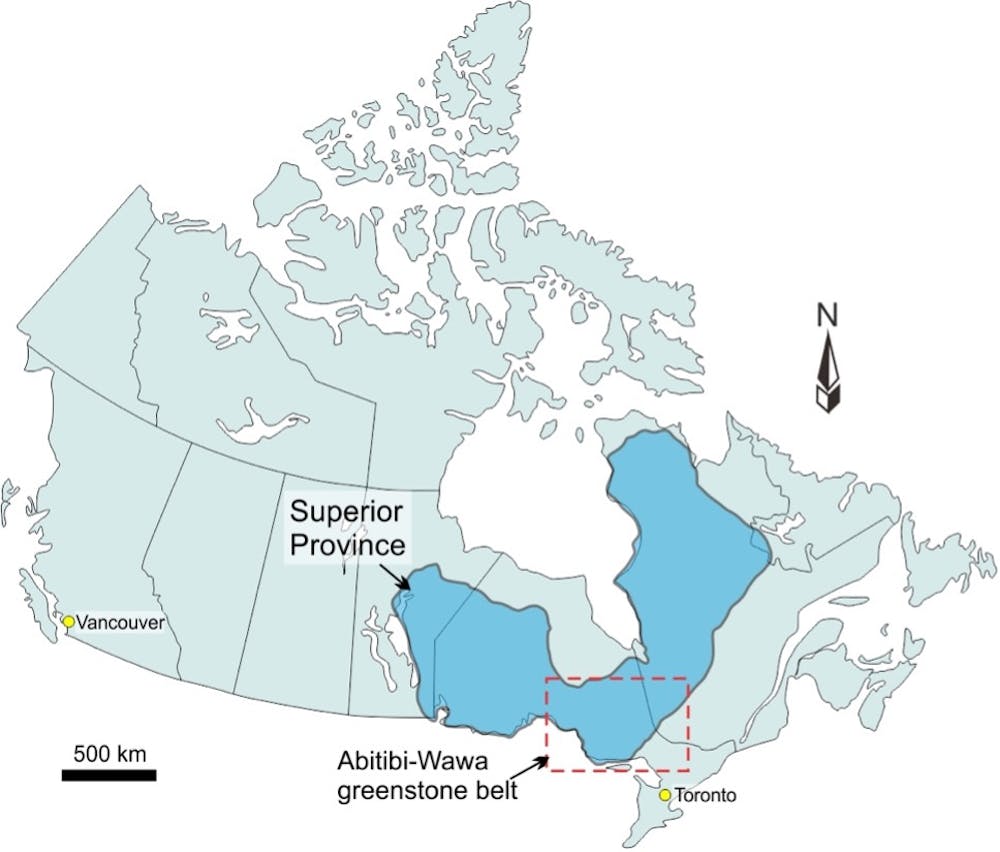
We collected samples of 2750- to 2670-million-year-old granitoid rocks from across the Abitibi-Wawa subprovince of the Superior Province — the largest preserved Archean continent stretching over 2000 km from Winnipeg, Manitoba to far-eastern Quebec. This allowed us to investigate the level of oxidation of magmas generated across the Neoarchean era.
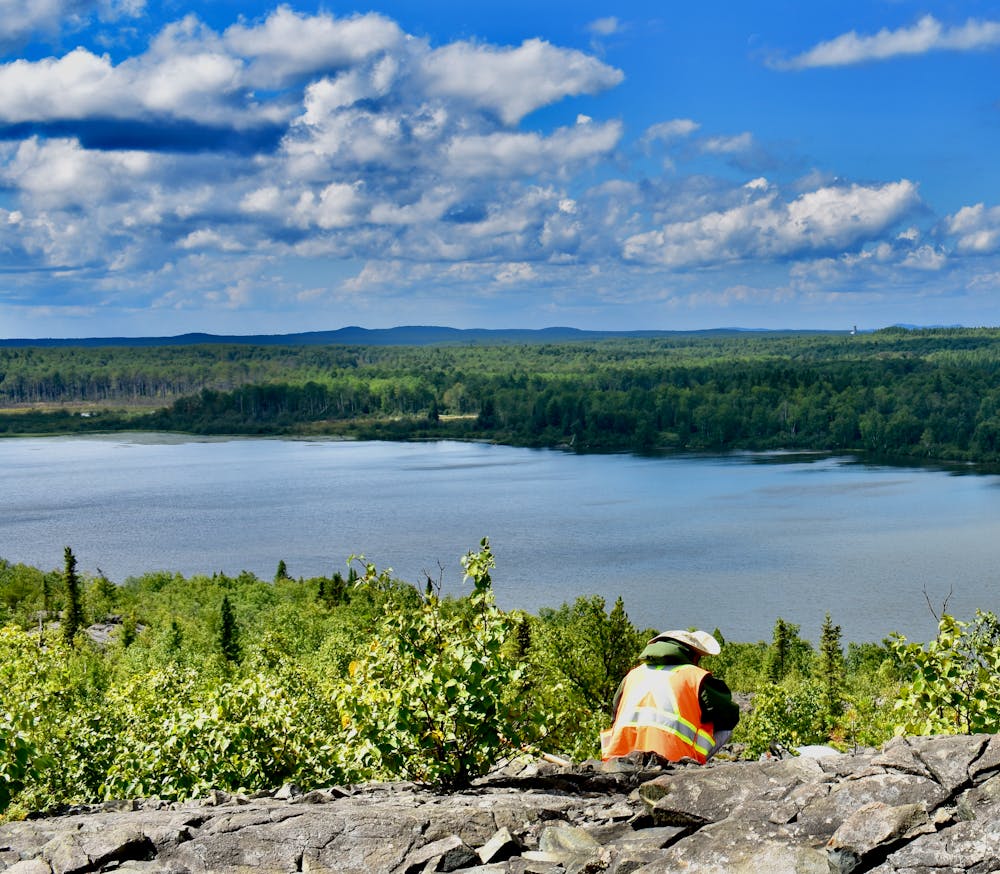
The 2750- to 2670-million-year-old granitoid rocks collected from the largest preserved Archean continent may help reveal the origin story of the Earth’s oxygen. (Dylan McKevitt), Author provided
So, we decided to look at the mineral apatite which is present in the zircon crystals in these rocks. Zircon crystals can withstand the intense temperatures and pressures of the post-crystallization events. They retain clues about the environments in which they were originally formed and provide precise ages for the rocks themselves.
Small apatite crystals that are less than 30 microns wide — the size of a human skin cell — are trapped in the zircon crystals. They contain sulfur. By measuring the amount of sulfur in apatite, we can establish whether the apatite grew from an oxidized magma.
Map of the Superior Province that stretches from central Manitoba to eastern Quebec in Canada. (Xuyang Meng), Author provided
We were able to successfully measure the oxygen fugacity of the original Archean magma — which is essentially the amount of free oxygen in it — using a specialized technique called X-ray Absorption Near Edge Structure Spectroscopy (S-XANES) at the Advanced Photon Source synchrotron at Argonne National Laboratory in Illinois.
These new findings indicate that oxidized magmas did form in the Neoarchean era 2.7 billion years ago. The data show that the lack of dissolved oxygen in the Archean ocean reservoirs did not prevent the formation of sulfur-rich, oxidized magmas in the subduction zones. The oxygen in these magmas must have come from another source, and was ultimately released into the atmosphere during volcanic eruptions.
We found that the occurrence of these oxidized magmas correlates with major gold mineralization events in the Superior Province and Yilgarn Craton (Western Australia), demonstrating a connection between these oxygen-rich sources and global world-class ore deposit formation.
The driving of ocean water deep into the Earth, caused by the sliding of oceanic plates under the Earth’s continental plates, may generate free oxygen as well as the mechanism to release it — volcanoes. (Shutterstock)
The implications of these oxidized magmas go beyond the understanding of early Earth geodynamics. Previously, it was thought unlikely that Archean magmas could be oxidized, when the ocean water and ocean floor rocks or sediments were not.
While the exact mechanism is unclear, the occurrence of these magmas suggests that the process of subduction, where ocean water is taken hundreds of kilometres into our planet, generates free oxygen. This then oxidizes the overlying mantle.
As far as we know, the Earth is the only place in the solar system — past or present — with plate tectonics and active subduction. This suggests that this study could partly explain the lack of oxygen and, ultimately, life on the other rocky planets in the future as well.
David Mole received funding from Canada First Research Excellence Fund (CFREF) and additional federal, provincial, and industry partners as part of the Metal Earth project; a Canadian geoscience research program led by Laurentian University. The $104-million dollar project started in 2016, and is transforming our understanding of the genesis of base and precious metal deposits during Earth’s evolution. This initiative has created a strategic consortium of allied Canadian and international researchers, government, and industry. The Metal Earth grant project # is CFREF-2015-00005. David currently works for Geoscience Australia, who were not involved in this work.
Adam C. Simon received funding from the U.S. National Science Foundation EAR grants #2214119 and 1924142.
Xuyang Meng receives funding from Canada First Research Excellence Fund (CFREF-2015-00005), Natural Science Foundation of China, U.S. National Science Foundation EAR, and a doctoral scholarship from China Scholarship Council.
Source: The Conversation (Au and NZ) – By David S G Goodman, Director, China Studies Centre, Professor of Chinese Politics, University of Sydney
Public protests in China related to the government’s COVID-19 restrictions have hit the news worldwide over the weekend, following a fatal apartment fire in Urumqi, Xinjiang last week which killed ten people.
Many internet users claimed some residents could not escape because the apartment building was partially locked down, though authorities denied this.
There have been reports some demonstrators have called for President Xi Jinping, the newly re-elected General Secretary of the Communist Party of China, to stand down. Others have criticised the rule of the party itself.
China’s COVID measures are among the strictest in the world, as it continues to pursue lockdowns to suppress the virus – what it calls a “dynamic zero COVID” policy.
While these protests are certainly serious challenges to authority, they should be kept in perspective. In particular, there’s no real parallel to those in Tiananmen Square in 1989. These are street protests where the demonstrators disperse after marching and protesting, and the main focus of the protests are the COVID restrictions rather than wider political principles.
The main issue here is frustration not just with COVID restrictions, but the inconsistent ways these measures are being implemented.
At least in the short-term, the state’s reactions are likely to be muted. There’s undoubtedly pressure for change, though how this will be achieved is hard to predict.
A more national response
Protests in China have actually become quite common in the last couple of decades, though they almost always centre around a specific issue and are highly localised.
Workers in a factory may protest over lack of payment or deteriorating conditions. Villagers forced to resettle so that their land can be redeveloped attempt resistance, sometimes even to the extent of refusing to be moved away. Residents in new housing estates become mobilised to complain about the lack of promised roads, retail outlets and services.
These kinds of protest are usually resolved reasonably and quickly not least by state officials intervening to ensure solutions in the name of maintaining stability.
Less capable of such instant solution are protests about more general principles, such as freedom of expression, legal representation, or governmental responsibilities. In such cases, government responses have tended to suppress the concerns.
But such protests have almost always been localised and not led to any sense of a regional or national movement. This has even been true of industrial disputes where workers have protested in one or more factories under a single brand or owner.
There’s no evidence at this stage that this is an organised national movement. But it seems protesters in each city have been emboldened by the actions of demonstrators in others.
Reading China’s social media it’s clear, for example, that demonstrators in Beijing and Shanghai report on each others’ protests, as well as commenting on the initial protest causes in Urumqi.
To date, police reactions have varied between locations. Some police were said to have been allowing demonstrations to continue.
Off the streets and away from the demonstrators, asymptomatic residents of apartment blocks in lockdown have occasionally continued to protest.
Student demands
Some 40 students at China’s leading Peking University issued a declaration on Sunday that criticised “the implementation of the dynamic zero policy”. They said the COVID-zero policies had an increasing number of problems and have led to “horrible tragedies”, though they also acknowledged the importance and effectiveness of the safety measures implemented earlier in the pandemic.
They also said “The most urgent task now is to find a temporary way of coexistence that minimises the danger of the epidemic while ensuring basic social order and basic economic and livelihood needs”.
To this end, they propose five key measures:
“To avoid the abuse of public power, all regional quarantine blockades should be stopped to ensure that all people in communities, villages, units and schools can enter and leave freely”
“Abolish technical means to monitor the whereabouts of citizens, such as pass codes and [health code] cell phone tracking app. Stop considering the spread of the epidemic as the responsibility of certain individuals or institutions. Devote resources to long-term work such as vaccine, drug development and hospital construction”
“Implement voluntary [PCR] testing and voluntary quarantine for undiagnosed and asymptomatic individuals”
“Liberalize restrictions on the expression of public opinion and allow suggestions and criticism of specific implementation problems in different regions”
“Make truthful disclosures of infection data, including the number of infected people, the death rate, long [COVID] rate, to eliminate epidemic panic during the transition”.
The key issues are how to move from the current “dynamic zero COVID” policy towards something else, and indeed what that should be, given the inadequate health coverage in much of the country.
David S G Goodman does not work for, consult, own shares in or receive funding from any company or organisation that would benefit from this article, and has disclosed no relevant affiliations beyond their academic appointment.
The government’s bid to pass a referendum to enshrine an Indigenous Voice in the constitution has been dealt a blow, with the Nationals announcing they will oppose it.
Nationals leader David Littleproud said the party didn’t believe the Voice would “genuinely close the gap”.
It believed in “empowering local indigenous communities, giving them the power at a local level, not creating another layer of bureaucracy here in Canberra,” he told a news conference on Monday after the Nationals party room endorsed the position.
he said he had had consultations with Uluru Statement from the Heart co-chairs Megan Davis and Pat Anderson “to make sure we understood what this was trying to achieve”.
The Nationals, emphasising they are a separate party, have pre-empted the Liberals announcing a position. Opposition leader Peter Dutton has delayed declaring a stance until more detail of the referendum proposal is released. The government is committed to a vote this term but has not set a date.
Indigenous Nationals senator Jacinta Price, who has been outspoken against the Voice since she entered parliament at the election, told the news conference, “What we need now is practical measures, not an idea that lacks complete and utter detail that’s based on emotional blackmail”.
It was “not racist to disagree with a proposal that’s been put forward to the Australian people that lacks detail, that divides us along the lines of race,” she said.
“I do not buy into that narrative. I would suggest that that sort of narrative is coercive control. It’s a way to push people into feeling guilt for our nation’s history when we should be celebrating who we are as Australians.
“Only then can we actually achieve anything real for our marginalised,” Price said.
“It doesn’t automatically make you marginalised to be an Indigenous Australian, but we do have a hell of a lot of marginalised Australians. And those people are largely out of sight, out of mind.
“Those people do not speak English as a first language. And those people still live very much along the lines of traditional culture. They are who we should be focused on.
“Unfortunately, this Voice model is about empowering the elites. It’s about a transfer of power and nothing more than that.”
Littleproud and Price were flanked by party colleagues.
Price took a personal swipe at the Minister for Indigenous Australians Linda Burney.
“Minister Burney might be able to take a private jet out into a remote community, dripping with Gucci and tell people in the dirt what’s good for them. But they are in the dark and they have been in the dark.”
There has been earlier speculation the opposition might allow its members to decide their own positions on the referendum, because of the division within its ranks.
Former prime minister John Howard told The Australian earlier this month he would counsel against the Coalition having a free vote.
Howard said there were “substantial arguments against the Voice”.
He said among the people he saw in the Liberal base “I don’t find any reaction to the Voice other than one of hostility”.
“I don’t get the impression the Voice is something that is going to unite the country the way the 1967 referendum did because that was just so palpably fair, whereas people are suspicious of the Voice”.
Labor’s special envoy for reconciliation and implementation of the Uluru Statement, Pat Dodson, told the ABC the government had not yet put forward the bill to set up the referendum “so it is a bit premature really and a bit inept to think that you would adopt a position well out before you saw anything of what the people, First Nations people were asking for the government”.
A referendum requires support in a majority of states as well as an overall majority to pass. Only eight of 44 questions have been caried, and it is conventional wisdom that bipartisanship is needed for success.
Michelle Grattan does not work for, consult, own shares in or receive funding from any company or organisation that would benefit from this article, and has disclosed no relevant affiliations beyond their academic appointment.
Source: The Conversation (Au and NZ) – By Ariel Liebman, Ariel Liebman Director, Monash Energy Institute and Professor of Sustainable Energy Systems, Faculty of Information Technology, Monash University
The Andrews Labor government has been returned in Victoria. It must now reckon with two particularly crucial challenges: runaway climate change and wartime-scale energy costs.
Victorians are still reeling from rare major flooding in which the state’s largest dam, Dartmouth, spilled over. Meanwhile, electricity prices in Victoria are rising dramatically – in turn, driving up prices for consumers.
The Andrews government has signalled a major shakeup of Victoria’s energy sector. Its pre-election commitments – a 95% renewable electricity target by 2035 and net-zero emissions by 2045 – are definite moves in the right direction.
And plans to reinstate the State Electricity Commission, including a constitutional amendment to cement this change permanently, speaks to the government’s intention to regain control of the electricity market and skyrocketing energy prices.
These are significant pledges and daunting tasks to accomplish. But the Victorian government must go further to secure the energy sector and take stronger climate action.
Vcitoria’s Loy Yang coal-fired power station will shut a decade earlier than expected. Shutterstock
Reducing energy costs
Today’s high energy costs are driven primarily by fossil fuel supply constraints. The reduction in gas supply due to sanctions on Russia has exposed the delicate balance of supply and demand, and the fragility of the global fossil-based energy system.
For more than a decade, specialists have known the long-term solution to reduce electricity prices and cost volatility: a large-scale shift to renewable sources of energy.
This would shield us from short-term supply and demand shocks because the cost of renewables-produced wholesale energy is fixed at construction, with no variable costs such as fuel.
Shifting to renewables would also make electricity cheaper than coal and gas in countries with major wind and sun advantages, such as Australia and Indonesia. And it would decouple electricity production from strongly geographically concentrated sources of fossil fuels such as in the middle east.
But realistically, in the next two years or so the Victorian and Australian governments can only manage energy prices by curbing the worst excesses of an unfettered free market operation in natural gas and retail electricity.
We are still working with precisely the same market frameworks as when deregulation started in 1998. Victoria, and the other states, need to accept that this framework has failed to produce benefits to consumers, particularly for households.
For example, in the decade to June 2013, electricity prices for Australian households increased by an average 72% in real terms.
We must go back to the drawing board to determine what the energy market should look like. In the meantime, Australian states and territories must consider reimposing price caps on energy retailers.
An immediate relief measure would be to delink Australia’s natural gas market from global markets for a limited period.
The only sure way to do this is by implementing a domestic gas reservation policy, which entails reserving a portion of Australian gas for domestic use, rather than exporting it. This must be nationally coordinated, as we have a strongly interconnected national gas market.
Western Australia uses its own isolated energy system and put a gas reservation policy in place years ago, which seeks to make the equivalent of 15% of gas exports available for people in WA. This policy has helped mitigate price shocks.
Since winning the election, Victorian Premier Daniel Andrews has continued to urge the federal government to impose such a policy Australia wide. Prime Minister Anthony Albanese should heed these calls.
Victoria has a 95% renewable electricity target by 2035. Alex Eckermann/Unsplash, CC BY
Steps to reduce emissions
Our energy futures are intrinsically intertwined with addressing climate change.
The world has only eight years left for global warming to be limited to 1.5℃. This means accelerating the switch to renewable energy without any further delays.
The Andrews government aims to decarbonise road transport by 2050. AAP Image/Supplied by Lake Macquarie City Council
Our first step must be to make all electricity renewable by 2035 in Victoria (and, indeed, in the rest of Australia).
Second, we need a transition to electric vehicles across all transport systems as fast as possible and well before 2040. The Andrews government is investing $100 million to decarbonise the state’s road transport sector, but the transition won’t be complete until 2050.
Third, hard-to-abate sectors – such as certain manufacturing operations, shipping and aviation – need ongoing technological development.
They require significant government support to progress clean fuels, likely based on the renewable hydrogen to ammonia pathway. Victoria has a range of hydrogen and ammonia related industry development policies that show the government recognises this sector’s importance.
Ultimately, the incoming Victorian government’s promises address the first issue well, while making some headway on the second and third.
The Victorian government must be brave
We can’t rely on the rest of the world for innovation. Governments in Australia must play a more prominent role in infrastructure investment, technology research and development, energy industry development and significant market reform.
Tackling all these challenges isn’t really a job for a single state, particularly given Australia has one major east coast electricity grid and one national energy framework.
The Victorian government cannot achieve any significant changes without working closely with other states and the federal government. In this, state governments must be brave and go against the past three decades of hands-off government approaches to essential energy infrastructure.
This isn’t a time for leaving things to the market to resolve. The Victorian government must take immediate and giant leaps to ensure a stable and climate-friendly energy sector.
Inflation and sluggish wage growth have raised concerns that wages and salaries are becoming an increasing smaller share of national income.
Australian Council of Trade Unions head Sally McManus has said labour’s share of income is at its lowest point since 1960 – “a shameful situation for us to be in as a country”.
To get a perspective on this, we looked at how the labour share has evolved in Australia since the 1860s.
Our results show labour’s share of national income has indeed declined since the 1970s, but there is no sense of any permanent trend. Over the past 160 years, despite massive growth and social change, labour’s share seems to have been remarkably resilient.
How we calculated labour’s share
In 1860 the Australian economy revolved mainly around the production wool, wheat and gold. In the 1850s, Victoria produced more than a third of the world’s gold. So our data effectively covers the entire history of Australia since the birth of modern manufacturing.
Our graph shows labour income divided by national income, which we refer to as “labour’s share of income”.
Labour income is defined as employee compensation and imputed wages of the self-employed. National income is defined as gross domestic product minus capital depreciation, indirect taxes and imputed income from owner-occupied housing.
The ratio of these two values is the proportion of income being paid to labour, with the remainder being earned by land rents and returns to capital, such as retained profits or dividends.
The proportion can exceed 100% when profits are negative, as they did in the Great Depression in the 1930s.
The graph shows labour’s share peaking in the mid-1970s, and declining since. Before then, the impression is that labour’s share of income has cycled around a constant value – about 80% – with no clear trend or shift.
Remarkable constancy
This constancy is remarkable when considered against the massive social and economic changes that have occurred over the past 160 years.
In that time, Australia has experienced the industrial revolution and the information revolution; major depressions in the 1890s, 1921 and 1930s; two world wars; massive postwar migration; the rise of the female workforce; and globalisation.
Yet none of these technological, economic or institutional changes appears to have any significant permanent effect on the distribution of income between labour and capital.
Labour’s share of Australia’s economic growth over the past 160 years of economic growth has been more or less constant. When there has been productivity growth and GDP growth, wages have grown in tandem.
However, there have been significant changes at medium-term frequencies of ten to 20 years. These cycles generally reflect major recessions.
One explanation for this is that in a recession, when sales fall, employers cannot easily shed labour or reduce wages. Consequently, dividends and other payments to the owners of capital fall faster than the wage bill.
Paradoxically, therefore, a high labour share could be bad news for labour in the sense that it is associated with periods of high unemployment.
This provides a caution that increasing the share is not itself an objective, and there may be good reasons not to be too concerned about a decline in the share going to labour, depending on the cause.
What’s driving the recent trend
Labour’s declining share since the 1970s is part of a global trend. Some attribute this to an inevitable consequence of economic growth, capital accumulation, technical change and automation.
In Australia’s case is has been attributed to two main changes: cycles in the mining sector, and the changes in financial services.
Mining is very capital-intensive, so capital’s share of income tends to rise and fall along with energy and resource prices. This is a cyclical effect that will likely reverse itself in time.
Mining is capital-intensive, so a lower share of income goes to labour. Shutterstock
Labour’s falling share of income in financial services potentially represents a more permanent change, with, for example, the labour-intensive system of suburban branch banks rendered redundant by digital technology.
In theory, automation and ongoing labour-saving technological change could continue to reduce labour’s income share in this way. There is some evidence this has been occurring globally across many sectors in recent years.
However, when viewed against the backdrop of 160 years of growth, we see no evidence that the massive labour-saving technologies of the past had any permanent effect of labour share.
The past does not necessarily predict the future. But it does suggest that labour’s share of income is remarkably robust to many types of institutional and economic change in the longer term.
Shocks have caused changes in the distribution of incomes in the short to medium term, but these have been self-correcting.
Peter Robertson receives funding from The Australia Research Council
Jakob Madsen does not work for, consult, own shares in or receive funding from any company or organisation that would benefit from this article, and has disclosed no relevant affiliations beyond their academic appointment.
Earlier this month, Penny Wong detailed the last 50 years of Labor government engagement with China in her Whitlam Oration, tracing how the relationship’s varying warmth and chill have been politicised.
China – The Past is Present, the new exhibition at the National Gallery of Victoria (NGV), is a wonderful context for this speech.
The exhibition is about the depth and complexity of Chinese culture – visual and wider – as collected by one major art institution here in Euro-centric Melbourne. It is a long history, in collecting terms, undertaken by curators who have spent years working in the area.
In recent decades Mae Anna Pang notably collected historic Chinese paintings and calligraphy. Now curator Wayne Crothers has very creatively and beautifully (it is an overtly beautiful show) brought these traditions into the present.
Crothers’ years living in East Asia have given the ideas and interpretations he brings both a seriousness of intent and lightness of touch not often apparent.
But other individuals are part of this as well. The people who have found, taken, paid for or been given Chinese works of art over the last 150 years and then passed them on.
Long Australian connections
In her oration, Wong said “when Australians look out to the world, we see ourselves reflected in it”.
The first Chinese object was acquired by the year-old gallery in 1862, the same year the well known and most glamorous of Australians in China was born: G.E. Morrison, son of the first principal of Geelong College. As the Times of London’s correspondent in Peking (now Beijing) from 1897 to 1912, he became internationally known as “Chinese Morrison”.
Morrison’s bequest of mostly court accoutrements, including courtly textiles and ceramics, came to the NGV in 1921.
Chinese Formal court robe (Chaofu or Chaopao) (mid 19th century) silk, fur, silk and metalic thread, gilt (kesi) 142.0 cm (centre back) 62.5 cm (sleeve length). National Gallery of Victoria, Melbourne Bequest of Dr G.E. Morrison, 1921 Photo: National Galle
Serious collectors like H.W. Kent followed. Kent was a businessman in China and Japan, and in 1938 he became the gallery’s first curator of the Asian collection. He built the extensive holdings especially of Song and Tang dynasty works we see in the permanent hang today.
James Mollison, following Gough Whitlam’s ventures, was sent to China in 1976 as a young gallery director of the yet-to-be-built National Gallery of Australia.
Chinese, Scholar’s rock, 17th century limestone, wood (Hongmu) 63.5 x 41.9 x 25.4 cm (overall). National Gallery of Victoria, Melbourne Purchased, NGV Supporters of Asian Art, 2012
He recalled to me negotiating the intended acquisition of over 1,000 Mao-era posters. In 1985, Mollison also acquired an extensive woodcut collection originally brought together by legendary journalist and editor, and founder of Australian Art Monthly, Peter Townsend.
Mollison further described a visiting Chinese diplomat to National Gallery of Australia saying:
eventually we will have to borrow from you, nothing like either of these collections exists in China.
Chinese, Chair 18th century lacquer on wood 110.5×67.0x51.5 cm. National Gallery of Victoria, Melbourne Felton Bequest, 1964
Today collectors and givers to our institutions range from the high profile Judith Neilson of White Rabbit Gallery with its huge collection of contemporary Chinese work, to Rachel Faggetter, whose donation of Maoist era works to the NGV are well included in this show, and Jason Yeap who has been generous for years in this area.
In The Past is Present, Crothers has created tableaux – like little stage sets – each around an idea important in Chinese culture.
There are a group of works of restrained monochrome spatial sophistication next to an assemblage of bright, smiling, Maoist era odes to workers’ paradises.
Installation view of China – The past is present, on display at NGV International , Melbourne from 15 October 2022 – 20 February 2023. Photo: Tom Ross
Next to this are deep red richly incised containers and portrait busts, next to the tutti-frutti colours of karaoke pop.
The entry tableau says it all: the strange twisted rocks, carved by eons of nature’s winds and water, so valued in traditional China, next to a polyurethane chair carved, it seems, by a blowtorch.
Installation view of China – The past is present, on display at NGV International , Melbourne from 15 October 2022 – 20 February 2023. Photo: Tom Ross
The whole clever display has a moment of dark red tranquillity at its centre, with a wall of 18th century muted painted landscapes facing a 2010 video by Yang Yongliang of Hong Kong-like traffic dwarfed by similar mountains.
Everywhere the contemporary is given depth by the historical, and the historical gives context to the work made now, but it isn’t didactic. You come away thinking it is an exhibition of delight.
Installation view of China – The past is present, on display at NGV International , Melbourne from 15 October 2022 – 20 February 2023. Photo: Tom Ross
Looking to the future
The works on display here, and in collections around Australia, gathered over decades, have become part of our national fortune. Important in themselves, they also represent our history of engagement.
Part of the overt long-term reality around us and seen in the exhibition is the work of artists of Chinese background, who live in Australia. There are the well known fanciful sculptures of Guan Wei and exquisite porcelain busts of Ah Xian, sitting alongside work by emerging artists like the witty photography of Scotty So and ethereal paintings of Louise Zhang.
Installation view of China – The past is present, on display at NGV International , Melbourne from 15 October 2022 – 20 February 2023. Photo: Tom Ross
How are we faring in our cultural relations with China? Are we asking the current day “Chinese Morrisons” and Peter Townsends for their help to maintain ongoing cultural relationships? To be curious about Chinese culture and keen to engage in a long-term, creative, meaningful way? Are we celebrating Guan Wei and his compatriots?
I would hope so, and maybe Penny Wong’s advocacy is key here, but let us see.
Both in this exhibition and beyond, Chinese art in Australia is about people and connections. Long held, strong working and personal relationships evident even in a formal setting like this. It belies the superficial hostility we witness across the twittering classes.
China – The past is present is at the National Gallery of Victoria until February 20 2023.
Alison Carroll does not work for, consult, own shares in or receive funding from any company or organisation that would benefit from this article, and has disclosed no relevant affiliations beyond their academic appointment.
Scott Morrison will face a parliamentary censure motion this week, after the inquiry by former High Court judge Virginia Bell found his multi-ministry power grab “corrosive of trust in government”.
Cabinet on Monday confirmed legislation to implement the Bell recommendations would be introduced this week and the censure would also be moved.
Anthony Albanese is not planning to move it himself – he indicated that would be done by the Leader of the House Tony Burke or Attorney-General Mark Dreyfus.
Morrison had himself appointed to five portfolios in 2020-21, with only one of the ministers being aware at the time he was their co-minister. No public announcement was ever made – his actions only came to light after the election.
Bell concluded that “the lack of disclosure of the appointments to the public was apt to undermine public confidence in government. Once the appointments became known, the secrecy with which they had been surrounded was corrosive of trust in government”.
The opposition will vote against the censure. Manager of Opposition Business Paul Fletcher said the motion was “a political stunt” by the government.
Fetcher said the solicitor-general had found no illegality in what Morrison did, nor had Bell.
He told Sky: “Censure motions are typically used to deal with the accountability of a minister to the Parliament. There is no need for a censure motion here. It would purely be an exercise in political payback.”
“The issue of the relationship between the then prime minister and his then ministers – that’s a matter for the prime minister and each of those ministers. I’ve certainly said if I’d been a minister who’d been on the receiving end of this, I would not have been happy. But that’s a very separate question from your calling for consequences.”
Albanese rejected Fletcher’s argument.
“It’s not a personal relationship between two mates over what happened down the pub. This is about accountability of our democratic system, and whether the parliament was functioning properly. And about the relationship between the prime minister and the people of Australia.”
Fletcher flagged the opposition would support the legislation to implement the Bell recommendations to ensure ministerial appointments are always made public. Albanese indicated the legislation mightn’t be passed before parliament rises this week but said regulatory changes had already been made.
Michelle Grattan does not work for, consult, own shares in or receive funding from any company or organisation that would benefit from this article, and has disclosed no relevant affiliations beyond their academic appointment.
To a young mind, science can be magical. Perhaps you remember a visually striking or seemingly inexplicable scientific demonstration from your own youth?
Scientists and science teachers often make use of dramatic demonstrations to capture the attention of young, impressionable minds, to inspire and to teach. But sometimes these experiments go wrong.
In September, a public display in Girona, Spain involving liquid nitrogen in large metal barrels failed, causing injuries to the presenters and the audience.
And last week, a demonstration known as the “carbon snake” injured several schoolchildren in Sydney, leading to the suggestion that such experiments should be banned.
Burning sugar and baking soda produces the ‘carbon snake’, a classic demonstration of several chemical reactions. Vins Contributor/Shutterstock
A key aspect of achieving a “science-savvy” community is inspiring our children to value and connect with science. Demonstrations can be inspirational and memorable.
They are valuable tools to link young people with science, but a careful line must be walked to balance spectacle with the expectation that school is a safe place.
Scientific demonstrations are the living embodiment of science as an observational practice: seeing is believing.
Participating in an experiment provides direct, lived experience of scientific principles in action, while also affording an element of mystery and intrigue. This intrigue can open a curiosity-driven, questioning mindset that is central to building hypotheses, understanding, and applying the scientific method.
Not just ‘scientific theatre’
For effective learning it is crucial that a demonstration is more than scientific theatre.
Recreating an ancient alchemical pyrotechnic based on honey gives a brilliantly violent burst of flames. On its own, this is just noise, flash and smoke. It becomes much more when discussed in the context of the origins of medicine, the development of gunpowder, the ratio of chemicals needed for optimal reaction, and the contribution of alchemy to modern science.
Honey, potassium nitrate, and sulphur provide a demonstration of a brilliant alchemical pyrotechnic. Author provided
However, this is also a potentially dangerous experiment, and should only be attempted by a suitably cautious chemist, with appropriate preparation and assessment of risk.
Assessing risk is an act of imagination. The worst possible outcomes must first be considered before controls are applied to make the activity as safe as possible.
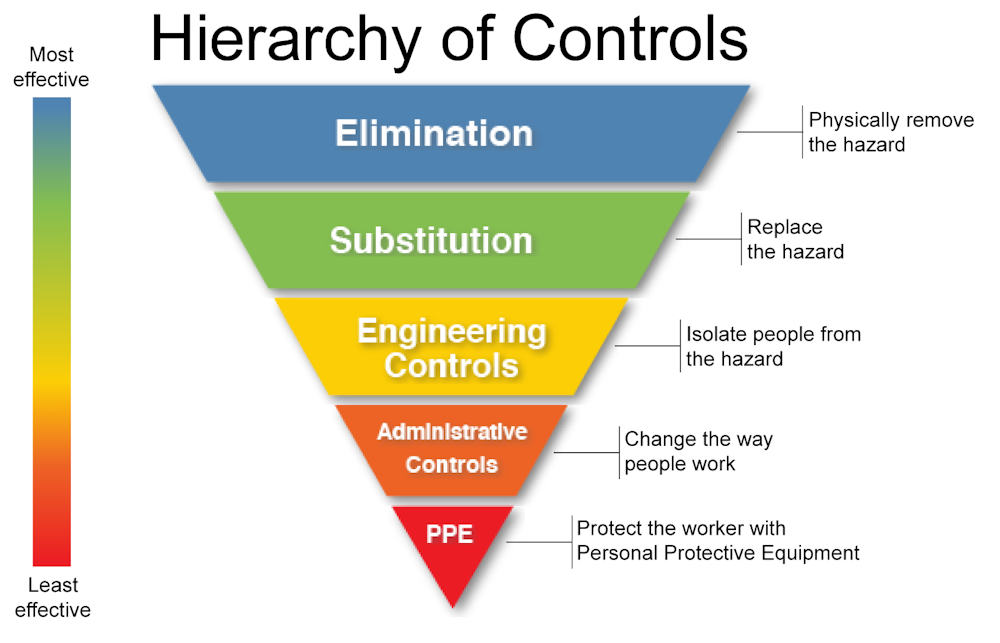
Risk assessments are typically managed through the application of the hierarchy of controls to reduce or eliminate the dangers of an activity.
The hierarchy of controls as defined by the US National Institute for Occupational Safety and Health. NIOSH/Wikimedia Commons
You might be surprised to see that personal protective equipment (think lab coats, gloves and safety glasses) only come into play at the final step in this process. These are among the first things that come to mind when we think “safety”. But they are most effective only after other elements of control have been implemented before them.
Introducing some controls can be challenging, like finding a suitable substitute for a hazardous material that is uniquely suited to a particular chemical reaction.
But engineering controls, such as increasing the distance between viewer and demonstration, are simple and usually highly effective.
Once we establish the risks and have considered their likelihood and potential consequences, we can decide whether the activity is worth pursuing.
Training, not banning
Universities and professional scientific bodies have a role to play in providing training, professional development and mentoring to teachers.
This is especially important for teachers who may be teaching outside their direct area of training and who may not have the hands-on experience of experimental risk assessment or chemical handling.
These guidelines show the depth of thought and preparation required before conducting a demonstration in front of others.
Time will tell what factors were responsible for the incidents mentioned above. In the meantime, teachers should be empowered to share the wonder and visual impact of science through demonstrations to their classes.
Nathan Kilah has received funding from Inspiring Australia to run ‘Chemistry of Fireworks’ lectures and pyrotechnic displays, funding from the Festival of Bright Ideas for fire and chemical reaction based scientific demonstrations, and funding and administrative support from the Royal Australian Chemical Institute.
Peter Rutledge has received funding for travel and administrative support from the Royal Australian Chemical Institute NSW to present the Nyholm Youth Lectures at high schools across NSW. His lectures included live chemistry demonstrations with student participation.
Telehealth has played an important role during the pandemic. Telephone and online consultations have enabled social distancing and kept patients and clinicians safe from transmissible infections.
Since the start of COVID in March 2020, there have been 122 million telehealth consultations funded through Medicare. About 90% of these services were provided by general practitioners (GPs), with nine out of ten of these consults done as a telephone call.
Online services for prescriptions and medical certificates have become available to consumers at the click of a button. Given the shortage of GPs, difficulties getting timely appointments, and clinic restrictions if patients have COVID-like symptoms, consumers seem to be welcoming these services. Patients can consult a GP by telephone or video call, and then receive an electronically dispatched medical certificate or prescription (if clinically appropriate).
These services are either paid for partially, or totally by the consumer, with limited Medicare rebates available. They are fast, convenient and readily available. But what do consumers need to know about their pros and cons?
On the plus side…
Convenience
Offering services online means ease of access and convenience. We have seen this in the banking, retail and travel industries. Who wants to wait three days for a GP appointment, spend two hours in traffic and one hour in the waiting room, for a short consultation?
Access to care
When providing health services, we have to think of our whole population (see points below on equity). These instant services offer greater convenience and benefits for those who find it hard to access transport, are time-poor, or who find it difficult to leave the house (such as parents of little kids or people with other physical disabilities or mental health concerns).
Reduced wait times
If it isn’t possible to get an appointment with your regular GP and you need a medical certificate for work, these services may be a good fit. They also enable acute conditions to be managed in a timely manner, for instance by getting a script for tablets to stop vomiting.
Reducing congestion in hospitals and medical centres
These services also reduce pressure on primary care services and hospitals. If someone can be supported by an online service instead of visiting an emergency department or urgent care centre, then the bricks-and-mortar hospitals, clinics and medical centres remain available for people with more serious health needs.
You might get a quicker telehealth appointment, but complex conditions might require an in-person consult. Pexels, CC BY
The downside is you may risk losing continuity of care, as you are not necessarily going to be seeing your own GP online. If you have complex health needs or chronic conditions, it is better you have a primary care provider who knows your history and can manage your health condition holistically.
Access to a complete health history
Australia doesn’t yet have a single complete and integrated information system for sharing all personal health information. So when you access these services, it is often your responsibility to share health information with the provider and also inform your GP about your online appointment.
However, communication systems are improving slowly, and a summary may be shared electronically with your nominated GP after your consultation. For patients who have opted in to My Health Record, some of this communication will happen automatically.
Complex conditions
There are limits to the types of services that can be provided online or by phone. You may need an in-person appointment, especially if a physical assessment is required, or the concerns are more complex than anticipated. GPs adhere to guidelines and practice standards irrespective of how services are delivered. For instance, provision of e-scripts and medical certificates require documentation and screening measures to ensure appropriate care is provided.
Medications
Online or telehealth services aren’t suited for starting new medications that require monitoring or might have side effects.
New medications for chronic conditions should ideally be started by someone who you can see you again to check they are working and manage potential side effects or reactions. Additionally, there are medications (such as strong pain relief) these services won’t prescribe, and consumers need to see an GP in person to obtain.
Local pharmacists can write medical certificates for single days and assist with advice and medications for minor health issues. However, they cannot write prescriptions.
The aim of a medical certificate is to satisfy an employer. But getting a medical certificate may also be an opportunity to have symptoms checked and make sure there is nothing seriously wrong.
Online services make accessing a medical certificate for the flu or gastro much more convenient. However, if people are having ongoing health issues that require regular time away from work, they should be seeing a regular GP to help manage their condition.
There is the risk of inequity of access for these services, especially for consumers who don’t know how to access them, can’t afford to pay, or do not have access to the necessary technology (including reliable internet).
A recent paper suggested ways to tackle this digital divide. These included improving digital health literacy, workforce training, co-designing new models of care with clinicians and patients, change management, advocacy for culturally appropriate services, and sustainable funding.
Finally, consumers need assurance that health services are provided by suitably qualified health professionals. This is usually achieved with confirmation of health provider credentials prior to, or at the start of, the consultation.
Consumers should also look for an Australian service to ensure it adheres to Australia’s quality standards and clinician registration criteria. This is also important because of the Australian standards around personal data collection and storage. Consumers should read information provided by services about their data policies.
As with all health care, it is about finding the right balance and ensuring services align with clinical indications.
Telehealth is not about replacing in-person appointments. Telehealth should be used in conjunction with face-to-face advice, to maintain high-quality care that best suits the needs and wishes of the consumer.
The authors do not work for, consult, own shares in or receive funding from any company or organisation that would benefit from this article, and have disclosed no relevant affiliations beyond their academic appointment.
Remote working has become much more common since the pandemic sent people home from their offices and into the Zoom universe. This has put the onus on managers to find new and better ways to engage with and motivate staff, and we’re still learning how best to do this.
Perhaps the commonest advice given to managers is to provide remote staff with clear, measurable goals. Set targets, monitor progress, measure results.
And at first glance, this makes perfect sense. After all, when staff aren’t in the office you can’t keep an eye on them. Better to define outcomes and let them get on with it. You can then measure achievement without micromanaging the process.
But our research suggests this advice, however well-intentioned, might not be entirely correct. Indeed, if you follow it to the letter, it seems unlikely you’ll get the results you’re expecting.
Some work is harder to measure
We began researching remote work before the pandemic by asking experienced managers what they did differently with remote staff and what factors they felt were most important.
Earlier studies suggested managers would set clear goals and then monitor progress, otherwise leaving staff to get on with it. Instead, the managers in our study told us they tended to treat remote workers holistically – as people, not just staff. They focused on social connections instead of just objective performance.
We believe these managers have learned to discount conventional advice and develop practices that are more effective with remote staff. As such, their experience contains valuable lessons for today’s managers.
One described spending one-on-one calls “just connection and socialising … [It] builds the rapport and the connection [because] you lose opportunities for that being remote.”
One of the main reasons why these managers didn’t rely on metrics and measurable goals with their remote staff is that a great deal of remote work is “knowledge work”. It’s often difficult to quantify this kind of work – to know in advance what will be required or how long it will take.
And because people often work in teams, it can be hard to untangle individual contributions. At best, managers may have rough estimates of individual productivity. But if someone doesn’t meet those estimates, they need more context to understand why – and that relies on talking to people.
Hoping to only measure progress in unpredictable knowledge work the way we measure progress with more predictable work is unlikely to succeed.
An office allows managers to read people’s moods more easily, and this can be key to evaluating performance. Getty Images
Nurturing relationships
The other reason these managers needed more than goals and metrics was the lack of interpersonal contact. They could not unobtrusively observe how remote staff were coping. As one manager put it, “You don’t have that visual of, oh, this person walked in today and looks happy or they look sad.”
Another manager pointed out that with in-person interaction, “You can see people being playful, hear the grunts or the moans or the sighs or whatever when they’re under pressure. And likewise, you can see when they’re visibly, you know, feeling successful.” With remote staff, “you just never get a sense of that”.
This day-to-day observation was important enough that the managers we spoke to devoted considerable time and energy compensating. They increased communication with remote staff and nurtured relationships.
Advising managers to “focus on clear objectives” with remote workers overlooks the importance of relationships as the basis for understanding performance.
Furthermore, when people are stressed, disengaged or unsure they’re doing a good job, their first instinct is not always to share that with their manager. Instead, they might try to mask those feelings and keep up a good appearance – what one manager called “sticking on a plastic smile for ten minutes”.
In a shared workspace it’s easier to pick up body language, changes in behaviour or working relationships that might hint at deeper problems. That’s much harder when we communicate primarily by email, text or short video calls.
And these cues can be very important. If someone misses a delivery deadline or is less productive, for example, their manager is only likely to find out after it happens. Whereas noticing a change in behaviour earlier might give the manager the chance to intervene and address the problem before it escalates.
Overall, we recommend embracing interpersonal connections rather than relying on measurable goals for what might be unmeasurable work. The fewer the opportunities for in-person observation, the more important establishing good one-on-one relationships becomes.
It will take more time, and maybe more emotional energy, but there’s no shortcut to managing well.
Urs Daellenbach undertakes research with funding from the Science for Technological Innovation National Science Challenge hosted at Callaghan Innovation.
Noelle Donnelly and Rebecca Downes do not work for, consult, own shares in or receive funding from any company or organisation that would benefit from this article, and have disclosed no relevant affiliations beyond their academic appointment.
Australia’s first multi-city region, the Six Cities Region, is being developed in New South Wales. A multi-city region, also known as a mega-region, establishes an integrated network of globally and locally connected cities.
The Six Cities Region spans the Lower Hunter and Greater Newcastle City, Central Coast City, Illawarra-Shoalhaven City, Western Parkland City, Central River City and Eastern Harbour City.
The region is home to around 6 million people. It’s expected to reach 8 million in the next two decades.
The Six Cities concept has evolved from the 2018 Greater Sydney plan, A Metropolis of Three Cities. Introduced by the then Greater Sydney Commission, the plan established the Western Parkland City, Central River City and the Eastern Harbour City. The priority then was to ensure housing, jobs, infrastructure and services were all within a 30-minute trip for more people.
Now, as the Greater Cities Commission, we are developing a response to the reality that cities can either compound or address some of society’s biggest challenges: inequality, congestion, pollution and social exclusion.
“We are in the middle of the century of cities – the hundred years of accelerated urbanisation from 1980 to 2080 that is creating a majority-urban planet.”
And the proportion of the world’s people who live in cities continues to increase. The United Nations predicts cities will house 6.9 billion people by 2050. Australia leads the way in urbanisation – close to 90% of us live in cities.
As pressures on urban centres rise, we must reimagine how we live, work and connect in our cities.
How do multi-city regions help us with ongoing housing challenges, cost-of-living increases and development constraints in central cities? Essentially, they do so by opening up opportunities across more connected centres. This distributes wealth across a larger region and provides more equitable access to healthcare, education and training facilities.
Through co-ordinated planning across all levels of government, multi-city regions also offer an opportunity to tackle key environmental challenges. These include climate change, urban heat and the effective roll-out of decarbonisation initiatives.
In the case of NSW, the network of six cities also responds to the pressures of rapid urban growth. It does so by redistributing this growth across a larger area and fuelling development in smaller or lower-demand areas.
What does the Six Cities Region mean in practice?
In establishing the Six Cities Region, we join a global vanguard of up to 20 multi-city regions, which organise and co-ordinate their activities in different ways. What the Six Cities Region does share with other regions, however, is a need to manage high population growth along with huge demand for housing and lifestyle choices.
City regions also have to stay ahead of the curve in response to the disruptions of COVID and climate change. At the same time, they must balance and enhance opportunities for business, investment, culture, education and decision-making.
While we focus on the big-picture model in this article, it’s worth noting the Commission’s responsibilities are complex. It is setting and monitoring housing targets for each of the 43 local government areas within the six cities. The Commission must also identify how to achieve more diverse and affordable housing.
Existing housing types across the Six Cities Region
The Six Cities Region is home to three international airports, three deep seaports, a high concentration of world-class universities and globally significant innovation districts. It will help connect these gateways, institutions and innovation districts to accelerate economic growth, international trade and knowledge jobs.
The challenge and the opportunity lie in delivering globalised localism. This means opening up these six cities to more international growth and opportunities, while fiercely protecting their natural assets.
The region also has the exceptional asset of 65,000 years of continuous culture. We have the opportunity to embed the wisdom and aspirations of First Nations peoples in caring for Country and people, and knowledge sharing.
If successful, the equity and resilience of the region will be second to none. Everyone will have the opportunity to work in great jobs close to home. They will be able to live in vibrant, well-serviced neighbourhoods with diverse and affordable housing options.
Harnessing our enviable assets in a connected way will result in opportunities and benefits for everyone in the Six Cities Region. As the report explains:
“The Six Cities Region has many significant advantages over other mega-regions. These could, with the right shaping interventions, help the region become one of the most advanced and forward-thinking multi-city regions in the world over the next decade.”
Read the Greater Cities: Preparing and Promoting the Multi-City Region report here. You can learn more about multi-city regions around the world via the Greater Cities podcast.
Geoff Roberts is Chief Commissioner of the Greater Cities Commission.
We have vaccines to boost our immune response to SARS-CoV-2, the virus that causes COVID. We have medicines you can take at home (and in hospital) to treat COVID. Now researchers are trialling something new.
They want to develop drugs that stop the virus getting into the body in the first place. That includes nasal sprays that stop the virus attaching to cells in the nose.
Other researchers are looking at the potential for nasal sprays to stop the virus replicating in the nose, or to make the nose a hostile place to enter the body.
Here’s where the science is up to and what we can expect next.
“Viral blockade”, as the name suggests, is a simple premise based on blocking SARS-CoV-2. In other words, if something gets in its way, the virus cannot attach to a cell and it can’t infect you.
As SARS-CoV-2 is a respiratory virus, it makes sense to deliver this type of medicine where the virus mainly enters the body – via the nose, in a nasal spray.
There are various groups around the world working on this concept. Some research is still being conducted in the lab. Some agents have progressed to preliminary human trials. None are yet available for widespread use.
Heparin
Heparin is a common medicine that’s been used for decades to thin the blood. Studies in mice show that when heparin is delivered via the nose, it’s safe and effective in preventing the virus binding to nose cells. Researchers believe heparin binds to the virus itself and stops the virus attaching to the cells it’s trying to infect.
A clinical trial is being conducted in Victoria in collaboration between multiple Melbourne-based research centres and the University of Oxford.
Covixyl-V
Covixyl-V (ethyl lauroyl arginine hydrochloride) is another nasal spray under development. It aims to prevent COVID by blocking or modifying the cell surface to prevent the virus from infecting.
This compound has been explored for use in various viral infections, and early studies in cells and small animals has shown it can prevent attachment of SARS-CoV-2 and reduce the overall viral load.
Iota-carrageenan
This molecule, which is extracted from seaweed, acts by blocking virus entry into airway cells.
One study of about 400 health-care workers suggests a nasal spray may reduce the incidence of COVID by up to 80%.
A nasal and oral (mouth) spray are in a clinical trial to assess safety.
Cold atmospheric plasma
This is a gas that contains charged particles. At cold temperatures, it can alter the surface of a cell.
A lab-based study shows the gas changes expression of receptors on the skin that would normally allow the virus to attach. This results in less SARS-CoV-2 attachment and infection.
Scientists now think this technology could be adapted to a nasal spray to prevent SARS-CoV-2 infection.
How could we stop the virus replicating?
Another tactic is to develop nasal sprays that stop the virus replicating in the nose.
Researchers are designing genetic fragments that bind to the viral RNA. These fragments – known as “locked nucleic acid antisense oligonucleotides” (or LNA ASOs for short) – put a proverbial spanner in the works and stop the virus from replicating.
A third strategy is to change the nose environment to make it less hospitable for the virus.
That could be by using a nasal spray to change moisture levels (with saline), alter the pH (making the nose more acidic or alkaline), or adding a virus-killing agent (iodine).
Saline can reduce the amount of SARS-CoV-2 in the nose by simply washing away the virus. One study has even found that saline nasal irrigation can lessen COVID disease severity. But we would need further research into saline sprays.
One study used a test spray – containing ingredients including eucalyptus and clove oils, potassium chloride and glycerol. The aim was to kill the virus and change the acidity of the nose to prevent the virus attaching.
This novel formulation has been tested in the lab and in a clinical trial showing it to be safe and to reduce infection rate from about 34% to 13% when compared to placebo controls.
Barriers ahead
Despite promising data so far on nasal sprays for COVID, one of the major barriers is keeping the sprays in the nose.
To overcome this, most sprays need multiple applications a day, sometimes every few hours.
So based on what we know so far, nasal sprays will not singlehandedly beat COVID. But if they are shown to be safe and effective in clinical trials, and receive regulatory approval, they might be another tool to help prevent it.
In Australia, decades of investment in early intervention and treatment services have not decreased rates of depression and anxiety. This has sparked more interest in what we can do to prevent mental health problems.
Schools are ideal settings for prevention because you can reach large numbers of students, help build healthy skills and habits, and capitalise on schools being both learning and social environments.
Our new research suggests, one promising way to prevent depression and anxiety is by ensuring students feel a strong sense of belonging and connection to their high school.
What is ‘school connectedness’?
“School connectedness” is about the quality of engagement students have with their peers, teachers, and learning in the school environment.
It can include things such as, knowing teachers support them, having a friend to talk to about their problems, feeling like they can be themselves at school and like school is an enjoyable place to be, and actively participating in school activities.
Up to one in four young Australians experience a mental health issue each year. Shutterstock
School connectedness has been linked to better academic achievement and wellbeing. But it is now attracting attention as a possible way to protect against depression and anxiety.
However, existing research reviews have tended to look at cross-sectional studies (data collected at one point in time) rather than longitudinal studies (data collected over time). And they haven’t considered anxiety and depression specifically, making it difficult to determine if there is a preventative effect.
Our research
In a new study, we investigated whether school connectedness prevents the onset of later depression and anxiety in 14 to 24 year-olds. We did this with funding from the UK charity, the Wellcome Trust as part of its push to identify innovative interventions for anxiety and depression.
We systematically reviewed ten years of evidence examining relationships between school connectedness and depression and anxiety. After screening 3,552 potential articles, we found 34 longitudinal and two intervention studies which met our inclusion criteria. The intervention studies measured the change in participants’ depressive symptoms before and after a program, compared to participants who did not receive the program.
We then summarised the findings from the included articles.
To ensure young people’s perspectives informed our review, we also partnered with five youth advisers aged 16 to 21 with lived experience of mental health problems and/or the schooling system in Australia, Indonesia, and the Philippines.
Our findings
Most studies found higher levels of school connectedness predicted lower levels of depression and anxiety later. Most studies examined depression.
For example, United States one study of nearly 10,000 students found higher levels of self-reported school connectedness (questions included, “you feel like you are part of your school”, “the teachers at school treat you fairly”) led to reductions in self-reported depressive symptoms in the past week. This effect occurred both later in secondary school and persisted into early adulthood, even when accounting for previous depressive symptoms.
Another study investigated the effect of a whole-school health promotion program in over 5,000 secondary school students in India.
The program encouraged supportive relationships between members of the school community, promoted school belonging, increased participation in school activities, and promoted social skills among students. The study found this led to a reduction in depressive symptoms 17 months later.
Reflections from youth advisers
Our findings resonated with the experience of our youth advisers. For example, one 18-year-old adviser from Australia reflected,
I’ve had mental health issues my whole life […] I noticed the second that I moved schools to a more healthy environment, the rapid improvement of my mental health.
Another 18-year-old adviser from Indonesia explained,
Knowing your school is there for you really calms you down, takes one more thought out of your head, and more weight off your shoulders.
Most of the studies were from high-income countries, primarily the US, yet our advisers stressed the importance of cultural context. One 16-year-old youth adviser explained the importance of religion.
In Indonesia you can’t really dismiss religion. You can’t ignore it because it’s so deeply rooted in our society and that in turn reflects (on) other things like our mental health and even school connectedness.
Interestingly, we found one study reported higher levels of school connectedness led to higher levels of internal distress. Our youth advisers noted that sometimes feeling more connected to school can come with increased expectations from teachers and pressure to perform, which might increase anxiety in some students.
This includes, actively listening to students, being available and accessible, advocating for students, encouraging students in their school work even if they are struggling, having empathy for students’ difficulties, and treating students like “humans”.
Students are also more likely to ask for help with their learning when teachers say hello, talk to them and take an interest in what they are doing, and show they are proud of them.
Our youth advisers reinforced the importance of feeling acknowledged by teachers and peers and that students need to be able to safely express their identity.
One 16-year-old youth adviser from Australia explained that feeling connected to school has many parts.
You’ve got that social aspect, but you’ve also got extra-curricular activities, how you’re going through your studies, your classes […] it’s the positive emotions, it’s the relationships, it’s the meaning, it’s engagement, the accomplishment, it’s all of that. Once you feel supported in all these areas is when you feel connected.
Across the pandemic, school closures and remote learning have shaped a different appreciation of the significance of schools for mental health and wellbeing. The question now is how governments, schools and communities act on this information.
If this article has raised issues for you or your child, you can call Lifeline on 13 11 14 or Kids Helpline on 1800 55 1800.
Monika Raniti works for the Centre of Research Excellence in Driving Global Investment in Adolescent Health (NHMRC Australia GNT 1171981) and The ALIVE National Centre for Mental Health Research Translation (NHMRC Australia Grant GNT 2002047). She has received funding from the Wellcome Trust, WHO, UNESCO, UNICEF and the Commonwealth Government of Australia for projects related to health promoting schools. She is a member of The Australasian School Based Health Alliance.
Susan M Sawyer is co-director of a WHO Collaborating Centre for Adolescent Health and in this role, regularly engages with UN agencies. Most recently, she lead a body of work for WHO and UNESCO that informed the development of the first global standards on Health-promoting Schools. She is currently leading a series of topic briefs for WHO UNICEF and UNESCO on Health-promoting Schools. She is also a current grantholder with the Commonwealth Government of Australia for a training program on whole-school approaches to health. She was previously a member of an External Advisory Committee for a new clinical guideline from the World Health Organization on School-Based Health Services.
Divyangana Rakesh does not work for, consult, own shares in or receive funding from any company or organisation that would benefit from this article, and has disclosed no relevant affiliations beyond their academic appointment.
But what is a windfall tax? How much is “too much profit”? And do windfall taxes actually work? History, it turns out, can tell us a little about taxing a windfall.
A windfall is simply a large amount of money that is received unexpectedly. A windfall tax is a targeted tax on unexpected gains that result from market circumstances rather than any action taken by a firm or industry. It’s not a tax on profits resulting from innovation, entrepreneurship or insightful business decisions.
An element of windfall exists in the banks’ overestimation of COVID-related losses that didn’t eventuate, under investment in generating capacity in the electricity industry, and Russia’s invasion of Ukraine causing oil shortages.
Theoretically, a windfall profit is more than what is normally required to reward shareholders for their investment, and more than what a company would need to be encouraged to invest in technology and innovation.
Windfall taxes are on “excess profits”. They’re also not something that can be predicted and therefore incorporated in regulation.
How much is too much profit?
Recent reports of exceptionally high corporate profits have been met with accusations of profiteering at the expense of consumers.
Among the more egregious examples are the profits of oil giants BP and Shell, which reported global profits of £7.1 billion (NZ$13.7 billion) and £8.2 billion (NZ$15.8 billion) respectively in the three months to September.
Higher profits generally result in larger dividends to shareholders. While some may argue that is the shareholders’ reward for their investment risk, the result is still some transfer of wealth from those who have the least (poorer consumers) to those who have more (shareholders).
It could be argued that where there is negative social impact from excess profits – people unable to use their car because the price of fuel is too high, for example – that some intervention is acceptable.
Windfall taxes have a long history. A version was applied to UK munitions manufacturers who made large profits from the first world war. New Zealand also introduced an “excess profits duty” in 1916 to help fund the cost of the war.
More recently, an excess profits tax was imposed on banks in the UK in 1981, when the banks were benefiting from high interest rates. And in the US in the 1980s, the federal government imposed windfall taxes on oil companies as price controls were phased out.
Again in the UK, in 1997 a windfall tax was imposed on privatised utility companies. One of the factors driving this was a view that the companies were under-regulated during their initial years in the private sector (note the similar claim made recently about New Zealand’s electricity sector). The government argued efficient regulation would support competition that would minimise the opportunity for excess profits.
A more recent example can be seen in the UK with the introduction of a “temporary, targeted energy profits levy” – essentially a windfall tax – in May this year.
Do they work?
One aim of a windfall tax is to discourage firms from overcharging customers. However, where a firm has significant market power, they may be able to pass the tax on to customers.
There is also the potential the tax could result in reduced investment, which is why the UK tax announced this year has the accompanying tax relief for new investment.
One benefit of a windfall tax is increased government revenue. Earlier windfall taxes intended to raise money for war efforts achieved their objectives. But larger companies became skilled at avoiding them over time.
More recent windfall taxes have not been as successful as anticipated. The US tax on oil in the 1980s is often given as an example of unintended consequences: there was reduced domestic oil production and increased reliance on overseas oil. However, at least some of the failure can be attributed to poor tax design.
A windfall tax is more likely to be successful if it is actually taxing a windfall. But this is not a tax that would be simple to implement. Determining the excess profit is likely to be complex. A time frame for the tax would also need to be determined – a windfall tax should not be permanent.
Finally, there is a general reluctance in New Zealand to use the tax system in an ad hoc way. There is a specific process intended to ensure effective tax policy development. Even if the usual consultation process is bypassed, change is unlikely to be fast.
Are there alternatives?
Another option to minimise excess profits is to introduce a price cap, which sets a maximum price that can be charged for a product or service.
Recently, 15 member states asked the European Union to impose a cap on gas bills to slow rapidly increasing prices. But price caps are infrequently used, as they distort price signals that help determine supply and demand – a crucial component of a well-functioning market.
In the end, windfall taxes can be beneficial. But they are contentious due to the different priorities of shareholders, companies and consumers.
If we’re concerned about inequality and further transfers of wealth away from those who have the least, however, windfall taxes are – at a minimum – worthy of greater consideration.
Lisa Marriott does not work for, consult, own shares in or receive funding from any company or organisation that would benefit from this article, and has disclosed no relevant affiliations beyond their academic appointment.
More Australians are renting their housing longer than in the past. But they have relatively little legal security against rent increases and evictions compared to tenants in other countries. When state governments suggest stronger protections for tenants, landlords and real estate agents claim it will cause disinvestment from the sector, increasing pressure on already tight rental markets.
In research for the Australian Housing and Urban Research Institute (AHURI), published today, we put the “disinvestment” claim to the test. We looked at the impacts of tenancy reforms in New South Wales and Victoria on rental property records over 20 years, as well as surveying hundreds of property investors. We found no evidence to support this claim.
We did find a high rate of turnover as properties enter and leave the sector. This happened regardless of tenancy law reforms. It’s a major cause of the unsettled nature of private rental housing for tenants.
We suggest that if substantial tenancy reforms did cause less committed landlords to exit the sector, that might not be a bad thing.
We analysed records of all rental bond lodgements and refunds in Sydney and Melbourne from 2000 to 2020. From these records we can see properties entering the rental sector for the first time (investment) and exiting the sector (disinvestment).
We looked for changes in trends in property entries and exits around two law reform episodes: when the 2010 NSW Residential Tenancies Act took effect, and the start of a tenancy law reform review in Victoria in 2015.
We found no evidence the NSW reforms affected property entries (investment). And property exits (disinvestment) were slightly reduced – that is, fewer properties exited than expected.
In Victoria, we found property entries reduced slightly when the law reform review started – perhaps a sign of investors pausing for “due diligence”. We saw no effect on property exits.
So in neither state did we find evidence of a disinvestment effect.
We also surveyed 970 current and previous property investors, and got a similar picture. When deciding to invest, investors said prospective rental income and capital gains were the most important considerations, but tenancy laws were important too.
On the other hand, tenancy laws were the least-cited reason for disposing of properties. Many more investors said they did it because they judged it a good time to sell and realise gains, or they wanted money for other purposes, or because the investment was not paying as they had hoped.
Our research also gives new insights into the private rental sector, which has been growing relative to owner-occupied and social housing.
Small-holding “mum and dad” landlords dominate the sector. Some 70% of landlords own a single property. Multiple-property owners own more properties in total, but still relatively small numbers (rarely more than ten) compared to corporate landlords in other countries who have tens of thousands of properties, or even more. Australia now has some large corporate landlords, but their properties are a tiny fraction of the total rental stock.
Beneath its gradual growth and persistent small-holding pattern, the private rental sector is dynamic. Properties enter and exit the sector very frequently. In both Sydney and Melbourne, our analysis shows, most properties exit within five years of entering.
Numbers of private rental properties in Sydney and Melbourne at five-year intervals from 2000 to 2020. Properties are categorised by year of first observation in rental bonds data. The authors
More than 30% of tenancies begin in a property that’s new to the rental sector. And more than 25% of tenancy terminations happen when the property exits the sector.
Our investor survey also shows the sector’s dynamism. Many investors made repeated investments, owning multiple properties and some interstate. They indicated strong interest in short-term letting, such as Airbnb, and significant minorities had used their properties for purposes other than rental housing.
Australia’s rental housing interacts closely with other sectors, particularly owner-occupied housing, as houses and strata-titled apartments trade between the sectors. The tax-subsidised property prices paid by owner-occupiers heavily influence investors’ gains and decision-making. Rental is also increasingly integrated with tourism, through governments’ permissive approach to short-term letting.
In short, the Australian rental sector is built for investing and disinvesting. As properties churn in and out of rental, renters are churned in and out of housing.
This presents problems for tenants.
A new agenda for tenancy law reform
Australian residential tenancies law has accommodated the long-term growth of the rental sector and its dynamic character. With no licensing or training requirements, it’s easy for landlords to enter the sector. It’s also easy to exit by terminating tenancies, on grounds they want to use a property for other purposes, or even without grounds in many cases.
Over the years tenancy law reform has fixed some problem areas, but with virtually no national co-ordination. Laws are increasingly inconsistent on important topics, such as tenants’ security (for example, some states have restricted, but not eliminated, no-grounds terminations), minimum standards and domestic violence. Reforms have overlooked significant problem areas, such as steep rent increases and landlords’ liability for defective premises.
It is time to pursue a national agenda that goes further than previous limited reforms. The focus should be on the rights of tenants to affordable housing, in decent condition, that supports autonomy and secure occupancy.
Where landlords say it is too difficult and they will disinvest, this should not be taken as a threat. Indeed, it would be a good thing if the speculative, incapable and unwilling investors exited the sector. This would make properties available for new owner-occupiers and open up prospects for other, more committed landlords, especially non-profit providers of rental housing.
Similarly, if we had higher standards and expectations to discourage private landlords from entering the sector, that would open up scope for new owner-occupiers and investors who are less inclined to churn properties and households.
While past tenancy law reforms have not caused disinvestment, maybe the next reforms should.
The authors acknowledge the contributions of their research co-authors, Professor Kath Hulse, Professor Eileen O’Brien Webb, Dr Laura Crommelin and Liss Ralston.
Chris Martin receives funding from the Australian Housing and Urban Research Institute (AHURI), the ACOSS-UNSW Poverty and Inequality Partnership, Tenants Queensland and the Tenants’ Union of NSW.
Milad Ghasri receives funding from the Australian Housing and Urban Research Institute (AHURI), ACT Government, has received funding from the NSW Department of Premier and Cabinet, CRC for iMOVE, and Randwick City Council
Sharon Parkinson receives funding from the Australian Housing & Urban Research Institute; NSW Department of Planning Industry and Environment; the Paul Ramsay Foundation; Australian Digital Inclusion Index Telstra.
Zoe Goodall receives funding from the Australian Housing and Urban Research Institute (AHURI), has previously received funding from the Victorian Government, and is in receipt of an Australian Government Research Training Program Scholarship.
In discussing the Uluru Statement from the Heart, I will be doing something that, as a lawyer, is perhaps not best practice: I am not going to define my terms or confine my comments to the law.
Although our constitutional system of governance is underpinned by a rigid concept of sovereignty we have inherited from the British parliament, its meaning is in fact quite nebulous.
This sovereignty is not actually defined in our constitution, but rather made out by the structure and role of the institutions within. An example of this legacy is the prime minister not being mentioned. Rather, the prime minister is established by convention as “first among equals”. The only roles mentioned in the Australian Constitution are the ministers of state and cabinet itself, and the executive council.
In a constitutional monarchy, both the Crown and the parliament borrow their authority from the people: the Crown by consent and heredity, and the parliament through the electoral process.
Ostensibly, we in Australia, have two competing claims to sovereignty by right of heredity over this continent: that of the Crown and of Indigenous peoples. But although the case for Indigenous sovereignty seems irrefutable, the reality is much more complicated.
There are two undeniable and competing facts about the relationship between Indigenous and non-Indigenous Australia that both sides must face up to.
The first is summed up in one well known phrase that is much more than a slogan: “sovereignty never ceded”. It is as simple as that.
First Nations have never ceded sovereignty. The land was taken by force and has been retained by force.
Many have claimed Indigenous peoples have acquiesced by default. None are correct. In Arnhem Land and other locations, where Indigenous people only came into contact with Europeans in the 20th century, their law remains the predominant legal system.
Those pockets of uninterrupted continuity of law and culture have enabled Indigenous peoples Australia-wide to refuse to be erased, despite the weight the nation has thrown behind it, and for us to have this conversation today and force this change.
The second, undeniable fact is that the Australian state’s legitimacy does not rest upon a treaty with First Nations. This is a fact that is hard for many to swallow. I don’t agree with it. I don’t like it, but it is a fact we must accommodate if we are to give meaningful expression to Indigenous sovereignty.
The path to change is through understanding and acknowledgement of this fact.
Further, First Nations are not recognised as nation states under international law. It is important to note the international legal system was authored by those same nation states whose invading colonies are founded on Indigenous lands and now draw their authority from them.
With our acceptance of this system comes the fact the Commonwealth of Australia is paramount. Even when we enter treaties with the commonwealth, and states and territories, those agreements remain susceptible to the Australian Constitution and the Commonwealth of Australia.
Short of a coup or an entire rewriting of the Australian nation – neither desirable nor realistic – there is no stepping outside of those authorities. It is constitutionally impossible.
These are the political and legal realities we must accept as First Nations. No matter how strong the belief in our sovereignty or how just our claims, those facts will never change. Technical points of law and principles of fairness count for little in the face of history. This is the context within which we must frame our response.
Some see it as intractably difficult. I do not. Although we must work within the institutions of the Australian state, this does not mean those institutions must remain irredeemably colonial, nor does it mean we cannot change our nation.
The answer is not to accept loss of sovereignty as an inescapable reality. Instead, we need to navigate a pathway through the system that gives expression to what we mean when we say sovereignty was never ceded.
The delegates of the 13 regional dialogues that led to the Uluru Statement from the Heart understood this.
In a process of deliberative dialogue and informed decision-making, they worked through the political and legal obstacles to giving meaningful expression to Indigenous sovereignty and achieving change. This is a key reason why the First Nations Voice to Parliament enshrined in the constitution comes first in the Statement.
Substantive structural reform to the political system has to come first if the Makarrata Commission for treaty and truth-telling is to have meaningful effect.
We have had treaty promises and truth-telling processes before, but in the absence of this structure they have had little impact on the grander scheme of things.
If we are to change the constitutional structure of this nation then we need to begin here, at its foundation, with the Voice to Parliament: a permanent institutional mechanism that respects First Nations by recognising their place and sovereignty in the fabric of government.
This is an edited extract from Volume 2 of the New Platform Papers: From the Heart: The Voice, the Arts and Australian Identity, available now from www.currency.com.au
Eddie Synot does not work for, consult, own shares in or receive funding from any company or organisation that would benefit from this article, and has disclosed no relevant affiliations beyond their academic appointment.
For the best part of two weeks, Victorian voters were told by the media that the election on November 26 might result in either a hung parliament or a minority Labor government.
In the event, the Labor government was returned with a reduced but clear majority, the size of which is not yet known, while the Coalition has suffered a crushing defeat.
How could the pre-election coverage have been at once so breathless and misleading?
The short answer is because of a combination of groupthink and wishful thinking. Unpacking this requires the disclosure of a few trade secrets.
Two days out from polling day, the Herald Sun published an analysis of some focus-group research by RedBridge Group, carried out over the past two years.
It stated the likeliest scenario on November 26 would see Labor with 43 seats and therefore forced to form a minority government, given it requires 45 seats for a majority. The best-case scenario for Labor was 48 seats and a return to government in its own right.
Earlier in the campaign there had been loose talk in the Herald Sun, based on no particular data, that there could be a hung parliament.
Then in the last week, a Resolve Strategic poll for The Age showed the primary vote for Labor and the Coalition tied at 36%.
It seemed the race was tightening and perhaps a hung parliament or a minority government were real possibilities.
For the media, this is exciting stuff. It suggests drama, suspense, uncertainty – all powerful news values.
So at rival newsdesks, one can imagine an element of consternation. A chief of staff (COS) can be imagined ringing a state political reporter:
COS: “See the Herald Sun has a survey suggesting a minority government?”
Reporter: “Yeah, but some of it’s two years old.”
COS: “Yeah but a minority government. That’s big. I think we have to have something.”
Reporter: “All right. Something.”
COS: “I mean, we’ll look like dills if we don’t have something and it happens.”
Hours later at news conference, where decisions are made on what stories go where, everyone around the table has seen the Herald Sun. At The Age they’ve also seen the ABC pick it up and at the ABC they’ve seen The Age pick it up. Each reinforces the other’s assessment of the story’s credibility.
The chief of staff assures conference that state rounds are on to it. Minority government becomes the story. Its origin in qualitative data, some of which is two years old, stoked up by the Herald Sun as part of its relentless campaign against the Andrews government, is forgotten or overlooked.
Evidence to support the minority-government hypothesis is assembled, especially the Resolve Strategic quantitative data showing the primary votes neck-and-neck.
News conference’s resident Cassandra raises a voice. “What about the two-party-preferred?”
Editor: “What about it?”
Cass: “Every poll we’ve seen so far has Labor ahead by up to ten percentage points. And they’re up to date, not weeks, months or years old.”
Editor: “So you’re saying we should just ignore the RedBridge stuff?”
Cass: “No, but you can’t ignore the two-party-preferred either.”
Editor: “All right. Put in a parachute about the two-party-preferred but lead on the minority government. I mean there could even be a hung parliament. We’ll look like dills if we downplay this.”
Yep. And that’s how you look when wishful thinking and groupthink cloud hard-minded analysis of all the available data. Taken together, the data showed the likeliest (but journalistically least interesting) outcome was the return of the government with a reduced majority.
Not only did the two-party-preferred vote not tighten appreciably, but the primary vote turned out not to be neck-and-neck. This is not hindsight. The discrepancy between the two should have raised a red flag: how could the primary vote be neck-and-neck when the two-party-preferred gap was so large?
In fairness, it was reasonable to suppose this could just be a function of how the minor party and independent preferences would flow, which was unknowable at the time. But this seemed not to enter the discussion about the prospect of a minority government.
And a hard-headed look at the RedBridge focus-group data would have revealed to a dispassionate analyst that once the more far-fetched cases had been eliminated, Labor was likely to end up with somewhere between 47 and 50 seats.
The ABC’s election analyst, Antony Green, is giving Labor 52 seats at this stage, with 68% of the vote counted.
Even more curiously, the hung parliament and minority government possibilities were initially generated by the Herald Sun, which acted throughout as a propaganda arm of the Liberal Party. Why on earth would respectable and usually reliable elements of the media such as The Age and the ABC buy into this nonsense?
The answer is that it is an abiding weakness in newsroom decision-making to prefer the most dramatic possibility, however remote, over the most mundane but strongest probability.
It is a further weakness to wish not to be scooped on the most dramatic possibility, even at the expense of misleading your audience, looking foolish in the aftermath and buying into scenarios created by your most politically partisan and least reliable media rival.
The result was a feverish outburst of speculation in the final week of the campaign that fed into questioning of Andrews about whether he would entertain doing deals with crossbenchers if Labor could not muster the 45 seats necessary to form government in its own right.
He batted it away with his customary dismissiveness, and who could blame him?
Denis Muller does not work for, consult, own shares in or receive funding from any company or organization that would benefit from this article, and has disclosed no relevant affiliations beyond their academic appointment.
As the 2022 Victorian election campaign moved into its final days late last week, the consensus within the major parties, various community independent candidates, new little parties furious about lockdowns, and the mainstream media was that the election was a referendum on the premier, Daniel Andrews.
Curiously, no-one publicly made the obvious point that if this were so, it was also by definition a referendum on the opposition leader, Matthew Guy. If Andrews, seeking re-election for a third term, was putting the Yes case, then Guy was running the argument for No.
Only two hours after the last vote was cast at 6pm on Saturday, it was clear that Andrews and the Labor government he has headed for eight years had got Yes over the line. Not just over the line, way past it. Labor went into the election with a notional post-redistribution of 56 out of a total of 88 lower house seats. By the close of counting on Saturday night, there was a possibility the ALP could come out of this election with as many as 52 seats.
Given the level of vituperation directed at the government and Andrews in particular – the reflexive resort to the “Dictator Dan” appellation by his opponents in the community, the shoulder-to-the-wheel campaign by the Herald Sun to bury the premier in attacks and innuendo, Guy’s constant portrayal of Andrews as a divisive leader – this was one of the most remarkable victories in modern politics.
The Liberal Party has not adapted to the changes in Victoria as well as Labor, and has been punished at successive elections. Daniel Pockett/AAP
Few, if any, recent election contests have more starkly demonstrated the importance for mainstream political parties to refresh their positions and personnel, and to try, in the face of declining party memberships, to sustain links to the communities. Labor in Victoria has done this; the Liberals have failed abysmally. The proof of this is in the state’s recent political history. In the 40 years since John Cain led Labor into power, the ALP has produced three leaders who have taken the party to three consecutive election wins: Cain, Steve Bracks and Andrews.
Victoria has changed dramatically in that period – socially, economically and politically. In 1982, a post-war electoral settlement still held, with the working class suburbs of Melbourne’s inner city, the west and the north hewing closely to the Labor Party, while the city’s middle class eastern and southern suburbs plus the regional cities of Geelong, Bendigo and Ballarat largely favoured the Liberals. Unionised manufacturing areas backed Labor, white-collar areas went to the Liberal Party.
Gentrification, the decline of manufacturing, the rise of the knowledge worker, the emergence of health services and tertiary education as important industries, digital communications, rising waves of Asian immigration – all of these have taken place over those 40 years. The Labor Party has managed to adapt to the state’s transformation much more effectively than the Liberals. The ALP has lost and is losing its grip on the inner suburbs but it is strong in the regional cities and in the eastern and bayside suburbs that used to belong to the Liberals.
Neither party could be said to have stellar preselection processes. Labor’s is rigid and in the hands of a small number of faction bosses; the Liberals’ is driven far too much by a party membership that is too narrow and subject to branch stacking.
Hence in the seat of Mulgrave in Melbourne’s south-eastern suburbs, held by Andrews, the party put up a candidate who accused the premier of the “murder of 800 people”. This should, by rights, be a contestable seat for the Liberals or at least a place where someone who is potential future frontbencher material is tried out and given a profile. On Sunday, the candidate was on a primary vote of 15%.
If the 2018 election, which produced the so-called Danslide, giving the ALP a two-party preferred vote of 57.3%, was a disaster for the Liberals, this election amounts to a catastrophe. True, progressive counting on Sunday suggested Labor’s vote after preferences had fallen by three points to 54.2%.
But historically, a number like that would be regarded as a landslide. Labor’s primary vote does appear to have fallen to 37% – almost 6% down on what it secured in 2018. But the coalition’s vote looks to be stalled at 35%, similar to what it attracted four years ago. It’s worth noting too that Labor’s primary vote in Victoria at last May’s federal election was 32.8%.
Does Labor have problems? Certainly. As happened at the federal election, there were massive drops in its primary vote in the northern and western suburbs. But because it held the seats by hefty margins, this was not enough to cause it to lose them. What’s not clear yet is how much of this is structural – a change in the political complexion of these booming suburbs – and how much is due to anger at the effect of lockdowns and the failure of the long-running state Labor government to give its most faithful supporters a better range of services: effectively, more comfortable lives.
Conversely, the eastern suburbs swung slightly to the ALP, a reward for the government’s provision of services and construction on that side of town, including the controversial Suburban Rail Loop.
While the northern and western suburbs turned away from Labor, seats in the south-east swung to it, likely because of increased infrastructure investments such as the Suburban Rail Loop. Diego Fidele/AAP
Labor also looks set to lose a small number of inner-city seats, formerly Labor strongholds, to Greens. The Greens are presenting this as a “Greenslide” but that’s a bit hyperbolic. The Greens vote looks to have increased barely from 10.7% to 11%. If these seats do fall into the Green column, that will be because of the Liberals deciding to preference the Greens as part of its desperate and wrong-headed “Put Labor last” strategy. The overall effect is for the Liberals to deliberately make the Victorian lower house more left-wing.
But that only serves to underscore just how badly the Liberals have played this election. Having stood down after leading the Liberals to the shocking 2018 defeat, Guy was reinstalled last year, to little effect. There appeared to be no convincing reason, in terms of policy or approach, to reinstate him and ditch the quietly spoken Michael O’Brien.
Ahead of the election, Guy went on a wild spendathon while also promising to reduce debt without raising taxes. This played directly into Labor’s portrayal of him as “the Liberal cuts guy”. It led to a horrible denouement on Thursday when, during a press conference after the final accounting of the parties’ policies by the parliamentary budget office, Shadow Treasurer David Davis could not give a total figure for the coalition’s promises.
That summed up yet another tone-deaf campaign by a party that struggles to keep up with a changing state. And all too often, it convinces itself the loathing its rusted-on supporters and media backers have for its political opponents represents wider community sentiment.
Shaun Carney does not work for, consult, own shares in or receive funding from any company or organisation that would benefit from this article, and has disclosed no relevant affiliations beyond their academic appointment.
Source: The Conversation (Au and NZ) – By Adrian Beaumont, Election Analyst (Psephologist) at The Conversation; and Honorary Associate, School of Mathematics and Statistics, The University of Melbourne
Joel Carrett/AAP
With 53% counted in the lower house for the Victorian election, the ABC is calling 51 of the 88 seats for Labor, a clear majority. The Coalition has 23, the Greens five and nine seats remain in doubt.
Despite the easy seat win for Labor, their statewide primary vote is currently down 6.0% from the 2018 election to 36.9%, with the Coalition down 0.2% to 35.0%. The Greens up 1.0% to 11.6% and all Others up 5.2% to 16.5%.
The ABC’s estimate is that Labor is currently winning the statewide two party vote by 54.2-45.8 over the Coalition, a 3.4% swing to the Coalition. If this result holds, it would be in very good agreement with the final pre-election Newspoll that gave Labor a 54.5-45.5 lead.
Despite the overall swing to the Coalition, the ABC is currently showing Labor gaining four seats from the Coalition (Bayswater, Glen Waverley, Hastings and Polwarth) against three losses to the Coalition (Morwell, Nepean and Pakenham). The Greens are gaining Richmond and Northcote from Labor, while the Coalition gains Mildura and Shepparton from independents.
The Greens gained the inner Melbourne seats of Richmond and Northcote from Labor, and are some chance of also winning Footscray, Pascoe Vale and Preston. However, although they currently lead the two candidate vote in Albert Park, they will finish third behind the Liberals, and Labor will easily retain against the Liberals.
This was a dreadful performance by the Coalition against a Labor government that has been in power for eight years, especially given the federal change of government in May should have assisted the state Coalition.
The final Newspoll’s leaders’ ratings are telling. While Labor Premier Daniel Andrews’ net approval was down nine points to -2, he was still far more popular than Liberal leader Matthew Guy, whose net approval was also down five points to -25.
By campaigning so much on antipathy to Andrews, the Coalition damaged its own brand. I believe it would have been better for the Coalition to campaign more on issues that hurt incumbent governments, like cost of living and inflation. In a Resolve poll for The Age, 27% said cost of living was the most important issue, with health and the environment tied on 12%.
This article will be updated tomorrow morning with more results, including the upper house.
Adrian Beaumont does not work for, consult, own shares in or receive funding from any company or organization that would benefit from this article, and has disclosed no relevant affiliations beyond their academic appointment.
In 2020, as the COVID-19 pandemic drove a surge in remote work and learning, videoconferencing apps such as Zoom saw their user numbers boom. Plenty of other options were available, but the exponential growth in videoconferencing underlines an essential aspect of human communication: to do it effectively, we need to see each other.
And it’s not just about facial expressions. Body language is also a very powerful form of social communication used to express how we feel to the people around us.
Indeed, body language is so important that a part of our brain called the visual cortex has dedicated areas tuned to different kinds of body postures and expressions.
And, as we show in new research published in Science Advances, humans are not alone in this: the brains of rhesus monkeys, like ours, are wired to react to body language, not only in members of their own species but also in humans and other animals.
Brains watching bodies
Numerousstudies have reported that the “body-selective areas” of our brains are more activated when we look at body postures conveying fear than when we look at more calm body postures.
However, we are the only primates that walk around on two legs with our arms normally free to wave and pose. This led us to wonder whether the capacity for recognising body language is unique to humans.
In our new research, we used a noninvasive technique called functional magnetic resonance imaging to measure brain activity in four rhesus monkeys (Macaca mulatta) while we showed them pictures of different body postures.
These monkeys are our close evolutionary relatives. Other studies have examined how they process what they observe in social situations, but it has long been unclear how they process body language.
Like human participants in previous studies, the monkeys were first trained to sit comfortably in the scanner. Then, during the experimental scan sessions, they were shown photographs of monkeys that were either scared of something in their environment or calmly going about their business.
The body language network
Facial features in the photos were blurred, to ensure facial expressions could not contribute to the brain activity measured during the experiment.
To locate parts of the monkey brain (if any) that encoded emotional body language, we subtracted the neural signal observed when viewing calm monkey bodies from the signal observed when viewing scared monkey bodies.
As a result, we identified a network of body-selective regions located along a deep groove in the brain called the superior temporal sulcus. This closely resembles a network found in the human brain.
Scans showed increased activity in linked areas (outlined in white) of rhesus monkeys’ brains when they were shown photos of other monkeys in fearful postures. Taubert et al. / Science Advances, Author provided
Our finding establishes what neuroscientists call a “key functional homology” between humans and rhesus monkeys. In other words, both species have body-selective brain regions with the same visually evoked response to emotional body language.
From an anthropological perspective, this result suggests we are not the only primates that use body postures to communicate how we feel.
Inter-species communication
The most intriguing part of our results was the discovery that this response to body language was not limited to the bodies of other rhesus monkeys. Photographs of humans and even of domestic cats in both calm and frightened states evoked similar brain activity.
This is particularly interesting when you consider that the monkeys in this study were living and working with human researchers and caregivers, like many domesticated species (pets) and captive animals housed in zoological parks. Thus, these results open up the possibility that the animals we interact with and see around us have the capacity to recognise our body language.
This is a potentially important consideration as the human population expands and pushes into areas where we can expect frequent conflicts between humans and animals.
Non-human primates are highly adaptable, intelligent, and dextrous, and they are able to work together. These qualities mean they present one of the greatest challenges to human–wildlife conflict mitigation and coexistence.
Indeed, in some places populations of monkeys are real threats. In Amboseli National Park in Kenya, for example, where a population of savannah baboons is attracted to man-made watering holes and wells, there has been escalating violence and a marked increase in the baboon mortality rate.
Perhaps understanding that we can communicate intentions and feelings across species via body language will provide a means of avoiding conflict.
Shared social intelligence
Researchers and clinical psychologists have often focused on the human ability to read and recognise facial expressions. Our results, however, underscore the importance of body language as another communication tool.
Emerging evidence suggests bodies and postures also play an important role in social behaviour because they help to contextualise facial expressions. They might be more useful when standing at a distance and deciding whether to approach or avoid another person.
The next step in our research is to explore how these various body-selective brain regions work with the known face-selective brain network, and how these regions contribute to our understanding of social encounters. For now, what seems undeniable is that our remarkable social intelligence is shared by our primate cousins.
Source: The Conversation (Au and NZ) – By Adrian Beaumont, Election Analyst (Psephologist) at The Conversation; and Honorary Associate, School of Mathematics and Statistics, The University of Melbourne
Joel Carrett/AAP
The Victorian state election is today. There are 88 single-member lower house seats with members elected by preferential voting, and 40 upper house seats in eight five-member electorates. The election in the lower house seat of Narracan has been postponed owing to a candidate’s death.
The final Victorian pre-election Newspoll, conducted November 21-24 from a sample of 1,226, gave Labor a 54.5-45.5 lead, a 0.5-point gain for Labor since the last Newspoll three weeks ago. Primary votes were 38% Labor (up one), 35% Coalition (down two), 12% Greens (down one) and 15% for all Others (up two).
48% were dissatisfied with Labor Premier Daniel Andrews (up four) and 46% were satisfied (down five), for a net approval of -2, down nine points. But Liberal leader Matthew Guy’s net approval was also down five points to -25. Andrews led as better premier by 51-35 (52-33 three weeks ago). Newspoll figures are from The Poll Bludger.
The two party estimate in this Newspoll was calculated using respondent allocated preferences. The Others component of this poll likely contains many anti-Andrews voters, but Guy’s ratings are far worse.
A 54.5-45.5 two party split would give Labor a lower house majority in the Victorian parliament. But with their primary vote down 5% from the 2018 election, they would be likely to lose more upper house seats than if the upper house voting system had been reformed.
Redbridge below is predicting Labor will slide into minority government, but this is not based on recent polling. All polls conducted in the last ten days give Labor between 53% and 55% two party, enough for a clear lower house majority.
There is some evidence federal Labor’s honeymoon is waning. The latest federal Morgan weekly poll, from polling conducted November 14-20, had Labor’s lead at 53.5-46.5 for the third successive week, down from 55.5-44.5 previously. This makes it more likely the Victorian Coalition will do well at the state election.
Redbridge pessimistic for Labor, Morgan optimistic
The Poll Bludger reported Thursday on an article in The Herald Sun, in which pollster Redbridge Group said they believe “Labor will be reduced to minority government with 43 seats out of 88”, although a best case scenario for Labor would give them 48 seats.
This opinion is not based on any recent fieldwork, but on “extensive polling and hundreds of focus groups in key seats across the state over the past two years”. The last Redbridge Victorian state poll was conducted in early November, and gave Labor a 53.5-46.5 lead, enough for a clear win in the lower house.
A Victorian Morgan state SMS poll, conducted November 22-23 from a sample of 1,195, gave Labor a 55-45 lead, a two-point gain for the Coalition since a Morgan poll a fortnight ago. Primary votes were 38% Labor (down two), 32.5% Coalition (up 3.5), 12.5% Greens (up one), 4.5% teal independents (steady) and 12.5% for all Others (down two).
Andrews had a 57.5-42.5 approval rating (58.5-41.5 last fortnight). Andrews led Guy as better premier by 65-35 (65.5-34.5 last fortnight).
If Morgan is correct, the 55-45 Labor lead would give them a large lower house majority. But Morgan’s SMS polls have been unreliable, and this poll is skewing to Labor relative to other pollsters.
Vote counting
As at Friday, ABC election analyst Antony Green said 43.4% of all Victorian enrolled voters had voted early in-person, and a further 13.3% had applied for a postal vote. With a likely final turnout of around 90%, that means over 63% have already voted. Early voting has increased since 2018.
The early voting will slow election night counts as early vote centres will likely take until late at night to report their counts. The Poll Bludger said Friday that some postal votes will also be counted on election night. Counting could also be slow owing to the large numbers of candidates.
In the upper house, with eight five-member electorates, a quota is one-sixth of the vote, or 16.7%. It’s probably not safe to call for anyone not elected on quota on election night as small changes in vote share can give a different result under group voting tickets (GVT).
The ABC will have projections of upper house results using its calculator. But this calculator assumes that all votes are above the line ticket votes. If a party that needs help from other parties’ GVTs is beating a bigger party by a narrow margin, that lead would likely disappear once below the line votes are factored in.
Tasmanian EMRS poll: Liberals well ahead
A Tasmanian state EMRS poll, conducted November 8-15 from a sample of 1,000, gave the Liberals 42% of the vote (up one since August), Labor 29% (down two), the Greens 14% (up one) and all Others 16% (up one), with independents making up 15% of the Others’ 16%. Liberal incumbent Jeremy Rockliff led Labor’s Rebecca White as preferred premier by 46-34 (47-35 in August).
In other Tasmanian news, the lower house of the Tasmanian parliament will be increased from 25 to 35 members at the next election, in five seven-member electorates, from the current five five-member electorates. The lower house had been reduced from 35 to 25 seats in 1998 in an effort to stop the Greens winning seats.
Under the current five-member electorates, the quota for election is one-sixth of the vote or 16.7%. With seven-member electorates, the quota will drop to one-eighth or 12.5%.
Adrian Beaumont does not work for, consult, own shares in or receive funding from any company or organisation that would benefit from this article, and has disclosed no relevant affiliations beyond their academic appointment.
In a historic ruling today, a Queensland court has said the massive Clive Palmer-owned Galilee Basin coal project should not go ahead because of its contribution to climate change, its environmental impacts, and because it would erode human rights.
The case was mounted in 2020 by a First Nations-led group of young people aged 13 to 30 called Youth Verdict. It was the first time human rights arguments were used in a climate change case in Australia.
The link between human rights and climate change is being increasingly recognised overseas. In September this year, for example, a United Nations committee decided that by failing to adequately address the climate crisis, Australia’s Coalition government violated the human rights of Torres Strait Islanders.
Youth Verdict’s success today builds on this momentum. It heralds a new era for climate change cases in Australia by youth activists, who have been frustrated with the absence of meaningful federal government policy.
The Waratah Coal mine operation proposes to extract up to 40 million tonnes of coal from the Galilee Basin each year, over the next 25 years. This would produce 1.58 billion tonnes of carbon emissions, and is four times more coal extraction than Adani’s operation.
While the project has already received approval at the federal government level, it also needs a state government mining lease and environmental authority to go ahead. Today, Queensland land court President Fleur Kingham has recommended to the state government that both entitlements be refused.
In making this recommendation, Kingham reflected on how the global landscape has changed since the Paris Agreement in 2015, and since the last major challenge to a mine in Queensland in 2016: Adani’s Carmichael mine.
She drew a clear link between the mining of this coal, its ultimate burning by a third party overseas, and the project’s material contribution to global emissions. She concluded that the project poses “unacceptable” climate change risks to people and property in Queensland.
The Queensland Human Rights Act requires a decision-maker to weigh up whether there is any justifiable reason for limiting a human right, which could incorporate a consideration of new jobs. Kingham decided the importance of preserving the human rights outweighed the potential A$2.5 billion of economic benefits of the proposed mine.
From a legal perspective, I believe there are four reasons in particular this case is so significant.
1. Rejecting an entrenched assumption
A major barrier to climate change litigation in Queensland has been the “market substitution assumption”, also known as the “perfect substitution argument”. This is the assertion that a particular mine’s contribution to climate change is net zero, because if that mine doesn’t supply coal, then another will.
Kingham rejected this argument. She noted that the economic benefits of the proposed project are uncertain with long-term global demand for thermal coal set to decline. She observed that there’s a real prospect the mine might not be viable for its projected life, rebutting the market substitution assumption.
This is an enormous victory for environmental litigants as this was a previously entrenched argument in Australia’s legal system and policy debate.
2. Evidence from First Nations people
It was also the first time the court took on-Country evidence from First Nations people in accordance with their traditional protocols. Kingham and legal counsel travelled to Gimuy (around Cairns) and Traditional Owners showed how climate change has directly harmed their Country.
As Youth Verdict co-director and First Nations lead Murrawah Johnson put it:
We are taking this case against Clive Palmer’s Waratah Coal mine because climate change threatens all of our futures. For First Nations peoples, climate change is taking away our connection to Country and robbing us of our cultures which are grounded in our relationship to our homelands.
Climate change will prevent us from educating our young people in their responsibilities to protect Country and deny them their birth rights to their cultures, law, lands and waters.
This decision reflects the court’s deep engagement with First Nations’ arguments, in considering the impacts of climate change on First Nations people.
3. The human rights implications
In yet another Australian first, the court heard submissions on the human rights implications of the mine.
The Land Court of Queensland has a unique jurisdiction in these matters, because it makes a recommendation, rather than a final judgment. This recommendation must be taken into account by the final decision-makers – in this case, the Queensland resources minister, and the state Department of Environment and Science.
In an earlier proceeding, Kingham found the land court itself is subject to obligations under Queensland’s Human Rights Act. This means she must properly consider whether a decision to approve the mine would limit human rights and if so, whether limits to those human rights can be demonstrably justified.
Kingham found approving the mine would contribute to climate change impacts, which would limit:
the right to life
the cultural rights of First Nations peoples
the rights of children
the right to property and to privacy and home
the right to enjoy human rights equally.
Internationally, there are clear links made between climate change and human rights. For example, climate change is worsening heatwaves, risking a greater number of deaths, thereby affecting the right to life.
4. A victory for a nature refuge
Kingham also considered the environmental impacts of the proposed mine on the Bimblebox Nature Refuge – 8,000 hectares semi-arid woodland, home to a recorded 176 bird species, in the Galilee Basin.
She deemed these impacts unacceptable, as “the ecological values of Bimblebox [could be] seriously and possibly irreversibly damaged”.
She also observed that the costs of climate change to people in Queensland have not been fully accounted for, nor have the costs of mining on the Bimblebox Nature Refuge. Further, she found the mine would violate Bimblebox Alliance’s right to family and home.
Making history
This case has made legal history. It is the first time a Queensland court has recommended refusal of a coal mine on climate change grounds, and the first case linking human rights and climate change in Australia. As Kingham concluded:
Approving the application would risk disproportionate burdens for future generations, which does not give effect to the goal of intergenerational equity.
The future of the project remains unclear. But in a year marked by climate-related disasters, the land court’s decision offers a ray of hope that Queensland may start to leave coal in the ground.
Justine Bell-James receives funding from the Australian Research Council. She has previously been affiliated with the Environmental Defender’s Office who were counsel for Youth Verdict and the Bimblebox Alliance.
Former High Court judge Virgina Bell does not describe Scott Morrison as a megalomaniac. But the picture she paints neatly fits the dictionary definition of “someone who has an unnaturally strong wish for power and control”.
Bell’s report into Morrison’s extraordinary action of installing himself into five portfolios reinforces what has already been the general condemnation of his contempt for political conventions, and his reprehensible behaviour towards colleagues.
Morrison’s failure to personally front the inquiry, instead engaging through his lawyer, does not go to his credit, given the seriousness of the issue.
In essence, Bell finds his conduct inexplicable on any reasonable measure. No foreseeable problem required or justified what he did.
She was also deeply unimpressed by Morrison’s claim he thought the appointments would be made public by gazettal – which was at odds with what he’d said in August when trying to justify his secrecy.
Morrison made himself co-minister in health and finance in 2020; in 2021 he had himself appointed to industry, science, energy and resources; home affairs, and treasury.
Only one of the relevant ministers, Greg Hunt in health, knew they were getting a partner. Resources minister Keith Pitt found out when Morrison prepared to make the decision on a gas exploration project. That was the single occasion he exercised his direct power in any of the portfolios.
Bell discovered he’d also contemplated inserting himself into the department of agriculture, water and the environment, but didn’t proceed.
The rationale for moving into health and finance was to cover the possibility of the minister being unable to exercise his duties. But Bell points out this was “unnecessary” – if either minister were incapacitated, Morrison could have been appointed “in a matter of minutes”.
His appointments to the other three posts, including treasury, were “in a different category”. They “had little if any connection to the pandemic,” Bell writes.
“Rather, Mr Morrison was appointed to administer these departments to give himself the capacity to exercise particular statutory powers.”
In relation to treasury and home affairs, “Mr Morrison, through his legal representative, informed me that he ‘considered it necessary, in the national interest, to lawfully ensure that there would be no gap in the exercise of [powers related to ongoing matters of national security] if required, so as to guarantee the continuity and effective operation of Government’”.
Bell found “this concern is not easy to understand”, noting there were other ministers who were appointed to administer those departments, and Morrison himself could always become acting minister if necessary. There would be no “gap” problem.
Many who served in the Morrison ministry have previously expressed their shock and anger at their former boss’s behaviour. The Bell report will refuel it.
Former treasurer Josh Frydenberg is particularly outraged. He was ultra-loyal; he rebuffed colleagues who urged him to challenge Morrison in the government’s latter days.
Frydenberg told journalist Niki Savva for her book Bulldozed, out next week, “I don’t think there was any reason for Scott to take on the additional Treasury portfolio. The fact he did take it, and it was not made transparent to me and others, was wrong and profoundly disappointing. It was extreme overreach.”
One flaw in Morrison’s character, so damaging before the election, is his slipperiness with the truth. Bell pings him on this.
She writes: “It is difficult to reconcile Mr Morrison’s choice not to inform his ministers of the appointments out of his wish not to be thought to be second guessing them, with his belief that the appointments had been notified in the Commonwealth Gazette.
“While few members of the public may read the Gazette, any idea that the gazettal of the Prime Minister’s appointment to administer the Treasury (or any of the other appointments) would not be picked up and quickly circulated within the public service and the Parliament strikes me as improbable in the extreme.
“One might have expected Mr Morrison to inform the affected ministers of the appointments had it been his belief at the time that they were being notified in the Gazette.
“Mr Morrison was repeatedly pressed at his press conference on 17 August 2022 about his failure not only to inform his ministers but also to inform the public of the appointments. The omission to state that he had acted at all times on the assumption that each appointment had been notified to the public in the Gazette is striking.”
Governor-General David Hurley, who has been under fire for not pushing back on the PM’s odd behaviour and secrecy, escapes censure, with Bell saying the criticism of him is “unwarranted”.
She finds it “troubling” that by the time of the 2021 appointments Phil Gaetjens, head of Morrison’s department and a close confidant, did not take up the matter of secrecy with his boss and argue for disclosure. However, she says, “the responsibility for that secrecy must reside with Mr Morrison”.
Bell agrees with the solicitor-general’s conclusion that Morrison’s actions fundamentally undermined the principles of responsible government. She says the affair corroded trust in government. But, given Morrison only made one decision, the practical implications were limited.
The government will legislate, in line with Bell’s recommendations, to guarantee transparency of ministerial arrangements. Albanese on Friday wouldn’t say whether Morrison would face a parliamentary censure motion.
The Bell report and the Savva book restock the government’s political ammunition store, and it is worse for the opposition while Morrison remains in parliament.
Morrison’s descent from the 2019 political miracle man to the leader who undermined “public confidence in government” is one of the most remarkable stories in modern federal political history. To borrow a description Morrison tried to pin on Albanese, our former PM was indeed a “loose unit” – a good deal looser than we realised at the time.
Michelle Grattan does not work for, consult, own shares in or receive funding from any company or organization that would benefit from this article, and has disclosed no relevant affiliations beyond their academic appointment.
Keith Rankin, trained as an economic historian, is a retired lecturer in Economics and Statistics. He lives in Auckland, New Zealand.
Essay by Keith Rankin.
Keith Rankin, trained as an economic historian, is a retired lecturer in Economics and Statistics. He lives in Auckland, New Zealand.
Earlier this week, in the wake of a decision by the Supreme Court of Aotearoa New Zealand, the Government announced it would draft a Bill which would extend the franchise in New Zealand to sixteen- and seventeen-year-old citizens and permanent residents. (See this press release on Scoop from the ‘Make it 16’ advocacy group, this on Evening Report from The Conversation, and this from RNZ.)
Indeed, the denial of the franchise to these younger people may contradict the New Zealand Bill of Rights. Yet, in Aotearoa New Zealand, the Government explicitly denies Covid19 booster vaccinations to people based on their ethnicity. (See this on Stuff.) Contradicting the Bill of Rights has not even been discussed with respect to vaccination rights.
I have no concern about sixteen- and seventeen-year-olds being less capable of voting wisely than, say, their parents. Nevertheless, whether this is a good idea for 2026 should be seen in the context of the history of democracy. Democracy is not a form of governance which arrived in one hit. Rather, democracy worldwide is a long-running ‘project’ which remains incomplete, more incomplete in some countries than others.
The progress of the democracy project can depend on the sequence of democratic reforms undertaken.
Sequences of Democratic Reforms in United Kingdom and New Zealand.
The first step towards democracy in England was the Magna Carta, in 1215. Further steps were taken in the English (and Scottish) Civil War of the 1640s, when the King was deposed, and then beheaded, by Parliamentarians. These 1640s’ developments were problematic, and largely reversed with the restoration in 1660. But a big step was then taken in 1688, when the Glorious Revolution in England and Scotland replaced the absolute monarch with a constitutional monarchy.
Early steps on the road to democracy were power struggles between King and a Parliament of nobles. The mass of the people were largely unaffected by the gradual gains made by Parliament; in some cases they could be worse off, having less recourse to the King to override abuses perpetrated by the nobility.
In the eighteenth century, important steps to democracy were taken in the United States (1770s and 1780s) and France (from 1789 to 1798); both in the forms of Liberal (or ‘bourgeois’) revolutions. Again, these may not have much brought many people in these countries closer to the levers of power; we may note, for example, the matters of women and of slaves. These revolutions led to a conservative reaction in the United Kingdom, a formal Union from 1801.
Nevertheless, democratic reforms of a progressive nature did take place: namely, the Reform Acts of 1832, 1867, 1884, and 1918; each of which significantly extended the franchise in the United Kingdom. In addition, ‘plural voting’ (some people being able to vote more than once) was abolished in 1848. This meant the United Kingdom essentially had a system of ‘one man, one vote’ by 1918. While the 1918 reform also gave the vote to some women, it was in 1928 that women and men aged over 21 had the vote on an equal and universal basis. The United Kingdom voting age was lowered to 18 in 1969; and to 16 in Scotland in 2014.
New Zealand essentially inherited the British Law of 1832. All Māori men over 21 gained the right to vote (in special Māori electorates) in 1867. From then, universal male voting was introduced in 1879, and plural voting was eliminated in 1889. Working-class men gained the vote in 1879 (1867 for Māori), and all women in 1893; the only cases where New Zealand reforms preceded equivalent British reforms.
New Zealand of course introduced the critical reform of ‘proportional representation’ in 1996; a reform still awaiting in the United Kingdom. So New Zealand did precede the United Kingdom in the more critical extension to democracy.
Elite versus Non-Elite Voting
The key step changing the class balance-of-power was the ‘universal male franchise’. The female franchise was of course important, although working-class men then were reticent about this, believing that, on balance, women would vote for conservative candidates. That ‘concern’ was probably valid, from the working-class point of view; although, fortunately, the critical universal reform had already taken place.
On this matter of women voting more conservatively, we may note the poem by James K Baxter – The Ballad of Calvary Street – with its famous line “National Mum and Labour Dad”. Baxter wrote this in 1944, when he was 17 years old. (And here’s an academic reference to that line, in Landfall volume 16, 1962.) Many would argue that women this century vote less conservatively than men; but, then, the meaning of ‘conservative’ may have changed; try substituting the words ‘privileged’ or ‘advantaged’ instead. A vote for Labour may now be at least as much a vote for ‘no substantial change’ as a vote for National once was.
Sequence does matter. If, in the nineteenth century, middle-class women had got the vote before working-class men, then there could have been a considerable delay in granting the vote to working-class men.
There may be similar concerns with the proposal to lower the voting age. The push to lower the age appears to be driven by the new elite, or at least the teenage children of the new elite. And, it is almost certainly true that, at present, new-elite young people are significantly more likely to vote than are working-class or underclass youth. So the question is whether this mooted lowering of the voting age will in any way impede more important and more necessary democratic reforms. Certainly, in the past, it has been elite interests which have been the barriers to the eventual achievement of hard-won extensions to non-elites. (Or, maybe lowering the voting age might facilitate further democratic reforms which benefit non-elites?)
Extensions to Democracy unrelated to the extension of the Franchise
The introduction of proportional representation was clearly the most important of these in New Zealand’s history. This reform meant that one person’s vote had the same value as any other person’s vote.
(We see many overseas examples where this is not the case. The most obvious is that voters in California have zero influence in choosing who the President will be, and almost zero influence in determining the balance of power in the senate. There are two issues here. Re the president vote, California always votes Democrat; it is not even close to being a ‘swing state’. Re the Senate vote, the ratio of population to senators is 20,000,000 to 1. In neighbouring Nevada, which is also a swing state, there are 1,600,000 people per senator. Nevada senators have the same weight in the federal Senate as do California senators.)
The discussion around democracy gets more diffuse when it goes beyond ballot-box issues. Here we move into the realm of economic democracy, and the importance of expressing constitutional equality in the area of public property rights. Huge amounts of each country’s productive economic resources are subject to collective ownership – that is, collective stewardship and (ideally sustainable) utilisation. In some cases, collective resources are local, in some cases they are national. And in many cases resource ownership/stewardship is global, meaning that each country has equity with respect to a population-weighted share of global public resources.
Economic democracy means that every ‘person of age’ – currently that age is 18 in most parts of the world – has an equal share of the public property rights associated with collectively owned public resources.
Economic democracy is as conceptually simple as political democracy. Yet the elites muddy the waters, just as they have done through most of human history with respect to the establishment of universal voting rights.
In this case democracy means that economic organisations – ‘firms’, for want of a better word – should be paying a ‘production tax’ (a mix of a rent and a service fee) for their use of collective resources. Firms should be paying that tax in proportion to their size. Thus, if Firm A is twice as big as Firm B, then Firm A – using twice as much public resource – should pay twice as much production tax. (The next thing to be aware of is that, by definition, production taxes are the same as income taxes; just another name. A change of language does, however, facilitate a new way of thinkingabout income tax.)
The second half of the argument for economic democracy is that every person ‘of age’ – as equal shareholders of our collective resources – should receive an equal stipend from production tax revenue.
Economic democracy can be represented by the bumper sticker slogan: ‘flat tax, universal income’.. In conventional language, it’s a built-in rights-based (ie non-targeted, non-bureaucratic) mechanism of ‘progressive taxation’. Depending on the rate of production tax and on the size of the universal stipend, the mechanism may be broadly neutral in its income distribution effect, or may be more ‘redistributive’.
As a simple way of conceiving this, we may think of public finance at the local council level. Imagine two proprietors in a town, and three equal properties in that town. Proprietor A owns two of the properties, and proprietor B owns the other property. Under the principle of economic democracy, A pays twice as much in property rates as B. But the benefits of the revenue raised are shared equally between all persons in that town, meaning that A and B get the same as each other.
Prospects for Economic Democracy
Possibly, in western societies our present position is much like the United Kingdom in the year 1801; meaning that the First Economic Reform Act may be about 30 years hence, say around the year 2050. Economic democracy is needed now, of course, just as political (and economic) democracy was desirable in 1801.
So the question is, would the extension of political democracy to sixteen- and seventeen-year-olds impede or enhance our journey towards economic democracy?
My fear is that this extension to the franchise would create a further impediment to the achievement of economic democracy. The first reason, already alluded to, is that this change would slightly entrench the power of the new elites; and that it is the elites who represent the main impediment to the achievement of democracy by lower socio-economic groups.
Part of the sway of the elites is their obsession with ‘sound’ (in practice, ‘miserly’) public finance. Thus, if the age of entitlement to a universal public stipend is 16 instead of 18, then such a provision will be more expensive, because there will be more people entitled to that universal payment.
Second, the discussion around economic democracy – a discussion easily derailed by our old and new elites – is that the matter of paying an adult stipend to school ‘children’ may become a substantial diversion from the main discussion.
Third, there is the problem that advocates of a Universal Basic Income are often their own worst enemy. Many argue for a universal gift (‘grant’, ‘transfer’) without appreciating that the achievement of this payment is a consequence of a production tax regime as outlined above. Economic democracy cannot be the one part without being the other part. Production taxes and universal stipends represent an alternative to graduated income taxes and targeted transfers; not some kind of ‘stick on’ ‘band aid’ to our present conception of income taxes. If advocates don’t get this right, they will be forever on the back foot when challenged on how to pay for what they present as a ‘gift’. (Equity dividends are not ‘gifts’.)
Further, many of the advocates of a Universal Basic Income see the ‘universal gift’ as a payment sufficient to create an alternative to labour, thereby enabling non-elites to choose to not work. This conception of a universal welfare state riles elites, and allows them to use the ‘labour supply’ issue as a ‘straw man argument’ against economic democracy. The important reality is that economic democracy enhances the functioning of the labour market, rather than stifling it. It should be that a universal stipend falls short of a stand-alone wage. The fact that participation in the labour market would not cost a person their stipend means that they are much better incentivised to participate in non-exploitative labour. In other words, a proper implementation of economic democracy creates the labour-supply elasticity – the ‘surge capacity’ if you like – that enables people to establish healthy work-life balances, and also enables people to adjust those balances (in favour of more paid work) in times of labour shortages.
I may be wrong in my concern that the inchoate economic democracy project might be derailed by the granting of full democratic rights to a younger cohort of people. Maybe, an extension to our education (probably in Years 9 and 10, given NCEA requirements for older students) towards “civics’ education” might lead to school students becoming much more aware of the ‘full gamut of democracy’ discourse; civics would need to be well-taught, and not massaged to conform with elite interests. If quality civics’ education is a co-requirement of extending the franchise to senior school pupils, and both teachers (who are not part of the social elite) and genuinely progressive students ‘grasp the nettle’, then a lower voting-age could smooth some of the many bumps in the road to a more complete democracy.
At the end of this essay are two academic references for my work on the theme of economic democracy.
Conclusion
The extension of democracy from political democracy – the right to vote in elections – towards economic democracy is critical if humanity is to have a future. Any proposals to extend democracy in ‘sideways’ directions must be evaluated in terms of whether these proposals inhibit or enhance the achievement of the more important reforms.
Just as if elite women had been given the vote before non-elite men then the achievement of universal suffrage may have been delayed (or otherwise compromised), so also an extension of voting rights which in practice will mainly benefit young elites may also endanger an already fraught path towards universal democracy. (Or it may not, if there can be genuine improvements in ‘democracy education’ as part of the reform.)
*******
Keith Rankin (keith at rankin dot nz), trained as an economic historian, is a retired lecturer in Economics and Statistics. He lives in Auckland, New Zealand.
Victoria is the latest state to move towards pharmacist prescribing, with Premier Daniel Andrews promising a trial allowing pharmacists to prescribe antibiotics for urinary tract infections (UTIs) and medicines for other conditions if re-elected.
UTIs are common, especially among women, with half getting at least one in their lifetime.
Last week the New South Wales government announced a trial allowing pharmacists to give a range of travel vaccinations and prescribe antibiotics for UTIs. And on Tuesday, the Northern Territory passed legislation to expand the role of pharmacists.
Queensland was the first state to expand this scope of practice – pharmacists can prescribe medicines for UTIs, after a two-year trial. The state is now trialling a pilot program allowing pharmacists to prescribe for a range of other common conditions.
Proponents of pharmacist prescribing argue it expands health-care options for people who can’t access a GP and highlights pharmacists’ expertise with medicines. Meanwhile, those opposed raise concerns about safety and antibiotic resistance.
So should pharmacists be able to prescribe common medicines such as antibiotics for UTIs? We asked 5 experts.
Three out of five said yes
Here are their detailed responses:
Disclosure statements: Brett Mitchell receives funding from the National Health and Medical Research Council. He has received research funding from the NHMRC, HCF Foundation, Medtronics, Australasian College for Infection Prevention and Control, Nurses Memorial Centre, Senver, GAMA Healthcare, Ian Potter Foundation and Commonwealth (Innovation Connections grant). He is Editor-in-Chief of Infection, Disease and Health; Henry Cutler receives funding from the Australian Healthcare and Hospitals Association; Jaya Dantas receives funding from Healthway, Lotterywest, & DISER. She is International Health SIG Convenor of the Public Health Association of Australia, a member of the Global Gender Equality in Health Leadership Committee, Women in Global Health, Australia and the President of Australian Graduate Women; Lisa Nissen received funding from Queensland Department of Health to evaluate the implementation of the recent Queensland Urinary Tract Pharmacy Pilot in her previous role at Queensland University of Technology. She is a past president of the Pharmaceutical Society of Australia (Queensland) and past Chairman of the Society of Hospital Pharmacists of Australia (Queensland); Louise Stone is member of the RACGP, ACRRM and ASPM.
It’s been three weeks since my partner and I lost our beloved 14.5-year-old dog, Kivi Tarro. It’s impossible to describe what Kivi meant to us, or put words to how his death has affected us.
As I am still working through what life without Kivi means, there’s perhaps no better time to examine how grief impacts those who have lost an animal. This is also what a new review of scientific literature, published today, explores.
The review aims to give counsellors perspective into how to help people grieving the death of a pet. The authors highlight that the bond between humans and animals can be extremely similar to that between two humans, and so the loss can be just as profound.
There is a tendency, however, for society to invalidate that grief. This can leave people isolated and feeling ashamed or unable to express their grief, which can increase the intensity of grief and inhibit resolution.
The loss of an animal companion can be every bit as painful as the loss of a human. Mf Evelyn/Unsplash, CC BY
The authors’ advice for counsellors is to step away from their own biases and acknowledge that the human-animal bond can be deep and complex. Indeed, in some cases, animals have taken on roles of emotional and social support usually reserved for fellow humans.
As we come to better understand grief associated with the loss of an animal, more specific guidelines for counselling may occur. For now, it’s important to recognise that the loss of an animal can be every bit as painful as the loss of a human, and the grief experienced is similar.
Here I outline a few ways to help you weather their death, and to help a grieving friend.
Losing a pet hurts
Anyone who has loved an animal companion knows losing a pet hurts. Every relationship we forge with an animal is unique, and they become tightly woven into our existence.
To lose such a friend is not just to have sudden hole where they used to be. There are constant reminders of time spent together, threads in the tapestry of daily life left ragged and loose.
Everywhere we go with our other two dogs evokes memories of Kivi. So too do daily routines that frequently include our dogs.
The author, Melissa Starling, with Kivi. Melissa Starling, Author provided
Grief is an emotion associated with a sense of loss, a feeling of emptiness when something important to us is gone. It is considered normal to grieve the loss of a relative or close human friend. But as the review notes, there are many kinds of grief, some especially relevant to pet owners.
Kivi’s decline was slow and we experienced ambiguous loss and anticipatory grief as we were forced to cross off one previously loved activity after another that he could no longer do with us as he aged.
We agonised over his quality of life and second-guessed ourselves, as we knew the time was coming and feared making the decision too early or too late. This process can lead many pet owners to experience responsibility grief, where they may feel guilt for not having done enough to extend the time they had with their pet.
Disenfranchised grief is where a person experiences a significant loss, but society does not acknowledge it as valid and worthy of social support. Society may view pets as “just an animal”, and therefore not a worthy or appropriate cause of grief.
This can make people feel ashamed or guilty for the effect losing a companion animal has on them, and strive to conceal it or move on without resolving it.
Animals can take on roles of emotional and social support usually reserved for fellow humans. Michael Glazier/Unsplash, CC BY
How to weather the loss of your animal friend
Grief is a very personal journey and no one can tell you how you should or shouldn’t experience it. Here are some things to remember:
embrace the grief. I found peace in accepting that I would be heartbroken and letting myself exist in that place
grieve in whatever way comes naturally, for as long as it feels right to. Everybody grieves differently and it takes as long as it takes, whether that be weeks or years
seek support from your social network. The review emphasises the importance of social support. If friends or relatives don’t seem to understand, reach out to other animal lovers. Perhaps seek out an animal bereavement group online
find ways to honour your pet’s memory. The review suggests writing a letter to them and a letter from them back to you. Or you could create something that expresses your feelings for them, hold a memorial, or perform a ceremony or ritual
mind your other animals. Some animals barely seem to notice when their housemate disappears while others may show signs of grieving themselves, such as reduced eating or increased fearfulness. Their distress is real as well, and you should speak to your veterinarian if it persists for more than a few days or is extreme.
Our two younger dogs did not look for Kivi at all and we were glad we hadn’t included them when we said goodbye to him. Our distress would have affected them more than Kivi’s passing
seek professional help if you are struggling. This IS grief, and professional psychologists and counsellors are trained to help.
The human-animal bond can be deep and complex. Valeriia Miller/Unsplash, CC BY
How to support someone grieving their pet
If you have a friend or relative who has recently lost an animal, here are some tips for being a positive and helpful presence:
acknowledge and validate their pain and grief. You don’t have to understand it to believe in it
sharing your own experiences of loss can show people you understand, but it may also make someone feel more isolated because their experiences are different. Step carefully and keep the focus on them
send a card, a gift or a message. I did not have the emotional bandwidth to respond to all of the heartfelt messages I received when Kivi died, but I appreciated every one of them. It meant a lot to know my grief was recognised and my social circle knew I was heartbroken. I particularly appreciated other people sharing their memories of Kivi
maintain your support without judgement. It takes some people years to recover from such a loss, and that’s okay. Society may have expectations for how long grief of an animal should take, but the review points to research that shows the stronger the bond between a human and an animal, the more intense their grief at losing it.
Melissa Starling does not work for, consult, own shares in or receive funding from any company or organisation that would benefit from this article, and has disclosed no relevant affiliations beyond their academic appointment.
NZ First leader and potential kingmaker Winston Peters campaigning in 2020.Getty Images
Sometimes it feels as if election year has begun already.
Winston Peters has declared New Zealand First won’t join a governing coalition with Labour after the 2023 election. He wants to win back those who abandoned him in 2020 by effectively saying a vote for him isn’t a vote for another Labour-led government. But he didn’t explicitly back National either.
In reply, National leader Christopher Luxon was evasive but didn’t rule out working with Peters. As in 2017, when Bill English led National, Luxon may be willing to negotiate. He may have to.
Though still under 5% in most opinion polls, New Zealand First does have a chance of returning to parliament next year. Peters will try to repeat the trick he pulled off in 2011: after winning no seats in 2008 and suffering a term in the wilderness, he asked voters to put him into opposition, not the Beehive. He achieved that goal with 6.6%.
Many voters will recall Peters explicitly ruled out National before the 1996 election and then formed a coalition with them anyway. So they may not take his present rejection of Labour very seriously. And anyway, the parties will do what they must to form a government, if they can.
Return of the kingmaker
What of other scenarios? Could Te Pāti Māori play a role in government, assuming they win at least one of the Māori electorates? Their Tiriti-centric vision makes them more compatible with the left-wing bloc, especially the Greens, but quite incompatible with both ACT and NZ First.
It looks unlikely, then, that the party could be the kingmaker, as they couldn’t play one side off against the other in a hung parliament. For now, the real jockeying is on the right.
National’s decision to review its tax-cut policies makes the party look more compatible with New Zealand First and less so with ACT. Spotting an opportunity to steal more National voters, ACT’s David Seymour taunted: “We don’t need Labour with blue paint.”
So, Peters has kicked off the game, but others are joining in. Parties to a pre-election coalition could make a written agreement, as Labour and the Greens did in 2016. Or they could make an informal concession, as National does to allow ACT to win the Epsom electorate. Between the Labour-Green and National-ACT blocs it’s anyone’s race at this stage.
But what if neither team gets a majority of seats? Depending on final election results, a minority coalition could form a government if it has the support of another party (or parties) on confidence and supply votes. That could even mean a minor party abstains on motions of no confidence.
And it’s possible to have a neutral party on the cross-bench that agrees to support a minority government on confidence and supply only, takes no ministerial portfolios, and keeps its options open to vote with or against the government in the House. Could that be a role for New Zealand First?
The basic criterion for forming the government is that a prime minister-designate can assure the governor-general that they lead a party or coalition of parties that has the confidence of the House.
Rugby as election curtain-raiser: after the All Blacks won the 2011 World Cup in New Zealand, it was straight into the campaign. Getty Images
The bounce of the ball
And then there’s the rugby. Since 2011, prime ministers have normally announced the election date early in the year. New Zealand hosted the 2011 Rugby World Cup, so it made sense to clarify whether we’d go to the polls before or after that tournament, rather in the middle of it.
After the All Blacks won the final against France on October 23, it was straight into the election campaign. Polling day was November 26.
As it happens, the All Blacks and France will kick off the 2023 Rugby World Cup on the morning of September 9 (New Zealand time). The final is October 29 and the entire tournament will occupy a lot of media attention.
If the election dates set in 2014, 2017 and 2020 (before COVID intervened) are any guide, we’d expect the election to be on September 23. Fortunately, New Zealand doesn’t have a pool match scheduled around that day.
The latest possible date for the next election is January 13 2024. And putting the election off again until November 25 to accommodate the World Cup final is well within the rules. But the final vote count and the government formation negotiations (which could be drawn out) would then come close to the Christmas break.
In any case, while wins and losses in major sporting events do affect people’s moods, there’s no consistent evidence they affect support for incumbent parties. The choice of election date shouldn’t be seen as a bet on the All Blacks’ performance.
In 2020, the prime minister first announced polling day would be September 19. But a pandemic intervened, and the second lockdown meant some parties felt they’d be denied a free and fair campaign, so the whole thing was delayed by four weeks. The turnout, though, was relatively high. Labour won an outright majority and we knew on the night who’d form the government.
In 2023, there could be some weeks of negotiations before we know who’ll be prime minister. It’s not really over until the government’s sworn in. Between now and then, expect the unexpected.
Grant Duncan does not work for, consult, own shares in or receive funding from any company or organization that would benefit from this article, and has disclosed no relevant affiliations beyond their academic appointment.
Source: The Conversation (Au and NZ) – By Evangeline Mantzioris, Program Director of Nutrition and Food Sciences, Accredited Practising Dietitian, University of South Australia
Shutterstock
Nutritionists will tell you to eat a rainbow of fruit and vegetables. This isn’t just because it looks nice on the plate. Each colour signifies different nutrients our body needs.
The nutrients found in plant foods are broadly referred to as phytonutrients. There are at least 5,000 known phytonutrients, and probably many more.
So what does each colour do for our body and our overall health?
Red
Red fruit and veg contain antioxidants. Forgotten what they do? Me too. Shutterstock
Red fruits and vegetables are coloured by a type of phytonutrient called “carotenoids” (including ones named lycopene, flavones and quercetin – but the names aren’t as important as what they do). These carotenoids are found in tomatoes, apples, cherries, watermelon, red grapes, strawberries and capsicum.
These carotenoids are known as antioxidants. You will have heard this name before, but you might not remember what it means. It has something to do with “free radicals”, which you’ve also probably heard of before.
Free radicals are formed naturally in our body as a byproduct of all our usual bodily processes such as breathing and moving, but they also come from UV light exposure, smoking, air-pollutants and industrial chemicals.
Free radicals are unstable molecules that can damage proteins, cell membranes and DNA in our body. This natural but damaging process is known as oxidation or oxidative stress. This contributes to ageing, inflammation and diseases including cancer and heart disease.
Importantly, antioxidants “mop up” the free radicals that form in our body. They stabilise the free radicals so they no longer cause damage.
Increasing antioxidants in your diet lowers oxidative stress and reduces the risk of many diseases including arthritis, type 2 diabetes, heart disease, stroke and cancer.
Your parents didn’t lie about carrots: orange fruits and veggies are good for our eyes and sight. Shutterstock
Orange fruits and vegetables also contain carotenoids, but slightly different ones to red veggies (including alpha and beta-carotene, curcuminoids, and others). These are found in carrots, pumpkins, apricots, mandarins, oranges and turmeric.
Alpha and beta-carotene are converted to vitamin A in our bodies, which is important for healthy eyes and good eyesight. Vitamin A is also an antioxidant that can target the parts of your body made of lipids (or fats) such as cell membranes.
Yellow fruits and veggies protect your eyes from sun damage (but you should probably still wear sunnies) Shutterstock
Yellow fruit and vegetables also contain carotenoids, but they also contain other phytonutrients including lutein, zeaxanthin, meso-zeaxanthin, viola-xanthin and others. These are found in apples, pears, bananas, lemons and pineapple.
Lutein, meso-zeaxanthin and zeaxanthin have been shown to be particularly important for eye health and can reduce the risk of age-related macular degeneration, which leads to blurring of your central vision.
These phytonutrients can also absorb UV light in your eyes, acting like a sunscreen for the eyes and protecting them from sun damage.
Green
Your parents were right again. Greens are good for, well, lots. Read on. Shutterstock
Green fruits and vegetables contain many phytonutrients including chlorophyll (which you probably remember from high school biology), catechins, epigallocatechin gallate, phytosterols, nitrates and also an important nutrient known as folate (or vitamin B9). These are found in avocados, Brussels sprouts, apples, pears, green tea and leafy vegetables.
These also act as antioxidants and therefore have the benefits as described above for red veggies. But this group also provides important benefits in keeping your blood vessels healthy, by promoting something called “vasodilation”.
These phytonutrients help make our blood vessels more elastic and flexible allowing them to widen or dilate. This improves blood circulation and reduces blood pressure, reducing our risk of heart and other vessel complications and disease.
Folate is recommended before pregnancy because it helps reduce the risk of neural tube defects (such as spina bifida) in babies. Folate helps the development of the foetal nervous system during the first few weeks of pregnancy, as it has been shown to promote healthy cell division and DNA synthesis.
Blue and purple
Forgotten where you put your keys? You haven’t been eating your blueberries. Shutterstock
Blue and purple produce contain other types of phytonutrients including anthocyanins, resveratrol, tannins and others. They are found in blackberries, blueberries, figs, prunes and purple grapes.
Anthocyanins also have antioxidant properties and so provide benefits in reducing the risk of cancer, heart disease and stroke, as explained under red fruit and veg.
More recent evidence has indicated they may also provide improvements in memory. It is thought this occurs by improving signalling between brain cells and making it easier for the brain to change and adapt to new information (known as brain plasticity).
Brown and white
Garlic: may ward off bacteria as well as vampires. Shutterstock
Brown and white fruits and vegetables are coloured by a group of phytonutrients known as “flavones”, this includes apigenin, luteolin, isoetin and others. These are found in foods such as garlic, potatoes and bananas.
Most of this research is still at the lab-bench and not many clinical trials have been done in humans, but lab-based studies have found it reduces microorganisms when grown under laboratory conditions.
Coloured fruit and vegetables, and also herbs, spices, legumes and nuts provide us with a plethora of phytonutrients. Promoting a rainbow of fruit and vegetables is a simple strategy to maximise health benefits across all age groups.
However most of us don’t get the recommended amount of fruit and vegetables each day. Here are some tips to improve your intake:
1. when doing your fruit and vegetable shopping, include a rainbow of colours in your shopping basket (frozen varieties are absolutely fine)
2. try some new fruit and vegetables you haven’t had before. The internet has tips on many different ways to cook veggies
3. buy different colours of the fruit and vegetables you normally eat like apples, grapes, onions and lettuces
4. eat the skins, as the phytonutrients may be present in the skin in higher amounts
5. don’t forget herbs and spices also contain phytonutrients, add them to your cooking as well (they also make vegetables more appealing!)
Evangeline Mantzioris is affiliated with Alliance for Research in Nutrition, Exercise and Activity (ARENA) at the University of South Australia. Evangeline Mantzioris has received funding from the National Health and Medical Research Council, and has been appointed to the National Health and Medical Research Council Dietary Guideline Expert Committee.
You might have come across #EatWithMe videos on TikTok, which typically feature young women eating food while encouraging viewers to eat along with them. Many such content creators say they aim to help people with eating disorders overcome their fear of food.
But some videos tagged #EatWithMe also feature the hashtag “mukbang” (which are videos showing people eating an often vast amount of food).
So, what’s the connection between #EatWithMe videos and mukbang? And what are we to make of claims #EatWithMe videos could help people overcome a fear of eating?
The #EatWithMe videos on TikTok represent a relatively recent genre that emerged during the pandemic.
The creators of TikTok #EatWithMe videos usually claim to positively influence viewers’ relationship with food. They encourage viewers to eat along with them, as a way to overcome urges to avoid food. Many say they are themselves in recovery from an eating disorder.
As an expert in eating disorders I (Vivienne Lewis) can tell you these videos are very unlikely to assist people in their recovery. In fact, a fascination with eating and watching others eat can be a symptom of a restrictive eating disorder. Watching #eatwithme and mukbang content could even fuel the eating disorder.
Firstly, eating disorder recovery is about more than just eating. It is about a person’s perception of their body and themselves, their self esteem, how they deal with emotions and feelings of self worth.
The eating part of recovery from an eating disorder involves five stages called the RAVES model. This stands for regular eating, adequate eating, eating a variety of foods, eating socially and spontaneous eating.
It often takes a person many months, if not years, to achieve this. It requires encouragement and support from an accredited practising dietitian, an accredited psychologist and family and friends. It can not be achieved through simply watching videos of people eating. If that was the case, a person would recover simply from watching friends eat.
Eating disorders are serious mental health conditions that require specialist treatment and care. Turning to untrained influencers for advice or treatment strategies comes with serious risk.
A fascination with eating and watching others eat can be a symptom of a restrictive eating disorder. Shutterstock
Mukbang: ‘broadcast eating’
It’s noteworthy that many #EatWithMe videos include “#mukbang” among the accompanying hashtags. The videos that feature both hashtags tend not to centre on eating disorder recovery but rather on the spectacle of seeing a person heartily, and often noisily, eat a large meal.
However, the fact many videos feature both hashtags means it would be easy for people with eating disorders to come across mukbang videos.
Mukbang videos – a phenomenon I (Sijun Shen) have studied – feature people eating vast amounts of food, such as 10,000 calorie meals or almost 50 pieces of KFC in one sitting.
Mukbang originated in Korea in around 2008, and is a phonetic translation of the Korean words 먹방 (먹다 means eat and 방송 means broadcast) – it literally means broadcast eating. Mukbang videos, which have been described as “gastronomic voyeurism”, soon became an international trend.
As anthropologist and ethnographer Crystal Abidin has observed, the ability to consume a large quantity of food while looking slim has been a general theme or selling point for mukbang videos.
Many mukbang celebrities are physically slim. Their videos, while not always explicitly claiming to be therapeutic, often send the unspoken message one can find release by overeating, all while staying slim. Many parts of Asia have punishingly difficult beauty standards that elevate slimness as a physical ideal worth pursuing at any cost. For people starving themselves in pursuit of this goal, there may be something cathartic in watching another person eat freely and with gusto.
Mukbang originated in Korea in around 2008. Sjutterstock
As I (Sijun Shen) found through my research of mubkang culture, certain mukbang and “eat-streaming” communities in some countries (such as China) have been formed by fans who are also active in online eating disorder communities. Less discussed are reports of mukbang influencers beinghospitalised, fainting or losing teeth during live eat-streaming sessions.
Mukbang and #EatWithMe videos share some common visual themes. Both usually (but not always) use the image of a relatively slim girl eating food as a form of visual entertainment and release.
It is not hard to see how people with eating disorders may start by watching #EatWithMe videos centred around eating disorder recovery but end up watching mukbang videos.
Given the link between mukbang communities and online eating disorder communities, it seems unlikely exposure to these videos is helpful for a person recovering from an eating disorder.
Eating disorders are complex and require evidence-based treatment. This treatment can be expensive and hard to access, so it may be no surprise people are turning to TikTok for help.
But online influencers are generally not trained professionals.
While many content creators may mean well there is scant evidence watching TikTok #EatWithMe or mukbang videos can successfully treat eating disorders – and they may end up fuelling food fixation in people with eating disorders.
If this article has raised issues for you, consider contacting the Butterfly Foundation on 1800 33 4673 or Lifeline on 13 11 14.
Vivienne Lewis works for The University of Canberra and is a member of the Australian Psychological Society.
Sijun Shen does not work for, consult, own shares in or receive funding from any company or organisation that would benefit from this article, and has disclosed no relevant affiliations beyond their academic appointment.
With Immigration New Zealand currently examining both the Migrant Settlement Integration Strategy and Refugee Resettlement Strategy, it’s the right time to consider the role small business support can play in helping refugees integrate into our society.
Each year, the country accepts 1,500 refugees under the Refugee Quota Programme. Currently, the government facilitates their settlement through agencies that have specific settlement expertise.
With this regular intake of refugees, refugee support groups stress the need for better support and clear pathways for refugees to settle into the community.
But helping refugees is not a simple process and requires government support at each stage of the journey. Once refugees have established their lives in New Zealand, however, there can be a net gain for the country.
Our research
looked at the types of “value” resettled refugees can add by establishing local businesses that contribute both economically and culturally to their local communities. Supporting refugee entrepreneurship can have a ripple effect that goes well beyond individuals and their families.
Encouraging belonging
Settling refugees requires government support, but also input from civil society organisations, private or non-government institutions, as well as family, friends and diaspora communities.
Refugees are participating fully and integrated socially and economically as soon as possible so that they are living independently, undertaking the same responsibilities and exercising the same rights as other New Zealanders and have a strong sense of belonging to their own community and to New Zealand.
But what happens after refugees are settled in New Zealand? How do resettled refugees participate, contribute and add value to the society after their immediate settlement needs are met?
Three types of value
We interviewed 19 resettled refugees who own and operate small businesses in New Zealand.
The small business owners in our study lived in Christchurch, Auckland, Hamilton and Wellington, and were resettled from Afghanistan, Kurdistan, Colombia, Myanmar and Vietnam. Their businesses were primarily in the areas of food and hospitality, retail, personal care, marketing and social media, construction and automotive.
Most of them had been in New Zealand for around 20 years. They had initially been in employment before starting their own businesses. On average, our interviewees had been operating their businesses for five years.
We identified three types of value refugee small business owners created in their host society – economic, social and cultural.
Working together
Business owners created value through the introduction of unique products and services. They also generated employment, enhanced economic wealth in their communities by increasing subcontracting opportunities, and expanded the customer base by providing new products and services.
Some of the refugee business owners we spoke to also worked together with other local businesses. One business owner in marketing services said she would refer clients to fellow businesses that were complementary to her own:
[…] three small businesses have come together and we feed off each other. So, we refer clients sideways.
Some of the business owners generated social value by sponsoring events and providing spaces for locals to interact.
Cultural value was generated among food and hospitality ventures or ethnic retail stores by providing avenues for locals to experience cultural and ethnic products, cuisines, clothes and music.
It was basically a new experience for most of the people in that region because we were doing Middle Eastern food with the Middle Eastern music. And we used to do live music with the belly dancing […] they used to love it.
We also saw the types of value a business created depended on its target customer base. If a business was focused on addressing the needs of ethnic communities, those businesses tended to generate value for the diaspora community in New Zealand.
Investing in entrepreneurship
These interviews highlight the need for greater small business assistance within the mix of support services provided to refugees resettling in New Zealand.
As the government assesses its resettlement policies, policy makers should consider the give and take of the arduous refugee settlement processes, as well as what long-term outcomes they hope to achieve.
Our research shows entrepreneurship is a viable form of societal and economic integration and should be considered as a pathway for resettlement.
Zhiyan Basharati is a former refugee and a member of the External Steering Group for the New Zealand Refugee Resettlement Strategy (NZRRS), and the New Zealand Migrant Settlement and Integration Strategy (NZMSIS).
Huibert Peter de Vries y Nadeera Ranabahu no reciben salarios, ni ejercen labores de consultoría, ni poseen acciones, ni reciben financiación de ninguna compañía u organización que pueda obtener beneficio de este artículo, y han declarado carecer de vínculos relevantes más allá del puesto académico citado.
Some people experience disturbances in their bowel habits leading up to their period and this commonly manifests as diarrhoea.
This happens because when you menstruate, your body releases a special chemical called prostaglandins. Prostaglandins help the uterus to cramp, which helps push menstrual blood out of the uterus and into the vagina so it can leave the body.
When you get period pain (especially if a person has endometriosis) a nerve in the back called the dorsal root ganglion is activated.
This can cause a range of symptoms, including back pain. This same process can make the bowel sensitive, which can lead to bowel pain or irritable bowel syndrome and contributes to changes in bowel habits like diarrhoea or constipation.
Sometimes, the arrival of your period can come with stabbing pains down the legs, abdomen or into the buttocks.
For some, this pain can shoot up the vagina or back passage.
This is related to the cramping that occurs when prostaglandins are released in the body and the nerve in the back (the dorsal root ganglion) is activated.
This can trigger spasms of the pelvic floor muscles (a group of muscles in the bottom of the pelvis that supports the bladder, bowel and uterus).
The arrival of your period can come with stabbing pains down the legs, abdomen or into the buttocks. Shutterstock
3. Fatigue
It’s common to feel a bit run down around the time of your period. But for some people this can go beyond just regular tiredness.
A recent survey of 42,879 women showed about 70% experience this symptom. It is often described as feeling “exhausted”, “drained”, “tired”, “lethargic”, “worn out”, and/or “weak”.
Fatigue can be due to the brain’s experience of pain. We can measure changes in the brain when people experience pelvic pain. Ongoing pain signalling to the brain causes these changes, which results in extreme tiredness and sometimes headaches and nausea.
Having a good sleep schedule, exercising and eating well can help with fatigue.
4. Ovulation pain
Ovulation occurs when a mature egg is released from the ovary.
During this time, estrogen levels are high, and a lot of clear watery mucus is produced by cells in the cervix (which is why seeing extra clear watery mucus at this time is a sign ovulation is approaching).
Most people feel pretty good when their estrogen levels are high. But when the follicle the egg is in gets bigger near ovulation, the pressure of the follicle and its release can cause pain. This ovulation pain is sometimes called mittelschmerz, which is German for “middle pain”.
This can feel like a sharp, relatively short-lived stabbing pain in the lower abdomen on one side.
5. Mood changes
Between 50% and 70% of people who have periods experience changes to their mood leading up to or during their period.
But for between 1-5% of people, the impacts on mood can be more severe and may be associated with a condition called premenstrual dysphoric disorder (PMDD).
This occurs when people experience severe mood changes, anxiety or depression in the week before their period, which usually improves within a few days of their period starting.
When should you see a doctor?
Symptoms vary so much between people, there is a huge range of “normal” and it can be tricky to decide when to follow up with your doctor. But it is worth chatting to a GP if:
your period pain interrupts daily activities such as work, school or caring responsibilities
the pain associated with your cycle is severe or changes
you have difficulty going to the bathroom, pain with urination or bowel movements or your bowel habits change
you feel emotionally or mentally overwhelmed
you experience pelvic pain at other times (outside of your period).
When these symptoms are severe, they can be due to conditions such as endometriosis.
EndoZone – an evidence-based website co-created with people affected by endometriosis – has a self-test for people trying to decide if their period symptoms require further medical care, and tips on how to describe them to a doctor.
Rebecca O’Hara received funding from the Department of Health (Commonwealth) and Jean Hailes for Women’s Health for the development of EndoZone.
Louise Hull received funding from the Department of Health (Commonwealth) and Jean Hailes for Women’s Health for the development of EndoZone. She is affiliated with Endometriosis Australia (Medical Advisory Board).
Australia’s latest State of the Climate Report offers grim reading. As if recent floods weren’t bad enough, the report warns of worsening fire seasons, more drought years and, when rain comes, more intense downpours. It begs the question: is it too late to avoid dangerous warming?
At the COP27 climate summit in Egypt some states began to question whether the target to limit global warming to 1.5℃ this century should be dropped. The commitment was ultimately retained, but it remains unlikely we’ll meet it.
This means attention is turning to other options for climate action, including large-scale carbon removal.
Carbon removal refers to human activities that take carbon dioxide from the atmosphere and store it (ideally permanently) – in rock formations, land or ocean reservoirs. The more common, and least controversial, forms of carbon removal are tree-planting, mangrove restoration and enhancing soil carbon.
All forms of carbon removal – including natural and high-tech measures – are defined as forms of geoengineering. All are increasingly part of the global climate discussion.
Proponents argue carbon removal is required at a massive scale to avoid dangerous warming. But the practice is fraught. Successfully stripping carbon from the atmosphere at the scale our planet requires is a deeply uncertain prospect.
In 2015 the international community set a goal of limiting warming to well below 2℃, and preferably to 1.5℃ this century, compared to pre-industrial levels. Seven years later, global emissions are not on track to achieve this.
The State of the Climate Report released this week found Australia has already warmed by 1.47℃. The Intergovernmental Panel on Climate Change (IPCC) says the planet overall has heated by 1.09℃.
Renewable energy is growing rapidly, but so too is the use of oil and coal. The emissions “budget” that would limit warming to 1.5℃ is almost spent.
The IPCC said in a report this year that large-scale deployment of carbon dioxide removal was “unavoidable” if the world is to reach net-zero greenhouse gas emissions.
It followed an IPCC report in 2018 containing scenarios in which warming could be limited to 1.5℃. These scenarios required significant emission reductions along with carbon removal of between 100–1,000 billion tonnes of CO₂ by 2100. For context, global annual energy emissions are now approximately 31 billion tonnes of CO₂.
Today, policy planners often assume large-scale carbon removal will become necessary. Meanwhile, critics worry that the promise of carbon removal will delay other actions to mitigate climate change.
Indeed, some critics question if large-scale removal will ever be feasible, saying it’s unlikely to be developed in time nor work effectively.
What does carbon removal look like?
Cramming centuries of carbon pollution into the biosphere won’t be easy. One key challenge is making the storage permanent.
Consider trees. While forests store a lot of carbon, if they burn then the carbon goes straight back into the atmosphere. What’s more, there’s not enough land for forests to deliver negative emissions on the scales we require to limit global warming.
Carbon removal by planting new forests (afforestation) can also create social injustices. In some cases Indigenous communities have lost control of homelands appropriated for carbon storage.
As a result, some experts and civil society groups are calling for more complex methods of carbon removal. Two widely discussed examples include “direct air capture and storage” (use fans to force air through carbon-capturing filers) and “bioenergy, carbon capture and storage” (grow forests, burn them for electricity, capture and store the carbon).
In each case, the goal is to permanently sequester captured carbon in underground geologic formations. This will likely offer more permanent carbon removal than “natural solutions” such as planting trees. Their lower land requirements mean they should also be easier to scale.
However, these higher-tech methods are also more expensive and often lack public support. Consider plans for the Sizewell Nuclear Power Station in the United Kingdom to power “direct air capture” of carbon dioxide. Sizewell is promising carbon negative electricity, but nuclear-powered negative emissions are unlikely to be popular or cheap.
One Australian start-up has plans for solar-powered direct air capture of CO₂. However, this project’s costs are prohibitively high.
Much social learning will be needed before large-scale carbon removal of any type can become a thing. For now, we need to democratically review which, if any, carbon removal methods are actually a good idea.
Carbon removal credits could be dodgy
As governments begin to grasp the difficulties in decarbonising sectors such as agriculture and aviation, they have begun to look to carbon removal technologies to meet their net-zero emissions pledges.
For example, in the United States, the Biden administration’s Inflation Reduction and CHIPS Acts promise massive new carbon removal programs.
At COP27, negotiators considered how carbon removals should be defined internationally. At stake is which carbon removal projects will be able to generate “tradeable” offsets.
Most decisions at COP27 ended up being delayed or referred to working groups. Nevertheless, civil society observers worried that dodgy carbon removal credits might undermine the Paris Agreement’s integrity.
When credits are awarded to projects that don’t really capture carbon or do so only temporarily, then carbon reduction schemes lose all credibility.
How to avoid integrity issues
Assessing the material and social impacts of carbon removal – whether via a “natural solution” or a new technology – will first require small-scale deployment.
To avoid integrity issues, the world will need robust regulations on how carbon removal is conducted. This includes:
agreed standards to measure carbon removal in ways that rule out dodgy or temporary carbon removal
more advanced carbon removal technologies that bring down the cost and reduce land and energy requirements
more sophisticated ways of aligning carbon removal with social justice so that sovereignty and humanity rights are prioritised over carbon markets
a system of incentives to encourage carbon removal. States, companies and other actors should be rewarded for their climate restoration work, but these efforts must be additional to actual emissions reduction.
Of course, the best thing to do is to stop emitting carbon. However, preserving a safe climate will likely require us to go further. It’s time to start a democratic discussion about carbon removal.
Jonathan Symons sits on the advisory board of RePlanet (a European environmental NGO) and is a councillor of the Australian Institution of International Affairs NSW.
Matt McDonald has received funding from the Australian Research Council and the UK’s Economic and Social Research Council.
Over the past three years, Australians have been bombarded by natural disasters as record-breaking fires and monster floods hit communities hard.
Disasters don’t just affect humans. Wildlife, too, is often harmed. Think of the photos of thirsty koalas during the Black Summer fires, or the flood-hit mud-covered kangaroo. These images bring the hurt home to us in a way words can’t.
It’s no surprise many of us have felt compelled to try and help these animals, offering food, water and shelter to try to help them survive. We celebrate when a flood-affected koala is returned to the wild. But it’s worth taking a look at whether our instinctive responses actually do what we hope.
Unfortunately, there’s little scientific evidence these efforts help on a broad scale. It may help the animal in front of you – but the evidence is mixed on a species or ecosystem front. Sometimes, it can cause worse outcomes.
We want to help – but is feeding animals the right way to go about it? Adrian Winther/Unsplash, CC BY
After fire, drought and flood, we want to help
Over the Black Summer of 2019-20, megafires burned vast areas of conservation land across many states. An estimated one billion animals were killed nationally and millions more left in a landscape with little to no food or shelter.
Seeing their plight, many wildlife carers and volunteers took food to burned areas, while state governments arranged aerial food drops for threatened species.
During droughts, it’s common for people to offer food and water to wildlife too.
The recent flooding in Australia’s eastern states has also affected wildlife, with snakes, wombats and koalas fleeing rising waters. The NSW government says such disasters can leave animals “injured, in distress, disoriented, heavily waterlogged, or in an unexpected location”.
During this year’s floods, there have been efforts to save yabbies and native fish from blackwater events, where decaying leaves and organic matter leach out oxygen from rivers. Others have tried to save stranded kangaroos.
But do efforts to help wildlife through disasters by giving them food and water actually have the desired effect?
We just don’t know for sure
Authorities are split on this issue. While the Royal Society for the Prevention of Cruelty to Animals (RSPCA) was in favour of temporary feeding after the unprecedented Black Summer fires, the Victorian government is now listing a range of reasons not to feed wildlife during more recent floods.
These include the risks of wildlife becoming dependent on you for food and avoiding seeking out their own food, possible disease transfer, the risk of feeding wild animals something they can’t digest, and attracting predators and pests to feeding sites.
To date, there hasn’t been much research on feeding wildlife after disasters. Much of what we know relates to wildlife fed for tourism or recreation purposes. Think backyard bird feeders or attracting sharks for diving tours.
Here, the scientific consensus suggests feeding is a net negative. While it can help individual animals survive and thrive, it has wider flow-on effects.
It can increase disease by drawing unusual numbers of animals close together.
It can also disturb the natural balance of predator-prey systems, altering ecosystems and drawing invasive species. If you always put seed out, for instance, you may draw beautiful native birds to your backyard – but you may also draw mynah birds, feral pigeons and predators.
But aren’t disasters different? After all, it’s only intended to be temporary – helping wildlife survive until their normal food sources return.
The research that does exist paints a mixed picture. After the 2019 bushfires in Tasmania, researchers tracked what happened after volunteers put out feeding stations for animals. They found eight species came to eat: five common native species like brushtail possums and ravens, and three introduced species such as rabbits and rats.
Ecologists sometimes provide food, water and shelter when threatened species have lost habitat or access to food and water due to something humans have done. Research on this approach often demonstrates an overall benefit to the threatened species. But the consequences for the wider ecological community aren’t usually measured, which means they’re unknown.
We need to know what to do – and not to do
As climate change intensifies, so too do disasters and extreme weather. For example, climate scientists have warned the kinds of weather systems that fuelled the Black Summer of catastrophic bushfires will be up to four times more likely under predicted levels of warming.
The huge rainfalls over the past few years have prompted a boom in plant growth. When we return to dry El Niño conditions, we’ll be facing heightened fire risk once again.
And as global warming accelerates, extreme bursts of heavy rain will also become more frequent.
People naturally want to help animals caught in disasters. So let’s figure out what actually works and what doesn’t.
Our ongoing research project, Wildlife Assist, aims to fill some of these gaps in our knowledge by analysing what happened in the aftermath of the 2019-20 fires.
We want to answer questions such as: what does giving wildlife food, water and shelter after disaster actually do for individual animals? What effect does it have on broader populations and ecosystems? And what are the aims and motivations of people that choose to assist?
This is where you could help. If you were involved in giving food, water or shelter to wildlife during or after the Black Summer fires, we’d love to hear about your experience through our anonymous survey.
This project is a collaboration between the University of Sydney, University of New England, Taronga Conservation Society Australia and RSPCA Australia
Samantha Finnerty receives funding from RSPCA Australia.
Catherine Herbert currently receives funding from the Morris Animal Foundation; NSW Department of Planning and Environment; ACT Road Safety Fund; ACT Government Environment, Planning and Sustainable Development Directorate; and RSPCA Australia.
On Wednesday, federal parliament passed Labor’s bill to reduce childcare fees for many Australian families.
More affordable childcare for families is great, but it will not solve all the issues in the sector. Schools are not the ones with a teacher crisis. Early childhood services are also hit with chronic staff shortages.
As of October, there were about 6,800 advertised positions for early childhood educators in Australia. The pandemic has not helped. There was a 40% increase in job ads between April 2021 and April 2022.
Before COVID-19, there was about 30% annual turnover in the sector, and up to 45% in rural and remote areas. A 2021 union study of more than 3,800 educators revealed 74% said they wanted to leave the sector in the next three years. The top reasons for wanting to leave were excessive workload, low pay and feeling undervalued.
This turnover can impact upon children’s wellbeing, development and learning.
To find out more about the challenges educators face, how it impacts upon their wellbeing and learn from other countries, our international study explored the experiences of early childhood educators around the world.
This article looks at the Australian and Canadian components of the study.
Australian educators’ experiences
As part of our research, we surveyed 51 early childhood educators in Australia in 2021, which found parts of their job threatened their wellbeing. They painted a picture of an important job that is not valued financially and not respected by the broader community.
Australian early childhood educators went on strike in September over pay and conditions. Joel Carrett/AAP
They talked about work being done “from the love of your heart”, rather than being rewarded with adequate pay. They also spoke about early childhood services exploiting the goodwill of educators.
All those extra toys you see in rooms, fancy art shows, are all topped up and financed by [staff].
Educators talked about the pressure to meet the needs of parents and children and government regulations.
All of us have stressful days […] managing behavioural issues, parents’ demands and a lot of routine tasks.
Meanwhile, there was an “obscene” amount of administrative work and repeated stories of staff fatigue and burnout.
We are burnt out and leaving the industry in droves because rather than having quality educators we are getting pushed for quantity. Children are being seen as a commodity and it needs to stop.
What could we learn from Canada?
Our study also surveyed educators involved in a program in Canada, where peer support has been used to boost the wellbeing of early childhood educators.
The Peer Mentoring Program began as a pilot project in 2016 and expanded across the province of British Columbia to 17 sites in 2019. Currently, the program is used in 25 locations across British Columbia.
In the program, educators were organised into groups of 12 (six more junior, six more experienced) and one or two facilitators.
As of October, there were nearly 7,000 ads for early childhood educators in Australia. Mick Tsikas/AAP
The groups meet in person once a month to talk and share experiences. They may invite a guest speaker, depending on the group’s interest, and each group receives funds for this purpose. They can also organise professional development as part of their meetings as opposed to a one-off workshop.
In addition to the monthly face-to-face group gatherings, junior and mentor educators are paired up and meet weekly, either face-to-face, online, or by telephone to support each other.
Why is it effective?
In 2020, we conducted 17 focus groups with approximately 200 early childhood educators who were part of the peer mentoring program.
Participants in the program said it gave them a space to talk without judgement or recrimination. Participants said they felt safe, and mentally refreshed.
I would describe the […] program as going home, being with a group of people who […] allow you to be the best version of yourself.
One educator said the program allowed her to “thrive” instead of just “survive”:
you’re actually thriving and you have the enriching connections and conversations […] if we want to honour children’s time with their [play and educational] materials and with one another, we also need to honour our time with one another as well, to have that rich conversation.
Another mentor said it was empowering to be among other women.
I was like ‘do I get on the board?’, like I needed to be immersed in strong women, strong leadership […] just empowered people that are passionate about the same things that I’m passionate about.
Is it retaining staff?
Overall, educators say they have increased their connections to other educators, all of which has helped to sustain them in the field, avoiding burnout.
While retention of educators continues to be an issue in British Columbia, educators reported greater levels of confidence in their own abilities.
Anecdotally, educators and services have reported greater retention and a formal survey has been created to capture the data in 2023.
What now?
Australian governments and early childhood services are spending a lot to attract and train educators.
As part of this, some of the money would be well spent supporting the ongoing wellbeing of educators to keep them in this vital workforce.
Marg Rogers is a Research Fellow with the Commonwealth-funded Manna Institute that builds place-based research capacity to improve mental health in regional, rural, and remote Australia through the Regional Universities Network (RUN).
Laura K. Doan receives funding from the Government of Canada through the Canada – British Columbia Early Learning and Child Care Agreement.
Navjot Bhullar currently receives funding from the Australian Medical Research Future Fund (MRFF), Forrest Hill Grant via the Foundation of Graduates in Early Childhood Studies, and The British Academy.
From the food replicator in Star Trek to Dumbledore summoning food in Hogwarts’ banquet hall, we love the idea of instant food on demand.
This week, Australian supermarket giant Coles appealed to that love by announcing
a pick-and-collect service that takes less than 60 minutes, shaving 30 minutes off its existing promise.
You’ll be able to order up to 40 items from a list of more than 20,000 products online, then drive to one of 400 Coles supermarkets offering the “Rapid Click & Collect” scheme to collect your groceries within the hour.
Some news reports have given the impression this is a home delivery service. It’s not. Coles will not deliver groceries to your door in such a short time.
But could such a service be on the cards?
It’s possible. But the “last kilometre” of the grocery supply chain – from the store to your home – remains the most complicated in terms of logistics, as well as environmental and social costs.
Customers want convenience and speed
Rapid delivery services particularly for food have boomed during the pandemic. It’s a trend that will continue as consumers demand more convenience and speed.
With life busier than ever, people want everything from laundry soap to roast chicken delivered. They don’t want to spend time going around shelves looking for products or queuing at the checkout.
In business speak, these new services are part of what is called an omnichannel – combining “clicks and bricks” to give customers the choice about what, when and where to buy.
In a not-so-distant past, the only way to get to your groceries was to go to the supermarket. Now you can install an app, access the website, click on your smartwatch or let your hi-tech fridge place orders automatically.
Last-kilometre delivery is complicated
For shoppers, at least, fast delivery services simplify things.
You can use an app to store preferred orders, making your purchase with a few clicks. You have more choice because you are not limited to what you see on the shelves. You can compare prices between providers easily.
But the “last kilometre delivery” – from a store or warehouse to your doorstep – is the most complicated and most expensive part of the journey for any product.
The leg from the supermarket to your home is the costliest part of the supply chain. Shutterstock
The cost to deliver your preferred Italian-made pasta sauce from the local supermarket to your doorstep, for example, is similar to the cost of shipping the same bottle from a port in Milan to a port in Sydney.
Delivery times are subject to driver availability and traffic. You may not be there to receive the order. Returning a product can be a hassle.
The need for speed also creates gruelling conditions for the workers who do the picking and packing. It puts extra pressure on those doing the delivery – particularly when done by a “partner” platform using gig workers.
With more delivery trucks making more trips, there is an additional burden on roads with increased travel times, delays, reduced average speed and more carbon emissions. Extra packaging is needed and recycling is not guaranteed – contributing to landfill problems.
What about the future?
Pick-and-collect services that leave the “last kilometre” to you allow businesses to avoid the complexity, costs and risks associated with rapid home delivery services.
It’s a wise choice for Coles. As an emerging sector, competition is fierce and margins are slim for fast delivery services. Even during COVID, when food delivery peaked, companies such as Deliveroo could not make a profit. The Albanese government’s promise to improve conditions for gig workers will inevitably impact costs while resetting the rules.
But what happens in the future is anyone’s guess. Where there is demand, a will to provide emerges. Drones may come massively into play. Train stations and community centres may become convenient places to pick up parcels and groceries. Since 2015, Amazon has delivered to your car trunk wherever you are parked in the United States.
Anything short of food magically appearing on your table is on the cards. The one thing that will not change is that consumers will continue to look for convenience and speed.
Flavio Macau receives funding from the Planning and Transport Research Centre (PATREC). He is affiliated with the Australasian Supply Chain Institute (ASCI).