The incumbent FijiFirst government’s appeal was beginning to wane and voters deserted the party “because of what they saw as their authoritarian, non-inclusive, controlling and vindictive style of leadership”, says a leading Fijian academic with an international reputation.
Professor Steven Ratuva, director of the New Zealand-based University of Canterbury’s Macmillan Brown Centre for Pacific Studies, said: “The writing was on the wall for the Voreqe Bainimarama-led party for some time”.
“People could hardly openly complain and criticise the government as one would expect in a democracy, fearing the consequences,” he said.
A coalition of the People’s Alliance Party and National Federation Party with 26 seats combined with Sodelpa’s crucial three seats claims that it has a majority in the expanded 55-seat Parliament for Sitiveni Rabuka to lead as Prime Minister.
Referring to the internal issues erupting within the kingmaker Social Democratic Liberal Party (Sodelpa), Professor Ratuva said it was time to respect the wishes of voters rather than the “hunger for power” and grievances of individual political players.
He said the Sodelpa split which led to the formation of the People’s Alliance was unfortunate “with lots of bruised souls and egos who harboured very deep resentment and clamour for vengeance”.
The issue was a complex mixture of “traditional vanua politics, personality power struggle and liumuri (backstabbing)” that was now unashamedly being played out in public.
In this series, our writers introduce us to a favourite painting.
I often wonder if this mystical painting depicts a “happy ending” for the artist.
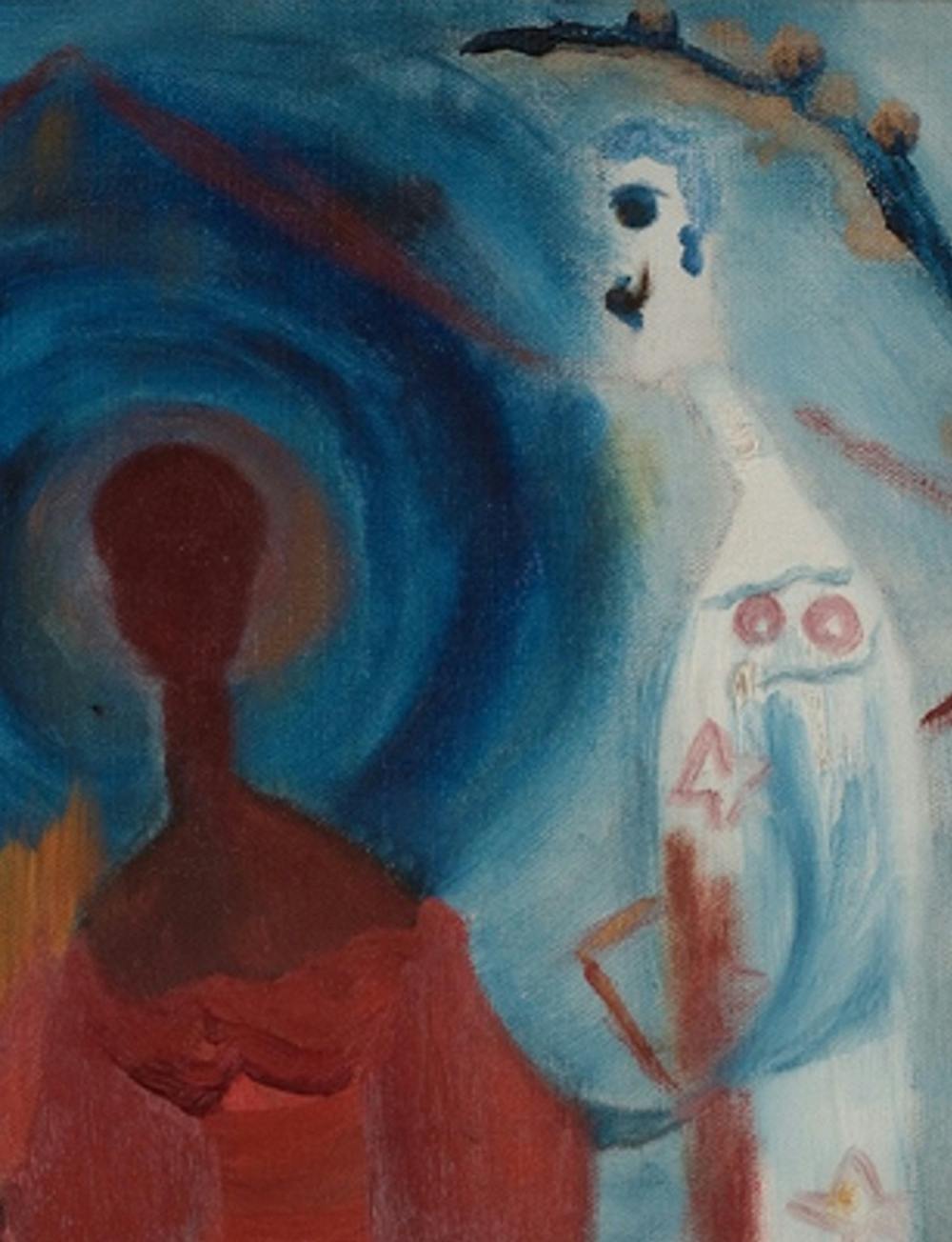
Else Blankenhorn (1873–1920) painted Allegory with Imperial Couple during her stay at a mental hospital. The daughter from a wealthy family in Karlsruhe in Southern Germany, Blankenhorn suffered from nervous breakdowns at the age of 26. This led to her first admission for treatment at the private Bellevue Sanatorium in Switzerland in 1899, where she was diagnosed with schizophrenia.
Blankenhorn had received a musical education in her childhood, but it was only in the sanatorium in 1908 that she started to paint and draw.
In only 12 years, Blankenhorn created around 450 artworks. Among them are numerous watercolour and gouache works, expressive drawings, vibrant paintings as well as photographs, embroideries and musical compositions.
Despite her extensive and versatile oeuvre, Blankenhorn has received limited attention from the art world. She created her artworks in mental hospitals at a time when artworks made by inpatients were generally regarded as clinical case studies, valued for their use in psychiatry and not for their artistic qualities.
Institutionalised female artists were even more at a disadvantage compared with men. Creations by women beyond traditional “female handicrafts” were largely ignored and often thrown away by institutional staff. Some female artists and their works were only recently discovered.
Most of Blankenhorn’s artworks tell a similar story of love, in which the artist plays a significant role. Allegory with Imperial Couple is perhaps one of her most important artworks, and maybe even the point of culmination for the artist herself.
What strikes me first when looking at the Allegory with Imperial Couple is the expressive colours.
Surrounded by bright reds, oranges and blues, the silhouette of a winged female body appears in the centre of the oil painting. With her dress tinted in a strong vermillion, the woman almost seamlessly merges with the jagged shapes in the left middle ground, resembling a fire.
Her face is not defined, yet emphasised by rings in different blues that surround her head, reinforcing the mysterious atmosphere of this artwork.
The woman’s appearance strongly contrasts with the figure on her right. Painted in white and different tones of blue, a man seems to float into the image space. This time, the face is accentuated. Both figures appear to hold hands. Who is this contrasting couple?
I am intrigued by this painting’s enigmatic aura. In her artworks, Blankenhorn painted and drew scenes from her imagined life. By the strong, almost dramatic contrasts in colour and figures, one can sense the importance of this depicted scene for Blankenhorn.
Self-portraits
Blankenhorn believed herself to be married to the German Emperor Wilhelm II. He assigned to his “wife in spirit” the responsibility to resurrect and nourish all the married couples that are buried, but not deceased.
Blankenhorn produced a multitude of original banknotes, with the value of many billion thalers (a unit of currency in Germany until 1908) and sometimes of ever larger sums such as “centuplons”, “quadruplons” and “seidublons of Marks”. These were all invented currencies by Blankenhorn with which she aimed to finance her imagined mission.
Most of these imaginative banknotes feature angelic, hybrid creatures that resemble the artist. The shadowy female figure at the centre of the Imperial Couple shows similarities to other self-representations of Blankenhorn in the woman’s body posture, prolonged neck and shape of the head, as in her self-portrait as a singer.
Given what we know about Blankenhorn’s inner world, we can identify the male figure next to her in the painting as the Emperor, with his characteristic moustache and the white robe adorned with stellar and round ornaments.
While His Majesty remains in a seemingly transcendental space, the “Empress Else of Germany”, as Blankenhorn named herself, appears to float down. Her red wings are hanging downwards, her left hand is reaching out to an enigmatic couple at the left bottom corner.
Cut by the lower image border, we see the upper body and the astonished facial expression of a figure painted in earthy tones. On top is another female. Both are holding hands. Her undefined, stretched-out body seems to levitate. She only appears to be held back by the heavy weight of a tombstone at the bottom.
A powerful upward movement emanates from this couple, generated by the figures’ arrangement on a diagonal line that runs through the painting. I am fascinated how everything in this painting suddenly appears in motion, as if heading towards a climax.
A reclusive artist
The fact Blankenhorn depicted this moment makes the painting so special. While the production of her numerous banknotes was likely a means to an end for Blankenhorn to be able to fulfil her imagined life task, Allegory with Imperial Couple shows the final resurrection of the buried loving couples through Blankenhorn, her mission’s completion.
Of course, we will never know if Blankenhorn saw her life’s assignment as completed, nor if this painting is an expression of her final achievement.
Blankenhorn died from cancer in 1920. There is still much unknown about this reclusive artist.
Else Blankenhorn – a Retrospective Exhibition is at The Prinzhorn Collection museum in Heidelberg, Germany until January 22 2023.
Daniela Mueller does not work for, consult, own shares in or receive funding from any company or organisation that would benefit from this article, and has disclosed no relevant affiliations beyond their academic appointment.
An award-winning professor of sport, leadership and governance has criticised her university’s handling of recent redundancies of 170 academic staff, saying a “rethink” is needed.
Professor Lesley Ferkins, director of Auckland University of Technology’s Sports Performance Research Institute and professor of sport, leadership and governance, told RNZ Nine to Noon that AUT’s senior management had lost the trust of staff.
Interviewed by Kathryn Ryan, Professor Ferkins said that if AUT continued on its current path it would “end in absolute disaster’.
Professor Lesley Ferkins . . . current path will “end in absolute disaster”.
She said the university needed to draw on the “collective wisdom” of the academic staff.
Professor Ferkins has kept her job in the restructure, but has written an impassioned letter to vice chancellor professor Damon Salesa and the leadership team denouncing the redundancy process as lacking in transparency sound leadership values.
Last month, Professor Ferkins was named the Sport Management Association of Australia and New Zealand (SMAANZ) Distinguished Service Award winner.
Returning to ERA AUT returned to the Employment Relations Authority today as part of its plans to make 170 academic staff redundant.
Yesterday, after a legal bid by the union representing teaching staff, the authority found the university’s process for issuing redundancy notices was flawed and breached the collective agreement.
It found that volunteers for redundancy should have been called for once specific positions were identified as surplus, but this did not happen.
In a letter to staff yesterday, AUT’s group director of people and culture Beth Bundy said AUT’s view of the findings differed from that of the Tertiary Education Union (TEU).
She said the university would return to the ERA today to seek clarification and hoped to have that by tomorrow.
This article is republished under a community partnership agreement with RNZ.
Former Supervisor of Elections Jon Apted says that the coalition formed by the Social Democratic Liberal Party with the People’s Alliance/National Federation Party should be able to successfully elect a Prime Minister at the first sitting.
He said that with the 2022 General Election over and FFP tied with the PA/NFP coalition at 26 seats each and Sodelpa holding three critical seats, there were a number of steps to be taken in the process of forming the next government.
“Once the Electoral Commission formally conducts the allocation of seats, they will publicly declare the names of the candidates who have been elected,” he said.
“They also endorse those names on the writ of election that was earlier issued to the Commission by the President and return the writ to the President.” Apted said under section 67 of the Constitution, the President must then call Parliament to meet within 14 days.
“This can be any date within the next two weeks.
“Under the Constitution, he needs to act on the advice of the current Prime Minister. The President has no power to act in his own judgment.”
Swearing in new members Apted said under the Constitution where no party had won an outright majority of seats, the sitting PM and Cabinet remained in office until the first meeting of Parliament.
“At that first meeting, the SG must first swear in the new members who then elect the Speaker.
“The Speaker comes from outside Parliament. A candidate or candidates would be nominated by the members of the parties in Parliament. The Speaker must be elected by a simple majority of votes. Assuming that everyone turns up and is sworn in, that means that the new Speaker must have the support of at least 28 new MPs.”
Apted said once the Speaker was sworn in, he or she would preside over the selection in Parliament for who is to be the PM under section 93 of the Constitution.
“The Speaker first calls for nominations. If only one person is nominated and seconded, that person automatically becomes the PM. However, if there is more than one nominee, a vote must be taken.
“If a nominee gets more than 50 per cent of all the members of Parliament, then they will be PM. If no one gets more than 50 per cent, then a second vote must be held within 24 hours.
“The assumption is that lobbying will go on during this period.
“If after the second vote, someone has more than 50 per cent, he or she will be PM. If not, there has to be a third vote within 24 hours.”
Apted said if no one gets more than 50 per cent in the third vote, then the Speaker has to notify the President that Parliament is unable to elect a PM, and the President must within 24 hours dissolve Parliament and issue a new writ of election for a fresh election.
However, in reality with Sodelpa agreeing to form a coalition with the PAP/NFP coalition, that coalition should be able to successfully elect a PM at the first sitting, Apted said.
Felix Chaudharyis a Fiji Times journalist. Republished with permission.
When a recent study implicated forest fires set by early Māori in a hemisphere-wide rise in emissions, it ignited controversy.
The incriminating evidence comes from Antarctic ice cores containing so-called refracted black carbon – essentially far-flung soot derived from wildfires in the southern mid-latitudes.
The strongest response, coming from Māori scholars, raised concerns about ignored local knowledge and cultural perspectives.
Inadvertently, these responses have diverted attention from some flaws in the fundamental science, which mean the evidence doesn’t stack up with the headline conclusion.
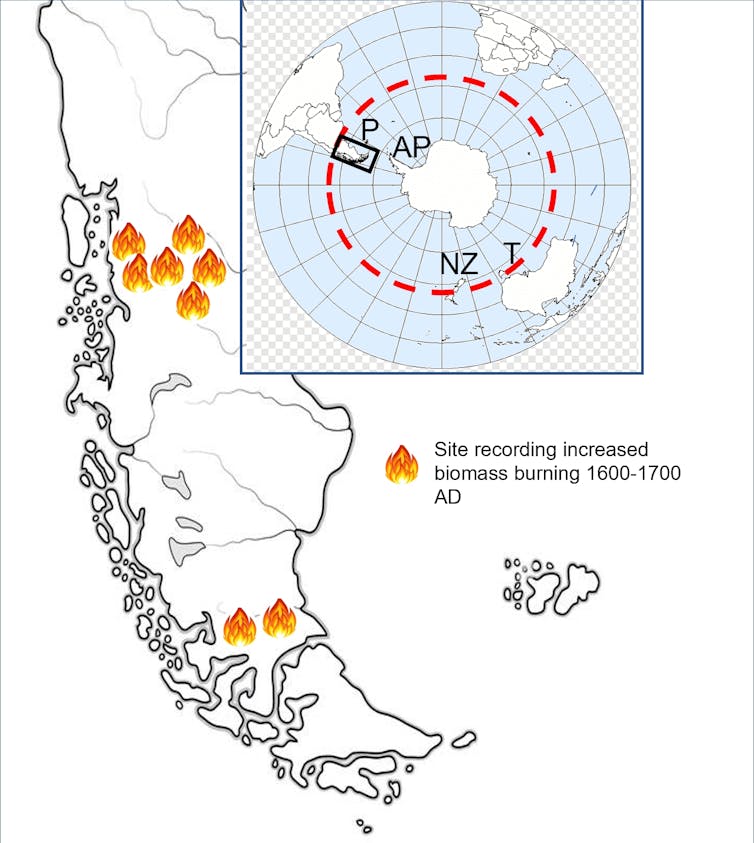
My research scrutinises palaeo-ecological records to show that burning across southern New Zealand had already declined by the time the ice cores record the peak in black-carbon levels (from 1,600-1,700AD). Instead, this period coincides with increased burning across Patagonia, at the time of early European settlement there, and in southwest Tasmania.
Mismatched periods of burning
The original study shows the highest black-carbon levels in ice cores from the Antarctic Peninsula between 1,600AD and 1,700AD, following an earlier rise from background levels that started around 1,300AD.
The researchers used a two-step approach to finding the most likely culprit. First, they used atmospheric circulation patterns and known regions of substantial vegetation cover to narrow down the list of potential sources to sizeable landmasses south of 40° South. That leaves three suspects: Patagonia, Tasmania and southern New Zealand (essentially the South Island/Te Waipounamu).
Then, they interrogated each of the three suspects by examining records of charcoal from local lake sediments that, just like Antarctic ice, have accumulated evidence of changing environmental conditions over time.
From these interrogations, the investigation concluded the charcoal records from Patagonia and Tasmania didn’t match the Antarctic black-carbon pattern. But early Māori, they argue, have no such alibi as it is well established the initial settlement of Te Waipounamu, commencing around 1,300AD, was accompanied by extensive forest clearance by fire.
But there’s a problem. While charcoal records from Te Waipounamu consistently show extensive early burning from around 1,300AD, the phase was very brief. The most extensive damage and maximum emissions are likely to be confined to what has been dubbed the initial burning period, commencing in the late 13th century and lasting only about 50 years.
By 1,600AD, when the phase of peak black-carbon levels begins in Antarctic records, the emissions from forest fires in southern New Zealand have long since declined.
These and other changes in Māori land use during the brief course of New Zealand prehistory are well established in archaeological and palaeo-ecological records.
Early Māori moved with the climate
Intriguingly, climate change was a factor for early Māori. The decline in burning following the initial burning period, around 1,400AD, coincides broadly with the Little Ice Age and with abandonment of traditional settlements in southern regions, presumably in response to less hospitable climates.
While early Māori must have contributed to the rising black-carbon levels in Antarctica from 1,300AD, they have a solid alibi for the ultimate crime: the peak levels of black carbon from 1,600AD to 1,700AD.
Which returns us to the burning question: If not Māori, then who?
Patagonia is the obvious suspect. It is just a relative stone’s throw from the Antarctic Peninsula (in comparison to New Zealand). It also has greater potential for biomass burning because of its larger, vegetated landmass, more drought-susceptible climate and larger population.
It was not by accident that Magellan named its southern tip Tierra del Fuego (Land of Fire) when first sighted in 1,520AD, at a time when black-carbon levels were rising in Antarctic Peninsula ice. Of course, Magellan was paving the way for the subsequent European colonisation of Patagonia, which introduced a new dimension for fire from 1,600AD.
With this conundrum in mind, I have conducted my own interrogation of Patagonian fire history. After helpful discussions with Patagonian scientists and historians, I have found at least eight published charcoal records that contradict the one record used in the original study.
This map of Patagonia south of 40° South provides locations of eight charcoal record sites that show increased biomass burning from 1,600 to 1,700AD. Author provided, CC BY-ND
These records attest to high levels of burning across Patagonia, accompanying the early European settlement phase and coinciding with peak levels of black carbon in Antarctic ice.
This is also true for Tasmania. Again, a single record (Lake Vera) was selected in the original study to represent the regional fire history and to eliminate Tasmania as a candidate for the peak in black-carbon emissions. But a composite record from 14 sites in southwest Tasmania shows higher levels from 1,600AD to 1,800AD than at any other time during the previous 600 years.
So has justice been served in this case? Or, as I would argue, is there a case for a retrial in which a wider spectrum of humanity – and not just one brief cultural phase – is implicated in the Antarctic black carbon whodunnit?
Rewi Newnham does not work for, consult, own shares in or receive funding from any company or organisation that would benefit from this article, and has disclosed no relevant affiliations beyond their academic appointment.
The pavlova is a summer icon; just a few simple ingredients can be transformed into a beautifully flavoured and textured dessert.
But despite its simplicity, there’s a surprising amount of chemistry involved in making a pavlova. Knowing what’s happening in each step is a sure-fire way to make yours a success.
So exactly what does it take to make the perfect pavlova? Let us break it down for you.
Egg whites
Egg white is basically a mixture of proteins in water. Two of these proteins, ovalbumin and ovomucin, are the key to forming a perfect foamy meringue mixture.
Whipping the egg whites agitates the proteins and disrupts their structure, causing them to unfold so the protein’s interior surface is exposed, in a process known as denaturing. These surfaces then join with one another to trap air bubbles and turn into a stable foam.
Egg yolk must be completely removed for this process to work. Yolk is mostly made of fat molecules, which would destabilise the protein network and pop the air bubbles. It only takes a trace amount of fat, or even just a greasy bowl, to disrupt foam formation.
You should always whip your egg whites in a clean glass or metal bowl. Plastic bowls are more likely to hold leftover grease.
Having any trace of fat in your meringue will limit your ability to form a stable foam, so be careful when separating your eggs. Shutterstock
Sugar
A traditional pavlova uses sugar – a lot of it – to provide texture and flavour. The ratio of sugar to egg white will differ between recipes.
The first thing to remember is that adding more sugar will give you a drier and crispier texture, whereas less sugar will lead to a softer and chewier pavlova that won’t keep as long.
The second thing is the size of the sugar crystals. The larger they are, the longer they’ll need to be whipped to dissolve, and the greater the chance you will overwork the proteins in your meringue. Powdered icing sugar (not icing mixture) is preferable to caster or granulated sugar.
If you do happen to overbeat your meringue (which may end up looking clumpy and watery) you can try to save it by adding another egg white.
Acid
Many pavlova recipes call for adding cream of tartar or vinegar. Cream of tartar is also known as potassium hydrogen tartrate, which you may have seen in the form of crystals at the bottom of a wine glass.
These acids act as a stabilising agent for the meringue by aiding in the unfolding of the egg white proteins. More isn’t always better, though. Using too much stabiliser can affect the taste and texture, so use it sparingly.
Tartaric acid is the most abundant acid in grapes, so you might sometimes see crystals of potassium hydrogen tartrate at the bottom of a wine glass. Shutterstock
Heat
Cooking a pavlova requires a very slow oven for specific chemical reasons. Namely, egg white proteins gel at temperatures above 60℃, setting the meringue.
At higher temperatures a chemical reaction known as the Maillard reaction takes place in which proteins and sugars react to form new flavourful compounds. We can thank the Maillard reaction for many delicious foods including roasted coffee, toast and seared steak.
However, excessive Maillard reactions are undesirable for a pavlova. An oven that’s too hot will turn your meringue brown and give it a “caramelised” flavour. Recipes calling for pavlova to be left in the oven overnight may actually overcook it.
At the same time, you don’t want to accidentally undercook your pavlova – especially since uncooked eggs are often responsible for food poisoning. To kill dangerous bacteria, including salmonella, the pavlova’s spongy centre must reach temperatures above 72℃.
An alternative is to use pasteurised egg whites, which are briefly heated to a very high temperature to kill any pathogens. But this processing may also affect the egg white’s whippability.
Substitute ingredients
People love pavlova, and nobody should have to miss out. Luckily they don’t have to.
If you want to limit your sugar intake, you can make your meringue using sweeteners such as powdered erythritol or monk fruit. But, if you do, you may want to add some extra stabiliser such as cornflour, arrowroot starch, or a pinch of xanthan gum to maintain the classic texture.
Also, if you want a vegan pavlova, you can turn to the chickpea instead of the chicken! Aquafaba – the water collected from tinned or soaked beans – contains proteins and carbohydrates that give it emulsifying, foaming and even thickening properties. Egg-free pavlova recipes typically replace one egg white with about two tablespoons of aquafaba.
Although chickpeas may not come to mind when you picture pavlova, their aquafaba can be used to replace egg white. Shutterstock
And for those of you who don’t do gluten, pavlova can easily be made gluten-free by using certain stabilising agents.
All that’s left is to get creative with your toppings and decide what to do with those leftover yolks!
Nathan Kilah has previously received payment to write an article on the chemistry of eggs in COSMOS Magazine, published by the Royal Institution of Australia.
Chloe Taylor does not work for, consult, own shares in or receive funding from any company or organization that would benefit from this article, and has disclosed no relevant affiliations beyond their academic appointment.
Ride-share company Uber has just rolled out an option to book vehicles equipped with a children’s car seat across Melbourne. Uber is also considering allowing unaccompanied children to use its service.
In Australia, a recent study found most parents remain unwilling to let their children use a ride-share service unaccompanied. (Uber policy, like most ride-sharing companies, currently requires a solo passenger to be over 18.) There appears to be more acceptance in countries such as the United States where child-specific ride-shares are more widespread.
Many time-poor families are desperate for better alternatives to having to drive their children everywhere they need to go. There are indeed high social, economic and environmental costs associated with parental taxis.
But outsourcing this role to ride-share services is not the best solution. It will reinforce an over-reliance on cars, which is demonstrably harmful for children’s health and wellbeing.
The Australian study identified several factors that mattered to parents. These included:
being able to decide the route of the vehicle
who is able to drive and ride in the vehicle
the presence of a designated adult waiting at the child’s destination
technological features such as GPS tracking and two-way cameras to communicate with the child during the trip.
Clearly, a few roadblocks need to be overcome before these services gain broader appeal for families with children in Australia. But what would be the impact if they did go ahead? We should consider both the problems these services could solve and the problems they might create.
“Busy parents” is a phrase that comes up often when talking about children’s transport challenges and solutions. Child-specific ride-sharing seems to be a logical response to that problem. And Uber is not the the first car service for kids in Australia.
However, the benefits gained from these “care-drivers” (driver/babysitter) are likely to be offset by new anxieties for parents.
In particular, parents worry about their children’s safety in the company of an unknown adult. When it comes to trusting a service to transport unaccompanied children, Australian research found parents were more likely to voice concerns about ride-share services than autonomous vehicles.
This is likely to remain the case despite technologies enabling real-time monitoring of the child and other desired features of the ride-share vehicle. And these surveillance technologies raise additional ethical questions.
Children’s dependence on cars to get around also affects their health. The risks range from road safety issues, noise and air pollution to being less active physically. A ride-share service for children would reinforce their families’ car dependence and the associated health issues.
Any child-specific ride-share service is also likely to magnify existing social and economic issues. To name a few:
the services would tend to be exclusive in nature, being more accessible for those who are well-off and able-bodied
passive commuting in cars would become even more passive in the absence of adults known to the children, further reducing their opportunities to construct their social identities and develop independence and self-reliance – parents, too, could have fewer opportunities to interact with each other and the broader community at school or sport events
both parents and children place a high value on the togetherness aspect of family trips to schools and extra-curricular activities, even when travelling by car. Child-only ride-share services would reduce the time spent together.
Child-only ride services might relieve parents of driving duties but would reduce the time families spend together. Shutterstock
The heavy reliance on private cars by families with children is one of the key challenges facing most WEIRD (Western, educated, industrialised, rich and democratic) countries. The emergence of ride-share services for children highlights the difficulties with children’s lifestyles dominated by the need to get to extra-curricular activities, often at non-local places.
Like any profit-driven approach, this kind of service raises concerns about exploitation of system-wide weaknesses. In this case, it’s the transport challenges faced by families with children.
These “solutions” also undermine various policies and programs that aim to create more socially and environmentally just communities. These include, for example, local living policies – such as so-called 20-minute neighbourhoods – which are central to most planning strategies across Australia.
Allowing unaccompanied kids to travel in high-tech, ride-share vehicles might help some parents in the short term. In the long term, though, it will create more complex problems. These parallel many of the well-reported issues associated with lives and societies shaped by the car – known as automobility.
Happier and healthier children should be the lens to look through at any new approaches to how children get around. Plenty of equitable and cost-effective solutions exist. The most obvious involve creating the social and environmental conditions for safe and convenient walking, cycling and public transport.
Having these solutions available instead of having to drive children would help time-poor families. And children can use all these transport options in groups, which eases safety concerns. There are, for example, walking school buses and bike trains.
People and cities have much to gain from a move away from a narrow view of technology – such as retrofitting cars for monitoring and controlling children. Instead, we can use technology to promote healthier, greener and more equitable ways of getting around.
Hulya Gilbert does not work for, consult, own shares in or receive funding from any company or organization that would benefit from this article, and has disclosed no relevant affiliations beyond their academic appointment.
Immigration New Zealand’s recent announcement that all medical doctors would be included on the straight-to-residence pathway doesn’t quite give the full picture. In fact, “all” only includes those doctors who can have their medical registration approved before coming to New Zealand.
For many foreign-trained doctors already living here, the obstacle preventing them from working isn’t immigration – it’s medical licensing. If more is not done to streamline and speed up the licensing process, New Zealand risks losing prospective doctors to countries that make the process easier.
But as of mid-November, more than 50 foreign-trained doctors who have met the Medical Council’s standards are still caught in a bottleneck, waiting for supervised hospital positions that will allow them to be provisionally registered before their exam pass expires.
Furthermore, some of them have already been offered jobs in those same countries with “comparable health systems”. So why can’t they get registered in New Zealand?
Competent and comparable
Potentially hundreds of other doctors already in New Zealand are also waiting to take the required local clinical skills exam (NZREX), which is only open to 30 people at a time. The exam has only been offered four times – instead of the usual nine – in the past three years, with only one currently scheduled for 2023.
A few hundred doctors may not sound like much, but patients are being turned away from GPs all over New Zealand. Up to half of practices are not accepting any new patients.
Just one GP can safely have around 1,400 patients on their books, although this number is currently up to 2,500 for many overworked GPs.
Dr Orna McGinn, Chair of the New Zealand Women in Medicine (NZWIM) Charitable Trust, recently surveyed almost a thousand doctors working in New Zealand. McGinn noted that doctors’ concerns around a medical workforce crisis have been dismissed and diminished.
Doctors who trained overseas are especially struggling to be heard. As part of my research, I’ve spoken to more than 20 foreign-trained doctors living in New Zealand, most of whom aren’t yet able to work here.
As one doctor said to me of those who have been offered jobs in “competent” and “comparable” countries like Australia, the UK and Ireland:
If a doctor can work in the UK, why can’t they work here? The same doctor is not welcome here.
Starting from scratch
Another doctor I spoke to asked:
Why are they giving permanent residency to skilled migrants and then asking them to start from scratch?
Yet another respondent described how they had moved to New Zealand with their spouse as skilled migrants, with their medical degree contributing points towards the shared visa application. More than five years later – and after passing the NZREX – they were still waiting for their provisional registration.
A New Zealand doctor, who trained in a “non-comparable” health system, has also passed NZREX and was considering a job offer in the UK:
I grew up in New Zealand, I am a New Zealand citizen […] but if I can’t work as a doctor here then I’ll go to the UK, Australia or the US and work for 33 months – then I’ll consider if I want to come back here or not.
Returning with 33 months’ recent experience in a “comparable health system” like the UK would allow them to skip the bottleneck faced by other foreign-trained doctors. But that’s only if they decide to return.
A common sentiment shared by many of the foreign-trained doctors I spoke to was summarised by one doctor’s advice to other NZREX candidates thinking of coming to New Zealand: “Don’t waste your time”.
Simple solutions?
This situation is a “lose-lose” not only for our over-burdened medical workforce and these individual doctors, but also for the New Zealand public who experience delays in accessing medical care.
That said, there are some relatively simple solutions to this thorny issue. In August, the Minister of Health announced two new pilot programmes for NZREX doctors.
The first is a bridging programme that doesn’t guarantee a job offer at the end of it for participants. The other will allow eight to ten doctors who want to be GPs to complete some of their supervised work placements in GP clinics where there is more capacity to support them, rather than in hospitals.
This will be life-changing for the lucky individuals who get the positions, but still leaves many behind. As a pilot programme, there is also no guarantee that this will be expanded any time soon.
The Medical Council of New Zealand has also just proposed two options for doctors who are eligible for general registration in the UK. But even if the proposed changes are approved, NZREX doctors living in New Zealand would need to spend at least one year in the UK, or end up in the same bottleneck for supervised work they are in now.
Right now, the NZREX pathway to licensing that exists on paper is virtually impossible without a stroke of luck.
New Zealanders should be pushing for further change. At a minimum, there should be viable supervised pathways for all doctors who demonstrate the required knowledge through international and local exams, as well as more exam offerings.
Perhaps the most striking thing about my conversations with NZREX doctors was their frequent use of the phrase “second class citizens” to describe their experience here.
But NZREX doctors in New Zealand don’t need our pity. They need respect, recognition and the ability to utilise their skills. These are considered highly sought after in other “comparable health systems” and would surely be invaluable to those New Zealanders waiting in line for healthcare.
Johanna Thomas-Maude does not work for, consult, own shares in or receive funding from any company or organisation that would benefit from this article, and has disclosed no relevant affiliations beyond their academic appointment.
A glass or two of champagne with Christmas lunch. A cool crisp beer at the beach. Some cheeky cocktails with friends to see in the New Year. There seem to be so many occasions to unwind with an alcoholic drink this summer.
But if you’re taking certain medications while drinking alcohol, this can affect your body in a number of ways. Drinking alcohol with some medicines means they may not work so well. With others, you risk a life-threatening overdose.
Here’s what you need to know if you’re taking medication over summer and plan to drink.
After you take a medicine, it travels to the stomach. From there, your body shuttles it to the liver where the drug is metabolised and broken down before it goes into your blood stream. Every medicine you take is provided at a dose that takes into account the amount of metabolism that occurs in the liver.
When you drink alcohol, this is also broken down in the liver, and it can affect how much of the drug is metabolised.
Some medicines are metabolised more, which can mean not enough reaches your blood stream to be effective.
Some medicines are metabolised less. This means you get a much higher dose than intended, which could lead to an overdose. The effects of alcohol (such as sleepiness) can act in addition to similar effects of a medicine.
Whether or not you will have an interaction, and what interaction you have, depends on many factors. These include the medicine you are taking, the dose, how much alcohol you drink, your age, genes, sex and overall health.
Women, older people and people with liver issues are more likely to have a drug interaction with alcohol.
Many medicines interact with alcohol regardless of whether they are prescribed by your doctor or bought over the counter, such as herbal medicines.
1. Medicines + alcohol = drowsiness, coma, death
Drinking alcohol and taking a medicine that depresses the central nervous system to reduce arousal and stimulation can have additive effects. Together, these can make you extra drowsy, slow your breathing and heart rate and, in extreme cases, lead to coma and death. These effects are more likely if you use more than one of this type of medicine.
Medicines to look out for include those for depression, anxiety, schizophrenia, pain (except paracetamol), sleep disturbances (such as insomnia), allergies, and colds and flu. It’s best not to drink alcohol with these medicines, or to keep your alcohol intake to a minimum.
2. Medicines + alcohol = more effects
Mixing alcohol with some medicines increases the effect of those medicines.
One example is with the sleeping tablet zolpidem, which is not to be taken with alcohol. Rare, but serious, side effects are strange behaviour while asleep, such as sleep-eating, sleep-driving or sleep-walking, which are more likely with alcohol.
3. Medicines + craft beer or home brew = high blood pressure
Some types of medicines only interact with some types of alcohol.
Examples include some medicines for depression, such as phenelzine, tranylcypromine and moclobemide, the antibiotic linezolid, the Parkinson’s drug selegiline, and the cancer drug procarbazine.
Drinking craft beer this summer? This can interact with some drugs to raise your blood pressure. ELEVATE/Pexels, CC BY-SA
These so-called monoamine oxidase inhibitorsonly interact with some types of boutique and artisan beers, beers with visible sediment, Belgian, Korean, European and African beers, and home-made beers and wine.
These types of alcohol contain high levels of tyramine, a naturally occurring substance usually broken down by your body that doesn’t ordinarily cause any harm.
However, monoamine oxidase inhibitors prevent your body from breaking down tyramine. This increases levels in your body and can cause your blood pressure to rise to dangerous levels.
4. Medicines + alcohol = effects even after you stop drinking
Other medicines interact because they affect the way your body breaks down alcohol.
If you drink alcohol while using such medicines you may you feel nauseous, vomit, become flushed in the face and neck, feel breathless or dizzy, your heart may beat faster than usual, or your blood pressure may drop.
This can occur even after you stop treatment, then drink alcohol. For example, if you are taking metronidazole you should avoid alcohol both while using the medicine and for at least 24 hours after you stop taking it.
An example of where alcohol changes the amount of the medicine or related substances in the body is acitretin. This medication is used to treat skin conditions such as severe psoriasis and to prevent skin cancer in people who have had an organ transplant.
When you take acitretin, it changes into another substance – etretinate – before it is removed from your body. Alcohol increases the amount of etretinate in your body.
This is especially important as etretinate can cause birth defects. To prevent this, if you are a woman of child-bearing age you should avoid alcohol while using the medicine and for two months after you stop taking it.
One of the most common myths about medicines and alcohol is that you can’t drink while using the contraceptive pill.
It is generally safe to use alcohol with the pill as it doesn’t directly affect how well birth control works.
But the pill is most effective when taken at the same time each day. If you’re drinking heavily, you’re more likely to forget to do this the next day.
Alcohol can also make some people nauseous and vomit. If you vomit within three hours of taking the pill, it will not work. This increases your risk of pregnancy.
Contraceptive pills can also affect your response to alcohol as the hormones they contain can change the way your body removes alcohol. This means you can get drunk faster, and stay drunk for longer, than you normally would.
Yes you can drink while on the pill. But if you vomit within a few hours of taking it, the pill won’t work. Shutterstock
Otherwise, it is generally safe to use alcohol with antibiotics, as alcohol does not affect how well they work.
But if you can, it is best to avoid alcohol while taking antibiotics. Antibiotics and alcohol have similar side effects, such as an upset stomach, dizziness and drowsiness. Using the two together means you are more likely to have these side effects. Alcohol can also reduce your energy and increase how long it takes for you to recover.
If you plan on drinking alcohol these holidays and are concerned about any interaction with your medicines, don’t just stop taking your medicines.
Your pharmacist can advise you on whether it is safe for you to drink based on the medicines you are taking, and if not, provide advice on alternatives.
Associate Professor Wheate in the past has received funding from the ACT Cancer Council, Tenovus Scotland, Medical Research Scotland, Scottish Crucible, and the Scottish Universities Life Sciences Alliance. He is a Fellow of the Royal Australian Chemical Institute, a member of the Australasian Pharmaceutical Science Association, and a member of the Australian Institute of Company Directors. Nial is the chief scientific officer of Vairea Skincare LLC and a Standards Australia panel member for sunscreen agents.
Jessica Pace does not work for, consult, own shares in or receive funding from any company or organisation that would benefit from this article, and has disclosed no relevant affiliations beyond their academic appointment.
Source: The Conversation (Au and NZ) – By Robert Glasser, Honorary Professor, Institute for Climate, Energy & Disaster Solutions, Australian National University
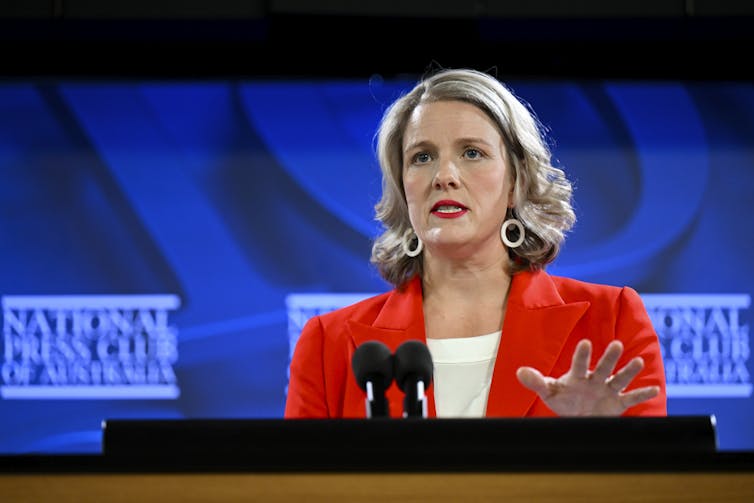
In an address to the National Press Club this month, Home Affairs Minister Clare O’Neil expressed deep concern about the national security implications of climate change.
“When Home Affairs was created, the discussion about climate change and national security was largely academic. Indeed, it was derided by the former government,” O’Neil said. “Just five years on, climate change is a recognised, growing part of Australia’s national security picture.”
Such a grave threat requires a flexible, nuanced and comprehensive national response. It should recognise the complex risks associated with cascading natural disasters, and draw on the knowledge and experience of all Australians.
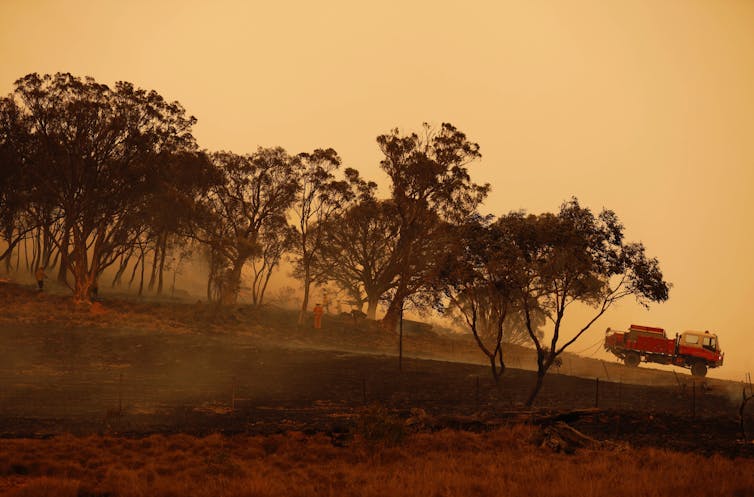
Climate change, and associated disasters such as bushfires, are a national security threat. Sean Davey/AAP
A confronting reality
In her address, O’Neil said climate change posed a number of threats to the region. In particular, she said Australia and its neighbours were vulnerable to “massive movements of people that may become unmanageable” – especially if they occur alongside food and energy shortages.
The increased frequency of natural disasters were, O’Neil said, “a hugely consuming exercise for government and the community” which, in itself, posed a national security risk.
The Albanese government has sought to better understand the security threats posed by the climate crisis. One of its first acts of government was to commission a climate risk assessment from the Office of National Intelligence.
Home Affairs Minister Clare O’Neil said climate change will trigger ‘massive movements of people’ in the region. Lukas Coch/AAP
We need a better plan
Assessing looming climate risks is important – but it won’t be enough. The government must urgently develop a comprehensive, well-informed and fair plan to reduce the risks, by adapting to climate change.
For instance, it fails to take account of emerging complex risks such as important connections between international and domestic climate impacts. O’Neil’s address recognised these risks, saying:
Imagine a future January, where we see a Black Saturday-size bushfire in the southeast, a major flood in the north, then overlay a cyberattack on a major hospital system in the west. Our country would be fully absorbed in the management of domestic crises. Then consider how capable we would be of engaging with a security issue in our region.
A revised national adaptation strategy would recognise and prepare for these complex risks.
Australia’s current adaptation plan calls for a national assessment of climate impacts and progress on adaptation measures. But it doesn’t contain a mechanism to ensure this happens, nor did it state how often the assessments should occur. A well-designed evaluation plan would rectify this.
The Morrison government claimed its strategy was informed by public and expert engagement. But these discussions should not just be a one-off. The process should be ongoing, enabling us to improve as we go.
As Australia manages domestic climate crises, we may struggle to engage with a security issue in the region. Diego Fedele/AAP
A true national dialogue
National security reports – such as that the federal government commissioned on climate risk – should remain classified. But Australia’s overall climate responses will be less efficient, effective and equitable if only developed behind closed doors in the conference rooms of government departments.
Climate change will increasingly affect every Australian. It will require a whole-of-society response, bringing to bear the knowledge and resources of all.
A major dialogue across Australia – under the banner of national action on climate adaptation – could be a game-changer. It should have three main objectives.
First, it should educate the public about climate challenges ahead. This includes sharing an unclassified version of the climate risk assessment. This authoritative document would counteract other dubious sources of information.
Second, the dialogue should collect examples of innovative climate adaptation from across the country. Many inspiring initiatives are underway in the private sector, civil society organisations and local government, as well as by individuals.
Every region in Queensland, for example, now has a locally led “resilience strategy” outlining anticipated hazards and how they will be addressed.
Similarly, many farmers across Australia are using climate-smart practices that adapt farming systems to the changing climate. This reduces risk, increases crop and livestock production and cuts greenhouse gas emissions.
Third, the dialogue should engage the public in identifying responses to challenges identified in the risk assessment. The “wisdom of the crowd” is generally overlooked and underappreciated by governments. But engaging the public can help identify important responses to climate risks that would otherwise be overlooked.
A project by the Australian National University (ANU) is doing just this. It is partnering with stakeholders in river catchments around Australia to identify nature-based solutions to climate-related flooding.
The ANU is also co-leading an initiative around Lismore to develop citizen-based data collection and communication on rain and creek levels in upper catchment areas. This will provide timely information to communities downstream so they can respond when floods are imminent.
The adaptation plan should educate the public about climate challenges that lie ahead. Dave Hunt/AAP
Emissions reduction still matters
A national conversation on climate adaptation should involve diverse participants in structured dialogue, and be conducted with mutual respect.
Such an initiative would be world’s best practice, and further strengthen the Albanese government’s climate credentials as Australia seeks to host the United Nations’ global climate talks in 2026.
None of this takes away from the pressing need to rapidly reduce global greenhouse gas emissions. If Earth’s climate warms by 2℃ or more, the scale of the climate hazards – and the cascading harms to society – will far overwhelm any steps we take to adapt.
So as well as adapting to climate change, the federal government must also increase its own emission reduction ambition, and advocate for other nations to follow suit.
Robert Glasser works for ASPI, which receives funding from DFAT to analyse climate and security risks in the region.
Mark Crosweller and Mark Howden do not work for, consult, own shares in or receive funding from any company or organisation that would benefit from this article, and have disclosed no relevant affiliations beyond their academic appointment.
In a year marked by record-smashing floods, fires, heatwaves and droughts, the urgent need to act on climate change has never been more apparent. And yet, the International Energy Agency (IEA) has found coal burning for electricity generation will reach record levels this year.
Why? Largely because rising natural gas prices, due to sanctions on Russia, is driving demand for less expensive coal to fill the gap in energy supply. The report finds Russia’s invasion of Ukraine has “sharply altered the dynamics of coal trade, price levels, and supply and demand patterns in 2022”.
The good news, however, is the world’s coal use has peaked – and will soon rapidly decline. This is because new solar and wind power station capacity is being installed 18 times faster than new coal. In many countries such as Australia, retiring coal power stations are being replaced by solar and wind.
Coal use in Australia’s National Electricity Market (NEM) peaked in 2008. Since then, the proportion of coal in the NEM electricity mix has fallen from 86% to 59%, and this decline is accelerating.
So why is Australia ahead of the pack in weaning itself off coal? And what lessons can we offer the rest of the world?
What the report found
The IEA report, released last week, suggests global coal use will rise 1.2% this year, surpassing 8 billion tonnes for the first time and the previous record set in 2013. Indeed, China, India and Indonesia, the three largest coal producers, will all hit production records this year.
If there’s a silver lining, we’ve reached peak coal, and it’s only down from here. However, severe climate damage will result from a prolonged tail end of the coal industry.
The IEA found despite high prices for coal, there is no sign of big investment in export mining projects. And this, it says, “reflects caution among investors and mining companies about the medium- and longer-term prospects for coal”.
Thus, new solar and wind capacity is being deployed 18 times faster worldwide than net new coal capacity. So it follows that solar and wind generation will rapidly overtake coal generation, as most existing coal power stations will grow old and retire before 2050.
In many countries – such as Australia, the United States and Germany – old coal power stations are being retired faster than new coal power stations are being built. In most countries, new renewable generation capacity (mostly solar and wind) is being installed much faster than net new coal capacity.
Policy changes around the world has also reduced investment in new coal power stations. For example, the Asian Development Bank no longer lends to build new coal-fired power stations.
The cost of coal per tonne has increased from around US$100 before 2021 to US$400 now. This is also supressing interest in the construction of new coal power stations.
Solar and wind generators dominate new power station construction. Solar and wind generators comprise three quarters of global net new generation capacity, and 99% of new capacity in Australia. This is because they are cheap compared with fossil, nuclear and other renewable technologies.
This market dominance of solar and wind is compelling evidence that they’re the most competitive and practical method of deploying new electricity generation capacity today. Power generation from solar photovoltaics, for instance, increased by 22% last year compared to 2020 levels.
By 2031, at current solar deployment growth rates of 20-25% per annum, we expect the global installed capacity of solar energy to pass the combined capacity of nuclear, hydroelectricity, gas and coal.
Australia is the global pathfinder
Australia is a global solar and wind pathfinder. As solar and wind power rapidly ousts coal, we’re demonstrating how decarbonising the electricity sector is relatively straightforward.
In Australia, solar and wind production in the National Electricity Market rose from nearly zero in 2008, to 9% in 2017, and to 26% in 2022.
The federal government wants renewables to comprise 82% of electricity in the National Electricity Market by 2030. Hydro currently accounts for about 7% of the market, leaving 75% for solar and wind. The rest – 18% – would come from coal and fossil gas combined.
On a per capita basis, Australian solar generation per capita is about double that of its nearest rivals – Germany, Japan and the Netherlands.
Along with most of the global population, Australia is located in the Earth’s so-called “sunbelt” (less than 40 degrees of latitude). In this region, sunshine is abundant. For northern countries outside of the sunbelt, wind energy (including offshore wind) is abundant.
To supply energy all year round, electricity from solar and wind generation needs to be stored for later use. This problem has been solved thanks to the development of pumped hydro and storage batteries.
Where Australia must do better is to stop allowing new fossil gas mining projects for export, which are greenhouse intensive both when the gas is burnt and also because of leakage of methane – a potent greenhouse gas. Gas supplies only 7% of generation in Australia’s National Electricity Market.
A solar and wind energy future
Most countries have vastly more solar and/or wind than needed to meet their energy needs without relying on imports – even densely populated countries such as Japan, Indonesia and Nepal. Sourcing most energy supplies from their own solar and wind boosts nations’ resilience in the event of war, pandemics, natural disasters and trade disruption.
The compelling economic advantage of solar and wind is now clear. But in many countries, there are impediments to their rapid deployment.
This includes fossil fuel subsidies, and a lack of an open electricity market that allows the low cost solar and wind to be discovered by the energy market.
Solar and wind are by far the most prospective options to achieve deep and rapid decarbonisation. Australia is leading the way, and the rest of the world must soon follow.
Source: The Conversation (Au and NZ) – By Gavin Moodie, Adjunct Professor, Department of Leadership, Higher and Adult Education, OISE, University of Toronto
Shutterstock
A merger between the universities of Adelaide and South Australia has been talked about for years.
The idea is now officially back on the table, with both universities agreeing to work on a feasibility study.
What will this mean for the university landscape in Australia?
The 3 South Australian universities
There are three public universities in South Australia: the University of Adelaide, University of South Australia and Flinders University.
All three are the result of Australia-wide mergers of universities and colleges of advanced education in the 1990s as part of the “Dawkins revolution,” led by former federal education minister John Dawkins.
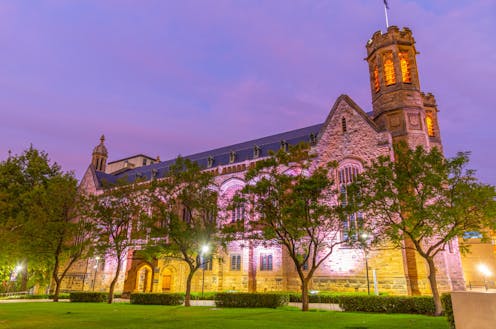
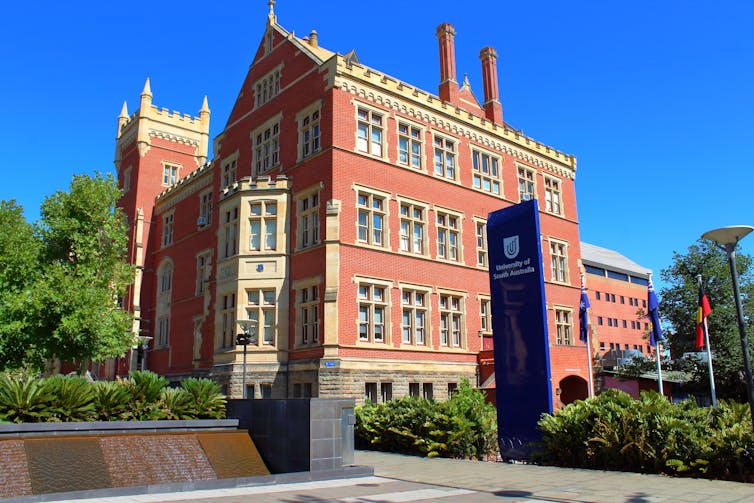
Two University of Adelaide and University of South Australia campuses are right next to each other in the Adelaide CBD. Shutterstock
The idea of more merges has remained popular amongst some policymakers. There have been proposals to amalgamate Flinders University with earlier versions of the University of South Australia. There was also talk of Flinders “returning to mother” as a campus of the University of Adelaide.
Proposals to merge the universities of Adelaide and South Australia were seriously considered in 2012 and 2018. Then, one of the main aims was to form a very big university. This was despite the fact both universities were then around or just below the median size for Australian universities, of almost 23,000 equivalent full-time students and bigger than the average United Kingdom and United States university.
Since then, the University of South Australia has grown to 25,767 and the University of Adelaide to 23,162 full-time equivalent students.
A ‘vanity project’?
As Australian National University higher education expert Andrew Norton notes, South Australia has a history of “higher ed vanity projects”.
In the 2000s, the state government subsidised the US Carnegie Mellon University, UK Cranfield University and University College London to establish campuses in Adelaide. The dream was to establish Adelaide as a “university city”. In 2004, then foreign minister Alexander Downer (and South Australian) said he wanted Adelaide to become the “Boston of Australia”, as “one of the education centres of the Asia-Pacific region”.
The current merger proposal was spurred on by the new Labor state government. One of its election policies was a commission to consider whether a merger would be in the state’s interests. The policy says,
The harsh truth is that each of our universities alone are too small and too undercapitalised to make it into the list of top international universities.
The policy argues a top ranked university would be more attractive to students. This is true for international students, who are attracted to universities’ prestige and the liveliness of the city in which they are based. Most of the prominent international league tables rank universities by volume rather than the intensity of their research, favouring bigger universities.
So, the merged university would be ranked higher in most international league tables and likely attract more international students. In turn, this would expand the state’s economy and develop Adelaide as another type of university city.
Is this really a good idea?
But a merger is not without risks. Each university has a distinct history and orientation and amalgamating them would substantially reduce the diversity of institutions in the state.
The University of Adelaide was the third Australian university, established in 1874, and has a very strong tradition of research intensity and scholarly and cultural enrichment.
The University of South Australia was established in 1991 from a combination of colleges and technical institutes, some of which also originate from the late 19th century. Its strong traditions are in technical and applied studies and research.
A merger would also reduce competition and choice for students. Of the 41 undergraduate study areas on the University of South Australia’s website, 13 are also offered by the University of Adelaide. These choices are likely to be reduced following a merger.
Flinders University declined an invitation to join the current merger, and will presumably present itself as a boutique alternative to its neighbouring behemoth.
What will this mean for other states?
The other most obvious candidate for a merger is the ACT. Here, the Australian National University is of reasonable size of aboout 17,300 equivalent full-time students, but the University of Canberra has (for an Australian university) a modest 11,500 equivalent full-time students.
There was a proposal to merge these universities in 1990s. But the universities had different ambitions. The ANU is one the most research-intensive universities in Australia, while the University of Canberra has had a strong commitment to professional education.
The other obvious candidate is Western Australia, where Curtin University has 35,000 equivalent full-time students, but the other public universities are from 17,000 to 20,000 equivalent full-time students. However, the state government has other, bigger options for economic development, such as mining.
Twelve of the 13 smallest universities in Australia have very distinctive missions or locations which makes amalgamation either very unlikely to be accepted by their governing body or unlikely to yield any benefits without closing an important regional campus.
For example, the University of Notre Dame Australia (9,700) is a private, Catholic university, Charles Darwin University (8,000) is based in the Northern Territory and the University of Divinity (700) works in partnership with churches and religious orders.
So the Adelaide University merger seems unlikely to be followed in other states. But if it happens in South Australia, it will make a distinctive university, whose formation and development would be interesting to watch.
Gavin Moodie does not work for, consult, own shares in or receive funding from any company or organization that would benefit from this article, and has disclosed no relevant affiliations beyond their academic appointment.
Financial contagions can be triggered easily, if conditions are right. First one financial institution falls and then others follow, like a chain of falling dominoes.
The cinder that sparked the global financial crisis in 2007 is considered by many to have been a March 14 briefing by executives of the Lehman Brothers’ investment bank.
Under intense questioning from financial analysts, the executives admitted the bank had overstated the value of billions of dollars in subprime mortgages.
This news saw Lehman Brothers’ stock price crash, and led to investors losing faith in the entire edifice of complex financial deals that had been so profitable for banks and brokers.
As share prices fell, more investors scrambled to sell their stock, driving prices even lower. The contagion spread through global share, property and derivative markets.
Of course, it was a crisis waiting to happen. It took years to create the rickety system that collapsed under pressure. It was going to happen sooner or later. But it still needed a trigger.
We’re at a similar point in cryptocurrency markets.
2022’s major collapses
This year has seen several major crypto-related collapses.
In July the US-based crytocurrency lender Celsius, with assets valued at US$12 billion in May, went bankrupt.
Then in November, FTX – one of the world’s biggest cryptocurrency exchanges, valued at $US32 billion at the beginning of 2022 – collapsed, taking with it the assets of 1.2 million customers.
Binance fears
Crypto owners are spooked, waiting for the next exchange to drop.
Last week it looked as if that might be the world’s biggest cryptocurrency exchange, Binance, after customers withdrew US$1.9 billion of assets in 24 hours.
To put that in perspective, that’s just 3.5% of the US$55 billion in assets Binance reported it was holding on December 18. Binance says withdrawals have settled down.
But the panic was real enough – apparently triggered by some large depositors interpreting a trading halt for one of Binance’s listed coins as signifying something more serious.
Fears of something amiss at Binance led to customers withdraw US$1.9 billion in 24 hours. Shutterstock
Centralised exchanges are a risk
In any market crisis there’s always an underlying problem that provides the fuel for a cinder to spark.
In this case the problem is that Binance and other other centralised crypto exchanges (known as CEX) are riskier than other ways to store crypto assets.
There are good reasons for any crypto owner, after seeing what happened with FTX, another centralised exchange, to withdraw their assets.
The lesson from FTX is that if you don’t have self-custody of your crypto assets, you have no real control.
Centralised cryptocurrency exchanges are more like banks than exchanges. They act as custodians, holding customers’ crypto or fiat currency, similar to holding money in a bank account.
But banks are regulated – in part to minimise the disastrous “bank runs” that occurred regularly in the past.
This includes a global regulatory framework known as the Basel prudential guidelines, introduced in 1988 to ensure every bank holds enough capital and sufficient liquidity to meet withdrawals. It also requires banks to report financial information on a regular basis.
We take all this for granted. But it didn’t happen magically. It’s a function of careful planning based on strict minimum liquidity and capital requirements imposed by banking regulators.
Containing the next crisis
Banks are closely supervised because they hold most of the money in the economy. For the economy to function it is vital that people can store money safely and securely, and accessed when required.
We need the same oversight of cryptocurrency.
Every centralised crypto exchange is in danger if customers’ withdrawals exceed its liquid assets. If it can’t cover withdrawals, it must freeze customers’ accounts. At that point the end is nigh. This is what happened with FTX – albeit the person making the most problematic withdrawals was founder Sam Bankman-Fried.
The next big crypto collapse is not a question of “if” but “when” – and whether governments can work quickly enough to build the regulatory buffers to stop collapse leading to contagion.
It may not be possible to avert a crisis, but it can be contained.
Paul Mazzola does not work for, consult, own shares in or receive funding from any company or organisation that would benefit from this article, and has disclosed no relevant affiliations beyond their academic appointment.
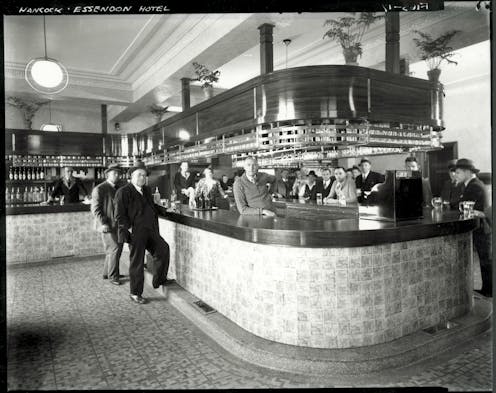
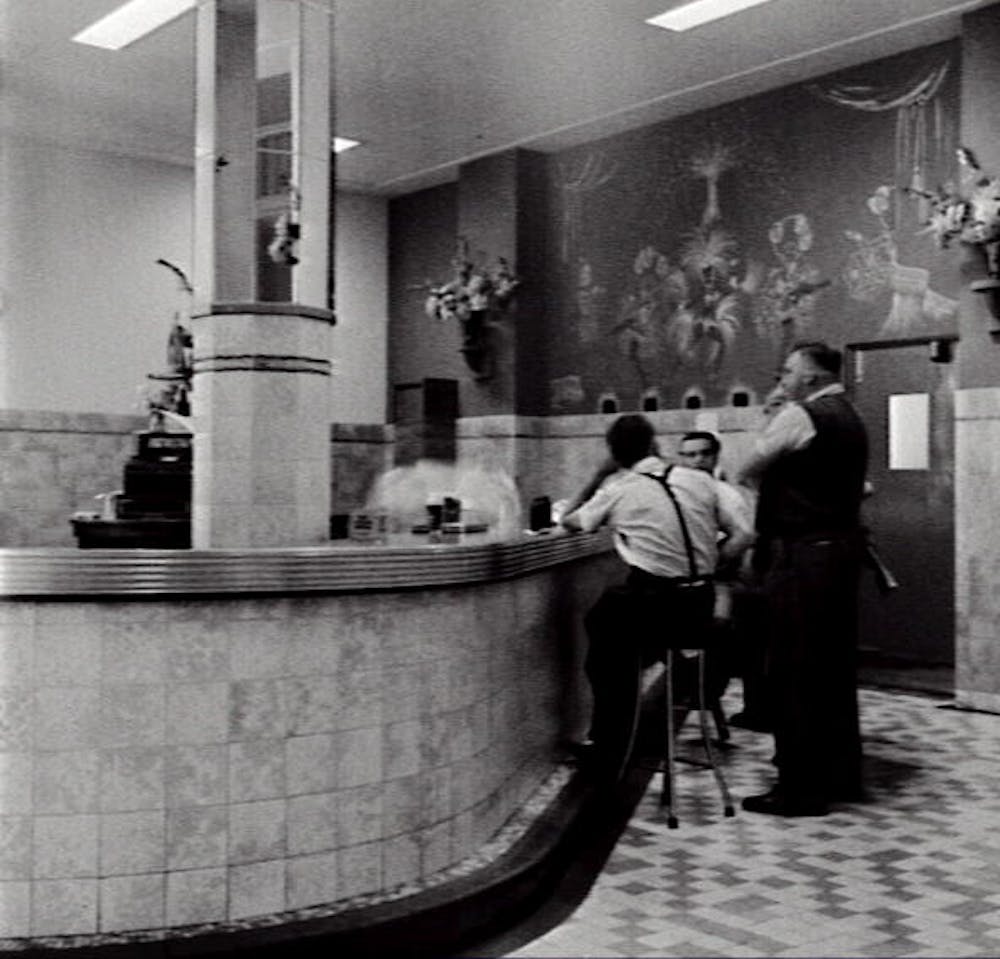
The public bar at Hancock’s Essendon Hotel, photographed around 1938. Harold Paynting Collection, State Library of Victoria.
The “six o’clock swill” is one of the best known terms in Australian history. It captures the unedifying drinking habits of a 50-year period from the first world war until the 1960s, when hotel bars closed at 6pm in the south-eastern states of Australia.
Six o’clock closing legislation was impelled by wartime patriotism and austerity, and a temperance mood which aimed for the prohibition of alcohol.
You may have heard the myth that the six o’clock swill – and the excessive drinking it supported – led to the tiles which are so common in Australian pubs.
According to architectural historian J.M. Freeland in his 1966 book, after this early closing time was introduced, pubs became “no more than high-pressure drinking-houses”.
Freeland wrote about how these pubs became “disembowelled” and refurbished with tiles and linoleum to accommodate the “herds pressing for a place at the bar”.
Petty’s Hotel on York St, Sydney, just before the six o’clock closing in the early 1940s. Mitchell Library, State Library of New South Wales
long, slops-wet bars which men could rest an elbow on as they drank standing up, lavatory-style floors and walls so they could be hosed down when the pub closed for the night.
These men linked the tiles which had become a mainstay in Australian pubs directly to this six o’clock closing, and the need to hose them down after the swill.
But would it lessen the “Australianness” of the 20th century pub if we understood the “lavatory” tiles a little differently?
In fact, little renovation of pubs was done in the first decade of six o’clock closing. Publicans of the time faced considerable uncertainty surrounding licensing laws, and so were reluctant to spend money on expensive structural changes.
They didn’t know if the influence of the temperance movement would increase, or if Australia would go down the path of the United States and introduce Prohibition. Local option polls in which people voted to decide if their suburb would be “wet” or “dry” also hung as a threat over publicans’ heads.
Much of the remodelling and rebuilding of pubs happened in the second half of the 1930s, as Australia came out of the Depression and cheaper materials and lower property prices encouraged investment in pubs.
Pubs which underwent major structural changes or were demolished and rebuilt were usually owned by breweries.
The Regent Hotel on Broadway, Sydney, in 1933 with the Tooths brewery building behind. City of Sydney Archives
In New South Wales, where Tooheys and Tooth & Co vied for market dominance, the modernisation of their pubs was a conscious effort to woo patrons. Architectural journals like Building, Decoration and Glass and Architecture regularly featured moderne-style brewery hotels.
Pubs had always tried to keep up with modern building techniques. As the earliest wattle and daub or wooden pubs were demolished to make way for sturdier structures, many included modern features like electricity. But for every handsome hotel with lacework, pressed metal ceilings and dado tiles, there were dozens of small pubs, especially in country areas, that lacked basic amenities like running hot and cold water.
The Commercial Hotel in Rockhampton, photographed around 1917. John Oxley Library, State Library of Queensland. Neg 78244
At the same time, pubs were closely controlled through liquor licensing laws. The state-based Licensing Boards could compel a pub to renovate or, worse, force it to close.
‘The acme of cleanliness’
In the 1920s and 1930s, the boards adopted a modernising policy based on progressive reform. They targeted kitchens, bathrooms/toilets and bars, making publicans replace grimy, dusty surfaces with materials like rubber, linoleum and tiles.
Tiles were part of a broader hygiene discourse. They were not unique to pubs in the south-eastern 6pm closing states. Public buildings like swimming pools, hospitals and cafeterias used tiles. When Myer’s Emporium opened its caféteria in Adelaide in 1928, it was remarked the “spotless white-tiled walls and the electric refrigerators ensured the acme of cleanliness”.
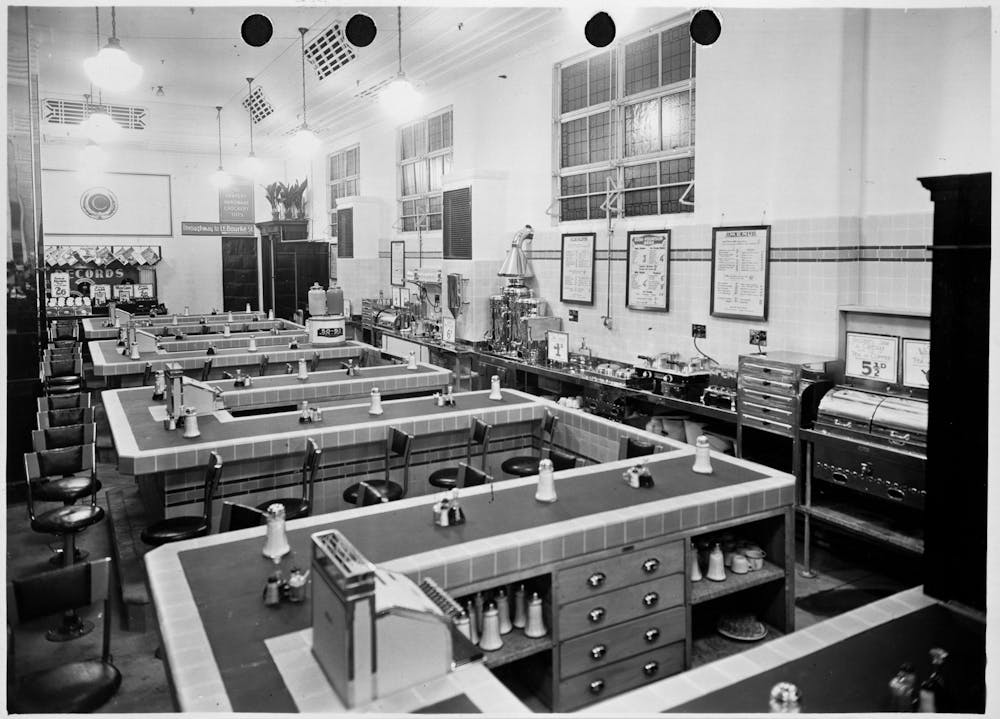
The cafeteria of the original Buckleys building of Coles Melbourne Store No. 4, 1934. State Library Victoria
Mrs F.K. Thomas, the licensee of the Newtown Hotel, Brisbane, was commended for her judicious renovation with cream, blue and orange tiles on the exterior walls and green and deep cream tiles on the interior walls. This made for “cleanliness and hygiene”.
The Charing Cross, Sydney (1936), designed by Tooth’s architect Sidney Warden, featured cream wall tiles and tiled recesses in the public bar to replace the “old wooden mug shelf of earlier days”.
Cinemas and office buildings, like Melbourne’s landmark Nicholas Building (1926), used tiles. Sydney’s underground train stations used wall tiles throughout (like London’s Underground, New York’s subway and the Paris Metro). External tiles were also a feature of brewery pubs built around the turn of the century in Britain.
One of the bars in the Burlington Hotel, Sydney, 1953. City of Sydney Archives, CC BY-NC-SA
As tile historian Hans van Lemmen comments, tiles are not a modern architectural feature. The Ancients used terracotta, marble and ceramic tiles, while Dutch Delftware tiles were popular in Europe and the north American colonies from the 17th century onwards.
In the 19th century, industrial mass production made glazed wall tiles cheaper for both utilitarian and decorative uses. At the same time, the emerging awareness of sanitation and hygiene prompted the wider use of tiles as a way to manage germs and dirt. Tiles were easier to clean than plaster and wood. They were also more durable and colourful than traditional materials.
These days, the popular imagination might associate pub tiles with piss and vomit, even if the architectural move was more about general hygiene than the dangers of the six o’clock swill. Certainly, a pub with wall tiles was easy to clean, and breweries were keen to play-up the sparkling modernity of tiled bars.
After all, what would the swill pub have been like without tiles?
Tanja Luckins does not work for, consult, own shares in or receive funding from any company or organization that would benefit from this article, and has disclosed no relevant affiliations beyond their academic appointment.
Many members of Auckland’s Fiji community say they are “delighted and relieved” by last week’s general election result.
Coup leader turned prime minister Voreqe Bainimarama seems set to lose his position after 16 years in office — eight years as dictator and the other half as elected prime minister.
An opposition coalition formed by the People’s Alliance, National Federation, and Sodelpa parties will replace FijiFirst as the country’s new government, led by another former coup leader Sitiveni Rabuka — now returning to the role as a democratically chosen leader.
Yesterday was a day of celebration for some members of the local community — some of whom migrated to New Zealand because of Bainimarama’s leadership.
“The [previous government] was hopeless, I’ll tell you what,” said the owner of an Auckland shop.
“All sorts of media freedom, union movements, all these things were taken away. I hope the new government can bring back that freedom.”
‘We need democracy’ The new government gave him hope for Fiji’s future, the shop owner said.
“We need democracy to take its course, and I think this is the time,” he said.
“[The coalition] will make a good Cabinet and they will have a better way of running the government, a government that listens to the people.”
But others were more sceptical. An owner of a Fiji restaurant said the coalition had a lot to prove.
“Let’s see what happens, there are big promises being made,” he said. “A three-member coalition, that’s worrying for us, who’s going to be making those big decisions?”
People’s Alliance Party leader Sitiveni Rabuka (centre) joins hands with the coalition partners, Biman Prasad, leader of the National Federation Party, and Anare Jalu (blue bula shirt), chair of the Social Democratic Liberal Party. Image: Saeed Khan/AFP/RNZ Pacific
‘True democracy’ opportunity University of Canterbury sociologist Professor Steven Ratuva said the new leadership had an opportunity to bring back true democracy.
“Although we’ve had democratic elections, the style of leadership hasn’t been very democratic.
“It’s a great opportunity to see whether it’s possible to reconfigure the governance process towards a more democratic system.”
The excitement within the community was palpable, Ratuva said.
Professor Steven Ratuva . . . “It’s a statement against [Bainimarama’s] style of governance, which has been seen to be authoritarian and vindictive. Image: Steven Ratuva/RNZ Pacific
“It’s very significant,” he said. “Bainimarama’s government has been around since the coup in 2006. It’s a [statement] against his style of governance, which has been seen to be authoritarian and vindictive.”
The new coalition, however, was in a precarious spot just hours earlier.
Only 16 of Sodelpa’s 30-member management board voted for the alliance, splitting the party down the middle.
“It was very, very close,” Dr Ratuva said. “Which means that the faction in Sodelpa that supported FijiFirst, they’re probably not finished yet, they’re probably thinking up something.”
Dr Ratuva said the election was not a done deal, and more would be seen in the coming days.
When the election was finalised, he said, the real work would begin.
“The new coalition will have to do a lot of reform, in terms of reimagining and reframing the new governance process in Fiji for the future,” he said.
“It’s a coalition of three parties, they will have to draw together all those intellectual, political, professional resources to rebuild from there.
“We’ll see what happens in a year, but there’s a lot of promise.”
Ardern in ‘wait-and-see’ approach Prime Minister Jacinda Ardern said she was taking a wait-and-see approach over the Fiji election, but the foreign minister had already congratulated the new government.
Ardern said she would wait until “the dust settled” before contacting Rabuka.
When asked whether the result could cause civil unrest, Ardern said she was not concerned and that New Zealand’s role was simply to observe and support Fiji.
Foreign Minister Nanaia Mahuta sent a tweet congratulating Rabuka on forming a coalition.
New Zealand looked forward to “working together to continue strengthening our warm relationship”, Mahuta said.
This article is republished under a community partnership agreement with RNZ.
The ruling FijiFirst party is refusing to concede the 2022 general election, saying it can only be called after the election of the prime minister on the floor of Parliament.
Its general secretary Aiyaz Sayed-Khaiyum said that under the Fiji constitution the government was still in place and Voreqe Bainimarama remained the prime minister.
Sayed-Khaiyum — who is also caretaker Attorney-General — told local media the prime minister’s role and the power of the government would not change until the election of a new prime minister was held on the floor of Parliament.
Sayed-Khaiyum also questioned the validity of the newly announced opposition coalition between the People’s Alliance, National Federation Party and Sodelpa.
He said concerns raised by the resigned Sodelpa general secretary, Lenaitasi Duru claiming “anomalies” in the voting process, had to be considered.
Sayed-Khaiyum said he looked forward to resubmitting FijiFirst’s coalition proposal to the management board of the party should it see fit to sit again.
But he said the final say on who would become the next prime minister of Fiji would only be determined on the floor of Parliament.
Fiji’s president must call Parliament within 14 days of the writ of elections being returned, which took place in a ceremony on Monday at Government House.
This article is republished under a community partnership agreement with RNZ.
Internal disagreements have resurfaced within Sodelpa, Fiji’s kingmaking party, less than 24 hours after it announced it was forming a coalition government with the People’s Alliance and the National Federation Party.https://t.co/YzVPPsRwEb
Claims of irregularities in the vote to create a new coalition government formed in Fiji have emerged.
Internal disagreements have resurfaced within Sodelpa, Fiji’s kingmaking party, less than 24 hours after it announced it was forming a coalition government with the People’s Alliance and the National Federation Party.
The latest turn of events has resulted in the party’s general secretary Lenaitasi Duru tendering his resignation on Tuesday night to the party’s management board following his concerns about “anomalies” in the voting process to elect a coalition partner.
Sodelpa’s 30-member board was split with 16 in favour of the new coalition and 14 in favour of teaming up with Fiji First.
Prior to stepping down Duru had written to Fiji’s president, Wiliame Katonivere, seeking deferment of the first Parliament sitting.
“This request is based on the Sodelpa constitutional anomalies of members that participated in the vote to determine our coalition partner to form government from December 2022,” Duru said in the letter.
He added: “Given the importance of this process in choosing our next government, we therefore wish to advise that the initial result taken by the board is null and void.”
According to local media reports Duru is still the general secretary of the party as his resignation will come into effect after 30 days.
RNZ Pacific has contacted Sodelpa for comment.
No Parliament sitting today Meanwhile, the Parliament office has confirmed that there will be no sitting today, as they have not received any proclamation from the president.
The president must call Parliament within 14 days after the writ of elections is returned.
Speaking to RNZ Pacific last night, Sodelpa’s main negotiator, Anare Jale, said the coalition agreement signed by the three parties is a legally binding document.
Jale said the basis of the agreement is for the three Sodelpa MPs to vote along party lines in favour of People’s Alliance leader Sitiveni Rabuka to be Fiji’s next prime minister.
This means if any of the three candidates fail to do so, then according to the 2013 Fijian Constitution, they will lose their parliamentary seat.
“The coalition is solid. The party is solid. We have decided on a decision, and the provision of the Constitution is very clear. When the party decides on a decision to be taken by them in Parliament, they have to respect that.”
Meanwhile, New Zealand’s Foreign Minister has endorsed the new government.
In a tweet, Nanai Mahuta offered her congratulations to PA-NFP-Sodelpa and Sitiveni Rabuka on forming a coalition to lead the people.
She also said she looks forward to working with the new government to continue strengthening the warm relationship.
Congratulations to PA-NFP-SODELPA/ Sitiveni Rabuka on forming a coalition to lead the 🇫🇯 people. 🇳🇿 looks forward to working together to continue strengthening our warm relationship #duavata#mahitahi#kotahitanga
After 72 hours of negotiations ended yesterday, the Social Democratic Liberal Party finally chose the People’s Alliance party and National Federation Party as its coalition partners ending the 16 years of domination by 2006 coup leader Voreqe Bainimarama.
Speaking to the media outside Yue Lai Hotel in Suva last night, Sodelpa head of negotiations team and vice-president Anare Jale said it was not an easy decision to make.
The negotiations team from the ruling FijiFirst Party was led by its party leader and Prime Minister Voreqe Bainimarama. He was accompanied by FijiFirst general secretary Aiyaz Sayed-Khaiyum.
“The management board has been meeting for two hours today [Tuesday],” Jale said.
He said they made the decision following presentations from the FijiFirst Party, the People’s Alliance Party and National Federation Party.
“A secret ballot was conducted. There were about 30 members of the management board who voted.
14-16 split vote “The decision was 14 voted for FijiFirst Party and 16 vote for the People’s Alliance Party.
“Sodelpa will form a coalition with the People’s Alliance Party and National Federation Party to form a new government.
Sodelpa vice-president Anare Jale (from left), PAP leader Sitiveni Rabuka, NFP leader Professor Biman Prasad and Sodelpa former president Ro Teimumu Kepa shaking hands after the coalition agreement signing yesterday. Image: Atu Rasea/The Fiji Times
“We have finally came to a decision and it has not been a very easy decision, it took us few days to decide on the way forward for the party, especially the choice of who we are going to form a coalition with to form the next government.
“It was a huge responsibility for Sodelpa and we are so grateful that the end has now come.”
He said the decision was a tough one.
“The decision was taken into account with presentations made to the negotiating team of Sodelpa which we have been receiving over the last three days.
“We analysed the presentations given, we went back to the management board to report to them.
Rabuka for PM The negotiation team of the People’s Alliance Party was led by party leader Sitiveni Rabuka, who will become the new prime minister. Also a former coup leader, Rabuka was Fiji’s prime minister from 1992 to 1999.
Questions sent to FijiFirst party leader Voreqe Bainimarama and Sayed-Khaiyum remained unanswered when this edition went to press. RNZ Pacific also faced unanswered questions. The FijiFirst Facebook page has not been undated for four days.
The former Sodelpa leader, Ro Teimumu Kepa, said the negotiations were not easy.
Speaking at the news conference last night, she said the lengthy meeting was an indicator of how serious and crucial the meeting was.
“It has not been an easy 72 hours,” Ro Teimumu said.
“We’ve had three management board meetings but that is an indicator of how serious and how crucial and how important it was for us to make the right decision.
“We are factoring in the stability of our country, the way the people have asked us to look at the areas that we needed to look at in terms of where we were to vote today.
“We hope that the way ahead is going to be one that will bring good news to people in terms of the stability of our country, all the things that we’ve been mindful of and complaining about for the last 16 years.”
Ro Teimumu also took time to thank her party supporters.
“I would like to thank our Sodelpa supporters who came through and gave us three seats, which became very crucial in terms of determining the way ahead.
“We wish our parliamentarians especially the new coalition — that is the People’s Alliance Party, and the NFP and Sodelpa — we wish them all the best and we just ask you to keep them in your prayers.”
Rakesh Kumar is a Fiji Times reporter. Republished with permission.
Jubilant scenes in Suva tonight greeted Fiji’s kingmaker party Sodelpa as it announced it will form a coalition with the People’s Alliance-National Federation Party to form a new government, bringing an end to FijiFirst’s eight-year rein.
It also closes a chapter on 16 years of political dominance of the 2006 coup leader turned Prime Minister Voreqe Bainimarama.
The decision was made in a secret ballot by Sodelpa’s 30 member management board with 16 voting in favour of the PAP-NFP alliance and 14 voting in favour of FijiFirst.
The first sitting of Parliament is tomorrow when the new prime minister — expected to be former coup leader and ex-prime minister Sitiveni Rabuka — will be elected.
Party leaders of Fiji’s new coalition government – Professor Biman Prasad (from left, National Federation Party), Viliame Gavoka (Sodelpa) and Sitiveni Rabuka (People’s Alliance). Image: RNZ Pacific
Bainimarama has yet to concede the elections — RNZ Pacific has contacted his FijiFirst party for comments.
Sodelpa’s chief negotiator, Anare Jale said their decision to side with PAP-NFP had not been taken lightly and they had given full consideration to the offers from all parties.
“It has taken days to decide on the way forward for the party,” Jale said.
“Especially the choice of the partner for whom we are going to form a coalition with to form government.”
Sodelpa’s kingmaker position came about after a contentious national election count which saw PAP leader Sitiveni Rabuka calling into question the integrity of the electoral system.
But now in the driving seat, Rabuka said it was a past issue.
“We thank the Electoral Commission, although we [had] some difficulties with them in the beginning….But now let it roll over. I’m sure we can all turn our back on that and work together,” Rabuka said.
Since the election results were released on Sunday Sodelpa’s management board has been going back and forth between the negotiating teams for the two prospective coalition partnerships.
This came to a head this afternoon with back-to-back presentations from the two camps before the secret ballot was taken.
Rabuka to be prime minister The new coalition has selected the PAP leader, Sitiveni Rabuka, to be its prime minister.
He will be elected during the first sitting of the new Parliament tomorrow.
This was confirmed by the National Federation Party leader, Professor Biman Prasad, shortly after Sodelpa’s management board announced its chosen coalition partner this afternoon in Suva.
“Official communication will be sent to his Excellency the President, confirming that the PAP-NFP-Sodelpa government is ready to lead under the new prime minister Sitiveni Rabuka,” Professor Prasad said.
The coalition leaders said they were pleased to be able to give the people of Fiji this early Christmas present — a strong and united coalition government.
This article is republished under a community partnership agreement with RNZ.
The Employment Relations Authority (ERA) has knocked-back an attempt by one of Aotearoa New Zealand’s largest universities to axe more than 100 staff.
The Auckland University of Technology planned to make 170 academic staff redundant, but the ERA has now ruled that its process was flawed and breached the collective agreement.
Now the school may need to walk back its dismissals, and start all over again.
ERA said AUT had called for voluntary redundancies too early, before the institution had even decided which positions to cull.
The Tertiary Education Union (TEU) is celebrating the ruling as a win. However, AUT says the union and the university have interpreted the decision differently and it would be seeking clarification.
Lawyer Peter Cranney, in an email to members of the TEU yesterday, said the ERA was considering a compliance order that would require AUT to withdraw all the notices it had already issued.
“Although a compliance order is discretionary, the [ERA] authority has indicated it will not decline the granting of the order it needed,” he wrote.
“The parties will now have three days to consider the matter; and if a compliance order is necessary, the AUT will need to comply within five days.”
Cranney said any compliance order would be issued by Friday.
Trust difficult to rebuild, says union organiser TEU organiser Jill Jones said the decision meant people at risk of losing their jobs no longer were.
“It’s great because what it does show is our collective agreement has been respected by the Employment Relations Authority,” Jones told RNZ Morning Report.
But although staff members were “absolutely” thrilled with the decision of the ERA, there was a breakdown of trust with their employer and it would be difficult to rebuild it.
“Its been a long, hard road for these staff members. They’ve paid a very large price.
“These are members that really, really care about their students and the high price that they’ve paid for this bungled redundancy is that lots of things have happened.
“It’s felt as if, to them, it’s been a very callous and uncaring process and it’s going to be difficult to come back from that.”
Frances* was one of the unlucky 170 to receive a redundancy letter.
“This level of disruption and instability in our lives is just crippling,” she said.
The ERA decision had not brought much comfort.
“It’s kind of a double-edged sword,” she said. “I’m really happy that we’ve seen some justice be recognised through the court system, but I don’t know what’s going to happen next.”
Frances expected AUT to withdraw her notice of dismissal, but did not expect a happy ending.
“I’m not deluded, they’re still going to come for me I’m sure, but they’ll have to start from scratch and do it properly,” she said.
“That’s all we ask, that this is done properly.”
Poor handling of the situation had destroyed staff morale, she said.
“For three months, I’ve been feeling disengaged, demotivated, angry, upset, waiting, waiting, waiting for this letter,” she said.
“This whole process has been about targeting, humiliating, and bullying people.”
AUT seeks clarification of ‘complex findings’ An AUT spokesperson said the findings were legally complex and it regretted that a “procedural issue” highlighted had made staff more uncertain.
“Although the ERA has published its findings, it has not issued orders.
“AUT’s view of these findings differs from that of the TEU. AUT is endeavouring to clarify and resolve the issue promptly.
“Given the differing views between the parties it will therefore be necessary to return to the ERA tomorrow for clarification on some aspects.”
AUT said ERA’s findings found no bad faith in how it had acted — and AUT had formed a differing view of the collective agreement.
“The ERA has noted that AUT should have identified the specific positions potentially declared surplus and, at this point, written to offer voluntary redundancy to the people in these specified positions.
“Following clarification of the procedural issue we will write to those impacted by the decision to confirm the way forward.”
* Name changed to protect identity. This article is republished under a community partnership agreement with RNZ.
Around one in four women of reproductive age experience heavy periods, also known as heavy menstrual bleeding. Periods are a very personal experience and women (and people with uteruses) who have had heavy periods for a long time will often consider this normal, or something to be simply put up with.
A woman with normal periods loses between six to eight teaspoons of blood with each period. On average, bleeding lasts for five days, but a normal period can last for up to eight days. Trying to work out the amount of blood loss can be tricky, but if you have any of these symptoms you probably have heavy periods:
bleeding through clothing
having to change pads and tampons every one to two hours
passing clots larger than a 50 cent coin
avoiding leaving the house on the heaviest days
periods that interfere with your physical, emotional, or social life.
Many women with heavy periods also experience severe period pain. If you are having heavy periods, talking with your doctor can help you choose the right treatment option for you.
changes within the uterus (womb), such as fibroids or polyps (benign tissue growths from the wall of the uterus). Less commonly, cancer or precancerous changes may be the cause of heavy bleeding. Some of the red flags doctors look for are sudden changes in bleeding patterns or vaginal bleeding after menopause
Some women can have more than one contributing cause. However, around half of women with heavy bleeding will not have any recognisable cause, even after testing. Nevertheless, the symptoms will still need treating.
Tests
All women with heavy periods need to have some tests performed to establish the potential cause of their bleeding, and to guide the treatment options. This may include a:
physical exam
cervical screening test, if not up-to-date
blood test to check for low iron levels, and possibly thyroid and clotting function
Don’t just put up with heavy periods, there are now many good treatment options.
You can consider starting initial treatment for heavy bleeding before your first visit to the GP. Oral non-steroidal anti-inflammatories such as ibuprofen or naproxen can be taken regularly from the first day of the period for up to five days. Many women are aware anti-inflammatories treat period pain, but they can also decrease the volume of bleeding by up to 50%.
Another oral treatment for heavy bleeding which may be prescribed by your GP is tranexamic acid. This is taken for the first four days of the period. Anti-inflammatories and tranexamic acid can also be taken together.
Another effective medical treatment is the hormone-releasing IUD (brand names Mirena and Kyleena). These provide reliable contraception and reduce bleeding. These can be inserted by a GP who has experience in IUD insertion, by a family planning clinic, or by a gynaecologist.
Another important part of treating heavy bleeding is replacement of iron stores if you’re deficient. You can try to increase your dietary iron intake, but your GP may also recommend oral iron supplements. These can cause side effects such as constipation or nausea, so your GP may recommend an iron infusion instead.
There are many options for treating heavy menstrual bleeding. Talk to your GP. Shutterstock
Do I need to see a specialist?
Your GP may refer you to a specialist if there are red flags, an abnormality on the pelvic ultrasound or if the bleeding doesn’t improve after six months of trialling treatment.
The gynaecologist may offer a hysteroscopy, where a camera is inserted into the uterus. This can be used to treat abnormalities such as fibroids or polyps.
Endometrial ablation, where the lining of the uterus is purposefully damaged, can be used to reduce or completely cease monthly bleeding. But it’s not suitable for women who are planning a future pregnancy.
The final option for treating heavy bleeding is surgical removal of the uterus via hysterectomy. Historically, this was often used due to a lack of other treatments. While it does permanently resolve heavy bleeding, it has more risks than the other treatments, and is obviously not suitable for women who still wish to bear children. Hysterectomy is considered when other treatments are ineffective or inappropriate, or at the patient’s request.
Don’t delay. See your GP if you think your periods are heavy or if they’re interfering with your work or personal life
keep a diary of symptoms and track your cycle to help your GP understand your periods. Jot down some notes, fill out a period tracking chart or use a free app to keep track
allow enough time. Make an appointment specifically to discuss your heavy periods and get answers to any questions you have. Consider making a double appointment
don’t be embarrassed to discuss your symptoms or ask your GP questions. This is a common and important problem
go back for review if your bleeding isn’t improving after starting treatment. It might be time to discuss other options.
The authors do not work for, consult, own shares in or receive funding from any company or organisation that would benefit from this article, and have disclosed no relevant affiliations beyond their academic appointment.
Source: The Conversation (Au and NZ) – By Gabrielle Jenkin, Director Suicide and Mental Health Research Group University of Otago Wellington, University of Otago
It is a niche kind of membership that lets you in behind the doors of an acute mental health facility. Unless you work there or are admitted as an inpatient, these publicly funded private spaces that house people at their most vulnerable are really difficult to get into.
This makes them challenging to study and, without such research, challenging for architects to design well. We opened up the black box of acute mental health care facilities in New Zealand to understand their purpose, how people experience them and what informs their architectural design.
Design matters. Fit-for-purpose psychiatric facility design promotes better mental health and wellbeing. This is a no-brainer for people who work and stay in these units.
Unfortunately, the evidence base for the architectural design of acute mental health facilities has been haphazard, with costly implications.
To understand how these settings serve their populations and if we can do better, we studied four acute mental health facilities around New Zealand, looking at the old, the new and some in between.
We examined policy documents and architectural plans and made site visits to take photographs, conduct a building survey and interview staff, service users and visiting family members.
In terms of the purpose of acute mental health facilities, we found confusion. Only one facility had a written model of care, which is the critical blueprint for architects to understand what and who they are designing for.
Fortunately, we did find consensus that the underpinning philosophy of care was the “recovery model”. We figured recovery principles, in concert with Indigenous Māori values and models of health and wellbeing, could and should inform the architectural blueprint for these buildings.
Architecture students were asked to come up with design visions for mental health facilities that support recovery and Indigenous Māori values. Ruby Crooks, CC BY-SA
A recovery-oriented environment suggests a design that fosters connection, hope, identity, meaning, empowerment and safety. This was not what we found.
While service users were relieved to get sleep, respite and diagnosis or treatment for their distressing symptoms and spoke highly of the staff compassion and quality of care, for many the acute mental health environment was confusing, frightening, disempowering, restrictive, boring and sometimes unsafe and traumatising.
Name in vain
In what feels like institutional gaslighting, the naming of these units is bewilderingly Kafkaesque. We found “open units”, the name given to lower-acuity facilities, typically have their doors locked. Given the voluntary status of some patients, this is counter intuitive.
Then there are the warm-fuzzy, therapeutic-sounding names for the prison-like seclusion wings, often with Indigenous Māori names, implying such spaces are peaceful retreats when inpatients felt they were anything but.
There is hope however. New Zealand has an aspirational goal of zero seclusion. Bafflingly, we are yet to build a facility without a seclusion wing.
Mind numbing
Service users talked about boredom in dilapidated, resource-scarce and low-stimulus environments. There was little to do in many of the wards and, while all had TVs and a few dog-eared books, activities and allocated spaces were often limited.
Often art rooms, sensory rooms and other occupational therapy spaces were locked and completely unused due to a lack of staff or the ability to supervise effectively.
Facility decision-making around recreation sometimes appeared dubious. Some had exercise bikes inappropriately located in the public reception, or a broken basketball hoop, and colouring-in and smoothie-making seemed central to some recreational programmes.
Lack of meaningful activities led some to start or restart smoking, which was the dominant activity observed in the internal ward courtyards, despite hospital smokefree polices. Fear of violence was cited as a major barrier to smokefree implementation.
Beds and meds
We were struck by the paucity of therapeutic options. While all units had occupational therapists, social workers and psychiatrists, the main treatment was medication, or as some staff described it, “beds and meds”.
Although many were grateful for medication, service users complained about the absence of talking therapies, lamented the lack of access to psychologists and many just wanted someone, anyone, to talk to. We found service users counselling each other.
We also found a lack of consideration of various gendered and cultural needs in the models of care, building design and layout. Shared bathrooms were described as “gross” and there were issues with acoustic and visual privacy.
The look and feel of acute mental health buildings, such as this design vision, can affect people’s sense of recovery. Ruby Crooks, CC BY-SA
Buildings and models of care did not accommodate or consider Māori values and cultural practices well, although New Zealand’s newest facility, Tiaho Mai in Auckland, boasts bi-cultural features due to co-design with Māori.
At a time when evidence suggests a more “domestic” look and feel of acute mental health care buildings would be more therapeutic, New Zealand’s facilities are more hospital-like or institutional than those in the UK.
Courtyards, critical in locked facilities to access fresh air, sunshine and nature, were also institutional, often no more than a concrete pad with little to no nature. They failed to provide any real therapeutic value.
There were some positives though. Encouragingly, many staff told us, despite all the challenges associated with working in these settings, they stayed because the work was interesting, they loved the people and enjoyed that their work made a difference to people’s lives.
How we can do better
The current model and buildings are not serving people well. While the prospect of bulldozing the current stock might appeal, without places to safely care for people experiencing profound mental distress, our most vulnerable may find themselves dislocated from their homes and communities, or worse, in the criminal justice system.
We should and are making improvements to our existing stock of buildings, and some are being totally rebuilt. In the interim, small changes to these environments to foster more inpatient autonomy can be made, including self-locking bedroom doors, built-in privacy controls and the provision of lockers to store valuables.
However, a more profound transformation around the model of care itself is required. Fortunately, a major paradigm shift towards alternative models of acute mental health care is brewing. Many countries, including New Zealand, are re-examining care provision with a human rights lens.
We need to work together to re-create a mental health system that reflects values of human rights, autonomy and person-centred practice and aligns with the rights of Indigenous people. We need a suite of options and new models of mental health care to provide the blueprints for our architects to design and upgrade our places of care.
Gabrielle Jenkin received funding from Royal Society of New Zealand (contractUOO1623) (Marsden Fund)
Elizabeth Kathleen Morton et Jacqueline McIntosh ne travaillent pas, ne conseillent pas, ne possèdent pas de parts, ne reçoivent pas de fonds d’une organisation qui pourrait tirer profit de cet article, et n’ont déclaré aucune autre affiliation que leur poste universitaire.
New Zealand Parliament Buildings, Wellington, New Zealand.
Analysis by Dr Bryce Edwards.
Political Roundup: Threats to politicians and co-governance could be big themes in 2023
Political scientist, Dr Bryce Edwards.
It has been reported that Prime Minister Jacinda Ardern will not host her centrepiece Waitangi Day breakfast next year. According to reports by the Guardian and Australian Associated Press, the decision was due to increased fears for Ardern’s safety at the Upper Treaty Grounds.
Although the Waitangi National Trust announcement has not been confirmed by the Beehive, it does raise several important issues relating to the coming election year.
Threats of violence and nastiness against politicians
Government politicians have been reporting increased hostility, harassment, and threats of violence this year. And anyone who closely watches politics will be aware of rising levels of toxicity and nastiness in political debate. Of course, some of it comes from the politicians themselves.
One of the most notable threats of violence in 2022 came when Deputy Prime Minister Grant Robertson needed the Diplomatic Protection Service to help him board a plane in Whangarei after protesters, apparently opposed to the closure of the Marsden Point oil refinery, chased him with lamingtons.
Act Party leader, David Seymour, responded: “I would have thought that Grant Robertson would be a much bigger threat to lamingtons than lamingtons would be a threat to Grant Robertson”. This was Massey University’s quote of the year this week.
Of course, much more serious threats to safety occurred right outside the Beehive when the Covid anti-mandate protesters occupied the Parliamentary lawn for three weeks. Since then, hostilities have dissipated and Ardern herself recently said tensions have reduced since the Covid mandates have been dismantled.
Last week the anti-vax movement attempted to hold a large demonstration on Parliament grounds again, but despite lots of publicity the protest only managed to attract 20 people at its height. So, despite fears of disinformation and hate fuelling a growing movement of conspiracy theorists, this has largely turned out to be more of a bogeyman.
But there are still serious worries for next year’s election campaign. At last month’s Labour Party conference there was concern expressed about whether candidates would be exposed to increased threats on the campaign, including “insidious trolling”. Labour says it is reconsidering whether to do public campaigning such as walkabouts in shopping malls.
Certainly, being openly heckled in public, and especially at Waitangi, would be terrible PR for the Prime Minister and in great contrast to the Jacindamania in the more positive election years of 2017 and 2020.
It’s possible rising threats to politicians, and any need to cancel the Waitangi barbecue, could be leveraged by Labour in its attempt to be re-elected. One of the party’s themes for next year will be the need to stick with a “safe pair of hands” during dangerous and difficult times.
By emphasising the economic risks together with the dangers of far-right radicals, conspiracy theories and rising disinformation, the Government might be able to convince people to vote for the “devil you know” rather than risking a change of government. Labour can therefore be able to position itself not as a “Government of Transformation” but more as the conservative option at a time of great uncertainty.
Increased debates about public safety
Politicians will need to be very careful in how they characterise themselves as victims of threats of violence or aggression at a time when there are heightened concerns about violent crime in the community. The increased number of violent attacks on dairies and ram raids on shops is starting to resonate widely.
There are many appeals for the Government to do more about violent crime, with widespread concern that they are not taking the problem seriously. Therefore, politicians will need to think twice about crying “poor me” when dairy workers are being shot or having their fingers cut off by criminals, as seen in the weekend.
More generally, when there is increased public pain caused by economic recession and a cost of living crisis, politicians looking for sympathy might not be received well.
Rotorua-based Labour MP Tamati Coffey went public earlier in the year about his Labour-branded car being scratched, forcing him to remove the party branding. But much of the public debate that followed was about his lack of leadership in the Rotorua housing crisis and emergency motel scandal.
So, how much sympathy the public will have for politicians in the firing line is yet to be seen. There might be some sense that the Beehive-ensconced politicians are a being a bit rich when they occasionally get a dose of the real world.
There might also be cynicism that politicians complaining about their safety are seeking the sympathy vote rather than soberly dealing with a real issue. In October, for example, National leader Christopher Luxon said his party was happy to help establish a cross-party group to work out how improve politician safety, but pointed out that “nobody has raised any issues with National, including the Green Party or the Labour Party, who seem to be more keen on raising the issue through media”.
Labour’s changing orientation to te ao Māori
The reported decision to cancel the Prime Minister’s Waitangi barbecue raises questions about Labour’s whole orientation to the traditional Waitangi celebrations in 2023. It is surprising that this much celebrated breakfast event even needs to be cancelled, as it is probably the most secure part of the Waitangi celebrations – it takes place in a controlled area of the Treaty Grounds, encircled by security fences. The ability of the Diplomatic Protection Service to ensure safety at the event would not normally be questioned.
Of course, there is a history of aggravation and violence towards politicians at Waitangi. Don Brash got hit by mud thrown at him in 2004, Prime Minister John Key was assaulted in 2009, and Steven Joyce got a rubber dildo thrown at him in 2016. But this was all at the Te Tii Marae on the lower grounds of Waitangi – quite a different area to the Treaty Grounds, where the barbecue takes place.
Although there are no signs that the Prime Minister and Government are abandoning the Waitangi events entirely, the reported cancellation of the barbecue could simply suggest that Labour is wanting to distance itself from a strong association with te ao Māori in election year.
At the moment the Labour Government is facing a significant battle to turn around their drop in popularity and a very difficult re-election campaign. Labour knows that it needs to jettison unpopular policies and associations – and there seems to be a growing recognition in the party that the dominance of the Māori caucus and aspirations of the co-governance agenda has harmed their reputation at a time when the Government has failed to deliver on core issues.
Co-governance now seems to be on hold for election year, as signalled this month by Māori Development Minister Willie Jackson. The reality is that all of Labour’s focus groups and polling will be telling them that a large part of the public is suspicious of Labour’s agenda in terms of co-governance and the Treaty.
Therefore, it’s possible that issues of ethnicity, the Treaty, and Labour’s orientation to te ao Māori are exactly where Labour will seek a major recalibration in 2023. If this is the case, then they will be doing all that they can not to start the political year with a strong association with first, the Ratana Church celebrations in January, and then with Waitangi in February.
Labour is also going to have to deal with some push back on this from not just their own Māori caucus, but also Māori leaders and the NGO sector. For example, this week over 60 NGOs signed an open letter calling for Labour to “pick up the pace” on co-governance instead of burying the agenda. Similar pro-Treaty and co-governance protests against the Government could easily occur at Waitangi if Labour makes itself and Ardern an easy target. It’s possibly in this context of Labour “abandoning Māori” in 2023, that the Prime Minister’s Waitangi BBQ needed to be cancelled.
But it’s high stakes. Labour’s hold on some of the Māori electorates could be under threat. And at Waitangi, don’t be surprised if Te Pati Māori, or even David Seymour, turn up with bread and sausages to feed the masses in a symbolic stunt to illustrate that Labour is no longer delivering.
Feet of an Andean condor.Vladimir Wrangel/Shutterstock
Have you ever eaten chicken feet? If you haven’t, you might be surprised to learn there’s actually quite a bit of flesh down there. And scales too! They’re wonderful – and informative – pieces of engineering.
As someone whose speciality is working on fossilised dinosaur skin, I have more than a passing interest in bird feet and the scales of other reptiles (yes, birds are reptiles too).
In a paper published today in Nature Communications, we describe how we used some extraordinary fossils to reveal the varied lifestyles in the transition from ground-dwelling dinosaur to flying bird.
Because the carnivorous theropod dinosaurs – a group of bipedal dinosaurs characterised by hollow bones and three-toed feet – eventually evolved into birds, the two groups share a lot of similarities.
So, we can use birds as a model for reconstructing the behaviour and lifestyles of extinct dinosaurs.
Multitasking feet
Birds lack “proper” hands, so their feet have to do twice the work – perching, walking, grasping, manipulating food. They’re naturally well adapted to do those jobs. But all bird feet are not created equal, as the jobs differ between species.
Raptorial birds – think the likes of hawks and falcons – often have large, protruding toe pads that act like little fingers to help them grip their prey. Raptorial birds that specialise in catching fish also have spiky scales on the underside of the foot to assist in restraining their slippery catch.
Meanwhile, birds that spend more time on the ground (such as emus and kiwis) or perching (crows, sparrows, and so on) have entirely different feet altogether, adapted to the task at hand – or foot.
It had long struck me that if we had the right fossils – if we could only look at their feet – we might find out more about how certain dinosaurs and the first birds behaved, or even hunted.
Illuminating scales and feathers
For more than 25 years, extraordinary fossils of feathered dinosaurs have been emerging at a tremendous rate from Early Cretaceous (roughly 145 million to 100 million years ago) rocks in China.
Fossilised feathers on a slew of species show precisely how feathers changed over time. They transitioned from simple hair-like filaments in ground-dwelling theropods to branching and increasingly more complex modern-style feathers in pennaraptorans (the group most closely related to and including birds), and finally birds themselves.
But feathers are only half the story.
Back in 2015, my colleagues Michael Pittman at the Chinese University of Hong Kong and Tom Kaye at the Foundation for Scientific Advancement pioneered an almost miraculous form of photography called laser stimulated fluorescence (LSF).
This method quite literally illuminates details in fossils that can’t be seen (or are indistinct) with the naked eye. Using LSF, they pored over more than 1,000 fossils of early birds and their dinosaurian relatives.
They identified about a dozen fossils that preserved not only feathers, but, more importantly, the skin and scales surrounding the feet.
A laser-stimulated fluorescence image of a fossil, with inset close-up (c) of scales on one of the digits; the arrows indicate exemplary spiculate reticulate scales. Michael Pittman et al., Nature Communications
These fossils ranged from dromaeosaurs (the group of predatory dinosaurs that includes Velociraptor), such as Microraptor and Anchiornis, to more conventional-looking primitive birds, such as Sapeornis and Confuciusornis.
Working with my PhD student, Nathan Enriquez, and another expert on bird feet, Leah Tsang from the Australian Museum, we compared what we saw in the feet of the fossils to the feet of modern birds.
At the same time, Pittman worked with his PhD student, Case Miller, examining the sizes and shapes of the claws for further clues on how they were used.
At one end of the spectrum, we might expect something like Anchiornis – which has feathers but still had the long tail and features of a ground-based dinosaur – to have few or no indications of the aerial lifestyle of a more bird-like species, such as Confuciusornis.
But this turned out to be only partly true, and there were serious surprises along the way.
Most intriguing was Microraptor, the so-called “four-winged theropod” because it had long flight feathers on its legs and arms; a kind of dinosaurian biplane.
Its feet were almost indistinguishable from modern hawks, suggesting that Microraptor too was a skilled aerial predator capable of taking prey “on the wing”. This was not some clumsy dinosaur “learning” to fly.
In fact, a range of fish, lizards and mammals have all been found preserved in the gut of various Microraptor fossils, which supports the notion of a skilled aerial hunter.
Anchiornis, while similar in many respects to Microraptor (including a less developed “biplane” design), also had hawk-like feet. However, with limited flight capability, it would have had a more ground-based hunting approach.
The much more bird-like Confuciusornis and Sapeornis had feet well adapted for perching, but other lines of evidence tell us that Confuciusornis was a generalist, more like a magpie or a chicken.
Sapeornis, on the other hand, was a thermal soarer that might have supplemented its primarily herbivorous diet with meat, similar to some “herbivorous” vultures.
It’s easy to think of evolution as “linear” or with an end goal: walking dinosaur evolves into feathered dinosaur, feathered dinosaur evolves into flying bird. But that’s a blatantly untrue oversimplification.
It’s equally wrong to think the earliest birds were somehow under-equipped compared to their modern relatives. Our findings help show that, just as birds today occupy a myriad of ecological roles, so too did the dinosaurs.
And they were superbly adapted, regardless of how good they were at flying.
Phil Bell does not work for, consult, own shares in or receive funding from any company or organisation that would benefit from this article, and has disclosed no relevant affiliations beyond their academic appointment.
Source: The Conversation (Au and NZ) – By Nicole Rinehart, Professor, Child and Adolescent Psychology, Director, Krongold Clinic (Research), Monash University
Getting a good night’s sleep is important for children’s learning and development. When young people don’t get enough sleep, it can impact their mood, school performance, health, and behaviour.
The impact of sleep on quality of life is a force everyone can relate to. For children with neurodevelopmental conditions such as autism and attention-defect hyperactivity disorder (ADHD), a poor night’s sleep can have even more far-reaching impacts on not only the child’s mental health, but on the mental health and stress levels of parents, too.
Up to 80% of autistic children have trouble with their sleep. Common behavioural difficulties parents report include dyssomnias (problems going to sleep), parasomnias (problems waking up overnight), and early morning waking. These problems tend to persist if they are not treated effectively.
Behavioural interventions are an important first step in the treatment of sleep problems for children. In particular, our research has found sleep problems can be effectively treated in autistic children when sleep strategies are tailored to children’s needs.
And the techniques can be useful for all families struggling with children’s poor sleep.
Sleeping Sound is program that tailors strategies to the young person’s sleep needs and preferences. Originally created to help manage sleep problems in children with typical development, Sleeping Sound has been adapted over the past decade to help children with autism and ADHD.
We conducted a randomised controlled trial – the gold standard for determining whether an intervention works – with 245 autistic children aged 5–13 years and their parents. Families were randomly allocated to the intervention group (receiving Sleeping Sound) or the control group (not receiving Sleeping Sound).
Families in the intervention group participated in two 50-minute face-to-face sessions and a follow-up phone call with a paediatrician or psychologist. They received an assessment, sleep education, and personalised practical strategies that were individualised to their child and family.
We tested whether sleep improved after undergoing the program. Shutterstock
What did we find?
We found families who received the Sleeping Sound intervention had fewer sleep problems compared with families who did not receive the intervention. These benefits in child sleep were still present up to one year later.
We also saw positive flow-on effects for children (improved quality of life, better emotional and behavioural functioning) and their parents (reduced stress levels, improved mental health and quality of life).
Parents of autistic children said family support and consistency with strategies were important. This is consistent with the future direction of personalised autism health care, which recognises the unique strengths, needs, and circumstances of autistic people and their families.
While the program is still in its trial phase and isn’t available to families in the wider community, it uses strategies that all parents can adopt to improve their children’s sleep.
Tips to improve kids’ sleep
Parents can help their children get a good night’s sleep by using the universal approach to sleep readiness and behavioural sleep strategies. This includes:
Following a regular bedtime routine can improve kids’ sleep. Pexels/Mizuno K
setting a regular bedtime and waking up time
creating a safe, comfortable sleeping environment (cool, quiet, dark, screen-free)
following a regular bedtime routine that is calm and sleep-inducing
avoiding caffeine, electronic devices and excitement before bed
In addition to practising healthy sleep habits and establishing a bedtime routine, parents can try out different behavioural strategies that might help their child. These include:
The checking method
This strategy can be helpful when children need a parent in the room to fall asleep or find it hard to stay in their bedroom.
Put your child to bed but promise to come back and check on them. Visit your child at regular intervals in the night to check on them and reassure them. Gradually stretch out interval times.
Checks should be boring and brief (around one minute).
Bedtime fading
This strategy can be helpful when children are unable to fall asleep at the desired bedtime.
Temporarily adjust bedtime to when your child is naturally falling asleep. Gradually bring bedtime forward in 15-minute increments every few days until desired bedtime is reached.
Relaxation training
These strategies can be helpful when children are anxious at bedtime or have difficulty falling asleep.
Teach your child progressive muscle relaxation. Encourage your child to lie down with their eyes closed and then tighten and relax all the muscles in their body, one after the other.
Teach your child controlled breathing. Help them learn to take long, slow breaths in through their nose and out through their mouth.
Encourage your child to write or draw the things that worry them during the day and put them away in a “worry box”.
Children may experience one or more sleep problems, so a combination of behavioural sleep strategies may be required. If you’re worried about your child’s sleep, or if sleep problems persist, consult your paediatrician or GP for further guidance.
We are currently recruiting for our new study evaluating the Sleeping Sound intervention via telehealth, through the Krongold Clinic at Monash University. If you are a parent of an autistic child aged 5–12 who is experiencing sleep problems and would like to find out more, visit our website.
Nicole Rinehart receives funding from the National Health and Medical Research Council (NHMRC; project grant no APP1101989). She is a board member of Amaze and a clinical psychology consultant at the Melbourne Children’s Clinic. The current Sleeping Sound telehealth study is funded by Jonathan and Simone Wenig and the trial is being conducted at the Krongold Clinic at Monash University. She also receives philanthropic funding from the Moose Foundation, Ferrero Group Australia as part of its Kinder + Sport pillar of Corporate Social Responsibility initiatives, MECCA Brand, and the Grace and Emilio Foundation, as well as funding from the NSW Department of Education.
Nicole Papadopoulos received funding from the National Health and Medical Research Council (NHMRC; project grant no APP1101989).
Nicole Papadopoulos also receives philanthropic funding from the Moose Foundation, Ferrero Group Australia as part of its Kinder + Sport pillar of Corporate Social Responsibility initiatives, MECCA Brands, Wenig Family; and industry partner funding from the Victorian Department of Education, and NDIS to conduct research in the field of neurodevelopmental disorders and inclusion.
Emily Pattison does not work for, consult, own shares in or receive funding from any company or organisation that would benefit from this article, and has disclosed no relevant affiliations beyond their academic appointment.
Source: The Conversation (Au and NZ) – By Rebecca Lester, Professor, Aquatic Ecology and Director, Centre for Regional and Rural Futures, Deakin University
Australia is well-positioned to be a global leader in green hydrogen production. Green hydrogen is produced using a renewable power source such as solar or wind. As a substitute for fossil fuels, it will help to meet growing renewable energy needs.
However, high-quality water is needed to produce hydrogen. Supplies of high-quality water must also be secured into the future to support our agriculture, industries, cities, towns and communities. Climate change and population growth will increase pressure on these supplies.
Community discussion is needed to identify where the water to produce hydrogen will come from. We need to ensure this developing industry does not disadvantage other water users, as we discuss in our new white paper.
Green hydrogen is likely to partially replace petrol and diesel for large vehicles such as trucks and heavy machinery as Australia moves to a carbon-neutral economy. It has the advantage of being a fuel suitable for sectors such as mining and transport that are struggling to reduce emissions.
The green hydrogen market is expected to grow rapidly. Hydrogen energy outputs in Australia are estimated to exceed 100MW by 2025. More than 90 projects representing A$250 billion in investment are planned.
By 2040, Australia’s green hydrogen production cost is predicted to be the equal-lowest in the world. Electrolysis, which splits water molecules into hydrogen and oxygen, will be the main method of producing this green hydrogen.
To produce green hydrogen, electricity from a renewable source is used to split water molecules – H₂O – into hydrogen and oxygen. Shutterstock
The amount of water needed to generate green hydrogen varies. The exact amount of water required depends on the technology used to produce hydrogen, the water quality and any need for cooling or water purification.
On average, a litre of water can produce enough hydrogen to deliver about 10 megajoules of energy. That’s enough to push a 50-tonne truck 15 metres.
There are many possible sources of water. Surface water, groundwater and recycled water are all available inland. Coastal areas have unlimited seawater, which can be desalinated for hydrogen production.
But there are trade-offs whenever we allocate a water resource. In many areas, the available fresh water is fully allocated to towns, cities, agriculture, industry and the environment. The pressure on water supplies will increase as populations grow and much of Australia becomes hotter and drier under climate change.
Further, most water would have to be treated to be suitable for hydrogen production. Treatment can be expensive and uses additional energy, as does desalination and pumping water long distances.
Current issues in the gas industry provide a cautionary tale. High gas prices in eastern Australia can be deemed the result of failure to consider impacts on domestic customers of developing a gas export industry.
Western Australia, in contrast, reserved enough gas for domestic users. As a result, its prices are among the lowest in the OECD.
A similar failure may arise if corporations buy high-quality water for hydrogen generation, diminishing supplies for agricultural, domestic or environmental use. North Africa exports substantial amounts of green hydrogen to Europe, but this is controversial because of regional water shortages.
In Australia, competition for water will intensify due to climate change and ongoing demands from agriculture – 72% of national water consumption in 2020-21 – industry, mining, households and the environment. Using potable water to produce hydrogen may be at odds with community expectations.
Care must be taken to ensure industry expansion does not adversely affect other users. This will be particularly difficult in Australia because rainfall is highly variable by world standards – not news to those who have lived through recent years of drought then flooding rains.
The key challenge is to produce hydrogen in large quantities in a way that is cost-effective and sustainable.
This can be achieved by planning effectively for industry growth. Our white paper identifies public policy and industry-related issues posed by this growth.
We must identify regions likely to support hydrogen production and storage, find nearby sources of water and calculate volumes needed. Then, we must develop plans to support existing water users while providing a viable solution for the green hydrogen industry.
Alternative sources such as recycled water or treated groundwater are likely part of that solution. Harvesting water from industrial and urban wastewater could be a game changer. It would require moderate treatment but have fewer effects on other water users.
We will learn a lot from pilot programs such as the New Energies Service Station in Geelong, which will create hydrogen from 100% recycled water.
In planning to overcome the challenges, we’ll need to develop relevant data, information and analysis to get the settings right.
It is possible to create a vibrant, sustainable and profitable green hydrogen industry to support decarbonisation of Australian and global economies, but it won’t happen by accident. Careful planning is essential, and communities must be involved in deciding where water will come from and how it can be accessed.
Rebecca Lester receives funding from the Australian Research Council, and the Australian and Victorian Governments.
I was Deputy Director-General then Director-General, Water Victoria (1989-92); then Secretary, Department of Energy and Minerals, Victoria (1992-1995). Later I was Deputy Secretary then General Manager, Office of Water, Victoria. During that time I was a Victorian representative on the Murray Darling Basin Commission and then on the Basin Officials Committee (2004-2011). I was Director and MD of a consulting company owned by a law firm (now called Norton Rose Gledhill) from 1995-2003. During that time I was involved with various water and energy projects including the corporatisation of the Snowy Mountains Scheme. I am a shareholder in Xpansiv, a large renewable energy and water exchange, and was formerly a board member. I am a board member and shareholder in Flinders Peak Water, an organisation dedicated to using recycled water for food/agriculture. Through Deakin University I am connected to various water-related projects, including MDB and Drought Resilience programs, funded out of government grants.
Wendy Timms receives funding from the Australian Research Council, CO2CRC, Fluid Potential and the Victorian government.
Don Gunasekera does not work for, consult, own shares in or receive funding from any company or organisation that would benefit from this article, and has disclosed no relevant affiliations beyond their academic appointment.
It’s that time of year when school and university students eagerly (or nervously) await their end-of-year results – but also an opportunity to see where the country in general might have passed or failed.
Although international and domestic indices and rankings should be read with a degree of caution – measurements and metrics only tell us so much, after all – it’s still possible to trace the nation’s ups and downs relative to past years.
Good global rankings
Overall, the country held its own internationally when it came to democratic values and standards. Transparency International ranked us top, equal with Denmark and Finland, for being relatively corruption-free.
The Global Peace Index placed New Zealand second best in the world for safety and security, low domestic and international conflict, and degree of militarisation. And human rights and civil liberties watchdog Freedom House again scored New Zealand 99 out of 100 – three Scandinavian countries scored a perfect 100.
On the Index of Moral Freedom (a libertarian think tank that benchmarks countries’ levels of “individual
freedom regarding ethics and morality”), New Zealand moved to 14th, up five places on 2020.
The Global Gender Gap Report recorded New Zealand holding its position as the fourth-most-gender-equal country. New Zealand stayed in seventh place in the World Justice Project’s Rule of Law Index. We went up one spot to 13th on the Human Development Index of life expectancy, education and income.
New Zealand also remained sixth best for internet affordability, availability, readiness and relevance, according to the Economist Intelligence Unit. And on the Global Innovation Index, we came in at 24th out of 132 economies – two spots better than last year.
Freedom and happiness
On the other side of the ledger, New Zealand’s rankings fell in a variety of political, economic and health indices.
The Index for Economic Freedom, for instance, which covers everything from property rights to financial freedom, placed us fifth, three spots below last year. And we fell three places to 11th in the Reporters Without Borders Press Freedom Index.
New Zealanders, it seems, aren’t as happy as they were. We fell a place in the World Happiness Report to tenth-cheeriest place – although we’re still a bit happier than Australia. The Social Progress Index had us fall from 12th to 15th position, and we dropped 11 spots in the 2022 Global Competitiveness Report, down to 31.
A little surprisingly, New Zealand placed 41st on the Global Terrorism Index, apparently worse than Russia at 44. Although New Zealand recently reduced its terror threat level from medium to low, the 2021 supermarket attack in Auckland and the ongoing fallout from the Christchurch attacks will have affected our ranking.
Also maybe surprisingly, Bloomberg’s COVID resilience index, which ranks the “best and worst places to be as the world enters the next COVID phase”, placed New Zealand at 35. This was possibly due to the Omicron wave and increase in deaths since reopening borders, rather than a verdict on the country’s overall response.
And New Zealand continues to struggle environmentally, falling from 19th to 26th on the 2022 Yale Environmental Performance Index, which measures environmental health and ecosystem vitality.
While our overall assessment on the Climate Action Tracker (which measures progress on meeting agreed global warming targets) hasn’t changed, it’s still categorised as “highly insufficient”. The Climate Change Performance Index is a little more generous, pegging New Zealand at 33rd, up two spots on last year.
Mixed news on the home front
Domestically, New Zealand recorded better-than-expected results on four fronts:
median weekly earnings from wages and salaries rose by 8.8% to NZ$1,189, the largest increase recorded since records began in 1998
suicides decreased in the year to June to 538, down from 607 the year before and significantly lower than the average rate over the past 13 years
incarceration rates continued to fall, with a prisoner population of 7,728 (as of June), well down on the near 10,000 figure from 2020.
On the other hand, inflation is rising. While lower than October’s OECD average, an annual rate of 7.2% is still high by recent standards. Related to this, and either good or bad news according to your perspective, annual average house price growth slowed to 5.5% in the year to June. Real prices are expected to drop considerably from their 2021 peak, however.
Those falls don’t necessarily make houses affordable for many people, although the stock of public housing continues to increase by over 500 dwellings each year to a recent total of 76,834. Even so, demand for social housing is still growing. Recent research suggests one in six New Zealanders have been homeless, and about 41,000 don’t have adequate access to housing.
New Zealand’s poverty rate compares poorly with other OECD countries, and child poverty remains a critical challenge. However, in the year to June 2021, the percentage of children living in poor households had declined since 2018.
At the other end of the scale, the wealthy continue to hold the lion’s share of assets. The top 10% of households hold about 50% of the nation’s total household net worth (the value of a household’s assets, such as real estate, retirement savings and shares, less its debts). Conversely, the lowest 20% hold just 1% of total household assets, but 11% of total liabilities.
In short, while New Zealand can claim some bragging rights in many important areas and is making modest progress in others, that’s far from the whole picture. Any progress we make should not be taken for granted.
The final verdict has to be: a good effort, but room for improvement.
Alexander Gillespie does not work for, consult, own shares in or receive funding from any company or organisation that would benefit from this article, and has disclosed no relevant affiliations beyond their academic appointment.
In appointing Kevin Rudd as ambassador to the United States, Anthony Albanese is sending someone with all the qualifications, and more, for what is a highly demanding diplomatic job in extremely uncertain times.
Twice prime minister, and a former foreign minister, Rudd has the special advantage of being a leading authority not just on China but on that country’s leader, when China’s assertiveness is the biggest story in our region. This year he received a doctorate from Oxford for a thesis on the worldview of President Xi Jinping.
Rudd possesses expertise in abundance. But he’ll have to make sure he refits his style to what can be the restraining corset of the job of ambassador, in his case working for political masters who once served as his ministers.
Albanese has always been a supporter but in government, Rudd was a highly divisive figure. His controlling leadership style, micromanagement and temper outbursts were publicly and harshly condemned by various colleagues.
When a reporter, mining the old descriptions, asked Albanese on Tuesday whether he was worried about essentially having a second foreign minister in the US, it was not an entirely unreasonable question.
Rudd will parade his knowledge and opinions with the utmost verbal force to the PM, Foreign Minister Penny Wong, and the bureaucracy.
Wong can be a tough cookie but even she must wonder whether the appointment will come, over the long haul, with challenges.
Some in the Foreign Affairs department will already be reaching for their seat belts.
Rudd went out of his way to say, in the long statement he issued after the announcement, “I will of course comply fully with all DFAT and APS [Australian Public Service] guidelines to ensure any institutional associations I retain are consistent with my obligations as Ambassador.”
In his post parliamentary days, Rudd even divided the Turnbull cabinet, when he sought government backing to run for secretary-general of the United Nations. The cabinet left the decision to Turnbull, who said Rudd wasn’t suited to the role. Rudd reacted with a blistering attack on Turnbull.
But Turnbull tweeted on Tuesday: “I cannot think of any Australian with better connections than Rudd has in the Biden administration or with more influence on geopolitical issues in DC. He is also keenly aware of the external, and internal, threats to US democracy.”
Rudd and Turnbull formed a bromance in their assault on the Murdoch media. Both have been ferocious in their comments. Kevin will have to leave the anti-Murdoch mission to Malcolm now.
Shadow foreign minister Simon Birmingham reacted to Rudd’s appointment with a carefully-worded statement containing a subtle sting.
“The next few years in the Australia–America relationship are as important as any in recent times, as we work together to deliver upon the AUKUS partnership and respond to the strategic challenges of our times,” Birmingham said.
“They will require discipline, sensitivity and drive. AUKUS is essential to our national security interests and will be a most challenging undertaking. That will require the unqualified support and attention of our Ambassador,” he said.
Rudd in 2021 lashed out at the Morrison government’s treatment of France in its forging of the AUKUS agreement, and said that “to go from conventional submarines to nuclear-powered submarines, when this country doesn’t have its own civil nuclear program is a very large leap into the dark”.
Making a political appointment to the US is entirely appropriate. The ambassador in Washington is frequently a former senior politician; that sort of background gives them status and access in the US capital.
The present incumbent, former Liberal minister Arthur Sinodinos, has, from all accounts, won considerable respect. Joe Hockey, Liberal ex-treasurer, got close to the difficult Trump administration, which was needed at the time. Kim Beazley, former Labor minister and former opposition leader, was lavishly praised by both sides of Australian politics for his service in the US.
Recently former Labor minister Stephen Smith has been named for high commissioner to London – another post for which a political appointment is appropriate.
In prospective candidates for the Washington position, Rudd had to be at the top of the list. To have overlooked him would have been both unwise – his experience and abilities should be put to the nation’s use – as well as unfair.
In his statement Rudd pointed out he has lived and worked in the US for most of the past decade, including for the last eight years at the Asia Society in New York, becoming global president in 2020.
“In some ways, my new position will not be dissimilar to the work I have been undertaking at Asia Society to support greater co-operation between the US and the countries of our region.”
It will be interesting to see how the Australian public react. Despite the ups and downs of his political fortunes and his volatile temperament, people liked Rudd and, despite the problems at the time, he would probably have done better than Julia Gillard did at the 2010 election. His restoration to the leadership in 2013 saved seats for Labor, although he couldn’t secure victory.
Albanese also announced Heather Ridout, former head of the Australian Industry Group, will be consul-general in New York, the first woman to hold this position. With her extensive contacts in business and impressive networking skills Ridout, who once served on the Reserve Bank board, is eminently suited.
Albanese’s announcement of the Rudd appointment came at joint news conference with Wong, before her Beijing talks on Wednesday. Wong was anxious to manage expectations for her groundbreaking visit.
“There has been a lot of speculation in the last 24 hours or more about what will happen. I will say this: the expectation should be that we will have a meeting, and that dialogue itself is essential to stabilising the relationship.
“Many of the hard issues in the relationship will take time to resolve in our interests,” she said.
“In relation to consular cases […] obviously I will be raising consular cases, as I always do, just as I will continue to advocate for the trade impediments to be lifted. Because […] it’s in both countries’ interests to do so.
“I do want to say this, I want to emphasise that Australian business has done an outstanding job in diversifying its markets, and it’s always going to be in our interest to continue to prioritise that diversification.”
As they step onward to an improved Australia-China relationship, Albanese and Wong are very aware of the need to be measured in the messaging, whether telling China Australia won’t compromise on its national interest, or telling Australians achieving tangible outcomes doesn’t happen overnight.
Michelle Grattan does not work for, consult, own shares in or receive funding from any company or organisation that would benefit from this article, and has disclosed no relevant affiliations beyond their academic appointment.
The federal government is a big spender in the advertising world, regularly spending more than major companies such as McDonald’s, Telstra and Coles. New data released on Friday by the Department of Finance shows that in the lead-up to the May 2022 election, the Coalition government’s advertising spend skyrocketed yet again.
The past financial year was the biggest year on record for taxpayer-funded advertising. The previous federal government spent A$339 million on taxpayer-funded advertising campaigns in 2021-22, well above the 25-year average of about $200 million a year.
In the first six months of 2022, the previous government was the biggest advertising spender in the country.
The Morrison government ran 28 separate advertising campaigns last financial year – the most on record. Many were for legitimate purposes, such as an $89 million campaign encouraging take-up of the COVID-19 vaccine, and a $25 million campaign urging people to fill out the Census.
But sometimes, taxpayer-funded advertising campaigns seek to confer a political advantage. This is often achieved by including party slogans or colours, and/or spruiking government achievements – often in the lead-up to elections.
Author provided
Why does government advertising spike before elections?
Taxpayer-funded advertising typically spikes in election years, and 2022 was no exception.
In the six months leading up to the 2022 election, the Coalition government spent about $180 million, compared with about $120 million in the six months leading up to the 2019 election.
Author provided
An otherwise legitimate campaign might be strategically run pre-election to encourage a positive impression of the government. For example, an $18 million federal government campaign on recycling was called out by the then-Labor opposition as “ridiculous and self-serving greenwash”.
But usually, pre-election advertising also contains messages that look politically motivated – promoting the government’s policy platform on key election issues.
For example, the $28.5 million Emissions Reduction campaign – the third most expensive campaign of the year – ran from September 2021 to April 2022, and sought to promote the government’s “good progress” on reducing greenhouse emissions and switching to renewable energy. The campaign clearly used messaging that created a positive image of the government’s performance, and lacked a call to action that might justify it on public interest grounds.
Grattan Institute analysis shows that typically, about a quarter of government spending on advertising is politicised in some way, by both sides of politics. Historically, about $50 million on average each year has been spent on campaigns that are politicised.
The former government’s “COVID-19 Economic Recovery Plan” fell into this category, because it blatantly spruiked the government of the day, without requiring any action or behaviour change from citizens.
Officially, the campaign sought “to inform Australians about the government response to the recurring challenges being faced and reassure [us] there was an adaptable and future-focused plan in place for the economy”.
This was criticised by Labor Senator Tim Ayres in early 2022, who asked:
What possible public purpose is there in ‘Australia’s Economic Plan – we’re taking the next step’? […] What is it asking people to do apart from vote Liberal?
Why is politicisation of taxpayer-funded advertising harmful?
Politicisation of taxpayer-funded advertising is wasteful and creates an uneven playing field in elections.
Government advertising budgets are well above the expenditure of individual political parties, even in election years.
The new federal government has announced it will cut taxpayer-funded advertising, although by how much is not yet clear. Labor has promised to tackle advertising as part of its broader “rorts and waste” audit.
That promise to cut wasteful spending will be best tested by whether Labor tightens the rules and oversight for government advertising.
Public money should not be used to spruik government policies. It should be used only on public-interest advertising campaigns that have a clear “need to know” message and a call to action.
An independent panel should be established to check compliance. The panel should have the power to knock back campaigns that aren’t compliant – whether they are politicised, or more generally don’t offer value for money.
And if the rules are broken, then the political party – not the taxpayer – should foot the bill for the entire advertising campaign.
Establishing a proper process is the only way to truly reduce waste and restore public confidence in genuinely important government messages.
The Grattan Institute began with contributions to its endowment of $15 million from each of the Federal and Victorian Governments, $4 million from BHP Billiton, and $1 million from NAB. In order to safeguard its independence, Grattan Institute’s board controls this endowment. The funds are invested and contribute to funding Grattan Institute’s activities. Grattan Institute also receives funding from corporates, foundations, and individuals to support its general activities as disclosed on its website.
Kate Griffiths does not work for, consult, own shares in or receive funding from any company or organisation that would benefit from this article, and has disclosed no relevant affiliations beyond their academic appointment.
Source: The Conversation (Au and NZ) – By Todd Lane, Professor, School of Geography, Earth and Atmospheric Sciences, The University of Melbourne, The University of Melbourne
You probably know the feeling: you’re sitting on a plane, happily cruising through the sky, when suddenly the seat-belt light comes on and things get a little bumpy.
Most of the time, turbulence leads to nothing worse than momentary jitters or perhaps a spilled cup of coffee. In rare cases, passengers or flight attendants might end up with some injuries.
What’s going on here? Why are flights usually so stable, but sometimes get so unsteady?
As a meteorologist and atmospheric scientist who studies air turbulence, let me explain.
What is air turbulence?
Air turbulence is when the air starts to flow in a chaotic or random way.
At high altitudes the wind usually moves in a smooth, horizontal current called “laminar flow”. This provides ideal conditions for steady flight.
In ‘laminar flow’, air moves smoothly in one direction. When turbulence begins, it goes every which way. Shutterstock
Turbulence occurs when something disrupts this smooth flow, and the air starts to move up and down as well as horizontally. When this happens, conditions can change from moment to moment and place to place.
You can think of normal flying conditions as the glassy surface of the ocean on a still day. But when a wind comes up, things get choppy, or waves form and break – that’s turbulence.
What causes air turbulence?
The kind of turbulence that affects commercial passenger flights has three main causes.
The first is thunderstorms. Inside a thunderstorm, there is strong up-and-down air movement, which makes a lot of turbulence that can spread out to the surrounding region. Thunderstorms can also create “atmospheric waves”, which travel through the surrounding air and eventually break, causing turbulence.
Fortunately, pilots can usually see thunderstorms ahead (either with the naked eye or on radar) and will make efforts to go around them.
The other common causes of turbulence create what’s typically called “clear-air turbulence”. It comes out of air that looks perfectly clear, with no clouds, so it’s harder to dodge.
Jet streams and mountains are common causes of clear-air turbulence. Shutterstock
The second cause of turbulence is jet streams. These are high-speed winds in the upper atmosphere, at the kind of altitudes where passenger jets fly.
While air inside the jet stream moves quite smoothly, there is often turbulence near the top and bottom of the stream. That’s because there is a big difference in air speed (called “wind shear”) between the jet stream and the air outside it. High levels of wind shear create turbulence.
The third thing that makes turbulence is mountains. As air flows over a mountain range, it creates another kind of wave – called, of course, a “mountain wave” – that disrupts air flow and can create turbulence.
Can air turbulence be avoided?
Pilots do their best to avoid air turbulence – and they’re pretty good at it!
As mentioned, thunderstorms are the easiest to fly around. For clear-air turbulence, things are a little trickier.
When pilots encounter turbulence, they will change altitude to try to avoid it. They also report the turbulence to air traffic controllers, who pass the information on to other flights in the area so they can try to avoid it.
Weather forecasting centres also provide turbulence forecasts. Based on their models of what’s happening in the atmosphere, they can predict where and when clear-air turbulence is likely to occur.
Will climate change make turbulence worse?
As the globe warms and the climate changes in coming decades, we think air turbulence will also be affected.
One reason is that the jet streams which can cause turbulence are shifting and may become more intense. As Earth’s tropical climate zones spread away from the equator, the jet streams are moving with them.
This is likely to increase turbulence on at least some flight routes. Some studies also suggest the wind shear around jet streams has become more intense.
Another reason is that the most severe thunderstorms are also likely to become more intense, partly because a warmer atmosphere can hold more water vapour. This too is likely to generate more intense turbulence.
These predictions are largely based on climate models, because it is difficult to collect the data needed to identify trends in air turbulence. These data largely come from reports by aircraft, the quality and extent of which are changing over time. These measurements are quite different from the long-term, methodically gathered data usually used to detect trends in the weather and climate.
How dangerous is air turbulence?
Around the globe, air turbulence causes hundreds of injuries each year among passengers and flight attendants on commercial aircraft. But, given the hundreds of millions of people who fly each year, those are pretty good odds.
Turbulence is usually short-lived. What’s more, modern aircraft are engineered to comfortably withstand all but the most extreme air turbulence.
And among people who are injured, the great majority are those who aren’t strapped in. So if you’re concerned, the easiest way to protect yourself is to wear your seat belt.
Source: The Conversation (Au and NZ) – By Sarah Bekessy, Professor in Sustainability and Urban Planning, Leader, Interdisciplinary Conservation Science Research Group (ICON Science), RMIT University
Billed as the event that’ll determine the fate of the entire living world, the United Nations’ COP15 nature summit has wrapped up in Canada with a historic deal, which includes protecting roughly a third of nature by 2030.
The planet is entering its sixth mass extinction event, and new evidence suggests the crisis is twice as bad as scientists previously thought. The new global agreement – called the Kunming-Montreal Global biodiversity framework – saw 196 delegations commit to 23 targets to stem this tide of extinction. Its aim is to pave the way for humanity and nature to live in harmony by 2050.
The framework is a game-changer for global biodiversity, but it isn’t perfect. There remains a few sticking points – primarily regarding funding and firm targets – and not all world leaders are pleased with the outcome.
Australia is a global leader in wildlife extinctions, so has a special part to play in the negotiations. In a refreshing departure from some previous efforts at COP meetings, Australians can be proud of our representation at this one, arguing for strong targets and promising to host an international nature summit in 2024.
After four years of negotiations, including two years of delay due to COVID, the framework was adopted at 3:30am Montreal time. Controversially, the deal was declared despite objections from some wildlife-rich African countries.
In particular, a representative from the Democratic Republic of Congo said the nation couldn’t support the agreement. They argued that a separate fund should be developed from rich countries to support poorer ones to protect their biodiversity.
The DRC is a ‘megadiverse’ country. Shutterstock
Australia has a lot on the line at these summits. Like Congo, Australia is one of 17 “megadiverse” countries, which together account for over 70% of Earth’s biodiversity. Yet, we lead the world in mammal extinctions and 19 of our most important ecosystems, such as the Great Barrier Reef, are collapsing.
We’re pleased to see that Environment Minister Tanya Plibersek championed many critical inclusions of the agreement, including:
“30×30”: 30% of land, freshwater and oceans protected by 2030
a strong species extinction target, which is to ensure “urgent management” to “halt human-induced extinction” and to recover threatened species
including targets to restore degraded lands
stronger regulation and targets for plastics and plastic pollution
requiring companies to disclose how they depend upon and impact biodiversity
including targets for nature-based solutions to protect against extreme events and climate change, such as restoring mangroves
including a reference in the deal to the circular economy, which emphasises reusing materials to produce the things we consume
Some of these aspirations were included in the final agreement, most notably including the 30% protection target and targets for restoring degraded lands.
Some were watered down, including the timing of the goal to achieve zero new species extinctions (delaying its achievement until 2050) and relying on generic language of “urgent management action”.
Some, such as language on the “circular economy”, didn’t make it in. And explicit targets were removed from earlier drafts regarding the regulation of plastics and pollution, instead replaced with generic language of “prevent” and “reduce”.
Many positives to celebrate
Hugely important is the target to protect and conserve 30% of the planet. This will focus on areas rich in biodiversity, such as the grasslands of the Victorian volcanic plain, and ensure these areas are well connected and representative of different habitats.
But while declaring new protected areas is critical, declaration alone is insufficient.
To be effective, protected areas need strong investment and active conservation management of, for example, invasive species and climate change. Many of Australia’s protected areas, including national parks, are heavily impacted by deer, rabbits, goats, foxes and feral cats and more.
Another important part of the agreement is to see at least 30% of degraded inland water and coastal and marine ecosystems under effective restoration by 2030. This is in addition to increasing protected areas to be 30% of the planet.
We were also happy to see over a thousand businesses present at COP15, from IKEA to H&M Group to Unilever. More than 330 business leaders called for a strong final agreement, including the requirement for businesses to disclose how their operations impact and depend upon nature.
This is a significant turnaround from previous COPs, and has been hailed by Eva Zabey, from global coalition Business for Nature, as helping “reset the rules of our economic and financial systems”.
Unfortunately, the final text of the agreement removed targets to halve business impacts on biodiversity, and disclosure of impacts is only required for large and transnational companies.
The role and rights of Indigenous peoples and local communities was highlighted in the agreement, recognising the value of Indigenous territories and Indigenous-led conservation models. Indigenous land contains an estimated 80% of global biodiversity, yet Indigenous people comprise less than 5% of the world’s population.
Going forward, it’s crucial to ensure these rights are respected in implementing targets such as 30×30.
Given the important role of Indigenous Protected Areas in the makeup of Australia’s network of protected areas, properly resourcing and supporting these places and communities will be critical for Australia to meet its biodiversity targets.
COP15 saw a strong push for more funding to flow from wealthy countries to support developing countries to protect and recover their biodiversity. But representatives from Latin American, Africa and South East Asia walked out of meetings last week in protest that they weren’t being heard.
The eventual agreement was for US$30 billion per year to flow from wealthy to poorer countries by 2030. But these commitments are not legally binding and detail is yet to be negotiated.
The biggest disappointment in the new Global Biodiversity Framework is the slow pace of key targets. For example, Australia has now committed to prevent any further human-caused extinctions by 2030 – an aspiration the rest of the world should have formally adopted.
We can’t wait until 2050. 28 years of more species loss will leave the diversity of life depleted, undermining our environments, food systems, culture and way of life.
In the original text drafted ahead of the summit, there was explicit reference to achieving a “nature positive world” by 2030. “Nature positive” refers to world where nature is regenerating rather than depleting.
But this framing didn’t make it into the final agreement, and will need to be progressed in other ways.
How can Australia do better?
Australia was less vocal on how the 70% of land outside global protected areas is to be managed, and on ensuring sustainable consumption.
These are areas requiring stronger ambition and leadership, given so many native, threatened species depend private land. Indeed, habitat loss is a prevailing driver of extinction in Australia.
An estimated A$2 billion of targeted threatened species recovery funding is needed each year to avoid extinctions and recover Australia’s threatened plants and animals.
But Australia has been criticised for the lack of funding committed to biodiversity and threatened species recovery, compared to less biodiverse countries such as Germany and France.
Time for action
Ultimately, there is plenty to be hopeful about. Biodiversity has never been so high on the agenda of political and business leaders worldwide. We now have a new global commitment to “halt and reverse” the extinction crisis with some tangible targets that the 196 signatories must respond to.
With this crucial agreement in place, governments, businesses and communities must now figure out how to put the agreement into practice.
But time is of the essence. If we let our planet sink into the depths of the sixth mass extinction, generations to come will not see the end of it. It will take tens of millions of years to recover.
Governments have consistently failed to meet targets set for nature in previous global meetings. So we must now develop mechanisms to hold governments accountable and to collectively undertake the serious work ahead, to ensure we protect and recover our biodiversity.
Sarah Bekessy receives funding from the Australian Research Council, the National Health and Medical Research Council, the Ian Potter Foundation and the European Commission. She is a Councillor of the Biodiversity Council, a Board Member of Bush Heritage Australia, a member of WWF’s Eminent Scientists Group and a member of the Advisory Group for Wood for Good.
Brendan Wintle has received funding from The Australian Research Council, the Victorian State Government, the NSW State Government, the Queensland State Government, the Commonwealth National Environmental Science Program, the Ian Potter Foundation, the Hermon Slade Foundation, and the Australian Conservation Foundation. Wintle is a Board Director of Zoos Victoria. Brendan Wintle is a member of the Biodiversity Council
Jack Pascoe receives funding from the Australian Research Council, the Australian Commonweath Government and The Ian Potter Foundation. He is affiliated with the University of Melbourne and the Conservation Ecology Centre. Jack is a member of the Biodiversity Council.
James Fitzsimons is Director of Conservation and Science with The Nature Conservancy Australia, is a Councillor of the Biodiversity Council and a Board member of the Australian Land Conservation Alliance
Rachel Morgain is Acting Executive Director of the Biodiversity Council. She receives funding from the Ian Potter Foundation, the Rendere Trust, the Hermon Slade Foundation, the Victorian Government, the Nature Conservancy, the Australian Conservation Foundation. She is a knowledge broker with NRM Regions Australia.
Rebecca Spindler is Executive Manager for Science and Conservation at Bush Heritage Australia, is a Councillor of the Biodiversity Council and a member of the NSW National Parks and Wildlife Service Advisory Committee.
Federal Education Minsiter Jason Clare in November 2022. Dean Lewins/AAP
All year, we have heard reports of a “crisis” in Australian schools, thanks to a shortage of teachers around the country. Federal education department modelling shows there will be a high school teacher shortfall of about 4,000 by 2025.
In August, Education Minister Jason Clare and his state and territory colleagues met and agreed this was a huge problem. Their big, set-piece policy response is a new plan for the “national teacher workforce”.
After all the talk and consultation – will it work? To use the language of a school report, the teacher shortage plan is a good effort and a positive start. But there are areas that need improvement.
Remind me, what’s in the plan?
The final plan, like the draft, identifies five priority areas to attract and retain high-quality teachers to the profession:
improving teacher supply
strengthening teaching degrees
keeping the teachers we have
elevating the profession
better understanding of future teacher workforce needs.
There were more than 650 submissions to the draft. Initially there were 28 recommendations or “actions”. The final version has 27, after one initial idea – a “teacher of the year” award – was scrapped based on teacher feedback.
The final plan still includes measures such as a national campaign to raise the status of teachers and A$30 million to reduce teachers’ workloads.
Bringing together diverse jurisdictions and sectors is an ongoing challenge for Australian education. But this plan involves governments, their bureaucracies and education authorities, employers, teachers, and unions.
This includes plans to streamline accreditation processes for teachers and reduce unnecessary administration (that weighs down their daily workloads).
Importantly, the plan has an inclusive and aspirational tone. It talks about “the work we will do together”. This is not always the case in the complex world of education policy-making in Australia.
A positive start
Nearly half the plan (13 of the 27 actions) focuses on how to recruit and establish teachers in the profession. The increased priority on mentoring for early career teachers is welcomed, given the particular significance it plays in supporting, and so retaining, early career teachers.
Strategies to develop and support First Nations teachers are complemented by strategies to facilitate easier entrance to the profession for a range of equity groups, including those from culturally and linguistically diverse backgrounds, as well as for mid-career professionals.
A commitment to increase the number of permanent teachers and provide professional learning for casual teachers is also positive, given many of these teachers feel overstretched and emotionally exhausted by the uncertain nature of casualised teaching.
Importantly, the critical roles played by teaching assistants, teaching students and other support and administrative staff within schools is also acknowledged.
And further improvement needed
However, paradoxes and tensions remain. On the one hand, there is a clear commitment to reduce workload. But there is no nationally consistent view on what the workload issues are.
Meanwhile, several of the “key next steps” look likely to repackage, rather than reduce, some of the work. For example, action 13 seeks to “develop, monitor and evaluate reductions in teacher workload”, then requires “states and territories and non-government school authorities […] to report back to education ministers on actions they have taken”. It’s naive to imagine a new form of reporting will reduce teachers’ workloads.
There is also a danger politics will confuse the matter. A new tool to assess how new policies will impact teachers workloads is set to be developed as part of the next National School Reform Agreement, which ties federal, state, and territory funding mechanisms to lifting student learning outcomes.
While it’s a good idea to consider the impact new initiatives will have on workloads, combining this with complex issues of school funding arrangements risks becoming bogged down and overly politicised. The surprise announcement the next schools agreement will be delayed by another 12 months to December 2024 has only added to these concerns.
There is still more significant work to come. There is an ongoing review into teacher education, led by Sydney University Vice-Chancellor, Mark Scott. Until we see the findings in June 2023, we don’t have clear answers on how governments will strengthen teaching degrees.
The plan includes an extensive appendix of more than 200 initiatives already underway across all states and territories, and across all three sectors (government, Catholic, independent), to address teacher shortages.
A charitable view is this plan will complement and build on these, increasing the total effort and funds applied.
A cynical view is these initiatives aren’t yet having their desired impact, so planning to do even more of them may not be effective either.
Paul Kidson does not work for, consult, own shares in or receive funding from any company or organisation that would benefit from this article, and has disclosed no relevant affiliations beyond their academic appointment.
New Zealand Parliament Buildings, Wellington, New Zealand.
New Zealand Politics Daily is a collation of the most prominent issues being discussed in New Zealand. It is edited by Dr Bryce Edwards of The Democracy Project.
Source: The Conversation (Au and NZ) – By Lucas Walsh, Professor and Director of the Centre for Youth Policy and Education Practice, Monash University
Shutterstock
Buy Now, Pay Later (BNPL) services have dramatically changed the landscape of personal lending, largely by being easy to access and not charging interest – thus avoiding national credit laws.
In the 2021-22 financial year, according to data from the Reserve Bank of Australia, the number of active BNPL accounts in Australia rose from 5 million to 7 million. Collectively, these users spent A$16 billion, about 37% more than the previous years (and about 2% of all card purchases).
With the federal government now considering options to better regulate the industry, we’ve been researching how this largely unregulated but growing corner of the debt market is affecting BNPL’s biggest users – young adults.
Our annual survey of people aged 18-24, the Australian Youth Barometer conducted in August, indicates 27% of young people used BNPL in the past 12 months. BNPL’s popularity as a credit product is only surpassed by credit cards, used by 31% of young Australians in the past year.
About the Australian Youth Barometer
This is the second year of the Australian Youth Barometer, a nationally representative survey sample of 505 Australians aged 18-24.
In 2021 we asked young people if they had ever used a BNPL service. This year, we asked about BNPL use over the previous year.
In the 2021 Australian Youth Barometer 53% of participants said they had ever used a BNPL service. That result was broadly consistent with research from the Australian Finance Industry Association. In March 2021, AFIA’s surveys found 44% of those aged 18-24, and 52% of those aged 25-35, had used BNPL. By March 2022 those percentages rose to 55% and 58%, respectively.
Financial difficulties are widespread
Our 2022 survey reports that 90% of young Australians experienced financial difficulties at some point during the past year. About a quarter said this happened often or very often.
In our 2021 survey, 82% said they had experienced financial difficulties during the previous two years.
Financial stress is correlated with BNPL use. Our 2022 survey data indicates 30% of those very often in financial difficulties over the previous year used BNPL services, compared with just 8% of those who had never experienced financial difficulty.
But the relationship is not clear-cut, with BNPL use being most prevalent among those who experience financial difficulties only sometimes.
Attitudes to BNPL
Generalisations about young people being “hooked” on BNPL credit are therefore inaccurate. As in any demographic, attitudes vary.
Our 2021 survey results indicate about half are wary of BNPL services, agreeing they have a negative effect on young people’s financial behaviour.
But as incomes fail to keep up with the cost of living – particularly for energy and housing – the high use of BNPL should ring regulatory alarm bells.
The Treasury’s consultation paper on regulating the BNPL industry notes the need to subject BNPL companies to the same type of responsible lending standards and requirements imposed on credit providers through Australia’s National Consumer Credit Protection Act.
BNPL products are not subject to these credit laws because they don’t charge interest, which is key to the act’s definition of credit provision. As the Treasury paper notes:
This unintended regulatory gap creates the potential for consumer harm due to the absence of key protections available to other products regulated by the Credit Act.
Closing this gap is important to increase protections for young people and BNPL users.
But just as important is to address the underlying causes of financial insecurity that push people into debt in the first place.
The authors do not work for, consult, own shares in or receive funding from any company or organisation that would benefit from this article, and have disclosed no relevant affiliations beyond their academic appointment.
How to entangle the universe in a spider/web?, 2022, Tomás Saraceno. Courtesy the artist with thanks to Arachnophilia, neugerriemschneider, Berlin and Tanya Bonakdar Gallery, New York / Los Angeles.Photo Credit: Mona/Jesse Hunniford Image Courtesy Studio Tomás Saraceno and MONA Museum of Old and New Art, Hobart, Tasmania, Australia
In Oceans of Air, the new exhibition at Hobart’s Mona, artist Tomás Saraceno imagines a future where humans become as sensitive to the environment as a spider in its web. He invites visitors to become participants in his multiple networks and projects. He aims to make us aware of our interconnections with each other and the world.
Held in the underground labyrinthine galleries of Mona, we are invited to reconsider the boundaries between natural and cultural worlds.
As we descend through Mona’s central staircases, the reflective sculptural orbs Aerocene 4 and 5 weave Mona’s architecture and collections into the Saraceno world. Stairs and artworks twist and turn in the reflections.
Aerocene 2.5, 4, and 5, 2018, Tomás Saraceno Courtesy the artist with the Aerocene Foundation, neugerriemschneider, Berlin and Tanya Bonakdar Gallery, New York / Los Angeles. Photo Credit: Mona/Jesse Hunniford Image Courtesy Studio Tomás Saraceno and MONA Museum of Old and New Art, Hobart, Tasmania, Australia
Reminiscent of Escher’s 1923 Relativity lithograph, the laws of gravity are confounded. The binding on the balloons could be tethering them to the building or preventing their fall, like eggs in a spider web.
Before entering the dark subterranean galleries, a photograph shows Saraceno floating below a fuel-free hot air balloon on the boundary between earth and sky.
A multi-sensory experience
Argentinean Tomás Saraceno is a Berlin-based artist, interested in collaborations with research institutes to further our collective knowledge around atmospheres and arachnids.
Submerging into dark gallery spaces may seem a strange phenomenon for an exhibition titled Oceans of Air, however Saraceno and Mona curators Emily Pike and Olivier Varenne have carefully orchestrated the experience. They play with beams of light and the twisting turns of the galleries to make participants slow down and engage in a multi-sensory experience.
Within one darkened room, we encounter Particular Matter(s), 2021, a single light beam travelling across space, landing as a moon formation on the felted wall.
Particular Matter(s), 2021, Tomás Saraceno. Courtesy the artist, neugerriemschneider, Berlin and Tanya Bonakdar Gallery, New York / Los Angeles. Photo Credit: Mona/Jesse Hunniford Image Courtesy Studio Tomás Saraceno and MONA Museum of Old and New Art, Hobart, Tasmania, Australia
Floating in this light beam (according to the guide), is cosmic dust, PM2.5 (particulate matter), stellar wind, air movement, kinaesthetic feedback and sonic waves.
In other words: the dust and atmospheric conditions present in the gallery today.
Adjacent is a photograph, NORAD 40983 (2015-059B), 2016 displaying the Large Magellanic Cloud, one of the closest galaxies to our own Milky Way, with a line revealing the trail of a satellite. Saraceno encountered this image when visiting Bolivia’s Salar de Uyuni, the world’s largest salt pan.
Here, the sky is reflected on a large salt flat. We become suspended in space, our bodies becoming insignificant matter. Standing between this photograph and the salt covered ground, we shift from godlike creatures scattering particles with our movements to an insignificant speck in the galaxy.
The images in We Do Not All Breathe the Same Air are presented in the format of moon charts revealing the natural rhythms of the solar system.
But instead of charting our solar system, these digital prints capture samples of air pollution collected from each state of Australia. The traces of pollutants are a physical reminder of what is invisible in this part of the world, but painfully obvious in cities like Mumbai.
We Do Not All Breathe the Same Air, 2022, Tomás Saraceno. Courtesy the artist, neugerriemschneider, Berlin and Tanya Bonakdar Gallery, New York / Los Angeles. Photo Credit: Mona/Jesse Hunniford Image Courtesy Studio Tomás Saraceno and MONA Museum of Old and New Art, Hobart, Tasmania, Australia
Printed Matter(s) are exquisite images of cosmic dust invisible to the naked eye that surround us. They are printed with black carbon PM2.5 pollution extracted from the air in Mumbai on featherlight handmade paper.
Distantly spotlit, the images shift in and out of focus in response to currents of air. The invisible is made fleetingly visible, the insubstantial paper accentuating what is held in currents of air.
In Webs of At-tent(s)ion, 2022, Saraceno convincingly lays claim to the cultural activity of the “More Than Human World”: a phrase coined by the ecologist and philosopher David Abrams to include humans within a broader understanding of the natural world.
Webs of At-tent(s)ion, 2022, Tomás Saraceno. Courtesy the artist with Arachnophilia, neugerriemschneider, Berlin and Tanya Bonakdar Gallery, New York / Los Angeles Photo Credit: Tomás Saraceno. Image Courtesy Studio Tomás Saraceno and MONA Museum of Old and New Art, Hobart, Tasmania, Australia
We are presented with glass and metal frames containing exquisite spider web architectures. The constellations of webs were made from spiders invited by a thread to weave within the carbon-fibre frames provided in the space of the studio.
The resilience of the fully formed webs when preserved in glass boxes is made testament through surviving shipping from Saraceno’s Berlin studio.
These intricate universes are spotlit in the darkened gallery. Walking around these forms in the gallery reveals innovations in materials and forms undreamed of by humans.
The video Living at the bottom of the ocean of air takes us into the life of the diving bell spider who gathers a bubble of air to live under the surface of water. It is in keeping with the sensation of being in the subterranean depths of Mona where air has been trapped and circulated for our survival.
Living at the bottom of the ocean of air, 2018, Tomás Saraceno, Courtesy the artist and Andersen’s, Copenhagen; Ruth Benzacar, Buenos Aires; Tanya Bonakdar Gallery, New York/Los Angeles; Pinksummer Contemporary Art, Genoa; neugerriemschneider, Berlin. Photo Credit: Mona/Jesse Hunniford Image Courtesy Studio Tomás Saraceno and MONA Museum of Old and New Art, Hobart, Tasmania, Australia
In the many rooms, we begin to realise the networks Saraceno has set up. He is weaving interconnections around the world using human technology to question itself, ask new questions and imagine new ways of being in the world.
Nearing the end of the exhibits we encounter Sounding the Air, 2022, which has threads of spider silk suspended between poles, inspired by ballooning – where some spiders release threads to take flight on currents of air. As the threads here drift in the air, their physical undulations are translated by video into sound.
As we exit the exhibition and once again encounter the silver orbs floating in the Mona staircases, we connect again with Saraceno’s invitation to become explorers in sympathy with the rhythms of the earth.
Tomás Saraceno: Float on Oceans of Air is at Mona, Hobart, until July 24.
Jan Hogan ne travaille pas, ne conseille pas, ne possède pas de parts, ne reçoit pas de fonds d’une organisation qui pourrait tirer profit de cet article, et n’a déclaré aucune autre affiliation que son organisme de recherche.
With summer here, families and tourists will flock to New Zealand’s beaches, rivers and lakes to paddle, swim, surf, fish, boat and kayak. But despite our love of the water, New Zealanders have a terrible record of drowning deaths.
Last summer was the worst year for drownings in a decade. Our ten-year average beach and coastal drowning rate is 44% per capita higher than Australia’s. According to Water Safety NZ chief executive Daniel Gerrard, “Drowning is the leading cause of recreational death and the third-highest cause of accidental death.”
The data also reveal that Asian and Māori communities are over-represented in both fatal and non-fatal drownings. New Zealand research suggests Western approaches to water safety have not worked for Māori. Water safety educators and advocates are now working to strengthen the connection Māori have with water through whakapapa (genealogy), mātauranga (knowledge) and tikanga (custom).
Our research with the Auckland Chinese community suggests the same may be needed for Asian New Zealanders, who are expected to make up 26% of the population by 2043. Asian drowning fatalities in 2021 more than doubled from 2020, from seven to 19. This was 72% more than the five-year average of 11. Understanding how best to educate the Asian community about water safety is a clear priority.
More support for migrants
Many first-generation Chinese grew up in urban areas where outdoor swimming in lakes and reservoirs was either not allowed or seen as dangerous. They arrived in Aotearoa with little interest or experience of the outdoors, often avoiding water out of fear.
Many are overprotective of their children around water. As one explained: “I don’t feel safe enough for my kids to go to play in the sea.” Another parent told us: “We think many sports that locals love to do are very dangerous and adventurous and we are afraid of doing those […] and ocean activities are one of those dangerous and adventurous sports.”
The general manager of Sir Peter Blake Marine Education Recreation Centre, Yuin Khai Foong, argues that new Asian migrants need greater support to understand and navigate their new environment – especially the water.
In New Zealand, you cannot avoid it […] Water skills need to be for everyone, because you never know when you’re going to end up interacting with the water intentionally or unintentionally […] when you could be a bystander to someone in need of assistance in the water. Having water skills is good for us as individuals and as a community.
Support organisation ActivAsian has found Chinese parents – especially those who have been in New Zealand for some time – want their children to learn to swim. Matching that desire with access to learning opportunities – and funding – is the challenge.
One survey showed 48% of Kiwi kids aren’t receiving swimming lessons. Getty Images
Declining water skills
There is already a problem with New Zealand children in general not learning basic water skills. As one 2018 media report put it bluntly: “Kiwi kids may be losing the ability to swim”.
A report commissioned this year by Water Safety NZ showed 48% of children weren’t having swimming lessons. Water safety skills, however, involve more than the ability to swim in a pool. The Water Skills for Life program incorporates 27 core skills, but only 301,226 children aged five to 13 completed it in 2021, leaving 174,753 missing out.
Furthermore, according to a recent international study, vital water skills should include the ability to identify risks such as rips and tide changes, as well as awareness of one’s personal ability.
A 2020 study using Muriwai beach near Auckland found only 22% of those surveyed were able to successfully identify a rip (experienced local surfers and body-boarders scored much higher).
And it appears some Chinese men share this trait. One interviewee described Chinese men as “daring”; another said they were “really brave – they want to give it a try”. But many were also “ignorant about the sea [with] no reverence for nature”.
Rock fishing was identified as a particularly dangerous but increasingly popular activity. Unprepared participants try to access dangerous fishing spots, wearing inappropriate clothing such as gumboots.
Reluctance to wear lifejackets was also highlighted. Figures show two-thirds of small-boat drownings involve people not wearing life jackets. Water Safety NZ has called for urgent changes to regulations so everyone on small boats is required to wear a life jacket.
As well as co-ordinated strategies for water safety education, and better resourcing of school programs, community providers like ActivAsian (Auckland) have shown there is a clear need for culturally specific support in order to change attitudes and behaviours.
Greater inter-generational involvement is also needed. As one interviewee said: “There’s no point having a whole bunch of kids come in [if] mum and dad don’t see it. They don’t get it. They don’t support it.”
Water Safety NZ and its partners do provide funding, information and training, but the key messages are not having the desired impact – especially with men and Māori and Asian communities.
The beach is an important cultural and health resource. As the Environment Aotearoa 2022 report argues, “Recreational activities create strong bonds between people and the coastal places they visit, as well as providing stress relief and promoting mental and physical wellbeing.”
Making this a safe reality for all New Zealanders, including Asian migrants, will require targeted funding and culturally relevant knowledge and education. Otherwise, we risk a repeat of last year’s tragic drowning statistics.
The authors do not work for, consult, own shares in or receive funding from any company or organisation that would benefit from this article, and have disclosed no relevant affiliations beyond their academic appointment.
Almost 400,000 Australians are living with dementia. A million or more family members and friends care for and support them. About two-thirds of people with dementia live in the community.
Deciding to move a loved one into a nursing home is an incredibly difficult one. I found it difficult and stressful considering this move for my own loved one, even with 20 years of experience in dementia and aged care. Sometimes the decision has to be made quickly, such as when the person is in hospital. Sometimes the decision takes much longer and is made over months, or even years.
There are some important things you should consider when trying to decide the best option for you and your loved one. I’ve outlined six here.
1. Your loved ones’ views around going into care
We don’t want to force our loved one to do something against their wishes. It’s unusual for someone to want to go into a nursing home. It may take many conversations and a decent amount of time before your loved one accepts they might need more care and that a nursing home is the right place to get that care.
If your loved one currently has all their needs met at home, perhaps supporting them to stay there is a good option. micheile.com/unsplash, CC BY
If you think your loved one has an overall good quality of life, and that their quality of life may decrease when they go into a nursing home, this could be a sign you should keep trying to support the person to live at home.
However, if their quality of life is currently poor, particularly if this is due to not having enough day-to-day physical care, health care or emotional support, then moving into a nursing home might help meet their daily needs.
You could perhaps make a list of the things they need to lead a good life (company, three square meals, help taking medicines, going out into the community) and see if these are currently being met.
3. Risks if your loved one stays at home
People often go into a nursing home because we think they are no longer safe living at home.
It might be possible to reduce some of the risks of them being at home through modifying the home and using technology (personal emergency alarms, GPS trackers, stove timers) or services (meals on wheels, community care, physiotherapy for mobility).
4. Capacity of your loved one’s family and friends to keep supporting them
The availability and capacity of family carers is probably the most crucial part in supporting someone with dementia to keep living well at home. Carers often have other responsibilities such as work and children, which means they can’t support their loved one as much as they would like.
Being a carer is physically and emotionally demanding, and over time caring can take its toll. Carers should seek help and support from other family and friends, learn more about dementia, use services including respite care and Dementia Australia.
Carers often face a difficult choice between their own health and wellbeing, and supporting their loved one to remain at home. If carers are caring as much as their time, energy and physical and mental wellbeing will allow, and that care is not enough for their loved one’s needs, then more help is needed – and residential care is one way of getting that help.
5. Alternatives to nursing home care
Community care services are government-subsidised services to support older people to keep living at home. You can get up to 14 hours of care a week depending on need, though there is an assessment process and often a waiting time for services. You can pay for community care privately as well, although this can be very expensive.
Some families choose to move in with the person with dementia, but it’s not an option for all. jixiao huang/unsplash, CC BY
An Aged Care Navigator (or from 2023 an “aged care finder”) can help you search for suitable available home care services.
Some families choose to move in with the person with dementia, or have them move in with family. This may be an option if there is suitable accommodation, and they are able to live together comfortably.
6. Availability of quality nursing home care
It’s emotionally easier to place a loved one in a nursing home if carers are confident the home will provide suitable care. Often, family want a nursing home that is geographically close so they can visit, has a suitable room (such as a single room with an ensuite), sufficient and kind staff with training in supporting people with dementia, a pleasant environment, nutritious appealing food, and quality clinical care.
It takes time to visit and pick a suitable nursing home, check it’s appropriately accredited, and understand how much it will cost. You might have to wait for a bed in a quality home. You can often trial the nursing home by having your loved one stay for two weeks of respite care.
When your loved one enters nursing home care, you’ll still be caring for them. You want to ensure you can continue to support your loved one emotionally and practically in partnership with the nursing home.
Usually there is no “right” or “wrong” decision. You might struggle and there might be family conflict around what the “right” decision is.
Speaking to a counsellor at Dementia Australia might help work through the options and your feelings, you can talk to them as an individual or attend as a family.
Lee-Fay Low works with Dementia Australia and the Forward with Dementia campaign. She has received research funding from the NHMRC, MRFF, Dementia Australia, Federal and NSW governments, and the Benevolent Society. She collaborates with many residential and community aged care providers including HammondCare, The Whiddon Group and Calvary Aged Care.
Unions in New Caledonia have secured a 4.2 percent increase of the lowest salaries from January 1, 2023.
The concession by the employers’ organisation MEDEF was announced as a large crowd rallied for a general strike outside its offices in Noumea.
According to police, 1500 people had gathered to press their demands while the unions said they mobilised 5000 members.
The unions had sought an across-the-board pay increase of six percent in the private sector to offset the impact of inflation, which in November was 4.4 percent.
The wage hike applies to those earning between the monthly US$1440 minimum pay and those earning up to US$1775.
MEDEF said inflation has hit businesses hard as production costs are rising faster than product prices, in particular with the rise in the cost of energy.
Decline in GDP The organisation said New Caledonian companies faced a decline as GDP had dropped by 5.9 percent since 2018.
MEDEF said the social partners became aware early on of the negative impact of imported inflation on the purchasing power of New Caledonians.
It said that as early as May it and the unions unanimously and jointly asked the government to hold a conference on wages.
MEDEF said since April there had been proposals for tax reform which combined economic recovery and resetting of net wages.
It said raising wages had therefore always been a key aspect of the planned tax reform.
The government plans to hold a conference next week to discuss reforms in view of the crisis facing public finances.
This article is republished under a community partnership agreement with RNZ.
A West Papua rights group claims Indonesian police and soldiers have carried out at least 72 extrajudicial killings over the past year.
The report by the Commission for Missing Persons and Victims of Violence (KontraS) said the police were responsible for 50 of the unlawful killings, with the remainder committed by military personnel.
The latest report situated the unlawful killings in the context of a “narrowing of democratic space” and “massive violations of rights related to the basic principles of democracy” by President Joko Widodo’s administration.
“The widespread practice of extrajudicial killings throughout 2022 by security personnel shows that they are like wolves in sheep’s clothing who are ready to pounce when there’s an opportunity,” KontraS researcher Rozy Brilian told reporters, according to a report by Benar News.
The article quoted Rozy as saying that most of those allegedly killed by police were under criminal investigation and at least 12 of the cases involved torture.
While six Indonesian soldiers were arrested recently for their involvement in the deaths of four Papuans in Mimika regency in the unsettled Papua region, the report claims the security forces still enjoy a high degree of impunity for illegal behavior.
“This is a reminder of the considerable degree of continuity between Suharto’s military-backed New Order, in which the security forces enjoyed political prominence and vast power, and the democratic system that was established after the regime’s fall in 1998,” the authors said.
KontraS said far from investigating or prosecuting those responsible for past rights outrages, the Indonesian government has often promoted them to key positions in government.
In particular, KontraS pointed to the appointment of Major-General Untung Budiharto, the alleged perpetrator of enforced disappearances during the terminal crisis of the Suharto government in 1997 and 1998, as commander of the Greater Jakarta Command Area.
This article is republished under a community partnership agreement with RNZ.
This sea-level rise is shown by the accumulation of mangrove sediments on the islands of Pohnpei and Kosrae. The finding may change how we think about when people migrated into Remote Oceania, and where they might have voyaged from.
Formidable voyagers
While recent decades saw significant advancements in linguistic, bio-anthropological and archaeological research in the region, the exact pattern and timing of human settlement of Remote Oceania is still debated.
Humans began migration into Remote Oceania – the area of the “open” Pacific Ocean east of New Guinea and the Philippines – some 3,300–3,500 years ago. This migration required formidable long-distance ocean voyaging of the likes never seen before in human history.
The region of Micronesia extends many thousands of kilometres and contains thousands of low-lying atolls. Many of these atolls formed roughly 2,500 years ago when the sea level in the region stabilised close to where it is today.
Before that, the sea level might have been up to two metres higher than at present. People could only settle these atolls successfully once sea levels had lowered and stabilised.
But there are also older and higher volcanic islands in Micronesia. Across Remote Oceania, these higher islands were more desirable for settlement than low-lying atolls because they have more reliable freshwater sources, more developed soils for agriculture, and are less vulnerable to storm surges.
We looked at the published ages of settlement across the western part of Remote Oceania and found that high islands tend to show earlier ages of settlement compared to atolls, which is what we would expect. But we don’t see this pattern in Micronesia: the high islands of Pohnpei and Kosrae show settlement ages about 1,000 years later than other similar islands. Why?
Mangrove clues
Deep within the mangrove forests of Pohnpei and Kosrae, previousresearchers found mangrove sediments up to five metres deep. The only explanation for such deep mangrove sediments is sustained sea-level rise.
Mangroves live at the coast, between low tide and high tide. Therefore, as sea level rises, organic carbon and sediments accumulate beneath the mangrove forests, creating deep soils.
We visited the mangroves on Pohnpei and Kosrae and collected sediment cores to find out how old the sediments beneath them were. Our new data, as well as previous works, show that the oldest mangrove sediment is about 5,700 years old.
From this, we calculated that over the past 5,700 years, sea level rose by about four metres. The most likely cause for this rise is that the islands are sinking: the land is going down relative to the sea surface.
In our new study, we suggest this sea-level rise obscured the archaeological record on Pohnpei and Kosrae. Consequently, evidence of earlier settlement – in line with other high islands – may be submerged today.
It is possible that people settled this region of Micronesia much earlier than previously thought, which also raises questions about whether people voyaged from the west or from the south to reach these islands.
A testament to rising seas
The UNESCO World Heritage Site of Nan Madol on Pohnpei may also stand as a testament to rising seas. Nan Madol is an impressive array of abandoned megalithic buildings constructed from dark basalt columns and crushed coral.
This site has been dubbed the “Venice of the Pacific” because of the characteristic network of waterways around the buildings, resembling canals and islets.
Nan Madol is characterised by waterways snaking around ancient megalithic buildings. KKvintage/Shutterstock
Our record of sea-level rise from the mangrove sediment shows that when Nan Madol was constructed (around 1180 to 1200 CE), the sea level was nearly one metre lower than it is today.
We suggest that it is unlikely Nan Madol was built with canals and islands in mind. Rather, the canals and islets are a result of sea-level rise over nearly 1,000 years.
Much like island nations today, large stone walls may have been constructed to protect the site from waves that were slowly encroaching higher and higher.
Juliet Sefton received funding from the US National Science Foundation (award number OCE-1831382) and was hosted by Tufts University while conducting this research. Juliet now works at Monash University.
Andrew Kemp receives funding from the US National Science Foundation (award OCE-1831382).
Mark D. McCoy has received funding from the US National Science Foundation, New Zealand’s Marsden Fund, and National Geographic.