The retirement age in Fiji is now 60 but people can withdraw their superannuation savings when they turn 55, says Prime Minister Sitiveni Rabuka.
He said this in response to queries from the media in Suva.
People who were leaning towards retiring at 55 posted concerns on social media platforms after the government recently announced it had extended the retirement age to 60.
The Prime Minister said the decision to withdraw Fiji National Provident Fund (FNPF) savings at 55 or 60 was entirely up to each individual.
“Fifty-five is the FNPF age,” Rabuka said.
“They can receive some of it or they can take it out at 55 — or if they want to leave it in until 60, they can do that.”
While addressing the Nadi Chamber of Commerce and Industry recently, Deputy Prime Minister Viliame Gavoka said that increasing the retirement age from 55 to 60 would help stem the “brain drain” of qualified and experienced Fijians for opportunities abroad.
Felix Chaudhary is a Fiji Times reporter. Republished with permission.
The Federated States of Micronesia will receive more US economic assistance under the Compact of Free Association in exchange for the Pacific nation’s broader role in regional security that entails expanded military use of its land, water and air.
“Of paramount importance is that our nation’s citizenry be informed in advance when US fighter jets fly over the State of Yap, for example, or when the US practice firing anti-aircraft missiles from the ground,” FSM President David Panuelo said in a state of the nation address delivered on Friday before the FSM Congress.
Panuelo advised the FSM citizens to also expect more training exercises in and around the nation’s ocean.
“These exercises will be increasing in frequency over the next several years, and while they are ultimately in our national interest and in the interest of our nation’s security — of which the US is our indisputable guardian — it is important that our citizens know about them well in advance so that our people do not see these activities and then immediately fear the worst,” he added.
The compact grants the United States “strategic denial” — the option to deny foreign militaries access to the freely associated nation and provide for US defence sites.
Panuelo acknowledged that the US military’s ramped-up presence in the region was brought about by growing geopolitical conflicts in the Pacific, where Washington and Beijing play tug of war.
The unabated rivalry is compounded by China’s persistent threats to take over Taiwan, which the US vows to defend.
Amplified military activities Panuelo said the amplified military activities in Yap will require the expansion of the state ports and increased presence from the US Navy Seabees.
In his state of the nation address, Panuelo said the FSM would receive $140 million in annual sector grant assistance from Washington under the compact’s renewed economic provisions. The agreed amount represents more than $50 million a year over current assistance levels, the president added.
“The good news is that there is much we have already completed successfully with regards to our compact’s negotiations,” Panuelo said.
“I have also made clear that in addition to this sector grant assistance, a one-time contribution of funds into our Compact Trust Fund remains a critical component of our nation’s economic requirements, and is necessary for the health and sustainability of the fund,” Panuelo said.
The economic provisions of the compact are set to expire in September. Washington last week announced the signing of a memorandum of understanding, separately with Palau and the Marshall Islands, renewing the economic assistance for both freely associated states.
Washington and the FSM have yet to formally sign an agreement, but Panuelo said he has “shaken hands” with Joseph Yun, the US special presidential envoy for compact negotiations, on the proposed new deal.
“There remains some important work to be done before our nation’s negotiating teams can sign off,” Panuelo said.
Among sticky points Among the sticky points is the FSM-proposed update on fiscal procedures, which Panuelo said must “reflect more deference to the FSM in the management and implementation of funding assistance.”
Panuelo earlier asked Washington to let the FSM manage its own financial responsibilities under the compact, noting that the funds provided by the treaty are part of diplomatic arrangements rather than largesse.
Read related story US asked not to micromanage FSM Other pending issues include “the development of mutually acceptable subsidiary agreements that are appropriate for the next compact period.”
At the same time, the negotiating panels are working on the continuation of US programmes such as Pell grants, and the reinstatement of US Department of Education programmes previously made available to FSM students.
“The FSM will work very hard until we are satisfied with all aspects of the agreements between our country and the United States,” Panuelo said.
Besides the compact funds, Panuelo reported that the FSM has received a total of $747 million from other foreign donors and lenders including the World Bank, the Asian Development Bank, Japan, China, the European Union, Australia and India.
“The figure would be higher if we could financially measure certain forms of in-kind assistance,” Panuelo said.
“Part of this success is due to the improved coordination between the nation and its development partners since the establishment of the Overseas Development Assistance policy in 2013,” Panuelo said.
Foreign donations financed the FSM’s infrastructure projects including the administration’s $100 million “Pave the Nation” initiative.
Republished from the Pacific Island Times with permission.
In any true democracy, the role of journalists and the media outlets they represent is to inform the people so that they can make educated and well-informed choices.
The role of politicians is to represent those who elected them.
They are to make decisions that best serve the public interest and to ensure that the concerns of citizens are heard, considered, and, where appropriate, acted upon.
In such a political system, the journalist and the politician must both serve the people but in peculiarly differing ways.
Journalists act on behalf of citizens by exploring and covering issues that concern the people and in doing so they include a diversity of voices and political opinions that offer different viewpoints and opinions.
The bottom line of their job is ensuring that politicians do their job transparently, with accountability and through better public service delivery.
In the end, journalism enhances, encourages meaningful dialogue and debate in society.
On the other hand, politicians use the media to reach the masses, make them understand their policies and through this — get acceptance and approval from the public.
Politicians love media spotlight Politicians naturally love the media spotlight for without reporters nobody knows their policies and their good deeds, no matter how grand they may be.
Politicians love talking to reporters so they can get publicity.
Reporters like politicians too because they provide them with stories — there goes the long story of the symbiotic relationship between the press and powerful members of the legislature.
What a perfect relationship.
Absolutely wrong!
Some say the relationship is one of “love and hate” and always hangs in the balance.
This liaison of sorts is more than meets the eye and the truth is simple.
Like the legislature, the media has a prominent and permanent place in national leadership and governance (known as the Fourth Estate).
Critical components of democracy Both are critical components of a democracy.
Because of their democratic mandate, the media and politicians cannot be fulltime bedfellows.
And as the saying goes, they will have their moments.
However, in past years The Fiji Times has always been seen as the “enemy of the state”.
This had nothing to do with the media’s work as a watchdog of society or the Fourth Estate, but rather with the way in which the former government muzzled the media and created an environment of fear through draconian media laws that stifled freedom of expression and constricted media freedom.
Simply put, a newspaper and any truly independent media outlet must be fair and in being fair, its content must reflect the rich diversity of views and opinions that exists in the public sphere, as well as the aspirations, fears and concerns of the varied groups that exist in the community.
Experts, academics or anyone outside of government is welcomed to use this forum of information exchange, dissemination and sharing.
Politicians, if they have nothing to hide, can use it too, provided what they have to say is honest, sincere and accurate.
Listening to pluralistic ‘voices’ A responsible government deliberately chooses to listen attentively to pluralistic “voices” in the media although these expressions may put it in an uncomfortable position.
A responsible government also explores avenues in which valid ideas could be propagated to improve its own practices and achieve its intended outcome.
In other words, a newspaper exists to, among other reasons, communicate and amplify issues of concern faced by citizens.
This includes voicing citizens’ complaints over any laxity in government’s service delivery, especially people in rural areas who often do not enjoy the public services that we so often take for granted in towns and cities.
So whenever, people use the mainstream media to raise concerns over poor roads, water, garbage disposal, education and inferior health services, the public does so with the genuine yearning for assistance and intervention from government.
And in providing this platform for exchange, the media achieves its democratic goal of getting authorities to effectively respond to taxpayers’ needs, keep their development promises and deliver according to their election manifestos.
Remember, a responsible newspaper or media does not exist to act as government’s mouthpiece.
Retaining media independence If media outlets give up their independence and allow themselves to be used by politicians for political parties’ own political agenda and gains, then citizens who rely on the media as an instrument for meaningful dialogue, discussion and discourse will be denied their participatory space and expressive rights.
A responsible and autonomous newspaper like The Fiji Times does not exist to make government feel good.
For if this ever occurs, this newspaper will compromise its ability to provide the necessary oversight on government powers and actions, without which, abuse of power and corruption thrive to the detriment of ordinary citizens.
If media organisations and journalists who work for them operate in the way they should, then for obvious reasons, all politicians in government will “sometimes” find the media “upsetting” and “meddlesome”.
Copping the flak from ministers and those in positions of authority is part and parcel of the media’s work.
It is a healthy sign that democracy works.
This newspaper was instrumental in calling on the SVT (Soqosoqo Vakavulewa ni Taukei) government and its then prime minister, Sitiveni Rabuka, (now Fiji’s Prime Minister again under the People’s Alliance Party-PAP/National Federation Party (NFP) and Sodelpa coalition) to account for the enormous financial loss which caused the collapse of the National Bank of Fiji in the 1990s.
Last government ‘vindictive, authoritarian’ But no government was as vindictive and authoritarian as the last government.
Today, early in the days of the PAP/NFP and Sodelpa coalition government, we are seeing the good old days of media freedom slowly coming back.
We can now doorstop the Prime Minister and call the Attorney-General at 9pm for a comment and get an answer.
The openness with which ministers talk to the press is encouraging.
We hope things stay that way and the government accepts that we will sometimes put out stories that it finds positive and there will be times when we will make its life difficult and uneasy.
At the end of the day, it is the people that we both work hard to serve.
Sometimes we will step on some people’s toes, be blamed for provoking disquiet and seem unpopular among powerful politicians.
That is to be expected and embraced.
Safeguarding press freedom But we will continue to play a prominent role in safeguarding the freedom of the press so that all Fijians can enjoy their own rights and freedoms.
With the best intentions, our journalists will continue to forge forward with their pursuit of truth and human dignity, regardless of the political party in power.
As we rebuild Fiji and regain what many people think we’ve lost in 16 years, this newspaper will play a pivotal role in allowing government to reach the people so that they make informed choices about their lives.
We must face it — Fiji is heavily in debt, many families are struggling, the health system is in a poor state, thousands are trapped in poverty and the most vulnerable members of society are hanging in the balance, taking one day at a time.
It is in this environment of uncertainty that the media and politicians must operate in for the common good.
And as a responsible newspaper, we will listen to all Fijians and provide a safe space to express their voices.
That is our mandate and our promise.
John Mitchellis a senior Fiji Times feature writer who writes a weekly column, “Behind The News”. Republished with permission.
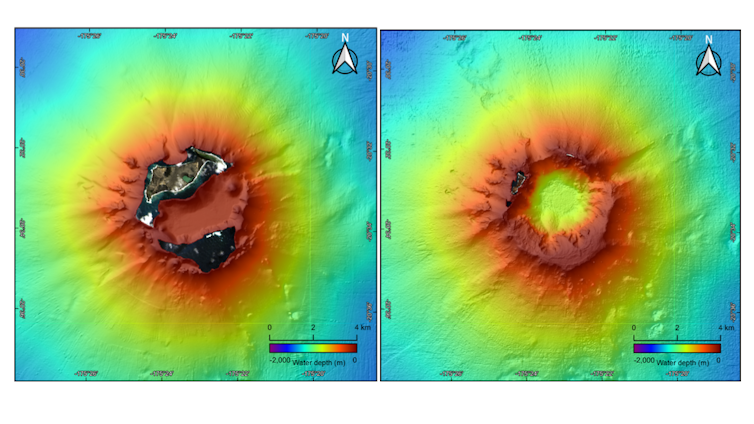
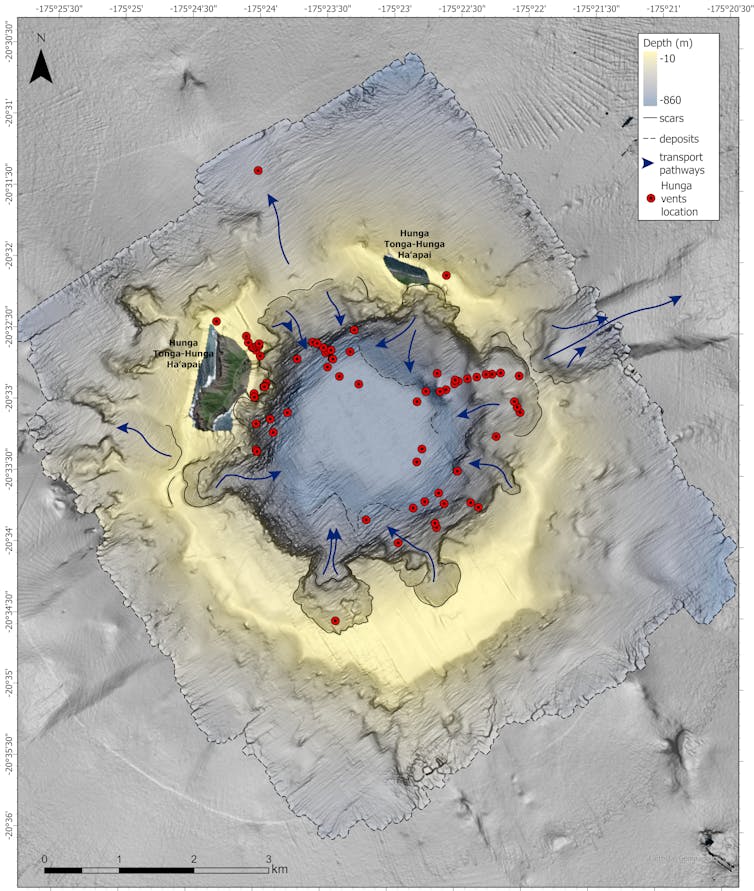
Churches across Tonga have commemorated the victims and the struggles endured as a result of the eruption of the Hunga Tonga-Hunga Ha’apai volcano on 15 January 2022.
The eruption, the largest atmospheric explosion recorded during modern history, was estimated to be hundreds of times more powerful than the atomic bomb that destroyed Hiroshima.
It generated a huge sonic boom that could be heard as far away as Alaska — more than 9000km away.
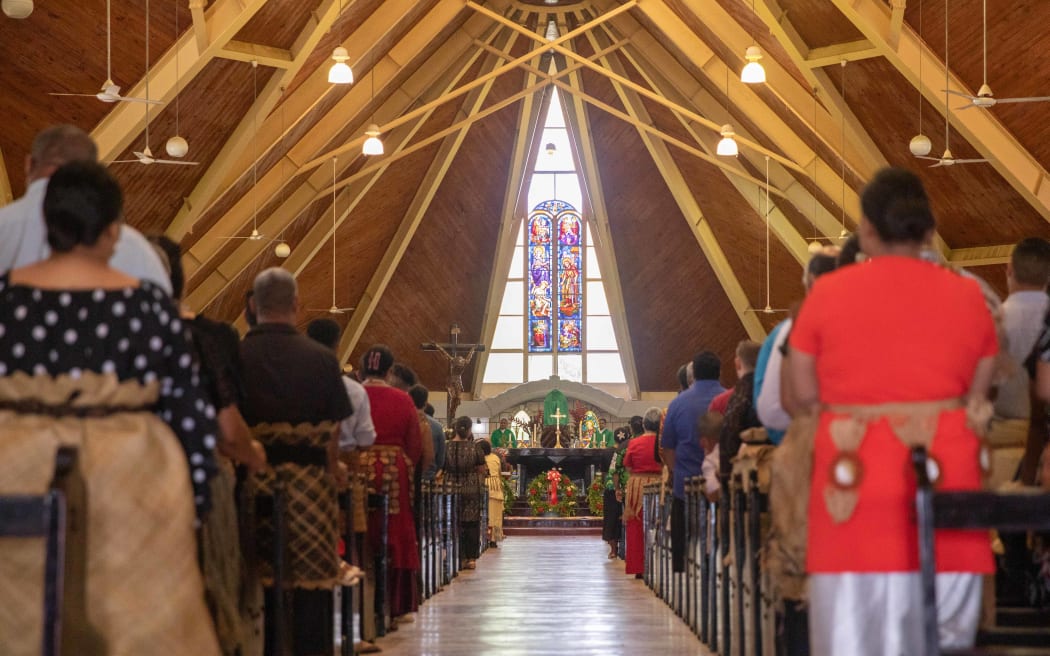
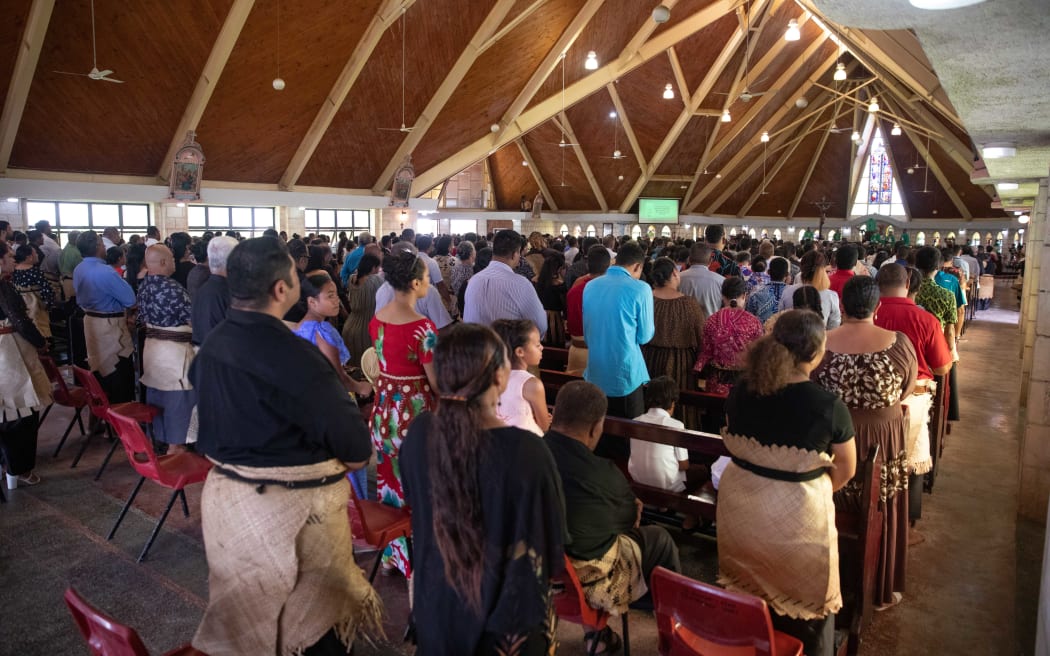
Hundreds packed the Cathedral of St Mary in Nuku’alofa — one of the largest churches in Tonga — where sermons were delivered, commending Tongans for showing resilience over the past year.
“All the different churches are commemorating,” said Monsignor Vicar Lutoviko Finau, who overlooked the service at the cathedral.
“We’re coming together to thank God, and to encourage one another,” he said.
“Listening to the various people on the radio across this week, there’s been a lot of conviction from people that January 15th was a miracle.”
A conviction that is shared by vicar Lutoviko himself. The cathedral he oversees sits less than 100m away from Nuku’alofa’s waterfront. Remarkably, the church suffered little damage, thanks in part to a reef system entrenching Nuku’alofa’s bay area.
“I was with parishioners cleaning up this place, preparing for the liturgy on Sunday … all of a sudden I heard the big bang. We took off right away because we knew there would be a tsunami . . . I took my family and went to higher ground.
“I couldn’t sleep that night because I wanted to know what happened to the cathedral because it [was] so close to the seafront,” vicar Lutoviko said.
“When I drove around to the seafront the next day . . . the seawater flooded the area of the cathedral, but there was none inside the cathedral . . . the only damage to the building was from the ashfall which . . . covered it.”
Tongans gather at The Cathedral of St Mary in Nuku’alofa to commemorate the one year anniversary of the eruption and tsunami. Image: Angus Dreaver/RNZ Pacific
Three people died as a result of the eruption, a remarkably low number of deaths considering the magnitude of the disaster. Thousands of Tongans were left homeless as a result, and livelihoods destroyed.
“For myself, today marks history”, said Kilistiana Moala, a member of the congregation.
“Being alive today, I’m just glad to be still here.”
St Mary’s Cathedral in Tonga during a ceremony to mark one year since the eruption on 15 January 2022. Image: Angus Dreaver/RNZ Pacific
For many Tongans, the commemorations did not just pay tribute to Tonga’s survival of the eruption. Less than a month afterwards, the covid-19 pandemic reached Tonga, resulting in the deaths of at least a dozen people and leaving thousands ill.
“It was a very tough year,” Moala said. “I worked with Tonga’s Geological Services, so we did a lot of work in the aftermath of the volcanic eruption.
“After the volcanic eruption, we had to work during lockdowns because of the Covid outbreak . . . it was really hard because we couldn’t be with our families whenever we wanted.”
It is a sentiment shared by Tonga’s Prime Minister Siaosi Sovaleni Hu’akavameiliku, who came into power just days before the eruption. Three months later, he fell ill to covid-19.
“Thank the Lord that we are still here,” Hu’akavemeiliku told RNZ Pacific.
“Moving into a new year, hopefully things will continue to get better.”
This article is republished under a community partnership agreement with RNZ.
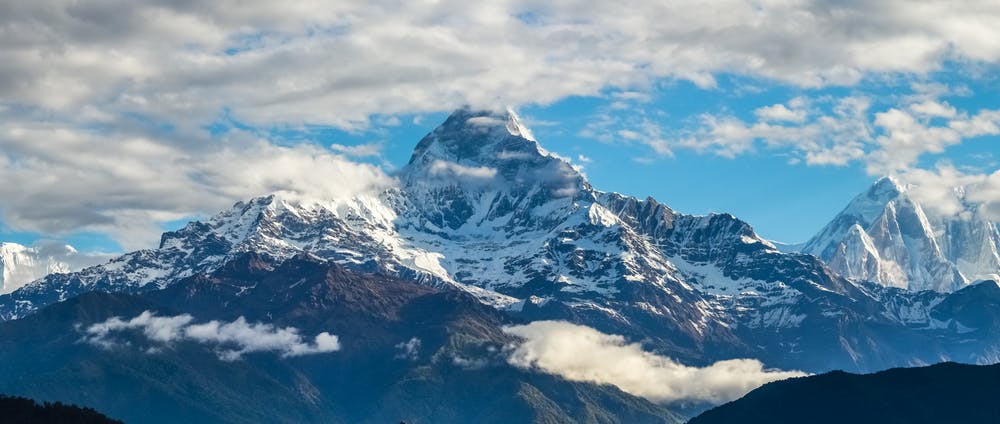
A Yeti Airlines ATR 72-500 aircraft crashed in Pokhara in central Nepal on January 15 2023, killing at least 68 passengers on board. The aircraft was en route from Nepal’s capital Kathmandu to Pokhara, the country’s second largest city, situated under the picturesque Annapurna mountain range.
While the picturesque landscape of the country appeals to tourists, it poses significant challenges to aviation operators, who need to embrace and navigate the challenging environment.
The air crash on Sunday was Nepal’s worst aviation disaster since 1992. The country has been working to overcome its challenges in aviation.
Nepal, situated between India and China, is home to eight of the world’s 14 highest mountains, including Mount Everest or Sagarmāthā. For flight operations, it’s an almost unrivalled, harsh environment with sudden weather changes that can make for hazardous conditions.
Airports built in mountainous regions often need to have shorter runways that can only accommodate turboprop-powered regional aircraft, rather than large jet airliners that can access larger cities in Nepal.
As a result, aviation carriers in Nepal have a variety of aircraft on their fleets. These craft vary in condition, presenting potential safety hazards.
The ATR 72 aircraft is one typical aircraft used by Nepali carriers. It is a turboprop-powered regional aircraft with a capacity between 44 and 78 passengers. These aircraft are manufactured by a joint venture of Airbus in France and Leonardo in Italy.
The aircraft involved in this crash had been in service for 15 years, a fairly typical age for an aircraft.
The Annapurna mountain range, as seen from Pokhara. Shishir Gautam/Shutterstock
A growing and fast-changing industry
Nepal has welcomed private investment into its aviation sector since 1992. Yeti Airlines is one of 20 domestic carriers. The airline, headquartered in Kathmandu, flies to ten domestic destinations using ATR 72-500 aircraft. In addition, 29 international airlines operate into Nepal’s capital too.
With air travel in Nepal becoming more accessible and affordable, airport infrastructure development has remained far behind compared to the growth of air traffic. This has resulted in increasing congestion at airports, fare competition between airlines, and decreased safety records.
In fact, the country has recorded at least 350 casualties associated with aeroplanes or helicopters since 2000, which has raised questions about the effectiveness of its aviation safety regulations.
Nepal became a member of the UN’s International Civil Aviation Organisation (ICAO) in 1960. This membership obliges the country to abide by international conventions, ICAO’s regulations, standards, and recommended practices in aviation safety.
While Nepal’s aviation industry has made significant efforts to improve safety, unfortunately the safety record still doesn’t match up with the requirements of other civil aviation authorities.
In particular, the European Union banned all Nepali airlines from operating in the bloc’s airspace in 2013 after ICAO raised a red flag. That ban still hasn’t been lifted, and Nepal remains on the EU Air Safety List.
Despite the tragic casualty record, Nepal has stepped up its efforts to improve aviation safety. The Civil Aviation Authority of Nepal has been focusing on improving safety in Nepali aviation – such as building improvements at airports, upgrading safety equipment, and fostering a positive safety culture by encouraging hazard reporting.
Chrystal Zhang no recibe salario, ni ejerce labores de consultoría, ni posee acciones, ni recibe financiación de ninguna compañía u organización que pueda obtener beneficio de este artículo, y ha declarado carecer de vínculos relevantes más allá del cargo académico citado.
The devastating floods sweeping through the Kimberley region of Western Australia have caused unimaginable destruction, leaving remote Indigenous communities stranded in its aftermath.
Heartbreaking reports detail community members desperately seeking assistance from loved ones in Perth. In one case, over 40 people were forced to seek refuge under one roof — unable to access emergency shelters filled beyond capacity.
Some Kimberley locals have taken matters into their own hands by using local boats for search and rescue missions. The government has also since begun organising delivering supplies to these communities in need. However, Derby Shire Council President Geoff Haerewa told the Guardian he felt authorities could have done “a lot more” to prepare for the flooding.
Climate disasters are no longer unprecedented, with both scientists and First Nations people warning of future disaster weather events. Australia needs to do better with disaster prevention, so vulnerable communities don’t have to go through this again.
Atmospheric rivers
Atmospheric rivers are long, narrow lanes of moist air transported in the atmosphere. According to the ARC Centre of Excellence for Climate Extremes, these weather patterns can be beneficial for breaking droughts. However they can contribute to heavy flooding, as we saw in last year’s floods in South East Queensland and NSW.
Scientists have identified that higher sea surface temperatures, increased concentrations of atmospheric rivers, and other climate-related events can lead to more severe floods, storms, droughts, and heatwaves.
Atmospheric rivers have devastated the Kimberley region with its highest level of rain since records began in 1904. Some areas received as much as 831mm of rain in a single week. Intense storms and cyclones in Western Australia have also caused heavy rainfall over the past several months.
Disaster management plans need to consider Indigenous peoples
Indigenous communities are among the most vulnerable to the impacts of climate change. Yet, current Australian disaster risk management approaches fail to consider the needs of Indigenous communities, such as housing shortages and reduced access to medical services. This leaves them vulnerable to disaster events like flooding. Most towns and communities in WA have no climate adaptation plans in place.
Some Indigenous communities in Australia are reliant on bush food and hunting for sustenance, especially for those living in outlying areas. These activities are made impossible when flood events occur, heightening pre-existing food insecurity issues faced within disaster-affected homelands.
Floods can also bring many health issues for local communities. Dangers include contaminated drinking water and being cut off from medical care and supplies due to infrastructure damage, as we are seeing now in the Kimberley region. Large amounts of standing water can also create an ideal environment for mosquitoes carrying viruses.
The aftermath of natural disasters can be especially devastating with physical damage to peoples’ homes and loss of community infrastructure – often accompanied by extreme financial hardship. For First Nations people, there is a deep spiritual impact as well. Some peoples are put under strain through loss of access to culturally important areas, or evacuation orders separating communities from their respective Countries.
More must be done to ensure the safety of communities whose remote location makes them vulnerable, including First Nations people. Indigenous communities need access to culturally sensitive and appropriate resources, better roads and infrastructure, water management systems, early warning systems and emergency preparedness programs. These communities also need long-term recovery plans made available after disaster events like this. Such as training and skills development, support for business recovery, and access to financial resources and culturally safe mental health support.
What we can learn from Indigenous flood knowledge
Indigenous knowledge from the Kimberley region could provide insight into climate change impacts. Stories and practices passed down through generations of First Nations peoples show how some cultures have addressed changing climates by finding ways to survive extreme weather events and looking after the land.
One example is the story “The Flood Ngawarra-kurlu” where an old man warned of rain coming, which would lead to flooding, and recommended people don’t sleep in creek beds. The people didn’t listen, resulting in them losing their belongings to the flood. This highlights the valuable lesson to governments of not building in flood plains.
Another is the East Kimberley Mulan peoples’ story “The Two Dingoes” which describes visible signs of incoming floods. The colour of the water coming through Sturt Creek and Paruku indicates how long communities will need to relocate to avoid flooding (milky colour water means a few months, red means a few days).
It’s time we include Indigenous knowledge when creating disaster risk management strategies and climate change adaptation plans. This is also in line with the reform commitments made by all Australian governments in the National Agreement on Closing the Gap.
In doing this, we can create more effective tools and methods to protect vulnerable people. This could ensure more comprehensive protection, and also have the potential to foster a greater appreciation of Indigenous cultures and experiences. It is through such collaboration we can create a better future for all communities in the face of climate change.
Toni Hay is Director for Indigenous Climate Change providing climate adaptation and disaster risk reduction services.
Courtney-Jay Williams works for Indigenous Climate Change providing climate adaptation and disaster risk reduction services.
The devastating floods sweeping through the Kimberley region of Western Australia have caused unimaginable destruction, leaving remote Indigenous communities stranded in its aftermath.
Heartbreaking reports detail community members desperately seeking assistance from loved ones in Perth. In one case, over 40 people were forced to seek refuge under one roof — unable to access emergency shelters filled beyond capacity.
Some Kimberley locals have taken matters into their own hands by using local boats for search and rescue missions. The government has also since begun organising delivering supplies to these communities in need. However, Derby Shire Council President Geoff Haerewa told the Guardian he felt authorities could have done “a lot more” to prepare for the flooding.
Climate disasters are no longer unprecedented, with both scientists and First Nations people warning of future disaster weather events. Australia needs to do better with disaster prevention, so vulnerable communities don’t have to go through this again.
Atmospheric rivers
Atmospheric rivers are long, narrow lanes of moist air transported in the atmosphere. According to the ARC Centre of Excellence for Climate Extremes, these weather patterns can be beneficial for breaking droughts. However they can contribute to heavy flooding, as we saw in last year’s floods in South East Queensland and NSW.
Scientists have identified that higher sea surface temperatures, increased concentrations of atmospheric rivers, and other climate-related events can lead to more severe floods, storms, droughts, and heatwaves.
Atmospheric rivers have devastated the Kimberley region with its highest level of rain since records began in 1904. Some areas received as much as 831mm of rain in a single week. Intense storms and cyclones in Western Australia have also caused heavy rainfall over the past several months.
Disaster management plans need to consider Indigenous peoples
Indigenous communities are among the most vulnerable to the impacts of climate change. Yet, current Australian disaster risk management approaches fail to consider the needs of Indigenous communities, such as housing shortages and reduced access to medical services. This leaves them vulnerable to disaster events like flooding. Most towns and communities in WA have no climate adaptation plans in place.
Some Indigenous communities in Australia are reliant on bush food and hunting for sustenance, especially for those living in outlying areas. These activities are made impossible when flood events occur, heightening pre-existing food insecurity issues faced within disaster-affected homelands.
Floods can also bring many health issues for local communities. Dangers include contaminated drinking water and being cut off from medical care and supplies due to infrastructure damage, as we are seeing now in the Kimberley region. Large amounts of standing water can also create an ideal environment for mosquitoes carrying viruses.
The aftermath of natural disasters can be especially devastating with physical damage to peoples’ homes and loss of community infrastructure – often accompanied by extreme financial hardship. For First Nations people, there is a deep spiritual impact as well. Some peoples are put under strain through loss of access to culturally important areas, or evacuation orders separating communities from their respective Countries.
More must be done to ensure the safety of communities whose remote location makes them vulnerable, including First Nations people. Indigenous communities need access to culturally sensitive and appropriate resources, better roads and infrastructure, water management systems, early warning systems and emergency preparedness programs. These communities also need long-term recovery plans made available after disaster events like this. Such as training and skills development, support for business recovery, and access to financial resources and culturally safe mental health support.
What we can learn from Indigenous flood knowledge
Indigenous knowledge from the Kimberley region could provide insight into climate change impacts. Stories and practices passed down through generations of First Nations peoples show how some cultures have addressed changing climates by finding ways to survive extreme weather events and looking after the land.
One example is the story “The Flood Ngawarra-kurlu” where an old man warned of rain coming, which would lead to flooding, and recommended people don’t sleep in creek beds. The people didn’t listen, resulting in them losing their belongings to the flood. This highlights the valuable lesson to governments of not building in flood plains.
Another is the East Kimberley Mulan peoples’ story “The Two Dingoes” which describes visible signs of incoming floods. The colour of the water coming through Sturt Creek and Paruku indicates how long communities will need to relocate to avoid flooding (milky colour water means a few months, red means a few days).
It’s time we include Indigenous knowledge when creating disaster risk management strategies and climate change adaptation plans. This is also in line with the reform commitments made by all Australian governments in the National Agreement on Closing the Gap.
In doing this, we can create more effective tools and methods to protect vulnerable people. This could ensure more comprehensive protection, and also have the potential to foster a greater appreciation of Indigenous cultures and experiences. It is through such collaboration we can create a better future for all communities in the face of climate change.
Toni Hay is Director for Indigenous Climate Change providing climate adaptation and disaster risk reduction services.
Courtney-Jay Williams works for Indigenous Climate Change providing climate adaptation and disaster risk reduction services.
Maybe you’ve had a skin cancer removed from your face or body. Perhaps you had an injury or accident and needed stitches. However you came by a cut on your skin, you probably want to make it appear as small as possible as quickly as possible and avoid a longer-lasting scar.
In order to minimise scar formation we need to address wound healing, which is a complex process.
It has three major phases: inflammation, proliferation and remodelling. These are orchestrated by special body signalling chemicals acting on the skin’s layers. The majority of scar formation occurs within the first six months after an injury.
So, what can you do to assist this process and support healing?
The inflammation phase
The inflammation phase occurs immediately to remove bacteria and bring in the blood supply.
The first goal of wound care is to avoid bacteria coming into contact with the body’s insides, because these will impair normal wound healing. So keep it clean.
Ideally bacteria will be removed from the skin if a wound is anticipated, such as before surgery. Cleaning the wound to remove bacteria and bacterial spores is critical to good healing and should be done within two hours of any injury.
Don’t let any dirt remain in a wound even if that means scrubbing with soap and water after a fall on the ground. A one-off application of povidone-iodine (sold in Australia as Betadine) will help lessen the chance of bacterial spore activation.
Your body’s natural reaction includes the formation of hydrogen peroxide. Unfortunately external application of this natural antiseptic can slow wound healing. Only weak antiseptic solutions containing silver (with proper advice from your doctor or pharmacist) can improve scar formation.
Some people produce extra collagen and this can lead to raised scars. Shutterstock
During this phase, the blood vessel cells, the epidermal cells and the fibroblasts multiply.
The fibroblasts (a type of cell that helps makes collagen to support connective tisues) cause scar contraction, which can “pucker” the skin. Scars tend to be white and a little shiny once the redness dies down.
Collagen, the body’s most abundant protein that helps makes skin strong, is continuously produced and broken down by the body. This can have an ongoing effect on the appearance of the mature wound for at least a further six months after scar formation.
The remodelling phase
The formation of hypertrophic scars (which are raised above the skin level but regress slowly) or keloid scars (which spread beyond the injury site and don’t regress later) is often genetically determined. It’s also partially related to the type of injury and care of the wound.
In people who develop these scars during the remodelling phase, the signal to stop the production of collagen within the wound is disrupted.
For clean, non-infected wounds, the application of a hydrogel (a polymer that retains moisture and doesn’t disolve) can actually speed healing, provided there is no infection. Use one that is suitable for application to the eye, such as Refresh Liquigel.
By keeping the wound moist, the proliferation of the surface skin cells is enhanced. When they grow out under a hard scab, it’s slowed down.
Wound gels that contain antiseptics and preservatives are best avoided in case of allergy and because antiseptics can slow down healing.
There is an intimate relationship between blood vessels and the fibroblasts. Red and itchy scars are likely to be growing, which will ultimately result in a larger scar. This is when keeping the scar covered to improve hydration can make a big difference.
Silicone dressings help wound management and prevent scarring. Shutterstock
Cover the scar with a silicone dressing and either a gel or a sheet for as many hours as possible.
For those prone to scarring, your pharmacist can show you an over-the-counter formulation of Zatamil Hydrogel you can use once a day for one week on and one week off. Use this under the silicone to help further reduce the scar. They might also suggest a fading cream.
A dermatologist with a vascular laser (which targets abnormal blood vessels in the skin to reduce redness) can also help, especially in the early stages of a scar.
Some final tips
Keeping the scar moist with oils is more difficult than with the silicone, but can reduce excess scarring, sometimes called “over-scarring”.
Finally, avoid overexposing the scar to sunlight. Scars can become very dark in comparison to the rest of person’s skin and ultraviolet light is the major preventable factor.
Wound healing is complex. Doctors, pharmacists and dermatologists can help advise on which of these tips will help with your specific wound.
Michael Freeman does not work for, consult, own shares in or receive funding from any company or organisation that would benefit from this article, and has disclosed no relevant affiliations beyond their academic appointment.
Ximena Borrazas/SOPA Images/LightRocket via Getty Images
The humanitarian aid worker Andrew Bagshaw, who has dual New Zealand and British citizenship, has been missing in Ukraine for more than ten days.
Bagshaw and his British colleague Christopher Parry worked as part of a team of Ukrainian and international volunteers delivering aid and carrying out evacuations of civilians, often under fire from Russian forces. They have not been seen since January 6, when they left the city of Kramatorsk for Soledar, in eastern Ukraine, which has since been claimed by the Russian mercenary company Wagner.
Humanitarian volunteers often represent the best of us. They are driven to put themselves at personal risk with little financial reward to reduce human suffering and the impacts of conflicts. Their ethical justifications for entering dangerous locations, despite clear warnings from the Ministry of Foreign Affairs not to travel to Ukraine, are often exemplary.
But aid workers are at high risk. During the past two decades, intentional attacks on aid or humanitarian workers have become a disturbing trend, often perpetrated to drive outside influences away from war zones and fully isolate populations.
It is a war crime to intentionally attack aid workers. Some, such as personnel working for the International Committee of the Red Cross (ICRC) and the United Nations, have considerably more rights than others.
Despite this division, all aid workers are covered by basic rules. The problem is that international humanitarian law is not based on the ethics of why someone is in a war zone. This is especially the case if they are foreigners.
International volunteers help carry out evacuations of civilians, often in dangerous circumstances. Laurent Van der Stockt for Le Monde/Getty Images
Rights of foreigners who enter war zones
There are three main groups of foreigners who voluntarily go into war zones.
Some people volunteer to fight in foreign wars and are paid more than local fighters. If captured and deemed mercenaries, these people have no rights. They can be executed.
The second group are “aliens”, inadvertently caught up in a conflict in a country that is not theirs. For these people, if captured and non-combatants, they have a prima-facie right to leave the country. However, this is not an absolute right – they can still be held if their departure is contrary to the national interests of the state that captured them.
Aid workers represent the third group, and they are at increasing risk. Capturing aid workers for hostage and propaganda purposes is a repugnant trend. In recent conflicts, we’ve also seen a rise in the number of victims of collateral violence – their deaths were not intended but a result of indiscriminate force now commonly used in war zones.
More often that not, attacks on aid workers are a combination of intentional and unintentional actions. Globally, at least 460 aid workers were victims of major attacks in 2021: 140 were were killed, 203 wounded and 117 kidnapped.
Most of these attacks happened in countries such as South Sudan, Afghanistan, Syria and Ethiopia. But other conflict zones are also contributing to the figures, with growing numbers of deaths, kidnappings and wounding of aid workers recorded in Ukraine in 2022.
International humanitarian law is clear that if a country where a war is happening consents to the presence of aid workers and they are impartial in their work, they “shall be respected and protected”.
Although Russia has withdrawn its consent to the specific convention that contains this rule, Ukraine is a signatory. The obvious problem is that Russia now considers this annexed territory to be Russian, not Ukrainian.
Irrespective of debates about ownership and consent, Russia is still bound by other rules. Russia, like Ukraine, is a party to the Hostages Convention, which prohibits and criminalises the taking of hostages, for whatever justification.
Russia is also bound by the Security Council resolution, in which it strongly condemned all forms of violence against humanitarian workers. The council, including Russia, then urged states to ensure crimes against such personnel do not go unpunished.
Despite all of these rules and obligations, there is a large gap between the theory of restraint and the practices developing in Ukraine.
It is possible that Bagshaw and other humanitarian workers have been directly caught up in the violence in Ukraine. To be operating in a war zone, which involves the indiscriminate use of force, Somme-like conditions, the possibility of war crimes and the arrival of thousands of mercenaries who often pay scant regard to rules, is extremely risky.
It is also possible they have been taken for bargaining purposes. A practice is developing in Ukraine in which combatants and non-combatants, including foreigners, are taken and traded by the belligerents. These exchanges also include the bodies of the dead.
Whichever scenario applies, this is a tragedy. We are at a point where individuals with the highest ethical motivations to provide impartial humanitarian assistance have themselves become victims: collateral in a war being conducted without honour.
Alexander Gillespie does not work for, consult, own shares in or receive funding from any company or organisation that would benefit from this article, and has disclosed no relevant affiliations beyond their academic appointment.
When we think of evolution, we tend to picture slow changes occurring over very long periods of time, typically millions of years. However, evolution can actually happen much faster, over only a few generations: think COVID-19 strains, for example. And this fast evolution isn’t just restricted to viruses and microbes.
Our study, recently published in Evolutionary Biology, documents rapid evolution in tiger snakes (Notechis scutatus). In less than a century, these snakes evolved the ability to swallow whole seagull chicks, allowing them to survive on a tiny island.
Marooned survivors
Most Australians are familiar with the tiger snake, one of our most iconic animals. The snakes in our study were from Carnac Island, a tiny islet off the coast of Perth in Western Australia. They were introduced here less than a century ago, possibly dumped by a travelling snake performer to avoid trouble with the law.
These marooned tiger snakes are now adept at swallowing the large chicks of the seagulls that nest there. Adult snakes have little else to eat on this island in order to survive and reproduce.
But how did they adapt so well, and so quickly? Tiger snakes on the mainland (the ancestral stock of the snakes on Carnac Island) typically feed on much smaller creatures, especially frogs.
The heads of tiger snakes can evolve rapidly in response to feeding on large prey. Michael Lee, Author provided
The secret is a process called “phenotypic plasticity”, which is a phenomenon where an organism physically changes its body within its own lifetime to match the environment it is experiencing.
Myriad examples exist: from water fleas (Daphnia) that can develop a spiky “helmet” in the presence of predators, to the tadpoles of some spadefoot toads (Spea), which morph from omnivore to carnivore bodies when exposed to environments packed with small prey (including other tadpoles!).
Rearing baby snakes
Our research team took a detailed look at how the snakes from Carnac Island have adapted to survive there. We raised some baby snakes taken from the island and some from the nearby mainland, and divided them further into two groups – one group fed on small mice, and the other on large mice.
After the snakes matured, we looked into their heads using a high-resolution version of a medical CT scanner and took measurements of the different skull bones. This showed us how the island and mainland groups responded to different prey sizes.
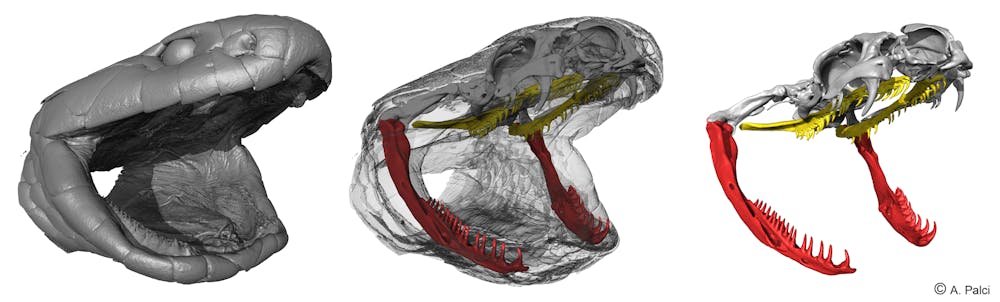
Mainland snakes always had the same head shape, regardless of whether they were fed small or large prey. But Carnac Island snakes showed an intriguing reponse: those fed large prey developed a much bigger bite, with longer jaw bones (especially in the lower jaw and palate).
Previous studies had only looked at external head dimensions. We confirmed their conclusions and further revealed exactly which skull bones were responding to the drastic dietary change.
A 3D model image of a tiger snake skull showing the bones that increase in length in the snakes from Carnac Island after being fed large prey for a prolonged period of time: lower jaws (red) and palate bones (yellow). Alessandro Palci, Author provided
Easy-gainers
The explanation behind our results can be more easily understood if we compare our snakes to people at a gym – a human example of phenotypic plasticity. As all gym-goers know, some people can quickly build up muscle from weight training, the so-called easy-gainers (who doesn’t envy those!), while others struggle more – hard-gainers.
The snakes from Carnac Island are easy-gainers: they have a stronger intrinsic (genetic) capability to change their shape in response to a stimulus, in this case large prey items. This means they have a higher level of phenotypic plasticity.
In any population, some individuals are more plastic than others. Of the tiger snakes marooned on Carnac Island and forced to exist on seagull chicks, the most “plastic” snakes would develop the biggest bites – and be more likely to survive and pass down their easy-gainer genes to their descendants.
Over the course of a few generations (and less than 100 years), the entire population of tiger snakes would become easy-gainers.
The march of evolution
But evolution doesn’t stop there. Eventually, genetic mutations occur so that snakes are born with longer jaws; these would have a survival advantage even over the easy-gainers (who only develop longer jaws after “training”), and eventually replace them.
In our study we observed examples of this as well: some skull bones were relatively longer in the Carnac Island snakes from birth, regardless of their diet.
Tiger snake from Lake Alexandrina in South Australia. The skulls of tiger snakes on the mainland don’t change shape when forced to feed on large prey for a prolonged period of time, unlike the skulls of snakes from Carnac Island, which grow longer jaws and palates. Max Tibby, Author provided
So how much change has occurred in the Carnac Island snakes? We found that certain jaw bones can lengthen by about 5% simply as a result of feeding on large prey for a year.
On top of this, the bones of the snakes from Carnac Island were also about 5% longer at birth than those in the mainland snakes (because of “trait canalisation” mentioned above). The island snakes are indeed on a rapid path to evolve very big jaws to effortlessly swallow baby seabirds.
Our study delves deeply into how rapid evolution occurs in complex organisms, and shows how diet has profound effects, even greatly affecting individual skull bones. It also reveals the resilience of tiger snakes, and how their “easy-gainer” bodies help them adapt almost instantaneously to extreme new environments.
This is one of the likely reasons tiger snakes have been so successful at colonising islands.
Alessandro Palci’s research is made possible by funding provided by the Australian Research Council and is currently affiliated with the University of Adelaide and the South Australian Museum.
Emma Sherratt works for University of Adelaide, is an Honorary Researcher at the South Australian Musueum, and receives funding from the Australian Research Council.
Mike Lee works for Flinders University and the South Australian museum, and receives funding from the Australian Research Council
New Zealand Parliament Buildings, Wellington, New Zealand.
Political Roundup: What Japan’s foreign policy shifts mean for New Zealand
By Geoffrey Miller
Japan is a country on the move.
Since World War II, Tokyo has largely been happy to outsource its security needs to Washington.
But this is now changing to a more equal partnership.
On Friday, Japanese Prime Minister Fumio Kishida called his country’s alliance with the United States ‘stronger than ever’.
For his part, US President Joe Biden, who hosted Kishida at the White House, said the United States was ‘fully, thoroughly, completely committed to the alliance’ with Japan.
The words from Kishida and Biden might seem like the usual diplomatic niceties, but behind the smiles from the two leaders was a quantum shift in Tokyo’s foreign policy positioning.
The war’s legacy and subsequent 1947 pacifist constitution help to explain why Japan has until now preferred its military to keep a low profile – a deal which has come at a bargain price.
For decades, Japan’s defence budget has hovered around 1 per cent of its Gross Domestic Product (GDP), well below the levels of other G7 nations.
Japan has traditionally invested less in its military than even New Zealand – which currently spends around 1.5 per cent of its GDP on its defence force.
But this won’t be the case for much longer.
Under a new security blueprint unveiled by Fumio Kishida’s government in mid-December, Tokyo is pledging to double its defence spending to at least 2 per cent of GDP by 2027.
Over the past fortnight, the Japanese Prime Minister has embarked on something of a sales pitch for the new plans by visiting each of the other six countries in the G7.
The tour wrapped up on Friday when Kishida stopped at the White House to meet with Joe Biden.
Tokyo’s more hawkish turn will be music to Washington’s ears.
The plans see Japan buying up advanced weaponry – including long-range Tomahawk cruise missiles from the US – and spending more on developing hypersonic and cybersecurity technology.
And one does not need to look far to find out why.
Japan’s new National Security Strategy (NSS) openly calls out China, describing Beijing a ‘matter of serious concern for Japan’ and the ‘greatest strategic challenge’ to the country’s security.
The NSS also alleges China is developing its ‘strategic ties’ with Russia and is seeking to ‘challenge the international order’.
While similar characterisations have become commonplace in US security documents, they represent a sea change for the previously pacifist Japan.
Tokyo’s dramatic shifts are likely to have ramifications for New Zealand, which receives a special mention in the companion National Defence Strategy that was also released in December.
The new security documents make clear that Japan expects its own changes will come as part of a team effort by ‘like-minded countries’.
New Zealand is currently undertaking a review of its own defence policy, which was launched following Russia’s invasion of Ukraine and after Wellington published an unusually hawkish defence assessment at the end of 2021.
That document called China’s rise the ‘major driver of geopolitical change’ and said Beijing was ‘seeking to reshape the international system’.
The desire for multilateral cooperation with countries such as New Zealand emerged as a major theme in conversations with Japanese diplomats and experts when I visited Tokyo as a guest of Japan’s Ministry of Foreign Affairs just before Christmas.
One foreign ministry official told me he believed 2022 had been a ‘transformative’ year for Japan-New Zealand relations and said New Zealand had ’embraced’ the concept of the ‘free and open Indo-Pacific’.
Asked whether Japan wanted New Zealand to join its side, the diplomat said that decision was up to the New Zealand people – but he believed ‘like-minded countries can make the right choices’.
New Zealand’s strengths in the Pacific are an obvious attraction to Japan as part of the strategy to contain China. The official said Japan was still ‘shocked’ by Beijing’s security deal with Solomon Islands that was signed early in 2022, calling it a ‘big wake-up call’ that reinforced the need for Tokyo to win ‘hearts and minds’ in Pacific countries.
New Zealand Prime Minister Jacinda Ardern visited Japan last April to meet with her counterpart Fumio Kishida on her first foreign trip since the beginning of the Covid-19 pandemic.
After their meeting, Ardern called Japan ‘one of New Zealand’s closest and most important partners in the Indo-Pacific’. Both countries pledged to step up an existing Japan New Zealand Strategic Cooperative Partnership and signed an agreement to share security-related classified information.
The joint statement referred several times to the need for the Indo-Pacific to remain ‘free and open’ – a phrase squarely aimed at Beijing that was popularised by the late Shinzo Abe, the former Japanese prime minister who was assassinated last July.
Like New Zealand, Japan is highly dependent on trade with China. 23 per cent of Japan’s exports go to China every year, and Japan also relies on China for a quarter of its imports.
For New Zealand, the reliance on China is even greater: 32 per cent of New Zealand’s exports are sent to China annually.
When asked about how the apparent trade vs. security dilemma could be untangled, Japanese observers I spoke with were generally sympathetic to New Zealand’s plight.
One analyst bluntly said there was ‘no answer’ to economic dependence on China and that Japan’s trade diversification efforts were of an ‘incremental’ nature.
Another academic noted similarities between New Zealand’s position and many Southeast Asian countries, which are also heavily reliant on the Chinese market.
Both experts saw the current geopolitical situation as being long-term in nature – akin to the Cold War – and believed the issues would not go away anytime soon.
Is there a third option for New Zealand to avoid heavily aligning itself with one side or the other in the current bout of Great Power competition – and instead play the role of an intermediary between the two camps?
Noting the loss of Sweden and Finland as neutral countries in 2022, the academic said there was certainly ‘value’ in the idea of New Zealand playing the role of go-between – but it would take ‘strong and clever leadership’ to pull it off.
And it would not necessarily be any cheaper: neutral countries such as Finland and Switzerland still maintained sizeable defence budgets throughout the Cold War.
But the academic pointed to Ireland’s role as the architect of the Nuclear Non-Proliferation Treaty (NPT), signed at the height of the Cold War in 1968, showed what could be achieved: ‘New Zealand could have its own moment in history’.
Despite vast differences in size, culture and history, there are similarities between Japan and New Zealand that extend well beyond rugby and earthquakes.
For different reasons, both countries have traditionally paid close attention to nuclear disarmament issues. New Zealand has maintained a nuclear-free policy since 1984.
Tokyo’s decision to take a more realist approach may resonate particularly well with Wellington, which in recent decades has generally tended to tread a more doveish line than other Western countries.
Another Japanese commentator told me he believed New Zealand was a ‘more pacifist country than we are, than we were’.
Change has not come easily to Japan – and the new military and security strategy is not without its critics inside the country.
The massive cost of the arms build-up will come at the cost of matching tax hikes.
Ultimately, Wellington will need to make its own foreign policy decisions, in its own interests.
But whatever the future holds, Japan will be a country for New Zealand to watch.
Geoffrey Miller is the Democracy Project’s geopolitical analyst and writes on current New Zealand foreign policy and related geopolitical issues. He has lived in Germany and the Middle East and is a learner of Arabic and Russian. He is currently working on a PhD on New Zealand’s relations with the Gulf states. Disclosure: Geoffrey Miller visited Tokyo as a guest of Japan’s Ministry of Foreign Affairs.
On 15 January 2022, the usually quiet seaside village of Kanokupolu was thrown into chaos.
The roar of the Hunga Tonga-Hunga Ha’apai volcano erupting was followed by screams and shouts of people fleeing to safety.
Villagers took to their vehicles to escape, and as they drove away, tsunami waves could be seen approaching the beach.
But not everyone decided to leave — Tevita ‘Amaka preferred to risk death, rather than run away.
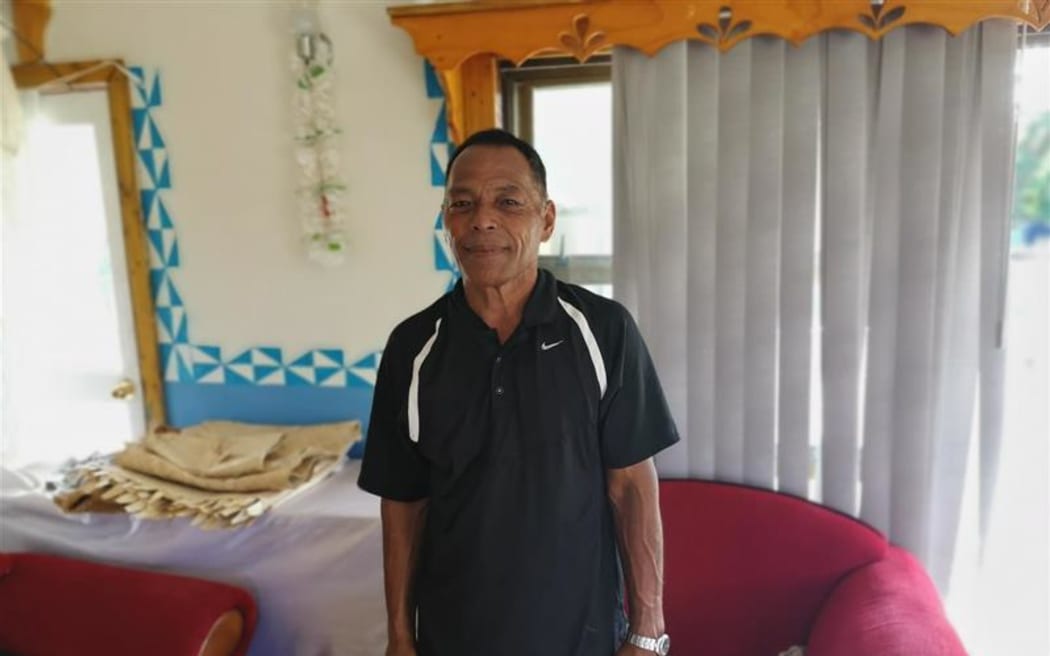
“I was ready to die, if I were to die, I would die in peace, because I am not afraid of the ocean, the ocean is my home,” said ‘Amaka, a 60-year-old man who lives alone, less than 200m from the shore.
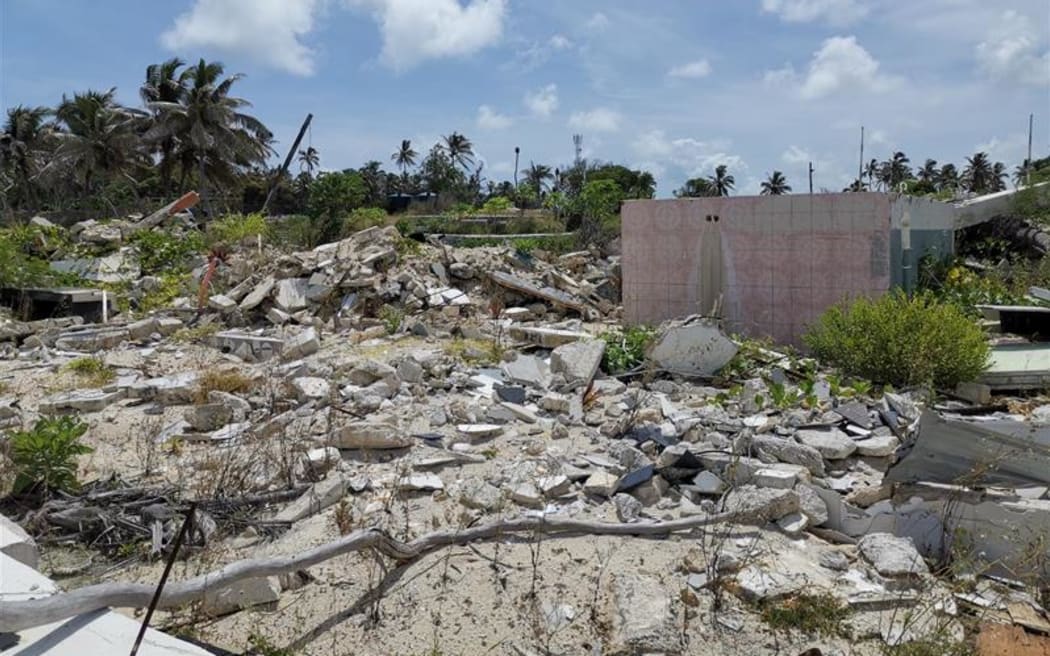
Kanokupolu beach and the destroyed Liku’alofa resort. Image: Finau Fonua/RNZ Pacific
“I remember so clearly how my children came to take me away but I refused to be forced out of my home and told them to leave me,” he added.
Two loud explosions The eruption generated a sound that could be heard as far away as Alaska. NASA estimated the explosion to be more than 500 times more powerful than the nuclear bomb that destroyed Hiroshima, creating waves that reached up to 90 metres in height.
“There were two loud explosions and then the ash and small rocks started raining down following the ashes were small rocks. I looked up and saw the electric poles swaying from side to side,” ‘Amaka said.
“I told them that if this is my time then I’ll accept it wholeheartedly. They gave up and eventually left . . . the ocean has been a big part of my life so I don’t see a reason to be scared.”
Then came the tsunami waves, uprooting trees and destroying entire houses. Before the waves hit, ‘Amaka took shelter behind a mango tree and waited for his fate. He had spent his whole life living in Kanokupolu and was prepared to die there as well.
But miraculously, the mango tree stood its ground.
According to ‘Amaka, it was divine intervention that saved him.
“The tsunami came, taking down the electric poles, trees and a very big container. It destroyed everything except for me, not a single drop of water touched me and that was the work of God.”
“I guess God still has plans for me to be here.”
As well as ‘Amaka’s miraculous survival, there were no fatalities in Kanokupolu. Across Tonga only three deaths were recorded, in relation to the eruption, despite the magnitude of the eruption and the following tsunami.
Tonga’s ‘Aqua man’
Survivor Lisala Folau . . . “It was so difficult for me to walk and I couldn’t climb up the cliffs.” Image: Finau Fonua/RNZ Pacific
Equally miraculous as ‘Amaka’s survival was the case of Lisala Folau, from the small island of ‘Atata.
The 57-year-old grandfather, who relies on a cane to walk, was unable to reach higher ground in time to escape the tsunami and was swept out to sea.
“When I heard the loud bangs, I went outside my house. I thought it was thunder at first, but then I heard people chattering about getting to higher ground,” Folau said.
‘Atata boasts just one village, with a population of about 70 people. The island’s interior consists of high cliffs, which provided protection against the tsunami.
Folau told his family to help get the others to high ground and to return to help him when everyone was safe.
“It was so difficult for me to walk and I couldn’t climb up the cliffs, so I told them to get everyone to safety first, and then come back for me.”
Folau’s brother and nephew returned to help him, but by then the waves had breached the beach and began smashing the village. Realising it was too late, they decided to climb up a mango tree.
Second wave came “The second wave came, so we decided to climb up the fau tree because we couldn’t get away in time.
“The waves were fast and strong, and we had to climb higher as they got bigger.
“When it calmed, we climbed back down and headed for higher ground…”
As Folau, his nephew and brother waded through the flooded island, a huge wave suddenly appeared. He told them to run for it and braced for the wave.
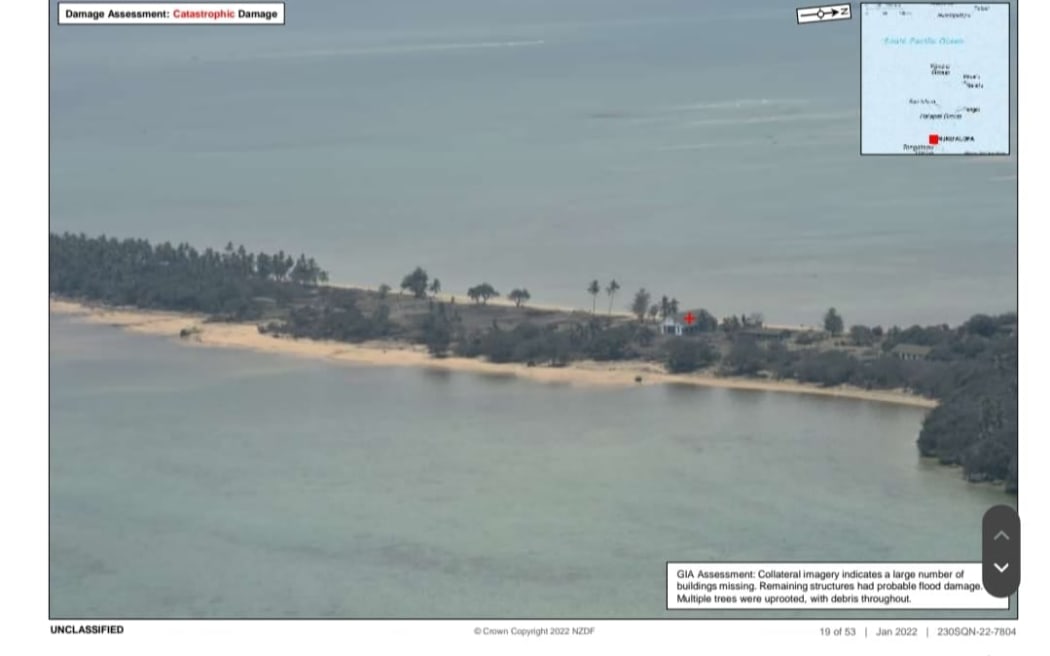
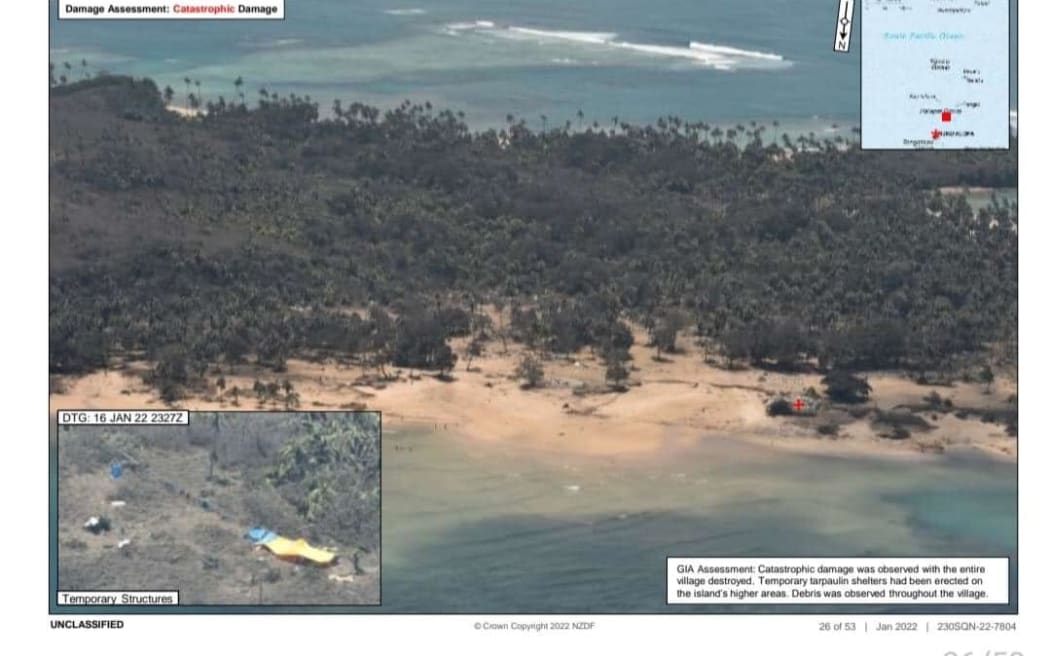
An aerial view of Atatā island taken by New Zealand Defence Force after the eruption of Hunga Tonga-Hunga Ha’apai and tsunami. Image: NZDF/RNZ Pacific
“I reckon it was 8m or more. I couldn’t fight back the wave, so I just let it sweep me, hoping it would bring me back. I was forced underwater several times before grabbing on to a branch.”
Folau spent the entire night, struggling to stay afloat in the open sea. Luckily for him, volcanic ash rain heated the ocean significantly, keeping him warm.
“I felt the ash falling, and the sea felt so much warmer. My hair was full of ash and rocks.”
Struggling to breathe “The water was very warm so I didn’t struggle with the cold, but I was struggling to breathe above water.
“While I was lost, I was too distracted to feel thirsty, exhausted to feel anything. I was too distracted by the thought to survive to live.”
Folau ended on a tiny atoll, less than a hectare size. It was almost bare; tsunami waves having stripped away most of the trees.
Unable to get the attention of rescue boats, Folau decided to swim to the nearby shore of Tonga’s main island, Tongatapu, which is just under an hour’s boat ride away.
He ended up at a beach at the end of Nuku’alofa, exhausted and drained of energy.
“At that point, my body was weak, and I could barely push myself up. I used a piece of wood to walk, I made my self walk towards the main road and waited. A car picked me up and driver was shocked when I told him I was from ‘Atata.”
Later on, Folau arrived at a relative’s home on Tongatapu where his evacuated family was staying. They were overjoyed to see him alive.
“I eventually found my family staying at a relative’s house. They were planning my funeral and had told my wife who was in Australia at the time that I was dead. My family stayed up all night singing hymns because I had miraculously survived.”
This article is republished under a community partnership agreement with RNZ.
This idea has been repeated for decades by scientists and science communicators, including Sir David Attenborough in the 2001 documentary series The Blue Planet. More recently, in Blue Planet II (2017) and other sources, the Moon is replaced with Mars.
As deep-sea scientists, we investigated this supposed “fact” and found it has no scientific basis. It is not true in any quantifiable way.
So where does this curious idea come from?
Mapping the deep
The earliest written record is in a 1954 article in the Journal of Navigation, in which oceanographer and chemist George Deacon refers to a claim by geophysicist Edward Bullard.
A 1957 paper published in the Journal of the Royal Society of Arts states: “the deep oceans cover over two-thirds of the surface of the world, and yet more is known about the shape of the surface of the moon than is known about that of the bottom of the ocean”. This refers specifically to the scant amount of data available on the topography of the sea floor and predates both the first crewed descent to the deepest part of the ocean, the Mariana Trench (1960), and the first Moon landing (1969).
This quote also predates the practice of using ship-mounted echo-sounders to map the sea floor from acoustic data, known as swathe bathymetry.
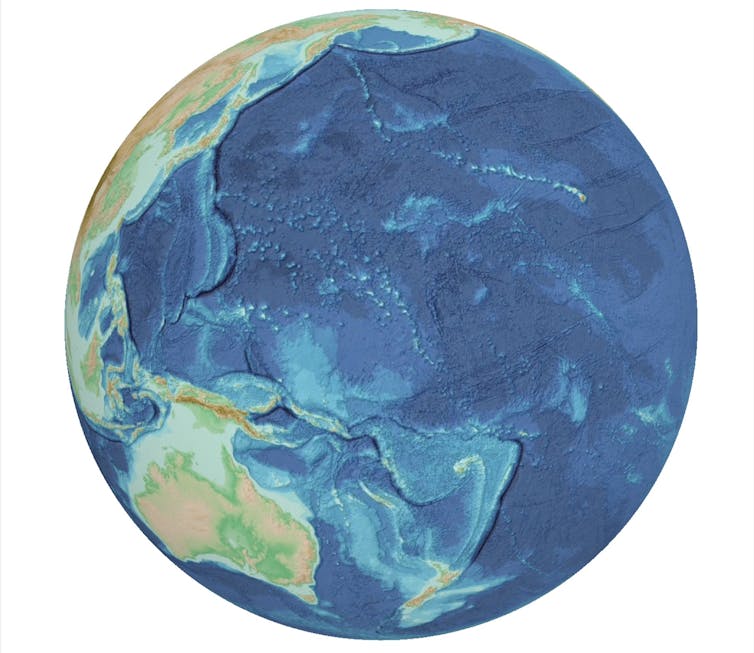
Almost a quarter of the world’s sea floor (23.4%, to be precise) has been mapped to a high resolution. This amounts to about 120 million square kilometres, or about three times the Moon’s total surface area. This may be why the comparison has shifted to Mars, which has a surface area of 145 million square kilometres.
Almost a quarter of the world’s seafloor has been mapped in detail. GEBCO
Another related and incorrect comparison is that more people have set foot on the Moon than have visited the deepest place on Earth.
This statement is difficult to substantiate. “The deepest place on Earth” could refer to the Mariana Trench, or just the deepest part of it (the Challenger Deep, named for the British survey ship HMS Challenger).
The bathyscaphe Trieste was the first crewed vessel to reach Challenger Deep, in 1960. US Navy
So why do people keep saying we know more about the Moon or Mars than the deep sea?
It feels natural to compare the deep sea to space. Both are dark, scary and far away.
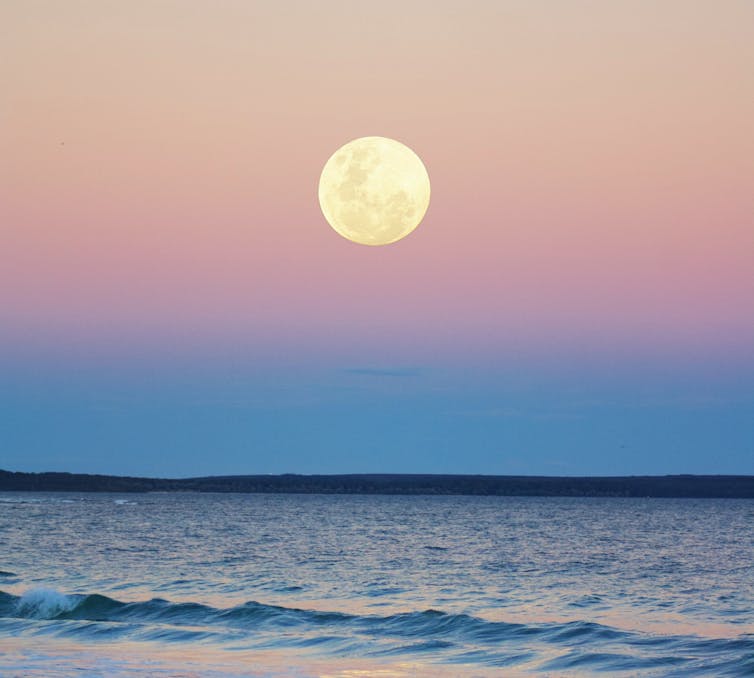
We see the Moon all the time – but the depths of the ocean are much harder to imagine. Unsplash
But we can see the Moon very easily by simply looking up. By being able to see it, we accept an apparently glowing rock hanging in the sky more easily than that parts of the ocean are very deep. We can see the Moon wax and wane and we can experience the push and pull of the tides.
It feels like we know more about the Moon than the deep sea, because we are forced to accept its presence. It intrudes on our lives in a tangible way that the deep sea does not.
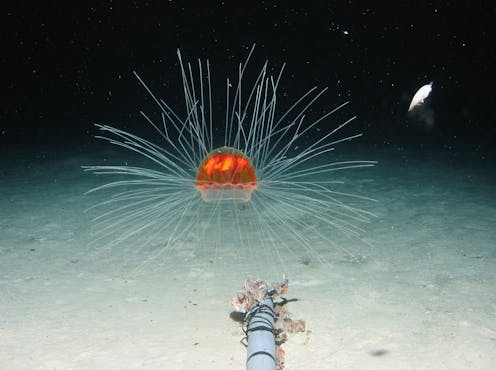
We don’t think much about the deep sea unless we’re watching a documentary or horror film, or perhaps reading about some “horrific alien-like monster” dredged up by a deep-sea trawler.
A useful analogy
Because the deep sea is so physically inaccessible, comparing it to space may offer a useful analogy for an otherwise difficult-to-imagine ecosystem. But some deep-sea scientists argue that the persistent estrangement of the deep sea minimises the vast amount of research about it that has emerged in recent decades.
Deep-sea biology is relentlessly referred to as a discipline that knows less about its own field of study than a relatively small, barren rock devoid of atmosphere, water and life. And yet this self-deprecating line is repeated by scientists themselves, who may find that highlighting the deficit of knowledge about the deep sea helps to promote the need for ocean research.
Ultimately, the idea we know more about the Moon than the deep sea is at best about 70 years out of date. We know much more about the deep sea – but there is even more left to be known.
Over the past 12 months, significant challenges by way of policy and politics have impacted professional tennis.
Chief among them have been participation constraints around the COVID-19 pandemic, followed by considerations about the eligibility or otherwise of Russian and Belarussian competitors following the invasion of Ukraine.
With the Australian Open beginning today, where are we currently at with these quandaries?
The COVID conundrum
Public health measures during the pandemic inevitably impacted the staging of tennis tournaments, with organisers obliged to follow local protocols.
At many events this meant players needed to be vaccinated or receive a medical exemption. For the most part this wasn’t an issue. For example, in January 2022 the Association of Tennis Professionals (ATP) reported 97 of the top 100 men’s players were vaccinated.
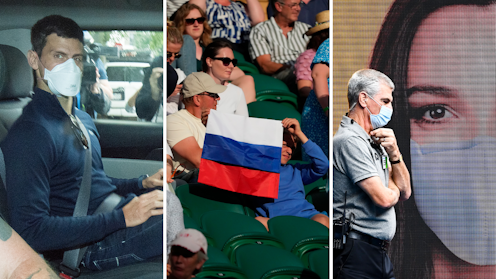
This suggested most tennis professionals – much like workers in many other occupations – accepted the public health objectives underpinning vaccination. Doubtless, though, some tennis players had been vaccine hesitant, most notably Novak Djokovic, who famously declared he’d rather miss grand slams than be vaccinated against COVID.
Just a year ago, Djokovic attempted to take part in the Australian Open on the basis of a “medical exemption”, which prompted raised eyebrows among sceptics.
Eventually, the Serb was required to leave Australia after his visa was cancelled, a decision that caused a furore in his home country.
Djokovic says he cannot forget the experience of being deported, but hopes he will be received respectfully by fans at this year’s tournament.
As with wider society, tennis authorities have adjusted their COVID protocols over time, particularly in the wake of the “opening up” of society following widespread vaccination.
At the 2022 Australian Open, players needed to be vaccinated or medically exempt, but in 2023 there’s no such requirement. Indeed, this year there’s no COVID testing at all, and players can even take part should they contract the virus during the tournament.
The contrast over 12 months is stark, with some players finding it hard to reconcile what was required back then to now.
The Ukraine imbroglio
Russia’s February 2022 invasion of Ukraine, endorsed by its ally Belarus, shows no sign of resolution.
In response to the incursion, the North Atlantic Treaty Organization (NATO) and its allies provided Ukraine with military supplies and logistical support, while implementing economic sanctions against Russia.
Tennis, like many other sports, has also been immersed in the question of sanctions; specifically, how to address the participation or otherwise of Russian and Belarussian players.
For team-based competition, the response was decisive, and pro-Western. The International Tennis Federation ruled that Russian and Belarussian teams be banned from the Davis Cup and Billie Jean King Cup. This was especially bad news for Russian tennis players, who were expecting to defend victories in both events from back in 2021.
However, in the case of tournaments focused on individuals, where athletes officially compete for themselves (and unofficially on behalf of their country), the position of tennis authorities varied.
At the first grand slam following the invasion, Wimbledon organisers, with the support of the British government, declined to accept Russian and Belarussian players.
However, this position was repudiated by both the Association of Tennis Professionals (ATP) and the Women’s Tennis Association (WTA), which fined the All England Club.
In an effort to counter what they described as “discrimination” against sanctioned players, these international tennis bodies determined that ranking points would not be awarded at Wimbledon, which disappointed many players.
At the French Open, however, organisers deemed that players from Russia and Belarus were eligible to participate, though with the proviso they compete as “neutral” athletes – bereft of regalia, symbols, or status indicating a connection with their homeland.
This would also require, at the very least, neutrality in respect of their public position on the invasion of Ukraine. As the tournament director emphasised, if any players were to show support for Putin, sanctions would follow.
Subsequently, the US Open also allowed Russian and Belarusian participants, again under an expectation of neutrality. The tournament organisers expressed their “concern about holding the individual athletes accountable for the actions and decisions of their governments”.
Meanwhile, though, ordinary Russians are not treated as “neutrals” by NATO and its allies: they have been collectively penalised by Western sanctions, thus being made accountable for Putin’s war.
In 2023, the Australian Open – like the US and French Open – announced that “neutral” tennis players from Russia and Belarus are welcome. This incensed the Ukrainian ambassador in Canberra, who labelled Tennis Australia’s position as “unprincipled”.
However, Daniil Medvedev, the leading Russian men’s player, expressed relief at being able to play, asserting a personal commitment to “peace”.
On the other hand, Belarusian tennis star Aryna Sabalenka complained that playing under a neutral flag at the Australian Open makes her feel she is “from nowhere”.
Cheers and jeers
So, how might these political issues impact this year’s Australian Open?
Novak Djokovic is back in town, chasing an incredible tenth singles title. After a year’s absence he remains a polarising figure. How will tennis fans respond?
And what of the Russian and Belarusian players? No player from either country competed at Wimbledon in 2022, and none featured as finalists at last year’s French and US Open. There’s an opportunity in Melbourne for that trend to change.
With these background tensions in mind, Australian Open boss Craig Tiley has instructed security to be on a tight leash in the event of booing, declaring: “If [fans] disrupt the enjoyment of anyone else – boom, they are out. We don’t want them on site. They can stay away or we will kick them out”.
Daryl Adair does not work for, consult, own shares in or receive funding from any company or organisation that would benefit from this article, and has disclosed no relevant affiliations beyond their academic appointment.
When is a surgeon not a surgeon? It’s a riddle that’s long puzzled regulators and consumers. But it may soon be solved.
State and territory health ministers have decided to restrict the title “surgeon” to specialist doctors. The move represents a significant change in Australian medical regulation.
So, if you’re thinking of having cosmetic surgery in 2023 (or beyond), these reforms might help you choose the right health professional.
For as long as cosmetic enhancements have been offered in Australia, there have been no rules about which medical practitioners can call themselves cosmetic surgeons.
Consequently, any registered medical practitioner may call themselves a cosmetic surgeon in Australia, even though other specialist titles are protectedunder legislation.
A “plastic surgeon”, for instance, needs to have completed postgraduate training in surgery certified by the Australian Medical Council and Medical Board of Australia. In doing so, they attain the Australian equivalent of “board certification”, a term you might be familiar with from American TV shows, such as Botched.
Arguments about who should be allowed call themselves a cosmetic surgeon have persisted for more than 20 years.
In 1999, the New South Wales Health Care Complaints Commission detailed the risks and dangers of the lack of restrictions in its Cosmetic Surgery Report.
These reforms have never been adopted, partly due to resistance from some doctors. These doctors have argued they are entitled to call themselves surgeons because they hold the traditional medical degree, called the Bachelor of Medicine/Bachelor of Surgery (MBBS). Despite its name, the degree provides only rudimentary surgical training.
Who can call themselves a surgeon? It’s been a long-standing debate. Shutterstock
The number of cosmetic surgery procedures has increased over the past 20 years.
Social media continues to popularise treatments, such as buccal (cheek) fat removal and the Brazilian butt lift. Many of these surgeries expose the patient to significant risks of harm.
Allegations of unsafe surgeons dubbed “cosmetic cowboys” have surfaced in the media. And the range and seriousness of complaints about unsafe cosmetic treatments (some leading to fatal outcomes) have been of increasing concern to governments and regulators.
In December last year and after public consultation, Australian health ministers decided to implement legislation that restricts the title of “surgeon”.
The consultation report warned that doctors’ continuing use of the title “cosmetic surgeon” might not just diminish public confidence, but chafe against recent updates to the health practitioner law intended to make health regulators, such as AHPRA, put consumer protection first.
Soon, these legal amendments will restrict the title “surgeon” to doctors holding “specialist registrations” in surgery, obstetrics and gynaecology, or ophthalmology.
Although the new law is yet to be drafted, the impact of the change may be significant – for doctors and consumers alike.
Some doctors who have long promoted themselves as surgeons will be prevented from doing so, with disciplinary action or even prosecution on the cards should they continue to call themselves surgeons.
For consumers, the longstanding riddle about who is a “real” surgeon may soon be a little clearer.
Consumers may soon have more information to help them choose the right doctor for their surgery. Shutterstock
Will this fix things?
Will this completely solve the problem of increased complaints and injuries in cosmetic surgery? That’s unlikely.
It still remains unclear how AHPRA’s new approach will interact with the new restricted title, or how demanding the new accreditation standards for endorsed cosmetic surgeons will be.
In the meantime, it’s still important for consumers to inform themselves about the skills and training of their chosen practitioner. They can check the doctor’s AHPRA registration and identify whether they’re a member of any relevant society, such as the Australian Society of Plastic Surgeons.
Having said that, the forthcoming changes to the meaning of the phrase “cosmetic surgeon” promises to make that homework just a little simpler.
Christopher Rudge was formerly a legal research associate at the Medical Council of New South Wales.
Cameron Stewart does not work for, consult, own shares in or receive funding from any company or organisation that would benefit from this article, and has disclosed no relevant affiliations beyond their academic appointment.
When you hear beautiful birdsong, such as the warbling of the Australasian magpie, you might believe it’s a sign of intense competition for territory or showing off to attract a mate.
After all, that’s the way birdsong is often thought of – a way for male birds to compete with each other. A prettier version of nature red in tooth and claw, as Tennyson put it. There’s some truth to it – in many species, even the most beautiful song by a male in another’s territory will invite attack.
But birdsong isn’t one dimensional. In some species, birdsong is much less about competition and much more about social cooperation. Our study of highly social zebra finches found the song of the males boosts social cohesion in local populations. It even helps these tiny birds to coordinate their nest building, mating and reproduction when there’s about to be abundant food for their young.
So when you hear a melodious song, enjoy it. Nature isn’t just about competition. More and more, we’re learning cooperation is there too. In some species, birdsong promotes harmony at a species level – and boost bonding between a male and his partner.
Flocks of zebra finches roam the interior, looking for seeds and water. Shutterstock
What did we find?
Zebra finches travel in large flocks through Australia’s arid interior, looking for seeds. They’re highly social, and are known as a bird species able to learn new songs.
Zebra finches are one of Australia’s most-studied birds, because they’re easy to keep in captivity. But to discover how they act in the wild, we had to go remote to a study area near Broken Hill.
To capture their song, we installed more than 20 microphones and recorded them from dawn to dusk every four days over a whole year.
We chose this species because the males sing their own individually distinctive songs – and they do it relatively quietly, compared to the loudspeaker bugling of, say, a currawong.
That’s important. When birds sing softly, it’s a sign the song isn’t a warning about territory. Zebra finch songs can be heard only by birds within a few metres, and they’re often sung when birds perch together in the same bush. So why do they do it? When each male sings their own unmistakable songs, it lets others in the group figure out who is singing – and gauge how many males are close by.
Listen for yourself. The two songs below are from male zebra finches – but they’re clearly very different from each other.
Song of zebra finch male #1. Hugo Loning (recorded at Fowlers Gap), Author provided117 KB(download)
Song of zebra finch male #2. Hugo Loning (recorded at Fowlers Gap), Author provided80.9 KB(download)
What happens when you play one male’s song to another male? In more territorial and less social species, it would provoke a aggressive response. But in zebra finches, it has the opposite effect. It actually draws in other males closer to share the same space. That’s why you can often hear multiple males sing together in the same bush.
Zebra finch song in a social tree. Hugo Loning (recorded at Fowlers Gap), Author provided71.2 KB(download)
Song for social bonding
On our recordings, we heard zebra finches every day – even though it was in 2019, when one of the worst droughts in the last 100 years made conditions very poor. No finches even attempted to breed.
Researcher checking one of the acoustic recording stations during a sandstorm at the height of the drought in February 2019. Simon Griffith
But then the climate cycle shifted from drought to rains and flood. Water drove grass growth – and that meant seeds were coming. The finches sensed this and began mating.
As the drought broke, we heard the males sing more, peaking around the time the female birds laid their eggs. This suggests zebra finch song is part of an ongoing “discussion” between a female and her partner, which helps synchronise their activity. Song is likely to be related to how birds feel. When food is abundant birds feel better and sing more. When individual finches hear lots of singing in the area they know others are also enjoying the conditions and it gives greater confidence in the decision to start breeding.
So if zebra finch males don’t sing to claim territory, are they doing it to show off to prospective mates? Nope. In these remarkable birds, the males tend to sing after they’ve found a partner. They sing to her while perching next to her on a branch, and they will sing regularly – even daily – over the years of their relationship.
A pair of zebra finches (the female is on the left) Simon Griffith
The females of most singing species sing too. Female zebra finches, however, don’t sing.
We believe the serenading of the female zebra finch by her partner may play a similar social function to the commonplace song duets you can hear from Australian songbirds in suburbs or in the bush.
For instance, magpie-lark couples will sing a duet while doing a kind of dance, making distinctive, synchronised wing spreading, shoulder raising and body flicking movements.
Duetting magpie-larks.
These duets help to strengthen the pair’s bond and help them coordinate their behaviour. These synchronised songs and visual displays also show the strength of their partnership, which can make territory intruders think twice. For zebra finches, it may be the male’s constant song is enough to keep the pair well bonded.
Australia is rightly famous for its birds, from raucous cockatoos to melodious songbirds. After all, birdsong evolved here first and spread to the rest of the world.
Now we know the zebra finch uses song as social bonding, we can look for this in other species around the world. We expect many other gregarious species will use song in ways more complex than marking territory or drawing in mates.
Birdsong is the animal sound we most regularly encounter – it’s part of the background of our lives. But for birds, it’s far beyond a pretty melody. It’s fundamental to how they live and who they are as a species.
Simon Griffith receives funding from The Australian Research Council, and this work was supported by a grant to Marc Naguib from the Netherlands Organisation for Scientific Research (NWO).
Hugo Loning is doing a PhD supported by a grant to Marc Naguib from the Netherlands Organisation for Scientific Research (NWO).
Te mokomoko a Tohu – Aotearoa New Zealand’s newest species of geckoNick Harker, Author provided
Aotearoa New Zealand is home to an incredible diversity of lizards (mokomoko) – more than 120 species are identified, and counting.
Elusive species are being (re)discovered in cracks and crevices in remote areas, while geneticists are using DNA to untangle hidden diversity in widespread populations.
We’ve known for a long time that Hoplodactylus geckos living on rocky islands in the Cook Strait were a little different from their northern counterparts. They are smaller, have different patterns and possess unique DNA fingerprints – all indicating a new species.
Spot the difference: te mokomoko a Tohu (left) and Duvaucel’s gecko (right). Nick Harker, CC BY-SA
The arrival of rats, coupled with the burning of native forests centuries ago, complicated this taxonomic task by driving geographically intermediate mainland populations to extinction. With those crucial puzzle pieces missing, it was unclear how significant the observed differences between northern and southern populations were.
It wasn’t until we used new methods of analysing ancient DNA on those extinct populations that we realised northern and southern Hoplodactylus geckos were quite different indeed – they had been separated for over five million years. Our new research describes these populations as different species.
Mistaken identity
Before now, all living Hoplodactylus populations were known as Duvaucel’s gecko, named after French naturalist Alfred Duvaucel.
In the early 19th century, Duvaucel travelled through India, where he acquired various plants and animals to ship back to Paris. Among these samples was a jar of pickled geckos of a species that was later named Hoplodactylus duvaucelii in his honour.
Scientists later realised the assumption that Duvaucel’s geckos lived in Bengal, India, was incorrect, as no similar geckos were ever found in Asia. Hoplodactylus geckos are only found in Aotearoa and, at up to 30 cm in length, they are our largest living lizards.
What’s in a name?
Taxonomy is the study of how different lineages relate to one another. Funding and conservation efforts are often dependent on taxonomic recognition. Robust taxonomic work is critical to conservation.
Once published, scientific names can be impossible to change. This is to limit petty and confusing changes. However, this practice can also “lock in” names that honour historical figures who have fallen from social grace, as well as misspellings and names of little significance to the communities where the species lives.
We wanted to ensure our newly identified species of gecko was appropriately named. We approached Te Ātiawa o Te Waka-a-Māui, mana whenua of Ngāwhatu-Kai-ponu (the Brothers Islands) in Cook Strait, home to the largest surviving population of the “new” gecko. They proposed the te reo Māori common name te mokomoko a Tohu (scientific name: Hoplodactylus tohu).
Tohu Kākahi, with whakapapa (genealogical) ties to Te Ātiawa, was a pacifist who was taken prisoner by British forces during the invasion of Parihaka in Taranaki.
He was transported to Whakatū (Nelson) and then passed the Brothers Islands while being taken south along the prehistoric range of te mokomoko a Tohu to Ōtepoti (Dunedin). This legacy is now immortalised in the name of this special gecko.
The North Island Hoplodactylus populations retain the name Duvaucel’s gecko following International Code of Zoological Nomenclature (ICZN) rules.
As a globally applied system, scientific naming conventions sometimes conflict with regional perspectives and values: non-Roman characters (such as macrons) cannot be used, for example, and it may seem that long-standing traditional names are being replaced. Formulation of most new scientific names does not include consultation with Indigenous communities. Women, people of colour and Indigenous people remain underrepresented in species names or as authors of new species.
Our naming of te mokomoko a Tohu is just one example of how researchers might approach the naming of new species. Taxonomic and Indigenous names and perspectives constitute different systems, yet those systems are not inherently incompatible. How names are formed and used can be very important, and convey respect to these species and to the communities for whom they are a taonga (treasure).
How to save a species
The few remaining populations in Cook Strait are the last survivers of te mokomoko a Tohu, making them critically endangered. While these islands are currently safe havens, climate change, scrub fires and potential predator incursion pose ongoing risks.
Ngāwhatu-Kai-ponu (Brothers Islands) are an oasis for te mokomoko a Tohu. Maritime New Zealand, CC BY-SA
To safeguard their survival, translocation to mainland ecosanctuaries (such as Orokonui Ecosanctuary in Otago) could be used to establish “insurance” populations in regions they once lived. If we don’t act soon, this species may disappear.
We cannot hope to stop extinctions if we don’t know what’s out there. This is why taxonomy, which is critically underfunded in Aotearoa, is so important. Our research has merely scratched the surface of understanding the diversity in New Zealand’s lizard fauna.
We desperately need scientific methods to inform evidence-based conservation management so we can be effective kaitiaki (guardians) of taonga species. Who knows what we will discover as we delve into the biological heritage of other species.
The authors do not work for, consult, own shares in or receive funding from any company or organisation that would benefit from this article, and have disclosed no relevant affiliations beyond their academic appointment.
Ahead of the one-year anniversary of the catastrophic volcanic eruption tomorrow, Tongan Prime Minister Hu’akavameiliku Siaosi Sovaleni spoke to RNZ Pacific’s Finau Fonua.
Hu’akavameiliku shared his experiences of the eruption and its aftermath, as well as some of the challenges left in the wake of the disaster.
Hu’akavameiliku was meeting with a local church community group when he heard what he had first thought was thunder. Within minutes he was notified of the volcano’s eruption.
Hu’akavameiliku recalls his first thoughts:
“It was scary. But at the same time, most of my time was just worrying about what’s happening, finding out what’s happening here, who’s affected, the scope of the problems and all that.
“But at the same time, we’re mindful that I’m there with my family, what will be the best course of action in terms of whether we are evacuating or staying home? But that’s what went through my mind.”
Communications cut off For the next three days all communication services were down, and Tonga was effectively cut off from the world.
Hu’akavameiliku remembers sending people to determine the effects of the eruption in western Tonga, as well as boats to the islands who soon reported that tsunami waves were incoming.
It was later confirmed that three people had died in the disaster.
Although there was a need to determine exactly what had happened, that meant accessing satellite images of the eruption, which was not possible while communications were down.
Hu’akavameiliku explained how the priority remained with the affected people, both on Tongatapu and on the outlying islands.
“But those couple of days, it was more about finding out what’s happening and working out our response, making sure that families are safe, relocating some of the islands over down here. So that kept us busy, didn’t give us much time to worry about other stuff.”
Tongan Prime Minister Hu’akavameiliku Siaosi Sovaleni (right) with Health Minister Dr Saia Piukala. Image: Iliesa Tora/NZ Pacific
Hu’akavameiliku expressed gratitude for the international assistance Tonga received in the wake of the disaster, particularly from New Zealand, Australia and its other Pacific neighbours. The food, drinking water and building materials received were vital for the survival of those most affected by the eruption.
An aerial photo taken from a New Zealand Defence force P-3 Orion on January 16, 2022, shows Mango island in Tonga with no houses left after impact from a tsunami. Image: NZDF/RNZ Pacific
Hu’akavameiliku said the decision to resettle the islanders was based on an understanding of how vulnerable their communities had become.
This relocation has been challenging for the people of Mango and ‘Atata: “Some of them are not used to where they are right now because they grew up in very small islands and now they are in Tongatapu or in ‘Eua, so helping them get hold of that and rebuilding their livelihood.
“The way they utilise will be different in the other islands than down here. So we are helping them. We adjust their way of life to the new environment they are in, that’s one of the biggest focuses, and on a higher level, the economics.
“We are reallocating some of the resources, we are just building not just houses but infrastructure.”
To mark the anniversary of the eruption an exhibition is being held. Hu’akavameiliku also noted that Tongans also reflected on the impact of the disaster through their strong spiritual communities.
“And, on the Sunday services, is to thank the Lord that we’re still here and to acknowledge our various partners. And we hope that things will keep getting better.”
This article is republished under a community partnership agreement with RNZ.
Fiji was regarded a bully, flexing its muscle as a selfish and arrogant player in regional forums, claims Association of South Pacific Airlines (ASPA) president George Faktaufon.
He said he hoped Fiji would rejoin the regional aviation community with the election of the new coalition government.
Faktaufon said Fiji — through its national airline Fiji Airways — had a lot to offer to the development of the region’s aviation sector.
“As one who worked for the Pacific Island region for most of my working life, it saddened me to watch Fiji slowly but surely lose its status as a credible leader in the region,” he said.
“Apart from climate change, which Fiji only joined the bandwagon years after countries like Kiribati and Marshall Islands and their leaders, [former presidents Anote] Tong and [David] Kabaua, had been in the forefront in every international forum, including COP and other forums, Fiji has been seen as a bully, flexing its muscles and often regarded as a selfish and arrogant player in regional forums,” he said.
“In 2022, I attended three regional high level ministerial meetings — Forum Aviation Ministerial Meeting, virtually, Forum Leaders/Private Sectors Dialogue in Suva and then the Forum Economic Ministers/Private Sector Dialogue in Vanuatu,” Faktaufon said.
“In all these meetings, Fiji came out as the stumbling block to enhancing regional air connectivity with its stringent air services agreements with other PICs [Pacific Island Countries], that were not only outdated but favoured Fiji and its national airline.
“Fiji Airways has a lot to offer to other PICs and their national airlines, but it has to be in a mutual partnership.
“Fiji Airways has the resources both in expertise and also equipment that it could use to benefit other PICs as well as itself.
“It is called regional collaboration and co-operation where there are winners and no losers.
“We had done it before, with a joint lease of a B737 between Fiji Airways and Royal Tongan,” Faktaufon said.
Repeka Nasiko is a Fiji Times reporter. Republished with permission.
Files submitted to the Fiji Independent Commission Against Corruption (FICAC) two years ago over alleged abuse of funds by a former Fiji Sugar Corporation (FSC) executive are believed to have “disappeared”, says Sugar Minister Charan Jeath Singh.
Singh said someone in FICAC would be held responsible for causing the disappearance of the files.
Singh said it was unacceptable that in a case of national importance involving taxpayers’ money, files had disappeared while FICAC found it easy to charge other people for abuse of office.
Speaking to FSC staff members in Labasa this week, Singh said evidence existed to prove allegations against the executive.
“We have sufficient evidence as a result of the investigation and every information points out at alleged corrupt dealing in the mill and at management level,” the minister said.
“The files were given to FICAC two years ago but someone may have deliberately dealt with it which is why it has disappeared,” he said.
“FICAC is good at charging other people in society but when it comes to big sharks, why can’t they be taken to task?”
Files to be resubmitted Singh said someone in FICAC would be held responsible for losing the files.
“I will leave it with the minister responsible but we need to show the people and tell them what transpired.
“So we have resubmitted the files to FICAC and we want the investigations to be done right away so we can take the executive to task.
“This is to also warn people holding senior positions in state-owned companies that there is no room for corruption.”
Fiji Labour Party leader and National Farmers Union general secretary Mahendra Chaudhry, making submissions to the Standing Committee on Economic Affairs in Lautoka in May 2016, claimed two FSC directors had pocketed $2.4 million in directors’ remuneration between 2012 to 2014.
He claimed that the two directors had jointly picked up fees of $781,000 in 2012, $846,000 in 2013 and $791,000 in 2014, saying the figures he was quoting were lifted directly from FSC annual reports for those years.
In May 2017, Sugar Ministry Secretary Yogesh Karan told The Fiji Times that investigations into the executive were continuing.
He said he had done his part and had given the matter over to the relevant authorities — the Reserve Bank of Fiji and the Fiji Revenue and Customs Authority — to deal with.
Questions sent to FICAC on the comments made by Singh remained unanswered when this edition went to press.
Serafina Silaitogais a Fiji Times reporter. Republished with permission.
Late last year, the Auckland University of Technology (AUT) initiated a process to eliminate 170 academic jobs to cut costs. The Employment Relations Authority (ERA) found AUT’s approach breached its collective employment agreement with staff and their union and ordered it to withdraw the termination notices.
Tertiary education runs on an insecure labour force in New Zealand and elsewhere. The AUT decision illustrates that even traditionally secure positions are becoming less so.
Tenure is the traditional protection for academics in the tertiary sector, but New Zealand does not have tenure at its universities.
Tenure is more than a perk
A common argument against tenure is that it leads to a complacent, under-motivated university professor. These concerns are hypothetical — evidence that tenure causes productivity differences is lacking.
In fact, one of few large studies on the subject found the opposite. Good administrators should be able to manage any actual productivity issues as they do in all other workplaces.
On the other hand, lack of tenure creates risks for free societies. Tenure is common practice in other liberal democracies. UNESCO says:
Security of employment in the profession, including tenure […] should be safeguarded as it is essential to the interests of higher education.
Tenure is important, if not indispensable, for academic freedom. Academic freedom is essential to a university’s mission, and this mission is a characteristic of a democracy. As University of Regina professor Marc Spoonerput it:
A country’s institutional commitment to academic freedom is a key indicator of whether its democracy is in good health.
The Employment Relations Authority has issued a compliance order to the university, requiring it to withdraw its notices of termination. https://t.co/NUvBfqS6ad
Scholarship is not piecework The ERA said AUT misunderstood terminology in the collective employment agreement. The clash term was “specific position”. AUT’s position was that specific positions are identified by professional ranks (from lecturer to professor) and the numbers of each role across four particular faculties.
The ERA did not agree and concluded an essential component for identifying specific positions is the employee, being the person who is the current position holder or appointee to a position.
AUT’s assertion would be like the air force using the rank of “captain” to adjust its number of pilots. The number of captains does not tell you what each captain does, be it to fly planes or fix them.
Without tenure, a standard less than this minimum established by the ERA can be used to eliminate academics who have legitimate priorities that do not align with the administrative staff of the day, or are the victims of any other concealed discrimination. The ERA clarification makes it more difficult to inhibit intramural criticism, the right to criticise the actions taken by managers and leaders of the university.
It […] reflects the distinctive relationship of academic staff and universities, a relationship not able to be defined by reference to the ordinary law of employer and employee relationships.
The ERA clarification helps to prevent the firing of academics who are teaching, researching or questioning things administrators, funders or governments don’t want them to. But it is a finger in a leaking dyke. Tenure is a tried and tested general solution.
Health of the democracy We only need to observe the events in the United States to recognise the importance of tenure. This benchmark country has a proud tradition of tenure. Nevertheless state governments are dismantling tenure to impose political control on curriculums. Our liberal democracy is not immune to this.
We need more than tenure-secured academic freedom to enable universities to do the sometimes dreary and at other times risky work of providing societies alternatives to populist, nationalist or autocratic movements. But as the Douglas Dillon chair in governance studies at the Brookings Institution, Darrell M. West, wrote, academic freedom is a problem for these movements.
Recognizing the moral authority of independent experts, when despots come to power, one of the first things they do is discredit authoritative institutions who hold leaders accountable and encourage an informed citizenry.
In a system with tenure, a university would have a defined stand-down period preventing reappointment to vacated positions. For example, if an academic program and associated tenured staff that teach it were eliminated at the University of Arkansas for financial reasons, the program could not be reactivated for at least five years. The stand-down inhibits whimsical or agenda-fuelled restructuring as a lazy option to manage staff.
If a similar trade-off were to be applied to how AUT defined specific positions, then no academics could be hired there for five years. It is very different to be prevented from hiring academics than it is to, say, not re-establishing a financially struggling department or program.
Herein lies the true value of tenure. It is greater than a protection of the individual. It protects society from wasteful or ideologically motivated restructuring as an alternative to poor management. Tenure is security of the public trust in our universities.
The Iranian government has attempted to brutally suppress the widespread protests sparked by the death of 22-year-old Mahsa Amini in police custody in September 2022.
Central to Iran’s response have been the country’s “revolutionary courts”. They have conducted heavily-criticised trials resulting in at least four executions, while over 100 protesters are in considerable danger of imminent execution.
Criminal trials in these courts often occur behind closed doors presided over by clerics, with none of the standard guarantees of criminal procedure such as allowing time and access to lawyers to prepare a defence.
Submissions to the United Nations from Iranian civil society organisations report that lawyers are routinely denied access to clients, and that coerced confessions, often obtained by torture, are used as evidence.
Tara Sepehri Far, senior Iran researcher at Human Rights Watch, describes the trials as “a total travesty of justice”.
The courts were established to try opponents of the regime who face ill-defined national security charges that carry the death penalty. Such vague charges include waging war against God (“Moharebeh”), corruption on Earth (“Ifsad fel Arz”), and armed rebellion (“baghi”).
The courts are integral to the consolidation of Islamist power which began within a few months of the revolution. As is apparent from the structure of the Iranian government, the courts complement the role of para-state organs such as the Basij.
The Basij is a paramilitary organisation formed very soon after the revolution. It supports the guidance patrol, known colloquially as the morality police.
The Basij is essential to the Iranian authoritarian state. It sits under the command of Iran’s Revolutionary Guard Corps, and is fiercely loyal to Supreme Leader Ayatollah Ali Khamenei.
The United States Treasury has imposed sanctions on senior members of the Basij, and on a network of businesses it believes is financing the organisation.
Human rights obligations
The revolutionary courts’ secret trials, vague charges, denial of lawyers, and evidence obtained by coercion and torture have focused attention on Iran’s flagrant and persistent breaches of its international human rights obligations.
In 1975, Iran ratified the International Covenant on Civil and Political Rights, which guarantees the right to life and the right to live free from torture or cruel, inhuman or degrading treatment or punishment. The United Nations Human Rights Committee has stated the death penalty is not consistent with these guarantees, putting Iran in breach of its international human rights obligations.
The guarantee of a right not to be tortured is repeated in the Convention Against Torture, which Iran has not ratified. It’s the only country in the Middle East to not have done so, and one of only 20 in the world.
In a periodic review of Iran’s human rights compliance, the UN recommended in 2020 that Iran ratify the treaty, end the use of torture, and credibly investigate and prosecute all allegations of torture. Iran rejected these recommendations.
The Center for Human Rights in Iran warns the executions are “a prelude to more state-sponsored murders of young people in the absence of a strong and coordinated international response”.
Hangings such as these have been characterised by opposition parties in exile as desperate efforts to forestall the inevitable overthrow of the regime, and by the US Department of State as efforts to intimidate Iranians and suppress dissent.
Will sanctions help?
Australia’s response to two executions late last year was to condemn the executions, issue a joint statement with Canada and New Zealand, and subject Iran’s morality police and the Basij to international sanctions.
We can condemn the country’s conduct and enact sanctions, but sadly, Iran is free to persist despite sanctions if it wants.
At the very least, what international sanctions and global outrage may do is give heart and hope to the protesters, and help signal to them that the world is watching and standing with them.
Simon would like to acknowledge an Iranian-born colleague who requested anonymity for their contributions to this article.
Simon would like to thank an Iranian-born colleague who requested anonymity for their contributions to this article.
Sun Cable – considered to be the world’s biggest renewable energy export project – announced this week it had entered voluntary administration following “the absence of alignment” with shareholders.
Sun Cable is expected to cost over A$30 billion. It proposes to build an enormous, 12,000 hectare solar farm in the Northern Territory, add an enormous (40 gigawatt hour) battery for electricity storage, then connect Australia to Singapore via Darwin through an undersea cable over 4,000 kilometres long. This would be by far the world’s longest electricity cable if it existed today.
It would see Darwin access 800 megawatts of additional electricity and Sun Cable could supply “up to” 15% of Singapore’s electricity by 2030. To put this into context, Singapore’s annual electricity consumption is about one quarter of Australia’s.
While this prominent and well funded project has gone into voluntary administration, those enthused about rapid decarbonisation and Australia’s renewable energy export potential need not despair. These events are part of the usual discovery processes.
Sun Cable offers an enticing possibility of putting Australia’s land, and the rays of sunshine that fall on it, to use in displacing gas for electricity production in a distant land. Singapore is keen to procure renewable electricity, and has limited ability to produce that electricity itself.
The project has attracted the enthusiastic support of Australia’s two richest men: Mike Cannon-Brookes and Andrew Forrest. Each has already committed about $50 million to the project and both are experienced investors in renewable electricity in Australia.
When Cannon-Brookes first invested in the project he described it as “batshit insane” but also that the “engineering all checks out”.
Sun Cable is also supported by Australia’s governments. The NT government passed laws last year to facilitate its development. The federal government gave it “major project” status. And Infrastructure Australia called the project “investment ready” and placed it on its National Infrastructure Priority List.
Media commentary since Sun Cable’s announcement has drawn attention to the differences of view of its two most prominent shareholders, particularly about their differing level of support for Sun Cable’s management.
But the exact nature of their disagreement is unclear, and both men have saidthey remain interested in the project.
Commentators have suggested the apparent disagreement is a reflection on the commercial and technical viability of the project itself. Matthew Warren, former chief executive of the Australian Energy Council, went so far as to describe Sun Cable as “a quiet running joke inside the electricity industry” and that it:
reflected the ignorance, egos and quest for notoriety of its proponents rather than the needs of its prospective customers.
But Federal Energy and Climate Minister Chris Bowen, commenting on conversations with Sun Cable’s management, said he was assured the project would proceed. He said the latest developments reflected only a change in corporate structure and approach.
Comparable projects overseas
Sun Cable is obviously a very ambitious project. Yet much too little information is publicly available to pronounce, with any certainty, on its commercial and technical viability.
While the project will certainly break new ground, it is not totally in its own league. The similar Xlinks project was proposed overseas in 2021 and is now advancing quickly. This project would connect Morocco and England with similar capacity renewable generation and storage, and has a comparably long cable to Sun Cable’s.
And at the end of last year, the European Commission committed funding to a high-voltage direct current link between Tunisia in North Africa and Sicily, Italy. It would export 600 megawatts of (mainly) solar electricity produced in Tunisia.
Although a much less ambitious project than either Xlinks or Sun Cable, it is founded on the same vision of long distance inter-continental transmission of renewable electricity. And it is almost certain to proceed.
Just like fossil fuel resources, the world’s renewable resources are unevenly distributed. There are powerful incentives now, on economic and sustainability grounds, to find ways to reliably and cost effectively move renewable electricity from where those resources are abundant to where they are scarce.
No need for hand wringing
Inevitably, the latest Sun Cable developments draw attention to the questions of how best to exploit Australia’s endowment of land, sun and wind and how to capitalise on our track record as a reliable supplier with credible government and trusted courts.
For example, instead of trying to export electricity, should we focus on exporting renewably produced hydrogen or ammonia for fuel and fertilisers? Or, should we focus on using renewables to process and refine mineral resources before shipping higher-valued products (such as steel, aluminium and silicone metal) to distant shores?
These questions have attracted considerable interest from policy makers, investors and researchers – in particular, in books from economist Ross Garnaut (Superpower and The Superpower Transformation) and in former Australian chief scientist Alan Finkel’s forthcoming book Powering Up.
Both authors canvass many possibilities and neither categorically rule out direct renewable electricity export. They also suggest ore processing using renewable electricity is likely to offer great immediate value.
As best I can see, the latest Sun Cable developments provide no new publicly available information to confidently provide new insights into these issues.
The outpouring of “I-told-you-so” commentary following Sun Cable’s voluntary administration is to be expected. But perhaps the main import of Sun Cable’s developments is to draw attention to Australia’s good fortune in attracting ambitious and enterprising developers, supported by rich Australians who have been successful swimming against the tide.
Rather than dipping their hands into the public’s pocket to fund the discovery of the best way to exploit Australia’s renewable resources, these enterprising people are risking their own money and reputations in a discovery process likely to benefit us all.
There is no need for a crisis of confidence or a bout of hand wringing about the viability of Australia’s renewable energy export prospects.
Disagreements arise between investors all the time. Administrative and legal processes should provide ways for these to be resolved quickly and amicably, as we should expect here. Viva the discovery process.
Bruce Mountain does not work for, consult, own shares in or receive funding from any company or organisation that would benefit from this article, and has disclosed no relevant affiliations beyond their academic appointment.
Source: The Conversation (Au and NZ) – By Nicky Morrison, Professor of Planning and Director of Urban Transformations Research Centre, Western Sydney University
Food prices are but one part of the equation that determines access to food – and healthy eating more generally. Just as poverty for some can be hidden within a relatively wealthy community, lack of access to fresh affordable foods can be a problem even in our largest cities.
The term “food desert” describes this concern. It is believed to have been first coined in the United Kingdom. It’s now widely used in the United States and also in Australia.
People living in food deserts lack easy access to food shops. This is usually due to combinations of:
travel distances as a result of low-density suburban sprawl
limited transport options
zoning policies that prohibit the scattering of shops throughout residential areas
retailers’ commercial decisions that the household finances of an area won’t support a viable food outlet.
The term “healthy food desert” describes an area where food shops are available, but only a limited number – or none at all – sell fresh and nutritious food.
Our recent research looks at whether food deserts might exist in a major local government area in Western Sydney. We mapped locations of outlets providing food – both healthy and unhealthy food – and of local levels of disadvantage and health problems.
Our initial results are disturbing. We found nearly two-thirds of suburbs have no food stores at all. In those that have them, only 16% of the stores are healthy food outlets.
Our research took a rapid appraisal approach to assess whether food deserts might be present in the study area.
Health data from the Australian Health Policy Collaboration indicate concerning rates of overweight and obesity, diabetes and early deaths from cardiovascular disease in these areas.
As for the physical environment, the local government area is made up of large single-use residential zones, inconvenient distances to shops, and many fast-food outlets. Walk Score ratings of the suburbs indicate how much a car is needed for almost all errands. People who don’t have a car face real hurdles to accessing affordable, healthier food options.
We used other data sets (online business directories, store locators and Google maps) to plot the locations of food outlets and make an initial assessment of the types of food they offer. We broadly classified these as “healthy” (chain-operated and independent supermarkets, multicultural grocery stores – mostly Asian and African in this area – and fruit and vegetable shops) and “unhealthy” (independent and franchise takeaway stores and certain restaurants and cafés).
We mapped the health and livability indicators and food outlets in different colours.
The coloured maps offer quick, informative and approachable appraisals of the situation. Because community members can easily interpret them, the maps may help to prompt community action to improve the situation.
Overall, “non-healthy” food outlets account for 84% of all food outlets in the local government area.
Further, all food outlets (healthy and non-healthy) are located in 14 suburbs. This means 22 suburbs have no food stores at all. The 14 suburbs with food outlets also commonly have more – at times substantially more – unhealthy than healthy stores.
In the areas with food outlets, less healthy options typically outnumbered the ones offering healthy fresh food. Shutterstock
The mapping also shows a strong correlation between suburbs with large proportions of unhealthy stores and those with greater levels of disadvantage (using the Australian Bureau of Statistics index of relative socioeconomic disadvantage). The suburb ranked as the most disadvantaged, for instance, has six unhealthy food stores but no healthy food stores. Its Walk Score indicates residents depend on the car and could manage few errands by foot.
Our rapid appraisal method does not provide all the answers. Care needs to be taken to not fall into the trap of over-interpretation.
Nor should food outlets themselves be seen as a proxy for healthy or unhealthy eating. They are but one of several factors to be considered in assessing whether people are eating healthily.
It’s clear large parts of this urban area do not support residents’ health and wellbeing by providing good access to healthy food choices.
Urban policy can be effective in eliminating food deserts. Social, land use and community health actions always need to be on the ball and targeted to need.
After all, diet-related choices are not just an outcome of personal preferences. The availability of food outlets, and the range of foods they sell, can influence those choices – and, in turn, nutrition and health.
Our findings pinpoint where targeted investigations should be directed. Determining the exact nature of this lack of choice will help policymakers work out what can be done about it.
It’s an approach well worth taking throughout Australia to check where there might be similar hidden concerns.
Our study lists other proven tools to assist follow-up research that our work has shown is needed. These include:
onsite appraisals of individual food outlets
assessments of the freshness and affordability of items on offer
more detailed local accessibility data
direct surveys of residents’ experiences of their local food environments.
We all deserve to live and work in places that intrinsically support, rather than detract from, healthy choices and behaviours, and therefore our health itself.
Ruvimbo Timba, a planning officer at the NSW Department of Planning and Environment and formerly of Western Sydney University, is a co-author of this article.
Ruvimbo Timba, Planning Officer at NSW Department of Planning and Environment and formerly of Western Sydney University, is a co-author of this article.
Nicky Morrison and Gregory Paine do not work for, consult, own shares in or receive funding from any company or organisation that would benefit from this article, and have disclosed no relevant affiliations beyond their academic appointment.
The Kingdom of Tonga exploded into global news on January 15 last year with one of the most spectacular and violent volcanic eruptions ever seen.
Remarkably, it was caused by a volcano that lies under hundreds of metres of seawater. The event shocked the public and volcano scientists alike.
Was this a new type of eruption we’ve never seen before? Was it a wake-up call to pay more attention to threats from submarine volcanoes around the world?
The answer is yes to both questions.
The Hunga Tonga-Hunga Ha’apai volcano was a little-known seamount along a chain of 20 similar volcanoes that make up the Tongan part of the Pacific “Ring of Fire”.
We know a lot about surface volcanoes along this ring, including Mount St Helens in the US, Mount Fuji in Japan and Gunung Merapi of Indonesia. But we know very little about the hundreds of submarine volcanoes around it.
Scientists have good understanding of land-based volcanoes along the Pacific Ring of Fire, but far less so about seamounts. Getty Images
It is difficult, expensive and time-consuming to study submarine volcanoes, but out of sight is no longer out of mind.
The Hunga Tonga-Hunga Ha’apai eruption has firmly established itself in the record books with the highest ash plume ever measured and a 58km aerosol cloud “overshoot” that touched space beyond the mesosphere. It also triggered the largest number of lightning bolts recorded for any type of natural event.
COVID hampered access to Tonga during the eruption and its aftermath, but local scientists and an international scientific collaborative effort helped us discover what drove its extreme violence.
Eruption creates a giant hole
A team from the Tongan Geological Services and the University of Auckland used a multi-beam sonar mapping system to precisely measure the shape of the volcano, just three months after the January blast.
We were astonished to find the rim of the vast submarine volcano was intact, but the formerly 6km diameter flat top of the submarine cone was rent by a hole 4km wide and almost 1km deep.
The Hunga Tonga-Hunga Ha’apai crater and caldera before and after the eruption. Sung-Hyun Park/Korea Polar Research Institute, CC BY-SA
This is known as a “caldera” and happens when the central part of the volcano collapses in on itself after magma is rapidly “pumped out”. We calculate over 7.1 cubic kilometres of magma was ejected. It is almost impossible to envisage, but if we wanted to refill the caldera, it would take one billion truck loads.
It is hard to explain the physics of the Hunga eruption, even with the large magma volume and its interaction with seawater. We need other driving forces to explain especially the climactic first hour of the eruption.
Mixed magmas lead to chain reaction
Only when we examined the texture and chemistry of the erupted particles (volcanic ash) did we see clues about the event’s violence. Different magmas were intimately mixed and mingled before the eruption, with contrasts visible at a micron to centimetre scale.
Isotopic “fingerprinting” using lead, neodymium, uranium and strontium shows at least three different magma sources were involved. Radium isotope analysis shows two magma bodies were older and resident in the middle of the Earth’s crust, before being joined by a new, younger one shortly before the eruption.
The mingling of magmas caused a strong reaction, driving water and other so-called “volatile elements” out of solution and into gas. This creates bubbles and an expanding magma foam, pushing the magma out vigorously at the onset of eruption.
This intermediate or “andesite” composition has low viscosity. It means magma can be rapidly forced out through narrow cracks in the rock. Hence, there was an extremely rapid tapping of magma from 5-10km below the volcano, leading to sudden step-wise collapses of the caldera.
The caldera collapse led to a chain reaction because seawater suddenly drained through cracks and faults and encountered magma rising from depth in the volcano. The resulting high-pressure direct contact of water with magma at more than 1150℃ caused two high-intensity explosions around 30 and 45 minutes into the eruption. Each explosion further decompressed the magma below, continuing the chain reaction by amplifying bubble growth and magma rise.
After about an hour, the central eruption plume lost energy and the eruption moved to a lower-elevation ejection of particles in a concentric curtain-like pattern around the volcano.
This less focused phase of eruption led to widespread pyroclastic flows – hot and fast-flowing clouds of gas, ash and fragments of rock – that collapsed into the ocean and caused submarine density currents. These damaged vast lengths of the international and domestic data cables, cutting Tonga off from the rest of the world.
This map shows the sites of ongoing venting after the eruption. Marta Ribo/AUT, CC BY-ND
Unanswered questions and challenges
Even after long analysis of a growing body of eyewitness accounts, there are still major unanswered questions about this eruption.
The most important is what led to the largest local tsunami – an 18-20m-high wave that struck most of the central Tongan islands around an hour into the eruption. Earlier tsunami are well linked to the two large explosions at around 30 and 45 minutes into the eruption. Currently, the best candidate for the largest tsunami is the collapse of the caldera itself, which caused seawater to rush back into the new cavity.
This event has parallels only to the great 1883 eruption of Krakatoa in Indonesia and has changed our perspective of the potential hazards from shallow submarine volcanoes. Work has begun on improving volcanic monitoring in Tonga using onshore and offshore seismic sensors along with infrasound sensors and a range of satellite observation tools.
All of these monitoring methods are expensive and difficult compared to land-based volcanoes. Despite the enormous expense of submarine research vessels, intensive efforts are underway to identify other volcanoes around the world that pose Hunga-like threats.
Shane Cronin receives funding from the Ministry of Business, Innovation and Employment, through the Endeavour Fund (UOAX1913 and UOAX2213).
Results described in this work includes work in progress in collaboration with Dr Marta Ribo (Auckland University of Technology, NZ), Prof James Garvin (NASA Goddard Space Flight Centre, USA), Prof Frank Ramos (New Mexico State University, USA), Dr Sung-Hyun Park (Korean Polar Research Centre, Republic of Korea) Drs Joali Paredes, Jie Wu, Ingrid Ukstins and David Adams (The University of Auckland, NZ) and Taaniela Kula (Tongan Geoscience Services).
Indonesian President Joko Widodo has acknowledged “gross human rights violations” in his country’s history and vowed to prevent any repeat.
He cited 12 “regrettable” events, including an anti-communist purge at the height of the Cold War.
By some estimates, the massacres killed about 500,000 people.
President Joko Widodo … “I strongly regret that those violations occurred.” Image: Thai PBS World
Widodo is the second Indonesian president to publicly admit the 1960s bloodshed, after the late Abdurrahman Wahid’s public apology in 2000.
The violence was unleashed after communists were accused of killing six generals in an attempted coup amid a struggle for power between the communists, the military and Islamist groups.
“With a clear mind and an earnest heart, I as [Indonesia’s] head of state acknowledge that gross human rights violations did happen in many occurrences,” Widodo said at a news conference outside the presidential palace in Jakarta.
“And I strongly regret that those violations occurred,” added the president, more commonly known as Jokowi.
Democratic activists abducted The events he cited took place between 1965 and 2003 and included the abduction of democratic activists during protests against former leader Suharto’s iron-fisted presidency in the late 1990s.
The president also highlighted rights violations in the region of Papua — the eastern region bordering Papua New Guinea where there has been a long-running independence movement — as well as during an insurgency in the province of Aceh, in the north of the island of Sumatra.
The government was looking to restore the rights of victims “fairly and wisely without negating judicial resolution”, he said, but did not specify how this would be done.
“I will endeavour wholeheartedly to ensure gross human rights violations never happen again in the future,” he added.
However, rights activists said his admission failed to address government responsibility.
Call for legal action Amnesty International’s Indonesia executive director Usman Hamid called for legal action to be taken against the perpetrators of these acts.
“Mere recognition without trying to bring to justice those responsible for past human rights violations will only add salt to the wounds of the victims and their families. Simply put, the president’s statement is meaningless without accountability,” he said.
Andreas Harsono of Human Rights Watch said Widodo “stopped short of explicitly admitting the government’s role in the atrocities or making any commitments to pursue accountability”.
Widodo recently received a report from a team he commissioned last year to investigate rights violations.
This article is republished under a community partnership agreement with RNZ.
The impact of vegan diets on our pets’ health produces heated debate from people on both sides.
But until now, we haven’t had a formal assessment of the scientific evidence. In new research published today in Veterinary Sciences we have brought together the health findings from 16 studies on dogs and cats fed vegan diets.
So, if you’re considering whether 2023 might be the year for your best (pet) friend to adopt a meat-free lifestyle, read on to find out the benefits and risks, and what we still don’t know.
An ethical diet?
In recent years, people in many parts of the world have been increasingly adopting vegetarian or vegan diets, spurred by ethical concerns for animal welfare, sustainability, or based on perceived health benefits.
Pet owners may also wish to feed their animals in accordance with these dietary choices. In fact, one study found that 35% of owners who did not feed their pets vegan diets would consider them, but found too many barriers. Principal concerns were nutritional adequacy, a lack of veterinary support and there being few commercially available vegan diets.
It has traditionally been considered that the feeding of vegan diets to species that are mainly carnivorous goes against their “nature” and leads to serious health impacts.
There has even been debate around whether the feeding of vegan diets to pets amounts to animal cruelty. But what does the science actually say?
Evolved from fierce desert predators, cats are obligate carnivores – they need meat as part of their diet and can’t digest plants. little plant/Unsplash
Necessary nutrients
Both dogs and cats are carnivores. Dogs are facultative carnivores, which means they can digest plant material and survive without meat, but may not thrive.
Cats on the other hand are obligate carnivores. By definition this means their diet contains more than 70% meat, and they cannot digest plant material.
The anatomy of the dog and cat gut also clearly points to their carnivorous lifestyles. Their teeth are designed to crush and grind meat, and hold prey. Their intestines are also short with a smaller capacity in relation to body size since, unlike herbivores, they do not need to ferment plant-based material to digest it.
A key concern with vegan pet diets is that the proteins from cereal grains or soy (the main plant-based proteins) contain fewer essential amino acids, e.g. omega 3 fatty acids or taurine, and do not have all the essential vitamins. These nutrients are necessary for maintaining good heart, eye and liver function.
But all of this considers vegan diets using an input-based approach – it’s based on predictions. If we really want to know the impact of these diets on health, we need to measure this in the animals.
Dogs are facultative carnivores, which means they could theoretically survive without meat, but that’s not the same as thriving. New Africa/Shutterstock
The evidence is lacking
We performed a type of study common in evidence-based practice, called a systematic review. These studies provide a summary of all the research on a topic; it is evaluated for quality, allowing us to give an assessment of how certain we can be when making recommendations based on the evidence.
Only 16 studies have looked at the health impacts of vegan diets in dogs and cats. Cats were only included in six of these, despite being the species most likely to suffer nutrient deficiencies.
A number of these studies used owner reports on health as the measured outcome, for example perception of health or body condition. These are likely to be subjective and could be prone to bias.
In the few studies that measured health directly through examining the animals or running laboratory tests, there was little evidence of adverse health impacts from vegan pet diets. Nutrient levels were generally within normal range, no heart or eye abnormalities were detected, and body and coat condition were normal.
However, it’s important to note these studies often involved low numbers of animals, with vegan diets only being fed to animals for a few weeks – so deficiency may not have had time to develop. Furthermore, the study designs were often ones considered less reliable in evidence-based practice, for example with no control groups used as a comparison.
Owners’ perceptions on the health benefits of the diets were overwhelmingly positive. Advantages cited were reduced obesity, better-smelling breath and reduced skin irritation. The only drawback was increased faecal volume, which seemed tolerable to most owners.
Many of the animals included in the vegan pet diet studies didn’t seem to suffer ill effects, but the quality of the evidence was low. Sarah Brown/Unsplash
Proceed with caution
Overall, it seems the jury is still out on whether feeding our carnivorous four-legged friends vegan diets is actually safe.
What we can be certain about is that both strong pro- or anti vegan pet feeding arguments are potentially misguided, and not backed by evidence.
For now, owners committed to feeding their pets a vegan diet should take a cautious approach. Use a complete and balanced commercial vegan diet formulation, and schedule regular health checks with a veterinarian.
The authors do not work for, consult, own shares in or receive funding from any company or organisation that would benefit from this article, and have disclosed no relevant affiliations beyond their academic appointment.
You might have wondered if the recent death of George Pell, who was jailed in 2019 for child sexual abuse and then later acquitted, would bring a sense of relief or closure for victim survivors of Catholic clergy sexual abuse.
After all, the Royal Commission into Institutional Childhood Sexual Abuse found Pell had failed to do enough during his time in senior church roles in Australia to stop priests who abused children.
In fact, news of Pell’s death may generate a roller coaster of complex and variable emotions among abuse survivors.
This mix of emotions may include sadness for the ongoing consequences of the abuse for fellow victim/survivors, and anger at the lack of justice for so many.
There’s also the potential post-traumatic stress reactions triggered by this recent round of media coverage – such as fear, dissociation, distressing memories and sleep disturbance.
Extensive research reveals how significantly childhood sexual abuse can affect a victim survivor’s self-identity, relationships and capacity to trust others.
Potential mental healtheffects include post-traumatic stress disorder (PTSD), substance abuse, and depression.
Evidence suggests clergy-perpetrated child sexual abuse can lead to very serious mental health outcomes, impaired spiritual wellbeing and distrust in the church and God.
This can lead to significant isolation from family and the faith community.
Many survivors of clergy child sexual abuse report struggling with a fragmented sense of self into adulthood. Significant grief at the loss of childhood and the freedom to develop to their true potential are common.
Clergy-perpetrated childhood sexual abuse is particularly toxic as the abuse is done by moral and spiritual leaders who are meant to protect the child, leading to a profound lack of trust in others.
These effects are pervasive and can be lifelong. The impacts of trauma do not end with the demise of an abuser or the resolution of a court case. They will not end or be resolved with the death of Pell. In fact, recent widespread media coverage could exacerbate it.
Pell coverage may spark distress among survivors
Research reveals intensive media coverage of traumatic events can increase PTSD symptoms acutely, particularly in those experiencing long-term trauma.
Greater cumulative media exposure can lead to more adverse mental health outcomes.
This can occur in several ways, triggering:
distressing and intrusive memories of a survivor’s own abuse, leading to intense fear reactions, sleep disturbance and other PTSD symptoms
thoughts of injustice and institutional cover-up, leading to anger, self-blame or lower self-esteem
rumination on what survivors have lost due to such abuse, promoting grief and sadness.
Childhood sexual abuse can affect a victim survivor’s self-identity, relationships and capacity to trust. Shutterstock
Many recent media reports and obituaries have highlighted the career success of Pell in reaching the upper echelons of the Catholic Church and his role as a spiritual leader.
Yet these accolades strike a highly discordant note with the findings of the Royal Commission, which criticised him sharply for not doing more to protect children from dangerous priests.
Glowing media reporting about Pell may inadvertently increase distress among survivors.
Coming forward about child sexual abuse is incredibly, incredibly difficult and good psychological support following a disclosure is very important.
Not being believed, or being swept up in institutional cover-ups of sexual abuse makes poor mental health outcomes muchmore likely for those who survive it.
Media reports that focus on Pell’s career success and spiritual standing, without properly acknowledging outcomes from the Royal Commission, may reinforce this sense of not being believed and injustice at institutional inaction.
Research reveals key predictors of not disclosing sexual abuse include fear of not being believed, shame and self-blame.
It is likely survivors of abuse are having a particularly tough time during this recent uptick of reporting around Pell and the broader problems of clergy child abuse.
It is vital their experiences and the impact of these experiences are fully acknowledged and validated, and survivors are provided with ongoing support.
Many people think of the annual UN climate talks as talkfests which achieve only incremental change, at best. Activist Greta Thunberg has described them as “blah blah blah” moments – grossly inadequate and too often hijacked by fossil fuel producers who would like the world to keep buying their main exports.
Look more closely. The world is slowly but surely shifting away from fossil fuels. When historians look back, they will likely see the 2015 Paris agreement as the key pivot point. It achieved a global consensus on climate action and set the goal for nations to decarbonise by mid-century.
In recent years, the enormous task of switching from fossil fuels to clean energy has been given a boost by tailwinds from the need to get off Russian gas, to the plummeting cost of clean energy.
Focusing on the success of global talks is no longer the only game in town. To see real progress, look to countries like China, Germany and the United States, who are moving faster to invest in clean energy technologies – not just for the world’s sake, but because it’s in their own interests to move first.
Clean energy investment is soaring. Shutterstock
From Paris with love: why the Paris agreement is so vital
After decades of torturous negotiations and bitter disappointment at the UN COP climate talks, the hard-won 2015 Paris agreement was a major diplomatic breakthrough. Achieved with rare consensus, it has huge legitimacy. That’s what makes it powerful. It sets the standard for all nations to follow.
So what did it do? It introduced a new global norm: achieving net-zero. Countries agreed to keep the world’s heating “well below 2℃ […] and to pursue efforts to limit the temperature increase to 1.5℃”.
To get there, the globe must achieve net zero emissions by around mid-century.
All countries need to set national targets to cut emissions and strengthen them every five years. Since 2015, well over 100 countries have pledged to achieve net zero. These countries represent more than 90% of the global economy.
The pledges made in Paris and afterwards are beginning to drive faster change. In the five years to 2020, global clean energy investment grew by 2%. Since 2020, the pace of growth has accelerated significantly to 12% a year. The International Energy Agency (IEA) now expects global fossil fuel use to peak this decade, before the world economy switches irreversibly to clean energy.
At present, the transition is not happening fast enough. But it is happening. And there’s no turning back. Here are six encouraging trends to watch in 2023.
1. G7 economies will form a ‘climate club’
In December, the G7 grouping of the world’s richest democracies agreed to form a “climate club”. Conceived by Nobel Prize-winning economist William Nordhaus, the club is an arrangement where countries develop common standards for climate ambition and share benefits among club members. The club will focus first on decarbonisation of industries such as steelmaking.
2. New carbon tariffs will be introduced in the EU
To avoid the problem of European companies becoming less competitive with companies from nations without a carbon price, EU nations agreed in December to bring in carbon tariffs.
That means imports from countries without an adequate carbon price will be taxed. It also means European companies can’t offshore production to avoid the carbon price.
This is just the tip of the spear, with other rich nations like Canada looking to follow suit. Over time, these tariffs will have a ripple effect, forcing countries reliant on exporting to these markets to move faster toward decarbonisation.
3. The Ukraine war boosted renewables, as nations focus on energy security
When Russia invaded Ukraine, Western nations slapped sanctions on Moscow and cut imports of Russian gas. Fossil fuel prices spiked. Bad news, right? Not so fast. The IEA says the war has actually supercharged clean energy investment by making clean energy a matter of security.
4. The United States and China are competing to lead the shift to clean energy
Climate action doesn’t have to rely on cooperation. Competition is an excellent driver as well. Last year, the United States passed legislation investing over A$530 billion in clean energy.
The largest climate spend in US history was also intended to compete with China, which dominates global production of solar panels, batteries, wind turbines and electric vehicles.
5. Rich nations are paying developing economies to quit coal
In 2021, a grouping of rich nations offered South Africa $A12 billion to shift away from its reliance on coal power. At the Bali G20 summit last year, rich nations offered Indonesia almost A$30 billion to get off coal, while a similar offer was made to Vietnam in December. This year all eyes will be on India, with hopes a similar package will be offered.
6. Coalitions of the willing
In September, UN Secretary General Antonio Guterres will host a “no nonsense” climate ambition summit, ahead of the formal COP talks in November. Why? He wants big economies to bring new commitments to cut emissions earlier – as in this decade. There will be “no room for back-sliders, greenwashers, blame-shifters or repackaging of announcements”, he declared.
It’s not the only parallel push. Alongside the formal UN talks, we’re seeing a flowering of groupings dubbed coalitions of the willing. These range from the Powering Past Coal Alliance diplomatic alliance to the Global Methane Pledge to more ambitious proposals like the Fossil Fuel Non-Proliferation Treaty, put forward by Vanuatu and Tuvalu last year.
So while the UN climate talks are the bedrock of global cooperation, we’re also seeing a patchwork quilt forming of extra measures. These under the radar efforts will be vital to driving ever-faster climate action.
Nearly all economists and most politicians seem to agree stamp duty is a bad tax. But nearly all state and territory governments rely on it to keep the lights on.
It’s a bad tax because it taxes homeowners every time they move, merely because they have moved. At A$40,000 per move on a median-priced home in Sydney or Melbourne, it’s enough to dissuade people from moving for a better job or to a bigger or smaller home when they have children or their children move out.
It’s even a de facto tax on divorce. When a family home is sold to allow assets to be split, each member of the separating couple needs to pay stamp duty to purchase again. It’s a big reason more than half of divorced women who lose their homes don’t buy again within a decade.
And it’s unfair. Stamp duty hits most the younger households that move around the most. It leaves alone the older residents who stay put.
New modelling by the Centre for Policy Studies at Victoria University finds abolishing stamp duty and replacing the revenue lost with land tax would put downward pressure on the price paid by buyers of about 4.7%, and downward pressure on the price received by sellers of about 0.1%.
In 2018 the Grattan Institute found a national shift from stamp duties to land tax would add up to $17 billion per year to gross domestic product.
Most states aren’t really removing stamp duty
So far only one state or territory – the Australian Capital Territory – has really taken the plunge. Others are merely tinkering with stamp duty in order to create what amounts to a de-facto first home-buyer grant.
The ACT is halfway through a genuine switchover designed to take 20 years.
In Victoria, the Andrews government is merely expanding a system of exemptions for eligible first home-buyers already available. NSW, Queensland, Western Australia and Tasmania also offer such exemptions.
Now in the lead-up to the March election, the NSW government and opposition are one-upping each other with competing policies to offer even more first home-buyers a way to avoid paying stamp duty.
The NSW Labor opposition pledged to abolish stamp duty altogether for first home buyers purchasing properties worth up to $800,000 — expanding the current exemption which is for homes worth up to $650,000. First home buyers purchasing more expensive homes worth up to $1 million will be offered a discount.
The Coalition government has already legislated to offer first home buyers the option of paying an annual land tax rather than stamp duty if they buy a property worth up to $1.5 million.
By targeting these exemptions to first home-buyers, both sides of NSW politics and other state governments are undercutting the key benefit of removing stamp duty: removing the tax on moving.
Most of these policies – including the two offered in NSW – amount to little more than first home buyers’ grants. History shows such grants tend to push up prices.
Actually axing stamp duty means replacing it with something
Stamp duty is critical to helping state governments pay the bills. All states or territories, except the ACT, use them to collect at least one-fifth of their tax revenue.
Does not include Commonwealth grants. Grattan analysis of each state or territory’s most recent budget
These revenues pay to keep our hospitals running and schools open.
NSW expects to collect around $10 billion in stamp duty this financial year alone.
In contrast, Labor’s NSW giveaway for first-home buyers will cost $722 million in its first three years. The Coalition’s will cost $728 million over four years.
To really get rid of stamp duty altogether, we need to replace it with something else. Land tax is a good candidate because it doesn’t distort people’s decisions.
Whereas homeowners can avoid paying stamp duty again by refusing to move, land can’t be moved, meaning land tax can’t be avoided.
The NSW Coalition government started with bolder plans for a meaningful transition, until a scare campaign and the opposition from Labor and the Greens forced it to wind it back.
This has left NSW Labor in the unfortunate position of being against the bad tax (stamp duty) but also against the good tax that would have to replace it: land tax.
Other options – such as increasing the goods and services tax to cover the cost of abolishing stamp duty – appear even less likely.
NSW is stuck in a quagmire in which stamp duty seems here to stay.
Only the ACT is showing the way
The Australian Capital Territory’s approach of slowly reducing one tax while slowly increasing the other shows it can be done.
After announcing the switchover in 2012, the then treasurer Andrew Barr was reelected as chief minister in 2016 and in 2020.
He is ahead in the race to actually remove stamp duty by replacing it with something. He is showing the rest of Australia it needn’t be afraid.
The Grattan Institute began with contributions to its endowment of $15 million from each of the Federal and Victorian Governments, $4 million from BHP Billiton, and $1 million from NAB. In order to safeguard its independence, Grattan Institute’s board controls this endowment. The funds are invested and contribute to funding Grattan Institute’s activities. Grattan Institute also receives funding from corporates, foundations, and individuals to support its general activities, as disclosed on its website.
Brendan Coates does not work for, consult, own shares in or receive funding from any company or organisation that would benefit from this article, and has disclosed no relevant affiliations beyond their academic appointment.
This week marks the beginning of the tenth season of The Bachelor Australia, Australia’s longest running reality romance franchise.
Often, anniversaries like this provoke nostalgia, a desire to look back at what’s gone before, and to return to a format’s roots. But despite a montage of Bachelor history at the beginning of Monday’s premiere, this is not the approach this new season has taken.
Rather, as it is at pains to remind us repeatedly, it has thrown most of its conventional structures and trappings away. The French-chateau-inspired Sydney mansion is out, replaced by a modern one on the Gold Coast. The fairy lights and candles are conspicuously absent.
And in the most obvious change, instead of having only one man at its centre, there are three: Jed McIntosh, Felix Van Hofe, and Thomas Malucelli. The Bachelor has become The Bachelors.
The three bachelors of The Bachelors: Jed McIntosh, Thomas Malucelli, and Felix Van Hofe. 10 Play
Commitment and choice: innovating with the format
While the parent Bachelor franchise in the US has remained relatively consistent over the 20 years it has been running, the Australian franchise has been far more open to experimentation. (One might even speculate that it is used to trial innovations that might then be adopted in the extremely popular American version.)
Brooke Blurton’s groundbreaking 2021 season of The Bachelorette Australia, which featured both male and female contestants, was an excellent example of this. Blurton was both the first First Nations and the first openly queer person to ever lead a Bachelor/ette season anywhere in the world.
In Blurton’s season, innovation was based on inclusion. This is not the case in The Bachelors Australia, in which the vast majority of the cast appear to be heterosexual and white (a step backwards, in a franchise which has enormous problems around diversity, nationally and internationally).
In the latest season, the innovation is with the underlying structures and mechanics of the franchise, creating new opportunities for the people participating in the show – and new storytelling possibilities for the people making it.
Rather than meeting their contestants upon their entrance to the Bachelor mansion like usual, the three Bachelors travelled around Australia, going on short blind dates with numerous women and inviting only the ten they liked best onto the show. While each of the thirty women is nominally dating the Bachelor who brought them, they are openly encouraged to explore the possibility of a relationship with any of the three men: as host Osher Günsberg tells them, they should “go on all the rides at the theme park before they find the one they’re going to stay on all day”.
This ties into a new rhetoric of choice. While contestants have always been able to refuse a Bachelor’s rose, the multiple-Bachelor format allows them options beyond leaving, giving them more power within the show’s structure.
The other major shift is in the show’s new approach to its endgame. While season-ending proposals are de rigueur in the American franchise, they have historically been rare in the Australian one (with the exception of Blake Garvey’s proposal to Sam Frost in 2014, which ultimately led to one of the franchise’s shortest-lived relationships).
In The Bachelors, this is not the case. All three Bachelors have been given engagement rings – with the expectation, one imagines, that they will use them.
Within the show, the rings are used as a visible symbol of the Bachelors’ commitment to commitment. The world of modern dating is presented as an environment where it is impossible to find a partner who will commit it to you. The show, then, becomes the solution.
A naked ratings grab?
These changes have clearly been made in response to viewer fatigue, and in an attempt to revive the show’s ratings, which have been in decline for some years (although it is worth noting that this has perhaps been overstated: overnight Nielsen ratings do not include streaming, where, for example, Blurton’s season performed quite well, especially for a younger demographic).
The Bachelor is a remarkably long-running reality romance format, both in Australia (where it has run since 2013) and overseas (the US version has run since 2002). For a long time, it was the only format to run for more than a few consecutive years.
However, in the 2010s, this began to change, with the local and global rise of formats like Love Island and Married at First Sight.
The influence of both is plain to see in this new iteration. The emphasis on contestant choice is reminiscent of Love Island, where participants are frequently encouraged to “recouple”. So too, arguably, is the new fluorescent lighting and bright colour palette.
And the emphasis on commitment, and on the show as the supposed solution to the toils of modern dating, is clearly drawn from Married at First Sight, in which the titular “expert”-arranged marriages are positioned as a way to guarantee a dedicated and compatible partner willing to work on a relationship, rather than one who will simply ghost or give up.
Similarly, this new iteration seems designed to encourage conflict – something in which Married at First Sight notoriously specialises.
Whether or not this new version of The Bachelor Australia saves it from cancellation remains to be seen. The fact that it is being aired in January over a much shorter period than normal seems to suggest that the network does not have much faith in it.
However, it offers something new for old viewers who might have been experiencing fatigue; and something familiar for new viewers, who might be better acquainted with some of these other reality romance formats.
While The Bachelors has its flaws, its first week of episodes certainly did not lack entertainment value.
Jodi is the author of Here For The Right Reasons and Can I Steal You For A Second?, two novels set on a reality romance show.
Following months of legal limbo and a health crisis, Papua Governor Lukas Enembe was arrested this week by the country’s Corruption Eradication Commission (KPK) in a dramatic move condemned by critics as a “kidnapping”.
At noon on Tuesday, January 10, Governor Enembe was dining in a local restaurant near the headquarters of Indonesia’s Mobile Brigade Corps, known as Brimob.
After the arrest the Brimob transported him directly to Sentani Theys Eluay’s airport — an airport named in honour of another prominent Papuan leader who was callously murdered by the same security forces in 2002, not far from where the governor was arrested.
Governor Enembe was immediately flown to Jakarta to arrive at the Army Central Hospital (RSPAD), Gatot Soebroto, Central Jakarta, reports Kompas.com.
In what seems to be a cautiously premeditated arrest, Jakarta targeted Governor Enembe while he was alone and without the support of thousands of Papuans who had barricaded his residence since September last year.
Once the news of his arrest was leaked, supporters attempted to gather in Sentani at the airport, but they were outnumbered by heavy security forces. A few protesters were shot, and several were injured, with one protester dying from his injuries.
1 shot dead, several wounded Papua Police Public Relations Officer Kombes Ignatius Benny Prabowo said when contacted by Tribunnews.com in Jakarta: “Yes, it is true that someone was shot dead on Tuesday.”
Among those who were shot were Hemanus Kobari Enembe (dead), Neiron Enembe, Kano Enembe, and Segira Enembe.
Surprisingly, they share the same clan names of the governor himself, indicating that only his immediate family were informed of his arrest.
Hemanus Kobari Enembe paid the ultimate price at the hand of Jakarta’s calculated planning and arrest of Papua’s governor.
The crisis began in September 2022, when Governor Enembe was named a suspect by the KPK and summoned by Brimob after it accused him of receiving bribes worth 1 million rupiah (NZ$112,000). This amount was then escalated into a rush of accusations against the governor, including a new allegation that the governor had paid US$39 million to overseas casinos, disclosing details of his private assets such as cars, houses, and properties.
Governor Lukas Enembe . . . ill, but heavily guarded by the BRIMOD police after his arrest. Image: CNN/APR
Voices of prominent Papuan figures A prominent Papuan, Natalius Pigai, Indonesia’s former human rights commissioner, was interviewed on January 11 by an INews TV news presenter regarding these extra allegations.
“If that’s the case,” Pigai replied, “then why don’t we use these wild extra allegations to investigate all the crimes committed in this country by the country’s top ministerial level, including the children of the president, as a conduit for investigating some of the crimes committed by his office in this country?
“Are we interested in that? Why just target Governor Lukas?”
Papuan Dr Benny Giay . . . his view is that the arrest of Governor Lukas Enembe serves the “interests of the political elite” in Jakarta. Image: Jubi screenshot APR
Papuan public intellectual Dr Benny Giay was seen in a video saying that the arrest of Governor Enembe by the KPK in Jayapura was to serve the interests of Jakarta’s political elite, whom he described as “hardliners” in relation to the power struggle to become number one in Papua’s province.
According to him, Governor Lukas Enembe was a victim of this power struggle.
Dr Socrates Yoman, president of the West Papua Fellowship of Baptist Churches, described the arrest as a “kidnapping”. He said the governor had been arrested illegally, without following any legal procedures — and neither the governor nor legal counsel was informed of his arrest.
According to Dr Yoman, Governor Enembe is ill and in the process of recovering from his illness. Thus, this pressure exerted by the state through the military and police violated Governor Enembe’s basic rights to health and humanity.
The behaviour of the state through BRIMOB constituted a crime against humanity or a gross violation of human rights because the governor was arrested during lunchtime without an arrest warrant and while he was unwell, he said.
“The governor is not a terrorist — he was elected Governor of Papua by the Papuan people.
“This kidnapping shows that the nation or country has no law. The country is controlled by people who have lost their humanity, opting instead for animalistic rage and a senseless lust for violence.
“Our goal is to restore their humanity so that they can see other human beings as human beings and become whole human beings,” said Dr Yoman.
The governor’s health The governor’s health has deteriorated since he was banned from traveling to Singapore for regular medical aid since September last year.
Last October, Governor Enembe received two visits from Singapore medical specialists who have been treating him for a number of years.
Despite these visits, his health has continued to deteriorate, which led Singapore’s medical specialists to send a letter in November to authorities in Indonesia requesting that the governor be airlifted to Mount Elizabeth hospital.
The letter from Royal Healthcare in Singapore said:
“We have treated Governor Lukas remotely with routine blood tests, regular zoom consults and monitoring of his glucose and blood pressure levels since November 1, 2022. However, his condition has deteriorated rapidly the last week. His renal function is at a critical range (5.75mg/dl), and he may require dialysis sooner than later. His blood pressure is hovering 190-200/80-100 increasing his risk of morbidity and mortality. He has been advised on immediate evacuation to Singapore with direct admission to Mount Elizabeth Novena Hospital.”
The letters were ignored, and the sick governor was arrested and taken to a hospital in Jakarta, where he had previously refused to go.
Governor Enembe had previously written to KPK requesting that he receive urgent medical treatment in Singapore. Papuan police chiefs and KPK members were asked to accompany him, but this did not happen.
On November 30, 2022, Firli Bahuri, Chairman of KPK, visited the governor at his barricaded residence in Koya Jayapura, Papua, in what appeared to be a humane approach.
But what happened on Tuesday indicates that KPK had already decided to arrest him and take him to the Indonesian capital of Jakarta — almost 4500 km from his home town.
Many Papuan figures who go to Jakarta return home in coffins. Papuan protesters did not want their leader to be taken out of Papua, partly due to this fear.
Despite these protests, letters, and requests, Jakarta completely disregarded the will of the people and of the governor himself.
The plot to kidnap Governor Enembe appears to have been well planned over a period of four months since September, providing enough space for the situation in Papua to calm down and allowing the governor to leave his barricaded house alone without his Papuan “special forces”.
It was during the lunch hour of noon on Tuesday that KPK targeted him in a cunningly calculated manner.
Governor’s image in social media Governor Enembe is portrayed in the Indonesia’s national narrative as a representative of the so-called “poor and backward” majority of Papuans, while portraying him as a man of a lavish lifestyle, owning properties and cars, and with great wealth.
Comments on social media are flooded with a common theme — portraying Papua’s governor as a “criminal”, with some even calling for his “execution”.
Some social media comments emerging from those fighting for West Papua’s liberation are echoing these themes by claiming that Governor Enembe’s case has nothing to do with the Free Papua Movement– his problem is with Jakarta only as he is a “colonial puppet ruler”.
It is true that Lukas Enembe is governor of Indonesian settler colonial provinces. However, Papuans have failed to understand the big picture — the ultimate fate of West Papua itself.
What would happen if West Papua remains part of Indonesia for the next 20-50 years?
Our failure to see the big picture by both Papuans and Indonesians, as well as the international community, is a result of Jakarta fabrication that West Papua is merely a national sovereignty issue for Indonesia. That is the crux of that fatal error.
The isolation of the governor from the rest of the Papuans as a “corruptor” and other dehumanising labels are designed to destroy Papuans’ self-esteem, stripping them of their pride, dignity, and self-respect.
The images and videos of the governor’s arrest, deportation, handcuffing in Jakarta in KPK uniform, and his admission to the military hospital while surrounded by heavily armed security forces are psychologically intimidating to Papuans.
Through brutal silence, politically loaded imagery has been used to convey a certain message:
“See what has happened to your respected leader, the big chief of the Papuan tribes; he is no longer a person. Jakarta still has the final say in what happens to all of you.”
Papuans are facing a highly choreographed state-sponsored terror campaign that shows no signs of abating.
For Papuans, the new year of 2023 should be a time of hope, new dreams, and new lives, but this has been marred once again by the arrest and kidnapping of a well-known and popular Papuan figure, as well as the death of a member of the governor’s family on Tuesday.
As human miseries continue to unfold in the Papuan homeland, Jakarta continues to conduct business as usual, pretending nothing is happening in West Papua while beating the drum of “development, prosperity, and progress” for the betterment of the backward Papuans.
With such prolonged tragedies, it is imperative that the old theories, terminologies, and paradigms that govern this brutal state of affairs be challenged.
A new paradigm is needed The very foundation of our thinking between West Papua and Indonesia must be re-examined within the framework of what Tunisian writer, Albert Memmie, described as “coloniser and colonised”, when examining French treatment of colonised Tunisians, who emerged concurrent with Franz Fanon, the leading thinker of black experience in white, colonised Algeria.
The works of these thinkers provide insight into how the world of colonisers and colonised operates with its psychopathological manipulations in an unjust racially divided system of coloniser control.
These great decolonisation literature treasures will help Papuans to connect the dots of this last frontier to a bigger picture of centuries of war against colonised original peoples around the world, some of which were obliterated (Tasmania), able to escape (Algeria), or escaped but are still trying to reorganise themselves (Haiti).
Therefore, the coloniser and colonised paradigm is a useful mental framework to view Jakarta’s settler colonial activities and how Papuans (colonised) are continuously being lied to, manipulated, dissected, remade and destroyed — from all sides — in order to prevent them from uniting against the entity that threatens their very existence.
The real culprits in West Papua and proper Papuan justice Most ordinary Papuans are unable to gain access to information regarding who exploits their natural resources, how much they are making, who receives the most benefits and how or why.
But Jakarta is too busy displaying Governor Enembe’s personal affairs and wild allegations in headline news — his entire existence is placed on public display, as an object of humiliation, just as the messianic Jesus was crucified on a Roman cross in order to convince Galilean followers that their beloved leader failed.
If true justice is to be delivered to colonised Papuans, then Papuans must put the Dutch on trial for abandoning them 60 years ago, and then hold the United Nations and the United States responsible for selling them, to Indonesia, 60 years ago.
In addition to arresting all international capitalist bandits that are exploiting West Papua under the disguise of multinational corporations, Indonesia should also be arrested for its crimes against Papuans, dating back over 61 years.
However, the question remains… who will deliver this proper justice for the colonised Papuans? Jakarta has certainly set itself on a pathological path of arresting, imprisoning, and executing any figure that appears to be a messianic figure to unite these dislocated original tribes for its final war for survival.
Yamin Kogoya is a West Papuan academic/activist who has a Master of Applied Anthropology and Participatory Development from the Australian National University and who contributes to Asia Pacific Report. From the Lani tribe in the Papuan Highlands, he is currently living in Brisbane, Queensland, Australia.
As an octopus biologist, I get a call from the media every summer because someone has had an encounter with a blue-ringed octopus. Thankfully, everyone has been OK.
Blue-ringed octopus are famed for being one of the most venomous animals on the planet, and the symptoms from a bite are the stuff of nightmares. But how worried do you need to be?
It’s a common myth that blue-ringed octopus are found only in the tropics. These tiny marine animals are, in fact, found all around Australia, including Tasmania.
There are three official species in Australia, with a maximum size ranging from 12 to 22 centimetres, and they are all extremely venomous. There are also many scientifically “undescribed” species, which have yet to be named and officially added to the blue-ringed family.
The venom of blue-ringed octopus contains tetrodotoxin, a potent neurotoxin claimed to be a thousand times more potent to humans than cyanide.
Blue-ringed octopus are found all over Australia. Shutterstock
First discovered in pufferfish, tetrodotoxin is actually found in more than 100 species including the Panamanian golden frog and rough-skinned newt. But levels of the toxin varies hugely between species, and levels in blue-ringed octopus are high.
Surprisingly, scientists are debating where blue-ringed octopus and other marine animals source their tetrodotoxin. One theory is that it’s produced by bacteria that live inside the host species, the other is that it’s sourced from the diet.
Most of these animals use tetrodotoxin for defence, but blue-ringed octopus also use it to hunt and kill their prey, such as fish and crabs.
Tetrodotoxin is found in over 100 species, including pufferfish. Stelio Puccinelli/Unsplash, CC BY
Are blue-ringed octopus proliferating?
The media often report spikes or record numbers in blue-ringed octopus sightings.
While we don’t have the long-term data to confirm this, the populations of some octopus species are increasing. For example, there are reports the common European octopus is proliferating in France right now.
Octopus are short-lived – the blue-ringed octopus only lives for a few months – and are highly responsive to changing environmental conditions.
Hypothetically, some human-made habitats, such as breakwalls and lobster pots, or marine litter, such as bottles and cans, could be providing additional habitat for blue-ringed octopus. Likewise, climate change could confer an advantage to some octopus species that can better adapt to warming waters.
But we simply do not know if this is the case for blue-ringed octopus. Octopus populations may also undergo natural “boom and bust” cycles in response to fluctuations in temperature, food, and other factors in their environment, resulting in rapid increases and decreases in population numbers.
How to keep safe
Blue-ringed octopus deliver venom by biting using their parrot-like beak, which is found at the base of the arms.
Blue-ringed octopus bites are rare – they are docile, shy animals and are not interested in people. But they may bite when they are threatened or provoked, so NEVER, EVER pick them up.
And remember, these octopus only flash their characteristic blue rings when upset, so stay clear of any small octopus, no matter what they look like.
Blue-ringed octopus are found in shallow coastal waters, including the foreshore, so accidental encounters do happen. Their preferred habitats include rocky reefs and coral reefs, seagrass and algal beds, and rubble. Given they’re found throughout the Indo-West Pacific, you may encounter them while on holiday.
A blue-ringed octopus in a shallow tide pool. Shutterstock
Be careful exploring rock pools, cracks or crevices, or picking up empty shells or bottles at the beach, where the octopus may make a home or den, or even when retrieving fishing gear, such as octopus pots or lobster pots.
Curious, young children may also be at risk of an encounter as they explore the beach environment – I know my own toddler would seek out the ideal octopus habitat if given a chance.
This month also, many dead blue-ringed octopus were found on the beach after a mass death event of marine critters in South Australia. It’s best not to pick them up as they could be dying and stressed. Please also keep pets and young children well away as ingestion could lead to poisoning.
All three blue-ringed octopus species in Australia have killed people, but cases are extremely rare. The severity of symptoms depends on how much venom someone receives.
A mild case of envenomation may result in tingling around the mouth and mild weakness. A severe case may lead to flaccid paralysis (weak or limp muscles), including respiratory paralysis and the inability to breathe.
A tricky thing with blue-ringed octopus is that bites may be painless, so people can be unaware they have been bitten. But the onset of symptoms can be rapid (within minutes) and so an equally rapid first-aid response is crucial.
If you believe someone has been bitten by a blue-ringed octopus, remove them from water immediately and seek urgent medical care. You do not need to put anything on the bite, such as vinegar or hot water. Rather, pressure bandaging and immobilisation is recommended, as for snake bites.
If the envenomation is severe, first aid is also focused on providing basic life support, particularly breathing support. Full first aid response details can be found here and here.
Importantly, undertaking a first-aid course may help equip you with some of the skills to support a person who has been bitten before medical help arrives.
While there is no antivenom available for a blue-ringed octopus bite, the venom has short-lived effects (usually hours).
At the end of the day, enjoy the ocean. But if you see any small octopus, whatever you do, do not pick it up.
The author gratefully acknowledges clinical toxinologist, Professor Julian White AM (Women’s & Children’s Hospital, Adelaide), who provided advice on this article.
Zoe Doubleday receives funding from the Australian Research Council, Australian Academy of Science, and Fisheries Research and Development Corporation.
Source: The Conversation (Au and NZ) – By Sara Webb, Postdoctoral Research Fellow, Centre for Astrophysics and Supercomputing, Swinburne University of Technology
3D visualisation of gravitational waves produced by two orbiting black holes.Henze/NASA
What are gravitational waves? – Millie, age 10, Sydney
What a great question Millie!
To answer this we have to travel back in time, to the year 1916. This is the year famous physicist Albert Einstein published his general theory of relativity.
Einstein had figured out how to explain gravity within the Universe using maths. Gravity is the force that keeps us on Earth, and Earth orbiting around the Sun. Until 1916 there had been many theories to try and explain what gravity was and why it exists. But Einstein suggested that gravity was the bending of something called space-time.
You can think of space-time like the fabric of the Universe. It’s what makes up the space we live in. Without it we wouldn’t have a Universe, and that wouldn’t be very fun.
Curved space-time is responsible for the effects of gravity. A trampoline is a great way for us to picture this on a flat surface.
Imagine you place a heavy bowling ball in the centre of a trampoline – its mass bends the fabric, and it creates a dip. Now, if we tried to roll a marble across the trampoline, it would roll inwards and around the bowling ball.
That’s all gravity is: the distortion of the space-time fabric, affecting how things move.
If a heavy thing like a bowling ball stretches the trampoline, a marble will roll towards it in a circle. Author provided
This is what Einstein’s famous equations helped to explain – how we can expect space-time to move under different conditions. We know that in the Universe, nothing stands still. Everything is always moving, and when objects speed up through space-time, they can create small ripples, just like a pebble in a pond.
These ripples are what we call gravitational waves. Our Universe is likely full of these tiny waves, like an ocean with waves moving in all different directions.
But unlike the ocean, gravitational waves are incredibly small and won’t be rocking Earth about. When first predicted by Einstein, he doubted if we’d ever be able to detect them because of how teeny tiny they should be.
I would love to know what he would think today. Not only have we detected gravitational waves, but we’ve detected 90 unique events! This is one of the biggest achievements in physics, and how they did it was nothing short of amazing.
When a gravitational wave passes through Earth, it squeezes or stretches the whole planet in the direction it travels. If we tried to measure it with something like a ruler, the ruler would appear to be the same length because the numbers on the ruler would also be stretched or squeezed, and wouldn’t change.
But scientists have a trick: they can use light, because light can only travel a certain distance over a certain time. If space is stretched out, the light has to travel a little bit farther, and takes longer. Vice versa for when space in squeezed.
The trick to knowing if space has been squeezed or stretched is to measure it in two directions, and calculate the difference. Unfortunately for us it isn’t something that is easy to measure.
The difference in the distance we’re looking for is 1,000 times smaller then a really tiny particle called a proton. To really blow your mind, our bodies have around 10 octillion protons (10,000,000,000,000,000,000,000,000,000).
It’s an insanely small change we needed to detect, but thankfully clever scientists and engineers figured out a way to do it, and you can learn more about these detectors in the video below.
Gravitational waves have given us new eyes to our Universe, allowing us to “see” things like black holes and neutron stars crashing together – because we can finally detect the tiny ripples they create.
Sara Webb does not work for, consult, own shares in or receive funding from any company or organisation that would benefit from this article, and has disclosed no relevant affiliations beyond their academic appointment.
The thought of her, as always, gave me a jolt of hope, and a burst of energy. And a stab of sorrow.
Prince Harry’s reflection on his mother Princess Diana, who died unexpectedly when he was just 12 years old, appears in his memoir Spare, released officially this week.
In fact, the bestseller is marketed as a story about the “eternal power of love over grief”.
The book’s revelations, retold in high-profile TV interviews and featuring in his Netflix series, are the subject of much media coverage. These revelations chart the prince’s experience of mourning the traumatic death of his mother in public, media intrusion, and its long-term impacts.
On face value, Prince Harry may share typical symptoms of people suffering “complicated grief”. But not everyone agrees with how he “shows” his grief so publicly.
It’s been more than 25 years since the traumatic death of Prince Harry’s mother after a car crash in Paris. And with his family’s immense privilege, it’s easy to assume the need to explore the layers of grief that shape his experiences has passed its use-by date.
But the idea of “time healing all wounds” is a myth. Pain is ongoing. And by silencing someone’s pain, this can worsen it. The public, health professionals, the media and family can all silence someone’s grief by minimising discussions about the impact of losing a loved one.
Twenty years working with grieving people and researching grief reminds me of the countless people in my counselling rooms reflecting on the stinging words someone says to them: “it’s time to move on”.
Counsellors urge people to make meaning of the life lost with those still living. This can involve sharing memories with family members about the person lost, remembering happy times, imagining their inclusion in life currently, and always creating space for conversations about their absence.
If people struggle to make meaning of the new life they are forced to live due to their loss, this can lead to long-term reactions known as complex or complicated grief.
Complicated grief is a severe, persistent and pervasive longing for the deceased. If the death is sudden and unexpected, the prolonged impact will be greater.
People who experience this intensity of grief struggle to engage in everyday life. This profound distress can affect their physical and mental health, and the relationships around them, for years.
Prince Harry has been candid about his struggles with mental health since his mother’s death and his fractured relationship with his wider family. He’s openly admitted to drug use to help him cope with his loss. We see these types of effects on people suffering with complicated grief, as well as the associated trauma when the loss is sudden.
He was so young
Grief isn’t just about what who was lost, but when the loss occurred.
Prince Harry was just 12 years old when his mother passed away.
Psychologist and psychoanalyst Erik Erikson tells us this period of development between childhood and adolescence oscillates between a child seeking a sense of identity versus confusion about where they “fit” in the world.
It’s a time when young people explore values, beliefs and ideas about who they might become as adults. But this stage of development is impacted with the loss of a parent to guide them through this period.
When a significant loss happens at his life stage, this can destabilise the child for significant periods – well into adulthood – especially when the death is related to an external cause, such as an accident.
Prince Harry has shared this destabilising effect and the strain between himself and his surviving parent. Not all siblings experience grief the same way. There may be conflict with the wider family.
Long-term studies in the United States show children who have lost a parent do eventually grow to be resilient and forthright individuals. Yet traumatic memories of both the event and the impact of that loss remain just under the surface.
Prince Harry’s accounts of his experiences are reminders of what can happen for children who have experienced trauma.
His perspectives about the ways his wife was treated in the media and by his family, may have activated reminders of this past trauma.
Grief will have long-term impacts on people’s wellbeing throughout their lives, especially if they were only a child when the loss occurred.
When we look back on what helps children to manage their childhood grief, personal agency is key. They want to choose how they grieve, and their voice needs to be a priority.
This may mean choosing not to attend performative activities, such as funerals. This may mean openly sharing their experiences in a way that suits them – at school, work or with families. This may mean getting angry.
An evidence-based national grief program for children in Australia, Seasons for Growth, emphasises the importance of agency. This includes choosing how to accept the reality of their loss, and finding ways of voicing the emotional impact of that loss. This won’t always be through calm, reflective sharing. It may be through frustrated, angry voices, that suddenly emerge later in life.
Even with all the access to therapy, or even family members to speak to, grief will eventually show up in our thoughts, behaviours and actions. There is no discreet way to do it. Grief is both hope and sorrow.
Sarah Wayland does not work for, consult, own shares in or receive funding from any company or organisation that would benefit from this article, and has disclosed no relevant affiliations beyond their academic appointment.
New Zealand Parliament Buildings, Wellington, New Zealand.
New Zealand Politics Daily is a collation of the most prominent issues being discussed in New Zealand. It is edited by Dr Bryce Edwards of The Democracy Project.
Aussiewood sprinkled its star dust at this year’s 80th Golden Globes with five nominations and a fourth acting win for Cate Blanchett, this time her performance as a renowned German conductor in Todd Field’s Tár.
The Golden Globes was back in full capacity at the Beverley Hilton in Los Angeles and broadcast on NBC. This time the ceremony was on a Tuesday, not a Sunday night and was also streamed live on Stan.
In the previous years the ceremony had been scaled down due the COVID-19 pandemic, as well as controversies associated with the Hollywood Foreign Press Association (HFPA).
Nominations and awards
Besides Blanchett, another Aussiewood member nominated included Baz Luhrmann for directing the feature about the rockabilly icon, Elvis. Also nominated was Margot Robbie in the acting musical or comedy category for her role as Nellie LaRoy, an aspiring actress in the film Babylon, about ambitious creatives in Hollywood during the roaring 1920s.
Hugh Jackman received an nomination as the father of a teenage boy with mental health issues in The Son, and Elizabeth Debicki in her supporting role of Princess Diana in season five of the Netflix series, The Crown.
US actor Austin Butler won Best Performance by an Actor in a Motion Picture — Drama for his role as Elvis Presley. But Luhrmann lost out to Steven Spielberg’s The Fabelmans for Best Director — Motion Picture.
Andrew Dominik’s Netflix drama, Blonde, saw Cuban actress Ana de Armas (who played Marilyn Monroe) nominated in the Best Performance by an Actress in a Motion Picture — Drama. However, that award went to Blanchett, who did not attend the ceremony because she was in London for the premiere of Tár.
Aussiewood and awards
Since the 1900s, Australians in the cultural field have often spent time in or moved to Hollywood to forge successful careers.
Despite the 1970s and 1980s boom in Australia’s national film industry, the minimal Australian nominations for the Golden Globes were tied to the Foreign Language category. One example is Gillian Armstrong’s My Brilliant Career, which was nominated for Best Picture in 1981.
The term Aussiewood came into vogue during the 2000s to describe the international franchisees and successful invasion of Australian artists in Hollywood.
In their 2004 book on the topic, critics Michaela Boland and Michael Bodey said Aussiewood reached a critical mass in 2002 when Australian directors and the acting fraternity were nominated in 24 television and film categories at the Golden Globes.
Nicole Kidman, who won a Golden Globe in 2002 for her role as Satine in Luhrmann’s Moulin Rouge, has a total of six Golden Globe awards to her name – the most for any Australian to date.
Nicole Kidman at the 2002 Golden Globes awards. Golden Globes
What is the magic of Aussiewood?
Tom Hanks, who is nominated this year for playing Colonel Tom Parker in Luhrmann’s Elvis, joked back then that Australia’s success in Hollywood “has something to do with magical qualities in Vegemite”.
However, as Beverly Hills-based publicist Catherine Olim said:
It doesn’t have anything to do with where they are from […] What Hollywood sees is their talent.
Unlike the peer-driven, Academy of Motion Picture Arts and Sciences (the Oscars), the Golden Globes is voted on by 105 Los Angeles-based foreign journalists (six of which are now Black) who are members of the Hollywood Foreign Press Association.
Since its inception in 1943, the aim of the the Hollywood Foreign Press Association was to distribute cinema news to the non-US markets. The annual Golden Globes ceremony is often seen as the dress rehearsal to the Oscars in March.
In recent years the Hollywood Foreign Press Association has been criticised for moving beyond the realms of objective journalism by boosting media campaigns of Oscar hopefuls.
Prior to this year’s Golden Globes and following its world premiere at the Venice Film Festival in September 2022, Blanchett received a lot of international positive media praise for her role in Tár.
Blanchett’s Golden Globe win for Tár hints at possible Oscar glory, which could put her in the elite Aussiewood category of three Academy Awards.
Andrea Jean Baker does not work for, consult, own shares in or receive funding from any company or organisation that would benefit from this article, and has disclosed no relevant affiliations beyond their academic appointment.
Source: The Conversation (Au and NZ) – By Libby (Elizabeth) Sander, MBA Director & Assistant Professor of Organisational Behaviour, Bond Business School, Bond University
If you’ve found yourself feeling a bit flat after returning to work (or outright hating your job) this year, you’re not alone. #BackToWork is trending for Australia on Tik Tok, with plenty of users lamenting the return to the office. A growing body of research also shows this feeling is pretty common.
But while there’s nothing new about the return-to-work blues, few companies have any strategy to facilitate readjustment to work after vacation.
So what does the research say on this issue, and what could employers do to address it?
increased quickly during vacation, peaked on the eighth vacation day and had rapidly returned to baseline level within the first week of work resumption.
short breaks have an advantage over longer vacations on some measures, and this may be explained by attributes of the environment and activities in which vacationers engaged.
But while you may feel uninspired in your first week back, hang in there: research has shown employees perceive they are more creative two weeks after returning from vacation.
One study found employees perceive they are more creative two weeks after returning from vacation. Photo by RF._.studio/Pexels, CC BY
Many of us were dreading work even before the Christmas break. A December 2022 survey of 100 working adults on LinkedIn showed 60% felt they had worked too much in 2022, while another study showed 46% of Australian employees feel burned out.
The pandemic introduced new stressors into almost every area of our lives. As many of these stressors go on over several years, the risk of burnout increases.
Providing a psychologically safe workplace
In a recent report on mental health and workplace, the Committee for Economic Development Australia noted poor mental health costs the Australian economy around A$70 billion dollars a year.
Employers should provide a psychologically safe workplace, along with access to mental health support.
Taking regular breaks, creating boundaries to stop work spilling into our personal lives, getting exercise and having other interests outside of work are important to reduce stress.
Taking holidays is also essential. One study found “health and wellbeing improve during vacation, but these positive vacation effects fade out within the first week of work resumption”. Even so, the same researchers noted vacations “may act as buffer against future stressors”.
But an October 2022 survey found 75% of Australians were not taking their annual leave due to workload and financial pressures.
This points to a broader issue that isn’t solved by announcing a new employee wellness initiative.
Wellness fads don’t work when the root cause remains
Organisations need to be aware wellness fads and token mindfulness programs do nothing to address stressors such as poor job design, overwork, inadequate management capability and poor organisational and leadership culture.
All the free lunch and in-office massages in the world will be of no use if you’re working in a toxic culture or have a narcissistic boss.
Sometimes, systemic change is needed. That can mean redesigning jobs, rethinking pay, changing organisational structure and addressing workload expectations.
Offering overworked employees yoga sessions, stress reduction workshops, meal vouchers or sessions on personal resilience are unlikely to make any difference.
What’s needed is an approach addressing the root causes of employee burnout.
If I’m dreading work this much, should I look for a new job?
While feeling a bit flat at work after a holiday is normal for a few weeks, some indicators suggest it’s time for a new job (or a longer break).
If you are still feeling flat a month after you return, it’s likely to be more than the post-vacation slump.
Getting support to discuss the causes is an important first step.
If your stressors are largely driven by the pressures of balancing responsibilities outside of work, you might ask your employer for flexibility with hours or working from home.
And while many companies are offering more flexibility since the pandemic, recent changes to federal laws will make it easier for employees to request flexible work.
So you’ve discussed your concerns with your manager – now what?
If there is a lack of genuine action to address poor organisational culture, inadequate leadership capability, continued overwork, and bad job design, then looking for a new job is probably a good idea.
Libby (Elizabeth) Sander does not work for, consult, own shares in or receive funding from any company or organisation that would benefit from this article, and has disclosed no relevant affiliations beyond their academic appointment.
The autonomous government in the Papua New Guinea region of Bougainville is finally organising byelections next month in two seats that have been without representation for many months.
The elections, in Nissan and Haku constituencies, will be held on February 22, with nominations set to close tomorrow.
The Nissan seat has been vacant since July 2021, after then-Health Minister Charry Napto and his wife and child were among seven people lost at sea when a banana boat carrying them disappeared.
The Haku seat became vacant after the death of Xavier Kareku in March last year.
The writs were issued by the Speaker of the Bougainville House of Representatives, Simon Pentanu, in Buka on Tuesday.
Pentanu said he was happy to issue the writs so that the people can exercise their democratic rights and he called on candidates to campaign peacefully and let the people decide the leaders of their choice.
Acting Electoral Commissioner George Manu said the delay was due to a lack of funding.
This article is republished under a community partnership agreement with RNZ.
President Édouard Fritch of French Polynesia says he wants to boost funds to study journalism in French Polynesia in a bid to help strengthen the media industry quality, reports RNZ Pacific.
According to the local Ministry of Education, the amount given for study grants will vary from US$536 to US$1341 per month, depending on the level of study.
Fritch told La Première television about the “growing threat of false information” and the importance of reliable news outlets.
“Those social media pages escape the realm of news outlets, they shy away from all verification and create confusion and worse, they act as the public’s spokesperson,” he said.
“That is why I think it is a must that the journalism sector must be supported by the country.”
La Première in Tahiti heads the audience share with 36.5 percent. Figures for other territories are: French Guyana 33.4 percent, Mayotte 31.4 percent, New Caledonia 30.2 percent, Gaudeloupe 27.1 percent, Martinique 18.1 percent, and Réunion 14.5 percent.
This article is republished under a community partnership agreement with RNZ.