Climate change is the defining issue of our times, but this wasn’t always the case. Establishing a scientific consensus has taken decades. Behind the scenes, thousands of experts have worked countless hours amassing the evidence and sounding the alarm.
But who are these experts? How do they know what they know? And what does it feel like to work at the coalface of humanity’s greatest challenge?
The Conversation’s podcast Fear & Wonder was created to answer these questions. Our hosts, journalist Michael Green and scientist Joëlle Gergis, spoke to dozens of experts from the Intergovernmental Panel on Climate Change (IPCC) about their lives and work. We hear from a paleoclimatologist who watched the bleaching of a coral reef she worked on her whole career, a glaciologist measuring sea level rise from Icelandic glaciers, a Finnish fisherman witnessing changes to his village’s centuries-old lake ice patterns, and more.
The idea for the podcast was born when Michael visited Joëlle after his in-laws’ house burned down in the Black Summer bushfires, during which time she was hard at work on an IPCC report. He realised he’d never asked about her work as a climate scientist and what it feels like to carry the knowledge of a looming catastrophe.
This week we published the final episode in this terrific eight-part series, exploring how developing nations will be hardest hit by climate impacts. Listen to the full series via the player above, or search for Fear and Wonder on your podcast app of choice.
By Lawrence Fong and Gorethy Kenneth in Port Moresby
Papua New Guinea’s Prime Minister James Marape is still confident of delivering the PNG-US Defence Cooperation Agreement despite the cancellation of US President Joe Biden’s visit, and the leaking of a draft copy of the confidential document on Tuesday.
He said PNG’s national interest was at the heart of the agreement, which was still expected to be signed on Monday in Port Moresby between himself and the US government leader or official who would step in for Biden.
Marape said yesterday the agreement that was leaked on Tuesday was still in draft format, and he would announce the finer details today following a cabinet meeting yesterday
By yesterday afternoon, the White House was still yet to confirm who would step in for Biden to visit Papua New Guinea.
Marape said the agreement would greatly boost PNG’s defence capabilities and provide key infrastructure in strategic air and sea ports.
“There is a lot of misinformation in the news release. I will announce to the country the upsides of these agreements on Thursday [today],” Marape said told the Post-Courier.
Still in draft form “The agreement was still in draft form and we will discuss it fully at our cabinet meeting later today [Wednesday].
“I want to inform all that PNG’s national interest is the reason why we [are] elevating our traditional military relationship with USA to a higher and better level, including addressing the needs of our military, to upgrade and sea and airspace border protection.”
Speaking to the Post-Courier separately on Tuesday, and without making any particular reference to the US-PNG Defence Cooperation Agreement, Chief of the PNG Defence Force Major-General Mark Goina said budget support to the military over the years had been unsatisfactory.
“Such agreements with our bilateral partners are crucial in helping plug the gaps,” he said.
“We have devised plans where we have a budget put in place, in accordance to our needs, and based on that, we have identified where the gaps are, and that is where our partners are brought in, partners like Australia, New Zealand, US, China, India, UK and other partners we have relationships with.
“So they come and cover those gaps for us,” General Goina said.
“That’s how we have been addressing our budget shortfalls.
“And this will continue until such time, when we are able to meet our own needs satisfactorily.”
Pact yet to be finaiised The 14-page agreement, a copy of which was also seen by the Post-Courier, will be finalised by the end of this week for signing on Monday in Port Moresby.
When signed, the agreement will work in line with all previous defence agreements between the two countries.
The draft agreement, titled “Agreement on Defence Cooperation Between the Government of the United States of America And the government of the Independent State of Papua New Guinea’, contains a total of 22 specific sections or articles, which deal with a broad range of issues.
The articles range from issues such as:
the status of US personnel who will pass through or be based in PNG military facilities;
access to and use of agreed facilities and areas covered in the agreement;
pre-positioning and storage of equipment, supplies and materials;
property ownership, security; entry and exit;
movement of aircraft, vehicles and vessels; importation, exportation and taxes;
driving and professional licenses;
contracting;
logistics support; medical and mortuary affairs, postal and recreational facilities and communications services; and
utilities and communications; and o
Strategic specifics The specific areas and facilities covered under the agreement include the strategically-valuable Nadzab airport and Lae wharf, the Lombrum naval base and Momote airport in Manus, and the Port Moresby seaport and Jackson’s International Airport.
Access to these strategic areas and facilities are covered in article five of the agreement, which states, in part, that: “The parties shall cooperate to facilitate the required approvals to enable unimpeded access to and use of the agreed facilities and areas to US Forces and US contractors as mutually agreed.”
“Such agreed facilities and areas may be used for mutually agreed activities including visits, training, exercises, manoeuvres, transit, support and related activities, refueling of aircraft . .” and others.
There were fears that the agreement would undermine PNG’s sovereignty, even though many similar agreements exist between the US and its allies around the world and the Indo-Pacific region — countries which still enjoy their freedoms and sovereignty.
Lawrence Fong and Gorethy Kennethare PNG Post-Courier reporters. Republished with permission.
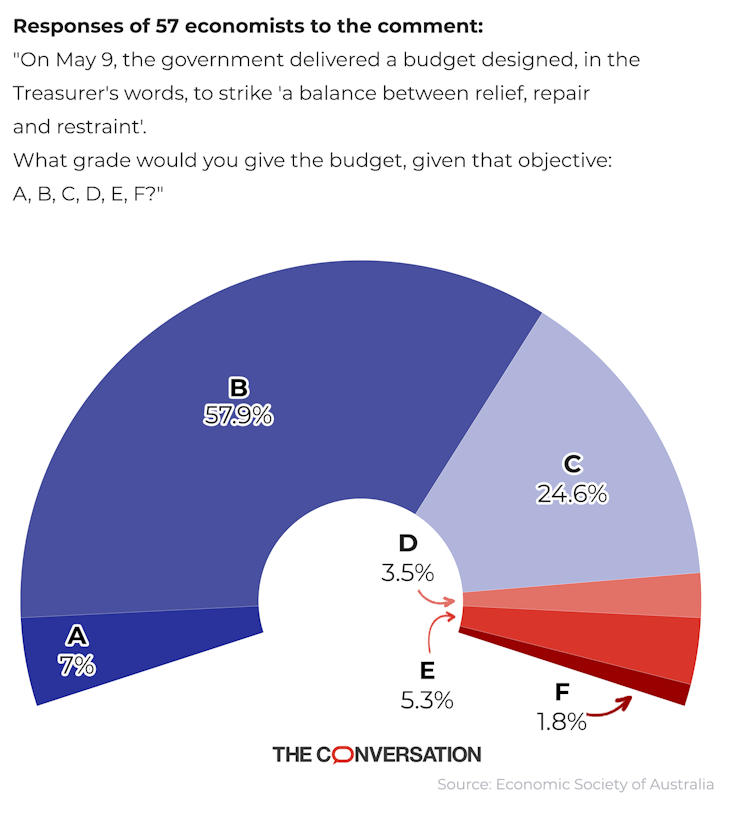
Asked to grade Jim Chalmers’ second budget on his own criteria of delivering “relief, repair and restraint”, most of the 57 leading economists surveyed by the Economic Society of Australia and The Conversation give it top marks.
On a grading scale of A to F, 37 of the 57 economists – almost two-thirds – gave the budget an A or a B.
The proportion giving the budget top marks is far higher than for the COVID-era budgets of his Liberal predecessor, Josh Frydenberg, which attracted top marks from 41% and 37% of the experts surveyed.
The economists chosen to take part in the survey have been recognised by their peers as Australia’s leaders in fields including macroeconomics, economic modelling, housing and budget policy.
Among those surveyed are a former head of the Department of Finance, a former member of the Reserve Bank board, and former Treasury, International Monetary Fund and Organisation for Economic Cooperation and Development officials.
Only one of the 57 surveyed gave the budget the lowest possible mark of F, and only three awarded it an E.
Ten of the experts qualified their approval by saying the budget should have done more to help vulnerable Australians suffering from higher rents and energy prices, including – but not limited to – Australians on JobSeeker.
Consultant Nicki Hutley said even the promise of a staged increase in JobSeeker would have been better than “the miserly increase given”.
Few of those surveyed said they would have preferred a tougher budget. Some, including economist Saul Eslake, warned the economic growth forecasts were so weak (1.5% for 2023-24) that a budget that took money out of the economy might have increased the risk of a recession.
The budget saved 82% of the revenue upgrades that had come from better-than-expected jobs and commodity price growth. Economist Rana Roy said if the budget had tried to save 100% of the revisions or more, it could well have triggered a recession or the first signs of it, and a reversal of the measures.
“A tough policy that is unsustainable is not actually tough,” he said, referring to the fate of the measures introduced by Treasurer Joe Hockey in the Abbott government’s first budget in 2014, many of which were abandoned or modified.
Other criticisms of the budget were that it failed to wind back the high-end Stage 3 tax cuts due mid next year (seven panellists’ criticised); that it was less generous to wage earners than those on benefits (two panellists) and that it offered little to address climate change (four panellists).
Former Paris-based OECD director Adrian Blundell-Wignall said the budget was “short on policies to prevent climate change and long on policies to help people deal with it”. Some of the profits that had made the budget strong came from exporting fossil fuels, the emissions of which are not counted in Australia’s totals.
Ken Clements of the University of Western Australia said the entire budget process needed to change. Decisions about defence, aged care, resource taxation and hundreds of other issues were all announced at once. A staggered approach might lead to better decisions and a better-performing economy.
Disagreement on inflation
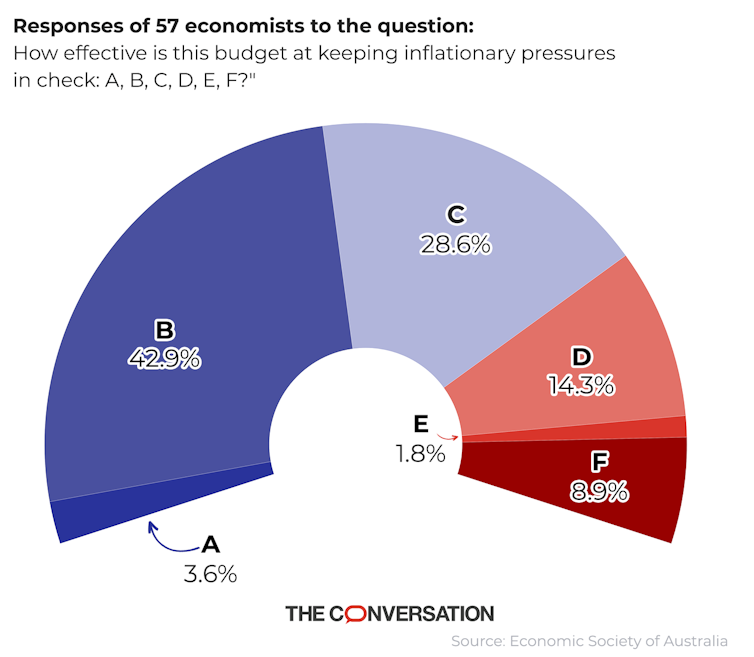
The economists were less generous in their assessment of the budget as a tool to fight inflation, with fewer than half (46%) awarding the budget an A or a B on its ability to keep inflationary pressures in check.
More than 10% gave the budget the lowest possible marks of an E or F.
Four of the economists flatly rejected the treasurer’s assertion that greater subsidies for rents, energy, prescriptions and doctors visits would dent inflation.
Blundell-Wignal said putting cash into the hands of households had been the main cause of the surge in inflation worldwide.
James Morley of The University of Sydney said while spending to reduce power bills might make one or two quarters of the consumer price index look better, it would give consumers more money to spend spend and push up other prices.
Richard Holden said anyone who didn’t think growth in spending of 0.9% of GDP was inflationary was “off their rocker”. It was enough to make the Reserve Bank push up interest rates by 0.25 percentage points more than it would have.
The Grattan Institute’s Danielle Wood countered that the spending was likely to boost inflation by just 0.1%.
The budget has inflation falling from 7% to 6% by the middle of this year, and to 3.25% by the middle of next year.
Leonora Risse and Flavio Menezes argued that debate about whether the cost of living relief would slow the decline in inflation was misguided.
“Electricity rebates and JobSeeker increases are inflationary in the same way as wage increases,” Menezes said. “Yet no one suggests that we should not increase wages at all to alleviate inflation.”
Risse said rent still had to be paid and basics still had to be bought. If people couldn’t pay they would skip meals, forgo heating during winter, and lose the stability of a safe place to call home, damaging the economy in more costly ways.
Treasurers needed to consider more than a narrow definition of economics.
Individual responses. Click to open:
Peter Martin does not work for, consult, own shares in or receive funding from any company or organization that would benefit from this article, and has disclosed no relevant affiliations beyond their academic appointment.
The Labor government’s Family Law Amendment Bill 2023 is making its way quietly through Australia’s federal parliament. It will become one of the most important laws passed this year.
It proposes to overhaul the family law system to make it “safer and simpler for separating families to navigate, and ensure the best interests of children are placed at its centre”.
We should celebrate the fact this bill is passing through parliament. It shows the government has responded to insistent calls for change to protect families.
But here’s why it doesn’t go far enough in addressing family violence.
What’s the bill for?
The bill will make important changes to the rules that govern parenting arrangements after separation.
It will remove the presumption of “equal shared parental responsibility”. Under the current law, this presumption means both parents have a role in making major, long-term decisions about their children.
However, it’s often misinterpreted. Many people believe it means parents are entitled to equal time with their children, regardless of domestic and family violence or abuse.
This bill will finally make it clear that equal time isn’t always appropriate or safe for families with a history of abuse.
The problem of family violence
The grim reality is that family violence is the norm, not the exception in family law. Recent data shows well over half of cases before the family court involve allegations of family violence against children or one parent.
Separation often doesn’t mean an end to the violence, but more harm and control, especially at contact changeover times for children or during the court process.
Helen Politis, a victim-survivor of abuse and veteran of the family law system explains what this meant for her:
The reign of chaos my children and I experienced prior to separation escalated post separation. Even worse was that this damaging behaviour was inadvertently enabled, legitimised, perpetuated and, I fear, normalised for my children.
Victim-survivors face a common belief from family law professionals that children need a relationship with their father, no matter the abuse they have suffered. As Helen explains:
Despite the overwhelming evidence of continued abuse and countless examples of the ways in which my children were being used as pawns, my own lawyers denied my situation. Routinely my desperate pleas to my lawyers were met with dismissive responses such as “it takes two to tango” and “you can’t clap with one hand”.
This is even worse when the system itself is deliberately used by perpetrators to control and intimidate victim-survivors. Research in Australia and the United Kingdom demonstrates this “legal systems abuse” is common in family law.
For Helen, the legal system was a core component of family violence:
Being caught in the family law system felt very dangerous. I was in an impossible situation, with no way out and no way of protecting my children.
What needs to be done?
This bill makes important progress, but there are two main reasons why it doesn’t go far enough.
It must allow histories of violence
First, the bill needs to be stronger in recognising where family violence has occurred.
In the bill, there will be six principles to help judges, lawyers and parents decide what arrangements would be in children’s best interests. The bill includes reference to “safety” as one of these six principles, but at the same time proposes to remove a reference in the current law to a history of violence in considering the best interests of children.
Simplification of the law shouldn’t come at the cost of harm. As family law expert Zoe Rathus from Griffith University explains:
Talking about safety is talking about the future. Talking about violence is talking about the past – and talking about the past is critical to women and children being able to tell their stories when they have experienced family violence.
Helen’s own lawyers advised her not to raise her experiences of past family violence in her case, for fear it would be held against her:
I believed that the family law system would provide my children with the safety and support that they rightfully deserved. What I experienced was an incredibly lengthy, frightening and financially depleting process. Family violence is what led me into the family law system, yet despite the irrefutable evidence, it was routinely ignored.
As it stands, this bill reinforces this problem. It suggests we should ignore information and evidence about past violence, and pretend it isn’t relevant to the future safety of victim-survivors or the children at the heart of these arrangements.
To address this, the bill should retain the provision that allows evidence of any family violence to be considered.
A major achievement of this bill is it will introduce a new power for judges to make orders that stop people bringing court proceedings where it would cause harm to the other family members involved.
However, it needs to go further. The bill needs to reflect global evidence and finally recognise “systems abuse” as a form of family violence.
Systems abuse could be explicitly listed as an example of family violence in the Family Law Act 1975, as recommended by a recent unpublished study by Lucy Foster from Monash University.
We believe the bill could add systems abuse into the existing definition of family violence used in law.
It’s important parliament takes this opportunity to get our family laws as strong as possible on the issue of family violence.
We support Helen in her hope for this new law:
Although too late for me and my children… I am hopeful this time we have the courage to step up and deliver a Family Law Act that does not further damage the lives of vulnerable people. Simple changes such as recognising past violence can make all the difference. The proposed changes do not seem to go far enough to address the harms inflicted on vulnerable people before the family law system, overwhelmingly women and children.
The authors would like to acknowledge Helen Politis, who coauthored this article. Helen is a workplace advisor and advocate. She works with organisations, including 1800 Respect and the Judicial College of Victoria towards ending family violence.
Becky Batagol provided advice to Zoe Daniels MP on the Family Law Amendment Bill 2023. Helen Politis provided statements and input to the solutions proposed for this story based upon her lived experience of family violence in the family law system.
Jessica Mant provided advice to Zoe Daniels MP on the Family Law Amendment Bill 2023.
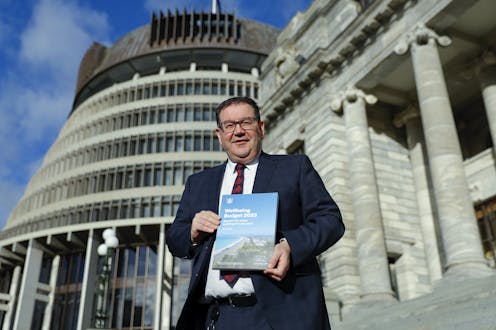
Minister of Finance Grant Robertson delivers his fifth Wellbeing Budget.Getty Images
Grant Robertson’s sixth budget was an exercise in threading various needles. Much of its substance had already been foreshadowed, and to begin with the mood music was suitably sober.
But by the time the finance minister had finished speaking, a surprising number of variously-sized rabbits had been pulled from the budget hat – some intended to have an immediate impact (the expansion of support for early childhood education and public transport) and others with a longer time horizon (investments in rail and other forms of infrastructure).
For a “no frills” budget, it was surprisingly frilly.
Today was also about drawing a narrative line under the kind of recent events – not least the Stuart Nash and Meka Whaitiri imbroglios – that have allowed the National Party to play the phrase “coalition of chaos” on high rotate.
It was also an important milestone on the road to the October 14 general election in Aotearoa New Zealand. Robertson’s job today was to convey the sense of a government which, following a challenging three years, still has focus, energy, competence and new policies.
His policy rhetoric may not have soared quite as high as some would have liked. But the announcements regarding new science hubs, support for the game development industry and the extension of electric vehicle (and other forms of) infrastructure will have placated at least some of those who like their governments to have ideas.
Robertson’s speech also contained a clear message for Māori voters (and Te Paati Māori). With additional support for Whānau Ora, Māori medium schools, Māori housing, repairs to whānau-owned homes in cyclone effected areas (read Meka Whaitiri’s seat of Ikaroa-Rāwhiti), and new spending on te reo revitalisation and Te Matatini, the finance minister made the case for Māori to stick with (or come over to) Labour.
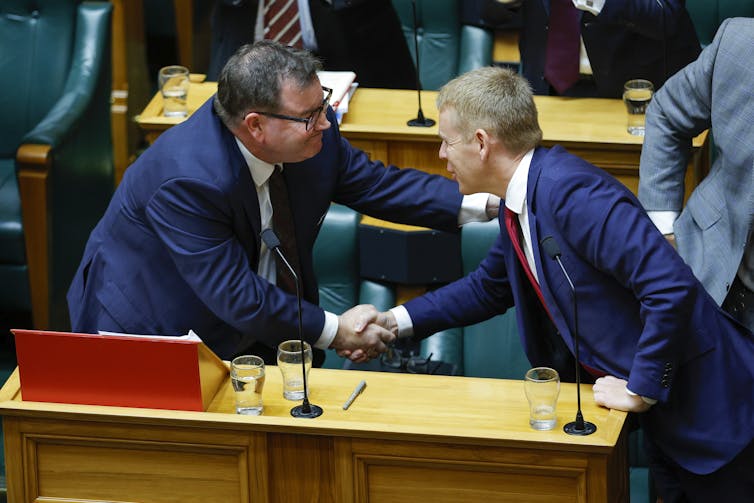
Prime Minister Chris Hipkins congratulates Minister of Finance Grant Robertson after the budget address. Hagen Hopkins/Getty Images
The budget continues the incremental, pragmatic tack taken since Chris Hipkins moved into the ninth floor of the Beehive. But this comes with risks for Labour.
The collapse of the electoral alliance Jacinda Ardern constructed in 2020 means there are fewer voters in the centre than there were three years ago. The combined projected support for parties other than Labour and National hovered around 30% in one recent poll.
The general election will be won or lost in the margins. Labour strategists will be happy enough if today’s budget helps pull a few percentage points of support their way, and strengthens the party’s hand should it be part of discussions over the formation of the next government. Robertson will be hoping he released just enough rabbits today to get them there.
Many people were looking for three things from a budget focused on “bread and butter issues”: infrastructure investment, cost of living assistance, and changes in taxes and benefits.
The government recently announced $941 million in funding for rebuilding after Cyclone Gabrielle. This was bolstered in the budget by a $6 billion commitment over three years for a National Resilience Plan.
But the government has faced a delicate balancing act between addressing the acute effects of a rising cost of living, and ensuring that any additional support is not overly inflationary. The budget included relatively modest moves to reduce cost-of-living pressures, including an extension and increase of childcare subsidies. Prescription co-payments have also been scrapped.
The government had already ruled out significant tax changes, including new taxes on wealth or capital gains. Instead, it chose to align the trustee tax rate to the top personal tax rate. This alignment tidies up the tax system a little, but is unlikely to make a huge difference to most taxpayers, or to the government’s coffers.
Perhaps most surprisingly, anticipated changes to Working for Families were not announced – these may instead be an election sweetener later this year.
From an economic perspective, the “no-frills budget” was definitely as advertised. It was conservative and non-inflationary. We can take comfort that means little risk of further increases in the price of bread or butter.
With each budget we can expect a boost in support for health. This year is no exception. There is significant new spending, with $2.6 billion allocated over two years to respond to inflationary and other cost pressures on the health system – the costs of meeting ever increasing demand, for example.
This new funding should account for some of the inflationary pressures but it’s unlikely to be adequate. Too many people are missing out on treatment and there is a significant level of unmet need in the community for secondary healthcare and other health services.
There has been no measurement of this in any systematic way and we really don’t know how many people suffering in the community are in need of an elective procedure and have been denied access or are being treated by their GP instead.
Today’s budget includes $1 billion allocated to health sector staffing and wages. This is very important but it is coming very late in the day. Funding for 500 new nurses has also been provided. This will take time to deliver on.
The big win is $618 million to eradicate pharmacy co-payments. No one should face a financial barrier to accessing prescribed medicines. It is very good that the government has followed the evidence showing cost barriers are prohibitive for many. That said, a bold government would also have allocated funds to scrap patient charges to see a GP as well.
When the government set its second set of short-term child poverty targets in 2021, it did so with an assumption of a steady year-on-year march towards its long-term ten-year targets. The child poverty projections for two key targets that can be measured show little progress.
Indeed, this is one of the first budgets since reporting began to show a short-term projected increase in one of those key measures – the proportion of children living in households with disposable income below 50% of the median income (before housing costs).
The big policy announcements in this budget, however, are ones that are likely to decrease material hardship – the third key poverty indicator, and one where projections aren’t modelled – by putting money back into the pockets of families.
The extension of 20 “free” early childhood education (ECE) hours to include children aged two is a welcome and greatly needed extension of family policy supports. So is the raised income eligibility threshold for childcare assistance for lower-income families with young children announced at the end of last year. Both bring New Zealand closer to “gold standard” approaches to early childcare policy in other developed countries.
The 2023 budget includes an extra year of subsidised childcare for two-year-olds. Getty Images
Not only is access to high-quality and affordable ECE important for child development and wellbeing, it has the potential extra impact of increasing incomes – by helping parents who want to work, but for whom high ECE costs were a barrier.
While a welcome and needed extension to policy supports for families, this is not a targeted policy aimed at the lowest income families. It will, however, still help relieve hardship for middle- and low-income families. We should expect this to show up in lower rates of material hardship in the future, as families put money previously spent on childcare into meeting their other everyday needs.
The budget reflects a highly constrained spending model that focuses almost entirely on addressing our infrastructure needs in a reactive rather than proactive way.
Our infrastructure is rapidly ageing while we face the threat of more frequent and intense storms brought on by the effects of climate change. Over the past year, major weather events have shown the cracks in many systems and the extreme costs of repairing our infrastructure.
While a “no frills” budget may sound good at a time of high inflation, many of those “frills” are likely to be necessary investments in urban services and infrastructure. The government has been clear that spending on infrastructure would focus on rebuilding and restoring infrastructure hit hard by recent extreme weather events.
To that end, the budget allocates $71 billion over the next five years towards new and existing infrastructure programmes, an additional $1 billion flood and cyclone recovery package, and $6 billion for a National Resilience Plan. But this focuses almost entirely on getting us back to where we were before the storms. It doesn’t seem to ask whether that was ever the smart place to be to begin with.
By only focusing on repairing our existing infrastructure, we’re falling behind on doing what’s necessary to ensure we’re less vulnerable to the next big storm. These measures should include: investments in innovative stormwater systems and green infrastructure, alternative local transport modes like dedicated bus lanes and busways, expanding existing rail services, and making our power network less vulnerable by burying power lines and investing in microgrids.
The budget contains $6 billion in resilience funding, targeted at the kind of infrastructure vulnerabilities exposed by cyclones Gabriel and Hale earlier this year. Getty Images
While the budget doesn’t make any bold leaps towards infrastructure resiliency, there is some good news, especially for those struggling most with the cost of living: free public transport fares for children aged five to 12, and permanent half-price fares for people under 25.
Additional funding is going to maintain public transport services and boost bus driver wages, to the Clean Car Discount Scheme, and for expanding electric vehicle charging infrastructure. All good news, as is the $100 million allocated to a new infrastructure delivery agency.
In many ways, however, the budget is an exercise in kicking the can down the road. Recent events have shown that our infrastructure faces new and unprecedented pressure. We can either spend the money now to improve it, or continue to pay increasing repair bills into the future.
Kate C. Prickett is the Director of the Roy McKenzie Centre for the Study of Families and Children, which has previously received research funding from the Ministry of Social Development and the Department of the Prime Minister and Cabinet.
Michael P. Cameron, Richard Shaw, Robin Gauld, and Timothy Welch do not work for, consult, own shares in or receive funding from any company or organization that would benefit from this article, and have disclosed no relevant affiliations beyond their academic appointment.
Minister of Finance Grant Robertson delivers his fifth Wellbeing Budget.Getty Images
Grant Robertson’s sixth budget was an exercise in threading various needles. Much of its substance had already been foreshadowed, and to begin with the mood music was suitably sober.
But by the time the finance minister had finished speaking, a surprising number of variously-sized rabbits had been pulled from the budget hat – some intended to have an immediate impact (the expansion of support for early childhood education and public transport) and others with a longer time horizon (investments in rail and other forms of infrastructure).
For a “no frills” budget, it was surprisingly frilly.
Today was also about drawing a narrative line under the kind of recent events – not least the Stuart Nash and Meka Whaitiri imbroglios – that have allowed the National Party to play the phrase “coalition of chaos” on high rotate.
It was also an important milestone on the road to the October 14 general election in Aotearoa New Zealand. Robertson’s job today was to convey the sense of a government which, following a challenging three years, still has focus, energy, competence and new policies.
His policy rhetoric may not have soared quite as high as some would have liked. But the announcements regarding new science hubs, support for the game development industry and the extension of electric vehicle (and other forms of) infrastructure will have placated at least some of those who like their governments to have ideas.
Robertson’s speech also contained a clear message for Māori voters (and Te Paati Māori). With additional support for Whānau Ora, Māori medium schools, Māori housing, repairs to whānau-owned homes in cyclone effected areas (read Meka Whaitiri’s seat of Ikaroa-Rāwhiti), and new spending on te reo revitalisation and Te Matatini, the finance minister made the case for Māori to stick with (or come over to) Labour.
Prime Minister Chris Hipkins congratulates Minister of Finance Grant Robertson after the budget address. Hagen Hopkins/Getty Images
The budget continues the incremental, pragmatic tack taken since Chris Hipkins moved into the ninth floor of the Beehive. But this comes with risks for Labour.
The collapse of the electoral alliance Jacinda Ardern constructed in 2020 means there are fewer voters in the centre than there were three years ago. The combined projected support for parties other than Labour and National hovered around 30% in one recent poll.
The general election will be won or lost in the margins. Labour strategists will be happy enough if today’s budget helps pull a few percentage points of support their way, and strengthens the party’s hand should it be part of discussions over the formation of the next government. Robertson will be hoping he released just enough rabbits today to get them there.
Many people were looking for three things from a budget focused on “bread and butter issues”: infrastructure investment, cost of living assistance, and changes in taxes and benefits.
The government recently announced $941 million in funding for rebuilding after Cyclone Gabrielle. This was bolstered in the budget by a $6 billion commitment over three years for a National Resilience Plan.
But the government has faced a delicate balancing act between addressing the acute effects of a rising cost of living, and ensuring that any additional support is not overly inflationary. The budget included relatively modest moves to reduce cost-of-living pressures, including an extension and increase of childcare subsidies. Prescription co-payments have also been scrapped.
The government had already ruled out significant tax changes, including new taxes on wealth or capital gains. Instead, it chose to align the trustee tax rate to the top personal tax rate. This alignment tidies up the tax system a little, but is unlikely to make a huge difference to most taxpayers, or to the government’s coffers.
Perhaps most surprisingly, anticipated changes to Working for Families were not announced – these may instead be an election sweetener later this year.
From an economic perspective, the “no-frills budget” was definitely as advertised. It was conservative and non-inflationary. We can take comfort that means little risk of further increases in the price of bread or butter.
With each budget we can expect a boost in support for health. This year is no exception. There is significant new spending, with $2.6 billion allocated over two years to respond to inflationary and other cost pressures on the health system – the costs of meeting ever increasing demand, for example.
This new funding should account for some of the inflationary pressures but it’s unlikely to be adequate. Too many people are missing out on treatment and there is a significant level of unmet need in the community for secondary healthcare and other health services.
There has been no measurement of this in any systematic way and we really don’t know how many people suffering in the community are in need of an elective procedure and have been denied access or are being treated by their GP instead.
Today’s budget includes $1 billion allocated to health sector staffing and wages. This is very important but it is coming very late in the day. Funding for 500 new nurses has also been provided. This will take time to deliver on.
The big win is $618 million to eradicate pharmacy co-payments. No one should face a financial barrier to accessing prescribed medicines. It is very good that the government has followed the evidence showing cost barriers are prohibitive for many. That said, a bold government would also have allocated funds to scrap patient charges to see a GP as well.
When the government set its second set of short-term child poverty targets in 2021, it did so with an assumption of a steady year-on-year march towards its long-term ten-year targets. The child poverty projections for two key targets that can be measured show little progress.
Indeed, this is one of the first budgets since reporting began to show a short-term projected increase in one of those key measures – the proportion of children living in households with disposable income below 50% of the median income (before housing costs).
The big policy announcements in this budget, however, are ones that are likely to decrease material hardship – the third key poverty indicator, and one where projections aren’t modelled – by putting money back into the pockets of families.
The extension of 20 “free” early childhood education (ECE) hours to include children aged two is a welcome and greatly needed extension of family policy supports. So is the raised income eligibility threshold for childcare assistance for lower-income families with young children announced at the end of last year. Both bring New Zealand closer to “gold standard” approaches to early childcare policy in other developed countries.
The 2023 budget includes an extra year of subsidised childcare for two-year-olds. Getty Images
Not only is access to high-quality and affordable ECE important for child development and wellbeing, it has the potential extra impact of increasing incomes – by helping parents who want to work, but for whom high ECE costs were a barrier.
While a welcome and needed extension to policy supports for families, this is not a targeted policy aimed at the lowest income families. It will, however, still help relieve hardship for middle- and low-income families. We should expect this to show up in lower rates of material hardship in the future, as families put money previously spent on childcare into meeting their other everyday needs.
The budget reflects a highly constrained spending model that focuses almost entirely on addressing our infrastructure needs in a reactive rather than proactive way.
Our infrastructure is rapidly ageing while we face the threat of more frequent and intense storms brought on by the effects of climate change. Over the past year, major weather events have shown the cracks in many systems and the extreme costs of repairing our infrastructure.
While a “no frills” budget may sound good at a time of high inflation, many of those “frills” are likely to be necessary investments in urban services and infrastructure. The government has been clear that spending on infrastructure would focus on rebuilding and restoring infrastructure hit hard by recent extreme weather events.
To that end, the budget allocates $71 billion over the next five years towards new and existing infrastructure programmes, an additional $1 billion flood and cyclone recovery package, and $6 billion for a National Resilience Plan. But this focuses almost entirely on getting us back to where we were before the storms. It doesn’t seem to ask whether that was ever the smart place to be to begin with.
By only focusing on repairing our existing infrastructure, we’re falling behind on doing what’s necessary to ensure we’re less vulnerable to the next big storm. These measures should include: investments in innovative stormwater systems and green infrastructure, alternative local transport modes like dedicated bus lanes and busways, expanding existing rail services, and making our power network less vulnerable by burying power lines and investing in microgrids.
The budget contains $6 billion in resilience funding, targeted at the kind of infrastructure vulnerabilities exposed by cyclones Gabriel and Hale earlier this year. Getty Images
While the budget doesn’t make any bold leaps towards infrastructure resiliency, there is some good news, especially for those struggling most with the cost of living: free public transport fares for children aged five to 12, and permanent half-price fares for people under 25.
Additional funding is going to maintain public transport services and boost bus driver wages, to the Clean Car Discount Scheme, and for expanding electric vehicle charging infrastructure. All good news, as is the $100 million allocated to a new infrastructure delivery agency.
In many ways, however, the budget is an exercise in kicking the can down the road. Recent events have shown that our infrastructure faces new and unprecedented pressure. We can either spend the money now to improve it, or continue to pay increasing repair bills into the future.
Kate C. Prickett is the Director of the Roy McKenzie Centre for the Study of Families and Children, which has previously received research funding from the Ministry of Social Development and the Department of the Prime Minister and Cabinet.
Michael P. Cameron, Richard Shaw, Robin Gauld, and Timothy Welch do not work for, consult, own shares in or receive funding from any company or organisation that would benefit from this article, and have disclosed no relevant affiliations beyond their academic appointment.
Source: The Conversation (Au and NZ) – By Evangeline Mantzioris, Program Director of Nutrition and Food Sciences, Accredited Practising Dietitian, University of South Australia
This week, the World Health Organization (WHO) advised that “non-sugar sweeteners should not be used as a means of achieving weight control or reducing the risk of noncommunicable diseases” such as diabetes and heart disease.
Artificial sweeteners are either natural compounds or synthesised compounds that taste sweet like sugar – and are are up to 400 times sweeter by weight – but provide no or negligible energy. As a comparison, sugar has 17kj (or four calories) per gram, so one teaspoon of sugar would have 85 kilojoules.
Several types of artificial sweeteners are used in Australia. Some are synthetic, others are extracted from foods such as monk fruit and the stevia plant.
So, what do the new WHO guidelines mean for people who have switched to artificial sweeteners for health reasons? Should they just go back to sugar?
As a practising clinical dietitian in the 1990s, I remember when artificial sweeteners began to appear in processed foods. They were promoted as a way of substituting sugar into food products that may lead to weight loss.
A can of sugar-sweetened soft drink contains on average about 500kj. Theoretically, the substitution of one sugar-sweetened can of soft drink with an artificially sweetened can of soft drink every day would reduce your weight by about 1kg per month.
But research over the past few decades shows this doesn’t hold up.
What’s the new advice based on?
The WHO has based its recommendation on a systematic review it has conducted. Its objective was to provide evidence-based guidance on the use of artificial sweeteners in weight management and for disease prevention.
Weight management is important, given obesity increases the risk of diseases such as diabetes and certain types of cancer, which are the leading cause of death globally.
The WHO’s systematic review included data from different types of studies, which give us different information:
50 were randomised controlled trials (when scientists intervene and make changes – in this case to the diet – while keeping everything else constant, to see the impact of that change)
97 were prospective cohort studies (when scientists observe a risk factor in a large group of people over a period of time to see how it impacts an outcome – without intervening or make any changes)
47 were case-control studies (another type of observational study that follows and compares two groups of otherwise matched people, aside from the risk factor of interest).
Randomised controlled trials provide us with causal data, allowing us to say the intervention led to the change we saw.
Prospective cohort and case-control only give us associations or links. We can’t prove the risk factors led to a change in the outcomes – in this case, weight – because other risk factors that scientists haven’t considered could be responsible. But they give great clues about what might be happening, particularly if we can’t do a trial because it’s unethical or unsafe to give or withhold specific treatments.
The WHO review looked at different types of studies investigating artificial sweeteners. Unsplash, CC BY
The WHO’s systematic review looked at body fatness, non-communicable diseases and death.
For body fatness, the randomised controlled trials showed those consuming more artificial sweeteners had slightly lower weight – an average of 0.71kg – than those consuming less or no artificial sweeteners.
But the cohort studies found higher intakes of artificial sweeteners were associated with a higher BMI, or body mass index (0.14 kg/m2) and a 76% increased likelihood of having obesity.
The prospective cohort studies showed for higher intakes of artificial sweetened beverages there was a 23% increase in the risk of type 2 diabetes. If artificial sweeteners were consumed as a tabletop item (that the consumer added to foods and drinks) there was a 34% increase in the risk of diabetes.
In people with diabetes, artificial sweeteners did not improve or worsen any clinical indicators used to monitor their diabetes such as fasting blood sugar or insulin levels.
Higher intakes of artificial sweeteners were associated with an increased risk of type 2 diabetes, cardiovascular disease and death in the long-term prospective observational studies that followed participants for an average of 13 years.
But artificial sweeteners were not associated with differences in overall cancer rates or premature death from cancer.
Overall, while the randomised controlled trials suggested slightly more weight loss in people who used artificial sweeteners, the observational studies found this group tended to have an increased risk of obesity and poorer health outcomes.
Does the review have any shortcomings?
The WHO’s advice has led to some criticism because the randomised controlled trials did show some weigh loss benefit to using artificial sweeteners, albeit small.
However the WHO clearly states its advice is based on the multiple research designs, not just randomised controlled trials.
Additionally, the WHO assessed the quality of the studies in the review to be of “low or very low certainty”.
This advice is not suggesting artificial sweeteners are unsafe or should be banned. The WHO’s scientific review was not about chemical or safety issues.
So are we better off having sugar instead?
The answer is no.
In 2015, the WHO released guidelines on added sugar intake to reduce the risk of excess weight and obesity. Added sugars are found in processed and ultra-processed foods and drinks such as soft drinks, fruits drinks, sports drinks, chocolate and confectionery, flavoured yoghurt and muesli bars.
It recommended people consume no more 10% of total energy intake, which is about 50 grams (ten teaspoons), of sugar per day for an average adult who needs 8,700kj a day.
The WHO’s recommendation is in line with the Australian Dietary Guidelines, which recommends no more than three serves of discretionary foods per day, if you need the extra energy. However it’s best to get extra energy from the core food groups (grains, vegetable, fruit, dairy and protein group) rather than discretionary foods.
So if artificial and sugar in drinks are not advised for weight loss, what can you drink?
Some options include water, kombucha with no added sugar, tea or coffee. Soda and mineral water flavoured with a small amount of your favourite fruit juice are good substitutes.
Milk is also a good option, particularly if you’re not currently meeting you calcium requirements.
Evangeline Mantzioris is affiliated with Alliance for Research in Nutrition, Exercise and Activity (ARENA) at the University of South Australia. Evangeline Mantzioris has received funding from the National Health and Medical Research Council, and has been appointed to the National Health and Medical Research Council Dietary Guideline Expert Committee.
French Polynesia’s anti-nuclear organisation Association 193 has criticised the latest French report about the impact of the France’s nuclear weapons tests.
France’s National Institute of Health and Medical Research evaluated additional declassified data from the tests at Moruroa Atoll and found that radiation from them had a “minimal” role in causing thyroid cancer.
The association’s president, Father Auguste Uebe-Carlson, told the AFP news agency there was a tendency by the French state and the institute to minimise the impact of the nuclear fallout.
He said the French Committee for the Compensation of Victims of Nuclear Tests refused to recognise the files of victims born after 1974, when the military carried out its last atmospheric test.
But Father Uebe-Carlson said there was an argument to also recognise cancer sufferers born since then.
According to Father Uebe-Carlson, the institute would one day have to explain why there were so many cancers in French Polynesia.
He has repeatedly accused France of refusing to recognise the impact of the tests, instead using “propaganda” to say they were clean or a “thing of the past”.
He said health problems were now being attributed to poor diet and lifestyle choices.
He said that three years ago he had carried out a survey in Mangareva, which is close to the former weapons test sites, and found that from 1966 onward all families reported cases of still-born babies.
Call for release of scientific data The president of the test veterans’ organisation Moruroa e Tatou said the release of the scientific data was not enough.
Hiro Tefaarere told Polynésie 1ère TV that it was “absolutely necessary” for his organisation to get from the French state the register of the cancer patients and cancer deaths during the testing period.
He said it was “imperative” that these files be given to Moruroa e Tatou.
Tefaarere said this research, if the state agreed to release it, would give his organisation the essential elements to consolidate the complaints which have been filed
A Territorial Assembly member, Hinamoeura Cross, who suffers from leukemia, said she was outraged that reports were still being published that were downplaying the tests’ effects.
The new Tahitian president, Moetai Brotherson, said he would take the latest report into account when he entered into discussions with the French government.
French Polynesia had for years been trying to get France to reimburse it for the costs of cancer sufferers.
$1bn to treat radiation cancers Its social security agency, CPS, said that since 1995 it had spent almost US$1 billion to treat 10,000 people suffering from cancer as the result of radiation from the tests.
In 2010, Paris recognised for the first time that the tests had had an impact on the environment and health, paving the way for compensation.
Between 1966 and 1996, France carried out almost 200 tests in the South Pacific, involving more than 100,000 military and civilian personnel.
Paris has refused to apologise for the tests, but President Emmanuel Macron said France owed “a debt” to the French Polynesian people.
This article is republished under a community partnership agreement with RNZ.
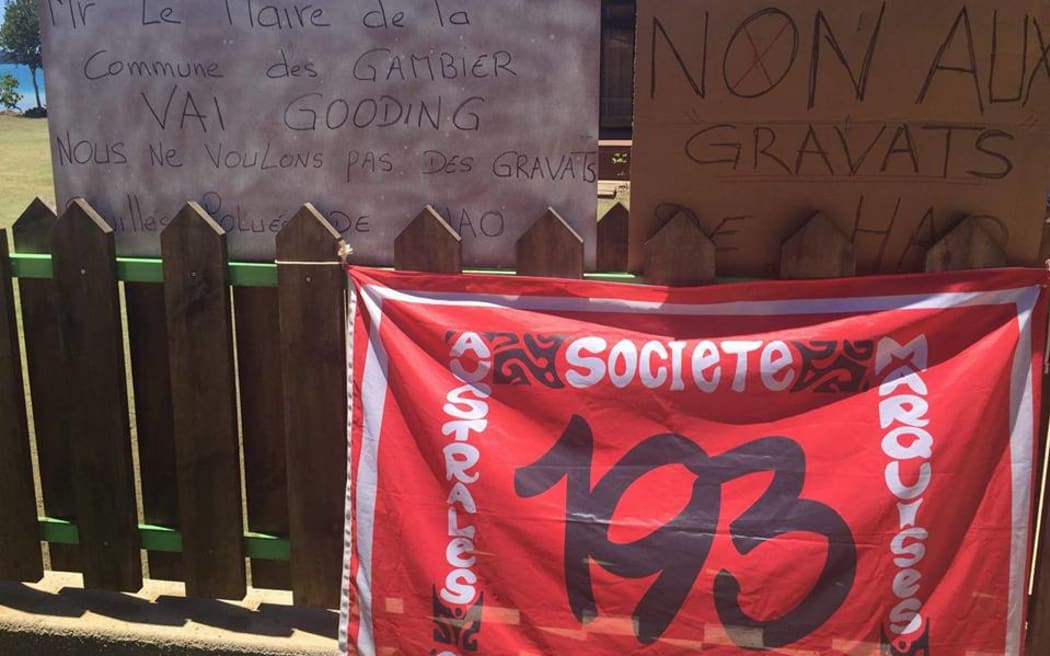
An Association 193 protest group’s banners on Mangareva Atoll in opposition to the shipment of building materials from Hao Atoll, the former French military base. Image: Association 193/FB/RNZ Pacific
The government’s planned Housing Australia Future Fund has hit a roadblock.
Legislation for the $10 billion fund – the returns on which would be used to build social and affordable housing – is being blocked by an unusual alliance of the Coalition and the Greens.
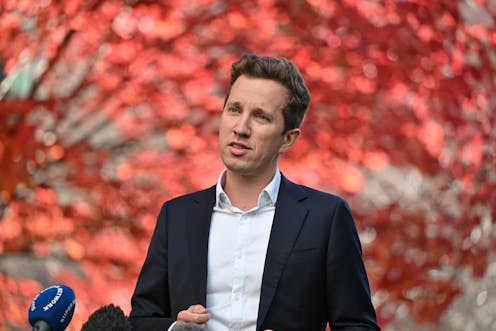
Max Chandler-Mather, who won the seat of Griffith in Brisbane from Labor’s Terri Butler, has been under personal attack by the government. Labor leader in the Senate Penny Wong accused him of ego-stroking, and the prime minister suggested he was hypocritical for wanting more social housing while opposing a developments in his electorate.
Why is a party that has championed more social and affordable housing opposing an initiative to get more housing into the market?
In this podcast, Chandler-Mather says: “Our criticisms are twofold. The first is that Labor’s proposal as it stand, doesn’t guarantee a single cent for public and affordable housing and it does nothing for renters. Now Labor’s proposal is to get $10 billion of public money and rather than invest it directly in housing, they want to put it on the stock market via the Future Fund set up by Peter Costello, and only spend some of the returns on housing. Now the problem is that last year the Future Fund lost 1.2%, so the fund would have lost $120 million last year.
“You would not fund schools or hospitals via an uncertain gamble on the stock market and we’re much better off investing money directly in building public and affordable housing every year.”
The Greens are also pushing hard for a two-year national rent freeze, with a 2% cap set on increases after. They take inspiration from Scotland, which froze rent increases and Spain, which set a 3% cap. They don’t believe the criticism that rent freezes or caps will have a negative impact on the housing crisis.
“There is actually very little evidence to suggest that capping rent increases or controlling rents affects the supply […] the other broader point to make is that some commentators often, I would argue from the property developer lobby, will say, well, if we keep rents too low, then we won’t build enough houses. And to which I say, even if that were true, it’s not sustainable to have a housing system that will only build homes where rents start going up.
“That relies on having people having to suffer economic pain for us to get homes on the ground. And we know from around the world there’s a better way to do it.”
How would the Greens’ ambitious housing policy be paid for?
“There is easily enough money in the federal budget. One of the points we’ve made is that the biggest line item in this year’s federal budget, for instance, for housing is the tax concessions for property investors by negative gearing.
“The Parliamentary Budget Office found that those tax concessions to property investors are going to, [at] the end of the next ten years, cost the government over $20 billion a year.”
Chandler-Mather doesn’t buy into the argument from the Coalition that the projected 1.5 million net migration intake over the next five years will negatively affect the housing crisis, and believes it is sustainable.
“Migration has always made this country.
“I speak to a lot of people in my line of work, people in small businesses, aged care facilities or schools or all sorts of areas that need skilled labour, that say that there’s a shortage in Australia at the moment.
“It makes sense that we invite people in this country to set up their lives here.”
“But really, as always, in Australia, often it’s not a question of enough resources, it’s a question of how those resources are distributed.
“We could be much better fairly taxing large corporations in this country and using that wealth to build the public infrastructure, transport and housing that we need.
“I think often when the migration debate appears, it often distracts, I think, from the far more important debate, which is how we distribute resources daily in this country.”
Michelle Grattan does not work for, consult, own shares in or receive funding from any company or organization that would benefit from this article, and has disclosed no relevant affiliations beyond their academic appointment.
Source: The Conversation (Au and NZ) – By Dominic O’Sullivan, Adjunct Professor, Faculty of Health and Environmental Sciences, Auckland University of Technology, and Professor of Political Science, Charles Sturt University
Readers please be advised this article discusses racism.
We’ve heard many different arguments for and against the Voice to Parliament in the lead-up to this year’s referendum. This has included some media and politicians drawing comparisons between the Voice and South Africa’s apartheid regime.
Cory Bernardi, a Sky News commentator, argued, for instance, that by implementing the Voice, “we’re effectively announcing an apartheid-type state, where some citizens have more legal rights or more rights in general than others”.
As legal scholar Bede Harris has pointed out, it’s quite clear Bernardi doesn’t understand apartheid. He said,
How the Voice could be described as creating such a system is unfathomable.
Comparisons to apartheid
Apartheid was a system of racial segregation implemented by the South African government to control and restrict the lives of the non-white populations, and to stop them from voting.
During apartheid, non-white people could not freely visit the same beaches, live in the same neighbourhoods, attend the same schools or queue in the same lines as white people. My wife recalls her white parents being questioned by police after visiting the home of a Black colleague.
The proposed Voice will ensure First Nations peoples have their views heard by parliament. It won’t have the power to stop people swimming at the same beaches or living, studying or shopping together. It won’t stop interracial marriages as the apartheid regime did. It doesn’t give anybody extra political rights.
It simply provides First Nations people, who have previously had no say in developing the country’s system of government, with an opportunity to participate in a way that many say is meaningful and respectful.
Apartheid and the Voice are polar opposites. The Voice is a path towards democratic participation, while apartheid eliminated any opportunity for this.
Evoking emotional responses, like Bernardi attempted to do, can inspire people to quickly align with a political cause that moderation and reason might not encourage. This means opinions may be formed from limited understanding and misinformation.
Misinformation doesn’t stop at apartheid comparisons
The Institute of Public Affairs, a conservative lobby group, has published a “research” paper claiming the Voice would be like New Zealand’s Waitangi Tribunal and be able to veto decisions of the parliament.
The truth is the tribunal is not a “Maori Voice to Parliament”. It can’t veto parliament.
The Waitangi Tribunal is a permanent commission of inquiry. It is chaired by a judge and has Maori and non-Maori membership. Its job is to investigate alleged breaches of the Treaty of Waitangi.
The tribunal’s task is an independent search for truth. When it upholds a claim, its recommended remedies become the subject of political negotiation between government and claimants.
The Voice in Australia would make representations to parliament. This is also not a veto. A veto is to stop parliament making a law.
Unlike the apartheid and Waitangi arguments, many objections to the Voice are grounded in fact.
Making representations to parliament and the government is a standard and necessary democratic practice. There are already many ways of doing this, but in the judgement of the First Nations’ people who developed the Voice proposal, a constitutionally enshrined Voice would be a better way of making these representations.
Many people disagree with this judgement. The National Party argues a Voice won’t actually improve people’s lives.
Independent Senator Lidia Thorpe says she speaks for a Black Sovereignty movement when she advocates for a treaty to come first. The argument is that without a treaty, the system of government isn’t morally legitimate.
Other people support the Voice in principle but think it will have too much power; others think it won’t have enough.
Thinking about honest differences of opinion helps us to understand and critique a proposal for what it is, rather than what it is not. Our vote then stands a better chance of reflecting what we really think.
Lies can mask people’s real reasons for holding a particular point of view. When people’s true reasons can’t be scrutinised and tested, it prevents an honest exchange of ideas. Collective wisdom can’t emerge, and the final decision doesn’t demonstrate each voter’s full reflection on other perspectives.
Altering the Constitution is very serious, and deliberately difficult to do. Whatever the referendum’s outcome, confidence in our collective judgement is more likely when truth and reason inform our debate.
In my recently published book, Indigeneity, Culture and the UN Sustainable Development Goals, I argue the Voice could contribute to a more just and democratic system of government through ensuring decision-making is informed by what First Nations’ people want and why. Informed, also, by deep knowledge of what works and why.
People may agree or disagree. But one thing is clear: deliberate misinformation doesn’t make a counter argument. It diminishes democracy.
Dominic O’Sullivan does not work for, consult, own shares in or receive funding from any company or organisation that would benefit from this article, and has disclosed no relevant affiliations beyond their academic appointment.
Should poorer countries be compensated for climate disasters that aren’t their own making?
The concept of “loss and damage” was one of the most contentious raised at the United Nations COP27 climate summit in Egypt in November 2022. After difficult diplomatic discussions, it was agreed that a loss and damage fund should be established to compensate countries that are most vulnerable to the impacts of climate change. It’s a major step forward, but exactly how it will work remains to be seen.
In our final episode of Fear & Wonder, we discuss the Intergovernmental Panel on Climate Change’s (IPCC) final Synthesis Report and how its scientific findings influence global climate policy negotiations. We explore how the lived experience of climate change is already affecting human health in West Africa.
We meet Senegalese meteorologist and IPCC author Aïda Diongue-Niang, who explains how African nations are already highly vulnerable to the impacts of climate change. We follow her real-time updates from COP27 and the gruelling final approval session of the Synthesis Report. Her behind-the-scenes account reveals the dedication and determination of scientists involved in the IPCC process.
We hear from Mauritanian public health expert and IPCC author Guéladio Cissé, who details how more intense rainfall is already increasing the risk of water-borne and vector-borne diseases. So why is only a tiny fraction of climate adaptation funding devoted to health, and what needs to change?
Finally, we recap what we’ve learned throughout this podcast. We reflect on how the event that sparked its creation – the Australian Black Summer bushfires of 2019–20 – has inspired survivors to fight for climate action.
To listen and subscribe, click here, or click the icon for your favourite podcast app in the graphic above.
Fear and Wonder is sponsored by the Climate Council, an independent, evidence-based organisation working on climate science, impacts and solutions.
Dr Joelle Gergis has received funding from the Australian Research Council and the Australian Government’s Department of Industry, Science, Energy and Resources in the past. She currently receives funding from the Australian National University.
Michael Green does not work for, consult, own shares in or receive funding from any company or organisation that would benefit from this article, and has disclosed no relevant affiliations beyond their academic appointment.
Source: The Conversation (Au and NZ) – By Paola Magni, Adjunct Research fellow, The University of Western Australia; Research Fellow, Harry Butler Institute, Senior Lecturer in Forensic Science, Murdoch University
While the iconic “crime scene – do not cross” tape may be a familiar sight on land, it’s a different story when it comes to water.
With no way to tape off an entire lake or a slice of the vast expanse of the ocean, investigations in, under or beside the water present a unique challenge. This work is not just due to suspicious criminal activity, but also search and recovery operations or accidents.
Investigators called to such scenes must rely on specialised techniques and technology to gather evidence and piece together what happened. Sometimes they are supported by experts in the niche and multidisciplinary field of “aquatic forensics”, such as our research team.
The sheer size of a body of water can make it difficult to know where to start, but there are always four main questions to drive the investigators’ work. Who are the victims? How did they die? When did the death occur? And where did it happen?
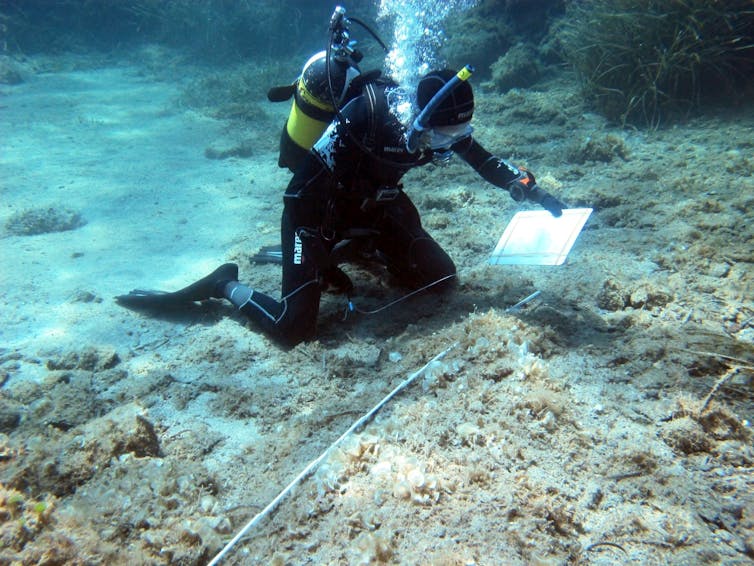
Sometimes the first issue is finding the deceased person. Depending on the body of water and the circumstances surrounding the case, teams of divers can be dispatched to conduct a search.
Since investigators and pathologists usually do not experience the actual scene and will see the victim only when retrieved, underwater images and memories provided by divers become essential.
However, the safety of the divers always comes first. Divers can operate only for a certain period in an underwater scenario. This is determined by factors such as depth, water temperature, currents and waves that affect the divers’ breathing rate and air consumption from the tank.
Narrowing the search area is a pivotal fist step. Specially trained dogs can detect the scent of submerged human remains from the surface, if it’s not too deep. Technology can help, too – satellites and oceanographic data can help locate floating objects, and sonar can scan the water to detect any objects at the bottom, including a body.
Divers can then take what’s known as a visual record of the scene directly, or they can use remotely operated vehicles equipped with cameras. It is also important to use a reference photo scale – in the water objects appear up to 25% closer and 33% larger than their real size.
Despite the best efforts, depth, distance from the target and clarity of the water can affect the quality of the images. Some underwater areas have zero visibility, making the investigation more challenging and potentially unsafe.
For searches conducted underwater, such as in this Manchester city canal in 2019, police can employ specially trained divers. Shutterstock
Identifying and retrieving the body
Sometimes, identifying the victim is straightforward, for example in cases with witnesses present. However, bodies can be unrecognisable after a time spent underwater. Being submerged causes several changes due to temperature, currents, and interactions with animals and obstacles.
For example, cold and wet environments like the ocean cause fat tissue to turn into a waxy substance (adipocere) in less than 40 days. Limb loss is also common – investigators might have to identify a body based only on some parts. If a body loses a foot, it may be found floating thanks to the buoyancy offered by shoes.
As with cases on dry ground, clothing and personal items such as wallets and jewellery can assist the identification process. To avoid losing personal items during recovery, amphibious body bags have been developed. They allow body collection directly from the water, retaining associated objects but allowing the water to drain away.
Drowned or already dead?
One of the main questions is if the death happened in the water or elsewhere, with the body dumped afterwards. There are an estimated 236,000 annual drowning deaths worldwide.
Another tool is the diatom test – it compares microscopic algae found in the tissues of the body with the one present in the water where the body was recovered. For highly decomposed bodies, new molecular, artificial intelligence and “virtopsy” (virtual autopsy) technologies are fast developing.
Sometimes drowning is the mechanism of death, but there may have been other underlying causes – such as a cramp, a heart attack, drugs or an accident of some sort. It takes careful interpretation to discern these.
Photogrammetric surveys developed to map submerged archaeological sites, and underwater drones equipped with multiple sensors, special lights and acoustic imaging technologies to locate submerged targets, can help to create a 3D image of the underwater area. This helps to distinguish large items, such as shipwrecks and vehicles, bodies or bones, and pieces of clothing.
Unlike the standardised methods on dry land, procedures in underwater criminal scenarios are still being developed. Forensic scientists are also borrowing the knowledge, techniques and tools from other fields, such as underwater archaeology and marine biology – but without the crime scene tape.
The authors do not work for, consult, own shares in or receive funding from any company or organisation that would benefit from this article, and have disclosed no relevant affiliations beyond their academic appointment.
New Zealand Parliament Buildings, Wellington, New Zealand.
New Zealand Politics Daily is a collation of the most prominent issues being discussed in New Zealand. It is edited by Dr Bryce Edwards of The Democracy Project.
Devastating floods have hit community after community on Australia’s eastern seaboard over the last three years. Weather systems were dynamic and difficult to forecast.
What made the impact worse still was the fact that many of our flood gauges were unreliable or broken. In some cases, residents simply didn’t know the extent of the floodwaters rushing toward them.
As a resident of a flood-hit New South Wales town told us:
During that second flood we knew that gauge was wrong. It was wrong by metres. On the night of the February flood, very few people could sleep […] I remember looking at [warnings] and I’m thinking ‘What? How can that be?’
New federal funding for a better flood warning network is wise. But flood gauges are only one part of a total warning system. Social factors also require consideration.
Gathering better data to improve flood warnings
Public money (A$236 million) will be used to upgrade or purchase flood gauges for high priority catchments, replacing infrastructure found to be unreliable or broken.
We’ve known there were problems with our flood warning infrastructure for years.
But these issues came to a head during the widespread flooding in the first half of 2022 when communities were misled, confused or wrong-footed by unreliable information. Subsequent inquiries in New South Wales and Queensland found major issues and recommended the federal government take responsibility for building and maintaining the flood warning network.
We’ve long known that early warning systems boost public safety and reduce deaths. They cut financial losses and make possible earlier planning and responses by emergency services.
But by themselves, they are not enough. Some people will leave when warned, but others due to a range of social and economic factors, are either unable to leave or choose to stay. That’s why we need social supports alongside warning systems.
In our recent research, we interviewed almost 200 NSW and Queensland residents affected by floods in early to mid 2022 and surveyed 430 others.
People told us they relied heavily on river gauge data – when it was available and working. But when the gauges were broken or giving incorrect data, residents were left worried and confused.
Longtime residents in low-lying rural areas and in some upper catchment areas often had a good understanding of how rain and stormwater behaved in their landscape and how that translated to flooding. When they shared this knowledge on community social media pages, it was highly valued by many other residents, who used it to help interpret gauge data and river heights.
What matters is how people respond to warnings
It’s clearly important to give people warning about the size and timing of a flood which may affect them. Successful warnings are those which are accurate and timely, relevant to the specific area, motivate people to evacuate, if need be, and lead to reduced loss of life and property.
But even when warnings are received in time, research shows they’re unlikely to actually motivate safe, timely evacuation by most of the people at risk.
Our own research found over 60% of surveyed residents did not evacuate.
Why did people stay? It wasn’t for lack of timely warnings, for the most part.
For some, staying was the plan. Many had stayed in previous floods and had been safe. Others stayed to lift up their belongings, protect against looting and start the clean-up quickly after the waters receded. Some stayed to look after less mobile dependants, care for pets and livestock, or because they had nowhere else to go.
After the 2017 NSW floods, researchers found a similar approach of sheltering in place in some locations.
The problem is, previous floods are now no longer a reliable guide. Climate change is leading to more intense rain and more extreme floods. Choosing to stay because you were safe last time is no guarantee.
We need better supports
Given that many people choose to stay, we must do more to help people make the decision to evacuate and ensure those who are determined to shelter, or have no other choice, are better prepared to do so safely.
Each of us has a social context which greatly shapes our ability to act on information. Life might be complex or chaotic due to precarious housing, limited finances, poor health, caring responsibilities, or a lack of community connections. These social factors may make any of us reluctant – or simply unable – to act on warnings and prepare or evacuate.
For instance, one interviewee told us:
I am reliant on support workers to access the community, and due to the rising waters in outer suburbs the supports I had were unable to physically get to me.
Another said:
I was pregnant at the time and couldn’t do the heavy lifting required. [I] didn’t have the vehicle space to load things to remove from the property.
Warnings are not a guarantee of safety
Yes, it’s good the federal government is introducing a better way to monitor floods and warn people who live near affected creeks and rivers. But providing a warning is only part of the puzzle. We need many solutions that work together.
Sometimes warnings don’t get through. Sometimes disasters escalate rapidly. Sometimes people can’t or won’t take action. Warnings alone do not produce community resilience, but they can help.
As we brace for a future where natural hazards intensify, we need more resilience.
For floods, that means focusing on community connections, education, health and livelihoods, as well as land use planning and building design that reduces exposure to flood risk in the first place. We also need technical solutions like warning systems. Together, this will lead to a more resilient future.
The authors would like to acknowledge their fellow researchers on this project: Professor Kim Johnston, Associate Professor Anne Lane, Dr Barbara Ryan, Dr Harriet Narwal, Madeleine Miller, Helga Simon, and Dipika Dabas.
Mel Taylor receives funding from Natural Hazards Research Australia
Fiona Miller receives funding from Natural Hazards Research Australia.
Kat Haynes has received funding from the Bushfire and Natural Hazard CRC. Kat is the Natural Hazards Research Australia Node Research for NSW, ACT and SA.
Adam Makarenko/W. M. Keck Observatory, Author provided
When stars like our Sun die, they tend to go out with a whimper and not a bang – unless they happen to be part of a binary (two) star system that could give rise to a supernova explosion.
Now, for the first time, astronomers have spotted the radio signature of just such an event in a galaxy more than 400 million light-years away. The finding, published today in Nature, holds tantalising clues as to what the companion star must have been like.
An explosive star death
As stars up to eight times heavier than our Sun start to run out of nuclear fuel in their core, they puff off their outer layers. This process gives rise to the colourful clouds of gas misleadingly known as planetary nebulae, and leaves behind a dense, compact hot core known as a white dwarf.
Our own Sun will undergo this transition in 5 billion years or so, then slowly cool and fade away. However, if a white dwarf somehow puts on weight, a self-destruct mechanism kicks in when it gets heavier than about 1.4 times the mass of our Sun. The subsequent thermonuclear detonation destroys the star in a distinctive kind of explosion called a Type Ia supernova.
But where would the extra mass come from to fuel such a bang?
We used to think it could be gas being stripped off a bigger companion star in a close orbit. But stars tend to be messy eaters, spilling gas everywhere. A supernova explosion would shock any spilt gas and make it glow at radio wavelengths. Despite decades of searching however, not a single young Type Ia supernova has ever been detected with radio telescopes.
Instead, we began to think Type Ia supernovae must be pairs of white dwarfs spiralling inwards and merging together in a relatively clean fashion, leaving no gas to shock – and no radio signal.
Supernova 2020eyj was discovered by a telescope in Hawai’i on March 23 2020. For the first seven weeks or so it behaved in much the same way as any other Type Ia supernova.
But for the next five months, it stopped fading in brightness. Around the same time, it began to show features indicating gas that was unusually rich in helium. We began to suspect Supernova 2020eyj belonged to a rare subclass of Type Ia supernovae in which the blast wave, moving at more than 10,000 kilometres per second, sweeps past gas that could only have been stripped off the outer layers of a surviving companion star.
To our great surprise, we had the first-ever clear detection of an “infant” Type Ia supernova at radio wavelengths, confirmed by a second observation some five months later. Could this be the “smoking gun” that not all Type Ia supernovae are caused by the merger of two white dwarfs?
Patience pays off
One of the more remarkable properties of Type Ia supernovae is that they all seem to reach pretty much the same peak brightness. This is consistent with them all having reached a similar critical mass before exploding.
This very attribute allowed astronomer Brian Schmidt and colleagues to reach their Nobel Prize-winning conclusion in the late 1990s: that the universe’s expansion since the Big Bang is not slowing down under gravity (as everyone had expected), but is accelerating due to the effects of what we now call dark energy.
So, Type Ia supernovae are important cosmic objects, and the fact we still don’t know exactly how and when these stellar explosions occur, or what makes them so consistent, has been a worry to astronomers.
In particular, if pairs of merging white dwarfs can range in total mass up to almost three times the mass of our Sun, why should they all release about the same amount of energy?
Our hypothesis (and radio confirmation) that Supernova 2020eyj occurred when enough helium gas was stripped off the companion star and onto the surface of the white dwarf to push it just over the mass limit, provides a natural explanation for this consistency.
The question now is why we haven’t seen this radio signal before in any other Type Ia supernova. Perhaps we tried to detect them too soon after the explosion, and gave up too easily. Or maybe not all companion stars are as helium-rich and prodigious in shedding their gaseous outer layers.
But as our study has shown, patience and persistence sometimes pays off in ways we never expected, allowing us to hear the dying whispers of a distant star.
Stuart Ryder is affiliated with not-for-profit Astronomy Australia Ltd. AAL does not sponsor or endorse any of the research activities conducted under the auspices of his Adjunct role with Macquarie University, nor does it have any active connection with any of the telescopes used in this paper.
Erik Kool’s research is supported through funding from the Vetenskapsrådet, the Swedish Research Council.
Source: The Conversation (Au and NZ) – By Greg Barton, Chair in Global Islamic Politics, Alfred Deakin Institute for Citizenship and Globalisation, Deakin University
James Ross/AAP
Hate and prejudice hold no place in our community and we will not tolerate any offensive and abhorrent anti-social behaviour.
This statement by a Victoria Police spokeswoman could not have been clearer. Hate and prejudice are most certainly not welcome in one of the world’s most diverse and successful multicultural communities.
She was referring to a small group of neo-Nazis who performed the Sieg Heil Nazi salute on the steps of the Victorian parliament last weekend. Just two months earlier, the same act was performed by a group attending a rally by visiting UK anti-transgender activist Posie Parker.
Thankfully, Australian police are not in the business of prosecuting bad ideas. Hate is not illegal, no matter how abhorrent. But offensive antisocial behaviour is a different matter. Hate speech, and other actions inciting hate, are rightly subject to policing and prosecution.
Arrests were made but none for the act of performing the Nazi salute – it might be outrageous but it is not yet clearly illegal. But that will likely soon change with the performance of the Seig Heil joining the use of the Nazi swastika as proscribed hate speech.
No easy fix
But is this the best way of dealing with the neo-Nazi problem?
Two outrageous protests in two months would suggest something has to change. Not everyone agrees, even among the most well-informed analysts and practitioners.
Perhaps the greatest risk of banning Nazi symbols is that it will only serve to amplify the groups’ message and draw attention to their hateful cause. After all, by opportunistically bandwagoning onto the moral panic against the transgender community, and against migration, the National Socialist Network, a tiny community with scant support, is desperately seeking to amplify the message and their appeal. Prosecuting them for symbolic action risks giving them the very thing they so desperately want: attention.
The Australian Security and Intelligence Organisation (ASIO) argues neo-Nazis should be deprived of using extremist symbols to “raise their profile and to recruit new members”. The organisation believes banning the Nazi salute and other Nazi symbols “would assist law enforcement in early intervention”. The agency explains:
Extremist insignia [are] an effective propaganda tool because they are easy to remember and understand. They also can transcend language, cultural and ethnic divides; creating, distributing and understanding them is not limited to a select few or one cultural or language group.
Prosecuting bad behaviour, however necessary, does not automatically diminish the virulence of bad ideas. More importantly, it will not diminish the appeal and vitality of malign social networks built around hateful narratives of white supremacy.
If banning Nazi symbols were in itself efficacious, Germany would not be facing a rapidly growing problem of neo-Nazi activism, including within its uniformed services.
A global problem
The problem of what to do about neo-Nazis is far more difficult than it first appears. The neo-Nazi groups in Australia might be small in absolute numbers but they are well integrated into global networks. Not only do they draw on this international support, they leverage their disproportionate profile in Australia to generate content.
Every act of angry provocation and confrontation is recorded, packaged and framed, for outsized impact within North American networks. Consequently, what appears to be a pathetic and ineffectual protest in Australia results in applause and recognition for those involved.
This international feedback loop means neo-Nazi networks in Australia are resilient and energised.
More importantly, though, the explicit neo-Nazi element is just one small part of a much larger problem. Rather than viewing groups like the National Socialist Network in isolation, it is better to understand it as just one component, albeit a particularly provocative and visible one, of a much larger problem.
For while relatively few Australians are prepared to identify themselves as being neo-Nazi, or even to see themselves as being connected in any way to National Socialist ideas, there are many more for whom the central narrative of “white Christian Australians” being replaced by outsiders and “others” – Asians, Muslims, Jews and even First Nations Australians – holds strong emotional and intuitive appeal.
Not only does this dominate the public statements of renegade senators and independent members of parliament, it seeps into the broader body politic. When Opposition Leader Peter Dutton doubled down on stirring panic about creeping change such as the Voice to Parliament referendum and high levels of migration, he was channelling the “great replacement” ideas that were first deployed by Pauline Hanson and John Howard in the 2001 election campaign.
Consequently, there is a leakage between hard-line white supremacists and mainstream politicians seeking the support of anxious citizens who fear the ground beneath their feet is giving way.
This was a rising problem long before the COVID-19 pandemic lockdowns. But the recent spread of conspiracy theories, including curious recent American imports like QAnon that repackage old narratives of fear and loathing, have brought it to the fore.
Neo-Nazis exist in an ecosystem of hate. They are separate from, but interact with, religious fundamentalists, Christian Nationalists, Sovereign Citizens, ardent believers in conspiracy theories and grand narratives of victimhood.
Not all are consumed by hate, nor do all belong to the extreme right. But most are anxious and desperately searching for something to hang on to, and a community to belong to. In marching in the streets, or gatecrashing local government meetings, they find a sense of purpose and camaraderie.
In Europe, the problem of the extreme right began to accelerate in the wake of German reunification. And in America, it picked up speed during the Trump presidency. The pandemic experience and current economic hardships linked to inflation and the price of housing are serving to further amplify these developments.
At the same time, social media provide the means to link people around the world and across social strata with an ease and efficiency not seen before.
If the challenge was merely one of dealing with self-declared neo-Nazis, it would be difficult but remain a discrete and isolated problem. But this is not a discrete and isolated problem. It is linked to age-old problems of racism and structural inequality, and more recent problems with the rise of authoritarian populism. All this is then amplified and accelerated by technology to the point where democracy itself is threatened.
Fortunately, Australia is well behind the problems faced in Hungary or Turkey, where authoritarian populism is an existential threat to democracy and open society. Or even the problems faced in Italy, Germany, France and across Europe.
Nor is Australian democracy facing the immediate structural and cultural problems threatening American democracy.
I don’t have to tell you that fearless progress towards every act of justice often meets ferocious pushback from the oldest and most sinister of forces.
That’s because hate never goes away. But on the best days, enough of us have the guts and the hearts to stand up for the best in us […] to choose love over hate, unity over disunion, progress over retreat. To stand up against the poison of white supremacy.
The immediate danger in responding to neo-Nazis in Australia is that we inadvertently give them a stage and amplify their message.
But the bigger danger is that we fail to see the wood for the trees. It is tempting to dismiss the pathetic, clownish protests as an ugly aberration, and to fail to see the broader appeal of hateful, supremacist ideas.
The neo-Nazi protests are a wake-up call. In an age in which fear turns all too quickly to loathing, we can’t afford to take the values of liberal democracy for granted.
Greg Barton receives funding from the Australian Research Council. And he is engaged in a range of projects working to understand and counter violent extremism in Australia and in Southeast Asia and Africa that are funded by the Australian government.
Whether you know about it or not, it’s likely someone you work with or manage has a mental illness. One in five Australians have experienced a mental illness in the last 12 months.
Many people stay silent about their mental illness at work. Roughly 50%–70% of employees choose not to disclose their condition. This may leave employees vulnerable, as employers can’t provide individual support without disclosure.
Over the years, many experts and commentators have suggested workers stay silent about mental illness, for fear of stigma and discrimination, and to protect their jobs.
But the evidence suggests there are often benefits to disclosing a mental health condition at work.
What does the research say?
The largest Australian study of stigma, from 2018, found employees who disclosed their mental health conditions to their employers were well supported. They reported receiving accommodations such as flexible work arrangements and time off for appointments. They also felt supported by their colleagues and managers.
Other research shows disclosure can, for some people, lead to increased social support and better mental health. Being open about a mental health condition reduces self-stigma (negative beliefs people develop about themselves due to societal stigma and discrimination), increases empowerment and facilitates a sense of power and control.
Our team conducted a randomised controlled trial involving 107 adults considering disclosing their mental health concerns at work. Participants used our newly developed online decision aid to make an informed decision about disclosing their mental health concerns to their employers. It includes seven modules to guide users to consider the potential outcomes, benefits and challenges of disclosing.
A review of the decision aid found the people who disclosed their mental health condition at work reported a reduction in symptoms of depression and stress (from severe to moderate), on average, compared to those who chose to stay silent. This finding was based on self-reported clinical diagnostic scales for depression and validated measures of stress.
The decision aid is now publicly available and free to use through the New South Wales State Insurance Regulatory Authority.
Tools are available to guide you through the pros and cons. Shutterstock
Changing the culture
Many people with mental illnesses worry disclosing their condition will result in negative consequences, such as losing their job, being passed over for promotions, or being treated unfairly by colleagues.
However, the world of work is changing. Employees are seeking jobs that prioritise mental health, with many saying they would take a pay cut for an organisation that promotes and implements measures focused on employees mental health and happiness.
People who are open about their experiences with mental ill-health can experience increased self-acceptance and feelings of connectedness. Disclosure can help people feel more understood and supported by others, which in turn can lead to greater feelings of self-worth and belonging.
Sharing their experiences helps to break down the stigma surrounding mental illness and foster a culture of openness, understanding and empathy among peers. It can also help colleagues overcome the fear of stigma.
So how can employers create safe environments for disclosure?
Managers have a huge responsibility when it comes to their employee’s mental health. According to recent research, managers have just as much impact on an employee’s mental health as their partner, and significantly more than their doctor or therapist.
Managers need to ensure they provide a safe and supportive environment in which to disclose mental ill-health. This requires knowledge and confidence. Managers can emphasise the support and resources available to employees who choose to disclose, rather than dwelling on what the staff member might lose or the potential impact on the organisation.
People who perceive their disclosure positively tend to have supportive managers. As “David” from our research told us:
Five years ago, and at the very tail-end of my career, I thought I’d confide in a boss. His first words were, ‘What can we do to help you?’ With those simple words, he instantly won my undying loyalty.
With an increasing focus on mental wellbeing at work, it’s time our mental health advocates moved away from messages to stay silent. Instead, we need to ensure all staff with mental health conditions can access much-needed workplace support and accommodations.
By creating environments where employees feel safe and supported to share their experiences, we can begin to break down the barriers to disclosure and create workplace cultures that prioritise mental health and wellbeing. For many, disclosure can be positive and we have the tools to help.
Elizabeth Stratton receives funding from State Insurance Regulatory Authority (SIRA). Elizabeth Stratton co-owns the Intellectual Property developed in READY?, however, this is a non-profit tool not to be commercialised.
Nick Glozier has received funding from ARC, movember, and SIRA. He is affiliated with WHO (and helped formulate their Guidelines on Mental Health at Work), NSW Personal Injury Commission, the NSW Centre for Work, Health and Safety Research Foundation, and the insurers IAG and TAL.
Source: The Conversation (Au and NZ) – By Sarah Bendall, Research Fellow, Gender and Women’s History Research Centre, Institute for Humanities and Social Sciences, Australian Catholic University
Netflix
The hotly anticipated prequel to the popular Bridgerton series, Queen Charlotte: A Bridgerton Story, has just been released on Netflix. The Bridgerton writers have once again taken aim at the corset in the opening sequence of the first episode.
Sitting uncomfortably in a carriage on her way to London to meet King George III, Princess Charlotte of Mecklenburg-Strelitz laments that her underpinnings (stays – the 18th-century term for corset – and hoop petticoat) are not only uncomfortable but made of “the bones of whales”. These “whalebones”, she claims, are “delicate” and “sharp” and may stab her if she makes a wrong move.
While it is true that whales died to provide one key material used in the manufacture of women’s underpinnings from the 16th through to 20th centuries, the real Princess and then Queen Charlotte, who had a keen interest in the natural world, would have understood whalebone is not actually delicate bone.
Portrait of the British queen Charlotte of Mecklenburg-Strelitz. Wikimedia
What is Whalebone?
Whalebone is the colloquial English term for a material known as baleen. Baleen is not bone. Rather, it is the name given to long hairy plates made of keratin – the same substance that makes hair, fingernails and horn – in the mouth of various species of baleen whales.
Baleen allows the whale to feed, as it traps small sea creatures such as krill in the mouth as the animal gulps and then expels water.
Baleen whales had been hunted around the world since prehistoric times. However, modern commercial whaling first began in the 16th century, when Spanish and French Basques began hunting these animals around Labrador in Newfoundland, Canada.
By the start of the 17th century, Europeans (Basques, French, English, Dutch, Germans and Portuguese, to name a few) also began to hunt baleen whales along the shorelines of Brazil and in the Arctic in Spitsbergen in Norway, and then around Greenland.
Gray whale calf with mouth open, showing baleen. Wikimedia
Whaling and fashion
Whalebone had been used in European fashion since the mid-to-late 16th century when it began to be used to structure women’s farthingales and bodies (hoop skirts and corsetry) and to stiffen men’s doublets and collars. The first references to whalebone in Britain come from the wardrobe accounts of Mary Queen of Scots and Elizabeth I. By the 18th century it was used in foundation garments, bonnets, walking sticks, parasols and even dentistry!
Corset. made of cotton, linen, silk, baleen (c. 1770-1780) National Gallery of Victoria, Melbourne
While Charlotte in the Netflix series may claim that whales died so women “could look like this” – pointing to her fashionable outfit shaped by corsets and hooped skirts – fashion was not the driving motivator for whaling during the 18th century.
The primary motivator for commercial whaling for much of its history was oil. During the 18th century, the main species of whales targeted were the Bowhead Whale and the North Atlantic Right Whale. Both species were the “right” whales to hunt as they were slow swimmers that yielded large amounts of blubber.
Once removed from the whale, strips of blubber were placed in large iron vats called tryworks, and slowly boiled until rendered into oil. Oil was used for a variety of purposes: textile manufacturing, soap-making, lubrication and, most importantly, lighting.
A bottle of sperm whale oil. Wikimedia
As commercial competition between European nations expanded and the want for oil increased, so too did the whaling industry. By the end of the 18th century, British whalers began to venture into the South Atlantic and eventually places in the Pacific such as Australia to hunt baleen whales. They also began to hunt toothed sperm whales for oil and spermaceti.
Baleen was a useful and valuable byproduct, but it was not the main motivator for the whaling industry in the 18th century. It was not until the late 19th century, when petroleum products replaced the need for oil, that whales were killed primarily for their baleen.
Oswald Brierly, Whalers off Twofold Bay, New South Wales, 1867. Wikimedia Commons
Whalebone corsets: dangerous?
Soon after the expansion of whaling, Europeans began to realise the unique properties of baleen that would make it highly valuable for centuries to come: it was strong but flexible and lightweight. It could also be moulded into various shapes with heat. Essentially, it was a natural plastic and used in ways we use modern plastic now.
Court cases from the 18th century attest to the lightness of whalebone stays and the elasticity of whalebone within them.
This is a far cry from the description given in Queen Charlotte: A Bridgerton Story. Still, just as modern underwires in bras can come loose, sometimes baleen could stick out of the top and bottom of a corset, poking women in the underarms or hips. However, these were easily fixed by women or their staymakers.
A dark piece of whalebone is visible in the top left of this stay (corset) fragment dating to the early 18th century. Metropolitan Museum of Art, New York
While film and television may continue to make us hate corsets with their emphasis on tightlacing, which was far from the everyday experience of this garment, the reality of whalebone was that it was lightweight, flexible and strong, which made it perfect for use in corsetry that not only created the fashionable shape of the time but also gave women breast and back support.
Sarah Bendall does not work for, consult, own shares in or receive funding from any company or organisation that would benefit from this article, and has disclosed no relevant affiliations beyond their academic appointment.
French Polynesia’s newly-elected President Moetai Brotherson has presented a 10-member government, which includes four women.
Brotherson has confirmed his pre-election choice of Eliane Tevahitua as Vice-President as well as Culture, Lands and Environment Minister.
Several of the ministers are new to politics, with 29-year-old Jordy Chan as Infrastructure and Transport Minister being the youngest.
Vannina Crolas, who was an official in the now ruling Tavini Huira’atira party, is the new Public Sector and Employment Minister.
Minarii Galenon, who has been the president of the Women’s Council, is the new Housing Minister.
Nahema Temarii has been made Sports Minister.
Brotherson said weeks ago he had more women than men aspiring to be ministers but as some women withdrew, he has not been able to form a government with gender parityas he had expected.
Gender parity the aim Before the election, Brotherson said he planned to have a government made up by at least half with women.
Ronny Teriipaia has been made Education Minister, and Tevaiti Pomare has become Finance Minister.
Cedric Marcadal has been made Health Minister, and Teivani Teai is the Primary Industry Minister.
He added an additional position to his line-up by making Nathalie Salmon-Hudry an interministerial delegate responsible for People with Disabilities.
Wanting a broad government, Brotherson offered one ministerial position to the pro-autonomy opposition A here Ia Porinetai party, but it declined.
The term of government is five years.
Meanwhile, Brotherson has reaffirmed that the main priority for his government is not independence from France but continued assistance to the victims of the flooding two weeks ago.
The pursuit of independence, which is the central tenet of their Tavini Huira’atira, has been Brotherson’s repeatedly stated endeavour and a long-term goal but, like his predecessors, he has shown no hurry to call a referendum.
Nathalie Salmon-Hudry . . . given the new position of interministerial delegate responsible for people with disabilities. Image: Polynésie 1ère TV
One year in the next five will almost certainly be the hottest on record and there’s a two-in-three chance a single year will cross the crucial 1.5℃ global warming threshold, an alarming new report by the World Meteorological Organization predicts.
The report, known as the Global Annual to Decadal Climate Update, warns if humanity fails to reduce greenhouse gas emissions to net zero, increasingly worse heat records will tumble beyond this decade.
So what is driving the bleak outlook for the next five years? An expected El Niño, on top of the overall global warming trend, will likely push the global temperature to record levels.
Has the Paris Agreement already failed if the global average temperature exceeds the 1.5℃ threshold in one of the next five years? No, but it will be a stark warning of what’s in store if we don’t quickly reduce emissions to net zero.
One year in the next five will almost certainly be the hottest on record, bringing more heatwaves like this boy experienced in Britain around the time the last record was set. Andy Rain/EPA
The World Meteorological Organization update says there is a 98% chance at least one of the next five years will be the hottest on record. And there’s a 66% chance of at least one year over the 1.5℃ threshold.
There’s also a 32% chance the average temperature over the next five years will exceed the 1.5℃ threshold. The chance of temporarily exceeding 1.5℃ has risen steadily since 2015, when it was close to zero. For the years between 2017 and 2021, it was a 10% chance.
Human-caused greenhouse gas emissions have already driven up global average temperatures by more than 1℃ since the late 19th century. The update notes the 2022 average global temperature was about 1.15℃ above the 1850-1900 average, despite the cooling influence of La Niña conditions. Temperatures are now rising by about 0.2℃ per decade.
Global average surface temperatures relative to 1850-1900 from major datasets. The temperature is increasing by about 0.2°C per decade. UK Met Office
We now have more than a century of global mean temperature data. That means it should be getting harder, not easier, to achieve new records. If there was no trend, we would expect to see fewer records as time passes and the data we’ve collected better captures the full range of natural climate variability.
Instead, because we are warming the world so quickly, more heat records are being set globally and at the local level. The human influence on the climate is pushing temperatures to unprecedented highs with alarming frequency.
Add El Niño, then extreme highs are likely
The current record global average temperature dates back to 2016. A major El Niño event early that year pushed up the global average temperature.
El Niño events are associated with warmer-than-normal seas over much of the central and eastern Pacific. This helps warm the lower atmosphere and raise global temperatures by about 0.1℃. This might not sound like much, but with rapid background warming it’s often enough to break the previous record.
In the seven years since the current global temperature record, humanity has continued to intensify the greenhouse effect. This is making a new record ever more likely.
El Niño conditions are starting to form in the Pacific and are looking increasingly likely to take hold in June and July. This could be the first significant El Niño since 2016. An El Niño would greatly increase the chance of breaking that year’s record high global average temperature, particularly in 2024.
Does this mean the Paris Agreement has already failed?
Almost all nations around the world have signed the Paris Agreement. The aim is to limit global warming to well below 2℃ and preferably below 1.5℃ above pre-industrial levels.
The prediction that an individual year above 1.5℃ global warming is more likely than not is alarming. But it doesn’t mean we have failed to achieve the Paris Agreement’s goals. The agreement aims to limit long-term global warming to a level that avoids major climate impacts, including ecosystem loss. One or two years that pop over the 1.5℃ level don’t constitute failure.
However, the world is getting closer to the 1.5℃ global warming level due to our continuing high greenhouse gas emissions. The forecast of a probable year that exceeds that level should serve as a warning.
Failure to act should not be considered an option. Otherwise we are locking in more record hot years and much worse climate change impacts for decades and centuries to come.
Andrew King receives funding from the National Environmental Science Program.
Women in abusive relationships are more likely to be unemployed and earn less money than women with non-abusive partners.
That’s among the key findings confirmed by a landmark international study by researchers from England, America and Finland, which charted the economic impact abusive relationships have on women.
The study found that the deterioration in economic wellbeing started soon after women began living with an abusive male partner. After five years, these women continued to experience significant falls in earnings and employment.
What is economic abuse in a domestic relationship?
We know from previous research that men use economic abuse to exert power over and exploit their female partners.
It can involve using intimidation, threats, humiliation, emotional manipulation, isolation and physical violence to restrict their partner’s right to work and access to property, including
preventing her from taking a job
forcing her to resign
undermining her work performance
restricting the type of job they can do
preventing her from accessing bank accounts
excluding her from decision-making over household spending or joint property
preventing her from accessing joint financial assets
making her relinquish control over her property or income, or
compelling her to take on her partner’s debt.
This abuse sabotages a woman’s independence and ability to leave the relationship by limiting her access to money and work outside the home.
Economic abuse is more common than many realise. A recent online survey of 15,000 women in Australia found 11% had experienced coercive control. Of this group, just over half reported their partners had used their own or shared money without consent or made important financial decisions without consulting them.
What did the new study set out to do?
The new empirical study involved a data set of nearly 14,000 cohabiting couples. The study’s authors linked information from unusually comprehensive police and economic databases in Finland to chart men’s economic abuse of their female partners.
The researchers compared women who had reported domestic abuse to police with a matched sample of women who had not reported abuse.
By employing a relatively long time span (from 2006 to 2019), the study was able to chart the points at which physical violence and economic abuse most frequently occurred.
The researchers were also able to identify if the women had been in a non-abusive relationship. This allowed them to compare economic outcomes in both situations.
What did the new study find?
When women in abusive and non-abusive relationships were compared after five years living with a partner, the employment rates for those in abusive relationships fell 12% and their earnings declined 26% relative to their situation before cohabitating.
The researchers were able to exclude other factors that might have contributed to this outcome, such as a general economic downturn or working less outside the home after starting a relationship.
By referring to other relationships, they could also establish that these negative outcomes had not occurred when the same women had been in a non-abusive relationship.
In other words, the negative outcomes were a product of the abuse rather than any characteristics of the victim-survivors. These findings refute claims these women have only themselves to blame.
The researchers were also able to identify that a negative impact on economic wellbeing occurred relatively early in abusive relationships. Women’s unemployment tended to increase and their earnings tended to decrease within the first two years of a couple living together.
The study also found women “in the middle” – those with intermediate levels of education and earnings before entering into a relationship that became abusive – experienced the worst economic outcomes.
It’s not clear why. Perhaps this was the least predictable group in relation to whether they would leave the relationship and this may have triggered the most control from their abusive partners.
The study also found that economic abuse usually preceded physical violence, but could also occur in relationships where there was no reported violence.
Abuse sabotages a woman’s independence by limiting her access to money and work outside the home. Shutterstock
How to end this abuse?
Economic abuse in intimate relationships builds on existing gendered inequities, especially social norms about management of finances.
Changing the attitudes and behaviours of perpetrators and potential perpetrators is crucial. Many consent and behaviour change programs include economic abuse as a recognised form of coercion and control.
It’s also important we find ways to improve financial literacy and provide more support for women seeking to leave abusive relationships.
Australian banks have already developed useful guidelines and are working with experts in domestic and family violence to promote understanding of this abuse.
It’s vital that we find ways to support women to deal with the predictable consequences of economic abuse. These include homelessness, home insecurity, unemployment, poverty, and debts accrued by a partner or former partner.
Without intervention, a bad credit rating or poor rental history caused by a perpetrator’s abusive conduct can blight women’s lives for years after they leave these relationships.
Taking out a civil protection order may prohibit further economic abuse. New South Wales and Tasmania already have criminal laws targeting coercive control and economic abuse. Queensland is planning to introduce a coercive control offence.
Enacting similar laws in other states and territories would extend these protections to even more Australian women.
Marilyn McMahon does not work for, consult, own shares in or receive funding from any company or organisation that would benefit from this article, and has disclosed no relevant affiliations beyond their academic appointment.
RNZ has announced Charlotte Cook as the new presenter of Midday Report — Te Pūrongo o te Poutūtanga on RNZ National and Susana Suisuiki as host of Pacific Waves on RNZ Pacific.
Cook has most recently been a senior reporter/producer for Morning Report and hosted the programme over the summer, as well as filling in on Midday Report.
Her career highlights to date include telling the stories of multiple New Zealanders on the front line of the war in Ukraine and reporting live from the Parliament protests when the police were called in to clear the grounds.
Cook is known for spotting a great yarn — her video of Wellington’s “Sushi Penguins” passed more than a million views, and her 2020 Elevator Pitch election series saw her challenge political party leaders to summarise why people should vote for them in the space of a quick trip in a lift.
Her podcast Hair and Loathing is a finalist for Best Documentary or Factual Talk Feature at the 2023 NZ Radio Awards.
Suisuiki joined RNZ Pacific as a journalist in early 2022 and has spent time on air as a fill-in newsreader and Pacific Waves host.
Succeeds Koroi Hawkins She takes on the permanent presenter role following Koroi Hawkins’ move to the Pacific news editor role at RNZ Pacific.
A proud New Zealand-born Samoan, Suisuiki has strong family ties to the villages of Letogo and Satapuala in Upolu, Samoa.
She followed a long-held dream to pursue journalism, joining RNZ Pacific after six years working in the communications field with stints in public health, not-for-profit organisations, and foreign affairs/international development.
Born into a family of performers and creatives, she strives to carry on her family’s legacy through performing and teaching the Siva Samoa.
Her passion for the siva has led to choreographing and tutoring solo performances, one of which took the top award at the Polyfest Samoan stage in 2021.
RNZ head of news Richard Sutherland said both presenters are great examples of the outstanding fresh talent at RNZ.
“Charlotte quickly made her mark in the RNZ newsroom as someone with a keen eye for a story and the ability to build a rapport with the people she interviews, and that’s something she’s continued as a producer and reporter for Morning Report,” he said.
“Her stints as a fill in host on several programmes have proven she’s ready for this next step.
Key Pacific programme “Pacific Waves is an important Pacific-focused current affairs programme that’s broadcast across the Pacific via the internet and short-wave radio, as well as on RNZ National.
“Susana has been a key part of the team contributing to the programme since she first joined the RNZ Pacific team early last year, and she’s impressed when hosting the show.
“It’s great to have Pacific Waves presented out of Aotearoa’s biggest Pacific city, Auckland.”
Suisuiki is on air in her new role immediately and Cook will present Midday Report from Friday.
This article is republished under a community partnership agreement with RNZ.
Australia’s Treasurer Jim Chalmers called it “an appalling breach of trust”. But the scandal involving the local arm of PricewaterhouseCoopers (PwC), the world’s second-largest professional services firm, is much worse than that.
PwC Australia’s chief executive Tom Seymour and two other board members, Pete Calleja and Sean Gregory, last week finally resigned their leadership positions over the use of confidential information about Australian tax policy to help PwC clients avoid paying tax.
In January, it was revealed the Tax Practitioners Board had (in late 2022) terminated the registration of PwC Australia’s former head of international tax, Peter-John Collins, for sharing information he gained at confidential Treasury consultations. Collins left PwC last October.
Things only substantially changed after the inquiry this month published internal PwC emails showing that (in the words of the Australian Financial Review) “for years, dozens of PwC operatives used confidential updates on government tax plans obtained by Collins to drum up new tax clients”.
Up to eight partners shared the information about plans to tackle multinational tax avoidance. As many as 40 of PwC’s 900 partners received emails discussing using the information. This included Seymour. (For context, PwC Australia has about 900 partners and 8,000 staff.)
It wasn’t until the emails were made public that Seymour announced an “independent” review of the firm’s governance, culture and accountability (to be done by former Telstra chief executive Ziggy Switkowski), with the partners who received the emails being put through PwC’s “consequence management framework”.
Values in conflict
PwC made at least A$2.5 million from the leaked information, using it to drum up new business for the company’s tax services. In terms of PwC Australia’s total revenues of $2.6 billion last year, it’s not much. But the fact it happened, and the response of PwC’s leadership since, is telling.
These are warm sentiments, but the proof is in the pudding, and a key social responsibility of any business is to pay taxes that fund schools, roads, hospitals and protection of the vulnerable. It’s hard to reconcile the statements about values with the apparent laxity around the Collins case.
PwC has about 8,000 staff in Australia, and another 320,000 globally. Shutterstock
Bigger than one company
The fundamental conflict that underlies the scandal is what makes it bigger than just PwC.
In any area where governments make decisions affecting business profitability, there are incentives for vested interests to influence the process. There are, however, few areas where the government has so blatantly left its processes open to abuse as through its reliance on external consultants.
Federal spending on consultancy-related contracts rose from $352 million to $888 million a year between 2012–13 and 2021–22, according to the Australian National Audit Office says. PwC’s share over the decade was more than $420 million.
Reversing this trend, and separating corporate and public interests, is now as crucial as separating church and state.
As the coronation of King Charles reminds us, the separation of church of and state is unfinished business in the political institutions inherited from Britain. Nonetheless, since the Enlightenment it has been broadly accepted that keeping church and state broadly distinct is necessary for good democracy.
One of the reasons the church got powerful in the first place is that for hundreds of years it was the only institution more or less based on meritocracy. It was a source of advisers who could read, write and add up numbers – useful skills for any monarch.
Clerical advisers such as Alcuin of York in the court of Charlemagne, or Cardinal Richelieu, the chief minister to King Louis XIII, were a bit like modern corporate consultants.
They belonged to a multinational organisation with a vast global network. Secular leaders looked to them as the experts on many matters. The lack of separation, however, between their allegiances came with significant downsides, both for religious freedom and state political independence.
The power of the modern consultants to influence government is akin to the influence Church officials once wielded. The danger of particular private interests taking precedence over public ones is striking, as the tax scandal illustrates.
Much more needs to be done
The PcW scandal raises serious doubt about the value that consultants are making to government efforts to stamp out tax avoidance by multinational companies, with estimated US$1 trillion of profits per year funnelled through tax havens globally. The cost to Australian taxpayers (through lost revenue from Australian companies using tax havens) is estimated to be about A$6 billion a year (US$5 billion).
Seymour has announced he will retire later in the year. More retirement announcements are expected. The federal government is considering how to impose a financial penalty on the firm.
But these are are minor punishments that will leave the systemic problem untouched. Much more needs to be done to prevent the system of democratic government being abused for private gain.
Carl Rhodes does not work for, consult, own shares in or receive funding from any company or organisation that would benefit from this article, and has disclosed no relevant affiliations beyond their academic appointment.
The global airline industry is fast recovering from the unprecedented pause to flying imposed by COVID-19. In some parts of the world, such as the Middle East, airlines are even expanding rapidly – well beyond pre-pandemic levels.
But how will the industry continue to grow while doing its fair share on climate change? Unless global aviation changes tack, its greenhouse gas emissions are projected to cause about 0.1℃ of total global warming by 2050.
So-called “sustainable aviation fuels” are being promoted by the aviation and energy industries as the preferred solution. These fuels can be made from organic matter such as plants (also known as biomass), waste such as used cooking oil, and synthetic kerosene.
However, as our new research shows, sustainable aviation fuel is not a silver bullet. Even if the industry could make the shift, there’s not enough land or renewable energy potential on Earth to produce all the sustainable fuels airlines need.
There’s not enough land to produce all the sustainable fuels airlines need. Shutterstock
A tough ask
In 2021, the International Air Transport Association released a plan for airlines to achieve net-zero carbon by 2050.
But there are very few low-carbon alternatives to traditional fossil jet fuel. That makes reducing emissions from the aviation sector extremely difficult.
Two options – batteries and liquid hydrogen – face significant challenges. For example, neither are suitable for long-haul flights. That’s why industry is turning to sustainable aviation fuels.
These fuels effectively perform in the same way as their fossil fuel-derived counterparts. They are suitable for long flights and can be used in existing planes so airlines wouldn’t have to replace whole fleets.
But at the moment, very little sustainable aviation fuel is being produced – and it’s much more expensive than fossil jet fuel.
Sustainable aviation fuel also raises serious environmental concerns. So is the transition actually feasible? Our new research set out to answer this question.
Our study involved analysing 12 “roadmaps” or plans for decarbonising the global aviation industry. They were published by the industry, outside organisations and academics.
We found the plans rely heavily on biofuels in the medium-term and synthetic e-kerosene in the longer term.
Currently, all sustainable aviation fuels used commercially are produced from food waste such as cooking oil or animal fat. Energy crops (such as soy and willow), agricultural residues (husks, bagasse), and forest biomass (such as logging residue and manufacturing waste) provide larger volumes of raw materials, but chemical engineering processes to turn them into fuel are still developing.
If e-kerosene is to be produced cleanly, it requires electricity produced from renewable energy sources to “split” the water (a process called electrolysis) and produce hydrogen. This hydrogen is then combined with carbon dioxide.
Our research found the roadmaps largely omitted a number of fundamental problems with sustainable aviation fuels.
The first is the huge amount of biomass and clean energy needed. On average across the roadmaps, producing sustainable aviation fuels would require about 9% of global renewable electricity and 30% of available biomass in 2050. Even then, about 30% of fuel used by airlines in 2050 would be fossil-derived.
Producing sustainable aviation fuels would require about 9% of global renewable electricity. Shutterstock
Other industries also use biomass resources. For example, the cosmetics industry uses tallow in skincare products. Bagasse – the pulp left after sugar cane juice is extracted – is used for heat in sugar mills. So demand for sustainable aviation fuels risks displacing other industries.
Second, the process of converting raw materials into sustainable aviation fuels leads to a major loss of energy, in the form of heat. In the case of e-kerosene, only about 15% of the primary renewable electricity remains to power the aircraft.
Not only is this inefficient, it leaves less clean energy for other industries wanting to decarbonise.
Third, producing sustainable aviation fuels creates greenhouse gas emissions. Growing bio-crops, for instance, requires the use of emissions-intensive fertiliser, harvest machinery and transport.
And already, vast tracts of rainforest are being razed to make way for crops used in biofuels. If sustainable aviation fuels were produced in this way, they’d be considerably worse for the climate than fossil fuels.
Finally, carbon dioxide is not the only aviation emission that contributes to climate change. Others include nitrogen oxides, water vapour and soot. Research to date is inconclusive about whether sustainable aviation fuels will improve this problem.
Native vegetation is being destroyed tomato way for biofuel crops. Pictured, a palm oil plantation in Sumatra, Indonesia. Karen Michelmore/AAP
‘Unrealistic and irresponsible’
The above is not an exhaustive list of the potential climate damage caused by sustainable aviation fuels. But clearly, while the fuels will play a useful role to some extent, the industry’s growth plans are unrealistic and irresponsible.
Private and government investment should instead be directed to lower-carbon forms of transport, such as rail. And for the travelling public, a shift in mindset is required, involving how often and how far we need to travel.
Aviation is not the only industry that must rapidly decarbonise in coming decades. The whole global energy system needs to transition.
That means airlines must not take more than their fair share of finite resources to claim the label of “sustainable”.
Susanne Becken currently receives funding from the Australian Research Council, Green Growth and Travelism, and the UNWTO. She is a member of the Air New Zealand Sustainability Advisory Panel and member of the Independent Advisory Group of Travalyst.
David Simon Lee receives funding from the UK Department for Transport, the UKRI (Aerospace Technology Institute) and the EU H2020 research scheme. He is a member of the UK Jet Zero Council and a co-rapporteur of the International Civil Aviation Organization’s Impacts and Science Group, and a Member of the UK Civil Aviation Authority’s Environmental Sustainability Panel.
Brendan Mackey does not work for, consult, own shares in or receive funding from any company or organization that would benefit from this article, and has disclosed no relevant affiliations beyond their academic appointment.
The global airline industry is fast recovering from the unprecedented pause to flying imposed by COVID-19. In some parts of the world, such as the Middle East, airlines are even expanding rapidly – well beyond pre-pandemic levels.
But how will the industry continue to grow while doing its fair share on climate change? Unless global aviation changes tack, its greenhouse gas emissions are projected to cause about 0.1℃ of total global warming by 2050.
So-called “sustainable aviation fuels” are being promoted by the aviation and energy industries as the preferred solution. These fuels can be made from organic matter such as plants (also known as biomass), waste such as used cooking oil, and synthetic kerosene.
However, as our new research shows, sustainable aviation fuel is not a silver bullet. Even if the industry could make the shift, there’s not enough land or renewable energy potential on Earth to produce all the sustainable fuels airlines need.
There’s not enough land to produce all the sustainable fuels airlines need. Shutterstock
A tough ask
In 2021, the International Air Transport Association released a plan for airlines to achieve net-zero carbon by 2050.
But there are very few low-carbon alternatives to traditional fossil jet fuel. That makes reducing emissions from the aviation sector extremely difficult.
Two options – batteries and liquid hydrogen – face significant challenges. For example, neither are suitable for long-haul flights. That’s why industry is turning to sustainable aviation fuels.
These fuels effectively perform in the same way as their fossil fuel-derived counterparts. They are suitable for long flights and can be used in existing planes so airlines wouldn’t have to replace whole fleets.
But at the moment, very little sustainable aviation fuel is being produced – and it’s much more expensive than fossil jet fuel.
Sustainable aviation fuel also raises serious environmental concerns. So is the transition actually feasible? Our new research set out to answer this question.
Our study involved analysing 12 “roadmaps” or plans for decarbonising the global aviation industry. They were published by the industry, outside organisations and academics.
We found the plans rely heavily on biofuels in the medium-term and synthetic e-kerosene in the longer term.
Currently, all sustainable aviation fuels used commercially are produced from food waste such as cooking oil or animal fat. Energy crops (such as soy and willow), agricultural residues (husks, bagasse), and forest biomass (such as logging residue and manufacturing waste) provide larger volumes of raw materials, but chemical engineering processes to turn them into fuel are still developing.
If e-kerosene is to be produced cleanly, it requires electricity produced from renewable energy sources to “split” the water (a process called electrolysis) and produce hydrogen. This hydrogen is then combined with carbon dioxide.
Our research found the roadmaps largely omitted a number of fundamental problems with sustainable aviation fuels.
The first is the huge amount of biomass and clean energy needed. On average across the roadmaps, producing sustainable aviation fuels would require about 9% of global renewable electricity and 30% of available biomass in 2050. Even then, about 30% of fuel used by airlines in 2050 would be fossil-derived.
Producing sustainable aviation fuels would require about 9% of global renewable electricity. Shutterstock
Other industries also use biomass resources. For example, the cosmetics industry uses tallow in skincare products. Bagasse – the pulp left after sugar cane juice is extracted – is used for heat in sugar mills. So demand for sustainable aviation fuels risks displacing other industries.
Second, the process of converting raw materials into sustainable aviation fuels leads to a major loss of energy, in the form of heat. In the case of e-kerosene, only about 15% of the primary renewable electricity remains to power the aircraft.
Not only is this inefficient, it leaves less clean energy for other industries wanting to decarbonise.
Third, producing sustainable aviation fuels creates greenhouse gas emissions. Growing bio-crops, for instance, requires the use of emissions-intensive fertiliser, harvest machinery and transport.
And already, vast tracts of rainforest are being razed to make way for crops used in biofuels. If sustainable aviation fuels were produced in this way, they’d be considerably worse for the climate than fossil fuels.
Finally, carbon dioxide is not the only aviation emission that contributes to climate change. Others include nitrogen oxides, water vapour and soot. Research to date is inconclusive about whether sustainable aviation fuels will improve this problem.
Native vegetation is being destroyed tomato way for biofuel crops. Pictured, a palm oil plantation in Sumatra, Indonesia. Karen Michelmore/AAP
‘Unrealistic and irresponsible’
The above is not an exhaustive list of the potential climate damage caused by sustainable aviation fuels. But clearly, while the fuels will play a useful role to some extent, the industry’s growth plans are unrealistic and irresponsible.
Private and government investment should instead be directed to lower-carbon forms of transport, such as rail. And for the travelling public, a shift in mindset is required, involving how often and how far we need to travel.
Aviation is not the only industry that must rapidly decarbonise in coming decades. The whole global energy system needs to transition.
That means airlines must not take more than their fair share of finite resources to claim the label of “sustainable”.
Susanne Becken currently receives funding from the Australian Research Council, Green Growth and Travelism, and the UNWTO. She is a member of the Air New Zealand Sustainability Advisory Panel and member of the Independent Advisory Group of Travalyst.
David Simon Lee receives funding from the UK Department for Transport, the UKRI (Aerospace Technology Institute) and the EU H2020 research scheme. He is a member of the UK Jet Zero Council and a co-rapporteur of the International Civil Aviation Organization’s Impacts and Science Group, and a Member of the UK Civil Aviation Authority’s Environmental Sustainability Panel.
Brendan Mackey does not work for, consult, own shares in or receive funding from any company or organisation that would benefit from this article, and has disclosed no relevant affiliations beyond their academic appointment.
Source: The Conversation (Au and NZ) – By Megan Willis, Senior Lecturer, School of Behavioural and Health Sciences, Australian Catholic University
Shutterstock
Single people are increasingly turning online to find love, with more than 300 million people around the world trying their luck on dating apps. Some find their fairy tale. But for others, stories of online dating have very different endings.
You may be ghosted after a seemingly blissful start, or strung along with just crumbs of attention. Perhaps you suddenly learn the person you’re dating isn’t who you thought they were.
If these scenarios sound familiar, you may have dated a “vulnerable narcissist”.
The dark side of online dating
These days, about 30% of new relationships form online, and experts say this will only become more common in the future. But online dating isn’t without risk.
Antisocial dating behaviours are common online, such as ghosting and breadcrumbing (when someone gives you crumbs of attention to keep you interested, with no intention of progressing the relationship). These experiences are often painful for the person on the receiving end, resulting in diminished self-esteem and wellbeing.
Misrepresentation is also rife online. One study found up to 81% of online dating users had engaged in some form of it. Some forms of misrepresentation are arguably innocuous, such as a carefully selected profile photo. But others are more deceptive and potentially harmful, such as presenting one’s personality inauthentically to lure a potential mate.
Behind the mask
In new research conducted by me and my colleagues Eliza Oliver and Evita March, we explore how personality traits can be associated with inauthentic self-presentation while online dating.
We were particularly interested in a sub-type of narcissism called vulnerable narcissism. Narcissism in a broad sense can be conceptualised as a personality trait that falls on a continuum. Those at the extreme end are characterised by entitlement, superiority, and a strong need for attention, admiration and approval.
Vulnerable narcissism is characterised by high emotional sensitivity and a defensive, insecure grandiosity that masks feelings of incompetence and inadequacy.
Vulnerable narcissists tend to mask feelings of inadequacy with a grandiose presentation. Shutterstock
For our study, we recruited a sample of 316 online daters (55% female) via the crowdsourcing platform Prolific. We measured their scores for vulnerable narcissism, along with other “dark triad” personality traits including grandiose narcissism (arrogance and dominance), psychopathy (low empathy and callousness) and Machiavellianism (being manipulative and calculating).
We asked participants to complete two questionnaires that measured six domains of their personality, to measure how authentically they presented themselves.
First they considered their authentic self, with items such as “I can handle difficult situations without needing emotional support from anyone else”. Then they were asked to consider the persona they presented while online dating, with items such as “the persona I present when online dating would like people who have unconventional views”.
We then calculated a score for inauthentic self-presentation, which represented the distance between the authentic self and the online dating self.
We also asked participants whether they had ever engaged in the antisocial dating behaviours of ghosting or breadcrumbing.
We found a significant link between vulnerable narcissism and inauthentic self-presentation. That is, those with higher scores for vulnerable narcissism presented more inauthentically.
Participants who had ghosted or breadcrumbed someone also had higher scores for vulnerable narcissism. However, it should be noted these effects were small, and not everyone who ghosts is likely to be a vulnerable narcissist. People may ghost for a range of reasons, some of which are appropriate to their situation (such as for their own safety).
That said, if a ghost returns from the dead without a reasonable explanation for their absence, you may have been “zombied”. This is when someone ghosts you, only to reappear months or even years later. If this happens it would be wise to hit the block button.
Might I be dating a vulnerable narcissist?
Vulnerable narcissists can be difficult to identify in the early stages of dating because the persona they present isn’t their authentic self. Over time, however, the mask usually comes off.
If you’re wondering whether you’re dating a vulnerable narcissist, look out for these red flags waving in sync.
Vulnerable narcissists are usually introverted and high on neuroticism. In isolation, these traits need not be of concern, but in vulnerable narcissists they typically present in combination with dishonesty, and a lack of agreeableness and humility.
Love-bombing is a manipulative dating tactic commonly used by vulnerable narcissists. It’s characterised by excessive attention and affection. While this can be flattering in the early stages of a relationship, the intention is to manipulate you into feeling dependent on and obligated to them.
The devaluation phase follows love-bombing. It will often manifest in emotionally abusive behaviours such as harsh and relentless criticism, unprovoked angry outbursts, gaslighting and stonewalling.
Finally, vulnerable narcissists are hypersensitive to criticism. Constructive criticism is an important component of communication in healthy relationships. But a vulnerable narcissist is likely to perceive the slightest criticism as a personal attack. They may respond to criticism with emotional outbursts, making you feel like you’re walking on eggshells.
I think I’m dating a vulnerable narcissist!
Vulnerable narcissists are prone to engaging in emotionally abusive behaviours. If you suspect you’re dating one then you may be experiencing domestic violence, or be at significant risk of it if the relationship continues.
The onset of narcissistic abuse is often slow and insidious, but the adverse effects (such as symptoms of post-traumatic stress disorder) can persist long after the relationship has ended.
If you have concerns, it’s important to seek support from your family doctor, a psychologist, or a domestic violence support service. They can help you navigate the relationship, or safely exit it.
Anyone at risk of family and domestic violence and/or sexual assault can seek help 24 hours a day, seven days a week, either online or by calling 1800 RESPECT (1800 737 732). Information is also available in 28 languages other than English.
Megan Willis does not work for, consult, own shares in or receive funding from any company or organisation that would benefit from this article, and has disclosed no relevant affiliations beyond their academic appointment.
In the first two years of the pandemic, around 1.86 million people left volunteering, according to Volunteering Australia. Last year, 26.7% of the population did formal volunteer work. That’s well down from the pre-COVID level of 36% in 2019.
To try to rebuild the ranks of volunteers, Volunteering Australia recently released a government-funded national strategy. It outlines 11 strategic objectives for the next ten years to secure the future of volunteering in Australian communities.
The strategy is based on input from across the volunteering sector. Some 83% of organisations reported they need more volunteers. As the strategy observes, volunteering in Australia is facing a sustainability crisis.
Australia’s most populous states, New South Wales and Victoria, have suffered the biggest declines in volunteering. This is likely linked to the extent of disruptions by COVID lockdowns in those states.
Volunteering rates in rural Australia remain higher than in metropolitan areas. Research shows this is likely driven by need. Rural areas often have no alternative to the services volunteers provide.
Work and family commitments are the most common reasons for not volunteering. For those who had left volunteering, perceived over-regulation – the “red tape” – had caused many to step away.
Volunteers are also having to re-assess if they can afford to continue. Many have to cover out-of-pocket expenses, such as travel costs, meals, training and, increasingly, specialist software for their volunteering activities. Volunteering Victoria has found the costs per volunteer average $1,500 a year.
It’s also a critical social outlet. Volunteering is a way to engage with people who share common interests and values.
The national strategy also identifies a significant mismatch between the volunteering opportunities being offered and what non‑volunteers are interested in. This applies to both the types of organisations and the types of roles.
While more and more people are moving away from volunteering in formal organisations, research has shown informal volunteering is increasing. The strategy reports just under half the population (46.5%) took part in informal volunteering in 2022.
This form of volunteering is not associated with a volunteer organisation. Informal volunteering can include anything from organising local garden clean-ups and running a street library to helping out neighbours, updating Wikipedia pages and running community “buy nothing” pages on Facebook.
Informal volunteering may take as much time as formal volunteering. However, its informal nature allows people to be more flexible about when they offer their time. They are also able to pick and choose activities that best suit their interests and skills.
Informal and local-scale volunteering is not new, of course. But the COVID pandemic did result in an increase in informal volunteering. Up to half of all Australians did it in some form.
Throughout the pandemic stories emerged of local communities rallying together to support each other. There were ad-hoc social events, community choirs, food drives and other local initiatives. Philanthropic funding helped support these informal local efforts.
The growth of informal volunteering is a “good news” story. More people are getting involved in a more diverse range of activities, in ways that fit with their busy lives.
However, the need to curb the decline in formal volunteering remains pressing. Formal volunteering underpins essential services such as emergency work and social care and support. Sporting and cultural events also rely on regular, volunteer-provided services.
It is not a lack of goodwill that is driving the decline in formal volunteering; the growth of informal volunteering clearly attests to this.
To reverse the decline, researchers argue the sector has to innovate to improve its diversity and inclusiveness.
More flexible models of volunteerism are needed too. Organisations should make greater use of remote engagement via the internet and hybrid collaboration. For example, having meetings online enables participation by volunteers who are not necessarily located in the same place.
The National Strategy for Volunteering 2023-2033 makes clear the quality of volunteers’ experience of this work is critical to attracting and retaining more volunteers. To improve this experience, volunteering organisations need to develop avenues for engaging diverse cohorts and provide opportunities for ad-hoc and alternative modes of volunteering.
Volunteering Australia also highlights that volunteers are not looking to replicate the experience of paid work. While they might draw on knowledge and skills from their workplace, volunteering is about more than simply the labour they are providing.
To sustain volunteering in Australia, it is essential to recognise and value the intrinsic desire that volunteers have to make a difference. It’s equally essential to make it easier for people to undertake diverse forms of volunteering. These options will better enable them to balance family, work and volunteering commitments.
The growth of informal volunteering shows Australians are still willing to volunteer, if volunteering can fit in with the other demands of their busy lives.
Amanda Davies receives funding from The Australian Research Council, Volunteering Australia, Cooperative Research Centre for the Transition of Mining Economies, The Australian Government, The Western Australian Government.
Source: The Conversation (Au and NZ) – By Paul (Mac) McDermott, Lecturer in Contemporary Music, Sydney Conservatorium of Music, University of Sydney, University of Sydney
This year, Perth synth-metal band Voyager finally succeeded in their long-running dream of representing Australia at Eurovision. After multiple attempts, they were directly chosen by the post-Australia Decides “committious mysterious” and hopped on the long haul to Liverpool.
They did not disappoint, making it through to the final. Their song, Promise, was voted ninth by an adoring fanbase. Not bad indeed!
But what even is synth-metal?
Traditionally, synths in metal, particularly onstage, were generally frowned upon and seen as a sign of inauthenticity. In the 1990s, I swore allegiance to baggy clothes, instrumental techno and synthesisers. The black t-shirt-wearing grunge fans worshipped guitar riffs, screamo lyrics and mosh pits.
We kept in our lanes and followed the rules.
Voyager’s proud embrace of synthesisers reject this rather 1990s separation and return metal to the melodic pomp of Van Halen’s Jump or Europe’s The Final Countdown. The band can still rock hard, but like the taco ad says, “Why not both?”
If you were coming to the finals fresh, Promise followed the classic Eurovision three-act strategy to maximum effect.
Beginning with synthesised staccato pulses playing rich harmonic progressions, it feels like a classic Euro-trance anthem, not unlike the Swedish winner, Tattoo. We find lead singer Daniel Estrin onstage driving his 1980s convertible, hair half-shaved and half in luscious locks. His mysterious passenger, bathed in neon – a red keytar.
A what? I haven’t seen one of those in ages!
The word “keytar” is a portmanteau of keyboard and guitar. It looks like a keyboard but is hung around the neck and played like a guitar.
The first verse of Voyager’s song begins its ascent, “if you haven’t ever done anything like this before then you haven’t been alive”.
I suppose not – I really need to get out with my keytar more often, this looks like fun.
The keytar stays in its seat as the band rolls through stadium rock, synchronised guitar swings, hard drum hits and distorted guitar stabs. In the second act, Voyager are now death metal.
It’s deep growls, drop-tuned power riffs, and scattergun kick drums. The audience’s collective mind explodes.
After one more melodic pre-chorus, it’s time for the third and final act. With one boot threatening to scratch the duco of the car, the lead guitar solo lifts us up to melodic rock heaven.
But wait. For the second half, Estrin grabs the red keytar and joins in. He throttles its neck and finishes with a lightning-fast arpeggiated flourish that ELO’s Jeff Lynne would be proud of.
The finale repeats and ascends until we all rise to metal nirvana. A quick, traditional pyro-pop ends it all. That was truly genius!
The keytar tends to be loved or loathed. Created in the late 1970s and popularised throughout the 1980s, it looks like a product of its time.
Made of shiny plastic, shaped like the future, it’s showy and rather impractical to play.
If you want to play chords, it is easier to play them on a horizontal keyboard, like a traditional synthesiser.
The primary advantage of the keytar is portability and pose-striking. Like its distant ancestor, the piano accordion, a player is free to move around, finally free of the horizontal grip of gravity.
Most guitarists thought of it as a joke, whereas new-wave synth players saw it as a cool accessory to their modern sound and fashion-forward hair.
This was the future, as viewed from 1980.
One early adoptor was Edgar Winter. His instrumental track Frankenstein topped the Billboard chart in 1973. A multi-instrumentalist who played guitar, sax, percussion and keyboards, he took conventional synths and simply added shoulder straps to wear them like a guitar.
While this is a cool look, it is not great for the spine.
The first manufactured keytars were released in the late 1970s, the PMS Syntar (see what they did there?) being exhibited at Atlanta’s 1979 NAMM show (National Association of Music Merchants).
It was a time of extremely contrasting genres that nevertheless all had synthesisers at the core of their sound. More traditional progressive rock acts such as Yes vied with the new vision of electropunk by Devo. Glam metal bands adopted its look, while synth-driven electrofunk artists could overturn conventional rock theatrics.
The fall and the rise
The new, standardised MIDI language created an ecosystem that allowed musos to access any synth from any manufacturer, rather than being beholden to one. This quickly resulted in cheaper, easier-to-use synthesisers becoming more widely accessible, leading to the home recording boom we all enjoy today.
This bastion of the future soon became as passe as the flat-tops, mohawks and mullets of the people who played them. As we moved into the 1990s, the joyous excesses of 1980s pop bands would soon be seen as daggy. Replaced by faceless DJs, flannel-wearing rockers and choreographed dancers, it was time to sell your keytar or put it into storage.
But after a couple of decades of respectful silence, the humble keytar slowly began to re-emerge. Lady Gaga led the charge on her Fame Ball Tour in 2009. The keytar does make sense for such a look-driven, 1980s-influenced artist.
So all hail the keytarists of the world. Thank you Thomas Dolby, A-Ha and Dave Stewart. Respect to Chick Korea, Herbie Hancock and Prince. To Muse, Arcade Fire, John Paul Jones and Lady Gaga, may you shred in space, without a hair in place. Thank you Voyager!
Paul (Mac) McDermott does not work for, consult, own shares in or receive funding from any company or organisation that would benefit from this article, and has disclosed no relevant affiliations beyond their academic appointment.
Sarcopenia is the progressive and accelerated loss of muscle mass and strength as we age.
The term was coined in the 1980s, and the condition has been recognised as a disease for less than a decade, but the concept is as old as time: use it or lose it.
But what if you’re in your 60s, 70s, 80s or 90s? Is it “too late” to build muscle and fight sarcopenia? Here’s what the research says.
Exercise training during weight loss can also prevent bone loss. Shutterstock
All of us will start to gradually lose muscle from our mid-30s, but this loss accelerates in later years. For up to 30% of adults aged over 60, the declines are substantial enough to meet the definition for sarcopenia.
Sarcopenia increases your risk of falls, fractures, hospitalisation, loss of independence and many other chronic diseases.
However, people who are active in early life and maintain this as they age can delay or prevent the onset of sarcopenia.
The good news is it’s never too late to make a start, even if you are already experiencing the debilitating effects of sarcopenia.
It’s never too late to make a start. Shutterstock
What the science says
Resistance training is the most effective way to build and strengthen muscle at all ages. That means things like:
lifting free weights like dumbbells
using machine weights, like you find in a gym
using resistance bands
bodyweight exercises such as push-ups, squats, wall-sits or tricep dips.
It’s OK to start with even very light weights, or do modified, easier versions of bodyweight exercises (for example, you might do a shallow squat rather than a deep one, or a push-up against a wall or windowsill instead of on the floor). Something is always better than nothing.
Aim to make the exercise harder over time. Lift progressively heavier weights or do increasingly harder versions of bodyweight or resistance band exercises. This is called progressive resistance training.
Aim to make the exercise harder over time. Shutterstock
Clinical trials have consistently shown all adults – even very frail people over the age of 75 – can make significant gains in muscle mass and strength by doing progressive resistance training at least twice a week. The improvements can be seen in as little as eight weeks.
One seminal study included ten frail, institutionalised 86–96 year olds who did a high-intensity progressive resistance training program.
After just eight weeks, the average mid-thigh muscle area had increased by almost 10% (which is equivalent to the amount of muscle typically lost over a decade) and leg strength increased by about 180%.
In other words, these older people were almost three times stronger at the end of the short training program than before.
It really can be done. British-Swiss man Charles Eugster (1919–2017), for example, took up progressive resistance training in his late 80s after noticing a decline in his muscle mass. He went on to become a bodybuilder, and in 2012 gave a TEDx talk titled “Why bodybuilding at age 93 is a great idea”.
Resistance training is the most effective way to build and strengthen muscle at all ages. Shutterstock
What if my doctor has told me to lose weight?
Many older adults have obesity, which increases the risk of cardiovascular disease and type 2 diabetes.
They’re often told to lose weight, but any dieting (or other strategy aimed at weight loss) also usually causes muscle loss.
Losing muscle mass in older age could increase the risk for many common chronic conditions. For example, muscle is crucial to keeping blood sugar levels under control, so excessive muscle loss could blunt the benefits of weight loss for people with type 2 diabetes.
If you’re losing weight, it’s important to try to minimise muscle mass loss at the same time. How? Progressive resistance training.
By combining progressive resistance training with weight loss, one study found the resulting muscle loss is negligible. (It’s also important that if you are dieting, you are still eating enough protein, so your body has the ingredients it needs to build new muscle).
Exercise training during weight loss can also prevent bone loss, which reduces fracture risk in older people.
An accredited exercise professional can help design a program that suits you. Shutterstock
Aim for at least twice a week – more if you can
Whether or not you’re trying to lose weight, and regardless of whether you think you have sarcopenia, all older adults can benefit from strengthening their muscles.
Even if getting to a gym or clinic is hard, there are plenty of resistance exercises you can do at home or outdoors that will help build strength.
All older adults can benefit from strengthening their muscles. Shutterstock
Talk to a health professional before starting a moderate to high intensity progressive resistance training program. An accredited exercise professional can help design a program that suits you.
Generally, we should aim to do progressive resistance training at least twice a week.
Try to target 8–10 muscle groups, and start out at about 30–40% of your maximum effort before progressing over time to 70–80% of your maximum.
As the name suggests, it is key to progressively increase the effort or challenge of your program so you can feel the improvements and achieve your goals.
It’s never too late to start training for your fight against sarcopenia and loss of independence in older age. The health benefits will be worth it. As Socrates said in the 4th Century BC:
is not the bodily habit spoiled by rest and idleness, but preserved for a long time by motion and exercise?
David Scott has been a consultant for Pfizer Consumer Healthcare and Abbott Nutrition. He has received competitive research funding from the National Health and Medical Research Council (NHMRC), Medical Research Future Fund (MRFF) and Amgen Australia. He is a Council member of the Australian and New Zealand Society for Sarcopenia and Frailty Research (ANZSSFR), and Chair of the ANZSSFR Sarcopenia Diagnosis and Management Taskforce.
Robin Daly has received funding from the National Health and Medical Research Council (NHMRC), Medical Research Future Fund (MRFF), Eggs Australia, Meat and Livestock Australia, the Peanut Institute, Fonterra Co-operative Group Ltd as part of a Primary Growth Partnership grant via the Ministry of Primary Industries in New Zealand and Amgen Australia. He has previously received speaker honoraria from Abbott Nutrition, Fresenius Kabi, Nutricia Australia and Amgen. He is a member of the medical and scientific advisory committee of Healthy Bones Australia and a council member of the International Federation for Musculoskeletal Research Societies (IFMRS).
A West Papuan leader, defending himself against treason charges, has denounced “systemic racism” by Indonesian authorities in the Melanesian region in a court hearing.
Viktor Yeimo, the international spokesperson of the West Papua National Committee (KNPB), presented his defence statement — pledoi — in a hearing at the Jayapura Class 1A District Court in Papua Province last Thursday.
He claimed that the treason charge against him was discriminatory and had political undertones.
Yeimo also argued that the trial conducted at the Jayapura District Court had failed to provide evidence of any wrongdoing or violation of the law — let alone treason — on his part.
The accusation of treason against Yeimo was linked to his alleged involvement in the anti-racism protests in Jayapura City on August 19 and 29, 2019.
These protests were made to condemn derogatory remarks made towards Papuan students at the Kamasan III Student Dormitory in Surabaya on August 16, 2019.
On August 12, 2021, the Jayapura District Court registered the alleged treason case under the case number 376/Pid.Sus/2021/PN Jap. The trial was presided over by chief judge Mathius and member judges Andi Asmuruf and Linn Carol Hamadi.
Witnesses ‘proved innocence’ When reading his defence statement, Yeimo said that all witnesses presented by the prosecutor had actually proven the fact that he did not plan or coordinate the demonstrations against Papuan racism that took place in Jayapura City.
Video of Viktor Yeimo’s defence presentation. Video: Jubi TV
“At the August 19, 2019 action, I participated as a participant in the action against racism, and took part in securing the peaceful action at the request of students until it was over,” Yeimo said.
During the hearing, Yeimo argued that the witnesses produced by the prosecutor had actually corroborated his innocence. Their testimony had shown that he did not organise the protests in question.
Yeimo maintained that he had simply participated in the protests as a supporter of the cause and had helped ensure their peaceful conduct.
“During the protest on August 19, 2019, I merely acted as a participant and helped maintain a peaceful demonstration until it ended,” Yeimo said in his defence.
Yeimo highlighted the testimony of Feri Kombo, the former head of the Cenderawasih University Student executive board in 2019, who affirmed that Yeimo was not involved in the planning or coordination of the anti-racism protests.
Kombo was summoned as a witness on February 7, 2023, and testified that Yeimo had only given a speech at the event when requested by the protesters, and that the speech was intended to maintain order among them.
Delivered speeches “I delivered speeches expressing my disappointment with the acts of racism in Surabaya. This aspiration is protected by the country’s laws as a constitutional right,” Yeimo said.
“As stated by the state administration expert witness and the philosophy expert witness, this right has a scientific basis.”
In addition, Yeimo stressed that he had never been involved in participating, let alone planning, in the protest that occurred on August 29, 2019, which was confirmed by all the witnesses presented in the trial.
Yeimo admitted that he had taken photos and videos in front of the Papuan People’s Assembly (MRP) office and the Governor’s Office, but did not join the protest.
Yeimo clarified that he captured photos and videos to share with journalists and the public outside of Papua since the internet network was cut off by the central government at the time.
He added that President Joko Widodo had been found guilty of unlawful acts by a judge in the State Administrative Court in relation to the internet blackout.
Response to racism Yeimo said that the anti-racism demonstration was a spontaneous action taken by both Papuan and non-Papuan people in response to the racial insults that had been directed at Papuan students in Surabaya.
“The 2019 anti-racism protest that spread throughout Papua was a spontaneous response by Papuans and non-Papuan sympathizers from various backgrounds including private sector workers, students, farmers, military and police, and others.
“Everyone was reacting to the racist remarks in Surabaya. The demonstration in Jayapura was organised by students and the Cipayung group, and there was no planning, conspiracy, or treason as alleged.
“My speech was to represent the Papuan people who felt outraged by the racist insults. I deny all accusations that link me to my organizational background and other activities that have no direct connection to the facts of the anti-racism protest,” Yeimo said.
Yeimo stated that during the protest on August 19, 2019, he spoke about the issue of racism and discrimination in Indonesia. He emphasised that these problems were not merely personal issues but rather systematic problems that were perpetuated for the benefit of the ruling economic powers.
“It is evident that racist views have led to Papuans being treated differently in all aspects of their lives. The negative stigma attached to Papuans is what led the mass organisation and state apparatus to attack the Papuan Student Dormitory in Surabaya.”
In his statement, Yeimo’s arguments revolved around the issue of racial discrimination that Papuans have faced and how it is seen as a normal occurrence that the State tolerates.
Papuans standing up to injustices He highlighted that when Papuans stood up against these injustices, they were met with accusations of provocation and charged with treason.
“This trial case proves it. Racism really exists in all these accusations and charges. Could the State explain why the Papuan race is a minority, with only 2.9 million people remaining, while in Papua New Guinea there are already 17 million Papuans?” Yeimo asked.
In his pledoi, Yeimo not only defended himself against the treason allegations but also criticised Indonesia’s lack of development in Papua.
He raised questions about why the poverty rate in Papua remained the highest among all provinces in Indonesia and why the Human Development Index in the region had consistently been the lowest.
Yeimo pointed out the contrasting approaches taken by the Indonesian government in resolving the conflict in Aceh and in Papua.
Differences with Aceh While the Aceh conflict was resolved through peace talks, Papua’s aspirations for independence have been met with violence and imprisonment.
Yeimo questioned why the government treats the two regions so differently.
Yeimo said that although Indonesia had enacted several laws to address issues of discrimination, freedom of expression, and special autonomy for Papua, these laws do not seem to be enforced in Papua, and their implementation did not benefit the indigenous Papuans.
“Isn’t that a structured crime against us Papuans? Can the government answer these questions? Or do the answers have to come from the muzzle of a gun?” asked Yeimo.
“Why is the government avoiding solutions recommended by state institutions such as the Indonesian Institute of Sciences, the National Research and Innovation Agency, and others who present the studies on Papua problems?”
Linguist witness competence in Yeimo’s trial questioned During the hearing, Viktor Yeimo’s legal team, represented by the Papua Law Enforcement and Human Rights Coalition, presented a defence read by advocate Emanuel Gobay.
Gobay argued that the prosecutor’s conclusion that Yeimo had committed treason relied solely on the testimony of a linguist witness who lacked the necessary expertise to prove the elements of the crime of treason as outlined in Article 106 jo Article 55 paragraph (1) to 1 of the Criminal Code, which Yeimo had been charged with.
“As a matter of fact, during the trial, the prosecutor never presented a criminal expert witness. Instead, the prosecutor relied on a linguist and then concluded that Viktor Yeimo was guilty of treason,” said Gobay.
According to Gobay, Yeimo’s legal team had presented multiple expert witnesses who explained the components of the treason offence, which included the elements of intent, territorial separation, and participation.
“All elements mentioned in Article 106 are not proven based on the testimony of both the prosecutor’s witnesses and the expert witnesses we presented,” Gobay said.
Gobay expressed the hope that the judges would review all the facts presented in Yeimo’s trial.
He asked the judges to re-examine the data provided by legal philosophy expert Tristam Pascal Moeliono, human rights expert Herlambang P Wiratraman, conflict resolution expert in Papua Cahyo Pamungkas, and criminal law expert Amira Paripurna.
Ultimately, Gobay made a plea to the judges to exonerate Viktor Yeimo, stating there was no proof of the alleged offences.
He requested restoration of Yeimo’s reputation and the State to bear the trial costs.
US President Joe Biden will cut out his historic trip to Papua New Guinea — and also to Australia — to return to complete debt ceiling negotiations in the US, according to a White House statement.
Biden was scheduled to make a brief, historic stopover in PNG, and meet with other Pacific leaders, before travelling to Australia for a meeting of the Japan, Australia, India, US grouping known as the Quad countries.
However, he will now return to the US on Sunday, following the completion of the G7 summit in Japan “in order to be back for meetings with Congressional leaders to ensure that Congress takes action by the deadline to avert default”.
“We look forward to finding other ways to engage with Australia, the Quad, Papua New Guinea and the leaders of the Pacific Islands Forum in the coming year,” the White House said.
“The President spoke to [Australian] Prime Minister [Anthony] Albanese earlier today to inform him that he will be postponing his trip to Australia.
“He also invited the Prime Minister for an official state visit at a time to be agreed by the teams. The President’s team engaged with the Prime Minister of Papua New Guinea’s team to inform them as well.”
‘Revitalising and reinvigorating’ alliances The White House said “revitalising and reinvigorating” alliances like the Quad remained a key priority.
The US would look to find other ways to engage with Australia, the Quad, Papua New Guinea and other Pacific Islands Forum leaders in the coming year, it said.
On Tuesday, RNZ Pacific revealed Biden was poised to get a security deal signed with PNG, which would give US armed forces uninhibited access to PNG’s territorial waters and airspace.
In preparation for Biden’s three-hour stopover, Prime Minister James Marape had called on Governor-General Sir Bob Dadae to declare a public holiday.
This article is republished under a community partnership agreement with RNZ.
Free Papua Organisation (OPM) leader Jeffrey Bomanak has appealed to US President Joe Biden for a “proactive role” in ending Indonesia’s “unlawful military occupation and annexation” of West Papua.
He claims this illegal occupation led to the subsequent US “foreign policy failure” in protecting six decades of crimes against humanity.
Bomanak made this appeal in an open letter to the President — a harrowing 22-page document citing a litany of alleged human rights violations against Papuan men, women and children by Indonesian security forces — days before Biden’s arrival in the Papua New Guinea capital Port Moresby next week for a vital summit with Pacific leaders.
“Six decades of callous betrayal and abandonment – my people enslaved, imprisoned, assaulted, tortured, raped, murdered, massacred, poisoned, impoverished, and starved and forcefully relocated; villages bombed . . . every day of every week,” wrote Bomanak in the letter dated May 17.
He said that when West Papua was part of the Dutch colonial empire for 500 years, “we were never abused and mistreated . . . we were never subjected to crimes against humanity”.
However, under Indonesia’s colonial empire, “we have lived in a slaughterhouse with hundreds of thousands of victims — men, women, and children.
‘Gateway to hell’ “The New York Agreement, written and sponsored by your government on 15 August 1962 without any inclusion or representation of a single West Papuan, paved the road for this slaughterhouse.
“My people call this agreement ‘The Gateway to Hell’.”
Bomanak accused the US, along with Australia and New Zealand – “our Second World War allies” – of having treated the West Papuan people as “collateral damage” for “geopolitical convenience” when dealing with Jakarta.
“Unfortunately, these democratic Christian governments who we supported during the life-and-death cataclysm of the Second World War, abandoned both their duty to support international decolonisation laws and their duty of care to stop Indonesia’s barbarism against indigenous West Papuans — the rightful landowners of our ancestral lands,” he said.
Jeffrey Bomanak’s open letter to President Joe Biden. Image: APR screenshot
Bomanak’s open letter cited horrendous case after case with gruesome photographic documentation.
“I would like to introduce you to some of these crimes against humanity and some of our victims,” he began.
“I have restricted the prima facie photographic evidence to not visually include the worst of the worst. Although, how this can be defined is a subjective detail beyond my assessment – they are all my suffering grandmothers and grandfathers, mothers and fathers, sisters and brothers, sons and daughters.
“Every crime is personal. Every victim is family.
Mutilation and dismemberment “Dismemberment is one of Indonesia’s defence and security forces specialties to instill terror and fear into village populations,” Bomanak said.
“This practice has been used from the beginning of the Indonesian military occupation and is still being used.”
Bomanak provided documentation of a 35-year-old woman, Tarina Murib, who was allegedly beheaded by Indonesian security forces on 4 March 2023. – International Mother’s Day.
OPM leader Jeffrey Bomanak . . . his letter cites a litany of alleged atrocities by Indonesia. Image: OPM
“Murdered and mutilated by the Indonesian military in Puncak Regency; villages and churches have been emptied as thousands more soldiers have been deployed in the area.”
Bomanak also cited the killing and mutilation on 22 August 2022 of four Papuan civilians by Indonesian special forces — Irian Nirigi, Arnold Lokbere, Atis Tini and Kelemanus Nirigi.
“[They] were beheaded and their legs were cut off before their bodies were placed in sacks and tossed into the Pigapu river.”
He raised cases of assaults on village elders and children.
“Using terror to make us fear to stand up for our right to freedom . . . our right to defend our ancestral lands from a hostile and barbaric invader.”
Infanticide “It is estimated that 150,000 children have been victims of Indonesian crimes against humanity. This is the equivalent of a Holocaust,” said Bomanak.
“An evil forced upon West Papua for Cold War politics and to satisfy American mining company Freeport-McMoRan’s quest to be the beneficiary of West Papua’s spectacular mineral reserves rather than the Dutch, which would have been the case if West Papua had been decolonised in accordance with international law and if the rights of West Papua’s people to freedom and nation-state sovereignty had been respected,” he said.
Kris Tabuni, 9, an unexplained death. An estimated 150,000 children have been victims of Indonesian crimes against humanity. Image: Jeffrey Bomanak’s open letter
Bomanak cited the case of nine-year-old Kris Tabuni, who died on 18 October 2022. His death is still unexplained.
Truth ‘distortion’ Bomanak condemned politicians and diplomats who “cannot envisage Indonesia leaving West Papua”.
“It is a step that is difficult for them to take. They respond to the injustice of the invasion and military occupation of our ancestral land with hand-wringing apologies while stating that the world is an unfair place.
“This is their personal maxim for hardship and crimes against humanity, and then they join in the plunder.
The historical truth is that West Papua — the western half of the island of New Guinea — has never been a part of Indonesia.
“Various legal, political and military arguments stating otherwise are all contrary to the norms of international laws and to justice.
“The Papuan nation is not part of the Indonesian Colonial State. The process of annexation on 1 May 1963, was forced onto my people.”
NZ hostage pilot Bomanak also wrote about the hostage crisis involving 37-year-old New Zealand pilot Philip Mehrtens who was captured by the West Papua National Liberation Army (TPNPB), the armed wing of the OPM, on February 7.
New Zealand pilot Philip Mehrtens, flying for Susi Air, has been held hostage by the West Papua National Liberation Army (TPNPB) since February 7. Image: Jubi TV screenshot APR
Addressing President Biden, Bomanak said: “A war of liberation has been undertaken by my people since the fraudulent 1969 referendum.
“We have issued hundreds of warnings to both Indonesians and foreigners not to be in our land.
“Unlike, Indonesia, we will care for Philip Mehrtens, the same way we care for our brothers and sisters. He is safe with us, but he is at great risk from Indonesian air and ground combat operations.
“The Indonesian defence force has already suffered significant battle fatalities. We request a peaceful solution with the aim of Indonesia leaving West Papua.
Bomanak’s letter also tracks the many West Papuan peaceful political leaders who have been the victims of extrajudicial executions in an effort to “terrorise the independence movement”. They include the following:
“Arnold Ap was assassinated in 1984. Tom Wanggai died in mysterious circumstances while in prison which we believe was another extrajudicial execution in1989.
“Tribal leader Theys Hiyo Eluay was assassinated in November 2001. Filep Karma also died in mysterious circumstances which we believe was another extrajudicial execution in November 2022 at the same beach where Arnold Ap was executed.”
“President Biden, I could have easily filled 10,000 more pages with victims of this miscarriage of international justice, but I understand your time is limited with important matters of state and of international affairs.
“Sir, there is no honour in helping Indonesia maintain their lie, their deception, their treachery, and the six decades of crimes against humanity that many academics call ‘West Papua’s slow genocide’.
“The fraudulent annexation of my country is as much a story of dishonourable and deceitful Western governance.”
Concluding the open letter, Bomanak told President Biden that if Ukraine could have an investigation for crimes against humanity, then “after six decades of Indonesia’s crimes against humanity, West Papuans are entitled to justice through the very same measures of accountability and due process.”
The OPM has waged an armed resistance against the Indonesian military since 1969. The West Papuans argue that they should regain independence on the grounds that, unlike Muslim-majority Indonesia, they are predominantly Christian and Melanesian from the Pacific. Pro-independence views among Papuans are also motivated by Indonesia’s repressive rule in the Melanesian provinces.
People’s willingness to believe in climate change varies greatly, as does their willingness to engage in pro-environmental behaviour, such as energy conservation. We tried to understand the psychological factors behind these differences in our recent study.
The problem of climate change presents a social dilemma, one which sets up a conflict between cooperating for the common good and acting in one’s individual self-interest.
For instance, if all fishermen abide by fishing quotas, it is good for everyone. If one fisherman exceeds the quota while everyone else abides by it, then that individual is better off at the expense of others.
But if it is individually rational for one to exceed the quota, then it is rational for everyone to do so, resulting in the rapid depletion of fish stock.
Reducing greenhouse gas emissions is costly. If other countries reduce while one does not, the latter is better off at the expense of the others. But if everyone acts to maximise their own self-interest we get greater pollution and global warming.
Willingness to cooperate
One psychological mechanism that could explain variation in climate change beliefs and pro-environmental behaviour is a general willingness to cooperate in responding to social dilemmas.
Our study uses a set of behavioural economic games to present social dilemma problems to almost 900 New Zealanders. These games offer monetary rewards, and players must choose between prioritising the common good among a small group of strangers or maximising personal gain.
The choice is simple: cooperate in the group interest, which makes one vulnerable to free-riding by others, or maximise one’s self-interest. Free-riding pays more if others cooperate, but if everyone does it then cooperation unravels and everyone is worse off.
Using such micro-scale social dilemma games, we found a general psychological preference for cooperation that we refer to as the “cooperative phenotype” (phenotype being all observable characteristics of an organism). These were people who routinely cooperate with strangers even if that means sacrificing money.
We then show that those who behaved cooperatively in such small-scale decision tasks were more likely to report engaging in pro-environmental behaviour than individuals who cooperated less.
We also found a positive relationship between cooperation in these games and climate change beliefs. Individuals who cooperated more were more likely to believe in human-caused climate change than individuals who cooperated less.
Research found those individuals who were willing to cooperate with strangers to achieve group interests were more likely to believe in human-caused climate change. Aurora Samperio/Getty Images
Linking cooperation and action
Our findings are striking because when people played our games we made no mention of any real-world scenario. The only connection between the games and climate change or the environment was the fact they all involve an opportunity to cooperate in a social dilemma. What, then, might explain the connection?
It is possible that cooperators in our games were also more willing to make sacrifices for the environment and come to believe in climate change as a possible justification for their actions. Here the action drives the beliefs.
Alternatively, it may be that those who are more cooperative find belief in climate change more palatable and as a result come to take pro-environmental action. Here the beliefs drive the subsequent actions.
We found at least some evidence for the second scenario – those who are more cooperative tended to believe in the facts of climate change and were willing to take action.
Linking climate change to a general drive to cooperate makes us optimistic. Prior work using games very similar to those we used showed people were more likely to cooperate if they believed their peers would do so too. This emphasises the importance of speaking across ideological divides, rather than confining our interactions to those who think like us.
Giving to big and small causes
Intriguingly, we also found a larger proportion of the cooperative types tended to be Green Party supporters rather than National or Labour. This suggests the broad pro-social tendency tapped by the cooperative phenotype may also explain some of the variance in political party support.
This may also be an important predictor of climate change beliefs and pro-environmental behaviour.
Crucially, this doesn’t mean conservatives are less generous. Evidence suggests that when it comes to cooperative issues like contributing to charity, conservatives and progressives don’t differ in how much they give, so much as who they give to.
While progressives are more comfortable with contributing to large anonymous groups (such as charities or governmental agencies), conservative giving is often much more targeted at the local community level.
This may partly explain the differences in stance toward climate change, since typical climate change proposals tend to be more global than local.
Our findings apply primarily to a developed Western population and more work is needed to generalise beyond this. However, our work offers the promise that a potential way to change minds is to convince people that climate change issues are merely a larger-scale extension of local social dilemmas.
The more an individual cooperates in micro-scale social dilemmas, the more likely he or she is to cooperate in the large-scale dilemma of climate change and to believe in its reality.
This way of recasting the issue may provide a way of building support for combating climate change across the ideological spectrum.
Ananish Chaudhuri receives funding from Royal Society of NZ Marsden Fund Grant.
Quentin Douglas Atkinson receives funding from the Royal Society of New Zealand Marsden Fund.
Scott Claessens does not work for, consult, own shares in or receive funding from any company or organisation that would benefit from this article, and has disclosed no relevant affiliations beyond their academic appointment.
Source: The Conversation (Au and NZ) – By Adrian Beaumont, Election Analyst (Psephologist) at The Conversation; and Honorary Associate, School of Mathematics and Statistics, The University of Melbourne
Diego Fidele/AAP
Since the May 9 budget, there have been polls from Resolve, Essential, Morgan and Newspoll. Labor has a large lead in all of these polls. It’s almost a year since Labor won the May 21 2022 election by a 52.1-47.9 national two party margin, but its honeymoon is continuing, and they have a far bigger lead now than at the election. I covered Newspoll on Monday.
A Resolve poll for Nine newspapers, conducted May 10-13 from a sample of 1,610, gave Labor 42% of the primary vote (steady since April), the Coalition 30% (up two), the Greens 12% (steady), One Nation 5% (down one), the UAP 2% (up one), independents 8% (down one) and others 2% (steady).
Resolve does not give a two party estimate until close to elections, but applying 2022 election preference flows to these primary votes gives Labor over a 60-40 lead, a one-point gain for the Coalition since April. Resolve continues to skew to Labor relative to other polls.
By 56-29, voters thought Anthony Albanese was doing a good job; his net approval of +27 was steady. Peter Dutton’s net approval was up seven points to -21. Albanese led Dutton as preferred PM by 53-20, a slight decrease from 55-21 in April. By 65-29, voters thought Labor had done a good job since gaining power.
Labor extended its lead over the Liberals to 38-29 on economic management from 36-30 in April. Labor’s lead on keeping the cost of living low also increased to 35-23 from 31-21 in April.
In budget questions, out of 12 proposals canvassed by Resolve, only one was opposed: the $2.8 billion for the Brisbane Olympics and Tasmanian AFL (37-27 opposed).
The strongest support was for $5.7 billion for Medicare to encourage bulk billing (81-5 support). The $4.9 billion in higher welfare payments, such as JobSeeker, was supported by 55-21. Other than sport, the weakest support was for limiting growth in spending on the NDIS to 8% a year (37-17 support).
By 31-26, voters thought the budget would be good for them and their household, by 44-17 they thought it good for the country as a whole and by 36-15 they thought it good for the health of the economy. By 56-14, votes thought it good for the less fortunate and disadvantaged.
Support for the Indigenous Voice to parliament in the Resolve poll slumped to 53-47 nationally on a two-answer basis without an undecided option, from 58-42 in April. Initial preferences were 44% “yes” (down two), 39% “no” (up eight) and 18% undecided (down four).
There has been a clear national trend against the Voice in Resolve polls since September 2022 when it was at 64-36 support. Historically, referendum polling has crashed as we get closer to votes, and just one of 25 referendums held by Labor governments have succeeded.
Essential poll: Labor leads by 53-42 including undecided
In this week’s federal Essential poll, conducted May 10-14 from a sample of 1,125, Labor led by 53-42 including undecided (53-41 last fortnight). Primary votes were 35% Labor (up two), 31% Coalition (down one), 14% Greens (steady), 5% One Nation (steady), 1% UAP (down one), 8% for all Others (steady) and 5% undecided (steady).
Although Labor’s primary vote lead increased, their two party lead was slightly reduced. This implies that respondent allocated preference flows were worse for Labor than last fortnight.
Albanese had a 54-35 approval rating, improving from 51-36 in April; this is his first gain in approval in Essential since November 2022. Dutton’s ratings were nearly unchanged at 45-36 disapproval from 44-36 in April.
By 51-18, voters thought the budget would be good for people receiving government payments, and by 42-28 they thought it good for people on lower incomes. However, it was thought bad for “you personally” by 30-24.
By 46-23, voters thought it likely the budget would create long-term problems that will need to be fixed in the future. By 38-26, they thought it unlikely to help relieve cost of living pressures.
By 59-41, voters supported the Indigenous Voice to parliament (60-40 in April). By vote strength, this was 31% “hard yes” (down one), 28% “soft yes” (up one), 17% “soft no” (up three) and 24% “hard no” (down two).
By 54-46, voters supported Australia becoming a republic. However, this question doesn’t specify the type of republic we would become, and opposition would likely increase once a model was known.
A net +14 thought the treatment of Indigenous Australians over the last year had improved, and a net +7 Australia’s efforts to reduce climate change. However, voters’ personal financial situation had worsened by a net -33.
Morgan poll: 57-43 to Labor
The weekly federal Morgan poll, conducted May 8-14 from a sample of 1,392, gave Labor a 57-43 lead, a 2.5-point gain for Labor since the previous week. The first two days of this poll were conducted before the May 9 budget. Primary votes are not yet available.
Turkey: Erdoğan very likely to win May 28 runoff
I covered Sunday’s Turkish presidential and parliamentary elections for The Poll Bludger. In the presidential contest, right-wing incumbent Recep Tayyip Erdoğan led the social democratic Kemal Kılıçdaroğlu by 49.5-44.9 with 5.2% for a far-right candidate. As Erdoğan was below the 50% needed to win outright, there will be a May 28 runoff, but Erdoğan is very likely to win.
In the parliamentary election, Erdoğan’s AKP and their far-right allies retained a majority with a combined 317 of the 600 seats, 16 above the 301 required for a majority. This election was a disaster for the left in Turkey. The article also explained the BBC’s Projected National Share for UK council elections.
Adrian Beaumont does not work for, consult, own shares in or receive funding from any company or organisation that would benefit from this article, and has disclosed no relevant affiliations beyond their academic appointment.
Public transport systems are facing a critical challenge: how to improve services without increasing infrastructure and cost. As urban populations grow and demand increases, innovative solutions are needed to ensure the most efficient use of resources.
The answer isn’t always to buy more vehicles. One alternative is to adopt on-demand transit services. These can potentially serve more people with greater efficiency than traditional fixed-route services such as buses and trains.
As cities have grown and evolved, public transport planning has relied on these traditional systems. But because they have been designed around established routes and schedules, they have limited ability to adapt to changing demand and travel patterns.
Moreover, fixed-route systems often struggle to provide frequent coverage, especially in suburban areas and places with low population density. The so-called “first mile, last mile” problem means travellers can struggle with those sections of their journey.
This is where on-demand transit can help – by providing more direct connections between homes, workplaces and other transit hubs. It is a vital link that encourages greater uptake of public transport in general.
This shift toward dynamic, demand-responsive transport systems presents an opportunity for cities to enhance their public transit networks and better meet the needs of their residents. Optimising these services will be key to ensuring their success and was the focus of our recent work with Auckland Transport.
As close as your phone: an AT Local vehicle in Auckland. Author provided
Flexible transport
AT Local is Auckland Transport’s on-demand service. It was made permanent after a successful 12-month trial, replacing a low-performing diesel fixed-route service.
Using a mobile app, it operates in three suburbs of Auckland, New Zealand’s largest urban centre. Spanning an area of 16 square kilometres, the service uses four fully electric vehicles, two three-seaters and two seven-seaters.
On-demand transit systems are flexible transit systems that adjust routing to pick up and drop off passengers according to demand. Riders share journeys with other passengers going in the same direction.
It’s similar to catching a bus, but with stops and pick-up times adjusted to meet the riders’ needs. This provides a high-quality service for riders and an affordable option for transit agencies.
Since its inception in November 2021, the service has seen consistent passenger growth, even during COVID restrictions. By March this year, however, patronage plateaued due to system constraints.
Looking to increase patronage without compromising user experience (and without purchasing new vehicles), Auckland Transport asked on-demand transit technology provider Liftango to simulate various service adjustments and their impact on passenger experience.
The simulations used data from completed and requested trips on one of the busiest service days. It then compared the projected performance with actual performance. Two parameters were studied: passenger boarding and alighting time, and fleet configuration.
AT Local is an app-based service.
After calibrating the simulator against reality (achieving 98.3% accuracy rate), we focused on finding potential, rapidly deployable solutions. This included reducing standard passenger boarding and alighting times within the network routing algorithms, and adding an additional three-seater vehicle to the fleet.
The results of the simulations were promising. The most successful adjustment, which involved both allocating revised boarding and alighting times in the routing algorithm and the addition of a vehicle, resulted in an 18.97% increase in patronage.
Adjusting boarding and alighting time alone led to a 15.52% increase – meaning customer value increased without the need to buy another vehicle. On this basis, Auckland Transport decided to adjust the boarding and alighting time used in the computer programme that allocates routing and passengers to vehicles.
This doesn’t mean riders are forced to board more quickly, merely that the algorithms have been fine tuned, guided by actual boarding and alighting times. But it has a significant impact on routing when applied to hundreds of trips each week.
The benefits have been significant. Maximum daily patronage has grown since the change, with a 14% increase compared to the historical maximum. Passengers per vehicle-hour increased by 15% compared to the period before the change. New maximum weekly passenger levels have been reached.
The optimisation work has helped Auckland Transport serve more passengers without increasing fleet size or journey times, according to senior transport planner James Hills. “This has added resilience to the service and enabled us to make the most of what we have.”
The case of AT Local highlights the value of using simulations to optimise on-demand services. By using data from active services and adjusting service parameters in a simulation, service providers can make evidence-based decisions about service design.
Ideal for low population density areas: a map of the suburbs covered by AT Local.
Efficiency and accessibility
Optimising on-demand transit routing algorithms can have several benefits for public transport systems.
It can significantly increase overall efficiency, reducing fuel (or electricity) consumption and wear-and-tear on vehicles, leading to reduced operating costs. This makes on-demand systems scalable and adaptable, able to accommodate new infrastructure developments and react to major disruptions such as extreme weather or driver shortages.
By taking into account individual pick-up and drop-off times and locations, on-demand systems can offer more direct routes to minimise waiting times and transfers. This approach can lead to higher customer satisfaction, increased patronage, and greater support for public transport.
Optimised on-demand systems can improve accessibility and coverage in under-served areas. This promotes social equity and ensures a greater number of people have reliable transport options. Such systems can be tailored for people with restricted mobility: on-demand vehicles can be programmed to pick up some passengers directly from their homes, and by designating “virtual bus stops” for others.
Using simulations to guide evidence-based decisions allows for smart utilisation of existing assets. In turn, this leads to improved user experiences and increased patronage while maintaining a high quality of service for diverse passenger needs.
The author thanks Iain MacDougall and James Willcox from Liftango Labs for their assistance in this research, and Auckland Transport for making this research possible.
Benjamin Kaufman works for Liftango as a New Mobilities Specialist
New Zealand Parliament Buildings, Wellington, New Zealand.
New Zealand Politics Daily is a collation of the most prominent issues being discussed in New Zealand. It is edited by Dr Bryce Edwards of The Democracy Project.
As Russia’s disastrous war in Ukraine continues, another rant by Yevgeny Prigozhin, the bombastic chief of the paramilitary Wagner group, has laid bare the power struggle at the top of Russia’s military leadership.
Calling Russian commanders “stupid” and responsible for “criminal orders” last week, Prigozhin questioned whether the military could even defend Russian territory.
Upset with the slow delivery of ammunition, Prigozhin had also filmed himself next to the bodies of Wagner fighters, issuing a tirade at Russia’s defence minister, Sergei Shoigu, and its chief of the general staff, Valery Gerasimov.
“Shoigu! Gerasimov! Where are the fucking shells?” Prigozhin demanded.
“Look at them! Look at them!” he fumed, gesturing at the corpses. “You sit in expensive clubs […] your children make YouTube videos […] they [Wagner fighters] died so you could gorge yourselves in your offices!”
Astonishingly, Prigozhin even obliquely took aim at Russian President Vladimir Putin himself, referring to the “happy grandfather” who thought the war in Ukraine was proceeding smoothly.
“But what”, Prigozhin speculated, “if it turns out that this grandfather is a complete asshole?” (Some translations have used a different expletive.)
Infighting in plain sight
The infighting between Wagner and Russia’s military has become a soap opera played out in front of a global audience. In the most recent episode, an article in the Washington Post this week suggested Prigozhin had on several occasions made contact with Ukrainian military intelligence.
Citing the Discord Leaks, the story claimed Prigozhin had offered to turn over information about the positions of Russian forces if the Ukrainian military withdrew from the city of Bakhmut, where Wagner fighters have been fighting Ukrainian forces for months.
If the Kremlin accepts that line, Prigozhin will be in serious trouble.
But the deployment of compromising material and misinformation is a common tactic in Eurasia. And while tempers often spill over among Russia’s competing elites, Putin has previously had little trouble reining them in.
However, the fact he now seems unable (or unwilling) to do so with Prigozhin indicates that his ability to control the Kremlin’s fiefdoms isn’t what it used to be. A weakened Putin, who has deliberately placed himself at the heart of the Russian state with no obvious successor, would raise more serious questions about the future of his regime.
Authoritarian governments control their populations in a variety of ways. Most commonly, they use fear – of the state, and of external and internal “enemies” – against which only strong leadership can prevail.
But they also need narratives about success, trading on tales of triumph against foreign or domestic evils. Putin’s Russia has been no exception, repeatedly stretching credibility to claim great successes over Russia’s woke Western foes.
When things go badly, it becomes imperative to punish scapegoats, deflecting blame from the leader. This is what we are witnessing now, with Russia’s armed forces and Wagner attempting to pin culpability on one another.
Yet, just as success has its own momentum, so does failure. That’s evident in the fact that the difficult task of turning around Russia’s military fortunes is rapidly being overshadowed by an enthusiastic search for the guilty.
Whichever group succeeds in dodging “official” blame depends to a large extent on how influential they are in Russia’s complex vertical power structure, as well as how valuable their chief figureheads are to Putin.
Assessing the relative weight of different Kremlin clans and their leaders is difficult because they are so fluid and opaque. But it is generally accepted that Prigozhin is an outsider. He lacks a broad power base in Moscow, with few friends among the main courtiers – the heads of Security Council ministries and agencies.
And with an estimated 50,000 fighters – a tenfold increase since Russia’s invasion of Ukraine in February 2022 – Wagner is dwarfed by Russia’s regular armed forces, as well as the Rosgvardiya (Putin’s personal guard), which has over 300,000 personnel.
That would seemingly make it difficult for Prigozhin to dodge the ire of the Kremlin, much less – as some have speculated – directly challenge Putin himself.
That said, both Wagner and Prigozhin remain important to Putin. For all his alleged enthusiasm for purging his underlings, Putin has actually only rarely discarded those close to him.
Prigozhin’s relationship with Putin dates back to the early 2000s, when his company Concord Catering became the Kremlin’s partner-of-choice for state banquets. Prigozhin later set up the Internet Research Agency, the infamous troll factory designed to promote Russian misinformation and interfere in elections, especially after Ukraine’s 2014 Euromaidan revolution.
Yevgeny Prigozhin, left, serves food to Russian Prime Minister Vladimir Putin during dinner at Prigozhin’s restaurant outside Moscow in 2011. Misha Japaridze/AP
Prigozhin established the Wagner private military company in 2014, together with the neo-Nazi Dmitry Utkin, a former commander in Russia’s military intelligence special forces.
From the outset, it was virtually indistinguishable from an organ of the Russian state. Its fighters trained at Russian Defence Ministry bases, its best personnel were veterans of the Russian armed forces and it had a code of honour based on promoting Russian interests everywhere.
By 2022, Wagner had established itself in the Global South, offering security, military training and political propaganda in exchange for lucrative contracts in energy infrastructure, resources and precious metals. And since the invasion of Ukraine, Wagner’s footprint has grown. It’s now active in Syria, Sudan, the Central African Republic, Libya, Mozambique, Mali, Cameroon and Madagascar, among others.
Reflecting the ruthless martial culture Putin has encouraged in Russia, Prigozhin has proven himself eager to glorify violence. This was demonstrated by his approving reaction to a brutal video of a Wagner deserter in Ukraine being executed with a sledgehammer. Later, in November 2022, Prigozhin sent a sledgehammer smeared in fake blood to the European Parliament in response to calls for Wagner be placed on Europe’s list of terrorist groups.
However, Prigozhin ultimately remains beholden to the Russian military, which he relies upon to supply Wagner fighters in Ukraine.
Putin’s recent appointment of General Sergei Surovikin as liaison between Wagner and Russia’s armed forces underscores that point – as a military officer, Surovikin can simply delay sending him ammunition, or cease doing so altogether.
The military can also counteract the more lucrative contracts offered by Wagner by restricting his access to new fighters.
This leverage enjoyed by the military seems to have made Prigozhin even more vocal in his criticism of its leadership. It suggests the infighting is also set to continue.
Putin’s paradox
Russia’s ongoing military melodrama is dangerous for the Kremlin. Put simply, it’s becoming harder for Putin to dissociate himself from serious errors of judgement.
It was Putin’s decision to invade Ukraine. Putin ordered Wagner to achieve a breakthrough in Bakhmut. And ultimately, Putin is responsible for choosing the military leaders to oversee the war effort. With Gerasimov taking over from Surovikin in January, Russia has lost or fired well over a dozen generals since it invaded in February 2022.
Like both the Stalinist and Nazi German regimes, which explained away failures as the result of ineptitude subordinates, Russia’s state media has performed complicated contortions in response to Russia’s battlefield failures. Many journalists and military bloggers claimed the purity of Putin’s strategic vision has been let down by military incompetence.
But how can the rot be so wide without Putin having known about it? And if he didn’t, then why was he so disconnected from those responsible for carrying out his orders? That creates a paradox, making him either clueless or careless – or both.
Putin’s advantage is that he retains numerous levers of power over the general population and the elite.
But without a tale of triumph to peddle, he will run out of scapegoats if his security services eventually refuse to be purged. Given the intensity of the unchecked rivalry between them, that may come sooner rather than later.
Matthew Sussex has previously received funding from the Australian Research Council, the Carnegie Foundation, the Lowy Institute, Chatham House and various Australian government agencies.
After having low rates of influenza (flu) transmission in recent years thanks to our COVID control strategies, case numbers are now rising.
So far this year, Australia has had more than 32,000 lab-confirmed cases of the flu and 32 deaths.
Getting a flu vaccine is the best way to protect against getting the flu. These are reformulated each year to protect against the most widely circulating strains – if our predictions are right.
Below you’ll find everything you need to know about the 2023 flu vaccine. But first, some flu basics.
There are two main types of influenza: influenza A and influenza B. On the surface of the influenza virus there are two main proteins, the hemagglutinin (HA or H) and neuraminidase (NA or N).
Different strains are named after their versions of the H and N proteins, as in H1N1 or “swine flu”.
HA is the yellow spike, while the NA is the green oval. Shutterstock
Minor changes in the proteins (HA and NA) on the surface are common because the enzyme the virus uses to make copies of itself is prone to errors.
Sometimes the influenza virus can change more abruptly when it mixes up components from different influenza viruses – including influenza viruses that typically infect birds, pigs or bats – to create a virus that’s basically new.
The regular change in the virus is the reason the vaccine is updated every year. The Australian Influenza Vaccine Committee meets late in the year to plan what should be included in the vaccine for the following season, after considering what happened in our last flu season and in the Northern hemisphere winter.
What strains does this year’s flu shot protect against?
Modern flu vaccines typically protect against four strains. For this year’s vaccine, the committee has recommended it includes:
an A/Sydney/5/2021 (H1N1)pdm09-like virus
an A/Darwin/9/2021 (H3N2)-like virus
a B/Austria/1359417/2021 (B/Victoria lineage)-like virus
a B/Phuket/3073/2013 (B/Yamagata lineage)-like virus.
The naming of the viral components can sometimes be confusing. The name is derived from the virus type (A or B)/the place it was first isolated/strain number/year isolated (virus subtype).
This year’s vaccine therefore includes an influenza A virus similar to the 2009 pandemic-causing H1N1 isolated from Sydney in 2021 and a second influenza A virus (H3N2) isolated in Darwin in 2021.
Influenza B viruses are classified into 2 lineages: Victoria and Yamagata. This year’s vaccine includes an influenza B isolated from Austria in 2021 (Victoria lineage) and an influenza B isolated in Phuket in 2013 (Yamagata lineage).
This year’s flu vaccine protects against a strain isolated in Darwin. Shutterstock
Who should get a flu shot?
Health authorities recommend everyone aged six months of age or over should get the flu vaccine every year.
Some groups are at greater risk of significant disease from the flu and can access the flu vaccine for free. This includes:
Aboriginal and Torres Strait Islander people aged six months and over
children aged six months to five years
pregnant women at any stage of pregnancy
people aged 65 years or over
people aged five years to 65 years who have certain underlying health conditions affecting the heart, lungs, kidneys or immune system, and those with diabetes.
You can get a flu shot from your local general practice or pharmacy. Or you may have an opportunity to get vaccinated at your workplace if your employer supplies it.
While the vaccine is free for those in the above groups, there can be a consultation or administration fee, depending on where you get your vaccine.
If you aren’t eligible for a free vaccine, it usually costs around A$20-$30.
Some people can get the shot for free, while others pay $20 to $30. Shutterstock
Are there different options?
For over 65s, whose immune systems may not work as well as when they were younger, a specific vaccine is available that includes an adjuvant which boosts the immune response. This is free for over-65s under the national immunisation program.
A high-dose vaccine is also available for people aged 60 and over. However this isn’t currently funded and costs around $70 on a private prescription.
People with egg allergies can safely get the egg-based flu vaccine. However there is also a cell-based immunisation for people who don’t want a vaccine made in eggs. When vaccines are grown in eggs, sometimes the virus can change and this might affect the level of protection. Cell-based vaccines aim to address this issue.
The cell-based vaccine isn’t funded so patients will pay around $40 for a private prescription.
How well do they work?
The vaccine’s effectiveness depends on how well the strains in the vaccine match those circulating. It generally reduces the chance of being admitted to hospital with influenza by 30-60%.
You can’t get the flu from the vaccine as there’s no live virus in it.
When people get a flu-like illness after the vaccine, it can be due to mild effects we sometimes see after vaccination, such as headaches, tiredness or some aches and pains. These usually go away within a day or two.
Alternatively, symptoms after getting a flu shot may be due to another respiratory virus such as respiratory syncytial virus (RSV) that circulates in winter.
When’s the best time to get your flu shot?
The vaccine provides peak protection around three to four months after you get it.
The peak of the flu season is usually between June and September, however this changes every year and can vary in different parts of the country.
Given this, the best time to get the vaccine is usually around late April or early May. So if you haven’t already, now would be a good time to get it.
Paul Griffin has been a Medical Advisory Board Member including for AstraZeneca, GSK, MSD, Moderna, Biocelect/Novavax, Seqirus and Pfizer and has received speaker honoraria including from Seqirus, Novartis, Gilead, Sanofi, MSD and Janssen.
Paul Griffin is also a Director and Scientific Advisory Board Member of the Immunisation Coalition.
Source: The Conversation (Au and NZ) – By Cynthia Faye Barlow, Postdoctoral Research Fellow, Australian Centre for Housing Research, University of Adelaide
Shutterstock
Every winter we hear about soaring energy bills and people’s inability to stay warm. But, until now, we haven’t really known just how cold Australian homes are. Our newly published research suggests around four out of five of Australian homes fail to meet World Health Organization minimum standards for warmth.
Australia has a reputation for being a hot place. It might lead us to think we just need to tough it out through winter, because soon it will be hot again.
Our winters may not be as cold as in Europe and North America, but our health statistics are a wake-up call. Our winter death rates are over 20% higher than in summer.
Newly updated building codes, and our health and welfare systems, assume most people are OK over winter. This is simply not the case. We need to take winter more seriously.
About six years ago, we wondered just how cold Australian homes were. Over the past few winters, we have been measuring people’s in-home temperature. Our latest research suggests more than three-quarters of Australian homes were cold last winter – having an average winter temperature less than 18 degrees (the World Health Organization’s recommended minimum) during occupied, waking hours.
This is startling. Previously, it has been thought that only about 5% of people were cold.
For our study, temperature sensors were placed in 100 homes across temperate New South Wales, South Australia, Tasmania, Victoria and Western Australia. Two-thirds of Australia’s population live in these temperate climate zones.
Across the sampled homes, 81% were below 18°C on average across the whole of winter. The homes averaged 16.5°C across occupied, waking hours. The coldest homes had a minimum hourly average of just 5°C.
Simplified cold homes proportions based on the average temperatures in occupied homes during waking hours. Author provided
Tasmanians were hardest hit. Some homes in this state had average indoor temperatures of less than 11°C.
But, regardless of state, the majority of homes in our study were unhealthily cold.
Cold isn’t just a problem that affects low-income households. The research included homes that were owned outright, mortgaged and rented, across all income levels.
Some people might feel comfortable at 16℃, but many are not cold by choice. A combination of poor housing conditions, inadequate heating and not being able to afford the cost of heating leaves many struggling to stay warm. And energy prices are set to rise.
The aged, people with a disability and those facing housing insecurity are most at risk. This includes those struggling to pay rent, moving frequently, living in overcrowded homes or spending most of their income on housing. There are also greater challenges for renters.
Cold indoor temperatures can make other problems such as mould worse, and can even affect our mental health.
Australia is shifting towards providing more home-based care, rather than hospital care. This trend means we must be even more careful to ensure home environments are healthy.
There is also a need to increase community awareness of the risks of cold housing. At-risk groups include First Nations communities, the aged, the young, disabled and those in insecure housing.
Delivering healthier housing is one of the best ways of raising the living standards and quality of life of these communities.
New Zealand and the United Kingdom have been tackling cold housing with remarkable success. Both have started by acknowledging a collective social responsibility to address this problem.
We, too, must realise the problem is bigger than individual households. National ownership of this problem and a systemic response are required.
The NZ and UK interventions have started with rentals, both government and private. Their experience shows mandatory requirements to protect tenants, in particular, need to be made transparent and objective.
With almost one-third of Australians renting their homes, such actions could improve the lives of millions of people.
Both NZ and the UK used housing surveys to track progress in housing quality over time. This method clearly shows what works best and identifies areas that still need improvement.
Similarly, Australia should closely monitor progress towards housing that keeps temperatures at a healthy level. Results should be made public. This would promote continued improvement of housing conditions and help direct investment to policies that deliver the best results.
Importantly, we need to keep providing robust research on who is most vulnerable. Our study represents early data from a bigger study of 500 homes, which will enable us to more conclusively identify the true risk of cold housing in Australia.
Cynthia Faye Barlow receives funding from National Health and Medical Research Council grant number 2004466.
Emma Baker currently receives funding from the National Health and Medical Research Council (NHMRC), The Australian Research Council (ARC), the Australian Housing and Urban Research Institute (AHURI), and the Environment Protection Authority Victoria.
Lyrian Daniel receives funding from the National Health and Medical Research Council (NHMRC), The Australian Research Council (ARC), and the Australian Housing and Urban Research Institute (AHURI).
Source: The Conversation (Au and NZ) – By Bjorn Sturmberg, Senior Research Fellow, Battery Storage & Grid Integration Program, Australian National University
Shutterstock
To power Australia without fossil fuels will mean using batteries to store power from solar and wind. We often think this means home batteries – or large grid-scale installations.
There’s another size too: community-scale or neighbourhood batteries, which are growing rapidly in Australia due to support from state governments like Victoria and Western Australia and, more recently, from the federal government. They seem to solve a lot of problems we know people are concerned about – such as enabling more rooftop solar and helping to speed up a transition to renewables.
But the popularity of these batteries shouldn’t be the only factor in decisions about where they are rolled out. Sometimes – and in some parts of the grid – they make sense. At other times, they may not be the best solution.
Our research explores when community batteries are – and are not – useful. In short, we find the main use of these batteries is to make the grid able to handle more solar and electric vehicles. But they’re not the only option. This is why we have produced a decision-making tool for policymakers to figure out where and when these batteries are worthwhile.
Community batteries have gained traction. This photo shows the unveiling of the community battery in North Fitzroy in 2022. Yarra Energy Foundation, CC BY-SA
What exactly is a community battery – and why is the idea popular?
Think of a community battery as like a neighbourhood asset – battery packs similar in size to a 4WD that can store locally produced solar or help serve local electric vehicle charging.
The idea is for these batteries to reduce carbon emissions and energy bills while benefiting all energy users nearby, rather than only those with access to rooftop solar. These are great ambitions – small wonder they’ve proven a hit.
But the success of these batteries is far from certain.
Over the last four years, our research has found two areas we have to fix to maximise the chances these batteries actually do what we want them to do.
First, we need greater clarity on how we decide whether community batteries are a good investment.
Second, we need better measurement and evaluation of what these batteries actually contribute to the grid and to energy users.
Why does it matter? Making sure neighbourhood batteries deliver what they promise is particularly important because they have generated so much public interest and excitement.
If they don’t work, they could undermine public support for collective solutions – the type of solutions we know are more efficient and equitable than households going it alone.
Community batteries can help the green energy transition – but we have to make sure they’re in the right locations. Western Power, CC BY-SA
Why put batteries into communities at all?
Batteries will play a crucial role in getting us towards our goal of 82% renewables by 2030. One way they can do this is by storing energy from solar and wind for later use.
Surprisingly, this doesn’t necessarily mean emissions will go down. Recent research has shown that if batteries are run to maximise profits, they could actually increase emissions by charging from coal power. By contrast, if they are run to maximise the use of solar and wind, they could contribute to lowering emissions.
What batteries do better than any other technology, however, is to provide (or soak up) power at extremely short notice to tide the grid through sudden shocks, such as the storm knocking over a transmission line or a coal-fired power station exploding.
But batteries can do this from anywhere on the grid. So the real question is: why put batteries into our suburbs and small towns at all?
In a new discussion paper, this article’s lead author argues the primary purpose of community batteries ought to be addressing constraint in the local electricity grid. This reiterates a consistent finding from our research.
While this sounds reasonable, community batteries aren’t the only option to fix local grid issues. That means we should only turn to them where they are clearly better than the alternatives, such as upgrading transformers.
What about storing solar and shoring up the grid? These tasks may be done more efficiently and with less environmental impact with grid-scale batteries, pumped hydro or electric vehicle batteries.
And what about sharing the benefits of solar with people who can’t afford an array or who have nowhere to put one? While this vision is in line with public sentiment, the complexity of the privatised energy system makes it very difficult to redistribute financial benefits.
Community batteries are also no panacea for the desire of people to see and be included in national planning for the decarbonisation transition. An inclusive planning process can address uncertainties in how the transition will affect us and our communities and ensure it upholds public values.
Time will tell if the newly announced Net Zero Authority will deliver this.
Grid-scale batteries like Victoria’s Big Battery will likely be more efficient in many situations. Neoen, CC BY
Build these batteries only when warranted
So does this mean we should avoid community batteries altogether? No – but it does mean we should carefully track and evaluate these projects to see where they work best.
To help with this, several of this article’s authors developed a framework to figure out what impact these batteries have on the clean energy transition, how to do it with social acceptance and good oversight, and to do so in a way which is economically beneficial.
Community batteries are not a silver bullet, but they do have promise. Used wisely, they could help accelerate the transition away from fossil fuels while reducing network costs.
To make the most of them, we need to understand how and where these batteries will best serve the work of building a just, reliable and sustainable energy system.
Bjorn Sturmberg has received funding from the State and Federal governments, including from the Australian Renewable Energy Agency, for work related to solar, batteries (including medium-scale batteries), microgrids, and electric vehicles.
Alice Wendy Russell has received funding from State (Vic) and Commonwealth governments for work on neighbourhood batteries and microgrids. She is affiliated with the Canberra Alliance for Participatory Democracy.
Hedda Ransan-Cooper has received funding from State and Federal governments, including from the Australian Renewable Energy Agency, for work related to community batteries.
Louise Bardwell has received funding from State (Vic) and Federal governments for work on neighbourhood batteries.
Marnie Shaw has received funding from State and Federal governments, including from the Australian Renewable Energy Agency, for work related to community batteries.