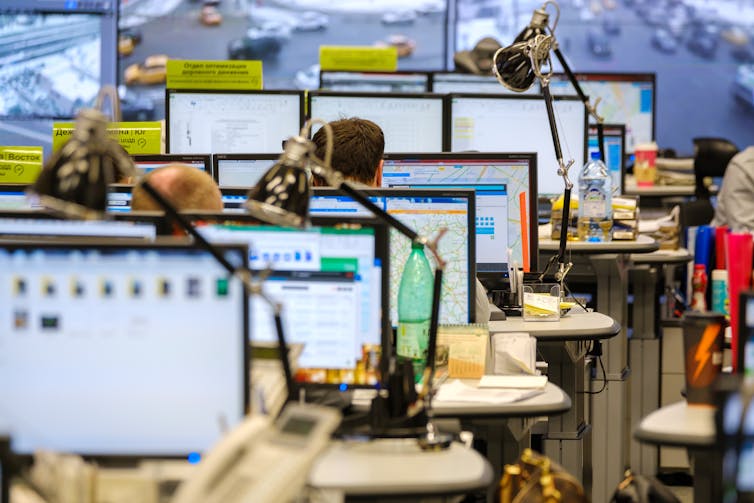
The pandemic has had a considerable impact on all businesses, but New Zealand’s construction sector appears particularly hard hit and is struggling to cope. Firms have failed, prices have gone up, and labour and materials are in short supply.
In the past few weeks alone, one construction company has gone under and building projects have ground to a halt due to shortages of Gib board.
These kinds of problems should not surprise anyone. Material and labour shortages, companies failing, red tape and poor quality outcomes for companies and consumers are not new for the sector.
The big question is why such shocks and stresses create problems for the New Zealand construction industry so regularly. More immediately, how can the sector deliver reliably on the significant building and infrastructure projects in the current pipeline?
A potted history of crises
A few key examples tell the tale. In 2002 there was the leaky building crisis, with predictions of a serious downturn and the “potential for a major systemic breakdown across the industry”.
In 2012, the building sector again faced a “bleak year”, in part due to delays in the Canterbury rebuild and low volumes of work elsewhere.
By 2015, there were reports of more than 60 construction-related Christchurch companies in liquidation that year, owing creditors an estimated NZ$40 million.
Post-earthquake rebuilding in Christchurch ran into rising costs, skills shortages and liquidations. GettyImages
Planning for resilience
Even in unremarkable times, the industry tends to be slow to innovate and has poor productivity. Firms win tenders with prices so low they often cannot make any profit. The industry does not spend enough on research and development, and it reacts rather than plans.
What is needed is the development of a resilient construction sector that’s able to cope with adverse events, recover well and continue to operate effectively.
We began researching organisational and construction sector resilience in the early 2000s. Since then, we have worked on a number of government projects in New Zealand and overseas, helping to develop infrastructure network, organisation and sector resilience.
Our past research tells us organisations are likely to be more resilient when they have leadership and a culture that actively plans and allows for constant change.
A resilient organisational culture is one where staff are engaged in resolving problems and are given time and training to develop innovative thinking. Resilient companies learn from the past and use those lessons to focus on what matters.
They also maintain effective relationships with other relevant organisations. They understand their position in the construction supply chain, including who they depend on and who depends on them. A resilient supply chain makes the industry less fragmented and more connected.
Moving to a new model
Our research leads us to believe that developing closer-to-home resourcing – not relying on so many imported skills and materials – would create greater resilience and a more sustainable industry.
And there are current initiatives making a difference. Educational programs focusing on training and career development are an excellent step towards creating workforce resilience. Similarly, a construction sector accord is creating partnerships between government and industry to achieve (among other things) a co-ordinated voice on industry reforms.
The Ministry of Business, Innovation and Employment (MBIE) and the New Zealand Infrastructure Commission are both involved in improving the sector’s climate change planning, skills and productivity, and risk management.
Our research aims to build on such developments by helping organisations in the construction sector understand their own resilience and to plan accordingly.
In particular, a five-year grant from MBIE’s Endeavour Fund will allow us to develop the CanConstructNZ project to help manage industry capacity and better understand how to manage shocks and stresses.
The hope is that all such initiatives will contribute to a more resilient construction sector that can deliver the multiple projects within the national pipeline forecasts.
With a more co-ordinated approach to planning and the ability to withstand shocks and setbacks, it’s hoped the industry can avoid the problems that have dogged it – and the country – for too long.
Suzanne Wilkinson receives funding from Ministry for Business, Innovation and Employment under the Endeavour Research Programme, CanConstructNZ.
Monty Sutrisna receives funding from MBIE Endeavour.
Regan Potangaroa receives funding from the Ministry for Business, Innovation and Employment under the Endeavour Research Program, CanConstructNZ.
Rod Cameron receives funding from Ministry for Business, Innovation and Employment under the Endeavour Research Programme, CanConstructNZ
Review: The Smallest Stage, by Kim Crotty for Perth Festival
A small, white rectangle taped onto the wide, open expanse of the Studio Underground playing space is a literal representation of one of the small stages evoked by the play’s title. But The Smallest Stage goes way beyond the literal to recreate its primary focus: the space between a parent telling a child a story.
Ostensibly a one-man show, actor Ben Mortley actually shares the stage with a cast of 20 others: ten children with one parent each.
These volunteers, experiencing the performance for the first time, receive their instructions (unheard by the rest of the audience) via headphones that direct their entrances and exits from the front row and stage choreography. They move props, play multiple roles and recreate key moments referenced in the storytelling.
A cast of children and their parents become integral parts of the storytelling. Perth Festival/Bew Yew
Mortley plays the character of West Australian writer and co-creator of this production, Kim Crotty, who was sentenced to two years in Dartmoor prison in the UK for growing cannabis, separating him from his partner and two sons.
In this autobiographical retelling, Mortley moves seamlessly between present day Crotty as narrator, Crotty in the past dealing with the reality of his situation and the characters he meets along the way.
With the white rectangle now serving as his prison cell, Crotty realises the fleeting phone calls and visits with his children are only deepening the trauma of his absence. This drives him to do what most parents do to settle their children: tell stories.
And so Crotty becomes both writer and illustrator, as he desperately seeks to maintain his connection with his family.
Stories as lifebuoys
Running the gamut of children’s storytelling genres, Crotty’s stories include gross-out humour featuring unforgettable characters like Snot Man and Tissue Monster, what he calls “alternate superheroes” and old-fashioned morality tales.
All in all he wrote and illustrated 47 stories for his sons.
Although some of them could work as children’s books or theatre in their own right, The Smallest Stage is about more than the stories themselves. It is about a father rising above his current circumstances to create new worlds to inhabit with his sons, seeking to gain a sense of control in fictional worlds that might eventually transfer to the real world.
The Smallest Stage is about a father rising above his current circumstances to create new worlds to inhabit with his sons. Perth Festival/Bew Yew
Crotty’s stories are lifebuoys cast by a drowning man. By adding the story behind them, The Smallest Stage casts a much wider net
Even with children in the audience, The Smallest Stage doesn’t avoid serious themes. The ugly remnants of family violence, incarceration and misogyny are faced squarely. The vestiges of what we inherit from our parents and what we pass on plays out in the storytelling. Reckoning with what Crotty describes as his own “father-shaped hole”, the work tracks his journey to be a better father than the one he had.
The simple paper of the original storytelling is very much in evidence. The work brilliantly stages the transformative capacity of storytelling via live drawing segueing into animation, projection, puppetry and a pop-up book simply lit by a hand-held torch. One extended animated story of Ghost Girl Elise is beautifully realised.
But while the stories draw us in on their own merits, the focus remains on how the stories bridge the gap between the father and his sons.
Live drawing segues into animation, projection, puppetry and pop-up books. Perth Festival/Bew Yew
Everyone has a story
This focus is also present in the presence of the audio-guided participant children and parents. Witnessing this layer of the performance illuminates the work’s premise: everyone has a story.
It also extends and expands the specificities of Crotty’s story. The choreography that accompanies the moment when Crotty is reunited with his sons when he is finally released and deported back to Australia creates a simple but emotional release. There is no acting required here.
Crotty’s decision to not hide the truth of his mistakes and failings from his children is one challenge most parents would understand. The Smallest Stage shows by finding “the words to name the ache” Crotty creates a pathway towards a more open, honest and loving relationship with his sons, ultimately forming a lifetime habit of love and storytelling.
The Smallest Stage doesn’t hide the hard parts of the story from its young audience. Perth Festival/Bew Yew
Mortley’s performance is an emotional slow burn. While the work itself is expertly crafted to accommodate all the variables at play, Mortley remains at the mercy of chance created by the presence of the other participants. Retaining and calibrating the emotional arc of the work, while remaining open to the variability of their input, he is the heart and soul of The Smallest Stage’s aches and joys.
Mortley, director Matt Edgerton and designer Zoë Atkinson worked with Crotty to co-create this world premiere performance. As theatre makers, they followed Crotty’s principle of using everything at their disposal to create.
A superb collaborative effort, The Smallest Stage is a real triumph of form emerging from content, a powerful example of the originality that can emerge from a group of artists given time, money and support to work towards one purpose.
It also reminds us of theatre’s communal roots and its capacity to activate and uplift an audience.
The Smallest Stage is at Perth Festival until February 27.
Leah Mercer does not work for, consult, own shares in or receive funding from any company or organisation that would benefit from this article, and has disclosed no relevant affiliations beyond their academic appointment.
Vision is often regarded as first among the human senses, as our eyes are the way most of us come to know the world. However, vision has its limits.
Even now, as you use your eyes to read this, other senses are in operation that open up a greater appreciation of the world. Perhaps the most powerful of these is listening – audition.
Sound carries cues about the world we might otherwise miss. And with the development of new technologies and the work of dedicated scientists and artists, we can today listen to what was previously unimaginable, from the inner workings of plants to catastrophes in distant galaxies.
In my own work, currently exhibited at the Museum of Brisbane, I have made field recordings of environments and creatures around the world. These works take their place alongside an ever-growing collection of recordings revealing the unheard sounds of our world.
The limits of the ear
Humans can only hear a limited range of sounds: those with frequencies between about 20 hertz (low sounds like thunder) and 20 kilohertz (very high sounds like some species of bats). Other sounds exist outside the scope of our auditory capacities.
“Infrasonic” sounds such as the rumble of earthquakes have frequencies too low for us to perceive, although other animals can detect them. There are “ultrasonic” sounds too, with frequencies above the threshold of human hearing.
Strictly speaking, a sound is a vibration in air. But we can also think of other kinds of vibrations, such as electromagnetic waves, as having the potential to be registered as sounds.
With the right kind of technological translation tools, you can hear the electromagnetic sounds emitted by devices like the one on which you are reading this right now.
The ‘Stereo Bugscope’ created by the artist Haco amplifies the sounds of electronic circuitry.
Why should we listen?
Listening is a different way of knowing the world that expands our understanding. Sound travels around corners and through walls, from places that are out of sight.
Our ears are a gateway to a deeper sensing of the world. Take bird calls, for example.
For most, even those of us living in densely populated urban centres, dawn’s arrival is trumpeted by a chorus of bird calls. These voices, that seemingly splay out in all directions suggest acts of territorial dominance, of the seeking and discovery of food and other fundamental activities of animal species. A variation of the chorus occurs again, as the sun vanishes over the horizon.
Today we are listening to more of the world, and beyond, than ever before, with the growth of disciplines such as bio-acoustics, radio telescopy, and more philosophical fields such as sound studies.
The proliferation of technologies such as hydrophones (underwater microphones) and electromagnetic receivers has also increased the reach of our ears.
It’s this combination of intellectual, scientific and artistic curiosity, matched with technological developments and availability that have resulted in the capture of some incredible sound events that exist well beyond the visual plane.
Just a quarter of a century ago it seemed like science fiction that we might be able to capture the sound of two black holes colliding in space – but scientists did it in 2015.
These discoveries and others like them have fostered new research programs that aim to undertake the deepest and most concentrated galactic listening to date.
As above, so below
We have made many discoveries closer to home, too.
We have known for a long time that the underwater world is rich in sounds, but it has been underrepresented in dedicated research. This trend is changing, with numerous studies highlighting the rich acoustic diversity of rivers, oceans and reefs.
Plants may use the sound of water to guide the growth of their roots. Shutterstock
On land, the Australian researcher Monica Gagliano has explored plant audition. She demonstrated how plants can use sound to find water – so next time your plumbing is blocked by a plant’s roots, keep in mind they have been listening to the water flowing through the pipes.
Equally profound are the studies of bioelectrical sounds emitted by plants carried out by artists such as the Irish “sound ecologist” Michael Prime. For several decades, Prime has catalogued various bioelectric emissions from plants. At times they resemble unsettled but rhythmic avant-garde music.
Field recording
This curiosity for listening into places and those that inhabit them, has also spawned a zone of creative sound practice called field recording. A field recordist is a listener who is primarily focused on capturing the sonic aspects of environments that captivate them.
Once a marginal part of the sound arts canon, field recording has come to be regarded as a critical field of creative engagement. This year artists such as Philip Samartzis have been memorialised in a series of Australian Antarctic postage stamps.
Even if you don’t want to make your own field recordings, you might be interested in listening to the sound walks of Canadian artist Hildegard Westerkamp, or experiencing the situational listening of Japanese artist Akio Suzuki’s Oto Date project.
These works, like my own Site Listening at the Museum Of Brisbane, recognise that the more we listen into the world around us, the more we realise we are yet to hear its true resonances.
Lawrence English does not work for, consult, own shares in or receive funding from any company or organization that would benefit from this article, and has disclosed no relevant affiliations beyond their academic appointment.
The Reds are back. Scott Morrison’s Liberal-National government has recently launched an offensive of “red-baiting”, a practice long thought consigned to the history books, in preparation for an anticipated May 2022 election.
Last November, Defence Minister Peter Dutton hounded Shadow Foreign Affairs Minister Penny Wong, charging her with “not standing up for [Australian] values” in comments on the China-Taiwan dispute.
This week, News Corp has targeted Opposition Leader Anthony Albanese after the Chinese Global Times offered him some backhanded compliments. A video also emerged of Albanese speaking Mandarin at an economic summit, and he was found to have participated in a forum for Tribune, newspaper of the defunct Communist Party of Australia. (This interview, it should be noted, was 31 years ago.)
Such claims have long plagued the progressive side of politics. Since the first news of the Bolshevik victory in the 1917 Russian Revolution reached our shores, fears of Australia following Vladimir Lenin’s lead have been used and abused by conservative politicians for electoral gain.
But, how successful have these “moral panics” been? And do they still pass muster with today’s electorate?
A canker that must be cut out of our national life
The Communist Party of Australia was founded in October 1920 by a mix of Marxists, anarchists, feminists and trade unionists. Inspired by events in Russia, where the working class had seized power, they wanted world revolution. But, following Lenin’s theories, they also saw parliamentary representation as a way to politicise the working class.
Aside from Fred Paterson, an Oxford-educated communist lawyer who represented the seat of Bowen in the Queensland Parliament from 1944 to 1950, the party’s threat was not at the ballot box. Instead, the Australian Labor Party faced accusations of insufficient loyalty, or being knowing dupes of Moscow.
In 1925, when the Labor Party had only a few hundred members, the prime minister, Stanley Bruce, first used the communist bogey to electoral effect. A wave of industrial unrest was blamed on the work of “a few extremists” in the trade unions, and “political labor”, Bruce argued, was “afraid of the strength and power of those who control those organisations”. He declared:
“[T]he only manner in which citizens of Australia can declare their attitude is at the poll. […] the canker of these men advocating Communistic doctrines must be cut out of our national life”.
Stanley Bruce, pictured with his wife Ethel, was the first prime minister to use the communist bogey for electoral advantage. National Archives of Australia
Bruce, a staunch defender of White Australia, used the communists’ internationalism against Labor. Communist officials in the recently founded Australian Council of Trade Unions had affiliated it to the Soviet-aligned Pan Pacific Trade Union, which included organisations in China and Japan.
The pro-Bruce Daily Telegraph presented this as evidence the Labor Party, by extension, was soft on immigration restriction. The mud stuck and Labor lost six seats in the 1925 election.
The Labor Party did not take these attacks lying down. The New South Wales branch had banned “dual membership” in 1924. But such actions proved insufficient. Historians credit this “leftist bogey” with keeping Labor out of government – bar a brief spell during the Great Depression – until 1940.
Robert Menzies (left) was able to exploit fears of the Labor Party’s ties with communism in the 1951 election. National Museum of Australia
An alien and destructive pest
The 1940s were the heyday of Australian Communism. A wave of popular enthusiasm for the Soviet Union’s wartime accomplishments saw the party grow from 4,000 members in 1941 to over 20,000 three years later. Communists gained control of trade unions representing over half of Australian workers, and formed an alliance with the wartime Labor government of John Curtin.
A directive from Moscow that communists should launch an industrial offensive quickly made this wartime relationship an electoral liability for Labor. In 1946, at the helm of the recently formed Liberal Party, Robert Menzies blamed everything from fuel shortages to housewives’ difficulties finding essential items and trade relations with Malaya on
“the Government’s supine surrender to a minority of Communists and agitators”.
While Curtin’s successor, Ben Chifley, used wartime clout to win that contest, the 1949 election occurred only two months after Mao’s communists proclaimed the People’s Republic of China. This mixture of the “yellow peril” with communism, along with major disruption caused by a communist strike in the coal industry, delivered Menzies a handsome win. The Liberals received a 5% swing and a stunning 48 seats. He declared communism “an alien and destructive pest” and promised: “If elected, we shall outlaw it.”
Communist ranks were decimated in these years, but with the support of Labor leader H.V. Evatt, the Communist Party was able to narrowly defeat Menzies’ attempt to ban it. This result owed more to fears of what such a ban might mean for democracy than the electorate’s support for communist ideals.
Where do you draw the line?
This was seen as collusion by by some in Evatt’s own ranks. Labor had established trade union “industrial groups” to undermine communist control in the late 1940s and these hosted a right-wing, Catholic opposition. Headed by B.A. Santamaria, this opposition used revelations at the Royal Commmission on Espionage, sparked by the defection of Soviet diplomat Vladimir Petrov, as ammunition to split the Labor Party.
Originally called the Labor Party (Anti-Communist), the Democratic Labor Party’s raison d’etre was red-baiting, and it kept Labor out of office for a decade and a half.
Conservatives found one tool particularly useful in these years: stoking fears of national liberation movements in Asia, presented as an extension of the communist menace. A prominent Liberal party campaign poster from the 1966 election pictured arrows menacingly pointing through South-East Asia towards Australia, asking voters: “Where do you draw the line against Communist aggression?”
Electoral material prepared by the Liberal Party for the 1951 vote on banning communism. State Library of Western Australia.
In the late 1960s, however, the local communist party had broken with the Soviet Union, and the Cold War entered a period of detente. Labor Opposition Leader Gough Whitlam visited China in 1971, and Liberal Prime Minister William McMahon’s anti-communist fulminations fell flat when US President Richard Nixon announced similar plans only weeks later.
In 1983, prime ministerial aspirant Bob Hawke memorably saw off Malcolm Fraser’s suggestion voters should hide their money under the bed in the event of a Labor win by declaring:
You can’t keep your money under the bed – that’s where the commies are!
What had once been a tragedy for Labor seemed now only farce.
McCarthyism, 21st-century style
The hiatus of red-baiting as an effective tactic in the 1980s – arguably replaced by fears of refugees and terrorists – begs the question: why is it back today?
The rise of China from Cold War isolation to global superpower is one answer. Another can be found in the weaponising of far-right language about “cultural Marxism” from the United States.
But will it be effective? A 2007 campaign to tar Julia Gillard as a communist failed to keep Labor out of office, and it is unclear who the market for this rhetoric is today.
Australians under 40 have no living memory of the Cold War and are more open to socialist ideas after the Global Financial Crisis.
Furthermore: there is no dangerous “fifth column” on which to hang fears. The Communist Party of Australia wound up in 1991. And Chinese-Australians – whom government members have targeted in a McCarthyist fashion over imagined Communist Party links – tend to skew conservative.
Lastly, given there is no notable difference between Labor and Liberal on foreign policy towards China, the chances of mud sticking seem limited. We can only hope that 2022 – almost a century after its first usage – marks the end of red-baiting in Australian politics.
Jon Piccini does not work for, consult, own shares in or receive funding from any company or organization that would benefit from this article, and has disclosed no relevant affiliations beyond their academic appointment.
During the anti-lockdown protests at parliament last year, I was told about a 15-year-old who stopped to ask someone why they were crying. The person replied they were Jewish and had been upset by Nazi imagery used by some protesters, including swastikas chalked on the ground.
Water bottle in hand, they set about washing these off, until a well-dressed, middle-aged woman threatened to kill them and parliamentary security ushered them away.
The local Jewish community sounded a warning about the “grotesque and deeply hurtful” appropriation of the Holocaust by protesters that, as the situation in Wellington suggests, went unheeded.
The current occupation of parliament grounds has also seen disturbing references to Nazism and the Holocaust. These have been variously deployed to call for the execution of journalists and politicians, invoke the Nuremberg Code and compare vaccine mandates to the Nazi persecution of the Jews.
Not only do such comparisons rest on false equivalences, absurd leaps of logic and historical anachronism, they are also tactics that tap into long histories of exploitation of the Holocaust for political ends.
A history of appropriation
Twenty years ago, American historian Peter Novick surveyed the causes (left and right) that since the 1970s had sought legitimacy and impact by comparing themselves to the Holocaust. These included:
anti-abortionists and pro-choice activists
campaigners against the death penalty
the National Rifle Association
Christian conservatives
LGBTQ activists during the AIDS epidemic
and even an Oklahoma congressman who took the TV mini-series Holocaust to be a warning of “the dangers of big government”.
Since then, the trend has grown and the list become even more diverse. Social media and the active dissemination of conspiracy theories have made it global. Holocaust references were used to condemn both Donald Trump’s immigration laws and Barack Obama’s Affordable Care Act.
Comparisons to Nazi genocidal policies have also cropped up wherever assisted dying legislation has been debated, with opponents claiming such policies would be akin to Nazi “euthanasia”.
As well as being inaccurate, that argument also perpetuates the criminal Nazi deception that hid racist mass murder under the euphemism of “euthanasia”.
Anti-Nazi pastor Martin Niemöller at his first service after being released from imprisonment following the allied occupation of Germany in 1945. GettyImages
First they came for …
In this charged context, anti-Nazi pastor Martin Niemöller’s oft-cited quote about apathy in the face of threat – “First they came for the socialists, and I did not speak out…” – has emerged as a favourite meme.
Niemöller had initially welcomed Hitler’s rise to power but was later incarcerated in Dachau in 1937. Visiting the camp after the war, he was struck by a sign reading: “Here in the years 1933-1945, 238,756 people were cremated.”
While his wife was shocked by the number of victims, Niemöller was horrified by the dates: where had he been between 1933 and 1937? From that experience came the famous lines lamenting German conformism and indifference that had allowed Hitler’s rise.
Niemöller never wrote them down as a poem, but would open his speeches with them, amending the groups of victims depending on his audience (as indeed do the many memorials where his words are now engraved).
The deliberate universality and adaptability of Niemöller’s words have now been hijacked by any number of protest groups, only sometimes in intended jest: “First they came for the wealthy…”, “First they came for the YouTubers…”.
Now, inevitably, the US alt-right’s “First they came for the unvaccinated…” reverberates around anti-vax conference venues and the online forums of “freedom convoys”, alongside imagery featuring yellow stars and striped pyjamas.
These threaten to become the rallying cries of those with no experience of genuine dictatorships, lack of freedom or persecution, yet who share forums with neo-Nazis and anti-Semites – including in New Zealand.
A ‘Freedom and Rights Coalition’ protest at parliament on November 9 2021. GettyImages
False equivalence
Reading ourselves and our times into history is a reasonably common phenomenon and easily done. After all, what was the Nazi party in its early days other than a tiny minority of disgruntled and disaffected “ordinary” people, coalesced around economic grievances and a general sense of moral and cultural malaise?
And while some historical analogies might be wrong, they’re not always harmful. But to compare vaccine mandates to Nazism is both inaccurate and harmful. As is comparing the New Zealand government’s health response to South Africa’s apartheid regime.
Not only do such comparisons equate fundamentally different policies, they wilfully ignore the fact those historical persecutions discriminated against people for who they were, not for what they believed or how they chose to behave.
Media and other commentators sometimes play down exploitation of the Holocaust or Nazism, either to starve it of publicity or because it can seem less serious or threatening than other more overt forms of intimidation.
But we should also guard against complacency. Since the 2019 Christchurch terror attack, New Zealand has known firsthand that racist and intolerant discourse can lead to deadly violence.
Despite evidence of violent rhetoric and behaviour in Wellington, some have sought to reassure that most protesters were “ordinary Kiwis”.
Just what constitutes an “ordinary” Kiwi is open to speculation. But I’d prefer to think they’re like the compassionate teenager who took out a water bottle to help remove swastikas, not the protesters who tolerate or ignore them.
Giacomo Lichtner is a former Board member of The Holocaust Centre of New Zealand.
About two years into the pandemic, we’re still trying to find where and how it all started. Only last week, we heard bats in Laos may hold a clue about the origin of SARS-CoV-2, the virus that causes COVID.
Our interest in viral origins, especially pandemic viruses, is understandable. But we need to remember one key lesson from history. It can take years to pin down their animal source.
Here’s why it’s important to keep trying and – in the case of the origin of SARS-CoV-2 – why it’s too soon to expect miracles.
Emerging infectious diseases like COVID are becoming an increasing problem. Most are zoonotic. In other words, they originate in non-human animals, mainly wildlife.
However, identifying these animal sources and how the viruses entered human populations is difficult. This is a major problem.
If we can identify sources and routes of spillover, then we should be better able to understand the processes driving emergence of new diseases. This means we could better predict when and where spillover is likely to occur in the future.
Understanding the underlying processes would also help us devise strategies to either reduce the risk of wildlife diseases transferring to humans, or to nip spillover in the bud before an epidemic or pandemic occurs.
In the case of SARS-CoV-2, some people say scientists’ inability so far to identify the source wildlife population and to definitely say how the virus entered human populations suggests the virus originated in a laboratory. Yet the lab origin theory has been thoroughly debunked.
However, this delay in finding definitive answers is not unusual. For many recently emerged human viruses, the wildlife source (the natural reservoir) took years to identify, or is still rather unclear.
For example, Ebola has caused devastating outbreaks of deadly haemorrhagic disease in Africa since the 1970s.
Most scientists think bats are the reservoir. Yet no one has yet successfully isolated Ebola virus from a wild bat, despite lots of circumstantial evidence.
How about bats and COVID?
The closest known animal virus to SARS-CoV-2 occurs in a species of horseshoe bat found throughout China and Southeast Asia. That virus is called RaTG13.
Although RaTG13 and SARS-CoV-2 are 96.1% similar in their genetic code overall, this does not necessarily mean the human SARS-CoV-2 came directly from those bats.
The DNA of chimpanzees and humans is almost identical. But that doesn’t mean we are directly related. Shutterstock
Genetic similarity between two species tells us they are connected in a “family tree” to a common ancestor. The extent of that similarity gives some information about how long it was since the two species arose from that ancestor.
For SARS-CoV-2 and the bat coronavirus RaTG13, this separation likely occurred some decades ago.
Viral family trees have ‘tangles’
To make things more complex, some viruses can also acquire genetic changes via recombination. This occurs when two different virus strains or species infect the same cell. They can swap bits of genetic code with each other, producing a “mosaic” virus. This means the “family tree” becomes more like a tangle of brushwood.
So, rather than looking for a single coronavirus as the ancestor of SARS-CoV-2, we need to look at a whole range of related viruses that might co-occur in nature.
More evidence for this came just last week, in a paper published in the prestigious journal Nature.
It found previously unknown bat viruses in Laos that are not quite as closely related to SARS-CoV-2 as RaTG13 overall. But some of these bat viruses from Laos are more closely related to SARS-CoV-2 than RaTG13 at the particular region that allows the virus to bind to human cells.
This means SARS-CoV-2 likely arose from mixing of different bat coronaviruses in natural bat populations. This is likely how SARS-CoV-2 acquired the genetic sequence that allows it to bind to human cells and infect humans.
Pangolins are scaly mammals considered a delicacy in parts of Asia and are severely endangered by the wildlife trade. There has been a lot of discussion about the possibility pangolins may have been a bridge species that enabled the transfer of this coronavirus from bats to humans.
These ideas arose because we know some highly pathogenic (disease causing) emerging viruses in humans do indeed have a bridge host. Bats infect them and they, in turn, pass the virus to humans.
For example, we work on Hendra virus in Australia, where horses act as a bridge host. Flying foxes (a type of bat) infect horses, which in turn, infect humans.
Similarly, MERS (Middle East respiratory syndrome) is caused by a coronavirus of bats which has passed to camels and then on to humans.
With the new coronaviruses detected in bats in Laos, our understanding of the role of pangolins has changed. It appears both pangolins and humans are infected by coronaviruses derived from bats, but the human virus did not come via pangolins.
How did a coronavirus get from bats in caves to humans in Wuhan?
This critical question remains a mystery. People go into the caves where these horseshoe bats live, often to collect guano (bat faeces) for fertiliser. But the nearest bat caves are some distance from Wuhan.
No bats were sold in the Wuhan wet market that many of the earliest cases were linked to.
However, Wuhan is a major city and transport hub. So an infected person who had been in those caves may well have passed through Wuhan, and visited the wet markets.
SARS-CoV-2 is now known to infect a wide range of other mammals. So it is also possible a bat or a human may have infected another mammal, which then passed through the Wuhan wet market.
Lessons learnt from other viruses meant that early on in the SARS-CoV-2 outbreak, we had a solid basis for hypothesising the virus had links to bats and quite possibly arose through a bridging host in the wildlife market.
We still have unanswered questions about the path the virus took from bats to humans. But the more we continue to look in bat populations, the more we find these pieces of SARS-CoV-2 genetic code already exist in nature.
As with other emerging viruses, if we keep looking, we may eventually find all the missing pieces we need to close the case on where SARS-CoV-2 came from. If we’re smart, we’ll use this information to take action to prevent the next pandemic.
Hamish McCallum receives funding from ARC, and the US agencies NSF, NIH and DARPA.
Alison Peel receives funding from ARC, and the US agencies NSF and DARPA.
I first heard the standard joke about fusion as an undergraduate physics student in the 1960s: Fusion power is fifty years away – and probably always will be.
More than fifty years later, we still don’t have fusion. That’s because of the huge experimental challenges in recreating a miniature sun on earth.
Still, real progress is being made. This month, UK fusion researchers managed to double previous records of producing energy. Last year, American scientists came close to ignition, the tantalising moment where fusion puts more energy out than it needs to start the reaction. And small, fast-moving fusion startups are making progress using different techniques.
A limitless, clean source of baseload power might be within reach – without the nuclear waste of traditional fission nuclear plants. That’s good, right?
Not quite. While we’re closer than ever to making commercial fusion viable, this new power source simply won’t get here in time to do the heavy lifting of decarbonisation.
We are racing the clock to limit damage from climate change. Luckily, we already have the technologies we need to decarbonise.
Solar, wind and storage – the new electricity model. Shutterstock
How much progress is being made on fusion?
Five seconds. That’s how long the UK’s Joint European Torus was able to sustain a fusion reaction, producing enough energy to run a typical Australian household for about three days. That’s a small fraction of the energy needed to make the fusion reaction happen, which used two 500 megawatt flywheels. That amount of power would meet the peak needs of 100,000 average Australian households. So we are still a long way from getting a net energy benefit from fusion.
On a technical front, achievements like this are incredible. Nuclear fusion is the process that powers stars like the sun, and we are working to harness this for our own use.
At very high temperatures, light atoms such as hydrogen can combine to produce another element such as helium, releasing enormous quantities of energy in the process.
In the sun, these fusion reactions take place at temperatures about 10 million degrees. We can’t do it at that temperature, because we don’t have access to the enormous gravitational pressure at the centre of the sun.
To achieve fusion on earth, we need to go hotter. Much hotter. Experiments like the one in the UK are able to superheat a body of gas called a plasma to inconceivable temperatures, reaching as high as 150 million℃. The plasma has to be confined by incredibly strong magnetic fields and heated by powerful lasers.
This temperature is far hotter than anywhere else in our solar system – even the centre of the sun.
While the recent progress represents a major step forward, sober reflection suggests the dream of limitless clean energy from hydrogen is still a long way off.
On the megaproject front, the next step is the International Thermonuclear Experimental Reactor (ITER) being built in southern France. Far too big for any one country, this is a joint effort by countries including USA, Russia, China, the UK and EU member countries.
The project is enormous, with a vessel ten times the size of the UK reactor and around 5,000 technical experts, scientists and engineers working on it. Famously, the project’s largest magnet is strong enough to lift an aircraft carrier.
Even this enormous project is only expected to produce slightly more power than it uses – around 500 megawatts. The first experiments are expected by 2025.
To me, this illustrates how far away commercial fusion really is.
Construction of the International Thermonuclear Experimental Reactor megaproject seen from a drone as of October 2021. ITER Organization, CC BY
Fusion won’t get here in time
It will take decades yet to go from these promising experiments to a proven technology powering modern society. That means it simply will not get here in time to make a real contribution to slowing and reversing climate change.
To have a decent chance of keeping climate change below 2℃, we have to get to net zero emissions worldwide in under 30 years.
We can’t wait. We have to decarbonise energy supply and energy use as quickly as possible.
Many countries are already moving at speed. The UK is planning to get to zero-emissions electricity within 12 years. States like South Australia and New South Wales should get there around the same time. The International Energy Agency predicts renewables will become the largest source of electricity generation worldwide by 2025.
The shift away from baseload
Even if fusion arrives, it would face major challenges due to the cost of the plants and the changing nature of the grid.
In the second half of the twentieth century, power stations became larger to achieve economies of scale. That worked, until recently. Only ten years ago, large coal-fired or nuclear power stations produced cheaper electricity than solar farms or wind turbines.
This picture has changed dramatically. In 2020, global average prices of power from new large wind turbines was 4.1 cents per kilowatt-hour, while solar farms were even cheaper at 3.7 c/kWh. The average for new coal? 11.2 c/kWh.
Ever more favourable economics drove a massive investment in renewables in 2020: 127 gigawatts of new solar, 111 of new wind and 20 of hydro-power. By contrast, only 3GW of net nuclear power came online, while coal-fired power actually dropped.
As a result, we’re seeing a global shift away from old models of baseload power, where power is generated in large power stations and transported to us by the grid.
These shifts are driven by cost. The price of electricity from renewables is now falling below the running costs of old coal-fired or nuclear power stations. Coal power requires digging the stuff up, transporting it, and burning it. Renewables get their power source delivered free of charge.
The idea of fusion power is alluring. There’s a real appeal in the idea we could replace large coal and gas stations with one large clean fusion power plant. That, after all, is the selling point of the International Thermonuclear Experimental Reactor: to produce baseload power.
Fusion power is premised on the old baseload grid model, as seen in this EUROfusion diagram of a planned future fusion power plant. EUROfusion, CC BY
But will we need it? The pattern of power supply is changing. The massive take-up of solar power by households means we have now permanently shifted from the old model of large power stations to one where supply is distributed around the network.
It will be a technological marvel if we are finally able to build fusion plants in the second half of this century. It’s just that they won’t be in time.
Luckily for us, we don’t need fusion. We already have what we need.
Ian Lowe received funding in the 1980s from the National Energy Research, Development and Demonstration Council for a study of Australia’s future energy needs. He is a former President of the Australian Conservation Foundation.
Universities face many threats to their future. The traditional universities have become over-managed business enterprises, which may not reflect societal, national or global educational needs. The COVID-19 pandemic has brought many of these issues into focus.
In a new book, I propose a model that responds to the broad range of challenges universities face. I call this model the distributed university – that is, a university that distributes education online to where it is needed.
In more than 50 years as an academic in Australia and the UK, I have seen the potential for a pivot to online learning that, through distributed learning, could solve many of the problems the higher education sector faces.
I have been involved in online master’s-level programs to build public health capacity in both high-income and low-to-middle-income countries. Face-to-face teaching designed for the International Clinical Epidemiology Network was augmented by distance learning – first paper-based, followed by online. I established the University of Manchester’s first fully online master’s program.
The pressures on universities are both external and internal.
Externally, universities need to be responsive to the ways people access information today (and will tomorrow). They also need to ensure environmental sustainability. And amid global inequalities in access to higher education, our universities are overly dependent on income from overseas students.
Internal developments pose multiple threats too. Universities have downgraded teaching, with academics not rewarded for educational excellence as opposed to research. They have adopted a competitive business model, rather than a collaborative model of education, and intrusive managerial oversight instead of placing trust in academics. And they work in centralised ivory towers rather than engaging with local communities and industries.
The distributed university I describe in my book (free to read and download) sets up higher education to adapt to the changes in how we work and learn today.
Online learning, which must be fit for purpose, is central to this as it allows for structural change. Smaller local hubs can largely replace central large campuses, reducing the large carbon footprint created by students and staff travelling to campus. These hubs may be physical or virtual.
The distributed university offers education mainly online rather than in lecture halls. Local or regional hubs engage with local communities, industries and other education providers. They encourage practice-based active learning, which can be a hybrid of online and face-to-face.
Each of the hubs can be replicated over geography (including internationally) and over time. Learning needs will change over time as careers and interests develop. Central administration is much smaller, but ensures the courses being offered meet societal needs.
Intrusive managerialism is replaced by trust in academics – made easier by this structure. It is not generally recognised that online education is much more transparent than face-to-face. All materials, student contact and student-tutor interactions are captured, allowing for unobtrusive quality assurance.
Social interaction between students and between academics is offered partly in the hubs but mainly online. This reflects the way we communicate and learn in today’s world.
IT support for education and research is vital. It will allow us to respond to future developments in communications and to the changes and challenges of the fourth industrial revolution.
The distributed university will be light on the environment. Although online education is IT-heavy and has its own carbon footprint, it’s much smaller – even more so when powered by renewables – than the face-to-face version with buildings and travel. It will thus show leadership in achieving environmental sustainability.
This model’s local and regional hubs will also encourage regional development.
Our recent research paper highlights the environmental benefits of online education. A group of 128 master’s degree students (mainly from Africa) studied online rather than travel to live and study in the UK. They saved nearly a million kilograms of carbon emissions.
Distributed learning is a proven concept that has helped build public health capacity in Africa. Shutterstock
Three new programs
COVID has exposed the over-reliance on overseas student fees. This revenue has largely been diverted to support research. The government’s recent international education strategy makes no mention of the role Australia can play in reducing global inequalities in access to education.
In addition to the benefits described above, a pivot to online education opens up other opportunities. I describe three potential programs: a global online program, a tertiary version of the International Baccalaureate and a “PlanE for Education”.
A global online program can create low-cost learning for overseas students. This will help meet current educational needs while providing a bridge to future mutually beneficial partnerships with emerging economies. Research must be properly funded, and not rely on the diversion of income from overseas students paying high fees.
To help reduce the destructive emphasis on competition between universities, a higher education version of the International Baccalaureate used in schools might be created. This would involve global collaboration between universities, which would reduce competition and standardise quality.
Continuing the collaboration theme is a proposal to create “PlanE for Education”. This would be similar to initiatives such as PlanS that require publicly funded research to be published in open access journals or platforms. At least some of the educational resources generated in universities using public money would be made freely available under PlanE.
We live in a digital and distributed world. Universities should too. The notion of a distributed university may help the higher education sector survive, prosper and be sustainable.
Richard F. Heller does not work for, consult, own shares in or receive funding from any company or organisation that would benefit from this article, and has disclosed no relevant affiliations beyond their academic appointment.
A curious feature of the Australian tax system is “bracket creep”. Taxpayers whose income climbs by no more than prices (inflation) get no increase in their living standards. Instead, they see more and more of their income pushed into their highest tax brackets, or to even higher tax brackets.
It means the government’s income from income tax keeps climbing, even if there are no more people paying it and the value of what they earn hasn’t climbed.
Here’s how it works. The first A$18,200 are tax-free, the rest up to $45,000 are taxed at 19 cents in the dollar, the rest up to $120,000 at 32.5 cents in the dollar, the rest up to $120,000 at 37 cents in the dollar, and anything in excess of $180,000 is taxed at 45 cents in the dollar.
Australia’s income tax scale
What each extra dollar of income is taxed at, excluding Medicare levy and offsets
It means that as someone’s income climbs from, say, $80,000 to $90,000, a greater proportion of it is taxed at 32.5% and a lower proportion of it is either taxed less or untaxed.
This happens even if rising prices mean what that person can buy hasn’t changed – or at the moment, with prices climbing faster than wages, means their buying power has shrunk.
Bracket creep is increased tax by stealth
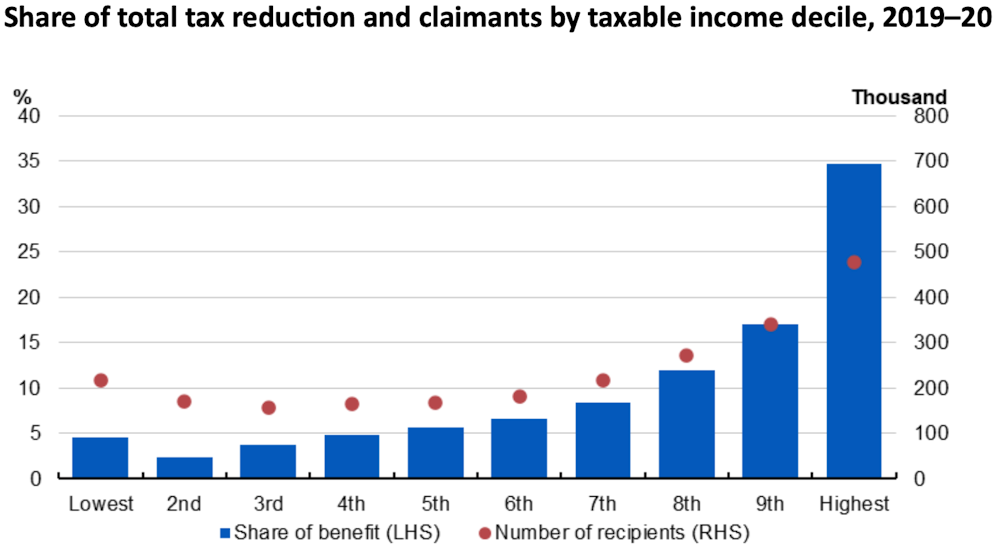
It’s why every few years the government trumpets a tax cut, which in reality is often no more than giving back some of the proceeds of bracket creep.
It could all be ended if the thresholds at which each tax rate cut in were indexed to inflation, climbing each year in line with price increases.
Prime Minister Malcolm Fraser briefly introduced tax indexation in 1976 but abandoned it partially in 1979 and fully in 1982, finding himself not thanked for it.
This week in the Australian Financial Review, economics professor Steven Hamilton made a persuasive case for indexation based on “starving the beast.”
As he put it, indexing brackets to inflation at this year’s budget
may be the Liberals’ last chance this decade to put some brakes on the relentless creep of the state and the sapping of hard work and entrepreneurship, having spent a decade enabling it
This argument has a degree of truth to it, for sure. An ever-expanding government is bound to become lazier and spend money less efficiently than a government that is income constrained.
And it certainly doesn’t suggest that there is no role for government, as is suggested by US anti-tax campaigners such Grover Norquist:
I don’t want to abolish government. I simply want to reduce it to the size where I can drag it into the bathroom and drown it in the bathtub
But there is also a progressive case for indexation.
The progressive case for indexation
If governments had go to voters and ask for a tax increase to fund additional spending (for any given budget surplus or deficit) then the link between tax and spending decisions would become clear.
If voters wanted more services, such as better hospitals or a better national disability insurance scheme, they would have to vote for higher taxes.
Bracket creep means the link is effectively hidden from them, as it shrouds the funding of spending.
It sounds like a subtle shift, but it would be a significant one. Instead of the debate being about “we can get what we want without increasing taxes”, it would become “tax is worthwhile because unless we increase it we won’t get what we want”.
Progressives ought to support the shift. The bottom line is that whatever your politics, there’s a strong case for indexing tax thresholds to inflation.
It would make our tax and our political system more honest, ensuring politicians actually acted in our interests.
Richard Holden is President of the Academy of the Social Sciences in Australia.
Source: The Conversation (Au and NZ) – By Meg Elkins, Senior Lecturer with School of Economics, Finance and Marketing and Behavioural Business Lab Member, RMIT University
Netflix
Two of Netflix’s top trending series, Inventing Anna and The Tinder Swindler retell the true stories of convicted con artists, who fleeced their victims through the well-established ruse of presenting as members of high society.
Inventing Anna is a fictionalised version of the case of Anna Sorokin/Delvey, who fooled the New York social set into believing she was a German heiress. The original story was reported on for a viral article in The Cut back in 2018. Tinder Swindler recounts the true story of Simon Leviev (Shimon Hayut), who conned $10 million from women on Tinder pretending to be the son of an Israeli diamond trader.
Our current viewing fascination with con artists includes documentaries such as the enthralling case of Elizabeth Holmes and her company Theranos, a multi-billion dollar tech company and a massive fraud.
This prevalence of the scam narratives begs the question: why do fraudsters fascinate us? The answers lies in the way we see ourselves and how we view the gullibility of others who have fallen prey to these con artists.
Julia Garner as Anna Delvey in Netflix’s Inventing Anna. Netflix
Watching a scam artist at work
We tend to think of ourselves as good decision makers. Human brains have evolved a “cheating detecting module”, allowing us to establish cooperation with strangers. Bottom line – we assume we would see the red flags.
Watching a scam artist at work fills us with a mix of surprise at their audacity –and glee and relief that it didn’t happen to us.
But it is the methods scam artists use to con people that are the same reason we are so fascinated by them. The truth is con artists make systematic use of every rule in a veritable playbook of exploiting our human psychological foibles.
Here is how they use the rules to bypass our cheat detectors?.
Decision making is cheap and cheerful
According to psychologists, we make around 35,000 decisions a day, and each comes with an unmanageable complexity in countless options and their possible consequences.
Given our limited brainpower we automatically resort to mental shortcuts known as heuristics to make good (rather than perfect) decisions. Think of these as the software of our minds, standard operating procedures we use for all of our mundane and repetitive decisions. Examples of a heuristics we use in everyday life would be the decision of how to get to work, or what to have for breakfast, or how we evaluate people when we first meet them.
Despite their advantages in everyday decision making, heuristics sometimes get it horribly wrong.
Con artists exploit these systematically by understanding how people make good and not great decisions. Psychologist Robert Cialdini, author of Influence, the definitive manual of persuasion tricks explains the most common ones tricksters exploit.
One is the social proof heuristic – the con artist’s success and connections are meant to demonstrate that others believe them and their lies too. Here the shortcut to decision making is that we tend to rely on the decisions others make.
The Inventor is the story of Theranos, a multi-billion dollar tech company, its founder Elizabeth Holmes, the youngest self-made female billionaire, and the massive fraud that collapsed the company. IMDB
People discount the improbable
One reason we fail to detect con artists is that they are, thankfully, relatively rare, which is what makes characters like Anna Delvey and Elizabeth Holmes so fascinating. Psychologists have found that people underrate the probability of rare events. Our brains evolved economically, equipped to deal with the most important and common threats – this leaves us vulnerable to rare decision problems.
A matrix experiment on honesty, by behavioural economist Dan Ariely, revealed how much people cheat if they think no one is watching. Ariely’s experiment had participants self report correct answers, and then shred the answers. What he didn’t tell participants, is he had rigged the shredder to preserve their responses. Out of 40,000 participants, 70% lied a little – 20 people out of the 40,000 lied to the maximum amount.
What this tells us is lying a little is common, but the big cheats are rare.
People think good things come in three (or four or five)
When we meet people who present as super wealthy or super attractive, we tend to use shortcuts to attribute a whole series of positive characteristics to them.
Con artists exploit the fact seeing only one observable “good” quality in a person is enough for a favourable general impression.
We call this the halo effect, it is a confirmation bias first described by American psychologist Edward Thorndike in 1920. The halo effect explains how when we ascribe one positive attribute to someone, we inadvertently add other positive traits to our overall impression of them. So if someone is rich then we tend to believe they might also be honest, hardworking and fair.
Fame means power
Con artists often carefully curate an illusion of being famous and well connected – which Anna Delvey did with flair. We are also programmed to respond to the social status of others.
It tickles our ego if a person of perceived status engages with us – the desire for a positive self image stops us from questioning their real status of intent.
The Tinder Swindler documentary tells the story of the Israeli conman Simon Leviev (born Shimon Hayut) who used the dating application Tinder to connect with individuals who he then emotionally manipulated into financially supporting his lavish lifestyle. Netflix
It can’t happen to me
Unfortunately there is a final bias that makes us lower our guard: overconfidence. We like to think that we are not so gullible. The average person thinks they are above average when it comes to resisting persuasion and decision making.
However, the evidence suggests most people are at risk of falling for others – irrespective of intelligence and education. Psychiatrist Stephen Greenspan, author of the book Annals of Gullibility: Why We Are Duped and How to Avoid It, also fell for Bernie Madoff’s Ponzi scheme.
The one saving grace is that our interest in con artists shows our ability to learn from others’ experiences. Here the internet and Netflix are playing their part to warn us. Con artists, we are on to you.
The authors do not work for, consult, own shares in or receive funding from any company or organization that would benefit from this article, and have disclosed no relevant affiliations beyond their academic appointment.
As Russia’s attack on Ukraine unfolds dramatically, Australia is in the choir stalls, not centre stage, when it comes to the West’s response. But Scott Morrison is determined its voice be loud.
His denunciation of the Russian “thugs” and “bullies” has been cast in the most forceful language. After announcing sanctions on Wednesday, he assured Ukrainian Prime Minister Denys Shmyhal that Australia, working with its partners, was prepared to do more.
Wednesday’s Australian sanctions were in line with those of the United States and United Kingdom. Just a day later, with Russia’s invasion, they were quickly expanded to include more individuals and entities. A further concerted step-up will come.
In term of effect, anything Australia does means a lot less to the Russians than similar sanctions imposed by the bigger players (not that those are deterring President Putin). As Morrison noted, our trade with Russia is small.
Morrison, incidentally, was careful about local blowback. For Australian businesses, the government said there would be more than a month’s breathing space before the measures affecting them come in.
What Morrison described as this “brutal invasion” will have seismic international ramifications, including in economic terms, although notably no countries are willing to put troops on the ground to defend Ukraine.
Given the timing, these events could be important in Australia’s domestic politics.
The Ukraine crisis feeds directly into Morrison’s push to make national security a central feature of the campaign for the May election.
One is tempted to revert to 2001, when the election victory of John Howard, who’d been seriously struggling politically, came off the back of the terrorist attacks in the US and the Tampa’s load of asylum seekers.
That comparison is limited, however. 9/11 had a more immediate impact on Australians, not least because Australian forces were part of the ensuing war in Afghanistan.
Nevertheless, the Ukraine crisis will continue to escalate, and what happens there will feature heavily in the news in the weeks ahead. Morrison will keep it prominent in the national conversation.
A crisis gives the PM a potent new focus. As Paul Kelly observes in his just-published book Morrison’s Mission: How a beginner reshaped Australian foreign policy, “Morrison’s character is that of a compulsive political activist. He is always on the move, talking, travelling, doing.”
Labor is leading comfortably in the polls, but for Anthony Albanese the Ukraine crisis presents, at the very least, a political challenge.
This is not a matter of a wedge – no one can suggest any lack of bipartisanship over Ukraine. Labor was immediately and solidly behind the initial sanctions, and Albanese will ensure it will continue in step with the government. But such a major conflict, even one far removed and in which we are not directly involved, changes the domestic atmosphere and plays to the status quo.
It also limits the attention on the issues on which Labor wants to focus, such as the increasing cost of living and stagnant wages (although rising oil prices will impose further pressure on high petrol prices).
Assuming there is not a new COVID variant, the foreign crisis may help to put a full stop under “pandemic politics”, making it harder for Labor to get public attention back on the government’s failures on issues such as aged care.
Simon Welsh of the RedBridge Group, a Labor-aligned consultancy firm, says its focus group research has been finding people have a general sense of tension increasing in the world. So far, however, that still sits behind their concern with the domestic bread and butter issues.
But, as of now, we are in a dynamic, rapidly changing situation.
Morrison is trying to bring China – on which he is attempting to wedge Labor – into the Ukraine story.
“China, of course, is watching this very carefully,” Morrison said on Thursday. “And that’s why I’ve been at pains to say that China needs to take as strong a position as other countries in the world and in denouncing what Russia is doing.”
But research, both qualitative and quantitative, is suggesting Morrison may be at risk of overplaying his hand with the China card.
Welsh says the focus group work indicates it is a two-edged sword. “China is a nuanced discussion,” he says. It’s not hard to stoke anti-China feeling. “But people also say you need a good relationship – for jobs, business.”
A similar picture comes through in the Essential poll published this week. Some 61% agreed with the proposition that “Australia’s relationship with China is a complex relationship to be managed”. This compared to 26% who thought “Australia’s relationship with China is a threat to be confronted”.
When people were asked which party they would “most trust to build a relationship with China in Australia’s best interests”, 37% said Labor, 28% said the Coalition and 34% were unsure.
Albanese knows he must make himself better known to voters and has counted on doing this in the approach to the election. Now he finds himself pursuing his charm offensive in the fog of a conflict that is distant but dominant.
Earlier this month we had the Meet the Morrisons program courtesy of Nine’s 60 Minutes. This week we have “At home with Anthony Albanese and partner Jodie” in the Australian Women’s Weekly.
The soft article was the formal introduction to the public of Jodie Haydon. It canvassed Albanese’s (oft-repeated) childhood story as well as Jodie’s, their meeting (a coming together of two Rabbitoh supporters), and her reaction when early last year he was badly hurt in a car accident. (“As I jumped in the ambulance and saw Anthony, I knew then the depth of my feelings towards him.”)
Jenny Morrison will be on the campaign trail; it remains to be seen what Jodie’s role might be.
As he attends to marketing his human side, Albanese is working hard on selling himself to business, including a speech to business figures this week, and an Australian Financial Review Magazine profile in which he declares: “I’m comfortable in the boardrooms as well as the pub.”
To those who argued Labor risked leaving its run too late, Albanese has retorted it’s the “fourth quarter” that counts. But, as we’re now seeing, the fourth quarter can be much complicated by the unexpected.
Michelle Grattan does not work for, consult, own shares in or receive funding from any company or organisation that would benefit from this article, and has disclosed no relevant affiliations beyond their academic appointment.
As Ukrainian cities come under air attack from Russian forces, the country has also suffered the latest blows in an ongoing campaign of cyber attacks. Several of Ukraine’s bank and government department websites crashed on Wednesday, the BBC reports.
The incident follows a similar attack just over a week ago, in which some 70 Ukrainian government websites crashed. Ukraine and the United States squarely blamed Russia.
With a full-scale invasion now evident, Ukraine can expect to contend soon with more cyber attacks. These have the potential to cripple infrastructure, affecting water, electricity and telecommunication services – further debilitating Ukraine as it attempts to contend with Russian military aggression.
A critical part of Russia’s operations
Cyber attacks fall under the traditional attack categories of sabotage, espionage and subversion.
They can be carried out more rapidly than standard weapon attacks, and largely remove barriers of time and distance. Launching them is relatively cheap and simple, but defending against them is increasingly costly and difficult.
After Russia’s withdrawal from Georgia in 2008, President Vladimir Putin led an effort to modernise the Russian military and incorporate cyber strategies. State-sanctioned cyber attacks have since been at the forefront of Russia’s warfare strategy.
The Russian Main Intelligence Directorate (GRU) typically orchestrates these attacks. They often involve using customised malware (malicious software) to target the hardware and software underpinning a target nation’s systems and infrastructure.
Among the latest attacks on Ukraine was a distributed denial of service (DDoS) attack.
According to Ukraine’s minister of digital transformation, Mykhailo Fedorov, several Ukrainian government and banking websites went offline as a result. DDoS attacks use bots to flood an online service, overwhelming it until it crashes, preventing access for legitimate users.
A destructive “data-wiping” software has also been found circulating on hundreds of computers in Ukraine, according to reports, with suspicion falling on Russia.
On February 15, Ukraine’s cyber police said citizens were receiving fake text messages claiming ATMs had gone offline (although this wasn’t confirmed). Many citizens scrambled to withdraw money, which caused panic and uncertainty.
Ongoing onslaught
In December 2015, the GRU targeted Ukraine’s industrial control systems networks with destructive malware. This caused power outages in the western Ivano-Frankivsk region. About 700,000 homes were left without power for about six hours.
This happened again in December 2016. Russia developed a custom malware called CrashOverride to target Ukraine’s power grid. An estimated one-fifth of Kiev’s total power capacity was cut for about an hour.
More recently, US officials charged six Russian GRU officers in 2020 for deploying the NotPetya ransomware. This ransomware affected computer networks worldwide, targeting hospitals and medical facilities in the United States, and costing more than US$1 billion in losses.
NotPetya was also used against Ukrainian government ministries, banks and energy companies, among other victims. The US Department of Justice called it “some of the world’s most destructive malware to date”.
Another Russia-sponsored attack that began as early as January 2021 targeted Microsoft Exchange servers. The attack provided hackers access to email accounts and associated networks all over the world, including in Ukraine, the US and Australia.
Russia’s 2008 invasion of Georgia was accompanied by a well-coordinated cyber attack run by state-sponsored hackers. These were primarily DDoS attacks that forced a number of Georgian government and commercial websites offline. Getty Images
International cyber aid
Ukraine faces serious risks right now. A major cyber attack could disrupt essential services and further undermine national security and sovereignty.
The support of cyber infrastructure has been recognised as an important aspect of international aid. Six European Union countries (Lithuania, Netherlands, Poland, Estonia, Romania and Croatia) are sending cyber security experts to help Ukraine deal with these threats.
Australia has also committed to providing cyber security assistance to the Ukrainian government, through a bilateral Cyber Policy Dialogue. This will allow for exchanges of cyber threat perceptions, policies and strategies. Australia has also said it will provide cyber security training for Ukrainian officials.
The international implications of the Russia-Ukraine situation have been noted. Last week New Zealand’s National Cyber Security Centre released a General Security Advisory encouraging organisations to prepare for cyber attacks as a flow-on effect of the crisis.
The advisory provides a list of resources for protection and strongly recommends that organisations assess their security preparedness against potential threats.
The Australian Cyber Security Centre has since issued similar warnings.
Evading responsibility
Historically, Russia has managed to evade much of the responsibility for cyber attacks. In conventional warfare, attribution is usually straightforward. But in cyberspace it is very complex, and can be time-consuming and costly.
It’s easy for a country to deny its involvement in a cyber attack (both Russia and China routinely do so). The Russian embassy in Canberra has also denied involvement in the latest attacks against Ukraine.
One reason plausible deniability can usually be maintained is because cyber attacks can be launched from an unwitting host. For example, a victim’s compromised device (called a “zombie” device) can be used to continue a chain of attacks.
So while the operation may be run by the perpetrator’s command and control servers, tracing it back to them becomes difficult.
Mamoun Alazab does not work for, consult, own shares in or receive funding from any company or organisation that would benefit from this article, and has disclosed no relevant affiliations beyond their academic appointment.
The mainstream political narrative that emerged in late March 2020 was a ‘narrative of fear’ which set up the Covid19 coronavirus as a ‘tricky’ enemy that was out to get us by finding ways through our defences; and that we had to build collective barrier defences; defences such as lockdowns, border closures, and, eventually, facemask mandates. While the lockdowns, sensibly, were time-limited (albeit extendable), the border closures and over-reaching mask mandates were time unlimited.
The one initial point of optimism from the Prime Minister was, reminiscent of when the United Kingdom entered World War One, “it would be over soon” (eg by Christmas). Total victory would be quickish, we believed, because we – as a species – can be both clever and resolute. In New Zealand in 2020 we subscribed to the mantra that ‘the team of five million’ would defeat Covid through a mix of resolution and kindness. As in the World Wars, the resolution has been largely maintained; though the façade of kindness slipped long ago, with government immigration and travel policy leading the way.
Novel versus Established Respiratory Viruses
The distinction here is critical; the appropriate distinction is the difference between the 1918 influenza pandemic – a novel virus – versus the 2019 influenza outbreak in New Zealand. And we note the distinction between the 1890-93 novel coronavirus pandemic (long assumed to have been a novel influenza strain) and its RNA descendent, the OC43 ‘common cold’ coronavirus. Covid19 was a crisis in 2020 because it was caused by a novelvirus. Omicron appears to be more like the OC43 ‘cold’, which does trigger fatal illness. (See my Respiratory Viruses: Seasonal Mortality Compared, and its follow-up with more countries, for a view of the mortality associated with winter illnesses, both epidemic – eg influenza – and endemic.)
There are two reasons why a novel virus can be a very serious public health issue. The first is that it represents an unevolved virus that has not a chance to adapt to its environment; as such, it may be ‘unintentionally’ fatal to its host population. The second reason is that the host population is unadapted to the new virus. Host adaptation comes from exposure, and may be accelerated through vaccines, when available. Host vulnerability is enhanced by adverse socio-economic factors which may be present. Inequality and performance pressure lead to socially unacceptable levels of homelessness, malnutrition, substance abuse, and ennui.
This is the usual process of a new epidemic: one or more waves of severe illness, followed by a stabilisation as both virus and population adapt to each other. In some cases, the process can be averted by very rapid political action to eliminate a new virus, as happened with SARS in 2003. It turns out that the SARS elimination response was not the best response to the new 2019 virus that was both more transmissible and less severe than SARS; the ‘cat was already out of the bag’, so to speak.
In addition to adaptation or quick elimination, some countries may be able to choose to free-ride on the rest of the world, shutting themselves off while the rest of the world adapts to the virus (including its development of vaccines), and while the virus adapts to the rest of the world by becoming less severe. This would allow a country to open-up to a now-mild virus, and with a vaccine-adapted population. This has been New Zealand’s unwitting strategy, in practice if not in intent, and it may have been successful (possibly more successful than in Hong Kong), despite overt (and misguided) policy attempts to fend off the adapted (evolved, mild) version of the virus. This free-rider strategy additionally piggybacks off the necessarily foreign acquisition of knowledge about the novel virus, and the abovementioned adaptations by both virus and host species.
Delta vs. Omicron
Omicron is the adapted and evolved version of the virus. And it’s a very interesting scientific story which has not been well told. Delta is the last of the under-evolved (and potentially lethal) under-adapted versions of the SARS-COV2 coronavirus that causes the Covid19 disease. It was always likely to be displaced, eventually, by a better-adapted variant. It is the Neanderthal of the covid world.
The ‘out-of-Africa’ story of omicron-covid may be remarkably like the ‘out-of-Africa’ story of homo sapiens (aka us, modern humans). We may treat the ‘under-evolved’ version of homo – homo neanderthalensis – which predominated in Europe through many ice ages for about 300,000 years as delta-homo. Modern humans may be the homo equivalent of omicron-delta. Delta-covid is analogous to Neanderthal humans, who were displaced (after a few thousand years of coexistence) – in their European and Asian homelands – by modern humans. Modern humans migrated out of Africa, as did omicron-covid.
Of most significance is that omicron-covid evolved directly from the original covid variant (equivalent to homo erectus), and not from homo neanderthalensis or its immediate predecessor variants. That’s why there were so many ‘new mutations’ when scientists compared Omicron with Delta.
This analogy between covid and homo is also useful in allowing us to be prepared for a likely but otherwise unexpectable evolutionary development. Delta-covid continues to linger – especially, but not only, in New Zealand – and intermingles with omicron-covid. Just as we now know that modern humans are in reality hybrids, fused with Neanderthal (and Denisovan) DNA, we should expect the most evolved version of covid to be a fusion – mostly Omicron RNA but with a smattering of Delta RNA. Thus, as with influenza, covid may prove to be a more formidable seasonal foe than are the other adapted coronaviruses which almost all of us (at least in temperate latitudes) have ‘enjoyed’ the company of in the past.
(The 1918 influenza pandemic’s lethal second wave was most likely due to a hybrid novel H1N1 virus, forged on the western front battlefields of World War One. The 2009 ‘swine-flu’ pandemic was due to an H1N1 variant.)
Dr Angelique Coetzee and the Political Pushback re Omicron
My concern to write this present essay was motivated more than anything by this news.com.au article that I read, courtesy of the New Zealand Herald, on 10 Feb 2022.
Before commenting on that, we may note: “Dr Angelique Coetzee became internationally known in December 2021 as the medical doctor who treated one of the first cases of the then unknown Omicron variant of the SARS-CoV-2 virus. She was also one of the first to controversially indicate, and was later proven to be correct, that the virus caused less severe disease than other variants like Beta and Delta.” (Quoted from Daily Maverick, 21 February 2022.)
The assertive South African doctor says: ‘”I was told not to publicly state that it was a mild illness,” she said. “I have been asked to refrain from making such statements and to say that it is a serious illness. I declined.” Asked [by Germany’s Die Welt newspaper] what she meant, Coetzee said “based on the clinical picture there are no indications that we are dealing with a very serious disease”. “The definition of mild Covid-19 disease is clear, and it is a WHO definition”.’ Coetzee was being pressured to make an unscientific political assessment that was contrary to her empirical findings.
And: “According to Coetzee, chairwoman of the South African Medical Association, she came under pressure from scientists in the UK and the Netherlands who said, ‘How can you explain that it’s a mild disease? It’s a serious illness. Look at the mutations’.”
There seems to be a popular view, a sort of Frankenstein view, shared by some career scientists, that mutations are a measure of an organism’s nastiness. While this view may reflect the “arms’ race” hypothesis, mutations in an adapted species are actually indicative of its adaptation. Thus, omicron’s mutations are a key part of omicron-covid being less lethal than other variants.
WHO’s Tedros Adhanom Ghebreyesus says: ‘”While Omicron does appear to be less severe compared to Delta, especially in those vaccinated, it does not mean it should be categorised as mild,” told a press conference. “Just like previous variants, Omicron is hospitalising people, and it is killing people. In fact, the tsunami of cases is so huge and quick that it is overwhelming health systems around the world.” Except that it’s not, unless you are in Hong Kong, where a positive test has so far meant automatic hospitalisation. (The latest weekly figures I have show that the number of people in Hong Kong seriously ill with covid at two per million, compared to ten per million for the world as a whole. Hong Kong’s hospitals are overstretched by admissions, not by serious illness.)
It’s clear from Europe and elsewhere (ref my Seasonal Mortality Comparedand Denmark and Israel) that the coming of Omicron has reduced deaths and hospitalisations, although many people in hospital – including those who have died there – have tested positive for covid. Having covid in hospital is not the same thing as being ‘hospitalised’ because of covid. Further, delta-covid has not gone away, so deaths that can be attributed to covid are not necessarily deaths attributable to Omicron. There is no scientific controversy about the observation that a person with delta-covid has a much greater chance of requiring hospital care than a person with omicron-covid.
The story about Angelique Coetzee finishes with: ‘A US oncologist from the Mayo Clinic this week pushed back on the characterisation of Omicron as mild. Professor Vincent Rajkumar shared data from Johns Hopkins University and the World Health Organisation showing daily deaths attributed to Covid-19 in the US were higher now than any time since the pandemic began in late 2019, with the exception of two months last winter.’ My published charts, showing excess deaths, tell a different story. Professor Rajkumar would appear to have more expertise as a cancer doctor than as an interpreter of statistics. The WHO data are of deaths ‘with covid’, not deaths that only happened ‘because of covid’. My brother-in-law was very sick with covid in the USA this January. At least, as he recovered, he was informed that he had the severe delta-variant.
Delta-Covid in New Zealand
New Zealand, along with a few East Asian countries, has become a delta-variant holdout, thanks to New Zealand’s stringent policy initiates to slow down the displacement of delta by omicron.
According to ourworldindata.org, in the two weeks to January, these countries had more than 11 percent Delta:
New Zealand (29.1%)
Lithuania (29.1%)
Slovakia (22.9%)
Hong Kong (21.8%)
South Korea (19.6%)
Thailand (17.0%)
Poland (15.3%)
Germany (11.3%)
In the following two weeks, the only countries so far known to have significant Delta were:
Hong Kong (10.8%)
South Korea (10.4%)
New Zealand (9.5%)
While new infections of Delta, today, are probably less than five percent of all new reported covid cases, of New Zealand’s 22022 active cases (as of 22/02/2022), at least 500 of these will have been Delta infections.
The Push to Downplay the Upside of Omicron in New Zealand
In New Zealand one major area of concern is the narrational fuzzing of the distinction between covid-delta and covid-omicron. The two variants are so different that they could be classified as two separate viruses. Indeed, the process of separate classification opens the door to the (sensible) inclusion of other human coronaviruses and influenzas in a single public health diagnostic framework. One barrier to such an evolution of the covid public health framework is the earlier mischievous and ongoing (re Ashley Bloomfield last year, and Rod Jackson this week) characterisation of Covid19 as a significantly more serious disease than influenza. (This was aways mischievous, because, as noted above, a novel coronavirus disease was contrasted, inappropriately, with established seasonal influenza strains. To slightly misquote Shakespeare [from Hamlet], “methinks the man [Bloomfield] didst protest too much”.)
There is a major ethical problem if New Zealanders with a positive covid test are being asked to assume that they have Omicron. That ethical problem is compounded if clinical information relating to patients who knowingly or unknowingly have Delta is being used to push to a public audience the counter-scientific alternative fact that omicron is ‘not a mild illness’.
Finally, for this essay, we may note this reported case: Covid 19 Omicron outbreak: Virus leaves healthy NZ woman, 36, struggling for breath (NZ Herald, 23 Feb 2022). The article says: “Before her GP called with the results the next day, she knew she had the virus – her taste and smell had gone haywire.” A red flag! Loss of taste and smell are classic symptoms of the Delta evolutionary branch of Covid19, but are not at all characteristic of Omicron. The article states: “she’s never been so sick as she was in the past week after catching Covid – despite it likely [my emphasis] being the Omicron variant, which many people think is mild.” ‘Likely’ here is based on the fact that Omicron is more prevalent in New Zealand, and not on any description of her symptoms.
This poor woman, unlike my brother-in-law, has been led to believe she has omicron-covid, not delta-covid. And New Zealand Herald readers have been likewise misled. While she may have Omicron, the symptoms clearly point to Delta.
We can do better than this. Omicron is good news – global good news, the world’s way out of the pandemic – being peddled as bad news by people who seem happy to perpetuate a narrative of fear. New Zealanders need a narrative of hope, as we move into the winter season. The actual science gives us much hope.
*******
Keith Rankin (keith at rankin dot nz), trained as an economic historian, is a retired lecturer in Economics and Statistics. He lives in Auckland, New Zealand.
New Zealand will move to phase 3 of the omicron response at 11.59pm tonight, Covid-19 Response Minister Chris Hipkins has confirmed.
Director-General of Health Dr Ashley Bloomfield and Hipkins laid out what phase 3 includes.
While the ministry’s daily update of case numbers will come out later this afternoon, Hipkins confirmed today’s cases were “about 5000”. The actual figure was later confirmed as 6137 new cases and one death.
“This continued rise and also the number of hospitalisations we have which today sit at 205 means that we are now confirming our shift to phase 3 of our planned Omicron response. That’ll happen at 11.59pm tonight.”
He says most had been gearing up for this and it would not come as a surprise.
However, the move to phase three would not mean a “sudden lurch” in terms of additional restrictions or movements, because the traffic light system had been designed to smooth things out already.
“Our priorities now shift to isolating those with covid-19 and their household contacts to reduce the spread, while at the same time supporting supply chains and essential services to continue to operate.”
Only confirmed cases Only confirmed cases and their household contacts – the people they lived with – would be required to isolate. All other contacts would be asked to monitor for symptoms but they would not have to isolate.
Hipkins said it was important to note that the legal requirement to isolate for cases and household contacts did not mean people who did not fit in those groups should not isolate.
“If you have a friend who has covid-19, you can make a judgment about whether you think you might be at risk … we are asking New Zealanders to accept a much greater degree of personal responsibility.”
Watch the announcement:
Today’s media briefing. Video: RNZ News
Dr Bloomfield said healthcare workforces who were essential and were household contacts were not allowed to go back to work for the first seven days but may return to work after that — three days early — if they returned a negative RAT on days five and six and were asymptomatic.
Hipkins said detailed information would be sent to schools but the principle remained the same — if you are not a household contact you are not required to isolate.
He said he acknowledged some parents were in a better situation than others.
Dr Bloomfield said people who did not respond to the text message would be followed up to confirm whether or not they needed clinical or social support to isolate.
RATs primary testing Rapid antigen tests (RATs) will become the primary means of testing for covid-19, and will be available from thousands of sites. Millions more are expected to arrive over the coming days.
It is expected that businesses would be able to make the tests available to the public through retail outlets from March, he said.
Hipkins said RAT tests had been distributed throughout the health network.
“They’re available to people who need them … through the testing network,” he said.
“The last thing we want is people sitting on big stockpiles of them when there’s more demand elsewhere.”
Businesses have been able to import RATs since the beginning of December, but many “like ourselves, have had challenges in securing supplies because of global constraints”, Dr Bloomfield said.
He said clinics in Tāmaki Makaurau would begin rolling out supervised rapid antigen testing from today.
Testing locations Locations where people can get a rapid antigen tests would be listed on the Healthpoint website.
He said there were 6.3 million unused tests in the country yesterday, another million arrived last night and another 10 million were expected to arrive in the coming week.
Hipkins said that because only household contacts were required to isolate, a self-assessment tool would help the government keep track of very high risk locations and the overall spread of the virus.
This included things like hospitals and aged care facilities.
Hospitalisations had become a major focus and daily case numbers would be a less important metric from now, Hipkins said.
“There’s no doubt the next few weeks are going to be pretty challenging… We just need to stick to the plan that we’ve set out as we manage a higher number of cases in our coming weeks before we reach a peak as other countries have,” he said.
Dr Bloomfield said hospitalisation rates were about 85 percent at the moment, which was “about what they usually are”, but an increase in cases would drive an increase.
Isolation plans needed That said, “if you are unwell for any reason, you can and should seek care in our health system and that includes in our hospitals”.
Hipkins said omicron’s lower likelihood of severe illness, and high vaccination rates, were what allowed the self-management approach.
He suggested people should have an isolation plan, and talk to friends and whānau about how they would manage if they needed to isolate.
He also urged people to take up booster shots.
“You are far less likely to end up in hospital if you get covid-19 [and] if you’ve had a booster.”
He said modelling of the low-transmission scenario assumes high booster uptake.
Dr Bloomfield said two new studies confirmed the vaccine protected against getting infected in the first place and protected against severe illness.
“One of the studies, which was published in the Journal of the American Medical Association, showed that compared with being unvaccinated the odds of contracting omicron after receiving three doses dropped by 67 percent — two thirds — and for delta the risk declined by a stunning 93 percent.”
“So a highly-boosted population here will serve us all well.”
Covid cases among protesters at Parliament The Ministry of Health has reported there have been at least two positive covid-19 test results among the anti-mandate protesters in Wellington.
The ministry said the infected people had been told to self-isolate.
However, it would not say if the cases were among those who had been arrested in the past few days.
Police Commissioner Andrew Coster said a team of staff working at the protest had caught covid-19 and while it had not been linked to protesters, it “stands to reason” the coronavirus was there.
This article is republished under a community partnership agreement with RNZ.
National Māori Authority chair Matthew Tukaki has seen plenty of protests and received his fair share of abuse, but what’s been happening in Wellington this week is like nothing he has encountered before. Justin Latif reports for Local Democracy Reporting.
If there’s one thing Matthew Tukaki thought he and the protesters at Parliament might agree on, it’s the right to free speech. But after starting a campaign to end the occupation, he discovered that wasn’t quite the case.
“I started a campaign on Sunday, which kind of went viral, called #endtheprotest, via social media,” the Wellington-based chair of the National Māori Authority said.
The hashtag is now one of the top trending topics for New Zealand Twitter users and has been shared by close to 60,0000 people on Facebook, hitting a reach of 2.3 million accounts.
Tutaki said the backlash, which had included physical threats and racial abuse, was initially just online but it quickly escalated once protesters realised he was behind the campaign.
“I came out of a hotel on Sunday and someone recognised me, they grabbed me by the arm, and the force was so great, they ripped the sleeve off my anorak and left a bruise,” he said.
Never one to let a single incident perturb him, Tukaki passed the protests on his way to lunch a few days later.
“I was down there on my way to get some sushi and a group of about eight of them piled in, shouting verbal abuse and trying to physically intimidate me. One of them was about to lunge and if it wasn’t for the police, it could have turned into something much more brutal.”
No self-respect He said the protesters seemed to have no self-respect, either for their own space or the environment they were occupying, given the amount of human waste that was swirling around Parliament grounds.
“It’s like someone has turned up at your house, put a tent in your lounge, and then shat in your sink. It’s another level of disrespect out there and these people have no respect for the whenua.”
National Māori Authority chair Matthew Tukaki … accosted twice this week by abusive protesters in Wellington. Image: Justin Latif/LDR
Having attended many protests over his life as well as having many friends and family involved in different types of activism, he said the difference in how a Māori-led campaign operated was stark.
“Ihumātao was totally different, hīkoi to parliament are different,” he said. “With Māori, when we have a protest, our people will go down to Wellington, we prosecute our kaupapa, present our petition and members of parliament will often come out to greet you.
“It’s always well-organised, and it’s safe and then we clean up after ourselves and we continue to prosecute the kaupapa back home from our marae.
“This is completely different. It’s violent, it’s aggressive and they have no respect for the whenua.”
He noted that even after protesters sent out a press release welcoming visitors, “a reporter from Wellington Live went down there, and was beaten up”.
Māori culture appropriated He said it was particularly concerning to see both Māori culture and New Zealand’s wartime history being appropriated.
“Unfortunately our Māori whānau are being used as clickbait by those in the alternative right, who are pushing messages from the United States,” he said.
“We’re being used, our symbols are being appropriated. Our tino rangatiraranga flag is flying next to the Trump flag, next to where a Nazi swastika symbol was painted on a war memorial.”
He said the prime minister had made the right call not engaging and he felt some blame could be laid at the feet of politicians who had helped stoke racist conspiracies.
“Many politicians have used Māori issues as a political football over the last 12 months,” he said.
“What they have done is they have set free the sorts of racist attitudes that have been hiding in dark corners, and look at what those same politicians have done now — blame the government for it all.”
Peddling of racist ideas ‘normalised’ This wasn’t the first time Tukaki had received abuse, given his role with the National Māori Authority, which advocated for iwi and Māori business and community service organisations around New Zealand, but he was concerned by how normalised the peddling of racist ideas was becoming.
“I was getting racist and threatening messages before the protest, but what this has taught me is the issue of racism is out there more, because people are now emboldened to show their names and faces.
“And to be frank, people like [David] Seymour and [Judith] Collins, [Winston] Peters and Matt King all need to take responsibility for the beast in the cave they have conveniently let loose.”
Justin Latif is a Local Democracy Reporting project journalist. Read more of his stories here. Asia Pacific Report is a community partner.
The People’s Party has made an unprecedented announcement to endorse four women candidates for all four National Capital District (NCD) seats in the Papua New Guinea national election this year.
Making the announcement at Parliament House, People’s Party founder and Enga Governor, Sir Peter Ipatas introduced the four candidates — Tania Bale (Nugent) for Moresby Northeast, Anna Kavana Bais for Moresby Northwest, Michelle Hau’ofa for Moresby South and Sylvia Pascoe for NCD regional.
The four women rallied behind Sir Peter as he made the revelation, where he said: “These are women with integrity — if people of this city decide to put a women team to lead them then I think they can make a big difference.
“People’s Party has a history and culture of integrity and we are supporting candidates that reflect this — both men and women. We believe these four candidates we are endorsing for the NCD seats hold the People’s Party values and principles.”
Party leader and Jiwaka Governor William Tongamp said: “People’s Party supports women leaders and believes the way to get more women into Parliament is to increase the number of women standing in seats around the country.
“That is why we are proud to support and endorse these four women and that is why People’s Party has a policy to legislate for political parties to amend their constitutions to have 50 percent of their endorsed candidates to be women.”
All four candidates have illustrious careers spanning from business, media, public service, charitable work and advocacy.
Bais took part in last year’s Moresby Northwest byelection under the same party, and said she was looking forward to assisting her sister candidates with her experiences.
She added that she looked forward to standing alongside her party of women candidates for the elections in NCD, and assisting each other in their campaign.
Sir Peter also challenged other political parties to “walk the talk” and endorse women candidates in this coming election.
Thierry Lepaniis a PNG Post-Courier reporter. Republished with permission.
Misinformation researchers are concerned the protest at New Zealand’ s Parliament is becoming a “free-for-all” as the idea of any leadership within the blockade area slips away.
In recent days, the messaging among the occupation has noticeably fractured and with a number of people joining in, including influential personalities such as yachtsman Sir Russell Coutts, singer Jason Kerrison, and New Zealand First Party leader Winston Peters.
Kerrison did a series of Facebook Live videos on Tuesday, where he said he was capturing his own experiences — noting he did not “quite know what’s happened”.
He later ended up on Molesworth Street, where a man was earlier arrested for driving a vehicle towards a line of police officers, stopping just before he would have hit them.
Other than being aware of a “commotion”, Kerrison instead referred to an incident from Monday where police officers had human faeces thrown over them, claiming it did not happen and that people should stop being “hypnotised” by mainstream news and “that stupid scripted rhetoric”.
Kerrison is correct when he suggests throughout his livestreams that there are calm people in the crowd.
But Te Punaha Matatini misinformation researcher Dr Sanjana Hattotuwa said the presence of extreme or far-right views could not be ignored.
It was more noticeable in online channels connected to the protest, Dr Hattotuwa said.
‘Gone in a bad way’ “And I empathise with individuals who don’t know that because it requires a certain degree of subscription to, and connection to and engagement, with the online fora to realise the degree to which this has gone — and gone in a very bad way.”
He said people only present “in front of the Beehive” could be “fooled into thinking that this is about balloons and children …. and good vibes.”
Dr Hattotuwa wanted to know who, from the protest and their supporters, could “distance themselves, disavow and decry the violent ideation online”.
“Those two things, we haven’t seen to date.”
RNZ has spoken to a number of protesters in recent days, and asked if they thought it was okay to be in a crowd that was not necessarily as peaceful as it preaches.
There are signs targeting politicians, media and scientists.
Some did not like that there were death threats. One woman said those people “needed to go” and another said it was “terrible” to get personal and attack politicians.
Others not bothered But others were not bothered (“That’s all around us mate, that’s every day. You can go to Auckland or Christchurch, or a little town – Eketahuna, you don’t know who’s around.”) or said the threats did not exist (“We haven’t seen anything like that. Everyone’s peaceful, when you go inside there, all you feel is love, all you feel is the emotion of the passion of the people.”).
These fractures appear to be growing in the increasingly individualised crowd and disinformation researcher Byron Clark said it was “becoming a free-for-all”.
Police have acknowledged there was no real leadership, and Clark said there was also more conflicting information and ideas among protesters.
“It makes it very difficult because it means that there’s not really anyone who police can negotiate with or if any politicians were to come out and meet the protesters, there’s not really anyone who can truly claim to represent them.”
He said people were being influenced on mainstream social media, like YouTube and Facebook, before migrating to platforms with less moderation, like Telegram and Rumble.
“So I think social media has been been slow to act and it’s the case now of we probably can’t put that genie back in the bottle. And we have to find other ways to deal with the issue of misinformation online,” Clark said.
This article is republished under a community partnership agreement with RNZ.
Prime Minister Scott Morrison has flatly opposed the bid led by tech billionaire Mike Cannon-Brookes to buy Australia’s biggest energy company AGL and spend A$20 billion switching it to renewables. This includes closing its coal power stations by 2030. As Morrison stated this week:
We need to ensure that our coal-fired generation of electricity runs to its life, because if it doesn’t, electricity prices go up, they don’t go down.
Likewise, AGL has dismissed the plan as “unrealistic”. But are they right? Would closing AGL’s three coal power stations by 2030 push up prices and bring chaos to the National Electricity Market (NEM)?
No. In fact, there’s already chaos in the NEM due to increasingly early and disorderly coal retirements. The government should welcome the plan to takeover AGL, because it addresses failures in the market and entails a more orderly tranformation process.
There’s already chaos
The bid, made alongside Brookfield Partners, came just days after Origin Energy brought forward the closure date of Eraring, Australia’s largest coal station, by seven years. It was the latest in a string of early coal closure announcements, and yet there remains no national plan to manage early retirements like this.
Instead, it’s up to each commercial entity to decide when to close. This means coal generators have no obligation to guarantee reliability beyond providing notice of retirement plans over the short term – five years in Victoria, or three and a half years elsewhere in the NEM.
As the Australian Energy Market Operator (AEMO) has pointed out, owners can technically comply with the notice period while withdrawing generation capacity from the market. Even more chaotically, generators can run down maintenance spending when they’re getting ready to close down, which further reduces reliability.
Eraring coal plant’s closure has been brought forward by seven years. Shutterstock
The NEM was designed to be an “energy only market” – the market signal that retirements are due is supposed to encourage investors to build new generators. Unfortunately, this market design has failed.
Part of the failure stems from the NEM’s design, and partly from the federal government’s failure to implement either a strong climate policy or a coal retirement plan. This adds up to an environment of bad investment.
For example, in its latest update of the NEM database, AEMO lists 130 gigawatts of prospective solar, wind and solar projects, but only 6.6 gigawatts of these are committed for development in the next 10 years.
The Brookfield/Cannon-Brookes plan addresses some of these market failures.
First, it provides a notice period of closure of about eight years, longer than is required by law. That gives a signal to the market and improves energy planning by governments and AEMO.
Second, the new AGL would carry all the risk because it must continue to supply electricity to millions of customers. The new owners of AGL would have to provide enough electricity to cover this load, in real time, or they’ll have to buy that supply from their competitors.
This incentive will mean the owners will build new generation. More renewable energy, which has zero marginal cost, will help reduce the wholesale electricity price, not just for those customers but for all consumers.
Can renewables fill the gap so quickly?
The short answer is yes. Coal generators provide around three quarters of the electricity in NSW alone, so replacing it entails a transformation of the grid. There are plans to do exactly that, at the intergovernmental and NSW levels.
So it’s strange the prime minister seems not to have confidence in these plans, given his government has agreed to and funded them both.
First, there’s a nationally agreed Integrated System Plan, which is designed by AEMO with extensive consultation across government and industry. The latest draft plan predicts Australia is on track to see 14 gigawatts of coal retire by 2030 and all coal gone by 2040.
AEMO doesn’t predict any shortfall of supply over that time, as long as new transmission is built to carry the electricity from the new fleets of solar, wind, hydro and batteries.
Second, NSW has its own plan: the Electricity Infrastructure Roadmap. This will accelerate construction of Australia’s first Renewable Energy Zone, and is co-funded by the federal government.
One of the key challenges is to replace the “security” gap as coal retires. Coal power stations maintain the frequency and voltage of the grid. These security services can be thought of as the “quality” of the electricity purchased. You need sufficient quantity and quality of supply to run our devices, from laptops to smelters. Still, Australia Institute research last year confirmed that batteries and renewable energy can provide such security services, and do it cost effectively.
Solar, wind and battery projects can be built much faster than conventional generators. Elon Musk famously built the biggest battery in the world in South Australia, within 100 days in 2017.
Australia’s rooftop solar is the world’s cheapest. Shutterstock
What might be in store for a new AGL? Self-reliance
We don’t yet know what new resources the new AGL would invest under a Brookfield/Cannon-Brookes ownership. I believe the most exciting and innovative part of the bid might well be that much of the new investment is in consumer assets.
Australian households could lead the world in decarbonisation by doing it themselves, according to research supported by Cannon-Brookes, published last year by Dr Saul Griffith and Rewiring Australia.
Houses can generate a quarter of what they need with rooftop solar. In Australia, rooftop solar in Australia is the cheapest in the world, at a couple of cents per kilowatt-hour. Batteries allow them to soak up excess solar during the day and use it at night.
If households also replace their car with an electric vehicle and replace gas appliances with electric ones, it’s possible to reach zero emissions and do it this decade.
The research found it becomes cost effective for households to electrify by around 2025. Mike Cannon-Brookes has already made investments in companies working in this electrification space.
What this might mean for a modern AGL is that much of the A$20 billion it would invest to replace coal might be finance packages to pay for households to ditch fossil energy entirely, and become partially self-reliant from their own solar.
If the new AGL could align the interests of its consumers and the climate, it would achieve more than just shutting old coal clunkers.
In Australia, on any given day, about 43,000 children have a parent in prison.
We have to use the word “about”, as there is no official process to identify this group of children. There is no specific oversight and no special supports. Despite the state removing their parent, there is no government department responsible for them.
A new parliamentary inquiry has been set to try and fix this. It cannot come soon enough.
Parents in prison
Researchers estimate around half of the adults who end up in prison are parents. So when an adult is arrested and imprisoned, there is a good chance they are somebody’s parent.
A Victorian parliamentary inquiry into children of imprisoned parents was announced just before Christmas last year, after lobbying by independent MP Rod Barton. The report is due by July 2022.
An inquiry into the children of imprisoned parents is due to report in the middle of the year. Brendan Esposito/AAP
There are some things we already know about children who have a parent in jail. Our recent researchinto restricted family contact during COVID found children’s mental health suffered considerably as a result of separation from a parent.
We also know they face immediate risks due to the loss of their parent at arrest or imprisonment, such as homelessness, or feelings of abandonment. They are more likely to suffer long-term issues, including poorer health and educational outcomes and increased behavioural and emotional problems.
We also know that a parent who goes to jail is more likely to have experienced their own childhood trauma, been involved in family violence, and have higher levels of mental health problems, substance abuse, and disability.
Combined with family separation, these can have an indelible impact on their children. Living with poverty, stress and instability, alongside stigma and a lack of community understanding and support are common occurrences.
Children ignored
In 2015 research with colleagues, we looked at existing policies around arrest, sentencing and imprisonment, and spoke with parents in prison, as well as police, magistrates and legal representatives.
It was clear that children are not taken into account by the adult justice system, from the time of their parent’s arrest, through to their release from prison. There are no processes or protocols to consider or support children, and professional staff are not guided or obliged to respond.
Most children are cared for informally, within their nuclear or extended families. These carers carry many additional burdens and costs, with no recognition or formal support.
So this means basic food and shelter are not guaranteed for these children at the point of parental arrest and sentencing. Although some officials go far beyond their prescribed role to ensure the well-being of children, this is haphazard at best. As one police officer told us during a recent study:
there’s no notice up in the custody area ‘does your offender have children?’. The question remains, why not?
Decades of warning
For more than 20 years, researchers have been calling for governments to identify and meet the needs of these children and families. These calls have been echoed by a 1997 NSW parliamentary committee and a 2005 report to the South Australian attorney-general’s department.
Most children with a parent in prison are cared for informally by a family member.great. Joe Castro/AAP
We have seen positive moves in other service sectors (such as mental health, alcohol and drug services and family violence) towards a more “child aware” approach. This begins with a basic recognition that adult service users are often parents, and their dependent children are indirectly part of that adult service system. The next steps have been to educate staffin those services about “seeing” and including their needs in their work.
In other countries, including the United States, England, Wales, Scotland, Northern Ireland, Sweden and Norway there have been innovations during arrests and in prisons. For example, in Sweden, when arrested, people are asked about any child or care arrangements. This provides children with a basic minimum standard of care at a time when they need it most.
Meanwhile, Australia’s criminal justice sector is lagging behind, despite repeated warnings. We need to catch up.
Catherine Flynn has previously received funding from the Australian Research Council, the Victorian Department of Justice, and not-for-profit organisation SHINE for Kids, for research in the area of criminal justice, prisons and family impact.
Source: The Conversation (Au and NZ) – By Thea van de Mortel, Professor, Nursing and Deputy Head (Learning & Teaching), School of Nursing and Midwifery, Griffith University
Although mask mandates are lifting in some states, many people will continue to wear masks to protect themselves and others from the more transmissible Omicron variant.
For instance, they might be visiting a loved one in hospital, travelling on a plane or bus, or still need to wear one at work in hospitality or retail.
Any mask is better than none. However, a type of mask known as a respirator is more effective at preventing the spread of SARS-CoV-2 (the virus that causes COVID) than a cloth or surgical mask, provided you use it properly.
Here is a practical guide to getting the most out of your respirator.
Respirators are designed to fit your face closely to help prevent you breathing in airborne particles through the gaps around the edges.
They are made of a plastic with an electrostatic charge that repels viral particles, preventing at least 95% of particles from getting through.
They are made to a specific manufacturing standard. Depending on where they are certified, they may be called N95 (in the USA), P2 (Australia or New Zealand), FFP2 (Europe), KF94 (Korea) or KN95 (China).
Some have a cup shape; others look like a duck bill due to the way they stick out.
Who can use a respirator?
Adults can use respirators but the US Food and Drug Administration (FDA) does not recommend them for children. That’s because they are not designed for smaller face sizes so may not provide full protection.
Facial hair, unfortunately, interferes with the fit. That’s because the edge of the respirator cannot form a tight seal around the face and chin.
If you don’t want to remove your beard or moustache, use a surgical mask. Or you can double mask by wearing a cloth mask over a surgical mask.
Which respirator is best?
This depends on personal preference and size. Try a few different types to find one that fits well. P2 respirators found in hardware stores are often in larger sizes that suit men. Chemists sell others that might better suit a smaller face.
Avoid a false sense of security when wearing respirators, as they won’t have been professionally “fit tested” the way they would be for health workers.
When buying respirators online, look out for counterfeitproducts. For example, avoid individual respirators with unmarked packaging, or boxes with an FDA logo, as use of the logo to market products is prohibited. The box should include the manufacturer’s name and address.
place one elastic loop at the top of your head, near the crown, and the other at the base, below your ears. Make sure the straps lay flat, are not twisted and are not criss-crossed
One elastic loop goes at the top of the head, the other at the base. CDC
adjust the flexible strip across your nose and cheeks, pressing on each side of the nose with the fingertips of both hands to mould it to your face
check the edges to make sure there are no creases or hair stuck under the edge
perform a “fit check”. Take a quick deep breath in, which should cause the respirator to suck inwards. Then breathe out, which should re-inflate it. If your glasses fog up, if you feel air coming in or going out around the edges, or the respirator does not suck in, there is not a good seal. Try repositioning it and “fit check” again
sanitise your hands after putting on your respirator. Once on, avoid touching the front, which may be contaminated. If you do, sanitise your hands again.
Can I re-use them?
While respirators are labelled for single use, they can be reused outside health-care settings with care:
the more you reuse a respirator the more likely it is to fail because the wear on the elastic straps causes a poorer fit or components break. Most are good for at least five wears but some can go for at least 20
have several on the go and alternate them on different days. Store each one after use in its own paper bag, to allow it to dry out between uses
remove the respirator if it gets wet. When removing, touch only the straps. Move the respirator away from your face so you don’t contaminate your skin or hair
when the respirator loses its fit, gets damaged or has been used too often, pop it in the bin.
don’t store it in a plastic bag as it will not dry out between uses.
Respirators reduce the spread of SARS-CoV-2 but will not stop it alone. It is essential to stay home if unwell, get fully vaccinated, physically distance where possible, regularly wash or sanitise your hands, and if coughing or sneezing, do so into your elbow.
Thea van de Mortel teaches into the graduate Infection Prevention and Control program at Griffith University.
Peta-Anne Zimmerman is a Board Director of the Australasian College for Infection Prevention and Control, Co-Director of the Collaborative for the Advancement of Infection Prevention and Control, and is the Program Advisor of the Griffith University Graduate Infection Prevention and Control Programs.
Rabbits are an enormous problem for Australian ecosystems – they’re a major threat to 322 species of plants and animals already at risk of extinction. This is more than double the number of species threatened by cats and foxes.
To keep rabbit numbers down, many land managers roll out rabbit haemorrhagic disease virus, a powerful biocontrol. Land managers play a crucial role in conserving the environment and managing pest species – their involvement is essential to the success of many conservation programs.
But our new research finds around three quarters of land managers who reported releasing the biocontrol don’t follow the recommended guidelines, and release it during the peak rabbit breeding period. This potentially leads to the population actually increasing as young rabbits build an immunity to the virus.
It’s highly likely this widespread inappropriate use has substantial environmental and economic consequences. Rabbit haemorrhagic disease virus must be released strategically with caution, or the good intentions of land managers may have terrible outcomes.
They prevent the long-term regeneration of trees and shrubs by continually eating young seedlings. This has immense flow-on effects for the availability of food and shelter for other animals, such as the dusky hopping mouse, plains mouse and crest-tailed mulgara, and their ability to avoid predators.
Reductions in rabbit numbers after 1950 have been estimated to benefit the agricultural industry to the tune of A$1 billion annually. However, the damage they wreak still costs Australian agriculture an estimated A$200 million annually.
Grazing competition from rabbits has been attributed to the decline of southern hairy-nosed wombats. David Taggart, Author provided
Good intentions but bad outcomes
Two major viral rabbit biocontrols have been introduced to Australia: myxomatosis (introduced in 1950) and rabbit haemorrhagic disease virus (introduced in 1995). Both viruses have proven to be highly effective in reducing Australia’s rabbit numbers.
They now circulate naturally in Australia and continue to reduce rabbit numbers across the entire country, resulting in enormous environmental and economic benefits. Land managers can intentionally release rabbit haemorrhagic disease to help reduce rabbit numbers at more local scales, such as on a farm. But it’s crucial the biocontrol is released at the right time.
In young rabbits, less than 10weeksold or so, rabbit haemorrhagic disease virus is not lethal. Instead, infection in this cohort primes their immune system and leaves them with life-long immunity to the virus.
It’s therefore recommended to not release rabbit haemorrhagic disease virus when young rabbits are present, as this increased immunity will make the rabbit population harder to control in future.
Rabbits have taken a severe toll on native wildlife since they were introduced to Australia in 1859. Shutterstock
So when are young rabbits present?
The colloquial term “breed like rabbits” has a lot of truth to it. Rabbits can breed year-round, but their breeding predominately follows the availability of green grass. This is because green grass is higher in protein than dry grass, which benefits both lactating female rabbits and developing young.
In southern Australia, studies on rabbit breeding patterns show they usually breed continuously between May and October. Only in the severest of droughts do they not breed during this period.
When we account for the duration of rabbit pregnancy (28-31 days) and that young rabbits up to 10 weeks old aren’t killed by the biocontrol, we can generally expect young rabbits to be continuously present between July and December.
As a result, rabbit haemorrhagic disease virus should not be released between July and December.
And yet, our new research shows 47% of all biocontrol supply and 74% of reported releases occurs during this major anticipated rabbit breeding season, when the risk of immunising young rabbits is greatest. In fact, we found unseasonal biocontrol use in all states except Tasmania and the ACT where the data were insufficient.
This is a major problem, as the young rabbits’ life-longimmunity will lead to their increased survival and recruitment into the breeding population. This was confirmed experimentally in a study last year on European rabbits, which showed releasing a very similar virus during the breeding season does indeed lead to the increased survival of young rabbits.
Rabbits don’t breed in only the severest of droughts in Australia. Shutterstock
Where do we go from here?
The management of rabbits, or any pest species, must be strategic and given appropriate critical thought. If this isn’t done, negative consequences can and do occur. The last thing we want is to make our problem worse.
In the case of rabbit haemorrhagic disease virus and rabbit management, we must consider restricting access to the virus, either with seasonal restrictions or restricting its use to people who are highly specialised and trained.
We must also practice integrated pest management. This is where no single management technique is considered a silver bullet, and land managers employ a range of measures to achieve the optimal outcome. When managing rabbits at local scales, we should more strongly consider other management techniques, such as the removal of warrens, burrows or above-ground harbor, trapping, fencing, warren fumigation, shooting or poison baiting.
Many pest animals and plants are managed worldwide for both environmental and economic reasons, and land managers are often encouraged to contribute, and asked to follow implementation guidelines. Our study is a warning to other conservation activities – land managers must follow these important guidelines or they may see problems get worse.
Pat Taggart works for the Department of Primary Industries NSW and receives funding from the Centre for Invasive Species Solutions, and the Federal Department of Agriculture, Water and the Environment.
PODCAST: Buchanan + Manning on Sanctions and Global Bipolarity
/
RSS Feed
Share
Link
Embed
A View from Afar – In this podcast, political scientist Paul Buchanan and Selwyn Manning discuss whether sanctions will be effective in deterring Russian president Vladimir Putin from a full invasion of Ukraine and indeed cause Russian military to return to the Russian side of the Ukraine border.
Or, alternatively, does the Russian Federation now have a momentum and the support of a coalition of authoritarian governments that will render sanctions ineffective?
Are we witnessing the advent of what we will call: the progression of global bipolarity?
You can comment on this debate by clicking on one of these social media channels and interacting in the social media’s comment area. Here are the links:
Threat.Technology placed A View from Afar at 9th in its 20 Best Defence Security Podcasts of 2021 category. You can follow A View from Afar via our affiliate syndicators.
There is no shortage of speculation about what Russian President Vladimir Putin intends to do with the vast Russian military force now virtually encircling Ukraine, and why he has amassed it.
Its sheer size – the largest combat force assembled in Europe since the second world war – suggests a maximalist approach: erasing the humiliation of the Soviet Union’s breakup 30 years ago with a massive, bloody and swift invasion of Ukraine on multiple fronts.
Indeed, a full-scale attack looks increasingly imminent with an estimated 80% of Russian forces now in combat-ready position and separatist leaders in eastern Ukraine formally requesting help combating what they falsely claim is aggression from the Ukrainian military.
Others see it differently, believing Putin will be content with his gains so far. Some also consider Russia’s recognition of the breakaway regions of Donetsk and Luhansk in eastern Ukraine as signalling a muscular warning to Western leaders who have repeatedly ignored Russian security concerns.
Another view suggests Putin will opt for a hybrid strategy similar to Russia’s playbook in its 2008 war with Georgia: threatening to use force, formally recognising breakaway provinces, and destroying its adversary’s military – but stopping short of actual conquest.
Putin’s anger laid bare
Who is right? Each scenario is feasible, but the question of how to interpret Russian motives became clearer after Putin’s bizarre February 22 meeting with his Security Council in Moscow.
At the meeting, he humiliated Russian spy chief Sergei Naryshkin for forgetting the script and supporting the incorporation of Donetsk and Luhansk directly into Russia, instead of just recognising their independence.
The meeting was a pre-recorded charade. Even the time shown on Putin’s own watch suggested the signing ceremony to recognise the independence of Donetsk and Luhansk had occurred before the meeting with his chiefs had even started.
But it was Putin’s angry speech afterwards that made clear just how personal this conflict might be.
He opined at length that Ukraine was a “colony with a puppet regime” and had no right to exist. It recalled Putin’s 2021 essay bemoaning the collapse of the USSR and claiming Russia and Ukraine were one people, hence denying Ukrainians sovereignty and identity.
His speech this week also included the false claim that Russian revolutionary Vladimir Lenin created Ukraine, praise for strongman Joseph Stalin, and the fanciful charge that Ukraine would seek to develop nuclear weapons.
In doing so, Putin resembled more a Russian ultranationalist with a shaky grasp of history than a pragmatic master strategist.
A personal mission to rewrite history
The charade could be dismissed as domestic posturing – a president in absolute command appealing to the patriotic urges of a population wary of conflict. But Putin seems to regard it as his personal mission to rewrite the history of the end of the Cold War.
In fact, his massive troop build-up on Ukraine’s borders (about 60% of Russia’s total combat power) undercuts his perceived concerns over NATO and a potential Western invasion of Russia.
This has required him to shift whole garrisons, including from near the border with Estonia and Latvia, both of which are NATO members.
He has also decreed the 30,000 Russian military personnel in Belarus will stay there indefinitely, ensuring Minsk also remains tightly bound to Moscow. This effectively adds new territory where Putin can station military forces and even potentially nuclear weapons.
A Ukrainian soldier near the front line in a section of Luhansk controlled by pro-Russian militants. ZURAB KURTSIKIDZE/EPA
Putin has calculated the economic risks
All of this indicates the conflict in Ukraine is more about expanding Russia’s territorial footprint than about the much-hyped NATO threat. In fact, it is deliberately pushing closer to NATO. And this has implications for how Putin is likely to calculate risk.
First, Putin knows NATO will not fight for Ukraine.
Second, he would have gamed out the potential costs of Western sanctions and attempts to distract him with “off-ramps” to avoid conflict. Putin’s tactic of reducing gas supplies over the last six months, encouraging EU members to deplete their reserves during winter, is evidence his plan has been in the works for some time.
Demonstrators protest outside the Russian Embassy in London. Alberto Pezzali/AP
So, too, has been his approach to diplomacy. Putin’s seeming willingness to negotiate over Ukraine has clearly been a pretence, given his refusal to budge on key issues and his swift discarding of the Minsk agreements over the future status of the breakaway Donetsk and Luhansk regions.
Third, Russia previously adapted to sanctions the West imposed after its invasion of Crimea in 2014 by divesting from dollars into gold and building a large sovereign wealth fund. This will provide some insulation from new sanctions imposed by Western countries this week.
Putin may well calculate he will be able to ride out even a tough US and EU package. That already includes total blocks on Russian banks, Germany’s delayed certification of the Nord Stream 2 gas pipeline, and hints from the Biden administration that tough export controls will be next.
If Putin is undeterred by economic pressure, what about political and military risks?
It makes little sense for him to stop at securing Donetsk and Luhansk as they stand today, which is why he chose to recognise the far larger territory the separatists claim but don’t yet control.
It also provides numerous opportunities for false-flag “provocations”, since 70% of the territory the separatists have claimed is currently held by the Ukrainian military.
But it is doubtful whether Putin would even see this as a victory.
For one thing, he could have recognised Donetsk and Luhansk months, if not years ago. For another, he did not need to surround Ukraine with virtually every offensive military asset he has – including mobile missile launchers, tanks, special forces and civilian control units – just to secure the two small breakaway regions.
If Ukraine is as personal for Putin as he is signalling, and his appetite for risk as high as his actions indicate, the West must assume he has loftier ambitions than the five-day war with Georgia in 2008.
That means taking decisive coercive steps in response to Russia’s aggression. At the very least, the West will need a blisteringly tough sanctions package aimed at crippling the Russian economy.
It will also need to arm Ukraine and provide technical, on-the-ground expertise, and provide signals and other intelligence to the Ukrainian armed forces.
Providing this type of support will inevitably allow Putin to claim the West pushed him into a broader war, and plenty will believe him.
But all the signs indicate that is what he wanted anyway. It is therefore vital for the sake of Western credibility – and for the Ukrainians set to suffer once again from Putin’s expansionist urges – to ensure such behaviour does not come without significant costs.
Matthew Sussex has received funding from the Australian Research Council, the Lowy Institute, ASPI, the Australian Department of Foreign Affairs, the Carnegie Foundation and the Australian Department of Defence.
Many older Australian women face insecure futures. Those who are single, divorced or widowed are much more likely to suffer poverty, housing stress and homelessness.
They are financially vulnerable because they are more likely to have worked in low-wage jobs, are more likely to have worked part-time or casually, and are more likely to have taken long breaks from paid employment to care for others.
In later life, women experience the full consequences of lower lifetime earnings, typically finding themselves with less super than men and in many cases missing the opportunity to buy a house or losing the half share in a home they had.
Women who have separated by age 65 are three times as likely as still married-women to rent, and they have two-thirds the assets of separated men.
Home ownership matters in retirement
The home is typically a family’s biggest asset. When couples split, one or both partners often lack the equity to buy a new home.
Only 34% of the women who separate and lose their home manage to purchase another one within five years, and only 44% manage it within ten years.
Many older women who rent have more than enough savings for a deposit but can’t buy because they won’t stay in the workforce long enough to pay off the mortgage by the time they retire.
This condemns many to poverty. Nearly half of retired renters live in poverty, including 63% of the retired single women who rent.
That’s because retirees with mortgages spend less and less as they pay them down whereas rents keep going up.
The typical outright owner aged over 65 spends just 5% of income on housing, compared to nearly 30% for the typical renter.
Under our proposal the federal government would co-purchase up to 30% of the value of the home, taking up to 30% of any capital gains when it is eventually sold.
Limits would include a requirement for buyers to have at least a 5% deposit, be earning less than $60,000 for singles and $90,000 for couples, and to buy a property priced below the median for their city or region.
The government would not charge rent or interest in exchange for its 30% stake.
However, purchasers would be required to cover all costs associated with buying and selling the home including conveyancing and stamp duty and ongoing costs such as council rates and maintenance.
The scheme should start with a trial of 5,000 places.
Although not aimed specifically at separated older women, they would be among those most likely to benefit.
Shared equity would reduce the size of the loan many women need to take out to buy a home, making it possible to pay it off by retirement, including by using some of their super.
Women that lose their home during a separation could use the government’s 30% stake to quickly get back into the market.
The targeted scheme we propose should have a modest impact on home prices.
Even if it were to eventually offer 10,000 shared equity loans a year, with each buyer purchasing a $500,000 home, it would only add at most $5 billion in housing demand each year to a $9 trillion market, and probably less.
The direct cost would be small – $220 million over the first four years.
In fact, the scheme might be a net positive for the budget in the long term, if house prices rise faster than the interest rate on government debt.
Existing state schemes, such as WA’s Keystart, have turned a profit.
It shouldn’t be a substitute
Shared equity is no substitute for governments taking the tough decisions needed to make housing more affordable, such as loosening planning laws and winding back housing tax breaks such as negative gearing and the capital gains tax discount.
And the federal government should assist older women already renting in poverty with a 40% boost to Commonwealth Rent Assistance, and a further increase to JobSeeker.
But the scheme we are proposing would keep the dream of home ownership alive for many older women.
Grattan Institute began with contributions to its endowment of $15 million from each of the Federal and Victorian Governments, $4 million from BHP Billiton, and $1 million from NAB. In order to safeguard its independence, Grattan Institute’s board controls this endowment. The funds are invested and contribute to funding Grattan Institute’s activities. Grattan Institute also receives funding from corporates, foundations, and individuals to support its general activities, as disclosed on its website.
Reporters Without Borders (RSF) has condemned the threats and violence against news media by protesters during the 16-day anti-covid-19 vaccine mandates occupation of Parliament grounds, and called for prosecutions of those responsible.
The media are among favourite targets of some of the 500 or so protesters still camped in front of the Parliament building, known as the Beehive, after arriving from various parts of the country in “freedom convoys” akin to those causing chaos in parts of Canada for the past month, reports the Paris-based media freedom watchdog in a statement today.
The violence against journalists trying to cover the protest had included being regularly pelted with tennis balls with such not-very-subtle insults as “terrorists” and “paedophiles” written on them, said RSF.
“Media = Fake News” and “Media is the virus” are typical of the slogans on the countless signs outside protesters’ tents.
Journalists who approach have also been greeted with drawings of gallows and nooses, as well as insults and threats of violence – to the point that most of them now have bodyguards, says Mark Stevens, head of news at Stuff, New Zealand’s leading news website.
“They’ve had gear smashed, been punched and belted with umbrellas,” he wrote. “Many reporters have been harassed […], including one threatened with their home being burned down.”
The violence has not been limited to Wellington.
In New Plymouth, an angry crowd tried to storm the offices of the local newspaper, Stuff’s Taranaki Daily News, two weeks ago, as reported by Mediawatch. Some of the protesters even managed to breach the newspaper’s secured doors and attack members of the staff.
“After the police intervened, [conspiracy theorist] Brett Power urged the protesters to return in order to hold the editor ‘accountable for crimes’ — meaning the newspaper’s failure to report their protests in the way they wanted,” the RSF statement said.
“The verbal and physical violence against journalists is accompanied by extremely shocking online hate messages.”
Stuff’s chief political reporter Henry Cooke tweeted an example of the threats he had received on social media:
i prefer the old “sleep with one eye open” thing personally, one has to get SOME sleep pic.twitter.com/wxh5x83Dsx
Daniel Bastard, the head of RSF’s Asia-Pacific desk, said: “The virulence of the threats against journalists by demonstrators, and the constant violence to which they have been subjected since the start of these protests are not acceptable in a democracy.”
He called on authorities to “not allow these disgraceful acts to go unpunished. There is a danger that journalists will no longer be able to calmly cover these protests, opening the way to a flood of misinformation.”
In a recent article, Kristin Hall, a reporter for 1News, described her dismay at discovering the level of “distaste for the press” among protesters who regarded the mainstream media as nothing more than “a bunch of liars”.
“People have asked me why I’m not covering the protests while I’m in the middle of interviewing them,” she wrote.
A Wellington Facebook page publisher attacked at the protest, as reported by 1News. Image: 1News screenshot APR
‘Headlocks, punches’ Protester mistrust is no longer limited to mainstream media regarded as accomplices of a system imposing pandemic-related restrictions, as Graham Bloxham — a Wellington resident who runs the Wellington Live Community local news page on Facebook – found to his cost when he went to interview one of the protest organisers on February 18.
“We just wanted to show people that it is peaceful … then bang. They just yelled and whacked. They were just all on me and they basically beat me and my cameraman to a pulp,” he told 1News.
“Headlocks, punches… they were really violent.”
Protesters have been asking me all week for “evidence” of volatility towards the Wellington public so here it is. https://t.co/mhJNcXlMrF
A photo of a dozen Nazi war criminals being hanged at the end of the Second World War has been circulating on social media popular with the protesters for the past few days, accompanied by the comment: “Photograph of hangings at Nuremberg, Germany. Members of the media, who lied and misled the German people, were executed.” Definitely not subtle.
Attacks against journalists have rarely or never been as virulent as this in New Zealand, which is ranked 8th out of 180 countries in RSF’s 2021 World Press Freedom Index.
Henry Cooke reported an apology from some of the protesters over the “treatment” of some journalists, but incidents have continued to be reported.
Group of protest groups apologise for denying media access to Parliament grounds – but now ask we go through a liaison officer before turning up. pic.twitter.com/MIgksDJ50O
As New Zealand’s Omicron outbreak accelerates, with new community infections doubling every few days, the rising number of child cases is a reminder of the challenge to protect the health and well-being of children during a public health emergency.
COVID-19 affects children directly and indirectly, through impacts on children themselves, or their families and communities. Although children generally have a mild illness of COVID-19, there can be rare but serious outcomes and research is underway to understand potential longer-term effects on children.
Children can also be bereaved by COVID-19 and experience distress when they pass the infection on to a family member. The pandemic also widens inequities. International and local evidence shows that without urgent action, the impacts of the Omicron outbreak in New Zealand will be hardest on those with the least resources.
But not all impacts are directly from the virus. During an active outbreak the loss of in-person school time and the well-being protections schools provide can have a significant impact. This simultaneous negative impact on health, well-being and education is what we can expect to see as the outbreak progresses.
We need to minimise these harms by taking a proactive approach centred on children and their whānau, rather than on the school system. A whānau-centred system aims to keep children connected and safe during a public health emergency, whether they are at school or at home.
Current policy for the Omicron outbreak is that closing schools is the last resort. However, this policy creates dilemmas for families with health concerns and may put paediatric services under high pressure because each layer of COVID-19 protection available to adults has significant gaps for children.
Since the start of the vaccine rollout to 5-11-year-olds on January 17, 48% of all children in this age group have received one vaccine dose. But the rollout remains highly unequal: 71% of Māori and 60% of Pasifika children have not yet received their first dose.
Furthermore, 12-17-year-olds are not eligible for boosters, and children under five are not eligible for any COVID-19 vaccines.
Although good progress has been made, it will be some months before a healthy standard of ventilation, air filtration and carbon dioxide (CO₂) monitoring can be available in all classrooms, particularly as the weather gets cooler.
Highly effective face masks (KF94) are not readily available in child sizes in New Zealand and masks are not required at all for students in Years 1-3 and the staff supporting them.
The capacity to stay home is not equitably distributed, and can be particularly difficult for low-income families and essential workers.
In New Zealand, loss of face-to-face school time can have multiple adverse impacts on children because so much responsibility for children’s well-being is devolved to schools, including a caretaker function for working parents.
This dependence on face-to-face school time has meant families are making difficult decisions between protecting children’s education and their and other family members’ health, particularly when they have underlying health conditions.
We propose a pivot to a whānau-centred — not school-centred — approach to protect the well-being of children in this outbreak. Protections need to be accessible to all children wherever they are, allowing them to move seamlessly between school and home, depending on health and family circumstances and the local evolution of the outbreak.
Māori and iwi organisations mobilised quickly and effectively to support their communities during the pandemic and earlier public health emergencies such as the Canterbury earthquakes.
The depth of experience and expertise available in communities can deliver the type of response that will identify available resources (and gaps) and connect children and their families to these protections. Enhanced actions at a national and community level should include :
ensuring equitable access to protection from infection, including vaccines, high-grade masks, ventilation and filtration in school buildings, and paid sick leave for caregivers
resourcing community organisations to build networks of social and practical support to enable children to stay home safely, including ensuring food security, support for mental distress, access to routine vaccinations, and providing neighbourhood outdoor activities to maintain children’s social contacts
prioritising equipment and support for schools in areas with high proportions of low-income families and essential workers where children may need to remain at school through the outbreak
recognising that children are not an isolated population and need to be protected through a national COVID-19 mitigation strategy that aims to reduce inequities of infection in all age groups
developing and implementing an integrated infectious diseases strategy for winter 2022 to control COVID-19 and other infections expected to return with open borders and currently reduced uptake of routine childhood vaccinations.
From evidence to action
The government has a duty of care under the United Nations Convention on the Rights of the Child. New Zealand ratified this convention in 1993 and is due to be examined on its progress on children’s rights later in 2022.
Centring child rights is essential to safeguard resources to protect all tamariki, particularly those with existing acute or chronic health conditions and disabilities.
To assess progress and guide action we need a national data framework so that we can monitor an array of direct and indirect impacts on children and identify what is working well and what could be improved. The framework must include the voices of children and whānau so that the system captures what is important for well-being, not just what is easy to measure.
Data sovereignty is an important aspect of child data and must be considered in terms of use and access, particularly for Indigenous communities. For both government and community “end-users” of child data there needs to be a clear pathway from information to action.
Finally, we need to embed these changes to protect children beyond the Omicron outbreak, during future variant outbreaks, epidemics and other disruptive population health emergencies. Policies and communities that keep children safe in all settings should be a lasting legacy of the pandemic.
I would like to acknowledge the input from the following colleagues: Nick Wilson, Carmen Timu-Parata, Belinda Tuari-Toma, Jennifer Summers, Cheryl Davies, Constanza Jackson, Julie Bennett and Michael Baker.
Amanda Kvalsvig receives funding from the Health Research Council of New Zealand for infectious diseases research.
New Zealand Parliament Buildings, Wellington, New Zealand.
Editor’s Note: Here below is a list of the main issues currently under discussion in New Zealand and links to media coverage. You can sign up to NZ Politics Daily as well as New Zealand Political Roundup columns for free here.
The Morrison government has clearly signalled its intention to make “national security” a key issue in this year’s federal election. It has repeatedly attacked the Labor opposition on issues including foreign interference, asylum seekers and defence spending. It places all of these issues under the “national security” umbrella.
Defence Minister Peter Dutton has even gone so far as to declare the Chinese administration would prefer an Albanese government, suggesting it would find his politics more to their liking.
The government’s concerted scare campaign received immediate backlash. Experts described it as “reckless” and a strategy “that serves only China”.
Despite the government’s efforts, Guardian polling shows a majority of voters trust Labor over the Coalition to handle our relationship with China.
Since the second world war, “national security” has generally referred to military threats. The term was enshrined in Australian legislation with the outbreak of war in 1939, and cemented in the US at the beginning of the Cold War.
Today, the term “national security” invokes an ambiguous foreign threat. It is often exploited to deflect public scrutiny and provide political cover for unpopular policies. In 2019, for example, the Coalition government and Senator Jacqui Lambie cited “national security” risks to justify repealing a law that allowed refugees to be transferred to Australia for medical treatment.
“National security” has become so enmeshed with threats of invasion, espionage and terrorism that it’s easy to forget the term has a longer and more cosmopolitan history.
Political use of the term ‘national security’ skyrocketed after the September 11 terrorist attacks in the US. Mitch Gerber/STAR MAX/IPx/AP/AAP
A long and murky history
Bookended by the Great Depression and the second world war, Australians in the 1930s were concerned about different kinds of “national security”. While military and strategic framings were widespread, national security was also deployed to:
This diversity of use helps us distil what “national security” has meant to Australians. In all the contexts, there were consistent themes: safety, well-being, durability and a long-term future.
In the 1935 New South Wales state election, the leader of a breakaway Labor faction, Jack Lang, promised social programs that would raise the standard of living and provide
the national happiness and comfort that can only come from national security.
By 1937, Country Party leader Earle Page also seized on the term to refer to social and economic issues:
The best guarantee for national security is a substantial population of contented and prosperous people.
In other words, national security was very much linked with the social and economic conditions of everyday Australians.
The diversity of uses of “national security” in the 1930s has parallels in the range of threats Australians face today. These include job insecurity, housing, poverty, family violence, climate change and the ongoing effects of COVID-19 on Australian health, food supply, the economy and society.
During the Great Depression, politicians such as Jack Lang used ‘national security’ to talk about poverty, work and education. National Archives of Australia
Just as in the 1930s, the health of Australians today “will lay the foundations of national security and progress in the future”. Taking a broader view of Australian “national security” reveals how narrow military framings distract from the lack of a clear vision for social, economic, environmental and political security as we head into the third year of the pandemic.
Ugly undertones
A key element of understanding the meaning of “national security” is analysing who is included and excluded in the word “national”. One of the most common framings of “national security” in the 1930s was wrapped up in identity: Australian values, ideals and way of life.
In newspapers and in the parliament, security was pinned on the White Australia Policy protecting a racially homogenous national identity.
These anxieties about identity as security are mirrored today. The Morrison government plays on longstanding threads of racism, xenophobia and fears of invasion to invoke security threats.
“National security” is too often used to conjure up amorphous threats beyond our shores, without fully explaining the dangers allegedly posed to Australians. It seems well past time the term “security” took on a broader, more sophisticated meaning, encompassing the health, safety and well-being of the nation.
Mia Martin Hobbs does not work for, consult, own shares in or receive funding from any company or organisation that would benefit from this article, and has disclosed no relevant affiliations beyond their academic appointment.
Source: The Conversation (Au and NZ) – By Anne Kavanagh, Professor of Disability and Health, Melbourne School of Population and Global Health, The University of Melbourne
People with disability bear a disproportionate burden of COVID infections, serious disease and death. Every time a support worker enters their home, people with disability risk COVID exposure.
But while Australian states have evidence-based measures to reduce the spread of COVID in schools and hospitals – such as improving ventilation, mandating masks, and using rapid antigen tests to detect cases – few strategies exist to reduce transmission to people with disability in their homes.
Last Thursday, Australia’s disability royal commission released a “statement of ongoing concern” about how Omicron is impacting the health, safety and well-being of people with disability.
So what do governments need to do to protect people with disability from COVID? And what can people with disability do to mitigate their risk in the meantime?
Free RATs and regular testing for disability workers
When community prevalence of COVID is high, rapid antigen tests (RATs) are an important tool to identify cases of COVID and prevent transmission.
But RATs are not freely available to all Australians with disability. And there is no clear advice about how RATs should be used by people with disability or support workers who enter their home.
While National Disability Insurance Scheme (NDIS) participants can claim the cost of RATs in their NDIS plans, they’re not currently recommended for surveillance of workers, except those working in group homes.
But not all Australians with disability are on the NDIS. Nor are all people with disability on health care cards and entitled to ten free RATs every three months.
RATs should be free for people with disability and their support workers. Shutterstock
Given the risks of COVID and the high levels in the community, free RATs should be provided to all people with disability and support workers who come into their homes.
This should come with clear guidance on how frequently to test workers and other people who come into contact with a person with a disability.
In the absence of clear guidelines, support workers should test at least twice a week. But daily testing might be required where a worker is in contact with many people and when someone with a disability is at high risk of serious disease or death if they catch COVID.
However some caution is needed. When there are high levels of community transmission, one negative RAT in someone with symptoms may well be a false negative. So someone with symptoms should isolate irrespective of the RAT result.
Mandate N95 masks for disability workers
Cloth and surgical masks are not enough to prevent the spread of Omicron.
The United States government is providing free respirators to the public, yet Australian governments only recommend respirators in the disability sector when someone with disability is COVID-positive or a worker is a close contact.
Given the obvious benefits, and relatively few downsides of respirators, it’s critical they are mandated for disability workers when supporting people with disability indoors.
In the absence of guidelines, people with disability should get workers to wear well-fitted respirators when they are supporting them indoors.
This can involve simple measures such as opening doors and windows – preferably at the opposite ends of an indoor space to ensure a cross-breeze – and using ceiling fans or pedestal fans placed near a window.
Sometimes it’s not possible to open doors or windows because it’s too hot or cold, especially given some people with disability, such as those with spinal cord injury or multiple sclerosis have greater difficulties regulating their temperature.
Spaces like toilets, bathrooms, lifts, and stairwells are also hard to ventilate.
Opening a window can improve ventilation, but that’s not always possible. Shutterstock
You can check the quality of the air inside using CO2 monitors. The concentration of CO2 is higher in areas that are poorly ventilated, while outside it’s around 400 ppm. If the level is below 800 ppm, the risk of infection is relatively low.
In situations where CO2 levels are high, a portable HEPA air purifier could be used. The HEPA filter helps remove very small particles from the air, including the SARS-CoV-2 virus that causes COVID. They range in price from A$200 to A$2,000.
CO2 monitors and air purifiers should be available to people with disability requiring support in their own homes for free, potentially through NDIS plans.
In group settings, such as day programs and disability residential settings, services should be required to audit CO2 levels and purchase air purifiers if needed.
In the absence of clear guidance on ventilation, people with disability should make sure they have as good an airflow as possible and check their air conditioning and heating are working properly.
If they have the resources, they could purchase a CO2 monitor (or borrow one from someone) to check ventilation and where CO2 levels are high, consider an air purifier.
Governments need to step up
Nearly two years into the pandemic, it feels like Australians with disability are being forgotten.
Mandatory respirators, RATs for surveillance and cleaner air are relatively inexpensive strategies critical to protecting people with disability in their home. Governments should provide free of cost for all people with disability who need them, not only NDIS participants.
Governments must be proactive and have guidelines and resources in place as we face Omicron and in future, as new variants emerge.
Anne Kavanagh receives funding from the NHMRC, ARC, ANROWS, Suicide Prevention Australia, and the Commonwealth and Victorian governments. Anne Kavanagh is a member OzSAGE.
Helen Dickinson receives funding from the NHMRC, ARC, Children and Young People with Disability Australia and Commonwealth and ACT governments.
Fresh water cycles from ocean to air to clouds to rivers and back to the oceans. This constant shuttling can give us the illusion of certainty. Fresh water will always come from the tap. Won’t it?
Unfortunately, that’s not guaranteed. Climate change is shifting where the water cycle deposits water on land, with drier areas becoming drier still, and wet areas becoming even wetter.
Our research published today in Nature has found the water cycle is changing faster than we had thought, based on changes in our oceans.
This concerning finding underlines the ever more pressing need to end the emissions of gases warming the atmosphere before the water cycle changes beyond recognition.
If this sounds serious, it is. Our ability to harness fresh water makes possible modern society.
It’s hard to track how much rain falls on our oceans. Shutterstock
What might this look like? Weather, intensified. In relatively dry areas, more intense droughts, more often. In relative wet areas, more extreme storms and flooding.
This shift is already happening. In its landmark 2021 report, the UN’s Intergovernmental Panel on Climate Change (IPCC) drew on this growing body of research to conclude climate change was already causing long-term changes to the water cycle.
The changes we’re seeing are just the start. Over the next few decades, this water cycle intensification could make it much harder for people to get reliable supplies of fresh water across large areas of the planet.
Troublingly, while we know the water cycle is intensifying, we don’t fully know how much and how fast. That’s where the ocean comes into play.
How to use the ocean as a rain gauge
The main reason it’s hard to directly measure changes to the water cycle is that we don’t have enough measurements of rainfall and evaporation over our planet.
On a practical level, it’s very hard to set up permanent rain gauges or evaporation pans on the 70% of our planet’s surface covered in water. Plus, when we assess change over the long term, we need measurements from decades ago.
Evaporation over the Barents Sea, which has been warming rapidly. Shutterstock
The solution scientists have landed on is to use the ocean. Many may not realise the ocean can be less or more salty depending on the region. For instance, the Atlantic is saltier than the Pacific on average.
Why? Rain. When fresh water falls as rain on the ocean, it dilutes the sea water and makes it less salty. When water evaporates from the surface, the salt is left behind, increasing the salinity. This means we can use the better-recorded changes in the ocean’s salinity as a kind of rain gauge to detect water cycle changes.
Earlier research used this method to track changes to the salinity at the ocean’s surface. This research suggested the water cycle is intensifying dramatically.
Unfortunately, the ocean does not stay still like a conventional rain gauge. Currents, waves and circular eddy currents keep the ocean’s waters in constant motion. This uncertainty has left a question mark over how exact the link between salinity and water cycle change actually is.
In response, we have developed new methods enabling us to precisely link changes in the ocean’s salinity to changes in the part of the water cycle moving fresh water from warmer to colder regions. Our estimates indicate how the broader water cycle is changing in the atmosphere, over land and through our oceans.
What did we find in our new study? The fresh water equivalent of 123 times the waters of Sydney Harbour have shifted from the tropics to the cooler areas since 1970. That’s an estimated 46,000 to 77,000 cubic kilometres of water.
This is consistent with an intensification of the water cycle of up to 7%. That means up to 7% more rain in wetter areas and 7% less rain (or more evaporation) in dryer areas.
This is at the upper end of estimates established by several previous studies, which suggested an intensification closer to 2-4%.
Unfortunately, these findings suggest potentially disastrous changes to the water cycle may be approaching faster than previously thought.
What would the future be like with an altered water cycle?
If our water cycle is getting more intense at a faster rate, that means stronger and more frequent extreme droughts and rainfall events.
Even if the world’s governments meet their target and keep global warming to a ceiling of 2℃, the IPCC predicts we would still endure extreme events an average of 14% stronger relative to a baseline period of 1850-1900.
Some people and ecosystems will be hit harder than others, as the IPCC report last year made clear. For example, Mediterranean nations, south-west and south-east Australia, and central America will all become drier, while monsoon regions and the poles will become wetter (or snowier).
In dry areas hit by these water cycle changes, we can expect to see real threats to the viability of cities unless alternatives such as desalination are put in place.
Droughts are likely to be more severe and more common in dry parts of the world. Shutterstock
What should we do? You already know the answer.
Decades of scientific research have shown the extremely clear relationship between greenhouse gas emissions and rising global temperatures, which in turn drives water cycle intensification.
This is yet another reason why we must move as quickly as humanly possible towards net-zero emissions to reduce the damage from climate change.
The changes to the water cycle we observed were largely due to older emissions, from the mid 20th century and earlier. We have increased our emissions dramatically since then.
What comes next is entirely up to us.
Taimoor Sohail receives funding from the Australian Research Council.
Jan Zika receives funding from the Australian Research Council and has received funding from the Natural Environment Research Council (United Kingdom).
The median weekly earnings for those working in construction are around A$1,305 per week. This is higher than the median weekly earnings of $1,209.00 across all industries.
But construction is also the most male dominated industry in Australia – 87% of workers are male. And the high earnings in the industry are partly responsible for Australia’s gender pay gap. Figures from August 2021 show the high earnings growth in the construction industry pushed the gender pay gap for full-time workers out to $261 a week.
But significant research and investment directed at correcting the under-representation of women in construction have so far failed to make an impact.
We interviewed 15 young women in years 11 and 12 about their perceptions of the sector. Most didn’t know about the industry’s high earnings and said they couldn’t picture themselves in the job, as they didn’t see many women there.
Construction is the most male dominated industry in Australia. Shutterstock
‘There’s not many successful women in construction’
We randomly recruited female high school students to have a broader discussion about their career choices. We did not have any prerequisites about academic performance level, interests, tertiary/TAFE education or career goals.
Two study participants had parents in the construction sector. But the others had very little knowledge of the potential career options in construction, which are broad and varied, or the fact it was Australia’s third largest employer and a growth sector.
Construction roles include different trades – such as plumbers, carpenters, electricians and mechanics – project managers, engineers, communication and community engagement specialists, land surveyors, health and safety experts, crane operators and commercial managers to name a few. Pathways to these roles can be via university degrees, apprenticeships, internships and TAFE training.
One young woman told us:
I think at school we don’t think of the construction industry as being a range of roles. It is on site and it is bricklaying.
Almost all, 14 out of the 15, young women interviewed said they could not imagine themselves in a construction career. They gave a range of reasons, including that it was too labour intensive, it was not prestigious enough, and the concern they would not be listened to or respected.
One young woman said:
I can’t see myself doing construction at all. I feel like I would be intimidated.
When asked about female role models in construction, the students overwhelmingly said the only women they could identify in the sector were those responsible for traffic management.
A young woman told us:
I don’t see many girls on construction sites that do more than hold the lollipop signs.
Another said
There are not many successful women in construction.
An unfriendly, male dominated sector
A majority of participants (12 of 15) had a negative opinion of the construction sector because it was male dominated.
They were concerned they would not be respected in the workplace, that sexism would be tolerated, and masculine behaviours such as aggression and assertiveness would be the norm.
One student said:
I want to know that what I go into the people there are going to respect me. I would want equal chances of getting a promotion if there was a man standing next to me.
In some cases, a career in construction did not match with their altruistic aspirations to serve the community and help people, while in other cases, participants said they did not perceive construction careers to be creative or interesting. One girl said:
I am interested in doing good for society and helping people. Construction would not give me that opportunity.
The students felt differently about engineering, however, and recalled efforts by their teachers and universities to promote STEM subjects to female students.
The construction sector has work to do in educating schools and the public that it is a valid member of the highly regarded STEM professions. Almost all construction roles draw on science, technology, engineering and maths.
A realignment of values to attract young women
To address gender equity, the construction sector needs to engage directly with young women and respond to the sometimes valid, and other times, mistaken beliefs they may hold about the industry.
To have any chance of overcoming its poor reputation with young women, the sector will need to overhaul its outdated masculine behaviours and champion the successful women already working in the sector. For instance Alison Mirams (CEO of Roberts Co), Rebecca Hanley (Managing Director of Laing O’Rourke Australia from April 2022) and Josephine Sukkar AM (co-owner and Principal of Buildcorp) are women leading large Australian construction companies.
The sector must also concentrate on retaining and progressing the women who already work there through initiatives including flexible work practices, transparent promotion procedures and paid parental leave.
Better communication about the diverse range of roles in the sector may help to spark greater interest among female students. The sector also needs to work with school career advisers, who often have low knowledge of the sector and tend to steer male students towards it.
Natalie Galea received funding from Roberts Co in conjunction with Health Infrastructure NSW to undertake research into the five day working week in construction.
Phillippa Carnemolla received partial funding from the National Association of Women in Construction whilst undertaking this research.
Petrol prices Wednesday morning.Ellen Duffy/The Conversation, CC BY
Global crude oil prices have already reached their highest levels since 2014 in response to Russia’s military incursion into Ukraine.
With Russia being the world’s second-largest exporter of crude oil and refined petrol, as well the world’s largest exporter of natural gas, we can expect prices to go even higher as the conflict deepens.
Skittish global energy markets are now factoring in disruptions to Russia’s supply through Western sanctions as well as Russia cutting off to supplies to Europe, its main market for both oil and gas.
Australians will feel these market anxieties too, with changes in retail prices largely determined by international price benchmarks for refined petrol.
It typically takes more than a week for changes in international prices to flow through to retail prices in Australian cities, and longer in regional areas.
But based on what is happening internationally we can expect petrol prices in Australia to soon reach an average of $2.10 a litre.
How are petrol prices set?
Australia meets its petrol needs through either refining crude oil locally or (increasingly) importing refined petrol.
Two decades ago, eight local refineries were able to supply most of Australia’s petrol demand. Now there are just two, producing less than 10% of Australia’s petrol needs. This means 90% of refined petrol is imported – principally from Korea, Singapore, Japan, Malaysia and China.
As in other importing countries, the price Australians pay at the petrol pump therefore has three main components:
the international price of refined petrol
government taxes
other transportation, marketing and retail costs, including a profit margin.
The Australian Competition & Consumer Commission, which closely scrutinises petrol prices, says the international price is the main determinant of price changes.
The following chart shows the relationship between average retail prices in Australian cities and the benchmark price for 95-octane unleaded petroleum in Singapore, the largest oil trading exchange in our region. (The fuel is called Singapore Mogas 95 – “mogas” meaning motor gasoline.)
Monthly average retail petrol prices in the 5 largest cities and Mogas 95 prices in real terms: October 2001 to
November 2021
Taxes are the second-biggest component. These consist of an excise and the goods and services tax. GST is 10% of the retail price (or 1/11 of the total price paid). As of February 2022, the excise was fixed at 44.2 cents a litre, so it doesn’t change with the retail price.
Assuming a petrol price of $1.90/litre, taxes would comprise about a third of the cost. The tax Australians pay on petrol is among the lowest in the OECD group of advanced economies.
The remainder of the retail price includes supply chain costs and profit margins for refiners, wholesalers, distributors and retailers. The amount motorists pay as profit is less than 10 cents a litre.
Global ripples
Australia may not import crude oil or petrol from Russia. But the world oil market behaves as one great pool, where changes in market conditions in one area quickly affect other geographic areas.
More than half of Russia’s oil exports and most of its natural gas exports go to Europe. Russia provides about 30% of Europe’s crude oil and refined petrol imports and 40% of it natural gas imports.
In response to Russia’s actions against Ukraine, Germany has already moved to halt a new gas pipeline being laid in the Baltic Sea between Russia and Germany.
Market watchers worry the Russian gas that flows across Ukraine to Europe could also be shut off. This would lead to severe shortages in some countries and drive up the price of gas as well as other fuels, such as oil.
There is also considerable pressure to ensure economic sanctions imposed on Russia are not undermined by Moscow continuing to profit from its oil and gas trade. Analysts from the Brookings Institution, for example, have argued for sanctions on Russian energy exports.
Two weeks ago, when the global benchmark oil price was just above US$90 a barrel, JP Morgan predicted the price would reach US$125 a barrel.
This week Goldman Sachs analysts tipped that “outright conflict” coupled with “punitive sanctions” will increase oil prices by 13%.
The five-city average Australian petrol price was near A$1.70 per litre when the benchhmark oil price was US$90 per barrel. This suggests an increase to US$125 a barrel would lift average Australian city prices to as much as $2.10 per litre.
Vlado Vivoda does not work for, consult, own shares in or receive funding from any company or organization that would benefit from this article, and has disclosed no relevant affiliations beyond their academic appointment.
As a senior official in Australia’s Immigration Department in the late 1990s, I frequently met counterparts in Europe and North America who were exasperated by their inability to make headway against the exploitation and abuse of hundreds of thousands of migrant farm workers.
They also worried about the infiltration of criminal gangs who controlled how the migrant workers were allocated to farmers, profiting from that control.
I walked away from those conversations smug in the view Australia would never introduce a dedicated farm worker visa like the United States Agriculture Visa.
Fast forward two decades, and not only are we about to have an Agriculture Visa, we also have unsuccessful asylum seekers trafficked to work on Australian farms.
Work without protection
There are currently about 95,000 asylum seekers in Australia, about 30,000 of whom have had asylum refused at both the initial and by the Administrative Appeals Tribunal stage and are not legally able to work.
Many work on farms, including those not legally able to.
A retired teacher in Mildura recently contacted me to talk about how appallingly they are being treated and how they live in the shadows to avoid the authorities.
They can never complain about their treatment and have to accept whatever work they can get under whatever conditions as those who have been refused asylum have no legal right to work.
Last year, at the encouragement of farm lobby groups, Agriculture Minister David Littleproud spoke cautiously in favour of an amnesty for undocumented migrants (mainly unsuccessful asylum seekers) working on farms.
It would have given them rights and help protect them from exploitation.
The idea was near- instantly rejected by Attorney General Michaelia Cash, without an offer of an alternative solution.
Amnesty rejected
As in North America and Europe, Australia seems to want to sweep the problems of undocumented migrant farm workers under the carpet.
Compounding this exploitation, we have for more than ten years steadily expanded Australia’s Pacific Island visa schemes for seasonal farm workers and “streamlined” their provisions for the convenience of employers and labour hire companies.
At least 30 people have died on these visas while in Australia.
The government dismisses this as bad luck, a normal death rate. That’s unlikely. If working holiday makers or students had been dying at such a rate, there would have been more than 1,000 working holiday maker deaths in the last 10 years and more than 1,400 student deaths.
Absconding workers
In the last 12 months, more than 1,000 Pacific Island visa holders have “absconded” from their employers in the face of exploitation and abuse.
Earlier this month a number of Pacific Island farm workers gave evidence to a Senate committee inquiring into the treatment of migrant farm workers.
They showed pay slips with extraordinary deductions for a host of “innovative” reasons that left the workers with not nearly enough money to buy food let alone support their families back home.
And how did the government respond? It issued warnings to these workers not to abscond. It is threatening the workers who gave evidence with deportation.
How the government thinks that will solve anything is a mystery.
The government in 2019 promised legislation to address exploitation in response to recommendations of its own migrant worker task force.
Posters, instead of support.
The very weak draft legislation it developed for consultation, which employer bodies sought to water down, will now not be passed ahead of the election.
Even if the legislation did proceed, the Fair Work Ombudsman (FWO) would not have enough resources to enforce it. The FWO is drowning in its current workload.
Experience overseas shows that even strong and well resourced regulations have failed to make much impact on the exploitation of migrant farm workers.
A new Agricultural Visa
In the second half of 2021, the government announced a new “Agriculture Visa” for people from nearby Asian countries.
The regulations for this visa were introduced in September 2021.
Littleproud described this visa as a landmark reform to Australia’s agriculture industry while Foreign Minister Marise Payne said it would build on the strong performance of the Pacific Island seasonal worker visas.
Both ministers seem to think Australia can somehow avoid the near slavery-like conditions experienced for decades by migrant farm workers elsewhere by eventually giving these workers (but not the Pacific Island workers) a pathway to permanent migration.
They could not be more wrong. The lure of eventual permanent migration will make these workers, most of whom have very little English and few post-secondary skills, even more vulnerable to exploitation.
Employers and labour hire companies will know these workers cannot complain lest this close off the pathway to residence.
A less egalitarian Australia
It is not surprising the Department of Home Affairs is struggling to identify how this pathway will work, while the countries with which Australia is trying to reach an agreement are reluctant reluctant to sign up to putting their citizens in a vulnerable position.
Even more important is that these visas entrench the view there are some jobs Australians won’t do, fundamentally changing the nature of Australian society.
Once accepted, industry will press for an ever-widening range of low skill and low pay jobs to have their own dedicated visa – meat workers, cleaners, shelf stackers, housekeepers in hotels, the list is endless.
Rather than sleep-walking into this change to Australian society, shouldn’t we be debating this ahead of the election?
Abul Rizvi was a senior official in the Department of Immigration from the early 1990s to 2007 when he left as Deputy Secretary. He has recently published a book titled Population Shock.
Review: Sidney Nolan: Search for Paradise, Heide Museum of Modern Art
The Sidney Nolan retrospective is held in a contemporary Eden in the Melbourne suburbs — the place where the artist’s own search for paradise began.
Nolan is best known for his modernist depictions of the history and mythology of Australian bush life, and his role in re-envisaging the landscape. This exhibition, curated by Kendrah Morgan, reframes his artistic work by focusing on his motivations: a relentless pursuit of paradise permeated with an unresolved sexual relationship.
Originally, Heide Museum of Modern Art was the home of cultural benefactors John and Sunday Reed, with whom Nolan was deeply entangled.
The narrative begins with a tiny painting, Woman and Tree Garden of Eden (1941). When he painted it, Nolan had left his wife and baby daughter and was living at Heide in a ménage à trois with the Reeds. The biblical references are overt: the fall of man, symbolised by a tree, a serpent, and a woman.
Window Girl and Flowers (1942) is painted on a repurposed six-pane window. Allusions to Eve have been tempered: each frame is like an animation cel with illustration-style renderings of a woman who is more earth goddess than wily temptress.
Nolan’s ability to produce a poetic affect from an awkward aesthetic is already evident in these early works
Nolan’s utopia was short-lived. In 1942 he was conscripted into the army and stationed in Victoria’s Wimmera region where he began painting with a modernist sensibility. Arabian Tree (1943) continues his exploration of the fall and his relationship with Sunday Reed. A naked man and woman are enclosed in the canopy of a tree. The female figure appears off balance, as if out of kilter or in a swoon.
By comparison to his brash, empty Wimmera landscapes, the marks and intensity of colour in Rosa Mutabilis (1945) are more subdued. The farmhouse in the distance and smudgy almost human forms in the foreground are hard to apprehend.
Reed is almost disappearing in a shroud of rose petals: even in his imagination, the artist is unable to get close.
While in the Wimmera, Nolan had more time to paint. Using the vivid primary colours of commercial house paint, this period marked the start of his engagement with the Australian landscape.
Other escapist preoccupations, such as childhood recollections and connections to St Kilda, were vivified in red, blue and yellow.
In these paintings the simplicity of life is rendered through rudimentary lines, bold palette and hierarchies of form. The scenes seem to offer an escape in time and place from his reality, confined as a soldier to an inland army camp.
Nolan started his Ned Kelly series in Wimmera, the paintings he is perhaps best known for. But this retrospective pairs two of his lesser-known works, emphasising their comic qualities and inviting us to consider this iconic series with fresh eyes.
Policeman in Wombat Hole (1946) sits alongside Kelly and Horse (1946), adding to the Kelly myth of his response to authority. In this latter painting, even the animals are laughing.
Nolan’s deft ability to create an awkward aesthetic that produces the poetic is again operating in these works: a poetic of irreverence.
In the late 1940s, travelling across Australia, Nolan painted myths and histories significant to the white Australian narrative. While responsive to First Nations’ perspectives, he never challenged the colonial vision or its grip on this stolen land and the settler imagination.
In the 1950 and 60s, like many Australian creatives, Nolan lived in London. It was a convenient base for an artist who saw travel as means to discover hidden things about the self “using the outside world as a lever”. Nolan was drawn to places where there had been prior civilisations in order both to understand their achievements, and how they had perished.
Between 1968 and 1970, Nolan made his own paradise. His Paradise Garden mural is made from 1,320 vivid individual panels of real and imagined flora.
In one of Heide’s smaller galleries, 18 of these panels envelop the viewer and provide a contra point to a book of poems and drawings by the same name (1971).
This exposé of Nolan’s life at Heide – and his unresolved relationship with the Reeds – spews out in an unbridled, often pornographic expression of rage. Brought together in one space, the contradictory forces of the book and the mural panels exemplify Nolan’s conflicted drives.
A contemporary re-imagining
Nolan painted Self Portrait 1943 while serving in the army. In it, he employs exaggeration, distortion and smears of face paint to suggest a warrior.
Worimi artist Dean Cross adopts this self-portrait as a central image in Sometimes I Miss the Applause, a double screen video work commissioned to respond to the Nolan retrospective.
A reproduction of the self-portrait is adhered to a square bag that Cross uses as a mask, simultaneously suggesting Ned Kelly’s helmet and channelling Nolan. Kitted up in the mask and a tracksuit, Cross performs a rehearsal of the Maiden’s Dance from Stravinsky’s ballet The Rite of Spring.
Installation view. Dean Cross: Sometimes I Miss the Applause. Heide Museum of Modern Art. Photograph: Christian Capurro
First performed in 1913, the ballet prompted such contention that a fight broke out in the audience. Kenneth MacMillan’s 1962 interpretation for the Royal Ballet, with Nolan’s production design appropriating First Nation imagery and motifs, remains equally contentious.
Cross returns the favour, appropriating Nolan’s signature style of the awkward and the poetic, referring to, imitating and reinterpreting Nolan imagery. The finale where Cross departs through an over exposed and bleached out exit door suggests he, unlike Nolan, has found paradise.
It is an insightful and irreverent response to the retrospective, at once paying tribute to Nolan’s artistic vision and achievements and revealing their limitations.
Sidney Nolan: Search for Paradise is at the Heide Museum until June 13.
Julie Shiels does not work for, consult, own shares in or receive funding from any company or organization that would benefit from this article, and has disclosed no relevant affiliations beyond their academic appointment.
Australian children aged six to 11 years old will be able to get the Moderna COVID vaccine at pharmacies, GP clinics and vaccination hubs from tomorrow.
This follows the Therapeutic Goods Administration’s provisional approval and today’s ATAGI (Australian Technical Advisory Group on Immunisation) recommendation for the Moderna vaccine, called Spikevax, to be made available to this age group.
Australia is one of the first countries to approve the use of Moderna vaccine for children under 12 years old.
Until now, the Pfizer vaccine was the only option available for five to 11 year olds.
Moderna eligibility starts at six, so the Pfizer vaccine is still the only COVID vaccine option for kids aged five.
No COVID vaccines are currently available for under-fives and with trials still under way, they’re likely some months away.
What’s the dose and interval?
The Moderna vaccine is given at a lower dosage of 0.25ml (50 micrograms) for children under 12 years old.
(Adults are given 0.5ml for their first and second doses, and 0.25ml for a booster.)
Two doses are recommended for five to 11 year olds, with an eight-week interval.
This can be shortened to four weeks for children at risk of severe COVID and in special circumstances such as travelling overseas.
Most children who have the Moderna vaccine will have their doses eight weeks apart. Shutterstock
How effective is it?
The Moderna vaccine was trialled in a clinical trial called KidCOVE. This trial involved 4,753 children aged six to 11 years and was designed to look at safety and immune responses.
The trial results have not been formally published and only appear in a press release. However, a full clinical dossier will have been submitted to the TGA for its consideration in granting a provisional approval.
The KidCOVE trial found children developed an equivalent level of antibodies to that seen in young adults aged 18 to 25 years. Nearly all participants made antibodies (99.3%) after vaccination.
These results (as detailed in the press release) demonstrate a strong immune response in this group of children one month after the second dose.
Is it safe?
The KidCOVE trial also monitored safety. The Spikevax Moderna vaccine was generally well tolerated, with side effects consistent with those in adolescents and adults.
The most common adverse events were fatigue, headache, fever, and injection site pain.
As often occurs in clinical trials, children in the KidCOVE trial will be followed for 12 months after their second injection to assess long-term protection and safety.
Should my child get Pfizer or Moderna?
There is no direct head-to-head comparison available to tell us which vaccine is more effective in the real-world setting in children age six to 11 years.
Both vaccines were shown to be efficacious, but the overall number of cases available for evaluation in both trials was small.
Side effects reported after the Moderna vaccine were mild to moderate and quickly resolved, as did those those reported in the Pfizer trial of five to 11 year olds.
But while there is no direct comparison of side effects in a single trial, the available evidence suggests mild to moderate side effects are more commonly reported after Moderna. This includes pain at the injection site, swelling and tenderness of lymph nodes in the armpit, fever, headache and nausea
This may be due to the difference in the amount of antigen content (the substance that produces the immune response) between vaccines. Pfizer contains 10 micrograms, while Moderna contains 50 micrograms.
What about rare complications?
Moderna didn’t report any cases of myocarditis or pericarditis (inflammation of the heart muscle or the tissue surrounding the heart) in its clinical trial of 4,700 children. However it’s important to note the sample size of the trial was not large enough to rule out any risk.
Australia’s vaccine monitoring body, AusVaxSafety, has closely monitored the safety of the Pfizer vaccine in children aged 5 to 11 years. It found side effects have generally been mild, with pain, swelling, and redness at the vaccination site the most common.
AusVaxsafety and our other surveillance systems will also monitor Moderna vaccine safety in children as it’s rolled out in the coming months, and will closely watch for serious adverse events, including myocarditis and pericarditis.
Just under half of Australian primary school-age children have received their first COVID vaccine dose, after becoming eligible on January 10. Parents of children now have another vaccine to consider as we look to protect our community from COVID. Hopefully adding another vaccine choice helps to boost these rates.
Prime Minister Scott Morrison has announced sanctions against Russia, imposed in line with those of Australia’s major allies the United States and the United Kingdom.
Morrison told a Wednesday news conference the measures were just the first, saying Russia was “behaving like thugs and bullies and they should be called out as thugs and bullies”.
He condemned the Russian government as autocratic and authoritarian. “Australians always stand up to bullies and we will be standing up to Russia, along with all of our partners”.
Travel bans and financial sanctions will be placed on eight members of the security council of the Russian Federation.
Sanctions will be imposed against the transport, energy, and telecommunications sectors, and oil, gas and mineral reserves in the Ukraine regions of Donetsk and Luhansk, occupied by Russia.
They will also target several Russian banks. Morrison said the Treasurer, Josh Frydenberg, had spoken to the CEOs of the major Australian banks “to put them on alert to be aware of any suspicious transactions” .
“This is only the start of this process,” Morrison said.
The government was working with its partners to identify additional individuals and entities to be subjected to the sanctions.
Morrison said Australia didn’t have a large volume of trade with Russia.
“That said, it’s important that we play our part in the broader international community to ensure that those who are financing, profiting from an autocratic and authoritarian regime that is invading its neighbour should have nowhere to run and nowhere to hide when it comes to trying to move their money around to avoid the consequences of supporting this type of behaviour.”
He said the sanctions imposed by all countries “will just keep stepping up”.
Meanwhile visa applications for several hundred Ukrainians seeking to come to Australia will be fast-tracked.
Morrison said there were about 430 applications from Ukrainian citizens to come here, across a range of visa categories – student, family visas and others.
“There are some 1,027 Ukrainians outside of Australia who have visas to enter Australia, and, of course, they would be welcomed.”
Morrison warned Australia could face cyber attacks from Russia in retaliation.
The sanctions announcement came after cabinet’s national security committee ticked off on the measures, that have been anticipated for weeks.
Morrison predicted: “Russia is at peak readiness to now complete a full scale invasion of Ukraine and that is likely to occur within the next 24 hours”.
He warned against any “appeasement”, when asked about efforts to head off further Russian action.
“There cannot be any suggestion that concessions should be provided to a bully and a thug in return for not following through with threats of violence. That’s not the sort of appeasement I would ever support, and I don’t think Australians would either in this or any other situation.”
Morrison praised Germany for freezing approval of the Nord Stream 2 gas pipeline. The pipeline, owned by Russia’s state-backed energy enterprise Gazprom, has been built to carry gas from Siberia to Germany.
Labor said it strongly supported the sanctions.
Michelle Grattan does not work for, consult, own shares in or receive funding from any company or organisation that would benefit from this article, and has disclosed no relevant affiliations beyond their academic appointment.
The article isn’t supported by the best evidence and may have worried parents.
The mostrecentevidence confirms it’s normal for young, healthy and active children to have flexible flat feet, and these flat feet will get less flat over time.
Flat feet require assessment if they hurt, look different left and right, or if they occur in older children, with few requiring treatment.
Children’s flat feet reduce as they grow
Approximately 15-20% of healthy children have flexible flat feet.
Studies have consistently shown a higher prevalence of flat feet in younger children, fewer flat feet in older children, and a return towards flatter feet in older adults.
A 2019 study looked at over 3,000 children’s feet. It found the normal foot posture across childhood is flat (also known as “pronated”) and children’s flat feet tend to get less flat as they get older.
Another study published in 2018 followed more than 1,000 healthy children for three years. It shows foot posture does “straighten” with time, so there are fewer flat feet in older children.
This study also found high arch feet (the opposite of flat feet) are unusual. So, children with high arch feet are the ones to watch.
Children’s flat feet get less flat as they get older. Shutterstock
When to investigate flat feet
Flat feet that are likely to become problematic can now be better identified in children.
It’s worth having your child assessed if they have:
foot pain
differences between the left and right feet
feet getting flatter with age
or if they’re not walking by 18 months.
Normally, children with flat feet have no pain and have two feet that look similar and are flexible. The magnitude of flatness also generally reduces with time.
Children’s gait development should not be impeded by flat feet, nor should flat feet delay meeting expected milestones. Unexplained difficulty with walking, running and sports should be checked.
Keep family history in mind. If a child’s parents, grandparents or siblings have painful flat feet, it’s reasonable to raise suspicion and monitor foot development and gait over time.
How do you treat problem flat feet?
Any treatment requires sound justification, and is usually quite simple.
Footwear is always the first thing to get right. Well-selected shoes alone make a difference and can be the only “treatment” required.
Other treatments may include:
exercises, such as muscle stretches and strengthening
foot orthotics (shoe inserts)
specific physical activity, like hopping, swimming and balancing.
In terms of foot orthotics, the good news is low-cost, off-the-shelf orthotics are usually sufficient. In the absence of pain, there’s no evidence to support the use of more expensive, customised foot orthotics.
It’s very unlikely for healthy children with flexible flat feet to need surgical treatment. All surgery carries risk, and generally will only even be considered when good non-surgical care fails. Rigid flat feet are very unusual in children, and usually associated with other diagnoses, such as cerebral palsy.
In this era of over-medicalisation, it’s important to avoid unnecessary treatment which is not evidence-based.
Off-the-shelf foot orthotics are usually enough, which are cheaper than custom made versions. Shutterstock
We need to rely on the best evidence
Confusion about flat feet has occupied the community for decades. There has been a misleading mix of fact and folklore.
One study often quoted was written over 70 years ago. At the time, the study’s author observed many army recruits with foot pain had flat feet, and suggested flat feet caused pain.
However, what was also observed at the time, and since overlooked, was that many soldiers with flat feet had no pain.
So, by omission, flat feet became overly associated with pain. We know some adults with foot pain do also have flat feet, while many others function pain-free.
We need to ensure we’re relying on the best scientific evidence on this issue. The best evidence comes from systematic reviews, and the weakest from untested opinions.
After successfully shooting the opening sequence of Boogie Nights – an elaborate steadicam shot in which the camera tracks into and around a night club, introducing the title, setting and all of the main characters of the film – young writer-director Paul Thomas Anderson enthusiastically showed it to the ageing star of the film, Burt Reynolds.
Burt Reynolds was reportedly immediately dismissive, noting five other times he’d seen the same thing.
Both appear as caricatures of Hollywood types. Anderson, directing his first major feature film comes off as a cocky MTV-generation director at loggerheads with one of the megastars of the 1970s, now ancient history.
Paul Thomas Anderson would go on to become one of the most critically acclaimed directors of the 21st century. His films frequently fare well during the awards season, with works like There Will Be Blood, The Master and Phantom Thread further cementing the credentials of names like Phillip Seymour Hoffman, Joaquin Phoenix and Daniel Day-Lewis.
But are his films all they’re cracked up to be – are they, as New York Times critic Manohla Dargis describes There Will Be Blood, “consummate works of art”? Or are they overblown, pompous, and needlessly concerned with style?
The serious and the farcical
There’s something about the combination of tragedy and comedy in the Reynolds anecdote which seems to epitomise the work of Paul Thomas Anderson at large. His films seem to elicit both serious and farcical readings.
Taken seriously, his films can be a little annoying. They are profoundly heavy-handed (though he’s an interesting enough filmmaker that this isn’t always a negative thing), and at times seem self-important in a trite, arty kind of way.
But they also offer rollicking good times, as funny as the novels of Thomas Pynchon (who Anderson adores), and, viewed from afar, this image of grey-toupeed Burt Reynolds trying to cut down Valley Boy is simply funny.
Despite their evident humour, his films are usually received by critics as straight dramatic studies of larger-than-life characters rather than as black comedies. But this does Anderson’s ingenuity as a filmmaker a disservice. It’s the comedic core of his films that makes them so affective.
And, given Anderson’s skill at bringing funny sequences to life in more obviously comedic films like Boogie Nights, Punch-Drunk Love and, now, the sweet-natured Licorice Pizza, it’s perhaps unsurprising his films work as comedies in serious clothing.
Boogie Nights, set in 1977, follows the story of teenage busboy Eddie Adams (Mark Wahlberg) after he gets discovered by porn director Jack Horner (Burt Reynolds), who transforms him into adult-film sensation Dirk Diggler. IMDB
Absurdity and melodrama
His latest Oscar-nominated film, Licorice Pizza, seems to take a 180⁰ turn in terms of his previous work – it’s a nostalgic teen comedy-romance set in the San Fernando Valley in the 1970s – but, if we look beyond the genre, we see the same kinds of tropes emerging.
There’s the batshit egotistical and immature male lead (in this case totally forgivable because he’s a teenager) brilliantly realised by Cooper Hoffman. There’s the careworn, eccentric female lead, equally brilliantly realised by newcomer to the screen, Alana Haim.
There’s the oddly sprawling narrative, wildly uneven in the picaresque tradition, beginning in media res before pulling back, taking tonally unexpected turns. The very setting of Licorice Pizza and Boogie Nights, the streets of the San Fernando Valley, where Thomas Anderson grew up, seems to determine the logic of the narratives of all his films – winding, flat at times, with one often ending up in the same position from which one began.
Licorice Pizza is a coming-of-age comedy-drama film written and directed by Paul Thomas Anderson. IMDB
Whether a Paul Thomas Anderson film is taken as serious or farcical is, perhaps, just a matter of one’s perspective. Viewed morally, characters do nasty things to each other and we feel outrage, compassion, sadness.
But suspend our morality and things start to take on a deliriously entertaining and madcap sparkle, with films like The Master and Phantom Thread playing like nihilistic screwball, cracked comedies. Daniel Day-Lewis’ marquee scenes in There Will Be Blood (delivered in actorly brogue) are fundamentally ridiculous, which is what makes them so eminently easy to parody.
Big-scale dramatic actors like Day-Lewis and Joaquin Phoenix – the kind of actors who are frequently nominated for Oscars, and who have been endlessly praised for their chops – suddenly appear delusionally serious.
Vision and voice
Not that his films are inconsistent in style – Thomas Anderson is very much an auteur in the classical mould, and there are multiple consonances between his films in both style and theme.
He writes his own scripts, and there is an idiosyncratic rhythm and focus to these. They are inconsistent, and don’t (appear to) follow any of the screenwriting rules that make so many film school graduates’ three-act structure scripts dull.
There’s the feeling of haphazard potential about his stories that makes them more thrilling than conventional Hollywood narratives, even as failure seems to be a usual outcome for his outlandish, blinkered and egotistical characters.
But this never seems to be failure for failure’s sake, or failure at the service of some kind of moral message – everything in Paul Thomas Anderson’s films is in the service of the film as a work, as a coherent whole, and it is this relentless adherence to his own ego/vision as writer-director that makes his films so compelling – and, at times, so pat.
In a period in Hollywood in which auteur cinema seems to have been superseded by either self-conscious, clever genre cinema, or didactic, moralising works that attempt to explicitly shape the viewer’s mind according to assumed social norms, there’s something refreshing about films that don’t claim to be anything other than the vision of one person.
Ari Mattes does not work for, consult, own shares in or receive funding from any company or organisation that would benefit from this article, and has disclosed no relevant affiliations beyond their academic appointment.
Last week I published charts for six countries showing excess deaths triggered by all seasonal and respiratory maladies, not just Covid19. The other main conditions that show up in excess deaths are epidemic influenza and the group of endemic viral infections commonly known as the ‘common cold’. Here I look at four more countries.
I finished by speculating that countries which show the highest rates of seasonal mortality are more likely to be those countries with the highest statistical life expectancies.
Israel
Israel is such a country, with a life expectancy of 83, and which experiences winter mortality rates typically at 40 percent above summer rates.
Chart by Keith Rankin.
Israel’s mortality generally peaks in January, where in every pre-covid January except 2018 and 2020, mortality rates were 40% or more above the summer mortality norm.
It looks like endemic respiratory conditions trigger winter mortality rates around 30% above summer norms. In Israel, this may be exacerbated by Jewish cultural norms which see many socialisation events in winter. Most particularly, these deaths happen in winter because comparatively few deaths happen directly from heart conditions, strokes, and cancers.
The biggest Covid19 mortality wave in Israel – in January 2021 – is much like a bad flu wave. The other two waves of covid deaths peaked on October 2020 (original variant) and August 2021 (delta variant).
Re Omicron in Israel, see my Covid Omicron in Two High Immunity Countries, and this chart in particular. Omicron hit Israel well after its Delta wave was over. Excess deaths were falling at a time that covid cases, and people dying with covid, were rising dramatically. The context of ‘excess deaths’ in January 2022, however, is that of normally high January epidemic and seasonal endemic deaths. In the chart above, we see the Omicron covid wave matching the influenza wave of January 2019.
Israel is the best known country to offer fourth vaccination shots. It’s hard to judge their success, because Omicron deaths were high; as high as flu deaths would have been in another year. But there was no flu season in Israel this winter.
Norway
Chart by Keith Rankin.Chart by Keith Rankin.
Norway is unusual in that it shows no classic covid mortality wave. This is largely due to effective public health measures. Nevertheless, Norway saw substantial excess mortality during the Delta period, in large part older people dying then who, in more normal circumstances, would have died in the winter of 2019/20 or the winter of 2020/21.
Norway was highly affected by Omicron, and, earlier than most other countries, getting high numbers of Omicron cases at a time when when there were already large numbers of Delta cases.
Excess deaths in Norway have fallen markedly during the Omicron period in Norway, despite massive numbers of cases. Indeed, excess deaths in January 2022 are well below those of previous Januarys.
United Kingdom
Chart by Keith Rankin.Chart by Keith Rankin.
The United Kingdom was among those countries really stung by the first European wave of the novel coronavirus infection that we call Covid19. It then followed the second European wave in the late autumn of 2020, with deaths peaking in January 2021.
In United Kingdom, we see four years where seasonal influenza drove January death rates to in excess of 40 percent above summer mortality norms; 2015, 2017, 2018 and 2020. In January 2016 and January 2019, the seasonal mortality peaks will have been mainly due to endemic ‘colds’. The common cold is a fatal illness, though typically like ‘the straw that broke the camel’s back’.
As noted by Dr Chris Smith on RNZ (Saturday Morning, Covid-19 science news) last Saturday, excess deaths during the Omicron covid wave are similar to those of a comparatively good influenza season.
The United Kingdom had a Delta problem comparable to that of Norway, though the factors causing death were probably more complex, including more ‘younger’ people with comorbidities. Norway generally has a healthier population than does the United Kingdom.
Note that, more than any other country, the United Kingdom has ‘blips’ in its reporting of deaths around the ‘festive season’.
South Africa
Chart by Keith Rankin.Chart by Keith Rankin.Chart by Keith Rankin.
South Africa is more complex, in part because it was home to the dangerous Beta strain of Covid19. Also, South Africa went through an extraordinary set of lockdowns and other measures in early 2020 which left its population highly vulnerable to the next wave of covid, which came in the summer of 2020. Delta hit South Africa during an intense Beta wave. Thus, Delta’s impact was originally muted.
Delta’s main impact in South Africa was in December 2020, the same month that Omicron – probably from Botswana – became a thing. This wave of Delta caught South Africa unawares, with few recorded Covid19 deaths. It was probably most prevalent in some of the poor townships where most covid victims died at home, undiagnosed.
Excess deaths fell rapidly in South Africa, just in the weeks that Omicron rapidly overtook Delta as South Africa’s most prevalent variant.
We see that South Africa’s four death waves were basically six months apart, each mid-winter and each mid-summer. The last wave – the Delta death wave – was significantly lower than the previous three wave, no doubt due to raised levels of natural immunity. There was no Omicron death wave.
South Africa is clearly a country that was heavily vulnerable to Covid19; far mor than those countries that encountered Covid19 just after their winter flu and cold seasons. Also, interestingly and unusually, South Africa is most vulnerable to influenzas and colds in June, early in winter.
South Africa’s experience is not unlike that of Colombia, though South Africa has a much lower life expectancy than Colombia. Both countries appear to have had inherent vulnerabilities to a novel coronavirus; vulnerabilities substantially exacerbated by their similar experiences of stringent public health mandates in the early months of the pandemic.
*******
Keith Rankin (keith at rankin dot nz), trained as an economic historian, is a retired lecturer in Economics and Statistics. He lives in Auckland, New Zealand.
West Papuan human rights defender Victor Yeimo has been formally indicted on charges of “treason” by Indonesian authorities at the Jayapura District Court.
The authorities have been trying to get Yeimo, who is the leader of the pro-independence West Papua National Committee (KNPB) in court since May last year.
In the indictment he is accused of treason for pushing for West Papua’s independence.
The court hearing was on Monday and he is due to appear again on Friday.
Yeimo had been arrested by police in Jayapura in May last year after they had been seeking to arrest him for two years.
The arrest was because Yeimo called for a referendum on Papuan independence during anti-racism protests which ended in riots in Papua and West Papua provinces in 2019.
He had initially gone to court in August last year but he was very ill and his lawyers sought a postponement.
Yeimo’s international lawyer, Veronica Koman, said at that time that he was so ill he could die at anytime.
This article is republished under a community partnership agreement with RNZ.