Page 558

Papuan activists protest in Jakarta, demand Jokowi pull troops in Papua

Asia Pacific Report newsdesk

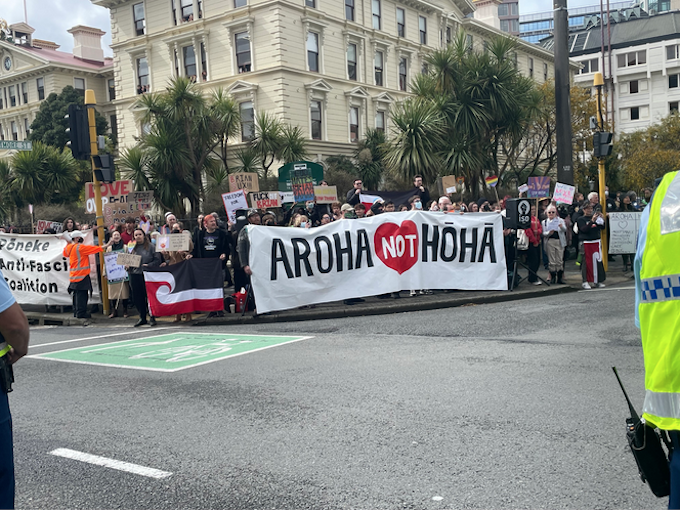
Scores of Papuan activists have held a protest in front of the Army Strategic Reserves Command (Green Berets) headquarters in Central Jakarta, demanding that President Joko “Jokowi” Widodo withdraw military troops from Papua, reports CNN Indonesia.

The protesters, who came from the Pro-Democracy Alliance and the Greater Jakarta Papua Student Alliance (IMAPA), accused the military in Papua of assaulting a primary school child for allegedly stealing a firearm and causing the child’s death.

“[We] demand that the president immediately withdraw the military from the land of Papua,” said one of the speakers in front of the Kostrad building on Monday.

“The primary school kid’s didn’t know it was a firearm. They didn’t know it was theft,” he said.

In an official release, the group also said that joint TNI (Indonesian military) and Polri (Indonesian police) operations following the fatal shooting of Papua regional National Intelligence Agency (BIN) chief Gusti Putu Danny in April last year have resulted in civilian casualties.

They said that the security forces have set fire to residents’ homes and committed violence against local people.

As a consequence, residents have chosen to flee their homes in order to save themselves.

“To the president, immediately withdraw the military in the land of Papua,” called the speaker. “Jokowi is responsible for the oppression in Papua.”

Earlier, on Sunday, February 20, a class 4 primary school student with the initials MT died after being allegedly assaulted by security personnel in the Sinak sub-district of Puncak regency, Papua.

Based on information received from Amnesty International Indonesia, the incident began when MT and six other children were arrested for allegedly stealing a firearm belonging to a TNI member in Sinak.

“Based on local media reports on February 26, two youths allegedly took a firearm belonging to a TNI member in the vicinity of the Tapulinik Sinak Airport, Puncak regency, Papua, on the evening of February 20,” read a tweet on the Twitter account @amnestyindo on Monday February 28.

Translated by James Balowski for Indoleft News. The original title of the article was Aktivis Papua Demo di Depan Markas Kostrad, Desak Jokowi Tarik Militer.

Print Friendly, PDF & Email

Article by AsiaPacificReport.nz

Can a martini stop Putin? How consumers and investors are imposing DIY sanctions on Russia

Source: The Conversation (Au and NZ) – By Erin O’Brien, Associate Professor, Centre for Justice, Queensland University of Technology

Scott Eisen/AP/AAP

Russia’s invasion of Ukraine has drawn swift condemnation from the United Nations, world leaders and protesters.

But the outrage doesn’t stop there. McDonald’s has just temporarily closed 850 restaurants across Russia, while Starbucks says its 100 outlets will also shut.

This follows boycotts of Russian vodka in Australia, Europe and North America, with patrons shunning Russian brands of vodka, bartenders pouring it down the sink and major outlets like Dan Murphy’s removing the spirit from their shelves.

As researchers of political activism and participation, we are interested in how individuals use their consumer and investor power to respond to Russia’s actions.

Applying economic pressure on foreign regimes is typically the domain of governments through sanctions. But what researchers call “political consumerism” offers individuals a chance to join the protest by applying their own personal sanctions.

How is this working against Russia?

What is political consumerism?

Whether we do it for political or ethical reasons, deciding what we buy (or don’t buy) is one of the most common forms of political participation in western liberal democracies.

Consumers can join boycotts to punish a company, or “buycotts” to reward them.

Sign, showing Russian vodka removed from shelves.
Russian vodka has been banned and poured down the drain since the invasion of Ukraine in late February.
Keith Srakovic/AP/AAP

Consumers can make lifestyle commitments like veganism to align with their stance on animal rights or the environment. Individuals can also engage in “political investorism”, as our soon to be published research shows, by selecting ethical portfolios for superannuation or pension funds, supporting shareholder resolutions, or advocating for divestment.

While political consumerism is often directed at corporations, it can also be directed against countries. We may not be able to directly lobby a foreign government or vote out their president. But we can send a clear message through a “surrogate boycott” by targeting the brands, products and companies from that country.

Surrogate boycotts

Surrogate boycotts are not new. In 1995 consumers boycotted French wine and cheese to protest France’s nuclear testing in the South Pacific. Israel has since been the target of a longstanding boycott, divest and sanction campaign over Palestine.


Read more:
Ukraine: the UN’s ‘responsibility to protect’ doctrine is a hollow promise for civilians under fire


Yet the rapid and extensive boycott against Russia ranging from caviar and white fish to films and sports teams suggests a growing normalisation of boycotts and political consumerism as a response to government actions.

Russian companies, sportspeople and even opera singers are now the proxy target for the Russian government, facing surrogate boycotts in addition to economic sanctions.

The surrogate boycott of Russia is not limited to Russian-owned companies or Russian-made products like vodka.

Activist groups also called for boycotts on companies that were slow to halt their own operations in Russia, including Coca Cola, Hyundai, Starbucks and McDonald’s. Two weeks after the invasion, these companies have now bowed to pressure and suspended certain operations.

Not just symbolism

Refusing to buy a Big Mac, or opting for a French-made Grey Goose vodka martini is not going to turn the tanks around. But these DIY sanctions serve an important symbolic function by condemning a country’s damaging actions and catalysing companies to join the protest.

Beyond symbolism, protesting Russia’s actions through political consumerism may have real impacts.

While governments can impose sanctions and import bans, consumers and investors can expand the scope of economic pressure. The threat of consumer and investor pressure may have contributed to the decision by major multinational companies like Apple, Visa, Mastercard and others to quickly cease operations in Russia.

What about the oil?

That pressure is now building around Russia’s oil and gas production. More than 600 civil society organisations from 57 countries have asked governments to end all trade and investment in Russian fossil fuels.

Before world leaders began to impose bans on Russian oil imports and investments, several major companies including BP and Norwegian energy company Equinor had already divested. Superannuation and pension funds were being pressured to do the same.

A worker filles up a car at a Lukoil petrol station in Moscow.
A worker fills up a car at a Lukoil petrol station in Moscow.
Yuri Kochetov/EPA/AAP

Australian non-government organisation Market Forces has criticised five Australian superannuation funds for their investments in Russian fossil fuels and encouraged individuals to lobby their own super funds to divest.

Meanwhile, the board of directors of Russia’s second largest oil company, Lukoil, has called for a quick end to the conflict in Ukraine. This follows a dramatic fall in its share price and threatened boycotts of Lukoil gas stations in the United States.

Ultimately, we all need to consider how we spend our money and what economic connections we may have with an aggressive regime.

The Conversation

Erin O’Brien receives funding from the Australian Research Council through a DECRA Fellowship to study ethical consumerism.

Justine Coneybeer does not work for, consult, own shares in or receive funding from any company or organisation that would benefit from this article, and has disclosed no relevant affiliations beyond their academic appointment.

ref. Can a martini stop Putin? How consumers and investors are imposing DIY sanctions on Russia – https://theconversation.com/can-a-martini-stop-putin-how-consumers-and-investors-are-imposing-diy-sanctions-on-russia-178643

COVID pandemic 2nd anniversary: 3 things we got wrong, and 3 things to watch out for

Source: The Conversation (Au and NZ) – By Adrian Esterman, Professor of Biostatistics and Epidemiology, University of South Australia

Exactly two years ago, on March 11 2020, the World Health Organization (WHO) declared COVID-19 a global pandemic.

This was two months after there were reports of a mystery virus infecting people in Wuhan, the most populous city in central China. Early reports said the virus didn’t appear to be readily spread by humans.

Well, the SARS-CoV-2 virus could indeed be spread by humans. It quickly travelled around the world, and has so far infected more than 450 million people.

COVID-19, the disease it causes, has to date caused more than six million deaths, making it one of the most deadly pandemics in history.

In those early days we knew very little about the virus and COVID.

Here are three things we realised were wrong as the pandemic wore on, and three things we need to keep a close eye on as we approach the endemic phase, where the virus continues to circulate in the population at relatively stable levels.

1. Many were worried we wouldn’t get a vaccine

In early 2020 we didn’t know whether a vaccine against SARS-CoV-2 was possible.

There had been previous attempts to develop vaccines against severe acute respiratory syndrome (SARS) and Middle East respiratory syndrome (MERS), two similar coronaviruses that also caused outbreaks this century. A few of these vaccines entered clinical trials, but none were approved.

Before COVID, the fastest developed vaccine was for mumps which took four years.

But in under 12 months, Pfizer/BioNTech developed a successful vaccine. Now we have 12 vaccines approved for full use in different parts of the world, 19 for emergency use, and more than 100 still in the clinical trial stages.

Both Pfizer and Moderna have also commenced clinical trials of an Omicron-specific vaccine.

There are also several research groups around the world developing vaccines aiming to work against all SARS-CoV-2 variants.

2. Some thought we didn’t need face masks

In the early days, without a vaccine, to reduce transmission we had to rely on individual preventative measures such as hand hygiene, social distancing and face masks.

Although there was widespread acceptance hand washing and social distancing protected against infection, face masks were much more controversial.

Before April 2020, the US Centers for Disease Control and Prevention (CDC) advised against the wearing of face masks by the public. There were apparently two reasons for this.

First, the CDC was afraid there wasn’t a sufficient supply of surgical and N95 masks, which were essential in high-risk settings.

Second, it was thought at the time asymptomatic and pre-symptomatic people could not transmit the virus (we now know they can).

However, on April 3 2020, the CDC changed its advice and recommended the general public wear multi-layered cloth face masks.

This has now been updated to wearing a well-fitting mask that is consistently worn.

With the advent of Omicron, some experts say cloth face masks aren’t up to the task and people should at least wear surgical masks, or even better respirator masks like a P2, KN95 or N95.


Read more:
COVID mask mandates might be largely gone but here are 5 reasons to keep wearing yours


3. We worried a lot about surface transmission

In the early days of the pandemic, it was thought contaminated surfaces were a major means of COVID transmission.

People wore gloves when going to the supermarket (some still do), and washed food packages once they got home.

However, we now know the virus is spread primarily through aerosol and droplet transmission.

When a person coughs or sneezes, droplets containing mucous, saliva, water and virus particles can land on other people or drop onto surfaces.

Larger droplets tend not to travel very far and fall quickly.

Smaller droplets called aerosols, can stay airborne for an extended period of time before settling.

Scientists now believe transmission through touching contaminated surfaces is quite rare.

3 things to watch out for

There are three key issues we need to be aware of as COVID slowly becomes endemic.

1. New variants

There’s still the potential for new and more severe variants to hit us. One of the main reasons for this is the low rates of vaccination in many developing countries. The more the virus replicates in unvaccinated populations, the greater the chance of mutations and variants.

Vaccine manufacturers Pfizer and Moderna either manufacture the vaccine in their own facilities, or licence the right to produce the vaccine in other countries.

This puts it out of reach financially for most developing countries, who then have to rely on the COVAX initiative for supplies. COVAX is a worldwide facility funded by developed countries and donor organisations to purchase vaccines to be distributed to developing countries.

Researchers at the Texas Children’s Hospital’s Center for Vaccine Development have unveiled a protein-based vaccine called Corbevax. It uses established and easy-to-manufacture technology, and is being provided patent-free to developing countries. It has now received emergency use authorisation in India.

It has over 80% efficacy against symptomatic disease, though this is against the no-longer dominant Delta variant. Trials are currently under way to determine its efficacy against Omicron.

If approved, this should greatly help lift vaccination rates in many developing countries.


Read more:
CORBEVAX, a new patent-free COVID-19 vaccine, could be a pandemic game changer globally


2. Waning immunity

Many older and vulnerable people had their third dose in November or December last year, with their immunity now waning fast.

We need to provide a fourth vaccine dose as soon as possible to the elderly and vulnerable.

3. Long COVID

Politicians are ignoring long COVID.

With thousands of cases a day in Australia, over the next year we will be getting a tsunami of people suffering from long-term health problems.

So, we simply cannot ignore high case numbers and would be wise to retain at least some public health measures (for example, face mask mandates) in order to bring case numbers down.

Some good news is that Australia’s Medical Research Future Fund will be funding research into long COVID this year.


Read more:
Long COVID: For the 1 in 10 patients who become long-haulers, COVID-19 has lasting effects


The beginning of the end

State and territory governments are now dismantling public health measures such as the use of QR codes, social distancing measures and face mask mandates.

Their thinking is that although case numbers are still quite high, hospitalisations are going down – and of course, elections are in sight. Chief public health officers, who used to give daily briefings, are now rarely seen.

“Give us our freedom back” is now a commonly heard cry, even if the inevitable consequence means this is at the expense of elderly and vulnerable people.

In a nutshell, many believe we have moved already from epidemic to endemic status.

As much as we all wish for this to be over and life to get back to normal, we aren’t quite there yet.

But I think with better vaccines and improved treatments on the way, it’s at least the beginning of the end.

The Conversation

Adrian Esterman does not work for, consult, own shares in or receive funding from any company or organization that would benefit from this article, and has disclosed no relevant affiliations beyond their academic appointment.

ref. COVID pandemic 2nd anniversary: 3 things we got wrong, and 3 things to watch out for – https://theconversation.com/covid-pandemic-2nd-anniversary-3-things-we-got-wrong-and-3-things-to-watch-out-for-177618

Scott Morrison’s tone-deaf leadership is the last thing traumatised flood victims need. Here are two ways he can do better

Source: The Conversation (Au and NZ) – By Alex Haslam, Professor of Psychology and ARC Laureate Fellow, The University of Queensland

Dave Hunt/AAP

As French statesman Charles de Gaulle once said, faced with crisis a man of character “falls back on himself. He imposes his own stamp of action, takes responsibility for it, makes it his own”.

So how, then, might we judge Prime Minister Scott Morrison’s character amid the flood catastrophe facing parts of Queensland and New South Wales?

Morrison has faced heavy criticism for his sluggish response. When touring flood-ravaged Lismore in NSW this week, he avoided locals who wanted to meet him. And his declaration of a national emergency came many days too late, well after the floodwaters peaked.

For the last two decades, I’ve worked with colleagues around the world to study the psychological resilience of communities in a crisis, and the importance of leadership in dealing with trauma. We offer lessons that might help Scott Morrison and other leaders better serve disaster-stricken people next time.

Give us hope

Only three months in, 2022 has already provided a glut of crises around the world requiring strong leadership. Along with the horrendous flooding along Australia’s east coast, we have a new wave of a deadly virus and Russia’s invasion of Ukraine threatening to start a world war.

For Australian leaders, COVID has been one long lesson in crisis management. What’s more, it came on the heels of devastating bushfires in the summer of 2019-20 and floods in early 2021.

But Morrison has struggled with this crash course in leadership. When criticised about the speed of his flood response, the PM focused almost entirely on limits to material resources, saying:

I don’t think in situations like this there can ever be enough support […] I mean, no amount of support is going to measure up to what people need in a desperate situation like this.

At a material level, this is entirely true. Indeed, given the utterly desperate situation in which Ukrainians find themselves, President Volodymyr Zelentskyy might well have made the same point to his people even more convincingly.

He didn’t, though. The core task for a leader in a crisis is not to explain why we are going to fail. People need hope that, together, we can prevail – and that costs nothing.

So how might Morrison have done better?

My colleagues and I recently released a book examining the dynamics of effective leadership across contemporary society. We have also published research on leadership during recent crises, notably COVID-19 and the Black Summer bushfires.

Our work points to several lessons for leaders looking to rally the groups they lead. Below, I focus on the two most important.

Being one of us

Whatever group they belong to, people are generally most influenced by those who seem to represent that group – whether it’s our team, our party or our country.

The more a leader is seen to represent us, the more we’re inclined to trust and follow them.

This is particularly important in a crisis. After the Christchurch massacre, New Zealand Prime Minister Jacinda Ardern went to great lengths to engage with the Muslim community, and dressed in ways that spoke to a sense of shared grief and shared identity.

NZ Prime Minister Jacinda Adern’s handling of the Christchurch massacre was a masterclass in leadership during a crisis.
SNPA Pool/EPA

Likewise, in Kyiv, Volodymyr Zelenskyy reassured Ukrainians by posting videos of himself in battle fatigues on the ground, mingling with his followers. “We are all here,” he proclaimed. “Our soldiers are here. The citizens are here. And we are here”.

Yet for many Australians, a defining feature of Morrison’s crisis leadership is that he is never here. And when he is, he seems not to be here for us.

Probably the most enduring image of Morrison’s handling of a disaster is of his holiday in Hawaii as bushfires raged in the summer of 2019-2020.

Unfortunate timing perhaps, but it was compounded by his seeming reluctance to return to Australia, together with his excuses for not doing so.

“I don’t hold a hose,” Morrison famously said in his defence.

As a statement of fact this is correct – just as Ardern didn’t hold a stretcher in Christchurch and Zelenskyy didn’t hold a rocket launcher in Kyiv. Psychologically though, they did. And it was this that motivated others to put their shoulders to the collective wheel.


Read more:
Whether people prepare for natural disasters depends on how the message is sent


Doing it for us

A key reason leaders need to represent shared identity in a crisis is to allow communities to draw from a sense of solidarity and provide a platform for social support.

Finding common ground with a stranger allows us empathise with their plight. It motivates us to offer a hand to help others, and in turn motivates them to accept it. Without this – as we saw when a volunteer firefighter withdrew his hand from Morrison during the 2019-2020 bushfires – aid is ineffective and unwelcome.

Shared identity also fuels resilience – helping people cope with ongoing stress and overcome trauma.

The power of shared identity came to the fore as the COVID-19 pandemic took hold, when “mutual aid” groups sprang up around the world. These groups involved people helping their neighbours, such as by collecting groceries, walking pets or giving moral support.

This cooperation involved people from all walks of life, creating a life-saving sense of meaningful community at a deeply challenging time.


Read more:
The community-led movement creating hope in the time of coronavirus


Women deliver meals to needy people in Athens, Greece, at the peak of the pandemic.
KOSTAS TSIRONIS/EPA

Holding the hose

Social identity is the most important resource leaders need to build and draw upon in a crisis.

It doesn’t necessarily require money, though this can help. It isn’t created by meaningless photo opportunities. It comes from a genuine identification with the people you represent and from a desire to work together to “make us better”.

One senses this point would not be lost on Volodymyr Zelenskyy. But after more than three years as leader, Scott Morrison still appears to be struggling with the idea of being there as one of us, for all of us.


Read more:
Why good leaders need to hold the hose: how history might read Morrison’s coronavirus leadership


The Conversation

Alex Haslam has previously received funding from the Australian Research Council for work examining the contribution of social identity processes to leadership and mental health

ref. Scott Morrison’s tone-deaf leadership is the last thing traumatised flood victims need. Here are two ways he can do better – https://theconversation.com/scott-morrisons-tone-deaf-leadership-is-the-last-thing-traumatised-flood-victims-need-here-are-two-ways-he-can-do-better-178984

Offshore wind will come to Australian waters – as long as we pave the way for this new industry

Source: The Conversation (Au and NZ) – By Llewelyn Hughes, Associate Professor of Public Policy, Crawford School of Public Policy, Australian National University

Getty

Offshore wind is playing an important role in Europe’s shift to renewables.

Australia’s excellent offshore resources now look like they are going to contribute to our own energy transition. Last week, the Victorian government announced ambitious targets for offshore wind capacity of 2 gigawatts (GW) by 2032, 4GW by 2035, and 9GW by 2040.

If this is all built, it will produce somewhere in the region of 40 terawatt hours (TWh) of power, close to all electricity used via the NEM in Australia’s second most populous state.

Offshore wind offers another excellent renewable option as we decarbonise electricity. But more needs to be done to turn these plans into enormous turbines off our coast. We need to streamline regulations, introduce more targets, fund research and begin building a supply chain.

Wind turbines in sea
Offshore wind farms have become an important source of electricity in Europe.
Shutterstock

Policy targets are key

Victoria’s groundbreaking announcement comes after federal government support for Australia’s energy transition through the Offshore Electricity Infrastructure Act 2021. It provides a broad framework to enable offshore renewable energy developments in Australia, and gives greater certainty to offshore wind backers.

Where should offshore wind be built? Key locations are off the Gippsland coast, as well as the coasts of the Hunter and Illawarra regions and off Tasmania’s north-west, according to the draft 2022 Integrated System Plan issued by Australia’s energy market operator. At least 12 projects are in the early stages of development.


Read more:
Wind turbines off the coast could help Australia become an energy superpower, research finds


So what do we need to make this a reality? In our recent working paper, we asked experts from industry, government and the research community which policies they believe are needed to get offshore wind up and running. We surveyed experts across the region, from Northeast Asia, South Asia and Southeast Asia, as well as Australia.

We found the experts shared strong support for the use of policy targets. Why? Because policy targets help provide the certainty of an ongoing pipeline for windfarm developers. Other state governments could follow Victoria and use targets to kickstart the offshore wind industry.

Targets alone will not be enough. Our experts singled out streamlined regulation as important. Some European nations have moved to coordinate offshore wind siting, consultation, and project development processes. Japan is now looking to adopt this approach.

At present, developers looking to build offshore wind in Australia will need to navigate different agencies due to separate state and federal responsibilities. Coordination will help provide greater regulatory certainty, combined with careful consultation with local communities.

Expert support for policies to accelerate offshore wind development, separated by turbines mounted on the seabed and tethered floating turbines.

Floating turbine tech has to develop further

Most of the world’s offshore turbines sit on fixed foundations in waters less than 60 metres deep.

Some of Australia’s best offshore wind resources are located in deeper water. That means we’ll need to use floating turbines, which sit on surface platforms tethered by cable to the seafloor.

This technology isn’t as developed as fixed foundation turbines. As this technology matures and becomes cheaper, it will open up more areas.

Floating wind turbines
Floating wind turbines are under development.
Wikimedia, CC BY

How can we speed this up? According to the experts we surveyed, we can make costs fall faster through government-backed research and development, as well as supporting commercialisation of newer technologies and processes.

The Victorian government expects local supply chains for this offshore wind rollout will emerge and become a boon to the economy. But why keep this to ourselves? An effective local supply chain would be well placed for the wider Asia Pacific offshore wind market, forecast to grow very strongly this decade.

We are only at the beginning of offshore wind

Last year’s federal legislation saw Australia join nations in our region including Japan, Vietnam, Taiwan, South Korea and China in establishing policy frameworks to support offshore wind power deployment.

It’s unusual to see federal and state governments seeing eye to eye on renewables.
But that’s what we’re starting to see with offshore wind. Last year’s federal legislation has had positive spin-off effects clearly seen in Victoria’s new vision for the sector.

Victoria’s government believes its mooted offshore wind pipeline will be a major source of new jobs, throughout the project development, construction, and operations phases.

Some of these jobs will be in coal regions such as in the Latrobe Valley, which are beginning to transition away from coal mines and coal power stations.

Technician climbs offshore wind turbine
Building and maintaining offshore wind will require a supply chain and skilled workers.
Getty Images

As you might expect, planning, building and running offshore wind farms is complex, requiring coordinating with other users of ocean resources, measuring wind resources, assessing the potential environmental impact, developing necessary port infrastructure, and securing a connection to the electricity grid.

This means that while federal legislation and state government announcements are vital first steps, they are just the beginning of building the policy framework and supply chains to support a substantial offshore wind industry in Australia.

Is it worth it? Absolutely. Europe’s thriving offshore wind market shows us this electricity source is more than capable of competing against other electricity generation sources without subsidies. Offshore wind could also provide renewable electricity to produce hydrogen.

What are the next steps?

Australia has offshore wind projects already in early development, with the Star of the South off Gippsland the most advanced. If this goes ahead, this 2.2GW project could supply up to 20% of Victoria’s electricity needs.


Read more:
Wind turbines can breathe new life into our warming seas


In Western Australia, a 3GW offshore wind farm has just been proposed. The project’s backers suggest this would be enough to enough to generate up to 11 TWh of power annually, offsetting around six million tonnes of CO2 emissions each year.

Costs are expected to fall and keep falling, if global deployment of offshore wind increases in line with net zero emissions targets, according to CSIRO projections.

Cost projections for offshore wind.
CSIRO Gencost 2021

It is excellent news that offshore wind has begun to gather real momentum. Now is the time to consider measures such as regulatory streamlining, more policy targets to de-risk investments, and investments in research and development.

If we get these in place, offshore wind could become an important part of the energy transition in Australia – and help Australian companies compete internationally for a share of this ballooning new market.

The Conversation

The financial support of the European Union’s Partnership Instrument is acknowledged for its support for this research. The contents of this article are the sole responsibility of the Australian National University and do not necessarily reflect the views of the European Union. Llewelyn Hughes provides advice to a number of companies operating in the renewable energy sector in Japan, including in offshore wind.

Thomas Longden is a Fellow working on the ANU Energy Change Institute’s Grand Challenge – Zero-Carbon Energy for the Asia-Pacific. He receives funding from the US Embassy (Canberra) and the Australian Department of Defence. He is a member of the ACT Climate Change Council.

ref. Offshore wind will come to Australian waters – as long as we pave the way for this new industry – https://theconversation.com/offshore-wind-will-come-to-australian-waters-as-long-as-we-pave-the-way-for-this-new-industry-178629

In the dark, freezing ocean under Antarctica’s largest ice shelf, we discovered a thriving microbial jungle

Source: The Conversation (Au and NZ) – By Sergio E. Morales, Associate Professor of Microbial Ecology, University of Otago

Shutterstock/Dale Lorna Jacobsen

Antarctica represents one of the last frontiers for discoveries on Earth. Our focus is on what lies beneath the Ross Ice Shelf, Antarctica’s massive wedge of floating ice that shelters the southern-most extension of the Southern Ocean.

This ice-covered cavity contains an ocean nearly equal in volume to the North Sea. But here, ice forms a permanent, impenetrable canopy over a completely dark and cold (around -1.9℃) environment.

As part of a multi-disciplinary research project to explore this under-ice world, we discovered a thriving microbial community, distinct and well adapted to survival without light and without the organic material that rains down in the open ocean.

Instruments are lowered through a 400m borehole in the Ross Ice Shelf to sample life in the ocean below.
Federico Baltar, CC BY-SA

Instead, this food web is built on inorganic nitrogen and sulfur compounds as sources of chemical energy. Microbes use these alternative energy sources to fix dissolved carbon dioxide into complex organic molecules and biomass which in turn fuel this underwater world.

Our discovery echoes back to the earliest hints of microscopic life under the ice, first recognised during the 19th-century voyages of James Clark Ross, after whom both this southern-most ocean and the ice shelf are named.

During the summers between 1840 and 1842, crews aboard the HMS Erebus and HMS Terror dodged icebergs, managed fickle winds and chipped frozen sea spray from their rigging and decks as they pushed southward through the Ross Sea. Their aim was as straightforward as that of Polynesian voyagers who preceded them centuries earlier: discovery.

Captain Ross’s voyage of discovery and research intended to find and explore the southern-most limit of the ocean. Everywhere – from icebergs, mud from the seabed and even the guts of larger organisms – they found evidence of microbial life.

The remains of microscopic animalculae […] countless myriads of an entirely new and minute form of organic life.

For Captain Ross, the vast floating extension of the continental ice sheet, now called the Ross Ice Shelf, was a barrier his ships could not overcome. Today, we can pursue the ocean farther south, traversing the ice surface in tracked vehicles and using purpose-built drilling systems to pierce the icy lid on a largely unexplored ocean.


Read more:
Climate scientists explore hidden ocean beneath Antarctica’s largest ice shelf


Mystery of life under the ice

Elsewhere, marine ecosystems are fueled primarily by photosynthetic organisms that use sunlight to turn nutrients in the water into biomass. At depths where sunlight does not reach, sinking organic particles transfer carbon and energy in a process known as the biological carbon pump.

But under the cover of the ice shelf, there is no rain of organic particles from above. And once water flows into the sub-ice ocean cavity, it can take up to five years for it to see sunlight again. Yet, when scientists first observed this environment in 1977, they found microbes, amphipods and fish.

The analytical methods of the day were limited, leaving the question of whether what they had found constituted a functioning food web unresolved. Our team’s recent expedition cracked the mystery wide open.

Antarctic field camp during a day of low cloud.
Low cloud and fog at the team’s camp site on top of the Ross Ice Shelf.
Federico Baltar, CC BY-SA

In December 2017, as part of a large interdisciplinary project, drillers from Victoria University of Wellington Te Herenga Waka used a hot-water drill to melt a 30cm-wide borehole through the 360m-thick central region of the Ross Ice Shelf (at about 80.7S, 174.5W), some 300km from the open ocean. We used this unique point of access to sample microbial life in the ocean cavity.

Revealing what is hidden

We didn’t know how abundant the microbial community would be, but expected ocean conditions at different depths to be important. To ensure we collected enough biomass, we lowered a battery-powered filtration pump through the borehole into the frigid environment below.

Sample collection was a waiting game. We worked through the night to slowly pump hundreds of litres of water though a filter paper at the centre of the pump. Each filtration was repeated three times, at depths of 30m, 180m and 330m from the base of the floating ice, spanning the whole water column between the ice shelf and the ocean floor.

The chamber holding the filter paper had to be carefully prized open every time, as a thin film of water froze when the pump hit cold air. Residual liquid water was siphoned from the pump as a “fresh” water sample.

While the filter paper samples could be frozen, the liquid water had to be flown as quickly as possible to the closest lab, 400km away at Scott Base. Poor visibility meant no flights for nearly three weeks, and eventually, we decided to drive — in a marathon 24-hour, 20km/hour crawl across the ice shelf in a Hägglund tracked vehicle.

A person next to a sign, and tracks across the ice, during a trip across the Ross Ice Shelf
Celebrating the safe passage across a crevassed area of the ice shelf.
Federico Baltar, CC BY-SA

Once safely back in our labs, we shared samples with colleagues in Austria, New Zealand, Spain, Australia and the US. They used an array of cutting-edge genomic techniques and biogeochemical measurements to identify what microscopic organisms live in the ocean cavity, where their energy is coming from and what they do with it.

Our efforts shed light on microbes with great metabolic flexibility that allows them to scavenge energy from multiple sources, and in doing so sustain a complex food web living in total darkness.


Read more:
What an ocean hidden under Antarctic ice reveals about our planet’s future climate


Antarctica is surrounded by 1.6 million square kilometres of ice shelves, each with its own microbial community. Together they represent a significant source of unaccounted energy and carbon.

Everywhere we look, we find microbial communities making use of whatever energy source is available, creating the foundation for all of Earth’s ecosystems. Just as Captain Ross anticipated 180 years ago, understanding life in this remote system helps us make sense of life everywhere else on Earth.

The Conversation

Christina Hulbe receives funding from New Zealand’s Antarctic Science Platform and from the Marsden Fund. The fieldwork work was funded by the New Zealand Antarctic Research Institute. Logistics were provided by Antarctica New Zealand.

Clara Martínez-Pérez receives funding from an MSCA Individual Fellowship (European Union)

Federico Baltar received funding from the Rutherford Discovery Fellowship (Royal Society NZ)

Sergio E. Morales does not work for, consult, own shares in or receive funding from any company or organisation that would benefit from this article, and has disclosed no relevant affiliations beyond their academic appointment.

ref. In the dark, freezing ocean under Antarctica’s largest ice shelf, we discovered a thriving microbial jungle – https://theconversation.com/in-the-dark-freezing-ocean-under-antarcticas-largest-ice-shelf-we-discovered-a-thriving-microbial-jungle-175735

Many of us welcome working from home, but universities show its dangers for women’s careers

Source: The Conversation (Au and NZ) – By David Peetz, Professor Emeritus, Griffith Business School, Griffith University

Shutterstock

If one possibly positive thing came out of the COVID-19 pandemic, it was the impetus it gave to letting people work from home.

Many see working from home as benefiting women workers. The logic is they can combine a career with the responsibilities of looking after children. But not enough thought has been given to how this could make things worse, not better, for many women.

We wanted to know how working from home during the pandemic affected men and women, including their productivity at work. We surveyed 11,288 people working in 14 universities across Canada and Australia, including 3,480 academics.

Our interest was sparked by an early observation by an editor of a British scholarly journal that journal submissions by women academics had fallen significantly.


Read more:
How COVID is widening the academic gender divide


This observation has been confirmed by several systematic studies that show declines in research outputs by women academics.

What did the study find?

Our own study of academic staff in the survey showed the same thing. Indeed, this difference in opportunities to submit research for publication was the biggest difference between the experiences of men and women during pandemic-induced lockdowns.

Women ended up facing increased teaching loads and doing more administration work more often than men. Women were also more likely than men to spend less time on research.

Experiences of academics in Australia and Canada as a result of the changes associated with moving from pre-Covid to Covid work.
Author provided

But the gender differences for these tasks were not as large as those in applying for research funding or submitting articles to peer-reviewed journals. These are the measures by which academic careers stand or fall these days.

What seems to be happening is that both men and women were forced to do more of their research at home. The difference was that women had less chance than men to put in the sustained time to produce good, publishable research. In our study, especially when children were around, women had more difficulty finding the vital “thinking time” needed for good research.

Ideally, men would assume an equal share of domestic responsibilities when working from home. But that hasn’t happened.

Child demands mother's attention while father sits to one side working with headphones on.
Both men and women had to do more of their research at home. The difference was that other responsibilities claimed more of women’s thinking time.
Shutterstock


Read more:
Planning, stress and worry put the mental load on mothers – will 2022 be the year they share the burden?


The future looks worse

Without confronting the problem head-on, universities are likely to make the problem worse.

We found most university staff want to work from home more than they were allowed before the pandemic.

Women tended to want more of this than men. That would, however, make them less visible in the physical office. And that, in turn, could reduce their perceived productivity.

Many universities can see the work-from-home trend as providing opportunities to save money. They can do this by getting rid of private offices and shifting academics into shared spaces. It’s a trend that started before the pandemic.

But when academics are on campus, a private office, not a shared space, is needed to do online teaching or research that requires thinking time.

Moreover, universities are increasingly tempted to reduce academics’ access to sabbaticals. Historically, these periods of study leave have been the best chance to find the thinking time to do good research. Now, though, it’s becoming less of an “entitlement” and more of a “privilege”, available to fewer researchers each year.

As sabbaticals become less available, women will find it much harder than men to make up for the lack of sustained thinking time. Their real productivity would be lower than men’s.


Read more:
Women’s academic careers are in a ‘holding pattern’ while men enjoy a ‘tailwind’


It’s the same for many white-collar workers as well

What we’ve described isn’t just a problem for academics. It’s a problem in any white-collar occupation in which “knowledge work” is performed.

In many jobs sustained knowledge work — that is, work involving long periods of concentration, and hence a good amount of thinking time — is needed to develop the best ideas. Most managerial jobs, and many professional and administrative jobs, involve and require some periods of sustained knowledge work.

But especially since the pandemic, both in the public and private sector, most staff want to be able to work from home some of the time. This is not just a pandemic phenomenon. Workers genuinely like not having to spend hours commuting every day.

Employers, too, now figure employees can be just as, if not more, productive at home. Employers are already taking advantage of “hybrid working”. They are putting more people into “hot desks” or other co-working spaces to reduce physical office costs.

That might sound fine, until you realise that the opportunities for, and the outcomes of, sustained knowledge work — the stuff that will get you recognised and promoted — will be gendered. It will be harder for women than men to schedule in the necessary thinking time, especially at home.

Where to from here?

Many of the slow advances women have made in some knowledge work occupations in recent times may be lost if they have less opportunity to get the sustained thinking time that translates into performance.

If women are to have a fair go in white-collar jobs in the future, then employers will need to rethink their post-pandemic strategies for saving money. Shared spaces may be good for the accommodation budget, but they’re not so good for the individuals concerned or for their contribution to organisational productivity.

Where unions represent those workers, they need to resist the closure of office facilities that can be critical for sustained knowledge work.

Governments need to be more active in supporting widespread, affordable, accessible, quality childcare.

Much has been written about how the economic response during the pandemic disadvantaged women. But worse may follow. We need to design to offset, not to compound, the problems that could come from more working from home.

The Conversation

David Peetz receives funding from the Australian Research Council and, as a university employee, has undertaken research over many years with occasional financial support from governments in Australia and overseas from both sides of politics, employers and unions. This project was financially supported by a number of the universities whose staff were surveyed, and involved all the researchers shown in the publication to which this article links. Results for participating universities were provided to them but the anonymity of respondents, and of the funding universities, has been maintained. Funding universities had no influence over the final version of the paper or any draft.

Kim Southey received funding from the University of Southern Queensland.

Marian Baird receives funding from the ARC. She is affiliated with the Women and Work Research Group at the University of Sydney and the Work and Family Policy Roundtable.

Mojan Naisani Samani receives funding from the Ontario Government.

Rae Cooper receives funding from the ARC. She is affiliated with the Gender Equality in Working Life Research Initiative, the Women and Work Research Group and the Work + Family Policy Roundtable.

Sara Charlesworth receives funding from the Australian Research Council. She is co-convenor of the Australian Work+Family Policy Roundtable.

Shelagh Campbell receives funding from the Social Sciences and Humanities Research Council.

Susan Ressia does not work for, consult, own shares in or receive funding from any company or organization that would benefit from this article, and has disclosed no relevant affiliations beyond their academic appointment.

ref. Many of us welcome working from home, but universities show its dangers for women’s careers – https://theconversation.com/many-of-us-welcome-working-from-home-but-universities-show-its-dangers-for-womens-careers-178142

Vital Signs: what the neoliberalism-hating left should love about markets

Source: The Conversation (Au and NZ) – By Richard Holden, Professor of Economics, UNSW Sydney

Shutterstock

It is fashionable these days to dunk on markets. Show me something bad in the world and I’ll show you someone blaming it on “neoliberalism”.

Our collective failure to tackle climate change – that’s the fault of “neoliberalism”. Poverty, low wages, income inequality, housing affordability, imperfect health care and education systems – the culprit is “neoliberalism”.

Not so long ago – in the 1980s, 1990s and early 2000s, the eras of Hawke and Keating in Australia, Clinton in the US and Blair in Britain – markets were seen by those on the centre-left as the best way to create broad prosperity and what is sometimes called “inclusive growth”.

Then a funny thing happened on the way to the 2010s.

A semi-apocalyptic global financial crisis in 2008 turned “market” into a dirty word. A bunch of greedy but clever Wall Street types transformed mortgage-backed securities – a way to bundle up mortgages into bonds leading to lower borrowing costs and greater home ownership – into what famous investor Warren Buffett once called “weapons of financial mass destruction”.

In the wash-up of the financial crisis the good and bad aspects of markets were fused into one derogatory word: neoliberalism.

An Occupy Wall Street protest in New York, outside the home of the chief executive of JP Morgan Chase, on October  11 2011.
An Occupy Wall Street protest in New York, outside the home of the chief executive of JP Morgan Chase, on October 11 2011.
Andrew Burton/AP

Belief in the power of markets to lift people out of poverty, empower households, and provide the resources to create a meaningful social safety net has become conflated with the free-market fanaticism associated with Ronald Reagan and Margaret Thatcher.

This is a big mistake. Those on the left of politics should embrace markets. Not the fanatical laissez-faire views that oppose government and market regulation. But a view of liberalism – in the classical sense, emphasising individual liberty – that harnesses the power of markets for social and economic good.

Towards democratic liberalism

Two of my former colleagues at the University of Chicago, Raghuram Rajan and Luigi Zingales, capture a version of this in their brilliant 2003 book Saving Capitalism from the Capitalists. So too does Joe Stiglitz with his vision of “progressive capitalism”.

My take is articulated in my new book with Rosalind Dixon, From Free to Fair Markets: Liberalism after COVID-19, to be published by Oxford University Press next month, where we argue for “democratic liberalism”.

For us, democratic liberalism takes more seriously commitments to individual dignity and equality, as well as freedom, within the liberal tradition; placing the democratic citizen at the centre of a liberal approach.


Read more:
Vital Signs: the ‘marketplace for ideas’ can fail


It draws heavily on the “capabilities approach” to human welfare of Amartya Sen and Martha Nussbaum, which acknowledges it’s not enough just to have a “level playing field”. It insists on universal access to dignity, a “generous social minimum” for all. And it insists unregulated markets do not serve those ends.

‘Capitalism is irredeemable’

In particular, so-called “neoclassical” economists have long maintained that monopoly power (in business or politics) and externalities, such as carbon pollution, distort and damage markets.

We need to do more to make markets work better – not abandon markets altogether.

As Buffett said:

We ought to do better by the people that get left behind by our capitalist system. I don’t think we should kill the capitalist system in the process.

Contrast this with the US left’s icon du jour, New York congresswoman Alexandria Ocasio-Cortez, who in 2019 said capitalism was irredeemable.

Asked what she meant by this last month, she described capitalism as:

the ability for a very small group of actual capitalists – and that is people who have so much money that their money makes money and they don’t have to work – to control industry. They can control our energy sources. They can control our labour. They can control massive markets that they dictate and can capture governments. And they can essentially have power over the many.

To be fair, that doesn’t sound so great to me either.

And I get that Ocasio-Cortez is not a fusty scholar but a (very successful) politician and activist. Nuance doesn’t play well in those worlds. But nuance is required when thinking about how society should be arranged.

We’ve been here before

This isn’t society’s first rodeo on these matters.

One of the more consequential debates about liberalism versus socialism – which became known as the socialist calculation debate – began in the 1920s between neoclassical economists Ludwig von Mises and Friedrich Hayek and socialist economists Fred Taylor, Oskar Lange and Abraham “Abba” Lerner.

At issue was whether Soviet-style socialism and its central planning could replicate the virtues of free markets without the downsides of inequality.

Alexandria Ocasio-Cortez on-message at New York City's high-society event the Met Gala in September 2021.
Alexandria Ocasio-Cortez on-message at New York City’s high-society event the Met Gala in September 2021.
NDZ/STAR MAX/IPx/AP

The clinching argument in this debate came from Hayek, who pointed out the market’s price mechanism is invaluable for aggregating and communicating information.

No central planner can ever replicate the price mechanism’s ability to give producers and consumers information they need to make the best decisions.

Lower prices, higher incomes

The character Toby Ziegler in The West Wing succinctly expressed the virtues of free trade and free markets more generally when he said (courtesy of Aaron Sorkin and his fellow writers) “it lowers prices, it raises incomes”.

In 1990 more than a third of the world’s 5.3 billion people lived in abject poverty, on less than US$1.90 a day.

Now about 9% of the globe’s 7.9 billion people live in such poverty. That’s about 1.2 billion fewer people, an extraordinary testament to the power of markets.

Since 2008 – and during the coronavirus pandemic – the limitations of free markets have come into sharp relief. More – much more – needs to be done to make markets fairer. That means a commitment to the dignity and freedom of all.

But it also means a commitment to the hard work of building a more prosperous society, not just shrieking from the sidelines, complaining about the things that are wrong, and misidentifying the solution.


Section editor’s note: I am sad to report that after six years and hundreds of contributions, this is Richard Holden’s final column for The Conversation. He is leaving us to write weekly and exclusively for The Australian Financial Review. We are extraordinary grateful for all he has done. We will miss him. And we will keep reading him. – Peter Martin

The Conversation

Richard Holden is President of the Academy of the Social Sciences in Australia.

ref. Vital Signs: what the neoliberalism-hating left should love about markets – https://theconversation.com/vital-signs-what-the-neoliberalism-hating-left-should-love-about-markets-178777

From field to store to plate, our farmers are increasingly worried about climate change

Source: The Conversation (Au and NZ) – By Stephen Bartos, Visiting Fellow, Crawford School of Public Policy, Australian National University

Empty supermarket shelves still shock Australians, who have become accustomed to being able to buy the food they want. But we can expect to see more empty shelves, more often, in coming decades.

Climate change means extreme events such as floods, bushfires and droughts will become more frequent and severe. Those events will disrupt food supply chains, as people along Australia’s sodden east coast have seen again in recent weeks.

Australia certainly isn’t at risk of running out of food. It produces far more food than it consumes, with around 70% of farm production exported.

What is at risk is Australia’s ability to distribute it.


Farmers for Climate Action

I was commissioned to prepare a new report on the impact of climate change on food supply, for for Farmers for Climate Action a constituent body of the National Farmers Federation with about 7,000 members.

Farmers for Climate Action is not otherwise politically aligned.

My methodology included a review of research in this area, interviews with more than a dozen farmers, farmer representative bodies, and other participants in the food supply chain, and a survey of media reporting of recent instances of food shortages.

Among the issues identified were the impact of drought, diseases and stress on livestock, the loss of food due to hotter weather, and shorter shelf lives.

An unexpected finding was the degree to which everyone involved in the supply chain is affected by uncertainty caused by climate change. It is making future weather highly unpredictable, making planning harder for both farms and in transport networks.

Unpredictability makes ensuring supplies hard

A further impact is on lending and insurance, where unpredictability means higher costs for financial products – if they can be obtained at all. Some farmers reported that they were unable to insure due to climate risks. All these costs are passed on to consumers in the form of higher food prices.

There are also opportunities.

Supply chains might become shorter to strengthen resilience and deliver fresher produce to consumers. Farm businesses and food processors are already moving to electrification to manage the risks of relying on fossil fuels and reduce greenhouse gas emissions, saving money in the process.


Read more:
Relax, Australia does not have (and isn’t likely to have) a food shortage


For businesses supplying food to export markets, a low-carbon supply chain will be a competitive advantage. In some cases, carbon-friendly production and transport will be a price of entry, without which markets won’t be available at all.

The report identifies four responses to climate change: risk management, resilience, adaptation, and mitigation (reducing the impact of climate change). All are needed. Even if Australia meets its Paris targets for climate change, there will be impacts to which the food supply chain will need to adapt.

Even good risk management might not be enough

Most farmers and businesses in the supply chain are good risk managers. But extreme weather events are increasing the base level of risk they have to deal with. The greater the risk, the more likely it is that risk management plans will be overwhelmed. If climate change continues unabated, this will become a certainty.

Governments have a role in strengthening or building alternatives to key supply lines and helping fill gaps in the market where private investment is insufficient due to uncertainty.

Governments also have an important risk management role in helping address gaps in data and information on climate impacts, to allow businesses to plan more effectively. Many industry bodies consulted were keen to see more research on the impacts of different projected levels of warming.

What farmers want is information and leadership

But the bottom line is that if climate change continues, adaptation will not be enough, a point clearly made by the three vice chairs of the Intergovernmental Panel on Climate Change when launching its latest report. The window for taking effective action on climate change is rapidly narrowing.

Farmers and processors are taking positive steps for themselves. For example, the Australian red meat industry has a target of becoming carbon neutral by 2030, well ahead of the government’s target of 2050.


Read more:
Mid-COVID, we find few vulnerabilities in Australia’s supply chains


Overwhelmingly, the farmers and farmer bodies consulted for the report wanted the Australian government to take the lead, providing clear guidance and direction on urgent climate action.

Farmers for Climate Action has responded by calling for deep emissions cuts this decade, to help avoid the worst impacts of climate change.

The Conversation

Stephen Bartos was paid to produce the report Fork in the Road for Farmers for Climate Action, a body affiliated with the National Farmers Federation.

ref. From field to store to plate, our farmers are increasingly worried about climate change – https://theconversation.com/from-field-to-store-to-plate-our-farmers-are-increasingly-worried-about-climate-change-178885

Grattan on Friday: We can’t know what sort of PM Albanese would be – but not for the reasons the government says

Source: The Conversation (Au and NZ) – By Michelle Grattan, Professorial Fellow, University of Canberra

Years ago, Kevin Rudd sold himself as a version of Howard-lite, as he sought to reassure voters he wouldn’t be scary. This week, Anthony Albanese invoked a Labor icon to soothe fears of change.

The opposition leader said he’d govern like Bob Hawke if he became PM. He would bring Australians together, seek consensus, work with business.

It wasn’t a bad pitch, as pitches go. Among many people, Hawke’s name remains prime ministerial gold.

Albanese needs to address voter hesitancy about change and about himself. By linking back to Hawke, he is drawing on what many would regard not just as modern Labor’s best days but as a good era for Australia (although it did end in a recession).

But the opposition leader’s claim he’d govern like Hawke has its limits. Hawke’s strengths as leader came in part from his charisma, and his forging (well before he was PM) of a strong link with the Australian people.

Albanese as PM might have a more unifying style than Scott Morrison but he would arrive in the job with considerably less political capital than Hawke brought by virtue of his sheer force of personality and connection with the electorate.

In terms of substance Hawke, in partnership with Paul Keating, led a reform government that transformed Australia. In economic terms, they executed a revolution.

Albanese this week, in a speech to the Australian Financial Review business summit, laid out his economic goals: lifting productivity, re-igniting economic and jobs growth, transforming the economy using renewable energy. But he stressed, “I’m not proposing revolution”.

When he was elected, Hawke wasn’t proposing a revolution either. His theme for the 1983 election was reconciliation, recovery and reconstruction, but the detail of his platform was very different from the significant things his government actually did over the following years.

Events – the international pressure to open Australia’s economy – shaped the trajectory of Hawke’s prime ministership.

However carefully opposition leaders seek to define themselves, it’s nearly impossible to be sure how they will handle the circumstances of power.

We put much emphasis on politicians keeping promises. But it can also be important that, on occasion, they are willing to abandon or breach earlier commitments.

Hawke was willing to do this when circumstances demanded – Gough Whitlam was not.

The government likes to claim Albanese would be the most left wing prime minister since Whitlam. The problem about Whitlam as PM was not that he was leftwing (a misnomer anyway) – it was that he was inflexible. He was unwilling to break promises and cut back his extensive reform “program” when international circumstances altered dramatically, with the oil shock shaking the Australian economy.

It would be interesting to hear Albanese’s view on when it’s okay to break promises. Understandably, it’s not something he’d want to dwell on, given he’s trying to convince people that what he says is what they’ll get.

An important quality of a good prime minister is the ability to react effectively to the unexpected. Labor’s wartime PM John Curtin – also referenced by Albanese this week – had that ability.

We can’t be sure until they are tested whether a leader will do well or badly in a crisis. Nevertheless, such assessments are important when we consider how circumstances can quickly and dramatically transform.

Who would have thought the Rudd government would face a global financial crisis? Who would have expected the Coalition government, which signed a free trade agreement with China, would be subjected a few years later to trade retaliation by that country?

And that’s not to mention the pandemic.


Read more:
Elect me and I’ll govern like Bob Hawke: Albanese


As Albanese seeks to define himself reassuringly, Morrison and his ministers work overtime to paint him in a dark image, opaque, a risk.

They’re slapdash with the brush. For example, they emphasise he has never held an economic or national security portfolio. This is a specious argument.

Albanese had major responsibilities (infrastructure, transport), and served in cabinet during all of the 2007-13 government, including briefly as deputy PM. And as Labor likes to point out, although he’d held senior portfolios, Tony Abbott hadn’t had a central economic or a national security ministry when he became PM.

Prime ministerial aspirants can prepare themselves on these issues and competent leaders will learn on the job.

As they ramp up national security for the election, Morrison and Defence Minister Peter Dutton are like a couple of tradesmen with chisels, desperately trying to chip away at Albanese’s declarations of bipartisanship.

Albanese told the Lowy Institute on Thursday: “For Labor, national security is above politics”. What he’s really saying is that Labor needs it to be.

For its part the government sees national security is a potential lifeline in its bid to hold onto office. But mobilising it as an electoral tool is not proving as easy as it might have hoped.

The attempt in the recent parliamentary week to portray Labor as soft on China policy didn’t come off.

The government harks back to the Labor government’s low spending on defence. The opposition half-heartedly argues the toss on the figures but says Labor agrees with the present spend of about 2.1% of GDP and suggests (in anticipation of the budget) that it might need to be higher.

Labor is sticking close to the government on broad strategic questions while criticising the multiple fumbles and stumbles in procurement.

The government is rolling out the big defence announcements as it drapes the election set in khaki. It hopes Labor will be wedged on something, somewhere.

This week Morrison announced a proposed submarine base on the east coast, as well as plans for a big expansion of the defence workforce by 2040. Labor derided the timing of the announcements as election-driven.

Notably, in view of his mini-me tactic, Albanese has left some difference on the submarine base. Labor has not endorsed the government’s approach, which is for a decision to be made from three possible sites – Port Kembla, Newcastle and Brisbane – that have been shortlisted by Defence.

Instead, an Albanese government would undertake a review of Australia’s defence force posture, which would provide advice on where the subs base should be.

Predicting how Albanese would shape up on the international stage is another crystal ball exercise. No one would have anticipated, when he came to power, the extent of Scott Morrison’s international activism.

Beyond climate policy, we are presently hearing more about how Labor would not differ from the government on international issues than getting a steer on the positive path Albanese would try to carve out. That’s the nature of this election.

The Conversation

Michelle Grattan does not work for, consult, own shares in or receive funding from any company or organisation that would benefit from this article, and has disclosed no relevant affiliations beyond their academic appointment.

ref. Grattan on Friday: We can’t know what sort of PM Albanese would be – but not for the reasons the government says – https://theconversation.com/grattan-on-friday-we-cant-know-what-sort-of-pm-albanese-would-be-but-not-for-the-reasons-the-government-says-179006

Game of Loans: the Reserve Bank loses its heir apparent to Fortescue’s green fund

Source: The Conversation (Au and NZ) – By Isaac Gross, Lecturer in Economics, Monash University

The Reserve Bank of Australia was roiled today by the resignation of its Deputy Governor Guy Debelle, who is leaving with only six days’ notice.

Dr Debelle said that he was resigning to become chief financial officer of Andrew Forrest’s Fortescue Future Industries, a company investing in zero-emission technologies such as green hydrogen.

The move came as a surprise given that, as deputy, Guy Debelle was long seen as the heir apparent to Reserve Bank Governor Philip Lowe, whose term expires in September next year.

Dr Debelle was re-appointed deputy only last year.

Debelle was one of the brightest sparks, if not the brightest spark at the bank.

He managed the day to day response to the global financial crisis when he ran the bank’s financial markets group and the economic response to the COVID crisis as deputy governor.

He is recognised around the globe, from the halls of Massachusetts Institute of Technology where he has been a visiting professor, to the world of central banking, where he chaired several international committees.

What made Guy go?

Why then did Debelle jump ship? As deputy governor he has shown a keen interest in the transition to a net-zero economy, giving several speeches on how the move will affect Australia’s economy and its financial system.

But as recently as last month it seemed that he was still hoping to be given the keys to the Reserve Bank vault in Sydney’s Martin Place, testifying to parliament that he didn’t own any financial assets in order to minimise perceived conflicts of interest.

However, notwithstanding his interest in the zero-emission transition, it seems that his decision to leave was in part because his status as governor-in-waiting was no longer a sure bet.

A drama named Succession

The Reserve Bank has faced criticism for missing its inflation target five years in a row and for “group-think” – an unwillingness to pay attention to outside ideas.

Regardless of who wins the next federal election, both sides of politics have promised an inquiry into the bank to investigate why it made such an apparent error and what needs to change to make sure it doesn’t happen again.

Given its apparent failure, it is possible that the Treasury and its political masters felt that another internal appointment would be inappropriate and that the next governor should be appointed from outside to shake things up.


Read more:
RBA governor Philip Lowe’s dangerous game on interest rates


Guy Debelle might also have seen writing on the wall about gender diversity.

The bank has not had a female governor in the 100 or more years since it printed its first banknote.

In contrast, the High Court of Australia appointed its first female justice in 1987, South Australia appointed the first female state governor in 1991 and Victoria the first female police commissioner in 2001.

While the RBA has made a concerted effort in recent years to encourage greater diversity within its workforce, compared to the rest of Australia it remains male, pale and stale – particularly at the higher levels.


Female share of workforce

Percentage of total at 30 June, RBA versus Australian workforce.
Reserve Bank of Australia

In this respect the Reserve Bank is behind the times. Appointing Guy Debelle governor would have kept it there for perhaps another decade.

Who will inherit the throne?

All eyes will now turn to who will be appointed deputy governor in Debelle’s place – and potentially next governor of the Reserve Bank.

If Treasurer Josh Frydenberg wants to keep a degree of continuity, he might well choose one of the assistant governors. The two most likely are Dr Luci Ellis and Dr Chris Kent, who together oversee the bank’s monthly policy process as the heads of the economic and financial markets groups respectively.

Assistant RBA Governor Luci Ellis.
Mick Tsikas/AAP

Alternatively, Frydenberg may choose to inject some new blood ahead of the post-election review.

Formidable economists such as Dr David Gruen, the current head of the Bureau of Statistics, and Jenny Wilkinson, current head of the Treasury’s fiscal group, would be able to hit the ground running.

Each has worked at the Reserve Bank and each has an outsider’s perspective.

Treasury Deputy Secretary Jenny Wilsinson.
Mick Tsikas/AAP

One thing that’s clear is that an orderly coronation has been thrown in the bin.

With a review looming on the horizon and a change in government likely, the deputy governorship may well be a poisoned chalice – an impossible task with little time to learn on the job.

The only certainty at the bank is turbulent times ahead.

The Conversation

Isaac Gross does not work for, consult, own shares in or receive funding from any company or organisation that would benefit from this article, and has disclosed no relevant affiliations beyond their academic appointment.

ref. Game of Loans: the Reserve Bank loses its heir apparent to Fortescue’s green fund – https://theconversation.com/game-of-loans-the-reserve-bank-loses-its-heir-apparent-to-fortescues-green-fund-178994

Distress can linger after disasters like floods. A mix of personality, family and community gives us clues

Source: The Conversation (Au and NZ) – By Gery Karantzas, Associate professor in Social Psychology / Relationship Science, Deakin University

The Queensland and New South Wales floods are a powerful reminder that health crises and natural disasters can arrive without warning and wreak havoc on the lives of those affected.

But what happens to these people next? Do they typically experience declining mental health and well-being? Or is the human condition typically one of resilience?

Research generally finds about two-thirds of people affected by natural disasters, health crises and terrorist attacks show resilience. They maintain a stable level of mental health in the face of a serious stressor.

However, some people experience prolonged distress after floods and other disasters. These people often face other life challenges and have reduced support networks – and must not be overlooked in policy responses and supports.


Read more:
From bushfires, to floods, to COVID-19: how cumulative disasters can harm our health and erode our resilience


People respond to disasters in four main ways

Studies often identify four types of psychological response to disasters and crises such as floods.

The first group, which includes approximately two-thirds of people, have a resilient response. They may have temporary increases in feelings of loss, sadness, fear and worry when the disaster first happens. But within two months they return to their usual level of psychological well-being.

The second group of people experience high psychological distress throughout the time of the disaster and beyond, and show little, if any, recovery.

The third group do not show any changes in psychological well-being for months, but then experience an increase in distress that can continue to increase for up to two years.

The fourth group experience large increases in psychological distress during and immediately after the disaster. These people show gradual declines in distress until their psychological well-being is re-established. However, this can take many months, if not years.

Who falls into which category?

Identifying the types of people who fall into these four psychological responses has proven extremely difficult, as no major factor alone can explain people’s psychological well-being during and after disaster.

Instead, it’s the combination of a variety of risk and protective factors that predicts whether a person is resilient, struggles with a more gradual recovery, or develops enduring mental health problems.

These factors also change over time as people’s life circumstances change. This means people can be more or less resilient at different points in their life, which can influence how they’re affected by the disaster.

What are the resilience and risk factors?

Three types of factors help predict resilience: personal characteristics, family relationships, and community characteristics.

Personal characteristics include personality traits such feelings of loneliness, optimism, neuroticism, the ability to control emotions, as well as gender, age, cultural background, and a history of mental health issues.

Family relationships factors include how relationships function, perceived support from partners and parents, constructive communication, feelings of closeness and trust.


Read more:
First come floods, then domestic violence. We need to prepare for the next inevitable crisis


Community characteristics include the level of social cohesion in the community, crime rates, exposure to the disaster and other factors such as wealth.

How do they come together?

To show how these factors come together to predict people’s psychological responses to disasters such as floods, let’s use two examples.

People who are psychologically resilient tend to be optimistic, demonstrate little neuroticism and have few existing mental health problems. They are often (but not always) of higher socioeconomic status.

They also tend to have highly supportive family relationships that are close and include constructive ways to communicate about problems.

These people tend to live in communities with high cohesion and solidarity.


Read more:
Want to help people affected by floods? Here’s what to do – and what not to


People who experience chronic mental health concerns, including post-traumatic stress, tend to lack optimism, can be higher on neuroticism and have a past history of mental health issues and past traumas.

Their distress is higher if they experience problematic family relationships, where conflict escalates and there is little support among family members.

The chronic mental health concerns can be further exacerbated in communities of lower socioeconomic status and where there is little cohesion.

How should policy responses consider well-being?

Typically, disaster response efforts are focused on two areas.

The first is providing tangible assistance. This includes rescue efforts, the cleanup of disaster-affected areas, and helping those affected access food, financial aid, temporary shelter or housing.

This type of disaster response can also include providing advice and information that helps people and their communities access the services they need.


Read more:
Like many disasters in Australia, Aboriginal people are over-represented and under-resourced in the NSW floods


The second is a focus on assessing and providing counselling for those who experience post-traumatic stress.

But by focusing on post-traumatic stress, you can miss out on providing mental health and relationship counselling to those who are at elevated risk, but may not show immediate signs of distress.

We need to broaden the way we assess people in disaster-affected areas and do a much better job of identifying those who are likely to be resilient and those who are likely to be at risk.

As part of that assessment, there needs to be an understanding of the level of community cohesion and capabilities in disaster-affected areas.

This is important because the distribution of aid and services can backfire and cause greater distress and increase community fracturing. This can occur if the allocation of resources is not transparent, the reasons for the timing and way aid is distributed is not well understood, and the aid provided is not viewed as fair or culturally sensitive.

It’s important to take a community-centered approach to post-disaster intervention. This requires that governments, aid organisations and local authorities work closely with each community to ensure the community itself has an active role, and a voice, in disaster recovery.

The Conversation

Gery Karantzas is the director and founder of Relationship Science Online. His research is funded by the Australian Research Council.

Antonina Mikocka-Walus does not work for, consult, own shares in or receive funding from any company or organisation that would benefit from this article, and has disclosed no relevant affiliations beyond their academic appointment.

ref. Distress can linger after disasters like floods. A mix of personality, family and community gives us clues – https://theconversation.com/distress-can-linger-after-disasters-like-floods-a-mix-of-personality-family-and-community-gives-us-clues-178428

Whether people prepare for natural disasters depends on how the message is sent

Source: The Conversation (Au and NZ) – By Carmen Elrick-Barr, Research Fellow, University of the Sunshine Coast

Coastal areas are at the frontline of natural hazards – a fact now thrown into sharp relief as flooding devastates parts of southeastern Australia.

Providing information is one of the most important ways governments can help communities cope with these events. Such information aims to encourage people to make more informed decisions about the risks they face and act accordingly.

But as our new research shows, simply providing information is not enough. We found when authorities deliver generic information about natural hazards via passive means, such as radio ads and brochures, most households did not change their behaviour.

To ensure our communities remain resilient in the face of worsening natural disasters, governments must find better ways to deliver important messages.

Ad reading 'be flood ready' with hand holding brochure
An ACT government ad promoting flood readiness. Sometimes, providing passive information is not enough.
ACT government

Barriers to being prepared

Numerous studies have suggested providing the public with information can overcome knowledge gaps, overcome inertia and prompt people to change their behaviour.

But even if a person is informed about the risks of natural hazards, other factors can influence their willingness to prepare for them.

For example, financial constraints might mean a person cannot stock up on food supplies before a storm hits.

Some people may simply not consider themselves to be at risk. Others may have competing priorities such as work or child care.

That means we need to better understand what types of information best lead to behaviour change and how barriers to action can be overcome.

Does passive information work?

Information can be categorised into three types:

  • passive (seeks to reach a wide audience through, for example, online communication, pamphlets or radio ads)

  • interactive (information derived through interactions with other people)

  • experiential (information gleaned from personal life experiences).

Information provided by governments to coastal households is predominantly passive.
For example, households are often encouraged to access information on natural hazards such as floods, and how to prepare for climate change.

We set out to test the effectiveness of this passive approach to delivering information.


Read more:
Weather forecasts won’t save us – we must pre-empt monster floods years before they hit


What we found

Our study focused on two Australian coastal communities: Mandurah in Western Australia and Moreton Bay in Queensland.

We surveyed households and conducted interviews with locals. We explored the types of information that shape responses to three hazard scenarios: a heatwave, a severe storm and sea-level rise.

People who wanted more information about their exposure to future climate risks were more likely to:

  • perceive their local area as vulnerable to environmental hazards
  • consider local environmental health important to their households’ wellbeing.

Likewise, people who wanted information on preparing for climate hazards believed:

  • households were very capable of managing the impacts
  • their local council was capable of preventing harm.
pool collapsed onto beach after storm
Coastal communities are particularly vulnerable to storms and other extreme weather.
David Moir/AAP

However, passive information rarely informed a person’s response to natural hazards. Instead, people tended to believe in the power of “common sense”, especially when dealing with short-term impacts of hazards.

For example, one interviewee said no response to a heatwave was required, but “if you do have to go out you don’t go out for very long”.

Household action was also informed by past experience. One Mandurah resident told us:

We did have a scenario here […] we had a pretty severe storm and were out of power. So I have lots of candles and you just get by.

Conversely, a Moreton Bay resident drew on their past exposure to a storm to justify the limited need for action:

The area has never been affected by those sort of floods […] it hasn’t stopped us from doing the day-to-day things like getting kids to school.

But as extreme weather worsens under climate change, basing decisions on past experiences may not be sufficient.

When it came to responding to hazards, most people adopted short-term coping strategies, such as securing loose items in their yard.

Other more proactive actions, such as installing window protection, were limited. There was also a lack of collective actions such as joining local recovery or conservation efforts.


Read more:
The floods have killed at least 21 Australians. Adapting to a harsher climate is now a life-or-death matter


crowded beach on hot day
Respondents favoured a common sense approach to natural hazards, such as not staying outside for long periods during heatwaves.
Dan Himbrechts/AAP

Where to from here?

Prior exposure to a climate hazard appears to drive some people to adapt. But most households generally employ coping strategies, informed by perceptions of common sense.

So what type of information best promotes the transition from short-term coping with natural hazards to longer-term adaptation?

The answer may lie in promoting adaptation well before natural disasters hit as a “common sense” response to the climate threat.

Passive information rarely contains targeted information that can capture the interest of all households. So there’s value in moving beyond this approach.

Two-way communication tools such as workshops, demonstrations, community events and harnessing opinion leaders offer promise. They enable collective discussion where participants can share experiences, beliefs and values, building trust and collaboration.


Read more:
Under-resourced and undermined: as floods hit south-west Sydney, our research shows councils aren’t prepared


Some households value passive information. But if resilience to climate hazards is indeed the objective, communication promoting household response must change.

Whether information resonates with a household depends on various factors, including their capacity to respond. So improving people’s confidence in their capability to act may also trigger better adaptation.

But households should not be seen solely as individual units acting to reduce their personal risk. They are also part of a broader system and can contribute to social change through collective action.

This might include collectively lobbying politicians, sharing experiences and strategies, and helping each other during times of crisis.

As climate change threatens to bring more severe and frequent natural disasters, more research is needed into information encourages people to cope and adapt – both individually and together.

The Conversation

Carmen Elrick-Barr acknowledges support from Australian Government through the Australian Research Council’s Discovery Projects Funding Scheme (Projects FT180100652 and DP1093583).

Tim Smith acknowledges support from the Australian Research Council’s Discovery Projects Funding Scheme (Projects FT180100652 and DP1093583). The views expressed herein are those of the authors, and are not necessarily those of the University of the Sunshine Coast, the Australian Research Council, or the Australian Government.

ref. Whether people prepare for natural disasters depends on how the message is sent – https://theconversation.com/whether-people-prepare-for-natural-disasters-depends-on-how-the-message-is-sent-178986

Is Russia really about to cut itself off from the internet? And what can we expect if it does?

Source: The Conversation (Au and NZ) – By Mohiuddin Ahmed, Lecturer of Computing & Security, Edith Cowan University

Shutterstock

The invasion of Ukraine has triggered a significant digital shift for Russia. Sanctions imposed by governments around the world – together with company closures or mothballing – have significantly impacted the country.

A plethora of events have escalated the invasion into the digital world, with cyber attacks, cyber criminals taking sides, and even an IT army of civilians being mobilised by Ukraine.

The sanctions imposed on Russia have not only directly hit its economy (and by extension the global economy), but are now also threatening Russian citizens’ access to the internet.

It’s expected the nation will limit its reliance on the global internet very soon. Although a complete disconnection isn’t yet confirmed, even a partial disconnection would be a difficult task. And the repercussions of Russia’s growing digital isolation for its citizens will be immense.


Read more:
The power of tech giants has made them as influential as nations. Here’s how they’re sanctioning Russia


Russia’s increasing digital isolation

More than 85% of Russians use the internet. Since the Ukraine invasion began, people in Russia have found themselves increasingly deprived of online services such as Facebook, Twitter and even Netflix – with Russia either limiting access to sites, or providers withdrawing services.

There’s no Facebook in Russia right now.
Pixbay

Major financial players have pulled out too, including Apple Pay, Google Pay and most major credit card providers, significantly impacting e-commerce.

Russia itself has also introduced a digital divide with the rest of the world, despite the fact this may further cripple its economy. It is expected to start withdrawing from the global internet by March 11, according to Kremlin documents.

Russia has long-imposed control over state-run media, but tolerated a level of free access to content and services through the internet. While such freedoms have been progressively diminished, citizens have still been able to stay connected to the wider web.

This open access is now being revoked. Russia will assert dominance over internet services and impose strict censorship on local media organisations in an attempt to control information and reinforce Kremlin propaganda.

The Kremlin’s orders

As part of this plan, the Russian government has directed businesses to move their web hosting and business services to Russian servers.

While it may be assumed a “.ru” website is located in Russia, this isn’t always the case. Large organisations will often host their services in remote regions’ servers. This may be to gain access to enhanced technologies, increase the resilience of the service, or to benefit from reduced service costs.

Among the Kremlin’s demands is a request for all foreign-hosted Russian services to be relocated to within Russia.
Shutterstock

A good example would be a content delivery network, where content is hosted on multiple servers around the world. This ensures fast access for users and resilience to outages and malicious attacks.

Relocating an individual website to a new server is relatively easy, but doing this on a national scale is a huge logistical challenge. It’s unknown whether Russia even has the capacity and capability to deliver the required resources.

Not the first attempt at disconnection

With mounting pressure from the West, Russia may create its own version of the “great firewall of China”. With this, the Chinese government implemented a number of measures allowing it to regulate and censor the domestic internet as it sees fit.

Although the current demands from the Kremlin relate to service availability – and migrating websites and services to Russian territories – this could be the first stage of a national disconnection from the global internet.

It’s worth noting, however, even if Russia adopts a domestic internet, it will still need to keep some bridges with the global internet to communicate with other countries.

In 2019, Russia tested disconnecting the country from the internet. There are few details relating to how long this test ran.

The test was reportedly successful, but not adopted. It could be the Kremlin stopped short of a full disconnection due to Russia’s reliance on global services, such as social media and financial gateways.

With Russia now becoming increasingly isolated from global networks, it’s potentially easier to implement network changes that would grant the Kremlin full control of Russia’s internet.

The repercussions

Disconnecting from the global internet and imposing censorship will inevitably slow down democratic progress in Russia.

It will also impact the country’s technological development. Russia is already facing significant chip shortages and a loss of access to advanced telecommunication technologies, including deliveries from Ericsson and Nokia.

Even if Russia successfully creates its own separate internet, this would be challenging for citizens to accept.

Until recently, Russian citizens have enjoyed the benefits of the global internet, and they will likely be concerned at its disappearance. The social impact would be incredibly difficult to manage.

And while virtual private networks have previously been used within Russia to maintain anonymity, or access censored sources, a properly implemented set of controls could effectively block the use of such techniques.

Is the internet safer without Russia?

Given the amount of cyber crime regularly attributed to Russian sources, you might imagine Russia’s withdrawal from the global internet would make it a more secure space for everyone else.

While isolating Russia will have an initial impact, cyber-criminal gangs and state-sponsored attacks will quickly return as perpetrators find ways to escape domestic controls.

In fact, state-sponsored attacks will likely increase in the coming months as Russia seeks retribution against the countries (and organisations) that imposed sanctions on Russia.

If cyber warfare reaches heightened levels, other nations will have to focus more on their defence capabilities to protect their infrastructure. We could see the digital economy reshape itself, as it tries to contend with increased Russian threats.


Read more:
As Russia wages cyber war against Ukraine, here’s how Australia (and the rest of the world) could suffer collateral damage


The Conversation

The authors do not work for, consult, own shares in or receive funding from any company or organisation that would benefit from this article, and have disclosed no relevant affiliations beyond their academic appointment.

ref. Is Russia really about to cut itself off from the internet? And what can we expect if it does? – https://theconversation.com/is-russia-really-about-to-cut-itself-off-from-the-internet-and-what-can-we-expect-if-it-does-178894

Politics with Michelle Grattan: Mark Maund on improving our resilience to deal with flood crises

Source: The Conversation (Au and NZ) – By Michelle Grattan, Professorial Fellow, University of Canberra

BRADLEY RICHARDSON/AAP

Catastrophic floods have devastated large areas of NSW and Queensland. More than 20 people have lost their lives and Scott Morrison moved for the declaration of a national state of emergency in response to this disaster.

Mark Maund is from the School of Architecture and Built Environment at the University of Newcastle. He has qualifications in environmental science, urban and regional planning and project management.

This latest national disaster has seen the climate debate re-ignited. Maund agrees “climate change is one of the issues that we all need to deal with”, but “there are a number of other issues that come into play as well.”

Where “we choose to build our infrastructure and buildings is obviously one of the issues that we need to deal with”.

When “we choose to live and develop infrastructure in flood-prone land, then we consciously make these choices that we’re exposing some of our buildings and communities to risk.”

With this increasing number of natural disasters occurring in Australia, Maund says governments and citizens need to ask themselves “what risks are we as Australians prepared to accept and put communities at risk in some of these natural hazard prone areas?”

To better address disasters “we need to improve facilities and services and support for our responders”.

“We need to make sure is that they have the facilities, equipment, training and support when these disasters happen – because they will continue to happen, unfortunately – [so] that they can respond as quickly as possible.”

“One thing I do think we really need in terms of infrastructure is evacuation centres. I think we need places, permanent places, even if they’re multi-purpose that can be used for other service facilities and activities. We really need evacuation centres for people to give them time to recover when these disasters happen.”

“It’s really less about who takes the lead and more about how, as a nation, we come together and really work towards better outcomes for these situations.”

The Conversation

Michelle Grattan does not work for, consult, own shares in or receive funding from any company or organization that would benefit from this article, and has disclosed no relevant affiliations beyond their academic appointment.

ref. Politics with Michelle Grattan: Mark Maund on improving our resilience to deal with flood crises – https://theconversation.com/politics-with-michelle-grattan-mark-maund-on-improving-our-resilience-to-deal-with-flood-crises-178989

What the “let it rip” COVID strategy has meant for Indigenous and other immune-compromised communities

Source: The Conversation (Au and NZ) – By Jaya A R Dantas, Deputy Chair, Academic Board; Dean International, Faculty of Health Sciences and Professor of International Health, Curtin University

After a year and a half of lockdowns, border closures, mask-wearing and social distancing, and the vaccine rollout, Prime Minister Scott Morrison has shifted to what is essentially a “let it rip” pandemic approach.

This is a push from the government to “open up” and get “back to normal.” However, since this approach was taken, it has led to Omicron spreading at increased rates across the country.

This shift to “learning to live with the virus” makes life harder and more dangerous for vulnerable groups such as First Nations people, people living with disability, the elderly, those with chronic conditions and those who are immuno-compromised. Refugees and migrants are at also at higher risk of serious illness and death from COVID.

Experts warn:

As the virus moves into vulnerable populations, such as older Australians, people with disability and Aboriginal and Torres Strait Islander people […] we may see a rise in hospitalisations and death.

This way of thinking was especially prevalent in the discourse around the release of the Australian Bureau of Statistics COVID-19 mortality report. As reported in The Guardian, some media stated or implied COVID doesn’t kill enough “healthy” people for it to be considered harmful, thus assigning lower value to certain lives.

For example Joe Hildebrand wrote in an op-ed for news.com.au:

…not only did so-called “COVID deaths” account for just 1% of fatalities during the pandemic, but 92% of that 1% were people with pre-existing health problems ranging from pneumonia to heart disease.


Read more:
Getting vaccinated is the act of love needed right now to support the survival of Aboriginal and Torres Strait Islander peoples during the pandemic


“Living with COVID” doesn’t include everyone

In Australia, there are people with compromised immune systems who because of a chronic illness, can’t be vaccinated. There are also some people whose bodies won’t respond to COVID vaccines either because of medications for ongoing treatments, or co-morbidities that impact their immune system.

Even if people with chronic illness do get vaccinated, their compromised immune systems mean there is no certainty they would be protected from COVID.

The Australian Institute of Health and Welfare report Aboriginal and Torres Strait Islander people are impacted by disease 2.3 times more than non-Indigenous Australians.

GP and Epidemiologist Dr Jason Agostino from Australian National University said:

there are almost 300,000 Aboriginal and Torres Strait Islander adults who are at higher risk of getting very sick if they are not vaccinated and get COVID-19.


Read more:
Australia is failing marginalised people, and it shows in COVID death rates


How First Nations communities are still being left behind

Before the pandemic, Aboriginal people faced health disadvantages and inequitable access to health care. This has worsened since the pandemic. One of the significant issues has been access to affordable food during the pandemic, increased vulnerability of homeless Indigenous people during lockdowns, lack of ability to self-isolate at home and lack of access to community healthcare.

The pandemic has also been disruptive to communities not being able to see one another because of public health concerns. This impacts community approaches to health care, cultural practices, and connection to Country.

Some Indigenous communities also have limited access to health services and need to be better informed by health workers from their own communities about testing and vaccination. This was proven successful by stories such as in Arnhem Land, Mala’la Health Service’s chairman Uncle Charlie Gunabarra travelled around remote communities sharing information about the COVID-19 vaccine. This led to a significant increase in vaccinations.


Read more:
COVID in Wilcannia: a national disgrace we all saw coming


What needs to happen

A study by the Australian National University, the National Aboriginal Community Controlled Health Organisation, the Royal Australian College of General Practitioners and the Lowitja Institute reinforces that First Nations people “must remain a priority group” for Australia’s COVID-19 pandemic response.

In this study, Dr Tanya Schramm from the Royal Australian College of General Practitioners said:

Improving access to social determinants such as housing and healthcare will reduce the risk of severe illness from COVID-19 among Aboriginal peoples, and this must occur alongside ongoing care and management of chronic conditions and efforts to increase vaccination coverage.

There have been efforts to overcome access to health services during the pandemic through telehealth and online healthcare options. However, there are challenges accessing these services such as limited access to phone, computer literacy and internet coverage. This also impacts refugee and migrant communities.

Despite Scott Morrision’s statement “We’re now at a stage of the pandemic where you can’t just make everything free,” not everyone can afford to buy rapid antigen tests. Although there are recent initiatives in place to make these available to concession card holders and to the WA population, these tests need to be free for all.

Ableism is complex, harmful, and the COVID-19 pandemic response has amplified harm to priority groups. In order to address this, the government needs to better include First Nations communities in their COVID-19 strategies going forward. This can be done by providing resources to Aboriginal community controlled health organisations in regional and remote areas, as recommended by the Australian Department of Health.

Better government support to and communication with First Nations people and their health centres can minimise misinformation and fear around the virus and vaccine. This could also provide much better access to health care, vaccines and rapid antigen tests.

As Western Australia opens up, some remote Indigenous communities and aged care facilities have been placed into lockdown, we need to find better ways to support vulnerable communities when addressing COVID-19 in Australia.

The Conversation

As a Global Public Health researcher, Jaya Dantas has been mapping the Global COVID-19 pandemic especially as it impacts vulnerable populations, developing countries, social determinants and vaccine equity. She is currently involved with two projects in Western Australia focussing on COVID-19. She is part of a team funded by WA Future Health Research and Innovation Fund – ‘Quantifying contact networks for COVID-19 outbreak and leading a second project funded by Healthway that will examine the impact of COVID-19 and domestic violence on CALD communities. Jaya is the International SIG Convenor of the Public Health Association of Australia and is on the Global Gender Equality in Health Leadership Committee for Women in Global Health, Australia.

Cheryl Davis is Director of Indigenous Engagement in the Faculty of Health Sciences at Curtin University and in this role supports Indigenous students currently studying health disciplines. She is affiliated with Derbarl Yerrigan Health Service and South West Aboriginal Land & Sea Council as a community member, is undertaking a PhD in Indigenous higher education and is also a member of the Australian Health Promotion Association.

ref. What the “let it rip” COVID strategy has meant for Indigenous and other immune-compromised communities – https://theconversation.com/what-the-let-it-rip-covid-strategy-has-meant-for-indigenous-and-other-immune-compromised-communities-176664

As the Commerce Commission found, there’s no magic way to make NZ supermarkets more competitive

Source: The Conversation (Au and NZ) – By Alan Renwick, Professor of Agricultural Economics, Lincoln University, New Zealand

Shutterstock

The Commerce Commission’s much-anticipated review of supermarket competition has itself had mixed reviews. Many felt a major opportunity to reset New Zealand’s food system had been missed, others felt the commission’s final report got it about right – and supermarket owners probably breathed a little easier.

A review of the big players was certainly due. New Zealand has one of the most concentrated grocery retailing sectors in the world.

Foodstuffs and Woolworths control at least 80% of the market. There has been widespread concern they were using this dominance to the detriment of both suppliers and consumers, especially low-income households.

Beyond the perception that New Zealand food prices were too high, there have also been claims of a lack of clarity in pricing, that suppliers were being unfairly treated, and that competitors were being prevented from entering the market – for example, through the use of restrictive land covenants by the dominant companies.

To varying extents all these concerns were validated during the investigation. The commission recommended mandatory unit pricing (to allow simpler price comparisons) and a statutory code of conduct governing how supermarkets deal with suppliers.

But those measures won’t tackle the issue of high prices and profits due to the lack of competition, and this is where the commission’s light-handed approach has drawn most criticism. The trouble is, even a heavier hand might not have achieved the desired outcomes.

Breakups don’t add up

That the commission shied away from the more radical interventions discussed during the investigation – and which might have gone further than remedies considered in other countries – is not so surprising.

A cursory examination of proposals to restructure the sector – by forcing supermarkets to sell stores or by separating out their wholesale and retail divisions – shows the costs could potentially outweigh the benefits.

Losses in scale and efficiency through breaking up the supermarkets, and the complexity of trying to ensure wholesale markets worked, risk increased costs in the supply chain and even higher prices – the exact opposite of what was intended.


Read more:
The pandemic exposes NZ’s supply chain vulnerability – be ready for more inflation in the year ahead


And it is certainly not clear that the much touted option of directly supporting the emergence of a third competitor in the market would remedy anything.

Moving from two to three players does not in itself constitute a magic leap from non-competitive to competitive markets. Three competitors can accommodate each other nearly as well as two!

Other countries – for example, Ireland and the UK – have faced similar competition issues, despite having five or more competing supermarket chains. It is not the number of competitors that matters, but the conditions under which they compete.

Insufficient remedies

To encourage competition without directly interfering in the structure of the industry, the commission recommended two main solutions: making it easier for competitors to access land, and that supermarkets offer wholesale supply to other grocery retailers on a voluntary basis (albeit with some regulation).

So the multi-million-dollar question – quite literally, given the financial stakes – is whether these changes are likely to increase competition and improve the situation for consumers and suppliers.

The answer is almost certainly no. Neither of the measures is sufficient to make emerging businesses viable. Given their size and power, the incumbent supermarkets could make it very difficult for new chains to establish a foothold and compete – by aggressive pricing in areas where new stores emerge, for example, or by upping their advertising spend.


Read more:
Inflation is raising prices and reducing real wages – what should be done to support NZ’s low-income households?


Overseas experience tends to suggest that, overall, there is little in the commission’s recommendations likely to have a major impact on the way New Zealand supermarkets operate.

Many of the commission’s proposals have been implemented in one form or another in the UK and, to a lesser extent, Ireland. The UK began in the 1990s by issuing a voluntary code of practice for supermarkets. Its failure meant it was later replaced by a statutory code of conduct supported by the appointment of an ombudsman.

Ireland also introduced a statutory code of conduct in 2014 but has yet to appoint a regulator, while farmers have been protesting over retailers failing to pass on price increases.

The UK has now had the statutory code for nearly a decade. While it appears to
have had some success, the fundamental imbalance of power remains a problem. Suppliers are unlikely to risk their businesses by complaining about their main or only customer.


Read more:
The cost-of-living crisis will put more pressure on shoppers than COVID


Expect little change

As we see upward pressures on food prices from supply-chain disruptions and the direct and indirect effects of the Russian invasion of Ukraine, it’s more important than ever that food markets work well.

Scale is an issue. In the UK and Ireland, the emergence of German discounters has done more to increase competition than any actions by regulators.

But the combination of New Zealand’s remoteness and relatively small population limits the viability of increasing competition through encouraging new large-scale entrants.

This points towards a realistic approach that effectively accepts the current structure but with more stringent regulation of the supermarket chains.

Overall, the Commerce Commission’s recommendations may be a step in this direction. But it’s unlikely the country’s supermarket owners will have suffered indigestion after reading the report. And it’s also unlikely the price of tomatoes will be falling anytime soon.

The Conversation

Alan Renwick does not work for, consult, own shares in or receive funding from any company or organisation that would benefit from this article, and has disclosed no relevant affiliations beyond their academic appointment.

ref. As the Commerce Commission found, there’s no magic way to make NZ supermarkets more competitive – https://theconversation.com/as-the-commerce-commission-found-theres-no-magic-way-to-make-nz-supermarkets-more-competitive-178762

‘It’s still going to be messy’ warning as NZ hospital covid cases climb

RNZ News

New Zealand’s Director-General of Health Dr Ashley Bloomfield and Royal NZ College of General Practitioners president Dr Samantha Murton gave a briefing today on the government’s response to the omicron outbreak as hospital cases continue to climb.

The daily number of new community cases has dropped slightly today to 21,015 community cases, but the number of people in hospital with the coronavirus continues to rise, reaching 845.

There are now more people in hospital with covid-19 than at any other point over the past two years, the Ministry of Health said.

Today’s numbers are down compared to yesterday’s 22,454 and 742 hospitalisations, with a record 19 cases in ICU.

Speaking at today’s briefing, Dr Murton said 80 percent of GPs were now looking after more than 20 patients.

“It has put a huge amount of work on general practice. When you think about the fact that there are 20,000 people who have got covid every day and across the country 50,000 consultations normally happen every day, that’s a 50 percent increase in workload if we had to deal with every one of those 20,000 that came through,” she said.

‘Huge amount of work’
“It has put a huge amount of work on general practice. When you think about the fact that there are 20,000 people who have got covid every day and across the country 50,000 consultations normally happen every day, that’s a 50 percent increase in workload if we had to deal with every one of those 20,000 that came through,” she said.

“My colleagues want me to remind everyone that we are working really hard, doing our best for our patients and although we are prepared and have done the best we can do for when the outbreak occurred, it is still going to be a little bit messy for the next couple of weeks.”

Watch the media briefing

Video: RNZ News

She said that was because there were people who wanted care and then people who needed care and were “quite vulnerable”.

Those vulnerable people will be the ones GPs are focusing on, she said.

“The other thing we have found is that across the country, people are stressed.

“People are stressed about having covid, people are stressed about being isolated, about not being able to go out, about having family members who might be sick and the practices are under pressure to provide as much care as they can and so that stress can often end up with a lot of anxiety and peoples’ emotions might flare, to put it politely.

“My colleagues have suggested people be kind to their providers.

‘Have a bit of patience’
“Please have a bit of patience as patients.”

She also put out a reminder that booster vaccine shots were the best protection people could get.

Auckland hospitals have reported that they are dealing with far more covid-19 cases than even their worst case scenarios predicted, with daily case numbers as high as 533 across the city’s hospitals this week.

In Wellington, frontline care workers are operating around the clock to help the more than 17,000 people across the region who are isolating at home and in need of some level of assistance.

Canterbury District Health Board is already teetering on patient capacity, three weeks away from an expected peak of covid-19 cases.

Health Minister Chris Hipkins has announced that the isolation period for covid-19 cases and their household contacts is reducing to one week, down from 10 days, from tomorrow.

This article is republished under a community partnership agreement with RNZ.

Print Friendly, PDF & Email

Article by AsiaPacificReport.nz

Boycotting Russian products might feel right, but can individual consumers really make a difference?

Source: The Conversation (Au and NZ) – By Mike Lee, Associate Professor of Marketing, University of Auckland

Scottish Artists for Ukraine demonstrate at the Russian consulate, Edinburgh, against the Russian military invasion of Ukraine. Picture date: Wednesday March 9, 2022. Andrew Milligan/PA Images via Getty Images

Ukrainian president Volodymyr Zelenskyy’s recent call for a boycott of Russian oil and other import-export bans was aimed at global leaders, but consumers across social media are also advocating a form of personal economic sanctions.

Some New Zealand shoppers have compiled lists of alcohol brands to avoid while others have identified Ukrainian brands to support.

But alongside these boycott lists are repeated dismissals by cynics who say local boycotts will have little impact on the European conflict. So who’s right?

Boycotts spring from the need to do something

Boycotts are meant to address a power imbalance and give individuals a say through collective action.

Ukrainian President Volodymyr Zelenskyy has called on other countries to boycott Russian products.
Ukrainian Presidency/Handout/Anadolu Agency via Getty Images

Boycotting Russian goods gives shoppers a small sense of efficacy in relation to a wider political issue. By choosing to reject Russian products, shoppers are hoping to create enough economic pain to convince Vladimir Putin’s government to back down from its invasion of Ukraine.


Read more:
How one woman pulled off the first consumer boycott – and helped inspire the British to abolish slavery


This is not the first time consumers have attempted to achieve political change via shopping decisions. SodaStream was targeted for international boycott because of the company’s ties to Israel and its factory in the West Bank.

Activists called on tourists to partake in “moral calculus” before visiting Bali over Indonesia’s occupation of West Papua.

In the aftermath of 9/11, politicians in the United States called for a boycott of French products to punish the country for its opposition to the invasion of Iraq.


Read more:
Beijing Olympics: Canada, the U.K. and others join Biden’s diplomatic boycott, but it’s not enough


The gap between intention and action

While shoppers might make the public commitment to boycott Russian products, the reality is there are competing factors that feed into shopping decisions. The gap between intention and action can become a chasm.

The high cost of living in New Zealand means shoppers are typically motivated by price and convenience. A New Zealand shopper might have the best intentions to boycott Russian flour, vodka or oil, but their commitment could be challenged if those products are the cheapest options.

In order for a boycott to be effective, consumers need to have the means to make the sacrifice, which could involve changing a habit, buying something that is more expensive or something that is a little less convenient.

Palestinians called for a boycott of Israeli products over attacks on Gaza and the West Bank in 2021.
Nedal Eshtayah/Anadolu Agency via Getty Images

The second hurdle to an effective boycott is scepticism: shoppers might have the means to boycott Russia but do they believe it will have any effect? Will Russia still steamroll its way into Ukraine regardless of the shopping decisions of a group of New Zealand consumers?

Boycotts are more effective when shoppers believe their sacrifice will make a difference.

Finally, consumers need to also be able to identify what products come from Russia. While the social media lists are useful, products that seem Russian but aren’t, like Swedish brand Absolut Vodka, have the potential to be caught up in the boycott of Russian goods.

The rise of buycotts

Consumers often find “buycotts” easier to commit to than the traditional boycott. A buycott is when a shopper deliberately buys a company’s or a country’s products in support of their policies.

Buycotts are less of a sacrifice and allow consumers to see immediate results.


Read more:
Brand activism is moving up the supply chain — corporate accountability or commercial censorship?


Buying products that put money back into the Ukrainian economy or go towards charities supporting Ukrainian refugees can create a sense of doing something positive, with less sacrifice than a boycott.

Ultimately, the most effective boycotts are those targeted at specific companies and which can create change in response to consumer demand. Nike learned this lesson in the 1990s when it was boycotted for its labour practices in developing countries.

Consumers had options and Nike lost market share to its competitors, forcing the company to change the way it made its products. Closer to home, chocolate giant Cadbury was forced to reverse course after using palm oil in its dairy milk chocolate.

When it’s a country-level boycott, however, government sanctions need to be part of the equation. Consumers can apply pressure to the government to apply sanctions so that products from the offending country don’t make it along the supply chain. In that case, the consumer is more valuable as a voter than a boycotting shopper.

The Conversation

Mike Lee does not work for, consult, own shares in or receive funding from any company or organization that would benefit from this article, and has disclosed no relevant affiliations beyond their academic appointment.

ref. Boycotting Russian products might feel right, but can individual consumers really make a difference? – https://theconversation.com/boycotting-russian-products-might-feel-right-but-can-individual-consumers-really-make-a-difference-178876

Canada eyes Australia’s media code to pay for news but wants more ‘transparency’

Source: The Conversation (Au and NZ) – By Andrea Carson, Associate Professor, Department of Politics, Media and Philosophy, La Trobe University

Shutterstock

Google and Meta have reportedly paid more than A$200 million to Australian news outlets since the Morrison government introduced the groundbreaking News Media Bargaining Code a year ago. Yet Canada boasts that its own version of the code will do better.

Canadian Heritage Minister Pablo Rodriguez claims the online news bill he intends to introduce in the Ottawa parliament within months will also force Google and Meta to pay media outlets for third-party news content on their sites. But he argues it will be a “more transparent” version of the Australian code.

His key criticism of the Australian version was that it handed power to Treasurer Josh Frydenberg through “designation”, rather than to an independent regulator. This, he says, will force big technology companies to negotiate deals with media outlets:

In our case, it’s not going to be the minister that will designate. […] there are going to be criteria set by the regulator that will clearly identify who are in an imbalanced situation and require them to sit down with news organisations and get into a deal.

Australia’s code – which uses competition rather than the European model of copyright law to compel Google and Meta to pay for news – has attracted international attention. In the past fortnight, Canadian and US journalists have visited our shores to report on it.


Read more:
Is the news media bargaining code fit for purpose?


Since the code was introduced, Frydenberg has resisted using this designation power, so only voluntary deals have been done between the technology giants and news companies. This has created clear winners and losers.

The winners generally have been legacy and larger media outlets such as Rupert Murdoch’s News Corp, Nine Entertainment, the ABC, The Guardian and networks of regional newspapers such as Australian Community Media. The ACCC estimates Google has secured 20 media deals (including with The Conversation), while Meta has made 14 deals.

So far, Treasurer Josh Frydenberg has resisted using his designation powers, leaving media outlets to broker deals for themselves.
Mick Tsikas/AAP

Media outlets left without Meta deals include public interest journalism publications such as The Conversation and SBS. There has also been little provided for smaller media start-ups in need of funds to help diversify Australia’s highly concentrated news landscape under the code.


Read more:
Fact-checking can actually harm trust in media: new research


Excluding these outlets runs counter to the Australian government’s aim to address “bargaining power imbalances between the digital platforms and Australian news media”.

This failure to get some deals done led the outgoing chair of the Australian Competition and Consumer Commission, Rod Sims – a chief architect of the code – to complain it was “inexplicable” these outlets were excluded.

Other criticisms of the code have been that commercial in-confidence arrangements mean no one knows exactly how much money has flowed to media companies ($200 million is the ACCC’s estimate) and that there is actually no legal requirement for this money to be spent on journalism.

The Canadian minister acknowledges that media companies have legitimate commercial sensitivities, but criticises the lack of transparency in the Australian code. On this issue he has been explicit:

One of the things we want to do differently from Australia is to be more transparent.

The fact these criticisms come from the Canadian government is notable. The Trudeau administration has been a vocal supporter of the Australian reform process, along with many other countries.

Rodriguez’s comments suggest that, while other countries are keen to adopt the reform, most will work to improve on the deal that emerged from the series of high-stakes negotiations in early 2021, which prompted Facebook to briefly pull news off its platform.

Australia might even consider thinking about adopting some of these international modifications. Frydenberg marked the one-year anniversary of the Australian code last week by announcing a review of its performance, to report by September 2022.


Read more:
Facebook has pulled the trigger on news content — and possibly shot itself in the foot


The review is a chance for industry stakeholders, policymakers and researchers to assess the impact of the code in its first year of operation. Of course, many participants who secured deals will be pleased. However, the review must consider outstanding issues such as greater transparency, rigorous criteria around designation, and expenditure.

As the code continues to operate, we must also consider the long-term impacts of platform payments. A yearly injection of $200 million into the Australian media market is not transformative, but it is enough to make an impact. Finding out how that money has been spent is now a critical task and more answers are needed.

  • To what extent can we credit the code for the recent upsurge in recruitment in some of our larger media companies’ newsrooms?

  • What are the experiences of the smaller media outlets that have struggled to even get a reply from Google and Meta?

  • Is the code doing enough to assist regional and remote towns that no longer have access to local news?

  • And what impact, if any, do other funding schemes such as the Facebook Australian News Fund that Meta has established with the Walkley Foundation have on public interest journalism?

Local and regional journalism that covers council meetings, courts and times of crises such as flood and bushfire emergencies are fundamental to Australian democracy and our well-being. This is where the disruption in the news media has had a significant impact in the past two decades. Research shows parts of Australia have become “news deserts”, with no local media coverage.

While the review of the code is welcome, ongoing research is vital to help reveal whether it has contributed positively to the renewal of Australian journalism, or simply stabilised established players.

The Conversation

Andrea Carson receives funding from the Australian Research Council and Meta for research. She is also a member of the Public Interest Journalism Initiative’s academic research advisory group.

Andrew Dodd is a member of the Public Interest Journalism Initiative’s academic research advisory group.

James Meese receives funding from the Australian Research Council and Meta. He has also made single and co-authored submissions to the ACCC Digital Platforms Inquiry.

Johan Lidberg does not work for, consult, own shares in or receive funding from any company or organization that would benefit from this article, and has disclosed no relevant affiliations beyond their academic appointment.

ref. Canada eyes Australia’s media code to pay for news but wants more ‘transparency’ – https://theconversation.com/canada-eyes-australias-media-code-to-pay-for-news-but-wants-more-transparency-178402

First come floods, then domestic violence. We need to prepare for the next inevitable crisis

Source: The Conversation (Au and NZ) – By Kim Usher, Professor of Nursing, University of New England

Shutterstock

Catastrophic flooding in New South Wales and southeast Queensland has led to lost lives, homes, belongings, pets and livelihoods.

As the process of cleaning up after the floods continues, we can expect an often unspoken outcome of natural disasters.

Domestic violence rates surge during and after bushfires, pandemics, earthquakes, cyclones and floods.


Read more:
The floods have killed at least 21 Australians. Adapting to a harsher climate is now a life-or-death matter


We’ve known this for years

Domestic violence may include one or a combination of psychological, physical, financial and sexual abuse.

It’s most often directed at women and children, may occur for the first time during a disaster, or may transform from one type to another during or after a disaster.

Researchers have been studying the links between natural disasters and domestic violence for years.

Previous floods, including after Hurricane Katrina in the United States, have led to increased rates of domestic and family violence.

In the four years after the Black Saturday bushfires in Victoria, there was a rise in domestic violence rates with worse-affected areas reporting higher levels of abuse.

Internationally, we’ve seen an increased risk of domestic violence during the COVID-19 pandemic. Our Australian research shows there is growing public concern about pandemic-related domestic violence, and about the lack of services to support women.

Studies have also reported increases in requests for women’s shelters after disasters, as women seek refuge from violent relationships.

Why is domestic violence more likely?

Fear and uncertainty are common during disasters and people’s reactions to disasters vary. In some, these feelings can trigger domestic and other types of violence.

The many associated losses related to disasters – including loss of homes and their contents, cars and livelihoods – often cause financial strain, which may also place added pressure on families and relationships.

Grief, loss and trauma can also leave people feeling overwhelmed and test a person’s coping skills. Experiencing life-threatening situations or those that bring about loss and trauma can also lead to mental health issues, such as postraumatic stress disorder. This too, can complicate family dynamics and change people’s ability to cope.

Drug and alcohol use often soars during and after disasters, which may also exacerbate tensions in relationships.

When people are displaced and need to stay with other community members or in shelters, the rates of violence against women also rises. In those cases, women and children tend to experience more violence in general, not just domestic violence.


Read more:
Pregnant women are at increased risk of domestic violence in all cultural groups


What can we do to prepare?

As climate change is predicted to cause more of these types of catastrophic weather events in the future, we need to start prevention strategies for the next inevitable disaster.

So local, state and national government departments need to start enacting these as soon as a disaster occurs.


Read more:
Domestic violence soars after natural disasters. Preventing it needs to be part of the emergency response


We can group these prevention strategies into two broad areas, those aimed at entire disaster-affected communities and those targeted towards supporting people who experience domestic violence during and after disasters.

Whole communities

Helping entire communities affected by floods and other natural disasters will minimise the kind of conditions – the fear and uncertainty – our research has shown triggers domestic violence. Strategies include:

  • government funding to help people and businesses clean up after the disaster, rebuild communities and get back on track. This could be along similar lines to COVID payments we saw earlier in the pandemic to support individuals and businesses

  • swift provision of daily essentials such as food, shelter and clothing. This could include governments partnering with community organisations and volunteers

  • governments mobilising extra support, such as from the Australian Defence Force, promptly and efficiently, a move criticised as being too little too late during the recent NSW floods.

Helping survivors

To help people affected by domestic violence, we need:

  • locally available domestic violence services ready to act when disasters occur, not weeks later, as that may be too late for some women. These need to be properly funded, accessible to survivors and widely publicised on social media

  • to avoid telling people who experience domestic violence that things will improve once life gets back to normal. If women’s concerns are brushed off this way, they are more likely to have poor mental health in the future

  • to recognise the importance of first-line responders in these times. We need to make sure they are trained to recognise the signs and triggers of domestic violence

  • to support health-care professionals, teachers, relatives and other community members who might suspect domestic violence. They need to know where they can refer people and what services are available in the community.


If this article has raised issues for you, or if you’re concerned about someone you know, call the 1800 Respect national helpline on 1800 737 732 or Lifeline on 13 11 14.

The Conversation

Kim Usher receives funding from NSW Health and the NHMRC.

ref. First come floods, then domestic violence. We need to prepare for the next inevitable crisis – https://theconversation.com/first-come-floods-then-domestic-violence-we-need-to-prepare-for-the-next-inevitable-crisis-178607

Weather forecasts won’t save us – we must pre-empt monster floods years before they hit

Source: The Conversation (Au and NZ) – By Mark Gibbs, Leader of the Knowledge to Innovation team, Institute for Future Environments and Science and Engineering Faculty, Queensland University of Technology

Most people’s lives are largely removed from nature. We spend our days in temperature-controlled rooms, immersed in virtual environments. Our cars transport us from underground car parks to our garages in comfort, no matter what the outside conditions.

And when a natural hazard hits, we often rely on technology-driven weather forecasts to understand and avoid the risks.

But now, Southeast Queensland and parts of New South Wales are inundated yet again. Clearly, short-term weather forecasts alone are not enough to protect communities in times like these.

Withstanding natural disasters requires recognising the threat earlier, and enacting the systemic change needed to survive.

home with flood debris in front
Withstanding natural disasters requires recognising the threat earlier.
Jason O’Brien/AAP

Living with nature

The public demands accurate weather forecasts. People want to know how the weather will affect their family, work and social schedules so they can minimise the disruptions.

The technology used to determine future weather conditions is continually being refined. Now, sophisticated computer models churn out 24/7 forecasts and radars provide real-time images of where rain is falling.

But projecting the arrival and behaviour of extreme weather remains challenging.

These events, such as intense rain, can develop and intensify within hours. Short-term forecasts often change throughout the day as conditions develop.

The recent heavy rain and flooding shows how we’re pushing the limits of this technology. It has also exposed vulnerabilities in our collective ability to apply the information generated.


Read more:
The floods have killed at least 21 Australians. Adapting to a harsher climate is now a life-or-death matter


woman in rainy street with umbrella
Intense rain can develop within hours.
Damian Shaw/AAP

Advancing technologies

Australia has the fourth-largest weather radar network in the world.

Radars work by emitting electromagnetic waves. When the waves hit an object, such as a water in the atmosphere, the signal bounces back to the radar. This information is then converted into data on a map that can be viewed by the public.

Rain radars tell us where rain is falling, and how heavily. Experts can use this information to infer what the rain might do next. But weather forecasting is not an exact science and, as with any technology, there’s always room for improvement.

For example, changes to coastal temperatures and humidity over small areas, in a short period, can thwart a forecast’s accuracy.

Forecasters also use weather models – computers that simulate conditions in the atmosphere, ocean, and above land and apply mathematical equations to predict future weather.

Low pressure systems and especially east coast and tropical lows, which can lead to storms, are harder to predict than high pressure systems which tend to bring calm conditions.

weather radar image of east coast
Rain radars tell us where rain is falling and how heavily.
BOM


Read more:
All hail new weather radar technology, which can spot hailstones lurking in thunderstorms


Wired to predict

There is widespread misunderstanding of what rain radars actually tell us. They show what is happening now, and what has just occurred. They do not predict future conditions.

But the human brains is wired to predict. So people sometimes make assumptions about the trajectory and future intensity of storm cells they see in radar images.

The media can also undermine the credibility of the forecasting system. News reporting of weather events can sometimes be over-dramatised. And the media does not always update its coverage of extreme weather forecasts – for example, not telling the public when a weather warning has been downgraded.

Just-in-time flood response is risky

We can’t directly stop natural hazards occurring. But we can try to make communities better able to withstand them.

Relying on just-in-time weather information is a poor substitute for better planning and preparedness.

For months, we’ve known this summer would be wet. But sadly, many in the community did not act on these projections.

A La Niña event occurred in the summer of 2020-21 and brought above-average rain and widespread floods. As others have noted, since 1958 about half of La Niña events have reoccurred the following year.

So the odds were already in favour of the 2021-22 summer also being wet. And the second La Niña was confirmed in November.

But by and large, these indications were not acted upon.

For example, the Queensland government delivers a generic advertising campaign for storm awareness, but it’s not tailored to specific seasonal conditions or impending events.


Read more:
Under-resourced and undermined: as floods hit south-west Sydney, our research shows councils aren’t prepared


As reported in The Conversation this week, Australia has a poor record on implementing plans for natural disaster risk reduction. This includes the National Climate Resilience and Adaptation Strategy, released late last year, which contains no new funding and little detail.

At a government agency level, better flood preparedness would involve, among other things, overhauling planning laws to ensure the built environment is resilient to natural hazards.

It would also involve ensuring local councils are properly resourced to help residents on the ground.

Individuals can also take action to minimise flood damage to their property.

I spent last week cleaning mud from the basement of a large apartment block in Brisbane. The damage showed very clearly which residents had moved or protected valuables in basement areas well in advance of the water, and which had not.

people scrub walls and floors
During the flood clean up, it can become clear who was prepared and who was not.
Jono Searle

Back to the future

The flooding in Queensland comes just a decade or so after the devastating Brisbane floods.

The new disaster is expected to cost the state’s economy up to A$2.5 billion. Insurance claims on damaged homes and businesses will be close to $1 billion.

Flooding in future is inevitable, especially under climate change which will likely bring more frequent and severe bursts of rain.

Relying on short-term weather forecasts to prepare for such events is deeply unwise. Becoming resilient to natural disasters means preparing weeks, months and years in advance.


Read more:
Under-resourced and undermined: as floods hit south-west Sydney, our research shows councils aren’t prepared


The Conversation

Mark Gibbs is a Non-Executive Director of the Gold Coast Waterways Authority, Green Cross Australia, the Moreton Bay Foundation Foundation and Reef Check Australia

ref. Weather forecasts won’t save us – we must pre-empt monster floods years before they hit – https://theconversation.com/weather-forecasts-wont-save-us-we-must-pre-empt-monster-floods-years-before-they-hit-178767

‘I just go to school with no food’ – why Australia must tackle child poverty to improve educational outcomes

Source: The Conversation (Au and NZ) – By Gerry Redmond, Professor, College of Business, Government & Law, Flinders University

Shutterstock

About one in six children in Australia live in poverty. These children generally have poorer educational outcomes than more advantaged children. Our recently published research shows students who live in poverty also experience more social exclusion at school than their more advantaged peers.

These findings suggests disadvantage at home carries over into disadvantage at school.

Interventions such as anti-bullying programs and increased funding for schools in disadvantaged communities can help. However, our analysis suggests there’s a bigger structural problem. To reduce educational disadvantage, action is needed to reduce child poverty, which has remained stubbornly high since the early 2000s.

In 1987, Prime Minister Bob Hawke famously pledged to end child poverty by 1990. As a result of his government’s actions, child poverty initially declined before increasing again. Child poverty rates now are only slightly lower than in 1999.

In that time, child poverty has been largely absent from policy agendas. Failure to act on poverty will cripple the life chances and productivity of future generations.

As prime minister, Bob Hawke put child poverty on the agenda with his pledge that no child would live in poverty by 1990.


Read more:
By 2030, ‘no Australian child will be living in poverty’ – why can’t we promise that?


The high costs of social exclusion at school

Our research has looked at the schooling experiences of 3,535 students aged 13 to 14 in in every state and territory.

Children whose families lacked items most Australian households take for granted, such as cars, computers or holidays, were identified as experiencing family poverty. Children who reported lacking items that most children see as essential were identified as experiencing child deprivation. These items included clothes that allowed them to fit in with other children, and their family having money to send them on school camp.

The proportions living in family poverty or child deprivation were highest among children who experienced multiple forms of disadvantage. One in five children with a disability lived in poverty, as did one in three who had a caring responsibility for a family member. Over one in four Indigenous children and children with a language background other than English also lived in poverty. By comparison, this was the case for only one in eight children who were not part of a marginalised group.


Read more:
One quarter of Australian 11-12 year olds don’t have the literacy and numeracy skills they need


Teachers make great efforts to support the education of disadvantaged students. Despite these efforts, children living in poverty have lower school completion rates and lower scores on national tests such as NAPLAN. And our study shows the effects of poverty still permeate school classrooms and playgrounds.

In our study, we asked children how much they agreed with the statement: “At my school, there is a teacher or another adult: who really cares about me; who believes that I will be a success; who listens to me when I have something to say.” The children experiencing deprivation reported less support from their teachers. They also reported higher rates of bullying than non-deprived children.

These experiences were in turn associated with students reporting lower levels of life satisfaction. That’s an early indicator of mental health problems in youth and adulthood.

Upset girl being comforted by teacher in school corridor
Children living in poverty report higher rates of bullying and lower levels of life satisfaction than their more advantaged peers.
Shutterstock


Read more:
What do children think of economic inequality? We did an experiment to find out


Children’s potential is being stifled

The Project for International Student Assessment (PISA) conducts comparable academic tests of 15-year-old students in all OECD countries. Gaps in test performance between the most socioeconomically advantaged and the most disadvantaged students in Australia have hardly changed since the surveys were launched in 2000.

The gaps for the most recent tests in 2018 represented around three years of education for reading, maths and science literacy. When students fall that far behind, it seriously blights their life chances.

Teachers recognise that children living in poverty face many challenges that impact their learning and relationships. Children also talk about the challenges of poverty. One boy explained:

“My mum would take me to the op shop because I keep on splitting my pants when I kneel down but she can’t afford to buy me new pants. I don’t get pocket money and have to make my own lunch and sometimes I don’t even do that. I just go to school with no food.”

That such experiences should be associated with poor educational outcomes is not surprising. What is surprising is how badly Australia’s education system is failing to achieve a key objective: to support all children to reach their full educational potential.


Read more:
Already badly off, single parents went dramatically backwards during COVID. They are raising our future adults


It’s time to focus again on child poverty

Child poverty and children’s educational disadvantage require different solutions, but they are closely linked. The more poverty there is in Australia, the harder education systems and individual teachers have to work to compensate for its effect on student outcomes.

The Gonski 2.0 package of school funding reforms, launched in 2018, aims to at least partially address educational disadvantage. However, it is unlikely to break the poverty-educational outcomes nexus on its own.

The challenge that Hawke set 35 years ago, to end child poverty in Australia, needs to be taken up again. Both the Hawke government’s actions in the years following his pledge and the current Australian government’s responses to the COVID-19 pandemic show how this can be done.

After 1987, family payments were significantly increased and targeted to lower-income families. This increased support helped reduce child poverty.

In 2020, in response to the growing COVID-19 emergency, the Morrison government introduced the JobKeeper payment and added the Coronavirus Supplement to the Jobseeker Allowance. Poverty rates declined, at least temporarily, while these supports were in place.

Money does not solve all the problems of child disadvantage. But it does matter.


Read more:
Young Australians’ prospects still come down to where they grow up


The next Australian government could follow Hawke’s example and set targets to reduce child poverty. History (in Australia and elsewhere) suggests that action will follow and child poverty will fall.

Reducing poverty will have positive flow-on effects for children’s well-being, development and educational outcomes. It will also represent a major step towards Australia achieving the UN Sustainable Development Goal of halving poverty rates of all men, women and children by 2030.

The Conversation

Gerry Redmond receives funding from the Australian Research Council.

ref. ‘I just go to school with no food’ – why Australia must tackle child poverty to improve educational outcomes – https://theconversation.com/i-just-go-to-school-with-no-food-why-australia-must-tackle-child-poverty-to-improve-educational-outcomes-178426

Higher petrol prices hurt, but cutting the fuel excise would harm long-term energy security

Source: The Conversation (Au and NZ) – By Vlado Vivoda, Senior Lecturer in Strategic Studies (Australian War College), Deakin University

Shutterstock, CC BY-SA

Australian petrol prices are rising as Russia’s invasion of Ukraine pushes up global oil prices. It’s likely motorists will be paying more than $2.15 a litre for unleaded petrol within a few weeks.

In response, independent South Australian senator Rex Patrick has called on the federal government to halve the fuel excise on petrol for 12 months. “Extreme petrol prices are an economic boa constrictor throttling household budgets,” he said this week. “We have to take the pressure off.”

The fuel excise is a fixed amount, currently set at 44.2 cents a litre. Halving it would therefore knock 22.1 cents off the price of petrol.

That would certainly offer some relief at the bowser, and to the economy. It would not, however, serve Australia’s economic and national interests in the longer term.

At a time when world events underline the importance of greater energy security, it would prolong our already alarming dependence on oil-based imports and undermine policies to shift the nation away from fossil fuels.


Read more:
What Russia’s war means for Australian petrol prices: $2.10 a litre


What is the fuel excise worth?

Calls to cut fuel tax arise whenever Australian petrol prices rise. This is despite Australian taxes – the fuel excise plus 10% GST – being among the lowest rates in the OECD and making little contribution to price increases.

All GST revenue is distributed to state and territory governments. The fuel excise is (theoretically) levied to pay for Australia’s road infrastructure.

In the 2019-20 financial year it collected about $5.6 billion from petrol and about $11.8 billion from diesel (much of which was reimbursed through diesel tax rebates). The net revenue from all fuel excises, according to the Australian Automobile Association, is about $11 billion, a figure that has not substantially increased in the past decade.

Undermining decarbonisation

While making energy prices as cheap as possible does have some short-term economic logic, cutting the fuel excise would undermine the government’s longer term strategic goal to decarbonise the economy.

This is important both for Australia to meet its international obligations to take action on climate change and to look after the narrower national interest of preparing the Australian economy to compete in a carbon-constrained world.

Shifting away from fossil fuels to electric (and some hydrogen fuel-cell) vehicles is a key part of this. The Morrison government has acknowledged this with a target of 30% of all new car sales being electric by 2030. (Electric vehicles made up just under 2% of new car sales in 2021.)

While the government has committed $250 million to its Future Fuels and Vehicles Strategy to help achieve the target, its policy mostly depends on low-emissions vehicles achieving “pricing parity” with internal combustion engines by mid-decade, and for market forces to do the rest.

Slashing the fuel excise won’t do anything to help this plan become reality.


Read more:
As petrol prices rise, will carbon emissions come down?


It would also undermine state and territory government spending on policies to encourage the uptake of electric vehicles, through incentives such as stamp-duty waivers, free registration and rebates.

Taking energy security seriously

Moving away from fossil fuels is critical for addressing Australia’s growing energy insecurity.


Read more:
Explainer: what is energy security, and how has it changed?


Energy security entails two essential aspects: uninterrupted availability and affordability. It’s an issue Senator Patrick cares about. In mid-Febuary, for example, he joined with the Greens leader Adam Bandt and independent members Andrew Wilkie and Bob Katter to draw attention to the issue, hopping aboard an electric bus built in Sydney for a photo op in front of Old Parliament House.

Energy security doesn’t get much attention during “normal” times, but current events have well and truly underlined the dangers of being overly dependent on foreign supplies.

As Prime Minister Scott Morrison warned this week, the world has entered a period of “profound strategic challenge and disruption”. We are at the mercy of the international market and global supply chains for our supply security and fuel affordability.

Australia’s dependence on oil imports has been growing for at least a decade. Closure of oil refineries along with declining oil production means we now import more than 90% of our petrol needs. Yet we are abundant with renewable resources to generate electricity to power low-emissions vehicles, and the rest of the economy.

The solution to consumers being hostage to foreign oil supplies and volatile global prices will not come from slashing the fuel excise.

It will come from reducing demand for oil-based fuels through policies that promote local energy generation and switching to low-emissions vehicles – like the electric bus that Patrick sat in a just few weeks ago.

The Conversation

Vlado Vivoda does not work for, consult, own shares in or receive funding from any company or organization that would benefit from this article, and has disclosed no relevant affiliations beyond their academic appointment.

ref. Higher petrol prices hurt, but cutting the fuel excise would harm long-term energy security – https://theconversation.com/higher-petrol-prices-hurt-but-cutting-the-fuel-excise-would-harm-long-term-energy-security-178766

One in 1,000 years? Old flood probabilities no longer hold water

Source: The Conversation (Au and NZ) – By John Quiggin, Professor, School of Economics, The University of Queensland

Mick Tsikas/AAP

Australia’s catastrophic east coast floods have been described by the NSW premier as a “one in 1,000-year event, a term that has created a great deal of confusion.

Lengthy explanations that these terms are not the same as “occurring 1,000 years apart” or “once every 1,000 years” have only added to the confusion.

The simplest explanation is that the actual meaning of “one in 1,000 years” is “having a probability of 0.1 per cent in any given year” (1 in 1,000), which raises the question: why doen’t people simply say that?

The main reason is that these terms date back to a time when most people didn’t think in terms of probabilities, and even those who did were confused about how they worked. These days we interact with probabilities all the time.

The daily weather forecast includes a percentage probability of rain, and longer-term forecasts give the probabilities of higher or lower than average rainfall according to El Nino and La Nina cycles.

Financial markets bet on the probabilities or interest rates moves. Statistics and probability are taught to children in school.

But this is quite a recent development.

Until the 17th century, even the most elementary concepts of probability theory were unknown. People thought of fate and fortune as essentially unknowable. Even gamblers didn’t understand odds.

The birth of probability

Indeed, it was a request from a gambler friend in about 1654 that motivated the French philosopher and mathematician Blaise Pascal to develop the basic concepts of probability with fellow mathematician Pierre de Fermat.

(Pascal also used the idea to develop “Pascal’s wager” used to demonstrate the usefulness of believing in God. The idea is that if God exists believers will be rewarded with eternal bliss. If not, they will forgo a limited number of earthly pleasures while alive. No matter how small the probability of God existing, the benefit of believing in God turns out to be infinite while the cost is finite.)

Understanding developed slowly. It was not until the mid-18th century that English clergyman Thomas Bayes was credited with the field’s most important development.

The tool bequeathed by Bayes

In its modern interpretation Bayes’ theorem gives us the means to revise our view of the probability of an event in the light of evidence about what has just happened.

Whether or not something has just happened is explicitly fed into the recalculation along with updated assessments of the probability that that matters.

Bayes’ theorem, in neon, in the office of British software company HP Autonony.
Wikimedia Commons, CC BY

Until Bayes, most probabilities were calculated as if they were unchanging, such as the probability of getting “heads” when tossing a coin. Those probabilities could usefully be described as “one in 1,000 years”, or “on average, every second toss”.

But the probability of a severe flood changes over time as the relationship between the components that make up the weather system change. Whether a flood has occurred gives us evidence about that change.

This makes it no longer helpful to refer to a severe flood as “one in x years” event.


Read more:
Bayes’ Theorem: the maths tool we probably use every day, but what is it?


It’s long past the time we changed the terminology of once-in-so-many years, but to what? The answer seems straightforward, though the details will be tricky.

First, we need to convert the old measures into severity scales, similar to those used for cyclones and earthquakes, but specific to each catchment.

Having done that, the probability of an event of given severity can be estimated on the basis of historical experience and updated in the light of new evidence.

How would this apply in the case of an event like the Lismore flood?


Read more:
‘One of the most extreme disasters in colonial Australian history’: climate scientists on the floods and our future risk


The initial “one in 1,000 year” description means that such an event would be extremely unlikely if the old relationship held.

Using Bayes’ theorem, we would update the initial one in 1,000 probability on the basis of updated information about the chance the underlying relationships are changing, producing new annual probabilities each year.

This is how machine learning works and how medical and insurance odds are updated. Sadly, the revised probabilities will almost certainly exceed one in 1,000.

The Conversation

John Quiggin does not work for, consult, own shares in or receive funding from any company or organisation that would benefit from this article, and has disclosed no relevant affiliations beyond their academic appointment.

ref. One in 1,000 years? Old flood probabilities no longer hold water – https://theconversation.com/one-in-1-000-years-old-flood-probabilities-no-longer-hold-water-178524

The 2022 Adelaide Biennial is titled Free/State. It explores freedom, the state and the spaces in between

Source: The Conversation (Au and NZ) – By Catherine Speck, Professorial Fellow (Honorary), The University of Melbourne

Installation detail: 2022 Adelaide Biennial of Australian Art: Free/State, featuring Namaslay by Min Wong, Art Gallery of South Australia, Adelaide. Photo: Saul Steed

Review: 2022 Adelaide Biennial of Australian Art: Free/State, Art Gallery of South Australia

South Australia has always traded on its convict-free history and its founding as a “great and free” colony. Sebastian Goldspink’s 2022 Adelaide Biennial of Australian Art: Free/State is a conceptual riposte to this colonial settler history, but it is much more. It is a nuanced play on the words “free” and the “state”, and the zones in between.

The pandemic has, of necessity, turned up the heat on ideas around freedom and the place of the state; this Biennial showing the work of 25 multi-generational artists is very much of its time.

Fittingly, the first work encountered is of Ukrainian émigré Stanislava Pinchuk whose text etched into marble plinths calls for safe passage for displaced people. On the opening of the Biennial, it echoes daily scenes in her home country, the site of a modern-day tragedy.

Marble plinths
Installation view: 2022 Adelaide Biennial of Australian Art: Free/State, featuring The Wine Dark Sea by Stanislava Pinchuk, Art Gallery of South Australia, Adelaide.
Photo: Saul Steed.

Pinchuk’s evocative installation, The Wine Dark Sea, carries text from unidentified refugees held on Manus Island and Nauru, and from Homer’s Odysseus who was homeless following the Trojan wars.

Urgency and despair is palpable in these etched messages: “Odysseus has lost hope”; “[REDACTED] did not want to come to this island.”

Running out of time

This 16th iteration of the Adelaide Biennial of Australian art gives visual form to the big ideas surrounding freedom and equality, and failures, especially of the colonial state.

Viewers enter Free/State through Kate Scardifield’s bright orange navigational sails adorning the gallery’s façade. We are reminded of a major failure of the state in relation to climate change: the colour orange is conventionally used by sailors in an emergency.

Installation view: 2022 Adelaide Biennial of Australian Art: Free/State, featuring ALARUM by Kate Scardifield, Art Gallery of South Australia, Adelaide.
Photo: Saul Steed

For Scardifield, the role of art is to make visible what is invisible. Her exhibit within the gallery, Urgent is the rhythm, is a classical column made from carbon capture bricks. She challenges the museological world to consider it could capture carbon.

Tom Polo’s work in the Biennial sits squarely in the zone between “free” and “the state”: the space where chance enters the arena. His large semi-figurative, semi-abstract paintings stand amid the permanent works on display in the Australian art galleries, inviting audience members to find connections between his work and 18th, 19th and 20th century art.

Contemporary paintings in a traditional gallery
Installation view: 2022 Adelaide Biennial of Australian Art: Free/State, featuring works by Tom Polo, Art Gallery of South Australia, Adelaide.
Photo: Saul Steed

Polo’s paintings as theatrical gestures challenge easy looking. Then there is his Clockwatch (end/during) sitting centrally on a large blue wall in a central space of the gallery, rather like the clock in any central station. But unlike a trusted clock, his is programmed for random actions.

Sometimes it is an analogue clock, at other times it becomes a talking clock face. If you listen carefully, you can even hear it question its existence: “there is not much time left”.

Our online lives

One of the most ubiquitous outcomes of life under the pandemic has been communication via zoom meetings. Julie Rrap’s Write Me responds to the facial images Zoom conveys and the phenomenon of people hiding behind their keyboards. Rrap’s keyboard has become 26 warped versions of the artist’s face, one for each letter of the alphabet.

When we retreat to screens, we lose the social contract of communicating in public space.

Installation view: 2022 Adelaide Biennial of Australian Art: Free/State, featuring Write Me by Julie Rrap, Art Gallery of South Australia, Adelaide.
Photo: Saul Steed

Other artists have turned to transcending the state via spiritual and otherworldly quests.

During the pandemic people turned to faceless algorithms like Google to answer life’s burning questions, so in Open Channels, Kate Mitchell constructs a conference call screen with nine psychics of the spirit world answering 83 questions.

A theatrical exhibition

The curatorial hand of Goldspink, a Burramattagal man, is delicate in Free/State. His brief to artists to explore ideas of freedom, the state and everything in between has led to a philosophical journey by a group of artists who – during numerous lockdowns during the pandemic – have looked within.

Angela Valamanesh turned to her garden and found beauty and resilience in the thorns of her rosebush in Morticia’s garden; Hossein Valamanesh transformed household gravel into a magical constellation of golden stars.

Installation view: 2022 Adelaide Biennial of Australian Art: Free/State, featuring What goes around by Hossein Valamanesh and Morticia’s garden 1 by Angela Valamanesh, Art Gallery of South Australia, Adelaide.
Photo: Saul Steed

The post-colonial and decolonial work speaking to the failure of the state is strong.

Kamilaroi/Gamilaraay artist Dennis Golding has transformed Victorian lacework on terrace houses in Redfern into an Aboriginal chandelier by subverting and claiming European domestic design features.

Installation view: 2022 Adelaide Biennial of Australian Art: Free/State, featuring Casting shadows [Chandelier] and The Settlement [Shield] by Dennis Golding, Art Gallery of South Australia, Adelaide.
Photo: Saul Steed

Kamilaroi artist Reko Rennie turned to a restored bright pink Holden Monaro to journey around urban sites of initiation into his cultural values. This journey takes place against a stunning soundscape by Yorta Yorta artist Deborah Cheetham whose music is infused with Kamilaroi language to honour Rennie’s grandmother who was never able to pursue a musical career.

Even a delightful element of anarchy surfaced in the opening satirical performance by Loren Kronemyer and Pony Express in Abolish the Olympics in which she performed 33 Olympic sports in one hour. Here, Pony Express describe themselves as social justice weightlifters whose aim is exposing the economic malpractice of the Olympics.

Loren Kronemyer of Pony Express, Abolish the Olympics.
Photo: Nat Rogers.

And there is more, including Shaun Gladwell’s slow seductive glimpse into street culture and the inevitable curbing of freedom for some who transgress in his video Homo Suburbiensis.

Free/State is a performative exhibition calling on viewers to engage and explore, to leave behind their closed world of lockdowns. It is an intensely theatrical exhibition, as good exhibitions should be. Goldspink has set in motion a philosophical journey centring around human resilience and creativity in a time of uncertainty.

Free/State is at the Art Gallery of South Australia until June 5.


Read more:
Australian art has lost two of its greats. Vale Ann Newmarch and Hossein Valamanesh


The Conversation

Catherine Speck has received funding from the Australian Research Council to investigate art exhibitions (with Joanna Mendelssohn, Catherine De Lorenzo and Alison Inglis).

ref. The 2022 Adelaide Biennial is titled Free/State. It explores freedom, the state and the spaces in between – https://theconversation.com/the-2022-adelaide-biennial-is-titled-free-state-it-explores-freedom-the-state-and-the-spaces-in-between-177062

Government announces long term boost to Australia’s defence numbers

Source: The Conversation (Au and NZ) – By Michelle Grattan, Professorial Fellow, University of Canberra

In his second big defence announcement in under a week, Scott Morrison on Thursday will outline plans for a major expansion of Australia’s defence workforce to more than 101,000 by 2040.

This will be an increase of about 18,500 over the baseline growth previously agreed to. It includes predominantly uniformed personnel but also public servants.

The expansion covers army, navy, airforce, and those working in the areas of space, information and cyber, as well as in defence science, education, logistics and health.

The government says the commitment represents the biggest step up in four decades.

The number of Australian Defence Force personnel will increase by about 30%, taking the total number of permanent ADF personnel to nearly 80,000.

The government puts the estimated cost of the expansion at some $38 billion.

The ramping up will start from 2024-25, and a large component – estimated at about 6000 people – will be for the development of the nuclear-powered submarine capability.

In the short term, over the four years to 2024 the defence workforce is being increased by 800 ADF personnel, 250 public servants and a number of extra staff for the Australian Signals Directorate.

As the government casts national security as a major theme of its election campaigning, Morrison announced at the weekend plans to build a new submarine base on the east cost, with three sites – Port Kembla, Newcastle and Brisbane – being considered for its location.

In a statement with Defence Minister Peter Dutton announcing the personnel expansion, Morrison says there was never a more important time to be increasing Australia’s defence forces.

“Our world is becoming increasingly uncertain so it’s important we take steps now to protect our people and our national interest over the coming decades.

“You can’t flick a switch to increase your army, navy and air force overnight. Growing the type of people and skills we need to face the threats of the future takes time, so we must start now so
critical skills can be taught and experience gained.”

Morrison says ADF personnel will be increased in every state and territory. There will be a particular focus on capabilities
associated with Australia’s security partnership with the United Kingdom and United States (AUKUS), and on air, sea, land, space and cyber.

Dutton says: “Defence operates with a highly integrated workforce spanning the Australian Defence Force, civilians and industry providers, with each bringing specialised skills and expertise.

“This growth in workforce and expertise will enable us to deliver our nuclear powered submarines, ships, aircraft and advanced weapons.

“It will mean we can build war fighting capabilities in the
domains of space, and information and cyber.”

The bigger defence force was flagged as part of the 2020 Force Structure plan.

The Conversation

Michelle Grattan does not work for, consult, own shares in or receive funding from any company or organisation that would benefit from this article, and has disclosed no relevant affiliations beyond their academic appointment.

ref. Government announces long term boost to Australia’s defence numbers – https://theconversation.com/government-announces-long-term-boost-to-australias-defence-numbers-178929

View from The Hill: Scott Morrison struggles to manage the messaging as he visits flood devastation

Source: The Conversation (Au and NZ) – By Michelle Grattan, Professorial Fellow, University of Canberra

Barnaby Joyce, in his usual blunt fashion, told a TV interviewer on Wednesday morning Scott Morrison would get a bad reception when he visited Lismore.

It was obvious. People are traumatised by what they’ve been through, and appalled at what they face to rebuild their lives.

Many feel angry and let down by government, state and federal. Rightly or wrongly, they think help from authorities – whether the state emergency services or the defence forces – didn’t arrive quickly enough, and too much of the initial rescue work had to be done by brave locals in their small boats.

Morrison’s appearance was always going to be a lightning rod for locals, with rowdy climate change and other demonstrators also in the mix.

But he (or his advisers) created unnecessary controversy by the decision to deny media access during part of his tour.

Morrison cited privacy. That explanation might have passed muster if everyone didn’t remember his unfortunate experience during the bushfires, when he was publicly and embarrassingly spurned during a visit to Cobargo.

The images have dogged him ever since. Whatever other motives they had, the Morrison team made every effort to ensure Wednesday wouldn’t produce footage that would come back to hurt him.

But by trying so blatantly to manage the pictures, Morrison’s conduct became an issue in the story. Sometimes it’s just better to face whatever music there might be.

The Prime Minister, accompanied by emergency management minister Bridget McKenzie, arrived in Lismore with an open wallet and a promise of more money to come.

Responding to some quite torrid questioning, he told a news conference he was moving to have the NSW and Queensland floods declared a national emergency, outlining what seemed the rather cumbersome process to do this.

The question was, why wasn’t this done days ago? Morrison said because the nature of the situation was different then.


Read more:
The floods have killed at least 21 Australians. Adapting to a harsher climate is now a life-or-death matter


The national emergency provision was brought in by the government after the bushfires and the subsequent royal commission. In that crisis, Morrison felt impeded by the lack of commonwealth power.

But on Wednesday he seemed to be playing down the importance of such a declaration.

“All this does is effectively remove some red tape when it comes to how commonwealth agencies are able to perform the duties in relation to this disaster,” he said.

“It doesn’t impact on the ADF resources. They’re already fully available. It doesn’t trigger any payments.”

The government is also now preparing to dip into its multi-billion disaster fund, something Labor has been urging for days.

The PM sought to show empathy and understanding of people’s frustrations. He put the latter in the context of what happens in times like this. “It is very common in natural disasters that there is frustration and anger, and the sense of abandonment.”

He pushed back sharply against any suggestion of criticism of the defence forces. “Don’t blame the ADF […] We won’t cop that.”

And he rejected the argument that too much of the rescue burden had fallen on ordinary citizens.

“There will be a community response in disasters […] because the community is already there,” he said. The defence forces were not “just waiting around the corner” when these things happened and it was “unrealistic” to think otherwise.

With climate change demonstrators protesting noisily in the street, Morrison acknowledged “we are dealing with a different climate to the one we were dealing with before. […] Australia is getting hard to live in because of these disasters.”

He also said it was “great” Australia had a commitment to net zero emissions by 2050 – as though the government hadn’t had to be dragged there, kicking and screaming, over years.

Morrison said that in such a crisis as these floods no amount of support was ever going to be enough. But “we are going to pull out every stop and every resource to ensure that we can meet it”.

It remains to be seen whether this will be the message that people take out from Wednesday’s visit – or whether it reinforces, albeit in a milder way, the negative impressions of Morrison’s handling of disasters that carry over from the bushfire days.

The Conversation

Michelle Grattan does not work for, consult, own shares in or receive funding from any company or organisation that would benefit from this article, and has disclosed no relevant affiliations beyond their academic appointment.

ref. View from The Hill: Scott Morrison struggles to manage the messaging as he visits flood devastation – https://theconversation.com/view-from-the-hill-scott-morrison-struggles-to-manage-the-messaging-as-he-visits-flood-devastation-178918

Floods left thousands without power. Microgrids could help communities weather the next disaster

Source: The Conversation (Au and NZ) – By Sarah Niklas, Research Consultant, Institute for Sustainable Futures, University of Technology Sydney

The devastating floods have cut off power for tens of thousands of people across New South Wales and Queensland, limiting their access to basic amenities and hampering rescue efforts. This included 54,000 homes in Brisbane alone.

But this doesn’t have to keep happening. Our new research finds installing renewable energy-run microgrids as a back-up power source can ensure regional communities don’t run out of critical energy, fuel and food supplies when the next disaster strikes.

Microgrids are groups of homes and businesses that use, generate, and share electricity. When the main grid begins to fail, they can disconnect from the main grid and continue to operate in a so-called “islanding” mode.

Several dozen community microgrid feasibility projects are already in progress. One, announced by Energy Minister Angus Taylor this week, will use renewable energy to power Daintree communities in far north Queensland. It will incorporate an 8 megawatt solar farm, 20 megawatt hours of battery storage and a 1 megawatt clean hydrogen plant.

While projects like this are a good start, critics argue the Daintree microgrid’s impact on the rainforest is untested, and point to the need for greater community engagement. Australia can – and should – be a world leader in this field, but as climate change brings more frequent disasters, we can’t afford to get it wrong.

Power outages after disasters

Energy supply during and after any disaster is critical, yet this is often the first thing to be interrupted.

The bushfires that burned large swathes of southeast Australia in the summer of 2019 and 2020, for example, destroyed critical infrastructure in East Gippsland. It left whole communities without power and telecommunication, with some cut off for weeks.

This exposed failures in the ability for the current electricity distribution system to supply communities when they need it most. The loss of power meant losing the ability to chill food, pump fuel, pay for supplies, charge mobile phones, heat water, and keep cool.

The 2019-2020 bushfires left towns in East Gippsland without power for weeks.
Shutterstock

Fast forward two years, and another disaster has hit Australia’s southeast.

Australia is one of the world’s largest countries, but with one of the lowest population densities. This means electricity must traverse long distances to supply many of our communities.

And as climate change makes the devastating floods and fires increasingly frequent, building back the damaged electricity poles and wires that traverse the hillsides and track the rivers seems maddeningly futile.

Providing emergency power overseas

Microgrids have traditionally been deployed around the world in places where supplying power from the main grid is too expensive or difficult. However, microgrids can also provide a reliable, clean supply of energy in areas prone to natural and climate-related disasters.


À lire aussi :
The floods have killed at least 21 Australians. Adapting to a harsher climate is now a life-or-death matter


Our research used case-studies of disaster responses overseas to explore opportunities for emergency energy supply in Australia. This includes the recent wildfires in the United States and Greece, earthquakes in New Zealand, and cyclones in India.

Each sought to improve community resilience through the provision of more reliable, cleaner energy supply. This typically took the form of small scale renewable energy systems combined with energy storage and backup power, with an ability to “island” from the main grid while keeping the lights on.

For example, after Hurricanes Katrina (2005) and Sandy (2012) caused major destruction and power outages, the Gulf and North Eastern states of America have become leading markets for microgrids.

Hurricane Sandy led to widespread power outages, prompting the installation of microgrids.
Shutterstock

We can also look to Sonoma County, a famous wine making region in North California, to see the benefits in action. In 2012, a winery installed an off-grid system using renewable energy and battery storage. This microgrid enabled the winery to survive wildfires in 2017 by switching to full island mode, allowing the business to operate for ten days independently.

And evidence shows microgrids installed in Japan have successfully continued operating after a series of earthquakes and storms.

A good start, but more needed

Through its Remote and Regional Community Reliability Fund, the federal government is investing A$50 million over five years for feasibility studies on microgrid technologies. These will seek to bolster or replace electricity supply to more than 100 off-grid and fringe-of-grid communities.

The Australian Renewable Energy Agency is committing another A$50 million to fund micorgrid pilot projects. Western Australia is leading the charge, with its pioneering use of stand alone power systems – like smaller, more contained microgrids that are completely separate from the grid.


À lire aussi :
Texas electricity grid failure shows how microgrids offer hope for a better future


With global evidence microgrids effectively help communities withstand disasters, this funding is a step in the right direction.

However, there must be greater engagement with communities to garner their support. This includes from greater cooperation of electricity network companies to help communities better understand the microgrid proposition for their towns.

What’s more, the current restrictive regulatory frameworks often can be a hindrance to energy sharing and storing, which are necessary for microgrids to work.

Without incorporating these into Australia’s plans, the likelihood of seeing successfully implemented microgrids across the continent will remain lamentably low.

The Conversation

Sarah Niklas received project funding from the Latrobe Valley Authority (LVA) through the Gippsland Smart Specialisation Fund (Funding Program), Latrobe Valley Authority (LVA), State Government of Victoria, Australia.

Scott Dwyer received project funding from the Latrobe Valley Authority (LVA) through the Gippsland Smart Specialisation Fund (Funding Program), Latrobe Valley Authority (LVA), State Government of Victoria, Australia.

ref. Floods left thousands without power. Microgrids could help communities weather the next disaster – https://theconversation.com/floods-left-thousands-without-power-microgrids-could-help-communities-weather-the-next-disaster-178311

Scientific measurement won’t answer all questions in education. We need teacher and student voices, too

Source: The Conversation (Au and NZ) – By Lucinda McKnight, Senior Lecturer in Pedagogy and Curriculum, Deakin University

Shutterstock

The recently released report of the review into initial teacher education recommends universities use randomised controlled trials (RCTs) to find evidence for effective methods of educating teachers. It says:

Randomised Controlled Trials (RCTs), the gold standard in empirical research, are
rarely used in evaluating the impact of initial teacher education (ITE) programs. Higher education providers are encouraged to conduct RCTs to inform evidence-based
teaching practice.

Randomised controlled trials are indeed the “gold standard” for specific kinds of medical research. They are the best way to compare a new treatment to either a standard treatment or no treatment at all.

In such a study, participants are randomly allocated to either the new or standard (control) treatments using the computer equivalent of tossing a coin. This process is known as randomisation. When the results are compared between the two groups, randomisation ensures an unbiased estimate of the treatment effect.

But it is naive to transpose the gold standard for specific kinds of research in medicine onto an entirely different discipline, such as teaching.

In educational research, a study might ask what challenges Indigenous Australians face in becoming teachers. This might involve a yarning or narrative inquiry approach, in which preservice teachers and researchers share their stories for in-depth collaborative analysis.

Another study might wonder why preservice teachers identify one placement school as having an especially supportive learning culture. This invites a case study of the school involving the principal, teachers, students and community, to understand the complex dimensions of this context.

Neither of these projects is less valid or important than those suited for randomised controlled trials. And creating a hierarchy of importance can mean research funding is directed away from any study that doesn’t use a randomised controlled method.

Where randomised trials are beneficial

A study that attempts to establish cause (usually an intervention) and effect (a desired improvement) might involve a randomised controlled trial. For instance, a study might want to examine the impact of a new program for teacher education.

One such study is a trial conducted in NSW in 2014-15 on the effectiveness of Quality Teaching Rounds – a specific approach to teacher professional learning in schools. Researchers wanted to know if this approach improved teaching. Teachers were randomly allocated to one of two intervention groups that would undertake the quality teacher rounds, or to a control group.


Read more:
Randomised control trials: what makes them the gold standard in medical research?


Researchers observed and assessed the teaching of all participants. The researchers were “blinded”, meaning they did not know whether they were assessing teachers in the intervention or control group. The trial found Quality Teaching Rounds made a statistically significant improvement in the quality of teaching in the intervention groups.

Other educational research is just as valid

In a different kind of study, researchers wanted to gain insight into the perspective of teachers themselves on how they learn at their workplace. A randomised controlled trial would not be able to achieve this aim.

Instead, researchers conducted in-depth interviews with four teachers they selected from a larger group. They encouraged teachers to talk freely about their learning goals, then coded and categorised their transcribed responses. Through this, researchers identified ways teachers feel they learn best: through reading, experience, reflection and collaboration.


Read more:
We have the evidence for what works in schools, but that doesn’t mean everyone uses it


Another example of important educational research that can’t be done through randomised controlled trials is action research, where teachers try a new classroom idea, reflect critically on the process and modify their approach – in an ongoing cycle. In one such project two teachers are investigating the effect of interdisciplinary team teaching on student and teacher learning. Teacher researchers also reflect on feedback from other colleagues and students.

This kind of research is identified as empowering for teachers and offers scope for them to create their own projects. Randomised controlled trials, in contrast, are complex for teachers to establish and run reliably.

The limitations of randomised trials

The newly established Australian Education Research Organisation (AERO) has published some extraordinary guidelines advising teachers to conduct randomised controlled trials in their classrooms.

The organisation suggests individual teachers should flip a coin to decide how they will teach, or split their class randomly into two, and teach one half one way and the other half another. However, this is methodologically unsound and impractical in a single class. The person deciding who gets the intervention should not be the person delivering the intervention or assessing the outcome. Otherwise bias is inevitable.

AERO’s advice demonstrates ignorance not only of randomised controlled trials, but of teacher workloads, by expecting teachers to teach in two ways at once.

Even in medicine (where they originated), randomised controlled trials cannot answer all questions. They cannot, for example, determine people’s attitudes, biases and commitments to certain issues. Medical researchers also use the various approaches described above.


Read more:
In defence of observational science: randomised experiments aren’t the only way to the truth


Research shows one disadvantage of randomised controlled trials in education is that the interventions they assess are not likely to have the same effect across all contexts and groups of students. They require additional process evaluations.

Another disadvantage is randomised controlled trials tend to be externally designed and academically-run, rather than teacher-led. Few teachers are experts in medical-style research. This positions teachers in a subservient way, in their own profession. Our research suggests it is just as important to understand “what is going on”, as it is to try to prove “what works”.

Privileging scientific measurement over participants’ voices

The ideal way to find answers to questions in education is to conduct quantitative (numbers-based) and qualitative (people-based) research in parallel. This would answer complementary questions.

But privileging one kind of research over all others demonstrates a lack of understanding of the nature of research. It suggests a bullying preoccupation with scientific measurement over research that privileges participants’ voices, especially in a feminised profession.

The Conversation

The authors do not work for, consult, own shares in or receive funding from any company or organisation that would benefit from this article, and have disclosed no relevant affiliations beyond their academic appointment.

ref. Scientific measurement won’t answer all questions in education. We need teacher and student voices, too – https://theconversation.com/scientific-measurement-wont-answer-all-questions-in-education-we-need-teacher-and-student-voices-too-178167

How do anti-tank missiles work – and how helpful might they be for Ukraine’s soldiers?

Source: The Conversation (Au and NZ) – By James Dwyer, Associate Lecturer and PhD Candidate, School of Social Sciences, University of Tasmania

Pavlo Palamarchuk/AP

Ukraine’s allies have sent some 17,000 anti-tank weapons into the battlefield, in a bid to help fighters bog down the Russian offensive.

The stockpile includes at least 2,000 NLAW (Next Generation Light Antitank Weapon) missiles from the United Kingdom, 100 NLAWs from Luxembourg, and several hundred Javelin missiles from the United States and Estonia. The NLAW and Javelin are some of the most advanced man-portable anti-tank missiles available.

Both are relatively lightweight, shoulder-fired missiles which – although they won’t completely turn the tide of the war – have so far proven valuable in what is otherwise a highly asymmetrical conflict.

So how do the missiles work? And what makes them so helpful for Ukraine’s defence?

What are anti-tank missiles?

Portable anti-tank missiles are specifically designed to destroy main battle tanks, which are more heavily armoured than other types of armoured vehicles (such as armoured personnel carriers, for instance).

Main battle tanks, which Russia has deployed in large numbers, use modern and highly advanced armour technology, including “explosive reactive armour” (or ERA). In other words, the tank’s armour explodes outwards when impacted by a warhead. This is intended to divert the blast and minimise the damage caused.

However, explosive reactive armour actually isn’t much of an advantage against the modern anti-tank missiles being used by Ukrainian fighters. The NLAW and Javelin missiles are designed to hit a tank from above in a “top attack” – striking at the top of the tank’s turret where the armour is thinnest. This will either completely destroy the tank, or incapacitate the crew inside.

The missiles can also be used in “direct fire” mode against less well-armoured vehicles, such as armoured personnel carriers, buildings or even low-flying helicopters – with devastating results. This makes them a highly flexible and dangerous weapon for opposing forces.

Perhaps the greatest advantage of anti-tank missiles is their range and ease of use. They are relatively lightweight (between 10-25kg depending on the model), can be used by a single soldier and require (relatively) minimal training to handle. They are also extremely difficult to detect, due to their size and mobility.

Fire and forget

These modern missiles are fully guided “fire-and-forget” weapons, which means a soldier can immediately hide or relocate after firing. The projectile locks-on to the target and guides itself once fired.

In the case of a Javelin this is achieved using infrared technology, wherein the missile locks onto any heat signature present in the tanks.

NLAW missiles use “predictive line of sight” technology. The guidance package calculates both the distance to the target and the target’s speed (if its mobile), and guides itself to the predicted location. With this, a single soldier can snipe a tank at range.

NLAWs have a range of up to 1km, while the Javelin has a maximum effective range of up to 4.5km. Javelins are therefore much more expensive than NLAWs, with a single missile costing about US$80,000 (or A$110,000).

In the case of both the NLAW and Javelin, the warhead detonates upon impact with a hard object. A direct hit can be enough to wipe out a single tank if it impacts an area with thinner armour, such as the tanks turret – but it generally won’t have much impact on tanks nearby.

Even a glancing blow from one of these weapons may well be enough to incapacitate a tank, if not fully destroy it. Thus, anti-tank missiles pose a significant and, crucially, difficult-to-detect threat to Russian armoured columns.

A seemingly effective strategy

Russia does not appear to be relying on man-portable anti-tank weaponry to the same extent as Ukraine.

At this stage it’s drawing on a vast arsenal of tanks and aviation assets, such as attack helicopters, for its anti-tank capability. This may be due to Ukraine carefully husbanding and protecting its limited tank arsenal.

This could change at short notice, however, as Russia does possess its own anti-tank missiles.

Reports indicate Russians have suffered heavy losses against anti-tank weaponry, to the point where we’ve seen images and videos online showing Russian soldiers putting up makeshift mesh screens and cages over their tanks, in a (futile) effort to protect themselves.

These are colloquially termed “cope cages” by various communities on the internet. Of course, they will do little to minimise the impact from a missile, but they do demonstrate that Russian soldiers are fearful of the threat the missiles present.

Unverified reports indicate there have potentially been 280 armoured vehicles destroyed by Javelin’s in Ukraine, out of 300 fired. If the reports are true, this is a remarkable strike rate.

It appears these weapons have, in part, allowed the Ukraine army to bog down and stall the Russian advance, at a significant cost to Russia.

The Conversation

James Dwyer does not work for, consult, own shares in or receive funding from any company or organization that would benefit from this article, and has disclosed no relevant affiliations beyond their academic appointment.

ref. How do anti-tank missiles work – and how helpful might they be for Ukraine’s soldiers? – https://theconversation.com/how-do-anti-tank-missiles-work-and-how-helpful-might-they-be-for-ukraines-soldiers-178886

Thinking of buying a dehumidifier? Advice from an expert on mould and damp

Source: The Conversation (Au and NZ) – By Michael Taylor, Adjunct academic, Flinders University

Shutterstock

Google searches for “dehumidifier” have soared in the past month, especially in New South Wales, and there are a lot of options to choose from.

But how much moisture can these things really remove? And what happens if you just ignore the problem?

I’ve researched mould and indoor air quality, and work with clients helping address mould problems in homes. Here’s what you need to know on where a dehumidifier can help, and when it’s more likely just a band-aid for a deeper problem.


À lire aussi :
Sudden mould outbreak after all this rain? You’re not alone – but you are at risk


Reduce moisture through big and small fixes

Too much moisture can cause your house and belongings to go mouldy. A bad smell soon follows.

Balancing that moisture to ensure we live in healthy, comfortable spaces while controlling mould and microbial growth is a challenge. Sometimes we can be notoriously bad at ventilating domestic spaces appropriately.

I see a dismayingly frequent number of bathrooms without an extraction fan. Or laundries with clothes driers, pumping hot wet air into the room with no system to get that moisture outside.

In fact, the way we live in often well-sealed houses can trap lots of the moisture we sweat and steam off though everyday activities.

Showers, cooking, sweating and drying clothes produce anywhere from six to 12 litres of indoor moisture per person every day.

A dehumidifier might reduce moisture in a house but it won’t fix the underlying problem if your house has insufficient systems to re-route moisture outside.

A fan in a bathroom
Wherever possible, moisture should be re-routed outside.
Shutterstock

So would a dehumidifier help?

But if you’re renting or short on cash, and circumstances prevent you adding an extraction fan, a dehumidifier will at least help keep things under control.

You’ll need to do a little research to make sure you’re buying a dehumidifier that’s powerful enough to get the job done.

Most “mid-range” units state they’re capable of pulling somewhere around three to 15 litres of water out of the air per day.

That’s probably enough to help in some areas. But moisture will spread itself through the whole house.

This figure also doesn’t take into account how much moisture is in the air naturally, with higher natural relative humidity in Queensland and Darwin particularly making this more of an uphill battle.

So how much help would a dehumidifier actually be? That depends on how much water is in the air.

One cubic metre of air has 1,000 litres of volume, and at 20℃ can hold about 17 grams of water.

Reduce that temperature to 10℃ and it can only hold around 10g. But up the temperature to 30℃ and it can hold around 30g of water.

So, given a normal 3×4-metre lounge room in the middle of spring in a relatively dry place like Adelaide, you’ve probably got 200-300 millilitres of water in the air. With air flowing in and around the house and different rooms, you’re starting to approach a few litres of natural moisture just hanging around.

If you’re in Darwin, or a state contending with weeks of seemingly endless rain, you can probably double your calculations. You might have tens of litres of water to remove from the air throughout the house over the course of the day.

Without some seriously big dehumidifiers, you simply won’t be able to overcome that problem without being targeted in your approach.

In these cases, you’ll be most successful where you can control the amount of outside air coming in, and by placing the dehumidifier in the affected area with good air circulation around it. So keep windows closed when it’s rainy and put the dehumidifer in the most moisture-laden part of the house.

Should you also keep the door closed to help the dehumidifier work best on a particular room, or is it better so open doors so as to reduce humidity throughout the house? Well, if you know you’ve got it located at source, a closed space can help. But it’s a balancing act.

Too much moisture can cause your house and belongings to go mouldy. A bad smell soon follows.
Shutterstock

Getting the balance right

If your home has been flooded, a dehumidifier of any size is at best only a small part of the solution. Significant volumes of building materials and soft furnishings will need to be disposed of and assessed for warping or structural damage.

In these instances, professional drying is required and there are some seriously powerful dehumidifiers on the market.

But these are often used inside contained spaces where damaged rooms are sheeted in plastic to limit the flow of outside air (bringing in more moisture).

While there are rules about toxic chemicals and airborne hazards in workplaces, Australia is sorely lacking when it comes to regulations on comfortable indoor humidity and mould spores.

The guidance documents most frequently referred to tend to indicate a comfortable indoor humidity sits between 30-60% relative humidity, and that bringing indoor relative humidity to below 65% tends to notably reduce microbial growth.

However, pushing the relative humidity too low can be uncomfortable. It can dry out your eyes, skin and mucous membranes, increase some infection risks and may cause long term damage to materials (such as wood – particularly decorative wood – and some paper objects, art and some styles of heritage flooring).

So would a dehumidifer be a waste of money once the rain stops?

When the rain stops, have you just wasted your money on an expensive piece of kit? Would one of those cheap little DampRid pots full of moisture-absorbent crystals or powder have been enough?

Not likely. Desiccants such as DampRid pots can help in closed boxes or where you’ve only got a small air space. But at best, they generally only pull about three times their weight in moisture out of the air; a 300g pot might capture nearly a litre of water, but that’s it.

So dehumidifiers can help if you’re clever with that you’re trying to achieve, but you should always look to solve the underlying cause. That means, where possible, looking to improve your exhaust and ventilation.


À lire aussi :
Fungi after the floods: how to get rid of mould to protect your health


The Conversation

Michael Taylor provides consulting services in the area of indoor air quality and mould assessment for Greencap. He has previously received funding from SafeWork SA.

ref. Thinking of buying a dehumidifier? Advice from an expert on mould and damp – https://theconversation.com/thinking-of-buying-a-dehumidifier-advice-from-an-expert-on-mould-and-damp-178633

​Crowdfunding disaster relief offers hope in desperate times. But who gets left behind?

Source: The Conversation (Au and NZ) – By Matthew Wade, Lecturer in Social Inquiry, La Trobe University

At least 21 people have been killed in the devastating floods across Queensland and New South Wales. Many have lost everything they own, in part due to vicious cycles of underinsurance.

The destruction will also worsen the already “beyond dire” housing crisis. Some will have no choice but to move elsewhere and leave behind existing social ties. Rebuilding will take years, and local communities may never be the same.

It is perhaps no wonder, then, that people turn to crowdfunding to help those affected.

But while the urge to create such crowdfunding campaigns, or donate to one, is understandable and admirable, it is worth asking: who can succeed in crowdfunding, and who gets left behind?


Read more:
The floods have killed at least 21 Australians. Adapting to a harsher climate is now a life-or-death matter


Even a federal MP passes the hat around

Already, over a thousand crowdfunding campaigns related to the floods can be found on GoFundMe alone, with more on Australia-based crowdfunding platforms like MyCause and Chuffed.

One campaign is federal MP Peter Dutton’s, raising funds for affected people in his electorate of Dickson.

Though perhaps well-meaning, this was woefully ill-considered. Among other complaints, observers expressed frustration a federal MP would be passing the hat around, rather than focusing his energy on pulling government levers to distribute aid.

For many, Dutton’s campaign reflected a wider lack of planning and urgency to mitigate extreme weather events, but it also reveals the everyday normalisation of crowdfunding.

What does it say about the role of government, the reciprocal duties of citizens, and how we can best support each other in difficult times, when no less than the federal defence minister turns to crowdfunding?

Flying choppers and rising anger

One of the most prevalent themes of these floods – perhaps even more evident than previous disasters – is the abandonment and rage felt by those affected, who have judged the federal and state response to be despairingly inadequate.

Compounding this despair are sentiments of distrust towards both federal and state governments. Perceptions of misplaced priorities are driving these suspicions, as evident in critiques of policing actions and ill-timed photo-ops by the ADF.

Evoking memories of government responses to the Black Summer bushfires, there are concerns the slick imagery of relief was coming before the relief itself.

Of course, there have been exhaustive and heroic efforts among SES volunteers, police, ADF personnel, and other emergency workers.

Also heartening has been the spontaneous co-operative efforts among isolated groups, along with the immense generosity of volunteer organisations.

Yet a sense of horror pervades in witnessing how much has been left to lay people, not only to provide shelter and source supplies (including crucial medications), but to conduct rescue operations in high-risk situations.

Daring community-led efforts to save people with privately-owned helicopters supported via crowdfunding is a remarkable example of courage and ingenuity, but also a damning indictment of our readiness to deal with extreme weather events.

Those on the ground are tired of being lauded for their resilience. They are resilient because they were given no alternative.

Who succeeds in crowdfunding? Who doesn’t?

Meanwhile, those looking on from afar understandably want to help, ideally with immediate impact.

A direct cash donation – along with an encouraging message – can offer a quick, secure, and impactful way of providing aid. And as journalist Jenna Price observed, starting a crowdfunding campaign on behalf of someone else can be a concrete action to undertake in otherwise helpless moments.

But most folks won’t have a compelling advocate like Price in their corner. As I’ve noted previously, social crowdfunding platforms are effectively markets for sympathy, where “the crowd” weighs claims to moral worthiness. Such mechanisms create few winners and many losers.

A wealth of research confirms that crowdfunding is often only effective for people with large social networks and the ability to craft an affecting appeal.

Most campaigns raise little, if anything at all, which can feel like an injurious measure of life’s worth. COVID only worsened these trends.

An over-reliance on crowdfunding may even exacerbate existing inequalities. Still, many have no choice but to plead their case.

As researcher Bhiamie Williamson observes, Aboriginal people are over-represented and under-resourced in the floods. There’s also a strong likelihood they will be under-represented in crowdfunding appeals (but here are two campaigns trying to ensure this does not happen).

So while crowdfunding can be a great method to support individuals directly, consider who may be missing from these platforms, and get behind those agencies looking to help them.


Read more:
Like many disasters in Australia, Aboriginal people are over-represented and under-resourced in the NSW floods


GoFundMe is not an answer to mass catastrophe

Recently, GoFundMe has become acutely self-conscious about its public perception as a place of desperate appeal, where only few succeed.

In response, the company has made clear it is not an alternative safety net, but rather a “complement” to existing institutional supports. This, in part, is why GoFundMe is more regularly partnering with charities and non-profits, such as Givit.

This strategic shift was apparent in a frank op-ed from GoFundMe CEO Tim Cadogan, who said “we can’t do your job for you” in urging the US government to offer more substantial relief during the height of COVID.

This, ultimately, is why Dutton’s GoFundMe campaign generated such public backlash. While well-meaning, an elected official rattling a donations tin after a disaster of this scale feels hopelessly inadequate, and a potent symbolic marker of our collective failure to enact mitigation strategies.

Crowdfunding cannot fix these issues. If anything, crowdfunding too easily individualises what are shared existential crises, distracting from our ability to properly reckon with them.


Read more:
Want to help people affected by floods? Here’s what to do – and what not to


The Conversation

Matthew Wade does not work for, consult, own shares in or receive funding from any company or organisation that would benefit from this article, and has disclosed no relevant affiliations beyond their academic appointment.

ref. ​Crowdfunding disaster relief offers hope in desperate times. But who gets left behind? – https://theconversation.com/crowdfunding-disaster-relief-offers-hope-in-desperate-times-but-who-gets-left-behind-178632

An ‘extraordinary collaboration’ – Watershed: The Death of Dr Duncan is a sensational and important work

Source: The Conversation (Au and NZ) – By William Peterson, Adjunct Associate Professor, Auckland University of Technology

Adelaide Festival/Andrew Beveridge

Review: Watershed: The Death of Dr Duncan, directed by Neil Armfield for the Adelaide Festival.

50 years ago this May, Dr George Ian Ogilvie Duncan, a law lecturer at the University of Adelaide, was assaulted by a group of men and thrown into the River Torrens. He drowned.

Dr Duncan was attacked at a well known gay “beat”: a place where men gathered to meet and have sex. In an era when even private sexual acts between two men were illegal, such beats were the only place for many to experience intimate contact with other men.

Though three police officers from city’s vice squad were widely believed to have been involved in the murder, no one was convicted. As the lyrics in this new production proclaim:

Your murderers walk through the world
[They] sleep through the night without shame.

In the wake of Dr Duncan’s death, public outcry eventually led to legal change. In 1975 South Australia became the first state to decriminalise male homosexual acts.

The complex historical, political and social context around Dr. Duncan’s death requires a suitably focused dramatic vehicle. Wisely, the musical form chosen was not opera or the musical, but the oratorio.

Traditionally associated with sacred content such as the Passion of Christ, an oratorio is a musical oration, unique in its capacity to mourn, proclaim and celebrate what comes from tragic loss.

One of the many triumphs of this production is its showing how this older form can tell a serious contemporary story using a range of musical styles while evoking a wide range of emotions.

This extraordinary collaboration between composer Joe Twist and co-lyricists Alana Valentine and Christos Tsiolkas, with set and costumes by Ailsa Paterson and choreography by Lewis Major, is superbly and sensitively staged by director Neil Armfield.

Watershed is a sensitively staged production.
Adelaide Festival/Andrew Beveridge

18 singers from the Adelaide Chamber Singers guide the audience through the story of Dr Duncan while evoking an era in which “coming out” becomes possible for greater numbers.

Two principal singers, Mark Oates and Pelham Andrews, deftly take on character voices that include Duncan, former South Australian premier Don Dunstan, and a police officer, lawyer and whistle blowing officer Mick O’Shea. Ainsley Melham enacts the “Lost Boy,” movingly guiding us through the work’s emotional heart.

The work opens with dancer (Mason Kelly) in a body harness falling in slow motion from the top of the stage into a pool of water. A kind of solemn horror is evoked, as the last moments of Dr Duncan’s life are evoked in a highly aestheticised way.

Truth in the lyrics

The lyrics draw from historian Tim Reeves’ research into Dr Duncan’s death, the initial police and Scotland Yard investigation, and the later trial and acquittal of two of the officers in 1988.

Valentine and Tsiolkas’ words evoke the emotions of time and place, and – early in the work – the dangerous world of furtive cruising.

One stands under the bridge and smokes his cigarette.

A golden-haired student walks into the toilet block.

Glancing neither left nor right/ he slips into the night.

We are reminded that others were dumped into the river as well. This is a world in which gay men are bashed for sport:

We thought faggots floated.
It was just a drunken lark.

Music and lyrics express the view that many did not see gay lives as worthy.

They’re legitimate prey.

The broader story is also one of class, as it took the murder of a university lecturer to evoke the outrage of Adelaide’s society mothers:

Surely we draw the line at murder for sport.
Surely we draw the line at police brutality.

At times the music takes on a liturgical quality, as in a mass, while at others, it opens into a raucous, celebratory mode, as when the 1975 legal victory decriminalising homosexual male sex is proclaimed. Lyrics capture the spirit of release from emotional and psychological bondage that many of us who came out in the 70s felt:

I’m overwhelmed in disbelief […] a criminal no more.

A sensational work

Under the musical direction of Christie Anderson, the small orchestra of strings, keyboard and percussion at times creates a big, oversized sound, generating the beating heart of the work.

This new work is the result of a hugely successful collaboration.
Adelaide Festival/Andrew Beveridge

Watershed’s success in capturing a time and place, in storytelling through song, is ultimately due to a hugely successful collaboration between diverse creative artists committed to serving the whole.

A new work as seamless as this requires discarding many “good ideas,” trusting that better ones will follow. This is a hard task, one that requires considerable generosity of spirit.

This is a truly sensational and – dare I say – important work, one that will hopefully see many future productions.

Season closed.

The Conversation

William Peterson does not work for, consult, own shares in or receive funding from any company or organization that would benefit from this article, and has disclosed no relevant affiliations beyond their academic appointment.

ref. An ‘extraordinary collaboration’ – Watershed: The Death of Dr Duncan is a sensational and important work – https://theconversation.com/an-extraordinary-collaboration-watershed-the-death-of-dr-duncan-is-a-sensational-and-important-work-175330

- ADVERT -

MIL PODCASTS
Bookmark
| Follow | Subscribe Listen on Apple Podcasts

Foreign policy + Intel + Security

Subscribe | Follow | Bookmark
and join Buchanan & Manning LIVE Thursdays @ midday

MIL Public Webcast Service


- Advertisement -
- Advertisement -
- Advertisement -
- Advertisement -
- Advertisement -