Page 342

New satellite data shows NZ’s major cities are sinking – meaning rising seas will affect them sooner

Source: The Conversation (Au and NZ) – By Jesse Kearse, Postdoctoral Researcher, Geophysics, Kyoto University

Shutterstock/Jakub Maculewicz

Rising seas are already affecting coastal communities in Aotearoa New Zealand. On a global average, the sea level is now 18 centimetres higher than it was in 1900, and the annual rate of increase has been accelerating to currently 4.4 millimetres per year.

This may not seem much, but it is already amplifying the impact of storm and tidal surges. Over the coming decades and centuries, this will pose increasingly serious problems for all coastal communities.

But this is not the end of our troubles. Some parts of New Zealand’s coastline are also sinking. In many New Zealand cities, shorelines are steadily subsiding, with growing impacts on coastal infrastructure.

Our new research reveals where and how fast this is happening. We found the coastlines near all major cities in New Zealand are sinking a few millimetres each year, with some of the fastest rates in coastal suburbs of Christchurch, where the land is still adjusting to the impact of the 2011 earthquake.

Relative increase in sea level

Sea-level rise is happening globally because the ocean is expanding as it continues to warm and glaciers and polar ice sheets are melting.

Meanwhile, land subsidence operates on regional or local scales, but it can potentially double or triple the effects of sea-level rise in certain places. This dual effect of rising seas and sinking land is know as relative sea-level rise and it gives coastal communities a more accurate projection of what they need to prepare for.

To understand which parts of the coast are most at risk requires detailed and precise measurements of land subsidence. The key to this is to observe Earth from space.

We have used a technique known as interferometric synthetic aperture radar (InSAR). This involves the repeat acquisition of satellite radar images of the Earth’s surface, tied to very accurate global navigation satellite system measurements of ground stations.

This builds on earlier work by the NZSeaRise project, which measured vertical land movement for every two kilometres of New Zealand’s coastline. Our study uses a significantly higher resolution (every ten metres in most places) and more recent datasets, highlighting previously missed parts of urban coastlines.

Urban hotspots

For instance, in Christchurch the previous NZSeaRise dataset showed very little subsidence at Southshore and New Brighton. The big differences in the new data are not due to the increase in spatial resolution, but because the rate of vertical land movement is very different from the time prior to the 2011 earthquake.

Localised subsidence in these Christchurch suburbs is up to 8mm per year, among the fastest rates of urban subsidence we observed. These areas sit upon natural coastal sand dunes above the source area of the earthquake and the Earth’s crust is still responding to that sudden change in stress.

This map shows vertical land movement (VLM) in Christchurch, highlighting areas that are sinking. The circles around the coastline show NZSeaRise estimates (2003-2011) and continous blue shading highlights new results (2018-2021).
Jesse Kearse, CC BY-SA

We have tracked vertical movement of the land with millimetre-scale precision for five major cities in New Zealand. The InSAR technique works particularly well in urban areas because the smooth surface of pavements, roads and buildings better reflects the satellite radar beam back into space where it is picked up by the orbiting satellite.


This means the estimates of relative sea-level rise for these cities are close to or above 7mm per year. If sustained, this amounts to around 70cm of sea-level rise per century – enough to seriously threaten most sea defences.

Our new satellite measurements provide a detailed picture of urban subsidence, even within single suburbs. It can vary by as much as 10mm per year between parts of a city, as this map of Dunedin and the Otago Harbour shows.

This map shows vertical land movement (VLM) in Dunedin. The darker blue colours highlight parts of the city where land is sinking at a rate of 4mm per year or more.
Jesse Kearse, CC BY-SA

We found hotspots of very rapidly sinking regions. They tend to match areas of land that have been modified, particularly along the waterfront. During the 20th century, many acres of land were reclaimed from the ocean, and this new land is still compacting, creating an unstable base for the overlying infrastructure.

One example of this is in Porirua Harbour, where a section of reclaimed land near the mouth of Porirua Stream is sinking at 3–5mm per year. This is more than double the average rate for Porirua’s coast.

Rapidly sinking regions often match areas of land that have been modified or reclaimed, such as along the waterfront of Porirua Harbour.
Jesse Kearse, from http://retrolens.nz, licensed by Land Information NZ, CC BY-SA

Paradoxically, perhaps, it is only by looking back on our planet from outer space that we can begin to see with sufficient detail what is happening to the land in our own backyard.

The good news is that we can use the results to identify coastlines that are particularly vulnerable to sea-level rise and plan accordingly for any future development. Our new measurements are just the first step in what must become a major effort to watch the ups and downs of our coastlines and urban areas.

Jesse Kearse does not work for, consult, own shares in or receive funding from any company or organisation that would benefit from this article, and has disclosed no relevant affiliations beyond their academic appointment.

ref. New satellite data shows NZ’s major cities are sinking – meaning rising seas will affect them sooner – https://theconversation.com/new-satellite-data-shows-nzs-major-cities-are-sinking-meaning-rising-seas-will-affect-them-sooner-252881

Biosecurity policies can be annoying – but a century of Antarctic data shows they work  

Source: The Conversation (Au and NZ) – By Rachel Leihy, Ecologist, Arthur Rylah Institute for Environmental Research

Visitors to Australia are often shocked at having to declare an apple or wooden item under our biosecurity policies. Biosecurity policies are used to keep out pest species and diseases. But they’re expensive to uphold and people can question their worth.

The good news is, they work – and Antarctica’s strict biosecurity policies prove it.

Under the web of agreements governing Antarctica, cargo must be checked for any sign of plants, seeds, insects and rodents. Visitors must ensure the items they bring are clean.

In our new research, we analysed a century of data on how many species have been introduced to the icy continent and surrounding sub-Antarctic islands.

Though there’s little human presence here, many species have been introduced and several have established – including rodents, aphids, and weedy plants – in a surprisingly short time. But across most sub-Antarctic islands, we found the rate of introduced species has remained steady, or slowed, after biosecurity policies were introduced, even as more humans arrived.

The exception was the Antarctic continent itself, where species introductions are increasing. This is likely due to surging visitor numbers and inconsistent biosecurity efforts between different nations and tourist operators.

Our work shows biosecurity policies work – if they’re followed.

Biosecurity in the cold

Antartica and sub-Antarctic islands such as Heard and McDonald Islands have an exceptional richness of species. Wandering albatrosses and emperor penguins live nowhere else. Some islands are home to meadows of megaherbs.

Unfortunately, introduced species have had dramatic effects. Mice eat albatrosses alive. Midges entirely change the functioning of terrestrial systems. Weedy plants outcompete and displace unusual plants on several islands.

Antarctic environments are particularly susceptible to introduced species. New species tend to have faster life cycles and are more tolerant of disturbance. Most indigenous species evolved without predators or competitors.

As the climate heats up, introduced species get a boost. Warmer conditions make it easier for them to get their first foothold, and they do better with warmer climates than do the indigenous species.

These vulnerabilities are why nations responsible for sub-Antarctic islands and those who jointly govern Antarctica through the Antarctic Treaty put strict biosecurity protocols in place from the 1990s onwards.

These policies ban the deliberate introduction of new species and specify the measures visitors and cargo have to undergo to reduce the chance of new species being introduced accidentally.

These protocols include cleaning equipment, clothing and cargo. In many cases, these policies also require eradication of any potentially damaging species if found.

Is it worth it?

All this takes time and money. To do it properly requires many hours of inspections and specific facilities, among other things. Ongoing research is also needed, to ensure the policies keep working.

But eradication of species once established is often even more expensive. Costs are rising globally. Invasive species have cost Australia at least A$390 billion since the 1960s. Eradicating introduced rabbits, rats and mice from Australia’s Macquarie Island cost about A$25 million.

So, are our biosecurity efforts worth the cost?

Assessing the effectiveness of biosecurity policies is rare because it is difficult. To properly gauge effectiveness, you need data from before and after the policy came in. It’s also hard to pinpoint when a species made the jump to the cold; it’s harder to spot one new plant than a thriving population years after the first seeds took root.

We believe our work solves these problems. We collected data on species arrivals across the Antarctic region and corrected for biases using new mathematical approaches that account for differences in survey effort over time.

Most species introductions now happen by accident. Because introductions are closely tied to the numbers of visitors, we expected more species would arrive as visitor numbers grew. But on most sub-Antarctic islands, that didn’t happen. Species arrived at the same rate or more slowly than expected, even as more visitors came.

In other words, the policies are working.

Why is Antarctica the exception?

Since 1998, biosecurity policies for the Antarctic continent haven’t managed to slow the rates of introductions.

Newly introduced species are largely being found on the Antarctic Peninsula, where most tourists and scientists go. The peninsula has the mildest climate of the whole continent and is where Antarctica’s native flowering plants are found, as well as mosses, lichens and fungi.

The new arrivals include annual bluegrass which displaces native plants. Also arriving are invertebrates, such as midges and springtails which can alter how nutrients are cycled in soil and shift other ecosystem functions.

It’s not fully clear why biosecurity policies aren’t working as well on the continent as for the islands. Likely causes include inconsistencies in how biosecurity is policed by different nations, a rapidly warming climate and very rapidly growing numbers of people to the peninsula.

What does this mean for the world?

Introduced species are one of the largest environmental and economic challenges we face, according to an authoritative recent assessment.

This may seem surprising. But the unchecked impact of species such as red fire ants, varroa mite and feral pigs cost Australian farmers billions each year. Prevention is usually better – and cheaper – than the cure.

What our research shows is that biosecurity policies actually work to protect the environment and are likely to be cheaper than the cost of control or eradication. Introduced species now cost the global economy an estimated $423 billion annually.

Society and decision-makers can see environmental regulations as a cost without a benefit. Being able to show the real advantages of these regulations is vital.

Rachel Leihy works for the Arthur Rylah Institute for Environmental Research and Monash University, Melbourne, Australia. This research was done as a part of the Australian Research Council funded program Securing Antarctica’s Environmental Future.

Melodie McGeoch receives funding from the Australian Research Council – SRIEAS Grant SR200100005 Securing Antarctica’s Environmental Future.

Steven Chown receives funding from the Australian Research Council. He is an Honorary life member of the Scientific Committee on Antarctic Research.

ref. Biosecurity policies can be annoying – but a century of Antarctic data shows they work   – https://theconversation.com/biosecurity-policies-can-be-annoying-but-a-century-of-antarctic-data-shows-they-work-252494

From flowers to stalking: how ‘nice guy’ narratives can lead to male entitlement and violence against women

Source: The Conversation (Au and NZ) – By Jamilla Rosdahl, Senior Lecturer, The University of Melbourne

Shutterstock

Being labelled a “nice guy” was once considered a form of flattery. Today, however, anyone privy to the world of dating and romance will know this isn’t necessarily a compliment.

The term has been unofficially reappropriated by women to describe a certain kind of man – one who presents as being “nice”, but feels entitled to some kind of attention from a woman in exchange for this niceness.

We need to take this attitude seriously, since the more it is normalised, the more likely it is to put women at risk.

When flowers become stalking

Plenty of women have shared their experience of being sent abusive texts after they rejected or ignored a man while online dating. The Instagram account @ByeFelipe, which has more than 400,000 followers, frequently features posts of “nice men” weaponizing their niceness on dating apps.

In one example, a woman tells a man she doesn’t want to have sex with him on their first meeting, and he responds by calling her “trash”, “ugly”, “old” and a “bitch”.

In my ongoing research on violence against women I have talked to hundreds of women who’ve been stalked by a man. In Australia, one in five women will be stalked. And women are eight times more likely to be stalked by a man than by another woman.

Often, the stalking is preceded by certain performances, such as the man repeatedly leaving flowers by the woman’s door. As one woman told me:

We are so used to being told that ‘bad guys’ are men who are physically abusive. When a guy is ‘nice’, it’s hard to believe he’s dangerous. It’s easier for women to ignore the signals of danger, because they are told that he has to be a good guy because he’s doing all these things. He even used feminist buzzwords. He’d say, ‘I believe in equality. I’m a feminist myself’.

Another described how a man kept telling her, “I’m in touch with my emotions. I wear my heart on my sleeve” – but that she had to escape the relationship after he threatened her.

Blaming women for feelings of inadequacy

The “nice guy” trope can create a narrative in which men feel victimised by women. As sociologist Michael Kimmel explains, this can lead to a sense of aggrieved entitlement, and men blaming women for their own feelings of inadequacy.

I’ve witnessed this while working with male inmates in a private capacity. Working in prisons in Sweden, I spoke to dozens of men who were convicted sex offenders and/or who had killed their wives or ex-partners.

All of them told me they reacted with violence when women rejected them romantically. None of the men I spoke to took responsibility for killing the woman. Instead, they justified their crimes and/or blamed the women.

The ‘nice guy’ in pop culture

Pop culture and media both have played a role in normalising the “nice guy” trope, which has now taken on different meanings in different groups – from misogynistic men in incel communities to women calling out men on dating apps.

Traditionally, the romance movie genre has portrayed highly persistent men as charming, or even admirable. In films such as There’s Something About Mary (1998) and Groundhog Day (1993), the “nice guy” obsessively pursues the woman while ignoring her wish to be left alone.

In these stories, obsessive behaviour is rewarded because the “nice guy” eventually gets the girl. In real life, the same behaviours can cross the line into harassment and stalking.

A more realistic depiction comes from the 1993 film I Can Make You Love Me, also known as Stalking Laura. This film is based on the true story of mass murderer Richard Farley.

Farley became obsessed with his coworker Laura Black in the 1980s. He love-bombed her, left her gifts such as letters and baked goods, called her every few hours, and even showed up to her apartment and her aerobics class. When he asked her out, Laura politely declined.

Farley would go on to shoot Laura in the shoulder in a killing spree that left her and three others injured, and seven more people dead. This event prompted California to pass the first anti-stalking laws in the United States.

Real-world consequences

Another horrifying example of an entitled “nice guy” was Elliot Rodger. In 2014, the then 22-year-old used knives, guns and his car to murder six people and injure 13 near the University of California, Santa Barbara.

Rodger described himself as a “supreme gentleman” and couldn’t understand why women wouldn’t have sex with him. In a chilling video posted before the attack, he said:

I will slaughter every spoiled, stuck-up, blond slut I see inside there. All those girls I’ve desired so much, they would have all rejected me and looked down upon me as an inferior man if I ever made a sexual advance towards them while they throw themselves at these obnoxious brutes.

More than ten years later, there’s no shortage of men who share Rodger’s victim mentality and violent sentiments. Yet there is a lack of research into how such attitudes can contribute to real-world harm.

As masculinity studies theorists argue, these attitudes are not the product of individual pathology, but are a much larger problem linked to societal ideas about masculinity. They are created by sexist ideology in culture, and are spread through socialisation.

Robert Farley and Elliot Rodger weren’t the first men, nor the last, to think they had entitlements over women just because they followed a social script of acting “nice”. If we can understand how this attitude grows and festers among men, we might be able to stop it at its start.

Jamilla Rosdahl does not work for, consult, own shares in or receive funding from any company or organisation that would benefit from this article, and has disclosed no relevant affiliations beyond their academic appointment.

ref. From flowers to stalking: how ‘nice guy’ narratives can lead to male entitlement and violence against women – https://theconversation.com/from-flowers-to-stalking-how-nice-guy-narratives-can-lead-to-male-entitlement-and-violence-against-women-252523

The graver Israel’s atrocities in Gaza, the quieter the BBC grows

ANALYSIS: By Jonathan Cook

The BBC’s news verification service, Verify, digitally reconstructed a residential tower block in Mandalay earlier this week to show how it had collapsed in a huge earthquake on March 28 in Myanmar, a country in Southeast Asia largely cut off from the outside world.

The broadcaster painstakingly pieced together damage to other parts of the city using a combination of phone videos, satellite imagery and Nasa heat detection images.

Verify dedicated much time and effort to this task for a simple reason: to expose as patently false the claims made by the ruling military junta that only 2000 people were killed by Myanmar’s 7.7-magnitude earthquake.

The West sees the country’s generals as an official enemy, and the BBC wanted to show that the junta’s account of events could not be trusted. Myanmar’s rulers have an interest in undercounting the dead to protect the regime’s image.

The BBC’s determined effort to strip away these lies contrasted strongly with its coverage — or rather, lack of it — of another important story this week.

Israel has been caught in another horrifying war crime. Late last month, it executed 15 Palestinian first responders and then secretly buried them in a mass grave, along with their crushed vehicles.

Israel is an official western ally, one that the United States, Britain and the rest of Europe have been arming and assisting in a spate of crimes against humanity being investigated by the world’s highest court. Fourteen months ago, the International Court of Justice ruled it was “plausible” that Israel was committing genocide in Gaza.

Israeli Prime Minister Benjamin Netanyahu, meanwhile, is a fugitive from its sister court, the International Criminal Court. Judges there want to try him for crimes against humanity, including starving the 2.3 million people of Gaza by withholding food, water and aid.

Israel is known to have killed tens of thousands of Palestinians, many of them women and children, in its 18-month carpet bombing of the enclave. But there are likely to be far more deaths that have gone unreported.

This is because Israel has destroyed all of Gaza’s health and administrative bodies that could do the counting, and because it has created unmarked “kill zones” across much of the enclave, making it all but impossible for first responders to reach swathes of territory to locate the dead.

The latest crime scene in Gaza is shockingly illustrative of how Israel murders civilians, targets medics and covers up its crimes — and of how Western media collude in downplaying such atrocities, helping Israel to ensure that the extent of the death toll in Gaza will never be properly known.

Struck ‘one by one’
Last Sunday, United Nations officials were finally allowed by Israel to reach the site in southern Gaza where the Palestinian emergency crews had gone missing a week earlier, on March 23. The bodies of 15 Palestinians were unearthed in a mass grave; another is still missing.

All were wearing their uniforms, and some had their hands or legs zip-tied, according to eyewitnesses. Some had been shot in the head or chest. Their vehicles had been crushed before they were buried.

Two of the emergency workers were killed by Israeli fire while trying to aid people injured in an earlier air strike on Rafah. The other 13 were part of a convoy sent to retrieve the bodies of their colleagues, with the UN saying Israel had struck their ambulances “one by one”.

Even the usual excuses, as preposterous as they are, simply won’t wash in the case of Israel’s latest atrocity — which is why it initially tried to black out the story

More details emerged during the week, with the doctor who examined five of the bodies reporting that all but one — which had been too badly mutilated by feral animals to assess — were shot from close range with multiple bullets. Ahmad Dhaher, a forensic consultant working at Nasser hospital in Khan Younis, said: “The bullets were aimed at one person’s head, another at their heart, and a third person had been shot with six or seven bullets in the torso.”

Bashar Murad, the Red Crescent’s director of health programmes, observed that one of the paramedics in the convoy was in contact with the ambulance station when Israeli forces started shooting: “During the call, we heard the sound of Israeli soldiers arriving at the location, speaking in Hebrew.

“The conversation was about gathering the [Palestinian] team, with statements like: ‘Gather them at the wall and bring some restraints to tie them.’ This indicated that a large number of the medical staff were still alive.”

Jonathan Whittall, head of the UN office for the coordination of humanitarian affairs in Palestine, reported that, on the journey to recover the bodies, he and his team witnessed Israeli soldiers firing on civilians fleeing the area. He saw a Palestinian woman shot in the back of the head and a young man who tried to retrieve her body shot, too.

Concealing slaughter
The difficulty for Israel with the discovery of the mass grave was that it could not easily fall back on any of the usual mendacious rationalisations for war crimes that it has fed the Western media over the past year and a half, and which those outlets have been only too happy to regurgitate.

Since Israel unilaterally broke a US-backed ceasefire agreement with Hamas last month, its carpet bombing of the enclave has killed more than 1000 Palestinians, taking the official death toll to more than 50,000. But Israel and its apologists, including Western governments and media, always have a ready excuse at hand to mask the slaughter.

Israel disputes the casualty figures, saying they are inflated by Gaza’s Health Ministry, even though its figures in previous wars have always been highly reliable. It says most of those killed were Hamas “terrorists”, and most of the slain women and children were used by Hamas as “human shields”.

Israel has also destroyed Gaza’s hospitals, shot up large numbers of ambulances, killed hundreds of medical personnel and disappeared others into torture chambers, while denying the entry of medical supplies.

Israel implies that all of the 36 hospitals in Gaza it has targeted are Hamas-run “command and control centres”; that many of the doctors and nurses working in them are really covert Hamas operatives; and that Gaza’s ambulances are being used to transport Hamas fighters.

Even if these claims were vaguely plausible, the Western media seems unwilling to ask the most obvious of questions: why would Hamas continue to use Gaza’s hospitals and ambulances when Israel made clear from the outset of its 18-month genocidal killing rampage that it was going to treat them as targets?

Even if Hamas fighters did not care about protecting the health sector, which their parents, siblings, children, and relatives desperately need to survive Israel’s carpet bombing, why would they make themselves so easy to locate?

Hamas has plenty of other places to hide in Gaza. Most of the enclave’s buildings are wrecked concrete structures, ideal for waging guerrilla warfare.

Israeli cover-up
Even the usual excuses, as preposterous as they are, simply won’t wash in the case of Israel’s latest atrocity — which is why it initially tried to black out the story.

Given that it has banned all Western journalists from entering Gaza, killed unprecedented numbers of local journalists, and formally outlawed the UN refugee agency Unrwa, it might have hoped its crime would go undiscovered.

But as news of the atrocity started to appear on social media last week, and the mass grave was unearthed on Sunday, Israel was forced to concoct a cover story.

It claimed the convoy of five ambulances, a fire engine, and a UN vehicle were “advancing suspiciously” towards Israeli soldiers. It also insinuated, without a shred of evidence, that the vehicles had been harbouring Hamas and Islamic Jihad fighters.

Once again, we were supposed to accept not only an improbable Israeli claim but an entirely nonsensical one. Why would Hamas fighters choose to become sitting ducks by hiding in the diminishing number of emergency vehicles still operating in Gaza?

Why would they approach an Israeli military position out in the open, where they were easy prey, rather than fighting their enemy from the shadows, like other guerrilla armies — using Gaza’s extensive concrete ruins and their underground tunnels as cover?

If the ambulance crews were killed in the middle of a firefight, why were some victims exhumed with their hands tied? How is it possible that they were all killed in a gun battle when the soldiers could be heard calling for the survivors to be zip-tied?

And if Israel was really the wronged party, why did it seek to hide the bodies and the crushed vehicles under sand?

‘Deeply disturbed’
All available evidence indicates that Israel killed all or most of the emergency crews in cold blood — a grave war crime.

But as the story broke on Monday, the BBC’s News at Ten gave over its schedule to a bin strike by workers in Birmingham; fears about the influence of social media prompted by a Netflix drama, Adolescence; bad weather on a Greek island; the return to Earth of stranded Nasa astronauts; and Britain’s fourth political party claiming it would do well in next month’s local elections.

All of that pushed out any mention of Israel’s latest war crime in Gaza.

Presumably under pressure from its ordinary journalists — who are known to be in near-revolt over the state broadcaster’s persistent failure to cover Israeli atrocities in Gaza — the next day’s half-hour evening news belatedly dedicated 30 seconds to the item, near the end of the running order.

This was the perfect opportunity for BBC Verify to do a real investigation, piecing together an atrocity Israel was so keen to conceal

The perfunctory report immediately undercut the UN’s statement that it was “deeply disturbed” by the deaths, with the newsreader announcing that Israel claimed nine “terrorists” were “among those killed”.

Where was the BBC Verify team in this instance? Too busy scouring Google maps of Myanmar, it would seem.

If ever there was a region where its forensic, open-source skills could be usefully deployed, it is Gaza. After all, Israel keeps out foreign journalists, and it has killed Palestinian journalists in greater numbers than all of the West’s major wars of the past 150 years combined.

This was the perfect opportunity for BBC Verify to do a real investigation, piecing together an atrocity Israel was so keen to conceal. It was a chance for the BBC to do actual journalism about Gaza.

Why was it necessary for the BBC to contest the narrative of an earthquake in a repressive Southeast Asian country whose rulers are opposed by the West but not contest the narrative of a major atrocity committed by a Western ally?

Missing in action
This is not the first time that BBC Verify has been missing in action at a crucial moment in Gaza.

Back in January 2024, Israeli soldiers shot up a car containing a six-year-old girl, Hind Rajab, and her relatives as they tried to flee an Israeli attack on Gaza City. All were killed, but before Hind died, she could be heard desperately pleading with emergency services for help.

Two paramedics who tried to rescue her were also killed. It took two weeks for other emergency crews to reach the bodies.

It was certainly possible for BBC Verify to have done a forensic study of the incident — because another group did precisely that. Forensic Architecture, a research team based at the University of London, used available images of the scene to reconstruct the events.

It found that the Israeli military had fired 335 bullets into the small car carrying Hind and her family. In an audio recording before she was killed, Hind’s cousin could be heard telling emergency services that an Israeli tank was near them.

The sound of the gunfire, most likely from the tank’s machine gun, indicates it was some 13 metres away — close enough for the crew to have seen the children inside.

Not only did BBC Verify ignore the story, but the BBC also failed to report it until the bodies were recovered. As has happened so often before, the BBC dared not do any reporting until Israel was forced to confirm the incident because of physical evidence.

We know from a BBC journalist-turned-whistleblower, Karishma Patel, that she pushed editors to run the story as the recordings of Hind pleading for help first surfaced, but she was overruled.

When the BBC very belatedly covered Hind’s horrific killing online, in typical fashion, it did so in a way that minimised any pushback from Israel. Its headline, “Hind Rajab, 6, found dead in Gaza days after phone calls for help”, managed to remove Israel from the story.

Evidence buried
A clear pattern thus emerges. The BBC also tried to bury the massacre of the 15 Palestinian first responders — keeping it off its website’s main page — just as Israel had tried to bury the evidence of its crime in Gaza’s sand.

The story’s first headline was: “Red Cross outraged over killing of eight medics in Gaza”. Once again, Israel was removed from the crime scene.

Only later, amid massive backlash on social media and as the story refused to go away, did the BBC change the headline to attribute the killings to “Israeli forces”.

But subsequent stories have been keen to highlight the self-serving Israeli claim that its soldiers were entitled to execute the paramedics because the presence of emergency vehicles at the scene of much death and destruction was “suspicious”.

In one report, a BBC journalist managed to shoe-horn this same, patently ridiculous “defence” twice into her two-minute segment. She reduced the discovery of an Israeli massacre to mere “allegations”, while a clear war crime was soft-soaped as only an “apparent” one.

Notably, the BBC has on one solitary occasion managed to go beyond other media in reporting an attack on an ambulance crew. The footage incontrovertibly showed a US-supplied Apache helicopter firing on the crew and a young family they were trying to evacuate.

There was no possibility the ambulance contained “terrorists” because the documentary team were filming inside the vehicle with paramedics they had been following for months. The video was included near the end of a documentary on the suffering of Palestinians in Gaza, seen largely through the eyes of children.

But the BBC quickly pulled that film, titled Gaza: How to Survive a War Zone, after the Israel lobby manufactured a controversy over one of its child narrators being the son of Gaza’s deputy Agriculture Minister, who served in the Hamas-run civilian government.

Wholesale destruction
The unmentionable truth, which has been evident since the earliest days of the 18-month genocide, is that Israel is intentionally dismantling and destroying Gaza’s health sector, piece by piece.

According to the UN, Israel’s war has killed at least 1060 healthcare workers and 399 aid workers — those deaths it has been possible to identify — and wrecked Gaza’s health facilities. Israel has rounded up hundreds of medical staff and disappeared many of them into what Israeli human rights groups call torture chambers.

One doctor, Dr Hussam Abu Safiya, director of the Kamal Adwan hospital in northern Gaza, has been held by Israel since he was abducted in late December. During brief contacts with lawyers, Dr Safiya revealed that he is being tortured.

Other doctors have been killed in Israeli detention from their abuse, including one who was allegedly raped to death.

Israel’s destruction of Gaza’s hospitals and execution of medical personnel is part of the same message: there is nowhere safe, no sanctuary, the laws of war no longer apply

Why is Israel carrying out this wholesale destruction of Gaza’s health sector? There are two reasons. Firstly, Netanyahu recently reiterated his intent to carry out the complete ethnic cleansing of Gaza.

He presents this as “voluntary migration”, supposedly in accordance with US President Donald Trump’s plan to relocate the enclave’s population of 2.3 million Palestinians to other countries.

There can be nothing voluntary about Palestinians leaving Gaza when Israel has refused to allow any food or aid into the enclave for the past month, and is indiscriminately bombing Gaza. Israel’s ultimate intention has always been to terrify the population into flight.

Israel’s ambassador to Austria, David Roet, was secretly recorded last month stating that “there are no uninvolved in Gaza”— a constant theme from Israeli officials. He also suggested that there should be a “death sentence” for anyone Israel accuses of holding a gun, including children.

Meanwhile, Israeli Defence Minister Israel Katz has threatened the “total devastation” of Gaza’s civilian population should they fail to “remove Hamas” from the enclave, something they are in no position to do.

Not surprisingly, faced with the prospect of an intensification of the genocide and the imminent annihilation of themselves and their loved ones, ordinary people in Gaza have started organising protests against Hamas — marches readily reported by the BBC and others.

Israel’s destruction of Gaza’s hospitals and execution of medical personnel is part of the same message: there is nowhere safe, no sanctuary, the laws of war no longer apply, and no one will come to your aid in your hour of need.

You are alone against our snipers, drones, tanks and Apache helicopters.

Too much to bear
The second reason for Israel’s destruction of Gaza’s health sector is that we in the West, or at least our governments and media, have consented to Israel’s savagery — and actively participated in it — every step of the way. Had there been any meaningful pushback at any stage, Israel would have been forced to take another course.

When David Lammy, Britain’s Foreign Secretary, let slip in Parliament last month the advice he has been receiving from his officials since he took up the job last summer — that Israel is clearly violating international law by starving the population — he was immediately rebuked by Prime Minister Keir Starmer’s office.

Let us not forget that Starmer, when he was opposition leader, approved Israel’s genocidal blocking of food, water and electricity to Gaza, saying Israel “had that right”.

In response to Lammy’s comments, Starmer’s spokesperson restated the government’s view that Israel is only “at risk” of breaching international law — a position that allows the UK to continue arming Israel and providing it with intelligence from British spy flights over Gaza from a Royal Air Force base in Cyprus.

Our politicians have consented to everything Israel has done, and not just in Gaza over the past 18 months. This genocide has been decades in the making.

Three-quarters of a century ago, the West authorised the ethnic cleansing of most of Palestine to create a self-declared Jewish state there. The West consented, too, to the violent occupation of the last sections of Palestine in 1967, and to Israel’s gradual colonisation of those newly seized territories by armed Jewish extremists.

The West nodded through waves of house demolitions carried out against Palestinian communities by Israel to “Judaise” the land. It backed the Israeli army creating extensive “firing zones” on Palestinian farmland to starve traditional agricultural communities of any means of subsistence.

The West ignored Israeli settlers and soldiers destroying Palestinian olive groves, beating up shepherds, torching homes, and murdering families. Even being an Oscar winner offers no immunity from the rampant settler violence.

The West agreed to Israel creating an apartheid road system and a network of checkpoints that kept Palestinians confined to ever-shrinking ghettoes, and building walls around Palestinian areas to permanently isolate them from the rest of the world.

It allowed Israel to stop Palestinians from reaching one of their holiest sites, Al-Aqsa Mosque, on land that was supposed to be central to their future state.

The West kept quiet as Israel besieged the two million people of Gaza for 17 years, putting them on a tightly rationed diet so their children would grow ever-more malnourished. It did nothing — except supply more weapons — when the people of Gaza launched a series of non-violent protests at their prison walls around the enclave, and were greeted with Israeli sniper fire that left thousands dead or crippled.

The West only found a collective voice of protest on 7 October 2023, when Hamas managed to find a way to break out of Gaza’s choking isolation to wreak havoc in Israel for 24 hours. It has been raising its voice in horror at the events of that single day ever since, drowning out 18 months of screams from the children being starved and exterminated in Gaza.

The murder of 15 Palestinian medics and aid workers is a tiny drop in an ocean of Israeli criminality — a barbarism rewarded by Western capitals decade after decade.

This genocide was made in the West. Israel is our progeny, our ugly reflection in the mirror — which is why Western leaders and establishment media are so desperate to make us look the other way. That reflection is too much for anyone with a soul to bear.

Jonathan Cook is a writer, journalist and media critic, and author of many books about Palestine. He is a winner of the Martha Gellhorn Special Prize for Journalism. Republished from the Middle East Eye and the author’s blog with permission.

Article by AsiaPacificReport.nz

Election Diary: Dutton backs down on working-from-home crackdown after outcry threatens to cost votes

Source: The Conversation (Au and NZ) – By Michelle Grattan, Professorial Fellow, University of Canberra

Peter Dutton has raised the white flag on his controversial attempt to force Canberra public servants back into the office, with the opposition now saying there will be no change in current arrangements.

The shadow minister for the public service, Jane Hume, said: “We have listened, and understand that flexible work, including working from home, is part of getting the best out of any workforce”.

The Coalition’s public service policy, released Sunday, says a Dutton government will “support flexible working arrangements for the public service, including working from home, by respecting existing flexible working arrangements, and enshrining them in future agreements.

“There will be no mandated minimum number of days for public servants to work in the office.”

Originally the Coalition wanted to get public servants back into the office five days a week, with Hume saying they had shown a “lack of respect for the work that went into earning the taxes the spend”.

But on Sunday, Hume said, “Many professional men and women in the Commonwealth public service are benefiting from flexible working arrangements, including working from home, which allow them to make valuable contributions to serving Australians.

“We know the importance of flexible work for many Australians, and have always supported the private sector making its own decisions on flexible work arrangements.”

The move to try to return the public servants to the office has been a bugbear for the opposition from the start. Dutton landed in further trouble when he suggested women who were adversely affected by the policy could share jobs.

Many voters feared if the return-to-the-office policy was introduced for public service workers, it could quickly lead to more pressure in the private sector. Many private employers have been trying to limit work-from-home arrangements.

Working from home has become particularly entrenched since the pandemic, and the Liberals’ hard line threatened to lose them votes widely, especially among women.

Dutton has progressively been qualifying and walking back the opposition’s proposal. Now, it’s been ditched completely.

The Coalition’s public service policy would reduce the federal public service by 41,000 jobs over five years, while protecting frontline services and national security positions.

Penny Wong paints Dutton as a ‘risk’ in an uncertain world

The Liberals like to see national security issues as one of their strong suits. But Labor – thanks to US President Donald Trump’s global tariffs – is now boldly casting Dutton as posing a risk to Australia in a changing, uncertain world.

Foreign Minister Penny Wong on Sunday described the opposition leader as stubborn, arrogant and always believing he knows best.

“That leads him to make bad calls,” Wong told the ABC. “You see that in his stubborn insistence on a deal with President Trump at whatever cost. You see that in a reckless and risky linking of defence into this trade dispute.

“What this showed us was this was a man who makes bad calls and this is a man who is a risk to this country when we face these uncertain times.”

Penny Wong on Insiders on Sunday.

Dutton has insisted he would have more chance of winning an exemption from US tariffs than Prime Minister Anthony Albanese.

Trying to make his point, he was loose in his language last week. Notably, he said one of the things he would invoke was our defence relationship with the US.

This was immediately interpreted as a threat. Later it was clarified he meant offering something positive to the US. But in an election campaign, the clarification seldom catches up with the original statement.

Meanwhile, former Prime Minister John Howard weighed in to say the Australian-American defence relationship should never be brought into such a negotiation.

Albanese is also saying the government will try to change Trump’s mind about applying tariffs to Australia. Like Dutton, he would have Australia’s critical minerals in the negotiating mix, although exactly how is not clear.

The Liberals say if Dutton became PM he’d visit Washington within 60 days. There’d be a lot of pressure on the new prime minister to get a deal.

If Labor is returned, Albanese would no doubt make an effort. But one suspects when push came to shove, he’d be reluctant to cede much, given the direct hit from the 10% tariff on Australian exports is relatively mild.

The 2025 Liberal Party is a narrow congregation

Petro Georgiou, one of the Liberals’ high-profile backbench moderates during the Howard years, died last week. His death reminded people – if they needed reminding – that the Liberal Party is a very different beast these days.

Howard talked about the party being a “broad church”, embracing both conservatives and moderates. Howard, himself, of course, was no moderate but there were a number of small-“l” liberals with strong voices in his government – among them Robert Hill, John Fahey (former NSW premier), and Michael Wooldridge.

While some powerful moderates were in the tent, others were kicking up the sand around it from the backbench. Prominent among them was Georgiou, a former adviser to Prime Minister Malcolm Fraser. He and colleagues took on Howard over various issues, especially on refugees.

Fast forward to the Abbott government and, despite Tony Abbott’s conservatism, moderates were prominent: Julie Bishop, Christopher Pyne, Malcolm Turnbull, George Brandis.

One significant reason for the important place the moderates had in the past was the nature of the Liberal Party. Its strongholds were affluent, urban areas, where voters were above average in income and education.

But from Howard’s time on, Liberal leaders increasingly turned their eyes elsewhere. Howard had his “battlers”, and pursued voters from the right in Queensland. Abbott went after his “tradies”. Dutton is looking to outer suburbia to make his gains.

Turnbull, the only moderate among the last four Liberal leaders, has, ironically, undermined the moderates. His trenchant criticisms of subsequent leaders have given many small-“l” liberal voters permission to vote teal.

Last election, the teals dispatched several moderate Liberals, including Josh Frydenberg, who lost to independent Monique Ryan in Georgiou’s old seat of Kooyong. (Frydenberg hadn’t started out as a moderate, but effectively became one.) Other moderates, most notably Simon Birmingham, have exited politics before or at this election.

One of Georgiou’s strongest allies back in the day was Victorian MP Russell Broadbent. Broadbent, who was also close to Turnbull, lost preselection for his seat of Monash and defected to the crossbench in 2023. He’s now running in Monash as an independent against the new Liberal candidate Mary Aldred (whose father was in parliament).

In Monash, the Liberals don’t just have Broadbent snapping at their heels, but a teal candidate, as well. Broadbent says his old party should be glad he’s in the contest.

“The teal would have won it otherwise,” he claims. The Liberals consider the seat pretty safe, but they’ll be thankful he is giving them his preferences.

The Conversation

Michelle Grattan does not work for, consult, own shares in or receive funding from any company or organisation that would benefit from this article, and has disclosed no relevant affiliations beyond their academic appointment.

ref. Election Diary: Dutton backs down on working-from-home crackdown after outcry threatens to cost votes – https://theconversation.com/election-diary-dutton-backs-down-on-working-from-home-crackdown-after-outcry-threatens-to-cost-votes-253732

Labor gains 52–48 lead in Newspoll and Redbridge as poll trend to Labor continues

Source: The Conversation (Au and NZ) – By Adrian Beaumont, Election Analyst (Psephologist) at The Conversation; and Honorary Associate, School of Mathematics and Statistics, The University of Melbourne

A national Newspoll, conducted March 31 to April 4 from a sample of 1,250, gave Labor a 52–48 lead, a one-point gain for Labor since the March 27–29 post-budget Newspoll. This is Labor’s biggest lead in Newspoll since May 2024. This poll was mostly taken before Donald Trump’s tariff announcement on April 3 AEST.

Primary votes were 36% Coalition (down one), 33% Labor (steady), 12% Greens (steady), 7% One Nation (up one) and 12% for all Others (steady). By 2022 election preference flows, Labor would lead by about 52–48. As One Nation flows have been adjusted towards the Coalition, Labor was probably lucky in the rounding to get to 52–48.

Anthony Albanese’s net approval dropped two points to -11, with 53% dissatisfied and 42% satisfied. Peter Dutton’s net approval was up one point to -17. Albanese led as better PM by 48–40 (49–38 previously).

Here is the graph of Albanese’s net approval in Newspoll this term, in which the plus signs are Newspoll data points and a trend line has been fitted.

The 52–48 Labor leads in Newspoll and Redbridge are the best for Labor during the election period from anyone except Morgan, which has had three polls in a row with Labor ahead by at least 53–47. The polls are trending in Labor’s favour, with Labor ahead in the five polls released since March 30.

In the two trading days after Trump’s tariff announcement, US stock markets suffered brutal falls, and the Australian market is expected to slump on Monday. I believe these falls will undermine Trump’s economic credibility and make it more difficult for the more pro-Trump major party (the Coalition).

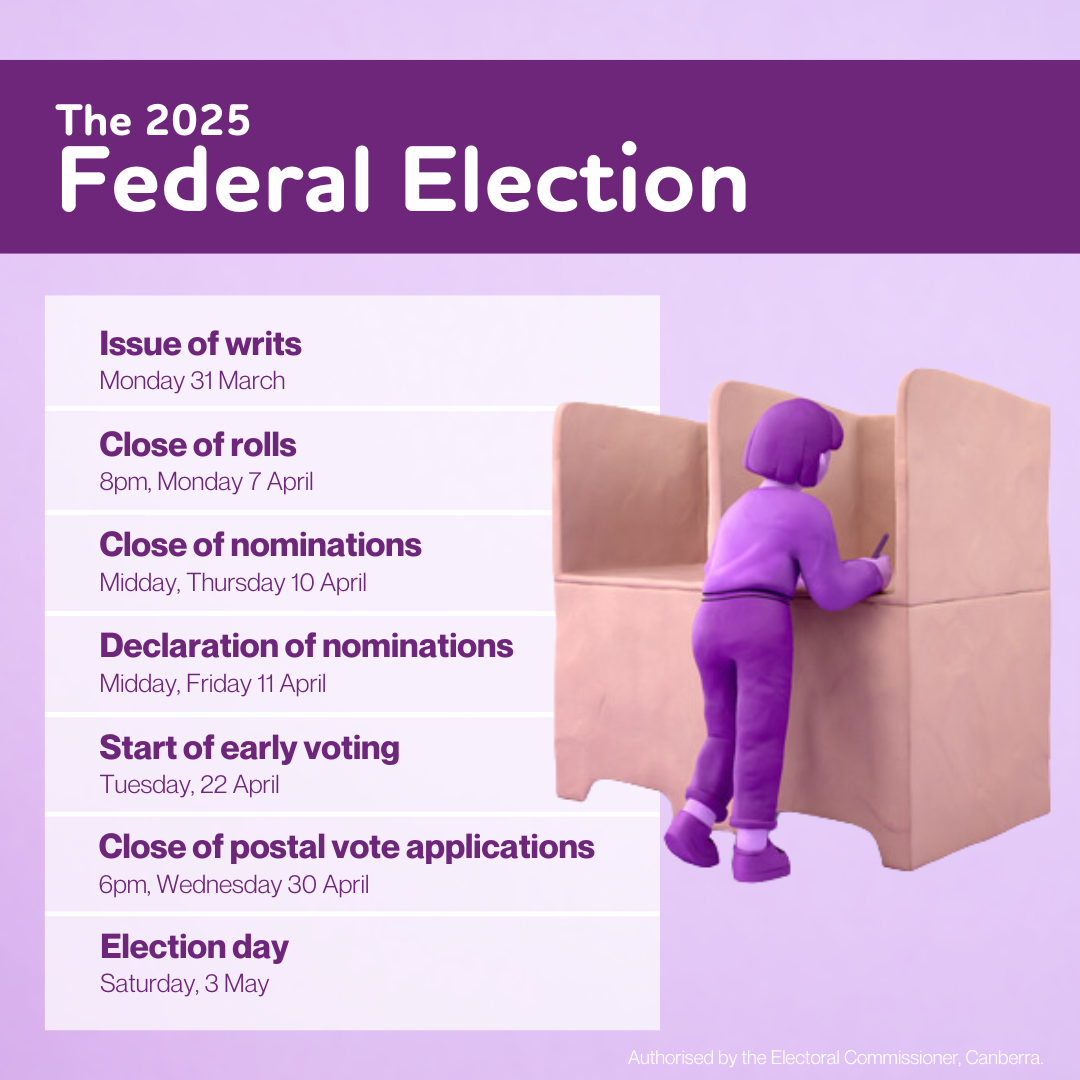
There are three electoral events next week as we approach the May 3 election. On Monday at 8pm, the electoral roll closes. People need to register or update their details by then to be able to vote.

On Thursday, candidate nominations close, and on Friday they are declared. It will benefit pollsters to know exactly which candidates are running in particular seats.

Redbridge poll: Labor gains for a 52–48 lead

A national poll by Redbridge and Accent Research for the News Corp tabloids, conducted March 28 to April 1 from a sample of 1,006, gave Labor a 52–48 lead, a one-point gain for Labor since the previous Redbridge poll that was conducted March 13–24. Primary votes were 36% Coalition (down two), 33% Labor (down one), 12% Greens (up one) and 19% for all Others (up two).

By 43–40, voters did not think the Labor government was focused on the right priorities, but this was a big improvement from 52–30 in November 2024. By 43–38, voters did not think the Coalition led by Dutton is ready for government (a reversal from 40–39 agreement last November).

By 40–39, voters preferred the Coalition’s fuel excise cut over Labor’s income tax cut. By 33–28, voters thought Albanese and Labor’s economic vision was better for them than Dutton and the Coalition’s. By 31–29, they thought Labor’s economic vision better for Australia than the Coalition’s.

On type of government, 31% wanted a majority Coalition government and 25% a majority Labor government. The tabloids didn’t provide enough detail on overall figures for minority governments.

Resolve breakdowns and duelling Goldstein seat polls

The post-budget national Resolve poll for Nine newspapers had a 50–50 tie by respondent preferences, representing a 2.1% swing to the Coalition since the 2022 election.

State breakdowns from this poll, which had a large sample of 3,083, had a 50–50 tie in New South Wales (51.4–48.6 to Labor in 2022), a 52–48 Labor lead in Victoria (54.8–45.2 to Labor in 2022) and a 58–42 Coalition lead in Queensland (54.0–46.0 to the Coalition in 2022). In marginal seats, the Coalition led by 51–49 (50.8–49.2 to Labor in 2022).

The February Resolve poll had given the Coalition a 55–45 lead, and is a clear outlier on the poll graph. We should be wary of analysis that measures results in the March poll against the January and February polls.

Labor had two big improvements by demographics between January/February and March, going from 58–42 behind to a 50–50 tie with men, and from 55–45 behind to a 52–48 lead with those aged 35 to 54.

I previously reported that a JWS poll in teal-held Goldstein had the Liberals leading teal Zoe Daniel by 54–46. The Poll Bludger reported last Thursday that a uComms poll for Climate 200, conducted March 18–25, gave Daniel a 54–46 lead. This was a two-point gain for Daniel since late February. Seat polls are unreliable.

NSW, Victorian and Queensland state polls

I covered the federal NSW DemosAU poll on Friday. The state poll, conducted March 24–26 from a sample of 1,013, gave Labor a 54–46 lead (54.3–45.7 to Labor at the March 2023 state election). Primary votes were 34% Coalition, 33% Labor, 14% Greens and 19% for all Others.

Labor incumbent Chris Minns led the Liberals’ Mark Speakman as preferred premier by 42–24. By 43–38, respondents did not think NSW was headed in the right direction.

A Victorian state Resolve poll for The Age, conducted with the February and March federal Resolve polls from a sample of over 1,000, gave the Coalition 41% of the primary vote (down one since January), Labor 24% (up two), the Greens 14% (up one), independents 14% (down three) and others 7% (up one).

This was a small improvement for Labor from the dire January result, but The Poll Bludger gave the Coalition about a 54–46 two-party estimated lead. Liberal Brad Battin led Labor incumbent Jacinta Allan by 36–23 as preferred premier (36–27 in January).

Battin’s net likeability improved five points to +9, while Allan’s net likeability has been dropping since her first poll as premier in December 2023. She’s now at -32 net likeability, down eight points since January.

A Redbridge Queensland state poll, conducted March 17–25 from a sample of 1,507, was provided to The Courier Mail. It gave the Liberal National Party a 56.5–43.5 lead (53.8–46.2 to the LNP at the October 2024 state election). Primary votes were 44% LNP, 27% Labor, 12% Greens, 10% One Nation and 7% for all Others.

LNP Premier David Crisafulli was at net +29 favourable (46% favourable, 17% unfavourable, 25% neutral). Labor leader and former premier Steven Miles was at net -13 favourable (39% unfavourable, 26% favourable, 22% neutral).

The Conversation

Adrian Beaumont does not work for, consult, own shares in or receive funding from any company or organisation that would benefit from this article, and has disclosed no relevant affiliations beyond their academic appointment.

ref. Labor gains 52–48 lead in Newspoll and Redbridge as poll trend to Labor continues – https://theconversation.com/labor-gains-52-48-lead-in-newspoll-and-redbridge-as-poll-trend-to-labor-continues-253739

The Coalition has announced an even more radical plan to cut international students than Labor. Here’s how it would work

Source: The Conversation (Au and NZ) – By Andrew Norton, Professor of Higher Education Policy, Monash University

Last year, the Coalition made the surprise decision to oppose Labor’s plans for new international student caps.

On Sunday, Opposition Leader Peter Dutton proposed an even more radical policy of his own to limit the number of international students in Australia.

He announced a combination of tighter enrolment limits, increased visa application fees and changes to temporary graduate visas, which allow some former students to remain in Australia to work.

This is aimed at either deterring potential students from applying or stopping them from going to their preferred university.

What’s the Coalition’s policy?

The Coalition and Labor similarly argue high numbers of international students are putting pressure on housing markets.

But the opposition is also concerned there are too many international students in some courses. They say some courses can have international enrolments of up to 80%.

To address both problems, the Coalition proposes a maximum international student enrolment share at public universities (which is almost all universities in Australia). This would be around 25% of all commencing (or new) enrolments. Other education providers, such as private colleges and TAFEs, would face separate caps.

The Coalition estimates this would result in 30,000 fewer new international students per year than Labor’s policy.

What is happening under Labor?

Last year, Labor wanted to give the education minister wide powers to cap international student enrolments by education provider, campus and course.

Apart from some exempt categories (such as postgraduate research students), vocational and higher education providers would have been allocated 270,000 commencing enrolments between them for 2025. This is compared to 323,000 commencing enrolments in 2023.

But the bill was opposed by the Greens and the Coalition. So Labor had to move to plan B.

Using its migration powers, in December 2024, the government issued a ministerial direction on how the Department of Home Affairs should process applications for student visas. This is arguably a de facto cap.

Immigration officials have been instructed to prioritise student visa applications for all institutions until they near the individual caps that were blocked by the Senate last year.

Once visa applications are at 80% of each provider’s cap, subsequent applications go into a slower visa processing stream.


Read more:
International student numbers in Australia will be controlled by a new informal cap. Here’s how it will work


Signs applications are already down

Prospective international students cannot apply for a visa unless an education provider gives them a “confirmation of enrolment”.

We are seeing signs the ministerial direction is leading to fewer “confirmations of enrolment” and resulting applications.

My analysis below shows student visa applications for January and February 2025 are well down on equivalent months in 2024, 2023 and 2019 (pre-Covid).

In late 2024, demand was below the boom times of 2023 and early 2024, but still above 2019.

What does the Coalition’s plan mean for unis?

Labor’s policy for university caps uses a formula based on past international student enrolments. The Coalition’s caps would be a percentage of total new enrolments. They expect this to be around 25%, but will set the precise number after consultation and receiving the most recent data.

Coalition education spokesperson Sarah Henderson has expressed concerns high concentrations of international students have “not been good for our country or for the education outcomes of Australian students”.

Based on 2023 enrolment data – the latest that also includes domestic students – 35% of new university students in Australia were from overseas. But several universities had international student shares above 50%.

On the Coalition’s estimates, their policy would see no more than 115,000 new international students in public universities each year, down from 139,000 under Labor’s approach.

The Coalition acknowledges this will particularly affect the highly ranked Group of Eight universities, including The University of Melbourne and The University of Sydney. Dutton argues these universities have admitted “excessive numbers” of international students.

Coalition caps for private providers

One reason the Coalition gave for not supporting Labor’s legislation last year was the disproportionate effect on private education providers, which include both vocational and higher education colleges.

Under the Coalition’s plan, private providers will still have caps, but they will be different than those for universities. Exactly how this will work is unclear. Their combined caps will be “at most 125,000”, according to the Coalition. Under Labor’s policy, their combined cap is a little higher, at about 132,000.

A complicating factor here is the government’s existing migration policies have smashed demand for vocational education – as my analysis shows.

This means many vocational education providers may not be able to fully use the places allocated under Labor’s indicative cap. These shortfalls may create space to increase caps for other private education providers.

Visa application fees

Last year, in a bid to cut international student numbers, Labor more than doubled the student visa application fee from A$710 to $1,600. They subsequently reversed this for Pacific Islander applicants.

Under the Coalition, the visa application fee would more than triple to $5,000 for applicants to Group of Eight universities. For students seeking entry to other providers, the fee would be $2,500.

Temporary graduate visas

The Coalition also promises a “rapid review” of the temporary graduate visa program. This would be to prevent its “misuse” as a way to gain access to the Australian labour market and permanent migration.

Labor has already reduced the number of years former students can stay on temporary graduate visas, reduced the age limit to be granted a visa from 50 to 35 years, and increased the minimum English requirements.

Applications for temporary graduate visas are down on past levels.

While Labor’s changes made some potential visa applicants ineligible, recent applications could be the calm before the storm. Large numbers of 2023 and 2024 international students will complete their courses in the coming years, with many of them eligible for temporary graduate visas under current policies.

International education will take a hit regardless

The Coalition’s international student election policy is less of a surprise than its refusal to back Labor’s caps last year. They have foreshadowed tough policies many times in recent months.

But the proposed increased visa application fees and enrolment caps would be painful for both students and education providers.

Universities have repeatedly argued international students are not major causes of the housing crisis. They have also argued international education is a valuable export and it is being undermined by policy changes out of Canberra. But this has had no impact on the stance of either Labor or the Coalition.

So, the number of international students in Australia will fall regardless of the federal election result. The decline is set to be greater under a Coalition government. But regardless of the election result, the days of unlimited international student numbers are over.

The Conversation

Andrew Norton works for Monash University, which is a member of the Group of Eight and would be significantly affected by the policies discussed in this article.

ref. The Coalition has announced an even more radical plan to cut international students than Labor. Here’s how it would work – https://theconversation.com/the-coalition-has-announced-an-even-more-radical-plan-to-cut-international-students-than-labor-heres-how-it-would-work-253919

Ian Powell: When apartheid met Zionism – the case for NZ recognising Palestine as a state

COMMENTARY: By Ian Powell

The 1981 Springbok Tour was one of the most controversial events in Aotearoa New Zealand’s history. For 56 days, between July and September, more than 150,000 people took part in more than 200 demonstrations in 28 centres.

It was the largest protest in the country’s history.

It caused social ruptures within communities and families across the country. With the National government backing the tour, protests against apartheid sport turned into confrontations with both police and pro-tour rugby fans — on marches and at matches.

The success of these mass protests was that this was the last tour in either country between the two teams with the strongest rivalry among rugby playing nations.

This deeply rooted antipathy towards the racism of apartheid helps provide context to today’s growing opposition by New Zealanders to the horrific actions of another apartheid state.

Depuis la révolte de 1976, le nom de ce township noir symbolise la lutte de la population noire contre le système d’apartheid. Les habitants mènent leur vie quotidienne au milieu des conflits et manifestations, le 15 juin 1980. (Photo by William Campbell/Sygma via Getty Images)

” data-medium-file=”https://politicalbytes.blog/wp-content/uploads/2025/03/apartheid-in-south-africa.jpg?w=300″ data-large-file=”https://politicalbytes.blog/wp-content/uploads/2025/03/apartheid-in-south-africa.jpg?w=612″/>

A township protest against apartheid in South Africa in 1980. Image: politicalbytes.blog

Understanding apartheid
Apartheid is a humiliating, repressive and brutal legislated segregation through separation of social groups. In South Africa, this segregation was based on racism (white supremacy over non-whites; predominantly Black Africans but also Asians).

For nearly three centuries before 1948, Africans had been dispossessed and exploited by Dutch and British colonists. In 1948, this oppression was upgraded to an official legal policy of apartheid.

Apartheid does not have to be necessarily by race. It could also be religious based. An earlier example was when Christians separated Jews into ghettos on the false claim of inferiority.

In August 2024, Le Monde Diplomatic published article (paywalled) by German prize-winning journalist and author Charlotte Wiedemann on apartheid in both Israel and South Africa under the heading “When Apartheid met Zionism”:

She asked the pointed question of what did it mean to be Jewish in a country that saw Israel through the lens of its own experience of apartheid?

It is a fascinating question making her article an excellent read. Le Monde Diplomatic is a quality progressive magazine, well worth the subscription to read many articles as interesting as this one.

Relevant Wiedemann observations
Wiedemann’s scope is wider than that of this blog but many of her observations are still pertinent to my analysis of the relationship between the two apartheid states.

Most early Jewish immigrants to South Africa fled pogroms and poverty in tsarist Lithuania. This context encouraged many to believe that every human being deserved equal respect, regardless of skin colour or origin.

Blatant widespread white-supremacist racism had been central to South Africa’s history of earlier Dutch and English colonialism. But this shifted to a further higher level in May 1948 when apartheid formally became central to South Africa’s legal and political system.

Although many Jews were actively opposed to apartheid it was not until 1985, 37 years later, that Jewish community leaders condemned it outright. In the words of Chief Rabbi Cyril Harris to the post-apartheid Truth and Reconciliation Commission:

“The Jewish community benefited from apartheid and an apology must be given … We ask forgiveness.”

On the one hand, Jewish lawyers defended Black activists, But, on the other hand, it was a Jewish prosecutor who pursued Nelson Mandela with “extraordinary zeal” in the case that led to his long imprisonment.

Israel became one of apartheid South Africa’s strongest allies, including militarily, even when it had become internationally isolated, including through sporting and economic boycotts. Israel’s support for the increasingly isolated apartheid state was unfailing.

Jewish immigration to South Africa from the late 19th century brought two powerful competing ideas from Eastern Europe. One was Zionism while the other was the Bundists with a strong radical commitment to justice.

But it was Zionism that grew stronger under apartheid. Prior to 1948 it was a nationalist movement advocating for a homeland for Jewish people in the “biblical land of Israel”.

Zionism provided the rationale for the ideas that actively sought and achieved the existence of the Israeli state. This, and consequential forced removal of so many Palestinians from their homeland, made Zionism a “natural fit” in apartheid South Africa.

Nelson Mandela and post-apartheid South Africa
Although strongly pro-Palestinian, post-apartheid South Africa has never engaged in Holocaust denial. In fact, Holocaust history is compulsory in its secondary schools.

Its first president, Nelson Mandela, was very clear about the importance of recognising the reality of the Holocaust. As Charlotte Wiedemann observes:

“Quite the reverse . . .  In 1994 Mandela symbolically marked the end of apartheid at an exhibition about Anne Frank. ‘By honouring her memory as we do today’ he said at its opening, ‘we are saying with one voice: never and never again!’”

In a 1997 speech, on the International Day of Solidarity with the Palestinian People, Mandela also reaffirmed his support for Palestinian rights:

“We know too well that our freedom is incomplete without the freedom of the Palestinians.”

There is a useful account of Mandela’s relationship with and support for Palestinians published by Middle East Eye.

Mandela’s identification with Palestine was recognised by Palestinians themselves. This included the construction of an impressive statue of him on what remains of their West Bank homeland.

Palestinians stand next to a giant statue of Nelson Mandela following its inauguration ceremony in the West Bank city of Ramallah on April 26, 2016. – Palestinians inaugurated the statue of Mandela donated by the South African city of Johannesburg to their political capital. The six-metre (20-foot) two-tonne bronze statue was a gift from Johannesburg with which Ramallah is twinned. (Photo by ABBAS MOMANI / AFP)

” data-medium-file=”https://politicalbytes.blog/wp-content/uploads/2025/03/mandela-statue-in-west-bank-city-of-ramallah.jpg?w=300″ data-large-file=”https://politicalbytes.blog/wp-content/uploads/2025/03/mandela-statue-in-west-bank-city-of-ramallah.jpg?w=750″/>

Palestinians stand next to a 6 metre high statue of Nelson Mandela following its inauguration ceremony in the West Bank city of Ramallah in 2016. It was donated by the South African city of Johannesburg, which is twinned with Ramallah. Image: politicalbytes.blog

Comparing apartheid in South Africa and Israel
So how did apartheid in South Africa compare with apartheid in Israel. To begin with, while both coincidentally began in May 1948, in South Africa this horrendous system ended over 30 years ago. But in Israel it not only continues, it intensifies.

Broadly speaking, this included Israel adapting the infamously cruel “Bantustan system” of South Africa which was designed to maintain white supremacy and strengthen the government’s apartheid policy. It involved an area set aside for Black Africans, purportedly for notional self-government.

In South Africa, apartheid lasted until the early 1990s culminating in South Africa’s first democratic election in 1994.

Tragically, for Palestinians in their homeland, apartheid not only continues but is intensified by ethnic cleansing delivered by genocide, both incrementally and in surges.

Apartheid Plus: ethnic cleansing and genocide
Israel has gone further than its former southern racist counterpart. Whereas South Africa’s economy depended on the labour exploitation of its much larger African workforce, this was relatively much less so for Israel.

As much as possible Israel’s focus was, and still is, instead on the forcible removal of Palestinians from their homeland.

This began in 1948 with what is known by Palestinians as the Nakba (“the catastrophe”) when many were physically displaced by the creation of the Israeli state. Genocide is the increasing means of delivering ethnic cleansing.

Ethnic cleansing is an attempt to create ethnically homogeneous geographic areas by deporting or forcibly displacing people belonging to particular ethnic groups.

It can also include the removal of all physical vestiges of the victims of this cleansing through the destruction of monuments, cemeteries, and houses of worship.

This destructive removal has been the unfortunate Palestinian experience in much of today’s Israel and its occupied or controlled territories. It is continuing in Gaza and the occupied West Bank.

Genocide involves actions intended to destroy, in whole or in part, a national, ethnic, racial, or religious group.

In contrast with civil war, genocide usually involves deaths on a much larger scale with civilians invariably and deliberately the targets. Genocide is an international crime, according to the Convention on the Prevention and Punishment of the Crime of Genocide (1948).

Today the Israeli slaughter and destruction in Gaza is a huge genocidal surge with the objective of being the “final solution” while incremental genocide of Palestinians speeds up in the occupied West Bank.

Notwithstanding the benefits of the recent ceasefire, it freed up Israel to militarily focus on repressing West Bank Palestinians.

Meanwhile, Israel’s genocide in Gaza during the current vulnerable hiatus of the ceasefire has shifted from military action to starvation.

The final word
One of the encouraging features has been the massive protests against the genocide throughout the world. In a relative context, and while not on the same scale as the mass protests against the racist South African rugby tour in 1981, this includes New Zealand.

Many Jews, including in New Zealand and in the international protests such as at American universities, have been among the strongest critics of the ethnic cleansing through genocide of the apartheid Israeli state.

They have much in common with the above-mentioned Bundist focus on social justice in contrast to the dogmatic biblical extremism of Zionism.

Amos Goldberg, professor of genocidal studies at the Hebrew University in Jerusalem is one such Jew. Let’s leave the final word to him:

“It’s so difficult and painful to admit it, but we can no longer avoid this conclusion. Jewish history will henceforth be stained.”

This is a compelling case for the New Zealand government to join the many other countries in formally recognising the state of Palestine.

Ian Powell is a progressive health, labour market and political “no-frills” forensic commentator in New Zealand. A former senior doctors union leader for more than 30 years, he blogs at Second Opinion and Political Bytes, where this article was first published. Republished with the author’s permission.

Article by AsiaPacificReport.nz

Fiji solidarity group condemns Rabuka plans for embassy in Jerusalem

Asia Pacific Report

A Fiji-based Pacific solidarity group supporting the indigenous Palestine struggle for survival against the Israeli settler colonial state has today issued a statement condemning Fiji backing for Israel.

In an open letter to the “people of Fiji”, the Fijians for Palestine Solidarity Network (F4P) has warned “your government openly supports Israel despite its genocidal campaign against Palestinians”.

“It is directly complicit in Israel’s genocide against Palestinians and history will not forgive their inaction.”

The group said the struggle resonated with all who believed in justice, equality, and the fundamental rights of every human being.

Fijians for Palestine has condemned Prime Minister Sitiveni Rabuka’s coalition government plans to open a Fijian embassy in Jerusalem with Israeli backing and has launched a “No embassy on occupied land” campaign.

The group likened the Palestine liberation struggle to Pacific self-determination campaigns in Bougainville, “French” Polynesia, Kanaky and West Papua.

Global voices for end to violence
The open letter on social media said:

“Our solidarity with the Palestinian people is a testament to our shared humanity. We believe in a world where diversity, is treated with dignity and respect.

“We dream of a future where children in Gaza can play without fear, where families can live without the shadow of war, and where the Palestinian people can finally enjoy the peace and freedom they so rightly deserve.

“We join the global voices demanding a permanent ceasefire and an end to the violence. We express our unwavering solidarity with the Palestinian people.

“The Palestinian struggle is not just a regional issue; it is a testament to the resilience of a people who, despite facing impossible odds, continue to fight for their right to exist, freedom, and dignity. Their struggle resonates with all who believe in justice, equality, and the fundamental rights of every human being.

“The images of destruction, the stories of families torn apart, and the cries of children caught in the crossfire are heart-wrenching. These are not mere statistics or distant news stories; these are real people with hopes, dreams, and aspirations, much like us.

“As Fijians, we have always prided ourselves on our commitment to peace, unity, and humanity. Our rich cultural heritage and shared values teach us the importance of standing up for what is right, even when it is not popular or convenient.

“We call on you to stand in solidarity with the Palestinian people this Thursday with us, not out of political allegiance but out of a shared belief in humanity, justice, and the inalienable human rights of every individual.

“There can be no peace without justice, and we stand in unity with all people and territories struggling for self-determination and freedom from occupation. The Pacific cannot be an Ocean of Peace without freedom and self determination in Palestine, West Papua, Kanaky and all oppressed territories.

“To the Fijian people, please know that your government openly supports Israel despite its genocidal campaign against Palestinians. It is directly complicit in Israel’s genocide against Palestinians and history will not forgive their inaction.”

Article by AsiaPacificReport.nz

Trump funding cuts on media impacts on independent Asia Pacific outlet

Pacific Media Watch

One of the many casualties of the Trump administration’s crackdown on “soft power” that enabled many democratic media and truth to power global editorial initiatives has been BenarNews, a welcome contribution to the Asia-Pacific region.

BenarNews had been producing a growing range of insightful on powerful articles on the region’s issues, articles that were amplified by other media such as Asia Pacific Report.

Managing editor Kate Beddall and her deputy, Imran Vittachi, announced the suspension of the decade-old BenarNews editorial operation this week, stating in their “Letter from the editors”:

“After 10 years of reporting from across the Asia-Pacific, BenarNews is pausing operations due to matters beyond its control.

“The US administration has withheld the funding that we rely on to bring our readers and viewers the news from Indonesia, Malaysia, Thailand, Bangladesh, the Philippines and island-states and territories in the Pacific.

“We have always strived to offer clear and accurate news on security, politics and human rights, to shed light on news that others neglect or suppress, and to cover issues that will shape the future of Asia and the Pacific.

“Only last month, we marked our 10th anniversary with a video showcasing some of the tremendous but risky work done by our journalists.

“Amid uncertainty about the future, we’d like to take this opportunity to thank our readers and viewers for their loyalty and trust in BenarNews.

“And to Benar journalists, cartoonists and commentary writers in Washington, Asia, Australia and the Pacific, thank you for your hard work and passion in serving the public and helping make a difference.

“We hope that our funding is restored and that we will be back online soon.”


BenarNews: A decade of truth in democracies at risk.    Video: BenarNews

One of the BenarNews who has contributed much to the expansion of Pacific coverage is Brisbane-based former SBS Pacific television journalist Stefan Ambruster.

He has also been praising his team in a series of social media postings, such as Papua New Guinea correspondent Harlyne Joku — “from the old school with knowledge of the old ways”. Ambruster writes:

“Way back in December 2022, Harlyne Joku joined Radio Free Asia/BenarNews and the first Pacific correspondent Stephen Wright as the PNG reporter to help kick this Pacific platform off.

“Her first report was Prime Minister James Marape accusing the media of creating a bad perception of the country.

“Almost 90 stories in just over two years carry Harlyne’s byline, covering politics, geopolitics, human and women’s rights, media freedom, police and tribal violence, corruption, Bougainville, and also PNG’s sheep.

“Her contacts allowed BenarNews Pacific to break stories consistently. She travelled to be on-ground to cover massacre aftermaths, natural disasters and the Pope in Vanimo (where she broke another story).

“Particularly, Harlyne — along with colleagues Victor Mambor in Jayapura and Ahmad Panthoni and Dandy Koswaraputra in Jakarta — allowed BenarNews, to cover West Papua like no other news service. From both sides of the border.

“And it was noticed in Indonesia, PNG and the Pacific region.

“Last year, she was barred from covering President Probowo Subianto’s visit to Moresby, a move condemned by the Media Council of Papua New Guinea.

“At press conferences she questioned Marape about the failure to secure a UN human rights mission to West Papua, as a Melanesian Spearhead Group special envoy, which led to an eventual apology by fellow envoy, Fiji’s Prime Minister Rabuka, to Pacific leaders.”

PNG correspondent Harlyne Joku (right) with Stefan Armbruster and Rado Free Asia president Bay Fang in Port Moresby in February 2025. Image: Stefan Armbruster/BN

Article by AsiaPacificReport.nz

Election Diary: Albanese promises 30% discount on household batteries in latest energy bill help

Source: The Conversation (Au and NZ) – By Michelle Grattan, Professorial Fellow, University of Canberra

In the government’s latest initiative on energy prices, Anthony Albanese on Sunday will promise that if re-elected, Labor will reduce the cost of installing a typical home battery by 30% from July 1.

This would cut about $4,000 from the upfront cost of an 11.5 kWh battery, which is the typical household size.

Small businesses and community facilities would be eligible for the discount, as well as households.

The government says the discount would save a household with existing rooftop solar panels up to $1,100 off their power bill every year. For those with new solar panels and battery, the saving would be up to $2,300 annually – up to 90% of a typical power bill.

More than one million installations would be expected by 2030 under the measure. The initiative would cost an estimated $2.3 billion over the forward estimates, including in the 2025-26 budget.

The discount would be applied on installing virtual power plant-ready battery systems beside new or existing rooftop solar until 2030. The absolute value of the discount would decline over the five years in line with the expected fall in the cost of batteries.

Albanese said the measure was “good for power bills and good for the environment”.

Labor’s number one priority is delivering cost-of-living relief. That’s why we want to make sure Australians have access to cheaper, cleaner energy.

Energy Minister Chris Bowen said:

The contrast is clear – a re-elected Albanese government will take pressure off household energy bills, while Peter Dutton’s Liberals will spend $600 billion on a nuclear plan that drives power bills up.

Mixing politics and sport can be risky on campaign trail

For the second election campaign in a row, a Liberal leader has claimed a victim on the football field.

At least, some relieved Liberals might be saying, Opposition Leader Peter Dutton felled a member of the media, not a child.

Dutton, campaigning in Darwin on Saturday with a few million dollars in hand to promise for the local footy ground, was happy to have a kick with kids for the cameras.

But the ball hit a TV camera, which went into the face of Channel Ten cameraman Ghaith Nadir. A federal policeman helped with a bandage for Nadir’s forehead. Dutton promised a compensatory beer.

In the 2022 campaign, Prime Minister Scott Morrison joined some youngsters in their junior soccer training.

Becoming rather too competitive, Morrison crashed into a boy, and they both ended on the ground. It made for plenty of jokes about the man who’d admitted in the campaign that “I can be a bit of a bulldozer”. The clip was replayed again and again.

After Saturday’s incident, Dutton quipped, “If the prime minister kicked it, he would have told you that it didn’t hit anyone”.

Last week, Albanese stepped back off a stage, appearing to fall, during an event. He later insisted he hadn’t fallen. “I stepped back onto a step, I didn’t fall off the stage,” he said. “Just one leg went down, and I was sweet.”

Way back in 1984, there was another unfortunate incident on the sporting field during a campaign. That time, the perpetrator was a journalist and the victim was Prime Minister Bob Hawke.

Hawke had called an election a few days before playing in a cricket match against the parliamentary press gallery. A ball from Gary O’Neill, a journalist with the Melbourne Herald, caught the edge of Hawke’s bat and smashed into his glasses.

Hawke went to the Canberra Hospital, where (after he jumped the queue) a patch was put on his eye. He returned to the match, watching from the sidelines.

At least he scored 27 before the incident. However, the accident set him back for the early days of what was an eight-week campaign.

Over the years there are plenty of examples of leaders losing their (physical) footing.

A few months before the 2007 election, Prime Minister John Howard tripped and fell on his hands on the way to a radio interview in Perth.

Visiting India in 2012, Prime Minister Julia Gillard tumbled when her shoe got stuck in grass. She explained:

For men who get to wear flat shoes all day every day, if you wear a heel it can get embedded in soft grass and when you pull your foot out the shoe doesn’t come.

The Conversation

Michelle Grattan does not work for, consult, own shares in or receive funding from any company or organisation that would benefit from this article, and has disclosed no relevant affiliations beyond their academic appointment.

ref. Election Diary: Albanese promises 30% discount on household batteries in latest energy bill help – https://theconversation.com/election-diary-albanese-promises-30-discount-on-household-batteries-in-latest-energy-bill-help-253736

100 children killed or wounded every day since Gaza ceasefire broken

Asia Pacific Report

The chief of the UN agency for Palestinian refugees has described Gaza as “no land” for children, as two rallies were held in New Zealand’s largest city Auckland today to mark Palestine Children’s Day.

Citing the UN agency for children UNICEF, Phillipe Lazzarini said that “at least 100 children are reported killed or injured every day in Gaza” since Israel broke the truce with Hamas on March 18.

“The ceasefire at the beginning of the year gave Gaza’s children a chance to survive and be children,” said Lazzarini, who is Commissioner-General of UNRWA.

“The resumption of the war is again robbing them of their childhood. The war has turned Gaza into a ‘no land’ for children. This is a stain on our common humanity.

The two Auckland Palestinian solidarity events today marking April 5 — one a children’s activities gathering in Albert Park and the other a regular weekly rally at “Palestine Corner” in downtown Te Komititanga Square — were among 25 activist happenings across the country on week 78 of continuous protests.

In Albert Park, one of the organisers said the children “had lots of fun — painting, drawing, listening to stories, making collages, playing games with Palestinian themes and some families had picnics.”

In “Palestine Corner”, several teachers spoke of the realities of the genocide in Gaza, protesters carried placards with photos and names of children killed by the Israeli bombing, while children coloured pictures and blew bubbles.

Adults holding pictures of children killed in the bombing of Gaza since the ceasefire was broken by the Israeli forces this week. Image: APR

Huge toll on children
Reporting from Deir el-Balah, Gaza, Al Jazeera’s Tareq Abu Azzoum reports that children have been among the most severely affected by the continuing Israeli war on Gaza.

“Many of them have been killed, injured and orphaned and we can see that thousands of children have lost their limbs and they are suffering from severe trauma,” he said.

“As the UNRWA spokesperson stated: 51 percent of Gaza’s population are children and they make up the largest proportion of those that were killed since the war began back on October 7, 2023.

A girl drawing at the Rotunda in Auckland’s Albert Park today. In the foreground are olive trees with the slogan “Free Palestine”. Image: Del Abcede/APR

“For many children here in Gaza, displacement has taken a very heavy, huge toll on them.

“They have been repeatedly displaced, forced to flee their homes and right now they are forced to live in overcrowded shelters and tents and on the rubble of their destroyed homes and residential buildings.”

The Palestinian Human Rights Organisations Council (PHROC) — made up of nine groups — has written to UN High Commissioner for Human Rights Volker Turk to demand action on Israel in protest over the killing of children.

Israeli forces continued to kill Palestinians on a genocidal scale in Gaza and had created “conditions of life unfit for human survival,” the council told Turk.

Israel’s “intent to eliminate and eventually destroy Palestinians across unlawfully occupied Palestine” is also evident in occupied West Bank, the council said.

The council called on Turk to clearly label Israel’s conduct as genocide, pressure the Israeli government to end its genocide, ensure accountability for Israeli perpetrators, and mobilise the UN to implement a plan to end genocide against Palestinians across the occupied territory.

Boys decorating pictures with Palestinian poppies at the Rotunda in Auckland’s Albert Park today. Image: Del Abcede/APR

Albanese’s mandate renewed
Meanwhile, Francesca Albanese will continue to serve as Special Rapporteur until 30 April 2028, a spokesperson for the UN Human Rights Council announced after the vote today in Geneva by the UNHRC to retain her.

The UN Human Rights Council defied the efforts of Israel, the US, The Netherlands and other Western countries trying to unseat Albanese, who has been special rapporteur on human rights in the occupied Palestinian territories occupied since 1967 for the past three years.

Albanese had faced a smear campaign for many months by deniers of Israel’s genocide against Palestinians, which she had warned about in October 2023.

She documented the crimes against humanity, notably in her devastating report Anatomy Of A Genocide in April 2024.

Children painting and drawing Palestinian themes in the Rotunda at Auckland’s Albert Park today. Image: Del Abcede/APR
“Palestinian kids matter” . . . images of the 500 children who have been killed by Israeli forces since the ceasefire was broken by the IDF at the start of last month. Image: Del Abcede/APR

Article by AsiaPacificReport.nz

Election Diary: Albanese promises 30% discount on solar batteries, in latest energy bill help

Source: The Conversation (Au and NZ) – By Michelle Grattan, Professorial Fellow, University of Canberra

In the government’s latest initiative on energy prices, Anthony Albanese on Sunday will promise that if re-elected, Labor will reduce the cost of installing a typical home solar battery by 30% from July 1.

This would cut about $4,000 from the upfront cost of an 11.5 kWh battery, which is the typical household size.

Small businesses and community facilities would be eligible for the discount, as well as households.

The government says the discount would save a household with existing rooftop solar panels up to $1,100 off their power bill every year. For those with new solar panels and battery, the saving would be up to $2,300 annually – up to 90% of a typical power bill.

More than one million installations would be expected by 2030 under the measure. The initiative would cost an estimated $2.3 billion over the forward estimates, including in the 2025-26 budget.

The discount would be applied on installing virtual power plant-ready battery systems beside new or existing rooftop solar until 2030. The absolute value of the discount would decline over the five years in line with the expected fall in the cost of batteries.

Albanese said the measure was “good for power bills and good for the environment”.

Labor’s number one priority is delivering cost-of-living relief. That’s why we want to make sure Australians have access to cheaper, cleaner energy.

Energy Minister Chris Bowen said:

The contrast is clear – a re-elected Albanese government will take pressure off household energy bills, while Peter Dutton’s Liberals will spend $600 billion on a nuclear plan that drives power bills up.

Mixing politics and sport can be risky on campaign trail

For the second election campaign in a row, a Liberal leader has claimed a victim on the football field.

At least, some relieved Liberals might be saying, Opposition Leader Peter Dutton felled a member of the media, not a child.

Dutton, campaigning in Darwin on Saturday with a few million dollars in hand to promise for the local footy ground, was happy to have a kick with kids for the cameras.

But the ball hit a TV camera, which went into the face of Channel Ten cameraman Ghaith Nadir. A federal policeman helped with a bandage for Nadir’s forehead. Dutton promised a compensatory beer.

In the 2022 campaign, Prime Minister Scott Morrison joined some youngsters in their junior soccer training.

Becoming rather too competitive, Morrison crashed into a boy, and they both ended on the ground. It made for plenty of jokes about the man who’d admitted in the campaign that “I can be a bit of a bulldozer”. The clip was replayed again and again.

After Saturday’s incident, Dutton quipped, “If the prime minister kicked it, he would have told you that it didn’t hit anyone”.

Last week, Albanese stepped back off a stage, appearing to fall, during an event. He later insisted he hadn’t fallen. “I stepped back onto a step, I didn’t fall off the stage,” he said. “Just one leg went down, and I was sweet.”

Way back in 1984, there was another unfortunate incident on the sporting field during a campaign. That time, the perpetrator was a journalist and the victim was Prime Minister Bob Hawke.

Hawke had called an election a few days before playing in a cricket match against the parliamentary press gallery. A ball from Gary O’Neill, a journalist with the Melbourne Herald, caught the edge of Hawke’s bat and smashed into his glasses.

Hawke went to the Canberra Hospital, where (after he jumped the queue) a patch was put on his eye. He returned to the match, watching from the sidelines.

At least he scored 27 before the incident. However, the accident set him back for the early days of what was an eight-week campaign.

Over the years there are plenty of examples of leaders losing their (physical) footing.

A few months before the 2007 election, Prime Minister John Howard tripped and fell on his hands on the way to a radio interview in Perth.

Visiting India in 2012, Prime Minister Julia Gillard tumbled when her shoe got stuck in grass. She explained:

For men who get to wear flat shoes all day every day, if you wear a heel it can get embedded in soft grass and when you pull your foot out the shoe doesn’t come.

The Conversation

Michelle Grattan does not work for, consult, own shares in or receive funding from any company or organisation that would benefit from this article, and has disclosed no relevant affiliations beyond their academic appointment.

ref. Election Diary: Albanese promises 30% discount on solar batteries, in latest energy bill help – https://theconversation.com/election-diary-albanese-promises-30-discount-on-solar-batteries-in-latest-energy-bill-help-253736

With US bombers at the ready, can Trump cut a deal with Iran and avoid a war?

Source: The Conversation (Au and NZ) – By Amin Saikal, Emeritus Professor of Middle Eastern and Central Asian Studies, Australian National University; and Vice Chancellor’s Strategic Fellow, Victoria University

The United States and Iran are once again on a collision course over the Iranian nuclear program.

In a letter dated early March, US President Donald Trump urged Iranian Supreme Leader Ayatollah Ali Khamenei to negotiate a new deal. The new deal would replace the defunct nuclear agreement negotiated in 2015 between the United States, Iran and five other global powers.

Trump withdrew from that agreement, called the Joint Comprehensive Plan of Action (JCPOA), during his first term.

Trump gave the Iranians a two-month deadline to reach a new nuclear deal. If they don’t, the US will bomb the country. In recent days, American B-2 bombers and warships have been deployed to the region in a show of force.

In response, Tehran has agreed only to indirect negotiations. It has ruled out any direct talks while under a US policy of “maximum pressure”.

Down to the ‘final moments’

The danger of US or combined American-Israeli military actions against Iran has never been greater.

Trump says the US is down to the “final moments” should Tehran persist with moving towards a military nuclear capability.

His national security advisor, Mike Waltz, has gone further, demanding Iran shut down its entire nuclear program.

Khamenei and his generals have promised a “harsh response” to any military venture. Iran has vowed to target all American bases in the region.

France, one of key negotiators in the 2015 deal, said this week a failure to secure a new deal would make a military confrontation “almost inevitable”.

In a positive sign, however, Washington is reportedly “seriously considering” Iran’s offer for indirect negotiations. And Trump is now suggesting Iran may actually be open to direct talks.

On the threshold of a nuclear bomb

It would be a folly to expect a quick result that could satisfy an impatient Trump. This is especially true given Trump is under intense pressure from his close friend, Israeli Prime Minister Benjamin Netanyahu.

Netanyahu has long advocated for military action as the best way to prevent Iran from acquiring a nuclear weapon and eliminate its other military capabilities, as well as its regional influence.

The Iranian Islamic regime has repeatedly said its nuclear program is for peaceful purposes. However, the US and its allies – in particular Israel – have remained highly sceptical of Tehran’s intentions.

Following Trump’s withdrawal from the JCPOA in 2018, Tehran has substantially expanded its nuclear program, to the chagrin of the other signatories to the deal (Britain, France, Germany, Russia and China).

It has installed more advanced centrifuges and accelerated uranium enrichment to 60%, just below weapons-grade level. The country is now at a nuclear weapon threshold. It is believed to be capable of assembling an atomic bomb within months, if not weeks.

Israel’s devastating military operations against Iran’s allies in Gaza, Lebanon and Syria, as well as direct exchanges with Iran, have prompted some in the Iranian leadership to advocate for crossing that threshold.

As I document in my book, Khamenei also remains highly distrustful of Trump and the US political class in general.

Khamenei initially dismissed Trump’s letter last month as a “deception” from the leader of a country he has long considered an “arrogant power” that wants to dictate to Iran, rather than negotiate with it.

One of his senior advisers, former Foreign Minister Kamal Kharrazi, berated Washington for engaging in “psychological warfare”.

And the current foreign minister, Abbas Araghchi, said direct negotiations would be futile unless Washington changed its policy of maximum pressure against Iran. This would involve removing sanctions against his country.

What the two sides want

Despite this historic distrust of the US, Tehran has found it expedient to offer indirect talks for a possible deal. However, the two sides remain far apart in their respective demands.

Washington, at the very least, would want Tehran to indefinitely limit its uranium enrichment to 3.7% – the level it had agreed to in the 2015 deal. Washington would also demand close oversight by the US and the International Atomic Energy Agency.

Tehran’s minimum demands would include the US unfreezing Iranian assets, lifting all sanctions against Iran and guaranteeing a nuclear deal will not be rescinded by future American administrations.

Neither side could meet these demands, however, without first engaging in substantive confidence-building measures. Since Trump withdrew from the JCPOA in 2018, the onus is on him to jump-start the process. He could do this by:

  • unfreezing Iranian assets in the United States
  • lifting some sanctions to enable Iran to purchase non-lethal items from the West, including new civilian aircraft from Boeing and Airbus which were voided following the JCPOA’s dismantling
  • withdrawing the threat of a US, Israeli or combined military action.

Given the depth of the long-standing enmity and distrust between the parties, the chances of reaching a new nuclear deal seem further away than the drums of war.

However, given Trump’s unpredictability and the serious domestic and foreign policy challenges facing the Iranian regime, a deal also cannot not be completely ruled out.

The Conversation

Amin Saikal does not work for, consult, own shares in or receive funding from any company or organisation that would benefit from this article, and has disclosed no relevant affiliations beyond their academic appointment.

ref. With US bombers at the ready, can Trump cut a deal with Iran and avoid a war? – https://theconversation.com/with-us-bombers-at-the-ready-can-trump-cut-a-deal-with-iran-and-avoid-a-war-253828

Consumers are boycotting US goods around the world. Should Trump be worried?

Source: The Conversation (Au and NZ) – By Alan Bradshaw, Professor of Marketing, Royal Holloway University of London

US alcohol has been removed from sale in the Canadian province of British Columbia. lenic/Shutterstock

As politicians around the world scramble to respond to US “liberation day” tariffs, consumers have also begun flexing their muscles. “Boycott USA” messages and searches have been trending on social media and search engines, with users sharing advice on brands and products to avoid.

Even before Donald Trump announced across-the-board tariffs, there had been protests and attacks on the president’s golf courses in Doonbeg in Ireland and Turnberry in Scotland in response to other policies. And in Canada, shoppers avoided US goods after Trump announced he could take over his northern neighbour.

His close ally Elon Musk has seen protests at Tesla showrooms across Europe, Australia and New Zealand. New cars have been set on fire as part of the “Tesla take-down”, while Tesla sales have been on a deep downward trend. This has been especially noticeable in European countries where electric vehicles sales have been high, and in Australia.

This targeting of Trump and Musk’s brands are part of wider boycotts of US goods as consumers look for ways to express their anger at the US administration.

Denmark’s biggest retailer, Salling Group, has given the price label of all European products a black star, making it easy for customers to avoid US goods.

Canadian shoppers are turning US products upside down in retail outlets so it’s easier for fellow shoppers to spot and avoid them. Canadian consumers can also download the Maple Scan app that checks barcodes to see if their grocery purchases are actually Canadian or have parent companies from the USA.

Who owns what?

The issue of ostensibly Canadian brands being owned by US capital illustrates the complexity of consumer boycotts – it can be difficult to identify which brands are American and which are not.

In the UK, for example, many consumers would be surprised to learn how many famous British brands are actually American-owned – for example, Cadbury, Waterstones and Boots. So entwined are global economies that attempts by consumers to boycott US brands may also damage their local economies.

This complexity is also present in Danish and Canadian Facebook groups that are dedicated to boycotting US goods. Consumers exchange tips on how to swap alternatives for American products.

The fact that Facebook is a US-based company only demonstrates how deeply embedded consumer culture is in US technologies. European businesses often depend on American operating systems and cloud storage while consumers rely on US-owned social media platforms for communication.

Even when consumers succeed in weeding out American products, if they pay using Visa, Mastercard or Apple Pay, a percentage of the price will nonetheless be rerouted to the US. If a touch payment is made with Worldpay, the percentage could be even greater.

These American financial services show just how embedded US businesses are in retail in ways that consumers may not appreciate. In practice, an absolute boycott of US business is almost unimaginable.

All-American brands

But American branding is not always subtle. In addition to brands directly connected to the US administration – such as the Trump golf courses and Tesla – many other companies have always been flamboyantly American. Coca-Cola, Starbucks and Budweiser are just some examples where their American identities and proudly on show.

As such, it’s possible that consumers will increasingly avoid blatantly American brands. They may be less concerned about the complexities and contradictions of a more comprehensive boycott.

Consumer actions where the goal is political change are known as “proxy boycotts” because no particular company is the ultimate target. Rather, the brands and firms are targeted by consumers as a means to an end.

Do boycotts work?

A classic example of a proxy boycott took aim at French goods, particularly wine, in the mid-1990s. This was in response to president Jacques Chirac’s decision to conduct nuclear tests in the Pacific. The large-scale consumer boycotts contributed to France’s decision to abandon its nuclear tests in 1996.

In Britain, for example, French wines in all categories lost market share as demand fell during the boycott. At the time, it cost the French wine sector £23 million (about £46 million today).

These boycotts are a reminder that the interplay between corporations, brands and consumer culture are inevitably embedded in politics. The current political impasse demonstrates that consumers can participate in politics, not just with their votes, but also with their buying power.

Trump clearly wants to demonstrate American strength. The “liberation day” tariffs, which were higher than most observers expected, bear this out. But many US corporations will now be worrying about how consumers in the US and around the world might respond. Trump could see a mass mobilisation of consumer power in ways that will give the president something to think about.

The Conversation

The authors do not work for, consult, own shares in or receive funding from any company or organisation that would benefit from this article, and have disclosed no relevant affiliations beyond their academic appointment.

ref. Consumers are boycotting US goods around the world. Should Trump be worried? – https://theconversation.com/consumers-are-boycotting-us-goods-around-the-world-should-trump-be-worried-253389

With Hasbara failing, Israel placed Hossam Shabat on a kill list

While public opinion of Israel plummets, each day the genocide continues without significant repercussions only reinforces that they can ignore this opinion, writes Alex Foley.

SPECIAL REPORT: By Alex Foley

Israel announced that Hossam Shabat was a “terrorist” alongside six other Palestinian journalists. Hossam predicted they would assassinate him.

He survived several attempts on his life. He wrote a brief obituary for himself at the age of 23, carried on reporting, and then on March 24, 2025, Israel killed him.

For those of us outside of Gaza, helpless to stop the carnage but unable to look away, a begrudging numbness has set in, a psychic lidocaine to cope with the daily images of the shattered bodies of dead children.

The other pro-Palestinian advocates and activists I speak with all mention familiar brain fogs and free-floating agitations.

By this point, I am accustomed to opening my phone and steeling myself for the horrors. But learning of Hossam’s death cut through me like a warm knife.

Through whatever fluke of the internet, many of the friends I have made over the course of the genocide are from the city of Beit Hanoun, like Hossam Shabat.

One was his classmate. Another walked with him through the bombed-out ruins of the North. Looking upon his upturned face, splattered with three stripes of crimson blood, I could not help but imagine each of them lying there in his place.

To quote my dear friend Ibrahim Al-Masri:

“Hossam Shabat wasn’t alone. He carried the grief of Beit Hanoun, the cries of children trapped under rubble, the aching voices of mothers queuing for bread, and the gasps of the wounded in hospitals that no longer functioned as hospitals.”

Many will remember the video of 14-year-old aspiring journalist Maisam Al-Masri greeting Hossam Shabat in his car, elated that he had not been killed when the occupation first took the North.

Separated from family
Hossam remained in Northern Gaza throughout the genocide, separated from his family, in full knowledge that staying and working was a death sentence. His reports were an invaluable insight into the occupation’s crimes, and for that they killed him.

In death, his eyes remained open, bearing witness one last time.

The Israeli account is, of course, very different. The Israeli army has claimed that Hossam Shabat was a “Hamas sniper” with the Beit Hanoun Battalion.

It is the kind of paper-thin lie we have grown accustomed to, dutifully repeated by the Western press. I am no military tactician, but I find it hard to believe that a young man with a high profile who reported his location frequently, including in live broadcasts, would be an effective sniper.

In the weeks before he was assassinated, Hossam Shabat was tweeting up to a dozen times a day.

Hasbara killed Hossam Shabat because it’s losing the PR war
A qualitative shift has occurred over the course of the genocide; Israel no longer seems interested in or capable of convincing the rest of the world that its actions are just. Rather, they are preoccupied with producing increasingly flimsy justifications with the sole aim of quelling internal dissent.

The Hasbara machine is foundering.

How could it not? For 17 months we have experienced a daily split screen between the endless stream of atrocities committed against the Palestinians and the screeching histrionics of Zionist influencers. While the people of Gaza endure blockade and bombing, Noa Tishby and Michael Rapaport moan about campus demonstrations.

The campus encampments are also the subject of a new documentary, October 8, currently in theatres throughout the US. Originally titled October H8te, the film claims to be a “searing look at the eruption of antisemitism in America that started the day after Hamas’ attack on Israel”.

The trailer is a series of to-camera interviews of the usual suspects, all decrying the lack of support Zionists discovered in the wake of Israel’s genocidal assault on Gaza. They cite social media censorship and foreign interference as reasons for Zionism’s wild unpopularity among college students.

It never seems to occur to them that it might be Israel’s actions doing the damage.

In a recently shared clip, former Facebook COO, Sheryl Sandberg, leans into the victim role, fighting through tears that do not come while relaying a story of asking a close friend if she would hide her while the pair were on a walk. Sandberg attributes her friend’s confusion at the question to the woman not being Jewish and not to the fact that it is a frankly absurd thing for a woman worth over $2 billion to ask.

‘Disappearing’ student protesters
The reality is, while Sandberg talks about how unsafe she feels in the US because of the university encampments, the government itself has begun “disappearing” student protesters on her behalf.

Plainclothes ICE agents are continuing to abduct student activists like Mahmoud Khalil and Rumeysa Ozturk at the behest of Betar USA, a far-right militant movement founded by Jabotinsky that has been providing the Trump administration with deportation lists.

The violent fantasies that Sandberg argues warrant a global outpouring of sympathy for Zionists are being enacted on an almost daily basis against the very students she claims are a threat.

The hysteria around the encampments has reached a new ludicrous pitch with a lawsuit filed by a group including the families of hostages taken on October 7 against students at Columbia, among them Khalil, whom they allege have been coordinating with Hamas.

The “bombshell” filing includes such evidence as an Instagram post by Columbia Students for Justice in Palestine published three minutes before Hamas’ attack that stated, “We are back!!” after the account was dormant for several months.

The reasonable person might note that the inactivity on the account coincided with the Summer holidays. They might point out that it seems unlikely Hamas was coordinating with student groups in the US about an operation that required the element of surprise.

They might even question what the American students could provide that would make such a risk worth it.

Securing flow of weapons
But Hasbara is no longer concerned with the reasonable person; its sole purpose is securing the flow of weapons. Despite the government announcing earlier this year that they are spending an additional $150 million on “international PR,” Israel seems increasingly uninterested in convincing anyone other than the Western governments that still back them.

While public opinion of Israel plummets, each day the genocide continues without significant repercussions only reinforces that they can ignore this opinion.

This is reflected in the degree to which the goalposts have shifted. First, we were told Israel would never bomb a hospital, then we were shown elaborate schematics of nonexistent subterranean command centres, and now they execute and bury first responders without so much as a shrug.

The perverse result of Hasbara falling apart is more brazen, ruthless killing.

While legacy media may still run interference for Israel and universities continue to roll over for the Trump administration, Israel is facing a real threat. It can kill and kill — the number of journalists they have slain far outstrips other major conflicts — but for every Hossam Shabat they kill, there is a Maisam waiting in the wings, ready to shed light on their crimes.

Alex Foley is a researcher and painter living in Brighton, UK. They have a background in molecular biology of health and disease. They are the co-founder of the Accountability Archive, a web tool preserving fragile digital evidence of pro-genocidal rhetoric from power holders. Follow them on X:@foleywoley Republished from The New Arab under Creative Commons.

Article by AsiaPacificReport.nz

Albanese and Dutton both say they will return the Port of Darwin to Australian hands

Source: The Conversation (Au and NZ) – By Michelle Grattan, Professorial Fellow, University of Canberra

Anthony Albanese has announced that the government will ensure the Port of Darwin, currently leased by the Chinese company Landbridge, is returned to Australian hands.

“Australia needs to own the Port of Darwin,” the prime minister declared late Friday.

Albanese rang a Darwin radio station after Labor got wind of the fact that Opposition Leader Peter Dutton would on Saturday announce a Coalition government would return the port back to local control.

Both the government and opposition are promising that, if necessary, they would bring the port’s lease into public ownership.

Albanese said the government had been seeking a local buyer, but was prepared to acquire the port’s lease if that was the only solution.

“We prefer that it be through superannuation funds or some other vehicle that doesn’t mean direct taxpayer’s funds, but we’re prepared to go down the road of taxpayer direct involvement, as well.”

Asked to clarify whether the options were that the port remain privately owned or that it be returned to be a government asset, Albanese said, “yes, they are.”

The Northern Territory government leased the port to Landbridge in 2015 for about $500 million. The lease was for 99 years.

The federal government at the time was not directly involved in the deal, but the Northern Territory government sought advice from the Defence Department and security agencies, which didn’t raise objections. Later, US President Barack Obama chided then-Prime Minister Malcolm Turnbull for not giving the Americans a heads-up.

The Chinese deal has caused serious controversy in the years since.

When Dutton was defence minister in the Morrison government, his department did a review of the lease.

A statement on Friday from Dutton and shadow ministers said a Coalition government would seek a private operator to take over the lease, but if one could not be found within six months, the government would acquire it “as a last resort”.

It would use the Commonwealth’s “compulsory acquisition powers”, and the government would then compensate the Landbridge Group.

“In the current geopolitical environment, it is vital that this piece of critical infrastructure, which is directly opposite to the Larrakeyah Defence Precinct, is operated by a trusted, Commonwealth approved entity.

“We will appoint a specialist commercial adviser to work with the Northern Territory Government and officials from the Departments of Treasury, Finance, Defence and Infrastructure to provide advice and engage with potential new operators of the port.”

Dutton said that a Coalition government would not allow the port to be leased by any entity that is “directly or indirectly controlled by a foreign government, including any state-owned enterprise or sovereign wealth fund.”

The Conversation

Michelle Grattan does not work for, consult, own shares in or receive funding from any company or organisation that would benefit from this article, and has disclosed no relevant affiliations beyond their academic appointment.

ref. Albanese and Dutton both say they will return the Port of Darwin to Australian hands – https://theconversation.com/albanese-and-dutton-both-say-they-will-return-the-port-of-darwin-to-australian-hands-253735

NZ’s refreshingly candid ex-envoy Phil Goff – why I spoke out on Trump

Now that Phil Goff has ended his term as New Zealand’s High Commissioner to the UK, he is officially free to speak his mind on the damage he believes the Trump Administration is doing to the world. He has started with these comments he made on the betrayal of Ukraine by the new Administration.

By Phil Goff

Like many others, I was appalled and astounded by the dishonest comments made about the situation in Ukraine by the Trump Administration.

As one untruthful statement followed another like something out of a George Orwell novel, I increasingly felt that the lies needed to be called out.

I found it bizarre to hear President Trump publicly label Ukraine’s leader Volodymyr Zelenskyy a dictator. Everyone knew that Zelenskyy had been democratically elected and while Trump claimed his support in the polls had fallen to 4 percent it was pointed out that his actual support was around 57 percent.

Phil Goff speaking as Auckland’s mayor in 2017 on the nuclear world 30 years on . . . on the right side of history. Image: Pacific Media Centre

Trump made no similar remarks or criticism of Russia’s Vladimir Putin and never does. Yet Putin’s regime imprisons and murders his opponents and suppresses democratic rights in Russia.

Then Trump made the patently false accusation that Ukraine started the war with Russia. How could he make such a claim when the world had witnessed Russia as the aggressor which invaded its smaller neighbour, killing thousands of civilians, committing war crimes and destroying cities and infrastructure?

That President Trump could lie so blatantly is perhaps explained by his taking offence at Zelenskyy’s refusal to comply with unreasonable and self-serving demands such as ceding control of Ukraine’s mineral wealth to the US. What was also clear was that Trump was intent on pressuring Ukraine to capitulate to Russian demands for a one sided “peace settlement” which would result in neither a fair nor sustainable peace.

It is astonishing that the US voted with Russia and North Korea in the United Nations against Ukraine and in opposition to the views of democratic countries the US is normally aligned with, including New Zealand.

Withdrew satellite imaging
It then withdrew satellite imaging services Ukraine needed for its self defence in an attempt to further pressure Zelenskyy to agree to a ceasefire. No equivalent pressure has yet been placed on Russia even while it has continued its illegal attacks on Ukraine.

Trump and Vance’s disgraceful bullying of Zelenskyy in the White House as he struggled in his third language to explain the plight of his nation was as remarkable as it was appalling.
What Trump was doing and saying was wrong and a betrayal of Ukraine’s struggle to defend its freedom and nationhood.

Democratic leaders around the world knew his comments to be unfair and untrue, yet few countries have dared to criticise Trump for making them.

Like the Hans Christian Anderson fairy tale, everyone knew that the emperor had no clothes but were fearful of the consequences of speaking out to tell the truth.

As New Zealand’s High Commissioner to the UK, I had on a number of occasions met and talked with Ukrainian soldiers being trained by New Zealanders in Britain. It was an emotionally intense experience knowing that many of the men I met with would soon face death on the front line defending their country’s freedom and nationhood.

They were extremely grateful of New Zealand’s unwavering support. Yet the Trump Administration seemed to care little for that country’s cause and sacrifice in defending the values that a few months earlier had seemed so important to the United States.

The diplomatic community in London privately shared their dismay at Trump’s treatment of Ukraine. The spouse of one of my High Commissioner colleagues who had been a teacher drew a parallel with what she had witnessed in the playground. The bully would abuse a victim while all the other kids looked on and were too intimidated to intervene. The majority thus became the enablers of the bully’s actions.

Silence condoning Trump
By saying nothing, New Zealand — and many other countries — was effectively condoning and being complicit in what Trump was doing.

It was in this context, at the Chatham House meeting, that I asked a serious and important question about whether President Trump understood the lessons of history. It was a question on the minds of many. I framed it using language that was reasonable.

The lesson of history, going back to the Munich Conference in 1938, when British Prime Minister Chamberlain and his French counterpart Daladier ceded the Sudetenland part of Czechoslovakia to Hitler, was clear.

Far from satisfying or placating an aggressor, appeasement only increases their demands. That’s always the case with bullies. They respect strength, not weakness.

Czechoslovakia could have been part of the Allied defence against Hitler’s expansionism but instead it and the Czech armaments industry was passed over to Hitler. He went on to take over the rest of Czechoslovakia and then invaded Poland.

As Churchill told Chamberlain, “You had the choice between dishonour and war. You chose dishonour and you will have war.”

The question needed to be asked because Trump was using talking points which followed closely those used by the Kremlin itself and was clearly setting out to appease and favour Russia.

A career diplomat, trained as a public servant to be cautious, might have not have asked it. I was appointed, with bipartisan support, not as a career diplomat but on the basis of political experience including nine years as Foreign, Trade and Defence Minister.

Question central to validity, ethics
“The question is central to the validity as well as the ethics of the United States’ approach to Ukraine. It is also a question that trusted allies, who have made sacrifices for and with each other over the past century, have a right and duty to ask.

The New Zealand Foreign Minister’s response was that the question did not reflect the view of New Zealand’s Government and that asking it made my position as High Commissioner untenable.

The minister had the prerogative to take the action he did and I am not complaining about that for one moment. For my part, I do not regret asking the question which thanks to the minister’s response subsequently received international attention.

Over the decades New Zealand has earned the respect of the world, from allies and opponents alike, for honestly standing up for the values our country holds dear. The things we are proudest of as a nation in the positions we have taken internationally include our role as one of the founding states of the United Nations in promoting a rules-based international system including our opposition to powerful states exercising a veto.

They include opposing apartheid in South Africa and French nuclear testing in the Pacific. We did not abandon our nuclear free policy to US pressure.

In wars and in peacekeeping we have been there when it counted and have made sacrifices disproportionate to our size.

We have never been afraid to challenge aggressors or to ask questions of our allies. In asking a question about President Trump’s position on Ukraine I am content that my actions will be on the right side of history.

Phil Goff, CNZM, is a New Zealand retired politician and former diplomat. He served as leader of the Labour Party and leader of the Opposition between 11 November 2008 and 13 December 2011. Goff was elected mayor of Auckland in 2016, and served two terms, before retiring in 2022. In 2023, he took up a diplomatic post as High Commissioner of New Zealand to the United Kingdom, which he held until last month when he was sacked by Foreign Minister Winston Peters over his “untenable” comments.

Article by AsiaPacificReport.nz

No, that’s not what a trade deficit means – and that’s not how you calculate other nations’ tariffs

Source: The Conversation (Au and NZ) – By Peter Draper, Professor, and Executive Director: Institute for International Trade, and Jean Monnet Chair of Trade and Environment, University of Adelaide

On April 2, United States President Donald Trump unveiled a sweeping new “reciprocal tariff” regime he says will level the playing field in global trade – by treating other countries the way (he claims) they treat the US.

First, Trump’s plan will impose a “baseline” 10% tariff on virtually all goods imported into the US, effective April 5. Then, from April 9, 57 countries will face higher “reciprocal tariffs”.

These vary by country, according to a formula based on individual trade deficits.

On face value, the new tariff regime might sound like a simple solution for fairness. If a particular country was taxing American imports with a 50% tariff, it might seem fair for the US to tax their imports at 50% as well.

But appearances are deceiving.

These new “reciprocal” tariffs ostensibly aim to eliminate the US trade deficit by making imports more expensive so that Americans buy less from abroad until imports equal exports.

But the Trump administration hasn’t directly matched specific foreign tariffs. Instead, they’ve opted for a crude formula based on bilateral trade deficits between the US and each specific country. Those aren’t the same things.


Read more:
New modelling reveals full impact of Trump’s ‘Liberation Day’ tariffs – with the US hit hardest


Trade deficits aren’t tariffs

A country has a trade deficit when the total value of everything it imports from somewhere else exceeds the value of what it exports there. A trade surplus is the opposite.

Trade deficits and surpluses – the balance of trade – can be calculated between specific countries, but also between one country and the rest of the world.

Tariffs are different things altogether – taxes a country charges on imports when they cross the border, paid by the importer.


Read more:
What are tariffs?


Trump’s new reciprocal tariffs have been calculated by taking the US trade deficit with each country, dividing it by total US imports from that country, then halving the resulting ratio and converting it into a percentage.

For example, in 2024, the US imported approximately US$605.8 billion from the European Union, but exported only $370.2 billion, resulting in a trade deficit of $235.6 billion.

Dividing the deficit by total imports from the EU gives a ratio of 39%. The White House interpreted this figure as the EU’s trade “advantage” and subsequently imposed a “discounted” 20% tariff on EU products – roughly half of 39%.

This same calculation led to a 34% tariff on China, 26% on India, 24% on Japan and 25% on South Korea. More export-dependent developing countries, including many in Southeast Asia, face some eye-wateringly high reciprocal tariffs.

Trade experts swiftly criticised the methodology behind the tariffs. James Surowiecki, a financial journalist, labelled it “extraordinary nonsense”.

While the use of economic formulas in the corresponding US Trade Representative document might give it an appearance of being grounded in economic theory, it is detached from the rigours of trade economics.

The formula assumes every trade deficit is a result of other countries’ unfair trade practices, but that is simply not the case. To see why, we need to understand why Trump’s obsession with trade deficits is wrong.

A government isn’t a household

Why does Trump detest trade deficits? He appears to think of the national balance of trade like a business or household’s finances.

Under Trump’s logic, if more money is leaving the “account” than coming in, that’s bad business. A $200 million trade deficit would mean the US is “losing” – with money and jobs being siphoned away.

Trump argues other countries have been taking advantage of America by running up big trade surpluses and “hollowing out” US industry. He has long argued that America’s massive deficits indicate unfair trade deals, foreign protectionism, and even a threat to national security.

Few economists share Trump’s view

The trade gap is not money simply being drained overseas by allegedly rapacious foreigners. Rather, it represents the exchange of value.

American consumer behaviour is a significant driver of the US trade deficit. As a consumption powerhouse, the United States sees its residents and businesses spending vast sums on imported products ranging from iPhones and TVs to clothing and toys.

Many of these are actually produced by US companies but made overseas. Moreover, those US companies licence foreign factories to produce these goods, and the intellectual property revenues earned make up a huge US surplus in services trade.

But services trade does not feature in the formula. This shows the singular obsession with tangible things, or goods trade. Yet in most supply chains it is the services components that yield the most value.

Back on the goods side, when the US economy is robust and people have disposable income, imports naturally increase. Ultimately, while trade deficits indicate economic dynamics, they are not inherently negative nor do they signify economic weakness.

Rather, they often reflect a nation’s economic structure and consumer preference for diverse global products. After all, Australia has run trade deficits for decades, including with the US, and is one of the wealthiest countries in the world.

Four King Penguins walking in the snow
The uninhabited Heard and McDonald Islands, home to a large population of penguins, were hit with tariffs in this week’s announcement.
VW Pics/Getty

The real reason for the deficit

The formula used to calculate the reciprocal tariffs is highly misleading. Responsible policy makers would take account of many other factors in their calculations.

Among other variables, the US Trade Representative formula fails to consider strong US consumer demand for imports. It also overlooks the US government’s gigantic fiscal deficit. This requires it to borrow money from overseas, pushing up the value of the US dollar. This strong dollar supports US purchases of imports.

In other words, the US runs large trade deficits not primarily because other nations have high trade barriers but largely because Americans need to fund their debts and want to buy lots of imported goods. The misleading formula places the blame entirely on an ill-conceived notion, and we are all going to pay the price.

The Conversation

Peter Draper receives funding from the European External Action Service and Australian Department of Foreign Affairs and Trade, for project-specific work connected to trade policies. He is affiliated with the Australian Services Roundtable (Board Member); the International Chamber of Commerce (Research Foundation Director); European Centre for International Political Economy (non-resident Fellow); German Institute for Development and Sustainability (non-resident Research Fellow); and Friends of Multilateralism Group (member).

Vutha Hing receives funding from Economic Research Institute for ASEAN and East Asia. He is affiliated with Trade Policy Advisory Board, Royal Government of Cambodia.

ref. No, that’s not what a trade deficit means – and that’s not how you calculate other nations’ tariffs – https://theconversation.com/no-thats-not-what-a-trade-deficit-means-and-thats-not-how-you-calculate-other-nations-tariffs-253830

Hackers have hit major super funds. A cyber expert explains how to stop it happening again

Source: The Conversation (Au and NZ) – By Toby Murray, Professor of Cybersecurity, School of Computing and Information Systems, The University of Melbourne

Several of Australia’s biggest superannuation funds have suffered a suspected coordinated cyberattack, with scammers stealing hundreds of thousands of dollars of members’ retirement savings.

Superannuation funds including Rest, HostPlus, Insignia, Australian Retirement and AustralianSuper have all reportedly been targeted. However, so far AustralianSuper appears to be the worst affected.

It is Australia’s largest superannuation fund. It has roughly 3.5 million members and manages more than $365 billion in retirement savings. In this cyberattack, a handful of its members have lost about A$500,000 in combined savings.

AustralianSuper is reportedly assisting authorities recover the money. It has not yet confirmed if any remediation will occur.

It’s not yet clear whether the affected accounts had mandatory multi-factor authentication for login or money transfers. But this is a crucial measure to reduce the risk of a similar cyberattack happening in the future.

Strategic timing, stolen passwords

Details of the cyberattack are still sparse. But we do know that it began in the early hours of last weekend. This timing was likely strategic: account holders wouldn’t have noticed anything suspicious as they would have most likely been sleeping.

Cyber criminals are believed to have obtained stolen passwords – either from the dark web or other hacked websites. They then used these passwords to try to access people’s superannuation accounts.

In a statement, AustralianSuper’s Chief Member Officer Rose Kerlin said scammers had accessed up to 600 customer passwords to log into accounts.

So far only four accounts have actually been breached. In those cases, the scammers changed login details and transferred out lump sums of money.

Although members of other superannuation funds do not seem to have lost any money, their personal information may have been compromised.

Different to other attacks

There have been cases in the past of people being scammed out of their retirement savings.

For example, in 2020, Australian man Lee Braz lost all of his retirement savings, worth $180,000, to scammers. The scammers used fraudulent documents to trick his fund, Intrust Super (now owned by HostPlus), into authorising the transfer.

After a four-year legal battle with the fund, Braz retrieved one-third of the money he had lost. However, this amount didn’t cover his legal fees.

But this recent scam seems very different in nature. It didn’t involve scammers using any fraudulent documents or elaborate trickery. Instead, the perpetrators appear to have pulled it off simply by using stolen passwords to access accounts.

Tighter security is crucial

Australian Taxation Office data indicates the average super balance for men is roughly A$180,000, while for women it is roughly A$146,000.

To ensure all of this money is properly protected, financial organisations should implement mandatory multi-factor authentication for user accounts. This would require people to prove who they are with something in addition to a password.

This could include, for example, using a one-time code or an authenticator app on their smartphone. This makes it much harder for criminals who obtain user passwords to take over their accounts.

Other financial organisations, including banks and some superannuation funds, already use multi-factor authentication. But it’s especially important for all superannuation funds to implement it, given many people don’t check their retirement savings for months at a time and are less likely to notice straight away if they’ve been hacked.

In the wake of this cyberattack, the Association of Superannuations Funds of Australia says it is working to improve security across the industry, but it is unclear exactly what this will involve.

Consumers also need to do their part by making sure they do not reuse passwords between websites. This is especially important for passwords used to protect accounts on financial organisations such as their super fund or online banking.

Using a password manager is a great way to make it easy to have unique passwords for each website you visit.

Finally, customers should be on the lookout for potential scams that may target them in the coming days. Scammers have been known to exploit fear and confusion in the wake of data breaches to try to lure victims into giving away personal information or money.

Anyone receiving messages purporting to be from their super fund and who wants to respond to them should call up their super provider directly, using a phone number from their website. Avoid clicking links or phoning numbers listed in messages that purport to be from your super fund.

Anyone receiving messages they suspect are scams can report them to Scamwatch.

The Conversation

Toby Murray receives funding from the Department of Defence and Google. He is Director of the Defence Science Institute, wich receives funding from the Commonwealth and State governments.

ref. Hackers have hit major super funds. A cyber expert explains how to stop it happening again – https://theconversation.com/hackers-have-hit-major-super-funds-a-cyber-expert-explains-how-to-stop-it-happening-again-253835

Jewish students chain themselves to Columbia gates to protest over ICE jailing of Mahmoud Khalil

Democracy Now!

Jewish students at Columbia University chained themselves to a campus gate across from the graduate School of International and Public Affairs (SIPA) this week, braving rain and cold to demand the school release information related to the targeting and ICE arrest of Mahmoud Khalil, a former SIPA student.

Democracy Now! was at the protest and spoke to Jewish and Palestinian students calling on the school to reveal the extent of its involvement in Khalil’s arrest.

Transcript:

AMY GOODMAN: This is Democracy Now!, The War and Peace Report. I’m Amy Goodman.

Here in New York City, Jewish students chained themselves to gates at Columbia University on Wednesday in support of Mahmoud Khalil, the former Columbia student protest leader now in an ICE jail in Louisiana.

On March 8, federal agents detained Khalil at his university-owned apartment building, even though he is a legal permanent resident of the United States. They revoked his green card.

I went up to Columbia yesterday and spoke to some of the students at the protest.

PROTESTERS: Release Mahmoud Khalil now! We want justice! You say, “How?” We want justice! You say, “How?” Release Mahmoud Khalil now!

CARLY: Hi. My name is Carly. I’m a Columbia SIPA graduate student, second year. And I’m chained to this gate today as a Jewish student and friend of Mahmoud Khalil’s, demanding answers on how his name got to DHS [Department of Homeland Security] and which trustee specifically handed over that information.

We believe that there is a high chance that our new president, Claire Shipman, handed over that information. And we, as Jewish students, demand transparency in that process.


Protesting Jewish students chain themselves to Columbia gates.  Video: Democracy Now!

AMY GOODMAN: What makes you think that the new president, Shipman, gave over his [Khalil’s] information?

CARLY: There was a Forward article with that leak. And there has not been transparency from the Columbia administration to Jewish students, when they claim that they are doing all of this to protect Jewish students.

We would like to be consulted in that process, instead of being spoken for. You know, as Jewish students and to the Jewish people at large, being political pawns in a game is not a new occurrence, and that’s something that we very much are here to say, “Hey, you cannot weaponise antisemitism to harm our friends and peers.”

AMY GOODMAN: And talk about being chained. Are you willing to risk arrest or suspension or expulsion from Columbia?

CARLY: Yeah, I mean, just for speaking out for Palestine on Columbia’s campus, you know that you’re risking arrest and expulsion. That is the precedent they have set, and that is something that we all know at this point.

We are now in a situation where, for many of us, our good friend is in ICE detention. And as Jewish students, we feel we need to do more.

AMY GOODMAN: How did you know Mahmoud Khalil? You said you’re at SIPA. What are you studying there?

CARLY: Yeah, so, I’m a human rights student, and we were classmates. We were classmates and friends. And it’s been a deeply troubling few weeks. And, you know, everyone at SIPA, the students at SIPA, we really are just hoping for his safe return.

For me as a graduate in May, I truly hope we get to walk together at graduation.

AMY GOODMAN: Did he hear that you were out here? And did he send you a message?

CARLY: Yes. So, it has gotten back to Mahmoud that Jewish students are out here chained to the gate, and he did send a message that I read earlier that expressed his gratitude.

AMY GOODMAN: Can you tell me what he said?

CARLY: Yes, I can pull up the message. I don’t want to misquote him. OK.

“The news of students chaining themselves to the Columbia gates has reached Mahmoud in the detention center in Louisiana, where he’s currently being held. He knows what’s happening. He was very emotional when he heard about it, and he wanted to thank you all and let you know he sees you.”

SARAH BORUS: My name is Sarah Borus. I am a senior at Barnard College.

AMY GOODMAN: Why a Jewish action right now?

SARAH BORUS: So, the government, when they abducted Mahmoud, they literally put — Donald Trump put out a post that said, “Shalom, Mahmoud.”

They are saying that this is in the name of Jewish safety. But there is a reason that it is four white Jews that were on that fence or that were on that gate, and that’s because we are not the ones that are being targeted by the government.

It is Muslim students, Arab students, Palestinian students, immigrant students that are being targeted.

AMY GOODMAN: How do you respond to those who say the protests here are antisemitic?

SARAH BORUS: I have been involved in these protests for my last two years here. The community of Jewish students that I have found is one of the most wonderful in my life. To call these protests antisemitic, honestly, degrades the Jewish religion by making it about a nation-state instead of the actual religion itself.

SHEA: My name is Shea. I’m a junior at Columbia College. I am here for the same reason.

AMY GOODMAN: You’re wearing a keffiyeh and a yarmulke.

SHEA: Yes. That’s standard for me.

AMY GOODMAN: Are you willing to be expelled?

SHEA: If the university decides that that is what should happen to me for doing this, then that is on them. I would love to not be expelled, but I think that my peers would also have loved to not be expelled.

I think Mahmoud would love to not be in detention right now. This is — I obviously worked very hard to get here. So did Mahmoud. So did everyone else who has been facing consequences.

And, like, while I obviously would prefer to, you know, not get expelled, this is bigger than me. This is about something much more important. And it ultimately is in the hands of the university. If they want to expel me for standing up for my friend, for other students, then that is their choice.

PROTESTERS: ICE off our campus now! ICE off our campus now! We want justice! You say, “How?” We want justice! You say, “How?” Answer our demands now! Answer our demands now!

MARYAM ALWAN: My name is Maryam Alwan. I’m a senior at Columbia. I’m also Palestinian, and I’m friends with Mahmoud. I’m here in solidarity with my Jewish friends, who are in solidarity with all Palestinian students and Palestinians facing genocide in Gaza.

We are all here today because we miss our friend, and it’s inconceivable to us that the board of trustees are reported to have handed his name over to the federal government, and the fact that these board of trustees have now taken over the university.

Just yesterday, the University Senate at Columbia released an over 300-page report called the Sundial Report, which reveals that the board of trustees has completely endangered both Palestinian and anti-Zionist Jewish students in the name of quashing dissent and cracking down on protests like never before, eroding shared governance, academic freedom.

And so this has been a long-standing process over 1.5 years to get us to the point where we are today, where people are getting kidnapped from their own campuses. And we can’t just sit by and let the federal government do whatever they want to our own university without standing up against it.

So, whatever we can do.

AMY GOODMAN: And what does it mean to you that it’s Jewish students who have chained themselves to the gates?

MARYAM ALWAN: It means a lot to me, especially because of all of the rhetoric that surrounds these protests saying that we’re violent or threatening, when, from day one, I was part of Students for Justice in Palestine when it was suspended, and we were working alongside Jewish Voice for Peace from day one.

The media just completely twisted the narrative. So, the fact that my Jewish friends are still to this day fighting, no matter what the personal cost is to them — I’ve seen the way that the university has delegitimised their Jewish identity, put them through trials, saying that they’re antisemitic, when they are proud Jews, and they’ve taught me so much about Judaism.

So it just means a lot to see, like, the solidarity between us even almost two years later now.

AHARON DARDIK: My name’s Aharon Dardik. I’m a junior here at Columbia. And we’re here to protest the trustees putting students in danger and not taking accountability.

AMY GOODMAN: Why the chains on your wrists?

AHARON DARDIK: We, as Jewish students, chained ourselves earlier today to a gate on campus, and we said that we weren’t going to leave until the university named who it was among the trustees who collaborated with the fascist Trump administration to detain our classmate, Mahmoud Khalil, and try and deport him.

AMY GOODMAN: Where are you originally from?

AHARON DARDIK: I’m originally from California, but my family moved to Israel-Palestine.

AMY GOODMAN: And being from Israel-Palestine, your thoughts on what’s happening there?

AHARON DARDIK: There’s never a justification for killing innocent civilians and for war crimes and genocide that’s being committed now. And I know many, many other people there who are leftist Israeli activists who are doing their best to end the occupation, to end the war and the genocide and to end Israeli apartheid.

But they need more support from the international community, which currently sees supporting Israel as synonymous with supporting the fascist Israeli government that’s perpetrating this genocide, that’s continuing the occupation.

AMY GOODMAN: Voices from a protest on Wednesday when Jewish students at Columbia University chained themselves to university gates in support of Mahmoud Khalil, the former Columbia student protest leader now detained by ICE in a Louisiana jail.

Students continued their action into the early hours of yesterday morning through the rain, even after Columbia security and New York police arrived on the scene to cut the chains and forcibly remove protesters.

Special thanks to Laura Bustillos.

Republished from Democracy Now! under a Creative Commons Attribution-Noncommercial-No Derivative Works 3.0 United States Licence.

Article by AsiaPacificReport.nz

If a child has extra needs, support can be hard to find. This new approach can help make it easier and quicker

Source: The Conversation (Au and NZ) – By David Trembath, Professor of Speech Pathology, Griffith University

Lukas/Pexels

If your child is struggling with certain everyday activities – such as playing with other kids, getting dressed or paying attention – you might want to get them assessed to see if they need additional support.

Currently, the way a child is assessed is often fragmented and time-consuming for families. If there’s a concern, you might be talking to your child’s school, have a referral to see a speech pathologist and be on a wait-list to see a psychiatrist.

We’ve developed a framework – in collaboration with 23 other community and professional organisations – to help make this approach more consistent for all Australian children aged 0–12 years.

The framework focuses on a child’s functional strengths (what they can do day-to-day) as well as their challenges and aspirations, to work out what support they might need.

This is useful for all children and it means support can start sooner, whether or not a child has a diagnosis now or might have one in the future.

Working out what support is needed

All children have support needs. But when these needs go beyond what might be expected for their age, or that the people around them can manage, they may need additional help.

Take communication, for example.

Parents use strategies to help their children learn to talk, such as by encouraging them and showing them how to do it.

But for about 3.2% of children, communication difficulties substantially impact their ability to participate in everyday activities. An older child who is struggling to talk will find it harder to play and make friends with other children at childcare.

Understanding each child’s need as well as their day-to-day functioning is the first step to getting appropriate support.

However, there are two main problems with how assessments are currently done.

Girl reads a picture book on her bed.
The framework is for all children, not just those with a diagnosis.
PeopleImages.com – Yuri A

A fragmented and inconsistent picture

The first problem is inconsistency. Doctors, teachers, childcare workers and allied health practitioners (such as physiotherapists or psychologists) all work hard to understand each child’s strengths and needs. But they tend to do assessments differently.

This is not surprising – they are focusing on different things.

But this means information can be sometimes duplicated or missed, making it harder to join the dots.

For example, let’s say a child with intellectual disability and minimal spoken language is avoiding eating most foods.

A psychologist may look at the child’s behaviour, a speech pathologist at their swallowing, and a doctor at their nutrition. But unless they work together, it may take longer to understand the underlying issue – in this case, that the child has strong sensory sensitivities.

Without a consistent approach, it is difficult to form a holistic picture of a child’s strengths and support needs across settings, let alone come up with a good plan for support.

Focusing on diagnosis, not function

The second problem is assessment often focuses too much on diagnosis and not enough on support.

Yet even children with the same diagnosis can have significantly different needs.

For example, among three autistic children, one may need 24-hour supervision and support to be safe.

The second may face challenges with a specific activity such as communicating at school, and benefit from targeted support from a speech pathologist.

The third child may not need any additional support at this point in time, beyond what is provided for all children.

Support needs also differ based on a range of personal and environmental factors, such as other health conditions, the quality of supports already in place (such as ramps for a wheelchair), or assistive technology (including mobility and communication aids).

What does the new framework recommend?

The framework focuses on what children can actually do and what they need help with, rather than a diagnosis.

It encourages each professional doing an assessment – whether an educator or health professional – to consider the child’s existing context, including what supports they already have, their strengths and challenges. And it should consider their aspirations (what is most important to them and their hopes for the future).

The framework recognises a child’s strengths and needs can change as they grow, and recommends follow-up assessments when there is a change, rather than following a set schedule.

We developed this framework by reviewing the evidence, looking at how assessments work in other countries, consulting widely with the disability community and yarning with Aboriginal parents and health professionals.

It outlines an approach that can be used consistently whenever a child is assessed across health, education, disability and community services.

What needs to happen next?

The framework is already available and is beginning to be used in practice.

But to make the approach consistent, we need to also provide training for professionals who assess children’s strengths and needs, and a tool to gather and share the information consistently across different settings.

We’re currently working on these. They will be ready by the end of the year, along with recommendations to government for supporting their roll-out across health, education, disability and community services.

If you’re a parent, you don’t need to wait for a diagnosis to start seeking support for your child. You can talk to a professional you trust, such as your family doctor or child’s teacher about your concerns.

The Conversation

David Trembath receives funding from the Autism Cooperative Research Centre (Autism CRC), the Commonwealth Government, and the Stan Perron Charitable Foundation. The research featured in this article was commissioned by the Autism Cooperative Research Centre with support from a federal government Department of Social Services Information, Linkages, and Capacity-Building grant.

Rachelle Wicks receives funding from the Autism Cooperative Research Centre, the Commonwealth Government, and the Stan Perron Charitable Foundation. She also receives a small quarterly honorarium as Chair of the Autism Queensland Advisory Committee.

ref. If a child has extra needs, support can be hard to find. This new approach can help make it easier and quicker – https://theconversation.com/if-a-child-has-extra-needs-support-can-be-hard-to-find-this-new-approach-can-help-make-it-easier-and-quicker-253339

Daylight saving time ends Sunday. Why do we change our clocks? And how does it affect our bodies?

Source: The Conversation (Au and NZ) – By Meltem Weger, Research Fellow, Institute for Molecular Bioscience, The University of Queensland

Kampus Productions/Pexels

As summer fades into autumn, most Australian states and territories will set their clocks back an hour as daylight saving time ends and standard time resumes.

About one-third of the world also adjust their clocks seasonally, moving forward in spring and back in autumn (remember: spring forward; fall back).

In spring, losing an hour of sleep can leave us feeling tired, groggy and out-of-sync, making it hard to shake off that lingering sleepiness in the following days.

Although getting an extra hour of sleep in autumn might sound great, it’s not entirely positive either, as biannual time shifts – whether you’re gaining or losing an hour – can disrupt our biological clock.

This is why sleep experts and scientists who study the body clock (chronobiologists) often oppose the biannual clock changes. They argue we should eliminate daylight saving time and stick to standard time year-round.

So why do we have daylight saving time in the first place? And why is it contentious?

What’s daylight saving time for?

Daylight saving time was first introduced during World War I as a wartime measure to conserve fuel.

However, modern research shows that daylight saving time does not meaningfully reduce overall energy use. It can even increase it: while Australians use less power for lighting during daylight saving time, we use more for air conditioning during hot weather.

These days, daylight saving is debated mainly for its potential economic and social benefits, such as extended evening daylight for recreation, shopping and traffic safety, as well as for its health implications.

What happens in our body?

Humans have a longstanding, evolutionary-conserved biological or circadian clock.

Our biological clock regulates our sleep and many other bodily functions, including when to eat and when we can achieve optimal physical and cognitive performance.

To keep everything running smoothly, the biological clock depends on natural daylight. Exposure at the right time is particularly important for sleep. Morning sunlight helps wake you up, while evening light signals your body to stay awake, meaning you stay up later and get up later in the morning.

When we adjust the time on our clocks by one hour, we shift our social schedules, such as work or school times and social activities, and the timing of light exposure. When we switch our clocks back to standard time, most people experience sunrise and sunset earlier relative to their biological clock.

Person walks their dog on a beach at sunset
When our clocks change, our schedules change.
Raissa Lara/Unsplash

Conversely, under daylight saving time, morning light is delayed, so we encounter sunlight later in relation to our internal clock. This “circadian misalignment” can throw our biological clock out of sync, adversely affecting bodily functions.

This is especially problematic for people who already experience a persistent circadian misalignment (social jetlag), such as shift workers and those who prefer to stay up late in the evening and wake up later in the morning (night owls).

How the ‘spring forward’ can affect your health

Most research on biannual clock changes has historically focused on the spring switch, the transition from standard time to daylight saving.

The spring switch can cause sleep deprivation across the week following the time change and is linked with a 5.7% increase in work related injuries.

It’s also associated with a higher risk of cardiovascular and mental health problems, with studies reporting a 4–29% increase in heart attacks and a 6% increase in mental health crises and substance misuse. These are attributed to the acute disruptions in sleep and the body clock.

Bakery worker holds receipt looking confused
Losing sleep might make it harder to concentrate.
Krakenimages.com/Shutterstock

Daylight saving time is also linked to long-term health consequences, even after several months.

On standard time, mornings are bright and evenings are dark. But with daylight saving time, sunlight comes later, so you might stay up later and still need to wake up at the same time due to social obligations.

When that pattern persists, it can cause longer-term circadian misalignment. This “social jetlag” has been associated with poorer cognitive performance and mental health.

How the ‘fall back’ can affect your health

The autumn transition from daylight saving time back to standard time is often perceived as beneficial because of the extra hour of sleep gained.

However, some research shows the autumn transition from daylight saving time back to standard time can disrupt wellbeing too. It is linked with increased restlessness during the night that compromises sleep.

It has also been linked to a rise in depressive episodes in Denmark, up to ten weeks after the transition to standard time. This may be due to the sudden start of earlier sunsets, which signals the start of a long period of short days.

A couple walks down subway stairs
The days get shorter soon after daylight saving time ends.
Son Tuyen Dinh/Shutterstock

Where does this leave the debate?

The European Union and United States are on the path to abolishing biannual clock changes.

The EU’s proposal to end biannual clock changes was approved in principle and awaits final agreement by all members states.

The US Senate has passed the Sunshine Protection Act, which now needs additional approval to become law.

From a circadian health perspective, permanent standard time aligns better with our biological clocks than permanent daylight saving time.

But people do not have to sacrifice their lifestyle preferences to live in tune with their biological clocks. Daylight saving time doesn’t provide more sunlight, it only shifts the timing.

So simple lifestyle adaptions, such as flexible work hours, can let people start working earlier in summer months and enjoy longer evenings even without changing the clock twice a year.

The Conversation

Meltem Weger has received funding from the German Academic Scholarship Foundation (PhD fellowship; 2010-2012) and from the European Commission (Marie Curie Curie Postdoctoral fellowships; 2014-2016, 2017-2019).

Benjamin Weger receives funding from the National Health and Medical Research Council
and the Alzheimer’s Association.

ref. Daylight saving time ends Sunday. Why do we change our clocks? And how does it affect our bodies? – https://theconversation.com/daylight-saving-time-ends-sunday-why-do-we-change-our-clocks-and-how-does-it-affect-our-bodies-252518

‘Not an extension of Australia’ – Trump’s tariffs ‘reinforces’ Norfolk Island’s independence hopes

By Caleb Fotheringham, RNZ Pacific journalist

Norfolk Island sees its United States tariff as an acknowledgment of independence from Australia.

Norfolk Island, despite being an Australian territory, has been included on Trump’s tariff list.

The territory has been given a 29 percent tariff, despite Australia getting only 10 percent.

It is home to just over 2000 people, sitting between New Zealand and Australia in the South Pacific

The islands’ Chamber of Commerce said the decision by the US “raises critical questions about Norfolk Island’s international recognition as an independent sovereign nation” and Norfolk Island not being part of Australia.

“The classification of Norfolk Island as distinct from Australia in this tariff decision reinforces what the Norfolk Island community has long asserted: Norfolk Island is not an extension of Australia.”

Norfolk Island previously had a significant level of autonomy from Australia, but was absorbed directly into the country’s local government system in 2015.

Norfolk Islanders angered
The move angered many Norfolk Island people and inspired a number of campaigns, including appeals to the United Nations and the International Court of Justice, by groups wishing to re-establish a measure of their autonomy, or to sue for independence.

The Chamber of Commerce has taken the tariff as a chance to reemphasis the islands’ call for independence, including, “restoration of economic rights” and exclusive access to its exclusive economic zone.

The statement said Norfolk Island is a “sovereign nation [and] must have the ability to engage directly with international trade partners rather than through Australian officials who do not represent Norfolk Island’s interests”.

Australian Prime Minister Anthony Albanese told reporters yesterday: “Norfolk Island has got a 29 percent tariff. I’m not quite sure that Norfolk Island, with respect to it, is a trade competitor with the giant economy of the United States.”

“But that just shows and exemplifies the fact that nowhere on Earth is safe from this.”

The base tariff of 10 percent is also included for Tokelau, a non-self-governing territory of New Zealand, with a population of only about 1500 people living on the atoll islands.

US President Donald Trump’s global tariffs . . . “raises critical questions about Norfolk Island’s international recognition as an independent sovereign nation.” Image: Getty/The Conversation

US ‘don’t really understand’, says PANG
Pacific Network on Globalisation (PANG) deputy coordinator Adam Wolfenden said he did not understand why Norfolk Island and Tokelau were added to the tariff list.

“I think this reflects the approach that’s been taken, which seems very rushed and very divorced from a common sense approach,” Wolfenden said.

“The inclusion of these territories, to me, is indicative that they don’t really understand what they’re doing.”

In the Pacific, Fiji is set to be charged the most at 32 percent.

Nauru has been slapped with a 30 percent tariff, Vanuatu 22 percent, and other Pacific nations were given the 10 percent base tariff.

This article is republished under a community partnership agreement with RNZ.

Article by AsiaPacificReport.nz

Heroin found in cocaine and ‘ice’, and snorting a line can be lethal

Source: The Conversation (Au and NZ) – By Darren Roberts, Conjoint Associate Professor in Clinical Pharmacology and Toxicology, St Vincent’s Healthcare Clinical Campus, UNSW Sydney

Skrypnykov Dmytro/Shutterstock

Authorities in New South Wales and Victoria have been warning the public about worrying cases of heroin overdoses after people thought they had taken cocaine or methamphetamine.

We know the issue is also relevant to other parts of Australia. And it’s particularly concerning because heroin can cause life-threatening opioid overdoses, particularly in people inexperienced with heroin who snort it.

Our new research sheds more light on what happens to people who accidentally took heroin thinking it was something else.

What we did and what we found

We are part of a NSW Health program that helps to find and quickly respond to concerning illicit and recreational drug poisonings and trends. The program is a collaboration between many government health services, including hospitals, the NSW Poisons Information Centre and labs.

We searched our database and found 34 cases of opioid overdoses after using what people thought to be a stimulant drug between January 2022 and June 2024. A total of 19 people thought they were taking cocaine and 15 methamphetamine.

Most of these 34 people had a severe opioid overdose requiring treatment by paramedics and in hospital. Sadly, two people died.

Heroin was the opioid in all cases where we specifically tested for it, and we suspect all the cases.

Cases occurred across NSW but most cases (68%) were in Sydney. In the last eight months of our study we identified multiple cases each month which may indicate these cases are becoming more common.

In the United States, drugs like cocaine and methamphetamine are sometimes mixed with the potent opioid drug fentanyl. This unintentional use of opioids is causing many deaths in the US. But we didn’t find any evidence that fentanyl was the cause of the overdoses we examined.

What happens when you take heroin by accident?

Cocaine and methamphetamine are stimulant drugs. These are drugs that make a person feel more energetic and confident, and their pupils become larger.

They have the opposite effect to heroin, which is an opioid and sedative. Heroin and other opioids make a person feel relaxed and often drowsy, with smaller pupils.

When overdosing, opioids cause loss of consciousness and a person’s breathing slows or even stops, which is life-threatening. Severe opioid overdose without prompt treatment is lethal.

If you expect to be taking cocaine or methamphetamine, but it is actually heroin, or has some heroin in it, you will very likely overdose. This is particularly true if you don’t usually take opioids, or if you use it for the first time. People can overdose from as little as snorting a line.

Why is this happening?

Sometimes people get a different drug than they wanted. This can happen because the drug is mixed with something else or swapped.

This can happen for many reasons, including during manufacturing and distribution. It can happen intentionally or unintentionally by the dealer or people using the drug.

One major reason is that you sometimes can’t tell heroin apart from cocaine or methamphetamine just by looking at them. So if drugs are mixed or swapped, you can’t always tell until you take them.

What can we do about it?

Opioid deaths are preventable. Government and community groups are working together to respond to the problem, either via issuing drug alerts or by educating their members.

But people who take illicit or recreational drugs can reduce their risk by avoiding using drugs alone, and by making sure one person in their group is able to get help if needed.

Unexpected sleepiness is a reason to seek help, not to simply rest. Start CPR if someone is not responsive and call 000.

Man performing CPR - heart compressions - on other man
If someone is not responsive, start CPR and call 000.
PanuShot/Shutterstock

How about naloxone?

Definitely, if someone is experiencing an opioid overdose, give them naloxone as soon as possible.

Naloxone is a life-saving medicine that can temporarily reverse an opioid overdose. It comes in an easy-to-use nasal spray, and as a pre-filled injection.

It’s available for free and without a prescription via the national Take Home Naloxone program. You can also order it online and get it by post.

Naloxone is for anyone who may experience, or witness, an opioid overdose or adverse reaction.

NSW authorities recommend it for people who use any illicit drugs including opioids, stimulants (like cocaine, methamphetamine and MDMA), ketamine and counterfeit pharmaceuticals, due to the risk of drugs being mixed with something else or swapped. Call 000 even if you have given naloxone.


You can report unexpected overdoses to the Poisons Information Centre from anywhere in Australia on 131 126. In an emergency in Australia, call 000.

The Conversation

Darren Roberts is the Medical Director of the NSW Poisons Information Centre and a clinical toxicologist and addiction medicine specialist at Royal Prince Alfred Hospital

Jared Brown is affiliated with NSW Ministry of Health and NSW Poisons Information Centre.

Peter Chisholm is a is a public health registrar in Drug and Alcohol Services at The Langton Centre and Prince of Wales Hospital.

ref. Heroin found in cocaine and ‘ice’, and snorting a line can be lethal – https://theconversation.com/heroin-found-in-cocaine-and-ice-and-snorting-a-line-can-be-lethal-253348

It’s not easy being a street tree, but this heroic eucalypt withstands everything we throw at it

Source: The Conversation (Au and NZ) – By Gregory Moore, Senior Research Associate, School of Agriculture, Food and Ecosystem Sciences, The University of Melbourne

alybaba/Shutterstock

Street trees usually grow in appalling soils, have little space for their roots, are rarely watered and often get aggressively trimmed by road authorities or utility companies.

If they do get established, many street trees suffer damage from vehicles, have to live in wind tunnels or are forced to grow in the permanent shade of large buildings.

But despite everything we throw at them, many street trees don’t just survive, they thrive. So let’s meet one of these heroic species: the yellow gum, (Eucalyptus leucoxylon).

Pretty but tough

Yellow gum is widely planted across southeastern and eastern Australia as a street tree. In some suburbs and towns, it is so common that people think it is a native tree (in fact it is from South Australia, Victoria or southwest New South Wales).

It is not to be confused with yellow box (Eucalyptus melliodora), a different eucalypt altogether.

Yellow gum has been widely planted because it meets many of the demands we place on urban trees.

It grows well in different soils and climates, and has very attractive red, white or pink flowers.

It’s called yellow gum in Victoria and parts of NSW, but is often known as blue gum in SA.

The common names can be confusing, but yellow gum refers to its pale yellow wood and bark patches, while blue gum refers to its leaves.

Many specimens develop dense, low, spreading canopies, which offer lovely shade and help cool our cities down.

And importantly, it doesn’t grow too big. It is typically a medium to small woodland tree, usually between 13 and 16 metres high (but it can grow higher in the wild).

A yellow gum displays its bark with patches of cream and blue shades.
Yellow gum has an attractive smooth trunk with yellow, blue-grey or cream patches.
alybaba/Shutterstock

Different bird and insect species feed on the trees some feeding on flowers and fruits and others on the foliage.

Natural populations of yellow gum occur in coastal and inland SA, in the southwest corner of NSW and in the western half of Victoria from the Murray River to the coast.

There are several subspecies, too, and debate rages in botanical and horticultural circles about whether some of them deserve to be recognised as their own species.

Yellow gum is also tolerant of wind and salt spray, and can withstand waterlogged soils. They stood up to the millennium drought conditions well.

Many arborists think the yellow gum has the potential to do well in many parts of Australia as the climate changes. Research has shown, for example, that some individual yellow gum trees regulate their water use better (when compared to other individuals in the species, and when compared to other eucalypts).

Like many eucalypts, yellow gum possesses lots of dormant buds and a lignotuber (a swelling at the base of the trunk containing dormant buds and carbohydrate). This means it copes well with pruning and will respond especially well to targeted formative pruning when young.

This can help reduce the risk of problems such as what’s known as “co-dominant stems” (when two main stems grow from a single point of origin, instead of one tall, straight trunk) and rubbing or crossing branches.

Not everyone’s favourite

Not everybody likes the yellow gum, and for some good reasons.

Some yellow gums are multi-stemmed, while others have twisted and curving trunks; some have both. These are not the characteristics many local governments want in street trees; many want to see straight trunks and dense canopies.

A yellow gum stands tall on the side of an urban street.
Yellow gums often produce a lovely dense canopy.
Gregory Moore

These problems can be so annoying that some council arborists no longer recommend planting yellow gums.

But these issues are due to poor tree selection and propagation. In the past, yellow gum seed was not carefully sourced from the best trees with the most suitable characteristics, and so inferior specimens have prospered.

With the right investment of time and money into tree selection, these problems can be overcome.

Ticking most of the boxes

All in all, yellow gum can be a very fine and useful urban tree.

The species grows well and if superior stock is used, the trees develop with straight and attractive trunks and wide, dense canopies.

They are typically medium-sized trees, do well in tough street conditions or in smaller domestic front and back yards.

They tick most, if not all, of the boxes for a good urban street tree.

The Conversation

Gregory Moore does not work for, consult, own shares in or receive funding from any company or organisation that would benefit from this article, and has disclosed no relevant affiliations beyond their academic appointment.

ref. It’s not easy being a street tree, but this heroic eucalypt withstands everything we throw at it – https://theconversation.com/its-not-easy-being-a-street-tree-but-this-heroic-eucalypt-withstands-everything-we-throw-at-it-246040

Labor leads in three recent national polls, four weeks from the election

Source: The Conversation (Au and NZ) – By Adrian Beaumont, Election Analyst (Psephologist) at The Conversation; and Honorary Associate, School of Mathematics and Statistics, The University of Melbourne

The federal election will be held in four weeks. A national YouGov poll, conducted March 28 to April 3 from a sample of 1,622, gave Labor a 51–49 lead, a one-point gain for Labor since the previous non-MRP YouGov poll taken March 14–19.

Primary votes were 35% Coalition (down two), 30% Labor (down one), 13% Greens (steady), 7% One Nation (steady), 2% Trumpet of Patriots (up one), 10% independents (up two) and 3% others (steady). YouGov is using respondent preferences from its last MRP poll. By 2022 election preference flows, Labor would lead by about 52–48.

Anthony Albanese’s net approval rose three points to -6, with 50% dissatisfied and 44% satisfied. Peter Dutton’s net approval slumped ten points to -15, his worst in YouGov’s polls and the first time he’s had a worse net approval than Albanese since June 2024. Albanese led as better PM by 45–38 (45–40 previously).

Since Sunday, we have had leaders’ ratings polls from Newspoll, Resolve, Freshwater, Essential and YouGov. A simple average of the net approval from these five polls has Albanese at net 7.8 and Dutton at net -12.

Here is the poll graph. Labor has led in four of the six polls taken since the budget, with the exceptions a 50–50 tie in Resolve and a Coalition lead by 51–49 in Freshwater. However, Labor’s lead is narrow, except in Morgan.

While the Coalition could regain the lead before the election, Donald Trump’s tariff announcement on Thursday may make it more difficult for the Coalition.

Essential poll: Labor takes slight lead

A national Essential poll, conducted March 26–30 from a sample of 1,144, gave Labor a 48–47 lead by respondent preferences including undecided (a 47–47 tie in mid-March). This was the first Labor lead in Essential since November, with the Coalition either leading narrowly or a tie since.

Primary votes were 34% Coalition (down one), 30% Labor (up one), 12% Greens (steady), 9% One Nation (up one), 2% Trumpet of Patriots (up one), 8% for all Others (down one) and 5% undecided (down one). By 2022 election flows, Labor would lead by about 51–49.

Albanese’s net approval was down three points to -2, with 46% disapproving and 44% approving. Dutton’s was down one point to -6. It’s Dutton’s worst net approval in Essential since October 2023.

By 52–32, voters thought Australia was on the wrong track (48–35 previously). Essential and Morgan have a big lead for wrong track, but Labor is ahead. Voters may be blaming Trump more than Labor.

By 61–29, voters did not think the federal budget would make a meaningful difference on cost of living (64–27 after the May 2024 budget). By 69–31, voters thought the government should prioritise the delivery of services, even if it means running a deficit, over prioritise running a surplus.

Voters were told the Trump administration wanted to pressure Australia into removing some policies using tariffs. By 65–15, voters supported the Pharmaceutical Benefits Scheme and by 64–13 they supported making US companies pay tax on income generated in Australia.

Morgan poll: Labor retains solid lead

A national Morgan poll, conducted March 24–30 from a sample of 1,377, gave Labor a 53–47 lead by headline respondent preferences, unchanged from the March 17–23 poll.

Primary votes were 35% Coalition (down 0.5), 32% Labor (down 1.5), 13% Greens (up 0.5), 5.5% One Nation (up 1.5), 10.5% independents (up 0.5) and 4% others (down 0.5). By 2022 election flows, Labor led by 53.5–46.5, a 0.5-point gain for the Coalition.

By 51.5–32, voters thought Australia was going in the wrong direction (52.5–32.5 previously). Morgan’s consumer confidence index was up 1.1 points to 85.3.

This term, Morgan’s results in general haven’t skewed to Labor relative to other polls, and Labor was behind in Morgan’s polls from November until late February. But Trump’s initial imposition of steel and aluminium tariffs on Australia on March 12 has seen Morgan move much more to Labor than other polls.

Additional Resolve and Newspoll questions and a NSW federal poll

I covered the national Resolve poll for Nine newspapers on March 30. In additional questions, by 60–15 voters thought Trump’s election was bad for Australia (40% bad in November). On threats to Australia in the next few years, 31% thought China the greatest threat, 17% the US, 4% Russia and 38% all equally.

Newspoll has been asking the same questions on the budget since 1988. The Poll Bludger said on Wednesday the March 25 budget was the fourth worst perceived on economic impact (at net -10), but about the middle on personal impact (net -19). The nine-point lead for “no” on would the opposition have delivered a better budget was about par for a Labor government.

A federal DomosAU poll of New South Wales, conducted March 24–26 from a sample of 1,013, gave the Coalition a 51–49 lead (51.4–48.6 to Labor in NSW at the 2022 federal election). Primary votes were 38% Coalition, 30% Labor, 12% Greens, 9% One Nation and 11% for all Others.

Albanese led Dutton as preferred PM by 39–38. By 52–31, respondents did not think Australia was headed in the right direction.

Canadian election and US special elections

The Canadian federal election is on April 28. Polls continue to show the governing centre-left Liberals gaining ground, and they now lead the Conservatives by 43.4–37.6 in the CBC Poll Tracker.

US federal special elections occurred on Tuesday in two safe Republican seats. While Republicans easily retained, there were big swings to the Democrats from the 2024 presidential election results in those districts. A left-wing judge won an election to the Wisconsin state supreme court by 55–45. I covered the Canadian and US developments for The Poll Bludger.

WA election final lower house results

I previously covered Labor winning 46 of the 59 lower house seats at the March 8 Western Australian election. The ABC’s final two-party estimate was a Labor win by 57.2–42.8. While that’s way down from the record 69.7–30.3 in 2021, it’s up from 55.5–44.5 in 2017.

Final primary votes were 41.4% Labor (down 18.5% since 2021), 28.0% Liberals (up 6.7%), 5.2% Nationals (up 1.2%), 11.1% Greens (up 4.1%), 4.0% One Nation (up 2.8%), 3.2% Australian Christians (up 1.7%), 2.5% Legalise Cannabis (up 2.1%) and 3.3% independents (up 2.5%).

The upper house will be finalised next week. All above the line votes have been included, with only below the line votes to be added. Labor will win 15 of the 37 seats, the Liberals ten, the Nationals two, the Greens four and One Nation, Legalise Cannabis and the Christians one each. That leaves three unclear seats.

ABC election analyst Antony Green’s modelling of the effect of below the line votes suggests Labor’s 16th seat is in doubt and the Liberals won’t win an 11th seat. If this is correct, an independent group and Animal Justice will probably win two seats, with the final seat to be determined by preferences.

Adrian Beaumont does not work for, consult, own shares in or receive funding from any company or organisation that would benefit from this article, and has disclosed no relevant affiliations beyond their academic appointment.

ref. Labor leads in three recent national polls, four weeks from the election – https://theconversation.com/labor-leads-in-three-recent-national-polls-four-weeks-from-the-election-253541

Ancient Rome used high tariffs to raise money too – and created other economic problems along the way

Source: The Conversation (Au and NZ) – By Peter Edwell, Associate Professor in Ancient History, Macquarie University

Nuntiya/Shutterstock

Tariffs are back in the headlines this week, with United States President Donald Trump introducing sweeping new tariffs of at least 10% on a vast range of goods imported to the US. For some countries and goods, the tariffs will be much higher.

Analysts have expressed shock and worry, warning the move could lead to inflation and possibly even recession for the US.

As someone who’s spent years researching the economy of Ancient Rome, it all feels a shade familiar.

In fact, tariffs were also used in Ancient Rome, and for some of the reasons that governments claim to be using them today.

Unfortunately for the Romans, however, these tariffs often led to higher prices, black markets and other economic problems.

Roman tariffs on luxury goods

As the Roman Empire expanded and became richer, its wealthy citizens demanded increasing amounts of luxury items, especially from Arabia, India and China. This included silk, pearls, pepper and incense.

There was so much demand for incense, for example, that growers in southern Arabia worked out how to harvest it twice a year. Pepper has been found on archaeological sites as far north as Roman Britain.

Around 70 CE the Roman writer Pliny – who later died in the eruption that buried Pompeii – complained that 100 million sesterces (a type of coin) drained from the empire every year due to luxury imports. About 50 million sesterces a year, he reckoned, was spent on trade from India alone.

In reality, however, the cost of these imports was even larger than Pliny thought.

An Egyptian document, known as the Muziris Papyrus, from about the same time Pliny wrote shows one boat load of imports from India was valued at 7 million sesterces.

Hundreds of boats laden with luxuries sailed from India to Egypt every year.

At Palmyra (an ancient city in what’s now Syria) in the second century CE, an inscription shows 90 million sesterces in goods were imported in just one month.

And in the first century BCE, Roman leader Julius Caesar gave his lover, Servilia (mother to his murderer Marcus Brutus), an imported black pearl worth 6 million sesterces. It’s often described as one of the most valuable pearls of all time.

Julius Caesar gave his lover, Servilia, an imported black pearl worth 6 million sesterces.
AdelCorp/Shutterstock

So while there was a healthy level of trade in the other direction – with the Romans exporting plenty of metal wares, glass vessels and wine – demand for luxury imports was very high.

The Roman government charged a tariff of 25% (known as the tetarte) on imported goods.

The purpose of the tetarte was to raise revenue rather than protect local industry. These imports mostly could not be sourced in the Roman Empire. Many of them were in raw form and used in manufacturing items within the empire. Silk was mostly imported raw, as was cotton. Pearls and gemstones were used to manufacture jewellery.

With the volume and value of eastern imports at such high levels in imperial Rome, the tariffs collected were enormous.

One recent estimate suggests they could fund around one-third of the empire’s military budget.

Inflationary effects

Today, economic experts are warning Trump’s new tariffs – which he sees as a way to raise revenue and promote US-made goods – could end up hurting both the US and the broader global economy.

Today’s global economy has been deliberately engineered, while the global economy of antiquity was not. But warnings of the inflationary effects of tariffs are also echoed in ancient Rome too.

Pliny, for example, complained about the impact of tariffs on the street price of incense and pepper.

In modern economies, central banks fight inflation with higher interest rates, but this leads to reduced economic activity and, ultimately, less tax revenue. Reduced tax collection could cancel out increased tariff revenue.

It’s not clear if that happened in Rome, but we do know the emperors took inflation seriously because of its devastating impact on soldiers’ pay.

Black markets

Ancient traders soon became skilled at finding their way around paying tariffs to Roman authorities.

The empire’s borders were so long traders could sometimes avoid tariff check points, especially when travelling overland.

This helped strengthen black markets, which the Roman administration was still trying to deal with in the third century, when its economy hit the skids and inflation soared. This era became known as the Crisis of the Third Century.

I don’t subscribe to the view that you can draw a direct line between Rome’s high tariffs and the decline of the Roman Empire, but it’s certainly true that this inflation that tore through third century Rome weakened it considerably.

And just as it was for Rome, black markets loom as a potential challenge for the Trump administration too, given the length of its borders and the large volume of imports.

But the greatest danger of the new US tariffs is the resentment they will cause, especially among close allies such as Australia.

Rome’s tariffs were not directed at nations and were not tools of diplomatic revenge. Rome had other ways of achieving that.

Peter Edwell receives funding from the Australian Research Council.

ref. Ancient Rome used high tariffs to raise money too – and created other economic problems along the way – https://theconversation.com/ancient-rome-used-high-tariffs-to-raise-money-too-and-created-other-economic-problems-along-the-way-253752

‘Curiosity-driven research’ led to a recent major medical breakthrough. But it’s under threat

Source: The Conversation (Au and NZ) – By Sean Coakley, Senior Research Fellow, School of Biomedical Sciences, The University of Queensland

Hakase_420/Shutterstock

Earlier this year news broke about doctors in London curing blindness in children with a rare genetic condition.

The genetic condition was a severe, albeit rare, form of retinal dystrophy. It causes severe sight impairment and can be caused by defects in many different genes.

In this case, the four young patients had mutations in the gene encoding AIPL1. This accounts for up to 5% of infants affected by this condition, and has no treatment.

In this study, published in The Lancet, a team from the Moorfields Eye Hospital and University College London Institute of Ophthalmology injected a new copy of the gene AIPL1 into one eye of each patient to replace the defective one. The four children in the study showed improved functional vision without serious adverse effects.

The story of this incredible breakthrough actually begins 132 years ago. It highlights the importance of research done not for any clear application in the world – just curiosity. But around the world, this kind of research is under threat.

Understanding the world – just for the sake of it

Curiosity-driven research is exactly what it sounds like: research driven by the goal of understanding nature without regard for application. It has many aliases. “Blue-sky research”, “discovery science” and “basic science” are all terms commonly used to describe this approach.

This kind of research differs from “mission-directed research”, which focuses primarily on practical applications and whose goals are set by governments and industry.

The logic behind curiosity-driven research is that understanding how things work will inevitably lead to discoveries that will fuel innovation.

Historically, this has led to transformational discoveries. Another recent example is the 2023 Nobel Prize in Physiology or Medicine, which was awarded to Katalin Karikó and Drew Weissman for discoveries that enabled the development of effective mRNA vaccines against COVID.

The recent study in The Lancet follows more than a century of curiosity-driven discoveries culminating in these four children receiving their life-changing injections.

Sketching the structure of the retina

The kind of medical intervention used on these patients is called a gene therapy.

In this case, the cause of the condition is a defect in a single gene. This defect leads to the malfunction of an individual protein in the eye that is required for vision. The approach essentially is to provide a working copy of that gene to the eye, to restore function. This requires not only the technology to deliver the therapy, but the underlying knowledge of how AIPL1 functions in normal vision.

A sketch of several connected lines and circles.
In 1893, the pioneer of modern neuroscience Santiago Ramon y Cajal exquisitely sketched the structure of the retina.
Santiago Ramon y Cajal/Wikipedia

This knowledge dates back to 1893, when the pioneer of modern neuroscience, Santiago Ramon y Cajal, exquisitely sketched the structure of the retina – the light-sensitive tissue at the back of the eye.

In the 132 years since, our knowledge of how this tissue converts light into an electrical signal for our brain to interpret as vision has significantly advanced. We now understand a lot about how this works.

This foundational knowledge also means we know precisely why a dysfunctional AIPL1 gene leads to severe vision impairment. It also enables us to predict that providing a working version could improve vision. Armed with this knowledge, we have an engineering problem. How do we get a working copy into the eye?

In this case, the working copy of AIPL1 was delivered by an adeno-associated virus, or AAV. These were first discovered in the mid-1960s, and without realising their therapeutic potential, several research groups dedicated themselves to understanding their biology.

An AAV was first used in a human patient in 1995 for the treatment of cystic fibrosis. Without this curiosity-driven research they would not have been developed into a gene therapy platform. This is how most modern therapies have emerged.

Woman with brown skin wearing a lab coat looking through a microscope.
Curiosity-driven research is driven by the goal of understanding nature without regard for application.
Trust Katsande/Unsplash

Protecting curiosity-driven research

This is one of hundreds of therapies taking a similar approach. We will likely see many more stories like this in the coming decades. But I am certain we won’t see any examples where we don’t understand the underlying biology.

Curiosity-driven research, focused on understanding how biology works, is essential for the development of therapies to treat human disease. The history of medical advances shows us this time and time again.

Curiosity-driven breakthroughs include the discovery of X-rays as well as the antibiotic penicillin. The discovery of CRISPR/Cas9, an ancient bacterial defence, has enabled the editing of DNA with unprecedented precision. This has already led to an FDA-approved therapy to treat sickle cell disease.

Australia has punched above its weight in this arena for many years. But this is no longer the case.

Funding from the National Health and Medical Research Council, our largest funder of medical research, has been falling since 2020. More broadly, this coincides with a decline in the proportion of basic research being funded in Australia and directly threatens our capacity for curiosity-driven innovation.

Internationally, this strong focus on practical application is repeated. For example, 83% of the European Union’s €95.5 billion research funding program supports mission-directed research.

In Australia, and globally, we must protect curiosity-driven research at all costs and not underestimate the vital contribution it will make to our future.

The Conversation

Sean Coakley receives funding from the National Health and Medical Research Council and the Australian Research Council.

ref. ‘Curiosity-driven research’ led to a recent major medical breakthrough. But it’s under threat – https://theconversation.com/curiosity-driven-research-led-to-a-recent-major-medical-breakthrough-but-its-under-threat-252298

Russia and China both want influence over Central Asia. Could it rupture their friendship?

Source: The Conversation (Au and NZ) – By Dilnoza Ubaydullaeva, Lecturer in Government, Flinders University

As he looks to solidify his territorial gains in Ukraine in a potential ceasefire deal, Russian President Vladimir Putin has one eye trained on Russia’s southern border – and boosting Russian influence in Central Asia.

Following his 2024 re-election, Putin made Uzbekistan his third foreign visit after China and Belarus. The visit signalled the region’s continued importance to Moscow.

In response to Western sanctions on Moscow over the Ukraine war, trade and investment between Russia and Central Asian countries have grown significantly.

Russia’s Lukoil and Gazprom are now the dominant foreign players in Uzbekistan’s energy fields. In Kazakhstan, Moscow controls a quarter of the country’s uranium production.

But as Russia tries to reaffirm its role in the region, China has also been quietly expanding its influence.

Could this growing competition over Central Asia affect Beijing and Moscow’s broader relationship?

Central Asia drifting apart from Moscow

The Central Asian region is home to approximately 79 million people spread across five nations. It was part of the Soviet Union until its collapse in 1991. Its strategic location between Russia and China, on the doorstep of the Middle East, has long made it a “grand chessboard” for great power politics.

While Russia has traditionally dominated the region, Central Asian leaders have made efforts to somewhat distance themselves from Moscow recently.

At the Commonwealth of Independent States (CIS) summit in October 2022, for example, Tajikistan’s president publicly challenged Russian President Vladimir Putin. He demanded respect for smaller states like his.

Similarly, during Putin’s 2023 visit to Kazakhstan, President Kassym-Jomart Tokayev made a symbolic statement at the press conference by delivering his speech in Kazakh rather than Russian. This was a rare move that seemed to catch Putin’s delegation off guard.

In another striking moment, Tokayev declared at an economic forum in Russia in 2022 that Kazakhstan does not recognise Russia’s “quasi-states”, referring to its occupied territories of Ukraine.

Yet, all Central Asian states remain part of at least one Russia-led organisation, such as the Commonwealth of Independent States, the Collective Security Treaty Organization, or the Eurasian Economic Union.

Three states (Kazakhstan, Kyrgyzstan and Tajikistan) rely on Russian security guarantees through the Collective Security Treaty Organization.

And the region’s economic dependency on Russia remains significant. Of the 6.1 million migrants in Russia, the largest groups come from Uzbekistan, Tajikistan and Kyrgyzstan. These countries depend heavily on remittances from these migrant workers.

China’s growing influence

With Russia preoccupied with Ukraine and constrained by Western sanctions, China has seized the opportunity to deepen its engagement in the region.

Beijing’s involvement in Central Asia has long been economic. In 2013, for instance, China unveiled its ambitious, global Belt and Road Initiative in Kazakhstan. And by 2024, it was China, not Russia, that was the largest trading partner of every Central Asian country except Tajikistan.

But in recent years, China has expanded its influence beyond economic ties, establishing itself as a key player in regional politics.

At the inaugural China-Central Asia Summit in 2023, for example, Chinese leader Xi Jinping pledged support for the sovereignty, security and territorial integrity of the region. This is traditionally a role played by Russia.

Xi has also been making high-profile visits to Central Asian states, signalling Beijing’s growing strategic interests here.

Local populations, however, remain wary. Public opinion surveys indicate China is viewed more negatively than Russia.

Many Chinese-funded projects bring their own workers, limiting job opportunities for locals and fuelling resentment. There is also anxiety about potential “debt trap” diplomacy. Civil society groups have called for economic diversification to avoid over-reliance on Beijing.

Further complicating matters is Beijing’s treatment of the Muslim minority Uyghur population in the Xinjiang region of western China. This has reinforced suspicions in Muslim-majority Central Asia about China’s long-term intentions in the region.

Growing competition

The increasing competition raises questions about the potential impact on the broader, “no limits” relationship between Moscow and Beijing.

At a recent forum, Putin acknowledged Beijing’s growing economic role in the region. However, he insisted Russia still has “special ties” with Central Asian states, rooted in history. And he notably dismissed concerns about China’s expansionist aims, saying:

There is nothing about domination in the Chinese philosophy. They do not strive for domination.

On the ground, however, things aren’t so simple. So far, China and Russia have managed to avoid stepping on each other’s toes. How long that balance remains, however, is an open question.

Central Asian countries, meanwhile, are courting both sides – and diversifying their ties beyond the two powers.

Many of the region’s educated elite are increasingly looking toward Turkey – and pan-Turkic solidarity – as an alternative to both Russian and Chinese dominance.

Russia’s historical influence in the region remains strong. But the days of its unquestioned dominance appear to be over.

Russia may try to reassert its preeminent position, but China’s deepening economic presence is not going anywhere.

With both countries pushing their own regional agendas, it’s hard to ignore the overlap – and the potential for a future clash over competing interests.

The Conversation

Dilnoza Ubaydullaeva does not work for, consult, own shares in or receive funding from any company or organisation that would benefit from this article, and has disclosed no relevant affiliations beyond their academic appointment.

ref. Russia and China both want influence over Central Asia. Could it rupture their friendship? – https://theconversation.com/russia-and-china-both-want-influence-over-central-asia-could-it-rupture-their-friendship-251023

Yes, data can produce better policy – but it’s no substitute for real-world experience

Source: The Conversation (Au and NZ) – By Anna Matheson, Associate Professor in Public Health and Policy, Te Herenga Waka — Victoria University of Wellington

Shutterstock

Governments like to boast that “data-driven” policies are the best way to make fair, efficient decisions. They collect statistics, set targets and adjust strategies to suit.

But while data can be useful, it’s not neutral. There are biases and blind spots in the systems that produce the data. Worse, data often lacks the depth, context and responsiveness needed to drive real-world change.

The real questions are about who decides which data matter, how it’s interpreted – and what the change based on the data might look like.

Take the Social Investment Agency, for example. One of New Zealand’s best-known data-driven initiatives, it was established to improve the efficiency of social services using data and predictive analytics to identify individuals and families most at risk, directing funding accordingly.

The model is intended to guide early interventions and prevent long-term harm. And on paper, this appears to be a smart, targeted strategy. Yet it has also faced criticism over the risk of data-driven policies reducing individuals to measurable statistics, stripping away the complexity of lived experiences.

The result is that decision making remains centralised within government agencies rather than being shaped by the communities most affected.

What data can’t tell us

The Social Investment Agency also relies on Stats NZ’s Integrated Data Infrastructure, a database of anonymised administrative information. While a rich source for longitudinal research and policy development, this too has limitations.

It relies heavily on government-collected data, which may embed systemic bias and fail to represent communities accurately. Without accounting for context, some populations may be underrepresented or misrepresented, leading to skewed insights and misguided policy recommendations.

This kind of data is completely separate from the lived reality of the people the data describes. Māori in particular have been concerned about a lack community ownership and that the Integrated Data Infrastructure does not currently align with their own data sovereignty aspirations.

Given this greater likelihood of misrepresentation, Māori and Pasifika communities worry that data-driven funding models, on their own, fail to account for more holistic, whānau-centered approaches.

For instance, a predictive algorithm might flag a child as “at risk” based on socioeconomic indicators. But it would fail to also measure protective factors such as strong cultural connections, intergenerational knowledge and community leadership.

This is where the kaupapa Māori initiative Whānau Ora provides an alternative model. Instead of viewing individuals in isolation, it prioritises the needs of families to provide tailored housing, education, health and employment support.

Young Māori woman in face mask waving to traffic next to a Whānau Ora sign during a Covid vaccination drive.
A Whānau Ora COVID vaccination campaign in 2021 funded Māori health providers to reach at-risk communities in the North Island.
Getty Images

Change from the ground up

Funded by Te Puni Kōkiri/Ministry of Māori Development, Whānau Ora has been criticised in the past for the lack of measurable outputs data-driven systems can offer. But research has also shown community-led models produce better long-term outcomes than traditional, top-down, data-driven welfare and service delivery models.

A 2018 review found Whānau Ora strengthened family resilience, improved employment outcomes and increased educational engagement – for example, through supporting whānau into their own businesses and off social assistance.

Whānau Ora’s work strengthening community networks and building self-determination migh be harder to measure using standard metrics, but it has long-term economic and social benefits.

Similarly, data-driven approaches to disease prevention can fall short. While governments might rely on obesity rates or physical activity levels to shape interventions, these blunt measurements fail to capture the deeper social and economic factors that affect health.

Too often, strategies target individual behaviours – calorie counting, exercise tracking – assuming better data leads to better choices. But we know local conditions, including what financial and community resources are available, matter much more.

An example of this in action is Health New Zealand/Te Whatu Ora’s Healthy Families NZ division. With teams in ten communities around the country, it works to create local change to improve health.

Instead of simply telling people to eat better and exercise more, it has supported community action to reshape local environments so healthier choices become easier to make.

In South Auckland, for example, Healthy Families NZ has worked with local businesses to improve access to fresh, affordable food. In Invercargill, it has helped transform urban planning policies to expand green spaces for physical activity.

Data in perspective

Such initiatives recognise health is about more than just individuals. It is a shared outcome that results from systemic processes. Data-driven approaches by themselves struggle to capture these less measurable pathways and relationships.

That is not to say government-led, data-driven methods don’t often diagnose the problem correctly – just that they frequently fail to provide solutions that empower communities to make lasting change.

Rather than over-relying on data analytics to dictate funding, or on national health targets to guide the system, cross-sector and place-based initiatives such as Whānau Ora and Healthy Families NZ can teach us a lot about what works in the real world.

Data will always have an important role to play in shaping policy, but this requires a broader perspective. Data offers a tool for communities, not a substitute for their leadership and voice. Real system change happens when we fundamentally rethink how change happens, and who leads that change in the first place.

The Conversation

Anna Matheson has been leading the evaluation of Healthy Families NZ which is funded by Health New Zealand.

ref. Yes, data can produce better policy – but it’s no substitute for real-world experience – https://theconversation.com/yes-data-can-produce-better-policy-but-its-no-substitute-for-real-world-experience-253527

An exotic escape, or empty illusion? How The White Lotus exposes the contradictions of luxury travel

Source: The Conversation (Au and NZ) – By Anita Manfreda, Senior Lecturer in Tourism, Torrens University Australia

Warner Bros

The White Lotus season three returns to familiar territory: an exotic escape, privileged and powerful guests, the supposed heights of luxury.

But beneath this lies a satirical critique of these very things – an investigation into the contradictions of luxury travel.

Set in Thailand, the heart of the South Asian wellness scene, the show comments on more than just what luxury looks like. It asks: what does luxury cost? And who bears this cost?

At the same time, the show quietly gestures towards what tourism could become, if we were bold enough to re-imagine it. Because luxury isn’t the problem. The problem is how we do it.

The resort staff bend over backwards for their guests.
Warner Bros

Wellness … but not really

Season three leans into the booming wellness economy. Between floating therapy, personalised biomarker tests and digital detoxes, the appearance of “healing” is everywhere.

The irony, however, is clear: guests pursue self-care, but act disconnected, irritable and hostile.

The luxury setting reflects their worst impulses. Characters such as Jaclyn (Michelle Monaghan), a Hollywood star chasing relevance, and Victoria (Parker Posey), lost without her Lorazepam, treat wellness practices as a trend that’s more about image than transformation.

This reflects a broader trend in luxury tourism: wellness that photographs well, but rarely goes beneath the surface.

Victoria (Parker Posey) can’t seem to get through her holiday without Lorazepam.
Warner Bros

Research shows real transformation in tourism requires discomfort – something most luxury guests instinctively avoid.

As the character of monk Luang Por Teera (Suthichai Yoon) warns:

Everyone runs from pain toward pleasure […] but you cannot outrun pain.

One person’s wellness is another person’s work

In luxury tourism, wellness is not mutual. One person’s transformation often depends on someone else’s sacrifice. And this exchange is never equal.

While the guests of season three try and look inward, those holding space for them – such as the meditation guide Amrita (Shalini Peiris), or the ever-present security guard Gaitok (Tayme Thapthimthong) – remain relatively voiceless. They quietly manage the chaos, with little room for their own stories to flourish.

Throughout the season, the interactions between guest and staff are built on performance. Staff are praised for their beauty, politeness or spiritual presence, but rarely acknowledged as full people.

Emotional and “aesthetic” labour (looking and acting the part) are silently expected and constantly extracted.

Security guard Gaitok (Tayme Thapthimthong), who gets caught up in some of the guests’ drama, has to always keep up appearances.
Warner Bros

When resort employee Belinda (Natasha Rothwell) raises concerns about Greg (Jon Gries), resort manager Fabian (Christian Friedel) brushes her off, saying:

It is really not wise to stir anything up. You do not have anything to worry about, as long as you focus on yourself and your job.

The message is clear: stay quiet and stay in your place.

Nature as wallpaper

This season offers no shortage of natural cues. Clean air, ocean views, jungle trails – luxury retreats promise grounding and transformation through nature.

As with much of luxury tourism, however, this nature is curated. The jungle is manicured, the ruins softly lit. Nature, too, performs.

But unlike the staff, who slip into silence and composure, nature doesn’t follow the script. It interrupts, resists and sometimes bites. Monkeys raid the buffet. Lizards slip into rooms and cause havoc. A venomous cobra bites a guest. The pong-pong tree bears deadly fruit.

This is a contradiction luxury travel can’t resolve. Nature is brought in for healing and ambience, but refuses to be compliant.

Culture – flattened and filtered

Season three could have been set in any location with beaches and palm trees. For most guests, the local culture is invisible – a scenic backdrop for their personal drama. Cultural experiences are safely curated, stripped of context, and designed to comfort, not challenge.

For character’s like Saxon (Patrick Schwarzenegger), the resort is just a scenic backdrop for their personal dramas to play out.
Warner Bros

Even brief moments beyond the resort feel disorienting to the guests.

“He seems like the real deal,” Timothy (Jason Isaacs) says after an encounter with monk Luang Por Teera (Yoon) – revealing how artificial everything else feels.

The show critiques a familiar move in luxury tourism: selling “authenticity” while delivering a flattened, palatable version of reality. There is just enough difference to feel exotic, but never enough to feel uncomfortable.

In one cautionary scene, Jaclyn (Monaghan), Piper (Sarah Catherine Hook), and Laurie (Carrie Coon) wander into a Thai New Year celebration, where locals start chasing them with water guns, drenching them in what feels like joyful protest.

Jaclyn (Michelle Monaghan), Piper (Sarah Catherine Hook) and Laurie (Carrie Coon) are unhappy to be soaked by locals with water guns – in what is one of few genuinely authentic experiences with locals.
Warner Bros

Although it’s played for laughs, the scene reminds us culture isn’t there to serve. Travellers might do better to meet culture on its terms and not their own.

Glimpses of something better

Ironically, the show’s satire may be fuelling the very thing it critiques. Since season three aired, talk of a “White Lotus effect” has already begun, with claims of a rise in tourism interest and bookings. It seems the (not-so) fantasy still sells, even when we can see the cracks.

Yet, in quiet, awkward and sometimes funny moments, the show resists cynicism, offering glimpses of potential. Guests perceive themselves. Relationships shift. Silenced actors push back.

Through these cracks, we can sense what luxury could be if it connected us, instead of shielding us, from new people and places.

Luxury travel, re-imagined, could be a space where care flows in both directions – where staff are seen as people, and where nature and culture aren’t curated, but respected as they are. Indeed, it is the experiences that expand us, rather than insulate us, which end up changing us the most.

And it’s not just up to hotels and resorts to deliver this shift. It asks something of us, too. A different mindset.

This season’s power lies in what it leaves unsaid, inviting us to examine what is lost in the pursuit of comfort.

The Conversation

The authors do not work for, consult, own shares in or receive funding from any company or organisation that would benefit from this article, and have disclosed no relevant affiliations beyond their academic appointment.

ref. An exotic escape, or empty illusion? How The White Lotus exposes the contradictions of luxury travel – https://theconversation.com/an-exotic-escape-or-empty-illusion-how-the-white-lotus-exposes-the-contradictions-of-luxury-travel-253229

Gender played a significant role in the 2022 election. Will it do the same in 2025?

Source: The Conversation (Au and NZ) – By Michelle Arrow, Professor of History, Macquarie University

Gender was an important factor in the 2022 election: it shaped the ways the major parties packaged their policies and their leaders. Three years later, as Australians grapple with an uncertain world and a cost-of-living crisis, how might gender shape the 2025 election result?

Ideas about gender have always shaped Australian politics, although male and female political alignments have shifted over time. For example, when Sir Robert Menzies established the Liberal Party in 1944, he crafted messages to appeal to women, in contrast with the Labor Party’s blue-collar masculinity.

By the 1970s and 1980s, as more women entered the workforce and pursued further education, they became more progressive in their voting habits. This trend is evident beyond Australia (for example in the US, and in Europe and Canada).

How gender influenced the 2022 election

Women’s issues were decisive in the last federal election. The gendered impact of the COVID-19 pandemic, the emergence of Grace Tame as a fiery advocate for survivors of sexual abuse, and the Morrison government’s poor response to Brittany Higgins’ allegation of sexual assault enraged many women, who took the streets in the March for Justice in 2021.

The election was a contest of competing masculinities, between what political scientist Blair Williams calls the “state daddy” (Anthony Albanese) and the “daggy dad” (Scott Morrison). Labor targeted women with messages about “care”, while the Coalition donned high-vis and continued to pursue young men who “might vote Labor”.

The (mostly) female community independents added another new gender dynamic. Highly competent professional women who were disaffected with the Liberal party, they ran on integrity, climate action and gender equality, and won some of the Coalition’s safest seats.

The gender gap in favour of Labor in the 2022 election was driven by younger voters (18-34 years) and a strong Greens vote. Women gave the Coalition their lowest ever level of support at just 32%.

So what role might gender play in the 2025 election campaign?

First, the gender gap remains in place. Internal Liberal party polling suggests that many women have returned to the party since 2022, but most polls suggest the gender gap in favour of Labor is still at least around 2%. This gap is most pronounced among younger voters.

Second, while gender issues remain important, they are not electrifying political debate as they did in 2022. According to the latest Newspoll, neither Albanese or Dutton are especially appealing to women voters, who are shifting to the Greens. However, young women (and a majority of young people) still prefer Albanese over Dutton.

This doesn’t mean gender issues won’t play a role, though. Dutton’s threat to curtail working from home (which women especially dislike), and promises to cut public service jobs (and therefore services) might suggest that he has not yet learned the gender lessons from 2022.

Similarly, while Labor has delivered on its policy promises of improving wages in female-dominated industries, voter response to much of Labor’s first term has been tepid at best. However, Labor’s recent announcements on Medicare and bulk-billing will speak to women feeling the pinch of the cost of living crisis (according to one poll, middle aged women moved away from Labor in 2024 because of this issue.)

Third, gender is now a fault line in international politics. The resurgence of Donald Trump and his brand of “strongman” masculinity, attacks on women’s and trans rights, online polarisation, and the rise of a “manosphere” spreading (often) misogynistic messages appears to be fuelling a growing divide between young men and women. The lobby group Advance is letterboxing Australian households with leaflets arguing Labor is “Weak, Woke,[and] Sending Us Broke”. They clearly believe Trump-style campaign slogans will win over voters.

Gender polarisation was evident in the recent US election: Trump won young men by 14 points, while Harris won young women by 18 points, though many white women remained loyal to Trump.

Data from Essential suggested that while many Australians regard the Trump administration with dismay, young men (aged 18-35) are the outliers.

These men are also the demographic group most supportive of Dutton’s performance as opposition leader. The 2022 Australian Co-operative Election Study suggested that younger men were less receptive to gender equality. For example, while 70% of women agreed that “Australian society needs to do more to achieve equality between men and women”, only 51% of men agreed. Young men were by far the most hostile to this proposition, perhaps due in part to the polarised social climate of the post-#MeToo era.

Yet it is easy to overstate these gender differences: Intifar Chowdhury’s research showed that while young women are shifting leftwards, so too are young men, though at a relatively slower rate.

Gender gaps in voting intention are particularly apparent among young people.
Shutterstock

A generation gap?

The 2025 election is the first where Gen Z and Millennial voters will outnumber Baby Boomers. So while gender differences might determine voting, they will intersect with socioeconomic and generational issues.

While politicians argue over the best way to address the cost of living crisis, young people have grappled with that crisis on top of life-changing HECS-HELP debts, distress over climate change, and a rise in insecure work. Home ownership, a pathway to prosperity for older generations, is out of reach for many Gen Z and Millennials: social researcher Rebecca Huntley found that more than 60% of Australians (and 75% of renters) believe the dream of home ownership is dead for young people. Is it any wonder that young people might despair about their futures?

In response to this rather bleak picture, young women have consistently turned to progressive parties. Like their feminist forebears, these women are looking to the state for rights and protections, which has long been one of the hallmarks of Australian feminism.

Many young men appear to be more sceptical of such solutions. But it is important not to overstate gender differences at a time when generational differences seem more politically salient. It will be fascinating to see if young Australians can leverage their electoral clout to force the next parliament to meaningfully address intergenerational inequality.

The Conversation

Michelle Arrow receives funding from the Australian Research Council. Michelle would like to thank Professor Shaun Wilson for his assistance in researching this article.

ref. Gender played a significant role in the 2022 election. Will it do the same in 2025? – https://theconversation.com/gender-played-a-significant-role-in-the-2022-election-will-it-do-the-same-in-2025-249580

Flu vaccines are now available for 2025. What’s on offer and which one should I get?

Source: The Conversation (Au and NZ) – By Allen Cheng, Professor of Infectious Diseases, Monash University

PeopleImages.com – Yuri A/Shutterstock

It’s that time of year when flu vaccines are becoming available in Australia. You may have received an email from your GP clinic or a text message from your pharmacy telling you they’re in stock.

So far in 2025 in Australia, there have been more flu notifications compared to the same period in previous years.

Elsewhere, many northern hemisphere countries have reported intense flu activity during the 2024–25 winter season. This has included several deaths in children.

Although it’s difficult to make predictions about the intensity and timing of the upcoming flu season, it’s a good time to start thinking about vaccination.

Who should get vaccinated, and when?

In Australia, flu vaccines are available for everyone over the age of six months. Flu vaccines don’t work well in young infants, but they can be protected if their mothers are immunised during pregnancy.

The National Immunisation Program provides free vaccines for people at higher risk, including specific age groups (adults older than 65 and children between six months and five years), those with chronic medical conditions, pregnant women and Aboriginal and Torres Strait Islander people.

For healthy adults and children outside these groups, a flu vaccine costs around A$20–30. The vaccines are widely available at GPs and pharmacies, and through workplace programs.

Flu vaccines reduce the risk of GP presentation with influenza by around 30–60% and hospitalisation with influenza by about 50–70%.

There’s some evidence the protection from flu vaccines wanes over several months. Ideally, everyone would get vaccinated within a few months of the peak of the flu season. But in reality, we can’t easily predict when this will occur, and since the COVID pandemic, flu seasons have arrived unusually early in the year. So, some time in the next month or so is a good time to get vaccinated.

A woman sitting on a couch blowing her nose.
The flu can be a nasty virus to catch.
Kmpzzz/Shutterstock

In general, flu vaccines can be given at the same time as most other vaccines, including COVID vaccines, but check with your vaccination provider about whether this is appropriate for you.

Influenza vaccines are regarded as safe. While some people may get a sore arm or fever, these symptoms are usually mild and short lived. Serious side effects, such as Guillain-Barré syndrome, are rare, and are thought to be less common than after influenza infection.

Why do we need a flu vaccine every year?

Influenza is a difficult virus to make vaccines for, as the virus changes frequently, and vaccines generally only provide protection against a limited range of strains. Some studies suggest mutations in the influenza virus are 20 times more common than with SARS-CoV-2, the virus that causes COVID.

This means, each year, experts need to predict the likely circulating strains in the next season, so vaccines can be manufactured in preparation.

The World Health Organization coordinates two meetings each year – in February to decide on vaccine strains for the following northern hemisphere season, and around September for the southern hemisphere.

Although all current influenza vaccines contain strains from four influenza subtypes (A/H1N1, A/H3N2, B Victoria and B Yamagata), one of the strains appears to have disappeared during the pandemic. So next year’s vaccines will probably drop the B Yamagata strain.

Seasonal flu vaccines don’t provide protection against avian influenza (bird flu) strains, but vaccination is still recommended for people who may be at risk of bird flu, such as poultry workers. This is to reduce the chance that a new virus could result from the combination of both seasonal and avian influenza strains.

Which vaccines are available?

There are a variety of vaccines you may be offered when you book in or turn up for a flu vaccine.

Over the past few years, new types of vaccines have been developed. Some of these attempt to improve the body’s immune response to vaccines. For example, Fluad Quad contains an adjuvant called MF59, an additional substance designed to attract immune cells to the site of vaccination.

Other vaccines, such as Fluzone High-Dose, use a larger dose of the vaccine strains to improve the immune response. These vaccines are recommended for older people, as immune responses tend to decline with age.

Certain vaccines use alternative production methods to try to improve the match between vaccine strains and the circulating strains. Standard flu vaccines are produced using influenza viruses grown in chicken eggs. One weakness of this method is that viral mutations can occur during the production process, known as “egg adaptation”. During some of the seasons between 2014 and 2019, this was shown to reduce the effectiveness of flu vaccines.

The avoid this issue, cell-based vaccines, such as Flucelvax Quad, use influenza vaccine strains grown in mammalian cells rather than eggs.

A doctor examines a small boy with a stethoscope.
Flu vaccines are free for certain vulnerable groups, such as children under five.
SeventyFour/Shutterstock

The key takeaways are:

  1. older people are recommended to receive an enhanced vaccine (Fluad Quad for >65 years or Fluzone High-Dose for >60 years), with Fluad Quad provided free under the National Immunisation Program

  2. other people are recommended to receive a standard vaccine (egg-based or cell-based), with vaccines provided free for high-risk groups and children between six months and five years.

Looking to the future

There are several new flu vaccines currently under development. Recombinant vaccines, such as Flublok, use insect cells to produce a specific component of the virus.

With the success of mRNA vaccines for COVID, there is interest in using a similar process for influenza. In theory, this could shorten the time to develop vaccines, for both seasonal influenza and pandemic influenza.

There’s also interest in combination vaccines – for example, a single shot could provide protection against both COVID and the flu.

The “holy grail” of influenza vaccines is one that could provide long-lasting protection against many different strains. Although we’re not there yet, you’re at lower risk of influenza and its complications if you get a flu shot.

The Conversation

Allen Cheng is a member of the Australian Technical Advisory Group on Immunisation. He receives funding from the Australian Department of Health and the National Health and Medical Research Council.

ref. Flu vaccines are now available for 2025. What’s on offer and which one should I get? – https://theconversation.com/flu-vaccines-are-now-available-for-2025-whats-on-offer-and-which-one-should-i-get-252292

This election, what are Labor and the Coalition offering on the energy transition, climate adaptation and emissions?

Source: The Conversation (Au and NZ) – By Johanna Nalau, Senior Lecturer, Climate Adaptation, Griffith University

Composite image, Xiangli Li, Shirley Jayne Photography and geckoz/Shutterstock

Australia’s 2022 federal election was seen as the climate election. But this time round, climate policy has so far taken a back seat as the major parties focus on cost-of-living issues.

Despite this, climate change remains an ever-present threat. Last year was the world’s hottest on record and extreme weather is lashing Queensland. But there are hints of progress. Australia’s emissions have begun to fall and the main power grid is now 40% renewable.

So before Australians head to the polls on May 3, it’s worth closely examining the climate policies of the two major parties. What are they offering on cutting emissions, preparing for climate-boosted disasters and future-proofing our energy systems? And where are the gaps?

Energy transition – Tony Wood, Grattan Institute

Cost-of-living pressures, escalating damage from climate change and global policy uncertainty mean no election issue is more important than transforming Australia’s economy to achieve net zero. But our energy supply must be reliable and affordable. What should the next government prioritise?

There is great pressure to deliver power bill relief. But the next government’s priority should be reducing how much a household spends on energy, rather than trying to bring down the price of electricity. Far better to give financial support for battery storage and better home insulation, to slash how much power consumers need to buy from the grid.

The Liberal-led Senate inquiry has just found supporting home electrification will also help with cost of living pressures.

The electricity rebates on offer from Labor and the temporary cut to fuel excise from the Coalition aren’t enough.

Federal and state governments must maintain their support and investment in the new transmission lines necessary to support new renewable generation and storage.

Labor needs to do more to meet its 2030 target of reaching 82% renewables in the main grid. Currently, the figure is around 40%. The Coalition’s plan to slow down renewables, keep coal going longer and burn more gas while pushing for a nuclear future carries alarmingly high risks on reliability, cost and environmental grounds.

Gas shortfalls are looming for Australia’s southeast in the next few winters and the price of gas remains stubbornly high. Labor does not yet have a workable solution to either issue, while the Coalition has an idea – more and therefore cheaper gas – but no clarity on how its plan to keep more gas for domestic use would work in practice.

So far, we have been offered superficially appealing ideas. The field is wide open for a leader to deliver a compelling vision and credible plan for Australia’s net-zero future.

Climate adaptation – Johanna Nalau, Griffith University

You would think adapting to climate change would be high on the election agenda. Southeast Queensland just weathered its first cyclone in 50 years, estimated to have caused A$1.2 billion in damage, while outback Queensland is enduring the worst flooding in 50 years.

But so far, there’s little to see on adaptation.

Both major parties have committed to building a weather radar in western Queensland, following local outcry. While welcome, it’s a knee-jerk response rather than good forward planning.

By 2060, damage from climate change will cost Australia $73 billion a year under a low emissions scenario, according to a Deloitte report. The next federal government should invest more in disaster preparation rather than throwing money at recovery. It’s cheaper, for one thing – longer term, there are significant savings by investing in more resilient infrastructure before damage occurs.

Being prepared requires having enough public servants in disaster management to do the work. The Coalition has promised to cut 41,000 jobs from the federal public service, and has not yet said where the cuts would be made.

While in office, Labor has been developing a National Adaptation Plan to shape preparations and a National Climate Risk Assessment to gather evidence of the main climate risks for Australia and ways to adapt.

Regardless of who takes power, these will be useful roadmaps to manage extreme weather, damage to agriculture and intensified droughts, floods and fires. Making sure climate-exposed groups such as farmers get necessary assistance to weather worse disasters, and manage new risks and challenges stemming from climate change, is not a partisan issue. Such plans will help direct investment towards adaptation methods that work at scale.

New National Science Priorities are helpful too, especially the focus on new technologies able to sustainably meet Australia’s food and water needs in a changing climate.

cows standing in flooded field.
Intensifying climate change brings more threats to our food systems and farmers.
Shirley Jayne Photography

Emission reduction – Madeline Taylor, Macquarie University

Emission reduction has so far been a footnote for the major parties. In terms of the wider energy transition, both parties are expected to announce policies to encourage household battery uptake and there’s a bipartisan focus on speeding up energy planning approvals.

But there is a clear divide in where the major parties’ policies will lead Australia on its net-zero journey.

Labor’s policies largely continue its approach in government, including bringing more clean power and storage into the grid within the Capacity Investment Scheme and building new transmission lines under the Rewiring Australia Plan.

These policies are leading to lower emissions from the power sector. Last year, total emissions fell by 0.6%. Labor’s Future Made in Australia policies give incentives to produce critical minerals, green steel, and green manufacturing. Such policies should help Australia gain market share in the trade of low-carbon products.

From January 1 this year, Labor’s new laws require some large companies to disclose emissions from operations. This is positive, giving investors essential data to make decisions. From their second reporting period, companies will have to disclose Scope 3 emissions as well – those from their supply chains. The laws will cover some companies where measuring emissions upstream is incredibly tricky, including agriculture. Coalition senators issued a dissenting report pointing this out. The Coalition has now vowed to scrap these rules.

The Coalition has not committed to Labor’s target of cutting emissions 43% by 2030. Their flagship plan to go nuclear will likely mean pushing out emissions reduction goals given the likely 2040s completion timeframe for large-scale nuclear generation, unless small modular reactors become viable.

On gas, there’s virtually bipartisan support. The Coalition promise to reserve more gas for domestic use is a response to looming shortfalls on the east coast. Labor has also approved more coal and gas projects largely for export, though Australian coal and gas burned overseas aren’t counted domestically.

Opposition Leader Peter Dutton has promised to include gas in Labor’s renewable-oriented Capacity Investment Scheme and has floated relaxing the Safeguard Mechanism on heavy emitters. The Coalition has vowed to cancel plans for three offshore wind projects and are very critical of green hydrogen funding.

Both parties will likely introduce emission reduction measures, but a Coalition government would be less stringent. Scrapping corporate emissions reporting entirely would be a misstep, because accurate measurement of emissions are essential for attracting green investment and reducing climate risks.

The Conversation

Johanna Nalau has received funding from Australian Research Council for climate adaptation research, is a Lead Author of the Intergovernmental Panel on Climate Change, Co-chair of the Science Committee of the World Adaptation Science Program (United Nations Environment Programme) and is a technical expert with United Nations Framework Convention on Climate Change

Madeline Taylor has received funding from the Australian Research Council, ACOLA, and several industry and government partners for energy transition research. She is a board member of REAlliance, Fellow of the Climate Council, and Honorary Associate of the Sydney Environment Institute.

Tony Wood may own shares in companies in relevant industries through his superannuation fund

ref. This election, what are Labor and the Coalition offering on the energy transition, climate adaptation and emissions? – https://theconversation.com/this-election-what-are-labor-and-the-coalition-offering-on-the-energy-transition-climate-adaptation-and-emissions-253430

5 years on from its first COVID lockdown, NZ faces hard economic choices – but rebuilding trust must come first

Source: The Conversation (Au and NZ) – By Dennis Wesselbaum, Associate Professor, Department of Economics, University of Otago

Phil Walter/Getty Images

Five years after New Zealand’s first COVID-19 lockdown, it is clear there will be no going back to the pre-pandemic “normal”.

The pandemic amplified existing fractures and inequities in New Zealand and elsewhere. It also revealed new fissures in society.

The early effects of the pandemic were clear. There were lockdowns, economic downturns, disrupted education and public health challenges. But as the country moves further into the post-pandemic era, the true consequences of the government’s emergency measures have become more evident.

Work became flexible – for some

The shift to flexible work has improved work-life balance and productivity for some.

But its impact has been uneven. Many remote workers, especially parents, have reported worsened mental health due to social isolation and blurred work-life boundaries.

Working from home can also lead to overwork and stress. The lack of in-person environments has hindered on-the-job training, particularly for younger employees. Managers have also struggled with monitoring performance and building team culture.

The pandemic fundamentally changed how New Zealanders work, shop, study and interact with each other.
Lakeview Images/Shutterstock

Shopping shifted online

The pandemic shifted consumer behaviour towards increased online spending. Small and medium-sized businesses rapidly adapted by launching online platforms or boosting their digital presence.

By 2021, there was a 52% growth in online spending compared to 2019.

This digital shift helped many businesses survive during lockdowns. But it also created a competitive landscape that favoured those who could invest in a strong online presence.

Urban centres have continued to see a decline in foot traffic, affecting traditional stores. This may lead to a permanent change in city layouts.

Hard trade-offs after big spending

The effect of COVID-19 related monetary and fiscal policy responses continue to have a lasting impact on the economy.

To reduce the effects of the immediate downturn caused by the pandemic response, the government introduced several stimulus packages, including wage subsidies and NZ$3 billion for “shovel ready” infrastructure projects.

These measures were essential in maintaining economic stability, given the pandemic and pandemic-related policies. But this persistent stimulus injected cash into a country already struggling with efficiency and productivity.

This move contributed to rising inflation. Higher interest rates followed, raising borrowing costs and leading to a recession and stagflation (a mix of low growth and rising inflation).

What made things worse was that this fiscal stimulus was debt-financed, raising questions about whether it was fiscally sustainable.

In the post-pandemic period, policymakers have faced the delicate task of balancing economic recovery with the need to reduce debt levels over time. This requires careful adjustments, either via tax increases or reductions in spending.

The government has actively sought to reduce spending, especially on low-value programs (such as cutting contractor and consultant spending) and non-essential spending (for example, cuts to public sector back-office functions). It’s also targeted “fiscal adjustments”, such as delaying or phasing some infrastructure projects or adjusting the timing of capital expenditure. Overall, their policy-mix appears to be right for the current economic environment.

In the long-run, the high debt levels may limit the government’s ability to respond to future crises or invest in other critical areas such as infrastructure, education and healthcare.

The need to manage inflation and debt simultaneously has necessitated difficult trade-offs. This could potentially influence future government priorities and policy decisions.

In March 2020, New Zealand entered its first lockdown in response to the COVID-19 pandemic. Five years on, the country is still feeling the effect of the former government’s policies.
Mark Mitchell/Getty Images

Falling trust in institutions

The pandemic highlighted the importance of trust in government, science and media. Early on, New Zealanders supported the government’s measures, benefiting from high levels of trust in politicians, scientists and journalists.

However, with prolonged lockdowns in cities such as Auckland and the imposition of vaccine mandates, cracks began to appear in this trust. This contributed to resistance against some policies, even non-COVID related ones, and an erosion of trust.

Nowhere was this more evident than the 2022 anti-COVID-19 vaccine mandate protests that resulted in the occupation of parliament grounds.

This erosion of trust has far-reaching consequences. For example, we have already seen a drop in childhood immunisation rates with concerns about measles and other preventable diseases resurfacing.

This distrust can have long-term implications for future policy responses across various sectors, potentially affecting areas such as public health, economic growth, trade and social cohesion.

Risks of entrenching inequality

The long-term impact of COVID-19 policies on inequalities in education, unemployment and health, to name a few, is likely to persist well beyond the immediate recovery.

In education, the shift to online learning during the lockdowns exposed deep inequalities in access to technology, digital literacy and home learning environments, particularly for lower-income students. Over time, these disparities could affect future career opportunities and limit social mobility for marginalised groups.

The shift towards more digital and remote work models may further disadvantage those that don’t have the skills or resources to participate in these new economies, entrenching existing inequality.

Given that socioeconomic status is an important determinate of health outcomes, the former effects could result in increased physical and mental health inequalities in the long-run.

The long tail of the pandemic

In essence, the pandemic has amplified existing vulnerabilities. But it has also revealed emerging fissures between those who have the capacity to adapt to the new digital world, and those that don’t.

It is not enough for New Zealand to simply move on from the pandemic-era policies. Policymakers need to address the consequences of both COVID-19 and the decisions made in responses to the health emergency.

At an economic level, the government needs to embrace policies that will increase the productivity and efficiency of the economy.

But five years on from the pandemic, it is clear that rebuilding trust in institutions is vital. Clear communication, transparency and true expert involvement will help restore public confidence – helping the country to truly move on from the global pandemic.

The authors do not work for, consult, own shares in or receive funding from any company or organisation that would benefit from this article, and have disclosed no relevant affiliations beyond their academic appointment.

ref. 5 years on from its first COVID lockdown, NZ faces hard economic choices – but rebuilding trust must come first – https://theconversation.com/5-years-on-from-its-first-covid-lockdown-nz-faces-hard-economic-choices-but-rebuilding-trust-must-come-first-252478

1 trillion species, 3 billion years: how we used AI to trace the evolution of bacteria on Earth

Source: The Conversation (Au and NZ) – By Ben Woodcroft, Associate Professor of Microbial Informatics, Queensland University of Technology

Association of two Cyanobacteria (Oscillatoria sp. and Chroococcus sp.). Ekky Ilham/Shutterstock

There are roughly a trillion species of microorganisms on Earth – the vast majority of which are bacteria.

Bacteria consist of a single cell. They do not have bones and are not like big animals that leave clear signs in the geological record, which thankful palaeontologists can study many millions of years later.

This has made it very hard for scientists to establish a timeline of their early evolution. But with the help of machine learning, we have been able to fill in many of the details. Our new research, published today in Science, also reveals some bacteria developed the ability to use oxygen long before Earth became saturated with it roughly 2.4 billion years ago.

A monumental event in Earth’s history

About 4.2 billion years ago, the Moon formed. Violently. A Mars-size object collided with Earth, turning its surface into molten rock. If life existed before this cataclysm, it was probably destroyed.

After that, the current ancestors of all living beings appeared: single-celled microbes. For the first 80% of life’s history, Earth was inhabited solely by these microbes.

Nothing in biology makes sense except in the light of evolution, as evolutionary biologist Theodosius Dobzhansky famously said in 1973. But how did the evolution of life proceed through the early history of Earth?

Comparing DNA sequences from the wonderful diversity of life we see today can tell us how different groups relate to each other. For instance, we humans are more closely related to mushrooms than we are to apple trees. Likewise, such comparisons can tell us how different groups of bacteria are related to each other.

But comparison of DNA sequences can only take us so far. DNA comparisons do not say when in Earth’s history evolutionary events took place. At one point in time, an organism reproduced two offspring. One of them gave rise to mushrooms, the other to humans (and lots of other species too).

One thing geology teaches us about is the existence of another monumental event in the history of Earth, 2.4 billion years ago. At that time, the atmosphere of the Earth changed dramatically. A group of bacteria called the cyanobacteria invented a trick that would alter the story of life forever: photosynthesis.

Harvesting energy from the sun powered their cells. But it also generated an inconvenient waste product, oxygen gas.

Over the course of millions of years, oxygen in the atmosphere slowly accumulated. Before this “Great Oxidation Event”, Earth contained almost no oxygen, so life was not ready for it. In fact, to uninitiated bacteria, oxygen is a poisonous gas, and so its release into the atmosphere probably caused a mass extinction. The surviving bacteria either evolved to use oxygen, or retreated into the recesses of the planet where it doesn’t penetrate.

The bacterial tree of life

The Great Oxidation Event is especially interesting for us not only because of its impact in the history of life, but also because it can be given a clear date. We know it happened around 2.4 billion years ago – and we also know most bacteria that adapted to oxygen had to live after this event. We used this information to layer on dates to the bacterial tree of life.

We started by training an artificial intelligence (AI) model to predict whether a bacteria lives with oxygen or not from the genes it has. Many bacteria we see today use oxygen, such as cyanobacteria and others that live in the ocean. But many do not, such as the bacteria that live in our gut.

As far as machine learning tasks go, this one was quite straightforward. The chemical power of oxygen markedly changes a bacteria’s genome because a cell’s metabolism becomes organised around oxygen use, and so there are many clues in the data.

We then applied our machine learning models to predict which bacteria used oxygen in the past. This was possible because modern techniques allow us to estimate not only how the species we see today are related, but also which genes each ancestor carried in its genome.

There are roughly one trillion species of microorganisms on Earth – the vast majority of which are bacteria.
GSFC/NASA

A surprising twist

By using the planet-wide geological event of the Great Oxidation Event effectively as a “fossil” calibration point, our approach produced a detailed timeline of bacterial evolution.

Combining results from geology, paleontology, phylogenetics and machine learning, we were able to refine the timing of bacterial evolution significantly.

Our results also revealed a surprising twist: some bacterial lineages capable of using oxygen existed roughly 900 million years before the Great Oxidation Event. This suggests these bacteria evolved the ability to use oxygen even when atmospheric oxygen was scarce.

Remarkably, our findings indicated that cyanobacteria actually evolved the ability to use oxygen before they developed photosynthesis.

This framework not only reshapes our understanding of bacterial evolutionary history but also illustrates how life’s capabilities evolved in response to Earth’s changing environments.

Ben Woodcroft receives funding from the ARC.

Adrián A. Davín does not work for, consult, own shares in or receive funding from any company or organisation that would benefit from this article, and has disclosed no relevant affiliations beyond their academic appointment.

ref. 1 trillion species, 3 billion years: how we used AI to trace the evolution of bacteria on Earth – https://theconversation.com/1-trillion-species-3-billion-years-how-we-used-ai-to-trace-the-evolution-of-bacteria-on-earth-253720

Get big or die trying: social media is driving men’s use of steroids. Here’s how to mitigate the risks

Source: The Conversation (Au and NZ) – By Timothy Piatkowski, Lecturer in Psychology, Griffith University

Anna Moskvina/Shutterstock

Men have cared about their appearance throughout the centuries, and ideals of masculinity and “manliness” are ancient – with strong emphasis put on physical fitness and virility. In ancient Greece, the ideal male body was considered strong, symmetrical and athletic.

Now, with easier access to performance and image enhancing drugs (PIEDs) and their promotion on social media, ideals of masculinity and muscularity have taken on a whole new level.

PIEDs are a class of drugs that some people use to enhance physical appearance or athletic performance. They include anabolic-androgenic steroids, human growth hormone, and other medicines used “off-label” such as insulin.

Social media platforms such as Instagram and TikTok flood us with images and videos promoting steroid use as a “quick fix” to achieve big muscles.

Other influencers promote muscularity by “natural” means, but are then found out as liars who were using steroids all along. For those following, especially impressionable young men, the fallout is real. What once seemed like a natural achievement is exposed as chemically enhanced, pushing young men to wonder whether steroids are the only way to keep up.

A growing and harmful trend

Recent studies show that muscle-building behaviours such as steroid use are rising among young men. But why is this happening?

The answer lies partly in a societal obsession with hypermasculine ideals. Images of sculpted bodies, amplified by social media influencers with millions of followers, set unattainable standards of physical perfection. Fitness influencer content often normalises extreme body ideals. It is no longer just about fitness, it is about shaping an identity around an ideal male body.

It is not a harmless trend. The use of steroids carries significant health risks. For instance, beyond the well-known risks of heart disease and liver damage, steroid use can also lead to psychiatric issues such as mood disorders, aggression and depression.

Tragically, some fitness influencers and bodybuilders who use PIEDs have died unexpectedly. Australian fitness influencer Jaxon Tippet, who openly admitted to using steroids in the past, died at 30 from a heart attack – a known risk linked to anabolic steroids.

Towards ‘safer use’

Many fitness influencers actively engage in online fitness coaching, a booming industry.

This involves providing guidance on training, diet and supplementation. Some of this extends into drug coaching: providing guidance on how to use steroids and other enhancement drugs within a “safer use” model that’s informed by harm reduction approaches.

While these approaches don’t encourage drug use, they do offer strategies to reduce and mitigate known harms.

Some elite bodybuilders actively champion transparency over steroid use. In recent years, athletes and coaches have partnered with scholars on numerous podcasts to discuss prioritising health and health monitoring behaviours such as blood testing.

Regular blood testing is framed as a key strategy to mitigate risks associated with steroid use, often conducted at specific intervals.

However, the absence of formal regulation means not all advice is created equal. Some influencers may still encourage practices that are dangerous and potentially life-threatening.

While these trends are concerning, the solution doesn’t lie in finger-pointing at influencers or shaming young men for their choices. Instead, we advocate for a more positive, educational approach.

A better way forward

Asking people to “just say no” to drug use has never worked. Instead, we must shift the narrative by educating, supporting and collaborating with the people who drive the trend – PIED consumers.

By partnering with trusted community figures and influencers, we can spread awareness about the dangers of steroid use while offering accurate, evidence-based information about health and wellbeing.

An example of this approach is Vigorous Steve, a well-known figure in the fitness world. He has used his platform to share important research on the harms of steroids.

Steve’s work on social media, with millions of views, is a model for how harm reduction education can reach a large, engaged audience, help normalise safer use discussions and expand access to information.

With this in mind, the Queensland Injectors Voice for Advocacy and Action (QuIVAA) has recently launched the Steroid QNECT program (one of us, Tim Piatkowski, is the vice president of QuIVAA). The program provides support to people using steroids, offering peer education and resources via online platforms.

Since its inception in January this year, the program has already engaged with and provided harm reduction information to hundreds of Australians who use steroids, helping to bridge critical gaps in education.

As the muscle building trend continues, peers, policymakers, researchers and health professionals across Australia must collaborate to provide accurate, balanced education about the risks of steroids – especially for young men.

Timothy Piatkowski receives funding from the Queensland Mental Health Commission. He is Vice President of Queensland Injectors Voice for Advocacy and Action (QuIVAA). Tim collaborates regularly with peers in community, such as Vigorous Steve, mentioned in this article.

Samuel Cornell receives funding through an Australian Government Research Training Program
Scholarship. Over the past five years, he has received funding from Royal Life Saving – Australia, Surf Life Saving Australia, and Meta Inc.

ref. Get big or die trying: social media is driving men’s use of steroids. Here’s how to mitigate the risks – https://theconversation.com/get-big-or-die-trying-social-media-is-driving-mens-use-of-steroids-heres-how-to-mitigate-the-risks-253110

Evicted PNG settlement fears collective punishment over gang rape and killing

By Harlyne Joku and BenarNews staff

Residents of an informal Port Moresby settlement that was razed following the gang rape and murder of a woman by 20 men say they are being unfairly punished by Papua New Guinea authorities over alleged links to the crime.

Human rights advocates and the UN have condemned the killing but warned the eviction by police has raised serious concerns about collective punishment, violations of national law, police misconduct and governance failures.

A community spokesman said more than 500 people living at the settlement at the capital’s Baruni rubbish dump were forcibly evicted by the police in response to the killing of 32-year-old Margaret Gabriel on February 15.

Port Moresby newspapers reported the gang rape and murder by 20 men of 32-year-old Margaret Gabriel . . . “Barbaric”, said the Post-Courier in a banner headline. Image: BenarNews

Authorities accuse the settlement residents, who are primarily migrants from the Goilala district in Central Province, of harboring some of the men involved in her murder.

Prime Minister James Marape condemned Gabriel’s death as “inhuman, barbaric” and a “defining moment for our nation to unite against crime, to take a stand against violence”, the day after the attack.

He assured every effort would be made to prosecute those responsible and his “unwavering support” for the removal of settlements like Baruni, calling them “breeding grounds for criminal elements who terrorise innocent people.”

Gabriel was one of three women killed in the capital that week.

Charged with rape, murder
Four men from Goilala district and two from Enga province, all aged between 18 and 29, appeared in a Port Moresby court on Monday on charges of her rape and murder.

The case has again put a spotlight again on gender-based violence in PNG and renewed calls for the government to find a long-term solution to Port Moresby’s impoverished settlements.

Dozens of families, some of whom have lived in the Baruni settlement for more than 40 years, were forced out of their homes on February 22 and are now sleeping under blue tarpaulins at a school sports oval on the outskirts of the capital.

Spokesman for the evicted Baruni residents, Peter Laiam . . . “My people are innocent.” Image: Harlyne Joku/Benar News

“My people are innocent,” Peter Laiam, a community spokesman and school caretaker, told BenarNews, adding that police continued to harass the community at their new location.

“They told me I had to move these people out in two weeks’ time or they will shoot us.”

Laiam said a further six men from the settlement were suspected of involvement in Gabriel’s death, but had not been charged, and the community has fully cooperated with police on the matter, including naming the suspects.

Authorities however were treating the entire population as “trouble makers,” Laiam added.

“They also took cash and building materials like corrugated iron roofing for themselves” he said.

No police response
Senior police in Port Moresby did not respond to ongoing requests from BenarNews for reaction to the allegations.

Assistant Commissioner Benjamin Turi last week thanked the evicted settlers for information that led to the arrest of six suspects, The National newspaper reported.

Police Minister Peter Tsiamalili Junior defended the eviction at Baruni last month, telling EMTV News it was lawful and the settlement was on state-owned land.

Bare land left after homes in the Baruni settlement village were flattened by bulldozers at Port Moresby, PNG. Image: Harlyne Joku/Benar News

Police used excavators and other heavy machinery to tear down houses at the Baruni settlement, with images showing some buildings on fire.

Residents say the resettlement site in Laloki lacks adequate water, sanitation and other facilities.

“They are running out of food,” Laiam said. “Last weekend they were washed out by the rain and their food supplies were finished.”

Separated from their gardens and unable to sell firewood, the families are surviving on food donations from local authorities, he said.

Human rights critics
The evictions have been criticised by human rights advocates, including Peterson Magoola, the UN Women Representative for PNG.

“We strongly condemn all acts of sexual and gender-based violence and call for justice for the victim,” he said in a statement last month.

“At the same time, collective punishment, forced evictions, and destruction of homes violate fundamental human rights and disproportionately harm vulnerable members of the community.”

The evicted families living in tents at Laloki St Paul’s Primary School, on the outskirts of Port Moresby, PNG. Image: Harlyne Joku/Benar News

Melanesian Solidarity, a local nonprofit, called on the government to ensure justice for both the murder victim and displaced families.

It said the evictions might have contravened international treaties and domestic laws that protect against unlawful property deprivation and mandate proper legal procedures for relocation.

The Baruni settlement, which is home primarily to migrants from Goilala district, was established with consent on the customary land of the Baruni people during the colonial era, according to Laiam.

Central Province Governor Rufina Peter defended the evicted settlers on national broadcaster NBC on February 20, and their contribution to the national capital.

“The Goilala people were here during pre-independence time. They are the ones who were the bucket carriers,” she said.

‘Knee jerk’ response
She also criticised the eviction by police as “knee jerk” and raised human rights concerns.

The Goilala community in Central Province, 60 miles (100 kilometers) from the capital, was the center of controversy in January when a trophy video of butchered body parts being displayed by a gang went viral, attracted erroneous ‘cannibalism’ reportage by the local media and sparked national and international condemnation.

The evictions at Baruni have touched off again a complex debate about crime and housing in PNG, the Pacific’s most populous nation.

Informal settlements have mushroomed in Port Moresby as thousands of people from the countryside migrate to the city in search of employment.

Critics say the impoverished settlements are unfit for habitation, contribute to the city’s frequent utility shortages, and harbour criminals.

Mass evictions have been ordered before, but the government has failed to enact any meaningful policies to address their rapid growth across the city.

While accurate population data is hard to find in PNG, the United Nations Population Fund estimates that the number of people living in Port Moresby is about 513,000.

Lack basic infrastructure
At least half of them are thought to live in informal settlements, which lack basic infrastructure like water, electricity and sewerage, according to 2022 research by the PNG National Research Institute.

A shortage of affordable housing and high rental prices have caused a mismatch between demand and supply.

Melanesian Solidarity said the government needed to develop a national housing strategy to prevent the rise of informal settlements.

“This eviction is a wake-up call for the government to implement sustainable urban planning and housing reforms rather than resorting to forced removals,” it said in a statement.

“We stand with the affected families and demand justice, accountability, and humane solutions for all Papua New Guineans.”

Stefan Armbruster, Sue Ahearn and Harry Pearl contributed to this story. Republished from BenarNews with permission. However, it is the last report from BenarNews as the editors have announced a “pause” in publication due to the US administration withholding funds.

Article by AsiaPacificReport.nz

New modelling reveals full impact of Trump’s ‘Liberation Day’ tariffs – with US hit hardest

ANALYSIS: By Niven Winchester, Auckland University of Technology

We now have a clearer picture of Donald Trump’s “Liberation Day” tariffs and how they will affect other trading nations, including the United States itself.

The US administration claims these tariffs on imports will reduce the US trade deficit and address what it views as unfair and non-reciprocal trade practices. Trump said this would

forever be remembered as the day American industry was reborn, the day America’s destiny was reclaimed.

The “reciprocal” tariffs are designed to impose charges on other countries equivalent to half the costs they supposedly inflict on US exporters through tariffs, currency manipulation and non-tariff barriers levied on US goods.

Each nation received a tariff number that will apply to most goods. Notable sectors exempt include steel, aluminium and motor vehicles, which are already subject to new tariffs.

The minimum baseline tariff for each country is 10 percent. But many countries received higher numbers, including Vietnam (46 percent), Thailand (36 percent), China (34 percent), Indonesia (32 percent), Taiwan (32 percent) and Switzerland (31 percent).

The tariff number for China is in addition to an existing 20 percent tariff, so the total tariff applied to Chinese imports is 54 percent. Countries assigned 10 percent tariffs include Australia, New Zealand and the United Kingdom.

Canada and Mexico are exempt from the reciprocal tariffs, for now, but goods from those nations are subject to a 25 percent tariff under a separate executive order.

Although some countries do charge higher tariffs on US goods than the US imposes on their exports, and the “Liberation Day” tariffs are allegedly only half the full reciprocal rate, the calculations behind them are open to challenge.

For example, non-tariff measures are notoriously difficult to estimate and “subject to much uncertainty”, according to one recent study.

GDP impacts with retaliation
Other countries are now likely to respond with retaliatory tariffs on US imports. Canada (the largest destination for US exports), the EU and China have all said they will respond in kind.

To estimate the impacts of this tit-for-tat trade standoff, I use a global model of the production, trade and consumption of goods and services. Similar simulation tools — known as “computable general equilibrium models” — are widely used by governments, academics and consultancies to evaluate policy changes.

The first model simulates a scenario in which the US imposes reciprocal and other new tariffs, and other countries respond with equivalent tariffs on US goods. Estimated changes in GDP due to US reciprocal tariffs and retaliatory tariffs by other nations are shown in the table below.


The tariffs decrease US GDP by US$438.4 billion (1.45 percent). Divided among the nation’s 126 million households, GDP per household decreases by $3,487 per year. That is larger than the corresponding decreases in any other country. (All figures are in US dollars.)

Proportional GDP decreases are largest in Mexico (2.24 percent) and Canada (1.65 percent) as these nations ship more than 75 percent of their exports to the US. Mexican households are worse off by $1,192 per year and Canadian households by $2,467.

Other nations that experience relatively large decreases in GDP include Vietnam (0.99 percent) and Switzerland (0.32 percent).

Some nations gain from the trade war. Typically, these face relatively low US tariffs (and consequently also impose relatively low tariffs on US goods). New Zealand (0.29 percent) and Brazil (0.28 percent) experience the largest increases in GDP. New Zealand households are better off by $397 per year.

Aggregate GDP for the rest of the world (all nations except the US) decreases by $62 billion.

At the global level, GDP decreases by $500 billion (0.43 percent). This result confirms the well-known rule that trade wars shrink the global economy.

GDP impacts without retaliation
In the second scenario, the modelling depicts what happens if other nations do not react to the US tariffs. The changes in the GDP of selected countries are presented in the table below.


Countries that face relatively high US tariffs and ship a large proportion of their exports to the US experience the largest proportional decreases in GDP. These include Canada, Mexico, Vietnam, Thailand, Taiwan, Switzerland, South Korea and China.

Countries that face relatively low new tariffs gain, with the UK experiencing the largest GDP increase.

The tariffs decrease US GDP by $149 billion (0.49 percent) because the tariffs increase production costs and consumer prices in the US.

Aggregate GDP for the rest of the world decreases by $155 billion, more than twice the corresponding decrease when there was retaliation. This indicates that the rest of the world can reduce losses by retaliating. At the same time, retaliation leads to a worse outcome for the US.

Previous tariff announcements by the Trump administration dropped sand into the cogs of international trade. The reciprocal tariffs throw a spanner into the works. Ultimately, the US may face the largest damages.

Dr Niven Winchester is professor of economics, Auckland University of Technology. This article is republished from The Conversation under a Creative Commons licence. Read the original article.

Article by AsiaPacificReport.nz