Page 1071

Why investigative reporting in the digital age is waving, not drowning

Source: The Conversation (Au and NZ) – By Andrea Carson, Associate Professor at La Trobe University. Department of Politics, Media and Philosophy, La Trobe University

You don’t need to look far to find doom and gloom stories about traditional media in the digital age. Yet linking media hardship to a view that investigative journalism is dying is a misconception.

Yes, media outlets face many challenges. Last week’s 600-page ACCC report showed traditional media organisations face a difficult economic environment as advertising and audiences have migrated to online tech giants like Google and Facebook.

Since the turn of the century, media companies’ revenue has been in free fall. Thousands of journalism jobs have gone, scores of mastheads have closed. Certain types of reporting, particularly on regional and local news, remain under threat for established Australian media outlets.

Then there were the recent Australian Federal Police raids on News Corp and ABC journalists, highlighting the political and legal pressures reporters face in the post-September 11 era.


Read more: Media raids raise questions about AFP’s power and weak protection for journalists and whistleblowers


By doing their jobs reporting on stories in the public interest, journalists risk fines or even jail time. And their sources, the whistleblowers, face similar or worse fates.

Media freedom is a pressing global problem. Using the Australian example, human rights lawyer Amal Clooney warned at the recent Defend Media Freedom conference in London that the decline in press freedom is not limited to non-democracies like North Korea.

Another gloomy tale for news outlets is falling levels of public trust as more fake news confuses people about what is real and what is not. In turn, powerful world leaders from Donald Trump to Rodrigo Duterte weaponise the term “fake news” to weaken news media’s legitimacy.

These pressures on journalists matter because, as the ACCC reported, the news media play an important role in our democratic health. They inform us, and hold the powerful to account.

Notwithstanding the market failure of news, my new book, Investigative Journalism, Democracy and the Digital Age, finds that the watchdog role of journalism – investigative reporting – is adapting to its austere media environment. It is enduring, even thriving, in the digital age.

I undertook a nine-year study of investigative journalism in liberal democracies. This showed that journalists and their outlets undertake investigative reporting – which I define as a relatively uncommon form of journalism requiring more time and effort to unearth public interest information that others prefer were kept hidden – for different reasons. Some are commercial, to increase revenues; others are purely ideological with a commitment to be the “fourth estate”; others are a mix of the two.

In any case, we are witnessing a seismic shift in reporting practice. The old model of single-newsroom investigations marked by cut-throat rivalry has given way to a new model of multiple newsrooms cooperating and sharing information to expose systemic wrongdoing. A case in point is The Age and Sydney Morning Herald teaming up with Channel Nine’s 60 Minutes this week to expose the dodgy dealings of Crown Casino and apparent regulatory failure.

Investigative collaborations can challenge global power in ways not previously possible. For example, the reporting of the Panama Papers brought together almost 400 International Consortium of Investigative Journalists (ICIJ) members to shine a spotlight on global tax avoidance. These stories led to governments recovering US$1.2 billion through lost taxes and penalties.

The ICIJ is just one example of more than 100 non-profit investigative reporting organisations in 50 countries driving the new model of global investigative journalism.

Through 50 interviews with media experts, including investigative journalists from across the globe, analysing six decades of Australian newspapers, and analyses of prestigious journalism awards in Australia, Britain and the USA, I find that although traditional media has experienced immense hardship, it’s time to debunk the myth that investigative journalism is dying.

Instead, investigative journalism is often protected from newsroom cost-cutting.

It is in better shape than other forms of journalism because of its value to corporate branding and/or the public interest. Evidence-based investigative reporting re-establishes its publishers as quality media outlets in the digital age – when competition for attention is fierce – by offering unique public interest stories for which audiences are prepared to pay.

Here are seven of the book’s key findings.

  1. The digital age is a renaissance period for investigative reporting. This has been made possible through collaboration and scaling up investigations to national and transnational levels.

  2. The downside to scaling up investigations is that local inquiries may suffer. Investigations may also be more narrowly targeted to assure a story outcome. This means there is less tolerance for “fishing exercises” than in more profitable times for media.

  3. There are different models of collaboration and established media play a critical role in all of them. Some partnerships have been more successful than others. WikiLeaks collapsed, in part, because power in the partnership was not distributed equally, and personal relationships were strained.

  4. Data journalism plays a vital role in enabling reporters to interrogate information and find patterns in the data indicating systemic wrongdoing. This includes incorporating social science methods such as statistical analysis to reveal “hidden truths”.

  5. Mass anonymous data leaks combined with large-scale investigative collaborations push back against national governments’ national security laws that hamper journalists’ access to, and use of, sensitive documents and hinder whistleblowers’ capacity to speak out.

  6. Investigative journalism is evidence-based reporting. This makes it a vital counter-narrative to fake news. Verified news returns authority to mastheads and media brands, which can offset falling public trust in media. This is illustrated by the “Trump bump” – an increase in donations and newspaper sales for outlets undertaking investigative reporting. ProPublica, a specialist US investigative reporting bureau, tripled its philanthropic income from US$14.3 million in 2016 to US$43.5 million in 2017 after Trump’s election and demonisation of journalists.

  7. There is no single solution for funding news or investigative journalism this century (yet). Rather, what is evident is the role of experimentation, adaptation and flexibility to find effective ways to fund investigative reporting. These include crowdsourcing, philanthropy and paywalls. Typically, news outlets adopt a hybrid funding model that relies on multiple revenue streams.


Read more: How ‘access journalism’ is threatening investigative journalism


While my book does not ignore limitations to investigative reporting, the evidence gathered suggests watchdog reporting’s future is one of optimism.

This matters because, in the words of one interviewee, Pulitzer Prize-winning investigative reporter Brant Houston, when all other means of redressing injustice fail, investigative journalism is the “court of last resort”.

ref. Why investigative reporting in the digital age is waving, not drowning – http://theconversation.com/why-investigative-reporting-in-the-digital-age-is-waving-not-drowning-121045

Koala-detecting dogs sniff out flaws in Australia’s threatened species protection

Source: The Conversation (Au and NZ) – By Romane H. Cristescu, Posdoc in Ecology, University of the Sunshine Coast

In a country like Australia – a wealthy, economically and politically stable nation with multiple environmental laws and comparatively effective governance – the public could be forgiven for assuming that environmental laws are effective in protecting threatened species.

But our new research, published recently in Animal Conservation, used koala-detecting dogs to find vulnerable koalas in places developers assumed they wouldn’t live. This highlights the flaws of environmental protections that prioritise efficiency over accuracy.

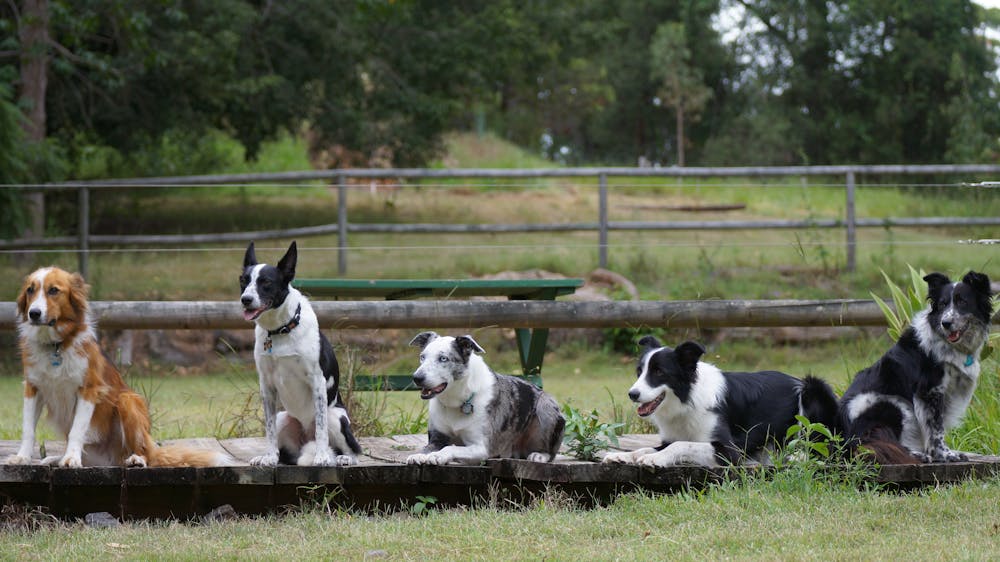
The dog squad: from left to right, Baxter, Billie-Jean, Bear, Charlie and Maya sniffed out vulnerable koalas to see how many are living in areas due to be developed in Queensland. Author provided

Environmental impact assessments

Every new infrastructure project must carry out an Environmental Impact Assessment (EIA) to see whether it will affect a threatened species. If this is the case, the logical next step is to try to avoid this by redesigning the project.

But this rarely happens in reality, as we saw recently for the endangered black-throated finch.


Read more: Adani’s finch plan is approved, just weeks after being sent back to the drawing board


More often, when the EIA suggests an unavoidable impact the response is to identify mitigation and compensation measures, often in the form of “offsets”. These are swathes of comparable habitat assumed to “compensate” the impacted species for the habitat lost to the development.

To take koalas as an example, developers building houses might be required to buy and secure land to compensate for lost habitat. Or a new road might need fencing and underpasses to allow koalas safe passage across (or under) roads.

Koalas can be found in many environments, from the bush to cities. Detection Dogs for Conservation, University of the Sunshine Coast

These steps are defined in environmental regulations, and depend on the results from the original EIA.


Read more: Safe passage: we can help save koalas through urban design


An issue of assumptions

With koala numbers still declining, we investigated whether current survey guidelines for EIA were indeed adequate.


Read more: A report claims koalas are ‘functionally extinct’ – but what does that mean?


For an EIA to be effective, it is fundamental the environmental impact of a future development can be accurately anticipated and therefore appropriately managed. This relies, as a first step, on quantifying how the project will affect threatened species through ecological surveys of presence and extent of threatened species within the project’s footprint.

There are government guidelines to prescribe how these ecological surveys are performed. Every project has time and budget constraints, and therefore survey guidelines seek efficiency in accurately determining species’ presence.

Dr Romane Cristescu performing a koala survey with detection dog Maya. Marie Colibri

As such, the Australian guidelines recommend focusing survey effort where there is the highest chance of finding a species of concern for the project. This sounded very logical – until we started testing the underlying assumptions.

We used a very accurate survey method – detection dogs – to locate koala droppings, and therefore identify koala habitat, in the entire footprint of proposed projects across Queensland. We did not target our efforts in areas we expected to be successful – therefore leaving out the bias of other surveys.

Unpredictable koalas

We found koalas did not always behave as one would expect. Targeting effort to certain areas, the “likely” koala habitat, to try increase efficiency risked missing koala hotspots.

In particular, the landscape koalas use is intensely modified by human activity. Koalas, like us, love living on the coast and in rich alluvial plains. That means we unexpectedly found them right in the middle of urban areas, along roads that – because they have the final remaining trees in dense agricultural landscapes – are now (counterintuitively) acting as corridors.

This koala was found in a built-up area not captured by traditional surveys. Detection Dogs for Conservation, University of the Sunshine Coast

Read more: Koalas can learn to live the city life if we give them the trees and safe spaces they need


Assumptions about where koalas live can massively underestimate the impact of new infrastructure. In one case study, the habitat defined by recommended survey methods was about 50 times smaller than the size of the habitat actually affected.

If surveys miss or underestimate koala habitat while attempting to measure development impact, then we cannot expect to adequately avoid, mitigate or compensate the damage. If the first step fails, the rest of the process is fatally compromised. And this is bad news for koalas, among many other threatened species.

All parts of the landscape are important

What is needed is a paradigm shift. In a world where humans have affected every ecosystem on Earth, we cannot focus on protecting only pristine, high-quality areas for our threatened species. We can no longer afford to rely on assumptions.

This might seem like a big, and therefore expensive, ask. Yet ecosystems are a common resource owned by all of us, and those who seek to exploit these commons should bear the cost of demonstrating they understand (and therefore can mitigate) their impact.

The alternative is to risk society having to shoulder the environmental debt, as we have seen with abandoned mines.


Read more: What should we do with Australia’s 50,000 abandoned mines?


The burden of proof should squarely reside with the proponent of a project to study thoroughly the project impact.

A koala found in the wild while performing an Environmental Impact Assessment. Detection Dogs for Conservation, University of the Sunshine Coast

This is where the issue lies – proponents of projects are under time and budget constraints that push them to look for efficiencies. In this tug of war, the main losers tend to be the threatened species. We argue that this cannot continue, because for many threatened species, there is no longer much room for mistakes.

The environmental regulations that define survey requirements need to prioritise accuracy over efficiency.

A review of Australian’s primary environmental law, the Environment Protection and Biodiversity Conservation Act is due to begin by October this year. We call on the government to use this opportunity to ensure threatened species are truly protected during development.


The authors would like to gratefully acknowledge the contribution of Dr David Dique and Russell L. Miller to this research and the two original papers this piece is based upon (feature paper and response).

ref. Koala-detecting dogs sniff out flaws in Australia’s threatened species protection – http://theconversation.com/koala-detecting-dogs-sniff-out-flaws-in-australias-threatened-species-protection-121118

Indigenous art centres that sustain remote communities are at risk. The VET sector can help

Source: The Conversation (Au and NZ) – By Pi-Shen Seet, Professor of Entrepreneurship and Innovation, Edith Cowan University

Among the many touching gifts following the March 2019 shootings in Christchurch, New Zealand, were two paintings by artists from South Australia’s remote Anangu Pitjantjatjara Yankunytjatjara (APY) Lands.

The paintings showed a honey grevillea shrub, a native Australian plant that produces long spikes of striking yellow and green flowers in winter. These canvasses depicted the sorrow of a people separated by sea and culture, but united in humanity.

Artworks such as these are an important source of creativity and identity for Indigenous Australians (a term used here to refer to Australia’s First Peoples or Aboriginal and Torres Strait Islander Peoples).

They date back around 40,000 years and include paintings, drawings, etchings, sculptures, screen printing, weaving, pottery, jewellery and other traditional artefacts such as spears, boomerangs, canoes and fish traps.

Indigenous art also provides important economic benefits. When the art market peaked in 2007, Indigenous art was estimated to generate some A$400-500 million a year. This supported 110 Indigenous art centres and about 5,000 art workers (artists).

Most Indigenous artworks are produced in around 90 art centres located in very remote regions of Australia. These centres represent a viable pathway to address the extreme economic exclusion experienced by residents of Australia’s remote Indigenous communities.

Indigenous artworks date back 40,000 years. from shutterstock.com

A 2012 government report noted “art sales (were) the primary or only source of non-government income” for remote Indigenous communities.

The art centres also provide meaningful employment opportunities for Indigenous women – who make up around 70% of artists.

But Indigenous art centres are facing significant challenges. Due to issues including the global financial crisis and quality control, average prices for paintings have almost halved since their peak. The Indigenous Australian art market is still rebuilding.

There is also a lack of appropriate apprenticeship programs for Indigenous artists, and effective management and salesmanship. The vocational education and training (VET) sector must work together with key members of remote Indigenous communities and the art sector to deliver training that addresses the needs of remote Indigenous artists.

Staffing issues and culture clashes

Remote Indigenous art centres are typically incorporated organisations whose members are artists. Members elect a governing body that employs staff. There is limited commercial experience among members.

This fact, combined with the nature of the Indigenous art market, which is volatile and reliant on one-to-one agreements between art centres and city galleries, means the board normally employs non-Indigenous managers to manage art centres.


Read more: For Aboriginal artists, personal stories matter


Most Indigenous art centres are in remote regions. The Australian Bureau of Statistics (ABS) classifies “remote” as four hours’ drive or more from an urban centre and “very remote” as more than four hours’ drive from a range of services with restricted accessibility by ordinary vehicles.

This poses challenges for attracting, retaining and training suitably qualified art centre managers. Most managers work for around two to three years before leaving.

They are mainly young women with fine arts degrees who have lived most of their lives in urban settings. They find it challenging to work across cultures. And these managers are often ill-prepared for their role, which includes many non-art-related tasks like developing viable business models.

Most Indigenous art centres are located hours away from an urban centre. from shutterstock.com

Art centre managers are also responsible for training Indigenous artists. A small minority of Indigenous artists do formal, vocationally related training with certificates in arts administration or visual arts.

But artists are more likely to do non-formal, on-the-job training and participate in workshops and artist-in-residence programs.

Much of this training adapts traditional skills of Indigenous Australians to produce commercial artworks. For example, artists from the Tjanpi Desert Weavers adapt traditional women’s skills such as spinning human hair to weaving in contemporary materials.


Read more: The Tjanpi Desert Weavers show us that traditional craft is art


How VET can help

Indigenous Australian artists are still heavily connected to traditional knowledge systems and practices and serve long cultural apprenticeships. But these are often not compatible with, nor recognised by, mainstream education or training systems.

Research shows the overwhelming majority of Indigenous artists receive irregular incomes and, over the course of their careers, small returns. For instance, only just over 5% of Indigenous artists receive A$100,000 or more over the length of their careers.

The often lengthy time it takes to make art, sell it and get paid for it also means some Indigenous artists have had negative experiences of the art market. This includes being exposed to exploitative art dealers who promise dubious incentives outside of the art centre system.

While most of the training of Indigenous artist is non-formal, governments and Indigenous art peak bodies have also recognised the importance of formal learning.

Most states offer VET-level qualifications in Aboriginal and Torres Strait Islander Cultural Arts but mainly at the certificate level. And not all these courses are available in remote communities and not all states subsidise students.


Read more: Rise of Indigenous art speaks volumes about class in Australia


A small number of artists aspire to become art centre managers. So they need more formal training in higher-level administrative and management positions. The VET sector should collaborate with various stakeholders to help more artists upgrade their skills via diploma and degree programs.

Over time, these artists can move into management positions in art centres (or other arts and cultural organisations). This would also help reduce the turnover problems experienced by the sector.

The Indigenous art market generates millions of dollars a year. Arnhem Land Aboriginal Injalak Arts & Crafts Centre (Screenshot)

A recent review of the Australian vocational education and training sector recognised the challenges Indigenous Australians face when engaging with vocational education, particularly in rural and remote areas. Some factors in this included low levels of basic literacy and numeracy, and training methods not tailored to meet the needs of some Indigenous Australian learners, particularly in remote areas.

Without waiting for the government to carry out the review’s recommendations, some Indigenous arts bodies have already implemented innovations, working with art centres and the VET sector to reconcile accredited and non-accredited training.

One example is Desart (Alice Springs, NT), a peak body for Central Australian Indigenous art centres, which facilitates the Aboriginal Arts Worker Program. This coordinates training and provides support for artists in the area.

Desart’s Art Worker Program offers these artists a customised program that includes accredited training co-designed and delivered in partnership with the Batchelor Institute over four weeks per year. This is supplemented by non-accredited training, which includes workshops delivered at the art centre.

Initiatives such as these, which involve collaboration between the Indigenous art industry, the VET sector and government, are ideal examples for government-funded pilot programs in remote Indigenous communities. These models will be increasingly important if we want to help keep remote communities afloat.


Tim Acker, Principal and Lead Consultant with Tracker Development, was also a co-author for this article.

ref. Indigenous art centres that sustain remote communities are at risk. The VET sector can help – http://theconversation.com/indigenous-art-centres-that-sustain-remote-communities-are-at-risk-the-vet-sector-can-help-121179

Apartment life for families means living at close quarters, but often feeling isolated too

Source: The Conversation (Au and NZ) – By Elyse Warner, Lecturer in Health and Social Sciences, Deakin University

Newer high-rise developments in Australia’s inner-city areas are increasingly home to parents raising young children. In the 2016 Census, family households represented nearly half of apartment residents. Close to one in ten children aged 0-4 live in apartments in Australia.

Our research, recently published in Health and Place, explored parents’ experiences of raising preschool-aged children in newer, private high-rise apartments. The parents experienced a range of barriers to making social connections both within their developments and with the surrounding community.


Read more: With apartment living on the rise, how do families and their noisy children fit in?


This reflects the fact that most newer high-rise dwellings in Australia have been developed for residents without children. Several studies indicate that this leads to potential issues for families raising children in high-rise settings, including social connectedness among older schoolchildren.

Apartment living through parents’ eyes

Our study used Photovoice to explore parents’ experiences of raising children in apartments in the City of Yarra, Melbourne. Apartments represent 46% of available housing) in this inner-city municipality. Parents took ten photographs of the positive and challenging aspects of apartment living.

We then used these images to guide both individual and group interviews. Parents recognised that the shared experiences of raising a young child in the City of Yarra fostered social connections, particularly at mothers’ groups and local parks. One parent explained:

So this is my mothers’ group … It’s such a great community to have. I mean we’re kind of a close group now and we’ve just spent the last year growing our kids together … there was people from all different walks of life … and the only thing connecting us is just that we had a child in Yarra at the same time …

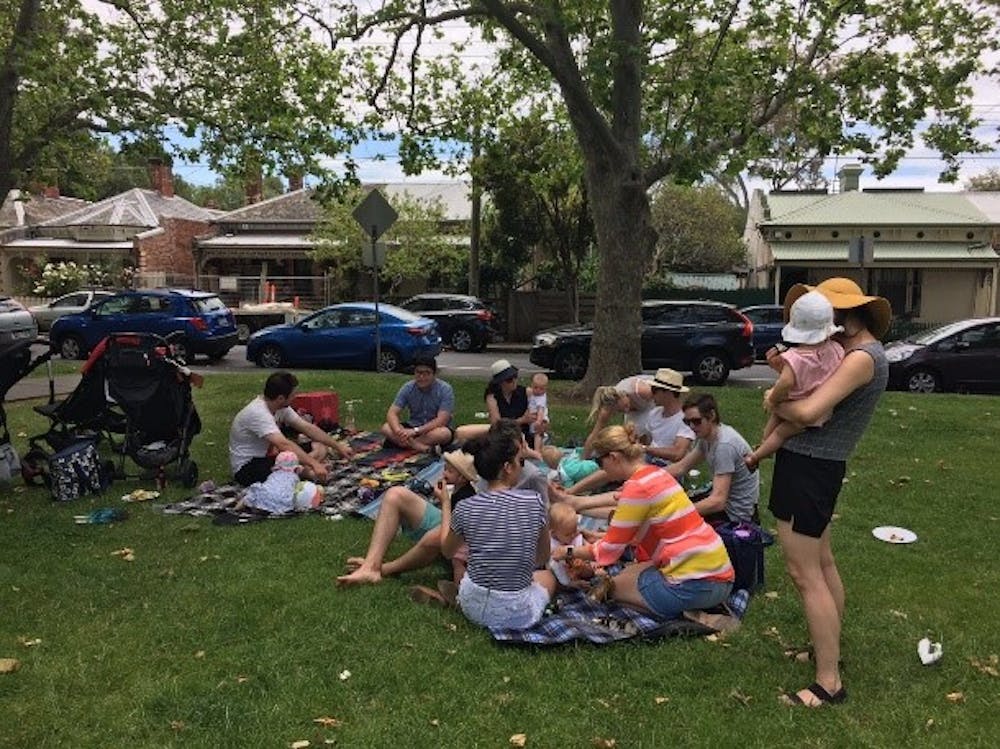
The mothers’ group: ‘we’ve just spent the last year growing our kids together’.

But parents felt that space constraints in high-rise developments limited opportunities for play dates between children. The connections parents developed were also lost when other families planned to leave the community, or had already left, in search of larger homes and outdoor space.


Read more: ‘Children belong in the suburbs’: with more families in apartments, such attitudes are changing


The design of developments did not encourage incidental social interaction with neighbours either. One parent captured this in a photograph titled “Hallway of death”.

Hallway of death: ‘you cannot stand and have a conversation there’.

It’s a nothing space, right? … You cannot stand and have a conversation there, you feel weird … cos you’re in the vortex of death … and if it was a nice space we might go out and he could crawl and that might make people stop and maybe we’d get to know the other people living on the floor …

The closeness of apartments was also problematic. On one hand, parents wanted to connect with their neighbours. On the other hand, they were concerned about overstepping others’ boundaries, particularly when neighbours were often short-term renters without children. One parent’s photograph, “Close proximity but anonymous”, captured this.

Close but anonymous: ‘it’s anonymous and there’s a lot of turnover’.

… despite being so close to each other there is a huge level of anonymity … It would be nice to not feel that we might be being disruptive or people are forming judgments about us based on what they see … And because it’s anonymous and there’s a lot of turnover you never really form relationships with people to know what they’re really thinking, so you second-guess it …

Everyone wants some privacy and maybe when you’re right on top of each other you feel like you’ve got to guard your privacy, but my preference would be for it to be a little more connected than it is.

Families need social support

Parents of preschool-aged children often experience changes in their social networks at the same as they feel an increased need for social support. Connections also need to be closer to home, due to the “place-anchoring” nature of young children and use of local services.

Not having strong social connections with other parents, whether within their own high-rise development and/or the local community, is therefore a problem. It could lead to feelings of loneliness and isolation. These could, in turn, contribute to psychosocial and health issues for parents and poorer health, well-being and education outcomes for children.

What could help?

Recent Victorian apartment design guidelines briefly acknowledge the importance of ensuring accessibility for families with young children. However, much more can be done to support families in inner-city high-rise developments. This includes fostering social connections.


Read more: More children are living in high-rise apartments, so designers should keep them in mind


Local governments can provide further social events in their communities, create infrastructure in parks and playgrounds to encourage families to gather for longer, and require developers to adopt more family-friendly design guidelines than currently apply.

Developers could also provide more favourable communal spaces inside dwellings for interaction to occur. Body corporate organisations could encourage longer-term leases that allow for the extended tenure needed for residents to form stronger connections.

Guidelines, including in regards to noise, could also be made more flexible to accommodate the increasing number of families with young children taking up residence.


The study was carried out with Dr Fiona Andrews from the School of Health and Social Development, Deakin University.

ref. Apartment life for families means living at close quarters, but often feeling isolated too – http://theconversation.com/apartment-life-for-families-means-living-at-close-quarters-but-often-feeling-isolated-too-120983

The National Breastfeeding Strategy is a start, but if we really valued breast milk we’d put it in the GDP

Source: The Conversation (Au and NZ) – By Julie Smith, Honorary Associate Professor, Australian National University

COAG Health Council. August 2, 2019

Australia’s new National Breastfeeding Strategy sets ambitious goals. By 2022 it wants 40% of Australian babies to exclusively breastfeed until they are six months old. At present it’s 25%.

By 2025 it wants 50%.

Beyond that it wants non-exclusive breastfeeding up until at least 12 months of age, and beyond that for as long as both mother and child want.

It notes that what’s important is the first 1000 days (from conception to the end of the child’s second year).

It quotes with approval a finding that human breast milk is

not only a perfectly adapted nutritional supply for the infant, but probably the most specific personalised medicine that he or she is likely to receive, given at a time when gene expression is being fine-tuned for life

The goals are welcome. But one of the reasons we need them is because we don’t properly value what is just about our most valuable nutritional resource. Statistically, breast milk is almost invisible.

If it’s not counted…

That’s partly because a lot of what women produce isn’t counted.

My estimates, based on the price of the human milk that is traded, suggest that the 44 million litres produced per year in Australia is worth A$3 billion.

By comparison, the commercial formula sold in stores is a few hundred million dollars per year.

The number of diseases breast milk prevents in both mothers and children and its personalised nature (delivering what’s needed when it is needed) means it is probably worth more than A$3 billion.

…we act as if it doesn’t count

Ever since the global financial crisis, we’ve been trying to boost GDP (gross domestic product) in order to ensure we don’t have a recession.

But because GDP excludes some of what’s most valuable (breast milk and the home production of services such as childcare) and includes alternatives that are at best unimportant and at worst damaging (such as formula milk) boosting GDP can hit the wrong targets.

An OECD study finds that as we have switched away from using services that are not measured towards using those that are our estimates of true economic growth have become inflated.

That’s why two Nobel Prize winners, economists Joseph Stiglitz and Amartya Sen, agree on including human milk in conventionally-defined GDP. They say its exclusion distorts priorities.

What if the uncounted shrinks?

The latest data from Victoria and NSW suggests rates of full breastfeeding are shrinking. While more mothers are deciding to give breastfeeding a go, more infants are leaving hospital having consumed formula.

Time is probably a factor. Breastfeeding takes time, and women bear the cost of that time unless compensated by paid maternity leave and lactation breaks. Longer leave makes for more milk.

Lack of skilled and knowledgeable support from health workers is a probably another factor, especially when combined with inappropriate promotion of commercial formula to health workers. Although more professional bodies are refusing industry sponsorship, health workers remain an important channel for formula marketing.

Future GDP suffers

A new study by World Bank economist Dylan Walters and colleagues finds that the economic costs of not breastfeeding globally amounts to US$1 billion a day.

They are not only the treatment costs for infectious illness, but also the costs of higher rates of maternal diabetes and breast cancer as well as the costs of higher childhood obesity and chronic disease, and the lifelong economic consequences of cognitive losses in children who were not sufficiently breastfed.

A 2016 study in The Lancet estimates the global cost of the cognitive loss associated with not breastfeeding at US$302 billion per year in lost labour productivity; about 0·49% of world gross national income. For Australia, it is around A$6 billion per year.

Later life maternal breast-cancer is also a major economic cost, mostly concentrated in high income countries with low breastfeeding rates such as Australia.


Read more: Breastfeeding isn’t just about the baby – women’s bodies matter too


Importantly, these estimates are likely to understate the costs of low breastfeeding by ignoring the cost of the unpaid time women spend caring for sick children.

The World Bank as well as the World Health Organization are leading a call for increased investments in all countries to raise the proportion of children exclusively breastfed in the first six months of life from 37% to at least 50%.

We shouldn’t blame mothers

Australia’s new strategy reflects an important shift.

It responds to evidence suggesting that that breastfeeding practices are strongly influenced by commercial factors such as marketing, as well as by the employment and financial and healthcare environment mothers find themselves in. An international review has found that these findings are relevant to Australia.

It makes a strong case for funding for breastfeeding information and education, especially in communities where breastfeeding is at risk.

It could have also made a strong case for more wide ranging financial support of breast milk production, along the lines of Australia’s historical support of dairy farmers.

Or for including breast milk in GDP. The home production of other food products is included in GDP, including the cows milk produced and consumed on farms. Leaving out breast milk distorts goals and helps distort incentives.

Its time that making mothers’ milk counted, and governments invested.


Read more: Breast milk banking continues an ancient human tradition and can save lives


ref. The National Breastfeeding Strategy is a start, but if we really valued breast milk we’d put it in the GDP – http://theconversation.com/the-national-breastfeeding-strategy-is-a-start-but-if-we-really-valued-breast-milk-wed-put-it-in-the-gdp-121302

The Cowra breakout: remembering and reflecting on Australia’s biggest prison escape 75 years on

Source: The Conversation (Au and NZ) – By Rebecca Hausler, PhD Candidate, Researcher, and Sessional Lecturer in Japanese Studies, School of Languages and Cultures, The University of Queensland

Today (August 5) marks the 75th anniversary of Australia’s largest prison escape: the Cowra breakout, in New South Wales, during the second world war. In fact, it is one of the largest prison escapes in world history, but unless you are a keen war historian you may have never heard about it.

A small farming community was forever changed in 1944, when the sound of a bugle cut through the crisp night air at the Cowra Prisoner of War camp.

Shortly before 2am, hundreds of Japanese prisoners of B Camp ran towards the barbed wire fences brandishing makeshift weapons such as sharpened table knives and clubs.

The morning after the outbreak revealed the dead bodies of many Japanese POWs lying everywhere along the blanket draped wire. Australian War Memorial (044172)
Knives recovered in and around B Camp. Australian War Memorial (073486)

Rushing through a hail of bullets fired by the Australian guards, hundreds of prisoners escaped into the countryside. In the following days, 334 prisoners were recaptured.


Read more: The Australian Dream is must-see for lovers of football and this country


Four Australian soldiers and at least 231 Japanese prisoners were killed, while a further 108 prisoners and three guards were wounded. No civilian casualties or injuries were recorded.

As the dust settled, many would question why the prisoners would attempt such a bold and ultimately lethal escape plan. How do we as a society make sense of such bloodshed?

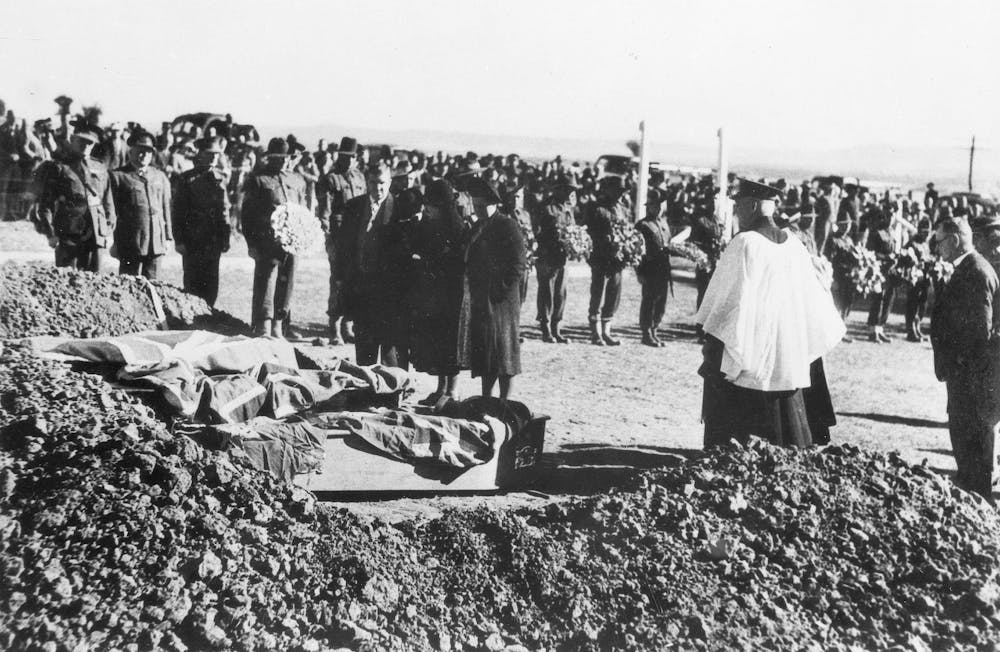
Burial of Australian soldiers killed during breakout of Japanese prisoners at B Camp. Australian War Memorial (044119)

From non-fiction to fiction

While there have been a number of non-fiction works written on this event by authors such as Hugh Clarke, Charlotte Carr-Gregg, and Harry Gordon, it is works of fiction that have sought to fill in the gaps of history. They give us a way of understanding the incomprehensible.

The first author to do so was Australian poet and novelist Kenneth Seaforth Mackenzie. Mackenzie was stationed at Cowra during WWII and was on duty the night of the breakout.

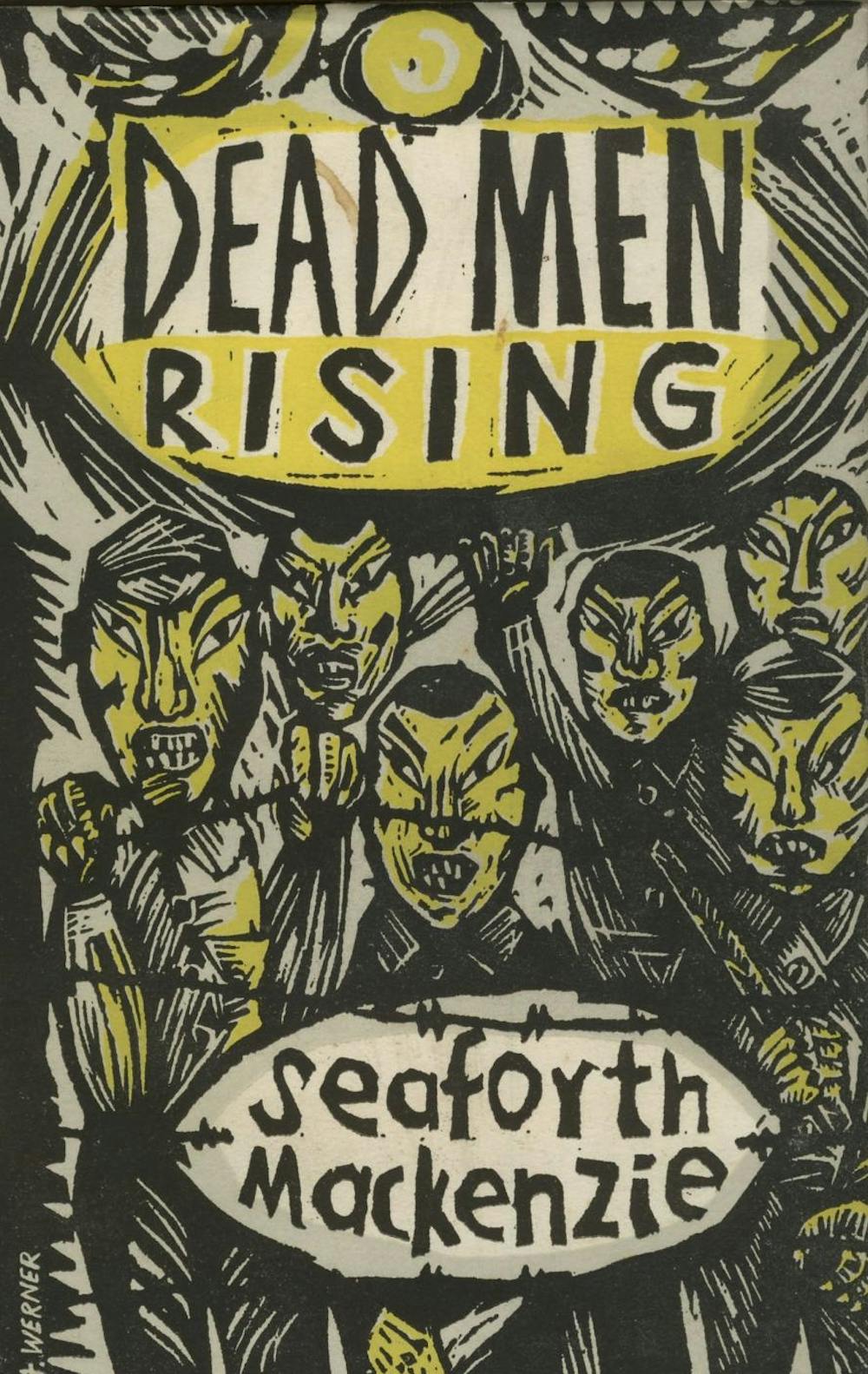
Dead Men Rising, by Seaforth Mackenzie.

His novel Dead Men Rising was based on his experiences. Because of this, the book was initially halted from Australian release due to the publisher’s fears of libel claims.

The book was released in the UK and USA in 1951 but Australian readers had to wait until 1969, several years after Mackenzie’s death, to read his interpretation of the event.

Dead Men Rising is largely focused on camp life through the eyes of the guards in the lead up to the break out. There is little interaction with the Japanese inmates who are represented as “un-human”, “animal-like” and “unpredictable”.

Mackenzie depicts them as utterly foreign and incomprehensible to the Australian soldiers. This narrative likely reflects attitudes at the time with anti-Japanese sentiment still high in the early post-war years.

A Japanese perspective

Several years later, Japanese author and former military doctor Teruhiko Asada, wrote Hiroku Kaura no Bōdō a title that translates as “The Secret Record of the Cowra Riot” in 1967.

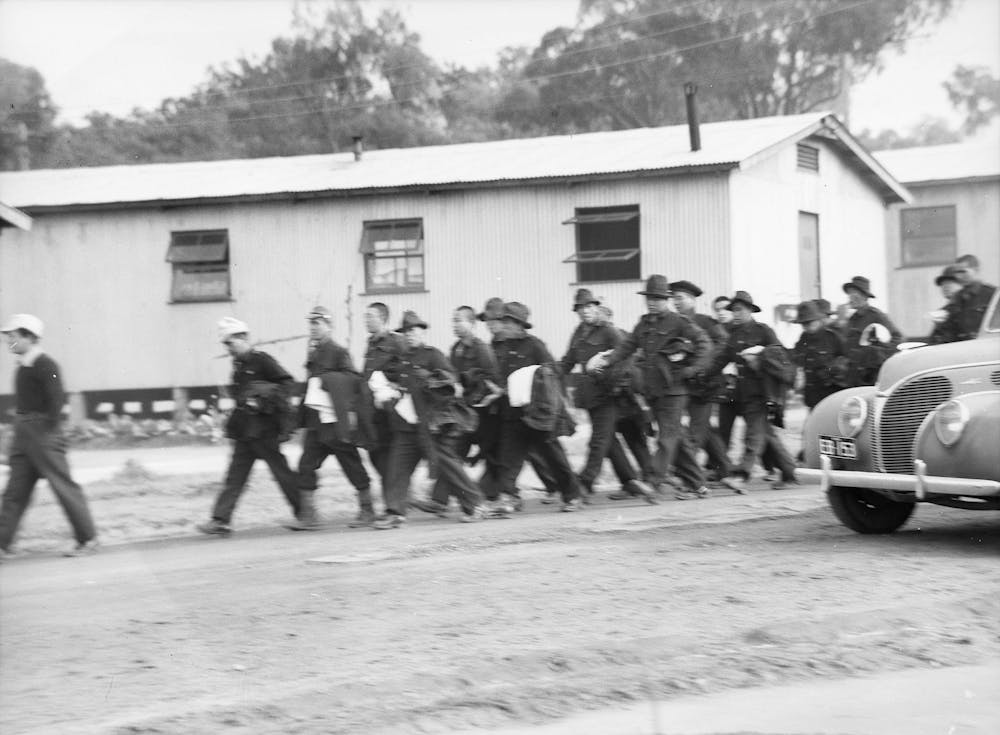
Japanese Prisoners Of War marching back to their quarters after being issued with new clothing a month before the breakout. Australian War Memorial (067200)

It was received eagerly by English speaking audiences when it was translated by former Australian soldier and interpreter Ray Cowan in 1970 under the sensationalist title The Night of a Thousand Suicides.

The Night of a Thousand Suicides, by Teruhiko Asada and translated Ray Cowan (left) and The Naked Sun, by Ted Willis (right)

Presented as a first-person narrative, the story had an intimate feel lacking in previous accounts, which led to some claiming the book was more fact than fiction, no doubt reinforced by Cowan’s inclusion of photographs from the Australian War Memorial. But this attribution is problematic given Asada was never imprisoned at Cowra.

The breakout was again revisited by authors in the 1980s. The Naked Sun, published in 1980 by British author Lord Ted Willis, uses a split narrative.

Alternating between an Australian and a Japanese perspective of the war, this novel highlights the unlikely similarities shared between the story’s two opposing protagonists, an ex-farmer from occupied New Guinea and an imprisoned Japanese Sergeant.

Childhood memories

Later that decade, British-Australian author Jim Anderson (of OZ Magazine fame) draws on his own memories of the Cowra breakout as a child in his 1989 novel Billarooby.

Billarooby, by Jim Anderson.

The coming of age novel depicts a young boy who seeks to help the “samurai” escape from the POW camp, amid a backdrop of familial trauma and the hardships of rural life.

The boy’s innocence highlights the inherent racism, bigotry and violence that permeate the town’s pleasant façade, disrupting the notion that the “enemies” are the ones behind the barbed wire fence.

In 1989 Thomas Keneally revised and republished his 1965 novel The Fear.

The 1965 edition drew upon his boyhood memories of the breakout with this work briefly depicting the camp and subsequent breakout in the latter half of the book.

But in the revised 1989 edition, which was renamed By the Line, he omits any mention of the camp entirely. The author later said this early depiction was largely inaccurate.

The Fear, By The Line and Shame and the Captives, by Thomas Keneally.

With this fresh perspective, Keneally returned again to the breakout in 2013 with Shame and the Captives which is set in the town of Gawell, a fictionalised version of Cowra.

Keneally said in his introduction that now, rather than drawing on his faulty memories of childhood, he spent considerable time researching the historical event which informs his work.

By aiming to create a “a truth in this fiction” Keneally hoped to “interpret the phenomenon of Cowra”. His reimagining included explorations of Italian and Korean POWs who were also held at Cowra, but whose stories are often overlooked.

Barbed Wire and Cherry Blossoms by Anita Heiss. Simon & Schuster AU

The most recent work which revisits the breakout is by Wiradjuri author Anita Heiss.

Her 2016 work Barbed Wire and Cherry Blossoms provides an Indigenous voice to the history of Cowra, a voice that has often been silenced in accounts of Australian history.

Issues of race, discrimination and loyalty take on a new sense of urgency in this wartime setting, yet also highlight that while much has changed in the last 75 years, so much has stayed the same.

Heiss echoed this view when she asserted there “are lessons still to be learned from the history of Cowra”, lamenting the regression in Australia’s treatment of detainees in centres such as Manus Island or Don Dale.

Cowra today

From this bloody chapter of history, the township of Cowra – today, a four hour drive inland from Sydney – has moved forward to promote itself as a beacon of peace, friendship, and understanding.


Read more: Love in the time of racism: ‘Barbed Wire and Cherry Blossoms’ explores the politics of romance


In a show of respect for the dead, the Cowra RSL Sub-branch cared for the Japanese burial ground informally until eventually the graves were relocated to what is now the Cowra Japanese War Cemetery, which opened in 1964.

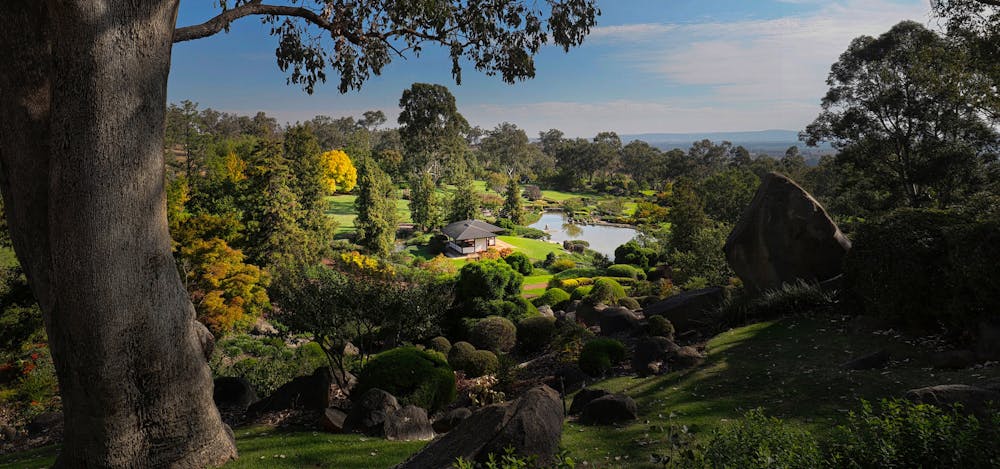
In 1979 the Cowra Japanese Garden and Cultural Centre opened, and is considered to be a “tangible monument to peace and reconciliation”.

The Japanese gardens in Cowra, taken in April 2018. Flickr/Robert Montgomery, CC BY

The gardens and the cemetery were symbolically linked by an avenue of cherry blossoms in 1988, and in 1992 Cowra was awarded further recognition to its peace efforts with The Australian World Peace Bell.

Festivals such as the Sakura Matsuri festival and the Festival of International Understanding further showcase Cowra as a “unique place … of reconciliation”.

ref. The Cowra breakout: remembering and reflecting on Australia’s biggest prison escape 75 years on – http://theconversation.com/the-cowra-breakout-remembering-and-reflecting-on-australias-biggest-prison-escape-75-years-on-120410

Gallery: Guardianship photo shoot with the Ihumātao ‘protectors’

Pacific Media Centre Newsdesk

The Pacific Media Centre’s Del Abcede joined the Ihumātao “protectors” protest at the weekend to soak up the atmosphere of guardianship over the future of the sacred indigenous Māori site.

Fletcher Building plans to build 480 homes on the site but work has been suspended by Prime Minister Jacinda Ardern while talks continue between various stakeholders.

The SOUL (Save Our Unique Landscape) protectors group says the land has historical, cultural and archaeological significance and should be left an open space or returned to mana whenua.

The block of land was confiscated in 1863 by British colonial authorities, acquired by the Crown and sold to the Wallace family. In 2016, the 32ha block was bought by the Fletcher group for housing development.

Here is a portfolio of Del’s images.

Print Friendly, PDF & Email

Article by AsiaPacificReport.nz

Albanese says Voice must be in the Constitution

Source: The Conversation (Au and NZ) – By Michelle Grattan, Professorial Fellow, University of Canberra

Opposition leader Anthony Albanese says an Indigenous “Voice” to parliament must be enshrined in the Constitution.

His position, spelled out in a speech to be given on Saturday to the Garma Festival, makes it difficult to see how he and Prime Minister Scott Morrison will be able to agree on a referendum question.

Albanese says in his address, released ahead of delivery:

With a Voice in place, there can be truth-telling, and there can be Makaratta. […] It is clear to me that enshrining that Voice in the Constitution is what must come first.


Read more: Politics with Michelle Grattan: Anthony Albanese on Labor’s hard times


Morrison has been adamant there should be no reference to a Voice in what is inserted in the Constitution to recognise Australia’s First Peoples.

Without bipartisan support, a referendum would not have a chance of success and, indeed, would not be put.

Indigenous leaders in the Uluru Statement from the Heart called for “the establishment of a First Nations Voice enshrined in the Constitution”.

Albanese says:

I want a Voice and Truth then Treaty to be part of our nation’s journey, part of our national life. It’s not just about respect and redress. It’s about progress and change. It’s about moving out of the darkness

Although there is a gulf between Albanese and Morrison over what should go into the constitution, Albanese says he still hopes for bipartisanship.

“We have not yet had true reconciliation, and a country that is not truly reconciled is not truly whole. And until we are whole, we will never reach our truest potential as a nation – and we have so very much potential,” he says.

But how can we have reconciliation when one side has no voice?

The Voice is the bedrock upon which we must build.

I will take the fight to the government on so many things; never have any doubt about that. But on this we must work together. We must be together. My hope we can have bipartisanship on this remains alive.


Read more: Politics with Michelle Grattan: Ken Wyatt on constitutional recognition for Indigenous Australians


Albanese says he is encouraged by “the tentative moves towards constitutional change” by the Minister for Indigenous Australians, Ken Wyatt. “I hope he gets the support he needs and deserves from his colleagues.”

He says he is also encouraged by “the epiphany experienced by Barnaby Joyce.

“After being part of the chorus pushing the myth that a Voice would amount to a third chamber in parliament, Mr Joyce did something unusual. He stopped. He listened. He asked questions from people with knowledge. […]

“Mr Joyce then went on television to own up to his mistake, and to explain why he’d been wrong. And he encouraged others who’d made the same mistake to follow his example.”

At Tuesday’s caucus meeting Pat Dodson, the opposition spokesman on Indigenous recognition, said constitutional recognition had now been decoupled from everything that was in the Uluru statement. Uluru had now shifted to “co-design with select individuals”, he said.

Dodson said there was no structure for formal consultations with First Nations. “Apparently the minister has a plan for consultation with the Coalition backbench and apparently with Pauline Hanson”, he said.

The challenge now was to “assist the minister without walking away with all the fleas and ticks that would undermine a principled position”, Dodson said.

ref. Albanese says Voice must be in the Constitution – http://theconversation.com/albanese-says-voice-must-be-in-the-constitution-121380

Iwi against Ihumātao occupation social media pages shut down

By Charlotte Muru-Lanning in Auckland

Controversial social media pages belonging to the New Zealand iwi opposing the occupation at Ihumātao were shut down this morning.

The Twitter and Facebook pages named “Protecting Ihumātao” were set up by Te Kawerau a Maki, the Auckland iwi opposing the occupation lead by the SOUL group at Ihumātao.

The social media pages have been criticised for being misleading by looking too similar to SOUL’s social media pages which use the similar name “Protect Ihumātao”.

READ MORE: Ihumātao: Powerful powhiri welcomes state ministers to protest site

A spokesperson for Te Kawerau a Maki, Pita Turei, said that he was at the meeting where the “Protecting Ihumātao” social media campaign had been discussed.

He said that the similarity of the pages to SOUL’s social media was done on purpose and was a “tactical move” by the iwi authority.

– Partner –

The pages which appeared online on Monday shared articles and quotes in support of the Fletcher Building development and the deal made between Fletcher and Te Kawerau a Maki.

Kelly Marie Francis, a spokesperson for SOUL said that it was obvious that the online pages had been made to look like SOUL’s social media.

She said that she believed that the pages were shut down because of the negative response.

“They would have been receiving too much flack for it,” she said.

Although the Facebook and Twitter pages for “Protecting Ihumātao” have been deleted, the website is still active. Te Kawerau a Maki has been criticised for paying for this website to sit above SOUL’s website in Google search results relating to Ihumātao.

Te Kawerau a Maki’s “Protecting Ihumātao” website shares a similar title with the SOUL campaign’s. Image: Screenshot Protecting Ihumātao
  • Charlotte Muru-Lanning is Tainui and Ngati Maniapoto. She is based in Auckland, New Zealand. She has a BA in sociology and film and media studies and is currently completing a Postgraduate Diploma in Journalism at Auckland University of Technology
Print Friendly, PDF & Email

Article by AsiaPacificReport.nz

Beefing up security isn’t the only way to make hospitals safer

Source: The Conversation (Au and NZ) – By Jacqui Pich, Lecturer in Nursing, University of Technology Sydney

Yesterday’s strike by NSW hospital staff over security concerns has highlighted just how serious the issue of workplace violence has become for health-care workers.

The Health Services Union, whose members include administration, cleaning and security staff, as well as paramedics and other health professionals, has reportedly called for measures including 250 more security guards across the state to better protect workers.

But tackling the growing problems of violence in our hospitals is about more than beefing up security numbers. Violence in our health-care system is also not limited to inner city hospitals, and it doesn’t just affect staff in emergency departments.


Read more: I was stabbed 14 times at the hospital where I work. I survived, but not everyone is so lucky


How big a problem is violence in our hospitals?

The levels of violence in hospitals have been steadily increasing across Australia.

For example, in NSW there was a 50% increase in the number of police-recorded assaults on hospital premises between 1996 and 2006. This number has continued to rise with an average increase of 5.8% a year between 2010 and 2015. In Western Australia, there was a 38% increase in assaults on nurses between 2017 and 2018.

Patients are the main source of this violence, and this includes the parents of children admitted to hospital.

Violence against health-care workers is also recognised internationally. The World Health Organisation sees it as a significant issue. And a US government report says many health-care workers see it as an inevitable part of their job.


Read more: A soldier and a sex worker walk into a therapist’s office. Who’s more likely to have PTSD?


Media attention is often focused on high-risk areas like the emergency department and mental health settings. However, violence occurs everywhere in the health-care system, from the community to hospital wards, even birthing suites.

The impact of violence on health-care staff includes physical and psychological reactions. Symptoms associated with post-traumatic stress disorder such as sleeplessness, nightmares and flashbacks have been reported and can persist for up to 12 months.

Violence towards health-care staff has also been linked to perceived poorer patient care.

Where do security guards fit in?

Rising levels of violence against health-care workers suggest current security measures are not a sufficient deterrent.

Despite union calls for more security guards, an interim report NSW Health commissioned looking at how to improve hospital security did not recommend this.

But an increase in security guards is warranted when you consider that some rural and regional hospitals have minimal, or no security presence; staff in these facilities have to rely on the police for help if they encounter a violent patient.

In fact, staff in regional and remote areas experience the same levels of violence as their metropolitan colleagues.

A NSW Health spokesperson says the author of its hospital security report is visiting hospitals in rural and regional areas to understand their security challenges and this information will be included in the final report, due by the end of the year.


Read more: The problems with Australia’s hospitals – and how they can be fixed


While an added security presence may be warranted in some circumstances, more security guards would not impact staff working outside hospitals, including paramedics and community nurses.

Then there’s the quality of security guards. Health is a unique environment where traditional security measures can be counter-productive. For instance, if guards use inappropriate communication when people are anxious and stressed they can increase the chance of a situation escalating.

What’s needed are specially trained health security guards, working with doctors and nurses, as part of a multidisciplinary rapid response team. This doctor-led team would be called in to manage violent behaviour, for instance to “take down” a violent patient.


Read more: Alcohol leads to more violence than other drugs, but you’d never know from the headlines


The Health Services Union has reportedly called on the NSW government to commit A$50 million for a proactive security team at hospitals, including staff trained in mental health, drug and alcohol abuse.

This makes sense as patients under the influence of alcohol and/or drugs, including ice, and those with mental health issues, are the ones most likely to be violent.

It’s not just about emergency departments

A spokesperson for NSW Health says A$19 million has been invested to improve security in emergency departments at public hospitals, and more than A$5 million to upgrade duress alarms for staff in emergency departments.

However violence in health care extends beyond the emergency department to all clinical specialities and beyond the walls of a hospital.

In a recent study of NSW nurses and midwives, staff discussed the physical design and layout of wards, and areas that should be secure but aren’t, as reasons they felt unsafe at work.

In particular, they described feeling unsafe returning to the car park in the dark, often with no security personnel present and in poorly lit conditions. Lack of duress alarms, poor placement of duress alarms or non-functioning duress alarms were also an issue.


Read more: Violence against nurses is on the rise, but protections remain weak


Time for governments to act

The NSW interim report into hospital security acknowledges some shortcomings in the current management of violence in health care and as such is a positive step in reducing the risk to staff.

However, the persistent nature and increasing levels of the violence mean that the state government needs to prioritise the safety of all health-care staff.

ref. Beefing up security isn’t the only way to make hospitals safer – http://theconversation.com/beefing-up-security-isnt-the-only-way-to-make-hospitals-safer-121301

Australia depends less on Chinese trade than some might think

Source: The Conversation (Au and NZ) – By James Giesecke, Professor, Centre of Policy Studies and the Impact Project, Victoria University

China now buys almost a third of Australia’s exports – about twice the value bought by second-placed Japan, and about nine times fifth-placed United States.

It’s a situation that sparks fears of a Chinese economic slowdown, or a backlash if we offend China’s government in some way, such as by criticising its actions in Xinjiang or in the South China Sea.

In February and March customs officials in Chinese ports reportedly held up Australian coal imports. This was interpreted as a signal from Beijing about moves in Canberra to limit Chinese influence in Australia.


Read more: The Chinese coal ‘ban’ carries a significant political message


The Chinese government has a track record of using economic muscle to apply diplomatic pressure, including against Canada, South Korea and Palau.

“We are incredibly dependent on China – in some ways we are a state of China,” said business commentator Robert Gottliebsen. “China is now the world’s number two country and they will not stand for being lectured to by anyone — let alone a minnow like Australia.”

Is Australia really that dependent on China?

As a commodity exporter, Australia is vulnerable to any downturn in global markets due to a Chinese economic slump. This makes the fallout from the US-China trade conflict concerning.


Read more: What’s worse than the US-China trade war? A grand peace bargain


But being penalised as a supplier by China for some perceived diplomatic slight is a different matter.

Using a global economic model with many commodities and countries, we modelled the effect of Beijing permanently cutting China’s imports of Australian coal by 25%.

Australia’s coal exports to China in 2018 were worth about A$15 billion – or about 1% of what the nation spends on private and public consumption in a year.

One might think losing a quarter of coal exports to China will knock about 0.25% off our spending capacity. In economic terms that’s a big number. Our results, however, point to a much smaller loss – just 1/6th the impact, or about 0.04% lower national consumption. That equates to every person having $24 less to spend in a year.

Four determining factors

Any economic model necessarily abstracts from potentially important real-world elements, so its potential accuracy depends on the detail and data that goes into it.

So perhaps more important than the specific results of a cut to coal exports is how our modelling shows four interconnected factors determine to what degree the economy will be hurt by sanctions on any export.

The first factor has to do with the capacity to redirect exports to other markets. How easily can exporters find other buyers? How much will the price need to be cut to interest buyers? We call these “trade diversion effects”.

If Australia could not divert exports elswehere, China buying 25% less coal would see the volume of total Australian coal exports fall by about 6%. Our modelling shows the likely fall would be about 1/12th of this, at 0.5%.

The chart below shows our results. The blue line shows the effect on the total value of coal exports. The stacked columns show the effect of China’s cutback being offset by sales to other markets – notably Japan, South Korea and countries in Southeast Asia.


Trade diversion effects on Australia’s coal exports, by destination (% deviation from baseline) source, Author provided (No reuse)

To sell more to another buyer, it’s likely exporters will need to reduce prices. Our model anticipates the Australian coal price will fall by about 3%.

The second factor is how easily resources can switch from coal production to other activities.

For any resource that can move to alternative uses, the impact of the trade sanction will be reduced. Labour is an example. A miner no longer needed to meet demand for coal will generally have skills transferable to other jobs, although this might require working at a lower wage in another region.

For any resource that cannot easily move – the capital invested in specific coal-mining equipment or transport infrastructure, for example – lower export revenue will mean lower profits from these assets.

How do lower profits affect Australian living standards? This depends on who owns the affected assets, and how much tax they pay.

So the third factor is the level of foreign ownership. More foreign ownership means more profits go overseas. This dampens any impact of lower profitability on Australian living standards.

For our modelling, we set foreign ownership of the coal industry at 80%, based on Reserve Bank of Australia estimates and an analysis of mine ownership in New South Wales coalfields. With just 20% of the after-tax profits staying in Australia, the impact of any change is minor.

The local economy, however, can also suffer due to lost taxes on the income of those foreign owners.

Taxation effects are the fourth factor.

Australian governments collect taxes through mining royalties (a tax on the value of production), corporate tax (on profits), and withholding tax (on interest and unfranked dividends).

We set the coal royalty rate at 8% of the value of coal production, and the taxation rate on foreign capital at 17% because the effective tax rate on foreign capital is about half the corporate tax rate.

A smaller cost than some think

With all these factors in play, our modelling suggests there is less to fear from the Chinese government throwing its economic weight around than some think.

We think our conclusions probably hold for many of Australia’s exports to China, but acknowledge our investigation is preliminary.

For example, what would happen if the Chinese government decided to restrict the number of Chinese students studying in Australia? Finding new markets for education services might be tougher than for primary products. Resource redeployment might be easier, however.


Read more: The world has a hard time trusting China. But does it really care?


Notwithstanding these caveats, this type of modelling could provide a clear framework to assess Australia’s economic vulnerabilities.

Perhaps no price should be put on upholding and expressing our liberal democratic and human rights values, and protecting our security interests, but the cost of economic sanction might well be less than many fear.

ref. Australia depends less on Chinese trade than some might think – http://theconversation.com/australia-depends-less-on-chinese-trade-than-some-might-think-120423

Remembering environmental campaigner Steve Sawyer, 1956-2019

Report by Dr David Robie – Café Pacific.

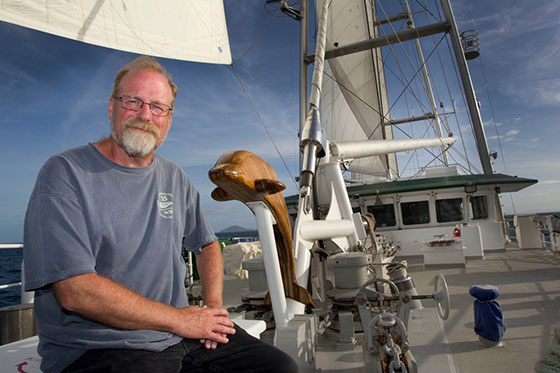
Steve Sawyer, Rongelap campaigner with the original Rainbow Warrior which was bombed by French secret service agents in July 1985 in Auckland, aboard the new Rainbow Warrior during the ship’s first visit to New Zealand. © Nigel Marple/Greenpeace

A tribute to STEVE SAWYER by former Rainbow Warrior captain PETER WILLCOX, who was skipper at the time of the Rongelap evacuation and the bombing in 1985.

I MET Steve in 1981 in New Bedford, Massachusetts, on the first Rainbow Warrior. I was answering a job advert he had placed in the National Fisherman. We spoke in his cabin for a while, and then went to the mess to meet the crew.

One of the things Steve liked about the manager’s job on the RW was that he got to do real physical work as well as intellectual organising. The crew was all giving him a hard time about his painting technique. It seems the day before, Steve, while climbing down into an inflatable (not a rhib by a long shot), had stepped directly into a five-gallon bucket of paint.

That he took the ribbing good-naturedly and laughed with everyone else was to me an excellent sign of life on board that ship.

Steve was the first guy I ever worked for who was younger than I. I was 28, and he 25 in 1981. But I learned fast not to mess with him. He could argue you into a corner quickly, and he did not suffer fools.

A few months later, we were up in Maine, replacing the motor and generators with new diesels. And Steve was right in the thick of it. One time he was underneath the new 16-cylinder GM diesel, I think drilling a hole in the steel engine bed to run a fuel line. I can safely say that it was not an OSHA approved work site.

Steve was sitting on a 2 x 12 plank over a ton or so of diesel and motor oil, the engine room bilge. He was drilling with a 120-volt drill, and it was tough work. Then the drill stopped. He looked by down the electric cord, and saw that he had pulled the plug and socket into the oil. He quickly pulled it out and it burst into flame. He dropped it back in the diesel, and squirmed his way out from under the engine with rather a serious expression on his face.

First big campaign
Steve studied philosophy in college, and was a near All American baseball pitcher. I will explain the significance of this in a minute.

The first big campaign we did was a Canadian seal campaign. I mentioned Steve had studied philosophy in college. The campaigner, a Canadian whose name I will not mention (but his initials are P.M.), threw the I Ching many times during the campaign, mostly as a way to get me back to the bridge to push further and further into the ice. The first RW had no kind of ice class, or any kind of class for that matter. The year before with a fancy ice pilot on board, they had bent the propeller.

Every time the Canadian would throw the I Ching he would claim it said, “Go forward”. This would drive Steve crazy. I could see him cringing. And I know he never forgave the Canadian campaigner.

I’m sure Steve was the one who convinced the organisation to put sails on the first Warrior. I am not sure how he did it. But we built the masts, got the sails, cut the bridge wings off, made a bowsprit, did a lot of work in the engine room all for around $120,000 US. This was in the days when we did 90 percent of the work ourselves, before we would just pull into a ship yard and tell them to get busy.

The next campaign we did was also organised by Steve. It was the evacuation and resettlement of the people from Rongelap. Our mission that year, 1985, was to protest against nuclear testing in the Pacific. The first part of the trip was in the Marshall Islands, and Steve went out there in 1984 to see what we could do.

“Give us a ride”, he was told. And that’s how we moved 350 people 120 miles across the ocean with everything but their church and livestock. I am sure that many of my shipmates would agree that it was probably the most significant thing any of us ever did. I certainly feel that way. Thanks to Steve.

Fastball folly
It was during this campaign that I received a batch of Sports Illustrated magazines from home. I got into an article about a young baseball pitcher for the Mets named Sidd Finch, who could throw a fastball at a ridiculously high speed. After finishing the article, I ran down to the mess to show it to Steve.

Steve got about a quarter of the way through it, closed it, looked at the date, chuckled, and threw it back to me.

“Total bullshit” was all he said.

Steve immediately knew that no one could throw a baseball at 168 mph. He also caught that the article was written by George Plimpton, a founder of the Paris Review and a literary critic, not a sport journalist. The other clue was the date on the cover: April 1st, 1985. But that was Steve. Way smarter than the average bear.

It was a year to two before that that Steve met Kelly. They became, I think the best couple I have ever met, outside of Pete and Toshi Seeger. Both terrifically hard working and dedicated, to the environment and their family.

Steve went on to become an ED of both GpUSA and International, and I saw him less and less.
When I think about it now, he had an absolutely huge impact on my life.

Thank you, very very much, Steve.

This article was first published on Café Pacific.

Want to avoid a botched beauty procedure? This is what you need to be wary of

Source: The Conversation (Au and NZ) – By Michelle Rodrigues, Consultant Dermatologist, St Vincent’s Hospital Melbourne

Recent news that more than a dozen cosmetic beauty operators have been shut down across Victoria in the last year will give many people cause for concern.

One beauty therapist was allegedly found to be operating at the back of a jewellery store, offering risky procedures including mole removal, facial fillers and skin tightening. In many cases, plastic surgeons and dermatologists have been required to treat the damage caused at these rogue salons, including swelling, scarring, and infection.

While low-cost procedures can be alluring, there are several things to keep in mind to ensure the treatments you’re getting are safe and reputable.


Read more: Injecting regulations into cosmetic medicine


Regulation

The skin is the largest and most accessible organ of the body, making skin procedures like laser, dermabrasion, microneedling, skin peels, toxin injections and fillers very common among unqualified or minimally qualified people and clinics.

The Medical Board of Australia, supported by the Australian Health Practitioner Regulation Agency (AHPRA), are the governing bodies for medical professionals. They register practitioners, and enforce guidelines for cosmetic medical and surgical procedures, which serve to protect the community.

There have been cases where registered medical practitioners, including general practitioners, have performed procedures outside their area of expertise or have not conformed with codes of conduct, sometimes with tragic consequences. But in many of these cases, the regulations in place have helped to identify offending practitioners and ensure disciplinary action is taken.

Yet for non-medical operators, for the most part, no training or educational requirements need to be met, no uniform national professional standards or codes of conduct exist, and there is no governing body to whom people can direct concerns.

Essentially, these beauty salons and non-medical clinics are simply not regulated by an external body or organisation.

The importance of medical training

The skin is an organ, just like the heart or lungs. Its structure and function is complex. In order to practise as a dermatologist, a person needs to first complete their medical degree, and then complete a further six years of specialist training in all matters related to the skin, hair and nails.

Laser treatment is commonly offered to treat things like redness on the skin, brown spots, and to improve skin texture and tone.

In order to deliver safe laser treatments, an accurate diagnosis is important. Is the brown spot on your cheek you want to remove a freckle, melasma (a discolouring of the skin) or a melanoma? A person without a medical background could easily mistake a melanoma for a freckle, which could be deadly.

Even if you do have just a freckle, what laser settings will be safe and effective? An intimate understanding of the structure and function of the skin and the physics of the laser is necessary to make these important decisions.


Read more: Friday essay: toxic beauty, then and now


The regulations surrounding who can operate a laser differ from state to state. In Western Australia, unless you’re a medical doctor, nurse, or hold a diploma or certificate IV in beauty therapy (or equivalent) with a licence, you cannot operate a laser for the purpose of hair removal. Further restrictions apply to the use of lasers for cosmetic procedures and tattoo removal. In Queensland and Tasmania, only those with relevant licences can operate laser devices.

For the rest of the country, no regulation exists. This means anyone can offer skin treatments – a person who has done some online training or a weekend course could hang a “laser certificate” on the wall and start using lasers and other devices to treat skin.

In some Australian states, a person performing laser treatment doesn’t need to have had any training. From shutterstock.com

The same can be said for microneedling, the insertion of very fine, short needles into the skin for the purposes of rejuvenation or to reduce acne scarring. While some states regulate procedures involving skin penetration, particularly around infection control, no uniform minimum training requirements exist for providers.

The depth of penetration of the microneedling device, the type of needle chosen, and pre- and post-treatment care are critical to maximising the benefits and minimising the risks of the procedure.

Similarly, for anti-wrinkle injections and fillers, an intimate understanding of facial anatomy is required to ensure safe and successful treatment. Complications can range from local injection site infection through to blindness. To have people performing these procedures who are not medically trained is very risky.

Medical professionals take precautions to minimise the risk of complications and are trained to recognise and deal with complications that will inevitably occur from time to time. They can also prescribe relevant medications to help with things like infection or pain, if necessary. Non-medical providers cannot.


Read more: Will microdermabrasion or skin needling give me better skin?


Equipment and sanitation

There are hundreds of different lasers, microneedling and skin care devices around. There are different brands, different models, and different safety features. So, varying outcomes can be seen with different devices.

Any piece of equipment that penetrates the skin needs to be sterilised in a medical-grade steriliser. Sterilising the equipment prevents the transmission of blood-borne infections like hepatitis B, hepatitis C and HIV. Failing to sterilise properly or not doing so at all places patients and the community at risk.

It must be said that there are many trained non-medical practitioners who adhere to infection control measures, understand what is safe and what is not, and who administer treatments in sanitary conditions.

What needs to change?

Regulatory bodies and the government need to work together to safeguard the community. We need to better regulate who can operate lasers and other skin devices, who can inject, cut and treat skin and in what type of environment this can take place. And we even need to regulate advertising – who can use the words “skin specialist”, “medical grade skin peels”, and so on. Because right now, anyone can.


Read more: Safety before profits: why cosmetic surgery is ripe for regulation


So how can a consumer know how to access treatment from a qualified practitioner? Given there are little or no regulations in some parts of the country, it’s very hard to be sure, but these tips can help:

  • if you want to be treated by a medical practitioner, look up the APHRA website to see if the practitioner you are going to consult with is registered
  • you only get what you pay for. If consultations and treatments are very cheap, you may want to look into the quality of the equipment and the experience of the provider
  • don’t believe everything you read online. Medical professionals are not allowed to have testimonials on their websites, so don’t decide on a provider on this basis
  • trust your gut – if something doesn’t feel right about the place or person, walk away.

ref. Want to avoid a botched beauty procedure? This is what you need to be wary of – http://theconversation.com/want-to-avoid-a-botched-beauty-procedure-this-is-what-you-need-to-be-wary-of-120970

An astronomy expert explains how The Bachelor’s research will help us discover new planets

Source: The Conversation (Au and NZ) – By Jonti Horner, Professor (Astrophysics), University of Southern Queensland

As an astronomer, I’m used to talking about the stars – the ones above, the distant suns and the worlds that orbit them. But this week, I’ve been swept along in discussions of an entirely different kind of star – and it’s all thanks to a reality TV show called The Bachelor Australia.

The reason? This year’s Bachelor is Matt Agnew, who just finished his PhD at Swinburne University. I had the great privilege of helping to supervise Matt’s studies, so it’s been really bizarre to see him in a whole new light, handing out roses rather than prospecting for alien worlds.

While he’s reportedly already chosen one of the 28 candidates on the show, I know Matt is also passionate about the search for alien worlds, with TESS (as I’ll explain in a moment).


Read more: Curious Kids: can Earth be affected by a black hole in the future?


Our latest Bachelor did some amazing work for his PhD – and if his very public search for true love helps to also spread the word of his amazing research, then that’s a win-win as far as I’m concerned!

So what did Matt do, before he became a heart-throb? And who, or what, is TESS?

Helping to prospect for alien worlds

Astronomers searching for planets around other stars face a big problem. Simply put, we are finding planets around huge numbers of stars, at an ever-accelerating rate.

But there are far too few facilities available on the ground to follow up on all those planetary systems and learn more about them. As a result, we have to find ways to work smarter, not longer – to make our searches ever more efficient and effective.

That problem will only become more pronounced in the coming years, with NASA’s Transiting Exoplanet Survey Satellite (that’s TESS) expected to discover thousands of new alien worlds.

Launched in April last year, TESS has already found 28 confirmed planets, but a further 993 remain as “candidates” that need urgent ground-based follow-up.

That’s where Matt’s PhD research comes into play. My colleagues and I have, for the past decade or so, used computer modelling of proposed planetary systems to separate the wheat from the chaff – to identify planetary systems that are not all they seem to be.

By studying how the proposed planets in a given system would interact with each other over millions of years, we can show that some of those systems simply don’t work. The planets we thought were there just don’t exist.

From a certain point of view

Matt turned this idea on its head. If you turn this technique around, you can predict the best places to search for new alien worlds.

Imagine that we find a new planetary system, with a huge planet, maybe as big as Jupiter, moving on an orbit that takes 100 days to complete around its host star. That planet will exert a strong gravitational pull on other objects in the same system, stirring them up, and clearing the space around it.

Now imagine you want to search for other planets in that system. Where should you look?

One approach would be just to study the star continuously, watching day-in, day-out, for any sign that it hosts additional planets. That allows you to find planets on a wide variety of orbits, from those close to their host to those that lurk in the icy depths, far from the star.

But that method is really resource-intensive and inefficient.

Imaginary planets

That’s where Matt’s work came in. We can simulate the effect of the first planet we discover on imaginary planets moving on a wide variety of orbits around their host star. With modern computers, we can run simulations that cover millions of virtual years in just a few hours, or a few days at most.

That allows us to discover which of those imaginary planets could actually exist. Those that aren’t feasible might crash into their host star, or collide with the known planet (in the simulation).

In other words, they aren’t physically feasible. So there’s no point spending huge amounts of precious resources (telescope time) searching for planets that can’t be there in the first place.

Matt published his work in four peer-reviewed papers, which are freely available online (here, here, here and here).

They’re well worth a read, and tell a fantastic story of how we can use theoretical methods, and fast computers, to help make the search for alien worlds an easier and more productive game.

The future – planets and roses

Matt did fantastic work during his PhD – and I’m confident his work will be important in the years to come. We’re implementing his results into our work with the new Minerva-Australis observatory, our very own planet-finding facility.


Read more: Curious Kids: does the Sun spin as well as the planets?


By making sure we only search for planets that could realistically exist, we’ll be able to scour the sky more efficiently, helping us to find and characterise as many alien worlds as possible.

Hopefully, his time on The Bachelor will be as productive. While I’ve seen and heard conflicting views among scientists as to the value of having an astrophysicist front and centre on that kind of show, I’m personally really positive about it.

Matt Agnew has reportedly already made his choice of the 28 candidates: who will it be? Network 10

I’d like to think Matt will be a fantastic advocate for science and astronomy. He’s an eloquent communicator, and passionate about our search for new worlds and for life elsewhere.

In much the same way the particle physicist Brian Cox (who also happens to be a famous rock star) has been able to engage huge numbers of people in science who might previously have had little interest, it might well be that Matt’s stint as The Bachelor will encourage his audience to learn more about the universe around them.

Even if it just helps people to learn the difference between astronomy and astrology, I’d consider that a win.

“I’m a Gemini”

ref. An astronomy expert explains how The Bachelor’s research will help us discover new planets – http://theconversation.com/an-astronomy-expert-explains-how-the-bachelors-research-will-help-us-discover-new-planets-121312

VIDEO: Michelle Grattan on Labor’s hard reality – and Barnaby Joyce supporting an increase to Newstart

Source: The Conversation (Au and NZ) – By Michelle Grattan, Professorial Fellow, University of Canberra

University of Canberra Vice-Chancellor Professor Deep Saini discusses the week in politics with Michelle Grattan. They examine Anthony Albanese’s approach to passing legislation, given the hard reality for Labor in the senate. They also talk about Barnaby Joyce’s support for an increase in Newstart and Julie Bishop’s appointment as the first female chancellor of ANU.

ref. VIDEO: Michelle Grattan on Labor’s hard reality – and Barnaby Joyce supporting an increase to Newstart – http://theconversation.com/video-michelle-grattan-on-labors-hard-reality-and-barnaby-joyce-supporting-an-increase-to-newstart-121360

The Hong Kong protesters have turned militant and more strategic – and this unnerves Beijing

Source: The Conversation (Au and NZ) – By Amanda Tattersall, Postdoc in urban geography and Research Lead at Sydney Policy Lab. Host of ChangeMakers Podcast., University of Sydney

The past few weeks has seen a drastic escalation in violence on the streets of Hong Kong. On Tuesday night, a police officer aimed a shotgun at protesters who had gathered outside a police station, while a car launched fireworks into the crowd.

Days earlier, the police fired rubber bullets and tear gas at protesters trying to reach the Chinese government’s office.

And the week before, following a protest of 430,000 people, vigilante thugs, dressed in white and carrying bamboo sticks, beat up democracy protesters at a train station.

This long summer of protests began in response to a proposed extradition bill just days after the 30th anniversary of the Tiananmen Square massacre. But now, over eight weeks on, the protesters continue to take to the streets with a broader set of demands – and the confrontations with police are threatening to spiral out of control.

With reports of a build-up of Chinese forces on the Hong Kong border, and no end in sight to the demonstrations, many are now asking – how will this end?

Conflict arising from the Umbrella movement

Protest is a familiar tactic in Hong Kong, but this movement has adopted a series of new approaches from the lessons of other protests over the last 30 years – in particular the failures of the 2014 Umbrella Movement.

In doing so, they are building something that is – at least until now – showing resilience to Beijing’s authoritarianism.

The current protest movement isn’t a single movement. It has two dominant wings – one is passive, the other more militant. These wings accept and recognise each other’s role.

This is new. In 2014, Hong Kong democracy leaders staged a 79-day occupation to fight for universal suffrage. Called the Umbrella Movement, the occupation had two sets of leaders – older democracy leaders (known as the Occupy Trio) and younger student leaders (notably Joshua Wong and Nathan Law).

Originally, the Occupy Trio had planned a multi-year campaign to build public and political pressure for universal suffrage, but the students were more confrontational. They staged a sit-in at Civic Square on Hong Kong Island and the occupation was off and running.

During the occupation, these different views led to irreconcilable conflict, making it impossible to talk about overall strategy. When the occupation finally ended – without achieving universal suffrage – there was great acrimony between the groups that lasted for years.

A new set of principles

Realising how counter-productive this split was, the protesters were keen not to let strategic differences get in the way this time around.

As organisers made plans for the June 9 rally against the extradition bill, several new principles emerged to define how the different groups could work together and avoid falling into the deep conflict of the past.

They included such maxims as “respect the role of the different groups”, “we all lead”, “no one is left behind” and “be water” (as in, to flow from place to place, building continuous pressure). More than the power of any individual leader, these principles came to define how the movement would function and grow.

The principles reinforced one another. The decision not to have a single leader was born from the experience of the Umbrella movement. Every visible leader of that movement was jailed or threatened with jail following the occupation. (Two of the Occupy Trio received 16-month jail sentences this year).

The Extradition movement learned it was too dangerous to have figurehead leaders. If everyone led, what could Beijing do? They couldn’t jail everyone.

And when it came to respecting the role of different groups, this principle allowed those who wanted to pursue a more militant strategy to do so without fear of rebuke. Everyone was encouraged to do what they thought was needed.

On June 9, two movements launched: a peaceful protest of more than one million people, as well as a more militant movement of young people.

The confrontational wing was battle-ready. They had re-purposed everyday items like medical masks, plastic wrap, helmets, goggles, umbrellas and towels into tools of protest. The Umbrella occupation had taught them the police would likely use excessive force – so they dressed accordingly.

The younger protesters come prepared for battle. Jerome Favre/EPA

Hong Kong leader Carrie Lam was unmoved by a million-person march, but did shift her position and suspend the extradition bill when faced with a street confrontation. This sent a loud message to the protesters about what it will take to win under her authoritarian government – militancy was more potent than passive protest.

Protesters got the message. Every mass protest since then has seen these two protest wings in operation. As an elected member of Hong Kong’s government explained to me, they are “codependent” – they need each other to exist.

The two wings initially unsettled Beijing. Every time there was militancy – most dramatically when the Legislative Council Building was vandalised on July 1 – Beijing thought it could be used to their advantage.

The government aired the violence on television, hoping it would turn public opinion against the protesters and split the movement. Yet, older democracy leaders did not criticise the students, instead reiterating that “everyone in the movement has their place.”

Popular opinion is still with the protesters, and the protests are still enormous.

Flowing from protest to protest

Another form of protest also emerged to supplement the two-wing approach – the movement turned “to water”.

The protests now have a flow they didn’t have during the Umbrella occupation. Protesters don’t simply show up for weekly mass marches and then go home; they have begun organising smaller protests in their districts on a daily basis.

Lennon walls” featuring thousands of protest messages have emerged, for instance, in every one of Hong Kong’s districts. Random Airdrop notifications share details about impromptu protests, such as last week’s sit-in at the airport. With everyone leading and the action constantly flowing from one place to the next, this protest is hard to stop.

The Umbrella movement, in contrast, was physically fixed in three locations and maintained with tents and nightly sleep-outs. The rigidity of the occupation was exhausting and took a toll on the participants.

A government can wait out an occupation, but how do you capture something that is constantly moving?

Lennon protest walls have sprouted up on walls and pedestrian bridges across the city. How Hwee Young/EPA

Where will it end?

Its hard to predict where the current protest movement goes next. At the moment, there are no negotiations between the government and protest leaders. The protest movement has five key demands that continue to sit on the table, ranging from withdrawing the extradition bill completely to an independent investigation into police brutality to Lam’s resignation.

But it is unclear whether the protests would end even if the demands are agreed to. All the while, Beijing makes infrequent statements in support of Lam, but it also has thousands of troops already stationed in Hong Kong – and a build-up of more across the border.

What is certain is that a long-standing democracy movement has powerfully connected to the next generation. Young students are terrified about their future and feel they have to do everything they can to fight for their rights.

But the stakes are extremely high. Is it possible for water to move so quickly that it escapes the barrel of the gun?

ref. The Hong Kong protesters have turned militant and more strategic – and this unnerves Beijing – http://theconversation.com/the-hong-kong-protesters-have-turned-militant-and-more-strategic-and-this-unnerves-beijing-121106

Who is Raheem Kassam? Calls to ban the far-right speaker blur line between free speech and hate speech

Source: The Conversation (Au and NZ) – By Kaz Ross, Lecturer in Asian Studies, University of Tasmania

This week, a heated row blew up in the senate and on social media when Shadow Home Affairs Minister Kristine Keneally demanded that a controversial political figure, Raheem Kassam, be denied a visa to speak at a political event in Australia.

Many Australians have never heard of Kassam, although he’s known in the UK for his hard right “politically incorrect” views on migration, Muslims, and women. He’s also posted offensive anti-Semitic comments online.

The Kassam visa dispute has now developed into a “free speech versus hate speech” debate on the international stage, with Donald Trump Jnr tweeting his support of Kassam.


Read more: Friday essay: networked hatred – new technology and the rise of the right


In Australia, Senator Mathias Cormann labelled Kassam’s views as disgusting, while also defending the decision to let Kassam in on the basis of freedom of speech, thought and expression.

Meanwhile, Labor senators have described the event Kassam is attending as “normalising the extreme right wing in Australia”. And Kassam’s co-hosts in Australia have ridiculed Keneally for calling a man who was raised Muslim an Islamophobe.

This isn’t the first time in the past year that controversial right-wing speakers have faced visa bans. Far-right provocateur Milo Yiannopolous, conspiracy theorist David Icke and western chauvinist Proud Boy Gavin McInnes have all been turned away. And each time we see a re-run of the “free speech vs hate speech” debate.

So who is Raheem Kassam?

Raheem Kassam is a British political activist with a decade-long involvement in political campaigns on the hard right in the UK.

Now an atheist, he describes himself as philosophically conservative but radical in practice. He is notorious for provocative public statements.

His most well-known roles have been as a senior adviser to Nigel Farage during the 2015 general election and as a (failed) candidate for the UK Independence Party (UKIP) leadership. Echoing Trump, his election slogan was “Make UKIP great again.”

He is a strong nationalist and an anti-refugee critic of immigration.

We should be proud of what I call Faragism – a belief in your country, a belief in your culture, a belief in the people of this great nation.

Kassam is deeply embedded in the far-right ecosystem of anti-Islam, anti-immigration, anti-feminist sentiment. And until 2018, he was the London-based editor of the American far-right media outlet Breitbart, one of the most influential media outlets, under the guidance of Steve Bannon.

Bannon and Kassam. Breitbart

While at Breitbart, Bannon mentored controversial figures like Yiannopolous to engage with extreme right and supremacist groups.


Read more: Booksellers, the alt-right and Milo Yiannopoulos


As an ex-Muslim who is not white, Kassam operates as a provocateur in much the same way as the openly gay (with a black husband) Milo Yiannopolous. Both use their identity to counter criticism of their extreme views as racist or intolerant.

Despite being from an immigrant background and having Muslim parents, Kassam has published books strongly against Muslim immigration. He has called the Koran “fundamentally evil”, and Islam a “fascistic and totalitarian ideology.

Why do Labour want to keep him out?

Keneally says Kassam’s extensive track record of vilifying others on the basis of race, religion, sexuality and gender makes him a “career bigot”.

She has asked Minister of Home Affairs Peter Dutton to deny Kassam a visa under Section 501 of the Migration Act on the grounds that he is at risk of vilifying others, inciting discord, and putting sections of the community in danger if he is let into Australia. As a result, Kassam has threatened to sue Keneally for defamation.


Read more: Why Australia should be wary of the Proud Boys and their violent, alt-right views


For Labor, Kassam’s presence at the upcoming Conservative Political Action Conference (CPAC) is symbolic and significant for more than just his views.

CPAC: the ‘dark arts of hate speech’?

CPAC brings together a range of like-minded conservative politicians and lobbyists from Britain, the USA and Australia for the first time.

The list of speakers is a who’s who of hard conservative politics in Australia: One Nation’s Mark Latham, MP Craig Kelly, Senator Amanda Stoker, Tony Abbott, Campbell Newman, Ross Cameron, Peta Credlin, Janet Albrechtsen, and Rohan Dean. And visiting speakers include influential republican congressmen Matt Gaetz and Mark Meadows, and UK Brexit Party Leader Nigel Farage.

The aim of CPAC is to establish a solid base for conservative lobbying and campaigning in Australian elections. Its motto is “Protect the future – fight on”, and one full day is dedicated to grassroots political campaigning.

Keneally describes this inaugural Australian CPAC as an attempt to normalise the extreme right in Australia and a “cavalcade of intolerance at the CPA talkfest of hate.” Labor Senator Penny Wong has called the annual CPAC in the USA as an extremist breeding ground of bigotry, and the “dark arts of hate speech”.

Hate speech vs free speech?

Canadian far-right anti-Islam provocateurs Stefan Molyneux and Lauren Southern jointly toured Australia in 2018..

Before his ban in 2019, Milo Yiannopolous toured in 2017 and even spoke in Parliament House at the invitation of Senator David Leyonhjelm.


Read more: Governments are making fake news a crime – but it could stifle free speech


Both tours generated violent clashes between opposing groups of protesters and fans. Both tours were costly in terms of police resources and security. And inflammatory, insulting and derogatory statements targeting Aborigines, women, Muslims and LGBTIQA people were made by all three speakers.

There is no evidence that Kassam uses the same extreme strategies to stir up audiences. But it’s clear he acts as an agent to goad opponents and push a hard-right conservative agenda.


Read more: Freedom of speech: a history from the forbidden fruit to Facebook


It’s also clear the American-style campaigning of inaugural Australian CPAC has truly arrived. This is a style marked by divisive and hate-filled campaigns designed to increase divisions with society using the mass circulation of highly partisan and fake news on social media.

It could be a defining moment in Australian politics.

ref. Who is Raheem Kassam? Calls to ban the far-right speaker blur line between free speech and hate speech – http://theconversation.com/who-is-raheem-kassam-calls-to-ban-the-far-right-speaker-blur-line-between-free-speech-and-hate-speech-121309

Journalist ‘hauled in’ for police questioning at Malaysia land protest

Pacific Media Watch Newsdesk

A journalist has been taken in for police questioning while documenting the land struggles of Temiar Orang Asli, an indigenous community in Kampung Sungai Papan, Malaysia, reports the Malay Mail.

Alexandra Radu from Romania said she was taken to the Gerik district police station yesterday morning after talking to the indigenous villagers about the blockade they had set up to prevent loggers from felling trees on their customary land.

“First the police told me that they are arresting me, but later they said that they only took me to the police station for documentation purposes,” she said.

READ MORE: Precarious politics pose threats to world’s three biggest rainforests

“I’m still here at the police station,” she told Malay Mail when contacted yesterday.

A journalist for Japanese news organisation The Diplomat, Radu said she went to Temiar village on her own and not at the invitation of anyone.

– Partner –

“I went there to cover the life of the Orang Asli there and their blockade issue,” she said.

According to online news site Malaysiakini, loggers and forestry officials destroyed the blockade yesterday which was blocking access to 42 hectares of Orang Asli customary land.

Speaking about the incident, the Organisation for the Preservation of Natural Heritage Malaysia (Peka Malaysia) said: “We regret that the state authorities and loggers are adamant and continuously encroaching upon their (Temiar) customary lands, despite numerous police reports and complaints being lodged with the relevant authorities and ongoing investigations.

“We hope there should not be any attempt to curb any media’s right of information and the public’s right to know any matters pertaining to Orang Asli in this regard.”

Alexandra Radu has since been released. Police have told media that she was not arrested, only brought in to record her statement as a witness to the demolition of the blockade.

While the local government approved logging in the area last year, it has been met with dogged resistance with three Orang Asli villages arrested in mid-July for impeding logging activity.

The Orang Asli are the indigenous people and the oldest inhabitants of peninsula Malaysia and have a powerful connection with the land.

According to Al Jazeera, much of their customary land and its biodiversity is being lost to palm oil plantations which are expanding rapidly throughout Malaysia.

Print Friendly, PDF & Email

Article by AsiaPacificReport.nz

Renters hold the key to low voter turn-out at federal elections

Source: The Conversation (Au and NZ) – By Nick Economou, Senior Lecturer, School of Political and Social Inquiry, Monash University

In the weeks after the 2019 federal election, the Sydney Morning Herald reported that the turn-out of voters was the lowest since the introduction of compulsory voting in 1925.

It also reported there had been high rates of absenteeism of young voters who, while willing to participate in the recent marriage equality survey, had “turned their back on democracy” in the federal election.


Read more: Election explainer: why do I have to vote, anyway?


The article continues a narrative about a decline in voter participation, which the federal parliamentary Joint Standing Committee on Electoral Matters (JSCEM) review of the the 2016 election described it as a “concerning trend”.

But it turns out the SMH report – which was based on the actual vote count undertaken by the Australian Electoral Commission – got it wrong, because it reported on the 2019 result before the count had been completed. In fact, voter participation in 2019 was actually 0.88% higher than in 2016.

Despite this, the national participation rate hasn’t returned to the 95% rate achieved in 2007. So what’s behind the apparent decline in civic duty?

Political disengagement is one factor, but data show that low turn-out also happens in seats with a high proportion of Indigenous people, and seats with a high proportion of renters.

Electorates with the lowest participation

Looking at the participation performance of individual federal electorates can show what might be happening.

Among the litany of divisions with the lowest participation rates, two distinct electorate clusters emerge of what might be thought of as under-performing seats.

By far the most consistent under-performing seats are remote regional districts including Lingiari and Solomon (Northern Territory), Durack (Western Australia and previously known as Kalgoorlie) and Leichhardt (Queensland).

These are also the four federal seats with the highest proportion of voters who identify as Indigenous, according to the 2016 Australian census. In the case of Lingiari, 44.5% of residents identified as being Aboriginal or Torres Strait Islanders, 17.9% in Durack, 9% in Solomon and 6% in Leichhardt.


Read more: Book extract: From secret ballot to democracy sausage


The next cluster of persistent under-performing seats are inner urban divisions whose residents are among the best educated and most affluent in the nation. This includes Sydney, Wentworth, Melbourne and Melbourne Ports (these days known as Macnamara).

They are also characterised by their comparative youthfulness. These are seats that have significantly larger proportions of citizens in the 19 to 39 year age groups than the national age distribution and, indeed, seats like Lingiari and Durack.

Based on data from the Australian Electoral Commission. Author provided

The relatively low turn-out rate and youthfulness of these inner urban electorates supports the argument that young people are enrolling, but not voting.

While this might be the case, it’s also true that the rate of participation in the inner urban cluster of seats is much stronger than for the remote rural cluster.

In short, lower election turn-out rates tend to be associated more with seats with comparatively higher proportions of Aboriginal and Torres Strait Islander voters than with youthful electoral districts.

This is an interesting aspect to electoral behaviour, especially when there is so much debate about how Aboriginal and Torres Strait Islanders could be given greater input to the political process by way of reforming the Australian constitution.

The role of renting

These two clusters of seats could not be more different from each other. And yet they do share a significant socioeconomic characteristic.

Both the inner urban and remote seat clusters are characterised by the comparatively large number of citizens with rented, rather than purchased, accommodation.


Read more: Avoid the politics and let artificial intelligence decide your vote in the next election


The 2016 census found that slightly more than 30% of Australians were renters. In contrast, 60% of residents in the seat of Sydney and 52.9% of residents in Lingiari were renting.

With renting comes the possibility of citizens changing their residential address and this, in turn, can make it difficult to maintain the electoral roll.

A political crisis?

Are these trends a sign of a political crisis, or are they simply “concerning” (to borrow from the JSCEM report)?

If the data indicates disengagement, it’s doing so at a fairly minimal rate. And at the last election, attendance rates improved compared with the previous election.

What’s more, the correlation of renters to under-performing electoral districts might even indicate that the problem is administrative rather than the product of civil disobedience.


Read more: You are what you vote: the social and demographic factors that influence your vote


Having said that, if the government feels the need to address the turn-out rate, they can use coercive powers to reinforce compulsory voting. This would involve imposing bigger fines for those who do not turn up to vote.
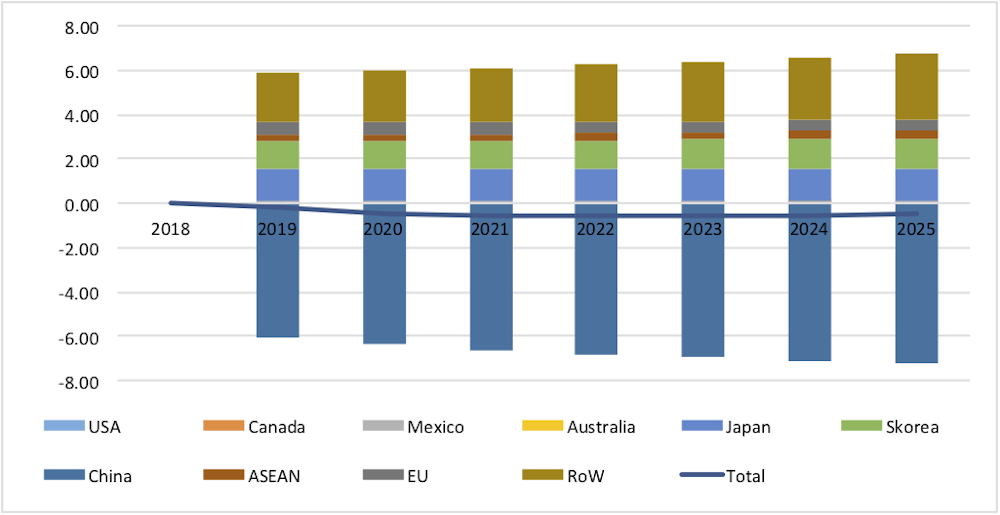
The existing legislation allows for a significant fine to apply (one penalty unit) when a voter hasn’t turned up. But the law as it currently stands does allow a wide range of excuses to permit a much less onerous sanction of a A$20 fine.

Were the parliament to be truly concerned about participation it could seek to alter the act and strengthen the hand of the AEC.

ref. Renters hold the key to low voter turn-out at federal elections – http://theconversation.com/renters-hold-the-key-to-low-voter-turn-out-at-federal-elections-120494

There’s no evidence 5G is going to harm our health, so let’s stop worrying about it

Source: The Conversation (Au and NZ) – By Sarah Loughran, Research Fellow, University of Wollongong

Hype continues to surround the roll-out of 5G technology in Australia and across the world.

While there is promise of faster network speeds, and talk of exciting technologies like driverless cars, there’s also a growing movement to stop the implementation of 5G due to concerns about the effects it may have on our health.

But the scientific evidence we’ve got assures us there’s no reason to worry. The radio frequencies powering 5G will be well below the exposure limits known to cause harm.


Read more: Do Wi-Fi and mobile phones really cause cancer? Experts respond


What is 5G and how does it work?

5G is the 5th generation of mobile phone technology. All generations of mobile phones work using what’s called electromagnetic energy. The specific type of electromagnetic energy used by mobile phones is known as radiofrequency, sometimes called radio waves.

This type of radiation is non-ionising, so it doesn’t damage our DNA like ionising radiation can, such as that from the sun or x-rays. Ionising means there’s enough energy to remove electrons from the atoms they are attached to. This makes them unstable and is something non-ionising radiation, such as that used by mobile phones, lacks the power to do.

Initially, 5G will use the same type of radio waves as used in 4G. But in the future it will operate at higher frequencies. Higher frequencies allow for faster connections and response times, while also increasing capacity for more users to be connected.

The higher the frequency, the shorter the distance the radio waves travel. As the 5G frequencies will be higher than those used by previous mobile phone technologies, a lot more mobile phone base stations will be required.

Much of the public concern has centred around these two new elements – that the frequencies used will be higher, and that there will be more mobile phone base stations. While some people believe these two factors alone will lead to higher exposures, the reality is actually very different.


Read more: Can you be allergic to your Wi-Fi?


Higher frequencies don’t travel as far, meaning exposure is not as deep as previous generation technologies. This results in more superficial exposures which are mostly absorbed by the skin rather than deeper in the body.

The idea that more base stations lead to higher exposures is also a common misconception. A larger number of base stations will actually provide a more efficient network. This means mobile phones can operate at a reduced power, which is likely to result in reduced overall personal exposure.

Research and regulation

Importantly, we have no evidence of any established health effects from the exposures related to mobile phones, despite extensive research. This consensus has been reiterated by independent international expert bodies.

We know a lot about how radiofrequency interacts with the human body. Health effects occur from exposure when there is a large rise in body temperature. But this will only be seen at power levels far higher than those used in telecommunications, like from a microwave oven.

The temperature changes associated with mobile phones are very small, especially when compared with normal day-to-day or exercise-induced temperature variations.

5G is the next generation of mobile phone technology, and is currently being rolled out. From shutterstock.com

Exposures from mobile phones and their base stations are tightly regulated. In Australia, safety standards are set by the Australian Radiation Protection and Nuclear Safety Agency (ARPANSA).

These standards are based on the current scientific evidence. They also cover the new frequencies that will be used by 5G. Importantly, the safety limits are set well below levels known to cause harm. And although technology can legally run at the safety limit, in reality, exposures are typically hundreds of times below these safety limits.

Challenging misconceptions

There is a lot of misinformation out there regarding 5G, and the electromagnetic energy associated with telecommunications more generally. While there’s no evidence of harm from such electromagnetic energy, there is evidence fear and anxiety can be harmful to our health and overall well-being.

While anti-5G sentiment and campaigning might be well-intentioned, without the scientific evidence to back these sentiments, it’s likely doing more harm than good. The challenge we now face is counteracting the misinformation out there.


Read more: What is a mobile network, anyway? This is 5G, boiled down


ref. There’s no evidence 5G is going to harm our health, so let’s stop worrying about it – http://theconversation.com/theres-no-evidence-5g-is-going-to-harm-our-health-so-lets-stop-worrying-about-it-120501

2℃ of global warming would put pressure on Melbourne’s water supply

Source: The Conversation (Au and NZ) – By Ben Henley, Research Fellow in Climate and Water Resources, University of Melbourne

Melbourne’s existing water supplies may face pressure if global warming hits the 2℃ level, according to our new research published today in Environmental Research Letters.

The effects of drying and warming in southern Australia are expected to reduce natural water supplies. If we overshoot 2℃ of warming, even the desalination plant might not provide enough drinking water to a growing population.

However, keeping warming to 1.5℃ would help avoid many of these negative consequences. This brings home the local benefits of acting swiftly to limit global warming. Luckily, there are options available to secure our water supply.

Warming and drying effects

The Earth has warmed by about 1.1℃ since pre-industrial times, causing ongoing global changes to our atmospheric composition. The Paris Agreement commits the world to holding the increase to “well below” 2℃, and “pursuing efforts” to limit the increase to 1.5℃.

While we’re confident there will be more hot extremes and fewer cold extremes as global temperatures rise, the consequences of further global warming for other climate extremes – such as drought – in different parts of the world are harder to pinpoint.


Read more: Is Australia’s current drought caused by climate change? It’s complicated


Our study uses climate models to identify the possible changes in average rainfall and temperature in four different worlds:

  • the “Natural” world, where humans have had no influence on the climate,

  • the “Current” world, which approximates the impacts humans have had to date, and

  • two future worlds, which are “1.5℃” and “2.0℃” warmer than pre-industrial times.

In line with previously published results, southern Australia is projected to undergo drying and warming. But we are not alone. The Mediterranean and Southwestern North America are also predicted to dry out.

Desalination is increasingly important

Most Australians recall the severity and length of the Millennium Drought. This event severely stressed agricultural and natural systems, and led to the commissioning of desalination plants in the five largest cities in Australia, at a cost of several billion dollars.

Desalination offers an important lifeline. Although it comes with high short-term costs, it supplies vital water security over the long term. Successful efforts to improve water-use efficiency have reduced per capita demand rates, but growing populations in major centres will lead to increasing water demand.

Rainfall deficiencies over Australia for the 18 months between 1 Feb 2018 and 31 July 2019. Bureau of Meteorology

Right now, large parts of southeastern Australia are in the grips of another drought. Although drought is a common natural feature of Australia’s climate, in recent decades we have observed long-term drying trends over much of southern Australia.

Currently, all capital city urban reservoir systems in southern Australia are below 60%, and several are nearing or below 50%. The Victorian government recently ordered 125 gigalitres of water from the desalination plant.

Urban water storage levels for Australia’s capital cities. Bureau of Meteorology

With these challenges in mind, our paper explores the effects of future climate change on the surface water supply infrastructure for Melbourne.

Climate models and hydrological models together indicate future declines in catchment inflows as global warming increases from 1.5℃ to 2℃. The good news is when desalination is added to the mix, which it is, pressure on our water storage is dramatically reduced. However, population growth and climate change remain key challenges into the future.

The buffer is shrinking

The take-home message is, if global warming approaches 2℃ and beyond, the combined impacts of climate change and population growth will ultimately begin to outstrip the buffer desalination provides for us without ongoing investment in water security. Fortunately, desalination plants, storm water, water recycling and continuing to improve efficiency are all viable options.

To ensure our water security, and with it, the safety and prosperity of the urban centres which are the engine houses of the Australian economy, we all need to be vigilant in managing water resources.

We also all need to play an active part in the global effort to reduce the impacts of climate change. The commitments by the world’s nations for the 2020-30 period remain insufficient to achieve the temperature goals. Global emission rates continue to rise, and atmospheric greenhouse gas concentrations are steadily accelerating.

The task of turning around our emissions in time to avert many of the serious impacts of climate change is becoming ever more implausible. In the coming 10–20 years, we expect to shoot past 1.5℃.


Read more: Meet El Niño’s cranky uncle that could send global warming into hyperdrive


With so much momentum in both human and natural systems it is becoming increasingly unlikely that we will avoid warming beyond 1.5℃. However, if we can achieve it, the list of benefits includes greatly reduced stress on the water supplies we rely on for our very existence.

ref. 2℃ of global warming would put pressure on Melbourne’s water supply – http://theconversation.com/2-of-global-warming-would-put-pressure-on-melbournes-water-supply-118389

International students rank Melbourne and Sydney in world’s top cities – but we can make them feel safer

Source: The Conversation (Au and NZ) – By Jeff Wilks, Adjunct Professor, Southern Cross University

Australia has been ranked as one of the top destinations to study internationally. The QS Best Student Cities Ranking released yesterday, which incorporates feedback from more than 87,000 current and prospective international students, ranked Melbourne as the third-best city to study. Sydney came in ninth.

London and Tokyo were number 1 and 2 respectively out of the world’s 120 top student cities. Melbourne and Sydney were joined in the top 50 globally by Brisbane (22), Canberra (23), Adelaide (26, up 15 places from last year) and Perth (41).

These results are rigorous and evidence-based, drawing on a variety of indexes (such as livability and affordability) and the student survey. When it came to the quality of life index (known as desirability), QS director of research Ben Sowter said:

Six of the world’s 30 highest-performing cities for our Desirability indicator are Australian: a record bettered by no other nation.

These results are highly influential and clearly drive education decision-making. We know students wishing to study overseas take serious account of universities that score well on independent rankings, for instance, and there’s no reason why these should be any different.


Read more: Melbourne or Sydney? This is how our two biggest cities compare for liveability


So the performance of Melbourne and Sydney on this international platform speaks volumes for the position of the country as a study destination.


What makes a good student city?

QS uses six metric groups to compile the ratings:

  1. desirability: will students enjoy a high quality of life here? Do students want to study in this city?

  2. university rankings: how many top-ranked universities are in the city?

  3. employer activity: will a chosen city have job opportunities after graduation?

  4. student mix: what proportion of a city’s population is made up of students? How diverse is that student population?

  5. affordability: can students afford to study here?

  6. student voice: what do students studying in this city think of it?

So, how should we read this?

In assessing quality of life the QS looks to measures such as the Economist Intelligence Unit’s Global Liveability Index where in 2018 Melbourne, Sydney and Adelaide were in the top ten of the 140 cities surveyed.

Melbourne held the top spot for seven consecutive years, only this year being edged out by Vienna by 0.7 of a percentage point.

Ben Sowter said:

This year’s edition of the QS Best Student Cities Ranking indicates that one of the primary incentives for any prospective international student to study in Australia is the high quality of life on offer there.

Quality of life includes a range of elements such as recreation facilities, public services and transport, housing and the natural environment. According to Mercer’s 2019 Quality of Living City Rankings, Melbourne and Sydney are in the top 20 worldwide.

And then there is safety.

There have been some recent challenges for Australian universities in the area of student safety, including robberies and attacks on international students at a Melbourne university.

No destination can completely guarantee the personal safety of its residents and visitors. But looking at a variety of sources and the comments of students themselves, the evidence suggests Melbourne and Sydney in particular are very safe cities overall, ranking in the top 12 worldwide for digital, health, infrastructure and personal security.


Read more: Recent campus attacks show universities need to do more to protect international students


When it comes to the student mix indicator, the QS ranking puts Melbourne as the world’s best city. This is a measure that includes tolerance and inclusion, reflecting the importance for many international students of choosing a study environment that is likely to be hospitable to their own cultural background, lifestyle and identity.

While there are admittedly periodic reports in the media about racist behaviour in Melbourne, and the government is well aware of this, Melbourne is widely recognised as culturally diverse, tolerant and welcoming. On these measures we can trust the QS ranking.

Melbourne came third in the student voice, which accounts for the experience and study destination preferences of more than 87,000 students.

Sydney ranked second on student mix and ninth on employer activity, obtaining a job at the end of their studies being a very important consideration for international students.


The QS results are in keeping with the high levels of international student satisfaction reported for Australian higher education, especially for safety, living, learning and support.

Where we can improve?

The 2019 QS ranking shows Australian universities are at a slight global disadvantage on measures of affordability. This is an observation previously made in The Times Higher Education World University Rankings.

Australian costs are generally comparable to those of the US and the UK, but far higher than Japan, Spain, Germany or Russia, which are all serious competitors in the international student market.

But cost is not the only consideration. A benchmark HSBC report of 4,592 parents in 15 countries around the world said they would consider sending their child abroad for a better university education.

And this is where Australia has a competitive advantage.

We make up for cost when it comes to education quality. The QS results endorse government initiatives such as Study Melbourne and Study Sydney that provide international students with employment assistance, career guidance and day-to-day living support – all of which contribute to a positive international student experience.


Read more: ‘I’m an international student in Australia. How do I tell my parents the pressure they put on me is too much?’


While the results are commendable we, shouldn’t be complacent. We know the biggest concerns for prospective students relate to everyday life rather than their studies.

Issues around the cost of living, finding accommodation and employment, and safety rank among the greatest concerns. In the Australian context dealing with racism needs to be urgently addressed.

ref. International students rank Melbourne and Sydney in world’s top cities – but we can make them feel safer – http://theconversation.com/international-students-rank-melbourne-and-sydney-in-worlds-top-cities-but-we-can-make-them-feel-safer-121238

How Hong Kong protesters have been winning the battle for public space

Source: The Conversation (Au and NZ) – By Peter Walters, Senior Lecturer in Sociology, The University of Queensland

The battle for domination of the physical and digital public realms has been crucial to the fortunes of the Hong Kong protesters. Their overwhelming numbers in the tense stand-off with the might of the People’s Republic of China (PRC) has captured our attention over the past eight weeks.

However, there are less obvious dynamics at work as protesters use public space – both physical and digital – to maintain their advantage. An understanding of these public realms is critical to understanding why freedom of expression either flourishes or dies in particular urban contexts.

Hong Kong protesters have drawn the world’s attention to the fragile state of democratic rights in this Special Administrative Region of China. As many as 2 million people, out of a population of 7.5 million, have poured into the streets, protesting the erosion of their special status.


Read more: Hong Kong: why the ‘one country, two systems’ model is on its last legs


As many as 2 million people have joined the Hong Kong protests.

These protests have been remarkably effective in the face of a PRC-aligned Hong Kong leadership, which has for now backed down on a contentious proposal to make it easier to extradite Hong Kong residents to mainland China.

In physical terms the public realm means places to gather freely with diverse others with high visibility. This makes them a focus for expressions of democratic conviction. Many great cities of the world contain iconic public places, such as Taksim Square in Istanbul, the National Monument in Jakarta, Trafalgar Square in London and, of course, Tiananmen Square in Beijing. But with varying levels of surveillance and restriction, not all of these places qualify as functioning public realms.


Read more: How city squares can be public places of protest or centres of state control


Taking to the streets …

Hong Kong, one of the most densely built and populated cities in the world, has few recognisable public places. None is capable of holding even a fraction of the numbers of protesters that have mobilised.

For that reason, crowds have taken to the streets. These are usually a degraded form of public space, but protesters have turned them from thoroughfares for vehicles to a vibrant public realm, allowing an impressive show of willpower.

The protests have been well organised and until last week were free from violence. The involvement of alleged China-backed triad criminals escalated the risk for ongoing demonstrations and the fragile public realm in Hong Kong is now threatened.

… and digital space

The success of the protests is not entirely dependent on the use of physical space. The speed and coordination of the protests would not have been possible without access to a public realm in the abstract. We see it in an active and independent press and media, and in the ability of protesters to communicate with each other quickly and freely through the digital public realm provided by social media and encrypted messaging apps.

The sheer volume of people on the streets implied spontaneous anarchy. However, the use of social media, even in the presence of covert and overt surveillance by security forces and China-friendly media, enabled organisers and protesters to retain a tactical advantage.

They have been using anonymous calls in encrypted chat applications like Telegram and Signal to coordinate efforts. These apps allow users to create public and anonymous channels to share information, as well as smaller, more private, group chats.


Read more: How a cyber attack hampered Hong Kong protesters


LIHKG is often referred to as the ‘Hong Kong version of Reddit’. LIHKG

The protest was coordinated visibly on LIHKG, an online forum that ranks posts by popularity in a similar manner to Reddit. These forums allow protests to move fluidly and quickly, responding to changing conditions on the ground.

Protesters used social media to rapidly distribute photos to counter security authorities’ attempts to deliberately and drastically underestimate crowd numbers to downplay the strength and size of the opposition.

There was also a need to avoid particular technologies. China employs sophisticated surveillance of its citizens.


Read more: China’s Social Credit System puts its people under pressure to be model citizens


However, protesters have taken effective evasive measures. These included simple physical acts such as standing in huge queues at the Metro for paper tickets to avoid being tracked on transit smart cards. Protesters also used umbrellas, face and eye masks to prevent facial recognition and to shield themselves from teargas attacks and drone surveillance.

The digital public realm has been used successfully in other contexts as a potent intensification of physical protest. Digital spaces can amplify, broadcast and coordinate physical action.

For example, social media catalysed the Black Lives Matter protests in the US. In 2016 Philando Castile’s death was live-streamed on Facebook by his girlfriend after police shot him through the open window of his vehicle. Twitter was used extensively to publicise and coordinate the subsequent Black Lives Matter protests.


Read more: Black Lives Matter is a revolutionary peace movement


Co-opting spaces as public

Urban protests in many cities, like Hong Kong, are defined by their limited access to sanctioned public space. The co-opting of other public commons like highways and inner-city roads becomes necessary. This has been particularly successful in the American context where public space is degraded or privatised, and roads are “neutral” space.

Public space does not always look the way we imagine it. When access to public space is untenable, protesters with sufficient will can turn privatised or commercial space into a new public realm.

The Hong Kong protests have turned the international airport terminal into a temporary public realm for this purpose. The “yellow shirt” protesters did the same in Bangkok in 2008. The continued visibility of these public sites and the desire by security forces to close down protest create an uneasy stand-off, testing authorities’ resolve to respond under international scrutiny.

There is now more to the public realm than just a place to gather. Protesters need to combine their determination with a sophisticated appreciation of the digital environment and the nature and limits of public and private space.


Read more: Surprise! Digital space isn’t replacing public space, and might even help make it better


ref. How Hong Kong protesters have been winning the battle for public space – http://theconversation.com/how-hong-kong-protesters-have-been-winning-the-battle-for-public-space-121251

Vital Signs: the battle for the soul of the US Democrats that’s taking place before our eyes

Source: The Conversation (Au and NZ) – By Richard Holden, Professor of Economics, UNSW

Over the past two days the 20 leading contenders for the role of the US Democratic Party’s 2020 presidential candidate have faced off in two debates.

The exchanges between them – sometimes sharp – revealed a stark divide on economic matters. In many ways, the party’s core economic narrative is up for grabs for the first time since Bill Clinton reshaped it in the early 1990s.

There were so many contenders that there had to be two rounds, each with 10 candidates, over two nights.

But it was debate 1 in Detroit that was perhaps the most revealing about the distinct economic philosophies.


Read more: Two dozen candidates, one big target: in a crowded Democratic field, who can beat Trump?


(Aside: debate 2 also had big names and serious contenders like Kamala Harris and Joe Biden, so it was also important, but it didn’t add much that would illustrate the economic divide.)

Debate 1 featured self-avowed “democratic socialist” Bernie Sanders, the man who was Hillary Clinton’s bete-noire in the 2016 primaries. In addition, Massachusetts Senator Elizabeth Warren, South Bend Indiana Mayor Pete Buttigieg, and Congressman Beto O’Rourke – all names even ordinary Americans might be familiar with.

Less well known, but critical, players in the opposing economic philosophies are Senator Amy Klobuchar and Congressman John Delaney.

You really don’t need to focus much on the other participants like the quirky but entertaining self-help guru Marianne Williamson, and the very likeable and reasonable Tim Ryan and John Hickenlooper.

The biggest battle line

The biggest distinction is between those candidates who believe in markets and those who basically don’t.

Sanders and Warren basically don’t. They want the US government to rail against corporations making lots of money. They think those companies make that money by corrupting politics. They want to aggressively tax the wealthy.

Delaney has a lot more faith in markets and free enterprise. He was an entrepreneur who took two companies public before the age of 40 and has a net worth of US$65 million.

Klobuchar doesn’t have the same background (she was a prosecutor before entering politics) but also doesn’t think government should do everything.

Buttigieg (or “Mayor Pete” as he is commonly known) was a McKinsey consultant (and Afghanistan War veteran) who is more technocratic, thinking that a good Excel spreadsheet piloted by smart folks can solve a lot of problems.

The two main issues that illustrate the big divide healthcare and taxation.

Medicare makes the difference stark

On healthcare there is no dispute that it should be universal, that every American should be covered.

The divide is between those who want there to be only government-provided health insurance, and those who want there to be a mix of government and privately-provided insurance.

A little background. “Medicare” in the US is a government-provided free plan for those 65-years and older. Other Americans get their health insurance either through their employer, don’t have health insurance, or since the advent of “Obamacare” (the Affordable Care Act) buy it themselves with a subsidy.


Read more: What the US could learn from Thailand about health care coverage


Sanders and Warren want what they call “Medicare for all”. By that they mean a single-payer system with no private insurance, everyone on Medicare.

Delaney, Klobuchar and others (especially Joe Biden from debate 2) think that’s nuts. That’s because it implies that the millions of Americans who have and value private insurance would lose it, either because bit was made illegal or because Medicare would price it out of the market.

They say they want a mere public “option”: if you like your insurance you can use it instead of Medicare, otherwise otherwise you use Medicare.

That’s a pretty stark distinction: between banning private commerce and not.

Over tax, the differences are just as stark

On taxation, again there is some agreement. All the candidates agree that wealthy Americans should pay more. What’s in dispute is how, and how much.

Warren wants a wealth tax that would take 2% of people’s wealth (not income) in excess of US$50 million (and take 3% of wealth in excess of US$1 billion).

The idea has been heavily criticised by luminaries such as former Treasury Secretary Larry Summers who say it won’t raise much money and will dampen incentive. They are pushing for laws which will close loopholes and tax shelters instead.


Read more: So you want to tax the rich – here’s which candidate’s plan makes the most sense


The idea has also been sharply opposed in the debate by John Delaney, who wants instead to increase the rate of capital gains tax (which, as in Australia, is lower than the income tax rate) and reverse Donald Trump’s tax cuts.

Here again, the contrast is between candidates trying to get more money from the wealthy while preserving incentives and candidates who see significant wealth as essentially immoral.

For years to come, the winner will take all

In essence the 2020 candidates are arguing about whether the third-way, market-oriented approach that Bill Clinton brought to the Democratic Party will endure, or be replaced with democratic socialism that “soaks the rich” and views private enterprise with scepticism.

At this stage there’s no telling which side will prevail. The result will have profound consequences for Americans for years to come.


Read more: US Democratic presidential primaries: Biden leading, followed by Sanders, Warren, Harris; and will Trump be beaten?


ref. Vital Signs: the battle for the soul of the US Democrats that’s taking place before our eyes – http://theconversation.com/vital-signs-the-battle-for-the-soul-of-the-us-democrats-thats-taking-place-before-our-eyes-121298

Up to four million children abused across Pacific, report finds

By RNZ Pacific

A report has detailed shocking levels of physical violence and neglect towards millions of Pacific Islands children, sparking calls for better-targeted aid programmes from countries like New Zealand and Australia

The report team, from combined aid agencies, investigated child-rearing practices in seven Pacific countries, as well as Timor-Leste.

The report found as many as four million children experience violence at home across the Pacific – a staggering 2.8 million in Papua New Guinea alone.

READ MORE: Phil Fitzpatrick: PNG’s Kramer ‘crucial’ law and order change maker

More than half of all sexual violence referred to medical clinics involves children in PNG, where almost one in three parents report beating children “as hard as they can”.

The research also outlines a range of factors that contribute to the abuse, including Pacific societies with high levels of gender inequality; social acceptance of physical punishment of children, weak governance, and growing poverty and inequality.

– Partner –

The report’s authors said the research shows the critical lack of overseas aid invested in programmes aimed at ending violence against children, and programmes by countries like New Zealand and Australia need to be more targeted.

Carsten Bockemuehl, World Vision’s advocacy campaigns lead for the Pacific, said the study painted a “pretty bleak picture” of regional and donor governments that had failed to prioritise children’s rights.

“It’s a massive development issue that is really negatively impacting on children and societies as a whole,” he said.

Around 0.1 percent of all Australian foreign aid to the Pacific and Timor-Leste in 2017 was directed to programmes specifically addressing violence against children, according to aid group Save The Children, which claimed just $US2.3 million was spent in total by all foreign donors “on this critical issue”.

Bockemuehl said violence against children will make societies less prosperous and will exacerbate risks to health and criminal justice systems and that there needed to be a “rebalancing” of aid priorities in the Pacific.

“It’s actually an economic issue, it makes countries poorer, so that’s why, out of the many competing priorities in developing countries, we just advocate for violence to be recognised as a critical development issue.”

  • This article is published under the Pacific Media Centre’s content partnership with Radio New Zealand.
Print Friendly, PDF & Email

Article by AsiaPacificReport.nz

The Australian Dream is must-see for lovers of football and this country

Source: The Conversation (Au and NZ) – By Nonie May, Researcher, School of Culture and Communication, University of Melbourne

Review: The Australian Dream, Melbourne International Film Festival

The Australian Dream is an affectionate portrait of a man, his sport, and his country. The documentary, which has premiered at the Melbourne International Film Festival, examines the racist booing of Indigenous AFL player Adam Goodes in 2015.

Written by and featuring Stan Grant, a Wiradjuri man, the film journeys back from the events of 2015, to trace the prevalence of racial vilification throughout the AFL’s – and colonial Australia’s – history. If you love your footy, if you love your country, this is a must watch.

Stan Grant. Mick Tsikas/AAP

The Australian Dream follows the recent release of The Final Quarter – a film by Ian Darling about the last three years of Goodes’ career before his retirement in 2015. That film comprised archival footage only. This one features interviews with Goodes and other noted Indigenous sportspeople, resulting in a much more personal account of the booing saga.

Goodes is a two-time Brownlow medallist, a two-time premiership player, and a four-time All Australian Player — but these accolades are only briefly mentioned in The Australian Dream. Instead, director Daniel Gordon utilises TV footage from various games to underscore the astonishing athleticism with which Goodes played Aussie Rules.

His talent for the game is palpable: every mark, every spoil, every goal-scoring-kick seems effortlessly powerful and precise. This footage is intercut with a voiceover from Goodes who talks of finding an identity in football and finding a tribe with The Sydney Swans. This motivated him, in turn, to act as an elder for the younger men on the team and to return to his roots as an Adnyamathanha man, eventually leading to his public activism against racism.

Goodes used his platform as an elite AFL player to address the persistent racial issues faced by First Nations peoples in Australia. This was not received well by many footy fans, who found his anti-racism acceptance speech for 2014 Australian of the Year to be “un-Australian”. The footage shown of the vehemence of both YouTubers and online commenters against Goodes is shocking.

Adam Goodes in The Australian Dream: stoicism amid an outpouring of hatred.

When Goodes continued to publicly and unapologetically call out racist slurs in 2015, fans of opposing teams across the country booed every time he was near the ball. The film details how heavily these boos weighed on Goodes, affecting both his ability to play the game, and his psychological well-being. It also underscores his stoicism amid an outpouring of hatred.

The Australian Dream makes it abundantly clear that this was not an isolated moment in AFL’s history. Footage from 1999 of Sam Newman in blackface mocking Indigenous player Nicky Winmar, and his smirking quasi-apology the following day, is evidence enough of a culture that seemed to want Aboriginal and Torres Strait Islander men performing on the field but silent off the field.

Nicky Winmar pictured in 2013. Hamish Blair/AAP

Testimony from Winmar and Gilbert McAdam details the historical prevalence of racist catcalls from footy fans, players and coaches alike. Like Goodes, these men speak of their love for the game, framing it through a connection to the Indigenous game Marngrook: when they touch the ball it is like the connection they feel with the land, it’s spiritual.

The tragedy of this, for Winmar, was that the racial vilification he experienced took this important connection away for him. His love for the game was replaced by hatred. Like Goodes, he retired early.

A portrait of a colonial country

Inevitably, perhaps, this portrait of a man and his sport, becomes a portrait of a colonial country. It details the historical abuses enacted by Australian colonisers – government and settlers – against First Nations peoples, and the continual proliferation of racially motivated violence against Aboriginal and Torres Strait Islander communities.

The Australian Dream is also a portrait of a nation. Melbourne International Film Festival

The booing of Goodes was a moment in which this country’s systemic, historical, and persistent racism was brought to the forefront of our social consciousness. The film holds those who booed accountable, showing extensive footage of the booing, and of the racist commentary across media outlets that followed.

Inter-cutting footage from present-day interviews with Grant, and his IQ Racism Debate speech from 2015, the film asks its white spectators to front up to their part in what he calls, “the howls of humiliation” that vilify this country’s first peoples. These howls, Grant says, “echo across two centuries of dispossession, and injustice, and suffering”.

This racism is an indictment of the “Australian Dream”. It is a reminder of Australia’s violent colonial history, and a reminder that this colonisation persists: the boos and ape-jokes thrown at Goodes were masked by the myth of the “Aussie Larrikin”, who could elide the harm of those catcalls as “just a joke”. This is most evident in the footage from 1999, when Eddie McGuire smirks his way through Newman’s stunt.


Read more: The ape insult: a short history of a racist idea


This archival footage, which is edited seamlessly into the telling of Goodes’ story, reminds the audience that these jokes are part of a racist history.

The Australian Dream ends on an optimistic note. Melbourne International Film Festival

But The Australian Dream is also optimistic. Grant and Gordon frame this narrative as a conversation, one that could change our culture forever.

Gordan films Goodes with his feet in the soil of Adnyamathanha tribal lands. He is filmed speaking with his elders, and he nods as they tell him that we must be willing to listen and learn.

The final shot of The Australian Dream is the most optimistic of all: a couple of kids in the desert kicking a red footy against red sunset. This rough-and-tumble round of Aussie Rules, wrapped up in a uniquely Australian landscape, closes the film with a reminder of our love for the game, and holds out hope for the next generation of Indigenous players.

ref. The Australian Dream is must-see for lovers of football and this country – http://theconversation.com/the-australian-dream-is-must-see-for-lovers-of-football-and-this-country-121119

High Court challenge in Kooyong and Chisholm unlikely to win, but may still land a blow

Source: The Conversation (Au and NZ) – By Graeme Orr, Professor of Law, The University of Queensland

High Court challenge to Liberal victories in Kooyong, Chisholm

So read the headlines on Wednesday. But what is the law behind these election petitions?

My new book, The Law of Politics, offers a detailed examination of the laws surrounding Australian elections. Here, I’ll offer a potted explanation of the substance and process at play in the challenges to the results in these two Victorian seats at the 2019 federal election.


Read more: High Court challenge to Treasurer Josh Frydenberg under section 44


Amid all the recent concerns about online political disinformation worldwide, and about MPs’ qualifications in Australia, it is almost reassuring to be back on the terrain of old-fashioned, misleading campaign material.

The petitions allege that physical posters used at polling stations by the Liberal Party were likely to mislead electors in “casting” their votes.

The posters were written in Chinese and used in two seats with significant proportions of Chinese immigrants. Headed “CORRECT VOTING METHOD”, the posters went on to advise electors to vote “1” for the Liberal Party, then number the other boxes. The posters were authorised, in small print at ankle height, by the Liberal Party. But their appearance aped the purple and white used by Australian Electoral Commission posters.

Outside South Australia, there are no “truth in political advertising” laws in Australia. So what constitutes the offence of misleading an elector in casting a vote?

At its crudest, you cannot publish false addresses of how or where to vote. Nor can you claim false party affiliations or mimic other parties’ how-to-vote material.

The commission did not seek to have the posters removed on election day. It’s hard to get a court injunction in the space of a couple of hours. The commission doesn’t have copyright in its colours, but having spent public money establishing a brand, it needs to protect it. Instead, an independent candidate and another citizen have filed these petitions.

Election petitions go back centuries. They aren’t vehicles for purifying elections. They are tough to mount and to win.

The first hurdle was a tight time limit. The petitions had to be filed within 40 days of the election “writs” being finalised. That’s just 40 days to brief lawyers, assemble basic evidence and plead the claim.

As for winning a case – which means forcing a fresh election in either seat – it is not enough to show that the posters were likely to mislead. It must also be shown that the election outcomes were likely to have been affected.

In Kooyong, Josh Frydenberg’s margin over the Greens was 11,289 votes. There is no way upwards of 6,000 electors not only read and understood the signs, but were likely to have been fooled into voting differently.

In Chisholm, Gladys Liu’s majority over Labor was 1,090. It’s theoretically feasible that over 550 voters were swayed, especially as Chisholm is heavily populated with Mandarin and Cantonese speakers (both groups can read Chinese script).

But how could this be proven? Might a psephologist like Antony Green be called? Is there any evidence of a strong and clear benefit to the Liberal vote where the posters appeared, as opposed to results at, say, early voting booths? And what is the control group for such comparisons?

One quirk of election petitions is uncertainty about where the onus of proof lies. On one view, the petitioner must prove their case on the balance of probabilities. It’s a big thing to unseat an MP and march the voters back to the polls.

On another view, elections are about public trust, so if the posters seem legally dodgy and widespread, it is up to the Liberal Party to demonstrate there was little chance the election result was affected.

On top of this, the law beseeches the court to act quickly. The status of parliament needs to be finalised sooner rather than later. The High Court usually does not try fact-heavy petitions, so it’s likely to refer them to the Federal Court.

Then there’s the question of legal costs. In civil cases, costs are routinely awarded to the winning litigant. This isn’t to punish the loser, but to indemnify the other side for the decision to keep litigating.

But, as we just noted, election petitions are not routine commercial litigation. There is an overarching public interest at stake.


Read more: From robo calls to spam texts: annoying campaign tricks that are legal


If the Liberal Party is found to have engaged in misleading behaviour, the court can require it to bear the costs of its defence. That happened to the Labor Party in a Queensland case.

It’s folly to predict the outcome of litigation without hearing the case. But it’s telling that the Labor Party, which would stand to gain most from a fresh election especially in Chisholm, has not sued.

From this vantage, the court may well find the Liberal Party breached the law and therefore must bear most of its own costs.

But there is no way Frydenberg’s win in Kooyong will be imperilled, and it would take an intuitive leap to find that Liu’s majority in Chisholm is unsafe.

In short, the petitioners may win the battle but lose the war.

ref. High Court challenge in Kooyong and Chisholm unlikely to win, but may still land a blow – http://theconversation.com/high-court-challenge-in-kooyong-and-chisholm-unlikely-to-win-but-may-still-land-a-blow-121300

Australia can pick up its game and land a Moon mission

Source: The Conversation (Au and NZ) – By Andrew Dempster, Director, Australian Centre for Space Engineering Research; Professor, School of Electrical Engineering and Telecommunications, UNSW

Now all the celebrations of the 50th anniversary of the Moon landing have died down it’s worth considering where we are with future lunar missions half a century on.

Australia has long played a role in space exploration beyond helping to bring those historic images of the first moonwalk to our television screens back in 1969.

Labor MP Peter Khalil has already called for Australia to be involved in a mission to the Moon, and later to Mars. He is co-chair of the recently reformed Parliamentary Friends of Space, along with the National’s MP Kevin Hogan.


Read more: Not one but two Aussie dishes were used to get the TV signals back from the Apollo 11 moonwalk


But there is plenty of interest from others in going to the Moon.

The new Moon race

Only last month, India launched its Chandrayaan 2 mission that’s already orbited the Moon and due to land there on September 7.

China recently landed Chang’e-4 on the far side of the Moon while Israel almost succeeded in landing its Beresheet probe.

NASA has committed to sending people to the Moon again by 2024, and to significant lunar infrastructure such as the lunar Gateway, lunar landers and companies to deliver payloads to the Moon.

There is no doubt the Moon has once more captured the world’s interest. One of the reasons for this is human exploration, and that a Moon presence is now recognised as being essential to any future mission to Mars.

Water on the Moon

Another is the presence of water on the Moon, and the usefulness of water for all sorts of reasons in space.

By the time we hosted the second Off-Earth Mining Forum in 2015, it was clear water was the space resource of most immediate interest.

But the companies that existed at that time were mainly looking to source that water from asteroids. It has only been in the past two years that companies like iSpace have come to the fore, aiming at extracting water from the Moon.

Australia has reacted quite quickly to this evolving environment. Only last month, the first workshop met to establish a Remote Operations Institute in Western Australia to look at operating automated machines at a distance – remote mines and space.

The CSIRO identified nine potential “nation-building” flagship space missions, of which four relate to the Moon. One (disclosure, championed by me) is an orbiter and lander aimed at extracting water, but the other three could all support such a mission. Of those nine, four (including mine) have been selected for further examination at a workshop in mid-August in Brisbane.

Since January, we have been working on the Wilde project, where we have re-focussed our space resources research towards the permanently shadowed craters at the Moon’s poles, where water is highly likely to occur in acceptable concentrations.

We are also looking to reduce the risk of investing in a water extraction venture, including the design of orbiter and lander missions.

Explosion of Aussie interest

These Australian initiatives are all being driven in part by the explosion of the Australian space sector. One symptom of this is the establishment of the Australian Space Agency. The agency’s very existence and its promise have further emboldened space businesses and researchers.

But more than a year after its founding we still await any real missions, or commitment to upstream projects (upstream in space projects means those that are actually in space – those great Australian contributions to Apollo were all on the ground – downstream).

The other important driver for the new space projects mentioned above is that Australia has such a strong mining industry, and that so much mining innovation is created in Australia.


Read more: How big is the Moon? Let me compare …


As disciplines, space and mining have a lot in common: both involve complex engineering systems, work in hostile environments, and human control is increasingly handed over to autonomous robotics. Exploiting resources in space represents a genuine opportunity for Australia to establish a niche around which a sustainable space industry can be built.

So now is a perfect time for Australia to consider a new Moon mission. The industry is growing rapidly and a flagship mission would give it something around which to build.

Our special expertise in resource extraction offers a unique opportunity, which others have only just started to pursue. And a community of companies and researchers has been gathered for the task.

Hopefully it won’t be another 50 years before Australia has its own presence on the Moon.

ref. Australia can pick up its game and land a Moon mission – http://theconversation.com/australia-can-pick-up-its-game-and-land-a-moon-mission-121109

What is herd immunity and how many people need to be vaccinated to protect a community?

Source: The Conversation (Au and NZ) – By Hassan Vally, Associate Professor, La Trobe University

The term herd immunity comes from the observation of how a herd of buffalo forms a circle, with the strong on the outside protecting the weaker and more vulnerable on the inside.

This is similar to how herd immunity works in preventing the spread of infectious diseases. Those who are strong enough to get vaccinated directly protect themselves from infection. They also indirectly shield vulnerable people who cannot be vaccinated.

There are various reasons a person may not be able to be successfully vaccinated. People undergoing cancer treatment, and whose immune systems are compromised, for instance, are impaired in their ability to develop protective immunity from all vaccines. Often, people who can’t be vaccinated are susceptible to the most serious consequences from being infected.

Another vulnerable group are babies. Infants under six months of age are susceptible to serious complications from influenza. Yet they can’t be given the flu vaccine as their immune systems are not strong enough.


Read more: Kids are more vulnerable to the flu – here’s what to look out for this winter


How does herd immunity work?

For a contagious disease to spread, an infectious agent needs to find susceptible (non-immune) people to infect. If it can’t, the chain of infection is interrupted and the amount of disease in the population reduces.

Another way of thinking about it is that the disease needs susceptible victims to survive in the population. Without these, it effectively starves and dies out.

If most of the population is immunised, the disease dies out. NIAID, CC BY

What level of coverage provides herd immunity?

How many people need to be vaccinated to achieve herd immunity varies from disease to disease.

Measles can be transmitted through coughing and sneezing and the virus causing measles can survive outside the body for up to two hours. So it’s possible to catch measles just by being in the same room as someone who is ill if you touch a surface they’ve coughed or sneezed on.

In contrast, Ebola can only be spread by direct contact with infected secretions (blood, faeces or vomit) and therefore requires close contact with an ill person. This makes it much less spreadable.


Read more: Fast-spreading killers: how Ebola compares with other diseases


We can determine how contagious a disease is by tracking its spread throughout a population. In doing so, we can attribute each disease a reproductive number denoted by the symbol Ro. The bigger the Ro the more easily the disease is spread throughout the population.

If everyone who has a disease on average infects two people, the Ro for that disease is 2. This means the disease, relatively speaking, is not particularly contagious. However, if everyone who has a disease infects ten people on average, it would have an Ro of 10, which means it’s a much more contagious disease.

We can use the Ro for a disease to calculate the herd immunity threshold, which is the minimum percentage of people in the population that would need to be vaccinated to ensure a disease does not persist in the population. The more contagious a disease, the higher the threshold.

Measles is one of the most infectious diseases to affect humans with an Ro of 12-18. To achieve herd immunity to measles in a population we need 92-95% of the population to be vaccinated.

Current data indicates full vaccine coverage for five year olds in Australia is sitting at around the 95% level. However, vaccination rates in some communities have fallen below ideal levels, making them susceptible to measles outbreaks.

The overwhelming success of measles vaccinations means many people have no memory of what this disease looks like, and this has resulted in its effects being underestimated. Measles can cause blindness and acute encephalitis (inflammation of the brain), which can result in permanent brain damage.


Read more: Why parents should fear measles, not the vaccine


Herd immunity, or community immunity, as it’s sometimes called, is a powerful public health tool. By ensuring those who can be vaccinated do get vaccinated we can achieve herd immunity and prevent the illness and suffering that comes from the spread of infectious diseases.

ref. What is herd immunity and how many people need to be vaccinated to protect a community? – http://theconversation.com/what-is-herd-immunity-and-how-many-people-need-to-be-vaccinated-to-protect-a-community-116355

As question time becomes political theatre, does it still play a vital role in government?

Source: The Conversation (Au and NZ) – By Gregory Melleuish, Professor, School of Humanities and Social Inquiry, University of Wollongong

Question Time is, in a sense, the highlight of any day of parliament. It is televised and attracts the attention of the media, providing political leaders with fairly regular public exposure.

If parliament is about theatre, this is the headlining act. It is a major opportunity for the government of the day to strut its stuff and for the opposition to embarrass the government.

In theory, question time is about accountability. But in practice, it is about politics.

And herein lies the problem. Amid concerns the institution has become a venue for grandstanding, heckling and other questionable behaviours, members of parliament’s procedures committee are finalising the terms of an inquiry on how question time can be improved. The public will be permitted to lodge submissions.


Read more: VIDEO: Michelle Grattan on the opposition’s tactics in question time – and Morrison’s views on the public service


Perhaps former Foreign Minister Julie Bishop put it best when she described how question time had devolved in recent years.

It ends up as an embarrassing circus. Ministers and shadow ministers are judged on their performance in question time and the more you sledge, the more you ridicule, the more you’re applauded.

So, how did we get to this point, and how can we fix it?

Prime Minister Scott Morrison has proven a deft performer during question time. Mick Tsikas/AA{

What question time was intended to do

Question time is regarded as one of the central features of the Australian version of the Westminster system. It occurs in both the parliaments of the Commonwealth and states.

Its role is based on the idea of “responsible government” – that the government of the day should be answerable or accountable to parliament and hence to the people who elected parliament.

As it is part of the tradition of responsible government, its practice is not defined by the Constitution but by the conventions of parliament. It has evolved over time.

Two types of questions can be asked: questions with notice that are submitted and answered in writing, and questions without notice that are asked orally during the period of parliament known as “question time”.


Read more: Question Time: don’t change the contest we want to watch


The general expectation is currently that around 19 oral questions will be asked during the question time session.

The practice is to allow the government and opposition to ask questions in turn, with some provision made for crossbenchers. The session is meant to focus on big issues, particularly those of immediate relevance. Hence, it is the most “political” aspect of parliament.

There was a time during the second half of the 20th century when there was a concern that too few questions were being asked. Today, the concern is there are too many “Dorothy Dixers”, or easy questions lobbed up by backbenchers who support the government.

These softball questions provide an opportunity for the government to display its wares, as their supporters can ask questions that have been prepared in advance and ministers can deliver “good news.”

Most of the other questions come from the opposition – an opportunity to paint the government in a bad light. The prime minister and other ministers cannot know exactly what questions are coming, but they can anticipate some of them and get their staff to prepare briefings.

How performance leads to boorishness

The central feature of question time is performance. It provides the prime minister and leader of the opposition, in particular, a platform to demonstrate that they are worthy of their jobs. Ministers are also given the opportunity to perform, demonstrate their capacity to think on their feet, and reveal their wit and mastery of their portfolios.

Paul Keating was particularly well-known for his sharp humour and one-liners during question time. And who could forget Julia Gillard’s now-famous speech against misogyny during question time in 2012?

A good performance in question time helps to raise the spirit of the “team” and to establish psychological dominance within parliament. It also allows the government, when it is performing well, to radiate its confidence and dominance to a much wider audience.

But there is a downside to question time that comes from this quest for dominance. Parliamentarians can sometimes forget they are speaking to a wider audience. Too often, they put on an exhibition that is not particularly edifying and undermines their goals.


Read more: The Turnbull government gets practiced at pivots


What appears to them to be wit and playfulness can come across to the public as boorishness and childishness.

The “optics” of the behaviour of MPs is increasingly a source of concern. When many of them were caught playing on their mobile phones during question time this week, they looked like children in class who were not paying attention.

Ministers answering Dorothy Dixers also do not make for good television and are more likely to inspire contempt than respect in those watching. The impending inquiry will likely examine whether these questions should be eliminated and it may be in the interests of political leaders to do so.

There may well be an argument that politicians need to clean up their acts and make question time more suitable for a 20th century audience. Wit is a good thing, and has long been a feature of our parliamentary system, but it needs to be accompanied by good taste.

That said, we should appreciate question time for what it is – a once-a-day performance that is, in reality, much more about politics than accountability. It is a tradition of our political life and the robust exchanges are part of that tradition.

ref. As question time becomes political theatre, does it still play a vital role in government? – http://theconversation.com/as-question-time-becomes-political-theatre-does-it-still-play-a-vital-role-in-government-121177

‘A worthwhile project’: why two chief justices support the Voice to parliament, and why that matters

Source: The Conversation (Au and NZ) – By Gabrielle Appleby, Associate Professor, UNSW Law School, UNSW

On July 18, the former chief justice of the High Court of Australia, Murray Gleeson, delivered a powerful endorsement of the proposal for constitutional recognition of Aboriginal and Torres Strait Islander peoples through a First Nations Voice, describing it as a “worthwhile project”.

Two weeks later, another former chief justice, Robert French, wrote an essay in The Australian explaining that the constitutional entrenchment of a First Nations Voice would be part of Australians’ journey to know “who we are as a nation”.


Read more: Grattan on Friday: When it comes to Indigenous recognition, Ken Wyatt will have to close multiple gaps


The intervention of two esteemed and vastly experienced judges in a controversial and complex debate is significant and provides an important signal of hope in finding a way towards political agreement on the issues.

Why their views matter

Gleeson was appointed by the Howard government and he served as chief justice between 1998 and 2008. The Rudd government appointed French to succeed Gleeson and he served until our current chief justice, Susan Kiefel, was appointed in 2017.

The importance of Gleeson’s speech extended beyond his status as a former High Court chief justice. Gleeson is one of Australia’s most respected thinkers on constitutional law.

Former chief justice of the High Court Murray Gleeson. AAP/Paul Miller

While appointed by the Howard government, Gleeson was never considered to be a political or partisan conservative. Rather, he maintained wide respect across the political spectrum as what is referred to as a legally (as opposed to politically) conservative, or orthodox, judge. His legal decision-making was closely confined to established legal rules and steered clear of controversial policy issues.


Read more: Listening with ‘our ears and our eyes’: Ken Wyatt’s big promises on Indigenous affairs


While Gleeson has largely kept himself out of the public spotlight since his retirement in 2008, he did accept an appointment to the Referendum Council. The council was convened in December 2015 to advise the prime minister and leader of the opposition on progress and next steps towards a referendum to recognise Aboriginal and Torres Strait Islander peoples in the Australian Constitution.

In its final 2017 report, the council endorsed the proposal from the Uluru Statement from the Heart. It recommended that a referendum be held to provide in the constitution for a body that gives Aboriginal and Torres Strait Islander First Nations a Voice to the Commonwealth Parliament. So the former chief justice delivering a speech endorsing the proposal may have come as little surprise.

However, it represented an important and new contribution to the current debate. It revealed, for the first time, one of Australia’s most highly respected, legally conservative mind’s understanding of why the Voice was consistent with our constitutional system, and why it should be pursued as “a worthwhile project”, as he put it.

French is also one of Australia’s most respected constitutional lawyers. Before his appointment to the High Court he was the president of the Australian Association of Constitutional Law. French was, and is, well respected across political lines. Indeed, as a young man he had run for office in Western Australia as a Liberal candidate against Kim Beazley senior.

French’s intervention in the current debate also drew on his extensive experience working with Aboriginal and Torres Strait Islander people. As founding member of the West Australian Aboriginal Legal Service, he was involved in many native title cases as a Federal Court judge from 1986-2008. He was president of the Native Title Tribunal from 1994-1998.

French’s essay, which largely endorses and expands upon the position of Gleeson, is heavily informed by this extensive experience with Aboriginal and Torres Strait Islander people, particularly in relation to native title claims, over the course of his career.

‘A worthwhile project’

Australia, Gleeson explained in his speech, has undergone fundamental legal developments in the last 30 years. In this time, the Australian people have changed in their social and cultural attitudes towards Indigenous people. He argues that these changes, particularly in relation to land rights and native title, demonstrate we are ready to address the historical fact of dispossession and its consequences, possibly through constitutional recognition.

French echoes these sentiments, explaining the importance of constitutional recognition as the next step Australians need to take in a journey towards “knowing who we are as a nation”. He writes:

Recognition in the Australian Constitution would reflect an existing national growth of respect for our First Peoples and thus for the whole of the full, rich and long history of the people of this continent.

Gleeson is not, however, in favour of any form of constitutional reform. He placed two conditions on his support. First, such reform must be consistent with the nature of the constitution. Second, it must confer “substantial benefit upon Indigenous people”.

‘Constitutionally entrenched, but legislatively controlled’

The Australian Constitution was not forged during revolution in which the people demanded greater controls on the power of the state. Rather, it was about creating a federation between the colonies, which wished to come together for largely pragmatic reasons. The document, Gleeson reminded us, “is essentially a structural plan for a federal system of government, not what would now be called a human rights instrument”.

It is for this reason, Gleeson said, that many people have rejected one proposal for constitutional recognition, recommended first in 2012 by the Expert Panel on Constitutional Recognition of Indigenous Australians, for a constitutional protection against racial discrimination.


Read more: Changing the Australian Constitution was always meant to be difficult – here’s why


In his words, once the nature of our constitutional document is remembered, that proposal appears “incongruous”, in that it would reduce the law-making powers of the parliament.

In contrast, the proposal for a First Nations Voice is entirely consistent with the Australian constitutional system. Gleeson provides three reasons why this is so.

The first is that it does not limit parliament’s law-making powers.

This is sometimes referred to it as being consistent with parliamentary sovereignty. This is because the Voice is to parliament, advising parliament. It is not in parliament, exercising or limiting legislative power. Certainly, it would be hoped that the Voice would have influence over how the legislative powers are exercised, but there would be no way of compelling that to occur.

The second is that, while it is proposed that the Voice will appear in the constitution, the structure, composition and functions of the Voice will still be determined and susceptible to change by legislation. It would be, in Gleeson’s words “constitutionally entrenched but legislatively controlled”. French, in his essay, provides the constitutional and legal detail as to how this might be achieved.

The third is that the Voice was intended to have as its core function monitoring the use of the federal parliament’s races power, which has been used to make special laws for Aboriginal people.

Gleeson believes it should remain parliament’s decision as to whether a particular law is beneficial to Aboriginal people and thus justifies the passage of a law under the races power. This is further evidence as to why he doesn’t endorse the racial non-discrimination clause, which would pass this power across to the courts.

Given our constitution confers a power on the parliament to make special laws for Aboriginal people, he says, establishing a body to advise on the exercise of that power “hardly seems revolutionary”.

‘Substantive, and not merely ornamental’ recognition

Gleeson’s second condition was that the reform must confer substantial benefit on Indigenous people. His view is that, the Voice represents “substantive, and not merely ornamental” reform.

Gleeson provided two compelling reasons why this reform was a substantive project.

The first came in response to objections that the proposal would be divisive. More specifically, that it would undermine the value of equality that informs our democracy.

Gleeson explained his view that, rather than cause damaging division, the Voice would provide Australia with an opportunity to provide an appropriate response to the history of division through dispossession that started in 1788. Further, it would provide a safeguard and response to the division that still forms part of our constitutional system today through the races power.

The second reason was based on the practical value he saw in the operation of the Voice to parliament. He explained:

[a] body that has the capacity to speak to the Parliament on behalf of Indigenous people should be of advantage to Parliament and, through it, the nation.

The parliament will benefit from advice that will help it come to more informed, just decisions with respect to First Nations peoples.

Where to from here?

Much consensus in the debate about constitutional recognition for First Nations has been forged in the two years since the Uluru Statement was delivered.

Following the reports of the Referendum Council and the Joint Select Committee on Constitutional Recognition relating to Aboriginal and Torres Strait Islander Peoples, we have seen major political parties form a consensus that reform is needed to provide an institutional Voice for Aboriginal and Torres Strait Islander people.

But there remains significant division as to whether the Voice should be constitutionally entrenched. Prime Minister Scott Morrison has indicated he would not support such a move. So the contributions of Gleeson and French about the desirability, as well as the practicality, of achieving this are significant.

There is also much work to be done before a First Nations Voice can be established, including detail around its precise composition, functions and powers.

In its April budget, the government committed $7 million to a co-design process for this to occur. French rallied us in the final words of his essay: while there is much to be done in the detailed design of the Voice, “the creation of a national consensus should not be beyond our wit”.

ref. ‘A worthwhile project’: why two chief justices support the Voice to parliament, and why that matters – http://theconversation.com/a-worthwhile-project-why-two-chief-justices-support-the-voice-to-parliament-and-why-that-matters-120971

How not to police financial services. Balanced scorecards don’t work for bankers

Source: The Conversation (Au and NZ) – By Elizabeth Sheedy, Professor – Risk governance, culture, remuneration, Macquarie University

Australian Prudential Regulation Authority

Casual observers of the financial services royal commission might be forgiven for thinking the days of sales-based commissions being paid to bank and insurance staff were over.

Apparently not.

The Australian Prudential Regulation Authority’s discussion paper on Strengthening Prudential Requirements for Remuneration, released last week, condones the ongoing use of “balanced scorecards” for determining bonuses.

While possibly not as bad as the old bonus systems based only on sales or profits, a “balanced scorecard” – which also includes less tangible outcomes such as “customer satisfaction” – is not a good solution.

In a study presented at the 2019 Financial Markets & Corporate Governance Conference, I and my colleagues Le Zhang from Macquarie University and Dominik Steffan from the Technical University of Munich find that balanced scorecards produce significantly worse outcomes than no bonuses at all, and create environments in which bad behaviour is more easily tolerated.

Take 318 bankers…

We asked 318 finance professionals to take part in 20-minute trading sessions in which they could transact up to 60 times, making decisions that in our simplified balanced scorecard approach were rewarded on the basis of both profit and following risk rules. In the other scenario, the reward was a flat payment, unrelated to performance.

We found that the proportion of people who chose to consistently apply the rules dropped 16% under the balanced scorecard approach.

For those who sometimes violated the rules, compliance dropped 24% when paid under the balanced scorecard approach.

One reason might be that financial criteria such as sales and profits are easy to measure, and are audited, whereas other criteria such as following rules and providing good service are difficult to measure, at least in the short-term.

‘Balanced’ is unbalanced

Customer outcomes are often measured with customer surveys such as the infamous net promoter score that asks whether they would keep using the service or recommend it to others.

It works well for services such as restaurant meals, where customers can quickly form valid judgements. But when it comes to financial services, the quality of what they have been offered might not become apparent for years. When customers are disengaged or have low levels of financial literacy, or when products are complex, the quality may never be apparent!

Complaints data bring other problems. One is that often customers don’t bother to complain. Another is that firms sometimes “pay off” disgruntled customers, leaving them satisfied but the underlying problems unresolved. The customers who never complain are left to suffer from poor practices and the complaints data give no meaningful information.

Another popular solution is to rely on manager ratings in the performance assessments that determine bonuses. Manager ratings are often not credible. Academic researchers find that they are as much influenced by the managers own incentives and preferences as they are by performance.

Managers need not tell the truth

Managers keen to retain top performers in sales and profits can give them high ratings despite poor behaviour. Even more worrying, subjective performance ratings can be prone to favouritism, collusion and extortion.

Nobel prizewinner Bengt Holmstrom predicted years ago that the balanced scorecard wouldn’t work, in his landmark paper on multitask principal-agent analysis.

He found that when some criteria are easy to measure and others aren’t, employees will put most of their energy into the criteria that are easy to measure, in this case sales and profits. Balanced scorecards are inherently unbalanced.


Read more: There’s no evidence behind the strategies banks are using to police behaviour and pay


What’s the solution? One might be deferrals – bonuses based on financial performance that are held back for multiple years.

Over time, and with active regulation, it would become obvious whether profits have been generated by fair means or foul. If foul, the bankers would not be eligible to receive what they thought they had earned.

A better idea might be to revert to a system of fixed salaries with no bonuses. It works for most Australians, and it used to work for bankers.


Read more: Confiscate their super. If it works for sports stars, it could work for bankers


ref. How not to police financial services. Balanced scorecards don’t work for bankers – http://theconversation.com/how-not-to-police-financial-services-balanced-scorecards-dont-work-for-bankers-120899

Breeding Thoroughbreds is far from natural in the race for a winner

Source: The Conversation (Au and NZ) – By Cathrynne Henshall, PhD Candidate, School of Animal and Veterinary Sciences, Charles Sturt University

Happy birthday to each and every Australian Thoroughbred racehorse, as today (August 1) is considered their official “horse birthday” in the southern hemisphere, no matter what date they were actually born. (The “horse birthday” date is January 1 for Thoroughbreds in the northern hemisphere.)

The annual Thoroughbred breeding season starts on September 1, and timing is crucial because foals born early in the season have an advantage when that official birth date rolls around the following year. The more mature they are at the start of the two-year-old racing season, the better they will cope with the demands of the sport.

But there is quite a process involved in producing a Thoroughbred foal, and it requires a range of departures from natural horse reproduction.


Read more: The success of Winx shows the value of symmetry in race horses


Last year it was estimated more than 14,000 foals were born in Australian stud farms. To match that this year, it’s about to get extremely busy at those farms around the country.

Preparing the mare

If the mare has recently raced, she will be “let down”. This involves her gaining weight and developing a normal oestrus (reproductive) cycle, which can be disrupted by the demands of racing.

The mare is housed during the winter months under artificial lighting that mimics the increasing day length of spring. This tricks her body into cycling much earlier in the year than would otherwise be the case.

Before mating (called covering), the mare’s oestrus cycle will be monitored by observing her behaviour and performing a rectal ultrasound examination. This allows the veterinarian to view her ovaries and determine how close she is to ovulation. Ovulation can be manipulated by the administration of hormones.

Mares generally have a 21-day cycle, during which seven days are spent in active oestrus, when the mare will accept a stallion, followed by a period of dioestrus during which she is unreceptive.

In the wild, the mare usually initiates mating by approaching the stallion and performing a range of courtship behaviours before allowing him to cover her multiple times a day during her receptive period.

In the wild, there is a courtship between a mare and a stallion before she allows him to cover her. Paul McGreevy/Wes Mountain/The Conversation

But at the stud, the aim is to achieve conception on the first covering. This saves time and money for mare owners and the stud.

Most Thoroughbred studs rely on a “teaser” stallion to perform courtship behaviour and elicit telltale signs of oestrus in mares. Teasers are usually ponies, who are too small to physically mate with the mares.

Mares who aren’t ready to breed may respond aggressively, so it’s the teaser’s job to take the heat instead of the stud’s valuable stallions, who may command service fees in the hundreds of thousands of dollars.

Restraints

When the mare is ready to be mated, she will be brought to the covering shed. Her perineal area (that includes the vulva) will be washed and her tail will be bandaged or shaved to protect the stallion’s penis from injury should it get caught in the hairs during mating.

To prevent injury to the stallion and to facilitate an efficient covering, the mare will be fitted with equipment designed to restrict her behaviour during mating.

To minimise kicking, she may be fitted with breeding hobbles or boots that limit the movement of her hind legs. A breeding cape protects her neck from bites during copulation.

Wes Mountain/The Conversation, CC BY-ND

A device known as a twitch may be used as an additional form of restraint. This is a loop of string or rope that is twisted tightly around the upper lip, causing a temporary reduction in heart rate and the release of endorphins that induce calmness in the mare.

Preparing the stallion

Popular Thoroughbred stallions may cover three mares per day, seven days a week during the season, which runs from September 1 to December 31 each year.

Unlike in the wild, most domestic stallions lead solitary lives in stables or small paddocks due to concern about injuries and aggressive behaviour. Recent evidence shows that stallions can safely live in groups when not breeding mares.

The stallion will be fitted with a bridle to enhance control. Experienced stallions may develop an erection when they see or smell the bridle due to forming an association between the appearance of the bridle and covering mares soon afterwards.

Let’s get mating

Left to themselves, the stallion takes time to investigate the mare with a range of pre-copulatory behaviours, such as licking or nipping her perineal region, face and flanks and inhaling the scent of her urine.

But in the stud environment, stallions are trained to mount mares on command with minimal interaction with the mare beforehand.

Stallions do vary in their libido and mating quirks. Some will be known as “slow breeders” who will mount a mare only after extended periods of pre-copulatory behaviour. Others will mount within minutes of entering the barn.

With hundreds of mares to cover on the big farms, extensive training is given to novice stallions to ensure the job is done as efficiently as possible.

Immediately before mating, an attendant may hold up one of the mare’s front legs to further immobilise her while the stallion mounts. Once the stallion is firmly inside the mare, the foreleg will be released to allow her to take the weight of the stallion.

The restraint of the mare ensures she is unable to reject the stallion’s advances. An attendant may guide the stallion’s penis into the mare and if the stallion has a particularly large penis, a breeding roll (a tube of foam) will be placed between the mare’s hindquarters and the stallion’s penis to reduce the depth of his thrusting.

A few weeks later

About a fortnight after covering, the mare will be undergo an ultrasound examination to determine whether she is pregnant, and to see if she is carrying twins. If the mare conceives twins she is highly likely to lose the pregnancy.

Very few twin pregnancies go to term, and those that do often result in foals that are poor racing prospects.

If twins are discovered, the veterinarian destroys one of them. This allows the surviving embryo to go to term, but unfortunately this also allows the genes for twinning through to the next generation.

A mare’s pregnancy lasts around 11 months, and as she enters the final days she will be brought into the foaling paddocks or, if the weather is inclement, specially designed foaling stables. There she will be observed for 24 hours a day until she foals.

Foaling assistants will intervene if the mare experiences difficulties during foaling and can assist by repositioning the foal’s legs or pulling the foal out manually. Foaling staff also provide immediate postnatal care to the foal.

This contrasts with what happens the wild, where mares separate themselves from their herd to foal alone.

Should a mare be unable to care for her foal, nurse mares may be used to rear her foal. Nurse mares can be hired from specialist providers or are maintained at the stud.

The nurse mare’s own foal will be removed and replaced with the Thoroughbred foal which she will raise as her own.

There is no official data on the number or fate of nurse mare foals, or the average age at which they are removed. Orphan foals can be difficult and costly to hand-rear and may be prone to health and behavioural issues later in life.

Health issues can arise if the orphan foal has difficulty adapting to the abrupt change in diet (from mare milk to milk replacer). Behavioural issues can arise due to the lack of socialisation with other horses during the hand-rearing period.

The use of hormones to induce lactation in nurse mares without the need for them to be pregnant or give birth to a foal shows promise as a means of reducing the production of surplus foals from nurse mares.

About a month after giving birth, the mare will be mated again to produce next year’s foal.

Who gets to race?

Not every foal makes it to the racetrack.


Read more: Dressing up for Melbourne Cup Day, from a racehorse point of view


Some will experience career-ending injuries as youngsters (before they enter training), and many more will be deemed too slow or suffer injuries during pre-race training as young adult horses.

Some of the female horses who don’t race will end up as broodmares themselves, depending on the quality of their pedigree.

But the 65% of Thoroughbred foals that do make it to the track are the end result of a complex and highly choreographed breeding system designed with one goal in mind: to maximise the chance of producing a winner.

Most foals go on to race such as Exhilarates, ridden by Jockey Kerrin McEvoy (centre), who won race 8 of the Magic Millions 2YO Classic, on the Gold Coast this January. AAP Image/Dan Peled

ref. Breeding Thoroughbreds is far from natural in the race for a winner – http://theconversation.com/breeding-thoroughbreds-is-far-from-natural-in-the-race-for-a-winner-121087

Yes, Peter Dutton has a lot of power, but a strong Home Affairs is actually a good thing for Australia

Source: The Conversation (Au and NZ) – By Jacinta Carroll, Senior Research Fellow, Counter Terrorism and Social Cohesion, National Security College, Australian National University

It’s been two years since the government announced it would establish a Home Affairs portfolio, and just over 18 months since it came into being. Since then, the department, and its high-profile minister and secretary, have attracted much controversy, discussion and criticism.

The latest debate centres on concerns that Home Affairs Minister Peter Dutton is further consolidating power with legislation that would prevent foreign fighters from returning home for up to two years and the recent decision to move refugee services into his department.

There’s also been criticism that the portfolio is cloaked in secrecy, with some questioning why an internal strategic review of the ministry has not been made public.

Are we seeing an unprecedented consolidation of unregulated power? Or is there a reasonable story of good public policy behind the headlines?

Creating a single defence portfolio

These questions need to be placed in the context of both history and broader developments in home affairs policy.

We’re used to having a single Department of Defence in Australia. But it was only 40 years ago that the momentous decision was made to consolidate five departments — including one for each of the armed services — into a single agency.

There was push-back at the time from some agencies, and also a focus on the high-profile personalities involved in the process, including Defence Secretary Sir Arthur Tange, and his relationship with ministers and service chiefs.


Read more: There’s no clear need for Peter Dutton’s new bill excluding citizens from Australia


Decades later, the Department of Defence remains a large but effective organisation with a joint strategic and operational command, supported by a capable department. But its strategically important role and the significant resources needed to do its job mean it continues to require close management, attention and review.

Last year’s decision to take the Australian Signals Directorate out of the department shows it remains a work in progress, but one that continues to head in the right direction.

The lesson is that significant change in important areas of government policy, operations and services takes time, accompanied by ongoing review and revision.

Competing agencies and priorities

Before the Home Affairs portfolio was created, there were numerous security issues that cut across government agencies and demonstrated the need for a more strategic approach and greater collaboration among agencies.

The crisis around the unauthorised boat arrivals in the late-2000s, for example, created significant tension between the Department of Immigration and Citizenship (DIAC) and the Australian Security Intelligence Organisation (ASIO).

The high number of arrivals saw demands to speed up immigration visa processing. But ASIO was seen as delaying the process as it had to ensure the largely undocumented arrivals presented no security threat.

Divisions emerged among various government agencies during the boat arrivals crisis. Josh Jerga/AAP

It was challenging for the two agencies, with such different responsibilities, to work through these issues. There was also pressure on the Australian Defence Force to provide the operational response at sea, and on law enforcement and customs officials investigating people-smuggling operations and other related crimes.

The agencies worked reasonably well together, but were often constrained due to their separate roles and protocols that did not support collaboration. They got through the crisis, with a lot of effort.


Read more: Politics podcast: Peter Dutton on balancing interests in home affairs


Counter-terrorism has been another major cross-agency issue. ASIO handled terror threat advisories and terror investigations (along with the police), while the attorney-general’s department oversaw countering violent extremism (CVE) policy.

The prime minister’s department was home to senior counter-terrorism and cyber-security coordinators, and the departments of defence and foreign affairs and trade ran their own counter-terrorism initiatives.

There was no single agency responsible for providing strategic policy direction on the issue until the establishment of Home Affairs.

One strategic policy home

The advent of Home Affairs means that complex and sometimes competing priorities have a strategic policy home and can be worked through at a portfolio level.

Immigration and ASIO are now in the same portfolio. Other agencies have also been added to the mix, including the Australian Border Force (ABF), the Australian Federal Police (AFP), the Australian Criminal Intelligence Commission (ACIC) and the Australian Transaction Reports and Analysis Centre (AUSTRAC).

Even in the short period since its creation, Home Affairs has made progress in providing more effective operations and services, supported by enhanced information sharing and technical capabilities.

For example, the department now has dedicated leads overseeing cross-agency efforts on counter-terrorism, cyber-security and organised crime and foreign interference.


Read more: The new Department of Home Affairs is unnecessary and seems to be more about politics than reform


Yet, the breadth of issues handled by the portfolio has also raised concerns about consolidation of power.

But most of the Home Affairs agencies are separate statutory authorities, retaining the independence and power established in their roles. The heads of ASIO and AFP, for instance, provide advice directly to the prime minister and cabinet when required and carry out their own operations.

In the aftermath of the AFP raids on media organisations, both Dutton and AFP Commissioner Andrew Colvin confirmed the minister had no involvement in the operations.

Ongoing communication and appropriate oversight

The most important issue facing Home Affairs is the need for clear communication to the public on what the department does, why it’s important, and how its work is carried out. That must also include assurances the department has appropriate oversight and accountability systems in place.

This is easier said than done in the highly charged political atmosphere that’s surrounded Home Affairs since its inception.

It’s good news, then, that Labor chose to establish a shadow home affairs minister after the federal election, thereby working with the new Home Affairs arrangements and letting the portfolio as a whole settle down.

The oversight and accountability mechanisms are also doing what they’re supposed to do. The proposed security laws, for example, were scrutinised by the Parliamentary Joint Committee on Intelligence and Security (PJCIS), which recommended changes to reduce the minister’s power.

Most suggestions were incorporated in the revised legislation, though Labor still has concerns about the minister’s power to grant a temporary exclusion order (TEO) for returning foreign fighters. The PJCIS will continue to examine the use of TEOs, as will the Independent National Security Legislation Monitor and other oversight organisations.

The PJCIS is also due to report to parliament in October on its inquiry into press freedom, which will shed light on issues related to the AFP raids. And we’ll likely see the key findings of Home Affairs’ internal review as its annual report and regular Senate Estimates appearances approach.

Anti-Dutton signs after a rally to protest the AFP raids on journalists in June. Joel Carrett/AAP

Why it should work

The creation of Home Affairs enables a more strategic and integrated approach to security, law enforcement, migration and border issues. It also means more efficient delivery of services.

But there are significant challenges to doing this and getting it right, particularly while managing such a vast portfolio of operations and responsibilities. Maintaining a balanced approach, and ensuring considered and appropriate oversight and review will be critical to its success.

More than 40 years after its creation, the Department of Defence is held up now for its strategic vision and stewardship of the country’s armed forces. The divisive politics surrounding its creation have long been forgotten.

And so it should be with Home Affairs. The creation of the portfolio is ultimately a good thing for Australia and for good public policy and services. But this is a long-term endeavour and the project is still in its early days.

ref. Yes, Peter Dutton has a lot of power, but a strong Home Affairs is actually a good thing for Australia – http://theconversation.com/yes-peter-dutton-has-a-lot-of-power-but-a-strong-home-affairs-is-actually-a-good-thing-for-australia-121047

Are there certain foods you can eat to reduce your risk of Alzheimer’s disease?

Source: The Conversation (Au and NZ) – By Ralph Martins, Professor, Department of Biomedical Sciences, Macquarie University

With the rise of fad diets, “superfoods”, and a growing range of dietary supplement choices, it’s sometimes hard to know what to eat.

This can be particularly relevant as we grow older, and are trying to make the best choices to minimise the risk of health problems such as high blood pressure, obesity, type 2 diabetes, and heart (cardiovascular) problems.

We now have evidence these health problems also all affect brain function: they increase nerve degeneration in the brain, leading to a higher risk of Alzheimer’s disease and other brain conditions including vascular dementia and Parkinson’s disease.

We know a healthy diet can protect against conditions like type 2 diabetes, obesity and heart disease. Fortunately, evidence shows that what’s good for the body is generally also good for the brain.


Read more: People living in rural areas may be at lower risk of Alzheimer’s disease


Oxidative stress

As we age, our metabolism becomes less efficient, and is less able to get rid of compounds generated from what’s called “oxidative stress”.

The body’s normal chemical reactions can sometimes cause chemical damage, or generate side-products known as free radicals – which in turn cause damage to other chemicals in the body.

To neutralise these free radicals, our bodies draw on protective mechanisms, in the form of antioxidants or specific proteins. But as we get older, these systems become less efficient. When your body can no longer neutralise the free radical damage, it’s under oxidative stress.

The toxic compounds generated by oxidative stress steadily build up, slowly damaging the brain and eventually leading to symptoms of Alzheimer’s disease.


Read more: What causes Alzheimer’s disease? What we know, don’t know and suspect


To reduce your risk, you need to reduce oxidative stress and the long-term inflammation it can cause.

Increasing physical activity is important. But here we are focusing on diet, which is our major source of ANTIoxidants.

Foods to add

There are plenty of foods you can include in your diet that will positively influence brain health. These include fresh fruits, seafood, green leafy vegetables, pulses (including beans, lentils and peas), as well as nuts and healthy oils.

Fish

Fish is a good source of complete protein. Importantly, oily fish in particular is rich in omega-3 fatty acids.

Laboratory studies have shown omega-3 fatty acids protect against oxidative stress, and they’ve been found to be lacking in the brains of people with Alzheimer’s disease.

They are essential for memory, learning and cognitive processes, and improve the gut microbiota and function.

Oily fish, like salmon, is high in omega-3 fatty acids, which research shows can benefit our brain health. From shutterstock.com

Low dietary intake of omega-3 fatty acids, meanwhile, is linked to faster cognitive decline, and the development of preclinical Alzheimer’s disease (changes in the brain that can be seen several years before for onset of symptoms such as memory loss).

Omega-3 fatty acids are generally lacking in western diets, and this has been linked to reduced brain cell health and function.

Fish also provides vitamin D. This is important because a lack of vitamin D has been linked to Alzheimer’s disease, Parkinson’s disease, and vascular dementia (a common form of dementia caused by reduced blood supply to the brain as a result of a series of small strokes).

Berries

Berries are especially high in the antioxidants vitamin C (strawberries), anthocyanins (blueberries, raspberries and blackberries) and resveratrol (blueberries).

In research conducted on mouse brain cells, anthocyanins have been associated with lower toxic Alzheimer’s disease-related protein changes, and reduced signs of oxidative stress and inflammation specifically related to brain cell (neuron) damage. Human studies have shown improvements in brain function and blood flow, and signs of reduced brain inflammation.


Read more: Six things you can do to reduce your risk of dementia


Red and purple sweet potato

Longevity has been associated with a small number of traditional diets, and one of these is the diet of the Okinawan people of Japan. The starchy staple of their diet is the purple sweet potato – rich in anthocyanin antioxidants.

Studies in mice have shown this potato’s anthocyanins protect against the effects of obesity on blood sugar regulation and cognitive function, and can reduce obesity-induced brain inflammation.

Green vegetables and herbs

The traditional Mediterranean diet has also been studied for its links to longevity and lower risk of Alzheimer’s disease.

Green vegetables and herbs feature prominently in this diet. They are rich sources of antioxidants including vitamins A and C, folate, polyphenols such as apigenin, and the carotenoid xanthophylls (especially if raw). A carotenoid is an orange or red pigment commonly found in carrots.

Green vegetables and herbs provide us with several types of antioxidants. From shutterstock.com

The antioxidants and anti-inflammatory chemicals in the vegetables are believed to be responsible for slowing Alzheimer’s pathology development, the build up of specific proteins which are toxic to brain cells.

Parsley is rich in apigenin, a powerful antioxidant. It readily crosses the barrier between the blood and the brain (unlike many drugs), where it reduces inflammation and oxidative stress, and helps brain tissue recovery after injury.


Read more: What is the Mediterranean diet and why is it good for you?


Beetroot

Beetroot is a rich source of folate and polyphenol antioxidants, as well as copper and manganese. In particular, beetroot is rich in betalain pigments, which reduce oxidative stress and have anti-inflammatory properties.

Due to its nitrate content, beetroot can also boost the body’s nitric oxide levels. Nitric oxide relaxes blood vessels resulting in lowered blood pressure, a benefit which has been associated with drinking beetroot juice.

A recent review of clinical studies in older adults also indicated clear benefits of nitrate-rich beetroot juice on the health of our hearts and blood vessels.

Foods to reduce

Equally as important as adding good sources of antioxidants to your diet is minimising foods that are unhealthy: some foods contain damaged fats and proteins, which are major sources of oxidative stress and inflammation.

A high intake of “junk foods” including sweets, soft drinks, refined carbohydrates, processed meats and deep fried foods has been linked to obesity, type 2 diabetes and cardiovascular disease.

Where these conditions are are all risk factors for cognitive decline and Alzheimer’s disease, they should be kept to a minimum to reduce health risks and improve longevity.


Read more: Health check: can eating certain foods make you smarter?


ref. Are there certain foods you can eat to reduce your risk of Alzheimer’s disease? – http://theconversation.com/are-there-certain-foods-you-can-eat-to-reduce-your-risk-of-alzheimers-disease-117096

Don’t just blame government and business for the recycling crisis – it begins with us

Source: The Conversation (Au and NZ) – By Trevor Thornton, Lecturer, School of Life and Environmental Sciences, Deakin University

As the dramatic shutdown of major recycling company SKM this week has illustrated, recycling is not free.

Householders in Australia pay council rates for a recycling and garbage service. This fee is largely based on the costs of collecting, sorting and processing, and – importantly – what returns are likely from selling the end product.

However, since 2017 the price on the open market for mixed plastics has plummeted from about A$325 per tonne to A$100 per tonne. Mixed glass actually dropped to a negative value, which meant that generators were potentially paying for it to be taken away.


Read more: Indonesia has sent Australia’s recycling home – it’s time to clean up our act


On the other hand, prices for high-quality recycling (not mixed materials or items contaminated with food, for example) largely remained the same or slightly increased.

This shows the market for low-quality, poorly sorted recycling, which Australia has previously offloaded to China and other Southeast Asian countries, is ending.

Unless we improve our recycling industry, we must start sending more recyclable material to landfill – as is happening now in some Victoria councils.

So what can we do about it?

Reduce first

Reduction, fundamentally, comes before recycling. We need to avoid waste to begin with, in our homes and businesses.

As consumers, we should be vocal about seemingly contradictory practices by businesses. For example, supermarkets congratulate themselves on reducing plastic bags, but then use small plastic toys as marketing tools – not even making them out of recycled plastic. These toys are destined for disposal, potentially contaminating recycling streams, and not all consumers are happy.

Coles and Woolworths have both congratulated themselves on ditching single-use plastic, but still use cheap plastic toys for marketing campaigns. AAP Image/Peter RAE

Throw out recycling properly

It’s tempting, if you don’t know whether something is recyclable, to simply put it in the yellow bin and assume someone on the other end will “sort it out”. But in reality, incorrectly recycled material can contaminate entire loads of otherwise valuable and useful recyclables, diverting it to landfill.

Councils blame the recyclers for this, who blame the councils. Everyone blames state governments, and they in turn blame the recyclers.

Fundamentally though, we as the generators of waste must assume a high degree of responsibility. We are the ones putting contaminants into the recycling system that everyone else in the management structure must deal with.


Read more: Australian recycling plants have no incentive to improve


It’s our job to familiarise ourselves with what can and cannot be recycled – although, to be fair, this can vary widely from council to council, and should be made easier to check.

If we can clean up the recycling streams, markets should increase and prices for these commodities will similarly rise. This encourages those in the sector to improve their plant technology, and for others to enter in what would then be a more competitive market.

Develop the industry

Clean recycling still requires an established market to be profitable. Governments, as the single largest purchasers in Australia, can play an important role here.

The Victorian government has already committed to helping government agencies increase recycled content in their purchasing requirements. Other governments are doing likewise and this is a very positive step.

At a minimum, contracts and tenders should specify a certain level of recycled materials used in products sold to the government, or prefer those suppliers who do have recycled content.


Read more: We can’t recycle our way to ‘zero waste’


One innovative approach where governments can use their purchasing power is with the use of plastic and glass recyclables in roads. Trials have been extremely positive.

In fact, the Australian Council of Recycling has suggested that using recycled material in construction for the Snowy 2.0 scheme would consume all the recyclables generated in Australia.

We need to chew and walk gum

The most important message is, just as there’s no single person or sector to blame for Australia’s dismal recycling situation, there’s no single solution. We all need to take more care with what we put in the bin. Governments around Australia should incentivise local manufacturers to use domestic recycling.


Read more: Why you’re almost certainly wasting time rinsing your recycling


Recycling companies should certainly improve their technology so they can produce higher-quality material, which can be sold at a profit.

And, as the current SKM debacle illustrates, governments need a plan B when the market breaks down.

Even with all of this, a sustainable domestic recycling industry is some way off. We urgently need to start doing the things we already know will work, rather than playing endless rounds of a pointless blame game.

ref. Don’t just blame government and business for the recycling crisis – it begins with us – http://theconversation.com/dont-just-blame-government-and-business-for-the-recycling-crisis-it-begins-with-us-121241