Indonesian police have not been investigating reported cases of violence against journalists, reports Indonesian magazine Tempo.
According to the Jakarta Alliance of Independent Journalists (AJI), there have been 26 cases of alleged violence against journalists reported to police in 2019 but not one has been fully investigated, let alone taken to trial.
“They haven’t reached the criminal investigation stage, let alone the courts”, said AJI Advocacy Head Erick Tanjung.
According to Tanjung, 20 of these reports were related to violence against journalists during the May 22 post-election riots in Jakarta. In one case the perpetrator was a police officer.
Five other cases related to an evening gathering of Islamic groups at the National Monument (Monas) in Central Jakarta dubbed the Munajat 212 on February 21, and another related to an assault on a journalist during a sentence hearing against notorious gang leader Hercules Rozario Marshal on March 27.
Tanjung said that the alleged cases of violence against journalists were both direct and indirect and took the form of physical assaults, the seizure of equipment, the forced deletion of photographs and persecution on the internet.
– Partner –
Meanwhile in resolving the case of alleged violence against journalists by a police officer, Tanjung said that the AJI had already pursued ethnical channels by reporting the case to the police’s professionalism and security division (Propam), but the report was not followed up.
Tanjung also criticised the role of the mass media and journalists who themselves have been victims of violence.
Out of the 26 cases of violence against journalists only two reporters or victims were prepared to be assisted by AJI in making reports with police. Yet Tanjung said that journalists need to push for cases of violence against them to be resolved legally so that they are not repeated.
Say hello to Heracles inexpectatus, a parrot the size of a human child. But don’t worry, you won’t meet one face to face. Our new discovery, published today, lived around 20 million years ago in what is now New Zealand – adding to the islands’ rich and storied collection of remarkable bird species.
Heracles was truly a giant among birds. It was about 1m long, stood 80-90cm tall, and weighed about 7kg. That makes it about the same size as a dodo, and far bigger than its modern-day cousin, the kakapo. Unsurprisingly, given its heft, it was likely also flightless.
Islands are renowned for huge birds, perhaps none more so than New Zealand. Its fame in this regard began in 1839, when the English scientist Richard Owen first revealed the giant moa to the scientific world. In the next few years, many species of moa were named; now there are nine species in six genera, making them the world’s largest grouping of flightless birds.
Another famous island giant was the dodo of Mauritius. The dodo, now extinct, was a giant pigeon, rivalled in size only by Natunaornis altirostris from Fiji.
Other now-extinct giant island birds represented outsized versions of various familiar bird types. There were giant flightless ducks (Moa nalos) in Hawaii, a giant flightless swan on Malta, and two prehistoric giant geese from New Zealand. Giant predatory hawks and owls roved about the Caribbean islands, preying on the giant rodents that also lived there.
Although islands, with their isolation and lack of interbreeding, are perfect breeding grounds for outsized creatures, there is no pattern to predict which bird family might spawn a giant on any particular island.
Heracles shown in silhouette with woman and magpie for scale.
New Zealand’s birds have long been considered unique in that it was they, rather than mammals, who dominated the land. They included an unusually high number of flightless species, often very large, and most found nowhere else besides New Zealand.
This is epitomised by the kakapo. It is the heaviest living parrot, potentially weighing more than 3.5kg, and the only flightless one. It is nocturnal, and now critically endangered, the last surviving member of its family, Strigopidae.
Kakapo, as well as the cheeky alpine kea and kaka represent a group that separated from all other parrots relatively early during their evolution. Cockatoos were the next to branch off. These facts suggest that parrots evolved in the region that is now Australia and New Zealand. But their exact evolutionary history remains elusive.
Branching out
Now our research team at Flinders University, the University of New South Wales and Canterbury Museum has shed some light on these issues. Our new research, published in the journal Biology Letters, reveals a newly discovered prehistoric giant from New Zealand – the first known giant parrot.
We discovered Heracles in the St Bathans Fauna, a collection of 20 million-year-old fossils from Central Otago.
Over the past 20 years, our research has discovered around 40 species from the St Bathans Fauna, including a wealth of fascinating prehistoric bird remains. These include eggshell and fragments of moa ancestors, a tiny kiwi, many ducks, a couple of pigeons, flightless rails, hawks and eagles, shorebirds, songbirds, and several small parrot species. Crocodilians, turtles, bats and even rare land mammals complete this eclectic group.
Heracles now reveals that another avian giant existed in this fauna. For the first and only time since, a giant parrot occupied the herbivore/omnivore niche on a forest floor.
Delayed discovery
Remarkably, the fragments of bone that allowed us to discover this giant parrot had sat on a shelf since 2008, patiently waiting for their turn to be described. We had known that St Bathans also contains eagle fossils of similar size, so the Heracles fossils were put on the eagle pile while we waited to find some more fossils that might tell us more.
But upon pulling them out and looking more closely, it was immediately clear that these were not eagle bones, so we started trying to work out what they were. Parrots were not on our radar at first, purely because these bones were far larger than those of any known parrot. But after a while the bones told their story – they were of a parrot, and nothing else was remotely similar. Moreover, they were in some ways fairly similar to the kakapo.
And so Heracles inexpectatus was born, the name derived from Greek mythology. The large New Zealand parrots, kea and kaka, are in the genus Nestor. The mythical ancient Greek hero Heracles, in Latin known as Hercules, killed Neleus and his sons, except for Nestor. So it is only fitting that this giant parrot, an ancient predecessor of Nestor, be bestowed the name Heracles. Neleus, Nestor’s father, we had already used for the genus of small parrots Nelepsittacus that lived with Heracles. The species name inexpectatus relates to the wholly unexpected nature of discovering a giant parrot.
So what was a giant parrot doing in ancient New Zealand? What did it eat? Could it have had a taste for meat, as the kea still does? These mountain parrots prey on the chicks of burrowing petrels and are notorious for attacking sheep.
But in New Zealand 20 million years ago there were no sheep, and in fact no large mammals at all. Probably, like most parrots, Heracles ate plants. Its size meant no fruit was too big, no nut too tough to crack. And the botanical evidence shows that it lived in a rich and diverse subtropical forest, where cycads, palms, casuarinas and up to 60 species of laurels thrived.
All these plants would have provided a rich bounty for this large parrot. But we warrant that it likely still snacked on moa occasionally, as kea still did more recently, when they got mired in swamps.
This article was coauthored by Professor Paul Scofield, Senior Curator of Natural History, Canterbury Museum.
Source: The Conversation (Au and NZ) – By Dan Weijers, Senior Lecturer in Philosophy, Co-editor International Journal of Wellbeing, University of Waikato
At a conference about disruptive innovations in food production last week, dairy industry spokespeople criticised the “milk” labelling of non-dairy products such as almond or rice milks.
Federated Farmers, a rural advocacy group, prompted media headlines with a suggestion that we should call a beverage made from almonds almond juice because it is “definitely not a milk under the definition in the Oxford dictionary”.
These plant-based milks have a positioning that says they are milk and that they are plant-based. Unfortunately, from a content basis, they are providing inferior nutrition compared to what you find in dairy products.
We disagree. Calling the product “almond milk” makes sense and doesn’t mislead anyone.
Defining milk
“An almond doesn’t lactate,” according to FDA Commissioner Scott Gottlieb, so almonds cannot be milked. But defining milk by its method of production won’t cut it. The US-based company Perfect Day, for example, makes dairy products without the involvement of any udders or even cows. They genetically modified a protein-creating microorganism to produce the same proteins found in cow’s milk: casein and whey.
A more useful way to define something is to look at its intended function. Consider a mouse trap. A mouse trap is a thing that is designed to trap mice. These traps use various materials and trapping mechanisms, but these differences don’t matter. The function of all these traps is the same, so they are all “mouse traps”.
Almond milk and other plant-based beverages function as milks. They go well with cereal, can be consumed by themselves, and provide nutrition. In fact, almond milk has been used widely as an animal milk substitute since the middle ages. Plant-based milks do what animal milks do, with the advantage of being acceptable for people who cannot or do not want to consume animal milks.
Just like different traps are “mouse traps” because they all have the function of trapping mice, different kinds of consumable liquid, from cows, goats, coconuts, soy or almonds are all “milks” because they all perform the functions we associate with milk.
As soon as a nutrition threshold is set for milk, plant-based beverages could be fortified with additives until they became milks. Some soy milks are already fortified with calcium and nutrients to aid calcium absorption. Emulating the higher levels of protein and certain vitamins and minerals (but presumably not fat and sugars) might not be too challenging, especially given the impressive, ongoing advances in food technology.
Given that almond milk performs all of the milk functions we expect, including having some nutritional value, it makes sense to call it “milk”.
Misleading consumers
Even if you don’t like functional definitions, consumers are not being misled by product names like “almond milk”. Consumers don’t think that peanut butter has dairy butter in it. They also don’t think that almond milk is cows’ milk with almond flavouring.
The companies making almond milk should not want consumers to think their product has dairy in it. Many consumers of plant-based milks choose them because they want milk but not the dairy-related moral or dietary problems that come with it. If many people believed that almond milks contained dairy, the companies would quickly change the name to almond juice.
Consumers also aren’t misled by the lower nutritional value of plant-based milks (relative to animal-based milks). Only very health-conscious people buy animal milk for a specific nutrition profile. And, very health-conscious people read nutritional labels, so they are not going to be misled by low-nutrition juices masquerading as milks.
Being misled about a product can have harmful effects. Requiring cars to be sold with a recent warrant of fitness is important because it can prevent the expensive mistake of “buying a lemon”. Labelling poisons as such is even more important because poison-related consumer mistakes could be deadly. But we need to find a workable balance between adequately protecting consumers and not placing too many burdens on producers.
Consumers realise that almonds don’t lactate, and that plant-based milks are designed to be functional alternatives to animal-based milks. So, the name “almond milk” doesn’t mislead anyone.
When US President Donald Trump announced via Twitter on Friday that he was slapping tariffs on an extra US$300 billion of China’s exports, it was widely expected that China’s currency would slide against the US dollar.
The RMB/USD exchange rate is tightly managed by the People’s Bank of China. The rate is permitted to move only 2% away from a midpoint fixed by the bank each day.
Although in its official statement the bank attributed the slide mainly to changes in demand and supply, the slide would not have happened had the bank not allowed it. In the past it spent as much as US$107 billion in a single month defending the renminbi.
It is more reasonable to believe that the devaluation was a deliberate decision taken to offset the effect of the punitive tariffs.
By making China’s exports cheaper in US dollars it will neutralise the effect of Trump’s decision to impose tariffs that would make them more expensive.
But it will have far-reaching implications, so far-reaching as to suggest that Beijing has run out of alternatives.
In part, China is hurting itself…
The exchange rate – the external price of money – affects almost everything, including inflation in China itself, which will receive a boost as imports to China become more expensive.
Chinese inflation is already on the rise due to disruptions in supply of food staples such as pigs.
There isn’t much the People’s Bank of China can do to restrain inflation. Pushing up interest rates might choke the economy given that China’s GDP just posted its smallest quarterly gain since 1992.
It would also make it even more difficult for already heavily indebted state-owned enterprises and local governments to make payments on their debt.
If the Chinese think the currency is going to continue to fall they’ll attempt to take their money out of the country while it still has buying power.
Although the People’s Bank of China has demonstrated its capacity to control capital flight, it has increasingly had to do it using harsh measures that harm legitimate trade and investment.
The devaluation will essentially act as tax on net importers, which in China are households. This means it will work against China’s goal of rebalancing the economy away from investment to private consumption.
…and endangering global recovery
An RMB that breaches seven is also bad news for the global economy. It means weaker demand from China, which will depress global economic growth.
In that way it can be thought of as spreading the cost of US tariffs onto China’s trading partners, which are themselves likely to devalue in something of a currency war. The Australian dollar has fallen through 68 US cents, a low not seen since the global financial crisis.
Asian economies are also likely to devalue, among them South Korea, Vietnam, Thailand and Indonesia. The European Central Bank has also signalled rate cuts and other measures to bring down its exchange rate as has the Bank of Japan.
Other nations will devalue…
The US Fed itself will be under pressure to cut rates further in what the Pacific Investment Management Company has warned could lead to a “full-blown currency war with direct intervention by the US and other major governments/central banks to weaken their currencies”.
On Tuesday Australia’s Reserve Bank signalled its willingness to cut interest rate again, although in our case the drop in the Australian dollar might have made it nervous. It would prefer a controlled rather than unpredictable decline in the dollar.
John Connally Jr, Richard Nixon’s treasury secretary, once said in 1971 that the US dollar was “our currency, but your problem”. He meant that the rest of the world had to live with whatever the US did for its own reasons.
…meaning none of them will win
As the currency of the world’s second largest economy increasingly moves to the centre of global trade, China is able to say much the same thing. But an international currency war could hurt China as well by endangering the still not complete international recovery from the global financial crisis.
The People’s Bank of China has tried to reassure the world that it “has experience, confidence and capacity to maintain renminbi exchange rate at a reasonably stable equilibrium”.
It might do more for confidence if it wound down its control, as have other countries, relying less on manipulating the exchange rate for strategic reasons.
Tensions are on the rise in Jammu and Kashmir, an Indian state situated mostly in the Himalayas. For decades, it has had constitutional autonomy from India.
The region is an area of major territorial conflict between India and Pakistan. Parts of the Kashmir valley have been under Pakistan’s control since the 1948 Indo-Pakistani war and both India and Pakistan have since fought two more wars claiming title to Jammu and the whole of Kashmir.
But yesterday, the Indian Home Minister Amit Shah announced the government’s decision to take away Jammu and Kashmir’s special status. This status gave it the independence to have its own constitution, flag and the ability to make its own laws for its residents.
To do this, the government has abolished Articles 370 and 35A of the Indian constitution, and announced a plan to divide the Indian state of Jammu and Kashmir into two union territories.
What’s more, major Jammu and Kashmir politicians, including two former chief ministers, have been arrested, schools and colleges have shut, and communication facilities have been suspended.
India cites the threat of militancy in the territory emanating from Pakistan as the reason for recent lockdown and security measures.
So what happens now?
From now on, Jammu and Kashmir will be considered a part of India, the same as other Indian states. It will be subject to the Indian constitution in its entirety.
The Indian government, following its election promises, claims that removing the special status will provide better economic and political opportunities in Jammu and Kashmir, the same as those available in mainland India.
But skeptics believe that such a rushed move is merely a cover for changing the demographics of the Muslim-majority Kashmir to make it more Hindu, in the same way Israel expanded into Palestinian territories.
The abolition of Article 35A removes a constitutional hurdle for foreigners to buy land, settle in Jammu and Kashmir and increase the non-Muslim population there.
Until now, the expansion of the non-Muslim population was restricted due to strict property, political and entrepreneurial state laws for non-residents.
What does Article 370 do?
Adopted in 1949, Article 370 grants Jammu and Kashmir an autonomous status under the Indian constitution.
The article exempts the state from the terms of the constitution and limits the Indian Parliament in making laws for Jammu and Kashmir, except on matters of defence, external affairs and communications.
The Jammu and Kashmir legislature must approve any other law the Indian Parliament passes before it takes effect.
The article states that specific provisions in the Indian constitution can be extended to Jammu and Kashmir through presidential orders. But this can only happen with the agreement of the state government.
One such provision is Article 35A, which was passed through a presidential order in 1954. It allowed the Jammu and Kashmir legislature to define rights and privileges for the permanent residents of the territory.
Article 370 was first adopted as a temporary term under the “Temporary, Transitional and Special Provisions” section of India’s constitution when India had committed to holding a plebiscite in the territory to let the residents decide their political future.
But how valid is India’s move?
According to India’s constitution, Article 370 could only be modified or revoked at the recommendation of Jammu and Kashmir’s constituent assembly. The constituent assembly, however, dissolved itself in the 1950s, arguably entrenching Jammu and Kashmir’s autonomy in the Indian constitution permanently.
This means that abolishing Article 370 through yesterday’s presidential notification may be unconstitutional. And if this is the case, revoking the existing constitutional authority means India would be ruling Jammu and Kashmir by force.
Is conflict likely?
The predominantly Muslim Kashmiri population has strong reservations about an influx of Indians into their homelands, particularly since 2008. Then, the Jammu and Kashmir government agreed to grant 40 hectares of forestland to a Hindu pilgrimage site to provide for housing facilities for pilgrims, but was met with strong public protests against the idea.
Over the years, despite the Kashmiris’ concerns, the Indian right-wing groups, with the help of central government, have been encouraging Hindus to undertake the pilgrimage in big numbers.
Recently, US President Donald Trump offered to mediate the territorial conflict between Pakistan and India for a solution to the decades-old crises.
India has always maintained the dispute to be a bilateral issue between the two countries and refused to accept any third party’s involvement. Pakistan, on the other hand, regards it an international issue which, similar to the Israel-Palestine conflict, requires the UN and other international players to play their parts.
But bringing Jammu and Kashmir under India’s rule means this dispute will become more internalised between the two countries. This is concerning to Pakistan and could, once again, reignite border tensions between the two countries.
If you have a question you’d like an expert to answer, send it to curiouskids@theconversation.edu.au.
Why is urine yellow? – Ronan, aged 9, Greenslopes, Brisbane.
Thank you for your question, Ronan.
Our bodies use nutrients from the food we eat. But the processes involved in digestion also create what we call “byproducts”. That’s where a new chemical is created along the way.
Some of these byproducts in the body are waste and our bodies have clever waste processing systems to get rid of them.
Some of the waste goes out in your poo. And waste that can be dissolved in water goes out in your wee. We call this “water-soluble” waste. Water-soluble means it can be dissolved in water.
And the parts of your body in charge of “making” the wee are called the kidneys. They’re shaped like kidney beans.
A delicate balance
The kidneys work around the clock to make sure the body has the right balance of water, salt and chemicals and not too much water-soluble waste in it.
Kidneys have special filters in them that help sort out the useful bits from the waste. They also are in charge of transporting the water-soluble waste from your kidneys, down two special pipes called “ureters” and into your bladder (which is down near the genitals).
When the bladder gets full, it sends a message along your nerves to your brain that makes you feel like you need to wee.
Kidneys also are in charge of transporting the water-soluble waste from your kidneys, down two special pipes called ‘ureters’ and into your bladder.Shutterstock
One of the water-soluble waste products that your kidneys put into your urine is a chemical called urobilin, and it is yellow.
The colour of your urine depends on how much urobilin is in it and how much water is in it.
If your urine is light yellow, it means you have been drinking a lot of water and there’s a lot of water in your urine. We call this being “hydrated”.
If your urine is dark yellow, that means there’s less water, and a relatively high amount of urobilin. It probably means you haven’t been drinking enough water and could be dehydrated.
If your urine is light yellow, it means you have been drinking a lot of water.Shutterstock
Too much water versus not enough
When you haven’t been drinking enough water, the kidneys get a message from your brain to try to keep more water in your body (and out of your bladder). You will also start to feel thirsty.
If people can’t drink water (because they have a vomiting illness, for example), they might need water put directly into their blood. This usually happens in a hospital using a drip (which is where a bag of salt water is put into your blood via a needle in your arm).
If you have been drinking more water than your body needs, the body tells the kidney filters to get rid of the spare water. That’s when your urine will look paler.
Source: The Conversation (Au and NZ) – By Alexandra Macmillan, Senior Lecturer in environmental sustainability and public health and co-convenor of OraTaiao: NZ Climate & Health Council, University of Otago
Climate change explained is a collaboration between The Conversation, Stuff and the New Zealand Science Media Centre to answer your questions about climate change. If you have a question you’d like an expert to answer, please send it to climate.change@stuff.co.nz
Do you expect an increase in health issues due to the effects of climate change? – a question from Christine in Wellington
Some of the negative health effects of climate change are already upon us, but it’s not all doom and gloom. There is a huge opportunity for better health through well designed action to reduce our emissions and by adapting to the changes we are facing.
In New Zealand, the past half century has seen ongoing improvements in the health of the overall population, with an expectation that our children will have better health, life expectancy and quality of life than their parents.
But as a number of reports have found, including medical journal The Lancet’s Countdown 2018 report, climate change may well undo these health gains in tandem with other ecological pressures we have created. Global measures of health mask unequal gains between populations and groups between and within countries. Climate change will make these health inequalities worse.
The Lancet’s report warns that “the nature and scale of the response to climate change will be the determining factor in shaping the health of nations for centuries to come”.
Climate change and health in New Zealand
In New Zealand, warmer winters may reduce the number of people who die (currently about 1600 each year), mostly from heart and lung disease. But unfortunately, the overall impact will be negative on a wide range of other causes of illness and mortality. It is likely that climate change will bring diseases unfamiliar in New Zealand (especially infectious diseases, such as dengue fever), but more importantly, climate change amplifies chronic and infectious diseases we already suffer from, such as the impacts of heat on heart disease, and changing rainfall patterns on waterborne illnesses.
One major direct impact on health was made evident by the huge outbreak of campylobacter, a bacterial infection that causes gastroenteritis, in Havelock North during the winter of 2016. Some 5,500 people in a town of 14,000 residents became unwell, with 45 people hospitalised. A government inquiry attributed the outbreak to a combination of extreme rainfall that washed sheep faeces into a pond near a water bore and poor drinking water management. The outbreak may even have contributed to three people’s deaths.
Warming of freshwater and more extreme rainfall events are both part of climate change, increasing the likelihood of outbreaks like the one in Havelock North.
Indirect effects on health will be as important, but they are more difficult to measure and predict. Climate change undermines many of the building blocks of good health: clean air, plentiful safe drinking water, affordable healthy food, affordable dry houses, and economic stability and peace. The threat to food security and therefore nutrition is just one worrying example.
Changing seasonal temperatures and weather extremes are already reducing harvests of important staples like wheat, while warming oceans are reducing our ability to harvest fish and shellfish. Both are staples in New Zealand’s diet. We already have a problem with many families not being able to afford to always put a meal on the table, let alone a healthy one. When this worsens, the result is, perversely, an increase in obesity and diabetes, accompanied by nutrient deficiencies, as families rely on cheap, highly processed foods to get by.
Overall, many New Zealanders are experiencing better health than in the past, but we have persistent health inequalities as a result of multiple structural injustices, including poverty. People on low incomes, Māori and Pasifika, the elderly and children will be worst affected by climate change, but wealth and white privilege do not confer immunity.
But well designed action also offers opportunities to address New Zealand’s biggest causes of death and disease: cancer, heart disease, diabetes and obesity. For example, if we reduce our transport emissions by improving access to safe walking and cycling routes and electric public transport, air quality will improve and we build physical exercise back into our daily lives. Shifting our farming sector from a heavy focus on producing milk powder towards plant-based food production would not only change our national diets for the better, but also ensure we are resilient to global food price shocks and improve our fresh and drinking water.
Our health system will need significant strengthening if we are to be in a good position to weather the coming climate disruptions. This is particularly so in public health, which sets up systems for dealing with outbreaks and emergencies. We also know from our experiences of past major calamities such as earthquakes, that the resilience that comes from strong communities is a huge advantage. Taking co-ordinated action together can be crucial for health during upheaval.
Tomorrow a special report on how land use affects climate change will be released by the Intergovernmental Panel on Climate Change.
Land degradation, deforestation, and the expansion of our deserts, along with agriculture and the other ways people shape land, are all major contributors to global climate change.
Conversely, trees remove carbon dioxide and store it safely in their trunks, roots and branches. Research published in July estimated that planting a trillion trees could be a powerful tool against climate change.
However, planting new trees as a climate action pales in comparison to protecting existing forests. Restoring degraded forests and expanding them by 350 million hectares will store a comparable amount of carbon as 900 million hectares of new trees.
Natural climate solutions
Using ecological mechanisms for reducing and storing carbon is a growing field of study. Broadly known as “natural climate solutions”, carbon can be stored in wetlands, grasslands, natural forests and agriculture.
This is called “sequestration”, and the more diverse and longer-lived the ecosystem, the more it helps mitigate the effect of climate change.
Allowing trees to regenerate naturally is a more effective, immediate and low-cost method of removing and storing atmospheric carbon than planting new trees.Shutterstock
Research has estimated these natural carbon sinks can provide 37% of the CO₂ reduction needed to keep the rise in global temperatures below 2℃.
But this research can be wrongly interpreted to imply that the priority is to plant young trees. In fact, the major climate solution is the protection and recovery of carbon-rich and long-lived ecosystems, especially natural forests.
With the imminent release of the new IPCC report, now is a good time to prioritise the protection and recovery of existing ecosystems over planting trees.
Forest ecosystems (including the soil) store more carbon than the atmosphere. Their loss would trigger emissions that would exceed the remaining carbon budget for limiting global warming to less than the 2℃ above pre-industrial levels, let alone 1.5℃, threshold.
Natural forest systems, with their rich and complex biodiversity, the product of ecological and evolutionary processes, are stable, resilient, far better at adapting to changing conditions and store more carbon than young, degraded or plantation forests.
Protect existing trees
Forest degradation is caused by selective logging, temporary clearing, and other human land use. In some areas, emissions from degradation can exceed those of deforestation. Once damaged, natural ecosystems are more vulnerable to drought, fires and climate change.
Recently published research found helping natural forest regrow can have a globally significant effect on carbon dioxide levels. This approach – called proforestation – is a more effective, immediate and low-cost method for removing and storing atmospheric carbon in the long-term than tree planting. And it can be used across many different kinds of forests around the world.
Avoiding further loss and degradation of primary forests and intact forest landscapes, and allowing degraded forests to naturally regrow, would reduce global carbon emissions.Shutterstock
Avoiding further loss and degradation of primary forests and intact forest landscapes, and allowing degraded forests to naturally regrow, would reduce global carbon emissions annually by about 1 gigatonnes (Gt), and reduce another 2-4 Gt of carbon emissions just through natural regrowth.
Tree planting carries more limited climate benefits. The recent Science paper focused on mapping and quantifying increases in tree canopy cover in areas that naturally support trees. However, increasing canopy cover through natural forest regeneration can sequester 40 times more carbon over the course of the century than establishing new plantations.
We need to think very carefully about how we use land that has already been cleared: land is a finite resource, and we need to grow food and resources for a global population set to hit 9 billion by 2050.
We need to understand land as a finite resource and accomodate for a global population set to hit 9 billion by 2050.Shutterstock
Any expansion of natural forest area is best achieved through allowing degraded forests to naturally recover. Allowing trees to regenerate naturally, using nearby remnants of primary forests and seed banks in the soil of recently cleared forests, is more likely to result in a resilient and diverse forest than planting massive numbers of seedlings.
Instead of planting entirely new areas, we should prioritise reconnecting forested areas and restoring the edges of forest, to protect their mature core. This means our carbon-storing forests will be more resilient and longer-lasting.
For forests to effectively help avert dangerous climate change, global and regional policies are needed to protect, restore and regenerate natural forests, alongside a carbon-zero energy economy.
A version of this article was co-published with Pursuit.
Australia faces a massive challenge delivering suitable housing for an ageing population. The nation is expected to have nearly 50% more people older than 55 by 2036, with a projected increase from around 6.4 million in 2016 to 9.4 million in 2036. But what do older Australians actually want from their housing. And what can be done to ensure future supply matches demand?
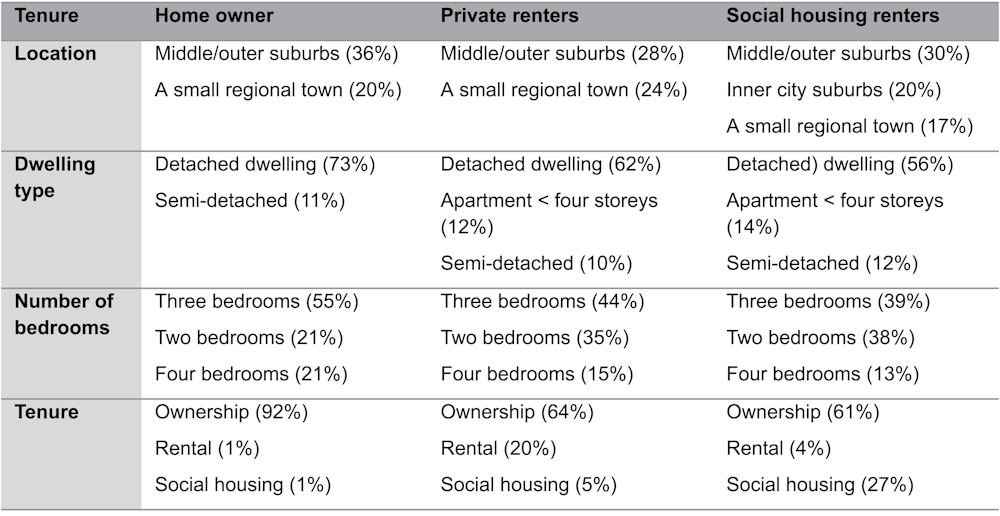
A report released today by the Australian Housing and Urban Research Institute (AHURI) sheds light on older Australians’ housing aspirations. The research found housing meets the current needs of nine out of ten older Australians. But only around 70% thought this housing met their longer-term (five years or more) aspirations, so the other 30% would be seeking to move.
Regardless of their current housing tenure, 80% of older Australians want to live in a home they own, no matter the type, size or location. Overwhelmingly, this relates to a desire to live in long-term, stable housing, because of the security this offers in later life.
Importantly, our research shows two-thirds of older private renters were once in home ownership. Most of these households were forced, rather than chose, to enter the private rental market. This was often due to a relationship breakdown or financial hardship.
The research includes a nationally representative survey of over 2,400 Australians aged 55 years and over. It was informed by focus groups in metropolitan and regional Western Australia, New South Wales and Victoria, and supported by in-depth interviews with later-life individuals and older Indigenous Australians.
Older Australians most commonly want to live in the middle or outer suburbs of a city. This aspiration increases with age.
Among those aged between 55 and 74, there was also a strong aspiration to live in small regional towns. This aspiration far outstrips the current proportion of this age group who live in such areas, suggesting an important role for City Deals and other regional initiatives in creating opportunities for older Australians. This, in turn, can also create jobs in the regions.
Those aged 75 and over were more likely to indicate a preference for the inner suburbs of a capital city.
Few older Australians wanted to live in the CBD of a capital city.
And in what sort of house?
Over two-thirds of older Australians want to live in a stand-alone house. The remaining third prefer an attached dwelling, apartment or alternative such as an ancillary dwelling – for example, a mobile home or granny flat.
Regardless of the type of housing older Australians want, findings show size matters. Around 50% of older Australians want to live in a home with three bedrooms. Just 20% wanted four or more.
The preference for larger dwellings drops sharply with age. Those older than 75 were more likely to prefer smaller dwellings.
Table 1: The housing and locational aspirations of older Australians.Source: Original analysis of Australian Housing Aspirations Survey (2018) data, unweighted, Author provided
For a small but very important group, their current housing does not meet broad aspirations. These households are experiencing what we call a “housing aspiration gap”. Older Australian renters in the private and social housing sectors are the most likely to fall into this group.
The aspiration gap is due to the desire for home ownership and the relative security it offers. This is of particular concern given the falling rates of home ownership among younger Australians (which other parts of this research have explored.
Many older Australians living in houses that do not meet their longer-term aspirations were not consciously planning or implementing strategies to achieve them. Social housing tenants (80%) were more likely not to actively plan, compared to 54% of home owners and 57% of private renters.
The most cited reason for not planning was because “there was no point, they would never meet their aspirations”, while home owners simply “hadn’t thought about it”.
A central housing information service that could guide households through their changing housing needs, providing details on all housing sectors, would help households to plan their housing for later life.
Currently, the forms of assistance we found older Australians were most likely to use to achieve aspirations were financial or legal advice, stamp-duty relief and subsidised rent in the private rental sector. The self-reported likelihood of being able to access these services generally decreased with age.
Bridging the housing aspirations gap
The biggest aspiration gaps are felt by those who don’t own their home. Their capacity to meet aspirations is a function of income rather than housing.
The research highlights the importance of home ownership in later life. Housing costs are lower for those who own their homes outright. The worrying trend of falling home ownership rates among younger cohorts will lead to major challenges for retirees who have to sustain rent payments into retirement.
Solutions include the development of alternative tenure options offering that security. Examples include low-cost, low-deposit ownership products, through shared ownership or land rent-type schemes.
Of course, reforms that offer longer lease structures and greater security in the private rental sector are critical for those who are unable to enter or sustain home ownership. This might include tax or other incentives to provide for older Australians in housing need.
The retirement living sector also has a major role to play by offering a range of flexible products designed to suit the needs of older Australians in a variety of financial circumstances.
New types of housing options might also help bridge the gap between the security of home ownership and the relative insecurity of renting for older Australians who, in many cases, are asset-rich but income-poor. Our finding that two-thirds of older private renters had previously been in home ownership suggests a need for better policy to support households to maintain or re-enter this tenure.
Policies to maintain ownership would deliver long-term savings for government as the next step is the private rental sector, where households are likely to receive Commonwealth Rent Assistance and, if tenancies can’t be sustained, homelessness.
When US President Donald Trump announced via Twitter on Friday that he was slapping tariffs on an extra US$300 billion of China’s exports, it was widely expected that China’s currency would slide against the US dollar.
The RMB/USD exchange rate is tightly managed by the People’s Bank of China. The rate is permitted to move only 2% away from a midpoint fixed by the bank each day.
Although in its official statement the bank attributed the slide mainly to changes in demand and supply, the slide would not have happened had the bank not allowed it. In the past it spent as much as US$107 billion in a single month defending the renminbi.
It is more reasonable to believe that the devaluation was a deliberate decision taken to offset the effect of the punitive tariffs.
By making China’s exports cheaper in US dollars it will neutralise the effect of Trump’s decision to impose tariffs that would make them more expensive.
But it will have far-reaching implications, so far-reaching as to suggest that Beijing has run out of alternatives.
In part, China is hurting itself…
The exchange rate – the external price of money – affects almost everything, including inflation in China itself, which will receive a boost as imports to China become more expensive.
Chinese inflation is already on the rise due to disruptions in supply of food staples such as pigs.
There isn’t much the People’s Bank of China can do to restrain inflation. Pushing up interest rates might choke the economy given that China’s GDP just posted its smallest quarterly gain since 1992.
It would also make it even more difficult for already heavily indebted state-owned enterprises and local governments to make payments on their debt.
If the Chinese think the currency is going to continue to fall they’ll attempt to take their money out of the country while it still has buying power.
Although the People’s Bank of China has demonstrated its capacity to control capital flight, it has increasingly had to do it using harsh measures that harm legitimate trade and investment.
The devaluation will essentially act as tax on net importers, which in China are households. This means it will work against China’s goal of rebalancing the economy away from investment to private consumption.
…and endangering global recovery
An RMB that breaches seven is also bad news for the global economy. It means weaker demand from China, which will depress global economic growth.
In that way it can be thought of as spreading the cost of US tariffs onto China’s trading partners, which are themselves likely to devalue in something of a currency war. The Australian dollar has fallen through 68 US cents, a low not seen since the global financial crisis.
Asian economies are also likely to devalue, among them South Korea, Vietnam, Thailand and Indonesia. The European Central Bank has also signalled rate cuts and other measures to bring down its exchange rate as has the Bank of Japan.
Other nations will devalue…
The US Fed itself will be under pressure to cut rates further in what the Pacific Investment Management Company has warned could lead to a “full-blown currency war with direct intervention by the US and other major governments/central banks to weaken their currencies”.
On Tuesday Australia’s Reserve Bank signalled its willingness to cut interest rate again, although in our case the drop in the Australian dollar might have made it nervous. It would prefer a controlled rather than unpredictable decline in the dollar.
John Connally Jr, Richard Nixon’s treasury secretary, once said in 1971 that the US dollar was “our currency, but your problem”. He meant that the rest of the world had to live with whatever the US did for its own reasons.
…meaning none of them will win
As the currency of the world’s second largest economy increasingly moves to the centre of global trade, China is able to say much the same thing. But an international currency war could hurt China as well by endangering the still not complete international recovery from the global financial crisis.
The People’s Bank of China has tried to reassure the world that it “has experience, confidence and capacity to maintain renminbi exchange rate at a reasonably stable equilibrium”.
It might do more for confidence if it wound down its control, as have other countries, relying less on manipulating the exchange rate for strategic reasons.
In April this year, the Ukraine elected comedian Volodymyr Zelenskiy as its president, and the ABC reported on a sudden upsurge in Australian interest in something similar here. Many names came forward, but the only actually dead nominee with any significant support was John Clarke.
Clarke died in 2017. Still, there is no doubt that if alive, he would have been a popular choice, and a wiser one, in my view, than any of the men who have held the job in the past decade or so. At least we would be ruled by someone who knew how to begin and end a sentence. Surely deathless prose (even from the dead) is an improvement on an endless stream of nouns prefaced by “How good is …?”
But it is not exactly Clarke’s prose that I’m writing about here. It is his occasional parody verse (mostly from the 1980s and 90s), seen as a window on the creative genius of his command of language.
In particular, consider this ars poetica disguised as a poem about building a model plane by Fifteen Bosworth Longfellow, “an Adelaide academic who wrote instructions for kit-set model products”, from Clarke’s 2012 book of Australian verse:
MYER’S WHOPPER Take the pieces from the package, Lay them out as per the graph, Gathering the bits you’ll need, Removing what you shouldn’t have. With the implement provided Ease the bearings to the left, Push the little angled mullion Up into the socket ‘F’. This will free the moulded bracket Holding back the nylon strand, Draw the slippery hoop and coupling Through the right-hand rubber-band. Put the topside brown side outside, Push the inside upside down, Underneath the left-hand wingnut, Press the folding backward crown. Overlapping lifting side-flaps Lower in to fit the screws, Pack up tools, retire to distance, Don protective hat, light fuse.
Clarke called his art tinkering, and it’s beautifully described by his daughter Lorin:
Some people’s dads spend hours tinkering in the shed. Our dad, John Clarke, borrowed the word but required only a desk and ‘gallons of tea’ for the kind of tinkering he did.
It involved prolonged fiddling with words to get tone, rhythm and meaning exactly right. So, with characteristic ironic deflection, he slips a poetics of his practice into a poem that might otherwise be mistaken for a charming bit of rhythmic nonsense.
The chaste mid-20th century fustiness of Clarke’s Longfellow evokes the nostalgic sense of practical men and women, busy with their hands. It is a world of pragmatic dignity and restraint that sits throughout Clarke’s work as a critical play-frame around the busy modishness and bullshit of postmodern culture and postindustrial politics.
He takes all the parts from the pre-formed linguistic kits of political doublespeak, sport, or poetry from their highly spun packages, lays them out for inspection and, with gimlet eye, identifies the bits we shouldn’t have to put up with.
The lines evoke Clarke’s quiet, inquisitive voice, overriding the juvenile enthusiasm of Henry Wadsworth Longfellow’s interminable ballad, The Song of Hiawatha (1855). Then the metaphor extends to cover the logic of the masterful Clarke and Dawe TV interviews (ABC TV, 1989-2017) in the first six lines — ‘With the implement provided / Ease the bearings to the left / Push the little angled mullion / Up into the socket ‘F’.
Yes, ease the bearings to the left; then push the mullion right up the F. Though never ideological in a narrow or doctrinaire way, the sketches always attacked privilege from the left and from below, working to egalitarian and anti-establishment ends.
And the incendiary satirical effect of each sketch is captured exactly in ‘Overlapping lifting side-flaps / Lower in to fit the screws, / Pack up tools, retire to distance, / Don protective hat, light fuse.’ Those decades of mock political interviews were just that: pragmatic and intimate terrorism packaged as foolishness.
In them, the parodied speakers sounded ridiculous because their words, the frantic idiocies of the moment, were anchored in a tone that invokes a world of careful and detached judgement, a world not easily impressed.
Content and rhetorical form cannot override the stable, tinkering persona that governs the voice, so that the self-promoting nonsense of the day is filtered parodically through a wiser alternative discourse. Intimately undermined and, with luck, exploded.
The wonder of Clarke’s satirical technique was the way he managed to inhabit fools and knaves while simultaneously remaining his utterly stable and authoritative self. The judgements of the passing parade of politicians, bureaucrats, marketers, businessmen, and other spivs managed to be both deadly accurate and utterly reliable.
The madness of his targets never comes to carry away the satirist, as it sometimes does Barry Humphries or Chris Lilley. The judging self never becomes as dominant as it does with Hannah Gadsby or Tim Minchin. Great performers all, but only one Clarke.
Amazingly, the edition of Comedy Studies that I have co-edited with Jessica Milner Davis is the first serious scholarly account of the works of this great Trans-Tasman comedian. It will not be the last.
But if you want somewhere to start with unravelling the mystery of that compelling, consoling, challenging satirical voice, I recommend that you think about how to construct a model plane, à la Clarke. There will be no more such tinkering, sadly, but its echoes will live on in our ears.
According to RNZ Pacific, the forum’s Foreign Ministers have pushed for the alleged human rights abuses to be included on the forum agenda, citing the reported escalation of violence in recent months.
The decision came through a heated debate at a senior officials meeting in Suva last week, where Vanuatu, a key regional supporter of West Papua pushed for the issue to be included in the forum.
No Pacific Island country opposed the inclusion apart from Australia, a strong Indonesian ally.
RNZ Pacific’s Johnny Blades said the shift in regional dynamics could be due to new Foreign Ministers in both Papua New Guinea and Fiji but also as a result of third party testimony to the worsening situation in West Papua from the likes of the UN Humans Rights Commission and the World Council of Churches.
– Partner –
“The Pacific governments see that the human rights situation in Papua is actually getting worse,” he said.
“In recent times it’s been backed by statements from third party representation.”
The ongoing conflict between Indonesian military and pro-independence forces in parts of the region has resulted in hundreds of casualties and the displacement of several thousand civilians.
The PIF agenda will also push for the Indonesian government to make good on its invitation to the UN Human Rights Commissioner to visit West Papua, with a deadline for a report set before the next PIF Leaders Meeting in 2020.
Pacific Island leaders are also keen to focus heavily on climate change rather than China when they meet next week, reports AFP.
Despite China’s growing influence in the region which has seen strong political response from both Australia and the US, Pacific Island leaders have insisted that such geopolitical concerns should not eclipse the more pressing issue of climate change.
PIF secretary-general Dame Meg Taylor said the forum was at a pivotal moment in its history.
“While we are the subject of the geopolitical manoeuvring and strategies of others, the Blue Pacific collective remains focused on charting our own destiny,” she said.
In a message to Australia’s government, Tuvalu Prime Minister Enele Sopoaga has warned Canberra’s step-up strategy will fail unless it finally takes meaningful action to address the issue.
“They know very well that we will not be happy as a partner, to move forward, unless they are serious,” he said.
This follows the Pacific leaders declaration of a climate crisis last week with Fiji’s Prime Minster Frank Bainimarama saying that the region needed greater commitments from its bigger neighbours, hinting at Australia and New Zealand.
At last year’s forum, Australia was exposed as having attempted to water-down a resolution that declared climate change the region’s greatest security threat.
“We shouldn’t accept anything less than concrete commitments to curb greenhouse gas emissions in line with the most ambitious aspirations of the Paris Agreement,” Bainimarama said.
“We cannot allow climate commitments to be watered down at a meeting hosted in a nation whose very existence is threatened by the rising waters lapping at its shores.”
The PIF will run from the 13th to the 16th of August.
“The Liberal-National government will help secure gas supplies, put downward pressure on prices and encourage new investment in gas supplies,” Tuesday’s announcement says.
Only a supreme optimist would expect it to do all three.
Ministers Frydenberg, Canavan and Taylor have announced a suite of measures, none of which are new, hard policy. Some are a continuation of existing measures, some are political weapons directed at state governments, and some are tantalysingly speculative ideas.
The background to the announcements is that Asian spot prices for liquefied natural gas have fallen significantly, with increasing international supply and unusually weak demand in the northern hemisphere.
Not surprisingly, overseas customers for Australia’s liquefied natural gas locked into long-term contracts and cost-squeezed Australian users are frustrated that they are not paying lower prices. Naturally, they were quieter when spot prices were climbing.
Behind the scenes, things are improving
At the same time, there has been some good news on supply.
Origin and Santos are proceeding with a substantial exploration program in the Northern Territory after that government lifted its moratorium on the use of fracking for gas development. The Territory’s Beetaloo Basin has been identified as a major new onshore gas source.
And good news on supply to industrial users. Producers such as APLNG and Santos have been signing new contracts with large users who have in the past have been finding it hard to get reliable supply at acceptable prices, among them Orica, Incitec Pivot and Brickworks.
And good news on transparency. The Australian competition and Consumer Commission has started publishing so-called export netback and transportation prices. Netback is the price gas supplier can expect to receive for exporting its gas after taking account of the delivered price and subtracting the costs of liquefying natural gas and shipping it.
The new measures can’t hurt…
A trigger for this week’s announcements was the government’s deal with Senator Rex Patrick over tax cut legislation. Among the measures promised are three worthy of comment.
First, the government will “consider” options for a prospective national gas reservation scheme. This could mean that gas producers wishing to develop new fields on the east coast and the Northern Territory would have to set aside some of what they produce for domestic use, as happens in Western Australia.
It is clearly controversial. It could distort incentives for exploration and act as a subsidy for gas users to the detriment of producers and taxpayers. Whether the worst can be avoided and some good delivered will depend on what emerges.
And there mightn’t be much that does emerge. It’s not even clear that the Commonwealth has the Constitutional power to unilaterally impose a domestic reservation scheme.
The industry will be relieved that it hasn’t proposed price control, or a retrospective reservation scheme, which would have been even worse.
Second, the government is hoping its commitment will put pressure on state and territory governments to remove “unwarranted restrictions on gas developments”. A successful move to a consistent, science-based, national approach to gas development, including the use of fracking technologies, would be a big step forward.
Third is a list of actions designed to improve transparency and liquidity in the gas market, both wholesale and transportation. It is a worthwhile objective. While “formalised collective bargaining” by industrial users sounds like an intriguing possibility, it is uncertain what will emerge.
…but they won’t amount to much
Gas supply and prices will not improve without additional supply sources. Prices are most unlikely to fall by two thirds to their historical levels of around a third of current prices.
Wishful thinking will not change the hard facts of rising costs and depleting easier-to-extract resources. Equally wishful thinking that governments should just get out of the way of the market fails to understand the economic damage that is being done by a poorly operating, concentrated and largely opaque market. Government intervention was inevitable.
If this suite of announced actions prompts even a modest increase in supply, and further improvements in market transparency and liquidity, and confidence that consumers are not being ripped off, it will be a success.
Source: The Conversation (Au and NZ) – By Andrea Carson, Associate Professor at La Trobe University. Department of Politics, Media and Philosophy, La Trobe University
The Digital Platforms Inquiry report, released in late July, lists 23 recommendations that cover all aspects of how and where we get our news. The ACCC’s proposed changes span competition law, consumer protections, media regulation and privacy laws.
Today, the Media Files team talks to a media owner and journalism expert to look closely at what the ACCC has suggested needs to change so media businesses remain economically viable and able to produce reliable news in all parts of Australia.
Media Files’ guests are media academic and journalist Margaret Simons from Monash University and Ross McPherson, editor-in-chief of the McPherson Media Group, publisher of 14 newspapers in regional Victoria and New South Wales.
New to podcasts?
Podcasts are often best enjoyed using a podcast app. All iPhones come with the Apple Podcasts app already installed, or you may want to listen and subscribe on another app such as Pocket Casts (click here to listen to Media Files on Pocket Casts).
You can also hear us on any of the apps below. Just pick a service from one of those listed below and click on the icon to find Media Files.
There is cause for concern for Australia’s young people with figures indicating they are experiencing the highest levels of anxiety and stress, and suicide than ever before.
Writer and teacher John Marsden says poor youth outcomes are from toxic parenting and ineffective schools.
That’s the key premise of his new book The Art of Growing Up, his manifesto for growing up in the 21st century based on his experience in schools as a teacher and principal.
Blame the parents
In the book, Marsden writes:
[…] we are seeing an epidemic in damaging parenting at the moment.
His key criticisms are that parents are too controlling or too lax, children are overindulged, overprotected and overpraised.
John Marsden shares his views on schools and parents in his new book The Art of Growing Up.Pan Macmillan
Marsden is correct in saying lax or controlling parenting leads to negative outcomes in young people. Research shows adolescents are better if parents are authoritative rather than authoritarian or permissive.
But when providing advice, Marsden is contradictory in how parents should reach this ideal version of parenting. He criticises parents for setting rules and telling children what to do, and then says parents should say “no” more often and “mature adults must be in charge”.
It is difficult to imagine how parents can be in charge if they do not have any rules to “say no to”. While I think his intention was to critique meaningless and excessive rules, and encourage parent authority, the message for parents is left unclear.
Overprotective parents
Another concern of Marsden is the helicopter or curling parent – the one that hovers over the child checking their path is clear for success.
This is also called overparenting, whereby parents try to manage the emotions of children and adolescents, provide too much advice, and overprotect. There is evidence overparenting leads to negative outcomes for young people, including increased feelings of entitlement and anxiety for children and adolescence that can persist in adulthood.
Marsden is correct in suggesting normal challenge is good for young people, and therefore saving them from it is not helping them. Resilience comes from brief exposure to challenges, not the avoidance of them.
Overprotective parents subvert this process and in turn young people do not develop their own skills to face challenge, as they are reliant on their parents.
Marsden also believes overprotective parents protect children from the experience of negative emotions, believe their children are perfect and “special”, and that “these inner kids don’t throw a shadow”.
All emotions are important for healthy development. Happiness, as Marsden writes, is relative. We only experience happiness when we know what unhappiness is.
While anecdotes can be powerful, Marsden does not provide evidence these parenting practices have increased.
Ineffective schools
Marsden says many truths about what is required for schools to be effective – ideas like partaking in real experiences, allowing boredom, giving children agency, and developing belonging and community in schools.
These ideas are all evident in research and none are new, but possibly they have been forgotten or relegated to “old fashioned” and therefore not relevant.
For example, the state of boredom (not trait) indicates a need to self-regulate and change. If parents or schools try to eliminate boredom in young people by overscheduling or over entertaining then they have become responsible for the self-regulation not the child.
Boredom produces a level of emotional discomfort, but as Marsden is trying to suggest, that does not mean adults need to schedule it away.
Marsden’s comment that most bullying can be prompted by “unlikeable behaviours” of the victim appears to have gained the greatest traction, but it is a minor point in the book.
Marsden is only suggesting children self-reflect on their role in interactions, and this is a useful behaviour for all humans.
Accurately reflecting on our own behaviours is a powerful foundation for change. The problem, as with many of the statements made in the book, it lacks context.
Hidden truths
The numerous contradictions, absolutes and lack of evidence across the book hide some of the truths Marsden has rightfully identified in his experience.
While I don’t negate the importance of our own experience in informing our understandings, experience tends be biased and defined by our own context. Perhaps Marsden is trying to sensationalise some ideas to awaken us. It has certainly started a conversation.
One of these contradictions is his statement that adolescents are more compassionate, empathetic and aware in the 21st Century. Shouldn’t that mean parents and schools are doing a great job?
He also says Australian schools have made improvements in creativity, emotional intelligence, and social intelligence among other gains. Again, there is no research to support this and if this is the case, it contradicts his statement that “schools are still sitting in the driveway, belching out toxic gas”.
What concerns me most is statements like “the emptiness inside damaged children was so vast that nothing, nothing, could fill it” because it implies there’s no recovery from trauma and that toxic parents are responsible for all negative outcomes in young people.
These absolutes can keep people stuck where they are. Parents need support from the community, not further accusations from professionals and academics. While Marsden does not believe the assumption “all parents have their [kids’] best interests at heart”, I do.
Why is air colder the higher up you go? Shouldn’t it be hotter as you’re getting closer to the Sun? – Flynn, age 6, Sydney.
Thank you Flynn, that’s a great question. A lot of people have probably wondered this.
As you may know, hot air rises. So why is it so cold at the top of a mountain?
Well, it helps if you imagine the ground here on Earth as a big heater. It keeps us warm, and if you move away from the heater you feel cold.
So what “heats up” the heater? The light and warmth from the Sun. Scientists call this light and warmth “radiation”.
Light and warmth travel from the Sun
The light and warmth from the Sun travel through space towards Earth, and pass through our atmosphere. (The “atmosphere” is what we call the swirling air that surrounds our planet.)
But the atmosphere isn’t very good at holding onto the warmth from the Sun. The heat just slips straight through it. (For the adults reading: that’s because air at higher altitudes thins out as the gas particles expand and lose energy.)
Eventually, the heat from the Sun hits the ground and the ground soaks it up. This especially happens in forests and oceans, which are very good at absorbing heat. Other places, like snow fields, are more likely to reflect the radiation – meaning it bounces back toward the Sun instead of being soaked up by the ground.
The ocean and forests are especially good at soaking up and holding onto heat from the Sun.Pixabay/Stocksnap, CC BY
Up, up, up
The higher up you go, the further you are away from the “heater” that is keeping us all warm – the ground that has absorbed the warmth from the Sun. At the top of mountains it can get so cold people could die within minutes without special protection. That’s because the air up there is just really bad at “holding onto” the radiation coming from the Sun, and the warmth passes straight through it on its journey toward the ground.
And all the way up in space, there is a lot more radiation from the Sun, and astronauts wear special suits to protect themselves from it. But there’s also no air in space, which means there’s really nothing much at all to “hold onto” the warmth of the Sun and make the temperature around you feel warm.
So if you were unlucky enough to be caught in space without a suit, you would freeze to death before the Sun’s radiation would get you.
Between 2001 and 2016, 373 Australian veterans took their lives, according to a study commissioned by the Department of Veterans’ Affairs (DVA). The study noted that male veterans under the age of 30 had a suicide rate more than two times the national average for men the same age.
Veteran Scott Harris has compiled statistics on veteran suicides for the The Warrior’s Return Facebook page, and says there have been 153 since 2017, including 19 so far this year.
Ex-service organisations who made submissions to a parliamentary inquiry into veteran suicide in 2017 argued that the number of suicides is potentially higher. And this does not include the number of veterans who try to take their own lives every year.
Our research into institutional abuse in the Australian Defence Force (ADF) explores the connection between military service and institutional harm. It finds links between the unyielding bureaucracy of the ADF and DVA, and veteran suicide.
According to a Productivity Commission report, released last month, the systems set up to support veterans during and after military service require “fundamental reform”. Among the recommendations in the report is
a new whole-of-life support system with a focus on minimising and preventing harm during military service and beyond.
This would include a new mental health strategy with a focus on suicide prevention.
Given these grim statistics and calls for reform, more examination is clearly needed to understand the root causes of why veterans continue to kill themselves. Despite recent efforts by the government to address the issue, no inquiries have had the scope to bring all the pieces together.
As a result, there is mounting pressure among veterans and their families for a royal commission into veteran suicide. We believe this is necessary to bring attention to the links between veteran suicide and the institutional failures and bureaucratic barriers to helping soldiers after they leave the service.
Organisational culture or individual weakness?
Historically, the ADF and DVA have tended to view mental health issues and suicide among service members and veterans as personal issues linked to combat exposure – not institutional problems linked to poor administration.
The recommendations of the 2017 Bird Review into the suicide of Afghanistan veteran Jesse Bird highlights this misconception. Bird took his own life weeks after his claim for permanent impairment was denied by the DVA.
As his parents’ submission to the 2017 Senate inquiry into veteran suicide states:
it seems to him and us that the level of bureaucracy is intentionally obstructionist and unedifying. The jungle of paperwork, the lack of follow-up and the non-existent support has contributed to his deteriorating mental health.
It was not just the trauma associated with combat exposure that pushed Bird to the edge, but how his care was mismanaged by the agency that was supposed to help him maintain his physical, mental and financial well-being after he left the military.
abuse, denigration, harassment, bullying (including threats of physical violence) … by staff and other Initial Employment Trainees (IETs)
And, the soldiers lacked
efficient and effective support services or mechanisms where [they] could seek redress
These are the kinds of institutional failures that need to be more thoroughly explored in a royal commission.
A long legacy of inquiries that go nowhere
The ADF and DVA persist in evading royal commissions, instead trusting in their own internal processes to investigate complex issues. Since 1970, there have been around 50 ADF inquiries into issues ranging from sexual and physical abuse to mental health and suicide.
There have also been numerous inquiries into the DVA, including last month’s Productivity Commission report, which recommended that the DVA be abolished and its functions incorporated into defence. But the report, acknowledges this would probably be impossible, since veterans do not trust the ADF to act with integrity and transparency towards its own people.
Crucially, this board would have operated outside the chain of command. But the recommendation was rejected by Prime Minister John Howard, Defence Minister Senator Robert Hill and the chief of defence, Major General Peter Cosgrove. It was a missed opportunity.
In 2012, the DLA Piper Review into physical, sexual and other abuse in the ADF recommended a royal commission. It also didn’t go anywhere, and was another opportunity missed.
In 2014, the former head of the Defence Abuse Response Taskforce, Major General Len Roberts-Smith, recommended a royal commission into systemic abuses at the Australian Defence Force Academy. But Elizabeth Broderick, the sex discrimination commissioner, argued against it and instead recommended an Australian Crime Commission (ACC) taskforce with independent powers to investigate allegations of ADF abuse. Another opportunity missed.
Abuse, institutional mismanagement and military suicide seem to go hand-in-hand, but the current call for a royal commission into veteran suicide is still being denied.
The Ex-Service Organisation Round Table (ESORT), a group of 14 veteran organisations, has also come out against a royal commission, maintaining that suicide is a national crisis, and not veteran-specific.
The war cry from the Veteran Mental Health and Wellbeing Summit, convened by the DVA this year in response to the call for a royal commission, is to “keep on keeping on”.
Veterans’ Affairs Minister Darren Chester has said he can’t ‘see the point’ of a royal commission.Mick Tsikas/AAP
Putting veterans first
Significant money continues to be invested in the mental health of service members, yet veterans continue to take their own lives. More Australian veterans have lost their life by suicide than have been killed in active duty since Vietnam.
A royal commission will either piece together deficiencies within the ADF and DVA systems or prove to the public that ADF members and veterans are in safe protective hands.
To spend A$100 million on a royal commission – the amount proffered by Chester – is a small price to pay to ensure that veterans and their families are put first, both in theory and in practice.
Anyone seeking support and information about suicide can contact Lifeline on 131 114 or Beyond Blue on 1300 224 636.
You never think it’s going to happen to you. Then suddenly you’re middle-aged and you find yourself grunting when you pick up something from the floor or groaning when you get out of the chair.
Why do we do this? Is it a sign that we’re ageing fast? Or is it just one of those things that come with the middle years, like reading glasses, greying hair and “dad jokes”?
As far as I could find, there have been no specific studies to explain why otherwise healthy older people grunt or groan with the physical effort of everyday activities.
But noises relating to physical exertion are common in a range of ages and activities, as anyone who has watched cricket, boxing or in particular, tennis, will know. Think Serena Williams and Rafael Nadal.
So, we can look to the evidence of what’s behind grunting in sport or training instead.
We stiffen the body, hold our breath, then slowly release it
When we lift something relatively heavy, make fast movements (like hitting a tennis ball), or even stand up from sitting, we stiffen our torso. This stabilises our entire body.
If we were too relaxed, we would be floppy, lose balance and risk falling over.
So we fill the lungs by breathing in and tense up the muscles of the torso to stabilise the spine. We throw our arms forward to provide momentum and with this effort, we hold our breath to maintain that stability as we stand.
We then release the breath slowly or quickly, depending on the nature of the task. With fast (or ballistic) movements like pitching a ball or punching in boxing, we’d release the breath quickly. With slow movements, like lifting a barbell or getting off the couch, we’d release it slowly. If the muscles that move the vocal cords together are activated, we make a sound.
This results in a grunt or groan of the kind you might often hear at the gym. Or at least you would if not for the deafening music.
Does grunting help us move, strike or lift?
The evidence of whether grunting helps us move, strike or lift is mixed.
According to a 20-year-old study, grunting doesn’t help weightlifters lift heavier weights. They lifted as much in a “dead lift” whether they grunted or not.
And in a 2014 study, tennis players had stronger serves and forehand strokes when they were allowed to grunt compared with when they were told to be silent.
So, it seems that whether grunting or other vocalisations help you perform depends on the task.
That said, tennis great Roger Federer (a “non-grunter”) seems to perform very well without this audible shot enhancement.
What does this mean for everyday activities?
What all this means for grunting during everyday activities is unclear. Clearly, athletes’ grunts during fast, ballistic movements are different to the noises we make when exercising in a gym or when we get up from a chair.
Perhaps we are more likely to make such noises if we are tired or fatigued. And if someone thinks a task is going to be hard, they might be more likely to grunt or vocalise. So that’s when they’re most likely holding their breath, to try to provide momentum and stability for the task ahead, then releasing it.
While there has been no research on this phenomenon, as far as I can tell, grunting with physical exertion does seem to be habitual. These noises are most likely learned behaviours that we copy from friends and relatives and start doing without realising it. So, you can choose not to groan the next time you get off the couch.
Source: The Conversation (Au and NZ) – By David Rowe, Emeritus Professor of Cultural Research, Institute for Culture and Society, Western Sydney University
In a previous century, I conducted doctoral fieldwork among the abandoned warehouses, smoky pubs and crumbling squats of the British post-punk, independent rock scene. How strange that I should become re-acquainted with that scene at the shimmering Sydney Opera House.
Saturday night’s show was only a remnant of the original group from Salford in Greater Manchester, as founder member Peter Hook substituted his estranged ex-bandmates with guest singers and musicians, not least the Metropolitan Orchestra. Of necessity, the show was radically different from the grungy club experience of its origins. In the hands of orchestrator/conductor Tim Crooks and musical director David Potts, the music was less angular and industrial.
With flesh-and-blood, classically-trained musicians replacing synthesisers, the sound was lush and tonally rich. Guest singer Mica Miller provided a different gender dimension to the songs of an all-male group. She and Hook took Curtis’s vocal role alongside Bastien Marshal, who sounds and looks like him.
Joy Division classics abounded, like the brooding Atmosphere and the disconcerting She’s Lost Control. Inevitably there was Love Will Tear Us Apart which, a decade after its release, came first in the inaugural Triple J Hottest 100, and again the following year. Plus whimsical surprises, like the bizarre, Malcolm McLaren-inspired mashup of that song and Captain and Tennille’s Love Will Keep Us Together.
But the music alone, despite its unquestionable and enhanced majesty, cannot entirely explain the enduring appeal of a band that existed for barely two years before Curtis took his own life.
Joy Division’s flame has been partially kept alive by its successor, New Order, formed in 1980 by the surviving members of the band: Hook, Bernard Sumner and Stephen Morris. New Order broke up a couple of times but is still going, though now without Hook. He and the band have had a long running legal dispute that was reportedly settled in 2017.
New Order’s innovative mix of electropop and dance music has been much more commercially successful than its parent band, which produced only two albums of original music and a handful of EPs and singles. But it could never compete with the power of Joy Division mythology.
In a familiar rock narrative of the beautiful corpse, the premature demise of Ian Curtis and Joy Division offered both pathos and mystery. Neither singer nor band could make embarrassing mistakes or reach some notional use-by date, touring the nostalgia circuit like the Sex Pistols, who inspired them to form in the first place.
Images of Joy Division, usually black-and-white, reveal four intense young men in the kind of authentic, working-class environment immortalised by The Smiths a few years later outside the Salford Lads Club. That famous picture was dominated by Morrissey – who has lived long enough to besmirch his own reputation – just as the glowering Ian Curtis compulsively draws the eye in Joy Division’s still photographs and videos.
When Curtis died, I recall a distraught letter to the New Musical Express, the most influential rock newspaper of the time, claiming that “he died for us”.
Even without such Christ-like imaginings of their late singer, Joy Division’s songs – by turns doomy and angry, edgy and reflective – still resonate in these paranoid times.
Produced under Thatcherism and Reaganism, amid the Cold War, deepening social inequality and the rise of the surveillance state, songs like Disorder, Dead Souls, Atrocity Exhibition, and Isolation exude disquiet and alienation. They could have been written today.
But at a deeper level the aura that formed around the band, and especially its tortured vocalist, evocatively expresses rock’s romantic mythology of dissident youth. It registers in Anton Corbijn’s film about the band, Control, and in the representation of Manchester’s Hacienda scene in which Joy Division is featured, in the film 24 Hour Party People.
Myth-laden yearnings aside, Joy Division’s slim back catalogue still repays repeated listening. Songs like Decades, from the epic album Closer, will resonate with inquisitive listeners yet to be born.
In the end, time and earthly foibles caught up with Joy Division. Punk was supposed to rewrite the rules of the decadent music business, and post-punk to take it beyond the frenetic world of One Chord Wonders into something more existentially enduring.
The known-unknown pleasures of Joy Division Orchestrated are reminders of why the music of this short-lived band remains potent even if the human relationships that made it possible have been torn apart. Again.
Artificial intelligence (AI) is already in use in many sectors. Its contribution is expected to rise steadily, driven by advances in data storage, computer processing power and connectivity.
Australia and New Zealand are yet to develop national AI strategies. The reports look 20 years ahead, which is a useful period for policy development. The explicit focus on well-being provides a helpful frame to start national conversations about how to embrace these new technologies, leading rather than passively accepting advances from offshore.
New Zealand has started to adopt AI in the government sector, with most government agencies employing some form of it. There are advantages in New Zealand’s small size and strong legal frameworks to develop protocols for data ethics and security, and intellectual property, and to nurture a diverse AI-savvy workforce.
Placing equity at the centre of the conversation means that we can choose to adopt AI technologies across education, government and industry in the context of public good. This would mitigate the risk of importing biases from offshore algorithms and allow us to identify areas where AI can benefit all New Zealanders, rather than a small international elite.
Within the reports’ 20-year horizon, specialist machine learning and narrow AI (a specific type of AI that outperforms humans in a very narrowly defined task) will help us to start removing the “four Ds” – dirty, dull, difficult, dangerous – from our daily work. Instead, we will be able to use machines to free people up to use their originality, creativity and questioning abilities.
It is unlikely that machines will challenge these skills in this time frame. Artificial general intelligence, which could compete with these more human forms of cognition, is likely many decades away. By focusing on this nearer-term future, the ACOLA report makes concrete recommendations on strategic investment, regulatory mechanisms, equity and respect for intrinsic human rights, while calling for a national strategy to bring these approaches together.
What AI could do for New Zealand
A recent New Zealand government report signalled that AI-driven automation and optimisation could result in economic gains in productivity. Think drones applying herbicides in an orchard, identifying weeds through AI-driven vision recognition systems, then feeding the data into a central system. This could mean less herbicide use, better farm productivity and environmental outcomes, and fewer people operating herbicide sprayers (at least in the way they do currently).
But the predicted gains in productivity are not without risks. Estimates of the proportion of jobs likely to be automated by AIvary wildly. So do estimates of the degree to which those will be replaced by new jobs. Some of these new jobs are currently difficult to imagine. Consider someone preparing for a career as a social media manager back in 2000, four years before Facebook was founded.
Foresight will be key to building a resilient and adaptable workforce. Key skills in STEM subjects (especially maths), coupled with strong foundations in the humanities, will be important. AI experts agree that, as AI technologies are implemented at scale, the key concern is the rate at which they may disrupt work and drive inequalities in income and employment opportunities.
Even if the former orchard sprayer is able to find another job, they are unlikely to get a direct financial payoff in the same way that the owners of the farm will. Multiplied thousands of different ways across New Zealand’s economy, these AI-driven changes threaten to widen inequities. Research related to this issue, for example at the Centre for AI and Public Policy (CAIPP), will need to feed into policy.
The ACOLA report discusses many aspects of AI relevant to our responsibilities under the Treaty of Waitangi. AI technologies need to be developed to augment critical thinking and social and emotional skills at all levels, and in a culturally inclusive context. An important implication, consistent with the government’s focus on well-being, is the need to closely monitor societal impacts.
The report also identifies where New Zealand could contribute to the global conversation, including in indigenous data sovereignty. Groups such as Te Mana Raraunga and Te Hiku Media actively explore how tikanga (Māori customary system of values and practices) should be applied to these emerging technologies.
As the ACOLA report notes:
An AI strategy that places equity at its forefront will strengthen Aotearoa New Zealand’s international reputation in this arena and ensure that Aotearoa New Zealand is not left behind by some of the most important developments of the 21st century.
Overall, we see enormous potential for transformative opportunities, from intelligent tutoring systems in education through to precision agriculture. These could improve well-being across all sectors of society, government, agriculture and industry.
Realising this potential will require addressing the substantial challenges inherent in ensuring a fair and equitable transition into an AI-enabled future, making sure that benefits also reach those at risk of being excluded.
With concerns growing worldwide about the economic power of digital technology giants such as Google and Facebook, there was plenty of interest internationally in Australia’s Digital Platforms Inquiry.
The Australian Competition and Consumer Commission (ACCC) inquiry was seen as undertaking a forensic account of market dominance by digital platforms, and the implications for Australian media and the rights of citizens around privacy and data protection.
But the major limitation facing the ACCC, and the Australian government, in developing new regulations for digital platforms is jurisdictional authority – given these companies are headquartered in the United States.
More ‘platform neutral’ approach
Among the ACCC’s 23 recommendations is a proposal to reform media regulations to move from the current platform-specific approaches (different rules for television, radio, and print media) towards a “platform-neutral” approach.
This will ensure comparable functions are effectively and consistently regulated:
Digitalisation and the increase in online sources of news and media content highlight inconsistencies in the current sector-specific approach to media regulation in Australia […]
Digital platforms increasingly perform similar functions to media businesses, such as selecting and curating content, evaluating content, and ranking and arranging content online. Despite this, virtually no media regulation applies to digital platforms.
The ACCC’s recommendations to harmonise regulations across different types of media draw on major Australian public enquiries from the early 2010s, such as the Convergence Review and the Australian Law Reform Commission’s review of the national media classification system. These reports identified the inappropriateness of “silo-ised” media laws and regulations in an age of digital convergence.
The ACCC also questions the continued appropriateness of the distinction between platforms and publishers in an age where the largest digital platforms are not simply the carriers of messages circulated among their users.
The report observes that such platforms are increasingly at the centre of digital content distribution. Online consumers increasingly access social news through platforms such as Facebook and Google, as well as video content through YouTube.
The advertising dollar
While the ACCC inquiry focused on the impact of digital platforms on news, we can see how they have transformed the media landscape more generally, and where issues of the wider public good arise.
Their dominance over advertising has undercut traditional media business models. Online now accounts for about 50% of total advertising spend, and the ACCC estimates that 71 cents of every dollar spent on digital advertising in Australia goes to Google or Facebook.
All media are now facing the implications of a more general migration to online advertising, as platforms can better micro-target consumers rather than relying on the broad brush approach of mass media advertising.
The larger issue facing potential competitors to the digital giants is the accumulation of user data. This includes the lack of transparency around algorithmic sorting of such data, and the capacity to use machine learning to apply powerful predictive analytics to “big data”.
In line with recentcritiques of platform capitalism, the ACCC is concerned about the lack of information consumers have about what data the platforms hold and how it’s being used.
It’s also concerned the “winner-takes-most” nature of digital markets creates a long term structural crisis for media businesses, with particularly severe implications for public interest journalism.
Digital diversity
Digital platform companies do not sit easily within a recognisable industry sector as they branch across information technology, content media, and advertising.
They’re also not alike. While all rely on the capacity to generate and make use of consumer data, their business models differ significantly.
The ACCC chose to focus only on Google and Facebook, but they are quite different entities.
Google dominates search advertising and is largely a content aggregator, whereas Facebook for the most part provides display advertising that accompanies user-generated social media. This presents its own challenges in crafting a regulatory response to the rise of these digital platform giants.
A threshold issue is whether digital platforms should be understood to be media businesses, or businesses in a more generic sense.
Communications policy in the 1990s and 2000s commonly differentiated digital platforms as carriers. This indemnified them from laws and regulations relating to content that users uploaded onto their sites.
But this carriage/content distinction has always coexisted with active measures on the part of the platform companies to manage content that is hosted on their sites. Controversies around content moderation, and the legal and ethical obligations of platform providers, have accelerated greatly in recent years.
To the degree that companies such as Google and Facebook increasingly operate as media businesses, this would bring aspects of their activities within the regulatory purview of the Australian Communication and Media Authority (ACMA).
The ACCC recommended ACMA should be responsible for brokering a code of conduct governing commercial relationships between the digital platforms and news providers.
This would give it powers related to copyright enforcement, allow it to monitor how platforms are acting to guarantee the trustworthiness and reliability of news content, and minimise the circulation of “fake news” on their sites.
Overseas, but over here
Companies such as Google and Facebook are global companies, headquartered in the US, for whom Australia is a significant but relatively small market.
The capacity to address competition and market dominance issues is limited by the fact real action could only meaningfully occur in their home market of the US.
Australian regulators are going to need to work closely with their counterparts in other countries and regions: the US and the European Union are the two most significant in this regard.
Source: The Conversation (Au and NZ) – By Marija Taflaga, Lecturer, School of Political Science and International Relations, Australian National University
Last week, two former Liberal Party staffers, Dhanya Mani and Chelsea Potter, made claims of sexual harassment and sexual assault against two Liberal party staff members.
It highlighted again how hostile political life can be for women and the fact the Liberals lack any mechanism to manage sexual harassment and assault claims. In response, the party’s federal council has decided to introduce a new code of conduct, likely by the end of the year.
But the Liberals’ “woman” problems go deeper than this. There has been sustained criticism of the party for its under-representation of women in parliament and claims of a bullying culture dominated by a “boys’ club.”
Will a code of conduct help to change this culture? And how well do these kinds of codes actually work?
Dhanya Mani’s request for the Liberal Party to investigate an alleged sexual assault by a fellow staffer never went anywhere. ‘No one seemed to care about my life, or my career,’ she says.Supplied by Women’s Agenda
A problem across the political spectrum
Decades of research have shown how legislatures continue to be hostile work environments for women. In Australia, research by Marian Sawer and Marian Simms, for instance, has catalogued multiple instances of sexism and sexual harassment in the Australian federal parliament.
The Liberal Party is hardly the only political organisation to be confronted with this issue. Virtually all major Australian political parties have faced scandals relating to sexual harassment in recent years.
The Nationals were criticised last year for their handling of a complaint against Barnaby Joyce. In the Labor party, former NSW leader Luke Foley resigned after allegations that he inappropriately touched an ABC journalist.
The varied nature of these cases alone shows just how complex – and all too common – the problem remains.
Sexual harassment of women in politics is not limited to Australia, either, as the “sex-pest” scandal in the UK and recent sexual misconduct allegations against two MPs in Canada have demonstrated.
Given the prevalence of sexual harassment scandals, what is the most effective way for legislatures and political parties to respond?
Luke Foley denied the allegations against him, but quit as Labor leader nonetheless.Dan Himbrechts/AAP
The role of the parties
Organisationally, political parties straddle ambiguous ground. Parties are professional organisations that employ small numbers of staff and are subject to regulations and rules. Yet, they are also civic institutions that rely on volunteer labour. Their budgets fluctuate wildly from feast to famine. Further, political staff are paid for by the taxpayer, but they are not considered public servants.
As such, it is not always clear what recourse is available to party members who want to file a complaint for sexual harassment. For the most part, they are entirely reliant on whatever processes have been put in place by the parties.
Perhaps it’s this complexity, as well as the fact that countless organisations seek to cover up bad behaviour, that has led so many in the Liberal Party to argue these matters should be referred to police.
It raises the issue of what responsibilities and obligations the parties have when it comes to managing sexual harassment complaints.
This is not an abstract question. There are implications for how safe people feel in their workplaces and within their civic institutions. It also has implications for which MPs are selected and elected to represent us.
How Canada’s code of conduct works
Canada has been a pioneer in this regard. In 2015, the country was the first with a Westminster-style government to adopt a legislative-wide code of conduct to govern all non-criminal sexual harassment between MPs, regardless of party.
Following the claims of sexual harassment against the Liberal MPs Massimo Pacetti and Scott Andrews, the Canadian House of Commons adopted the code in June 2015. It includes a series of measures aimed at preventing sexual harassment, as well as a specific rule that prohibits one MP from sexually harassing another. When a claim is made, the code spells out a seven-step resolution process.
Research by Canadian political scientists Cheryl N. Collier and Tracy Raney identifies some issues with the code of conduct that could be useful to consider for those seeking to implement a similar code in Australia.
One is the distinction between criminal and non-criminal sexual harassment. The Canadian code specifically addresses non-criminal actions. If a criminal offence has occurred, the matter will only be referred to the “appropriate law enforcement agency” if the complainant agrees.
But this distinction between non-criminal and criminal is blurry. Confusion over where criminal behaviour begins may prevent victims from using the code if they are unsure how to categorise their specific experience.
This is especially relevant given the recent cases of Mani and Potter in Australia. They were advised to go to the police when they made an internal party complaint. They have strongly argued, as has Liberal party veteran Kathryn Greiner, that such advice allows the party to sidestep responsibility for its culture.
Problems with the Canadian model
The Canadian code of conduct also delegates responsibility to party whips to facilitate conversation, mediation, investigation and resolution of complaints. Whips are elected offices, held by politicians. Their main job is to ensure party discipline, which might conflict with addressing claims of sexual harassment.
This may result in quick and quiet resolutions to ensure that minimal damage is done to the party. If the code is simply used to keep people quiet, this would do little to bring about a meaningful resolution process.
Further, the adoption of a code of conduct that emphasises confidentiality raises issues about what is in the public interest. This could mean the public will never know if an MP has been found to have sexually harassed someone. And this information, many would argue, is intrinsically in the public interest.
A final important lesson from the Canadian code of conduct relates to parliamentary privileges. Importantly, it does not cover speeches inside the House of Commons, meaning that MPs can use any language they want without fear of reprisal.
As David Leyonhjelm’s use of a sexist slur against Sarah Hanson-Young in the Australian Senate last year shows, this freedom of speech can create a sexist and toxic working environment for women.
This incident, as well as previous scandals, has shone a light on the fact that political parties, just like other civic institutions, need to think about how they will respond to abuse perpetrated within their organisations.
However, as the Canadian example demonstrates, adopting a set of rules is not enough if there aren’t transparent pathways toward a resolution.
Strong leadership is also critical
This lies at the heart of Mani and Potter’s advocacy for rules that extend beyond the individual parties and would cover the behaviour of all MPs. To that end, they are trying to create a forum for women to share their stories and organise.
It also helps explain why these cases have so quickly been linked to the ongoing debate about gender quotas within the Liberal Party. The aim is to change the norms of acceptable behaviour within the party, not just deal with individual complaints of harassment when they happen.
Just 23% of the Coalition’s MPs are women, compared to 47% for Labor.Lukas Coch/AAP
We already know it’s hard for women in political life. While a code of conduct is a step in the right direction, it is unlikely to change the internal culture of the Liberal Party, or any other party.
What’s needed is strong leadership and sustained public pressure that makes it is harder for political parties to turn a blind eye to sexual harassment and assault.
After all, it’s difficult to know how many budding careers have come to an end because of this kind of behaviour across the political spectrum. As Mani herself put it, when describing the party response to her allegations:
I was told ‘You do realise you could ruin his life and he could lose his job, don’t you?’ No one seemed to care about my life, or my career.
As we age, we’re more likely to need a prosthesis to help us function like we used to. It may be a hip or knee prosthesis to replace a worn-out joint, a new lens after a cataract has been removed, or a pacemaker or cardiac stent after a heart attack.
Australian prosthesis prices are high by international standards, and these costs come on top of the surgeon’s fees and the hospital’s charges.
Prostheses accounted for more than 10% of the growth in private health insurance costs over the past decade.
Australia’s current approach to paying for prostheses in the private health sector incorporates all the wrong incentives and leads to poor outcomes for patients, health insurance members, and taxpayers.
Grattan Institute has today released a proposal for fundamental reform of prosthesis pricing which can help rein in rising private health insurance costs and provide patients with better quality devices at lower costs.
This plan includes setting a benchmark price, factoring quality into the pricing system, and allowing payments to be bundled so patients can avoid unexpected out-of-pocket costs.
Step 1: set a benchmark price
Australia’s approach to prosthesis pricing in the private health system is heavy on regulation, exemplified by a 1,000-page spreadsheet of regulated prices, which includes more than 10,000 centrally determined prices. It’s reminiscent of Soviet-era central planning at its worst.
Prostheses manufacturers or their Australian agents lodge proposals with a government-appointed committee. The committee evaluates the bid and, if approved, recommends the prosthesis be added to the list and the price private health insurers must pay for it.
One useful, if modest, reform would be to modernise the approach to prosthesis pricing, incorporating innovations from pricing of other medical interventions and treatments.
The Pharmaceutical Benefits Scheme (PBS), which subsidises Australians’ medications, for example, has a system of Therapeutic Group Premiums. Prices for drugs with a similar therapeutic effect are compared, and where there appears to be no incremental benefit within the therapeutic group, the government price is set at the benchmark for all medications in the group.
Adopting a similar approach would create a benchmark price for hip prostheses, and all other hip prostheses could be priced relative to that benchmark price.
Step 2: factor in quality
Another improvement – which could be made immediately – would be to use information about the effectiveness of the prosthesis when setting prices.
Information contained in procedure registries such as the Australian joint registry could be used to estimate the cost-effectiveness of prostheses over patients’ lifetimes.
All hip prostheses, for example, have a small risk of needing to be replaced after three to five years. But some prostheses have significantly higher rates of needing to be replaced (“revised”) than others.
Under a “lifetime” pricing approach approach, the price for a prosthesis would take account of the likelihood that a revision might be required.
The cost of a revision, including the cost of the hospital admission, is many times the cost of the initial prosthesis. Incorporating revision risk into initial pricing would start to send signals about the importance of long-term costs.
Interestingly, at least one US hospital group has introduced a lifetime hip and knee guarantee, under which the hospital group bears the full cost of any revision. This is a welcome development as it provides a clear incentive for the hospital to chose the prostheses with the lowest revision rates.
About three-quarters of prostheses orthopaedic surgeons choose to implant in their patients are not among the top ten options, in terms of quality as measured by revision rates. It’s unlikely those surgeons have fully informed their patients of the choices and risks they’ve imposed on the patients’ behalf.
Surgeons might chose a prosthesis out of habit and may not have checked the average performance of their favoured prosthesis.
Interestingly, there is no evidence that better performing prostheses are more expensive than others.
Step 3: cut red tape and bundle payments
A bedrock principle of most markets is that the purchaser expects to accrue utility from their purchase. This is not how prosthesis pricing works.
The surgeon is the one who chooses the prosthesis; in the private market, a private hospital purchases the prosthesis; the private health insurer pays for the prosthesis; but it is the patient who wears the cost of any failure of the prosthesis.
This creates an agency problem and is almost guaranteed to lead to problems.
These payments can be bundled together to include the procedure and the device. So the payment for a hip replacement includes a prosthesis. Or the payment for a cataract operation includes lenses.
The same rigour, and the ability to bundle payments, should be applied in the private sector.
This would mean private hospitals would be required to tell patients whether they will be hit with any out-of-pocket costs associated with the prosthesis, and what alternative prostheses might be available which involve no out-of-pocket cost, or which are less likely to require a revision. This will help to drive up quality.
Private hospitals – which purchase the prosthesis – would then have an incentive to ensure their surgeons select better-performing prostheses.
Or throw the current system in the bin
Prosthesis pricing in Australia is stuck in an out-dated regulatory approach. It’s not providing best value to taxpayers, health insurance members, or patients.
There are ways to improve the existing regulation, but they should be seen only as patch-ups of a rickety system.
That rickety system deserves to be consigned to the dustbin of history and replaced by a fundamentally different approach to paying for surgical care which bundles prosthesis costs into a single price.
A need to manage waiting lists, rather than ensuring positive outcomes for tenant households, strongly influences social housing policy, newly published research finds. This situation is not only a result of operational policies, but also a shortage of social housing stock that is suitable for tenants and a lack of viable alternatives – namely affordable, safe and secure private housing. Eligible applicants who don’t have a “priority need” can wait up to ten years to be housed. They face strict eligibility checks just to remain on the waiting list.
Importantly, this figure does not capture unmet demand such as people sleeping rough and very low-income households in housing stress who are not on waiting lists.
Waiting lists also don’t include hidden demand such as people suspended from waiting lists or excluded by their visa status.
The supply of social housing stock simply does not match the growing numbers of households experiencing housing affordability problems. Between 2011 and 2016, government spending on social housing fell by 7% from A$1.42 billion to A$1.32 billion. Today, social housing is provided to over 800,000 tenants in more than 400,000 households – 76% in public housing, 20% in community housing and 4% in Indigenous housing.
The expansion of public housing (delivered by state and territory housing authorities) to community housing and Indigenous housing (delivered by non-profit community organisations and Indigenous organisations) has transformed social housing. Community housing has increased by 121% between 2008-09 and 2017-18. This growth includes tenanted stock transfers from public housing.
Against this background, policymakers are increasingly seeking to promote housing “pathways”. Operational housing policies are intended to improve tenant housing and social outcomes (such as well-being and economic participation), but also to manage long waiting lists and make the system more efficient.
These policies shape housing pathways, determining how tenants and households move into, within and out of social housing. But these pathways are also influenced by household relationships and a household’s changing needs. What a tenant or family need from their housing changes when, for example, relationships break down, new relationships begin, children are born or children leave home.
Our research sought to better understand the policy context behind housing pathways and their impacts on tenants’ experience.
Getting in
Pathways into social housing begin with application, which is a centralised process in most states and territories (apart from the Northern Territory). Prospective tenants apply once through a single portal, with information shared between government housing departments and community housing providers.
The success of an application depends on a range of eligibility criteria (see Table 1), starting with income and assets. Even if a prospective tenant meets the income criteria, priority is given to people and households with specific or complex needs. What constitutes “specific or complex needs” varies, but generally includes disability, poor physical or mental health, experience of family violence, exiting institutions, or being homeless or at risk of homelessness (the most common pathway into social housing).
Other criteria include citizenship and residence status (including restrictions based on permanent residency/citizen status), age and tenancy history.
An applicant’s place on the waiting list is continually checked. If an applicant is found to be ineligible, or simply does not respond, they may be suspended or removed from the list.
Staying in
Most states and territories have policies on the eligibility of tenants to continue in public housing. Criteria include income levels, use of the premises, and household change. What criteria are reviewed, and how often, varies widely.
Eligibility reviews mean tenants fear any extra income might result in an end to their tenure or having to make higher rent contributions. This potentially undermines their preparedness to undertake education and training, or take up work opportunities that might lead to greater independence.
Moving within
Policies allow tenants to apply for a transfer if household circumstances have changed. A dwelling might no longer be suitable – for example, as a result of overcrowding or family violence.
In practice, however, supply constraints make this challenging. Policies that transfer public housing properties to community housing providers result in tenants becoming less mobile as moving between public and community housing is not possible.
Landlord-initiated transfers can also occur. For example, property or housing estate renewal might require tenant relocation. A transfer might also be a result of tenant conduct or changes in eligibility status.
Moving out
Exits from social housing may occur when a tenant chooses to move to private housing or is evicted. Eviction may result from issues such as neighbourhood disputes, anti-social behaviour, rental arrears, a lease coming to an end, or changes to eligibility.
Tenants who are no longer eligible for social housing based on their income may also be evicted. These tenants often still have limited capacity to take on and manage a private rental tenancy.
Policy levers to help with moves out of social housing include: selling dwellings to tenants; providing private rent subsidies; rental transition programs; financial planning; and client-based needs planning. Some policies also target private landlords with a goal of increasing housing affordability and therefore pathways out of social housing.
By far the biggest obstacle to moving out of social housing, however, is the lack of affordable housing alternatives.
While operational policy establishes formal pathways (by setting eligibility criteria and so on), what happens in practice may be different, as service providers can interpret and implement policies in different ways, with different effects for tenants.
Further, what is known about the housing pathways of tenants moving in, within and out of social housing is based on partial evidence. It comes from social housing providers themselves (missing information about events prior to and following occupancy), or from survey research seeking to fill some of the data gaps. Many blind spots exist in the housing pathways evidence base.
Optimal policy development requires clear, up-to-date evidence on how we might understand social housing pathways within a changed housing policy and housing assistance context. We also need to consider what advances in administrative and longitudinal data can tell us about how policy innovation might improve social housing pathways.
With some in the Australian government’s own ranks arguing for a lift in the unemployment benefit, senior ministers appear to be upping the rhetoric about joblessness being a matter of choice for many.
“There are jobs out there for those who want them,” the federal minister for employment, Michaelia Cash, has told The Australian.
Yesterday the Murdoch-owned newspaper published her comments in a front-page story that suggested Department of Employment research showed almost half of all employers were finding it difficult to hire workers due to “lack of interest” – or because applicants did not have adequate qualifications.
Requirements that claimants show they are actively looking for work have become more onerous. Yet talk about job snobs and dole bludgers continues.
Former federal Liberal Party senator Bronwyn Bishop talks about dole bludgers.
The research, however, suggests these perceptions are largely a myth.
Between 2015 and 2018, we were part of a team studying the well-being, social networks and job search experiences of unemployed Australians.
Our study, funded by the Australian Research Council, involved policy analysis, surveys and in-depth interviews. We talked to employment service providers and 80 job seekers in regional and urban areas of New South Wales and Queensland.
We found no evidence job-seekers preferred not to work. In fact, based on the considerable “job search activity” required of them to meet Centrelink’s stringent “mutual obligation” conditions, it was hard not to conclude that, whatever the reasons for their joblessness, lack of willingness to work was not one of them.
This chart shows the results of our survey of 759 unemployed Australians about what attempts they had taken to get a job.The authors, Author provided (No reuse)
Entry-level jobs
While Australia’s official unemployment rate is 5.2% – a relatively low figure historically – structural labour market issues create serious hurdles for some.
One is for older people. Another is for people without experience. A 2017 study by Anglicare, for example, found the proportion of entry-level vacancies slipped from 22% to 15% over a decade. This means just one entry-level job for about every five entry-level job seekers.
This helps explain why employers quoted in The Australian’s story spoke more about “lack of job-readiness” being a problem, rather than lack of interest.
For the manager of an inner-Sydney restaurant “sifting through stacks of resumes”, the problem might have something to do with those on Newstart having to apply for so many jobs.
Moving to where the jobs are
One trope used to suggest there are “job snobs” is to invoke job vacancies in regional and rural areas.
Last year the federal government declared job-seekers would have their unemployment payments reduced or withdrawn if they refused work on farms. Those on taxpayer support, said the prime minister, Scott Morrison, had “no excuse to refuse opportunities”.
Packing up and moving for work, however, isn’t necessarily that simple.
The vast majority of job-seekers in our study expressed a strong general willingness to move for work, and many had relocated in the past.
But whether they would move for a particular opportunity depended on the sorts of factors the rest of us would consider.
They were cautious about moving for short-term, temporary roles given the the cost of moving, for example. Hitting “the Harvest Trail” was seen as an expensive and risky proposition. Some individuals had no spare cash to move even if they wanted to.
Also important were family considerations – such as maintaining stability for children in school, or caring for ageing parents.
Some feared they would not be able to find rental accommodation as affordable as what they had. Many younger people still living with their parents were wary of moving away from family support, particularly if they didn’t own a car.
Many of our interviewees also expressed feelings of depression, perhaps reflecting underlying economic insecurity and uncertainty. Long-term unemployment and poverty are associated with poor mental health, which could affect someone’s willingness to leave support networks of family and friends.
Shifting responsibility
Our research on the complex reasons that might prevent job-seekers from seizing every job opportunity points to the dangers of making punitive generalisations such as “there are jobs out there for those who want them”.
Such rhetoric glosses over the lived realities of being unemployed. It ignores the conditions of individuals’ lives. It obscures the structural realities of competitive labour markets. It shifts responsibility for unemployment to the individual.
A richer understanding of the realities of unemployment and poverty, as well as a broader conception of well-being, is needed to solve the problem.
Source: The Conversation (Au and NZ) – By David Rowe, Emeritus Professor of Cultural Research, Institute for Culture and Society, Western Sydney University
In a previous century, I conducted doctoral fieldwork among the abandoned warehouses, smoky pubs and crumbling squats of the British post-punk, independent rock scene. How strange that I should become re-acquainted with that scene at the shimmering Sydney Opera House.
Saturday night’s show was only a remnant of the original group from Salford in Greater Manchester, as founder member Peter Hook substituted his estranged ex-bandmates with guest singers and musicians, not least the Metropolitan Orchestra. Of necessity, the show was radically different from the grungy club experience of its origins. In the hands of orchestrator/conductor Tim Crooks and musical director David Potts, the music was less angular and industrial.
With flesh-and-blood, classically-trained musicians replacing synthesisers, the sound was lush and tonally rich. Guest singer Mica Miller provided a different gender dimension to the songs of an all-male group. She and Hook took Curtis’s vocal role alongside Bastien Marshal, who sounds and looks like him.
Joy Division classics abounded, like the brooding Atmosphere and the disconcerting She’s Lost Control. Inevitably there was Love Will Tear Us Apart which, a decade after its release, came first in the inaugural Triple J Hottest 100, and again the following year. Plus whimsical surprises, like the bizarre, Malcolm McLaren-inspired mashup of that song and Captain and Tennille’s Love Will Keep Us Together.
But the music alone, despite its unquestionable and enhanced majesty, cannot entirely explain the enduring appeal of a band that existed for barely two years before Curtis took his own life.
Joy Division’s flame has been partially kept alive by its successor, New Order, formed in 1980 by the surviving members of the band: Hook, Bernard Sumner and Stephen Morris. New Order broke up a couple of times but is still going, though now without Hook. He and the band have had a long running legal dispute that was reportedly settled in 2017.
New Order’s innovative mix of electropop and dance music has been much more commercially successful than its parent band, which produced only two albums of original music and a handful of EPs and singles. But it could never compete with the power of Joy Division mythology.
In a familiar rock narrative of the beautiful corpse, the premature demise of Ian Curtis and Joy Division offered both pathos and mystery. Neither singer nor band could make embarrassing mistakes or reach some notional use-by date, touring the nostalgia circuit like the Sex Pistols, who inspired them to form in the first place.
Images of Joy Division, usually black-and-white, reveal four intense young men in the kind of authentic, working-class environment immortalised by The Smiths a few years later outside the Salford Lads Club. That famous picture was dominated by Morrissey – who has lived long enough to besmirch his own reputation – just as the glowering Ian Curtis compulsively draws the eye in Joy Division’s still photographs and videos.
When Curtis died, I recall a distraught letter to the New Musical Express, the most influential rock newspaper of the time, claiming that “he died for us”.
Even without such Christ-like imaginings of their late singer, Joy Division’s songs – by turns doomy and angry, edgy and reflective – still resonate in these paranoid times.
Produced under Thatcherism and Reaganism, amid the Cold War, deepening social inequality and the rise of the surveillance state, songs like Disorder, Dead Souls, Atrocity Exhibition, and Isolation exude disquiet and alienation. They could have been written today.
But at a deeper level the aura that formed around the band, and especially its tortured vocalist, evocatively expresses rock’s romantic mythology of dissident youth. It registers in Anton Corbijn’s film about the band, Control, and in the representation of Manchester’s Hacienda scene in which Joy Division is featured, in the film 24 Hour Party People.
Myth-laden yearnings aside, Joy Division’s slim back catalogue still repays repeated listening. Songs like Decades, from the epic album Closer, will resonate with inquisitive listeners yet to be born.
In the end, time and earthly foibles caught up with Joy Division. Punk was supposed to rewrite the rules of the decadent music business, and post-punk to take it beyond the frenetic world of One Chord Wonders into something more existentially enduring.
The known-unknown pleasures of Joy Division Orchestrated are reminders of why the music of this short-lived band remains potent even if the human relationships that made it possible have been torn apart. Again.
According to records compiled by the campaign group Global Witness, 1,738 people described as environmental defenders were killed between 2002 and 2018, across 50 countries.
Although the figure is slightly down on that for 2017, the group says the number of reported deaths has been increasing over time with about three people killed each week on average.
In a study of the group’s data from 2002-2017, published today in Nature Sustainability, we found many of the deaths related to conflict over natural resources, including fossil fuels, timber and water. All but three of the countries where deaths were recorded are classed as highly corrupt, according to their Corruption Perceptions Index score.
What’s an environmental defender?
The term environmental defenders can include anyone involved in protecting land, forests, water and other natural resources.
Environmental defenders can be community activists, Indigenous peoples, lawyers, journalists or non-governmental organisation (NGO) staff. They are defined not by job title or political identity, but by their struggles to protect the environment or land rights. Many are part of collective struggles: they do not act alone.
One of the most well-known murdered defenders is Chico Mendes, a Brazilian rubber tapper, union leader and environmentalist. He was killed in 1988 for his work protecting the Amazon and advocating for the rights of local people.
In Cambodia, Chut Wutty, director of the Natural Resource Protection Group and a critic of military and government corruption in illegal logging, was shot and killed in 2012.
Berta Cáceres was murdered in 2016 for her fight against a dam that encroached on the water and land rights of the Lenca people of Honduras. Her death led to international movements calling for justice.
While some of the killings have sparked international outcry, others led to much more localised repercussions. Still others remain unreported and are not accounted for in the Global Witness database.
A conflict of interest
Conflicts over natural resources are often the underlying cause of the violence against environmental defenders. They are linked to different resources and sectors, such as fossil fuels, minerals, agriculture, aquaculture, timber and to the land or water from where these resources can be extracted.
We can see these conflicts as the continuation of historical colonial land use and appropriation. Today, the environmental footprint arising from the resource consumption of high-income countries is effectively outsourced to less wealthy nations and regions.
Resource extraction is often carried out by companies or groups without legitimate rights to that resource. Examples include illegal logging in community forests. There is also the consumption of water from rivers that traditionally supplied villages or towns, for example, foreign mining companies in Bolivia.
While some of these natural resource drivers are local or national, in many cases it is multinational companies that are directly outsourcing their resource needs that play a role in violence against environmental defenders.
In our study we found weak rule of law and corruption in a country is closely correlated with environmental defender deaths.
We also found that indigenous people represent a disproportionate percentage of the defenders who are killed. About 40% of deaths recorded in 2015 and 2016, and about 30% in 2017, were indigenous people.
A well-known recent example in the United States,Standing Rock involved resistance of the Sioux tribe, and allies, to the North Dakota Access Pipe Line. The aggressive response of the authorities, lead to the hospitalisation of many demonstrators.
We believe companies that profit from natural resources extracted under conditions that disregard the rights of environmental defenders are complicit in driving violence through their supply chains. They have a responsibility to act ethically.
There is an urgent need for a global perspective on natural resource conflicts. What is currently happening, in terms of the displacement of environmental and social damage, is a result of globalisation, and is increasing with trade and consumption.
The voices of those trying to defend the environment are being silenced. Low conviction rates show few people are being held accountable for these killings. This cycle of violence and impunity affects entire communities, creating a climate of fear. Despite their fear, many continue to fight for social and environmental justice.
The Asia-Pacific Coalition for Human Rights in the Philippines (APCHRP) has condemned a recent spate of killings in Negros and all extrajudicial killings in the Philippines – with the latest happening last week.
Duterte’s plan for Negros has been the subject of speculation in response to the killings in Negros Oriental, where a total of 21 people – many of them farmers – were killed in less than two weeks July 18-27, reports Rappler.
The deaths include a lawyer, a barangay captain, a city councillor, a former mayor, and a one-year-old child.
“We can see the pattern of human rights abuses in the Philippines is similar to the days of martial law under Marcos,” said the coalition in a statement.
People criticising the Duterte government were being branded as supporters or members of the New People’s Army (NPA).
– Partner –
“The pattern of killings and other human rights abuses is prevalent across the whole of the Philippines,” the statement said.
The latest extrajudicial killing happened on August 2 in Antipas, Cotabato, on Mindanao island in the southern Philippines.
Pastor killed The victim was a pastor of the United Church of Christ in the Philippines (UCCP), Ernesto Estrella, 51, married, a resident of Davao City.
Estrella was visiting his relatives when he was shot point blank by two suspects who were riding on motorcycle.
On August 1, Duterte increased to 5 million pesos (NZ$400,000) a reward for information leading to people being accused of responsibility for the deaths of four policemen in Negros.
Duterte’s pronouncement “puts anyone at risk of being killed”, said the coalition.
“Anybody could kill several persons, put a gun in their house or property and then claim that the victims are the killers of the four policemen in Negros.
“This will also spark more killings and unrest, which Duterte could use as a basis for declaring martial law in Negros or the whole of the Philippines.
“The Filipinos’ experience of martial law is horrendous. Martial Law is not the answer to the root causes of the armed conflict in the Philippines.”
Reform ‘not bullets’ Filipino farmers were demanding genuine agrarian reform “and not bullets”, the coalition said.
Filipino workers were demanding an increase in wages and an end to contractualisation.
Overseas Filipino workers were demanding job creation so that they were not forced to seek jobs outside the Philippines and away from their families.
“These demands are the core issues being discussed at the Peace Talks between the government of the Philippines (GRP) and the National Democratic Front of the Philippines (NDFP).
“But Duterte has killed the Peace Talks just when the substantive agenda on CASER (Comprehensive Agreement on Socio Economic Reforms) was on the negotiating table.
“It is clear that Duterte is on the side of those who refuse to address the root causes of armed conflict in the Philippines,” claimed the coalition.
Then coalition called on the Duterte government to: • Stop extrajudicial killings • End repression of human rights workers/defenders • Lift martial law in Mindanao • Resume peace talks between the government of the Philippines (GRP) and the National Democratic Front of the Philippines (NDFP)
Defence Secretary Delfin Lorenzana said he had so far made no recommendation for martial law, reports Rappler.
“As of now, absent any recommendation from the AFP and PNP forces, intel reports and local government unit recommendation, I am not yet recommending martial law in Negros,” he said.
Geoscience Australia has estimated Australia could mine up to 1.27 million tonnes of uranium at a reasonable cost. At the current export rate this would last for more than 150 years.
The question of whether Australia could be using all this uranium more efficiently – as a low-carbon and reliable alternative domestic power source – will no doubt be discussed in an inquiry set up by federal energy minister Angus Taylor last week.
Travel down this road again
The parliament’s environment and energy committee will consider the economic, environmental and security repercussions of nuclear power in Australia. The committee’s advice is expected before Christmas.
While we wait for the committee’s report, past investigations and what we know about the nuclear industry leads us convincingly to two basic conclusions: enriching uranium in Australia is not economically feasible, but storing nuclear waste is.
Unlike coal, which can be used in a power station without much processing, nuclear reactors cannot simply be fuelled with uranium ore.
The nuclear fuel cycle begins when mined uranium ore is converted to yellowcake, which contains about 90% uranium oxides.
This is the only step of the nuclear fuel cycle that already exists in Australia. It is profitable, but expanding exports is unlikely. International demand and uranium prices are flat due to the decommissioning of old European power stations and only modest growth in Asia.
While this may change over the next two or three decades, at the moment the commercial opportunities for selling more uranium do not exist.
Enriching uranium in Australia is not an option
After being sold overseas, Australian yellowcake is converted to uranium hexafluoride in one of a few global facilities. Next is enrichment, when the crucial fissile isotope U-235 is increased from a natural concentration of 0.7% to an artificial 3-4%. Finally, the enriched uranium is incorporated into zirconium alloy fuel elements.
This processing often happens in multiple countries. Australian uranium may, for example, be bought by a Japanese power company, shipped to Canada for conversion, be enriched in France, and then incorporated in fuel elements for a reactor in Japan. To prevent Australian uranium ending up in nuclear weapons, the Department of Foreign Affairs and Trade has complex safeguards to keep track of it all.
The South Australian royal commission considered the possibility of enriching uranium in Australia, which would in principle vastly increase its value.
But the commission found that while Australia could easily build the technical capacity, the global market is already oversupplied. There is currently no commercial market for more enriched uranium, and it’s unlikely to grow significantly.
Nuclear reactors are expensive, but renewables need more poles and wires
Every part of the nuclear fuel cycle, apart from mining ore and turning it into yellowcake, takes place overseas. Nuclear power in Australia would effectively be an import business.
This can be expected to considerably add to costs that are not at all balanced by Australia’s natural abundance of uranium ore. Compared with countries such as France or the UK, which have established nuclear industries and pre-processing facilities, operating nuclear reactors in Australia would at least initially be much more expensive.
The main argument for nuclear power in Australia is therefore that it can provide low-carbon power with little changes required to the existing distribution network of poles and wires.
In contrast, renewables such as wind and solar require significant upgrades to this network – including massive infrastructure projects like Snowy 2.0 – and a stronger focus on demand management.
The considerable improvement of renewable technologies in recent years has brought the cost down to levels competitive with coal and nuclear. However the infrastructure costs of replacing coal-generated electricity with renewables could be huge. These costs may possibly exceed those of building nuclear power stations.
Storing radioactive waste makes ethical, environmental and commercial sense
While nuclear power in Australia has a somewhat shaky business case, a much stronger argument can be made for the back end of the nuclear fuel cycle: storing nuclear waste.
Australia’s incredibly stable geology offers the opportunity to build a radioactive waste disposal facility similar to the repository under construction in Onkalo in Finland.
Pursuing this option would complement Australia’s uranium exports, as nuclear fuel would be taken back once exhausted. Such a repository would in fact give a new marketing edge to the successful yellowcake business.
It also addresses Australia’s responsibility for any environmental consequences of sending uranium into the world. Importantly, supplying the world’s carbon-free nuclear reactors and managing their waste responsibly could be an important plank in Australia’s efforts to reduce carbon emissions.
It would not be surprising if the current inquiry in federal parliament suggests a radioactive waste repository is the necessary condition for contemplating any domestic nuclear electricity generation.
The successful and profitable operation of such a disposal facility in Australia might provide the strong argument for building nuclear power reactors that is presently lacking.
Some people don’t like sharing their food – we all have a friend who gets cranky when you steal a chip from their plate. For wild animals, this makes sense, because any food shared is energy lost that could otherwise have been used to pursue more food.
So it was a big surprise to discover wild leopard seals feeding alongside one another while eating king penguins at South Georgia, a remote island in the southern Atlantic Ocean. On top of this, they may have even been cooperating with each other to eat these enormous seabirds.
Leopard seals have a ferocious reputation as one of the top predators in the Antarctic ecosystem. They are infamously the “principal enemy of the penguin”, as immortalised in the film Happy Feet.
But when they eat penguins, leopard seals are normally highly territorial, scaring off rivals by lunging at them with a fearsome set of teeth. Animal-mounted cameras have even revealed that leopard seals ambush each other to steal captured prey.
But that’s not what was seen when the film crew working on the Netflix documentary series Our Planet visited South Georgia. Instead, they were astonished to find wild leopard seals floating alongside one another dining together on a king penguin carcass, taking it in turns to tear off pieces of food.
Too costly to fight
Given how aggressive leopard seals normally are around food, why were these seals behaving so out of character?
Consider this: if you were at an all-you-can-eat buffet and a stranger sat at your table and began eating your food, would you chase them away or let them share with you, knowing you could easily get more afterwards?
When food is very abundant, it may well be cheaper to share than to fight. Penguin colonies offer a near-constant supply of potential prey, attracting scores of predators. In this case, up to 36 leopard seals were seen near the colony at the same time.
So if a seal paused feeding to scare or fight off a rival, there is a good chance a third seal would sneak in and steal the food. In this situation it makes more sense to focus on eating as much as possible, as fast as possible – tolerating some food theft if necessary so as to avoid wasting energy on fighting that would risk losing the prey altogether.
The seals didn’t get along perfectly all the time. We saw some aggression, but perhaps this is to be expected if they are just tolerating each other out of necessity.
Even in our observations, the seals didn’t always get along – note the prey item floating in the water where it could easily be stolen by a third seal.Dion Poncet
Do leopard seals cooperate to eat large prey?
Another explanation for these unexpected observations is that leopard seals might be cooperating to make it easier to consume such large prey.
Unlike northern seals, leopard seals don’t have clawed paws to help them hold prey. Instead, they have paddle-like flippers with tiny claws, forcing them to vigorously thrash the prey from side to side in their teeth to tear it into pieces small enough to swallow. This energy-intensive eating style is even harder when the prey is large – like adult king penguins.
Unlike northern seals, leopard seals have a paddle-like flipper that lacks the large claws needed to hold and tear food.James RobbinsTools of the trade: Leopard seals use their strong front teeth to kill penguins, while the trident-shaped cheek teeth act as a sieve for trapping tiny krill.David Hocking
Alternatively, if two animals hold the prey between them, one can act as an anchor while the other tears off a chunk of meat. This saves a lot of energy that would otherwise be wasted shaking the prey around.
Group feeding behaviours filmed using a drone, showing two leopard seals dining together on an adult king penguin.Illustration by Kai Hagberg. Photos by Silverback Films.
This type of cooperative food processing is actually quite common among aquatic top predators, such as killer whales and crocodiles, that can’t easily hold onto food.
The unusual case of the sharing seal
This last possibility made us rethink the interpretation of a famous encounter between a wild leopard seal and National Geographic photographer Paul Nicklen. On entering the water, Nicklen was repeatedly approached by a seal that appeared to be trying to feed him a penguin in an act of unexpected altruism. But perhaps this was not a free gift, but an offer to cooperate.
The latest discovery is a great example of how new technology can help researchers make close-hand observations of wild animals. By using a camera drone, the film-makers could fly above the animals without disturbing them, allowing them to observe behaviours that have so far gone unnoticed.
The remoteness of Antarctic ecosystems can make it hard to connect with the wildlife there, but these advances in technology are helping to provide new windows into this icy world.
Wild leopard seal lunging at scavenging seabirds off Bird Island, South Georgia.James Robbins
It was bound to happen, and it did. Poorly crafted legislation – designed to allow national security agencies to collect information with the aim of protecting Australians from terrorists – is now reportedly being exploited by a range of different government agencies for other purposes.
It has been widely reported that the Veterinary Surgeons Board of WA, Victorian Fisheries, Liverpool City Council, and the Australian Sports Anti-Doping Authority are among the entities that have requested access to metadata.
Metadata is the information recorded by the telco when you make a call or use the internet. It can include information such as where you are, whom you called or texted, how long you talked for, how frequently you called or texted someone, what services you used, what websites you visited and when, and much more besides.
Under the legislation there are 22 criminal law enforcement agencies that can legally access these metadata. They include the federal police, state police forces, the Australian Criminal Intelligence Commission, federal and state police integrity commissions, state anti-corruption bodies, and parts of the Australian Border Force.
The federal home affairs minister also has the power to declare other agencies as “enforcement agencies” under the law.
Why is data being accessed?
Generally, enforcement agencies are entitled to access metadata if it is either given to them voluntarily, or if they issue a formal request for information they believe is required to perform their duty.
The definition of an enforcement agency was narrowed in 2015, at the same time the federal government introduced the controversial mandatory data retention framework, which requires telcos to retain customers’ metadata for at least two years.
Before the definition was tightened, an estimated 80 different agencies were covered by the previous laws. They included not just criminal and national security investigators, but also a wide range of agencies pursuing financial matters such as unpaid fines or taxes.
The information contained in metadata was infamously described by former Attorney-General George Brandis as the “material on the front of the envelope” (rather than the contents of the letter itself). But in reality it is much, much more.
Of course, metadata can be useful to help telcos improve their services, by revealing peak calling times or popular locations on the network. But you can also think of metadata as a digital breadcrumb trail that each of us leaves in our wake as we go about our lives.
It can provide enough information to establish a detailed picture of someone’s life: their daily routine, relationships, interests, preferences, and behaviour. It can even reveal someone’s location, to whom they have spoken, and for how long.
It seems excessive that two years’ worth of someone’s metadata can be kept on file and then obtained without a warrant. Although the low access threshold was called out in submissions before the law was passed, there was no public discussion of the implications for privacy and liberty.
If properly understood, the metadata access regime would not pass the pub test.
How is metadata really being used?
The federal home affairs department’s 2017-18 annual report lists a range of offences for which metadata has been sought by various agencies.
The report says that information was sought in relation to a total of 23,586 criminal offences including homicides, abductions, sexual assaults, fraud, robbery and drug offences.
Law enforcement agencies have claimed that metadata helps to eliminate suspects by revealing their networks and contacts. But there is no information regarding the use of metadata by government bodies that are not officially enforcement agencies within the meaning of the data retention laws.
In simple terms, there is no central public report that outlines how all state and federal agencies are accessing and using this information.
Metadata stored is available to any enforcement body with the power (under state or federal law) to request or require the information. By tightening its definition of “enforcement agencies” in 2015, the federal government denied many smaller agencies the right to access metadata directly, but did not prevent them from getting it via other means. As a consequence they were also excluded from supervision by the Commonwealth Ombudsman.
One interesting exception is that civil courts are prevented from obtaining metadata as evidence in civil proceedings, unless the metadata was collected and held by the telco for some purpose other than the mandatory data retention regime. Given the huge range of other authorities that can access it, this seems rather arbitrary and unfair.
So where to from here? Besides amending the law, it is also time for a wider public debate over the correct balance between our privacy and civil liberty on one hand, and our protection and national security on the other. This is especially important as we become more and more reliant on digital technology to live and work. Just imagine the privacy implications with 5G, when more personal devices are connected to the internet like your smart meter, light bulbs and toaster.
This article was coauthored by Patrick Fair, Chairman of the Communications Reference Panel, Communications Alliance.
When two swimmers refused to acknowledge victories by Chinese swimmer Sun Yang at the last month’s world swimming championships, the very public protests riveted the swimming world and cast a spotlight (again) on suspected doping in sport.
But in the midst of the drama, a separate, failed drug test was slightly overshadowed. Uzbek wrestler Artur Taymazov became the 60th athlete – and seventh gold medallist – to retrospectively test positive for doping from samples taken at the 2012 London Olympics.
In addition to the nine athletes caught doping during the games themselves, that brings the total number of disqualified athletes from London to 69 – more than triple the number caught doping at the 2004 Athens Olympics.
When did retrospective testing begin?
That athletes from the 2012 Olympics are still being caught cheating might come as surprise. But the World Anti-Doping Code (WADC 2015) provides for a 10-year window following a competition to test athletes’ samples for a possible doping violation. This is known as retrospective testing.
Under the old regime, authorities had eight years to test samples. This means that samples from the 2012 London Olympics can be tested until 2020.
The WADC’s limitation period first came to prominence in 2010, with the release of Andre Agassi’s autobiography, Open. In it, the tennis star admitted to taking a banned drug, crystal methamphetamine, in 1997. He also revealed he avoided suspension by the tennis authorities, who, in confidence, accepted his plea that the positive test had resulted from a drink spiked by one of his entourage, known as “Slim”.
The then-head of WADA, John Fahey, wrote to the tennis authorities for an explanation of “Slim’s spiked soda”, but further investigation was barred because the WADC’s statute of limitations had long since expired.
In another prominent case in 2012, the US Anti-Doping Agency (USADA) argued it should be able to expunge all of cyclist Lance Armstrong’s competitive results from 1998 onwards – including all seven of his Tour de France victories. This was due to evidence that Armstrong’s cycling team had run
the most sophisticated, professionalized and successful doping program that sport has ever seen.
USADA acknowledged this would be in breach of the WADC’s statute of limitations, but justified the move on the grounds that Armstrong had fraudulently concealed his doping for many years. The International Cycling Union did not challenge USADA’s interpretation of the time limitation rule and Armstrong’s results were subsequently erased.
Due to the level of doping in the sport at the time, no retrospective champion was declared for the seven Tours between 1999-2005.
US cyclist Lance Armstrong was retrospectively stripped of his seven Tour de France titles despite the fact the statute of limitations had expired.Olivier Hoslet/EPA
How many athletes have been caught?
The reason the 10-year window exists is because drug testing has failed to keep pace with cheating. There is a lag period between WADA both becoming aware of a new performance-enhancing substance that it needs to prohibit and developing a test that can, with scientific accuracy, detect it.
Put simply, the 10-year limitation period allows anti-doping authorities to retrospectively test samples of athletes after new methods allow them to do so, thus acting as a deterrent against doping in the future.
In 2017, WADA testing figures revealed that of the 322,050 samples taken in and out of competitions that year, only 1.43% led to an adverse analytical finding. But some research indicates the prevalence of doping among athletes may be much higher than that.
The hit rate of retrospective testing in the Olympics has increased in recent years. The International Olympic Committee began storing samples and allowing retrospective testing from the Athens Olympics in 2004. Five athletes were caught retrospectively from those games, followed by 65 from the 2008 Beijing Olympics and now 60 (and counting) from London.
And in theory, USADA’s interpretation in the Armstrong decision – which was supported by rulings in the Court of Arbitration for Sport – leaves open the possibility that the statute of limitations for drugs violations could be extended even beyond ten years.
In theory, this could allow the International Olympic Committee to revisit the results from the Olympics of the 1970s and 1980s, where there is documented evidence – from Stasi files, for example – that countries such as East Germany engaged in a state-sponsored doping program to achieve sporting success.
Interestingly, one of the first former Australian Olympians to support Horton in his protest last month at the world swimming championships was Raelene Boyle, who has long claimed she was denied two gold medals at the 1972 Olympics by East German athletes suspected of doping.
Limitations of retrospective testing
Although more cheats are being caught, this doesn’t mean the system of retrospective testing is working perfectly.
For starters, a decade-late public declaration that an athlete was the rightful winner of a championship offers some recompense, but the denial of immediate glory often has severe financial and even health consequences.
Moreover, having to correct the result of races held years previously may be adding to a growing public indifference to doping in sport. The men’s 94-kilogram weightlifting event from the 2012 Olympics shows just how little confidence remains in certain sports: all three medallists were disqualified for doping, as were the fourth-, sixth- and seventh-place finishers.
Finally, there is one strange quirk within WADA’s system of retrospective testing. If, for example, Australian swimmer Shanya Jack loses her appeal following her positive test for ligandrol, then her samples, as with all proven cases, will be destroyed.
This is a questionable, unnecessary practice. Although the scientific integrity of the anti-doping testing regime has greatly improved thanks to WADA, the system still has flaws.
Former Liverpool FC player Mamadou Sakho, for instance, is suing WADA for an alleged drug-test blunder. And Chinese swimmer Sun Yang was permitted to compete at last month’s world swimming championships after a tribunal ruled in his favour over another questionable testing procedure.
WADA protocol could easily be changed to mandate that all samples be maintained for ten years to allow athletes who have been punished for a positive test to later challenge that sanction, with the aid of advancing technology.
The strength of any justice system lies not only in how often it closes cases against athletes rightly accused of doping, but how open it is to giving athletes the opportunity to the show that, on occasion, the system got it wrong.
Among them are mothers who are involved with the child protection and criminal justice systems, who need extra support. But such support has been lacking.
However, Australia’s new National Breastfeeding Strategy, released on Saturday, is the first of its kind in the world to directly call for health, justice, and child protection systems to support women to breastfeed.
The plan is to keep mothers and babies together as much as possible, and provide them with skilled breastfeeding support.
Breastfeeding is often abandoned despite the best interests of the child and the mother’s wish to breastfeed. Milk that mothers express isn’t always transported to infants in foster care, and women can be actively discouraged from breastfeeding during contact visits.
We don’t know how many Australian infants are affected by their mother’s incarceration; police, court and prison systems do not routinely collect information on whether these women even have children.
However, extrapolation from Western Australian research suggests perhaps as many as 600 children aged 0-2 years have mothers in prison nationally. These children are hidden victims of crime, punished by judicially enforced separation. While their mother’s imprisonment may be as little as a few weeks, this separation can severely disrupt the mother-child relationship, and can end breastfeeding.
Why supporting breastfeeding is important
Breastfeeding provides vital protection against infectious and chronic diseases, obesity and sudden infant death syndrome (or SIDS). All of these are more common indisadvantagedfamilies.
Breastfeeding is also important as it affects a mother’s ability to provide care. Women who interact with the child protection and justice systems often have experienced poverty, domestic violence, and childhood abuse. These traumas can make it hard for them to look after their babies.
Breastfeeding helps by reducing stress responses, enhancing mothers’ desire to be with their babies, and promoting maternal behaviours. These behaviours include affectionate touch, eye contact, speaking gently, and responding to the baby, the types of behaviours that build healthy attachments between mother and child. In vulnerable mothers, breastfeeding can greatly reduce rates of maltreatment, particularly neglect.
A 2015 expert report for the South Australian Royal Commission on child protection highlighted breastfeeding’s important role in a “good childhood”, not only for nutrition, infection risk, and healthier development, but also for encouraging secure attachment and infant mental health.
The same evidence was provided to policymakers on women’s prisons:
“…it is clearly established that breastfeeding is in the best interests of the child”.
What can we do to support breastfeeding?
We need child protection policies that recognise the importance of breastfeeding and the role it plays in protecting child health and strengthening maternal care giving. Skilled breastfeeding support should form part of early intervention services for vulnerable mothers.
In child protection investigations, every effort should be made to keep mother and child together including in supervised mother-baby residences. Where physical separation is necessary, mothers should be given support to express milk to be delivered to their infants.
Contact visits where direct breastfeeding can occur should be frequent. Foremost in mind should be that if child protection interventions result in a mother stopping breastfeeding and the child is returned to her care, the intervention has increased the child’s risk of abuse and neglect.
This mum was sentenced to home detention rather than prison because of the needs of her breastfed baby (image used with the mother’s permission).Author provided
In the justice system, incarceration of mothers should be avoided whenever possible. If mothers are imprisoned, mother-baby units, where women keep their babies with them, should be routinely available, including to those on remand. Crucially, programs in mother-baby units should involve intensive parenting support, including for breastfeeding. This helps infants thrive despite their mother’s history of trauma.
There are challenges to implementing support for breastfeeding in the child protection and criminal justice systems.
Integrating services in health, child protection and the justice system can be difficult. The logistical problems of supporting breastfeeding when mother and child are physically separated are significant. Maternal drug use (whether that’s illicit, prescribed or alcohol) can also be a concern. Although this does not necessarily mean mums who use drugs are prohibited from breastfeeding.
There may be a place for milk banks to fill gaps; even at A$200-300 a litre, donor milk for newborns may still provide ample return in social, economic and health benefits to the wider community. These can range from reduced health care costs to better child development and educational achievement, and improved child health.
Former executive director of UNICEF James P Grant, said:
Breastfeeding is a natural ‘safety net’ against the worst effects of poverty … breastfeeding goes a long way toward cancelling out the health difference between being born into poverty and being born into affluence … It is almost as if breastfeeding takes the infant out of poverty … to give the child a fairer start in life and compensate for the injustice of the world into which it was born.“
Breaking the cycle of disadvantage, child abuse and crime starts with helping vulnerable mothers provide “good enough” care to their babies. Supporting breastfeeding is part of helping mothers to do this.
Analysis by Dr Bryce Edwards – Earlier this year Greens’ co-leader James Shaw declared that if the capital gains tax wasn’t implemented then this Government didn’t deserve to be re-elected. With many other complaints at the moment about the lack of progress on important issues from the Government, and also the Greens role in government, the question might be asked whether the Greens themselves have done enough to be re-elected. There are certainly some signs that they will struggle to stay above the five per cent MMP threshold.
The Greens’ annual conference in the weekend was supposed to promote the achievements of the party in Government, and convince supporters and activists that it will achieve more. Unfortunately for the leadership, the weekend raised more questions about the direction the party was going in, and whether the party is in trouble. And much of the discontent was coming from within the party.
The conference was deemed a failure by Herald political journalist Jason Walls, who writes today: The Greens had two jobs at their annual conference. They accomplished neither (paywalled). He says the party didn’t even come close to achieving their goals of soothing the concerns of their membership and giving the public an idea of where the Greens are going.
Walls says: “Instead of progressive policies and fresh ideas, the [leadership] pair rolled out an attack on the Opposition and a promise to negotiate a policy already in its supply and confidence agreement with the Government.”
In fact, the main focus became the discontent of activists in the party. Most notably, a senior Green Party officeholder resigned his position and declared he wouldn’t stand again next year for the party due to his disillusionment. He blamed the leadership, saying “I am concerned about the centrist drift of the party particularly under James Shaw’s leadership” – see Benedict Collins’ 1News report: Green Party candidate resigns over dissatisfaction with party co-leader James Shaw.
According to this report, “Former Green Party candidate Jack McDonald says he is fed up with what he says is James Shaw’s inept leadership”, and as an example of this he points to the negotiations that Shaw carried out in producing the watered-down Carbon Zero Bill currently going through Parliament: “He conceded publicly that he gave concessions to the National Party without even securing support for the bill and to me that’s just a failure of political negotiation”.
McDonald believes Shaw and the party aren’t taking climate change seriously enough, saying “When the IPCC [Intergovernmental Panel on Climate Change] says we have 12 years to save the world from climate catastrophe, we simply don’t have time for centrism, moderation or fiscal austerity.”
In a Herald report, Jason Walls states “the party’s base is getting restless and the Herald understands members are becoming increasingly frustrated with the party’s direction. They are upset with the Greens consistently having to play second fiddle to New Zealand First – Labour’s coalition partner” – see: Green co-leader Marama Davidson is urging members to ‘stay loud’ ahead of the annual conference (paywalled).
Jack McDonald’s complaints about his party’s “continued drift towards the centrist politics and away from the party’s roots” is canvassed in this, too. And he also criticises the party’s more conservative economic approach. The article explains: “He is critical of the Budget Responsibility Rules (BBRs), which limit the Government’s ability to borrow and spend money. Shaw helped write these rules and signed up for them with Finance Minister Grant Robertson.” And McDonald says that these rules are “something that, to this day, have been deeply unpopular in the party”.
The article says co-leader Marama Davidson is aware of membership complaints that the MPs aren’t achieving enough, saying “We all agree – especially us in here on the Parliamentary side, we want to go stronger and faster.” And the article concludes: “In the meantime, Davidson is calling on the party’s members to keep its MPs, and ministers, accountable”, and then for election year she wants them to “Stay green; stay loud”.
It’s the disgruntlement of the party base that is a likely reason that this year’s conference was closed down to the media according to RNZ’s Jane Patterson – see: Transparency falters at Greens’ annual conference.
According to Patterson, the weekend’s event amounted to “the most closed-down annual conference in recent memory – for any political party.” She reports that even when journalists were allowed into the conference to witness one event involving the membership, “reporters have been told this is an ‘off-the-record’ event with no cameras or photos, and any members [have] to give explicit permission before being interviewed.”
Shaw explains in this report that the clampdown on the media’s reporting of the conference was “due to ‘a bit of a caricature’ of the party and some media looking for ‘hooks and angles to reinforce that stereotype’ and so the reaction was to allow media into big set piece events but keep “private” conversations, private.”
But Patterson says “That nervousness may also be driven by a growing narrative that the Greens are failing to deliver for their base.” She points out that although the party can claim some wins on environmental policy, “On the social justice side…the runs on the board have been few and far between.”
A big challenge for the party is to differentiate themselves more from Labour. Patterson points to the party’s strong stance in favour of the Ihumātao protesters as being the “kind of action [that] will be needed as the election draws nearer.” And she criticises the party for giving away their allocation of parliamentary questions to National, suggesting that the Greens could have used such questions to hold their own government more to account.
The key issue of polling comes up: “With the 2020 election creeping closer, the survival of the party will be front of mind for members. They will have gained some confidence in recent polling that sees the Greens remain steady at 6 per cent.” And co-leader Marama Davidson comments that the six per cent is “still too close to the five per cent threshold.”
This danger is a point also made by blogger Martyn Bradbury, who looks at the Greens’ declining vote: “The Greens have gone backwards in terms of Party vote every election since 2011, (11.06% in 2011, 10.7% in 2014 and then 6.3% in 2017), they over poll every election so today’s 6% can easily equate to 4.9% on election day” – see: Can Greens break 5%.
Bradbury suggests in this post that the party “has been captured by the cult of woke identity politics and they can’t see how alienating that has become”, and he provides colourful examples of what this means. He concludes that if the Greens continue down this path, “the narrative becomes ‘might the Greens fall under 5%’, it will become self fulfilling.”
Similarly, see his blog post, The pathetic ‘policy wins’ Green members need to grill the Party over at this weekends Dunedin conference. In this, he says “As a Green Party voter, I fear their hard core middle class identity politics has made them toxic and alienating. Their inability to see outside of Twitter is a strategic blindspot and their 6% suggests they could easily slip beneath 5% as they always over poll and they have gone backwards in the last 3 elections.”
Bradbury asks why the Greens aren’t doing better if the leadership thinks it’s achieving so much in government: “The Greens are in survival mode for this election, if all the amazing policy ‘wins’ were so amazing why haven’t they moved in the polls for 2 years and why are they still polling less than they actually gained on election night 2017?”
Could it be that the current Green MPs are less electorally attractive to voters? Chris Trotter makes this case – see: The Greens used to be so likeable – what’s gone wrong? He argues that the Greens simply reflect the changing nature of the political left, in becoming less libertarian and more authoritarian.
Here’s Trotter’s main point: “Marama Davidson, strobes identity politics in a fashion calculated to make a sizeable majority of the electorate feel decidedly queasy. Neither Shaw, nor Davidson, is likely to hold in place many voters not already completely sold on the Greens’ brand of identity politics. The party is fast taking on the character of a political cult: filled with zealots determined to enforce their policies on what we should be permitted to drive; what we should be encouraged to eat and drink, what it is acceptable for us to think; and what we should be allowed to say.”
The recent debacle over the party’s attack ad lampooning Simon Bridges’ accent could be seen as some sort of marker of how the Greens have become less friendly. But for a different take on this, see my column for RNZ about how the ad showcased that the party leadership has become very middle class, and therefore has a bias and a blindspot when it comes to issues of class – see: Greens’ sneer politics an unfortunate feature of our times.
Ironically, the Greens might also have a problem next year retaining some of its best MPs, because they are women. This is pointed out by David Farrar in his blog post that argues the best performing Green MPs are women, but some of them will have to be given lower list places to accommodate male candidates – see: How the female Green MPs are going to get screwed over by their gender quota rules.
Finally, for the most interesting and unusual answer to the Greens’ survival question, see The Standard’s Can the Greens rise like the liberal democrats? In this blog post, the argument is made that the Greens can have a revival like the British Liberal Democrat party is currently achieving, but to do this the Green Party must turn to rural New Zealand and make environmental issues relating to the weather more central to their policies and campaigning.
Source: The Conversation (Au and NZ) – By Andrea Carson, Associate Professor at La Trobe University. Department of Politics, Media and Philosophy, La Trobe University
You don’t need to look far to find doom and gloom stories about traditional media in the digital age. Yet linking media hardship to a view that investigative journalism is dying is a misconception.
Yes, media outlets face many challenges. Last week’s 600-page ACCC report showed traditional media organisations face a difficult economic environment as advertising and audiences have migrated to online tech giants like Google and Facebook.
Since the turn of the century, media companies’ revenue has been in free fall. Thousands of journalism jobs have gone, scores of mastheads have closed. Certain types of reporting, particularly on regional and local news, remain under threat for established Australian media outlets.
Then there were the recent Australian Federal Police raids on News Corp and ABC journalists, highlighting the political and legal pressures reporters face in the post-September 11 era.
By doing their jobs reporting on stories in the public interest, journalists risk fines or even jail time. And their sources, the whistleblowers, face similar or worse fates.
Media freedom is a pressing global problem. Using the Australian example, human rights lawyer Amal Clooney warned at the recent Defend Media Freedom conference in London that the decline in press freedom is not limited to non-democracies like North Korea.
Another gloomy tale for news outlets is falling levels of public trust as more fake news confuses people about what is real and what is not. In turn, powerful world leaders from Donald Trump to Rodrigo Duterte weaponise the term “fake news” to weaken news media’s legitimacy.
These pressures on journalists matter because, as the ACCC reported, the news media play an important role in our democratic health. They inform us, and hold the powerful to account.
Notwithstanding the market failure of news, my new book, Investigative Journalism, Democracy and the Digital Age, finds that the watchdog role of journalism – investigative reporting – is adapting to its austere media environment. It is enduring, even thriving, in the digital age.
I undertook a nine-year study of investigative journalism in liberal democracies. This showed that journalists and their outlets undertake investigative reporting – which I define as a relatively uncommon form of journalism requiring more time and effort to unearth public interest information that others prefer were kept hidden – for different reasons. Some are commercial, to increase revenues; others are purely ideological with a commitment to be the “fourth estate”; others are a mix of the two.
In any case, we are witnessing a seismic shift in reporting practice. The old model of single-newsroom investigations marked by cut-throat rivalry has given way to a new model of multiple newsrooms cooperating and sharing information to expose systemic wrongdoing. A case in point is The Age and Sydney Morning Herald teaming up with Channel Nine’s 60 Minutes this week to expose the dodgy dealings of Crown Casino and apparent regulatory failure.
Investigative collaborations can challenge global power in ways not previously possible. For example, the reporting of the Panama Papers brought together almost 400 International Consortium of Investigative Journalists (ICIJ) members to shine a spotlight on global tax avoidance. These stories led to governments recovering US$1.2 billion through lost taxes and penalties.
The ICIJ is just one example of more than 100 non-profit investigative reporting organisations in 50 countries driving the new model of global investigative journalism.
Through 50 interviews with media experts, including investigative journalists from across the globe, analysing six decades of Australian newspapers, and analyses of prestigious journalism awards in Australia, Britain and the USA, I find that although traditional media has experienced immense hardship, it’s time to debunk the myth that investigative journalism is dying.
Instead, investigative journalism is often protected from newsroom cost-cutting.
It is in better shape than other forms of journalism because of its value to corporate branding and/or the public interest. Evidence-based investigative reporting re-establishes its publishers as quality media outlets in the digital age – when competition for attention is fierce – by offering unique public interest stories for which audiences are prepared to pay.
Here are seven of the book’s key findings.
The digital age is a renaissance period for investigative reporting. This has been made possible through collaboration and scaling up investigations to national and transnational levels.
The downside to scaling up investigations is that local inquiries may suffer. Investigations may also be more narrowly targeted to assure a story outcome. This means there is less tolerance for “fishing exercises” than in more profitable times for media.
There are different models of collaboration and established media play a critical role in all of them. Some partnerships have been more successful than others. WikiLeaks collapsed, in part, because power in the partnership was not distributed equally, and personal relationships were strained.
Data journalism plays a vital role in enabling reporters to interrogate information and find patterns in the data indicating systemic wrongdoing. This includes incorporating social science methods such as statistical analysis to reveal “hidden truths”.
Mass anonymous data leaks combined with large-scale investigative collaborations push back against national governments’ national security laws that hamper journalists’ access to, and use of, sensitive documents and hinder whistleblowers’ capacity to speak out.
Investigative journalism is evidence-based reporting. This makes it a vital counter-narrative to fake news. Verified news returns authority to mastheads and media brands, which can offset falling public trust in media. This is illustrated by the “Trump bump” – an increase in donations and newspaper sales for outlets undertaking investigative reporting. ProPublica, a specialist US investigative reporting bureau, tripled its philanthropic income from US$14.3 million in 2016 to US$43.5 million in 2017 after Trump’s election and demonisation of journalists.
There is no single solution for funding news or investigative journalism this century (yet). Rather, what is evident is the role of experimentation, adaptation and flexibility to find effective ways to fund investigative reporting. These include crowdsourcing, philanthropy and paywalls. Typically, news outlets adopt a hybrid funding model that relies on multiple revenue streams.
While my book does not ignore limitations to investigative reporting, the evidence gathered suggests watchdog reporting’s future is one of optimism.
This matters because, in the words of one interviewee, Pulitzer Prize-winning investigative reporter Brant Houston, when all other means of redressing injustice fail, investigative journalism is the “court of last resort”.
In a country like Australia – a wealthy, economically and politically stable nation with multiple environmental laws and comparatively effective governance – the public could be forgiven for assuming that environmental laws are effective in protecting threatened species.
But our new research, published recently in Animal Conservation, used koala-detecting dogs to find vulnerable koalas in places developers assumed they wouldn’t live. This highlights the flaws of environmental protections that prioritise efficiency over accuracy.
The dog squad: from left to right, Baxter, Billie-Jean, Bear, Charlie and Maya sniffed out vulnerable koalas to see how many are living in areas due to be developed in Queensland.Author provided
Environmental impact assessments
Every new infrastructure project must carry out an Environmental Impact Assessment (EIA) to see whether it will affect a threatened species. If this is the case, the logical next step is to try to avoid this by redesigning the project.
More often, when the EIA suggests an unavoidable impact the response is to identify mitigation and compensation measures, often in the form of “offsets”. These are swathes of comparable habitat assumed to “compensate” the impacted species for the habitat lost to the development.
To take koalas as an example, developers building houses might be required to buy and secure land to compensate for lost habitat. Or a new road might need fencing and underpasses to allow koalas safe passage across (or under) roads.
Koalas can be found in many environments, from the bush to cities.Detection Dogs for Conservation, University of the Sunshine Coast
These steps are defined in environmental regulations, and depend on the results from the original EIA.
For an EIA to be effective, it is fundamental the environmental impact of a future development can be accurately anticipated and therefore appropriately managed. This relies, as a first step, on quantifying how the project will affect threatened species through ecological surveys of presence and extent of threatened species within the project’s footprint.
There are government guidelines to prescribe how these ecological surveys are performed. Every project has time and budget constraints, and therefore survey guidelines seek efficiency in accurately determining species’ presence.
Dr Romane Cristescu performing a koala survey with detection dog Maya.Marie Colibri
As such, the Australian guidelines recommend focusing survey effort where there is the highest chance of finding a species of concern for the project. This sounded very logical – until we started testing the underlying assumptions.
We used a very accurate survey method – detection dogs – to locate koala droppings, and therefore identify koala habitat, in the entire footprint of proposed projects across Queensland. We did not target our efforts in areas we expected to be successful – therefore leaving out the bias of other surveys.
Unpredictable koalas
We found koalas did not always behave as one would expect. Targeting effort to certain areas, the “likely” koala habitat, to try increase efficiency risked missing koala hotspots.
In particular, the landscape koalas use is intensely modified by human activity. Koalas, like us, love living on the coast and in rich alluvial plains. That means we unexpectedly found them right in the middle of urban areas, along roads that – because they have the final remaining trees in dense agricultural landscapes – are now (counterintuitively) acting as corridors.
This koala was found in a built-up area not captured by traditional surveys.Detection Dogs for Conservation, University of the Sunshine Coast
Assumptions about where koalas live can massively underestimate the impact of new infrastructure. In one case study, the habitat defined by recommended survey methods was about 50 times smaller than the size of the habitat actually affected.
If surveys miss or underestimate koala habitat while attempting to measure development impact, then we cannot expect to adequately avoid, mitigate or compensate the damage. If the first step fails, the rest of the process is fatally compromised. And this is bad news for koalas, among many other threatened species.
All parts of the landscape are important
What is needed is a paradigm shift. In a world where humans have affected every ecosystem on Earth, we cannot focus on protecting only pristine, high-quality areas for our threatened species. We can no longer afford to rely on assumptions.
This might seem like a big, and therefore expensive, ask. Yet ecosystems are a common resource owned by all of us, and those who seek to exploit these commons should bear the cost of demonstrating they understand (and therefore can mitigate) their impact.
The alternative is to risk society having to shoulder the environmental debt, as we have seen with abandoned mines.
The burden of proof should squarely reside with the proponent of a project to study thoroughly the project impact.
A koala found in the wild while performing an Environmental Impact Assessment.Detection Dogs for Conservation, University of the Sunshine Coast
This is where the issue lies – proponents of projects are under time and budget constraints that push them to look for efficiencies. In this tug of war, the main losers tend to be the threatened species. We argue that this cannot continue, because for many threatened species, there is no longer much room for mistakes.
The environmental regulations that define survey requirements need to prioritise accuracy over efficiency.
The authors would like to gratefully acknowledge the contribution of Dr David Dique and Russell L. Miller to this research and the two original papers this piece is based upon (feature paper and response).
Among the many touching gifts following the March 2019 shootings in Christchurch, New Zealand, were two paintings by artists from South Australia’s remote Anangu Pitjantjatjara Yankunytjatjara (APY) Lands.
The paintings showed a honey grevillea shrub, a native Australian plant that produces long spikes of striking yellow and green flowers in winter. These canvasses depicted the sorrow of a people separated by sea and culture, but united in humanity.
Artworks such as these are an important source of creativity and identity for Indigenous Australians (a term used here to refer to Australia’s First Peoples or Aboriginal and Torres Strait Islander Peoples).
They date back around 40,000 years and include paintings, drawings, etchings, sculptures, screen printing, weaving, pottery, jewellery and other traditional artefacts such as spears, boomerangs, canoes and fish traps.
Indigenous art also provides important economic benefits. When the art market peaked in 2007, Indigenous art was estimated to generate some A$400-500 million a year. This supported 110 Indigenous art centres and about 5,000 art workers (artists).
Most Indigenous artworks are produced in around 90 art centres located in very remote regions of Australia. These centres represent a viable pathway to address the extreme economic exclusion experienced by residents of Australia’s remote Indigenous communities.
Indigenous artworks date back 40,000 years.from shutterstock.com
A 2012 government report noted “art sales (were) the primary or only source of non-government income” for remote Indigenous communities.
But Indigenous art centres are facing significant challenges. Due to issues including the global financial crisis and quality control, average prices for paintings have almost halved since their peak. The Indigenous Australian art market is still rebuilding.
There is also a lack of appropriate apprenticeship programs for Indigenous artists, and effective management and salesmanship. The vocational education and training (VET) sector must work together with key members of remote Indigenous communities and the art sector to deliver training that addresses the needs of remote Indigenous artists.
This fact, combined with the nature of the Indigenous art market, which is volatile and reliant on one-to-one agreements between art centres and city galleries, means the board normally employs non-Indigenous managers to manage art centres.
Most Indigenous art centres are in remote regions. The Australian Bureau of Statistics (ABS)classifies “remote” as four hours’ drive or more from an urban centre and “very remote” as more than four hours’ drive from a range of services with restricted accessibility by ordinary vehicles.
They are mainly young women with fine arts degrees who have lived most of their lives in urban settings. They find it challenging to work across cultures. And these managers are often ill-prepared for their role, which includes many non-art-related tasks like developing viable business models.
Most Indigenous art centres are located hours away from an urban centre.from shutterstock.com
Art centre managers are also responsible for training Indigenous artists. A small minority of Indigenous artists do formal, vocationally related training with certificates in arts administration or visual arts.
But artists are more likely to do non-formal, on-the-job training and participate in workshops and artist-in-residence programs.
Much of this training adapts traditional skills of Indigenous Australians to produce commercial artworks. For example, artists from the Tjanpi Desert Weavers adapt traditional women’s skills such as spinning human hair to weaving in contemporary materials.
Research shows the overwhelming majority of Indigenous artists receive irregular incomes and, over the course of their careers, small returns. For instance, only just over 5% of Indigenous artists receive A$100,000 or more over the length of their careers.
The often lengthy time it takes to make art, sell it and get paid for it also means some Indigenous artists have had negative experiences of the art market. This includes being exposed to exploitative art dealers who promise dubious incentives outside of the art centre system.
While most of the training of Indigenous artist is non-formal, governments and Indigenous art peak bodies have also recognised the importance of formal learning.
Most states offer VET-level qualifications in Aboriginal and Torres Strait Islander Cultural Arts but mainly at the certificate level. And not all these courses are available in remote communities and not all states subsidise students.
A small number of artists aspire to become art centre managers. So they need more formal training in higher-level administrative and management positions. The VET sector should collaborate with various stakeholders to help more artists upgrade their skills via diploma and degree programs.
Over time, these artists can move into management positions in art centres (or other arts and cultural organisations). This would also help reduce the turnover problems experienced by the sector.
A recent review of the Australian vocational education and training sector recognised the challenges Indigenous Australians face when engaging with vocational education, particularly in rural and remote areas. Some factors in this included low levels of basic literacy and numeracy, and training methods not tailored to meet the needs of some Indigenous Australian learners, particularly in remote areas.
Without waiting for the government to carry out the review’s recommendations, some Indigenous arts bodies have already implemented innovations, working with art centres and the VET sector to reconcile accredited and non-accredited training.
One example is Desart (Alice Springs, NT), a peak body for Central Australian Indigenous art centres, which facilitates the Aboriginal Arts Worker Program. This coordinates training and provides support for artists in the area.
Desart’s Art Worker Program offers these artists a customised program that includes accredited training co-designed and delivered in partnership with the Batchelor Institute over four weeks per year. This is supplemented by non-accredited training, which includes workshops delivered at the art centre.
Initiatives such as these, which involve collaboration between the Indigenous art industry, the VET sector and government, are ideal examples for government-funded pilot programs in remote Indigenous communities. These models will be increasingly important if we want to help keep remote communities afloat.
Tim Acker, Principal and Lead Consultant with Tracker Development, was also a co-author for this article.