Source: The Conversation (Au and NZ) – By Samantha Hepburn, Director of the Centre for Energy and Natural Resources Law, Deakin Law School, Deakin University
The Australian Energy Regulator (AER) is suing four of the wind farms involved in the 2016 South Australian blackout – run by AGL Energy, Neoen Australia, Pacific Hydro, and Tilt Renewables – alleging they breached generator performance standards and the national electricity rules.
These proceedings appear to contradict the conclusions of a 2018 report which said while the AER had found some “administrative non-compliance”, it did not intend to take formal action given the “unprecedented circumstances”.
However the AER has since said this report focused on the lead-up and aftermath of the blackout, not the event itself. The case hinges on whether the wind farms failed to provide crucial information during the blackout which hindered recovery.
In particular, the AER is arguing the software protecting the wind farms should have been able to cope with voltage disturbances and provide continuous energy supply. On the face of it, however, this will be extremely difficult to prove.
Rehashing the 2016 blackout
The 2016 South Australian blackout was triggered by a severe storm that hit the state on September 28. Tornadoes with wind speeds up to 260 km/h raced through SA, and a single-circuit 275-kilovolt transmission line was struck down.
After this, 170km away, a double-circuit 275kV transmission line was lost. This transmission damage caused the lines to trip and a series of subsequent faults resulted in six voltage dips on the South Australian grid at 4.16pm.
As the faults escalated, eight wind farms in SA had their protection settings activated. This allowed them to withstand the voltage dip by automatically reducing power. Over a period of 7 seconds, 456 megawatts of power was removed. This reduction caused an increase in power to flow through the Heywood interconnector. This in turn triggered a protection mechanism for the interconnecter that tripped it offline.
Once this happened, SA became separated from the rest of the National Energy Market (NEM), leaving far too little power to meet demand and blacking out 850,000 homes and businesses. A 2017 report found once SA was separated from the NEM, the blackout was “inevitable”.
The question then becomes, is there any action the wind farms could reasonably have taken to stay online, thus preventing the overloading of the Heywood interconnector?
The regulator is arguing the operators should have let the market operator know they could not handle the disruption caused by the storms, so the operator could make the best decisions to keep the grid functioning.
Wind farms, like all energy generators in Australia, have a legal requirement to meet specific performance standards. If they fall short in a way that can materially harm energy security, they have a further duty to inform the operator immediately, with a plan to remedy the problem.
To determine whether a generator has complied with these risk management standards, a range of factors are considered. These include:
the technology of the plant,
whether its performance is likely to drift or degrade over a particular time frame,
experience with the particular generation technology,
the connection point arrangement that is in place. A generator will have an arrangement with a transmission network service provider (TNSP) that operates the networks that carry electricity between generators and distribution networks. TNSP’s advise the NEM of the capacity of their transmission assets so that they can be operated without being overloaded.
the risk and costs of different testing methods given the relative size of the plant.
Plenty of blame to go around
The series of events leading up to the 2016 blackout was extremely difficult to anticipate. There were many factors, and arguably all participants were involved in different ways.
The Heywood interconnector was running at full capacity at the time, so any overload may have triggered its protective mechanism.
The transmission lines were damaged by an unprecedented 263 lightning strikes in five minutes.
The market operator itself did not adopt precautionary measures such as reducing the load on the interconnector, or providing a clearer warning to electricity generators.
Bearing this in mind, the federal court will be asked to determine whether the wind farms complied with their generator performance standards and if not, whether this breach had a “material adverse effect” on power security.
This will be difficult to prove, because even if the generator standards require the wind farms to evaluate the point at which their protective triggers activated, it is unlikely the number of faults, the severity of the voltage dip, and the impact of the increased power flow on the Heywood interconnector could have been anticipated.
The idea AEMO could have prevented the blackout if the wind farms had alerted it to the disruptive potential of their protective triggers is probably a little remote.
None of the participants could have foreseen the series of interconnected events leading to the blackout. Whilst lessons can be learned, laying blame is more complex. And while compliance with standards and rules is important, in this instance, it is unlikely that it would have changed the outcome.
Sepsis, colloquially known as blood poisoning, occurs as a result of an infection, usually from bacteria. Bacteria can enter the blood stream via an open wound, from another part of the body after a surgical procedure, or even from a urinary tract infection.
In Australia, more than 15,700 new cases of sepsis are reported each year. Of these, more than 5,000 people will die. Some who survive will need to have limbs amputated, and be left with lifelong disability.
Each intensive care unit admission to treat sepsis costs close to A$40,000.
But according to a recent Australian survey, only 40% of people have heard of sepsis. Even fewer know what the condition is.
More and more people are aware of sepsis globally, but there’s still a long way to go. If more people know about it (health professionals included), we’re more likely to recognise the condition early and intervene early, which will lead to improved survival rates.
Meanwhile, with the emergence of antibiotic resistant bacteria and the ageing population, the need to find a cure is becoming even more pressing. While a variety of treatments exist, rates of illness and death from sepsis haven’t dropped as they have for infectious diseases over recent decades.
Sepsis has two phases
The first phase occurs when an infection enters the bloodstream. This is called septicaemia. Our body’s immune system over-reacts – a process known as hyper inflammation, or septic shock – which leads to the failure of multiple organs. This phase normally lasts for seven to ten days, or longer, depending on the severity of infection.
If the condition is not caught and successfully treated during this first stage, an immune paralysis phase follows. During this phase, the body is left with no functional immune system to fight off the infection. This second phase accounts for the vast majority of sepsis-related deaths.
Sepsis can affect anyone, but is most dangerous in older adults, pregnant women, children younger than one year, and in those with a weakened immune system such as premature babies and people with chronic diseases like diabetes.
Patients in intensive care units are especially vulnerable to developing infections, which can then lead to sepsis.
The pathogens causing sepsis can vary, with bacteria accounting for almost 80% of the cases. Pathogenic fungi and viruses contribute to the rest. For this reason, the symptoms aren’t always identical; and they often overlap with other common infections.
A person will be diagnosed with sepsis if they have a confirmed infection together with low systolic blood pressure (less than 100 mmHg), high fever (in some instances hypothermia), delirium and an increased breathing rate.
Treatment often includes antibiotics as well as dialysis. This is because the kidneys are one of the organs often affected when someone gets sepsis.
Other treatment methods such as blood purification by removing endotoxins (bacterial cell wall products that trigger the immune response) have been trialled with little or no success. This is most likely because these methods fail to remove infectious agents hidden in the body’s tissue.
Alternative treatments such as vitamin D have been reported but have not been proven to offer any clinical benefits.
Sepsis can be particularly dangerous in babies.From shutterstock.com
Many doctors choose to treat with corticosteroids, a type of steroid. Although treatment with steroids reduces the time patients spend in intensive care units, it’s shown no reduction in mortality rates. Importantly, while corticosteroids reduce inflammation, they cause a steep reduction in the number of immune cells, which are needed to fight infection.
Australian experts have recently called for a national action plan to reduce preventable death and disability from sepsis. This would be a positive step to bring more attention to the condition. But reducing the harm sepsis causes also relies on advances in treatment.
Experimental drug therapies for sepsis are at a crossroads, with more than 100 drug trials around the world failing to show any benefit over the last 30 years.
The common thread among all these trials was these treatments targeted the initial inflammatory phase of sepsis. But this phase accounts for less than 15% of all sepsis-related deaths.
And it’s the inflammation that alerts our immune system to an infection. If you completely block this response (for example, by using steroids), the body will not recognise there is an infection.
Researchers have now switched their efforts to identifying the molecular mechanisms that lead to the immune-paralysis phase of sepsis. Understanding this better will hopefully lead to the development of new immunotherapies to target the second phase of the condition.
The time is ripe for measuring the success of sepsis treatment by the number of lives saved rather than the cost saved by reducing the time patients spend in intensive care units.
Source: The Conversation (Au and NZ) – By Mehmet Ozalp, Associate Professor in Islamic Studies, Director of The Centre for Islamic Studies and Civilisation and Executive Member of Public and Contextual Theology, Charles Sturt University
On Sunday, 2.4 million Muslims will gather in Mecca to perform the Islamic practice of hajj (pilgrimage). This year’s pilgrimage has been marred by regional politics and an unprecedented call to boycott the Kingdom of Saudi Arabia.
The boycott was brought to prominence in April when Libya’s Grand Mufti, Sadiq al-Gharawani, called on Muslims not to travel for the hajj, alleging the revenues were being used against civilians in the Yemen war. The boycott calls spread through social media, finding supporters around the world.
Estimates put Saudi income from the hajj at around US$16 billion a year. While important, this amounts to a relatively small 2% of Saudi GDP. Saudi Arabia also invests heavily in hajj infrastructure and associated services to cater for millions of pilgrims.
The call to protest against Saudi Arabia on moral grounds is understandable. According to UN reports, the conflict in Yemen has adversely affected 24 million civilians, with 3.2 million, mostly children, needing urgent treatment for malnutrition.
Curiously, the Saudi military intervention in Yemen started in 2015 with the support of eight other Arab states, including Qatar, and backed by the US, UK and France. Four years of silence from Muslim religious and political leaders only to raise concerns now suggests deeper issues at play.
The negative turn in sentiment towards Saudi Arabia started with its role in the diplomatic and economic blockade of Qatar. Saudi Arabia and its supporters alleged that Qatar funded radical groups in Syria, supported Muslim Brotherhood activities that are often seen as a threat to regimes in the region, and collaborated with Iran, Saudi Arabia’s regional rival.
Qatar responded with an aggressive diplomatic and media campaign to discredit Saudi Arabia and its effective ruler, Crown Prince Mohammed Bin Salman. Qatar’s influential Al-Jazeera news channel labelled Saudi Arabia’s blockade of Qatar as unfair. It has published numerous articles holding Saudi Arabia responsible for the humanitarian crisis in Yemen and highlighting links that point to the Saudi regime and Prince Mohammed as the chief culprits in the murder of dissident Saudi journalist Jamal Khashoggi.
Qatar seems to be succeeding in the war to win hearts and minds. Negative sentiment towards Saudi Arabia and its leaders is growing in the Middle East.
Despite this, the call for boycott is not likely to make any significant dent in the hajj attendance. Saudi Arabia applies a 1% quota on the population of each country for attendance. There are always people on the waiting list desperate to make the journey. Most Muslims also do not like mixing temporal political issues with religious observances.
What is the hajj?
The hajj is one of the five pillars of Islamic practice. Every adult Muslim is required to perform hajj once in a lifetime if they can afford the journey. It is staged on the eighth to 13th days of Dhu’l Hijjah, the final month of the Islamic lunar calendar.
Literally meaning to set out for a place, the hajj refers to the annual pilgrimage Muslims embark on to Mecca with the intention of visiting holy places and performing prescribed religious rites.
Rituals of the hajj include putting on a simple two-pieced cloth (ihram), prayers for forgiveness on the first day on the Plain of Arafat (20km from Mecca), a night visit and vigils at Muzdalifah on the way back to Mecca, then to Mina to throw pebbles at three pillars symbolising Satan, followed by a fast walk between the two hills of Safa and Marwah. Finally, pilgrims circle Ka’bah (the sacred cube building) seven times and finish with cutting their hair.
The hajj is about more than just performing rituals. It is a collective act of worship and a way of establishing a connection with the monotheistic legacy of Prophet Abraham and spiritual beginning of humanity with Adam.
What does the Quran say about the hajj?
According to Islamic tradition, on God’s orders Abraham left his wife Hagar and son Ishmail in the valley of Baccah after a dispute between his wives Sara and Hagar. Stranded and out of supplies, Hagar frantically searched for help and water by running seven times between the hills of Safa and Marwah. Miraculously, water gushed under the feet of baby Ishmael. The water became the well of Zam Zam, attracting nomads who eventually settled in the area to found the city of Mecca.
Abraham later returned with his teenage son Ishmael to build Ka’bah, the main cube-shaped building inside the Great Mosque of Mecca. This was a time when people began to develop city settlements around a large central temple dedicated to a pantheon of gods. Ka’bah was to be the monotheistic shrine alternative to the prevailing polytheism of the time.
Abraham began the tradition of pilgrimage with an invitation to humans from all corners of the world to visit the Ka’bah. The Quran says:
Remember, again, that We made the House (Ka‘bah) a resort for people, and a refuge of safety. Stand in the prayer in the Station of Abraham. And We imposed a duty on Abraham and Ishmael: ‘Purify My House for those who go around it as a rite of worship, and those who abide in devotion, and those who bow and prostrate in prayer.’
Mecca, and more precisely Mina, is also the place where Abraham attempts to sacrifice his son Ishmail in the Islamic tradition. Abraham and Ishmail were tempted three times with an apparition of Satan. Determined to carry out the sacrifice, they threw stones at Satan in three places, today marked by the pillars where pilgrims also throw stones hoping to cast out evil temptations within and commit to a more righteous life.
Over thousands of years, Abraham’s legacy was lost and Ka’bah became a storage house of tribal gods. With the triumph of Islam in Arabia, Prophet Muhammad cleared Ka’bah of idols and restored it as a shrine dedicated to one God. The hajj rituals were reformed to honour the legacy of Abraham, Hagar and Ishmael.
The spiritual significance for Muslims
The rituals of hajj convey a number of profound meanings and deliver spiritual benefits to pilgrims.
Believers obey the call of God by turning up in their millions at the time of pilgrimage. The central aims of worship – exalting, glorifying and praising God – occur individually and collectively.
The circling of the Ka’bah simulates the most common act of worship observed in the universe where things orbit a central point – an act common to electrons in atoms, and stars and planets in the cosmos. While God does not change, we change for the better by joining the constant flow of life around Ka’bah.
The main climax of the pilgrimage is when all Muslims gather on the plain around Mount Arafat. According to Islamic tradition, this is the place where the first man, Adam, and his partner, Eve, sincerely repented and received forgiveness for the mistake that brought them down to earth from paradise.
Muslims gather in the same place and time, as Adam and Eve did, to repent of their sins and to seek forgiveness. According to Prophet Muhammad, sincere pilgrims will rid themselves of their sins and attain the sinless state of a newborn.
The hajj addresses one of the most enduring of human weaknesses. The racism and tribalism of much religion is the foundation of intolerance. When Muslims all dress in the same simple white gown, all worldly status disappears.
During the hajj, Muslims see countless Muslims from all over the world. They truly appreciate that Islam is a universal religion that belongs to all humanity.
Pilgrimage is a total human experience. The hajj simulates the Day of Judgment when believers gather en masse in one place, wearing only a two-piece white garment. Seeing millions of people worship one God at one time in one place is powerful testimony for the existence and the unity of God.
Associate Minister of Transport and Green Party MP, Julie-Anne Genter.
Associate Minister of Transport and Green Party MP, Julie-Anne Genter.
Analysis by Dr Bryce Edwards – One of the central elements of any democracy is information. Voters need to know what’s going on in government for accountability to be possible. That’s why in New Zealand we have various conventions, as well as the Official Information Act (OIA), which are supposed to allow the public to see how decisions that affect them have been made.
The idea of open government is an important one. Yet over the years, National and Labour-led governments in New Zealand have been finding ways to reduce their accountability by keeping official information from the public.
That’s why the current controversy involving Associate Transport Minister Julie Anne Genter is important. She is refusing to make public a letter that she wrote as part of government negotiations over some major transport spending decisions. Some see this as being in contravention of the OIA and the general principles of open government promised, not only by the new Government, but specifically by the Green Party which has campaigned in the past for more open government.
The issue relates to a Government transport package for the Wellington region, titled “Let’s Get Wellington Moving” (LGWM), which involves $6.4b of spending on various initiatives. Associate Minister of Transport Julie Anne Genter wrote to Transport Minister Phil Twyford on March 26 about the package of expenditure, making some arguments about what particular projects should get priority funding, and which ones should be delayed or maybe scrapped. And when the final project was announced, it seemed that she had got her way, with the Green-friendly projects agreed to, and the ones they don’t like (tunnels, improved roads, etc) delayed or scrapped. The result has therefore been controversial.
Not surprisingly, many want to know how the Government came to their decision, and whether the now infamous letter from Genter to Twyford might have had an impact on changing the decision. Speculation has been rife, but Genter has refused to make the letter public, despite claims that under the OIA the public have a right to see it.
Has the Green tail wagged the Government dog?
In Wellington local government, there have been stories about how the Genter letter attempted to leverage Twyford’s decision by various threats of resignation and havoc if the Greens didn’t get their way on the transport spending decisions.
On Wednesday, Collette Devlin published an investigation into what had gone on, with allegations that Wellington Mayor Justin Lester had told councillors that unless the transport package was accepted the Government would be destabilised, with Green MPs threatening to resign, which had the potential to bring down the Government – see: City councillors claim Green Party agreement used as leverage to get agreement on Let’s Get Wellington Moving.
Here’s the main point of the article: “The Green Party confidence and supply agreement would have been put in jeopardy if a watered down Let’s Get Wellington Moving wasn’t accepted, city councillors claim. A number of Wellington city councillors have revealed to Stuff the behind-the-scenes conversations that pushed the mass transport deal over the line in council chambers.”
This story has been followed up today with further details from city councillors. For example, “Diane Calvert confirmed Lester said the Green Party would withdraw from the coalition if it didn’t get what it wanted.” The article also points out: “what Lester actually told councillors remains hotly disputed, with councillors adamant that their version of events are true. Despite the corroboration between councillors, Lester has denied any conversations took place” – see Collette Devlin and Tom Hunt’s He said, she said: Disagreement over Genter-Lester LGWM spat.
National Party Blogger David Farrar has characterised the Genter email as “blackmail” against her own government, and pointed out that someone in the Wellington City Council must be lying about it all: “Either Lester is lying or multiple Councillors have decided to lie in unison. Lester is of course an official Labour Party Mayor which means his loyalty is primarily to Labour, not Wellington” – see: The truth emerges.
Farrar also points out that although there have been various denials about the story from Genter and Twyford, they have chosen their language very carefully to deny that a resignation was offered in the letter, but not whether a resignation was threatened in the letter. And he concludes: “So now Wellingtonians know why they are condemned to a decade of growing congestion because the Green Party forced Labour to kill off any significant roading projects, and the Labour Mayor went along with them.”
Should Genter release the letter?
Some arguments have been made against the Genter letter being released. For example Wellington Mayor Justin Lester has reportedly said that the public isn’t interested to know why decisions have been made, only the outcome, and they just want to see the transport projects get going.
Disagreeing with this, Newstalk ZB journalist Georgina Campbell has argued “Just because the decisions on Wellington’s $6.4b transport overhaul have already been made doesn’t mean people don’t care about how those calling the shots made them” – see: Open and transparent? Release your letter Julie Anne Genter. She also says “as Lester is so fond of reminding the general public, LGWM is the biggest transport investment the city’s had in decades. It’s therefore hard to believe Wellingtonians wouldn’t be interested in how that investment was decided.”
The same article cites Labour Party councillor, Daran Ponter, who is the sustainable transport committee deputy chairperson on the Greater Wellington Regional Council: “Let’s see what it is that she had pushed for and the direction that she has changed, because the things that have arrived on Wellingtonians’ plate in relation to Let’s Get Welly Moving are certainly not the things that they identified as projects they wanted when it went into the parliamentary process”.
And he complains that the Greens’ refusal to release the letter means they simply aren’t living up their promise of transparency in government. He says: “They’re obviously hiding something and the taxpayer has a right to know.”
Parliament’s Speaker, Trevor Mallard, has added to the momentum for the release of the letter, refuting claims by Twyford that convention dictates that such letters can’t be released. Mallard says from personal experience as an Opposition MP, he’s expected the release of such official correspondence, saying “I know that I had, as an Opposition member, regularly received copies of letters between Ministers” – see Derek Cheng’s Speaker shoots down Phil Twyford’s reason for keeping information secret.
Mallard has gone further: “I made it clear in the House that I didn’t agree with the Minister’s assertion that all Minister to Minister letters were withheld as a matter of course. I think we’ve now agreed that’s not the case.”
Debates about whether the Genter letter is subject to the OIA
In refusing to release her letter to Twyford, Genter has argued that the correspondence simply isn’t subject to the OIA. This is because, she says, the communication wasn’t a ministerial letter, but instead was sent in her capacity as an MP rather than a minister. This raises some important questions over whether politicians in government can argue that their negotiation of Cabinet decisions can be deemed to be non-ministerial.
If such negotiations, in this case between the Transport Minister and the Associate Transport Minister, are simply between MPs rather than ministers, then Genter is correct. And therefore, the OIA doesn’t apply, and her letter doesn’t need to be released. This is covered in Georgina Campbell’s story, Chief Ombudsman to investigate Julie Anne Genter’s secret letter.
One problem for Genter’s argument is that her letter was sent on official ministerial letterhead, and was signed off with her ministerial title. But for this she blames stationary supply issues, saying “As it happens I had only one type of letterhead but that is something I will be changing”.
Another problem for Genter’s argument is that she has already been answering written and oral questions on the issue on the basis of the letter being a ministerial one. And on this, Parliament’s Speaker has also made it clear that Genter can’t simply change her mind and now suggest that the ministerial correspondence in question was a Green Party letter not subject to ministerial conventions, saying: “Once the House has been told it is a ministerial document, it is almost certainly not appropriate to reverse that.”
Another line of defence to stop the letter being released is to argue that it is “not in the public interest” because if such correspondence was regularly released, ministers wouldn’t feel comfortable having the necessary “free and frank” discussions on issues, knowing their words would end up in the public spotlight. And there is some backing for this position from Chief Ombudsman Peter Boshier who recently made a similar ruling, saying there was “strong interest in maintaining the Government’s ability to undertake effective and efficient political consultation with political parties” – see Zane Small’s story, Julie Anne Genter’s justification for refusing to release letter to Phil Twyford.
If such a decision applied in this case, it would show just how broken the Official Information Act is says Matthew Hooton in his hard-hitting column today – see: Julie Anne Genter’s antics over the lin (paywalled). He says this would be absurd: “She claims she wrote as one ordinary MP to another on an inter-party matter. If that rule takes hold, Finance Minister Grant Robertson and his associate David Parker could claim all their correspondence about next year’s Budget is just two Labour MPs communicating about their re-election plans.”
Hooton details the origin of the OIA and how, over time, each government flouts the rules more than the last: “over the years the politicians have corrupted departmental processes using their so-called no surprises rule. An eternal rule of politics is that, when it comes to ethical questions such as complying with the OIA, each Government is worse than the one before. They adopt all the dirty tricks of their predecessors and invent new ones of their own.”
In terms of the letter in question, and Genter’s involvement in the Wellington transport decision, Hooton says the letter must be released or she should resign: “Under the OIA, the public has a legal right to see this to-ing and fro-ing about why their taxes will be spent on one thing instead of another. The Genter letter seems to have been pivotal.”
And he’s sceptical about the decision to shift transport resources into a tram for the city: “A billion-dollar airport tram in a hilly city with a population of just 220,000 and only another 300,000 in its wider region would be globally unusual. We should expect to see detailed consideration of arguments and counterarguments as the two ministers debate whether the tunnel or tram should have priority.”
Finally, Ben Thomas argues that the most revealing part of the saga probably won’t be the contents of the mysterious letter, suggesting that Genter’s evasiveness has created a frisson around the letter that is unlikely to be matched by reality. But he says her actions do give us a glimpse into “the soul of the government” by showing ministers don’t even feel the need to try anymore when seeking to avoid accountability or transparency – see: Julie Anne Genter and the game of hats.
In March this year, a Whanganui grandmother, Lorraine Smith, killed her teenage granddaughter, Kalis. Smith pleaded guilty to murder and was sentenced this week to 12 years in prison.
Her case is one of few, since the Sentencing Act 2002 was passed, to avoid a sentence of life imprisonment for murder. Under the act, an offender convicted of murder must be sentenced to imprisonment for life unless, given the circumstances of the offence and the offender, life imprisonment would be manifestly unjust.
Other offenders who have avoided life imprisonment for murder are Rex Law, for killing his wife who suffered from Alzheimer’s disease, and Jacqueline Wihongi, who suffered from a number of impairments and killed her abusive ex-partner.
Smith had raised Kalis since she was a baby, along with Kalis’s sister and brother, and Smith’s own son, who was severely disabled and completely dependent. According to Kalis’s sister, Paris, Smith had struggled since the last few months of last year. But Smith’s early guilty plea came as a surprise to Paris, who believes Smith “was clearly affected by mental illness at the time of the death”.
In imposing a finite term of 12 years’ imprisonment for murder, Justice Francis Cooke said Smith suffered from severe mental health issues and “carer burnout”.
The question arises as to whether Smith (or Law, or Wihongi) should actually have been found (or been allowed to plead) guilty to murder in the first place.
There is anecdotal evidence, based on cases like those of Smith, Law and Wihongi, to suggest many people who kill are suffering from sometimes quite serious mental distress. But these problems do not fall within the legal definition of insanity. Insanity, for the purposes of the criminal law, is a legal concept, not a medical one.
This means defendants who may suffer from serious mental disorders do not have a defence. While the mental disorder may be a factor to be considered in sentencing, it will not be taken into account in determining the defendant’s liability for murder.
By many accounts, Smith was a woman who, for many years, put the needs of her grandchildren, her son and others in the community before her own. These sacrifices had clearly taken their toll on Smith. According to her granddaughter, Paris, “Nan was not herself”.
She would look stressed but she would be talking real mellow, with no emotion, in her voice. Then she would get pissed off really fast at little things. I made her snap one morning.
Should Smith be held fully accountable for murder, or is her responsibility for the killing diminished in some way?
Diminished responsibility
The partial defence of diminished responsibility originated in Scotland in the mid-18th century, as a way of dealing with mental impairment that did not meet the strict insanity test. It requires some abnormality of mind but not the restrictive “disease of the mind” element that insanity requires.
Diminished responsibility laws have since been passed in England and Wales. There, Kiranjit Ahluwalia eventually succeeded in having her conviction for murdering her abusive and violent husband reduced to manslaughter on the basis of diminished responsibility.
In Australia, in the majority of jurisdictions, insanity or mental illness/impairment includes situations in which the defendant could not control their conduct. Some Australian jurisdictions also provide for a defence of diminished responsibility or substantial impairment. This defence essentially applies where the defendant was suffering from an abnormality of mind that substantially impaired their mental capacity.
The theory behind a defence of diminished responsibility is to provide a way of dealing with mental and other substantial impairments that do not meet the strict insanity test. In light of cases like Smith’s, it seems worthwhile considering whether New Zealand should adopt a similar defence.
It is important to note that diminished responsibility is a partial defence only – reducing murder to manslaughter. It does provide for a measure of accountability for defendants who kill, but also recognises that they should not be labelled “murderers” because their mental capacity is substantially impaired.
This is particularly the case since the partial defence of provocation has been repealed. Provocation was applicable where a killing was the result of a loss of self-control due to some triggering event (so long as a reasonable person would also have lost self-control in those circumstances).
Defendants like Lorraine Smith could benefit from a similar provision. In fact, before it was repealed, provocation was successfully argued in some homicide cases with broadly similar circumstances to those faced by Smith.
Source: The Conversation (Au and NZ) – By Louise Grimmer, Lecturer in Retail Marketing, Tasmanian School of Business and Economics, University of Tasmania
Ooshies, the plastic collectible toys Australian supermarket chain Woolworths is using to lure shoppers to its aisles, aren’t just a bit of fun.
The plastic figures, based on characters in Disney’s new movie The Lion King, are aimed for kids but are really intended to sway the shopping habits of parents (you get one for every $30 you spend). They have inspired some very bad adult behaviour – with the worst behaviour arguably that of Woolworths itself.
The Woolworths Group proclaims “family-friendly values”. Just last month it announced it would get out of liquor and pokies. Yet it has targeted children with a manipulative promotion that relies, among other things, on the same psychological triggers that can promote gambling addiction in adults.
Why we collect
Collectible promotions are tried and true. We seem to be hard-wired to collect things.
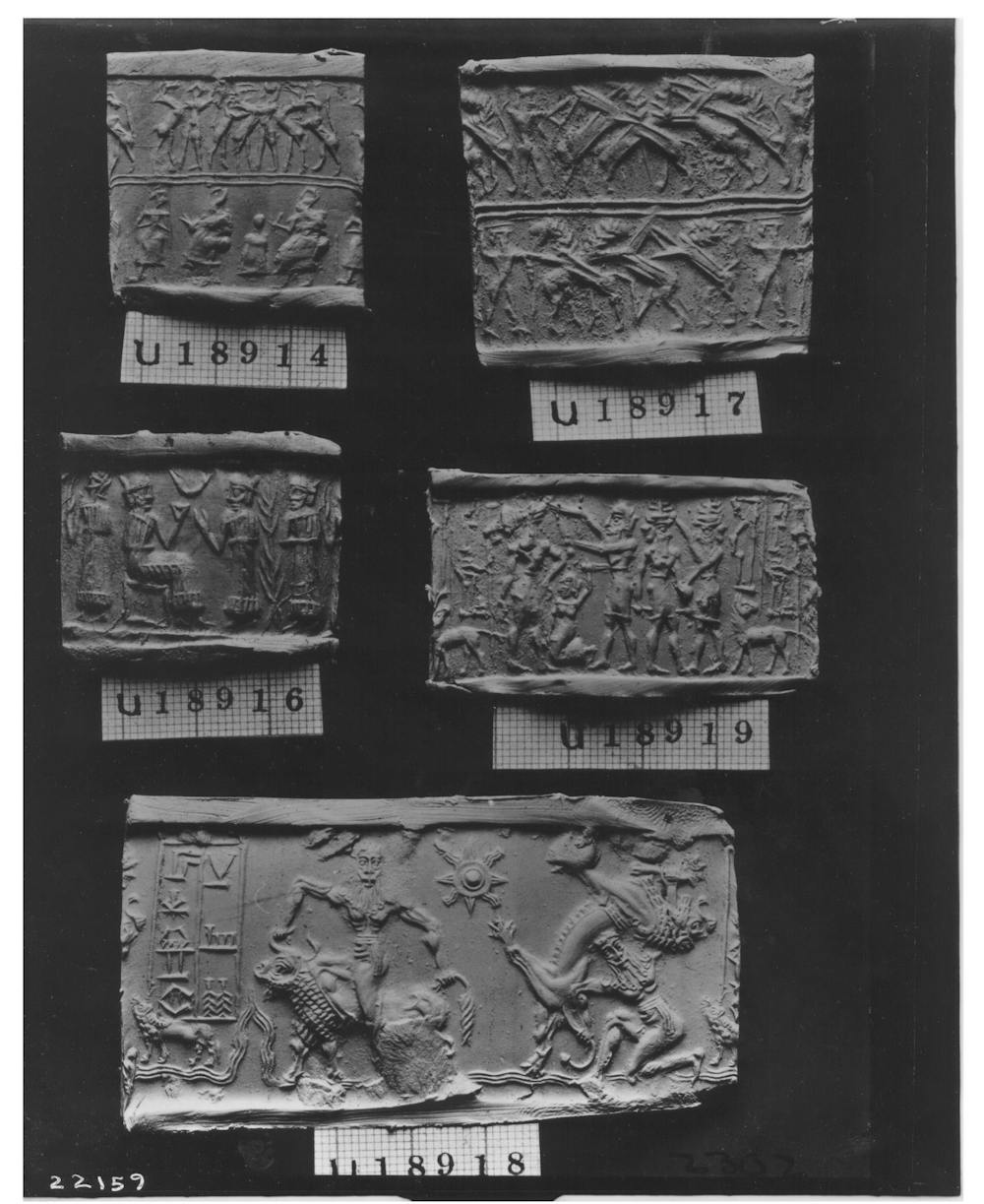
Among the earliest evidence of this human impulse is a large collection of seal-impressions in clay. Made with flat stamps or cylinder seals, they were found during the excavation of the Ziggarut of Ur, in modern-day Iraq, and date from 5th or 4th century BCE.
An estimated 30% of the population collect something, according to noted consumer behaviour expert Russell Belk. Among children, collecting is even more common. In one study, University of Nebraska researchers Menzel Baker and James Gentry interviewed 79 primary-school students and found 72 (more than 90%) had some kind of collection.
Across generations, items commonly collected include rocks, shells, eggs, stamps, coins, sports cards and figurines.
Collecting is connected to children’s natural curiosity. It’s a process of making sense of things through gathering and categorising. This can be seen in the enjoyment children get from counting and subdividing their collections into categories. Young children typically care more about the quantity of their collection than aesthetic considerations.
As they get older, more subjective values develop. Quantity becomes less important. This is what ultimately distinguishes the psychological motivation to collect from the compulsion to hoard, in which one is incapable of making an emotional distinction between what is valuable and what is junk.
Commercialising collecting
So tending to a collection can be both enjoyable and educational. Coins or stamps, for example, can spark an interest in geography, history and other cultures.
But there are aspects that also make the urge to collect exploitable by marketers.
One is the way things form part of what psychologists call the “extended self”. As Russell Belk explained in his 1988 paper on Possessions and the Extended Self: “We cannot hope to understand consumer behaviour without first gaining some understanding of the meanings that consumers attach to possessions. A key to understanding what possessions mean is recognising that, knowingly or unknowmgly, intentionally or unintentionally, we regard our possessions as parts of ourselves.”
The extended self’s manifestation in possessions is particularly striking in young children, who take great comfort from favourite dolls, bears and the like.
Another unpalatable aspect that businesses exploit in marketing to children is the “thrill of the hunt” through the use of so-called “blind bags”.
An astounding range of toys are based on the child not knowing what they are going to get until they open it.
This practice makes use of intermittent reinforcement. When the outcome is uncertain, the process is much more exciting and a desired result much more pleasurable. It’s the same neurological mechanism that makes gambling so addictive.
Blind bags are highly conducive to marketers pushing sales through the scarcity principle, which makes some toys “more valuable”. In the case of the Ooshies, there are 24 different toys produced in different quantities. Some are very rare – there are just 100 “furry Simbas”, for example.
This can inspire strong fears of missing out in child peer groups, putting pressure on parents to secure missing toys.
Shameless targeting
Finally, younger children are innocent to the cynical ways of the world. They do not necessarily understand the persuasive intent of such sales promotions. Children, even adolescents, don’t necessarily have the cognitive skills to recognise the manipulative aspects. They are the soft target. As one mother of three has put it: “Like most, I hate the fact they’re exploiting our children, but at the end of the day my kids love The Lion King…”
For these reasons we believe the ethics of specifically targeting children with a collectibles promotional campaign are questionable – and the Ooshies promotion is unashamedly directed at children.
If Woolworths wants to celebrate family-friendly values, this is not the way to go about it.
If you have a question you’d like an expert to answer, send it to curiouskids@theconversation.edu.au.
Why do I sometimes forget to say something mere moments before I say it? – Labib, aged 12, Irvine, CA.
That’s an interesting question, Labib.
Forgetting to do or to say things happens to all of us sometimes.
Have you ever walked into a room and realised you can’t remember what you were looking for? We tend to do this more when we are thinking of a few things at once or doing two things at the same time.
Have you ever crossed the road while chatting to a friend at the same time, or walked across a room while tapping away on a tablet or phone? That’s dual-tasking.
Everyone does it and we tend to get better at it as we get older and learn new skills.
But while our brain is a truly amazing computer – more powerful than any real computer – it can only use so much mental energy at one time.
Your brain is a power station
Think of your brain as a power station, providing electricity to a number of cities.
If some cities cry out for a lot of energy (by having all their light switches on), other cities would have less power to work with. There’s only so much electricity to go around.
Our brain is like a power station, providing energy to lots of different tasks we might be trying to do.Shutterstock
In the same way, your brain only has so much energy to share around at any one time. Younger kids have small brains and have less mental energy available than older kids. In the same way, a teenager’s brain is less mature than an adult brain.
Now, this brings us back to the question of forgetting things.
An older (and more experienced) brain means more mental energy to share between tasks.
For young kids, dual-tasking is possible. However, some studies suggest that it can be a little more difficult for younger kids compared with older kids.
Why? The power station in their brain is a little smaller and is not producing quite the same amount of energy as older kids.
Practise makes perfect
The more we practise our skills (like riding a bike, playing a sport, or baking a cake), the better we are at doing another task at the same time.
For a very skilled sportsperson (like a footballer), juggling a football while having a chat with a friend would be easy.
Their football skills are so automatic that they don’t need much mental energy to do it, leaving more for other things.
However, for someone who is just learning, juggling a ball may require a lot of mental energy just by itself. There is not much leftover for holding a conversation.
So, why do I sometimes forget to say something before I say it?
The answer is you are likely to have been “dual-tasking” just before speaking.
It might have been because you were thinking about the words you wanted to say and something else at the same time. Or maybe you were concentrating on listening while trying to think of what to say.
Sometimes, your brain just can’t do two complicated things at once. You might not have enough mental energy in that moment.
Forgetting things is normal for everyone and can happen when you are doing too many things at once.
When it happens to you, take a deep breathe and relax!
Perhaps those words will come back to you later when you clear your head and re-energise.
Source: The Conversation (Au and NZ) – By Ben White, Professor of Law, Australian Centre for Health Law Research, Queensland University of Technology
Western Australia may soon become the second Australian state to permit voluntary assisted dying, with the release on Tuesday of its Voluntary Assisted Dying Bill 2019.
So how does what’s being proposed compare to the law in Victoria?
The WA bill draws heavily on the Victorian model. But a few important differences suggest eligible people in WA seeking access to voluntary assisted dying will not have to navigate a process as complex as in Victoria.
The WA bill aligns very closely with the Victorian law, particularly in relation to the eligibility criteria and the request and assessment process.
In both states, a person must have a medical condition that is advanced and progressive, and is expected to cause death within six months (or 12 months for neurodegenerative conditions such as motor neurone disease).
Like Victoria, voluntary assisted dying in WA would be available only to adults whose suffering cannot be tolerably relieved, who can make their own decisions, and who have been residents of the state for at least a year.
The process to access voluntary assisted dying would also be similar to Victoria. A patient must make at least three requests for voluntary assisted dying (two verbal and one written), and two separate doctors must assess their eligibility.
The Voluntary Assisted Dying Board, like its Victorian counterpart, would oversee the system as a whole.
What’s different?
One key difference is nurse practitioners will be able to administer the voluntary assisted dying medication in WA. While doctors must undertake the eligibility assessments, the bill permits nurse practitioners with at least two years’ experience to administer the medication.
This reflects in part a recommendation of the ministerial expert panel, which determined a role for nurse practitioners was needed to ensure equitable access for all WA residents given the geographically diverse nature of the state.
Another key difference is a doctor or nurse practitioner can administer the medication in wider circumstances. Under the Victorian law, self-administration (the person taking the medication themselves) is the default option. Practitioner administration (a doctor administering the medication directly) is only permitted where a person is physically incapable of self-administration or digestion.
The WA bill retains self-administration as the default approach. But, if their doctor advises this would be inappropriate because of, for example, concerns about taking the medication themselves, a person can choose practitioner administration. This approach grants more discretion to the person and their doctor about how voluntary assisted dying is provided.
Voluntary assisted dying supporters rallied in Perth this week.Richard Wainwright/AAP
Conscientious objection is handled differently as well. The Victorian law exempts health practitioners from having to provide any information about voluntary assisted dying if they don’t wish to. It also allows doctors up to seven days to respond to a first request for voluntary assisted dying.
The WA bill strikes a different balance between conscience and ensuring a person’s access to lawful health care. A doctor can still decline to participate in the process, but they are required to inform a patient asking for voluntary assisted dying about their conscientious objection immediately.
The doctor is also required to give the patient standardised information. That information is yet to be approved by the government, but presumably will be about how to find a doctor who may be willing to assist.
The WA bill also omits two significant features of the Victorian law. One is the requirement for the doctor to obtain a voluntary assisted dying permit from the government. The stated rationale for not requiring a permit is to prevent the voluntary assisted dying process being burdened by bureaucratic oversight that may not materially add to the safety of the process.
The other is the prohibition on health practitioners raising voluntary assisted dying with patients in the course of the clinical relationship. In Victoria, the patient must bring the topic up themselves in the first instance.
This has been a troubling part of the Victorian law, arguably impeding open discussions needed for high quality end-of-life care. So it’s pleasing to see this limit has not been included the the WA proposal.
What happens next?
We consider the departures outlined above to be both sensible and modest. Some, like the changes around conscientious objection, reflect a desire to ensure equitable access to voluntary assisted dying, rather than to widen the cohort of people who will be eligible.
Appropriately, some changes can be attributed to the vast geographical differences between Victoria and WA.
The question that now remains is a political one. Is there sufficient support on the floor of the WA parliament for the voluntary assisted dying bill to become the law?
We have previously described the politics of assisted dying law reform as “notoriously fickle”, so this is difficult to predict.
The IPCC special report, Climate Change and Land, released last night, has found a third of the world’s greenhouse gas emissions come from the “land”: largely farming, food production, land clearing and deforestation.
Sustainable farming is a major focus of the report, as plants and soil can potentially hold huge amounts of carbon. But it’s incredibly difficult as a consumer to work out the overall footprint of individual products, because they don’t take these considerations into account.
Two vegan brands have published reports on the environmental footprint of their burgers. Impossible Foods claims its burger requires 87% less water and 96% less land, and produces 89% fewer greenhouse-gas emissions than a beef version. Additionally, it would contribute 92% less aquatic pollutants.
Similarly, Beyond Meat claims its burger requires 99% less water, 93% less land, 90% fewer greenhouse emissions and 46% less energy than a beef burger.
But these results have focused on areas where vegan products perform well, and do not account for soil carbon or potential deforestation. This might change the picture.
How do you measure an environmental footprint?
Vegan and vegetarian “meat alternatives” have become increasingly popular. Often in the form of burgers, the products are meant to emulate the taste, nutritional value, “mouthfeel” and even the cooking experience of a meat burger. The aim is to provide the consumer with products that are like meat in all respects except one: their environmental impact.
Impossible Foods and Beyond Meat have each published “life-cycle assessments” (LCA), which measure environmental aspects of products over the supply chain. As is clear from the figures quoted above, both claim their burgers use a fraction of the resources of traditional beef burgers.
These results sound impressive, but LCA results can be misleading when taken out of context. Looking at the underlying reports for Beyond Burger and Impossible Burger it becomes clear that statements such as “less water” and “less land” mean different things in practice.
There are significant differences between the two studies in the calculations of land and water use for the beef burger, and the final results are not expressed in the same units. This does not necessarily mean either of the studies is invalid, but it does mean the statements on the websites are simplified and don’t allow for clear interpretation.
Both studies justify their choice of indicators by saying they are the most common used in beef footprint studies. But are they the most relevant indicators for vegan burger production?
Vegan product assessments tend to focus on water and other things animals need, rather than metrics plants may score worse on, like deforestation.AAP Image/Dean Lewins
By making the comparison only for the environmental aspects most important for meat products, the results may look extra positive for the vegan alternatives, as other aspects might have shown a less favourable result. The results as presented may be true, but they are not the whole truth.
Importantly, the studies compare the results for the vegan burgers with a beef burger produced in the United States. To be precise, it is produced from cattle from average, conventional US production systems.
This is a valid choice, because this is the default burger meat in the US market. But results may be very different for other animals, for beef in other countries, or for unconventionally farmed beef.
A third study, released recently, evaluates beef produced at White Oak Pastures, a regenerative grazing farm in the US. Regenerative grazing uses adjusted animal grazing to enrich soils and improve biodiversity, water and nutrient cycling.
The White Oak farm sequesters so much carbon in its soil and vegetation it more than offsets the emissions of its cattle. In other words, it has a negative carbon footprint. This study compared White Oak beef favourably to conventional beef, chicken, pork and soy, as well as the Beyond Burger.
The silent assumption is, however, that no carbon sequestration occurs in conventional beef grazing or on feed and soy cropping land. This is not necessarily true. White Oak Pastures is using grazing to regenerate degraded cropland, so it is likely similar grazing on other farms would result in holding additional carbon within the first few decades.
In Australia, farmers who convert their cropland to pasture (which stores more carbon) are eligible for credits under the Emissions Reduction Fund. There is also evidence cropping systems may sometimes hold carbon as well, in the US as well as in Australia. For example, the carbon footprint of Australian barley and canola may be some 10% smaller when taking carbon sequestration in soils into account.
Clearly, soil carbon can play a major role in the net carbon footprint of many foods. How would the vegan burger versus beef burger comparison look if soil carbon and biodiversity aspects had been included?
That said, the White Oak Pastures study does not present the full story either, because soil carbon sequestration was only evaluated for their own product, and the study didn’t look at any other aspects such as water scarcity or biodiversity.
It is disappointing such prominent products don’t publish more comprehensive environmental results, given that this has long been prescribed by the international standards.
Now that the new special report stresses yet again how important soils are in a transition to sustainable agriculture and food, it’s time to do better.
Children who care for a family member with a disability, mental illness or dependence on alcohol or other drugs are less likely to complete, or do well in, secondary school compared with young people without caring responsibilities.
Our study, published in the journal Child Indicators Research, compared the levels of school engagement among children who identified as carers with children who didn’t shoulder such responsibilities.
We measured levels of school engagement by asking how often children felt positive emotions, such as being happy and safe, towards school.
In a national school-based survey of 5,220 Australian children aged 8-14, more than 450 respondents (9% of the sample) indicated they were looking after a family member with a disability or another serious health issue.
More than half of these young carers had responsibilities for a family member with a mental illness or dependence on alcohol or other drugs.
Overall, we found children who cared for a person with a mental illness or one using alcohol or other drugs had significantly lower engagement at school than children without caring responsibilities.
Studies show children who are more engaged at school are more likely to stay in school longer, with better outcomes for employment and earnings.
The challenges facing young carers will continue without improved support in schools and broader policy and community services, as well as personalised intervention programs.
Who are young carers?
Young carers are children and young people who provide substantial unpaid care to a family member with a disability, chronic or mental illness, dependence on alcohol or other drugs, or frailty due to old age.
The people they care for include parents, siblings, grandparents, extended family or friends. Most young people take care of a parent or sibling.
They help their family members with a range of activities beyond those typical of a person that age.
This includes helping with personal care such as showering and going to the toilet, administering medication, liaising with doctors and services, overseeing household administration and finances or providing emotional support.
Previous research has shown young carers’ responsibilities negatively affect their educational outcomes. For instance, young carers are more than one year behind their peers in literacy and numeracy.
We compared the levels of young carers’ school engagement with those of their peers without care responsibilities.
We measured emotional engagement in school by asking young people whether they felt happy and safe at school, and whether they enjoyed going to school and learning. We also measured their behavioural engagement by asking about how often they did homework.
Young carers of a person with a mental illness or drug or alcohol dependence were significantly less likely than young people who were not carers to report feeling happy and safe at school and enjoying school. They were also significantly less likely to do homework daily compared with students who weren’t carers.
Our results showed little difference in the school engagement of young people who took care of a person with a physical or intellectual disability compared with young people who were not carers. But previous research suggests this group of young carers also faces considerable challenges at school.
Many young people who care for a family member with mental illness or drug addiction keep it a secret.from shutterstock.com
Past research shows the responsibilities of a young person caring for someone with a mental illness or alcohol or drug dependence are often unpredictable. They manage crises, as well as monitoring the person’s well-being and medication use, which may heighten young carers’ levels of worry while at school.
Research also suggests many young carers of a person with a mental illness or drug or alcohol dependence keep their caring responsibilities a secret from their peers and school professionals. This is often to protect themselves and their families from bullying and for fear of intervention by child protection services.
The strain of concealment is likely to affect the carers’ own mental health and create a barrier to them seeking support. This may, in turn, affect the quality of their school experience.
We also found poor engagement in school of young carers of a person with a mental illness or using alcohol or other drugs was amplified by other indicators of marginalisation. These included whether the young carer themselves had a disability, was from a lower socioeconomic background or identified as Indigenous.
This suggests even stronger barriers to school engagement among young carers who experience multiple forms of marginalisation.
How can we help young carers?
Carer organisations and governments provide resources to schools, such as teacher toolkits, that raise awareness about young carers’ needs among staff and students and support their continued education.
The federal government has also announced new packages – available from later in 2019 – to support carers with education and employment. But only about 5,000 packages will be provided and only a small share of these will be earmarked for young carers.
Likewise, a Young Carer Bursary of A$3,000 was introduced in 2014 to support young carers to attend school – but only 1,000 of these are available in 2019.
While current policies may be making a positive difference for some carers, the results in this study show there are more young carers than support services available for them.
More needs to be done for the large number of young carers who are not as engaged in school as their peers. This includes high-quality, affordable and accessible services for their family members requiring care.
A personalised approach that includes the entire family and greater awareness and understanding among teachers and students of mental illness and drug or alcohol use could help make the school environment more welcoming for young carers.
But what will the liveability of our cities be like in 40 years’ time? For the CSIRO report, 2019 Australian National Outlook, the authors used scenario analysis to explore prospects for Australia in 2060. This demonstrates that business as usual will mean Australia’s economy and society sleepwalk into the future, a future made worse by failing to tackle major environmental threats.
The themes arising from the workshops offer valuable insights into how we can apply a systems approach to transforming Australian cities, and the regions and local areas that support our cities. Some key insights are:
density is important, but so is liveability
liveability has a different emphasis for each person, but includes green space, access to services, employment and transport
the consensus is that we must respond to climate change, through actions that both reduce the rate of change and adapt to it
people both in cities and outside them want explicit attention paid to how urban areas and their hinterlands interact and depend on one another
economic regeneration and notions of a circular economy are seen as essential elements of a “transformed” city.
Importantly, the nuances and variations between cities and regions were important to identity and individuality. Local, context-relevant innovation abounds, but is combined with much re-inventing of wheels. Our process has shown that linking local activity better with city-wide and even national coordination could greatly accelerate progress, while maintaining the sense of local identity. A majority of the world’s countries are actively taking a national perspective on their urban challenges.
The importance of local nuance is recognised in other parts of the world. In Europe, work is under way to build better connections between small and medium-sized cities.
Wicked problems call for a systems approach
Urban transformation requires a systems approach to overcome well-documented challenges like urban expansion, decreasing housing affordability, biodiversity loss in peri-urban areas, spending hours in cars, and engaged governance across metropolitan areas. These challenges are tricky because they are caused by behaviours and settings that arise from entwined economic, social and environmental systems. Problems like this are wicked in nature.
A systems approach examines how communities, economics, culture, politics, infrastructure, design, planning, knowledge and technology interact and interweave to produce the places we live in. We must also recognise existing planetary boundaries.
Tackling these problems with a systems approach means ensuring that as we solve one of them we don’t create new problems in other areas. Or, even better, we solve multiple challenges at once. Responses must integrate bottom-up and top-down interventions across multiple sectors, consider time frames from today into the long term, and recognise the value in collaboratively forging the knowledge and actions we need.
We have implemented a series of processes to inform this decadal plan.
First, we interviewed senior decision-makers in government, industry and peak bodies.
We held nine workshops across the country. These involved over 350 participants, representing senior decision-makers in government, industry and peak bodies, community groups and academic researchers. The insights from the workshops have all been published.
An independent reference group of urban experts from 21 research, policy and practice organisations around the country is overseeing these processes.
Our aim is to encourage all stakeholders to work together. The Future Earth platform can enable partnerships that harness these ideas and knowledge about the transformations needed to create sustainable, liveable cities.
We need better urban knowledge and the many cross-sectoral contributions to the Future Earth urban decadal plan have offered vital directions for future effort.
Source: The Conversation (Au and NZ) – By Shiro Armstrong, Director, East Asian Bureau of Economic Research, Crawford School of Public Policy, Australian National University
President Trump’s “America First” agenda is rapidly trashing the global economic system and the rules and norms the US has championed throughout in the post war era.
Mr Trump has been singling out particular countries, including China and Mexico, for punitive tariffs way in excess of those imposed on imports from other countries, a practice that may have some legality in the US but is almost certainly outlawed by the World Trade Organisation.
The latest, announced on Twitter and due start to September 1, is a tariff of 10% on almost all of the $US300 billion worth of Chinese imports not subject to an earlier punitive tariff of 25%.
Among them are clothes, shoes, blankets and bedding, curtains, lighting fixtures, furnishings, toys and electronic goods including mobile phones, laptops, tablets, and televisions, but only those from China.
Until now, the average US tariff rate has been 2%. The new tariffs push the average rate on Chinese imports to more than 20%, close to the infamous Smoot-Hawley tariff levels that stifled global economic growth in the 1930s.
It means that if tariffs are low, as they are in the United States, that low rate has to be applied to imports from all member countries, not to all but one. Exceptions are permitted only “under strict conditions”.
The General Agreement on Tariffs and Trade administered by the WTO offers a tiny out relating to national security, on which Trump appears to be relying. Article XXI states that the agreement
shall not prevent any contracting party from taking any action which it considers necessary for the protection of its essential security interests
Subsections clarify that a member country can invoke this section (i) relating to fissionable nuclear materials; (ii) relating to the traffic in arms, ammunitions, and implements of war; and (iii) in times of war or other emergency in international relations.
It’s not obvious that that there is any such emergency. Trump is threatening tariffs on automobiles and auto parts from Japan, Germany and elsewhere in the name of national security and it’s difficult to see any justification there, as well.
In April this year the WTO dispute settlement panel issued a landmark ruling in a dispute between Russia and the Ukraine asserting that the panel, rather than the country imposing tariffs, had the power to determine whether or not there was an emergency.
Worse still for the US (and for Russia) it found that
political or economic differences between members are not sufficient, of themselves, to constitute an emergency
So the US would be found to have broken the rules?
Breaking the rules and being found to have broken the rules are two different things.
The first step would be for another WTO member to take the United States to the dispute settlement panel and appellate body, incurring the wrath of the US and taking on the small risk of a judgement against it.
The second would be for the appellate body to hear the case.
Normally seven members strong, the WTO appellate body has shrunk to just three people (the minimum permissible) after the US blocked every new appointment after each four-year term expired.
Two more members’ terms expire in December, and the last expires in December 2020.
The body will be able to continue work on existing cases for a year or two because members whose terms have expired are allowed to continue work on cases they have started. But after December the appellate body will be unable to take on new cases.
The rules themselves are under threat
The era of a rules-based trade is ending. The US has gone from underwriting the rules for the past 70 years to becoming their biggest threat.
The European Union and Canada are trying to get around the destruction of the body that enforces the rules by setting up their own multilateral investment court which will use the WTO rules and retired appellate body judges. Other nations might join in.
The United States and China — the world’s two largest economies — are engaged in a trade war that appears to be spiraling out of control, doing immense damage to the economies of each, and to worldwide GDP.
A worst-case outcome is an all-out global trade war that would undoubtedly lead to global recession. That did not seem a plausible scenario two years ago, but it is now.
Australia and Japan should help China fight back
As the world’s largest trader and second-largest economy, China has most to lose from a breakdown in the multilateral trading system, and the most to gain by working with countries such as Japan and Australia to maintain discrimination-free trade.
The most promising opportunity in Asia is with the Regional Comprehensive Economic Partnership (RCEP) — an agreement presently being negotiated by the 10 members of the Association of Southeast Asian Nations, as well as Australia, China, India, Japan, New Zealand and South Korea.
RCEP provides an opportunity to build an Asian coalition in defence of free trade and economic cooperation. The group includes some of the largest and most dynamic economies in the world and is important enough to make a difference globally.
Australia’s Productivity Commission estimates that even if tariffs were raised by 15% globally (as happened in the great depression), RCEP countries could continue their economic expansion if they abolished tariffs as a group.
Australia has long championed multilateral or global rules-based trade. It is time to recognise those rules are being torn down and work with others to protect the what we had.
Donald Trump is at it again. He triggered trade tensions with China in January 2018 by imposing tariffs on Chinese solar panels and washing machines and quickly moved on to steel and aluminium – before brokering a tentative peace with President Xi Jinping.
Then last week he announced another 10% tariff on almost all of the remaining US$300 billion of imports from China.
In the scheme of things that’s not a lot of money, a mere 0.1% of US gross domestic product and 0.15% of Chinese domestic product.
Its real impact was to demonstrate that Trump is either unwilling or unable – due to self-control problems – to avert a full scale trade and currency war.
China responded by stopping intervening in currency markets to prop up its currency, the yuan.
The yuan quickly breached the seven yuan to the US dollar barrier for the first time in 11 years. It is a barrier that had been thought to be unassailable.
If anything, China stopped manipulating its currency…
The Trump administration, via Treasury Secretary Steve Mnuchin, designated China a currency manipulator.
This is both dangerous and wrong. It is dangerous because it risks (actually, as good as guarantees) further escalation.
It is wrong because what China had been doing in response to US pressure was keeping its currency artificially high. What it did on Monday was to stop that, just for a day or two; long enough to send a message.
There is a reasonable argument that a decade ago China was indeed keeping its currency artificially low in order to give its exports an advantage, but as former US Treasury Secretary Larry Summers has noted, China stopped that years ago.
Over the past eight years, it has reduced its trade surplus from more than 8% of GDP to essentially zero in response to US pressure. Its interventions in currency markets over the past several years have been to prop up its currency rather than to drive it down. And the move down in the yuan on Monday was not artificial – it was an entirely natural market response to newly imposed US tariffs.
…panicking financial markets
All of this spooked investors, with the US stock market dropping 3% and investors moving aggressively from stocks to the safety of government bonds.
In Australia the ASX 200 dropped 2.9% immediately on opening Monday, then further, and after a bounce on Thursday is now down 4% on its record high set last week. The Australian dollar fell below 68 US cents for the first time in ten years.
The flight to bonds pushed the Australian government’s 10-year bond rate down to a new record low. On Wednesday it dipped 1% for the first time ever.
The new ultra-low low rate means investors would prefer to lend money to the government for ten years at an-after inflation loss than take their chances in the world of commerce.
The big risk for Australia is a move toward worldwide protectionism.
Australian exports (and imports) are around 20% of GDP. Australian farmers depend on selling things to rest of the world, especially China.
Our iron ore and other mineral producers, and even the university sector, are similarly dependent.
(Minor) reasons to be cheerful…
The best case is that it all blows over pretty quickly.
Like he has so many times before, President Trump might reverse course. The Chinese government seems highly rational and, since it also stands to lose a lot from a trade and currency war, might “call off hostilities”.
If it doesn’t, there might be some consolation in picking up crumbs.
China has suspended imports of US agricultural products. Australia might be able to fill the breach. Some of the Chinese students who would have studied at American universities might come to Australia instead.
The Reserve Bank likes a lower Australian dollar because it makes our exports more competitive and could mean that it doesn’t need to cut interest rates as aggressively as it would have in order to lower the dollar.
One recent Saturday morning, I once again drove my children to the street in Brisbane’s west where I grew up as a boy.
They had been on this journey too many times to remember: the pleasant drive through The Gap in the Taylor Range, past the old jam factory and the golf course, left into Payne Road and then sharp left into the dogleg that is Bernarra Street. Here, in the early 1960s on the frontier of suburban Brisbane, my parents built a small rectangular house on a sloped block.
“We’re seeing the house again?” remarked my daughter, ten. I had lived in this street until I was 12. I had been her age in this strip of red-brick and weatherboard houses, part of an exciting new “estate” where the edge of the city met the bush and boulders of western Brisbane.
On this day, as we cruised into Bernarra Street, we approached the house and noticed, for the first time since my parents had sold it in 1974, that it was for sale again.
There, on the footpath where I had kicked thousands of winning goals for my rugby team, slipped in the wet and lacerated my cheek on the corner of a brick wall, was a real estate sandwich board that declared “Open House”.
Why did I keep returning here, to this stamp of land? I had lived in some of the great capital cities of the world, and yet these few hundred metres of street in Brisbane, a spine of outdated homes, a clutch of footpath jacarandas and poincianas, had become my touchstone.
I had some idea. Everything had started here, in the light of the house upstairs and the shadows of downstairs, with its concrete pillars and exposed timber and raw earth.
Here, the questions were posed. And I only understood, in that moment outside the old house, with my children, bored and rolling their eyes in the back seat of the car, that I had spent my life trying to answer those questions.
“I’m going in,” I told the kids. “I’ll be five minutes. Stay in the car.” “Dad.” “Five minutes, that’s all.”
It’s hard now to remember what I felt walking up and into the house for the first time in almost 45 years because so many emotions were at play. Here, my view of the world was formed. Here, family secrets I didn’t know existed at the time were as solid and deeply buried as the giant boulders of granite on which the house sat. This molten mass had pushed up 200 million years earlier, and then my family came along and constructed a faux-colonial homestead on top.
Like pushing back time…Author provided
Going up those stairs and through the front door was, for me, like pushing back time, through decades, thrashing and flailing through the accreted detritus of experience, of life, to the beginning of my existence.
But it was just a house on this hot and glary Saturday, with a real-estate agent in attendance, and some perambulating couples quietly assessing whether this might be where they would settle and raise their own children.
I wandered through the small lounge and dining room, then down the central hall. I peered into what had been my bedroom, an impossibly small space that overlooked the backyard, and had flashbacks so intense I felt dizzy and needed to retreat.
Here, I had met and endured the Dark Man. He was a character that lived in my closet, and sometimes at night he would step into the room. He was tall and wore a long, black coat and a black fedora and he had an infinite, featureless black face. He would stand and stare at me and then disappear into the closet again.
I remembered trying to scream whenever I saw the Dark Man, but no sound issued from my child’s mouth.
I went downstairs again and drifted into the garage area under the house. I had spent countless hours here in the shadows, building a replica of Brisbane in the dirt beneath the floorboards, complete with roads and suburbs and the Brisbane City Hall clocktower, fashioned from a narrow rectangular offcut of wood.
Down in these cool shadows, I could hear my parents and my twin sister shifting about the house above, or the clang of a piece of dropped cutlery, or the flush of the toilet. Sometimes, in the early evening, I could smell from the kitchen the bilious odour of lamb’s fry or boiled chicken or cabbage.
I was always comfortable in this dark space, with my own company. I could play undisturbed for hours, and to be called to dinner was to be to be pulled out of a very real world of my own making. Upstairs, in the light, it comforted me to know that directly below my feet was this block of shadow that belonged to me, and where anything might happen.
On the day of the Open House, I noticed some words written in chalk on one of the house’s wooden supporting beams – “Condon job” – perhaps scrawled there by timber merchants before they loaded it onto a truck and drove it out to the blank concrete slab of our future house in Bernarra Street.
Condon job.
The wooden beam.Author provided
That the white cursive had survived for over a half a century was surprising enough. But seeing it now, me twice as old as my father was when we lived in this house, it seemed it could be a message for me that had been sent into the future. Then again, this house had always been my romantic Brigadoon and forever opened that little drawer of hyperbole in me.
I left the cool of the garage and walked down towards my car.
For almost a decade I had worked on the story of Queensland police and political corruption from the 1940s through to the 1990s. I have trawled through Brisbane’s underworld, conducted hundreds of interviews, spent three years of my life interrogating corrupt former Queensland Police Commissioner Terry Lewis, studied thousands of documents, visited the sites of former brothels and illegal gambling joints, had beers with murderers and lattes with old gangsters.
What had begun as a reflex, a seemingly banal decision influenced by curiosity, had swallowed me whole. As the months passed, then years, the exit doors became less frequent, and one phone call led to another email led to another interview led to another discovered document, clue, theory, possibility and conspiracy to the point where it felt as if I had created a map that nobody had ever seen before. It was as though I’d fallen through its co-ordinates and highways and byways and rivers and rivulets and streets and unsealed roads to become trapped on the other side, unable to penetrate a mesh of my own making.
Perhaps this had been the “Condon job” I’d been destined to acquit, the prophecy written in white chalk in the dank undercroft of a featureless suburban house. But as I researched this story over the months, and then years, I was both surprised – and wearily not – that members of my own family had cameos in this narrative, and that I too had been in and around this drama since I was a boy.
Like the house in Bernarra Street, my family history was all light and windows upstairs with a nice view from the veranda, but shadowy and sometimes pitch black down below.
We become writers, I think, because we intuit from a very young age that the picture we see around us is not quite right. That windows stick and doors don’t close smoothly because everything is slightly off balance.
Early on we are riddled with questions that we can’t answer. Then we can’t shake the questions.
We look for that fissure in the wall.
With the story of Queensland crime and corruption, I had accidentally found my fissure.
Then pushed through to the other side.
Behind the cacti
As a child in the 1960s I was free range, exploring my immediate neighbourhood by foot or by bicycle. I knew every square centimetre of my immediate landscape, every tree and ant nest, every gutter and drain. Every car and motorcycle, adult and child.
Around 1968, in Barkala Street, immediately parallel to ours, I was fascinated by one particular vehicle that was often parked out the front of a small house. I found the house curious because its garden was bulging almost exclusively with cacti. The garden beds were like giant fists of swords and daggers, protecting the house’s inhabitants.
It was an ugly and violent and dangerous-looking place.
And then there was the car, an American-style limousine with long, smooth lines that looked as out of place as the garden.
Invariably, waiting beside the car was a man in a uniform and formal cap. I assumed he was the driver of the limousine. I saw the man and the car many times, walked past them and looped my Dragster bicycle in their orbit.
Only decades later, researching the true crime books, did I realise that the man who lived behind the wall of cactus was Queensland Police Commissioner (1958–69) Frank Bischof, father and perfector of the corrupt system known as “The Joke”, a network of graft that would ultimately infect almost every branch of the state’s government, judicial system, public service and community in general for decades. Bischof was vile and self-interested. He was a thug, a bully, a braggart and a world-class liar.
Police Commissioner Frank Bischof discusses the upcoming police ball with three debutantes from the Main Roads Department in 1963.Wikimedia Commons
In the end, the little boy from Bernarra Street, happy-go-lucky on his bicycle, would expose Bischof as a paedophile.
Several of his victims approached me following the publication of the first volume of the Lewis trilogy – Three Crooked Kings (UQP, 2013) – and detailed their abuse at Bischof’s hands; some of those stories were published in the second volume, Jacks and Jokers (UQP, 2014), and in my later books Little Fish Are Sweet (UQP, 2016) and The Night Dragon (UQP, 2019).
Eerie connections
There were other gossamer threads between branches of my family tree and this corruption saga.
In the late 1930s, one particular relation of mine, tall and fit with his hair oiled back, was sent to the Westbrook Farm Home for Boys outside Toowoomba, west of Brisbane. Westbrook was a byword for hell. Here, troubled boys were, in theory, to be shown the path to the straight and narrow. Instead, they were abused, sexually assaulted, in some instances tortured by officials.
Westbrook was a criminal primary school where boys began learning the skills needed for a life of crime. It was where they established friendships that, on the outside, were maintained and morphed into criminal associations. Often, the Westbrook boys would end up together in “high school” – Boggo Road Gaol in Brisbane.
My relative was released from Westbrook when he was 18, in the late 1930s, and immediately embarked on a life of petty crime. He was arrested and incarcerated on multiple occasions. There is little doubt he would have been known to then Detective Frank Bischof, the big wheel down at the Brisbane Criminal Investigation Branch, who used the wartime black market to hone his own skills in extortion and blackmail, used to great effect when he later became police commissioner.
In the late 1940s, my relative was arrested, with another man, on a charge of attempted rape. At around 9pm one evening, he and his friend attacked a young woman and tried to molest her after she’d gotten off a tram.
When he was found guilty and sentenced to seven years’ hard labour, members of my family present in court that day caused such a ruckus – stomping, screaming, crying and shouting obscenities – that the story made national news.
Delving into Brisbane’s underworld, I discovered some eerie connections between this relative and myself.
In the early 1950s, on release from prison, he lived with his parents in the suburb of Red Hill before marrying a young woman, the sister of a friend he made in Boggo Road.
She would die of a mysterious “bowel obstruction” less than a year after their marriage, but not before they lived in a house on Paddington’s Latrobe Terrace in the city’s inner west. That house, I discovered, was less than 400 metres from the house where I raised my own children.
In the 1960s, according to family members, this relative also did “business” in the old Paddington Hotel nearby. That pub, albeit its more respectable modern incarnation, was my local.
Early that same decade, just as my family was settling into Bernarra Street, a young Terence Murray Lewis was raising his own family in Ellena Street in the suburb formerly known as Rosalie but later subsumed by Paddington. (Lewis would be elevated to Commissioner of Police in 1976, and would be jailed for official corruption in the 1990s.)
The Lewis home was two houses up from the local Baptist church. My grandfather George Baker, a motorcycle fanatic, and my grandmother Freda lived one street away from the Lewises in Beck Street. My grandfather helped build that Baptist church. In the little village of Rosalie, with its butcher and barber and picture theatre, there is no doubt the Bakers crossed paths with the young policeman, Lewis, and his family. Both George and Terry were obsessed with motorcycles.
Also in the early 1960s, Bischof promoted Lewis to head of the new Juvenile Aid Bureau. Lewis’s job was to crack down on youth truancy and crime. Curiously, and to the puzzlement of other police, the bureau’s office was established immediately next to the office of the police commissioner.
They called the bureau staff “the bum smackers”, and the job necessitated almost constant contact between Lewis and Brisbane schools, their principals and their errant students.
On a Saturday morning, even Bischof lent a hand. He opened the doors of his office to concerned parents who could bring their naughty children in to be counselled by Uncle Frank. In Jacks and Jokers, I wondered if the “Saturday clinic” was a ruse to give Bischof unfettered access to children: after its publication, many people would tell me this was so.
Frank Bischof in 1962.
Lewis, a compulsive diarist, kept scrupulous notes on his work with the bureau. Dates, times, the names of schools and children, court cases and punishments filled his police diaries.
Decades later, preparing to write the story of Lewis’s life, he allowed me to read his bureau diaries. They were tremendously dull, and yielded little of importance to the story – until I found the names of some of my relatives. These were the children of the attempted rapist. They came to the attention of the bum smackers because they were discovered wandering the streets of Brisbane, wagging school, getting into trouble.
To see their names caught in the net of Lewis’s diary was jolting. Here was another generation of one side of my family emerging in the narrative threads of this story. Here was another point of intersection, where the upstairs floorboards met the shadows under the house.
My relative, he of Westbrook and the sexual assault and the “business” in the Paddo pub – was he the Dark Man in the cupboard at the end of my bed?
I remembered him as impossibly tall, with a handshake that could crush small bones. He was never impolite or aggressive towards me, on the few occasions I saw him. But I did get a glimpse into his family’s world through one of the children he had with his second wife who, when I was about ten, committed a foul and unspeakable act in front of me under the old Queenslander they rented, leaving me shocked and disturbed. Perhaps I was too innocent.
But I have never forgotten that moment, the brief opening and closing of a portal into another world – one most of us are sheltered from, one that speaks to a type of human behaviour guided by no rules or consequences.
I would come across this portal again and again through researching and writing the crime histories, and what I saw and heard I recognised instantly from that brief moment under the Queenslander.
A dream of death
In early 2010, courtesy of an introduction by a friend, I went to visit Terence Murray Lewis, then 82, in Brisbane’s suburban inner north. I had been told Lewis was ready to write his “story”, and that he needed some help. I instinctively knew that if I accepted this project, contingent on Lewis’s approval, it would take up several years of my life. I am now approaching my tenth year.
I have never kept diaries, but in the case of Lewis I decided to take down some notes after our meetings that would, in the end, result in three years of interviews. We met for the first time at 9 am on 1 February 2010. I wrote:
He is sharp and has a cunning air about him. He seems to quickly but expertly self-edit as he speaks. His dialogue is largely emotionless, except when it comes to the miscarriage of justice against him. A couple of times he slips out of character and there is an anger there, a temper beyond the façade, then he pulls it back in. It is the working-class scrapper, self-educated, that peers out from behind the former knight of the realm.
Terence Lewis.Wikimedia Commons
The book about Lewis’s life became two books, then a trilogy. It kept going with a fourth volume and a fifth. With the publication of each volume, hundreds of people came forward, volunteering information, personal recollections and documents, exponentially expanding the project, filling in gaps in the mosaic and spawning possibilities for other standalone books. A dozen more are waiting to be written. Whether they will be written by me, I can’t say.
At the time the second volume of the trilogy was published, Lewis severed ties with me and demanded the return of his many papers and documents. The project had not been to his liking, and I had not published the hagiography he had hoped for. I have not heard a single word from him since.
My Lewis diary ends on 11 May 2015, four years and three months after we first met. “I dream of the death of Lewis,” I wrote. (Lewis, 91, lives in Brisbane.)
He’s driving what seems like an old Morris on a highway. He’s wearing a tweed sports coat and a pork pie hat.
I’m both in the car with him when it collides with something. And I’m in a separate car and I see the collision. There is what looks like a sweep ing wave of liquid clay.
Lewis then turns into a black wolf, the wolf disappearing around the corner of a building. When I take a look, I see that he has turned into a black fox. I recover a sheaf of Lewis’ diaries with his familiar handwriting and words highlighted and underlined.
There is a place Lewis has been trying to get to. I get a glimpse of it. A house. Hedges.
A woman. Lewis is now a middle-aged man. He’s wearing a singlet. He’s looking for friends. A green light traces across the sky.
I get a sense he’s truly himself in this place. That it’s the real man at last. There are shadows.
Of course there are shadows. There have always been shadows. I fell into one as a child and I’ve been trying to work my way out of it ever since.
Hideous tales
It is a peculiar place, this shadow country. It can be strangely intoxicating. After a few years in it you begin to learn to find your way around. Over time you become harder to shock. You get to a point where you think you understand this place, only to discover that there’s a darker shadow behind it, and another behind that.
There have been some predictable and some unforeseen personal side effects as a result of working on a project of this magnitude, and one that has involved immersion in stories of murder, child sexual abuse, violence, betrayal and every other regrettable feature of human nature.
I have been told tales that I truly wish I hadn’t heard. Those hideous details can never be unheard.
But one of the worst side effects has been this.
For much of my life after we left that little house in Bernarra Street, I never again woke in the middle of the night to see the Dark Man, with his black fedora and coat and infinite face, at the end of the bed.
I left him behind in that room.
But now, after almost ten years of working in the shadow country, I have not just seen him again. I see him everywhere.
Indigenous Pacific knowledge should inform the science to save the world’s oceans.
That was the consensus among Pacific ocean scientists and other regional stakeholders who gathered in New Caledonia recently for the first global workshop aimed at arresting the decline of the world’s oceans.
The United Nations’ World Ocean Assessment Report recently confirmed the seas are in a bad state, with increased temperatures and acidity negatively impacting fish stocks and biodiversity.
– Partner –
The Pacific Community’s ocean affairs manager Jens Kruger says the UN has called for a concerted effort over the coming decade to reverse the decline.
“And we are kicking off a series of regional consultations. And we in the Pacific, we are the very first of eight or ten regional consultations that are going to happen.”
The Noumea gathering launched the development phase of the Pacific’s science action plan to feed into a global summit in March.
A broad swathe of Pacific academia, indigenous and traditional knowledge holders, youth, government and NGOs were there.
But there were concerns the Pacific’s voice would be lost or diluted.
The University of the South Pacific’s director at the Oceania Centre, Frances Koya-Vaka’uta, says Pacific people need to see themselves reflected in official language for it to resonate properly and this includes plans for the coming “Decade of the Ocean“.
“Because it’s so critical to our very survival and livelihoods, it has to be in a language our people can connect with. That doesn’t necessarily mean having to include Pacific words or language but seeing that you are represented and that your voices are reflected in the generic language and representation.”
Others spoke of the need for scientific solutions to be complemented by traditional indigenous knowledge which has a foundation in millennia of practical science.
The oceans officer from Samoa’s Foreign Office, Matilda Bartley, says she wanted to see improved reporting on UN Sustainable Development Goal 14 on ocean conservation.
“And also how ocean science was able to incorporate the humanities in the cross-cutting issues that have been raised.”
Various themes were established to link working groups, looking at the ocean as clean, healthy and resilient, predictable, safe, sustainable and productive, and transparent and accessible.
But it was indigenous knowledge which most strongly tied the science across the groups.
A member of the UN’s executive planning group for the “Decade of the Ocean”, the Australian scientific research body’s CSIRO Karen Evans says it’s important to bring coherence of message across these groups.
“The Pacific and Pacific Community can bring something quite unique that no other region can bring to the decade; that culture is inherently important and should be a consistent thread through everything that is done through the decade, particularly for the Pacific region.”
Dr Evans says there is a real energy and commitment from the Pacific to be involved in setting the Ocean Decade’s agenda.
It has endorsement at the highest level.
The head of the UN’s Intergovernmental Oceanographic Commission, Vladimir Ryabinin, says it’s important the Pacific’s indigenous knowledge helps establish conservation science.
“Traditional knowledge for us would be the way to gauge the usefulness of scientific solutions and then also transform the solutions into something that is useful, really useful.”
Dr Kruger from the Pacific Community says the Noumea workshop was a great start in establishing the priorities for the coming decade but it’s important to get more people engaged.
“We’ve got a lot of sectors that have a great interest in the decade so when we go down to the national level we might broaden the discussions there, for example, I think we’ve had a lot of voices here from fisheries. The ocean provides a lot of resources besides fish so those are also something that we need to look at at the national level.”
Jens Kruger says it’s important that Pacific island countries, with their special links to the ocean, help create the science we need for the oceans we want.
This article is published under the Pacific Media Centre’s content partnership with Radio New Zealand
The public service is a soft target, especially for Coalition governments, and Scott Morrison has already had it in his sights.
His early messaging has been that the bureaucracy needs to improve delivery and outcomes. He’s also telling it, with a degree of bluntness, to remember the old adage – that it is on tap and the government is on top, and not to go getting too many ideas of its own.
And there will be more to come. On Monday week, Morrison will set out in detail his thoughts on the service in an address to the Institute of Public Administration. Meanwhile a review of the bureaucracy, set up by Malcolm Turnbull and chaired by business figure David Thodey, is about to land. This inquiry was charged with producing “an ambitious transformation program” to ensure the service is “fit-for-purpose for the coming decades”.
The Australian Financial Review reported this week Morrison had told the Thodey review “to take a tougher line on the performance standards demanded from the nation’s 150,000 bureaucrats”. (Whether achieving better “performance standards” in Morrison’s mind includes fixing up the present arbitrary system for chasing welfare recipients over income reporting is another matter.)
Morrison is moving his one-time chief of staff Phil Gaetjens from Treasury head to become secretary of the Prime Minister’s department; Gaetjens is replaced in Treasury by Steven Kennedy, the widely respected secretary of the Infrastructure department. Apart from a new Infrastructure secretary, other changes are expected at the top.
Morrison’s attitudes towards the public service derive from his keen eye on voters’ needs and opinions, and the sort of leader he is.
Given his constant deriding of the “Canberra bubble”, it follows he would perceive mileage in some muscling up to what can be portrayed as a “bubble” cohort (though many of them are actually located elsewhere). Morrison understands the public want efficient delivery – and also knows putting bureaucrats in their place plays well with the shock jocks and their constituency.
As one bureaucrat puts it, Morrison is “an outcomes-oriented person. He likes doing stuff – and he likes people to work out how to do stuff in a timely way”. So, for example, he is suspicious of long processes of consultations by the public service.
Morrison’s belief that the public service shouldn’t get above itself – by having its own policy views, rather than just views on how to implement the government’s policy – hasn’t just been articulated since becoming PM.
He put the same line to Paul Tilley, former senior Treasury officer whose book Changing Fortunes: a History of the Australian Treasury, was published this week.
Tilley quotes Morrison, treasurer at the time, saying:
Treasury shouldn’t tell the Treasurer what to do. They should tell the Treasurer what they think of what the Treasurer plans to do, of alternative ways in which he can do what he wants to do … Treasury needs to remember its job is to advise the government on the government’s agenda – not to decide the agenda.
Of course at one level Morrison is correct – it is not the bureaucracy’s job to “decide” a government’s agenda. But his argument lacks subtlety, and plays down important aspects of the advisory role that a top grade public service should have.
Tilley charts the waxing and waning of Treasury’s influence over the decades. “Through the golden years of macroeconomic and budget management of the 1950s and first half of the 1960s, then again through the nation-changing economic reforms of the 1980s and 1990s, Treasury was influential. …
“From the late 1960s to the early 1980s, Treasury still had a strong economic framework but was seen as dogmatic and was pushed out into the cold. Then, in this last decade, the balance of policy influence has again shifted away from the department”.
While timeframes and individual departmental stories will vary, it is clear that in recent years the public service generally has lost policy clout.
Reasons are multiple. Some are long standing but have increased over the years; others are more recent.
They include the ever-expanding role of ministers’ own staffs; the move (under the Keating government) to have secretaries on time-limited contracts; “reform fatigue” within government, bureaucracy and the community; the proliferation of outside sources of advice; the 24-hour news cycle; hyper-partisanship; increased outsourcing of work formerly done by bureaucrats; and the elevation of the doctrine of public service “responsiveness” to ministers.
The preliminary Thodey report in March was disappointingly bland, affected by the proximity of the election.
It is not particularly deep on this issue of advice. It does observe:
There are strong concerns that the APS’s underlying capacity has been weakened over time. … The risk is that Australia will find itself with an APS that, in coming years, struggles to provide successive governments with integrated advice and support – informed by a deep understanding of the needs of the Australian people – to best tackle complex problems.
Does Morrison’s downplaying the advisory role of the public service matter? On several fronts it does.
In so many areas, the policy world is highly dynamic and rapidly changing. Unless the public servants are encouraged to explore the outer reaches of this world, a government will not have all the information and options that it should. It will lack the best policy telescope.
Morrison makes the government’s “agenda” sound like a once-and-for-all tablet. But a government in office for any length of time needs a constantly evolving and innovative agenda, to which bureaucratic thought and expertise can contribute.
Only an arrogant government – or one living on a temporary high after an unexpected election win – thinks it knows everything. It might come as a shock to some politicians, but departments on occasion educate their masters. Treasury, for instance, shaped John Howard’s thinking, which affected the way in which he sought to change the Fraser government’s policy thinking (albeit with limited success).
Morrison might reply that things have changed, because there are now many more fonts of ideas, in the private sector and think tanks. This is true and they should be tapped. But they won’t necessarily be superior to good public service thinking, and often they are harnessed to vested interests.
Relegating the advisory side of the public service’s role also diminishes the status of the service, making it harder to attract and keep the brightest talent.
Morrison would like a more porous bureaucracy – where people move in and out from the private sector. Again, there is value in encouraging such movement, but experience suggests it doesn’t work as well in practice as in theory.
Gaetjens’ new job as secretary of the Prime Minister’s department involves not just servicing Morrison and his government but also being the bureaucracy’s custodian and voice.
Part of his task should be to convince Morrison he needs strong and broad public service advice more than he currently thinks he does. Even if it’s sometimes unpalatable or outside the square.
We can’t achieve the goals of the Paris Climate Agreement without managing emissions from land use, according to a special report released today by the Intergovernmental Panel on Climate Change (IPCC).
Emissions from land use, largely agriculture, forestry and land clearing, make up some 22% of the world’s greenhouse gas emissions. Counting the entire food chain (including fertiliser, transport, processing, and sale) takes this contribution up to 29%.
The report, which synthesises information from some 7,000 scientific papers, found there is no way to keep global warming under 2℃ without significant reductions in land sector emissions.
Land puts out emissions – and absorbs them
The land plays a vital role in the carbon cycle, both by absorbing greenhouse gases and by releasing them into the atmosphere. This means our land resources are both part of the climate change problem and potentially part of the solution.
Improving how we manage the land could reduce climate change at the same time as it improves agricultural sustainability, supports biodiversity, and increases food security.
While the food system emits nearly a third of the world’s greenhouse gases – a situation also reflected in Australia – land-based ecosystems absorb the equivalent of about 22% of global greenhouse gas emissions. This happens through natural processes that store carbon in soil and plants, in both farmed lands and managed forests as well as in natural “carbon sinks” such as forests, seagrass and wetlands.
There are opportunities to reduce the emissions related to land use, especially food production, while at the same time protecting and expanding these greenhouse gas sinks.
But it is also immediately obvious that the land sector cannot achieve these goals by itself. It will require substantial reductions in fossil fuel emissions from our energy, transport, industrial, and infrastructure sectors.
Overburdened land
So, what is the current state of our land resources? Not that great.
The report shows there are unprecedented rates of global land and freshwater used to provide food and other products for the record global population levels and consumption rates.
For example, consumption of food calories per person worldwide has increased by about one-third since 1961, and the average person’s consumption of meat and vegetable oils has more than doubled.
The pressure to increase agricultural production has helped push about a quarter of the Earth’s ice-free land area into various states of degradation via loss of soil, nutrients and vegetation.
Simultaneously, biodiversity has declined globally, largely because of deforestation, cropland expansion and unsustainable land-use intensification. Australia has experienced much the same trends.
Climate change is already having a major impact on the land. Temperatures over land are rising at almost twice the rate of global average temperatures.
Linked to this, the frequency and intensity of extreme events such as heatwaves and flooding rainfall has increased. The global area of drylands in drought has increased by over 40% since 1961.
These and other changes have reduced agricultural productivity in many regions – including Australia. Further climate changes will likely spur soil degradation, loss of vegetation, biodiversity and permafrost, and increases in fire damage and coastal degradation.
Water will become more scarce, and our food supply will become less stable. Exactly how these risks will evolve will depend on population growth, consumption patterns and also how the global community responds.
Overall, proactive and informed management of our land (for food, water and biodiversity) will become increasingly important.
Stopping land degradation helps everyone
Tackling the interlinked problems of land degradation, climate change adaptation and mitigation, and food security can deliver win-wins for farmers, communities, governments, and ecosystems.
The report provides many examples of on-ground and policy options that could improve the management of agriculture and forests, to enhance production, reduce greenhouse gas emissions, and make these areas more robust to climate change. Leading Australian farmers are already heading down these paths, and we have a lot to teach the world about how to do this.
We may also need to reassess what we demand from the land. Farmed animals are a major contributor to these emissions, so plant-based diets are increasingly being adopted.
Similarly, the report found about 25-30% of food globally is lost or wasted. Reducing this can significantly lower emissions, and ease pressure on agricultural systems.
How do we make this happen?
Many people around the world are doing impressive work in addressing some of these problems. But the solutions they generate are not necessarily widely used or applied comprehensively.
To be successful, coordinated policy packages and land management approaches are pivotal. Inevitably, all solutions are highly location-specific and contextual, and it is vital to bring together local communities and industry, as well as governments at all levels.
Cricket Australia has made a significant contribution to gender diversity policy by producing a very detailed set of rules for elite-level cricket, and guidelines for community cricket.
They provide much needed clarity around what’s expected of transgender and gender diverse athletes, and what’s being asked of cricket clubs.
On a global scale, including transgender and gender diverse athletes into sport is a work in progress. So far, in top-level competitions, only the female category has been a cause for debate, stemming from the conclusion that male athletes have physical advantages over female athletes in terms of speed, strength and physique.
For men transitioning to women (M2F), sports need assurance that this competitive advantage has been suitably reduced by surgical transition or taking hormones.
In any case, transgender and gender diverse people face social acceptance challenges, to put it mildly. Cricket Australia, along with other Australian sports bodies who are starting to catch on, is providing unprecedented opportunities for people who, while “different”, can fit in and feel welcomed.
For instance, Erica James, a cricketer who returned to the sport as a M2F player after 27 years, shows how inclusive sport clubs can boost mental health and self-esteem, as the video below shows.
A policy drawn from international guidelines
In terms of elite-level competition, Cricket Australia has followed the International Cricket Council’s Gender Recognition Policy from 2017, which was developed to accommodate transgender and gender diverse athletes in international tournaments or series.
From a biological perspective, the International Cricket Council drew on the International Olympic Committee’s Transgender Guidelines. The IOC’s position is that a M2F athlete who aspires to enter the women’s category of sport must:
demonstrate that her total testosterone level in serum has been below 10 nmol/L [Nanomoles Per Litre] for at least 12 months prior to her first competition (with the requirement for any longer period to be based on a confidential case-by-case evaluation).
This it what Cricket Australia has put in place. But the International Olympic Committee’s guidelines may change before the 2020 Olympics.
Meanwhile, there is currently robust debate, most notably in the UK, about the efficacy of the International Olympic Committee’s policy position.
Critics are underwhelmed by the International Olympic Committee’s lack of detail about how – from a scientific perspective – the transition requirements meet this IOC mantra:
The overriding sporting objective is and remains the guarantee of fair competition.
The problem is lack of detail. It’s not clear what evidence the policy is based upon. It may be scientifically sound, but it’s not in the public domain.
Legal frameworks around inclusion
In terms of high-performance sport, Cricket Australia’s transgender and gender diverse policy is, to some extent, constrained by what relevant international bodies put in place.
Cricket Australia has committed to review the policy annually. This means it can respond to any substantive changes to international sport, and fine-tune for the Australian context.
Importantly, Cricket Australia’s transgender and gender diverse framework is broadly consistent with recently released guidelines produced by the Australian Human Rights Commission and Sport Australia.
This guide provides critical insights into the legal frameworks around inclusion and discrimination, including exemptions relating to strength, stamina and physique.
Assuming due diligence around these obligations, Australian sports are entitled to form specific rules that suit their own competitive environment.
The AFL, for instance, has independently adopted more stringent requirements than Cricket Australia. For M2F players in elite women’s competition, their diversity policy requires a maximum of 5 nmol/L of testosterone for a minimum of a two-year transition period.
The logistics at a community club level
In terms of uptake of players, Cricket Australia’s new policy is likely to resonate most at the recreational level of sport. As the policy states:
Any transgender or gender diverse person is eligible to play cricket at a community level. A player is required to nominate their gender identity at the time of registration, demonstrating a commitment that their gender identity is consistent across other aspects of everyday life.
This is encouraging to people whose birth sex is different to their gender identity: they can find a place in grassroots cricket. But Cricket Australia is relying on both participants and clubs to manage that process with decorum.
M2F cricketers, like other athletes, need to be positioned in teams at a level that’s appropriate to their ability.
Should the performance of a M2F player be disproportionate to their peers in physical prowess (not merely technique), umpires have the capacity to moderate, especially if there are safety issues (which can be found across different levels of cricket).
More commonly, though, both umpires and clubs will be asked to monitor performance “mismatches” – something they do as a matter of course in community cricket.
Finally, there are logistical challenges. A common initiative Cricket Australia recommends is for clubs to have a gender-neutral bathroom. Most already have facilities for the disabled, so that process is not new.
Another option some transgender and gender diverse athletes look forward to is a capacity to shower privately.
Reconfiguring existing facilities, with provisions for modesty, may be all that’s needed. And such a renovation could well be in demand by other groups, such as women from cultural backgrounds where bodily privacy is a default expectation.
Funding to allow for these changes would need to be sought, in the usual manner, via grants from local councils, Sport Australia, or indeed Cricket Australia.
Scott Morrison has flagged the government is working with the United States and Britain on details for an Australian role in helping safeguard shipping passages in the Middle East.
Morrison told a news conference in Townsville on Thursday he had spoken to British Prime Minister Boris Johnson on Wednesday night and “indicated to him that we were looking very carefully at our participation in this initiative”.
Morrison stressed it would be a multinational operation.
This is not a unilateral initiative by any one country, and it is about safe shipping lanes, it is about deescalating tensions and making sure that the current situation does not worsen.
He said the government had not “made any decisions on this yet. We want to be fully satisfied about the operational arrangements that are in place”. It was very early days and it would be a while before things came together.
In practice though, the government has obviously agreed in principle, subject to satisfactory arrangements being worked out. Its role is somewhat complicated, however, by the fact it does not have a ship in the region.
The US’s request for Australian assistance was discussed at the weekend AUSMIN talks.
Morrison said there were other countries which were in a similar position to Australia – “engaging before making any full decisions”.
He stressed the maritime issue “should be clearly divorced from the broader issues that relate to Iran and the JCPOA [Joint Comprehensive Plan of Action – the nuclear deal that the US pulled out of last year].
“That’s a separate issue. This is about safe shipping lanes and ensuring that we can restore at least some stability to what is a very unstable part of the world at the moment,” Morrison said.
“There has been a very disturbing series of events that we’ve seen in the Straits of Hormuz, and freedom of navigation and safe shipping lanes is very important to the global economy and that is a matter that is as important in that part of the world as it is in many other parts of the world.”
China hits back at Liberal chair of security committee
The Chinese authorities have accused Liberal MP Andrew Hastie of “Cold-War mentality and ideological bias”, after he drew on the example of countries’ “catastrophic failure” to deal with the threat of a rising Nazi Germany in an article warning about the dangers from a rising China.
The West once believed that economic liberalisation would naturally lead to democratisation in China. This was our Maginot Line. It would keep us safe, just as the French believed their series of steel and concrete forts would guard them against the German advance in 1940. But their thinking failed catastrophically. The French had failed to appreciate the evolution of mobile warfare. Like the French, Australia has failed to see how mobile our authoritarian neighbour has become.
Even worse, we ignore the role that ideology plays in China’s actions across the Indo-Pacific region. We keep using our own categories to understand its actions, such as its motivations for building ports and roads, rather than those used by the Chinese Communist Party.
The West has made this mistake before. Commentators once believed Stalin’s decisions were the rational actions of a realist great power.
Hastie referred to action Australia had taken such as foreign espionage legislation and more closely monitoring infrastructure.
But “right now our greatest vulnerability lies not in our infrastructure, but in our thinking. That intellectual failure makes us institutionally weak. If we don’t understand the challenge ahead for our civil society, in our parliaments, in our universities, in our private enterprises, in our charities — our little platoons — then choices will be made for us. Our sovereignty, our freedoms, will be diminished.”
A spokesperson for the Chinese embassy said in a statement:
We strongly deplore the Australian federal MP Andrew Hastie’s rhetoric on “China threat” which lays bare his Cold-War mentality and ideological bias. It goes against the world trend of peace, cooperation and development. It is detrimental to China-Australian relations.
History has proven and will continue to prove that China’s peaceful development is an opportunity, not a threat to the world.
We urge certain Australian politicians to take off their “colored lens” and view China’s development path in an objective and rational way. They should make efforts to promote mutual trust between China and Australia, instead of doing the opposite.
Morrison played down the Hastie comments, noting he was a backbencher not a minister.
We will continue to work to have a cooperative arrangement with China. Of course, there is much to be gained from that relationship, particularly from the trade side, but let’s not forget that relationship is far broader than just the economic one.
But equally, our relationship with the United States is a very special one indeed and there is a deep connection on values and that’s of no surprise to anyone.
So we believe we can continue to manage these relationships together, but I don’t think anyone is in any way unaware of the challenges that present there.
The new director of the Australian Security Intelligence Organisation (ASIO) will be Mike Burgess, who moves from heading the Australian Signals Directorate.
Burgess has a solid history in the intelligence area and Labor has welcomed the choice.
Announcing the appointment, Scott Morrison and Home Affairs Minister Peter Dutton said that in his ASD job, Burgess has been leading work “across the spectrum of operations required of a contemporary signals intelligence and security agency, including foreign intelligence, cyber security and offensive operations in support of the Australian government and Australian Defence Forces”.
Burgess earlier was on the government’s naval shipbuilding advisory board, and was deputy director for cyber and information security at the Defence Signals Directorate (DSD). He also worked as chief information security officer at Telstra.
Recently he was involved in the controversy over a News Corp report by Annika Smethurst of top level bureaucratic correspondence about a plan to expand ASD’s remit. Burgess and two departmental heads issued a rare public statement disputing the report. Later Smethurst’s home was raided by the Australian Federal Police.
As head of ASD, Burgess has brought the organisation “out from the shadows”, as he puts it, talking publicly about its role, which is as both a foreign intelligence and a cyber security agency.
He said in a speech earlier this year, “transparency informs, helping dispel myths and most importantly helps with our value proposition to prospective employees”, admitting he was using transparency to attract recruits.
He has also spoken publicly about the exclusion of Huawei from the 5G mobile communications network, saying “my advice was to exclude high-risk vendors from the entirety of evolving 5G networks”. He has attacked critics of the encryption laws passed late last year.
A public profile has become more important as part of the ASIO job in recent years.
Burgess replaces Duncan Lewis, who recently announced he was stepping down.
ASIO, an independent authority, comes under the Home Affairs portfolio, where it was moved by the Coalition government. Previously it was under the Attorney-General, who is still required to sign off on some operations.
This weekend, the inaugural Australian Conservative Political Action Conference in Sydney, an event that is causing considerable controversy even before it has begun.
Shadow Minister for Home Affairs Kristina Keneally has called on Prime Minister Scott Morrison to condemn the conference, which she argues imports “alt-right white extremism” from the US. Morrison needs to stand up for Australian gun laws, she says, because of fears that attendees from the US Republican Party will push a pro-gun position while they are here.
Is Keneally right?
The CPAC speakers
CPAC is an influential, annual gathering of conservatives in America with a history dating back nearly 50 years. The conference brings together conservative politicians, advisers, journalists, public commentators, lobbying groups and other public figures. President Donald Trump delivered a two-hour speech at this year’s event, the longest of his presidency.
Donald Trump’s epic speech at this year’s CPAC event in the US.
It has, at times, also included those on the alt-right or extreme-right. And it frequently sparks controversy.
A furore arose at CPAC 2017 when Wayne LaPierre, the head of the National Rifle Association, accused gun control advocates of hating freedom, just days after a mass shooting at a Florida high school.
Raheem Kassam has tweeted that a Scottish politician should have her legs taped shut ‘so she can’t reproduce.’Gage Skidmore/Wikimedia, CC BY-SA
Richard Spencer, the founder of an alt-right movement that envisions a whites-only state, also frequently attended CPAC before being kicked out in 2017. That year, Steve Bannon, then-head of Breitbart News, gave a rousing speech promoting economic nationalism and the dismantling of the “administrative state”.
The CPAC 2019 travelling roadshow coming to Australia also includes some familiar names in far-right politics. Nigel Farage, the former leader of the UK Independence Party, and his controversial adviser Raheem Kassam will be in attendance. Keneally says Kassam has
an extensive history of vilifying people on the grounds of their race, religion, sexuality and gender.
Other speakers include Fox News presenter Jeanine Pirro, who was recently rebuked by her own network over a comment she made about Somali-American Representative Ilhan Omar.
Think about it: Omar wears a hijab. Is her adherence to this Islamic doctrine indicative of her adherence to Sharia law, which in itself is antithetical to the United States Constitution?
Unlike CPAC in the US, the Australian event is not primarily a gathering of politicians from one political party. Only two current sitting members from the Liberal Party are billed to speak – MP Craig Kelly and Senator Amanda Stoker – alongside former Prime Minister Tony Abbott, conservative media commentators, and a few elected representatives from minor parties.
He also praised One Nation leader Pauline Hanson for speaking against Islamism, though he warned against taking on the “holy war against the religion of Islam”.
And these appearances have at times stirred up hate. During a sold-out event in Sydney, Molyneux and Southern made numerous derogatory comments about Indigenous Australians.
There is no doubt these visits helped spread a far-right, anti-immigration and anti-Islam message in Australia. Southern, for example, is credited with sparking Hanson’s failed attempt to pass an “It’s OK to be white” motion in the Senate.
Will Australian CPAC be different?
This is also not the first time that such a gathering of conservative political speakers has been held in Australia. CPAC co-host Andrew Cooper, a successful online retailer and entrepreneur, has organised and funded similar events for a number of years under the “LibertyWorks” banner.
LibertyWorks is against government regulation and state involvement in “our economic and personal lives”, anti-discrimination laws such as 18C of the Racial Discrimination Act, political correctness, and the curtailing of free speech. It is part of a conservative network of think tanks and lobby groups, such as the Australian Institute for Progress, which frequently share staff and board members.
Operating within a libertarian framework, LibertyWorks supports the legalisation of cannabis, but opposes plain packaging on cigarettes. One of the key themes addressed at its annual conference, LibertyFest, has been how to protect religious freedom with the advent of marriage equality.
You can be proud to be Asian or black, but being proud to be white means you’re a Nazi.
Bernard Gaynor, a far-right blogger who was dismissed from the army for anti-gay comments, won a free speech award at Brisbane LibertyFest 2018. Another surprise guest that year was neo-Nazi Blair Cottrell.
What is CPAC Australia aiming to do?
CPAC’s aim in America is to build lobbying power and develop grassroots campaigning for Republican candidates. Much of this effort is focused on fundraising and getting Republican voters to turn out for elections.
As Australia has different rules regarding campaign donations, no directly elected head of government, and compulsory voting, it stands to reason the Australian CPAC must have different goals.
The Australian CPAC organisers have adopted the slogan “Protect the Future – fight on”. This makes sense because a constant theme at LibertyFest is that conservatives and libertarians are losing the political and culture wars to the left.
In particular, many LibertyFest speakers see dangers in the increasing regulation of the economy and creeping power of the state. They have called for slashing funding to the ABC and other cultural institutions that rely on taxpayer funding. The CPAC event webpage provides a clear list of the other dangers: militant unions, the Greens, socialism, and GetUp.
Cooper, the founder of LibertyWorks and co-host of CPAC, has described his philosophy as “live and let live”, but he is firmly committed to radical change, such as winding back the welfare state, reducing funding for state schools, and reducing taxes.
During a LibertyFest panel in 2017, he spoke of the need to mobilise conservative voters on these issues in Australia:
Our belief is to motivate people to change their vote, or to get them to ‘get up’ or start something. They’ve got to have some sort of philosophical belief system that provides that motivation.
Andrew Cooper discusses political action during a panel at LibertyFest in 2017.
But does this necessarily include alt-right viewpoints? Perhaps not, but there are worrying signs.
Certainly, some of the speakers coming to CPAC have expressed anti-Islam and anti-immigration viewpoints in the past – and they’re likely to do so on the weekend. Other speakers will surely attack the usual targets of conservatives in Australia: the media, feminism, the regulation of hate speech and discrimination, and so on.
The likely outcome of CPAC Australia is a strengthened conservative lobbying force that uses social issues in a culture war to achieve libertarian economic goals. If so, Australian politics could become more divisive, as views once considered extreme are further incorporated into the lobbying toolkit.
Source: The Conversation (Au and NZ) – By Karin Hammarberg, Senior Research Fellow, Global and Women’s Health, School of Public Health & Preventive Medicine, Monash University
But don’t get too excited. The costs and risks are likely to outweigh the potential benefits, plus there’s so much we don’t know about the process.
What is this procedure?
Ovarian tissue cryopreservation is the technical term for a procedure where a small amount of ovarian tissue is collected, via keyhole surgery, cut into tiny slices and then frozen and stored.
Years later, the tissue slices can be thawed and transplanted back into the woman in the hope they will start to produce hormones and release eggs.
Ovarian tissue freezing is not new. It has been used for many years to help young women who face chemotherapy preserve fertility and allow them to have children if and when they recover from their cancer.
Depending on the type of cancer and its treatment, a woman’s fertility may recover, but it could also be temporarily or permanently damaged.
When the procedure was first performed in women, it was not known if the tissue would work when it was transplanted. But a 2017 study reported that while the procedure was still experimental, at least 80 babies had been born after transplantation of thawed ovarian tissue. However, the paper does not state the demographics or ages of the women who had given birth after the procedure.
So what’s being offered?
The UK company ProFaM (Protecting Fertility and Menopause) is now offering ovarian tissue freezing to any woman who wants to delay menopause and childbearing.
The company’s founders claim having “young” ovarian tissue transplanted at the time of natural menopause, which on average happens around age 51, can delay menopause up to 20 years.
Young women are being offered keyhole surgery to remove ovarian tissue which they can have transplanted at a later date.freestocks.org
This, they say, would delay the onset of pesky menopausal symptoms such as hot flushes and health problems such as heart disease and osteoporosis, which are more common after menopause.
They also proudly announce this means that menopause no longer has to be a barrier for women who want to build a career before they have children.
Delaying onset of menopausal symptoms
While menopausal symptoms can be disturbing, most women find they decrease with time and don’t stop them from leading productive and enjoyable lives.
For women who suffer severe menopausal symptoms, menopause replacement therapy (also known as hormone replacement therapy) can offer relief. Menopause replacement therapy has been used for decades and is cost-effective and safe.
There are also proven non-pharmacological methods to relieve menopausal symptoms, such as mindfulness and cognitive behavioural therapy.
If menopausal symptoms are a concern, sticking with methods that are known to be safe would seem a better option than forking out £7,000-11,000 (A$12,500-20,000) for an invasive procedure with unknown risks.
Delaying onset of health problems
Risks of disease, such as cancer and heart disease, increase as people age. That goes for both women and men. Having ovarian tissue transplantation won’t change that.
The promise that freezing ovarian tissue allows women to have babies later in life fails to mention that pregnancy complications increase significantly as women age and are likely to be even greater for women in their 50s and 60s.
The idea that women prefer to establish a career before they have children is also not supported by evidence. Rather, studies of women who freeze their eggs show that not having a partner is the most common reason they haven’t already had children.
Women most commonly freeze their eggs because they haven’t found the right partner.Alexis Brown
Too many unknowns
In addition to the claims of benefit of ovarian tissue freezing not stacking up, there are many other question marks about this procedure.
It is not known, for example, what proportion of tissue slices will survive the thawing and the transplantation processes. Whether the amount of hormone the slices produce is enough to eliminate menopausal symptoms and risk of disease is also unknown.
If indeed the slices do produce high enough hormone levels, women who still have a uterus will continue to have periods, something most women are glad to see the end of.
Presumably, each slice has a limited life span, so women may need to come back for “top-up” slices every few months which would no doubt add to the £7,000-11,000 (A$12,500-20,000) they have already paid to have the tissue removed and frozen.
So, the idea that a 25-year-old would go through a surgical procedure because she wants to avoid natural menopause a quarter of a century later seems ill advised at best. Rather than a procedure that will improve women’s lives, ovarian tissue freezing for non-medical reasons may leave them a lot poorer financially and exposed to unknown risks.
Analysis by Dr Bryce Edwards – Tonight’s historic first vote on abortion laws will inevitably disappoint many advocates of reform. This is because of the watered-down proposals put forward by the Government, and the politicking that has accompanied the legislation – especially New Zealand First’s insistence on seeking a referendum.
Of course, abortion law reform has been inevitable for some time, and the nature of the issue means it was always going to be complicated. Politicians have been avoiding the reform question for decades, while a public consensus has continued to build in favour of liberalisation. The public are generally more progressive on abortion than the politicians, who continue to risk only moderate change for fear of alienating more conservative voters.
That’s why, even over the last year, the Government’s promises of reform continued to be stalled as Labour attempted to negotiate a compromise package of reform that would keep their New Zealand First colleagues happy. The results of this process, as well as all the overall politicking around it, are nicely laid out today in Thomas Coughlan’s article, Abortion bill heads to Parliament: What’s changing and when.
Reform success looks likely
It is clear that the more moderate legislation planned by the Labour-led Government has been designed so as not to buy too much of a fight or mean it will struggle to get passed. Hence, early signs are that the first reading tonight will very easily get the numbers. Henry Cooke and Thomas Coughlan are projecting, at this stage, 73 votes for and 26 against – see: Abortion vote will sail through with or without NZ First, according to Stuff survey.
Aside from the mysterious New Zealand First orientation to the bill, the stances of other parties’ MPs are becoming clearer: “All 8 Green MPs have said they will support it, while 32 of Labour’s 46 MPs have said they will definitely back it. Four more say they’d be likely to support it. National is slightly more divided with 17 of its 55 MPs saying they will definitely back it, with just 7 saying they will definitely oppose it. Ten say they’re not yet sure how they’ll vote. Act leader David Seymour and independent MP Jami-Lee Ross have both said they back the Bill.”
Bridges’ own position seems to have become more liberal lately, as this article reports that he now supports “the changes to the law for abortions in the first 20 weeks”, with him saying “the position pre-20 weeks of gestation is one where law and practice should match, they haven’t, so I accept that’s the right decision” – which is a turnaround from his position last year in which he insisted that the current rules don’t need fixing.
The same article delves into the positions of some of the more socially conservative Labour MPs, and also finds increasing support for change. For example, “Aupito William Sio, Peeni Henare, and Kris Faafoi all said that they were ‘leaning’ to or ‘probably’ voting yes. None opposed the bill.” Similarly, “Several MPs who voted against the End of Life Choice Bill on euthanasia were supportive, such as Health Minister David Clark and backbencher Kiri Allan. Some members, like Maori caucus co-chair Meka Whaitiri, said they would vote for the bill at its first reading, but would not commit to voting the bill any further.”
But there will still be some Labour MPs who vote against it, and are not willing to speak publicly about their stance. For example, the article reports: “Nanaia Mahuta refused to say how she would vote, simply describing it as a conscience issue.”
The Government’s conservative reform
Despite some degree of positivity that politicians are finally catching up with the broader public mood in favour of increased liberalisation, the details of the Government’s reform are finding less favour with many advocates of reform.
After all, the Government bill really amounts to only partial-decriminalisation instead of full decriminalisation of abortion. This won’t satisfy those who believe that abortion should fundamentally come down to a “woman’s right to choose”. Instead of going along with that demand and principle, Justice Minister Andrew Little has very determinedly decided that it’s a woman’s right to choose up until 20 weeks of pregnancy, but women lose the right after that, by which it essentially remains a criminal issue rather than a health issue.
I wrote about the details of this issue in a previous column, earlier in the year – see: Abortion reform in question. This pointed to an array of health professionals and reform advocates wanting a more progressive result than the Government was looking to deliver.
And it has come to pass that the Government has gone with a watered-down and relatively conservative option for moderate reform. This has caused some to complain that Labour have let the reform movement down, as they have on other important issues. For example, the No Right Turn blogger says it’s “another example of Labour chickening out. They promised to listen to medical professionals, and they haven’t. While a technical delivery on their promise, its a substantive failure” – see: Labour chickens out on abortion.
Here’s the main point: “Health professionals were crystal clear in supporting complete decriminalisation. But instead of that, Labour has taken the most conservative option, then made it worse, imposing a test for women to access an abortion after 20 weeks. Such abortions are almost always performed for medical reasons, and so should be a health issue, but instead Labour is going to make women continue to endure the wagging finger of society if they need proper medical care.”
The blogger argues that Labour MPs need to push amendments to make the legislation more radical, but fears they will “refuse to in order to avoid upsetting their bigot rump and their conservative coalition partner.”
RNZ has published one anonymous opinion piece on the issue, which criticises the reform bill for retaining much of the status quo for pregnancies beyond the 20-week mark, saying: “The proposed bill is not much better. It sends the message that you may know what’s best for yourself up to 19 weeks, six days, 23 hours and 59 minutes. Once the clock ticks over at midnight, boom, a doctor suddenly becomes the expert on your life. How can a country that trusted women enough to allow us to vote, not trust us to know our own situations?” – see: Abortion is a medical necessity, reform is needed.
According to this writer, “The proposed bill has been called a “mixed bag”. To be blunt, it’s a bit of a cop-out. Sure, the government took a turn in the right direction by making it a health issue and proposed some steps to ensure better access to abortions. But it does not go far enough.” They urge the Government to go further, and to use this moment to create a legacy rather than just another compromise fix.
Similarly, leftwing commentator Gordon Campbell is disappointed that the reform falls so far short of what has been required for modernisation: “Abortion is to be medicalised, rather than criminalised. That’s progress, I guess. If that sounds grudging… it is. Undoubtedly, the proposed law will be better than the 1977 legislation it replaces. Yet surely, you’d hope there would be progress, 42 years down the track” – see: On reforming the abortion laws.
Campbell doesn’t believe that abortion control should simply be converted from being a criminal issue to a medical one: “there is no objective need for the level of medicalisation envisaged by the current Bill. The message being: the ultimate control of women’s reproductive choices is being handed over from the Police to doctors. That’s supposed to be counted as progress.”
And if the issue is a simple health one then why, Campbell asks, isn’t it being treated like this by the Government and Opposition: “If abortion really is just a medical procedure, then the Health Minister should be owning it, and promoting it as part of the government’s health programme. That’s what a grown-up country would do.” He argues against the vote being a conscience one.
Campbell also makes the case that the legislation is entirely backward in assuming that abortion has to be a “medicalised procedure enacted by a doctor”, when the trend – especially in other parts of the world – is towards the use of chemical abortifacients: “they offer a safer, less invasive means of abortion than surgical means. It is a process that can be supervised by a nurse.”
Here’s Campbell’s main problem: “In other European countries, the two pills involved are moving towards being available as an over-the-counter abortifacient. The reforms being proposed in New Zealand do not recognize this trend. For the foreseeable – and by that I mean potentially for decades to come – the women who import such drugs and/or those people who help them to access such drugs will continue to be prosecuted under the Crimes Act.”
It seems that in the months of negotiations between Andrew Little and New Zealand First’s Tracey Martin, the traditional stance of her party in favour of referendums on moral issues like abortion never arose. But then in NZ First’s caucus meeting this week, MPs pushed back, despite – or perhaps, because – Martin had said publicly the same day that no referendum was necessary.
Cooke gives his view: “Little has every right to be furious with this blindside from NZ First, even if he can’t quite say it. He’s already softened the bill to keep NZ First happy, shrinking the number of weeks that an abortion can be accessed without a statutory test. But he shouldn’t be surprised. Peters has used the Parliamentary process to have several bites of the same cherry before, and has also humiliated Little in the past over three strikes. At the end of the day these people are from different parties and will be fighting over the same voters in about a year’s time.”
Of course, New Zealand First wanting a referendum doesn’t necessarily impact on the legislation at all. The party has already signed off on the bill being introduced to Parliament tonight. It simply means that the party is likely to put up an amendment to the bill to include a referendum. This wouldn’t happen in practice until after the second vote on the bill, and it’s very unlikely to be successful. The big question is whether New Zealand First MPs will vote for the bill without a referendum being put in place.
This is all best dealt with in Claire Trevett’s column, NZ First abortion referendum ploy leaves sour taste (paywalled). She argues that no one should be surprised that Winston Peters would want a referendum: “It was not that long ago both NZ First’s leader Winston Peters and Martin herself had provided statements setting out the party’s position that abortion was for a referendum. Given that, if it was not raised in caucus perhaps Martin should have raised it herself to ensure it would not become a stumbling block later.”
Trevett suggests that the re-positioning by New Zealand First could simply be one of empty strategy: “NZ First could simply be posturing to allow Peters to say the party had tried to stick to its policy but was thwarted by others”.
Source: The Conversation (Au and NZ) – By Joanna Mendelssohn, Honorary Principal Fellow, University of Melbourne. Editor in Chief, Design and Art of Australia Online, University of Melbourne
Review: Shaun Gladwell: Pacific Undertow, Museum of Contemporary Art, Sydney
In her catalogue essay for Shaun Gladwell’s show Pacific Undertow, Dr Denise Thwaitess of the University of Canberra, writes, “for Gladwell, law-breaking has never been a particular deterrent.” That has to be an understatement.
Shaun Gladwell’s entire creative life has been spent twisting, bending and breaking standard rules of engagement with technology. He learns a technique in order to subvert it. He has spoken of how “a new tool can change the game in art”. And he loves new tools. The overriding principle that governs his creative explorations in many different forms of media is the pleasure principle.
The joy of Pacific Undertow is that it shows how consistent the artist has been in his approach to both media and pleasure in the course of his career. He is almost a mirror image to Mike Parr, an artist whose creative life has been one long recorded expression of bodily angst.
Gladwell also charts his fascination with the body and what it can do, but he is more interested in how much fun it is to do these things. One of his photographic interventions, Untitled (Parr Leap) is a playful homage to the older artist’s constant flirtations with danger
Gladwell’s breakout video, Storm sequence (2000), stars himself, in a single, slow motion shot, skateboarding at a rainy Bondi Beach, the space made more intimate by water that spatters on the camera. It remains one of his most memorable works, for both the mesmerising virtuosity of the skateboard performance and the quality of the technical production.
It seemed a surprisingly swift transition from his earlier works, which had been paintings – headless figures reworked from portraits by Reynolds and Gainsborough, stretched and distorted, but as mirror-smooth as the originals. These were first painted in his honours year at Sydney College of the Arts, an institution not known for its painterly tradition.
But what they represented was a physical exploration into art history and an artist’s investigation into the colonising culture that defined people’s worth solely by their clothes and their possession. He used the (then) recent technology of Photoshop to manipulate low resolution jpegs and thus turn it to his purpose.
Gladwell’s transition from painting to video happened when he was completing his Masters degree at the College of Fine Arts, UNSW and became a part of the Imperial Slacks collective, so called because the Surry Hills building where they lived, worked and exhibited was so named.
Imperial Slacks became a nursery for creative talent including Claire Healy & Sean Cordeiro and The Kingpins. Angelica Mesiti, one of the Kingpins, shares with Gladwell the distinction of having represented Australia at the Venice Biennale.
Art history is the understated backdrop to much of Gladwell’s work. It comes as no surprise to discover he admires Holbein’s The Ambassadors, with its distorted skull. Holbein incorporated the anamorphic skull as a piece of virtuoso visual trickery, but also as a memento mori, a reminder of our mortality.
Skulls also hold a fascination for Gladwell. The skull is central to Endoscopic Vanitas (2009) as well as appearing in many etchings, including Allegorical study/riding with death (2007). Gladwell, a lover of motorbikes as well as skateboards, reminds viewers that motorbike riders know that skulls are fragile.
Approach to Mundi Mundi, filmed on the landscape made famous by Mad Max, also cites Leonardo da Vinci’s celebration of human proportion, Vitruvian Man. Sometimes Gladwell’s approach to past art verges on the flippant, as in Skateboarders vs Minimalism (2016) where virtuoso skateboarders leap across replicas of iconic Minimalist works.
Even more surprising is his tribute to Duchamp, Reversed Readymade (Bicycle Wheel). Visitors to the exhibition can use augmented reality on an iPad to see the champion BMX rider Simon O’Brien walk to the exhibit and ride it around the gallery. As well as a virtual installation in the exhibition, Gladwell has moved beyond the walls of the MCA with a version of Minecraft.
Although Self-portrait (Linework) does give one visceral reminder of the physical toll of making art in this manner, Pacific Undertow is on the whole a joyous celebration of what art can do, what life can be. There are visual jokes aplenty, where photographs are inverted to create unusual relationships with historic figures, and the video Pataphysical Man (2005), a generous absurdist tribute to Imants Tillers.
But then, in the midst of this joie de vivre there are works that make the viewer pause and think about the fragility of it all. Portrait of Michael Dransfield shows a nighttime reflected image in a bus shelter where an advertising agency has placed a fragment of Dransfield’s poetry. The shelter is placed outside Sydney Grammar, Dransfield’s old school. A memento mori does not have to be a skull.
Shaun Gladwell: Pacific Undertow is at the MCA in Sydney until 7 October 2019.
The news that 8chan, the far-right online community allegedly home to mass shooting manifestos, has been effectively removed from the internet is cause for celebration, but should also make us pause and consider the implications.
8chan has been linked to three mass shootings so far this year. In March, an account believed to belong to the gunman behind the Christchurch mass shooting posted an 87-page manifesto to the site. And in April, the suspected gunman behind the deadly shooting at a synagogue in California also posted to the site.
Internet security and infrastructure company Cloudflare finally stopped servicing 8chan after it was alleged the El Paso shooting suspect posted a white nationalist rant on the site before killing more than 20 people.
The forum received a brief reprieve when another service, BitMitigate, stepped in before support was once again dropped.
Cloudshare and BitMitigate, the latter albeit briefly, both provided 8chan with protection from Distributed Denial of Service (DDoS) attacks by activists aiming to shut the site down. BitMitigate, which has also serviced neo-nazi site Daily Stormer since Cloudshare dropped it in 2017, relied on infrastructure service Voxility. It was Voxility that ultimately shutdown 8chan (and Daily Stormer at the same time), removing its services from BitMitigate when 8chan’s move was made known.
A win against hate
The lack of mainstream options for these sites due to public pressure is a win in the war against online hate speech, and shows a growing understanding of the internet infrastructure that enables this behaviour. Since the advent of social media, studies have found that hate speech tends to proliferate directly after terrorist attacks. The removal of 8chan will certainly help to “clean the stream”, not only removing the hate speech already posted there, but also perhaps helping reduce further contributions.
However, in my research examining factors that contribute to behaviour in online communities, I have found these communities are based on a complex relationship between social and technological factors. Removing 8chan does not mean this speech or the individuals spreading it will stop congregating online, and it may in fact create further challenges in combating online hate speech.
Going underground
8chan has now reportedly moved to the “dark web”, a network of unindexed sites that require a special browser to access, pushing its content and contributors further underground. This means fewer people could stumble on the site inadvertently and become radicalised by the content – a definite positive. But it also means the content will be far tougher to monitor and police.
The dark web made headlines in 2015 when it hosted the hacked personal data of 37 million users of Ashley Madison, an online dating service for people looking to have extramarital affairs. The Silk Road, a dark web black market for illegal drugs, also made headlines when the FBI finally shut it down after years of operation and takings of more than US$1.2 billion in bitcoin.
The dark web is also home to a vast range of illicit activities including child pornography, credit card fraud, money laundering, identity theft, and illegal weapons sales. It is a magnet for nefarious activities because the technology allows website owners and visitors to obscure their location and internet address, making it harder for law enforcement to find them.
The dark web is increasingly used by terrorists for activities ranging from psychological warfare and propaganda to fundraising, recruitment, data mining, and coordination of actions.
According to the Quilliam Foundation, a London-based counter-extremism think tank, attempts to block extremist material online result in terrorist material reappearing on the dark web almost as soon as it’s banished. The so-called Islamic State movement in particular has used the dark web for covert communication between jihadists.
Freedom of speech concerns
Another potential concern with the deplatforming of 8chan is that it could set a precedent for other sites being censored. One particular concern is that it could be exploited by repressive governments and other powerful actors to remove content that does not serve their interests, but is otherwise benign.
For example, research has shown Chinese political activists are increasingly moving to digital platforms to expose wrongdoing by government officials and other powerful individuals. This in turn has prompted the Chinese government to develop the most sophisticated online information-censoring mechanism in the network era.
Overall, we should celebrate the demise of 8chan as a win for the fight against online hate speech. But its removal does not mean the fight is over.
We posed the question with reference to Catholics, Protestants, Evangelical Christians, Muslims, Hindus, Buddhists, atheists or agnostics, and Jews. We emphasised “living in New Zealand” as we were not interested in identifying New Zealanders’ trust in, for example, worldwide Catholicism or Islam.
We are not aware of any previous consideration of trust in different religious groups within New Zealand.
We used a five-point scale for responses – complete trust, lots of trust, some trust, little trust and no trust at all. We converted ordinal data (e.g. first, second, etc) into cardinal data (one, two, etc) by assuming equal intervals between categories to give a mean trust score.
We found that the most trusted religious group in New Zealand is a small non-Christian group: Buddhists. In the most recent 2013 Census 58,000 Buddhists are recorded, out of about 3.9 million people who replied to the religious question. More people feel positively about Buddhists than not – 35% of New Zealanders have complete or lots of trust in Buddhists, while 15% have little or no trust.
The least trusted religious group in New Zealand is a minority Christian group: Evangelicals (15,000 people in the 2013 Census). Fewer people trust Evangelicals than do not – 21% have complete or lots of trust, while 38% have little or no trust.
In terms of the mean trust score, the difference in trust between the most and least trusted religious groups is of a size that statisticians describe as “medium”.
Between these top and bottom groups lie all other religious groups, meaningfully and statistically indistinguishable from one another.
Protestants make up the largest religious category in New Zealand, including about 900,000 Anglicans, Presbyterians, Methodists and other Protestants in the most recent census. Our survey shows that 29% of New Zealanders have complete or lots of trust in Protestants, while 24% have little or no trust.
This compares to 27% and 23% respectively for Muslims (46,0000 people), 29% and 20% for Hindus (89,000 pople), and 30% and 17% for Jews (7000 people).
There is no evidence in the trust data of local anti-Semitism or Islamophobia in the form of a trust deficit displayed towards Jews or Muslims compared to mainstream Christian denominations. But there is some evidence of moderate disproportional social prejudice towards non-mainstream Evangelical Christians, with nearly four in ten of the population distrusting them.
In- and out-group trust
For smaller religious groups in New Zealand, such as Hindus, Jews, Evangelicals and Muslims, our measure is a very good proxy for “out-group trust” (the level of trust in a particular group among people outside of that group). It is a good proxy because there are relatively few in the minority group and therefore likely also very few in our sample. We did not ask people to identify their religion, as in New Zealand it is considered to be a sensitive question, often in the private domain, and we did not want to suppress response rates.
For the larger groups, such as Protestants and Catholics (the latter 500,000 people in the 2013 Census), our measure will not detect out-group trust as accurately, as the survey is likely to contain a substantial number of people who fall into these larger religious groups. Hence a significant amount of measured trust in larger religious groups is actually “in-group trust” (trust by people who are members of that religious group in their own religious group).
It seems plausible that in-group religious trust exceeds out-group trust. That is to say that people have higher trust in those who are more similar to them religiously than those who aren’t. If this positive in-group bias is important, a true measure of out-group religious trust will reduce trust in larger Christian groups relative to trust in the smaller minority groups.
What we can’t tell from the survey
The survey is intended to provide a representative picture of the New Zealand population aged 18 and over. Quotas were applied at the sampling and selection stage for this online survey. Results were also weighted to be representative of New Zealand by age, gender, ethnicity and region. While the survey is by no means a classical random survey, we believe that the results provide a good picture of relative trust of the population.
The findings suggest that New Zealanders’ patterns of trust in minority non-Christian religious groups are generally similar to mainstream Christian denominations. But this conclusion does not demonstrate that hate towards minority religious groups does not exist in New Zealand.
Media reporting both before and after the Christchurch shootings clearly indicates that it does.
It is possible those who report distrust in non-Christian religious minorities harbour more extreme views than those reporting distrust towards larger mainstream religious groups or towards Evangelicals. These more extreme views may, in turn, result in more instances of prejudiced behaviours towards these religious minorities. Or it may be than some religious minorities are more readily socially identifiable as such, via ethnic origin or clothing, than others. While there is a roughly equal amount of “out-group” religious prejudice in society, the visible are more exposed to it than other, less identifiable, minorities.
It is also feasible that the outpouring of public support for the Muslim community following the Christchurch shootings and a national discussion about religious hate have prompted some respondents who might have harboured less trust for Muslims to either change their views or become more reluctant to report those feelings.
We cannot test this group of possibilities, in part because we did not ask the same question in our regular surveys prior to the shootings. At that point, religious trust was not considered salient.
Source: The Conversation (Au and NZ) – By Mark Pearson, Professor of Journalism and Social Media, Griffith Centre for Social and Cultural Research, Griffith University, Griffith University
Each year, academics and students make countless applications for research ethics approval, based on the promise of confidentiality to their interview subjects. Interviewees sometimes offer academic researchers information that might be self-incriminating or might jeopardise the rights and liberties of others they’re discussing.
But Australia’s metadata retention laws can lead to the identification and even incrimination of the very people whose identities academic researchers have promised to keep secret for their work.
Imagine, for instance, a criminologist conducting a project examining white collar crime in banking and financial services. The academic’s confidential interviews with former company directors and executives might elicit specific and revealing answers. It could lead to potential redundancy or even jail time, depending on their vulnerability and culpability.
Under the metadata laws, government agencies make hundreds of thousands of requests to Australian telcos each year for their customers’ phone and internet communications metadata.
For the criminologist, this means relevant agencies can ask telcos to access his or her metadata in the form of call records and computer IP addresses. This means they can identify whether a person of interest has been in communication with the researcher and is the possible source of incriminating material. Other investigations and legal steps might then follow.
Interviews about a range of sensitive research topics may be at risk. These include immigration, crime and corruption, national security, policing, politics, international relations and policy.
In 2017, the AFP acquired the call records of a journalist without a warrant. If journalists aren’t well-protected, academics can’t fully guarantee secrecy to their interview subjects.Lukas Coch/AAP
The impact of metadata laws on journalists and their sources have been well documented. But we can only wonder how many people will agree to participate in academic research if they are made fully aware of the real potential of being identified by investigators.
Who has access?
Metadata – or telecommunications data – is information held by telcos about communication from a digital device. This includes the phone numbers of people who call each other and how long they talk, as well as details on text messages (the address from which a message is sent and the time it’s sent).
Since 2015, telecommunications and internet providers have been required to store metadata from phone calls and other digital communications for at least two years under the Telecommunications (Interception and Access) Act 1979.
Intelligence, policing and corruption bodies, the Department of Home Affairs, ASIC and the ACCC are agencies that are entitled to request this data. And some suggest many more government agencies at all three levels of government might be requesting metadata from telcos.
The weak protections offered to journalists won’t help researchers
A 2006 Australian Law Reform Commission inquiry into evidence laws raised the prospect of medical and social researchers being entitled to a confidentiality privilege for their research communications, but it was not implemented.
The only confidential relationship acknowledged by the metadata retention laws is the journalist-source relationship. This is where “journalist information warrants” must meet a certain threshold, reviewed in secret by an anonymous public interest advocate.
Should this protection be extended to researchers?
My colleagues and I made a recent submission to the Parliamentary Joint Committee on Intelligence and Security examining the metadata retention laws. It focused on the fact journalism educators and journalism students might not qualify for even the minimal protections offered to professional journalists.
When agencies seek a warrant for information, the law requires:
the public interest in issuing the warrant outweighs the public interest in protecting the confidentiality of the identity of the source.
But the opaque scheme has been described by the journalism union as mere “cosmetic dressing” because the whole review process takes place in secret, by anonymous individuals, without the knowledge or legal representation of journalists or their sources. Even the journalists who have been subjected to the process remain unaware their data has been targeted.
Extending this protection to academic researchers in its current form would offer minimal comfort to confidential interviewees.
Even encryption is no longer watertight as protective a strategy against agencies accessing metadata. Amendments last year introduced three levels of request agencies might make to telcos to de-encrypt data, starting with a simple voluntary “technical assistance request”.
There is no indication of the number of times agencies might have accessed researchers’ metadata because such detailed records are not published by the attorney-general or the ombudsman.
But the Commonwealth attorney-general finally revealed last month that during 2017-2018, 58 historical data authorisations were made under warrants issued to the AFP to get information from journalists.
For academic researchers, no such warrants are required. So, metadata requests about confidential interviewees would sit among the 300,000-plus requests made annually by agencies.
The issue is at least on the radar of some university research ethics committees. They take special precautions when approving confidential interviews in some circumstances, such as requiring researchers advise interviewees that absolute confidentiality might not be guaranteed.
But there should be greater awareness of potential dangers that await their “confidential” interviewees who might have agreed to be interviewed without even contemplating the consequences.
Viruses are mostly known for their aggressive and infectious nature.
It’s true, most viruses have a pathogenic relationship with their hosts – meaning they cause diseases ranging from a mild cold to serious conditions like severe acute respiratory syndrome (SARS). They work by invading the host cell, taking over its cellular machinery and releasing new viral particles that go on to infect more cells and cause illness.
But they’re not all bad. Some viruses can actually kill bacteria, while others can fight against more dangerous viruses. So like protective bacteria (probiotics), we have several protective viruses in our body.
Bacteriophages (or “phages”) are viruses that infect and destroy specific bacteria. They’re found in the mucus membrane lining in the digestive, respiratory and reproductive tracts.
Mucus is a thick, jelly-like material that provides a physical barrier against invading bacteria and protects the underlying cells from being infected. Recent research suggests the phages present in the mucus are part of our natural immune system, protecting the human body from invading bacteria.
Phages have actually been used to treat dysentery, sepsis caused by Staphylococcus aureus, salmonella infections and skin infections for nearly a century. Early sources of phages for therapy included local water bodies, dirt, air, sewage and even body fluids from infected patients. The viruses were isolated from these sources, purified, and then used for treatment.
Phages have attracted renewed interest as we continue to see the rise of drug resistant infections. Recently, a teenager in the United Kingdom was reportedly close to death when phages were successfully used to treat a serious infection that had been resistant to antibiotics.
Nowadays, phages are genetically engineered. Individual strains of phages are tested against target bacteria, and the most effective strains are purified into a potent concentration. These are stored as either bacteriophage stocks (cocktails), which contain one or more strains of phages and can target a broad range of bacteria, or as Adapted bacteriophages, which target specific bacteria.
Before treatment, a swab is collected from the infected area of the patient, cultured in the lab to identify the bacterial strain, and tested against the therapeutic phage stocks. Treatment can be safely administered orally, applied directly onto wounds or bacterial lesions, or even spread onto infected surfaces. Clinical trials for intravenous administration of phages are ongoing.
Beneficial viral infections
Viral infections at a young age are important to ensure the proper development of our immune systems. In addition, the immune system is continuously stimulated by systemic viruses at low levels sufficient to develop resistance to other infections.
Some viruses we come across protect humans against infection by other pathogenic viruses.
For example, latent (non-symptomatic) herpes viruses can help human natural killer cells (a specific type of white blood cell) identify cancer cells and cells infected by other pathogenic viruses. They arm the natural killer cells with antigens (a foreign substance that can cause an immune response in the body) that will enable them to identify tumour cells.
This is both a survival tactic by the viruses to last longer within their host, and to get rid of competitive viruses to prevent them from damaging the host. In the future, modified versions of viruses like these could potentially be used to target cancer cells.
Some viruses are bad news, but others might safeguard our health.From shutterstock.com
Pegivirus C or GBV-C is a virus that does not cause clinical symptoms. Multiple studies have shown HIV patients infected with GBV-C live longer in comparison to patients without it. The virus slows disease progression by blocking the host receptors required for viral entry into the cell, and promotes the release of virus-detecting interferons and cytokines (proteins produced by white blood cells that activate inflammation and removal of infected cells or pathogens).
In another example, noroviruses were shown to protect the gut of mice when they were given antibiotics. The protective gut bacteria that were killed by the antibiotics made the mice susceptible to gut infections. But in the absence of good bacteria, these noroviruses were able to protect their hosts.
The future of therapeutic viruses
Modern technology has enabled us to understand more about the complexities of the microbial communities that are part of the human body. In addition to good bacteria, we now know there are beneficial viruses present in the gut, skin and even blood.
Our understanding of this viral component is largely in its infancy. But it has huge potential in helping us understand viral infections, and importantly, how to fight the bad ones. It could also shed light on the evolution of the human genome, genetic diseases, and the development of gene therapies.
Source: The Conversation (Au and NZ) – By Louise Grimmer, Lecturer in Retail Marketing, Tasmanian School of Business and Economics, University of Tasmania
Do you have a corner store? Once an icon of suburban Australia, many neighbourhood corner stores vanished in the face of unrelenting competition from large supermarkets, global convenience franchises, modern service stations and extended trading hours.
Many will argue this is just the evolution of modern Australian retailing. Few consider the social and community impacts of the loss of this former neighbourhood cornerstone.
Lately, though, a corner-store revival of sorts has been under way. A new generation of shopkeepers is offering a contemporary twist on the old milk bar. These new stores could play an important role in restoring the sense of community that many feared had been lost along with the corner store.
As massive shopping centres emerged and urban population density increased, the connectedness with community people once felt diminished. Research has shown feelings of loneliness and social isolation are directly related to neighbourhood attachment and indirectly related to local amenities.
Social anonymity theory is often used to explain the level of connectedness within society. Sociologist Louis Wirth seminal 1938 work, Urbanism as a Way of Life, highlighted the elements of social anonymity and isolation as cities grew. He noted the relative absence of intimate personal acquaintances, and the segmentalisation of human relations which are largely anonymous, superficial and transitory.
Simply, as cities grew larger, people began to feel anonymous and isolated. We stand on busy trains, trams and buses every morning, surrounded by people, yet can feel very alone.
A recent survey found only half us would recognise our neighbour if we saw them on the street, or would invite a neighbour into our homes. Similar findings have been made in comparable nations like the United States and United Kingdom.
A local meeting place
Until the 1970s, milk bars were a ubiquitous feature of Australian neighbourhoods. This is Adelaide Street, Brisbane, in 1952.Queensland State Archives
From the 1950s until the early 1970s, almost every suburban neighbourhood had a corner store. Locals of all ages were drawn to these shops for newspapers, bread, milk, tobacco, ice-creams and mixed lollies.
Stores were more than just economic hubs, they were social by nature. People knew their local shopkeepers, and shopkeepers knew their customers.
Children experienced that first taste of independence in walking or riding their bike to the local shop, often with the family dog in tow. Shopping locally involved picking up a few items for Mum and Dad as well as the obligatory ice-cream or bag of mixed lollies.
A typical scene outside a local store would show children on bikes, dogs waiting by the door and customers stopping for a chat while picking up the essentials.
From 1980 onwards a combination of factors created a “perfect storm” that led to the closure of neighbourhood stores across Australia.
Milk bars started vanishing from Australia neighbourhoods in the 1980s.
The introduction of Sunday trading for large grocery stores and the growth of convenience stores combined with petrol stations meant customers could buy most items sold in their local corner store from supermarkets and service stations, often at much cheaper prices.
As well, the immigrant parents who had run many stores found their children were often reluctant to take over a business with long hours and modest returns. Stores suffered and many closed. When the family-run business failed, one, two or three generations often moved away from the area.
The closure of local corner stores left both literal and figurative holes in neighbourhoods. People had no choice but to shop full-time at larger supermarkets, often further from home and requiring car travel.
Eamon Donnelly has painstakingly documented the history of the corner store and the ubiquitous milk bar. His book, Milk Bars, traces the history of Australia’s love affair with the local store in a striking collection of images of once thriving and later abandoned stores around the country.
The Milk Bars book by Eamon Donnelly documents corner stores across Australia.
In some urban and suburban areas, the humble corner store is having a revival of sorts.
A new generation of shopkeepers is reinventing the local store. These new stores are striving to meet the demands of a new kind of local customer by providing a friendly, local shopping experience. They are introducing in-house chefs, cafes and pop-up tastings, stocking local products, spruiking eco-credentials and supporting local schools, charities and causes. The new breed of local shopkeepers are keen to encourage recycling, low- or zero-waste products and packaging, and sustainable retailing.
Aided by social media marketing, these stores are sharing their personal stories and in many areas are the new community hubs. In some suburbs, old milk bars are being revived in all their former retro glory. Customers can relive their childhood experiences of pinball machines, mixed lollies and proper milkshakes.
Rebuilding stores and communities
Sadly, not all corner stores can be revived. For those that are, the benefits for the local community are tangible. Local stores have an important role to play in rebuilding a sense of community and trust, as they foster social engagement and encourage people to walk or ride their bikes in their local area.
While many corner stores have closed over the past 30 years, the success of those that have survived or been revived is based on adapting to what local consumers are demanding – convenience, coffee and community.
Barneys, the iconic chain of upscale New York department stores established in 1923, has just filed for bankruptcy protection. Another of America’s great department store brands, Chicago’s Sears (dating from 1925), did the same a year ago.
Times are tough for department stores all over. In Britain, Debenhams – whose origins go back to the 18th century – went into administration in April. It has closed about a third of its stores in the past year or so, and will close more in the next, including its only store in Australia.
Meanwhile Australia’s once dominant Myer and David Jones chains are in a “death spirals”, according to retail experts.
The internet is a big part of the problem faced by these once mighty retail empires. Foot traffic has declined as people’s fingers do the browsing and shoppers buy direct from online retailers.
But there’s another reason also, indicative of a social shift just as profound. The rise of the department store symbolised the rise of middle class. Its collapse mirrors the hollowing out of the same.
Shifting centre of gravity
In May the OECD published a major report on the state of the middle class around the world. It defines “middle-income households” as those with incomes between 75% and 200% of median household income.
In emerging economies this is where one-third to half of households fall. In OECD nations it’s an average of 61%. But it was 64% in the mid-1980s, the report says.
Thus the economic “centre of gravity” is tilting away from the middle: “Income growth in the middle has been much weaker than at the top. In the mid-1980s, the combined income of all middle-income households was four times the aggregate income of all upper-income households. Currently, it is less than three.”
The report notes in particular the reduced chances of families with children and young adults having middle incomes: “In contrast to 30 years ago, most single-parent families are today in the lower-income class and young adults are the least likely of all age groups to be in middle-income households.”
Though these percentage changes might seem comparatively small, the trend fits a retail phenomena grandly labelled “the great retail bifurcation”.
What this means is that retailers are succeeding by focusing on either the luxury end of the market or on the bargain-basement end. Retailers in the the middle are falling away.
The discount market
In the US, for example, this bifurcation effect has seen a boom in discount stores such as Dollar General, which sells cheap consumable items. Its revenue in the first quarter of 2019 was US$6.62 billion, up 8.3% on the previous year.
A Dollar General store in Leesport, Pennsylvania.www.shutterstock.com
The company now has more than 15,000 stores in the US. Bucking general retail industry trends, it opened 900 stores in 2018 and plans to open 975 more in 2019. Other discount store chains – Dollar Tree, Family Dollar, Aldi, Five Below, Ross Stores and Ulta – are also expanding.
The luxury market
At the other end of the spectrum are retailers such as French high-fashion luxury goods brand Hermès. This company sells things like $500 t-shirts, $750 beach towels and $1,000 sweaters. Its 2018 profit was up 15% to US$1.6 billion.
An Hermès store in Lisbon, Portugal.www.shutterstock.com
While the proportion of households that are upper-income (earning 200% or more of the median income) has increased only marginally since the 1980s, the incomes of those households has increased more than those on middle incomes. OECD figures show upper-income households now comprise, on average, 10% of households and 18% of spending.
The chart below indicates increases in discretionary spending in the United States over the past decade has occurred only among the top 20% of households by income.
US cumulative increase in discretionary spending money 2007-2017.Deloitte Insights
A model on its last legs?
Arguably, the discount and premium retailers having success also happen to be stores, brands and categories more resistant to what’s going on in e-commerce.
For instance, many discount retailers supply the type of goods consumers want quickly. A packet of chips, for example, or toilet paper. The convenience factor means these shops are more immune to digital disruption.
Luxury brands are likely even more immune from online competition. If money is no object, you’re unlikely to spend your nights browsing eBay looking for the cheapest price.
What is indisputable, though, is that the department store model is struggling globally, particularly in the Anglophone world of the United States, Britain and Australia, where there have been significant falls in the upper-middle and middle-income classes.
Groups like Myer in Australia have embraced a strategy of downsizing as an alternative to store closures, but that may be simply delaying the inevitable.
Toni Morrison, who has died aged 88, was the most influential and studied American author of her generation. Born as Chloe Wofford in Ohio in 1931, she graduated in 1953 with a B.A. in English from Howard University, a historically black college located in Washington DC. She then completed an M.A. at Cornell on the work of Virginia Woolf and William Faulkner, before beginning an academic teaching career.
She married Harold Morrison, a Jamaican architect, in 1958, but after their divorce in 1964 Morrison started working as an editor for Random House in New York. It was here that she began writing fiction, publishing her first novel, The Bluest Eye, in 1970. It was her third novel published in 1977, Song of Solomon, that was her breakthrough work, winning the National Critics’ Book Circle Award.
Her most famous novel, Beloved followed in 1987. It was a fictionalised account of the 19th-century slave Margaret Garner, who killed her own daughter to save her from slavery.
Morrison became a well-known figure within the worlds of American academia, publishing and cultural life. In 1990, she gave the Massey lectures at Harvard dealing with the invisibility of the African American presence in American literature. These influential essays were later published as Playing in the Dark: Whiteness and the Literary Imagination.
The following year Morrison won the Nobel Prize for Literature. She also held a Chair in the Humanities at Princeton from 1989 until her retirement in 2006 and continued to publish important novels during the latter part of her career.
In her Massey lectures, Morrison spoke of her ambition
to draw a map, so to speak, of a critical geography and use that map to open up as much space for discovery, intellectual adventure, and close exploration as did the original charting of the New World.
Both her creative and her critical work are designed to remap the contours of American literature and culture. She aims to highlight what was omitted in the conventional forms of liberalism that governed institutional life in America during the second half of the 20th century.
Her 1993 novel Jazz, for example, involves a self-conscious revision of F. Scott Fitzgerald’s mythological “Jazz Age.” For Fitzgerald himself, this Jazz Age was centred almost exclusively around white culture. By setting her work in Harlem during the same era, Morrison executes in fictional form the remapping project that she outlined in her Harvard lectures.
‘The national amnesia’
Arguing that “the time for undiscriminating racial unity has passed,” Morrison sought, in both her fiction and non-fiction, to expose the “national amnesia” underlying often unconscious forms of racism.
Given such a remarkable career trajectory, it would seem Morrison’s literary reputation at the time of her death could hardly have been higher. Nevertheless, there is a significant gap between Morrison’s status as an Establishment figure and the radical ambiguities of her fiction. The latter, more elusive quality might well sustain her literary reputation more compellingly over time.
In Beloved, Morrison develops a conception of “rememory” (the character Sethe explains in the book this is the act of remembering a memory). Many of her fictions feature ways in which old ghosts haunt contemporary scenes.
The rhetorical reversals that are a common feature of Beloved reflect a condition where past and present, slavery and freedom, are all mixed up together. Indeed, the best of Morrison’s fiction is powerful precisely because it flirts with a pathological quality that avoids one-dimensional, political formulations.
In Tar Baby (1981), the reader is told how the black heroine’s “legs burned with the memory of tar,” despite her degree in art history from the Sorbonne. In Jazz, the heroine finds herself compelled to go back to a department store and “slap the face of a white salesgirl” who had snubbed her, despite recognising this to be self-destructive gesture.
Fatalistic cycles
Morrison, who studied classical literature at university, was influenced intellectually by the fatalistic cycles that permeate ancient Greek theatre. Something of this darker mood enters into her own fiction.
This is why Morrison’s novels are more unsettling than was her public persona. Unlike many of her intellectual contemporaries, she retained a traditional faith in aesthetic quality and the literary canon, defending fiction as offering “a more intimate version of history”.
She endorsed Barack Obama as presidential candidate in 2008 by commending his “creative imagination, which coupled with brilliance equals wisdom.”
Yet such polite terms as “creative imagination” find themselves contradicted by the cycles inherent in Morrison’s own imaginative universe. In Sula, for instance, the institution of a “National Suicide Day” epitomizes the kind of in-turned violence typical of her sombre fiction.
Morrison’s art resists classification. This quality of aesthetic elusiveness and ambiguity will make her more disconcerting representations of the psychology of power resonate with future generations of readers.
Source: The Conversation (Au and NZ) – By Deborah Lupton, SHARP Professor, Vitalities Lab, Centre for Social Research in Health and Social Policy Centre, UNSW
What kind of person do you imagine having a heart attack? Is it a middle-aged white businessman clutching his chest? Someone like the Roger Sterling character from the popular television series Mad Men, who had two heart attacks in season 1?
While Mad Men was set in the 1960s, popular culture continues to repeat this stereotype. Can you think of any women in news reports, magazines, literary fiction, television drama or film who have been depicted having a heart attack or with any other symptoms of heart disease?
If not, this is hardly surprising. Several studies over the past decades have shown the popular media tend to pay little attention to women’s experiences of heart disease compared with men’s.
That can have serious consequences. Women may fail to recognise they’re at risk of heart disease or don’t recognise they’re having a heart attack because their experiences don’t match what’s most commonly portrayed.
A review of studies analysed how heart disease was portrayed in North American popular media and public health campaigns. It found a white man in a well-paid professional job (the Roger Sterling type) was represented as the typical person at risk from or already dealing with heart disease.
Even when the media covered women’s experiences of heart disease, the study showed there was a distinctive approach. North American popular media often portrayed women at risk as white, middle-aged and of high socioeconomic status. That’s despite medical research showing non-white and less advantaged women in the USA experience higher levels of heart disease.
Women tended to be shown juggling intensive caring roles for their family with stressful employment, placing them at risk of heart disease. Women not in heterosexual relationships were rarely acknowledged.
Why does it matter?
The gendered nature of media portrayal of heart disease can have serious health effects. Epidemiological research shows cardiovascular disease is a leading cause of death for women in wealthy countries such as the USA, where it is number one for women and Australia, where it is number two for women.
Yet, media coverage often fails to acknowledge these statistics. As a result, women and health-care providers can neglect the warning signs of heart disease. This can lead to lower quality care, poorer health outcomes and higher rates of potentially avoidable deaths.
A recent Australian study showed women and people aged under 45 years were more likely to be under-treated for their heart disease symptoms.
Women were less likely than men to be prescribed the recommended medications, have blood tested for lipids (fats), or have their body mass or waist measured.
Women were less likely to have their risk factors for heart disease, including body mass, assessed.from www.shutterstock.com
A spokesperson for the Heart Foundation, which funded the study, suggested one reason is these demographic groups tend not to fit the “heart attack victim” stereotype, and media representation of heart attacks played a role in reinforcing those stereotypes.
By contrast, American research found breast cancer has received far more media attention as a health risk to women compared with heart disease and women are consequently more aware of breast cancer risks.
Facebook, digital media doing a better job
The public generates masses of information about their experiences of illness, disease and surgery on blogs and social media sites. But hardly any research has looked at what kinds of information about heart disease is shared on these platforms.
My research on Australian women’s use of digital health technologies found women often use Facebook groups to find and share health and medical information. Many heart disease or heart failure support groups operate on this platform, some of which have thousands of members.
Facebook can be an important forum for attempts to challenge the male face of heart disease. The US-based Women’s Heart Alliance was established to fight for equity in medical treatment to be offered to women with heart disease. An analysis of its Facebook page found female members often complained medical professionals had ignored their heart disease symptoms when they sought help.
The Heart Foundation has drawn attention to the importance of Australian women realising they may be at risk from heart disease for some time now. A special section of its website provides important information targeted at Australian women about what it’s like for women to experience heart attacks and other symptoms of heart disease. It also outlines risk factors for women and warning signs.
Initiatives directed at women by organisations such as the Heart Foundation and the Women’s Heart Alliance, as well as social media groups such as these Facebook communities, have made a start on challenging the wealthy male face of heart disease.
Other forms of popular culture continue to lag well behind. It’s time characters other than the Roger Sterling alpha male, including not only women but men from diverse socioeconomic backgrounds, are recognised as being at risk from heart disease too.
Many Australians have been intrigued by the extent to which employers like Rugby Australia are able to control the social media activity of their employees – in Folau’s case, a high-profile player who tweeted his condemnation of homosexuals and others. He argues he has been sacked for expressing his religious beliefs.
The High Court has today handed down its decision in another case that raises similar issues around free speech and how much an employer can control what an employee says, or tweets, in their personal time.
In Comcare v Banerji, the High Court ruled that the federal government may legitimately restrict the right of public servants to express political views, and that those limitations do not breach the implied freedom of political communication in the Australian Constitution.
The decision confirms the steady march of employer control over workers’ private views and activities, supported by courts and tribunals over many years.
What happened in the Banerji case?
In September 2013, Michaela Banerji’s employment in the then-Department of Immigration and Citizenship was terminated for breach of the Australian Public Service’s code of conduct and social media guidelines.
The code requires employees to uphold APS values “at all times”. The social media guidelines deem it inappropriate for employees to make unofficial public comments that harshly criticise the government, politicians or their policies.
In Banerji’s case, the offending behaviour was her posting of more than 9,000 tweets from the pseudonymous Twitter handle @LaLegale. These tweets criticised the federal government and its immigration policies, the immigration minister, the opposition and the department in which she worked.
Banerji unsuccessfully applied for an injunction to prevent her dismissal. In that case, she argued that the Department of Immigration and Citizenship was in breach of the Fair Work Act by taking action against her for exercising her constitutional guarantee of free political communication.
The Federal Circuit Court rejected that submission, finding that the implied freedom of political communication under the constitution has limits. It does not, for example, give an employee licence to breach his or her employment contract.
Contending her dismissal and the events preceding it caused her to suffer from post-traumatic stress disorder, Banerji next filed a claim under the federal public service workers’ compensation scheme (Comcare).
When her claim was rejected, she sought a review in the Administrative Appeals Tribunal. The central issue was whether her dismissal was considered a “reasonable administrative action taken in a reasonable manner”, as this could not form the basis for a compensable injury.
Banerji claimed her dismissal should be considered unreasonable since it was carried out in breach of the implied constitutional freedom of political communication.
The AAT found in Banerji’s favour, ruling the APS code of conduct impedes free communication about government or political matters.
The tribunal acknowledged the APS code requires employees to uphold the reputation and values of the APS “at all times” – even outside of work. And it found that those restrictions could be seen as legitimate to ensure the public service remains an apolitical body.
But the tribunal ruled that the department went too far in applying such restrictions to Banerji, given she had tweeted anonymously and therefore could not be identified as a public servant.
In the tribunal’s view,
restrictions in such circumstances bear a discomforting resemblance to George Orwell’s thoughtcrime.
The High Court’s decision
The High Court unanimously decided in favour of Comcare and set aside the decision of the appeals tribunal.
The majority judges on the court agreed that the tribunal had incorrectly approached the matter as a question of whether Banerji’s personal freedom of political communication had been intruded upon. These four judges stated that the constitutional freedom of political communication
is not a personal right of free speech.
Rather, it protects “political communication as a whole”. Thus, the court ruled, the question is not whether the code of conduct unduly infringed on Banerji’s personal right to freedom of expression, but whether “political communication as a whole” was adversely impacted. The court also had to decide whether these restrictions on political discourse were enacted for a legitimate purpose.
In its ruling, the court found the limitations were needed to ensure the provision of independent, impartial advice to government through
an apolitical and professional public service.
In reaching this view, the majority judges rejected Banerji’s argument that applying these limitations to anonymous comments went too far. The court stated that even anonymous comments could damage the integrity and reputation of the public service. It further found that anonymous comments are at risk of ceasing to be anonymous if the person’s identity is somehow revealed.
The other three High Court judges essentially agreed with the analysis of the majority. Two of them added the observation that the restrictions on free speech only apply while a person chooses to remain an APS employee.
What are the implications of the decision?
Justice James Edelman wrote in the decision:
The code that now regulates their behaviour no longer turns public servants into lonely ghosts … But, properly interpreted, it still casts a powerful chill over political communication.
The Community and Public Sector Union also took a dim view of the ruling, saying it will impact some 2 million public service employees across Australia.
People working in Commonwealth agencies should be allowed normal rights as citizens rather than facing Orwellian censorship because of where they work.
With the ruling in the Banerji case, only academics with protections of intellectual freedom (under university enterprise agreements) now have the clear right to publicly express political views that their employer may not care for.
Employees in much of the private sector have their political views restricted by company codes and policies that require them not to damage the reputation of the business. These employees cannot invoke the implied freedom of political communication to support their right to speak out.
What remains untested, though, is whether corporate employees can contest dismissal for expressing political views under section 351 of the Fair Work Act, which prohibits termination on the basis of an employee’s political opinion.
And back to the Folau case? The Banerji decision does not have direct implications, as Folau is putting forth a different argument about the right to express religious views under anti-discrimination laws.
But I think the decision in the Banerji case shows the High Court is leaning strongly in favour of employer rights of control over employee speech. It would be odd if the High Court took a different view about Rugby Australia’s right to shut down Folau’s views.
Newly released documents show that another government agency along with the Australian Federal Police was involved in the investigation that led to raids on Australian journalists and media offices in June, reports ABC news.
Documents obtained under the Freedom of Information Act (FOI) have shown that the AFP refused to release certain documents relating to the June 6 raid on the ABC because it said they related to a Federal Government agency which is exempt from FOI.
The government agencies exempt from the operations of the FOI are the Australian Security Intelligence Organisation (ASIO), the Australian Signals Directorate (ASD) and the Australian Secret Intelligence Service (ASIS).
South Australian Senator Rex Patrick, to whom the documents were released under an FOI application said he believed the other agency was either ASIO or the Australian Signals Directorate.
The raid on the ABC’s Sydney headquarters related to the Afghan Files, a series of stories which detailed incidents where Australian soldiers in Afghanistan killed unarmed men and children.
– Partner –
According to the ABC, the involvement of the ASD would raise the significance of the raids to a new level as its role is to monitor the communications of people of interest outside Australia.
Government eavesdropping The story which prompted another of the raids — on News Corp journalist Annika Smethurst — was about the push by some within the Federal Government to give ASD power to monitor the communications of Australians in Australia, which is currently prohibited by law.
The documents also showed that the then acting head of the AFP, Neil Gaughan was given a list of “media talking-points”, prepared answers for the press-conference immediately after the ABC raids should journalists ask specific questions about the investigations and the warrant process.
Senator Patrick told the ABC: “The documents released under FOI show that the AFP raids were targeting journalists as much as the sources of alleged leaks”.
Message to the press “Despite the AFP’s protestations that they support journalistic freedom, there can be no doubt that they intended to send a message to the press.
According to the Guardian, the ABC has protested the validity of the AFP’s search warrants and told the Federal Court that the decision to grant the search warrant was “legally unreasonable” and should be set aside.
Matt Collins, QC for the ABC said the warrant was issued without consideration of the rights of journalists to protect their sources and the implied freedom of political communication under the constitution.
Collins said the warrant was “excessively broad” and materially misstated the terms of the offences.
Warrants ‘rubber-stamped’ Senator Rex Patrick told the ABC that the AFP “chose not to obtain journalist warrants to search journalists’ metadata and instead proceeded direct to obtain search warrants from court authorities more likely to rubber-stamp their applications.”
“In doing so the AFP deliberately avoided having to pay a highly qualified public interest advocate to examine the merits or otherwise of their investigation and argue against the grant of a warrant.”
Patrick said he had a long list of questions which he will seek answers to.
Source: The Conversation (Au and NZ) – By Shanthi Robertson, Senior Research Fellow, Institute for Culture and Society, Western Sydney University
Recent articles in the media have raised concerns about the rapid rise in migrants living and working in Australia on bridging visas, whose numbers have more than doubled in the last four years.
A bridging visa is granted to anyone who makes a visa application from within Australia. This form of visa comes into effect if the visa someone already holds expires while they’re in the country.
As of March 31, there were 229,242 people in Australia who held a bridging visa, the highest-ever figure in Australian history. A significant portion of bridging visa applicants are skilled and family migrants, often partners of Australian permanent residents and citizens.
But living on a bridging visa is a form of migration limbo as the Department of Home Affairs does not disclose how long any individual case may take to process. Migrants do not know if their application will be approved tomorrow, or if they will be waiting on a bridging visa for another year or more.
What’s more, employers and labour recruiters, especially in the horticultural industry, are taking advantage of these migrants as cheap temporary labour.
Most migrants on bridging visas aren’t ‘scammers’
Evidence is emerging that increasing numbers of migrants arriving on tourist visas are applying for humanitarian or protection visas once they’re in the country.
This is the group Kristina Keneally, the Shadow Minister for Home Affairs, refers to as “airplane people”. She criticises the Coalition for trumpeting a hard-line approach to offshore detention and “stopping the boats” when asylum seekers are arriving by other means and seeking protection onshore in increasing numbers.
This exploitation of temporary visa pathways is a growing concern and warrants investigation. But associating all bridging visas with “scammers” and “illegal migrants” misses the bigger picture of the role bridging visas play in our changing immigration regime and the inequalities they can create for migrants who are operating completely within the rules of the system.
They meet all the legal criteria for migration and are simply waiting for their applications to be processed by the Department of Home Affairs. For example, while there were 28,000 applicants for onshore asylum visas in 2017-18, there were more than 125,000 people holding a bridging visa and waiting for their permanent visa application to be finalised.
Growing wait times for partner visas
Perhaps the primary reason for the so-called “blowout” in bridging visas – as quoted in an ABC article – is simply because more legitimate applications for skilled and family migration are now made in Australia and waiting times for visa processing have increased.
Compare permanent partner visas in 2009-10 and 2017-18. There were about 53,000 applicants for partner visas in 2009-10. And there were 27,000 people waiting in the queue in June 2010.
Eight years later, there were 54,000 applicants for partner visas, but with fewer places available (39,800) and more than 80,000 people waiting in the queue.
This means if you applied for a partner visa in June 2010, you were looking at about a six to eight month wait. And by June 2018, this had become around a two-year wait.
A consequence of under-resourcing in the Department of Home Affairs is that the time migrants spend living on bridging visas is increasing as the time taken to process a visa application grows. What’s more, waiting times for sponsored skilled work visas like the Employer Nomination Scheme can take up to 19 months.
Barriers to economic and social inclusion
These long waits create significant barriers to the economic and social inclusion of these migrants.
One of the most significant issues is the stigma around bridging visas in the employment market. Although many of these migrants have in-demand skills, local work experience, and the strong desire to work, many Australian employers refuse to hire workers on bridging visas, leading to deskilling, exploitation and financial stress.
In research conducted on the experiences of migrants on the “staggered pathway” from temporariness to permanence, migrants report being denied mobile phone contracts, personal loans or rental accommodation because of their bridging visas.
Travel restrictions placed on some bridging visas also prevent migrants from travelling home to care for family members or attend family events.
Transparent and faster processing would mitigate many of the issues with bridging visas, whether for those exploiting the system or for those legitimate migrants stuck in the indefinite wait.
Minimising time spent on bridging visas means onshore migrants can participate fully in both the economy and the community.
Indonesian police have not been investigating reported cases of violence against journalists, reports Indonesian magazine Tempo.
According to the Jakarta Alliance of Independent Journalists (AJI), there have been 26 cases of alleged violence against journalists reported to police in 2019 but not one has been fully investigated, let alone taken to trial.
“They haven’t reached the criminal investigation stage, let alone the courts”, said AJI Advocacy Head Erick Tanjung.
According to Tanjung, 20 of these reports were related to violence against journalists during the May 22 post-election riots in Jakarta. In one case the perpetrator was a police officer.
Five other cases related to an evening gathering of Islamic groups at the National Monument (Monas) in Central Jakarta dubbed the Munajat 212 on February 21, and another related to an assault on a journalist during a sentence hearing against notorious gang leader Hercules Rozario Marshal on March 27.
Tanjung said that the alleged cases of violence against journalists were both direct and indirect and took the form of physical assaults, the seizure of equipment, the forced deletion of photographs and persecution on the internet.
– Partner –
Meanwhile in resolving the case of alleged violence against journalists by a police officer, Tanjung said that the AJI had already pursued ethnical channels by reporting the case to the police’s professionalism and security division (Propam), but the report was not followed up.
Tanjung also criticised the role of the mass media and journalists who themselves have been victims of violence.
Out of the 26 cases of violence against journalists only two reporters or victims were prepared to be assisted by AJI in making reports with police. Yet Tanjung said that journalists need to push for cases of violence against them to be resolved legally so that they are not repeated.
Say hello to Heracles inexpectatus, a parrot the size of a human child. But don’t worry, you won’t meet one face to face. Our new discovery, published today, lived around 20 million years ago in what is now New Zealand – adding to the islands’ rich and storied collection of remarkable bird species.
Heracles was truly a giant among birds. It was about 1m long, stood 80-90cm tall, and weighed about 7kg. That makes it about the same size as a dodo, and far bigger than its modern-day cousin, the kakapo. Unsurprisingly, given its heft, it was likely also flightless.
Islands are renowned for huge birds, perhaps none more so than New Zealand. Its fame in this regard began in 1839, when the English scientist Richard Owen first revealed the giant moa to the scientific world. In the next few years, many species of moa were named; now there are nine species in six genera, making them the world’s largest grouping of flightless birds.
Another famous island giant was the dodo of Mauritius. The dodo, now extinct, was a giant pigeon, rivalled in size only by Natunaornis altirostris from Fiji.
Other now-extinct giant island birds represented outsized versions of various familiar bird types. There were giant flightless ducks (Moa nalos) in Hawaii, a giant flightless swan on Malta, and two prehistoric giant geese from New Zealand. Giant predatory hawks and owls roved about the Caribbean islands, preying on the giant rodents that also lived there.
Although islands, with their isolation and lack of interbreeding, are perfect breeding grounds for outsized creatures, there is no pattern to predict which bird family might spawn a giant on any particular island.
Heracles shown in silhouette with woman and magpie for scale.
New Zealand’s birds have long been considered unique in that it was they, rather than mammals, who dominated the land. They included an unusually high number of flightless species, often very large, and most found nowhere else besides New Zealand.
This is epitomised by the kakapo. It is the heaviest living parrot, potentially weighing more than 3.5kg, and the only flightless one. It is nocturnal, and now critically endangered, the last surviving member of its family, Strigopidae.
Kakapo, as well as the cheeky alpine kea and kaka represent a group that separated from all other parrots relatively early during their evolution. Cockatoos were the next to branch off. These facts suggest that parrots evolved in the region that is now Australia and New Zealand. But their exact evolutionary history remains elusive.
Branching out
Now our research team at Flinders University, the University of New South Wales and Canterbury Museum has shed some light on these issues. Our new research, published in the journal Biology Letters, reveals a newly discovered prehistoric giant from New Zealand – the first known giant parrot.
We discovered Heracles in the St Bathans Fauna, a collection of 20 million-year-old fossils from Central Otago.
Over the past 20 years, our research has discovered around 40 species from the St Bathans Fauna, including a wealth of fascinating prehistoric bird remains. These include eggshell and fragments of moa ancestors, a tiny kiwi, many ducks, a couple of pigeons, flightless rails, hawks and eagles, shorebirds, songbirds, and several small parrot species. Crocodilians, turtles, bats and even rare land mammals complete this eclectic group.
Heracles now reveals that another avian giant existed in this fauna. For the first and only time since, a giant parrot occupied the herbivore/omnivore niche on a forest floor.
Delayed discovery
Remarkably, the fragments of bone that allowed us to discover this giant parrot had sat on a shelf since 2008, patiently waiting for their turn to be described. We had known that St Bathans also contains eagle fossils of similar size, so the Heracles fossils were put on the eagle pile while we waited to find some more fossils that might tell us more.
But upon pulling them out and looking more closely, it was immediately clear that these were not eagle bones, so we started trying to work out what they were. Parrots were not on our radar at first, purely because these bones were far larger than those of any known parrot. But after a while the bones told their story – they were of a parrot, and nothing else was remotely similar. Moreover, they were in some ways fairly similar to the kakapo.
And so Heracles inexpectatus was born, the name derived from Greek mythology. The large New Zealand parrots, kea and kaka, are in the genus Nestor. The mythical ancient Greek hero Heracles, in Latin known as Hercules, killed Neleus and his sons, except for Nestor. So it is only fitting that this giant parrot, an ancient predecessor of Nestor, be bestowed the name Heracles. Neleus, Nestor’s father, we had already used for the genus of small parrots Nelepsittacus that lived with Heracles. The species name inexpectatus relates to the wholly unexpected nature of discovering a giant parrot.
So what was a giant parrot doing in ancient New Zealand? What did it eat? Could it have had a taste for meat, as the kea still does? These mountain parrots prey on the chicks of burrowing petrels and are notorious for attacking sheep.
But in New Zealand 20 million years ago there were no sheep, and in fact no large mammals at all. Probably, like most parrots, Heracles ate plants. Its size meant no fruit was too big, no nut too tough to crack. And the botanical evidence shows that it lived in a rich and diverse subtropical forest, where cycads, palms, casuarinas and up to 60 species of laurels thrived.
All these plants would have provided a rich bounty for this large parrot. But we warrant that it likely still snacked on moa occasionally, as kea still did more recently, when they got mired in swamps.
This article was coauthored by Professor Paul Scofield, Senior Curator of Natural History, Canterbury Museum.
Source: The Conversation (Au and NZ) – By Dan Weijers, Senior Lecturer in Philosophy, Co-editor International Journal of Wellbeing, University of Waikato
At a conference about disruptive innovations in food production last week, dairy industry spokespeople criticised the “milk” labelling of non-dairy products such as almond or rice milks.
Federated Farmers, a rural advocacy group, prompted media headlines with a suggestion that we should call a beverage made from almonds almond juice because it is “definitely not a milk under the definition in the Oxford dictionary”.
These plant-based milks have a positioning that says they are milk and that they are plant-based. Unfortunately, from a content basis, they are providing inferior nutrition compared to what you find in dairy products.
We disagree. Calling the product “almond milk” makes sense and doesn’t mislead anyone.
Defining milk
“An almond doesn’t lactate,” according to FDA Commissioner Scott Gottlieb, so almonds cannot be milked. But defining milk by its method of production won’t cut it. The US-based company Perfect Day, for example, makes dairy products without the involvement of any udders or even cows. They genetically modified a protein-creating microorganism to produce the same proteins found in cow’s milk: casein and whey.
A more useful way to define something is to look at its intended function. Consider a mouse trap. A mouse trap is a thing that is designed to trap mice. These traps use various materials and trapping mechanisms, but these differences don’t matter. The function of all these traps is the same, so they are all “mouse traps”.
Almond milk and other plant-based beverages function as milks. They go well with cereal, can be consumed by themselves, and provide nutrition. In fact, almond milk has been used widely as an animal milk substitute since the middle ages. Plant-based milks do what animal milks do, with the advantage of being acceptable for people who cannot or do not want to consume animal milks.
Just like different traps are “mouse traps” because they all have the function of trapping mice, different kinds of consumable liquid, from cows, goats, coconuts, soy or almonds are all “milks” because they all perform the functions we associate with milk.
As soon as a nutrition threshold is set for milk, plant-based beverages could be fortified with additives until they became milks. Some soy milks are already fortified with calcium and nutrients to aid calcium absorption. Emulating the higher levels of protein and certain vitamins and minerals (but presumably not fat and sugars) might not be too challenging, especially given the impressive, ongoing advances in food technology.
Given that almond milk performs all of the milk functions we expect, including having some nutritional value, it makes sense to call it “milk”.
Misleading consumers
Even if you don’t like functional definitions, consumers are not being misled by product names like “almond milk”. Consumers don’t think that peanut butter has dairy butter in it. They also don’t think that almond milk is cows’ milk with almond flavouring.
The companies making almond milk should not want consumers to think their product has dairy in it. Many consumers of plant-based milks choose them because they want milk but not the dairy-related moral or dietary problems that come with it. If many people believed that almond milks contained dairy, the companies would quickly change the name to almond juice.
Consumers also aren’t misled by the lower nutritional value of plant-based milks (relative to animal-based milks). Only very health-conscious people buy animal milk for a specific nutrition profile. And, very health-conscious people read nutritional labels, so they are not going to be misled by low-nutrition juices masquerading as milks.
Being misled about a product can have harmful effects. Requiring cars to be sold with a recent warrant of fitness is important because it can prevent the expensive mistake of “buying a lemon”. Labelling poisons as such is even more important because poison-related consumer mistakes could be deadly. But we need to find a workable balance between adequately protecting consumers and not placing too many burdens on producers.
Consumers realise that almonds don’t lactate, and that plant-based milks are designed to be functional alternatives to animal-based milks. So, the name “almond milk” doesn’t mislead anyone.