Page 1056

For routine breast screening, you may not need a 3D mammogram

Source: The Conversation (Au and NZ) – By Meagan Brennan, Clinical A/Prof Breast Physician, Westmead Breast Cancer Institute, University of Sydney

Victorian Minister for Health Jenny Mikakos recently announced six new 3D breast screening machines would be rolled out across the state.

These will be used to assess women recalled for further investigation when a standard 2D screening mammogram picks up something that wasn’t anticipated.

Offering this sophisticated technology within the public system is designed to help women with breast cancer receive an accurate diagnosis in a timely manner, in turn ensuring they can start appropriate treatment as early as possible.


Read more: What causes breast cancer in women? What we know, don’t know and suspect


But there’s a distinction to be made here. While this funding will provide 3D mammography machines to be used for further assessment when there may be a problem, many 3D mammography machines are already operating throughout the private system, offered to women as a means for routine screening.

Newer medical technology is often assumed to be better than traditional technology. But when we’re talking about mammography for routine breast screening, this may not be the case.

While evidence shows 3D mammograms detect more cases of breast cancer than the 2D version, many of the additional cancers detected may not go on to cause harm. In these cases, their detection will only lead to anxiety and unnecessary treatment.

What is a mammogram?

A mammogram is an x-ray of the breasts that can be used to investigate breast symptoms such as lumps and pain. It can also be used for screening, to pick up early breast cancer in healthy women who have no symptoms.

In Australia, the BreastScreen program invites women aged 50 to 74 for a free screening mammogram every two years. All women over 40 are welcome to attend if they choose to.

The BreastScreen program offers conventional 2D digital mammograms. During this standard mammogram, compression is applied to the breast, and two images are taken of each breast using a small dose of radiation.


Read more: Women should be told about their breast density when they have a mammogram


What does a 3D mammogram do differently?

3D mammography, also called breast tomosynthesis, has been introduced over the last decade.

It’s not currently used for screening as part of the BreastScreen program, but it is available in many private radiology practices around the country.

A 3D mammogram applies the same compression to the breast as a 2D test, but takes multiple images, like thin “slices”.

The radiologist can scroll through the collection of images on a computer screen to get a 3D picture of the breast, which can be examined layer by layer, one millimetre at a time. This aims to see through layers of normal breast tissue to find hidden cancer.

Source: Breast Imaging Victoria.

Research has shown 3D mammograms are able to pick up some cancers not seen on conventional 2D mammograms. The cancer detection rate of 3D mammography was around 1.4 times higher than for 2D mammography.

The additional cancers detected by 3D mammograms were small and had not spread to the lymph glands; these are early cancers expected to have better survival rates.

Cancer can be difficult to see in lumpy or dense glandular breast tissue, which is typically seen in women before menopause. 3D mammography appears to be particularly good at detecting cancer in women with dense breast tissue, which may partially account for the increase in detection.

The possibility of overdiagnosis and overtreatment

Some cancers are indolent or slow growing and will never cause clinical symptoms. These cancers can be difficult to distinguish from aggressive cancers detected early. So when they’re found by a screening mammogram, they may be treated with surgery and radiotherapy, causing harm without improving survival.

When we’re talking about breast screening, we’ll often mention the recall rate. That’s the number of women asked to return for further testing, and possibly treatment, when an initial screening shows up something abnormal.

The recall rate is important because, we know for 2D mammography, around 80-90% of women recalled for assessment do not have cancer.

In these cases, being recalled can lead to anxiety, risks and pain associated with biopsy and surgery, and costs for unnecessary procedures.

While a 3D mammogram might pick up more cancers, it could necessitate treatment for cancers not destined to cause harm. From shutterstock.com

Earlier research found the recall rate was lower for 3D mammography than 2D mammography, so there were fewer false positive studies or false alarms that added extra tests, biopsies and anxiety.

But new Australian research, published in the Medical Journal of Australia, has drawn this into question. This study included more than 10,000 women attending a BreastScreen centre in Victoria for routine screening. Some were invited to have a 3D mammogram, while others had a conventional 2D mammogram.

Again, the cancer detection rate was around 1.5 times higher for 3D mammography. However, the recall rate was actually higher for 3D mammography compared to 2D – so more women were asked to return for further work-up (mammogram, ultrasound and/or a biopsy).


Read more: Three questions to ask about calls to widen breast cancer screening


Should I have a 3D mammogram?

Public health experts are currently debating the issue of overdiagnosis in breast screening. The extent of overdiagnosis in screening is not agreed upon, but it is accepted that it exists to some extent.

In the 3D mammography studies, including the latest Australian study, a higher proportion of cancers in the 3D groups were very small invasive or “in situ” malignancies less likely to cause harm than more aggressive cancers. This means many of the additional cancers detected by 3D mammograms could be “over-diagnosed” cancers that cause women to undergo gruelling cancer treatments without real benefit.


Read more: Treating ‘stage 0’ breast cancer doesn’t always save women’s lives so should we screen for it?


It’s unlikely BreastScreen will introduce routine 3D mammography screening in the short term based on the current evidence.

But should you have a 3D mammogram through a private radiology practice? Perhaps, if you have dense breast tissue or you are starting screening in your 30s or 40s due to a family history of breast cancer.

For older women, there may not be additional benefits of 3D mammography over 2D. All women should consider the balance of potential benefits (early detection) and potential harms (overdiagnosis, overtreatment and anxiety) before deciding on a 3D versus a 2D screening mammogram.

ref. For routine breast screening, you may not need a 3D mammogram – http://theconversation.com/for-routine-breast-screening-you-may-not-need-a-3d-mammogram-122126

‘This situation brings me to despair’: two reef scientists share their climate grief

Source: The Conversation (Au and NZ) – By Jon Brodie, Professorial Fellow, ARC Centre of Excellence for Coral Reef Studies, James Cook University

Few feel the pain of the Great Barrier Reef’s decline more acutely than the scientists trying to save it. Ahead of next week’s UN climate summit, two researchers write of their grief, and hope.

Jon Brodie

Professorial Fellow, ARC Centre of Excellence for Coral Reef Studies, James Cook University

As I write this, much of inland eastern Australia is enduring what is likely to be the worst drought ever recorded. Bushfires are devastating parts of New South Wales and southern Queensland, tearing through rainforest that should not be dry enough to burn. Major towns will probably soon run out of water. The condition of the vital Murray-Darling river system is dire.

Some federal government MPs have responded by questioning whether these events are linked to anthropogenic, or man-made, climate change. Others deny the science outright. Now we have a politically motivated Senate inquiry into water quality on the Great Barrier Reef.

This situation brings me to despair. For the past 45 years I have researched and managed coral reef water quality in Australia and overseas. Now 72, I see that much of my work, and that of my colleagues, has not led to a bright future for coral reefs. In decades to come they will probably still contain some corals, but ecologically speaking they will not be growing, or even functioning.

Coral bleaching at Lizard Island on the Great Barrier Reef in 2016. XL CATLIN SEAVIEW SURVEY

Official assessments appear to confirm the reef’s inexorable demise. A five-yearly outlook report from the Great Barrier Reef Marine Park Authority this month declared the outlook was “very poor” – a decline from “poor” in 2014. A joint federal-Queensland government report released on the same day found “minimal progress” in addressing water quality – the second most serious threat to the reef.


Read more: The gloves are off: ‘predatory’ climate deniers are a threat to our children


The United Nations Intergovernmental Panel on Climate Change warned in October last year that a global temperature rise of 2℃ above pre-industrial levels will decimate coral growth. It said we must stay below 1.5℃ of warming for coral reefs to have a reasonable chance for a future.

Flood plume extending 60km offshore after an extreme monsoon weather event, February 2019. Such events can seriously damage water quality. Matt Curnock

About 1.2℃ of this warming has already occurred; on current policies, the world is on track for a 3℃ temperature rise.

I feel guilty when discussing this situation with young scientists. I worry that my legacy is such that they will spend their professional lives studying and documenting the terminal decline of coral reefs.

I feel the same sense of guilt towards my 19-year-old grandson, who is in his first year of university studying mathematics. The outlook is grim, not just for coral reefs but for society in general.

My life’s work, spent mostly outside, has taken a toll on my health. I’ve had several skin cancers excised over the past 25 years and in recent years have undergone major skin cancer surgery. I have recovered well and still come to James Cook University every day. But the combination of ill-health, coupled with political inaction over the dire state of the environment, only compounds a feeling that I can’t really make a difference anymore.


Read more: The good, the bad and the ugly: the nations leading and failing on climate action


But on a more positive note, the Great Barrier Reef is more than just coral. It includes a wonderful array of seagrass, dugongs, turtles, fish, dolphins, birds, and whales – and this is not a complete list.

Many of these species are also in decline. But good water quality management will, for example, help encourage the growth of seagrass on which dugongs and green turtles rely for food. The overall picture may be grim, but there are small spots of hope.

A researcher surveys the aftermath of coral bleaching at Lizard Island on the Great Barrier Reef in 2016. XL CATLIN SEAVIEW

Alana Grech

Assistant Director, ARC Centre of Excellence for Coral Reef Studies, James Cook University

I spent last weekend on Magnetic Island, just a short ferry ride from my Townsville home. With great joy I sat with our infant under a beach tent and watched my older son happily snorkel among the corals and fish.

The intergenerational inequalities posed by climate change have become all the more real since I became a mum. The reef my son swam over is fundamentally different from reefs that existed when my parents were children, and they are continuing to change.

As the wet season approaches, my anxiety, and that of my colleagues, increases at the prospect of another extreme marine heatwave. Two consecutive summers of coral bleaching in 2016 and 2017 severely damaged two-thirds of the Great Barrier Reef. Some researchers who bore witness to these events experienced “ecological grief”: a profound sense of loss at the environmental harm that global warming brings.

Damage to the Great Barrier Reef threatens the region’s economy, including the fishing and tourism industries. AAP

In much the same way, a large proportion of north Queensland residents and tourists experience significant grief associated with coral bleaching and mortality. Biodiversity loss also affects Traditional Owners, impacting their connection to Sea Country.

Extreme weather events associated with climate change jeopardise the tourism and fishing industries, and coastal infrastructure that underpin the region’s economy. Insurance premiums are already higher in northern Australia than in the rest of the country, and some places may one day become uninsurable.

However, my children were born in a wealthy country that is likely to withstand and recover from climate impacts that affect their basic needs. This privilege is not shared by the majority of reef-dependent coastal communities in the world’s tropics.

Fijian Prime Minister Frank Bainimarama warns: “Our region remains on the front line of humanity’s greatest challenges”

I come from a family of healthcare professionals, but felt a career in environmental science offered the potential to make a broader impact. The state of the planet and human health and well-being are inextricably linked.

I continue to be motivated by my research on the Great Barrier Reef. But I am deeply concerned about rising mistrust in the scientific process, despite unequivocal evidence of the reef’s decline and the impacts of climate change. It is particularly distressing when members of the federal government undermine the science that informs their own policies – including North Queensland politicians advocating for a national watchdog to verify scientific papers.

Clownfish in the Great Barrier Reef. Sediment is damaging fish gills and causing disease. AAP/James Cook University

If our political leaders want to support community adaptation and resilience to climate change, they should build, rather than erode, public trust in the evidence that underpins reef management and policy.


This piece is part of Covering Climate Now, a global collaboration of more than 250 news outlets to strengthen coverage of the climate story.

ref. ‘This situation brings me to despair’: two reef scientists share their climate grief – http://theconversation.com/this-situation-brings-me-to-despair-two-reef-scientists-share-their-climate-grief-123520

Ever wondered what our curriculum teaches kids about climate change? The answer is ‘not much’

Source: The Conversation (Au and NZ) – By Hilary Whitehouse, Associate Professor, James Cook University

This story is part of Covering Climate Now, a global collaboration of more than 250 news outlets to strengthen coverage of the climate story.


Climate change is one of the most pressing issues facing our society today, so you would think it would be an important topic for study in the school curriculum.

But in Australia that’s not the case. Schools and teachers are largely left to fend for themselves and use other available resources if they want to raise the issue with students.

Put climate change in education

Calls for climate change to be part of the curricula for primary and secondary education were detailed in 2010 when the United Nations Educational, Scientific and Cultural Organisation (UNESCO) established the Climate Change Education for Sustainable Development (CCESD) program. It was part of the organisation’s effort to increase “climate literacy” among young people.


Read more: The gloves are off: ‘predatory’ climate deniers are a threat to our children


The importance of climate change education was later covered under Article 12 of the Paris Agreement, which Australia and other countries signed in 2016.

Under the Paris Agreement Work Program, countries have agreed to develop extensive education programs and to promote public participation in decision-making.

Some countries – such as Vietnam, the Philippines, South Africa and China – already have national education programs addressing climate change.

Australia is not one of them.

People want action

Australia has not designed, implemented nor funded a coherent educational approach to our climate emergency. That’s despite the fact poll after poll of Australians show the majority want more action on climate change.

The Australian Institute for Disaster Resilience identifies education in schools as a priority in understanding risks of climate change. Yet education departments at state and federal level show few public signs of creating a coordinated curriculum approach.

Explicit links to the topic of climate change in national and state curricula are only found within the senior secondary (Years 11 and 12) and secondary (Years 7 to 10) Humanities, Geography and Science learning areas. Some are compulsory and some optional depending on the school and year group.

We can find no explicit mention of climate change in the primary (Years 1-6) curriculum, though students learn related topics on endangered species, renewable energy and natural disasters.

We predict that continuing curriculum redevelopment will focus more effectively on the climate crisis as its effects become more pronounced. But the current piecemeal approach doesn’t address the problem at scale.

For now, climate change is hinted at but generally unnamed in school curricula. Climate change education is certainly not mandated, nor is it directly nor sufficiently funded.

In and out of the curriculum

In the past 20 years climate change education has been in and out of the formal curriculum depending on the whims of government.

In 1999, the then Liberal environment minister, Robert Hill, released the Today Shapes Tomorrow discussion paper. This led to the Environmental Education for a Sustainable Future: National Action Plan, which launched the Australian Sustainable Schools Initiative (AuSSI).

AuSSI placed the learner at the centre of the inquiry process for transformational change, which is the ideal approach to climate change education.

A second national plan, Living Sustainably: the Australian Government’s National Action Plan for Education for Sustainability, was released in 2009. This revealed how Australia was educationally preparing itself for a systemic shift. Except that it wasn’t.

Early in 2010, the Australian government abruptly withdrew funding and support for AuSSI without explanation. The first and second National Action Plans were abandoned.

Schools left to go it alone

No overarching, national coordination has been in place since. Australian schools have been pretty much left to their own devices when it comes to teaching the climate emergency.

Children and young people are presently reliant on the initiative of teachers, parents, principals and professional associations to introduce and maintain sustainability programs to learn about their futures in school time.

Their alternatives are to rely on peers and on information from community and non-government organisation (NGO) networks.

For example, many excellent resources have been developed for schools, such as CSIRO’s Sustainable Futures, Cool Australia, Future Earth, the Climate Reality Project, Climate Watch and Scootle. There are also the successful Reef Guardian and Sea Country programs.

Catholic schools can draw inspiration from the Papal Encyclical, Laudato Si’ (“on care for our common home”), and most schools promote energy, waste and water conservation.

In the last decade, state and federal governments have shied away from systematic, climate change education. That’s despite the real risks to all Australian children and young people who are facing the prospect of diminished lives without climate stability.


Read more: Why attending a climate strike can change minds (most importantly your own)


There is much to be done within the education sector to maturely and responsibly address the risks of climate change. Denial, prevarication and obfuscation do not alter thermodynamic reality.

Education is central to climate change mitigation, adaptation and resilience. As effects become more frightening, it is reasonable to ask: what is being done about recognising and systematically supporting climate change education in state and national school curricula?

Unfortunately, the short answer is not much. This may be one reason school students are taking to the streets on September 20 this year.


This article was co-authored by Angela Colliver, an education for sustainability specialist who designs educational programs and curriculum resources for Australian schools.

ref. Ever wondered what our curriculum teaches kids about climate change? The answer is ‘not much’ – http://theconversation.com/ever-wondered-what-our-curriculum-teaches-kids-about-climate-change-the-answer-is-not-much-123272

Affordable housing lessons from Sydney, Hong Kong and Singapore: 3 keys to getting the policy mix right

Source: The Conversation (Au and NZ) – By Youqing Fan, Lecturer, Western Sydney University

Affordable housing is a critical problem for Australia’s biggest housing markets. Five Australian cities are in the top 25 with “severely unaffordable” housing in a 2019 Demographia survey of 91 major metropolitan markets. Sydney was ranked the third least affordable of the 91.

The average age of first-time buyers in Sydney has reached 38. And, on average, tenants spend more than 30% of their income on rent. Those who entered the Sydney market 10-15 years ago are more likely to find their housing affordable.


Read more: Head start for home owners makes a big difference for housing stress


Cities with housing affordability issues have introduced various policy packages in response. This article compares the policies of Singapore, where housing is relatively affordable, Hong Kong (the world’s least affordable private housing market) and Sydney. Our review shows a need for coherent and coordinated housing policies – a synergistic approach that multiplies the impacts of individual policies.

Housing has direct impacts on people’s well-being. A housing market that works well may also enhance the economic productivity of a city. If not handled properly, housing affordability issues may trigger economic and political crises.

Our review covers several aspects.

A balance of renters and owners

First, an affordable housing system needs to be about both the rental and ownership sectors.

In Singapore, public housing provided by the Housing and Development Board makes up 73% of Singapore’s total housing stock, which includes public rental and subsidised ownership. HDB flats house over 80% of Singapore’s resident population, with about 90% owning their homes. The average waiting time to get public housing is three to four years.

Public housing is also important, although to a lesser extent, in Hong Kong. In this city, 44.7% of the population live in public housing. The average waiting time is three to five years, depending on household type.

In both cities, subsidised rental and subsidised ownership are an integral part of the public housing system, which aims to improve housing affordability.

Sydney takes a very different approach. Social rental housing provides only 5.56% of housing and covers only low-income households in “priority need”. The average waiting time to get into social housing is five to ten years.


Read more: Focus on managing social housing waiting lists is failing low-income households


Although there are other policy measures to support home buying and rental (such as the National Rental Affordability Scheme), these are not integrated with the public housing system in Sydney. Rather, the goal of these policies is to support the private housing market.

It’s not just about housing supply

Second, housing affordability needs to be backed up by demand-side policies – i.e. policies to help tenants and owners to develop financial capacity.

Despite its heavy state intervention, Singapore’s public housing stresses the responsibility of individuals. The Housing Provident Fund is a form of forced savings for housing, retirement, health and education, among other things. It is integrated with the pension system to enhance the efficiency of savings.

Forced savings are not available in Hong Kong and Sydney for housing purposes. Since 2017 first home buyers in Australia have been able to draw on their voluntary superannuation contributions for a deposit.

Work-life balance matters

Third, action on housing affordability needs to take employment and its location into account.

Ultimately, the reason people find it hard to afford housing in certain locations is because they need to achieve a work-life balance. Both Hong Kong and Singapore have developed extensive public transport systems. These offer affordable options for people to travel efficiently to and from work.

In Hong Kong, the average daily commuting time by public transport is 73 minutes. Some 21% of the residents have to travel for more than two hours a day. In Singapore, average commuting time is 84 minutes, with 25% exceeding two hours.

In Sydney, the average time is 82 minutes, but 31% take more than two hours. This means a significantly larger proportion of Sydney residents spend more time on public transport. Among the worst-affected are white-collar workers from the city’s west and southwest.


Read more: Another tale of two cities: access to jobs divides Sydney along the ‘latte line’


Lessons from the 3 cities

So, what we can learn from these cities’ experiences with housing affordability?

Cities take very different approaches to these issues. Each approach has its own merits and issues.

A key argument against public housing has been that it might give the tenants less incentive to save for housing. It might also not be popular with mainstream voters because of the cost to taxpayers.

Singapore’s approach seems to be a midway solution. The government plays a bigger role in providing housing, but does not waive individual responsibilities. Providing public housing and at the same time demanding individuals and employers contribute can send a strong signal: people are encouraged to join the labour force.

So far, Singapore faces the least housing affordability issues. Hong Kong and Sydney are much more liberal in their approaches to housing.

In Sydney, only the poorest benefit from the public housing system. The younger generation is struggling to get on the housing ladder.

In Hong Kong, people are forced to buy housing in the commercial market if their income is even just above the eligibility line for public housing. The severe unaffordability of private housing in Hong Kong, even for young professionals, brews social discontent.

Combining these three perspectives, Sydney’s housing, savings and public transport systems are far from well synergised to offer a competitive package of affordable housing. The 30-minute city plan prepared by the Greater Sydney Commission might improve the situation. However, similar to Hong Kong, current policies are weak in building the capacity of young people to own homes.


Read more: How close is Sydney to the vision of creating three 30-minute cities?


ref. Affordable housing lessons from Sydney, Hong Kong and Singapore: 3 keys to getting the policy mix right – http://theconversation.com/affordable-housing-lessons-from-sydney-hong-kong-and-singapore-3-keys-to-getting-the-policy-mix-right-123443

From Darkness review: family loss and sorry business that invokes laughter and tears

Source: The Conversation (Au and NZ) – By Angelina Hurley, PhD candidate, Griffith University

From Darkness, directed by Isaac Drandic, La Boite Theatre

From Darkness is the story about the aftermath of sorry business – Aboriginal rituals that are observed during a period of mourning. It looks at how, on the first anniversary of a loved one’s death, a family is coping with their loss.

Since losing his brother Vinnie to suicide, 17-year-old Preston (Benjin Maza) has been having dreams. He is regularly visited by Vinnie’s spirit who embraces his journey through sorrow and encourages him to move on.

Playwright Steven Oliver may be best known by some for his work on the ABC series Black Comedy, but in Brisbane he is known for his 20-year career in comedic performance, acting, stand up, writing – and his outbursts of ad-libbed singing. Referred to here as walking slapstick (though he prefers “walking clapstick”), he is well known to us.

To know Oliver as an artist is to know spontaneity, as the row of migaloos (white fellas) in the front row of the reviewed performance found out when the first bout of not-so-subtle giggling came out of the darkness from Oliver himself.

It is great to see and hear this happy engagement from creators themselves. In this case the delight flowed easily into the audience. From the introductory dialogue, the audience were hooked in.

The stage was adorned with a cast of both emerging and renowned Indigenous talent. Directed by Isaac Drandic, From Darkness provides audiences with an honest voice and an Indigenous perspective in this space. We see, via our own collective understanding and experience in death and loss, how a variety of emotions and reactions play out in tragic circumstances.

On the anniversary of his brother’s death, 17-year-old Preston, is visited by spirits while he sleeps. Stephen Henry/Brisbane Festival

Preston has nightmares, beautifully represented by a blue psychedelic short film sequence that is projected on the screen at the back of the stage. We see his internal pain and struggle play out physically.

Nanna Lou (Roxanne McDonald) is fierce, demanding answers at the same time as she lays blame.

The sorrow felt by Eric (Colin Smith) is too much to bare and so is hidden and buried deep beneath denial.

Abigail (Lisa Maza) is so devastated that she screams she would rather “feel pain, than guilt”, then turns to the temporary and external comfort of drinking.

Akira (Ebony McGuire) not only suffers the loss of a brother, but also the loss of the love and support from the family around her.

And still, despite his pain, Preston is a tower of strength who calmly and maturely keeps it together for everyone around him.

Players and creators of From Darkness.

From Darkness is a window directly into the lounge room of us as Indigenous peoples. Who we are and how we live is presented here as being as valid as the experience of anyone else.

Don’t we all miss people in different ways? Don’t we all love, laugh, and fight?

There is some swearing in the show and this might be confrontational for some audience members, but it is not enough to make you shy away from the production. It’s use is in context and appropriate because of the harsh reality of the situation the family are in.

As my mother sat next to me laughing out loud along with the rest of the audience at the interaction between mother Abigail and daughter Akira and their fight over a mobile phone, I was glad to see scenarios of conflict were met with both laughter and sadness by all.

A script full of Oliver’s trademark rolling commentary and black jokes eased the harsh and all-too-common reality of sorry business for me.

The cherry on the cake was watching an exiting audience wiping away tears to the backing track of Let’s Stay Together by Al Green. Nice touch, brother Steven.

From Darkness is at La Boite Theatre for Brisbane Festival until September 28

ref. From Darkness review: family loss and sorry business that invokes laughter and tears – http://theconversation.com/from-darkness-review-family-loss-and-sorry-business-that-invokes-laughter-and-tears-123353

Vanuatu and Solomons raise Papua at UN rights council

By RNZ Pacific

Vanuatu and Solomon Islands have raised the issue of human rights abuses against West Papuans at the UN Human Rights Council in Geneva.

The two governments made a statement which also noted that Indonesia had not yet given access to Papua for the UN Human Rights Commissioner.

The statement was delivered at the council’s latest session by Sumbue Antas from Vanuatu’s Permanent Mission to the UN.

READ MORE: FLNKS calls for West Papua self-determination, condemns violence

It followed weeks of protests and related unrest in Papua which left at least ten people dead and dozens of Papuans arrested.

The Melanesian countries told the council of their deep concern about ongoing rights violations against the freedoms of expression and assembly, as well as racial discrimination towards Papuans in the Indonesian-administered provinces of Papua and West Papua.

– Partner –

They echoed last week’s call from the UN human rights chief, Michelle Bachelet, for Indonesia to protect the fundamental human rights of Papuans.

“Related to this agenda item, we are concerned about the Indonesian Government’s delay in confirming a time and date for the Human Rights Commissioner to conduct its visit to West Papua,” Antas said.

For years, the UN Human Rights Commissioner’s office has been trying to secure permission from Jakarta to visit Papua region.

Indonesia’s government has indicated that, for the time being, access to Papua would remain restricted because of the security situation created by the recent unrest, which was triggered by racist harassment of Papuan students in Java last month.

Six thousand extra Indonesian military and police personnel were deployed to Papua to respond to the widespread protests. The government also implemented restrictions on internet coverage in Papua, although this was gradually being eased as of last week.

However, even before the current surge in unrest, Pacific Islands countries voiced frustration that Jakarta had not responded sufficiently to repeated requests by the UN Commissioner for access to Papua.

At the recent 2019 Pacific Islands Forum Leaders Summit in Tuvalu, regional countries called on both Indonesia and the UN Commissioner to finalise the timing of a visit to West Papua, and to submit an evidence-based report on the situation before the next summit in 2020.

“We call on the High Commissioner and the Government of Indonesia to expedite this arrangement so an assessment on the current situation is made, and a report can be submitted to the Human Rights Council for its consideration,” Antas said.

  • This article is published under the Pacific Media Centre’s content partnership with Radio New Zealand. 
Print Friendly, PDF & Email

Article by AsiaPacificReport.nz

View from The Hill: Now the senators are taking on John Setka

Source: The Conversation (Au and NZ) – By Michelle Grattan, Professorial Fellow, University of Canberra

Rogue construction union boss John Setka is already in fights with the Labor party and the ACTU leadership. Now he faces a battle with parliament.

Centre Alliance senator Rex Patrick is moving to refer an alleged Setka threat against CA to the privileges committee. Patrick has already sent the matter to the Australian Federal Police.

The reference to the privileges committee will sail through. The ALP, which is battling to expel Setka, will support it as enthusiastically as the government. The Greens are considering their position before the Thursday vote.


Read more: Albanese one step closer in long march towards John Setka’s expulsion


Setka attracts condemnation across the spectrum. But so far his critics have found actually landing outcomes – whether expulsion from the ALP or resignation from his union office – elusive.

The latest chapter in the Setka story arose from a union meeting where his inflammatory comments were recorded, and then leaked to Nine media. (While Setka rages about leaks against him out of these meetings, it doesn’t seem to occur to him to avoid making comments worth leaking.)

On the recording, Setka is heard recounting what he’d told senator Jacqui Lambie – who had cooked him a roast and tried to persuade him to quit his union job – when they discussed the government’s Restoring Integrity bill. This legislation contains sweeping powers to deal with recalcitrant unions and officials.

“If them fucking other crossbenchers want to fucking vote for this Integrity bill, let ‘em fucking vote for it but they will wear the consequences of it. Because [with] the money we are saving by not giving to the ALP, we will start a fucking campaign,” he said.

Setka went on to say that when Nick Xenophon had voted for the Australian Building and Construction Commission “we launched a campaign in South Australia … we fucking destroyed that fucker”.

Centre Alliance is the old Nick Xenophon Team rebadged.

If the Centre Alliance senators voted for this bill, Setka said, in 20 years time someone would point to them in the street, saying they had “fucked up” not just construction workers but all workers in Australia. It is this part of the Setka tirade on which Patrick is basing his case about his making a threat.

On radio on Wednesday Setka claimed there was nothing to hear in all this. Perfectly normal. “It’s called campaigning. It has actually been around for a few hundred years.

“There has been no threat made. We don’t go around threatening politicians or senators,” he said.

As it happens, Patrick has some first hand knowledge of what had happened to Xenophon. He says he was witness to two CFMEU workers “accosting” Xenophon at a Perth airport lounge around the time of the ABCC legislation being voted on.

Setka told the ABC he had “always treated people with respect” and if the crossbenchers thought differently “maybe they should toughen up a little bit because it is called campaigning and if they’re not used to campaigning, maybe they are in the wrong job”.

Actually, Patrick is quite tough. Certainly he is willing to take on those he thinks are seeking to challenge or stand over him in any way.

A while ago, Patrick made a big fuss when Mike Pezzullo, secretary of the Home Affairs department, rang him. Pezzullo had taken exception to Patrick’s comment about him in the wake of the police raid on a News Corp journalist’s home. The senator said Pezzullo hated media scrutiny. Patrick accused Pezzullo of trying to silence him by the phone call (an accusation Pezzullo strongly rejected).

On the Labor front, Setka’s ALP membership is already suspended and Anthony Albanese is adamant that he will have him expelled from the party. But getting him out of the party hasn’t been so easy. Setka launched court action. He lost, but he’s appealing the decision.

Now that he will be defending himself against the claims in the privileges committee, he’s become a one-man lawyers’ picnic.

He has also turned into the best friend the Morrison government could have in its effort to get through that Ensuring Integrity legislation.

Although the legislation would not apply to Setka’s past action, his current carryings-on give, from the government’s point of view, an ideal backdrop to its case against parts of the union movement, most notably the CFMMEU.

The government needs crossbench support to get the bill through the Senate. Lambie plans to vote for the legislation if Setka doesn’t step down from his union role. Centre Alliance has concerns about the bill but Patrick said Setka “has done his own cause a disservice because I am now privy to exactly [what] some members of the Victorian construction industry tell me that they have to put up with when dealing with the CFMEU”.


Read more: Fall-out from Setka affair could give Coalition easier passage of union bill


Setka saya he’ll stay “as long as the members want me”. The loyalty of his members to a man who is doing so much damage to the union movement defies reason.

ref. View from The Hill: Now the senators are taking on John Setka – http://theconversation.com/view-from-the-hill-now-the-senators-are-taking-on-john-setka-123798

How do you know if your child has hay fever and how should you treat it?

Source: The Conversation (Au and NZ) – By Paxton Loke, Paediatric Allergist and Immunologist, Murdoch Children’s Research Institute

Spring has sprung and if you’re one of the one in five Australians who get hay fever, you’ve probably noticed some of those pesky symptoms: sneezing; an itchy, runny or stuffy nose; and red, itchy, watery eyes.

Unfortunately children aren’t immune. One in ten will get hay fever – or allergic rhinitis, as it’s known in the clinic – and the rate appears to be rising.

Pollens generally cause seasonal symptoms (in spring or summer), while house dust mites are mainly responsible for year-round symptoms.

Children who are allergic to both seasonal and perennial allergens may experience a marked increase in their symptoms during spring.

Hay fever can lead to fatigue, irritability and poor concentration, and can affect children’s learning and social behaviour. But the good news is it’s usually easily treated.


Read more: Future hay fever seasons will be worse thanks to climate change


Why do kids get hay fever?

Hay fever can begin as early as 18 months of age, when children are exposed to pollens or house dust mites.

Tiny particles get trapped in the hairs and mucous that line their nasal cavity, or can enter via the conjunctiva – the tissue that covers their eye.

The body treats these invaders as dangerous and mounts an attack, using antibodies called immunoglobulin E, or IgE.

When the allergens bind to IgE antibodies, which are present on immune cells (such as mast cells), the cells quickly release chemical mediators, including histamines and leukotrienes. This causes sneezing, itchy and/or runny nose, and itchy, watery eyes.

The body then recruits other immune cells, such as T cells, causing more inflammation and worsening symptoms.

How do you know if it’s hay fever?

While hay fever can be a life-long health issue, symptoms can fluctuate over time.

As well as sneezing, an itchy, runny nose, and itchy watery eyes, you might notice your child has a dry cough, is snorting or sniffing, or continually clears their throat.

In some instances, they might make a clicking sound with their tongue when they use it to scratch the roof of their mouth.

Hay fever symptoms in children are the same as adults. Creatista/Shutterstock

While these symptoms may initially look like the common cold, the persistence of symptoms after weeks usually points towards hay fever.

Children with hay fever usually don’t have fevers (which are more common with infections) but they may be more prone to recurrent colds.


Read more: Health Check: how to tell the difference between hay fever and the common cold


If you’re unsure, take your child to your local doctor for a diagnosis. If necessary, they can use skin prick or blood tests to detect the presence of relevant IgE antibodies to the suspected allergens.

Your doctor may then discuss the three main treatment options: avoiding the allergen, oral and topical medications, and allergen immunotherapy.

Avoiding the allergen

Once you suspect or know the allergen, you can help minimise your child’s contact with the cause of their hay fever.

For children who have seasonal allergic rhinitis, allergen minimisation strategies could include:

  • staying indoors on windy days with high pollen counts
  • avoiding activities with allergen exposure (such as grass mowing)
  • having a shower promptly after outdoor activities
  • using re-circulated air in the car.
Try to keep kids with hay fever indoors on days with a high pollen count. Eva Foreman/Shutterstock

For cases of perennial allergic rhinitis, where house dust mite is the dominant cause, avoidance strategies could include:

  • washing household bedding (sheets and pillow cases) in hot water (above 60°C)
  • removing soft toys
  • replacing woollen underlays with dust mite covers
  • vacuuming carpets with vacuum cleaners fitted with high efficiency particulate air (HEPA) filters.

Medications

Medical therapy is often required in addition to avoiding the allergen.

First line treatments are non-sedating oral antihistamines such as cetirizine, loratadine, fexofenadine and desloratadine. These are available as a syrup or tablets, and can be used for children aged 12 months and over.

They’re available over the counter at pharmacies, or your doctor can advise you on which might work best for your child.


Read more: Health Check: what are the options for treating hay fever?


Nasal steroid sprays (also called intranasal corticosteroids) are also very effective in alleviating symptoms when used correctly.

For children who suffer from seasonal allergic rhinitis, nasal steroid sprays should be started prior to the start of the pollen season, and maintained throughout the season.

Nasal steroid sprays can be used for children aged two years and above, and need to be started under the direction of your doctor.

Side effects can include nose bleeds or nasal dryness. While long-term use is generally safe, it’s best to have ongoing reviews by your doctor.

Other treatment options include:

  • intranasal decongestants – sprays to dry the nose – which relieve congestion in the nose by shrinking swollen blood vessels in the nose. These can be used for up to three days
  • antihistamine nasal sprays, which may act quicker than oral antihistamines but only in the nasal passages
  • nasal irrigation with saline (salty water) to clear the nasal passages of the allergens.

Desensitisation

Allergen immunotherapy involves monthly injections, or daily drops or tablets. Microgen/Shutterstock

Allergen immunotherapy, also known as desensitisation, is an option for children who aren’t getting enough relief from medications and avoiding the allergen.

It involves a regular administration of the allergen, either via monthly injections (called the subcutaneous route) or daily drops/tablets under the tongue (known as the sublingual route).

Allergen immunotherapy is available for children aged five years and above via a paediatric allergy specialist, and successfully reduces symptoms in 40-50% of patients.

Treatment is usually given for a period of three to five years, with costs ranging from A$50-A$200 monthly, depending on the number of allergens and products used.


Read more: Health Check: what’s the right way to blow your nose?


ref. How do you know if your child has hay fever and how should you treat it? – http://theconversation.com/how-do-you-know-if-your-child-has-hay-fever-and-how-should-you-treat-it-122853

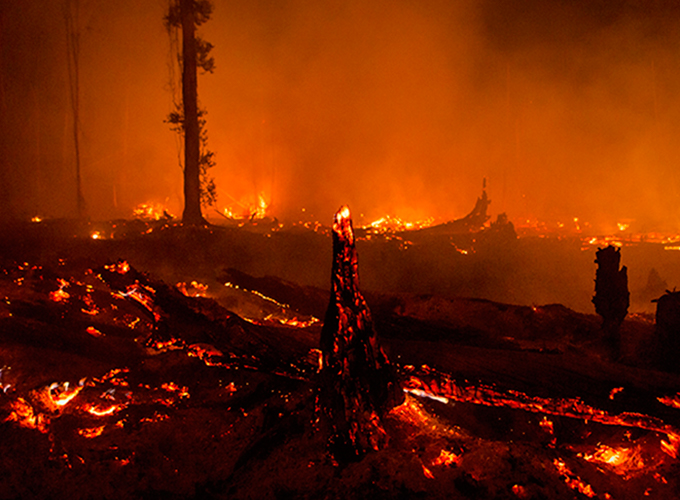
Toxic smoke chokes region as Indonesian rainforests burn

Pacific Media Centre Newsdesk

Thousands of forest fires have been burning across Indonesian Borneo and Sumatra, disrupting air travel, closing schools and sickening thousands of people, reports the New York Times.

Officials have said that about 80 per cent of the fires were intentionally set to make room for lucrative cash crops like oil palm.

Spokesman for Indonesia’s disaster management agency Agus Wibowo said that these “slash and burn tactics” were the quickest and cheapest method for farmers to clear the land of its carbon rich rainforests.

READ MORE: Precarious politics pose threats to world’s three biggest rainforests

Aerial photographs have showed huge clouds of white smoke across vast areas of Kalimantan, the Indonesian part of Borneo, which is home to the endangered Orangutan.

The toxic haze from the fires has also been affecting neighbouring countries, with hundreds of schools in Malaysia forced to close, reports The Guardian.

– Partner –

Indonesian officials have reportedly attempted to deflect some of the blame for the smoke to fires in Malaysia.

“The Indonesian government has been systematically trying to resolve this to the best of its ability. Not all smog is from Indonesia,” said Indonesia’s Environment Minister, Siti Nurbaya Bakar.

However, her Malaysian counterpart Yeo Bee Yin has since released data from the ASEAN Specialised Meteorological Centre (ASMC), which showed the total number of hotspots in Kalimantan was 474 and 387 in Sumatra. By comparison, only seven were recorded in Malaysia.

According to CNA News, Indonesian president Joko Widodo has said he has “made every effort” to extinguish the fires by deploying aircraft and 6000 troops to the hot spots and holding a “salat istisqa”- a prayer to Allah for rain in times of drought.

If nothing comes of the prayer, Coordinating Minister for Politics, Security and Legal Affairs Wiranto has said that the government will seed the clouds with chemicals to prompt “artificial rainfall”, reports Detik News.

While 200 people have been arrested in relation to the fires, officials have said that air quality had been recorded as “unhealthy” or “very unhealthy” in Malaysia, Sarawak and Singapore.

Indonesian forest fires have been a major environmental and health issue in recent decades as dryer conditions and the growing global demand for palm oil exacerbate their spread.

The 2015 forest fires resulted in huge plumes of smoke reaching as far away as Cambodia. Research has estimated at least 23 million were affected and over 100,000 thousand were killed from respiratory related illnesses in Indonesia alone.

The cost to mitigate the 2015 haze was reported to be US$40 billion.

The fires in Indonesia have added to global alarm about the dire situation in Brazil, where blazes have consumed over 2 million acres of rainforest in the Amazon basin, known as the “lungs of the earth”.

Print Friendly, PDF & Email

Article by AsiaPacificReport.nz

Curious Kids: How big is the International Space Station?

Source: The Conversation (Au and NZ) – By Kevin Orrman-Rossiter, PhD Research Student, History & Philosophy of Science, University of Melbourne

If you have a question you’d like an expert to answer, send it to curiouskids@theconversation.edu.au.


How big is the International Space Station? – Isla, aged 6, Australia.


The International Space Station (ISS) is the biggest human-made thing in space and the third-brightest object in the sky.

It’s so big you can see it in the night sky without a telescope or binoculars. It’s 109 metres long and 75 metres wide – about the same size as a soccer field. It weighs 420 tonnes, about the same as 280 cars.

The space station has 932 cubic metres of total space, with about two-thirds used for equipment and storage. Only one-third of it is “habitable”, meaning it can be used for humans to live in.

All that may sound big for only six astronauts to live in, but it’s actually quite cramped.


Read more: Curious Kids: Where does the oxygen come from in the International Space Station, and why don’t they run out of air?


Itty bitty living space

The bedroom for each astronaut is a small cabin, with a sleeping bag clipped into the cabin wall to stop them floating around when they sleep. The cabin also holds their computer and has room for a few other personal items.

There are also science labs where the crew can do research. There are up to 2,400 research investigations going on during an expedition so the labs can get very crowded. The crew members have to make room for each other and all their equipment.

Inside a lab on the ISS. NASA

Made in space

Did you know it took 42 space flights to assemble the main pieces of the space station?

On the outside there are eight solar panels that power the space station. Together, they create up to 90 kilowatts of electricity – enough to power 13 Australian houses!

The space station also allows six spaceships to be connected to it at once. These spaceships bring people and supplies from either Russia, Japan or the United States of America.

You can read more facts and figures about the ISS here.

There are currently six crew members on board the International Space Station. www.shuttershock.com, CC BY

Watching the Earth

The view from inside the space station is spectacular. There is a special viewing window called a cupola. It allows one astronaut at a time to view and take photographs of Earth.

The station orbits Earth 16 times every 24 hours. Imagine being able to see 16 sunrises and sunsets every 24 hours. What an amazing sight it would be.


Read more: Curious Kids: can people live in space?


Hello, curious kids! Have you got a question you’d like an expert to answer? Ask an adult to send your question to curiouskids@theconversation.edu.au Please tell us your name, age and which city you live in. We won’t be able to answer every question but we will do our best.

ref. Curious Kids: How big is the International Space Station? – http://theconversation.com/curious-kids-how-big-is-the-international-space-station-121442

More than a kick: sporting statues can enshrine players and also capture pivotal cultural moments

Source: The Conversation (Au and NZ) – By Michelle O’Shea, Lecturer Sport Management, Western Sydney University

In March this year, photographer Michael Willson captured an image of AFL footballer Tayla Harris kicking for a goal. The image shows Harris in athletic flight, right leg extended skyward and muscles flexed as her eyes trace the arc of the football beyond the frame.

Tayla Harris captured mid-flight. Michael Willson/Women Sport Australia

Last week in Melbourne’s Federation Square a 3.3 meter bronze depiction of Harris’ kick was unveiled. Statues like that of Harris, can celebrate an individual’s achievements but also expose prejudice or signpost changes in our societal values.

Willson’s original photograph was intended to celebrate athleticism and Australian rules football. Instead, when shared on Seven’s social media accounts, misogynistic comments were posted. In response, Seven took down the posts.

History is repeating itself with the response to her statue, with commenters on social media suggesting Harris is undeserving of the bronzed honour.

A bronzed Malcolm Blight. Thejoebloggsblog/Wikimedia Commons, CC BY-SA

One of the loudest critics was Malcolm Blight – former North Melbourne player and Adelaide coach, himself immortalised in bronze.

“[It is] one of the most mystifying things I have ever heard of,” he said on radio program Sportsday SA. “I am not happy about it.”

Blight’s statue was one of eight statues of men revealed at the re-opening of Adelaide Oval in 2014.

‘I’m black and I’m proud’

In July, a bronze depiction of Nicky Winmar raising his St Kilda jumper and defiantly pointing a finger to his torso was revealed at Perth’s Optus Stadium.

“Footy is for everyone, no matter where you come from, who you are, men, women, children, black or white, rich or poor” Winmar said at the unveiling.

26 years after the iconic photograph, a sculpture of Nicky Winmar was unveiled at Optus Stadium in Perth. AAP Image/Richard Wainwright

The statue is based on Wayne Ludbey’s iconic photograph, and Winmar’s words while he pointed: “I’m black and I’m proud.”

“It’s an emotional day for both of us,” Ludbey told The West Australian. “It’s been a long road.”

“Twenty six years ago no one wanted to know the message and didn’t understand what we were about. Twenty six years on, here we are on the banks of the Swan River.”

But even after 26 years, the statue still faced delays, kept in storage for over nine months as stakeholders argued over who would pay for transportation. The sculptor Louis Laumen called it an “insult.”

A sports call for racial equality

Last year, Athletics Australia announced they would be erecting a bronze statue of Peter Norman at Lakeside Stadium in Melbourne.

In 1968, Norman won silver in the 200m at the Mexico Olympics. He shared the dias with African American runners Tommie Smith and John Carlos: Smith and Carlos raising fists in a call for racial equality, Carlos wearing the badge of the Olympic Project for Human Rights.

Norman was ostracised by Australian athletics officials and criticised heavily in the Australian press. A statue commemorating his act has been considered a way to right a significant wrong.


Read more: Fifty years later, Peter Norman’s heroic Olympic stand is finally being recognised at home


Collective memory in bronze

Statues and monuments have tended to celebrate and maintain the symbolic and material prominence of white men, with only 3% of public statues in Australia honouring non-fiction, non-royal women. Statues of Indigenous Australians are similarly rare.

Yet even for male players, statues of sports people are relatively new. In the UK, research has found just 15 statues of sportspeople were erected before 1995, and over 100 to 2012. Dr Chris Stride, the statistician behind a database of sporting statues, told the BBC “Sports people are seen as celebrities, they never used to be.”

Stride believes these statues, largely of retired (or dead) players are a way for fans to “[bask] in reflective glory”.

But they can do more than commemorate and reflect the past. Statues and the spaces they occupy are a kind of history of the present.


Read more: The politics of public monuments: it’s time Australians looked at what, and whom, we commemorate


These three recent Australian statues focus not only on the sports person, but also significant cultural moments. They are tangible, material remnants of social consciousness that have the potential to reach far beyond sport.

At the foot of the Harris monument is inscribed “More than a kick”: a testament to the fact that statues and monuments of sport stars are rarely simply about their sporting prowess. As Harris said, the statue is “not about me. It’s about the moment and what happened”.

Re-imaging an inclusive future

Australian rules football is a code culturally dominated by white men, both on and off the field. Enshrining players like Harris and Winmar in bronze goes against this narrative.

Public statues which mark and celebrate the achievements of athletes influence the way we see ourselves. Their absence can be equally influential. The overwhelming absence of women’s and Indigenous Australian’s sporting achievements demonstrates how particular athletes and sports are valued: you can’t be what you can’t see.

In Federation Square, Harris was mobbed by groups of teenage girls wanting a selfie with the AFLW star.

Young fans were happy to bask in Tayla Harris’ fame. David Crosling/AAP

In the wake of the more recent racial abuse of Indigenous AFL athletes, Winmar’s statue creates an important record of this history – and the strength of the players who have stood up to it.

The statue of Norman follows a 2012 parliamentary appology: together they are a necessary corrective to the way he was ostracised following the 1968 games.

Online criticism of character and deservedness can divert attention away from the issues, practices and behaviour these players had the fortitude to call out – and how radical these statues are among other bronzed bodies.

These depictions of Harris, Winmar and Norman underline, celebrate and encourage collective memory and ongoing meaningful discussion of moments and events which have profound cultural and political significance.

A memorial to social history

The Harris statue is yet to find a permanent home, but it will remain in Federation Square during the AFL finals period. It should be celebrated for encouraging more diverse acknowledgement and recognition of the various sportspeople in Australia.

These statues not only create a memorial to sports people, but also Australia’s social history: they create talking points to remember our past, and imagine new possibilities for our future.

ref. More than a kick: sporting statues can enshrine players and also capture pivotal cultural moments – http://theconversation.com/more-than-a-kick-sporting-statues-can-enshrine-players-and-also-capture-pivotal-cultural-moments-123516

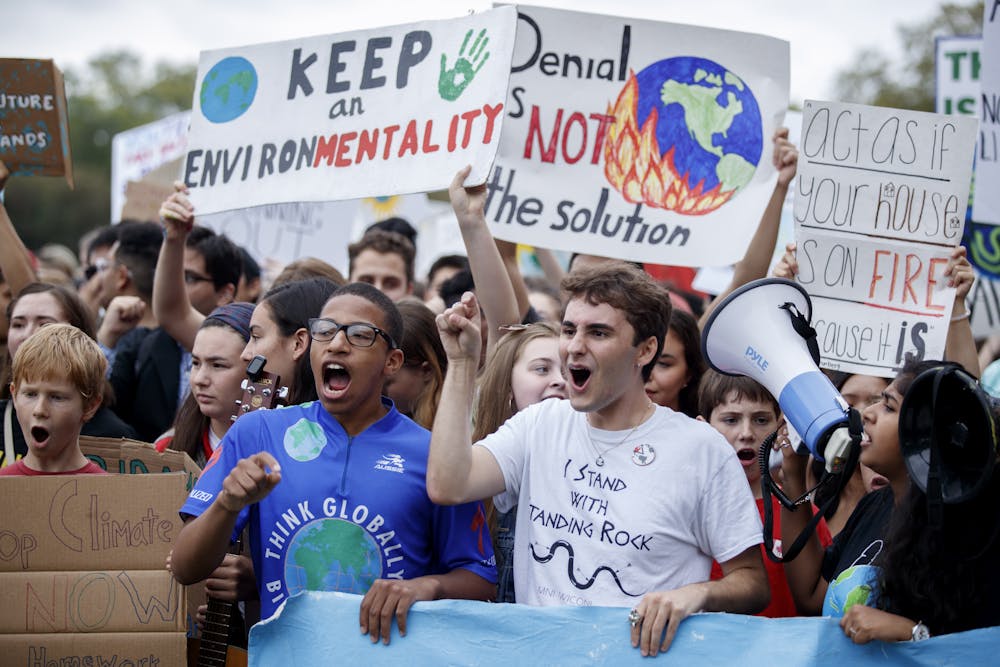
Why attending a climate strike can change minds (most importantly your own)

Source: The Conversation (Au and NZ) – By Belinda Xie, Scientia PhD Scholar, School of Psychology, UNSW

This story is part of Covering Climate Now, a global collaboration of more than 250 news outlets to strengthen coverage of the climate story.


This Friday in the lead-up to the United Nations climate summit, children and adults worldwide will go on strike for stronger action on climate change. However, you may ask, is striking effective? What can it really hope to achieve?

Our research, recently published in the Journal of Environmental Psychology, suggests striking can promote the psychological factors most important for fighting against climate change.


Read more: Everyone’s business: why companies should let their workers join the climate strike


If you’re wondering what you, as an individual, can do to support action against climate change, joining a strike (and asking your friends, family and colleagues to come with you) is a very good start.

From belief to action

In our recent research, we surveyed a large sample of Australians. We asked them how willing they would be to personally act on climate change (for example, pay more for electricity), support social interventions (such as using public funds to give rebates to households that install renewable energy), or take advocacy action (such as send an email to government officials encouraging them to support mitigation policies).

We integrated previous research which suggests that a range of factors influence people’s willingness to act, so we could target the most important variables. These included socio-demographic factors, amount of climate change-related knowledge, personal experience with extreme weather events, and moral values.

Regular school strikes have gained momentum since activist Greta Thunberg began the movement earlier this year. EPA/SHAWN THEW

Predicting who will act

We found that the three most important variables in predicting an individual’s willingness to act were affect, mitigation response inefficacy, and social norms.

Affect refers to how unpleasant climate change is to you. The influence of affect is well demonstrated by Tongan Prime Minister Samuela “Akilisi” Pohiva shedding tears in front of other leaders during the recent Pacific Islands Forum.

Feeling more negatively about climate change was strongly associated with a greater willingness to act – so should we just try to feel worse about climate change? We already know most Australians are worried about climate change, and the helplessness associated with eco-anxiety suggests that making Australians feel worse would cause more harm than good.

The second most important predictor was mitigation response inefficacy, or “inefficacy” for short. This is the belief that we should not or cannot effectively mitigate climate change, as reflected in statements such as:

Whatever behaviour we, as a nation, engage in to reduce carbon emissions will make no real difference in reducing the negative effects of global warming.

This sentiment is echoed in frequent reminders that Australia accounts for only 1% of global emissions. By suggesting that we cannot have an impact, while conveniently ignoring Australia’s very high per-capita emissions rate, these beliefs put the brake on mitigation action.

So how do we get past the idea that we can’t make a difference?

One way might simply be to remind people how effective collective action can be. For example, compare these two statements:

  • If one person for a week reduced their TV usage by 20%, then, in total, they would prevent 0.5kg of CO₂ being released into the environment.

  • If 1,000 people for a week reduced their TV usage by 20%, then, in total, they would prevent 500kg of CO₂ being released into the environment.

Recent research found the second statement is more persuasive and leads to greater pro-environmental and pro-social action. Although individual action alone is just a drop in the bucket, aggregating actions over more people makes the same individual action seem more bucket-sized and thus more effective.

This aggregation effect speaks to the power of the school strike. You may not feel like your voice is heard if you carry a sign alone, but this action becomes much more powerful when you are surrounded by tens of thousands of people doing the same.

Our study found the third most important predictor of willingness to act was social norms. Social norms capture the extent to which people important to you are acting on climate change (descriptive norms) and the extent to which you think those people expect you to act on climate change (prescriptive norms).

For example, the Uniting Church recently passed a resolution to support students and teachers striking. This may signal to these students and staff that attending the strike will be both common and endorsed, increasing their willingness to go along.

Earlier this year, a Lowy Institute poll found Australians rank climate change as the top threat to Australia’s vital interests. But for many of us, it is difficult to think of how we personally can reduce that threat.

Participating in the school strike would be an effective start.


Read more: #Fridaysforfuture: When youth push the environmental movement towards climate justice


By attending the strike, you will increase the effectiveness of the strike for you and the others around you. And by encouraging your friends and family to go with you, you will promote the social norms that support climate change action.

ref. Why attending a climate strike can change minds (most importantly your own) – http://theconversation.com/why-attending-a-climate-strike-can-change-minds-most-importantly-your-own-122862

Climate explained: why we won’t be heading into an ice age any time soon

Source: The Conversation (Au and NZ) – By James Renwick, Professor, Physical Geography (climate science), Victoria University of Wellington

CC BY-ND

Climate Explained is a collaboration between The Conversation, Stuff and the New Zealand Science Media Centre to answer your questions about climate change.

If you have a question you’d like an expert to answer, please send it to climate.change@stuff.co.nz

When I studied climate in my university geography course in the 1960s, I am sure we were told that the Earth was cooling. We were all anxious about being too cold in our future. Now we are too hot. Is this because the prediction that we were moving towards another ice age was incorrect, or has Earth warmed up so quickly through human activities that it has cancelled out that cool trend and actually reversed it?

The Earth warms and cools on a range of different time scales, driven by different effects. But the two controlling factors are always the amount of sunlight (solar radiation) reaching the Earth’s surface, and the amount of greenhouse gases in the air.

A brighter sun means more solar radiation absorbed by the Earth, so a warmer surface climate. Greenhouse gas levels control the amount of heat (infrared radiation) absorbed into the atmosphere as it radiates up from the Earth.

The atmosphere absorbs heat and re-radiates it in all directions, including back down to the Earth’s surface. So the Earth is warmed not only by the sun but also by the atmosphere. More greenhouse gas amplifies this warming from the atmosphere and results in a warmer surface climate.

In the long run, carbon dioxide is the most important greenhouse gas because it lasts so long in the atmosphere, for centuries to thousands of years.


Read more: Why carbon dioxide has such outsized influence on Earth’s climate


The myth of global cooling

Global temperatures were indeed decreasing slightly in the 1950s and 1960s, from a relative peak in the early 1940s. The main cause of the cooling was sunlight being blocked out from reaching the surface of the Earth, as a result of the rapid industrialisation following the second world war and the associated rise in air pollution. Another factor was the onset of a negative phase of the Interdecadal Pacific Oscillation that results in the oceans soaking up more heat than normal and the atmosphere missing out a little.

Some scientists did wonder if the mid-century cooling was a sign of the next ice age on the way, but even back then they were distinctly in the minority. There were a couple of high-profile media reports on the possibility of a coming ice age, but the vast majority of scientific papers even then were concerned with warming, from greenhouse gas increase.

Since the 1970s, human emissions of carbon dioxide and other greenhouse gases has grown exponentially. Since the industrial revolution began in the mid-1700s, atmospheric carbon dioxide concentrations have gone up by 120 parts per million, a 46% rise in nearly 300 years.

But half the increase has occurred in the past 30 years, and the total amount of global emissions in the century from 1750 to 1850 is what we now put into the air every six weeks. The rate of warming has increased in recent decades, in line with the much more rapid rise in atmospheric greenhouse gases in recent decades.

Disrupting natural climate cycles

This aside though, the timing is right for the next ice age to come around soon. For the past two and a half million years, the Earth has experienced regular ice ages, related to slow changes to earth’s orbit around the sun and changes in the earth’s axis of rotation (Milankovitch cycles). We are currently in one of the warm periods (interglacials) between ice ages and the present interglacial should be ending about now. The catch is carbon dioxide.


Read more: ‘Climigration’: when communities must move because of climate change


Ice ages didn’t happen for millions of years because there was too much carbon dioxide in the air. The change in sunlight associated with the ice age cycles is quite subtle and takes thousands of years to make a difference to temperatures and to ice gain or loss.

When atmospheric carbon dioxide is above about 300 parts per million, the infrared warming effect is so strong it drowns out the more subtle Milankovitch cycles and there are no ice ages. Coming out of the Pliocene period just under three million years ago, carbon dioxide levels dropped low enough for the ice age cycles to commence.

Now, carbon dioxide levels are over 400 parts per million and are likely to stay there for thousands of years, so the next ice age is postponed for a very long time. We will be living in a warmed and changed climate for many generations to come.


This article is part of The Covering Climate Now series
This is a concerted effort among news organisations to put the climate crisis at the forefront of our coverage. This article is published under a Creative Commons license and can be reproduced for free – just hit the “Republish this article” button on the page to copy the full HTML coding. The Conversation also runs Imagine, a newsletter in which academics explore how the world can rise to the challenge of climate change. Sign up here.


ref. Climate explained: why we won’t be heading into an ice age any time soon – http://theconversation.com/climate-explained-why-we-wont-be-heading-into-an-ice-age-any-time-soon-123675

‘Creeping distrust’: our anxiety over China’s influence is hurting Chinese-Australians

Source: The Conversation (Au and NZ) – By James Laurenceson, Acting Director and Professor, Australia-China Relations Institute (ACRI), University of Technology Sydney

Last week’s Asian-Australian Leadership Summit in Melbourne saw the release of valuable new survey data on the discrimination some Australians face.

A survey conducted by the Australian National University’s Centre for Social Research found that 82% of Asian-Australians reported they had experienced discrimination. This was the highest among all the self-identified ethnic groups in the study, and compared with just 34% for Anglo-Australians.

In his welcoming address to the summit, ANU Chancellor and former Foreign Minister Gareth Evans made particular mention of the predicament Chinese-Australians currently find themselves in. He warned that “hyper-anxiety” about “baleful Chinese” was

making it harder than it has ever been for Chinese-Australians to aspire to leadership positions, or indeed any position at all in fields that are seen as even remotely security-sensitive.

One attendee, Chinese-Australian businessman Jason Yat-sen Li, remarked,

I hear anecdotal stories of people who work for big companies, or work for government, who are just feeling this sort of creeping distrust.

Many Chinese-Australians connect this “creeping distrust” to the tone of the broader concerns around “Chinese influence” at the moment.

Another summit attendee, Jieh-Yung Lo, said,

Unfortunately Chinese-Australians have become collateral damage in the foreign influence debate and as a result, some, including me, have had our loyalty and commitment to Australia repeatedly questioned.

When reasonable questions become insinuations

The Australian Security Intelligence Organisation (ASIO) has consistently warned since 2017 that the threat Australia faces from “foreign interference” – defined as activities that are covert, deceptive and/or coercive – is “unprecedented”.

Last month, retiring ASIO Director-General Duncan Lewis went so far as to say he considered it an “existential threat” to Australia.

Last week, these concerns led to many questions being directed at Gladys Liu, Australia’s first and only “Chinese-born” member of parliament. (Liu was actually born in Hong Kong and has never been a citizen of the People’s Republic of China.)

Prime Minister Scott Morrison leaped to Liu’s defence when questions about her ties to associations with direct or indirect links with the Chinese Communist Party (CCP) were raised – first in the media, and then in parliament.


Read more: Why Gladys Liu must answer to parliament about alleged links to the Chinese government


But shouting “racism”, as Morrison did, is inaccurate. There is nothing racist about scrutinising an Australian MP’s previous connections. But it becomes problematic when reasonable questions are cast as insinuations and allegations – about a citizen’s loyalty, for example – that run ahead of the evidence.

And one of the most prominent groups in Australian society calling for tougher push-back against foreign interference has been the Chinese-Australian victims of CCP operations abroad.

Gladys Liu’s ties to organisations with connections to the Chinese Communist Party have come under question. Mick Tsikas/AAP

The ‘China influence’ narrative

As our anxiety over foreign interference has intensified, it’s also had an impact on the way China – and Chinese-Australians – are discussed and viewed by the public. As a group of China academics has noted, the media, in particular, have sometimes taken a sensational approach that has led to a “racialised narrative of a vast official Chinese conspiracy”.

In today’s commercially challenging media landscape, China scare stories sell newspapers and generate clicks. Even the publicly funded ABC is not immune. As China media scholar Wanning Sun noted:

Over the past few years, the ‘China influence’ narrative, which manifests in a multitude of political, social and cultural issues, has grown to dominate the Australian news media’s coverage of China. In this context, the ABC has conspicuously failed to set a broader agenda.


Read more: Why do we keep turning a blind eye to Chinese political interference?


Until this week, major media outlets such the Sydney Morning Herald and the ABC were tagging their reporting around these serious issues under the banner of “Chinese influence”. Only in recent days did they finally switch to “CCP influence” and “China power”.

Similarly, last year, academic Clive Hamilton wrote a bestselling book with a cover that warned of a “Silent Invasion” owing to “China’s influence”.

The consequences of such loose talk – when CCP interference is the real problem – can alienate Australians born in China or those of Chinese ethnicity. Worse, they can be seized upon by racist groups and individuals as justification for their views and to incite hatred.

How Asian-Australians experience discrimination

Recent research has shown that Australians of Asian backgrounds were the most frequent victims of race-motivated hate crimes.

In the ANU survey, discrimination against Asian-Australians was reported as occurring in a host of environments, such as at shops or restaurants. Perhaps most troubling, though, was that two-thirds of Asian-Australian respondents said they suffered discrimination in the workplace.


Read more: Asians out! Not in this suburb. Not in this apartment


More than half said that discrimination, or the fear of discrimination, had changed the way they acted at work. The most common reactions were to be less outspoken and adopt a more submissive work style.

The consequences of this sometimes unconscious bias are far-reaching. Previous studies, for example, have shown that Asian-Australians only comprise 1.6% of chief executive officers of ASX200 companies, federal government ministers, heads of federal and state government departments and vice-chancellors of universities.

This pales in comparison to their 12% share of the Australian population.

More responsible reporting on Gladys Liu

All of this makes it critical that politicians, journalists and commentators are precise in their language and balanced and rigorous in their assessments and analysis.

Consider the Gladys Liu case again. The questions about Liu relate to her being “associated” with organisations that are “linked” to the CCP. But as China analyst Ryan Manuel observes,

no-one has alleged that Ms Liu herself, nor the Liberal Party she belongs to, holds any communist sympathies.

Last weekend, an ABC report made much of a motion proposed by Liu’s Liberal Party branch in 2017 to make it easier for foreign investors to buy Australian agricultural land and agribusinesses by raising the threshold needed for Foreign Investment Review Board (FIRB) scrutiny.

But what it didn’t say was that the motion was entirely in keeping with the agenda of the Business Council of Australia (BCA), not the CCP. In 2015, when the Abbott government was considering lowering the thresholds, the BCA openly fought the change on the basis that

it increases costs, brings uncertainty and leads to a chilling effect on investment.

Moreover, the motion proposed by the branch Liu belonged to said nothing about changing the threshold for scrutiny faced by companies owned by the Chinese government. (Under current regulations, every single investment proposal from a foreign, state-owned company has to be approved by the FIRB, no matter how small.)

And how exactly owning an Australian dairy farm or fruit processor would constitute a vector of CCP interference that could potentially undermine Australian sovereignty is a mystery.

But this is precisely the type of reporting we need to avoid – lacking context and firm evidence – to avoid mischaracterising Chinese-Australians.

ref. ‘Creeping distrust’: our anxiety over China’s influence is hurting Chinese-Australians – http://theconversation.com/creeping-distrust-our-anxiety-over-chinas-influence-is-hurting-chinese-australians-123677

PayID data breaches show Australia’s banks need to be more vigilant to hacking

Source: The Conversation (Au and NZ) – By Paul Haskell-Dowland, Associate Dean (Computing and Security), Edith Cowan University

When we think of a bank robbery, we might imagine a safe with the door blown open. But nowadays it might be more accurate to picture criminals accessing our bank account online from another country. Bank robbers don’t need balaclavas and shotguns anymore.

Australian banks have long provided convenient ways for customers to transfer funds. But the process of remembering and entering BSB and account numbers is prone to human error. Enter PayID.

PayID allows customers to attach their mobile phone number or email address to their bank account. They can then simply provide these details to other people, providing a convenient way to receive payments.

It can only be used for incoming payments, rather than outgoing ones. So you might think that makes it less of a tempting target for hackers. But that’s not necessarily the case.

Launched in February 2018 by New Payments Platform Australia, an alliance of 13 banks, PayID is reportedly available to more than 52 million account holders across almost all major financial institutions. By February 2019, some 2.5 million PayID identifiers had been created, and 90 million transactions totalling more than A$75 billion had been processed.


Read more: The New Payments Platform may mean faster transactions, but it won’t be safer


When entering a PayID mobile phone number to make a payment, the full name of the account holder is displayed, so the person making the payment can ensure they are sending it to the right PayID account.

Shortly after the service launched, Twitter users began pointing out that this means you can enter random phone numbers and, if that number has been linked to a PayID account, the account holder’s name will show up – rather like a phone book in reverse.

Twitter posting of PayID details. @anthonycr0

The following day, on February 17, 2018, NPP Australia acknowledged this issue in a media release, but effectively dismissed users’ concerns:

While unfortunate for the individuals involved, the discussion highlights the choice and benefits to be considered by users when they opt in to create a PayID.

This is not exactly reassuring for bank customers whose details were publicly posted. And developments this year suggest that the underlying problems persist.

Better luck next time?

In June 2019, around 98,000 PayID details were obtained after hackers used several online bank accounts to carry out more than 600,000 PayID lookups over the course of six weeks, reportedly by simply entering phone numbers in sequential order.

It is not clear who was to blame, although there are allegations of a leaked memo pointing the finger at US-based fraudsters.

The exact motive is unclear, but any personal data has value in the underground economy. In this case, the data could potentially be used as part of a more complex phishing scam designed to steal further information from account holders.

Although this is clearly a very simple attack involving nothing more sophisticated than simple trial and error, it appears the PayID system did not detect the large number of lookups – an average of 14,000 per account – or the speed with which they were undertaken.

To give a real-world example, it would be like going into your bank 14,000 times and handing over a different piece of identification each time.

This high volume of lookups should have raised significant security concerns. While legitimate users could be forgiven for needing a couple of tries to punch in the right number, no one should need thousands of attempts.

It should have been a simple security step to add lookup limits and to identify this as highly abnormal behaviour. Yet neither the bank concerned nor NPP Australia had implemented mechanisms to detect or prevent this form of misuse.

After a security breach this size, the banks might reasonably be expected to take urgent steps to prevent it happening again. But it did happen again, two months later.

In August 2019, a further 92,000 PayIDs were exposed. In this case, it was reported that the breach happened within the systems of a financial institution connected to the NPP Australia systems. Worryingly, this breach reportedly revealed users’ full name, BSB and account number.

Banks were quick to reassure customers that this does not allow transactions to be undertaken. However, it did deliver yet more valuable information into the hands of cyber criminals – further enabling phishing opportunities.

While affected customers have been contacted, the only option to remove this risk is to stop using PayID. This is easily done but removes the convenience factor for most bank customers.

What’s the real risk?

Because the system enables payments into accounts, rather than authorising withdrawals from them, the risk may seem minor. Indeed, many in the banking sector have dismissed it as so. But there is a deeper risk.

Phishing is a form of cyber crime in which victims are tricked into revealing confidential information through convincing-looking emails or SMS messages. Unfortunately, there are already examples of this in relation to PayID.

Real examples of PayID-related SMS phishing messages. canstar.com

The approach depicted above is not particularly sophisticated. But imagine a more tailored email message quoting examples of identifiable information (PayID, full name) or, as with the most recent breach, BSB and account number.

Coupled with the correct branding and reassuring words of your bank, it would be easy to convince an unsuspecting user of the need to “login to change your PayID for security reasons”. Just a few minutes of creativity on a computer can produce convincing results.

The image shown below was created to show how easy this process is. It uses genuine branding, but the “login” button could easily be set to direct users to a website designed to steal login credentials.

Mock-up of a potential PayID-related phishing email.

With the ME Household Financial Comfort Report indicating that almost 50% of households have at least A$10,000 in savings, there is a clear incentive for cyber criminals to target our bank accounts. As with any phishing attack, it only takes a few people to succumb to make the enterprise worthwhile.


Read more: Banks can’t fight online credit card fraud alone, and neither can you


Although bank customers can do little more than think twice before responding to messages, the real power is with the banks. Simply being alert to unusual patterns of behaviour would have prevented these security breaches.

This is not new territory for financial institutions, who routinely look for unusual patterns in credit card transactions. Perhaps it is time to apply these same concepts in other scenarios and better protect Australia’s banking customers.

ref. PayID data breaches show Australia’s banks need to be more vigilant to hacking – http://theconversation.com/payid-data-breaches-show-australias-banks-need-to-be-more-vigilant-to-hacking-123529

Jacqui Lambie mixes battler politics with populism to make her swing vote count

Source: The Conversation (Au and NZ) – By Mark Kenny, Senior Fellow, Australian Studies Institute, Australian National University

In the hit biopic Rocket Man, the ambitious young Reginald Dwight is counselled to hide his working-class roots if he wants to make it in “showbiz”:

You gotta kill the person you were born to be in order to become the person you want to be.

Arriving in Canberra in 2013, Jacqui Lambie carried just that kind of baggage – the burden of tough starts, frequent setbacks, of being a fish out of water. The former soldier is now back in the Senate for a second stint.

Her parliamentary reprise was not just something of a surprise, it lent the May 18 federal election a sense of restorative justice after her admittedly gaffe-prone first term was cut short in 2017 by a Section 44 citizenship hitch.


Read more: Lambie’s vote key if government wants to have medevac repealed


She’d arrived in 2013 as a total unknown under Clive Palmer’s eponymous PUP. Impulsive, frequently angry and clearly ill-prepared, Lambie soon cut ties with the irascible mining magnate, leaving him muttering about her ingratitude and a breach of promise.

Yet in 2019, when the eccentric millionaire ploughed upwards of A$60 million into a gaudy, winless nationwide campaign, Lambie triumphed on a shoestring, boosted by Tasmanians to fill the last available Senate spot.

But there was no Elton John-style artifice involved. Forming the Jacqui Lambie Network, she would defiantly trumpet her own name and working-class roots, parading herself as the real deal, pure battler, core-Apple Isle.

It was an exercise characterised by a brutal frankness about her past. Disarmingly so.

“I was a bloody wrecking ball,” she recently told Nine Newspapers, about why she was so controversial and had flamed out in her first period in Canberra.

I just had no idea what idea what I was doing. I’d come from ten years, basically between the bed, the couch and a couple of years in the psych ward.

Now she’s back. Better, stronger and wiser for the journey.

Already, the proudly rough-edged advocate for the battler state has had a significant impact while signalling to Prime Minister Scott Morrison that her vote for future government bills will carry a price.

How much? A fortnight ago, it was A$230 million to be forgiven for the state’s social housing debt.

The concession followed Lambie’s swift post-election support for the Morrison government’s signature A$158 billion election pledge of income tax cuts for low, middle and high-income earners.

The housing debt waiver was a solid victory for the frail Tasmanian economy. It was reminiscent of the fiercely parochial Brian Harradine – a conservative Catholic independent who used his pivotal vote through the Howard years to get special deals for the smallest state.


Read more: View from The Hill: Jacqui Lambie plays the Harradine game


But Lambie’s response in the moment of victory betrayed her continuing lack of political polish.

Rather than hammer home the full weight of her achievement, she remarked that she should have asked for more, driven a harder bargain. Is this a harbinger of her approach in future fights? Probably.

What is clear is that the government’s concession, and the intent in her response, together underscore the importance of Lambie’s so-called swing vote.

With 35 senators and Cory Bernardi more or less in the bag also, Team Morrison needs a further three to reach the required majority of 39 votes in the Senate – assuming Labor and the Greens are offside.

That is, three out of the five crossbench votes comprising either the two Pauline Hanson votes plus Lambie, or the two Centre Alliance votes plus Lambie. A number of crucial bills loom.

Eager to scrape together a third-term agenda from the parched policy landscape of its unexpected victory, the Coalition is reheating ideas proposed and defeated in previous terms.

Two of them are the Ensuring Integrity Bill, which seeks to impose harsh new restrictions on unions and give the government unprecedented executive power to deregister them, and the expansion of drug testing for welfare recipients.

Lambie’s support is likely to be pivotal – depending on what the other two micro-parties do.

Another issue is the proposal to expand the cashless welfare card to reduce the incidence of welfare being spent on non-necessities.

All are controversial.

On drug testing for Newstart and Youth Allowance recipients, Lambie is playing hardball.

After initially signalling some sympathy for the plan – having seen her own son descend into ice addiction – she has since made it clear she will not support the measure unless, first, politicians agree to random drug and alcohol testing, and second, there are adequate rehabilitation facilities on the ground.

Ministers have raised no objections to being drug-tested, but rolling out enough beds for an estimated half-a-million Australians with drug-dependency issues (many of whom would not be on welfare it must be noted) is no small thing, especially as Lambie has said she wants the beds in place before she supports the testing.

Lambie’s abrasive style is such that predicting her attitude to legislation is not straightforward. This is because it is a mixture of working-class battler politics (not unlike traditional Labor values), tinged with a resentful outsider populism that tends to be more right-leaning.

Overlaid on that is Lambie’s adoption of Harradine’s successful Tasmania-first model.

Her emergence as a swing vote in the Senate puts her in a direct contest with Pauline Hanson, who already owns the populist right.

Either woman can potentially hold the whip hand on government legislation depending on the issue, but Lambie has more room to move.

For the government, that means treading carefully, keeping the lines of communication open, copping the odd spray, and hoping for no dramatic changes of opinion. This is never easy with Hanson, and even less predictable with Lambie.

Politics is often derided as show business for ugly people. Lambie seems intent on making it real business for real people – but with a touch of show business for good measure.

ref. Jacqui Lambie mixes battler politics with populism to make her swing vote count – http://theconversation.com/jacqui-lambie-mixes-battler-politics-with-populism-to-make-her-swing-vote-count-123175

How other countries get parents to vaccinate their kids (and what Australia can learn)

Source: The Conversation (Au and NZ) – By Katie Attwell, Senior Lecturer, University of Western Australia

Countries around the world, including Australia, are using different ways to get parents to vaccinate their children.

Our new research, published this week in the journal Milbank Quarterly, looks at diverse mandatory vaccination policies across the world. We explore whether different countries mandate many vaccines, or just a few; if there are sanctions for not vaccinating, such as fines; and how easy it is for parents to get out of vaccinating.

This is part of ongoing research to see what Australia could learn from other countries’ attempts to increase childhood vaccination rates.


Read more: A short history of vaccine objection, vaccine cults and conspiracy theories


The shift from voluntary vaccination

Until recently, many governments preferred vaccination to be voluntary. They relied on persuasion and encouragement to try to overcome parents’ hesitancy or refusal to vaccinate their children.

However, recent measles outbreaks have made those methods less politically tenable. The rise of pro-vaccination activism and the polarisation of public debate about immunisation policy has motivated governments to take a more hard-line approach.


Read more: Measles outbreaks show legal challenges of balancing personal rights and public good


Early evidence from Italy, France, California and Australia indicates this has led to higher vaccination rates. But different countries have pursued very different policies.

Australia’s federal “No Jab, No Pay” policy removes entitlements and childcare subsidies from unvaccinated families. Four Australian states also have “No Jab, No Play” policies to limit vaccine refusers’ access to childcare.


Read more: Banning unvaccinated kids from child care may have unforeseen consequences


California bans unvaccinated children from school, and Italy fines their parents. France classifies vaccine refusal as “child endangerment” and can impose hefty fines.

Some governments can use more than one method at once, like Australia’s mix of state and federal policies. Italy’s new policy uses a combination of excluding unvaccinated children from daycare and fines for parents.

Making it hard to refuse

Australia, Italy, France and California make it difficult for parents to refuse vaccines by only permitting medical exemptions to their mandatory policies.

However, other jurisdictions ultimately allow parents to refuse vaccines, albeit using different methods. For example, Germany and the state of Washington require parents to be counselled by medical professionals before they obtain an exemption to vaccinating their child. In Michigan, public health staff provide a mandatory education course for parents seeking non-medical exemptions.

Which policy leads parents to vaccinate?

We can assess a policy to get parents to vaccinate using a notion called “salience”. Put simply, will a vaccination policy actually make parents vaccinate?

For example, Australia’s federal vaccine mandate has become more salient since parents can no longer obtain conscientious objections and risk losing benefits for not vaccinating.

But there are other factors to consider, such as whether a policy promotes timely vaccination.

Australia’s “No Jab, No Pay” policy applies to children from birth, so it motivates parents to vaccinate on time. But the United States has state-level policies that prompt parents to have their children up-to-date with their vaccinations when they start daycare or primary school.

Who doesn’t have to vaccinate?

Another important question is who gets to duck away from the hand of government. Australia’s “No Jab, No Pay” policy leaves wealthy vaccine refusers untouched as they are ineligible for the means-tested benefits docked from unvaccinated families.

And Australian states’ policies to exclude vaccine refusers’ children from daycare doesn’t affect families who don’t use daycare.

Since France and California exclude unvaccinated children from school, these countries have the capacity to reach parents more equitably (almost everyone wants to send their kids to school so more people are incentivised to vaccinate). In both places, you can homeschool if you really don’t want to vaccinate.

Addressing the many reasons for not vaccinating

Mandatory vaccination policies also need to recognise the two types of parent whose child might be unvaccinated. Much airtime focuses on vaccine refusers. However, at least half the children who are not up-to-date with their vaccines face barriers to accessing vaccination, such as social disadvantage or logistical problems getting to a clinic. They are the children of underprivileged parents, not vaccine refusers.

When it comes to the vaccination status of disadvantaged children entering daycare, Australian states have chosen a “light touch” as part of the “No Jab, No Play” policy. Existing state policies provide grace periods or exemptions for these families.

But the federal “No Jab, No Pay” hits all parents where it hurts, and offers no exemptions or grace periods to disadvantaged families. Likewise, California’s school entry mandate makes no such exceptions. Italy and France have daycare exclusions similar to “No Jab, No Play” in their policies, but we have not found any evidence they make exceptions for disadvantaged families.


Read more: Forget ‘no jab, no pay’ schemes, there are better ways to boost vaccination


Finally, mandatory vaccination policies vary on how much they cost for governments to deliver. Oversight of parents, such as inspections or implementing fines, can drain government resources. And educational programs for parents seeking exemptions are expensive to run.

Governments can outsource some of these costs to parents (for instance, parents may have to pay a fee to see a doctor for an exemption).

Governments can also hand over the tasks to medical professionals, but then they have less control over what these professionals do. For instance, California is now seeking tighter regulation of doctors who say children are eligible for medical exemptions. This monitoring will cost the state, but will allow greater oversight. Victoria also had problems with doctors who accommodated vaccine refusers.

So where does this leave us?

Our work investigating international strategies to get parents to vaccinate their children is ongoing. Australians seem strongly attached to our vaccine mandates. But both state and federal policies have undergone tweaks since their inception.

Any future adjustments should ensure all parents are targeted, that disadvantaged families are not further disadvantaged, and that we make it very easy for everybody to access vaccines in their communities and on time.

Globally, as more jurisdictions move away from voluntary child vaccination to mandatory policies, we need to get a clearer picture of how these policies work for families, government and the policy enforcers, including school staff and health professionals.

ref. How other countries get parents to vaccinate their kids (and what Australia can learn) – http://theconversation.com/how-other-countries-get-parents-to-vaccinate-their-kids-and-what-australia-can-learn-122274

The good, the bad and the ugly: the nations leading and failing on climate action

Source: The Conversation (Au and NZ) – By Bill Hare, Director, Climate Analytics, Adjunct Professor, Murdoch University (Perth), Visiting scientist, Potsdam Institute for Climate Impact Research

This piece is part of Covering Climate Now, a global collaboration of more than 250 news outlets to strengthen coverage of the climate story.

It is almost five years since the landmark Paris deal was struck. Nearly 200 countries agreed to work towards limiting global warming to 1.5℃, beyond which the planet is expected to slide irreversibly towards devastating climate change impacts.

But few nations are on track to reaching this goal. Right now, we’re heading to warming above 3℃ by 2100 – and this will have catastrophic consequences for the planet.

United Nations Secretary-General António Guterres has called a major climate summit in New York on September 23, where countries are expected to announce more ambitious climate targets than they set in Paris, and solid plans to achieve them.

Ahead of the summit, let’s take stock of the world’s best and worst performers when it comes to tackling the climate emergency.

A man standing near a wind farm near Urumuqi, China. Qilai Shen/EPA

Australia is keeping poor company

The Climate Action Tracker is an independent scientific analysis produced by two research organisations tracking climate action since 2009. It monitors 32 countries, accounting for more than 80% of global emissions.

We looked in detail at who has made the most progress since 2015, and who has done the least. Australia sits firmly in the group of governments we labelled as actually delaying global climate action, alongside the United States (which under President Donald Trump has walked away from the Paris agreement altogether).

Other countries delaying global climate action with highly insufficient targets and no progress since 2015 are the Russian Federation, Saudi Arabia, the United Arab Emirates, and Indonesia.

Australia’s greenhouse gas emissions, past and projected. Data drawn from Department of the Environment and Energy report titled ‘Australia’s emissions projections 2018’ Department of the Environment and Energy

Today, Australia’s emissions are at a seven-year high, and continue to rise. The government’s commitment to fossil fuels remains unwavering – from coal projects such as Adani’s proposed Carmichael mine in Queensland to huge new gas projects.

Australia is the world’s largest exporter of coal, providing 29% of coal’s global trade, and last year also became the world’s largest exporter of liquefied natural gas. Its exported fossil fuel emissions currently represent around 3.6% of global emissions.

The surprising success stories

Ethiopia, Morocco and India top the list of countries doing the most to tackle climate change. In total, eight international jurisdictions have made good progress since 2015, including the European Union, Canada, Chile, Costa Rica, and Argentina (although they still have a lot of work ahead to meet the 1.5℃ goal).

While India still relies on coal, its renewables industry is making huge leaps forward, with investments in renewable energy topping fossil fuel investments. The country is expected to over-achieve its Paris Agreement target.

Lightning in the night sky over the Odervorland wind farm near Sieversdorf, Germany. Patrick Pleul/DPA

So what are they doing right? Costa Rica’s national decarbonisation plan covers the entire economy, including electrifying the public transport system, and huge energy efficiency measures in the industry, transport and buildings sectors. Costa Rica has also put a moratorium on new oil production.

The EU is set to overachieve its 2030 target of reducing emissions by 40% below 1990 levels by 2030 and is in the process of considering an increase in this to at least 50%. It has recently increased its renewable energy and energy efficiency goals, and is sorting out its emissions trading scheme, with prices of emission units increasing.


Read more: Australia to attend climate summit empty-handed despite UN pleas to ‘come with a plan’


This, together with past investments in renewable energy, have helped to achieve a 15% reduction in German electricity sector emissions in the first half of 2019. Whilst Germany has missed its 2020 targets, it has begun a process to phase out coal no later than 2038 – still a number of years too late for a Paris-compatible pathway.

Quitting coal is key

An increasing number of countries are adopting net zero emissions targets, many of them in the European Union, and some outside. Some, like the UK, have dumped coal, and are well on the way to achieving those targets.

A global phase-out of coal for electricity is the single most important step toward achieving the 1.5℃ warming limit. At the latest, this should be achieved by 2050 globally, by 2030 in the OECD and 2040 in China and other Asian countries.

There are some signs of optimism here. On one estimate, the number of coal projects in the pipeline shrunk by nearly 70% between 2015 and 2018, and investors are increasingly wary of the technology. Yet coal is still set to boom in Indonesia, the Philippines, Japan and Turkey.

Under current polities, the world is set for more than 3°C of warming by 2100. Climate Action Tracker

Read more: The gloves are off: ‘predatory’ climate deniers are a threat to our children


In 2018, energy-related carbon dioxide emissions reached a historic high. While coal reversed its recent decline, emissions from natural gas surged by 4.6%.

Renewable energy is the key to unlocking rapid decarbonisation. It already supplies more than 26% of global electricity generation and its costs are dropping rapidly. To accelerate this fundamental transition, more governments need to adopt and improve policies that enable renewable technologies to be rolled out faster. This would contribute to low-carbon economic development and job creation.

Don’t forget about trees

Nowhere is the alarming rate of global deforestation more obvious than in Brazil, now in the middle of a record fire season. It adds to damage wrought by President Jair Bolsonaro who has weakened his country’s institutional framework preventing forest loss.

In 2018, Brazil recorded the world’s highest loss of tropical primary rainforest of any country – 1.3 million hectares – largely in the Amazon. The deforestation reached 7,900 square km in 2018, a 72% increase from the historic low in 2012.

Fire fighting efforts this month in an indigenous reserve in Humaita, in Brazil’s Amazon forest. FERNANDO BIZERRA/EPA

The past few weeks have shown us what 1℃ of global warming means. Hurricane Dorian, fuelled by high sea-surface temperatures, wiped out the northern Bahamas. Temperatures in the 40s set records across Europe. And in Queensland, the earliest fire season on record destroyed homes and razed rainforests.

The predicted 3℃ of warming by 2100 will bring a lot worse: widespread crop failures, dead coral reefs, more extreme heat waves and major threats to water supply and human health.

The world can avoid this, but time is running out.

ref. The good, the bad and the ugly: the nations leading and failing on climate action – http://theconversation.com/the-good-the-bad-and-the-ugly-the-nations-leading-and-failing-on-climate-action-123581

Robo-debt is only one way government stigmatises claimants. There’s only so much a class action can do

Source: The Conversation (Au and NZ) – By Helen Hodgson, Professor, Curtin Law School and Curtin Business School, Curtin University

The robo-debt recovery programme has been criticised as badly designed and unfair ever since it began in mid 2016.

A year later the Senate Committee on Community Affairs recommended it be put on hold until its design flaws could be addressed, yet there has been a procession of stories since of people who have had their payments cut off or money demanded because of the application of bad data matching.

The minister for government services has confirmed in parliament that as many as one in five of the debt recovery notices issued might be incorrect, and apologised to a woman who received a debt notice on behalf of her dead son.

How it worked

Robo-debt’s modus opeandi was to estimate income that might disqualify someone from receiving benefits using an inaccurate formula, and then to require that person to prove the estimate was wrong.

The class action announced by Labor government services spokesman Bill Shorten and lawyer Peter Gordon on Tuesday, seeks to answer, once and for all, whether those foundations are legally sound.

It will be based on the legal concept of “unjust enrichment”. Unjust enrichment is a common law term that arises when a person has retained something of value to which they are not legally entitled.

Was it “unjust enrichment”?

Access to social security is governed by specific legislation, so an important part of the case will be whether the common law principle of unjust enrichment can be applied to actions that have been taken under that legislation.

In legal terms, if the government passes legislation that allows it to act in a specific way, then that leglislation will generally prevail over common law as long as it is not ultra vires (beyond the government’s powers to make) and the people making the relevant decisions have complied with it.

The class action will need to take into account existing appeal mechanisms under the Social Security Act. But those existing mechanisms are often limited to whether the person making the decision has acted in accordance with procedural requirements.

Administrative law is usually limited to procedural fairness rather than fairness of outcomes. For example, when deciding to send a matter to a debt collection service, the question will be whether the criteria were applied and whether they were applied correctly.

It would be an interesting question to apply to an algorithm.

It’s getting more sophisticated…

Despite, or perhaps because of, the problems that emerged with the first iteration of robo-debt, the government has stepped up its reliance on data matching.

Employees may have noticed that their payroll data is now sent to the Australian Taxation Office at the time they are paid rather than quarterly or annually as had been the case. There are benefits to this, particularly when you are tracking your superannuation contributions.


Read more: Robo-debt class action could deliver justice for tens of thousands of Australians instead of mere hundreds


And it means the Tax Office data can be matched to Centrelink data in real time rather than estimated later, overcoming one of the major shortcomings of the system, in line with the recommendations of the Senate Committee.

…and augmented, with drug tests and welfare cards

Data matching is getting more sophisticated in other ways. Centrelink data is being matched with Medicare data in order to identify “persons of interest who have a high likelihood of fraudulent behaviour”.

While all Australians want to be sure that Centrelink benefits are paid properly, the expansion of data matching has the potential to further victimise social security recipients.

In tandem with proposed drug testing programs and the proposed expansion of the cashless welfare card, there is a creeping stigmatisation of social security recipients.


Read more: Why Centrelink should adopt a light touch when data matching


The safety net that ought to be there to support us when we need it is being unravelled.

ref. Robo-debt is only one way government stigmatises claimants. There’s only so much a class action can do – http://theconversation.com/robo-debt-is-only-one-way-government-stigmatises-claimants-theres-only-so-much-a-class-action-can-do-123686

Could managers BE any more authentic? 3 ways you can improve your leadership skills by watching Friends

Source: The Conversation (Au and NZ) – By Nathalie Collins, Academic Director (National Programs), Edith Cowan University

The hit sitcom Friends aired for the first time 25 years ago this week. Ross, Rachel, Monica, Chandler, Phoebe and Joey have not aged on our small screen – and neither has their charm. Make no mistake: these characters were crafted to resonate emotionally and to live on in syndication.

The characters on Friends display a particular sensibility which makes them so appealing: their authenticity, as seen through the prism of their self-awareness. It is through this we are drawn in.

Authenticity is often seen as being something people naturally exude – and yet if this is true, how can characters we know are fictional do such an excellent job of it?

And what can real people, especially in management and leadership roles, learn from fictional characters about crafting an authentic persona?

Here are three very important lessons we can learn about management from Friends.

1. Know your type

Friends showed us instantly accessible characters: the boy-child casanova, the rich girl on hard times, the hippie blonde. From the pilot episode, they align to instantly recognisable clichés. Over time (and subsequent viewings) we get to know their full selves.

We meet Phoebe as the hippie blonde; over time we get to know her whole self. Warner Bros

In the workplace, we are also a type. Professional encounters are often predicated on thin slice judgements that stick. Are you “the pleaser”? Or perhaps “gotta have the last word guy”? We are the architects of our own professional type: in direct encounters, on LinkedIn, and even in how we walk.

Knowing your type can lead to benefits in figuring out how to develop yourself in your industry, and choosing a work environment that’s right for you. It also gives others an accessible way to interact with you until they get to know your full personality.

Instant accessibility is the front door to deeper emotional engagement.

2. Be consistent – but don’t be afraid to grow

Friends characters are consistent enough so we know what to expect from them, but they change over time. Change too much and you are too risky an emotional investment; never change and you are boring and closed minded.

The series charts Rachel’s and Joey’s journeys from bit players on the edges of their dream jobs to career success through a combination of persistence and better choices. Ross and Chandler become less emotionally anxious. Phoebe and Monica move away from the pain of their past into more secure relationships.

Only Gunther remains at the cafe, forlorn and still mooning over Rachel.

Change is natural, yet managers struggle to admit they can learn. The worst example of this can be seen in politicians: blame-shifting, maintaining one’s position when evidence is to the contrary, denying errors made, and always claiming the high ground.

An organisation stuck in stasis through close minded management will rapidly fall behind. Managers who shirk their responsibilities as change agents will face extinction like Ross’s dinosaurs or worse: unemployment.

Managers who don’t embrace change could end up like Ross’s dinosaurs. WarnerBros

The natural instinct is to hide the uncertain and messy process of growth. Yet managers who can navigate the process transparently will enjoy the loyalty of a well informed staff. Someone who believes they cannot learn or change lacks the ability to have relationships that matter – in the workplace or elsewhere.

3. Accept your flaws

The Friends characters are flawed. But they are not just flawed: they know and accept their flaws.

Chandler is aware of his emotional cowardice as he boards a flight to Yemen to avoid a break up. Ross recognises that he was wrong to think he and Rachel were on a break. Monica embraces her competitiveness playing a “to-the-death” ping pong match for hours during what can only be described as a hair-accaine in the tropics. Rachel knows it is wrong to fantasise about her personal assistant.

Striving to be a better person has appeal; perfection does not. As managers our instinct is to be all things to all people – while also being right. This is especially true when confronted with our mistakes.

The rise of “corporate psychopaths” means the human approach stands out in stark relief. Having flaws is human; recognising those flaws and giving yourself room to change and grow openly makes you an accessible and welcoming manager.

Above all: be true

Authenticity takes work. Our friends on Friends make it look easy, funny and natural. In the real workday grind there are pressures of home and life. There is no audience, no laugh track, no quick resolutions. There is no editing in post-production.

But authenticity in the workplace has been found to lead to greater employee engagement, more ethical workplaces, increased productivity and better outcomes on almost every measure.

Friends started airing 25 years ago, but it still has a lot to teach us. Warner Bros

The postmodern father of authenticity, Lionel Trilling, describes it as being “true to oneself”. If you aren’t sure what that means sit back, relax, and check out Friends again. Enjoy the laughs.

And improve your management skills while you’re at it.

ref. Could managers BE any more authentic? 3 ways you can improve your leadership skills by watching Friends – http://theconversation.com/could-managers-be-any-more-authentic-3-ways-you-can-improve-your-leadership-skills-by-watching-friends-123600

Why our response to climate change needs to be a just and careful revolution that limits pushback

Source: The Conversation (Au and NZ) – By David Hall, Senior Researcher in Politics, Auckland University of Technology

This story is part of Covering Climate Now, a global collaboration of more than 250 news outlets to strengthen coverage of the climate story.

As a new sense of urgency to act on climate change rises – through calls for climate emergencies and green new deals – it is vital that we limit pushback while encouraging action.

Worst of all, we could do nothing about our rising global emissions. But the next worst thing is to provoke popular resistance to climate action. If large swathes of people revolt against efforts to mitigate emissions, we’re hardly any better off than having not acted at all. Advances must outpace setbacks.

The question of whether to face up to climate change is, thankfully, largely won. The technical question of how to mitigate emissions is flourishing. But we must also address the political question of how to bring people along with the low-emissions transition.


Read more: A climate change curriculum to empower the climate strike generation


A careful revolution

To sustain public support over years and decades, care is essential. Of course, the climate crisis is itself an appalling lapse in duty of care by decision-makers, and we all increasingly face the risks of this.

Still, we shouldn’t overlook this duty in our response. Decision-makers can’t afford to be careless about the consequences of climate action, nor uncaring towards people it affects. This should be a careful revolution, which is urgent without being reckless, bold without being cruel.

American political scientist Joan Tronto and civil rights activist Berenice Fisher once defined care as “everything we do to maintain, continue, and repair our world so that we may live in it as well as possible”. They propose several steps.

The first is caring about a problem. Second is taking care by assuming responsibility to act. Third is care giving where intention becomes action. And fourth is care receiving where the carer ensures that the other’s needs are actually met. If not, then the cycle of care begins again, by acknowledging that the original problem is not adequately solved, or that new problems have sprung up.

This last step is especially critical for the legitimacy and longevity of low-emission transitions. As a public issue, climate change is famously complicated – a super-wicked problem – that cuts across multiple systems and timescales. Careful policy-making is needed because unintended consequences are inevitable.


Read more: Will politicians take action and try to save the planet from climate change?


But intended consequences also produce pushbacks. The gilets jaunes protests in France are a spectacular example, where a rising carbon tax was the catalyst for a serious political crisis.

This wasn’t a matter of negligence. On the contrary, the carbon tax worked precisely as it was supposed to, making fuel more onerous to pay for. The real misjudgement was the French government’s carelessness about how the price hike would be received, especially alongside wealth tax reforms that reinforced economic inequality.

In short, it isn’t enough to care about climate change. Caring too much for the ends of policy – which is what urgency tends to encourage – can lead to carelessness for the means.

Rather, care must be well balanced. It must place responsibility upon the right actors for the right reasons and with the right expectations. It must act competently to deliver the outcomes it promises. And it must be responsive to human needs, not only in the future, but those of people living today.

A more careful way

Just transitions are the best known example of careful climate policy-making.

This approach recognises that major disruptions are sometimes required, particularly in high-carbon sectors like the fossil fuel industry. Long-standing jobs will be lost, or radically transformed. Long-term investments will be forfeited and infrastructure decommissioned. Where scientific reality cannot budge, human plans must give way instead.

Yet as inevitable as this disruption is, the manner in which it is rolled out is not. A transition can be done callously, with only a concern for emissions reductions. Or it can put justice, equity and inclusivity at its heart, for both the ends and means.

Just transitions involve industrial strategies such as retraining, pension bridging, relocation assistance and other forms of social support, as well as investment strategies that create viable pathways to the low-emissions economy.

But this isn’t only needed for industrial workers. It is for urban dwellers who must live through the restructuring of transport and energy systems, and renewal of built environments. It is for people in rural landscapes who must adapt to changing food systems and growing expectations for ecosystem restoration. It is for everyone who depends on the high-emissions status quo yet who lack the means for transitioning from this economy to the next, who risks being stung without being moved by carbon taxes and regulations.

A matter of judgement

Care isn’t all we need. It can tip into timidity, preaching caution and delay when actually haste is required. After all, if protecting people from disruption becomes the prerequisite for change, then change may not happen at all. Care is one facet of good political judgement, but not the only one.

Still, if the transition is rushed or negligent, if it favours ambition over solidarity, if it treats relationship building as an impediment to progress, if it cares too much for the ends of policy and not enough for the means, then it will create unnecessary resistance.

From the perspective of the climate system, this too is a failure. It is emissions reductions, not merely good intentions, that matter.

ref. Why our response to climate change needs to be a just and careful revolution that limits pushback – http://theconversation.com/why-our-response-to-climate-change-needs-to-be-a-just-and-careful-revolution-that-limits-pushback-123588

If you want to cut bullying in schools, look at the ‘invisible violence’ in our society

Source: The Conversation (Au and NZ) – By Ben Arnold Lohmeyer, Adjunct Researcher, Flinders University

A new strategy to tackle bullying of children both inside and outside the school gates was recently released by the South Australian Department of Education.

It has adopted the national definition of bullying that directly links it to a misuse of power. The strategy also questions the role “movies, television, newspapers and the internet” could play in promoting violence.

But bullying is just one way people misuse power to harm others, and violent media as the cause of violent behaviour in young people is an old idea.


Read more: Not every school’s anti-bullying program works – some may actually make bullying worse


My research challenges simplistic answers about what causes young people to be violent.

To reduce school bullying we need to look at what is known as the invisible violence that young people are typically exposed to in their everyday lives.

Invisible violence isn’t direct action, such as bullying between people. It’s a feeling of violation experienced through culturally accepted behaviours and power imbalances.

Physical violence can then be thought of as the visible eruption or outpouring of the pressure built up through invisible violating social and power inequalities.

Violent media is not the (only) problem

The new Bullying Prevention Strategy aims to reduce the likelihood of bullying by addressing individual factors, social dynamics and social and cultural factors.

On this last point, the strategy says:

While research in this area is still emerging, there is evidence that social and cultural factors can influence children’s experiences of bullying.

The strategy suggests there is a need to better understand the influence of media on behaviour.

But the idea that violence in movies, games and other media is corrupting young people has been extensively researched and is regularly a source of unwelcome moral panic.

Political leaders are often quick to point the finger of blame at violent video games as the cause of youth violence. In contrast, the results of significant research into a straightforward link between violent media and violent behaviour suggest this idea is inappropriately simplistic.

Sure, plenty of movies and video games glorify violence, and this is clearly visible to young people. But there are other less visible ways that young people are exposed to power inequalities and violence.

Exposure to ‘invisible violence’

My research gathers marginalised young people’s experiences of violence. These are young people who have often been victims or perpetrators of school bullying and violence.

When asked about what violence means to them, they would begin by talking about physical fighting, verbal abuse and sometimes more complex experiences such as self-harm or neglect.

When I asked more, they started describing other power inequalities and abuses that are not typically thought of as violence. They talked about “rolling people for their money” because crime is “what happens with the loop of poverty”.

They saw a system that “rewards you for being upper middle class and white and educated”, and which considered people “not really that violent” if they are nice and polite.

These ideas are not usually thought about as violence. Violence is usually associated with physical force. But these young people saw violence all around them. As one young person described to me:

[…] the violence of our systems and structures of our society that we participate in […] even in just existing, it’s like a violent existence.

This violence is hidden because we don’t think about violence in this way. But this invisible violence tells a story about how young people see who has power and how they use it.

There isn’t a simple correlation between young people seeing or experiencing this kind of violation and then acting out bullying behaviour. Social systems and human behaviour are more complex than that.

But research so far in this space suggests this kind of invisible violence legitimises and justifies interpersonal violence.

This is a new area of research and there are unlikely to be simple answers. But blaming youth violence and bullying on violent media hasn’t produced meaningful ways forward. This issue needs new and creative ways of rethinking the problem and causes of violence among young people.

A big issue in need of answers

An alarming number of Australians experience bullying and violence in schools and workplaces. More than a quarter of students in years 4 to year 9 in South Australian schools and more than a third of all employees in Australia have been bullied at some time.

My research suggests violence isn’t simply something that is inherent to youth or that we grow out of as an adult.

Instead, visible violence and bullying can be thought of as a symptom of invisible violating social inequalities. Young people don’t grow out of violence; they just learn to accept it and hide it in socially acceptable places.

That’s why changing violent behaviours such as bullying in schools requires us to challenge our assumptions about violence. Rather than disparate incidents of bullying between individuals, violence needs to be examined as a pattern of abuses of power and a social narrative that underpins our society and cultural identities.

ref. If you want to cut bullying in schools, look at the ‘invisible violence’ in our society – http://theconversation.com/if-you-want-to-cut-bullying-in-schools-look-at-the-invisible-violence-in-our-society-123093

Superblocks are transforming Barcelona. They might work in Australian cities too

Source: The Conversation (Au and NZ) – By Patrick Love, Hon Senior Fellow, Transport Health and Urban Design (THUD) Melbourne School of Design, University of Melbourne

The Spanish city of Barcelona has pioneered an innovative approach to managing traffic, freeing up public space and promoting walking and cycling. The “superblocks” model produces considerable health and economic benefits, according to newly published research, and could be applied in Australian cities too.

So how does this model work? Large “superblocks” covering an area of around 400m by 400m are created from residential blocks of 150m by 150m. These residential blocks are currently surrounded by normal busy streets.

The superblocks model explained. Urban Mobility Plan of Barcelona 2013-2018

Outside the superblocks, the city’s normal through traffic is accommodated on streets with a maximum speed of 50km/h. Within the superblocks, cars are banned or restricted to 20km/h, priority is given to walking and cycling, and open space is reclaimed or created from parking.


Read more: How traffic signals favour cars and discourage walking


In 2016, Barcelona started creating ‘superblocks’ that are transforming life in the affected neighbourhoods.

These priorities accord closely with the goals of growing Australian cities that are struggling to preserve liveability in the face of increasing congestion and density. While current urban designs for new suburbs across Australia are an improvement on post-war suburban residential developments, the results are still unsatisfactory.

Residents of these new outer suburbs typically depend heavily on cars. They have limited (if any) public transport access and scant opportunity to walk or cycle to local amenities. Urban sprawl means commuting times and distances continue to increase, traffic congestion worsens and transport emissions rise.

Residents of these suburbs have poorer economic and health outcomes relative to the whole population.


Read more: City-by-city analysis shows our capitals aren’t liveable for many residents


What are the benefits of superblocks?

In light of these issues, Mark Stevenson collaborated with researchers from the Barcelona Institute of Global Health to explore the superblocks model and its potential benefits for Australian cities. Their research, published in Environment International, found the associated benefits in Barcelona are considerable.

Premature mortality rates were reduced by about 700 fewer deaths a year and life expectancy increased. This was due to reductions in air pollution, noise and heat, greater access to green space and increased transport-related physical activity.

The Barcelona superblocks model had a number of urban quality goals. Urban Mobility Plan of Barcelona 2013-2018

The economic effects of transforming the existing urban blocks are also impressive, estimated at €1.7 billion (A$2.7 billion) a year. This benefit mainly comes from increased life expectancy, a 20% reduction in premature mortality and a 13% reduction in overall burden of disease.


Read more: Superblocks: Barcelona’s car-free zones could extend lives and boost mental health


Barcelona residents talk about their experiences of superblocks.

Could this model work for Australian cities?

The superblock concept is reminiscent of Griffin’s early Canberra model of self-contained residential development. Traffic was to be routed around neighbourhoods and suburbs rather than through them.

From the perspective of transport sustainability, that model failed, as the city was designed around the car. As the residential neighbourhoods were also low density, schools and neighbourhood retail hubs felt the effect of ageing families and declining populations.

However, a superblock approach might work with two critical differences.

First, if densities were tripled, this would allow for more population within each neighbourhood. Higher density would support more social and retail infrastructure on a smaller footprint.

Second, if cars were restricted within each superblock and more frequent public transport routed around the outskirts of each, then people could get to services and recreational spaces on foot. The result would be a new, healthier urban dynamic.


Read more: New creatives are remaking Canberra’s city centre, but at a social cost


Our cities are already ‘retrofitting’

In a case study of Docklands in Melbourne, urban planner Kate Matthews argues along similar lines, but in an inner-urban landscape. She makes the point that the City of Melbourne has retrofitted social infrastructure and open space. An area that was sterile, wind-swept and cut-off has now become a family-friendly neighbourhood.

The elements for success were that it was walkable, green, safe and had everything you need. Matthews argues that the Docklands experience could be transferred to other centres by applying the following principles:

  • if you build it, they will come
  • prioritise infrastructure
  • actively manage traffic
  • invest in the public realm – streets, squares, parks, green spaces and other outdoor places that everyone can freely access and use.

Read more: Seven steps Melbourne can take to regain its ‘liveable city’ crown


Some cities and towns – such as the Tonsley redevelopment in Adelaide, Claisebrook Village in East Perth, and the Barangaroo and Green Square renewal projects in Sydney – are already well down this path. We need more examples to draw on and learn from. All levels of government should encourage this approach, as the evidence is now there to show that significant health and ultimately financial benefits accrue to the communities that live within them.

Could we also apply these principles to developments in outer growth suburbs? How might this process be managed? And who pays for the up-front investment in the public realm, more frequent public transport and social infrastructure, whether in existing urban areas or new growth suburbs?

These are real questions, but surely none are greater than those we face now. If we commit ourselves to resolving the challenges of designing high-quality, affordable, higher-density urban environments in Australia, the research shows the beneficiaries will not just be ourselves but our children and their children’s health in, importantly, a sustainable future.

ref. Superblocks are transforming Barcelona. They might work in Australian cities too – http://theconversation.com/superblocks-are-transforming-barcelona-they-might-work-in-australian-cities-too-123354

Robo-debt class action could deliver justice for tens of thousands of Australians instead of mere hundreds

Source: The Conversation (Au and NZ) – By Terry Carney, Emeritus Professor of Law, University of Sydney

The announcement by Gordon Legal of a class action to compensate victims of the government’s so-called robo-debt scheme is welcome, perhaps even groundbreaking.

Standing alongside class action litigator Peter Gordon at a press conference in parliament house on Tuesday, former opposition leader and shadow government services minister Bill Shorten said the legal veteran was the man who “took on big tobacco in America, took on asbestos cases, took on thalidomide compensation”.

Gordon said he only began looking at robo-debt when Shorten took over the portfolio in May and invited him to examine the government’s curious behaviour of wiping the debts at the centre of legal challenges rather than pursuing them and establishing its right to the money in court.

What is robo-debt?

Robodebt letter. Supplied

Robo-debt is a part-automated process in which recipients of government benefits are sent letters asserting that they owe the government money because they have been overpaid. Many of the debts are false or highly inflated because they are calculated using an inaccurate formula that averages employment earnings over a series of fortnights rather than identifying what actually earned in the relevant fortnight.

Robo-debts have been routinely overturned as lacking a legal foundation when appealed to the first level of the Administrative Appeals Tribunal. Although the rulings have always been accepted by Centrelink in the individual cases taken before the Tribunal, Centrelink has not applied them to cases not taken to the tribunal.

Nor has Centrelink ever challenged those individual rulings at the second level of the tribunal, where the hearing and the reasons for decision are made public.

A Federal Court challenge by two Australians who are arguing the illegality of robo-debts remains underway, but Centrelink wiped both debts after the case was launched. Argument remains about whether this means there is still a live legal issue to be heard. The case is not expected to return to court until December.

What is “unjust enrichment”?

Gordon Legal

What is incontrovertible is that very large sums of money are being raised by a scheme that verges on extortion. “Unjust enrichment” is the term Gordon Legal plans to use in the action, a term that applies when one entity is enriched at the expense of another in circumstances the law sees as unjust.

It is also investigating whether the so-called collection fees levied by Centrelink should be refunded and whether those who have wrongly paid all or part of the amounts claimed should be paid interest on the amounts collected and whether they are entitled to compensation.

Between July 2016 and March 2019 the government issued 500,281 robo-debt notices, asserting debts of A$1.25 billion, with the average being $2,184, but not uncommonly as much as $10,000.

Much less has as yet been collected, but tax return garnishees, debt collection agencies and staff “quotas” are driving it up.

What’s different about the class action?

The class action differs from Administrative Appeals Tribunal reviews or Federal court actions by seeking remedies for a whole class of people, not only those with the knowledge or personal stamina to lodge an appeal.

It is form of legal process that cannot be stopped or slowed by wiping the debts of a few individuals. Being a judicial process, it is aired in public (first-tier tribunal decisions remain private).

What’s being claimed?

The simple argument that will be put is that the government has obtained monies to which it was not lawfully entitled. Not having a lawful basis for the collections (their being, in a sense, an unwarranted “tax” on the supposed debtors), it will be argued that it should return (“restitute”) the monies and pay damages as compensation for unjust enrichment.

There are a number of special features and technical requirements to be satisfied before a class action can successfully be lodged for consideration, including obtaining a sufficient number of plaintiffs.

Where to now?

It is still very early days. There are many procedural and legal hurdles yet to be crossed.

However, unlike the paths trodden to date, the class action holds the potential of being able to deliver justice to the many rather than to the few who win private victories without ever testing the government’s powers in open court.


Read more: Danger! Election 2016 delivered us Robodebt. Promises can have consequences


ref. Robo-debt class action could deliver justice for tens of thousands of Australians instead of mere hundreds – http://theconversation.com/robo-debt-class-action-could-deliver-justice-for-tens-of-thousands-of-australians-instead-of-mere-hundreds-123691

Politics with Michelle Grattan: Arthur Sinodinos with some reflections and advice

Source: The Conversation (Au and NZ) – By Michelle Grattan, Professorial Fellow, University of Canberra

Arthur Sinodinos will soon leave the Senate, and early next year take up the position of Australian ambassador in Washington. A former staffer and one-time public servant as well as a former minister, in this podcast Sinodinos reflects on the challenges of pursuing reform, has some advice for ministerial staff in dealing with the public service, and warns about dangers for democracy and science posed by a polarised media.

A strong ally of Malcolm Turnbull, Sinodinos tells Michelle Grattan that the former prime minister was “prepared to make a stand for what he believed was right – and unfortunately there were others who didn’t seem to be too comfortable with that”.

On the current controversy about Liberal MP Gladys Liu and her past ties to groups with links to the Chinese regime, he says: “I think she’s trying to … make sure that she’s got her memory intact, as it were. And then I’m sure she will as necessary provide further information”.

On the contrast between the roles of staffer and politician: “One of the biggest differences is that when you’re the politician and the front person, the minute you say something … you own it, Whereas when you’re the adviser you give all the advice in the world but there’s not quite the same level of responsibility”.

Transcript (edited for clarity)

Michelle Grattan: Senator Arthur Sinodinos will leave parliament in a couple of months for a new career. He will succeed Joe Hockey in Washington as Australia’s ambassador to the United States. It’s one political figure following another in a post that’s both highly important for Australia, but also in the Trump era, very difficult. Arthur Sinodinos has seen politics not just as a parliamentarian and a senior frontbencher but also as a top level staffer when he was right-hand man to then prime minister, John Howard. In earlier years, he worked in the Treasury. He joins us today to look back and to look forward.

Arthur Sinodinos, can we start with your transition from being a senior staffer to a politician, albeit via a time in the business sector. What are the big differences between those two roles?

Arthur Sinodinos: Well I think one of the biggest differences is that when you’re the politician and the front person, the minute you say something, it’s out of your mouth … you own it. Whereas when you’re the adviser, you give all the advice in the world but there’s not quite the same level of responsibility [as] when you actually have to go out there and say things and take the rap for them. And that is one of the big differences. And that does influence the way people approach the job. For example let me give you a story about the American ambassador. He was one of a number of people in the Reagan administration who allegedly told Reagan around 1987/88, don’t use that phrase “Mr. Gorbachev, tear down this wall”. But it was Reagan’s instinct to use that phrase. Now they were being risk averse, or minimising risk for him, but he had the instinct, and this is what it takes at the end of the day. You have to also go on your own instinct as the front person when something needs to be said or when you need to push the button and change tack on something.

MG: You’re also a one time public servant. The bureaucrats these days often feel pushed around by ministerial staff. Do you think these staff too often become arrogant and feel everything is political, so therefore good policy is compromised?

AS: I mean the practice we had in the Howard Government – after some early hiccups when a number of secretaries were fired – was to recognise that staffers and public servants have complementary roles and that the place operates best when there’s a bit of a team in place and each understands and respects the role of the other. And I think that’s always important. And my advice to young staffers or people starting out in staffing who maybe haven’t worked in the public service is get to understand the public service. They’re also your stakeholders and it’s important for people to work together. The public service is a great resource and it’s like any workforce, you’ve got to motivate them. And that’s important to get the best out of them.

MG: You were one of Malcolm Turnbull’s closest supporters. Indeed you came back, I think, when you were on sick leave to support him in that last week. Looking back on the Turnbull government, do you think that there was any advice you could have given to help avoid the collapse of his prime ministership?

AS: Unfortunately, I don’t think any advice would have saved Malcolm’s prime ministership in the end. There were just forces at work who I think were just determined to blast him out and unfortunately a series of events came together which brought that to a head. What I do admire about Malcolm is that the irony is in a sense he was blasted out over climate change twice. The first time in 2009 and the second time over the National Energy Guarantee and in a sense it’s admirable that he was prepared – even though at the end he was prepared to defer the National Energy Guarantee for a while – he was still prepared to make a stand for what he believed was right. And unfortunately there were others who didn’t seem to be too comfortable with that. There’ll be debates going on for years about whether Malcolm had the right political instincts. Well my view is these days what you need is authenticity and he was authentic in his own way, but unfortunately he wasn’t allowed I think to do the job that he could have done.

MG: You’ve been at the political coalface now in one role or another over some four decades. How do you think politics has changed in that time and has it changed for better or for worse?

AS: I think politics in many ways is much faster now. The media cycle is certainly faster – the 24/7 cycle. I think it’s also much easier for parties to be fragmented because it’s much easier for individuals to get a platform, partly through the way the media itself is fragmented. One of the dangerous trends has been that the media itself has become a battleground. We used to look to the media to be the the journals of record and today much of the media gets dragged into the actual fight and this is a danger for democracy in my view. It’s a danger for science which is increasingly being trampled in the public arena, and I think it’s a danger when we have a situation where people can essentially choose their own facts. And choose media outlets which feed their own version of reality and feed their confirmation bias. I think that’s dangerous for democracy going forward.

MG: Well the media gets dragged in, or does it opt in? Has it decided to get involved more as participants. Obviously always media were participants, but there’s an increasing trend now.

AS: Yes there is an element of that. And what that does is every action has an equal and opposite reaction. So if some start to go more one way others start to go the other way as if to try and bring back some balance. But the result of that is that overall it tends to create a greater feeling of partisanship.

MG: Well let’s cut to the chase here. Do you think News Corp has become particularly partisan?

AS: I think they have a particular business model, particularly Sky, and that’s attracted a particular viewership. But that that also has meant that other outlets, I’ve noticed with the ABC and others, have tended to therefore have to take stronger stands on certain things because they feel they’re pulling against a shift in the other direction. And so that’s the point – that these forces tend to sort of create this more partisan field out there.

MG: What is that business model?

AS: I think the business model is to try and corner a particular part of the market and become the champions of that part of the market.

MG: The conservative right-wing part?

AS: Yes. As opposed to just trying to cover the field as a whole.

MG: Do you think it’s harder to get reform these days? As part of the Howard advisory team you were at the centre of the tax debate. Are things more difficult now?

AS: Often we seem to act as if things are more difficult now and yet I just think if people are prepared to stand up on something and explain it and indicate clearly why people will benefit from something I still think it’s possible to get things through. But we seem to have somehow spooked ourselves overall that somehow the more difficult reforms are not possible these days. I think reform is still possible but it requires a lot of work and because there are many more outlets and many more bases to cover and more stakeholders to consider – and stakeholders who have their own capacity to do research and whatever – that does require a lot of groundwork to be done. Part of the reason the tax reform got through in 1998 was that there had been a whole year of actually putting the thing together and then a commitment at the political level to not only work out the technical arguments, but to try and anticipate the political arguments and have responses to them so that when we were ready to go on that GST reform we thought we had, in terms of the arguments, every base covered.

MG: The Coalition’s obviously riding high at the moment, but do you think it needs to do more to build resilience for the long term? That is, for the next election, and what should it be doing?

AS: The impression I get from what the Prime Minister has said particularly in the party room is that he knows that while we’re doing well at the moment relative to Labor, that Labor are not going to lie on the mat forever. There’s just this dynamic in politics that the pendulum swings one way and then it swings back. And so I think he’s very conscious of building resilience, and I think the way he’s doing that first of all is by trying to be stable and certain when it comes to policy. I think he’s sending out very clear signals as to what his priorities are, particularly in terms of who he’s working for. And also I think in terms of the economy he’s indicating that while we’ve put certain measures in place to help get the economy through the current softness that we’re experiencing, they’re prepared to contemplate further measures. For example, in the budget next year an investment allowance has been raised.

MG: The government’s been surprisingly aggressive I think towards big business at the moment – criticising it for social activism and for not being supportive enough of government policies. Do you think this is a sound strategy or will it just alienate the business sector, and what’s driving it?

AS: I think what needs to happen is business needs to sit down with the government and work out in terms of where the government is going, the government’s reform priorities, the sort of areas that need to be addressed. In terms of how to explain things to people, how it’s best to do that. I think what Ben Morton and others were saying is that every day as politicians we’re out there trying to persuade the “quiet Australians” to do things they might not necessarily immediately see in their interest. We want business and others to understand the challenge of that and not leave that just for us but to work as partners in that process. And business is vital to the Australian economy. Big business, small business. No one denies that. The question is how we work together to get the sort of outcomes that everybody wants.

MG: You speak of Ben Morton’s speech and he’s assistant minister to the prime minister and he’s part of Scott Morrison’s inner circle. So this has the Prime Minister’s imprimatur, but it’s almost as though he was thinking that big business should be an extension of the government. That’s not how things work these days.

AS: Now I think what he was saying is that, look we have certain objectives as a government. When you are dealing with government, please address those objectives when you’re asking for things from government. And I’ve often said this to people who are asking things and come to Canberra looking for things. Always understand who you’re dealing with, always adopt the language of the government of the day, understand where they’re coming from, and pitch yourself accordingly. And I think Ben is essentially saying that, and by putting it out in those stark terms, I think what he’s doing is saying look there’s a bit of a line in the sand here we’ve all got to get on with this now, and please come to the table and contemplate what we’re saying and why we’re saying it. Please listen.

MG: The government’s bringing in its so-called “big stick” legislation this week which would allow at the extreme for the divestment of parts of companies in the case of energy companies that weren’t playing ball. What happened to dry economics in the Liberal Party?

AS: Well I’ve never had the same reaction as some people to say divestment is not something that should ever be considered by the Coalition. It was a feature or has been a feature of the US anti-trust regime for decades and decades. So in the land of the free and the home of the brave, it’s been a feature of the landscape for a long time. So it’s not inconsistent with free market economics. It’s something that deals with areas where there’s excessive concentration and where firms are therefore able to exert market power and do things which frustrate, if you like, the more competitive operation of markets. So I think it has to be seen in that context. The other thing is, to some extent we’ve been driven to take those, what are perceived as extreme measures because there is such a mess in the energy sector and we need to find a way through in terms of making sure that when we take measures to reduce the cost of electricity those measures flow through to consumers and that companies with market power do not take some of those savings for themselves.

MG: But of course you could have got out to this mess by endorsing the NEG.

AS: Well look this is like the Irish question. You wouldn’t start from here but here is where we are, and we’ve ended up in a particular situation and we’re trying to work our way through. And what I think Angus Taylor’s tried to do since the election is essentially find ways. And now he’s doing, as I understand it, more talks with the states around how do we facilitate the transition in the energy sector and how do we create a bit more certainty around power supplies and all the rest of it. And I think that’s going to be important to providing a bit of investment certainty and help underpin lower prices.

MG: Don’t you think that if Bob Hawke [had] brought in the big stick legislation, John Howard would have cried “the socialists are here”?

AS: Well it depends on the context that the time and I think the context we’re in now has led as I say to these sorts of measures being undertaken.

MG: On another issue of the day, Gladys Liu has obviously still a lot of questions to answer. Shouldn’t she just call a press conference and answer them?

AS: As I understand, what’s happening is she is going through her history of donations and getting her information in order. I think she’s trying to sort of make sure that she’s got her memory intact, as it were. And then I’m sure she will as necessary provide further information. She has come under a lot of pressure very early on in her career and even seasoned politicians under the microscope of someone like an Andrew Bolt probably would have had problems. But I think she’ll be able to explain all of this. And certainly I think the treasurer, the prime minister, the minister for home affairs, standing by her is a clear indication that they are confident that there is nothing there that would suggest that she’s somehow been compromised.

MG: How serious do you think this issue of Chinese interference in Australian politics is? We’ve heard for example from Andrew Hastie saying people often underestimate the broad threat of China. We heard from Duncan Lewis, the outgoing head of ASIO, when he said this is a real problem. He didn’t mention the Chinese of course, diplomatically, but we all know what he was talking about.

AS: There’s no doubt that there is foreign interference going on and there’s no doubt that the security agencies are reporting to government about the extent of that interference. Certainly in the cyber space, there’s a lot of activity going on and it’s not just from one country. It’s from a number of countries and non-state actors as well. So that is the fact. The challenge for us as a country is, how do we accommodate the rise of China within our region while maintaining some sort of global rules based order? And that requires us to work with the Americans in terms of our traditional alliance relationship to ensure they have a presence in the area. It means encouraging all sides of the debate to come back to the table to global rules based order is a way of resolving disputes. We don’t want China to fail – a failing China or a stumbling China is a bigger problem than a prosperous and successful China that is taking its place rightfully within the Asia Pacific. But we have these teething problems because they’re the rising power. The Americans, particularly since the 1990s have been seen as the worst as the hyper power and they’re having to accommodate the rise of China. And we just have to stand up in the areas where we feel there is overreach, whether they are strategic areas or technological areas. But what we’ve got to do is not throw the baby out with the bathwater. We’ve got a strong relationship with the Chinese. We have a big Chinese community in Australia. We mustn’t make them feel at any stage that they are somehow viewed as a fifth column or whatever. It’s important for us to maintain the relationship and develop it while also at the same time seeking to do what we can to diversify our trading opportunities in the region and our strategic options.

MG: There are a lot of problems though at the micro level if you like to put it like that. For example are our universities becoming too dependent on Chinese students?

AS: Well I think that the universities do have to look at how dependent they are on international education, and certainly the incentives provided by governments over a long period in the way we’ve operated have certainly encouraged that dependence as well. But I think the universities understand that they can’t be too dependent on just one source of international students and I think they’re taking action to diversify. And certainly that should be encouraged.

MG: Now I want to turn to the United States, to your future.

AS: Yes.

MG: Scott Morrison will be in Washington at the end of this week. He gets on very well with the president. But are there any risks for Australia in this closeness?

AS: Well I think there are no risks as long as we are always very clear about the fact that while our interests are very close they’re not completely identical, given where we are in the Asia Pacific. And we have to keep explaining to our friends and allies what our national interest is. And our interest is, as I said before, in how we accommodate the rise of China in a way which maintains or seeks to restore as far as possible a global rules-based order.

MG: We’ve signed up to the Middle East operation to protect sea lanes. Are there dangers here though? Firstly we see the situation in the Middle East turning even nastier than previously. And secondly does our involvement compromise the Australian government’s efforts on behalf of Australian citizens who are held in Iran?

AS: Well it may be a hard thing to say but foreign policy can never be hostage just to the fear that your people may be taken hostage or there will be attacks on your soil. As we saw with 9/11. Your foreign policy can’t be hostage to those considerations. It has to be a foreign policy in your interest and certainly in our national interest for these seaways and laneways to be as open as possible and that’s a principle we’re prepared to stand up for and that’s what we’ve done with the Straits of Hormuz. And it’s true, the Middle East situation is always fragile and as we can see from recent events with the drone attack on the Saudi oilfields, it’s always subject to potential escalation. But precisely because it’s such a strategic part of the world and there’s such strategic significance, us doing things and standing up for principles like freedom of navigation is very important.

MG: Can I ask you finally about how you’ll approach the job of ambassador, which is a hard one in a place like Washington where you have to be across a whole lot of stakeholders and power is more diffused and so on. Joe Hockey engaged in golf diplomacy, including with the president. I don’t think you play golf?

AS: I’m not much of a golfer but I used to play. I’m a bad golfer and maybe that’s a good thing.

MG: Are you taking any lessons?

AS: No.

MG: But if golf’s not your go, what will be your way of operating?

AS: I think the most important thing is to establish personal relationships, whether it’s with the relevant people in the administration or in the congress. Understanding what our national interest is and what we’re actually seeking to pursue there. Identifying some priority areas to pursue. Some of those will come out of the state visit to the US that the Prime Minister’s undertaking now. There’s talk about rare earth minerals, for example, they’re critical minerals. There’s talk around what we do further in space. I’m interested in the whole science and innovation space and what we can do more there. I think the infrastructure space, there’s a lot we can help each other with. So I’m happy to identify those priorities as well as the more broader issue which is the traditional diplomatic function of representing our interests in the US. And so I’ll go wherever is required, do whatever is required to do that. But everyone does this in their own way. So I think Joe’s done a great job and I have to sort of work out my modus operandi essentially when I get there I think.

MG: Well you’ll be going into an election year so that’s quite difficult. How do you balance your contacts with the incumbent team and the challenging team?

AS: Look I think people in the administration would understand that being an election year you do want to have contact with the other side. I mean one of the things that Joe has done is maintain fruitful contacts with both sides of politics because apart from anything else they’re both represented in congress.

MG: And he said that one of the ways he got in early with the Trump administration was that he reached out to that team during the campaign.

AS: Yes that’s correct.

MG: Is that a proper way of operating?

AS: Well during election years often ambassadors will be observers at the conventions and they’ll get to meet people from both sides, and I think that’s important because as I say ultimately both sides are also in the congress and that’s where a lot of legislation affecting Australia gets done.

MG: And you’ll be doing it too?

AS: Yes.

MG: And do you go to America with some network already in place of contacts from from your previous lives?

AS: Well I’ve been there through the Clinton era and through the George W. Bush era. There’ll be some contacts still there but there’s probably quite a few that I’ll have to now sort of restart or start anew.

MG: Well as Malcolm Turnbull might have said, it’s a most exciting time to be there.

MG: Thank you very much Arthur Sinodinos. All the best for your new life and your new career.

New to podcasts?

Podcasts are often best enjoyed using a podcast app. All iPhones come with the Apple Podcasts app already installed, or you may want to listen and subscribe on another app such as Pocket Casts (click here to listen to Politics with Michelle Grattan on Pocket Casts).

You can also hear it on Stitcher, Spotify or any of the apps below. Just pick a service from one of those listed below and click on the icon to find Politics with Michelle Grattan.

Additional audio

A List of Ways to Die, Lee Rosevere, from Free Music Archive.

Image:

AAP/ Mick Tsikas

ref. Politics with Michelle Grattan: Arthur Sinodinos with some reflections and advice – http://theconversation.com/politics-with-michelle-grattan-arthur-sinodinos-with-some-reflections-and-advice-123596


XXX Neon Sign review: embodied performance about working in a Brisbane porno shop

Source: The Conversation (Au and NZ) – By Melanie Walters, PhD candidate in music, University of Adelaide

Review: XXX Neon Sign, composed by Dan Thorpe, Rumpus Theatre

More than perhaps any other instrument, the grand piano symbolises the classical music canon and its rigid traditions. Placing such an instrument centre-stage conjures particular expectations for audiences: expectations Dan Thorpe thoroughly demolishes in XXX Neon Sign.

XXX Neon Sign is based on an epic poem by James Andre about working in a Brisbane porno shop. A work of “composed theatre”, XXX Neon Sign uses musical strategies to organise all aspects of the performance: the performer and the work itself are inextricably linked. Coined by Matthias Rebstock and David Roesner, Roesner describes composed theatre as where “the performance often is the work […] its authorship often more complex, collaborative and emergent.”

It’s hard to imagine anyone other than Thorpe performing XXX Neon Sign. It relies on his idiosyncratic style of piano-playing and the way he embodies the protagonist in Andre’s poem.

The grand piano symbolises the cannon which XXX Neon Sign rejects. Jason Tavener/BIFEM 2019

This concept of embodiment permeates Thorpe’s music. His use of scrolling graphic scores in earlier works such as false cognate and Pressure and Light place the emphasis on physical gestures and the way performers use their body to create sound.

In these compositions written for other musicians, Thorpe allows his musicians bodily autonomy and a greater degree of freedom. While avant-garde art music composers have sought more and more control over the bodies of performers throughout the 20th century and beyond, those working in experimental paradigms like Thorpe cede such control.

A physical performance

Thorpe’s own physicality is explored in various ways in XXX Neon Sign. Thorpe intimately reaches into the body of the instrument, preparing the strings with a set of household keys; using an electromagnetic device, an “e-bow”, to warp the strings and create muted drones.

Angular, disjointed chordal figures, interspersed with the odd forearm cluster chord are prominent, with rhythmic complexity in both the spoken word and the piano lines.

Unlike the type of music one might associate with the products in the porno shop, there are many moments in XXX Neon Sign where the timbre becomes fragile and delicate – the e-bow’s drones create moments of profound stillness, while the use of keys on the piano strings creates some gorgeous microtonal harmonies.

Thorpe’s training as a classical pianist is most evident in his appropriation of waltz figures from the classical piano repertoire, played with a deliberate clumsiness, to accompany an anecdote about a “swaggering bogan”.

XXX Neon Sign explores ideas around Australian masculinity, heterosexuality, and class. A rather drab shop assistant’s uniform (design by Olivia Zanchetta) and Thorpe’s well-cultivated mullet effectively signifies the working-class aspect. We listen as Andre, a queer man, interacts with the porno shop’s customers, and we get an insight into the things men say when they believe they have a supportive audience.

While Andre’s descriptions of his interactions with customers contain plenty of dark humour, there is also poignancy and empathy woven throughout the text and in the nuances of Thorpe’s delivery.

Videographer Gilbert Kemp-Attrill captures the sweeping and the subtle. Jason Tavener/BIFEM 2019

Nudity – both live and in projection – might seem like an obvious artistic choice in the context of poetry about a porno shop, but here it is less about sex than about vulnerability. Videography of Thorpe’s body by Gilbert Kemp-Attrill is projected on the wall behind the piano. Thorpe’s movements range from sweeping balletic gestures to a subtle tensing of the jaw.

XXX Neon Sign is the first production for Rumpus Theatre – a new, independent theatre collective based in Bowden, just outside Adelaide’s city centre. This work is an excellent fit with the ethos of the collective: bold and innovative, while portraying aspects of society rarely seen in mainstream artistic projects.

XXX Neon Sign is at Rumpus Theatre until September 21

ref. XXX Neon Sign review: embodied performance about working in a Brisbane porno shop – http://theconversation.com/xxx-neon-sign-review-embodied-performance-about-working-in-a-brisbane-porno-shop-123444

Climate explained: how different crops or trees help strip carbon dioxide from the air

Source: The Conversation (Au and NZ) – By Sebastian Leuzinger, Associate Professor, Auckland University of Technology

CC BY-ND

Climate Explained is a collaboration between The Conversation, Stuff and the New Zealand Science Media Centre to answer your questions about climate change.

If you have a question you’d like an expert to answer, please send it to climate.change@stuff.co.nz

Would it be helpful to undertake a nationwide and coordinated mass planting of trees and plants that are known to have a high uptake of carbon dioxide such as paulownia and hemp alongside the attempts to plant natives?

Exotic (but non-invasive) trees have their place in our efforts to capture carbon dioxide (CO₂) from the atmosphere. We could increase plantings of fruit trees and timber that we use to construct our homes. But this question refers to the potentially faster growth of some non-native species, and the associated faster removal of CO₂.

Importantly, fast growth (and therefore CO₂ uptake) is only one side of the story. The two other points to consider are how big a tree will grow (how much carbon it will ultimately store) and how long it will live. For example, a slower growing tree may end up storing more carbon in the long run.

China and India are leading the world in regreening the landscape. Many other countries have tree-planting programmes, including New Zealand’s project to plant a billion trees, which argues that the “right tree should be planted at the right time in the right place”.


Read more: Keeping the city cool isn’t just about tree cover – it calls for a commons-based climate response


Which tree to plant where

It is pointless to select tree species only for their carbon storage ability, particularly in built-up areas. Here, other selection criteria are much more important: a fast growing tree may need to be cut down after 20 years because it is unsafe, for example. Safety, resilience to environmental pressures in our cities, and aesthetics will come first. A tree that meets these criteria will ultimately be appreciated more, live longer, and store more carbon, regardless of its initial growth rate.

For rural plantations and afforestation, the rate of growth may well be a consideration. In New Zealand, exotic mono cultures will absorb atmospheric carbon a lot more quickly once planted, and it may be argued that carbon sequestration goals have to be put before biodiversity considerations. Moreover, in the New Zealand context, native trees often take over in exotic (pine) plantations that are left untouched.

As for the two mentioned plant species: hemp is a herb and thus not competitive with the carbon sequestration ability of trees. But it may be used as an efficient energy crop or in concrete, both with a potentially positive carbon sequestration effect.

Paulownia, while fast growing, has a very low wood density (about half of other trees). Again, it has it’s place as a valuable construction wood, but there is no reason to give preference to this species over native trees in the New Zealand context, at least not from a carbon sequestration perspective.


Read more: Five climate change science misconceptions – debunked


In summary, planting a tree is much more important than planting a particular tree. The best solution for selecting a species for a given site will be achieved when we listen to local foresters, the local community, and the latest scientific findings.

While planting trees should be promoted in all cases, it must also be understood that this will not save us from cutting carbon emissions if we want to achieve a sustainable future.


This article is part of The Covering Climate Now series
This is a concerted effort among news organisations to put the climate crisis at the forefront of our coverage. This article is published under a Creative Commons license and can be reproduced for free – just hit the “Republish this article” button on the page to copy the full HTML coding. The Conversation also runs Imagine, a newsletter in which academics explore how the world can rise to the challenge of climate change. Sign up here.


ref. Climate explained: how different crops or trees help strip carbon dioxide from the air – http://theconversation.com/climate-explained-how-different-crops-or-trees-help-strip-carbon-dioxide-from-the-air-123590

Apple Arcade and Google Stadia aim to offer frictionless game streaming, if your NBN plan can handle it

Source: The Conversation (Au and NZ) – By Steven Conway, Senior Lecturer – Games and Interactivity, Swinburne University of Technology

Two of the biggest tech companies in the world, Apple and Google, are launching cloud-based gaming services this year.

Apple Arcade, due for release in two days, will ultimately go head-to-head with Google’s Stadia when the latter launches in November. And both will also be battling a surprising foe: friction.

In this context, “friction” means anything that increases inconvenience for the user. Friction makes you take extra steps, think more than necessary, or work harder to get the service you want. In designing a gaming platform, friction is bad.


Read more: Gaming through the ages: older Australians are embracing video games


Both companies will attempt to reduce friction by using cloud technology to store digital resources and services on their own servers, and deliver them to clients through the internet.

The game files will thus be stored and shared in much the same way that documents or photos are currently handled via DropBox, Google Drive, and Apple’s iCloud.

Specifically, Apple Arcade will use a model called “infrastructure as a service”. As long as you have an Apple device, you can play hundreds of games at any time, from any location, including offline (once you’ve downloaded the game).

This model outsources the problem of data storage to remote data centres around the world. The user’s device remains responsible for the operating system, maintenance of the software (such as patches and graphics drivers) and real-time processing of data.

Google Stadia is planning to use a slightly different model, called “platform as a service”. This means Google will take care of all the maintenance and processing requirements too, so the user’s device acts only as a receptacle for hosting the application and user data.

Google’s Stadia has a ‘platform as a service’ model which requires the user to maintain only certain aspects of data and the application on their device. Laura Bernheim / Author provided

Budget-friendly gaming?

Both services will use a flat rate, monthly subscription model to let users play a multitude of games that would otherwise cost hundreds, if not thousands, of dollars.

For Apple Arcade all games are included in this fee, but you need suitable Apple hardware.

Ambitiously, Google’s Stadia promises to eradicate the limitation of hardware cost. Google will handle the hardware requirements, software processing and maintenance.

Instead of needing an expensive PC with the latest hardware and software, or dedicated gaming console, Stadia users simply need an inexpensive computing device such as a phone, Chromecast, or smart TV. All of the heavier processing requirements will be handled by Google, and the games simply beamed to your device.

However, unlike Apple Arcade, Stadia requires payment for individual games (neither of the services will have in-app purchases requiring additional payment).

When it comes to mobility, both Stadia and Apple Arcade will offer gameplay across multiple devices, from any location with all progress saved.

Sounds great right? What could possibly be the downside of these services?

We should heed culture critic Neil Postman’s warning regarding technology:

New technology is a kind of Faustian bargain. It always gives us something, but it always takes away something important. That’s true of the alphabet, and the printing press, and telegraph, right up through the computer.

The Faustian bargain in this context involves privacy and data, connectivity, and user control.

Privacy and data

As with any network technology, as soon as you opt into Apple Arcade or Google Stadia, your data becomes part of their system.

In digital games, it’s possible to track all kinds of user behaviour as you play.

While this might not lead to the building of psychological profiles and user manipulation on the scale of the Facebook Cambridge Analytica scandal, Google and other Silicon Valley giants have an awful record of respecting user privacy.

Network connectivity

Bad internet connection? Sorry, you’re out.

If you opt for Apple Arcade, this is less of a problem as you can download the game and play offline, but depending on your connection it can take minutes or hours before you can start playing – and let’s hope you don’t have a monthly data limit.

Meanwhile, to achieve 4K resolution streaming using Stadia, you require a steady flow of 20 megabits per second (Mbps). This will require a National Broadband Network (NBN) connection, but the entry-level NBN plan achieves a meagre 7Mpbs average.

Even for 720p resolution, which barely qualifies as high-definition, you need 10Mbps. Simply put, you’re going to need to pay for an upper-tier NBN plan, assuming that’s even possible in your area.

Mods and extras

Apple Arcade and Google Stadia also remove the potential for mods in gaming.

Mods (an abbreviation of “user modification”) are extensions that offer new levels, items, quests, or characters. These are made by amateur game developers and made available, generally for free, across the internet on various platforms such as Valve’s Steam.

The mod scene has had an enormous influence on gaming culture. The World of Warcraft 3 mod, Defense of the Ancients (DotA), popularised the now enormously successful Multiplayer Online Battle Arena (MOBA) genre. Counter-Strike began as a mod for Half-Life.


Read more: Gamers use machine learning to navigate complex video games – but it’s not free


Both Apple Arcade and Google’s Stadia operate as closed systems, not allowing user modification in any substantial way. Any mod scene for these services is, at the moment, impossible by design.

And although Google is an enormous company, if the Stadia service is cancelled, all of its users will lose their individual game purchases.

A frictionless bargain?

We all want less friction in our lives.

We want things to be easy and accessible. In this sense, cloud technology offers a seductive bargain, encapsulated in one of Apple’s slogans: “it just works”.

Yet, in pursuit of things “just working”, we make sacrifices. We offer up our privacy, data and control.

The question becomes, what are we willing to lose in striking this bargain? Because, as Neil Postman reminds us, we will always lose something.

ref. Apple Arcade and Google Stadia aim to offer frictionless game streaming, if your NBN plan can handle it – http://theconversation.com/apple-arcade-and-google-stadia-aim-to-offer-frictionless-game-streaming-if-your-nbn-plan-can-handle-it-123359

NSW Premier Gladys Berejiklian avoids a spill but remains in troubled waters

Source: The Conversation (Au and NZ) – By Andy Marks, Assistant Vice-Chancellor, Strategy and Policy, Western Sydney University

“How good is Gladys Berejiklian?” Prime Minister Scott Morrison asked a jubilant crowd of Liberal supporters on the evening of her March 23 2019 state election win. Only as good as her most recent legislative adventure, it would seem.

When, barely six months ago, the NSW Liberal premier returned the state’s Liberal-National coalition for a third term, a leadership spill was the furthest thing from the minds of her supporters and detractors. She had defied a strong challenge from Labor and federal political distractions to secure a narrow win and contain the carnage for her Nationals partners to a handful of seats.


Read more: NSW Coalition scrapes back in as minor parties surge – but delivering on promises will not be easy


But a leadership spill is precisely the scenario three of her party-room colleagues — Lou Amato, Tanya Davies and Matthew Mason-Cox — attempted to force upon her late in the evening of September 16. Their chief rationale? The premier’s failure to act on their concerns

by stopping the fast-tracking of [an] abortion bill and immediately establishing a joint select committee into abortion law reform in NSW.

The rebels withdrew the spill threat ahead of a September 17 party-room meeting, claiming they’d been promised

further concessions will be forthcoming in relation to amendments to the abortion bill.

Moderate Liberals have reportedly responded:

Any chance of concessions to the bill went out the window last night when they started this. We don’t negotiate with terrorists.

Clearly the matter is anything but resolved.

How is it a political leader with freshly consolidated electoral support, a budget in surplus, low trending unemployment and record infrastructure investment found herself so publicly undermined by backbench colleagues in such an 11th-hour stunt? The reasons are diametrically simple and complex.

At a basic level, the events are an airing of protracted and unresolved factional tensions within the National and NSW structures of the Liberal Party. Moderates and conservatives are in a battle for the soul of the party. This thwarted spill proves that even electoral success has not resolved that destructive impulse.

At last year’s Liberal federal council, the party’s conservatives put forward motions to, for example, sell off the ABC and move Australia’s embassy in Israel to Jerusalem. At the NSW branch level, preselections are no longer simply fraught, they verge on out-and-out warfare, resulting in allegations of bullying and intimidation.

From a less partisan and broader ideological standpoint, single-issue or emblematic politics — a lens through which many view the abortion bill — is rearing its head to an unprecedented extent globally. It is apparent in Brexit, where crashing out of an economic union is proxy for the perceived failure of trickle-down economics.

Street-by-street regionalism is also infusing the decision-making of parliamentarians, eclipsing state-based or party positions.

Take Tanya Davies’ scenario where she contends with an electorate of pronounced social conservatism. Rates of Catholicism are nearly twice the national average in Davies’ outer western Sydney electorate of Mulgoa. The rate of Mulgoa residents identifying as being of “no religion” is almost half the national average. It is this electoral picture that may be emboldening Davies to take a strong stance on certain issues, even if it means not toeing the party line.

Parliamentarians appear to feel increasingly compelled for electoral or personal imperatives to take a stand on conscience issues that ordinarily they’d rationalise on the basis of consolidated party positions. That impulse won’t end with an abandoned spill.


Read more: After 119 years, NSW is set to decriminalise abortion. Why has reform taken so long?


As if these unresolved fissures weren’t troubling enough for Berejiklian, she also faces a near stalemate in the upper house. Her chief Legislative Council negotiator, moderate Don Harwin, has proven abysmal at delivering legislation through an increasingly fraught chamber that features an emboldened Mark Latham, Shooters, Fishers and Farmers Party and assorted crossbenchers, all intent on clipping their respective tickets to the premier’s legislative agenda.

One of the state’s most effective premiers in terms of economic fundamentals finds herself in an unusually perilous position. The spill may be off, but her leadership is anything but certain.

Gambling on low-profile support, instead of high-profile stewardship, of the abortion bill looks to have been a miscalculation.

But it is hard to see how any position on this issue would consolidate her leadership at this time and in this emerging political climate.

ref. NSW Premier Gladys Berejiklian avoids a spill but remains in troubled waters – http://theconversation.com/nsw-premier-gladys-berejiklian-avoids-a-spill-but-remains-in-troubled-waters-123676

The rise of ‘eco-anxiety’: climate change affects our mental health, too

Source: The Conversation (Au and NZ) – By Fiona Charlson, Conjoint NHMRC Early Career Fellow, The University of Queensland

This story is part of Covering Climate Now, a global collaboration of more than 250 news outlets to strengthen coverage of the climate story.

The Australian Medical Association (AMA) recently declared climate change a health emergency, reflecting similar positions taken by a growing list of peak medical bodies around the world.

The AMA’s statement highlights the significant impacts climate change is having on physical health, including an increase in climate-related deaths. The World Health Organisation regards climate change as “the greatest threat to global health in the 21st Century”.

But the statement also draws the very important issue of mental health out of the shadows.


Read more: Act now on climate change to protect Australians’ mental health


Climate change can affect people’s mental health in a number of ways, both directly and indirectly.

We know experiencing extreme weather events is a risk factor for mental illness. And many thousands of people around the world are displaced from their homes as a result of climate events, putting them at perhaps even higher risk of mental illness.

More generally, people feeling distressed about the state of the planet may find themselves in a spiral of what’s been termed “eco-anxiety”.

Extreme weather events and psychological distress

Unprecedented weather events across Australia are already demonstrating clear and devastating impacts on the mental health of Australians, particularly in rural areas which are being hit the hardest by unseasonal drought, fires and floods.

These extreme weather events have resulted in the loss of homes, land and livelihoods. Research has found these experiences are taking a significant psychological toll on Australian farmers, who feel their sense of place and identities are under threat. Meanwhile, we’ve seen increasing rates of suicide among rural communities.

Elsewhere in the world, research similarly shows being affected by extreme weather events is a major risk factor for mental illness. This was evident, for example, in the aftermath of Hurricane Katrina in the United States.


Read more: How climate change affects the building blocks for health


Climate-related displacement

Long-term environmental changes, including once fertile land turning to desert, erosion of soil and coastlines, and sea level rise, are predicted to result in large-scale displacement, a major risk factor for mental illness.

Global statistics already estimate that in 2017 the majority of people forced from their homes around the world were displaced as a result of climate-related disasters.

Parents sometimes worry about how climate change will affect their children’s lives in the future. From shutterstock.com

In Australia, low-lying islands such as those in the Torres Strait are at the forefront of this reality, with relocation plans already under consideration.

At the extremes, the reality of climate-induced social instability is already tangible across numerous countries, and the Asia-Pacific region is considered as high risk.

The existential dread of climate change

For many Australians, the existential dread of what the future holds in the face of unmitigated climate change is having documented impacts on their mental health. Australia’s youth have been exemplary at voicing their despair and “eco-anxiety” around the foreseeable deterioration of our planet.

For those too young to have a voice, parents are feeling anxiety and distress on their behalf. Mums and dads are under pressure to instil values such as caring for the environment, while worrying about the future of the planet they are leaving their children.


Read more: Heatwaves linked to an increase in Australian suicide rates


And this emerging narrative of how climate change is impacting people’s mental health is not complete. The relationships between climate events and mental health are complex and not always apparent.

Extreme heat has been observed to be harmful to multiple aspects of mental health and well-being. Data from South Australia demonstrates hot days are associated with increased hospital admissions for mental and behavioural disorders.

Other research has found spikes in temperature were associated with increased suicide rates in Sydney, Melbourne, Brisbane and Hobart.

A less obvious impact arises from the strong connection between nutritional status and mental health. Climate-related impacts on agriculture lead to reduced availability of nutritious foods, and poor nutritional intake can affect mental health.


Read more: Health Check: seven nutrients important for mental health – and where to find them


So, what can be done?

The AMA’s recent statement has echoed calls from other medical associations for leadership on a national strategy for health and climate change. But what is it we can be doing to protect people from climate change-related mental health challenges?

Doing everything we can to reduce the progression of climate change is one clear way to address this issue.

But with the knowledge the climate crisis is only escalating, some practical responses will focus on preparing the health system for climate change. This should include increasing awareness of the mental health effects of climate change across the community, private, and government sectors.

It will also be important to invest in areas where mental health services are under-resourced, which are often the rural areas where the mental health effects of climate change are likely be most severe.


Read more: Climate change is the defining issue of our time – we’re giving it the attention it deserves


A small but significant consolation is the public awareness being generated through the tireless work of advocacy groups and purposeful media reporting of farmers’ personal stories of distress.

Climate change adaptation strategies are in their infancy, but already we’re seeing some programs aimed at strengthening communities, particularly rural communities most severely affected by drought.

There will be no single solution to address the mental health impacts of climate change; a broad perspective and a range of actions will be necessary. As the climate crisis continues to unravel in Australia and globally, this will require strong leadership and some innovative thinking.

If this article has raised issues for you, or if you’re concerned about someone you know, call Lifeline on 13 11 14.

Fiona Charlson, the author of this piece, is available for a Q+A on Wednesday the 18th of September from 2pm-3pm AEST to take questions on this topic. Please post your questions in the comments below.

ref. The rise of ‘eco-anxiety’: climate change affects our mental health, too – http://theconversation.com/the-rise-of-eco-anxiety-climate-change-affects-our-mental-health-too-123002

Taiwan ‘regrets and condemns’ Solomons China switch

By RNZ Pacific

Taiwan’s President Tsai Ing-wen has said she “regrets and strongly condemns” the Solomon Islands’ decision to establish diplomatic relations with China.

The Solomons cabinet made the decision yesterday after which Taiwan terminated its 36-year relationship with the Pacific country.

Tsai said China’s promises of financial assistance often come up “empty” and that “Taiwan’s contributions to Solomon Islands, particularly in medicine, agriculture, education, and culture, could not be measured in dollars.”

“Taiwan’s attitude towards its diplomatic allies has been one of sincere friendship. We spare no effort and treat our allies with sincerity. However, in the face of China’s interference and suppression, we will not stand to be threatened, nor will we be subjected to ceaseless demands,” Tsai said.

Taiwan will close its embassy in Solomon Islands today and recall all technical and medical personnel stationed there, she said.

“I want to thank them for fighting bravely to the last for our diplomatic relationship. It is indeed regrettable that their unfinished cooperative projects must come to an end, and it is a loss for Solomon Islands people,” Tsai said.

– Partner –

“However, this is the choice that Solomon Islands’ government has made, leaving us with no other option but to respond in this way.

“Although we have terminated diplomatic ties, I want to extend my gratitude to the people of Solomon Islands for their support for Taiwan, and to our allies in the international community who sought to help mediate this issue.

“Changes in the diplomatic arena are indeed challenging, but Taiwan still has many friends around the world willing to stand with us, and we are not alone.”

  • This article is published under the Pacific Media Centre’s content partnership with Radio New Zealand. 
Print Friendly, PDF & Email

Article by AsiaPacificReport.nz

Explainer: what happens when magnetic north and true north align?

Source: The Conversation (Au and NZ) – By Paul Wilkes, Senior Research Geophysicist, CSIRO

At some point in recent weeks, a once-in-a-lifetime event happened for people at Greenwich in the United Kingdom.

Magnetic compasses at the historic London area, known as the home of the Prime Meridian, were said to have pointed directly at the north geographic pole for the first time in 360 years.

This means that, for someone at Greenwich, magnetic north (the direction in which a compass needle points) would have been in exact alignment with geographic north.

Geographic north (also called “true north”) is the direction towards the fixed point we call the North Pole.

Magnetic north is the direction towards the north magnetic pole, which is a wandering point where the Earth’s magnetic field goes vertically down into the planet.

The north magnetic pole is currently about 400km south of the north geographic pole, but can move to about 1,000km away.

The lines of the Earth’s magnetic field come vertically out of the Earth at the south magnetic pole and go vertically down into the Earth at the north magnetic pole. Nasky/Shutterstock

How do the norths align?

Magnetic north and geographic north align when the so-called “angle of declination”, the difference between the two norths at a particular location, is 0°.

Declination is the angle in the horizontal plane between magnetic north and geographic north. It changes with time and geographic location.

The declination angle varies between -90° and +90°. Author provided

On a map of the Earth, lines along which there is zero declination are called agonic lines. Agonic lines follow variable paths depending on time variation in the Earth’s magnetic field.

Currently, zero declination is occurring in some parts of Western Australia, and will likely move westward in coming years.

Locations on this 2019 map with a green contour line have zero declination. Lines along which declination is zero are called agonic lines. Author provided, Author provided (No reuse)

That said, it’s hard to predict exactly when an area will have zero declination. This is because the rate of change is slow and current models of the Earth’s magnetic field only cover a few years, and are updated at roughly five-year intervals.

At some locations, alignment between magnetic north and geographic north is very unlikely at any time, based on predictions.

The ever-changing magnetic poles

Most compasses point towards Earth’s north magnetic pole, which is usually in a different place to the north geographic pole. The location of the magnetic poles is constantly changing.

Earth’s magnetic poles exist because of its magnetic field, which is produced by electric currents in the liquid part of its core. This magnetic field is defined by intensity and two angles, inclination and declination.

The relationship between geographic location and declination is something people using magnetic compasses have to consider. Declination is the reason a compass reading for north in one location is different to a reading for north in another, especially if there is considerable distance between both locations.


Read more: New evidence for a human magnetic sense that lets your brain detect the Earth’s magnetic field


Bush walkers have to be mindful of declination. In Perth, declination is currently close to 0° but in eastern Australia it can be up to 12°. This difference can be significant. If a bush walker following a magnetic compass disregards the local value of declination, they may walk in the wrong direction.

The polarity of Earth’s magnetic poles has also changed over time and has undergone pole reversals. This was significant as we learnt more about plate tectonics in the 1960s, because it linked the idea of seafloor spreading from mid-ocean ridges to magnetic pole reversals.

Geographic north

Geographic north, perhaps the more straightforward of the two, is the direction that points straight at the North Pole from any location on Earth.

When flying an aircraft from A to B, we use directions based on geographic north. This is because we have accurate geographic locations for places and need to follow precise routes between them, usually trying to minimise fuel use by taking the shortest route. All GPS navigation uses geographic location.


Read more: Five maps that will change how you see the world


Geographic coordinates, latitude and longitude, are defined relative to Earth’s spheroidal shape. The geographic poles are at latitudes of 90°N (North Pole) and 90°S (South Pole), whereas the Equator is at 0°.

An alignment at Greenwich

For hundreds of years, declination at Greenwich was negative, meaning compass needles were pointing west of true north.

At the time of writing this article I used an online calculator to discover that, at the Greenwich Observatory, the Earth’s magnetic field currently has a declination just above zero, about +0.011°.

The average rate of change in the area is about 0.19° per year, which at Greenwich’s latitude represents about 20km per year. This means next year, locations about 20km west of Greenwich will have zero declination.

It’s impossible to say how long compasses at Greenwich will now point east of true north.

Regardless, an alignment after 360 years at the home of the Prime Meridian is undoubtedly a once-in-a-lifetime occurrence.

ref. Explainer: what happens when magnetic north and true north align? – http://theconversation.com/explainer-what-happens-when-magnetic-north-and-true-north-align-123265

As pressure on Iran mounts, there is little room for quiet diplomacy to free detained Australians

Source: The Conversation (Au and NZ) – By Tony Walker, Adjunct Professor, School of Communications, La Trobe University

Australia’s attempts to secure the release of an Australian national and two with joint UK-Australian citizenship from an Iranian prison have become vastly more complicated following the brazen attacks on Saudi oil facilities over the weekend.

Room for quiet diplomacy has been narrowed while the world comes to terms with a strike at the very heart of global energy security.

At this stage, it is not clear to what extent facilities at Saudi Arabia’s main refinery have been crippled, but initial reports indicate it could be weeks and possibly months before it is brought back into full production.


Read more: As Australia looks to join a coalition in Iran, the risks are many


Saudi Arabia’s Abqaiq refinery processes about half the kingdom’s oil production. According to initial reports, the attack reduced throughput by 5 million barrels a day, or nearly 5% of global production.

‘Hostage diplomacy’

Australia’s former foreign minister, Julie Bishop, has offered to intervene with the Iranian authorities in an attempt to secure the release of the Australian nationals being held in Tehran.

These include Mark Firkin and his UK-Australian girlfriend, Jolie King. The two were arrested earlier this year for the unauthorised flying of a drone near a military facility on the outskirts of Tehran. They have not been charged.

More serious at this stage, however, is the case of Melbourne University Middle East specialist and joint UK-Australia citizen Kylie Moore-Gilbert, who was detained in October 2018. She has been sentenced to 10 years in jail.

University of Melbourne Middle East specialist Kylie Moore-Gilbert. Department of Foreign Affairs and Trade Handout/EPA

Iran has not publicly announced details of charges against her.

The cases of Moore-Gilbert, Firkin and King have, inevitably and unhelpfully, become enmeshed in wider geopolitical tensions in which Iran is fighting back against a US sanctions regime that seeks to cripple its economy.

Iran is being accused of “hostage diplomacy” by resorting to the incarceration of foreign nationals at a time when sanctions are rendering enormous damage to its oil-exporting economy.

This is the background to the diplomatic challenges facing the Australian government in its efforts to free its citizens. These are, by any standards, unpromising circumstances.

While Australian officials insist Canberra’s decision to commit to a US-led mission to protect ships travelling through the Strait of Hormuz is unconnected to the detention of its citizens, Tehran has a history of using individuals ruthlessly as bargaining chips in a wider geopolitical game.


Read more: Infographic: what is the conflict between the US and Iran about and how is Australia now involved?


Hostage taking, or “hostage diplomacy”, has a lengthy tail in the history of the Islamic Republic going back to the November 4, 1979, seizure of the American embassy in Tehran and a siege that ensued for 444 days. Fifty-two Americans were held hostage for more than a year.

More recently, Washington Post reporter Jason Rezaian was held in Iran for 544 days before being released with three other Iranian-Americans as part of a prisoner swap in 2016, just before economic sanctions on Iran were lifted under the terms of the nuclear deal.

In recent weeks, Iran has also detained a UK-flagged oil carrier in the Persian Gulf. The Stena Impero remains in Iranian custody, but members of its crew have been let go.

US blaming Iran for Saudi attack

All this was contributing to heightened tensions in the gulf before this weekend’s attacks at the very heart of Saudi Arabian oil infrastructure.

US Secretary of State Mike Pompeo wasted little time in blaming Iran for the attacks. Although Houthi rebels in Yemen claimed responsibility for the strikes using drones, Washington is investigating whether cruise missiles were the weapon of choice, fired from either Iraq or Iran itself. A Trump administration official told Reuters,

There’s no doubt that Iran is responsible for this. No matter how you slice it, there’s no escaping it. There’s no other candidate.

Tehran has denied Washington’s accusations.

Saudi Arabia and its Yemeni government allies have been engaged in a vicious conflict with Houthi rebels since 2015. Thousands have been killed, and many more displaced, in what is regarded as the most serious humanitarian crisis in the world today.


Read more: Yemen: a calamity at the end of the Arabian peninsula


Iran is supporting the Houthis and is widely accused of fuelling the Yemen conflict to weaken Saudi Arabia.

In other words, the gulf and its environs are primed for worsening conflict unless the US and Iran can reach an accommodation that would enable an easing of sanctions.

President Donald Trump has been angling for a face-to-face meeting with Iranian President Hassan Rouhani at the upcoming United Nations General Assembly to address ways in which tensions could be eased.

Attacks on Saudi Arabian oil facilities – and, thus, the global economy – hardly provides a favourable environment for discussions that might, or might not, take place.

Iran has set as a precondition for talks a relaxation of sanctions.

Satellite image of smoke from fires at two major oil installations in Saudi Arabia after the attack over the weekend. NASA Worldview Handout/EPA

Australia’s limited leverage

Meanwhile, the Australian government finds itself in a situation where it has limited leverage. Trade between Australia and Iran is negligible and holds little promise as long as sanctions remain in place. Canberra’s decision to join a US-led mission in the Middle East means that it is now identified with Washington’s “maximum pressure” approach.

Australia is one of three countries to have signed up to the US initiative. The others are Britain and Bahrain.

In all of this there is another complicating factor, and one that has been little-reported. Tehran was displeased when Australia arrested an Iranian citizen at the request of the US for breaching sanctions.

Iran made repeated representations to secure the release of Negar Ghodskani after her arrest in 2017. She has pleaded guilty to conspiring to facilitate the illegal export of technology from the US and faces a hefty fine and jail time.

This is a tangled web, and hardly likely to become less so.

ref. As pressure on Iran mounts, there is little room for quiet diplomacy to free detained Australians – http://theconversation.com/as-pressure-on-iran-mounts-there-is-little-room-for-quiet-diplomacy-to-free-detained-australians-123599

Curious Kids: why are some twins identical and some not?

Source: The Conversation (Au and NZ) – By Alison McEwen, Head of Discipline of Genetic Counselling, Graduate School of Health, University of Technology Sydney

If you have a question you’d like an expert to answer, send it to curiouskids@theconversation.edu.au.


Why are some twins identical and some not? – Chloe, age 12, Australia

We have spent many years explaining how genes work to people who would like to have children, so we’re happy to answer this excellent question.

There are two types of twins: fraternal and identical.

Fraternal twins may be born on the same day but are not genetically the same. They look different, have different genes and may be of the same sex or the opposite sex.

Identical twins, on the other hand, look the same, share the same birthday and share the same genes. They are the same sex, meaning they will both be girls or they will both be boys.

To understand why, we need to look at what happens at the time a pregnancy starts. We call the start of a pregnancy the time of conception.


Read more: Curious Kids: Why do people grow to certain sizes?


What happens when a woman becomes pregnant?

Most women produce one egg each month. Each time a man and woman have sex, the man produces thousands of sperm. If the man and woman have sex and do not use contraception (for example a condom, IUD or the Pill), there is a chance that a sperm will fertilise the egg and the woman will become pregnant.

Most of the time, a single egg is fertilised, and goes on to develop into a single baby. If the egg is not fertilised, the woman will soon have her period, which is the way a woman’s body prepares itself for a new egg to be fertilised the next month.

We call a fertilised egg a “zygote”. This is a good word to remember, as we use it to help us understand the different ways identical twins develop during pregnancy (and knowing a word like zygote might impress your science teacher one day).

Identical twins have come from a single egg and a single sperm, so they share the same genes as each other. Heather/flickr, CC BY-NC-ND

How do identical twins happen?

As you may know, genes are the instructions that tell our bodies how to develop and grow. They are like a recipe for creating each of us as unique individuals.

We have two copies of each of our genes: one from our biological mother and one from our biological father. That’s why we look like both our mother and our father.

Identical twins happen when a zygote splits into two in the first few days after conception. They have come from a single egg and a single sperm, so they share the same genes as each other. The reason the zygote splits is thought to be inherited, which may be why some families have a few sets of identical twins.

Because identical twins come from a single zygote that splits in two, they have exactly the same genes – exactly the same recipe. They will both have the same coloured eyes and hair, and will look the same. Identical twins are always the same sex too – they will both be girls or they will both be boys.

How do non-identical twins happen?

Identical twins are also called monozygous twins. This just means that they have come from the same, single zygote (mono means “one”). Non-identical twins are sometimes called dizygous twins (di means “two”, so dizygous means two zygotes).

Earlier on, we said that most women produce one egg each month. Occasionally, a women will produce more than one egg in a month. Non-identical twins happen when a woman produces two eggs (in the same month) and both eggs are fertilised by two different sperm.

Unlike identical twins, non-identical twins do not share the same genes as each other. They grow together and share the same birthday, but they are only as related as any other brothers and sisters. Non-identical twins could both be girls, or both be boys, or could be one girl and one boy twin.

Identical twins come from a single zygote that splits in two. Non-identical twins happen when a woman produces two eggs (in the same month) and both eggs are fertilised by two different sperm. Shutterstock

Interestingly, there are more non-identical twins in Australia now than there have been before. The number of twin pregnancies has grown over the past 30 years. This might be partly because women in countries like Australia are having children when they are older and the chance of a twin pregnancy increases as women get older (as they are more likely to produce more than one egg in the same month).

The chance of a twin pregnancy is also higher if a couple uses assisted reproductive technology to help them to become pregnant.


Read more: Curious Kids: how do babies learn to talk?


Hello, curious kids! Have you got a question you’d like an expert to answer? Ask an adult to send your question to curiouskids@theconversation.edu.au

ref. Curious Kids: why are some twins identical and some not? – http://theconversation.com/curious-kids-why-are-some-twins-identical-and-some-not-121435

The gloves are off: ‘predatory’ climate deniers are a threat to our children

Source: The Conversation (Au and NZ) – By Tim Flannery, Professorial fellow, Melbourne Sustainable Society Institute, University of Melbourne

In this age of rapidly melting glaciers, terrifying megafires and ever more puissant hurricanes, of acidifying and rising oceans, it is hard to believe that any further prod to climate action is needed.

But the reality is that we continue to live in a business-as-usual world. Our media is filled with enthusiastic announcements about new fossil fuel projects, or the unveiling of the latest fossil-fuelled supercar, as if there’s no relationship between such things and climate change.

In Australia, the disconnect among our political leaders on the deadly nature of fossil fuels is particularly breathtaking.

Energy Minister Angus Taylor, left, and Prime Minister Scott Morrison. Both believe the polluting coal industry has a strong future in Australia. Lukas Coch/AAP

Prime Minister Scott Morrison continues to sing the praises of coal, while members of the government call for subsidies for coal-fired power plants. A few days ago, Energy and Emissions Reduction Minister Angus Taylor urged that the nation’s old and polluting coal-fired power plants be allowed to run “at full tilt”.


Read more: Australia to attend climate summit empty-handed despite UN pleas to ‘come with a plan’


In the past, many of us have tolerated such pronouncements as the utterings of idiots – in the true, original Greek meaning of the word as one interested only in their own business. But the climate crisis has now grown so severe that the actions of the denialists have turned predatory: they are now an immediate threat to our children.

A ‘colossal failure’ of climate activism

Each year the situation becomes more critical. In 2018, global emissions of greenhouse gases rose by 1.7% while the concentration of carbon dioxide in the atmosphere jumped by 3.5 parts per million – the largest ever observed increase.

No climate report or warning, no political agreement nor technological innovation has altered the ever-upward trajectory of the pollution. This simple fact forces me to look back on my 20 years of climate activism as a colossal failure.

Many climate scientists think we are already so far down the path of destruction that it is impossible to stabilise the global temperature at 1.5℃ above the pre-industrial average without yet to be developed drawdown technologies such as those that remove greenhouse gases from the atmosphere. On current trends, within a decade or so, stabilising at 2℃ will likewise be beyond our grasp.

And on the other side of that threshold, nature’s positive feedback loops promise to fling us into a hostile world. By 2100 – just 80 years away – if our trajectory does not change, it is estimated that Earth will be 4℃ warmer than it was before we began burning fossil fuels.

Far fewer humans will survive on our warming planet

That future Earth may have enough resources to support far fewer people than the 7.6 billion it supports today. British scientist James Lovelock has predicted a future human population of just a billion people. Mass deaths are predicted to result from, among other causes, disease outbreaks, air pollution, malnutrition and starvation, heatwaves, and suicide.

My children, and those of many prominent polluters and climate denialists, will probably live to be part of that grim winnowing – a world that the Alan Joneses and Andrew Bolts of the world have laboured so hard to create.

Thousands of school students from across Sydney attend the global climate strike rally at Town Hall in Sydney in March 2019. Mick Tsikas/AAP

Read more: ‘Climigration’: when communities must move because of climate change


How should Australia’s parents deal with those who labour so joyously to create a world in which a large portion of humanity will perish? As I have become ever more furious at the polluters and denialists, I have come to understand they are threatening my children’s well-being as much as anyone who might seek to harm a child.

Young people themselves are now mobilising against the danger. Increasingly they’re giving up on words, and resorting to actions. Extinction Rebellion is the Anthropocene’s answer to the UK working class Chartists, the US Declaration of Independence, and the defenders of the Eureka Stockade.

Its declaration states:

This is our darkest hour. Humanity finds itself embroiled in an event unprecedented in its history, one which, unless immediately addressed, will catapult us further into the destruction of all we hold dear […] The wilful complicity displayed by our government has shattered meaningful democracy and cast aside the common interest in favour of short-term gain and private profit […] We hereby declare the bonds of the social contract to be null and void.

Words have not cut through. Is rebellion the only option?

Not yet a year old, Extinction Rebellion has had an enormous impact. In April it shut down six critical locations in London, overwhelmed the police and justice system with 1,000 arrests, and forced the British government to become the first nation ever to declare a climate emergency.

So unstable is our current societal response that a single young woman, Greta Thunberg, has been able to spark a profoundly powerful global movement. Less than a year ago she went on a one-person school strike. Today school strikes for climate action are a global phenomenon.

Greta Thunberg, a 16-year-old climate change activist from Sweden, participates in a school strike in Washington in September 2019. Shawn Thew/EPA

Read more: Climate change is the defining issue of our time – we’re giving it the attention it deserves


On September 20 in Australia and elsewhere, school principals must decide whether they will allow their students to march in the global climate strike in an effort to save themselves from the climate predators in our midst, or force them to stay and study for a future that will not, on current trends, eventuate.

I will be marching with the strikers in Melbourne, and I believe teachers should join their pupils on that day. After all, us older generation should be painfully aware that our efforts have not been enough to protect our children.

The new and carefully planned rebellion by the young generation forces us earlier generations of climate activists to re-examine our strategy. Should we continue to use words to try to win the debate? Or should we become climate rebels? Changing the language around climate denialism will, I hope, sharpen our focus as we ponder what comes next.

ref. The gloves are off: ‘predatory’ climate deniers are a threat to our children – http://theconversation.com/the-gloves-are-off-predatory-climate-deniers-are-a-threat-to-our-children-123594

Greens’ challenge aptly described by Paddy Manning, but with no solutions in sight

Source: The Conversation (Au and NZ) – By Marc Hudson, Researcher, University of Manchester

Paddy Manning’s excellent account of the Australian Greens will not be the last word on Australia’s most successful third party, but will doubtless remain important and influential for many years to come.

Manning’s exhaustive (but never exhausting) Inside the Greens pulls the reader through almost half a century of battles over development that threatened the natural world. It spans Tasmania’s Lake Pedder battle in the 1970s to this year’s Galilee blockade over future coal extraction, including the proposed Adani mine – all while explaining the tensions between pragmatists and idealists.


Read more: Greens on track for stability, rather than growth, this election


Inside the Greens should be read not just by those particularly interested in the issues, and the political tragics who buy all these sorts of books, but by anyone who feels the need to combat what veteran political journalist Laura Tingle calls “political amnesia”.

A well-informed perspective

Black Inc.

Manning has been working on this book for several years and some portions of the work have appeared in The Guardian and the Sydney Morning Herald. He has excellent access to archives and activists, and has interviewed extensively – including Bob Brown, Christine Milne and Richard Di Natale – and referenced sources such as writer Amanda Lohrey’s Quarterly Essay Groundswell and journalist Paul Kelly’s book Triumph and Demise.

Manning refers less to the broader academic literature, such as Tim Doyle’s Green Power and Hutton and Connors’ History of the Australian Environment Movement.

Manning is not the only writer to tackle the Greens of late. In the same way Shaun Crowe, author of Whitlam’s Children (astutely reviewed in Overland) was clear where his sympathies lay, so is Manning.

However Manning has not traded his critical faculties for access. While his sympathies are clear, both about the Greens party itself and within its ranks, you trust him not to soft-pedal. For example, he is perfectly happy to call out bad behaviour. Discussing the furore around Alex Bhathal, a perennial Greens candidate in Victoria, Manning says:

On a blunt assessment, Bhathal was a high-profile victim of a long-running feud between two Melbourne branches, the Darebin and Moreland Greens. Hardly anyone knows whence it started, or what it’s about.

The main strengths of the book are that Manning resists the temptation to merely handwave at the 1970s and ‘80s before diving into the gory (and much told) dilemmas of the Rudd-Gillard years (anyone looking for new juicy gossip about that period will be disappointed). Nor does he descend into blow-by-blow accounts of the tensions within the New South Wales Greens, and between the NSW and federal parties.

Inevitably in a book of this length and detail (and given that it was only completed after the recent federal election), some ambiguities and errors have slipped through. Among the more obvious, the 20% greenhouse emissions reduction target was propounded by Bob Hawke’s government, not John Howard’s, and Australia did in fact sign the Kyoto Protocol (in April 1998), but only ratified it in November 2007 under Kevin Rudd. Far less importantly, Ben Oquist was not executive director of The Australia Institute in 2014 when the bizarre Palmer-Gore deal saved the Clean Energy Finance Corporation and ARENA – Richard Denniss was (I know, I know, I should get out more).

The first 11 chapters give a chronological account of the political pushes for sustainability in the 1960s and ’70s (without perhaps giving enough attention to pro-conservation Liberals and Labour at the time, or the tensions within the Australian Conservation Foundation) all the way through to the recent wars within the NSW Greens and the 2019 election.

The second, shorter half of the book is perhaps not quite as strong. Manning gives a serviceable account of the climate emergency, before an examination of tackling inequality in the “aspirational era”. A better chapter takes on the Greens’ defence and military policies – he approvingly quotes, but doesn’t cite, the defence expert Alan Carris.

Manning finally talks about the challenges ahead for the Greens. Herein lies the book’s greatest shortcoming. On page 398 Manning had already quoted Jonathan Moylan (he of a fake press release that temporarily wiped A$314 million from a coal company’s market value) saying “what we need is a movement powerful enough that it can’t be ignored by any politician”.


Read more: The Australian Greens at 25: fighting the same battles but still no breakthrough


Indeed. And that is the great, largely unexamined, and seemingly unacknowledged failure of the green left, both inside and outside parliament. In the same way Denniss did a very good job of elucidating the problem with affluenza, Manning has diagnosed the problems for the capital G and lower-case greens without necessarily putting forward concrete or specific curatives. But nonetheless, this book deserves a very wide readership.


Inside the Greens is published by Black Inc.

ref. Greens’ challenge aptly described by Paddy Manning, but with no solutions in sight – http://theconversation.com/greens-challenge-aptly-described-by-paddy-manning-but-with-no-solutions-in-sight-122050

Keeping the city cool isn’t just about tree cover – it calls for a commons-based climate response

Source: The Conversation (Au and NZ) – By Abby Mellick Lopes, Senior Lecturer in Design, Western Sydney University

This story is part of Covering Climate Now, a global collaboration of more than 250 news outlets to strengthen coverage of the climate story.


A recent report by the Greater Sydney Commission singles out urban heat as one of four priority areas given our coming climate. It identifies tree canopy as the top response for reducing city temperatures and delivering amenity. However, the public conversation about urban heat often misses the complex relationship between trees, people and the built environment, which challenges this response.

In soon-to-be-published research supported by the Landcom University Roundtable we found that responding to a more extreme climate requires new social practices and new relationships with the commons. Commons are the spaces, resources and knowledge shared by a community, who are, ideally, involved in the regeneration and care of those commons. Trees are an important social commons, but they also present multiple challenges.


Read more: Our cities need more trees, but some commonly planted ones won’t survive climate change


Closing our doors to the great outdoors

For one, trees are an outdoor amenity, but we are spending more and more time indoors. For those who can afford it, air conditioning delivers cooling in the privacy of your own home or car – no need for trees.

However, staying in cool bedrooms and car rides mean less time outdoors and with others, which isn’t ideal for human health and well-being.


Read more: Increasing tree cover may be like a ‘superfood’ for community mental health


Air conditioning also uses more fossil-fuel-based energy, which generates more greenhouse gas emissions. The result is more climate change.

Mixed feelings about trees

As the Greater Sydney Commission report makes clear, tree canopy in Greater Sydney is roughly proportional to household wealth. The “leafy suburbs” are the wealthier ones. This means tree planting is an important investment in less wealthy parts of the city, which experience more extreme heat days.

Number of days over 35°C recorded in various parts of Greater Sydney (July 2018-June 2019). © State of NSW through the Greater Sydney Commission

Read more: In a heatwave, the leafy suburbs are even more advantaged


However, research also shows people have mixed feelings about trees. In comparison to the neat shrubbery and easily maintained sunny plazas we’ve become used to in our cities, trees can be “messy” and “unpredictable”. Leaf litter can be slippery and natives like eucalypts, with their pendulous leaves, provide limited shade. People worry about large trees falling over or dropping branches.

Trees are often at the centre of disputes between neighbours. They can also be perceived as a security problem – if trees reduce visibility they might provide cover for wrongdoers.

In addition, insurance companies can charge a premium if a property is deemed at risk of damage by large trees. As we experience more extreme weather, laws on vegetation clearing are becoming more risk-averse.

Large trees can present challenges in the city. Paul Miller/AAP

Read more: If planners understand it’s cool to green cities, what’s stopping them?


What trees where and when?

Urban development tends to give priority to roads and delivering the maximum number of dwellings on sites. This leaves little space for trees, which need to fit into crowded footpaths with ever-changing infrastructures. For example, will larger trees interfere with 5G?

When juggling priorities in the streetscape, trees often lose out.


Read more: Trees versus light rail: we need to rethink skewed urban planning values


It’s an obvious point, but trees take time to grow. It can take many years for a planted sapling to become a shade tree. In that time there will be no shelter from the heat.

Also in that growing period, which can sometimes be unpredictable, trees need to be nurtured, especially in times of drought. And, once the tree is mature, fingers crossed that extreme weather events do not undo all those years of waiting.

So, while increasing tree canopy sounds like an obvious solution, trees are in fact a complex social challenge. In our research, we point to ways some of these tree-related tensions can be managed.

Shade in the meantime

A structure to support fast-growing vines has been built on one of Darwin’s hottest streets, but even these will take some time to grow. Darwin We Love It/Facebook

Shade is an important civic resource. Large, mature trees with spreading canopy provide the best shade, so strategic construction bans and tree preservation orders are an obvious first step.

However, if shady canopy is decades off, we need to think about other, creative ways to provide shade in the meantime to ensure, for example, that people of diverse abilities can walk their city in reasonable comfort. This might include temporary shade structures such as awnings, bus shelters and fast-growing vine-trellised walkways (if there is space to create troughs for soil and the structure doesn’t cause access problems).

And, as the Cancer Council consistently reminds us, we all need to adopt more climate-defensive clothing.


Read more: Requiem or renewal? This is how a tropical city like Darwin can regain its cool


An important alternative is to follow our regional neighbours and start to populate parks and other public spaces at night. This suggests a need for removable shade, so we can take part in activities like stargazing.

Cultivating an intergenerational commons

Mature trees can die back or die altogether, so other trees should be maturing to take their place. Usually, experts design and maintain landscapes for others to enjoy.

However, users of the cooling services of parks could be invited into the process of planning and realising landscape designs. This would give them a say on the trees of which they have “shared custody”. Planting for succession can create an intergenerational sense of ownership over a shared place.

Current planning practices tend to ignore wind and solar patterns. The result is urban forms that make heat worse by prioritising comfortable private interior spaces over the commons of public space. Designing cool cities means using trees, water and buildings to create cool corridors that work with cooling breezes – or even summon these in still, heat-trapping basins like Western Sydney.


Read more: How people can best make the transition to cool future cities


These few examples point to new ways of living with trees as social commons, but they also point to new forms of commoning – collaborative forms of care and governance that invite people to adopt new social practices better suited to living well in the coming climate.

It is a positive step that state development agencies like Landcom aim to demonstrate global standards of liveability, resilience, inclusion, affordability and environmental quality. In so doing, they initiate transitions to these more commons-based ways of living.


In addition to the authors of this article, the Cooling the Commons research team includes: Professor Katherine Gibson, Dr Louise Crabtree, Dr Stephen Healy and Dr Emma Power from the Institute for Culture and Society (ICS) at Western Sydney University (WSU), and Emeritus Professor Helen Armstrong from Queensland University of Technology (QUT).

ref. Keeping the city cool isn’t just about tree cover – it calls for a commons-based climate response – http://theconversation.com/keeping-the-city-cool-isnt-just-about-tree-cover-it-calls-for-a-commons-based-climate-response-120491

‘An insult’ – politicians sing the praises of the cashless welfare card, but those forced to use it disagree

Source: The Conversation (Au and NZ) – By Eve Vincent, Senior Lecturer, Macquarie University

“This is a bit controversial, we know that,” deputy prime minister Michael McCormick told the National Party’s federal council, which on the weekend voted for a national roll-out of cashless debit cards for anyone younger than 35 on the dole or receiving parenting payments.

The Nationals have joined the chorus within the federal government proclaiming the cards a huge success.

The Minister for Families and Social Services, Anne Ruston, has even gone so far as to claim welfare recipients are “singing its praises”.

Really?

Both McCormick and Ruston have proclaimed success based on the most recent trial of cashless welfare in Queensland. This trial began barely six months ago, and the independent evaluation by the Future of Employment and Skills Research Centre at the University of Adelaide is ongoing.

A more complex story emerges out of my research into lived experiences of the first cashless debit card trial, which began in Ceduna, South Australia, in March 2016

I spent about three months in the town of Ceduna between mid 2017 and the end of 2018 talking to people about life on the card.

Ceduna is located on the north-west coast of Eyre Peninsula, South Australia. www.shutterstock.com

All communities are diverse and people’s experiences diverge. Some liked the card, or had come to accept it, others were caught up dealing with far more significant problems.


Read more: The Cashless Debit Card Trial is working and it is vital – here’s why


But I talked to people who found the card “an insult”. They told me it made them feel “targeted” and “punished”. They talked of degradation and defiance. They also told me the card didn’t work.

As for the the claim by both Ruston (and her ministerial predecessor Paul Fletcher) that the card empowers people to “demonstrate responsibility”, the opposite was true. In the words of June*, an Indigenous grandmother, foster carer and talented artist: “It has taken responsibility away from me. It’s treating me like a little kid again.”

Indigenous testing grounds

Ceduna, in the far west of South Australia, was the first of four sites chosen to trial cashless debit cards. The second was in the East Kimberley

The location of these two trial sites meant early trial participants have been predominately Indigenous. I am of the view that Indigenous communities are being used as testing grounds for new technologies and controversial measures.


Read more: Expansion of cashless welfare card shows shock tactics speak louder than evidence


The BasicsCard, introduced in 2007. AAP

In the first two trial sites, income support recipients younger than 65 have just 20% of their payment deposited into their bank account. The remaining 80% goes on to their debit card, which cannot be used at any alcohol or gambling outlet across the nation. Nor can they be used to withdraw cash.

The lead-grey cashless debit card is similar but different to the lime-green BasicsCard, introduced as part of the 2007 Northern Territory National Emergency Response (the “Intervention”). The use of the BasicsCard as an “income management” tool was extended to non-Indigenous people in the Northern Territory in 2010, and to other states in 2012.

The BasicsCard generally quarantines 50% of a social security recipient’s income so that it cannot be spent on alcohol, gambling, tobacco or pornography. BasicsCard holders need to shop at approved stores. In contrast, the cashless debit card, administered by financial services company Indue, can theoretically be used wherever there are Eftpos facilities.

Shame and humiliation

My research wasn’t based on collecting statistics but “hanging out” and getting to know people. I came to see the stigma associated with the “grey card” sometimes resonated with past experiences.

Robert*, for example, told me about growing up on a mission and then suddenly finding himself as “one little blackfella” in a large high school. He was acutely sensitive to the “smirks” and judgements of others whenever he used the grey card to pay for things.

Pete* left high school after a couple of weeks to join an itinerant rural workforce that has since vanished. After decades of manual work, finding himself unemployed due to ill health was devastating enough. Being issued the grey card compounded his humiliation.

Others voiced their belief the grey card was designed to induce shame. But they refused that shame, expressing instead a defiant belief in the legitimacy of their need for support.

The welfare system often defines people by the one thing they are not currently doing – waged employment. But many people I spent time with in fact laboured constantly: it just wasn’t recognised as work. People like June*, for example, looked after sick kin, the elderly and children. Yet the grey card treated them as dependents.

I heard about ways of getting around the card’s restrictions. As one acquaintance put it: “Drunks gonna drink!” One strategy involved exchanging temporary use of the card for cash. With terms that nearly always disadvantage the card holder, it has the potential to make life tougher for people living in hardship.

These observations concur with the sober assessments of experts such as the South Australian Aboriginal Drug and Alcohol Council.

The evaluation of the Ceduna trial for the Department of Social Services was more positive, noting that alcohol drinkers and gamblers reported doing so less frequently. But it also noted no reduction in crime statistics related to alcohol consumption, illegal drug use or gambling. And the Australian National Audit office was so critical of the government’s evaluation it concluded that it was difficult to ascertain “whether there had been a reduction in social harm” as a result of the card’s introduction.

Which makes simplistic claims about the card’s success look a bit rich.


*Pseudonyms are used throughout.

ref. ‘An insult’ – politicians sing the praises of the cashless welfare card, but those forced to use it disagree – http://theconversation.com/an-insult-politicians-sing-the-praises-of-the-cashless-welfare-card-but-those-forced-to-use-it-disagree-123352