Less than three months out from the presidential election, the United States Postal Service (USPS) has become the centre of a political storm. So much so that Nancy Pelosi, speaker of the House of Representatives, has recalled the house from its August recess to vote this week on legislation designed to support the service.
What is the issue, and why is it important?
In May, the Democrat-controlled House of Representatives passed a $3 trillion coronavirus relief package, which included relief funds for the USPS. It also included funding for expanded postal voting, which Republicans oppose because in many areas of the country, more registered Democrats have requested postal ballots than registered Republicans. The most powerful Republican in Congress, Senate majority leader Mitch McConnell, refused to allow a vote on the Bill.
The USPS has warned that without additional support, it may not be able to meet deadlines for delivering voting ballots. This could have a big impact for November’s election because voters are expected to vote by mail in unprecedented numbers. In many states, ballots must be received by an election office by election day in order to be counted.
President Donald Trump has a long history of attacking the USPS. In a July tweet, claimed postal voting “will lead to the most corrupt election in our nation’s history”, and that postal voting is a threat to democracy.
Trump said he opposed new postal funding because of his opposition to mail-in voting, which he maintains will benefit Democrats. He also claims, without evidence, that it is rife with fraud. He said:
they want $3.5 billion for something that will turn out to be fraudulent, that’s election money basically […]
A spokesperson for the Democratic National Committee responded that Trump admitted he was deliberately sabotaging the USPS to boost his reelection chances, and
is taking money the Post Office needs and holding up coronavirus relief for millions of struggling Americans and small businesses because he wants to try to stop more voters from voting safely in a pandemic.
Trump has repeatedly claimed, again without any evidence, that illegal voting prevented him from winning the popular vote in the 2016 election. Vice President Mike Pence initiated a voting integrity commission, and found no evidence of widespread voter fraud. The non-partisan Brennan Center for Justice found most allegations of fraud are baseless, with the rate of voting fraud in the US being between 0.00004% and 0.0009%.
Even Mitch McConnell stated he did not share the president’s concerns about voter fraud.
Despite his stated opposition, Trump does support postal voting in Florida, because the state has a good “Republican governor”.
At the same time, his election campaign is suing the state of Nevada (with a Democratic governor) to prevent sending absentee ballots to active voters.
The situation is entirely political
The president has acknowledged his opposition to USPS funding support is because he wants to restrict many Americans from voting by mail. He has taken additional steps to achieve his goal.
In June 2020, Trump installed Republican donor Louis DeJoy as US Postmaster General. DeJoy is the chair of the finance committee for the 2020 Republican National Convention, and his wife, Aldona Wos, has been nominated by Trump to be the next US Ambassador to Canada. In addition to donating more than $2 million to Trump since 2016, DeJoy and Wos own stock and assets worth up to $75.3 million with USPS competitors.
In less than two months as postmaster general, DeJoy has banned postal workers from working overtime or making extra trips to deliver mail on time, and removed or reassigned 23 executives in order to centralise power around himself.
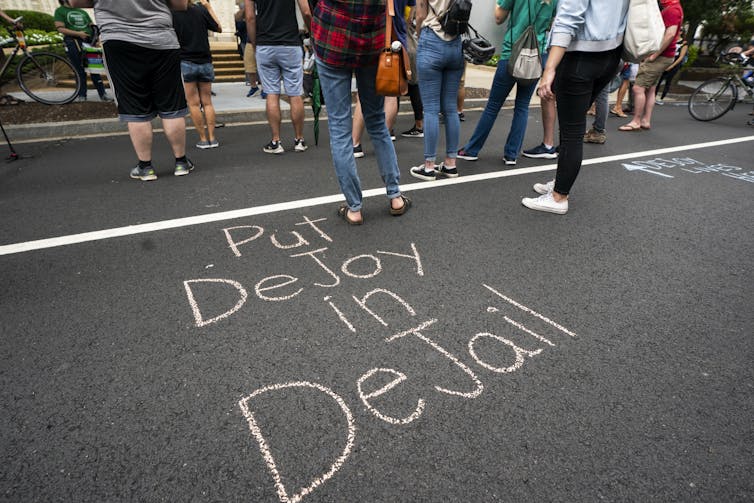
Protestors outside the apartment of Postmaster General Louis DeJoy in Washington, DC.AAP/EPA/Jim Lo Scalzo
Several Democratic representatives have urged the FBI to investigate whether DeJoy’s actions are legal, given the “overwhelming evidence” he “hindered the passage of mail”.
The irony in all this is that after changing his official residence from New York to Florida, Trump inadvertently committed voter fraud by registering to vote under an out-of-state address (that is, the White House in Washington DC), which is not his legal residence. He corrected his registration one month later.
And just last week, Trump requested a postal ballot to vote in Florida’s primary election.
The president’s own actions suggests an opposition to voter fraud and postal voting unless it benefits him.
What happens from here? Probably nothing. If Trump wins re-election, the Democrats may impeach him again, but the Republicans in Congress have demonstrated no support for taking action against the president. There may well be court challenges but they could take time.
And with the election drawing closer, time is running out.
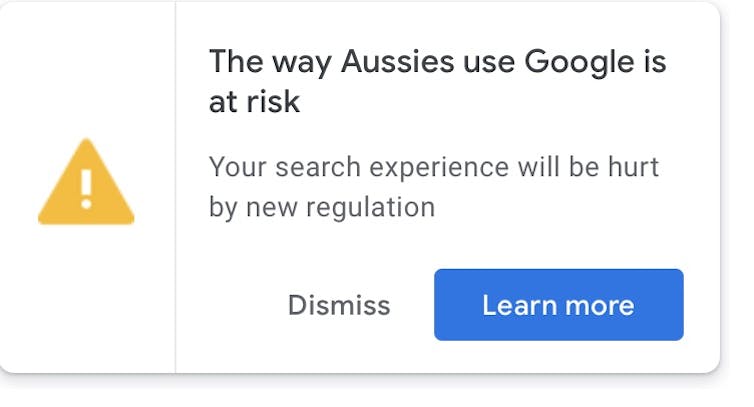
If you went to use Google yesterday, you may have been met with a pop-up warning that the tech giant’s functionality was “at risk” from new Australian government regulation.
Google Australia’s managing director, Mel Silva, wrote an open letter in response to the Australian Competition and Consumer Commission (ACCC) News Media Bargaining Code, which would require Google (and Facebook) to negotiate “fair payment” for Australian news content published on their services.
The letter, pinned to the Google homepage, claims the code would force Google “to provide you with a dramatically worse Google Search and YouTube”. The ACCC has already labelled several of the letter’s statements as “misinformation”.
It seems Google isn’t keen to set a global precedent by paying Australian news outlets for their content. Google claims the ACCC’s proposed code is disastrous, for a variety of reasons.
Google’s letter is part of a campaign designed to scare Australian web users. Don’t fall for it.
Hordes of people took to social media to express dismay and confusion about the unexpected prompt.Screenshot
Google’s claims don’t stack up
First, Google is objecting to a specific part of the legislation designed to stop it downranking (or refusing to list) news content if Google has to pay for it.
This is precisely how Google responded when similar legislation was introduced in Spain. Google changed its search results and even shut some outlets out completely to avoid paying for news content.
The ACCC is heading that off at the pass. The legislation states if Google intends to change the search ranking of a news organisation, for example by downranking that outlet’s stories in Google’s search results, it must give the organisation 28 days’ notice of this change.
The open letter claims this is unfair and would help news outlets “artificially inflate their ranking over everyone else”.
When asked how this was this case, a Google spokesperson told The Conversation the code would require the company to “give all news media businesses advance notice of algorithm changes and explain how they can minimise the effects”.
They said this provision would “seriously damage” Google’s products and user experience and impact its ability to provide users the most relevant results.
However, this claim doesn’t bear logical scrutiny. Notifying a news company of its impending downranking would not give it an unfair advantage, as no other types of content providers would be targeted for demotion anyway.
It would simply warn the outlet if Google was about to drop them down in search results, or boot them off altogether. The 28 days’ notice requirement is an insurance policy in case Google retaliates by deciding to simply downrank media outlets demanding payment for their content. That’s why Google hates it.
It’s tempting to conclude that Google is simply trying to gaslight its users by sowing doubt about the wisdom of the new regulations – because it doesn’t want to pay.
Actively misleading users
Google’s open letter went on to claim Australians might experience data privacy violations if it’s forced to hand advertising data over to “big news businesses”.
Setting aside for a minute the fact that Google is trying to play the “little guy” here, which is laughable, let’s first look at why this is also a falsehood.
The proposed code states Google would have to share data collected about users’ engagement with news content with news media outlets. For example, this would include details about the specific articles a user has clicked on from that outlet, or how long they were reading it for.
This is exactly the kind of data media outlets (including The Conversation) already collect from readers on their own platforms. Yet Google’s letter claims “there’s no way of knowing if any data handed over would be protected, or how it might be used by news media businesses”.
This is pretty rich coming from one of the world’s most datahungry companies, and one of its most prolific privacyviolators.
In a further statement to The Conversation, Google’s spokesperson added:
The code requires Google to tell news media businesses what user data we collect, what data we supply to them and ‘how the registered news business corporation can gain access to’ that data which we don’t supply to them … This goes beyond the current level of data sharing between Google and news publishers.
But Google itself has oceans of information about its users’ searches, habits and preferences. In fact, the ACCC is currently pursuing Google over alleged privacy violations in a separate lawsuit.
Google is not the underdog here
Finally, Google’s open letter ends with the veiled threat its free services may be “at risk” if the proposed ACCC code becomes law.
Google’s spokesperson told The Conversation that Google “did not intend to charge users for [its] free services”.
“What we did say is that Search and YouTube, both of which are free services, are at risk in Australia,” they said.
Google is now a trillion-dollarcompany. Its parent company Alphabet earned US$46 billion in worldwide advertising revenue in the last quarter alone.
For Google to claim its free services for Australians are “at risk” if it has to return a tiny fraction to the companies that actually provide news content – well, I’m sceptical of all the claims in the letter, but this one takes the cake.
Source: The Conversation (Au and NZ) – By Aidan Coleman, Visiting Research Fellow, School of Humanities and Early Career Researcher at the JM Coetzee Centre for Creative Practice, University of Adelaide
His “poems are as urgent and accessible as headlines, though infinitely more beautiful”, the broadcaster Phillip Adams wrote of the Australian poet Philip Hodgins.
August 18th marks the 25th anniversary of Hodgins’ death, but the passage of time hasn’t blunted this urgency.
Many poets seem strangely fated to their early deaths, and for the short time they have, write with fervour. Keats, who died at 25, left a substantial body of work; the Australian poet Michael Dransfield was particularly prolific in his equally brief life. So too with Hodgins, who was diagnosed with leukaemia when he was 24 and given just three years to live.
Hodgins mastered his craft quickly. His first book Blood and Bone (1986) won the Kenneth Slessor Prize for Poetry, and he wrote as a man condemned, producing four more full-length collections and a verse novella over the next nine years.
Nearness of death
Mortality would remain Hodgins’ central theme, colouring his other writings with irony and pessimism. Fate is depicted as capricious. The Five Thousand Acre Paddock simply records:
There was only one
tree in all that space and he
drove straight into it.
The English poet Philip Larkin was undoubtedly an influence on Hodgins’ work. Imbued with a similar scepticism, Hodgins shares Larkin’s sense of craft and the knife-twist of his memorable endings.
He also has Larkin’s eye for a telling detail. By turns, objects are permeated by menace or a peculiar sadness. A kite, “haggles over length” and “pesters the sun like an insect / at a light”; The Scarifier – a machine used for breaking up the soil – is “a rigid grid of broken ribs”.
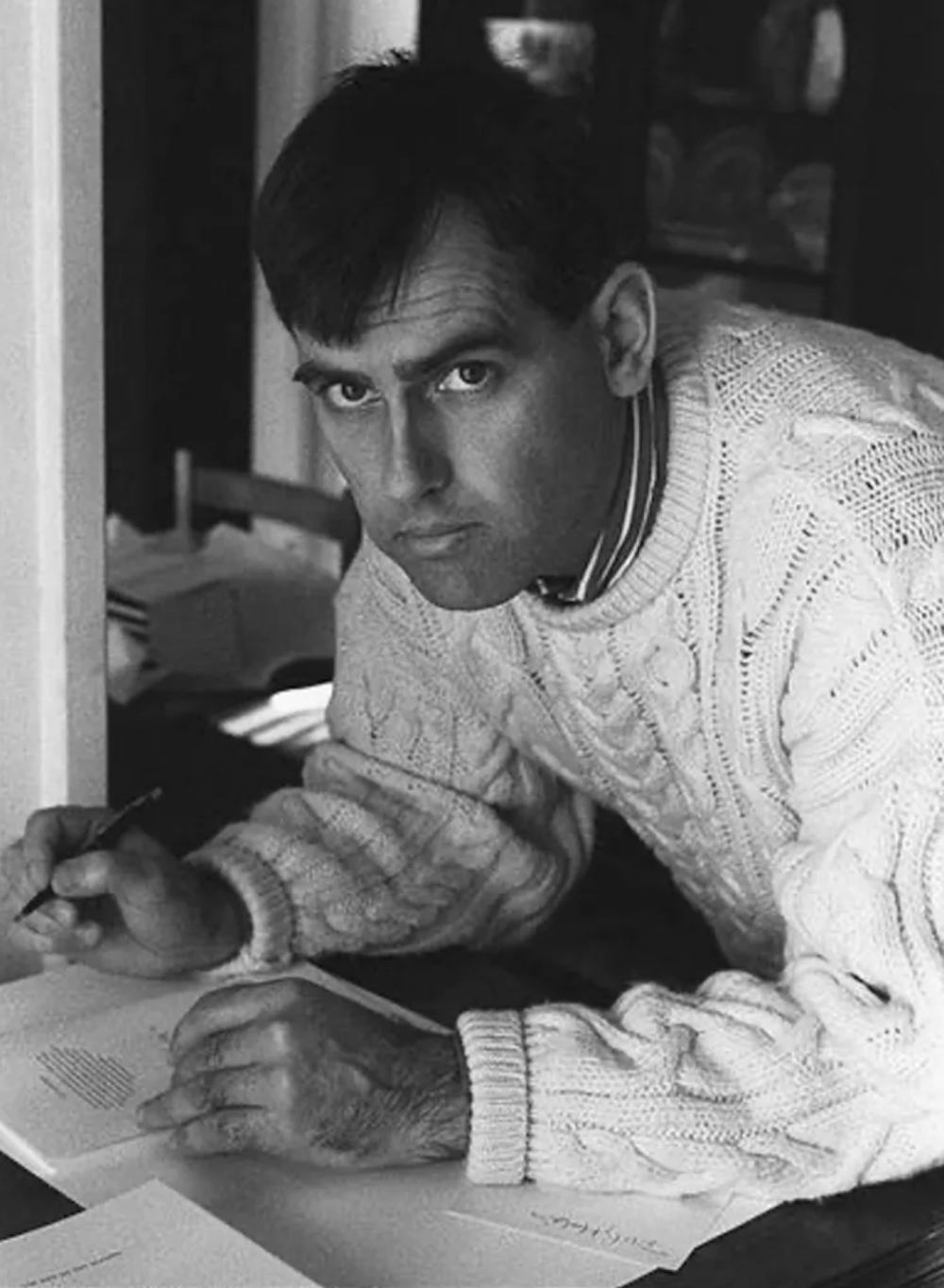
Philip Hodgins permiated objects in his poems with menace or sadness.Alec Bolton/National Library of Australia
The nearness of death haunts many of Hodgins’ poems. The Birds, a sonnet in tetrameters, sees the poem’s speaker lying awake at dawn after a sleepless night, listening to the birds “on the go”, compared to “the frequencies / of many twiddled radios”. It ends with the sobering couplet:
The sentiment is reminiscent of medieval double-decker transi tombs. Individuals, no matter their status, are equal in death.
The rhymes are understated, either partial (“suits / shorts”) or land on an unstressed syllable (“mortuary / identity”) and the sonnet’s loose rhythms create a conversational tone. So the sting of the ending catches a reader unawares as the poem both narrows to a point and turns on a paradox. What can be more intimate and yet, at the same time, more coldly clinical and impersonal than surgery?
The way things are
Rural life is the other major theme in Hodgins’ work. He grew up on a dairy farm near Shepparton, Victoria. After a decade in Melbourne, working in the publishing industry, he returned to the country with his wife, Janet Shaw, settling near Maryborough.
Violence is foregrounded in poems that question the pastoral mode. Even pets are expendable, their murder presented as an understandably harsh necessity.
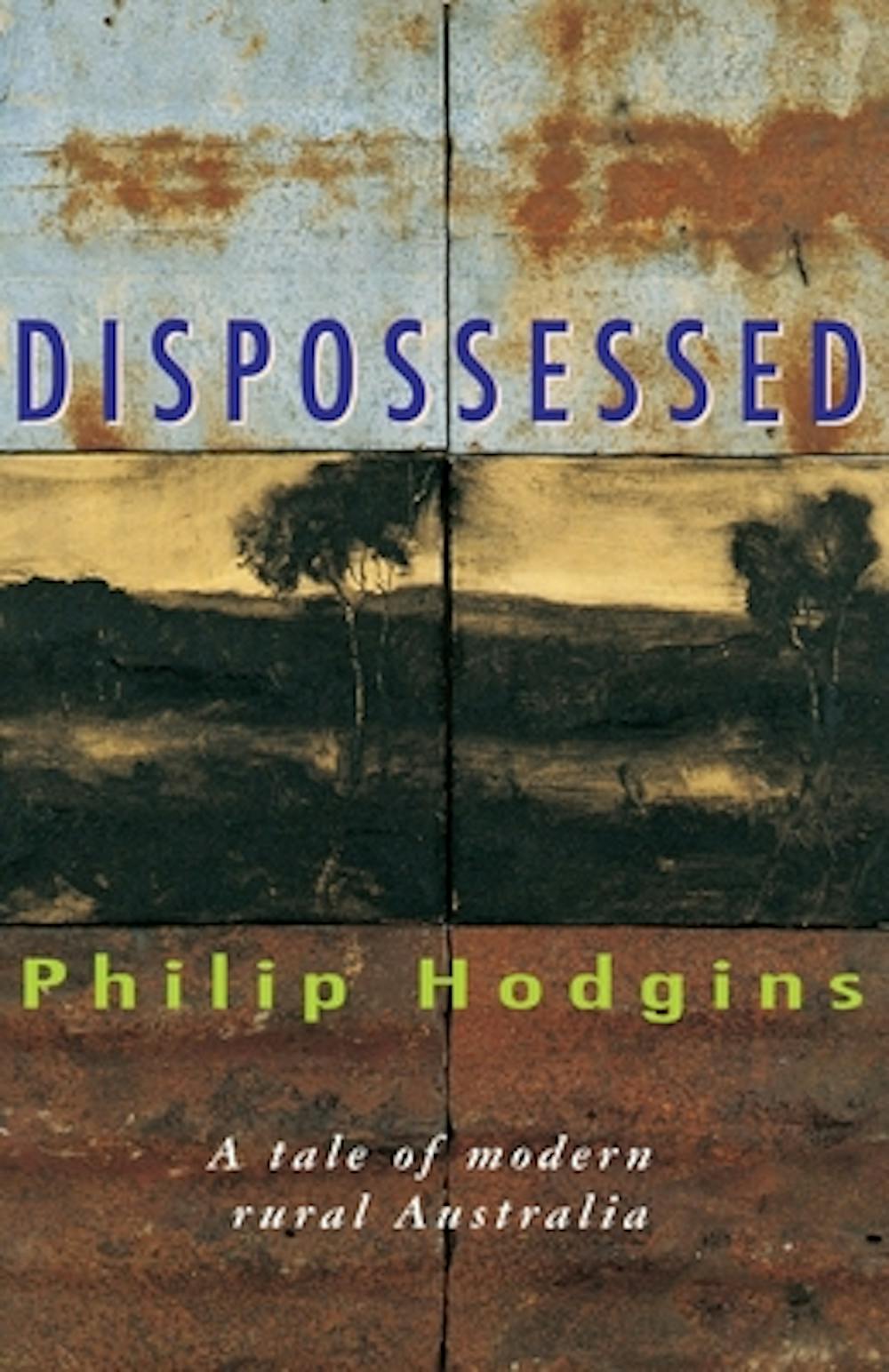
Environmental crisis and economic pressures loom in the background but come sharply into focus on occasion. The plot of Dispossessed (1994), Hodgins’ verse novella, details the trials of a poor rural family who have over-borrowed and are facing eviction.
Today the work is even more topical given the exploitation of dairy farmers through the ruthless supermarket price wars.
In “Shooting the Dogs” the theme of mortality converges with the poet’s rural preoccupations. This dramatic monologue presents the dilemma of a rural family moving to the city. Unable to rehome their two dogs, they are forced to put them down.
The personalities of the dogs are portrayed unsentimentally through details and incidents. They were, the speaker concedes, “not without their faults”. In contrast to the stories he has heard of dogs knowing when their time has come, these dogs “didn’t have a clue”.
Hodgins eschews any greater meaning attaching itself to this event other than the stoic acceptance of the way things are.
The poem ends with the speaker stating matter-of-factly that he buried the dogs behind the tool shed, “one of the last things [he] did” before leaving.
But the final image lodges in the mind and, ultimately, expresses more about the lot of the new class of rural poor than it does about the fate of the dogs:
Each time the gravel slid off the shovel
it sounded like something
trying to hang on by its nails.
From the publication of his first poem, Hodgins had a mere 15 years to write. In that short time, he produced an oeuvre as profound as it is accessible.
A quarter of a century since his death, his work is as fresh and urgent as ever.
Feeling torn about wearing a mask? Me too. I don’t want to look like I’m virtue signalling or get funny looks. But I also want to be responsible about public health. I’ve ended up conflicted, wearing a mask one day but not the next.
The statistics suggest this isn’t my dilemma alone. While mask sales have skyrocketed in New Zealand since COVID-19 reemerged, public mask wearing (even in Auckland) is still the exception.
This is where understanding ethical decision making can be useful. Ethics breaks down values-based decisions, helping us see when our ego is ruling us, and when our rationality is in control.
Ethical analysis can’t make the decision for us, but it can make dealing with ethical decisions clearer and more conscious.
What kind of person do I want to be?
Scholars divide the study of ethics into three main branches: virtue, deontological and consequential. All three can us help think about wearing a mask.
Virtue ethics is about developing good character. Our virtues come from our upbringing, experiences and education. We can change them by redefining what sort of person we want to be.
The front page test – would you feel comfortable seeing your behaviour on the nightly news?
The significant other test – would the important people in your life be proud of you?
(There are several recently disgraced politicians who probably wish they’d run the front page and significant other checks before acting.)
However, virtue ethics are individualistic: values differ by gender, age, culture and other factors. Our ego can help us moderate our behaviour, but it can also convince us we are right just because we sincerely hold a strong moral belief.
The “no win” debates we see on social media often reach a stalemate because people are relying on personal values as their only moral compass.
Also, prioritising reasonableness can result in apathy. While Aristotle praised the “reasonable man” as virtuous, George Bernard Shaw pointed out that “all progress depends on the unreasonable man”.
Currently mask wearers are the exception rather than the rule, and some have even been mocked. Shaw’s approach would suggest the courage to show ethical leadership deserves praise rather than mockery. But we can only make a robust ethical judgement if duties and outcomes are also considered.
Deontologists try to identify rules for good behaviour that will hold true in every situation. They advise us to obey the law and any codes of conduct or standards that apply to our job or other group membership.
There is currently no law in New Zealand mandating mass masking, so that can’t guide us. But many workplaces have conduct or health and safety codes, which can simplify decision making, and there are clear public health recommendations.
Deontology gives clarity – rules define what can be done without penalty – and is less muddy or personal than virtue-based ethics. It can also provide accountability. If we breach the rules of a group, often we can be removed from that group.
On the other hand, deontological ethics is inflexible. Codes and rules can’t cover every situation, can date rapidly, and are usually made reactively. They mostly punish breaches rather than guiding good behaviour.
Nonetheless, considering laws and rules is an important ethical step, alongside thinking about our values and the impact of our actions.
What kind of world do I want to live in?
Consequentialists judge actions by their outcomes: who is affected and how. They aim to maximise benefit and minimise harm.
When weighing consequences, it is useful to ask:
Would you be happy for your action to affect you in the same way it does others (reversibility)?
Would the outcome be acceptable if everyone behaved this way (universalisability)?
What don’t we know today that might be true tomorrow (unknowability)?
Consequentialists try to act ethically towards all groups of people, not just the group they currently occupy, because they know circumstances can change. If a friend was diagnosed with an unexpected respiratory condition tomorrow, for example, would we be happy with how we behaved today?
But, on their own, consequentialist approaches can be vague and complex. Most usefully, consequentialism adds depth to other approaches.
Ask yourself these questions
So, I run all three ethics checks: what values are important to me, what are my duties, and what are the potential impacts of my choice? To help, I can ask other questions:
What would mum say? (Be compassionate.)
What does my workplace code of conduct say? (It prioritises manaakitanga or care for others.)
What does the reversability test imply? (That I can show solidarity with, and reduce anxiety for, people at risk, even if I am at less risk.)
If someone I’m in contact with got sick tomorrow, how would I feel about my behaviour today? (I’d rather not be sorry in hindsight.)
Asking a range of questions from all three ethical angles helps me arrive at an ethically measured decision: that I should be consistently wearing a mask when I go out. And a careful decision is much easier to stick to, even if it means I still get the odd funny look.
Former New Zealand Prime Minister, Jacinda Ardern.
Analysis by Dr Bryce Edwards
Political scientist, Dr Bryce Edwards.
Has the election been saved from becoming another victim of Covid-19? Quite possibly. The issue of when to hold the election had come under serious scrutiny due to the increased restrictions and changed focus necessitated by the outbreak of community transmission of Covid-19. There were major problems with how democratic and adequate the electoral process was shaping up to be, with voting day scheduled for a month’s time, on 19 September.
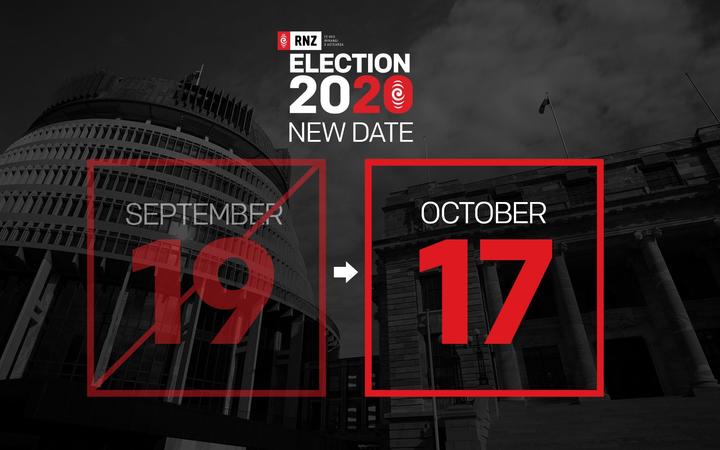
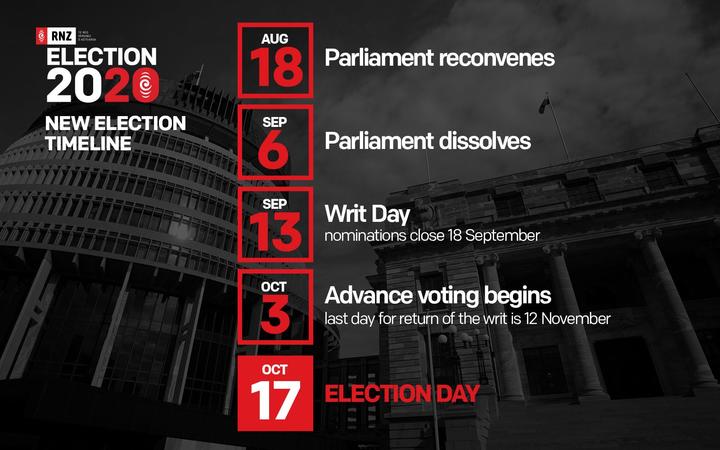
By pushing the election out by a month to 17 October, Prime Minister Jacinda Ardern has ensured there is a greater chance of the election process being more democratic. At the same time, she has further enhanced her leadership reputation by avoiding what would have looked like a self-serving attempt to keep to a date that advantaged her own party.
This is what I’ve argued in a column yesterday for the Guardian, saying public participation and engagement was in serious question, even if electoral authorities had been able to make the mechanics of voting possible in just a few weeks. Without a proper campaign, full debate and consideration of the big political questions might not occur, and voter turnout might even drop below the 69.6% recorded a few elections ago – see: By delaying the New Zealand election Jacinda Ardern appears magnanimous and conciliatory.
By choosing the “Goldilocks option” of October instead of Labour’s own preference (September) or her opponents’ (November), Ardern has “blunted all criticisms, while yielding the least possible ground to opponents.”
Reaction from the political editors
Journalists and other political commentators have pointed out that Ardern had little choice to delay the election, but has nonetheless handled the issue with aplomb.
Newsroom political editor Sam Sachdeva says her decision is unsurprising and pragmatic – “the Prime Minister’s innate conservatism and instinct for compromise was always likely to win out” – and it would have been a bad look for her to try to continue with a September election given the virus outbreak – see: Pragmatism wins out with election delay.
Sachdeva also stresses how smart her choice of date is: “It is also shrewd in that it is not quite what New Zealand First wanted (a November 21 election), nor National (some time early next year), nor in all likelihood Ardern herself, taking some of the politics out of it.”
Herald political editor Audrey Young also argues Ardern’s decision is both smart and correct, saying it “would have looked self-serving” not to delay the election, as well as going against her general use of “a precautionary approach” in dealing with the pandemic – see: Full marks to Prime Minister Jacinda Ardern for the way she delayed the election (paywalled).
Stuff political editor Luke Malpass also endorses the decision: “Ardern has reached a sensible compromise that takes into account both the practical undertaking of an election and, even more importantly, the appearance and reality of fairness. The exercise of democracy has to be fair, and has to be seen to be fair” – see: Election delay was the call Jacinda Ardern had to make. He points out that every political party appeared to be driven by self-interest with regard to choosing the date, and it “is worth noting that Labour was just as self-interested in initially wanting the date to stay the same, as the other parties were to move it.”
Newstalk ZB’s political editor Barry Soper fully endorses the PM’s decision, declaring that “The winner was democracy, the right of parties to get out and campaign” – see: Election date change was better than uglier alternative.
But he’s clear Ardern had no choice but to delay, despite her own preference: “There was no appetite on the ninth floor of the Beehive to delay this year’s election by a month but the alternative was too ugly for Jacinda Ardern to contemplate and even worse for the Governor-General Patsy Reedy to have to cope with. The latter could have been forced to answer a knock at the door up at Government House, opening it to Judith Collins and Winston Peters telling her Ardern didn’t have the confidence of the House to dissolve Parliament and they were forming a Government.”
Soper believes Ardern is being “either optimistic or naive when she adamantly declared she wouldn’t be changing the election date again”, and he says it’s out of sync with “these unpredictable and dramatically changing times”.
The Spinoff political editor Justin Giovannetti reported on the decision, emphasising the pressure that had been building on Ardern to go with a delay, and concludes she “has forestalled a brewing political crisis” – see: Jacinda Ardern delays New Zealand ‘Covid election’ by four weeks. He points out that New Zealand “is now one of the few countries to delay its national election due to the coronavirus”, and outlines that it “is only the fourth postponement of a general election in New Zealand’s history” (with the others occurring in 1917, 1934, and 1941).
BusinessDesk’s Pattrick Smellie says “Ardern has taken the conservative option” in delaying the election for a month, and believes: “The most important part of her statement today is her emphatic statement that she will not move the date again herself” – see: PM hands election date baton to Electoral Commission (paywalled).
Reaction from newspaper editorials
Newspaper editorials have endorsed the PM’s decision. The New Zealand Herald suggests that, given current circumstances, New Zealanders aren’t fully informed of the political options for the election, nor the referendums. It says the campaign has been “severely impacted” by “the ghastly return of the Covid-19 coronavirus”, necessitating a delay to voting – see: Editorial: October 17 election fair to all parties.
The most important impact of the delay, the newspaper says, is that “the extra 28 days offers voters ample time to hear, see and consider the overtures from our political applicants.” And although Ardern might have been tempted to stick with an earlier election date, this “may have jarred with the mantra from this Government to be kind.” But there is now less chance that voting activity will contribute to “further outbreaks stemming from queues at polling stations or contamination at booths.”
Today’s editorial in Stuff newspapers says Labour’s opponents made a good case to delay the election, and the PM “showed the right combination of flexibility and backbone by moving the election date a month back” regardless of whether this was out of genuine “social responsibility” or “shrewdness” – see: Election postponed: delaying tactics a sensible, savvy move.
Opponents might still complain that the date hasn’t shifted far enough, but they risk looking “nakedly opportunistic” or “petulant” (especially, National, which has refused to do anything more than “acknowledge” the new date).
The newspaper argues that without a delay the “Government would surely have faced three years of carping about its legitimacy”, and that it’s a good thing for their Covid-19 response to be “put to the test for longer than initially planned”.
According to the ODT, there were good reasons for the Government to continue with the September date, but the decision to delay is wise because it lances the possibility of the election’s legitimacy being challenged – see: Tough call, right call. The newspaper says the PM now rightly wants the focus to remain on combating the virus rather than the election, and yet all the political parties will also have a better opportunity to get their policy positions across without compromising the public’s health.
Reaction from political commentators
All political commentators appear to endorse the election date decision, or at least the cleverness of Ardern for making it. Writing in the Herald, National Party-aligned PR professional Matthew Hooton says the announcement “was politically masterful. It is enough of an extension to avoid accusations of unfairness against parties other than Labour, which risked the election looking illegitimate. But it was not Winston Peters and Judith Collins’ preferred date of November 21, which would have made Jacinda Ardern look controlled by her Deputy Prime Minister and the Leader of the Opposition” – see: October 17 choice masterful by Jacinda Ardern (paywalled).
Newstalk ZB broadcaster Mike Hosking endorses the change of date, and strongly criticises various academics who argued in favour of sticking with a 19 September election, saying “to seriously contemplate, as our political wonks at universities were, simply to carry on as though nothing had happened is to undermine the entire political process, not to mention tradition and simple fairness” – see: Election delay the right call but will hurt Jacinda Ardern’s chances.
Hosking says going with a September election would make NZ look terribly undemocratic: “What do you think the world would make of a country where the Government’s major party launched their campaign, then locked a solid chunk of the country down, made freedom of movement tricky for the rest of it, and had the official Opposition with no launch at all?”
Also endorsing Ardern’s choice, Kate Hawkesby likewise suggests an earlier election wouldn’t be very be democratic: “it would be simply undemocratic to have rushed through what’s arguably the most important election of our lifetime. The focus right now, especially for those in Auckland and for business and tourist operators, is not an election, but how to survive. On top of that we are voting on two very important referendums and we need to be able to do that fully informed, with time to make considered decisions. And that’s before we even get to policy, which has been put on ice announcement wise. How do we vote when we don’t even know what the policies are yet?” – see: Election delayed in the hope we’ll forget lockdown debacle.
Will the delay change the outcome?
In my Guardian column, I suggest that the delay is unlikely to have any significant impact on the fortunes of Labour and National, but is instead more likely to affect the minor parties fluctuating around the 5% MMP threshold, and that “a shift of a few percentage points is highly possible and could still make a huge difference”, especially in terms of coalition partners for Labour.
Luke Malpass argues in his column that the extension of the campaign won’t make much difference: “It is hard to see that this month’s delay will materially change the polling, unless new and significant mistakes and bungles are revealed. The New Zealand electorate tends not to be capricious. If voters trusted Government’s handling of the issues last week, there is no obvious reason why anyone will have changed their minds.”
Matthew Hooton argues it’s unclear whether National will benefit from the extended campaign: “Ardern has given National just enough time to show they have something exciting to offer – and, equally, just enough time to prove they don’t.”
Similarly, Sam Sachdeva says: “Candidates and parties now have more time to win over the electorate – but they also have time to make mistakes as well, and there is no guarantee of which way they will go.” Yet, it could still have a major impact: “Ardern and her ministers will face pointed questions about the border management regime and the oversight of managed isolation and quarantine facilities, given the likelihood the latest outbreak originated from there and the admission that testing had not met Cabinet’s expectations. But Collins too will be under pressure: can she find the right note in responding to this crisis, or will she tilt too far towards negativity or the outright conspiracising that her deputy leader Gerry Brownlee displayed last week?”
According to Pattrick Smellie, Labour is at risk given the extra four weeks: “That is plenty of time for Labour’s stratospheric polling numbers to take a knock, particularly as the expected fourth quarter economic downturn is exacerbated by the knock to confidence and activity caused by the latest lockdown. Firms are already considering fresh redundancies because of the impact of the Auckland lockdown. Extending the wage subsidy should soften the impact, but this second round outbreak has been sobering for the whole country and hits firms already eating deeply into reserves after the first extended lockdown. It is clearer than it was that we will be dealing with this virus for a long time yet, and the consensus on how to deal with it has been shaken. Any further delay to polling represents a huge risk for Labour that its previously unassailable political position will prove difficult to maintain.”
Mike Hosking is also of the belief that the delay is good for Labour’s opponents: “It’s good for National, which gets a launch, and a platform to argue alternatives. And it’s good for New Zealand First, which gets time to save itself. It was always going to be closer than many of the Labour acolytes thought. But now with another month, and yet more bungles to spin, the tide on a government that’s messed it up and failed to deliver is going out.”
On Labour’s situation, Hosking says: “Every day beyond September 19 is a day the Government has to explain this current mess. The border breach, the lack of testing, the very reason we are here is because it has failed to deliver what it said it had.”
In contrast, Kate Hawkesby argues that Labour will benefit from the public voting once the country is out of the current crisis: “I actually think it’s in her best interests not to rush the election. The further away it is, the further we are from the horror memory of lockdown, the more freedoms we’re enjoying, the happier we are. That all reflects better on the Government. If we went to the polls off the back of another lockdown – still grumpy about our lack of freedoms and worried sick about our businesses and bottom lines – we may punish the Government for it.”
Increasingly, people are turning to dating sites and apps to find love. And while the pool may seem larger, and access is at our fingertips, using them doesn’t necessarily improve our chances of finding a mate.
How do people find love?
In a Relationships Australia Survey, approximately 60% of people surveyed used dating apps and online sites, and of these people, about 25% found a long-term partner.
In an ABC survey, 35% of people found their current partner online.Candice Picard/Unsplash, CC BY
However, the limited research out there suggests the probability of a match using dating apps such as Tinder is low, with some studies reporting women find a match about 10% of the time, and men around 0.6% of the time on Tinder. The suggested difference is that women are more selective than men in the potential suitors they pursue. But either way, the success rates are low.
These statistics tell us people need to try many times to initiate a connection before they make a match, and that many connections are unlikely to become long-term (or at the very least, “steady dating”) relationships. Yet, it’s estimated that more than 50 million people use an app such as Tinder, with US millennials averaging approximately 1.5 hours a day, according to market research.
Despite these trends, more than 60% of married couples report their relationship was initiated by a friend.
What does online dating provide?
Online dating sites and apps provide users with a large pool of prospective suitors, and some of them use algorithms to provide you with mate suggestions that more closely match what you are looking for.
For people who are shy or introverted, these online means of selecting and interacting with a potential date can provide a less confronting way to initiate a connection. Messaging, video calls and phone chats can help someone get a better sense of a person before committing to an actual face-to-face meeting.
With the potential opportunities afforded by online dating sites come some cautions people need to be aware of. When it comes to the size of the dating pool, the statistics noted earlier suggest that despite the number of possible matches, the success of finding someone is quite low.
So people need to be prepared they will either initiate or receive requests for connections that are likely to go nowhere. This rejection can be challenging, especially for those who are sensitive to rejection.
Expect a lot of rejection before finding a partner if you’re looking online.Taylor Hernandez/Unsplash, CC BY
The large pool of potential matches brings with it more decision-making about who to choose – making trade-offs between which potential mates to pursue and which to avoid. The large pool could even undermine success because people overly objectify prospects or become overwhelmed by choice.
Because the first impression people have of a potential date are pictures and a description, it’s hard to form an accurate first impression. So much of our first impression of people is in how they speak and how they engage in an interaction – we rely on a lot of non-verbal behaviour when we assess people.
The online world also makes it easier for people to lie or give false impressions of themselves. Although this can occur when meeting people face-to-face too, these things can be harder to detect when evaluating a partner online.
What’s more, the algorithms used to predict likely matches are not always based on good premises. Those based on questionnaires can be problematic because people do not always have good insight into themselves and some intentionally mis-portray themselves.
It’s easier to detect honesty in real life.Unsplash, CC BY
Some are based on the similarity of people’s responses and profiles, but relationship science tells us similarities such as these are not as important as assumed. And some, such as Tinder, are based on swiping patterns. But this belies the fact users might have different motivations (some just use them for a confidence boost or amusement).
These algorithms also have no way of capturing and predicting how a couple may change or deal with challenges over time, and how their way of interacting may affect the development of a long-term relationship.
And while communicating via message can be good early on, if interactions are kept virtual for too long, a person can become unsure about the potential mate’s intentions or they could develop expectations about someone that become violated when meeting them.
As the numbers suggest, the rapid scanning of many profiles doesn’t appear to be resulting in good success. So it may be helpful to reduce the number of profiles you look at, and to spend more time looking at each one.
Taking a “quality over quantity” approach will likely allow for a more careful assessment of whether a potential date may be a good match. This might also help develop a more accurate sense of another’s dating intentions.
When a match is made, it may be best not to maintain a long period of communication through chat or text. Rather, if you wish to pursue a connection, initiate further communication over the phone or video chat to help get a better sense of the person and how well you interact, and to establish a more meaningful connection early.
Finally, the online dating world doesn’t rule out making connections using more traditional means. Before the online dating boom, people typically met their partners during a night out, at work, or through mutual connections such as family and friends. Unlike the virtual world, finding a match in the physical world doesn’t rely on algorithms, profiles, or sifting through a lineup of possible matches. So stay active in the real world too.
The former NSW education minister and now head of the UNSW Gonski Institute, Adrian Piccoli, suggested in recent days Australian governments should fully fund all non-government primary schools.
In an opinion piece published by the Sydney Morning Herald, Piccoli wrote this would fix inequality — as long as non-government schools also stopped charging fees and followed the same enrolment and accountability rules as public schools.
He wrote:
This idea is neither new nor radical. Canada has operated this way for decades and find themselves with an education system far more equitable and much higher performing than Australia.
As a researcher with expertise on the Canadian education system, I think there are several aspects of this claim worth clarifying and examining more closely.
Canada doesn’t fully fund private schools
It’s important to note there is no such thing as “Canadian” education. In Canada, under the terms of the constitution, each province holds the jurisdiction and autonomy to set their own educational policies. So, there is no overarching ministry or agency at the federal level, meaning education policy remains highly decentralised.
Canada remains an outlier, globally, as it does not grant any central body control over education across the country — which comes as a surprise to many.
Funding remains quite complex in all jurisdictions (try to understand how funding formulas work even in Australia!). But to the second point, in Canada, only some (five) of the ten provinces provide partial funding to private schools while in three of the provinces (Ontario, Alberta and Saskatchewan) Catholic schools are fully funded as part of a separate, but also public, school system.
In Ontario, where I teach, private schools receive no government funding. It should also be noted that, overall, well over 90% of all students across Canada attend public schools.
There’s no such thing as a ‘Canadian’ education.Shutterstock
In short then, Canada as a whole does not provide significant taxpayer dollars to support private schools.
In effect, the idea being put forward — that all primary private schools should be publicly funded and required to abide by certain policies, rules and accountability measures — is essentially the idea of enhancing school choice through something akin to charter schools, which have emerged in Canada and many other countries.
Charter schools in Canada
Charter schools can be best understood as a hybrid of public and private schools.
Though they vary by name and context, the idea of charter schools is to allow private educational providers the opportunity to secure public funding for their schools. In the United States, where charter schools have proliferated, charters can also be run as for-profit entities.
In Canada, only one province, Alberta, allows for charter schools to exist. These schools are fully funded by the government and as such, must abide by the rules and policies set out by the government.
While Canada has received its fair share of accolades in recent years — such as appearing in the top ten countries for reading, maths and science in recent PISA tests – such assertions are often based strictly on measures such as standardised testing. Nevertheless, these findings highlight strong outcomes in both educational quality and equity in a country which maintains a robust K-12 public education system.
While there are gaps and room for improvement across all levels and systems, public education remains a public good which is intended to serve the needs of all. Funding for private forms of education and the false promises of “school choices” are often misguided efforts which actually continue to drive educational inequalities and inequities.
There is no one-size-fits-all approach to educational success and no silver bullet to enacting effective educational reform. But supporting local, universal and accessible public schools still provides the best opportunity to meet the needs of all students.
Schools in Papua New Guinea’s National Capital District resumed yesterday, with strict covid-19 protocols in place, and with several turning away those who came without masks.
This came in the wake of a new covid-19 spike with PNG reporting another 52 cases of covid-19 yesterday since Thursday, taking its total to 323.
Head teacher at Bavaroko Primary School, Catherine Moresi, said staff had communicated this message to parents several times and expected them to provide a face mask for their children, reports the PNG Post-Courier.
“As you can see, we have put a note which says ‘entry by masks’, so no masks, don’t come inside, even in the classroom … this morning, some had to turn back because they had no masks on,” she said.
Moresi said that since classrooms were hot and often crowded, they had advised kids to only remove masks once they were outside and away from friends.
“This is so that they can breathe properly because some classrooms have one fan and I don’t know how they are going to cope with the face masks till the end,” she said.
The Department of Education yesterday advised parents and guardians that children below the age of 12 years were not required to wear face masks.
Proper use of PPE The advice comes amid concerns on the proper use of the PPE by children and the risks associated with prolonged covering of the nose and mouth for those under the age of 12 years.
Moresi said they were not aware of the department’s recent statement and were communicating to parents based on the ongoing advice received earlier from the department and from the Pandemic Controller.
“We are advising all students to wear a face mask, especially for the 12-year-olds and above,” she said.
“They must wear a mask,” NCD School Inspector Elizabeth Kosi said, revealing that during yesterday’s school inspection, most elementary kids turned up with masks.
“We are thanking parents because we know that they are taking that ownership to protect their children.”
Gordons Secondary School principal, George Kenega, said the school promoted the covid-19 protocols and would make sure to send home students who arrived without masks, knowing that enough awareness had been made regarding the importance of face masks.
“We made it clear that if you don’t come with a mask, you won’t be allowed entry into the school,” he said.
All Coronation children sent home At Coronation primary, all its elementary and upper-primary were sent home yesterday and told to return today with face masks on, while the school took the day off to prepare schedules to minimise social distancing, which is a huge concern facing schools in NCD.
In the neighbouring Indonesian-ruled Papua province, almost 300 children aged below 19 have been infected with covid-19.
TheJakarta Post reports that the data from the Papua Covid-19 prevention task force is a cumulative number from late March to last week.
In French Polynesia, the covid-19 outbreak has prompted a week-long closure of several schools on Tahiti, reports RNZ Pacific.
Two schools have each reported a covid-19 case, including a school run by the Maohi Protestant Church which decided to shut its seven teaching establishments.
They all plan to reopen next week.
The last official tally showed 130 people had tested positive for the coronavirus in the second wave, which arrived after quarantine requirements for international arrivals were lifted last month when borders reopened to boost the tourism sector.
Guam has confirmed 42 new cases of covid-19 today bringing the territory’s total up to 558 with 5 deaths, reports RNZ Pacific.
Just days after the Northern Marianas recorded its 50th case of covid-19, the islands’ total has continued to rise with three more testing positive for the coronavirus on Sunday taking the total to 53.
Some South Auckland locals are hitting back at online hate directed at the area and its Pasifika community, after a local family was the first to test positive for covid-19 in the current New Zealand outbreak.
Four positive cases ballooned to a 58-case cluster after 102 days of no community transmission.
Auckland City’s Manukau Ward councillor Alf Filipaina was disgusted by the unfair vitriol directed towards South Auckland and it’s Pacific community.
“Everybody knows this virus doesn’t pick on colour. Because we’re in the lower socio-economic area and we have bigger families, it actually goes through the whole family very quickly,” he said.
Aside from the threat of the virus, Filipaina said job security was a concern for people in the area.
“Some have said, ‘look, we don’t know – even though [the level 3 lock down] is until [August] 26 – whether we’ll have a job to go back to,” he said.
“That’s not a very good feeling.”
Negativity not representative Otahuhu College principal Neil Watson did not think those spreading negativity online represented most people.
“The South Auckland and the Pasifika community here is a fantastically strong and powerful community with so much future,” he said.
“I think what you see on social media is always a small minority of people. What you see everyday in school and in our community is a fantastic community doing the very best to support and help each other.”
Bill Peace, operations manager for social service Strive Community Trust, said people now know what to expect from level 3.
A covid-19 testing centre in Ōtara. Image: RNZ
There was a rush to grocery stores when the latest lockdown was first announced.
But now, he said, people are feeling much calmer compared to the last lockdown.
“If there’s any long line its actually [for] the covid testing, that’s gone crazy.”
Peace called the online hate disappointing, but said he isn’t letting it get to him.
“We just think positive in that space. It’s our hood we’re talking about. We’re here from day one and we’ll continue to support our communities, regardless of what people are saying about them,” he said.
Testing centres in Ōtara and Mangere have been seeing a steady stream of visitors, with each centre handling around 500 to 600 tests a day each.
This article is republished by the Pacific Media Centre under a partnership agreement with RNZ.
If you havesymptomsof the coronavirus, call the NZ Covid-19 Healthline on 0800 358 5453 (+64 9 358 5453 for international SIMs) or call your GP – don’t show up at a medical centre.
When most of us think of the prehistoric past, we envision a world of bizarre, often fearsome giants. From dinosaurs to mammoths and even penguins, life then seemed larger than life today.
Millions of years ago in Australia, giant goannas, kangaroos and diprotodontids (wombat relatives) roamed the landscape. The seas teemed with gargantuan predators such as the infamous “megalodon” shark and so-called giant killer sperm whales.
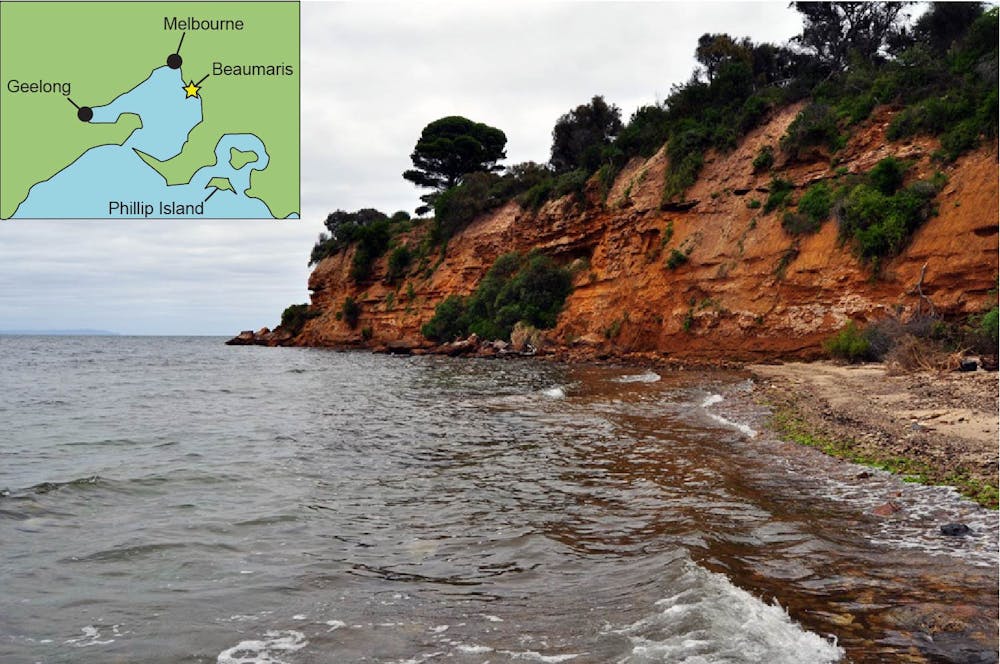
Fossils from this lost world can be found in sandstone rocks, between five million and six million years old, at Beaumaris – a bayside suburb in Melbourne and one of Australia’s most significant urban fossil sites. Here, fossils of ancient marine animals often wash ashore, eroded out of rocks by the tides.
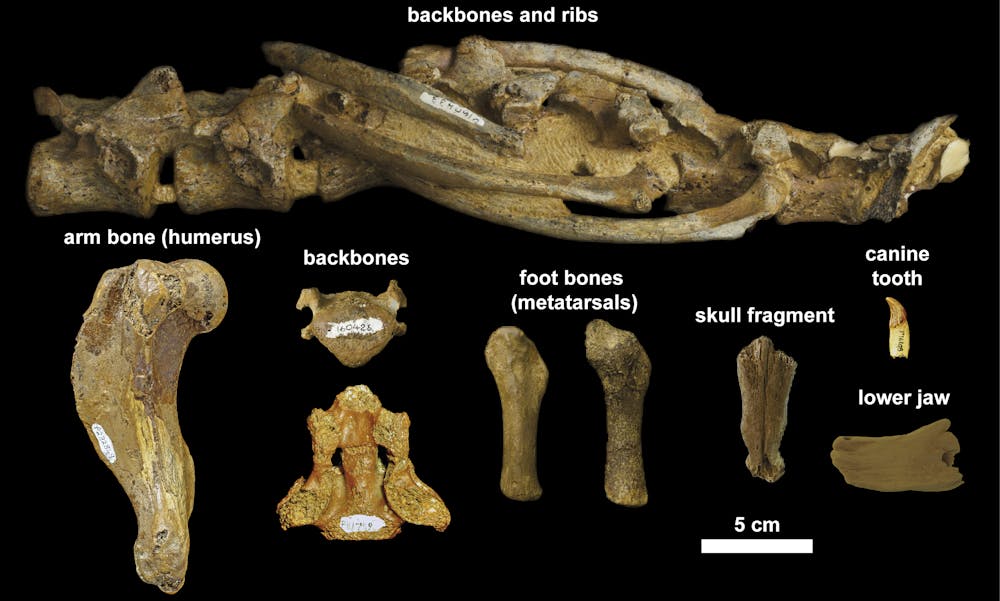
However, some of these fossils are now revealing “jumbo” was not the only size for extinct animals. Our team’s research, published today in the Zoological Journal of the Linnean Society, reports nine new seal fossils from Beaumaris, which we suspect came from nine different individuals.
The findings paint a picture of a relatively small animal, making its way through a world of giants.
Melburnians have been collecting fossils from Beaumaris for more than 100 years. Yet it continues to produce remarkable and scientifically important finds.
The fossils we studied were found on the foreshore of Beaumaris, Melbourne.Erich Fitzgerald, Author provided
This includes extremely rare fossils of animals such as seals. Previously, scientists had studied only one seal fossil from this site.
The nine new fossils detailed in our research were collected and donated to Museums Victoria by local scientists and citizen scientists over the past 88 years. They have more than doubled the known fossil record of seals in Australia.
These fossils represent the oldest evidence of seals in Australia and were identified as “true seals”, a group mostly known from the Arctic and Antarctic. True seals belong to a different group to Australia’s fur seals and sea lions (eared seals), which only arrived in the region about 500,000 years ago.
In total, we found nine seal fossil specimens from Beaumaris, from potentially nine different individuals.Erich Fitzgerald and James Rule, Author provided
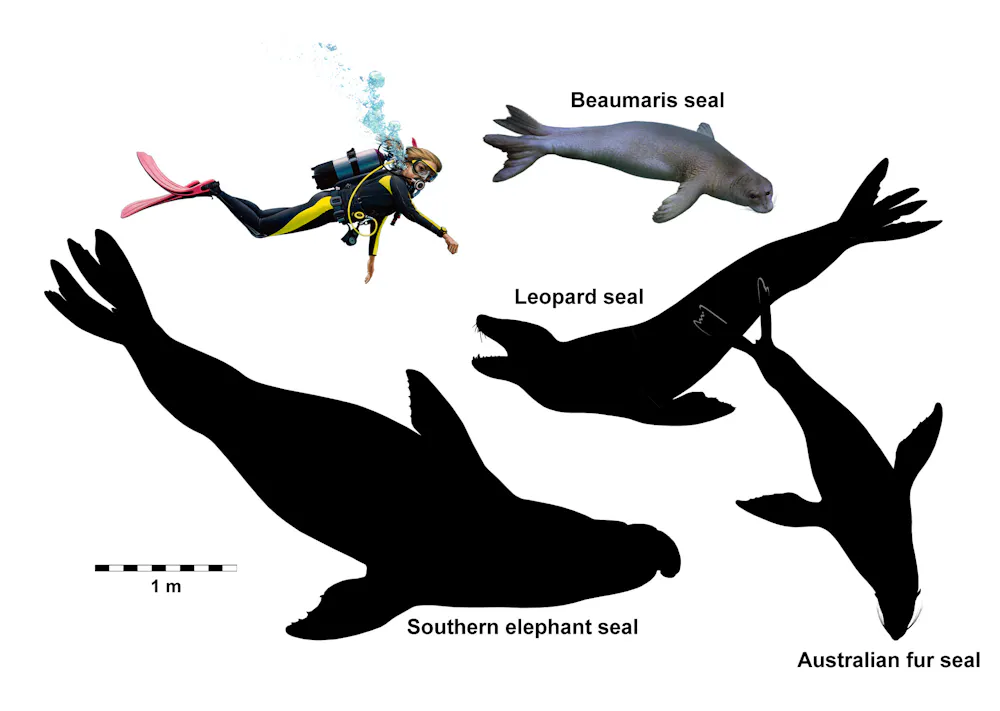
In particular, one of the fossils we identified is a monachine (a southern true seal). Today, these are represented by animals such as leopard or elephant seals in the Southern Ocean surrounding the Antarctic, to which they are related.
Size estimates found the Beaumaris monachines to have been quite small, at only 1.7 metres long. This is similar to the size of today’s Northern Hemisphere seals such as the harbour seal.
However, the Beaumaris seal’s living relatives are much larger – usually 3m long or more. Modern leopard seals can grow to more than 3m long, while elephant seals can reach up to a gigantic 5m in length.
Most fossil whales found at Beaumaris are also smaller than their living counterparts.
This is the opposite trend to many other animal groups with fossils found there, including some sharks and seabirds, wherein the extinct animals were much larger than those alive today.
The extinct Beaumaris seal was much smaller than its living relatives today.Art by Peter Trusler, Author provided
An uncertain future for marine life
Why is finding small seals at Beaumaris important?
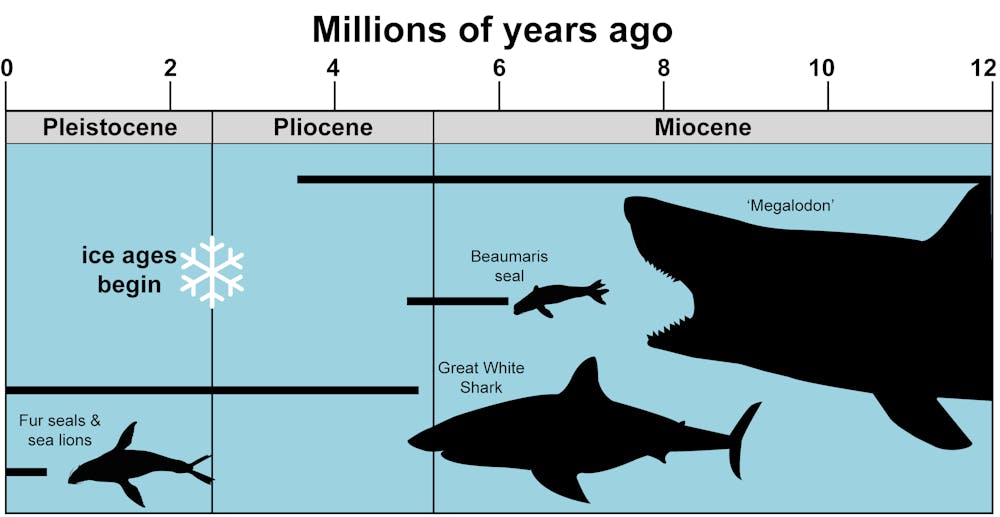
Five million years ago, before the ice ages, the average annual temperature in southeast Australia was about 2–4°C warmer than it is today, with sea levels up to 25m higher.
These warmer oceans supported a greater diversity of marine megafauna than today, with longer but less energy-efficient food chains. These chains only had room for a few large top predators, such as megalodon sharks. And this may have limited the size of other top predators, including seals.
This chart shows the history of seals’ size evolution in Australia, compared to large sharks.Peter Trusler and James Rule, Author provided
This is important. It suggests the large size of Antarctic seals living in the Southern Ocean today is due to colder oceans with more energy-efficient food chains, in which more food is available for marine animals.
If climate change continues to warm the oceans, food chains may once again start to become less energy efficient, resulting in a loss of the resources today’s large seals rely on for survival.
The discovery of seal fossils at Beaumaris has implications for not only unlocking the past, but also for contextualising the future.
It shows the biodiversity and ecology of marine megafauna off southern Australia originated during the long-term transition from a warmer to colder world – a process that only recently began changing trajectory.
To this day, the fossil site at Beaumaris continues to reveal scientifically important finds, thanks to members of the public working with scientists from Museums Victoria.
Source: The Conversation (Au and NZ) – By Kate Fitz-Gibbon, Director, Monash Gender and Family Violence Prevention Centre; Associate Professor of Criminology, Faculty of Arts, Monash University
Victoria is in the grip of its most severe lockdown since the start of the COVID-19 pandemic.
This means opportunities for victims of family violence to seek help are more limited than ever.
It is essential to closely monitor how the pandemic has exacerbated experiences of family violence and how the restrictions are affecting people’s ability to seek help.
Here we present trend data from three key frontline services to better understand how the current Victorian restrictions have impacted family violence help-seeking behaviours.
Reflecting the limited opportunities to seek help, more women are making use of online chat with 1800RESPECT, while more male perpetrators are seeking behaviour change support.
Risks have risen during the pandemic
Since the COVID-19 pandemic began, significant concerns have emerged about the heightened risk of family and domestic violence for women and children.
In April, the United Nations declared this a “shadow pandemic”. The UN called for governments worldwide to commit more funding to ensure safety from violence during this period.
During the first period of restrictions, our research with practitioners in Victoria and Queensland identified an increase in the frequency and severity of family violence. Practitioners also reported an increase in first-time reports of intimate partner violence and the weaponising of children as part of shared care arrangements.
Practitioners told us perpetrators were using children and the threat of COVID-19 infection to gain access to women, to force them to share a house with their abuser when they previously lived separately, and to control access to children.
National research by the Australian Institute of Criminology found one in ten women in a relationship said they had experienced intimate partner violence during the pandemic. Half of those women said the abuse had increased in severity since the outbreak of the pandemic in Australia.
What has changed in lockdown 2.0 in Victoria?
Under stage 4 restrictions implemented across Melbourne on August 2, opportunities for women to help seek are significantly limited. There is a curfew, time outside the house has been limited to one hour of exercise a day within 5 kilometres of home, and only one member of the household is permitted to shop for essential food and household items each day.
While the Victorian government has stipulated seeking help for family violence is a permitted reason to leave the home, our research during the first period of restrictions showed perpetrators used lockdown to further control and isolate their victims.
Since the COVID-19 restrictions began earlier this year, 1800RESPECT, the national helpline, has had an increase in demand for its services nationally. There has also been a shift in how individuals are accessing the helpline.
In the second lockdown, calls to 1800RESPECT have peaked around midnight.Shutterstock
One of the notable changes compared with the pre-COVID period has been the increased use of the online chat function. Between May and July 2020, Victorians represented 31% of all 1800 webchat. This represents a 30% increase in use compared to the three months prior to May.
The other key change in help-seeking that the 1800RESEPCT data show is the increased volume of calls placed late at night, peaking around midnight.
This may reflect that women are waiting until their children and/or abusive partner are asleep before they seek help. Anecdotally, however, counsellors report that callers at these hours are seeking help to deal with trauma, including nightmares, flashbacks and/or sleep disturbances. It is believed the COVID-19 restrictions are exacerbating experiences of trauma as being confined to their homes triggers victim/survivors’ memories of being or feeling trapped.
The Victorian government has acknowledged the impact of the restrictions on the resurgence of trauma among victims/survivors of family violence. These victims/survivors can be exempt from wearing a mask, for example, where they have previously been choked, strangled or suffocated.
Reports to Victoria Police
Since stage 3 restrictions were reintroduced in Victoria in July, Victoria Police have reported a slight decrease in family violence reports around the state.
This may reflect that the restrictions make it more difficult for victims to report abuse. If living with their abuser, they likely have less time on their own and significantly less time out of the house. The fact that previously separated couples are once more having less in-person contact may also be a factor here.
A clear understanding of police reporting rates and actual experiences of violence will likely emerge over time and will be an important point of analysis.
The current rate of reporting contrasts with the increase in family violence reporting after the easing of the first wave of stage 3 restrictions in Victoria. As people had more in-person contact with family members, Victoria Police found reporting of family violence between separated couples increased to pre-COVID rates.
Engagement with men’s services and behaviour change programs
No to Violence, the peak body for men’s services, reported a spike in requests for services during the initial period of stage 3 restrictions in Victoria.
While calls to the Men’s Referral Service slightly increased as Victoria re-entered stage 3 restrictions, it has not been at the same level as earlier in the pandemic.
More men have been seeking help for abusive behaviour during lockdown.Shutterstock
Changes in men’s help-seeking have been observed in the Brief Intervention Service (BIS) delivered by No to Violence. The number of men eligible for and enrolling in the intervention has increased. BIS is used to “hold” men who are waiting to enter a program, or who are enrolled in a program that has been suspended during the COVID-19 restrictions.
Men are also eligible for this program when they have called the Men’s Referral Service (MRS) with concerns about their behaviour and how COVID is making it worse.
Sustaining engagement with men who have been identified as using violence is essential to ensure risk is visible and managed during this period of restrictions. The importance of ensuring men’s services can meet increased demand was reocgnised by the Victorian Government this week through the announcement of an additional $20 million in funding to keep perpetrators ‘in full sight’.
Ensuring women’s safety moving forward
The true extent of family violence in the Victorian community during the pandemic will only emerge in the months and years to come.
It is widely acknowledged that crises increase the prevalence and severity of violence against women, but the reporting of this victimisation can lag. The anecdotal trends presented here from frontline services indicate changing patterns in help-seeking behaviours during lockdown. They also point to encouraging signs of men engaging with behaviour change interventions.
We must act now to prevent further family violence and to provide adequate protection to women and children during this period.
Federal and state governments must provide additional resources to keep women and their children safe during home confinement and minimise the potential for escalating violence. This will require increased investment in safe housing and the specialist domestic violence sector, to allow for innovations in remote service delivery.
As we have noted previously, it has also never been more important to invest in the development of supports for the well-being of family violence practitioners. The safety of all families depends on the well-being and continued availability of the frontline practitioners who lead Victoria’s family violence response.
Neighbours, friends and family can also play a critical role in supporting victims and helping them access supports during periods of restrictions. Recognising this, we need to enhance the capacity of bystanders to know what to do and how to help in safe and effective ways.
Securing women and children’s safety during COVID-19 requires a whole-of-community response.
If your well-being is threatened by staying home, you can travel more than 5km and break curfew to find safety. Contact Safe Steps on 1800 015 188 or visit safesteps.org.au for specialist help._
If you believe a friend, family member, neighbour or work colleague is at risk of family violence or you have concerns for their safety contact 1800 RESPECT to speak to a counsellor, or if you believe you are in immediate danger call 000._
We know some influenzas are seasonal, and the common cold is more common in winter. But what about COVID-19? Many people have been wondering whether the weather plays a role in its spread.
At this stage we don’t really know if or how temperature affects COVID-19 transmission. But it looks like one aspect of the weather — humidity — does play a role.
In a new study published today, we found the number of locally acquired COVID-19 cases in the Sydney area increased as the air became drier.
This adds to a growing body of evidence that identifies a link between humidity and COVID-19.
What we did
We accessed the daily numbers of reported COVID-19 cases from NSW Health. Cases are reported by postcode, with information on the likely source of each case. These data allowed us to compile the daily numbers reported between February and May, and to match them to the nearest weather recording stations.
We downloaded the relevant meteorological data and then used a method called time-series analysis to predict cases based on weather recorded up to 14 days prior.
We found we needed only relative humidity to predict COVID-19 cases. Humidity is a measure of water vapour in the air. Lower relative humidity at a given temperature means the air is drier. For every 1% decrease in relative humidity, there was a corresponding 7-8% increase in cases.
We examined the COVID-19 cases in greater Sydney alongside weather data.Shutterstock
This relationship was consistent: we found it in both the exponential stage of the epidemic (when the numbers of cases were growing rapidly, in February and March) and when the epidemic was declining (in April and May). And the relationship was evident across different areas of greater Sydney.
We didn’t find a relationship between COVID-19 cases and temperature, rainfall or wind speed.
Our research originally began with a study in China, very early in the COVID-19 pandemic (December to February). In that study we found both drier air and lower temperatures were linked to more reported cases of COVID-19.
We then conducted a study in Sydney, published in May, also focusing on the early phase of the pandemic. In this study we didn’t analyse the findings by area like we have in our most recent study (we just looked at the dataset for Sydney as a whole).
The fact we were able to identify relative humidity as an important factor in both the Chinese winter and Australian summer, using the same research methods, gave us confidence this is a real phenomenon. Our latest study strengthens this hypothesis even further.
Of course, laboratory research on SARS-CoV-2, the coronavirus that causes COVID-19, is still in its infancy. But there has been research on closely related coronaviruses, including those that cause sudden acute respiratory syndrome (SARS) and Middle East respiratory syndrome (MERS).
In twostudies on SARS in Hong Kong and China, and two on MERS in Saudi Arabia, researchers found the same inverse relationship between relative humidity and cases.
Why would there be a link between low humidity and COVID-19?
Coronaviruses can survive for a period of time on surfaces, and in the air. When an infected person coughs, sneezes or even talks, they can produce infectious droplets and aerosols.
By virtue of their larger size (and therefore weight), droplets land on surfaces relatively quickly.
However, aerosols are much smaller, so they persist in the air and they hang around for longer in drier air. So it follows transmission of COVID-19 is more likely when humidity is lower.
In one of the first studies on SARS-CoV-2, scientists detected infectious aerosolised virus for up to 16 hours. In another study, aerosolised virus remained viable for at least three hours.
Although we need much more research on this topic, airborne spread of COVID-19 is plausible. It might even be the primary way this disease spreads.
Humid conditions seem to be less conducive to the spread of COVID-19.Shutterstock
COVID-19 and the weather
US President Donald Trump famously suggested warmer weather would see COVID-19 “miraculously” go away. But we don’t have much information yet on the relationship between the weather and COVID-19.
Some studies have found lower temperature to be a factor in coronavirus diseases, while other studies have found the reverse.
We will need to examine at least a year of COVID-19 data to really know. But a growing number of studies, including our new paper, are pointing to humidity as a consistent a factor.
In Sydney, humidity is lowest in winter, particularly in August, and highest in summer. The same is true for most coastal areas in Australia — meaning people in these parts may now be in a period of heightened COVID-19 risk.
In inland areas we tend to see the opposite. So for example, in Canberra, the relative humidity is lowest in December and January.
But knowing what conditions can promote virus transmission allows us to better target the interventions we already have available — such as social distancing and wearing a mask — via public health messaging.
It also allows us to focus more on surveillance during anticipated periods of increased transmission risk.
Source: The Conversation (Au and NZ) – By Deanna Kemp, Professor and Director, Centre for Social Responsibility in Mining, The University of Queensland
This month, the first global standard to prevent mining catastrophes was released, following the tragic collapse of a tailings dam in Brazil last year which killed 270 people.
People living near or downstream from a mine deserve to know they’ll be safe. While the standard requires mining operators to act transparently, it’s being rolled out without independent oversight. And it’s not clear how communities – many of them vulnerable – will be supported to understand mining projects and their implications.
The standard comes at a time when public visibility of the mining industry is at a low. The COVID-19 pandemic has restricted movement globally, making it harder for outside experts, journalists, investors and regulators to monitor what’s happening on the ground.
Tailings dams are among the largest human-made structures on the planet. Their collapse has become more frequent in recent years, and Australia is not immune. Independent oversight is necessary to hold mining companies to account.
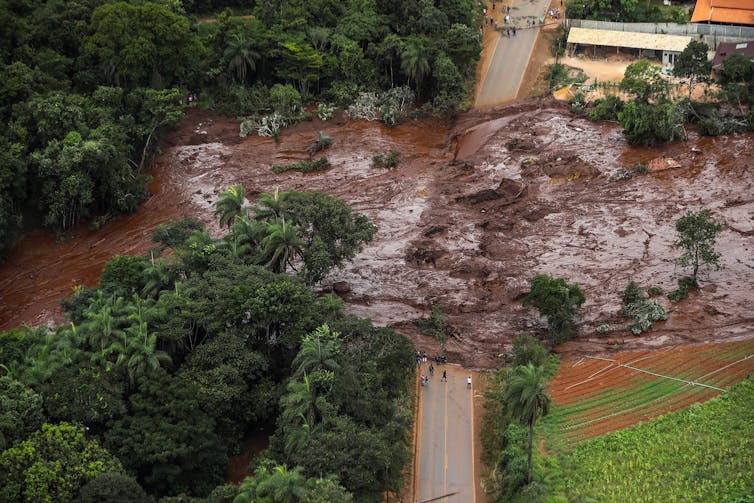
Tailings dam failures, such as this in Brazil last year, are becoming more common.Antonio Lacurda/EPA
Towards safer tailings
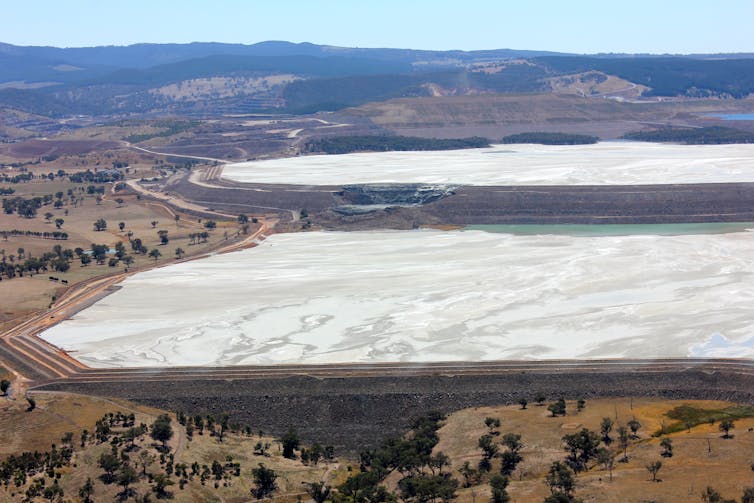
Tailings are the residues left over from mining and minerals processing – a combination of finely ground rock, chemicals and water. They are commonly stored in the mining lease area, in huge engineered structures.
Tailings often contain tiny particles that can damage the environment by releasing toxic substances such as arsenic and mercury, contaminating soil and water.
The new global standard aims to guide the safe management of tailings facilities, with a goal of “zero harm” to people and the environment. It spans the earliest conception stages to planning, construction, operation, closure and post-closure activities such as rehabilitation.
The standard was developed through an independent process triggered by a devastating tailings dam collapse in Brazil in January 2019. Mud and mining waste from the Córrego do Feijão mine washed across the town of Brumadinho, killing 270 people.
That tragedy followed another tailings dam collapse in Brazil in 2015. The dam, part owned by Australia’s BHP, triggered a mud flow that killed 19 people and devastated the river system.
Tailings dam failures have also occurred in Australia. In 2018, a dam slumped at the Cadia gold mine in New South Wales, releasing more than a million tonnes of slurry elsewhere on the site.
This month, a report by Victoria’s Auditor-General revealed systemic regulatory failures in the management of former mines. It cited the Benambra copper and zinc mine, which ceased operations in 1996. A tailings dam containing 700,000 tonnes of sulphuric material was later found to be at risk of release due to erosion or embankment failure.
The Cadia gold mine in western suffered a partial tailings dam collapse in 2018.Newcrest
The right to know
The exact number of active tailings facilities globally is not known, but it’s thought to be in the tens of thousands. Thousands more are inactive or abandoned.
Local communities have a right to know about these structures and their risks, but sometimes struggle to access information.
The new standard includes unprecedented requirements for operators to publicly disclose information including:
the rationale for site selection and facility design
consequence classification (ranking the severity of a potential failure)
risk management and emergency preparedness plans
the outcomes of independent reviews
operator capacity to cover the costs of reclamation for closure.
Our research shows a high number of tailings facilities around the world are in areas with low levels of literacy and governance, and correspondingly high levels of inequality and corruption.
This means local communities should be given strong support to access and understand tailings information. An independent entity is also needed to oversee implementation of the standard, and help make mines publicly accountable.
Mining investor groups, with trillions of dollars under management, are also seeking this information to safeguard their investments.
Public accountability
Civil society groups have argued the standard does not go far enough to protect workers, communities and ecosystems.
Critics also highlight that, as yet, there is no independent mechanism for implementation or enforcement. On this, we agree. To date, an oversight body for the standard has not been established, and the standard has not been incorporated into national laws. That means the role of investors, shareholders and the general public is critical to holding companies to account.
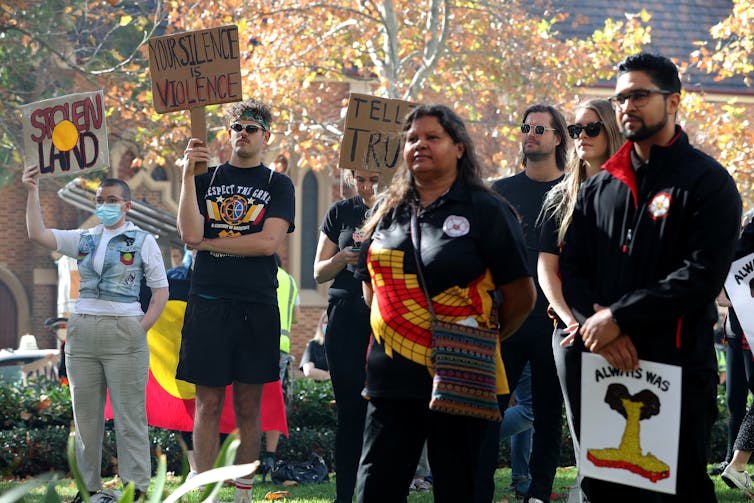
A recent Australian example shows the pressure the public can bring to bear on mining companies. In May, it emerged Rio Tintodestroyed a 46,000-year heritage site on traditional lands in the Pilbara region of Western Australia. As information about the incident came to light, an outraged public demanded a federal inquiry, now underway.
The global transition towards low-emissions technology brings even sharper focus to this issue. Increased global demand is expected for metals including copper and gold, iron ore, lead, zinc, cobalt and lithium. Such mines tend to produce larger quantities of tailings than, say, coal mines.
Our research suggests this will lead to more mines – and more tailings facilities – in remote and fragile environments, and on the traditional lands of Indigenous peoples in Australia and elsewhere.
This means making mining companies accountable will become even more important in future, to keep people and the environment safe.
In a surprise move, the government has revealed several new policies to reduce rates of failure in university subjects. If the legislation passes, it will require universities to:
The problem with the new laws, which include withdrawal of funding for students who fail too many subjects, is they will push universities towards faster, and possibly premature, termination of student enrolments.
Failing is expensive
In 2018, nearly 17% of subjects taken by Commonwealth-supported students were not successfully completed. The students either failed or withdrew after the census date when they incur a HELP debt.
This lack of subject success is expensive. Exact costs are not published, but taken as a proportion of Commonwealth payments the fail-or-withdraw rate translates into nearly A$800 million in HELP debt and almost A$1.2 billion in subsidies to universities.
Some fails are avoidable
Some students fail subjects because, despite their best efforts and those of their teachers, their academic work is not satisfactory. We would worry about academic standards if the pass rate was 100%. But other failed subjects are potentially avoidable.
Sometimes students fail due to academic factors universities can do something about, such as by improving teaching or helping students who are falling behind.
Universities cannot control student life issues such as health, work and family matters. All of these are reasons students give for failing subjects. But universities can judge whether these issues are temporary or manageable. If so, they are not fundamental obstacles to future academic success.
Other students fail because they are not going to class, handing in essays or sitting tests. They have effectively dropped subjects or their course, but have not officially notified their university. The system then automatically registers HELP debts and fails.
When La Trobe University examined its records, it estimated a quarter of all fails were by “ghost students” who did not submit the work needed to pass. If these students can be encouraged to formally withdraw earlier, subject fails and HELP debts will decrease.
The legislation has several measures intended to limit ghost enrolments and failed subjects.
Students would not be allowed to enrol in more than double the subjects a full-time student normally takes in a year, unless they had a demonstrated capacity to do so. University policies already prevent major subject overloads, as taking on too much increases the risk of failure.
By law, universities must check before enrolment that each prospective student is academically suited to their course. The new law would extend this requirement to the subject level.
How this would work in practice is unclear. With more than eight million subject enrolments a year, checking every one would be a massive exercise.
Focusing on students with prior fails may be sufficient. It would be in line with existinguniversitypolicies on students who fail half or more of their subjects in a semester.
A 2018 Grattan Institute report I co-authored found that, of the 7% of commencing bachelor-degree students who failed all their first-semester subjects, a quarter continued and also failed all second-semester subjects. Future outcomes like that may signal non-compliance with the academic suitability law.
Finally, the legislation would give the government power to deprive universities of funding for students it deems not “genuine”. Genuineness indicators already used in private higher education institutions include whether students are reasonably engaged in the course, whether they have satisfied course requirements and, if the course is online, how many times they have logged on. These provisions target ghost students.
As general themes, the ideas in the legislation are not inherently bad. Many reflect standard or common practices in higher education.
The problem is that universities have to balance the risks of further fails and HELP debt against the benefits of giving students a second chance.
If the legislation passes, universities will be nervous about being fined for breaching the academic suitability rule and losing funding for non-genuine students. This creates an incentive to end enrolments, possibly prematurely, after one bad semester.
Students who fail more than half their subjects, after taking at least eight in a bachelor degree, already face exclusion from their course. But the legislation would limit which factors universities can consider in making this decision.
Universities could take into account failures due to reasons beyond a student’s control, such as their own or a family member’s illness. But universities could not consider general difficulties adapting to university life, or other reasons a student could plausibly have controlled.
The provisions of the current bill could lead to students who could succeed with proper support being denied a second chance.Adam Gregor/Shutterstock
A different approach
Patterns of subject failure are worth investigating, to protect students put at unacceptably high risk of further fails and debt. But this task should be handled not by the Department of Education, which would implement these laws, but the Tertiary Education Quality and Standard Agency. Many subject fails are linked to the course admission, teaching quality and course retention matters that TEQSA already regulates.
TEQSA operates under a “regulatory necessity, risk and proportionality” principle, which lets it take a nuanced approach. Universities that put failing students at high risk of continued poor performance would have to improve their practices. But universities would still be free to consider the complex trade-offs of each individual case, without inflexible rules driving them to one conclusion.
Students should also be made more aware of the census date’s importance. A small Grattan Institute survey showed many students did not know what the census date was, or thought they did but gave an incorrect answer. A name change that highlights its significance, such as “payment date”, would encourage students to drop subjects sooner to avoid HELP debt and fails.
Although the government has identified a real problem, its heavy-handed regulation would create unnecessary red tape for universities and exclude students who should get a second chance.
COVID-19 has raised many questions about how we plan our cities. The issues affect all of us, whether you are in Perth or 3,300 kilometres away in Sydney. Common issues suggest a common approach, but how might we achieve that?
Common approaches require a common understanding and by chance next year, 2021, is census year. The output from the census is one of the most important inputs to city and regional planning. It’s an opportunity for planners to directly reference the detailed data of the people and households of the communities that make up Australia.
The issues the COVID-19 pandemic has confronted us with raise the question of what other common-ground issues could be explored.
Interestingly, an “alignment of the stars” is occurring to some degree.
The Planning Institute of Australia (PIA) is calling for a national settlement strategy. Among other things the institute suggests a national settlement strategy should:
express long-term growth and liveability outcomes – nationally and for the states and regions
provide a context for a national population policy
set performance measures for liveability and productivity outcomes.
A core benefit would be better-targeted infrastructure funding.
But the states and territories have already signed off on 57 regional and capital city plans. We need to think a little about what these plans mean – we cannot just stick them together. We need to understand where the common connections and objectives are.
As planning is a state responsibility, the states must drive this process. However, the states have a poor record of collaboration on strategic planning matters. Yes, we see a few good connections from time to time, but not a deliberative collaboration on city and regional planning issues.
Our common understanding and approach must therefore start and finish with collaboration by the states, with Commonwealth support.
Common planning themes already exist
Most Australian capital cities have developed metropolitan plans. The current plans were generally developed in 2017-18. With plans often reviewed every five years, some deep-dive research aligned with the 2021 census would sit well with that timing.
My review of the main themes of each capital city plan reveals areas of commonality (very few across all), as well as some clear local considerations.
Author provided
Regional Australia accounts for most of the nation’s land area, and most regions have completed regional plans. It’s equally important, then, to identify and understand common issues and approaches outside the capital cities.
Gaining a common understanding of all issues and opportunities in the regions is a greater challenge than for the capital cities because of the diversity and scale of regional areas. But there are clearly many common issues, including water security, telecommunications coverage, growth and change, transport, access to services, and bushfires and floods, to name a few.
In addition, many papers and articles have been published on the performance of cities and what issues city plans need to respond to in a COVID-19 world. Key issues include:
The initial planning response has been to fast-track development proposals to maximise the opportunities for the market to respond.
Infrastructure investments have also included more projects supporting walking, cycling and public spaces in line with what we have learned from the impacts of COVID-19.
It’s increasingly clear economic recovery is going to take time. A common research agenda could be used to better inform a national infrastructure agenda directed to stimulating economic activity and thus jobs.
Ultimately, we need agreement on the understanding behind a set of common issues, and on how we respond. The key here is a common understanding. Differences in the planning systems across the states represent a technical, not substantive, issue which each state would deal with in an implementation phase.
To enhance the prospects of agreement between the states on settlement issues, a research agenda linked to the 2021 census date is a prime opportunity to start a dialogue. A collaborative approach to planning across the states can occur at any time, but the opportunity to align research with the census comes around only once every five years.
While the census is a year away, that doesn’t leave much time to establish a joint research agenda.
The first critical task is simply coming together and agreeing to work collaboratively. This requires commitment to understanding both the challenges and opportunities, as well as working jointly on responses. We need to learn to walk (understand) before we start to run (plan).
The emergence of a national cabinet suggests these unique times call for new ways of doing things. Now is the time for the planning profession to add its strategic insights into cities and regions to support Australia’s recovery.
Real home prices across Australia have climbed 150% since 2000, while real wages have climbed by less than a third.
Sydney and Melbourne rank among the most expensive cities in the world. Australia-wide, home ownership levels have fallen from 70% to 65% in the last 20 years and home equity levels have fallen from 80% to 75%. Younger workers have been completely priced out of the major cities.
Among those who can afford homes, the increase in household debt to income ratios is weighing on consumption and increasing financial fragility.
We are often told the problem lies in supply — we don’t have enough homes in the places people want them. And while it’s true a reduction in the supply of housing relative to the population will reduce housing per person and increase housing rents, what we are seeing is something different — a growing divergence between rents and the price of housing as a financial asset that’s increasing much more quickly.
Australia has become something of a world leader in demand-driven home price inflation. Australians have been increasingly buying housing for the purpose of securing financial returns — both capital gains and rental income, in a process often described as the financialisation of housing, but one that we think can be more accurately thought of as “rentierization”.
How it happened
In a working paper published this morning by the University of Sydney and the University College London Institute for Innovation and Public Purpose, we argue “rentierization” best describes the increasing use of housing to extract land rents, in the form of capital gains on property and rents from tenants — a process in which Australia is well advanced.
Despite multiple major boom and bust cycles, including Victoria’s 1880s land boom and the 1890s recession that followed, land values and home prices were relatively low compared to the total value of economic activity right up the 1960s.
Long-term Australian real price index for housing and construction prices
In contrast, we show, real Australian home prices have soared 215% since 1980 and have shown few signs of reversion to long-term trends, despite brief corrections in 2009-10 and 2017-2019.
The graph shows the rise in home prices has been driven by rising land values rather than construction costs, which have grown at a rate closer to general price inflation.
It’s tempting to ascribe the takeoff in home prices to low interest rates. Low rates enable households to take out larger mortgages relative to their incomes.
But rates were also low in the 1960s (close to rates in the 2010s, when home prices were soaring) and didn’t much push up prices then.
More from the house than the wage
Low rates appear to be a necessary, but not a sufficient, condition for soaring prices. Among the other things that seem to be needed are increased access to finance, declining public involvement in housing, and tax breaks that reflect the political power of owners.
The return to land in the form of capital growth has climbed from around 3.5% of gross domestic product before 1960 to 16.7% of GDP since 2000.
It has become so high as to rival and at times dominate wages as a source of household income.
The graph below compares the annual return to a typical home over a year with the annual return to labour in the form of a wage, both nationally and for Sydney (where only recent data is available).
When the measure is greater than one it implies that the average home had a greater return, made up of rent and capital gains, than the average worker.
In 16 of the 29 quarters leading up to June 2019, the median Sydney home earned more than the median full-time worker earned from wages.
In Australia, housing is overwhelmingly privately owned. For a brief period in the 1950 and 1960s, public housing was created on a significant scale, but a huge privatisation program soon followed and today it represents just a few percent of new supply.
Into this environment was thrown the removal of controls on lending from the 1980s, enabling banks to expand property-related lending.
More credit flowing in to a finite supply of land generates a feedback cycle as rising prices and collateral values stimulates more lending and higher prices.
In Australia, mortgage lending grew from just under 20% of GDP in 1990 to over 80% today. By way of comparison, business lending climbed 35% to 40%.
The vast majority of mortgage lending is for the purchase of existing, rather than new, homes.
Investors push up prices for everyone
The investor share of new mortgage lending has grown from 10% in the early 1990s to 40%. It has given owner occupiers and first home buyers price competition they didn’t previously have to face.
Australia’s unusually generous tax concessions for investors helped. They are granted discounts on capital gains tax, while being able to deduct the full costs of operating their properties, (including interest costs) against income from any source.
Where the deductions exceed rental income, the process is known as negative gearing.
A lot will need to change in order to shift things. Mortgage credit will need stronger regulation. It may be time to revisit the credit controls used in Australia in the 1950s and 1960s, which directed investment into new rather than existing housing and helped increase home ownership.
The case for a central housing bank
Taxes should focus on land rents, in the form of increasing residential property values or windfalls from changing land use. Taxing away future rents would dent speculation.
Broadening annual land value taxes to primary residences as well as investors housing would be part of the change, introduced at a low initial rate and with options for delayed payment or borrowing against future sales for those on low incomes.
Tax advantages extended housing investors, such as negative gearing and discounted capital gains taxes, should be scrapped.
And there’s a case to reintroduce direct government involvement. A central housing bank could use its ability to supply and sell new housing to set a “home price corridor” to ensure home prices did not rise rapidly and dampen potential falls in prices.
It could also be used to provide a variety of alternative stable tenures for households, such as different kinds of renting, public housing and selling dwellings to social housing providers at discounted prices.
Challenging vested interests will be hard, but the current downturn offers hope.
As rates of home ownership fall, renters struggle to make ends meet and central banks run out of leverage to stimulate the economy with interest rates already at rock-bottom, reforms that previously appeared politically impossible might gain traction.
Review: Looky Looky Here Comes Cooky, screening at the Melbourne International Film Festival and on NITV and SBS Viceland.
This year marks the 250th anniversary of Captain Cook’s first landing on the east coast and his claim of territory for the British Empire. Like most scheduled events of 2020, commemorations of this milestone were scuttled by the pandemic.
For some, the cancellation of Cook events relieved a simmering trepidation. But many Aboriginal communities had worked hard to consider their engagement in the 250-year commemoration and communicate the “view from the shore” among themselves and to wider audiences.
Sweeping coastline shots remind us of the changing landscape away from the buttery sandstone cliffs of Dharawal country at that place Kamay, which Cook renamed Stingray Bay and we now call Botany Bay.
Host Steven Oliver – known previously as an actor and as creator of comedy sketch show Black Comedy (2014) – guides us the length of the east coast.
At La Perouse we hear the testimony of Dharawal elder and intellectual Shayne Williams and Aboriginal Land Council chair Noeleen Timberry, whose family were witnesses in 1770. We journey through to the Torres Strait, where the story of the planting of a stick and cloth at so called Possession Island is disputed.
Along the way, artists yarn, dance, slam and sing on a specially created “songline”. Songlines are not just oral histories or “anthropological footnotes”, Oliver reminds us. They
tell the real story in different, but essentially complementary ways; to really belong you’ve got to embrace the songlines. They are the story of this land.
Singer Kev Carmody narrates the movements of warriors organising in his ballad of Multuggerah, a resistance leader and warrior of the Darling Downs.
Mo’Ju sings of a medicine woman with predictive powers who “can see them coming from far away, I know that they are bringing us pain”.
standing on the shoreline, Cook man coming, Patiently waiting for someone I haven’t seen before, They say they came in peace.
While Mau Power vocalises “anger and loss, pain and hurt”.
Mau Power on location in North Queensland.SBS
A more truthful engagement
The voices in Looky Looky offer the possibility of a different Australia with a more truthful engagement with its history.
At one point Oliver declares, “Uncle Jimmy James [Cook] sailed up the north coast, no shame, naming places that all the way along the coast”.
Cook pubs, Cook streets, roads, parks, bridges and even a university reveal an enduring mark.
Calling in at the Captain Cook Hotel, Oliver feels duty bound to order the kitchen’s “special”, a macabre joke not lost on Indigenous peoples of the Pacific. It is a Captain Cook steak (on ciabatta).
There is arguably greater generosity about the Cook story now than there was when the bicentenary was celebrated. The current NSW State Library exhibition Eight Days in Kamay includes 1970 footage from the counter-commemoration protest of poet Oodgeroo Noonuccal in which she recites:
Peace was yours Australian man with tribal laws you made, till white colonial stole your peace with rape and murder raid … they shot and poisoned and enslaved, until a scattered few, only a remnant now remain, and the heart dies in you.
Also featured is activist and Aboriginal Legal Service co-founder Paul Coe, who then challenged the crowd:
… the only way you are going to get anywhere is to come out and demand your rights, showing that you want your rights, not begging.
But in Looky Looky, Guugu Yimithirr Traditional Owner and Bama Historian Alberta Hornsby explains Cook didn’t know he was looking at a nation of peoples who had scientists, lore, language. Eventually, she says, he did develop an admiration for her people.
Hornsby reminds us of the resolution of a dispute over stolen harvests by Cook’s men, who had broken the lore/law of the land. At this location in far north Queensland, Guugu Yimithirr men conducted a process of reconciliation with Cook and several of his crew, to settle their differences.
Kev Carmody tells a warrior tale near Table Top Mountain, Queensland.SBS
Being seen
Hornsby and Shayne Williams are strong voices throughout the film. Both speak of the complexity of commemorating Cook while acknowledging our own people and history.
As Hornsby says:
I do have respect for Captain Cook, but I have far greater respect for my ancestors.
Williams adds:
If we’re going to move forward let’s own our history. The time has come to make ourselves visible again. We’re the only ones who can do that. Australian history and Aboriginal history, are synonymous.
Oliver enlivens songlines to connect people over Country with his earnest blend of engaging humour and bold fact. Within the pastiche of animation, dance, poetry and interviews, it is the generously offered reflections about commemoration, past and present that provide the most compelling elements.
Not just a coastal story. Mo’Ju on location in Coburg, Melbourne.SBS
Any commemoration of the British claim to the territory of Australia that unleashed loss and disruption on an unrelenting scale, is fraught. Looky Looky is part comedy, part a tale of survival and resistance, part poetry and dance.
The intention of the songlines as narrative is powerful, but the most disruptive forces are the Aboriginal and Torres Strait Islander voices who are working through ways to carry stories of the past gently but firmly into the present.
The film is worth watching as one contribution to the commemoration of white settlement made difficult by unyielding historical narratives and experience of disadvantage. Much more work is still needed.
MIFF is online until 23 August 2020. Looky Looky Here Comes Cooky will be simulcast on NITV and SBS VICELAND on Thursday 20 August at 8.30pm.
Federal parliament is set to make history with its first “hybrid” sitting in the fortnight starting next week, with some members connecting virtually.
But border closures and state government rules are causing a nightmare for many of those planning to attend in person.
Unless there is a last minute political hitch, a substantial number of MPs will speak, ask questions or respond to questions remotely.
Technology challenges aside, they’ll have the easier time of it than quite a lot of their colleagues.
Victorians who want to be physically present are now in a fortnight’s quarantine, in Canberra or at their homes, unable to leave their residences.
Treasurer Josh Frydenberg and Health Minister Greg Hunt are locked up in the national capital, as are the Speaker, Tony Smith and the Senate President, Scott Ryan. (Hunt has even installed an Australian government background for virtual news conferences.)
Under Queensland government rules, MPs who go to Canberra from that state will have to self-isolate for a fortnight when they return home.
If the Queensland rules are still in force in early December, those attending the final sitting ending December 10 can forget any pre-Christmas sprees – they’ll be isolating until Christmas Day.
Victorians who want to attend all the rest of the year’s scheduled sittings will only be able to have a fortnight home between now and December 10, given the quarantine rules.
Among those Victorians choosing not to make the journey next week is Richard Marles, deputy leader of the opposition. He said on Monday, “It is a difficult decision but I will be staying in my community as Victorians face this second wave.” Labor frontbencher Bill Shorten will also be missing from parliament house – he was on the ABC’s Insiders program in person on Sunday.
Tasmania is tightening its conditions for returning MPs, replacing an automatic exemption from quarantine with consideration on a case by case basis.
Ryan has flagged his concerns with the various restrictions imposed by indicating he will be making a statement to the senate about the issue when it resumes.
It would make sense for the government to consolidate the sittings after the October 6 budget, so the parliament could finish the year earlier, but there is no sign of that as yet.
Even in Canberra life will be tougher than usual for some of the parliamentarians. In a statement on Monday Smith and Ryan advised those from Sydney and Newcastle that while in the ACT they should “avoid visiting retail or hospitality venues,” which is bad news for the cash-strapped local eateries.
Moreover: “When attending Parliament House, parliamentarians and staff should avoid congregating in groups, and avoid face-to-face meetings with external visitors”.
Not that there will be many staff to congregate – the presiding officers say they should not go to Canberra “unless it is considered absolutely essential”. And external visitors will be as rare as hens’ teeth, under the presiding officers’ advice.
Scott Morrison has yet to tick off on MPs linking up virtually – Labor is keen – but it is hard to see him not agreeing.
This is formally done through Christian Porter, the leader of the House, who earlier expressed concerns about the technology and the application of parliamentary privilege.
Morrison has signalled general support for the sitting to have its virtual element. For the government not to embrace it would look out of touch at best and obstructionist at worst. Parliamentary committees have been operating remotely through the pandemic and for years before.
The government has the final say only in regard to the House of Representatives; the Senate, where the government is in a minority, is its own master.
This week rehearsals are underway for the virtual system, with MPs who won’t be in Canberra given trial runs. They will have to operate from their electorate offices, and use parliamentary equipment. Even the usual dress rules that apply to each chamber are expected to operate for the “virtuals”.
The pandemic produced a different atmosphere in the House of Representatives, with the macho aggression toned down, certainly initially. No doubt the hybrid parliament will have yet another distinctive vibe.
The world is hoping a safe and effective COVID-19 vaccine will soon become available. So far, more than 160 candidate vaccines are in development.
Some 31 of these have entered human clinical trials. One of them is Russia’s “Sputnik V”, which was granted approval by the country’s health ministry last week. But the World Health Organisation (WHO) and a large number of international experts have urged Russia to conduct more testing to ensure the vaccine’s safety before using it.
But even if this candidate and others are proven to be safe and effective, developing the vaccine is just the first step.
Some of the biggest challenges in getting everyone vaccinated still lie ahead.
The first major challenge after a vaccine is developed is to produce enough of it to start vaccination programs. One estimate puts global vaccine production capacity at up to 6.4 billion doses per year, though this is based on single-dose influenza vaccines.
But some of the COVID-19 vaccines currently in development require two or three injections. This means, if the same technology for COVID-19 vaccines is required as for influenza vaccines, global production is severely reduced.
It has been estimated that to achieve sufficient levels of immunity among the global population with a two-dose vaccine, we would need between 12 billion and 15 billion doses – roughly twice the world’s current total vaccine manufacturing capacity.
Shifting to exclusively manufacture a COVID-19 vaccine will also mean shortages of other vaccines such as those for preventable childhood diseases such as measles, mumps and rubella. So prioritising COVID-19 could cost many other lives.
Can we buy vaccines in advance?
Given these production constraints, governments have previously tended to sign advance purchase agreements with vaccine manufacturers to guarantee access. These commercial-in-confidence agreements are usually signed in secret, often with different prices being charged to different governments depending on whether they are the first customer or 30th and their ability to pay.
It also means countries that can afford to buy vaccine stocks in advance get first access, leaving poorer nations to miss out or be forced to wait years. This has happened on at least two previous occasions.
In 2007, Indonesia found it couldn’t purchase H5N1 influenza (bird flu) vaccines despite being one of the worst-affected countries at the time. This was because several other richer countries had already organised advanced purchase agreements, and led Indonesia to temporarily withhold sharing virus samples with the WHO in retaliation. And in 2009, rich nations bought up almost all the stock of H1N1 influenza vaccines, crowding out less-developed nations.
A ‘my country first’ policy means richer countries can secure supply of vaccines at the expense of poorer countries.Morning Brew/Unsplash
Most of the world’s leaders, including Australia’s Prime Minister Scott Morrison, have stated that a successful COVID-19 vaccine should be shared equitably. In July, Australia was one of 165 countries to join the “COVAX” initiative launched by the WHO, global vaccine alliance GAVI, and the Coalition for Epidemic Preparedness Innovations. The initiative aims to deliver 2 billion doses of a COVID-19 vaccine by the end of 2021.
Countries representing 60% of the world’s population have signed up to this initiative, but not everyone has and we’ve already seen a number of instances in which governments have sought to gain priority access over others. The problem with this vaccine nationalism is that rather than being based on equity or need, it will create global supply problems with those countries that have special deals getting access to the vaccine first.
The second key challenge is distributing the COVID-19 vaccine. Most vaccines need to be transported in cold storage, which presents a problem for many parts of the world where electricity failure is a common feature of daily life.
With the marked reduction in international passenger air travel, the movement of cargo has also slowed. This will need to be addressed with airlines ahead of any attempts to distribute the vaccine.
Beyond the initial transport from the manufacturer, getting the vaccine to rural and remote communities requires sophisticated logistical services, which many poorer countries lack.
Without substantial investment to strengthen international and national supply chains, it will be years before vaccines can reach everyone who needs them.
But Federal Health Minister Greg Hunt said on Sunday that Australia is in “advanced negotiations with a range of different companies with regards to a vaccine,” one of which is reportedly the University of Oxford’s candidate.
A scientist working in vaccine production in Rio de Janeiro. Brazil is one of the countries involved in testing the University of Oxford’s potential coronavirus vaccine. Australia is reportedly aiming to sign an advanced purchase agreement to secure access to this candidate.Antonio Lacerda/EPA/AAP
While some might argue more needs to be done to secure a COVID-19 vaccine for Australians, it’s not necessarily the best move to enter into advanced purchase agreements. They are expensive, and there’s no guarantee the candidates Australia signs up for will be safe and effective.
Nevertheless, the government’s approach has been to avoid putting all its eggs in one basket, supporting multiple vaccine initiatives. It has also supported multilateral initiatives such as granting more than US$10 million to CEPI, one of the key organisations managing the COVAX initiative.
It’s also good to see the government is willing to support initiatives such as COVAX that aim to make the vaccine available to those countries with limited means to pay. While some may see this as excessive altruism, it’s in Australia’s broader interest, given borders are likely to remain closed until a vaccine has been made widely available. The quicker the world is vaccinated, the sooner we can reopen our borders.
What this means for the average Australian is that we should get ready for a long wait. Even if the Australian government signs an advanced purchase agreement to secure priority access to a safe and effective COVID vaccine, initial supplies are going to be extremely limited.
Priority groups like frontline health-care workers will get first access, followed by those who are more vulnerable to serious illness. If you’re otherwise fit and healthy, you should be prepared that it could take up to a few years after vaccines become available.
If they become available sooner, it will only be because countries have agreed to work together like never before. Let’s hope they can do it.
Eleven prisoners have been shot dead in Papua New Guinea, one was recaptured and 33 others are still at large following yet another massive breakout at Buimo jail outside Lae city at the weekend.
Correctional Services and police officials say the breakout at the troublesome jail happened on Friday under the pretext of the prisoners seeking medical help for a sick prisoner.
The real cause of the escape is being investigated, and comes more than a week after the jail became the first in the country to report a confirmed case of covid-19.
Correctional Services Commissioner Stephen Pokanis confirmed on Sunday that a total of 45 prisoners, comprising 35 remandees and 10 convicts, were involved in the escape.
He said they had gathered at the prison gate and shouted at a duty officer to allow them to take a sick prisoner to the clinic to seek medical attention.
“They then rushed in numbers to the gate when taking out the sick prisoner; they attacked the duty officer with a kitchen knife and ran out to the outer gate in the compound. Two officers standing there were outnumbered when they rushed out,” Pokanis said.
The prisoners ran out from the main prison compound and towards the officers’ accommodation quarters and off to the hill behind the quarters to Buimo mountain, Pokanis said.
Six officers on duty He said six prison officers were on duty shift from 6am to 2pm when the incident occurred.
Pokanis said the alarm was raised and the Lae police sector patrol helped prison warders to search for the escapees, and in the process shot the 11 and recaptured one.
Lae metropolitan police commander Chris Kunyanban said the reasons for the mass breakout were not known and is under investigation.
“Police also began operations to recapture the escapees, checking public transport travelling out of Lae to ensure that they are confined to Lae so we can recapture them,” Kunyanban said.
“Some escapees are from rural areas and they will escape out of Lae so our appeal to the public is to assist police with any reliable information of the whereabouts of the inmates who escaped.”
Kunyanban said the escapees need to be recaptured and locked up because they will make life miserable for the people in the community, the public and the business houses.
Kunyanban said in another jail breakout in January this year, one prisoner was killed and 10 escaped and are still on the run so the responsible authorities must consider upgrading the capacity of the jail by having good facilities for the inmates to use and deter escapes.
Still searching for escapees Correctional Services Minister Chris Nangoi confirmed the warders and police were still searching for the escapees, adding that the reason for their escape may be in fear of coronavirus since the jail already recorded its first case, which was a 53-year-old female warder.
Nangoi said the remandees were the ones behind the mass breakout and they are still waiting for the release of K7 million from the government to build a high capacity security fencing and accommodation for CS officers to boost manpower as currently there were not enough warders at the prison.
“Police and warders are working closely to find the 33 still on run, none of our officers were injured,” he said.
He said more information about the breakout and investigations would be available this week.
Marjorie Finkeo and Joan Baileyare reporters for the PNG Post-Courier.
With a little over three months to go, Year 12 students have their sights set on the last major hurdle that will see them complete their final year of school — exams.
What a year it has been for them. All students have experienced disruption, some for many weeks with learning at home rolled out around the nation in its various forms.
Senior induction days celebrated early this year promised a very different experience for these now young adults as their rite-of-passage year slowly changed into one of postponed and finally cancelled events.
We conducted a series of interviews at the end of the first semester with eight Year 12 students from one Queensland school, who hope to study at university. Six were female and two male.
Many students said they were anxious about how COVID-19 has affected their senior year.
One girl said she was
super overwhelmed and uncertain as to how my results will be affected […] I am nervous for the future […] to be honest I am a little bit down[…] I was extremely excited for senior year[…] there is also a lot of chaos in the world, which is pretty overwhelming.
But some were more positive. One commented on “having fantastic teachers”, while another said he was “excited to use technology more”.
Here is what else the students we spoke with had to say about their experience in 2020 and their aspirations for university in 2021.
How they felt
As the parent of a Year 12 student, I have had the chance to sit alongside some Year 12s and witness their journey. Like many other parents and teachers, we have been privy to their disappointments and seemingly endless capacity to pivot, adapt and recalibrate — their resilience and resolve is inspiring.
Because this is their year, they must make it the best it can be. But for some the resolve is wearing thin. Almost all the students in our survey expressed a sense of loss about their school year.
One girl said
we are missing out on a lot of these opportunities as well as being able to spend time with my friends at school
And another girl expressed that
it really sucks that we have already missed out on events throughout the school and we are uncertain for how long this will last.
One girl said the class of 2020 was
disadvantaged because many memories that we are meant to be making together in our senior year has been taken away from us.
Many Year 12 students feel they have missed out on important memories.Shutterstock
This highlights the important final year of schooling as a milestone — a rite of passage.
Only one student, who was male, had a contrary view of missing out on a normal year, saying
it’s a great opportunity to relieve myself of many commitments and free up time to work on other endeavours — in other words, I feel pretty good about it.
What about university?
This year Queensland joined the rest of the country in calculating an ATAR for university entry, whereas before they used a different system.
We asked students if they had concerns about university in 2021. One girl summarised many of the responses by saying
I think everyone is a little bit worried about how we will be affected as a cohort — not just because of Covid-19 but also because we are the first year level through on the new ATAR system. That was already pretty overwhelming in terms of new assessment, new university entry calculations, etc. I think that the biggest worry/uncertainty is if universities are going to be a bit more flexible with our cohort.
Students also suggested they are looking to universities to make up some of their lost experiences. One girl said
the class of 2020 will need supportive universities with a close sense of community when we attend in 2021 to make up for some of our lost lasts.
There is a sense of shared experience, a kind of bonding these students expressed, with several comments such as we are “staying positive and looking to the future” and “we just need to look after each other”.
Perhaps endurance and resilience have become a necessary part of the DNA of the class of 2020. These are positive behaviours that will see them through their next phase of education.
New Zealand Prime Minister Jacinda Ardern has moved the election date by four weeks to October 17 and says she will not change it again.
The covid-19 coronavirus outbreak in Auckland has forced the suspension of political campaigning and prompted calls to postpone the general election.
The election will now be held on October 17 instead of September 19.
It follows calls from coalition partner New Zealand First and both opposition partners to delay the election because of the effects covid-19 restrictions would have on electioneering.
Jacinda Ardern said she would not change the election date again.
If a further outbreak followed: “My view is we will be sticking with the date we have,” she said.
The decision was hers alone, she says. “The date I’ve chosen actually is my view.”
‘Still the same outcome’ “Even if I had not picked up the phone and contacted anyone I believe this is still the outcome I would have arrived at.”
“Covid is the world’s new normal,” she said.
The election change announcement. Video: RNZ News
Ardern said she factored in whether this was fair to Māori and Pasifika voters.
She said everyone she reached out to for their opinion on moving the election date was very considered but the general view was that some form of delay was warranted.
The Electoral Commission had been planning since April for a range of scenarios including the election being held with the country being at alert level 2 and parts of the country being at level 3.
The commission advised the prime minister four weeks allowed it the necessary time to provide information to voters and book venues to stage polling booths.
Ardern said she considered moving the election two weeks, but the commission said this would not be enough time to do organisation such as rebooking venues.
Dissolution of Parliament Dissolution of Parliament was now scheduled for Sunday, September 6, and early voting would begin on October 3.
When questioned on whether the threat of a motion of no confidence had affected her decision to delay the election, especially considering coalition partner New Zealand First leader Winston Peters’ very public call for a delay, Ardern said it did not.
“I personally didn’t consider that a threat in the first place. Obviously, a no confidence vote would trigger an election,” he said.
She took into account the view of all parties’ leaders in deciding to delay the election date.
She wanted to provide Parliament and the public “certainty, a sense of fairness, and a sense of comfort to voters that this will be a safe election”.
New Zealand First and the Green Party were informed of the decision before Ardern made the announcement.
October 17 – the new election date. Graphic: Vinay Ranchhod/RNZ
Ardern said that under the law, once Parliament had dissolved, if the Electoral Commission believed it could not hold a safe election it would have the power to move the date.
Many people will advance vote It is already anticipated a large number of people will advance vote.
“I absolutely have confidence we can and will deliver a safe election.”
She said she did not wish for her Auckland Labour MPs to come out of Auckland to attend Parliament.
“I have thought about every single element of this.”
She said some candidates would have taken unpaid leave to campaign.
But she believed this was a balanced decision.
“I think it would be entirely inappropriate that this decision be seen as political partisanship … it wasn’t.”
It would not have been appropriate to make a decision based on any individual party, she said.
‘Ability to make quick decisions’ “In these circumstances, in these times, what we need is the ability to make these decisions very quickly.
“I have absolutely no intention at all to change this…”
The Labour Party will not re-launch its campaign.
Hoardings will not need to be taken down, she said.
“These are very extraordinary circumstances.”
New Zealand First leader Winston Peters welcomed the delay, saying he was pleased common sense had prevailed.
“We were concerned that the Covid outbreak had the effect of limiting campaigns to an unacceptably short period until overseas and advance voting begin if the general election was held on September 19,” he said in a statement.
“With a delay, parties can now prepare to begin campaigning again, confident that they have the time and resources to engage in a free and fair election.”
New election timeline. Graphic: Vinay Ranchhod/RNZ
This article is republished by the Pacific Media Centre under a partnership agreement with RNZ.
If you havesymptomsof the coronavirus, call the NZ Covid-19 Healthline on 0800 358 5453 (+64 9 358 5453 for international SIMs) or call your GP – don’t show up at a medical centre.
After 16 weeks in an industrial compost heap, we unearthed blue and white balloons and found them totally unscathed. The knots we spent hours painstakingly tying by hand more than four months ago were still attached, and sparkly blue balloons still glinted in the sun.
These balloons originally came from packages that advertised them as “100% biodegradable”, with the manufacturers assuring they were made of “100% natural latex rubber”. The implication is that these balloons would have no trouble breaking down in the environment.
This appeals to eco-conscious consumers, but really just fuels corporate greenwashing — unsubstantiated claims of environmentally friendly and safe products.
Holding perfectly intact balloons in our hands after four months in industrial compost, we had cause to question these claims, and ran experiments.
What’s the problem?
This problem is two-fold. First, balloons are additional plastic waste in the environment. They are lightweight and can travel on air currents far from the point of release. For example, one 2005 study found a balloon travelled more than 200 kilometres.
Not much changed after 14 weeks.Morgan Gilmour, Author provided
The stretchiness of balloons means they can get stuck in animals’ digestive tracts, which will cause choking, blockage, decreased nutrient absorption and effectively starve the animal.
Second, what most consumers don’t realise, is that to shape milky natural rubber latex sap into the product we know as a balloon, many additional chemicals need to be added to the latex.
These chemicals include antioxidants and anti-fogging (to counteract that cloudy look balloons can get), plasticisers (to make it more flexible), preservatives (to enable the balloon to sit in warehouses and store shelves for months), flame retardants, fragrance and, of course, dyes and pigments.
Even more chemicals have to be used to make the additives “stick” to the latex and to stick to each other, enabling them to work in tandem to create a product we expect to use for about 24 hours. So, the balloons can’t be “100% natural rubber latex”.
Balloons can travel vast distances in the sky before they pop and are eaten by animals.Unsplash, CC BY
And yet, despite substantial evidence of harm and the presence of these chemicals, balloon littering persists. Balloon releases are common, with only some regional regulations in place, such as in New South Wales and the Sunshine Coast.
Lying for decades
While some factions of the balloon industry denounce balloon releases, these claims are only recent.
For decades, the industry relied on one industry-funded study from 1989 which claimed that after six short weeks, balloons degraded “at about the same rate as oak tree leaves” and there was no way balloons were a threat to wildlife.
That study was not peer-reviewed, its methods are unclear and not repeatable, and the results are based on only six balloons.
Because balloons are frequently reported to be at sea, ingested by wild animals and washed up on beaches, it’s clear they’re not breaking down in only six weeks. Anecdotal studies have tested this to varying degrees, confirming balloons don’t break down.
Only one peer-reviewed scientific study has quantified balloon degradation, and that also occurred in 1989 — the same year as the industry study. They tested elasticity for up to one year, which means the balloons were intact for that whole time.
We tested the claims of the balloon industry.Dahlia Foo, Author provided
We wanted to know: has anything changed since 1989? And why aren’t there more studies testing balloon degradation, given the passion behind the balloon issue?
So, we set out to quantify exactly how long latex balloons would take to break down. And we asked if balloons degraded differently in different parts of the environment.
Our experiment tested their claims
Industrial composting standards require that the material completely disintegrates after 12 weeks and that the product is not distinguishable from the surrounding soil.
We designed an experiment: after exposing balloons to six hours of sunlight (to simulate typical use, for example, at an outdoor party), we put blue and white balloons in industrial compost, and in saltwater and freshwater tanks.
We allowed for aeration to simulate natural conditions, but otherwise, we left the balloons alone. Every two weeks, we randomly removed 40 balloons from each treatment. We photographed them to document degradation. Then we tested them.
The author sampling latex balloons.Jesse Benjamin, Author provided
Were the balloons still stretchy? We tested this in the University of Tasmania engineering lab to determine tensile (resistence) strength. We found that in water tanks, the balloons became less stretchy, losing around 75% of their tensile strength. But if they had been composted, balloons retained their stretchiness.
Were the balloons still composed of the same things they started with? We tested this by taking spectral measurements of the balloons’ surface. The balloons showed signs they were exposed to ultra violet light in the water tanks, but not in the compost. This means their chemical composition changed in water, but only slightly.
Finally, and most importantly, did the balloons lose mass?
After 16 weeks, the balloons were still recognisably balloons, though they behaved a little differently in compost, water and saltwater. Some balloons lost 1–2% mass, and some balloons in freshwater gained mass, likely due to osmotic absorption of water.
These are white latex balloons 16 weeks after we composted them.Jesse Benjamin, Author provided
What can we do?
It’s clear latex balloons don’t meaningfully degrade in 16 weeks and will continue to pose a threat to wildlife. So what can we do as consumers? We offer these tips:
do not release balloons outdoors
do not use helium-filled balloons outdoors (this prevents accidental release, and saves helium), which is a critically limited resource
if you use balloons, deflate and bin them after use
The decision to delay New Zealand’s 2020 general election to 17 October, according to Prime Minister Jacinda Ardern, was partly about voter and candidate safety and partly to allow parties to campaign fairly.
As much as anything, Ardern wanted to restore some sense of political certainty amid the ongoing COVID-19 crisis.
The reemergence of community transmission, with Auckland moving to alert level 3 and the rest of New Zealand to level 2, had thrown the election campaign into a kind of limbo. Arguments for and against delaying the election consumed the news and social media in the lead up to Ardern’s call.
National leader Judith Collins argued it was “unsuitable to expect there to be a fair and just election at a time when the opposition parties and other parties in government are not free to campaign” and that “postal voting is not good enough”.
ACT leader David Seymour said candidates and voters in Auckland were “effectively under house arrest” and having the Prime Minister fronting daily COVID-19 press briefings meant it was no longer a “level playing field”.
Even New Zealand First leader Winston Peters called for an extension, despite his party arguably having the advantage of incumbency and him being deputy prime minister.
Only the Greens dismissed the need for a delay, saying opposition arguments were purely political and that the Electoral Commission was best placed to decide whether turnout would be compromised at level 2 or 3.
It’s true that under both alert levels it has become impossible to hold political events such as campaign launches, meet-and-greets in malls or on the street, and door-to-door canvassing.
But the question in 2020 is how relevant are those conventional campaign methods compared to the other ways voters now obtain political information?
We explored this very question by looking at data from the 2017 New Zealand Election Study. We found that while parties and candidates use multiple methods to reach voters, voters are not passive in this process and can choose their methods of engagement and participation.
Data from our 3445 respondents revealed a number of key points:
around 2% of people received a text from a party
10% were contacted on social media
12% were contacted by email
22% were contacted by phone
66% were contacted via a letter or pamphlet
But only 14% were contacted in person, at their house or in the street (figures do not add to 100% because respondents were allowed more than one answer).
Overall, 86% of respondents said they received their political information, advertising or news from television, radio, print media or online.
While television and newspapers were the most commonly accessed (the range was between 42% and 59%), 36% also used social media – which was twice as popular as radio.
We also asked how people participated in the campaign process. The highest scoring option was watching an election debate on television (62%). But the internet came a close second, with 61% saying they used online sources at least once to access election information.
The most popular sites were Facebook, Instagram, YouTube or similar (36%).
We know there are risks associated with online platforms and social media being the primary or sole source of political news, given they are the primary channels for the spread of misinformation, disinformation and worse.
But we also know our respondents used the internet to access more authoritative sources:
25% visited a political party, MP or candidate site
18% sought information from the parliament or electoral commission sites
28% accessed blogs, online news and fit-for-purpose voter information applications.
By contrast, only 5% said they attended a political meeting during the election campaign.
This isn’t to say town hall meetings, campaign launches, and meet-and-greets aren’t important. They are a means to mobilise the party faithful, to fundraise and to communicate policy platforms. And we know that face-to-face engagement is critical for building trust.
But these are no longer the only means of influence for political parties. Many voters have moved to different and more varied platforms, most of which are easily accessible during Level 2 and Level 3.
In the end, Ardern has made a political calculation about the immediate circumstances of the 2020 election. But perhaps the time has come for parties to rethink their strategies for 21st century campaigning in general.
The Bali chapter of the Papuan Student Alliance (AMP) has held a weekend protest action at the Renon traffic circle in the provincial capital of Denpasar to mark 58 years since the UN-brokered 1962 New York Agreement.
During the action on Saturday, which was closely watched by police, the protesters issued a political statement addressed to the regime of President Joko “Jokowi” Widodo and Vice-President Ma’ruf Amin.
The statement was also addressed to the Netherlands, the United States and the United Nations.
AMP Bali chairperson Jeeno said that they were taking up 10 demands during the action. They demanded:
Freedom and the right to self-determination as a democratic solution for the Papuan people;
The Indonesian government immediately withdraw all organic and non-organic TNI (Indonesian military) and Indonesian police from the land of Papua as condition for peace;
The closure of the Freeport gold-and-copper mine and the LNG Tangguh gas field operated by BP and the MNC Group LNG plant, which are the masterminds behind humanitarian crimes in the land of Papua;
The United State must be held accountable for the colonialism and human rights violations against the West Papua nation;
Demilitarisation of the Nduga regency and revoke Presidential Regulation Number 40/2013 which legalises the military’s involvement in the Trans-Papua highway;
Open access for international and domestic journalists to report on West Papua;
The West Papuan people be given the right to freedom of association, assembly and expression;
Unconditional freedom for all West Papuan political prisoners;
Rejection of the extension of Special Autonomy; and
Revoking of the decision to expel four Khairun University students in Ternate, North Maluku, for their involvement in West Papuan protests.
“With this statement we call on all of the people of West Papua to unite and fight to win the ideals of national liberation. For the attention and support of all the Indonesian and West Papuan people, we express our thanks,” said Jeeno.
Ascovid-19spreads around the world, it can be daunting keeping up with the information. For RNZ, the news organisation’s responsibility is to give you verified, up to the minute, trustworthy information to help you make decisions about your lives and your health. Questions will also be asked of officials and decision makers about how they are responding to the virus. The aim is to keep you informed.
New Zealand’s Chief Censor says the country has an opportunity to be leading the world in fighting against covid-19 disinformation online.
Nasty rumours, inaccurate advice and bullying has circulated through social media following the second wave of infections.
Health Minister Chris Hipkins gave those responsible a serve at the 1pm briefing yesterday after a racist and misogynist rumour about a woman breaking into an isolation facility had done the rounds.
He said it had reached a “new and concerning level”, and was “not only was it harmful and dangerous, it was totally and utterly wrong”.
But other than a good telling off, the government was limited in what action it could take to starve the online world of fake news.
Facebook, Instagram and Twitter are just some of the places where information is shared, but the big platforms seem to do little to moderate.
Chief Censor David Shanks said Sweden had been teaching kids for nearly a decade how to both spot and verify misinformation.
“The Christchurch Call was one of the first moves led out which really brought an integrated, transnational, governmental and industry accord in thinking about how we could deal with the weaponisation of the internet in terms of the spread of violent extremist material.”
And similar leadership from New Zealand could also help stop the spread of covid-19 misinformation, Shanks said.
“In a way some of the extreme disinformation and conspiracy theories could be seen as the next layer out from that and is, in a way, connected with violent extremism when you trace through to the origins of some of this material.
“I think New Zealand can and should have a role in leading some thinking about how we can deal with this sort of issue,” Shanks said.
Social media commentator Anna Rawhiti-Connell said the second wave of the coronavirus had split the online community, increasing both the attacks and the severity of them.
“Part of that is around just fatigue, people are weary and they are tired.
‘A lot of uncertainty’ “There’s a lot of uncertainty and that will naturally create a splintering kind of effect.”
Patriotism was a very big part of the last conquering of covid, she said.
“I think we have splinted far more than we did around that initial lockdown.
“We kind of got through a lot of that on the sort of spirit and smell of a patriotic oily rag, and this time around, I don’t know if that’s quite as strong, and so that does breed a much more fractious kind of environment.”
Rawhiti-Connell said throughout the second outbreak there was lots of racial overtones and people looking for something to blame.
Indigenous Rights advocate Tina Ngata said Māori were particularly vulnerable to the disinformation because of a deep-rooted distrust of the government and its failure to uphold treaty obligations.
“Some of the concerns are very valid and they don’t come from nowhere, they generally find fertile soil where there is disenfranchisement,” she said.
“That’s why we see it over in the United States, the working class are really engaged in some of these conspiracy theories and that’s because they do feel let down by the system.
“And there are whole communities that feel let down by the system here and Aotearoa as well.”
Honouring the Treaty in a pandemic Ngata said the Māori pandemic response group Te Rōpū Whakakaupapa Urutā wanted to be more involved in the decision making and felt the decisions that were made were not as representative as they could have been.
“This is an opportunity for the government to reflect on why it’s picked up so well here in Aotearoa and what has been the government’s role in that disenfranchisement and the lack of trust because, you know, similar to any relationship, if the trust is in place, it doesn’t really matter what other people say.”
“There are some issues that feed into our trust relationships in the past and a lot of that, for Māori in particular, comes back to Treaty violations.
“Making sure that Te Tiriti is centred and upheld and honoured and not looked at as a ‘nice to have’ but looked at as a constitutional underpinning for all of our decisions as a nation moving ahead,” Ngata said.
Tech commentator Paul Brislen … alarmed that so many people relied on social media for their news. Image: Paul Brislen/RNZ
Tech commentator Paul Brislen was alarmed at how many people relied solely on social media for their news when these platforms were not policed in the same way the mainstream media was.
“Social media outlets, Facebook, YouTube, Twitter, all the rest of them, they simply refuse to accept that they are publishers of the content that is shared as widely as it is.
“They claim to be a platform totally neutral, they have no control over it.
“Because the government buys into that that really gives them nowhere to go in terms of enforcement of decency or any of the things that aren’t in law but are in common practice that we get with professional media.”
Brislen said without someone to hold them accountable, the government did not have a leg to stand on.
Instagram covid-19 warning. Image: Instagram
Instagram, however, has taken some action. It has teams actively removing posts that breached the covid-19 policy.
“We remove content that could lead to imminent harm, and we’ve applied warning labels to millions of pieces of misinformation.
“Conspiracies around the virus continue to be fact-checked by our partners around the world, and we block vaccine-related hashtags which contain known misinformation to reduce its visibility on Instagram.”
This article is republished by the Pacific Media Centre under a partnership agreement with RNZ.
In the early days of the COVID-19 lockdown in March, many temporary visa holders working in heavily casualised industries, such as hospitality and retail, lost their jobs and struggled to meet basic living expenses.
These included international students, backpackers, graduates, sponsored workers and refugees, among others.
Despite the devastating financial impact on these temporary migrants, the government excluded them from JobKeeper and JobSeeker. Instead, Prime Minister Scott Morrison said if they could not support themselves, it was time to go home.
Today, UnionsNSW is releasing the findings of a large-scale survey showing just how badly temporary migrants have suffered due to the lockdown and lack of financial support from the government. The survey of over 5,000 visa holders, conducted in late March and early April, paints a devastating picture:
65% of participants lost their job
39% did not have enough money to cover basic living expenses
43% were skipping meals on a regular basis
34% were already homeless, or anticipated imminent eviction because they could not pay rent.
For many, a worsening financial situation
Data from a separate new survey we are conducting confirms that the financial hardship of temporary migrants is likely to worsen in the coming months.
Through the UTS and UNSW-led Migrant Worker Justice Initiative, we conducted an online survey of over 6,000 temporary migrants in July. Preliminary analysis indicates that over half of the participants (57%) anticipated their financial situation would be somewhat or much worse within six months.
This does not take into account the impact of the stage 4 lockdown in Victoria, which came into effect in August after our survey.
Many respondents also said they could not “make their way home” when restrictions were being put in place to contain the virus — as Morrison had recommended — because flights were unavailable (20%) or unaffordable (27%). Others could not return because their country’s borders were closed (20%).
But for the majority, leaving Australia was not an option because of the great investment they said they had made in their studies (57%), their work and their futures in Australia (31%).
Half of our respondents also chose not to leave because they might not be able to return to Australia soon, or at all, and this was a risk they could not take.
The government’s treatment of temporary visa holders during the crisis also soured many on their experience here. According to our survey, 59% of international students and backpackers were now somewhat or far less likely to recommend Australia as a place for study or a working holiday.
One international student described his experience as
hopeless, lonely, wronged and without any support after five years paying my taxes and being part of the community.
And according to a backpacker,
the Australian government treated people on working holiday visas as consumable. If I go back to my country, I will never come to Australia again.
Calls for government support have been ignored
In early April, 43 leading academic experts across Australia warned of the severe humanitarian impact the lack of government support would have on visa holders who stayed in Australia.
As the level of destitution among temporary migrants became clear, charities tried to provide emergency food relief, and states introduced limited support schemes for international students, refugees and other groups of visa holders. Many universities, themselves facing significant financial challenges, also provided modest payments to international students.
Despite these interventions, hundreds of organisations — including unions, refugee service providers and migrant communities — raised the alarm in May, and again in July, about the worsening humanitarian crisis.
Still, the federal government continues to refuse support for temporary migrants, except for a small, one-off emergency payment provided to the Red Cross for a limited number of visa holders.
Temporary visa holders have been ineligible for JobKeeper and JobSeeker.JOEL CARRETT/AAP
Why Australia must support temporary migrants
Australia is a global outlier in its callous treatment of temporary migrants during the pandemic. Other countries, such as the United Kingdom, New Zealand, Canada and Ireland, have all extended wage subsidies to temporary visa holders.
Advising temporary visa holders to go home does not diminish these obligations. Nor does it absolve Australia of its moral obligations to these people it encouraged to greatly invest in studying and working here.
It is unreasonable to expect international students to simply abandon their studies, or to expect other migrants to leave Australia when it has become their home. They have paid tax, contributed to our community and built long-term relationships.
Many of Australia’s low-wage industries are also reliant on migrant workers. In fact, during the lockdown, the government even changed the rules of student visas to permit them to work more hours in dangerous jobs in aged care, supermarkets, disability support and health care.
The government should also be concerned about the reputational damage to our international education market, and to the working holiday maker market, which provides a critical labour force for the horticulture industry.
Over the coming months, without ongoing government support, the living situations for hundreds of thousands of temporary visa holders in Australia will continue to deteriorate.
It is well past time the federal government acknowledge this crisis and focus its attention on meeting temporary migrants’ acute humanitarian needs.
Australia prides itself on being a successful multicultural society. Yet Australian television does not reflect the make-up of the wider community. This in turn means many stories of multicultural Australians remain untold.
An analysis by Deakin University, to be launched today, shows Australian television news and current affairs programs across all channels are overwhelmingly curated, framed and presented by journalists and commentators from an Anglo-Celtic background.
The report, titled “Who gets to tell Australian stories?”, examined two weeks of programs. It found more than 75% of their presenters, commentators and reporters are of Anglo-Celtic background. Only 13% have a European heritage, 9.3% non-European and 2.1% Indigenous background.
To determine this, we examined publicly available biographical information about each individual. We looked at relevant public statements about their cultural background including on social media sites, their surname and its origins, place of birth, and visual observation. This was cross-checked by another researcher.
These findings do not match well with the wider population. An estimated 58% of Australians have an Anglo-Celtic background, 18% European, 21% non-European and 3% Indigenous backgrounds.
Lack of diversity is evident in the stories, too
The study also examined more than 19,000 news and current affairs items from Australian free-to-air metropolitan and regional networks, broadcast over two weeks in June 2019. It found the lack of diversity is also reflected in the stories programs make, the issues they examine and the way they examine them.
The numbers are worse when one considers Australians of non-European and Indigenous backgrounds make up 24% of the Australian population, but appear on television news screens for only 6% of the times.
The lack of representation of journalists from multicultural Australia in television news also excludes minority communities from news. Less than 4% of all news and current affairs stories broadcast by 81 programs are about multicultural Australia.
The lack of diversity on Australian television alienates minority communities.
It is not surprising multicultural Australia is disenchanted with mainstream Australian television and seeks news from social and online media. Related to this, our recent experience of COVID-19 has shown many Australians have negative attitudes towards those from multicultural backgrounds.
The 2016 census showed nearly half of all Australians were born overseas or had a parent born overseas. There is also great linguistic diversity. More than 300 languages are spoken across the nation and 21% of Australians speak a language other than English at home.
The analysis of representation of diversity in Australian television news is part of a larger project undertaken by four universities and Media Diversity Australia. The project includes three data components – an examination of a two-week blocks of programs, a survey of television newsroom staff, and an analysis of television networks’ leadership and board teams.
Interviews with senior news and current affairs leaders from all free-to-air networks supplement the empirical research. Although most leaders recognise their outlets need to do more to reflect the diversity of their audience, most do not have any concrete plans to do so.
Apart from SBS, all three commercial channels and the ABC lack fair representation of journalists from non-European background. Channel 7, Channel 9 and regional channels (Win Canberra, Seven Tasmania, Southern Cross, ACT, Channel 9 Darwin, Prime 7 ACT and Win Hobart) have almost no journalists from an Indigenous or non-European background.
The lack of cultural diversity in the regional television network workforce is alarming because regional media remains the pipeline to train young journalists. They then move to metropolitan locations or rise through the ranks to senior roles.
A close look at popular breakfast shows shows an alarming lack of diversity. Channel 7 has a presenter, commentator or reporter of non-European background on camera only 7% of the time. Channel 9 has tokenistic representation of non-European and Indigenous journalists on camera.
The study was undertaken at Deakin University by adopting the Australian Human Rights Commission’s four broad classifications of cultural backgrounds – Anglo-Celtic, European, non-European and Indigenous.
The report recommends systematic collection of diversity data, establishing cultural diversity targets, and prioritising diversity in the recruitment and promotion of newsroom staff. It also explores the commercial incentive for networks to better connect with and reflect their increasingly diverse audience.
Importantly, there must be greater diversity among Australian television networks’ decision-makers (senior executives and the boards). Without it, the culture of Australian television newsrooms is unlikely to change.
Our study found a staggering lack of cultural diversity in leadership roles – including at SBS – which is no doubt having a trickle-down effect on the newsroom floor.
The number of COVID-19 deaths globally – more than 750,000 – is now greater than the amount of people who succumb to malaria most years.
Meanwhile, national statistics show lockdown restrictions in Australia have potentially helped reduce the number of flu cases.
So while the pandemic continues to have a huge impact on global health, here are some of the known and likely impacts the virus is having on six other major health challenges.
The results might surprise you.
1. Sexually transmitted infections
Some dating apps such as Tinder and Bumble report an increase in online activity, but is this translating to an increase of meet-ups for sexual activity despite the lockdown?
Researchers from the University of Melbourne are investigating these and other questions in a survey examining the sexual and reproductive health impacts of COVID-19.
Although this research is ongoing, preliminary analysis suggests a decline in sexual activity among those without cohabitating partners during lockdown, and an increase in solo sex activities such as masturbation and using sex toys.
Adult stores have also reported a jump in sales during the lockdown.
While early reports suggest a possible decline in STIs during the lockdown period, with the resumption of normal life across most of Australia, it’s unclear if this trend will continue.
Each year the flu kills 2,000-3,000 Australians. The measures people are taking to limit COVID-19, such as increased physical distancing, good hand hygiene and face masks, are already having a clear benefit on limiting flu spread.
Deaths from flu in the first half of 2020 were down to just 36, compared with 430 in the same period last year.
While we might expect similar reductions in other respiratory infections, the World Health Organization has major concerns about tuberculosis (TB). Well over a million people worldwide die each year from TB, and extensive detection and tracing programs are key to reducing deaths.
These TB control programs have already been impacted by the pandemic and the WHO predicts an extra 1.4 million people could die as a result over the next five years.
Social distancing advice to keep us 1.5m apart may have helped reduce the spread of other infection diseases.AAP Image/Kelly Barnes
3. Insect-borne diseases
Staying home should stop you inhaling someone else’s cough or sneeze, but it probably won’t stop you being bitten by a mosquito.
There are already signs dengue cases are growing in Southeast Asia in the wake of reduced control measures brought by COVID-19.
Monash University’s Scott O’Neill, director of the World Mosquito Program and dengue expert, predicts we’re facing a perfect storm in which fragile health systems manage outbreaks of two diseases at once.
In the case of malaria, the WHO estimates deaths in many parts of the world could double this year, killing hundreds of thousands more people if insecticide-treated net campaigns are interrupted because of COVID-19.
Disease-carrying bugs are still biting.Shutterstock/mycteria
4. Non-communicable diseases
In wealthy countries such as Australia, non-communicable diseases such as cancer, heart disease and stroke are some of the main causes of death and disability. Death from some of these can be reduced by appropriate screening and primary healthcare interventions.
If people delay going to their doctor to monitor blood pressure or put off routine cancer testing (and reports so far suggest this is happening), we will inevitably see more illness and deaths from these causes.
Cancer Australia has launched a campaign, Cancer Won’t Wait, to remind people to continue to participate in national screening campaigns for breast, cervical and bowel cancers and not to put off seeking medical attention for danger signs of cancer.
In countries that have relatively good control of COVID-19, increases in these non-communicable diseases are likely to far exceed the deaths directly caused by COVID-19.
5. Alcohol and substance abuse
If social media posts are anything to go by, people could be drinking more frequently and in higher volume than normal during the pandemic.
According to a poll commissioned by the Foundation for Alcohol Research and Education, one in five Australian households are buying more alcohol than normal during the pandemic.
Alcohol contributed to more than 1,000 deaths in Australia in 2017 alone, and heavier drinking during the pandemic would exacerbate this pattern.
The health impacts of abuse of other substances such as heroin or cocaine during the pandemic remains contentious. Limits on transport and movement are already impacting both the trafficking and use of illicit drugs, but users might replace scarce drugs with other equally hazardous substances.
6. Mental health
Mental health disorders have some of the heaviest global health burdens of any type of illness. The social, economic and health impacts of COVID-19 will have huge consequences for mental health for many around the world.
The Victorian government announced an additional A$60 million for mental health services but much more will likely be needed to avert a crisis in this area.
Although some infectious diseases that are normally spread directly from person to person are already reducing their transmission because of our response to COVID-19, many other diseases will get much worse during and after the pandemic.
Although we can’t ease up our efforts to control the spread of COVID-19, taking our eye off other ongoing illnesses will mean even worse health and economic outcomes. It’s crucial to maintain our focus on prevention, control and elimination for the many other health challenges that impact Australia, and the world.
To slow climate change, humanity has two main options: reduce greenhouse gas emissions directly or find ways to remove them from the atmosphere. On the latter, storing carbon in soil – or carbon farming – is often touted as a promising way to offset emissions from other sources such as energy generation, industry and transport.
The Morrison government’s Technology Investment Roadmap, now open for public comment, identifies soil carbon as a potential way to reduce emissions from agriculture and to offset other emissions.
In particular, it points to so-called “biochar” – plant material transformed into carbon-rich charcoal then applied to soil.
But the government’s plan contains misconceptions about both biochar, and the general effectiveness of soil carbon as an emissions reduction strategy.
Soil carbon storage is touted as a way to offset emissions from industry and elsewhere.Shutterstock
What is biochar?
Through photosynthesis, plants turn carbon dioxide (CO₂) into organic material known as biomass. When that biomass decomposes in soil, CO₂ is produced and mostly ends up in the atmosphere.
This is a natural process. But if we can intervene by using technology to keep carbon in the soil rather than in the atmosphere, in theory that will help mitigate climate change. That’s where biochar comes in.
Making biochar involves heating waste organic materials in a reduced-oxygen environment to create a charcoal-like product – a process called “pyrolysis”. The carbon from the biomass is stored in the charcoal, which is very stable and does not decompose for decades.
Plant materials are the predominant material or “feedstock” used to make biochar, but livestock manure can also be used. The biochar is applied to the soil, purportedly to boost soil fertility and productivity. This has been tested on grassland, cropping soils and in vineyards.
Biochar is produced by burning organic material in a low oxygen environment.Shutterstock
But there’s a catch
So far, so good. But there are a few downsides to consider.
First, the pyrolysis process produces combustible gases and uses energy – to the extent that when all energy inputs and outputs are considered in a life cycle analysis, the net energy balance can be negative. In other words, the process can create more greenhouse gas emissions than it saves. The balance depends on many factors including the type and condition of the feedstock and the rate and temperature of pyrolysis.
Second, while biochar may improve the soil carbon status at a new site, the sites from which the carbon residues are removed, such as farmers’ fields or harvested forests, will be depleted of soil carbon and associated nutrients. Hence there may be no overall gain in soil fertility.
Third, the government roadmap claims increasing soil carbon can reduce emissions from livestock farming while increasing productivity. Theoretically, increased soil carbon should lead to better pasture growth. But the most efficient way for farmers to take advantage of the growth, and increase productivity, is to keep more livestock per hectare.
Livestock such as cows and sheep produce methane – a much more potent greenhouse gas than carbon dioxide. Our analysis suggests the methane produced by the extra stock would exceed the offsetting effect of storing more soil carbon. This would lead to a net increase, not decrease, in greenhouse gas
Farmers would have to increase stock numbers to benefit from pasture growth.Dan Peled/AAP
A policy failure
The government plan refers to the potential to build on the success of the Emissions Reduction Fund. Among other measures, the fund pays landholders to increase the amount of carbon stored in soil through carbon credits issued through the Carbon Farming Initiative.
However since 2014, the Emissions Reduction Fund has not significantly reduced Australia’s greenhouse gas emissions – and agriculture’s contribution has been smaller still.
So far, the agriculture sector has been contracted to provide about 9.5% of the overall abatement, or about 18.3 million tonnes. To date, it’s supplied only 1.54 million tonnes – 8.4% of the sector’s commitment.
The initiative has largely failed because several factors have made it uneconomic for farmers to take part. They include:
overly complex regulations
requirements for expensive soil sampling and analysis
the low value of carbon credits (averaging $12 per tonne of CO₂-equivalent since the scheme began).
For many farmers, taking part in the Emissions Reduction Fund is uneconomic.Shutterstock
A misguided strategy
We believe the government is misguided in considering soil carbon as an emissions reduction technology.
Certainly, increasing soil carbon at one location can boost soil fertility and potentially productivity, but these are largely private landholder benefits – paid for by taxpayers in the form of carbon credits.
If emissions reduction is seen as a public benefit, then the payment to farmers becomes a subsidy. But it’s highly questionable whether the public benefit (in the form of reduced emissions) is worth the cost. The government has not yet done this analysis.
To be effective, future emissions technology in Australia should focus on improving energy efficiency in industry, the residential sector and transport, where big gains are to be made.
But does this mean your children who use this app are at risk? If you’re a parent, let me explain the issues and give you a few tips to make sure your kids stay safe.
A record-breaker
Never has an app for young people been so popular. By April this year the TikTok app had been downloaded more than 2 billion times worldwide.
The app recently broke all records for the most downloaded app in a quarterly period, with 315 million downloads globally in the first three months of 2020.
Its popularity with young Aussies has sky-rocketed. Around 1.6 million Australians use the app, including about one in five people born since 2006. That’s an estimated 537,000 young Australians.
Like all social media apps, TikTok siphons data about its users such as email address, contacts, IP address and geolocation information.
TikTok was fined $US5.8 million (A$8 million) to settle US government claims it illegally collected personal information from children.
As a Chinese company, ByteDance, owns TikTok, US President Donald Trump and others are also worried about the app handing over this data to the Chinese state. TikTok denies it does this.
There is no hint of this stopping our TikToking children. For them it’s business as usual, creating and uploading videos of themselves lip-syncing, singing, dancing or just talking.
The most recent trend on TikTok – Taylor Swift Love Story dance – has resulted in more than 1.5 million video uploads in around two weeks alone.
But the latest political issues with TikTok raise questions about whether children should be on this platform right now. More broadly, as we see copycat sites such as Instagram Reels launched, should children be using any social media platforms that focus on them sharing videos of themselves at all?
The pros and cons
The TikTok app has filled a genuine social need for this young age group. Social media sites can offer a sense of belonging to a group, such as a group focused on a particular interest, experience, social group or religion.
TikTok celebrates diversity and inclusivity. It can provide a place where young people can join together to support each other in their needs.
During the COVID-19 pandemic, TikTok has had huge numbers of videos with coronavirus-related hashtags such as #quarantine (65 billion views), #happyathome (19.5 billion views) and #safehands (5.4 billion views).
Some of these videos are funny, some include song and dance. The World Health Organisation even posted its own youth-oriented videos on TikTok to provide young people with reliable public health advice about COVID-19.
The key benefit is the platform became a place where young people joined together from all corners of the planet, to understand and take the stressful edge off the pandemic for themselves and others their age. Where else could they do that? The mental health benefits this offers can be important.
Let’s get creative
Another benefit lies in the creativity TikTok centres on. Passive use of technology, such as scrolling and checking social media with no purpose, can lead to addictive types of screen behaviours for young people.
Whereas planning and creating content, such as making their own videos, is meaningful use of technology and curbs addictive technology behaviours. In other words, if young people are going to use technology, using it creatively, purposefully and with meaning is the type of use we want to encourage.
Like all social media platforms, children are engaging in a space in which others can contact them. They may be engaging in adult concepts that they are not yet mature enough for, such as love gone wrong or suggestively twerking to songs.
The platform moves very quickly, with a huge amount of videos, likes and comments uploaded every day. Taking it all in can lead to cognitive overload. This can be distracting for children and decrease focus on other aspects of their life including schoolwork.
How to stay safe and still have fun with TikTok.Luiza Kamalova/Shutterstock
So here are a few tips for keeping your child safe, as well as getting the most out of the creative/educational aspects of TikTok.
as with any social network, use privacy settings to limit how much information your child is sharing
if your child is creating a video, make sure it is reviewed before it’s uploaded to ensure it doesn’t include content that can be misconstrued or have negative implications
if you’re okay with your child creating videos for TikTok, then doing it together or helping them plan and film the video can be a great parent-child bonding activity
be aware of the collection of data by TikTok, encourage your child to be aware of it, and help them know what they are giving away and the implications for them.
Source: The Conversation (Au and NZ) – By Hayley Henderson, Postdoctoral Fellow, Crawford School of Public Policy, Australian National University
Latin America is now the epicentre of the COVID-19 pandemic. The fastest spread of the disease in the region’s cities follows a pattern of contagion that is anything but arbitrary. Disturbing images in international media depict the unfolding crisis, from disinfection campaigns in the favelas of Rio de Janeiro, Brazil, to stockpiles of cardboard coffins in Guayaquil, Ecuador.
By this week, about 30% of the world’s reported cases were in the region. But some centres have been much worse hit than others. Two factors underpin these variations: levels of inequality, and the ways governments and communities are handling the crisis.
Worldwide distribution of 14-day cumulative number of reported COVID-19 cases per 100,000 population. Darkest colours indicate highest rates of infection.ECDC, CC BY
Across the region’s largest cities, the first cases had appeared by early March in well-off neighbourhoods. Not until May were exponential rates of infection recorded in most Latin American countries. The surge in cases reflected the spread of coronavirus across cities and into their poorest neighbourhoods.
The poor are more vulnerable
Many of the urban poor have not been able to manage risk in the way that the better-off do. To make ends meet they often travel long distances in public transport to work in wealthier neighbourhoods. Those who have jobs are often employed in the informal economy: cleaning houses, fixing electrical problems, selling vegetables and so on.
By June 2020, infection rates were increasing in many middle-class neighbourhoods too – for example, in Buenos Aires. However, self-isolation is a more realistic prospect in these areas. Medical care is also more accessible.
As well as their work being insecure, their living conditions add to their vulnerability. Some of the problems faced can include overcrowding, malnutrition, deficient sewer systems, limited (and often paid) access to drinkable water, overwhelmed or unaffordable health services and indoor air pollution from cooking (with open fires or simple stoves, for example).
Given these conditions, COVID-19 is far from a levelling force. It is the latest crisis to reveal old and hard truths about Latin America’s social and economic geography.
Quality of governance laid bare
The virus has not spread unabated in all Latin American cities. The quality of governance and the preparedness of services have greatly affected outcomes between cities and countries.
Some have paid a high price for the harmful impacts of inconsistent communications by authorities and political leaders, weak public health systems, liberalised employment conditions and lack of support for disadvantaged groups.
Mortality analyses conducted by the Coronavirus Resource Center at John Hopkins University show six of the countries most affected by COVID-19 worldwide are now in Latin America. Brazil, Chile and Peru have reached 50 or more deaths per 100,000 population. Nowhere has it been made clearer how a chronically underfunded public health system leaves behind vulnerable people.
Gravediggers wearing protective suits bury COVID-19 victims in Sao Paulo, Brazil.Amanda Perobelli/Reuters/AAP
The mortality rate is lower in other parts of the region. In these countries, strict restrictions have been introduced and the public health systems bolstered since the start of the pandemic. Leading examples include Uruguay, with 1.07 deaths per 100,000 people, and Argentina (11.7/100,000).
In June, Time included Argentina’s response in “The Best Global Responses to COVID-19 Pandemic”. In the capital, Buenos Aires, co-ordination between the three levels of government has been strong on public health as well as economic and social protection measures despite political differences. Shared communications have backed strict lockdown measures every fortnight since March 20 (read more about the Buenos Aires experience here).
Bottom-up efforts are vital too
It is not just top-down approaches by government that make a difference to local outcomes. The bottom-up work of social organisations in Latin American cities has also been vital.
We see this work especially in informal settlements that lack public services. Often run voluntarily and by women, these organisations cook meals for people in need, make masks, source medications, spread public information and fix broken houses.
Many of their actions are also directed toward the state. With an ethic of care, they seek to drive anti-neoliberal change and demonstrate a better urban future centred on people’s real lives and desires.
For example, across the region feminist social movements and politics are dismantling patriarchal perspectives about modern cities. Their collective response to the COVID-19 crisis is a demonstration of solidarity.
Looking forward to the post-pandemic city, there are valuable lessons to be learnt from Latin America.
First, debilitating inequality must be redressed. Poverty has been built into the way cities are developed. But this is now being denaturalised.
Second, co-ordinated and strong state-led action that made public health the priority has saved lives in cities like Buenos Aires. Bipartisan leadership and collaboration between levels of government can also help us deal with pressing urban challenges in the future.
Third, because of the ubiquitous albeit unequal way coronavirus has affected people across cities, there is potential for a post-pandemic future that focuses on collective well-being.
Many Latin American social organisations, and the networks between them, offer hope and direction for the challenge of recovery. Not only do they provide vital support in crisis management, they could play a democratising role in shaping politics and state responses to redress inequality over the long term.
That’s a question the Victorian government has been grappling with since it became clear about 80% of new COVID-19 infections in the state’s second-wave outbreak were from workplace transmissions.
After official visits to 3,000 people meant to be self-isolating found more than 800 not at home, the government instituted the largest on-the-spot fine in the state’s history – A$4,957 for defying a stay-at-home order (and up to $20,000 for going to work knowing you have COVID-19).
Along with the big sticks, there have been carrots. The Victorian government, the Fair Work Commission and the federal government have all weighed in to provide financial support to workers who lack paid sick leave.
But these measures have been a belated band aid to a problem that should have been entirely predictable. It’s the consequence of a deepening class divide in work in which hundreds of thousands of essential workers in high-risk industries are poorly paid and lack job security, guaranteed hours or sick-leave entitlements.
Aged care workers
Aged-care homes (linked to more than 2,000) cases and meat-processing facilities (linked to about 870 cases) show the predicament of “flexible employment” for workers.
In the aged care sector, about 90% of carers are female, 32% born overseas, 78% permanent part-time and 10% casual or contract, according to the 2016 National Aged Care Workforce Census and Survey. Seven in ten are employed as personal care attendants. Of those, almost 60% work 16–34 hours a week, with a median wage of A$689. About 30% want to work more hours, and 9% work more than one job.
Underemployment offers organisations a buffer of additional hours that can be accessed when there are staff shortages. The regularity and predictability of hours is a challenge for workers, though, in terms of their lack of employment and income stability.
It might now be noted it also makes it problematic for them to turn down shifts, to stay home if they feel unwell, or to seek out a coronavirus test lest a positive result forces them to self-quarantine.
Australian Defence Force personnel at Epping Gardens Aged Care Facility in Melbourne’s north. More than 200 COVID-19 cases have been linked to the home.Daniel Pockett/AAP
Meat processing workers
In red-meat-processing facilities, about 20% of the processing workforce is casual, according to a 2015 report by the Australian Meat Processor Corporation. These workers “can be terminated on any given day part-way through a shift”.
The rest of the workforce is barely more secure, with 80% employed as “daily hires”. This means their jobs technically terminate at the end of a shift. They can be sacked with just one day’s notice.
Media reports have highlighted the predicament for workers without paid sick leave. At the Golden Farms Turosi poultry processing site in Geelong, for example, media reported that workers told to self-isolate after a COVID-19 outbreak in July were then directed to return to work early to clean the premises.
The United Workers Union said the company expected its workers “to dip into their own entitlements or, for casuals, be left with nothing at all” during the stand-down. Glenn Myhre, a Golden Farms worker for 34 years, put it like this:
This is leaving a lot of people very insecure. Casuals and people with no entitlements are going to be left in a really tight spot.
More than 900 Victorian coronavirus cases have been linked to meat processing facilities.Francois Lenoir/Reuters
It should not be surprising that those with insecure incomes and jobs would risk going to work when they do feel unwell.
Yet official appreciation of this has been slow.
In April the Fair Work Commission, Australia’s industrial relations arbiter, approved changes to more than 100 awards to provide two weeks’ pandemic leave for all employees, including casual workers. But the leave was unpaid.
The commission accepted expert evidence that “at a high level of generality, workers in the health and social care sectors are at a higher risk of infection by COVID-19 (and other infectious diseases)”.
It also acknowledged the “very real risk” that employees with no paid leave entitlements “may not report any COVID-19-like symptoms or contact with someone suspected of having COVID-19 out of concern that they will suffer significant financial detriment”.
However, the commission ruled, “the elevated potential risk to health and care workers of actual or suspected exposure to infection has not manifested itself in actuality”.
Three weeks later, on July 27, as the disaster in Victoria’s aged care facilities unfolded, the commission granted paid pandemic leave to casual aged care workers.
Covering all workers
Ensuring paid pandemic leave for all workers has taken longer.
In June the Victorian government introduced a one-off A$1,500 “hardship payment” for workers left with no income if ordered to self-quarantine. It did not, however, cover lost income from self-isolating while awaiting the result of a COVID-19 test.
On August 3, the day after Victorian Premier Daniel Andrews declared a state of disaster and a stage 4 lockdown for Melbourne, the federal government announced a $1,500 “disaster payment” for all Victorians without paid leave entitlements who are ordered to self-isolate.
Then, after a joint call from the Australian Council of Trade Unions and the Business Council of Australia for a national paid pandemic leave, the federal government agreed to extend the disaster payment to all states and territories.
A festering class divide
The failure to anticipate this problem is one of the greatest flaws in Australia’s response to the pandemic.
The belated payments are a tacit acknowledgement of a systemic problem. It is one that needs more than a temporary band-aid.
For a society that prides itself on egalitarianism, the mounting evidence that vulnerable workers have borne the brunt of health and financial impacts calls for broad reform of an industrial relations system that has allowed a class divide in working conditions to fester.
To paraphrase the sociologist C. Wright Mills, the pandemic should motivate us to finally acknowledge as a public issue what has perhaps been too easily dismissed as the private troubles of individual workers.
In the negotiations for an Australia-European Union Free Trade Agreement at present underway, the European Union is pushing for longer monopolies on medicines for its pharmaceutical companies.
If it gets them, Australians will wait longer for cheaper versions of those medicines.
It is important information, but we are only aware of it because (unlike Australia) the European Union publishes its trade negotiating positions.
Ours have long been kept secret, even from us.
Next week the parliament’s Joint Standing Committee on Treaties will hold a hearing into whether we should change the system to make sure we know more.
The government itself commissioned the inquiry after the committee’s investigation into the Australia-Hong Kong and Indonesian free trade agreements recommended it give
due consideration to implementing a process through which independent modelling and analysis of a proposed trade agreement is undertaken in the future by the Productivity Commission or equivalent organisation
At the moment the committee only gets to see trade agreements after they have been signed, meaning (literally) that the Australian people don’t get to know what their government is a bout to sign until after it has signed it.
We don’t get to see what we are about to sign
Afterwards, the parliamentary committee is effectively limited to saying yes to ratification (the final step after signing) or no. It can’t suggest changes to the text.
Nor can the parliament, which only gets to vote on the enabling legislation. Some parts of agreements, including some that constitute binding commitments, are not included in that legislation.
No independent analyses of free trade treaties.
The committee’s recommendation follows similar recommendations by previous inquiries, and a plea by the Productivity Commission for independent modelling of likely outcomes before negotiations begin, and and an independent public assessment of agreements after they are concluded, but before they are signed.
The so-called national interest analyses and regulatory impact statements prepared by negotiators are delivered after the agreements have been signed and so far have always recommended they be ratified.
The Comprehensive and Progressive Trans-Pacific Partnership ratified by Australia in 2018 has chapters dealing with the regulation of essential services such as medicines, education, aged care, childcare, energy, financial and digital services, as well as foreign investment, labour and environment regulations and government procurement and product standards.
The committee could recommend that government table in parliament a document setting out its priorities and objectives at the start of each negotiation.
It could also recommend the release of updates and negotiating texts, European Union style, and the release of the final text of agreements before they are signed.
It could recommend an independent analysis of the costs and benefits of proposed agreements of the kind suggested by the Productivity Commission, both before signing, and also some years after signing to get an idea of whether they have lived up to their promise.
It could consider the health, environment and gender impacts, as well as the economic impacts.
And it could recommend that the parliament rather than the executive be given the role of agreeing to whole treaties, something legal experts say would permitted by the Constitution.
These changes would give us a better idea of what’s being negotiated in our name.
Hello, curious kids! Have you got a question you’d like an expert to answer? Ask an adult to send your question to curiouskids@theconversation.edu.au
Are witches and wizards real? Mabel, age 7, Anglesea, Victoria.
They are, but not in the way most people think.
The witches and wizards you read about in fairy tales and fantasy can usually do amazing things. They can fly, cast spells and brew potions. Some can even see the future. These witches and wizards aren’t real, but they are based on people who are.
Calling someone a witch or wizard hasn’t always been a very nice thing to do. In many cultures, practising magic was looked down on or thought to be evil. In many countries, laws were passed against the use of magic. This meant that people who were thought to practise magic were often punished, even if they hadn’t actually done anything wrong.
The ancient world
Thousands of years ago, in places like Greece and Rome, using magic wasn’t actually illegal unless you hurt someone with it.
For example, in Rome it was illegal for someone to use magic to steal his neighbour’s crops. We know this because two Roman writers, Pliny and Seneca, mention it when they talk about the 12 original laws of Rome.
We have also found a lot of records that the Greeks and Romans had witches and wizards, including an entire spell book called the Greek Magical Papyri. This book has instructions about how to make and cast all sort of spells.
This page from the Greek magical papyri features two spells. The first will grant prosperity and victory. The second is a request for a visit from a dream oracle.British Library
Some of those spells were inscribed on lead and can be found in museums today.
Things changed in the Medieval and Early Modern European periods. The use of magic became connected to worship of the devil so it was seen not just as illegal but as heresy – or a sin against God.
This meant anyone suspected or convicted of using magic was in trouble not just with the law, but with the church.
Eventually books were written on how witches could be identified and punished. The most famous of these is called the Malleus Maleficarum (Hammer of Witches). It was written by two German priests, Heinrich Kramer and Jacob Sprenger, around 1486.
This was also a time when people began to believe that witches had some amazing powers, some of which were written about in the Malleus. People thought witches would rub ointment on themselves or their broomsticks in order to fly to gatherings at night where they would cook and eat children. They also thought witches had the power to turn people into animals.
These powers eventually made their way into folklore, which was then written down in fairy tales like Hansel and Gretel.
A Christmas card featuring Hansel and Gretel, as the witch looks on.Wikimedia Commons
In other places, magic was less persecuted. John Dee (1527-1608) was the court astronomer for Queen Elizabeth I. He was also a mathematician, astrologer, occultist and alchemist. Although much of his research bridged the gap between magic and science, Dee wouldn’t have seen much difference between the two.
All his research was concerned with understanding the world around him.
Much like persecuted witches became the witches of fairy tales, Dee and men like him contributed to the idea that wizards are wise men that live in towers, a little bit like J.K. Rowling’s Albus Dumbledore.
Today, wizards have mostly been relegated to fantasy or to stage performers, who usually call themselves magicians. But witches have become more common than ever.
In the 1940s and 50s, a new religious movement appeared called Wicca. Wicca, or pagan witchcraft, typically involves the worship of a Goddess and a God. Magic rituals can be part of Wiccan practice but it isn’t always necessary.
Witches and wizards in training in Harry Potter and the Philosopher’s Stone (2001).IMDB
In the late 1960s, a number of women’s activist groups named themselves using the acronym WITCH. There were many variations of the acronym, such as “Women Inspired to Tell their Collective History” or “Women Incensed at Telephone Company Harassment”. These witches used their platform to fight for women’s rights.
The kind of person that we might call a witch or wizard is constantly changing. So, even if the witches and wizards of fairy tales and fantasy aren’t real, the people they are based on are.
Tradespeople and others in licensed occupations would find it easier to work across state and territory boundaries next year under a plan being developed.
Federal Treasurer Josh Frydenberg, announcing the plan, agreed to by the nation’s treasurers, said it would “help to address impediments to labour mobility across jurisdictions by allowing a person who is licensed or registered in one jurisdiction to be already considered registered in another in an equivalent occupation.”
There is at present mutual recognition of licensed occupations, but workers need to apply for recognition in another state or territory, pay fees and sometimes meet extra requirements.
Frydenberg said the tradespeople the agreement could assist included carpenters, joiners, bricklayers, builders, electricians and plumbers. It could also help teachers and property agents.
It is hoped the agreement will operate from January 1. It will need legislation to be passed in the jurisdictions. National cabinet will hear a progress report in October.
There would be limited exemptions – which are still being worked through -– to the automatic recognition of licences.
Frydenberg said the current mutual recognition regime was costly, complex and imposed an excessive regulatory burden on businesses that operated across borders.
“A uniform scheme will make it easier and less expensive for businesses, professionals and workers to move or operate within jurisdictions and across Australia, thereby creating jobs, increasing output, competition and innovation, and resulting in lower prices for consumers and businesses.”
At present there are more than 800 different licences in manual trades alone. About one fifth of workers in the economy are required to be licensed. Interstate migration was about 300,000 in 2019 – before the impact of the pandemic and closed borders between states and territories.
The Productivity Commission in 2015 criticised the working of mutual recognition schemes then operating. It saw “automatic mutual recognition as a flexible, low-cost way of facilitating trade and labour mobility while minimising the regulatory burden”.
These statistics yesterday were “frightening”, says Hone Harawira of the Tai Tokerau Border Control.
“We’re not panicking, but we’ve briefed our crews,” he declared today on social media. “We’re talking to Tai Tokerau iwi, Northland police, and health authorities, and if we have to go, we’re prepared.
Harawira said the government had announced a lockdown last Wednesday to keep Aucklanders “in Auckland to help contain the virus”, but authorities had allowed 50,000 vehicles to leave since then.”
Health Minister Chris Hipkins announced today that at 4pm yesterday, 50,468 vehicles had been stopped at checkpoints around Auckland, RNZ News reports.
Of those, 676 were turned back. 428 of those were seeking to leave Auckland – the rest were trying to get into Auckland.
“We went down to check out the police checkpoint at Te Hana and it was slack,” said Harawira.
Travel for medical reasons “The rules say you can travel for medical reasons, moving home, moving freight or you’re an essential worker.”
Auckland vehicles being turned back – just 300 last Thursday. Image: PMC screenshot of TVNZ News
But he said the checkpoint let people “drop furniture off, go and visit people, drop people off, pick people up, go and see their animals, travel up from places south of Auckland”.
“Hell, they let one guy through on a house-bus who’d driven all the way up from Invercargill, and then said he’d isolate for two weeks when he got to Whangarei!”
“Police have been too accommodating. They haven’t challenged strongly enough, and they’ve let people through who should’ve been turned back.”
Harawira also condemned singer Billy Te Kahika Jr and the NZ Public Party for claiming covid-19 was a “hoax” and that people should march against the lockdown – “just like Trump supporters are saying in the Southern United States”.
“My message is simple,” said Harawira. “There’s no whanaungatanga in being separated from those going through the trauma of covid-19. There is no mana in the desperate, clawing death of covid-19. And there is no rangatiratanga in the lonely funeral of a covid-19 case.”
‘Don’t jeopardise lives’ He pleaded, “Don’t jeopardise the lives of your whānau.
“Covid-19 is a killer virus. It is not a hoax.”
Harawira called on Tai Tokerau Border Control crews to be ready – “if we go, we’ll go fast and hard.”
He also appealed to others that is they saw “tourists, campers, boaties” or anyone iwho should not be in their area to let the iwi know, police know or call 0800 TOKERAU.
“If they’ve sneaked in, we’ll help them sneak right back out again,” he said.
New Zealand has 12 new community cases of covid-19 – all in Auckland and all connected to existing cases, the Director-General of Health has revealed.
There is also one new case in managed isolation.
Dr Ashley Bloomfield and Health Minister Chris Hipkins today gave the latest details on the outbreak and the government’s response.
Dr Bloomfield said the 12 cases in the community were all Auckland based, and none had travelled outside the Auckland region recently.
He said from early investigations, all had a connection to the existing outbreak as close contacts of cases already reported.
Two of the new cases are household contacts of the case previously reported that is still under investigation – the doctor from Mt Wellington.
Three people are now in hospital. Two are in an Auckland City Hospital ward and one is in a Middlemore Hospital ward.
Child in managed isolation One has previously been reported as already in hospital, one was admitted overnight from a quarantine facility and the other was a community case.
The one case in managed isolation is a child who arrived in New Zealand on August 3. They had been in isolation at the Pullman Hotel in Auckland, tested negative on day three of their stay and subsequently tested positive at a day 12 test. They have now been transferred to a quarantine facility.
Today’s coronavirus media briefing. Video: RNZ News
Dr Bloomfield said 66 people had been moved to managed isolation facilities, including 29 people who had tested positive. There were 69 active cases, 49 from the community and 20 imported.
He said 1536 close contacts had been identified from the community cluster – as of 10am today 1322 of those people have been contacted.
Health officials are working closely with two religious organisations in its contact tracing work. It is likely more information about these organisations will be released later today, Dr Bloomfield said.
One of the positive cases visited Toi Ohomai Institute of Technologies Tokoroa campus before they were feeling unwell on August 10-11.
The total number of confirmed cases is now 1271.
Testing system working at ‘top speed’ Hipkins said 23,680 tests were processed yesterday, and it was taking longer to get results than usual because of the high volume of demand.
He said the usual 24-hour turnaround is now 48 hours, but positive results were reported first, and high risk swabs headed to the front of the queue.
Hipkins said he was pleased with the speed and efficiency of testing staff.
“The system is working at top speed.”
There are now 1,374,200 users on the Covid tracer app.
Hipkins said travel in and out of Auckland remained very restricted, but police were seeing an increase in people trying to get in or out of Auckland.
As at 4pm yesterday, 50,468 vehicles had been stopped at checkpoints around Auckland. Of those, 676 were turned back. 428 of those were seeking to leave Auckland – the rest were trying to get into Auckland.
‘Cultural acceptance’ needed for masks Talking about the legality of making masks compulsory to wear while in public, Hipkins said the main issue at the moment was a supply issue.
Five million masks have been released with three million going to community groups for those who can’t afford masks, while supermarkets are working to stock up on them.
“But look, here’s the reality, we could make it compulsory and spend a lot of time on enforcement, what we need here is a cultural acceptance among all New Zealanders, that if we’re encouraging you to wear a mask, we’re doing that for a reason.”
Hipkins said New Zealand was actively exploring all options for a vaccine, and making sure the country was “ready to go” when a vaccine is available.
“On the health end, we’re focused on being ready when a vaccine is available…”
If you havesymptomsof the coronavirus, call the NZ Covid-19 Healthline on 0800 358 5453 (+64 9 358 5453 for international SIMs) or call your GP – don’t show up at a medical centre.