Page 928

COVID won’t kill populism, even though populist leaders have crisis badly

Source: The Conversation (Au and NZ) – By Nicholas Gruen, Adjunct Professor, Business School, University of Technology Sydney

Three of the world’s most populist leaders of modern times – Donald Trump, Boris Johnson and Jair Bolsonaro in Brazil, have handled the COVID crisis badly.

All three have caught it.

In the Financial Times, chief economics commentator Martin Wolf has asked whether this spells the end of the sort of right wing aggressive populism that has been so successful in recent times.

Martin Wolf – will Covid-19 kill off populism?

Part of his answer is that populism hasn’t lined up neatly against relative success in keeping populations safe.

In the Anglosphere, Trump and Johnson have indeed been much more chaotic in tackling COVID than Canada, New Zealand and Australia.

But other populist governments such as those in Hungary and Poland have done well.

“The really interesting question” he says, turns out to be “is a government actually interested in governing?”.

Trump and Bolsonaro are basically interested in politics as performance.

They don’t care about government but they don’t really understand what government is for and they’re indifferent to it. In some ways and in some cases, they’re actually trying to dismantle the state.

As Wolf says, it’s obvious if that’s what you want to do, you can’t manage a disease well.

But there are other autocratic and indeed populist politicians who understand that ultimately their claim on power depends on being reasonably effective in dealing with such things.

The populists who don’t care about government are likely to be disposed of.

It’s possible for populists to govern well

But, what will replace them will not necessarily be a more effective democratic government, it could just as easily be a more effective dictator who understands the importance of delivering what people care about.

Wolf says that’s what Hungary and, in a different way, Poland has shown.

Alasdair MacIntyre’s concepts of “internal” and “external” goods offer some useful tools with which the think about these issues.

MacIntyre explains them with an example in which a child is taught to play chess and rewarded with candy if she wins.


Read more: Populism in Brazil: how liberalisation and austerity led to the rise of Lula and Bolsonaro


The skills required for excellence in chess are “internal goods”. They include spatial vision, computational accuracy and competitive intensity. They are “internal” because they emerge organically from the activity.

Candy is an “external good” because it is provided from outside the game.

All of the practices that have acquired any significance in the world, from chess playing to accountancy, from business management to political statesmanship are all entanglements of internal and external goods mutually supporting each other.

Rewards matter, but they are not everything

The internal goods of a practice can’t prosper – can’t exist in the world as more than a hobby – without the external goods such as money (and sometimes candy), power and esteem.

Thought of economically, they enable the practice to bid resources (of people’s attention, time and money) away from other activities.

Medicine is a practice with its own internal goods, but there wouldn’t be much of it unless practitioners were paid.

The converse is also true. People are prepared to part with their scarce resources to fund medicine or some other practice only because they value what it produces. Equally medicine can’t function without internal goods – such as the skills taught at med school.


Read more: How to discipline your children without rewards or punishment


However, although they complement one another, internal and external goods are in tension.

The girl in pursuit of candy will be tempted to cheat, undermining her incentive to acquire the game’s internal goods. A doctor will be tempted to over-service to obtain more external goods at the cost of sacrificing internal goods.

MacIntyre says it is virtues that keep this from happening.

Without them, in particular, “without justice, courage and truthfulness, practices could not resist the corrupting power of institutions”.

Leaders are getting skilled, at the wrong things

As MacIntyre sees it, the skill of political performance is actually an internal good of politics. It’s an important skill that helps one excel at politics. But it’s a particular kind of internal good.

Many internal goods are unquestionably meritorious unless they’re deliberately used for some nefarious purpose. Such skills include an astronomer’s or a chess player’s accuracy in calculation or the sensitivity of a medical professional’s skills of observation and diagnosis.

External rewards for sport mater more for sport than they used to.

On the other hand the business person’s focus on profit, the sportsperson’s competitive intensity and the politician’s capacity to perform are internal goods that are, in their respective areas, most closely associated with acquiring external goods.

This makes them more morally ambiguous than other internal goods.

This has been true since ancient Athens, but in my view what has changed is the fast foodification of our culture; the growing focus of our institutions on the external rewards of profit, power and prestige.

As fast food is to ordinary food, so porn is to sexuality, memes are to culture and to our capacity to concentrate, auto-tuned formulaic pop is to popular music, and linkbait and trolling are to journalism.

It was MacIntyre’s horror that this was increasingly the case in modern liberal capitalist democracies that motivated his thinking. As he put it

if in a particular society the pursuit of external goods were to become dominant, the concept of the virtues might suffer first attrition and then perhaps something near total effacement, although simulacra might abound.

So how did we get here and what can we do about it?

It seems to have arisen from the way the markets or “theatres of action” have scaled.

A generation ago, party politics had deep roots into the community across the Western world with party membership of around 14% of population.

By the turn of this century average membership had fallen to just 5% of the population and active membership had fallen to a mere fraction of that.


Read more: Discontents: identity, politics and institutions in a time of populism


Politicians doorknock less than they used to. After COVID they mighn’t do it much at all.

The mass scale of campaigning has forced politics to be conducted through media far more than it used to be, making the external goods of power and prestige much more dependent on performance in the media.

Fast food media, fast food politics

But the media has been driven by its own competitive imperatives to attract audiences, and so has concentrated on reporting the theatrics of political performance – intensifying the vicious cycle which hollows out political discourse as loss of members and local action has hollowed out party membership.

Citizen juries might be better than politicians.

So much so that politicians do increasingly farcical things for the cameras – none more so than the famously irreligious (or perhaps “areligious’”) Trump photo-op, bible in hand, at a church outside the White House, having walked through public space that had been cleared of demonstrators with tear gas.

Because these phenomena have developed deep structural roots, I’d expect there to be strict limits to the extent that they can be addressed within the existing system – though measures within it to improve integrity such as fundraising limits on political parties might be helpful.

Wolf may also be right that the extraordinary incompetence of the worst of the populists will trigger a backlash against them.

But I fear we’re in the grip of something bigger.

This analysis points to the possible healing qualities of injecting into our system small-scale deliberation of the kind of I have argued for elsewhere through mechanisms that aren’t “scaled” via media performances such as citizen’s juries.

We are prepared to do it for court cases. We are prepared to appoint as our representatives a jury of twelve ordinary people chosen without reference to performance or external rewards.

That Western democracies used to deliver good outcomes is not a good argument for maintaining the status quo. If we care about our institutions we will try to improve them.

ref. COVID won’t kill populism, even though populist leaders have crisis badly – https://theconversation.com/covid-wont-kill-populism-even-though-populist-leaders-have-crisis-badly-145309

Hidden women of history: Kyniska, the first female Olympian

Source: The Conversation (Au and NZ) – By Todd E. Caissie, PhD Candidate in Art History and Cultural Heritage and Preservation Studies. Lecturer, Rutgers University

Kyniska (or Cyniska), a Spartan princess, was the daughter of King Archidamus II and sister to King Agesilaus.

She owned a sizable estate where she bred, raised and trained horses, and in 396 BCE, when she was probably between 40 and 50 years old, she became the first woman to participate in the Olympic Games.

Spartan culture believed stronger children come from parents who were both strong, an unusual concept in Ancient Greek society. Spartan authorities encouraged women to train both mind and body.

Unlike Athens and the other Greek city-states where girls were hidden from the public and learned only domestic skills, Sparta held races and trials of strength for girls as well as boys.

Kyniska’s childhood would have been full of athletic training: running, jumping, throwing the discus and javelin, perhaps even wrestling.

Spartan girls married later, allowing more years in education. Aristocratic girls such as Kyniska learned poetry and also trained to dance and sing competitively, so she may have even been literate.

Bronze statue about the size of a hand
Bronze figure of a Spartan girl running, 520-500 BCE. Wikimedia Commons

Kyniska had wealth and status – but it was her ambition that made her a legend.

This ambition drove her to compete in the four-horse chariot race, or tethrippon, at the Olympics in 396 and 392 BCE.

Her chariot team won both times.

No women allowed

This feat was especially impressive because women could not even step foot on the sacred grounds of the Olympic Sanctuary during the festival. Married women were forbidden on penalty of death from even attending as spectators.

To compete, Kyniska cleverly exploited loopholes.

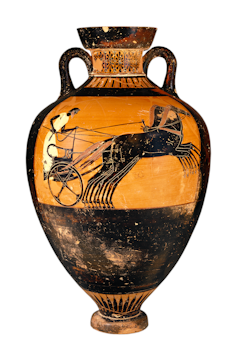
In sports like wrestling or javelin, the victors individually competed on the field. In the chariot race, the winners were the horse owners, not the riders – who were almost always slaves. Much like with the modern Kentucky Derby or Melbourne Cup, the victors are the horse and its owner, not the rider.

Kyniska didn’t have to drive the chariot to win.

An ancient Greek vase with an image of a four horse chariot.
Chariot owners did not have to be the ones physically racing at the games to win. Getty Museum

In fact, chariot team owners did not even have to be physically present at Olympia during the games. Kyniska could enter her chariot team in the race without ever stepping foot on the forbidden sacred grounds.

But Kyniska’s role was not secret. News of an Olympic victory was carried by fast messengers to the victor’s home city, where preparations to celebrate their return were begun at once. News that a woman had won an Olympic contest would have spread quickly.

What motivated a Spartan royal to break through the difficult glass ceiling of male-dominated Olympic competition and culture? The scant sources we have offer different opinions.

The Greek writer Pausanias said Kyniska had personal ambitions to win at Olympia, but Xenephon and the philosopher Plutarch credit her brother, King Agesilaus, for pressuring her to compete.

The answer may involve a bit of both.

Her legacy

Many ancient Greek women won Olympic victories after Kyniska, but none were as famous as she.

Kyniska erected at least two life-size bronze statues of herself at Olympia. The inscription on a remaining fragment of her marble statue base reads:

Kings of Sparta were my fathers and brothers. I, Kyniska, victorious at the chariot race with her swift-footed horses, erected this statue. I claim that I am the only woman in all Greece who won this crown.

Kyniska relished her fame. Agesilaus may have been the catalyst, but Kyniska herself probably decided to compete – at least the second time.

Other women would go on to compete in the chariot races, and by the 1st century CE women were competing directly against men in foot racing events – and winning.

The fact Kyniska didn’t physically compete has caused history to discount her achievements, but this argument marginalises her larger accomplishment. Amid enormous cultural barriers, Kyniska broke gender norms and glass ceilings.

By boldly and proudly celebrating her trailblazing victories with commemorative statues, she transmitted this message to women across the Greek world.

Fuelled by Spartan pride, Kyniska’s accomplishment to be the first woman to compete, and win, in the male-only Olympics is a startling and memorable achievement that deserves a prominent place in Olympic lore.

ref. Hidden women of history: Kyniska, the first female Olympian – https://theconversation.com/hidden-women-of-history-kyniska-the-first-female-olympian-123909

Explainer: what is the electricity transmission system, and why does it need fixing?

Source: The Conversation (Au and NZ) – By Tony Wood, Program Director, Energy, Grattan Institute

Shifting Australia to a low-emissions energy system is a big challenge. Much has been said of the need to change the electricity generation mix, from mostly fossil fuels to mostly renewables. Yet our electricity transmission network must also be overhauled.

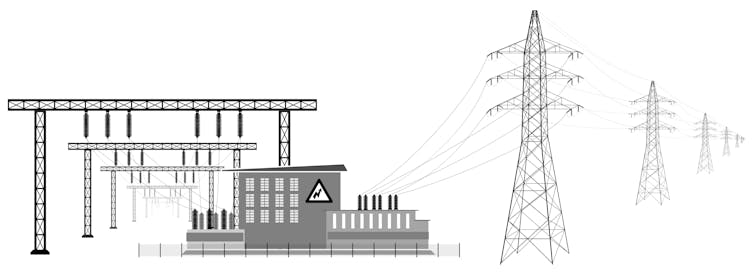
The transmission network largely consists of high-voltage cables and towers to support them, as well as transformers. This infrastructure moves electricity from where it’s generated, such as a coal plant or wind farm, to an electrical substation. From there, the distribution network – essentially the “poles and wires” – takes the electricity to customers.

On Australia’s east coast, increased renewable energy generation is already stretching the capacity and reach of Australia’s ageing transmission network. New capacity is being built, but is struggling to keep up.

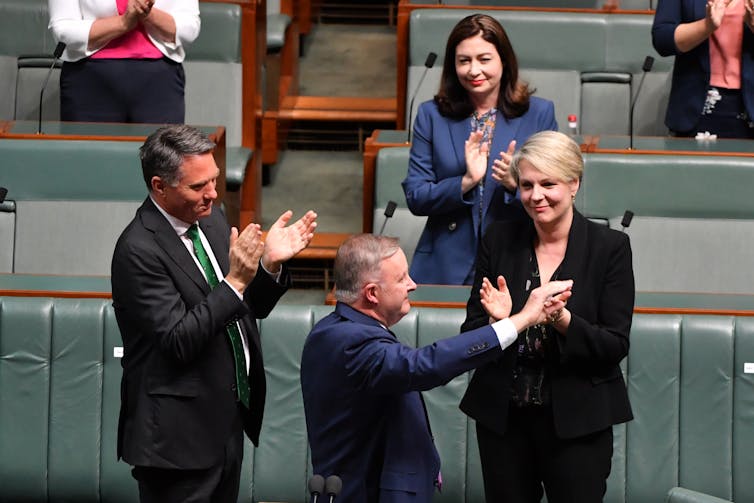
In his budget reply speech last week, Labor leader Anthony Albanese pledged to create a A$20 billion corporation to upgrade Australia’s energy transmission system. So let’s take a look at what work is needed, and what’s standing in the way.

Anthony Albanese, centra, with Labor frontbenchers
Labor leader Anthony Albanese’s budget reply speech included a $20 billion plan to upgrade transmission networks. Mick Tsikas/AAP

Starting with the basics

The electricity grid covering Australia’s east is part of the National Electricity Market (NEM). It’s one of the largest interconnected electricity networks in the world, and covers every jurisdiction except Western Australia and the Northern Territory.

The NEM comprises:

  • electricity generators (which produce electricity)

  • five state-based transmission networks, linked by interconnectors that enable electricity to flow between states

  • the distribution network (poles and wires)

  • electricity retailers (which sell electricity to the market)

  • customers, such as homes and businesses

  • a financial market in which electricity is traded.

The NEM’s transmission grid currently has a long, thin structure, running from the north of Queensland to the south of Tasmania and the east of South Australia. This reflects the fact that electricity has traditionally been produced by a small number of large, centralised (mostly coal and gas) generators.

Electricity transmission infrastructure
Electricity transmission infrastructure is expensive and complex to upgrade.

Who owns and runs transmission networks?

Australia’s electricity networks were originally built and owned by state governments, mostly during the latter half of the 20th century. Over several decades, interstate transmission interconnectors were built to share resources more efficiently across borders. The NEM was formally created in the late 1990s.

Between 2000 and 2015, several states either partly or fully privatised their transmission networks, leading to the mixed model of today. The transmission companies are monopoly providers, and the prices they charge are set by the Australian Energy Regulator (AER).


Read more: Sure, no-one likes a blackout. But keeping the lights on is about to get expensive


The Australian Energy Market Operator (AEMO) operates the national market and is responsible for transmission planning. In Victoria, AEMO also decides on transmission investments. In the other jurisdictions, that role rests with the transmission companies.

In the past, electricity companies made some infrastructure investments far beyond what was needed – mostly in distribution networks, but also in transmission. This so-called “gold plating” of networks led to inflated costs for consumers, who ultimately pay for the investments via their power bills.

A $50 note in a power socket
The cost of transmission upgrades is passed onto power consumers. Julian Smith/AAP

Why do the transmission networks need fixing?

Renewables have increased the total NEM generation capacity from 40 gigawatts to 60 gigawatts since 2007. More than 30 gigawatts of renewable generators and 12 gigawatts of energy storage are expected to come online by 2040.

In mid-2017, a panel led by Australia’s Chief Scientist Alan Finkel recommended a plan be drawn up to create “renewable energy zones”. These would coordinate the development of new renewable projects with new grid infrastructure.

The zones were contained in AEMO’s 2018 “Integrated System Plan (ISP). It identified transmission projects that should start immediately, and possible future projects.

Two initial projects involve expanding the system’s capacity between Queensland, New South Wales and Victoria. Possible future projects include a second interconnector between Victoria and Tasmania.


Read more: In a world first, Australian university builds own solar farm to offset 100% of its electricity use


But upgrading the transmission grid is easier said than done. The large size and cost of new transmission lines means planning and approval is subject to lengthy, intensive economic assessments.

What’s more, renewable energy generators are often built in regional areas, where solar and wind energy are plentiful. In many cases the electricity grid in those areas, designed in a different era, doesn’t have the capacity to accommodate them.

In September, the Energy Security Board (ESB), created by COAG energy ministers, said the transmission grid must be reconfigured along the lines of the ISP to suit the emerging mix of renewable generation and storage. This means upgrading existing interconnectors, and building new interconnectors and intrastate transmission from regional areas to coastal centres.

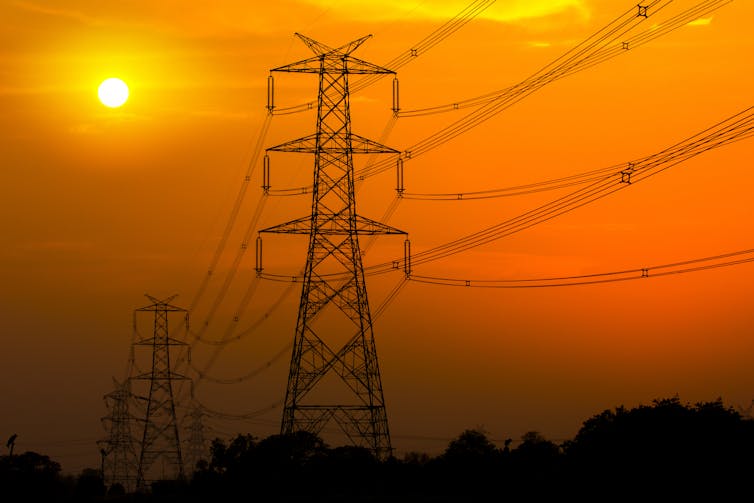
Transmission lines
The Energy Security Board has called for transmission infrastructure upgrades. Shutterstock

Weighing the political promises

Labor leader Anthony Albanese last week released a A$20 billion “Rewiring the Nation” policy to upgrade the grid. It would establish a government-owned body to partner with industry, providing low-cost government finance for the upgrades.

The Morrison government, for its part, is also working on transmission solutions. It’s supporting projects prioritised in the ISP, including up to A$250 million allocated in this month’s federal budget.

Some states have separately accelerated their own high-priority transmission projects. However, none of the above measures effectively solve two big impediments to modernising the transmission network.


Read more: Energy giants want to thwart reforms that would help renewables and lower power bills


First, the processes to identify, analyse and build transmission projects is too slow. Second, a state’s transmission infrastructure is currently paid for by consumers in that state – a poor fit for the increasingly integrated, and therefore shared, national grid.

Much work must be done to address these issues. Perhaps a government-owned national company could be established. It would own the shared transmission system, while AEMO would drive what gets built. Operations could be outsourced to a private company to deliver efficiencies.

Separating planning from owning would minimise the perverse financial incentives that led to past “gold plating”.

To minimise the risk of white elephants being built, strong, up-to-date benefit-cost assessments would be required.

Such alternatives will come with their own challenges. But the transition towards low emissions is too important for radical solutions to be ignored.

ref. Explainer: what is the electricity transmission system, and why does it need fixing? – https://theconversation.com/explainer-what-is-the-electricity-transmission-system-and-why-does-it-need-fixing-147903

Populist leaders have handled COVID badly, and they could still get away with it

Source: The Conversation (Au and NZ) – By Nicholas Gruen, Adjunct Professor, Business School, University of Technology Sydney

Three of the world’s most populist leaders of modern times – Donald Trump, Boris Johnson and Jair Bolsonaro in Brazil, have handled the COVID crisis badly.

All three have caught it.

In the Financial Times, chief economics commentator Martin Wolf has asked whether this spells the end of the sort of right wing aggressive populism that has been so successful in recent times.

Martin Wolf – will Covid-19 kill off populism?

Part of his answer is that populism hasn’t lined up neatly against relative success in keeping populations safe.

In the Anglosphere, Trump and Johnson have indeed been much more chaotic in tackling COVID than Canada, New Zealand and Australia.

But other populist governments such as those in Hungary and Poland have done well.

“The really interesting question” he says, turns out to be “is a government actually interested in governing?”.

Trump and Bolsonaro are basically interested in politics as performance.

They don’t care about government but they don’t really understand what government is for and they’re indifferent to it. In some ways and in some cases, they’re actually trying to dismantle the state.

As Wolf says, it’s obvious if that’s what you want to do, you can’t manage a disease well.

But there are other autocratic and indeed populist politicians who understand that ultimately their claim on power depends on being reasonably effective in dealing with such things.

The populists who don’t care about government are likely to be disposed of.

It’s possible for populists to govern well

But, what will replace them will not necessarily be a more effective democratic government, it could just as easily be a more effective dictator who understands the importance of delivering what people care about.

Wolf says that’s what Hungary and, in a different way, Poland has shown.

Alasdair MacIntyre’s concepts of “internal” and “external” goods offer some useful tools with which the think about these issues.

MacIntyre explains them with an example in which a child is taught to play chess and rewarded with candy if she wins.


Read more: Populism in Brazil: how liberalisation and austerity led to the rise of Lula and Bolsonaro


The skills required for excellence in chess are “internal goods”. They include spatial vision, computational accuracy and competitive intensity. They are “internal” because they emerge organically from the activity.

Candy is an “external good” because it is provided from outside the game.

All of the practices that have acquired any significance in the world, from chess playing to accountancy, from business management to political statesmanship are all entanglements of internal and external goods mutually supporting each other.

Rewards matter, but they are not everything

The internal goods of a practice can’t prosper – can’t exist in the world as more than a hobby – without the external goods such as money (and sometimes candy), power and esteem.

Thought of economically, they enable the practice to bid resources (of people’s attention, time and money) away from other activities.

Medicine is a practice with its own internal goods, but there wouldn’t be much of it unless practitioners were paid.

The converse is also true. People are prepared to part with their scarce resources to fund medicine or some other practice only because they value what it produces. Equally medicine can’t function without internal goods – such as the skills taught at med school.


Read more: How to discipline your children without rewards or punishment


However, although they complement one another, internal and external goods are in tension.

The girl in pursuit of candy will be tempted to cheat, undermining her incentive to acquire the game’s internal goods. A doctor will be tempted to over-service to obtain more external goods at the cost of sacrificing internal goods.

MacIntyre says it is virtues that keep this from happening.

Without them, in particular, “without justice, courage and truthfulness, practices could not resist the corrupting power of institutions”.

Leaders are getting skilled, at the wrong things

As MacIntyre sees it, the skill of political performance is actually an internal good of politics. It’s an important skill that helps one excel at politics. But it’s a particular kind of internal good.

Many internal goods are unquestionably meritorious unless they’re deliberately used for some nefarious purpose. Such skills include an astronomer’s or a chess player’s accuracy in calculation or the sensitivity of a medical professional’s skills of observation and diagnosis.

External rewards for sport mater more for sport than they used to.

On the other hand the business person’s focus on profit, the sportsperson’s competitive intensity and the politician’s capacity to perform are internal goods that are, in their respective areas, most closely associated with acquiring external goods.

This makes them more morally ambiguous than other internal goods.

This has been true since ancient Athens, but in my view what has changed is the fast foodification of our culture; the growing focus of our institutions on the external rewards of profit, power and prestige.

As fast food is to ordinary food, so porn is to sexuality, memes are to culture and to our capacity to concentrate, auto-tuned formulaic pop is to popular music, and linkbait and trolling are to journalism.

It was MacIntyre’s horror that this was increasingly the case in modern liberal capitalist democracies that motivated his thinking. As he put it

if in a particular society the pursuit of external goods were to become dominant, the concept of the virtues might suffer first attrition and then perhaps something near total effacement, although simulacra might abound.

So how did we get here and what can we do about it?

It seems to have arisen from the way the markets or “theatres of action” have scaled.

A generation ago, party politics had deep roots into the community across the Western world with party membership of around 14% of population.

By the turn of this century average membership had fallen to just 5% of the population and active membership had fallen to a mere fraction of that.


Read more: Discontents: identity, politics and institutions in a time of populism


Politicians doorknock less than they used to. After COVID they mighn’t do it much at all.

The mass scale of campaigning has forced politics to be conducted through media far more than it used to be, making the external goods of power and prestige much more dependent on performance in the media.

Fast food media, fast food politics

But the media has been driven by its own competitive imperatives to attract audiences, and so has concentrated on reporting the theatrics of political performance – intensifying the vicious cycle which hollows out political discourse as loss of members and local action has hollowed out party membership.

Citizen juries might be better than politicians.

So much so that politicians do increasingly farcical things for the cameras – none more so than the famously irreligious (or perhaps “areligious’”) Trump photo-op, bible in hand, at a church outside the White House, having walked through public space that had been cleared of demonstrators with tear gas.

Because these phenomena have developed deep structural roots, I’d expect there to be strict limits to the extent that they can be addressed within the existing system – though measures within it to improve integrity such as fundraising limits on political parties might be helpful.

Wolf may also be right that the extraordinary incompetence of the worst of the populists will trigger a backlash against them.

But I fear we’re in the grip of something bigger.

This analysis points to the possible healing qualities of injecting into our system small-scale deliberation of the kind of I have argued for elsewhere through mechanisms that aren’t “scaled” via media performances such as citizen’s juries.

We are prepared to do it for court cases. We are prepared to appoint as our representatives a jury of twelve ordinary people chosen without reference to performance or external rewards.

That Western democracies used to deliver good outcomes is not a good argument for maintaining the status quo. If we care about our institutions we will try to improve them.

ref. Populist leaders have handled COVID badly, and they could still get away with it – https://theconversation.com/populist-leaders-have-handled-covid-badly-and-they-could-still-get-away-with-it-145309

NZ election 2020: how might record advance voting numbers influence the final outcome?

Source: The Conversation (Au and NZ) – By Claire Robinson, Professor of Communication Design, Massey University

With under 48 hours until polls close in the 2020 election, 1,565,421 New Zealanders have made an advance vote. This represents 60% of the total number of votes cast in the 2017 general election and is the most advance votes ever cast in a New Zealand general election.

Is it possible to read the tea leaves in these numbers and predict what’s going to happen on Saturday?

Earlier this century and facing plummeting voter turnout, the Electoral Commission surveyed non-voters as to why they had not cast a vote. Respondents said they simply forgot or were otherwise busy on election day, away or overseas.

To mitigate these factors, the commission has made it easier for people to vote when and where it suits them. It has opened polling booths two weeks ahead of the election day in a range of locations, including school and church halls, mosques, marae, universities, clubrooms, libraries and pop-ups in retail spaces.

As a strategy to increase the total vote, this appears to have worked. Turnout has risen from a record low of 74.2% of enrolled voters in 2011 to 77.9% in 2014 and 79.01% in 2017.

Advance voting is not the only factor in these statistics. Voter advice applications such as Massey University’s On The Fence have helped first-time voters feel more confident about the voting process. This has led to higher youth voter turnout, contributing to the rise in overall turnout.

woman voting
Locking in the result: Jacinda Ardern votes in Auckland on the first weekend polls opened. GettyImages

Who benefits from advance voting?

Our major political parties have cottoned on to the advantages they can gain by promoting advance voting. Core major party voters tend to decide their voting choices well before the official campaign period. It’s therefore in major party interests to lock those votes in before random campaign events shake voters’ confidence in their choices at the last minute.

Parties only have to look back at the 2002 election to see the impact of this. When Labour entered the campaign it was hovering around 53% support. Following a random media storm over genetically engineered corn, which blew over as quickly as it arrived, Labour’s vote dropped over ten points to 41.26% on election day.

It was therefore no surprise to see our major party leaders, Jacinda Ardern and Judith Collins, casting their votes on the first weekend polls were open, projecting confidence and role-modelling the acceptability of advance voting. Green co-leader James Shaw and ACT leader David Seymour also voted that weekend, hopeful of locking in the opinion poll gains their parties had made in the middle of the campaign period.


Read more: NZ election 2020: 5 experts on the final debate and the campaign’s winners and losers ahead of the big decision


New Zealand First leader Winston Peters has said he will wait until tomorrow to cast his vote. On the grounds of “clanger after clanger after clanger being dropped every day now”, he has warned “only a fool tests the water with both feet”. He has encouraged voters to wait until election day so they know all the facts before casting their votes.

This isn’t just Peters playing amateur philosopher. Currently languishing in the polls, it has never been more important for New Zealand First to discourage advance voting. Peters will know that many of his supporters in previous elections have been protest voters who opted for New Zealand First as a matter of last resort because they liked neither of the major parties’ offerings or leaders.

Unfortunately for the party, some of the clangers this week are own goals. News about the financial scandal concerning the New Zealand First Foundation is more likely to hurt than benefit the party’s election fortunes this close to election day.

The impact of late strategic voting

At least a million voters are still to cast their votes today and tomorrow. History shows many will end up voting the same way they would have two months ago, irrespective of what has transpired during the campaign.

But a good proportion will also have been waiting for last night’s opinion poll to decide how to strategically cast their vote to influence the composition of the next parliament.


Read more: NZ election 2020: why gender stereotypes still affect perceptions of Jacinda Ardern and Judith Collins as leaders


If it looks like their preferred party is “safe”, they may give their votes to a minor party to help them form part of a final coalition. If their preferred party is looking unsafe, they may give their votes to a minor party to send a message of disappointment for poor performance.

Since the MMP system began, the minor party vote has been highest in the elections where the pre-election poll gap between the major parties has been widest. With last night’s gap between Labour and National remaining a whopping 15 points, it looks like the Greens and ACT will be the beneficiaries of late strategic voting, not either of the major parties.

This won’t be the result Ardern and Collins were hoping for when they cast their advance votes two weeks ago, but democracy in New Zealand will ultimately be stronger for it.

ref. NZ election 2020: how might record advance voting numbers influence the final outcome? – https://theconversation.com/nz-election-2020-how-might-record-advance-voting-numbers-influence-the-final-outcome-148182

Keith Rankin Analysis – Public Debt: Pay it Back or Pay it Forward?

Keith Rankin.

Analysis by Keith Rankin.

Keith Rankin.

I recently encountered the concept “pay it forward”, with reference to a debt. While it was in a personal context that I came across this concept, on reflection I am wondering why – as a follower of news media – I have never heard the concept in any current affairs discussion. There is so much hand-wringing about debt – especially government debt – yet so little useful commentary.

In its most simple sense, paying a debt forward is to repay a debt to a third party, and not to the original creditor. In a particularly important sense, however, it is the idea of paying to the future rather than paying back to extinguish a past contract. Thus a generation, raised by its previous two generations, in turn raises the next two generations. We are in debt to our parents (and grandparents) – our specific parents and our parents’ generation – and we pay that debt forward by raising our children and our children’s generation. We also service that debt by enabling our parents’ generation to enjoy the latter part of their lives free from the requirement to be in paid work until they die; and our children service their debt to us in the same way.

By thinking of our existence as a form of debt, we find ourselves under some obligation to lead good lives; good lives which can be understood as including both debt servicing and paying our existential debt forward by reproducing ourselves.

Further, we can extend that thinking back in time to our ‘origin myths’ – eg Adam and Eve, or Ranginui and Papatūānuku. And back further, to the beginning of the universe. ‘God’ becomes the original creditor. (See my Existential Concerns.) Human existence (and other life) is a perpetual process of paying debts forward, until a critical mass of people reneges on that demographic contract.

Personal Debt versus Existential Debt

We can think of debts as sitting on a spectrum, with life-creating existential debts at one end, and simple personal debts at the other end. In the middle are bank debts.

The best example that I can make of a simple personal debt is the situation where two colleagues each want to buy a car, but each only has $10,000 and a car has a $20,000 price tag. So, one friend (Jan) lends $10,000 to the other (May), who goes ahead and buys a car. Each expects to save $11,000 in the next five years. They make a contract that, in five years time, May will pay Jan $11,000, and Jan will use the $11,000 plus her savings to buy a $22,000 car. Each of Jan and May gets something (a car) and gives up something. May gives up the opportunity to buy a better car, and Jan has to wait to buy her car. In the contract, Jan is the creditor and May is the debtor. May services her debt ($1,000 interest) and pays back the debt ($10,000 principal). There is no question that there is a debt contract which involves ‘paying back the debt’, and the whole matter is settled – ie extinguished – once the debt is repaid and both Jan and May have their cars. In this example, there is a clear and unambiguous relationship between creditor and debtor; and the debt contract is terminated by the creditor making her delayed purchase.

Most of the financial debts that most of us participate in involve financial intermediaries, with ‘banks’ being the most familiar and important type of intermediary. Thus, a person who makes a bank deposit is a creditor, and a person who takes out a bank loan (which could be a credit card purchase) is a debtor. Further banks create new debts, through double-entry bookkeeping, enabling their collective balance sheets to expand. These new debts become new deposits, which, when spent, continue to be deposits – albeit deposits owned by someone else. The depositors are creditors of the banks, and the borrowers are debtors of the banks. Debts are assets of the banks. A person who becomes a net creditor runs a financial surplus, and a person who becomes a net debtor runs a deficit. (A person paying back debt is also running a surplus, and a person withdrawing deposits is also running a deficit.) The sum of all surpluses must equal the sum of all deficits; that’s called an ‘accounting identity’. Public deficits necessarily mean private surpluses, and vice versa.

When a person (say, debtor A) repays a debt to a bank, to debtor A it’s a personal debt paid back; but to the bank, that debt is existential. Banks’ responsibility to their shareholders is to maintain or preferably expand their balance sheets; not to allow them to contract or extinguish. Thus, the last thing that banks want is for their assets to disappear. Too much contraction of a bank’s balance sheet would mean the end of the bank’s’ existence.

So, when a loan is repaid by debtor A, a bank must find a new debtor (debtor B) to replace debtor A. The net effect is that the debt of A is paid forward to B; and then B will pay their debt, via the bank, to debtor C; and so on. In this sense, the bank acts as a facilitator in the paying forward process. This is a good process so long as that chain of forward debt contributes to the economy, and does not feed into a process of speculation in financial or property assets.

The banks – necessarily – expand their balance sheets by creating new debts, and prevent their balance sheets from contracting by facilitating the paying forward of existing debts that, from the point of view of borrowers, are being paid back.

The Reserve Bank and Government Debt

The Reserve Bank is essentially the banks’ bank; it can also be the government’s bank. The key assets of the Reserve Bank are the existential debts that constitute a country’s monetary system; thus the Reserve Bank acts to make sure that the banking system is creating new debts – including government debts – at a sufficient pace to support an equitable and sustainable economy.

The Reserve Bank is officially indifferent as to whether bank debt supports private sector business investment spending, government spending, or household spending on newly produced goods and services. Each of these forms of spending constitutes the economy. In times of recession – or near recession – the Reserve bank understands the accentuated need to support government spending and household spending as means to raise business confidence. In non-recessionary times, when business confidence is high, then the Reserve Bank expects banks to be lending in large part to private sector businesses in the economy.

In the years from 2010 to 2016, the New Zealand economy was for the most part in near recessionary conditions. In 2020 it has been in recession. Thus, in the eight mentioned years, the focus should have been for the banking system to expand government debt and consumer debt, with consumer debt including mortgages to support the building and upgrading of houses. Instead, what we found for these years is far too much debt going to the wrong places; in particular into the speculative purchase of existing assets, with the residential land market and the sharemarket being the most obvious examples of this misallocated debt.

In the years from 2011 to 2014, the government – by its own misguided choice –  borrowed and spent far too little, meaning that far too much bank lending was deflected into the wrong places. In the years from 2015 to 2017, the government repaid debt  – debt that was subsequently paid forward into the property market – while it should have been borrowing more and addressing the issues of inequality and poverty. From 2018 to 2019, while the New Zealand was close to full employment, interest rates had to stay low to maintain this; the government could have taken better advantage of these low rates. The governments – whether National-led or Labour-led – saw themselves as equivalent to personal debtors, having to pay back debt in the same way that May had to pay back the debt she incurred to buy her car. Governments are notoriously insensitive to interest rates; for them, low debt is a misplaced moral imperative.

So the governments repaid debt, and the banks paid that debt forward into the residential land market and into the sharemarket. The net effect was that – by repaying its ‘personal’ debt rather than addressing the problems that governments are expected to address – the government paid much of its debt forward into speculative markets.

In 2020 this unintentional funnelling of debt into secondary (speculative) markets is very clear. The Reserve Bank is injecting massive new amounts of existential debt into the banking system in order to support the Covid19 recessionary economy. The absolute priority is that this new money gets into the hands of governments, and needy households. As Keynes showed in the 1930s, by far the most effective means of getting new money where it is needed is through large deficits in governments’ Budget.
If the newly created debt does not get into the right hands, then it gets into the wrong hands. That’s double jeopardy. Not only are the needy missing out, but the greedy are getting it instead, and speculating with it, on residential land and shares. By not taking on as much debt as it should, the government is fast-tracking the paying forward of debt into the property market.

Monetary policy is not just about the quantity of existential debt required to support the economy; it is also about the service price – the interest rate – on that debt. Thus, in the ‘raining’ 2020 environment, in order to have the amount of existential debt that economies need, existential debt is available at record-low interest rates. New spending is induced by cheap consumer debt, and by discouraging people from holding money in term deposits and savings accounts; to spend their erstwhile ‘rainy day’ money on goods and services. We see this in a number of ways, ranging from home improvements, domestic travel, and such things as laser eye surgery. Monetary policy is about induced spending. Governments, unlike rational households and businesses, are unresponsive to monetary policy; they confuse personal debt with existential debt.

Three Rooms – Three Doors

We can imagine this situation. The Reserve Bank creates new existential debt. That debt can flow into any of three ‘rooms’: government; business; financial speculation (the financial ‘casino’, if you will).

A recessionary environment is an environment of private economic caution. Thus, the ‘business confidence’ door to the business room is at best ajar in a recession. A recessionary environment is when the government door should be wide open to compensate for the ajar business door; instead, the government door is also ajar and with tight springs holding it in that nearly closed position. The result is that the debt being pushed towards the business and government doors is deflected towards the third speculative door, into financial and property assets.

The solution is conceptually simple. In a recessionary environment, the government should open its door, both because of the unmet needs that can be easily resourced, and in order to keep that debt from flooding into the financial markets. The government should not pretend that its debt is equivalent to personal debt. It should understand that, from a wider economy point of view, it is dealing with existential debt. If governments do not spend the Reserve Bank’s existential debt, then that debt will circulate elsewhere – eg raising house prices and house rents to increasingly unaffordable levels – or it will become inert, creating economic inertia or collapse.

The Banks have to push to avoid this inertia, especially the Reserve Bank. Governments need to open their doors, so that the debts created by the banks’ flow into where they are needed, and do not flow to where they are not needed. The consequences of governments committing financial suicide – by not spending what they are required to spend – are dystopic.

Some say that the Reserve Banks try too hard because they err in favour of doing too much rather than too little, to get their countries’ economies moving. Maybe. But they shouldn’t have to push so hard against obstinate governments.

Human Sacrifice

In ancient times, people understood that they were in debt to the Gods. When things went wrong, they performed sacrificial rituals to pay back some of that debt. Some societies practiced sacrifices routinely, as insurance against things going wrong. These practices didn’t work, though – through coincidental timing – they sometimes appeared to work. This approach to debt led to perpetual underachievement.

We still have human sacrifices today, albeit the sacrifices of neglect and bureaucracy. We see far too many people, in New Zealand, subject to oral health disasters because of the ‘financial risk’ of addressing these issues. We see people with untreated cancer (and delayed treatment) and other life-threatening and painful conditions because of the ‘financial costs’ of timely diagnosis and treatment. We have become familiar with seeing people unnecessarily living in appalling housing conditions, or homeless, due to government perceptions that it is financially inconvenient to address these problems. We would rather have another ‘great depression’ and/or rows of near-empty million-plus dollar residential properties, than address these problems. If that’s not human sacrifice, I do not know what is.

Paying the Debt Forward

There are two ways that governments can pay their debts.

They can pay back their debts to the banking system, obliging the banking system to pay forward these debts, either into the private economy (a good thing in principle, though not always in practice) or into the speculative markets (a bad thing). In the latter case, the lives of future generations are undermined, as diminishing numbers of people gain control over the world’s resources. This is what happens, but should not.

Or governments can take a more worldly view, by understanding that our economies are underpinned by existential debt. Thus governments can choose to spend that debt, by investing in their countries’ futures; that’s what paying forward is really about, in spirit. We invest in the future by spending the debt – not extinguishing it – and we service existential debt by leading good lives (and paying the interest!). Public debt should be perpetually rolled forward, growing in recessionary times.

Rolling back the banking system debt – or governments refusing to participate in an economically rational way – is one route to existential disaster. Existential financial debt underpins our economic existence. To sustain future generations, we pay existential debt forward, not back.

Jacinda Ardern on why Labour should form NZ’s next government

By RNZ News

New Zealand’s Labour Party leader Jacinda Ardern today spoke on national radio about why she should continue as prime minister on the last day of campaigning before the general election tomorrow.

She told RNZ’s Morning Report today she had proved she can work with three parties, so she can work with two – but also hinted that governing alone might be preferable.

It followed a debate with National leader Judith Collins last night which – with just two days before the election and with more than 1.5 million advance votes already cast – seemed to matter very little.

NZ ELECTIONS 2020 – 17 October

While Collins this week has been often on the attack, Ardern has largely stuck to maintaining her positions and avoiding upsetting the personal popularity she enjoys.

Collins has evoked a response by continuing to claim Ardern would go back on her word and introduce the Green Party’s wealth tax policy. Ardern has rejected that as desperate tactics and misinformation.

Prime Minister Jacinda Ardern in the RNZ interview. Video: RNZ

Ardern has also been challenged on her government’s record on various measures and commitments it promised at the last election to meet, including child poverty, housing, light rail in Auckland, and climate change.

She told RNZ today her government had been progressive but needed more time to tackle the difficulties presented by covid-19.

Article by AsiaPacificReport.nz

Do criminals freely decide to commit offences? How the courts decide

Source: The Conversation (Au and NZ) – By Jeanette Kennett, Professor of Philosophy, Macquarie University

Social media algorithms, artificial intelligence, and our own genetics are among the factors influencing us beyond our awareness. This raises an ancient question: do we have control over our own lives? This article is part of The Conversation’s series on the science of free will.


Are criminals responsible for their actions? It’s a question philosophers, criminologists and jurisprudence experts have grappled with for centuries.

Some philosophers and scientists argue no-one has free will and no-one is ever responsible for any crime, no matter how serious. They suggest the impact of genes and formative social environments on us mean there’s no room left for free will.

This radical view, however, is not held by the majority of philosophers working on free will, nor is it held by the courts.

The criminal justice system presupposes people generally are free to decide whether or not to engage in criminal behaviour. If they do choose to commit a crime, it is presumed that they are responsible for what they’ve done.

However, the courts acknowledge not everyone has free will. For example, those who are very young, or sleepwalking, or severely mentally ill may not be held responsible for an offence. You might think of these people as lacking free will because they are unable to reason properly about what to do.


Read more: My brain made me do it: will neuroscience change the way we punish criminals?


Fit to stand trial?

But even before getting to the question of whether a defendant in a criminal proceeding deserves to be punished for an offence, there can be doubt about whether they are sufficiently rational to be tried at all.

Though the law sees most defendants as able to properly participate in their trial, it recognises others cannot.

A defendant’s mental condition may deprive them of the free will needed to properly instruct their lawyers, present their version of events, or follow court proceedings.

This was one of the issues in relation to James Gargasoulas, who is currently serving at least 46 years in prison for killing six people and injuring 27 others in Melbourne’s 2017 Bourke Street massacre.

The law acknowledges some may lack the kind of free will necessary to properly participate in their trial. David Crosling/AAP

Gargasoulas’ actions in driving a car into a busy mall, and his conduct in the run-up to the trial, raised significant questions about his mental health.

Expert witnesses were reportedly divided on whether Gargasoulas had the capacity to properly participate in his trial, despite suffering from paranoid schizophrenia and delusions.

A psychiatrist for the defence said Gargasoulas’ delusional belief system “overwhelms him”; the psychiatrist expressed concern Gargasoulas was using the court process as a platform to voice his belief he is the messiah.

A second forensic psychiatrist agreed Gargasoulas was “not able to rationally enter a plea”.

However, a psychologist for the prosecution assessed him as fit and the prosecution argued there was evidence from recorded phone calls that he was capable of rational thought.

Notwithstanding the opinion of the majority of expert witnesses, the jury found Gargasoulas was fit to stand trial, and later he was convicted and sentenced to life imprisonment.

Working from media reports, it is difficult to be sure precisely what happened in court, and we cannot know why the jury favoured the evidence suggesting he was fit to stand trial. However, it is interesting to consider whether research into the psychology of blame and punishment can shed any light on their decision.

Questions of consequence

Some psychologists argue judgements of blame are not always based on a balanced assessment of free will or rational control, as the law presumes. Sometimes we decide how much control or freedom a person possessed based upon our automatic negative responses to harmful consequences.

As the psychologist Mark Alicke says:

we simply don’t want to excuse people who do horrible things, regardless of how disordered their cognitive states may be.

When a person has done something very bad, we are motivated to look for evidence that supports blaming them and to downplay evidence that might excuse them by showing that they lacked free will.

Were the jurors who found Gargasoulas fit to stand trial influenced by how horrendous his actions were? Would their decision have been different had they not known what he’d been charged with?

We may never know. What is clear, though, is that questions about free will continue to challenge the criminal justice system — and will likely continue to do so in the future.

ref. Do criminals freely decide to commit offences? How the courts decide – https://theconversation.com/do-criminals-freely-decide-to-commit-offences-how-the-courts-decide-133751

Meet North Queensland First, the party that wants to kill crocs and form a new state

Source: The Conversation (Au and NZ) – By Claire Brennan, Lecturer in History, James Cook University

Many of the minor parties vying for votes in the Queensland election will already be very familiar to Australians.

But Pauline Hanson, Clive Palmer and the Katters are not the only minor party players worth watching in the lead up to October 31.

A new party has recently emerged in northern Queensland, with crocodiles and the balance of power on its mind.

It is also a prime example of how issues in northern Queensland can vary wildly from those in the south.

North Queensland First

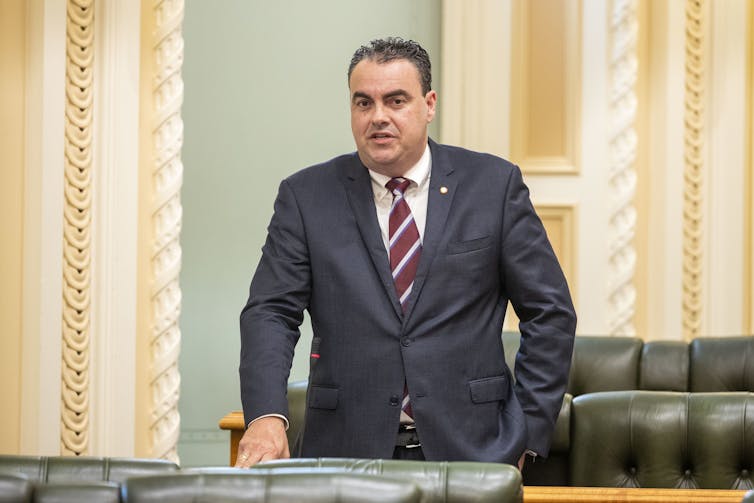
North Queensland First was set up in October 2019 by member for Whitsunday, Jason Costigan.

Jason Costigan speaking in the Queensland Parliament.
Jason Costigan has been the member for Whitsunday since 2012. Glenn Hunt/ AAP

Costigan was expelled from the Liberal National Party earlier last year, following harassment allegations (the woman who made the complaint has since withdrawn it and apologised).

NQ First is aimed at appealing to voters disillusioned with the major parties. It lists establishing a separate state of “North Queensland” among its primary aims and is promoting itself as a possible balance of power holder.

North Queensland’s history of feeling separate

The north Queensland separatist movement has a long history and separation remains a popular cause in the region.


Read more: Remember Quexit? 5 reasons you should not take your eyes off the Queensland election


Some north Queenslanders feel every inch of their distance from the state government in Brisbane: the notion of resources being extracted by a negligent, remote government has featured in northern politics for over a century.

Separatism was promoted by Palmer at the 2013 federal election and remains a Katter’s Australian Party policy.

Croc killing

That sense of remoteness also manifests itself in policies against crocodiles. Katter’s Australian Party and Bob Katter himself periodically make announcements about killing crocodiles.

Saltwater crocodile swimming in a river.
Anti-crocodile policies are common in north Queensland. www.shutterstock.com

Last last month, NQ First sought to establish its northern credentials by announcing a “shoot to kill” policy.

This “croc culling” polling has a focus on “public safety”, according to Costigan.

If there is a crocodile on one of our beaches in a populated area, perhaps a tourist spot or in a swimming hole or where workers are at risk of being attacked, it’ll be shot by a licensed contractor whose job it will be to go in and deal with the problem as a matter of urgency.

Do Costigan’s crocodile proposals make sense?

Costigan’s policy was triggered by a September 23 crocodile attack on a snorkeler off Lizard Island.

By the time Costigan released his policy, that crocodile had already been euthanised by government wildlife officers. The current Queensland government crocodile management plan allows for the removal of crocodiles located near centres of population or that attack humans. So, further legislation, as proposed by Costigan, would not speed up that process.

In fact, NQ First’s enthusiasm for killing more large crocodiles might be counterproductive and increase the number of crocodile attacks.

Crocodiles are territorial and when large crocodiles are removed, other crocodiles move in. When the crocodile hierarchy is disturbed, it increases the risks to humans and livestock.

Why do politicians want to kill crocodiles?

Northern Australia is crocodile country, and saltwater crocodiles are capable of killing and eating humans. Australian crocodiles have been fully protected from hunting since 1974 and populations have recovered from heavy hunting after the second world war.

But living with crocodiles can be frightening. Costigan’s press release described crocodiles as “maneaters” and “monsters”, playing on primal human fears.


Read more: Queensland’s unpredictable election begins. Expect a close campaign focused on 3 questions


Politicians talking tough about crocodiles are speaking to residents of northern Australia’s suburban frontier, which is pressing into crocodile habitat as urban areas expand. Crocodile sightings and attacks are increasing as more humans spend time in regions where crocodiles have always lived.

Politicians also target crocodiles because hunting — of other animals, particularly pigs — is popular in the north and big game hunting is big business. Australia still has a safari hunting industry, which started by hunting crocodiles, but now targets other species.

Politicians promoting crocodile shooting appeal to a sense of rugged Australian individualism and environmental competence among their constituents.

However, the reality of legal crocodile hunting in Australia is very different. Safari hunting tends to be restricted to the wealthy.

Will being tough on crocodiles help Costigan?

Costigan has been elected to the seat of Whitsunday three times before, but all three times he was a member of the LNP and only won by slender margins (in 2017 he won by 372 votes). In 2020, he faces numerous challengers.

Both major parties are fielding candidates in Whitsunday, as are the Greens, One Nation, Katter’s Australian Party and the United Australia Party.

Palm trees and umbrellas on a beach in the Whitsunday Islands.
Costigan faces numerous challengers to be re-elected on October 31. www.shutterstock.com

Those last three parties are all vying to occupy similar populist territory to Costigan.

Whether suggesting crocodiles should be shot will help Costigan retain his seat remains to be seen. One danger is NQ First’s policy may in fact alienate tourist operators and residents who live off the crocodile’s back.

However, promising even a limited ability to “shoot to kill” crocodiles will still resonate with some north Queenslanders.

Indeed, with a high profile as the sitting member and the LNP struggling with internal divisions and questions about donations, NQ First may well be part of the next Queensland parliament.


Read more: Fundraising questions have interrupted the Queensland LNP’s election campaign. What does the law say?


ref. Meet North Queensland First, the party that wants to kill crocs and form a new state – https://theconversation.com/meet-north-queensland-first-the-party-that-wants-to-kill-crocs-and-form-a-new-state-147562

Cats carry diseases that can be deadly to humans, and it’s costing Australia $6 billion every year

Source: The Conversation (Au and NZ) – By Sarah Legge, Professor, Australian National University

Toxoplasmosis, cat roundworm and cat scratch disease are caused by pathogens that depend on cats — pets or feral — for part of their life cycle. But these diseases can be passed to humans, sometimes with severe health consequences.

In our study published today in the journal Wildlife Research, we looked at the rates of these diseases in Australia, their health effects, and the costs to our economy.

Professor Sarah Legge discusses the key findings of the study.

Based on findings from a large number of Australian and international studies, Australian hospital data and information from the Australian Bureau of Statistics, we estimate many thousands of people in Australia fall ill or sustain a minor injury as a result of cat-dependent diseases each year.

Our estimations suggest more than 8,500 Australians are hospitalised and about 550 die annually from causes linked to these diseases.

We calculated the economic cost of these pathogens in Australia at more than A$6 billion per year based on the costs of medical care for affected people, lost income from time off work, and other related expenses.

Toxoplasmosis

Toxoplasmosis in an illness caused by the parasite Toxoplasma gondii. It’s the most serious cat-dependent disease.

Newly infected cats shed millions of T. gondii oocysts (like tiny eggs) in their poo and these can survive many months in the environment.

Humans become infected when they ingest these oocysts, which are in the soil and dust in places where cats have defecated, especially sandpits, vegetable gardens or kitty litter.

Humans can also become infected from eating undercooked meat, if those farm animals have come into contact with cat-shed oocysts.


Read more: Health Check: what bugs can you catch from your pets?


Up to one-third of people globally are infected with T. gondii, most without knowing it. Australian studies have reported infection rates between 22% and 66%.

Once infected, about 10% of people develop illness; the other 90% have no symptoms.

Based on overall infection rates and Australia’s population size, we estimate there are more than 125,000 new infections in Australia each year.

Of these, around 12,500 people get sick, mostly with non-specific, flu-like symptoms that resolve within a couple of weeks; 650 require hospitalisation, and 50 die, with these more serious cases often experiencing brain swelling and neurological symptoms.

People with compromised immune systems, such as those with cancer or HIV, are at highest risk.

The parasite _Toxoplasma gondii_
Toxoplasmosis is caused by the parasite Toxoplasma gondii. Yale Rosen/Flickr

Pregnant women who become infected for the first time can miscarry, or their babies may be born with congenital deformities.

Based on reported and estimated T. gondii infection rates in newborns, about 240 infected babies are born in Australia each year.

More than 20%, or about 50 of these babies, will have symptoms that require life-long care, including impaired vision or hearing, and intellectual disabilities. Another 90 babies will develop symptoms, usually related to vision or hearing, later in life.

A woman holds her pregnant belly.
Toxoplasmosis carries unique risks for pregnant women. Freestocks/Unsplash

Long-term impacts of latent infection

Even if the initial infection causes little illness, the T. gondii parasite stays with us for life, encased in a cyst, often in the brain. These “latent” infections may affect our mental health and behaviour, such as delaying our reaction times.

Many studies have found people with T. gondii infection are more likely to have a car accident. A review of several studies found if there were no T. gondii infections, car accident rates would theoretically be 17% lower.

T. gondii infections also appear more common in people with mental health disorders such as schizophrenia, and in people who attempt suicide. Reviews across many studies suggest that without T. gondii infections, there could be 10% fewer suicides and 21% fewer schizophrenia diagnoses.

There’s still debate over whether the parasite causes car accidents and mental health disorders, or whether the association is explained by another shared factor. But it is possible T. gondii infection is a risk factor for these issues, in the same way smoking is a risk factor for heart attacks.

Scientists are still discovering how T. gondii influences the brain, but studies on rodents suggest it may involve changed brain chemistry or inflammation.

Putting it all together

If we accept T. gondii infections do increase the risk of car accidents, suicides and schizophrenia, then considering the incidence of these accidents and health issues in Australia, without T. gondii, we estimate we could potentially avoid:

  • 200 deaths and 6,500 hospitalisations due to car accidents

  • 300 suicides and 4,500 suicide attempts

  • 800 schizophrenia diagnoses each year.

Combining deaths from car accidents and suicide with the 50 deaths from acute toxoplasmosis, we reach a total of 550 deaths related to T. gondii infection per year.

The hospitalisation total for T. gondii includes 650 for acute toxoplasmosis, 50 for congenitally infected babies, 6,500 for car accidents, and 800 for schizophrenia. We didn’t include hospitalisations for suicide attempts, as we didn’t have statistics on that. So this could be a conservative estimate, notwithstanding the fact there are other factors involved in car accidents and mental health issues.

Cat scratch and roundworm

Cat scratch disease is a bacterial infection (Bartonella henselae) that people can contract if bitten or scratched by an infected cat.

Typical symptoms include sores, fevers, aches and swollen glands. But more serious symptoms, such as inflammation of heart tissue, cysts in the organs and loss of vision, can also occur.

Prevalence figures are not available in Australia, but based on rates in the United States and Europe, where cat ownership patterns and cat infection rates are similar, we estimate at least 2,700 Australians get sick annually from cat scratch disease, and 270 are hospitalised.


Read more: Your cat has toxoplasmosis and you’re worried? Join the club


Cat roundworm is a parasitic infection (Toxocara cati) that people and other animals can contract by accidentally consuming the parasite’s egg, which infected cats shed in their poo.

Most cat roundworm infections cause mild symptoms, but the migration of the larvae through the body can cause tissue damage, which can be serious if it occurs in a place like the eye or heart.

An adult cat round worm. Beentree/Wikimedia commons, CC BY

What can we do?

Some 700,000 feral cats and another 2.7 million pet cats roam our towns and suburbs acting as reservoirs of these diseases.

There are no human vaccines for these diseases. Treatment for T. gondii infection in cats isn’t considered useful because cats usually shed the oocysts without the owner even realising the cat has the parasite. Cats can be treated to rid them of roundworm, but treatment for B. henselae (the bacteria that causes cat scratch) may not be effective.

But if you’re a cat owner, there are some things you can do. Keeping pet cats indoors or in a securely contained outdoor area could reduce the chance your pet will contract or pass on a disease-causing pathogen.

A cat sits on the windowsill, looking out onto the street.
If cats are always kept indoors they have a low risk of catching and spreading the disease. Jaana Dielenberg, Author provided

Cats should be kept out of veggie gardens and children’s sandpits. Washing hands after handling kitty litter and gardening, and washing vegetables thoroughly, can also reduce the risk of transmission.

As T. gondii can be contracted from infected meat, cooking meat well before eating, and not feeding raw meat to pets, can also help.


Read more: One cat, one year, 110 native animals: lock up your pet, it’s a killing machine


The urban feral cat resevoir could be reduced by preventing access to food sources such as farm sites, rubbish bins and tips. We could do this with improved waste management and fencing.

People shouldn’t feed feral cats, as this can lead to cat colony formation, where infection rates are also higher.

Pet cats should also be desexed to prevent unwanted litters that end up as free-roaming ferals.

These steps would cost us and our pet cats little, but could prevent unnecessary impacts on our health and well-being.

ref. Cats carry diseases that can be deadly to humans, and it’s costing Australia $6 billion every year – https://theconversation.com/cats-carry-diseases-that-can-be-deadly-to-humans-and-its-costing-australia-6-billion-every-year-147910

Some say neoliberals have destroyed the world, but now they want to save it. Is Scott Morrison listening?

Source: The Conversation (Au and NZ) – By John Hawkins, Senior Lecturer, Canberra School of Politics, Economics and Society, University of Canberra

The International Monetary Fund this week delivered a somewhat surprising message. It warned Earth was on course for “potentially catastrophic” damage under climate change, and called for green investment and carbon prices to put the global economy on a stronger, more sustainable footing.

Of course, the message itself makes a lot of sense. The surprising part is that the IMF is the outfit delivering it.

The Washington-based IMF cannot be dismissed as a bunch of latte-sipping leftists. The organisation has traditionally been a bastion of free market economics and fiscal austerity, long detested by socialists.

It’s now abundantly clear Australia’s climate policies are at odds with even the most conservative approach to economic management. Increasingly, the Morrison government is an outlier on the world stage.

Person with umbrella walks past IMF building
The IMF has called for a green-led pandemic recovery. Shutterstock

IMF calls for climate action

The IMF’s biannual World Economic Outlook projected a deep recession for 2020, as a result of the COVID-19 pandemic. Global economic output is expected to shrink by 4.4% this year.

The IMF noted while the recession has reduced emissions, the decline is temporary. It warned policies to reduce greenhouse gas emissions were “grossly insufficient to date” and global temperatures could increase by up to 5℃ by the end of this century. This would lead to “physical and economic damage, and increasing the risk of catastrophic outcomes across the planet”.

It said “an initial green investment push, combined with steadily rising carbon prices, would deliver the needed emissions reductions at reasonable output effects”. It went on:

The package would initially boost global GDP, supporting the recovery from the COVID-19 crisis, but then weigh on global activity for a period, as the impact of the investment push wanes and carbon prices continue to rise.

In the second half of the century, the reduction in emissions would place the global economy on a stronger and more sustainable path.

So in other words, the IMF recognises that now is a good time to undertake green investment, because it has long-term benefits and can act as a useful short-term stimulus.

The outlook suggests the stimulus effect of the investment push fades after the first decade. But any slowing in annual economic growth is trivial. The longer term economic benefits of avoiding catastrophic climate change far outweigh any transitional costs.

And in a transition to a low emissions economy, fears of net job losses appear misplaced. The IMF says says “the evidence indicates that environmental policies have succeeded in reallocating jobs from high- to low-carbon sectors”.

Solar panels
The transition to a low-carbon future will not lead to net job losses, the IMF says. Shutterstock

What is the IMF proposing?

The IMF’s proposed package involves the following tools:

  • an 80% subsidy rate for renewable energy production

  • a 10-year green public investment program in renewable energy, low-carbon transport and energy efficient buildings

  • carbon pricing, calibrated to achieve an 80% reduction in emissions by 2050, after accounting for emission reductions from the green fiscal stimulus

  • compensation for poor households whose purchasing power is dampened by a carbon price.

The IMF says the plan is “growth friendly”, especially in the short term. The policies are designed to increase the price of fossil fuel energy relative to low-carbon energy, and reflect the harm fossil fuels cause through air pollution and global warming.

The IMF is not alone in its thinking. Some 27 Nobel laureates in economics have endorsed a price on carbon. And recent research has conclusively found carbon pricing lowers growth in greenhouse gas emissions.

Skyline filled with polluting industries
The IMF has called for a price on carbon. Shutterstock

An unexpected turn

The IMF has long been a cheerleader for neoliberalism – a belief in free markets, free trade and small government.

But in this case it’s calling for market interventions: a new tax and government subsidies for certain industries. It’s not the first time the IMF has looked to be questioning its own neoliberal agenda, but it’s a twist nonetheless.

The IMF’s calls contrast starkly with the approach of the Coalition government. It dismantled the Gillard government’s carbon price in 2014, and has remained opposed to the measure ever since.


Read more: China just stunned the world with its step-up on climate action – and the implications for Australia may be huge


The Morrison government has refused to commit to net-zero emissions by 2050, nor will it target any further increases in renewable energy beyond this year.

Most recently, it is pushing for a “gas-led” recovery from the pandemic. This month’s federal budget included A$52.9 million to support the gas industry – including opening up five new gas basins.

It also allocated money to refurbish the Vales Point coal-fired power station in New South Wales, and A$50 million for carbon capture and storage technologies. Investment in renewable energy was scarce.

PM Scott Mlorrison
The Morrison government’s federal budget included money for gas and coal. Lukas Coch/AAP

Australia adrift

As the IMF notes, limiting global temperatures will require a global effort. Calls to address climate change though a global green-led recovery have come from far and wide, including banks and investors.

South Korea has seizing the opportunity presented by the pandemic recovery, through a US$61.9 billion green plan aiming to create 659,000 jobs by 2025. China recently committed to net-zero emissions by 2060, and the European Union’s new climate target may see it exit the coal industry by 2030.

Democratic US presidential candidate Joe Biden, the election favourite, is running on a highly ambitious US$2 trillion climate platform, leaving Scott Morrison exposed.

It’s clear Australia is being left on the wrong side of history. And when even the IMF starts calling for dramatic climate action, Australia starts looking more isolated than ever.


Read more: ‘Backwards’ federal budget: Morrison government never fails to disappoint on climate action


ref. Some say neoliberals have destroyed the world, but now they want to save it. Is Scott Morrison listening? – https://theconversation.com/some-say-neoliberals-have-destroyed-the-world-but-now-they-want-to-save-it-is-scott-morrison-listening-148167

How a university can embed Indigenous knowledge into the curriculum and why it matters

Source: The Conversation (Au and NZ) – By Maggie Walter, Pro Vice Chancellor (Aboriginal Research and Leadership) and Distinguished Professor of Sociology, University of Tasmania

We seek the wisdom of Aboriginal leaders with their deep knowledge of Country as we explore how to be a university with place at the centre of its thinking. – Acknowledgement of Country, University of Tasmania Strategic Plan, 2019-2024

The University of Tasmania is Indigenising its curriculum. Other universities, in Australia and overseas, are also taking this path. This is in line with recommendations of the 2012 Behrendt Review and commitments made in the Universities Australia Indigenous Strategy 2017-2020.

Cover of Universities Australia Indigenous Strategy
The University of Tasmania and others are acting on the Indigenous Strategy of Universities Australia. Universities Australia

Interpretations of what Indigenising the curriculum means, and how best to achieve it, vary widely. Universities Australia reports in detail how different Australian universities are approaching the task.

The University of Western Australia, for example, is ensuring all faculty staff are trained to deliver Aboriginal content as part of its program to Indigenise its Juris Doctor program. At UTAS, we use the definition of Canadian Mohawk scholar Marlene Brant Castellano:

Indigenizing education means that every subject at every level is examined to consider how and to what extent current content and pedagogy reflect the presence of Indigenous peoples and the valid contribution of Indigenous knowledge.


Read more: The world’s best fire management system is in northern Australia, and it’s led by Indigenous land managers


We incorporate Indigenous knowledge into the curriculum as an integral, interwoven aspect of students’ degrees. Under the foundation principle of Indigenous leadership, we have developed our process based on five key criteria.

  1. place-based: Indigenous peoples and knowledge systems primarily in focus are Palawa, the Tasmanian Aboriginal people

  2. Indigenous knowledge-based: Indigenous scholarship and expert Indigenous voices are prioritised, helping students learn from rather than about Indigenous peoples

  3. partnership-based: Indigenous and non-Indigenous academics collaboratively and equally share content development and teaching

  4. progression-based: Indigenous content is built to form a coherent body of knowledge across courses

  5. experientially based: students directly engage with Indigenous knowledge, which includes guided on-Country experiences.


Read more: To address the ecological crisis, Aboriginal peoples must be restored as custodians of Country


How do we meet these criteria?

Our flagship Indigenous Lifeworlds units demonstrate how these criteria can be implemented. These will be offered in 2021 to all first-year Bachelor of Arts students. There are two versions: humanities (story, history, country) and social science (sovereignty, justice, society).

The place-based criterion draws on an array of electronic and document resources related to Palawa. For instance, records of Tasmania’s history of colonisation are easily found in texts and archives. A selection of Palawa cultural practice materials, such as firestick burning or mutton-birding, is also available.

Map of Lutruwita/Tasmania showing Indigenous and English names
There are 14 official Aboriginal or dual names in Lutruwita (Tasmania). These names are in palawa kani, the revived language of Tasmanian Aborigines. Tasmanian Aboriginal Centre

But not all sources are of equal value. Nor do they cover the breadth of topics needed for an undergraduate unit.

The second criterion, Indigenous Knowledge as foundational, guides resource choices. Indigenous scholarship, particularly Palawa scholarship, is prioritised for inclusion. We use the voices of Palawa expert knowledge holders to fill identified content gaps.


Read more: Friday essay: Dark Emu and the blindness of Australian agriculture


All resources, whether published scholarship or commissioned, need to be curated appropriately. For this task we are using Traditional Knowledge (TK) Labels.

TK labels are electronic tags that allow Indigenous protocols and educative and culturally relevant information to be attached to resources. This information might include the significance to the local community and any restrictions on use. Our use of TK labels on curriculum material is the first time they have been used in this way, nationally and internationally.

The third criterion of teaching as a collaborative partnership between Indigenous and non-Indigenous academics facilitates a shared responsibility for Indigenisation and two-way scholarship and teaching mentorship.

The progression-based criterion avoids the common trap of curricula being restricted to a limited and often repeated trope of Indigenous content.


Read more: New coins celebrate Indigenous astronomy, the stars, and the dark spaces between them


Our development of a central pool of curated resources, including instructions for best usage, supports criteria 4 and 5. There are records of when and where that resource has been used.

Access to this collection reassures lecturers they are using quality, appropriate content. The breadth of the categorised content helps lecturers develop their units within the broader building of students’ understanding of Indigenous knowledge across their studies and degrees.

Country is integral to Palawa knowledge, identity and well-being. This relationship to Country forms a central learning component. To learn from personal experience of Palawa knowledge, students complete a series of virtual tours of Country.

The unit culminates in a physical Walking on Country experience at culturally important sites. Guided by Palawa Elder and knowledge holders, students directly share traditional stories and knowledge of Country, its historical significance and meaning within Palawa worldviews.

Two people walking through Tasmanian forest
Being on Country (this property is in the Central Highlands) helps students grasp its significance and meaning within Palawa worldviews. Matthew Newton/Tasmanian Land Coservancy/AAP

Read more: Dramatic and engaging, new exhibition Linear celebrates the art in Indigenous science


Increasing cultural competency

Indigenous knowledge systems, like Western knowledge systems, are complex and sophisticated. They are increasingly recognised as presenting viable alternatives in addressing contemporary issues. Indigenous knowledge also equips our medicine, education, law and social work students (among others) to be culturally competent professionals.

Embedding the vibrant and thriving realities of Palawa life, perspectives and community into the curriculum locates our students’ knowledge journey in this place, our place, Lutruwita/Tasmania.

ref. How a university can embed Indigenous knowledge into the curriculum and why it matters – https://theconversation.com/how-a-university-can-embed-indigenous-knowledge-into-the-curriculum-and-why-it-matters-147456

In defence of JobMaker, the replacement for JobKeeper: not perfect, but much to like

Source: The Conversation (Au and NZ) – By Peter Davidson, Adjunct Senior Lecturer, UNSW

There’s a lot to like about the JobMaker Hiring Credit announced in the budget.

As lockdowns ease, it’s logical to cautiously move from protecting jobs in struggling sectors to generating new jobs in growing ones.

For the next year, employers who take on a new worker who has been on JobSeeker or a related benefit will receive A$200 per week for up to 12 months if the worker is aged 16 to 29 years, or $100 per week if aged 30 to 35 years.

The employer will have to demonstrate that the new worker will increase overall headcount and payroll, and the payment will top out at $10,400 per position.

The budget says it will support 450,000 jobs.

Many will simply be brought forward, created earlier than they would have been; but this itself should be helpful, contributing to a virtuous cycle of employment, confidence, and consumer demand.

Past experience suggests that about 10% will be truly additional – jobs that wouldn’t have been created without the subsidy.

Cheaper per job than tax cuts

But even then, unlike the personal tax cuts, which the Australian Council of Social Service believes will cost $475,000 per job created, the cost per job would be a more modest $80,000.

More importantly, the hiring credit could prompt employers to take on people they might not otherwise have considered – those facing prolonged unemployment.

It is likely that by next year, more than a million people will be on unemployment payments for over a year – three times the peak in long-term unemployment after the early-90s recession.

Young people – those under 35 – have been targeted because they lost far more jobs in this recession than older people.


Employment by age, change since February 2020

Source: ABS, RBA

Limited work experience and qualifications means many young people will find themselves out of paid work for a long time.

But they’re not the only ones. There are already over 600,000 people long-term unemployed on benefits for more than a year, most of whom are over 40. Older unemployed people are right to be concerned the wage subsidy might encourage employers to overlook them for younger applicants.

Room for improvement

It’d be better to also target the subsidy to the duration of unemployment; for example to young people unemployed for six months, and others out of paid work for at least a year.

Otherwise a large and diverse set of talents might be wasted.

The subsidies might also be too low. $200 per week is around a quarter of the full-time minimum wage, enough to encourage employers to expand entry-level jobs of around 20 hours a week but perhaps not enough to encourage employers to expand full-time jobs.


Read more: Budget 2020: promising tax breaks, but relying on hope


This could hasten the shift already under way from fulltime to part-time employment in entry-level jobs in retail, hospitality and other industries. That might reduce unemployment in the short-term, but at the expense of entrenching higher levels of under-employment (people lacking the paid working hours they need).

Another issue is administration. An employment service on the ground would be better at matching the needs of workers and employers and organising pre-vocational training than workers and employers left to their own devices.

It’ll be important to avoid abuses

That could also help ensure the integrity of the scheme. Wage subsidy schemes give rise to concerns that existing workers may be displaced, or that people could be laid off when the subsidy ends regardless of their performance.

Guaranteeing the integrity of the scheme will be vital to ensure it’s fair to all involved and to sustain public support for it.

JobMaker is a welcome innovation, the logical next step after JobKeeper.

If, together with a scaling up of existing wage subsidy schemes, it generates full and part-time jobs for people of all ages who would otherwise be left behind, it could make a real difference.

ref. In defence of JobMaker, the replacement for JobKeeper: not perfect, but much to like – https://theconversation.com/in-defence-of-jobmaker-the-replacement-for-jobkeeper-not-perfect-but-much-to-like-147898

Vital Signs: yes, we need to make things in Australia, but not like in the past

Source: The Conversation (Au and NZ) – By Richard Holden, Professor of Economics, UNSW

Much of the focus of Opposition Leader Anthony Albanese’s budget reply speech was around Labor’s proposal to expand childcare subsidies – a policy with some flaws but which moves in the right direction.

Labor’s plan to modernise the electricity grid by setting up a “Rewiring the Nation Corporation” with A$20 billion in government support was also met with general approval.


Read more: Albanese promises $20 billion plan to modernise electricity grid, and $6.2 billion for childcare


What got less attention was the third pillar of Labor’s budget strategy – a big push toward more local manufacturing jobs.

Albanese wasn’t shy about what he meant. He lamented the loss of Australia’s car-making industry:

Australians will never forget that it was this government that drove Holden, Ford and other car makers out of Australia, taking tens of thousands of jobs in auto manufacturing, servicing and the supply chain with them.

He then announced Labor would create a “National Rail Manufacturing Plan” to expand Australia’s boutique train-building industry:

We will provide leadership to the states and work with industry to identify and optimise the opportunities to build trains here in Australia – for freight and for public transport.

The economics of pillars 1 and 2 make sense. Pillar 3 involves trying to turn back the clock on the irrepressible, tectonic forces of globalisation and automation to pretend we should make things here we shouldn’t.

Understanding comparative advantage

Countries benefit from trade rather than seeking to produce everything they need locally. This is due to the idea of “comparative advantage”, originated by David Ricardo in his 1817 book On the Principles of Political Economy and Taxation.

One country (call it country A) might be more efficient than another (country B) in absolute terms at producing, for example, T-shirts and wine. It is tempting to think, then, that country A should produce both T-shirts and wine.

But what if country B is really inefficient at producing T-shirts but reasonable at producing wine? If country A specialises in producing T-shirts and country B specialises in producing wine, they can trade and both be better off.

Why? Because country A produces T-shirts much more efficiently than country B, and country B is only a little less efficient at producing wine. Overall, both economies get more efficient, raising living standards.

Holden's now-closed factory in Elizabeth, Adelaide.
Holden’s factory in Elizabeth, Adelaide. Its closure in October 2017 marked the end of car making in Australia. Holden/AAP

Making cars and trains in Australia

Does Australia have any comparative advantage at producing cars or trains?

With cars the evidence speaks for itself. Local manufacturing only survived for decades because of huge government subsidies. Without them Australian-made cars couldn’t compete.


Read more: Holden’s dead end shows government policy should have taken a different road


Only part of that was to do with labour costs – and we should be rightly proud of our comparatively high wages and good working conditions. Germany – home of BMW, Mercedes Benz and Volkswagen – also has high wages and conditions.

What about trains? Some trains are made in Australia – by Downer EDI and Canadian multinational Bombardier. That’s good for a few thousand jobs. But the market is domestic, with the customers being state governments who buy with an eye on local jobs.

There’s not a lot to suggest it can become an export industry, competing for example with Japan, which has been making bullet trains since the early 1960s. Or France, whose train builders have sold hydrogen trains to Germany and high-speed freight trains to Italy.

With these competitors having such an edge, and the well-known phenomenon of “learning-by-doing”, are we really going to catch up?

A train being built at the Downer Rail factory in Maryborough, Queensland
A train being built for the Queensland government at the Downer Rail factory in Maryborough, Queensland, in 2017. Dan Peled/AAP

There are many other sectors in which Australian producers are internationally competitive, such as agriculture, services and areas of high-tech manufacturing. Building on and expanding comparative advantage in these areas makes a lot more sense.

The case for strategic manufacturing

That said, the COVID-19 pandemic has taught us how fragile certain parts of our economy are. The same logic of comparative advantage that has done so much to improve living standards has also made us vulnerable in some areas.

Having little or no manufacturing capacity in personal protective equipment or pharmaceuticals like insulin, EpiPens and antibiotics is potentially very dangerous. Importing more than 90% of our pharmaceuticals puts us in a vulnerable position if a state actor that controls important parts of the global supply chain decides to cut supply. This is what economists call the “hold-up problem”.


Read more: Medical supply chains are fragile in the best of times and COVID-19 will test their strength


So it makes sense for Australia to have more presence in strategic manufacturing like pharmaceuticals and personal protective equipment, even if producing these goods locally is not as efficient as buying them from overseas.

From just-in-time to just-in-case

The pandemic has taught us that we have, as a nation, moved a little too far towards the efficiencies of “just-in-time” supply chains. We need to move back somewhat, but certainly not completely, in the direction of “just-in-case” – to a little less efficiency but a little more insurance.

That should involve a push for strategic manufacturing. We should at all times be looking to build on and expand our comparative advantage.

But trying to go “Back to the Future” and build an Australian De Lorean makes no sense.

ref. Vital Signs: yes, we need to make things in Australia, but not like in the past – https://theconversation.com/vital-signs-yes-we-need-to-make-things-in-australia-but-not-like-in-the-past-148084

Friday essay: crafting a link to deep time from ancient river red gum

Source: The Conversation (Au and NZ) – By Billy Griffiths, Lecturer, Deakin University

With a mischievous smile, Damien Wright gives the exhibit an unceremonious kick. The enormous, curved slab of river red gum rocks back and forth on the gallery floor, casting a wavering shadow over the “Do Not Touch” sign at its base.

A couple of anxious visitors shuffle over to investigate as Damien tells me how he made this wobbling wooden bowl, and why he chooses to work with the hardest, most challenging timbers.

Damien Wright, ‘Food Bowl’, 2017. Recovered Red Gum, 2800 x 1300 x 250mm. Fred Kroh

The river red gum (Eucalyptus camaldulensis) once grew on the banks of the Murray River. Damien discovered the thick slab in a miller’s yard in Wodonga, where it had lain exposed to the elements for years, slowly warping in the heat. What others had dismissed as damaged wood, Damien saw as creative possibility: he relished the opportunity to work with wood that had been “cooked, cured and crazed by the sun”.

In his workshop in Northcote, Melbourne, he worked to accentuate the warp in the wood by curving the edges of the slab, creating a long, bowing channel, almost three metres in length and over a metre wide. Like all his work, this object is an argument he has made with his hands.

The rough, red, cracking grain of the wood runs lengthways across the piece, like gullies and rivulets spreading across a parched, burnt land. Damien encourages this comparison with his title, which is a pointed commentary on the mistreatment of the waterways on which the tree grew.

“It’s called Food Bowl”, he tells me. And then, gesturing to a knot in the centre, “It drains in the middle”.

Damien Wright, left, and miller Kelvin Barton with the slab that became Food Bowl, Wodonga, 2017. Fred Kroh

For Damien, wood is a way of thinking about place and time — even deep time. A river red gum may grow for anywhere between 400 and 1,000 years before it falls. And as it decomposes over centuries it becomes a home for new life. Murray cod lay their eggs in drowned red gums.

To work with wood is to think beyond a human lifespan. When you look at something like the Murray-Darling system from the perspective of a grand old red gum, you see the fragility and inter-connectedness of the waterway, and how rapidly it has degraded with recent human interventions.

“And if you have that conversation about deep time in this country”, says Damien, “you have to talk about Indigenous people and this continent as an occupied and cultural space, not just a physical place”.


Read more: Friday essay: when did Australia’s human history begin?


River red gums were a part of Australia’s environment long before people arrived here. They grew beside the Murray River when it was a wide, cold, fast-flowing stream; they witnessed its transformation in the late Pleistocene into a narrow, sinuous, seasonal river; and they have remained, over the past 13,000 years, as the water has slowed and warmed, forming swamps, low sand dunes and small lakes along the channel, and seasonal wetlands in the wider riverine plain.

These mighty trees have also been absorbed into the social and cultural worlds of Indigenous Australians. Their roots have been dug and hollowed out to create bowls, their bark cut to craft canoes, and their limbs burned to warm camps and cook food. In recent millennia, they presided over the most densely populated areas of the continent.

A red gum along the Wagirra Trail in Albury, 2017. Before European settlement, wooden canoes were cut from the trees and used by the Wiradjuri people on the Murray River. Sarah McPhee/AAP

Read more: The ring trees of Victoria’s Watti Watti people are an extraordinary part of our heritage


Damien tells me how he seeks to evoke this deep history through his craft as he shows me two of his other pieces: a striking lantern (Black Lighthouse) he made in collaboration with Yolngu craftsman Bonhula Yunupingu, which glows like a fire through thin, black wood; and an elegant reading chair and angular side table called Ned — a riff on Sidney Nolan’s Ned Kelly helmet, which it closely resembles.

Each piece of furniture has been made from red gum in a stage preliminary to fossilisation. The wood is black and almost as hard as stone. It is known as ancient red gum.

While other native timbers enable Damien to explore relationships with the Australian environment, the ancient red gum opens a conversation about deep time on this continent.

Geomorphologist Jim Bowler was the first to identify the material as red gum; he used radiocarbon dating to place its age at about 8,000 or perhaps 10,000 years old. Later I call him and, over the phone, he sketches out the wood’s journey from the banks of the Murray River to the workshops of inquisitive artisans like Damien.

The tree would have seeded after the end of the last ice age, at a time when sea levels were rising and the climate was warming.

The rapid snowmelt in the Victorian Alps caused the mountains to shed huge amounts of gravel, which was then swept into the Murray River. As red gums fell into an ancient channel they were covered by this new gravel, which sealed them in the riverbank.

Preserved from decay by the acidity of the water, the entombed wood slowly absorbed enormous amounts of iron and silica. This oxidising and ebonising process is what makes it black through to the centre and hard, much harder than other red gum.

Articulating a future

Jim first became aware of the red gum when he received some samples at the Melbourne Museum in 1990. The damp and fibrous wood had been unearthed in a quarry on Yorta Yorta land in Wodonga, where it was regarded as a nuisance by those more interested in the gravel around it.

Jim and his wife Joan Bowler recognised the significance of the timber and were eager to see it preserved and used. They helped arrange for the director of the museum to provide “authentications” for woodworkers to make it into furniture, and Joan and her friend Annetine Forell travelled the country over the following two decades, drawing the remarkable material to the attention of millers and craftspeople.

The late Kelvin Barton, a miller, woodworker and seventh-generation farmer, became a crucial intermediary. He collected the ancient red gum in Wodonga, reducing its water content in his ersatz kiln to turn it into workable timber. This was how Damien, a long-term friend and collaborator, came to encounter the ancient red gum — indeed it was in Kelvin’s yard that he found the much younger slab that became Food Bowl.

Ancient red gum, Wodonga, 2004. Damien Wright

Damien uses the ancient red gum to articulate his vision for Australia. He sees craftsmanship as a language: a practice that is refined over time to communicate knowledge, beauty and ideas.

He considers his furniture — in its functionality as well as its elegance — as an embodiment of this philosophy. Objects tell stories. They become part of our everyday lives and express everyday futures:

My argument is that to take a material that is ten thousand years old and to articulate that in a beautiful and passionate way and to make that a relevant thing to our lives or to peoples’ lives is a way of articulating a future for this continent. It’s a way of understanding our place in time. It’s a way of dealing with people. It’s a way of projecting forward.

Damien Wright, Reading Chair and Ned, 2017. Ancient red gum and recovered black bean. Fred Kroh

Joan Bowler shares this vision for the ancient timber. In 2008, her company Australian Ancient Redgum donated a six-metre “Fossil Tree” to the Children’s Garden at the Royal Botanic Gardens Victoria, so that “children can sit under this ancient tree and look up through the hollowed out centre and dream of what was and what might be”.

Trees that were seeded after the end of the last ice age, that survived the ruptures of invasion and industry, have reemerged to offer a deep-time perspective of the continent.

It is a scale that reveals the long-term costs of short-term exploitation, and renders processes like the degradation of the Murray-Darling river system into sudden events.

Ancient red gum also invites a longer view of Australian history. And in the hands of Joan and Damien, it calls for the acknowledgement of cultures and histories that for so long have gone unrecognised.

This is an extract from Living with the Anthropocene, Love, Loss and Hope in the Face of Environmental Crisis, edited by Cameron Muir, Kirsten Wehner & Jenny Newell (New South Books).

ref. Friday essay: crafting a link to deep time from ancient river red gum – https://theconversation.com/friday-essay-crafting-a-link-to-deep-time-from-ancient-river-red-gum-145037

Final NZ election poll one day before vote points to Labour-Green win

By RNZ News

The last opinion poll before Saturday’s general election on Saturday last night put Labour on 46 percent and National on 31 percent. Both are down 1 percent.

Behind is ACT on 8 percent and the Green Party on 8 percent, up two.

New Zealand First is up on 3 percent, according to the 1 News Colmar Brunton poll.

NZ Elections
NZ ELECTIONS 2020 – 17 October

It would mean Labour would get 59 seats, 40 for National, 11 for the Greens and 10 for ACT. Labour would need the Green Party to form a government on these results.

In the preferred prime minister stakes, Jacinda Ardern is on 55 percent and Judith Collins is on 20 percent.

More than 1.5 million people have already voted.

The poll was conducted by landline and mobile phone between October 10-14.

What the commentators think
Former National MP Jonathan Coleman thinks Labour will not be pleased with the result.

“I think people might be quite surprised they have gone to 46 percent,” he said.

New Zealand First’s slight increase might “make things interesting”.

“New Zealand First voters might be the sort of people who don’t necessarily tell pollsters how they are going to vote, so I wouldn’t say this is exactly how it’s exactly going to play out on election night.”

But former Green Party policy director, now consultant, David Cormack, said today’s results were “effectively an exit poll”.

“We’ve had such a large chunk of the electorate already vote, so I think this is going to be the most accurate representation of what is going to be the final result.”

Coleman said polls had been incorrect in the past, but Cormack said this was best poll he had seen in a long time.

‘Terrifying scenario’
“We get out of the terrifying scenario of Labour governing alone. The Greens look well comfortable.”

Coleman thinks opposition leader Judith Collins has done an excellent job with the leadership of National.

“Judith has an opinion and many people will back her on that. She’s had to make some calls, I think at times she’s been let down by people on her team who should have backed her up.

“They should have at least stayed quiet because that’s what you do. You back the leader if you want to win.”

Cormack is standing by his call that NZ First will be gone at the election.

But Coleman said Winston Peters had surprised in the past and said there could be twists and turns before the election results were known.

The previous political poll – published by 1 News Colmar Brunton on October 8 – had support for Labour steady on 47 percent, National on 32, ACT on 8, the Greens on 6 and NZ First on 2.

This article is republished by the Pacific Media Centre under a partnership agreement with RNZ.

Print Friendly, PDF & Email

Article by AsiaPacificReport.nz

Regenvanu calls for fresh lobbying to ‘convince’ New Caledonia loyalists

By RNZ News

Vanuatu’s opposition leader is calling for engagement with New Caledonia’s anti-independence side to convince them of a viable Kanaky.

New Caledonia last week narrowly rejected independence from France, but a third referendum is likely in 2022.

Ralph Regenvanu, who is a staunch advocate for decolonisation in the region, says New Caledonia is Vanuatu’s closest neighbour and home to the largest group of ni-Vanuatu abroad.

He says New Caledonia’s independence is the goal of the Melanesian Spearhead Group, for which it was set up.

“We also need to convince the anti-independence lobby that New Caledonia can be a viable state in the Pacific like the other states in the Pacific,” he said.

“I know that the anti-independence lobby in New Caledonia often likes to point over to Vanuatu and say, ‘look, you could become like that if you become independent’.

“For us, it is quite amusing because we think we have got a very good development model happening here,” Regenvanu said.

This article is republished by the Pacific Media Centre under a partnership agreement with RNZ.

Print Friendly, PDF & Email

Article by AsiaPacificReport.nz

Grattan on Friday: Gladys Berejiklian has governed well but failed an ethical test

Source: The Conversation (Au and NZ) – By Michelle Grattan, Professorial Fellow, University of Canberra

If any other Australian leader had given the sort of evidence Gladys Berejiklian did to the Independent Commission Against Corruption on Monday, they’d probably have been out of their position by the end of the day.

The NSW premier was protected, in the immediate term, in part because the disclosures about her five-year secret relationship with the disgraced former Liberal MP Daryl Maguire seemed so bizarrely out of character with her unsullied past and apparent conservatism in her private life.


Read more: Gladys Berejiklian determined to tough out scandal of secret relationship with disgraced former MP


Also, she has been a highly competent premier, especially during COVID. The pandemic fireproofed her.

Her political performance this year is certainly one reason why the Prime Minister is standing with her. As Scott Morrison has said repeatedly, NSW has set the “gold standard” during the coronavirus crisis.

But Berejiklian’s personal and political reputation should not obscure the seriousness of her actions, or rather her inactions, in relation to Maguire.

She didn’t just make a bad judgement about a sub-optimal boyfriend which can be written off as having “stuffed up” her personal life. She made a series of decisions that were inappropriate.

When in 2015 she changed the nature of her relationship with the then member for Wagga Wagga from friendship to a “close personal” one, she failed to disclose this to colleagues.


Read more: Brand Gladys: how ICAC revelations hurt Berejiklian’s ‘school captain’ image


Her supporters say her private life was no one else’s business. If her relationship had been with the plumber down the street who was unconnected with government, that would be absolutely correct. It’s another matter when those involved are a senior minister, who then became premier, and one of her party’s MPs.

The premier could affect the fortunes of the MP; the MP could use the relationship, even if undeclared, to further his own interests by suggesting he could deliver access.

As Berejiklian has said, there is nothing wrong per se with two members of parliament having a personal relationship. But, given the position of one of them, in this case it should have been put on the record – at least to cabinet colleagues.

When Maguire fell foul of ICAC in 2018, Berejiklian should have belatedly admitted to the relationship, informing senior colleagues, so there would be no time bombs. Certainly she should have broken off the connection with Maguire immediately, rather than continue it until this year, when he was back in ICAC’s sights.

Most compromising however, is the material captured by phone taps of Maguire’s conversations with Berejiklian.

Maguire told her of his lobbying for developers. The activities referred to might not have been illegal – Berejiklian makes the point MPs are allowed to engage in business – but for any premier they would be very uncomfortable.

Berejiklian certainly seemed uncomfortable and on two occasions said “I don’t need to know”.

She explains her apparently dismissiveness of what Maguire was saying as boredom with his big-noting. It sounded, however, more like she did not want him to give her information she preferred not to receive. She had a deaf ear to clues she should have picked up.

Imagine the reaction if Morrison had given such evidence, or been embarrassed by such tapes. People would not be looking for reasons to excuse him.

The line that everyone makes mistakes in their private life – “people have all made personal decisions I’m sure they regret, that’s human,” Morrison says – won’t wash.

Berejiklian can be forgiven for initially being taken in by Maguire. But persisting with the relationship after he was found out is surely harder, if not impossible, to justify, regardless of her explanation he was in a “very dark place”. After all, she removed him from the Liberal party and pushed for his resignation from parliament in 2018.

To maintain that different, tougher standards apply to women leaders may often be true, but it doesn’t apply in this instance. If anything she is being given a softer run.

Morrison has said “it would be a bit of a numpty of a decision” to replace her.


Read more: Scott Morrison pledges ‘absolute support’ for Gladys Berejiklian


Former Prime Minister Malcolm Turnbull praised her integrity and also said, “Her leadership of this state has been tried and tested in the toughest circumstances this year, from the bush fires to now the pandemic and she has excelled.” And, he pointed out, “Let’s be frank – leaders of her calibre are not easily found.”

If the point is that the alternatives on offer – and it is not clear who would become leader if she went – wouldn’t do as good a job, that might be a valid argument on strictly utilitarian grounds (although if she survives, this scandal will make it much more difficult for her to govern effectively).

When you compare the way the NSW and Victorian governments have handled the pandemic, NSW has been way ahead (the Ruby Princess debacle notwithstanding).

Yes, she would be hard to replace. But this should not be confused with a clear-eyed view about the ethical shortcomings in her behaviour over Maguire.

In recent decades we’ve seen declining trust in political institutions. The pandemic has led people to reattach to these institutions and all Australian leaders ­– Morrison and the premiers – saw their ratings rise.

What we don’t yet know is whether trust in general will again plummet when the pandemic subsides.

If politicians seem to be holding their noses when there’s the whiff of impropriety or corruption in the air, they are trifling with the public’s trust in them and in the political system. They are treating the electorate with disdain.

The ICAC hearings this week have reinforced the case for a federal integrity body. But the reactions of Liberal politicians show why they want it to be relatively toothless.

It is not being suggested Berejiklian, whose leadership hangs by a thread, has personally engaged in wrongdoing; her appearance at ICAC was as a witness in an investigation into Maguire’s alleged wrongdoing.

But on what we have heard this week, she has fallen short of the standards that should be expected of a premier. Federal and state colleagues who are defending her are being tribal or expedient or both.


Read more: The long history of political corruption in NSW — and the downfall of MPs, ministers and premiers


ref. Grattan on Friday: Gladys Berejiklian has governed well but failed an ethical test – https://theconversation.com/grattan-on-friday-gladys-berejiklian-has-governed-well-but-failed-an-ethical-test-148184

Who pays compensation if a COVID-19 vaccine has rare side-effects? Here’s the little we know about Australia’s new deal

Source: The Conversation (Au and NZ) – By Nicholas Wood, Associate Professor, Discipline of Childhood and Adolescent Health, University of Sydney

In last week’s federal budget the Australian government announced it had given the suppliers of two COVID-19 vaccines indemnity against liability for rare side-effects.

Although details are unclear, it appears the government would foot the bill for compensation if a member of the public wins legal action against the drug company.

This is in contrast to 25 other countries with no-fault compensation schemes for rare vaccine side-effects.

Here’s the little we know about Australia’s latest indemnity deal and what we could be doing better.

What do we know about Australia’s new deal?

The deal relates to two vaccines the government had previously announced it would supply, should clinical trials prove successful.

These are the University of Oxford vaccine, from AstraZeneca, and the University of Queensland vaccine, from Seqirus (part of CSL).

However, it is not entirely clear what this indemnity deal means in practice. The budget papers say the government will cover:

certain liabilities that could result from the use of the vaccine.

The government considers further details “commercial in confidence”.

For instance, we don’t know how serious or disabling a side-effect would have to be to qualify or whether there is any cap on the amount of compensation.

We also don’t know what would happen if there were errors involved, or contaminants introduced, while manufacturing the vaccine. These would still be the company’s liability, but it may be hard to determine where boundaries lie.


Read more: Putting our money on two COVID vaccines is better than one: why Australia’s latest vaccine deal makes sense


How unusual is this?

This deal is not entirely new or unexpected. The government has provided some indemnity to pharmaceutical companies that make vaccines against smallpox and influenza.

The governments of many other countries have also agreed to indemnify COVID-19 vaccine manufacturers, including governments in the UK, US and the European Union.

The manufacturers believe that as the use of their vaccine is for the benefit of society, they should not be held financially accountable for any consequences from a vaccine reaction.


Read more: Big pharma’s safety pledge isn’t enough to build public confidence in COVID-19 vaccine – here’s what will


So what does this mean for the public?

If a person in Australia believes they have been injured by a vaccine, including future COVID-19 vaccines, they will need to pursue compensation through the legal system.

Under the latest agreement, it would appear the government, rather than the drug company, would pay that compensation, should the person win their case.

However this is not ideal. The person still has to engage with the legal system, which is both costly and complex, and there’s no guarantee of success.

Woman consulting professional looking woman in office
Under the latest indemnity deal, it seems that people would still need to go through the legal system, with no guarantee of success. www.shutterstock.com

Compensation may not even be possible via our legal system. That’s because in most cases, it will be difficult to show in court a serious side-effect was due to a fault in the vaccine composition or negligence in the way it was administered.

So in Australia, people with a vaccine injury, either COVID-19 or other vaccine, will likely bear the costs of their injury by themselves, and seek treatment by our publicly-funded or private health systems.

The National Disability Insurance Scheme helps fund therapies for people with a permanent and significant disability but does not cover temporary vaccine-related injuries.

Participants in COVID-19 vaccine clinical trials can be compensated for temporary and permanent vaccine injuries.


Read more: The budget assumes a COVID-19 vaccine becomes available next year. Is this feasible?


What’s happening overseas?

In the US, people with a rare but serious reaction to a COVID-19 vaccine will be able to access a special compensation scheme. This is designed to provide compensation for the use of COVID-19 pandemic medications and vaccines.

However, applicants only have one year from the date they had the vaccine or medicine to request benefits.

The US already has a vaccine compensation scheme for vaccines other than COVID-19. This is an example of a no-fault compensation scheme. These compensate for specific vaccine reactions, without having to go to court to prove the vaccine manufacturer is liable.

Australia, in contrast to 25 countries including the US, UK and New Zealand, does not have a no-fault vaccine compensation scheme, and does not have the equivalent of the US COVID-19 vaccine compensation scheme.

How would a no-fault system work?

There are numerous benefits to a no-fault vaccine compensation system. These include simplified access to compensation, and avoiding a lengthy, costly and complex encounter with the legal system, with no guarantee of success.

Most are government funded. The US government funds it by a flat rate of US$0.75 for each disease prevented for each vaccine dose.

Finland and Sweden fund their programs via insurance payments from pharmaceutical companies marketing their products there.

The New Zealand scheme includes compensation for vaccine-related injuries, as well as for accidents and treatment injuries. This is funded through a combination of general taxation, and levies collected from employee earnings, businesses, vehicle licensing and fuel.

However, compensation awarded via such no-fault schemes is usually lower than you would receive after a successful liability lawsuit.


Read more: We’re all at risk from scary medicine side effects, but we have to weigh the risks with the benefits


Where to next?

To encourage people to receive COVID-19 vaccines for the benefit of the entire community, we need compensation schemes to be in place if there is a rare but serious side-effect.

Should options to increase vaccine uptake include mandates or penalties — such as employment or travel restrictions if not vaccinated — this would make a no-fault vaccine compensation scheme even more essential.

Although it is important manufacturers receive indemnity for “certain liabilities”, we still need to look after our community. That means a compensation system the public can easily access and which provides appropriate support.

ref. Who pays compensation if a COVID-19 vaccine has rare side-effects? Here’s the little we know about Australia’s new deal – https://theconversation.com/who-pays-compensation-if-a-covid-19-vaccine-has-rare-side-effects-heres-the-little-we-know-about-australias-new-deal-147846

Apple releases fast 5G iPhones, but not for Australia. And we’re lagging behind in getting there

Source: The Conversation (Au and NZ) – By Stanley Shanapinda, Research Fellow, La Trobe University

Following in the footsteps of Samsung, Apple has released its first high-spectrum 5G smartphone, the iPhone 12. But only US customers will benefit.

High-spectrum 5G uses millimetre-wave frequencies in the 26GHz range (25.1GHz to 27.5GHz). But Australia’s mobile phone networks, although they can access the mid-range 5G spectrum, don’t have access to these high frequencies.

Unlike the US version, the iPhone 12 model for Australia lacks the distinct millimetre-wave antenna necessary to access them. In other words, Australians who purchase an iPhone 12 wouldn’t be able to access high-spectrum 5G even if it was available here.

This is another stark reminder of the effort needed to enable Australia’s “fourth industrial revolution”. Not having high-spectrum 5G available for the public and businesses right now is a letdown and will set the country back as it struggles to recover from a recession.

How did we fall so far behind?

Using millimetre waves (such as the 26GHz frequency range) allows massive data transfer capacity over short distances.

Millimetre waves are what will help US iPhone 12 users reach speeds of up to 4Gbps (gigabits per second). The extra bandwidth will be especially useful in public spaces that require higher data capacity throughput, such as shopping centres and sport stadiums.

In the US, Samsung’s Galaxy S20+ and Galaxy S20 Ultra (launched in March) both support millimetre-wave frequencies. Telcos AT&T, Verizon and T-Mobile had rolled out the network even before the millimetre wave 5G-capable smartphones were released.

Meanwhile, individual customers and businesses in Australia are still limited to 5G in the sub‑6 GHz range (not millimetre-wave frequencies).

The high-frequency 5G technology is currently only available in the US, but has also been assigned in Italy and Finland. Several other countries are planning to upgrade soon including Singapore, Japan, Taiwan and South Korea. Local licenses are also available in the UK.

According to a European Commission report, 15 of the European Union member states, as well as the UK, have already completed at least one 26GHz spectrum auction. In 25 countries, as well as the UK, at least one spectrum auction was scheduled for this year.

On the other hand, the Australian government is planning to auction off the use of the 26GHz frequencies in March next year, for the first time ever. This leaves us trailing behind.

The longer the delays in bringing the millimetre wave spectrum to Australia, the longer we’ll have to wait before benefiting from it.


Read more: No, 5G radiation doesn’t cause or spread the coronavirus. Saying it does is destructive


Sold to the highest bidder

Following the scheduled auction, Australians may not be able to experience any 5G millimetre wave connectivity until late 2021 or even early 2022.

The result will depend on the best business cases put forth by mobile companies, as well as how telcos allocate the bandwidth between individuals and business customers. The millimetre-wave spectrum will likely be prioritised for industrial use first, before it’s rolled out to residential customers.

That said, if businesses such as manufacturers, sports stadiums, shopping malls, offices and high-rise residential buildings benefit, then individual customers are likely to benefit as well. This is because costs will likely drop and prices will soon follow.

This was the strategy followed in the US and which Optus has indicated it will also likely follow.

What speed tests in Australia reveal

During isolated tests in Australia, non-millimetre wave 5G speeds were recorded to be at least 3.9 to 4.6 times faster than 4G, for Optus and Telstra. But this is still slower than the 1Gbps speeds usually associated with 5G.

According to a Telstra report from last month, millimetre-wave tests conducted by the company promised speeds of 4.2Gbps. While this was for a data call, as opposed to wifi access, theese results are positive and on par with what Apple is promising for new iPhone 12 users in the US (but not yet the UK).

Telstra claims it already has live mobile sites that can support millimetre-wave frequencies on its network, ready for deployment. The company says it has spent the past 18 months laying the foundations for a millimetre-wave 5G network to come into use once these frequencies become available — after which all telcos will purchase their own share.

Apple iPhone 12 promo photo.
Apple iphone pro pacific blue Full Bleed. Apple

We’re letting ourselves down

In today’s age, compounded by a global pandemic and severe economic downturns the world over, it matters whether or not a nation has millimetre-wave 5G.

This technology has been available in the US since 2019 and its adoption is separating the world’s trailblazers from those trailing behind.

Millimetre-wave frequencies are need for advanced manufacturing processes, self-driving vehicles, factory automation and reliable communications across hospitals and the (now heavily remotely-operated) educational sectors. These are just some areas where high data capacity is a necessity.

Once millimetre wave-enabled industrial applications are rolled out, we should see customers in high-density public places prioritised for such services, before this rolls down to individuals in their homes. A focus on boosting business will likely underpin this sequence.

Australia wants to upscale its emerging technologies, research and manufacturing capacity, with a focus on the COVID-19 bounce back. But to do this, we’ll need an even speedier resolution than under normal circumstances.


Read more: What is 5G? The next generation of wireless, explained


ref. Apple releases fast 5G iPhones, but not for Australia. And we’re lagging behind in getting there – https://theconversation.com/apple-releases-fast-5g-iphones-but-not-for-australia-and-were-lagging-behind-in-getting-there-148102

When it comes to heritage, family history trumps museums

Source: The Conversation (Au and NZ) – By Emma Waterton, Professor in the Geographies of Heritage, Western Sydney University

Heritage has significance. It’s evident in the furor over the mid-year beheading of Christopher Columbus statues in the US and the spraying of graffiti on Captain Cook statues in Australia. It’s also there in the popularity of television shows like Who Do You Think You Are? and Every Family Has a Secret.

But heritage — collections, buildings, archaeological sites, cultural traditions and other intangible traces of the past — matters in different ways to different people.

New analysis shows public heritage — professionally run historic monuments, archaeological ruins, state memorials, national museums and grand homes — does not have broad appeal. Private family histories, meanwhile, have wide appeal.

The most recognised, visited and liked heritage site in Australia is the Australian War Memorial; the least liked is Port Arthur.


Read more: Friday essay: taking a wrecking ball to monuments – contemporary art can ask what really needs tearing down


Australian attitudes to heritage

We surveyed 1461 Australians, including a main sample and “boost” samples for Aboriginal and Torres Strait Islander peoples, and Italian, Lebanese, Chinese and Indian Australians. We asked about heritage visitation and memberships, and presented lists of types of heritage, so participants could nominate the ones they liked most and least.

Similarly, participants ranked a list of Australian and international places of heritage according to those they’d heard of, visited and/or liked.

We found Australians’ tastes are heavily influenced by demographic variables like education, occupation, age and location.

More than half of those surveyed were almost completely disengaged or lacking in knowledge about public history: they rarely used the internet to search for it, did not hold national park or museum memberships, and they visited very few, if any, places of heritage in the year prior.

Still, some 41% of Australians hold multiple memberships and subscriptions to heritage organisations. Some are connected to a local history or archaeology club (4%), the National Trust (3%), a local or national museum (14%), a national park (8%), the History Channel (17%) or an online family history website (13.4%). They also use the internet on a monthly (17%) or weekly (19%) basis to seek out heritage information.

Those with tertiary and postgraduate qualifications are much more likely to have an active interest in public heritage. The same is true of those employed in managerial and high-level professional roles.


Read more: Australians’ favourites show Aboriginal art can transcend social divisions and art boundaries


Some 23% of heritage lovers will engage with some of Australia’s heritage but are most interested in international places, such as Stonehenge, Angkor War, the Vatican Museums and Te Papa Tongarewa in New Zealand. This group, largely urban dwellers aged mid-30s to mid-40s, express interest in Aboriginal and migrant heritage too.

Another group (21%) has a deep interest in local area heritage, as well as cultural landscapes, open-air museums and sites depicting colonial/settler heritage, such as Port Arthur, Sovereign Hill and Fremantle Prison. These Australians are highly engaged at the domestic level, but have only a mild interest in international heritage. They tend to be in their mid-40s to mid-60s and live in small towns, semi-rural and rural/remote locations.


Read more: The Australian history boom has busted, but there’s hope it may boom again


In the family

Family history — under the banner of private heritage — is liked more than any other heritage genre, with 57% of the main sample and 46% of our boost samples liking it best, followed by “Australia’s national heritage” and “world heritage”.

Family history is a favourite for Australians who self-identify as working class (38%) and those who claim middle-class status (44%). Only 9% of those who said family history was their most-liked form of heritage identified as upper-middle and upper classes.

Family history is favoured by 61% of 18–24-year-olds, 57% of 25-39-year-olds, 55% of 40-59-year-olds and 57% of those over 60.

This popularity was confirmed in follow-up interviews, with almost half specifically mentioning their efforts to learn about and engage with their family’s heritage.

Many expressed deep pride in particular features of their genealogies, like lineage (number of generations traced), identified individuals (well-known historical figures and those associated with national narratives), and a sense of “pedigree”. As one interview put it:

… every one of our great grandparents were born in Australia. And most of our great, great grandparents … Yeah, no, most people can’t say that.

For another respondent, a source of great pride was traced through connections to Gallipoli:

Me, personally, my grandfather was in the first battalion that landed on Gallipoli … so I’ve grown up with that culture, that heritage.

Our data reveals family history is an area of heritage that appeals to broad swathes of the population (across ages, genders, a range of educational backgrounds and the working and middle classes) — and a few in the “upper classes” too.

It seems lots of Australian families are keen to uncover family stories.

ref. When it comes to heritage, family history trumps museums – https://theconversation.com/when-it-comes-to-heritage-family-history-trumps-museums-144507

A viral hit? The sequence of coronavirus makes surprisingly lovely music

Source: The Conversation (Au and NZ) – By Mark Temple, Senior Lecturer in Molecular Biology, Western Sydney University

All my life I’ve been involved in music and molecular biology. At the crossroads between science and art, I see great scope for insight.

My latest research, published in the journal BMC Bioinformatics, reveals how music can be used to reveal functional properties of the coronavirus genome.

This project followed earlier work I had done generating audio from human DNA sequences; this time, I wanted to apply those techniques to the virus sweeping the world to see what might be revealed. In other words, this was the difficult second album!


Read more: What does DNA sound like? Using music to unlock the secrets of genetic code


Assigning notes to the ‘words’ in the genome

Genes of the coronavirus are like biological book chapters; they hold all the words that describe the virus and how it might function. These “words” are made from strings of chemical letters scientists refer to as G, A, U and C.

This viral “book” is over 30,000 characters long. Some of these characters come together to form what scientists call a codon, which is a sequence of RNA that corresponds to a specific amino acid. But to stick with our analogy, let’s just say they come together to form “words”.

In my work, I assigned notes to these words to generate audio; I had wondered if this might helps us understand what the words mean.

I devised an online tool to hear the sound of coronavirus doing two things that all viruses do: the first is called “translation”, which is where the virus makes new proteins. The second is called “transcription”, which is where the genome of the virus copies itself.

Sounds of the coronavirus genome.

There are several things you can hear: the start and end of genes, the regions between genes and the parts of the genome that control how genes are expressed.

Other researchers have written about this extensively in the coronavirus scientific literature but this is the first time you can distinguish between these regions by listening.

Revealing relationships between structure and function

So, what’s the point of all this?

As a research tool the audio helps supplement some of the many visual displays that exist to represent genomic information. In other words, it helps scientists understand even more about the virus and how it operates. Recently, UK-based composer and researcher Eduardo Mirandaat University of Plymouth used DNA sequence data for music composition and to better understand synthetic biology. Researcher Markus Buehler at MIT has been working with musical representations of proteins to enquire about novel protein structures.

I think an equally valid question is: does the audio sound musical? Now that I have finished the scientific research part of this project, I listen to the coronavirus genome with fresh ears, and from a musician’s perspective I been surprised as to how musical it sounds.

I don’t mean to trivialise the pandemic by thinking about the virus in musical terms.

As a molecular biologist at Western Sydney University, when I think about the virus I see RNA sequences, and it’s my job to see relationships between structure and function. I don’t see patients in the clinic and I’m not researching a cure — these things are not my domain.

Taking the genome to the recording studio

As a musician, I have also taken the audio data into the recording studio, away from the research lab, to reveal other perspectives on the coronavirus.

The coronavirus audio is pulsating and incessant, but, working with other musicians, we have tried to tame the sequence; to make it subservient to our musical knowledge, ideas and human spirit.

I returned to the trusty drum kit that once drove my old band The Hummingbirds and this now beats the viral sequence into submission. With guitar by Mike Anderson, who is in Sydney-based instrumental surf twang band Los Monaros, we have reached an understanding of its jagged rhythms and syncopated pulses to create some music.

Sonification can reveal new perspectives on the function and structure of the coronavirus genome. Author provided, Author provided

We mixed the computer-generated audio from the coronavirus genome with real guitars and drums played by real people. The result sounds more musical than I thought it would and it reminds me of the pulsing music of US composer Steve Reich. I still hear genes and other viral characteristics within the science data but music wins out in the rehearsal studio.

As a musician, this project has been rewarding but as a scientist, I hope sonifying the coronavirus genome helps people think about its function in new and helpful ways.

I was also challenged to create something almost beautiful out of something so awful. Let’s hope we will soon be able to return to work and live music more “normally”, to the parts of life that engage us intellectually and creatively.


Read more: Music-making brings us together during the coronavirus pandemic


ref. A viral hit? The sequence of coronavirus makes surprisingly lovely music – https://theconversation.com/a-viral-hit-the-sequence-of-coronavirus-makes-surprisingly-lovely-music-147905

We need to restart immigration quickly to drive economic growth. Here’s one way to do it safely

Source: The Conversation (Au and NZ) – By Anna Boucher, Associate Professor in Public Policy and Political Science, University of Sydney

Faced with a difficult economic recovery from the COVID-19 pandemic, Australia needs to act quickly with creative solutions to reestablish immigration into the country, even before a potential vaccine is found.

Over the past two decades, population growth has been an important driver of Australia’s economic growth. Immigration is the largest component of this, comprising about 64% of our population growth in 2016-17 (with the rest coming from natural increase).

This year, immigration is down because of COVID-19, but also because of reductions in permanent migration numbers set by the government for 2019-20. Immigration levels will be low well into 2021, with net overseas migration expected to be -72,000 (from previous highs near 300,000).

This is the first time since the second world war it has fallen to negative levels.

According to last week’s budget, Australia’s overall population growth is expected to be just 0.2% in 2020-21 and 0.4% in 2021-22, the slowest growth in over a century.

The university sector faces up to A$19 billion in losses over the next three years due to lost international student revenue. Shutterstock

Why immigration is so vital to the economy

The border closure is devastating for people trying to come to Australia, whether they are migrants wishing to start a new life, refugees or in some cases, even partners of those already living in the country.

However, aside from these important human stories, the immigration downturn will also have considerable economic effects.


Read more: How universities came to rely on international students


First, as mentioned before, immigration growth drives economic growth. And a return to over 3% economic growth without immigration seems unlikely. When we take into consideration lower fertility rates during the pandemic, such growth is even less likely.

Lower immigration has a real effect on GDP. In the June quarter of 2020, GDP contracted by 7%, which is the largest fall on record. At least some of this is due to plummeting immigration.

Second, the continued border closure affects our key exports, in particular international student arrivals. Total exports are predicted to fall 9% in the next year, while net exports are expected to shave 1 percentage point from GDP growth in 2021-22. International student migration and tourism make up a large part of these exports.

For some Australian universities, international students make up around 30-40% of total revenue. Shutterstock

Third, lower immigration rates affect levels of consumption. With one million fewer people entering Australia this year, there will be less demand for services and housing. This is leading to urgent calls for a return to immigration from within the construction sector.

Fourth, lower immigration rates may cause critical problems for the labour market in certain industries. Much of the horticulture and agriculture sector, for instance, was previously supported by working holiday makers. Farmers are now desperate for assistance, with a projected labour shortfall for summer harvests estimated to be 26,000 workers.

Attempts to mobilise Australian workers into these jobs have been largely unsuccessful, in part due to the low wages, but also the regional nature of the work that would demand seasonal relocation.

The demand for seasonal workers to harvest produce will peak in March. Lukas Coch/AAP

Fifth, fewer immigrants results in fewer people of working age contributing to the tax base. Many immigrants are generally under 45 and are here to work — either in skilled jobs or on working holiday visas. Losing large numbers of them means fewer people of working age in the population.

Of course, this assumes these people would be working during COVID-19. Research suggests temporary migrants are experiencing high rates of unemployment and homelessness during the pandemic, meaning they may not be working and contributing taxes as they normally would.

Still, given they are not receiving welfare assistance or Medicare, they are placing less strain on public systems than Australian citizens and permanent residents.

And unemployment is not a long-term problem. As the economy recovers, the hospitality sector is expected to bounce back quickly, with many temporary migrants able to return to work.


Read more: ‘Garbage’ and ‘cash cows’: temporary migrants describe anguish of exclusion and racism during COVID-19


How we can restart immigration with user-pay quarantine

Last week’s budget suggested the government will start experimenting with immigration corridors (bringing in small numbers of migrants from selected countries) in late 2020, but it does not anticipate immigration will be back to normal until well into 2021. This would also be dependent on the discovery and development of a vaccine.

The economic challenges we are facing are a strong incentive for the government to find creative solutions to bring immigrants back to Australia quickly at previous levels.

In an interview this week, Immigration Minister Alan Tudge said

the quarantine system is the speed limit […] And obviously there’s only a certain number of slots available there.

But there are many hotels that are failing to attract visitors and are desperate for business, and would be happy to engage in quarantining.

User-pay quarantine with a robust security guard system is a feasible solution that would allow the economy to get back on track and keep Australia safe from COVID-19 spread.

The current hotel quarantine system could be expanded to restart immigration. DAN HIMBRECHTS/AAP

Here is how it would work. Immigrants would be tested three days before leaving their home countries. They would not be allowed to board a flight if they are unwell. On arrival, they will be quarantined.

This could be in the Northern Territory or other remote parts of Australia, which would generate revenue for regional areas. NT already does this for people from Victoria, allowing them to quarantine there for 14 days before flying elsewhere in the country — charging them a pretty penny in the process.

Costs would be shared by workers or firms. This could be left to the market to sort out. Australian companies who really need workers will be willing to shoulder the lion’s share of the costs, while non-sponsored individuals could pay for themselves.

This doesn’t require a travel bubble. It doesn’t require a vaccine. It can be implemented today.


Read more: Another day, another hotel quarantine fail. So what can Australia learn from other countries?


ref. We need to restart immigration quickly to drive economic growth. Here’s one way to do it safely – https://theconversation.com/we-need-to-restart-immigration-quickly-to-drive-economic-growth-heres-one-way-to-do-it-safely-147744

Politics with Michelle Grattan: economist Danielle Wood on Australia’s ‘blokey’ budget

Source: The Conversation (Au and NZ) – By Michelle Grattan, Professorial Fellow, University of Canberra

In his budget reply, Anthony Albanese said women have suffered most during the pandemic, but were reduced to a footnote in the budget. He promised a Labor government would undertake a generous reshaping of the childcare subsidy to enable more women to join the workforce or to work more hours.

This week, Michelle Grattan talks to Grattan Institute CEO Danielle Wood who, in writing for the Australian Financial Review, described the budget as “blokey”:

“We look at those areas that have received direct support – construction… the energy sector, defence, manufacturing, all of those areas where the government has put direct money into a particular sector – they tend to be male dominated sectors.

“And actually often they’re not the ones that have taken the hardest hit in this recession.

“The sectors that have been hit really hard: hospitality, tourism, the arts, recreation, administrative services tend to be actually slightly more female dominated… we really don’t see any direct assistance for those sectors in the budget. ”

When asked about the budget generally Wood, the president of the Economic Society of Australia, is concerned all the eggs have been put into the “private sector basket”.

“If it doesn’t pay off, then we may see unemployment sticking around for a long time to come.”

In the Grattan institute’s report, co-authored by Wood, and titled Cheaper Childcare, Wood endorsed reform in a similar vein to Albanese’s proposal.

“Our numbers suggest that for every dollar that you spend reforming the subsidy…you return more than two dollars in additional GDP,” she says.

“The Labor reforms… you’re probably talking, if its $2 billion a year… something in the vicinity of $5 billion return each year for GDP.”

Listen on Apple Podcasts

Stitcher Listen on TuneIn

Listen on RadioPublic

Additional audio

A List of Ways to Die, Lee Rosevere, from Free Music Archive.

ref. Politics with Michelle Grattan: economist Danielle Wood on Australia’s ‘blokey’ budget – https://theconversation.com/politics-with-michelle-grattan-economist-danielle-wood-on-australias-blokey-budget-148173

LIVE: Paul Buchanan + Selwyn Manning Discuss – What would a Biden Administration Foreign Policy Look Like

Welcome to Evening Report’s A View from Afar

As always, we are joined by political scientist Paul Buchanan and this week we will discuss:

How the ‘probabilities’ of Presidential incumbent Donald Trump being re-elected, look increasingly unlikely. It’s still possible, but more improbable.

If Democrat candidate Joe Biden wins the presidency, what would this mean for the rest of the world?

What would Joe Biden’s foreign policy look like?

And, who would be the likely contenders to join a Biden Administration?

INTERACTION: Remember, if you are joining us LIVE via social media (SEE LINKS BELOW), you can make comments and include questions. We will be able to see your interaction, and include this in the LIVE show.

You can interact with the LIVE programme by joining these social media channels. Here are the links:

And, you can see video-on-demand of this show, and earlier episodes too, by checking out EveningReport.nz

The long history of political corruption in NSW — and the downfall of MPs, ministers and premiers

Source: The Conversation (Au and NZ) – By David Clune, Honorary Associate, Government and International Relations, University of Sydney

New South Wales Premier Gladys Berejiklian has become ensnared this week in the sensational ICAC hearings into alleged corruption by former MP Daryl Maguire — and suddenly finds her future very much in doubt.

In yesterday’s hearing, Maguire admitted to using his parliamentary office and resources to conduct private business dealings, including receiving thousands of dollars in cash as part of a visa scam.

Meanwhile, Berejiklian, who has denied any wrongdoing by maintaining a personal relationship with Maguire even after he was forced to resign as MP, has faced calls from the Opposition for her to resign.


Read more: Brand Gladys: how ICAC revelations hurt Berejiklian’s ‘school captain’ image


Whether Berejiklian will be forced to step down remains to be seen. But it’s becoming clearer by the day that, at the very least, her reputation will be seriously tarnished by the explosive revelations.

Berejiklian is hardly the first NSW politician to become enmeshed in scandal.

Corruption has been ingrained in the political culture of NSW, from the days of its founding in the 19th century. This is the very reason the Independent Commission Against Corruption was formed in 1988 — and why it remains a vital watchdog over the inner workings of state government.

Maguire told ICAC he accepted ‘thousands of dollars’ as part of a cash-for-visa scheme. ICAC

A corrupt old town

Before NSW began governing itself in 1856, the colony was run for many years by the upright, dedicated and incorruptible Colonial Secretary Edward Deas Thomson.

With a fully elected parliament and premier, however, things changed. And democratic politics attracted corruption from the beginning.

Historian John Hirst said that after 1856,

to conservatives it appeared as if the government had been debased into a giant system of corruption with needy ministers and members bound together by their joint interest in plunder.

Politics then (and now) was a honey pot: needy, greedy ministers and MPs were always looking to benefit from public works, jobs, development and government contracts, as well as through the manipulation of the criminal justice system.

NSW has also always had a sleazy subterranean network of fixers and door-openers who could influence decisions for the right price.

Sydney has traditionally been thought of as a corrupt old town. Whether this was because of its buccaneering origins in the convict era or because it was where all the action took place has long been an open question.

A few of NSW’s not-so-finer moments

The colony’s early days set the stage for a long history of political and public corruption. Among the more notable episodes:

ICAC is formed — and then brings down its founder

In response to the storm of corruption allegations in the Wran years, Liberal Premier Nick Greiner created the Independent Commission Against Corruption (ICAC). The new body had wide powers, a broad anti-corruption brief and iron-clad independence.

Ironically, Greiner was an early victim of the new body. In 1992, it found him guilty of corruption for appointing renegade Liberal MP Terry Metherell to a senior public service position to allow the government to regain his safe seat.

The finding was overturned by the courts on appeal and most today would agree that Greiner had acted corruptly in only a technical sense. (He had not benefited personally and in the pre-ICAC era, this would have been seen as an astute bit of politics.)

Greiner’s political career ended in 1992 after ICAC expressed concerns over his integrity. DAN HIMBRECHTS/AAP

Greiner’s downfall was a vivid indication of the seismic shift that had taken place in NSW politics to try and rid the state of corruption.

The previous “nudge, nudge, wink, wink” era of political favours was gone. A problem could no longer be fixed with the right contacts and right sum of money, and turning a blind eye to improper behaviour by “mates” was no longer acceptable.

Everyone in the public sector was on notice that corrupt dealings would be investigated and punished and offenders publicly shamed.


Read more: History repeats: how O’Farrell and Greiner fell foul of ICAC


ICAC itself comes under scrutiny

In 2012-13, ICAC investigations exposed former minister and power-broker Eddie Obeid’s extraordinary influence on the Labor governments of Morris Iemma and Kristina Keneally and the insidious tentacles of the Obeid family’s covert business empire.

Then, in 2014, Liberal Premier Barry O’Farrell resigned after falsely denying to ICAC he had received a bottle of expensive wine from an associate of Obeid’s, who was lobbying for a valuable government contract.

Barry O’Farrell resigned over his inability to remember being gifted a $3,000 bottle of wine. DAN HIMBRECHTS/AAP

O’Farrell admitted to a massive failure of memory but was cleared of any wrongdoing by ICAC. Nonetheless, he took the honourable course and resigned.

In recent years, ICAC itself has come under scrutiny. In 2015, it was accused of overreach, particularly in its pursuit of Deputy Chief Crown Prosecutor Margaret Cunneen.

David Levine, ICAC’s inspector and a former judge, harshly criticised the commission’s investigation of Cunneen, calling it “unjust, unreasonable and oppressive”.

Levine called the inquiry into Cunneen a ‘low point’ in ICAC’s history. JOEL CARRETT/AAP

Reforms are brought in, but are they enough?

As a result, ICAC was restructured in 2016. The existing single commissioner was replaced by a panel of three — a full-time chief commissioner and two part-time ones.

A decision to proceed to a compulsory examination or public inquiry needed majority approval of the three commissioners. More emphasis was placed on procedural fairness in inquiries.

And the highly respected Supreme Court judge Peter Hall replaced Megan Latham as chief commissioner in August 2017.


Read more: The ‘sports rorts’ affair shows the need for a proper federal ICAC – with teeth


Levine had also proposed abolishing public inquiries, which he said had resulted in the undeserved trashing of reputations.

He recommended an exoneration protocol for those who had a finding of corrupt conduct made against them but were acquitted in court, and judicial review of ICAC decisions.

These recommendations were rejected at the time, but they may be worth reconsidering — particularly if the inquiry into Maguire’s actions unfairly jeopardises Berejiklian’s premiership.

ref. The long history of political corruption in NSW — and the downfall of MPs, ministers and premiers – https://theconversation.com/the-long-history-of-political-corruption-in-nsw-and-the-downfall-of-mps-ministers-and-premiers-147994

Kanaky New Caledonia could become ‘associated’ with France, says Wamytan

By RNZ Pacific

The president of New Caledonia’s parliamentary Congress says the Pacific territory could become an independent state associated with France.

The suggestion was made by Roch Wamytan in an interview with the Catholic newspaper La Croix after the October 4 independence referendum in which 53 percent voted for the status quo, a reduced majority from the previous vote in 2018.

Wamytan, who was a signatory to the 1998 Noumea Accord, said if support for independence continued its growth to the third and last referendum in 2022, New Caledonia would become independent.

He said this was inevitable because of the provisions of the French constitution and the UN resolutions which placed New Caledonia on the decolonisation list.

Last week, the pro-independence FLNKS movement said it would invoke the option of a third referendum, which could be requested at the earliest next April.

Opponents of independence are against another such vote and asked Paris to become proactive to stop it.

Wamytan said an independent Kanaky New Caledonia would want to revisit its ties with France and join the ACP group of countries linked to the European Union.

Avoiding African-style model
He said he wanted to avoid a replication of the type of post-colonial relations which France built with its African colonies, which he said slowed their development.

Wamytan emphasised a desire to broaden ties within the Asia-Pacific region, including with Australia and New Zealand as well as the Melanesian countries.

With China having New Caledonia’s resources in its sights, he said New Caledonia needed to balance its ties.

Wamytan said France might want to keep a military base in New Caledonia which would be preferred, should China wish to establish itself.

Before the last referendum, he told a campaign rally that France was in no position to protect New Caledonia during the Second World War and the territory was protected by Americans, Australians and New Zealanders.

Wamytan also said France might still be interested in access to New Caledonia’s exclusive economic zone which could be granted at a cost.

Wamytan said the pro-independence side would meet the visiting French Overseas Minister Sebastien Lecornu but ruled out what he called a “consensual solution”.

This article is republished by the Pacific Media Centre under a partnership agreement with RNZ.

Print Friendly, PDF & Email

Article by AsiaPacificReport.nz

Robot take the wheel: Waymo has launched a self-driving taxi service

Source: The Conversation (Au and NZ) – By James Jin Kang, Lecturer, Computing and Security, Edith Cowan University

The age of the driverless taxi has arrived – at least in parts of Phoenix, Arizona. Self-driving car company Waymo, owned by Google’s parent company Alphabet, announced its autonomous vehicles are now available to the general public (or at least paying customers).

The service is only available in a limited area for now, both because regulations in Arizona are relatively permissive and because the cars need a detailed three-dimensional map to tell them all about the road environment.

Until earlier this year, the self-driving vehicles were under testing and were used in 5-10% of Waymo’s rides. The service has been shut because of the pandemic, but is now back and Waymo is aiming to increase availability.

Are the cars really ‘self-driving’?

Waymo One currently requires a human driver to be present to supervise the self-driving care and override it when necessary, but the new announcement means fully autonomous, unsupervised vehicles. If successful, passengers will have entirely free time in the back seat.

Safety is still a concern though. Waymo claim trials in excess of 20 million miles of autonomous driving as of January 2020. While this sounds reassuring, with current US death rates at 1 per 100 million miles this is woefully small to demonstrate safety on par with human drivers.

However, some research suggests deploying “good enough” self-driving cars will save lives by getting rid of human errors – and that waiting for the technology to become near-perfect before deploying it would be a mistake.


Read more: Autonomous cars: five reasons they still aren’t on our roads


Waymo’s plan

Much of Waymo’s success is down to rigorous simulation and training. The company has its roots in Google’s self-driving car project, which began in 2009.

Unlike some other companies working on autonomous vehicles, such as Tesla and Volvo, Waymo is not trying to make a vehicle it can sell to consumers. At present, Waymo is only focused on offering a taxi service, though Avis Budget Group will manage the physical fleet of vehicles.

This may be a smart move. From a consumer psychology perspective, buying a Tesla or any other branded autonomous vehicle is expensive, but getting a driverless taxi will feel just as futuristic at a much lower cost.

The road ahead for autonomous vehicles

Even if Waymo’s technology proves safe and effective in practice, commercial success will depend on whether consumers adopt it. We still see customers in banks who prefer to go to a teller instead of making a transaction via a kiosk or ATM, and computer users who are reluctant to upgrade systems and services to newer versions.


Read more: Airports, ATMs, hospitals: Microsoft Windows XP leak would be less of an issue, if so many didn’t use it


There are still drivers resistant to the usage of (any) electronics in cars, so, for some, robot-driven cars will be a hard sell. What’s more, self-driving cars still struggle to manage everyday unexpected obstacles, such as potholes or broken traffic lights. Weather can also take a toll by affecting sensors.

Billions of dollars have been spent on autonomous car research, but they are far from perfect. High-profile deaths) involving autonomous vehicles have also taken some of the shine off the technology.

So, are we ready to embrace the technology and service?

Waymo provided the service before the pandemic; proved the technology works; and, showed there is public demand for such a service. They will now be aiming to convince stakeholders such as governments and business partners that now is the time for autonomous vehicles.

While seeking to address technical reliability issues – such as the requirement for a 5G mobile network – and customer acceptance of their product, Waymo will be hoping they won’t experience any catastrophic accidents as some of their competitors have.


Read more: Legal lessons for Australia from Uber’s self-driving car fatality


ref. Robot take the wheel: Waymo has launched a self-driving taxi service – https://theconversation.com/robot-take-the-wheel-waymo-has-launched-a-self-driving-taxi-service-147908

Could Schrödinger’s cat exist in real life? Our research may soon provide the answer

Source: The Conversation (Au and NZ) – By Stefan Forstner, Postdoctoral Research Fellow, The University of Queensland

Have you ever been in more than one place at the same time? If you’re much bigger than an atom, the answer will be no.

But atoms and particles are governed by the rules of quantum mechanics, in which several different possible situations can coexist at once.

Quantum systems are ruled by what’s called a “wave function”: a mathematical object that describes the probabilities of these different possible situations.

And these different possibilities can coexist in the wave function as what is called a “superposition” of different states. For example, a particle existing in several different places at once is what we call “spatial superposition”.

It’s only when a measurement is carried out that the wave function “collapses” and the system ends up in one definite state.

Generally, quantum mechanics applies to the tiny world of atoms and particles. The jury is still out on what it means for large-scale objects.

In our research, published today in Optica, we propose an experiment that may resolve this thorny question once and for all.

Erwin Schrödinger’s cat

In the 1930s, Austrian physicist Erwin Schrödinger came up with his famous thought experiment about a cat in a box which, according to quantum mechanics, could be alive and dead at the same time.

In it, a cat is placed in a sealed box in which a random quantum event has a 50–50 chance of killing it. Until the box is opened and the cat is observed, the cat is both dead and alive at the same time.

In other words, the cat exists as a wave function (with multiple possibilities) before it’s observed. When it’s observed, it becomes a definite object.

What is Schrödinger’s Cat?

After much debate, the scientific community at the time reached a consensus with the “Copenhagen interpretation”. This basically says quantum mechanics can only apply to atoms and molecules, but can’t describe much larger objects.

Turns out they were wrong.

In the past two decades or so, physicists have created quantum states in objects made of trillions of atoms — large enough to be seen with the naked eye. Although, this has not yet included spatial superposition.


Read more: Experiment shows Einstein’s quantum ‘spooky action’ approaches the human scale


How does a wave function become real?

But how does the wave function become a “real” object?

This is what physicists call the “quantum measurement problem”. It has puzzled scientists and philosophers for about a century.

If there is a mechanism that removes the potential for quantum superposition from large-scale objects, it would require somehow “disturbing” the wave function — and this would create heat.

If such heat is found, this implies large-scale quantum superposition is impossible. If such heat is ruled out, then it’s likely nature doesn’t mind “being quantum” at any size.

If the latter is the case, with advancing technology we could put large objects, maybe even sentient beings, into quantum states.

Illustration of a wave function.
This is an illustration of a resonator in quantum superposition. The red wave represents the wave function. Christopher Baker, Author provided

Physicists don’t know what a mechanism preventing large-scale quantum superpositions would look like. According to some, it’s an unknown cosmological field. Others suspect gravity could have something to do with it.

This year’s Nobel Prize winner for physics, Roger Penrose, thinks it could be a consequence of living beings’ consciousness.


Read more: 2020 Nobel Prize in physics awarded for work on black holes – an astrophysicist explains the trailblazing discoveries


Chasing miniscule movements

Over the past decade or so, physicists have been feverishly seeking a trace amount of heat which would indicate a disturbance in the wave function.

To find this out, we’d need a method that can suppress (as perfectly as is possible) all other sources of “excess” heat that may get in the way of an accurate measurement.

We would also need to keep an effect called quantum “backaction” in check, in which the act of observing itself creates heat.

In our research, we’ve formulated such an experiment, which could reveal whether spatial superposition is be possible for large-scale objects. The best experiments thus far have not been able to achieve this.

Finding the answer with tiny beams that vibrate

Our experiment would use resonators at much higher frequencies than have been used. This would remove the issue of any heat from the fridge itself.

As was the case in previous experiments, we would need to use a fridge at 0.01 degrees kelvin above absolute zero. (Absoloute zero is the lowest temperature theoretically possible).

With this combination of very low temperatures and very high frequencies, vibrations in the resonators undergo a process called “Bose condensation”.

You can picture this as the resonator becoming so solidly frozen that heat from the fridge can’t wiggle it, not even a bit.

We would also use a different measurement strategy that doesn’t look at the resonator’s movement at all, but rather the amount of energy it has. This method would strongly suppress backaction heat, too.


Read more: Seven common myths about quantum physics


But how would we do this?

Single particles of light would enter the resonator and bounce back and forth a few million times, absorbing any excess energy. They would eventually leave the resonator, carrying the excess energy away.

By measuring the energy of the light particles coming out, we could determine if there was heat in the resonator.

If heat was present, this would indicate an unknown source (which we didn’t control for) had disturbed the wave function. And this would mean it’s impossible for superposition to happen at a large scale.

Is everything quantum?

The experiment we propose is challenging. It’s not the kind of thing you can casually set up on a Sunday afternoon. It may take years of development, millions of dollars and a whole bunch of skilled experimental physicists.

Nonetheless, it could answer one of the most fascinating questions about our reality: is everything quantum? And so, we certainly think it’s worth the effort.

As for putting a human, or cat, into quantum superposition — there’s really no way for us to know how this would effect that being.

Luckily, this is a question we don’t have to think about, for now.

ref. Could Schrödinger’s cat exist in real life? Our research may soon provide the answer – https://theconversation.com/could-schrodingers-cat-exist-in-real-life-our-research-may-soon-provide-the-answer-147752

A long history of political corruption in NSW — and the downfall of MPs, ministers and premiers

Source: The Conversation (Au and NZ) – By David Clune, Honorary Associate, Government and International Relations, University of Sydney

New South Wales Premier Gladys Berejiklian has become ensnared this week in the sensational ICAC hearings into alleged corruption by former MP Daryl Maguire — and suddenly finds her future very much in doubt.

In today’s hearing, Maguire admitted to using his parliamentary office and resources to conduct private business dealings, including receiving thousands of dollars in cash as part of a visa scam.

Meanwhile, Berejiklian, who has denied any wrongdoing by maintaining a personal relationship with Maguire even after he was forced to resign as MP, has faced calls from the Opposition for her to resign.


Read more: Brand Gladys: how ICAC revelations hurt Berejiklian’s ‘school captain’ image


Whether Berejiklian will be forced to step down remains to be seen. But it’s becoming clearer by the day that, at the very least, her reputation will be seriously tarnished by the explosive revelations.

Berejiklian is hardly the first NSW politician to become enmeshed in scandal.

Corruption has been ingrained in the political culture of NSW, from the days of its founding in the 19th century. This is the very reason the Independent Commission Against Corruption was formed in 1988 — and why it remains a vital watchdog over the inner workings of state government.

Maguire told ICAC he accepted ‘thousands of dollars’ as part of a cash-for-visa scheme. ICAC

A corrupt old town

Before NSW began governing itself in 1856, the colony was run for many years by the upright, dedicated and incorruptible Colonial Secretary Edward Deas Thomson.

With a fully elected parliament and premier, however, things changed. And democratic politics attracted corruption from the beginning.

Historian John Hirst said that after 1856,

to conservatives it appeared as if the government had been debased into a giant system of corruption with needy ministers and members bound together by their joint interest in plunder.

Politics then (and now) was a honey pot: needy, greedy ministers and MPs were always looking to benefit from public works, jobs, development and government contracts, as well as through the manipulation of the criminal justice system.

NSW has also always had a sleazy subterranean network of fixers and door-openers who could influence decisions for the right price.

Sydney has traditionally been thought of as a corrupt old town. Whether this was because of its buccaneering origins in the convict era or because it was where all the action took place has long been an open question.

A few of NSW’s not-so-finer moments

The colony’s early days set the stage for a long history of political and public corruption. Among the more notable episodes:

ICAC is formed — and then brings down its founder

In response to the storm of corruption allegations in the Wran years, Liberal Premier Nick Greiner created the Independent Commission Against Corruption (ICAC). The new body had wide powers, a broad anti-corruption brief and iron-clad independence.

Ironically, Greiner was an early victim of the new body. In 1992, it found him guilty of corruption for appointing renegade Liberal MP Terry Metherell to a senior public service position to allow the government to regain his safe seat.

The finding was overturned by the courts on appeal and most today would agree that Greiner had acted corruptly in only a technical sense. (He had not benefited personally and in the pre-ICAC era, this would have been seen as an astute bit of politics.)

Greiner’s political career ended in 1992 after ICAC expressed concerns over his integrity. DAN HIMBRECHTS/AAP

Greiner’s downfall was a vivid indication of the seismic shift that had taken place in NSW politics to try and rid the state of corruption.

The previous “nudge, nudge, wink, wink” era of political favours was gone. A problem could no longer be fixed with the right contacts and right sum of money, and turning a blind eye to improper behaviour by “mates” was no longer acceptable.

Everyone in the public sector was on notice that corrupt dealings would be investigated and punished and offenders publicly shamed.


Read more: History repeats: how O’Farrell and Greiner fell foul of ICAC


ICAC itself comes under scrutiny

In 2012-13, ICAC investigations exposed former minister and power-broker Eddie Obeid’s extraordinary influence on the Labor governments of Morris Iemma and Kristina Keneally and the insidious tentacles of the Obeid family’s covert business empire.

Then, in 2014, Liberal Premier Barry O’Farrell resigned after falsely denying to ICAC he had received a bottle of expensive wine from an associate of Obeid’s, who was lobbying for a valuable government contract.

Barry O’Farrell resigned over his inability to remember being gifted a $3,000 bottle of wine. DAN HIMBRECHTS/AAP

O’Farrell admitted to a massive failure of memory but was cleared of any wrongdoing by ICAC. Nonetheless, he took the honourable course and resigned.

In recent years, ICAC itself has come under scrutiny. In 2015, it was accused of overreach, particularly in its pursuit of Deputy Chief Crown Prosecutor Margaret Cunneen.

David Levine, ICAC’s inspector and a former judge, harshly criticised the commission’s investigation of Cunneen, calling it “unjust, unreasonable and oppressive”.

Levine called the inquiry into Cunneen a ‘low point’ in ICAC’s history. JOEL CARRETT/AAP

Reforms are brought in, but are they enough?

As a result, ICAC was restructured in 2016. The existing single commissioner was replaced by a panel of three — a full-time chief commissioner and two part-time ones.

A decision to proceed to a compulsory examination or public inquiry needed majority approval of the three commissioners. More emphasis was placed on procedural fairness in inquiries.

And the highly respected Supreme Court judge Peter Hall replaced Megan Latham as chief commissioner in August 2017.


Read more: The ‘sports rorts’ affair shows the need for a proper federal ICAC – with teeth


Levine had also proposed abolishing public inquiries, which he said had resulted in the undeserved trashing of reputations.

He recommended an exoneration protocol for those who had a finding of corrupt conduct made against them but were acquitted in court, and judicial review of ICAC decisions.

These recommendations were rejected at the time, but they may be worth reconsidering — particularly if the inquiry into Maguire’s actions unfairly jeopardises Berejiklian’s premiership.

ref. A long history of political corruption in NSW — and the downfall of MPs, ministers and premiers – https://theconversation.com/a-long-history-of-political-corruption-in-nsw-and-the-downfall-of-mps-ministers-and-premiers-147994

NZ election 2020: why gender stereotypes still affect perceptions of Jacinda Ardern and Judith Collins as leaders

Source: The Conversation (Au and NZ) – By Suze Wilson, Senior Lecturer, Executive Development, Massey University

Women leading both of New Zealand’s largest political parties is something to celebrate. Watching Jacinda Ardern and Judith Collins go head to head in three televised or online pre-election debates should surely dispel any doubt about whether women are up to the demands of leadership at the highest level.

As tonight’s final debate will also surely demonstrate, both women are confident, assertive and resilient under pressure, attributes widely expected of leaders. And yet gender bias continues to define aspects of their careers and performance.

While the format has offered limited in-depth policy discussion, the debates have been a far cry from the “gladiatorial masculinity” displayed by Donald Trump in the recent US presidential debate with Joe Biden.

Nonetheless, subtle but still influential gendered dynamics are at play in the New Zealand election campaign. Ardern and Collins navigate these dynamics in quite distinctive ways, which may help explain why they each evoke such different emotions in voters. But how do people form these opinions?

Even without formal study, everyone develops their own ideas about what good leadership involves. Researchers call these ideas “implicit leadership theories”, and they shape how leaders are perceived.

While these personal theories might not be correct — in the sense that someone might value leader behaviours that research shows are actually ineffective or harmful — they are nonetheless influential.

two men gesticulating
Gladiatorial masculinity: Donald Trump and Joe Biden during the first presidential debate in late September. AAP

What makes an effective leader?

Research on these implicit theories shows that behaviours traditionally associated with masculinity are more likely to be seen as leader-like: this means when some people think “leader” their default is also to think “male”.

This results in people expecting leaders to be “strong” in the sense of being “tough” and “commanding”, attributes associated with traditional expectations of men. Similarly, being intimidating, power-hungry, risk-taking, demanding and domineering are often qualities people link to leadership.


Read more: NZ election 2020: Jacinda Ardern promised transformation — instead, the times transformed her


However, a significant body of research suggests these behaviours are not, in fact, the key qualities that make for effective leaders. Rather, they tend to undermine innovation, inhibit quality decision making and fail to draw out the best from people. Instead, humility, collaboration, team building and inspiring people to work for a common good are more important. These are also qualities women often exhibit.

But because they are judged against an implicitly masculine norm, women continue to find it harder to attain leadership roles, and to then succeed in those roles.

Playing to others’ expectations

Given all this, it is not surprising that Judith Collins often adopts an overtly combative, masculine style to appeal principally to a more traditionally-minded voter base.

There are clear echoes of the former British prime minister Margaret Thatcher — the so-called Iron Lady — in Collins’s approach. She presents herself as a potential prime minister who would be tough, in command, in control, brooking neither dissent nor failure.


Read more: NZ election 2020: as the ultimate political survivor, Judith Collins prepares for her ultimate test


The reality of gendered leadership expectations means that to do otherwise would risk Collins not being seen as leader-like by those whose implicit leadership theories favour such traditionally masculine notions.

But this is not a guaranteed winning strategy by any means. As British leadership scholar Keith Grint argues, it’s generally unwise for leaders to proclaim complex problems can be solved by way of simple solutions.

two women at podiums
Gendered perceptions: Jacinda Ardern and Judith Collins during the second TV leaders’ debate, the day after the US presidential debate. AAP

Strong vs nice

Collins is also caught by what researchers call the “double bind” that affects women leaders. If they display traditionally feminine behaviours, focussing on relationships and concern for others, they risk being seen as a good woman but not an effective leader. If they display masculine behaviours they risk being seen as a competent leader but a “not nice” woman.

The more Collins plays to traditional expectations of a combative, masculine style of leadership, therefore, the more she risks alienating people — including within her own voter base.

Ardern is equally at risk of the double bind but in the opposite way. Her emphasis on being kind and showing concern for others means she is seen by some as a nice woman but not an effective leader.


Read more: Contrasting styles, some substance: 5 experts on the first TV leaders’ debate of NZ’s election


Soft skills, tough challenges

However, “sensitivity” — meaning to be caring, sympathetic, compassionate, kind, empathetic, selfless and friendly — also features in implicit leadership theories.

There is evidence to suggest that these so-called “soft skills” are, in fact, key to effective leadership. So, while Ardern’s style risks lacking credibility with those who cleave to more traditional, masculine views of leadership, this does not mean she is an ineffective leader.

In a political contest between two very determined, confident and resilient women, it should be remembered that some voters will inevitably be influenced by gendered preconceptions of what makes a good leader — and that this is just one more challenge such female leaders face.

ref. NZ election 2020: why gender stereotypes still affect perceptions of Jacinda Ardern and Judith Collins as leaders – https://theconversation.com/nz-election-2020-why-gender-stereotypes-still-affect-perceptions-of-jacinda-ardern-and-judith-collins-as-leaders-147837

Europe’s second wave is worse than the first. What went so wrong, and what can it learn from countries like Vietnam?

Source: The Conversation (Au and NZ) – By Maximilian de Courten, Health Policy Lead and Professor in Global Public Health at the Mitchell Institute, Victoria University

Europe is again in the grip of a COVID-19 resurgence, with outbreak hot-spots in the United Kingdom, Spain and France each reporting thousands of new daily cases.

The level of infections are now higher than in March and April across many countries, after restrictions were significantly eased over summer. But now many areas are being forced to re-introduce varying levels of restrictions, though most countries are resisting nationwide lockdowns.

Second wave peaks are significantly higher than in the first wave

During the country’s first wave, France’s daily new case numbers reached a peak of just over 7,500 on March 31. Its new peak was recorded on Sunday with 26,675 new cases in the previous 24 hours, over three times higher than the first peak.

Spain has recorded over 30,000 cases in the last week, with more than 20,000 of these coming from the Madrid region alone.

In the first wave, the UK had a peak number of 7,860 daily cases on April 10, which has jumped to a peak of 17,540 on October 8.

However, these are only the new cases reported from the testing sites. These numbers are known to underestimate the true number of infections, because many people have no symptoms and so are unlikely to get tested.

Researchers from the Imperial College London tested 175,000 people in the UK — whether they reported symptoms or not. They found 824 were positive, and used this to estimate there were around 45,000 new daily infections between September 18 and October 5. This would amount to more than double, or often more than triple, the official daily new positive tests results reported during that time.

‘Restriction fatigue’ bites amid European summer

Summer is the vacation season and a “golden goose” for European economies, so many countries lifted various restrictions to enable tourism.

Many people had a sense of regained freedom and a feeling of lesser need to adhere to physical distancing measures over the summer months. This was reflected in another ongoing research project by Imperial College. Researchers found many Europeans surveyed had relaxed their behaviour in the last few months, compared to in April.

Indeed, Europe’s second wave points to an element of restriction fatigue after months of restrictions on daily life and with economies faltering. WHO Europe director Dr Hans Kluge acknowledged “It is easy and natural to feel apathetic and demotivated, to experience fatigue”. He called on European authorities to listen to the public and work with them in “new, innovative ways” to reinvigorate the fight against COVID-19.

Health-care workers treating a patient in Madrid, Spain.
Health-care workers attend to a patient in Madrid, Spain. Intensive care wards are filling up across the city amid a resurgence of the virus. Bernat Armangue/AP/AAP

Restrictions are returning, but no national lockdowns yet

In recent weeks, many European leaders have announced targeted, localised restrictions, but no national lockdowns as yet.

The French government reimposed restrictions in many urban areas, including limiting the capacity of restaurants and classrooms, and closing bars and gyms.

Spanish Prime Minister Pedro Sánchez introduced travel restrictions to and from Madrid, which inspired protests and earned his government a “criminal and totalitarian” label from dissenters and their political opponents on the far-right.

Like France and Spain, the UK government is not planning to reimpose a national lockdown despite a record number of cases. Prime Minister Boris Johnson has opted for “a balanced approach” enforcing a three-tier alert system across England — medium, high, and very high — depending on the severity of outbreaks.

Before the emergence of the European second wave, Germany was a role model for its successful approach to combating the virus. This image will be hard to sustain though, as in the past few days the country has experienced its highest daily increase in cases since its peak in early April. The country’s capital Berlin, famed for its rich nightlife, entered its first curfew in 70 years from October 10.

Empty chairs and tables in Liverpool, England
Pubs and gyms have been forced to close in Liverpool, England this week. Peter Byrne/AP/AAP

Europe could look to the success of countries like Vietnam

By contrast, several South-East Asian countries are doing exceptionally well. Over the past two weeks, Vietnam, Thailand and Cambodia have reported around 0-5 daily new cases on average despite dense populations. It’s important to note there may be undercounting in case counts and deaths, but this doesn’t detract from the overwhelming success these countries have had.

Vietnam’s total number of cases is just 1,113, which is extremely low for a population of nearly 100 million. One tactic used by health authorities has been targeted testing, where they’ve focused on high-risk individuals and on buildings and neighbourhoods where there have been confirmed cases. Health authorities have also implemented extensive contact tracing, and aimed to identify those at risk of exposure regardless of symptoms. The country also set up quarantine facilities for infected people and international travellers, minimising spread inside households.

In Thailand, health volunteers have been visiting areas of clusters, triaging cases, sending people with symptoms to medical clinics for testing, and dispelling rumours and misinformation. They have also taught people how to properly wash their hands, emphasised the importance of masks, and dispensed hand sanitisers. In addition, the Thai Department of Disease Control has been contacting hospital staff from every province to ensure they know how to detect cases and how they can prevent outbreaks in the hospitals. This education, and the army of volunteers, have helped keep total number of cases to just over 3,500.

Graffiti saying
Graffiti in the Vietnamese capital, Hanoi. Despite a population of nearly 100 million, the country has recorded just over 1,100 COVID-19 cases. LUONG THAI LINH/EPA/AAP

Despite having a relatively weak medical system, Cambodia’s total case numbers are extremely low at just 283, with zero deaths. The country has conducted extensive contact tracing, utilising 2,900 health-care workers who were trained in contact tracing at the start of the year. The country also went into a strict lockdown early in the pandemic including by shutting schools and entertainment venues. Travel has also been restricted. Almost 80% of Cambodia’s population lives in rural areas with a low population density, making it easier to manage the spread and to allocate resources to denser, higher-risk locations such as Phnom Penh, Siem Reap and Sihanoukville.


Read more: Good news stories from Vietnam’s second wave – involving dragon fruit burgers and mask ATMs


Having experienced the SARS and avian flu epidemics, many Asian countries took the threat of COVID-19 seriously right from the beginning. In addition, many countries implemented strict mask wearing and physical distancing early. Targeted testing, education and the involvement of the community are critical in responding to COVID-19.

ref. Europe’s second wave is worse than the first. What went so wrong, and what can it learn from countries like Vietnam? – https://theconversation.com/europes-second-wave-is-worse-than-the-first-what-went-so-wrong-and-what-can-it-learn-from-countries-like-vietnam-147907

Forget your fixie, we’re more likely to ride bikes if we can carry more on them

Source: The Conversation (Au and NZ) – By Robbie Napper, Senior Lecturer, Design, Monash University

Under COVID-19 lockdowns, bike sales have been booming. Quiet streets and more time at home have opened a new opportunity for bicycles in our otherwise car-dominated culture.

Every day in Victoria, more than 2.2 million trips under two kilometres are driven in cars. And in the 2016 census, more than half of households with fewer than five people owned more than one car.


Read more: Physical distancing is here for a while – over 100 experts call for more safe walking and cycling space


It’s no wonder the transport sector is Australia’s second-largest polluter, making up almost a fifth of our greenhouse gas emissions.

Cutting our emissions could be as simple as walking or riding to the shops occasionally. But the Australian bicycle fleet is largely influenced by sport, not utility, which makes short, easy trips unnecessarily difficult.

Transport, not sport

Unlike car trips, bicycle trips provide a measurable benefit to individuals and society through health, reduced emissions and less noise pollution. While many Australian adults can ride bikes, however, few do so on a regular basis. The overwhelming majority of these trips are recreational.

In our recent analysis, my colleagues and I looked at the bikes people ride for transport, and we found more than half of them aren’t well equipped for this purpose.

Few people actively engage in competitive “cycling”, yet this sporty image trickles down in bike design — from elite machines to cheaper simulations of them. These are the bicycles most people ride.

Most Australian cyclists use sports-like bikes. This is not practical. Shutterstock

But sports bikes are too valuable, have no carrying capacity and are delicate. Urban trips to the shops are short — as suggested by the millions of daily sub-2km car journeys — so a cheap, but useful, bike would be a good vehicle for this purpose.

The good news is a lot of sport bikes can be adapted for utility, for example, by adding a kickstand and a luggage rack or basket.

Given our willingness to pay annual registration costs for all those cars, I surmise there’s room in the market for utility bikes around the same price as a year’s rego.

Utility bikes are an obvious solution

Australians are utility bicycling laggards. We own plenty of bikes, but on average only 1% of trips are cycled — it’s higher in cities, lower outside them.

We can’t simply wish for more bicycle mobility with inadequate vehicles and infrastructure. Some changes are necessary.


Read more: Cycling and walking to work lowers risk of cancer, heart disease and death – new research


First, bikes need to be useful. Any bike, by definition, can provide transport for a person. Utility bikes add to this with lock, lights, and luggage and passenger capacity, just like a car. At their simplest, a utility bike can carry a carton of milk home from the shops.

At the other end of the scale, a cargo bike can carry larger loads and multiple passengers.

The author riding a cargo bike.
The author riding a cargo bike. Cargo bikes can replace car trips. Robbie Napper, Author provided

Both cargo and utility bikes can replace many motor vehicle trips. Those willing to pay more can have their bike as an electric assist ebike, increasing load capacity, range and effectively flattening hills.

Utility and cargo bikes are on the market in Australia. They’re also available to borrow in some cities through bikeshare schemes, which provide bikes with lights and luggage capacity designed to trade off some speed for more comfort and usefulness.

This is indicative of shift in Australia away from the prevailing sports and leisure cycling culture.

So, useful bikes are readily available, they can be trialled as bikeshare, and Australians are in the midst of a mini bike-boom. But how can we replace car trips with bike trips?

We need infrastructure to suit the vehicles

Like any vehicle, a utility bike relies on suitable infrastructure. Yet our road design manuals do not provide adequate detail on how much space a bicycle and rider needs.


Read more: COVID-19 has created more cyclists: How cities can keep them on their bikes


While Europe is forging ahead with utility and cargo bike use, we don’t even have the infrastructure yet in Australia to support riding them.

I rode a huge box trike through the centre of Copenhagen last year. It was a remarkable journey because it was completely normal, easy even, to ride this large bike on dedicated, smooth, wide paths built just for bikes.

A woman takes her two kids in a cargo bike, in Copenhagen.
In places like Copenhagen, it’s safe to cycle on the road with your kids. Shutterstock

But in Australia, when I ride my cargo bike with two kids on board, I’m too scared to ride on the road when there’s no bike infrastructure. This puts a 150kg vehicle on the footpath. It’s legal, but it’s not good, and I ride slowly to avoid crashes.

In the same way suburban streets are designed to accommodate garbage trucks, we need to design bike infrastructure that fits cargo bikes (and useful bike parking wouldn’t hurt, either).

In Australia, we’re at the beginning. During COVID, our bike-delivery businesses such as Easi and Deliveroo have flourished. We need the bikes, habits and infrastructure to take the step from white vans to cargo bikes in urban areas.

Utility bikes are comfortable, low effort and useful because they can carry something. We don’t all need to be “cyclists”, but to just get our stuff done on a bike. If that’s part of the new normal in Australia, we have something larger to gain.


Read more: COVID-19 has created more cyclists: How cities can keep them on their bikes


ref. Forget your fixie, we’re more likely to ride bikes if we can carry more on them – https://theconversation.com/forget-your-fixie-were-more-likely-to-ride-bikes-if-we-can-carry-more-on-them-133441

In 20 years of award-winning picture books, non-white people made up just 12% of main characters

Source: The Conversation (Au and NZ) – By Helen Caple, Associate Professor, UNSW

A highlight for Australian children’s literature is the announcements of the Children’s Book Council of Australia (CBCA) Book of the Year award winners. This year’s winners will be announced on Friday October 16 — right before the start of CBCA’s Book Week on October 19.

Making the shortlist brings great exposure for the books and their creators. The shortlisted books are put on special display in public school libraries and supermarket shelves. They are even made into teaching resources, suggesting an exploration of the book’s themes, for instance.

Crucially, award lists contribute to the “canon” of literary works that become widely read. This canon is distributed through libraries, schools and homes. Sometimes, benevolent relatives give them as gifts.

We investigated the diversity — including ethnicity, gender and sexuality — of the 118 shortlisted books in the early childhood category of Book of the Year between 2001 and 2020. We also examined diversity among the 103 authors and illustrators who have made the shortlist over the past 20 years.

Our yet unpublished study found most (88%) human main characters in the shortlisted books were white; none of the main characters were Asian, Black or Middle Eastern.

Why diversity matters

The CBCA was formed in 1945, as a national not-for-profit organisation promoting children’s literary experiences and supporting Australian writers and illustrators. The first awards began in 1946.

There were originally three categories for Book of the Year: older readers, younger readers and picture book.

In 2001, “early childhood” was added as a category. This was for picture books for children up to six years old.

Picture books are significant for not only developing early literacy skills, but also for the messages and values they convey about society. They help children learn about their world.


Read more: Children’s books must be diverse, or kids will grow up believing white is superior


The diversity children see represented in that world affects their sense of belonging and inclusion. At this age, cultural values and bias settle in and become the foundation for how we develop. These values and biases have a profound influence on our successes and struggles in our adult lives.

A positive for gender diversity, but not ethnicity

We used visual content analysis to examine ethnic diversity, we well as gender, disability, sexuality and linguistic variation in the 118 early childhood category shortlisted books — between 2001 and 2020.

The cover of picture book Go Home Cheeky Animals
Illustrator Dion Beasley. Allen & Unwin

We also examined diversity among the 103 authors and illustrators who have made the shortlist over the past 20 years. Only one person — Alywarr illustrator Dion Beasley, from the Northern Territory, and winner in 2017 for Go Home Cheeky Animals — identifies as Indigenous.

Female authors and illustrators, however, were more represented (66%) than male (34%).

Looking at the picture books, we first identified four major types of characters: human (52.5%), animal (41.5%), object (4.4%) and imaginary (1.4%).

We then distinguished between main characters and those in supporting roles that make up the story world in which the main characters act.

One of the most encouraging findings was the gender parity among main characters. We identified 52 solo human main characters across all 118 books. Fifty-one of these are children, with 25 boy and 24 girl main characters (two main characters were not identified by gender).


Read more: Five tips to make school bookshelves more diverse and five books to get you started


This placed boys and girls equally in the role of the protagonist, which stands in contrast to previous research looking at best-selling picture books.

But in terms of ethnicity, the human main characters are overwhelmingly white (88%). There are just two Indigenous main characters and one who is multiracial. There have been no Asian, Black or Middle Eastern main characters.

Looking at the wider story world, supporting characters are still overwhelmingly white. But this world does marginally include characters of Asian, Black and Middle Eastern heritage. Overall, human characters appear in 85 (72%) of the 118 books.

White characters appear in 74 of these books, and only nine books have no white characters. Non-white characters appear in a total of 18 books (21%).

Our results for ethnic diversity don’t correlate well with the latest Australian census data (from 2016). The cultural heritage of Australia’s population is described as: 76.8% white, 10% East and Southeast Asian, 4.6% South Asian, 3.1% West Asian and Arabic, 2.8% Aboriginal and Torres Strait Islander, 1.5% Maori and Pacific Islander, 0.7% African, 0.6% Latin American.

The 2020 Early Childhood Book of the Year shortlist. CBCA/Screenshot

The CBCA early childhood shortlist minimally represents other forms of diversity. We see only two main characters living with a disability and no characters who are sexually and gender diverse.

Other types of diversity

Linguistic variation is also minimal, in only four books, which does not reflect the linguistic diversity of the wider Australian population.

In response to our queries regarding their judging criteria, the CBCA said:

we do not select books for entry into our awards. It is the publishers and creators who select the books for entry. Our main criterion is literary merit, we do not actively exclude diversity, themes or genre.

Only two of the six 2020 shortlisted books in the early childhood category have human main characters. And these are both white.

The age of zero to six years is a crucial stage of development. It is important for young readers to see people and surroundings that are like their own to cultivate a sense of belonging. It is equally important to see a different world they are not familiar with.


Read more: 5 reasons I always get children picture books for Christmas


If award-winning books sit at the top of reading lists, these books also need to embrace and reflect the full and rich diversity that makes up our country.

ref. In 20 years of award-winning picture books, non-white people made up just 12% of main characters – https://theconversation.com/in-20-years-of-award-winning-picture-books-non-white-people-made-up-just-12-of-main-characters-147026

Dissecting the Nobel: how Milgrom and Wilson changed the face of auctions

Source: The Conversation (Au and NZ) – By Jacob K. Goeree, Scientia Professor, UNSW

The most celebrated theory in all of economics, the so-called First Welfare Theorem, says that, provided there is perfect competition and perfect information, free markets allocate resources resources efficiently.

In other words, it says the father of economics Adam Smith was right, that the “invisible hand” of the market works in the best interest of society.

Often the conditions are not met, and much of modern economics is about how to improve the otherwise suboptimal outcomes delivered by unfettered markets.

That needn’t mean economists giving up on markets, it might just mean acting more like engineers, ensuring they work better.

In the early 1970s, petroleum engineers Capen, Clapp, and Campbell noticed that the market for US oil leases was performing badly.

Companies that had won auctions suffered unexpectedly low returns, a phenomenon that became known as the “winner’s curse”.

The reason was that the highest bid for the leases reflected the most optimistic estimate of the oil they contained, while the true value was probably closer to the average bid. It meant the winner was likely to have overpaid.

The first to tackle the problem was Robert Wilson, one of the winners of this year’s Nobel Prize in Economics, coming up with the idea of a common value auction, in which information about the nature of what was for sale was shared.

When houses are sold, it can take the form of an independent inspection report handed to all bidders.

The most optimistic bidder often overestimates the common value of an auctioned object, ©Johan Jarnestad/The Royal Swedish Academy of Sciences

Perhaps surprisingly, the sharing of information can result in higher prices, because bidders don’t feel the need to underbid to avoid the winners curse.

Wilson’s PhD student with whom he shares this year’s Nobel Prize, Paul Milgrom, added further realism by incorporating private values.

In the case of oil, it might be that the value of the lease is determined not only by the amount of oil but also by the bidder’s unique method of exploitation. In the case of a house, it might be that a family of five really needs four bedrooms, but for a smaller family they are less important.

Until Milgrom, auctions were auctions

The prevailing auction wisdom at the time was based on William Vickrey’s “Revenue Equivalence Theorem,” which said that all types of auction yielded the same result for the seller.

Milgrom’s crucial discovery that in settings with both common and private values, the format matters.

In an ascending so-called English auction, bidders use the prices at which other bidders drop out to update their estimates of the product’s worth. The auction allows them to revise their estimates back to the mean and protects them from overbidding.

But no such learning is possible in a sealed-bid tender where bidders simultaneously submit their offers in a single round, exposing them to the winner’s curse.

The “greatest auction ever”

The 1994 United States broadcast spectrum auction was hailed by the New York Times as “the greatest auction ever”. It set off a chain of spectrum auctions worldwide that raised over US$200 billion.

Participants in auctions of multiple interrelated objects – such as radio frequencies – often want to bid on packages. ©Johan Jarnestad

Before then frequencies had mainly been given away to worthy recipients or allocated by lottery.

The problem Wilson and Milgrom faced in designing it was that if the value to an operator of a licence in one region depends on whether it has a licence in an adjoining region, a one-off set of simultaneous auctions will make it impossible for it to know how much to bid.

As well, a speculator can try to buy a blocking region, hoping to be bought out later so the overall winner can create a national network.

So they invented an entirely new auction format, the Simultaneous Multiple Round Auction which starts with low prices and allows repeated bids across many areas, so that geographic patterns of ownership can evolve in a single process.

In 2012 Milgrom designed a two-stage “incentive auction” for the Federal Communications Commission in which broadcasters were asked to nominate the price at which they would give up parts of the spectrum they owned which the Commission would then resell to phone companies and others at a huge profit.


Read more: Nobel economics prize: Wilson and Milgrom’s insights into auctions could drive down carbon emissions


Eventually conducted in 2017, the twin auctions freed up 84 MHz at a cost of US$10.1 billion. The Commission sold 70 MHz for US$19.8 billion, leaving 14 MHz free and delivering taxpayers a profit of US$10 billion.

Economists as engineers

Market design has since matured into an interdisciplinary field where economists, computer scientists, and operations researchers collaboratively design, test, and build new solutions for problems of government, businesses, and society.

In Australia, the AGORA Centre for Market Design designed a novel exchange for trading rights to catch fish in the state of NSW.


Read more: Making auctions work: the winning ideas behind this year’s Nobel Prize in economics


It ended two decades of political debate by providing a market-based response to a major problem faced by fisheries worldwide – the reallocation of rights in programs designed to prevent overfishing.

The “economist as engineer,” a vision first articulated by 2012 Nobel Prize winner Alvin Roth (another student of Wilson) has become reality in no small part due to Milgrom and Wilson’s pioneering work.

ref. Dissecting the Nobel: how Milgrom and Wilson changed the face of auctions – https://theconversation.com/dissecting-the-nobel-how-milgrom-and-wilson-changed-the-face-of-auctions-147988

Can a mining state be pro-heritage? Vital steps to avoid another Juukan Gorge

Source: The Conversation (Au and NZ) – By Jo McDonald, Director, Centre for Rock Art Research + Management, University of Western Australia

The destruction of 46,000-year-old Juukan Gorge sites in the Pilbara has created great distress for their traditional owners, seismic shockwaves for heritage professionals and appalled the general public.

The fallout for Rio Tinto has been profound as has the groundswell of criticism of Western Australia’s outdated heritage laws. A path forward must ensure a pivotal role for Indigenous communities and secure Keeping Places for heritage items. More broadly, we need more Indigenous places added to the National Heritage List, ensuring them the highest form of heritage protection.

In a state heavily dependent on mining, the model for this could follow the successful seven-year heritage collaboration I have been part of on-country with Murujuga Aboriginal Corporation (MAC) and Rio Tinto in the Dampier Archipelago (Murujuga).

As Director of the Centre for Rock Art Research and Management at the University of Western Australia, I am funded to undertake research supported by Rio Tinto’s conservation agreement with the Commonwealth.

This Rio Tinto funding enables research documenting the significant scientific and community values of the archipelago, feeding into the management of this estate by MAC, who represent the local coastal Pilbara groups. It also resources Indigenous rangers and trains undergraduate students.

The Murujuga conservation agreements, made between the Commonwealth and both Rio Tinto and Woodside, were negotiated when the archipelago’s one million-plus engravings and stone features were added to Australia’s National Heritage List in 2007.


Read more: Explainer: why the rock art of Murujuga deserves World Heritage status


Murujuga is one of only seven Indigenous rock art places on the National Heritage List. There are 118 listings in total in Australia (only 20 of them Indigenous). Murujuga is the only listed Indigenous site here with a conservation agreement requiring industry to fund heritage protection.

Rio Tinto does not have a similar agreement with the traditional owners of Juukan Gorge, the Puutu Kunti Kurruma Pinikuru (PKKP) peoples — nor do any of the other Pilbara resource extraction companies with their host native title communities. These mining tenements are managed by a range of royalty agreements, which recognise native title rights but are flexible and require transparency.

Despite working closely with Rio Tinto, I have been dismayed by the Juukan incident and the fault lines it has revealed in Rio Tinto’s historically significant investment in heritage management and agreement-making with Aboriginal people.

PKKP this week expressed their distress at the company’s behavior. Clearly, there is much for Rio Tinto to improve. But similarly, the regulation process is seriously flawed.

A screenshot of a supplied video taken in 2015 showing one of the Juukan Gorge rock shelters in Western Australia before they were destroyed by Rio Tinto in May 2020. PKKP AND PKKP Aboriginal Corporation.

Read more: Rio Tinto just blasted away an ancient Aboriginal site. Here’s why that was allowed


Conserving Aboriginal heritage

Many of the changes in the WA Government’s new Aboriginal Cultural Heritage Bill 2020 are welcome: in particular, the recognition of native title, allowing “stop work orders” if an Indigenous community says mining work was begun without their permission, and increased penalties for damaging heritage.

But Aboriginal groups, including many in the Kimberley and south-west WA, fear the onus for this regulatory process will be passed onto them and — despite being the appropriate people to manage their own heritage — they will not be adequately resourced to do so.

The number of heritage sites likely to be at risk in the future will number in the thousands, given the current footprint of mining is a mere 1% of the planned expansion over the next century. A new paradigm is needed in managing heritage. There needs to be a process of identifying regionally significant landscapes and earmarking them for conservation before future development footprints are determined.

And there need to be more conservation agreements like the Murujuga one, with industry-funding heritage and conservation rather than just mining clearance work.

In the Pilbara, for instance, there are three national parks, Karajini, Millstream-Chichester and Murujuga, where mining cannot occur. But more are needed in other native title areas. They need to be resourced so Aboriginal heritage rangers can manage them, with appropriate facilities for tourists.

Members of the Wintawari Guruma Rock Art Project recording contemporary values with traditional custodians, university researchers and Rio Tinto heritage personnel. Jo McDonald CRAR+M Database reproduced with permission of Wintawari Guruma Aboriginal Corporation

Mining compliance surveys, which “manage harm” to heritage are a significant economy for many Aboriginal communities.

But a number of Pilbara Aboriginal Corporations, including Wintawari Gurama, with whom I have developed a rock art research project, don’t want to just participate in the mining economy, which is tantamount to destroying their heritage.

They want to train local rangers, and document, record and manage their own heritage estates, enabling elders and young people to earn a living on country.

A Murujuga Ranger recording rock art. Jo McDonald CRAR+M Database reproduced with permission of Murujuga Aboriginal Corporation

This approach is equally required in places like the Kimberley, where fracking could be the next resources “boom”.

Aboriginal communities need Keeping Places.

Across the Pilbara, items such as the 7,000 heritage items salvaged from Juukan Gorge, are being housed in locked shipping containers. Secure air-conditioned Keeping Places are an urgent requirement.


Read more: Destruction of Juukan Gorge: we need to know the history of artefacts, but it is more important to keep them in place


These, too, could be funded by industry, becoming the focus of heritage tourism and ranger training, and hosting collaborative research on heritage, biodiversity and conservation.

Murujuga, which has been added to the World Heritage Tentative List, has a tourism management plan. A Living Knowledge Centre is planned, and additional interpretation facilities.

Ngajarli (Deep Gorge) bird track panel on Murujuga with evidence of industry visible in the background. Jo McDonald CRAR+M Database reproduced with permission of Murujuga Aboriginal Corporation

The state government and industry stakeholders are funding the Murujuga Rock Art Strategy, which will monitor and assess emissions from nearby industry. There are, however, concerning plans to introduce new industry in the adjacent Burrup Industrial Estate. This is an issue, too, for the federal government, which has ultimate oversight of heritage on the national list.

In WA, the state government asserts that heritage can co-exist with industry. But this will only be possible if the state recognises heritage is non-renewable — just like the mineral wealth of this country.

ref. Can a mining state be pro-heritage? Vital steps to avoid another Juukan Gorge – https://theconversation.com/can-a-mining-state-be-pro-heritage-vital-steps-to-avoid-another-juukan-gorge-146211

How worried should I be about news the coronavirus survives on surfaces for up to 28 days?

Source: The Conversation (Au and NZ) – By Lara Herrero, Research Leader in Virology and Infectious Disease, Griffith University

During a typical day, we touch the surfaces of many different objects, often without noticing: money, phones, door handles, elevator buttons, cups, desks, keyboards, petrol pumps and shopping trolleys.

Objects with surfaces that carry pathogens (such as bacteria or viruses) can pass on infections when we touch them. So it makes sense contact with these contaminated surfaces (often called “fomites”) might increase our infection risk.

Now a study published by CSIRO researchers suggests SARS-CoV-2, the virus that causes COVID-19, can survive up to 28 days on common surfaces.

So, is this cause for panic? The answer is, not necessarily.

What did the study find?

The researchers applied SARS-CoV-2 to Australian plastic banknotes, paper banknotes, stainless steel, glass, vinyl and cotton cloth.

They exposed the objects to three different temperatures — 20℃, 30℃ and 40℃ — all in the dark and with 50% humidity. They then measured the amount of surviving live virus over time.

At 20℃, the virus survived longer (up to 28 days) on smooth surfaces, such as glass and banknotes (both plastic and paper), than on porous surfaces such as cotton.

At 30℃ the virus was not detected beyond day seven on any surface except paper banknotes, where it survived up to day 21.

At 40℃, the virus was rapidly inactivated, meaning it couldn’t cause infection.


Read more: How to clean your house to prevent the spread of coronavirus and other infections


What does this mean for our daily routine?

The study was designed to mimic the spread of the virus indoors on surfaces under dark conditions only. In Australia, 28 days of darkness would not be considered normal.

However, this is the first study to show long-term survival (28 days) of the virus on non-porous surfaces such as glass, steel and banknotes.

Previous studies indicated the virus survives for much shorter periods. This is from a few hours to less than seven days, inside, at temperatures under 25℃, and in lit environments with varying humidity.

Although the CSIRO findings are scientifically significant, their relevance to the everyday transmission of the virus remains uncertain.

Where does this leave us?

Many of the object surfaces we touch certainly deserve consideration as sources of SARS-CoV-2 transmission. However, how long the virus survives on them depends on several environmental and other factors, not all of which researchers have sufficiently studied.

Light

Could exposing the object surfaces to light have affected the results? At this stage, we just don’t know.

Other researchers have looked at the ability of a form of ultraviolet light (known as UVC) to inactivate the virus.

However, this form is not abundant in sunlight. So we cannot simply leave objects (possible fomites) in the sun hoping to deactivate any potential viruses hitching an unwelcome ride.


Read more: Ultraviolet radiation is a strong disinfectant. It may be what our schools, hospitals and airports need


This and other research means we still don’t fully understand the impact of sunlight or other sources of light on the viability of the virus on common objects under everyday conditions. This could be in the home, workplaces or shopping centres, or in enclosed spaces such as in cars or on public transport.

Most of the research so far on using light to inactivate the virus has focused on hospitals or other controlled settings, and using artificial light.

Humidity

Humidity is also likely to play a role in the survival of SARS-CoV-2, but there is no certainty on what the role is.

Most studies analysing humidity have been observational, meaning researchers are observing the spread of virus in a population under certain weather conditions.

So far observations are that increasing humidity may be worse for virus survival.

This has also been demonstrated in a controlled laboratory, with increasing humidity decreasing the virus’ survival on fomites. However we’re not certain whether this is relevant to everyday life.

Type of secretion

We know the virus is mainly transmitted through the air, by inhaling respiratory secretions containing the virus.

While there is ongoing debate about whether the virus is spread via droplets or is airborne, this is merely a debate on how small a particle can be while still successfully transferring the virus and causing infection.

Research to conclusively prove SARS-CoV-2 can be transmitted via micro particles (5 micrometres or less, the definition of airborne transmission) is still ongoing.

For now, if a SARS-CoV-2 infected person coughs, sneezes or wipes respiratory secretions onto an object, this object may become a fomite.


Read more: Is the airborne route a major source of coronavirus transmission?


In a nutshell

The CSIRO study furthers our understanding of SARS-CoV-2. However, it does not suggest fomites are a significantly greater source of infection than what we are currently managing with existing COVID-19 hygiene practices.

We need to continue frequently washing and sanitising our hands and surfaces, wearing personal protective equipment such as masks if in high-risk situations or when mandated, and physically distancing.

ref. How worried should I be about news the coronavirus survives on surfaces for up to 28 days? – https://theconversation.com/how-worried-should-i-be-about-news-the-coronavirus-survives-on-surfaces-for-up-to-28-days-147919

Children can’t always read between the lines. Sometimes it’s better to be explicit

Source: The Conversation (Au and NZ) – By Lyn Tieu, Senior Research Fellow, Western Sydney University

When we communicate, there is often just as much meaning in what we don’t say as in what we say overtly.

For example, if I say “Sally coloured the circle or the triangle”, you will probably take this to mean she coloured only one of them, not both, even though I didn’t say so explicitly.

In linguistics, we call this implied not both meaning a “scalar implicature”.

Scalar implicatures have some interesting properties. In particular, they show up with certain positive sentences, but disappear when those sentences are made negative.

For example, “Sally coloured the circle or the triangle” implies she coloured only one and not both. Compare this to the negative version: “Sally didn’t colour the circle or the triangle.” This usually means she failed to colour both shapes.

Scalar implicature meanings seem to be difficult for children to get, even as late as nine years of age. For example, children don’t seem to get the not both meaning of the positive “or” sentence.

Instead, for them, “Sally coloured the circle or the triangle” can mean she coloured one or both shapes.

DIfferent colour circles.
Did Sally colour one circle or a few? It matters how you say it. Shutterstock

On the other hand, children don’t have any issues understanding the negative versions of such sentences. When presented with the negative “or” sentence (“Sally didn’t colour the circle or the triangle”), they get the neither interpretation, just like English-speaking adults do.

Other examples of hidden meaning

The not both meaning of “or” is just one example of a scalar implicature.

Linguists have recently studied sentences that contain plural nouns, like “circles”. The sentence “Sally coloured circles” usually means she coloured more than one circle.

According to some theories, this more than one meaning is also a scalar implicature. That’s because it shows up in positive sentences, and disappears when the sentences are negated.

The negative sentence, “Sally didn’t colour circles” means she didn’t colour any circles. It doesn’t imply she coloured one but not more than one circle.


Read more: Tinker Bell, Batman, Ben 10… if your kids are in character, they’re more likely to help around the house


One common way linguists study how children understand sentences is through a “truth value judgement task”. Here, the experimenter presents the child with a scenario, and asks them to judge whether a particular sentence can describe that scenario.

Whether the participant says “yes” or “no” tells us how they interpret the sentence.

In our latest experiments, we wanted to know how children interpret sentences with plural nouns. In two separate experiments, four– and five-year-old children listened to short stories told through cartoon images.

At the end of each story, a puppet, who had listened to the stories too, described what had happened in the cartoon.

For example, after seeing a little girl colour one of two circles in her colouring book, the puppet might say: “I know what happened! Sally coloured circles!”

A puppet.
Researchers used a puppet to communicate with children. Shutterstock

Children would then be asked to judge whether the puppet was right. If they said “yes”, this would tell us they found the sentence with the plural noun “circles” an acceptable description of what had happened in the story.

Because only one circle was coloured, this would mean for these children, a plural could mean just one and not necessarily more than one.

This is what we observed. While adults rejected the use of positive plural sentences to describe singular contexts (they didn’t think “Sally coloured circles” meant she coloured just one), children tended to agree with the puppet in these cases.


Read more: 8 tips on what to tell your kids about coronavirus


And we know the children weren’t simply saying “yes” to anything the puppet said. When Sally coloured one circle, children rejected the negative sentence “Sally didn’t colour circles”, just like adults did.

In other words, as with “or”, children interpret plurals like adults do in negative sentences, but not in positive ones.

Such data help us better understand how language works. In this case, similarities between plurals and other implicatures support the theory that plural meanings are just another kind of scalar implicature.

Why it’s better to be explicit

Adults communicate quite a bit of hidden meaning, expecting our conversational partners to read between the lines. But experiments like ours show conversational partners, particularly children, may not always interpret what we say the way we intend it.

In some cases, it might be worth making explicit what we mean. As a parent, if it matters our child choose only one of two toys, it might be better to say explicitly: “Choose only one of these toys. Either the red or blue one, but not both.”

Likewise, if we’d like them to read more than one book, we might want to say, “Let’s read all three of these books” explicitly, rather than leaving the child to infer it.

ref. Children can’t always read between the lines. Sometimes it’s better to be explicit – https://theconversation.com/children-cant-always-read-between-the-lines-sometimes-its-better-to-be-explicit-147008