Page 910

Australian hospitals are under constant cyber attack. The consequences could be deadly

Source: The Conversation (Au and NZ) – By Paul Haskell-Dowland, Associate Dean (Computing and Security), Edith Cowan University

Last week, the Australian Cyber Security Centre (ACSC) issued warnings to Australian health-care providers that it had observed an increase in cyber incidents targeting the sector.

These attacks seem to be aimed at infiltrating networks and burrowing deep into their infrastructure before deploying further attacks.

The ACSC is tasked with improving Australia’s cyber security posture, and provides advice and support to help ensure Australia is a secure place to live and work. As part of its warning, the ACSC flagged the possibility of “ransomware” being deployed, which could disable critical systems unless a ransom is paid. In a hospital or other health-care facility, this could be a life-threatening situation.

Attacks against the health-care sector are dangerous at any time. But when services are under pressure from COVID-19, and information-sharing (including tools such as contact tracing) is increasingly important, an all-out cyber attack against the health sector could be very damaging.

The current threat

The ACSC guidance identifies two significant threats.

The first is the SDBBot Remote Access Tool (often referred to as a RAT), whereas the second is a ransomware tool named Cl0p. While neither is desirable, the combination of the two is particular concerning in a health-care setting.

SDBBot Remote Access Tool (RAT)

A RAT is a piece of malicious software designed to allow criminals to remotely access and control one or more systems in an organisation. Once run, the SDBBot RAT installs itself, downloads additional components and deploys the remote-access capability.

Once fully installed, criminals will often use a compromised computer to explore other systems – a technique often referred to as “pivoting”. As the criminals move through the network, they often take the opportunity to make copies of sensitive data. This can be a valuable asset to use for coercion, blackmail or even sell through the underground economy.

Cl0p ransomware

Having the SDBBot RAT successfully deployed enables other attacks – one of the most concerning is that of ransomware. While not an inherent feature of SDBBot, a frequent consequence of infection is the subsequent deployment of the Cl0p ransomware.

Ransomware generally encrypts an organisation’s files or data so they are no longer accessible. Recovering the files typically involves paying a ransom, often in Bitcoin or another cryptocurrency.

In October, German company Software AG faced a US$20 million ransom demand after a Cl0p ransomware attack. In this incident, the criminals claimed to have more than a terabyte of stolen data, including emails, financial records and even scanned copies of passports. This data trove was published online when the company failed to pay the ransom.
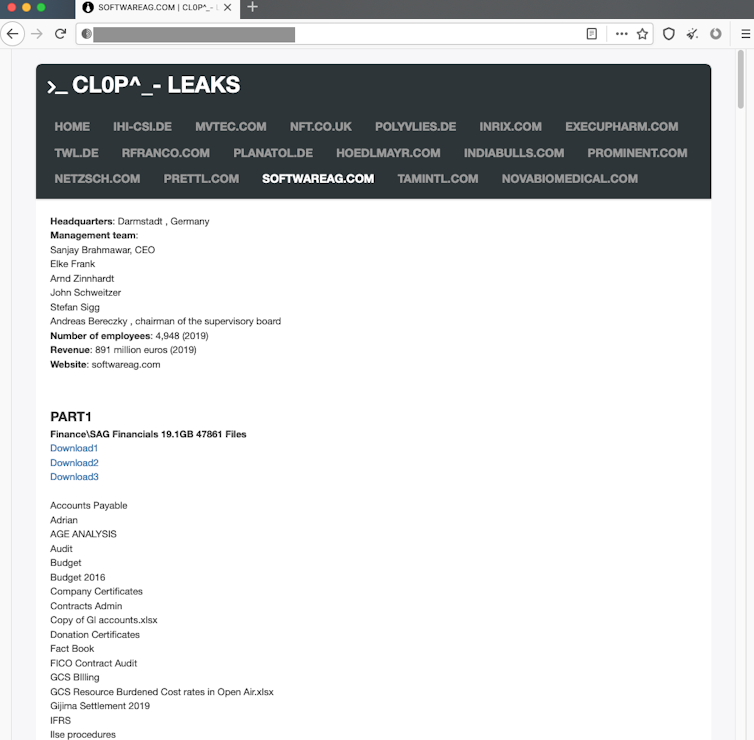
Screenshot of Cl0p Leaks website showing Software AG financial data available for public download (taken from dark web site).

This is an example of an increasingly common tactic referred to as “double extortion”, in which not only is data stolen and held to ransom, but there is the added threat the data will be posted in public or auctioned to interested parties. The threat of public exposure of the breach, coupled with the potential release of confidential data, can often encourage organisations to pay the ransom.

Potential consequences

A recent ACSC report on ransomware in Australia identified the health-care sector as the most targeted, by a significant margin. This is perhaps not surprising, given the sector’s lack of training, lax security practices and chronic underinvestment in technology and digital infrastructure.
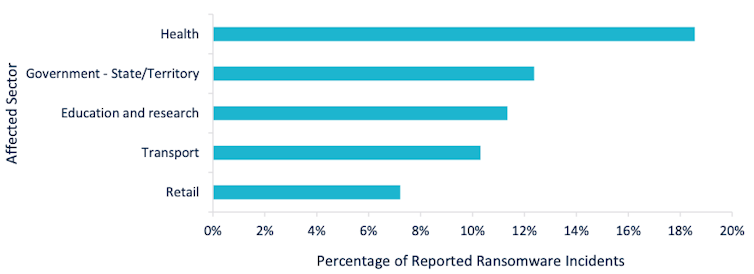
ACSC report on impacted sectors for reported ransomware incidents – October 2020. ACSC

Health-care providers face two significant consequences of cyber compromise. First, personal or sensitive data are valuable to criminals. Having such data leaked online is embarrassing and has significant legal implications for the organisation and the government.

A second, more serious, consequence can be seen when a ransomware attack impacts critical systems. The most notable example in recent years was the Wannacry attack in 2017 that targeted the UK National Health Service, among others.

Ransomware attack on UK hospitals.

The NHS suffered a major outage over several days following the Wannacry ransomware attack, resulting in thousands of operations and appointments being cancelled. Wannacry was estimated to have cost billions of dollars globally, with the UK NHS spending close to US$100 million to recover and strengthen its cyber defences.

Screenshot of Wannacry ransom demand. Wikimedia

A ransomware incident earlier this year in Germany had deadly results. When ransomware crippled a hospital in Dusseldorf, an emergency patient was sent to another facility instead. She died, and her death has been attributed to the delay in treatment.

Australia has had similar incidents in the past. Last year saw seven hospitals affected by a ransomware attack.


Read more: Defending hospitals against life-threatening cyberattacks


Should we be worried?

Cyber attacks are a constant threat, and most organisations are well aware of the risks to their business operations, intellectual property, sensitive data and reputation.

But in the health-care sector the stakes are higher. Losing data can cost lives, and patient records being stolen is a breach of privacy that can have long-lasting effects for the patient.

With systems intertwined and dependent on each other, just one compromised target can have major implications.

Interestingly, the Cl0p Leaks website (only available on the dark web through the TOR web browser) features the following reassuring statement in relation to hospitals – perhaps showing an ethical streak to the criminal group.

Cl0p Leaks screenshot (taken from Dark Web site)

Cyber criminals are usually motivated by profit. Ransomware attacks work because individuals within organisations make mistakes. When combined, there is a strong motivation for criminals to continue these actions and for organisations (and us) to continue to pay to clean up the mess that’s left behind.

ref. Australian hospitals are under constant cyber attack. The consequences could be deadly – https://theconversation.com/australian-hospitals-are-under-constant-cyber-attack-the-consequences-could-be-deadly-150164
Victoria’s $5.4bn Big Housing Build: it is big, but the social housing challenge is even bigger

Source: The Conversation (Au and NZ) – By Katrina Raynor, Postdoctoral Research Fellow, Hallmark Research Initiative for Affordable Housing, University of Melbourne

The Victorian government has announced the big social housing investment for which housing advocates, industry groups, academics and social service providers have been clamouring for decades.

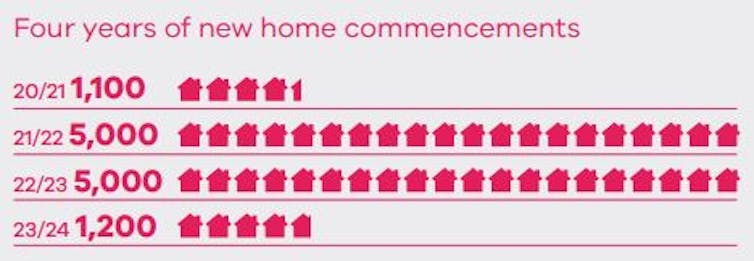
The A$5.4 billion “Big Housing Build” aims to create over 12,000 homes in four years. Of these, 9,300 will be social housing. The rest will be affordable or market-rate housing. The program will replace 1,100 old public housing units.


Read more: Why the focus of stimulus plans has to be construction that puts social housing first


The headline programs include:

  • $532 million to build on public land, including six “fast start” sites, resulting in 500 social housing homes and 540 affordable and market homes

  • $948 million to spot-purchase homes, projects in progress or ready-to-build dwellings from the private sector, adding 1,600 social housing and 200 affordable homes

  • $1.38 billion for community housing projects to build up to 4,200 homes

  • $2.14 billion for “new opportunities” with private sector and community housing providers, producing up to 5,200 homes.

Chart showing numbers of homes to be built over four years
The Big Housing Build time frame. Homes Victoria/Victorian government, CC BY

Up to $1.25 billion will go into regional Victoria, which is welcome.

In addition, $498 million was announced in May to refurbish and build public housing.

Just how big is the Big Housing Build?

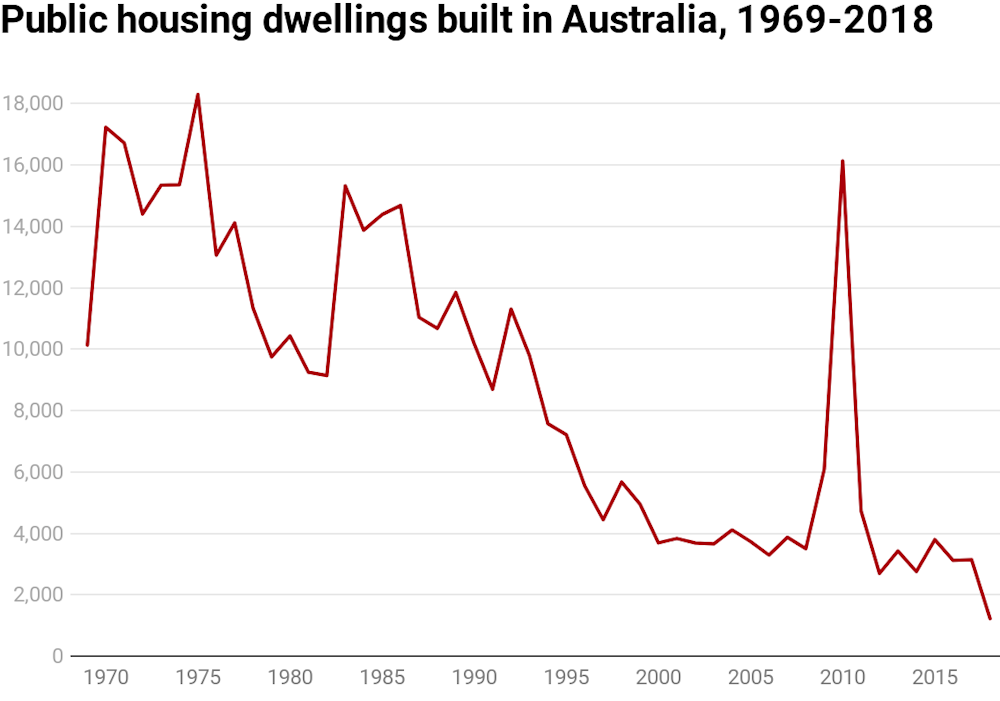
A target of 9,300 new social housing units over four years is definitely “big” by recent Victorian standards. The state’s social housing stock grew by just 12,500 dwellings over the past 15 years – about 830 dwellings a year.

The only comparable investment in Australia in the past two decades was the Commonwealth’s $5.6 billion Social Housing Initiative in 2009. This post-GFC stimulus program built around 19,700 social housing dwellings and repaired 12,000.

Chart showing number of social housing dwellings completed each year in Australia from 1969-2018
Australian Bureau of Statistics, Author provided

Is it enough?

No. It will take a long time and continued commitments of a similar scale to overcome the massive shortages in Victoria and Australia.

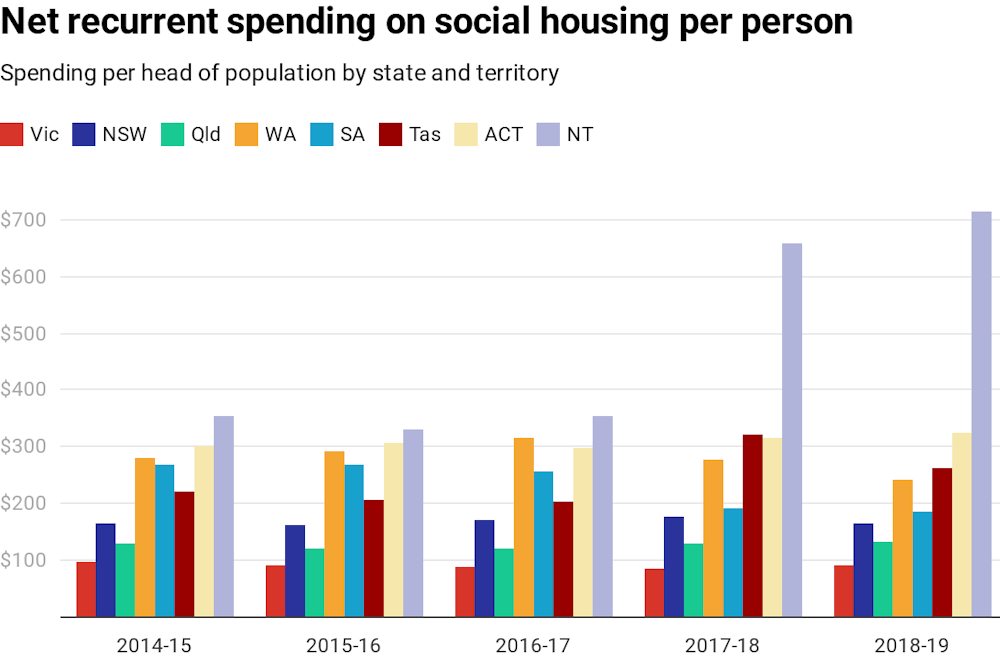
Victoria has a history of spending less on social housing per person than the rest of Australia.

Chart showing net recurrent spending per head of population for states and territories
Productivity Commission, Author provided

University of Melbourne research estimated a 164,000 shortfall in social and affordable housing in Victoria in 2018. The Australian Housing and Urban Research Institute estimated an extra 166,000 social units would be needed by 2036.


Read more: Australia needs to triple its social housing by 2036. This is the best way to do it


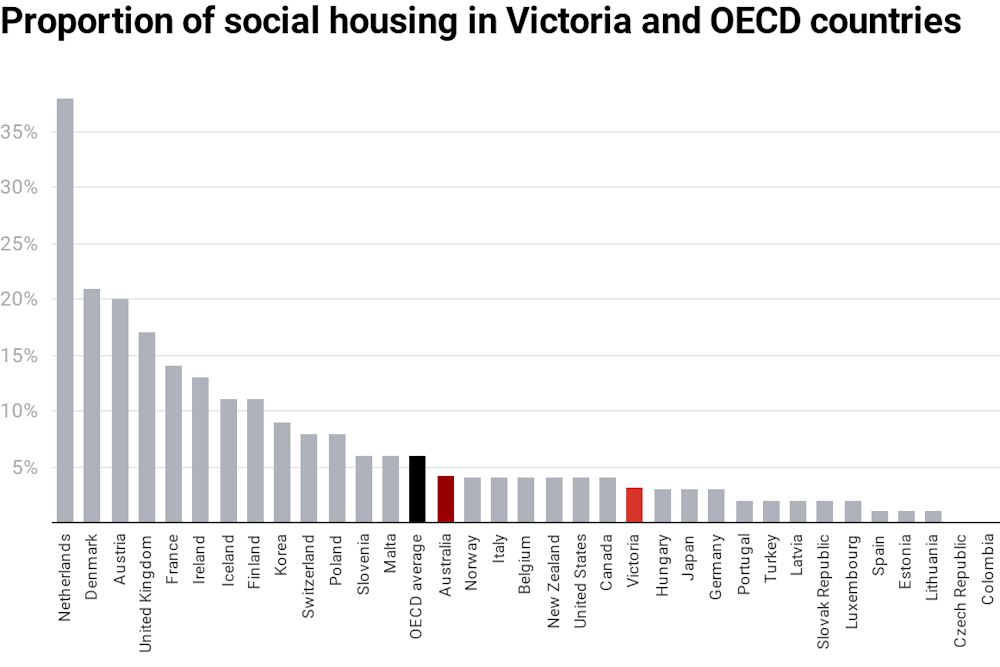
The Big Housing Build aims to increase social housing dwellings in Victoria from 80,500 to about 89,000 – about 3.5% of all housing. That’s still less than the Australian average of 4.2% and the OECD average of 6%.

Chart showing social housing stock as percentage of total housing in Victoria and OECD countries.
OECD (data from 2018 or more current available), Author provided

What the scheme gets right

This program leans heavily on the use of state and local land to reduce the cost of the new housing. My colleagues and I have previously pointed out the large swathes of “lazy” government land across Victoria that could be used for this.


Read more: Put unused and ‘lazy’ land to work to ease the affordable housing crisis


Offering $1.38 billion in competitive capital grants for community housing providers is also substantially more cost-effective for government than models that rely on private finance and provide an operating subsidy to providers. It appears the entire amount will be spent on supporting construction, rather than on creating a seed fund that drip-feeds investment returns into the not-for-profit sector like the Social Housing Growth Fund does.

Victoria is also joining Canada and the state of California in spot-purchasing homes from the private sector in response to COVID-19. This will deliver social housing quickly. It will also support developers in a depressed market while capitalising on lower prices.

The focus on victim-survivors of domestic violence, Indigenous Australians and people living with mental health conditions is welcome too.


Read more: Why more housing stimulus will be needed to sustain recovery


Remaining concerns

Privatisation of social housing

This announcement continues trends across Australia to shift social housing provision from a state responsibility (public housing) to a more partnership-based model led by community housing providers (community housing).

This approach can leverage substantial contributions from other sectors in the form of land, capital, skills and ideas, producing exemplary outcomes. An example is the Education First Youth Foyer partnership, which is changing how “at risk” young people access housing, education and other services.

However, complex arrangements between multiple partners, especially when using private finance, can be inefficient and costly. Such partnerships are often opportunistic rather than strategic, with priority given to commercial over social outcomes. Community housing residents have less tenancy rights than those in public housing and sometimes pay more of their income on rent.

An emphasis on mixed-tenure developments can lead to cherry-picking of “acceptable” tenants and destroy tightly knit communities. Previous public housing renewal programs based on private sector involvement left a legacy of poorly integrated communities and loss of public land for negligible gains in social housing. We cannot afford to make those mistakes again.

private garden area at Carlton housing estate redevelopment
Previous Victorian housing estate redevelopments have led to segregated areas of public and private housing. Kate Shaw

Read more: Social mix in housing? One size doesn’t fit all, as new projects show


Lack of a strategic plan

The program comes with a new government agency, Homes Victoria, and the promise of a ten-year policy and funding framework. This level of strategic leadership has been lacking in Victoria and will require bipartisan support. Strong partnerships with local councils will also be needed.

Good policy depends on many elements, including:

  • research
  • housing targets with geographical and population-group breakdowns
  • transparent decision-making
  • clearly identified funding streams and responsible agencies
  • shared definitions
  • monitoring and evaluation mechanisms
  • clear time frames
  • integration with other policy areas and levels of government.

These elements appear to still be a work in progress for the Big Housing Build. The risk is that this announcement will follow Australia’s pattern of “lumpy” funding and inconsistent policy on social and affordable housing.

Without long-term funding streams, providers find it hard to to scale up, make strategic decisions, invest in internal capacity and plan development pipelines. Without overarching strategy and monitoring, Victoria’s lacklustre history of social housing provision may continue.


Read more: Ten lessons from cities that have risen to the affordable housing challenge


Reduced community engagement

Planning approvals for larger social housing developments will be streamlined. In many cases, the state will take over final decision-making from local government. This will reduce opportunities for community consultation and the state government will need to work hard to ensure high-quality design is integrated into developments.

Where to from here?

As COVID-19 has made clear, everyone needs a home and society benefits from caring for those in need. The speed with which governments moved to house rough sleepers, a seemingly intractable problem before COVID, shows homelessness and severe housing stress can be overcome.


Read more: The need to house everyone has never been clearer. Here’s a 2-step strategy to get it done


The Big Housing Build is not perfect and will not solve Victoria’s huge housing challenges on its own. It must be the start of regular cycles of funding to sustain social housing in Victoria. It should also be tied to longitudinal evaluation of outputs and an aligned research agenda to shape best-practice outcomes.

And powers-that-be in Canberra, the list of partners in this program has a large federal-government-shaped gap. When are you going to come to the party?

ref. Victoria’s $5.4bn Big Housing Build: it is big, but the social housing challenge is even bigger – https://theconversation.com/victorias-5-4bn-big-housing-build-it-is-big-but-the-social-housing-challenge-is-even-bigger-150161

VIDEO: Indo-Pacific Security and the RCEP Trade Pact – Paul Buchanan & Selwyn Manning discuss


VIDEO: Paul G. Buchanan and Selwyn Manning will go LIVE at 1pm (NZDST) , that’s 7pm (US EST) to present A View from Afar.

Topics to discuss this week include how security/defence and trade deals don’t always go hand in hand. Specifically:

* On Security, China is alone in the Western Pacific as the USA, India, Australia and other ASEAN states take part in naval security exercises in the Arabian Sea.

* On Trade, China has signed up, as have most ASEAN states plus Japan, Australia and New Zealand into the RCEP (or Regional Comprehensive Economic Partnership. But India rejected the deal.

* Multilaterally, is the BRICS bloc dead in the water?

Join us LIVE here on Facebook and your comments will be able to be included in the programme.

INTERACTION: Remember, if you are joining us LIVE via social media (SEE LINKS BELOW), you can make comments and include questions. We will be able to see your interaction, and include this in the LIVE show.

You can interact with the LIVE programme by joining these social media channels. Here are the links:

And, you can see video-on-demand of this show, and earlier episodes too, by checking out EveningReport.nz

The Productivity Commission says mental ill-health costs Australia billions — it’s time for a proper investment in making things better

Source: The Conversation (Au and NZ) – By Anthony Jorm, Professor emeritus, University of Melbourne

The Productivity Commission’s report on mental health, released earlier this week, prompted headlines emphasising the huge economic cost of mental ill-health and suicide in Australia.

The commission estimated the direct economic costs at between A$43 billion and A$70 billion, with an additional A$151 billion due to the cost of disability and premature death.

While there have been many reports on mental health reform in the past, this one is different. The Productivity Commission looks at issues through an economic rather than a health lens. Its remit in producing the report was to examine “the effect of mental health on people’s ability to participate in and prosper in the community and workplace, and the effects it has more generally on our economy and productivity”.

This meant the report covered the impact of mental ill-health on the whole of Australian society and the role of all levels and sectors of government in helping to alleviate it.

The recommendations

While this economic lens inevitably involved an analysis of costs, the report’s real significance is in the more than 100 “actions” the commission recommended the federal, state and territory governments take.

Besides the health sector, these recommended actions involve families, schools, tertiary education, workplaces, income and employment support, insurance, criminal justice, police, housing and Indigenous communities. This breadth of coverage reflects the huge impact of mental ill-health right across Australian society, and acknowledges a whole-of-government, and indeed whole-of-society, response is needed.


Read more: Coronavirus has boosted telehealth care in mental health, so let’s keep it up


This extraordinary breadth makes it hard to summarise the recommendations briefly, but there are some key themes that stand out:

  • the commission has recognised mental ill-health often has its origins early in life, and action for prevention and early intervention is needed in families, preschools and schools

  • telehealth and online services are likely to become increasingly important. This is an area where Australia is already a world leader, but the report recommends a major integration and expansion of these approaches

  • tertiary educational institutions are recommended to see mental health as central to their mission. This includes the need for better services for international students.

A girl looks out of a window.
The Productivity Commission recognised mental ill-health often has its origins early in life. Shutterstock
  • mentally healthy workplaces are vital, with recommendations covering psychological health and safety, employers’ duty of care, workers’ compensation claims, and standards for employee assistance providers

  • the report recognises the higher risk of mental ill-health and suicide among Indigenous Australians, with recommendations on empowering Indigenous communities and including a role for traditional healers

  • there is recognition of the poor physical health and substantially reduced life expectancy of people with severe mental illnesses, with recommendations for improved physical health care

  • the importance of social factors in mental illness is reflected in recommendations on reforms in housing, justice and income support.


Read more: If Australia really wants to tackle mental health after coronavirus, we must take action on homelessness


An overarching theme behind all the recommendations is the need for better data and evaluation. In the past, large sums of public money have been spent on programs that have never been properly evaluated or, when they were evaluated, found not to deliver the expected benefits. The commission urges all innovations be rigorously evaluated before being rolled out.

Where to from here?

If the commission’s recommendations were fully implemented, Australia would be the undisputed world leader in mental health reform. The cost of implementation is inevitably a barrier, but the commission has done the hard-nosed economic analysis and concluded the benefits outweigh the costs.

The report estimates the recommended reforms would deliver up to A$18 billion in benefits per year, mainly from improvements to people’s quality of life, plus a further A$1.3 billion a year from increased economic participation and productivity. These benefits would require up to A$4.2 billion of expenditure per year.

A young man speaks with a psychologist.
The Productivity Commission’s recommendations for mental health reform should be taken all together, rather than picking and choosing particular interventions such as subsidised psychological counselling. Shutterstock

Many of the recommended actions, such as giving Australians the right to choose their preferred mental health specialist and the recognition of mental health advance directives by state and territory governments, cost little or nothing, as they merely represent better ways of doing things we already do.


Read more: 3 in 4 people with a mental illness develop symptoms before age 25. We need a stronger focus on prevention


The danger is governments will see the recommended actions as a menu from which they choose a few items at budget time. Over the past 20 years, Australia has been through a piecemeal process of lobbyist-led reform, in which ministers fund particular programs that make good “announceables” when an election or budget rolls around.

This approach has failed to improve Australians’ mental health. What we need is unified support from the mental health sector, and the community more generally, for the commission’s recommendations as a total reform package.


If this article has raised issues for you, or if you’re concerned about someone you know, call Lifeline on 13 11 14.

ref. The Productivity Commission says mental ill-health costs Australia billions — it’s time for a proper investment in making things better – https://theconversation.com/the-productivity-commission-says-mental-ill-health-costs-australia-billions-its-time-for-a-proper-investment-in-making-things-better-150184

We found a huge flaw in Australia’s environment laws. Wetlands and woodlands will pay the price

Source: The Conversation (Au and NZ) – By Manu Saunders, Lecturer, University of New England

From ethereal kelp forests off the south east Australian coast to grassy woodlands and their stunning wildflowers, many ecological communities are under threat in Australia.

But national environment legislation — the Environment Protection and Biodiversity Conservation (EPBC) Act — has so far been ineffective at protecting them.

In our recent paper, we identify a major flaw in the current approach to listing threatened ecological communities for protection under the EPBC Act: the requirement to meet unrealistic condition thresholds.

In other words, where areas of a community do not meet these specific minimum thresholds, they’re considered too degraded to warrant conservation and aren’t protected under the EPBC Act.

A seadragon in a kelp forest
The giant kelp marine forest of south east Australia is among 85 threatened ecological communities listed under the EPBC Act. Shutterstock

What’s an ecological community anyway?

An ecological community is a group of species that co-exist in a specific type of habitat and interact with each other. For example, a mangrove community is clearly different in structure and the types of plants and animals is supports, compared to what you would see in a salt marsh community nearby.

Just like individual species, ecological communities can occur over thousands of kilometres, even though examples of this type of community may only be found in small and patchy areas across that range.

There are currently 85 threatened ecological communities listed in the EPBC Act, and the majority of them are listed as critically endangered or endangered.

Major threats to these communities include land clearing and development, which can increase their risk of extinction.


Read more: How drought-breaking rains transformed these critically endangered woodlands into a flower-filled vista


For example, less than 5% of the box gum grassy woodlands remain in good condition. This critically endangered community is home to a number of threatened plant and animal species, such as the spotted-tailed quoll, but many areas have been degraded and cleared for farming, threatening their survival.

The flaw in the law

Most listings of threatened ecological communities contain very specific “condition thresholds”. These thresholds were introduced to the legislation in 2005 in an effort to prioritise habitats considered higher quality.

Condition thresholds are usually defined in consultation with experts and often involve very specific descriptive characteristics, such as minimum patch sizes or numbers of species.

A lagoon beneath a blue sky
Thomas Lagoon in Arding, NSW. These communities support different wildlife depending on the season. Manu Saunders, Author provided

If areas of a community do not meet these specific minimum thresholds, it means a landholder doesn’t require approval to clear or develop parts of a community, if those parts are perceived to be “poor quality” habitat.

For example, the condition thresholds for Coolibah-black box woodlands suggest protection only applies to woodland patches larger than five hectares. This ignores the ecological importance of smaller patches that increase the connectivity of habitat in the landscape.

What’s more, condition thresholds make it hard to justify conservation funding to restore areas that don’t meet those criteria.

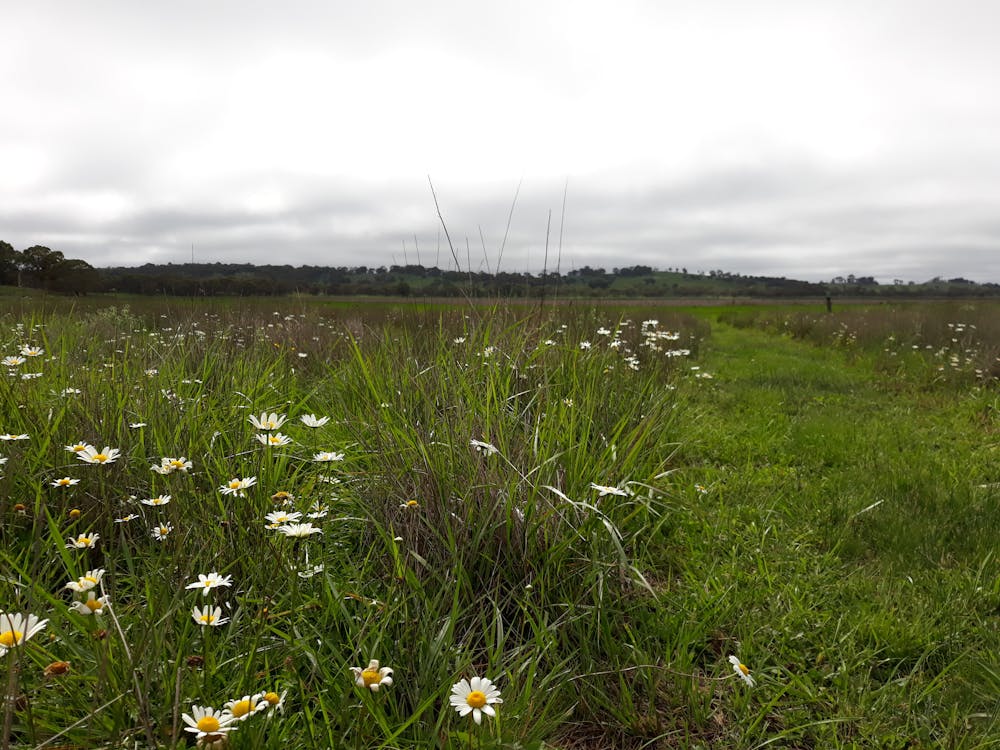
Wildflowers strewn across a dry lagoon on a cloudy day
Little Llangothlin Lagoon in Llangothlin, NSW, is one of the 58 lagoons are left in the Northern Tablelands. Manu Saunders, Author provided

Unrealistic thresholds threaten wildlife

This is bad for biodiversity conservation in Australia for two reasons.

First, excluding examples of a threatened ecological community from protection because they don’t meet restrictive condition thresholds assumes these areas have no ecological value.

This is clearly a flawed assumption, as small, disturbed or degraded remnants can still be important to conservation. They could, for instance, be a target for restoration, a source of regeneration for nearby areas of the community as part of a larger natural corridor, or a habitat for threatened species.

Let’s take the critically endangered ecological community of the Cumberland plain woodland in the Sydney Basin as an example. Only 9% of the woodlands’ original extent remains today.

Despite providing habitat for threatened squirrel gliders, bats, and land snails, urban development in areas containing the woodland were continually approved during the 2000s — a death by a thousand cuts for the species and communities in patchy conditions.

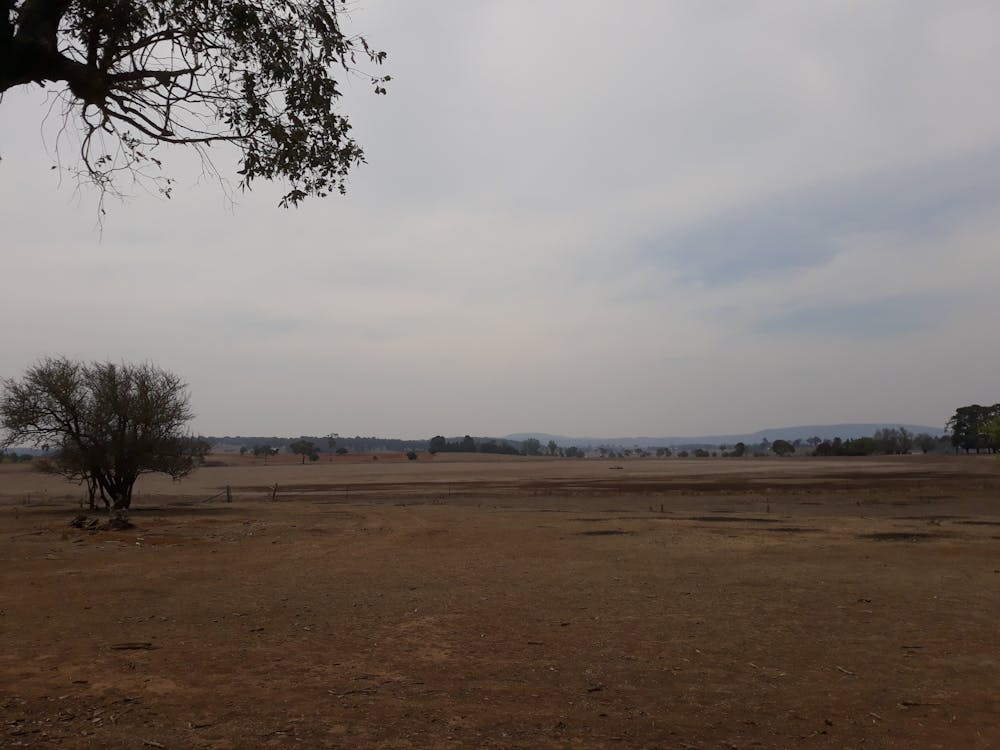
A lagoon during drought
Saumarez Lagoon in NSW during the drought last year, and wouldn’t meet the protection thesholds. Manu Saunders, Author provided

Second, restrictive condition thresholds aren’t appropriate for conservation and management of communities that naturally change over seasons and years. This is particularly a problem for dynamic ecosystems like wetlands that cycle through natural dry and wet phases.

Wetlands can support completely different groups of plant and animal species in different phases, from waterbird breeding events when they are wet, to kangaroos and butterflies when they are dry.


Read more: Why a wetland might not be wet


These dynamic systems rarely exist in a state that would warrant protection under the restrictive thresholds.

For example, the listing for upland wetlands of the New England tablelands and the Monaro plateau excludes farm dams and domestic water storages.

This is a problem, because most remaining examples of these wetlands are on private property and almost all have been modified by humans in some way, including damming. Few of these modified wetlands would technically qualify for protection.

Yet some of these modified wetlands still support diverse plants and animals and are important sites for migratory waterbirds, such as Latham’s snipe.

Because this threatened community has such a small distribution and very few examples remain (only 58 lagoons are left in the Northern Tablelands), excluding even a few because of unrealistic condition thresholds greatly increases their risk of extinction.

Latham’s snipe uses threatened upland wetlands. JJ Harrison/Wikimedia, CC BY-SA

New attitudes in a changing world

It’s clear governance frameworks have struggled to keep up with the changes in ecosystems that human activity causes.


Read more: Climate-driven species on the move are changing (almost) everything


These frameworks are often based on a flawed assumption: that natural systems remain essentially the same over time. To prevent further biodiversity loss, we need better understanding of how, when and why ecological communities shift between different states.

Importantly, we need to change our approach to environmental governance frameworks, including seriously rethinking condition thresholds in the EPBC Act, to ensure we can continue to protect biodiversity as it rapidly changes before us.

ref. We found a huge flaw in Australia’s environment laws. Wetlands and woodlands will pay the price – https://theconversation.com/we-found-a-huge-flaw-in-australias-environment-laws-wetlands-and-woodlands-will-pay-the-price-150083

How to choose the right Christmas gift: tips from psychological research

Source: The Conversation (Au and NZ) – By Adrian R. Camilleri, Senior Lecturer in Marketing, University of Technology Sydney

Christmas is a time of celebration, relaxation and gift giving.

But choosing gifts can also make it a time of stress and anxiety. The wrong gift can actually do more harm than good.

Here is some advice, based on decades of research, on how to side-step such pitfalls.

Why do we give gifts?

Research into the psychology of gift-giving suggests there are two goals to consider when giving someone a gift.

The first is to make the recipient happy. That mostly depends on whether the gift is something they want.

The second is to strengthen the relationship between giver and recipient. This is achieved by giving a thoughtful and memorable gift – one that shows the giver really knows the recipient. Usually this means figuring out what someone wants without directly asking.

You can see the conundrum.

To get someone the gift they most desire, the obvious thing to do is ask. This approach can achieve high marks on desirability. But it is set up to fail on communicating thoughtfulness.

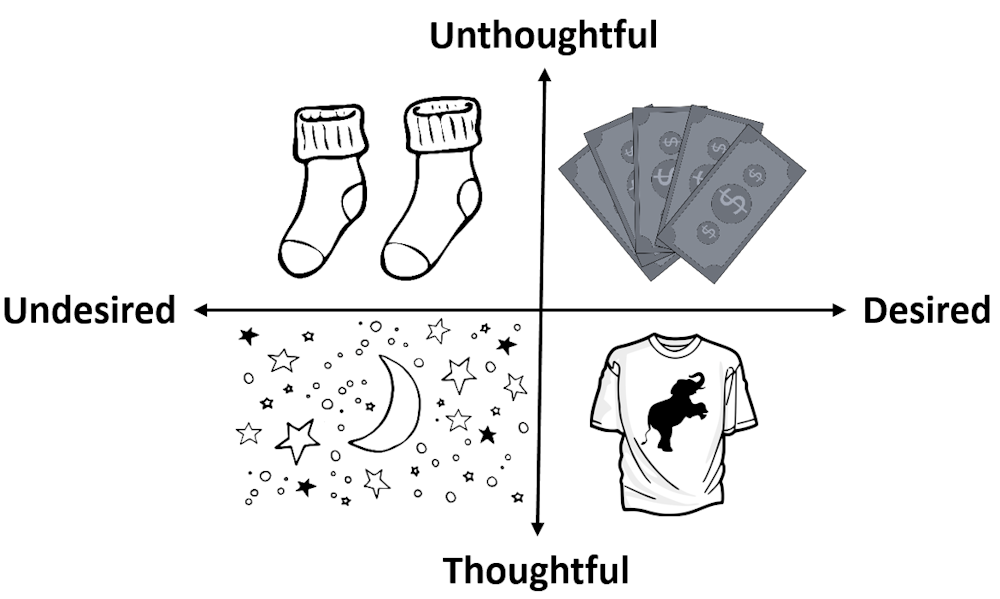
The following graphic illustrates the problem (with myself as the example recipient).


Two dimensions to consider when buying someone a gift: thoughtfulness and desirability. Images from https://pixabay.com/

The best kind of gift is one both desired by the recipient and is thoughtful. For me this might be a custom t-shirt printed with an in-joke.

The worst kind of gift, on the other hand, is neither desired nor thoughtful. For me, this might be a pair of socks.

Then there are desirable but unthoughtful gifts, such as cash, and undesired but very thoughtful gifts, which for me would be officially naming a star in my honour. I love astronomy but this just isn’t for me.


Read more: We’re not as Grinchy as we think: how gift-giving is inspired by beliefs-based altruism


Navigating social risk

This is why buying a gift can be so anxiety-inducing. There is a “social risk” involved.

A well-received gift can improve the quality of relationship between giver and recipient by increasing feelings of connection, bonding, and commitment. A poorly received gift can do the opposite.

This has been shown by research. A 1999 study asked 129 people to describe in detail a situation in which they had received a gift. Ten people reported gifts that weakened the relationship. Two people actually ended the relationship after the gift.

The thought doesn’t count as much as you think. Gift givers tend to overestimate how well unsolicited gifts will be recieved.

How much does the thought count?

Research also shows people tend to overestimate their ability to discern what a recipient will like, and therefore what gifts will lead to a strengthening of the relationship.

A 2011 study asked respondents to think back to either their own wedding or a wedding to which they were a guest. Gift recipients were asked to rate how appreciative they were of gifts either listed on the gift registry or not. Guests were asked to estimate how well they thought gifts were received.

Gift recipients strongly preferred gifts on their list. However, gift givers tended to wrongly assume unsolicited gifts (those not on the registry) would be considered more thoughtful and considerate by their intended recipients than was the case.

Gift givers also tend to overestimate that more expensive gifts will be received as being more thoughtful. But it turns out gift recipients appreciate expensive and inexpensive gifts similarly. In reality, they actually feel closer to those who give convenient gifts, such as a gift certificate to a nearby ordinary restaurant rather than a distant upscale restaurant.

The psychology of cash

What about simply giving cash?

After all, the recipient can buy exactly what they most desire. But cash is considered unthoughtful because it requires no effort and seems to put a dollar value on the relationship.

In Chinese cultures, cash is given in a red envelope to decommodify the money by literally enveloping it in a symbol of good luck. If you’re going to give cash, think about doing it creatively, such as through clever origami or in some other way that personalises it. This will show a degree more thoughtfulness.

The closest alternative to cash is the gift card. The main benefit is that it requires some effort and allows some thoughtfulness in the selection of which gift card to purchase. Nevertheless, the research suggests the gift card is often reached for as a last resort.


Read more: No presents, please: how gift cards initiate children into the world of ‘credit’


The best gift of all

If you want to have a wrapped gift under the Christmas tree and haven’t been tipped off on exactly what the recipient wants, go for something practical with a personalised touch. If you really are struggling, then a thoughtful card together with a flexible gift card is a safe option.

But the main takeaway from the psychology of gift-giving research is that, if your goal is to strengthen your relationship with the recipient, give them an experience.

A 2016 study asked people to give a friend either a “material” or “experiential” gift (valued at $15). Material gifts included things such as clothing. Experiential gifts included things such as movie tickets. Recipients of the experiential gifts showed a stronger improvement in relationship strength than recipients of the material gifts.

The most precious gift you can give a loved one, though, is actually quite simple: quality time. In a 2002 study involving 117 people, more happiness was reported from family and religious experiences than from events where spending money and receiving gifts was the focus.

So this Christmas, grab a drink, sit down and have a conversation. Get to know each other. If done well, come next Christmas, you’ll both know exactly what gift to get each other.

ref. How to choose the right Christmas gift: tips from psychological research – https://theconversation.com/how-to-choose-the-right-christmas-gift-tips-from-psychological-research-149739

Solomon Islands businesses, rights groups condemn Facebook ban plan

By Robert Iroga in Honiara

Struggling businesses have expressed concerns and international media rights groups have condemned the Solomon Islands government’s proposal to temporarily ban Facebook.

The Solomon Islands Chamber of Commerce and Industry (SICCI), as the peak body representing private sector in Solomon Islands, is particularly concerned with the negative impacts this decision will have on the country’s micro businesses, entrepreneurs and those in the informal sector dependent on social media for marketing and advertising.

“It is the government’s prerogative to make such a decision, but as a chamber we believe that there are other pressing issues that require our collective focus,” SICCI board chair Jay Bartlett said.

Members of the business community shared their concerns with SICCI today while others opposed the decision to temporarily ban Facebook.

Paula Brake, managing director of Tower Insurance Pacific said Facebook was the most widely used social media platform in the Pacific Islands and was an important communication tool relied upon by individuals, businesses and communities.

“Tower uses Facebook to engage with customers and their communities regarding a variety of matters, most importantly those relating to the preparation for and response to severe weather events.

“The most engagement Tower has on Facebook is relating to claims processing following major events. As such, Tower strongly opposes any proposal to ban Facebook usage in the Solomon Islands,” Brake said.

Important marketing strategy
Seventy percent of SICCI’s membership was made up of small medium enterprises (SMEs), one of them SAMEDIA Limited and director Gloria Hong said that for small businesses interacting with consumers on social media was an important marketing strategy.

“Using social media helps us to build brand awareness, increase our customer base, and connect with customers,” she said.

“In my view, banning Facebook is a threat to businesses, especially the small businesses [that] cannot afford to run advertisements on radio, newspapers and on TV,” Hong said.

Tongs Corporation have invested a lot of time and effort to launch and grow their Facebook presence as a mode of communication with their customers.

Sales and marketing manager John Wopereis said Facebook had been an effective tool in building relationships with the wider community to grow product knowledge and showcase the inspiring stories of builders, contractors and homeowners.

“In terms of our planning for 2021 onwards, it’s important for us to be clear on what to expect as we have outlined facebook as a key marketing tool and have content lined up ready to go. We need to know what’s happening so we can be clear on where to invest our time and effort,” Wopereis said.

As with the covid-19 global pandemic, the tourism sector would be most affected by the Facebook ban.

Heavily reliant on Facebook
Sunset Lodge based on the island of Savo relies heavily on social media to attract customers.

Owner Bernard Kemakeza has taken every opportunity presented by the government and SICCI to improve his business’ online presence and sees this move as a setback.

“Coming into 2020 we did not anticipate the global pandemic impacting on the tourism industry the way that we’re experiencing at the moment,” he said.

“For small operators such as ourselves, we are struggling to pay our workers, to pay tax to government, help our nearby communities and we look forward to when things get back to normal.”

Anthony Fargas, managing director of Coral Sea Resort and Casino, said advertising in the traditional media was not viable in a depressed economic landscape on a regular basis.

“There is a high uptake of Facebook with Solomon Islanders and freedom of expression and information should be encouraged in any democracy or competitive landscape.”

Unjustified media freedom attack
Responding to the Facebook ban plan, the Auckland-based Pacific Media Centre condemned the move, saying that it was an unjustified attack on media freedom and freedom of information.

“This is a cynical assault on fundamental human rights launched by ministers with thin skins and bruised egos and it is naive to claim that while Facebook would be banned media freedom would be retained,” said centre director Professor David Robie.

“Many small Pacific media, including in Solomon Islands, have integrated social media and news publishing platforms and strategies. An arbitrary ban on Facebook – even short-term – would be damaging to both the public right to know and the media business models putting at risk their viability.”

Amnesty International’s Pacific researcher Kate Schuetze said: “To ban a social media site simply because people are posting comments that the authorities don’t like is a blatant and brazen attack on human rights.

“Protecting the sensitivities of government officials is not a justifiable reason to limit freedom of expression, which is also a right under the Constitution of the Solomon Islands.”

Robert Iroga is editor of Solomon Business Magazine (SBM). This article is published with permission.

Print Friendly, PDF & Email

Article by AsiaPacificReport.nz

Morrison’s Japan trip yields defence pact, but travel bubble less certain

Source: The Conversation (Au and NZ) – By Craig Mark, Professor, Faculty of International Studies, Kyoritsu Women’s University

In his first overseas trip since the COVID-19 pandemic, Prime Minister Scott Morrison has finally concluded a Reciprocal Access Agreement (RAA) with Japan. Australia is only the second country in 60 years to reach such an arrangement with Japan’s Self-Defence Forces (SDF).

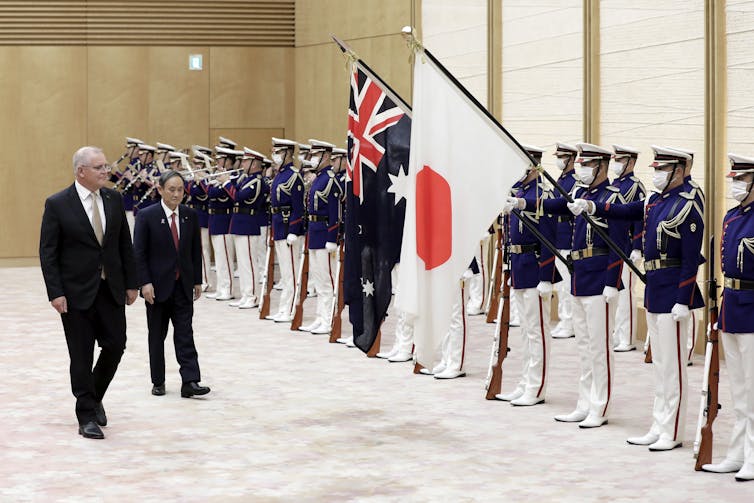
By undertaking his 24-hour visit to Tokyo, Morrison became the first foreign leader to personally meet Prime Minister Yoshihide Suga in Japan. That Morrison made such an effort, which will require two weeks of quarantine upon his return, shows how important the strategic partnership between the two countries has become.

Morrison was scheduled to visit Papua New Guinea on the return trip. He was forced to cancel due to PNG’s latest political crisis, which has destabilised the government of Australia’s largest Pacific neighbour.

Morrison was also the first foreign leader to call and congratulate Suga when he succeeded Shinzo Abe in September.

The prime ministers then held online meetings prior to this visit. This included the ASEAN-related series of virtual summits, which concluded last weekend with the online signing of the Regional Comprehensive Economic Partnership (RCEP) trade agreement.


Read more: We’ve just signed the world’s biggest trade deal, but what exactly is the RCEP?


Strengthening defence ties

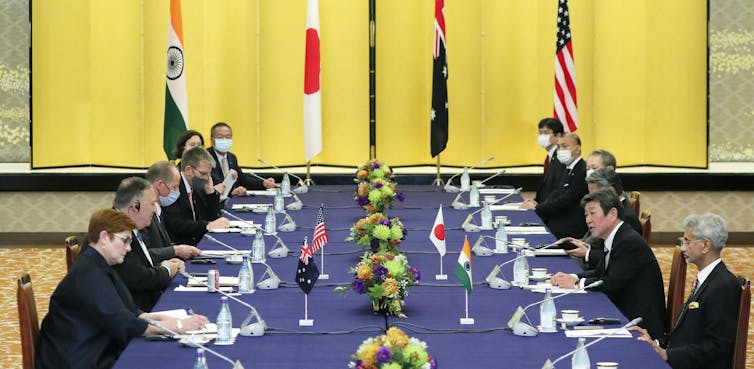
Morrison’s visit was presaged by ministerial visits to Tokyo last month. Foreign Minister Marise Payne came for the second foreign ministers’ summit of the Quadrilateral Security Dialogue between Japan, the United States, Australia and India. This meeting also approved Australia’s participation in the Malabar naval exercises held by India after a 13-year hiatus.

Foreign Minister Marise Payne (left) attended the ‘Quad’ meeting in Japan last month. AAP/AP/Kydpl Kyodo

Defence Minister Linda Reynolds then met Suga’s new defence minister, Shinzo Abe’s younger brother Nobuo Kishi. This was important preparation for the Reciprocal Access Agreement, as Japan agreed the Australian Defence Forces (ADF) could come under the protection of Japan’s SDF. This is part of the collective self-defence legislation passed by the Abe government in 2015. Australia is the only country after the United States to be so covered.


Read more: Yoshihide Suga – who is the man set to be Japan’s next prime minister?


Morrison’s latest trip to Japan, the second after the G20 Osaka summit last year, continues the now well-established practice of annual reciprocal visits between Australian and Japanese prime ministers. These leadership summits have incrementally upgraded the level of co-operation between the ADF and SDF, formally approving security pacts such as the 2007 Joint Declaration on Security Cooperation and the 2010 Access and Cross-Servicing Agreement, which was revised in 2017.

Morrison has invited Suga for his first official prime ministerial visit to Australia next year, to formally sign the RAA.

… and regional security

The ADF and SDF have co-operated in peacekeeping since the 1990s. The SDF also regularly participates in military exercises in Australia, such as Kakadu and Talisman Sabre, and in joint naval patrols in the South China Sea.

Since 2018, the airforce has been conducting surveillance flights from Japanese bases to enforce sanctions against North Korea. It also undertook air combat training exercises at Hokkaido in 2019. By authorising an even higher level of integrated operational capability, the RAA will now allow ADF units to be stationed in Japan, and the SDF in Australia.

Japan has had a Status of Forces Agreement with the US since 1960. It has long caused friction among local Japanese communities over the burdens of the US military presence, particularly in Okinawa, where most US forces in Japan are based.

Negotiations for the RAA have dragged out for six years. The sticking point was potential application of the death penalty to ADF personnel if they commit capital crimes while off duty in Japan. It is still unclear whether the jurisdiction of Japanese law will apply, with only a commitment from both sides to address such issues on a case-by-case basis.

From the Japanese perspective, there may also be concerns over co-operating with the ADF in potential combat situations, after the investigation into alleged war crimes committed by ADF Special Forces in Afghanistan.

Despite any such misgivings, ratification of the RAA by Japan should proceed fairly smoothly, given the ruling Liberal Democratic Party’s majority in both houses of the Diet. However, the opposition Constitutional Democratic Party and the Japanese Communist Party are still likely to raise concerns over whether the RAA undermines the pacifist ideals of Article 9 of the Japanese constitution.

Japanese SDF soldiers assisted with bushfire fighting and recovery in NSW in January 2020. AAP/Dan Himbrechts

Trade promising, but ‘travel bubble’ less so

On other matters raised by Morrison’s visit, establishing a pre-vaccine “travel bubble” with Australia now seems unlikely. This is due to a recent spike in coronavirus cases in Japan.

Australians stranded in Japan because of Australia’s strict pandemic travel restrictions also hope more efforts will be made to help them return home.

Japan has long been Australia’s second-largest trading partner, so there were hopes it might pick up some of the slack for the loss of Chinese export markets.

Australia hoped Japan might pick up some of the loss of Chinese export markets. AAP/EPA/Kiyoshi Ota /pool

In meetings with Japanese business leaders in Tokyo, Morrison insisted carbon capture and storage will still allow Australian LNG and “clean” coal exports to “evolve” and supply Japan’s energy market.

To take advantage of Suga’s recent declaration in his maiden policy speech of Japan’s net-zero emissions target by 2050, Morrison also promoted Australian hydrogen exports.

Ammonia-based fuel exports could have even more long-term potential. However, it will be a challenge to crack the emerging Japanese renewables market, which is likely to be primarily domestically supplied through wind and solar power.

The intensification of the Australia-Japan alliance is a further development of the “minilateral” approach by Indo-Pacific middle powers to improve their security ties. This in turn helps resist rising Chinese hegemony.

It is also a reflection that their US alliance partner has become less reliable, wrought with its internal divisions and political turmoil.


Read more: Hopes of an improvement in Australia-China relations dashed as Beijing ups the ante


In his first call with President-elect Joe Biden, Suga reconfirmed the defence of Japan under the US-Japan Security Treaty covers the Senkaku Islands (claimed as the Diaoyu Islands by China).

Morrison has not yet made a similar commitment, but could be pressed to do so, given this latest deepening of the defence relationship.

In this time of geopolitical flux, Japan and Australia have taken another step closer towards a formal military alliance.

ref. Morrison’s Japan trip yields defence pact, but travel bubble less certain – https://theconversation.com/morrisons-japan-trip-yields-defence-pact-but-travel-bubble-less-certain-149985

Papuan students question rally ban – no action against Islamic hardliners

Pacific Media Centre Newsdesk

Demonstrators from the Papuan Student Alliance (AMP) have protested the Indonesian police actions in blocking them when they wanted to hold a rally at the State Palace in Central Jakarta on Monday, reports CNN Indonesia.

They have experienced the same problem during demonstrations in Papua.

One of the speakers at the rally, John Tinmeva, criticised the police attitude which he believes is unjust.

Police blocked them on Jalan Medan Merdeka Barat near the Arjunawiwaha or Horse Statue when they were about to hold a long-march to the nearby State Palace. It is unclear on what grounds that the police blocked them.

On the other hand, said Tinmeva, police allowed large crowds of supporters of Islamic Defenders Front (FPI) leader Habib Rizieq Shihab to gather at several events which were held over the last week since the self-exiled FPI leader returned from Saudi Arabia on November 10.

Tinmeva said Shihab’s return was greeted by thousands of people who paid no attention to health protocols. Police did not disburse the crowds of supporters.

“Habib Rizieq arrived yesterday as free as you please. People were free to greet him, Jakarta was full of crowds. Meanwhile in Wamena, Paniai, West Papua when they want to convey an opinion [demonstrate], they’re specifically banned by the Papua regional police,” said Tinmeva during the rally at the Horse Statue on Monday.

Papuan regional police declare ban
The Papuan regional police have made an announcement banning students from protesting against Special Autonomy or Otsus.

The Papuan People’s Council (MRP) was also prohibited from holding a public hearing with students saying that the activities were leading towards a planned act of makar (treason, subversion, rebellion).

“[When] the Papuan people wanted to hold a public hearing organised by the MRP, it was closed down. Is this country just and fair? A constitutional state?,” he said.

During the demonstration today, the AMP put forward three demands: opposing the operation of the former PT Freeport Indonesia Wabu Block, rejecting the extension of Special Autonomy for Papua which will expire in 2021, and opposing the recently enacted Omnibus Law on Job Creation.

The AMP protesters, who shouted “referendum” when they were blocked by police, saw this as a form of repression against democracy.

Police banned the Papuan students from demonstrating at the State Palace even though they have submitted a written notification a week before.

Police installed razor wire and closed access to roads leading to the palace.

“This is evidence of the muzzling of democracy. This is also happening in the land of Papua,” said another speaker, Roland Levy, standing in front of the razor wire blockade.

Translated by James Balowski for Indoleft News. The original title of the article was “Demo Diadang, Mahasiswa Papua Sindir Pembiaran Massa Rizieq“.

Print Friendly, PDF & Email

Article by AsiaPacificReport.nz

Covid-19 vaccine – hard ethical and practical choices over distribution

ANALYSIS: By Barbara Allen, Te Herenga Waka — Victoria University of Wellington and Michael Macaulay, Te Herenga Waka — Victoria University of Wellington

The world was ablaze with hope following the announcement last week that a vaccine developed by Pfizer and BioNTech may be more than 90% effective in preventing COVID-19.

New Zealand politicians were quick to point out 1.5 million doses had already been pre-purchased through a legally binding agreement signed in late September to buy any vaccine to emerge from the multilateral COVAX facility.

Within the week, a second potentially effective vaccine emerged from US biotech firm Moderna. Health Minister Chris Hipkins would not say if New Zealand had negotiated for this option.

But assuming an approved vaccine is coming, attention then turns to logistics. Funding, procurement, storage and distribution all raise significant questions about values, decision-making and ethics.

We know there are multiple candidates for a covid-19 vaccine, but there will be few “winners”, as many countries have already pre-contracted substantial amounts based on calculated risk assessments of which will emerge first. Even then, the challenges will be immense.

For example, assuming the Pfizer vaccine does become available as a safe option, it must be held in “ultra-cold storage” at -70 degrees Celsius. As has been observed already, “Distributing an effective COVID-19 vaccine to the global population will likely be the greatest logistical challenge since World War II.”

Who gets a vaccine first?
For New Zealand, as with all countries, the questions raised are complex: do we now spend a large amount of money to scale up a logistics, distribution and storage system for the Pfizer drug? Or should we wait for an alternative that is more effective, easier to transport and store, and possibly cheaper?

After all, the first available vaccine might not achieve the outcomes we want. But would it be fair (or feasible) to make the country wait?

Furthermore, because enough doses to treat everyone will not be available immediately, it will be necessary to prioritise recipients. What are the country’s obligations here? Do we offer the vaccination first to the oldest, or the youngest, or the most vulnerable?

National health systems will have some idea about how to go about this, but wealthy countries have never faced an immediate requirement on this scale.
An ethical framework
Answering these questions means calling simultaneously on a number of different ethical perspectives:

  • an ethic of justice to assess the fairness of a decision
  • an ethic of consequentialism to look at outcomes
  • the ethics of obligations to see who we may have made commitments to
  • an ethic of care to look at individual cases, rather than relying on abstract logic.

Only when we combine these perspectives can we begin to make sense of priorities.

The vaccine marketplace is a kind of oligopoly, with a few extremely large firms deciding which vaccines get made, when and at what price. Pharmaceutical companies are reluctant to invest in producing new vaccines for the developing world because they have little prospect of earning an attractive return.

While global organisations such as vaccine alliance GAVI have been instrumental in getting vaccines to developing countries, given the geopolitics of procurement it could be a long time before an effective COVID-19 option reaches the poorest populations.

The moral dimension
All this points to the deeper ethical issue of inequality. Many agencies, including the World Health Organisation (WHO), have demonstrated that health outcomes are related to socio-economic, ethnic and gender inequalities. COVID-19 has only made these inequalities worse.

Only last week, for example, a UK study showed 57.7 more people per 100,000 have died in the poorest areas of northern England than in the rest of the country.

This matches other research showing how the pandemic has disproportionately affected poorer families, including their being less likely to be able to work from home or adapt to home-schooling.

Limited or selective availability of a vaccine could exacerbate these problems. And while New Zealand may be in a relatively privileged position, this doesn’t mean there won’t be negative consequences for other countries.

This adds an international dimension to our national dilemma: we have a duty to protect our own citizens, but is there a way we can minimise harm to others at the same time?The Conversation

Dr Barbara Allen is senior lecturer in public management, Te Herenga Waka — Victoria University of Wellington, and Dr Michael Macaulay is professor of public administration, Te Herenga Waka — Victoria University of Wellington. This article is republished from The Conversation under a Creative Commons licence. Read the original article.

Print Friendly, PDF & Email

Article by AsiaPacificReport.nz

How chemical clues from prehistoric microbes rewrote the story of one of Earth’s biggest mass extinctions

Source: The Conversation (Au and NZ) – By Kliti Grice, John Curtin Distinguished Professor of Organic and Isotope Geochemistry, Curtin University

Chemical clues left behind by humble microbes have rewritten the timeline of one of the biggest mass extinction events in Earth’s history.

The so-called “end-Triassic mass extinction”, thought to have occurred just over 200 million years ago, wiped out swathes of prehistoric creatures both on land and in the oceans. It was prompted by the breakup of the supercontinent Pangea, which triggered massive volcanic activity that flooded the atmosphere with carbon dioxide and acidified the oceans.

But our new research, published in Proceedings of the National Academy of Sciences, suggests these cataclysmic events actually happened later than previously thought.

We made this discovery by examining molecular fossils — trace chemicals derived from microbial “mats” that bathed in prehistoric waters.

A likely story

Traditionally, scientists have placed the mass extinction event, and the volcanic upheaval that presaged it, at about 201 million years ago.

They came to this conclusion after studying rocks of that age from the Bristol Channel, UK, which show a distinctive chemical signature. The ratios of different isotopes of carbon within these rocks suggest this was the moment when the global atmosphere changed, as huge amounts of methane were pumped into the skies due to massive volcanic activity covering the central Atlantic, in turn altering the chemical composition of rocks that formed during this time.

View of St Audrie's Bay, UK
The Bristol Channel is home to rock formations that give an insight into prehistoric life (and death) some 200 million years ago. Calum Peter Fox, Author provided

But we made a discovery that challenged this assumption. We found evidence of ancient microbial mats in the same region, at the same time. It was these flourishing communities of microbes that actually created the change in the chemical signature of the rocks, rather than a global volcanic event.

These microbial mats formed as the region’s waters changed from salty seawater to brackish or fresh water, and water levels dropped to puddle-like centimetre depths. This is another reason why scientists mistook this event for a mass extinction — marine creatures disappeared from the local fossil record at this time not because they had all died out, but because it was no longer marine.

Of course, the world’s marine creatures had only earned a relatively brief reprieve. We know the volcanic cataclysm did occur, but just not as long ago as previously assumed.


Read more: Elementary new theory on mass extinctions that wiped out life


Still going strong

Remarkably, the microbial mats recorded in UK samples are similar to living microbial mats in Australia, such as in Western Australia’s Shark Bay. It’s amazing to think similar microbial communities are still living on Australia’s shorelines to this day.

Microbes have also been useful resources in research to learn about several other mass extinction events too, such as the “Great Dying” that marked the end of the Permian period roughly 252 million years ago, and the dramatic demise of the dinosaurs in a mass extinction some 66 million years ago.

For example, pigments and lipid remains from microbial mats found in the Chicxulub crater in the Gulf of Mexico — formed by the asteroid that wiped out the dinosaurs — show that photosynthetic processes had bounced back within 200,000 years of the impact.

Microbial mats also have helped to preserve an amazing range of fossil evidence from prehistoric animals, including soft tissues, red blood cells and chemical clues to ancient animals’ diets.

A warning from prehistory

While we don’t know exactly how much later the global end-Triassic mass extinction event actually occurred, what we can say is that our research sounds a stark warning for potential future mass extinctions on Earth.

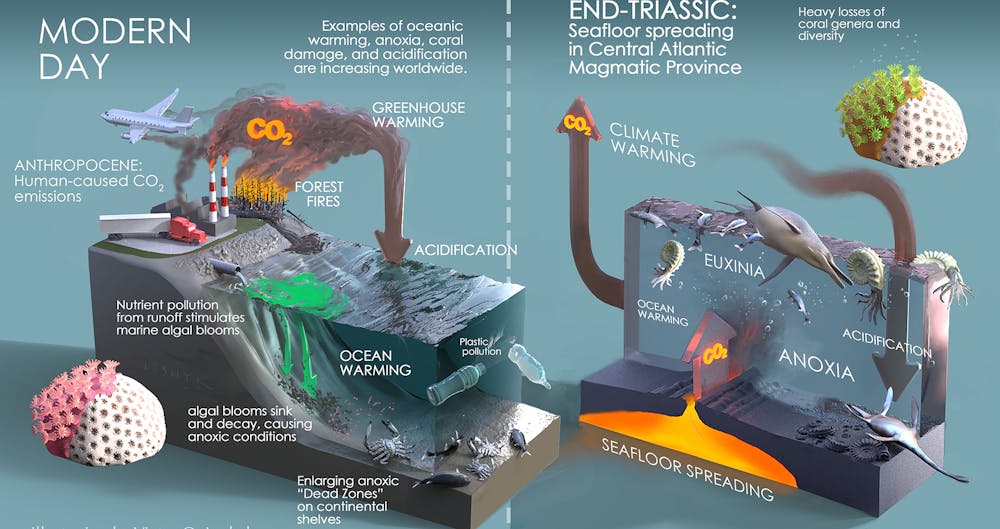
Schematic diagram of environmental changes
Schematic diagram showing the factors driving global ecological change in the modern day and at the end of the Triassic period. Victor Lesh

The end of the Triassic Period featured huge environmental shifts, including declines in biodiversity, ocean acidification, reduced oxygen levels, habitat destruction, nutrient shifts and changing sea levels.

Knowing more about these changes will provide crucial information that could help understanding the threats our own ecosystems face today, and potentially help safeguard them for the future.


Read more: Triassic mass extinction may give clues on how oceans will be affected by climate change


ref. How chemical clues from prehistoric microbes rewrote the story of one of Earth’s biggest mass extinctions – https://theconversation.com/how-chemical-clues-from-prehistoric-microbes-rewrote-the-story-of-one-of-earths-biggest-mass-extinctions-150170

How can Australia reduce the risk of another ‘systemic polling failure’?

Source: The Conversation (Au and NZ) – By Darren Pennay, Campus Visitor, ANU Centre for Social Research and Methods, Australian National University

Election polling has had a torrid time in recent years.

Prominent examples of the polls performing below expectations include the United Kingdom’s 2015 general election, the 2016 Brexit referendum and the United States’ 2016 presidential election.


Read more: How did we get the result of the US election so wrong?


The dust is yet to settle on how well the polls performed in the recent US election, but the highly respected Pew Research Center is reporting that by the end of counting, the polls will likely have overestimated the Democratic advantage by about four percentage points.

Closer to home, we saw the below par performance of national election polls during the 2019 federal election. All of these showed Labor had the support of the majority of Australian voters.

Yet, the Coalition went on to win with 51.5% of the vote compared to Labor with 48.5%, almost the mirror opposite of what the final polls found.

After the election, the polls attracted widespread criticism.

In response, the Association of Market and Social Research Organisations and the Statistical Society of Australia launched a joint inquiry into the performance of the polls, which I chaired.

This involved trying to obtain primary data from the pollsters, assembling the sparse information in the public domain and finding additional data sources to inform our report.

What went wrong in 2019?

The inquiry found Australian election polling had a good track record, by and large.

Australians line up outside a polling booth on Election Day 2019.
Australia suffered a systematic ‘polling failure’ in the lead up to the 2019 federal election. Bianca De Marchi/AAP

Across the ten federal elections since 1993, Australian pollsters had a 73% success rate in “calling the right result” with their final polls. The comparable success rate of US pollsters over a similar period was 79%, according to fivethirtyeight.

Australian pollsters had an even better track record in more recent times with 25 out of 26 final polls from 2007 to 2016 calling the right result, a phenomenal 96% success rate.

So what went wrong in 2019? With limited cooperation from the pollsters themselves, the inquiry identified a number of factors.

Conditions for polling, as reflected in response rates for surveys, got a lot harder. The report documents a decline in response rates for typical telephone surveys from around 20% in 2016 to 11% in 2019, with the polls likely to be achieving much lower response rates than this.


Read more: Outrage, polls and bias: 2019 federal election showed Australian media need better regulation


This recent fall in response rates was part of a longer term decline, coinciding with the increasing take-up of lower cost polling methodologies (predominately online and robopolling) and pressure on polling budgets.

It also seemed to be the case — perhaps lulled into complacency by a long period of relative success and a mistaken belief that compulsory voting made Australia different — that our pollsters did not heed the lessons emerging from the polling reviews into 2015 UK and 2016 US elections. These identified unrepresentative samples (in the UK) and the failure of many polls to adjust for the over-representation of college graduates (in the US) as primary reasons for poll inaccuracies.

Systemic polling failure in Australia

The inquiry found no compelling evidence for the “shy conservative” theory — that people were afraid to admit their true intentions to pollsters — as a possible explanation for the performance of the polls in 2019. It also found no compelling evidence of pollsters being deliberately misled by respondents, or a comprehensive late swing to the Coalition that may have been missed by the polls.

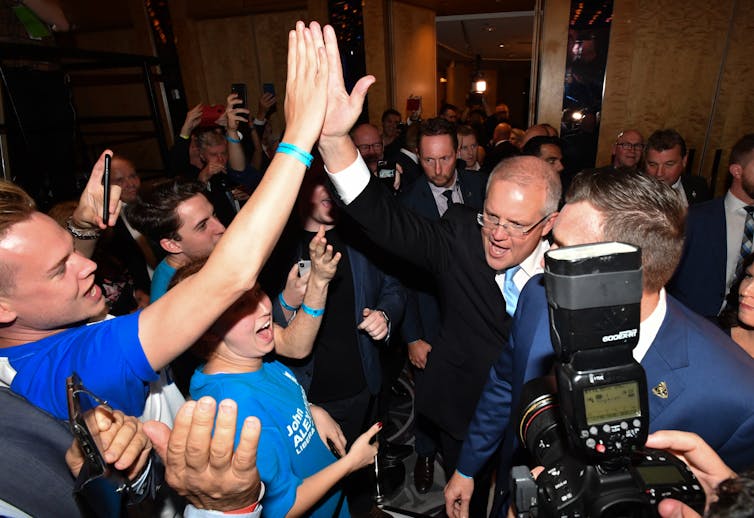
Scott Morrison high fives supporters on election night 2019.
Prime Minister Scott Morrison said he ‘believed in miracles’ when he claimed victory, but the polls were also wrong. Mick Tsikas/AAP

But we did find the polls most likely over-represented people who are more engaged in politics and almost certainly over-represented persons with bachelor level degrees or higher.

Both of these factors are associated with stronger levels of support for the Labor Party and were not reduced by sample balancing or weighting strategies.

So, the performance of the polls in 2019 had the hallmarks of a systematic polling failure rather than a one-off polling miss. The pollsters were stung into action with several announcing their own internal reviews. They also launched an Australian Polling Council,

with the aim of advancing the quality and understanding of public opinion polling in Australia.

What needs to change

With the next federal election possible as soon as August 2021, the need for reform of polling standards in Australia is urgent.

The main recommendations from our inquiry are as follows:

  • a code of conduct: the development of the code could be led by the pollsters, but also informed by other experts, including statisticians, political scientists, the Australian Press Council and/or interested media outlets. Disclosure requirements for pollsters would be fundamental here — as well as how these are monitored, and how compliance is ensured. The code should be made public so it can hold pollsters, and those reporting on the polls, to account. It would make polling methods, and their limitations, more transparent. This will help foster more realistic expectations of polling.

  • methodology: pollsters need to investigate and better understand the biases in their samples and develop more effective sample balancing and/or weighting strategies to improve representativeness. Weighting or balancing by educational attainment seems promising, and the report suggests several other variables for further experimentation such as health status, life satisfaction and past voting behaviour.

  • conveying uncertainty: currently, polls are usually published with a “margin of error”. This isn’t good enough — it is often inadequately calculated and inadequately reported. Pollsters need to use more robust methods for conveying the variability associated with their results. In addition, pollsters should routinely report the proportion of respondents who are “undecided” about their vote choice and identify those who are only “leaning” towards a particular party.

  • get media outlets onside: Australian media organisations should comply with and actively support any new code of conduct.

  • provide educational resources: educational resources about polling methods and standards should be developed and made available to journalists, academics and others who use the results.

Election polling plays such an important role in informing decisions and shaping expectations ahead of elections. Time is running out to learn the lessons of 2019. Rapid implementation of our recommendations is vital.

ref. How can Australia reduce the risk of another ‘systemic polling failure’? – https://theconversation.com/how-can-australia-reduce-the-risk-of-another-systemic-polling-failure-149984

You may be able to buy a COVID vaccine ahead of the government rollout. But jumping the queue comes at a price

Source: The Conversation (Au and NZ) – By Barbara Mintzes, Associate professor, School of Pharmacy and Charles Perkins Centre, University of Sydney

As the world continues to battle COVID-19, the prospect of a vaccine gives us hope of returning to some kind of “normal” in the not too distant future.

The Australian government has signed supply agreements with manufacturers of four COVID vaccines currently in clinical trials. Assuming one or more meets the requirements for safety and effectiveness, everyone will be able to be vaccinated for free.

However, as vaccine supply will be limited at least initially, the government has specified certain groups that will take priority to receive vaccines first. These include people at higher risk of exposure to COVID-19 (such as health-care workers), and those who are more vulnerable to severe disease (such as older people).

At the same time, the head of the Therapeutic Goods Administration (TGA), John Skerritt, has noted manufacturers will also be able to sell vaccines privately:

We live in a free market economy […] There’s nothing stopping companies as long as they have the TGA approval to put that vaccine on the market in Australia.


Read more: 90% efficacy for Pfizer’s COVID-19 mRNA vaccine is striking. But we need to wait for the full data


This arrangement reinforces the status quo of Australia’s health system: a public health system with a private market on the side. But COVID is not the status quo. It’s a global public health emergency that has already claimed more than 1.3 million lives.

Allowing people to jump the queue via the private market is a bad idea, for several reasons.

1. A private market puts wealth ahead of need

Those most likely to buy the vaccine privately are those who have not been deemed at high enough risk to receive the vaccine for free until later on, but have the means to do so (we don’t know yet how much it might cost).

Prices are often higher in the private sector because public drug schemes benefit from their size and bargaining power to keep prices low, which could lead vaccine manufacturers to prioritise private sales. If companies set aside a portion of their limited supply for private sales, people who need the vaccine the most, such as health workers and older people, may have to wait longer.

If there are exceptions where people who don’t fall into the priority categories need a vaccine, such as for essential travel to a country that mandates vaccination as a condition of entry, the answer is to build in flexibility through special access requests, not private sales.

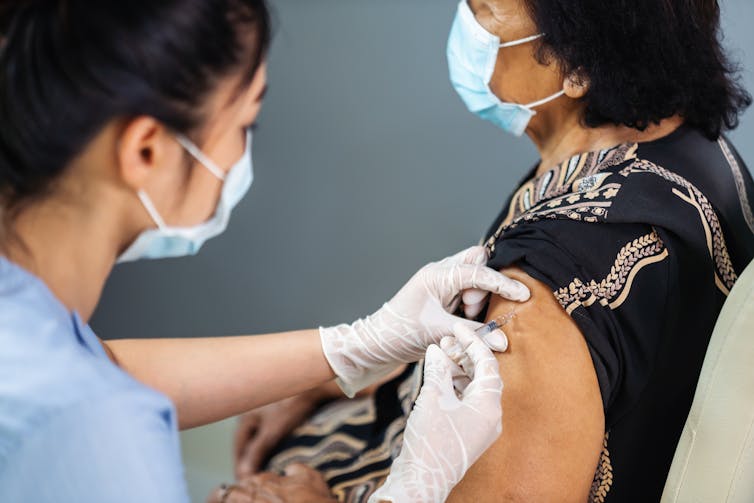
A woman receives a vaccination from a health-care worker.
If and when a COVID vaccine becomes available, older people will be towards the front of the queue. Shutterstock

2. People buying privately may not get the vaccine they need

Several vaccines may come onto the market, and we don’t yet know if all will be equally effective for everyone. For example, it’s possible a particular vaccine won’t work as well in older people.

The allure of private sales may lead companies to promote their vaccines, in turn affecting which one a patient gets. Drug companies have a long history of intensive marketing to doctors, often casting a wide net in terms of who they suggest might benefit. In the case of the opioid epidemic, these practices have been associated with serious harm to patients.

Companies cannot advertise prescription-only products, including vaccines, to the public in Australia. But they can run unbranded disease awareness campaigns that indirectly promote products to consumers, often through emotional images and appeals.

3. Follow-up may be poorer

COVID vaccine development is moving very quickly, with shorter pre-market testing than a vaccine would normally have. This makes it all the more important to keep careful track of who receives the vaccine, any health problems they experience, and longer-term effectiveness. Uncoordinated private provision creates extra logistical challenges for follow-up.


Read more: Why we should prioritise older people when we get a COVID vaccine


4. Private supply may be impractical

As an example, Pfizer’s mRNA-based vaccine must be stored at -80℃. Special cold chain management is not easy for any provider, but is likely better handled by larger-scale providers set up to deliver COVID vaccines.

Further, all COVID-19 vaccines are likely to require at least two doses. Especially if supply is limited, it may become challenging to make sure private patients get their second dose. And delays or missing the second dose will likely lead to lower effectiveness.

Illustration of 3 stick figures reaching for COVID vaccine
Allowing people who have the means to purchase a COVID vaccine privately isn’t equitable. Shutterstock

An issue of equity

Some 40 countries have joined the World Health Organisation’s Solidarity Call to Action to support equitable global access to COVID-19 health technologies. Similarly, the COVAX initiative, which Australia supports, provides direct funding for vaccine access in less advantaged countries.

Echoing the principles of these initiatives, Prime Minister Scott Morrison told the United Nations in September:

[…] it’s a moral responsibility for a vaccine to be shared far and wide. Some might see short-term advantage or even profit, but I assure you, to anyone who may think along those lines, humanity will have a very long memory, and be a very, very severe judge.

Given this moral responsibility, why allow wealthier Australians to jump the queue? The planned public rollout of free COVID-19 vaccines for all is laudable. The main rationale for a parallel private system is “short-term advantage or even profit”, to borrow the prime minister’s words. Let’s not go there.


Read more: Creating a COVID-19 vaccine is only the first step. It’ll take years to manufacture and distribute


ref. You may be able to buy a COVID vaccine ahead of the government rollout. But jumping the queue comes at a price – https://theconversation.com/you-may-be-able-to-buy-a-covid-vaccine-ahead-of-the-government-rollout-but-jumping-the-queue-comes-at-a-price-149972

We may have to accept a ‘good enough’ COVID-19 vaccine, at least in 2021

Source: The Conversation (Au and NZ) – By Paul Komesaroff, Professor of Medicine, Monash University

Australian health minister Greg Hunt said recently the government is on track to deliver COVID-19 vaccines from March 2021.

US biotech firm Moderna has just announced its COVID-19 vaccine has 95% efficacy, following on the heels of Pfizer’s claimed 90% efficacy and the Russian Sputnik V vaccine’s 92% efficacy, albeit based on limited data and yet to be peer-reviewed.

We’ll likely see more preliminary results from other vaccine trials reported in the media in coming weeks and months.

While an effective vaccine will provide the best chance of controlling the disease, it is sadly not so simple. No vaccine will be perfect or end the pandemic instantly. The first vaccines are also likely to have significant limitations.

The issue is how good a vaccine is good enough? We also need to think about what imperfections we — as individuals, regulators or governments — will be prepared to accept.

How safe is safe enough?

Safety is obviously the major concern. Vaccines are designed to be given to very large numbers of healthy people. This means even an extremely rare, serious adverse event, when applied to a population of millions, can produce major harm.

Short-term trials on small population samples relative to the numbers expected to receive the vaccine may also not be able to pick up relatively rare but important risks. This is a problem we may not be able to avoid because the only way to find out is to give the vaccine to large numbers of people and then allow long periods of time to elapse, for any long-term adverse events to become evident.

Obviously, all therapeutic agents carry the possibility of adverse effects and in individual cases decisions have to be made about whether the potential benefits justify taking the risks. It is arguable that the extreme dangers associated with COVID-19 justify accepting a higher level of risk for the vaccine. However, while the US and Australian regulatory authorities have broad guidelines relating to vaccine safety, neither has issued guidelines regarding the levels of risk that are considered justified for a coronavirus vaccine, and there has been only limited public debate on this subject.


Read more: Who pays compensation if a COVID-19 vaccine has rare side-effects? Here’s the little we know about Australia’s new deal


How effective is good enough?

Efficacy — the vaccine’s ability to produce clinical and public health benefits — is also uncertain.

Ideally, a vaccine should prevent any person who receives it from catching the disease. However, at least with the first vaccines, it is likely the benefits will be more limited. For example, they may slightly reduce the severity of the illness, or they may only benefit a small subset of the population. No current trials are looking at purely whether the vaccine will reduce the chance of dying from COVID-19 of individuals in specific risk groups.

In fact, different clinical trials have different “efficacy end points”, including (among others) effects on susceptibility to infection, severity of disease, time to recovery and mortality, in different age and population groups.

Elderly people in a nursing home doing group exercise sitting down
There is no guarantee vaccines will provide significant protection for those in most need, such as people in older age groups. Shutterstock

There is no guarantee vaccines under development will provide significant protection for those in most need, such as people in older age groups or those with existing medical conditions. Not all trials are specifically recruiting such participants and there is a real possibility benefits will not extend to them. In other words, a clinical trial might show “efficacy” in a formal sense but might not solve the key problems we are facing in the real world.


Read more: Pfizer vaccine: what an ‘efficacy rate above 90%’ really means


Earlier this year, the US Food and Drug Administration said it would only consider approving vaccines that “prevent disease or decrease its severity in at least 50% of people who are vaccinated”. Australia’s equivalent, the Therapeutic Goods Administration, has not issued any similarly precise guidance.

How equitable is good enough?

Access and distribution of any vaccine pose major problems. Some of these are built into the nature of the product itself.

For example, vaccines like the mRNA vaccine developed by Pfizer that need to be transported and stored at around -70℃, will have limited utility in low and middle income countries with limited health infrastructure and in rural and remote communities all over the world – meaning other vaccines may need to be found for these populations.


Read more: Keeping coronavirus vaccines at subzero temperatures during distribution will be hard, but likely key to ending pandemic


The role of minorities in relation to clinical studies of therapeutic products in the US is very uneven, in terms of participation, exposure to risk and access to benefits. There is a serious chance that in the search for a COVID-19 vaccine those least likely ultimately to receive the final product will be the ones who carry the greatest risk. This creates a possibility the social divisions already exposed by the COVID crisis will be further exacerbated.

Further, while there has been widespread acknowledgement of the need for access and supply of COVID vaccines to poorer nations there is no legal structure to ensure this and no guarantee it will actually happen.


Read more: Australia’s just signed up for a shot at 9 COVID-19 vaccines. Here’s what to expect


Where to next?

A number of COVID-19 vaccines will likely become available during 2021 that offer either limited protection from infection or lower the risk somewhat of severe disease. However, these benefits may not necessarily be for those most at risk.

Robust regulatory systems, and independent scrutiny of clinical trial results, mean COVID-19 vaccines will likely be safe in the short-term. However, no-one will know about long-term risks and distribution may be limited, for logistic, economic and cultural reasons.

Even if we develop a “good enough” vaccine, there are no guarantees. Although many will be prepared to chance the first vaccines, many others will refuse them, despite government attempts at persuasion.

So herd immunity via vaccination, which for the coronavirus requires effective immunisation of at least two-thirds of the population, will remain a long way away.

This means strategies to reduce the spread, such as physical distancing, use of face masks and hand hygiene and, where necessary, rigorous quarantine measures, will be with us for some time.

ref. We may have to accept a ‘good enough’ COVID-19 vaccine, at least in 2021 – https://theconversation.com/we-may-have-to-accept-a-good-enough-covid-19-vaccine-at-least-in-2021-148168

San Francisco just banned gas in all new buildings. Could it ever happen in Australia?

Source: The Conversation (Au and NZ) – By Madeline Taylor, Lecturer, University of Sydney

Last week San Francisco became the latest city to ban natural gas in new buildings. The legislation will see all new construction, other than restaurants, use electric power only from June 2021, to cut greenhouse gas emissions.

San Francisco has now joined other US cities in banning natural gas in new homes. The move is in stark contrast to the direction of energy policy in Australia, where the Morrison government seems stuck in reverse: spruiking a gas-led economic recovery from the COVID-19 pandemic.

Natural gas provides about 26% of energy consumed in Australia — but it’s clearly on the way out. It’s time for a serious rethink on the way many of us cook and heat our homes.

Scott Morrison
While San Francisco bans gas, the Morrison government turns to gas to recover the economy from the pandemic. AAP Image/James Ross

Cutting out gas

San Francisco is rapidly increasing renewable-powered electricity to meet its target of 100% clean energy by 2030. Currently, renewables power 70% of the city’s electricity.

The ban on gas came shortly after San Francisco’s mayor London Breed announced all commercial buildings over 50,000 square feet must run on 100% renewable electricity by 2022.

Buildings are particularly in focus because 44% of San Franciscos’ citywide emissions come from the building sector alone.


Read more: 4 reasons why a gas-led economic recovery is a terrible, naïve idea


Following this, the San Francisco Board of Supervisors unanimously passed the ban on gas in buildings. They cited the potency of methane as a greenhouse gas, and recognised that natural gas is a major source of indoor air pollution, leading to improved public health outcomes.

From January 1, 2021, no new building permits will be issued unless constructing an “All-Electric Building”. This means installation of natural gas piping systems, fixtures and/or infrastructure will be banned, unless it is a commercial food service establishment.

Switching to all-electric homes

In the shift to zero-emissions economies, transitioning our power grids to renewable energy has been the subject of much focus. But buildings produce 25% of Australia’s emissions, and the sector must also do some heavy lifting.

A report by the Grattan Institute this week recommended a moratorium on new household gas connections, similar to what’s been imposed in San Francisco.

The report said natural gas will inevitably decline as an energy source for industry and homes in Australia. This is partly due to economics — as most low-cost gas on Australia’s east coast has been burnt.


Read more: A third of our waste comes from buildings. This one’s designed for reuse and cuts emissions by 88%


There’s also an environmental imperative, because Australia must slash its fossil fuel emissions to address climate change.

While acknowledging natural gas is widely used in Australian homes, the report said “this must change in coming years”. It went on:

This will be confronting for many people, because changing the cooktops on which many of us make dinner is more personal than switching from fossil fuel to renewable electricity.

The report said space heating is by far the largest use of gas by Australian households, at about 60%. In the cold climates of Victoria and the ACT, many homes have central gas heaters. Homes in these jurisdictions use much more gas than other states.

By contrast, all-electric homes with efficient appliances produce fewer emissions than homes with gas, the report said.

A yellow triangle sign that says 'no coal or coal seam gas' on a wooden fence.
Natural gas produces methane, a greenhouse gas that’s far more potent than carbon dioxide. Shutterstock

Zero-carbon buildings

Australia’s states and territories have much work to do if they hope to decarbonise our building sector, including reducing the use of gas in homes.

In 2019, Australia’s federal and state energy ministers committed to a national plan towards zero-carbon buildings for Australia. The measures included “energy smart” buildings with on-site renewable energy generation and storage and, eventually, green hydrogen to replace gas.

The plan also involved better disclosure of a building’s energy performance. To date, Australia’s states and territories have largely focused on voluntary green energy rating tools, such as the National Australian Built Environment Rating System. This measures factors such as energy efficiency, water usage and waste management in existing buildings.

But in 2020, just 2% of buildings in Australia achieved the highest six-star rating. Clearly, the voluntary system has done little to encourage the switch to clean energy.

A row of two storey houses in Syndey.
An estimated 200,000 new houses are built in Australia every year. AAP Image/Dan Himbrechts

The National Construction Code requires mandatory compliance with energy efficiency standards for new buildings. However, The code takes a technology neutral approach and does not require buildings to install zero-carbon energy “in the absence of an explicit energy policy commitment by governments regarding the future use of gas”.

An economically sensible move

An estimated 200,000 new homes are built in Australia each year. This represents an opportunity for states and territories to create mandatory clean energy requirements while reaching their respective net-zero emissions climate targets.

Under a gas ban, the use of zero-carbon energy sources in buildings would increase, similar to San Francisco. This has been recognised by Environment Victoria, which notes

A simple first step […] to start reducing Victoria’s dependence on gas is banning gas connections for new homes.

Creating incentives for alternatives to gas may be another approach, such as offering rebates for homes that switch to electrical appliances. The ACT is actively encouraging consumers to transition from gas.


Read more: Australia has plenty of gas, but our bills are ridiculous. The market is broken


Banning gas in buildings could be an economically sensible move. As the Grattan Report found, “households that move into a new all-electric house with efficient appliances will save money compared to an equivalent dual-fuel house”.

Meanwhile, Austrlaia’s energy market operator ARENA confirmed electricity from solar and wind provide the lowest levelised cost of electricity, due to the increasing cost of east coast gas in Australia.

Future-proofing new buildings will require extensive work, let alone replacing exiting gas inputs and fixtures in existing buildings. Yet efficient electric appliances can save the average NSW homeowner around A$400 a year.

Learning to live sustainability, and becoming resilient in the face of climate change, is well worth the cost and effort.

Should we be cooking with gas?

Recently, a suite of our major gas importers — China, South Korea and Japan — all pledged to reach net-zero emissions by either 2050 or 2060. This will leave our export-focused gas industry possibly turning to the domestic market for new gas hookups.

But continuing Australia’s gas production will increase greenhouse gas emissions, and few Australians support an economic recovery pinned on gas.

The window to address dangerous climate change is fast closing. We must urgently seek alternatives to burning fossil fuels, and there’s no better place to start that change than in our own homes.


Read more: No, Prime Minister, gas doesn’t ‘work for all Australians’ and your scare tactics ignore modern energy problems


ref. San Francisco just banned gas in all new buildings. Could it ever happen in Australia? – https://theconversation.com/san-francisco-just-banned-gas-in-all-new-buildings-could-it-ever-happen-in-australia-150171

Our unis do need international students and must choose between the high and low roads

Source: The Conversation (Au and NZ) – By John Shields, Professor of Human Resource Management and Organisational Studies, University of Sydney

Australian universities have come to rely heavily on revenue from onshore international students. Numbers more than doubled in the decade to 2018. But the proposition that Australia’s public universities should step back 50 years, retreat from international education and focus wholly or largely on domestic students is naively nostalgic.

Such a move would be a backward step economically, culturally and diplomatically, as a new Asia Taskforce discussion paper concludes. It would diminish Australia and its global standing.

However, 37 of our universities are publicly owned and thus have a social obligation to serve domestic students. It is right that we have a robust debate about the international student presence on our campuses.

Unfortunately, the debate has generated more heat than light. It’s at risk of being hijacked for ideological purposes, rather than generating credible and practical solutions on which the sector and government can act.


Read more: COVID-19: what Australian universities can do to recover from the loss of international student fees


Getting to the root of the problem

Criticisms of the sector aren’t without merit. As some academics have suggested, and as COVID-19 has writ large, universities’ high exposure to the international education market is high risk.

Chart showing breakdowns of university revenue sources from 2004 to 2018
Changes in sources of university revenue from 2004 to 2018 (in 2018 dollars) Universities Australia, CC BY

The proportion of international students per institution in 2018 averaged 22%, ranging from a low of 4% (New England) to a high of 48% (Bond). At some business and engineering faculties, the proportion exceeded 50%.

Enrolments at some of our largest universities also have an unacceptable skew towards single countries – either China or India. Some universities, particularly Group of Eight institutions, have fallen into the habit of setting international fees according to what China – the world’s largest student market – will bear. This has eroded competitiveness in more cost-sensitive countries like those in South East Asia and Latin America.

Chart showing countries of origin of international students at Australian universities
Universities Australia. Data source: DET Selected Higher Education Statistics 2008 and 2017 Student Data

Furthermore, the sector can and must lift its game on all-round educational quality. The issues include academic and English-proficiency admission standards, the quality of the learning experience, and graduate employability and job outcomes.

Whatever the critics might assert, though, the root cause of this reliance is not institutional greed. The underlying driver has been bipartisan attachment to weaning the sector off the public purse and requiring it to stand on its own two feet financially.


Read more: How universities came to rely on international students


In the two decades to 2015, OECD data suggest Australia slipped from sixth place to 24th among OECD countries in terms of public investment in higher education as a share of GDP. While some dispute these metrics, the flatlining of real direct funding by government has created a university sector that is neither fish nor fowl: publicly owned yet increasingly reliant on commercial income sources.

Fee revenue isn’t the only benefit

A striking feature of criticisms of the international student presence is a refusal to acknowledge its benefits. Education was the nation’s third-largest export earner last year. Higher education alone contributed A$31 billion.

International students contribute greatly to local economies too. They spend on accommodation, food, leisure and entertainment. Over 31,000 jobs rely on the University of Sydney alone.

Falling onshore international student numbers have magnified the pandemic’s impacts. A Mitchell Institute research paper last week forecast a 50% decline in onshore international students by mid-2021. The paper detailed the suburb-by-suburb economic impact on our cities.


Read more: COVID to halve international student numbers in Australia by mid-2021 – it’s not just unis that will feel their loss


The socio-cultural benefits these students bring are also habitually ignored or dismissed.

Neglected, too, are the many benefits and opportunities, including “soft power” projection, that flow from having hundreds of thousands of Australian university alumni worldwide. There are well over 200,000 in China alone.

Low road or high road?

The sector and policymakers now face a stark choice regarding the number, size and student profile of universities. In the post-pandemic world, and in the absence of increased direct government funding per student, the sector must choose between the “low road” and the “high road” to survival and sustainability.

The low road would involve pulling back to a largely or even wholly domestic focus. The results would very likely be sector-wide decline, shrinking universities, deteriorating campus facilities, a lowering of horizons and a reversion to a pre-1990s focus on domestic student education.


Read more: Without international students, Australia’s universities will downsize – and some might collapse altogether


Internationalism would give way to isolationism and educational nationalism of Trumpian proportions. This path would consign the sector to a future of parochialism, mediocrity and global irrelevance.

Alternatively, the sector could take the “high road”. This would involve repositioning itself as a high-quality provider of new forms of learning for both international and domestic students.

The sector and government would have to work in partnership to rebuild universities’ global brand and reputation, recover international student numbers and reprofile this student cohort. The latter step would aim both to improve the academic merit of students from China and diversify intakes.

The high road is also the hard road. It requires a pro-active (not defensive) mindset and an all-round shift in perceptions of Australia, Australians and our universities. But it may well set the sector on a bright new path.

The hope that a surge in domestic student demand will save the sector from atrophy is delusional. The government must either greatly increase recurrent funding per student or provide strong tactical support to recover and diversify international student enrolments. The latter approach would enable the sector to continue to cross-subsidise degree studies by domestic students, fund high-quality research, and develop campus and IT infrastructure fit for the fourth industrial revolution.

Chart showing growth in university research funding sources since 2000
Growth in sources of funding for university research since 2000 (in 2018 dollars) Universities Australia, CC BY

Read more: $7.6 billion and 11% of researchers: our estimate of how much Australian university research stands to lose by 2024


The sector can do this without major direct funding increases from a debt-burdened government. But government needs to help the sector help itself.

A 10-point action plan

Universities should act decisively and in concert to:

  1. diversify international students

  2. focus on all-round quality (admission quality, learning quality, graduate outcome quality) of Chinese students

  3. increase strategic partnerships with international institutions as a channel for recruiting high-quality students

  4. leverage international alumni networks more effectively to promote the sector and assist student recruitment and graduate placement

  5. accentuate intensive courses for international students to capitalise on booming demand for life-long learning.

Government could support progress along the high road as follows:

  1. sponsor tripartite trade and education missions to target countries

  2. expand support for intensive study visits

  3. host sector-wide events and promote further learning for international alumni

  4. actively encourage employers to provide in-program placements and onshore post-study work for new international graduates

  5. sponsor initiatives to help graduates secure quality jobs in their home countries.

The sector and government should embrace the high road in partnership. This can only be achieved if we engage in a mature and nuanced discussion about root causes, practical solutions and the sort of university system we really wish to have in this country.

ref. Our unis do need international students and must choose between the high and low roads – https://theconversation.com/our-unis-do-need-international-students-and-must-choose-between-the-high-and-low-roads-149973

Many of our buildings are poorly ventilated, and that adds to COVID risks

Source: The Conversation (Au and NZ) – By Geoff Hanmer, Adjunct Professor of Architecture, University of Adelaide

The virus that causes COVID-19 is much more likely to spread indoors rather than outdoors. Governments are right to encourage more outdoor dining and drinking, but it is important they also do everything they can to make indoor venues as safe as possible. Our recent monitoring of public buildings has shown many have poor ventilation.

Poor ventilation raises the risks of super-spreader events. The risk of catching COVID-19 indoors is 18.7 times higher than in the open air, according to the US Centers for Disease Control and Prevention.


Read more: Poor ventilation may be adding to nursing homes’ COVID-19 risks


In the past month, we have measured air quality in a large number of public buildings. High carbon dioxide (CO₂) levels indicate poor ventilation. Multiple restaurants, two hotels, two major shopping centres, several university buildings, a pharmacy and a GP consulting suite had CO₂ levels well above best practice and also above the absolute maximum mandated in the National Construction Code.

Relative humidity readings of less than 40% associated with both heating and cooling air are also of concern. Evidence now suggests low humidity is associated with transmission.

If anyone had COVID-19 in these environments, particularly if people were in them for an extended period, as might happen at a restaurant or pub, there would be a risk of a super-spreader event. Less than 20% of individuals produce over 80% of infections.


Read more: A few superspreaders transmit the majority of coronavirus cases


Many aged-care deaths were connected

It appears a relatively small number of super-spreader events, probably associated with airborne transmission of SARS-CoV-2, the virus that causes COVID-19, were responsible for most of the deaths in Victorian aged-care facilities.

Of the 907 people who have died of COVID-19 in Australia, 746, or 82% of COVID-19 deaths, were associated with aged care. In Victoria, there were 52 facilities with more than 20 infections. Three had over 200 infections. As a result, 639 of the 646 aged care residents who died in Victoria were located in just 52 facilities.

But official advice hasn’t changed

Aged-care operators and the states based their infection control on the advice of the Commonwealth Infection Control Expert Group (ICEG). As of September 6, the Coronavirus (COVID-19) Residential Aged Care Facilities Plan for Victoria stated:

Coronavirus (COVID-19) is transmitted via droplets, after exposure to contaminated surfaces or after close contact with an infected person (without using appropriate PPE). Airborne spread has not been reported [our emphasis] but could occur during certain aerosol-generating procedures (medical procedures which are not usually conducted in RACF). […] Respiratory hygiene and cough etiquette, hand hygiene and regular cleaning of surfaces are paramount to preventing transmission.

In early August, more than 3,000 health workers had signed a letter of no confidence in ICEG. The letter noted that aerosol transmission was causing infections in medical staff, many of whom worked in aged-care facilities.

On September 7, we wrote to the federal aged care minister, Richard Colbeck, drawing attention to our August 20 article in The Conversation, which referenced a July 8 article in Nature. The Nature article identified an emerging consensus that aerosol transmission of SARS-CoV-2 is probable in low-ventilation environments.


Read more: How to prevent COVID-19 ‘superspreader’ events indoors this winter


The director of the Aged Care COVID-19 Measures Implementation Branch wrote back on Colbeck’s behalf on September 28 saying:

Current evidence suggests COVID-19 most commonly spreads from close contact with someone who is infectious. It can also spread from touching a surface that has recently been contaminated with the respiratory droplets (cough or sneeze) of an infected person and then touching your eyes, nose or mouth.

In other words, Commonwealth authorities were still playing down the significance of airborne transmission nearly two months after the letter of no confidence was sent to ICEG and three months after the article in Nature. By the end of September, Victorian aged-care facilities had reported over 4,000 cases of COVID-19, about half of them in staff.

ambulance picks up patient at aged care home
Victorian aged-care residents and staff paid a very high price for failures of infection control. Daniel Pockett/AAP

On October 23, ICEG was still saying:

There is little clinical or epidemiological evidence of significant transmission of SARS-CoV-2 (the virus that causes COVID-19) by aerosols.

Focus on the ‘3 Vs’ to reduce risks

The key thing we need to do until a vaccine is rolled out is to try to prevent indoor super-spreader events. According to the University of Nebraska Medical Centre, we should remember the “three Vs” that super-spreader events have in common:

Venue: multiple people indoors, where social distancing is often harder

Ventilation: staying in one place with limited fresh air

Vocalization: lots of talking, yelling or singing, which can aerosolize the virus.

Measuring indoor ventilation is quick and easy using a carbon dioxide detector. Any CO₂ reading of over 800 parts per million is a cause for concern – the level for air outside is just over 400ppm.

There is no excuse for governments, health authorities and building owners not to monitor ventilation levels to help ensure members of the public are as safe as is reasonably practicable when indoors.

There is also no excuse for the Australian Building Control Board not to change the National Construction Code to require fall-back mechanical ventilation systems be fitted and CO₂ and humidity monitored in all buildings frequented by the public, particularly aged-care facilities.

With the knowledge we have now and a low rate of community infection, Australia should be able to make it through to vaccine roll-out with relatively few further infections and deaths. But that depends on being vigilant about the quality of ventilation indoors and the associated possibility of super-spreader events. This is especially important in aged-care facilities and quarantine hotels.

It’s probably a good idea for us all to open the windows and let the fresh air in.

ref. Many of our buildings are poorly ventilated, and that adds to COVID risks – https://theconversation.com/many-of-our-buildings-are-poorly-ventilated-and-that-adds-to-covid-risks-149830

Unpacking the magic of Miffy, a simply drawn, bunny-shaped friend

Source: The Conversation (Au and NZ) – By Margot Hillel, Professor, Children’s Literature, Australian Catholic University

She couldn’t get much simpler in visual terms. A white bunny cutout, dots for eyes and a little crisscross mouth. But Miffy is an enduringly endearing rabbit.

Called nijntje in the author’s native Dutch, Miffy was originally created by Dick Bruna for his son. Now 65 years on, Miffy remains universally popular.

Miffy books are available in 50 languages and have sold millions of copies around the world. A stop-motion animated television series brought more world fame and a Miffy museum in Bruna’s native Utrecht was established in 2016.

Bruna, who died in 2017, was reportedly stopped daily near his home for selfies with teenage fans and Miffy merchandise features heavily at popular Japanese tulip festivals.

An exhibition, Miffy & Friends, is soon to open at the QUT Art Museum Gallery. As its director Vanessa Van Ooyen has noted, Bruna’s illustrations have a deceptive simplicity, which belies the artistry behind them.


Read more: Children’s books must be diverse, or kids will grow up believing white is superior


Shades of Mondrian

It is that very simplicity which, in part, gives Miffy her long-lasting charm. The illustrations are instantly appealing, even for very small children.

Researchers have found that reliably positive responses to simple curvilinear shapes seem to be present early during development, before language is acquired. Researchers also hold that children associate more positive emotions, like happiness or excitement, with bright colours. Bruna seemed to understand this instinctively from the beginning.

Miffy bunny illustration in flowery dress
Dick Bruna, Miffy’s birthday 1970. Courtesy and © Mercis bv Amsterdam

The blocks of colour — Bruna cited countryman Piet Mondrian and Henri Matisse as inspirations — have a universality to them. The settings are not country-specific and, when landscape is depicted, it too can be read as applicable to anywhere and everywhere. Bruna wrote for a 2005 illustration exhibition:

I hope that the child’s imagination is stimulated to see things in their simplest form … so that life, with all its complications, becomes a little clearer.

Miffy is anthropomorphic, a little white rabbit doing many of the everyday things that lots of children do. She was “born” when the author was on holiday with his family and started telling his son stories about a little rabbit in the garden.

In story books, Miffy plays with friends, goes on outings with her parents, helps to paint her room, goes to the zoo and the beach and helps in the garden. There is a wholesomeness and innocent joy in the easily relatable tales.

A Miffy character postage stamp
You’ve got Miffy mail. Shutterstock

Some of the books help make potentially difficult situations or experiences familiar and less frightening, such as when Miffy goes to hospital. Miffy is apprehensive but she is met by a friendly nurse who helps her undress and put on hospital clothes and gives Miffy a pre-operation injection, (which didn’t hurt as much as she had feared). When she wakes from the anaesthetic, Miffy is comforted by the presence of the nurse and then a visit from her parents.

Miffy’s school activities will be familiar to those children who have already started formal education and enticing and intriguing for those getting ready to start.

Friendship features strongly in the books. Miffy’s walk to school with friends is warm and exuberant and they are welcomed by the teacher when they arrive. Soon Miffy is enjoying learning to write, how to add up and — her very favourite — listening to the teacher reading a story.

Buffy draws simple pictures
Dick Bruna Miffy at school 1990. Courtesy and © Mercis bv Amsterdam

Read more: 5 reasons I always get children picture books for Christmas


Easy reading for small hands

The size of the majority of the Miffy books (16 centimetres square) makes them easy for small readers and pre-readers to hold.

The language is accessible but does not patronise young readers or “talk down” to them. The rhyme and structure of many of the stories gives them four lines on each page with the second and fourth lines rhyming.

This formula gives a welcome familiarity to the books.

A bunny soft toy in blue and white dress.
Cute and cuddly Miffy. Author, Author provided

Bruna wrote and illustrated more than 100 books, many of them about Miffy. There are Miffy activity books, sticker books, board books, and special titles like Miffy x Rembrandt which introduces children to the works of two Dutch masters: Rembrandt and Bruna. Miffy’s 123 and Miffy’s ABC books use the character as a stimulus for teaching foundational literacy and numeracy.

In addition to screen adaptations and the continuing popularity of the books themselves, there are many items of merchandise to keep Miffy’s appeal alive. The merchandise encourages book sales and reading and the reverse is true too. Miffy appears on everything from clocks, cushions, keyrings, clothing and lunchboxes to lamps.

In her native Netherlands, Miffy likenesses are printed on babies’ bibs; there are plush toys in traditional Dutch dress and there is a Miffy room at Keukenhof, the large flower gardens at Lisse.

Miffy is perfectly ubiquitous, her simply drawn face always friendly.

Miffy, a sweet little bunny.

miffy & friends is a free exhibition at QUT Art Museum from November 21 until until 14 March 2021. It will then tour to Bunjil Place Gallery in Melbourne from 3 April–13 June 2021.

ref. Unpacking the magic of Miffy, a simply drawn, bunny-shaped friend – https://theconversation.com/unpacking-the-magic-of-miffy-a-simply-drawn-bunny-shaped-friend-149725

Buying and distributing a COVID-19 vaccine will involve hard ethical and practical choices

Source: The Conversation (Au and NZ) – By Barbara Allen, Senior Lecturer in Public Management, Te Herenga Waka — Victoria University of Wellington

The world was ablaze with hope following the announcement last week that a vaccine developed by Pfiser and BioNTech may be more than 90% effective in preventing COVID-19.

New Zealand politicians were quick to point out 1.5 million doses had already been pre-purchased through a legally binding agreement signed in late September to buy any vaccine to emerge from the multilateral COVAX facility.

Within the week, a second potentially effective vaccine emerged from US biotech firm Moderna. Health Minister Chris Hipkins would not say if New Zealand had negotiated for this option.

But assuming an approved vaccine is coming, attention then turns to logistics. Funding, procurement, storage and distribution all raise significant questions about values, decision-making and ethics.

We know there are multiple candidates for a COVID-19 vaccine, but there will be few “winners”, as many countries have already pre-contracted substantial amounts based on calculated risk assessments of which will emerge first. Even then, the challenges will be immense.

For example, assuming the Pfizer vaccine does become available as a safe option, it must be held in “ultra-cold storage” at -70 degrees Celsius. As has been observed already, “Distributing an effective COVID-19 vaccine to the global population will likely be the greatest logistical challenge since World War II.”

Who gets a vaccine first?

For New Zealand, as with all countries, the questions raised are complex: do we now spend a large amount of money to scale up a logistics, distribution and storage system for the Pfizer drug? Or should we wait for an alternative that is more effective, easier to transport and store, and possibly cheaper?

After all, the first available vaccine might not achieve the outcomes we want. But would it be fair (or feasible) to make the country wait?


Read more: Moderna follows Pfizer with exciting vaccine news – how to read these dramatic developments


Furthermore, because enough doses to treat everyone will not be available immediately, it will be necessary to prioritise recipients. What are the country’s obligations here? Do we offer the vaccination first to the oldest, or the youngest, or the most vulnerable?

National health systems will have some idea about how to go about this, but wealthy countries have never faced an immediate requirement on this scale.

An ethical framework

Answering these questions means calling simultaneously on a number of different ethical perspectives:

  • an ethic of justice to assess the fairness of a decision

  • an ethic of consequentialism to look at outcomes

  • the ethics of obligations to see who we may have made commitments to

  • an ethic of care to look at individual cases, rather than relying on abstract logic.

Only when we combine these perspectives can we begin to make sense of priorities.

The vaccine marketplace is a kind of oligopoly, with a few extremely large firms deciding which vaccines get made, when and at what price. Pharmaceutical companies are reluctant to invest in producing new vaccines for the developing world because they have little prospect of earning an attractive return.

While global organisations such as vaccine alliance GAVI have been instrumental in getting vaccines to developing countries, given the geopolitics of procurement it could be a long time before an effective COVID-19 option reaches the poorest populations.

The moral dimension

All this points to the deeper ethical issue of inequality. Many agencies, including the World Health Organisation (WHO), have demonstrated that health outcomes are related to socio-economic, ethnic and gender inequalities. COVID-19 has only made these inequalities worse.

Only last week, for example, a UK study showed 57.7 more people per 100,000 have died in the poorest areas of northern England than in the rest of the country.


Read more: COVID-19 vaccines could go to children first to protect the elderly


This matches other research showing how the pandemic has disproportionately affected poorer families, including their being less likely to be able to work from home or adapt to home-schooling.

Limited or selective availability of a vaccine could exacerbate these problems. And while New Zealand may be in a relatively privileged position, this doesn’t mean there won’t be negative consequences for other countries.

This adds an international dimension to our national dilemma: we have a duty to protect our own citizens, but is there a way we can minimise harm to others at the same time?

ref. Buying and distributing a COVID-19 vaccine will involve hard ethical and practical choices – https://theconversation.com/buying-and-distributing-a-covid-19-vaccine-will-involve-hard-ethical-and-practical-choices-149980

Moderna’s COVID vaccine reports 95% efficacy. It means we might have multiple successful vaccines

Source: The Conversation (Au and NZ) – By Magdalena Plebanski, Professor of Immunology, RMIT University

American biotech firm Moderna has released early results from its phase 3 clinical trials, announcing in a press release on Monday (US time) that its COVID vaccine has an efficacy of 94.5%, according to an “interim analysis” by an independent data and safety monitoring board.

Here’s how the percentage was calculated. First, there are two groups in the study: the vaccinated group, who received the candidate vaccine, and the placebo group, who received a shot of salt water.

Among 30,000 trial participants, 95 people developed COVID just in the one week after the final vaccination. But encouragingly, 90 of those positive cases occurred in the placebo group, and only five were in the vaccinated group.

While this is good news, many questions remain. We don’t yet know how long protection against the virus will last with this vaccine. We also don’t know for sure whether this vaccine is safe and effective in different types of people, such as pregnant women, the elderly, or those with a chronic illness.

Once a vaccine is deployed “in the real world”, we’ll start to understand its true effectiveness. In practice, this is likely to be different to its efficacy in highly controlled clinical trials.

Thus far, we can only say the Moderna vaccine prevents COVID symptoms, as only volunteers who developed symptoms in this trial were analysed. We don’t know for sure if it can prevent infection altogether.

Vaccines that control disease symptoms, rather than stopping infectious viruses from being transmitted from person to person, are valuable. But it is “transmission-blocking” vaccines that are most effective at rapidly reducing viral spread and have the highest chance of eliminating a pathogen from a population.

Moderna’s is easier to distribute

Like Pfizer’s vaccine, Moderna’s is an mRNA vaccine.

The company is co-developing it with the National Institute of Allergy and Infectious Diseases, part of the US federal health department.

The practical advantage Moderna appears to have over Pfizer is that its temperature requirements for distribution are simpler: 4℃ rather than -70℃. Storing and transporting a vaccine at 4℃ initially — the temperature of a household fridge — is much easier. By contrast, -70℃ freezers may only be found at major hospitals. For storage beyond 30 days the Moderna vaccine needs to be kept at -20℃, but even -20℃ freezers can be secured more easily.

A researcher wearing PPE working with blood samples for vaccine development
Moderna’s shot can remain stable at 4℃, and can be stored long-term at -20℃. Pfizer’s, meanwhile, needs to be stored at around -70℃. Taimy Alvarez/AP/AAP

However, while both vaccines seem to induce neutralising antibodies against the SARS-CoV-2 “spike protein”, both report relatively poor induction of the other arm of the immune response: T cells that can target the virus, particularly those that can do it after the virus has hidden inside cells.

What’s more, neither vaccine has been shown to perform as well in older people compared to young adults. As a matter of fact, early phase 1 and 2 trials of the Pfizer vaccine saw the vaccine perform half as well in older individuals for antibody production.

Moderna’s latest human trial assessing safety and the vaccine’s ability to induce immune responses, which published final results in September after peer review, showed its vaccine induced the production of a similar amount of antibodies in adults under 70 years old, compared with those over 70. This is great news.

However, the shot induced significantly fewer T cells in adults over 71, particularly the type of T cells expected to be able to kill virus infected cells. Thus far, it’s not known whether this will result in less protection or less sustained immunity, but it is concerning this vaccine could be potentially less effective in older people.


Read more: Australia may miss out on several COVID vaccines if it can’t make mRNA ones locally


We might end up with multiple successful vaccines

We now have two mRNA COVID vaccines with greater than 90% reported efficacy, according to early phase 3 trial results.

It’s great news that multiple vaccines in the pipeline are showing good results. It opens the door to the possibility we might have many successful vaccines, and be able to tailor different vaccines to people with different needs.


Read more: 90% efficacy for Pfizer’s COVID-19 mRNA vaccine is striking. But we need to wait for the full data


There are still more than 200 COVID vaccine candidates, many of which use different processes and types of technology. Some of these will work better for different people, for example older people, pregnant women or people with chronic diseases.

For example, the “adenovirus” vaccines, of which the Oxford University vaccine is one, seems to be good at inducing T cells.

And the University of Queensland’s vaccine looks well placed to induce immune responses specifically in older people.

Tailoring different vaccines to different people will help us increase coverage and hopefully increases the likelihood we can eliminate this virus safely.

The Australian federal government has formed a key group, the Australian Technical Advisory Group on Immunisation for COVID, which will be able to advise on which vaccines might be best for which people.

ref. Moderna’s COVID vaccine reports 95% efficacy. It means we might have multiple successful vaccines – https://theconversation.com/modernas-covid-vaccine-reports-95-efficacy-it-means-we-might-have-multiple-successful-vaccines-150266

PNG government passes budget while rebel MPs caught out of town

By RNZ Pacific

Politics in Papua New Guinea has been plunged into more turmoil today, with government MPs continuing to meet while the opposition was out of town, thinking they had adjourned Parliament.

The government MPs passed the Budget, and then made their own adjournment, until next April.

Last Friday, the opposition, bolstered by government MPs crossing the floor, called for an adjournment vote, which they won.

Those MPs, or an estimated 43 of them then travelled to Vanimo, to prepare for a vote of no confidence in Prime Minister James Marape, with that to happen on December 1.

The date is significant because Marape’s 18-month grace period from no confidence votes would expire then.

But yesterday the Speaker, Job Pomat, announced that opposition leader Belden Namah had no right to call for an adjournment and that Parliament was still in session.

Parliament was to resume at 2pm today but Michael Kabuni, a political scientist at the University of PNG, said this was brought forward to 10am, presumably prompted by legal action the opposition’s lawyers were preparing to take.

‘They had a quorum’
“They had a quorum. You need one third of the 111 MPs present, and they had more than 37. They presented a Budget to themselves, the government MPs and they voted on it, so the Budget is passed and they also voted to adjourn the parliament to 20th of April, 2021,” Kabuni said.

A vote of no confidence seems unlikely in April next year because it would be just a year or so out from the election.

Kabuni said such a move would prompt the Governor-General to dissolve Parliament and call an early poll.

Earlier today the former Commerce Minister, William Duma, who had stood shoulder to shoulder with the rebel MPs last Friday, rejoined the government, according to Kabuni.

This brought to three the number of MPs who have rejoined the government since the split.

This article is republished by the Pacific Media Centre under a partnership agreement with RNZ.

Print Friendly, PDF & Email

Article by AsiaPacificReport.nz

Exponential growth in COVID cases would overwhelm any state’s contact tracing. Australia needs an automated system

Source: The Conversation (Au and NZ) – By C Raina MacIntyre, Professor of Global Biosecurity, NHMRC Principal Research Fellow, Head, Biosecurity Program, Kirby Institute, UNSW

The people at highest risk of getting infected with SARS-CoV-2, the virus that causes COVID-19, are close contacts of infected cases. So tracking these close contacts, and quarantining them so they can’t infect others, is key to efficient epidemic control. Sometimes we also have to track contacts who attend venues where super-spreading occurs.

Victoria’s second wave prompted the National Cabinet to order a review into contact tracing, which became a flashpoint during the crisis.

The report, by Australian Chief Scientist Alan Finkel and released on Friday, broadly makes the following recommendations:

  • establish performance metrics on the speed of testing and contact tracing

  • states and territories should pursue their own contact tracing systems, but have a national digital data exchange mechanism

  • invest in technology, automation and digital systems for outbreak management

  • strengthen the public health workforce, training and career tracks, as well as surge capacity for outbreaks

  • go hard, go early and never fall behind

  • maintain other public health measures such as social distancing, personal hygiene and early testing; and use waste-water surveillance for early warning of community transmission

  • engage and communicate with communities, including those in higher risk groups and those with with diverse cultural or language needs.

We must invest in the public health workforce

The report recognises the efforts of all jurisdictions in continually improving mechanisms for control of COVID. It also recognises some of the challenges posed by confusing and inconsistent terminology, and also in differing testing protocols between jurisdictions.

It also reviews various digital technologies used to help with outbreak management across Australia, some of which are linked to pathology testing, and others to attendance at public venues, schools or workplaces. In Western Australia, for example, the G2G app enables facial recognition and mobile phone location data to help police to enforce quarantine.

Australia's Chief Scientist Alan Finkel at a press conference
Chief Scientist Alan Finkel’s report recommended Australia have a national data exchange mechanism for contact tracing, beyond states’ internal systems. Mick Tsikas/AAP

Another strength of the report is the recognition of the public health workforce as a distinct and equally important part of the pandemic response as the clinical workforce.

Early in the pandemic, we did well to expand ICU beds and ventilator capacity. However, the requirements for public health capacity during pandemics has long been neglected. Victoria was under-resourced compared to other states and had fewer trained personnel for contact tracing and outbreak response, so when clusters began occurring in June, authorities were unable to stamp them out as NSW had done.

The report recommends surge capacity but no specific strategies. One strategy could involve harnessing the thousands of Bachelors or Masters of Public Health students and graduates around Australia. A course on contact tracing and surveillance within these degrees could create a large surge capacity of people with more baseline public health knowledge, compared with other options used in Victoria.


Read more: Where did Victoria go so wrong with contact tracing and have they fixed it?


Manual contact tracing can’t keep up with exponential growth

However, while Victoria was compared to NSW unfavourably, NSW has not yet been stressed with substantial daily community case numbers, and may also be unable to keep up without digital tracing.

This is actually the crux of the problem. If an epidemic grows too large, no city or state — no matter how well-resourced — will be able to keep up with contact tracing using manual methods such as whiteboards, phone calls or SMS.

What the report doesn’t make clear is the enormous human resources requirement for contact tracing, how rapidly it increases and becomes unfeasible, and the critical importance of digital contact tracing methods which will automate the identification of contacts.

Every person with COVID will have 10-20 contacts to trace, which means if you have 100 cases a day, you need to trace 1,000-2,000 contacts within 24-48 hours. If you don’t trace them rapidly, you will miss the window of opportunity to prevent them infecting others. If you don’t trace them all, you will face a growing backlog and lose control of the epidemic.

Manual contact tracing on a whiteboard
Contact tracing in Australia has traditionally been done on whiteboards. It’s imperative we invest in digital systems. Rick Bowmer/AP/AAP

Compounding this is the exponential growth of epidemics. New cases per day can grow from 20 to 700 in a matter of weeks, as we saw in Victoria, so the task of keeping up with contact tracing becomes more and more difficult as an epidemic grows.

Even in Wuhan, the human resource capacity for contact tracing was exceeded when the outbreak reached thousands of new cases a day – equating to tens of thousands of contacts to be traced every day, and hundreds of thousands being monitored in quarantine at any one time. So authorities used digital contact tracing to keep up.

Australia should expand public health workforce and implement automated contact tracing

Of the different digital tools discussed in the report, automated contact tracing is only mentioned fleetingly, but is essential.

This could be done with QR codes and a colour-coded alert system, as was used in China. With their QR code, people receive a colour code – if they are green, they are free to move about; if orange or red, they must quarantine.

We’ve heard many stories of restaurants and entertainment venues breaching requirements for recording patron details, so that when an outbreak occurs, we have no information to enable contact tracing.

To use QR codes successfully, there has to be enforcement and substantial disincentives to noncompliance.

Person scanning a QR code when entering a gym
Many Australian businesses are using QR codes, but there’s currently no centralised method for quickly sharing contact tracing data between states. James Ross/AAP

Australia’s COVIDSafe App, in contrast, was an opt-in app that users had to download themselves, and has had low uptake and some technical issues. Other automated methods that do not require people to actively opt in include harnessing location data from mobile phones, credit card use and other digital footprints. However, many of these raise privacy issues, which is likely why they have been used less in Western countries than in Asia.

The bottom line is that finding all cases and tracing their contacts are the most important strategies to mitigate epidemic growth. We need to have methods to scale up vastly and rapidly with both manual and digital tracing in the event of an epidemic blowout.


Read more: South Australia’s COVID outbreak: what we know so far, and what needs to happen next


ref. Exponential growth in COVID cases would overwhelm any state’s contact tracing. Australia needs an automated system – https://theconversation.com/exponential-growth-in-covid-cases-would-overwhelm-any-states-contact-tracing-australia-needs-an-automated-system-150166

Climate Explained: what would happen if we cut down the Amazon rainforest?

Source: The Conversation (Au and NZ) – By Sebastian Leuzinger, Professor, Auckland University of Technology

CC BY-ND

Climate Explained is a collaboration between The Conversation, Stuff and the New Zealand Science Media Centre to answer your questions about climate change.

If you have a question you’d like an expert to answer, please send it to climate.change@stuff.co.nz


What would happen if we cut down the entire Amazon rainforest? Could it be replaced by an equal amount of reforestation elsewhere?

Removing the entire Amazon rainforest would have myriad consequences, with the most obvious ones possibly not the worst.

Most people will first think of the carbon currently stored in the Amazon, the world’s largest rainforest. But the consequences would be far-reaching for the climate as well as biodiversity and ecosystems — and, ultimately, people.

The overall impact of the Amazon’s complete removal is unthinkable and beyond the power of our current predictive tools. But let’s look at some aspects we can describe.


Read more: Statistic of the decade: The massive deforestation of the Amazon


Storing carbon, distributing water

The Amazon rainforest is estimated to harbour about 76 billion tonnes of carbon. If all trees were cut down and burned, the forest’s carbon storage capacity would be lost to the atmosphere.

Some of this carbon would be taken up by the oceans, and some by other ecosystems (such as temperate or arctic forests), but no doubt this would exacerbate climate warming. For comparison, humans emit about 10 billion tonnes of carbon every year through the burning of fossil fuels.

But the Amazon forest does more than store carbon. It is also responsible for the circulation of huge quantities of water.

Clouds over the Amazon rainforest.
A uniform layer of tiny ‘popcorn’ clouds covers the Amazon rainforest during the dry season. NASA/Jeff Schmaltz, CC BY-ND

This image, captured by NASA’s Aqua satellite in 2009, shows how the forest and the atmosphere interact to create a uniform layer of “popcorn” clouds during the dry season. It is during this period, the time without rain, that the forest grows the most.

If the Amazon’s cloud systems and its capacity to recycle water were to be disrupted, the ecosystem would tip over and irreversibly turn into dry savannah very quickly. Estimates of where this tipping point could lie range from 40% deforestation to just 20% loss of forest cover from the Amazon.

Reforestation elsewhere to achieve the same amount of carbon storage is technically possible, but we have neither the time (several hundred years would be needed) nor the land (at least an equivalent surface area would be required).

Another reason why reforestation is not a remedy is that the water the rainforest circulates — and with it the availability of nutrients — would disappear.

Once you cut the circulation of water through (partial) deforestation, there is a point of no return. The water doesn’t disappear from the planet, but certainly from the forest ecosystems, with immediate and powerful consequences for the world’s climate.


Read more: We found 2˚C of warming will push most tropical rainforests above their safe ‘heat threshold’


Loss of life

Perhaps the most drastic, and least reversible, impact would be the loss of wildlife diversity.

The Amazon hosts an estimated 50,000 plant species — although more recent estimates cite a slightly lower number.

The number of animal species found in the Amazon is even higher, with the largest part made up by insects, representing around 10% of the known insect fauna, as well as a large but unknown number of fungi and microbes.

Once species are lost, they are lost forever, and this would ultimately be the most harmful consequence of cutting down the Amazon. It would possibly be worse than the loss of its role as a massive redistributor and storage of water and carbon.

Last but certainly not least, there are about 30 million people living in and near the Amazon rainforest.

The consequences of losing the forest as a provider of the ecosystem services mentioned above and as a source of food and habitat are unfathomable. The repercussions would reach far into global politics, the global economy, and societal issues.

ref. Climate Explained: what would happen if we cut down the Amazon rainforest? – https://theconversation.com/climate-explained-what-would-happen-if-we-cut-down-the-amazon-rainforest-150054

The child-care sector needs an overhaul, not more tinkering with subsidies and tax deductions

Source: The Conversation (Au and NZ) – By Kate Noble, Education Policy Fellow, Mitchell Institute, Victoria University

Recent reports suggest several Liberal MPs are calling for child-care costs to be tax-deductible. They argue allowing families who can’t access subsidies to claim child-care costs as a tax deduction would boost women’s workforce participation and productivity.

They also say it would give greater choice to families whose working hours aren’t suited to mainstream centre-based child care.

The proposal draws on research and modelling by the UNSW New Economic Policy Initiative. The policy report, published in November 2019, suggests families be given a choice between continuing to receive their current child-care subsidy, or opting instead to pay fees up front and claim them as a tax deduction.


Read more: Vital Signs. Untaxing childcare is a bold idea that seems unfair, but might benefit us all


Both Labor and the Coalition appear to be focused primarily on child-care affordability and encouraging parents to work more. But tinkering with subsidies risks making a complex system even more complicated, and detracting attention from quality, which matters to children.

Tax deductions versus increasing subsidies

The UNSW policy proposal aims to address concerns raised by the Productivity Commission in a 2014 report, which found:

[…] tax deductions or rebates are not an effective means of support for lower and middle income families who, in the absence of ECEC [early childhood education and care] assistance, are likely to have the greatest difficulty affording care.

In the policy, because families would choose what’s best for them — either a tax deduction or the use of a subsidy — the idea is no family would be worse off.

But the benefits of opting into tax-deductible child care still wouldn’t be evenly distributed if the Liberals adopted the policy. According to the UNSW modelling, households with the highest incomes would benefit most from the policy, saving around A$1,080 per year more compared with their current spending on child care. Families on lower incomes could save around $618 compared to what they’re currently spending.

The figure above shows the annual benefit for (couple) households by quantile. Source: (Un)Taxing Child-care: Boosting Choice and Labour Supply through Subsidised & Tax-Deductible Child-care in Australia, University of NSW.

Families on lower incomes would be also be less likely to opt into the tax deduction. Even if they were to save as a result of it, they would be less able to pay full child-care fees up front.

On the other hand, Labor’s proposal for early childhood education and care focuses on low-income families first, by extending the subsidy. It would increase the maximum child-care subsidy from 85% to 90% for the lowest-income families in the short term, with a long-term plan of increasing the subsidy to that rate for all families.


Read more: Labor’s childcare plan may get more women into work. Now what about quality and educators’ pay?


Labor would also scrap the annual $10,560 subsidy cap for households earning between $189,390 and $353,680 a year. Education Minister Tehan argued Labor’s plan would benefit higher-income families at the expense of the more disadvantaged. He said in the long run it would result in “a family in Townsville […] subsiding the child-care fees of a millionaire living in Sydney”.

This is because Labor’s plan would increase subsidies for all families, compared with the current system which is means-tested and requires families on the highest incomes to pay full child-care fees.

The UNSW report authors write:

One potential objection to this two-pronged approach is that it would benefit high-income earners. There are, however, three important answers to this: first, it ignores the actual distribution of the likely benefits of the policy; second, it misconceives the nature of the policy (as welfare— rather than productivity-focused); and third, it ignores the significant gender equality and fairness arguments in favour of the policy.

The evidence actually suggests both policy options — an increase to the child-care subsidy and the policy some Liberal backbenchers are calling for – would likely pay for themselves. Economic modelling of various options for down payments towards a universal child-care subsidy indicates a return on investment of more than 100%. This is the same as modelling of the combined child-care subsidy and tax-deduction system.

More ambitous, child-focused reform

Whether the policy benefits high-income or low-income families matters, but it also misses the point — early childhood policies need to focus on what benefits children.

With over one in five children still developmentally vulnerable when they start school, Australia needs to be talking about how early childhood services can support children to learn and thrive.

This support needs to be available to all children, irrespective of their parents’ incomes.

Research shows that for every dollar invested in early childhood education, $2 is returned into the economy. Evidence also shows that while all children benefit from early education, children from the most disadvantaged backgrounds stand to gain the most.


Read more: Report finds every $1 Australia spends on preschool will return $2, but this won’t just magically happen


But these benefits are reliant on high-quality, play-based learning supported by skilled, warm and responsive educators.

Parental workforce participation is important for economic growth, but the long-term benefits to children’s learning and development can pay even greater dividends.

It’s great both parties are thinking about early childhood policy, but they need to start looking at the whole picture.

ref. The child-care sector needs an overhaul, not more tinkering with subsidies and tax deductions – https://theconversation.com/the-child-care-sector-needs-an-overhaul-not-more-tinkering-with-subsidies-and-tax-deductions-150264
We examined the research evidence on 111 autism early intervention approaches. Here’s what we found

Source: The Conversation (Au and NZ) – By David Trembath, Associate Professor, Menzies Health Institute Queensland, Griffith University

Every parent wants the best for their child on the autism spectrum, but navigating the maze of interventions can be tiring, costly and confusing.

The challenge became a lot easier, we hope, with the release of our new landmark report summarising the best evidence for some 111 different intervention approaches.

Prepared by a diverse team of researchers and published by the Cooperative Research Centre for Living with Autism (Autism CRC), the report explains the different types of interventions, which are organised into nine categories.

It also outlines which interventions are well supported by evidence and which are not.

Autism affects the way people understand other people and the world around them. It is a neurodevelopmental condition that can have a major impact on children’s ability to learn and participate in everyday situations. But, most importantly, autism affects different children in different ways.

Early intervention matters. For children on the autism spectrum, effective intervention during childhood is important for promoting their learning and participation in everyday activities.


Read more: It’s 25 years since we redefined autism – here’s what we’ve learnt


A bewildering array of interventions

There is a huge variety of autism interventions to choose from, including many with a sound evidence base.

However, the range can be overwhelming, and families risk inadvertently accessing a non-evidence-based, ineffective or harmful intervention if not properly supported to make informed decisions.

Many parents and researchers have likened the bewildering range of interventions to a maze that’s nearly impossible to navigate.

Our report is like a compass that can help guide parents through this confusing labyrinth.

A boy plays with blocks.
The range of interventions out there can be overwhelming. Shutterstock

What we did

We organised the dizzying range of interventions out there into nine categories. Categorising them this way can help parents, clinicians and policy makers find a common language.

The nine categories are:

  1. behavioural interventions (such as Early Intensive Behavioural Intervention)
  2. developmental interventions (such as Paediatric Autism Communication Therapy)
  3. naturalistic developmental and behavioural interventions (such as Early Start Denver Model)
  4. sensory-based interventions (such as Ayres Sensory Integration®, or sensory “diets”)
  5. technology-based interventions (such as apps or gaming-style interventions);
  6. animal-assisted interventions
  7. cognitive behaviour therapy
  8. Treatment and Education of Autistic and related Communication-handicapped Children (the TEACCH program) and
  9. other interventions that do not fit in these categories.
A girl on play equipment.
Our report noted many interventions focused almost entirely on skill development, whereas quality of life outcomes were rarely assessed. Shutterstock

Across these intervention categories, we looked at the evidence on at least 111 intervention practices.

We conducted an umbrella review, otherwise known as a “review of reviews”, which summarises the findings of a decade of non-pharmacological intervention (meaning no medications were used) research involving children on the autism spectrum and their families.

The umbrella review included 58 systematic reviews, drawing on 1,787 unique scholarly articles.

The full list of interventions covered in our “review of reviews” is summarised in the image below, which also shows which of the nine categories each intervention falls under.

Combined practices for each category. Autism CRC

What we found

We found evidence for a number of interventions, and for a range of child and family outcomes. For example, behavioural interventions, developmental interventions, and naturalistic developmental and behavioural interventions all have evidence for improving social communication outcomes in children. These are key skills that help children initiate and maintain conversations with other people.

But for some interventions, the evidence was not strong. For example, TEAACH and certain sensory-based interventions (sensory “diets”) had no supporting evidence that they have a positive effect on child development.

Many assume providing a child with more intervention is better. However, the report found little evidence to support this assumption. It is likely there is a minimum and maximum amount of intervention at which a positive effect is observed (but we don’t know for sure).

We also noted interventions focused almost entirely on skill development, whereas quality of life outcomes were rarely assessed. This should be an issue of major concern for families, researchers and policy makers alike, because, clearly, if an intervention has negative long-term consequences on the child’s quality of life, it’s not something families would want their child to experience.

We have published plain language summary of our findings here.

You can see a table here showing:

  • which interventions were supported by evidence from a high quality review
  • which had evidence from a moderate quality review
  • which had evidence from a low quality review and
  • which had no evidence at all from the reviews we looked at.
A boy draws on paper.
Many assume providing a child with more intervention is better but there’s little evidence to support this idea. Shutterstock

There are no easy answers. At this stage, the research evidence can’t tell parents and clinicians exactly the right amount of intervention, whether should be delivered one-on-one or where it should happen.

However, we did find evidence programs are often as effective, if not more, when parents are directly involved.

It’s not just about research evidence

Our report examined the evidence (or lack thereof) behind certain interventions, but applying it to individual children and families requires a tailored approach.

To find what’s most effective for your child and family, you’ll need to combine the best available research evidence with the experience and training of the clinician, and the preferences and priorities of the child and their family.

A father and child play at the beach.
The report found evidence programs are often as effective, if not more, when parents are directly involved. Shutterstock

This where clinical guidelines come in, such as those recently published for how to conduct diagnostic assessments for individuals on the autism spectrum in Australia.

Guidelines take the best available evidence, and combine this with the perspectives of all relevant stakeholders — most importantly, people on the spectrum themselves.

The report provides the research evidence, but finding our way out of the maze for good relies on bringing together a range of views.


Read more: Treating suspected autism at 12 months of age improves children’s language skills


ref. We examined the research evidence on 111 autism early intervention approaches. Here’s what we found – https://theconversation.com/we-examined-the-research-evidence-on-111-autism-early-intervention-approaches-heres-what-we-found-150085

My Best Worst Film: Identity Thief — yes the movie is bad, but Melissa McCarthy is a comic genius

Source: The Conversation (Au and NZ) – By Amanda Howell, Senior Lecturer, Griffith University

In this series, our writers explore their best worst film. They’ll tell you what the critics got wrong – and why it’s time to give these movies another chance.

When New York Observer film reviewer Rex Reed trashed Seth Gordon’s 2013 comedy Identity Thief, calling it “dreck” and a “chunk of junk”, few disagreed.

But his dismissal of Melissa McCarthy as a “gimmick comedian who has devoted her short career to being obese and obnoxious with equal success” sparked immediate backlash in defence of her talent.

And it is McCarthy’s talent that brings us back to Identity Thief, one of our favourite bad films.

Identity Thief works on the premise that a fat woman can steal a man’s identity because she is effectively invisible. But, at the same time — as Reed’s mean-spirited comments confirm — her fat body is all-too-visible, pitiable and laughable.

Dubbed an ill-conceived ripoff of John Hughes’ buddy comedy Planes, Trains and Automobiles (1984), Identity Thief earned a 19% rating from Rotten Tomatoes for its haphazard plotting, lazy reliance on cliché, and politically incorrect humour.

As Roxane Gay has pointed out, McCarthy’s character Diana is written as a stereotype of fat femininity: an outsider with no friends, family, future. Or taste.

We don’t disagree. But the weaknesses of Identity Thief provided grist for McCarthy’s comedic mill. The film also gave McCarthy an opportunity to demonstrate her ability to tap into the emotional centre of even the most unlikely or unlikable character — a skill that has since won her praise.

Relishing bad taste

When Identity Thief was released, McCarthy was best known for crafting adorable, quirkily likeable characters for the small screen in Gilmore Girls (2000-07) and Mike & Molly (2010-16).

Her break out big-screen role was Megan, the idiosyncratic sister of the groom in Bridesmaids (2011).

Sexually voracious and atrociously attired in Kangol Ventair caps, orthopedic sandals and pearls, Megan was the first of many McCarthy creations that speaks to her sympathy for — and delight in — the outrageously-dressed, tastelessly-coiffed and badly-behaved.

Entirely the product of McCarthy’s improvisational comedy, Megan incarnates what Susan Sontag in Notes on Camp (1964) referred to as a “tender feeling” which “relishes, rather than judges” what others might deride as bad taste.

With its origins in the gay male subculture of drag performance, camp is strongly identified with ironic gender play – a key element of McCarthy’s comedy.


Read more: How camp was the Met Gala? Not very


In control of the joke

Identity Thief was originally written for two male co-stars. Producer and co-star Jason Bateman who plays Sandy Patterson, the man whose identity Diana steals, asked for the second role to be rewritten with McCarthy in mind. The scriptwriters appeared to struggle with McCarthy’s character, falling back on stereotypes in depicting Diana as an utterly isolated loser.

But we see McCarthy taking control of the joke through a high camp performance. She creates an outrageous female antihero whose larger-than-life masquerade of femininity is a survival strategy.

Production photo. McCarthy with permed hair.
Diana’s visual excess is in sharp contrast to the man whose identity she steals. AP Photo/Universal Pictures

The production’s costume designer, Carol Ramsey, recalls that Diana’s wardrobe of candy bright floral and gingham was modelled on the real-life horrors of plus size fashion.

Combined with similarly garish makeup, Diana is styled as the embodiment of white trash, impulse-driven consumerism. Her visual excesses are set in contrast to the modest appeal of hard-working, underpaid family man Sandy.

But Diana never quite subsides into being just a tacky, pathetic fashion victim addicted to shopping.

Instead, she is transformed by McCarthy into something else: a female impersonator who glories in excesses of style and appetite. She enjoys her feminine masquerades and uses them to counter social and economic disempowerment.

A second glance

Identity Thief also showcases McCarthy’s virtuosity as a physical comedian.

Animated by McCarthy’s theatrically-manic, violent, physical comedy, Diana is relentlessly energetic and unscrupulous beneath her cartoonishly awful attire. She uses her surface appearance of harmlessness and her impressive improvisational talents (not so different from McCarthy’s own) as weapons.

Angry and aggressive in response to her marginalisation — and quick with a punch to the larynx — Diana is ultimately an unlikely but oddly effective femme fatale.

McCarthy has continued to explore the possibilities of feminine masquerade, camp irony and physical comedy in films like Tammy (2014), Spy (2015), and The Boss (2016).

Her Emmy award winning 2017 drag performance as Sean Spicer on Saturday Night Live was satiric yet empathetic.

Portrayed as both a bully and victim, Spicer confirmed McCarthy’s ability to engage emotionally with the most unlikely or unlikable characters.

While this talent was overlooked in negative reviews of Identity Thief, McCarthy received praise for her portrayal of Lee Israel in Can You Ever Forgive Me? (2018). Like Diana, Lee is unfashionable, difficult to like, and has a talent for (literary) impersonation drawn from her professional skill set.

Diana isn’t McCarthy’s most lauded performance, but she’s a lot more interesting and compelling than Identity Thief deserves — and makes this bad film worth a second look.

ref. My Best Worst Film: Identity Thief — yes the movie is bad, but Melissa McCarthy is a comic genius – https://theconversation.com/my-best-worst-film-identity-thief-yes-the-movie-is-bad-but-melissa-mccarthy-is-a-comic-genius-149451

10 ways employers can include Indigenous Australians

Source: The Conversation (Au and NZ) – By Nareen Young, Industry Professor, Jumbunna Institute of Education and Research, University of Technology Sydney

The results of the first large-scale survey of the experience of Aboriginal and Torres Strait Islander people at work give plenty of food for thought.

They show that racism and prejudice remain important issues, but there is much more at play – concerned with the “cultural weight” many people feel from being an Indigenous person in a largely non-Indigenous organisation.

The report, called Gari Yala – meaning “speak the truth” in Wiradjuri, the language once spoken over most of what now is inland New South Wales – is based on surveying 1,033 Aboriginal and/or Torres Strait Islander people.

The survey was carried out by the Jumbunna Institute for Indigenous Research and Education at the University of Technology Sydney and Diversity Council Australia, a not-for-profit organisation that promotes diversity and inclusion in the workplace. It has more than 600 corporate members. (Two of those, National Australia Bank and Coles, funded this project.)

Responses were collected from the council’s member organisations, research panels, community groups and through social media. The results are reflective of, rather than representative of, the views of all Aboriginal and/or Torres Strait Islander people.

Our main findings

About four in every five respondents (78%) said they felt sharing their Aboriginal and/or Torres Strait Islander background at work was important.

The ‘Gari Yala’ report. UTS/Diversity Council Australia

More than a quarter said they didn’t feel their perspectives and experiences were valued, and they didn’t feel comfortable talking about their culture.

Almost two-thirds said they experienced what we have termed high “identity strain” (this is explained below).

Well over a third (39%) said they felt what we call a “high cultural load” (this term is also explained below).

A similar proportion (38%) said they felt they had been treated unfairly because of their Indigenous background, with 59% having heard comments about how they looked or “should look” as an Aboriginal or Torres Strait Islander person, and 44% subject to racial slurs.


Read more: It’s time we moved the goalposts on Indigenous policies, so they reflect Indigenous values


What is identity strain?

The research team coined the term identity strain. It refers to “the strain employees feel when they themselves, or others, view their identity as not meeting the norms or expectations of the dominant culture in the workplace”.

One participant put it this way:

Each time I share different parts of me to the same people or reshare to new people, it always changes the relationship and I am then required to adjust how and why we interact to help them feel comfortable. Keeping mental notes and constantly assessing how safe the space is depending on who is the room.“

Almost two-thirds of respondents described high levels of identity strain:

  • 65% said they felt they had to work harder to prove they, as an Indigenous person, could do the job

  • 33% said they had been told to “tone it down” or be less outspoken about Indigenous issues.

What is cultural load?

Cultural load is the extra burden carried by Aboriginal and/or Torres Strait Islander people in workplaces where there are few or no other Indigenous people.

Almost 40% felt they carried a high cultural load in their workplace, which plays out through:

  • extra work demands: 66% said they had extra Indigenous-related work demands placed on them that non-Indigenous colleagues don’t, such as organising NAIDOC Week events, doing acknowledgements of Country or seeing all Indigenous clients on top of their other work

  • expectation to educate others: 71% said they were expected by others at work to educate non-Indigenous colleagues about racism and Indigenous issues

  • expectation to represent all Indigenous people: 69% said they felt expected to talk on behalf of all Aboriginal and/or Torres Strait Islander people.


Read more: Why we aren’t closing the gap: a failure to account for ‘cultural counterfactuals’


What can employers do?

Organisations may say they want to create a workplace that treats Indigenous people and employees equitably.

But only a quarter of our survey participants said they worked in organisations they felt were authentically committed to change – acting, rather than simply saying they were committed to act.

Participants working in organisations they felt were authentic were more satisfied than others, and were less likely to leave.

We’ve identified 10 key points for organisations to improve workplace inclusion.

  1. Ask Aboriginal and/or Torres Strait Islander staff about how it is to work there. Listen to what you are told with an open heart, however uncomfortable this may be

  2. ensure any Aboriginal and/or Torres Strait Islander-related work is led and informed by Indigenous people. This means engaging with Indigenous people both inside and outside your organisation

  3. develop specific principles for your own organisation that guide how Indigenous community engagement and employment should work in practice

  4. don’t focus on getting Indigenous people “work-ready”. Focus on your organisation’s readiness to employ Indigenous people

  5. recognise identity strain and educate non-Indigenous staff about how to interact with their Indigenous colleagues in ways that reduce this

  6. recognise that cultural load exists, is real and is a burden. Recognise it in job descriptions and compensate it

  7. consult with Indigenous staff on how to minimise cultural load while increasing cultural safety. This will take honest discussion and probably the commitment of resources

  8. build better careers for Aboriginal and/or Torres Strait Islander people by supporting career development and leadership development

  9. act on workplace racism. Make complaint mechanisms clear, train managers and never brush it under the carpet. Our results suggest formal racism complaint procedures are uncommon

  10. look to high-impact initiatives that evidence-based research shows increase Indigenous employees’ well-being and retention. These include formal career development programs, mentoring and support, anti-discrimination training and celebrating Aboriginal and Torres Strait Islander days and weeks of significance.

The full and summary reports are available from Diversity Council Australia’s website.

ref. 10 ways employers can include Indigenous Australians – https://theconversation.com/10-ways-employers-can-include-indigenous-australians-149741

Should the ADF take a bigger role in bushfires and other domestic emergencies? The answer isn’t so easy

Source: The Conversation (Au and NZ) – By Susan Harris Rimmer, Professor and Director of the Policy Innovation Hub, Griffith Business School, Griffith University

The Commonwealth and state governments are responsible for keeping people safe, and the role of the ADF is to protect the nation. But how these two roles fit together is not always so clear.

After a tumultuous year of bushfires and the ongoing pandemic, we need a more fundamental conversation about the role of the ADF in responding to domestic emergencies.

The Morrison government has introduced a new bill that would give the ADF more power to respond to emergencies. And a Senate committee has recommended it be “passed without delay”, despite dissent from the Greens.

But questions remain around whether the legislation is even necessary or meets all the recommendations set out in the Bushfire Royal Commission report.


Read more: In the war against coronavirus, we need the military to play a much bigger role


When the Commonwealth can use the ADF domestically

The scope of the Commonwealth’s “nationhood power” is not settled in constitutional law and so, despite the number of times the ADF has been called out in peacetime, the legal basis of these interventions has always been contested. Section 119 of the Constitution says:

The Commonwealth shall protect every state against invasion and, on the application of the executive government of the state, against domestic violence.

It is generally agreed this does not authorise unilateral military action by the Commonwealth government. The need for this section is due to the fact the states are unable to raise a military force themselves.

But the Commonwealth has radically expanded how the call-out power is used — first in preparation for the 2000 Sydney Olympics, and then in response to the Sydney Lindt Cafe siege in 2018.

A convoy of Army vehicles transporting more than 100 Army reservists and supplies on Kangaroo Island during this year’s bushfires. DAVID MARIUZ/AAP

A bill was passed in 2018, for example, that authorised the use of ADF soldiers to protect Commonwealth interests in Australia and offshore from “domestic violence” if a state requested it.

This bill raised significant concerns over human rights, related to the definition of “domestic violence” and whether ADF or foreign troops would be held accountable for the use of deadly force against civilians.

What does the new bill do?

The new bill would streamline the use of military personnel in a severe natural disaster or emergencies, such as a pandemic. But questions about the parameters of ADF involvement remain unanswered.

For example, the states and territories currently need to ask the Commonwealth for ADF personnel or assets to be deployed and must consent to ADF support during emergencies.

The Bushfire Royal Commission recommends allowing the Commonwealth the power to declare a national natural disaster and get ADF personnel ready to respond. If there are significant risks to lives or property — or it is deemed in the national interest — the government may then deploy the ADF to those areas without state or territory consent.

A child is helped onto an ADF helicopter as Mallacoota is evacuated this year. Corporal Nicole Dorrett/Australian Department of Defence

This may raise future questions about the scope of the Commonwealth’s call-out powers, as noted in the bills digest and by Professor Anne Twomey’s submission.

Under the legislation, ADF personnel and soldiers from foreign countries would also have immunity from civil and criminal liability when responding to disasters, similar to state and territory emergency services workers.

What else does the Bushfire Royal Commission report say?

The royal commission focused mainly on ways to improve coordination between federal, state and local fire and emergency service agencies in future bushfires.

The commission’s report identified the need for more clarity from state, territory and local governments about how their fire and emergency responders should interact with ADF personnel on the ground, and what they can expect from the ADF in terms of performing certain tasks.

There are many ways the ADF can help states during an emergency, such as logistics support (including both fixed and rotary wing aircraft), sealift (such as the Mallacoota beach evacuation), land transport, engineering and medical support, the building of temporary accommodation and helping to restore communications.

During this year’s bushfires, for instance, the ADF deployed some 8,000 personnel, including 2,500 reservists, to assist with rescue operations and medical and disaster relief. About 500 defence personnel from New Zealand, Papua New Guinea, Japan and Fiji also provided assistance.

Army personnel from 5th/6th Battalion, the Royal Victoria Regiment (5/6 RVR), joined Victoria police in a search for bushfire victims. Department of Defence/Supplied

However, the ADF insists it will not directly fight bushfires. There has also been some reluctance to commit more resources to domestic emergencies, arguing this reduces its focus on preparing for conflict and could reveal its capabilities to potential enemies. Using the ADF is extremely expensive, as well.

Calling in reserves instead of permanent ADF staff would mitigate some of these issues. Reservists have training and can provide personnel support with some specialist skills.

Also, it is easier to compensate and insure reservists, rather than the complicated (and sometimes contested) arrangements around compensation for volunteers and their employers.


Read more: The bushfire royal commission has made a clarion call for change. Now we need politics to follow


The royal commission found more employment protection and accessible compensation would be required to ensure volunteer firefighters are not “worse off” than ADF personnel or reservists.

There was also some uncertainty in the report about the “thresholds” that must be met before seeking the assistance of the ADF — as in, when a locality has exhausted all government, community and commercial options and needs ADF support.

The Commonwealth government says it is working to clarify this.

The future of the ADF as a ‘dual use’ force

Changes are clearly needed to the ways in which we respond to disasters because, as the report makes clear, they are only going to get worse.

As I’ve argued with colleagues elsewhere, the ADF should become a “dual use” force that should respond to natural disasters both here and in the region.


Read more: Defence update: in an increasingly dangerous neighbourhood, Australia needs a stronger security system


In order to justify our current level of military spending at 2% of GDP, the ADF should be trained and ready to deal with the increasing risks associated with climate change, such as handling mass displacement and responding to natural disasters.

Defence should earn their keep. But these interventions should come with strict civilian controls, human rights standards and clarity about roles. The current legislation creates more uncertainty about the ADF’s role in disasters and emergencies, when what the community needs now is clarity.

ref. Should the ADF take a bigger role in bushfires and other domestic emergencies? The answer isn’t so easy – https://theconversation.com/should-the-adf-take-a-bigger-role-in-bushfires-and-other-domestic-emergencies-the-answer-isnt-so-easy-147188

Marape confident he is control in PNG and will not bow to ‘greedy few’

Pacific Media Centre Newsdesk

Prime Minister James Marape says his executive is still in control for the next three weeks for doing state business, passing the budget and to serve the people of Papua New Guinea.

In spite of the defection by rebel members of his majority last Friday and a vote to suspend Parliament until next month, Speaker Job Pomat says the motion by opposition leader Belden Namah is “not right”, reports FM100 News.

Under the organic law and parliamentary standing orders, only a minister can adjourn Parliament.

Speaker Job Pomat said this meant Parliament was still in session and would continue this afternoon.

In a media conference, the Speaker said that after careful consideration and research he had found the motion moved by opposition leader Belden Namah on Friday to adjourn Parliament to December, to be in breach of the Organic Law and parliament standing orders.

Pomat said that under section 2 of the Organic Law on the “calling of meetings of parliament”, only a minister could move a motion to have a Parliament sitting adjourned.

He said this week’s sitting would commence at 2pm today PNG time.

Mining minister ‘rejoins’ government
Mining Minister Johnson Tuke has left his People’s Progress Party led by Sir Julius Chan and rejoined the government, bringing the number of government MPs to 53, reports the Post-Courier’s Jeffrey Elapa.

The other member who rejoined the government is the Member for Sohe Henry Amule.

Prime Minister Marape said Tuke had never left his government and was not part of the Friday “stupidity”.

“He is a leader that subscribes to my ideology about take back PNG’S resources. He is a pure hardcore Melanesian chief and a resource owner himself. He is here to stay,” the Prime Minister said.

#Breaking Speaker Job Pomat says the motion by Opposition leader Belden Namah to adjourn parliament is not right. Under…

Posted by FM100 Papua New Guinea on Sunday, November 15, 2020

He said the executive government would still be in control for the next three weeks for doing government business, passing the budget and getting the government work moving to “serve our people”.

He said the events that unfolded on Friday in Parliament separated the good from the bad in his government, as he put the interest of the nation ahead with the passage of the anti-corruption (ICAC) bill on Thursday and the passage of several resource laws.

He said the government team had 37 MPs when the vote was taken on the motion, but the numbers had increased to 52 in a House of 111 members, minus the Bougainville Regional MP and Sir Mekere Morauta, who was sick but ready to fly back to Port Moresby.

Marape said the motion to adjourn Parliament to December 1 was normal Parliament business when the number swung their way and so the opposition leader did what he felt he had to do to take control of Parliament proceedings.

‘We’re not constitutional hooligans’
“And we accepted that as we are not constitutional hooligans, we are not constitutional plunderers and we are not constitutional rapists,” Marape said.

“I’m happy that I’m surrounded by a very solid first term and second term and a few senior members among us. A group of leaders who want to do the right thing for the country.

“The reason why we changed government in 2019 was to move away from a status quo that was rife with corruption, a status quo that was subscribing to corporate interest, multinational interest and for the interest of a greedy few, and we made a change,” he said.

He said he knew “what was cooking”, but he did not want to send a bad signal to the Members of Parliament.

“For me, as a Prime Minister that [has] managed a huge number that was close to 90 members of Parliament was a big task, not knowing who was among us.

“I have 52 and more contacts being made with those that surprised us by leaving on the floor on Parliament, signaling that they want to return. I am surrounded by a body of leaders who are confident that we will stand together into 2022 and beyond,” he said.

The executive government was in place, Parliament conducted its business[yesterday] and that is Parliament business and now the executive government will run its course.

“I’m the Prime Minister sitting on the chair of the Prime Minister,” he said.

Print Friendly, PDF & Email

Article by AsiaPacificReport.nz

Are you among Australia’s best facial super-recognisers? Take our test to find out.

Source: The Conversation (Au and NZ) – By James Dunn, Postdoctoral Research Associate, UNSW

At just 11 years old, Nicole couldn’t understand why her classmates were struggling. The competition was straightforward: recognise teachers at the primary school from their baby photos. Most students struggled to recognise more than a few faces. Nicole easily named all 20 faces correctly.

It wasn’t until completing our free, online test — the UNSW Face Test — that she finally understood why she could do what her classmates couldn’t. Her results were clear: Nicole is one of the rare individuals who can call themselves a “super-recogniser”.

Most of us easily recognise the faces of people we know — our family, friends and colleagues — but recognising less familiar people can be surprisingly challenging. For instance, you might not notice the cashier you smiled at in the supermarket takes the same daily bus route as you.

That is, unless you’re a super-recogniser. In our study, published today in PLOS One, we release the results of the first 25,000 people to complete the UNSW Face Test. It’s currently the most challenging test available for identifying super-recognisers. You can take it here.

People crowd onto a bus in Sydney.
Would you notice if the cashier you smiled at in the supermarket took the same daily bus route as you? STEVEN SAPHORE/AAP

What is a super-recogniser?

A super-recogniser is someone who is exceptionally gifted at facial recognition. Super-recognisers remember faces much more accurately than the average person and often after many years, or very short encounters.

Research suggests super-recognition is genetic, meaning these skills are coded in our DNA. However, researchers have yet to find any other abilities shared by super-recognisers. This is because facial recognition ability is independent from intelligence, personality and other cognitive and perceptual skills.

Searching for the Einstein of facial recognition

Currently, the only way to identify a super-recogniser is by giving them facial recognition tests. There is no Olympic-level contest or world record for this. If there were, however, the UNSW Face Test could be the arena in which super-recognisers compete.

It’s the first online test designed to really challenge super-recognisers. It takes around 20 minutes to complete and features images of 80 different people. Our test is difficult because it requires people to correctly identify a face despite substantial changes in appearance from one encounter to the next.

This could include differences in the pictured person’s age, pose, lighting and expression. This is why the average person scores around 60%, which is lower than the average in other facial recognition tests.

Super-recognisers will typically score 70% or higher. And while this is a good score, it’s certainly far from perfect. In other tests it’s not uncommon for super-recognisers to score perfectly. But this has yet to be achieved with the UNSW Face Test.

Now with more than 31,000 test results available, the highest anyone has scored is 97%, and only 11 people have scored 90% or higher.


Read more: Super-recognisers accurately pick out a face in a crowd – but can this skill be taught?


We’ve learned from analysing our test results that, although all super-recognisers are exceptional at facial recognition, some are better than others. This leaves room at the top for a better kind of super-recogniser to emerge: a super-duper-recogniser — the highest achievers among an already extraordinary group.

With more people completing the test, we hope to find the Einstein of facial recognition.

Why are super-recognisers important?

Many important tasks rely on recognising or matching images of unfamiliar faces. Examples include matching a traveller to their passport, or a CCTV image to a police mugshot. Despite advancements, facial recognition technology is often unable to execute such tasks with complete accuracy.

Passport officers have to decide if the person in front of them is the same as the person pictured on an identity document. Author provided

Through collaborations with the Australian Passport Office, we now know experience and training alone may not reduce error rates in passport officers tasked with detecting fraudulent passport applications.


Read more: Passport staff miss one in seven fake ID checks


Instead, employing and assigning super-recognisers to such roles that would benefit from their skills is a promising solution.

In Australia, many police forces and government agencies, including Queensland Police and the Australian Passport Office, are now selecting people for facial recognition roles on the basis of their facial recognition ability. In the UK, London’s Metropolitan Police has done the same.

Advancing knowledge on cognitive processes

Uncovering what makes super-recognisers different to the average person is also of fundamental scientific interest.

Understanding why there’s so much variation in people’s ability to recognise faces could shed light on the cognitive processes and mechanisms that let certain people to become experts in visual tasks more generally. Currently, we know very little about these factors.

Some research has suggested super-recognisers may process faces more “holistically” than other people, combining individual facial features into an overall picture. But very few studies have aimed to understand the underlying causes for this, so current knowledge is still evolving.

Our long-term research aim is to understand the underlying cognitive and perceptual processes that give rise to super-recognisers’ impressive abilities. But first, we have to find them. So if you think you might be one, take the UNSW Face Test to help us understand your superpowers.

ref. Are you among Australia’s best facial super-recognisers? Take our test to find out. – https://theconversation.com/are-you-among-australias-best-facial-super-recognisers-take-our-test-to-find-out-150089

Rising antibiotic resistance to UTIs could cost Australia $1.6 billion a year by 2030. Here’s how to curb it

Source: The Conversation (Au and NZ) – By Branwen Morgan, Industry Associate Research Professor, Managing Director and Co-founder – OUTBREAK Project, University of Technology Sydney

Antimicrobial resistance is increasing in Australia and globally. As resistance increases, the cost of treatment and management of human and animal infections is forecast by the World Health Organisation to skyrocket.

But because resistance is a feature of an infection, rather than a single disease like COVID-19, it’s traditionally been difficult to measure and track.

A new report, released today by national consortium OUTBREAK, uses Australian urinary tract infection (UTI) data to model a grim financial reality facing Australia’s economy when antibiotics stop working for UTIs.

Led by the University of Technology Sydney, our OUTBREAK team generates and aggregates data relating to antibiotic resistance and uses AI to track how it evolves and spreads through the community.

We calculate that antibiotic-resistant UTIs alone could cost Australia A$1.6 billion per year by 2030 if nothing is done to curb their rise.


Read more: Drug-resistant superbugs: A global threat intensified by the fight against coronavirus


When the drugs don’t work

Antimicrobial resistance occurs when bacteria and other microbes (viruses, fungi and parasites) become resistant to the medicines used to kill them. When this happens in bacterial infections, this is called antibiotic resistance.

What’s more, some microbes are becoming multidrug-resistant, acquiring the ability to withstand multiple medicines.

One example is UTIs. They’re usually “simple” infections that resolve quickly. UTIs affect half of all women at some point during their life. They’re the third most frequently occurring human infection (after respiratory and gastrointestinal infections) and the most common bacterial infection resulting in hospital admission. When UTIs spread to the kidneys or blood they can become life-threatening.

Bacteria in urine indicating a urinary tract infection
Antibiotic-resistant urinary tract infections are increasing worldwide. This will increase our health-care system costs if we can’t curb resistance. Shutterstock

In Australia and globally, the incidence of antibiotic-resistant UTIs is increasing and they’re becoming more severe and harder to treat. This has experts worried it’s a warning sign we’re running out of effective and available antibiotics.

Unchecked resistance will cost us billions a year

To understand the impact on Australia’s health-care system and economy, we modelled a range of 2030 scenarios.

Currently, a first-line antibiotic (the medicine usually given first) called trimethoprim doesn’t work for 21% of people with a UTI based on data used in our model — although the exact percentage differs between regions, states and people.

Our analysis reveals that even if this level of first-line antibiotic resistance can be stabilised, UTIs will increase to A$1.1 billion per year from A$909 million (2020) in just under a decade.

If nothing is done to control the rise of antibiotic resistance, it is conceivable it will reach 50% and costs could escalate to more than A$1.6 billion per year. Such a scenario is not unlikely given that trimethoprim resistance in the United Kingdom climbed 5% in just two years to 34% in 2017. It is no longer a first-line antibiotic for UTIs.

Our calculations reflect an increase in the number of people with a UTI that would see their GP and then need hospitalisation, while some will even require intensive care. This would increase the length of hospital stay, as well as the costs of tests and treatments some of which have to be given intravenously.


Read more: Here’s how many people get infections in Australian hospitals every year


Our modelling is conservative. It doesn’t take into account the potential knock-on effects of resistance (including indirect costs such as sick days). We also don’t include the possibility of capacity crises. As we have seen with COVID, our health-care system is ill-equipped to deal with surges in demand and this has the potential to affect other patients and escalate costs even further.

We show a cost reduction to A$864 million per year can be achieved if we reduce first-line antibiotic resistance in communities from 21% to a modest, realistic rate of 10% — savings made possible mainly by keeping Australians out of hospital.
Keep in mind this is just for one type of infection, and costs to our economy will be far higher when accounting for drug resistance in many other infections.

How can we limit resistance?

As a global society we’re misusing and overusing antimicrobials, predominantly antibiotics. This includes unnecessary use by doctors and vets, but also by producers of meat, dairy, fruit and vegetables. One example among many is that in some countries antibiotics are sprayed on trees, such as on orange trees in Florida.

Antimicrobial use in one species can lead to resistance in another. For example, humans and their pets have been shown to share similar patterns of drug-resistant bacteria in their gut. The effects of resistance will therefore be felt beyond human health-care, posing risks to food production, trade and biosecurity.

Reducing the economic impacts of antimicrobial resistance requires an approach that acknowledges the interconnection between the health of humans, animals, and the environment — what is called a “One Health” approach.

Antimicrobial resistance bears many similarities to climate change: only a whole-of-society reduction of antibiotic use will bring down resistance rates.

A person pouring out pills from a bottle
Put simply, we are overusing antibiotics. Shutterstock

There’s an urgent need to develop and deploy a range of solutions including new antibiotics, rapid diagnostics, wastewater treatment technologies, and alternative animal and human treatments such as vaccines.

Technology is one answer

These solutions will take time, but one important tool which is more readily available is data.

Our report illustrates the value of taking a “big data” approach in tackling resistance. Linking and interrogating disparate data sets with the use of artificial intelligence will provide context and additional insights that may have gone unnoticed in human-derived models.

Applying such strategies would improve health outcomes for UTI patients by providing real-time regional resistance rates to community GPs, enabling them to rapidly provide targeted and personalised treatments.

Data-driven approaches will lead to less inappropriate antibiotic use and eventually lower resistance rates. This is just one example of how technology can improve health and reduce health costs. There will be many more.


Read more: We need more than just new antibiotics to fight superbugs


ref. Rising antibiotic resistance to UTIs could cost Australia $1.6 billion a year by 2030. Here’s how to curb it – https://theconversation.com/rising-antibiotic-resistance-to-utis-could-cost-australia-1-6-billion-a-year-by-2030-heres-how-to-curb-it-149543

Ships moved more than 11 billion tonnes of our stuff around the globe last year, and it’s killing the climate. This week is a chance to change

Source: The Conversation (Au and NZ) – By Christiaan De Beukelaer, Senior Lecturer, University of Melbourne

The shipping of goods around the world keeps economies going. But it comes at an enormous environmental cost – producing more CO₂ than the aviation industry. This problem should be getting urgent international attention and action, but it’s not.

This week, all 174 member states of the International Maritime Organisation (IMO) will discuss a plan to meet an emissions reduction target. But the target falls far short of what’s needed, and the plan to get there is also weak.

As other industries clean up their act, shipping’s share of the global emissions total will only increase. New fuels and ship design, and even technology such as mechanical sails, may go some way to decarbonising the industry – but it won’t be enough.

It’s high time the international shipping industry radically curbed its emissions. The industry must set a net-zero target for 2050 and a realistic plan to meet it.

Cargo ships waiting offshore with plane wing in foreground
The shipping industry accounts for more carbon emissions than aviation. Shutterstock

Shipping: by the numbers

Globally, more than 50,000 merchant ships ship about 11 billion tonnes of goods a year. In 2019 they covered nearly 60 trillion tonne-miles, which refers to transporting one tonne of goods over a nautical mile.

Per tonne-mile, carbon dioxide emissions from shipping are among the lowest of all freight transport options. But in 2018, shipping still emitted 1,060 million tonnes of CO₂ – 2.89% of global emissions. By comparison, the aviation industry contributed 918 million tonnes of CO₂, or 2.4% of the total.

And as international trade increases and other sectors decarbonise, global shipping is expected to contribute around 17% of human-caused emissions by 2050.

An emissions pariah

The IMO, which regulates the global shipping industry, did not set meaningful emissions reduction targets until April 2018. This is despite being requested to reduce emissions as far back as 1997 under the Kyoto Protocol.

The IMO has pledged to halve shipping emissions between 2008 and 2050 while aiming for full decarbonisation. By 2030, the carbon intensity (or emissions per tonne-mile) of individual ships should fall by 40%, compared with 2008 levels.

The IMO’s Marine Environment Protection Committee, is devising binding rules for the industry to achieve these emissions goals. Draft measures being considered this week focus solely on reducing the carbon intensity of individual ships. The plan has been slammed by critics because emissions reductions are not in line with Paris Agreement commitments of limiting global warming to 1.5℃ or 2℃ by 2100.


Read more: The shipping sector is finally on board in the fight against climate change


There are two main issues with the 40% emissions intensity target.

First, it’s not ambitious enough. Research suggests limiting warming to 1.5℃ requires the shipping industry to reach net-zero emissions. Merely reducing the carbon intensity of ships will barely make a dent in current emissions. Worse, even the best-case scenario will likely lead to a 14% emissions increase compared to 2008.

Second, the IMO has yet to say how it will meet its targets. The plan up for discussion this week is weak: not least because it lacks enforcement mechanisms.

Exterior of IMO building
The IMO dragged its feet on setting an emissions target for the industry. Shutterstock

So how do we fix the problem?

Earlier this year, I sailed on the Avontuur. This 100-year-old two-masted schooner under German flag sailed from Germany to the Caribbean and Mexico to load 65 tonnes of coffee and cacao, then ship it under sail to Hamburg.

The round-trip took more than six months and 15 crew members. Roughly 169 million ships like the Avontuur would be needed to transport the 11 billion tonnes of goods moved by sea each year. It would require 2.5 billion crew, compared with 1.5 million today. Clearly, that is not realistic.

So how, then, do we solve the international shipping problem? Clean transport advocates say we must reduce demand for cargo transport by using what’s locally available, and generally consuming less and moving to a post-growth economy.


Read more: Plain sailing: how traditional methods could deliver zero-emission shipping


Some scientists concur, arguing either carbon intensity or shipping demand must come down – and probably both.

Ships can significantly reduce their emissions simply by slowing down. Carbon emissions increase exponentially when ships travel above cruising speed. But the industry seems unwilling to pick this low-hanging fruit, perhaps because it would compromise just-in-time supply chains.

Ships commonly burn huge amounts of heavy fuel oil. Emerging fuels, such as hydrogen and ammonia, have the potential to cut emissions from ships. But producing these fuels may create substantial emissions, and adopting new fuels would require building new ships or retrofitting existing ones.

Existing vessels can also be retrofitted with more efficient propulsion mechanisms. They could also be fitted with wind-assist technologies such as sails, rotors, kites, and suction wings. Research suggests these technologies could reduce a ship’s emissions by 10–60%.

And new designs for sail-powered cargo vessels are emerging. But these ships are yet to be built and it may be a long time before they are widely used.

An artist impression of the Neoline sail-powered cargo ship.
Sail-powered cargo vessels can help slash global emissions. Neoline

Looking ahead

The available technological solutions on their own will bring the necessary reductions. New technologies must be embraced immediately, and ambitious regulation is necessary. But this will not suffice, and industry and consumer demand for shipped goods must fall as well.

Earth’s remaining carbon budget is fast shrinking and all industry sectors must do their fair share. At this point in the climate crisis, further delays and weak targets are inexcusable.

ref. Ships moved more than 11 billion tonnes of our stuff around the globe last year, and it’s killing the climate. This week is a chance to change – https://theconversation.com/ships-moved-more-than-11-billion-tonnes-of-our-stuff-around-the-globe-last-year-and-its-killing-the-climate-this-week-is-a-chance-to-change-150078

Yes, your child will be exposed to online porn. But don’t panic — here’s what to do instead

Source: The Conversation (Au and NZ) – By Alan McKee, Professor in Digital and Social Media, Faculty of Arts and Social Sciences, University of Technology Sydney

2020 has been the year of the coronavirus lockdown, the year of online education, the year of excessive streaming of entertainment … and the year when people are watching more pornography than before. The website PornHub reports porn viewing has increased by up to 24% this year.

And this may not just be for adults. According to some sources, the average age of first exposure to pornography is 11 years old. Those aren’t reassuring statistics for parents.

Despite this, it’s surprisingly difficult for parents to find straightforward, expert advice on porn and their kids.

To address this problem our team — including experts from psychology, sexology, sociology and media studies — spent three years reviewing over 2,000 pieces of academic research about the ways healthy — or unhealthy — sexual development is related to the consumption of pornography.

Then we synthesised all of that information into a plain-English factsheet setting out the key points for concerned parents. Here’s what you need to know.

What if they just stumble across porn?

The most important thing to know is — don’t panic! With the right support from you, exposure to porn doesn’t need to cause damage.

First things first — you want to make sure porn isn’t the only way your kids find out about sex. Comprehensive, age-appropriate sex education is vital — both from you and from schools.

With more people having educated their kids at home this year, the role of the parent has become more important. Sex education doesn’t make kids have sex earlier. In fact all the evidence shows the opposite is true.


Read more: Relationships and sex education is now mandatory in English schools – Australia should do the same


Yes, it can be embarrassing talking to your child about sex. So, have a look at Talk Soon Talk Often, a great booklet about how to talk to your kids about sex.

As soon as your kids start asking questions — which often happens when they’re just a few years old, with questions like “Where do babies come from?” — answer them honestly, using age-appropriate language, without volunteering extra information, and, vitally, without acting like you’re embarrassed.

Make it seem normal, and that you’re happy to talk to them about it.

That’s going to make the next part easier. Research shows when prepubescent kids stumble across explicit material online they’re often more upset their parents will be angry with them for seeing it than they are about the material itself.

Mother and talking talking on the couch
Open communication is the best way to ensure your kids won’t be harmed by what they see online. Shutterstock

You want to make sure your kids know that if they do see something that upsets them, you won’t be angry at them for talking to you about it.

What about what they go looking for it?

Of course, after puberty, the situation changes a bit — at that point kids are less likely to “stumble across” porn and more likely to go looking for it.

Again, the key here is comprehensive sex education and open communication. If they already know about sex, they’re less likely to go searching for information about it.

Most porn isn’t good at sex education. For example, it rarely talks about sexual consent. Which is why it’s so important you make sure your kids have a good understanding of how to talk to sexual partners about what they like and what their partners want for when they reach that stage in their own lives.


Read more: Pornography has deeply troubling effects on young people, but there are ways we can minimise the harm


Tell them about the importance of asking their partners questions about what they prefer, what they’d rather do or not do, and how slowly (or quickly) they may want to take things.

And let them know that consent is ongoing — even if you’ve started doing something sexy, at any point you can say no and that’s fine. If a partner asks them to stop, make sure they know the correct response isn’t to try to convince them, or get angry at them; it’s to ask them how they’re feeling, and listen to the answers honestly.

There’s nothing sexier than being fully present with a partner and really engaging with them.

The final challenge

One final challenge for many parents is that pornography may not teach the same values about sex as you hold. Porn shows sex for fun and pleasure — not for love or procreation. You need to make sure you explain to your kids, openly and honestly, your own values around sex, and be prepared to explain why you hold those values.


Read more: How #MeToo can guide sex education in schools


Yes, it can be challenging — particularly to keep those lines of communication open as children grow up and start exploring their own sexual lives.

But other cultures manage it. For example, in the Netherlands kids often ask parents for advice about sex, and value it.

And always remember, open communication is the thing most likely to ensure your kids aren’t harmed by the sexual content they see, or anything else disturbing they might find when they’re spending all this extra time online.

ref. Yes, your child will be exposed to online porn. But don’t panic — here’s what to do instead – https://theconversation.com/yes-your-child-will-be-exposed-to-online-porn-but-dont-panic-heres-what-to-do-instead-149900

Beauty and audacity: Know My Name presents a new, female story of Australian art

Source: The Conversation (Au and NZ) – By Joanna Mendelssohn, Principal Fellow (Hon), Victorian College of the Arts, University of Melbourne. Editor in Chief, Design and Art of Australia Online, University of Melbourne

Review: Know My Name: Australian Women Artists 1900 to now, National Gallery of Australia

Know My Name is more than an art exhibition, although the exhibition attached to its launch is large, complex and wonderful. Described as a “gender equity initiative”, it is part of a strategy by NGA Director Nick Mitzevich to move towards a culture of inclusion in both collecting and exhibiting.

The exhibition begins with a massed display of portraits, hung like a 19th century salon, almost like an honour guard. The subjects are all people with a purpose.

Black and white photograph
Brenda L Croft, Gurindji/Malngin/Mudburra People; Anglo-Australian/Chinese/German/Irish Heritage, Matilda (Ngambri/Ngunnawal), 2019. National Gallery of Australia, Canberra purchased 2020

Brenda L. Croft’s intense monochrome portrait of Auntie Matilda House, the Ngambri-Ngunnawal elder, provides a welcome to country. Nearby, Julie Dowling’s iconic, heartbreaking portraits of her family and community’s grief and loss are placed alongside Violet Teague’s Dian Dreams (1909), a painting with a subject who does not need to bask in anyone’s approval.

Some of the works are well known, others less so. Inevitably, the eye is drawn to Grace Cossington Smith’s The Sock Knitter (1915), the work that first placed women artists at the centre of Australia’s art history.

A century before the first Countess Report released its meticulously researched data on the inequitable treatment of women artists, The Sock Knitter was exhibited at the 1915 Royal Art Society of NSW’s annual exhibition. It was ignored, as was the artist, long regarded as a “lady amateur” flower painter.


Read more: Still counting: why the visual arts must do better on gender equality


The Sock Knitter remained in her studio until the late 1950s when it was discovered by Bernard Smith. Cossington Smith may now be recognised as perhaps Australia’s most important modernist artist, yet she spent most of her life in relative obscurity.

The exhibition is Mitzevich’s signal of a change in the NGA’s collections policy to one of affirmative action. Previously, the gallery only held 25% of works by women artists. What surprised him, he has said, is that despite the increased profile of female artists in the last four decades, the proportion of works by living women artists collected by the gallery over that time was less than in earlier years.

The gallery’s first director, James Mollison, may not have been prejudiced in favour of women, but he was not prejudiced against us. Key works by Rosalie Gascoigne, Joy Hester, Tracey Moffatt and Emily Kame Kngwarreye, were all bought on his watch. Many more recent works in the exhibition come from elsewhere.

Close up photo: a motorbike and a boot
Tracey Moffatt, Something more #8, from Something more series 1989. Naomi Milgrom AO Art Collection

It could be argued that it is not possible to reconfigure Australian art using only the work of one gender. There is, of course, an easy answer to this. For many years, almost all the art on public display was by men.

Relationships, not history

The beauty and the audacity of this exhibition is that it ignores any attempt to slot artists into specific movements. Instead, curators Deborah Hart and Elspeth Pitt have created what they rightly call “a new story of Australian art”, one of relationships, not history.

It is a magnificent, encircling argument of solidarity and inclusion. Works are grouped by thematic concerns; crossing cultural and chronological barriers. Traditional hierarchies between high and low art are dissolved.

Installation shot
Know My Name doesn’t slot artists into specific movements. It is a new story of Australian art. National Gallery Australia

After the salon-style entrance, the visitor moves on to different interpretations of that great creation myth, the Seven Sisters. The space is dominated by the gallery’s recent commission, a large installation by the Tjanpi weavers. It is joined by paintings on the same subject, including works by the Ken sisters from the Anangu Pitjantjatjara Yankunytjatjara Lands. The message is of collaboration and generosity.

In the following room, Connection with Country, artists from different generations and cultures are linked to land and the environment. This includes a wall of Utopia batiks, a reminder that Jeanie Pwerle, Rosie Kngwarray and Emily Kame Kngwarreye first worked purely in textile.

Installation view of Janet Laurence’s Requiem 2020, Know My Name: Australian Women Artists 1900 to Now. National Gallery of Australia, Canberra

Emily Kame Kngwarreye’s great painting Untitled (Alhalker), (1992), from the collection of the Art Gallery of New South Wales, tells of her country.

Rosalie Gascoigne’s Feathered fence evokes the sparse beauty of the landscape around Canberra, while Janet Laurence’s installation, Requiem, mourns the loss of natural life. Fiona Hall’s Tender, with its bird nests woven from shredded American dollar bills, provides a stern reminder of the transience and folly of money.

Rosalie Gascoigne, Feathered fence, 1979 National Gallery of Australia, Canberra, gift of the artist 1994. © Rosalie Gascoigne/Copyright Agency

Despite the cavernous exhibition spaces it is possible to enjoy the intimate pleasure of getting up close and personal to Bea Maddock’s epic etched panorama, Terra Spiritus … with a darker shade of pale (1993-98), a painstakingly recorded circumnavigation of Tasmania, linking original names to those imposed on the land by the British invaders.

Then there are Narelle Jubelin’s exquisite reworking of colonial photographs, all in petit point.

A change of tempo

In the room titled Collaboration and care, the tempo changes. A large wall is covered with activist posters and more incendiary works, including Phoenix (Frances Budden)‘s Relic, a savage, embroidered critique of Catholicism and its regard for women.

The sense of outrage and protest that permeates this wall is matched by R.E.A.’s Resistance rework of the Aboriginal flag hanging opposite.

Photograph: woman carrying a man
Ann Newmarch, Women hold up half the sky, 1978. National Gallery of Australia, Canberra, gift of the artist 1988

These polemicist works are countered by the tranqullity of the Westbury Quilt, made by the Misses Hampson in northern Tasmania in the early years of last century. The quilt’s small red and white squares, embroidered with details of daily life, are centred on an idealised vision of Queen Victoria.

Although they are exhibited in a different section, this quilt has perhaps more in common with Esme Timbery’s Shell worked slippers (from 2008) than other exhibits. They both speak of the domestic scale of traditional women’s work, and the way art can infiltrate into everyday spaces.

Esme Timbery (Bidjigal people), Shellworked slippers 2008. Museum of Contemporary art, Purchased with funds provided by the Coe and Mordant families

There is a sense of familiarity in the room, Colour, Light and Abstraction, as the contribution of women artists to Modernism has been well recorded. Here are old favourites by the pioneers – Dorrit Black, Cossington Smith, Grace Crowley, Klytie Pate – informing later generations including Margaret Worth, Janet Dawson, Virgina Cuppaidge and Melinda Harper.

Virginia Cuppaidge, Lyon, 1972. National Gallery of Australia, Canberra, gift of the artist 2012 © Virginia Cuppaidge

Read more: How our art museums finally opened their eyes to Australian women artists


The room titled Performing Gender presents the full suite of Julie Rrap’s Persona and Shadow, manipulated photographs based on both her body and the paintings of Edvard Munch.

These, along with Anne Ferran’s magnificent black and white Scenes on the Death of Nature, and Tracey Moffatt’s Something More, are probably the most familiar works for those who came of age in the 1980s.

Julie Rrap, Persona and Shadow: Christ 1984, Purchased 2019. National Gallery of Australia, Canberra

Remembering is the most sober of rooms. Kathy Temin’s memorial gardens installation honours loss of family with faux fur architecture. Lindy Lee’s bronze fragments remind us that we are but specks in the universe, while flight research, Rosemary Laing’s series of photographs, shows bridal figures floating in a clear, blue sky.

Kathy Temin, Pavilion garden 2012, Purchased 2017. National Gallery of Australia, Canberra

The exhibition is so big only half of it is on display now. The second half is planned for July next year (it was preceded by an online conference). That one may be more confronting as it will include the in-your-face works of Pat Larter, for many years better known as the wife of Richard Larter.


Read more: Hidden women of history: Pat Larter, pioneering ‘femail’ artist who gave men the Playboy treatment


Twenty four years after her death she is finally being honoured with a small survey exhibition at the Art Gallery of NSW.

There is still a lot of catching up to do.

ref. Beauty and audacity: Know My Name presents a new, female story of Australian art – https://theconversation.com/beauty-and-audacity-know-my-name-presents-a-new-female-story-of-australian-art-150139

Robodebt was a policy fiasco with a human cost we have yet to fully appreciate

Source: The Conversation (Au and NZ) – By Peter Whiteford, Professor, Crawford School of Public Policy, Australian National University

The Robodebt class action bought by Gordon Legal has been settled at a cost to the government of around $1.2 billion. According to federal Labor frontbencher Bill Shorten, this is the biggest class action in Australian legal history.

This comprised refunds of $721 million to 373,000 people, $112 million in compensation and $398 million in cancelled debts.

As is well-known, “Robodebt” is the label commonly applied to the initiative starting in 2016 designed to increase recoveries by government of “overpayments” made to social security recipients, retrospectively dating back to 2010.

This table sets out a chronology of the major developments in Robodebt from 2016 up to this week.

How Robodebt began

The “Robodebt” story started with an announcement as part of the 2015-16 budget that the government would save $1.7 billion over five years by enhancing the Department of Human Services (DHS) fraud prevention and debt recovery capability.

Data-matching with the Australian Tax Office had been started in 1991 by the then-Labor government, with the automation of the system being increased in 2011.


Read more: The ‘problem’ is not ‘fixed’. Why we need a royal commission into robodebt


The 2015 measures reduced human oversight once discrepancies between income reported to the ATO and income reported to the DHS were identified. Previously, officers had scrutinised each discrepancy on a case by case basis before raising an over-payment.

In addition, where previously the DHS collected verifying information from employers, the new system shifted responsibility for providing information to the individuals concerned, reversing the “onus of proof”.

As the 2017 Senate committee report points out,

the responsibility for checking and clarifying income information has shifted from the department to current and former recipients of Centrelink payments. … the significant reduction in workload for the department by this outsourcing, has allowed for a huge increase in the number of income discrepancy investigations that the department initiates

As a result, the Senate report pointed out the number of “debt interventions” increased from 20,000 in 2015-16 to nearly 800,000 in 2016-17.

Scott Morrison has apologised for any hurt people suffered as a result of the Robodebt scheme. Mick Tsikas/AAP

Concerns are raised

In late 2016, members of the public raised concerns about letters from the DHS advising they owed the government significant debts for past income support payments they had received.

The controversy escalated, with the shadow human services minister requesting the auditor general to investigate, and an independent MP separately asking the Commonwealth ombudsman to look into the matter after receiving more than 100 complaints about the debts.


Read more: Government to repay 470,000 unlawful robodebts in what might be Australia’s biggest-ever financial backdown


In January 2017, a website now sharing more than 1,200 personal accounts, a Facebook account and a Twitter account with the hashtag #notmydebt were all set up to record contested debts.

A number of other individuals, journalists and legal academics consistently highlighted the issue on social and mainstream media.

There have since been tworeports by the Commonwealth ombudsman and two parliamentary committee inquiries (one ongoing).

The unravelling of the scheme

Victoria Legal Aid experienced a large spike in calls for legal help with Robodebt issues going back to 2016. In 2018, Centrelink raised a debt of over $3,700 against a former student, Madeleine Masterton, and in February 2019, VLA filed an application for judicial review. Within a week, the debt was reduced to around $600.

At the first case management hearing, Centrelink accepted Masterton’s original declared income, with the result that there was no debt, and no legal ruling on the issue.

The second case also involved a former student, Deanna Amato, who only became aware that a debt of just over $3,200 had been raised against her — plus a penalty of 10% for “not engaging” — when her income tax refund of around $1,700 was taken as repayment.

After the litigation began, Centrelink gathered information from her employers to determine the debt should be reduced to $1.48. A subsequent Freedom of Information request revealed she had actually been underpaid by $480.

In September 2019, the DHS completely dropped the Amato debt but refused to pay interest. Then in November, the Federal Court ruled that income averaging was unlawful – a conclusion the government conceded a week before the case came to trial.

It was this ruling that required the government to have more than 500,000 individual debts manually recalculated – at an unknown cost.

Lawyer Peter Gordon (right) led the class action against the government. James Ross/AAP

What is a policy fiasco?

There is an extensive literature on “policy failure”. Well-known examples range from cost overruns in constructing the Sydney Opera House and the Bay Area Rapid Transit network in San Francisco, to the poll tax in Britain in the 1980s.

What separates a “fiasco” from other forms of policy failure is that it is commonly regarded as being reasonably foreseeable – that is, the failure should or could have been avoided with foresight.

The current situation was clearly foreseeable. The income reported to the ATO is what people receive in the financial year from July 1 to June 30. Social Security payments are made fortnightly and the level of entitlement is based on the financial and personal circumstances that apply during that reporting period.

In January 2017, I pointed out on this website that “this approach [averaging] will only work correctly if individuals receive exactly the same income each fortnight. For students, this is very unlikely.”

More significantly, in July 2017, Peter Hanks gave the National Lecture at the Australian Institute of Administrative Law National Conference in which he criticised the Commonwealth for its new method of raising and recovering what “Centrelink chose to describe as ‘debts’”.

Professor Terry Carney – who served for nearly 40 years as a member of the Social Services and Child Support Division of the Administrative Appeals Tribunal and its predecessor the Social Security Appeals Tribunal – also made five judgements in 2017 that there was no debt where Centrelink calculated overpayments by applying averaged annual income to shorter periods.

In an article in 2018, Carney noted the Commonwealth had to prove that debts existed rather than requiring individuals to prove they did not. This was also pointed out by Hanks in 2017, and was the conclusion reached by the Federal Court in the Amato case.

The department could have appealed these judgements to the next level of the AAT where rulings would have been published, but chose not to – suggesting it was not confident of its position.

The Guardian also revealed there were 76 other AAT cases where robodebts were set aside because the calculations used by Centrelink “could not lawfully support the existence of a debt”. In each case, the Commonwealth elected not to appeal.


Read more: From robodebt to racism: what can go wrong when governments let algorithms make the decisions


What is most striking about Robodebt is how it differs from earlier examples that focus on problems of implementation, or where outcomes do not match intended objectives.

Essentially, the Robodebt fiasco arises from the very formulation of the policy. From the beginning, a central feature of the program was unlawful.

The unlawfulness does not relate to a legal technicality or a mistake in drafting. In brief, the “overpayments” the government recovered using income averaging were not overpayments. No one who understood the social security system and its governing legislation could have realistically thought they were.

What does the future hold?

The Robodebt fiasco involves policy failures across numerous dimensions. The most obvious – and in many ways the least important failure – is it failed to achieve the budgetary savings that were its main objective.

More seriously, hundreds of thousands of people were adversely affected. This human cost is difficult to assess and involves much more than financial losses.

Just over 2,000 people who had received a Robodebt notice between July 2016 and October 2018 died during that period, although in the absence of an official coroner’s report, no causes can be attributed.

However, it has been noted that from January 2017, Centrelink began tweeting the contact number for Lifeline, the national charity providing 24-hour support and suicide prevention services.

This story is not yet finalised. The Federal Court has yet to approve the terms of the settlement. The second inquiry by the Senate Community Affairs is due to present its report in February 2021.

The opposition has indicated it would set up a royal commission into Robodebt if elected to office.

Nevertheless, there are some reasons to be cheerful. While the checks on power that are built into the appeals processes in the Australian social security system were initially brushed aside, the combination of community activism, journalistic investigation, political scrutiny and the legal aid system appear to have ultimately provided a remedy to the victims of this major policy fiasco.

In future, there is clearly a need to strengthen these formal accountability and review structures.

ref. Robodebt was a policy fiasco with a human cost we have yet to fully appreciate – https://theconversation.com/robodebt-was-a-policy-fiasco-with-a-human-cost-we-have-yet-to-fully-appreciate-150169

View from The Hill: Scott Morrison hopes ‘open Christmas’ can still be achieved despite South Australian outbreak

Source: The Conversation (Au and NZ) – By Michelle Grattan, Professorial Fellow, University of Canberra

South Australia is battling to prevent a serious COVID outbreak turning into a second wave, as several states slam restrictions on their borders to prevent the import of cases from SA.

The outbreak is a setback the goal of having most of Australia open by Christmas – although Scott Morrison on Monday was quick to say he hoped it would not stymie that timetable.

Queensland, Tasmania, and Western Australia as well as the Northern Territory announced border clamps on travellers from SA. In WA’s case it had only just eased restrictions for them.

NSW and Victoria are leaving their borders open. Victoria will impose health checks on people flying into Melbourne from Adelaide.

SA on Monday announced 18 new cases, in people aged from one through to their 80s. Thirteen of the cases are linked to a Parafield Gardens cluster.

The outbreak started from hotel quarantine. A hotel worker and two security guards have tested positive. The worker spread the virus through a large family.

The SA outbreak and the reaction of various states once again shows the split between leaders over the issue of “living with COVID”.

Morrison and NSW Premier Gladys Berejiklian argue small numbers of cases can be managed while the economy, and borders, remain open. But several state leaders take more conservative approaches, confident they have the support of their populations.

The SA outbreak will test the effectiveness of the state’s contact tracing. The federal government last week released the report of chief scientist Alan Finkel, who found states’ systems were now generally sound while recommending some improvements.

SA premier Steven Marshall said: “Time is now the essence and we must act swiftly and decisively”.

“We will throw absolutely everything at this to get on top of the cluster.” He said the next 24 hours would be critical.

The SA government is closing gyms, recreation centres, and trampoline/play cafes for an expected two weeks. Community sports fixtures and training are also cancelled.

Among a range of caps, gatherings at private residences will be limited to 10 people.

All international flights to Adelaide are suspended for the rest of the week.

The state’s chief public health officer, Nicola Spurrier, said “What we are facing is, indeed, a second wave but we haven’t got the second wave yet. We are in very, very early days.”

AnglicareSA said two employees from its Brompton aged care home had tested positive to COVID-19 on Sunday.

The workers hadn’t been at Brompton since Friday 13 and had not worked at any other AnglicareSA residential aged care home.

On Friday national cabinet committed to having internal borders – apart from WA’s – open by Christmas.

Morrison said on Monday: “It is not a surprise that [an outbreak] can occur from a quarantined facility. What matters is how you respond in these situations”.

Acting Chief Health Officer Paul Kelly said he was confident the systems were in place to deal with this outbreak.

The Australian Health Protection Principal Committee held an emergency meeting on Monday.

Asked about the different responses between NSW and WA on borders, Morrison said the AHPPC had not recommended collectively any one response.

“What is important is these don’t get sort of locked in as part of another enduring disruption and as soon as South Australia is able to get on top of this I would be expecting that states would keep on the path that we have set towards Christmas.”

After the disastrous consequences of Victoria’s second wave for residential aged care, with residents accounting for most of the deaths, Morrison said: “We have stood up the aged care response centre in South Australia. That is important to ensure that we deal with any potential risks or issues in residential aged-care facilities. I particularly spoke to the premier about that today”.

Addressing a Committee for Economic Development of Australia dinner on Monday night, Reserve Bank Governor Philip Lowe highlighted the link between what happens on the health front and the trajectory for the economy.

“There is still considerable uncertainty about the [economic] outlook,” he said.

“If we do get further good news on the health front, we could have a rapid rebound.

“At the same time, it is still possible that we experience further outbreaks. And the hoped-for medical advances may be delayed and could face production and distribution challenges slowing their rollout. This means that there are downside scenarios too.”

ref. View from The Hill: Scott Morrison hopes ‘open Christmas’ can still be achieved despite South Australian outbreak – https://theconversation.com/view-from-the-hill-scott-morrison-hopes-open-christmas-can-still-be-achieved-despite-south-australian-outbreak-150202