Page 881

On an electric car road trip around NSW, we found range anxiety (and the need for more chargers) is real

Source: The Conversation (Au and NZ) – By Amelia Thorpe, Associate Professor in Law, UNSW

Replacing cars that run on fossil fuels with electric cars will be important in meeting climate goals – road transport produces more than 20% of global greenhouse gas emissions. But there are obstacles to wider uptake, particularly in Australia.

Too much of the debate about these vehicles revolves around abstract, technical calculations and assumptions about cost and benefit. Tariffs, taxes and incentives are important in shaping decisions, but the user experience is often overlooked. To better understand this we took a Tesla on a road trip from Sydney through some regional towns in New South Wales.


Read more: The US jumps on board the electric vehicle revolution, leaving Australia in the dust


We soon found “range anxiety” is real. That’s the worry that the battery will run out of power before reaching the destination or a charging point. It’s often cited as the most important reason for reluctance to buy an electric vehicle.

Even as prices come down and hire and share options become more widespread, range anxiety about electric vehicles is hindering their wider uptake. We found it can largely be overcome through a range of strategies readily available now.

Lessons from our road trip

The first is simply to accumulate driving experience with a particular vehicle. Teslas promise a far simpler machine with fewer moving parts, but also incredibly sophisticated sensing and computational technology to help control your trip. This means you need to get a feel for the algorithms that calculate route and range.

These algorithms are black boxes – their calculations are invisible to users, only appearing as outputs like range calculations. On our trip, range forecasts were surprisingly inaccurate for crossing the Great Dividing Range, for example.

view of electric charging station at night
If drivers of electric cars have to worry about making it to the next charging station that’s a big deterrent for many buyers. Morgan Sette/AAP

Read more: How superfast charging batteries can help sell the transition to electric vehicles


Second, we found it very helpful to connect with other electric vehicle users and share experiences of driving. Just like any new technology, forming a community of users is a good way to gain an understanding of the vehicle’s uses and limits. Owner associations and lively online groups such as Electric Vehicles for Australia make finding fellow enthusiasts easy.

This connection can also help with the third strategy. It involves developing an understanding of how companies like Tesla control their vehicles and issue “over the air” software updates. If these specify different parameters for acceptable battery charge, that can change the vehicle’s range.

Public investment in charging network will help

Public investment in charging infrastructure could – and should – further ease range anxiety. Better planning and co-ordination are needed, too, to build on networks like the NRMA’s regional network of 50 kilowatt chargers.

electric car travelling at speed on highway
Long driving distances call for better planning and co-ordination of a nationwide charging network. alexfan32/Shutterstock

Understanding what is involved for users is also crucial to the environmental benefits of electric vehicles. Their sustainability isn’t just a function of taxes and technologies. The practices of people driving electric cars matter too.

You learn with experience what efficient driving requires of you. You can also work out how your charging patterns could match solar generation at home, for those lucky enough to have rooftop PV panels.

These vehicles can deliver significant environmental benefits. They produce zero tailpipe emissions, reducing both local air pollution and global greenhouse gas emissions.

Regenerative braking also reduces brake particulate emissions. That’s because the electric motor operating in reverse can slow the car while recharging its battery.

Electric vehicles won’t cure all ills

Switching from internal combustion to electric cars won’t address all the problems of our current car-based system. Some, such as road congestion, could get worse.


Read more: Think taxing electric vehicle use is a backward step? Here’s why it’s an important policy advance


Road traffic will still cause deaths and injuries. Electric vehicles will still produce deadly PM2.5 particulates as long as they use conventional brakes and tyres. Many models do, providing similar driving experiences to combustion vehicles.

Congestion and the costs of providing and maintaining roads, parking and associated infrastructure will still create enormous social, economic and environmental burdens. Electric vehicles need to be part of a much wider transformation – especially in urban areas where other transport options are available.


Read more: Delivery rider deaths highlight need to make streets safer for everyone


Rural and regional Australia can benefit too

Longer distances and lower densities make walking, cycling and public transport more challenging in rural and regional areas. Better support for electric vehicles, particularly chargers, could make a significant difference here.

These vehicles can help rural and regional areas in other ways too. Many holiday towns rely on tourist incomes but their electricity supply is at the mercy of long thin power lines that run through bushland. Electric vehicles could potentially help with this problem: when parked they can feed power back into the grid.

Tesla being charged at a rural charging point
Improving rural and regional charging networks can benefit those areas as well as the drivers of electric vehicles. Shutterstock

Regional economic planning that supports visits by electric vehicle drivers can reduce the need to invest in energy generation or battery systems. There are huge opportunities to integrate electricity planning and the (re)building of bushfire-affected towns, which a trial in Mallacoota will explore.

Pooled together, the batteries of an all-electric national vehicle fleet could provide power equivalent to that of five Snowy 2.0s. This would boost energy security and flexibility.


Read more: Owners of electric vehicles to be paid to plug into the grid to help avoid blackouts


In the US, President Joe Biden has announced electric vehicles will replace the entire federal fleet of 645,000 vehicles. An extra 500,000 public charging stations are to be built within a decade.

In Australia, the policy landscape is more [contested]. It’s time we caught up here.

We can start by recognising the importance of governments in the progress made internationally. Examples include the US$465 million US government loan to Tesla in 2009 to develop the landmark Model S, and Norway’s co-ordinated national approach to properly accounting for the environmental and social costs of cars. Norway’s success is now the focus of a laugh-out-loud Superbowl ad from GM, a company that in the past killed the electric car.

We need to understand users and have democratic debates about planning for charging infrastructure before we can sit back and enjoy the ride.

ref. On an electric car road trip around NSW, we found range anxiety (and the need for more chargers) is real – https://theconversation.com/on-an-electric-car-road-trip-around-nsw-we-found-range-anxiety-and-the-need-for-more-chargers-is-real-154071

Truth telling and giving back: how settler colonials are coming to terms with painful family histories

Source: The Conversation (Au and NZ) – By Victoria Grieve Williams, Adjunct Professor, RMIT University

There is a quiet movement among settler colonials in Australia and the US to critically examine their family histories as a way of re-examining the impact of centuries of dispossession and slavery of Indigenous peoples.

Critical family histories enable a shift from celebratory tropes of benign settlement to deep considerations of legitimacy. The myth of great white men and women, bravely opening new worlds and taming the wilderness, including the “savage” Indigenes, is now being challenged by a search for the truth.

As Diane Kenaston, an American pastor and genealogist, explains in her book Genealogy and Anti-Racism: A Resource for White People, genealogy has long been entwined with white supremacy. And family history research has been the preserve of white privilege.

But, she writes, critical family history can also “change the narratives within our own families”.

Our ancestors were works in progress, just as we are. They, like us, sometimes participated in oppressive systems and sometimes resisted them. [We need to] engage this complex legacy.


Read more: Friday essay: the ‘great Australian silence’ 50 years on


Education activist Christine Sleeter first adopted the use of critical family history in this way. While researching teaching methods for the multicultural classroom, she discovered that intersections of race, class, culture, gender and other forms of difference and power had shaped her own family history.

In her research, Sleeter found

a history and legacy of not only European American immigration, but also of Appalachia, of slave ownership, of African Americans passing as white and leaving family behind, and of Jim Crow.

Her awareness led to a sense of responsibility and debt. In 2017, she returned to the Ute people US$250,000, which she had inherited from the sale of a homestead on land stolen from the Ute people in Colorado in 1881.

Sleeter (second from right) returning money to the Ute tribe in 2017. Author provided, Author provided

Founding fathers as ancestors

In Australia, David Denborough, a writer and academic, thought there would be nothing of interest in the stories of his ancestors.

Working alongside Aboriginal people, documenting their stories of dispossession and survival, he was challenged by Jane Lester, a Yangkunytjatjara/Antikirinya woman, to find his ancestors.

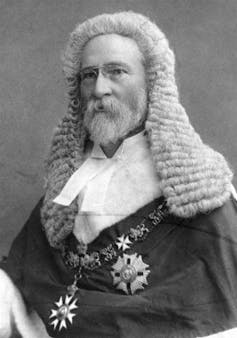
Now, 20 years later, he is publishing a book of letters to his great-great-grandfather, Sir Samuel Walker Griffith.

Sir Samuel Walker Griffith. State Library of Queensland

Griffith, a celebrated founding father of Australia, was premier of Queensland during the “killing times” and later became the country’s first chief justice.

The relationships between Denborough’s ancestors and Aboriginal people were marked by colonisation, racism and often inhumane treatment. While Griffith wrote terra nullius into the Australian constitution, another ancestor, Charles Cummins Stone Anning, was responsible for atrocities against Aboriginal people in Queensland.

Denborough is determined to tell the truth as part of his healing journey and his close relationship with Aboriginal people. He has realised

there is no sense in moral superiority towards my ancestry because colonial violence in this country has not ended; no place for hopelessness because First Nations resistance has never wavered; and, no time for paralysing shame because invitations to partnerships are still being offered by Aboriginal people … and [there is] so much to be done.

White deaths at black hands, black deaths at white hands

James Brown was 16 years old and shepherding alone on a remote sheep run near present-day Quorn, South Australia, in 1852. He was found tragically clubbed to death and mutilated in unknown circumstances.

An unwritten rule of the frontier was that attacks on white people, no matter the circumstances, were followed by vigilante violence. Men, women and children were often massacred in retribution.

Seventeen men, including Brown’s brothers and two Aboriginal trackers, rode out. They reported killing four Aboriginal men. Tellingly, though, two of the 15 men would not swear this on the Bible.

Mike Brown, a descendent of this family who took over land in the Flinders Ranges area, knew very little of the Aboriginal history of Australia. After hearing Reg Blow, a Gureng Gureng elder, speak about the true history of the criminal takeover of Aboriginal lands, Brown was inspired to research his own family history.


Read more: Friday essay: masters of the future or heirs of the past? Mining, history and Indigenous ownership


Wanting to investigate the Aboriginal stories of the 1852 massacre, he found a lifetime friend in Ken McKenzie, a prominent Andyamuthna elder, from whom he received “the dignity of forgiveness”.

Brown is now working with others on a documentary, Beyond Sorry, to reveal the full story of the massacre. He told me,

It’s how we discover who we really are as a people and our relationship to this land […] we need to be released from the illusion we live under that affects our attitudes to ‘others’, to be free.

In NSW, playwright Clare Britton was also shocked to discover the story of brutally murdered relatives in her family history.

The pregnant Elizabeth O’Brien and her infant son Poggy were clubbed to death by the Aboriginal “bushrangers” Jimmy and Joe Governor in 1900. With the help of descendents of the Governor family and Aboriginal elders, Britton’s theatre company produced a play based on this story, Posts in a Paddock. The title refers to all that remained of the O’Brien household when she visited, a stark memorial to the family tragedy.

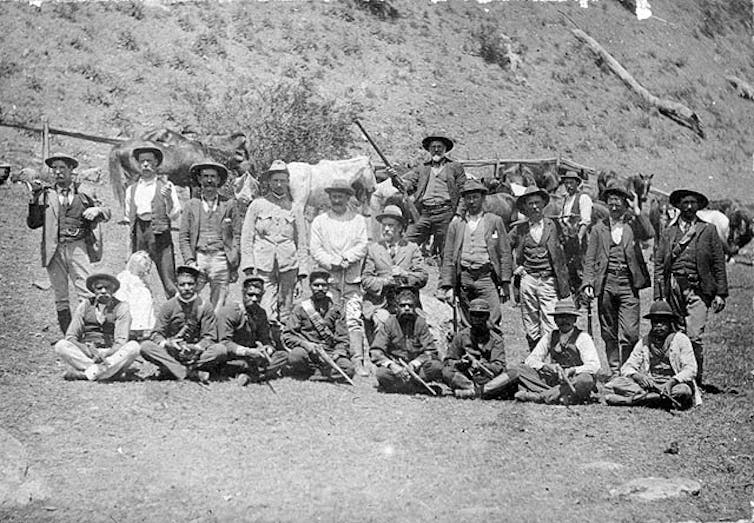
The hunt for the Governor bushrangers in 1900: a posse of mounted police, Aboriginal trackers and district volunteers. Wikimedia Commons

Britton explained that elder Aunty Rhonda Dixon Grovenor introduced the concept of dadirri “deep listening” to the ensemble. They sat with their Aboriginal collaborators and each other’s families. And listened to each other. She said,

so many Indigenous people were killed, separated from their families and taken away from their homes and you can’t read about that in the same way because those stories were not recorded. [These murders] were thoroughly documented because my family and the other victims were white.

The understandings I formed then have changed me.

Giving back

In the US, artist Anne Mavor was inspired to learn about her ancestors after attending a public meeting where a local Indigenous person challenged the white audience to critically examine their histories.

Mavor put together an exhibition, I Am My White Ancestors: Claiming the Legacy of Oppression, comprised of 12 pieces of art depicting her ancestors. They include royal figures, a slave owner, warriors, farmers and a pilgrim — all with Mavor’s face. The life-size portraits make whiteness visible and accountable.

Mavor told me she seeks

to inspire white viewers … to claim both positive and negative aspects of their own family histories to contribute to the end of racism.

She says white people don’t get a pass by ignoring the oppression of their ancestors. They need to ask: What is the legacy of this oppression and how does this affect me now?

This is just one of many projects designed to give back to Indigenous peoples. In Seattle, residents can pay rent to the city’s first inhabitants, the Duwamish people, who have long been rejected by the US government for federal recognition as a Native American tribe.


Read more: Explorer, navigator, coloniser: revisit Captain Cook’s legacy with the click of a mouse


The Coalition of Anti-Racist Whites has developed the “Real Rent” program as a means of restitution, but also to educate the broader public about the plight of the Duwamish.

Another project, Reconciliation Rising, coordinated by Lakota journalist Kevin Abourezk and academic Margaret Jacobs, showcases the work of those engaged in confronting painful and traumatic histories as a way towards reconciliation.

Their website lists examples of apologies, notable activists and many instances of the return of ancestral lands.

Land hand-backs are happening in Australia, too. Tom and Jane Teniswood have returned half of their 220-acre property in Tasmania to the local Aboriginal community. The Teniswoods advocate individual action over government reconciliation efforts, saying

reconciliation is great but it is so much talk, so many documents and so little action. This is just a symbol of action.

It is easy to agree with them. While government leadership in truth-telling is vital, we will see more of these acts of profound generosity and genuine reconciliation from settler colonials.

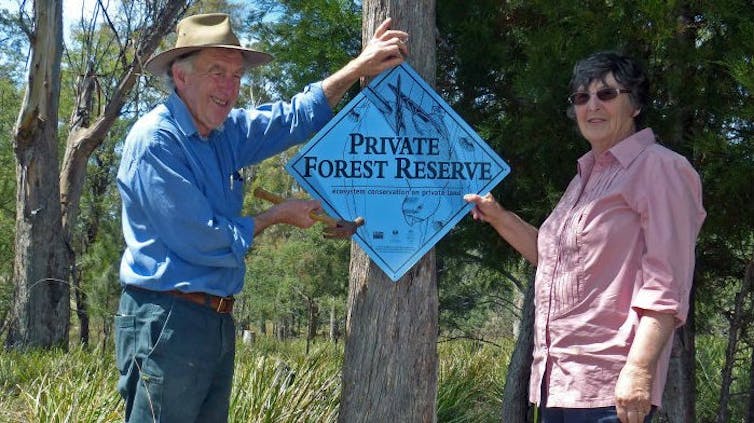
The Teniswoods’ gift was touted as the first private land return in the state. Author provided, Author provided (No reuse)

In the spirit of Makaratta

Settler colonials are beginning to understand the true impacts of the criminal takeover of Indigenous lands. They are seeking to right the balance and achieve a spiritual resolution.

This is the Aboriginal way of approaching history, in order to move forward after a conflict. A common process across the continent, it is called Makaratta by the yolngu people of Arnhemland. In the same way, a critical approach to family histories involves a great deal of communication between settler colonials and Indigenous peoples. It enables the forging of new relationships.

It is histories such as these that will change people through deep understanding and empathy. They also present an opportunity to truly and indelibly change the nature of our society and leave a meaningful legacy for our children.

ref. Truth telling and giving back: how settler colonials are coming to terms with painful family histories – https://theconversation.com/truth-telling-and-giving-back-how-settler-colonials-are-coming-to-terms-with-painful-family-histories-145165

Manning denounces threats against PNG K286m fraud probe detectives

By The National in Port Moresby

Papua New Guinea’s Police Commissioner David Manning has promised that the full force of the law and all resources at the Constabulary’s disposal will be used against policemen who flout the law and help criminals.

Commissioner Manning’s warning followed recent threats against police detectives investigating a K286 million (NZ$105 million) fraud involving Ok Tedi trust funds.

“We had two threats issued against police detectives,” he said.

“Criminals and policemen are involved.

“I will not stand for this and whether you are a criminal or a policeman who decides to engage or attack policemen, you will be dealt with equally under lawful means.

“If you want to be a criminal or align yourself with individuals or entities and challenge the police, then you have no place in the police force and I will ensure your speedy exit … straight into prison.”

Commissioner Manning said reports of policemen continuously being deployed to provide protection for logging camps or private businesses with the full knowledge and authority of their superiors would be investigated and dealt with.

Policemen ‘denying rights to justice’
“In these instances, police resources, including firearms, are being used by these policemen to protect the interest of a few, thereby denying the rights of the majority to seek justice,” he said.

“The police force will undergo beneficial change, and those currently opposing these changes for their own reasons will be weeded out.

“The majority of policemen and women perform their duties with professionalism and dedication, yet we and the country are being let down by these few members.

“The proposed changes in the disciplinary proceedings will allow for a swifter and more effective process that protects all parties concerned whilst enhancing greater accountability and appropriate penalties being dealt out.

“In the near future, legislative amendments will be made to criminalise certain offences that have caused the discipline and performance of the police force to deteriorate.

“If we are to deliver to the people of PNG a police force that they deserve and provide a policing service that adds value to their lives, we must undergo these reforms and remove impediments now.”

Asia Pacific Report republishes The National articles with permission.

Print Friendly, PDF & Email

Article by AsiaPacificReport.nz

China formally charges Australian journalist Cheng Lei – half year after being detained

Pacific Media Watch newsdesk

The Chinese government has formally charged Australian journalist Cheng Lei with “illegally supplying state secrets overseas”, almost half a year after she was first detained, reports ABC News.

Lei has been held since August last year under a form of detention that allows Chinese police to imprison and question a suspect for up to six months without access to lawyers.

Australian Foreign Minister Marise Payne said Chinese authorities advised Australia late last week that they had formally charged Lei, meaning an official investigation into her conduct would now begin.

“We have consistently raised concerns [about Cheng Lei] regularly at the most senior levels,” Payne said.

“We have made a number of consular visits to her as part of our bilateral consular agreement – the most recent of those was on the 27th of January – and we continue to seek assurances of her being treated appropriately, humanely and in accordance with international standards, and that will continue to be the case.”

Lei was working as a high profile anchor for China’s state-run English language news service CGTN.

Payne said the charges against Lei were “broad” and she expected the investigation to continue for months.

When asked if the Australian government believed the allegations against Lei were baseless, she said Australia was “seeking further advice in relation to the charges”.

Lei has two young children living with her family in Melbourne.

Last year, a Chinese Foreign Ministry spokesman said Lei was “suspected of carrying out criminal activities endangering China’s national security”, but did not provide any further details.

In September, the Paris-based Reporters Without Borders (RSF) media freedom watchdog and other press freedom groups urged the release of Cheng Lei, who had been detained incommunicado and without charge since 14 August 2020.

This article is republished under a community partnership agreement with RNZ. Pacific Media Watch collaborates with Reporters Without Borders.

Print Friendly, PDF & Email

Article by AsiaPacificReport.nz

Fiji Speaker disallows debate on USP’s Ahluwalia deportation

By RNZ Pacific

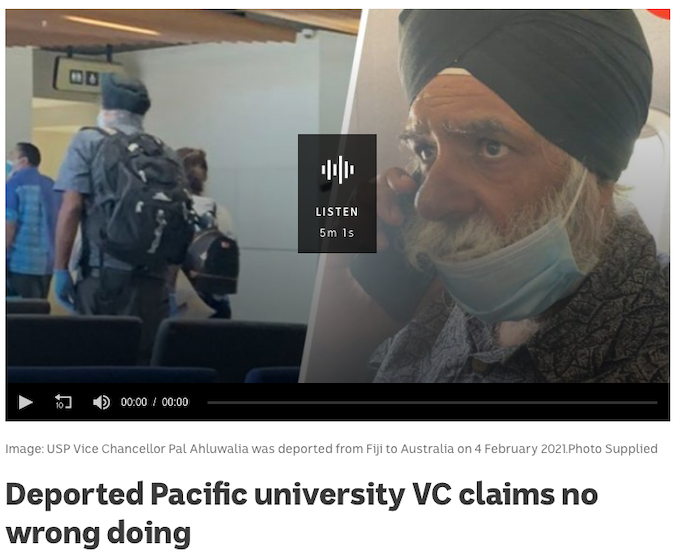
The Speaker of Fiji’s Parliament has rejected calls from the opposition to debate the controversial deportation of the University of the South Pacific’s vice-chancellor, Professor Pal Ahluwalia.

Ratu Epeli Nailatikau ruled that an oral question from National Federation Party (NFP) leader Professor Biman Prasad, a former USP economics academic, and an adjournment motion from Sodelpa leader Ratu Naiqama Lalabalavu were not urgent.

The deportation of the regional 12-nation body’s vice-chancellor has led to widespread regional criticism of Fiji’s government and urgent calls for action.

However, Speaker Ratu Epeli said Dr Prasad’s question did not relate to a matter of public importance and did not qualify as urgent.

Further, the adjournment motion was disallowed under standing orders.

“I have considered the nature of the adjournment motion and ruled that the matters raised in the adjournment motion are not something that requires the immediate attention of Parliament or the government,” Ratu Epeli said.

USP Council looks at deportation issues
The USP Council released a statement at the weekend saying it was not consulted over Professor Pal Ahluwalia’s deportation.

The council stated that it had not dismissed Professor Ahluwalia and expressed disappointment that it was not advised, as his employer, of the decision by Fiji’s government to deport him.

The council has established a subcommittee, chaired by the President of Nauru, Lionel Angimea, including the council representatives of Australia, Tonga, Niue, Solomon Islands, Samoa and two Senate representatives to look into matters surrounding the deportation.

The meeting on Friday also discussed the possibility of a vice-chancellor being based in and operating out of another country apart from Fiji.

Dr Giulio Masasso Tu’ikolongahau Paunga has been appointed acting vice-chancellor of USP in the meantime.

The sub-committee has been tasked to bring recommendations to the council as soon as possible. The next meeting is on February 16.

Dame Meg ‘disheartened’
The incoming Secretary-General of the Pacific Islands Forum, Henry Puna, of the Cook Islands, said he would not be speaking about the removal of the vice-chancellor until after a communique from the regional grouping was released.

However, the outgoing Secretary-General, Dame Meg-Taylor, of Papua New Guinea, issued a statement.

“As the permanent chair of the Council of Regional Organisations in the Pacific and a member of the USP Council, I am disheartened by the ongoing and recent events at the university culminating in the deportation [last week] of vice-chancellor and president, Professor Pal Ahluwalia.

“I am confident that fellow council members will continue to uphold good governance and follow due process to ensure the immediate restoration of strong leadership of the university,” Dame Meg said.

Dame Meg Taylor
Outgoing PIF Secretary-General Dame Meg Taylor … “disheartened” by the expulsion of the vice-chancellor. Image: RNZ/PIFSec

Meanwhile, the chairman of the Forum, Tuvalu Prime Minister Kausea Natano urged the university council to find a resolution to the situation.

This article is republished under a community partnership agreement with RNZ.

Print Friendly, PDF & Email

Article by AsiaPacificReport.nz

New evidence shows how Her Majesty wields influence on legislation

Britain's Queen Elizabeth and members of the Royal Family.

Source: The Conversation (Au and NZ) – By Anne Twomey, Professor of Constitutional Law, University of Sydney

We all know the queen can’t refuse assent to a bill just because she doesn’t like it. But can she secretly get a law changed, in her personal interest, before it is even introduced into parliament?

The answer is yes, and we finally have documentary evidence to prove it.

The queen, politics and secrecy

There is a myth the queen never involves herself in political matters. In public view, all she does is act on ministerial advice, signing her name or initials where required.

But she has always done more than this. She exercises extensive soft power by influencing government policy and bills before they are introduced to parliament. Her power is exercised behind closed doors, and is more potent because of it.

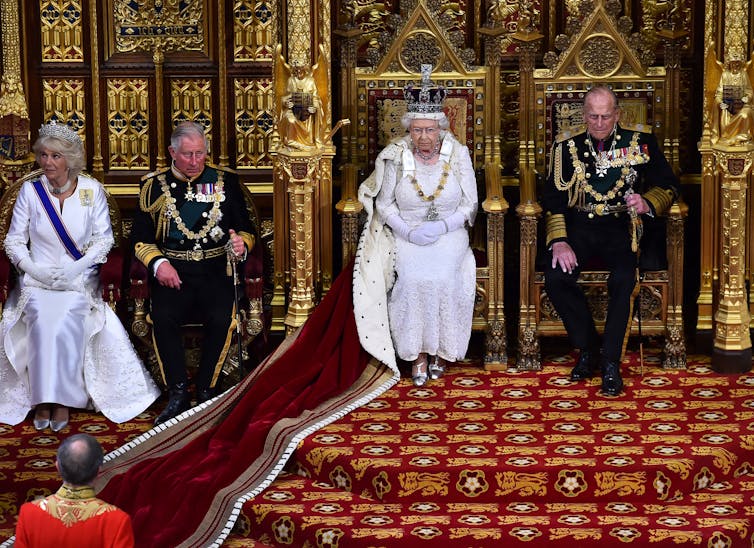
Queen Elizabeth at the opening of British Parliament.

There is a myth the queen does not get involved in politics. Ben Stansall/AP/AAP

Due to secrecy laws, it is extremely hard to find documentary evidence of the queen’s exercise of influence. In the United Kingdom, government documents that “relate to” communications with the sovereign or the next two persons in line to the throne, as well as palace officials acting on their behalf, are subject to an absolute exemption from release under freedom of information or by government archives.

This exemption lasts until at least five years after the death of the relevant member of the royal family – meaning we cannot access British government documents about the queen’s political role, including in relation to Australia.

New documents discovered

But The Guardian has managed to expose a chink in this armour of secrecy.

In the UK’s National Archives, it discovered documents from 1973 showing the queen’s personal solicitor lobbied public servants to change a proposed law so that it would not allow companies, or the public, to learn of the queen’s shareholdings in Britain.

The gambit succeeded, and the draft bill was changed to suit the queen’s wishes.

Perhaps these documents escaped the secrecy embargo because they involved communications with a private solicitor, rather than palace officials. Or perhaps the eyes of the person vetting the file glazed over due to the boring nature of the bill and missed the reference to the queen.

Either way, it is a rare insight into what goes on behind the scenes.

Queen’s consent

The procedure involved is known as “queen’s consent”. This is different from “royal assent,” which occurs after a bill has been passed by both houses of parliament. “Queen’s consent” happens at a much earlier stage, usually well before a bill is introduced to parliament.

Queen’s consent is required where a bill would affect the governmental powers formally vested in the queen (such as powers to enter into treaties, declare war, dissolve parliament or grant mercy), matters directly affecting the monarchy (such as succession to the Crown, royal marriages and royal titles), and the property and revenue interests of the queen and her heir held by the Duchy of Lancaster and the Duchy of Cornwall.


Read more: Jenny Hocking: why my battle for access to the ‘Palace letters’ should matter to all Australians


Curiously, it also seems to extend to bills affecting the privately held property and financial interests of the queen, although there does not appear to be a clear rationale for this.

Any proposed bill that would affect these royal interests must be sent to the queen and her private solicitors at least two weeks before its parliamentary introduction. The solicitors then advise on the potential impact of the bill before the queen grants her consent.

A bill cannot proceed through parliament without such consent. This became an issue during the battle over Brexit.

Acting on ministerial advice … and influencing that advice

The palace has consistently stated the queen acts on ministerial advice in granting or refusing queen’s consent. While this may be so, there would be no point in her paying for advice from her personal solicitors, unless she intended to exercise her soft power to persuade the government to make changes to a bill when it suited her to do so.

Queen Elizabeth at Royal Ascot in 2016.
‘Queen’s consent’ is a process that occurs before a bill is introduced to parliament. Alastair Grant/AP/AAP

One would imagine this would ordinarily happen through a quiet word during the queen’s weekly audience with the prime minister. No records are kept of such meetings, which remain strictly confidential. Any instructions to make changes to a proposed bill would come from the prime minister before it was introduced to parliament and could not be traced back to the queen.

The documents uncovered by The Guardian, however, show an alternative, more direct exercise of power. In 1973, the queen’s personal solicitor met with public servants to ask them to change a proposed companies bill to ensure the queen’s shareholdings were not exposed.

What is interesting is that public servants agreed to the meeting and tried to work out ways to accommodate the queen’s wishes before even seeking ministerial approval. There seemed to be an expectation that public servants should meet her wishes. Moreover, there seemed to be no shock or surprise her solicitors should intervene in this way.

Differing understandings of the queen’s role

In 2014, a British parliamentary committee concluded it had

no evidence to suggest that legislation is ever altered as part of the consent process.

This goes to show how effective the secrecy provisions have been in keeping the public and backbench politicians in the dark about how the constitutional system actually works. Yet ministers seem to know better.


Read more: Coronavirus: how Europe’s monarchs stepped up as their nations faced the crisis


In 2012, then British Attorney-General, Dominic Grieve, issued a certificate denying access to letters by Prince Charles that lobbied ministers. Grieve asserted lobbying ministers and “urging views upon them” formed part of Prince Charles’s preparation for kingship as he “would have a right (and indeed arguably a duty) to make [such representations] as Monarch”.

If this is so, the queen plays a far more politically active role than is publicly known in the UK or Australia.

Relevance to Australia and New Zealand

While the queen has little involvement anymore in Australian affairs, occasionally legislation is passed that will affect her. In such cases, the palace insists consent must first be granted, even though there is no formal parliamentary procedure, as in the UK.

One example was the 1986 passage of the Australia Acts, which were identical British and Australian Acts that cut off residual constitutional links between the UK and Australia.


Read more: ‘Palace letters’ show the queen did not advise, or encourage, Kerr to sack Whitlam government


One of the sections provided for the queen to be advised directly by state premiers in relation to state matters. The queen objected. Her private secretary expressed the concern that she might be subject to “outlandish advice”.

In order to secure the queen’s consent to the introduction of the bill, extensive negotiations were undertaken. Amendments were made to the form of the section, and a convention on how it would operate was agreed. Even then, the queen only gave consent after all Australian governments insisted upon it.

A New Zealand example concerned a proposed change in 1973 to the queen’s royal style and titles with respect to New Zealand. The government wanted the queen to assent in person to the legislation when she visited New Zealand. Her private secretary replied by telex:

As far as I can discover The Queen has not yet been asked to give her approval to New Zealand Style and Titles Bill. It is … something that she would welcome in principle but her approval must be sought both to introduction of Bill and exact wording of proposed new Style and Title.

The queen’s magic

In practice, the queen’s role in relation to her realms, such as Australia and New Zealand, largely now involves the appointment and removal of the governor-general and other ceremonial or symbolic acts. In performing these, she acts on ministerial advice.

But she maintains a degree of control through a system that requires “informal” advice be given first, with formal advice only being given once the informal advice is approved.

Queen Elizabeth riding in a royal carriage.
The queen’s influence is exercised subtly and out of public view. Andy Rain/EPA/AAP

This means the queen can always say she has not rejected the formal advice of her ministers in the realms, even though she may have rejected informal advice or at least negotiated changes to it before it is formally given.

As with queen’s consent, the power of influence is exercised at an early stage, in confidence, so that no formal or public act of refusal is ever seen.

Like the best of magicians, the queen’s magic is keeping the real action out of public view, while maintaining the appearance of doing nothing. These latest documents, like the recently released Kerr-palace letters, indicate there is much behind the scenes that has not yet been revealed.

ref. The queen’s gambit — new evidence shows how Her Majesty wields influence on legislation – https://theconversation.com/the-queens-gambit-new-evidence-shows-how-her-majesty-wields-influence-on-legislation-154818

Australia has a great chance to engage in trade diplomacy with China, and it must take it

Source: The Conversation (Au and NZ) – By Tony Walker, Vice-chancellor’s fellow, La Trobe University

Australia’s efforts to end a diplomatic deep freeze with China may not be getting anywhere fast on the surface, but there are nonetheless some signs of a potential thaw.

China’s announcement it was “actively studying” joining a region-wide trade pact that involves Australia and ten other Asia-Pacific trading nations should be exploited by Canberra in its efforts to open lines of communication with Beijing.

If China is serious about access to the Comprehensive and Progressive Agreement for Trans-Pacific Partnership (CPTPP) – formerly known as the Trans-Pacific Partnership (TPP) – Canberra would be foolish not to engage Beijing on a region-wide trade initiative.

Beijing has said it wants to engage CPTPP members on technical issues.

Australia would have nothing to lose by encouraging China to explore opportunities provided by a trade agreement from which China was excluded when the TPP was concluded in 2016.

The TPP, as originally envisaged minus China, was to be the cornerstone of then US President Barack Obama’s pivot to Asia. Among its aims was to provide a trading counterweight to China.

That was five years ago, before Donald Trump wilfully upended useful initiatives undertaken by his predecessor. The TPP was one of these.

The new Biden administration in the US has indicated it will study the possibility of returning to the CPTPP. However, given domestic pressures from both left and right over threats to American jobs posed by free trade initiatives, it is hard to envisage the administration moving quickly.

In the meantime, Canberra should not await Washington’s imprimatur to engage China on an expansion of the CPTPP, if that is possible.


Read more: Timeline of a broken relationship: how China and Australia went from chilly to barely speaking


It is conceivable Beijing is saying it wants to engage as a device to further unsettle the US and its allies in Asia. But there are also reasons to believe it would suit China to join the CPTPP club.

These reasons would include Beijing’s desire to counter fallout from a difficult 2020 for itself diplomatically on issues like the origins of the coronavirus.

President Xi Jinping indicated late last year that China would actively consider participating in the CPTPP. This was days after China signed on to the world’s largest trade pact, the Regional Comprehensive Economic Partnership (RCEP).

RCEP countries account for about 30% of global GDP, the North American Free Trade Agreement (NAFTA) 28% and the EU 15%. CPTPP countries represent 13%. These are approximate numbers.

At this point it might be useful to define differences between the CPTPP and the RCEP. These are part of an “alphabet soup” of regional trading initiatives, including an omnibus Free Trade Agreement of Asia-Pacific (FTAAP) that China has promoted over the years.

The FTAAP has been relegated to the back-burner for the time being.

The essential difference between the massive RCEP and the smaller CPTPP is that the latter aims for the virtual elimination of tariffs (up to 99%) among its signatories. The RCEP, on the other hand, imposes less stringent standards on its participants on tariffs, and on labor and environmental standards.

CPTPP signatories include Australia, Canada, Brunei, Japan, Malaysia, New Zealand, Singapore, Vietnam, Mexico, Chile and Peru. As originally envisaged, the TPP, with America’s participation, would have constituted the world’s biggest trade pact. It would have accounted for 40% of global GDP.

RCEP signatories include all ten Association of South East Nations (ASEAN) – Brunei, Cambodia, Indonesia, Laos, Malaysia, Myanmar, the Philippines, Singapore, Thailand and Vietnam – plus Australia, China, Japan, New Zealand and South Korea.

India dropped out citing concerns about the trade pact’s impact on certain sectors of its economy, principally agriculture. Small farmers are a vocal and powerful force in Indian politics.

It is against this background that Australia officials should redouble their efforts to engage in region-wide trade diplomacy that will bring benefits to participating economies and help stabilise a region in danger of being destabilised by China’s rise.

In the often-used words of Chinese diplomacy, this should be a “win-win” for Australian diplomacy if China’s proclaimed desire to engage in the CPTPP is something more than a diplomatic ruse.

This is at a time when Beijing finds itself under pressure over issues like its expansion of military features in the South China Sea, its human rights abuses of the Uighurs in Xinjiang, and its flouting of agreed principles to preserve Hong Kong’s autonomy within a “one country, two systems” framework.

Beijing itself has not hidden one of its principal motivations for wanting to join the CPTPP. This is to enable better relations with an incoming American administration.

In commentary on China’s motivations, the state-owned CCTV’s English language news channel, CGTN, said:

With the incoming Biden administration now on the horizon, China has decided the ‘strategic time’ is now right to actively consider joining the CPTPP.

It is also noteworthy that the CPTPP is attracting interest beyond the region.

Having clumsily departed the European Union, the United Kingdom has applied to join the CPTPP. This follows the UK’s successful application to be included as an ASEAN dialogue partner, along with Australia, the EU, Russia, US, China, Japan, South Korea and India.

In other words, trade diplomacy is continuing to tilt towards the Indo-Pacific region. This is something the Australian government should exploit in the national interest.

Meanwhile, a trade and diplomatic conflict between Canberra and Beijing accompanied by a rash of Australian complaints about China to the World Trade Organisation rumbles on to neither’s advantage. This dispute, played out in trade, is having a detrimental effect on Australia’s economic growth prospects as well as China’s access at a reasonable price to high-quality Australian commodities such as coal.

Surging iron ore prices might have disguised the economic fallout for Australia in the latest trade figures, but this will not last. Australian exporters of coal, wine, lumber, lobsters, beef, wool, barley and other commodities are paying a price for Canberra’s poor management of the China relationship.


Read more: Biden win offers Morrison the chance to reshape Australia’s ailing relationship with China


Beijing is far from blameless in all of this, of course. A possible off-ramp, though, may well lie in some creative trade diplomacy offered by a possible reset in US relations.

Australia needs to define a role for itself that separates it from what is happening between Beijing and Washington. Smart trade diplomacy, in contrast to a plodding, joined-at-the-hip-to-the-US approach, is required.

China’s interest in engaging on a broader trade front may well provide such an opportunity.

ref. Australia has a great chance to engage in trade diplomacy with China, and it must take it – https://theconversation.com/australia-has-a-great-chance-to-engage-in-trade-diplomacy-with-china-and-it-must-take-it-154737

Nationals’ push to carve farming from a net-zero target is misguided and dangerous

Source: The Conversation (Au and NZ) – By Rachelle Meyer, Postdoctoral Fellow (Farm Systems Analysis), University of Melbourne

Prime Minister Scott Morrison might be warming to the goal of net-zero emissions by 2050, but federal Nationals leader Michael McCormack has thrown a spanner in the works by suggesting agriculture be excluded from the target.

On Sunday, McCormack told Sky News the Coalition government will not “whack regional Australia” just to meet a climate target. He went on:

There is no way we are going to […] hurt regional Australia, in any way shape or form just to get a target for climate in 2050. We are not going to hurt those wonderful people that put food on our table.

But the Nationals’ push is deeply misguided. It dumps the burden of emissions reduction on other sectors, and puts Australian farmers and the broader economy at greater risk of climate change damage.

Michael McCormack eating a piece of fruit
Nationals leader Michael McCormack wants farming exempted from emissions targets. Daniel Mariuz/AAP

Farming emissions: a sobering picture

Most emissions from the farming sector come in the form of methane and nitrous oxide.

Livestock such as cattle and sheep produce methane when they digest plant material. This gas makes up about 70% of Australia’s agricultural emissions.

Nitrous oxide is released from nutrient-rich soils, such as soils where fertilisers have been applied or when livestock deposit urine and manure on the ground.

In 2019, agriculture produced almost 13% of Australia’s national emissions, or 69 million tonnes. Land clearing for agriculture also drives deforestation in Australia, which is responsible for about 30 million tonnes of greenhouse gases a year. Combined, the emissions comprised about 18% of annual emissions in 2019 – equal to the transport sector.


Read more: Australia’s farmers want more climate action – and they’re starting in their own (huge) backyards


What’s more, agricultural emissions are projected to increase over the next decade. It’s estimated by 2030, the sector (excluding land clearing) will emit between 78 and 112 million tonnes of greenhouse gases each year. By 2050, that figure could reach 132.5 million tonnes, according to advice prepared for the federal government in 2013.

A report released last week by the expert Climate Targets Panel found Australia’s emissions must be slashed by 50% or more by 2030 to reach net-zero emissions by 2050. Australia must meet this target to be consistent with the international goal of keeping global warming below 2°C.

Granting an exemption to agriculture may well mean Australia would miss the 2050 target. At the very least, it would place an unfair burden on other industries to pick up the slack.

Farm meets forest
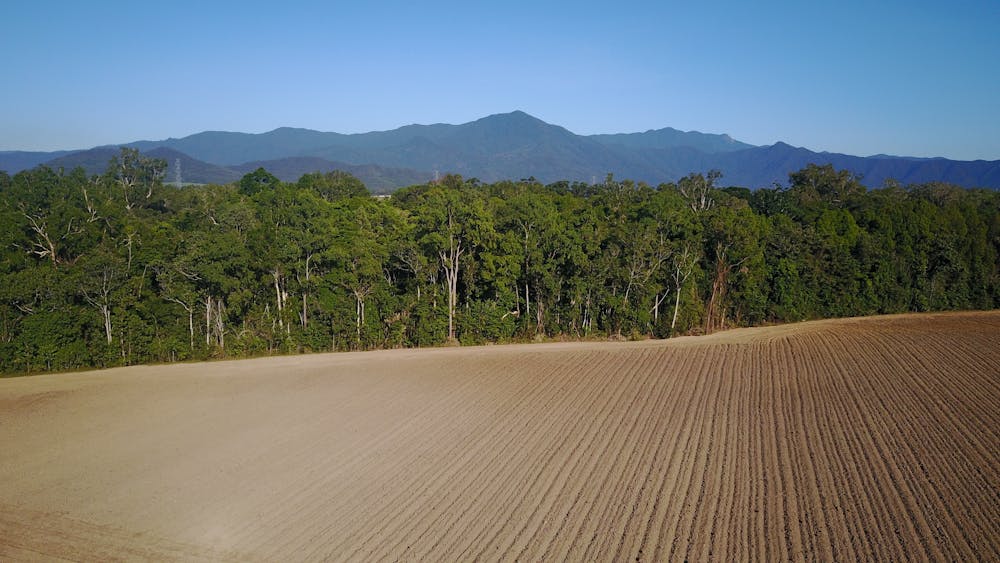
Forests, which reduce carbon in the atmosphere, are cleared for agriculture. Shutterstock

A challenging task

No-one says reducing emissions from the agriculture sector will be easy. In contrast to, say, the electricity sector, where low-carbon technology (in the form of renewable energy) is already widely deployed, such technologies in farming are largely still immature or involve complicating factors.

For example, chemical inhibitors can be applied to soil to reduce the production of nitrous oxide. However, inhibitors vary in effectiveness and the reasons behind this are not well understood.

Alternatively, legume crops increase nitrogen in the soil, and including them in rotations can mean less fertiliser is needed. But if planting legumes means other areas must be planted with other crops, this may lead to indirect emissions.

Feed additives given to livestock are a promising way to reduce methane emissions. For example 3-NOP, a chemical pellet mixed into animal feed, has been shown to slash methane emissions from Australian farms. However, 3-NOP is not yet been approved for use in Australia and the price may yet prove prohibitive.

Also, most of the agriculture sector’s methane emissions come from large farms where graziers don’t often directly feed or interact with livestock. That means feed additives and similar options are not practical in these systems.

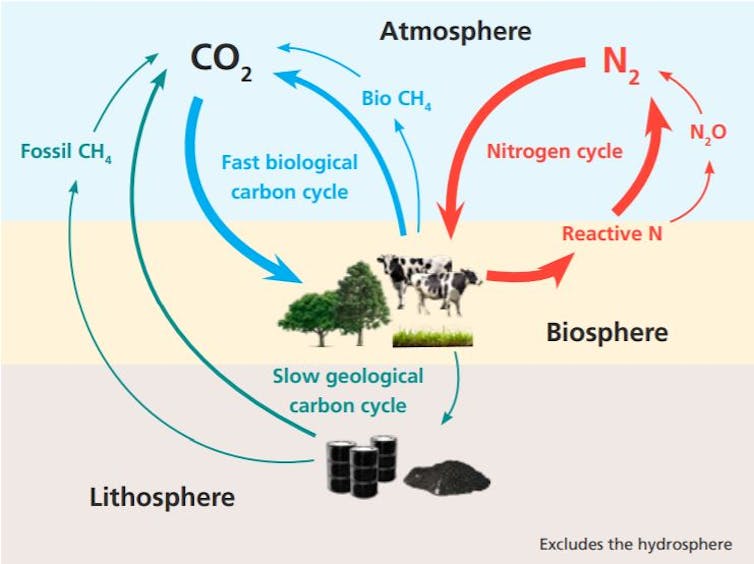
Diagram showing the global carbon and nitrogen cycles and their interaction with land use.
Diagram showing the global carbon and nitrogen cycles and their interaction with land use. https://www.pce.parliament.nz/media/196523/report-farms-forests-and-fossil-fuels.pdf

Emissions from farms, returned to the land

So while the above options are being ironed out, what’s the best way to cut emissions from agriculture? Research I published last year proposed one solution: pairing agriculture emissions with forestry “sinks” – an area of trees and soil that suck up carbon dioxide.

In a neat synergy, methane and nitrous oxide last in the atmosphere for about the same times as carbon is stored in land sinks, such as trees and soil. So it makes sense to use land sinks to offset agriculture emissions.


Read more: Climate Change Commission calls on New Zealand government to take ‘immediate and decisive action’ to cut emissions


Carbon dioxide, such as that emitted from power plants, lasts longer in the atmosphere than farming emissions. It’s best dealt with by decarbonising the electricity and transport sectors, rather than offsetting with biological sinks.

So farmers could, for example, offset their emissions by planting forests. This would enable them to start meeting a net-zero target while new methods for emissions reduction are developed and brought to market.

Research has shown the land sector could potentially achieve net-zero emissions by 2030, using carbon sinks and a mass reduction in land clearing.

Shrubs in buckets.
Planting trees can offest emissions by farmers. Shutterstock

A clear way forward

Reducing the footprint of Australia’s agriculture sector is no simple feat. It will require:

  • substantial investment to address research gaps

  • incentives for farmers to adopt commercially viable mitigation options, such as anaerobic digestors to turn animal waste in intensive systems into energy

  • incentives for farmers to adopt options not yet commercially viable. This might mean reducing stock numbers when necessary, to restore degraded pastures which increases soil carbon stocks.

Australia’s agriculture is extremely vulnerable to the effects of climate change: bushfires and extreme weather, as well as changes to rainfall, temperature, soils, water, pests and diseases.

Farming should not be exempt from a net-zero target. Not only would this make the job of climate action harder for other parts of the economy, it will ultimately come back to bite farmers themselves.


Read more: Biden’s Senate majority doesn’t just super-charge US climate action, it blazes a trail for Australia


ref. Nationals’ push to carve farming from a net-zero target is misguided and dangerous – https://theconversation.com/nationals-push-to-carve-farming-from-a-net-zero-target-is-misguided-and-dangerous-154822

Axing protection for national strategic languages is no way to build ties with Asia

Source: The Conversation (Au and NZ) – By Melissa Crouch, Professor and Associate Dean Research, Law School, UNSW

We all had hoped for a positive start to 2021, but that has not been the case for Australia’s engagement in the region. The Australian government has shown disregard for the importance of our ties with Asia by axing its commitment to national strategic languages.

The Commonwealth has identified the study of languages such as Indonesian as being of national strategic importance since 2006.

From 2013, the government committed to promoting national strategic languages. These included Arabic, Indonesian, Chinese (Mandarin), Hindi, Japanese and Korean. The list potentially included any other languages identified by the Commonwealth.


Read more: 6 unis had Hindi programs. Soon there could be only 1, and that’s not in Australia’s best interests


This priority list was clear recognition that Australians must improve their capacity in these languages to be equipped for the Asian Century.

Funding terms no longer protect languages

One way the government promoted and protected these languages was through Commonwealth funding agreements with universities.

Every few years, the Commonwealth comes to an agreement with each university on the terms and conditions of the funding it provides. A condition of these agreements was that a university had to consult with the Commonwealth and obtain its approval if it planned to close a particular course. This included courses in nationally strategic languages.

A university could not close a language program involving a nationally strategic language without government approval. This condition was important symbolically as well as practically. It emphasised to universities the importance of commitment to Asian languages.

Funding agreements every year up to 2020 included protection for national strategic languages. This year the provision has suddenly disappeared from the agreements without consultation.

What this demonstrates is the nonsensical nature of the government’s new funding scheme for universities. It appears to offer an incentive for students to study a language by reducing fees for these courses. In reality, the government has made it easier for universities to cancel a language program.

And the government is aware several universities have proposed closing language programs as their budgets feel the pinch from the COVID-19 pandemic. These include La Trobe (Hindi and Indonesian), Swinburne (all foreign languages), Murdoch (Indonesian), Western Sydney University (Indonesian) and Sunshine Coast (Indonesian). Removing protection for national strategic languages shows the government’s commitment to the Indo-Pacific region is mere lip service. (Since the original announcements, the programs at La Trobe and Murdoch have been given temporary reprieves.)

La Trobe University campus
The outlook for Indonesian programs appears bleak at La Trobe and several other Australian universities. Philip Mallis/Flickr, CC BY-SA

Read more: 3 flaws in Job-Ready Graduates package will add to the turmoil in Australian higher education


Universities will lose by axing languages

From enhanced diplomatic relations and cultural engagement to trade relations and social and religious ties, language learning has no shortage of benefits for individuals, communities and the nation as a whole.

Universities must acknowledge what they stand to lose if they close their language programs. Recent decisions like Swinburne’s to close its Japanese and Chinese programs, now confirmed to staff, come at a real cost to the university.

Swinburne University Hawthorn campus building
The Chinese and Japanese language programs are casualties of course cuts at Swinburne University of Technology. Nils Versemann/Shutterstock

The best universities in Australia know they attract students by leading with world-class research. However, a shrinking number of universities can credibly lay claim to world-class research that is relevant to the region in terms of language programs and academic country expertise. Any university can pay consultants to produce a slick marketing campaign but that is meaningless if the university lacks the expertise to back it up.

Closing language programs could lead to a loss of international students, particularly higher degree students, on top of those already lost to COVID-related border closures. These students are often attracted by specific country expertise that Australian universities and academics have to offer.

Australia was once known as the mecca of the academic world for Asian studies expertise. The breadth and diversity of its language programs was an integral part of that. It’s time to rebuild that status.

A blow to regional engagement

By cancelling language programs, universities are forfeiting their leading role in promoting deep and long-term engagement with our region. Quite simply, the lack of commitment of many universities demonstrates a gap in deep understanding of the importance of the Indo-Pacific to Australia.

The region has no shortage of challenges and its political, economic and social well-being directly affect Australia. COVID-19 is a stark example of this. Australia can’t afford to be monolingual in its engagement with the region.


Read more: When English becomes the global language of education we risk losing other – often better – ways of learning


What happened to a positive start to meet the challenges of a post-2020 world? Surely our government with its stated ambitions in the Indo-Pacific region must prioritise structural arrangements with our universities that ensure the next generation can equip themselves with the language skills they need for the Asian Century.

ref. Axing protection for national strategic languages is no way to build ties with Asia – https://theconversation.com/axing-protection-for-national-strategic-languages-is-no-way-to-build-ties-with-asia-154555

Our corporate cops allowed Facebook to grow big by worrying about the wrong thing

Source: The Conversation (Au and NZ) – By Stephen King, Adjunct professor, Monash University

Australia and the United States have been waving through takeovers because the targets are small, something that’s usually good practice.

Under Australian law takeovers are normally permitted unless they would

have the effect, or be likely to have the effect, of substantially lessening competition

Under US law they are normally permitted unless their effect

may be substantially to lessen competition, or to tend to create a monopoly

It means the key question authorities in both countries ask before approving a takeover is whether it is big enough to take out a substantial competitor.

While in most industries that’s usually the right question, it’s the wrong question when it comes to digital platforms, as Facebook’s readily-approved takeovers of Instagram and WhatsApp is making clear.

Instagram, WhatsApp ‘too small to matter’

They were waved through because when Facebook acquired Instagram in 2012 and WhatsApp in 2014 each was small. Instagram reportedly had only 13 full-time employees, WhatsApp 55.

Now, well after the events, the US Federal Trade Commission in cooperation with the attorneys of 46 states is suing Facebook, alleging it has been illegally maintaining its social networking monopoly through a years-long course of anticompetitive conduct.

Identified as part of Facebook’s strategy are its 2012 acquisition of Instagram and its 2014 acquisition of WhatsApp. The Commission says the conduct

harms competition, leaves consumers with few choices for personal social networking and deprives advertisers of the benefits of competition

It is seeking a permanent injunction that could, among other things, require Facebook to divest assets including Instagram and WhatsApp and require it to give notice and seek prior approval for future acquisitions.

No longer as small

Why didn’t the Commission act earlier?

It’s because at the times of the acquisitions it was impossible for it to know whether Instagram or WhatsApp would ever have been in any position to offer Facebook much competition.

A 2019 independent review of merger decisions by the UK Office of Fair Trade confirms this, noting that back in 2012 Facebook faced much stronger competitors in photo-sharing than Instagram and that photo apps weren’t attractive to advertisers.


Read more: Facebook is merging Messenger and Instagram chat features. It’s for Zuckerberg’s benefit, not yours


The authorities would have found it hard to convince a court that taking over Instagram would have substantially lessened competition.

Yet it did, hugely, and not because Instagram was necessarily the best target.

Network effects empower the acquired

Platforms such as Facebook and Google gain their market power from so-called “network effects” and the accumulation of consumer data.

A network effect is the benefit a network gets from having people already on it. A network that your friends aren’t on isn’t particularly attractive.

And the more people that join, the more data the network amasses to target ads for advertisers.

Looked at through the lens of network effects, the key to the successes of Instagram and WhatsApp was that they were bought by Facebook. It gave them access to a vast network of existing users and their data.

The importance of this is illustrated by the WhatsApp takeover.

WhatsApp wasn’t to link data with Facebook.

In Europe the authorities allowed the takeover only after Facebook informed them that it would be “unable to establish reliable automated matching between Facebook users’ accounts and WhatsApp users’ accounts”.

Unfortunately this statement was incorrect, and the European Commission believes Facebook knew it at the time.

In 2017 after the WhatsApp and Facebook data was indeed linked, the Commission fined Facebook €110 million for providing incorrect or misleading information

The problem wasn’t that Facebook acquired WhatsApp in particular.

It was that once it had acquired it (or any such platform), it was able to ensure it had access to the network and data needed to dominate its part of the market.

In other words, a Facebook acquisition of any proven start-up in any related field would have been likely to substantially lessen competition and should have been illegal.

Courts and regulators are missing what matters

This truth requires a change of mindset by both competition authorities and the courts. Both deal with the specifics of the target rather than the potential for the acquirer to supercharge the target and prevent any rival emerging to challenge it.

It means that to protect competition, dominant digital platforms should be prevented from acquiring any business in certain markets, even if there is plenty of competition in those markets and there’s nothing special about the targets.

Put bluntly, in some markets, whoever Facebook acquires will smother competition and the only way to stop that happening is to stop Facebook acquiring anyone.


Read more: Facebook is tilting the political playing field more than ever, and it’s no accident


This needn’t mean a blanket ban on dominant platforms acquiring firms, but it will mean the range of firms they can acquire will be severely wound back.

Of course, there’s nothing to stop them developing their own platforms in adjacent areas, although history has shown that even dominant platforms have a hard time developing, rather than buying, the necessary technology.

Google had to buy Android, YouTube and Quickoffice.

Proposed changes the wrong ones

It also means Australia’s Competition and Consumer Commission is missing the mark in its drive to expand the reasons it can use for rejecting mergers.

The final report of its digital platforms inquiry asks for the power to reject mergers because of the likelihood that the acquisition would result in the removal of a potential competitor and the nature and significance of assets acquired.

The requests focus on the target rather than what the acquirer can do for it.

What needs to be made clear is that a merger can be anticompetitive even if the target is not uniquely placed, either in terms of its ability to grow or its assets.

In the digital world an acquirer can substantially lessen competition simply by transforming the market it buys into. The target needn’t be the point.

ref. Our corporate cops allowed Facebook to grow big by worrying about the wrong thing – https://theconversation.com/our-corporate-cops-allowed-facebook-to-grow-big-by-worrying-about-the-wrong-thing-152190

From lurid orange sauces to refined, regional flavours: how politics helped shape Chinese food in Australia

Source: The Conversation (Au and NZ) – By Cecilia Leong-Salobir, Honorary Research Fellow, University of Western Australia

In this series, our writers explore how food shaped Australian history – and who we are today.

The first whiffs of Chinese cooking in mid-19th century Australia would have emanated from tiny huts owned by Chinese workers in the goldfields. There, they faced racial hostility from the European miners, culminating in the Lambing Flat riots in New South Wales in 1860-61, where Chinese residents of the fields were physically assaulted and had their camps set on fire.

Chinese cooks were also employed in farms and factories and sold food from “cookshops” in the various urban centres for other migrants, such as Sydney’s Chinese furniture factory workers.

Locally sourced meat, seafood and vegetables were complemented by imported ingredients such as Cantonese sausage, tofu, lychee nuts, black fungus and bamboo shoots.

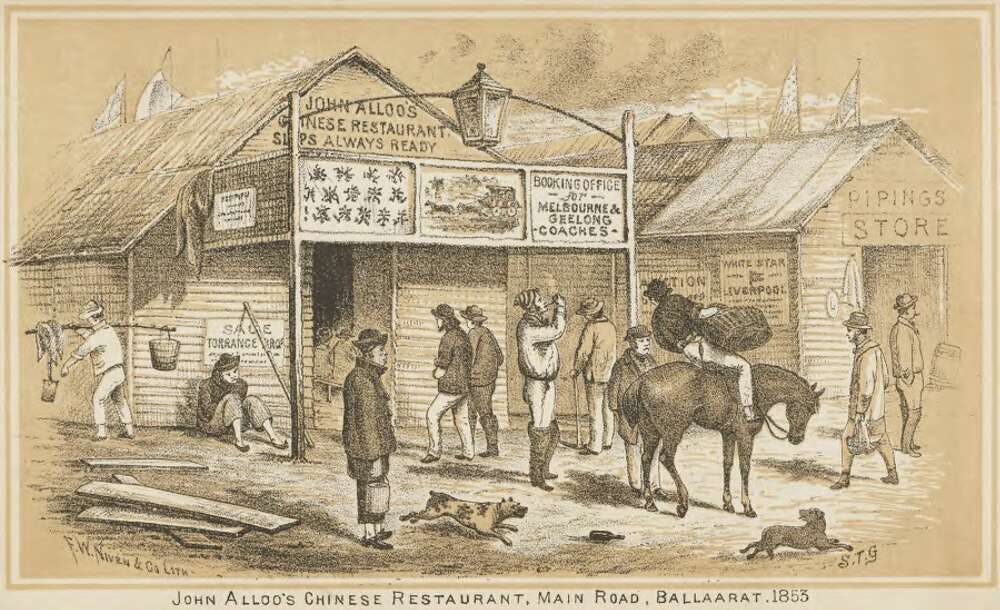
John Alloo’s Chinese restaurant traded in Ballarat during the gold rush, as pictured here in 1853. National Library Australia

By the late 1800s, about a third of commercial cooks in Australia were Chinese.

But when it came to the development of Chinese cuisine here, food and politics were deeply entangled. The White Australia Policy of 1901, its amendment in the 1930s and abolition in 1973; the Tiananmen Square protest and other political developments all had consequences for Australia’s Chinese restaurant trade.

From the mines to the cities

When the gold rush years ended, Chinese miners flocked to the cities to start restaurants. The public taste in the first half of 20th century Australia shifted from mutton to lamb, before shifting further. While there were newspaper caricatures of Chinese people eating or selling cats and rats, some Anglo-Australians were soon attracted to flavours other than the one meat and three veg.


Read more: Friday essay: the story of Fook Shing, colonial Victoria’s Chinese detective


Anti-Chinese sentiment and other factors led to the Immigration Restriction Act 1901 – known as the White Australia Policy — restricting migration from Asia and the Pacific.

Most of Australia’s Chinese population before the White Australia policy were from Guangdong and served Cantonese fare. It was this food which took a foothold.

From the early 1900s, Chinese restaurants were concentrated in Chinatowns in Australia, as happened elsewhere around the world. Alongside food, these enclaves provided networks for Chinese labour, trade and provisioning Chinese ingredients.

The Australian public started eating at Chinese restaurants from the 1930s, or brought saucepans from home for takeaway meals. Chicken chow mein, chop suey and sweet and sour pork were the mainstays.

This photograph, taken for the Australian Consolidated Press in 1939, shows a Chinese Australian family eating dumplings together. Mitchell Library, State Library of New South Wales and Courtesy ACP Magazines Ltd

The latter — together with other dishes smothered in sweet sticky sauces — became the lurid-orange epitome of Chinese cuisine for many Anglo Australians.

This fondness was aided and abetted by Chinese cooks who thought this sweetness was what Westerners thought of — and wanted from — Chinese food.

Fried food covered in an orange sauce.
For many Anglo-Australians, ‘Chinese food’ was defined by lurid-orange sauces. Drew Taylor/Unsplash

After White Australia

When the White Australia Policy ended, a new wave of more educated and affluent Chinese arrived. Settling in suburbs, they did not require the infrastructure of Chinatown. Later, from the 1980s, international Chinese students took up residence near university campuses.

A group of young Asian and white women talking.
With increasing Chinese migration in the 1980s, Chinese food could be found in the suburbs as well as the cities. State Library Victoria © Rennie Ellis Photographic Archive

With this, Chinese restaurants and provision stores were no longer found only in Chinatown. Still, the survival of Chinatowns depends on the Chinese food industry: in restaurants, cafes and grocery shops. The majority of Chinese restaurants in Australia are of the mum-and-dad variety and not part of global fast food conglomerates.


Read more: Sydney’s Chinatown is much more of a modern bridge to Asia than a historic enclave


Both resident and transient Chinese consume and purchase Chinese goods in Chinatown for two reasons: to consume the familiar foods of home or childhood and to reconnect with their culture. And in eating Chinese meals in Chinatown, Australians show off their global palate by tasting a foreign and yet familiar cuisine.

Tiananmen and Hong Kong

Following the 1989 Tiananmen Square student protest, the Australian government granted permanent residence to 20,000 Chinese international students.

They brought food practices from many different regions of China. Importing their own particular ingredients and cooking methods, restaurants started offering cuisines from Hunan, Sichuan, Beijing and Shanghai.

In the years before and after Britain returned Hong Kong to China in 1997, numerous Cantonese chefs migrated to Australia. Locals at the time boasted that the best Hong Kong Cantonese food in the world was found in Perth’s Northbridge.

Chinese greens
Australian Chinese food is becoming increasingly diverse and refined. Hanxiao/Unsplash

Today the discerning restaurant diner in Australia looks more for regional foods from China: the hot chilli lamb and noodles from Uyghur cuisine, the delicate dumplings of Shanghai, the Beijing hot pot. “Chinese food” is no longer a good enough descriptor for the variety of cuisines available in Australia.

But while Australians can now eat Peking duck and xiao long bao (soup dumplings), the ubiquitous Chinese restaurant — with its sweet and sour pork and chow mein — still exists across Australia in a culinary time warp. It is evidence of the enduring love for Chinese food here.

The COVID-19 pandemic means this week’s Lunar New Year will be different. Usually marked by an obligatory reunion dinner, this year not every family member will be at the dining table — but every dining table is sure to be piled high with food.

ref. From lurid orange sauces to refined, regional flavours: how politics helped shape Chinese food in Australia – https://theconversation.com/from-lurid-orange-sauces-to-refined-regional-flavours-how-politics-helped-shape-chinese-food-in-australia-150283

View from The Hill: Michael McCormack buffeted by Nationals climate battle

Source: The Conversation (Au and NZ) – By Michelle Grattan, Professorial Fellow, University of Canberra

The Nationals leader and Deputy Prime Minister Michael McCormack will have to navigate a slippery path when the Nationals begin discussing Scott Morrison’s evident desire to embrace a 2050 net-zero emissions target.

Although Morrison has not adopted the target, and has put conditions on his move towards it, all the signs are that he wants to do so in coming months.

But this would require the minor Coalition partner to sign up. Nationals sources say they expect the issue to be canvassed at next Monday’s regular party meeting.

The Nationals are divided, putting McCormack, whose leadership is perennially under attack from a group within the party, in a very difficult position.

Some Nationals are sceptical of the assurance given by Morrison last week that regional Australia would not be left worse off in any change in the government’s climate policy. He insisted any change would only be driven by technology and not involve higher taxes.

The minimum price for a Nationals’ sign up would be the exemption of agriculture, which accounts for about 13% of total emissions.

Adopting the 2050 target would boost Australia’s currently low international credibility on climate change, which has been further highlighted by the election of the Biden administration with its big ambitions.

Agriculture Minister David Littleproud would be disposed to finding a way to adopting the target.

Littleproud told the ABC on Monday: “The National Party’s made it very clear, that until we can be honest with the Australian public about how you reach net zero by 2050, we’re simply signing up to platitudes”.

But even with the carve out of agriculture, and other aid for farmers, a move to the target is being strongly resisted by former resources minister Matt Canavan and some other Nationals backbenchers. Canavan told Sky he was prepared to “fight like hell”.

“I don’t think we should be talking about the weather in 30 years time” but instead concentrating on pressing matters, he said.

Former leader Barnaby Joyce told The Conversation Morrison was being very clever.

He “has inspired the Nationals to have negotiations on what they will or won’t accept on a policy he has not even announced”.

Joyce said there was concern among Nationals “if we get this wrong and go to an election, it could be catastrophic”.

He said McCormack “has to be tough enough to say ‘no’ and mean it – otherwise you are going to get whatever they dish up”.

The National Farmers Federation reiterated on Monday “farming and agriculture cannot be worse off going forward with any carbon commitments or emissions reduction schemes”.

CEO Tony Mahar said: “The NFF has a clear climate change policy that supports an economy-wide NCZ 2050 target with two clear caveats – that there is an economically viable pathway forward and agriculture is not worse off”.

Mahar said farmers were well placed to seize the opportunities from a reduced emissions future, and many were doing so.

He said much work was being done, led by government and industry, on measuring agriculture’s contribution to sequestering and reducing emissions, particularly in the complex area of soil carbon.

“It is important this work is completed before determining agriculture’s role in any national emissions reduction target,” he said.

“Care needs to be taken that agricultural land does not get transferred into carbon sinks that are subeconomic, havens for feral plants and animals and a fire risk.

“Offsetting is a legitimate solution that must meet economic viability thresholds that allow benchmarked income and proper management.”

NSW environment Minister Matt Kean last week criticised as “ridiculous” Morrison’s saying he wouldn’t commit to the 2050 target before he could say how it would be achieved.

“[US president John] Kennedy didn’t know how to get to the moon when he set the target,” Kean said.

“Let’s set the goal — and I have every confidence in the Australian people, our industry and their enterprising nature to be able to hit that goal.”

ref. View from The Hill: Michael McCormack buffeted by Nationals climate battle – https://theconversation.com/view-from-the-hill-michael-mccormack-buffeted-by-nationals-climate-battle-154841

Got an implantable defibrillator or a pacemaker? Keep your iPhone 12 in your trouser pocket, not your shirt

Source: The Conversation (Au and NZ) – By Caleb Ferguson, Senior Research Fellow, Western Sydney Nursing & Midwifery Research Centre, Western Sydney Local Health District &, Western Sydney University

There are increasing concerns the new Apple iPhone 12 could interfere with implantable cardiac devices such as pacemakers, presenting a risk for people with heart problems.

The issue relates to a particular feature of the iPhone 12 — a new magnetic charging technology called MagSafe — which uses magnets to attach wireless charging accessories to the phone.

Patients with implantable cardiac devices are being warned keeping their iPhone 12 too close to their chest, such as in a shirt pocket or handbag, could cause temporary disruptions to their cardiac device’s functions.

So how does this happen, and what do you need to know if you’ve got both an implanted cardiac device and an iPhone 12?

First, some background

Pacemakers, and another type of implantable cardiac device called implantable cardioverter defibrillators, are both used widely in health care.

Pacemakers have traditionally been used to regulate a person’s heartbeat, particularly if it’s slow.

Implantable cardioverter defibrillators regulate the heart’s rhythm in people who experience heart rhythm disorders, such as ventricular arrhythmias. These devices can also deliver defibrillation (a shock) to restore a normal heart rhythm in the event of a sudden, life-threatening arrhythmia.

Implantable cardioverter defibrillators have been shown to improve survival for people with heart rhythm problems, and they’re becoming more common in Australia.

Around 200,000 Australians have a pacemaker or defibrillator implanted. It’s also now common to have a dual-function implantable cardioverter defibrillator and pacemaker.


Read more: Apple’s iPhone 12 comes without a charger: a smart waste-reduction move, or clever cash grab?


So what’s going on?

MagSafe was developed with a view to removing the need for charging cables between the phone and the charger. Instead, a ring of magnets built around a charging coil inside the back of the iPhone connects the phone magnetically with various charging accessories.

Implantable cardiac devices work by sending electrical impulses to the heart. Magnetic and electrical fields are related — electrically charged particles that align in the same direction generate a magnetic field.

Most magnets are made from materials called alloys. Variations in the combination of alloys creates different types of magnets with different strengths. Ceramic magnets, such as those we use on the fridge, are not particularly strong, so won’t interfere with cardiac devices.

But the magnets inside the iPhone 12 and MagSafe accessories contain 100% recycled rare-earth elements. Rare-earth magnets are the strongest type of hard magnets on the market today — and strong enough to cause an interaction between the phone and the cardiac device.


Read more: In cases of cardiac arrest, time is everything. Community responders can save lives


Implantable defibrillators are designed to react with magnets

When clinicians need to deactivate implantable cardiac devices, they generally use magnets. Implantable cardioverter defibrillators, for example, may be deactivated for a range of reasons, including because it’s the patient’s preference, or when they’re nearing the end of their life.

Pacemakers and implantable cardioverter defibrillators have an inbuilt switch that reacts to externally applied magnetic fields. So clinicians can apply a clinical ring magnet to temporarily deactivate the device. We call this “magnet mode”.

An x-ray showing an implantable cardioverter defibrillator.
Implantable cardioverter defibrillators can save someone from a life-threatening arrhythmia. But the iPhone 12 could interfere with the device’s functions. Shutterstock

It appears proximity to an iPhone 12 also causes “magnet mode” to kick in. Recently, a team of cardiologists tested the interaction between the iPhone 12 and an implantable cardioverter defibrillator. They noted immediate suspension of the implantable cardioverter defibrillator, which persisted as long as the iPhone was placed over the left side of the chest, in a shirt pocket.

When an implantable cardioverter defibrillator is in “magnet mode”, it’s reprogrammed to manufacturer settings, and the arrhythmia detection and treatment functions are deactivated or disabled. Temporary pacing modes are not affected, so the implantable cardioverter defibrillator can still increase heart rate if it’s slow.

Removing the magnet (the iPhone) should return the implantable cardioverter defibrillator to its previous program settings. But even a temporary disruption to this technology could potentially be dangerous.

We haven’t been able to find information describing any real-world cases of interference caused by the iPhone 12, and scientists are yet to test the effect of an iPhone 12 on a pacemaker.

But the evidence we have so far has prompted experts to draw attention to the issue.

Advice for people with implantable defibrillators and pacemakers

The Heart Foundation and the Australian and New Zealand Cardiac Device Advisory and Complication Committee have both warned iPhone 12 users with these implants to avoid placing the iPhone 12 in a top shirt pocket.

Apple has acknowledged the issue, recommending iPhone 12 users keep their iPhone and MagSafe accessories a safe distance away from their implantable cardiac devices. They specify 15cm apart, or more than 30cm apart if the phone is wirelessly charging.

Apple has also recommended patients consult their doctor and device manufacturer for device-specific recommendations.


Read more: Digital diagnosis: How your smartphone or wearable device could forecast illness


If you have an implantable cardioverter defibrillator or a pacemaker, avoid storing your iPhone 12 in the left-hand shirt pocket or in a handbag on your left arm. A pocket in your pants will be safer.

And it’s a good idea to speak with your health-care professional about magnetic sensitivity and your device during your next visit.

ref. Got an implantable defibrillator or a pacemaker? Keep your iPhone 12 in your trouser pocket, not your shirt – https://theconversation.com/got-an-implantable-defibrillator-or-a-pacemaker-keep-your-iphone-12-in-your-trouser-pocket-not-your-shirt-154823

5 tips to figure out if a tech company on the stock market is an ethical investment

Source: The Conversation (Au and NZ) – By Angel Zhong, Senior Lecturer in Finance, RMIT University

These days people trading on the stock market want more than just a strong financial return. They’re increasingly opting for investments that will also have a positive societal impact.

The coronavirus pandemic showed us even established tech companies can suffer downturns in the short term. Apple, a tech behemoth, was left reeling when Chinese manufacturing hubs were temporarily shut down last year.

In the longer term, however, technology stocks remain a first choice for many investors. Historically, they’ve dominated global stock markets and continue to grow at a remarkable rate.

Even during the downward spiral of the pandemic, tech stocks such as Zoom and Microsoft soared in value as an influx of people started working from home. The question for many investors now is: how can one find profitable investments without supporting unethical activity?

Growth of tech stocks

According to investment advisers Morningstar, technology stocks account for 24.2% of the top 500 stocks in the United States. Facebook, Apple, Amazon, Netflix and Alphabet (which owns Google) dominate the market, with a combined value of more than US$4 trillion.

Tech stocks also take centre stage in Australia. We’ve seen the rapid rise of “buy now, pay later” companies such as Australian-owned Afterpay and Zip.

At the same time, we’ve seen an increase in the number of Australians moving to ethical superannuation funds and ethically-managed investment schemes. The latter lets investors contribute money (to be managed by professional fund managers) which is pooled for investment to produce collective gain.

It’s estimated indirect investment through these schemes has increased by 79% over the past six years.


Read more: Wall Street isn’t just a casino where traders can bet on GameStop and other stocks – it’s essential to keeping capitalism from crashing


What is ethical investing?

While ethical investing is a broad concept, it can be understood simply as putting your money towards something that helps improve the world. This can range from companies that advocate for animal rights, to those aiming to limit the societal prevalence of gambling, alcohol or tobacco.

Although there is no strict definition of ethical investment in Australia, many managed funds and super funds seek accreditation by the Responsible Investment Association Australasia. The “ethical” aspect can be grouped into three broad categories:

  1. environmental — such as developing clean technology or engaging in carbon-neutral manufacturing

  2. social — such as supporting innovative technology, reducing social harms such as poverty or gambling, boosting gender equality, protecting human and consumer rights or supporting animal welfare

  3. corporate governance — such as being anti-corruption, promoting healthy employee relations or institutional transparency.

As investors we must be very careful about the fine print of the companies we invest in. For example, accreditation guidelines dictate that a managed investment fund excluding companies with “significant” ties to fossil fuels could still include one that earns up to a certain amount of revenue from fossil fuels.

So while investment manager AMP Capital is accredited, it can still include companies earning up to 10% of their revenue from fossil fuel distribution and services.

Wind turbines in a field
The terms ‘ethical’, ‘sustainable’ and ‘green’ are sometimes used interchangeably when referring to environmentally-responsible investing. Shutterstock

5 tips for ethical tech investment

Many technology stocks are well placed for ethical investment and you can choose to invest on your own, or indirectly via a managed investment fund. In either case, you should do some basic homework first.

1) Monitor the fund or company to ensure standards are maintained

For a company to be listed with the Australian Securities Exchange (ASX) it has to be publicly listed. It is therefore required to submit an annual audit report (audited by third-party auditors) to the Australian Securities and Investments Commission (ASIC), as per the Corporations Act 2001.

You can also contact ASIC for further information about a company listed on the ASX. The equivalent body for American companies is the US Securities and Exchange Commission.

If a company backtracks on the very ethical standards that prompted your initial investing, you should consider withdrawing your investment.

2) Stay updated on reported ethical breaches

Reputable news reports are useful on this front. Amazon, Facebook and Alphabet are recurring names in reports about unethical practices in the tech sector.

While you can access plenty of information about a tech company from its own website and distribution channels, this is usually embellished and/or handpicked by the company itself. Make sure your information comes from diverse sources.


Read more: Google is leading a vast, covert human experiment. You may be one of the guinea pigs


3) Consider how employees rate the company and why

Keep in mind a technology company might be environmentally ethical but still fall down on other issues, such as gender pay parity, for instance. It’s important to listen to employees’ claims about a company’s internal workings as such insight may otherwise be unavailable.

There are a number of independent sites reporting on corporate culture ratings, including Glassdoor.

4) Assess the environmental, social and corporate governance (ESG) score

One benefit of investing in large to medium-sized tech companies is the ability to analyse their ESG score, issued by agencies such as Refinitiv. This score reflects how well the company adheres to ethical practice across environmental, social and corporate governance-related matters.

5) Watch out for buzzwords

If you’re looking to invest in clean technology, watch out for buzzwords used in company reports. These are terms which at face value may seem to align with your own ethical investment values, without actually delivering.

For instance, “carbon net zero” and “carbon neutral” are not the same thing. This is an important distinction to consider if you’re wanting to make environmentally-responsible investments.

ref. 5 tips to figure out if a tech company on the stock market is an ethical investment – https://theconversation.com/5-tips-to-figure-out-if-a-tech-company-on-the-stock-market-is-an-ethical-investment-154562

Drawing inspiration in a pandemic — breath has always been central to theatre

Source: The Conversation (Au and NZ) – By Daniel Johnston, Research Affiliate, University of Sydney

Wrapped in COVID Safe vigilance, Australian theatre has cautiously begun to welcome back guests. The Sydney Festival withstood border closures and local outbreaks to offer a wide variety of events to summer revellers in the open air, online and in theatres. The Perth festival has scrambled to reschedule performances after the city’s short, sharp lockdown. Across the nation, performers are still holding their breath.

In Victoria, they must remain two metres apart when rehearsing or performing and singers must wear masks. In NSW, no more than five singers should perform indoors and they should face outwards. Arts special interest groups have prepared useful, if complex, tables of state-by-state rules and restrictions.

My first trip back to theatre in person was The Picture of Dorian Gray late last year. It was strange not being able to enjoy a pre-show drink in the foyer and the sea of masks in the audience was an unsettling sight. Uncannily, the one-woman show conveyed isolation in a social world obsessed by appearance. I found it a bit hard to breathe in the auditorium.

Inspiration — meaning both to draw breath and the power that brings forth creativity — has always been integral to theatre and performance. Of course, the two are intimately linked.


Read more: The power of proximity and the theatre of touch: what losing live audiences may mean for theatre


Controlling and conveying emotions

Breath is one of the few functions of the body that can both occur automatically and also be controlled consciously, although we still have so much more to learn about it.

Breath control is crucial to actor training and performance. It supports the voice, punctuates spoken phrases, sustains concentration, allows relaxation, and can assuage performance anxiety.

person exhaling smoke
These days, we are more consciously aware of breath. Pavel Lozovikov/Unsplash, CC BY

Inspiration literally means to “breathe in”, as the atmosphere of the outside world enters into our body. In theatrical terms, breath has long been harnessed to fuel an emotional connection with an audience.

First century CE Roman orator and teacher Quintilian tells a devastating story of his own grief when he breathed in the last exhalation of his dying son. The act was driven by the belief that it would allow his child’s spirit to live on in his own body, a reversal of a practice whereby sons would do this for their parent.

Quintilian went on to develop a theory of rhetoric and the communication of emotion. His 12-volume Institutio Oratoria established the theory and practice of rhetoric, and provided a lifelong manual for the public speaker.

The key point is that in order to convey emotion, you first need to feel it yourself and then transmit it through breath.

Centuries later, Constantin Stanislavski, Russian director and founder of modern acting, drew on the theory of breath in yoga.

Stanislavski’s approach — which later developed into Method Acting employed by players from Marlon Brando, Daniel Day-Lewis, and Angelina Jolie to the late Heath Ledger – uses prana breath and visualises the different parts of his system as a set of lungs.

Harnessing breath, Stanislavski’s teaching influenced generations of actors.

Read more: The Method gone bananas? How motion capture actors are embracing their inner ape


Around the same period, avant-garde French theatre theorist Antonin Artaud wrote about a “hieroglyphics of breath” whereby performers can communicate directly with the audience through a language of breathing grounded in nature.

In contrast, the modernist playwright Samuel Beckett did away with actors altogether in his one-minute play Breath, which consisted of a pile of rubbish, lights fading up to the sound of a baby’s first cry and then fade to black. The body is cut off from breath.


Read more: 3 lessons from musical improvisation to help navigate 2021


Breath and ritual

If we take theatre’s origin to lie in religious ceremony, it is worth noting the role that breath plays is crucial to rituals too. In the Christian tradition, The Holy Spirit is depicted as a divine and invisible breath that can enter one’s body.

In Islam, the Qu’ran is a set of practices intended to keep the lungs healthy, in one sense.

In Buddhism, practices of the breath can illuminate the world like a moon freed from a veil of clouds.

performer in shop window, man watches outside
A recent circus performance in Prague separated performers behind shop windows to keep everyone safe from coronavirus. EPA/MARTIN DIVISEK

In physical terms, singing and dancing bring a group’s breath in sync and increase oxygen to the brain with positive effect.

To breathe the same air in an intimate space brings us close together. Theatre and performance afford that opportunity.

For now, we must be safe but the precautions will be worth it. As Shakespeare’s Romeo says,

Ah, Juliet, if the measure of thy joy

Be heaped like mine, and that thy skill be more

To blazon it, then sweeten with thy breath

This neighbours air, and let rich music’s tongue

Unfold the imagined happiness that both

Receive in either by this dear encounter

We will wait a bit longer for such a close encounter of breath again.


Read more: Latest arts windfalls show money isn’t enough. We need transparency


ref. Drawing inspiration in a pandemic — breath has always been central to theatre – https://theconversation.com/drawing-inspiration-in-a-pandemic-breath-has-always-been-central-to-theatre-154371

Don’t be afraid to pass your first language, and accent, to your kids. It could be their superpower

Source: The Conversation (Au and NZ) – By Chloé Diskin-Holdaway, Senior Lecturer in Applied Linguistics, University of Melbourne

Australia is a multicultural society. There are different traditions, cultures, accents and languages all over the country.

The latest Census data show almost 30% of Australians speak a language other than English, or English and another language, at home.

In our latest survey, we have had responses from 281 multilingual families across Australia, who speak a variety of languages at home. They include Arabic, Vietnamese, Mandarin, Teo Chew and Spanish.

We found many first-generation migrant parents are hesitant to pass on their first language to their children. This is because they believe a different language at home will give their children a foreign accent. Yet some parents also feel if they speak English to their children, their children will pick up their own accented English.

This can leave some parents in somewhat of a catch-22, feeling that no matter what, their children will be faced with the same discrimination as them.

But it’s important to speak to your children in your own language, and your own accent. By being exposed to multiple ways of communicating, children learn multiple ways of thinking.

They learn to understand that everyone plays different roles, has different identities; and that others may speak or look different.

Bias against foreign languages

Research suggests people are highly biased in their preferences for certain accents and languages. According to the linguistic stereotyping hypothesis, hearing just a few seconds of an accent associated with a lower-prestige group can activate a host of associations.

Hearing a stereotypical “foreign accent”, for example, can lead people to immediately think of that person as being uneducated, inarticulate or untrustworthy.

These kinds of biases develop early in life. In a 2009 study, five-year-old children chose to be friends with native speakers of their native language rather than those who spoke a foreign language or had an accent.


Read more: Bias starts early – most books in childcare centres have white, middle-class heroes


One hypothesis is that this is due to our broader survival mechanism. Babies learn early to tune in more to the voice of their caregiver rather than a stranger’s voice. This means they are better able to detect when they are in a dangerous situation.

However, over time, these stranger-danger associations become stereotypes, which can lead us to hear or see what we expect. When we get older, we need to unlearn our biases that once kept us safe to become more accepting of others.

A migrant family.
Almost 30% of Australians speak a language other than English at home. Shutterstock

In Australia, there is systematic discrimination towards speakers of Australian Aboriginal English, as well as towards speakers of “ethnolects”, which are a way of speaking characteristic of a particular ethnic group — such as Greek, Italian or Lebanese.

When people hear these accents, they may think that person does not speak English well. But having an accent is special: it signals you are multilingual and you have the experience of having grown up with multiple cultural influences.

Accentuate the positive

Many of the parents we surveyed felt hesitant to speak multiple languages at home, or felt their efforts were not being supported at school.

One parent told us:

Instead of helping her (my daughter) develop the language, all primary teachers assessed her language in comparison with the monolinguals and demanded to cut the other languages “to improve” the school language.

I would not have dared to experiment here in Australia with the kid’s second language. The peer pressure, the teacher’s pressure and the lack of language schools are main factors.

But over the centuries, some of the world’s brightest people, such as author Joseph Conrad spoke with a strong accent. Many others, such as Vladimir Nabokov, Gustavo Pérez-Firmat and Eva Hoffman (who wrote Lost in Translation in her second language) harnessed the benefits of being bilingual to produce astounding literary works, drawing on the different “voices” in their heads to act out different characters.

In this way, a second language can be a superpower.

Children who can speak several languages tend to have higher levels of empathy. They also find it easier to learn languages later in life.


Read more: Why some migrant school students do better than their local peers (they’re not ‘just smarter’)


Multilingual exposure facilitates interpersonal understanding among babies and young children. This social advantage appears to emerge from merely being exposed to multiple languages, rather than being bilingual per se.

Being multilingual is also an amazing workout for the brain: speaking multiple languages throughout your life can help delay the onset of dementia and cognitive decline.

Parents’ confidence translates to children

Research shows migrant parents who feel pressured to speak to their children in their non-native language feel less secure in their role as parents. But if they feel supported in using their first language, they feel more confident as parents, which in turn has a positive effect on children’s well-being.

A migrant family at the table, eating lunch.
Migrant parents who raise their kids with more than one language say they feel like they’ve given them an advantage in life. Shutterstock

We found migrant parents who do raise their children in more than one language report feeling good about passing on their culture to their children, and feel they have given them an advantage in life. They also feel as though their children are more connected to their extended family.


Read more: The politicisation of English language proficiency, not poor English itself, creates barriers


So, what could you do?

Here are some ways you could help your children keep their native language, and accent, alive:

  • check out your local library or BorrowBox for books or audiobooks in different languages

  • connect with other multilingual families on social media for virtual or face-to-face playdates

  • schedule video chats with grandparents and extended family members. Encourage them to speak their language with your child

  • find out if your child’s preschool has a program for learning a new language, or check out Little Multilingual Minds. If your child is older, encourage them to take up a language in primary or high school. It’s never too late.

One parent shared their strategy for helping their child speak in different languages and accents:

I play games with accents, one child is learning French, the other Italian, so I play games with them about the pronunciation of words and get them to teach me words in the language they are learning and emphasise the accent.

We hope linguistic diversity becomes the status quo. This way, all children will gain cultural awareness and sensitivity. They will become more attuned to their evolving identities, and accept others may have identities different to their own.


Do you speak more than one language at home? Help us find out more about multilingualism in Australia by responding to this survey.

You can also help us find out Australian’s attitudes towards accents by taking part in this survey.

ref. Don’t be afraid to pass your first language, and accent, to your kids. It could be their superpower – https://theconversation.com/dont-be-afraid-to-pass-your-first-language-and-accent-to-your-kids-it-could-be-their-superpower-143093

Another hotel worker tests positive in Melbourne. It’s time to move hotel quarantine out of cities

Source: The Conversation (Au and NZ) – By Adrian Esterman, Professor of Biostatistics and Epidemiology, University of South Australia

Victorians awoke to news this morning that another hotel quarantine staff member has tested positive for COVID, this time from the Holiday Inn at Melbourne Airport.

It’s the second case in a Victorian quarantine hotel in less than a week, after a resident support worker from the Grand Hyatt in central Melbourne tested positive for the virus on Wednesday night.

It again raises a question many have been asking for months: why is hotel quarantine situated in big cities, often in the CBD itself?

I believe it’s well and truly time to move quarantine to remote locations, to reduce the risk of transmission into dense urban areas.

What is wrong with quarantine hotels?

On the March 27, 2020, the National Cabinet agreed that from March 29, all incoming travellers would be required to undertake a 14-day supervised quarantine period in a designated facility, and that was the beginning of quarantine hotels. Crucially, however, states and territories were left to choose the facilities, and pass state and territory legislation to enforce the requirements.

When these regulations were put into place, Australia was in a desperate hurry to find some way of quarantining returning Australians, and hotels were seen as a good solution to the problem. But there are two major problems with this approach.

The first is that hotels are not built for quarantine. They’re not designed to limit the spread of infectious diseases. Many do not have adequate ventilation.

The virus has escaped from quarantine in Sydney, Adelaide, Brisbane, Perth and Melbourne.


Read more: Perth is the latest city to suffer a COVID quarantine breach. Why does this keep happening?


The spread of aerosols — tiny viral particles that can remain suspended in the air — has been implicated in many of these breaches.

The second problem is that most states are using hotels in the centre of their major cities. This means if the virus does escape, via an infected worker or otherwise, the potential for significant spread is higher because of the densely populated urban setting.

We have many rural quarantine options

It’s very hard to make a quarantine station 100% leak-free. At the end of the day, they’re run by humans, who occasionally make mistakes. And SARS-CoV-2 is a very contagious virus.

But if we move quarantine facilities out of cities to isolated places, any leaks would be much less likely to cause major transmission events.

The Northern Territory hosts returned travellers at its Howard Springs facility, 25km southeast of Darwin. So far, no quarantine staff have contracted the virus from residents.

The national hotel quarantine review, published last October, raised the possibility of using an RAAF base in Learmonth, northwest Western Australia, for quarantine. Christmas Island is another option, where travellers were quarantined when returning from Wuhan in February last year.

The Queensland government is in talks with the federal government over a proposed quarantine facility in Toowoomba, 125km west of Brisbane. A local construction company said it can build a 1,000-bed accommodation facility for staff, including the first 500 beds in just six weeks.

Another possibility would be the Woomera detention centre in rural South Australia.

Staff who would live and work at these facilities would also need to be paid extremely well. They would be living and working in remote areas, must live at the facility, and are putting themselves at risk of infection. Even cooks working at remote mining sites are paid handsomely.

The federal government needs to step in

One issue that arises from using rural quarantine is cost. It will be expensive to build and run these isolated facilities, and to fly workers in and out. It will also be expensive to fly returned travellers into these remote settings, presumably at the expense of the government. But what are the broader economic costs of continued outbreaks, and of the ensuing lockdowns? Any assessment of the costs should take this into account.

Another issue is that for rural or remote quarantine to work, the federal government would have to fund and implement the program. Under section 51 of the Constitution, it’s federal parliament’s responsibility to make laws about quarantine.

There will no doubt be arguments made that such a program isn’t worth it because we’re only a few weeks away from vaccinating border and quarantine staff.

But this misses the key point that vaccines won’t cause COVID to disappear overnight. The South African government has just stopped the rollout of the AstraZeneca vaccine because of its poor effectiveness against the South African variant. This virus will be with us for a long time to come, so relocating quarantine stations to remote settings is still a worthy investment.


Read more: South Africa has paused AstraZeneca COVID vaccine rollout but it’s too early to say Australia should follow suit


ref. Another hotel worker tests positive in Melbourne. It’s time to move hotel quarantine out of cities – https://theconversation.com/another-hotel-worker-tests-positive-in-melbourne-its-time-to-move-hotel-quarantine-out-of-cities-154820

South Africa has paused AstraZeneca COVID vaccine rollout but it’s too early to say Australia should follow suit

Source: The Conversation (Au and NZ) – By Nathan Bartlett, Associate Professor, School of Biomedical Sciences and Pharmacy, University of Newcastle

South Africa will pause its rollout of the AstraZeneca COVID-19 vaccine after a small study suggested it offers minimal protection against mild and moderate infection from the South African coronavirus strain known as B.1.351.

The South African health minister said the government was waiting for scientific advice on next steps.

A media release issued overnight by the University of Oxford said a study of about 2,000 volunteers with an average age of 31 found a two-dose regimen of the AstraZeneca vaccine (officially known as ChAdOx1 nCov-19):

provides minimal protection against mild-moderate COVID-19 infection from the B.1.351 coronavirus variant first identified in South Africa. Efficacy against severe COVID-19 infection from this variant was not assessed.

The analysis is yet to be peer reviewed or published.

The AstraZeneca vaccine, sometimes also called “the Oxford vaccine”, is a core plank in Australia’s coronavirus vaccine plan, with the Australian government securing 53.8 million doses. It’s worth remembering, though, that it’s just one of the vaccines that will be made available in Australia — and that vaccines are just one of a range of responses we will need to get the pandemic under control.

So what’s all this mean for you? There’s no doubt this news is disappointing — but it’s also no great surprise given how quickly this virus mutates. And it doesn’t yet mean Australia should abandon its plan to rollout the AstraZeneca vaccine.

The sobering reality is setbacks such as these are to be expected in vaccine development, especially when dealing with an agile, fast-mutating virus such as this coronavirus.

A person receives a dose of the AstraZeneca shot in South Africa.
South Africa will suspend its roll-out of the AstraZeneca COVID-19 vaccine while it awaits advice about a new small study. AP Photo/Jerome Delay, File

Read more: The AstraZeneca vaccine and over-65s: we may not have all the data yet, but limiting access could be counterproductive


Still better for Australia to have AstraZeneca than not

It’s reasonable for the South African government to pause while it reflects on what these new data mean.

For Australia, it’s too early to bin the AstraZeneca vaccine as part of our rollout, especially as the South African variant is not yet prevalent here. If we did that every time we got new data, we would never get any vaccines out. I think, at this point, it is still better to have the AstraZeneca vaccine in Australia than to not have it.

Based on Australia’s current circumstances, I think it’s reasonable to say we just need anything that will help reduce the risk of severe disease. That will help ease the burden on health-care systems.

We will get better vaccines coming out all the time. It’s an iterative process.

Encouragingly, Oxford said in its press release that:

Work is already underway at the University of Oxford and in conjunction with partners to produce a second generation of the vaccine which has been adapted to target variants of the coronavirus with mutations similar to B.1.351, if it should prove necessary to do so.

Australian health minister Greg Hunt speaks to the media.
Australian health minister Greg Hunt said on radio on Monday he was not concerned about the effectiveness of the AstraZeneca vaccine. AAP Image/Lukas Coch

Such an agile virus demands a range of responses

These new developments highlight how quickly this incredibly agile coronavirus adapts and changes. While the level of infection remains so high, we must get used to the idea that new strains will be appearing all the time.

Vaccines are best suited to stationary targets and currently, SARS-CoV-2 is anything but — with so much human infection occurring, the virus has huge opportunity to mutate and generate variants.

Having said that, the newest vaccine technologies such as mRNA vaccines (including what’s commonly known as the Pfizer vaccine) can rapidly update and reformulate to keep up with mutant viruses.

Of course, it still takes some time to manufacture and distribute new vaccines so there will inevitably be a lag of months between identifying a new virus variant and making and distributing an updated vaccine.

A month is a long time in a pandemic. That underscores how critical treatments addressing these gaps are going to be if we are to have any chance of bringing this pandemic to an end within the next couple of years. Those responses will likely include antivirals that reduce duration of infection and other treatments that provide rapid, broad spectrum protection against viruses by directly boosting innate immunity in the airways.

A medical worker prepares a dose of the Oxford-AstraZeneca vaccine against COVID-19.
We will get better vaccines coming out all the time. AP Photo/Valentina Petrova

Managing expectations

Vaccines can have amazing efficacy in clinical trials but things may be different in the real world when you are dealing with different populations and exposure to different virus strains. That is a normal part of vaccine development and global rollout, and we must manage expectations around this.

We always knew the first generation vaccines would be far from perfect, and certainly not a magic bullet. As scientists have said all along, this is a long game with incremental gains. And with so much research focused on beating this pandemic, there is huge reason for optimism.

We don’t want people to be discouraged from getting vaccines. Based on current circumstances and the fact the South African variant is not yet prevalent in Australia, the AstraZeneca vaccine will be one of a suite of responses that will help bring a reduction in serious disease in the first place — and ultimately prevent transmission as vaccines become more effective and supported by other treatments.

Just like you get a new flu shot every year, so it may be in the future you get a new coronavirus jab as better and more targeted vaccines become available.

New treatments will become available to support better and better vaccines, which will slowly but surely bring an end to this pandemic.


Read more: 4 things about mRNA COVID vaccines researchers still want to find out


ref. South Africa has paused AstraZeneca COVID vaccine rollout but it’s too early to say Australia should follow suit – https://theconversation.com/south-africa-has-paused-astrazeneca-covid-vaccine-rollout-but-its-too-early-to-say-australia-should-follow-suit-154824

Griffin clarifies UPNG’s stance over higher education loan programme

By Jina Amba in Port Moresby

The University of PNG has clarified that Papua New Guinea’s higher education loan programme (Help) is administered by a government department and not the university.

Vice-chancellor Professor Frank Griffin said the Department of Higher Education, Research, Science and Technology (DHERST) looked after the loan programme.

He said UPNG had no control over it.

Professor Griffin was responding to queries on why the university was telling students to pay the compulsory fee of K2939 (NZ$1160) to register before applying for the loan.

Parents and students were hoping to pay the fee from the Help loan.

But Professor Griffin said DHERST had informed UPNG that a student had to register first at the university before applying for a Help loan.

He said registration was based on paying the compulsory fee – something UPNG had no control over.

Professor Frank Griffin
UPNG vice-chancellor Professor Frank Griffin … Help student fees assistance programme explained. Image: UPNG

‘Leave no one behind’
“Last year, we were advised by the government to leave no one behind,” Professor Griffin said.

“So we went ahead and registered all students.

“But this year, the policy was changed by the department (DHERST).

“Last year, we did not get all of the Help funding.

“It’s a programme done by DHERST so who they give the money or decide to give the money to is a question you have to ask the department.”

Asia Pacific Report republishes The National articles with permission.

Print Friendly, PDF & Email

Article by AsiaPacificReport.nz

Micronesian leaders to debate leaving Pacific Islands Forum

By RNZ Pacific

Micronesian leaders are to meet today to agree on a united response to the snub of their preferred candidate as Pacific Islands Forum (PIF) secretary-general last week.

They say the rejection of Marshall Islands’ Gerald Zackios has led to division within the Pacific.

PIF members voted in favour of former Cook Islands prime minister Henry Puna.

The chair of the Micronesian Presidents’ Summit, President Lionel Aingimea of Nauru, has scheduled Monday’s virtual meeting.

It follows last October’s “Mekreos Communique” where presidents of the Federated States of Micronesia (FSM), Kiribati, Marshall Islands, Nauru and Palau insisted the Forum honour an unwritten gentleman’s agreement to rotate the secretary-general role by sub-region.

They were clear that it was Micronesia’s turn.

The lack of support for their candidate leaves the Micronesian states to decide whether or not to remain in the Forum and to co-ordinate a united response to the vote.

In a separate diplomatic note advising Fiji of the closure of its Suva embassy, Palau also mentions it will be terminating its participation in the Pacific Islands Forum.

This article is republished under a community partnership agreement with RNZ.

Print Friendly, PDF & Email

Article by AsiaPacificReport.nz

Fiji bought time to deport USP vice-chancellor and his wife

By Samisoni Pareti in Suva

Documents tabled at last week’s special council meeting of the University of the South Pacific suggest that plans to amend the contract of the university’s vice-chancellor and president, Professor Pal Ahluwalia, prompted his forced deportation and that of his wife by Fiji government authorities on Thursday.

Nauru President Lionel Aingimea, who is the council’s interim chair, had authored the proposed amendment to Professor Ahluwalia’s contract.

But Fiji got wind of the proposed amendment when it featured on the agenda of the council’s virtual meeting on Friday, January 29.

The council could not deliberate on the amendment at that meeting, however, as the head of Fiji’s delegation, Attorney-General Aiyaz Sayed-Khaiyum called for a one-week postponement.

He said Fiji was in a state of emergency due to the then-approaching Tropical Cyclone Ana, and the meeting should be adjourned for a week. In the period between meetings, the government deported Professor Ahluwalia and his wife, Sandra Price.

In so doing, Fiji triggered what President Aingimea had wanted to avoid: the cancellation of the vice-chancellor’s contract the moment the Fijian government revoked his work permit.

In his paper to the USP Council, the Nauru President drew its attention to the urgent need to amend the work contract of the VCP, de-linking the work contract to that of his work permit.

Spooked by a news article
He was spooked – it now appears –by a brief article in the Fiji Sun newspaper, which is strongly supportive of the Fiji government, published on January 24 which had speculated about the expiry of the work permit of a “foreign head of a big school” in Fiji, adding that his “days may be numbered”.

“It is not reasonable that a decision by [USP] Council on the employment of the VCP should be able to be overturned at the behest of a single member country,” wrote President Aingimea in a paper to the council.

As chair of the subcommittee formed by the USP Council on Friday to look into the changes to the VCP’s contract, it seems likely that President Aingimea’s paper will inform their work.

The Nauruan leader’s paper recommended the removal of specific mention of Fiji in two clauses of the VCP’s work contract, replacing it with “at least one of the member countries of the university.”.

One clause concerns obtaining a work permit as well as residency, while the other amendment centres around police clearance.

“There are two issues that would cause the VCP’s contract to fail as currently drafted,” wrote President Aingimea.

“The first is cancellation/non renewal of his residency and work rights in Fiji, and the second is failing to get a police clearance for whatever reason.”

Proposed amendments
“To change these, the proposed amendment was that the VCP must “obtain a work permit and the university is obligated to obtain (and maintain) a permit to employ him”.

He added that it would be a failure of the university’s duty to the VCP if the maintenance of his work permit were not supported.

Friday’s USP Council meeting ran out of time and was unable to decide on the amendments to VCP Ahluwalia’s contract.

His work contract remains void, and while he and Sandra Price undergo the compulsory 14-day quarantine requirements in a hotel in Brisbane, Australia, USP’s deputy vice chancellor, Dr Giulio Masasso Tu’ikolongahau Paunga will act as VCP.

Professor Ahluwalia and Price were deported after the Fiji government claimed they had both breached the Immigration Act, although no specific details of what those alleged breaches are, have been revealed.

The council will next meet on February 16.

Samisoni Pareti is a media consultant and managing director of Islands Business. This article is republished from Islands Business with permission.

Print Friendly, PDF & Email

Article by AsiaPacificReport.nz

USP open letter: How Fiji infiltrated a campus and kidnapped a vice-chancellor in ‘Gestapo-style coup’

OPEN LETTER: By USP staff, alumni and students

Vice-chancellor Professor Pal Ahluwalia has only been at the University of the South Pacific (USP) for three years – and each year, Fiji has attempted to “coup” him. The first was in August 2019, second in June 2020 and now February 2021.

First, through a 16-page paper at the USP Council in Nadi in 2019, Fiji moved to sack him.

Second in 2020, using its numbers in a special executive council, Fiji suspended him and installed Professor Derek Armstrong, a failed candidate for USP VCP as acting VCP. After Council reinstated VCP Pal, and cleared him of all allegations, Fiji then told the Fijian public that the council made a wrong decision.

Professor Pal Ahluwalia 040221
Professor Pal Ahluwalia … deported by Fiji on a flight to Brisbane. Image: APR

The third attempt was a plain old Gestapo-style coup.

Under cover of darkness and during curfew hours, like the parable thief, 15 Fijian officials infiltrated the region’s sacred space in Laucala, kidnapped its CEO and his wife and whisked them off to Australia. The operation was over within 10 hours from the 12am Laucala campus kidnap to catch the 10am Nadi flight runway.

And just next door at Pacific Islands Forum Secretariat, in the early hours of the same Thursday, February 4, morning, the leaders were groaning over Dame Meg Taylor’s successor [as secretary-general].

This Fiji operation was a staged and successful coup on the supreme governing body of USP while its leaders were preoccupied and too tired to take any action.

Unable to stamp its dominance over the USP Council, the ruling FijiFirst government struck and for the third time, using its own laws, got rid of a thorn in its side and ready for another showdown with the region.

Dr Morgan Tuimaleali’ifano
For the Good Governance Team at USP

Print Friendly, PDF & Email

Article by AsiaPacificReport.nz

5 twinkling galaxies help us uncover the mystery of the Milky Way’s missing matter

Source: The Conversation (Au and NZ) – By Yuanming Wang, PhD student, University of Sydney

We’ve all looked up at night and admired the brightly shining stars. Beyond making a gorgeous spectacle, measuring that light helps us learn about matter in our galaxy, the Milky Way.

When astronomers add up all the matter detectable around us (such as in galaxies, stars and planets), they find only half the amount expected to exist, based on predictions. This detectable matter is “baryonic”, which means it’s made up of baryon particles such as protons and neutrons.

But the other half of the matter in our galaxy is too dark to be detected by even the most powerful telescopes. It takes the form of cold, dark clumps of gas. In this dark gas is the Milky Way’s “missing” dark matter.

In a paper published in the Monthly Notices of the Royal Astronomical Society, we detail the discovery of five twinkling far-away galaxies that point to the presence of an unusually shaped gas cloud in the Milky Way. We think this cloud may be linked to the missing matter.

Finding what we can’t see

Stars twinkle because of turbulence in our atmosphere. When their light reaches Earth, it gets bent as it bounces through different layers of the atmosphere.

Rarely, galaxies can twinkle too, due to the turbulence of gas in the Milky Way. We see this twinkling because of the luminous cores of distant galaxies named “quasars”.

Astronomers can use quasars a bit like backlights, to reveal the presence of clumps of gas around us that would otherwise be impossible to see. The challenge, however, is that it is very rare to catch quasars twinkling.


Read more: Curious Kids: Why do stars twinkle?


This is where the Australian Square Kilometre Array Pathfinder (ASKAP) comes in. This highly sensitive telescope can view an area about the size of the Southern Cross and detect tens of thousands of distant galaxies, including quasars, in a single observation.

Using ASKAP, we looked at the same patch of sky seven times. Of the 30,000 galaxies we could see, six were twinkling strongly. Surprisingly, five of these were arranged in a long, thin straight line.

Analysis showed we’d captured an invisible clump of gas between us and the galaxies. As light from the galaxies passed through the gas cloud, they appeared to twinkle.

At the centre is one of the strongly twinkling galaxies. The colours represent brightness, as it fluctuates between shining brightly (red) and more faintly (blue).

A clump of gas ten light years away

The cloud of gas we detected was inside the Milky Way, about ten light years away from Earth. For reference, one light year is 9.7 trillion kilometres.

That means light from those twinkling galaxies travelled billions of light years towards Earth, only to be disrupted by the cloud during the last ten years of its journey.

By observing the sky positions of not just the five twinkling galaxies, but also tens of thousands of non-twinkling ones, we were able to draw a boundary around the gas cloud.

We were intrigued by the sky positions of the twinkling galaxies in our ASKAP observations. Each black dot above represents a brightly-shining, distant object. Yuanming Wang

We found it was very straight, the same length as four Moons side-by-side, and only two “arcminutes” in width. This is so thin it’s the equivalent of looking at a strand of hair held at arm’s length.

This is the first time astronomers have been able to calculate the geometry and physical properties of a gas cloud in this way. But where did it come from? And what gave it such an unusual shape?

It’s freezing out there

Astronomers have predicted that when a star passes too close to a black hole, the extreme forces from the black hole will pull it apart, resulting in a long, thin gas stream.

But there are no massive black holes near that cloud of gas — the closest one we know about is more than 1,000 light years from Earth.

So we propose another theory: that a hydrogen “snow cloud” was disrupted and stretched out by gravitational forces from a nearby star, turning into a long thin gas cloud.

Snow clouds have only been studied as theoretical possibilities and are almost impossible to detect. But they would be so cold that droplets of hydrogen gas within them could freeze solid.

Some astronomers believe snow clouds make up part of the missing matter in the Milky Way.

It’s incredibly exciting for us to have measured an invisible clump of gas in such detail, using the ASKAP telescope. In the future we plan to repeat our experiment on a much larger scale and hopefully create a “cloud map” of the Milky Way.

We’ll then be able to work out how many other gas clouds are out there, how they’re distributed and what role they might have played in the evolution of the Milky Way.


Read more: Half the matter in the universe was missing – we found it hiding in the cosmos


ref. 5 twinkling galaxies help us uncover the mystery of the Milky Way’s missing matter – https://theconversation.com/5-twinkling-galaxies-help-us-uncover-the-mystery-of-the-milky-ways-missing-matter-153650

To shut down far-right extremism in Australia, we must confront the ecosystem of hate

Source: The Conversation (Au and NZ) – By Greg Barton, Chair in Global Islamic Politics, Alfred Deakin Institute for Citizenship and Globalisation, Deakin University

The worst ever terrorist attack by an Australian didn’t take place in Australia, but it was very much made in Australia.

The Australian man who shot dead 51 people and injured 40 in Christchurch in 2019 arrived in New Zealand two years earlier, fully radicalised and consumed with hate.


Read more: Far-right groups have used COVID to expand their footprint in Australia. Here are the ones you need to know about


He had been expressing racist hatred from his youth, and from the age of 14 was active on extremist chat forums like the notorious 4Chan.

In his twenties he travelled extensively overseas, developing his white supremacist views. He connected with like-minded individuals, such as Austrian Identitarian leader, Martin Sellner.

And while he carried out his mass-shooting attack alone, he saw himself as a belonging to a global community of white supremacists. He was a vocal supporter of the notorious Australian extremist Blair Cottrell. He was very much a part of Australia’s far-right ecosystem of hate.

Last month, a group of far-right extremists made headlines with a public and childishly provocative camping trip to the Grampians.

It is easy to dismiss them as being a bunch of attention-seeking fantasists, but the danger is greater than it appears.

A pyramid of hate

Far-right extremism is the ugly face of a much larger system of toxic synergies. Former race discrimination commissioner and author of On Hate, Tim Soutphommasane, refers to a “pyramid of hate crime”:

The history of hate and racism tells us that any kind of violence or hatred cannot be separated from banal or low levels of prejudice and discrimination […] Hate speech leads to political violence if you allow it to escalate.

In its final report released last December, the Christchurch royal commission was critical of multiple shortcomings and failures in New Zealand, but found no evidence of an intelligence failure.


Read more: Trump impeachment trial: Decades of research show language can incite violence


While pointing out far-right extremism in New Zealand in general should have received more attention, there were few, if any, opportunities to have spotted the Australian terrorist in advance.

The commissioners concluded:

There was no plausible way that he could have been detected, except by chance.

With no comparable investigation in Australia it remains unclear, even in hindsight, whether Australian authorities could have interrupted the vocal extremist before he become a mass murderer.

Far-right extremism is growing in Australia

Nevertheless, the Christchurch attack certainly focused the attention of Australian authorities.

ASIO chief Mike Burgess
ASIO chief Mike Burgess has warned about an increase in far-right extremism. Darren England/AAP

In February 2020, ASIO director-general Mike Burgess gave a rare briefingin which he spoke of far-right extremist groups regularly gathering in the suburbs to salute Nazi flags and promote their “hateful ideology”.

In Australia, the extreme right-wing threat is real and it is growing.

As of 2020, investigating far-right extremism now takes up 30-40% of ASIO’s counter-terrorism caseload, up from 10-15% before 2016.

Although worryingly, efforts to explicitly condemn far-right extremism in federal parliament, such as last week’s neutered Senate motion, continue to be stymied by partisan politicking.

The warning signs

The Christchurch shooter did not go from hateful extremism to violent extremism overnight — it only looks that way. He had been cold-bloodedly preparing for and planning his terrorist attack for years.

The warning signs were there in his hateful social media posts, but they were lost in a cacophony of extremist noise.

Worshippers outside the Al Noor mosque in Christchurch.
The Christchurch shooter had been expressing racist hatred since his youth. Mark Baker/AAP

It is possible that, with more attention, his deadly trajectory could have been identified and interrupted. But even if that is not specifically the case, it is clear in general that limiting space for hateful extremism reduces the likelihood of violent extremism.

In the United States, far-right extremism has accounted for the vast majority of terrorist attacks over the past decade. This points to what happens when the ecosystem of white supremacist hate is allowed to flourish unchecked.

Not as illegal as you think

In Australia, like the US, violent extremism makes enormous demands on law enforcement resources. But hateful extremism is not, for the most part, illegal. Violent extremism represents but the tip of the iceberg.


Read more: What is the ‘boogaloo’ and who are the rioters who stormed the Capitol? 5 essential reads


As we saw recently in Victoria, neo-Nazis are free to parade through national parks, burning crosses and yelling things like “heil Hitler” and “Ku Klux Klan” in public places, certain of securing media attention and the infamy they desperately seek.

And while fascists were prancing around the Grampians, supporters of the Proud Boys — one of the far-right militia behind the storming of the US Capitol — were marching in Melbourne.

Canada has just moved to declare The Proud Boys a terrorist group. It would help if we followed suit.

Deadly inspiration

It is true most of these neo-Nazi bullies, moving in packs and hiding behind balaclavas, will not cross the line and become violent extremists.

But the danger is they will inspire lone actors to launch violent attacks in the toxic-narcissistic hope of going from “zero to hero”, competing for attention with avidly-consumed manifestos, live-streamed bodycam footage, and a sick obsession with “body counts”.

Grampians National Park, Victoria.
In January, a group of white supremicists were heard chanting in the Grampians. Pablo Mena/AAP

The details of far-right extremism vary. But running through its cocktail of toxic nationalism, nativism, white supremacy, anti-Semitism, Islamophobia, anti-immigrant, misogynist propaganda and fascism is a river of hate.

Swirling around the edges of this vast ecosystem is a discourse of racism and bigotry, poisoning political rhetoric and public culture from organised sport to media comment. And, like a killer rip at the beach, powerful undercurrents of conspiracy theory movements like QAnon drag otherwise ordinary citizens at the edges into dark places with frightening force and swiftness.

For the most part, this results in more noise than fury. But both the violent storming of the US Capitol and the gunning-down of 91 worshippers in Christchurch are reminders of where this hate can lead.

A public register for hate crimes

The time has come to deal with hateful extremism before it manifests as violent extremism.

Australia needs to constrain the space available for the ecosystem of hate to poison public spaces and discourse. This requires both tighter legal constraints on hate speech and the incitement of hatred and investment in, and listening to and acknowledging, victims of hate.

Rioters storm the US Capitol in January 2021.
The mob that strormed the US Capitol included members of far-right groups. Mihoko Owada/AP/AAP

There is also a pressing need for a properly resourced and maintained open registry of hate crimes and incidents, rather than the shambolic, haphazard, disconnected, array of incomplete collections that currently exist.

Four out of five organisations tackling hate in Australia are non-government and largely focus on raising awareness. Police forces are tasked with addressing hate crime, but they need to be empowered to do this more thoroughly, with clearer guidelines and resources.

The Christchurch royal commission points the way to what is required in Australia. This includes police revising the way they record complaints.

to capture systematically hate-motivations for offending and train frontline staff […] [to] identify potential hate crimes when they perceive that an offence is hate-motivated.

It also recommends police to better understand the perceptions of victims and witnesses and to record “hate-motivations”.

We also need to recognise the many significant incidents and groups that do not reach the threshold of criminality. There is much to be gained from carefully recording all incidents even if prosecution is unlikely (only 21 people have ever been convicted of hate crime in Australia).

Listening to victims is also important, not just for their sake but so we have more complete evidence to guide us.

A healthier, happier society

Doing this does not guarantee the next violent extremist attack could be stopped. But it would go a long way to making it less likely.


Read more: Why the far-right and white supremacists have embraced the Middle Ages and their symbols


At the same time, a society with less space for hateful extremism would a healthier and happier one for all, whether at the football, taking the train, using social media or picnicking in a national park.

ref. To shut down far-right extremism in Australia, we must confront the ecosystem of hate – https://theconversation.com/to-shut-down-far-right-extremism-in-australia-we-must-confront-the-ecosystem-of-hate-154269

Yeh, nah, maybe. When it comes to accepting the COVID vaccine, it’s Australia’s fence-sitters we should pay attention to

Source: The Conversation (Au and NZ) – By Katie Attwell, Senior Lecturer, University of Western Australia

As we prepare to roll out COVID-19 vaccines, we need to know where Australians stand. Our recent study shows that as the pandemic progresses, people we surveyed are becoming less certain about whether they’re willing to accept a vaccine.

While overall it seems most people are willing to be vaccinated, the “maybe” or “fence-sitter” group has grown.

We are particularly interested in this group. That’s because researchers know that when it comes to vaccination policy, we should focus on reaching them.

For that, we need to understand why some people are becoming less certain about their intention to vaccinate, and tailor our approach to communicating with them.

Here’s what we found

Our initial survey in May 2020 was part of a larger project aimed at gauging people’s values on a range of topics.

Back then, some 65% of about 1,300 Australians surveyed said they would accept the COVID-19 vaccine, and 27% were uncertain.

When we revisited about half our sample in November, the number of people with a firm intention to vaccinate had dropped to 56% and the number of maybes had risen to 31%.


Read more: Australians’ attitudes to vaccination are more complex than a simple ‘pro’ or ‘anti’ label


Understanding the attributes of the maybes, and what they think, is essential if we want to address their concerns. To do this, we compared the vaccine maybes to those who would accept or refuse.

Compared with committed vaccinators, the maybes were more likely to be female, to not perceive COVID-19 as a severe infection, were less trusting of science, and were less willing to vaccinate against the flu.

Compared with committed refusers, the maybes were more likely to see the disease as severe and not a hoax, to trust in science, and to vaccinate against the flu.

So attitudes towards disease severity, science, and flu vaccination point to people’s position along a spectrum between COVID-19 vaccine acceptance and refusal.

The relationship works in the way you’d imagine: worrying about COVID-19 infection, trusting science, and accepting flu vaccines orients you to accept — or at least consider accepting — the COVID-19 vaccine.

Women were concerned

Gender is an interesting wild card from our study. A recent poll commissioned by the Commonwealth found women in their 30s are most likely to be hesitant about COVID-19 vaccine safety.

Astute commentary said women who were uncertain might be concerned about the impact of a vaccine on their fertility, or concerned that most medical products are oriented towards male bodies and conditions.

However, our sample skewed towards older Australians. So it may not just be younger women who are more uncertain.

Middle-aged woman sitting on sofa with laptop looking concerned
It may not just be younger women who are more uncertain about vaccination. from www.shutterstock.com

Read more: The government is spending almost A$24m to convince us to accept a COVID vaccine. But will its new campaign actually work?


What are the implications?

We are not overly worried about the drop in firm support for vaccination between May and November.

Two other studies conducted shortly before and after ours (in April and June 2020) found 86% and 75% of Australians intended to accept the vaccine. So while, we report a rise in uncertainty, this is against a backdrop of high rates of vaccine acceptance overall.

The rollout of vaccine programs overseas, and Australia’s own on the brink of being launched, also appear to have also prompted generally high levels of intended acceptance in recent Australian polls. We take heart from this.

Why do different studies about intentions to vaccinate report different results? They are conducted in different population samples, ask different questions, and create different categories about people’s attitudes.

For example, another study conducted in August separated “maybes” into “high” and “low likelihood” of vaccination, finding that 36% of their sample fit into one of these categories. Other studies group the “high likelihood” people with the “yes”, showing how difficult it can be to compare. This also makes it difficult to account for changes over time.


Read more: 5 ways we can prepare the public to accept a COVID-19 vaccine (saying it will be ‘mandatory’ isn’t one)


Even though our study registered a change within the same study population, we must interpret this change cautiously.

Many things have been in a state of flux since COVID-19 began, such as our knowledge of the disease, community outbreaks, scary new strains, and state lockdown policies. So people’s attitudes to vaccination will also be informed by this ever-changing scenario. If we polled people today, we might well get different results.

How do we reach the ‘maybes’?

Our follow-up study found about half of those who no longer said “yes” were still saying “maybe” rather than a flat “no”. So reaching these folks will be important.

To do this, policy-makers need to consider the needs of women, especially those of childbearing age. This may help inform strategies to communicate with them, particularly about vaccine safety and the importance of COVID-19 vaccination.

But to truly understand how to reach those on the fence, we need to conduct in-depth interviews to unpack their beliefs and what factors might motivate them to vaccinate. Our Coronavax project is doing this in Western Australia.

In the meantime, we recommend empathetic communications with and about those who are hesitant. People who have ongoing reservations about vaccinating against COVID-19 are not “anti-vaxxers” and shouldn’t be branded as such.

It is the job of governments, technical experts, health professionals and researchers to provide COVID-19 vaccine “fence-sitters” with the confidence and motivation to vaccinate.


Read more: A short history of vaccine objection, vaccine cults and conspiracy theories


ref. Yeh, nah, maybe. When it comes to accepting the COVID vaccine, it’s Australia’s fence-sitters we should pay attention to – https://theconversation.com/yeh-nah-maybe-when-it-comes-to-accepting-the-covid-vaccine-its-australias-fence-sitters-we-should-pay-attention-to-154554

The US jumps on board the electric vehicle revolution, leaving Australia in the dust

Source: The Conversation (Au and NZ) – By Jake Whitehead, Advance Queensland Industry Research Fellow & Tritum E-Mobility Fellow, The University of Queensland

The Morrison government on Friday released a plan to reduce carbon emissions from Australia’s road transport sector. Controversially, it ruled out consumer incentives to encourage electric vehicle uptake. The disappointing document is not the electric vehicle jump-start the country sorely needs.

In contrast, the United States has recently gone all-in on electric vehicles. Like leaders in many developed economies, President Joe Biden will offer consumer incentives to encourage uptake of the technology. The nation’s entire government vehicle fleet will also transition to electric vehicles made in the US.

Electric vehicles are crucial to delivering the substantial emissions reductions required to reach net-zero by 2050 – a goal Prime Minister Scott Morrison now says he supports.

It begs the question: when will Australian governments wake up and support the electric vehicle revolution?

A do-nothing approach

In Australia in 2020, electric vehicles comprised just 0.6% of new vehicle sales – well below the global average of 4.2%.

Overseas, electric vehicle uptake has been boosted by consumer incentives such as tax exemptions, toll road discounts, rebates on charging stations and subsidies to reduce upfront purchase costs.

And past advice to government has stated financial incentives are the best way to get more electric vehicles on the road.

But government backbenchers, including Liberal MP Craig Kelly, have previously warned against any subsidies to make electric cars cost-competitive against traditional cars.


Read more: Scott Morrison has embraced net-zero emissions – now it’s time to walk the talk


Releasing the government’s Future Fuels Strategy discussion paper on Friday, Energy and Emissions Reduction Minister Angus Taylor said subsidies for electric vehicles did not represent good value for money.

(As argued here, the claim is flawed because it ignores the international emissions produced by imported vehicle fuel).

The Morrison government instead plans to encourage business fleets to transition to electric vehicles, saying businesses accounted for around 40% of new light vehicle sales in 2020.

The government has also failed to implement fuel efficiency standards, despite in 2015 establishing a ministerial forum to do so.

The approach contrasts starkly with that taken by the Biden administration.

Craig Kelly struggling to open a bottle
Liberal MP Craig Kelly, pictured here struggling to open a bottle of water, opposes government subsidies to encourage electric vehicles. Lukas Coch/AAP

Biden’s electrifying plan

Cars, buses and trucks are the largest source of emissions in the US. To tackle this, Biden has proposed to:

And by committing to carbon-free electricity generation by 2035, the Biden administration is also ensuring renewable energy will power this electric fleet.

This combined support for electric vehicles and renewable energy is crucial if the US is to reach net zero emissions by 2050.


Read more: Clean, green machines: the truth about electric vehicle emissions


Made in America

US companies are getting on board to avoid missing out on the electric vehicle revolution.

The day after Biden announced his fleet transition plan, General Motors (GM) – the largest US vehicle manufacturer and a major employer – announced it would stop selling fossil fuel vehicles by 2035 and be carbon-neutral by 2040.

This aligns with plans by the US states of California and Massachusetts to ban the sale of fossil fuel vehicles by 2035.

GM is serious about the transition, committing $US27 billion and planning at least 30 new electric vehicle models by 2025. And on Friday, the Ford Motor Company said it would double its investment in vehicle electrification to $US22 billion.

A General Motors ad for its electric vehicle strategy which aired during the US Superbowl.

Opportunities and challenges abound

Using government fleets to accelerate the electric vehicle transition is smart and strategic, because it:

  • allows consumers to see the technology in use

  • creates market certainty

  • encourages private fleets to transition

  • enables the development of a future second-hand electric vehicle market, once fleet vehicles are replaced.

Biden’s fleet plan includes a clear target, ensuring it stimulates the economy and supports his broader goal to create one million new US automotive jobs. Prioritising local manufacturing of vehicles, batteries and other components is key to maximising the benefits of his electric vehicle revolution.

On face value, the Morrison government’s business fleet plan has merit. But unlike the US approach, it does not involve a clear target and funding allocated to the initiative is relatively meagre.

So it’s unlikely to make much of difference or put Australia on par with its international peers.

Man inspects an electric vehicle battery
Australia is well placed to capitalise on demand for electric vehicle components. Shutterstock

Australian governments must wake up

Compounding the absence of consumer incentives to encourage uptake in Australia, some states are mulling taxing electric vehicles before the market has been established.

Our research shows this could not only delay electric vehicle uptake, but jeopardise Australia’s chances of reaching net-zero emissions by 2050.

Australia is already a world leader in building fast-charging hardware, and manufactures electric buses and trucks. We could also lead the global electric vehicle supply chain, due to our significant reserves of lithium, copper and nickel.

Despite these opportunities, the continuing lack of national leadership means the country is missing out on many economic benefits the electric vehicle revolution can bring.

Australia should adopt a Biden-inspired electric vehicle agenda. Without it, we will miss our climate targets, and the opportunity for thousands of new jobs.


Read more: Wrong way, go back: a proposed new tax on electric vehicles is a bad idea


ref. The US jumps on board the electric vehicle revolution, leaving Australia in the dust – https://theconversation.com/the-us-jumps-on-board-the-electric-vehicle-revolution-leaving-australia-in-the-dust-154566

Latest arts windfalls show money isn’t enough. We need transparency

Source: The Conversation (Au and NZ) – By Jo Caust, Associate Professor and Principal Fellow (Hon), School of Culture and Communication, University of Melbourne

In 2020, the arts sector was dramatically affected by COVID-19. In June, the government announced their $75 million Restart Investment to Sustain and Expand (RISE) scheme and in November the first successful applicants were announced.

Rather than distributing funds through existing arms-length processes at the Australia Council, public servants from within Paul Fletcher’s Communications, Urban Infrastructure, Cities and the Arts department would be making grants decisions in relation to this fund.

While they could seek advice from staff at the Australia Council or from the new Creative Economy Taskforce set up by the minister in mid-2020, they were under no obligation to do so.

Fletcher travelled around the country in November 2020 announcing some grants approved through the scheme. In late December, the office revealed the complete list of the first round of successful recipients.

For some applicants, this funding could be seen as winning the lottery. Many of these grants are much bigger than the recipients could ever hope to receive from the Australia Council or any other arts funding body — and alongside the usual major festivals and performance companies, there are also commercial entities not usually eligible for government arts grants.

Mellen Events received $481,445 for Eireborne, a rock-music Irish dancing tour. Newtheatricals were granted $1,656,346 to tour the musical Come From Away. Michael Cassel Group received $932,140 for the Sydney season of Hamilton and $971,895 to reopen Harry Potter and the Cursed Child in Melbourne.

Still from Hamilton.
Hamilton’s Sydney season will be supported by a RISE grant. Disney Plus

Perhaps the grant awarded to the Melbourne artist Rone is the most surprising: $1,688,652 for a “Melbourne Immersive Experience”. Individual artists rarely receive such a large amount of dedicated government funding.

The intent of these grants is to provide much needed stimulus to a sector that has been badly damaged by the events of the past year. But the size of the grants and some of the recipients beg the question: what was the due diligence undertaken?

Interfering with process

Who decides what should be supported? A challenge for the arts is everyone in the community has an opinion about what should happen, without necessarily having any knowledge about the project, the artists or even the artform.

When establishing the Australia Council as the nation’s arts funding body in the early 1970s, the federal government made it clear an “arm’s length” process should apply: the decision making should be separate from the government of the day so that political priorities did not get in the way. It also advised the use of “peers” who were knowledgeable about the field as the decision-makers.


Read more: The Australia Council must hold firm on ‘arm’s length’ funding


But 50 years later, we are seeing many examples of direct and indirect political interference in the grant decision-making process for the arts.

Perhaps the most egregious example of recent years is in New South Wales, where the current Minister for the Arts, Don Harwin, has interfered on several occasions when allocating arts grants.

In 2018, Harwin admitted he re-directed funding to the Sydney Symphony Orchestra when the funding had been recommended elsewhere by his own arts advisory committee.

In 2019, Harwin allocated 13 regional arts grants deemed of “insufficient quality” by a funding committee to projects in Coalition-held seats.

In January, the Guardian reported out of a $50 million fund set up by the NSW Government in mid-2020 to support arts organisations and artists through the pandemic, only $13 million had been allocated, of which $7 million was yet to be formally accounted for.

Transparency is needed

Over the past decade, Australia’s national arts funding has shrunk while the demand has increased.

In 2016, 128 companies received four-year funding from the Australia Council. In 2020, that number was just 95, sharing $31.7 million per annum between them.

Many companies doing amazing work were among those unsuccessful in the multi-year Australia Council funding allocation, yet some of these were successful in receiving RISE funding, including $800,000 for Melbourne’s La Mama, $588,746 for Adelaide’s Slingsby, and $500,000 for Melbourne’s Somebody’s Daughter.

In 2019-20 the Australia Council distributed $187.1 million — $4.4 million less than 2014-15. Just $28.2 million of this was outside of the multi-year funding programs — down from $33.8 million five years earlier.

The government has allocated $75 million to RISE. There is no doubt the government could afford to be more generous to the arts than they have been over the past decade.

The limited funding at the Australia Council has meant that many activities and companies have had to cease. The lack of any cultural policy or plan at the federal level means there is no strategy in place for how the arts should be supported at the national level, or the appropriate processes for undertaking this spend.


Read more: At moments like these, we need a cultural policy


It is because of this we see the respected structures of the Australia Council not utilised under the pandemic, and instead decisions coming straight from the government of the day without necessarily having any understanding of the sector.

Lack of transparency has several outcomes. Ministers get personally lobbied to influence decisions, applicants are nervous about complaining about processes or outcomes because they believe making any public statement may prevent them getting further funding, there is limited information about who gets what and why, trust in government declines, and, overall, there is a lack of respect for those given responsibility for funding the arts.

It is wonderful that many worthy projects, individuals and groups received such generous funding through RISE. But there is a concern, when the arts are in such trouble, if the money is being used in the wisest way to underpin and support the sector for the future?

ref. Latest arts windfalls show money isn’t enough. We need transparency – https://theconversation.com/latest-arts-windfalls-show-money-isnt-enough-we-need-transparency-154725

Why Indonesia’s planned new Papuan provinces will cause division and destruction

The politics of divide and rule and how Indonesia’s attempt to separate indigenous Papuans is an irrational and unrealistic proposal that will damage the cultural values of kinship and togetherness as Melanesian people, writes Dr Socratez Yoman.


ANALYSIS: By Dr Socratez Yoman

The Indonesian coloniser has become an ignorant ruler with deaf ears and with evil intention in fighting for the addition of new Papuan provinces without the population numbers to justify this.

Provincial division is a serious problem because the population of Papua and West Papua does not meet the requirements to establish new provinces.

The planned provinces will cause division and destruction of the cultural values of kinship and togetherness as Melanesian people.

After Indonesia failed with a plan to move 2 million indigenous Papuans to Manado, the new strategy devised by the Jakarta authorities is to separate indigenous Papuans according to ethnic groups. This is a crime against humanity and is a gross human rights violation carried out by the state.

The author followed the presentation from the Minister of Home Affairs of the Republic of Indonesia, Tito Karnavian, to the Working Meeting of Commission I DPD RI in Jakarta on 27 January 2021 regarding the government’s version of the Provincial Expansion scenario which was not rational or realistic.

The Minister of Home Affairs is not paying attention to the standards and requirements for the development of a new administrative area, such as area size, population, human resources and financial and natural resources.

The criteria for a new government have been largely ignored, but political interests and remilitarisation have become the main mission. To be honest, the people and nation of West Papua do not need lots of division of districts and provinces.

Military purpose for new provinces
These new provinces are only for political and military purposes and to move excess population from Java.

The proposal in summary

1. Papua Province
(the original province)
Capital: Jayapura
a. Jayapura Town
b. Jayapura Regency
c. Keerom Regency
d. Sarmi Regency
e. Maberamo Raya Regency
f. Waropen Regency
g. Kep. Yapen Regency
h. Biak Numfor Regency
i. Supiori Regency

2. South Papua Province
(new province)
Capital: Merauke
a. Merauke Regency
b. Boven Digoel Regency
c. Mappi Regency
d. Asmat Regeny
e. Peg Bintang Regency

3. Central Eastern Papua Province
(new province)
Capital: Wamena
a. Jayawijaya Regency
b. Lani Jaya Regency
c. Tolikora Regency
d. Nduga Regency
e. Maberamo Tengah Regency
f. Yalimo Regency
g. Yahukimo Regency
h. Puncak Jaya Regency
i. Puncak Regency

4. Western Central Papua Province
(still under debate)
Capital: Mimika
a. Mimika Regency
b. Paniai Regency
c. Deiyai Regency
d. Dogiay Regency
e. Nabire Regency
f. Intan Jaya Regency

5. West Papua Daya Province
(previously mostly West Papua Province)
Capital: Sorong
a. Town of Sorong
b. Sorong Regency
c. Sorong Selatan Regency
d. Maybrat Regency
e. Tambrauw Regency
f. Raja Ampat Regency

With these additions Papua would have five provinces. The mechanism for provincial expansion is in accordance with Article 76 of the Special Autonomy Law with additional authority changes from the central government when there is a deadlock in the region.

The total population of West Papua includes two provinces respectively: Papua Province 3,322,526 people and West Papua 1,069,498 inhabitants. The total is 4,392,024 inhabitants.

Evenly dividing up population
If the population is divided evenly from the total population of 4,392,024 the population for the five provinces are as follows:

1. Papua Province will be inhabited by a population of 878,404 people.

2. West Papua Province will be inhabited by a population of 878,404 people.

3. The Province of Puppet I will be inhabited by a population of 878,404 people.

4. The Province of Puppet II will be inhabited by a population of 878,404 people.

5. The Province of Puppet III will be inhabited by a population of 878,404 people.

The question is whether a province with a total population of 878,404 people is worthy and eligible to become a province?

It is very important to compare with the population of the provinces of West Java, Central Java and East Java.

1. Total population of West Java: 46,497,175 people.

2. Total population of Central Java: 35,557,248 people.

3. Total Population of East Java: 38,828,061 people.

The question is why does the government of the Republic of Indonesia not carry out splitting the provinces of West Java, Central Java and East Java, which have the largest population sizes?

‘Transfer of excess population’
As a consequence of a population shortage in this province, the Indonesian authorities will transfer the excess population of Malay Indonesians to these puppet provinces.

The creation of these five provinces also have as their main objective to build 5 military area commands, 5 police area command bases, tens of military district commands and dozens of police district headquarters and various other units. The land of Melanesia will be used as the home of the military, police and Indonesian Malay people.

The consequences will be that the indigenous Papuans from Sorong to Merauke will lose their land because the land will be robbed and looted to build office buildings, military headquarters, police headquarters, army district bases, and police district bases.

Humans will be removed, made impoverished, without land and without a future, even slaughtered and destroyed like animals in a natural or unnatural way as we have experienced and witnessed until the present.

There is evidence that a genocide process has been carried out by the modern colonial rulers of Indonesia in this era of civilisation. The crimes of the Indonesian colonial rulers continue to be exposed in public.

In 1969, when the West Papuan people were integrated into Indonesia, the indigenous population was around 809,337 people. Meanwhile, the neighbouring independent state of Papua New Guinea has around 2,783,121 people.

Since then, the indigenous population of PNG has reached 8,947,024 million, while the number of Indigenous Papuans is still only 1.8 million.

Modern colonial ruler
This fact shows that the Indonesian government is a modern colonial ruler which has occupied and colonised the people and nation of West Papua.

Dr Veronika Kusumaryati, a daughter of Indonesia’s young generation in her dissertation entitled: Ethnography of the Colonial Present: History, Experience, And Political Consciousness in West Papua, revealed:

“For Papuans, current colonialism is marked by the experience and militariSation of daily life. This colonialism can also be felt through acts of violence that are disproportionately shown to Papuans, as well in the narrative of their lives.

“When Indonesia arrived, thousands of people were detained, tortured and killed. Offices were looted and houses burned. … these stories did not appear in historical books, not in Indonesia, nor in the Netherlands. This violence did not stop in the 1960s.”

(Kusumaryati, V. (2018). Ethnography of the Colonial Present: History, Experience, And Political Consciousness in West Papua, p. 25).

The Indonesian government repeats the experience of the colonial rulers of apartheid in South Africa. In 1978, Peter W. Botha became Prime Minister and he carried out a politics of divide and conquer by dividing the unity of the people of South Africa through establishing puppet states: 1. The Transkei Puppet State. 2. The Bophutha Tswana Puppet State. 3. Venda Puppet State. 4. The Ciskei Puppet State. (Source: 16 Most Influential Heroes of Peace: Sutrisno Eddy, 2002, p. 14).

There is a serious threat and displacement of indigenous Papuans from their ancestral lands proven by the fact that in the regencies they have been robbed by the Malays and have been deprived of their basic rights for Indigenous Papuans in the political field. See the evidence and examples as follows:

1. Sarmi Regency 20 seats: 13 migrants and 7 indigenous Papuans (OAP).

2. Boven Digul Regency 20 seats: 16 migrants and 6 Indigenous Papuans

3. Asmat Regency 25 seats: 11 migrants and 14 Indigenous Papuans

4. Mimika Regency 35 seats: 17 migrants and OAP 18 Indigenous Papuans

5. 20 seats in Fakfak District: 12 migrants and 8 Indigenous Papuans.

6. Raja Ampat Regency, 20 seats: 11 migrants and 9 Indigenous Papuans.

7. Sorong Regency 25 seats: 19 migrants and 7 Indigenous Papuans.

8. Teluk Wondama Regency 25 seats: 14 migrants and 11 Indigenous Papuans.

9. Merauke Regency 30 seats: 27 migrants and only 3 Indigenous Papuans.

10. South Sorong Regency 20 seats. 17 migrants and 3 indigenous Papuans.

11. Kota Jayapura 40 seats: Migrants 27 people and 13 indigenous Papuans.

12. Kab. Keerom 23 seats. Migrants 13 people and 7 indigenous Papuans.

13. Kab. Jayapura 25 seats. Migrants 18 people and 7 indigenous Papuans.

Meanwhile, the members of the Representative Council of Papua and West Papua Provinces are as follows:

  1.  Papua Province out of 55 members, 44 Papuans and 11 Malays/Newcomers.;
  2. West Papua Province, out of 45 members, 28 Malays/Newcomers and only 17 Indigenous Papuans.

Reverend Socratez Sofyan Yoman is a Baptist priest, author and human rights defender from Papua. He filed this article for Asia Pacific Report.

Print Friendly, PDF & Email

Article by AsiaPacificReport.nz

USP’s academic leader deported for getting close to Fiji’s dark secret

By Michael Field

When the University of the South Pacific’s vice-chancellor, Professor Pal Ahluwalia, was hauled out of his Suva, Fiji, home this week and deported, it had nothing to do with his views on education or tertiary management.

With his wife and nursing lecturer Sandy Price they were driven across curfew-locked down Fiji to be put on a plane to Australia.

It was not an action designed to make USP a better place, or to improve life for Fiji’s young people.

It was bitterly personal.

“You have nailed it,” Professor Ahluwalia told Pacific Newsroom. “It is precisely a case of ‘let’s get rid of this man because he exposed too much corruption’.”

Professor Ahluwalia and Price were seized late last Wednesday and deported on Thursday morning to Brisbane where, due to covid-19, they are now in managed isolation until February 18.

He is adamant that he remains vice-chancellor of the 12-nation regional USP and will keep managing the university.

Money was missing
Just over two years ago Professor Ahluwalia took over USP from vice-chancellor Professor Rajesh Chandra. He discovered much was wrong in the accounting department, and money was missing. A lot of money.

Professor Ahluwalia submitted a report to the USP Council and, in an abbreviated form, this led to the hiring of Auckland accountancy consultants BDO. When their damning report reached the university council, it was pretty much suppressed. Key details were kept from the public.

The BDO report was then leaked – not by Professor Ahluwalia or any USP staff – to Pacific Newsroom, prompting uproar.

As BDO linked corruption and missing millions efforts were begun to get Professor Ahluwalia fired.

BDO report cover
BDO’s report made it clear Fiji’s pro-vice chancellor Winston Thompson was acting for FijiFirst; not USP or its students. Image: IB screenshot

These were mostly led by USP’s pro-chancellor, Winston Thompson. A Fijian, BDO’s report made it clear Thompson was acting for FijiFirst; not USP or its students.

Professor Ahluwalia said that until talking with Pacific Newsroom, he had not talked publicly about these connections. He was now because Pacific Newsroom had become a key influence in the debate in Fiji.

Getting rid of Professor Ahluwalia was part of that: “It’s as personal as that and Winston Thompson was Fiji’s ambassador to the United States, he is a diplomat and he has presided over several interesting, very interesting, downfalls of public institutions…”

‘The intimacies of politics’
Surely, it was put to Professor Ahluwalia, USP was bigger than just a couple of people. But that, he replied, was what it amounted to.

“It is really that, the intimacies of politics… the way these networks work, after all this is a very small country.”

Fiji refuses to accept BDO evidence, claiming their own Fiji Independent Commission Against Corruption (FICAC) had found no corruption.

BDO had pointed clearly to corruption and both Professor Ahluwalia and Price say they were close to getting to the bottom of the operation behind it.

“The best evidence I can provide for all of this at the moment,” Professor Ahluwalia said, “is that I am close, but don’t have evidence yet.

Professor Pal Ahluwalia 2
USP’s Australian Professor Pal Ahluwalia … deported by Fiji with no consultation with the university. Image: PMW

“What I would say as evidence is that 2019 and 2020 we had to put a number of financial restrictions in place, but the fact that I returned, in 2020, a $28.3 million surplus on a university that did not receive grants from Fiji and Australia. That tells me how much they were leaching out of the system.”

Was it a basic kind of fraud, people helping themselves to cash: “That’s what it seems to me. The bit I cannot figure out is that these accounts are audited by auditors and how were they doing it?”

People complicit at USP
There were, Price suggested, a lot of people in USP that were complicit.

This week, as the Pacific Forum met in Zoom session to elect a new secretary-general, the Fiji government moved against Professor Ahluwalia and Price. He found it interesting that this was the week.

“There was a special council meeting (a Friday week ago) and at that meeting the President of Nauru (Lionel Aingimea, the current USP chancellor) raised my contract as an issue.”

He wanted it placed on the agenda because he was concerned about it. Both Thompson and the council’s Fiji representative, Mahmood Khan, expressed concern at having it on the agenda, saying there was no supporting paper to explain its presence.

They said they needed to know what the issue was.

“And Lionel gave them a hint, he said it’s about visa issues and then he said, well we will send a paper.”

It was drafted and it noted that the Fiji Sun, a pro-Bainimarama newspaper, had reported in a gossip section that someone from “a big school for big students” could be sacked.

‘Draconian barbaric act’
Professor Ahluwalia said as soon as that appeared, they knew they had to act: “On Wednesday they did this draconian barbaric act, trampling over our human rights.”

As to the Pacific Islands Forum Summit: “I wouldn’t put anything in Fiji as just a coincidence. They probably knew all the leaders were busy.

For himself, and the USP Council, Professor Ahluwalia is still the vice-chancellor. His contract remained valid and he had done nothing wrong: “I suppose it’s a wrongful dismissal which is what I am arguing… the employer still has a duty of responsibility even if the government chooses to deport you on fabricated charges.”

Given all the stresses, it would be understandable that Professor Ahluwalia and Price might want to cut their losses, but that is not so: “I was hired to lead USP and take it forward, I think it has a lot of potential, I don’t think it has to be just beholden to Fiji and one of the best things that would happen to the university is for the vice chancellor to operate from outside of Fiji and actually really lift the education of the rest of the region and give the region more attention while paying attention to Fiji as well.

“Covid has taught us that the university can be run from its other campuses. After all, the USP campuses are run from Laucala so the converse is absolutely possible,” he said.

“I have nothing against the people of Fiji and my students and staff in Fiji are the reason I have so much support so I want to make sure they are supported.”

He could live in another USP member country: Samoa is already waving the welcome mat.
The university would survive.

Damage done to Fiji
“I think the damage is not being done to USP, the damage is to the Fiji government because of their actions in violating our human rights.”

This kind of passionate battle augurs well for USP: “Its international reputation is enhanced, that there are people in it with ethical people trying to clean it up.”

Ethics, integrity and good governance mattered.

“My message to the students is very clear. Come to USP, a great regional institution, committed staff, we are there, it remains the premier regional institution and when this vice-chancellor is back he will continue on the march to make sure USP becomes an even better institution and be ready as a university for the next 50 years.”

Michael Field, the New Zealand author and an independent journalist, has also been deported from Fiji on several occasions under different prime ministers and remains persona non grata. This article is republished from The Pacific Newsroom with permission.

Print Friendly, PDF & Email

Article by AsiaPacificReport.nz

A bruising 24 hours in the Pacific – three key questions about regionalism

ANALYSIS: By Jonathan Pryke in Sydney

After a divisive marathon meeting into the early hours of Thursday, Pacific leaders have emerged with a new Secretary-General of the Pacific Islands Forum. Cook Islands’ former Prime Minister Henry Puna was elected 9–8, with one abstention.

A break from the consensus tradition of the Forum, the appointment leaves the region bitterly divided.

To make matters worse, the Fiji government appears to have used the distraction of the meeting to swoop in and deport University of South Pacific vice-chancellor Professor Pal Ahluwalia.

The university, seen by many as a beacon of Pacific regionalism, had been embroiled in a long and very public dispute between the new VC and the old guard backed by the Fiji government.

The move to deport the VC sends this dispute nuclear, with many of the same red-eyed leaders who just wrangled over the new secretary-general also members of the university’s governing council, and now facing the potential of an emergency special meeting to discuss this latest move.

The past 24 hours have been incredibly damaging for Pacific regionalism and unity, the repercussions of which will be felt for years to come.

The very fabric of Pacific regionalism looks to be tested unlike any time in recent history.

Where does this leave North Pacific?
Some immediate questions are clear.

  1. Where does this leave the North Pacific? Adamant that it was a Micronesian’s turn to run the Forum, five members had coalesced around former minister and current US ambassador Gerald Zackios of the Marshall Islands as their candidate. Some Micronesian leaders had threatened to leave the Forum if Zackios were not chosen, and from reports of their moods since the vote, they may look to follow through. Even if they don’t take that step, don’t expect them to be too involved in the Forum in the near future.
  2. What happens next for the leadership struggle at the University of the South Pacific? Even if the governing council can convince the Fiji government to overturn the deportation of the VC, the damage has been done. It is highly unlikely he would return, or that any high-calibre international candidate would be interested in taking his place while the serious allegations of financial mismanagement at the university remain unresolved. The donors and Pacific nations which contribute towards financing the university may look to place the USP in some form of administration to sort it all out – likely in the face of protests from Fiji.
  3. Where does this leave Fiji? Its government had already ruffled feathers by nominating a candidate for the secretary-general position (who did not make it to the final round of voting) so soon after fully re-engaging with the Forum. Now, by moving against USP’s vice-chancellor at the same time as Prime Minister Voreqe Bainimarama was sitting in a Leaders Meeting, aggravated bilateral tensions will linger in every corner of the Pacific.

With the covid-19 crisis and border closures forcing countries to look inwards more than ever, regionalism was already struggling, and the Forum was facing a slow-burning relevance crisis.

Fiji needs charm campaign
Fiji is looking to host the 2021 Forum Leaders Meeting in August, with Bainimarama going so far as to extend an invitation to US President Joe Biden.

Fiji will have to roll out the charm campaign across the region in the next few months if they expect Pacific leaders to push for the meeting to go ahead at all.

Professor Pal Ahluwalia 2
USP’s Australian Professor Pal Ahluwalia … deported on a flight to Brisbane on Thursday. Image: PMW screenshot

Finally, where does this leave Pacific regionalism? Outsiders can be forgiven for thinking the Pacific is a unified bloc, thanks to their prominent advocacy on climate change.

The past 24 hours, however, reveal just how divided the Pacific can be. While we don’t yet know which candidates each country voted for, there is a clear rift right down the middle of the Pacific.

With the covid-19 crisis and border closures forcing countries to look inwards more than ever, regionalism was already struggling, and the Forum was facing a slow-burning relevance crisis.

How regionalism can be revitalised in an era of deep division and no physical interactions is an incredible challenge.

Freshly elected Secretary-General Puna has a massive job on his hands dealing with the fallout, to say nothing of the larger challenges the Forum was already facing.

Jonathan Pryke is director of the Lowy Institute’s Pacific Islands Programme. His research is interested in all aspects of the Pacific Islands, including economic development in the Pacific Islands region, Australia’s relationship with the Pacific, the role of aid and the private sector in Pacific Islands development and Pacific labour mobility. This article was republished from The Interpreter with permission.

Print Friendly, PDF & Email

Article by AsiaPacificReport.nz

Myanmar coup: Asian response echoes ‘democracy comes with stability’ adage

ANALYSIS: By Kalinga Seneviratne

Both coverage in the Asian press and statements by neighbouring Asian governments reported in the media on the grabbing of exclusive power by the military in Myanmar reflects the traditional Asian adage that democracy should go hand in hand with economic and political stability.

Thus, sanctions and external funding of protest groups (usually urban elites and the young) are discouraged.

Myanmar is a member of the Association of South East Nations (ASEAN) regional grouping, which was instrumental in guiding Myanmar to transit from military rule to civilian rule a decade ago.

The ASEAN secretariat issuing a statement through its current chair Brunei reiterated that “domestic political stability is essential to a peaceful, stable and prosperous ASEAN Community”.

Sharon Seah, coordinator at the ASEAN Studies Centre at the National University of Singapore noted that the ASEAN statement this week WAs a slight deviation from the one that ASEAN made after the 2014 coup d’etat in Thailand.

“What is new in this iteration is the fact that the grouping recognises that collective goals can be undermined by a member state’s political ructions,” she noted.

Seah, in a commentary published by Singapore’s TODAYOnline news portal, points out that the current ASEAN statement “sounds familiar except that this time, ASEAN is far further along the process of regional integration and community-building, since the ASEAN Community blueprint was launched in 2015”.

Pax Americana ‘is over’
Further, she wrote, “Pax Americana, as Southeast Asia knows it, is over and the global world order has changed irrevocably”, thus external pressure (from outside the region) is not the way to go.

Interestingly, China’s media – both Xinhua news agency and Global Times – have described the latest coup in Myanmar as a “reshuffle of Cabinet”. Their logic may have some substance.

“Myanmar military announced a major cabinet reshuffle hours after a state of emergency was declared on Monday,” February 1, reported Xinhua from Yangon.

It referred to a military statement that “new union ministers were appointed for 11 ministries, while 24 deputy ministers were removed from their posts”.

It added that Union chief justice and judges of the Supreme Court, chief justices and judges of regional or state High Courts are allowed to remain in office as well as members of the Anti-Corruption Commission, chairman, vice-chairman and members of the Myanmar National Human Rights Commission.

The military used sections of the 2008 constitution, to which Aung San Suu Kyi’s National League for Democracy (NLD) had agreed to when they took part in the 2015 elections and won on a landslide.

This constitution allows the military to take over the government in the event of an emergency that threatens Myanmar’s sovereignty leading to “disintegrating [of] the Union (or) national solidarity”.

It is debatable if such a situation exists and this could be the subject of argument in coming months.

Nine years ago
Luv Puri, a member of UN Secretary-General’s good offices on Myanmar writing in Japan Times (as a private citizen) this week noted that nearly nine years ago, Aung San Suu Kyi reluctantly decided to participate in a byelection to the Parliament and after being elected she was resolute in her cautiousness as the Western leaders sought her advice on how to approach the then President Thein Sein’s government.

“She had earlier termed the whole process an instance of sham democracy,” recalls Puri, adding, “on February 1, 2021, she proved to be right as the military or Tatmadaw, as it is locally known, staged a coup in the wee hours”.

Puri noted that the military’s grouse is that at least 8.6 million irregularities were found in voter lists and the ruling NLD government and its appointed election commission failed to review the 2020 elections results, with the latter saying that there was no evidence to support the military’s claims.

The ruling NLD party won 396 out of 476 seats in the November 8 election, allowing the party to govern for another five years.

“The contesting positions are symptoms of a deeper institutional malaise.

“Constitutionally, three important ministries relating to national security, namely defence, home and border, are held by the military,” notes Puri.

“The military nominates 30 percent of the members of Parliament.

Existential battle ‘for political survival’
“In an environment in which the military is fighting an existential battle for political survival, after ruling the country directly or indirectly since the formation of the republic, a military coup was an imminent possibility.”

China and India, with Myanmar, sandwiched between them have reacted cautiously to the latest developments.

Myanmar is essential for the success of China’s BRI (Belt and Road Initiative) while for Indian Prime Minister Narendra Modi’s “Look East” project Myanmar is an important lynchpin.

India has a 1468 km border with Myanmar that runs along 3 north-east Indian states – Nagaland, Manipur and Mizoram – all of which face ethnic and religious tensions.

China has taken issue with Western media reports that it supported the military takeover in Myanmar.

Global Times reported that China’s foreign ministry spokesman Wang Wenbin has refuted such claims at a media briefing.

“Such allegations are not factual,” he said in Beijing. He has also added that China was puzzled by a leaked document from the UN Security Council that China is supposed to have vetoed.

“Any action taken by the Security Council should contribute to Myanmar’s political and social stability, help Myanmar realize peace and reconciliation, and avoid intensifying contradictions,” he told the media.

“For India, which had cultivated a careful balance, between nudging along the democratic process by supporting Ms Suu Kyi, and working with the military to ensure its strategic interests to the North East and deny China a monopoly on Myanmar’s infrastructure and resources, the developments are unwelcome,” noted India’s The Hindu in an editorial.

“The government will need to craft its response taking into consideration the new geopolitical realities of the U.S. and China as well as its own standing as a South Asian power.”

‘Share of uncertainties’
The Indian Express also expressed similar sentiments in an editorial noting that new developments “will create its share of uncertainties” for India.

“It must continue its engagement with Myanmar and leverage its influence with the Army to persuade it to step back,” added the Express.

While Myanmar’s expat populations in places like Bangkok, Tokyo and Sydney have demonstrated calling for international intervention, within Myanmar people have taken a different strategy to confront the military takeover.

Myanmar Times (MT), that is locally owned and published from Yangon, carried a number of reports on how this is shaping up. They reported about various aspects of civil disobedience campaigns initiated by trade unions, leading artists and the medical profession.

MT reported that a movement, which urged Myanmar citizens to not buy and use products affiliated with the Tatmadaw has gone viral since February 3.

The military has been linked to a large number of businesses in various sectors. They have been associated with food and beverage products, cigarettes, the entertainment industry, internet service providers, banks, financial enterprises, hospitals, oil companies, and wholesale markets and retail businesses, among others, the newspaper pointed out.

MT also reported that “Myanmar celebrities, who usually make headlines for their latest albums, haircuts and fashion choices, have used their social media profiles for an entirely different purpose this week”.

Singers change from cosmetics to disobedience
Since the military seized power on February 1, “Myanmar’s singers, actors and artists changed their topic of interest from cosmetics to disobedience to the rule of the junta” noted MT.

Among the celebrities are Paing Takhon who started his modelling career in 2014 and has amassed over 1 million followers on Facebook and filmmaker Daung with 1.8 million.

Meanwhile, the Confederation of Trade Unions Myanmar (CTUM) and Myanmar Industry Craft and Service-Trade Unions Federation (MICS)  announced that they had resigned and are no longer part of government, employers and workers’ groups.

The “Civil Disobedience Campaign” that was launched on February 2 is also joined by health-care workers in 40 townships, including doctors and nurses from 80 hospitals.

Meanwhile, Seah argues that this month’s events are a big setback for ASEAN community building and to help in any democratic retransformation, an ASEAN-led commission to investigate the military junta’s allegations of electoral fraud could be set up, headed by a mutually respected senior ASEAN personality trusted by all sides.

“For the commission’s findings to be accepted at the international level, support must come from ASEAN’s external stakeholders,” she argues.

“The selection of the commission members must be transparent from the get-go and may require consultations with key stakeholders both inside and outside Myanmar (while) ASEAN should secure the agreement of the military junta to dial down to a state of limited emergency, refrain from the use of force against civilians and allow the functioning of government with specified conditions between the NLD and the military”.

IDN-InDepthNews, 04 February 2021

IDN is flagship agency of the non-profit International Press Syndicate. This article is published under the Creative Commons Attribution 4.0 International licence.

Article by AsiaPacificReport.nz

Timorese Press Council criticises media coverage of Xanana’s controversial visit to defrocked priest

By Lusa News in Dili

The Timorese Press Council today asked journalists to avoid being “messenger boys”, referring to the publication of a statement about former Timor-Leste president Xanana Gusmão’s controversial visit to a former priest accused of child abuse without identifying the source.

“Journalists are urged to reflect on their role in society and to refuse the function of mere passive message transmitters, messenger boys,” said a statement released today by the Press Council (Conselho De Impreza or CI).

The note was distributed after a press conference to analyse the Timorese media’s coverage of the visit that Gusmão made in late January to the house where former Father Richard Daschbach, accused of paedophilia and other crimes , is under house arrest.

The Press Council said that five Timorese media outlets – the public news agency Tatoli, the online newspaper Oekussi Post, the private television GMN and the newspapers Diário and Independente – covered the visit, relying exclusively “on a statement delivered by the delegation of Xanana Gusmão”.

“The journalists replicated the statement, made few or no changes to the press release, not attributing its origin, and did not go further in the coverage,” Virgílio Guterres, president of Press Council told reporters today.

The council also highlights that in three media outlets the text was signed by a journalist, “which constitutes (…) plagiarism”.

For the Press Council (CI), there was “a total dismissal of journalistic activity, not checking, not looking for the contradictory, not diversifying sources, not looking for rigour and truth”, violating the law and the journalistic code of ethics and discrediting an activity that or “vigilant of the instituted powers and of the Democratic Rule of Law”.

‘Absence of plurality’
The council questions the “absence of plurality”, when the five outlets published “equal” texts, and the fact that the texts contain “omissions that make the news biased, not effectively fulfilling its mission to inform”.

Guterres said that the statement “aimed at an objective, like any public act, in which journalists agreed to participate, choosing to defend a particular interest rather than the public interest”.

Ex-priest and Xanana
How UCA News reported the controversy and the photo of Xanana with the ex-priest Richard Daschbach. Image: APR screenshot

After the criticism that the news provoked, some newspapers chose to correct the reference to Daschbach from priest to ex-priest, “but without any explanation for this change”, deleting or altering other paragraphs.

The published texts also feature a long biography of the target, “omitting relevant information”, including the fact that he was expelled from the Vatican and was accused of the crimes of paedophilia and child pornography.

“By referring in his biography only to positive facts of his journey, the media thus contribute to convey a false image of the target, disagree with reality, in a clear whitening process”, he maintains.

In addition, the texts have references “that are clearly assumed as rhetorical resources to awaken feelings of compassion and empathy in the reader”.

Guterres considered that the coverage “failed, by not presenting relevant journalistic facts”, being “unbalanced, with the intention of changing the public opinion about the accusation against the former priest”.

Reporting facts without fear
Asked by Lusa about whether the Timorese “media” were afraid to cover this case, Guterres recalled that this was the first time “that a member of the clergy is brought to justice” in Timor-Leste.

Tempo Timor
Tempo Timor … essential for making the case known. Image: APR screenshot

The important role of the Catholic Church in society, he said, had led to a less-than-expected media reaction, although some publications, such as Tempo Timor, had been essential in making the case known.

“We recognise that the fear-inhibiting effect exists. But now we need to report facts without fear,” he said.

Regarding the coverage of the case by Tatoli, the fact that it was a public news agency should demand increased responsibility, and its journalists “must have honesty and humility to recognise failures and mistakes and accept criticism,” he said.

Last week, the Timorese Episcopal Conference called on the Catholic community in Timor-Leste to respect Pope Francis’ decision to expel Daschbach from the priesthood.

In October last year, the representative of the Holy See in Dili told Lusa that the Vatican “has no doubt” that the former priest is guilty of these crimes.

Daschbach, 84, detained in 2019, is accused of abusing at least two dozen children at the orphanage where he worked, Topu Honis, located in the Oecusse enclave.

In September last year, the Attorney-General, José da Costa Ximenes, confirmed to Lusa that in addition to the crimes of child sexual abuse, the Public Prosecutor’s Office accused Daschbach of the crimes of child pornography and domestic violence.

The penal code provides for maximum sentences of 20 years in prison for sexual abuse of children under 14 years, increased by one third if the victims are under 12 years old.

Print Friendly, PDF & Email

Article by AsiaPacificReport.nz

Case of ‘beating up the whistleblower,’ says deported USP chief

By PACNEWS/ABC

The deported head of the University of the South Pacific, Professor Pal Ahluwalia, says his expulsion from Fiji is “a classic case of beating the whistleblower up,” and he has vowed to continue in the role from Nauru.

In an interview with ABC Pacific Beat from Australia, Professor Pal Ahluwalia has detailed his sudden arrest and deportation, reports Pacnews.

He and his partner, Sandra Price, both Australian citizens, were detained in their home in the Fiji capital Suva by police and immigration officials around 11pm Wednesday night, and put on a plane bound for Brisbane yesterday morning.

“I said I need to know who you are before I open the door, and [the officer at the door] said, ‘if you don’t open this door within three seconds, and we’ll break the door down’.

“So we let him in,” he told Pacific Beat.

“I was trying to speak with the Australian High Commissioner and about four people manhandled me and grabbed my phone off me, and really sort of roughed me up.”

He said the officers later apologised.

In other developments today:

Still vice-chancellor
Professor Ahluwalia said he remained the vice-chancellor of USP, and has told the ABC he plans to fly to Nauru and will continue his administration of the regional body from there.

The Fiji Times 050221
How The Fiji Times reported the USP news today. Image: Fiji Times screenshot

In a statement, the Fiji government claimed Professor Ahluwalia and Price were ordered to leave Fiji after continuous breaches of the Immigration Act.

“No foreigner is permitted to conduct themselves in a manner prejudicial to the peace, defence, public safety, public order, public morality, public health, security or good government of Fiji,” the statement said.

No specific details of the alleged breached were provided.

Professor Ahluwalia believes he was deported because he raised concerns about widespread mismanagement at the university under his predecessor.

“I don’t believe either Sandy or I have done anything wrong”.

“This is a classic case of beating the whistleblower up,” he said.

ABC Pacific Beat 040221
How ABC Pacific Beat reported the story yesterday. Image: ABC screenshot

Victim of a witchhunt
Professor Ahluwalia has previously claimed he was the victim of a witchhunt, after raising concerns about governance issues and financial mismanagement at the university under the previous vice-chancellor.

In a confidential report that was later leaked to the media, he alleged widespread financial irregularities under his predecessor Professor Rajesh Chandra and the current pro-chancellor Winston Thompson, including massive salary increases, misappropriation of allowances and unearned promotions.

The report prompted an investigation by USP which substantiated some of his findings and called for stronger oversight by the University Council.

Despite that USP’s executive committee suspended him last year, a move which prompted protests from students and staff, and was later overturned by the council.

On his Twitter feed today, Professor Ahluwalia said he and his wife Sandy were “overwhelmed by the support we have received from staff, students and globally”.

“We are humbled and inspired by your prayers,” he added.

Print Friendly, PDF & Email

Article by AsiaPacificReport.nz

Call for AUT vice-chancellor to resign after scathing report into bullying

By RNZ News

A senior academic staff member at the Auckland University of Technology wants the vice-chancellor to resign following a scathing report into bullying.

The independent review heard more than 200 complaints of bullying and found evidence of sexual harassment by eight former staff.

It said some employees had been so severely affected they had been forced to take stress or sick leave, and had cried during interviews.

The independent review, commissioned by AUT, was prepared by Kate Davenport QC.

The staff member quoted on RNZ Morning Report, who RNZ agreed not to name, said there was a culture of bullying at the university.

“When I was enquiring about the head of another school, and who that person was, and you know, just out of curiosity really, and the answer I got from one person was, ‘oh that person’s all right, she’s very easy to shout down’.

“Meaning that if you have a disagreement with that person, if you raise your voice they back off.”

Culture affected decision-making
The culture had also affected wider decision-making, said the staff member, because senior leadership were used to ignoring problems.

That had become evident when the university announced it would restructure the academic year into shorter course blocks because of covid.

This was despite early warnings the changes would not work.

“You can’t do block courses when you have a whole load of people, how can I put it? A whole load of people already signed up to do a course.

“Then you’re going to change, their weekly courses to block, there will be too many timetable clashes for this to be marginally practical.”

Despite these early concerns being raised by staff, the university went ahead before backtracking amid a student outcry, said the staff member.

Bullying had been highlighted in a number of past surveys, but AUT had ignored them “so it isn’t coming out now, it’s been happening for quite a long time,” they said.

“You don’t get a working culture this impregnated with a bullying managerial style overnight. It takes a few years to develop.”

Accountability needed
The staff member said the only way AUT would ever change its culture would be to ensure some level of accountability.

“And the people that are at the top, that have been ignoring this for so long probably need to be stood down or replaced…”

“I would say that includes the vice-chancellor, I would say that includes a number of people in human resources that have ignored complaints, and I would also think that many of the deans would need to be looked at.”

In a statement released with the report, AUT Vice-Chancellor Derek McCormack said he and the university’s council accepted the findings.

“In response to these findings, on behalf of the university and personally, I want to apologise to all those past and present who have been subjected to bullying or other forms of harassment,” he said.

“As a university, we should have done better and my commitment as vice-chancellor is that we will do better starting today.”

‘Systemic problem’
AUT economics professor Rhema Vaithianathan, a spokesperson for Stop Sexual Harassment on Campus (SSHOC), said the report held no-one to account.

Dr Vaithianathan said there were women at the university at the moment feeling bullied because of harassment complaints they had tried to prosecute in the past.

“So this ‘lets move on, it’s a new day, it’s a new system’ doesn’t wash when people feel like they haven’t had justice.

“People who right now, today, feel they haven’t had justice first need to have justice, and then we can move on to a more just system.”

The report said badly-performing staff were moved to other roles, promoted or “moved sideways” rather than the university tackling their problems.

“The fact that eight people have left is no comfort to us because we represent all universities in the country and we feel that the solution cannot lie in individual universities getting rid of people,” Vaithianathan said.

“I do think there is a systemic problem.”

A national independent body commissioned to hear complaints, both from university students and staff, document them and follow up on those, was sorely needed, she said.

RNZ has approached AUT for further comment.

This article is republished under a community partnership agreement with RNZ.

Print Friendly, PDF & Email

Article by AsiaPacificReport.nz

How to deal with the Craig Kelly in your life: a guide to tackling coronavirus contrarians

Source: The Conversation (Au and NZ) – By Matt Nurse, PhD researcher, Australian National University

Australians love a fiery contest, whether on the sporting field or in the corridors of Canberra. Which is why this week’s spat between Tanya Plibersek and Craig Kelly, which played out in front of cameras still rolling from the former’s media conference, blew up into a big story about the latter.

Plibersek was busy taking Kelly to task for spreading COVID-19 misinformation, and calling on Prime Minister Scott Morrison to stop him doing it, when it became apparent Kelly was standing just metres away.

In the ensuing three minutes, the two accused each other of spreading misinformation, misrepresenting the science, and failing to protect the Australian community from the COVID pandemic.

Just for the record, Kelly is in the wrong about a lot of the science. During the pandemic he’s become a prolific Facebook spruiker of unproven coronavirus treatments such as ivermectin and hydroxychloroquine, while casting doubt on COVID vaccines.

But we’re not here to mark report cards. Instead, we want to ask: was Plibersek’s approach a sensible way to deal with misinformation?

Win-win for the combatants, but not for science

In political terms, both protagonists scored a win of sorts. Kelly, who is battling to retain his seat, got to look like a fighter who sticks up for his beliefs (which are presumably sincerely held but are way out of step with the science). Plibersek, meanwhile, landed an indirect blow on Morrison, who reacted to the scuffle by briefing the media that he had finally hauled Kelly into line.


Read more: View from The Hill: Craig Kelly set to face preselection reckoning – without prime ministerial protection


Plibersek has no doubt seen how QAnon-inspired conspiracies have divided the US Republican Party, and presumably relishes the chance to sow similar division among the Coalition. (She also pointed out her mother lives in Kelly’s electorate, and as such would be vulnerable to the effects of misinformation on his constituents.)

But it’s hard to see how any of this really helps the wider public, who need timely and relevant information to help negotiate the pandemic.

As researchers who investigate the intersection between science, communication and politics, we know many of the scientific “debates” prosecuted by Kelly and his fellow contrarians aren’t actually aimed at getting to the truth.

As we saw during the interminable climate policy wars, these debates are often matters of personal pugilism rather than objective consideration of the evidence.

A better way

Here are some pointers, informed by the evidence, on what to do next time you’re faced with a COVID contrarian on your Facebook feed, at a family barbeque, or while roaming the parliamentary press gallery (OK, the latter is probably fairly unlikely).

Woman yelling at a man wearing headphones and ignoring her
Falling on deaf ears? Some people just refuse to be convinced. Shutterstock
  • Check yourself. We all fall for misinformation sometimes. So before critiquing other people’s claims, audit what you think you know to see whether the evidence and the experts back your views. Look at the evidence like a scientist, not a barrister. Barristers are great when you need someone to back you up in court, but their approach typically involves gathering all the evidence to support a particular claim. Good scientists, in contrast, look at all the evidence first, come up with a hypothesis, then test it by looking at all the evidence against it. If this sounds like a lot to manage by yourself, you could see whether the claim has already been fact-checked by a trustworthy source, or ask whether a scientist will check it for you.

  • Have a specific behavioural objective and tailor your approach accordingly. Are you trying to get someone to wear a mask in crowded places? To get vaccinated? To stop posting false claims on the internet? Having a specific outcome in mind will help you focus your efforts and measure success.

  • Don’t play misinformation whack-a-mole. You could spend years trying to debunk the dodgy claims about COVID-19. Instead, familiarise yourself with the common themes, and learn to recognise the techniques and cognitive tricks that can make misinformation appealing to some people .

  • Don’t just hit them with facts. Facts, while crucial for good policy, are less persuasive than you might think, as any exasperated climate scientist will confirm. Instead, show them how much you care about the issue and focus on earning their trust, which can be far more potent than expertise at changing someone’s mind.


Read more: Facts won’t beat the climate deniers – using their tactics will


  • Admit when you don’t know something. Don’t pretend you’re an expert on every facet of the pandemic — nobody is. Instead, use one of the most powerful phrases in science: “I don’t know. Let’s find out together”.

  • Show you’re really listening. You might be surprised to learn that listening can make you more persuasive. Be open to finding out new things, even if all you learn is where your crazy uncle gets his wacky ideas. And ask questions — research shows even this simple act can encourage people to adopt more healthy behaviours.

  • Keep politics and personal insults out of it. Calling people Sheeple or Karens doesn’t win hearts or minds. Treat it as a dialogue, not a slanging match, and be aware things can rapidly become adversarial on social media (and in Canberra corridors).


Read more: To get conservative climate contrarians to really listen, try speaking their language


  • Don’t be impatient. Changing people’s behaviours is hard. Otherwise the world wouldn’t be in this pickle. It might take a few attempts over the course of a few weeks, or months or years. Or, you know, you might never get there.

  • Finally, have a pre-prepared exit strategy. If you’ve realised you’re butting your head against a brick wall, bail out gracefully. Honestly, life’s too short.

ref. How to deal with the Craig Kelly in your life: a guide to tackling coronavirus contrarians – https://theconversation.com/how-to-deal-with-the-craig-kelly-in-your-life-a-guide-to-tackling-coronavirus-contrarians-154638

Keith Rankin Chart Analysis – Covid-19: Czechia may be the key to Europe’s most lethal wave

Rear-View Picture of Covid19 Deaths in Europe. Chart by Keith Rankin.

Analysis by Keith Rankin.

Rear-View Picture of Covid19 Deaths in Europe. Chart by Keith Rankin.

Before noting the role of Czechia – the Czech Republic – in the most lethal wave of the Covid19 pandemic in Europe, we should note the tragic recent circumstance of Portugal. In the first chart above, we see that Portugal, a country that in April performed very well compared to its neighbours, should have now suffered so much. One of the problems was that Portugal was never able to throw‑off Covid19 to the extent that its neighbours did. This has the look of a country that took very strong domestic measures, but kept its international borders open – especially its air border. This is especially pertinent in light of Portugal’s relationship with Brazil.

The other part of the Portugal story is the close correlation that Portugal’s death statistics show with the United Kingdom, a country that has had long economic and tourist ties with Portugal.

I have previously attributed Spain’s early resurgence of Covid19 to its strong population links with the United Kingdom, especially in the context that both the United Kingdom and Portugal were much slower to shake‑off Covid19 in May and June than were other West European countries.

Nevertheless, the overall picture in Europe was that Covid19 was beaten, especially if looking at death statistics using charts with a simple arithmetic axis. Czechia had had a successful lockdown for about four weeks in March and April. Complacency then set in, alongside the concern in Europe about the economy and the summer tourist season. A clue may have been in this 1 July 2020 BBC story: Czechs hold ‘farewell party’ for pandemic.

Then, in the autumn, whoa!!

In these charts, clearly Czechia leads the way in the second European wave, with deaths peaking in early November. Only Belgium has a similar mortality peak in November, about a week after Czechia’s.

In December, this article about New Zealand was published internationally: Genomic epidemiology reveals transmission patterns and dynamics of SARS-CoV-2 in Aotearoa New Zealand. It shows that, out of 649 March/April cases sequenced, there were 277 separate introductions of the virus into the country. 57% of those 277 introductions were not transmitted within New Zealand.

The Covid19 discussion in the international media – and in places such as Wikipedia – focussed on the domestic experience and emphasised the very first introductions. It seems that, while countries were taking very strong domestic measures to constrain Covid19, too many countries did too little too late on their international borders. There was too much focus on the mythical ‘R’‑number (giving the impression that every infected person was a spreader), and on ‘flattening the curve’ (ie tolerating this coronavirus much as we once tolerated measles). Authorities were trying to curb domestic cases of the virus while leaving the tap on. Indeed, in New Zealand, in the first week of the March lockdown, the edict to self-isolate was not enforced while domestic lockdown breaches were treated sombrely. Subsequent enforceable quarantine processes were introduced. Yet it took many months before these measures were managed properly. Other countries clearly did not pay due attention to the many separate introductions of Covid19 into their countries.

Previously, I have noted the huge rise in Covid19 in Caribbean holiday destination over the northern summer. Probably the main incursions here came from the United States – which had much higher levels of domestic covid in June than did European countries. But in these Caribbean countries, Americans and Europeans mingled, and Europeans brought it back.

Perhaps even more significantly, Europe is the major target tourist destinations for United States tourists. Americans have shorter holidays than Europeans, so they tend to focus the key cities in their Lonely Planet (and other) guidebooks. One of those cities in Europe is Prague, the historic capital of Czechia. Prague is particularly known – like Barcelona – as a youth ‘must visit’ destination. Many young Americans and Europeans like to visit Prague before they return home to their studies. Another part of the story is that such young Americans booked cheap airfares in advance, and were unable to get refunds. So they went ahead with their trips, sometimes with misgivings, but also with the bravado of youth.

It looks as though there were other similar trans‑Atlantic introductions of coronavirus into the other main tourist cities of Europe, especially from July to September. And European Union bureaucracy countries like Belgium have very large numbers of border entries and exits in all months, and exits and entries in the holiday months of July and August.

From Prague, there seems to have been a spread into the other more westernised Eastern European countries. Another part of the story is that Russia had quite a lot of cases over the summer, and countries along the Black Sea – including Bulgaria – may have got much of its Covid from Russia.

If I am correct, then young infected visitors to Prague (many asymptomatic) will have first infected young locals, who in turn will have infected their parents and grandparents. Hence the death peak in late October and November, two to three months after the peak tourist inflows. Czechia then suffered again, with a huge Christmas outbreak. Good King Wenceslas might have been crying in his Bohemian grave.

In line with my comments above, I note the following very recent story: Covid-19: International travel ‘biggest impact’ on deaths. (The story is about deaths per capita, not deaths per case.)

Czechia’s October tragedy preceded by a long incline of cases. Chart by Keith Rankin.

I have just included one chart that shows reported cases of Covid19, and is charted using the logarithmic scale to show trends in their early stages. This shows that, from low levels, cases in Czechia started rising in June. Then, from July to early January, cases in Czechia were being reported at a higher rate than in the United Kingdom. The steep rise in reported cases dates from early September, suggesting at the rise in infections happened in August, peak visitor season. United States’ students return to their studies at various dates in September.

This chart also shows how Portugal was unable to ‘shat the door’ on the covid virus in June and July. After that, Portugal followed the European norm – including a period of slow exponential growth in September and October. It’s only in January 2021 that the outbreak erupted in Portugal, making that country pretty much the worst affected in the world in January.