Page 873

What is “upskirting” and what are your rights to privacy under the law?

Source: The Conversation (Au and NZ) – By Rick Sarre, Emeritus Professor of Law and Criminal Justice, University of South Australia

Queensland federal MP Andrew Laming has been accused of taking an inappropriate photograph of a young woman, Crystal White, in 2019 in which her underwear was showing. When challenged about the photo this week, he reportedly replied:

it wasn’t meant to be rude. I thought it was funny

Inappropriate photography is a criminal offence in Queensland. Whether or not Laming’s behaviour amounted to an offence for which he could be charged is a matter for the police to determine. (White is reportedly considering taking her complaint to police.)

So, what do the laws say about this kind of behaviour, and what rights to privacy do people have when it comes to indecent photographs taken by others?
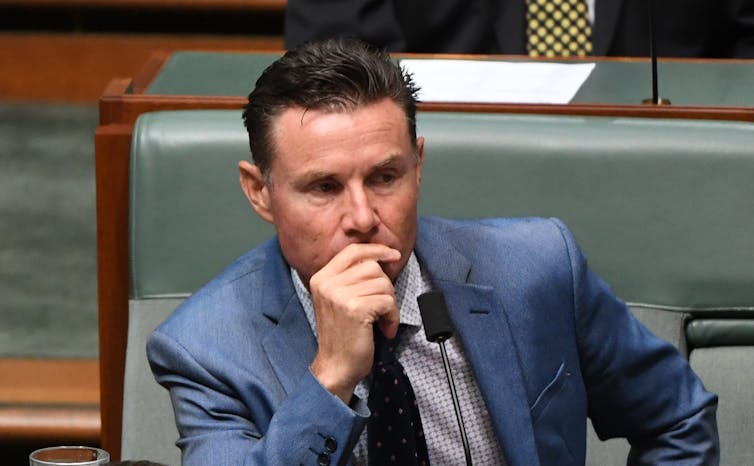
Andrew Laming has said he will not stand at the next election, but he will also not step down before then. Mick Tsikas/AAP

What can ‘upskirting’ include?

A new term has entered the lexicon in this regard: “upskirting”. The act of upskirting is generally defined as taking a sexually intrusive photograph of someone without their permission.

It is not a recent phenomenon. There have been incidents in which people (invariably men) have placed cameras on their shoes and photographed “up” a woman’s skirt for prurient purposes. Other instances have involved placing cameras under stairs where women in dresses or skirts were likely to pass by.

The broader category of “upskirting” can also include indecent filming of anyone without their knowledge, including photographing topless female bathers at a public beach, covertly filming women undressing in their bedrooms, or installing a camera in a dressing room, public toilet or a swimming pool changing room.


Read more: Andrew Laming: why empathy training is unlikely to work


With every new electronic device that comes on the market comes the possibility of inappropriate use and, thus, the creation of new criminal offences.

We saw that with the advent of small listening devices. With this technology, it was now possible to record private conversations, so legislators had to create offences under the law to deal with any inappropriate use.

The same thing happened with small (and now very affordable) drones, which made it possible to capture images of people in compromising positions, even from a distance. Our laws have been adjusted accordingly.

And in recent years, lawmakers have been faced with the same potential for inappropriate use with mobile phones. Such devices are now ubiquitous and improved technology has allowed people to record and photograph others at a moment’s notice — often impulsively, without proper thought.

How have legislators responded in Australia?

There is a patchwork array of laws across the country dealing with this type of photography and video recording.

In South Australia, for instance, it is against the law to engage in “indecent filming” of another person under part 5A of the state’s Summary Offences Act.

The term “upskirting” itself was used when amendments were made in 2007 to Victoria’s Summary Offences Act. This made it an offence for a person to observe or visually capture another person’s genital region without their consent.

In New South Wales, the law is equally specific in setting out the type of filming that is punishable under the law. It outlaws the filming of another person’s “private parts” for “sexual arousal or sexual gratification” without the consent of the person being filmed.

Queensland’s law, meanwhile, makes it an offence to:

observe or visually record another person, in circumstances where a reasonable adult would expect to be afforded privacy […] without the other person’s consent

Interestingly, the Queensland law is more broadly worded than the NSW, Victorian or South Australian laws since it makes it an offence to take someone’s picture in general, rather than specifying that it needs to be sexually explicit.

The maximum penalty for such an offence in Queensland is three years’ imprisonment.

What would need to be proven for a conviction

Just like any criminal offence, the prosecution in a case like this must first determine, before laying a charge, whether there’s enough evidence that could lead to a conviction and, moreover, whether such a prosecution is in the public interest.

Once the decision to charge is made, a conviction will only be possible if the accused pleads guilty or is found guilty beyond reasonable doubt. (Being a misdemeanour, this could only be by a magistrate, not a jury.)

The role of the criminal law here is to bring offending behaviour to account while also providing a deterrent for the future conduct of that person or any other persons contemplating such an act.


Read more: View from The Hill: Morrison should appoint stand-alone minister for women and boot Andrew Laming to crossbench


As with any criminal law, its overarching purpose is to indicate society’s disdain for the behaviour. The need to protect victims from such egregious and lewd behaviour is an important consideration too.

Any decision by a Queensland magistrate to convict a person alleged to have taken an indecent photo would hang on three facts:

  • whether the photo was taken by the person accused

  • whether the victim believed she should have been afforded privacy

  • and whether she offered no consent to have the photo taken.

Other mitigating factors might come into play, however, including whether the photograph was impulsive and not premeditated, whether the image was immediately deleted, and whether the alleged offender showed any regret or remorse for his actions.

Recently a Queensland man, Justin McGufficke, pleaded guilty to upskirting offences in NSW after he took pictures up the skirts of teenage girls at a zoo while they were looking at animals.

In another case, a conviction for upskirting was deemed sufficient to deny a man permission to work with children in Victoria.

In a moment of impulsivity — and with the easy access of the mobile phone — anything can happen in today’s world. Poor judgements are common. Women are invariably the targets.

The laws on filming, recording and in some cases distributing the images of another person are clear — and the potential consequences for the accused are substantial. One would hope that any potential offenders are taking note.

ref. What is “upskirting” and what are your rights to privacy under the law? – https://theconversation.com/what-is-upskirting-and-what-are-your-rights-to-privacy-under-the-law-158060


COVID in Brisbane: 3-day lockdown begins as authorities scramble to find missing links

Source: The Conversation (Au and NZ) – By Catherine Bennett, Chair in Epidemiology, Deakin University

Greater Brisbane enters a three-day lockdown from 5pm today after it recorded four additional COVID cases in the community, taking the total number to seven.

Other Australian states and territories have introduced varying levels of restrictions for people who have been in the affected areas.

Since we heard of the initial positive case on Friday, the way things have played out has been a little shambolic.

It’s a pity we’ve got to a point where we need another lockdown in Australia, but it’s imperative Queensland health authorities use this time to connect all the dots in this outbreak. While genomic sequencing can tell us several of these cases are linked, how they’re linked remains something of a mystery.

Here we go again

To recap, we learned on Friday a 26-year-old man from the Brisbane suburb of Stafford had tested positive to COVID-19. He was infected with the B.1.1.7 variant, which originated in the United Kingdom.

The Queensland health department said genomic sequencing confirmed this case was linked to a case earlier this month — a doctor at Brisbane’s Princess Alexandra Hospital who tested positive on March 12 after treating a COVID-positive returned traveller a few days earlier.

We hoped we’d escaped an outbreak as a result of that case, but this shows you can never be too vigilant when it comes to COVID-19. The genomic linkage tells us at least one case slipped through the contact-tracing net.


Read more: The UK variant is likely deadlier, more infectious and becoming dominant. But the vaccines still work well against it


The 26-year-old reportedly developed symptoms last Monday (March 22), but only sought a test on Thursday (March 25).

Given what we know about the infectious period of the virus, health authorities deemed he could have been infectious a couple of days before that. They’ve released exposure sites from March 20 onwards.

But although we’re told he’s linked to the hospital case, we don’t know exactly how. It’s important we have this information to identify others who may be at risk.

The time it takes to develop symptoms after exposure (the incubation period) is usually around five to six days. The time lapsed between the hospital case (who was exposed on March 9) and this one (likely exposed on March 16 or 17) suggests there may be one or more missing links.

People queue at a COVID-19 drive-through testing site in Brisbane.
Queensland health authorities are yet to determine precisely how the 26-year-old man from Stafford came to be infected with the B.1.1.7 strain of coronavirus. Dave Hunt/AAP

After this man tested positive, health authorities rightly tested his close contacts — not only with PCR testing to identify current infections, but with serology testing. This picks up antibodies against SARS-CoV-2, the virus that causes COVID-19, to indicate if someone has recovered from the virus. We call this an upstream search. The man’s brother returned a positive serological result.

Could this brother be the missing link? Reports suggest authorities believe he is — but there’s a vagueness about the nature of the link, and also about where the brother had been while he was infectious.

It’s helpful to have the genomic link back to the Princess Alexandra Hospital incident so we know where to look to unpack the full outbreak picture. But genomics alone don’t tell us whether the brother was a direct exposure — for example, whether he visited the hospital at that time or had some other connection with the doctor who was infected — or whether there are more intermediary cases to be found.

Although he’s now recovered, it’s still important we ascertain precisely where he got the virus, and his movements while he was potentially infectious. If we can’t link him to the hospital in any way beyond the genomic test results, we’re still essentially looking at a mystery case.


Read more: How the latest COVID cases slipped through in NSW and Queensland — and what we can do better


The second case reported on Saturday, a 20-year-old man from Strathpine in the Moreton Bay region north of Brisbane, is also a direct contact of the 26-year-old man. He is currently COVID-positive and could have been infected at the same time.

Today we had two more cases linked to that cluster: work colleagues of the Strathpine case.

And importantly, we now have two other community cases that have not at this stage been epidemiologically linked to this cluster — a nurse who has worked on the COVID ward at the Princess Alexandra Hospital, and her sister.

The health department is waiting on genomics to confirm they are “linked”. But it’s essential we understand the epidemiological connection, not just the genomic similarity of strains.

So what now?

In addition to the fact the chains of transmission haven’t been mapped out clearly, we’ve also seen some mixed messages over recent days.

Reports the Strathpine man held a house party while waiting for his test results were later retracted. Little things like this mean there’s an element of confusion at a time when it’s essential public messaging is clear.

A sign at the football calling for people from Queensland currently in Victoria to get tested for COVID-19 and isolate
People who had travelled from Queensland since March 12 were instructed to leave an AFL match in Victoria on Friday night to get tested and isolate. Scott Barbour/AAP

These “circuit-breaker” lockdowns have been positioned as a safety net allowing contact tracers to get on top of cases before they become larger outbreaks. They must be implemented quickly to work, and we now wait and see whether this one has been imposed quickly enough.

I believe health authorities will be able to bring this outbreak under control in the coming days. But we also need to ask the question: how did it come to this?

The fact we’re contending with this latest cluster at all indicates the follow-up after the hospital case earlier this month wasn’t sufficient; an outbreak was insidiously unfolding under the radar. At least one person who was exposed was able to fall through the cracks. This is an issue Queensland health authorities will need to review, and other states and territories can learn from.

ref. COVID in Brisbane: 3-day lockdown begins as authorities scramble to find missing links – https://theconversation.com/covid-in-brisbane-3-day-lockdown-begins-as-authorities-scramble-to-find-missing-links-158053

Andrew Laming: why empathy training is unlikely to work

Source: The Conversation (Au and NZ) – By Sue Williamson, Senior Lecturer, Human Resource Management, UNSW Canberra, UNSW

As federal parliament continues to erupt with allegations of harassment and abuse, one of the responses from our most senior leaders has been empathy training.

These are programs that help people to see the world from other people’s perspectives.

Over the weekend, Prime Minister Scott Morrison ordered disgraced Coalition MP Andrew Laming to do a private course on empathy. As Morrison told reporters

I would hope […] that would see a very significant change in his behaviour.

This follows Laming’s apology for harassing two women online and then confessing he didn’t know what the apology was for. Soon after Morrison’s announcement, Nationals leader Michael McCormack said he would get his party to do empathy training as well.

If we can […] actually learn a few tips on how to not only be better ourselves, but how to call out others for it, then I think that’s a good thing.

Many people — including opposition MPs, women’s advocates and psychologists — were immediately and instinctively sceptical. After all, if someone needs to take a course on how to be empathetic, surely something fundamental is missing, which no amount of training can fix?

The problem with empathy training

People are right to be dubious about empathy training — it has all the hallmarks of a human resources fad.

A parallel can be drawn with the introduction of unconscious bias training a few years ago. Neither are likely to be a silver bullet — or even a significant help — when it comes to discrimination and harassment.

Researchers have found requiring employees to undertake mandatory training, such as diversity training or sexual harassment training, can backfire. When people are “force fed”, they rebel and pre-existing beliefs are reinforced.

On top of this, training programs aimed to increase awareness about gender equality and discrimination are often seen by employers as remedial at best. At worst, they are punishment, which can also lead to a backlash from participants. The empathy training being given to Laming firmly sits in this camp — he has been found to have harassed women, so now he must be punished by attending a course.


Read more: Memo Liberal women: if you really want to confront misogyny in your party, you need to fix the policies


Similarly, one-off sexual harassment training has been found to be not only ineffective, but can make matters worse. American researchers found men forced to undertake sexual harassment training become defensive, and resistant to learning. But worse than this, male resistance can result in men blaming the victim, and thinking women are making false claims of sexual harassment.

So, the research findings are clear. One-off, mandatory diversity training and sexual harassment training do not work. While there is little data so far on the success of empathy programs, previous research gives no indication they would work either.

What does work?

It is not all bad news for empathy course conveners, however. Voluntary training is more successful, as volunteers are already primed for learning and concerned about gender equality and eliminating sexual harassment. Research also shows empathy can be taught, but the subject has to be willing to change.

But if mandatory training has limited effectiveness, what will work to eliminate sexual harassment? We certainly don’t need any more indications our federal parliament and our broader society needs to change.

Protesters at the recent March 4 Justice in Melbourne.
Earlier this month, tens of thousands of Australians took to the streets, calling for change at parliament house and beyond. James Ross/AAP

As Dr Meraiah Foley and I have previously argued, for training to be effective, it needs to do several things.

Firstly, it needs to be complemented by affirmative action measures, such as setting targets to increase the numbers of women in leadership. This is why the renewed debate about quotas in the Liberal Party is so important.

Secondly, the training needs to lead to new structures and new accountability for behaviour. This can be achieved by course participants identifying desirable behaviours that can progress equality at work. For example, small actions such as ensuring women participate equally in meetings sends a signal their opinions are valued.

Participants then log when they enacted those behaviours, and discuss progress with trained facilitators. Participants continue to reflect, and act, and later, share experiences and identify successful strategies.


Read more: Bad times call for bold measures: 3 ways to fix the appalling treatment of women in our national parliament


Thirdly, for workplace gender equality to progress, the ongoing process of behaviour change needs to be complemented with systemic organisational change. As I have written elsewhere, researchers recommend organisations adopt short and long-term agendas, to achieve small, immediate wins, while deeper transformations occur.

Structural change starts with an examination of human resource processes and policies to uncover gender bias and discrimination. No doubt Kate Jenkins will be undertaking such a task in her review of workplace culture at parliament house.

The bigger change we need

Examining process and policies, however, is not enough. Changing the language, and other symbolic expressions in organisations are also an important part of culture change to embed gender equality. For example, making sure meeting rooms are named after women and portraits of women — as well as men — adorn the walls sends a subtle yet powerful message the space also belongs to women.

Changing the ways of working, the rituals and artefacts of parliament house will help to change the culture.

Structural and systemic change to achieve gender equality is slow. While sending recalcitrant politicians to training courses may seem like an unavoidable first step, it is not where we need to focus attention.

ref. Andrew Laming: why empathy training is unlikely to work – https://theconversation.com/andrew-laming-why-empathy-training-is-unlikely-to-work-158050

Why is the Moon bright? Is Easter a full moon? How long does a full moon last? Your Moon questions answered by an astronomer

Source: The Conversation (Au and NZ) – By Jonti Horner, Professor (Astrophysics), University of Southern Queensland

If you stepped outside on the weekend and thought, “Gosh, the full moon looks nice tonight”, you are not alone.

According to Google Trends, Moon-related searches are up by more than 60% over the past week in Australia, led by Western Australia and Queensland.

Technically, the Moon is currently “waning gibbous” which means the moment of maximum fullness has passed, and it’s now starting to look smaller. But it’s still quite spectacular.

As someone teaching first-year astronomy at the moment, where much time is spent discussing the Moon, here are my answers to some of the most common recent Moon questions.


Read more: How big is the Moon? Let me compare …


1. A full moon is how many times brighter than a half moon?

You might think a half moon (first quarter or last quarter, depending on where you are in the phases) is half as bright as the full moon. However, if you add up all the light being reflected from the Moon to us here on Earth, a half moon is a fair bit less than half as bright as the full moon. In fact, the full moon is roughly six times brighter than the half moon.

Phases of the Moon
Phases of the Moon. Shutterstock

The main reason for this comes down to shadows. When the Moon is full, the Earth is between the Sun and the Moon. So when you look at the Moon rising in the evening, the Sun has just set, behind your back.

That means the side of the Moon facing Earth is fully illuminated. With the Sun at our backs, shadows cast by objects on the Moon are pointing away from us, hidden from view. So we see the maximum amount of the Moon lit up, nice and bright.

At half moon, however, the Sun is shining onto the Moon from one side so the craters, mountains, rocks and pebbles on the Moon all cast shadows. That reduces the amount of the Moon’s surface that’s lit up, so less light is reflected towards us than you’d otherwise expect.

Interestingly, the actual surface of the Moon isn’t that reflective. If the Moon and Venus were side by side and you zoomed in to look at the surface brightness of a patch on Venus and compared it with the surface brightness of a patch on the Moon, you’d see the patch on Venus is brighter. It’s more reflective because Venus has a lot of clouds that help reflect light back to Earth.

But because the Moon is closer to Earth, it looks bigger than Venus, so the total amount of light that is reflected back to us is bigger. When you look up at night, the Moon will seem much brighter than Venus.

There’s one extra reason the full moon is extra bright – and it’s called the opposition surge. When the Moon is full (or almost full), the surface we see appears to be a little bit brighter than at all other times.

While the fact that shadows are hidden is part of the puzzle, that isn’t enough to explain all of the brightening of the Moon in the day or so around full moon. The “opposition surge” is the final piece in the puzzle that makes the full moon so much brighter than the half moon. It’s something we see in all other rocky and icy objects in the Solar system, too.

2. Why is the Moon bright?

At the time of writing, we’re within 24 hours of full moon, so it looks big and bright in the sky. It looks so much bigger than everything else in the night sky because it’s near us, and so bright because it’s reflecting light from the Sun.

But the Moon is moving away from Earth at almost 4cm per year. In the olden days, it would have been even bigger and brighter. It would have been much closer to Earth if we’d been around when Earth was young. However, the Sun was a fair bit less luminous back then, so it’s hard to say exactly how bright the Moon would have been.

A full moon in the sky over a Queensland beach
In the olden days, the Moon would have been closer to Earth than it is now. Shutterstock

3. Is Easter a full Moon?

No. Easter is the first Sunday after the first full moon after the March equinox.

The March equinox is the point in the year when the Sun crosses the Equator in the sky, passing from the southern hemisphere to the northern hemisphere.

To astronomers, this is the start of the northern hemisphere’s spring; for those of us in the southern hemisphere, it marks the start of astronomical autumn. The March equinox typically falls around March 21.

The time between two consecutive full moons is roughly 29.5 days. This means the date of Easter can move around quite a lot.


Read more: Why all the super buzz about the supermoon?


4. What is the worm Moon?

This is a US thing. According to US reports, the name might refer to earthworms appearing in the soil as the weather warms in the northern hemisphere. It’s been reported this reflects detail from Native American knowledge systems.

It’s important we recognise traditional astronomy, but it’s worth noting this naming convention comes from Native American culture rather than our own Indigenous cultures.


Read more: The Moon plays an important role in Indigenous culture and helped win a battle over sea rights


5. How long does a full moon last?

Technically, the exact “moment” the Moon is fullest is the moment it is exactly opposite the Sun in the sky. That happens once every 29 days or so. It is the moment the Moon is most illuminated.

So how long does that last? In reality, it is a split second – the moment of maximum fullness is fleeting.

Either way, if you saw the full moon and thought it might be a nice night to go on a date, you probably have a couple of days left when the Moon will still look impressive and amazing in the sky.


Read more: I see the moon: introducing our nearest neighbour


ref. Why is the Moon bright? Is Easter a full moon? How long does a full moon last? Your Moon questions answered by an astronomer – https://theconversation.com/why-is-the-moon-bright-is-easter-a-full-moon-how-long-does-a-full-moon-last-your-moon-questions-answered-by-an-astronomer-158061

Morrison’s ratings take a hit in Newspoll as Coalition notionally loses a seat in redistribution

Source: The Conversation (Au and NZ) – By Adrian Beaumont, Honorary Associate, School of Mathematics and Statistics, The University of Melbourne

This week’s Newspoll, conducted March 24-27 from a sample of 1,517, gave Labor a 52-48 two party lead, unchanged from last fortnight’s Newspoll. Primary votes were 40% Coalition (up one), 38% Labor (down one), 11% Greens (up one) and 2% One Nation (down one).

While voting intentions moved slightly towards the Coalition, Scott Morrison’s ratings fell to their lowest point since the COVID crisis began. 55% were satisfied with his performance (down seven) and 40% were dissatisfied (up six), for a net approval of +15, down 13 points.

Anthony Albanese’s net approval was up one point to +2, and Morrison led as better PM by 52-32 (56-30 last fortnight). Figures are from The Poll Bludger.

The last Newspoll was taken during the final few days of the WA election campaign. It’s plausible, given Morrison’s ratings slump without any impact on voting intentions, that Labor’s federal WA vote in the last Newspoll was inflated by the state election.

While Morrison’s ratings are his worst since the pandemic began, they are still strong by historical standards. So far, Morrison has only lost people who were likely to switch to disapproving at the first major scandal. Voting intentions imply that many who approved of Morrison were not voting Coalition anyway.

This poll would not have reflected the latest scandals about LNP Bowman MP Andrew Laming, who was revealed on Saturday night to have taken an upskirting picture in 2019. But are sexual misbehaviour scandals getting as much voter opprobrium as they used to?

In last fortnight’s article I cited two recent US examples of alleged sexual misconduct. Donald Trump was elected president in November 2016 despite the release of the Access Hollywood tape a month earlier. And New York’s Democratic governor, Andrew Cuomo, is still in office despite multiple sexual harassment allegations against his female employees.

According to Morning Consult polling of New York state, Cuomo’s ratings have stabilised recently after a large drop, and he still has a +10 net approval. That’s because he has a 75% approval rating from Democratic voters.

In the FiveThirtyEight aggregate of 2016 US national polls, Hillary Clinton gained only about a point in the week after the October 7 Access Hollywood tape was released, to have a six-point lead, up from five. Trump won that election in the Electoral College despite losing the national popular vote by 2.1%.

Draft federal redistributions for Victoria and WA

As a result of population growth trends, Victoria will gain an additional House of Representatives seat before the next election, while WA loses one. On March 19, the Electoral Commission published draft boundaries for both states.

In WA, the Liberal seat of Stirling was axed, while in Victoria the seat of Hawke was created in Melbourne’s northwestern growth area. The Poll Bludger estimated Hawke will have a Labor margin of 9.8%.

There are no major knock-on effects that would shift any other seat into another party’s column based on 2019 election results. So the impact is Labor gaining a Victorian seat as the Coalition loses a WA seat. Christian Porter’s margin in Pearce has been reduced slightly from 6.7% to 5.5%.

Ignoring the defection of Craig Kelly from the Liberals, the Coalition will start the next federal election with a notional 76 of the 151 seats, down one from the 2019 results. Labor will notionally have 69 seats, up one.

Early Tasmanian election announced for May 1

On March 26, Tasmanian Liberal Premier Peter Gutwein announced the Tasmanian election would be held on May 1, about ten months before the four-year anniversary of the March 2018 election.

The Liberals expect to capitalise on a COVID boost that could fade if the election were held as expected in early 2022. The last Tasmanian poll, conducted by EMRS in February, gave the Liberals 52%, Labor 27% and the Greens 14%. Tasmania uses the Hare-Clark method of proportional representation with five electorates that each return five members.

WA election final lower house results

At the March 13 Western Australian election, Labor won 53 of the 59 lower house seats, gaining 12 seats from what was already a thumping victory in 2017. The Liberals won just two seats (down 11) and the Nationals four (down one). Labor will have almost 90% of lower house seats.

Primary votes were 59.9% Labor (up 17.7% since 2017), 21.3% Liberals (down 9.9%), 4.0% Nationals (down 1.4%), 6.9% Greens (down 2.0%) and just 1.3% One Nation (down 3.7%).

Labor’s primary vote was higher than the 59.0% the combined Nationals and Liberals won at the 1974 Queensland election. The 1941 Tasmanian election, when Labor won 62.6%, is likely the only prior occasion in Australia of a single party winning a higher vote share than WA Labor.

The Poll Bludger estimates the two party vote as 69.2-30.8 to Labor, a 13.7% swing since 2017. The upper house has yet to be finalised, but Labor will win at least 22 of the 36 seats.

Israeli, UK local, German and Dutch elections

I wrote for The Poll Bludger on March 21 about the March 23 Israeli election and the May 6 UK local elections that also include Scottish and Welsh parliamentary elections. Israel’s right-wing PM Benjamin Netanyahu failed to win a majority for a right coalition, with that coalition winning 59 of the 120 Knesset seats. UK Labour is struggling in the polls.

I wrote for my personal website on March 19 about two German state elections that the combined left parties nearly won outright. The German federal election is expected on September 26, and the incumbent conservative CDU has slumped from its COVID heights, so the combined left could win the next German election. However, the left performed dismally at the March 17 Dutch election.

ref. Morrison’s ratings take a hit in Newspoll as Coalition notionally loses a seat in redistribution – https://theconversation.com/morrisons-ratings-take-a-hit-in-newspoll-as-coalition-notionally-loses-a-seat-in-redistribution-158048

We know hand dryers can circulate germs through the air. Why are they still used everywhere?

Source: The Conversation (Au and NZ) – By Christian Moro, Associate Professor of Science & Medicine, Bond University

Airborne contaminants, dirty toilet seats, mould and mildew: long before the coronavirus pandemic came around, the hygiene-focused among us knew public washrooms are grimy places.

Most adults visit the bathroom around 8-10 times a day. With an average hand-drying time of 30 seconds, we can expect between 4-5 minutes of daily dryer use per person (and more for people with an overactive bladder or similar disorders).

In an attempt to facilitate the hand washing process, are hand dryers adding to the filth by blowing contaminants around? And if so, why are they still common?

The need to dry

Drying hands is an essential part of the hand washing process. Wet hands can further the spread of microbes, since moisture facilitates their transfer from the skin to other surfaces.

Compared to shaking your hands dry after a wash, using an air dryer or paper towel greatly reduces the number of surface bacteria that remain.

Warm air dryers remove moisture from the hands through evaporation, while jet air dryers remove it by using sheer force to disperse the droplets into the air.

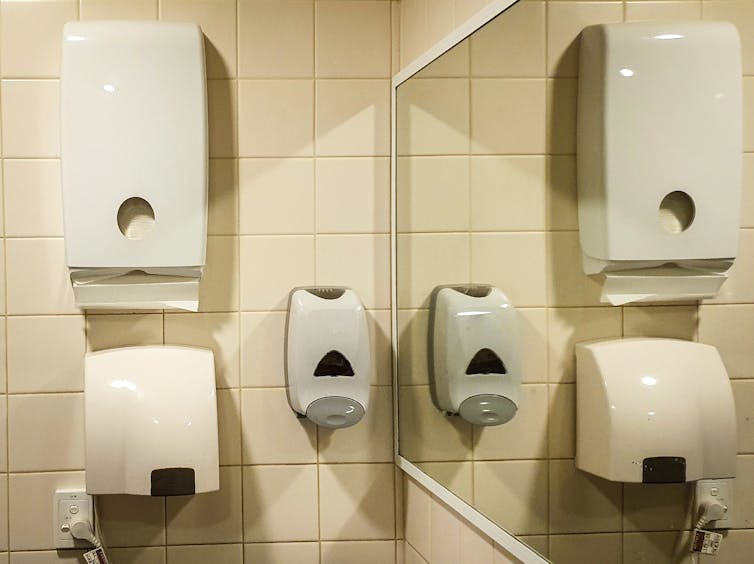
Bathroom wall with both paper towels and air dryer.
Some bathrooms offer both paper towels and air dryers. Should you prioritise one of them? Christian Moro

It’s worth remembering hand dryers don’t create microbes and there’s usually only minimal bacteria on their nozzles, too. In many cases air dryers can even be fitted with filters that help clean and remove contaminants from the air.

Put a lid on it!

Nonetheless, while dryers themselves aren’t necessarily unclean, their forced air can help circulate bacteria around the space. This is why the main focus should be on preventing bacteria from surfaces ever becoming aerosolised (entering the air) in the first place.

If a toilet’s lid is left open when it’s flushed, a fine aerosolised mist of microbes enters the air. And this cloud of faecal matter can spread over an area of up to six square metres.

Research has shown even after flushing many times, a toilet can continue to emit contaminants into the air. In other words, a person infected with a virus could be spreading these germs for several hours after visiting the bathroom.

Public washrooms can therefore act as reservoirs for especially nasty bacteria, such as those which are resistant to antibiotics.

So are paper towels the solution?


Read more: Coronavirus and handwashing: research shows proper hand drying is also vital


Problems with paper

Paper towels remove water by absorption and take contaminants with them when they’re binned. However, they can cause plumbing problems if flushed down the toilet, which require time and money to fix.

Additionally, paper towels need to be continuously purchased, restocked and disposed of as waste — all of which leads to increased costs. In a worst-case scenario towels may run out, prompting people to exit without drying their hands at all.

Granted, in a hospital setting a dryer’s forced air may move microbes onto items handled by health professionals and patients, such as phones or stethoscopes. So paper towels may be a more suitable option here.

But they still don’t provide an entirely sterile environment and can be contaminated by microbes circulating in the area.

Toilet paper stuck to shoe leaves bathroom
If contaminated paper towels are discarded on the floor, people stepping on them can transfer germs via their shoes to outside areas. Shutterstock

Weighing the environmental impact

Although hand dryers do produce carbon emissions, studies have shown warm air dryers (which rely on evaporation) generate up to 70% more emissions than newer, fast jet dryers (which force out a rush of cold air).

Environmentally speaking, warm air dryers and paper towels perform roughly the same, on average.

Using recycled paper towels doesn’t seem to help much, either. This is because they can’t be recycled further, due to chemicals added to increase their absorptive properties as well as the overall energy required to manufacture them.

In the US, around six million tonnes of paper towels end up in landfill each year.

The dry debate continues

Some research has concluded paper towels make a more hygienic method for drying hands. Meanwhile, aggressive jet hand dryers seem to have shown the greatest potential for dispersing bacteria and particles over wider distances.

But there isn’t a clear winner in practise. A recent critical review concluded there wasn’t enough research weighing up both options and that until more robust studies were conducted, evidence-based public policy recommendations couldn’t be made.

This echoes both the World Health Organisation’s and Centre for Disease Control’s hesitance to offer recommendations for whether drying hands with air dryers is more or less effective than using paper towels.


Read more: The great bathroom debate: paper towel or hand dryer?


Tips for a healthy bathroom regimen

While hand dryers can circulate contaminants around a space, the aim should be to stop germs from becoming aerolised in the first place. If the contaminants aren’t in the air to begin with, their dispersion from hand dryers is less of a worry.

No standing on the toilet seat.
Common sense goes a long way in bathroom hygiene. Shutterstock

Health education on this front is important. Simple recommendations include:

  • closing the toilet lid before flushing

  • wearing a mask where recommended or required, especially for those who have respiratory tract symptoms or a cough

  • coughing or clearing your throat directly into a tissue and immediately throwing it in the bin

  • washing your hands regularly with soap and water and not forgetting to dry them, as wet hands are more likely to spread bugs and diseases.

In areas where infection control and prevention are paramount, such as hospitals or food production areas, measures such as increased airflow and air filters can also help.

The bottom line

Using paper towels comes with recurring costs, logistical problems and environmental considerations. Meanwhile, air dryers can further circulate vapourised bacteria.

Managers of public washrooms have much to consider when deciding which method of hand drying to provide. In some scenarios, hand dryers do present as a better option, which is why we continue to see them in public washrooms.

Regardless of what option you choose, don’t forget drying is an essential part of the hand-washing process. Both air dryers and paper towels are, by a long way, better than using nothing at all.

ref. We know hand dryers can circulate germs through the air. Why are they still used everywhere? – https://theconversation.com/we-know-hand-dryers-can-circulate-germs-through-the-air-why-are-they-still-used-everywhere-157410

Alcohol testing at parliament house would not solve the broader problem of a sexist workplace culture

Source: The Conversation (Au and NZ) – By Nicole Lee, Professor at the National Drug Research Institute (Melbourne), Curtin University

Revelations of alleged sexual assault, harassment and bullying in Canberra have driven a wider debate about what some female MPs have described as a “toxic workplace culture” at parliament pouse.

Some have now floated the idea of alcohol testing politicians at work, with one saying:

We need to have at least responsible drinking. But even ministers have said to me, ‘You know what Katie, I think even a dry environment might not be a bad thing for parliament.’

Most workplaces don’t allow their workers to be drunk at work. Most don’t even allow drinking during work hours any more. So a ban on drinking while working is good policy.

But an alcohol ban or alcohol testing at parliament house does not solve the broader problem of a sexist or misogynistic workplace culture.

Although most sexual harassment and bullying is associated with alcohol use, alcohol is not the reason people harass, bully or intimidate. The fundamental problem behind those behaviours is attitudes to women.


Read more: Drug and alcohol testing at work doesn’t deter anyone, so why do it?


Alcohol testing on-site doesn’t fix cultural issues

Alcohol causes disinhibition and can lead to poor decision making. So it is a risk factor for problems. It makes bad behaviour more likely, but it doesn’t cause those issues on its own. Attitudes that lead to sexual harassment and assault are a much more complex problem to solve.

The question of whether alcohol should be allowed at work is completely separate from whether testing is a good tool to address the problem. Testing on-site doesn’t address those deeper cultural issues.

In our court system, alcohol or other drug use is generally not considered an argument for a reduced sentence. There is an association between alcohol and other drug use and crimes but it is considered a risk factor, not a cause.

People clink wine glasses.
Alcohol makes bad behaviour more likely, but it doesn’t cause those issues on its own. Shutterstock

Testing is often the first thing people think of when there’s a problem where alcohol or other drugs are involved. It’s simple and it’s measurable, so it is sometimes seen as an easy solution to a complex problem. However, it’s not a very effective mechanism for addressing the problems that arise around workplace alcohol and other drug use.

As colleagues and I argued in a previous Conversation article,

To be effective, a workplace policy needs to be part of a broader healthy workplace solution that considers drug and alcohol use, mental health, fatigue and other impacts on fitness for work. Extensive manager and worker consultation is essential for effective uptake and implementation.

A clear and well-defined policy includes education and training for managers and workers, and identified referral options such as an employee assistance program.

Workplaces with effective drug and alcohol policies have happier, healthier and more productive staff and reduced absenteeism and presenteeism.

There’s a place for a discussion about alcohol use at parliament house, as in any workplace. But alcohol testing on-site is just one small part of that discussion.

Alcohol and the Canberra culture

Alcohol testing at parliament house is not likely to solve the kinds of problems some female MPs have raised, such as having to contend with sexist comments and attitudes at work.

Alcohol testing at work also doesn’t stop people from drinking outside work time, where many of these incidents occur. People will still have drinks after work with workmates and attend work functions where alcohol is served.

Many of the recent allegations relate to drinking that largely took place away from parliament house, outside work hours.

And there are plenty of men and women who get drunk with friends or workmates and they aren’t perpetrators or victims of harassment or assault.

Workplace alcohol-testing is no silver bullet

There’s a growing body of evidence looking at alcohol-related interventions among people who work in male-dominated industries.

I led a systematic review of the research, published in the Journal of Men’s Health. Men are generally heavier drinkers of alcohol than women, so are at greater risk of a range of health and social problems.

However, workplace alcohol testing policies, which were examined in a number of studies, did not have a measurable impact on overall drinking rates.

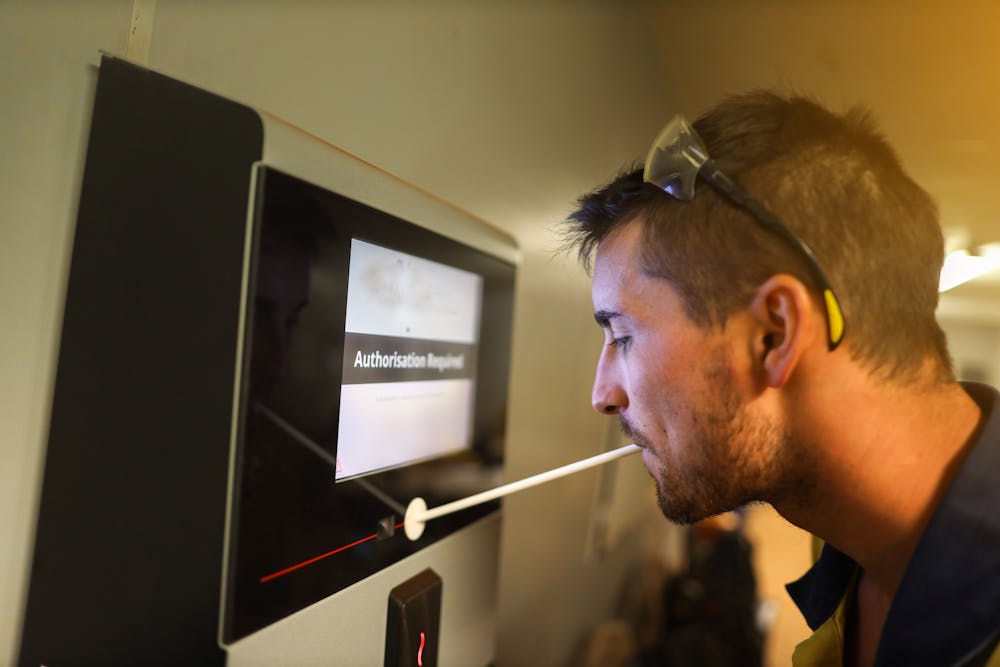
A man does a breath test for alcohol before entering a mine site.
Most workplaces that have workplace alcohol and drug testing, such as mining sites, do so because people are operating heavy machinery. Shutterstock

Alcohol and drug testing in the workplace is not as common as many people think. It tends to be concentrated in safety-sensitive industries. Routine alcohol and drug testing is less common in workplaces that are more corporate or administrative.

Most workplaces that have workplace alcohol and drug testing, such as mining sites, do so because people are operating heavy machinery, vehicles or equipment. They’re often doing work where, if alcohol was involved, injury or death is a possibility.

Most workplaces that have testing in place also have a broader policy that ensures people are fit for work. This includes well developed systems for education at induction, clear guidelines about what happens if you test positive, training for staff and managers and counselling and treatment available if needed. Fit-for-work policies means looking carefully at issues such as stress, fatigue and anxiety.

In other words, even where there is workplace alcohol or drug testing, it’s woven into a much broader set of health and safety policies. On its own, it is no silver bullet.


Read more: View from The Hill: Morrison should appoint stand-alone minister for women and boot Andrew Laming to crossbench


ref. Alcohol testing at parliament house would not solve the broader problem of a sexist workplace culture – https://theconversation.com/alcohol-testing-at-parliament-house-would-not-solve-the-broader-problem-of-a-sexist-workplace-culture-158049

PNG military police help out with covid-19 awareness campaign

By Marjorie Finkeo in Port Moresby

Thirty Papua New Guinea Defence Force soldiers are working with other security personnel and the NCD covid-19 team to carry out a two-week awareness campaign in urban communities in the capital Port Moresby.

PNGDF commander Major-General Gilbert Toropo told the PNG Post-Courier that the 30 officers from the military police unit at Murray Barracks and Taurama Barracks would assist other security frontliners to boost their capacity.

“It is the NCD Governor Powes Parkop’s initiative to do awareness in Port Moresby communities and he needs manpower to assist NCDC health staff on the awareness programme, and because we have the capacity, he submitted a request for manpower,” Major-General Toropo said.

He said his soldiers would be working closely with police and NCDC staff to move into settlements, bus stops, PMV buses and informal market areas conducting awareness on covid-19 for the next two weeks.

He said the awareness team would ensure that the public observed proper protocols of social distancing, wearing masks and giving advice.

“Our people are so complacent they think this is like a joke and they cannot protect themselves. That is why they are not taking measures seriously and Governor Parkop’s initiative to carry out awareness is the best we can do,” he said.

Toropo said that if citizens would listen and follow instructions, “we will stop spreading covid-19”.

He said that after the awareness campaign, penalties would be imposed on individuals, business houses, PMV bus owners and taxi drivers breaching the National Pandemic Act.

Papua New Guinea is suffering from a spike in covid-19 infections with 5184 cases and 45 deaths, including a parliamentarian.

Marjorie Finkeo is a PNG Post-Courier reporter.

Print Friendly, PDF & Email

Article by AsiaPacificReport.nz

OPM isn’t a ‘terrorist group’ – the Indonesian state is, says Wenda

Asia Pacific Report newsdesk

Indonesia has been accused of a ‘disgraceful attack on the people of West Papua’ by considering listing the pro-independence militia Organisasi Papua Merdeka (OPM) as a terrorist organisation.

The exiled interim president of the United Liberation Movement of West Papua (ULMWP), Benny Wenda has condemned the reported move by Jakarta, saying Papuans are generally in support of the OPM struggle for a free and independent West Papua.

“In reality, Indonesia is a terrorist state that has used mass violence against my people for nearly six decades,” Wenda said in a statement.

The ULMWP statement said the people of West Papua were forming their own independent state in 1961.

“On December 1 of that year, the West New Guinea Council selected our national anthem, flag, and symbols. We had a territory, a people, and were listed as a Non-Self-Governing Territory by the UN Decolonisation Committee,” Wenda said.

“Our flag was raised alongside the Dutch, and the inauguration of the West New Guinea Council was witnessed by diplomats from the Netherlands, UK, France and Australia.

“This sovereignty was stolen from us by Indonesia, which invaded and colonised our land in 1963. The birth of the independent state of West Papua was smothered.

Launched struggle
“This is why the people of West Papua launched the OPM struggle to regain our country and our freedom.”

The ULMWP said that under the international conventions on human rights, the Papuans had a right to self-determination, which legal research had repeatedly shown was “violated by the Indonesian take-over and the fraudulent 1969 Act of No Choice”.

“Under the 1960 UN Declaration on the Granting of Independence to Colonial Countries and Peoples, we have a right to determine our own political status free from colonial rule,” Wenda said.
“Even the Preamble to the Indonesian constitution recognises that, ‘Independence is the natural right of every nation [and] colonialism must be abolished in this world because it is not in conformity with Humanity and Justice’.”

Indonesia’s anti-terrorism agency wanted to designate pro-independence Papuan movements OPM and KKB as “terrorists”.

“Terrorism is the use of violence against civilians to intimidate a population for political aims. This is exactly what Indonesia has been doing against my people for 60 years. Over 500,000 men, women and children have been killed since Indonesia invaded,” said Wenda.
“Indonesia tortures my people, kills civilians, burns their bodies, destroys our environment and way of life.

‘Wanted for war crimes’
“General Wiranto, until recently Indonesia’s security minister, is wanted by the UN for war crimes in East Timor – for terrorism.

“A leading retired Indonesian general this year mused about forcibly removing 2 million West Papuans to Manado – this is terrorism and ethnic cleansing. How can we be the terrorists when Indonesia has sent 20,000 troops to our land in the past three years?

“We never bomb Sulawesi or Java. We never kill an imam or Muslim leader. The Indonesian military has been torturing and murdering our religious leaders over the past six months.

“The Indonesian military has displaced over 50,000 people since December 2018, leaving them to die in the bush without medical care or food.”

Wenda said ULMWP was a member of the Melanesian Spearhead Group (MSG), “sitting around the table with Indonesia”.

“We attend UN meetings and have the support of 84 countries to promote human rights in West Papua. These are not the actions of terrorists. When 84 countries recognise our struggle, Indonesia cannot stigmitise us as ‘terrorists’.

OPM ‘like home guard’
“The OPM back home is like a home guard. We only act in self-defence, to protect ourselves, our homeland, our ancestral lands, our heritage and our natural resources, forests and mountain.

“Any country would do the same if it was invaded and colonised. We do not target civilians, and are committed to working under international law and international humanitarian law, unlike Indonesia, which will not even sign up to the International Criminal Court because it knows that its actions in West Papua are war crimes,” Wenda said.

“Indonesia cannot solve this issue with a ‘war on terror’ approach. Amnesty International and Komnas HAM, Indonesia’s national human rights body, have already condemned the proposals.

“Since the 2000 Papuan People’s Congress, which I was a part of, we have agreed to pursue an international solution through peaceful means. We are struggling for our right to self-determination, denied to us for decades. Indonesia is fighting to defend its colonial project.”

Print Friendly, PDF & Email

Article by AsiaPacificReport.nz

Rally protests against anti-Asian covid violence, abuse in US and NZ

RNZ News

More than a thousand people have turned out for a rally in central Auckland calling for discrimination against Asians to stop.

They claim Asians have been the target of derogatory comments since covid-19 broke out.

They say Asian communities in New Zealand and around the world have suffered discrimination for too long.

Organiser Steph Tan is calling on the government to do more to prevent hate crime, especially toward Asian communities.

During an interview with RNZ Afternoons this week, she said the march yesterday was a chance to express solidarity with Asian-Americans as they grieved over the loss of six Asian women among the eight people killed by a gunman in Atlanta.

She said that during 2020 hate crimes committed towards Asian-Americans had risen by 1900 percent during the covid-19 pandemic as they were blamed for the origin of the virus.

It has been a deeply troubling time for the Asian community in New Zealand as well, she said.

“Sadly in parallel we are seeing some of that in New Zealand … this peaceful march or rally is to create awareness of the pain that Asians are feeling when we see one of our people killed purely motivated by racial concerns or just based on our skin colour.”

She said violent incidents against Asian people in this country included the beatings of some Asian people at a spa in Rotorua last year.

Chinese people, in particular, had also been made the scapegoats for the country’s housing crisis, she said.


Tan said that while the Black Lives Matter movement was supporting Asian protests in the US, she was not seeing the same links between ethnic minorities here.

She is appealing to people to reach out to their Asian friends and ask if they are okay.

“Asian hate does truly exist – it just hasn’t been brought to light as much and a huge part of the rally is doing that in a compassionate way…”

Both in the US and New Zealand a higher number of businesses have been hit hard by the pandemic, she said.

The aim of the rally was to support each other, encourage people to stand up for Asians when they are racially abused and it might also act as an encouragement if people felt they need mental health support.

She is calling on politicians to introduce harsher sentences for hate crimes against people of all races.

This article is republished under a community partnership agreement with RNZ.

Print Friendly, PDF & Email

Article by AsiaPacificReport.nz

Growing up in a rough neighbourhood can shape kids’ brains, so good parenting and schooling is crucial

Source: The Conversation (Au and NZ) – By Divyangana Rakesh, PhD Candidate, The University of Melbourne

Growing up in a poor or disadvantaged neighbourhood can affect the way adolescents’ brains function, according to our new research. It can alter the communication between brain regions involved in planning, goal-setting and self-reflection.

These brain changes can have consequences for cognitive function and well-being. But the good news is that we also found positive home and school environments can mitigate some of these negative effects.

A “disadvantaged neighbourhood” is one in which people generally have lower levels of income, employment, and education. Growing up in these conditions can cause stress for children, and is associated with cognitive problems and mental health issues in young people.

We don’t yet know exactly how this link between neighbourhood disadvantage and poor mental outcomes works, but it is thought that social disadvantage alters the way young people’s brains develop.

The brain during childhood and adolescence

During childhood and adolescence, our brains are dynamically developing. During this phase of life, we refer to the brain as being particularly “plastic”, meaning it is susceptible to change as a result of experiences.

Exposure to negative or stressful experiences (such as neighbourhood disadvantage) may alter brain development in a way that makes some adolescents less resilient in the future. In particular, exposure to neighbourhood disadvantage may lead to “developmental miswiring” – alterations in communication between different brain regions. Such miswiring is increasingly recognised as playing an important role in mental illness.


Read more: Living with neighborhood violence may shape teens’ brains


Neighbourhood disadvantage and the brain

In our research, we studied more than 7,500 children aged 9-10 years from the Adolescent Brain Cognitive Development (ABCD) Study, a large long-term study of brain development and child health in the United States. This study features children from schools all over the country, with lots of diversity in race, ethnicity, education, income levels, and living environments.

Using these data, we tested whether neighbourhood disadvantage is associated with changes in the brain’s “resting functional connectivity” in magnetic resonance imaging (MRI) scans.

Resting functional connectivity refers to the coordinated activity of different brain regions when someone is resting and thinking of nothing in particular. Even while resting, we typically see synchronised activity between brain regions that usually work together to perform tasks. That is, these brain regions are “functionally connected”.

We found that children who grew up in disadvantaged neighbourhoods had widespread alterations in functional connectivity, in brain regions considered important for learning and memory, planning, goal-setting, self-reflection, sensory processing and language. We quantified neighbourhood disadvantage using an “area deprivation index” — a composite measure of factors including income, employment and education for individuals in a given neighbourhood.

What’s more, 50% of these brain changes were associated with poor cognition and mental health in the children. This suggests that growing up in a tough neighbourhood led to changes in children’s cognitive function and mental health.

Child on hopscotch grid
A supportive environment can undo much of the impact of childhood stress on brain development. Shutterstock

It is important to note that because the study was “cross-sectional” (that is, it included only one time point), these inferences about causation are speculative. What’s more, we don’t know what mechanism causes these changes in brain connectivity, and why some brain regions are affected but not others.

Reducing the effects of neighbourhood disadvantage

As part of the ABCD Study, children and parents also completed questionnaires about their living environment. This allowed us to look at whether positive home and school environments can offset some of the negative effects of neighbourhood disadvantage.

Crucially, we found that brain alterations were less pronounced in children who had positive home and school environments. This suggests that good parental support and positive schooling can buffer some of the negative effects of growing up in a disadvantaged neighbourhood.

Parental support comprised of things such as the parent smiling often at the child, supporting the child and making them feel better when they’re upset, discussing the child’s worries with them, and expressing their love for the child.

Positive school environments were characterised by the availability of extracurricular activities, healthy relationships between children and teachers, children feeling safe at school, teachers praising children when they did a good job, schools letting parents know when children did something well, and children having opportunities to contribute to decisions about activities and rules.


Read more: Teenage mental health: how growing brains could explain emerging disorders


The impact of the social environment on brain development during the early years is already widely recognised in early childhood learning. But the impact that parents and teachers might have on the brains of older children and adolescents has been less clear.

Our research shows that parents and teachers continue to be an important source of support for children as they move into adolescence. Although peers start to become important during this transition, parents and teachers play a role in promoting healthy brain development.

While disadvantaged neighbourhoods can negatively affect children’s brain development and well-being, this can be offset by giving children better home and school environments where they feel supported, receive positive feedback, and have opportunities to engage in different activities.

ref. Growing up in a rough neighbourhood can shape kids’ brains, so good parenting and schooling is crucial – https://theconversation.com/growing-up-in-a-rough-neighbourhood-can-shape-kids-brains-so-good-parenting-and-schooling-is-crucial-157884

History repeating: the surprising link between toxic masculinity and Australia’s convict past

Source: The Conversation (Au and NZ) – By Pauline Grosjean, Professor of Economics, UNSW

It has been a momentous, demanding few weeks for Australia. Amid growing revelations of sexual assaults and toxic workplaces and people taking to the streets to voice their anger and frustration, it’s possible we are finally facing a reckoning on gender relations.

But as we debate — again — how to move into a more equal future, it is also useful to look to our convict past. This has an impact on the issues we face today, and in particular, our idea of masculine norms.

My research with colleagues Victoria Baranov and Ralph De Haas has used data from a unique natural experiment — convict Australia. This was a time when men far outnumbered women.

We found those early days of intensified competition between men, and the violence that stemmed from this, created behaviours — and dangerous norms about masculinity — that continue in modern Australia today.

The convict experiment

According to traditional gender norms, men should be self-reliant, assertive, competitive, violent when needed, and in control of their emotions.

In our recent research, we argued strict masculinity norms can emerge when men vastly outnumber women. This is due to competition increasing and intensifying among men because there are fewer women to partner with.

This can intensify violence, bullying, and intimidating behaviours that, once entrenched in local culture, continue to manifest themselves long after sex ratios have normalised.

We tested this hypothesis using data the convict colonisation of Australia. In just under 100 years, between 1787 and 1868, Britain transported 132,308 convict men and only 24,960 convict women to Australia. Migrants were also mostly male. So, there were far more men than women in Australia until well into the 20th century.

We used historical census data and combined them with current data on violence, sexual and domestic assault, suicide and bullying in schools. From that, we were able to see the regions with significantly more men than women back in convict times still experience problems today. This is even when we account for the influence of the total number of convicts, geographic characteristics, and present-day characteristics of these regions, including education, religion, urbanisation and income.

Health and violence

First, we looked at the impact of the convict gender imbalance on current day violence and health outcomes.

Evidence suggests men adhering to traditional masculinity norms have a stronger stigma around mental health problems and tend to avoid health services. We found areas that were more historically male have significantly higher rates of male suicide today.


Read more: What Australia’s convict past reveals about women, men, marriage and work


Our research also shows assault and sexual assault are much higher today in parts of Australia that were more male in the colonial past. We also find much higher rates of bullying among boys in schools, as reported by parents or teachers.

But it’s not just violence where we experience this hangover from the past.

Areas with more men in convict times are the same regions today with an otherwise-unexplained high share of men choosing more stereotypically male occupations (such as carpenters or metal workers, as opposed to teachers or nurses). We also found the more males outnumbered women in convict times, the less likely people were to support same-sex marriage in modern day Australia.

How does this help us today?

Our research suggests environments in which men dominate numerically — and are put in intense competition with one another — can deeply and durably shape behaviours associated with toxic masculinity.

These are characterised by violence, sexual assault, bullying in schools, opposition to sexual minority rights but also mental health problems and suicide.

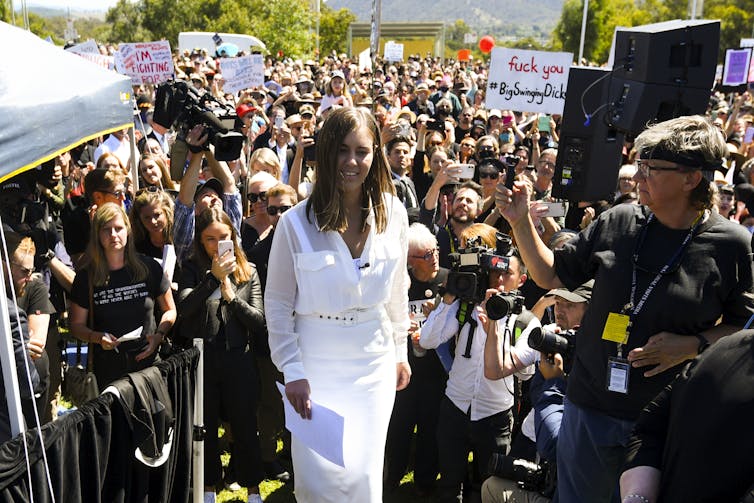
Brittany Higgins and crowd at the March 4 Justice in Canberra.
original. Lukas Coch/AAP

While our experimental setting is unique, there’s lots we can take from this, particularly about the long-term consequences of skewed sex ratios we are currently seeing in countries such as China, India, and parts of the Middle East. But also about skewed sex ratios in other environments.

There is every reason to think any place where males dominate can create these issues. Be it in parliaments, offices, schools, or sports teams. Recent allegations out of parliament house, petitions denouncing thousands of sexual assaults by private schools boys, and continued claims of sexual assaults by NRL players prove exactly the point.


Read more: How challenging masculine stereotypes is good for men


Our results suggest it’s an issue for both genders: the masculinity norms of the past are not only damaging to future generations of women, and of sexual minorities, but are also damaging to future generations of men.

So stop telling your sons to toughen up and to be dominant at all costs. Tell them they don’t have to compete all the time. Tell them it’s OK to cry.

Pauline Grosjean also talks about toxic masculinity and convict Australia on the Seriously Social podcast by the Academy of the Social Sciences in Australia.

ref. History repeating: the surprising link between toxic masculinity and Australia’s convict past – https://theconversation.com/history-repeating-the-surprising-link-between-toxic-masculinity-and-australias-convict-past-157881

We don’t yet know how effective COVID vaccines are for people with immune deficiencies. But we know they’re safe — and worthwhile

Source: The Conversation (Au and NZ) – By Vanessa Bryant, Laboratory Head, Immunology Division, Walter and Eliza Hall Institute

The COVID vaccine rollout is underway in Australia, with people in phase 1b now eligible to be vaccinated.

So far, we have two vaccines available in Australia: the Pfizer/BioNTech vaccine, approved for people aged 16 and older, and the Oxford/AstraZeneca vaccine, approved for those over 18. Evidence has shown both vaccines are safe and offer near-complete protection against severe COVID-19, hospitalisation and, most importantly, COVID-related death.

Both vaccines are also safe and effective at generating immune responses in the elderly. But what about another vulnerable group — people with immunodeficiencies? Many people with immunodeficiencies are included in group 1b and will now be thinking about getting their vaccine.

Although we’re still gathering data to determine whether COVID vaccines will work as well in people with immunodeficiencies as they do in the general population, they’re likely to offer at least a reasonable degree of protection. And importantly, we know they’re safe.

What are immunodeficiencies?

Immunodeficiencies are conditions that weaken the body’s ability to fight infection. People’s immune system may be compromised for many reasons, and this can be transient or lifelong.

Primary immunodeficiencies occur when some or all of a person’s immune system is missing, defective or ineffective. These are rare and often genetic diseases that may be diagnosed early in life, but can occur at any age.

Examples of primary immunodeficiencies include severe combined immunodeficiency (SCID) and common variable immunodeficiency (CVID).


Read more: What does it mean to be immunocompromised? And why does this increase your risk of coronavirus?


Secondary immunodeficiencies are acquired, and more common. They may occur as a result of other diseases (for example, via HIV infection), treatments and medications (such as chemotherapy or corticosteroids), or environmental exposure to toxins (for example, prolonged exposure to heavy metals or pesticides).

Sometimes the immune system in people with immunodeficiencies can react in exaggerated ways too, and cause autoimmune disease (such as rheumatoid arthritis or gut inflammation). So it sometimes makes more sense to describe the immune system as “dysregulated”, rather than “deficient”.

An illustration of SARS-CoV-2, the virus that causes COVID-19.
People with immunodeficiencies are more susceptible to being infected with viruses, such as SARS-CoV-2. Shutterstock

Immunodeficiencies, COVID-19 and vaccines

People with secondary immunodeficiencies are generally at higher risk of becoming infected with SARS-CoV-2 and of developing severe disease. Surprisingly, although people with primary immunodeficiency may be at greater risk of getting infections, including COVID, most are no more susceptible to developing severe COVID compared with the overall population.

This may be because the most severe COVID-19 symptoms are usually not due to gaps in immunity, but to an overactive immune response to SARS-CoV-2.

In fact, immune-suppressing steroids may be an effective treatment for severe COVID. Clinical trials looking into this are underway.

However, as vaccines work by mobilising our immune systems, for people who have a weaker immune system to begin with, vaccines may not be as effective. They may generate an incomplete or short-lived response, so people with immunodeficiencies may need additional boosters to maintain protective immunity.


Read more: What is a virus? How do they spread? How do they make us sick?


Efficacy and safety

It’s difficult to assess COVID vaccine efficacy in people with immunodeficiencies, because people with primary immunodeficiencies or cancer weren’t included in clinical trials.

A very small number of people with HIV have been included in trials of a few of the vaccines, but limited data is publicly available. So it’s too early to draw any firm conclusions on whether the vaccines will be as effective in people with HIV as for the general population.

We also don’t yet know how long immunity to COVID-19 or COVID vaccines lasts. This will be particularly important for immunodeficient people. Research is underway to determine whether they’ll need booster jabs more frequently to maintain immunity.

A woman wearing a head scarf looks out the window.
Clinical trials of COVID vaccines haven’t generally included people with immunodeficiencies. Shutterstock

We do know the vaccines are safe for this group.

Neither the AstraZeneca nor the Pfizer vaccines can cause an infection, so they won’t present a problem for people with immunodeficiencies (or for elderly people, who may also have weakened immune responses).

Usually, we avoid giving “live attenuated” vaccines (vaccines that contain weakened elements of the virus) to anyone with immunodeficiency. Because of their weakened immune systems and increased susceptibility to infection, there’s a chance they could develop a full-blown infection. An example of this is the chickenpox vaccine. But no live attenuated COVID vaccines have been approved anywhere in the world.

Preliminary evidence from vaccine rollouts around the world has shown COVID vaccines are safe for immunocompromised people with cancer. Although, if you’re going through cancer treatment, you should discuss the timing of your vaccination with your specialist.

There have been no unusual safety concerns to indicate any increased risk for HIV-positive people receiving any of the COVID vaccines either.

Get the jab

Vaccination is most definitely recommended for people with immunodeficiencies, and they’re included in priority groups for vaccine rollout in Australia. Group 1b includes people with underlying medical conditions which may place them at higher risk from COVID-19, including “immunocompromising conditions”.

If you have a diagnosed immunodeficiency or autoimmune disease, you can talk to your doctor or specialist for specific advice on the timing of your COVID vaccination and your condition. There’s generally no reason to change your normal medications or therapies before receiving the vaccine.

Organisations including the Australian Society of Clinical Immunology and Allergy and the Immune Deficiency Foundation of Australia have published resources which offer guidance for people with immunodeficiencies in relation to COVID vaccination.


Read more: The second phase of Australia’s COVID vaccine rollout is underway, despite a rocky start. Here’s what you need to know


ref. We don’t yet know how effective COVID vaccines are for people with immune deficiencies. But we know they’re safe — and worthwhile – https://theconversation.com/we-dont-yet-know-how-effective-covid-vaccines-are-for-people-with-immune-deficiencies-but-we-know-theyre-safe-and-worthwhile-155741

1 in 4 unemployed Australians has a degree. How did we get to this point?

Source: The Conversation (Au and NZ) – By Lynlea Small, Casual Academic, School of Business and Creative Industries, University of the Sunshine Coast

A series of government policy reforms over recent decades aimed to increase the proportion of Australian workers with university degrees. They got that result, but what they did not expect to see was that almost one in four unemployed people would have a degree (although employees with a degree appear to have fared better during the COVID-related job losses). And more than one in four graduates can expect to be either unemployed or underemployed four months after completing their undergraduate degree. So how did that happen?

More than 30 years ago the Australian government initiated a plan that would give more Australians access to university education. The government wanted equity objectives to become a priority of higher education management planning and review. The reforms paved the way for no upfront student fee payments and income-contingent loans.

The goal of expanding university places was that, in time, Australian universities would be diverse in a way that reflected the general population. Specific under-represented groups were targeted. They included women, students with a disability, Indigenous students, students from poorer families, students from non-English-speaking backgrounds, and students from regional and remote areas.


Read more: Universities have gone from being a place of privilege to a competitive market. What will they be after coronavirus?


The success stories

The reforms, have, in part, achieved the desired outcomes. Universities today do better reflect the general population. Australia has also greatly increased the number of people graduating with higher education qualifications, as the chart below shows.

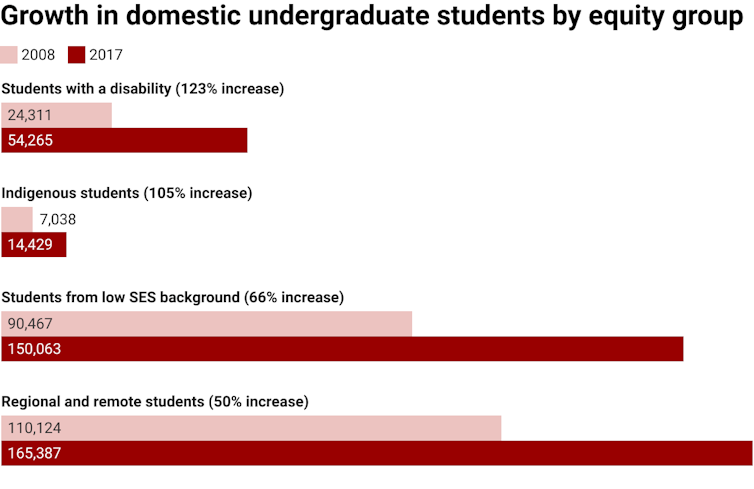
Domestic female graduates, who were one of the target groups, now consistently outnumber domestic male graduates. Students with a disability, Indigenous students, students from low socioeconomic backgrounds and students from regional and remote areas have all had significant increases in enrolments.

Chart showing increases in domestic undergraduate student equity groups from 2008 to 2017
Data: Universities Australia, Author provided

Read more: A degree promises a better life but social mobility has a downside too


Another success story is the large increase in working Australians who hold a university degree. From 1993 to 2013 the proportion increased from 12.4% to 27.9%. It continues to increase to this day.

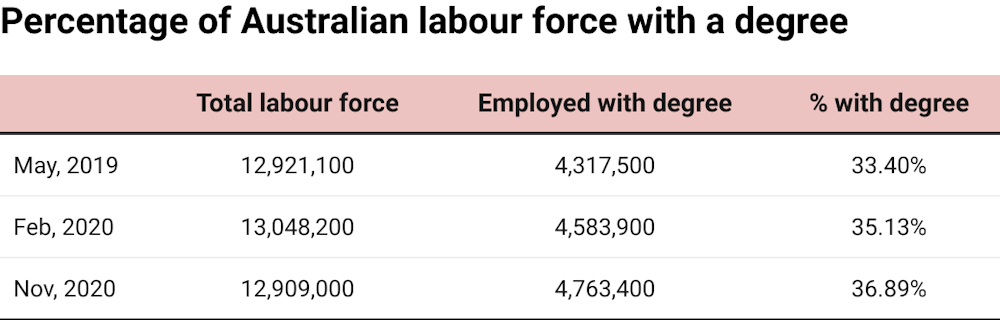
In May 2019, 12,921,100 people were employed in the Australian labour market. Of those, 4,317,500 (33.4%) held a university degree. In February 2020, 13,048,200 people were in work and 35.13% held a degree. By November 2020, the impacts of the COVID-19 pandemic had reduced the labour force to 12,909,000. However, 4,763,400, or 36.89%, held a degree.

Chart showing total labour force numbers and numbers and percentages of employees with degrees
ABS Labour Force, Australia, Detailed, Quarterly, Author provided

So while the total number of people in work was slightly lower in November 2020 than in May 2019, degree holders fared better during the pandemic. They continued to increase both in number of employees and as a proportion of the workforce.


Read more: University students aren’t cogs in a market. They need more than a narrow focus on ‘skills’


But graduate jobs are harder to find

However, the unintended and concerning statistics that resulted from policy reforms relate to the increases in unemployed people with a university degree.

For example, in May 2019 the number of unemployed was 694,900 but the number of unemployed with a university degree was 129,900, or 18.7%. In February 2020, just before the pandemic hit Australia, there were 761,100 unemployed. Of those 22.45% held a degree. By November 2020, the percentage of unemployed with a degree had risen to 23.29%, or almost one in four.

Chart showing proportions of unemployed people with degrees, May 2019 to Nov 2020
ABS Labour Force, Australia, Detailed, Quarterly, Author provided

While the pandemic is largely responsible for the rise in unemployment, we also have a larger pool of eligible workers with university degrees. So it makes sense that, particularly in such challenging times, the number of unemployed with a university degree will increase.

Even so, prior to COVID-19, a large percentage of university graduates found it difficult to find full-time work. The 2019 Graduate Outcomes Survey-Longitudinal (GOS-L) showed many take time to find full-time graduate employment.

The GOS-L assessed the short-term (four months) and medium-term (three years) outcomes of graduates. It was based on a cohort analysis of graduates who responded to both the 2016 Australian Graduate Outcomes Survey and the 2019 GOS-L. Graduates included those who completed undergraduate, postgraduate coursework and postgraduate research degrees.

The table below shows the outcomes for these 42,466 graduates within four months of completing their degree in 2016 and again in 2019, three years after graduating.

Chart showing the percentages of 2016 graduates with full-time employment at 4 months and 3 years after completion
2016 Australian Graduate Survey, 2019 GOS-L, Author provided

Significantly, 27.4% of undergraduate graduates were unemployed or underemployed four months after completing their degree.


Read more: Universities don’t control the labour market: we shouldn’t fund them like they do


Previous research and current statistics both prove that a university qualification does not guarantee a job. The 2008 Bradley Review prediction that by 2010 the supply of individuals holding undergraduate qualifications would not meet the demand has not eventuated.

From a national point of view, the ethos is the more people who have a degree, the more highly skilled the workforce. In time the job market will get better, but it might be different for some.

In these testing times graduates need to be resilient, determined and adaptable. They will have to take advantage of any opportunities and professional networks that their universities and alumni provide.

ref. 1 in 4 unemployed Australians has a degree. How did we get to this point? – https://theconversation.com/1-in-4-unemployed-australians-has-a-degree-how-did-we-get-to-this-point-156867

Loving the idea of tiny house living, even if you don’t live in one

Source: The Conversation (Au and NZ) – By Heather Shearer, Research Fellow, Cities Research Institute, Griffith University

Despite early forecasts of a COVID-driven slump, house prices are now surging in many parts of Australia. This is further widening the gap between the housing “haves” and “have-nots”, and we are seeing related rises in housing stress, rental insecurity and homelessness. In Australia and elsewhere a movement has emerged that supports tiny house living as an important response to the housing affordability crisis.

One of us argued in 2017:

“[Tiny houses] have significant potential to be a catalyst for infill development, either as tiny house villages, or by relaxing planning schemes to allow owners and tenants to situate well-designed tiny houses on suburban lots.”

Yet, to date, research begun in 2014 shows no appreciable increase in Australia in the proportion of people actually living in tiny houses, including the archetypal tiny houses on wheels.


Read more: So, you want to live tiny? Here’s what to consider when choosing a house, van or caravan


That’s despite the tiny house movement continuing to gain in popularity over the past decade, buoyed by Facebook, YouTube and Instagram. Google Trends indicates the level of interest shows no sign of abating. A Tiny Homes Carnival in Sydney in March 2020 attracted more than 8,000 people to see tiny houses for sale and listen to tiny house celebrities such as Bryce Langdon of Living Big in a Tiny House and Zack Griffin and John Weisbath of Tiny House Nation.

Bryce Langdon of Living Big in a Tiny House visits an example in Queensland.

But that popularity isn’t translating into more people living in tiny houses. Data from four surveys of the tiny house community (the latest in February 2021) show the proportion of respondents living in tiny houses remains under 20% (fewer than 200 people). It hasn’t grown in the past seven years.

The surveys were posted as links to tiny house social media sites, so of course the findings cannot be extrapolated to the whole community. Nonetheless, most tiny house advocates in Australia belong to these groups.

What’s stopping people moving into tiny houses?

Some in the movement argue this is due to obstacles such as restrictive planning policies and difficulties in getting finance and secure access to land. In response, some local governments – Cairns and Byron Bay, for example – have published helpful fact sheets and guides.

However, in a recently published research paper in Housing Studies, we argue even if these obstacles were removed, we might not see a big increase in tiny house living, especially in tiny houses on wheels. We reached this conclusion based on what people who are part of the movement, including our survey respondents, said about their motivations and aspirations.

They had three main motivations:

  1. having access to affordable housing

  2. achieving a degree of economic freedom

  3. living in a more environmentally sustainable way.

In reality, professionally built (off-the-shelf) tiny houses on wheels can cost three times more per square metre than standard houses. The most popular size for a tiny house on wheels is 7.2-by-2.4 metres, which is around 27 square metres (including loft space). That can cost upwards of A$80,000.

Of course many build their tiny houses fully or partly themselves, which can greatly reduce costs.

Tiny house on wheels in a garden
Ready-built tiny houses on wheels cost about three times more per square metre than standard houses. Paul Burton, Author provided

Read more: Life in a tiny house: what’s it like and how can it be made better?


It’s more about people’s values

We suggest that for many (but certainly not all) members of the movement, their strongest commitment is to their principles and aspirations, rather than to a particular type of dwelling. Some research indicates that tiny house dwellers live a more sustainable lifestyle even after moving to another type of dwelling.

women looks inside a tiny house on display
For many people, much of the appeal of tiny houses is the community of shared values they represent. Heather Shearer, Author provided

One of the important benefits of tiny house living was the opportunity to be part of a rather ill-defined “community”. The most recent survey unpacked this concept of community. For over 90% of respondents this meant living in a defined area with other tiny house dwellers.

As one respondent said, their ideal was “to share land with a group of tinies, without caravan park zoning”. We found more generally this meant a place with shared access to facilities such as vegetable gardens, workshops, tool sheds and community areas.

So, this research casts doubt on claims that tiny houses represent a major solution to the housing affordability crisis, held back mainly by cumbersome local council regulations and a lack of tailored finance.


Read more: Interest in tiny houses is growing, so who wants them and why?


Reforms would still be welcome

This is not to say better regulation and finance would not be welcome.

Reforms could include amendments to the National Construction Code. These include ensuring tiny houses are structurally sound, energy-efficient and achieve a minimum bushfire attack level rating.

Local councils could also look more favourably on tiny houses on wheels. This would be subject to certain conditions, including the control of environmental waste and the creation of an appropriate local rates category.

Given the interest in community living, councils could also consider relaxing restrictions on multiple dwellings on larger properties. This would enable a degree of communal living, perhaps in peri-urban areas.

These changes would help many aspiring tiny house dwellers achieve their dream.

a tiny house on display
Changes to finance and planning regulations would help more people realise their tiny house dreams. Heather Shearer, Author provided

Read more: How Chinese courtyard housing can help older Australian women avoid homelessness


Highlighting questions of housing choice

Perhaps the most significant contribution the tiny house movement has made so far has been in opening up an important debate about housing choice. It has raised important questions, including:

  • Are smaller but well-designed homes better than big and poorly designed ones?

  • How can we support the market in providing much more diverse housing (in terms of size, tenure, price and so on)?

  • Should we become more tolerant of well-designed and innovative infill developments to rectify the “missing middle” – the lack of low-rise, medium-density housing options such as townhouses and duplexes – in our cities?

  • Can tiny houses help meet the housing needs of particular groups such as single older people who would like to live near each other but not necessarily under the same roof?


Read more: People want and need more housing choice. It’s about time governments stood up to deliver it


In encouraging this debate, the tiny house movement’s greatest contribution might be to remind us of economist E.F. Schumacher’s famous principle that small is beautiful and more sustainable.

ref. Loving the idea of tiny house living, even if you don’t live in one – https://theconversation.com/loving-the-idea-of-tiny-house-living-even-if-you-dont-live-in-one-157052

Already badly off, single parents went dramatically backwards during COVID. They are raising our future adults

Source: The Conversation (Au and NZ) – By Tom Crowley, Associate, Grattan Institute

Single parents with dependent children — eight out of ten of them women — were far more likely than others to lose work at the height of the pandemic and are far more likely to still be out of work now.

Even before COVID, many were in financial distress.

Single parents’ paid hours fell more than 30% in the depths of the crisis in April.

By December, even though there were no significant restrictions in place anywhere in Australia, paid hours for single parents remained 10% lower than they had been a year earlier.

This was at a time when the hours worked by couple parents had recovered quickly, and was higher than a year earlier.


Employment for single parents fell more than 10% between December 2019 and September 2020, and is still 5% lower than in December 2019.

About 50,000 single parents dropped out of the workforce altogether during the first lockdown – 11% of all single parents.

Why was the COVID recession so bad for single parents?

Many single parents had no choice but to stop working

One reason would be that the loss of formal and informal childcare and the need to manage remote learning meant many single parents had little choice but to stop working.

Also, single parents would be over-represented in the job-loss figures because they are over-represented in insecure work.

In August 2019, a quarter of single parents held casual jobs without paid leave. These jobs – many of them in COVID-vulnerable sectors such as retail and hospitality – were among the first to be lost during the lockdowns.

Many more were in casual jobs, ineligible for JobKeeper

Importantly, more than half of single parents in casual jobs had been in those particular jobs for less than a year, meaning the rules made them ineligible for JobKeeper support.

In a survey by the Melbourne Institute, only 13% of single mothers reported that they were receiving JobKeeper in late 2020, compared to 18% of mothers in couples and 33% of fathers in couples.

The outsized impact of the COVID recession on single parents is even more of a concern when we consider that they were among the most disadvantaged Australians before COVID.

Many had already been stripped of payments

In 2018, a third of single-parent families were living in poverty (compared to less than 10% of couples with dependent children). One fifth of single parents reported that they regularly skipped buying essential items.

And incomes for single parents were falling even before the crisis: between 2016 and 2018, when the national median annual income increased from $48,360 to $49,805, the median for single parents fell from $38,000 to $34,000.

Decisions by successive governments have contributed to this outcome.


Read more: The bad bits of ParentsNext just came back


From 2006, the Howard government’s Welfare to Work program pushed new single parents claiming income support onto the Newstart unemployment benefit – $87 per week less than the Single Parenting Payment – if their youngest was eight or older.

The decision pushed about 20,000 single parents on to a lower payment.

In 2013, the Gillard government pushed another 80,000 single parents onto Newstart by extending the policy to single parents who had been claiming parenting payments before 2006, almost doubling the proportion of single parents in poverty, lifting it to 59%.

After Welfare to Work came ParentsNext

Then in 2016, the Turnbull government launched ParentsNext, with the stated intention of helping single parents with children as young as six months to return to work.

It included so-called participation plans, under which parents could be stripped of payments unless they performed mandated activities – for example, taking their child to swimming lessons.

A Senate inquiry recommended it “not continue in its current form”. Instead the 2020 budget set aside $24.7 million to “streamline the successful ParentsNext program”.


Read more: COVID-19 is a disaster for mothers’ employment. And no, working from home is not the solution


The COVID crisis and a series of government decisions before that are condemning hundreds of thousands of Australian children to growing up in poverty, and exacerbates intergenerational disadvantage.

Here are three things governments could do to make a difference:

  • Significantly increase in the permanent rate of JobSeeker. This would make a huge difference for unemployed single parents with children aged eight or older who thanks to earlier government decisions have to rely on JobSeeker while they make the transition to work. The Federal Government plans to increase the permanent rate of JobSeeker by $25 a week.

  • Make childcare cheaper. This would help single parents get back into paid work sooner and expand opportunities for early education for their children. Cost is the major barrier for families wanting childcare. The Grattan Institute has identified a series of options to improve affordability.

  • Classify single parents in the workforce as “essential workers” for the purposes of any future lockdowns. This would mean their children could continue going to school and childcare.

These changes would help single parents raising the adults of the future, who are at risk of slipping further behind.

ref. Already badly off, single parents went dramatically backwards during COVID. They are raising our future adults – https://theconversation.com/already-badly-off-single-parents-went-dramatically-backwards-during-covid-they-are-raising-our-future-adults-157767

The secret life of puddles: their value to nature is subtle, but hugely important

Source: The Conversation (Au and NZ) – By Gregory Moore, Doctor of Botany, The University of Melbourne

It’s official: Australians endured the coldest, wettest summer in at least five years thanks to La Niña, a climate phenomenon over the Pacific Ocean.

Before we knew it, autumn rolled in bringing more rain. Tragically, it led to widespread flooding across New South Wales, but elsewhere it helped to create more puddles. In our urban environments puddles are inconvenient: they can damage property and block our paths. But from a biological perspective, puddles are very important components of microhabitats and biodiversity.

We know for many animals — including birds and pets — puddles are a ready source of drinking water and provide a much-needed bath after a hot and dusty day. They’re also well known for providing water-reliant species such as mosquitoes with opportunities for breeding, and many of us may remember watching tadpoles developing in puddles as children.

But puddles make more nuanced and subtle contributions to the natural world than you may have realised. So with more rain soon to arrive, let’s explore why they’re so valuable.

Rainy day on Swanston St, Melbourne
Puddles are getting harder to find in urban environments. Shutterstock

Take a closer look

Puddles are a diverse lot. They can be small or large, shallow or deep, long lasting or gone in a matter of hours. If you look closely at a puddle you will often find it is not even, especially on a slope.

Puddles consist of small, naturally formed ridges (berms) and depressions (swales). The berms form from silt and organic matter like leaf litter, which act as mini dams holding back the water in the swales behind them.

Berms and swales can be hard to see, but if you look closely they’re everywhere and contribute to the retention of water, affecting the depth, spread and the very existence of the puddle.

All of this means they meet the needs of different species.

Flooded country path
The tiny ridges and depressions in puddles can make a big difference to wildlife. Shutterstock

On rainy days you may have seen birds such as magpies feeding on worms that wriggle to the surface. Worm burrows can be two to three metres deep and many species might come to the surface to feed on leaf litter.

Worms emerge during and after heavy rain when water floods their burrows and soil becomes saturated. The worms won’t drown but they do need oxygen, which is low in very wet soils.

Often in drier weather, getting a worm is not as easy as you might think — not even for the legendary early bird. So when heavy rain drives worms to the surface, it’s party time for birds that feed on them, and they make the most of the opportunity.

A spotted pardalote near a puddle
A spotted pardalote inspecting puddle. Shutterstock

Swales in puddles often persist for days, which allows water-dependent insects to breed. Mosquito larvae, for instance, live in water for between four and 14 days, depending on temperature (so if you’re worried about mozzies, then remember puddles have to persist for days before the pesky pests emerge).

Tadpoles take between four and 12 weeks to develop into frogs, and requires a deeper, long-lasting puddle. But these puddles are becoming rarer in urban areas, and so it’s not often you see tadpoles or frogs in our suburbs.

Why seeds love them

Puddles also provide small, but important, reservoirs where seeds of many plant species germinate. In some cases, the seeds have chemical inhibitors in them, which prevent the seeds from germinating until after a period of heavy rainfall.

Then, the inhibitors are leeched from or diluted within the seeds, allowing them to germinate. Many desert species have this adaptation, including Australian eremophilas (emu bush).


Read more: La Niña will give us a wet summer. That’s great weather for mozzies


In other cases, plants that grow all year round (annoyingly, weeds among them) need the dose of water puddles provide to kick start their very rapid growth and reproduction.

Easily germinated plants (such as tomatoes and cabbages) and ornamental flowering plants (such as hollyhocks and delphiniums) often require just a little extra water to trigger the whole germination process.

Important growing opportunities for iconic trees

Puddles also provide more subtle opportunities for wildlife. Take Australia’s iconic river red gums (Eucalyptus camaldulensis) as an example. River red gums are water-loving trees that can withstand up to nine months of inundation without getting stressed.

River red gum
Puddles can wash away plant-inhibiting chemicals from the soil. Shutterstock

What’s not so well known, however, is river red gums produce chemicals that rain washes from their leaves, accumulating beneath the tree. These chemicals can inhibit the growth of plants, such as weeds, under the canopies.

This effect — where chemicals produced by one plant have an effect on other plants — is called “allelopathy”. Many wattle species produce allelopathic chemicals and so do some important food plants, such as walnuts, rice and the common pea.

River red gum allelopathic chemicals can prevent the trees’ own seedlings from growing near them. So river red gums require floods to wash the chemicals from the soil away. This mechanism allows river red gums to germinate and regenerate when the soil is wet, and in places away from the competition of mature trees.


Read more: The river red gum is an icon of the driest continent


Puddles can do the same thing, on a small scale, ensuring trees have plenty of opportunities to persist in the wild. This pattern of regeneration is important to provide a mosaic of species and trees of different ages, making up a diverse range of habitats for other wildlife.

Puddles are no piddling problem

A muddy golden retriever playing in a puddle
Puddles are becoming harder to find in the suburbs. Shutterstock

As property developers iron the creases from our created landscapes with much less open space and more paved surfaces, puddles are becoming harder to find close to home.

Taking away puddles removes a whole range of microhabitats, jeopardising the chances of a diverse range of species to breed and persist, especially in urban areas. These days, any loss of biodiversity is worrying.

So when you’re next out and about after or during heavy rain, keep an eye out for puddles.

Remember the life that depends on them and, if you can, try not to disturb them. Perhaps capture the joy of jumping over — rather than in — them. They are not just a nuisance, but a key to a nuanced and biodiverse local community.

ref. The secret life of puddles: their value to nature is subtle, but hugely important – https://theconversation.com/the-secret-life-of-puddles-their-value-to-nature-is-subtle-but-hugely-important-154561

Hidden women of history: Hélisenne de Crenne, the first French novelist to tell her own story

Source: The Conversation (Au and NZ) – By Susan Broomhall, Director, Gender and Women’s History Research Centre, Australian Catholic University

In this series, we look at under-acknowledged women through the ages.


In 1538, a new author burst on to the literary scene in Paris. Published by Denys Janot, four new works appeared within five years by a writer known as Hélisenne de Crenne.

The first was Les Angoysses douloureuses qui procedent d’amours (The Torments of Love), a novel that depicted the disastrous consequences of an adulterous affair.

In 1539 came a collection of letters that explored women’s speech, education, friendship and legal rights among its topics.

In 1540 she published Le Songe (The Dream), a moral and didactic work in which a woman and her lover reflected upon the perils of lust.

Her last known work was a translation into French prose of the first four books of Virgil’s Aeneid (1541), dedicated to the king, Francis I.


Read more: Guide to the Classics: Virgil’s Aeneid


Hélisenne de Crenne was the pen name of Marguerite Briet, the daughter of a legal family from Abbeville. Few details of her life are certain, but we know that she obtained a legal separation from her husband, Philippe Fournel, Lord of Crenne, and moved to Paris, the centre of French literary activities and publishing. There she owned several properties. It appears that her son, Pierre, was a student there in 1548.

Hélisenne was the first living woman of the century to be printed in France and hers was the first autobiographical novel to be published in French. The publication of her works was remarkable in several ways.

line drawing of royal court scene
An illustration from the translation of Virgil’s verse depicts Hélisenne presenting it to the king. Bibliothèque nationale de France

Read more: Fornication, fluids and faeces: the intimate life of the French court


Speaking out

Women represented less than 1% of all identifiable published authors in 16th-century France. Female literacy and broader education was not as high as for men at the same social levels.

Women at court were producing sophisticated intellectual and creative works that circulated in manuscript. Print publication provided a more open and visible expression than manuscript circulation, but was limited to a more select few. Even women in powerful social positions acknowledged expectations that women should restrict their speech to the domestic sphere.

Most women writers provided lengthy justifications or apologies for their venture into print. Hélisenne claimed to hesitate to make “mention of immodest love, which according to the opinion of some shy women could be judged more worthy to be conserved in profound silence than to be published for a widespread audience”. Nevertheless, she pressed on.

Rather than locate herself in a line of female authors, Hélisenne identified herself in a tradition of the male canon for her authority to write. The opening phrase of her Le Songe recalled none other than Cicero as her model:

…in imitation of him, the desire arose in me to relate in detail to you a dream worthy of recording.


Read more: Hidden women of history: Enheduanna, princess, priestess and the world’s first known author


Small books to carry

Print publication offered a woman without elite networks access to a large pool of readers, and perhaps a way to reach potential patrons at court.

The dedication of her translation to Francis I and her praise of his sister, Marguerite de Navarre (another prolific author whose works appears in print over the course of the century), in her Letters suggests that Hélisenne may have hoped for their patronage.

Le Songe de madame Helisenne Crenne (1541) Bibliothèque nationale de France

The staggered release of her writings seems to have been planned to heighten their impact. Her publisher, Denys Janot, mainly published works in French, targetting a popular market and using on-trend Roman typeface rather than the heavy, old-fashioned Gothic script.

Most of Hélisenne’s works, like those of other female writers, were in small sizes such as octavo, duodecimo and sextodecimo. These were portable and cheap, unlike the larger-sized folio and quarto scholarly and religious works intended to be consulted in libraries as part of a long-lasting record, though her translation of Virgil’s Aeneid was produced as a folio, with extensive woodcut illustrations.

A female perspective

Hélisenne was one of the first women writers who sought publication of her work seemingly as a conscious contribution to contemporary popular literature.

Goodreads

Her novel, The Torments of Love, involves an unusual structure, retelling the same events from the perspective of three different narrators: Hélisenne, her lover Guénélic, and Guénélic’s best friend, Quézinstra. Each section offers new insights to the overarching narrative, and each has its own distinctive tone and style.

The work’s balancing of elements from chivalric literature and a new emotional sensibility culminates in its conclusion as a battle between Athena and Venus over the book itself.

Her translation of Aeneid was equally radical, creatively embellishing the original from a female perspective with a highly sympathetic presentation of Dido’s plight and women’s loyalty in love.

She was very proud of her publication in the city that was the intellectual and publishing centre of France, saying:

… it is an inestimable pleasure to me to think that my books are on sale in this noble Parisian city, which is inhabited by an innumerable multitude of wonderfully learned people.


Read more: Hidden women of history: Catherine Hay Thomson, the Australian undercover journalist who went inside asylums and hospitals


A commercial success

Hélisenne’s work were a commercial success, going through nine editions in a short, intense period to 1560.

Pencil drawing on young woman
A nineteenth-century artist’s imagined Helisenne. Wikipedia

Torments of Love is Hélisenne’s only work to be dedicated to female readers who she called “all honest ladies”. Elsewhere, she assumed her works would be of interest to everyone, including the king.

A later editor did not agree. Claude Colet explained in the introduction to the 1550 edition of her works that his extensive simplification of her Latinate style for young ladies was “to render the obscure words or those too much like Latin into our own familiar language, so that they will be more intelligible to you”.

The last known evidence of this groundbreaking author is in 1552 but, in her lifetime, she had achieved a remarkable series of literary firsts.

ref. Hidden women of history: Hélisenne de Crenne, the first French novelist to tell her own story – https://theconversation.com/hidden-women-of-history-helisenne-de-crenne-the-first-french-novelist-to-tell-her-own-story-108249

What can go in the compost bin? Tips to help your garden and keep away the pests

Source: The Conversation (Au and NZ) – By Cheryl Desha, Associate Professor, School of Engineering and Built Environment, and Director, Engagement (Industry), Griffith University

Pretty soon, many more Australians are going to be composting their food waste. The Victorian government kicks off its four-bin system from this year, and the federal government is considering a plan to turn kitchen scraps into fertiliser for farmers.

But knowing exactly what to put in your compost bin can be tricky – and views differ on whether you should add items such as meat and citrus.

Composting is fairly simple, but it’s important to get it right. Otherwise, your compost mix may be too slimy or smelly, or attract vermin.

We are experts in food resilience and sustainability, and have prepared this “dos and don’ts” guide to get you on your way.

Your own composting system

Composting is a way of doing what happens in nature, where raw organic materials are converted to soft and spongy soil-like grains. These help soil retain water and make nutrients available to plants.

In fact, compost is so valuable for your garden, it’s often referred to as “black gold”.

For those of you composting at home, here’s how to make sure the system delivers what you need for your home gardening projects.

A man scraping food scraps into a bin.
Your bin should be made up of one part green waste and two parts brown waste. Shutterstock

Dos:

• use a couple of bottomless bins so when one is full you can start on the other, in a shady spot

• have a good mix of “browns” (two parts) and “greens” (one part). Combine brown materials (hay, straw, sawdust, woodchips, leaves, weeds that have not gone to seed) with food scraps and other materials (fruit and vegetable peels and rinds, tea bags, coffee grounds, eggshells), and some types of animal manure (chicken, cow, horse)

• let the temperature climb. Heat in the centre of your compost pile is a good sign, as the microbes are breaking down what you’ve put in. As the compost matures it cools, creating a great environment for worms and other microbes to finish off the process

• make sure your coffee grounds and tea bags can break down, so remove the bag before you add it to the compost pile. Moist tea leaves can help your pile break down faster. Citrus fruit (lemons, oranges), spicy peppers, onion and garlic are fine, just don’t add them to your worm farm; the worms will suffer under the acidic conditions produced when these items break down

• get creative with natural “brown” materials – as long as there is no plastic mixed in, throw it in. This includes anything from cereal boxes to cotton balls, wine corks, fireplace ashes, and even human hair and pet fur.


Read more: We’ve had a taste of disrupted food supplies – here are 5 ways we can avoid a repeat


Vegetables being scraped into a bin.
Citrus and onion are fine, avoid meat scraps. Shutterstock

Don’ts:

• don’t let your compost bin be a feast for local rodents such as rats. Bury the base slightly into the ground, lining the bin with wire mesh and keeping it covered. Avoid adding meat scraps, cooking fats and oils, milk products and bones, which will attract vermin

• don’t let your compost get stinky or slimy – that means it’s too wet. Slimy compost means you need to add more “brown” materials. You can also speed things along by having a dig through the heap every week or so, or adding extra bits and pieces at various stages (chook poo, crushed rock and lime) to help it all happen faster

• don’t let nasty chemicals and germs get into your compost. This includes things like treated wood waste, pet waste (if they take medication or eat meat) and sick plants. Home compost bins are limited in what they can process. It is a good idea to wear gloves as an extra safety measure.

Council compost collection

Local councils are increasingly offering food waste collection programs, sometimes along with garden green waste. In such cases, these materials are processed at large scale composting sites

In Victoria, a four-bin waste and recycling system will be rolled out in partnership with councils. Most households will be using this system by 2030.

Gold Coast City Council City recently diverted 553 tonnes of food waste from landfill during a one-year trial. The program helps address home composting space challenges for the region’s many apartment and high-rise dwellers.

If your council offers food waste collection, make sure you follow their particular “dos and don’ts” advice. Depending where you live, it may differ slightly to ours.


Read more: Fertile ground: what you need to know about soil to keep your garden healthy


To bag, or not to bag?

Working out how to bag up your food scraps – whether for your home bin or council collection – can be confusing. Check your local instructions for kerbside collection to make sure your food waste is bagged in the right way.

You can try putting “home compostable” bags in your own compost bin, experimenting with your bin temperature to achieve the best outcome. Compostable plasticis designed to break down back into nutrients, but most still need managed, high-heat conditions to activate this process.

Don’t be tricked by “degradable” bags – these are likely to be made of plastic and just break into millions of tiny pieces. Also, as others have written, some “biodegradable” plastics made of plant-based materials might not be better for the environment, and they can take just as long to degrade as traditional plastics.

The benefits of composting

Making compost at home doesn’t just lighten our rubbish bin and help our gardens. It also helps tackle climate change.

Each year in Australia, food waste rotting in landfill creates methane equivalent to around 6.8 million tonnes of carbon dioxide. If global food waste were a country, it would be the third-largest emitter of greenhouse gases in the world, behind the United States and China.

So clearly, there are many great reasons to compost. And by following a few simple rules, you too can create your own “black gold”.

ref. What can go in the compost bin? Tips to help your garden and keep away the pests – https://theconversation.com/what-can-go-in-the-compost-bin-tips-to-help-your-garden-and-keep-away-the-pests-156342

Morrison takes big personal hit in Newspoll after missteps on women’s issue

Source: The Conversation (Au and NZ) – By Michelle Grattan, Professorial Fellow, University of Canberra

Scott Morrison’s approval has taken a sizeable hit in a Newspoll showing Labor maintaining its 52-48% two-party lead.

As Morrison prepares to unveil his cabinet reshuffle the poll, published in Monday’s Australian, found his satisfaction rating fell from 62% to 55% in two weeks.

The fortnight was dominated by shocking revelations of lewd behaviour among staffers on the Coalition side, a botched attempted “reset” on gender issues when Morrison lashed out at a news conference, and a scandal around a Liberal backbencher.

In the poll, taken March 24-27, Morrison’s dissatisfaction rating jumped from 34% to 40%.

The “better PM” gap also narrowed – Morrison now leads Anthony Albanese 52% (down 4 points) to 32% (up 2 points). This the narrowest margin since March last year. In February Morrison had a 35-point margin.

The Coalition’s primary vote rose a point to 40% while Labor’s fell a point to 38%.

The Australian reports that it is the first time in more than a year that Morrison’s approval ratings haven’t been in the 60s. His net satisfaction is plus 15.

Albanese’s satisfaction increased one point. He has a net satisfaction of plus 2.

The reshuffle is set to move Christian Porter out of the attorney-general’s portfolio and Linda Reynolds out of defence, but keep both in cabinet.

The government is now confronting a major row over Queensland Liberal MP Andrew Laming who trolled two local women on Facebook and took an inappropriate photo of another woman.

Laming announced at the weekend he would not seek to run at the next election but he remains in the Liberal National Party. He is now on leave but has indicated he aims to be back for the budget session, after he has had counselling on “empathy and appropriate communications”.

Albanese said Laming was not a fit and proper person to be in parliament and should go. He said there were various measures available to the Labor Party to take against him when parliament resumed.

Morrison will be anxious to see a woman preselected for Laming’s seat of Bowman.

As the government’s crisis continues Liberal women are increasingly speaking out, with Victorian federal backbenchers Sarah Henderson and Katie Allen suggesting on the ABC’s Insiders that parliamentarians should be subject to drug and alcohol testing.

ref. Morrison takes big personal hit in Newspoll after missteps on women’s issue – https://theconversation.com/morrison-takes-big-personal-hit-in-newspoll-after-missteps-on-womens-issue-158033

Bryce Edwards’ Political Roundup: Housing announcement a blow for those at the bottom

Political scientist, Dr Bryce Edwards.

Analysis by Bryce Edwards.

Political scientist, Dr Bryce Edwards.

Renters have been thrown under a bus by the Labour Government this week. Now the dust has settled on the Government’s announced housing changes, economists are pointing to a likely rise in the cost of rents, and an increase in homelessness. The flipside, of course, is that homebuyers may be better off, if house price inflation is pushed down. All in all, the housing announcements look set to fuel greater wealth inequality in New Zealand, creating an even bigger divide between home owners and renters.

In analysing the announcement for the Guardian on Tuesday, I predicted house prices are likely to be stabilised or reduced, which will help middle-income first-home buyers, while those at both the top and bottom are set to lose from the new policies – see: Targeting New Zealand’s property speculators is popular, but won’t fix the housing crisis.

In this column, I focused on the Government’s decision to abolish the ability of property speculators renting out houses to deduct their mortgage interest payments from their tax calculations. This change will make investment in rental properties less attractive and it’s the part of Tuesday’s suite of policy announcements that is likely to have the biggest impact.

The growing consensus is that the flow-on effect will be landlords either putting up prices to recoup increased costs, or selling their rentals. Buyers are likely to be owner-occupiers, thereby reducing the number of rentals available, adding to the rental shortage. In addition, because owner-occupied houses tend to have fewer people in them, any shift of houses from the rental to ownership market will result in fewer people being adequately housed.

ASB chief economist Nick Tuffley was reported saying “You are more likely than not to see rents going up faster than what they already have been” – see Madison Reidy’s Landlords’ warning to increase rents not an empty threat – economists.

Yesterday’s Stuff newspaper editorial says renters are the “collateral damage” in the struggle to bring down house prices – see: Renters could be ‘lost generation’ in New Zealand’s housing crisis. Here’s the main point: “Property speculators will simply move their wealth elsewhere, first-home buyers will gain a greater opportunity, but renters could be left clinging to those lower rungs. And paying dearly for the privilege, with rents in Auckland and Wellington pushing a median $600 and more a week, and an average of $440 in Christchurch.”

The newspaper argues the policies announced this week will only exacerbate the plight of people who aren’t anywhere near being able to buy a home.

How much might rents rise by? It obviously depends on a lot of factors, including the ability of renters to pay more. ASB economist Mark Smith has done some modelling to show that landlord investors will be losing about $5000 a year from the interest deductibility change. If landlords were to pass this on to their tenants, rents could rise by about 30 per cent, although Smith thinks such steep rises would be unlikely – see Susan Edmunds’ Investors might pay 30 per cent less for properties after deductibility changes, says ASB economist.

The potential for rent increases is “inescapable” according to BusinessDesk’s Pattrick Smellie, who writes today that other government policy settings mean the rental market in New Zealand is particularly liable to responding with higher rental prices – see: Housing package: this term’s oil and gas ban? (paywalled).

Here’s his main point about this: “The NZ rental market has an apparently surprising capacity to bear higher rents. The government’s own Accommodation Supplement helps this along by subsidising low-income people who can’t afford what private landlords are charging. Low or no-interest student loans allow many landlords to charge outrageous prices for cold, dank, small rooms in elderly houses to kids who’ve only just left home.”

For those who think landlords are unlikely to put rents up, commercial banker Dean Nimbly says, these people “clearly haven’t met any actual landlords”, and he says “residential investors tend to act more as a cartel than as competitors – where one landlord increases rents, the rest will feel emboldened to follow suit” – see: On housing reform: less than meets the eye (paywalled). Nimbly argues that increases to recoup the new costs for landlords are likely because “demand for rental accommodation exceeds supply in most areas, meaning landlords face little constraint in increasing rents.”

Infometrics economist Brad Olsen made some similar arguments on TVNZ’s Breakfast, saying that “as long as there wasn’t enough supply of rental properties, landlords can continue to largely dictate prices” – see: Rents will increase, regardless of Government’s housing package — senior economist. But Olsen also adds that “Rents will go up, but they will not go up exponentially because of that policy only.”

Writing in the NBR, Dita De Boni argues that the new package of reforms will merely exacerbate the divide in New Zealand between renters and home-owners and amount to “middle class welfare” – see: Housing package doesn’t address irrationality underlying real estate market (paywalled). In this, De Boni sides with TOP leader and economist Shai Navot, who says the measures shift “a huge tax advantage to owner occupiers and those with cash.”

De Boni argues that “turfing out investors in favour of first-home buyers” will be bad for renters, and will simply “benefit the property-owning class to the detriment of everyone else.”

Leftwing blogger Martyn Bradbury says an economic win for homebuyers is a political win for Labour – see: Labour’s war on speculators – winners & losers. The other big political winner is the Act Party, who Bradbury says will gain “a vast new flood of angry rich Landlord Speculator members”. The political losers in this are National, who’s traditional middle class support, much of which shifted over to the Government at last year’s election, is now tied even more firmly to Labour.

Nothing positive in the Government’s announcement for renters

Advocates for renters have been very disappointed by the lack of changes that might improve the situation for non-homeowners. Renters United’s spokesperson Geordie Rogers went on TV on Thursday to ask: “Why did they not bring in any policy to help that one third of New Zealanders that are currently renting who are looking to buy a home?” – see 1News’ ‘I want them to have a future’ – Concerns renters have been overlooked in housing package.

Other advocates for renters have spoken out in an article today by Kate Green and Ethan Te Ora – see: ‘Not a priority’: Renters feel overlooked after Government’s housing announcement. In this, “Manawatū Tenants’ Union spokesperson Ben Schmidt said the package did nothing to help the majority of renters or families in emergency housing who needed change now.”

The article also quotes Ashok Jacob, of Wellington Renters United, saying experience shows that “landlords will put the rent up, whenever they can, for no real reason”, and hence this is likely to occur with this latest policy change. He also argued for rent controls or freezes to be implemented by the government.

Columnist Glenn McConnell also fears that “generation rent” has been left out of the Government’s consideration in their announcement, and rents will now rise. He suggests that instead of just being concerned with homebuyers, the Government needs to focus on the housing crisis for those at the bottom – see: Forget first-home buyers, the metric of success in the housing crisis is rental prices.

Individual renters are speaking out about their disappointment that the package entirely ignored their plight – see RNZ’s Housing package opens door to investor angst, renter despondency.

In South Auckland in particular, there won’t be much enthusiasm for the Government targeting first-home buyers – see Stephen Forbes’ Salvation Army questions Government’s new housing package. According to the Salvation Army’s Ronji Tanielu, the housing announcement is “not going to help beneficiaries and it doesn’t help in terms of transitional and social housing.” Similarly, Manukau Urban Māori Authority (MUMA) chairperson Bernie O’Donnell is reported as saying that “addressing the astronomical housing rents in the area with more social housing has to be a top priority.”

Justin Latif also reports that South Auckland housing advocate Andrew Lavulavu fears that rising rents will now escalate: “The average rent in South Auckland is now around $600 a week, but this time next year it could be around $750-850 a week. So we might see issues like overcrowding and health-related issues rise, as families move in together to pool their incomes” – see: Housing reforms could end up hurting South Auckland families, expert warns.

Labour’s response to rental fears

Housing Minister Megan Woods was challenged by John Campbell on TVNZ Breakfast about the position of renters being made worse by Labour’s decisions, and she responded that the Government had received “contested advice” on rents being made worse – see 1News’ Megan Woods challenged by John Campbell on consideration given to renters in housing package.

This article also reports: “Woods said she wasn’t expecting a spike in rent prices because the Government had ‘comprehensive’ housing policies which, for example, only limited rent increases to once a year.”

Finance Minister Grant Robertson has also deflected questions about rents going up by stating that if this happened, tenants can simply “go looking elsewhere”. This has caused something of a backlash – see Mark Quinlivan’s New Zealanders react after Finance Minister Grant Robertson says tenants will ‘go looking elsewhere’ if landlords hike rents. Similarly, see Rachel Sadler’s Social media users attack Jacinda Ardern over Government’s new housing plans.

However, there’s a case to be made that rents aren’t likely to go up. This is based on the experience of the UK, which enacted a similar policy a few years ago – see Dan Satherley’s Housing tax changes – what happened when the UK tried the same thing, and how we’re doing it differently.

Finally, for a bigger picture view on how the Government’s decisions over the last year have made life much worse for renters, and why “the average New Zealander effectively lost $54.59 for every hour they turned up to work if they did not own a home”, see analysis from Victoria University of Wellington’s Brendon Blue: Non-homeowners are paying the cost of the Covid recovery.

NZ plans Cook Islands vaccination campaign, two-way travel bubble

RNZ Pacific

New Zealand expects to open a two-way travel bubble with the Cook Islands in May and is planning a vaccination campaign there.

The leaders of both nations met in Auckland today, with New Zealand confirming $20 million in additional support for the country this financial year.

Cook Islands Prime Minister Mark Brown is the first international leader to be officially welcomed into New Zealand since the pandemic began.

Speaking to media after the meeting, Prime Minister Jacinda Ardern said the two discussed the road map for quarantine-free travel.

She said the vaccination campaign – also planned to begin in May – will pave the way.

“There has been significant work with preparedness and we are currently working in earnest towards a May commencement. The Director-General of Health has also advised that beginning vaccination will add to the safe opening of quarantine-free travel.”

Brown has said the Cook Islands’ updated contact tracing app, which is compatible with the New Zealand Covid Tracer app, is also an essential step on the path to two-way quarantine-free travel.

$20m ‘sweetener’
In the meantime, New Zealand is offering the $20 million sweetener from a “recently reprioritised” Development Assistant budget.

A one-way travel bubble between Rarotonga and New Zealand has been in place since the end of January allowing quarantine-free travel from the Cook Islands to New Zealand.

At least 300 Cook Islanders have arrived in New Zealand to look for work since the one-way travel arrangement came into effect and residents are also travelling to New Zealand for medical treatments they can’t access at home.

There is pressure for officials to move faster on a two-way travel bubble, or risk losing a significant chunk of the Cook Islands workforce to New Zealand.

Brown told Ardern about the “significant issues” facing his covid-free, but also tourist-free, country.

“For a country that is totally reliant on tourism – up to 70 percent on GDP – this has had a significant impact on our economy, to the state it’s declined 20 percent in the time New Zealand’s economy has declined by 2.9 percent of its GDP,” he said.

This article is republished under a community partnership agreement with RNZ.

Print Friendly, PDF & Email

Article by AsiaPacificReport.nz

Tuna brands largely failing to combat slavery in Pacific, says new report

RNZ Pacific

A new report has found that tuna fishing companies in the Pacific are doing little to stop slavery on their boats.

The canned tuna industry is rife with allegations of modern slavery in its Pacific supply chains, with little protection for workers from forced labour.

The Business and Human Rights Resource Centre report, All At Sea: Modern slavery in Pacific supply chains of canned tuna, surveyed dozens of the world’s largest canned tuna brands.

While more than four in five of them have public commitments on workers’ human rights, this doesn’t translate into efforts to end slavery in their supply chains.

The covid-19 pandemic has also heightened the risk for workers of experiencing modern slavery.

New Zealand and other countries have been urged by the centre to legislate against products made using forced labour.

“Too many Pacific tuna fishermen that put food on our tables face abuse and confinement every day,” said Phil Bloomer, the executive director of the Business and Human Rights Resource Centre.

Failing to provide duty of care
“Put simply, the brands who put the cans on their shelves are failing to provide adequate duty of care to these workers who furnish their products.”

According to Bloomer, when the centre first approached these brands two years ago, many had made paper promises to improve their approach to human rights.

“Yet, two years on, the laggard companies have done next to nothing.

All At Sea cover
The All At Sea fisheries industry slavery report. Image: BHRRC

“This is not inevitable. A handful of companies – Tesco, Thai Union and Woolworths (Australia) – have shown it is both commercially viable and a moral imperative to emancipate workers caught in modern slavery.”

Only six companies of the original 35 surveyed by the centre have revised their human rights due diligence processes over the last two years: Ahold Delhaize, Coles, Conga Foods, Kaufland, REWE Group and Woolworths.

Bloomer said other brands must catch up and take urgent action to protect workers.

“Investors should also note that the laggards not only run major reputation risk, but also imminent legal risk as new laws in 2021 will leave their negligence exposed to legal challenge.”

This article is republished under a community partnership agreement with RNZ.

Print Friendly, PDF & Email

Article by AsiaPacificReport.nz

Sally Sara’s first play, Stop Girl, is a bold exploration of war trauma and journalism

Source: The Conversation (Au and NZ) – By Rodney Tiffen, Emeritus Professor, Department of Government and International Relations, University of Sydney

Review: Stop Girl, directed by Anne-Louise Sarks, Belvoir.

Stop Girl is a loosely autobiographical play by ABC journalist Sally Sara exploring her emotional traumas seeking to readjust to life in Sydney after years reporting from war-torn Afghanistan.

The play begins in Kabul with Suzie (Sheridan Harbridge) highly competent and confident, knowing how to operate in that dangerous and chaotic city, a productive and skillful reporter.

Her motto is “don’t connect”: to treat life there as a story, to practise professional detachment rather than get personally involved in the country’s human suffering.

The play then switches to her psychological unravelling in Sydney, haunted by memories, unable to relax or enjoy life. Having covered a bombing in a supermarket in Kabul, she feels unable to enter her local Woolworths. She copes less and less well, descending into a deep and potentially suicidal depression, failing to cope at work, and feeling alienated from the people around her.

A woman on stage with a scarf loose around her head.
In Afghanistan, Suzie survives through isolation. Brett Boardman/Belvoir

While her key to functioning in Afghanistan was “don’t connect”, her inability to connect in Sydney is central to her suffering. Her “solution” is to seek escape, unsuccessfully applying for a posting to Paris, and, more desperately, planning to return to Kabul as a freelance.

Her childhood friend and loyal supporter Bec (Amber McMahon) has taken a different route. She also works with the ABC but is not consumed by her work, enjoys married life and is deeply involved with her three children. A tragedy for Bec was the stillbirth of her son, which occurred while Suzie was busily reporting from the Congo.

Suzie’s cameraman in Afghanistan, Atal (Mansoor Noor), came to Australia after receiving threats because of his work with the ABC, and is now applying for asylum.

Growing up in a country at war, he is rejoicing in the affluence, freedom and safety of Sydney, enjoying it all — except the Potts Point dogs. His optimism is a counterpoint to Suzie’s pessimism, and as such he has some of the strongest lines in the play.

A Middle Eastern man with a bogie board. A white woman with a backpack.
Atal finds new possibilities in his new home in Sydney. Suzie struggles to feel at home in her old hometown. Brett Boardman/Belvoir

Both Bec and Atal provide a contrast with Suzie with their strong anchoring in family and other immediate relationships.

The third character is Suzie’s widowed mother, Marg (Toni Scanlan), loving and well-meaning but in the early parts of the play having very limited insight into Suzie’s aspirations and torments. Later, the reconnection between the two of them helps Suzie’s recovery, to help her realise that whatever her achievements abroad they cannot be an escape from the challenges of living at home.

The trauma of reporting on trauma

It was brave of Sara to write such a revealing play. Taken simply, it offers a very good night in the theatre – well-crafted, always moving forward, skillfully staged, its serious themes leavened by many funny moments.

Its larger value lies in opening up the issue of Post-Traumatic Stress Disorder.

It was only in 1980 the American psychiatric bible, the Diagnostic and Statistical Manual of Mental Disorders, first included the term. Before then, there were terms like “shell shock” and “battle fatigue”, which not only underestimated its duration and severity but also betrayed a lingering prejudice that all that was required was an act of will to overcome it.

A woman kneels on the ground and cries, comforted by a friend.
Post-Traumatic stress disorder doesn’t only impact those directly in combat. The traumas of war can impact everyone involved. Brett Boardman/Belvoir

PTSD has been frequently diagnosed among returned combatants after the Vietnam, Iraq and Afghanistan wars. One can only imagine the countless numbers of servicemen returning from World Wars I and II who spent years suffering from undiagnosed depression.


Read more: Vietnam and Iraq: lessons to be learned about mental health and war


Moreover, it is not only direct participants who are affected, and not only military conflict, but also other disasters and crimes that may precipitate it.

Within journalism, there has been increasing recognition of the emotional toll reporting on traumatic events may have. The Dart Center, dating back to the 1990s, is devoted both to helping journalists report trauma more sensitively, and to lend support to journalists reporting such events.

Crafting a new image

Among the many recurring traumas Suzie brought home with her, the one which haunts her the most was from a hospital in Kandahar, filming a boy called Abdul in agony, critically injured by a landmine. When she returned the next day, he was still alive, but soon after she left, he suffered a massive brain haemorrhage and died.

She feels she deserted him, and failed to keep a central tenet of war reporting: honour the dead.

Two women talk.
Stop Girl offers up a new, and more honest, image of the war reporter. Brett Boardman/Belvoir

The emotional impact of powerlessness – an inability to affect a great injustice or alleviate suffering before one’s eyes – is the special trauma of the observer, of the journalist. An old stereotype was of the macho foreign correspondent, of an Ernest Hemingway figure who treated other people’s suffering as grist for their mill, and went on, emotionally unscathed, from one escapade to the next.

Sara’s play is a strong and eloquent antidote to this outdated image.

Stop Girl plays at Belvoir, Sydney, until April 25.

ref. Sally Sara’s first play, Stop Girl, is a bold exploration of war trauma and journalism – https://theconversation.com/sally-saras-first-play-stop-girl-is-a-bold-exploration-of-war-trauma-and-journalism-156841

After the Ever Given: what the ship wedged in the Suez Canal means for global trade

Source: The Conversation (Au and NZ) – By Michael Bell, Professor of Ports and Maritime Logistics, University of Sydney

In the early hours of March 23, the container ship Ever Given was blown off course by high winds on its way through the Suez Canal. At 400 metres long, the Ever Given is longer than the canal is wide, and the ship became wedged firmly in both banks, completely blocking traffic.

Dredgers, excavators and tug boats are working frantically to free the ship, but the operation may take weeks, according to the head of one of the rescue teams. About 10% of the world’s maritime trade passes through the canal, which allows ships to shorten the trip between Europe or the American east coast and Asia by thousands of kilometres, saving a week or more of travel time.

Around 50 ships a day pass through the canal under normal circumstances, split almost equally between dry bulk carriers, container carriers (like the Ever Given) and tankers. As the blockage continues, some shipping lines are considering diverting ships around Africa rather than wait for it to clear.

Coming on top of the COVID-19 pandemic, this event has highlighted the fragility of global supply chains – and is likely to accelerate changes in the world economy that were already under way.

Good news for oil tankers

The blockage is disrupting important energy trades, but probably not dramatically as there are alternative routes and sources should the blockage last a long time.

About 600,000 barrels of crude oil are shipped from the Middle East to Europe and the United States via the Suez Canal every day, while about 850,000 barrels a day are shipped from the Atlantic Basin to Asia also via the Suez Canal. While the SUMED pipeline, which runs parallel to the Suez Canal, will enable some crude to continue to flow between the Mediterranean and the Red Sea, European and North American refiners will want to replace Middle East oil with oil from sources that don’t usually pass through the canal. Similarly, Asian refiners will want to replace North Sea crude oil.

The MV Ever Given has completely blocked the Suez Canal. Cnes2021 / Distribution Airbus DS

Interest is growing in shipping crude oil around the Cape of Good Hope, which adds seven to ten days to the shipping time from the Middle East to Europe and North America, increasing the demand for ultra large crude carriers.

While the rerouting of crude oil is unlikely to have much effect on oil prices generally, as inventory levels are currently high, this comes at an opportune moment for crude oil tanker owners, as the charter rates for such ships have been rock bottom due to the depressed global demand for oil and the aftereffects of pandemic lockdowns. Owners of tankers carrying refined oil or LNG can expect a similar increase in demand for their ships and therefore charter rates.

A reminder of supply chain fragility

For commodities such as oil, LNG, coal and iron ore, there is a world demand and a world supply which must balance. However, one source can often be substituted by another. This means the blockage of the Suez Canal will affect the spot price of commodities locally and the charter rates for the ships that carry them, but the trade will continue.

It’s a different story for products carried by container ships like the Ever Given. These products tend to be highly differentiated and more difficult to substitute. The blockage of the Suez Canal will undoubtedly cause shortages of specific products around the world, either because they don’t arrive at their destinations on time or because manufacturers run short of key inputs or components.

Shortages will remind manufacturers of the fragility of global supply chains, and they may look at how to reduce their dependency on specific sources, particularly those that are distant and rely on container shipping.

Global supply chains are already shrinking

Advances in technology associated with digitisation and automation are making manufacturers less dependent on large skilled workforces found only in certain parts of the world. Production is becoming more mobile and therefore able to locate closer to the markets served.

More mobile production, along with the continued miniaturisation of some products (for example, flat screen TVs becoming ever flatter) and the advancing digitisation of things like books and manuals, is gradually shrinking global supply chains and reducing freight-kilometres, measured in terms of value or volume. Major disruptions such as the COVID-19 pandemic and the blockage of the Suez Canal can only hasten this development.


Read more: Suez Canal container ship accident is a worst-case scenario for global trade


This trend predates the pandemic and the current blockage. It can be seen in a number called the world seaborne trade-to-GDP multiplier, which measures how much of the world’s economic activity depends on shipping.

After the global financial crisis of 2008-09, this number fell below 1% on average. This tells us that a 1% increase in world GDP now leads to a less than 1% increase in world seaborne trade.

Who will pay the price?

The cost of the disruption caused by the blockage of the Suez Canal will weigh heavily with the insurers of the Ever Given. The ship is owned by Japanese firm Shoei Kisen Kaisha and chartered to the Taiwanese line Evergreen. The hull and machinery are insured on the Japanese marine insurance market, but at the moment damage to the ship appears to be minimal.

The major costs are loss of earnings by the Suez Canal Authority while the canal is closed to traffic, and losses incurred by the owners of the cargo in the many ships held up by the blockage. Depending on how long the blockage lasts, these may lead to huge insurance claims. Third party claims are covered by the London P&I Club, which is reinsured by the International Group of P&I Clubs.

In the long term, however, the blockage may be a good thing. If it offers a further nudge to shorten supply chains, the benefits to the global economy and environment will surely outweigh the cost to the insurers.


Read more: What will freight and supply chains look like 20 years from now? Experts ponder the scenarios


ref. After the Ever Given: what the ship wedged in the Suez Canal means for global trade – https://theconversation.com/after-the-ever-given-what-the-ship-wedged-in-the-suez-canal-means-for-global-trade-157865

VIDEO: Michelle Grattan on Scott Morrison’s response to the culture of Parliament House

Source: The Conversation (Au and NZ) – By Michelle Grattan, Professorial Fellow, University of Canberra

Michelle Grattan discusses the week in politics with University of Canberra Assistant Professor Caroline Fisher.

This week the pair discuss the latest in a growing list of allegations concerning sexual misconduct in Parliament House, and Scott Morrison’s response – a mea culpa, the possibility of quotas for women in the Liberal party, and a botched press conference. Also discussed is the likelihood of a cabinet reshuffle in light of the separate crisis’ involving Christian Porter and Linda Reynolds.

ref. VIDEO: Michelle Grattan on Scott Morrison’s response to the culture of Parliament House – https://theconversation.com/video-michelle-grattan-on-scott-morrisons-response-to-the-culture-of-parliament-house-157969

What can go in the compost bin? Some tips to help your garden and keep away the pests

Source: The Conversation (Au and NZ) – By Cheryl Desha, Associate Professor, School of Engineering and Built Environment, and Director, Engagement (Industry), Griffith University

Pretty soon, many more Australians are going to be composting their food waste. The Victorian government kicks off its four-bin system from this year, and the federal government is considering a plan to turn kitchen scraps into fertiliser for farmers.

But knowing exactly what to put in your compost bin can be tricky – and views differ on whether you should add items such as meat and citrus.

Composting is fairly simple, but it’s important to get it right. Otherwise, your compost mix may be too slimy or smelly, or attract vermin.

We are experts in food resilience and sustainability, and have prepared this “dos and don’ts” guide to get you on your way.

Your own composting system

Composting is a way of doing what happens in nature, where raw organic materials are converted to soft and spongy soil-like grains. These help soil retain water and make nutrients available to plants.

In fact, compost is so valuable for your garden, it’s often referred to as “black gold”.

For those of you composting at home, here’s how to make sure the system delivers what you need for your home gardening projects.

A man scraping food scraps into a bin.
Your bin should be made up of one part green waste and two parts brown waste. Shutterstock

Dos:

• use a couple of bottomless bins so when one is full you can start on the other, in a shady spot

• have a good mix of “browns” (two parts) and “greens” (one part). Combine brown materials (hay, straw, sawdust, woodchips, leaves, weeds that have not gone to seed) with food scraps and other materials (fruit and vegetable peels and rinds, tea bags, coffee grounds, eggshells), and some types of animal manure (chicken, cow, horse)

• let the temperature climb. Heat in the centre of your compost pile is a good sign, as the microbes are breaking down what you’ve put in. As the compost matures it cools, creating a great environment for worms and other microbes to finish off the process

• make sure your coffee grounds and tea bags can break down, so remove the bag before you add it to the compost pile. Moist tea leaves can help your pile break down faster. Citrus fruit (lemons, oranges), spicy peppers, onion and garlic are fine, just don’t add them to your worm farm; the worms will suffer under the acidic conditions produced when these items break down

• get creative with natural “brown” materials – as long as there is no plastic mixed in, throw it in. This includes anything from cereal boxes to cotton balls, wine corks, fireplace ashes, and even human hair and pet fur.


Read more: We’ve had a taste of disrupted food supplies – here are 5 ways we can avoid a repeat


Vegetables being scraped into a bin.
Citrus and onion are fine, avoid meat scraps. Shutterstock

Don’ts:

• don’t let your compost bin be a feast for local rodents such as rats. Bury the base slightly into the ground, lining the bin with wire mesh and keeping it covered. Avoid adding meat scraps, cooking fats and oils, milk products and bones, which will attract vermin

• don’t let your compost get stinky or slimy – that means it’s too wet. Slimy compost means you need to add more “brown” materials. You can also speed things along by having a dig through the heap every week or so, or adding extra bits and pieces at various stages (chook poo, crushed rock and lime) to help it all happen faster

• don’t let nasty chemicals and germs get into your compost. This includes things like treated wood waste, pet waste (if they take medication or eat meat) and sick plants. Home compost bins are limited in what they can process. It is a good idea to wear gloves as an extra safety measure.

Council compost collection

Local councils are increasingly offering food waste collection programs, sometimes along with garden green waste. In such cases, these materials are processed at large scale composting sites

In Victoria, a four-bin waste and recycling system will be rolled out in partnership with councils. Most households will be using this system by 2030.

Gold Coast City Council City recently diverted 553 tonnes of food waste from landfill during a one-year trial. The program helps address home composting space challenges for the region’s many apartment and high-rise dwellers.

If your council offers food waste collection, make sure you follow their particular “dos and don’ts” advice. Depending where you live, it may differ slightly to ours.


Read more: Fertile ground: what you need to know about soil to keep your garden healthy


To bag, or not to bag?

Working out how to bag up your food scraps – whether for your home bin or council collection – can be confusing. Check your local instructions for kerbside collection to make sure your food waste is bagged in the right way.

You can try putting “home compostable” bags in your own compost bin, experimenting with your bin temperature to achieve the best outcome. Compostable plasticis designed to break down back into nutrients, but most still need managed, high-heat conditions to activate this process.

Don’t be tricked by “degradable” bags – these are likely to be made of plastic and just break into millions of tiny pieces. Also, as others have written, some “biodegradable” plastics made of plant-based materials might not be better for the environment, and they can take just as long to degrade as traditional plastics.

The benefits of composting

Making compost at home doesn’t just lighten our rubbish bin and help our gardens. It also helps tackle climate change.

Each year in Australia, food waste rotting in landfill creates methane equivalent to around 6.8 million tonnes of carbon dioxide. If global food waste were a country, it would be the third-largest emitter of greenhouse gases in the world, behind the United States and China.

So clearly, there are many great reasons to compost. And by following a few simple rules, you too can create your own “black gold”.

ref. What can go in the compost bin? Some tips to help your garden and keep away the pests – https://theconversation.com/what-can-go-in-the-compost-bin-some-tips-to-help-your-garden-and-keep-away-the-pests-156342

For many military veterans, leaving the force is the biggest battle

Source: The Conversation (Au and NZ) – By Karen Becker, Professor of Management, University of the Sunshine Coast

Since the beginning of the Afghanistan War in 2001, 41 Australian military personnel have been killed in combat, while more than 600 veterans have killed themselves.

This week the House of Representatives affirmed a resolution from the Senate calling on the Morrison government to establish a royal commission into the suicide rate among both current and former military personnel.

Calling a royal commission would certainly signal this is an issue of national concern, but whether it can achieve what previous inquiries have not is a real question.

Veteran suicides (and associated mental health issues) have been investigated by the Australian Defence Force, Department of Defence and Department of Veteran Affairs, as well as a Senate select committee, the Productivity Commission and the Australian Institute of Health and Welfare. Yet the suicide rate among veterans appears to be rising.

The complexity of the problem is hinted at by the big difference between rates for those serving and veterans. As the resolution passed by parliament notes, the rate among serving military is less than half that of the general population, while among veterans it is now nearly double.

There are obvious causes, such as the trauma of past battlefield experiences. But there are more nuanced drivers, to do with the very nature of military life, a culture developed over hundreds (indeed thousands) of years to create effective fighting forces, and the difficulties many experience in leaving this life.


Read more: One veteran on average dies by suicide every 2 weeks. This is what a royal commission needs to look at


Anxious, misunderstood, alone

The challenge of transitioning from military to civilian life is highlighted by our research involving interviews with 31 men and women who had recently left military service.

They came from all three services (navy, army, air force). Twenty-five were men, six women. Their ages ranged from 25 to 56, with their length of service ranging from five to 37 years (16 years was the average).

Mental health was not our focus. In fact, we chose subjects without significant physical or psychological impairment due to their service. But almost every one told us about the culture shock of leaving military life, finding a new job and working in the civilian world.

They spoke of feeling anxious and frustrated; of not understanding others’ motives and behaviours, and of feeling misunderstood; of struggling to translate their military service to civilian jobs; of being cut off from their previous support networks; and of feeling, at times, very alone.

If this is the experience even of healthy, well-adjusted veterans, it seems hardly surprising those with mental health issues could be pushed to breaking point.

It’s not just another job

For those not personally connected to the military or a veteran, it can be easy to underestimate just how different military life is, and much of a culture shock leaving that life can be. It’s not just like changing jobs.

Most join the military straight out of school. They enter a highly regimented world where almost every aspect of their life is tightly controlled. Their training is designed to encourage thinking and acting alike. It emphasises values such as loyalty, courage, commitment to the collective good, and discipline. Military effectiveness relies on these attributes.

As the suicide statistics suggest, those who make it through basic training can adapt well to the life. The challenge comes when it is time to leave this culture behind.

One of our subjects likened it to “peeling an onion”. It starts with losing the uniform and expectations of presentation. But it eventually requires changing some deeply held beliefs, values and behaviours that may not fit in civilian life. They work at a rapid pace, focus on a clear and shared mission, don’t stop till the job is done and always put the team first. These are not necessarily things they find in a civilian workplace.

Losing comrades

Making this change is more complex and stressful than most imagine. In the words of one veteran, who served in the navy for five years:

“I’ve had to learn how to wind back, because warship mentality does not work in a civilian workplace.”

Many mentioned a sense of a loss of identity – military work wasn’t what they did, it was who they were. As another who served in the navy for 26 years, explained:

“All your friends are in uniform […] Something’s lost. It’s like you’re not in the club.”

Even participants who found jobs in organisations with explicit programs to support veterans still reported feeling stress and unease as they adapted to civilian work.

Five veterans we spoke to mentioned, unprompted, that they knew veterans who had killed themselves and understood how those individuals had reached that point.

So if the struggle is real for those in our study who had made it into employment, imagine what it is like for those who struggle to find work or those have been diagnosed with a mental illness trying to cope with integration into a world that is foreign to them and who are unlikely to easily find a new path into employment.

We are not advocating for any particular mechanism to inquire into veteran suicide. But we are adamant there must be an increased focus on the struggle veterans face when transitioning to a civilian world.

ref. For many military veterans, leaving the force is the biggest battle – https://theconversation.com/for-many-military-veterans-leaving-the-force-is-the-biggest-battle-157774

Men are more likely to commit violent crimes. Why is this so and how do we change it?

Source: The Conversation (Au and NZ) – By Rick Sarre, Emeritus Professor of Law and Criminal Justice, University of South Australia

Criminology is the study of individual and social factors associated with crime and the people who perpetrate it. One of the discipline’s well-established truths is that men commit violent and sexual offences at far higher rates than women.

Men are also the most likely victims of physical violence across the board, but women are far more likely than men to be victims of sexual, familial and domestic violence.

Rates of imprisonment give us tangible evidence of this gender imbalance.

Across Australia, only about 8% of prisoners are women. While prison population figures provide only a very rough guide to criminal behaviour, we can safely assert that men perpetrate the vast majority of criminal conduct, and certainly violent conduct.

What does the research tell us about the patterns behind this alarming fact?

In the early days of criminological enquiry, much attention was given to the Y chromosome – the determinant of male sex organs. This line of research, referred to broadly as biological positivism, gave rise to explanations that “men can’t help themselves”. Fortunately, these theorists hold very little sway in criminological circles today.


Read more: ‘Cultural misogyny’ and why men’s aggression to women is so often expressed through sex


More contemporary attention is given to factors associated with the societies in which we live.

Social learning theory posits that men are more likely than women to associate with antisocial peers.

Other scholars are interested in the way in which key life experiences influence the propensity to commit crime. Known as developmental and life course criminology, it suggests the causes of crime are a result of a linking of individual characteristics, such as impulsiveness, with a person’s environmental factors such as their family, schooling, religion, neighbourhood and the way they were parented, including any exposure to neglect and maltreatment. Renowned criminologist David Farrington has suggested these factors play out differently for males and females.

Into the sociological frame, too, comes strain theory, which proposes that difficult circumstances or life stresses can produce anger and frustration that may lead to violence. The gender divide is explained by the evidence that men are likely to react violently to such strains. Women, according to this theory, are more likely to internalise their responses.

Edgework theory pursues the idea that men are more likely than women to engage in risk-taking behaviour, even to the edge of acceptable conduct. Men in the criminal justice system are best described, on this view, as “risky thrill-seekers” while women caught up in the same system are more likely to be described as “at risk”.

The science of psychology, too, plays an important role here. Psychological studies suggest gender role identification − internalised characteristics culturally regarded as appropriate behaviour for men and women − rather than gender itself is crucial to the experience of anger, its expression and control.

How are these gender divides created and shaped? Criminologists such as Ngaire Naffine have offered the view that there has always been an entrenched belief in the “natural” order of things, which associates masculinity with dominance and status. In this view, individuals construct their beliefs according to their class, ethnicity and sexuality, but the result is always a reinforcement of dominant patterns of masculinity. One can observe these patterns in competition for status, bravado among peers, the drive for power and control, shamelessness, and a lack of concern for others.

Women, by contrast, are less likely to display these traits because society (including the criminal justice system) has positioned them as needing greater protection, with consequent patronising benevolence.

In summary, men disproportionately exhibit far more anti-social behaviour than women. When it comes to sexual crimes, men are far more likely to commit them, and women are far more likely to be the victims. The easy cultural dismissal that “boys will be boys” simply doesn’t stand up to scrutiny and is actively doing damage.

So how best can we respond to the problem of violence perpetrated by men?

Law reform is necessary to ensure the practice of law is in line with prevailing social norms and priorities. This has certainly not always been the case. For example, until the 1970s there was no such thing, legally, as rape in marriage. Even in the first iteration of reform to the law, a prosecution could only proceed if there was evidence of actual bodily harm to the victim.


Read more: Where do we go from here with the allegations about Christian Porter?


There have been other pleasing law reforms too. Today, in many jurisdictions, police provide victim assistance services, prosecution counsel are trained in handling traumatised clients, limits have been placed on cross-examination practices, and directions to juries do not carry the same cautions regarding corroborative evidence that were standard a decade ago.

Legal change is necessary, but it is not enough. For the most part, the law comes in only after the damage has been done.

Of greater importance in the drive for change is the value that societies must place on teaching all men to respect and value the worth of all people, regardless of gender, race, or creed. When that is socially learned, and flawed expectations of masculinity are put to one side, men will be less likely to engage in risky behaviours and internalise gendered expectations. They will also be more likely to draw on pro-social coping mechanisms when under stress, and more likely to reject the notion that masculinity must identify with power, control, shamelessness and independence.

Creating conditions beyond individual responses is important too. Mass movements and marches like the ones witnessed this month have provided great impetus to the social and political conditions required for positive change.

ref. Men are more likely to commit violent crimes. Why is this so and how do we change it? – https://theconversation.com/men-are-more-likely-to-commit-violent-crimes-why-is-this-so-and-how-do-we-change-it-157331

Israel elections: Netanyahu may hold on to power, but political paralysis will remain

Source: The Conversation (Au and NZ) – By Ran Porat, Affiliate Researcher, The Australian Centre for Jewish Civilisation, Monash University

At the end of another round of elections, the fourth in just two years, Israel still cannot break away from debilitating political stalemate.

This means there will now be weeks of daunting coalition negotiations between parties chained to pre-election promises not to share a government with a particular party or prime minister – specifically, Israel’s longest-serving leader, Binyamin (Bibi) Netanyahu.

Depressingly for Israelis, election number five is lurking in the shadows before the end of 2021.

The pro- and no-Bibi camps

This campaign seemed like another referendum on Netanyahu. Currently on trial for corruption, the PM has been facing months of mass demonstrations against him.

With his back to the wall, Netanyahu was able to sustain his popularity within his base by personally taking credit for Israel’s world-leading coronavirus vaccine rollout, as well as the diplomatic achievement of forging ties with several Arab and Muslim states in the “Abraham Accords”.

Netanyahu’s supporters celebrate after first exit poll results are released at his party’s headquarters. Ariel Schalit/AP

The coalition of right-wing and religious parties supporting the PM has captured 52 seats of the Knesset’s (parliament) 120 seats in this week’s election, short of the 61 seats needed to form a government.

With 30 seats, Netanyahu’s Likud party retains its status as the biggest in Israel. Problematically, a small but essential element of this bloc is the extreme-right racist party Otzma Yehudit (“Jewish power”) and the anti-LGBTQI faction Noam.

Naftali Bennett, the leader of the national religious party Yamina (“Rightwards”), refused to commit to support or reject Netanyahu. However, he effectively tied himself to the PM when he promised not to join a government headed by the centrist politician Yair Lapid, who leads the anti-Bibi bloc.

The anti-Netanyahu camp secured 57 seats — not enough to dethrone the PM. Moreover, no single party leader is considered a possible challenger to Netanyahu, and the parties in this group profoundly advocate contradictory policies.

This bloc includes the second-largest party in the Knesset, Yesh Atid (“There is a future”), led by Lapid, with 17 seats. There are myriad other parties on the political right, left and centre in this group, each with between six and eight seats apiece.


Read more: Stark choice for Israel as voters head to polls for fourth time in two years


Israeli Arabs’ political power

The biggest story of the election is the paradoxical shift in the political power of Israeli Arabs, who may become the grain of rice that could tip the scales.

On the one hand, internal divisions and a low voter turnout among Arab Israelis resulted in fewer seats being won by Arab-led parties in the Knesset. The main culprit for this downturn is the leader of the Islamic conservative United Arab List Ra’am party, Mansour Abbas, who gambled on running independently from the Joint List of Arab parties. As a result, the Joint List shrank to six seats, from 15.

Election campaign billboards of Netanyahu and other party leaders in Tel Aviv. Abir Sultan/EPA

Indirect Arab representation came in the form of Zionist parties such as Labor and Meretz, who introduced Arab candidates in their lists in hope of capturing Arab voters.

More dramatically, the Ra’am party, which captured four seats, transformed almost overnight the political status of Arabs in Israel from unwanted to a coveted partner, wooed by both blocs.


Read more: Israel election: why is Palestine no longer an important campaign issue?


The party is now potentially a “kingmaker” that can determine the nature of Israel’s next government. Its agenda is focused on issues important to Arab Israelis, such as crime, violence and funding shortages, instead of, for example, the Palestinian question.

Abbas said he is open to joining a Zionist government or at least supporting it from the outside, even with Netanyahu as PM, if his demands for legal changes and extra funding for Arab municipalities are met.

However, Abbas seems closer to the anti-Bibi bloc, as Ra’am and the extreme-right Otzma Yehudit mutually disqualify each other as coalition partners.

Mansour Abbas could be a ‘kingmaker’ in the formation of the next government. Mahmoud Illean/AP

No change in international policy

Domestically, Israelis want a government that will address mounting social tensions, for example, between secular and ultra-orthodox Jews, exacerbated over the disregard among some of the latter for the government’s coronavirus guidelines.

Internationally, many yearn for a stable government in Jerusalem after two years of uncertainty. US President Joe Biden may prefer someone other than Netanyahu, given the animosity between President Barack Obama and Netanyahu when Biden was vice president.

Yet, the special alliance between the US and Israel remains strong, despite any personal antagonism.

The Biden administration is a staunch supporter of the two-state solution between Israel and the Palestinians. Gerald Herbert/AP

The Palestinians expressed indifference after the election and little hope for a change in Israel’s policy towards them.

They are facing their own parliamentary and presidential elections this year, which could affect the reign of 86-year-old Mahmoud Abbas, the longtime president. These elections may embolden or empower Abbas’ main opposition, Hamas, which controls the Gaza Strip and is considered a terrorist organisation by Israel and many Western countries.


Read more: Is it too soon to herald the ‘dawn of a new Middle East’? It all depends what the Saudis do next


The outcome of another key Middle Eastern election, Iran’s vote in June, seems predetermined. The next Iranian president will likely be a hardline ideologue affiliated with the Iranian Revolutionary Guard Corps. Tehran’s drive to acquire nuclear weapons will continue to dominate the dynamics of the region.

Given all this, the aggressive Israeli policy set by Netanyahu of promising not to allow Iranian nuclear weapons and curbing their influence across the Middle East will continue, no matter who is the leader in Jerusalem.

Such a position vis-à-vis Tehran will also be positively welcomed by the Persian Gulf kingdoms, led by Iran’s arch-nemesis, Saudi Arabia. This will likely contribute to the tacit and open ties these countries have been forging with Israel.

ref. Israel elections: Netanyahu may hold on to power, but political paralysis will remain – https://theconversation.com/israel-elections-netanyahu-may-hold-on-to-power-but-political-paralysis-will-remain-157585

New Zealand businesses must adapt to a fragmented post-COVID global economy

Source: The Conversation (Au and NZ) – By Peter Enderwick, Professor of International Business, Auckland University of Technology

As recovery from the COVID-19 pandemic continues, there are strong grounds for believing the rejuvenated global economy will be completely unlike what went before.

The liberal economic order that enabled rapid growth of trade, investment, technologies and incomes until the Global Financial Crisis (GFC) of 2008 shows signs of breakdown.

Many developed economies are now experiencing the rise of populist political movements. There is a growing disregard for the rule of law and an undermining of key global institutions, including the World Trade Organisation.

The level playing field of a rules-based system is being challenged by the rule of rulers. The challenge for businesses in New Zealand is how best to adapt to cope with this new global economy.

The changing face of globalisation

Emerging economies are reshaping globalisation. For example, China and Russia are pursuing forms of state capitalism characterised by close government-business relations. By providing subsidised finance or a dominant domestic market share they distort competitive advantage in world markets.


Read more: A year on from New Zealand’s big lockdown the ‘team of 5 million’ needs a new story


The broader context for these developments is China’s challenge to the long-held global economic leadership of the United States. That growing tension is manifested in a number of ways:

The result is widening global chasms between liberalism and statism, democracy and authoritarianism, and rules-based versus unregulated governance.

A challenge for business

For business, these developments mean a more challenging operating environment, one that is more complex, uncertain and ambiguous. Growing fragmentation will certainly add to the costs of cross-border business, with arbitrary costs, regulations and distortions affecting resource movements.

More specifically, businesses will need to rethink some fundamental tenets.

Greater geopolitical awareness will be needed. Trade, investment and technology management decisions will have to give greater weight to political and regulatory considerations.

Commitment to one side of a technological, ideological or regulatory division might mean exclusion or marginalisation from the other.

The strategic focus of a business will evolve from simply cost or profit to evolutionary fitness. Businesses will need to adapt to differing constraints on the movement and protection of personnel, technology and knowledge.

Governments will need to rethink the scale and forms of support they offer their local businesses. Subsidies, protection, competition policy and industrial policy will all require review in the face of state capitalism.

The risk of trade wars

There are early signs close to home of what this new environment might look like.

When Australia called for an inquiry into China’s handling of the pandemic it faced tariffs on wine and barley. It has also faced restrictions on the export of coal, lobsters, timber, red meat and cotton to China.

A woman holds a bottle of wine in a bottle shop in China
China raised tariffs on Australian wine amid a diplomatic spat between the two countries. Alex Plavevsji/EPA

Australia criticised China’s emerging “wolf warrior” diplomacy and surprised Chinese authorities by rejecting a proposed takeover of Australia’s Lion Dairy by China’s Mengniu Dairy.

In the same way, New Zealand was rebuked by China for supporting Taiwan’s re-admission to the World Health Organisation’s annual global health assembly.

These experiences highlight the growing interdependency of economic and political goals and the increased uncertainty businesses will face.

The future plan for business

These challenges will be particularly vexatious for New Zealand’s economy. It is heavily dependent on trade and tourism and has increasingly embraced the Asian regional economy since the 1970s.

New Zealand has globally diverse commitments and historical obligations. These include defence with the United States, intelligence with the Five Eyes alliance, migration with the Pacific and Europe (and more recently Asia), and economic prosperity, increasingly with Asia.


Read more: Latest NZ unemployment figure may not give a true picture of the number of people out of work


Our largest businesses pride themselves on their global reach but this may become more of a hindrance than an advantage.

Our leading corporates — such as Fonterra, Zespri and Lion Nathan — have all faced difficulties in China in the recent past. The future challenges appear even more complex.

New Zealand businesses need to plan for a post-COVID recovery characterised not just by more home workers, but by new strategic questions that are just emerging. Here are just a few:

  • do you understand the growing politicisation of economic activity?

  • do you have a government that supports you, or is the potential for collateral damage high?

  • what sorts of networks and partnerships do you need to develop for success in this new environment?

  • in what ways can legitimacy be gained and preserved in a fractured world?

There are no doubt other questions that need asking (and answering), but now is the time for businesses to start planning for the future or risk being left behind.

ref. New Zealand businesses must adapt to a fragmented post-COVID global economy – https://theconversation.com/new-zealand-businesses-must-adapt-to-a-fragmented-post-covid-global-economy-156849

Unions call on Fiji PM to explain draft police bill ‘crazy insult’

RNZ Pacific

Unions in Fiji say it is hard to believe the Prime Minister only found out about the controversial draft Police Bill after public uproar.

The draft legislation would have given police more surveillance powers if passed in Parliament.

Prime Minister Voreqe Bainimarama pulled the plug on the bill last week following widespread condemnation from civil society groups, individuals and opposition parties.

READ MORE: More reports on the Fiji Police Bill

The prime minister had said he only found out about the controversial draft legislation after the public uproar.

But the Fiji Trades Union Congress (FTUC) said it was surprised that Bainimarama had pulled the plug on the proposed Bill.

FTUC national secretary Felix Anthony said the whole country was aware of the draft bill because the consultations were launched publicly.

He said there was even a cake-cutting ceremony to mark the occasion in Suva with representatives from the New Zealand High Commission and UN development programme present.

NZ, UNDP funding consultations
Both New Zealand and the UNDP are co-funding the public consultations.

Anthony said the prime minister was obliged to tell the public how he was not made aware of it.

“Bainimarama needs to tell the public what actually happened and not only that, but we believe that there needs to be full consultation on any proposed Bill with the public and all parts need to be addressed,” the FTUC said in a statement.

The unions said it was “crazy and an insult” to the people of Fiji to ask them for their opinions on the proposed Bill which breached the Constitution.

“It is simply crazy that they know what was wrong with it, they know it was breaching the Constitution, yet they wanted to ask the people to tell them what is wrong with it, which is simply crazy and an insult to the people of Fiji.’

Following the prime minister’s retraction of the public consultations, his minister in charge of the police force, issued an apology.

Defence Minister Inia Seruiratu said he was sorry for allowing the draft Police Bill to go for public consultations.

Seruiratu said the ministry had overlooked the process the draft document needed to go through.

“I did the launching because of the work we had prepared,” Seruiratu said. “We have overlooked the process and we sincerely apologise for that.”

The Draft Bill is now under review, the minister said.

Print Friendly, PDF & Email

Article by AsiaPacificReport.nz

Brendon Blue: Non-homeowners are paying the cost of the covid-19 recovery

ANALYSIS: By Brendon Blue for The Democracy Project

The day after New Zealand’s first lockdown was announced, I expressed to a senior colleague my concern for those around the country whose livelihoods would suffer as a result.

She agreed, but was confident that the spirit of “we’re all in it together” accompanying these drastic public health interventions would allow the government to lead the country towards a kinder, more equitable society.

“I think we might see a universal basic income,” she said hopefully.

As it turns out, the government had little appetite for progressive welfare or tax reform.

Instead, working with the Reserve Bank, they have propped up the economy through a combination of measures that have drastically inflated the price of houses.

This has most likely protected some jobs, but it has also made work increasingly irrelevant as capital gains completely outstrip wages. The wealthy have been made even wealthier, while many can no longer afford a roof over their heads.

In the past year, the average New Zealander effectively lost $54.59 for every hour they turned up to work if they did not own a home.

According to Stats NZ, the median worker earned $26.44 per hour before tax in 2020. That comes to $21.49 per hour after tax if working a 40 hour week.

Median house prices
Meanwhile, in the year to end of February 2021, the median nationwide house price increased from $640,000 to $780,000: a difference of $140,000. If houses took weekends, public holidays and four weeks’ leave off each year – which of course they do not but it makes the calculation simpler – that makes an hourly rate equivalent to $76.08 per hour. Tax-free.

This is a direct result of the decision to support the economy through a combination of quantitative easing, a reduced Official Cash Rate and wage subsidies, instead of meaningfully increasing spending on things we need such as infrastructure and welfare.

The government handed out money to the banks, effectively at no cost, allowing them to lend more at increasingly attractive rates.

The government also bought bonds at the same time, devaluing deposits and making it pointless to keep money in the bank. This combination of easy credit and disincentivised saving caused a large amount of money to start sloshing around looking for somewhere to go.

The traditional concern with this approach to stimulus is that it will inflate the price of goods and services, increasing the cost of living.

In New Zealand, though, we like to buy houses. A tax system that drastically favours property ownership, combined with a cultural sensibility that houses are a safe bet, has seen much of this newly available money pumped straight into the housing market.

A feature
This is a feature, not a bug.

It represents a new, more interventionist version of trickle-down economics for the 2020s. Decried in 2011 by Labour MP Damien O’Connor as “the rich pissing on the poor”, politicians from the right have long argued that if the wealthy feel wealthier, their increased spending will benefit those less well off.

Generally used to advocate for reduced taxes on the rich, these ‘trickle down’ arguments refuse to die, no matter how comprehensively and repeatedly they are discredited.

This revival of trickle-down economics is a little different, as it is based on direct stimulus rather than a reduction in tax, but the effective mechanism is the same.

House price inflation is desirable, we are told, because homeowners feeling the resulting “wealth effect” will spend more on the goods and services provided by other New Zealanders. The win-win logic of this argument hides the fact that, fundamentally, someone is paying a heavy price.

Another way to think about it is that the government has effectively paid for covid-19 by levying a special tax on anyone who wants to live in New Zealand, but did not happen to own property during the summer of 2020/21, and handing that money to homeowners.

Paying the price
Many will pay this price throughout their lives. Some will be consigned to renting forever, handing over ever-increasing portions of their incomes to landlords seeking increased yield from their value-inflated properties.

Too many won’t even be able to do that, and sleeping on the street or in emergency accommodation. The relatively lucky few who do manage to buy a home will have mortgages hundreds of thousands of dollars larger than they otherwise would, spreading the cost of covid across their entire lifetimes.

Even as the beneficiaries of this covid levy, most homeowners are unable to simply stop working and enjoy this newfound wealth.

They may feel that they cannot realise their capital gain because it is tied up in their family home. What this windfall does provide, however, is choice: the option to release some of their newfound capital by downsizing into somewhere cheaper, or to stay put, taking advantage of the extra equity to fund lifestyle improvements like a new boat, a bach or a remodelled kitchen.

Unprecedented demand for watercraft this summer suggests that many are doing exactly this.

It can be tempting to view this growing inequity as just another “baby boomers vs millennials” issue. Certainly, it does represent a massive transfer of wealth from generally younger New Zealanders who do not currently own homes, to the largely older folk who were able to buy homes cheaply in the past.

This disparity is reflected in Westpac’s latest consumer confidence figures, which show that younger New Zealanders are far more likely to be worried about their financial situation compared with older cohorts.

Patronising advice about avoiding avocados and food delivery services to save for a home entirely misses this point. Nonetheless, it is important to note that many older New Zealanders also live in poverty while subject to similarly individualising narratives of self-control.

Social divide
Perhaps the more important question is how this rapidly accumulating wealth will be deployed to further entrench a growing social divide.

Parents with equity to spare are increasingly using it to help their children “get on the property ladder”. On an individual basis this is an entirely reasonable thing to do.

At a larger scale, though, the competitive advantage conferred by having generous, wealthy parents makes it even harder for those who do not have such privilege to obtain a home. Many are being left behind as a new landed gentry takes shape.

These political-economic arrangements favouring existing wealth over hard work have been a long time in the making, beginning well before most of the current crop of politicians arrived in parliament.

It is notable, though, that a government that promised to address the “housing crisis” has actively and knowingly pursued policies that have produced an unprecedented upward step-change in the market.

Perhaps most concerning is that the Prime Minister has expressed her intent that house price inflation should continue, just at a more “moderate” rate, because that’s what “people expect”.

It is exactly these expectations that are the problem: these issues will not be resolved while houses remain a speculative investment vehicle, rather than a home.

Class of investors
A substantial class of investors have certainly been made exceptionally wealthy by the covid-19 response, even as those who work for a living have seen their incomes stagnate. Image: David Robie/Café Pacific

‘Tipping the balance’
Tuesday’s announcement of measures to “tip the balance” towards home buyers, rather than investors, might begin to signal a growing recognition that housing is more than an investment.

A substantial class of investors have certainly been made exceptionally wealthy by the covid-19 response, even as those who work for a living have seen their incomes stagnate.

But while this separation of ‘investors’ or ‘speculators’ from ‘homeowners’ might be politically convenient, it makes something of a false distinction.

Whether a house is owned as a home, or purely a source of income, any non-improvement appreciation in value comes at someone else’s expense.

Until New Zealand acknowledges this, little will change: whoever is in charge, and no matter how many new homes get built.

Covid-19 has shown that when politicians want to act, they certainly can. As many others have pointed out, this government promised “transformational change”. I’m not sure that taking money from those with the least, handing it to those with the most, is quite the kindness my colleague had in mind.

Dr Brendon Blue is a geographer in Te Kura Tātai Aro Whenua, the School of Geography, Environment and Earth Sciences at Te Herenga Waka, Victoria University of Wellington. He mostly studies and teaches the politics of environmental science and restoration, but would have been better off owning a house instead. This article was first published on The Democracy Project and is republished here under a Creative Commons licence.

Print Friendly, PDF & Email

Article by AsiaPacificReport.nz

Bryan Bruce: NZ’s housing crisis – ask the right questions and we may get solutions

COMMENTARY: By Bryan Bruce

You can’t get the right answer if you keep asking the wrong question.

A question this neoliberal New Zealand government and previous ones continue to ask is:
“How can people get to own a home?”

There are very, very limited answers to that question.

But if you ask: “How can we give people security of tenure in a healthy, warm, dry, afforable home?” then lots of alterative answers emerge.

Such as long term leasing.

This would mean not relying on Mum and Dad private investors to house our people but creating large government funding mechanisms, eg. by insisting that the Superannuation Fund invest a set percentage of their profits in long term housing investments and reinstating the State Advances Corporation.

In short the government has to regain control of the mortgage market it abdicated to the privately owned banks in thhe early 1980s

This approach has worked in Berlin for example where citizens get lifelong leases on their apartments at government controlled and affordable rents (and, yes, people can decorate their homes as they wish as long as they don’t make structural alterations.)

You can find out about other solutions to our housing problems by watching my documentary Who Owns New Zealand Now? which I made almost 5 years ago now. (Especially the last couple of parts which deal with solutions).

Asia Pacific Report republishes occasional commentaries by journalist and documentary maker Bryan Bruce with permission.

Print Friendly, PDF & Email

Article by AsiaPacificReport.nz

Bad times call for bold measures: 3 ways to fix the appalling treatment of women in our national parliament

Source: The Conversation (Au and NZ) – By Louise Chappell, Scientia Professor, UNSW

In the wake of yet another week of disgusting behaviour and inadequate responses rolling out of federal parliament, it is abundantly clear Prime Minister Scott Morrison is clueless about how to fix it.

He is not the only one, judging by the equally superficial responses of many politicians confronted with evidence of systemic violence against women at the heart of Australian politics.

So what is the problem? And how might we address it?

I suggest Australia’s political class need to recognise three problems.

1) They must understand this is not just a problem about men behaving badly or about women being victims of this behaviour. Rather, it is a problem arising from the operation of what I call a “gendered logic of appropriateness”. By this I mean there are deeply embedded norms of behaviour – in this case masculine norms – that become the accepted ways of acting within an organisation.

We see a gendered logic of appropriateness in the Australian parliament reflected in its bullying culture, its adversarial debates and name calling. This is disguised as “politics as usual” and, unlike in other workplaces, it is protected by parliamentary privilege.

Given the revelations of the past month, it is now undeniable that this logic also includes norms of behaviour that support the mistreatment of women and, no doubt, some men. Such behaviour exists on a continuum from catcalls to verbal abuse to sexual harassment and abuse.

Men who perform such behaviour do so with impunity. As this is about gender norms, women can be perpetrators too – belittling other women or giving cover to men who are abusive.


Read more: Memo Liberal women: if you really want to confront misogyny in your party, you need to fix the policies


2) They must acknowledge the steep, deeply entrenched and gendered asymmetric power relations that structure the parliamentary arena. It is a deeply hierachical place, and men dominate the upper echelons.

These asymmetries exist at every level – within cabinet, and between it and backbenches, between government members and opposition, among ministerial offices and between them and bureaucratic agencies, between ministerial and parliamentary operational staff, and parliamentarians and the media.

3) They must recognise the narrow cohort from which these men are drawn. They are primarily white, university-educated and from private schools, middle-class men. Aside from their political differences, they share most other things in common.

One key problem is that these men have worked their way through relatively similar political party structures – which have foundations in immature, winner-takes-all, university politics. In is in these political parties that women and other marginalised groups first struggle to fit to the gendered status quo that dominates our political party system. Very often, they flee from it.

British feminist scholar Joni Lovenduski has noted in the UK political parties have been the “main distributors” of traditional masculinity in politics. In Australia, we appear to have perfectly mimicked this practice.

So now for the big question: what is to be done?

The prime minister’s announcement of a range of “training” initiatives in response to recent allegations of sexual abuse within Parliament House demonstrates his lack of understanding of the deep structural changes that are required to address it. Training programs will be nowhere near enough.

To achieve change will require action to disrupt the gender status quo on three levels.

1) New rules are required to outlaw derogatory speech, verbal and physical acts of bullying and sexual harassment and abuse. Standard human resources policies must also apply to all parliamentary workers. Independent complaint-based mechanisms, compensation and reparation measures must be made available for those experiencing sexual abuse.

The Sex Discrimination Commissioner’s investigation has the scope to set these new rules. But it is up to political leaders to ensure these rules are enforced, through sanctions, and applied consistently. Unless and until impunity is addressed, the existing parliamentary gender logic will remain in place.

2) Power is a feature of politics. It is impossible to rid parliament of its power dimensions, but we need new systems to report its abuse. These systems should build on human rights principles that acknowledge the rights of all people to privacy, to fully and equally participate in political life and to be free from violence.

Practically, this means developing strong policies and accountability practices not only within parliament itself, but within political parties, which distribute masculine gender norms. Recognition of gender, race and other forms of equality is essential within these parties, including within the junior ranks, where our future political leaders are incubated.

The ALP has started this process with its recent policy on sexual harassment but it needs to go much further to address more serious forms of abuse. The Liberal Party has developed a national code of conduct, but with vague enforcement mechanisms and sanctions left up to state branches.

3) There is an urgent need to increase diversity within parliament to better represent the wider Australian community and disrupt the status quo. The ALP has shown the value of gender quotas for diversifying its ranks.

Given recent events, Liberal and National members’ application of a “merit” argument to defend against quotas has been well and truly debunked.


Read more: View from The Hill: Scott Morrison becomes tangled in his own spider web


Perhaps the most rational path forward is to introduce a system of parliamentary quotas. A good place to start is to follow the now accepted practice in many law firms that have 40:40:20 recruitment practices appointing 40% women, 40% men and leaving 20% for either sex and non-binary employees.

We could transform the composition of parliament within one election by designing a system focused not on fixing the under-representation of women, but on fixing the over-representation of men by limiting the number of seats available to them.

After all, bad times call for bold measures.

ref. Bad times call for bold measures: 3 ways to fix the appalling treatment of women in our national parliament – https://theconversation.com/bad-times-call-for-bold-measures-3-ways-to-fix-the-appalling-treatment-of-women-in-our-national-parliament-157683

Pregnant mothers’ stress during floods can disadvantage their babies, but it’s not inevitable. Here’s what we can do right now

Source: The Conversation (Au and NZ) – By Katrina Moss, Postdoctoral Research Fellow in maternal and child health, The University of Queensland

New South Wales and Queensland are in the grip of a major flood crisis. Homes have been swept away, businesses inundated, and thousands evacuated.

Natural disasters like this are devastating, and in the rescue and recovery efforts it’s important to protect a particularly vulnerable group: pregnant mothers and their unborn babies.

When the floods hit Queensland in January 2011, we were a part of a research team that tracked the health and well-being of pregnant mothers. We also investigated the impact of this prenatal stress on the development of their babies until six years of age.

We found higher prenatal stress was associated with a range of negative impacts among the children as they grew up.

But these aren’t inevitable, and ensuring pregnant women get appropriate support during and after a disaster can make a big difference. Choosing the right coping strategies can also help.


Read more: Floods leave a legacy of mental health problems — and disadvantaged people are often hardest hit


So what is flood stress, and what are the effects on mothers and babies?

There are two main types of flood stress. Objective stress is what happens to you: your house is flooded, your possessions are damaged or lost, you have to evacuate, you or your loved ones are injured or in peril.

Subjective stress is your emotional reaction: shock, distress, anger, anxiety, depression.

In our study, mothers who experienced more objective stress reported more immediate subjective stress, which led to longer-term depression, anxiety and post-traumatic stress.

This prenatal stress also affected children. Babies of stressed mothers were more likely to have a difficult temperament and lower social and problem-solving skills.

Mother and daughter hugging in foreground of floodwaters
Thousands of residents have been forced to evacuate from flood-affected areas of New South Wales. Dean Lewins

As toddlers, they were more likely to have poorer cognitive development, and poorer motor development including both fine (such as drawing) and gross (such as crawling) skills. They also had a higher likelihood of behaviour, sleep and interpersonal problems.

As preschoolers, they were more likely to have anxiety symptoms and poorer motor development.

It seems strange to think that what a pregnant mother feels could affect her baby, but stress feelings are underpinned by stress hormones like adrenaline and cortisol. These hormones can change the way the placenta works.

They can also cross the placenta and disrupt the unborn baby’s developing stress regulation system, which affects their reactions to stressful events and situations after they’re born. What happens during pregnancy lays the foundation for health and development across the life course, which is why the consequences of prenatal stress can last for so long.

What can we do about it?

This all sounds very serious, but negative consequences aren’t inevitable. Our research team found a range of strategies can reduce harm and protect the health of mothers and babies.

Continuity of maternity care during pregnancy matters. At a minimum this means keeping your antenatal appointments, and telling your health-care professional you’ve been affected by the floods.

Even better, find a hospital that offers midwifery group care, where the same midwife cares for you throughout pregnancy, birth and postpartum. Compared to standard care, where you see a different midwife at each appointment, flood-affected mothers in our midwifery group care program had lower depression and anxiety and their baby’s early development was better.

It’s also important for pregnant mothers to keep their diet consistent, even though this can be very difficult in a flood crisis when usual food and eating patterns can be disrupted. Eating less dairy, more sweets, skipping meals or stopping multivitamins was linked with differences in infant head circumference, suggesting diet changes affect the way the developing baby grows.

Midwife talking to pregnant woman
If possible, make sure you see the same midwife across your prenatal appointments and tell them you’ve been affected by the floods. Shutterstock

Here’s how you can cope

Choosing the right coping strategy for the situation can also help.

Emotion-focused strategies reduce distress in situations you can’t control, and are the best strategies during a flood crisis. These include positive reframing, acceptance, humour and emotional support.

Problem-focused strategies are great for situations where your actions can solve the problem. These might help during the recovery, and include planning, taking action, and getting help or advice.

Dysfunctional coping strategies can add to your stress in the long-term, including venting, distraction, avoiding and self-blame. It’s OK to vent occasionally — sometimes you need to get things off your chest. But once you’ve done that, activate the coping strategies that are the best match for the situation you’re in.

Keep things in perspective. In these days of a 24/7 news cycle and doomscrolling social media, we’re surrounded by distressing images. You might feel very distressed about what’s happening to others, even if the direct effects on you and your family are small.


Read more: When too much news is bad news: is the way we consume news detrimental to our health?


Limit your exposure to distressing stories and images if they start affecting your mental health. Trying to find the positives, like neighbours working together to support each other, can also help.

Seek help if mental health symptoms persist. It’s natural to feel angry, shocked, upset and anxious in the face of a natural disaster. In a month, if you’re still experiencing strong feelings that affect your daily life, talk to your GP and seek further support.

Pregnant mothers need to be supported with high quality maternal care. Health-care professionals must also regularly screen mothers for psychological distress during pregnancy and through early childhood. It’s even more important in natural disasters, where stress is long-term.

But around 20% of pregnant Australian women don’t receive this recommended screening. It needs to be an integrated part of helping communities bounce back after these devastating floods, from the initial crisis through the long recovery process.


Read more: Collective trauma is real, and could hamper Australian communities’ bushfire recovery


ref. Pregnant mothers’ stress during floods can disadvantage their babies, but it’s not inevitable. Here’s what we can do right now – https://theconversation.com/pregnant-mothers-stress-during-floods-can-disadvantage-their-babies-but-its-not-inevitable-heres-what-we-can-do-right-now-157682

How to hunt fossils responsibly: 5 tips from a professional palaeontologist

Source: The Conversation (Au and NZ) – By Kailah Thorn, EdCC Earth Science Museum Curator, University of Western Australia

Many of us, at some point or another, dreamed of hunting for dinosaur fossils when we grew up. Palaeontology — the study of natural history through fossils — is the scientific reality of this. It encompasses all ancient lifeforms that left their trace in the earth, from stromatolites (microbial reefs up to 3.5 billion years old) to megafauna.

Australia has great fossil diversity and a lot of ground to cover, so it’s no surprise we have numerous active field naturalists, university clubs and Facebook groups out there fossicking for local treasures.

But amateur fossil collectors often aren’t provided with basic instructions from museums or government departments, to responsibly collect fossils. This means palaeontologists generally don’t encourage amateur collecting without supervision because of the environmental, cultural and scientific sensitivity of some sites, and rarity of some fossils.

But if you’re that kid, their parent or an amateur enthusiast still keen to get out there, I’ve put together a few pointers for collecting responsibly.

Why do we need to be responsible?

From the viewpoint of career palaeontologists, amateur fossil collecting has its pros and cons.

While some fossil remains like this fragment of rabbit are not important to science, it’s only with years of training or adequate identification aids can a collector know this. Kailah Thorn, Author provided

On the one hand, Australia has a great band of citizen scientists keen to help us cover more ground, particularly as funding and field work resources are becoming more scarce.

One of the most famous amateur collectors is Mary Anning from the UK. She was the first person to bring plesiosaurs and ichthyosaurs — marine reptiles from the time of the dinosaurs — to science without formal training or recognition when she was active in the early 19th century.

More recently, Museums Victoria has had successes with help from the public, such as the discovery of Miocene shark teeth (from around 25 million of years ago) in coastal limestone.

Fossil hunter Philip Mullaly discovered a very rare set of fossilised shark teeth in Jan Juc, Victoria.

On the other hand, there are two possible negative outcomes from amateur fossil hunting.

The first is misidentification, which can lead to important specimens left collecting dust on bookshelves, placed in garden beds or broken in two during excavation.

But the situation we fear most is the commercialisation of palaeontology: putting a dollar value on scientifically irreplaceable specimens, placing them beyond the realm of museum or university acquisition budgets. For example, last year in the US, STAN the T. rex sold for US$31.8 million.

This doesn’t just hinder science, but also restricts access of really neat fossils to a handful of wealthy people, rather than a public audience.

Both of these outcomes are entirely avoidable with good science communication, and museum information officers.

Stromatolites are rock formations created by bacteria. They’re one of the oldest living structures on Earth, and their fossils can be found in Western Australia. Shutterstock

So how can you become a responsible citizen palaeontologist?

Here are five things to know before you go:

1. Get permission

Make sure you have permission to be somewhere (on private or public land), and to collect. This extends to permissions from Traditional Owners on native title, pasturalists and local councils. This, however, rules out any national parks. And depending on your state, you may need a permit to collect from crown land (set aside for government or public purposes) or council land.

It’s always a good idea to check with your state museum or interest group which sites are OK for fossicking — some may be culturally, historically or scientifically sensitive.


2. Stay safe

Never attempt any field work on your own, always bring a friend. Make sure you both know basic first aid and can contact emergency services in a pinch. Anything from a rolled ankle to a snake bite needs to be planned for.

You can avoid or manage risks for most hazards by wearing suitable clothing: long pants, enclosed shoes and sunglasses to shield your eyes from rock chips. Always slip-slop-slap to prevent sunburn.

3. Equipment

The equipment you need will depend on the fossils you’re looking for and the ground they’re in. Beginners should aim for fossils in sand dunes or crumbly rock. You can use paint brushes, dustpans, and kitchen sieves to unearth all kinds of marine fossils from ancient dunes or coral reefs.

Once you get the hang of it, you can try coastal limestones and hard clays with picks and trowels. Most importantly, bring a label kit and a field notebook.

Collection of items required for conducting palaeontological fieldwork, laid flat. A first aid kit, notebook and pens, scale bar, sample bags and guide to the fossils in the area.
Plan what you need and make sure they all fit in a suitable back pack. Kailah Thorn

4. Leave some for the rest of us

If you hit the motherlode of Permian brachiopods and feel you don’t already have enough on your mantle, stop and think about the next generation of collectors.

Even the biggest museums show restraint in their collecting. Eventually you’ll run out of shelf space and the Permian geological record will run out of brachiopods (unlikely, but the point remains).

5. Be a citizen scientist

Identify what you’ve found, label it and do some research into it’s significance.

Keep a detailed notebook containing a record of where you found each specimen, when and who found it, and details about the rock or dirt it came from. Take plenty of photos before and after you pry it out of the earth.

Identifying your fossil

There are a number of online resources for identifying Australian fossils. A good place to start is Paleobiology Database where you can explore a map of fossil sites across Australia, from Gingin in Western Australia to Bayside, Victoria (and the rest of the world).

Get in touch with your state museum if you think you’ve found something special, or can’t quite figure out what you have once your Google search comes to a dead end. Anything that hasn’t been recorded from that location or is remarkably well preserved is worth looking into further.

An excavated triceratops skeleton
Museums Victoria has acquired a near-complete fossil of a 67 million-year-old adult Triceratops found in the US. At 87% complete, the specimen is the most complete and most finely preserved Triceratops ever found. AAP Image/Museums Victoria

Plan for demise (of you or your hobby, whichever comes first). The reason we have museums — and why they’re entrusted to look after Australia’s fossil heritage in perpetuity — is their ability to plan ahead of our lifetime.

What happens to your collection when you can no longer store it? Do you want to pass it on to a friend or family member? Will you donate it to a school, university or museum?

Write down a plan for your collection and make sure it’s always stored with adequate labels, somewhere it won’t be destroyed by time as it’s exposed to temperature, humidity, pests and minimalist family members.

Once you’re equipped with the knowledge and resources, get out there and contribute to the field and help conserve Australia’s rich palaeontological heritage.

ref. How to hunt fossils responsibly: 5 tips from a professional palaeontologist – https://theconversation.com/how-to-hunt-fossils-responsibly-5-tips-from-a-professional-palaeontologist-156861