Does it feel lately like your parcels are taking forever to arrive? You might have seen online retailers warning customers to expect delays, thanks to COVID-related pressures on the postal system and other delivery services.
We are 18 months into the pandemic and, far from being solved, the cracks in the global logistics system are multiplying. E-commerce is booming but despite rerouting deliveries and staff working extra shifts, delays are becoming the norm.
So what’s happening, and will all your purchases make it in time for Christmas?
Manufacturing troubles
A lot of what we buy these days is made overseas. Many products get to us after a long international journey, which has been made even more complicated by COVID-19.
The first crack in the system is at the manufacturing level.
While international commerce rebounded quickly after the initial shocks caused by COVID-19, repositioning containers and ships take time. Also, there just aren’t enough of either.
Storage services have also been profoundly affected by COVID-19.
Retailers have to adapt from working with large stores in bricks-and-mortar retail stores to sending parcels to individual consumers from the online channel.
It is a new mindset. The equipment is different, the flow is affected, processes must be redesigned, and complexity increases.
If COVID-19 finds its way into a retailer’s facilities, doors must be closed for hours for deep cleaning. Sick employees and close contacts go into quarantine, removing entire shifts from the operation. Mandatory vaccination rules are updated constantly.
The last mile is suffering
Delivery services represent the crucial “last mile” to get the product to the buyer.
But since the pandemic struck, truck drivers have been scarce and must contend with new delivery protocols, COVID-19 tests every few days, movement restrictions, long hours and soaring fuel prices.
So if your package is late or you can’t find a product, don’t just blame Australia Post or your favourite retailer. The delay may be caused by problems much further up the supply chain.
Supply chains are used to find solutions to problems. What’s new is these problems are now happening everywhere, at the same time, and staying for longer than expected.
So if your package is late or you can’t find a product, don’t just blame Australia Post or your favourite retailer. Shutterstock
What does it mean for me? And for Christmas?
If you live in Australia, know that you are not a priority: international shipping to Australia was reduced in the past few months. That said, there should be no shortage of essential items. If you can’t instantly find exactly what you want, be patient or experiment with a different brand.
As for Christmas, don’t expect to buy online in early December and have your parcel delivered by the 25th. There is only so much Australia Post or any other delivery company can do.
There’s only so much Australia Post can do. Shutterstock
Don’t expect all your favourite groceries to be fully stocked on Christmas Eve. Be ready to replace your glazed Christmas ham with crayfish if you visit the supermarket too late, as abattoirs are again hit by restrictions.
Don’t expect to pay the same as last year. Higher lead times, inventory and fuel prices are driving up supply chain costs. UK supermarket prices are set to rise 5%, and Australia shouldn’t be much different.
Relief will come to global logistics after Christmas but things should go back on track only by 2024. It will take a while to get most of the world vaccinated, go around energy shortages, rebalance international routes and adapt to the explosion of e-commerce.
The new normal is on its way. Just don’t expect it for Christmas.
Flavio Macau is affiliated with the Australasian Supply Chain Institute (ASCI). Barry Standing (Norfolk Solutions) and Jonathan Almeida (Visagio) contributed to this article.
Source: The Conversation (Au and NZ) – By Wesley Morgan, Researcher, Climate Council, and Research Fellow, Griffith Asia Institute, Griffith University
Shutterstock
In just over two weeks, more than 100 world leaders will gather in the Scottish industrial city of Glasgow for United Nations climate change negotiations known as COP26. Their task, no less, is to decide the fate of our planet.
This characterisation may sound dramatic. After all, UN climate talks are held every year, and they’re usually pretty staid affairs. But next month’s COP26 summit is, without doubt, vitally important.
In the landmark 2015 Paris Agreement, each nation pledged to ramp up their emissions reduction pledges every five years. We’ve reached that deadline – in fact, a one-year delay due to the COVID pandemic means six years have passed.
This five-yearly requirement set a framework for countries to reach net-zero emissions across the global economy by mid-century. The Glasgow summit is the first real stress test of whether the world can meet that goal.
COP26 is a major test of the Paris Agreement framework. Shutterstock
Global mega-trend toward a clean economy
The Paris Agreement was the world’s first truly global treaty to cut greenhouse gas emissions. It set a shared goal for countries to limit global warming to 1.5℃ above the long-term average.
The agreement has been signed and ratified by 191 of the world’s 195 countries, giving it near-universal legitimacy.
But the actual emissions-reduction commitments countries brought to Paris, known as “Nationally Determined Contributions”, left the world heading toward 3℃ of warming this century. This outcome would be cataclysmic for ecosystems and human societies.
That’s why, every five years, countries must bring progressively stronger pledges to reduce emissions.
The years since the Paris summit have seen a dramatic shift towards climate action. Today, countries representing more than two-thirds of the global economy have set a firm date for achieving net-zero emissions.
More importantly many jurisdictions – including the United States, United Kingdom, European Union, Japan and Canada – have substantially strengthened their 2030 targets. This constitutes a powerful market signal, driving a global reallocation of private and public investment from fossil fuels toward clean energy solutions.
The US and UK are among many nations to make strong climate pledges ahead of Glasgow. AAP/Mick Tsikas
What’s at stake in Glasgow?
While the world is moving fast, there remains a crucial gap between current pledges and the goals of the Paris Agreement. Glasgow is seen as the last chance to close that gap and keep the 1.5℃ goal within reach.
Without stronger national commitments, we risk crossing irreversible “tipping points” in the Earth’s climate system, locking in uncontrollable global warming.
The Australian government has inched toward announcing net-zero emissions by 2050. But such a commitment will not be seen as particularly helpful in Glasgow.
In reality, such announcements are merely the summit’s entry ticket. Discussions have moved on, to ensuring much deeper cuts this decade.
Barring Australia, almost all advanced economies have set new 2030 targets to slash carbon pollution. By 2030 the UK, the summit’s host nation, plans to cut emissions by 68% below 1990 levels. Meanwhile, the US will cut emissions by 50-52% below 2005 levels.
The G7 countries have announced they will collectively halve emissions by 2030. There are clear expectations Australia will follow suit.
At present, Australia plans to take to Glasgow the same 2030 target it took to Paris six years ago – a 26-28% cut by 2030, from 2005 levels. Prime Minister Scott Morrison has hinted he will take an upgraded 2030 projection (rather than target), but this ruse won’t pass muster.
The Paris Agreement is about targets, and countries are required to set new targets representing “highest possible ambition”. If projections suggest we will outperform our target, a new 2030 target is clearly needed.
Global diplomatic pressure is driving a sea change in Australia’s climate politics. Just this month, the Business Council of Australia backed cuts to emissions by 46-50% by 2030. The Murdoch press has thrown its weight behind net-zero emissions. Even many conservative Nationals MPs appear to have dropped opposition to a net-zero target.
There is also dawning recognition within the Morrison government that the global energy transition is underway, and it will significantly boost Australia’s economy.
Australia has huge potential to tap into the clean energy revolution. Shutterstock
Thriving in a net-zero world
Australia’s economy is shaped by trends in the global marketplace. The international car market is switching rapidly to electric vehicles. And around the world, wind and solar energy are now cheaper than coal and gas.
Our export markets are changing too. As growing economies in Asia meet their climate targets, they will no longer want to buy coal and gas. Instead they’ll want renewable energy, delivered directly via undersea cable or stored as renewable hydrogen.
Such nations will still want Australian iron ore. But increasingly, they will want “green steel” made using hydrogen instead of coking coal.
Global demand for batteries, electric vehicles and renewable energy technologies will drive Australian exports of critical minerals – including lithium, cobalt and rare earths. Globally, these minerals will be worth A$17.6 trillion over the next two decades.
With the right policy settings, Australia could grow a clean export mix worth A$333 billion annually, almost triple the value of existing fossil fuel exports.
Getting to net-zero could also create 672,000 jobs, and generate A$2.1 trillion in economic activity by mid-century.
Commitments in Glasgow will spark a global race toward net-zero. But it is not a race we should be scared of. If we embrace the transition, Australia will prosper. It’s time to get started – we have a world to win.
The COVID-19 pandemic has changed the way we live, go to school or work, and socialise. It has also increased mental health concerns, with a rise in levels of distress, anxiety and depression.
Adolescents have been particularly affected. The shift to online learning and limitations on catching up with friends have disrupted both their educational and social routines, and many have missed important milestones.
Some young people have also changed their eating and exercise habits. This includes those with eating disorders such as anorexia nervosa, a restrictive eating disorder that affects mainly adolescent girls.
We’ve seen an increase in the number of adolescents seeking treatment for anorexia nervosa and other eating disorders, including a 63% jump at our clinic in Melbourne.
What are the complications?
Anorexia nervosa is often associated with ongoing physical and mental health problems.
Many people continue to battle with negative thoughts and feelings towards food even if they’re able to reach a healthy body weight. This can cause high levels of stress and anxiety on a daily basis.
Treatment for anorexia nervosa aims to address both the physical and mental health components of the illness.
The clinic mainly treats restrictive eating disorders, which affect the person’s ability to get enough nutrients to sustain the key functions of their body; anorexia nervosa accounts for 70-80% of patients each year. Patients range in age from nine to 18 years and more than 80% are female.
The increase in anorexia nervosa presentations in 2020 closely matched the implementation of COVID-19 restrictions. There was a rapid surge from May, which meant patients had to go on the waiting list for treatment. Numbers then started to decline from September, with the easing of restrictions.
We’re yet to analyse the numbers for 2021, but these are expected to be higher again.
The role of COVID
Restrictions play a key role in many individuals’ eating disorders.
Some 40% of anorexia nervosa patients at the Royal Children’s Hospital eating disorder service in 2020 reported COVID restrictions were the trigger for their disordered behaviours.
A further 13% of existing patients relapsed during lockdown.
Past research has shown isolation, loneliness and boredom are key triggers for disordered eating.
In our study, COVID restrictions resulted in feelings of isolation and loneliness in one-third of the 2020 patients, and one-quarter reported boredom.
People who develop eating disorders typically have strict thoughts and feelings in relation to food and/or exercise. When they encounter external stressors, they revert to these behaviours as a means of control.
One-quarter of the patients in our study recognised changes to their normal routine during COVID restrictions contributed to developing an eating disorder.
Patients and their families also commonly voiced about fearing the “expected weight gain during isolation” and being “worried about getting fat and losing fitness”.
This may have contributed to initial weight loss, which is a another trigger for developing restrictive eating disorders.
Weight loss is a trigger for eating disorders. Shutterstock
But disorders weren’t more severe
Despite an increase in anorexia nervosa presentations during the pandemic, there has been no increase in the severity of illness. Anorexia nervosa presentations throughout 2020 were actually less severe than in previous years.
There was also no change in the number of patients presenting to the eating disorder clinic experiencing depression or anxiety.
We’ve also seen similar increases in patient presentations for disordered eating and exercise behaviours in other parts of Australia during the pandemic.
What does this mean for the future?
The foundations for mental well-being are formed during adolescence, so access to timely, quality health care for emerging mental health problems is vital.
Since COVID restrictions can be a trigger, families should keep an eye on their children and adolescents to identify disordered behaviours.
Early and intense treatment is often crucial to recovery and maintaining this long-term. With restrictions on social interactions, families play a much bigger support role and should be empowered to assist the young person during this time of uncertainty.
There is also likely to be increased demand for eating disorder services moving out of lockdown, as more people who have developed disordered behaviours become ill and seek treatment.
If this article has raised issues for you or your child, you can call Lifeline on 13 11 14 or Kids Helpline on 1800 55 1800. Resources are also available at The Butterfly Foundation.
Gabriella Springall receives funding from the Australian Commonwealth Government via the Research Training Program Scholarship scheme.
In June 2020, then education minister Dan Tehan together with employment minister Michaelia Cash, announced A$4.3 million for a microcredential “marketplace”. This would, they said, provide a nationally consistent platform to compare course outcomes, duration, mode of delivery and credit value.
The announcement came when universities were losing money from COVID border closures that locked out international students. It showed the importance the federal government placed on funding microcredentials over offering other forms of financial assistance to the higher education sector, such as ensuring staff were eligible for JobSeeker.
Microcredentials address the most common barriers cited by adult workers who are not intending to undertake further formal training or study: time and cost.
More recently, Universities Australia released a new guidance document for making microcredentials portable across Australia. This was done to help “universities and other educational institutions develop short-duration qualifications that are easily recognised and built upon between institutions”.
So, what are microcredentials, and why are they seen to be so important by governments and the higher education sector?
What are microcredentials?
In Australia, the term microcredential describes different types of smaller bites of learning offered by universities, TAFEs and private education providers.
The term is often used interchangeably with “short courses” and can contribute to “microdegrees”, which are bundles of learning drawn from full degree programs.
When microcredentials contain an assessment task marked by a qualified professional, they can be “stacked” together to provide credit towards macro-qualifications (or degrees).
A student who successfully completes a microcredential usually earns a digital badge they can display on social media platforms such as LinkedIn. Badges are a digital verification of learning and contain metadata that outlines what learning the course has covered and what a badge recipient should have gained through the learning process.
Microcredentials are offered in lots of areas – from social media to sports coaching. Shutterstock
While the volume of learning varies from course to course, with a microcredential, it is usually more than one hour of study and less than the time required to complete a formal qualification.
For this reason, there isn’t one agreed definition of what a microcredential is. Earlier this month, UNESCO released a discussion paper that describes microcredentials as “a promising way of upskilling workers” and as “a force for good” that can “supplement and complement formal educations systems”.
There is a common definition from the European Union, the recently released Universities Australia guidance document, and an in-development Australian National Microcredentials Framework.
These documents move towards a shared understanding of microcredentials by establishing three requisites:
microcredentials should be assessed
they should be quality assured
they should offer a transparent, understandable unit of exchange for credit.
What are the benefits of microcredentials?
Higher education’s microcredential reform movement comes from the need for people to have high employment prospects and opportunities to learn throughout life.
The vision is students will be able to access smaller bites of learning that suit either their immediate work needs or future career pathways.
Microcredentials allow people to dip in and out of education, at an affordable cost, to meet their imminent learning and employment needs. Often, microcredentials focus on skills development and closing skills gaps.
There is also a life-wide aspect to microcredentials. It is possible to access short, lower-barrier courses to improve numeracy or literacy, better understand of health and well-being, to fulfil creative aspirations such as writing a novel or producing an album, or more effectively engage in activism and democratic processes.
Often microcredentials are available online. But they may also be offered face to face. Learning online is usually self-paced, while face-to-face learning may take place over a specified time period.
The Australian government’s forthcoming microcredentials marketplace is an online platform that will allow users to compare short courses and understand how they can be used for credit towards a qualification.
While the microcredential space is expanding, it is not without criticism. Internationally, there is a hotch-potch of credentials, providers and platforms. The type of organisation or institution producing the microcredential has a profound impact on the educational objectives and aims. Some microcredentials offer competency-based skills recognised by industry. Others may not have strong industry connection or higher education backing.
Some academics are concerned universities are offering microcredentials to increase revenue. There are also arguments such small courses don’t improve workers’ conditions and focus on “learning to earn” rather than “learning to learn”.
Other emerging concerns relate to microcredentials being gig credentials for the gig economy. This way they contribute to the privatisation of education and potentially transfer the cost of training from the employer to the employee.
There is also growing concern microcredentials will fail to revolutionise education as students already have flexible study options like studying part time, online or in intensive blocks of time – and most popular microcredentials are at the introductory level only.
A shift in education
The massive national and international investment in this mode of education signals a shift in how institutions and students perceive the future of lifelong learning.
Whether microcredentials can achieve lofty aims, like advancing education for all, remains to be seen. However, it seems clear microcredentials will be a prominent fixture of the higher education landscape in the near future.
The author does not work for, consult, own shares in or receive funding from any company or organisation that would benefit from this article, and have disclosed no relevant affiliations beyond their academic appointment.
A View from Afar - this week Paul G. Buchanan + Selwyn Manning analyse how Taiwan is caught between two clashing giants.
A View from Afar
PODCAST: Buchanan + Manning on how Taiwan is caught between two clashing giants
/
RSS Feed
Share
Link
Embed
A View from Afar – LIVE @ MIDDAY Thursday October 14: In this podcast, Paul G. Buchanan and Selwyn Manning will analyse how Taiwan is delicately navigating its way between two clashing global powers. On one side there’s China and on the other is the USA.
Taiwan has been self-governing for over 70 years. It insists it wants to remain an independently governed economy.
But recently, the People’s Republic of China’s leader Xi Jinping stated China wishes to reunify Taiwan and assert control over the South East Asia nation.
And, on the other hand, the United States of America has restated its defence commitment to Taiwan. The Pentagon this week said the US’ commitment to Taiwan is rock solid, and, in recent weeks it has been reported that US military forces have been present on Taiwanese soil.
But how committed is the US really? Will the US come to Taiwan’s defence should China invade?
And, what would China gain strategically if it did invade, and, what would China lose if a regional conflict occurred?
Taiwan’s leader said this week that it will not submit to China’s will on the issue of its independence, but rather it will use diplomacy to find a way through – that is unless China did invade.
So what is the most likely outcome of this situation? How can China back off, save face, and get back to the business of economic mutual interest?
Join Paul and Selwyn for this LIVE recording of this podcast and remember any comments you make while live can be included in this programme.
You can comment on this debate by clicking on one of these social media channels and interacting in the social media’s comment area. Here are the links:
Threat.Technology placed A View from Afar at 9th in its 20 Best Defence Security Podcasts of 2021 category. You can follow A View from Afar via our affiliate syndicators.
Source: The Conversation (Au and NZ) – By Cleve V. Arguelles, PhD Candidate, Department of Political & Social Change, Australian National University
After five years under Rodrigo Duterte’s brutal rule, Filipinos will soon go to the polls to choose a new leader – and potentially a new direction for the country.
We now have a better idea who this new leader might be following last week’s filing deadline for candidates for the May election.
And as the candidates begin to jockey for position, it’s becoming clear there is no anointed successor to Duterte who might be able to carry on the legacies of “Dutertismo” – how his brand of populist politics has become known.
Rather, the 2022 election is shaping up to be another race for a minority government. Both the ruling party coalition and the opposition coalition have failed to pick consensus candidates and assemble unified campaigns.
The winning margin is likely to be small, and voters may see the worst of the country’s electoral politics, from the traditional use of “guns, goons and gold” (violent intimidation and vote-buying) to the new means of weaponising social media.
No Dutertes running (as of now)
The list of presidential candidates contains some familiar names, such as Ferdinand “Bongbong” Marcos Jr., the son of former dictator Ferdinand Marcos, and boxing-champion-turned-senator, Manny Pacquiao.
But one name is conspicuously absent: Duterte. Rodrigo Duterte recently announced he was resigning from politics, but many Filipinos were doubtful he would actually leave. There was much speculation he might run as vice president alongside his daughter, Sara Duterte, the mayor of Davao City.
However, the much-anticipated Duterte-Duterte ticket did not materialise. After his public approval ratingsdeclined in recent months, Duterte decided not to run for the vice presidency.
This potential move would have been divisive, as he would have had to circumvent the constitutional ban on presidents running for re-election after a single term. He may have abandoned the idea because of fear of a public backlash – a June survey showed most Filipinos considered a VP run to be unconstitutional.
The president’s daughter, meanwhile, had been topping the polls of potential presidential candidates for months, but she also announced she would not run.
Sara Duterte has an ongoing rivalry with leaders of her father’s imploding party, PDP-Laban, and she has repeatedly refused to be dragged into the messy work of salvaging its future. Instead, she says she will run for reelection as mayor.
The rumour mill about a potential father-daughter campaign (or a run by either Duterte on different tickets) will likely continue until mid-November, the deadline for substitution candidates to file.
After all, Duterte has pulled this surprise before. In 2015, he used this election rules “loophole” to jump into the presidential race late – and then won. A repeat of this scenario is still the hope for many of his supporters.
So, who is running then?
With neither President Duterte nor Mayor Duterte in the race at this point, the ruling coalition is split into several camps.
Alongside Marcos Jr., Duterte’s favoured police chief, Senator Ronald “Bato” Dela Rosa, is also running. However, he is considered by many to be merely a placeholder in case Sara Duterte decides to run.
This means Marcos Jr. is the likely candidate from the ruling coalition.
Despite being extremely worried about another Marcos or Duterte presidency, the opposition has yet to bridge the divide between the various anti-Duterte groups and deliver a consensus candidate. This is crucial for the opposition parties, as their numbers have been dwindling in parliament and they’ve been shut out from power for the past five years.
Vice President Leni Robredo, however, has entered the race. But she is lagging in pre-election polls and the fragmented opposition could hurt her campaign. Some anti-Duterte labour and farmers’ groups are worried they could be sidelined.
Robredo’s talks with moderates who appeal to broader anti-Duterte constituencies, such as Pacquiao, Manila Mayor Francisco “Isko” Moreno, and Senator Panfilo “Ping” Lacson, have also broken down.
Robredo’s supporters are fired up by the prospect of running as a more ideologically cohesive group. But there are worries a small party won’t stand a chance against the ruling party coalition in the election.
Moreno, meanwhile, is pitching a third way between the Duterte and anti-Duterte camps. The Manila mayor is running on a centrist campaign that can supposedly appeal to voters disillusioned with the illiberalism and pandemic mismanagement of the Duterte administration and the elitism and unpopularity of the opposition.
With his reputation as an effective and efficient mayor, his poll numbers are competitive, at least for now. But his centrist position makes him vulnerable to attacks from the loyal bases of both camps. More importantly, any pandering to Duterte or Marcos voters may cost him his democratic credentials.
Stakes are high
In the coming months, Filipino voters will decide whether they want continuity, change, or a combination of these two things. The stakes are high, with the country still dealing with high daily COVID cases and a slow vaccination rollout, as well as a scarred economy just emerging from last year’s recession.
An opposition win in next year’s election could also mean Duterte may be tried for his violent war on drugs, both in domestic courts and potentially by the International Criminal Court, which has just launched a full investigation.
The election will clarify which direction Filipinos want to steer the country’s democracy – towards further erosion under a Marcos presidency, a return to liberal reform led by Robredo, or perhaps a more middle-of-the-road approach with Moreno. It’s a decisive election for the country at a critical time.
Cleve V. Arguelles is Head of Research and Fellow of WR Numero Research, Inc. WRN provides public opinion polling services to both public and private sector organizations including political parties.
The High Court has upheld the decision of James Cook University to terminate the employment of controversial physicist Professor Peter Ridd. The court ruled on Wednesday that a clause in the JCU enterprise agreement protecting “intellectual freedom” did not prohibit Ridd’s dismissal for breaching the university’s code of conduct. However, the judgment did give new legal weight to academic freedom.
The court found the university had breached the clause on intellectual freedom when it first censured Ridd for statements made to journalists that were highly critical of colleagues’ work on climate change and the health of the Great Barrier Reef. The court held that, as these statements were within his areas of academic expertise and were honestly held, they were protected from disciplinary action even if not respectful or courteous (as the JCU code of conduct for staff required).
The decision is based on the particular terms of the JCU enterprise agreement. However, most Australian universities have similar clauses in their enterprise agreement.
Similarly, in a judgment in August this year, the Full Court of the Federal Court of Australia found the Sydney University enterprise agreement provided enforceable protection of intellectual freedom. This matter, involving controversial political economist Tim Anderson, has been sent for a new trial.
Academics employed at Australian universities provide expert commentary on a range of complex issues. Academic freedom ensures that appropriately qualified and trained experts are able to assist the public and government in making informed decisions. As universities are places for the discovery and dissemination of knowledge, open and robust debate by academics is central to the search for truth and social progress.
In 2019, a former chief justice of the High Court, Robert French, conducted an independent review of academic freedom at Australian universities. The report highlighted that all Australian universities have policies that may inhibit academics from commenting publicly on issues within their areas of expertise.
In particular, university codes of conduct typically require staff to act “respectfully” and “courteously” towards other staff. Breaches of these codes may lead ultimately to termination – as in the cases of Ridd and Anderson. Therefore, a university’s powers as employer may conflict with the freedom of academics to speak publicly on relevant topics.
Decision hinged on response to censure
JCU took disciplinary action against Ridd, and ultimately terminated his employment, based on a range of conduct. Ridd argued that the intellectual freedom clause protected all his conduct.
The High Court agreed some of Ridd’s conduct was protected, as it was within the terms of the clause. For example, in a media interview, Ridd criticised the research of other JCU academics. This conduct was protected, as it was within his areas of expertise.
Significantly, the court said Ridd did not need to express his opinions respectfully or courteously, because intellectual freedom is subject only to constraints referred to in the clause.
However, Ridd’s conduct in publicly criticising JCU for taking disciplinary action against him was not protected. This conduct was contrary to another term of the enterprise agreement which required confidentiality regarding disciplinary matters.
The court held that JCU’s termination of Ridd’s employment was based on conduct that the intellectual freedom clause did not protect, as it was unrelated to any matter within his academic expertise.
A mixed outcome for academic freedom
Although the High Court upheld Ridd’s termination, it interpreted the intellectual freedom clause more generously than the full court of the Federal Court when it upheld an appeal by JCU against a judge’s finding that Ridd was wrongfully dismissed. The full court held that none of Ridd’s conduct was protected by the clause.
However, the High Court’s decision was not as generous as the judge in the initial trial in the Federal Court. The judge held that all of Ridd’s conduct was protected and awarded him over A$1 million in compensation.
The High Court’s decision indicates that clauses protecting intellectual freedom may override staff codes of conduct. However, this depends on the wording of the clauses and the defined scope and exceptions to intellectual freedom.
The court emphasised the importance of intellectual freedom, describing it as a “defining feature of universities”. This suggests courts will take a generous approach to interpreting such clauses in the future.
The decision also suggests that requirements to act “respectfully” and “courteously”, which are found in many university codes of conduct, will not limit the exercise of intellectual freedom.
The court referred to intellectual freedom as having a “long-standing core meaning” that is inconsistent with such limitations. The judgment quoted from John Stuart Mill’s famous defence of free speech in stating:
Whilst a prohibition upon disrespectful and discourteous conduct in intellectual expression might be a “convenient plan for having peace in the intellectual world”, the “price paid for this sort of intellectual pacification, is the sacrifice of the entire moral courage of the human mind.
Bill John Swannie is a member of the National Tertiary Education Union, and President of the Victoria University Branch of the NTEU.
The plan for New Zealanders with covid-19 to isolate at home suggests the government believes the spread is wider than had been thought, epidemiologist Professor Rod Jackson says.
Covid-19 Response Minister Chris Hipkins said home quarantine would be introduced “fairly soon” as a necessary step to prevent MIQ spaces being limited even further for people coming to New Zealand from overseas.
“Last night, there were 75 unlinked cases in Auckland. What that means is there’s a lot more cases out there.”
He said the speed of the spread of delta variant makes this outbreak worse than any previous one.
“I think the government’s clearly signalling that MIQ is going to be overwhelmed, the next thing is hospitals are going to be overwhelmed, everything’s going to be overwhelmed,” he said.
“We’ve just got to got to slow it down as much as we can.”
‘Huge risks’ with home isolation There were “huge risks” involved with home isolation, he said, “but to me, it suggests that … they believe this problem is much much wider than we thought”.
“We are in a race against time to get everyone vaccinated, we just have to use everything in our power to slow [the outbreak] down as much as possible.”
Dr Jackson said vaccination should be mandatory for more sectors.
“I think it has to be the police, it has to be supermarkets. The other thing is that businesses are crying out for the licence to introduce their own mandates.”
With more than 80 percent of eligible New Zealanders having had at least one vaccine dose he said “the tide was turning” against those who were not vaccinated.
Covid spreading among rule breakers Dr Jackson said he had supported the move to level 3 for Auckland last month, and believed returning to a period of level 4 lockdown may have little effect on the growth of cases.
“Covid is spreading among a group of people who are breaking the rules,” he said.
“You can be really hard on them, but you’re probably not going to ever stop them.”
University of Auckland public health associate professor Dr Collin Tukuitonga is sceptical level 3 had made little difference to the outbreak.
“That’s a very narrow view,” he said.
“The people who don’t obey the rules is only a subset of the total number of people who are likely to move around and spread the virus.
“Yes, these are people that are at most risk of spreading it but if you permit people to move around more than we did before you will no doubt transmit the virus around.
“I can’t see how you can say that level 3 and level 4 are the same risk.”
The drop to level 3 was premature and very risky for Māori and Pasifika where vaccination rates remain low, he said.
“I was on the record as saying tired Aucklanders and business people got the louder voice this time, and those of us in public health had a quieter voice.”
The government should be prepared to go back to level 4 if things got really tough, he said.
Home quarantine ‘not for everyone’ Dr Tukuitonga told Morning Report isolating at home would not be suitable for those living in crowded multigenerational households.
“It’s not for everyone,” he said.
“You’ve got to be quite clear about the criteria, you got to have a group of people you can trust to do the right thing, you need to make sure they have a good understanding of the risks, the facilities at home have got to be up to scratch.
“It can’t be a small state house with three bedrooms and 12 people.”
Dr Tukuitonga said anyone isolating at home must understand the risks involved, could be relied on to follow the rules, and have a suitable home.
He said some may think the move was risky, but it’s going to have to happen with cases growing.
“I know some of my public health colleagues will say ‘absolutely not, this is a highly, highly risky measure’, but as I say, you’ve got to be pragmatic,” he said.
“When we run out of facilities we’ve got to look at different options.”
This article is republished under a community partnership agreement with RNZ.
The Refugee Action Coalition has called Australia’s apparent attempt to walk away from its responsibilities for the refugees it dumped in Papua New Guinea an outrage.
Australia announced last week that by the end of this year it will end its offshore detention arrangement with PNG.
The scheme was declared illegal by the PNG courts five years ago but 124 people, most of whom have been judged to be refugees, remain there.
The coalition’s Ian Rintoul said PNG had no capacity, or desire, to look after these people, or search for third countries to take them off their hands.
“I think it is just a continuation of the Australian government trying to distance itself from the atrocities they are responsible for in Manus Island in Papua New Guinea,” he said.
“They have been trying for many years to try and distance themselves from the responsibility for people that they took there illegally, according to PNG law, but who they take no responsibility for.”
Last month Australia signed a new long term commitment with Nauru to continue to run its detention facility — the only place where Australia will send people trying to arrive on the mainland illegally by boat.
This article is republished under a community partnership agreement with RNZ.
More than 6 million vaccine doses have now been given in New Zealand, with the vast majority of those who have caught covid-19 during the current outbreak unvaccinated.
Speaking at today’s government briefing – where it was revealed there were 55 new cases today – Covid-19 Response Minister Chris Hipkins said three-quarters of the eligible population were either fully vaccinated or booked in to do so.
Hipkins said just three percent of those in the current outbreak were vaccinated.
He said the best thing people could do to protect themselves and their whanau was to get vaccinated.
The government announced that the current covid-19 alert level 3 response in parts of Waikato and Northland will remain for another five days.
Auckland continues to remain at step 1 of level 3.
Truck driver case Meanwhile, the Health Ministry said the risk from an Auckland-based truck driver who travelled to Northland on Saturday and had tested positive for covid-19 was low.
At today’s briefing, Director-General of Health Dr Ashley Bloomfield said the case was currently being assessed to identify any exposure events.
He said the case investigation was still in the early stages, initial information suggested a limited scope of exposure in Northland, given alert level 3 precautions within the delivery sector.
“The person was there from 3am to 12pm delivering to a number of places most of which were closed because of alert level 3 arrangements there.”
New Zealand covid media briefing today. Video: RNZ News
Dr Bloomfield said My Covid Record is now accessible to the public via mycovidrecord.nz.
People over 16 years will be able to view their vaccination record on this website by creating a my health account.
“From later November people will be able to access two different types of vaccination certificates: one for use in New Zealand and one for travel overseas.”
Dr Bloomfield said people can also request the Ministry of Health for their vaccination status.
The numbers
There were 55 new cases reported today
Of the new cases, 29 were epidemiologically linked, 26 were yet to be linked
Since then it has been viewed suspiciously by journalists with right-leaning tendencies and denizens of the dark who contend the government is attempting to curry favour with this bauble.
What makes it more than a shiny trinket became clear with one of the five goals of the PIJF being an ambition to “reflect the cultural diversity of New Zealand”.
Public Interest Journalism does not pander to the murky side of clickbait, advertorial, fake news, censorship, propaganda and voyeurism.
The fund ‘was a necessity’
NZonAir’s Head of Journalism Raewyn Rasch … “The impact of covid-19 … exacerbated the decline of traditional commercial media models.” Image: RR Twitter
As experienced journalist and producer Raewyn Rasch, who was appointed by New Zealand on Air (NZOA) as Head of Journalism alludes, the fund was a necessity.
“The impact of covid-19 had exacerbated the decline of traditional commercial media models,” she said.
“Prior to covid-19, rapid technological change and changing consumer behaviour was already causing financial constraints for media organisations as advertising revenues moved away from traditional media outlets towards online platforms and social media.”
It was time to sweep with a new broom as the media grappled with the changing landscape.
“As a result of covid-19, further declines in advertising revenue have resulted in significant journalist redundancies, pay cuts and disposal of infrastructure, with further cost-cutting measures expected,” explained Rasch.
That was confirmed by Crawford Media Consulting, which was engaged to interview industry players and find dominant trends prevalent in the media market.
“The decline in the provision of public interest journalism (PIJ) to New Zealand audiences is real and widespread. At the same time, PIJ output has reduced, the attractiveness of journalism as a career has collapsed.
Closure of journalism schools This collapse is seen in the closure of journalism schools and the declining applications to one high-profile journalism course,” the report said.
Rasch saw the dire need for a calculated injection of funding to secure the decline in industry numbers.
“Covid-19 has accelerated the need to confront the pre-existing and fundamental challenges facing the news media sector,” Rasch said.
“Media companies have to adapt and transition to more sustainable business models that would fit the future media outlook, and continue to provide vital public interest journalism”.
It was then easy to assume then that Māori, Pasifika and other ethnic minority media had been marginalised.
Taualeo’o Stephen Stehlin of Sunpix … “I think [PIJF] is a great start … [but] we are all tiny in the grand scheme of things.” Image: Tagata Pasifika
It came as no surprise that Taualeo’o Stephen Stehlin, managing director of Sunpix, which produces Tagata Pasifika (TP), felt aggrieved at the way the Pacific programme was sidelined by state-owned Television New Zealand.
“I think [PIJF] is a great start and we have [funding] for two roles [for its new website TP+] for two years, although it is more than TP which gets funded from year to year [by the Ministry of Heritage and Culture].
‘Lack of leadership’ “But the big media companies, which we were part of for 27 years, then turned around and dumped us for no other reason than a lack of leadership.
“Personally, it has been good for us but for the development and capacity-building for Pacific people it is appalling because then the training is left to much smaller organisations like us, Coconet and PMN (Pacific Media Network) and we are all tiny in the grand scheme of things,” Stehlin said.
Rasch, however, said the PIJF had worked hard with applications received to fund diversity.
“We are particularly conscious of the need for diversity, in Māori, Pacific, and Asian journalism,” she told BusinessDesk in June.
Multimedia’s Selwyn Manning … “a clear and considered effort to address diversity through prioritising a biculturalism-first approach.” Image: SM Twitter
Selwyn Manning, whose independent company Multimedia Investments Ltd, publisher of Evening Report, applied but was unsuccessful, said the PIJF sought to address issues of diversity.
“There is a clear and considered effort to address diversity through prioritising a biculturalism-first approach,” Manning said.
“And, it is encouraging that Māori media and Māori initiatives were highly represented among those entities that were successful in their funding applications — at least in the first round of PIJF considerations.”
Among five goals Among the five goals the PIJF applicants had to achieve were to:
Actively promote the principles of Partnership, Participation and Active Protection under Te Tiriti o Waitangi;
Acknowledge Māori as a Te Tiriti partner; and
Reflect the cultural diversity of New Zealand
That spoke volumes for the hoops applicants had to jump through, said Manning.
“What was particularly obvious was all applicants were required to address and detail their respective commitment to Te Tiriti o Waitangi and Te Reo Māori,” he said.
“This effort was clearly considered and well beyond past tokenisms that mainstream media entities were, in past years, encouraged to address.”
He paid tribute to RNZ’s Guyon Espiner and others for inculcating Te Reo gaining acceptance in the New Zealand media vernacular.
Concerted effort “Generally in 2021, we have seen a concerted effort on behalf of mainstream multimedia producers to present a bicultural face to their reporting,” said Manning.
“I believe Radio New Zealand producers and reporters first set an excellent benchmark in this regard. Guyon Espiner and others pioneered this bicultural expression, and I have full admiration for their effort.
“The Public Interest Journalism Fund certainly seized on this cultural shift as an opportunity to embed this expression of biculturalism within its funding selection processes,” Manning said.
“New Zealand on Air should be applauded for making such a clear requirement to all PIJF applicants.”
Commentator Dr Gavin Ellis … “The criteria for the PIJF are certainly wide enough to accommodate broad diversity.” Image: Knightly Views
Media consultant and former editor of The New Zealand Herald Dr Gavin Ellis, who was one of a group of independent assessors who made the initial assessments, was in agreement with that view.
“The criteria for the PIJF are certainly wide enough to accommodate broad diversity and the first two funding rounds show Māori and Pasifika media are well represented. Other ethnicities have also received funding.
“Much depends on the applicants: to receive the funding they must present as compelling a case as possible. So the ball is in their court,” Dr Ellis said.
‘No systemic problems’ “I’m satisfied the PIJF has no systemic problems relating to diversity. Indeed, I would say the opposite. Diversity is a key driver.”
Manning took this further with his assertion that diversity went beyond the realms of mainstream media.
“If Public Interest Journalism funding is accepted as necessary to maintain democratic balance, then such initiatives must go further than mere corporate welfare.”
However, diversity brings its own problems and one that the interviewees identified in the Crawford Media Consulting Report. This said:
“There was a consensus that the pipeline of talent into NZ journalism is broken.
“Newsrooms cannot find experienced journalists to fill vacancies and many in the industry believe the tertiary sector is not supplying sufficiently skilled graduates.
“For this reason, interviewees were enthusiastic about the possibility of a funded cadetship programme and other training initiatives,” the report said.
That highlights the constriction created by the dearth of good quality ethnic journalists.
‘Where are these people?’ “With 110 positions in the second round, that is great, the question is where are we going to find these people?” Stehlin asks in exasperation.
“The other problem is the whole media landscape for the last 30 years has been one of a production village where big broadcasters pick and choose so the small voices never get a look in.
“But that has changed now because the younger generation is simply not watching mainstream and they don’t care about current affairs, they would rather watch themselves doing TikTok.
“The pitch (PIJF) is admirable, it will create opportunities but it remains to be seen because there is a very small pool of Pacific journalists to begin with,” he said.
Journalist and editor Portia Mao … “It is important to help the community integrate into New Zealand society.” Image: Asia Media Centre
Where then do the likes of freelance journalists like Portia Mao, a Qantas Award winner who has written for North and South, Newsroom, Herald on Sunday, as well as worked for TVNZ Sunday, 60 minutes on TV3, go? Or are they meant to slip through the cracks?
“I have been working as a journalist in doing in-depth reports on big political and economic or cultural events that have happened in mainstream society since 2004,” Mao said.
“It is important to help the community integrate into New Zealand society by helping them to become informed citizens or residents. Apart from writing, I make video programmes.
Chinese candidate interview “The video interview with Naisi Chen, the Chinese candidate during the last election got more than 8000 hits,” she says.
“I sometimes write in English to let the mainstream know what is happening in the Chinese community and what the community is concerned about. I do think my work is very important and I get no official support at all.
“It is really hard to make a living as an independent journalist.”
Mao has had to write in collaboration with Kiwi journalists whose bylines tend to dominate articles for fear of reprisals from Chinese authorities.
Of immediate concern is rectifying the broken pipeline of Māori and Pacific journalists.
That is where a training programme called Te Rito aims to train and hire 25 journalists and cadets to inject more Māori and diverse voices into the media.
Te Rito is a collaboration between Māori Television, Newshub, NZME, and Pacific Media Network and other media organisations such as Sunpix.
The Hui’s Mihingarangi Forbes … work to diversity mainstream newsrooms “held up with covid”. Image: Radio Waatea
Funding for training As Mihingarangi Forbes, presenter of the Māori programme The Hui, said:
“Yes, have been funded to do some training with iwi radio stations, also some consultation work to diversify mainstream newsrooms and we have a podcast on RNZ with Tau [Henare] and Shane [Jones] but it has been held up with covid.”
And, as one who observes from the sidelines but provides vital content, training and equipment to the Pacific Island, Natasha Meleisea, CEO for Pasifika TV (funded by the Ministry of Foreign and Trade, MFAT) and has extensive experience in media, marketing and Aadvertising assesses.
“There is a need to build a pathway for more diverse voices in journalism,” she said.
“It is timely to start thinking about broadening or redefining the concept of mainstream [media] to be more inclusive than divisive. Journalism can play an active role in normalising diversity and promoting acceptance.
“We are beginning to see this now, however, there is always more that can be done. There is hope that the PIJF will help encourage more diverse voices on-air, onscreen and online.” Meleisea said.
With the need for diversity in the media, identified by the catalyst of the 15 March 2019 mosques massacre in Christchurch, the PIJF is a bold move into uncharted waters.
Chance for a global standard As the Crawford report concludes:
“The PIJF will invest more per year than either the UK or the Canadian PIJ schemes, in a country a fraction the size. The potential impact is big, and the scheme has an opportunity to set the global standard in terms of PIJ reinvention.
“It is not an exaggeration to say that for anyone convinced of the value of news, the initiative represents a crucial test. We hope that the information and recommendations in the full report will assist New Zealand in building a world-leading public interest journalism fund”.
New Zealand Parliament Buildings, Wellington, New Zealand.
Editor’s Note: Here below is a list of the main issues currently under discussion in New Zealand and links to media coverage. You can sign up to NZ Politics Daily as well as New Zealand Political Roundup columns for free here.
Artist’s rendition of the Jupiter-like planet and its white dwarf starW. M. Keck Observatory/Adam Makarenko
The golden age of discovery of planets around other stars (known as exoplanets) began in 1995. Since the first discoveries, more than 4,500 worlds have been found, most of them orbiting ordinary stars like our Sun.
The Sun is about 4.6 billion years old, and Earth and all the other planets formed at about the same time. But what will happen to the planets in another 5 billion years, when the Sun eventually dies?
In a new study published in Nature, we show a glimpse of the possible future of our Solar System, when the Sun burns through all its hydrogen fuel and becomes a dead star called a white dwarf.
This possible future is depicted in the form of a white dwarf thousands of light years away, which hosts a gas giant planet on a similar orbit to Jupiter, between 2.5 and 6 times as far from its star as Earth is from the Sun.
Magnifying gravity
The journey to this discovery began in 2010, when the white dwarf and its Jupiter-like companion aligned perfectly with a much more distant star in the dense star fields at the centre of the Milky Way.
The gravity of the white dwarf and its companion acted like a magnifying glass, bending the light from the distant star and making it appear brighter to observers here on Earth. This effect, known as “gravitational microlensing”, was predicted by Einstein in 1936.
While the background star was magnified, the small scale of this chance event meant we could not distinguish between the star in the foreground and the star in the background, let alone the planet.
But details in how the magnification of the background star changes over time can be used to reveal properties of the closer star and its planet. So an international team of astronomers led by those from the University of Tasmania and NASA Goddard headed to Hawai’i to use one of the largest telescopes in the world for a better look.
The twin Keck telescopes of Mauna Kea, Hawai’i. Joshua Blackman
The Keck-II telescope atop the dormant Mauna Kea volcano has a 10-metre interlocking array of hexagonal mirrors and “laser-guided adaptive optics” to filter out “twinkling” caused by changes in the atmosphere. We used it to obtain extremely high-resolution images of both the background and foreground star.
To our surprise, however, we could not see the foreground star at all. Predictions from the original magnification event in 2010 indicated that this star, weighing about half as much as the Sun, should be visible. But we could not detect it.
After a few years grappling with our data to ensure we weren’t making a mistake, we realised we could not see the star because it is a white dwarf, which in this case was too faint to detect.
Dead stars
White dwarfs are Earth-sized remnants of ordinary stars like our Sun. About 95% of the stars in the Milky Way will eventually become white dwarfs.
In about 5 billion years’ time, when the Sun burns through all its hydrogen fuel, it will balloon in size to become a red giant, likely obliterating Mercury and Venus in the process. Earth may also be destroyed, or at least severely disrupted; if by some miracle humankind still exists by then, our distant descendants will have to move off-world to survive.
In the red giant phase, the Sun can delay its inevitable collapse by burning heavier atoms such as helium. However, this reprieve will last only 100 million years or so.
When these heavier fuels run out, the Sun will collapse into its final white dwarf state. In the collapse, the Sun will blow off about half its mass as a cloud of hot gas and push the surviving planets into a wider orbit.
An artist’s rendition of the system. W. M. Keck Observatory/Adam Makarenko
For the planets, there is a fine balancing act between being swallowed up during the expansion of the red giant and possibly being ejected into deep space when the white dwarf forms. Our discovery shows what some theorists have predicted: that planets at wide enough orbits are likely to survive the death of their host star.
Because most stars end up as white dwarfs, we don’t have a very precise estimate of what this system looked like when it formed. However, the statistics favour an origin as a star not too different in mass from the Sun.
The Universe isn’t old enough for stars smaller than about 80% as big as the Sun to have evolved into white dwarfs, and stars more than about twice the size of the Sun are intrinsically rare and also more likely to experience more turbulent deaths that would destroy their planetary systems.
Using the Hubble Space Telescope or its successor, the James Webb Space Telescope (due to launch in December 2021), we hope to learn more about the system by directly measuring the incredibly faint residual light emitted by this dead sun.
It is now common to refer to the current biodiversity crisis as the sixth mass extinction. But is this true? Are we in the middle of an event on the same scale as the five ancient mass extinctions Earth has experienced?
Humans are indeed driving animals and plants to extinction. Land clearance, habitat modification and, above all, climate change are all placing biodiversity under stress.
Many species have died out since the arrival of humans and many more are threatened.
But to answer this question fully, we have to look at the rates at which species were going extinct before the appearance of humans and compare it to today’s rate.
Life on Earth has diversified from a single cell more than 3.7 billion years ago to the estimated 8.7 million species alive today.
But as I describe in my book Extinctions: living and dying in the margin of error, this journey has been a roller coaster ride. There have been times when biodiversity exploded with many new species evolving relatively quickly. Conversely, there have been extremely short intervals of time when biodiversity crashed in a mass extinction.
The scale of biodiversity loss in a mass extinction is extraordinary. In the five mass extinctions on Earth, estimates of species loss range from around 70% at the end of the Cretaceous up to 95% at the end of the Permian, the largest of the mass extinctions.
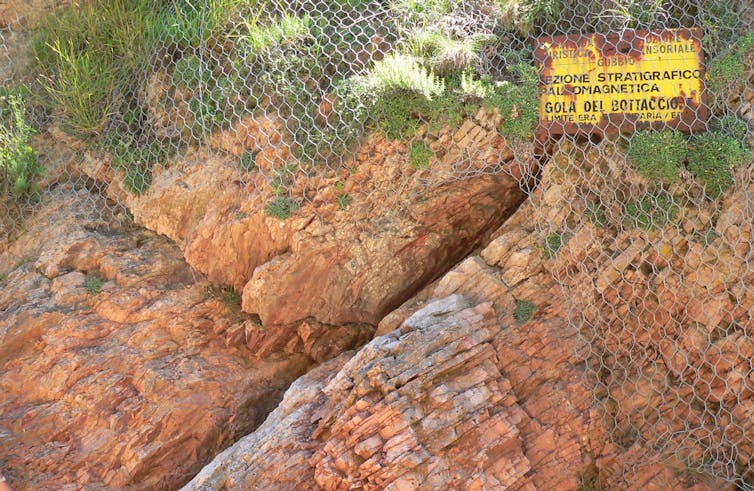
The Gubbio section, found in Italy, represents a complete record of the end-of-Cretaceous mass extinction. The exact instant when about 70% of species went extinct is marked by the cleft running diagonally across the image. Author provided
Each of these events resulted in a wave of extinctions washing across all of the planet’s ecosystems. Reefs were wiped out, dinosaurs disappeared, insect species were decimated and plants went through massive upheavals. It took up to a million years for ecosystems to recover from a mass extinction.
Estimating prehuman extinction rates from the somewhat patchy fossil record is fraught. Nevertheless, researchers have managed do it, albeit using only vertebrate fossils.
Their estimate suggests prior to the arrival of humans, vertebrate species were going extinct at the rate of about two per million species lost every year.
In 2015, another research team took this estimate and compared it with present day vertebrate extinction rates. They found vertebrates are going extinct 53 times faster today than they were before humans arrived.
If the increase in extinction rates recorded in vertebrates is on a similar scale across the planet’s entire biota, humans have triggered a significant rise in the rate of species going extinct.
But is that enough to consider our current biotic crisis a mass extinction?
Trilobites were ancient arthropods that filled the world’s oceans from the early Cambrian, some 520 million years ago, until the mass extinction at the end of the Permian, 252 million years ago. Shutterstock/Tami Freed
To answer that question, we need to consult the Red List run by the International Union for the Conservation of Nature (ICUN). This list is an attempt to assess the threat of extinction of all known species by assigning each to a category of descending threat: extinct or extinct in the wild, severe threat of extinction, threatened and so on.
Are we there yet?
A glance across the Red List confirms that, as with the ancient mass extinctions, today’s species loss affects the entire biosphere. However, the situation changes when we compare the current level of extinction with those from the big five mass extinctions.
This fossil (Arborea arborea) is part of the Ediacaran fauna from South Australia which went extinct about 550 million years ago. Author provided
As noted above, the loss of species during the ancient mass extinctions is massive. Data from the Red List suggest we haven’t come close to those. For example, the Red List assigns only 1.46% of mammal species to the extinct or extinct in the wild categories. It considers less than 1% of amphibian species are extinct or extinct in the wild. For insects, it’s 0.65%, bivalves 4% and corals 0%. This level of species loss isn’t close to the losses recorded in the fossil record.
While the rate at which species are going extinct has risen and the entire ecosystem is affected, we have, at the moment at least, only low levels of extinction.
Unfortunately, species extinction levels show only part of the problem. To see the full extent of the crisis, we need to add the species the Red List considers to be under threat of extinction to those already extinct.
When we do, the picture changes. Taken together, the percentage of mammals that are extinct or under threat of extinction rises from 1.46% to 23.48%, amphibian numbers rise to 33.56%, insects to 19.23% and corals to 26.85%. These numbers demonstrate the true scale of the threat facing the planet’s biosphere.
I don’t like referring to today’s crisis as a mass extinction because it allows us to focus entirely on extinction levels, and they are low. Others have coined a new term to reflect the fact that although many species are extinct, there are many more threatened with extinction: defaunation.
Defaunation better describes the crisis unfolding in the planet’s biosphere. To avoid a slide into a full-blown mass extinction, we must not allow defaunation to continue. We know how to do this: reduce emissions, protect vulnerable ecosystems and regenerate degraded ones.
Buying an apartment is the biggest financial commitment many of us will ever make. Unfortunately, our new research shows that defects in apartment buildings are commonplace: just over half of Sydney’s apartments had at least one type of defect, while more than one in four had at least three different defects. We also found it is virtually impossible for buyers to know whether the apartment they are buying is good quality.
This is perilous for prospective home-buyers, given the market is based on the idea of “buyer beware”, which means it is the buyer’s responsibility to make sure they are happy with the quality before they sign the contract. It also represents a clear case of market failure.
Building defects in apartments have been in the news a lot in NSW since the evacuation of the Opal Tower in late 2018. The NSW parliament is now holding its second inquiry into the issue. And this week, it was reported that an engineer’s report has found an apartment building in Sydney’s south-west to be at serious risk of collapse due to structural flaws.
But despite all the attention, it’s been very difficult to get reliable figures on just how common building defects in apartments are. We set out to tackle this question by collecting information about defects for a random sample of 635 strata schemes completed between 2008-2017 across three Sydney local government areas.
Among the strata schemes for which we found detailed information, 51% had at least one type of building defect. Even more concerningly, 28% had at least three types of defects, and 12% had more than 10 different types.
These aren’t just insignificant, cosmetic issues like broken tiles – common problems included water leaks, cracking and flaws in fire safety systems. These results align with estimates released earlier this week by the NSW Building Commissioner, based on a survey of strata managers, which found four in ten recently completed buildings have “some form of major defects”.
We also interviewed 66 industry experts, and only three said they didn’t think defects had become more common in recent decades.
While these findings are worrying, we believe our figures are actually conservative estimates of the true number of defects in strata schemes, given the difficulty we had getting detailed records. For many buildings in our sample, we couldn’t locate reliable information about whether defects existed or not, despite having a team of researchers working on the task and considerable support from our industry partners.
This experience has led us to conclude the apartment market in NSW has a serious problem with “information asymmetry”. This means sellers have far more information than buyers about the underlying quality of the apartments for sale, and there is no way for buyers to be confident about the quality of the building they are considering buying into. This puts them at real risk of buying a property with defects, which they will then be responsible for fixing.
The process of defect rectification can put significant stress on people’s health and well-being, and their finances. In the worst-case scenario, the building may pose a serious safety risk, or owners may be left with a property nobody wants to buy.
On a more positive note, much has changed in NSW since the Opal Tower evacuation. In mid-2019, the government introduced a new Office of the Building Commissioner (OBC), with responsibility for improving the quality of construction and stamping out poor building practices. The OBC has introduced new laws and provided more oversight of the construction industry, and the early evidence is that building quality is improving. This means fewer owners should have to struggle with rectifying defects in future (if you’re in this situation right now, this how-to guide may help).
It is vital to improve the quality of construction so fewer defects occur, but we will never eradicate defects completely. To protect all owners and residents, we also need to make sure that when buildings have defects, it’s easier to find out about them and understand their impact. Buyers should be able to factor this in when considering a property. And owners who have defects should get more support from government to get them fixed.
While the OBC has now made it easier for owners to take legal action against developers and builders for defective work, there is much more to be done. In particular, improving the processes for inspecting buildings and reporting defects would help, as would a longer warranty period and better insurance coverage. We also need to improve the quality and consistency of strata inspection reports, which are the main way buyers can research any issues a building might have.
To make sure all these things happen, we need the NSW government to commit to keeping the OBC in place long-term and giving it the resources it needs to keep bolstering the rights of apartment owners and buyers. It’s not fair to make apartment owners run the gauntlet of an opaque market, or bear the cost and responsibility of fixing mistakes that others have made.
With one in five NSW households living in private apartments (plus more in public housing), the safety and security of apartment living needs to be a top government priority.
Laura Crommelin receives funding from the Australian Research Council, the Australian Housing and Urban Research Institute, Strata Community Australia (NSW), Strata Community Insurance, the Australian College of Strata Lawyers, Lannock Strata Finance and Ross Taylor & Associates.
Bill Randolph currently receives funding from the Australian Research Council, Strata Communities Australia. Lannock Strata Finance, the Australian College of Community Association Lawyers, Ross Taylor and Associates, Strata Community Insurance Agencies,the Australian Research Data Commons and the National Housing Finance Investment Corporation.
Hazel Easthope receives funding from the Australian Research Council, AHURI, Australian Research Data Commons, Strata Community Association (NSW and National), Strata Community Insurance, the Australian College of Strata Lawyers, Lannock Strata Finance and Ross Taylor & Associates. She is affiliated with the Australian College of Strata Lawyers.
Martin Loosemore receives funding from Australian Research Council
A survey by the Australian Science Media Centre, published today, found around 20% of the 50 Australian scientists who responded have received threats of physical or sexual violence when speaking about COVID in the media.
Around 62% said they’d been subjected to trolling.
The Centre also worked with science journal Nature to survey scientists internationally, and found 15% said they’d received death threats, and 22% were subjected to threats of physical or sexual violence.
The Conversation spoke to five researchers in Australia who’ve lent their expertise extensively to media and public discussion around COVID.
Here’s what they said about their experiences of abuse and trolling amid the pandemic.
Raina MacIntyre, Professor of Global Biosecurity, UNSW
I’ve been subjected to abuse or threats on a regular basis after sharing my expertise on COVID in the media.
This has included threatening and abusive emails and abusive, bullying social media posts, often orchestrated by gangs of trolls who aim to silence and discredit me.
Racism and misogyny are part of it. They simultaneously spruik pseudoscience and anti-science agendas which have come to Australia from overseas.
Everything during this pandemic has been polarising. Public health measures for epidemic control are draconian in nature (such as masks and movement restrictions). Many people want to shoot the messenger and think they can magically return to 2019 if people who understand pandemics are silenced and discredited.
We really do live in a post-truth world, where pseudoscience and anti-science have become mainstream. Vaccines and masks have been polarising at different times.
I try to shut out negativity from my life – negative people and negative social media. I block trolls. It’s hard when people you know are part of a gang of bullies and trolls, because it feels impolite to block them – so I mute them instead.
It does dissuade me from sharing my expertise. I avoid media mostly and focus on my research. The pandemic will play out regardless of what media I do, so I have taken the opportunity to refer journalists to younger researchers, to give them an opportunity to do media.
Holly Seale, Associate Professor and infectious disease social scientist, UNSW
It’s been an eye-opening experience in the last 18 months. Prior to 2020, my media appearances were more sporadic than they are now. So COVID was a baptism of fire.
To date, I’ve not received any threatening remarks, nor have there been any attacks on my appearance. But I have had emails, letters and phone calls questioning my judgement and expertise. I’ve also received commentary about how I respond to questions, the language and phrasing that I use.
All the commentary I’ve received has been from men and it has included numerous phone calls where I’ve been instructed to listen to the person outline all the reasons why I’m wrong. The sense they’re entitled to refute what I’m saying comes across the strongest during these calls.
Conversations with other academics have helped! Having a network of colleagues, who are often experiencing similar issues, to debrief with has also been critical.
Training to support media engagement must also include examples about how to navigate abuse, negative feedback and threats, and how to support your mental well-being. Media appearances happen at all hours, weekends, and weekdays. Late on a Friday night, I received a suggestive email following a TV appearance. Having a contact person to flag the email and to receive guidance about next steps (if any) may also help alleviate some anxiety.
Adrian Esterman, Professor of Biostatistics and Epidemiology, University of South Australia
It hasn’t been a major issue for me. Just the odd comment about people in ivory towers shouldn’t comment about what is happening in real life, and someone objecting to my style of writing! Nothing major.
But it is always a bit of a jolt to the system when you cop some abuse.
About once a week I get someone on Twitter not being very polite, and even emails from them. Things like, “How dare you say……”, and if lots of people die from being vaccinated, it will be your fault!
I simply ignore them – my daughter has taught me never to respond to trolls.
It doesn’t dissuade me from sharing my expertise at all. I think if you’re going to be a public figure, then you have to expect to cop some abuse. There will always be a small element of people who disagree with you, and are happy to say so in a rude way.
Fiona Russell, Professor and paediatrician, epidemiologist and vaccinologist, The University of Melbourne
Surprisingly I have very few trolls and I haven’t been threatened in any way. However, I have been mansplained on the topic of COVID epidemiology in children and the public health measures to keep them safe.
I’m a paediatrician, infectious diseases epidemiologist and vaccinologist. I have training in infectious diseases modelling. I have won Australia’s leading infectious diseases research prize (along with seven other women), and won the Chancellor’s PhD Prize from the University of Melbourne for a clinical trial that helped change WHO vaccine policy. I advise DFAT and WHO on COVID vaccine use in the region, and am a member of WHO COVID in schools advisory group.
And yet, I’ve been described on Twitter as having “no special skills” when it comes to interpreting clinical and public health data pertaining to COVID in children. Thanks to others on Twitter for calling this out. I’m sure many of my female colleagues and peers can relate!
Nial Wheate, Associate Professor of the Sydney Pharmacy School, University of Sydney
I’ve been writing for The Conversation now for nearly ten years, and since the outbreak of COVID, I’ve authored ten articles on medicines thought to treat either the virus or the symptoms of its infection.
These have included established drugs like remdesivir and interferon-beta, new drugs like sotrovimab and molnupiravir, and publicly controversial drugs like ivermectin.
With my pre- and post-COVID writing I have never received what I would define as abuse or threats because of what I have written.
Often, my articles receive quite a few comments, and occasionally I receive personal emails as well. This is especially true when I write on medicines people have strong opinions about, such as cannabis or ivermectin.
Usually, these sincere but condescending comments are an attempt to tell me that what I have written is wrong, and the authors usually back up their comments with links and articles. The information the commenters base their stance on is usually obviously poor quality, at least to an expert in the area, or published by organisations with a clear agenda or conflict of interest.
Because their comments are usually aimed at “educating me” I’ve thankfully never felt that my well-being was at risk and I’ve never needed to take measures to protect myself.
The COP26 climate negotiations are just weeks away, and the tide is now turning against international finance of coal-fired power generation. The implications for Australia cannot be ignored.
China, Japan and South Korea have been three of the largest public funders of overseas coal projects, pouring billions of dollars into new coal-fired power plants across the Asia-Pacific. This has enabled a wave of coal projects in Bangladesh, India, Indonesia and Vietnam.
But in recent months, the three funding nations have each made public statements about curtailing or ending taxpayer support for new international coal power. It follows a pledge in May this year by the G7 nations, which includes Japan, to stop financing unabated overseas coal power generation by the end of 2021.
For Australia, the writing is on the wall – the world is moving away from coal power, and we must follow suit.
Big coal funders
Between 2010 and 2019, Japan channelled around US$2.98 billion in overseas development finance to coal-fired generation in the Asia-Pacific.
For example, the Japan Bank for International Cooperation supported the development of Indonesia’s PLTU Tanjung Jati B power station, along with a consortuim of private lenders.
Governments that lend to overseas coal power generation projects say it helps alleviate energy poverty, or a lack of access to energy in developing nations.
Yet reaching global emissions-reduction targets partly depends on slowing the pipeline of coal power generation, including in Southeast Asia. So while investing in coal projects in developing nations might boost access to energy in the short term, the climate consequences are much worse.
What’s more, the risk these assets will become “stranded” appears not to have been systematically incorporated into project assessments in recipient countries, or by lending countries. That means the value or profitability of these assets may well plummet, especially as recipient countries implement stronger climate policies.
A second driver of overseas coal financing is to give companies from the financing country a competitive edge internationally.
State-backed financing bodies can provide direct loans, insurance and guarantees, known as export credits to foreign buyers. This can help improve the competitiveness of infrastructure exports, such as power plant technology, from companies in the financing country.
China’s aggressive use of export credits to support its companies abroad, including in the coal industry, has been one reason why countries like Japan and South Korea continued to do the same.
But China, Japan and South Korea are now looking to move away from public support for financing new international coal projects.
China is the latest. Last month President Xi Jinping announced China would stop building coal-fired plants overseas, and will instead help developing countries to build low carbon energy projects. In part, the decision reflects growing international pressure for all nations to raise their climate ambitions.
The development also raises a tantalising possibility: countries like China, Japan, and South Korea may compete to finance large-scale renewable energy projects, such as offshore wind, in developing countries.
Such a development would be welcome, given the worrying signs that the deployment of renewable energy in developing countries is too slow to reach global climate targets. It would also help improve energy access in recipient countries.
What this means for Australia
Australia is the world’s second-largest exporter of thermal coal, and China, Japan and South Korea are its top three export markets.
These three industrial powerhouses recently announced net-zero emissions targets, and Japan and South Korea have also ratcheted up their near-term ambitions for emissions reduction. This implies their imports of coal, including from Australia, have peaked.
But the move away from overseas coal financing also sends an important signal that international support for the coal power pipeline is coming to an end. Clearly, clinging to coal is now not just bad for our climate, but bad for our economy too. As our major trading partners in the Asia-Pacific move to compete in supporting the energy transition, so should we.
Australia must seize the opportunity to become a renewable energy exporter. There will be great benefits through Australia becoming a primary exporter of clean electricity, hydrogen and critical minerals to Asia and beyond.
COP26 is a chance to show the world Australia is embracing a low-emissions future. However, this will require Australia adopting a strong emissions target for 2030 and backing it up with policies for today, not for 2050.
The longer we wait, the more we will lose as other nations gain a competitive advantage in the industries, technologies, and markets that will drive a clean energy transition.
Students are returning to their schools after months in lockdown in Victoria, New South Wales and the ACT. Many will thrive on the return to school. Others, though, may need extra practical and emotional support to adjust in a healthy way.
Parents and carers might be wondering what they can do to support their child as they return to school. Here are five tips that can help.
1. Renegotiate routines
Like adults, children and teens are likely to have established quite different routines during lockdown. They may have also become accustomed to more screen time than usual.
To ease the transition to a regular school routine, it is worth making slow adjustments like getting up and going to bed at a more consistent time. Parents can support autonomy by negotiating new routines with their child. While teens may be more resistant to parents placing restrictions on their screen time, this is less likely when parents provide explanations and acknowledge teens’ perspectives.
Returning to school may bring uncertainty, excitement, fatigue or other big emotions. Some children may seem particularly tired after their first few days, while others may be more sensitive or less tolerant than usual.
Don’t despair if your child seems to experience more big emotions at home than at school: this likely means that home is a safe place to return to! Help children to name any negative emotions that arise, such as frustration, and gently coach them to consider other ways of expressing themselves.
Be tolerant yourself, and don’t sweat the small things.
3. Acknowledge children’s worries
Children and teens may have specific worries related to COVID-19, to changing friendships, or to being back at school. Younger children may also experience separation anxiety after extended periods of having their families as their sole source of social connection.
While some children will happily wave goodbye, others may be anxious about separating from the people who have been their only company in lockdown. Shutterstock
If your child raises concerns about whether they will be safe returning to school, it is useful to provide simple and factual information about COVID-19 while providing gentle reminders that the adults around them are there to help them stay healthy. Adopt a problem-solving approach: helping children to focus on what they can control, rather than worrying about things that are outside our control.
Regardless of the source of their worries, it is important to acknowledge and validate your child’s feelings. You can point out that many children may be feeling the same way, and that their concerns are understandable. At the same time, remaining calm and focusing on the positive aspects of returning to school can help to relieve some of their concerns.
Children and teens have had different experiences during lockdown and may have different feelings about being back at school. Understanding that other children may feel differently can help your child to be a good friend.
Before returning to school, remind children that some of their friends will feel more nervous about returning than others. In primary school, some might also make different decisions about masks.
If your child has been in a “friendship bubble” with only a small number of other friends, encourage them to include those who have not. Being empathetic towards others and acknowledging how they are feeling will not only help your child socially, it is also an important socioemotional skill to master.
Parents who are optimistic can help their children develop a positive attitude to being back at school. Shutterstock
5. Be optimistic
Remember that most children adjust well when faced with new challenges. Parents can prompt children and teens to remember what they enjoy most about school to help them look forward to returning. Reminiscing about funny stories or enjoyable school events that children have experienced can help with this process.
It is important to still acknowledge your child’s feelings if they express a preference for learning from home. You may wish to share these concerns with their teacher. However, it is helpful for your own approach to reflect optimism and confidence. Avoid introducing your own worries if you can: parent anxiety can be contagious!
If you observe any concerning and sustained changes in your child’s behaviour as they navigate the return to school, their school or GP can help connect them with additional support. Other resources that can help include Kids Helpline, Beyond Blue, or Headspace.
Penny Van Bergen has previously received funding from the Australian Research Council.
Erin Mackenzie does not work for, consult, own shares in or receive funding from any company or organisation that would benefit from this article, and has disclosed no relevant affiliations beyond their academic appointment.
Moving in together is an exciting time for people in relationships. Likely the last thing on your mind is what might happen in the event of a breakup.
But it’s worth knowing that if you split, your ex could be able to file a legal claim for up to half your superannuation, under certain circumstances.
And for all states (except Western Australia), you don’t need to be married, have kids or own a house together; even people in de facto relationships may have to split their super when they break up.
For the purposes of family law, a de facto relationship is when you and your partner live together in a relationship as a couple on a genuine domestic basis but are not married.
The superannuation of both partners is included in the pool of assets divided on separation. Super is often the single biggest financial asset younger people have, so make sure you know what the law says on this question.
Here’s what you need to know.
By order of the court, or by agreement
Splitting up super could become a bigger issue in years to come, as compulsory employer contributions ratchet up. When superannuation was made compulsory almost 30 years ago, employer contributions were 3%. As of July, they’ve hit 10%. So these assets are getting bigger, faster.
According to the federal attorney-general’s website, superannuation can be split either by:
an order of the Federal Circuit and Family Court of Australia (or Family Court of Western Australia for married couples in Western Australia); or
a superannuation agreement (a financial agreement that deals with a superannuation interest).
The Family Law Act 1975 gives the Family Court the power to deal with superannuation interests of spouses (including de facto spouses).
The superannuation cannot usually be taken as a cash payment; in most cases, it is rolled over to the recipient’s own superannuation account.
If you split, your ex could be able to file a legal claim for up to half your super, under certain circumstances. Shutterstock
These laws were designed to tackle the longstanding issue where one person in a relationship – usually a woman – would have a tiny amount of super relative to her partner.
That’s because, back a generation, it was common for women in particular to give up work and spend many of their productive years as primary carers for their children. Even now, women are more likely than men to reduce their working hours to raise a family and have a fraction of the superannuation of their male partners.
The laws are meant to ensure equity in the event of the relationship foundering, and improve the life of the person with less financial power in the relationship after it ends.
But society has changed and we are more likely to separate and re-partner. That, plus the higher amounts involved, means these cases may be cropping up more often now than in the past.
How do these laws apply to me?
You don’t have to be married to potentially have to split your assets.
It applies if you have a child together or have been in a de facto relationship for at least two years. The definition of a de facto relationship under section 4AA of the the Family Law Act 1975 is based on whether you were living together in a genuine domestic relationship.
According to the Act, a person is in a de facto relationship with another person if:
(a) the persons are not legally married to each other; and
(b) the persons are not related by family
(c) having regard to all the circumstances of their relationship, they have a relationship as a couple living together on a genuine domestic basis.
The circumstances of the relationship are set out and include matters such as how you organise your financial arrangements, whether you have children, your commitment to a life together and whether other people would see you as a couple.
So consider these issues before you move in together or take steps to cement your relationship.
Remember that any split isn’t necessarily half-half. You can enter into an agreement without going to court, but if you do end up in court the judge will take into account the relevant circumstances including whether you have kids, direct and indirect financial contributions to the relationship, and the ongoing needs of each party.
And if a relationship has ended in bitterness, judges will hopefully be alert to the possibility a legal claim for an ex-partner’s super could be part of a vindictive effort to cause distress, and take that into account.
Judges will hopefully be alert to the possibility a legal claim for an ex-partner’s super could part of a vindictive effort to cause distress. Shutterstock
Go in with your eyes open
It’s not common for people in new or de facto relationships to draw up legal documents to protect themselves.
Go in with your eyes open, but you do have to have a certain amount of trust. Engaged couples do sometimes look at drawing up a financial agreement (a prenuptial agreement), which can address issues like super.
You can read more about superannuation and your rights in the event of a breakup on the federal attorney general’s website, which has also produced a “frequently asked questions” factsheet on the matter.
You can also:
search online for factsheets on the issue produced by your state government
contact a legal aid organisation in your state or contact a free legal helpline such as LawAccess NSW or its equivalent in Victoria.
Remember, a financial agreement – either before or after the relationship has broken down – is not binding if both parties have not obtained financial advice.
Couples who have already been through the difficulties of divorce, separation, or being widowed may be more likely to make legal arrangements to choose what will happen in the event of separation or death, particularly if they want to make sure children from that relationship are financially secure.
And absolutely everyone – young and old – should look seriously into where your super will go in the event that you die. It’s important to ensure your super goes where you want it to.
Helen Hodgson has received funding from the ARC, AHURI and CPA Australia. Helen is the Chair of the Social Policy Committee and a Director of the National Foundation for Australian Women (NFAW), and is on the Tax and Superannuation Advisory Panel of ACOSS. Helen was a Member of the WA Legislative Council in WA from 1997 to 2001, elected as an Australian Democrat. She is not a current member of any political party. She is a Registered Tax Agent and a member of the SMSF Association.
Issue #5 of Superman: Son of Kal-El (authored by Melbourne-based writer Tom Taylor) will be out this November, and will feature Jon sharing a kiss with friend and online journalist Jay Nakamura.
Apart from proving Superman has always had a thing for reporters, Jon expressing his sexuality is a watershed moment in the venerable franchise.
Queering the comics
Queer representation has always been read into superhero comics. This may not be surprising: they are a genre composed of essentially-nude-figures-in-action, with same-sex sidekicks and sapphic suggestiveness.
German-American psychiatrist Fredric Wertham believed comics were a corrupting influence. His book, Seduction of the Innocent, argued Batman and Robin’s relationship was inherently sexual, which therefore made comics inappropriate for children.
Comic books faced increased censorship after 1954, over concerns on what was appropriate for children. Library of Congress
His lobbying resulted in the creation of the Comics Code Authority, a censorship body that forbade any mention of homosexuality from 1954 until 1989.
This left secondary characters, like X-Men villains Mystique and Destiny, to be heavily coded as queer – even if their sexual preferences could never actually be stated.
When the code was relaxed in the 1990s, characters who came out as queer were invariably third-tier superheroes (like Alpha Flight’s Northstar, caricatures (like the insultingly effeminate Extraño) or characters in “mature-age” titles (like John Constantine or the Doom Patrol’s non-binary Rebis).
Only in recent years have “top-tier” characters like the X-Men’s Iceman, supervillain Loki, Harley Quinn and Poison Ivy, the Kate Kane Batwoman and, in August of this year, the Tim Drake Robin have also come out.
I call these characters “top-tier” because they are known to audiences not only from their comic appearances, but also film, television and cartoon adaptations.
Superman is the most high-profile and visible superhero to express their sexuality in this way.
A social justice superhero
Superman is often assumed to be an unambiguously benign character, particularly in contrast with the more psychologically complex Batman.
In his first issue, he rescues a prisoner from a lynch mob (condemning capital punishment), takes on a wife beater (condemning domestic violence) and takes down a corrupt senator (speaking out against political corruption).
Superman was conceived as a Champion of the Oppressed that millions affected by the Great Depression were crying out for.
Many Superman writers and artists over the years have tried to remain true to these social justice roots.
Look magazine commissioned his creators to produce a two page feature on “how Superman would end the war” on 22 February 1940, nearly two years before Pearl Harbor.
The frequently outlandish Superman comics of the 1950s regularly warned against unbridled scientific experimentation.
John Byrne’s 1980s reboot saw Superman tackle the corporate greed, the power of the mass media and gun violence of the Reagan era.
But in sharp distinction to these portrayals, Superman’s role as the first superhero – and therefore elder statesman of the comics world – frequently saw him presented as a tool of government, rather than a reformer.
In the 1960s’ Justice League of America, he was portrayed as a conservative voice in contrast to more liberal, socially-minded characters like Green Arrow.
In Darwyn Coke’s 1950s-set DC: The New Frontier (2004), it is Superman who acts as Senator Joseph McCarthy’s agent in the field, bringing in “rogue” superheroes who refuse to resign.
Perhaps most famously, in Batman: The Dark Knight Returns (1986), Superman appears on behalf of the totalitarian Reaganite government of this parallel 1980s to bring in Batman.
This has created an identity crisis at the heart of Superman, as great as his dual identities of Kal-El and Clark Kent. Is Superman a social justice reformer or conservative Government supporter?
Jon Kent helps to resolve these tensions. Suddenly, we have a Superman who can be truly representative of the 2021 audience, while insulating the elder Superman as a more conservative and paternal figure.
Times of transition
Son of Kal El Cover by Travis Moore and Tamra Bonvillain. DC Comics
With Superman’s coming out, queer representation has moved from the periphery to become just another component of a superhero’s identity.
Of course, for every reader that celebrates now being able to see themselves in Superman in a way they haven’t before, there will be another bemoaning “bisexual Superman”.
Perhaps it’s worth remembering comic book superheroes were born and enjoy their greatest popularity during times of transition and uncertainty: economic crisis, armed conflict or political precarity. There’s no reason why expressing one’s sexual identity cannot similarly be understood as one of these moments of transition and uncertainty.
In this way, Jon Kent expressing his bisexuality is just as true to the legacy of Superman as Clark Kent’s social justice crusade 82 years ago.
Jason Bainbridge does not work for, consult, own shares in or receive funding from any company or organisation that would benefit from this article, and has disclosed no relevant affiliations beyond their academic appointment.
The High Court has unanimously rejected claims by mining magnate Clive Palmer and his company Mineralogy that legislation passed by the Western Australian parliament intended to prevent him from claiming billions in damages was unconstitutional.
The High Court’s decisions are a resounding victory for the Western Australian government. In the short term, the state has been spared a damages claim that may have amounted to nearly $30 billion – almost equivalent to its annual budget.
WA Premier Mark McGowan called the judgment a “monumental victory” for West Australians, saying it confirmed the parliament did “the right thing” by standing up to Palmer.
So, what did the court find and what will it mean for the state moving forward?
What the dispute is about
The dispute between Palmer and the WA government began in 2012 over an iron ore project in the Pilbara. Palmer argued his development proposals for the Balmoral South iron ore project were unlawfully refused by the previous state government.
These claims were pursued through arbitration – a dispute resolution process that happens outside the courts.
In an extraordinary step last year, the WA parliament passed the so-called Mineralogy Act, which sought to protect the state from having to pay any damages to Palmer.
Palmer challenged the Mineralogy Act on a host of grounds, all of which were rejected by the High Court.
The state can amend agreements with mining companies
As is common in the mining industry, Mineralogy holds its mining project rights under a “state agreement” with WA. This is an agreement that sets out a framework for mining approvals and payments and is incorporated in an act of parliament.
Palmer claimed the WA parliament did not follow the proper amendment process outlined in the state agreement when it unilaterally passed the Mineralogy Act.
However, the High Court said the process in the agreement did not apply to parliament. As such, parliament could unilaterally amend the state agreement.
This could have implications for other state agreements with mining companies, as the state could likely change the terms whenever it wants to.
Denying arbitration awards not unconstitutional
Palmer and Mineralogy were granted two favourable arbitration decisions that were key to their damages claims. He had registered the two awards in the Queensland Supreme Court.
However, the Mineralogy Act deems these arbitration awards to be of no effect.
Palmer argued this meant the Mineralogy Act breached section 118 of the Australian Constitution, which requires full recognition of the laws of other states (in this case, Queensland).
The High Court rejected this argument because all states’ commercial arbitration laws permit a court to refuse to recognise an award if it is invalid in the state where it was made, in this case Western Australia.
Not a breach separation of powers
The separation of powers is a key constitutional principle that says powers should be separated between the three branches of government – the legislature, executive and the judiciary.
Palmer argued the Mineralogy Act interfered with the integrity of the state courts and was an exercise of judicial power by the Western Australian parliament.
The High Court found the effect of the Mineralogy Act might be to change existing legal rights, but this did not amount to a breach of the separation of powers.
The law may have been extreme, but the court ruled it did not interfere with the integrity of the courts, nor was it an exercise of judicial power by the parliament.
Palmer also argued the Mineralogy Act breached the rule of law by preventing him and his company from pursuing their damages claim.
Although the Australian Constitution does not expressly mention the rule of law, the High Court has said on more than one occasion that it is an “assumption” of the Constitution.
However, the High Court has also said the courts should be wary of giving content to the rule of law that cannot be found in the Constitution itself. In other words, Palmer needed to point to specific provisions of the Constitution that supported his claim the rule of law had been breached. This he was unable to do.
The Mineralogy Act may have changed legal rights, but the court said it did not amount to a breach of the rule of law under the Constitution.
What are the potential implications of the ruling?
Mineralogy and Palmer have a number of other related court cases on foot, including a consumer law claim against Western Australia.
While the High Court did not consider the validity of provisions under the new law directly related to these claims, its ruling may still have an impact. By finding in favour of the state for some of the Mineralogy Act provisions, it may undermine the basis for Palmer’s other claims.
From a political standpoint, the outcome is also likely to bolster the popularity of the McGowan government.
Palmer has also claimed the Mineralogy Act would deter companies from investing in WA, but whether the new law – or the High Court judgement – undermines investor confidence in the state remains to be seen.
Murray Wesson has previously received funding from the International Mining for Development Centre (IM4DC).
Ian Murray has previously received funding from Rio Tinto, BHP Billiton and the Minerals Council of Australia for research relating to Indigenous benefits management structures.
A View from Afar - this week Paul G. Buchanan + Selwyn Manning analyse how Taiwan is caught between two clashing giants.
A View from Afar – In this podcast, Paul G. Buchanan and Selwyn Manning will analyse how Taiwan is delicately navigating its way between two clashing global powers. On one side there’s China and on the other is the USA.
Taiwan has been self-governing for over 70 years. It insists it wants to remain an independently governed economy.
But recently, the People’s Republic of China’s leader Xi Jinping stated China wishes to reunify Taiwan and assert control over the South East Asia nation.
And, on the other hand, the United States of America has restated its defence commitment to Taiwan. The Pentagon this week said the US’ commitment to Taiwan is rock solid, and, in recent weeks it has been reported that US military forces have been present on Taiwanese soil.
But how committed is the US really? Will the US come to Taiwan’s defence should China invade?
And, what would China gain strategically if it did invade, and, what would China lose if a regional conflict occurred?
Taiwan’s leader said this week that it will not submit to China’s will on the issue of its independence, but rather it will use diplomacy to find a way through – that is unless China did invade.
So what is the most likely outcome of this situation? How can China back off, save face, and get back to the business of economic mutual interest?
Join Paul and Selwyn for this LIVE recording of this podcast and remember any comments you make while live can be included in this programme.
You can comment on this debate by clicking on one of these social media channels and interacting in the social media’s comment area. Here are the links:
Threat.Technology placed A View from Afar at 9th in its 20 Best Defence Security Podcasts of 2021 category. You can follow A View from Afar via our affiliate syndicators.
Lego announced this week it would work to remove gender stereotypes from its brand, including no longer marketing toys distinctly to boys or girls and ensuring products are gender-neutral.
The survey of nearly 7,000 parents and children across seven countries found strong endorsement of traditional gender roles among both boys and girls, with 78% of boys and 73% of girls agreeing “it’s okay to teach boys to be boys and girls to be girls”.
71% of boys were worried about being judged or made fun of for playing with toys gendered for girls and 54% of parents worry their sons will be made fun of if they play with toys associated with girls, compared to only 26% of parents worrying about the reverse.
Overall, the results suggest boys feel more pressure to conform to gender roles and norms for creative activities than girls. But the perceptions and beliefs of others may also be holding girls back. When toys are gendered, all children pay the price.
Awareness of gender as a social category develops early in life, and insight into some gender stereotypes begins early. For example, preschool aged children can hold beliefs such as only boys can be policemen and only girls can be teachers or nurses.
Gender and racial stereotyping and prejudice can be observed in children as young as three to four years of age, as children take on cues from around them to decode and understand the world.
Teaching children construction toys ‘aren’t for girls’ can discourage girls going into STEM fields. Shutterstock
Shopping and ‘fixing things’
When children observe different toys and tasks for different groups, they can learn stereotypes and prejudices, such as viewing shopping as an activity for girls and “fixing things” and using tools as activities for boys. This can reinforce rigid binary views of gender.
Such stereotypes and prejudices can be carried throughout life, making early childhood critical for setting the foundations for lifelong attitudes.
The Lego research found parents were more likely to encourage their daughters to engage in activities that are more cognitive, artistic and performative (dressing up, dancing, colouring, singing and arts and crafts), and more likely to encourage their sons to engage more in digital activities, science and building.
Beliefs and expectations about what types of toys and play are appropriate for girls and boys can compound over time.
Some studies show that play with some stereotypical girls’ toys, such as princess toys, is associated with more female gender-stereotypical behaviour among children.
Not engaging in play with construction toys may mean girls miss opportunities to develop spatial skills and mechanical reasoning skills necessary for careers in science, technology, engineering and mathematics: fields in which women continue to be under-represented.
Rigid gender lines
Toys are only one way in which children learn gender roles and stereotypes: they also learn from who they see around them in their daily lives, from the books they read and the TV shows they watch.
Lego’s advertising, like this one from 1981, shows the company used to be a lot less rigid around gender. Lego
Parents and caregivers have a key role in encouraging children of all genders to engage with a wide range of activities and toys.
But since the 1970s, toys have become increasingly and rigidly demarcated along binary gender lines.
The prevention of potentially harmful gender attitudes and stereotypes in childhood – before they become entrenched – is a key element in moves to achieve gender equity and to support health and wellbeing throughout life.
Efforts to reduce the gendered nature of toys and their marketing is one step we can take to give all children more equitable options for how they see themselves, the world, and their future.
The Morrison Government is in the painful throes of a climate policy shift to embrace a target of net zero by 2050, ahead of next month’s Glasgow conference. This requires a deal with the divided, noisy, fractious Nationals.
We’re joined in this podcast by Tony Wood, Director of the Energy Program at the Grattan Institute, to talk about Glasgow, Australia’s policy and the fallout from the necessary transition to lower emissions.
“[The government] will talk about […] how technology will be fundamentally important to meeting a net zero target. And that’s absolutely true,” Wood says.
[But] policy will be important as well.
“The government job, then, is to address the barriers and issues that arise.
“In some cases, it will mean losses of jobs in some sectors, but it also means growth of jobs in other sectors. And that’s where the big opportunities lie.
“Sectors actually are not really looking to be protected from the consequences of reducing emissions. In fact, they want to be part of the process of driving these changes, so they can actually have some control over their destiny,” Wood says.
“So the farming community wants to be part of the solution. They’ve already committed themselves to net zero by dates which are much earlier than 2050. And now the Business Council, which represents some of those big mining companies for example, they’ve also committed to net zero by 2050.
“As you think about winners and losers […] we do know that one thing is for certain – that losers shout about their losses much more than the winners boast about their gains.
“So what the government puts in place to try and bring those areas of the economy along with them, where the concerns will arise, will be fundamentally important. They will obviously have had to provide some sort of concessions in the announcements around how they’re going to ensure that rural and regional and mining communities are being considered in this process.”
Michelle Grattan does not work for, consult, own shares in or receive funding from any company or organisation that would benefit from this article, and has disclosed no relevant affiliations beyond their academic appointment.
Source: The Conversation (Au and NZ) – By Courtney Melton, PhD Candidate in the School of Earth and Environmental Sciences, and Centre for Biodiversity and Conservation Science, The University of Queensland
Paul McDonald, Author provided
Noisy miners are familiar to many of us on Australia’s east coast as plucky grey birds relentlessly harassing other birds, dive-bombing dogs and people – even expertly opening sugar packets at your local café.
Noisy miners are native to Australia. Since colonisation their populations have boomed, and they’re now so abundant they pose a threat to other native birds in our cities, farmland and bush, such as robins, thornbills and other honeyeaters.
Culling noisy miners is often touted as a way to deal with the problem, but given the birds are native, it’s a controversial proposition. And so far, attempts to remove noisy miners have had mixed success.
To help land managers assess whether culls are likely to be effective and justified, our new research sought to understand how, and in what situations, culling helps small birds, such as the iconic superb fairy-wren, return to a site.
But what we found was unexpected, and counter-intuitive. Our results showed small birds do usually benefit from removing miners, even though neighbouring miners usually recolonise the area.
The noisy miner problem
Human activity has caused many Australian species to decline dramatically, and 100 species have been listed as extinct since European colonisation. But for a very small number of species, these changes to the landscape have been beneficial. The noisy miner is one of them.
The superb fairy-wren recently won The Guardian’s bird of the year survey. Paul McDonald, Author provided
These native honeyeaters are common in dry woodland and forests, and adapt to the gardens in the cities and suburbs of eastern Australia extremely well. They thrive in habitats that are open with limited understorey, and along the edges of bigger woodland or forest patches.
As humans have altered the landscape – clearing treed landscapes, dividing it up, changing fire patterns, and grazing livestock — we have unintentionally created more and more of the noisy miners’ favourite type of habitat.
Noisy miners live in colonies as large as several hundred birds, and ferociously defend their territories, chasing and attacking intruders, no matter the species.
Have you been swooped by a noisy miner?
This aggression is so extreme, they’re one of the main contributors to the decline of dozens of native bird species of eastern Australia’s woodlands, such as regent honeyeaters, varied sittellas and diamond firetails. They’re recognised as a key threatening process under national and state environmental law.
This has had severe consequences for other Australian birds attempting to persist in such a human-altered landscape, especially birds smaller than the noisy miner. This includes a wealth of endangered birds such as brown treecreepers, speckled warblers, hooded robins and jacky winters.
The varied sittella is a small, short-tailed bird that’s often chased out of its habitat by aggressive noisy miners. Paul McDonald, Author provided
What can we do to manage this threat?
The threat noisy miners pose to other Australian bird life is one of our own making. It will require a commitment to multiple strategies to address it.
Planting shrubs and trees in the degraded areas that noisy miners favour is important, but it can take a long time to work, and it can be very costly.
Relocating noisy miners has also been tried, but researchers have found this is ineffective. The birds either return, are aggressively harassed by other miners in their new location, or both.
So, lethal control has been trialled as a potential alternative. Over the past three decades, scientists and land managers have removed noisy miners under permit in woodland areas, often to protect critically endangered species such as the regent honeyeater.
Regent honeyeaters are critically endangered songbirds, and a big focus of conservation. Paul McDonald, Author provided
But results have been mixed
We looked at 45 instances of lethal control of noisy miners. In some cases, culling caused substantial reductions in the number of miners in an area, and the number of small birds increased. In others, neighbouring noisy miners rapidly recolonised the area.
For example, a 2018 study culled more than 3,000 noisy miners. And yet, researchers found the culls led to no significant reduction in the number of miners at the site, as neighbouring miners rapidly recolonised the site.
Another series of noisy miner culls were conducted specifically to relieve pressure to critically endangered regent honeyeaters during their breeding season. These culls were reported as successful, and saw the broader community of songbirds increase.
To confuse things further still, even when removals were reported as “unsuccessful” in their attempts to reduce noisy miner numbers at a site, our researched revealed that the number of small birds almost always increased substantially.
This might be because the removal disrupts the social structure of the colony, causing the miners to focus on reasserting social roles rather than chasing other species. We’re not yet sure how long this relatively peaceful period lasts.
Noisy miners thrive in open areas under eucalyptus trees — a very common type of habitat across eastern Australia. Shutterstock
So what’s behind these counter-intuitive results? Frustratingly, there were no definitive environmental factors or methods that were more likely to result in
significantly reduced noisy miner numbers, or significantly increased numbers of small birds across all the studies we looked at.
To work out what gives a removal the best chance of success, we need to collect more data and ensure all future attempts are monitored over time so we can see how long the benefits last.
Until we know more about why and when removals work, we’re limited in knowing when they should be recommended.
Eastern yellow robins are smaller than noisy miners, making them easier targets. Paul McDonald, Author provided
What if you have noisy miners on your property?
We know noisy miners like open, grassy areas beneath eucalypts — think golf courses. So planting more shrubs and bushes to increase the complexity and diversity of native plants in your yard may help deter them, while providing new habitat for smaller birds to hide in.
Noisy miners are attracted to a variety of nectar sources too, so limit nectar-heavy species such as eucalypts and grevilleas — beautiful as they are.
Culling native species for conservation needs to be well justified – and legal. Leave lethal control to trained experts with permits; do not attempt such direct control yourself no matter how big of a nuisance they might be.
Courtney Melton receives funding from Australian Government Postgraduate Award. This research was supported by the New South Wales Government’s Saving our Species Program and the Australian Government’s National Environmental Science Program.
Courtney Melton is currently on the board of directors for the Society for Conservation Biology Oceania Section, and the Society for Conservation Biology Brisbane Chapter President.
April Reside is the co-chair of the Black-throated Finch Recovery Team and is on Birdlife Australia’s Research and Conservation Committee. April has received funding from the NESP Threatened Species Recovery Hub, and is a member of the Ecological Society of Australia.
Jeremy Simmonds receives funding from the National Environmental Science Program’s Threatened Species Recovery Hub and The Nature Conservancy. He is a member of BirdLife Australia and the Ecological Society of Australia.
Martine Maron receives funding from the Australian Research Council, the Queensland Department of Environment and Science, and the National Environmental Science Program’s Threatened Species Recovery Hub. She is a member of the Wentworth Group of Concerned Scientists, President of BirdLife Australia, and a Governor of WWF-Australia.
Michael Clarke receives funding from the Australian Research Council, the Natural Hazards Research Australia. He is a member of the Board of Directors of Parks Victoria.
Paul McDonald receives funding from the NSW Government’s Saving our Species Program and the Environmental Trust, as well as the Northern Tablelands Local Land Services and the Australian Government’s National Landcare Program. He is a member of Birdlife Australia and the Australasian Society for the Study of Animal Behaviour.
As Australia opens up and we learn to live with COVID-19, rapid antigen tests are likely to play an increasingly important role in limiting the spread of the virus.
So we can expect growing demand for these tests, which can give a result in minutes, and are already used in other countries, including the United Kingdom.
Airline travel, accommodation, entry to ticketed events and school attendance may depend on this type of testing. Large-scale family gatherings and community events will also want to ensure the safety of all attendees, especially if some, for whatever reason, are unvaccinated.
Rapid antigen tests have many advantages over the polymerase chain reaction (PCR) tests used at public testing centres. They are cheaper,
can be used anywhere at any time, and results are available within minutes. But they are also less reliable than PCR tests.
The Therapeutic Goods Administration (TGA) has approved dozens of these rapid antigen tests. But these are only available for use in health care, aged care, schools and workplaces.
These tests are not commercially available for home use, although this is on its way. Health Minister Greg Hunt expects home tests will be available from November 1.
Between now and then, here are four issues we need to consider if individuals and families are expected to use these tests and if rapid antigen testing is to be an effective and equitable gateway to activities and services.
1. Do they work?
The TGA will need to ensure the tests, many of which were developed more than a year ago, perform well with the Delta variant.
A Cochrane review recommends evaluations of the tests in the settings where they are intended to be used to fully establish how well they work in practice. It is not clear if this research is being done in Australia.
Tests from different manufacturers vary in accuracy and are less accurate in people without symptoms and/or with low viral loads – when they will most likely be used.
Many home tests advise testing twice over a three-day period, with at least 36 hours between tests; they work best when testing is done regularly.
Appropriate consumer information material needs to be included with the tests to ensure people are using and interpreting them correctly at home.
There also needs to be a back-up service (such as a telephone hotline) for people who are confused, get unexpected results, and for those who test positive and need PCR testing to confirm their status.
People need adequate instructions to use these tests correctly. Shutterstock
2. Do we have enough tests?
There are already signs supply of these tests could be a problem.
The biggest Australian manufacturer of rapid antigen tests has a large government supply contract with the United States, where supply of such tests cannot keep pace with demand.
India has also recently acted to restrict export of rapid antigen tests.
There are indications the federal government has supplies for distribution to aged-care facilities and local government areas as needed. However, the extent of the stockpile – and whether tests might be released from the stockpile for home use – is unknown.
3. What will they cost?
Once approved for use at home, people will most likely be able to buy these tests in pharmacies. However, there’s been no suggestion these will be subsidised or their price controlled.
There are different international approaches. In the UK, people can order two packs of seven tests free from a government website and can pick them up from places including pharmacies and libraries.
In Germany, people can buy tests in supermarkets for about €25 (about AU$39) for a pack of five.
In Australia, worksites in Sydney can buy tests direct from suppliers for AU$8.50-$12.50 (depending on quantity). But they also need to employ a health-care professional to oversee their use.
Companies providing rapid antigen tests are reportedly contacting schools, saying they can supply tests at A$15 each (with additional costs for a nurse and administration).
It will not be sustainable to ask parents of schoolchildren and university students to pay such costs on an ongoing basis.
US survey results indicate Americans’ willingness to regularly use home testing is price sensitive. That surely is also the case in Australia.
To date, all the signs are the federal government is taking a hands-off approach to the introduction of rapid antigen testing for home use. But it’s essential we have effective distribution mechanisms to cover all of Australia. We also need a regulated price structure and/or subsidies to make the cost of these tests affordable.
Failure to ensure availability and affordability of home testing will further disadvantage Australians already disproportionately affected by the pandemic.
Lesley Russell does not work for, consult, own shares in or receive funding from any company or organisation that would benefit from this article, and has disclosed no relevant affiliations beyond their academic appointment.
The French government has just announced a trial using virtual reality to try to prevent domestic violence.
There has been considerable excitement about this, with claims the virtual reality experience is an “empathy machine” that enhances the perpetrator’s ability to empathise with a victim’s fear.
In our new book Virtual Realities, we explain the need to be sceptical of claims about what virtual reality can do for social and psychological problems, including domestic violence.
What will the trial do?
The French trial will involve 30 men serving sentences, or on parole, for domestic violence. They will be volunteers, wear a virtual reality headset and watch 12-minute, 360-degree videos.
They will encounter a range of dramatised domestic abuse scenarios involving a male and female couple and later, their infant child. One example released by the French government shows a man who shouts abuse and points a knife menacingly at the camera (as seen in the tweet below).
Other sample clips show the man threatening and assaulting his female partner. This is then supposed to trigger empathy in the perpetrators.
Why we need to boost empathy
Enhancing empathy is important because violent offenders have been shown to have lower levels of what is known as “cognitive empathy” than non-offenders. This is the capacity to see a situation from another person’s perspective and understand their emotions.
This is different from “emotional empathy”, which is the ability to sense other people’s emotions. It does not mean you necessarily share that emotion, or understand why the person is feeling it.
In the French trial, which follows similar work in Spain and the Netherlands, it is hypothesised violent offenders will show improved levels of empathy with victims after the virtual reality experience. This will in turn lead to less recidivism.
The French Ministry of Justice says the 360-degree nature of virtual reality — as opposed to simply watching TV or a movie — can “trick the brain into believing that the perpetrator is immersed in this reality”.
It is unclear what if anything else the offenders will do as part of the study, or how the trial’s effectiveness will be measured.
The growing buzz around virtual reality
In 2016, relatively low cost (though clunky) headsets came on the market, making virtual reality a more mainstream technology. Since then, virtual reality has increasingly been suggested as a digital panacea for a range of psycho-social issues.
Virtual reality is not just being used for gaming and entertainment but to try and solve complex issues like phobias and discrimination. John Locher/AP/AAP
While many of these uses have been innovative and exciting, it’s important to maintain a critical perspective. For one thing, it is no longer useful to label virtual reality a “novel” or “experimental” technology: much is now known about what it can and can’t do.
What does the research say?
Virtual reality has been found to elicit strong emotional reactions – especially those linked to the user’s own fear and anxiety. Some studies have also shown to a limited extent virtual reality programs can increase “prosocial behaviour” (behaviour that helps others).
However, studies have also demonstrated virtual reality is not successful when it comes to the longer-term cognitive empathy the French trial is supposed to generate. Using both theoretical and empirical research, these studies have challenged many techno-evangelical ideas about virtual reality.
This year, an academic review of 43 studies into virtual reality and empathy found across the 5,644 participants, cognitive empathy was not enhanced to any significant degree. Other studies have also challenged virtual reality’s capacity to lead to behaviour change. Another 2020 review of studies found “statistically significant positive changes in perspective-taking” but not in empathy.
Findings from a 2018 study specifically looking at domestic violence reported some success in boosting cognitive empathy, however the researchers acknowledge that more research is needed. Importantly, this study used an entirely different type of virtual reality experience than what has been showcased in the French trial.
What are you looking at?
Another key piece of research to consider involves eye-tracking. One of the most important findings of this research is although virtual reality viewers are “free” to look at whatever they choose, they typically follow the same attention patterns as traditional screen viewers.
This means their attention will likely be drawn to movement and whichever character is talking. This has been shown to prevent audiences of virtual reality videos noticing other characters’ non-verbal responses, which are crucial to understanding the events depicted.
The Macron government has faced public pressure to do more to stop domestic violence, which has been described as ‘France’s shame’. Thibault Camus/AP/AAP
In the French trial, users will be able to view the scenario from the perspective of the victim, the child bystander and the perpetrator. Therefore, we would expect those in the trial to pay attention almost entirely to the perpetrator on show — he is principally the one moving, talking and yelling.
To the limited extent virtual reality can elicit any empathy – a claim that is challenged so compellingly by the research – a viewer may only feel empathy in relation to what they are looking at.
The viewer of the domestic violence project will be a violent offender, who is likely to pay greater attention to the violent character in the virtual scenario. How will this prompt empathy in relation to the other characters’ (unseen) non-verbal displays of fear?
Virtual reality for Australia
We know virtual reality companies can see a market for their domestic violence programs in Australia. It seems one of the limitations for its uptake to date has been the high cost of the headsets, although an appropriate virtual reality device is now available for under A$500.
As we argue in Virtual Realities, policy-makers should be less worried about the price tag and more cautious about the often unwarranted enthusiasm that can be generated by virtual reality.
We all want to stop domestic violence but we need to be careful not to simply buy into virtual reality as a solution because it seems new and exciting. Especially if it takes resources away from other, proven interventions.
Para penulis tidak bekerja, menjadi konsultan, memiliki saham atau menerima dana dari perusahaan atau organisasi mana pun yang akan mengambil untung dari artikel ini, dan telah mengungkapkan bahwa ia tidak memiliki afiliasi di luar afiliasi akademis yang telah disebut di atas.
The recent approval of two domestically produced cannabidiol (CBD) oil products – non-intoxicating cannabis compounds – may have provided new optimism to patients on cannabis prescriptions. Slow progress with product approvals had meant some patients had feared they would need to turn to the black market.
Yet these new approvals are hardly consolation for the majority of people who continue to self-medicate with illegally sourced cannabis, including via “green fairies”, personal networks, drug dealers or by growing their own.
Many of those are the very communities that advocated for the legalisation of medicinal cannabis in the first place, but which currently remain outside the tenuous legal system.
After years of anticipation and 18 months since the establishment of the Medicinal Cannabis Scheme (MCS), many who use cannabis medically are still missing out.
Affordability and continued problems with accessing prescriptions are part of the problem. So too is the lack of clinical trials to prove efficacy of cannabis in the treatment of many conditions.
But with the equity and fairness of the whole system in question, perhaps another approach is needed. Specifically, should we start thinking about medicinal cannabis in terms of an alternative therapy rather than as a pharmaceutical medicine?
Slow progress and blame
It has been four years since the government announced its “commitment to make medicinal cannabis more available”, and nearly three years since an amendment to the Misuse of Drugs Act enabled the Ministry of Health to develop regulations for the MCS.
The regime was opened for product applications in April 2020, with local industry working on certification and product development. Extensions to the “transitional period” were passed to continue sale of products imported from overseas. But this ended abruptly on October 1, leaving just four Canadian products approved under the MCS available from New Zealand pharmacies.
Domestic producers blamed the slow progress on regulatory thresholds nearly as tough as for pharmaceutical products. In response, the health minister blamed the industry for not working hard enough to meet those standards.
In the meantime, patients and prescribing doctors are left with few legal products to choose from.
Lack of clinical proof
Five percent of New Zealanders use cannabis for broadly defined medicinal uses, with pain, sleep and anxiety the leading conditions. But scientific and clinical trial evidence for the effectiveness of cannabis for these conditions remains limited.
For decades, prohibition under international drug treaties has stalled research into the potential medical properties of cannabis. But while more clinical trials are needed, the safety profile of medicinal cannabis – particularly the non-intoxicating CBD products – is good and well tolerated.
Nevertheless, many doctors remain understandably reluctant to recommend and prescribe cannabis-based products.
Our survey of over 3,600 medicinal cannabis users found only one in three patient requests for medicinal cannabis prescriptions were successful. Other researchers have found only a 20% success rate.
This is unlikely to change until gold-standard, double-blind, placebo-controlled trials demonstrate the efficacy of cannabis-based products for specific health conditions.
A restrictive regime
The stigma and reputational risk of discussing cannabis use with medical professionals also deter patients from requesting a prescription. Studies of medicinal cannabis users found patients conceal their cannabis use to avoid moral judgments in the provider–patient relationship.
Furthermore, not everyone benefits equally from the new medicinal cannabis prescription products. Our research suggests the current system favours Pākehā and those on higher incomes.
In contrast, those on lower incomes, Māori and those who grew their own cannabis to use therapeutically were least likely to engage with the MCS.
This tends to reinforce perceptions that the new prescription regime is too restrictive, bureaucratic and expensive.
This is where reframing of the policy debate as one about alternative therapies could benefit both patients and the medical profession.
Much as we already do for a range of dietary supplements, the non-intoxicating cannadiol products could be easily made available without the need for prescriptions and pharmacies. This is already happening in jurisdictions in the US and EU.
By classifying medicinal cannabis as an alternative therapy there is potential for patients to be more forthcoming about their use with their GPs. Allowing patients to grow their own could also introduce more equity to the system.
Above all, this would recognise patients’ right to therapeutic self-determination and increased access, while freeing doctors from having to prescribe “medicines” that in many cases lack clinical trial evidence.
Marta Rychert receives funding from the New Zealand Marsden Fund and NZ Health Research Council.
Chris Wilkins receives funding from the New Zealand Royal Society Marsden Fund and Health Research Council of New Zealand.
Vinuli Withanarachchie works on a project funded by the NZ Health Research Council
It is rarely appreciated that Australia makes money not just from what it digs out of the earth but also from what comes out of its mouth: English. The Australian government released a draft strategy for the English-language teaching sector in early 2020. It was put on hold due to the pandemic, but we now have an opportunity to revamp the strategy to leverage Australia’s competitive advantage as a highly multilingual nation.
Pre-COVID, Australia cruised on its reputation as a welcoming, sunny locale with reputable institutions and attractive post-study work rights. Australia had a 15% market share of the 1.3 million people who travelled to an English-speaking country specifically to study English.
Being an English-speaking nation added to our value proposition. Traditionally, it’s been hard to play in the international education market without that trump card. In 2020, four of the five countries with the most inbound students were English-speaking: the United States (1,075,496), the United Kingdom (551,493), Canada (503,270) and Australia (463,643). Fourth-placed China was the exception.
Is it possible to quantify the value of teaching English? In dollar terms, yes. According to English Australia – which represents English-language providers in Australia – the global English-language teaching industry is worth over US$11.7 billion (A$16.1 billion).
The post-pandemic story is less rosy for Australia. A recent economic impact study conducted for English Australia shows the sector suffered $1.2 billion in direct losses (tuition fees and living costs) from COVID-19 in 2020. A further $1.5 billion will be lost as a result of English-language students not progressing into other parts of the education system, such as vocational and higher education.
The economic importance of international education to Australia is now well known. In the 2019-20 financial year, it was our fourth-largest export industry, adding A$37.5 billion to the national coffers and supporting 250,000 jobs.
More recently, July data showed university enrolments for international students were down 12% from a year ago. However, this pales next to the slump of 63% in the English-language intensive courses for overseas students (ELICOS) sector.
Clearly, the recovery of Australia’s international education industry is about more than universities. Even if borders open to international students in 2022, the ELICOS pipeline into vocational and higher education could take years to recover.
If there is a silver lining, it is this: we have a window of opportunity to rethink the value proposition of learning English in Australia. Why study it here, as opposed to anywhere else?
Before COVID struck, Australia was ahead of the curve in strategising around this question. The national education departments of all the major players produce glossy international education plans every few years. However, only Australia had taken the extra step of producing a delineated and interwoven strategy for its English-language sector.
The draft strategy’s vision was for Australia to become “the global leader in the delivery of quality English language teaching”. The aim was to offer a first-class student experience, online flexibility and pathways into further education.
These remain worthy and attractive propositions. However, Australia has more to offer.
Make the most of multilingualism
The strategy undersells an element of Australia’s cultural and linguistic identity – indeed, it’s not mentioned at all. We speak here of the nation’s rich tapestry of multiculturalism and multilingualism.
Despite its image as a nation of English speakers, Australia has no official language. Although English is the most widely used, more than 300 other languages are spoken, including Indigenous languages, Auslan, Mandarin, Arabic, Cantonese and Vietnamese. According to the 2016 Census, more than 25% of Australian households use a language other than English.
Many learners consider English as it is used in the UK, North America and Australasia the most desirable version of the language. However, it is not objectively better than the varieties of English used in the Philippines or India. As the use and teaching of English continue to expand beyond the traditional group of English-speaking countries, the pull factor of Australian international education may begin to wane – but only if we fail to recognise what else we have to offer the world.
Australia offers the advantage of immersing onshore international students in naturally occurring English. This is indeed a key selling point. However, Australia also has the opportunity to reimagine its framing of English for the post-pandemic global marketplace. This is a world in which multiple varieties of English are heard and used in combination with other languages.
Australia can rightly claim to be one of the most multicultural countries on Earth. Importantly, Australia is more diverse than its English-speaking competitors in the international education market. As the Australian Bureau of Statistics says:
“The Census shows that Australia has a higher proportion of overseas-born people (26%) than the United States (14%), Canada (22%) and New Zealand (23%). What about the United Kingdom, you say? Not even close (13%).”
Australia’s multilingual backdrop can be harnessed as a core part of English learners’ experiences. Being immersed in a context where English exists dynamically alongside other languages, likely including their own first language, has practical benefits for these students.
Interacting with people who use a range of languages, and have different ways of using English, also helps learners to become more effective communicators. Exposure to people with different cultural perspectives and practices allows them to develop intercultural communication skills in a range of real-world contexts, from the classroom to the supermarket.
When the government does eventually refresh the draft strategy, Australia should not be projected as a monolingual dinosaur. Instead, the strategy should highlight our status as a fluent speaker of world English and other global languages, with a timeless Indigenous linguistic heritage. Such an environment, after all, more closely resembles the material and virtual reality for which international students need to be prepared.
The authors do not work for, consult, own shares in or receive funding from any company or organisation that would benefit from this article, and have disclosed no relevant affiliations beyond their academic appointment.
Source: The Conversation (Au and NZ) – By Greg Murray, Professor and Director, Centre for Mental Health, Swinburne University of Technology, Swinburne University of Technology
Shutterstock
When I wake at 3am or so, I’m prone to picking on myself. And I know I’m not the only one who does this. A friend of mine calls 3am thoughts “barbed-wire thinking”, because you can get caught in it.
The thoughts are often distressing and punitive. Strikingly, these concerns vaporise in the daylight, proving that the 3am thinking was completely irrational and unproductive.
So, what’s going on?
I’m a psychology researcher with expertise in mood, sleep, and the circadian system (the internal clock regulating sleep). Here’s what the research says about what may be behind this common experience.
What’s happening in your body at 3am?
In a normal night’s sleep, our neurobiology reaches a turning point around 3 or 4am.
Core body temperature starts to rise, sleep drive is reducing (because we’ve had a chunk of sleep), secretion of melatonin (the sleep hormone) has peaked, and levels of cortisol (a stress hormone) are increasing as the body prepares to launch us into the day.
Remarkably, all this activity happens independent of cues from the environment such as dawn light – nature decided long ago that sunrise and sunset are so important that they must be predicted (hence the circadian system).
We actually wake up many times each night, and light sleep is more common in the second half of the night. When sleep is going well for us, we are simply unaware of these awakenings. But add a bit of stress and there is a good chance that waking will become a fully self-aware state.
Not surprisingly, there is evidence the pandemic is a sleep-disturbing stressor. So if you’re experiencing 3am wakings at the moment, you’re definitely not alone.
Stress also impacts sleep in insomnia, where people become hypervigilant about being awake.
Concerns about being awake when one “should” be asleep can cause the person to jolt themselves into anxious wakefulness whenever they go through a light sleep phase.
The 3am thoughts are often distressing, punitive and painful. Shutterstock
Catastrophising in the wee hours
As a cognitive therapist, I sometimes joke the only thing good about 3am waking is that it gives us all a vivid example of catastrophising.
Around this time in the sleep cycle, we’re at our lowest ebb physically and cognitively. From nature’s viewpoint, this is meant to be a time of physical and emotional recovery, so it’s understandable that our internal resources are low.
But we also lack other resources in the middle of the night – social connections, cultural assets, all the coping skills of an adult are unavailable at this time. With none of our human skills and capital, we are left alone in the dark with our thoughts. So the mind is partly right when it concludes the problems it’s generated are unsolvable – at 3am, most problems literally would be.
Once the sun’s up, we’re listening to the radio, chewing our Vegemite toast and pushing the cat off the bench, and our 3am problems are put in perspective. We can’t believe the solution of just ringing this person, postponing that thing, or checking such-and-such was overlooked in the wee hours.
The truth is, our mind isn’t really looking for a solution at 3am. We might think we are problem solving by mentally working over issues at this hour, but this isn’t really problem solving; it’s problem solving’s evil twin – worry.
Worry is identifying a problem, ruminating about the worst possible outcome and neglecting the resources we would bring to bear should the non-preferred outcome actually occur.
The truth is, your brain isn’t really looking for a solution at 3am. Shutterstock
Have you noticed the 3am thoughts are very self-focused? In the quiet dark, it’s easy to slide unknowingly into a state of extreme egocentricity. Circling round the concept “I”, we can generate painful backwards-looking feelings like guilt or regret. Or turn our tired thoughts to the always uncertain future, generating baseless fears.
Buddhism has a strong position on this type of mental activity: the self is a fiction, and that fiction is the source of all distress. Many of us now practice Buddhist-informed mindfulness to manage stress in the daytime; I use mindfulness to deal with 3am wakings.
I bring my attention to my senses, specifically the sound of my breath. When I notice thoughts arising, I gently bring my attention back to the sound of breathing (pro tip: earplugs help you hear the breath and get out of your head).
Sometimes this meditation works. Sometimes it doesn’t. If I’m still caught in negative thinking after 15 or 20 minutes, I follow the advice from cognitive behavioural therapy, and get up, turn on dim light and read.
This action may seem mundane, but at 3am it is powerfully compassionate, and can help draw you out of your unproductive thinking.
One last tip: It’s important to convince yourself (during daylight hours) that you want to avoid catastrophic thinking. For good reasons not to worry, you can’t go past the Stoic philosophers.
Waking and worrying at 3am is very understandable and very human. But in my opinion, not a great habit to get into.
If this article has raised issues for you, or if you’re concerned about someone
you know, call Lifeline on 13 11 14.
Greg Murray does not work for, consult, own shares in or receive funding from any company or organisation that would benefit from this article, and has disclosed no relevant affiliations beyond their academic appointment.
At the conference, Science History Institute Postdoctoral Researcher Megan Piorko presented a curious manuscript belonging to English alchemists John Dee (1527–1608) and his son Arthur Dee (1579–1651). In the pre-modern world, alchemy was a means to understand nature through ancient secret knowledge and chemical experiment.
Within Dee’s alchemical manuscript was a cipher table, followed by encrypted ciphertext under the heading “Hermeticae Philosophiae medulla” — or Marrow of the Hermetic Philosophy. The table would end up being a valuable tool in decrypting the cipher, but could only be interpreted correctly once the hidden “key” was found.
It was during post-conference drinks in a dimly lit bar that Megan decided to investigate the mysterious alchemical cipher — with the help of her colleague, University of Graz Postdoctoral Researcher Sarah Lang.
A recipe for the elixir of life
Megan and Sarah shared their initial analysis on a history of chemistry blog and presented the historical discovery to cryptology experts from around the world at the 2021 HistoCrypt conference.
Based on the rest of the notebook’s contents, they believed the ciphertext contained a recipe for the fabled Philosophers’ Stone — an elixir that supposedly prolongs the owner’s life and grants the ability to produce gold from base metals.
The mysterious cipher received much interest, and Sarah and Megan were soon inundated with emails from would-be code-breakers. That’s when Richard Bean entered the picture. Less than a week after the HistoCrypt proceedings went live, Richard contacted Lang and Piorko with exciting news: he’d cracked the code.
Megan and Sarah’s initial hypothesis was confirmed; the encrypted ciphertext was indeed an alchemical recipe for the Philosophers’ Stone. Together, the trio began to translate and analyse the 177-word passage.
But who wrote this alchemical cipher in the first place, and why encrypt it?
Alchemical knowledge was shrouded in secrecy, as practitioners believed it could only be understood by true adepts.
Encrypting the most valuable trade secret, the Philosophers’ Stone, would have provided an added layer of protection against alchemical fraud and the unenlightened. Alchemists spent their lives searching for this vital substance, with many believing they had the key to successfully unlocking the secret recipe.
Arthur Dee was an English alchemist and spent most of his career as royal physician to Tsar Michael I of Russia. He continued to add to the alchemical manuscript after his father’s death — and the cipher appears to be in Arthur’s handwriting.
We don’t know the exact date John Dee, Arthur’s father, started writing in this manuscript, or when Arthur added the cipher table and encrypted text he titled “The Marrow of Hermetic Philosophy”.
However, we do know Arthur wrote another manuscript in 1634 titled Arca Arcanorum — or Secret of Secrets — where he celebrates his alchemical success with the Philosophers’ Stone, claiming he discovered the true recipe.
He decorated Arca Arcanorum with an emblem copied from a medieval alchemical scroll, illustrating the allegorical process of alchemical transmutation necessary for the Philosophers’ Stone.
Cracking the code
What clues led to decrypting the mysterious Marrow of the Hermetic Philosophy passage?
Adjacent to the encrypted text is a table resembling one used in a traditional style of cipher called a Bellaso/Della Porta cipher — invented in 1553 by Italian cryptologist Giovan Battista Bellaso, and written about in 1563 by Giambattista della Porta. This was the first clue.
The Latin title indicated the text itself was also in Latin. This was corroborated by the lack of letters V and J in the cipher table, as V and J are interchangeable with U and I, respectively, in printed Latin text.
This was good news, as Richard had access to Latin statistical models from previous decryption projects. Armed with this information, he set off in search of patterns that would lead him to the cipher “key” — a word or phrase that could be used in conjunction with the cipher table to decipher the text.
An encryption table for the Bellaso / Della Porta cipher, invented in Italy in 1553. Only ten rows are shown, as wx / yz were not in the key.
Richard soon realised the key was included at the end of the text, which is unusual. It was surprisingly long too, made up of 45 letters — arduous even for today’s computer-password standards. The trio would later realise the key was also written elsewhere in the manuscript, hidden in plain sight.
Richard found the key and used it, along with the cipher table, to decrypt the cipher. Author provided
In keeping with the typical encryption practices of the period, Arthur Dee had written the key on the back of the cipher table. It read: sic alter iason aurea felici portabis uellera colcho, meaning “like a new Jason you will carry the Golden Fleece away from the lucky Colchian”.
An ancient myth
This key is adapted from the last verses of an alchemical poem by Giovanni Aurelio Augurello titled Chrysopoeia (circa 1505), with “chrysopoeia” also being the ancient Greek word for the art of gold-making.
The poem is about the ancient Greek myth of Jason and the Argonauts, which was reinterpreted during the early modern period as an allegory for alchemy. In the myth of Jason and the Argonauts, the Argonauts sail to the land of Colchis (in modern-day Georgia) to retrieve the “Golden Fleece”. In an alchemical context, the fleece is a symbol for the Philosophers’ Stone.
The actual text of the Marrow of the Hermetic Philosophy mentions taking an alchemical “egg” — not further described — from an athanor, which is a type of furnace used for gentle heating over a long period of time.
Afterwards, instructions are given for how long to wait until the different alchemical phases ensue (the blackening, whitening and the red phase). It says the end product — either a silver tincture or the gold-making elixir — will depend on when the process is stopped.
If the directions are followed correctly, the code-cracking reader is promised:
… then you will have a truly gold-making elixir by whose benevolence all the misery of poverty is put to flight and those who suffer from any illness will be restored to health.
Contrary to what was believed for a long time, alchemical recipes do contain chemical processes which can be reproduced in modern laboratories. It’s only towards the end (during the production of the Philosophers’ Stone) that the recipe becomes too vague to reproduce — at least not without further interpretation.
However, they do sometimes produce a blood-red glass (which is what the stone was said to look like).
Journey to the centre of the archive
What can we learn from historical ciphers? Cryptology experts have just scratched the surface of early-modern encryption practices. Much secret alchemical knowledge remains uncovered from a time when making gold and extending the natural limit of life was believed possible through alchemy.
The decryption of this 400-year-old cipher suggests we have much ground to dig through yet. Who knows what other alchemical ciphers are waiting to be discovered in the depths of the archive?
Megan Piorko receives funding from the Science History Institute.
Sarah Lang receives funding from the Science History Institute and the University of Graz.
Richard Bean does not work for, consult, own shares in or receive funding from any company or organization that would benefit from this article, and has disclosed no relevant affiliations beyond their academic appointment.
Buying property is the largest personal investment decision most Australians will ever make. With pricing for standalone houses rising dramatically in many capital cities, more people are looking to buy apartments.
Buying an off the plan apartment can be one way to enter the property market.
Buying off the plan means consumers commit to buying a property, at today’s prices, before it’s built. Settlement happens once construction is finished.
This approach comes with risks and challenges — but following six key steps can help consumers protect themselves.
Three key challenges
If you’re an off the plan apartment buyer, you face three key challenges.
First, consumers are subject to quite biased and complex sales contracts that favour developers. This puts purchasers into an unequal bargaining position.
Secondly, many consumers are unaware of the property rights and obligations that arise from purchasing a strata title property.
Strata titling enables individual ownership of a lot (such as apartment) as well as shared ownership of the common property (such as the lobby, garages, driveways and gardens).
Lot owners are legislatively required to be involved in cooperatively managing and maintaining their apartment complexes with their fellow lot owners.
Thirdly, some consumers have ended-up receiving a poor-quality product with building defects.
With pricing for stand alone houses rising dramatically in many capital cities, more people are looking to buy apartments off the plan. Shutterstock
reviewed information disclosure requirements in a number of industries, to get a sense of what’s standard, and compared that with information disclosure requirements involved in off the plan purchases.
conducted in-depth interviews with 31 industry practitioners and stakeholders from around Australia, including lawyers, property developers, real-estate agents, policy managers, consumer policy advocates and off the plan apartment buyers.
did an online survey of 512 off the plan residential apartment buyers.
We found opportunities to improve the system, and outlined recommendations for key stakeholders:
We found most off the plan apartment buyers in Australia are typically “mum and dad” investors, but a growing proportion are owner occupiers.
Off the plan buyers tend to be mid to high income earners, well educated, working in professional or managerial roles, and between the ages of 20 and 44.
About 46% of off the plan buyers are Australian couples with dependent children. Nearly 69% of buyers were born in Australia. This contradicts a widely held perception that most off the plan apartment buyers are overseas investors.
Systemic change is needed
Our findings indicate there is limited consumer protection through regulations when buying off the plan apartments. Consumers need to educate themselves, effectively engage in the purchasing process and make sure they’re making informed decisions.
However, no amount of disclosure will cure problems built into the system such as a lack of accountability, the discretion on developers and poor quality products.
Specifically, consumers need to be protected from features within these contracts that are inherently harmful. These include the ability for the developer to cancel the contract, change the plan or floor structure, or include financial clauses that make it hard for a buyer to get their deposit back.
The purchaser may not have the financial literacy skills needed to understand the true cost of the fees associated with the property, relying on the developer to disclose this.
Policy change is needed to better protect buyers and put the onus on developers to make contract features such as these much clearer. Shutterstock
Policy change is needed to better protect buyers and put the onus on developers to make contract features such as these much clearer.
There is a glaring lack of government oversight of property contracts and the housing sector more broadly.
In other sectors, such as purchasers contracting for consumer goods (such as mobile telephones, whitegoods, insurance) there are distinct and clear roles for government oversight, accountability and consumer protection for non-compliance.
For example if you buy a fridge and it turns out to be faulty, the seller has to replace it or refund your money. But there’s no such legal protection in many off the plan contracts. Instead, the onus is on buyers to take the developer to court.
And many buyers may not be keen to terminate an off the plan sales contracts because they have already invested emotionally in the lifestyle “dream” of living in a complex with features such as a pool, a gym, and so on (without fully understanding what strata fees usually come with them).
Six steps to protect yourself
There are six critical steps purchasers must follow to protect themselves in buying their homes off the plan:
1) Evaluate the credibility of the builder. Google everything you can about them, and what’s been reported. What else they have built? Have their other buildings been around long enough for defects to show up? Are previous buyers happy? Can you search the developer’s building license number to see if any complaints have been lodged with regulators?
2) Anticipate market dynamics such as general economic conditions that might impact apartment prices. If the local market drops or becomes flooded with apartments, you could be left with a property worth less than you paid for it.
3) Get legal advice on contract documents — and make sure your lawyer knows what to check and examines the contract really closely.
4) Understand the rights and obligations associated with community living. All those extra features, like pools, usually come with extra fees.
5) Consider an independent building inspection. If issues are identified at that point, notify the developer immediately. Some defects may be fixable but others might not become apparent for years to come.
6) Know where to seek assistance. Usually that will be via the fair trading department in your state, so make sure you know how to contact them.
Sacha Reid receives funding from the Consumer Policy and Research Centre.
Melissa Pocock receives funding from Consumer Policy and Research Centre.
Savindi Caldera and Therese Wilson do not work for, consult, own shares in or receive funding from any company or organisation that would benefit from this article, and have disclosed no relevant affiliations beyond their academic appointment.
Some women are holding off on being vaccinated against COVID-19 because of concerns the jab could affect their fertility, at times taking to social media to voice their concerns.
Anti-vaccination campaigners appear to be fuelling these fears and misleading women into thinking the vaccine may affect their chance of getting pregnant now or in future, or increase their risk of a miscarriage.
But there is no research evidence to support these claims. The science shows COVID vaccines have no effect on fertility, do not impact the chance of a miscarriage, and are safe and effective while pregnant.
Myths about the vaccine affecting fertility can be tracked back to websites in the United States, which highlighted a claim by a European doctor in December 2020, while the vaccine was in Phase 3 trials.
In a blog post which has since been deleted, he hypothesised there were proteins in the placenta which have similarities with the spike protein in the virus. He thought antibodies in the vaccines that block the spike protein might also attach to the placenta.
But the viral and placental proteins are not similar enough that we would expect this to happen; studies have now confirmed this.
Since the vaccine rollout began, six billion doses of COVID vaccines have been administered around the world, including Pfizer and Moderna, the recommended vaccines in Australia for under-60s, including pregnant women. Pfizer is the only vaccine offered in New Zealand.
There has not been a concurrent epidemic of infertility nor miscarriage.
No fertility-related safety issues have been detected. Shutterstock
Studies have demonstrated no difference in embryo implantation rate for women who had received vaccination against COVID prior to having in vitro fertilisation (IVF) compared to unvaccinated women.
Studies have also looked for an effect of the vaccine on male fertility. These have demonstrated no change in sperm volume, concentration, motility (the ability to swim the right way) and total motile sperm count when comparing samples taken before and after COVID vaccination.
Studies have also looked specifically at miscarriage. If antibodies against the spike did cause problems for the placenta, we would expect to see miscarriages. This is not the case.
The science is also clear the vaccine is safe in pregnancy. In studies of pregnant women in Canada and the United States who received the vaccine, minor side effects were similar to non-pregnant adults, and pregnancy complications and baby outcomes were similar to the background rate.
Pregnant women experience the same minor side effects as the rest of the population. Shutterstock
Research has shown there’s additional benefit of vaccination in pregnancy, with the baby gaining some protection against COVID. Antibodies have been found in cord blood and in breastmilk, suggesting temporary protection for babies (called passive immunity).
Getting vaccinated at any stage of pregnancy will provide this additional benefit.
What about future fertility?
The COVID vaccine – like every other vaccine you received during childhood, and like the flu vaccine that you get every flu season – induces your body to create an immune response. The components of the vaccine itself are broken down by the body within hours.
In other words, COVID vaccines don’t stay in your body. After vaccination, you are left with antibodies ready to act in case you get exposed to the COVID virus in the future. There is no link with infertility or miscarriage.
Women who are pregnant, planning a pregnancy or are concerned about their future fertility might still have concerns or questions about getting a COVID vaccination. If this is you, talk to your own doctor or midwife who can discuss the science with you and answer any questions in a non-judgemental way.
Dr Erena Browne, Registrar in O&G at Auckland District Health Board, co-authored this article.
Michelle Wise ne travaille pas, ne conseille pas, ne possède pas de parts, ne reçoit pas de fonds d’une organisation qui pourrait tirer profit de cet article, et n’a déclaré aucune autre affiliation que son organisme de recherche.
New Zealand Parliament Buildings, Wellington, New Zealand.
Editor’s Note: Here below is a list of the main issues currently under discussion in New Zealand and links to media coverage. You can sign up to NZ Politics Daily as well as New Zealand Political Roundup columns for free here.
Sebastian Zentilomo/University of Sydney, Author provided
In early 2020, we detected an unusual radio signal coming from somewhere near the centre of our galaxy. The signal blinked on and off, growing 100 times brighter and dimmer over time.
What’s more, the radio waves in the signal had an uncommon “circular polarisation”, which means the electric field in the radio waves spirals around as the waves travel through space.
We first spotted the signal using the Australian Square Kilometre Array Pathfinder Telescope (ASKAP), then followed up with other telescopes around the world and in space. Despite our best efforts, we are still unable to work out exactly what produced these mysterious radio waves.
A strange signal from the heart of the Milky Way
We have been surveying the sky with ASKAP throughout 2020 and 2021 in search of unusual new objects, in a project called the Variables and Slow Transients (VAST) survey.
Most things astronomers see in outer space are fairly stable and don’t change much on human time scales. That’s why objects that do change (known as variables) or appear and disappear (known as transients) are so interesting.
Transients are usually connected with some of the most energetic and violent events in the Universe, such as the death of massive stars. The past decade has seen thousands of transients discovered at optical and X-ray wavelengths, but radio wavelengths are largely untapped.
When we looked towards the centre of our galaxy (the Milky Way), we found a source we called ASKAP J173608.2-321635 (this catchy name comes from its coordinates in the sky). This object was unique in that it started out invisible, became bright, faded away, and then reappeared. This behaviour was extraordinary.
ASKAP image of the Galactic Centre region. The small insets show the source turning off and on in images from the MeerKAT telescope. Author provided
As well as changing over time, the signal was circularly polarised. Our eyes cannot distinguish between polarised and unpolarised light, but ASKAP has the equivalent of polaroid sunglasses for radio waves.
Polarised radio sources are extremely rare: we might find fewer than ten circularly polarised sources out of thousands. Almost all of them are sources we understand well, such as pulsars (the rapidly rotating, highly magnetised remnants of exploded stars) or highly magnetised red dwarf stars.
Finding more evidence
Investigating a new astronomical object is a bit like a detective job. We need evidence to determine what it is.
Based on our ASKAP data, we thought the new object might be a pulsar or a flaring star: both types of object can be polarised, and change in brightness. However, we needed to find more clues.
We next observed the source with the Parkes radio telescope in New South Wales to decide whether it was a pulsar. However, these observations yielded nothing.
We then tried the more sensitive MeerKAT radio telescope in South Africa. Because the signal was intermittent, we observed it for 15 minutes every few weeks, hoping we would see it again. Luckily, the signal returned, but the behaviour of the source was now dramatically different. The source disappeared in the course of a single day, even though it had lasted for weeks in our previous ASKAP observations.
Radio lightcurve showing how ASKAP J173608.2-321635 varies with time. Author provided
It is always a good idea to investigate from multiple perspectives. Telescopes working at other wavelengths can serve as another pair of eyes to help us find new clues.
After the MeerKAT detection, we searched for the source in X-rays (using the space-based Neil Gehrels Swift Observatory and Chandra X-ray Observatory) and infrared (using the Gemini telescope in Chile). However, we saw nothing.
Still a mystery
We have observed this strange object at multiple wavelengths using telescopes on three continents and in space. What can we say about what it actually is?
Can it be a star? It seems unlikely because stars also emit much of their light in the optical and infrared (like the Sun), but we detect nothing at these wavelengths.
Can it be a pulsar? Like our signal, pulsars produce polarised radio waves and can vary dramatically in brightness. But the characteristic of pulsars is rapid pulses betweem milliseconds to seconds long, and we did not detect these with Parkes or MeerKAT.
Is the source’s proximity to the centre of our galaxy a clue? Over the past 15 years, a number of intriguing radio sources have been discovered toward the Galactic centre (including one dubbed the “cosmic burper”). We don’t know what they are, but they are imaginatively called Galactic Center Radio Transients (GCRTs).
Are they related to ASKAP J173608.2-321635? There are some similarities, but there are also differences. And even the known GCRTs exhibit diversity, and may not share a common origin. So our signal is still a mystery.
We will keep observing this source in new ways. It is just the first of many unusual transient sources that we expect to find with the powerful ASKAP array, and it gives a hint of the future of radio astronomy.
In the midst of a pandemic that has wrenched the world off its axis, Lebanon’s precipitous decline has not received the attention it deserves given the country’s strategic importance.
Bordering Syria to its north and east, and Israel to its south, Lebanon occupies a critical space in the Eastern Mediterranean. Its collapse would risk spilling over into surrounding areas.
The country is sagging under the weight of a vast refugee population from neighbouring Syria and a permanent Palestinian refugee presence. It certainly qualifies as a “crisis state”, which the London School of Economics defines as one in “acute stress”.
The question is whether the “crisis state” becomes, to all intents and purposes, a “failed state” under the LSE definition of one that “can no longer perform its basic security and development functions”.
Lebanon, which has taken more than a year to form a new government after an ammonium nitrate explosion ripped through its port area and forced the resignation of the government of the day, is again teetering on the brink.
Fuel shortages, which this week shut down its main power stations, have drawn the world’s attention to Lebanon’s continuing slide towards outright ruin.
An ammonium nitrate explosion ripped through Beirut’s port in August 2020, killing at least 216 people. Hassan Ammar/AP/AAP
The emergence last month of a new prime minister after months of wrangling over power sharing among the country’s confessional groups hardly engendered confidence in the new government’s ability to get on top of Lebanon’s problems.
Fuel shortages caused by a foreign exchange crisis in which the country is effectively bankrupt is merely one of a series of cascading problems that has prompted the World Bank to describe the situation as one the world’s top-10 “most severe crises since the mid-nineteenth century”.
The World Bank speculates that Lebanon’s crisis may well rank in the “top 3”. This includes the Great Depression of the 1930s.
In a report issued in June by its Beirut office before the formation of the new government, the bank said Lebanon faced
[…] colossal challenges [that] threaten already dire socio-economic conditions and a fragile social peace with no clear turning point on the horizon.
The installation of Najib Mikati, a billionaire telecommunications tycoon, as prime minister has coincided with a further step down in Lebanon’s fortunes to the point where its ability to arrest its slide now depends on outside help. But that’s the problem.
New Lebanese Prime Minister Najib Mikati faces several critical and cascading problems in his country. Bilal Hussein/AP/AAP
Potential international donors, led by France with its traditional ties to the country, are fed up with Lebanon’s inability to get its house in order and its endemic corruption, and fear external assistance will merely strengthen the radical Shi’ite Hezbollah’s grip on the country.
With Iran’s backing, Hezbollah has been portraying itself as Lebanon’s saviour. Iranian-supplied fuel has been shipped into Lebanon by truck from the Syrian port of Baniyas to circumvent US-imposed sanctions.
Since its emergence at the height of Lebanon’s civil war, which lasted from 1975-1990, Hezbollah has gradually strengthened its position as the dominant player in the country’s complex political make-up.
This divides power between Christian and Muslim confessional groups under a power-sharing arrangement brokered by France in 1943. A Saudi-mediated deal, known as the Ta’if agreement to end the civil war, acknowledged Hezbollah’s role.
Hezbollah is designated as a terrorist organisation by the United States and other countries.
In the three decades since Ta’if, Lebanon has got itself back on its feet under various administrations only to slide back again, and now disastrously.
The reasonable question in all of this, given its intense internal problems overlaid by a governance structure that is clearly outmoded, is whether Lebanon is ungovernable in its present form and risks breaking apart.
In an assessment of Lebanon’s status as a potential failed state the Council on Foreign Relations nominated the following criteria. These included the 75% (at least) of Lebanese living below the poverty line, the 1.7 million refugees whose plight is even worse than that of Lebanese nationals, the duration of power blackouts of 22 hours a day, and public debt of 175% of GDP.
Since that assessment in September last year the situation has got much worse, if that’s possible. The Lebanese pound is virtually valueless, having lost 90% of its value against the dollar in the past several years. The country is beset by hyperinflation with price rises of more than 400% putting basic foodstuffs beyond the reach of many. Lebanon’s economy contracted by more than 20% in 2020.
One-third of Lebanese people are now living in ‘extreme poverty’. Hassan Ammar/AP/AAP
One-third of Lebanese are living in “extreme poverty”, according to the United Nations.
Not least of Lebanon’s problems is its huge refugee burden. The United Nations High Commissioner for Refugees (UNHCR) reports the country has 865,530 registered Syrian refugees among an estimated 1.5 Syrians in Lebanon.
On top of the Syrian presence, there are some 190,000 Palestinians in Lebanon, many in refugee camps. The Palestinians are effectively stateless and even more vulnerable to a deteriorating economy than the impoverished Lebanese.
Lebanon’s population, including refugees, stands at around 6.8 million.
Compounding Lebanon’s problems is an acute foreign exchange crisis. It is to all intents and purposes broke, and therefore unable to continue to subsidise imports of vital commodities, including food and medicine.
This has pushed prices through the roof.
Embattled Mikati put it bluntly after his swearing in.
Where are we going to get dollars to subsidise? We are dry. We don’t have any reserves or money that allows us to help.
Banks have become insolvent. Thousands of Lebanese have lost their life savings. In the midst of this, they would have reason to be dismayed by revelations in the leaked Pandora Papers that prominent figures in government and the bureaucracy had been siphoning funds out of the country for years.
Among those identified as having shifted funds abroad is Riad Salameh, Lebanon’s long-standing central bank governor. He is the sole director of a British Virgin Islands company established in 2007.
Salameh is under investigation in Switzerland and France for potential money laundering and embezzlement. He has been accused in local Lebanese media of shifting funds abroad in violation of regulations. He denies having made any such transfers.
However, what is not in doubt is that Lebanon is one of the world’s most corrupt jurisdictions. This is contributing to its inability to put its house in order.
In the global Corruption Perception Index, recognised as the most credible assessment of global corrupt practices, Lebanon rates 137 on a list of 180 countries along with Russia, Papua New Guinea and the Democratic Republic of Congo.
On the Fragile States Index compiled by the Fund for Peace in collaboration with Foreign Policy magazine, Lebanon ranked 34 in 2020, down from 40 in 2019. Given its accelerating decline over the past 12 months, its 2021 rating may well rival that of failing states like Yemen, Somalia and Syria.
If Lebanon is not a failed state now it is certainly one in the making. This is barring a substantial intervention by reluctant international lending institutions and western governments concerned about its further slide towards an Iran-led “axis of resistance”.
Tony Walker does not work for, consult, own shares in or receive funding from any company or organisation that would benefit from this article, and has disclosed no relevant affiliations beyond their academic appointment.
Source: The Conversation (Au and NZ) – By Geoff Cockfield, Honorary Professor in Sustainable Agriculture and Rural Development, University of Southern Queensland
Mick Tsikas/AAP
Prime Minister Scott Morrison appears to be moving towards securing Coalition agreement for a net-zero emissions by 2050. It comes weeks out from the crucial COP26 climate talks in Glasgow, where Australia’s record on global climate action will be heavily scrutinised.
Horse-trading between the Liberals and Nationals is under way, and the government is reportedly set to reveal its climate targets and technology roadmap early next week.
But first, Morrison must secure majority support from the National Party. A few vocal Nationals figures, including Matt Canavan, Keith Pitt and George Christensen, have sought to block or moderate a net-zero commitment.
Some of their concerns are valid – regional Australia will shoulder a big burden in the transition to a low-emissions economy. But the tides of international and domestic affairs are turning. Most government MPs have accepted the inevitable, and the issue will not break the bonds of an enduring Coalition.
Net-zero and the Nationals
The Nationals do have legitimate economic and political reasons for being concerned about a net-zero target.
First, a move away from coal and gas would lead to job losses in regional areas. And the federal government’s policy playbook to support rural and remote areas is extremely thin, relying heavily on spillover economic benefits from agricultural development and mining.
This means the Nationals, as the self-proclaimed regional party, have few economic levers to pull. Retaining mining investment is both politically and, at regional and local scales, economically important.
Second, policy mechanisms such as a price on carbon or caps on greenhouse gas emissions could add to costs for people living in regions, and to agricultural industries such as beef production, where reducing emissions will not be straightforward or cheap.
Third, the Nationals’ opposition is somewhat in line with the party’s ideology and electoral positioning. It has historically pitched itself as a defender of national economic interests and “traditional” industries such as farming and mining.
At the same time, the party has long opposed, on economic and social grounds, post-materialist influences such as deep Green environmentalism.
Finally, the Nationals, along with the Liberals, have successfully used climate change policies to wedge the Labor Party and paint it as part of a supposed Labor-Green axis. This tactic worked well in central Queensland in the last federal election.
So for some Nats, conceding to net-zero might be seen as an ideological capitulation and yet more evidence of their ineffective efforts to stand up for the bush.
Nationals capitulation on net-zero may be seen as evidence they are not standing up for farmers. Our Cow/AAP
Net-zero gathers (renewable) steam
The problem for the Nationals resistance movement, however, is that it’s becoming increasingly isolated.
Both the Biden administration in Washington and the United Kingdom government are pressuring Australia to commit to the 2050 net-zero target.
And several jurisdictions, such as the European Union, are considering or planning carbon tariffs on imports from nations without strong climate policies.
In the context of recent shifts in the international policy landscape, railing against such tariffs looks anachronistic.
As National Farmers’ Federation (NFF) chief executive Tony Mahar said earlier this year, “as an industry dependent on exporting, Australian agriculture must be ready to adjust to a more carbon-conscious trading future”.
Domestically, state governments, including those with Coalition incumbents, have shifted to net-zero-type targets. So too have important lobby groups, such as the NFF and the Business Council of Australia.
Meanwhile, moderates in the federal Liberal Party are gearing up to argue for a net-zero plan and against large compensation for particular industries.
All this leaves the Nationals’ resistance movement rather short of influential allies.
Opponents could, of course, roll out the implied threat of breaking the Coalition. But moderate Nationals have hosed down suggestions a net-zero target is a make-or-break issue for the Coalition partners. And historically, Coalition breaks – especially in government – are extremely rare.
Prime Minister Scott Morrison is under pressure to adopt stronger climate policies, including from US President Joe Biden. Evan Vucci/AP
Sealing the deal
Nonetheless, even Nationals in favour of a net-zero target want assurances for the regions and agricultural industries.
An obvious and relatively easy policy response is to ensure new renewable energy projects in the regions deliver local economic benefits, such as through favourable purchasing and employment strategies or even dividend sharing.
Second is to ensure these and other projects continue to drive down electricity costs. This is especially important for energy-intensive agricultural production such as irrigated crop and pasture production. Where possible, regional landholders could receive income from local energy ventures as hosts of, or even partners in, projects.
Third, funding for land-based carbon storage could be expanded.
Australian landholders have made a huge contribution to national emissions offsets over decades, largely through vegetation management which draws carbon from the atmosphere and stores it in plants and soil. Such management has largely been the result of state government regulation preventing land clearing and farmers have historically received little direct benefit in return.
The federal government is now contributing funding for landholders who create land-based carbon sinks under the Emissions Reduction Fund. But the resulting projects have caused local concerns and the carbon storage outcomes are uncertain.
So expanding such schemes will not be easy. It must be done in a way that meets integrity standards, and without alienating local people.
The Morrison government is understandably averse to direct carbon pricing, given the toxic climate politics of the last decade. It’s instead focused on low-emissions technological solutions.
This might lead to new low-emisisons technologies for the regions, such as conversion to renewable energy and innovative transport systems. But there’s no timeline yet for when such technology will materialise.
The Nationals are right to demand detail in the climate policy deal. But the net-zero bandwagon cannot be stopped – at best, the Nationals must settle for perhaps quite modest compensation for their constituents.
Geoff Cockfield does not work for, consult, own shares in or receive funding from any company or organisation that would benefit from this article, and has disclosed no relevant affiliations beyond their academic appointment.
As the United States withdrawal from Afghanistan culminated in tragic scenes at Kabul airport in recent months, Australians saw a glimpse of the lives of people trying to escape dangerous situations to find safety for their families.
Overall, there are more than 11,000 students from refugee backgrounds attending government schools in New South Wales and about 1,800 new refugee students enter the state school system each year.
Principals and teachers are among Australia’s most important front-line workers. Over the past two years, they have helped communities deal with fires, floods and COVID-19 lockdowns.
Around the world more than 80 million people are listed as displaced from their homes – more than 26 million of those are classified as refugees. The refugees are primarily from Syria, Venezuela, Afghanistan, South Sudan, Somalia and Myanmar.
Half the refugees are under 18 years of age.
Since 1945, Australia has resettled about 945,000 refugees who were displaced from their home countries. The current government policy is to relocate 13,750 people a year from mostly war-torn countries to Australia.
Many Australian teachers and school leaders report feeling unprepared to serve refugee students.
Our research suggests school principals and staff are vital to the successful integration of refugee children into society.
Refugee students often have limited English. Some have little or no formal prior schooling experiences. Some may be well behind their peers academically and much of the curriculum may appear completely foreign which can lead to more insecurity.
Many students come from families with few resources. Their parents are also dealing with the mental health issues associated with forced migration and tremendous loss.
There are significant differences between these students’ experiences and that of their hosts. The principal of one Australian school whom we interviewed told us how some newly arrived students refused to play at recess because in their home country, kidnappers, “think parents are rich if the children can afford to play”.
Refugee children have often missed school as a result of their displacement, and may be further behind than their peers. Shutterstock
Another principal told of girls who refused to swim in the same pool with boys and mothers who didn’t feel comfortable attending parent-teacher meetings with other men.
Our participants offered insights for addressing these challenges and creating welcoming schools for children with refugee backgrounds. We’ve grouped these into three main themes.
1. Welcoming new arrivals
At the first contact with refugee and asylum-seeker families, the entire school staff must be available, friendly and committed to the process of integrating these families. School materials need to be in the appropriate language and interpreters must be present.
Schools should provide families with many of their needs at the initial meeting. This can include culturally appropriate uniforms and supplies (such as stationery) so students can feel a sense of belonging.
A primary principal in England told us how she developed a buddy system in which newly arrived children were paired with same-age peers, proficient in English, who also shared similar language backgrounds.
An Australian principal created a weekly coffee club for newly arrived parents that he staffs with interpreters. He said:
At those coffee clubs they discuss different topics: they looked at how to buy furniture, how to make a healthy meal on a budget, where do you have to go if you have to see a doctor. Because they don’t have access to those things.
A high school principal in New Zealand provided all families who volunteered to cook for a cultural evening with funds for the ingredients they needed to make their dishes. This gave an ideal opportunity for newcomers to share food from their home countries with the broader school community.
For each of these principals, community building is a purposeful, consistent and time-intensive endeavour.
2. Help staff to understand trauma
Children who have been forcibly displaced from their homes, who have experienced loss of family members and who have arrived in a new land, with a new language and new expectations are experiencing trauma. Trauma can manifest in delayed learning, erratic emotions, and unexpected behaviours.
Principals should educate themselves and their staff on ways to help students deal with trauma.
One Australian primary principal told us he hired a teacher to engage students in art therapy. He said:
There was one boy who drew mountain tops and explained to us the strategies that the Taliban use. It’s this way that they were able to draw it and express it and to get it out. It has a therapeutic nature which allows them to have some self-expression. That allowed them a voice, when they didn’t necessarily have the English.
3. Learn about new students and families
Principals should encourage their staff to learn about new students and their families. This includes learning about their culture and traditions, as well as listening carefully as students tell their stories in class.
One principals told us:
Kids will tell you about their parents, who are still missing in the country that they left, or how the house has been bombed three times by the Americans […] These are all the stories that come out but listening to the kids and you can see the healing that happens as a result of that.
Another primary principal encourages engaging with the refugees’ cultural communities: “Go and visit the local mosque, go and ask some questions”.
Successfully integrating new families into our school communities benefits not only the newcomers, it also creates hope for all Australian families.
Building a diverse society starts with caring and promoting the well-being of all children, particularly newcomers who have been through so much to become part of our communities.
The authors do not work for, consult, own shares in or receive funding from any company or organisation that would benefit from this article, and have disclosed no relevant affiliations beyond their academic appointment.
Source: The Conversation (Au and NZ) – By Darren Paul Fisher, Assistant Professor, Head of Directing, Department of Film, Screen and Creative Media, Bond University
On September 29, Bond’s 25th adventure No Time To Die had its world premiere. All the necessary credentials to signify the franchise’s new crowd-friendly feminism were present: Daniel Craig sporting a hot pink dinner jacket, Lea Seydoux paraded as the first Bond girl ever to return in a 007 movie sans the male gaze, and director Cary Fukunaga deriding Connery’s Bond as “basically” a rapist.
It appears to be part of a coordinated plan, one that can only be described as the woke-washing of Daniel Craig’s Bond, especially when it comes to the character’s famed sexism. I don’t mean that No Time To Die has gone full-feminist. Like most of us in Australia, I have yet to see the film — and as a lifelong fan, I’m excited to see.
No, I’m talking about the carefully curated revisionist history attempting to re-contextualise, Orwellian-fashion, the recent iteration of Bond as already-and-always-egalitarian. There are many ways in which this is dangerous, not least of which is attempting to ignore that bigotry exists.
A super-spy franchise
Let’s give this some context, with a brief history of our favourite British super-spy. The first book, Casino Royale was released in 1953, the first movie, Dr. No in 1962. There have been six (official) screen Bonds: Sean Connery (1962-67 & 1971), George Lazenby (1969), Roger Moore (1973-1985), Timothy Dalton (1987-1989), Pierce Brosnan (1995-2002) and Daniel Craig (2006-2021).
As each actor ages out of the role (or decides to leave), the character and his world is updated so Bond is always in the right now.
Most of this is surface level, often based on product placement opportunities. Bond is always at the height of fashion with the latest car, experiencing the best that life has to offer. The gadgets are usually at the cutting edge of what is scientifically possible, with only a few (invisible car, anyone?) missteps. Moore’s urbane Bond even had his own espresso machine and was the first to smoke cigars (as did Brosnan). Connery, Lazenby and Dalton preferred cigarettes, with Craig’s version a non-smoker.
Sean Connery as James Bond, 007. Shutterstock
But it is this constant retconning where everything starts to go a little awry, especially when it comes to the world-view of Mr. Bond.
I have written before about my dislike of the Craig-era Bond films, due to their dumbing-down of the character and questionable treatment of women. Yet the real problems started back with GoldenEye (1995). After an agonising six year absence, GoldenEye was seen as a return to form — Pierce Brosnan was terrific, the very epitome of the charming, handsome, irresistible Bond.
The film was also a first attempt to reject Bond’s chauvinist roots. M was now a woman, and she got to call James a “sexist, misogynist dinosaur”. But this was quickly exposed as lip-service, the film operating as usual with women treated as sex objects or damsels in distress. (Moneypenny does point out that Bond’s behaviour could qualify as sexual harassment, but it is in the service of a flirty gag about him having to make good on his innuendos.)
But just which Bond was M talking to? The Bond as personified by Connery, Lazenby, Moore and Dalton since 1962? An argument could be made that Connery’s Bond is problematic to modern eyes, but Roger Moore’s less so, and Dalton was perhaps the most female-respectful version of the character; in no way a misogynist. But clearly M was not talking to Bond at all, but to critics of Bond and his mid-century origins.
The real problem was that somehow the franchise seemed to believe Bond’s misogyny was a defining characteristic, rather than simply a reflection of the time the character and films were created. As Umberto Eco has discussed at length, to appeal to the widest possible audience, Fleming likely shaped Bond’s persona around the most conventional thinking. In other words, he’s a centrist. And the centre shifts. If you take a centrist cis white male from 1952 and put him in 2021, his attitudes will naturally be out of step.
Why did the franchise contemporise everything else about the character, but not this?
Pierce Brosnan and Famke Janssen in GoldenEye (1995) IMDb
The new Bond
Now we are not only being told those misogynist days are “over”, but they’ve been over since at least 2006’s Casino Royale. Yet this second attempt at equality seems no more sincere than the first.
Seydoux’s claim that she’s the first recurring Bond girl is simply wrong. What about Sylvia Trench, Bond’s girlfriend from the first two films? You remember her, the woman who first received the “Bond, James Bond” line?
Fukunaga’s declaration that a scene in Thunderball (1965), where Bond coerces a woman into sex, makes Connery’s version “basically” a rapist is far more credible. But what would he make of the equally problematic Skyfall (2012)? It is perhaps the lowest point in the franchise, both in terms of how the film — and Bond himself — exploit female characters.
Skyfall is a counterpart to Goldeneye (1995), bookending Judi Dench’s M. In perhaps the most disturbing scene of any Bond film of any era, the Bond of Skyfall takes sexual advantage of a sexual abuse victim in fear of her life, all-the-while positioning himself as her only saviour (she dies anyway). It feels like a doctor taking advantage of a vulnerable patient.
At the close of Skyfall, M is reduced to a damsel in distress before being unceremoniously killed off. The final scenes involve sparky, capable agent Eve who decides she would rather be a secretary for the new, male, M (Ralph Fiennes). We realise it is her “rightful” place when her surname is revealed to be Moneypenny.
Why is this a problem? Because Bond is an aspirational figure, so it inevitably validates harmful and outdated ideas. Yet the clamour for Bond’s liberalism, genuine or otherwise, seems a rare example of too much too late.
An always-now Bond does not have to be politically correct. Precedents of this approach are just about any screen superhero ever. 2022’s Batman won’t be defined by his 1939 views on women: not much is made of these views at all. Nor should they be, for they do not define his character. We should give Bond the same freedom: the Bond of today does not need to be defined in relation to Bonds gone by. Although I did quite like the pink jacket.
Darren Paul Fisher does not work for, consult, own shares in or receive funding from any company or organisation that would benefit from this article, and has disclosed no relevant affiliations beyond their academic appointment.
The line from Scott Morrison’s office that he’s “more likely than not” to attend what Prince Charles dubs a “last chance saloon” (Aka COP26) reflects the PM’s apparent confidence he’ll be able to secure an agreement from those pesky Nationals.
Despite there being several steps ahead to tie down that “net zero” deal, Morrison has been sounding like a man convinced he’s unstoppable.
“My government will come together on this issue,” he declared on Monday. One way or another, is the vibe.
As one Nationals source put it, either the Nationals agree, or they’ll be run over.
But “running over” the Coalition’s minor partner can be as risky as driving a car over a heap of nails. It doesn’t leave the tyres in the best of shape.
The climate policy is due to be discussed by cabinet on Wednesday, ahead of a Nationals party meeting on Sunday.
Nationals sources stress that whatever comes to the cabinet meeting is not something that is owned or authored by Joyce. At this moment there is not yet any “deal”.
The cabinet would not be making a final decision but having Joyce put something to his party, these sources say.
Victorian Nationals Darren Chester (who has been taking time out from the party room) told the ABC on Tuesday that three months ago “Barnaby Joyce said there was zero chance that the Nationals would support a net zero target – now I would say there’s about a 95% chance.
“I think there’s a lot of support and I know many colleagues in the room, who’ve spoken to me privately, [are] making the point that they understand we need a credible position on this issue,” Chester said.
“Despite all his other faults, Barnaby Joyce can count, and he can count the majority of the room is in favour of credible action on climate change.”
While Chester’s assessment of the numbers seems accurate, some Nationals are antsy.
This goes beyond the likes of Queensland senator Matt Canavan and resources minister Keith Pitt.
Canavan will never change his trenchant opposition to the net zero target. On Tuesday, appearing on Sky, he was condemning it as meaning “big government is put in charge” of individuals’ lives – what cars they drove, even what they ate.
Pitt, who has been sceptical of a net zero commitment, faces being in an awkward position – as a minister (though not in cabinet) – if he has to sell a firm embrace of that target.
On Tuesday Pitt was visiting the Adani coal mine in Queensland.
Joyce is aware he must tread very carefully with his colleagues. While he appears to be leading his party to a place it never thought it would go, he casts himself as the follower.
Pressed on Tuesday night on whether he as Nationals leader supported a net zero by 2050 target, he resorted to a cute line, telling the ABC, “I don’t support it without the support of my colleagues”.
Despite Joyce’s genuflecting to the party room, some Nationals feel they are being steamrolled, or are confused as various senior figures run positions in the media.
For example, what were they to make of the party’s Senate leader Bridget McKenzie’s opinion piece on Monday? In it she advocated a mechanism to enable Australia “to conditionally tie emissions reductions to positive regional socio-economic outcomes. If these were not being achieved, Australia would pause its climate plan rollout”.
Some Nationals wondered whether this was part of a government deal. McKenzie’s office quickly said it wasn’t Nationals policy, but insisted it was not a thought bubble either.
It’s clear a deal will be laden with sweeteners for the Nationals and protections too.
But if there are too many caveats, they will diminish the quality of the policy.
The deal the government reaches (assuming it gets there) needs to be strong enough in its ambition (including for the medium term) to be credible at Glasgow, and in the “leafy” electorates, but also able to be sold by the Nationals in their Queensland seats.
Morrison will be owning the climate part, while Joyce will be looking to the bag of benefits for the regions.
The deal has to work for both of them.
While Morrison is at the G20 and Glasgow – assuming he goes – Joyce will be acting prime minister. The last thing Morrison needs is a spooked Joyce putting his own distinctive spin on the climate policy.
Michelle Grattan does not work for, consult, own shares in or receive funding from any company or organisation that would benefit from this article, and has disclosed no relevant affiliations beyond their academic appointment.