Page 808

The Beatles: Get Back review – Peter Jackson’s TV series is a thrilling, funny (and long) treat for fans

Source: The Conversation (Au and NZ) – By David McCooey, Professor of Writing and Literature, Deakin University
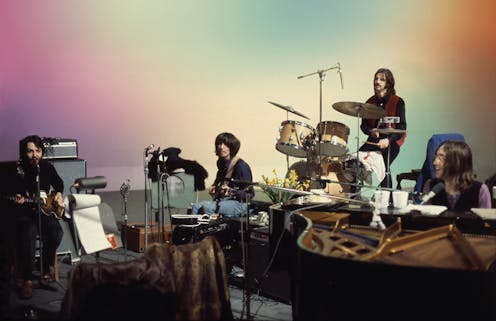
Photo courtesy of Apple Corps Ltd

The Beatles’ Get Back project, undertaken in January 1969, has finally been completed. Again.

For most of the last 50 years it has been known as Let it Be, a film and LP record released in 1970. The project, conceived by Paul McCartney, was originally intended to be a television special documenting the band’s preparation for a live concert (their first in two and a half years). Because of the performance element, the Beatles decided to get back to their roots and only develop material that could be played without adding overdubs.

As it happened, the concert didn’t go ahead, the Beatles famously deciding instead to play a short unannounced gig on the roof of their headquarters. The TV special became a feature film, and the audio was handed over to the “wall of sound” producer, Phil Spector (leading to controversial results).

Meanwhile, in the early 1980s, the Beatles withdrew the film version (a fly-on-the-wall documentary directed by Michael Lindsay-Hogg) from circulation.

Lindsay-Hogg’s Let it Be is remembered as a portrait of a band in the process of breaking up. And indeed, George Harrison did briefly quit the band early into the four-week project, though Lindsay-Hogg’s documentary does not cover this episode.

George Harrison in Get Back.
Walt Disney Pictures, Apple Corps, WingNut Films

Let it Be was seen as a downer in part because the Beatles, especially Lennon, were keen to trash it in the light of the band’s breakup (which occurred just weeks before the release of Let it Be, both film and album). As Lennon said in December 1970, the shoot was “hell”, and Spector was “given the shittiest load of badly recorded shit”.


Read more:
Paul McCartney’s The Lyrics: an extraordinary life in song


A different tenor

While the newly released The Beatles: Get Back, directed by Peter Jackson, covers Harrison’s departure and return, Jackson’s film is tonally different from Lindsay-Hogg’s. According to Jackson, the dour account of Let it Be is inaccurate, since there is much “joy” and friendship evident in the 60 hours of film and 150 hours of audio tape that has been sitting in a vault for half a century.

Much of this audio has long been available as bootlegs, informing written accounts of this period of the Beatles’ history. The audio without the video, however, doesn’t always tell the whole story.

While Jackson and his team haven’t shied away from the moments of friction, ennui, and aimlessness experienced by the band, the tenor of Get Back is more upbeat than Lindsay-Hogg’s version (though there is perhaps more levity in that film than Jackson or its reputation allows).

But Get Back is not just a recut of Let it Be; it is a documentary in its own right, a film about the making of a film. Lindsay-Hogg is now a character in the drama of trying to work out what the project is about, and how it will end.

Unlike the cinema verité style of Let it Be, Get Back gives much-needed context in the form of titles naming the protagonists and songs, as well as explaining what is happening. The use of a day-by-day countdown to the live performance gives the otherwise shapeless events a sense of narrative and even tension.

Get Back was to be a feature film with a theatrical release, but COVID-19 led to a rescheduling and reconceptualising of the work, so that it became a documentary for Disney+. Recent reports were that the series would be a three-part series with a six-hour running time.

The climactic rooftop concert

As it turns out, that running time is closer to eight hours. (Let it Be is a mere 80 minutes long.) Almost all of these eight hours show the Beatles at work on a sound stage (at Twickenham Film Studios) or in an ad hoc recording studio (put together in the Beatles’ Apple headquarters, when – after Harrison’s walkout – it was decided that Twickenham wasn’t conducive to creativity).

The Apple studio is clearly more pleasant, and the tone is further lightened when the Beatles are joined by an outsider, their old friend Billy Preston, on keyboards (a crucial moment for the project).

There is nevertheless something of a hermetic feel to most of Get Back, so that when the Beatles and Preston head up to the rooftop to play in public – the cinematic “payoff” that the band and Lindsay-Hogg had been looking for throughout the project – there is a palpable sense of release.

And the famous rooftop concert, presented with creative use of split screen, is stunningly good (and is also, for the first time, presented in its 42-minute entirety).

After the countless run throughs and takes of the same songs over the preceding weeks (as well as numerous covers and early Beatles tunes), the sense of energy and the quality of playing gives the film the climactic moment that it needs, complete with police officers demanding, albeit politely, that the Beatles stop breaching the peace of London’s West End.

Cigarettes, cups of tea, and white bread

Get Back is very different from Let it Be in part due to Jackson’s editing, especially his use of montage, which produces a dynamic, sometimes frenetic, energy. Beyond these stylistic elements, Get Back is notable as a technical feat.

It looks and sounds astonishingly good, not something that was ever said about Let it Be. Jackson and his technical team have employed the kind of film restoration techniques used in his war documentary They Shall Not Grow Old (2018).

The vision in Get Back is beautifully saturated, sharp, and less grainy than Lindsay-Hogg’s film. Harrison and Starr, in their sartorial splendour, often resemble their cartoon equivalents from Yellow Submarine (1968).

If there is anything unvarnished about Jackson’s film it is the sight of people apparently living off cigarettes, cups of tea, and white bread. Also notably “historical” is the homosocial nature of the project; almost all of the active participants are men. Even Yoko Ono, who sits beside Lennon throughout, is almost entirely silent (save for her vocal participation in a couple of impromptu jams).

While the film has been painstakingly restored, the soundtrack has been almost remade. Much of the audio was recorded on mono quarter-inch tape. Jackson’s technical team used machine learning to effectively “remix” these mono tapes, allowing Jackson to hone in on individual voices masked by other sound sources (voices or musical instruments).

John Lennon in Get Back.
Walt Disney Pictures, Apple Corps, WingNut Films


Read more:
Revolution 50: The Beatles’ White Album remixed


This is an extraordinary technological breakthrough, allowing key conversations to be heard properly for the first time, and for the remixing of the play throughs and rehearsals of songs, which weren’t being recorded as “takes” on the eight-track system.

Get Back is a treat for any Beatles fan. It’s a reminder, too, if one is needed, that some classic songs were recorded for the project. (Given that McCartney supplied at least three of these classics – Let it Be, The Long and Winding Road, and Get Back – it’s unsurprising that he has long been unsatisfied with the way they were originally showcased.)

But Jackson’s film isn’t all sweetness and light. Lennon, for instance, is dismissive of Harrison’s I, Me, Mine, and he makes a throwaway joke about Bob Wooler, a Liverpool disc jockey whom Lennon assaulted in 1963. Also notable is the relative absence of George Martin, who largely hands production duties to his sound engineer, Glyn Johns, surely a sign that Martin found something amiss with the project.

And indeed numerous sequences show a band lacking focus and discipline.
Get Back, then, is unquestionably a mixed bag: thrilling, compelling, and funny, but also sometimes just a little boring.

In this, Jackson has been true to the original project. His extraordinary TV series is essential viewing for anyone interested in popular music.

The Conversation

David McCooey does not work for, consult, own shares in or receive funding from any company or organisation that would benefit from this article, and has disclosed no relevant affiliations beyond their academic appointment.

ref. The Beatles: Get Back review – Peter Jackson’s TV series is a thrilling, funny (and long) treat for fans – https://theconversation.com/the-beatles-get-back-review-peter-jacksons-tv-series-is-a-thrilling-funny-and-long-treat-for-fans-172404


What is orthokeratology? And will it help slow the deterioration of my child’s eyesight?

Source: The Conversation (Au and NZ) – By Paul Gifford, Adjunct Senior Lecturer, UNSW

Shutterstock

If you or your child is short-sighted (struggles to see things further away) you might have heard about orthokeratology.

Also known as OK or ortho-k, orthokeratology has been around since the 1960s. However, it has gained interest recently for its ability to slow the progression of myopia (short-sightedness).

Orthokeratology involves wearing a specially-designed rigid contact lens overnight. Like a mold, the lens temporarily reshapes the eye while you sleep by gently changing the profile of the cornea (the eye’s clear, protective outer layer that acts like a powerful lens).

This creates a temporary change; when you wake up, you take the lens off and voilà! You can see.

It takes about a week of going through the cycle for the full effect to be reached but after that – assuming you wear them every night and take them off every morning – you should be able to get through your days without glasses or contact lenses.

And most importantly, there’s good evidence it can help slow the progression of myopia.

Like all treatments, however, orthokeratology has its pros and cons – and its risks need to be well understood before use.


Read more:
Hidden in plain sight: How the COVID-19 pandemic is damaging children’s vision


The orthokeratology lens temporarily reshapes the eye while you sleep.
Shutterstock

The pros

Orthokeratology may be an appealing option:

  • for people who want an alternative to glasses but find contact lenses either uncomfortable or not suitable (because, for example, they suffer from dry eye, work in dusty environments or enjoy water sports)

  • as an alternative to refractive surgery, also known as laser eye surgery or LASIK. Refractive surgery is permanent but orthokeratology is temporary; if you stop using the lenses, things go back to normal within a week

  • for parents of a child who might otherwise be wearing contact lenses at school; ortho-k allows a child to go to school without glasses or contact lenses, which can be lost or come loose during the day.

The cons

The potential downsides include:

  • the up-front costs are higher than daily wear contact lenses where the similar overall cost is spread over time

  • the effect wears off if you don’t use them every night

  • all contact lens use comes with a higher risk of eye infection than if you had no contact lenses at all.

Some people might think orthokeratology has a higher infection risk than standard soft contact lenses. However, this is not supported by the research evidence.

A study in Japan compared outcomes after 10 years of wear in children of either orthokeratology or soft contact lenses. It found there were no severe adverse events and the frequency of mild and adverse events were about equal between the groups.

If you get an infection from either a standard contact lens or orthokeratology lenses, it usually clears up with a course of antibiotics. However, it’s possible to get a rare infection called microbial keratitis, which has the potential to damage sight.

It’s not common. According to one study, if you were to wear an orthokeratology lens every night for 1,000 years you are only likely to get one serious infection.

If you use sterile contact lens solutions and avoid tap water, orthokeratology lens-wearers will dramatically reduce their risk of eye infection. Tap water exposure to lenses or lens accessories greatly increases the risk of infection.

A girl gets her eyes tested.
Slower myopia progression also means less frequent need for replacing glasses, which can save you money in the long run.
Shutterstock

Reducing risk of devasting eye disease later in life

It’s now projected half the world’s population will by myopic by 2050, and the World Health Organization has sounded the alarm, saying in one bulletin:

High myopia greatly increases the risk of macular atrophy, glaucoma and
other causes of severe vision loss, the incidence of which is not reduced by
wearing standard glasses.

Slowing the progression of myopia reduces risk of sight-threatening eye disease. It also means less frequent changes in vision, which can save money in the long run from needing fewer changes to glasses.

Myopia progresses faster in younger years, so a myopia control prevention should be prescribed as early as possible. We don’t know exactly how orthokeratology slows myopia progression, but compelling research shows it does.

If you’re considering orthokeratology for your child, you and your eye specialist need to strike a balance. The child must be old enough to be handle it – but wait too long and the the myopia control benefits it offers diminish.

Every child is different. Some are more able than others to contend with orthokeratology, or willing to wear it overnight. It can be uncomfortable at first, and some might find the idea of a contact lens too confronting. It cannot be forced.

Too much ‘close work’ can make myopia worse in children.
Shutterstock

Review all the options

Orthokeratology isn’t the only solution; there are also special lenses you can get for glasses and soft daily wear contact lenses that help slow progression of myopia. Seek advice from eye specialists to to review all the options.

I also recommend children do no more than two hours per day of leisure “close work” (meaning non-school work: close up screen time or book-reading) outside school hours. Parents can also teach kids the “20-20 rule” (for every 20 minutes of close work, take a 20 second break to look into the distance). Outside time (two or more hours per day) is also crucial to healthy eye development in children.

What’s clear, however, is that all short-sighted children should be doing something to control their myopia. It’s not enough just to give a child standard single vision glasses to help them see, without doing more to help slow the march of myopia.

If right for your child, orthokeratology has one of the strongest research pedigrees for slowing progression of myopia.


Read more:
How to keep your contact lenses clean (and what can go wrong if you don’t)


The Conversation

Paul Gifford is an Adjunct Senior Lecturer at the University of New South Wales and Adjunct Associate Professor at the University of Waterloo, Canada. He is co-founder of Myopia Profile, which educates optometrists and companies on research relating to vision, and MyKidsVision.org which provides parent focused research backed information on managing childhood myopia.

ref. What is orthokeratology? And will it help slow the deterioration of my child’s eyesight? – https://theconversation.com/what-is-orthokeratology-and-will-it-help-slow-the-deterioration-of-my-childs-eyesight-171826

Curious Kids: how do birds make their nests?

Source: The Conversation (Au and NZ) – By Kiara L’Herpiniere, PhD Candidate, Wildlife Biologist, Macquarie University

Shutterstock

I would please like to know how birds make their nests? How do they know how to weave the twigs together and what makes the twigs stick together? – Miguel, age 10, Brisbane

Hi Miguel, thanks for this great question!

The first thing to know is not all birds make nests. For example, emperor penguin fathers carry their precious egg on their feet (to keep it off the frozen ground).

Some birds, such as cuckoos, will lay their eggs in someone else’s nests. Others lay them on the ground among leaves or pebbles, or on cliffs with very little protection.

Eggs among pebbles
Some birds will lay their eggs among pebbles on the ground, which doesn’t offer them much physical protection.
Shutterstock

For the birds that do build nests, there is one main goal: to keep their eggs and chicks safe.

Many places to build a nest

Many birds also make their nests in tree hollows, including parrots. That’s just one reason it’s important to not cut trees down!

Meanwhile, kookaburras use their powerful beaks to burrow into termite nests and make a cosy nest inside. And the cute spotted pardelote will dig little burrows in the side of earth banks – with a safe and cosy spot for its eggs at the end of the tunnel.

The tiny spotted pardalote is one of the smallest Australian birds, and measures about 8 to 10 centimetres in length.
Shutterstock

Some birds, such as brush turkeys, spend months building huge mounds on the ground which can heat up from the inside. The male turkey makes sure the ground is exactly the right temperature inside the mound, and then lets the female lay the eggs inside. He’ll take big mouthfuls of dirt surrounding the eggs to check it’s not too hot or cold.

What materials do they use?

Birds construct many different types of nests. There are floating nests, cups, domes, pendulums and basket-shaped nests. They can be made out of sticks, twigs, leaves, grasses, mosses or even mud.

Magpie-larks (also called “peewees”), apostlebirds and choughs make mud bowl nests that look like terracotta plant pots. To do this, they gather mud and grasses in their beaks and shake it around to mix it with their saliva. They can then attach it to a branch and build upwards until the nest is complete.

In fact, bird saliva is a really strong and sticky material to build nests with. Birds will often mix saliva and mud to make a type of glue. And some swiftlets make their nests entirely out of solidified saliva. People will even eat these nests in bird’s nest soup!

Some swiftlets will make their nest entirely out of solidified saliva.
Shutterstock

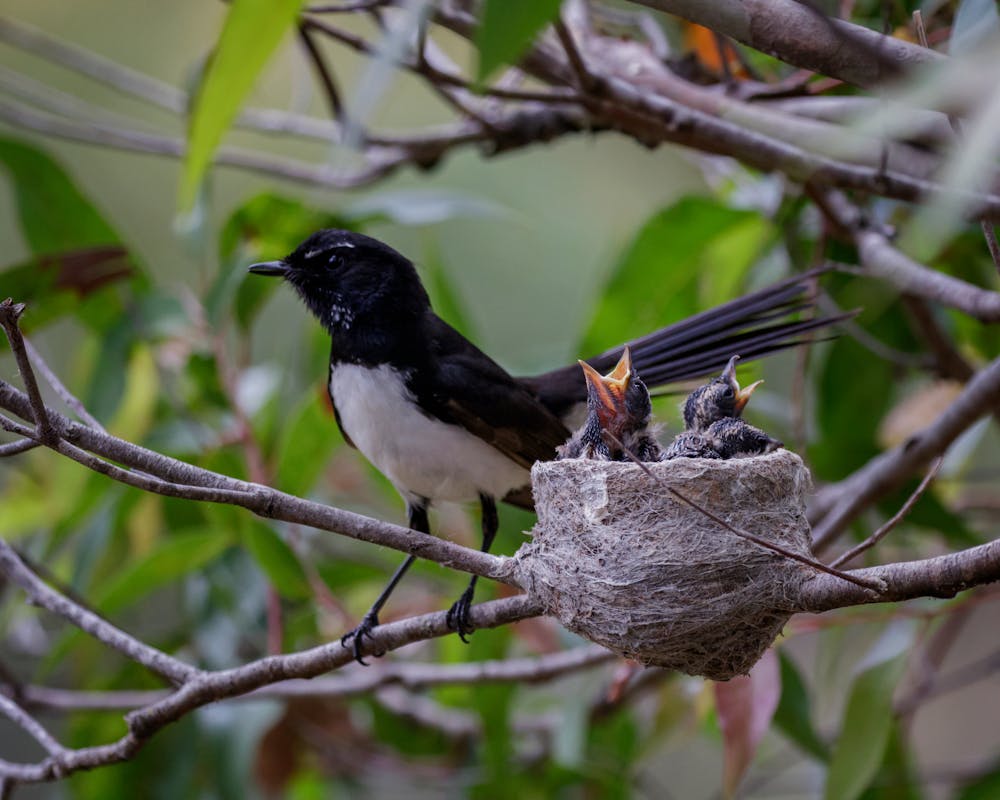
Willie wagtails use another type of glue – sticky spiderwebs. They “sew” grasses together using spider webs and the webs help keep the nests strong against wind and water, too. They have to perfect the technique of gathering the spiderweb though, otherwise it can get tangled in their feathers.

Willy wagtail’s nest is a neatly-woven cup of grasses, covered with spider’s web on the outside and is lined with soft grasses, hair or fur.
Shutterstock

Magpies and crows, both common visitors to our gardens, are also clever nest builders. Not only can they expertly layer their sticks into a bowl, but they also use many human-made materials in their nests. You might find them using fabric, string or a wire to hold a nest together.

Some birds such as red kites have even been seen “decorating” their nests with human rubbish. And Australian babblers line the inside of their nests with a thick wall of kangaroo poo, followed by soft fluff, to keep their chicks warm.

The chestnut-crowned babbler lives in the desert and can have up to 23 birds roosting in one nest.
Shutterstock


Read more:
Headphones, saw blades, coat hangers: how human trash in Australian bird nests changed over 195 years


The building process

To actually weave the nests, birds will usually create a base by layering sticks or twigs in the place they want it. Then they use their beaks and feet to weave a chosen materials through, to hold the sticks in place.

They can pull strips of material with their beaks over and under, just like weaving a rug. They can even tie knots! Nests can take a really long time to make, so they’re often reused year after year. Weaver birds are so good at weaving, they can build complex nests that cover entire trees and have several chambers.

Check out this baya weaver bird build an incredible hanging nest using the weaving method. These birds are found across the Indian Subcontinent and Southeast Asia.

To summarise, birds are really intelligent animals. They use their intelligence, along with their beaks and feet, to find the most clever ways to make nests with whatever materials are available. And they get better at this by learning from others, such as their parents or peers.


Read more:
Why are birds’ eggs colourful? New research shows it’s linked to the shape of their nests


The Conversation

Kiara L’Herpiniere does not work for, consult, own shares in or receive funding from any company or organisation that would benefit from this article, and has disclosed no relevant affiliations beyond their academic appointment.

ref. Curious Kids: how do birds make their nests? – https://theconversation.com/curious-kids-how-do-birds-make-their-nests-172391

Judith Collins may be gone but New Zealand’s search for a credible and viable opposition is far from over

Source: The Conversation (Au and NZ) – By Richard Shaw, Professor of Politics, Massey University

GettyImages

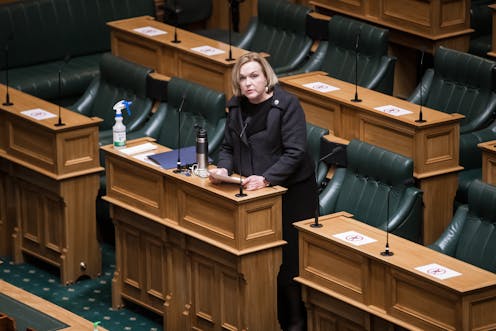
When Shane Reti replaced Judith Collins at the helm of New Zealand’s National Party today, he became the fifth National leader Prime Minister Jacinda Ardern has faced. When Reti, who is in the top spot on a caretaker basis, steps aside next week, that number will tick over to six. In four years.

For New Zealand’s most electorally successful party in the post-war era this is an unprecedented period of turmoil.

Collins’ departure comes as a surprise to roughly no one. Discontent with her leadership has been bubbling away within the National Party family for some time. When it came to a head over lasts night’s demotion of Simon Bridges there was a sense the end was near.

The former leader’s continuing association with right-wing blogger Cameron Slater, her criticism of prominent microbiologist Siouxsie Wiles, her role in forcing the resignations of former party leader Todd Muller and veteran MP Nick Smith – these and other tactical choices had long since undermined her authority in sections of the caucus and wider party organisation.

When the family squabble broke out into the public domain some weeks ago things were ratcheted up several notches. The moment party insiders such as former attorney general Chris Finlayson and Collins’ own former press secretary began questioning her fitness for office, you got the sense the tide was running out on Collins.

Simon Bridges watching Judith Collins speak to media
Simon Bridges watches Judith Collins speak to media after the National Party’s heavy defeat at the 2020 election.
GettyImages

Leadership cuts all ways

In the end, however, it was the polls that did it. Bill English led National to 44.4% of the vote in 2017. Three years and a couple of leaders later, Collins took the party to 25.6%, its worst electoral performance since 2002.

Things have never really picked up, the pressure mounting as one anaemic poll followed another. The steady growth in support for the ACT Party has compounded matters. In National’s world, David Seymour’s party is supposed to be the support act, but ACT is now putting pressure on National for top billing.


Read more:
New Zealand’s new parliament turns red: final 2020 election results at a glance


And so Collins went. But there is more to this than her own performance. In an age of hyper-personalised politics, the obsession with parties’ leaders obscures other critical aspects of a successful political party. There is much more to politics than having a skilled leader – lieutenants matter, as do foot soldiers. Policy matters, the unfashionable “cake stall” parts of political parties matter.

In other words, the boss of the parliamentary wing of the party is not the only one who has to show up. Leadership must also come from those who control the wider party organisation, and the public criticism from party insiders suggests the issues within National go well beyond leadership of the caucus.

For instance, the National Party’s board plays the critical role in candidate selection, and it hasn’t covered itself in glory lately. There has been a string of poor (generally young, male and Pākehā) candidates, and following the 2020 election the party somehow managed to wind up with a caucus that looked more like the New Zealand of the 1950s than the 2020s.

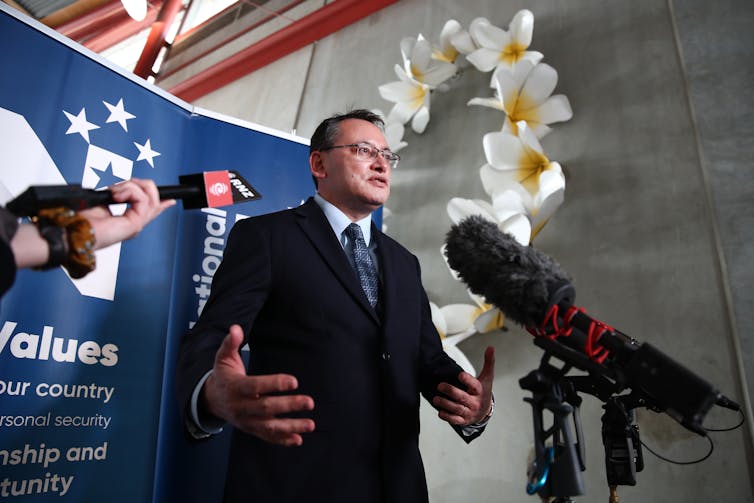
Dr Shane Reti, former deputy and now interim leader of the National Party.
GettyImages

A party divided

Collins’ departure won’t address those systemic flaws. Neither will it tackle the single most pressing issue facing National – deciding what kind of political party it wants to be.

Historically, National has been a broad political church, accommodating a heterodox mix of economic liberals and social conservatives, urban dwellers and denizens of the rural heartland. And it has been very good at gaining and holding onto power, governing in 47 of the 76 years since the end of WWII.


Read more:
Labour makes it easier to change leaders, but Jacinda Ardern has no reason to go – yet


But the party looks distracted at the moment, the split between its socially liberal and religiously conservative wings obvious to all. The party (at least under Collins) has been seemingly more interested in culture war skirmishes than in addressing material issues, particularly the growing rental and housing crises.

Beyond that, if National is to retake power in 2023 it needs to bring back into the fold those voters who decamped to Jacinda Ardern’s Labour Party in 2020. The shine has begun to come off both Ardern and her government as the pandemic drags on and people start to flag, offering National any number of lines of attack which would appeal to those looking for a reason to return. But Collins’ focus was too often elsewhere.

The democratic deficit

In a sense, Judith Collins lost her job because she was not John Key. National has been on a mission to find The Next John Key since the original resigned as leader in 2016 (although, and this is unlikely to be entirely coincidental, he has recently started popping up here and there like some sort of political legacy act).

Five leadership changes later (and with another looming next week), the search continues. But installing the fifth new leader (six if you count Nikki Kaye’s hours-long stint at the helm following Todd Muller’s departure) since Key’s time won’t be the panacea to the party’s problems. National’s problems run far deeper than that.

Meanwhile, whoever becomes the next leader can look forward to leading a caucus that is riven, around the margins of which prowl three former leaders – one who is clearly biding his time and another who, one suspects, will not be taking this (or anything else) lying down.


Read more:
Why Jacinda Ardern’s ‘clumsy’ leadership response to Delta could still be the right approach


ACT is circling on the right, while on the left Ardern has led the country to high vaccination rates and is about to open the country up. To say National’s next leader has their work cut out would be an extreme political understatement.

For New Zealand’s most electorally successful party in the post-war era, the chaotic events of the last 24 hours are just the latest episode in an unprecedented period of turmoil. So there’s that. But beyond the implications of the current bloodletting for individuals and parties there is another, more important dimension to the ongoing shambles within National.

Representative democracies require functional governments but they also need strong oppositions. At the moment, New Zealand has one of these things but not the other. This can’t go on – and yet it does.

The Conversation

Richard Shaw does not work for, consult, own shares in or receive funding from any company or organization that would benefit from this article, and has disclosed no relevant affiliations beyond their academic appointment.

ref. Judith Collins may be gone but New Zealand’s search for a credible and viable opposition is far from over – https://theconversation.com/judith-collins-may-be-gone-but-new-zealands-search-for-a-credible-and-viable-opposition-is-far-from-over-172590

Ending online anonymity won’t make social media less toxic

Source: The Conversation (Au and NZ) – By Shireen Morris, Senior lecturer, Macquarie University

Shutterstock

In recent months the government has proposed cracking down on online anonymity. The idea is that attaching online posts to a person’s real name will reduce abuse and increase accountability.

Online bullying and misinformation are growing problems, and government action to address them is overdue.

However, limiting anonymity alone won’t make social media less toxic. It will only work combined with broader reforms to platform design and business models, which drive polarisation, negativity, abuse and misinformation.

Reforms must also protect free speech and account for power imbalances between citizens and the state. The mooted changes come alongside suggestions of public funding for defamation actions by parliamentarians. Cynics might view these two suggestions together as an effort to silence reproach.

Potential anonymity reforms

In April this year, a parliamentary committee recommended requiring users to provide ID documents before opening social media accounts.

This was not implemented, but in June the Online Safety Act was changed to empower the e-Safety Commissioner to require platforms to disclose personal information of alleged online bullies.

In September, the High Court held that media outlets can be liable for defamatory third-party comments on their social media posts.

Government comments indicate intent to further regulate online anonymity. Prime Minister Scott Morrison recently described social media as a “coward’s palace”, pressuring platforms to expose the identities of anonymous trolls.

Deputy Prime Minister Barnaby Joyce also criticised platforms professing to be “vessels of free speech” while enabling users to conceal their identities.

Risks

There are risks with the proposed policy direction. First, anonymity regulation alone may be ineffective in stopping abuse and misinformation.

Second, reforms must be scrutinised to ensure they serve public rather than political interests. While the state stifling dissent may seem less of a concern in a democracy like Australia than in authoritarian regimes, it is important to ensure new measures won’t unreasonably compromise free speech and privacy.


Read more:
Online abuse: banning anonymous social media accounts is not the answer


This concern is underscored by politicians issuing legal threats to citizens for voicing online critiques.

In combination with Australia’s defamation laws, removing online anonymity may further expose users and chill democratic debate.

Complex drivers of toxicity

Anonymity is only one factor contributing to online toxicity.

Most current platforms are designed to maximise user engagement. Platform algorithms, in combination with human behaviour, mean negative and angry content outcompetes positive content. This promotes negativity, polarisation and extremism.

Engagement-driven business models also incentivise fake news. Mistruths attract more engagement, so falsity is 70% more likely to be retweeted than fact.

Research further shows sharing of political misinformation is driven by partisanship more than ignorance. Online polarisation therefore propels misinformation in aid of the culture wars.

For example, the COVID-19 hashtag “#Danliedpeopledied” was driven by hyper-partisan and fake accounts. An anti-vax “infodemic” now spreads online, propelled by tribal influencers and anti-vaxxer communities.


Read more:
The story of #DanLiedPeopleDied: how a hashtag reveals Australia’s ‘information disorder’ problem


Online toxicity is exacerbated by social media’s addictiveness. Each “like” and comment gives users “a little dopamine hit”. Outrage and negativity equal more engagement, which means more dopamine rewarding the behaviour.

Connection

While we turn to social media for company and validation, heavy use can make us feel alone. Isolation may leave us more susceptible to tribes that foster belonging.

Tribalism can encourage group attacks, reinforcing tribal connection. Social media “pile-ons” can be devastating for the target. Such bullying would probably not occur in person. But online, we have fewer physical and visual cues to encourage empathy.

While some (especially anonymous trolls) find courage on social media, others are frightened off. Negative online encounters can create a “spiral of silence”, discouraging moderate users from participating. This creates more room for fringe voices emboldened by the echo chamber.

What reforms are needed?

Anonymity regulation will only help with bullying and misinformation if part of broader reforms tackling other drivers of toxicity, like engagement-driven polarisation. This means addressing platform business models and design – a complex task.

Reforms must also be fair.

First, anonymity regulation must apply equally to parliamentarians. Some politicians have used fake accounts to confect support, which undermines healthy debate.

A parliamentary code of conduct could define standards for politicians’ behaviour, both online and offline. Regulating truth in political advertising may curtail dishonesty.

Second, if anonymity is regulated, it is even more crucial to ensure citizens are not gratuitously sued or threatened by politicians for voicing opinions online.

Protection of reputation and accuracy are important, but we must safeguard fair debate. Politicians enjoy free speech bolstered by parliamentary privilege and media platforms.

Social media has disrupted politicians’ domination of political discourse, which helps explain the recent explosion of defamation threats and actions by politicians.

Any anonymity regulation must be balanced by free speech protections, including more robust defamation defences accounting for power imbalances between citizens and the state.

Given their positions of power, politicians should accept a higher threshold of criticism.


This article was co-authored with Andrew Ball, who is an Associate Director at IT consultancy firm Accenture.


Read more:
Why defamation suits in Australia are so ubiquitous — and difficult to defend for media organisations


The Conversation

Shireen Morris is affiliated with the Australian Labor Party. She is a Research Fellow with Per Capita Think Tank and a Managing Committee member with the John Curtin Research Centre.

ref. Ending online anonymity won’t make social media less toxic – https://theconversation.com/ending-online-anonymity-wont-make-social-media-less-toxic-172228

Balancing work and fertility demands is not easy – but reproductive leave can help

Source: The Conversation (Au and NZ) – By Marian Baird, Professor of Employment Relations, University of Sydney

www.shutterstock.com

Balancing the competing demands of work and care, or “production” and “reproduction”, is traditionally a burden carried by women.

As many women could tell you, this often comes at a personal cost. It is not uncommon for women involved in our research to report they forego promotions to accommodate their child caring or elder care responsibilities, or work part-time, and earn less, because full-time jobs are too inflexible.

But beyond the personal cost, there is an impact on the economy, workplaces and gender equality.

In Australia, this is reflected by declining fertility rates and the withdrawal of women from the labour market in the wake of COVID-19.


Read more:
In 2020 our workforce and our caring system broke. They are the same thing


Future fertility rates are predicted to drop to a record low of around 1.6 babies per woman, one of the lowest rates on record. This is below “replacement level”, putting additional pressure on an already strained workforce.

After decades of growth, women’s participation in employment is also falling, likely driven by the ongoing strain of lockdowns and a recalibration of work and care responsibilities .

These trends paint a grim picture of the state of production and reproduction in Australia. But we can make policy changes to better help young people navigate work and care. One of these is reproductive leave.

What is reproductive leave?

In Australia, as well as countries such as the United Kingdom, India and New Zealand, “reproductive leave” has emerged as an innovative response to the tensions between work and human reproduction. These policies aim to assist workers in balancing their paid work obligations with their reproductive needs, sexual health and overall well-being.

Group of young workers, look at a document.
Research shows fertility treatments and painful periods can interfere with work duties.
www.shutterstock.com

These policies may offer support to workers who are trying to start a family, or to anyone who is managing some of the complex needs of the human body, which requires different levels of attention and maintenance over the life course. For example, there is evidence Australian women struggle to balance the demands of IVF treatment with paid work obligations. There is also data to suggest painful periods may contribute to absenteeism.

Unions, private companies lead the way

We are starting to see a wide range of workplace policies in this area.

In 2020, the Health and Community Services Union in Victoria began a push for reproductive health and well-being leave as part of their enterprise bargaining process. This claim includes paid leave and flexible working arrangements for menstruation, menopause, miscarriage and stillbirth, fertility treatments, vasectomies, hysterectomies and gender affirmation therapies (negotiations are ongoing).


Read more:
How English-speaking countries upended the trade-off between babies and jobs, without even trying


Earlier this year, ethical superannuation company Future Super announced paid leave for menstruation and menopause, as did the Australian-owned period underwear brand Modibodi.

Global music streaming platformSpotify also made headlines recently for its generous “family formation” benefits that provide employees with a lifetime allowance for IVF treatments, donor services and fertility assessments.

Part of a global movement

Reproductive leave is not a new concept. In Australia, these policies trace back to the early 2000s, when the Students’ Representative Council at Sydney University and the Australian Manufacturing Workers’ Union were involved in two separate industrial disputes over the provision of menstrual leave.

But there is a renewed energy surrounding reproductive leave, demonstrating an increasing acceptance of the complex entanglement of work and personal life.

Woman curled up on a couch.
There have been calls for period leave in Australia for about two decades.
www.shutterstock.com

There is a drive to bring the body into the modern workplace and to pay attention to biological and social reproduction as a means of assisting in economic production. To put it bluntly, we will not have a future generation of workers and taxpayers if we fail to accommodate the reproductive needs and activities of today’s workers and taxpayers.

These policies are also part of a global movement to normalise and accommodate the body at all stages of life and for all people across the sex and gender spectrums, including cisgender, transgender, gender diverse and non-binary people.

Some people have objections

But how well accepted will these policies be?

In some cases, reproductive leave has caused surprise or alarm. Given the link between reproductive capacity and gender discrimination at work, some feminists are understandably wary of policies that draw attention to biological differences between workers.


Read more:
Supporting menstrual health in Australia means more than just throwing pads at the problem


There are also privacy concerns over the disclosure of highly personal issues such as infertility or menstrual pain, as well as concerns these policies could increase the cost of labour or reinforce negative stereotypes (we don’t need more jokes about “that time of the month”).

Acknowledging the potential drawbacks of reproductive leave must be part of the policy conversation. These policies must be approached cautiously and designed in a way that minimises the risk of gender stereotyping.

The future of reproductive leave in Australia

Despite significant developments within trade unions and private companies, there are limited provisions for reproductive leave in national legislation. For many workers their only option is to claim personal leave: that is, “sick” leave.

Recent announcements by the federal and NSW governments that parents who have suffered a miscarriage or stillbirth are now eligible for paid bereavement leave is a start – but they need to go further.

Mum holding a new baby in her lap.
The fertility rate is expected to drop to 1.6 in 2021.
www.shutterstock.com

For example, we could explore a “model clause” for reproductive leave in modern awards or a legislative amendment to the National Employment Standards to include a gender-inclusive reproductive leave provision. This provision would conceivably provide days of unpaid or paid job protected leave, in a similar manner to the origins of parental leave and more recently domestic and family violence leave.

We must take the opportunity of COVID-19 to reconfigure our gender contract. It is clear that without policies that enable people to work, care and reproduce, Australia will be a poorer and smaller nation.

Professor Marian Baird also spoke about reproductive leave at “The Social Future” the 50th Anniversary Symposium of The Academy of the Social Sciences in Australia this week.

The Conversation

Marian Baird receives funding from the Australian Research Council for the Centre of Excellence on population Ageing Research.
I am a research board member of the Australasian Centre for Corporate Responsibility.

Elizabeth Hill receives funding from The Australian Research Council.

Sydney Colussi does not work for, consult, own shares in or receive funding from any company or organisation that would benefit from this article, and has disclosed no relevant affiliations beyond their academic appointment.

ref. Balancing work and fertility demands is not easy – but reproductive leave can help – https://theconversation.com/balancing-work-and-fertility-demands-is-not-easy-but-reproductive-leave-can-help-171497

Schools can still expel LGBTQ+ kids. The Religious Discrimination Bill only makes it worse

Source: The Conversation (Au and NZ) – By Liam Elphick, Associate Lecturer, Faculty of Law, Monash University

Shutterstock

The Religious Discrimination Bill is back, this time in its third iteration. The Coalition party room unanimously endorsed the bill on Tuesday, but a number of Liberal MPs voiced concerns about what it could mean for LGBTQ+ students and teachers at faith-based schools and universities.

Attorney General Michaelia Cash has said no child should be “suspended or expelled from school on the basis of their sexuality or gender identity”, and that discrimination against students is “unacceptable”.

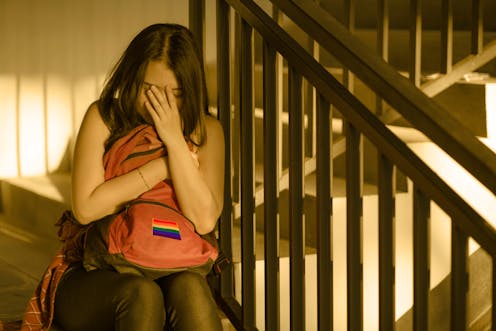
However, the bill does nothing to protect LGBTQ+ students and teachers. It allows more, not less, discrimination by religious schools.

The prime minister’s long lost ‘promise’

In October 2018, the Prime Minister promised to ban religious schools from expelling students on the basis of their sexuality.

This requires removing the exemptions in the federal Sex Discrimination Act which permit religious schools to expel LGBTQ+ students and sack LGBTQ+ teachers. The reason can be as simple as “they’re bisexual”, or “they’re transgender” – as long as this fits within the school’s religious beliefs.

More than three years later, these exemptions still remain. Religious schools can, today, expel kids just for being gay. While many might not choose to do this and are supportive of the LGBTQ+ community, there have still been cases of non-supportive religious schools who have sacked teachers for being gay.


Read more:
Third time lucky? What has changed in the latest draft of the religious discrimination bill?


Despite this, the federal government has continually kicked the can down the road on this reform.

Michaelia Cash last week asked the Australian Law Reform Commission to provide detailed advice on the Sex Discrimination Act exemptions. This comes some 30 months after the Commission was first asked to conduct an inquiry into this issue.

But here’s the kicker – they can only report back 12 months after the Religious Discrimination Bill becomes law.

At best, this is likely to be early 2023, since the Religious Discrimination Bill seems destined to head to a Senate inquiry. An entirely new law will then need to be drafted and passed through parliament to change the Sex Discrimination Act exemptions.

The best-case scenario is that religious schools lose the right to sack LGBTQ+ staff and expel LGBTQ+ students in, wait for it… 2024. A student who was in year 7 when this change was promised will have graduated from high school by the time it is implemented.

And even then, if only suspension and expulsion were banned – the attorney general only promised to address these two outcomes – this wouldn’t stop religious schools mistreating LGBTQ+ students in other ways. Schools could still ban same-sex relationships, or refuse to use a transgender student’s pronouns.

So what does the Religious Discrimination Bill have to say about it?

If the Sex Discrimination Act exemptions are eventually removed, that still isn’t the end of the story.

Federal Labor has expressed concern at how the Religious Discrimination Bill may adversely affect LGBTQ+ students and teachers at religious schools. Their concern is well founded.

The bill’s main purpose is to prohibit discrimination on the basis of religious belief or activity. This means, for example, that an employer would not be able to sack someone on the basis they are Jewish, or Muslim.

However the bill also contains very wide exemptions. These are situations in which discrimination is allowed.

Religious schools are permitted to discriminate on the basis of a person’s religion. They only need to prove that an individual of the same religion as the school “could reasonably consider” the school’s actions to accord with their religious beliefs.

It is a test not seen in any other Australian discrimination laws. It is such a low bar that religious schools can likely rely on it for almost everything they do.

This means that even if the Sex Discrimination Act exemptions are removed, the Religious Discrimination Bill could provide an alternative route for religious schools to discriminate against LGBTQ+ teachers and students.

For instance, a non-supportive religious school may teach that gay couples should not be allowed to marry or have children. They could then discriminate against any staff and students who do not adhere to this belief – such as a teacher who marries their same-sex partner.


Read more:
9 in 10 LGBTQ+ students say they hear homophobic language at school, and 1 in 3 hear it almost every day


To partly address this, the government added a clarification in the second draft of the bill that it “does not” permit conduct that is unlawful under the Sex Discrimination Act.

However, the third draft of the Bill has watered this down. It now simply says that conduct covered by the bill “may” still be discriminatory under the Sex Discrimination Act. The subtle change from “does not” to “may” makes a big difference, and puts LGBTQ+ teachers and students at risk.

And because of the controversial “statement of belief” provisions in the bill, religious schools are largely free to tell trans students that their gender identity is against the laws of God, or to tell lesbian parents they are evil for depriving their child of a father. Even if other discrimination laws ban such statements being made, this bill overrides them.

No matter how you cut it, the Religious Discrimination Bill permits far too much harm in the name of religion.

Oh, and one more thing…

As if this wasn’t enough, the latest version of the bill adds a second override provision.

This allows religious schools to hire and fire on the basis of any religious views, even where such views are irrelevant to the position in question. The school only needs to share publicly their policy on this.

Although some state and territory laws provide stronger protection for staff at religious schools, the bill overrides these laws.


Read more:
New religious discrimination bill will cause damage to Australian society that will be difficult to heal


Victoria, for instance, is considering a new law which would bar religious schools from employment discrimination except for key faith-based roles, such as religious education teachers. It would mean religion cannot be used to discriminate against maths teachers, or gardeners.

This new provision in the Religious Discrimination Bill would reverse that protection, and open up Victorian teachers and staff to discrimination.

In the last 40 years of discrimination laws in Australia, there is hardly a single example of a federal law overriding discrimination protections granted under state and territory laws. In this Bill, there are two: both with severe consequences for the LGBTQ+ community.

Unless the Morrison government takes swift action to correct this course, being an LGBTQ+ student or staff member at a non-supportive religious school is going to become even harder than it already is.

The Conversation

The authors do not work for, consult, own shares in or receive funding from any company or organisation that would benefit from this article, and have disclosed no relevant affiliations beyond their academic appointment.

ref. Schools can still expel LGBTQ+ kids. The Religious Discrimination Bill only makes it worse – https://theconversation.com/schools-can-still-expel-lgbtq-kids-the-religious-discrimination-bill-only-makes-it-worse-172494

Rappler chief editor and Asia-Pacific media keynotes at ‘pandemic’ forum

By Sri Krishnamurthi for Asia Pacific Report

A Filipina journalist who cut her teeth as a young reporter in the Marcos dictatorship years and now heads an investigative digital media outlet and a New Zealand journalist who was on board the bombed Rainbow Warrior environmental campaign ship are keynote speakers at an Asia-Pacific conference opening in Auckland today.

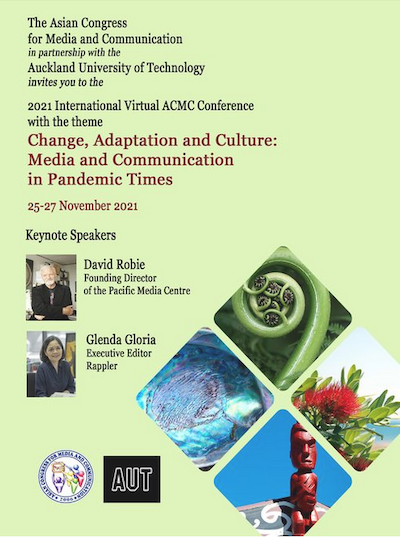
The Asian Congress for Media and Communication (ACMC) is hosting the three-day 2021 virtual conference in partnership with Auckland University of Technology with the theme “Change, Adaptation and Culture: Media and Communication in Pandemic Times”.

Glenda Gloria, an award-winning investigative journalist and author of Under The Crescent Moon: Rebellion in Mindanao, is co-founder and executive editor of Rappler, which is at the forefront of media freedom struggles in the Philippines.

Glenda Gloria AUT
Glenda Gloria … co-founder and executive editor of Rappler. Image: Rappler

Her colleague, Maria Ressa, recently jointly won the 2021 Nobel Peace Prize, for championing a free press and she has been the target of multiple lawsuits in an attempt by the Duterte administration to silence the media.

Gloria will talk about current challenges facing the media in the Philippines and across the Asia Pacific region.

David Robie, founding director of the Pacific Media Centre and recently retired professor of Pacific journalism, is speaking about the media and covid-19 “disinformation and hate speech”.

Dr Robie sailed on board the Greenpeace ship Rainbow Warrior that was bombed by French secret agents in Auckland in 1985 and he has reported on environmental issues, climate issues and independence struggles.

He has been the head of three Pacific university journalism programmes and the author of several media and politics books, including Eyes of Fire and Blood on their Banner.

‘International sharing’
Senior communications lecturer at AUT Khairiah A Rahman, principal organiser of the event, said there was much to be achieved from the conference.

Dr David Robie AUT
Dr David Robie … retired professor of Pacific journalism and now editor of Asia Pacific Report. Image: AUT

“We will be looking at international sharing, networking, future collaborative projects, and research publications in journals and books,” Rahman said.

The ACMC received more than 60 paper submissions and approved 44 peer-reviewed abstracts for the biannual conference which was established in the Philippines and began in 2008.

Six international ACMC conferences have been hosted by universities in Penang, Malaysia; Bangkok, Thailand; Yogyakarta, Indonesia; Hong Kong; Philippines; Taiwan; and now at AUT in Auckland.

“We had several pre-conference talks which yielded as many as 94 participants. In real — not virtual — ACMC conferences, we welcome 130 to 160 attendees from 22 countries,” Rahman said.

ACMC2021
The ACMC2021 conference at AUT.

The opening addresses will be made by Professor Felix Tan, associate dean research and acting dean of AUT’s Faculty of Design and Creative Technologies, and professor Azman Azwan Azmawa of Malaysia, president of the ACMC.

Among papers to be presented are topics such Media, Gender, and Intersectionality in the Pandemic Times; Lockdown Love: Computer-mediated Romantic Intimacies among Select Gay Filipino Couples; The Articulation of Papuan Women Ethnic Identity on Facebook; AUT’s Cindy Wang on Anyone can be a Vlogger: Sri Lankan Moviegoers in Covid-19 Pandemic Era.

Critical thinking
AUT’s Rahman and associate professor Petra Theuissen will jointly present a paper titled Concept Maps as Foundations for Critical Thinking in Public Relations Study.

Other papers to be presented include The Weibo Discussion about Taiwanese Legislation of Same-Sex Marriage presented by Massey University’s Fei Xiao.

Also, Rahman will present a timely paper after the New Zealand’s 2019 mosque massacre titled Shifting Dynamics in Popular Culture on Islamophobia Media Narratives.

Among the conference moderators is Jim Marbrook, a filmmaker and an AUT senior lecturer in screen production who in 2020 was co-producer of the documentary Loimata, The Sweetest Tears that won the 2021 FIFO grand jury prize in Tahiti. He will moderate a “media in quarantine” session.

Other moderators include associate professor Camille Nakhid, chair of the Pacific Media Centre which has been in hiatus for a year, Dr Theuissen and Deepti Bhargava, who will moderate a “crisis in communication challenges” session.

The conference begins this afternoon and ends on Saturday.

Print Friendly, PDF & Email

Article by AsiaPacificReport.nz

Buildings burned in looting after Solomon Islands protest

RNZ Pacific

A police station and several shops were set on fire by looters in Solomon Islands today after what started in the morning as a peaceful protest turned ugly around mid-afternoon.

Videos on social media show police firing tear gas to disperse looters, and buildings on fire.

RNZ Pacific’s correspondent in the capital Honiara, Georgina Kekea, was in the Kukum area where the police station and shops were set alight, and said at least one building had been burned down.

Police she spoke to said the large crowds had been at the other end of town, and officers had not expected the crowd to attack their police station.

“So when they came out and they just saw all the protestors there and they had to run into a room and hide. There were about 10 of them,” she said.

“They were in the rooms when they started breathing in smoke and they realised that the building was being burnt, so they came out and the building has [now] burnt down.”

Earlier in the day a plume of black smoke was seen rising from Parliament’s grounds, where Kekea said a leaf hut used for coffee breaks was on fire, before firefighters from the fire station next to Parliament put the blaze out.

Kekea said local police were calling for calm as they tried to restore order.

They said much of the looting was being carried out by criminal opportunists, most of them young men.

The original protest at Parliament was led by citizens from Malaita province, who were voicing their frustrations with the national government and calling for Prime Minister Manasseh Sogavare to step down.

This article is republished under a community partnership agreement with RNZ.

The rioting in Honiara today.
The rioting in Honiara today. Image: The Pacific Newsroom
Print Friendly, PDF & Email

Article by AsiaPacificReport.nz

NZ to ease toughest border controls next year – traffic light law passed

RNZ News

New Zealand’s most restrictive border controls will be eased early next year, the government announced today.

Most fully-vaccinated travellers into New Zealand would not be required to go through managed isolation from early next year, Covid-19 Response Minister Chris Hipkins said.

A seven-day self-isolation requirement will take the place of MIQ.

Hipkins revealed fully-vaccinated New Zealanders would be able to travel from Australia without having to quarantine from 11.59pm on 16 January, and from 11.59pm on 13 February that would extend to fully-vaccinated New Zealanders from all countries.

From April 30, all fully-vaccinated foreigner travellers would also be able to come to this country without having to quarantine, though proof of vaccination would be required.

All travellers not required to go into MIQ would still require:

  • a negative pre-departure test proof of being fully vaccinated;
  • a passenger declaration about travel history, a day 0/1 test on arrival;
  • a requirement to self-isolate for seven days, and
  • a final negative test before entering the community.

Government ‘still cautious’
Hipkins said: “It’s very encouraging that we as a country are now in a position to move towards greater normality. I do want to emphasise though that travel in 2022 won’t necessarily be exactly the same as it was in pre-2020 travel.”

The government defended its decision not to open the trans-Tasman bubble before Christmas.

Hipkins said the government needed to remain cautious about how much risk the country was exposed to in a short period of time.

He said loosening restrictions domestically and at the border need to be staggered.

215 new covid-19 cases
There were 215 new community cases of covid-19 today — 181 in Auckland, 18 in Waikato, three in Northland and 12 in the Bay of Plenty.

Director-General of Health Dr Ashley Bloomfield this afternoon said 87 people were being treated in hospital, eight people of those in intensive care.

The Ministry of Health said 118 of today’s 215 new cases were yet to be linked.

There were 18,880 vaccine doses given yesterday — 6496 first doses and 12,384 second doses, meaning 92 percent of eligible people in New Zealand have had their first dose and 84 percent are now fully vaccinated.

Traffic-light system legislation
Legislation setting up the traffic light system — including mandating vaccinations for some workforces — has been pushed through Parliament in less than 24 hours.

Passed under urgency, the bill was opposed by the opposition National, Act and Te Paati Māori parties.

National called it secretive, divisive and unduly rushed. Act said the government had plenty of time to move it through the regular process involving greater scrutiny, and the Māori Party called it a “cruel law change” that would victimise vulnerable communities.

MPs also rejected a change to the traffic light system, which would have seen places of worship and funerals exempt from vaccine certificate requirements.

National’s Simeon Brown had put forward a proposed change to the bill.

This article is republished under a community partnership agreement with RNZ.

Print Friendly, PDF & Email

Article by AsiaPacificReport.nz

NZ must help Pacific fight vaccine misinformation, says researcher

RNZ Pacific

New Zealand, Australia and other nations in the Pacific need to do more to combat rampant vaccine misinformation in Pacific Island countries, which poses a threat to the whole region, a researcher says.

The Sydney-based Lowy Institute think tank has released projections for when Pacific countries are likely to have vaccinated most of their populations against covid-19.

Lowy researcher Alexandre Dayant said while some Pacific countries have been world-leading in vaccine coverage, others are coming last, and parts of the region now face a humanitarian crisis.

Smaller countries like the Cook Islands, Palau, Nauru and Niue have already achieved majority vaccination thresholds, but other countries lag far behind.

The forecasting shows that even by the start of 2023 there will likely still be a vast chunk of the population unvaccinated in Papua New Guinea, Vanuatu and the Solomon Islands.

Samoa is not expected to have vaccinated everyone 12 years and older until June next year, and Micronesia, the Marshall Islands and Kiribati are not expected to achieve full vaccination for those over 18 years old until part-way through 2022.

In Papua New Guinea, only 1.7 percent of the eligible population have been vaccinated so far, and the Lowy report said it could take until 2026 for just one third to be vaccinated.

Misinformation a barrier
Dayant said one of the main issues in PNG and elsewhere in the Pacific is misinformation.

He said that as well as continuing to support the health system in Pacific countries, New Zealand and the international community should help counter the rampant misinformation about vaccines.

Alexandre Dayant, Lowy Institute.
Lowy Institute’s Alexandre Dayant … “New Zealand and Australia could help in some ways – dealing with Facebook, seeing what can be done to better control the spread of misinformation on Facebook.” Image: RNZ/Lowy Institute

“New Zealand and Australia could help in some ways – dealing with Facebook, seeing what can be done to better control the spread of misinformation on Facebook. I think this is an issue that Facebook has had to deal with for many years.

“Development partners must continue to partner with local government on their targeted counter-misinformation campaigns and develop a media messaging plan to ensure consistency of messaging about vaccines.”

The report said vaccine supply to Pacific nations was also still an issue, but lack of healthcare workers and difficulties getting to those who need to be vaccinated has created bigger logistical challenges, with many remote and diverse areas.

“How well vaccines are distributed and administered will have significant health, social and economic ramifications in the Pacific,” it said.

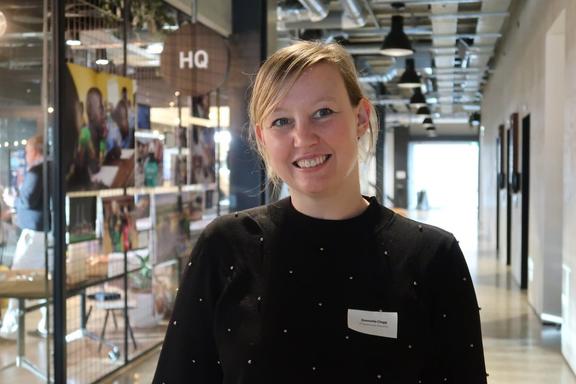
The New Zealand Council for International Development’s humanitarian network chair Quenelda Clegg told RNZ that in PNG vaccine hesitancy had become vaccine phobia.

“The situation is dire, people are genuinely afraid of this vaccine … and a critical reason why people are afraid of the vaccine is because of misinformation.

“Misinformation is being spread around the country, and it really is preventing people from going and getting help, and going to the health centres and getting that very crucial vaccine.”

Clegg said that before the arrival of covid-19 previous campaigns to reduce vaccine hesitancy had been successful in the Pacific, and she was hopeful the same could be done again.

Quenelda Clegg, of ChildFund NZ
ChildFund NZ’s Quenelda Clegg … “Misinformation is being spread around the country, and it really is preventing people from going and getting help.” Image: RNZ/ChildFund.org.nz

“We’ve seen it done in Samoa, which went from a very low vaccine rate with the measles, and now today there’s around 100 percent vaccine take-up in the country — so that’s really positive.

“We also know from a recent study done by the World Bank that when people are receiving accurate messages, and are receiving up-to-date information about the safety of vaccines that actually the general intention to get vaccines goes up by around 50 percent.”

Access to the vaccine in geographically isolated areas, and cultural, economic and educational factors were all contributing to many people missing out in PNG, Clegg said.

New Zealand recently sent a health team to PNG, but if more was not done to help the country, Clegg said “we could see the death rate spiral, the country’s health systems collapse, and even the spread of covid-19 beyond PNG.”

The Council for International Development said New Zealand should donate its spare vaccines to PNG, help provide reliable cell phone coverage so health workers and community leaders there could pass on vaccine information, and fund mobile clinics to provide vaccinations in remote areas.

This article is republished under a community partnership agreement with RNZ.

Print Friendly, PDF & Email

Article by AsiaPacificReport.nz

How to make sense of white supremacy and settler colonialism for flax roots people in Aotearoa – Part 2

ANALYSIS: By Tony Fala

PART 2: WS storytelling in more detail

In part one of my article on White Supremacy (WS), I articulated some of the features of the WS network in Aotearoa and positioned this framework along a spectrum. I attempted to introduce readers to a WS spectrum so people could better understand and then respond to the phenomenon of supremacy in Aotearoa.

In the first article, I argued that one of the features of the emergent WS framework in Aotearoa involved the development of narratives. This second article seeks to explore the question of WS storytelling in more detail.

Moreover, this article seeks to situate WS narratives within a storytelling framework to enable different communities to read supremacist messages as stories, contextualise them, and respond to them — from within the various standing places different communities occupy in time and space in Aotearoa.

White Supremacists (WS) have been very effective in articulating their narratives in a variety of ways during the covid-19 lockdown period. WS narratives are being disseminated across a range of media simultaneously.

The stories have been deployed in alternative media broadcasts; emails; Facebook comments, links, memes, posts, stories, video of live events; internet sites; political party press statements, political party policy documents, and even non-mainstream television shows to disseminate their stories on a wide array of issues.

Whether short or long, serious, or humorous, visual, or written, WS advocates are telling their stories and teaching their “lessons”. Such stories are being affirmed and disseminated in freedom marches and anti-vax protests — as videos of such gatherings attest.

WS messaging is occurring across multiple platforms as tracked by Hannah, Hattotuwa, and Taylor of The Disinformation Project.

Disseminating narratives
WS individuals, groups, and organisations are disseminating narratives to push their agendas. These stories include ones that illuminate:

  • contempt for Te Tiriti;
  • rejection of power sharing between Pakeha and Māori as articulated in Te Tiriti;
  • antagonism towards Māori communities historical experience of colonialism;
  • privileging of a mythology of peaceful and just race relations between Māori and Pakeha- thereby simultaneously erasing the racism experienced by Asians, Africans, Pacific peoples, and others in this land;
  • desire by political parties in policies to end “race”-based privileges for Māori in health, law, or at the United Nations;
  • vilification of the NZ Labour Party as “socialistic”;
  • attacks on Māori activist, community, political, and scholarly leaders — and attempts to separate leaders from their peoples;
  • attacks on the United Nations and governments as “cabals of evil”;
  • contempt for migrants and migrant rights;
  • lauding of former US President Donald Trump, Republicans, or QAnon leader, “Q”; and
  • intolerance and bigotry expressed towards Māori, Jews, Muslims, and other communities.

I have identified only 11 narratives that privilege WS in the list above. There are many other stories contributing to what is a diverse WS movement.

I cannot articulate a framework illuminating how WS advocates are using video, meme, comments, or policy documents aesthetics to tell their stories because I do not have the space or time here. But what I can offer is an analysis of WS storytelling to empower communities to “close read” the stories WS supporters are telling in their deployment of different media.

We need to develop frameworks to intercept, assess, and respond to these narratives, so communities have the means of defending their lives, mana, and the sanctity of their communal stories in the face of a barrage of WS storytelling.

African, Arab, Asian, Jewish, Māori, Pacific, Palestinian, and Pakeha communities are grounded in (1) rich cultures; (2) values; (3) community spirit; (4) interpretive traditions; (5) reading traditions; (6) oral and communal storytelling traditions; and (7) wisdom and insight.

Deploy learning
I invite readers from different cultures to deploy their learning when considering the following issues concerning WS.

The first narrative I identified regarding WS frameworks above is the story of the contempt for Te Tiriti. We could ask:

  • is the story of contempt for Te Tiriti based upon fact?
  • is this story true?
  • what beliefs about Māori and Te Tiriti must people hold to accept this story as “true?”
  • who are the authors of the story of contempt for Te Tiriti?
  • where do the stories come from?
  • has this story been told in Aotearoa before covid 19-lockdowns in 2021?
  • where is this story circulating?
  • is this story being used to organise opposition to Māori communities?
  • does this story uphold the mana of Māori communities?
  • what values underpin this story?
  • is this story connected to WS narratives coming from the US, Europe, Australia, or other foreign countries?
  • is this story connected to other WS narratives circulating in contemporary Aotearoa today?
  • is this story one being used to attack Māori community rights?
  • what is the plot of the story of contempt for Te Tiriti?
  • are there variations to the plot of this story?
  • who are the key characters of this story?
  • who are the heroes and who the villains in this story?
  • what lessons does the story teach us?
  • does this story resonate with the community beliefs, cultures, and values of many different Aotearoa communities?
  • does this story attempt to erase the narratives of Māori communities?
  • does this story attempt to distort the experience of Māori communities?
  • does this story prevent the emergence of Māori community narratives?
  • does this story foster better relationships between Māori and other communities in Aotearoa? and
  • is this story good for communities, Aotearoa, and the Pacific?

I hope different communities will develop their own reading strategies in response to these problems. Similarly, it is to be hoped that communities will also develop their own questions in response to WS narratives — and the “truths” embedded these stories.

Remembering Said’s words
The words of the Palestinian-American activist, commentator, scholar, and writer Edward Said are apt here. The late Professor Said once wrote in his famed essay, “Permission to Narrate”, that, “Facts do not at all speak for themselves, but require a socially acceptable narrative to absorb, sustain and circulate them. Such a narrative has to have a beginning and end…”

We should remember Said’s words as we defend the narratives of Māori and all other communities against the stories of WS.

Covid-19 lockdowns have brought hardship to the door of many folks in Aotearoa. Nonetheless, stories of community service, kindness, unselfishness, and care abound in Aotearoa today.

Narratives of community concern, fellowship, generosity, service, respect, and tolerance underpin the labour of many — particularly those working in the health sector. These narratives are being written by all the peoples of Aotearoa together.

Māori narratives of community service have been particularly inspiring during this difficult lockdown period. People should reflect upon whether the WS narratives uphold the dignity of Kiwis of all cultures — or whether these narratives uphold the most antagonistic features of settler colonialism in Aotearoa.

In conclusion, I have ancestry from different parts of the Moana (Pacific) as well as ancestors from Europe. I am as proud of my Highland Clan Stewart heritage today as I am of my other ancestors.

I did not know my Pakeha family well and felt ashamed and antagonistic towards this ancestry when I was younger. These feelings changed when I spent time with Pakeha family in the South Island.

I admire the staunch pride of my Scottish ancestors, especially those clan members who fought against English invaders. I believe there is much to respect in Pakeha culture.

I also believe Pakeha can be proud of their ancestors and still live beyond the ideology that says their culture is superior and should rule over Tangata Whenua in this land. Pakeha culture need not be white supremacist culture.

Pakeha and Māori can respect one another and move forwards as partners under Te Tiriti. This is a narrative worth supporting moving into the future.

Tony Fala wishes to acknowledge the lives and work of Amiri Baraka, Bantu Stephen Biko, Frantz Fanon, and Edward Said as the inspiration for this article. Finally, Fala wishes to acknowledge his good friend Emeritus Professor Roger Horrocks. Horrocks was a superlative anti-Vietnam War student protest leader, scholar, and teacher. He taught Fala, alongside generations of other students, how to close read works of culture, film, history, media, literature, and television with commitment, dedication, and alofa. Horrocks is also one of the humblest people the author knows. Fala holds a PhD from the University of Auckland in Media, Film and Television.

Print Friendly, PDF & Email

Article by AsiaPacificReport.nz

Bullying and harassment are rife in the public service: here’s what to do about it

Source: The Conversation (Au and NZ) – By Gordon de Brouwer, Professor of Economics (Crawford School of Public Policy and the College of Business and Economics) and National President IPAA, Australian National University

Shutterstock

Bullying and harassment can happen in any workplace, and the law is clear about the obligations on both managers and workers to avoid it.

The Fair Work Act defines workplace bullying as repeated and unreasonable behaviour directed towards a worker that creates a risk to health and safety. It does not include performance management carried out in a reasonable manner.

Bullying doesn’t only damage the mental and physical health of employees. There is also strong evidence that it weakens institutions, undermines productivity and innovation, and poisons workplace culture. When bullying happens in a public sector workplace, it undermines the ability of public services to deliver for government.

In a paper published on the Institute for Public Administration Australia I explore bullying and harassment in public sector workplaces across Australia link text .

States and territories provide a lot of information about their jurisdictions and their strategies to address bullying. In recent years, the Commonwealth has started doing the same. In a positive step for transparency, the Australian Public Service Commission has uploaded the 2020 staff census results for 70 Australian Public Service departments and agencies to its website.


Made with Flourish

Bullying is rife, but public servants are reluctant to report it

The vast majority of public servants behave respectfully and civilly to their colleagues. But the surveys show bullying is significantly more widespread than codes of conduct or workers’ compensation claims suggest.

In the Australian Public Service, for example, at most only one public servant in every 1,500 has a code of conduct finding against them for bullying or harassment. But almost one public servant in five says they have been (or may have been) bullied or harassed in the past year.

Staff identify three types of bad behaviour. By far the most common is verbal abuse, such as offensive language, derogatory remarks, being ignored, and shouting.

This is followed by interference in work tasks, such as withholding needed information, undermining or sabotage.

The third most common form is the unfair application of work policies or rules, such as performance management and access to leave or training.

Many public servants have a story about the yelling or bullying colleague or boss.

The pattern is similar across states and territories. There is variation, depending on the jurisdiction and agency. Staff who identify as having a disability, Aboriginal or Torres Strait Islander or as LGBTIQ+ and those working in front-line jobs or in regional locations are overrepresented.

The state results show staff experience bullying from their peers, immediate manager and senior leaders. However, most do not report it. That’s because they think it won’t change things, or will upset the workplace, or hurt their careers.


Read more:
Cyberbullying widespread amongst public servants


What needs to happen?

These rates of bullying are unacceptable and public service commissions are actively working to reduce it, with some success. Yet there is scope to do more, especially in a public sector workforce that is exhausted from COVID-19 and needs to recruit and retain talent to meet government and community expectations.

The place to start is to acknowledge the problem and put respect in the workplace in a major campaign. By committing to at least halve rates of bullying within five years, public service commissions would signal they are serious about improving behaviour and attracting new talent. They could also ensure accessible and confidential support for those who experience bullying, regardless of whether they make a formal complaint.

The next step is to identify and celebrate respect and civility. Some jurisdictions are underdone in terms of engaging about what sort of behaviour and interaction is right in the workplace, and how to manage staff and teams. The codes being developed by Safe Work Australia, formal management training, and events and awards celebrating good behaviour are all opportunities to change this.


Read more:
After Brittany Higgins: will the Foster review prevent another ‘serious incident’ at parliament?


The third step is to make organisational changes that strengthen incentives for respect. These include full 360-degree performance assessment of all managers, with explicit separate ratings in every public servant’s performance assessment of the outcomes they achieved and how those outcomes were achieved. People who perform poorly in how they achieve outcomes should be denied promotion.

Public service commissions need to inquire into agencies with consistently or materially above-average rates of bullying, and use an independent person or body to take informal and formal complaints about bullying outside the normal institutional hierarchy. Unless the system applies to everyone, it won’t be effective.

The fourth step is to follow through with rewards and sanctions. When public servants sees people who systematically behave badly not being promoted, getting demoted or losing their job, behaviour will change.

Finally, all this needs transparency and collaboration. Being clear about which institutions are behind and how they can change, and providing public analysis, will have impact.

These suggestions would lift respectful behaviour within the public service. It is also worth extending to public servants the counselling, reporting and resolution processes adopted by the Commonwealth Parliament in relation to serious incidents of harassment in the parliamentary workplace.

The Conversation

Gordon de Brouwer does not work for, consult, own shares in or receive funding from any company or organisation that would benefit from this article, and has disclosed no relevant affiliations beyond their academic appointment.

ref. Bullying and harassment are rife in the public service: here’s what to do about it – https://theconversation.com/bullying-and-harassment-are-rife-in-the-public-service-heres-what-to-do-about-it-172057

Concerned about overeating? Here’s what you need to know about food addiction

Source: The Conversation (Au and NZ) – By Tracy Burrows, Professor Nutrition and Dietetics, University of Newcastle

Shutterstock

For many of us, eating particular foods can be comforting: a pick-me-up during a hard task; a reward after a long day at work; a satiating end to a lovely dinner.

But some people have a compulsive and uncontrolled urge to eat particular foods, especially hyper-palatable “junk” foods. This can impact on their day-to-day functioning, and their ability to fulfil social, work or family roles.

People who struggle with addictive eating may have intense cravings, which don’t relate to hunger, as well as increased levels of tolerance for large quantities of food, and feelings of withdrawal.

Rather than hunger, these cravings may be prompted by low mood, mental illness (depression and anxiety), high levels of stress, or heightened emotions.


Read more:
Explainer: can you be addicted to food?


“Food addiction” or “addictive eating” is not yet a disorder that can be diagnosed in a clinical setting. Yet patients often ask health professionals about how to manage their addictive eating.

These health providers generally acknowledge their patients’ addictive eating behaviours but may be unsure of suitable treatments.

Food addiction is commonly assessed using the Yale Food Addiction Scale.

The science of addictive eating is still emerging, but researchers are increasingly noting addiction and reward pathways in the brain triggered by stress, heightened emotions and mental illness are associated with the urge to overeat.

How common is it?

Many factors contribute to overeating. The abundance of fast food, junk food advertising, and the highly palatable ingredients of many processed foods can prompt us to eat whether we are hungry or not.

However, some people report a lack of control over their eating, beyond liking and wanting, and are seeking help for this.

Around one in six people (15-20%) report addictive patterns of eating or addictive behaviours around food.

While food addiction is higher among people with obesity and mental health conditions, it only affects a subset of these groups.

How can you tell if you have a problem?

Typically, food addiction occurs with foods that are highly palatable, processed, and high in combinations of energy, fat, salt and/or sugar while being low in nutritional value. This might include chocolates, confectionery, takeaway foods, and baked products.

These foods may be associated with high levels of reward and may therefore preoccupy your thoughts. They might elevate your mood or provide a distraction from anxious or traumatic thoughts, and over time, you may need to eat more to get the same feelings of reward.

Anxious man looks out the window.
For some people with addictive eating, food preoccupies their thoughts.
Shutterstock

However, for others, it could be an addiction to feelings of fullness or a sense of reward or satisfaction.

There is ongoing debate about whether it is components of food that are addictive or the behaviour of eating itself that is addictive, or a combination of the two.

Given people consume foods for a wide range of reasons, and people can form habits around particular foods, it could be different for different people.


Read more:
Foods high in added fats and refined carbs are like cigarettes – addictive and unhealthy


It often starts in childhood

Through our research exploring the experiences of adults, we found many people with addictive eating attribute their behaviours to experiences that occurred in childhood.

These events are highly varied. They range from traumatic events, to the use of dieting or restrictive eating practices, or are related to poor body image or body dissatisfaction.

Our latest research found addictive eating in teenage years is associated with poorer quality of life and lower self-esteem, and it appears to increase in severity over time.

Children and adolescents tend to have fewer addictive eating behaviours, or symptoms, than adults. Of the 11 symptoms of the Yale Food Addiction Scale, children and adolescents generally have only two or three, while adults often have six or more, which is classified as severe food addiction.


Read more:
In a virtual universe of ‘perfect’ bodies, Instagram’s new policy offers important protection for young users


The associations we observed in adolescents are also seen in adults: increased weight and poorer mental health is associated with a greater number of symptoms and prevalence of food addiction.

This highlights that some adolescents will need mental health, eating disorder and obesity services, in a combined treatment approach.

We also need to identify early risk factors to enable targeted, preventative interventions in younger age groups.

How is it treated?

The underlying causes of addictive eating are diverse so treatments can’t be one-size-fits-all.

A large range of treatments are being trialled. These include:

  • passive approaches such as self-help support groups

  • trials of medications such as naltrexone and bupropion, which targets hormones involved in hunger and appetite and works to reduce energy intake

  • bariatric surgery to assist with weight loss. The most common procedure in Australia is gastric banding, where an adjustable band is placed around the top part of the stomach to apply pressure and reduce appetite.

However, few of the available self-help support groups include involvement or input from qualified health professionals. While providing peer support, these may not be based on the best available evidence, with few evaluated for effectiveness.

Medications and bariatric surgery do involve health professional input and have been shown to be effective in achieving weight loss and reducing symptoms of food addiction in some people.

However, these may not be suitable for some people, such as those in the healthy weight range or with complex underlying health conditions. It’s also critical people receiving medications and surgery are counselled to make diet and other lifestyle changes.


Read more:
Your brain on sugar: What the science actually says


Other holistic, personalised lifestyle approaches that include diet, physical activity, as well as mindfulness, show promising results, especially when co-designed with consumers and health professionals.

Person ties orange laces on their runners.
Personalised approaches which include diet and physical activity are showing promising results.
Shutterstock

Our emerging treatment program

We’re also creating new holistic approaches to manage addictive eating. We recently trialled an online intervention tailored to individuals’ personalities.

Delivered by dietitians and based on behaviour change research, participants in the trial received personalised feedback about their symptoms of addictive eating, diet, physical activity and sleep, and formulated goals, distraction lists, and plans for mindfulness, contributing to an overall action plan.

After three months, participants reported the program as acceptable and feasible. The next step in our research is to trial the treatment for effectiveness. We’re conducting a research trial to determine the effectiveness of the treatment on decreasing symptoms of food addiction and improving mental health.

This is the first study of its kind and if found to be effective will be translated to clinical practice.

If you feel you experience addictive eating, talk to your GP or contact an accredited practising dietitian for assessment and support.

The Conversation

Tracy Burrows is affiliated with the Priority Research Centre for Physical Activity and Nutrition, the University of Newcastle, and Hunter Medical Research Institute, NSW. She has received research grants from NHMRC, ARC, Hunter Medical Research Institute, Bill and Melinda Gates Foundation, nib foundation, The National Heart Foundation. She has also consulted to the Sax Institute.

Megan Whatnall is affiliated with the Priority Research Centre for Physical Activity and Nutrition, the University of Newcastle, NSW. She has received research grants from Hunter Medical Research Institute, The National Heart Foundation of Australia, and nib foundation.

ref. Concerned about overeating? Here’s what you need to know about food addiction – https://theconversation.com/concerned-about-overeating-heres-what-you-need-to-know-about-food-addiction-169352

5 big ideas: how Australia can tackle climate change while restoring nature, culture and communities

Source: The Conversation (Au and NZ) – By Rachel Morgain, Senior research fellow, School of Ecosystem and Forest Sciences, The University of Melbourne

Zareth Long undertaking controlled burn in Birriliburu Indigenous Protected Area, WA Annette Ruzicka, Bush Heritage Australia, Author provided

Australia’s plan to reach net zero emissions by 2050 relies heavily on unproven technologies to sequester carbon from the atmosphere, among other things.

But we already have solutions based in restoring nature and Country. In fact, nature-based solutions can deliver one third of promised global cuts in emissions.

Our new report, which brings together expertise from across Australia, reveals how we can make this happen using proven approaches including:

  • Indigenous-led work on Country

  • keeping our existing forests and woodlands safe from land clearing

  • restoring ailing ecosystems

  • simplifying access to carbon markets and

  • mapping ways of working with nature rather than technology to store emissions.

Scientist taking sediment sample in seagrass bed
Researcher assessing carbon sequestration rates of a tidal seagrass bed in Williamstown, Victoria.
Shutterstock

Here are five big ideas to store emissions while benefiting communities, our economy and our natural and cultural heritage.

1. Seek Indigenous leadership to heal damaged Country

The catastrophic bushfires of the 2019-2020 summer have driven repeated calls to return to Indigenous leadership in managing Country to prevent similar disasters.

Indigenous-led cool burning practices and land management can make Country safer and keep carbon-storing forests and ecosystems intact. Indigenous management of Country could be integrated in national and state employment, industry and health policy.


Read more:
The world’s best fire management system is in northern Australia, and it’s led by Indigenous land managers


This shift will mean a deeper respect for Indigenous leadership and a willingness to learn from Indigenous relationships with Country.

Indigenous ranger programs have been highly successful, helping both Country and its people. Expanding these programs into new places – including cities – would build on their success.

This will require re-framing our relationship and attitudes to Country, removing policy barriers, enabling access to Country, restoring water rights and increasing investment. If we can get this right, it would change the nature of our relationship with Country and provide tangible benefits toward national carbon, social and biodiversity goals.

For instance, the Yumbangku Aboriginal Cultural Heritage and Tourism Development Aboriginal Corporation uses Indigenous management to restore Turraburra, a large drought-affected degraded grazing property in Queensland.

Iningai custodians are reintroducing cultural burning and restoring artesian waterways and sacred rock waterholes as part of measured emissions-reduction projects on Turraburra.

In response, their Country is thriving, and life is returning to the land. These custodians have told us having Country back means healing for the whole community as well as for Country.

A waterhole being restored in central Queensland
Before (L) and after (R) waterhole restoration in Turraburra, Iningai Country, central Queensland.
Suzanne Thompson, YACHATDAC, Author provided

2. Look after what we have

The easiest and cheapest way to both reduce and store emissions is by keeping the vegetation we still have. Australia’s plants – from deserts to forests to ocean – play a vital role.

Australia has committed to end deforestation within nine years, but this seems highly optimistic given Australia’s depressing record of land clearing.

Restoration helps pollinator-dependent farming industries and boosts the economy more than cutting down forest.


Read more:
Want to beat climate change? Protect our natural forests


In our heating climate, trees keep local areas significantly cooler and wetter. Forested watersheds reduce the cost of providing clean water. And intact vegetation boosts resilience to floods and storms, and stops soil eroding into rivers.

verdant farm dam with vegetation
Vegetation and birds flourish after stock exclusion at a farm dam near Yass, NSW.
Suzannah Macbeth, Sustainable Farms, Author provided

To stop clearing, tighter environmental laws are key. The scathing 2021 independent review of Australia’s key environment protection law shows it fails to stop habitat loss and proposes a more strategic approach to sustainable development.

We could also extend stewardship and landcare programs, so they involve more landholders and regional communities. For instance, the Murray Wetland Carbon Storage Project has brought together scientists, landowners, natural resource managers, communities and government to restore wetlands across 41 sites, with replanting, fencing, environmental water, weed and pest control.

3. Map pathways to use nature and culture to get to net zero

We need a clear collective vision for net zero which embeds Country, culture, community and nature as vital methods of cutting and storing emissions. This vision would support action where it’s most needed, and bring policy coherence.

Under this vision, we could work to restore habitat connections across catchments and landscapes. We could embed culture and nature-based emissions reduction in community development, urban infrastructure, adaptation and catchment management strategies.

What does this look like? Consider Sydney’s coastline, where researchers and community members plan to bring a vital seaweed species back to its original range.

This species, crayweed, supports abalone and rock lobster, two of Australia’s most valuable fisheries. The team is working to restore crayweed forests destroyed by urbanisation and sewage.

A diver replants crayweed off North Bondi in 2017.
John Turnbull, Flickr, CC BY

4. Measure the things we value to demonstrate success

We urgently need better accountability to ensure emissions reduction projects and programs deliver the benefits they claim. Robust monitoring also helps create premium carbon products.

Accountability must be culturally appropriate and measure the most important benefits for each project. Indigenous-led work demonstrates that cultural, social and biodiversity benefits must be central.

Requiring non-Indigenous projects to report robustly on cultural, social and biodiversity benefits would ensure projects deliver for Indigenous people, the wider community, and the ecosystems on which we all depend.

Savanna burning in Northern Australia has been a strong success story for renewing culture and Country. Indigenous-led approaches to assessing benefits have successfully attracted funding to sequester carbon through both government and voluntary markets.

Indigenous groups are now leading conversations on extending this success to other places and ecosystems, such as through an Indigenous-led southern forest fire credits scheme under development.

5. Simplify access to carbon markets and incentive schemes

At present, the methods we use to produce high-quality carbon credits through government emissions reduction schemes are often costly, complex and time-consuming. In short, they require specialist expertise to navigate.

These challenges act as a barrier, particularly for small organisations, and are inequitable for less resourced communities.

If we reduce the administrative burden, more small projects could embark on emission reduction. That means offering accessible methods of assessing projects, streamlining permits, and investing in Indigenous and community-based agencies to provide support.

New incentive schemes to reduce emissions in cities could also be a game-changer, like green roof retrofitting or the City of Melbourne’s Urban Forest Fund which enables property owners to partner with the city to deliver vertical greening, convert carparks into gardens, and build food-producing rooftop parks.

Salt marsh with fence down the middle
Salt marsh under restoration (L) and pristine (R) in Western Port Bay, Victoria.
Dr Melissa Wartman, Blue Carbon Lab, Author provided

If we draw together methods of producing carbon credits across catchments, land and seascapes, we could provide pathways into a market likely to boom. In Victoria, a team of researchers, government, industry, landholders and Traditional Owners at #VicWetlandRehab are restoring degraded coastal wetlands by fencing and weeding.

To date, this program has restored 130 hectares of saltmarsh in Western Port Bay and Gippsland, home to some of Victoria’s most endangered birds, frogs and plants. The team is now planning to work with landholders and Traditional Owners to map priority areas for restoration along the entire Victorian coastline.

The Conversation

This project was supported by the Australian Conservation Foundation through the Conservation Futures project, which is a joint initiative with Bush Heritage Australia supported by the Ian Potter Foundation, the Hermon Slade Foundation, NRM Regions Australia, The Nature Conservancy and the Victorian Government. Rachel also holds positions at the Australian National University and NRM Regions Australia, and receives funding from the Australian Government’s Bushfire recovery package for wildlife and their habitat and the National Environmental Science Program’s Threatened Species Recovery Hub.

Brendan Wintle receives funding from The Australian Research Council, the Victorian State Government, the NSW State Government, the Queensland State Government, the Commonwealth National Environmental Science Program, the Ian Potter Foundation, the Hermon Slade Foundation, and the Australian Conservation Foundation.

Judy Bush receives research funding from the Australian Research Council (Discovery Grant DP200101378), and the University of Melbourne: Faculty of Architecture Building and Planning Research Development Grant.

Michael-Shawn Fletcher receives funding from the Australian Research Council.

Thami Croeser receives funding from the European Commission and has in past recieved funding from the Australian Research Council. Thami has in past worked for the City of Melbourne.

ref. 5 big ideas: how Australia can tackle climate change while restoring nature, culture and communities – https://theconversation.com/5-big-ideas-how-australia-can-tackle-climate-change-while-restoring-nature-culture-and-communities-172156

Curriculum is a climate change battleground and states must step in to prepare students

Source: The Conversation (Au and NZ) – By Brad Gobby, Senior Lecturer in Curriculum, Curtin University

Shutterstock

There is a pressing need to prepare for the impact of the climate crisis on schools and school education in Australia. A Western Australian parliamentary inquiry into the response of the state’s schools to climate change reflects this need. It is investigating current and potential mitigation and adaptation strategies undertaken in schools.

The inquiry seeks to prepare for the impacts of a heating planet on the infrastructure and provision of school education. It is investigating the actions, benefits and barriers to climate change responses in schools. But, oddly, its terms of reference exclude curriculum.

Curriculum is the bread and butter of schooling. And research shows it’s an effective means to reduce and adapt to climate change impacts.

When it comes to climate change, however, curriculum is a battleground. It may not be as visible as the student climate protests, but it is a crucial sphere in which the future of the world is understood, imagined and created. For educators, what they do, what they teach and the possibilities they imagine often start and end with the curriculum.

Yet, in Australia, there is no substantive national climate change education or curriculum.


Read more:
Ever wondered what our curriculum teaches kids about climate change? The answer is ‘not much’


Why does the curriculum neglect climate change?

The 2008 Melbourne Declaration on Educational Goals for Young Australians, made by all the nation’s education ministers, referred to climate change and the embedding of sustainability across the curriculum. But under the stewardship of the federal education minister, these references were removed when the declaration was updated and agreed to by the ministers in 2019. We have also seen the withdrawal of federal funding and support for school sustainability initiatives and national action plans over the past decade.

The piecemeal curriculum approach to climate change has left schools and teachers to “fend for themselves” if they want to teach climate change.


Read more:
Children deserve answers to their questions about climate change. Here’s how universities can help


The lack of national vision and strategy reflects the federal government’s failure to lead responses that match the scale of the climate crisis. It bodes poorly for achieving a national approach to climate change education.

While the states have constitutional responsibility for school education, reforms over the past two decades have only strengthened the federal government’s influence over education. This includes influence over the national curriculum, which it has not hesitated to exercise.

Schools can make a difference

With the federal government at odds with states that wish to pursue ambitious climate change agendas, or simply to make climate change an educational priority, those states must go it alone. The Victorian government, for instance, is consulting on its Education and Training Climate Change Adaptation Plan 2022-2026. It seeks to embed a climate-change lens in decision-making across the many facets of its education sector, including curriculum.

The education policy architecture created over the past two decades is meant to serve the national interest. When it comes to climate change education, the absence of the federal government in this sphere is glaring.

There is still cause for modest hope that schools are getting it right when it comes to climate change. However, the response of Australia’s school system to the climate crisis is like that of other systems around the world: diffuse and fragmented. Thus, schools are largely “unexploited as a strategic resource to mitigate and adapt to climate change”.


Read more:
Involving kids in making schools sustainable spreads the message beyond the classroom


Onus is on the states to act

Perhaps, then, the states need to better assert their constitutional rights over schooling. They could use the national policymaking architecture to create and administer an ambitious national response to climate change that includes curriculum.

Australian schools and young people need to be prepared for their climate futures. This means every teacher must be a climate change educator and every school an incubator of informed and empowered citizens.


Read more:
The world needs a new generation of citizen lobbyists


With a federal government missing in action, state-led responses to climate change, such as the schools inquiry in WA, must be unapologetically ambitious. To do less is to abdicate their constitutional role.

When it comes to climate change education, to repurpose the words of then Labor MP Gordon Bryant in a 1958 parliamentary debate over the role of the states, the dead hand of the federal government should not be allowed to strangle the education systems of this country.

The Conversation

The authors do not work for, consult, own shares in or receive funding from any company or organisation that would benefit from this article, and have disclosed no relevant affiliations beyond their academic appointment.

ref. Curriculum is a climate change battleground and states must step in to prepare students – https://theconversation.com/curriculum-is-a-climate-change-battleground-and-states-must-step-in-to-prepare-students-172392

Australia has record job vacancies, but don’t expect it to lead to higher wages

Source: The Conversation (Au and NZ) – By Jeff Borland, Professor of Economics, The University of Melbourne

Shutterstock

Job vacancies in Australia are at a record level. The Australian Bureau of Statistics’ job vacancy rate, measuring the proportion of available jobs currently unfilled, is now more than 2.5% – the highest level since the series started in the late 1970s.

This statistic gives weight to all the anecdotal talk about labour shortages in Australia. When employers have difficulty finding workers to hire, job vacancies stay unfilled longer and the vacancy rate increases.


CC BY

In normal times a high vacancy rate would indicate economic trouble. It would be evidence of a major underlying problem in the Australian labour market, such as workers not having the right skills for new jobs being created.

But these are not normal times. This record job vacancy rate seems largely explained by the impact of COVID-19, rather than signalling a problem with how the labour market is operating.

The pandemic has made a roller-coaster of employment numbers. Shutdowns have brought rapid job losses, which have then been regained almost as quickly. Employment in Australia has never grown as quickly in any 12-month period as it did in the year to May 2021, as the economy recovered from the initial shutdown in 2020.


CC BY

The high job vacancy rate primarily reflects this fast pace, and the difficulty of hiring new workers in a short time. Hiring always lags new vacancies being created. With the bounceback from shutdowns, the lag has become pronounced.

Migration effects

Pandemic-related limits on international migration – especially temporary migrants, such as international students and working holiday makers – have also contributed to the labour shortages.

At the last census (in 2016), the jobs most reliant on temporary migrants in were hospitality (18.3%); food trades and preparation (20.4%); and cleaning and laundry (19.3%).

By May 2021 (after a year of recovery and prior to the latest shutdowns in NSW and Victoria), the vacancy rates for these occupations were more than double their averages for 2019.


As the effects of COVID-19 on the labour market dissipates, Australia’s vacancy rate should fall.


Read more:
Local training is the best long-term solution to Australia’s skills shortages – not increased migration


Effect on wages

In the meantime, there is natural interest in whether labour shortages will kick-start wage growth.

There some evidence that recent wage growth (over the year to the September quarter 2021) has been strongest in industries with the largest rises in job vacancy rates. Notable examples are professional, scientific and technical services (3.5%), construction (2.6%) and accommodation and food services (2.6%).

However, it is unlikely the COVID-related labour shortages are enough to make a permanent difference to wages.

Even now, while shortages exist, much of the recovery in employment seems to be happening without big wage increases. In June 2021, when the rate of unemployment rate fell below 5% for the first time since in more than a decade, wage growth was still just a modest 0.44% for the quarter.


Read more:
Vital Signs: Chill, this week’s news on wages points to anything but hyperinflation


One reason for the lack of significant wages growth is revealed in the latest labour force statistics from by Australian Bureau of Statistics. The majority of the COVID-19-related changes in employment involve workers being laid off during shutdowns and then returning to their old job.

During the national shutdown from March to May 2020, for example, more than 60% of workers on Job Seeker payments retained an attachment to their job. These workers accounted for the entire increase in employment from May to September 2020.

For employers, rehiring former workers has removed the need to offer higher wages to attract new staff.

For higher wages growth over longer term we will have to rely on policy makers, with the government and the Reserve Bank working together to get the unemployment rate down to 4% or lower.

The Conversation

Jeff Borland receives funding from the Australian Research Council.

ref. Australia has record job vacancies, but don’t expect it to lead to higher wages – https://theconversation.com/australia-has-record-job-vacancies-but-dont-expect-it-to-lead-to-higher-wages-172146

Divided and paralysed, can the WTO negotiate a pandemic recovery plan that is fair for all?

Source: The Conversation (Au and NZ) – By Jane Kelsey, Professor of Law, University of Auckland

Shutterstock

Hard on the heels of the political deal-making by major powers and corporate lobbyists at the COP26 climate conference, similar manoeuvres are shaping the World Trade Organization’s (WTO) 12th Ministerial Conference (MC12), scheduled to begin on November 30 in Geneva.

The decision to hold an in-person negotiating conference of ministers from 164 countries in the midst of a pandemic, and as Europe undergoes another surge, is controversial.

Aside from concerns about safety, there are serious questions about the legitimacy of decisions that will be made under these conditions, including the expected absence of a number of trade ministers, mainly from developing countries.

Ministers with no commercial flights operating from their countries may be unable to travel. Those who can attend face onerous and expensive transit and quarantine arrangements. The size of delegations has been severely limited to facilitate social distancing and reduce processing queues.

At present, only certain vaccines, mainly those used in richer countries, will secure a pass for automatic entry into meeting venues. Ministers and officials who used non-EU-approved vaccines will be subject to periodic testing.

There is also a clampdown on dissent. Swiss authorities have refused authorisation – sought by one of their own parliamentarians – for five protesters to hold placards calling for action on COVID-19 in front of the WTO building. Non-government organisations, an important resource for many developing country delegations, have been denied space at the main venue.

WTO in crisis

All this is bad enough for a “member-driven organisation” that makes decisions by consensus. But this conference is shaping up as the most important in the WTO’s 26 years. It is widely agreed the organisation faces an existential crisis. Every one of its core functions – negotiations, dispute settlement, notifications – has broken down.

The Doha “development” round of negotiations, launched in 2001, promised poorer countries a rebalancing of global trade rules that were designed by and for powerful countries and their corporations. But the Doha round has been moribund for over a decade.


Read more:
Old wine in new bottles – why the NZ-UK free trade agreement fails to confront the challenges of a post-COVID world


At the last ministerial conference four years ago, self-selected groups of members, led by rich countries including New Zealand and Australia, announced they were launching alternative “plurilateral” processes to bypass the WTO’s consensus-based multilateral process – without any mandate to do so. They plan to legitimise those processes at the MC12.

Furthermore, the WTO’s dispute settlement system, considered the jewel in its crown, is paralysed. The US refuses to approve new appointments to the WTO’s Appellate Body until other members agree to its demands for reform. The last judge’s appointment expired in November 2020.

The more powerful WTO members have a raft of other demands. These include severely reducing the number of “developing” countries entitled to special and differential treatment, changes to the mechanism to monitor compliance, and other institutional arrangements.

A Washington protest against the visiting German chancellor’s opposition to an emergency WTO waiver for vaccine patents.
GettyImages

The pandemic factor

These fractures have become fissures in recent years and COVID-19 has brought matters to a head.

Sixty-four developing countries have proposed a temporary waiver of rules in the WTO’s Agreement on Intellectual Property Rights (TRIPS) that guarantee Big Pharma’s rights over COVID-related vaccines and technologies. The waiver is essential to supply affordable generic versions to the 98% of people in low-income countries who are not yet fully vaccinated.

A recent Oxfam report estimated Pfizer and Moderna are expected to take in a combined US$93 billion next year on sales of the vaccines they developed with significant public subsidies.


Read more:
New Zealand is overdue for an open and honest debate about 21st-century trade relations


The EU, UK and Switzerland are leading the opposition, supported by their pharmaceutical industries. New Zealand supports a limited version of the waiver, but its ambassador to the WTO, David Walker, is leading a parallel initiative that undermines it.

Walker was tasked by the director-general, not the WTO members, with facilitating a COVID-19 recovery plan. The “Walker process” has been heavily criticised for marginalising the priorities of the least-developed and developing countries. There is a real potential for this to negatively affect New Zealand’s reputation with those nations at the WTO.

The proposed Declaration and Action Plan, prepared on Walker’s “own responsibility”, have not been developed through the WTO’s normal process of negotiations. Extraordinarily, the text was not tabled in the General Council meeting on November 22. This meant members could not discuss (or reject) it, although it has since been leaked.

Hope for a better regime

Critics object that Walker’s proposal is heavily skewed towards the interests of richer countries and that it uses COVID-19 as a back door to promote more liberalisation, reflecting the agenda for WTO reform being advanced by the “Ottawa Group” of countries, including New Zealand and Australia. Walker has ruled out including the waiver or other changes to WTO intellectual property rules.


Read more:
The big barriers to global vaccination: patent rights, national self-interest and the wealth gap


As the MC12 heads for a showdown on all these and other issues, the strategies being pursued by the New Zealand and Australian governments to keep the WTO on life support are counterproductive.

Even if those attending the conference manage to reach agreement on some final declaration – which eluded them at the last ministerial conference in 2017 – the refusal of its more powerful members to address the organisation’s systemic failings ensures it will continue its spiralling decline.

Longtime critics of the WTO hope this may finally open the door to re-envisioning a new, more equitable international trading regime that can address the challenges of the 21st century highlighted by the pandemic.

The Conversation

Jane Kelsey does not work for, consult, own shares in or receive funding from any company or organisation that would benefit from this article, and has disclosed no relevant affiliations beyond their academic appointment.

ref. Divided and paralysed, can the WTO negotiate a pandemic recovery plan that is fair for all? – https://theconversation.com/divided-and-paralysed-can-the-wto-negotiate-a-pandemic-recovery-plan-that-is-fair-for-all-172484

We studied the tree rings of the Batavia shipwreck timbers – they told us much about global seafaring history

Source: The Conversation (Au and NZ) – By Wendy van Duivenvoorde, Associate Professor in Maritime Archaeology, Flinders University

Panoramic view of the Batavia ship exterior oak planking. Patrick E. Baker/Western Australian Museum

The wrecking of the Dutch East India Company ship Batavia in 1629 is perhaps the best-known maritime disaster in Australian history. The subject of books, articles, plays, and even an opera, Batavia was wrecked on a chain of small islands off the coast of Western Australia.

Of Batavia’s 341 crew and passengers, 40 drowned trying to get off the ship, while all others made it to the uninhabited islands nearby. The captain, senior officers, two women and one child left in one of the ship’s boats to get help. But further tragedy followed.

A group of men on the islands who had gathered around the acting commander deliberately drowned, strangled, cut the throats, or brutally hacked to death 125 children, women and men. When the rescue party returned months later, they managed to overpower this death squad and bring the remaining survivors to safety. Together with its many victims and the murderers, Batavia’s wreckage was left in the Houtman Abrolhos archipelago.

The Dutch ship was 45.3 metres long and 600 metric tons in size. It sank on its maiden voyage to Southeast Asia. The shipwreck was found in the 1960s off Morning Reef and was excavated in the 1970s.

The surviving stern section, now in Fremantle’s Western Australian Shipwrecks Museum, is the only portion of any early 17th-century Dutch East India ship raised from the seabed and preserved.

1629 'Batavia' ship
The Batavia illustrated by Ross Shardlow. The white outline in the stern section shows the preserved port-side and transom of the ship.
https://doi.org/10.1371/journal.pone.0259391

Previously, historians could only guess where the timber for such ships came from, when it was felled or how it was used, as archival records of Dutch timber trade before 1650 are rare or lost.

But in new research, we studied the tree rings of the Batavia shipwreck timbers. We have found that the oak for the hull was sourced from two separate forests (in northern Germany and the Baltic region); with wood for the framing elements coming predominantly from the forests of Lower Saxony. The timber was processed shortly after the trees were felled (in 1625 or later) and was still green when the shipbuilders cut and bent the planks into shape.

Knowing more about these timbers helps us understand the Dutch success in world trade, including how they managed to build such large ocean-going vessels and so many of them.


Read more:
Sunken history: how to study and care for shipwrecks


Batavia shipwreck under water in the 1974/1975 excavation season.
Batavia under water, showing its remaining structure after removal of the frames and inner hull timbers, during the third excavation season. The diver photographing the hull planking and transom timbers is excavation leader Dr Jeremy Green.
Patrick E. Baker/Western Australian Museum

A unique archaeological data set

Batavia’s remains provide a rare archaeological resource for tree-ring examination because exact dates of its construction and sinking are known.

Construction began sometime in spring 1626 and the ship set sail from Texel (The Netherlands) to The East Indies (known today as Indonesia) in October 1628. It struck a reef on 4 June 1629. As Batavia had never undergone repairs or maintenance work, we know every piece of timber belongs to the original structure.

When Batavia was built, the Dutch were the foremost shipbuilders in Europe. By 1640, for example, around a thousand seagoing ships were being constructed in the Netherlands each year, mostly for export markets.

Batavia shipwreck exhibition, Western Australian Shipwrecks Museum
The Batavia shipwreck exhibition at the Western Australian Shipwrecks Museum.
Patrick E. Baker/Western Australian Museum

The Dutch lacked domestic timber resources to supply the bustling shipbuilding industry and yet would have needed hundreds, perhaps thousands, of oak trees to build Batavia.

Where did all this timber come from? The Dutch East India Company archives provide no detailed information on where its shipyards bought timber at the time of Batavia’s construction. While the company kept detailed records from the mid-17th century onwards, hardly any of those from the early 1600s have survived.

Fortunately, tree rings can provide answers to those questions. Trees in temperate climate zones form a growth ring each year, just under the bark. This sequence of growth rings produced over years and decades acts like an environmental bar-code, a growth pattern that is particular to the place where they grew and died.

This growth pattern is very similar for trees of the same species growing in the same area.

By measuring the ring widths from many trees, a reference tree-ring chronology can be built. Then, we can cross match the growth pattern of a specific timber to such reference chronologies, establishing when the tree was felled and where it had grown. This field of study is known as dendrochronology.

Drilling a dendrochronology sample from a 'Batavia' ship plank
Marta Domínguez-Delmás and Aoife Daly extracting a sample from the Batavia ship with a dry-wood borer driven by a power-drill.
Wendy van Duivenvoorde/Flinders University


Read more:
We found a secret history of megadroughts written in tree rings. The wheatbelt’s future may be drier than we thought


The many Batavia timbers we sampled had only heartwood, or interior rings, demonstrating that Dutch shipbuilders discarded the sapwood (outer rings). Sapwood is softer and contains substances that make it more vulnerable to insect infestation and decay.

Furthermore, the outermost heartwood ring of the Batavia hull planks that we sampled dates to 1616. When accounting for the missing sapwood (nine rings for Baltic oak), this means the trees were felled in 1625 or later.

The timber was processed shortly after the trees were felled. All this demonstrates that Batavia’s builders were skilled craftsmen, intimately familiar with the properties of the wood they used.

Tree rings in conserved ship timber
Cross section of oak hull plank from 1629 Batavia showing its tree rings. This sample was extracted from a loose hull plank in 2007.
Patrick E. Baker/Western Australian Museum

Efficient shipbuilding and regional selection

The oak timber used in Batavia’s hull planks came from two forests. Trees from near Lübeck in northern Germany were used above the ship’s waterline, while timber from the Baltic region of northeastern Europe was applied exclusively below the waterline.

This Baltic timber was prized by artists like Rembrandt, who used it for panels on which to paint. Trees from this region had beautifully straight trunks with very fine growth rings, making the wood easy to work and stable.


Read more:
Rembrandt, capitalism and great art: the Dutch golden age comes to Sydney


Obviously, company shipbuilders valued these same properties when building ships strong enough to endure several return voyages to southeast Asia. They avoided using trees with knots in the hull and preferred wood from which they could fashion long and strong planks.

In contrast, we found that the timber for Batavia’s framing elements came predominantly from the forests of Lower Saxony (northwest Germany). Frames utilised the strong properties of these oaks’ curved wood fibres. As it was sourced closer to home, this timber may have been cheaper and easier to acquire.

Distribution of the dated Batavia ship timbers
Distribution of the dated timbers in some parts of the Batavia shipwreck, coloured by provenance (green: Baltic oak; yellow: Lübeck; blue: Lower Saxony 1; purple: Lower Saxony 2; pink: Sweden). A) Inner hull planks; B) Outer hull planks; C) Transom planks; D) Framing elements.
https://doi.org/10.1371/journal.pone.0259391

Our study was only possible because Batavia’s hull was raised in its entirety. Waterlogged wood is mushy, so extracting samples from the timbers while still under water is always challenging. It also would have required cutting out large sections of the ship to access all the different elements.

The Conversation

Wendy van Duivenvoorde receives funding from the Australian Research Council. This project was funded by ‘Shipwrecks of the Roaring Forties’, grant number LP130100137.

Aoife Daly’s project TIMBER has received funding from the European Research Council (ERC) under the European Union’s Horizon 2020 research and innovation programme (grant agreement No. 677152).

Marta Domínguez Delmás receives funding from the Dutch Research Council (Nederlandse Organisatie voor Wetenschappelijk Onderzoek), grant number 016.Veni.195.502.

ref. We studied the tree rings of the Batavia shipwreck timbers – they told us much about global seafaring history – https://theconversation.com/we-studied-the-tree-rings-of-the-batavia-shipwreck-timbers-they-told-us-much-about-global-seafaring-history-171495

Morrison says universities should shift focus from ‘publish or perish’ towards commercialising research

Source: The Conversation (Au and NZ) – By Michelle Grattan, Professorial Fellow, University of Canberra

The Morrison government is pushing for universities to shift from “publish or perish” incentives to focus on commercialising their research, industry needs and “national priorities”.

Announcing $242.7 million for a yet-to-be-selected small group of “trailblazer” universities, the government wants to encourage those that are “early adopters of intellectual property, industrial relations and skills practices to lift collaboration and commercialisation outcomes”.

Four universities, including one regional institution, will be funded under the program. They will work with industry partners to drive commercialisation across the government’s six manufacturing priorities.

These priorities are resources technology and critical minerals processing; food and beverage manufacturing; medical products; recycling and clean energy; defence, and space.

Addressing the Business Council of Australia on Wednesday, Morrison reinforced the government’s emphasis on the need for universities to be practically and commercially oriented.

“Our government wants to make sure that our researchers and universities that house them are rewarded for their discoveries,” he said.

“Too often this research is just left on the shelf and not taken further down the pipeline towards production here in Australia. Too often, Australian businesses are missing out on those opportunities to commercialise Australian research and Australian universities and researchers are missing out on opportunities to be rewarded for their work.”

Morrison highlighted what he saw as barriers to greater commercialisation.


Read more:
Morrison’s opening of the door to international students leaves many in the sector blindsided and scrambling to catch up


“Researchers are currently incentivised to publish and have their work cited as often as possible. And this ‘publish or perish’ mindset is useful for getting tenure, but does little to spur innovation or create start-ups.

“Universities need to shift incentives towards high value commercial opportunities, to industry needs and national priorities. We want to see universities create incentives for researchers to collaborate with industry to drive investment, co-investment, and product development.”

A competitive process will select four universities. Each will receive $50 million over four years to build commercialisation capacity, and will also receive CSIRO specialist support.

Applications from universities and industry partners will be judged against three criteria:

  • Commercialisation readiness

  • Research capability to support a national manufacturing priority

  • “Industry alignment”, including collaborative partnerships with industry and co-funding from business partners, greater workforce mobility between businesses and universities, and offering courses in priority areas that are endorsed by industry.

“Business has a role to play,” Morrison said. “Australian businesses need to recognise the value of Australian research and invest in the ideas that will create products and grow our economy.”

The Conversation

Michelle Grattan does not work for, consult, own shares in or receive funding from any company or organization that would benefit from this article, and has disclosed no relevant affiliations beyond their academic appointment.

ref. Morrison says universities should shift focus from ‘publish or perish’ towards commercialising research – https://theconversation.com/morrison-says-universities-should-shift-focus-from-publish-or-perish-towards-commercialising-research-172522

Politics with Michelle Grattan: Jenny McAllister on domestic violence

Source: The Conversation (Au and NZ) – By Michelle Grattan, Professorial Fellow, University of Canberra

Labor has announced that in government it would appoint a family domestic and sexual violence commissioner and also fund 500 new community sector workers to help women at risk or in crisis.

Labor spokeswoman Jenny McAllister says more staff are desperately needed. “I visited a service last week in western Sydney that said that over the last year they’d helped around 1200 women who were seeking their assistance to escape violence. But they turned away 1100 because they didn’t have the workers to support them.”

Asked why, despite increased attention and funding for combatting domestic violence, we don’t seem to be getting on top of the problem, McAllister says she doesn’t “underestimate how complex and challenging it will be to produce sustained reduction in rates of violence.”

But, she argues, a change of government is needed “to restore that momentum and energy that was there at the beginning of this planned process”.

Earlier this year there were nationwide marches on women’s justice issues. Has the momentum faded? McAllister says: “There is still an enormous trust deficit between the prime minister and Australian women […] Australian women had had enough.”

The Conversation

Michelle Grattan does not work for, consult, own shares in or receive funding from any company or organisation that would benefit from this article, and has disclosed no relevant affiliations beyond their academic appointment.

ref. Politics with Michelle Grattan: Jenny McAllister on domestic violence – https://theconversation.com/politics-with-michelle-grattan-jenny-mcallister-on-domestic-violence-172512

Climate change is likely driving a drier southern Australia – so why are we having such a wet year?

Source: The Conversation (Au and NZ) – By Michael Grose, Climate projections scientist, CSIRO

Shutterstock

As the climate changes, southern Australia is likely to keep getting drier on average, particularly in the southwest.

However, this year has been wet. And yesterday the Bureau of Meteorology announced we are now in another La Niña event. This common large-scale climate pattern lasts for months, and will increase the odds of further wet weather across the country.

So despite the long-term trend towards drier conditions, we find ourselves in a wetter-than-usual period. What gives?


Read more:
Explainer: El Niño and La Niña


Current climate change assessments

Rainfall has been declining in much of southern Australia in recent decades (see below). The Intergovernmental Panel on Climate Change’s Sixth Assessment report – which draws on the latest climate research – found the recent drying trend in southern Australia is likely to continue, particularly during the cool season.

Cool-season rainfall in southwest Western Australia has already decreased, and ongoing drying in this area is assessed to be very likely. There’s strong evidence this trend contains a “signal” of climate change, otherwise known as a climate change “fingerprint”.

We understand the drying has been driven by changes in dominant weather patterns. And future projections of drying in the southwest are among the strongest in the world.

The situation in the southeast of Australia is not as clear, but there’s strong evidence for an ongoing decrease in rainfall here, too.

Yet, we find it has been wet in many southwest and southeast regions this year – including in the cool season. In fact, some areas received “very much above average” rainfall in the ten months to the end of October, seemingly defying the drying trend.

Bureau of Meteorology
Left: trend in annual rainfall since 1950. Right: rainfall deciles for Jan-Oct 2021.

Variability is king in Australia

Australia has always been the land of droughts and flooding rains. It’s normal to be beset by a multi-year drought, before experiencing major floods. Year-to-year variability here is large compared with most of the world’s other land regions.

In 2021, we’ve seen a wet swing of the climate needle due to several global climate drivers. Alongside the Pacific now being in the La Niña phase, the Indian Ocean Dipole is in a negative phase.


Read more:
A wet winter, a soggy spring: what is the negative Indian Ocean Dipole, and why is it so important?


When we see these drivers line up, we know the deck is stacked for a wetter season. This is what we’ve always found, and we can count on Australia’s climate variability to remain, through this century and beyond.

So does a wet year cast doubt on our assessment of climate change? No.

In the 2020 State of the Climate report, released by the CSIRO and the Bureau of Meteorology, we noted recent rainfall trends are tracking within projections.

Left: projected change in average precipitation at 3°C of global warming. Brown indicates decrease and green indicates increase. Right: projected change in heavy rainfall days (average heaviest daily rainfall of the year). Results show the average of all climate models (a central estimate) from the latest round of global modelling performed. Note there is a range of results around this model average.
IPCC Interactive Atlas

In fact, we showed rainfall trends since the baseline of 1986-2005 to 2020 are tracking in the dry end of projections for the southwest and Victoria. This suggests that if anything, the projections are likely conservative.

Of course there are wet years, such as this year and also Victoria in 2010. But the longer-term trend has been downward. This is consistent with what we expect from climate change, after drawing on multiple lines of evidence and climate modelling.

2021 is not extraordinary in the long-term context. Even if the whole of 2021 ends up being very wet, it won’t shift the long-term trend by much. Only a persistent wet trend over decades or longer would raise questions about our assessment of climate change and current projections.

What does a ‘drier’ climate look like?

As the global climate warms, global average rainfall is increasing – and we expect most regions of the world will actually become wetter.

But there are some regions which will get drier, including southern Australia, the Mediterranean and southern Africa. So what will this look like?

A trend towards a drier climate will come with a lot of ups and downs. For example, between 1900 and 2020 southwest Western Australia’s annual rainfall varied between about 393mm and 1035mm (-40% and +55% from the average). This is a huge range.

Climate projections suggest a persistent rainfall reduction of up to 15% in the southwest of Australia is plausible over the first part of this century. Change later in the century will depend on whether we limit further climate warming.

If we do limit it, we can expect the rainfall to decrease by up to 20%. If we don’t, it will decrease by up to 35% – with larger reductions very plausible in the cool season. In either case, these projected average changes are still smaller than the year-to-year variability recorded in Australia over many decades.

But this doesn’t mean the trends and projections aren’t important. A persistent and ongoing shifting towards drier conditions, with drier (and hotter) dry spells is a huge challenge for Australia’s water managers and primary producers. And with a lower rainfall average, the chances of unprecedented dry periods are higher.

Wet extremes expected

But not every year will be a drought. There will still be wet days, months and years.

In fact, wet extremes are likely to increase despite the drying trend. Even in regions where the average rainfall is expected to decrease, there is a projected increase in intense rainfall bursts and rainfall extremes.

This includes intense hourly rainfalls that can lead to flash floods, as well as major rainfalls from “atmospheric rivers”, which are strong channels of concentrated moisture that stream through the atmosphere above us, delivering water for extreme rainfalls.

So for parts of southern Australia, a likely outcome is lower rainfall on average, but an increase in extreme rainfall events. With lower water availability overall, punctuated by intense flood risk, we can anticipate significant challenges ahead.

The Conversation

Michael Grose receives funding from the Climate Systems Hub, funded by the Australian Government under the National Environmental Science Program.

ref. Climate change is likely driving a drier southern Australia – so why are we having such a wet year? – https://theconversation.com/climate-change-is-likely-driving-a-drier-southern-australia-so-why-are-we-having-such-a-wet-year-172409

How to wear a mask in the heat

Source: The Conversation (Au and NZ) – By Thea van de Mortel, Professor, Nursing and Deputy Head (Learning & Teaching), School of Nursing and Midwifery, Griffith University

Shutterstock

Summer is on its way and you might be wondering how you’re going to wear a mask as the weather gets warmer.

Which mask is best? Is there anything you can do to prevent “macne”? How can you stop the ear loops from chafing? How do you prevent your sunglasses fogging up?

Here are some practical tips to keep you comfortable while helping you stay safe.


Read more:
Which mask works best? We filmed people coughing and sneezing to find out


Which mask is best in the heat?

Disposable surgical masks are more effective at filtering out viruses than cloth masks but to remain effective they should only be used once. Cloth masks are not quite as effective but can be washed and reused.

According to the World Health Organization, cloth masks should have three layers. The inner layer should be soft cotton as this is more comfortable on the face. This is also more absorbent, and less irritating, than synthetic materials. Cloth masks with synthetic material in the inner layer will also increase sweating, so avoid these.

All masks become less effective when damp – from the damp air you exhale and from your sweat. The best mask to wear in the heat is the one you are most likely to wear.

Cloth masks laid out on a yellow background
If you choose a cloth mask, make sure the inner layer is made from soft cotton.
Shutterstock

Sweating, wearing masks and macne

Wearing a mask can affect your skin in a number of ways. It increases skin temperature and sweating, which can worsen acne or other skin conditions. That’s where the term “macne” or “mascne” comes from.

Mask wearing also increases production of sebum (skin oil), which can clog pores.

Masks can cause friction if they don’t fit well. They can also cause sensitivity reactions if the innermost layer is made from synthetic fibres, and depending on how you wash them.

While it might seem odd, your skin also gets drier under a mask. That’s possibly because the humidity under the mask disrupts the normal skin barrier.

What to do

If you want to wear a cloth mask, a soft cotton-lined one is recommended to reduce the risk of skin irritation. Dermatologists also recommend avoiding makeup, such as some foundation and face powder, when wearing a mask, to avoid clogging the pores.

Dermatologists also recommend washing your mask regularly, preferably after each use. If you are prone to skin conditions use a laundry detergent for sensitive skin to wash your mask, as normal laundry detergents contain perfumes and chemicals that can cause skin reactions. Avoid using fabric softeners for the same reason.

Dermatologists also suggest washing your face morning and night with lukewarm water and a mild cleanser and avoiding irritating solutions such as retinoids or aftershave. A moisturiser before and after mask wearing can help rehydrate the skin; ensuring your mask fits snugly will reduce friction.


Read more:
13 insider tips on how to wear a mask without your glasses fogging up, getting short of breath or your ears hurting


Avoid sore ears

When you wear a mask for extended periods, the elastic loops can cause painful pressure on the backs of your ears.

To prevent this, use paper clips to join the loops together at the back of your head, taking the pressure off your ears.

Another nifty solution is to use a headband with buttons or paper clips attached. You attach the ear loops to the buttons/paper clips rather than putting the loops over your ears.

How do you stop your sunnies fogging up?

People who wear prescription glasses will be used to avoiding fogging while wearing a mask. The same advice applies to people wearing sunglasses.

Sunnies fog up when you wear a mask because the warm water vapour in your breath comes out the top of your mask and condenses on your lenses.

Prevent the moist air from reaching your sunnies by:

  • resting them on the mask rather than above the mask. The pressure of the sunnies reduces the chance of vapour exiting the top of the mask

  • pinching the top of the surgical mask to improve the fit around the top of your nose. If using a cloth mask, insert a pipe cleaner in the top to shape the mask over the nose

  • using soft tape suitable for skin to tape down the top of the mask. If you do this, test the tape somewhere else on your body first to make sure you don’t have a reaction to it.

Other anti-fogging strategies include:

  • using anti-fogging wipes or spray on the lenses, which you can buy over the counter from your local pharmacy or at an optometrist

  • making your own anti-fogging effect by rubbing a thin layer of liquid soap or shaving cream across the inside of each lens.

Use anti-fogging solutions with care, though, as some may damage any anti-glare or anti-UV films on the lens. Check with your optometrist if unsure.


Read more:
Can’t get your kid to wear a mask? Here are 5 things you can try


In a nutshell

Whether you choose to wear a cloth or surgical mask this summer, these simple tips will help this become more comfortable as the temperatures rise, you sweat more and your skin may become more irritated.

But make sure you wear your mask correctly. Wearing it under your nose makes it completely ineffective.


Read more:
It’s easy to judge. But some people really can’t wear a mask


The Conversation

Thea van de Mortel teaches into the Griffith University postgraduate Infection Prevention and Control program.

ref. How to wear a mask in the heat – https://theconversation.com/how-to-wear-a-mask-in-the-heat-169941

A law on workplace gender equality is under review. Here’s what needs to change

Source: The Conversation (Au and NZ) – By Nareen Young, Industry Professor, Jumbunna Institute of Education and Research, University of Technology Sydney

Shutterstock

In its review of the Workplace Gender Equality Act 2012, the federal government asked Australians for feedback on how the nation can improve workplace gender equality.

Our view, as workplace equality and diversity researchers, is two key changes are needed to how this Act operates – and they both relate to data collection.


Read more:
If bullying can happen to Christine Holgate at the highest level, then what happens to other women at work?


How does it work now?

Under the current Act, it’s mandatory for all non-public sector employers with 100 or more employees to submit an annual report on gender equality to the federal Workplace Gender Equality Agency.

They must detail statistics on issues such as how many women they employ, their pay and their level of seniority. The idea is that by collecting and reporting on such data, Australia can understand the challenges facing women at work – and respond to these barriers.

But, as we argue in our submission, that’s not enough. This approach fails to account for how challenges and barriers at work affect different groups of women in different ways.

For example, the Gari Yala report on experiences of Aboriginal and/or Torres Strait Islander Australians at work (co-authored by one of us, Nareen Young) revealed many Indigenous women face daily workplace challenges and structural barriers non-Indigenous women do not have to contend with.

And research led by one of us (Dimitria Groutsis), in association with Diversity Council Australia, highlights the marginalisation of culturally diverse women at work.

In other words, an intersectional approach is required.

Findings from the Gari Yala report on experiences of Aboriginal and/or Torres Strait Islander Australians at work.
Gari Yala report

Two key changes are needed

The two changes we recommend are:

  • the Act be amended to require employers to report data by taking an intersectional lens to include women, people with disability, people of non-English speaking background, Indigenous people, people who are LGBTQ+

  • the Act be amended to require employers to report rates of pay, taking an intersectional lens.

The Victorian government has a useful definition of intersectionality, describing it as:

the ways in which different aspects of a person’s identity can expose them to overlapping forms of discrimination and marginalisation.

You can’t properly contend with issues like gender and equal pay, workplace equality and discrimination at work unless you also factor in ethnicity, age, Indigeneity, disability, LGBTQ+, migrant and refugee status.

By properly understanding how all these factors conspire to hold certain groups of women, men and non-binary people back, we can better develop meaningful and appropriate policies to address labour market segmentation, barriers to senior leadership, the pay gap and pay inequity.

For that, we need good quality data, so we can update our policies and systems in line with best practice approaches exemplified by the UK and New Zealand.

What gets measured gets done.

Overlapping challenges at work

A growing body of research evidence shows people’s experiences in Australian workplaces are not shaped only by their gender. For example:

  • Indigenous women experience more pronounced barriers in the labour market, are in more precarious employment, and face a greater pay gap compared to Indigenous men and non-Indigenous women

  • only a fraction of culturally diverse women feel their leadership traits are recognised and their opinions respected at work

  • one in four culturally diverse women reported cultural barriers in the workplace had caused them to scale back at work

  • people with disability face challenges gaining and keeping employment, due to discrimination or a lack of flexible work arrangements.

Of course, none of us are simply “one thing”. If you are an Indigenous woman with a disability, who is also LGBTQ+, for example, your challenges can be compounded by overlapping forms of discrimination and structural barriers.

Findings from the Gari Yala report on experiences of Aboriginal and/or Torres Strait Islander Australians at work.
Gari Yala report

The Workplace Gender Equality Agency needs better data

The power of good data cannot be underestimated, and has been been key to the Workplace Gender Equality Agency’s leadership and influence in driving real policy change.

Yet, much is missing in the questions asked, the information gathered and surrounding our understanding of the lived experience of all women workers.

It’s time we changed the Workplace Gender Equality Act 2012 to ensure Australia gets the data it needs to create real change.


Read more:
10 ways employers can include Indigenous Australians


The Conversation

Nareen Young receives funding from National Australia Bank and Coles for Gari Yala. She is a member of the ALP and the NTEU.

Josh Gilbert receives funding from the Food Agility CRC. He is affiliated with KU Children’s Services, the NSW Aboriginal Housing Office, Reconciliation NSW, and Bridging the Gap Foundation. Josh formally worked at PwC’s Indigenous Consulting.

Dimitria Groutsis does not work for, consult, own shares in or receive funding from any company or organization that would benefit from this article, and has disclosed no relevant affiliations beyond their academic appointment.

ref. A law on workplace gender equality is under review. Here’s what needs to change – https://theconversation.com/a-law-on-workplace-gender-equality-is-under-review-heres-what-needs-to-change-172406

It’s 30 years since Freddie Mercury died. His music is still the soundtrack of our lives

Source: The Conversation (Au and NZ) – By Leigh Carriage, Senior Lecturer in Music, Southern Cross University

Freddie Mercury (born Farrokh Bulsara in 1946) died on this day 30 years ago. A prolific songwriter, arranger and music producer, a consummate theatrical entertainer and one of the 20th century’s best-known lead singers, Mercury fronted Queen from 1970 until his death in 1991.

Artistically, he challenged many of the prevailing pop and rock parameters, willing to take musical risks and happy not to be part of the mainstream. He fearlessly pushed artistic boundaries, believing in the spontaneity of live performance: every show was different.

The composer

As a composer, Mercury drew on an eclectic range of genres. He wrote songs with poetic and heartfelt lyrics, witty metaphors and memorable melodies, with Queen drawing influences from The Everly Brothers, the Beatles, Jimi Hendrix, Pink Floyd and the Beach Boys.

Mercury’s 1979 composition Crazy Little Thing Called Love pays homage to Elvis Presley. In the song, Mercury subtly models aspects of Presley’s vocal tone and rockabilly styling in the catchy chorus.

He gives us just a hint of his vocal range in the bridge, on the lyrics “she gives me hot and cold fever” where Mercury effortlessly uses an octave yodel.

In 1975’s Bohemian Rhapsody, perhaps Queen’s most famous song, Mercury took genre crossing to a new level. This six-minute epic is unrivalled in complexity of form, lavish production, vocal layering and the sheer number of choral overdubs.

The song, which topped the British charts for almost nine weeks, was described by Mercury as a “mock opera” .

The singer

Technically masterful, Mercury possessed a voice that was powerful, agile, and highly expressive. A lyric rock tenor with over three octaves in range, Mercury could belt into his upper register with his signature fast vibrato, or use a controlled pure falsetto with smooth legato phrasing.

Strong musicianship, excellent pitch and vocal control enabled Mercury to draw on a broad array of note choices, dynamics, tone colours and vocal effects. His vocal timbre could depict a delicate vulnerability, especially with his falsetto, or use dynamic extremes to accentuate lyrics with screams and growls.

Mercury demonstrated his versatility, genre crossing and creative exploration on the 1985 song Living On My Own.

Here, he employs scat singing and the opening syncopated repetition of a single note hints at Ella Fitzgerald’s influence. It is a driving, high spirited and fearless vocal solo. Mercury solos again at the end of the song with a loose vocal reference to Duke Ellington’s It Don’t Mean a Thing (If It Ain’t Got That Swing).

The performer

Queen’s appearance at the historic Live Aid Concert at London’s Wembley Stadium in July 1985 remains one of the greatest rock performances of all time.

Mercury and band were in stellar form, having just completed a world tour for their album The Works, recorded in 1984. When the entire crowd of 72,000 joins Mercury in beating out the rhythm to We Will Rock You, it is electrifying.

Further evidence of Mercury’s masterful stagecraft can be found in a bootleg video of Queen performing in Sydney in 1985.

Twelve minutes into the footage, Mercury slowly struts to the piano and improvises a segue into Somebody to Love in a gospel style with a call and response with the audience.

His years of touring experience provided him with an arsenal of stagecraft prowess: strutting, holding poses, dressed in his glam rock style, with white spandex.

Audiences adored his showmanship and flamboyance.

The influencer

30 years on from his death, Mercury’s incredible compositions are still part of the soundtrack of our lives.

Somebody To Love was used in the films Happy Feet (2006) and Ella Enchanted (2004). Lady GaGa coopted her name from Queen’s Radio GaGa.

Ceelo Green attributes his falsetto usage to his collection of Queen albums.

Kurt Cobain listened to Queen’s News of the World on 8-track.

Katy Perry has acknowledged Mercury as a major influence, performing Queen’s Don’t Stop Me Now during her Hello Katy tour in 2009. P!nk included the iconic stadium songs We Are the Champions in her tour in 2019.

Many filmmakers have told his story: Bryan Singer’s film Bohemian Rapsody (2018) is joined by a suite of documentaries. Next month, the BBC are releasing a new documentary, this time looking at his tragic death from AIDS at just 45.

30 years on, Mercury is remembered as a powerful songwriter, filled with on-stage magnetism, creativity and intelligence, a hard work ethic and a passion for perfection.

The Conversation

Leigh Carriage does not work for, consult, own shares in or receive funding from any company or organisation that would benefit from this article, and has disclosed no relevant affiliations beyond their academic appointment.

ref. It’s 30 years since Freddie Mercury died. His music is still the soundtrack of our lives – https://theconversation.com/its-30-years-since-freddie-mercury-died-his-music-is-still-the-soundtrack-of-our-lives-172389

New religious discrimination bill will cause damage to Australian society that will be difficult to heal

Source: The Conversation (Au and NZ) – By Elenie Poulos, Honorary Postdoctoral Associate, Macquarie University

Australia is not a particularly religious country. Australians have a reputation for being largely ambivalent about the place of religion in their lives and in society.

But while increasing numbers of people claim “no religion” in the census, Australia is one of the most religiously diverse countries in the world. Despite this, the legal protections for religious freedom are weak.

If we had a human rights charter, religious freedom would be protected alongside other rights we have committed to uphold. In the absence of a charter, the protection of people’s rights becomes more complex than it should be.

However, a bill to protect people from discrimination on the basis of religion should be a law that most Australians would welcome, just as we welcomed, for example, the Sex Discrimination Act and the Disability Discrimination Act.

Our religious diversity is part of what makes Australia a robust and vibrant country. So this law should be a statement of how much we value this diversity and our commitment to creating a society where everyone feels safe and valued. What we have had, however, is a toxic debate that has unnecessarily divided the community.


Read more:
Third time lucky? What has changed in the latest draft of the religious discrimination bill?


The Morrison government has released its long-awaited third and final draft of the Religious Discrimination Bill.

It has been stripped of some of the more controversial clauses, including those that allowed doctors to claim a conscientious objection in the provision of healthcare services, and the so-called “Folau clause” that restricted the capacity of large organisations to address issues related to employees expressing religious beliefs at odds with their values.

However, the bill has maintained the extreme privileging of “statements of belief” which, if they meet certain conditions (and the bar is set low), can override all relevant state laws and other Commonwealth anti-discrimination laws.

This is deeply concerning for anyone who might find themselves accused of “sinfulness” in the name of deeply held beliefs.


Read more:
Third time lucky? What has changed in the latest draft of the religious discrimination bill?


This bill began its life as a concession to both conservative Christian leaders and lobby groups, and right-wing culture warriors, in the heated debate about marriage equality.

Born out of a politically constructed dichotomy between religious freedom and equality rights, and drafted at least partly in response to a handful of high-profile cases (Israel Folau and Julian Porteous), the first two versions pitted religious believers against equality rights advocates.

The Religious Discrimination Bill was devised in response to groups opposed to the marriage equality legislation.
Joe Castro/AAP

Lost in the middle were Indigenous peoples and people from minority religious groups, who have historically been the ones to actually suffer the effects of prejudice, harassment, discrimination, abuse and even religiously discriminatory legislation.

The Religious Freedom Review Panel, chaired by Philip Ruddock, was already aware of and concerned by this shift. It noted “the limited focus given to religious freedom in more general discussions about diversity, understanding and tolerance” and recommended the government conduct more research into “the community experience of religious freedom”.

Also lost in this no-win battle has been a fulsome understanding of religion itself. Religion has been cast narrowly as that which divides people (the saved, the sinful and the rest). At the same time, religious “belief” is widely understood as little more than personal assent to a series of propositions about so-called morality issues, such as sexuality, euthanasia, abortion, gender identity, marriage and divorce.

The rancour caused by the debate has also meant a lost opportunity for a better understanding of religion.
Shutterstock

Another disappearance in the debate over this bill has been the theological diversity within religious traditions, especially Christianity. The Australian Christian Lobby and its allies present as speaking for all Christians. But the ACL speaks only for a minority of Christians.

ACL media statements and appearances are usually met with an avalanche of responses in my social media feeds from committed church people, lay and ordained, eager to declare the ACL does not speak for them.

This bill effectively protects religiously framed speech and religiously defined practices that discriminate and potentially cause harm.


Read more:
The debate about religious discrimination is back, so why do we keep hearing about religious ‘freedom’?


It serves those who seek to maintain control over people’s bodies.

The churches, just like governments and other public institutions, must be open to challenges to their power. The most recent iteration of the discourse of religious freedom (and my research has found three different religious freedom discourses over the past 35 years) has churches and Christians being framed as a threatened minority. In this narrative, they are besieged by an increasingly belligerent, even aggressive secularism.

However, the churches maintain significant political influence, as the history of this bill has demonstrated. They also exercise power and social influence as large employers and providers of government-funded community and education services.

As the Ruddock Report found, there is little evidence Christians are being persecuted in Australia. A small number of high-profile individuals being challenged to consider the potentially damaging influence of their speech, and a few high-profile cases in overseas jurisdictions very different to ours, did not justify the over-reach of the second draft of the bill.

The final version of the bill does offer protections for people from minority religious groups. It has withdrawn the more idiosyncratic and demeaning parts of the second exposure draft.

The new bill entrenches the idea that LGBTIQ+ people are not like everyone else.
Shutterstock

But it still allows for discrimination by religious groups against LGBTIQ+ people, women and people on the basis of their religion. If passed, it will entrench in law the idea that LGBTIQ+ people are still not quite like everyone else – for this is the effect of state-sanctioned discrimination.

The bill will also legitimise the fallacy that the rights of LGBTIQ+ people are incompatible with religious freedom. It has already successfully wedged the ALP.

In setting free the expression of religious beliefs from the responsibility to take account of how even “well-meaning” statements of judgment and condemnation can harm people, the divisions this debate has created within Australia’s social fabric will be difficult to heal.

The Conversation

Elenie Poulos has received funding from the Australian Research Council to investigate Religious Freedom, LGBT+ Employees, and the Right to Discriminate (DP200100395). She is an ordained minister of the Uniting Church in Australia and a member of the Board of Uniting NSW.ACT.

ref. New religious discrimination bill will cause damage to Australian society that will be difficult to heal – https://theconversation.com/new-religious-discrimination-bill-will-cause-damage-to-australian-society-that-will-be-difficult-to-heal-172303

How to get consent for sex (and no, it doesn’t have to spoil the mood)

Source: The Conversation (Au and NZ) – By Bianca Fileborn, Senior Lecturer in Criminology, The University of Melbourne

Shutterstock

New South Wales and Victoria are set to introduce a suite of reforms to sexual offences legislation which set a new standard for sexual consent. Both states will implement an affirmative model of consent.

Affirmative consent is based on the idea that someone who is consenting to sex will actively express this through their words and actions – it’s the presence of an “enthusiastic yes”, rather than the absence of a “no”.

So what’s changing, and what does that mean for how we negotiate sex?

By law, you will need to actively seek consent

The Victorian and NSW reforms place a higher onus on the accused.

Current legislation stipulates that while any steps taken by the accused to ascertain consent should be taken into account in determining whether their belief in consent was “reasonable”, they are not required to have actively sought consent. This means an accused person could argue they had “belief” in consent, without actually taking any action to confirm this belief.

Under the new model, if an accused did not take steps to ascertain consent, their belief in consent is considered to be unreasonable. Silence or a lack of resistance cannot indicate consent.

If an accused wanted to mount a defence that they held a “reasonable belief” in the other person’s consent, they would have to demonstrate what steps or actions they took to make sure the other person was consenting.


À lire aussi :
NSW adopts affirmative consent in sexual assault laws. What does this mean?


It is hoped this will lead to an emphasis on the actions of the accused, rather than scrutinising the complainant’s behaviour. These are important improvements in the way the legal system responds to sexual assault.

No, it doesn’t mean signing a consent form

Affirmative consent means all partners should consciously and voluntarily agree to participate in sexual activity.

Responsibility for consent should be mutual, meaning all parties involved need to ensure they have obtained consent.

Affirmative consent can also be withdrawn at any time – it’s an ongoing process, not a one off “yes” at the start of an encounter.

Some people suggest affirmative consent makes sex “awkward” or “formulaic”. We’re often asked if this means we need to have our partners sign a consent form at the beginning of an encounter.

Others say having to constantly “check in” with a partner can spoil the mood or remove the spontaneity of sex.

As New Zealand comedy Flight of the Conchords reminded us, ‘a kiss is not a contract’.

Not only does an affirmative model help to ensure your partner is actively consenting to sex, it can also help enhance pleasure and fun.

So how do you actually get consent?

Here are some ways you might approach consent under an affirmative model:

Ask your partner how they like to be touched, or what they would like to do. Questions like “how does that feel” or “would you like it if I did XXX” can help ascertain consent but also ensure sex is pleasurable!

Some companies have produced cards to help facilitate this conversation with a partner. Kink communities, such as BDSM groups, often have well-established protocols for talking about consent, and there’s arguably much we could learn from them.

Pay attention to all of the cues and forms of communication a partner is using. This includes what they say, but also their body language, gestures, noises, and emotional expression.

Gay couple cuddle in bed.
Pay attention to your partner’s cues.
Shutterstock

If a partner is passive, silent, crying, or looking upset, these are all red flags that they are not consenting. If there’s any doubt about whether your partner/s are into what’s happening, stop and check in with them again.

If you’re still unsure, it’s best to end the encounter.

Is the other person intoxicated or drug affected? If so, they might not legally be able to consent to sex. While some people do use alcohol or other drugs to enhance sexual pleasure (for example, in Chemsex), this is something that needs to be carefully negotiated.

Again, if in any doubt, it’s always best to stop.

Consider the context, and the nature of the relationship between yourself and your partner/s. For example, are you in a position of power over the other person/people? This could be on account of your age, gender, employment status and so on.

If the answer is “yes”, exercise caution. Is it possible the other person could feel pressured or unable to say no to you?

Two young people without shoes sit on a tiled floow.
If there’s any doubt about consent, stop and check in with your partner.
Sinitta Leunen/Unsplash

While research suggests non-verbal communication is the most common way people communicate consent, people can misinterpret non-verbal cues. So it’s best not to rely on reading non-verbal cues alone.

Try using verbal consent as well (or the use of sign language or written communication for people who are non-verbal). This doesn’t have to be awkward, or contractual, and consent can be communicated through dirty talk.

Asking a partner what they like also allows you to learn about their body and what feels good, rather than just guessing what they might find pleasurable.

Beyond affirmative consent

While affirmative consent certainly provides a better framework for sexual communication than just waiting for someone to say “no” (or simply assuming the other person consents), it also has limitations.

People may still affirmatively consent to sex they do not want for various reasons. Consenting to sex may be the safer option in an abusive relationship, for example. People also often engage in sex due to peer pressure or because they feel it is their duty as a partner.


À lire aussi :
Not as simple as ‘no means no’: what young people need to know about consent


Our sexual scripts and dominant gender norms can also make it difficult to enact affirmative consent in practice.

Young women, for example, are often socialised to be polite, compliant, and pleasing to others. Sexual double standards presenting women as “sluts” or “whores” for actively engaging in and enjoying sex persist. As a result, it can be difficult for some women to openly express their sexual wants and desires.

Woman sits on the end of a bed.
Some people are less able to say no.
Shutterstock

Affirmative consent is less able to take into account the broader structural and social factors that make saying “yes” or “no” difficult, or that mean we sometimes “consent” to unwanted sex.

While affirmative consent is vital, you might also want to think about how you can ensure your partners feel comfortable and safe to express their needs, desires, and what feels good.

You also want to make sure they feel comfortable to say “no” at any time without any ramifications.


À lire aussi :
Teaching young people about sex is too important to get wrong. Here are 5 videos that actually hit the mark


The Conversation

Bianca Fileborn receives funding from the Australian Research Council.

Sophie Hindes ne travaille pas, ne conseille pas, ne possède pas de parts, ne reçoit pas de fonds d’une organisation qui pourrait tirer profit de cet article, et n’a déclaré aucune autre affiliation que son organisme de recherche.

ref. How to get consent for sex (and no, it doesn’t have to spoil the mood) – https://theconversation.com/how-to-get-consent-for-sex-and-no-it-doesnt-have-to-spoil-the-mood-172139

The self-driving trolley problem: how will future AI systems make the most ethical choices for all of us?

Source: The Conversation (Au and NZ) – By Jumana Abu-Khalaf, Research Fellow in Computing and Security, Edith Cowan University

Shutterstock

Artificial intelligence (AI) is already making decisions in the fields of business, health care and manufacturing. But AI algorithms generally still get help from people applying checks and making the final call.

What would happen if AI systems had to make independent decisions, and ones that could mean life or death for humans?

Pop culture has long portrayed our general distrust of AI. In the 2004 sci-fi movie I, Robot, detective Del Spooner (played by Will Smith) is suspicious of robots after being rescued by one from a car crash, while a 12-year-old girl was left to drown. He says:

I was the logical choice. It calculated that I had a 45% chance of survival. Sarah only had an 11% chance. That was somebody’s baby – 11% is more than enough. A human being would’ve known that.

Unlike humans, robots lack a moral conscience and follow the “ethics” programmed into them. At the same time, human morality is highly variable. The “right” thing to do in any situation will depend on who you ask.

For machines to help us to their full potential, we need to make sure they behave ethically. So the question becomes: how do the ethics of AI developers and engineers influence the decisions made by AI?


Read more:
After 75 years, Isaac Asimov’s Three Laws of Robotics need updating


The self-driving future

Imagine a future with self-driving cars that are fully autonomous. If everything works as intended, the morning commute will be an opportunity to prepare for the day’s meetings, catch up on news, or sit back and relax.

But what if things go wrong? The car approaches a traffic light, but suddenly the brakes fail and the computer has to make a split-second decision. It can swerve into a nearby pole and kill the passenger, or keep going and kill the pedestrian ahead.

The computer controlling the car will only have access to limited information collected through car sensors, and will have to make a decision based on this. As dramatic as this may seem, we’re only a few years away from potentially facing such dilemmas.

Autonomous cars will generally provide safer driving, but accidents will be inevitable – especially in the foreseeable future, when these cars will be sharing the roads with human drivers and other road users.

Tesla does not yet produce fully autonomous cars, although it plans to. In collision situations, Tesla cars don’t automatically operate or deactivate the Automatic Emergency Braking (AEB) system if a human driver is in control.

In other words, the driver’s actions are not disrupted – even if they themselves are causing the collision. Instead, if the car detects a potential collision, it sends alerts to the driver to take action.

In “autopilot” mode, however, the car should automatically brake for pedestrians. Some argue if the car can prevent a collision, then there is a moral obligation for it to override the driver’s actions in every scenario. But would we want an autonomous car to make this decision?

What’s a life worth?

What if a car’s computer could evaluate the relative “value” of the passenger in its car and of the pedestrian? If its decision considered this value, technically it would just be making a cost-benefit analysis.

This may sound alarming, but there are already technologies being developed that could allow for this to happen. For instance, the recently re-branded Meta (formerly Facebook) has highly evolved facial recognition that can easily identify individuals in a scene.


Read more:
Facebook will drop its facial recognition system – but here’s why we should be sceptical


If these data were incorporated into an autonomous vehicle’s AI system, the algorithm could place a dollar value on each life. This possibility is depicted in an extensive 2018 study conducted by experts at the Massachusetts Institute of Technology and colleagues.

Through the Moral Machine experiment, researchers posed various self-driving car scenarios that compelled participants to decide whether to kill a homeless pedestrian or an executive pedestrian.

Results revealed participants’ choices depended on the level of economic inequality in their country, wherein more economic inequality meant they were more likely to sacrifice the homeless man.

While not quite as evolved, such data aggregation is already in use with China’s social credit system, which decides what social entitlements people have.

The health-care industry is another area where we will see AI making decisions that could save or harm humans. Experts are increasingly developing AI to spot anomalies in medical imaging, and to help physicians in prioritising medical care.

For now, doctors have the final say, but as these technologies become increasingly advanced, what will happen when a doctor and AI algorithm don’t make the same diagnosis?

Another example is an automated medicine reminder system. How should the system react if a patient refuses to take their medication? And how does that affect the patient’s autonomy, and the overall accountability of the system?

AI-powered drones and weaponry are also ethically concerning, as they can make the decision to kill. There are conflicting views on whether such technologies should be completely banned or regulated. For example, the use of autonomous drones can be limited to surveillance.

Some have called for military robots to be programmed with ethics. But this raises issues about the programmer’s accountability in the case where a drone kills civilians by mistake.


Read more:
Gun-toting robo-dogs look like a dystopian nightmare. That’s why they offer a powerful moral lesson


Philosophical dilemmas

There have been many philosophical debates regarding the ethical decisions AI will have to make. The classic example of this is the trolley problem.

People often struggle to make decisions that could have a life-changing outcome. When evaluating how we react to such situations, one study reported choices can vary depending on a range of factors including the respondant’s age, gender and culture.

When it comes to AI systems, the algorithms training processes are critical to how they will work in the real world. A system developed in one country can be influenced by the views, politics, ethics and morals of that country, making it unsuitable for use in another place and time.

If the system was controlling aircraft, or guiding a missile, you’d want a high level of confidence it was trained with data that’s representative of the environment it’s being used in.

Examples of failures and bias in technology implementation have included racist soap dispenser and inappropriate automatic image labelling.

AI is not “good” or “evil”. The effects it has on people will depend on the ethics of its developers. So to make the most of it, we’ll need to reach a consensus on what we consider “ethical”.

While private companies, public organisations and research institutions have their own guidelines for ethical AI, the United Nations has recommended developing what they call “a comprehensive global standard-setting instrument” to provide a global ethical AI framework – and ensure human rights are protected.

The Conversation

The authors do not work for, consult, own shares in or receive funding from any company or organisation that would benefit from this article, and have disclosed no relevant affiliations beyond their academic appointment.

ref. The self-driving trolley problem: how will future AI systems make the most ethical choices for all of us? – https://theconversation.com/the-self-driving-trolley-problem-how-will-future-ai-systems-make-the-most-ethical-choices-for-all-of-us-170961

Laws have changed the way partners need to seek consent. Here’s how to do it (and no, it won’t spoil the mood)

Source: The Conversation (Au and NZ) – By Bianca Fileborn, Senior Lecturer in Criminology, The University of Melbourne

Shutterstock

New South Wales and Victoria are set to introduce a suite of reforms to sexual offences legislation which set a new standard for sexual consent. Both states will implement an affirmative model of consent.

Affirmative consent is based on the idea that someone who is consenting to sex will actively express this through their words and actions – it’s the presence of an “enthusiastic yes”, rather than the absence of a “no”.

So what’s changing, and what does that mean for how we negotiate sex?

By law, you will need to actively seek consent

The Victorian and NSW reforms place a higher onus on the accused.

Current legislation stipulates that while any steps taken by the accused to ascertain consent should be taken into account in determining whether their belief in consent was “reasonable”, they are not required to have actively sought consent. This means an accused person could argue they had “belief” in consent, without actually taking any action to confirm this belief.

Under the new model, if an accused did not take steps to ascertain consent, their belief in consent is considered to be unreasonable. Silence or a lack of resistance cannot indicate consent.

If an accused wanted to mount a defence that they held a “reasonable belief” in the other person’s consent, they would have to demonstrate what steps or actions they took to make sure the other person was consenting.


Read more:
NSW adopts affirmative consent in sexual assault laws. What does this mean?


It is hoped this will lead to an emphasis on the actions of the accused, rather than scrutinising the complainant’s behaviour. These are important improvements in the way the legal system responds to sexual assault.

No, it doesn’t mean signing a consent form

Affirmative consent means all partners should consciously and voluntarily agree to participate in sexual activity.

Responsibility for consent should be mutual, meaning all parties involved need to ensure they have obtained consent.

Affirmative consent can also be withdrawn at any time – it’s an ongoing process, not a one off “yes” at the start of an encounter.

Some people suggest affirmative consent makes sex “awkward” or “formulaic”. We’re often asked if this means we need to have our partners sign a consent form at the beginning of an encounter.

Others say having to constantly “check in” with a partner can spoil the mood or remove the spontaneity of sex.

As New Zealand comedy Flight of the Conchords reminded us, ‘a kiss is not a contract’.

Not only does an affirmative model help to ensure your partner is actively consenting to sex, it can also help enhance pleasure and fun.

So how do you actually get consent?

Here are some ways you might approach consent under an affirmative model:

Ask your partner how they like to be touched, or what they would like to do. Questions like “how does that feel” or “would you like it if I did XXX” can help ascertain consent but also ensure sex is pleasurable!

Some companies have produced cards to help facilitate this conversation with a partner. Kink communities, such as BDSM groups, often have well-established protocols for talking about consent, and there’s arguably much we could learn from them.

Pay attention to all of the cues and forms of communication a partner is using. This includes what they say, but also their body language, gestures, noises, and emotional expression.

Gay couple cuddle in bed.
Pay attention to your partner’s cues.
Shutterstock

If a partner is passive, silent, crying, or looking upset, these are all red flags that they are not consenting. If there’s any doubt about whether your partner/s are into what’s happening, stop and check in with them again.

If you’re still unsure, it’s best to end the encounter.

Is the other person intoxicated or drug affected? If so, they might not legally be able to consent to sex. While some people do use alcohol or other drugs to enhance sexual pleasure (for example, in Chemsex), this is something that needs to be carefully negotiated.

Again, if in any doubt, it’s always best to stop.

Consider the context, and the nature of the relationship between yourself and your partner/s. For example, are you in a position of power over the other person/people? This could be on account of your age, gender, employment status and so on.

If the answer is “yes”, exercise caution. Is it possible the other person could feel pressured or unable to say no to you?

Two young people without shoes sit on a tiled floow.
If there’s any doubt about consent, stop and check in with your partner.
Sinitta Leunen/Unsplash

While research suggests non-verbal communication is the most common way people communicate consent, people can misinterpret non-verbal cues. So it’s best not to rely on reading non-verbal cues alone.

Try using verbal consent as well (or the use of sign language or written communication for people who are non-verbal). This doesn’t have to be awkward, or contractual, and consent can be communicated through dirty talk.

Asking a partner what they like also allows you to learn about their body and what feels good, rather than just guessing what they might find pleasurable.

Beyond affirmative consent

While affirmative consent certainly provides a better framework for sexual communication than just waiting for someone to say “no” (or simply assuming the other person consents), it also has limitations.

People may still affirmatively consent to sex they do not want for various reasons. Consenting to sex may be the safer option in an abusive relationship, for example. People also often engage in sex due to peer pressure or because they feel it is their duty as a partner.


Read more:
Not as simple as ‘no means no’: what young people need to know about consent


Our sexual scripts and dominant gender norms can also make it difficult to enact affirmative consent in practice.

Young women, for example, are often socialised to be polite, compliant, and pleasing to others. Sexual double standards presenting women as “sluts” or “whores” for actively engaging in and enjoying sex persist. As a result, it can be difficult for some women to openly express their sexual wants and desires.

Woman sits on the end of a bed.
Some people are less able to say no.
Shutterstock

Affirmative consent is less able to take into account the broader structural and social factors that make saying “yes” or “no” difficult, or that mean we sometimes “consent” to unwanted sex.

While affirmative consent is vital, you might also want to think about how you can ensure your partners feel comfortable and safe to express their needs, desires, and what feels good.

You also want to make sure they feel comfortable to say “no” at any time without any ramifications.


Read more:
Teaching young people about sex is too important to get wrong. Here are 5 videos that actually hit the mark


The Conversation

Bianca Fileborn receives funding from the Australian Research Council.

Sophie Hindes does not work for, consult, own shares in or receive funding from any company or organisation that would benefit from this article, and has disclosed no relevant affiliations beyond their academic appointment.

ref. Laws have changed the way partners need to seek consent. Here’s how to do it (and no, it won’t spoil the mood) – https://theconversation.com/laws-have-changed-the-way-partners-need-to-seek-consent-heres-how-to-do-it-and-no-it-wont-spoil-the-mood-172139

A failure at 6? Data-driven assessment isn’t helping young children’s learning

Source: The Conversation (Au and NZ) – By Martina Tassone, Early Childhood and Primary Course Coordinator and Language and Literacy Lecturer, The University of Melbourne

Shutterstock

Children’s early years from birth to the age of eight are crucial for their social, emotional and intellectual development. However, early years education in Australia is fragmented. It operates across two spaces, the pre-compulsory period, often called early childhood education, and the first three years of compulsory schooling.

In recent times the focus in these three years has been on assessment that produces numerical data. Teachers need to demonstrate children are meeting standards.

In contrast, in the pre-compulsory years the focus is on observing and interacting with the child. Practices are based on the belief that all children have agency and are capable learners.

A chasm has opened up between these separate education systems. Children go from playing to being tested in the blink of an eye. This abrupt change in young children’s education is problematic.

What does research tell us about the early years?

A 2015 review of research on best practices in the early years identified key factors in successful teaching and learning. The review noted the importance of:

  • a smooth transition between pre-school education and compulsory school education

  • play-based learning

  • seeing children as capable and having agency in their learning

  • dialogic interactions involving rich discussions between children and between
    children and teachers.

Australia has introduced a mandated curriculum and a national assessment program in primary schools. The review noted this meant many early years teachers have adopted a more formalised and narrow approach to learning in schools. It isn’t appropriate for young children.

We can see the resulting divide between non-compulsory and compulsory early years education in Victoria. On the one hand, teachers need to acknowledge the needs of children from birth to eight years. On the other hand, for those between the ages of five and 12, the Victorian Curriculum requires teachers to assess and report against curriculum standards.

The focus on formal assessment and numerical data in the early years of schooling means children as young as six can be labelled as failing. In countries like Finland and Singapore, which have been identified as high-performing, children do not even begin formal schooling before the age of six or seven.

One study has described the early years in countries like the United Kingdom, America and Australia as being at the mercy of top-down policy development, leading to “a highly prescriptive and assessment-driven early years climate”. UK researchers have identified the “datafication” of early years education and its impacts on children and teachers. And Australian researchers used the term “adultification” to describe the unrealistic expectations placed on young children.

So what happens in our schools?

My doctoral research found “datafication” and “adultification” defined the early years of schooling in Victoria. I engaged with more than 100 early-years teachers to explore their literacy teaching and assessment practices. The recurring theme was these teachers were expected to frequently assess young children in formal ways that provided numerical data.

Teachers voiced frustration. One described the early years as “death by assessment”. Another lamented that community expectations were unreasonable, saying “people are hung up on data, numbers”.

There was an overwhelming sense that the teachers knew their children best and should be given the agency to assess and plan for literacy teaching rather than being required to use a suite of commercially produced assessment tools.

The Victorian Early Years Learning and Development Framework (VEYLDF) is designed to support early years teachers working with children and families. Its premise is that children have the greatest opportunities to develop neural pathways for learning and are also most vulnerable to negative experiences from birth to eight years.

The framework is based on research into best practice for children in these years. Rather than formal assessment based on numbers, the VEYLDF advocates for assessment that is authentic and responsive to how all children can best demonstrate their learning and development.

The Victorian Education Department encourages teachers in schools to use the framework. However, little is known about how many actually use the framework to inform teaching and learning.

Making it mandatory to report against curriculum standards from the time children begin compulsory schooling sets the boundaries for how many teachers operate. It is hard to have a foot in both camps when reporting against these standards is mandatory and you feel compelled to prepare children for what comes next – which includes NAPLAN, the national assessment program.

Group of laughing and smiling children together among trees
‘Death by assessment’ threatens the joy young children find in learning.
Shutterstock

Schools can still let children be children

However, some schools are turning their backs on the relentless measuring of young children’s attainments. St John’s, a multicultural primary school in Melbourne’s inner west, is one example. You only need to look at the school website to see its philosophy differs from many others.

“St John’s Horizon [a school community-developed vision] clearly states ‘KIDS AT THE HEART’ which encapsulates our focus and belief in the image of the child – the child who is capable, curious, full of wonder, rich in knowledge, able to construct and co-construct his or her own learning. We believe in JOY – Joy in learning.”

A conversation with the then principal, Gemma Goodyear, gave me an insight into these beliefs, which are inspired by teaching and learning in schools in Reggio Emilia, Italy. Goodyear said children do not come to school to be “fixed”, and the teachers engage them by providing meaningful, contextualised learning experiences. And, yes, through their focus on rich learning they still get great results without relentless testing.

It is time to revisit the early years of schooling and ensure teachers have the skills and understandings they need to support learners in this phase. These years should be a time when children become engaged and excited about learning, a time of great joy, and a time when children are allowed to be children.

The Conversation

Martina Tassone does not work for, consult, own shares in or receive funding from any company or organisation that would benefit from this article, and has disclosed no relevant affiliations beyond their academic appointment.

ref. A failure at 6? Data-driven assessment isn’t helping young children’s learning – https://theconversation.com/a-failure-at-6-data-driven-assessment-isnt-helping-young-childrens-learning-169463

View from The Hill: Scott Morrison warns disorderly troops against putting ‘a smile on Labor’s face’

Source: The Conversation (Au and NZ) – By Michelle Grattan, Professorial Fellow, University of Canberra

For a leader with something of a fetish about having things under control, Scott Morrison is in a painful place. Just now, it seems, very little is controllable.

He’s beset from the right and the left of his party, which was quiescent for so long. The Senate is in gridlock, as far as contested government legislation is concerned.

And all that is apart from the assault on his own character and credibility, which Labor prosecutes daily.

Used to getting his own way, and wanting to clear the decks ahead of election year, Morrison this week has been up against a couple of virtually unknown Liberal senators, Gerard Rennick, from Queensland, and Alex Antic, from South Australia, who have proved hard to move.

They have been withholding their vote on government legislation in a quest to extract action from Morrison to override state vaccine mandates, something he doesn’t want to do, and probably couldn’t anyway.

Pauline Hanson and her One Nation colleague Malcolm Roberts, more often than not the government’s allies in Senate votes, are also kicking up over this issue, using their votes as weapons.

Morrison had a session with Rennick and Antic on Monday night, and Treasurer Josh Frydenberg has been heavily involved.

Rennick indicates he will go back into the fold on procedural votes in return for concessions, particularly in relation to the threshold for compensation after adverse vaccination events. But so far he isn’t shifting on his refusal to vote on legislation.

Nationals MP George Christensen added his two bobs’ worth late Monday with a statement declaring, “Until federal action is taken against vaccine discrimination, I will be voting according to my conscience (or abstaining from votes) on bills and substantive motions rather than just voting with the government as MPs usually do”.

That could be anything or nothing. Christensen doesn’t necessarily follow through on threats. But it’s unsettling for a government on a knife edge in the lower house. Furthermore, the government now has a new and inexperienced speaker, Andrew Wallace, who, while more pliable than the formidable Tony Smith, would be tested if the opposition managed to engineer some chaos there.


Read more:
Andrew Wallace becomes the new speaker – a role that’s never been more important in Australian politics


In the Senate, it is perpetual chaos. Apart from Antic and Rennick, other rebel Coalition senators flexed their muscle on Monday, crossing the floor over Hanson’s (unsuccessful) bill aimed at quashing vaccine mandates.

Coming from a different direction, the opposition and crossbenchers had the numbers on Tuesday for the senate to suspend the plan by Liberal senator Andrew Bragg to run a committee inquiry into the ABC’s complaints procedure.

Bragg was deeply frustrated at the stymying of his move, which had angered ABC chair Ita Buttrose. “Motions considered by the Senate to silence Australians are very troubling,” he grumbled in a statement after the vote. The government is now set to try to recommit this for another vote on Wednesday.

Amid the government’s troubles, although separate from them, there has been fury within the crossbench between Jacqui Lambie and One Nation over vaccine mandates, and especially the release of Lambie’s mobile phone number. The latter is an extremely touchy issue given parliamentarians are increasingly worried about threats they are receiving and their safety.

On Tuesday the government’s legislation on religious discrimination finally reached the Coalition party room. A number of the Liberal moderates, including Trent Zimmerman, Warren Entsch, Andrew Bragg, Dave Sharma and Bridget Archer, expressed various concerns.

As the election approaches, the moderates have been willing to be more assertive. They exerted some pressure on climate change before the Glasgow conference. With high profile independent candidates emerging, there is an extra incentive for them to speak up.


Read more:
Third time lucky? What has changed in the latest draft of the religious discrimination bill?


Morrison will introduce the religious discrimination legislation this week; it will go off to a senate inquiry, where the contentious issues will get another airing. Its fate next year is uncertain, partly dependent on the election’s timing. So much for education minister Alan Tudge saying recently the aim was to get the bill through this year.

There is no sign of the integrity commission legislation, and backbenchers don’t expect it before parliament adjourns next week for the year. The bill for voter ID, still in the lower house, is likely to go to an inquiry even though the government wanted it through by Christmas.

At the regular Coalition parties meeting, Morrison often emphasises the need for unity. On Tuesday he had an especially pointed message about the current fortnight.

“How are you going to leave the scene over the next two weeks?” he asked his troops. “That’s up to you and the choices you make over the next two weeks.

“Look at each other – are we going to leave here at the end of these two weeks stronger and in a stronger position? Supporting those who put us here to ensure that we can stay here and be doing what we pledged for them to do.

“Or we going to leave here having given our political opponents in the Labor Party great courage? Will you put a smile on Labor’s face or a smile on those who want to see us reelected?”

It was the appeal of a leader under pressure, deeply anxious to get back a sense of control.

The Conversation

Michelle Grattan does not work for, consult, own shares in or receive funding from any company or organisation that would benefit from this article, and has disclosed no relevant affiliations beyond their academic appointment.

ref. View from The Hill: Scott Morrison warns disorderly troops against putting ‘a smile on Labor’s face’ – https://theconversation.com/view-from-the-hill-scott-morrison-warns-disorderly-troops-against-putting-a-smile-on-labors-face-172423

Albanese promises commissioner and more workers to deal with domestic violence

Source: The Conversation (Au and NZ) – By Michelle Grattan, Professorial Fellow, University of Canberra

Cottonbro/Pexels, CC BY-SA

A Labor government would appoint a domestic violence commissioner and provide funds for 500 new community sector workers to help women in crisis.

In an initiative to be announced by Labor leader Anthony Albanese on Wednesday, Labor will undertake that half these extra workers would be in rural and regional areas.

Meanwhile in a late night statement on Tuesday, the government announced it would spend $22.4 million over five years to set up a domestic, family and sexual violence commission to oversee the implementation of the next national plan to end violence against women.
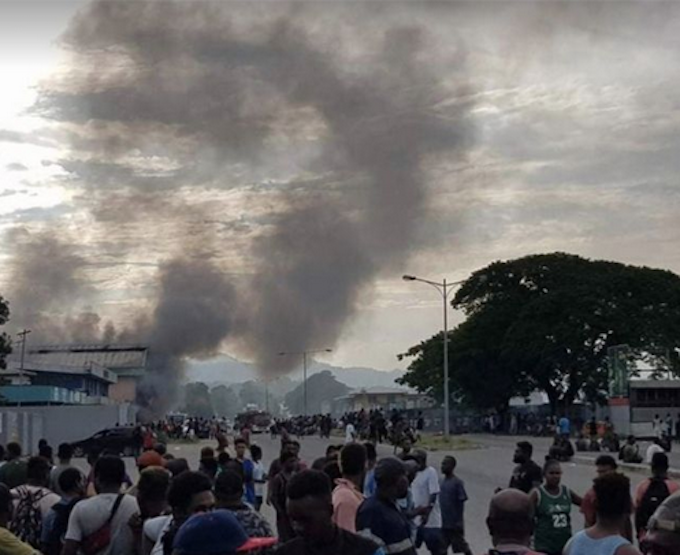
Dealing with domestic violence has proved one of the most intractable policy challenges for federal and state governments, despite the increasing attention that has been given to it in recent years.

On average, one woman is killed each week by a current or former partner, and violence is the leading preventable cause of death, illness and disability for women aged between 15-44.

According to data released by the Australian Bureau of Statistics in June, the number of police-recorded victims of family and domestic violence related sexual assault increased by 13% in 2020.

Thursday is the International Day for the Elimination of Violence against Women.

The extra workers funded by Labor would enable shelters to employ an extra case manager, community organisation to hire a financial counsellor to advise women, and women’s services to take on a support worker to counsel children. The initiative for the workers would cost $153 million over the forward estimates.

The commissioner would “act as a strong voice for victim-survivors”, Labor says.


Read more:
We analysed almost 500,000 police reports of domestic violence. Mental health was an issue


The person would work with federal agencies as well as the states and community organisations to ensure adequate data was available. They would also help with co-ordination of policies and provide accountability and transparency.

Labor’s proposed commissioner follows the National Women’s Safety Summit in September where Prime Minister Scott Morrison acknowledged too many Australian women were not safe.

“It is not a new problem and it is not a simple problem. But Australia does have a problem,” he said.

*If you or someone you know is impacted by family and domestic violence or sexual assault, call 1800RESPECT on 1800 737 732 or visit 1800RESPECT.org.au. In an emergency, call 000.
*

The Conversation

Michelle Grattan does not work for, consult, own shares in or receive funding from any company or organisation that would benefit from this article, and has disclosed no relevant affiliations beyond their academic appointment.

ref. Albanese promises commissioner and more workers to deal with domestic violence – https://theconversation.com/albanese-promises-commissioner-and-more-workers-to-deal-with-domestic-violence-172429

Former NZ prime minister Helen Clark chides global pandemic ‘failures’

RNZ News

Former New Zealand Prime Minister Helen Clark says the global handling of the covid-19 pandemic is marred with failures, gaps and delays.

Clark is a co-chair of the Independent Panel for Pandemic Preparedness and Response and is urging nations to spend less time debating commas in committees and instead get on with implementing the panel’s proposed reforms.

These include new financing of at least $10 billion a year for pandemic preparedness, and negotiations on a global pandemic treaty.

Clark told RNZ Morning Report the wheels were in motion on the structural responses the panel had called for but progress was slow.

“The wheels grind slowly but they are grinding,” she said, noting that the World Health Assembly (WHA) would meet for a special session next week and the sole item on the agenda was discussing whether to begin negotiating a treaty aimed at preventing future pandemics.

“I’m quite optimistic that they [the WHA] will embark on negotiations — now what they negotiate is another matter, but the process is kind of under way.”

If the WHA decided to move forward with treaty negotiations it would be only the second global public health treaty, after a 2003 accord to control tobacco use.

Unequal global response
Speaking in London overnight, at the launch of a six-month accountability review into the report commissioned by the World Health Organization (WHO) and published by the panel, Clark criticised the unequal response globally to the current pandemic’s more immediate challenges.

“There hasn’t been an equitable supply of tools to fight the pandemic, despite the sincere efforts of many people,” she said.

“We’ve talked a lot about vaccines, but many countries have lacked adequate access to other basics such as diagnostics, therapeutics, personal protective equipment, and even oxygen.”

She told Morning Report the panel had recommended reforms that addressed those inequalities, including dedicated financing for pandemic preparedness and a redesigned “end-to-end” platform that could control the flow of essential medical goods in the event of a future pandemic.

“That’s quite a big ask and in many ways this will be the hardest of all the asks that we had because it does require confronting the current way that the WTO (World Trade Organisation) deals with intellectual property,” Clark said.

The issue of intellectual property rights was already a hot topic, she said, adding that India and South Africa were leading the change in pushing for “the waiver of intellectual property rights in the event of pandemics, including this one”.

More than 257 million people have been reported to be infected by the SARS-CoV2 coronavirus and 5.4 million have died since the first cases were identified in central China in December 2019, according to a Reuters tally.

215 new cases in NZ
in New Zealand, the Ministry of Health reported 215 new community cases and one death, a patient in their 50s At Auckland City Hospital who was admitted to hospital on November 17.

This took the total of deaths to 40 since the pandemic began.

The ministry also said there were 88 people in hospital, including six in intensive care units (ICU).

Of the new cases today, 196 were in Auckland, 11 in Waikato, four in Northland, one in Bay of Plenty, two in Lakes and one in MidCentral that was announced yesterday.

Clark said a key part of “how to do better next time” globally would hinge on reforms required at the WHO itself and admitted the slow progress on deciding what those reforms should be was “frustrating”.

The next regular meeting of the WHO was in late May next year and that would focus on the reform programme, she said.

“While it’s slow and it’s frustrating and we’re coming up, at the end of next month, to the two-year anniversary since what was then a novel coronavirus – which isn’t now so novel – was first identified, the wheels are in motion on these structural responses.”

‘We’re by no means through this’
Clark told Morning Report the newest wave of covid-19 infections in Europe was “largely avoidable” and should serve as a warning to New Zealand not to let its guard down.

“What we’ve seen in … developed countries that are capable of administering a vaccine rollout [is] they then tend to throw out all the other measures,” she said.

She was scathing of images she had seen showing almost no one on the London underground wearing masks: “Can we be surprised that there’s tens of thousands of cases a day?”

She said both the WHO and the panel’s report advocated the ongoing use of public health measures in addition to vaccination.

“Don’t throw the baby out with the bathwater. Don’t be satisfied …

“In New Zealand, when you get to even 90 percent of vaccination of eligible people, don’t throw away the rest of the toolkit because you need it to control transmission among those who aren’t vaccinated,” Clark said.

“It’s a complex story but we’re by no means through this.”

This article is republished under a community partnership agreement with RNZ.

Print Friendly, PDF & Email

Article by AsiaPacificReport.nz