Page 809

Third time lucky? What has changed in the latest draft of the religious discrimination bill?

Source: The Conversation (Au and NZ) – By Luke Beck, Associate Professor of Constitutional Law, Monash University
original

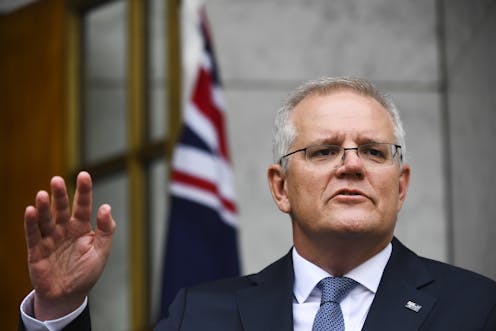
The Morrison government has finally provided details of the third draft of its religious discrimination bill. This prompted heated discussion in a meeting of Coalition MPs on Tuesday, but Prime Minister Scott Morrison still wants to see the bill introduced in this final sitting fortnight of 2021.

What is the bill trying to do? What has changed since the last time we saw it? And will it be enough to satisfy the critics?

Why do we have this bill?

When same-sex marriage was legalised in late 2017, conservative religious groups were promised a “religious freedom” review as a consolation prize. That review, led by former Liberal MP Phillip Ruddock, found Australia does not have a religious freedom problem, but did recommend new legislative protections against religious discrimination. In response, in December 2018, the Morrison government promised a Religious Discrimination Act.


Read more:
The debate about religious discrimination is back, so why do we keep hearing about religious ‘freedom’?


Former Attorney-General Christian Porter released a draft religious discrimination bill in late 2019 and a second draft in early 2020.

Both were were roundly criticised. Human rights groups complained the bill weakened other human rights protections and created a licence to discriminate. Conservative groups complained it did not give adequate protections to people of faith.

What’s in the third draft?

Current Attorney-General Michaelia Cash’s third draft is effectively in two parts.

The first part is a legal “shield” protecting people from being discriminated against on the basis of their religion or lack of religion. This isn’t really controversial, as it simply adds religious discrimination to the existing suite of federal race, sex (also covering LGBTQIA+ status), disability and age discrimination laws. All states and territories, other than NSW and South Australia, already have laws prohibiting religious discrimination.
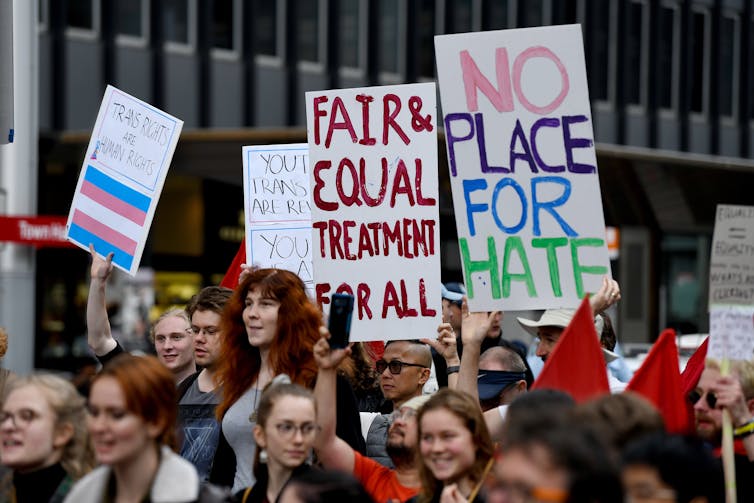
Protesters at an anti-religious discrimination bill rally in Sydney in 2019.
LGBTQIA+ advocates say the bill will lead to increased discrimination.
Bianca De Marchi/AAP

The second part of the bill is a more of a legal “sword” and is more controversial.

Some of the controversial features of earlier drafts, such as the ability of healthcare providers to refuse to provide treatment, are gone. But the current draft still includes a range of provisions overriding federal, state and territory anti-discrimination laws to allow people to be discriminated against.

The right to be a bigot

Perhaps the most controversial aspect of the bill is the “statements of belief” provision. This provision overrides overrides every federal, state and territory anti-discrimination law to make “statements of belief” immune from legal consequences under those laws.

Statements of beliefs are things like comments from a boss to a female employee that “women should not hold leadership positions” or comments from a doctor to a patient that “disability is a punishment for sin”.

In order to gain immunity, the statement has to be a religious belief that the person genuinely considers to be in accordance with the doctrines, tenets, beliefs or teachings of that religion. For non-religious people, the statement has to be of a belief that the person genuinely considers to relate to the fact of not holding a religious belief.


Read more:
Grattan on Friday: Morrison gives religious discrimination bill priority over national integrity commission


There are three limitations. A statement of belief will not be protected if it is malicious, if a reasonable person would consider the statement would threaten, intimidate, harass or vilify a person or group, or if the statement would promote or encourage the commission of an offence punishable by at least two years’ imprisonment.

This is an extraordinary departure from standard practice in federal anti-discrimination law. Standard practice is to ensure state and territory laws are not overridden.

This provision is bad for everyone. It will protect those who are nasty to Christians, as well as those who are nasty to LGBTQIA+ people, women or people with disabilities.

One key change from previous drafts is statements that intimidate will not be protected. Earlier drafts only excluded “serious intimidation”.

A mini Folau clause

Earlier drafts of the bill also included the so-called “Folau clause”, named after the incident in which Israel Folau parted ways with Rugby Australia as a result of comments he posted on social media about gay people. That clause would have made it unlawful for employers to have codes of conduct that limit a person’s ability to make statements of belief. This provision is gone in the current draft.

But there is still a mini Folau clause. Qualifying bodies (like a medical board) that licence professions and occupations are banned from setting professional conduct rules that prohibit making statements of belief, unless compliance with the rule is an essential requirement of the profession, trade or occupation.

So while an employer can discipline an employee for making a statement of belief, a professional association cannot.

‘Preferencing’ with hiring

The bill would mean it is not religious discrimination for bodies such as religious schools, hospitals or aged care facilities to seek to preserve a “religious ethos” among staff by making faith-based decisions in relation to employment.

For example, a Catholic hospital would be able to have a Catholics-only hiring policy. The bill simply requires religious bodies to have publicly available policies if they want to take advantage of this rule.

The bill specifically overrides state and territory anti-discrimination laws to ensure that such “preferencing” in employment is allowed in religious schools, even in those states where this is unlawful.

Constitutional concerns

There are some complex constitutional issues with the bill. Here are three of them:

First, federal parliament might not have constitutional power to enact all parts of the bill. The government says it is relying on the “external affairs power”, which allows federal parliament to pass laws implementing treaty obligations, like article 18 of the International Covenant on Civil and Political Rights about the right to freedom of thought, conscience and belief.

But international human rights law is clear that religious freedom cannot be used to interfere with other rights, which is exactly what some parts of the bill do.
Interior of Catholic cathedral.
Some religious groups have been pushing for a stronger bill, warning they are left vulnerable to claims of discrimination through practising their faith.
Tracey Nearmy/AAP

Second, overriding state laws throws the state tribunal systems into an unholy mess. State anti-discrimination cases are usually heard by state tribunals, which are quicker and cheaper than courts. But for constitutional reasons, state tribunals cannot consider federal laws.

If the bill passes, many state anti-discrimination cases will now also involve the federal “statement of belief” exemption, which means these cases will need to be heard by a court. Because court cases are very expensive, it is likely many of these cases simply won’t happen and people who have been discriminated against will be left without a remedy.

Third, the “statement of belief” provision overriding state and territory laws appears to change definitions in those laws rather than simply overriding the operation of those laws. While federal parliament has the power to override the operation of state laws, it does not have power to amend or change the content of those laws.

Where to from here?

Recent indications are the bill will be referred to a Senate inquiry – as per the normal process for an important piece of legislation.
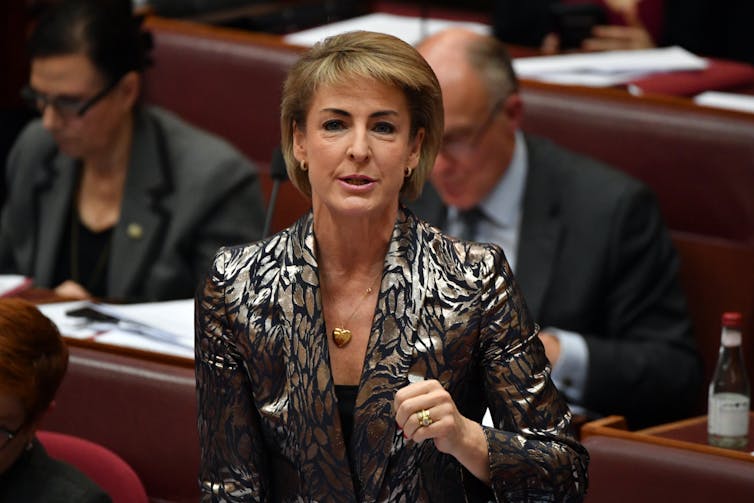
Attorney-General Michaelia Cash.
Attorney-General Michaelia Cash has charge of the controversial bill.
Mick Tsikas/AAP

If that happens, there’s almost no chance of a vote on the bill this year and the heated debate will continue.

But given the ongoing complexities and far-reaching consequences of the bill a proper Senate investigation is essential.

The Conversation

Luke Beck is a member of the Australian Labor Party and is on the board of the Rationalist Society of Australia Inc. This article reflects only his personal views.

ref. Third time lucky? What has changed in the latest draft of the religious discrimination bill? – https://theconversation.com/third-time-lucky-what-has-changed-in-the-latest-draft-of-the-religious-discrimination-bill-172386
New Pacific Australia Labour Mobility scheme offers more flexibility … for employers

Source: The Conversation (Au and NZ) – By Victoria Stead, Senior Research Fellow, Alfred Deakin Institute for Citizenship and Globalisation, Deakin University

Shutterstock

The Australian government has announced a major change to its arrangements for migrant workers from Pacific Island nations (and Timor-Leste), replacing two existing temporary visa schemes with a single scheme, to be known as the Pacific Australia Labour Mobility (PALM) scheme.

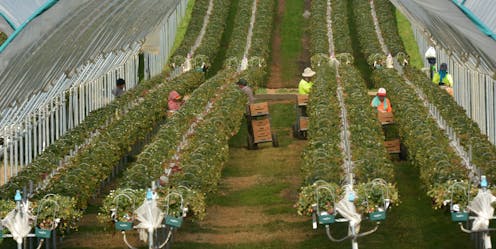
The consolidated scheme will come into effect in April 2022. It will replace the Seasonal Worker Programme, which has provided visas of six to nine months’ duration to meet employer needs for “unskilled” labour, mostly in farm harvesting work, and the Pacific Labour Scheme, which has provided visas of one to three years for “low-skilled” and “semi-skilled” workers in rural and regional areas.

The consolidation, announced today, comes at time when farmers are crying out for more workers while industry and government are under pressure to address structural issues in the existing schemes that have enabled worker mistreatment and wage theft.

The PALM scheme seems partly designed to respond to these criticisms. The press release issued by foreign minister Marise Payne and minister for the Pacific Zed Seselja contains vaguely framed assurances of “enhanced worker protections”, including a “compliance and assurance program” (details unknown).

But much clearer is how the scheme will address long-running employer concerns about the existing schemes, by cutting down the paper work and requirements to show they have been unable to fill positions with local workers before applying to recruit migrant workers.

“Flexibility” is the buzzword here – though more for employers than workers.

What ‘labour mobility’ means

Back in 2017, pre-pandemic, I sat in a forum hosted by a labour hire agency in the middle of a picking season in north-central Victoria. Speaking to room full of farmers, the agency’s representative talked about how backpackers would leave farms if they weren’t getting paid enough. “This is a challenge”, the representative said. The farmers nodded in agreement.

Farmers I’ve interviewed then and since describe their frustrations with spending days getting a group of workers up to speed, only to have them leave.

This is one reason employers like the Seasonal Worker Programme, which ties the visa holder to the sponsoring employer (typically a labour hire agency). As a packing-shed manager put it:

We can get a group of staff and know that they can’t actually go and work anywhere else.

For workers though, this tying of visas to a particular employer has been one of the key problems with the existing Pacific worker visa schemes. It limits workers’ ability to complain about exploitative treatment or to leave and find more favourable work.

While the details of the new scheme are sparse, it seems the PALM scheme won’t substantially change this control mechanism.

The “labour mobility” being delivered is not the worker’s choice, but movement between employers “in response to workforce demand”.

That is, where employers struggle to provide the minimum average of 30 hours of work a week required, they (or more likely, the labour hire agencies managing their workforce) will be able to move workers between employers.


Read more:
Australia needs better working conditions, not shaming, for Pacific Islander farm workers


Flexibility for employers

This kind of increased flexibility has already been instituted under pandemic revisions to the Seasonal Worker Programme rules. Worker “consent” will be required for these moves, but this is hardly the same as allowing workers the capacity to instigate changes of employers themselves.

Thus, while the changes will likely yield some improvements for workers – through reducing situations in which they remain stuck with farmers who have run out of enough work for them – they won’t address the fundamental power disparity embedded in these schemes.

Employers like the way the Seasonal Worker Programme ties the visa holder to the sponsoring employer (typically a labour hire agency).
Shutterstock

Another change with PALM will be the capacity for seasonal workers to apply for longer-term visas – up to four years. This too sounds promising. But the framing of the changes again suggests the balance of power will remain firmly with employers.

Workers will be able to apply for these longer-term visas only once they are Australia, and only if recommended by their employers. This will replicate the vulnerability in the existing schemes, by which workers’ chances of staying in the country or qualifying for a future visa are often contingent on the whims of their employer. It’s a powerful disincentive against complaint.


Read more:
If Australia cares about Pacific nations, we should also invest in their care givers


Still a recipe for precarious work

Strengthening worker protections would involve giving workers increased control over the conditions of their labour, and rights not contingent on their employer’s approval.

So what are the strengthened protections for workers under the new scheme? There is little detail beyond generalised references to “welfare and cultural expertise”, “community connections” and “maintaining the paramount importance of worker wellbeing”.

The most concrete change described is establishing a “24/7 helpline” for migrant workers. Exactly what help this will provide remains unclear. A helpline might assist workers facing illegal exploitation. It won’t help much with the unfairness produced by the system working exactly as intended.

With so little detail, the full implications of the new scheme are impossible to gauge. At this point, notwithstanding some nods to worker protection, it looks to be largely a continuation of established patterns, with intensified “flexibility” for industry – a recipe for precarious employment.

The Conversation

Victoria Stead receives funding from the Australian Research Council (grant ID DE180101224)

ref. New Pacific Australia Labour Mobility scheme offers more flexibility … for employers – https://theconversation.com/new-pacific-australia-labour-mobility-scheme-offers-more-flexibility-for-employers-172385

Vale Stuart Macintyre: a history warrior who worked for a better Australia

Source: The Conversation (Au and NZ) – By Janet McCalman AC, Emeritus Redmond Barry Distinguished Professor, The University of Melbourne

Main photo: Melbourne University Publishing

Stuart Macintyre has gone. To those whose lives touched his, an Australian history community without him seems hugely empty.

For almost half a century he was there in the lives and work of his students, his colleagues, his comrades and his friends. He was one of those commanding people against whom others measure their ideas, their work and their politics. He has gone far too early, but he has left an extraordinary legacy.

He was assiduous. He always answered letters and later, emails, immediately. He was a close and constructive critic of his students’ work and a dedicated supervisor. While he taught general Australian history, many will remember his classes on the working class in history and literature with deep pleasure. As an academic leader he was assured. As a historian in the public realm, he was an unrelenting defender of good scholarship and academic freedom.

He was the prime target of the conservatives in the history wars and condemned as a partisan scholar by other frankly partisan scholars , but I remember well his generous reconciliation with Geoffrey Blainey some years later. He was a history warrior for the discipline of history.


Read more:
The past is not sacred: the ‘history wars’ over Anzac


He had deep feelings: for his family and friends, his heritage, his institutions, his comrades, and for a fairer world. He took a not uncommon path from Scotch College to the Communist Party. On leaving the Party, he remained its best historian and his final work, the second volume of that history, is just about to be released : he lived just long enough to complete it despite withering chemotherapy.

Prodigious productivity

But his public legacy will be the books. His productivity was prodigious, and many have been not a little envious. But again, that productivity came from his assiduousness: sitting down every night he was home to write for two hours. He had, like many great historians, a highly retentive memory and an epic collection of books that he had actually read. For everyone it was “ask Stuart” and Stuart would know.

That command of detail, and the years in the archives, made him our greatest historian of politics and society from the late 19th century to the present day.

He was fascinated by political actors, largely male because of the times, and he probed character, ideas and actions forensically. They were not all “great men”, but they were powerful and influential figures from all sides of politics.

He opened his volume for the Oxford History of Australia — The Succeeding Age, 1901-1942 — with portraits of five Australians: one of them the tycoon father of a distinguished politician who became a baron; another Australia’s finest lyric poet labouring in heartbreak land, forever longing for the lovely woman he was too poor and sick to marry; a working man who became a man of substance; a poor woman beset by loss and poverty and an Aboriginal stockman forced to straddle his traditional world and working for rations for whites.

Book cover: Winners and Losers

That was Stuart’s Australia – winners and losers (the title of an early book), the strugglers against an unforgiving land, tossed about in the great seas of history: booms and busts, natural disasters and the persistent structures of inequality that mocked Australia’s myth of egalitarianism.

Stuart was one of the few who could write national history, who commanded the detail and nuances that made an uneasy federation of colonies into a nation, who recognised the distinctive as well as the common in the Australian experience. And he understood as no other scholar, the institutions that bound the Commonwealth or defined the various states and territories.

His books began with the study of British Marxism A Proletarian Science (1980), the subject of his Cambridge doctorate and the grounding of his mastery of Marxist thought. He wrote on colonial liberalism, the Labor Party, the Council for Civil Liberties and collaborated on a wide range of works with both scholars and journalists, catalysing debate on history, politics and institutions in the public domain.

He was dedicated to the mission of teaching civics in Australian schools. And he wrote on the history and place of the social sciences in Australia.

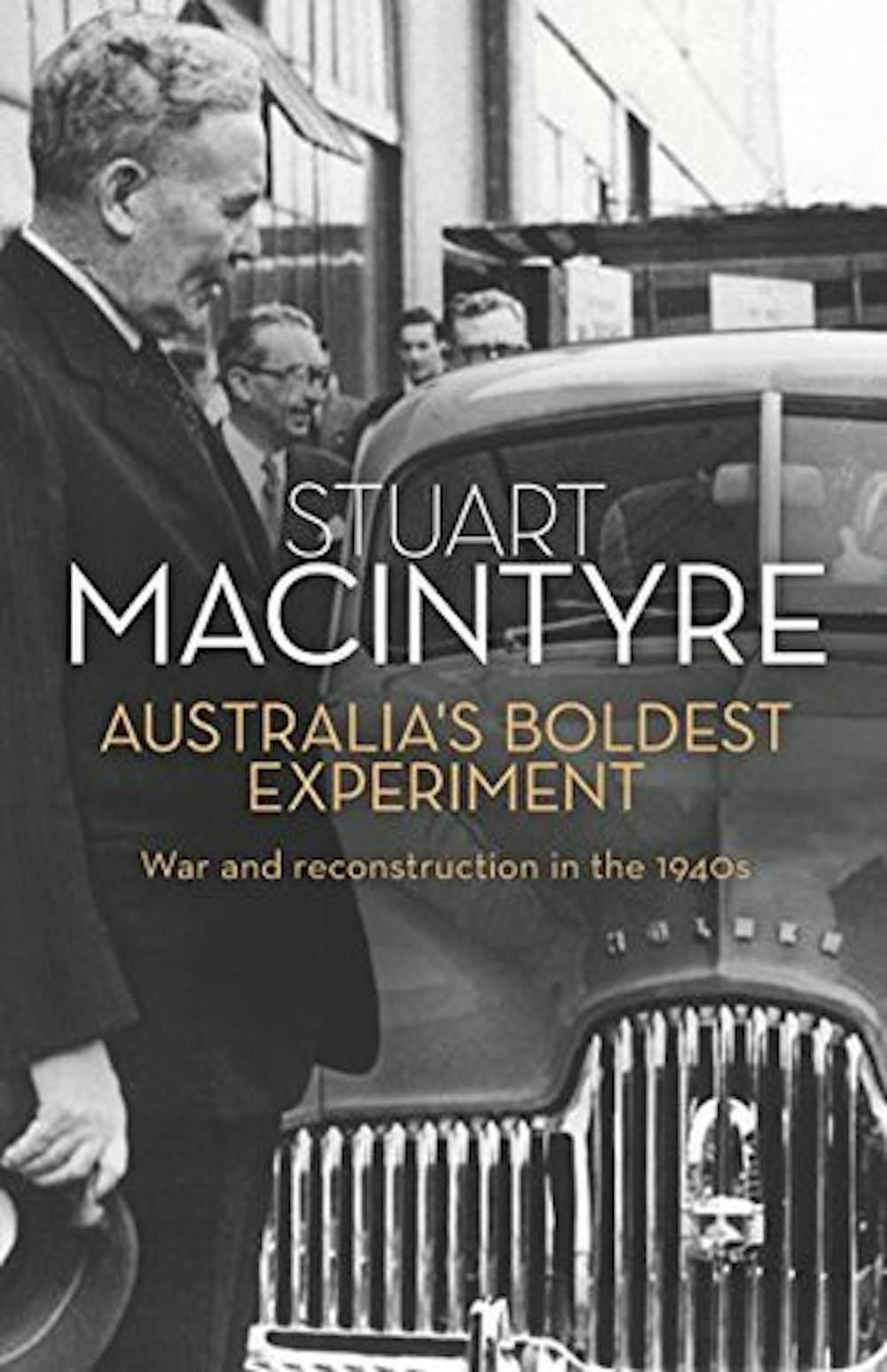
Book cover: Australia's Boldest Experiment

goodreads

His greatest work is arguably his penultimate monograph: Australia’s Boldest Experiment: war and reconstruction in the 1940s (published in 2015). It promises to be his most influential because for our own time of existential crisis, he shows how Labor prime ministers, John Curtin and Ben Chifley, advised by the brilliant public servant Dr H.C. Coombs, began building modern Australia amidst the stringencies of war: to win the peace as well as the war.

It is a book about political vision and moral courage, and it is now the bible of the Albanese Labor Party. Macintyre’s greatest legacy may yet be written in a better Australia, and it’s the one that would please him most.

The Conversation

Janet McCalman AC does not work for, consult, own shares in or receive funding from any company or organisation that would benefit from this article, and has disclosed no relevant affiliations beyond their academic appointment.

ref. Vale Stuart Macintyre: a history warrior who worked for a better Australia – https://theconversation.com/vale-stuart-macintyre-a-history-warrior-who-worked-for-a-better-australia-172394

Adele has successfully asked Spotify to remove ‘shuffle’ from albums. Here’s why that’s important for musicians

Source: The Conversation (Au and NZ) – By D. Bondy Valdovinos Kaye, Assistant researcher, Queensland University of Technology

Adele’s long awaited, newly released fourth studio album, 30 was guaranteed to make waves in the international music scene as Adele’s first full-length record in over six years. This week it made the news for a different reason.

In response to Adele’s request, Spotify has hidden the shuffle button from all albums accessed via the streaming music platform. In a viral tweet immediately following the release of “30”, Adele commented “We don’t create albums with so much care and thought into our track listing for no reason… our art tells a story and our stories should be listened to as we intended. Thank you Spotify for listening.”

To which Spotify’s official Twitter account responded, “Anything for you.”

The move is likely to be well-received by Adele’s popstar peers, such as Lady Gaga who implored the public listen to her album Chromatica start to finish when it released in 2020.

Shuffle away

Spotify’s shuffle button randomises songs. It is neither new nor unique. In the early 1980s, shuffle was available on CD players and MP3 players. It served as a staple for Spotify’s largest competitor Apple, via iTunes and long-forgotten devices such as the iPod and iPod shuffle.

Shuffle is essentially a random number generator that picks the next songs based on chance. The problem is true randomness means the same song might sometimes play repeatedly. In 2014, Spotify tweaked their algorithm to make shuffle seem more random.


Read more:
Mood, music and money: what our Spotify playlists reveal about the emotional nature of financial markets


Shuffle is still available on Spotify for playlists, but users must now access it via a menu when listening to albums as opposed to having the option right next to the play button. A statement from Spotify hailed their “new premium feature […] to make play the default button on all albums”. This change applies to all albums, not just Adele’s 30, and features on both mobile and desktop versions of Spotify.

Spotify has faced dissatisfaction and criticism from musicians who decry the appalling low streaming payout rates to artists, and academics who raise concerns over the platform’s lack of transparency around data.

But Spotify has rarely changed course in response to critique – yet Spotify willingly removed the feature from album pages upon Adele’s request to preserve the continuity of her album – a sign of the artist’s immense clout.

The album is not dead

Spotify’s decision to hide the shuffle button contrasts accusations that Spotify is responsible for “killing” the musical album as we once knew it.

As the largest music streaming service by paid subscription, Spotify is a powerful force in the global music industry. Artists, labels and production companies have taken note from Spotify as to what works and doesn’t work on a music streaming platform.

Though revenues from streaming are far lower than purchases or individual downloads, superstar artists like Drake have taken advantage of streaming services to garner billions of streams that pay out millions of dollars in revenue.

Even so, the numbers are underwhelming for mid-tier and independent artists. According to Digital Music News a niche EDM artist who managed the impressive feat of having listeners stream their music one million times over four months only generated about US$5,000 (A$6,924) in 2013.

One important issue is curated playlists. Much like radio stations, Spotify features playlists of the top charting songs in various regions, but unlike radio stations Spotify has a vast library of playlists to match every genre, mood, and moment handpicked by curators or created and shared by other users.

Producing “playlistable” songs that are more likely to be placed on a popular genre or mood playlist is now a crucial strategy to build a following, attract labels and earn a living in music – but doing so comes at a cost. Orphan songs separated on a playlist from their album will not be experienced as part of a story in the context as artists like Adele intended.

The imperative to create popular singles is not new, the music industry is and has been centred around the hits, but the shifting logic of digital music streaming puts pressure on artists to examine carefully the cost and benefits of creating longer form art.


Read more:
The music industry is booming and can afford to give artists a fairer deal


Beginning in 2014, Billboard started calculating album equivalent units, or the number of streams that would count as one album sale when determining an album’s position on Billboard Charts. Having more songs on an album means more streams, which could translate to a higher chart position. It also means more money.

Artists have released longer albums, such as Kanye West’s recent album Donda (Deluxe) with a track listing topping 30 songs. This strategy could be seen to lead to more padding and fewer hits, ultimately diluting powerful records with bland or forgettable tunes, “as if artists are curating playlists rather than crafting cohesive projects”, according to this VICE article.

Adele’s insistence on the importance of streaming the twelve tracks on 30 in their proper order, and Spotify’s capitulation to her request, will resonate with artists who have been urged by labels, publishers, or the industry writ large to create “playlistable” singles or lengthier albums.

Long live the album

The death of the album has been forecast for over a decade and streaming services like Spotify have been one of the many potential culprits blamed. Yet artists are still releasing full, artistically realised albums in 2021.

In 2015, I released an album with my band on streaming services including Spotify and Apple. My band-mates and I experienced firsthand the time and expenses needed to produce a full-length original album. We agonised over the track listing and waited until the full album was finished before we released any of our songs.

Six years later, I fully agree with Adele. I prefer to listen to my album in its intended order and I hope others will too. Like me, the average artist lacks Adele’s persuasive influence to change the design of a major music streaming platform in order to tell a more cohesive musical story.

But that’s exactly what Adele and Spotify have done. Now you are encouraged to stream 30 by Adele in the order the artist intended.

The Conversation

D. Bondy Valdovinos Kaye is the drummer and co-songwriter for Parallel Path.

ref. Adele has successfully asked Spotify to remove ‘shuffle’ from albums. Here’s why that’s important for musicians – https://theconversation.com/adele-has-successfully-asked-spotify-to-remove-shuffle-from-albums-heres-why-thats-important-for-musicians-172301

‘Can-do capitalism’ is delivering less than it used to. Here are 3 reasons why

Source: The Conversation (Au and NZ) – By Peter Martin, Visiting Fellow, Crawford School of Public Policy, Australian National University

The good news is supposed to be that when the government gets out of the way “can-do capitalism” will have us roaring back to where we were before.

That’s the prime minister’s newest slogan, and we had better hope for more.

The unpleasant truth is that before the pandemic Australia’s economy was disturbingly and unusually weak. Can-do capitalism wasn’t doing what it should.

Reserve Bank chief economist Luci Ellis put it this way a few days after Morrison talked about freeing the engines of the economy to do their work.

In the decade or so leading up to the pandemic, there was a nagging sense that these engines of prosperity were running out of steam – investment was low, productivity growth was lagging, and many of the behaviours we associate with business dynamism were on the decline.

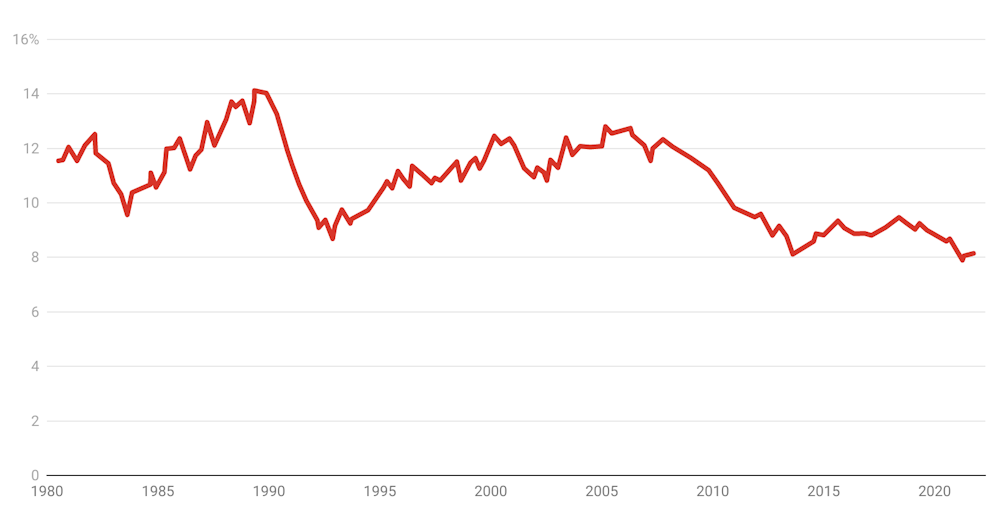
Outside of mining, business investment had been shrinking as a share of the economy for more than a decade.


Private non-mining business investment, share of nominal GDP

Net of second-hand asset transfers.
ABS, RBA

Outside of the ride-share industry, fewer businesses were being created and fewer businesses destroyed.

“For all the talk of disruption, the overall sense one gets from the data is of a bit less dynamism or inclination to shake things up,” Ellis said.

And we were in the middle of a “great resignation” of a different kind to the departures from jobs being seen in the United States.

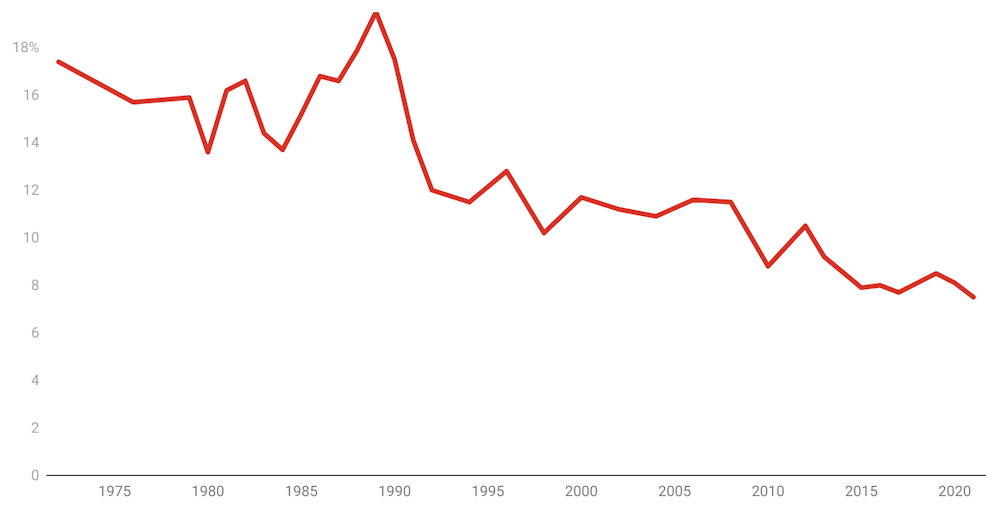
Australians were increasingly resigned to staying in the jobs they had. Job switching had sunk to all-time lows.


Proportion of employed Australians who switched jobs during the year


Australian Bureau of Statistics

In short, despite technological revolutions, despite a government saying it was getting out of the way, and despite record low interest rates that made it cheap to invest and expand, in the lead-up to COVID-19 businesses weren’t doing that. By the time the pandemic arrived, annual economic growth had slid to 2.1%.

Government hasn’t been holding business back

One thing Ellis says can’t explain the pre-pandemic reluctance of businesses to invest is government regulation pushing up costs. She says if costs had been rising, inflation wouldn’t have fallen to near record lows.

And if labour costs had been rising, wage growth wouldn’t have fallen to unprecedented lows, and firms would have been investing more in machines to replace workers.

Businesses themselves have been unusually cautious

There’s evidence to suggest that in the decade since the global financial crisis Australian (and other) firms have become more risk-averse.

Instead of falling with the falling cost of borrowing, the “hurdle” rates of return that businesses tell the Reserve Bank they require in order to justify investments have remained stubbornly high.

It’s a “won’t do” rather than a “can do” mindset, and Ellis says it might be because Australian managers don’t want to be associated with projects that fail, or because their firms have only limited management capacities and don’t want to commit to projects in case better ones come along.

Except for some firms

Her most intriguing suggestion is that some firms are market leaders at installing new technologies (especially those driven by artificial intelligence) – so much so that their competitors can’t catch up.

Tip Top cut distribution costs 14%.
CSIRO

Tip Top Bakeries produces more than one million loaves of bread a day and delivers to more than 18,000 locations Australia-wide.

It used to send out its trucks in hub-and-spoke patterns using schedules drawn up by humans.

Since it began using artificial intelligence and machine learning to route trucks in configurations no human would have thought of, it has cut its distribution costs 14% and lifted its gross profit after distribution 7%.

Ellis makes the point that, unlike earlier technological innovations such as laptops and spreadsheets, artificial intelligence and machine learning are actually harder to use and require a rarer set of skills than the technologies they are replacing.

It is not just an issue of having enough people with PhD-level skills to design the algorithms, Ellis says. Even rarer is the wisdom and judgment to know when the algorithms are going wrong.


Read more:
If you’re preparing students for 21st century jobs, you’re behind the times


The few “superstar” firms that adopt the new technologies (such as Woolworths with its fully automated distribution centre) are becoming able to do things their smaller competitors cannot, locking those lesser firms into a “low-wage, low-investment groove”.

Ellis cites evidence that the spread of technological knowledge has slowed, leading to a “winner-takes-all world” of increasing industry concentration.

It might still be possible to convince a lender you’ll be Australia’s next big thing in an industry with a market leader, but it’s getting harder.

‘Can-do capitalism’ needs help


Reserve Bank Assistant Governor Luci Ellis

The third possible explanation advanced by Ellis for the growth of the “think carefully before attempting” mindset over the past decade is in sharp contrast to Morrison’s distinction between “can-do capitalism” and “don’t-do governments”.

It’s to do with long-term cycles.

When conditions are weak, Ellis says, firms focus on defending what they’ve got instead of pursuing new opportunities.

We’ve been in that cycle for a decade, possibly made worse by governments withdrawing support in order to get nearer to balancing their budgets.

Now that governments are spending big and abandoning caution to fight the pandemic there’s a chance the cycle will turn.

It would be great if she turns out to be right.

If she is, it won’t be because the prime minister was right. It’ll be because business needed a leg-up.

The Conversation

Peter Martin does not work for, consult, own shares in or receive funding from any company or organisation that would benefit from this article, and has disclosed no relevant affiliations beyond their academic appointment.

ref. ‘Can-do capitalism’ is delivering less than it used to. Here are 3 reasons why – https://theconversation.com/can-do-capitalism-is-delivering-less-than-it-used-to-here-are-3-reasons-why-172376

Morrison’s opening of the door to international students leaves many in the sector blindsided and scrambling to catch up

Source: The Conversation (Au and NZ) – By Christopher Ziguras, Professor of Global Studies, RMIT University

Fully vaccinated international students from around the world will be allowed into Australia from next week, without needing to apply for a travel exemption. Prime Minister Scott Morrison made the announcement yesterday.

Although university bodies such as Universities Australia and the Group of Eight welcomed the announcement, sources in the higher education sector have said they were blindsided by it and are now scrambling to update their plans.

States in confusion

Prior to the prime minister’s announcement, only small numbers of students had been able to apply for a travel exemption to enter the country. They included research students with Australian government funding, medical, dental, nursing or allied health students who would undertake work placements, and secondary school students in years 11 and 12.

This announcement is a major change from less than a month ago when it was still unclear how and when the over 145,000 international student visa holders would be be able to enter Australia.


Read more:
Why the international education crisis will linger long after students return to Australia


On October 15, New South Wales Premier Dominic Perrottet announced quarantine restrictions would be scrapped from November 1 for all fully vaccinated international arrivals to the state. But the prime minister slammed the brakes on the NSW plan to open up to the world, saying:

The federal government is not opening it up to anyone other than Australian residents and citizens and their immediate families.

Such confusion put states in a difficult position. Before Morrison’s announcement yesterday, NSW and Victoria – the states hosting the most international students – both developed pilot programs to return international students. The NSW plan was to allow up to 250 international students studying with state education providers to return each fortnight from early December 2021. That figure would increase to 500 students per fortnight by the end of the year.

Victoria’s proposal would at first allow 120 currently enrolled students nominated by universities to enter the state each week. Numbers would be expanded to more students and other providers over time.

Universities in both states had been working frantically to organise details such as prioritising students selected for the programs and chartered flights. The Commonwealth’s dropping of restrictions on international travel now seems to have superseded these pilot plans.


Read more:
The government keeps shelving plans to bring international students back to Australia. It owes them an explanation


This will probably mean the caps of 250 per fortnight in NSW and 120 per week for Victoria will no longer be in place.

The only aspects of the pilot programs in NSW and Victoria likely to remain could be the already organised chartered flights. These will slightly ease the burden on commercial airlines, which may need more time to ensure capacity.

The University of Sydney has updated its information, saying:

The […] pilot program will continue as planned, with the University providing a supported return program for current students who are eligible and choose to participate. The first charter flight of international students is due to arrive on 6 December 2021. Eligible students will be contacted directly as more flights are announced.

However, most of the states’ universities have not yet updated their plans.

Different rules for different states

Both NSW and Victoria had already scrapped their quarantine requirements for fully vaccinated arrivals. But international students entering other states may still face a range of restrictions. In the case of Queensland this includes having to pay for a mandatory two-week stay in an isolated quarantine facility.

Entering Western Australia may be impossible altogether, given the state’s plan to ease border controls only once a 90% two-dose vaccination target is achieved.

It’s also important to note international student pilot programs were restricted to universities, where only around half of all international students`are enrolled. The latest announcement now means students in other kinds of international education, such as the vocational education and training sector and English language courses, can start arriving.

It’s unclear, however, what the announcement means for international school students, as those under 18 are less likely to be vaccinated.

Under the new arrangements to begin from December 1, travellers must:

  • depart from their home country
  • be fully vaccinated with a completed dosage of a vaccine approved or recognised by the TGA
  • hold a valid Australian visa
  • provide proof of their vaccination status
  • present a negative COVID-19 PCR test taken within three days of departure.

Eligible visa holders include skilled and student cohorts, as well as humanitarian, working holidaymaker and provisional family visa holders.


Read more:
As hopes of international students’ return fade, closed borders could cost $20bn a year in 2022 – half the sector’s value


School students are more likely to be interested in coming early in the next year anyway. But international tertiary students could be interested in arriving soon to work here over the summer, given Australia’s skill shortages in industries that commonly employ them – such as hospitality.

The big question now is how long it will take airlines to ramp up to full capacity. In pre-COVID times, this would have been a walk in the park. There were 21.3 million international arrivals in Australia in 2019, or around 1.8 million inbound passengers per month.

In October, the International Air Transport Association estimated international air travel is at only 40% of pre-COVID levels in 2021. It may take a long time to reach pre-COVID levels again, but at least we’re on our way.


Read more:
As international students start trickling back, the new year will be crunch time


The Conversation

Christopher Ziguras is past President of the International Education Association of Australia and has had a role as the Association’s Research Director.

ref. Morrison’s opening of the door to international students leaves many in the sector blindsided and scrambling to catch up – https://theconversation.com/morrisons-opening-of-the-door-to-international-students-leaves-many-in-the-sector-blindsided-and-scrambling-to-catch-up-172382

Venezuela’s Mega-Elections: Despite U.S. Sanctions, COVID, and Economic Crisis, Chavismo Wins Majority of States

Source: Council on Hemispheric Affairs – Analysis-Reportage

Print Friendly, PDF & Email

By William  Camacaro and Frederick Mills
From Caracas, Venezuela

On Sunday, November 21, Venezuela held mega-elections in which more than 70,000 candidates from across the political spectrum ran for 3,083 state, city and local offices, marking a resounding victory for this nation’s sovereignty and democratic institutions in the face of Washington’s illegal economic war and the ravages of the pandemic. As this article goes to press, according to the data presented in the first bulletin of the National Electoral Commission (CNE) the governorships of 18 states have been won by the Chavista coalition of the Great Patriotic Pole (GPP); three states, Zulia, Cojedes and Nueva Esparta, went to representatives of the opposition, and two states are too close to call, Apure and Barinas. These two states, in addition to Zulia, are located along Venezuela’s frontier with Colombia, a zone vulnerable to the penetration of Colombian paramilitaries and organized crime.

The participation rate in yesterday’s elections was 41.80% (8,151,793) of 21,159,846. This represents an increase of 11% over the last regional elections held in 2017 which garnered 30.47% participation. It also represents the second lowest participation rate for regional elections in 21 years.

According to Venezuelan journalist Eugenio G. Martínez, divisions among the opposition diluted the votes of opposition candidates in several states, possibly impacting the outcome in close elections in Barinas, Lara, Mérida, Monagas and Táchira.

The participation rate was 41.80%, an increase of 11% over the last regional elections held in 2017 (Credit photo: Fred Mills/COHA)

The participation rate and close races in several states are a wake up call to Chavismo of the need to fortify their base; for the opposition it portends an opportunity, should they manage to forge unity in future electoral campaigns.

It appears that the U.S. has taken a back seat to these historic elections. While the State Department has been busy cultivating an already defunct and notoriously corrupt shadow government without political relevance outside the beltway, more than 300 observers from 55 countries and major electoral observer commissions including the Carter Center and the European Union (EU) were welcomed to Caracas to observe the electoral process. In a preliminary response to a query about the elections on Sunday, chief of the  EU mission Isabel Santos said, everything was proceeding “calmly”.

The case of Alex Saab

An important backdrop to the elections is the U.S. kidnapping of Venezuelan diplomat Alex Saab on October 16, charging him with conspiracy to commit money laundering. This Colombian businessman became a target of Washington’s ire because he had the audacity to use his extensive international business contacts to circumvent illegal U.S. sanctions to import food, fuel and medicines to Venezuela, all at great personal risk, in order to save lives. The kidnapping of the diplomat was a blatant violation of the Vienna Convention on Diplomatic Relations (1961). It signals Washington’s commitment to continue imposing crippling sanctions. And it dealt a temporary setback to the Norway brokered talks between the government of President Nicolás Maduro  and the opposition taking place in Mexico. Another door to negotiation remains open, however, as major opposition candidates voiced support for the electoral process as the appropriate path for settling political differences, signaling the feasibility of their coexistence with Chavismo.

More than 300 observers from 55 countries and major electoral observer commissions including the Carter Center and the European Union (EU) were welcomed to Caracas to observe the electoral process (Credit photo: Fred Mills/COHA)

The opposition and the U.S. sanctions

Moreover, most of the opposition participated in these elections and several prominent candidates used their new found disdain for sanctions as a selling point for their campaigns, and for good reason: the use of such coercive measures by a foreign power as political leverage is immensely unpopular with the majority of Venezuelans. Supporting U.S. sanctions today, for a Venezuelan politician, is tantamount to political suicide.

For example, the Secretary General of Democratic Action Party, Bernabe Gutiérrez, asked people to vote, tweeting: “The era of guarimbas (violent demonstrations) is over.  The time has come to say goodbye to coups, sanctions, and calls for invasion. We Venezuelans have to settle our own problems.”

Domestic terrorism

Of course, there was the ever present threat of a terrorist attack by those extremists who see coexistence between Chavismo and the opposition as the ultimate threat to their hardline agenda to bury all vestiges of the Bolivarian revolution. Thanks to the government’s regional and municipal security plan, however, an arms cache was reportedly intercepted and election day activities took place in an atmosphere of peace.

These elections constitute an important victory for the Venezuelan people because despite the U.S. imposed sanctions, the pandemic, and attempts by Washington to politically isolate this Caribbean nation, the Electoral National Council (Consejo Nacional Electoral, CNE) managed to pull off regional elections with the participation of a plurality of parties in an atmosphere of peace.

William Camacaro is a Senior Analyst at COHA. Frederick Mills is Deputy Director of COHA and electoral observer during this past election

Translations into English are by the authors.

[Main photo credit: Camila Escalante]

Morrison’s opening of the door to international students left many in the sector blindsided and scrambling to catch up

Source: The Conversation (Au and NZ) – By Christopher Ziguras, Professor of Global Studies, RMIT University

Fully vaccinated international students from around the world will be allowed into Australia from next week, without needing to apply for a travel exemption. Prime Minister Scott Morrison made the announcement yesterday.

Although university bodies such as Universities Australia and the Group of Eight welcomed the announcement, sources in the higher education sector have said they were blindsided by it and are now scrambling to update their plans.

States in confusion

Prior to the prime minister’s announcement, only small numbers of students had been able to apply for a travel exemption to enter the country. They included research students with Australian government funding, medical, dental, nursing or allied health students who would undertake work placements, and secondary school students in years 11 and 12.

This announcement is a major change from less than a month ago when it was still unclear how and when the over 145,000 international student visa holders would be be able to enter Australia.


Read more:
Why the international education crisis will linger long after students return to Australia


On October 15, New South Wales Premier Dominic Perrottet announced quarantine restrictions would be scrapped from November 1 for all fully vaccinated international arrivals to the state. But the prime minister slammed the brakes on the NSW plan to open up to the world, saying:

The federal government is not opening it up to anyone other than Australian residents and citizens and their immediate families.

Such confusion put states in a difficult position. Before Morrison’s announcement yesterday, NSW and Victoria – the states hosting the most international students – both developed pilot programs to return international students. The NSW plan was to allow up to 250 international students studying with state education providers to return each fortnight from early December 2021. That figure would increase to 500 students per fortnight by the end of the year.

Victoria’s proposal would at first allow 120 currently enrolled students nominated by universities to enter the state each week. Numbers would be expanded to more students and other providers over time.

Universities in both states had been working frantically to organise details such as prioritising students selected for the programs and chartered flights. The Commonwealth’s dropping of restrictions on international travel now seems to have superseded these pilot plans.


Read more:
The government keeps shelving plans to bring international students back to Australia. It owes them an explanation


This will probably mean the caps of 250 per fortnight in NSW and 120 per week for Victoria will no longer be in place.

The only aspects of the pilot programs in NSW and Victoria likely to remain could be the already organised chartered flights. These will slightly ease the burden on commercial airlines, which may need more time to ensure capacity.

The University of Sydney has updated its information, saying:

The […] pilot program will continue as planned, with the University providing a supported return program for current students who are eligible and choose to participate. The first charter flight of international students is due to arrive on 6 December 2021. Eligible students will be contacted directly as more flights are announced.

However, most of the states’ universities have not yet updated their plans.

Different rules for different states

Both NSW and Victoria had already scrapped their quarantine requirements for fully vaccinated arrivals. But international students entering other states may still face a range of restrictions. In the case of Queensland this includes having to pay for a mandatory two-week stay in an isolated quarantine facility.

Entering Western Australia may be impossible altogether, given the state’s plan to ease border controls only once a 90% two-dose vaccination target is achieved.

It’s also important to note international student pilot programs were restricted to universities, where only around half of all international students`are enrolled. The latest announcement now means students in other kinds of international education, such as the vocational education and training sector and English language courses, can start arriving.

It’s unclear, however, what the announcement means for international school students, as those under 18 are less likely to be vaccinated.

Under the new arrangements to begin from December 1, travellers must:

  • depart from their home country
  • be fully vaccinated with a completed dosage of a vaccine approved or recognised by the TGA
  • hold a valid Australian visa
  • provide proof of their vaccination status
  • present a negative COVID-19 PCR test taken within three days of departure.

Eligible visa holders include skilled and student cohorts, as well as humanitarian, working holidaymaker and provisional family visa holders.


Read more:
As hopes of international students’ return fade, closed borders could cost $20bn a year in 2022 – half the sector’s value


School students are more likely to be interested in coming early in the next year anyway. But international tertiary students could be interested in arriving soon to work here over the summer, given Australia’s skill shortages in industries that commonly employ them – such as hospitality.

The big question now is how long it will take airlines to ramp up to full capacity. In pre-COVID times, this would have been a walk in the park. There were 21.3 million international arrivals in Australia in 2019, or around 1.8 million inbound passengers per month.

In October, the International Air Transport Association estimated international air travel is at only 40% of pre-COVID levels in 2021. It may take a long time to reach pre-COVID levels again, but at least we’re on our way.


Read more:
As international students start trickling back, the new year will be crunch time


The Conversation

Christopher Ziguras is past President of the International Education Association of Australia and has had a role as the Association’s Research Director.

ref. Morrison’s opening of the door to international students left many in the sector blindsided and scrambling to catch up – https://theconversation.com/morrisons-opening-of-the-door-to-international-students-left-many-in-the-sector-blindsided-and-scrambling-to-catch-up-172382

We expected people with asthma to fare worse during COVID. Turns out they’ve had a break

Source: The Conversation (Au and NZ) – By Bruce Thompson, Professor and Dean of the School of Health Sciences, Swinburne University of Technology

Shutterstock

There were fears at the beginning of the COVID pandemic that people with asthma would fare much worse than those without it. Intuitively, a disease that attacks the lungs should put asthma sufferers at much greater risk.

But this hasn’t been borne out.

Firstly, it’s turned out people with asthma are at slightly lower risk of acquiring COVID, being hospitalised with it or indeed dying from it compared to people without asthma. Though, someone with asthma who is hospitalised with COVID is slightly more likely to require ICU admission.

In addition, asthma attack rates have substantially reduced in many parts of the world.

What explains this?

Asthma sufferers aren’t getting sicker from COVID

Asthma is an umbrella term for a range of diseases of the airways, which have similar outcomes – constriction of the airways causing difficulty breathing. In some forms of asthma the constriction is a result of inflammation, or rash, within the lung.

Many people with asthma take asthma preventers, which are a type of steroid drug we lung experts call “inhaled corticosteroids”. These drugs reduce the amount of inflammation in the lungs.

Interestingly, another steroid, dexamethasone, is being used as a treatment for COVID for this same reason.


Read more:
Dexamethasone: the cheap, old and boring drug that’s a potential coronavirus treatment


Asthmatics might be inadvertently reducing the risk of severe COVID if they contract it by regularly using their preventers, because they are “pre-treated” if you like.

Indeed some preventers are thought to be “anti SARS-CoV-2”, that is, they have some ability to kill the virus that causes COVID.

What’s more, some good evidence from Australia demonstrates that patients with asthma have decreased “ACE2 gene expression”. ACE2 is the point of entry for the SARS-CoV-2 virus to get into our cells.

If you have less ACE2 then there are fewer gateways for the virus to enter our cells, and there’s less opportunity for the infection to take hold.


Read more:
What is the ACE2 receptor, how is it connected to coronavirus and why might it be key to treating COVID-19? The experts explain


Why have asthma attacks declined?

There a number of possible reasons why asthma attacks have declined.

Asthma is a chronic condition which can flare up when sufferers are exposed to their “triggers”. Common ones are pollens, chemicals, dust mites, pets, mould, smoke, or viruses.

Social distancing and locking down millions of people around the world has been a real time case study in what staying at home would do to asthma rates.

Because people in lockdown go outside a lot less, it could reduce their exposure to pollen and other allergens and irritants outdoors such as smoke, thereby reducing asthma attacks.

What’s more, social distancing and lockdowns also significantly reduce the number of interactions between people, thereby reducing the spread of infectious diseases. We’ve been able to reduce COVID cases this way, and flu cases too.

In 2019, there were 302,084 flu cases notified to health departments in Australia. And that was with a significant proportion of the population vaccinated.

In 2021, up to November 7, there have been just 598 flu cases.

Along with this, we can presume there have been far fewer common colds and other types of infectious diseases.

Viruses can cause asthma flare ups, which is known by lung experts as “viral exacerbation of asthma”. So fewer people with colds and the flu could also contribute to lower asthma attack rates.

There have also been reports of fewer people seeking medical care for fear of contracting COVID in health-care settings, which may be another reason for fewer people seeking care for asthma.

What will happen to asthma post-COVID?

We’re used to tolerating a certain level of many infectious diseases in the community, particularly things like common colds, strep throat, even glandular fever and the flu.

For many of us, this is no big deal and the only effects are feeling not great for a few days or weeks of the year.

But for many others, these sorts of common infectious illnesses can be deadly. Think about someone with cystic fibrosis, which severely damages the lungs and digestive system. If they get a cold or the flu, it can seriously knock them around, or even kill them. Same with someone who takes medications to depress their immune system, for example people with rheumatoid arthritis.

These infections result in many hospitalisations, which puts pressure on the whole hospital system.

From COVID, we know there are simple measures we can take to substantially reduce the transmission of these seemingly “benign” diseases, including wearing masks, not going to work or socialising when you’re sick, and washing/sanitising your hands regularly.

We’ve reached the milestone of having more than 80% of Australians over 16 fully vaccinated against COVID, and international travel is resuming. Returning travellers are likely to bring with them new flu strains that we’re totally unprepared for.

Usually flu vaccines for Australia are designed to tackle strains from the Northern Hemisphere winter so we’re prepared for when the new strain arrives in our winter.

But there has been such little flu overseas, and with the understandable focus on COVID, our vaccines for flu and other existing conditions may need to be revisited.

Not revisiting existing vaccines for flu and other previously common conditions may lead to a wave of flu and many other diseases, given we’ll have limited immunity to them.

So we may soon see asthma attacks take off again, exacerbated by viruses.

The Conversation

Bruce Thompson receives research funding from the NHMRC, is immediate past president of the Thoracic Society of Australia and New Zealand and has received speaker fees from GSK, Mundipharma, Chiesi and Astra Zeneca.

ref. We expected people with asthma to fare worse during COVID. Turns out they’ve had a break – https://theconversation.com/we-expected-people-with-asthma-to-fare-worse-during-covid-turns-out-theyve-had-a-break-165730

New Zealand’s climate change regulation is messy and complex — here’s how to improve it

Source: The Conversation (Au and NZ) – By Nathan Cooper, Associate Professor of Law, University of Waikato

Lynn Grieveson – Newsroom via Getty Images

Like other countries, New Zealand has both international and domestic targets to reduce emissions, but they run on different timelines and are based on different assumptions.

This week, public submissions close on New Zealand’s first emissions reduction plan which proposes policies for staying within the emissions budget for 2022-25 and keeping on track for future budgets.

New Zealand also pledged to cut emissions by half by 2030 when it announced its upgraded nationally determined contribution (NDC) during the recent COP26 climate summit. This is part of the global effort, under the Paris Agreement, to limit warming to 1.5℃ above pre-industrial levels.

The co-existence of international commitments, domestic laws and carbon budgets shows how complex climate change regulation is. This complexity can be confusing. It highlights the “messiness” of New Zealand’s current regulatory regime and the need for a legislative “tidy-up”.

Under domestic legislation, the Climate Change Response Act 2002 (CCRA) requires the government to set emissions budgets for five-year periods up to 2050 and to publish an emissions reduction plan for each period. Following the current consultation period, the government will release its first emissions reduction plan in May.

New Zealand’s new international pledge has a timeline to 2030 and equates to an emissions budget of 571 Megatons of CO₂-equivalent (MtCO₂e) to “spend” between now and then. Under the domestic climate change law, the proposed combined budgets for 2022-30 add up to 28MtCO₂e more than this (599MtCO₂e).

It’s not yet clear whether the budgets in the law will be revised down in light of the new NDC, or whether the gap will be filled by financing emissions reductions overseas.


Read more:
COP26: New Zealand’s new climate pledge is a step up, but not a ‘fair share’


Different timelines add to the confusion. Our international commitment works towards 2030, while domestically, provisional budgets are already available until 2035. And the Climate Change Response (Zero Carbon) Amendment Act 2019 requires that greenhouse gas emissions (other than biogenic methane) reach net zero by 2050.

Better alignment, clearer message

Once released, the consequences of the emissions reduction plan will be wide ranging. Stakeholders in all sectors will look to incorporate its emissions reduction policies.

Unless everyone clearly understands its goals and purpose, the plan risks an unnecessarily negative reception. There is widespread public support for more action on climate change mitigation in New Zealand. But the roles everyone can play must be made clear.


Read more:
Lawyers challenge New Zealand’s proposed emissions budgets as inconsistent with the 1.5℃ goal


The emissions reduction plan provides an opportunity to rethink how the law could better align national and international targets, timelines and milestones to improve the clarity of messaging on what must be achieved, when and by who.

Aotearoa’s emissions reduction plan must be clear, innovative and inclusive, directing public concern for the “climate emergency” and showing us where real change is possible.

Clear, innovative and inclusive

There’s no need for fresh legislation if the emissions reduction plan begins with a vision statement, weaving together all relevant obligations, to create a clear and measurable set of goals. The United Nations Sustainable Development Goals provide a good example of how complex goals can be articulated simply, and how targets and indicators can be used to add detail and help track progress.

The emissions reduction plan should be launched as a “living document” which not only sets out a plan of action but also acts as a place to track progress, and to get involved. It should make full use of interactive tools and apps so it becomes something people can easily navigate and interact with.

For example, in the transport sector, one of the draft targets is to reduce vehicle kilometres travelled by cars and light vehicles by 20% by 2035 through providing better travel options. Such a target could link directly to individually tailored options for car sharing and public transport timetables and could include opportunities for users to set their own goals and challenges, too.

Reducing emissions significantly, and transitioning towards a net-zero carbon economy, offers a host of opportunities. But the scale of change required also carries risk. Consultation begins next year on a national adaptation plan, with the goal of limiting the risks to people.

Lessons from other examples

The government has already committed to delivering a “fair, equitable and inclusive transition”. For this to happen, all sectors must be involved and it will require a mix of emissions pricing, well-targeted regulation, tailored sectoral policies, direct investment and incentives for businesses.

Getting the balance right, in particular between incentives and regulation, will be crucial. Private sector leadership should be encouraged and supported so that low-emissions business models become normalised. But we’ll also need regulation to prohibit certain behaviour.

The recently announced ban on most single-use plastics, including plastic bags and straws, is a good example of regulatory intervention to change harmful consumer behaviour. The emissions reduction plan should not shy away from similar policies to address the ecologically destructive behaviour of industry and consumers.

The Conversation

Nathan Cooper does not work for, consult, own shares in or receive funding from any company or organisation that would benefit from this article, and has disclosed no relevant affiliations beyond their academic appointment.

ref. New Zealand’s climate change regulation is messy and complex — here’s how to improve it – https://theconversation.com/new-zealands-climate-change-regulation-is-messy-and-complex-heres-how-to-improve-it-172231

Andrew Wallace becomes the new speaker – a role that’s never been more important in Australian politics

Source: The Conversation (Au and NZ) – By John Hawkins, Senior Lecturer, Canberra School of Politics, Economics and Society and NATSEM, University of Canberra

The House of Representatives today chose Andrew Wallace as the new Speaker. Wallace has been the member for the Queensland Sunshine Coast electorate of Fisher since 2016. He worked as a carpenter and barrister before entering parliament.

He is probably pleased to have this prestigious post. It pays well and comes with a nice office. His portrait will hang in the halls of parliament for posterity. On formal occasions, the speaker ranks ahead of the chief justice, the deputy prime minister and former prime ministers in the table of precedence (the official hierarchy list of key positions, used for ceremonial purposes).

But speakers pretend to be reluctantly dragged to the position. This reflects a British political tradition. Standing up to the king as parliament’s representative used to be a dangerous role.

As is usual in Australia, the new speaker comes from the government’s ranks, which means Wallace may be one of the shortest-serving speakers in Australian history if the government changes at the next election.


Read more:
A truly independent Speaker could renew Australia’s parliamentary democracy


The role of the speaker

The speaker is the House of Representative’s “principal officer”, fulfilling “constitutional, traditional and ceremonial, statutory, procedural and administrative” functions.

Perhaps the most public role they have is to preside over the debates in the house, ensuring these are conducted according to standing orders.

The speakership is anything but a sinecure. Most Australians are well aware of televised images of the incumbent perched in the speaker’s chair at the head of the chamber during question time.

At times, the speaker strains to manage 150 clamorous parliamentarians. One speaker, Stephen Martin, was only half joking when he said his experience as a rugby league referee and high school teacher was good preparation.

Along with the Senate president, the speaker runs the parliamentary building and manages the staff.

The careers of the Australian speakers are described in the recently published Biographical Dictionary of the House of Representatives, prepared by the National Centre of Biography at the ANU and funded by the department of the House of Representatives.

How is the speaker chosen?

Speakers are chosen by the house itself. But in practice it is nearly always formalising a selection by the nominee’s parliamentary party.

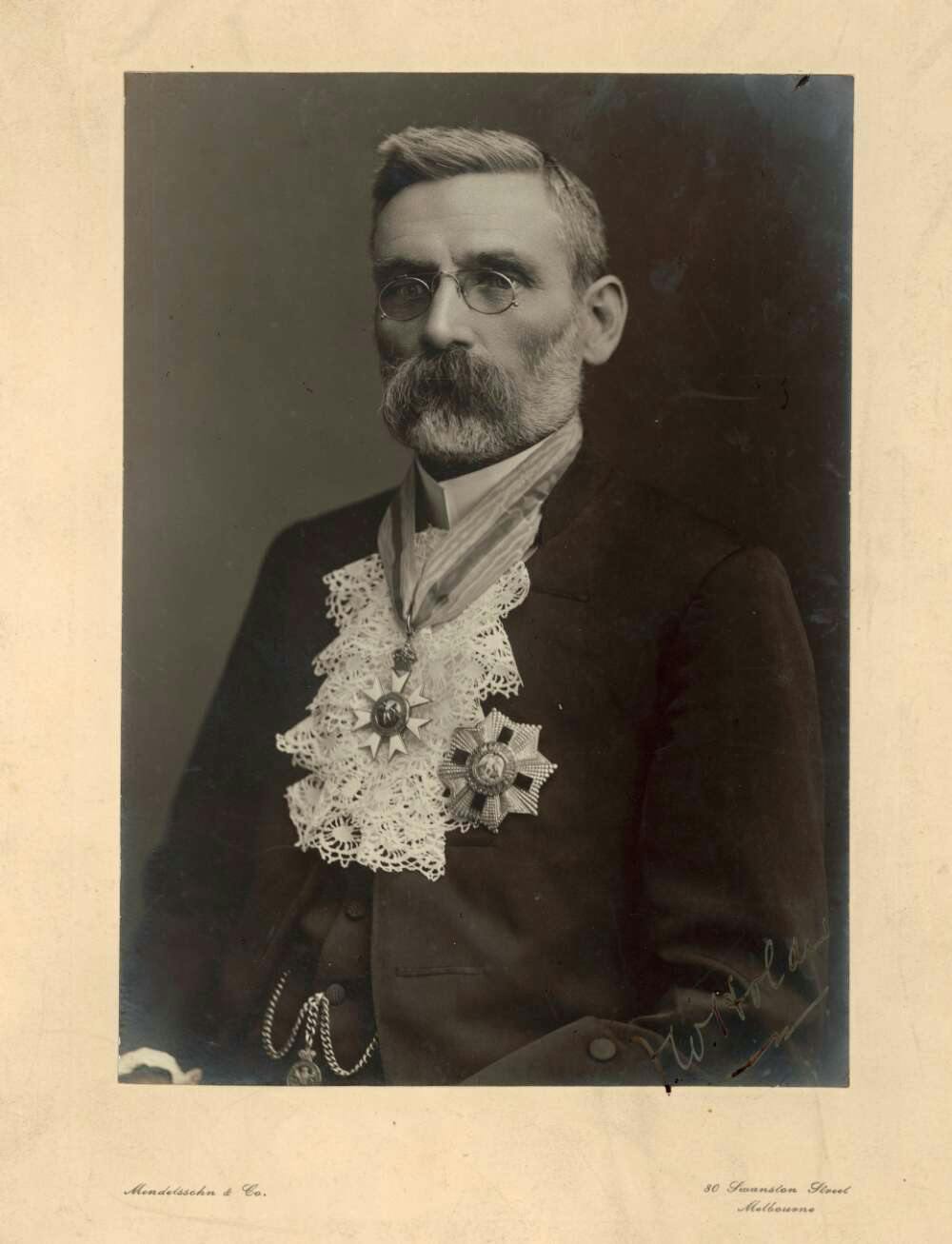
The first speaker, Frederick Holder attempted, unsuccessfully, to embed Westminster convention that the speaker ceases to be an active member of a political party.

Frederick Holder
The first speaker was Frederick Holder.
National Library of Australia/Trove

In the UK, the speaker has usually not faced opponents from other major parties at general elections.

But in the smaller Australian parliament, parties have been unwilling to give up a seat. Under the Australian model, the speaker remains a member of their party but generally adopts a less partisan role.

Speakers typically have long parliamentary experience, but few have had major further political ambitions. Several were past senior ministers for whom being parked on the backbench seemed decidedly risky. This made their appointment to the chair a face-saving precaution.

Holder was a former premier of South Australia who had been dismayed by being excluded from the federal ministry. William Watt had been acting prime minister for over a year.

Most such elders proved excellent speakers. Indeed, seven years in the job partly restored Billy Snedden’s tattered political reputation.

Why is the speaker important?

A good speaker is a bulwark against the worst excesses of political partisanship. Truly effective ones determine the tone of the house, often skilfully exercising their personal authority with a seemingly light touch.

Most speakers have successfully balanced party loyalty with wider expectations of the office. They struck a workable compromise between partiality to their own government and keeping favouritism within bounds the opposition could tolerate.

Only a few, such as the truculent Archie Cameron in the 1950s, faced persistent opposition calls for resignation. Such qualified non-partisanship was probably helped by the speakership not usually having served as a career stepping stone.

This pragmatic, largely workable, model faces pressure from the encroachment of party politics. Although supported by deep roots in our little appreciated parliamentary history and in the wider Australian “fair go” ethos, it should never be taken for granted. It needs to be defended against the remorseless politicisation of public life.

The speaker’s role is becoming more important as politics becomes more partisan. If the people elect a “hung parliament” next year, with no party or coalition having a majority, the role will be even more crucial.

Tony Smith is a hard act to follow

The new speaker takes over from Tony Smith, generally regarded as a very capable speaker.

He projected authority. His impartiality is reflected in his signalling that as an ex-speaker still in the chamber he will distance himself from the cut and thrust of party-driven debate. He received a standing ovation for his work.

He may have been rather blunter than many of his 29 predecessors in asserting himself. But he also showed a love of parliament – not to be underrated as a characteristic of an effective speaker.

Overall, not a bad way to exit parliamentary life. But interestingly, and perhaps worryingly, he was the first career political activist (as a former political staffer and research assistant at the Institute of Public Affairs) to ascend to the office.


Read more:
Slipper saga begs the question – do we need a speaker at all?


The Conversation

John Hawkins was a former adviser to the House Economics Committee and secretary of the Senate Economics Committee. He contributed six essays to the Biographical Dictionary of the House of Representatives.

Stephen Wilks edited the Biographical Dictionary of the House of Representatives, which was funded by the Department of the House of Representatives.

ref. Andrew Wallace becomes the new speaker – a role that’s never been more important in Australian politics – https://theconversation.com/andrew-wallace-becomes-the-new-speaker-a-role-thats-never-been-more-important-in-australian-politics-171388

Coal plants are closing faster than expected. Governments can keep the exit orderly

Source: The Conversation (Au and NZ) – By James Ha, Associate, Grattan Institute

Shutterstock

The international climate summit in Glasgow aimed to “consign coal power to history”. But while some major coal-consuming countries have agreed to phase out the fossil fuel in the 2030s, Australia is not one of them.

Under its recently released plan to reach net-zero emissions by 2050, the federal government modelled a scenario where the electricity sector still burns coal in 2050 – but only a very small amount.

Despite the federal government’s insistence on keeping coal alive, the states are making progress phasing it out. But a messy, state-by-state approach is almost certainly a higher-cost outcome for consumers than if Australia had a credible, enduring climate and energy policy at the national level.

As recent Grattan Institute analysis finds, if the phase out of coal is managed well, we can keep the lights on and slash emissions at low cost.

Coal economics don’t suit today’s grid

Australia exports far more coal than we consume. But we still have 25 gigawatts of coal-fired power stations, 23 of which produce power for the National Electricity Market (the NEM). These coal-fired power stations are ageing – two-thirds of this capacity is scheduled to close by 2040.

Market conditions are making it hard for these plants to stay profitable, as renewable energy has flooded into the NEM in recent years. Rooftop solar has dramatically cut demand for grid-electricity in the middle of the day, effectively eating coal’s lunch.


Read more:
COP26: the Glasgow climate summit demonstrates an appetite for change Australia simply can’t ignore


On days with abundant wind and sunshine, wholesale electricity prices routinely drop so low they become negative, financially penalising any generators making power at those times.

What’s more, coal-fired power stations are less flexible than batteries, hydroelectric dams, and responsive gas-fired generators. This makes it hard for coal plants to ramp up output when electricity prices are high, or ramp down when prices are low or negative.

The economics of coal-fired generators are simply not well-suited to a system with lots of solar and wind-powered electricity.

Coal stations shutting earlier than expected

Poor economics – combined with higher maintenance costs and increased risk of technical failure – make it difficult to justify keeping ageing coal plants open.

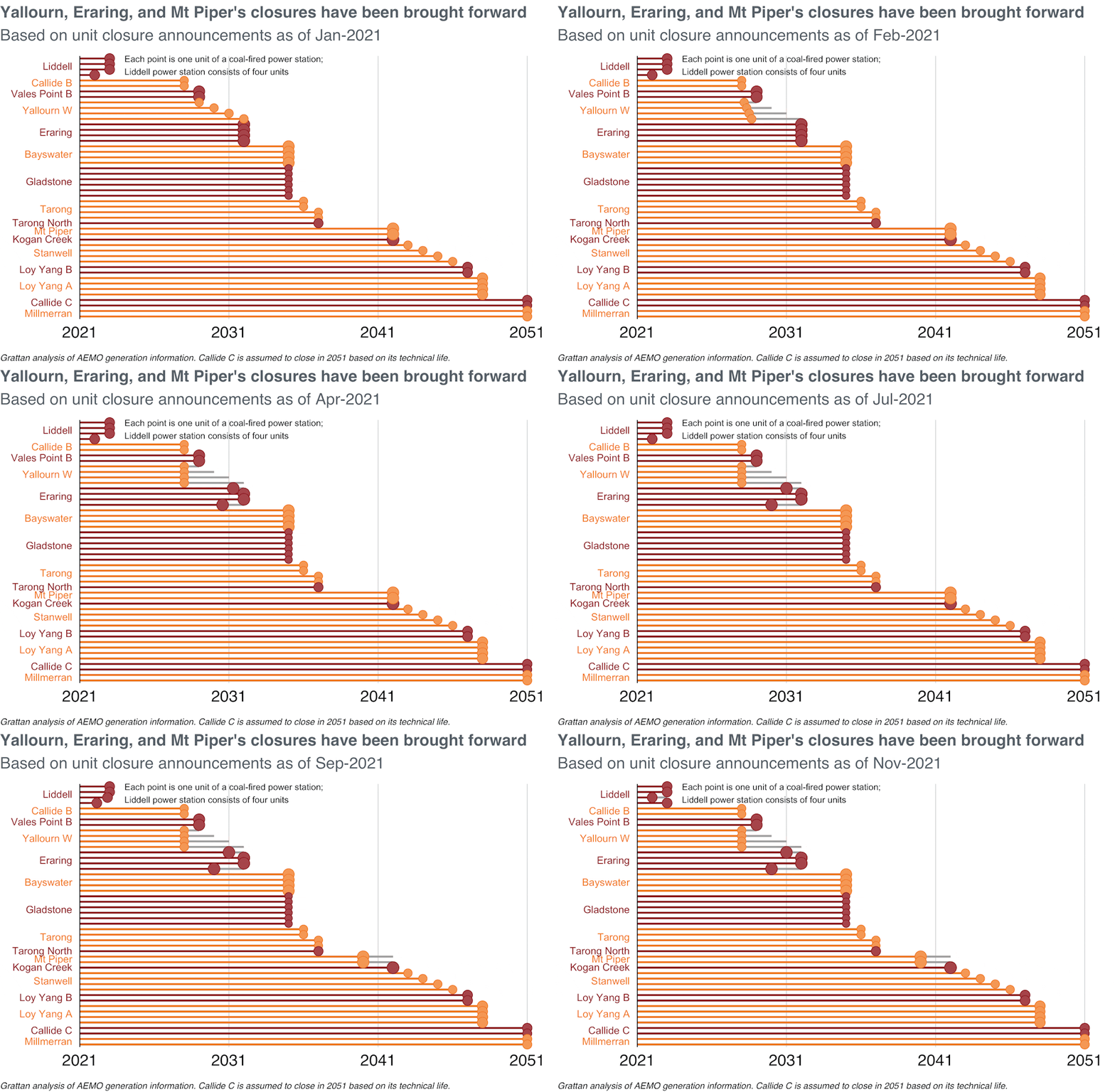
So far this year, three coal-fired power stations have had their closure dates brought forwards: Yallourn in Victoria, and Eraring and Mt Piper in NSW.

Coal-fired power stations are closing earlier than expected

Faster closure means less coal generation capacity in future years. For example, the early closures of Yallourn and Eraring will reduce the expected coal generation capacity in 2030 by 1.5 gigawatts.

But the current closure schedule would still leave at least six coal-fired power stations operating in Australia after 2040.

As noted by the CSIRO in July, this is incompatible with Australia pursuing the Paris Agreement goal to limit global warming to 1.5℃ this century.

Future coal capacity is dropping as plants announce earlier retirement dates.

So what are the states doing?

South Australia closed its last coal-fired power station in 2016, and NSW is set to be next with the Mt Piper station due to close in 2040. That leaves Victoria and Queensland.

Victoria’s Loy Yang A and B power stations use brown coal, making them some of the cheapest but most polluting plants to operate. Victoria has also legislated its commitment to net-zero emissions by 2050 and, by 2030, Victoria plans to use 50% renewable energy.

Pushing even more renewable energy into the state boosts the odds of the remaining coal-fired power stations leaving. In fact, the owners of each of the Loy Yang plants have hinted that their closure dates will come forward.


Read more:
The death of coal-fired power is inevitable — yet the government still has no plan to help its workforce


Queensland is more complicated, as it has Australia’s youngest fleet of coal-fired power stations. Five of them are due to close after 2040.

But of those five, four are partly or fully owned by the Queensland government. That means the timing of their closures is as much a political as an economic question.

Queensland also boasts some of the best renewable resources in the country, including vast tracts of land suitable for renewable energy projects. Combined with its 50% renewable energy target by 2030, the state government has the levers it needs to pull coal-fired generation out of the system by 2040 or earlier.

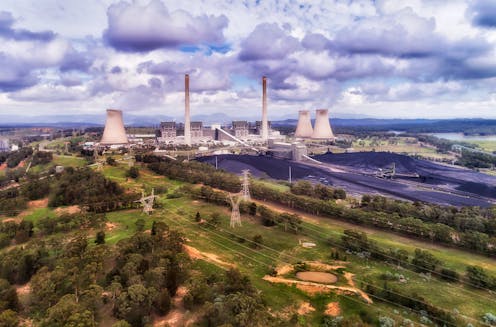
Loy Yang B, a brown-coal fired power station in the Latrobe Valley, Victoria.
Shutterstock

We need strong, national policy

Grattan Institute analysis finds that a mostly renewable system with no coal – and only a limited role for gas – can maintain a reliable electricity supply while slashing emissions cheaply.

This is because the cost of wind and solar have plummeted, and energy storage such as batteries can help to smooth out daily fluctuations in demand and supply. For rare, sustained periods of high demand, low solar and low wind (which occur every few winters), gas is the lowest-cost backstop solution, at least until the economics of hydrogen become much better.


Read more:
More coal-fired power or 100% renewables? For the next few decades, both paths are wrong


Achieving this outcome by 2040 or earlier will require significant, timely investment in the transmission network within and between states, allowing states to share their supplies and reducing the overall cost to consumers. Keeping a lid on the costs of transmission projects is also crucial – the risk of cost overruns is higher the more complex the project.

There will, of course, be challenges to ensure an orderly coal exit. For example, unexpected closures or breakdowns of coal plants can lead to shortages in electricity supply because investors in the electricity market don’t have enough time to build new capacity.

Wind turbines
The cost of wind and solar have plummeted.
Shutterstock

A national policy to coordinate coal exit would reduce uncertainty for the electricity system.

Grattan has previously recommended coal plant operators nominate a window of time within which their plant will close, combined with a payment of at least $100 million into an escrow fund. The operators’ money would be released only if the plant closes within its nominated window – if it exits unexpectedly, the money would be kept by the market operator to deal with any reliability problems.

Governments could also require that nominated closure windows occur before 2040, not after, if they want to achieve a coal-free NEM by that date. Alternatively – and more efficiently – they could establish an emissions standard for the NEM with tradeable certificates, allowing market participants to meet the emissions standard in the lowest cost way.


Read more:
Economists back carbon price, say benefits of net-zero outweigh costs


Unfortunately, current political reality indicates neither side of politics wants to be seen to support any policy resembling a carbon price, even though carbon pricing has the overwhelming support of Australian economists and the business community.

So, the renewable energy targets of the states are most likely to determine how quickly the NEM becomes coal-free. But if governments can muster the courage, our work shows that it’s possible to achieve a vastly lower-emissions electricity system in less than two decades.

The Conversation

James Ha is a former associate of Grattan Institute and is now a senior associate at Aurora Energy Research. This article does not necessarily reflect the views of either the company or its board.

Grattan Institute began with contributions to its endowment of $15 million from each of the Federal and Victorian Governments, $4 million from BHP Billiton, and $1 million from NAB. In order to safeguard its independence, Grattan Institute’s board controls this endowment. The funds are invested and contribute to funding Grattan Institute’s activities. Grattan Institute also receives funding from corporates, foundations, and individuals to support its general activities as disclosed on its website.

Alison Reeve is a former public servant.
Grattan Institute began with contributions to its endowment of $15 million from each of the Federal and Victorian Governments, $4 million from BHP Billiton, and $1 million from NAB. In order to safeguard its independence, Grattan Institute’s board controls this endowment. The funds are invested and contribute to funding Grattan Institute’s activities. Grattan Institute also receives funding from corporates, foundations, and individuals to support its general activities as disclosed on its website.

ref. Coal plants are closing faster than expected. Governments can keep the exit orderly – https://theconversation.com/coal-plants-are-closing-faster-than-expected-governments-can-keep-the-exit-orderly-172150

Harder foods make for stronger skulls, giving hand-reared animals the best chance of survival in the wild

Source: The Conversation (Au and NZ) – By D. Rex Mitchell, Postdoctoral Fellow, Flinders University

Marcus Byrne/Unsplash, CC BY-SA

Each year, thousands of wild animals across the world are rescued. They can include young animals saved from abandonment, injury, disease or the death of their parents. Animal carers around the world work tirelessly to help these little animals heal and grow until they are ready to be released back into the wild.

But there can be differences between what captive animals are fed and what wild animals eat. Captive diets can include processed or pre-portioned foods, such as minced meat, peeled, diced or pureed fruit, or feed pellets.

While these kinds of foods generally meet the nutritional demands of growing animals, they are much easier to eat than a typical meal in the wild, and this can have drawbacks for young animals that are trying to grow fit and strong.

In my new research, published today in the journal Integrative Organismal Biology, my colleagues and I show how a diet of exclusively soft foods can hamper skull development in growing animals.

Marsupials eating a range of foods
Animals love to munch on foods that are easy to eat, but this may not condition their skulls for life in the outside world.
Wildlife Rescue and Rehabilitation Inc, Author provided

Over the past few decades there have been many documented examples of captive animals – including lions, monkeys and marsupial gliders – that have differently shaped skulls to their wild counterparts. These differences are most often found around the bones and locations of muscles used for feeding, prompting some researchers to suggest they are due to differences in diet.

Our research therefore asked whether growing up on a diet that doesn’t need much biting can impact the ability of an adult skull to bite effectively.

Fortunately, we had access to a large, ready-made data set that could help answer this question. Back in 2012, as part of a different research project, 40 rats were fed contrasting diets, from weaning all the way to adulthood. Some ate hard pellets that needed plenty of biting and then chewing; others ate the same food but after it was first ground into powdered meal. When they reached adulthood, CT scans were taken of their skulls.

Rat with two different food options
Rats in the earlier study were fed either hard pellets or soft pellet meal.
Mitchell et al., Author provided

Using these scans, I created three-dimensional digital models of each rat’s skull, and carried out bite simulations to compare the amount of stress each skull model experienced when subject to the same biting forces. Greater stress would indicate thinner bone.

Biting off more than they can chew

Bones are often thought of as simple, hard objects. But bone is actually a complex living tissue that constantly adapts to its job. Every time a bone is used to perform an action, it bends a tiny bit. The more often a bone bends over time, the thicker it can grow – especially when lifting or moving heavier things.

Sure enough, my simulations showed that the skulls of rats fed powdered meal experienced the most stress during biting. This supports the idea that the rats that ate softer foods while growing up had less bone deposited in their skull, leaving the skull weaker as a result.

Digital bite models of rat skulls
Digital 3D models of rat skulls performing a simulated incisor bite.
Mitchell et al., Author provided

What does this mean for rehabilitation and release of our furry friends during conservation programs? Well, it’s similar to exercise. When someone goes running to prepare for a race, they aren’t just training their bones and muscles to run faster, they’re also reducing their risk of injury by conditioning their body to perform a demanding task.


Read more:
Tasmanian devils reared in captivity show they can thrive in the wild


If rescued baby animals are raised on diets full of soft, processed, peeled, chopped, blended or portioned foods, much of the biting and chewing has already been done for them. This means the bones and muscles of their skulls won’t be as conditioned for the tougher foods they may need to eat in the wild. This might leave them more vulnerable to being injured or going hungry when ultimately released.

Young kangaroos being presented with two contrasting sets of food
While pellets are an important source of nutrition for captive-reared animals, adding some grasses and branch clippings to their diet could help them get ready for the real world.
Kyabram Fauna Park, Author provided

Naturally, these factors would vary between species. So, these findings simply serve as an additional consideration for all those fantastic animal carers who give their time and effort to conserving our native animals.


Read more:
Like a jackal in wolf’s clothing: the Tasmanian tiger was no wolfish predator — it hunted small prey


The Conversation

Current employer: Flinders University
Previous employer: University of North Texas Health Science Center (UNTHSC)

ref. Harder foods make for stronger skulls, giving hand-reared animals the best chance of survival in the wild – https://theconversation.com/harder-foods-make-for-stronger-skulls-giving-hand-reared-animals-the-best-chance-of-survival-in-the-wild-172144

Australia’s marine industries deliver $80b a year. But without more scientists, the ‘blue economy’ is at risk

Source: The Conversation (Au and NZ) – By Toni Moate, Chair, National Marine Science Committee and Director, CSIRO National Collections and Marine Infrastructure, CSIRO

Australia is a marine nation. First Nations people have deep and unbroken connections to sea, 85% of us live within 50km of the coast, and our ocean territory is twice that of our land mass.

A large part of our economy – the “blue economy” – depends on the sea: tourism, ports, energy, transport, fisheries and aquaculture, and emerging industries like renewable energy, offshore aquaculture, and biotechnology.

Together, these industries are worth more than A$80 billion a year. By 2025, this figure may be $100 billion.

To manage our oceans and coasts to support a growing blue economy means we need to understand them, and that means we need science. At the National Marine Science Committee (NMSC), we have surveyed how well Australia is delivering this science. As we show in a new report, the story is mixed.

The plan

The NMSC is Australia’s peak body for marine research. Its members are almost 40 universities, research institutions and state and federal agencies.

In 2015, the Committee created a blueprint for growing Australia’s blue economy: the National Marine Science Plan: 2015-25.

This plan identified seven grand challenges facing our marine estate:

  • marine sovereignty and security

  • energy security

  • food security

  • biodiversity conservation

  • sustainable urban coastal development

  • climate change adaptation

  • equitable, balanced resource allocation.

The plan also made eight recommendations involving initiatives, investment, and priorities to address the challenges.

We are now halfway through the plan’s ten-year scope. While many of the recommendations are on track, others need some work.

The report card

Our oceans face unique challenges, from climate change to managing increasing resource use. Despite pandemic disruptions, scientific progress has continued.

Highlights from the past five years include increasing Australia’s marine research capacity with a new icebreaker for working in the Antarctic and operation of the research ship RV Investigator for 300 days at sea. Coastal research vessels have also continued operations, and the Integrated Marine Observing System has expanded.


Read more:
Explainer: the RV Investigator’s role in marine science


The new report shows science has already helped deliver better outcomes for the blue economy, through things like strategies for fishery harvesting to balance consumer demands with economic and ecological sustainability.

The report also identifies further steps needed to ensure all recommendations are fulfilled. It offers three new recommendations, too.

First, integrate the knowledge, rights, capabilities, and aspirations of Traditional Owners into conventional marine science.

Second, establish national policy guidelines for open access to government-funded or regulatory data. This would include access to historical datasets and expand the Australian Ocean Data Network.

And third, develop an approach to increase the resilience of our coasts.

An unprecedented opportunity

After the economic shock of the pandemic, there is enormous interest in Australia’s blue economy and our ocean health. This can be realised via national and international initiatives and funding focused on sustainable growth.

The Australian government has joined 13 other nations in the High Level Panel for a Sustainable Ocean Economy committing to sustainably manage 100% of their marine estates by 2025.

This year also kicks off the UN Decade of Ocean Science for Sustainable Development. The world’s eyes will be on the oceans for the next ten years.

Since 2015, Australia has been building its national marine science capability. Recent initiatives include the Reef Trust Partnership, Blue Economy Cooperative Research Centre (CRC), Marine Bioproducts CRC, investments in marine and coastal science under the National Environmental Science Program, and the [Australian Ocean Leadership Package].

The foundations are there, and the task now is to strengthen and embed our marine science sovereign capability.

A call to action

The report calls on actions from broad sectors of society to ensure Australia’s blue economy continues to grow. It asks:

  • the research community to build on and amplify existing resources to establish truly national research programs that incorporate all stakeholder needs

  • industry to work with marine scientists and governments to ensure science underpins operational decision-making, risk assessments and future planning, and to create efficient, sustainable businesses

  • government to focus on and invest in the blue economy as an important plank in post-COVID economic recovery and a way to create long-term social, cultural and environmental benefits

  • the community to recognise the responsibility we all share as a marine nation, and to play an active role in ensuring the long-term health of our oceans and coasts for all Australians.

With a strong blue economy, we can chart a course through the uncertainties of the future and create long-term prosperity for all Australians.


Read more:
In a first discovery of its kind, researchers have uncovered an ancient Aboriginal archaeological site preserved on the seabed


This article was written in conjunction with Dr David Smith, Chair of the National Research Providers Network for Fisheries and Aquaculture.

The Conversation

Toni Moate is Director of CSIRO’s National Collections and Marine Infrastructure.

Anthony Boxshall consults to Federal and State Government departments which could benefit from an expanded blue economy. He also owns a tiny number of shares in BHP. He has a paid appointment by the Victorian Government as the Chair of the Victorian Marine & Coastal Council under the provisions of the Marine & Coastal Act 2018. Rates are public and listed under the rules defining Victorian Government Board appointments. In this role, he advises Ministers on marine and coastal planning and management issues in Victoria.

Michelle Heupel receives funding from the Commonwealth National Collaborative Research Infrastructure Strategy, Qld state government, WA state government.

David Souter does not work for, consult, own shares in or receive funding from any company or organisation that would benefit from this article, and has disclosed no relevant affiliations beyond their academic appointment.

ref. Australia’s marine industries deliver $80b a year. But without more scientists, the ‘blue economy’ is at risk – https://theconversation.com/australias-marine-industries-deliver-80b-a-year-but-without-more-scientists-the-blue-economy-is-at-risk-170113

Every dollar invested in research and development creates $3.50 in benefits for Australia, says new CSIRO analysis

Source: The Conversation (Au and NZ) – By Katherine Wynn, Lead Economist, CSIRO Futures, CSIRO

CSIRO

Each dollar invested in research and development (R&D) would earn an average of A$3.50 in economy-wide benefits for Australia, according to evidence compiled in a new report from CSIRO.

Many Australians know research and development drives economic growth and improves our well-being and prosperity. However, few could describe the size of the relationship between Australia’s research and development spending and economic growth, or compare this to performance on other typical investment returns.

Examples of future industries that could be unlocked by research and development in Australia include the quantum technology and hydrogen industries. Examples of emerging technologies that could change the way Australians work and live include artificial intelligence and robotics.

This is significant, given recent figures from the Australian Bureau of Statistics show business spending on research and development as a proportion of GDP is just half the OECD average, and the lowest it has been since 2003.

We hope our analysis will raise awareness of the value of this kind of spending, and its importance for Australia’s economic recovery and long-term resilience. Investing in innovation now is crucial for the future.

Quantifying Australia's returns on innovation spending

CSIRO

In consultation with government and academic stakeholders, our team at CSIRO Futures, the strategic and economic advisory arm of Australia’s national science agency, used a new yet simple economic approach to quantify the return on investment in overall research and development spending for Australia.

By adapting a method originally developed in the US, we calculated return on investment by defining the relationship between domestic gross spending on research and development, and the growth in per capita gross domestic product (GDP) that follows as a result. This method encompasses both successful and unsuccessful research and development investments, and quantifies only monetary benefits (excluding non-monetary social and environmental benefits).

Our approach also accounts for delays between research and development investments and payoffs, and for the capital costs of integrating research and development into the economy. For example, an innovation of new computer software must be built into existing computer systems, and might therefore take a decade before its use becomes widespread.

Overall, we calculate that $1 of research and development investment creates an average of $3.50 in economy-wide benefits in today’s dollars, and a 10% average annual return for Australia.

By removing the considerations of delays and capital costs, we can also calculate an upper boundary on our estimate – that is, the maximum theoretical return on investment barring any hurdles along the way.

This unadjusted result, which does not account for the additional time and costs associated with integrating research and development into the economy, is estimated as creating $20.80 in economy-wide benefits, and a 104% average annual return for every dollar spent on research and development in Australia.

Table of forecasted returns on investment

CSIRO

Even with our conservative estimate of $3.50 return on the dollar, the expected benefits of investing in innovation are high compared with many other types of investments. For example, Australia’s ten-year government bond returns have historically averaged around 7% per year. Private investments in the ASX200 stock index have typically yielded around 10% annually.

Perhaps even more significantly, even our conservative estimate of $3.50 return on investment suggests research and development has a cost/benefit ratio well in excess of $1 to $1. This means there is a strong economic case for this kind of spending.

But research and development investment is risky, right? This may be much less of a problem at a national level. While cost or time overruns are never favourable for any investment, building this uncertainty into our findings shows research and development investment remains economically viable even if this happens.

Results from sensitivity analysis demonstrate that if the costs of research and development spending or delays of payoffs increase by 20%, the most conservative (combined adjustment) results only fall to $3.30 return on investment, with annual yields of 9.5% (at lowest). These are still strong returns.


Read more:
New study confirms what scientists already know: basic research is under-valued


Our findings imply that so far, Australian innovation investments – whether they be in new products and services or in creating new industries – have been well worthwhile, and that increasing future investment could capture substantial economy-wide returns.

As our estimates only capture the economic benefits of innovation, actual returns are likely to be much higher when also considering the broader social and environmental benefits of Australian research and development.


Read more:
Three ways to reform research that won’t break the budget


The Conversation

Katherine Wynn works for the CSIRO, which receives funding from the Australian Government.

Jasmine Cohen works for the CSIRO, which receives funding from the Australian Government.

Mingji Liu works for the CSIRO, which receives funding from the Australian Government.

ref. Every dollar invested in research and development creates $3.50 in benefits for Australia, says new CSIRO analysis – https://theconversation.com/every-dollar-invested-in-research-and-development-creates-3-50-in-benefits-for-australia-says-new-csiro-analysis-172300

Why investigating potential war crimes in Afghanistan just became much harder – and could take years

Source: The Conversation (Au and NZ) – By Paul Taucher, PhD Candidate in History, Murdoch University

The Australian government established the Office of the Special Investigator last year to investigate allegations made in the Brereton Report that Australian soldiers had committed war crimes in Afghanistan.

Recently, the director-general of the office, Chris Moraitis, told a Senate Estimates Committee it could take anywhere between one to five years before evidence can be presented to the Director of Public Prosecutions, the first step in beginning a trial.

The allegations made against Australian Defence Force members attracted significant public interest when they were announced. So it may seem surprising the team of 50 investigators expect the initial phase of the investigation to take so long. But investigating war crimes is a difficult business for practical reasons, and the uncomfortable legal questions that can arise during the process.

The allegations in this investigation, for starters, go back to 2006. Witnesses may be dead, unavailable, or even unwilling to talk to investigators. Witnesses from the military may prefer to move on from the issue. Incriminating documents may have been destroyed or lost. Crime scenes have likely been irreparably tarnished.

Investigating will be extremely difficult

According to Moraitis, investigators are not currently focused on groundwork in Afghanistan. This could become an important dimension of the probe in the future, though there are obvious logistical problems that would need to be overcome.

First, the Australian government has closed its embassy in Kabul, which limits the amount of support investigators would have and denies them a potential base of operations.

Second, the security situation in Afghanistan remains uncertain, months after the Taliban takeover. Though the Taliban has claimed control of the country, this is limited in many regions. Both the Taliban’s desire and capacity to support Australian investigators is also unclear.

As Moraitis told the committee,

In this space you need to cooperate with the state. At this stage, I don’t know that we can do that. […] Then, when it gets to the operational investigation space, having investigators travel to a place like Afghanistan at the moment is extremely difficult, if not impossible, I dare say.

Moraitis also flagged legal considerations over the kinds of evidence investigators were collecting.

He noted the Brereton report was compiled under statutory powers that allowed investigators to compel witnesses to give evidence. This included self-incriminating evidence, which is inadmissible in Australian criminal courts.

This means any statements provided by witnesses as part of the Brereton report could not be used against them in a future criminal trial in current Australian courts. However, media reports suggest some military personnel are discussing immunity from prosecution if they give evidence against their fellow soldiers.


Read more:
Allegations of murder and ‘blooding’ in Brereton report now face many obstacles to prosecution


How Australia has prosecuted war crimes before

Australian authorities have dealt with difficult war crimes investigations before, such as when prosecuting Japanese war criminals after the second world war.

Back then, the answer to the challenges flagged by Moraitis was a determined investigation effort on the ground where the crimes were alleged to have occurred, and a more relaxed set of rules for evidence in specialised courts. These courts were designed according to purpose-built legislation, the War Crimes Act 1945.

Investigators were sent all over the Asia-Pacific region. Many of the sites were remote, and some were the scene of fighting between returning colonial powers, bandits, and competing political parties. Time pressures were often acute.

On Ambon Island in Indonesia, the location of one of the worst Japanese-run POW camps of the war, understaffed investigators had only three months to build a case before the Dutch colonial rulers insisted the Australians leave.

Japanese POW camp administrator arriving for war crimes trial.
Masakiyo Ikeuchi, who worked at the camp that held Australian prisoners on Ambon, arrives at Morotai for his war crimes trial in 1946.
Wikimedia Commons

Due to these obstacles in the investigation stage and the challenges prosecutors foresaw proving war crimes allegations in court, Australia (and allied countries) changed the rules for what kinds of evidence could be submitted. Cases could be run entirely on unsworn affidavits, a form of hearsay evidence.

Hearsay evidence is when a witness or document gives a statement from another person who is not a witness before the court. It is usually prohibited because there is no way to cross-examine the author of the original statement.

Hearsay evidence was allowed in the post-war trials because it was feared war criminals would escape justice due to lack of evidence. As these courts did not feature a jury, but rather a panel of judges with more experience and understanding of different kinds of evidence, it was considered fair for the accused.


Read more:
Why Australian commanders need to be held responsible for alleged war crimes in Afghanistan


Could the International Criminal Court step in?

The practical and legal questions over the Afghanistan investigations will be difficult to resolve without resorting to similar measures used in the past.

The now-updated War Crimes Act has tightened the rules of evidence in Australian war crimes prosecutions to bring them in line with domestic courts. This means hearsay evidence is no longer admissible. With these changes, it seems unlikely the Australian government could create specialised courts for this purpose, like it did with the Japanese defendants.

It is not only the Australian public who will be anxious to see the investigations completed satisfactorily – international onlookers are concerned, too.

The International Criminal Court has already begun its own investigations into alleged war crimes in Afghanistan. The ICC, which Australia is a party to, could take the lead if it determines Australian courts are unwilling or unable to investigate and prosecute a case.

As a specialised court for these kind of cases, the ICC does permit hearsay evidence along the lines of Australia’s post-second world war trials.

The stakes for Australian investigators are high. A failure to build a case that can be taken forward under current Australian law may push the ICC to consider itself better placed to handle the allegations.

This would be a setback for a country that has endeavoured to be seen as a champion of international law, standards, and peacekeeping since the end of the second world war.

The Conversation

Dean Aszkielowicz receives funding from the Army Research Scheme.

Paul Taucher does not work for, consult, own shares in or receive funding from any company or organisation that would benefit from this article, and has disclosed no relevant affiliations beyond their academic appointment.

ref. Why investigating potential war crimes in Afghanistan just became much harder – and could take years – https://theconversation.com/why-investigating-potential-war-crimes-in-afghanistan-just-became-much-harder-and-could-take-years-171412

Will Australia follow Europe into a fourth COVID wave? Boosters, vaccinating kids, ventilation and masks may help us avoid it

Source: The Conversation (Au and NZ) – By C Raina MacIntyre, Professor of Global Biosecurity, NHMRC Principal Research Fellow, Head, Biosecurity Program, Kirby Institute, UNSW

AP Photo/Lisa Leutner

Europe is facing a fourth wave of COVID. As we watch on, it is reasonable to ask whether Australia will be confronted with the same fate.

Several factors will determine this: vaccination rates, high uptake of third dose boosters, vaccination of children and whether a comprehensive strategy of ventilation with vaccine-plus measures including masks, testing and tracing are used.

New OzSAGE modelling for NSW shows possible increasing cases from mid-December with a predicted peak in February 2022, despite high vaccination rates. OzSAGE warns if contact tracing is not maintained and children 5–11 remain unvaccinated, hospitals may be overwhelmed again. But if we vaccinate young kids and maintain high testing and tracing, the outlook is good.

If not for Delta …

If the ancestral strains of the virus that dominated infections in 2020 were still in pole position, we would now have COVID well controlled in countries that achieved higher than 70% of the whole population vaccinated.

Unfortunately, just as the vaccines became available, new variants of concern began emerging. The currently dominant Delta variant raises the stakes because it is far more contagious and has some potential to escape the protection offered by vaccines. This means we need very high rates of vaccination across whole populations – probably over 90% of everyone vaccinated including younger children – to control the virus.

In addition, we need to start thinking about “fully vaccinated” being triple, not double, vaccinated.

covid cases by country graph

World in Data, CC BY


Read more:
No, vaccinated people are not ‘just as infectious’ as unvaccinated people if they get COVID


Boosters are key

Patchy third dose booster policies in Europe may partially be to blame for the COVID surges we are seeing in countries there now.

Germany, for example, in October recommended boosters for people 70 years and over and certain risk groups. On November 18, it belatedly changed the recommendation to people aged 18 years and over in response to the large resurgence of COVID.

Seriously ill hospital patient
Germany has entered into a ‘nationwide state of emergency’ because of surging COVID infections.
Matthias Balk/dpa via AP

France, too, has been slow and restrictive in making boosters available for adults, with people over 50 eligible from this December. Likewise, Ireland only approved boosters for people 60 years and over at the end of October.

The evidence is clear that boosters are needed. So, on the background of inadequate vaccination rates ranging from 64% in Austria to 76% in Denmark, a slow and restrictive approach to boosters, together with abandoning other measures such as masks, has left many European countries vulnerable.


Read more:
Australians will soon receive COVID booster vaccines. Why do we need them, and how effective are they?


Austria, with one of the lowest vaccination rates, has one of the highest rates of COVID, prompting it to be the first European country to mandate vaccines.

Much of the fourth wave is also being driven by transmission in children. The EU has been slow to approve vaccines for younger children, prompting Austria to commence vaccinating children without EU approval.

vaccination by country graph

World in Data, CC BY

Too much reliance on vaccines?

The fourth wave follows the relaxation of COVID restrictions like masks, density limits, testing and tracing; and failure to address safe indoor air.

The Delta virus is a tenacious beast, and the vaccine alone is not enough to tame it. Country after country has shown this, including Denmark, which ceased all restrictions, including masks in September and is now facing a large surge in cases despite relatively high vaccination rates.

The prospect of a fourth wave also depends on the epidemiology of SARS-CoV-2. There is a high probability new variants will emerge that will challenge us further, either because they are even more contagious or more vaccine-resistant.

That said, we have seen spectacular advances in science, with vaccines produced in less than a year. There are many more second generation vaccines and matched boosters in the pipeline, and promising new antivirals for early treatment. So our ability to fight this virus will keep improving.


Read more:
Pfizer’s pill is the latest COVID treatment to show promise. Here are some more


What about Australia then?

So will Australia also face a fourth wave? Yes, it’s likely because SARS-CoV-2 is an epidemic infection. It will continue to cause the waxing and waning cycles of true epidemic infections just like smallpox did for thousands of years, and like measles still does. However, it’s possible we can achieve elimination of COVID just as we have with measles, and only see small outbreaks.

patterns of disease graph

Author provided

If we’re successful, outbreaks may still occur – but they will not become sustained or uncontrollable. Here’s what Australia can learn from Europe and other countries:

  • firstly, we need to aim for at least 90% of the whole population vaccinated – this should be done equitably for all states and territories, for remote and regional areas and for all subgroups including children

  • we need to be agile and responsive to evidence, including the need for subsequent boosters. If a new vaccine or Delta-matched booster comes along that improves protection, we need to add that to the tool box rapidly

  • childcare and schools are fast becoming the new frontier of COVID. We must ensure safe indoor air, masks and vaccination for younger children by the time students return from summer holidays in 2022

  • vaccines alone are not enough, so let’s not be like Denmark and embark on magical thinking. We need to address safe indoor air and have a vaccine-plus strategy. That means masks in indoor settings, maintaining high testing and tracing levels, protecting younger kids until they are eligible for vaccination and ensuring high uptake of boosters.

If we acknowledge the airborne transmission of COVID and adopt effective ways of preventing this virus, we can defeat it.

But that requires a layered, comprehensive strategy of ventilation, vaccine-plus measures and the ability to move quickly with evidence as it becomes available.

New vaccines and new ways of employing them are hopefully on their way. Until they eventuate, we’ll need to be ambitious in our COVID strategy and keep using ventilation, masks and other measures to avoid a severe fourth wave.

The Conversation

Raina MacIntyre is a member of the WHO COVID-19 Vaccine Composition Technical Advisory group, a member of OzSAGE, and has consulted for or been on advisory boards for Janssen, AstraZeneca and Seqirus on COVID-19 vaccines. She has been on advisory boards for Sanofi and Seqirus for influenza vaccines in the past 5 years. She is currently working on a clinical trial of a non-COVID vaccine for Moderna. She currently receives funding from NHMRC (Principal Research Fellowship, Centre for Research Excellence) and the Medical Research Futures Fund, and has done COVID 19 modelling for the Tasmanian Government.

ref. Will Australia follow Europe into a fourth COVID wave? Boosters, vaccinating kids, ventilation and masks may help us avoid it – https://theconversation.com/will-australia-follow-europe-into-a-fourth-covid-wave-boosters-vaccinating-kids-ventilation-and-masks-may-help-us-avoid-it-172296

The seas are coming for us in Kiribati. Will Australia rehome us?

Source: The Conversation (Au and NZ) – By Akka Rimon, PhD Student, Australian National University

Getty Images

Our atoll nation is barely two metres above sea level, and the waters are coming for us.

Despite the progress and momentum of the COP26 climate conference in Glasgow, we are still not moving fast enough to avoid the worst of climate change.

It is heartening that more than 190 countries and organisations agreed to rapidly phase out coal power and end support for new coal power stations. More than 100 countries signed a pledge to cut methane emissions 30% by the end of the decade, and about the same number agreed to stop deforestation on an industrial scale in the same timeframe.

But even with these agreements, we in Kiribati face the death of our homeland. Co-author Anote Tong led our country as president for 15 years, alongside lead author Akka Rimon, who was foreign secretary between 2014 and 2016.

man looks at camera in front of the word
Author Anote Tong, when he was Kiribati president, at the Pacific Islands Forum in 2015.
Mick Tsikas/AAP

The problem is speed. Our land is disappearing faster than global action can stem climate change. Delays and a lack of global leadership mean the existence of small island states like Kiribati is now in the balance.

That means we must urgently find ways to rehome our people. It is very difficult to leave our homes, but there is no choice. Time is not on our side. We must prepare for a difficult future.

What we need is a model where displaced people can migrate to host nations when their homes become uninhabitable. Countries like Australia need workers – and we will soon need homes.

This is, increasingly, a question of justice. Australia’s actions, in particular, raise questions over how sincere it is in honouring its recent commitments at COP26.

As the world’s largest exporter of fossil gas and the second largest exporter of coal, Australia’s reluctance to change is putting its neighbours in the Pacific at risk of literally disappearing. It is the only developed nation not committed to cut emissions at least in half by 2030.

In Glasgow, Fiji urged Australia to take real action by halving emissions by 2030. Did it work? No. Australia also refused to sign the agreements on ending coal’s reign, with prominent politicians undermining the COP26 agreement as soon as the conference was over.

We desperately hope the commitments Australia did make at COP26 are not just words on paper. But if they are, that makes our need for certainty even more urgent.

Let us speak plainly: If Australia really does plan to sell as much of its fossil fuel reserves as possible and drag its feet on climate action, the least it can do is help us survive the rising seas caused by the burning of its coal and gas.


Read more:
Pacific people have been ‘pummelled and demeaned’ for too long – now they’re fighting back


Satellite image of Tarawa Atoll
Kiribati’s Tarawa Atoll is home to more than half of the island nation’s far-flung population.
European Space Agency, Flickr, CC BY-SA

To migrate with dignity

Eighteen years ago, the Kiribati government – then headed by Anote Tong – introduced a “migration with dignity” policy as a way for I-Kiribati people to adapt to climate change.

We gave our I-Kiribati workers international qualifications tailored for jobs in demand overseas. After this, Kiribati, Tuvalu, Fiji, Tonga and New Zealand set up a scheme to allow workers to migrate to New Zealand if they had an offer of a job. Each year prior to COVID, 75 people from Kiribati were able to migrate through the scheme.

New Zealand is the first and only country currently offering a permanent labour migration program from Kiribati. While welcome, we will need more places for I-Kiribati as climate change intensifies.

Like New Zealand, Australia has expanded its seasonal worker schemes for Pacific workers, and is now moving towards a longer stay, multi-visa arrangement under its Pacific Labour Scheme. We expect this scheme will evolve into a permanent migration scheme similar to New Zealand.

While we wait in hope for a true safe haven for our people, our diaspora is growing. I-Kiribati are moving now to Pacific countries higher above the water level such as Fiji, the Cook Islands, Niue, Samoa and Tonga.

Are we scared? Of course. We are on the front line of this crisis, despite having done amongst the least to cause it. It is difficult to leave the only home we have known. But science does not lie. And we can see the water coming.

Labour migration will not solve climate change, but it offers hope to those of us who will be displaced first.

This is a vital question of climate justice. This upheaval is caused by high-emitting economic powerhouses like the US, China, and the European Union. But the vulnerable are paying the full cost. That is not fair.


Read more:
Climate crisis: migration cannot be the only option for people living on ‘drowning’ islands


As climate change worsens, other global leaders must consider how best to support adaptation through labour mobility. Far better to plan for this now than to let climate change rage unchecked and trigger ever-larger waves of refugees.

The question of climate justice

Consider this: in 2018, each person in Kiribati was responsible for 0.95 tonnes of carbon dioxide equivalent. By contrast, each person in the United States was responsible for 17.7 tonnes. Despite this imbalance, the US has taken little responsibility for what is happening to Kiribati and other low-lying nations.

We are hopeful this may change, given US President Joe Biden recently pledged to make his nation a leader in climate finance by supporting nations worst hit by climate change and with the least resources to cope. It’s also encouraging that new laws have been proposed to allow people displaced by climate change to live in America.

We must work to slash emissions and devise solutions for the problems caused by the warming.

Sign saying that the highest point on Kiribati's main island is three metres above sea level
The highest point in Kiribati is 3 metres above sea level, with the average less than 2 metres.
Erin Magee, Wikimedia Commons, CC BY

International law must recognise climate displaced populations and create ways we can be rehoused.

While other solutions such as climate-proofing infrastructure or even floating islands have been proposed for Kiribati, these cannot happen overnight and are very expensive. By contrast, labour mobility is fast and advantageous to the host country.

Kiribati’s current government is working to increase skills and employability in our workforce. We are doing our part to get ready for the great dislocation.

When I-Kiribati have to migrate, we want them to be able to do so as first class citizens with access to secure futures rather than as climate refugees.

We are doing all we can to stay afloat in the years of ever angrier climate change. But it will take the global village to save our small village and keep alive our culture, language, heritage, spirits, land, waters and above all, our people.

The Conversation

Akka Rimon is currently employed by the World Bank. The views expressed in this piece are hers and in no way represent the views of the bank.

Anote Tong does not work for, consult, own shares in or receive funding from any company or organisation that would benefit from this article, and has disclosed no relevant affiliations beyond their academic appointment.

ref. The seas are coming for us in Kiribati. Will Australia rehome us? – https://theconversation.com/the-seas-are-coming-for-us-in-kiribati-will-australia-rehome-us-172137

Why it’s time to reconsider the ecological contribution of introduced species — even in New Zealand

Source: The Conversation (Au and NZ) – By Sebastian Leuzinger, Professor, Auckland University of Technology

Shutterstock/rfranca

The loss of biodiversity is one of the most catastrophic developments of our time. The impacts will possibly outpace those of global warming.

A fantail
New Zealand’s pīwakawaka: conservation often focuses on saving native species.
Shutterstock/Imogen Warren

Growing evidence that humans have triggered a sixth global mass extinction means the protection of remaining species is a priority beyond dispute to secure ecological services such carbon cycling, clean water and air, and healthy oceans.

The key drivers of species loss are climate change, habitat degradation, pollution, and exotic species that become invasive. This has led conservation ecologists to follow the simple rule of “protect natives, fight exotics”.

If we had an unlimited budget, I would hardly challenge this view. But in a world where natural ecosystems face many other global changes apart from species loss, I argue we should reconsider the ecological role exotic species play.

Ecosystem function over species mix

One could argue ecosystems are inherently so complex that we can never appreciate the exact contribution of an individual species, and therefore native species need to be protected at all cost.

But this argument can be turned around. In many cases, exotic species are not detrimental to the resident species communities. It is not until an exotic species becomes invasive that substantial harm happens.


Read more:
Eco-fusion is the new normal, as native and non-native species mix together


The deliberate spread of species has been an integral part of human evolution for thousands of years. Many economically important plant species are exotics in most places, but they make it possible to feed our growing population.

New world cacti and succulents in Greece.
New worlld cacti and succulents have become part of the Mediterranean landscape.
Shutterstock/Anna Holyph

In a physically highly connected world, unintentional relocation of both terrestrial and marine species has now also become unavoidable.

In some cases, introduced species can even complement native ecosystems. New world succulents are now very much part of the Mediterranean landscape, without harming the local flora.

Sometimes, introduced species perform ecological functions similar to those that are (or were) performed by natives. For instance, European gorse stabilises coastal slopes in New Zealand, providing a nursery for local plants.

Gorse covering a hill in New Zealand.
Gorse can act as a nursery plant for New Zealand’s native plant species.
Shutterstock/Filip Fuxa

In one particularly spectacular case, extinct tortoises were intentionally replaced with an exotic species through “assisted colonisation”. It seems to have worked.

However, earlier and much less scientifically informed attempts of assisted colonisation, such as the deliberate introduction of cane toads in Australia’s tropical north-east, went terribly wrong.

The bias of human perception

There are many ecosystem services humanity depends on: clean water, carbon cycling, removal of pollutants and excessive nutrient loads, mitigation of global warming through land-based and marine carbon sequestration, erosion prevention, just to name a few.

The preservation of native species is one way of ensuring those services for future generations. An approach focused on ecological function weighs the cost of protecting natives and combating exotics against the role of new species assemblages shaped by human interference.

At approximately equal cost, should the addition of a breeding pair of a rare bird be prioritised over the reforestation of several hectares of land? Such decisions are often difficult and must be based on the available science.


Read more:
Birds: we studied 4,000 ‘alien introductions’ to find out why some were successful


Clearly, there may be other reasons — cultural or aesthetic values for example — to protect native species, beyond the provisioning of ecosystem services. But people seem biased by what they are used to.

For example, Switzerland provides generous subsidies to farmers for maintaining picturesque alpine meadows, even though the native vegetation before human intervention was a much less biologically diverse alpine forest.

In Central Europe, the recently introduced Tree of Heaven (Ailanthus altissima) triggered substantial efforts to eradicate it, while the European chestnut (Castanea sativa), introduced by the Greeks and Romans some 2000 years ago, is highly valued and enjoys protection and even reforestation programmes.

The above examples illustrate why we may need a more sober approach centred on ecological function to effectively protect our remaining natural treasures and the ecosystem services they provide.

The milestones in the evolution of life did not depend on individual species or species assemblages, but on the emergence of new functional traits such as photosynthesis, predation or flight. Similarly, humankind ultimately relies on functioning ecosystems, regardless of which species provide them.

The Conversation

Sebastian Leuzinger receives funding from The Royal Society.

ref. Why it’s time to reconsider the ecological contribution of introduced species — even in New Zealand – https://theconversation.com/why-its-time-to-reconsider-the-ecological-contribution-of-introduced-species-even-in-new-zealand-171195

Little red children and ‘Grandpa Xi’: China’s school textbooks reflect the rise of Xi Jinping’s personality cult

Source: The Conversation (Au and NZ) – By Shih-Wen Sue Chen, Senior Lecturer in Writing and Literature, Deakin University

Shutterstock

When students in China returned to classrooms in September 2021, they were provided with a new series of textbooks outlining China’s president Xi Jinping, or “Grandpa Xi’s”, political philosophy.

Each textbook on “Xi Jinping Thought on Socialism with Chinese Characteristics for the New Era”, as Xi’s political philosophy is officially called, is tailored to students at primary, secondary, and tertiary levels.

“Xi Jinping Thought” was enshrined into the Chinese Communist Party’s (CCP) Constitution in 2017. Although the main stated aims are to remain committed to reform and build a “moderately prosperous society”, the realities of this political philosophy has been a tightening of party discipline and curtailing of social freedom.


Read more:
China’s sixth plenum will consolidate Xi Jinping’s power and chart the country’s ambitions for the next 5 years


While prior textbooks were focused on the CCP, the new versions centre on China’s paramount leader. In this way they reflect the growing personality cult of Xi Jinping, eerily reminiscent of the days of China’s founding father Mao Zedong.

The rise of the personality cult

According to China’s National Textbook Committee, the

textbooks reflect the will of the Communist Party of China and the nation and directly impact the direction and quality of talent cultivation.

In particular, the Committee stated:

Primary schools should foster love and right understanding for the Party, country and socialism in students.

The core socialist values highlighted in the textbooks include prosperity, patriotism and friendship.

Targeted at children, the moniker of “Grandpa Xi” is part of the ongoing strategy towards creating a personality cult in China. Authoritarian regimes like the Soviet Union also used the grandfather figure (“Grandpa Lenin”) as part of propaganda aimed at children. This enhanced Lenin’s personality cult across the Soviet nations.

Political scientist Pao-min Chang defines the personality cult as

The artificial elevation of the status and authority of one man […] through the deliberate creation, projection and propagation of a godlike image.

Like Lenin, a personality cult around Mao Zedong emerged during China’s Cultural Revolution (1966–1976). Although later leaders Deng Xiaoping, the architect of China’s economic reform, and Wen Jiabao, who was Premier between 2003 and 2013, are popularly known as “Grandpa Deng” and “Grandpa Wen,” they did not overtly push for this image.

Xi returns to Mao in his efforts to build a personality cult around himself. Since coming to power, he has cultivated the image of being “a man of the people” in a bid to make his authoritarianism more palpable to the masses.

Little red children and Grandpa Xi

The new primary school textbooks emphasise Xi’s wisdom, friendliness and care for the children. Early signs of this strategy can be seen in government propaganda video, Grandpa Xi is Our Big Friend, that circulated online in 2015.

The video was recorded at Yan’an Yucai Primary School in Shaanxi. The location is significant because the school was founded by Mao Zedong in 1937.


Read more:
Xi Jinping puts his stamp on Communist Party history, but is his support as strong as his predecessors?


In the video, Xi Jinping is not presented as a distant authority figure. Instead, Grandpa Xi is a caring “big friend.” The children sing that his “warm smile” is “brighter than the sun.” Images of children waving sunflowers and lyrics that describe Xi’s visit as “better than the warmth of a spring day” serve to accentuate his friendly disposition.

Most importantly, the children sing about the need to “study diligently” to “achieve the Chinese Dream”. This dream is Xi Jinping’s vision for China to become a prosperous society.

Statue of Mao Zedong
A personality cult around Mao Zedong was a large part of the propaganda during China’s Cultural Revolution.
Shutterstock

The children wear red scarves and red stars in the video. These symbols represent the national flag. The colour red alludes to the blood of revolutionary martyrs. They remind children of their connection to the nation and the Party.

Xi wears a red scarf in the video. In one scene, he places a red scarf over the shoulders of a child. This accessory and gesture are depicted in the 2021 primary school textbooks as well. The act of placing a scarf on a child signifies children taking on the mantle of happily fulfilling Grandpa Xi’s vision.

The CCP’s Young Pioneers

The textbook for lower primary students contain photos of Xi planting trees with children and meeting them at school.

The books include statements such as:

Grandpa Xi Jinping is very busy with work, but no matter how busy he is, he still joins our activities and cares about our growth.

Xi shares his memories of being emotional when joining the Young Pioneers of China (the CCP’s youth organisation) in 1960. He then invites readers to describe their own feelings about becoming a part of the Young Pioneers, thus encouraging young people to join.

Xi Jinping tying a red scarf around a child at a Beijing primary school.
‘Page from Xi Jinping Thought on Socialism with Chinese Characteristics For the New Era’ textbook for lower primary.

The textbooks use illustrations with speech bubbles to make the ideological content more interesting. Some illustrations are of students sitting around a table teaching each other Grandpa Xi’s expectations to become a person of “good moral character” and who is “diligent and thrifty”.

The books also emphasise acquiring knowledge about “science and technology,” as well as being “creative and innovative”.

The children must cultivate these markers of good citizenship to become what the books refer to as “qualified builders and successors of socialism”. This rhetoric of children as the hope of the nation has been in use since the late nineteenth century.


Read more:
Academic Chongyi Feng: profits, freedom and China’s ‘soft power’ in Australia


The emphasis on being “qualified” suggests children must live up to the expectations set out by Xi. The textbooks imply this is only possible because of Grandpa Xi’s continued care for them.

This image of Grandpa Xi as a “big friend” is a gentler form of propaganda than that seen during Mao’s Cultural Revolution. Propaganda aimed at children during the Cultural Revolution positioned the Party as the surrogate parent. It also highlighted children’s violence as they fought for the socialist cause. Young Red Guards sang patriotic songs and read the Little Red Book. These rituals fostered Mao’s cult of personality.

It remains to be seen whether the new school curriculum is a harbinger of future deification of Xi Jinping.

The Conversation

The authors do not work for, consult, own shares in or receive funding from any company or organisation that would benefit from this article, and have disclosed no relevant affiliations beyond their academic appointment.

ref. Little red children and ‘Grandpa Xi’: China’s school textbooks reflect the rise of Xi Jinping’s personality cult – https://theconversation.com/little-red-children-and-grandpa-xi-chinas-school-textbooks-reflect-the-rise-of-xi-jinpings-personality-cult-168482

Are New Zealand’s universities doing enough to define the limits of academic freedom?

Source: The Conversation (Au and NZ) – By Matheson Russell, Associate Professor of Philosophy, University of Auckland

Shutterstock

The news last week that University of Auckland public health researcher Simon Thornley was retracting a co-authored paper about supposed vaccination risks during pregnancy raised deeper questions about the limits of academic freedom.

Thornley’s own head of department had called for the paper to be retracted due to “the anxiety it is creating for expectant parents and those planning to have a child”. Other experts in the field had strongly criticised the paper’s methodology and conclusions.

The university itself responded publicly by asserting, “As an academic staff member […] Dr Thornley has the right to exercise his academic freedom.” The vice-chancellor later said, “While the University supports academic freedom, we do require research to be conducted with a high degree of integrity.”

The controversy follows an earlier one in July, when a group of academics published an open letter questioning the scientific status of mātauranga Māori (Māori knowledge). The Royal Society Te Apārangi issued a statement rejecting their views and affirming the value of mātauranga Māori as a knowledge system.

The society is now reported to be investigating two of its fellows who were co-authors of the letter. In response, a group calling itself the Free Speech Union has called the Royal Society’s response an attack on free speech, saying it sends “a chilling message” to other academics.

Freedom and integrity

These are just two of several conflicts currently playing out in Aotearoa New Zealand over the limits of academic freedom.

Tricky trade-offs surround particular cases like these, and they are not easily resolved. But debates over difficult cases are too often hampered by shallow conceptions of the role of universities within society and flimsy understandings of academic freedom.

Public universities have a public mission: they serve society through generating new knowledge and teaching students. They also, in the language of the Education and Training Act 2020, serve as a “repository of knowledge and expertise” and play a role as “critic and conscience of society”.


Read more:
Let’s choose our words more carefully when discussing mātauranga Māori and science


University staff and students are granted certain freedoms under the act to fulfil these socially valuable functions.

Two fundamental ideas provide the rationale for academic freedom. The first is that freedom of inquiry is essential for the advancement of knowledge. Without the freedom to explore new ideas and to test received wisdom, the quest for knowledge cannot progress.

The second is the idea that universities should be free from interference that would corrupt the integrity of research and the dissemination of research findings. It is in the public’s interests that neither the state nor private individuals and corporations are allowed to muzzle researchers from publicising what they know when the public would benefit from knowing.

High ethical standards

Institutional autonomy and the right to critically question are essential if universities are to be reliable sources of knowledge and expertise for society at large. But neither implies academics should be free to do what they like or to say what they like with impunity.

The Education and Training Act couples the freedoms granted to universities with expectations of public accountability. It says tertiary institutions should have

as much independence and freedom to make academic, operational, and management decisions as is consistent with the nature of the services they provide, the efficient use of national resources, the national interest, and the demands of accountability.


Read more:
How a fake ‘free speech crisis’ could imperil academic freedom


In turn, the legislation places on tertiary institutions the responsibility to ensure the “highest ethical standards” are maintained.

That’s as it should be. Just as we expect medical associations to hold doctors accountable to high standards of competent practice and ethical conduct, so should we expect tertiary institutions to hold academics to the same high standards.

Critic and conscience

Controversial or unpopular opinions are sometimes just what society needs to hear. That’s why the law recognises a “critic and conscience of society” role for academics – the role of speaking truth to power, as we like to say.

But the usefulness of dissenting views to society cannot be defended if these opinions rest on faulty evidence or demonstrable falsehoods. Misinformation is incompatible with performing a role as critic and conscience of society.


Read more:
Four fundamental principles for upholding freedom of speech on campus


From the public’s point of view, a university is malfunctioning if it harbours and protects misinformation. It ceases to be a reliable source of knowledge and expertise.

Likewise, academic freedom does not provide an exemption from ethical standards. Like all public institutions, we should expect universities to be places that foster healthy and respectful relationships, and serve wider societal goals of improving well-being, overcoming injustices and combating environmental destruction.

Universities that tolerate bullying and harassment of staff and students, or marginalise already disadvantaged social groups, fail to live up to their public mission.

Leadership needed

New Zealand universities need to look hard at these issues. In today’s political and media environment, the challenge of mis- and disinformation is only going to intensify. Institutional culture, practices and policies need to account for this.

And universities have barely begun to address the reality that campuses are often experienced as hostile spaces by minority groups, not least Māori and Pacific staff and students.

A genuine democratisation of university life – including tackling institutional racism – is also vital to ensure all communities in Aotearoa New Zealand can see themselves as participants in and beneficiaries of what universities do. Principles of Te Tiriti o Waitangi should not only be acknowledged but given meaningful expression.


Read more:
If not in a university, then where? Academia must define harm to allow open debate on difficult issues


Hard work will be required for our universities to become highly trusted institutions by all communities. This is especially true of tangata whenua and Pacific people. In fact, our tertiary institutions have a lot to learn from tangata whenua about handling disagreements and responding to unethical behaviour in a way that upholds the mana of all involved.

We would do well to take a lead from legal scholar Moana Jackson who has envisioned universities as “a marae ātea where robust debate and criticism should flourish”, but also as “a whare where relationships should be nurtured and enhanced, and where all students and staff should feel safe and free”.

To realise such a vision will require clear-headed and courageous leadership at all levels within our universities.

The Conversation

Matheson Russell does not work for, consult, own shares in or receive funding from any company or organisation that would benefit from this article, and has disclosed no relevant affiliations beyond their academic appointment.

ref. Are New Zealand’s universities doing enough to define the limits of academic freedom? – https://theconversation.com/are-new-zealands-universities-doing-enough-to-define-the-limits-of-academic-freedom-172297

Like most of the fashion industry, there’s a blind spot in Country Road’s ethical focus

Source: The Conversation (Au and NZ) – By Harriette Richards, Research Associate, Cultural Studies, The University of Melbourne

United Workers Union, CC BY-SA

Amid the catwalk shows and millinery workshops, a key theme of this year’s Melbourne Fashion Week was sustainablity, “offering designers with strong ethical foundations an opportunity to join our runways, or opening up dialogue on sustainability into our talks program”.

Events during the week included industry representatives discussing “shifting the status quo” and moving “beyond greenwashing”. On the panel at the latter event was Eloise Bishop, head of sustainability at Country Road Group, one of Australia’s largest specialty fashion retailers.

Meanwhile workers from the company were on strike, chaining themselves together and staging other protests outside Country Road stores in pursuit of better wages and working conditions.

Among the complaints of these workers, mostly women from the company’s distribution warehouse in Melbourne’s west, was being paid an average of A$23 an hour, compared to about A$30 for workers doing similar work at the Pacific Brands warehouse across the road.

On Monday the workers returned to work after reaching an agreement with the company that includes improved job security, union recognition and a 13.3% pay rise over four years. That’s about an extra $3 an hour.

While this has brought the strike to a celebratory end, questions remain. How could a company so highly regarded for its commitment to sustainability have provoked staff to strike for almost a fortnight?

Lower marks for worker empowerment

Country Road Group is a subsidiary of South Africa’s Woolworths Holdings Ltd (which also owns David Jones). The company’s clothing brands include Country Road, Witchery, Trenery, Politix and Mimco. Despite the pandemic, in the past fiscal year Country Road Group’s sales grew by 13.5% to A$1.05 billion.

The company is considered by many an industry leader on ethics and sustainability. The 2021 Ethical Fashion Guide compiled by Baptist World Aid, for example, awarded it an overall “A” grade. It did well on four of five rating criteria, scoring an “A+” on its policies and governance, “A+” for trading and risk, “A” for supplier relationships and human rights monitoring, and another “A” for environmental sustainability.

On worker empowerment, however, it scored just a “C”.

These results suggest the company has a blind spot in addressing concerns about labour conditions in its supply chain.

Country Road Group scores better on environmental sustainability than worker empowerment.
Country Road Group scores better on environmental sustainability than on worker empowerment.
Nick-D/Wikimedia, CC BY

Supply-chain blind spots

In part because of the disparities between how the fashion industry markets its products and the way workers are treated, the global fashion industry is a notorious example of exploitation engendered by opaque supply chains.

Questions about ethics become divided across asymmetrical lines: the global North as fashion consumer and the global South as fashion producer.


Read more:
Why the fashion industry keeps failing to fix labour exploitation


Country Road Group's Modern Slavery Statement

Modern Slavery Statements Register

Attempts to bring greater transparency and accountability to these supply chains include Australia’s Modern Slavery Act. This requires large companies to submit an annual statement to a public registry outlining efforts to identify and eliminate the risk of exploitative labour practices.

Country Road Group’s 2020 Modern Slavery statement states the company is “committed to upholding the highest social, ethical and environmental standards in its supply chains”.

But commitment to ethics is arguably easier when the “problem” of labour rights is far away and things like modern slavery statements (which rely on third party auditing) can help to conceal unethical practices. What happens when the issue is on our doorstep?


Read more:
At last, Australia has a Modern Slavery Act. Here’s what you’ll need to know


Fair pay for all

We often think about the concept of a “living wage” in relation to garment workers overseas. But these warehouse workers told their union representatives they could not afford to live on the wages paid by Country Road Group, much less clothe themselves or their children in the very garments they pick and pack at the warehouse.

According to industry body the Australian Fashion Council, 77% of the 489,000 workers employed in Australia’s fashion and textile industry’s workforce are female. This makes fair pay and conditions in the industry an important driver of women’s economic advancement. Industrial action is about more than money; it is about respect and recognition.

Responsibility for change in the fashion industry is frequently feminised. Women are not only the primary workforce; they are at the front lines of sustainable action, consumer activism and labour rights movements. It was a proposed strike by members of the International Ladies Garment Workers Union in New York in 1909 that led to the establishment of International Women’s Day.

The move towards sustainability and ethical production in the fashion industry is necessary. But if action does not extend to the realities of all workers across the supply chain, the rhetoric is empty.


Note: co-author Lauren Kate Kelly is a researcher with the United Workers’ Union, which covers Country Road warehouse employees.

The Conversation

Harriette Richards receives funding from the Australian Research Council.

Lauren Kelly receives funding from the Australian Research Council and works as a researcher with United Workers Union, which represents warehouse workers.

ref. Like most of the fashion industry, there’s a blind spot in Country Road’s ethical focus – https://theconversation.com/like-most-of-the-fashion-industry-theres-a-blind-spot-in-country-roads-ethical-focus-172295

Henri Matisse was an artist of colour and sensuous line; an unerring eye until the end

Source: The Conversation (Au and NZ) – By Joanna Mendelssohn, Principal Fellow (Hon), Victorian College of the Arts, University of Melbourne. Editor in Chief, Design and Art of Australia Online, The University of Melbourne

Henri Matisse, Still life with green marble table (Nature morte à la table de marbre vert) 1941. Oil on canvas, 46 x 38.5 cm. Centre Pompidou, Paris, MNAM-CCI, purchased 1945 AM 2591 P.
© Succession H Matisse/Copyright Agency 2021. Photo: © Centre Pompidou, MNAM-CCI / Philippe Migeat / Dist RMN-GP

Review: Matisse: Life & Spirit, Art Gallery of New South Wales

I saw work by Henri Matisse (1869-1954) for the first time when I was seven. It was a tapestry, Polynesia, newly acquired for the collection of the Art Gallery of NSW. I wondered at the simplicity of the clean, white, marine shapes floating on blue squares.

Matisse: Life & Spirit, the gallery’s summer blockbuster, shows how this rhythmic elegance was achieved. It includes the original maquette of that tapestry, called Polynesia, the sea, as well as its partner, Polynesia, the sky.

They hang in the final room of the exhibition, a celebration of the creativity and unerring eye of an old man, ravaged by illness.

Henri Matisse, Polynesia, the sky (Polynésie, le ciel) 1946. Gouache on paper, cut and pasted, mounted on canvas, 200 x 314 cm. Centre Pompidou, Paris, MNAM-CCI, from Mobilier national et Manufactures des Gobelins, de Beauvais et de la Savonnerie since 1975 AM 1975-DEP 13.
© Succession H Matisse/Copyright Agency 2021. Photo: © Centre Pompidou, MNAM-CCI / Bertrand Prévost / Dist RMN-GP

His hand that once defined feminine beauty with a single curving line could no longer draw, but, as an accompanying video shows, he remained a master with scissors and used a stick to direct assistants where to place the shapes he cut.

Matisse’s Polynesia was the distilled memory of his visit to Tahiti in 1930. Although he had made some drawings at the time, he was never the kind of artist to paint a travelogue. Rather, years later in war-torn France, he took elements of that place of sun, sea, light and colour to make it his own.


Read more:
From the Tate to the MoMA: cross-continental perspectives of Matisse’s cut-outs


Polynesia also gave Matisse the technique of tivaevae – traditional Polynesian appliqué fabric – which he adapted to make cut-outs which Justin Paton, one of the exhibition’s co-curators, has called “one of the great flowerings of modern art”.

Henri Matisse, The sorrow of the king (La tristesse du roi) 1952. Gouache on paper, cut and pasted, mounted on canvas, 292 x 386 cm.
Centre Pompidou, Paris, MNAM-CCI, purchased by the state, 1954 AM 3279 P. © Succession H Matisse/Copyright Agency 2021. Photo: © Centre Pompidou, MNAM-CCI / Philippe Migeat / Dist RMN-GP

The greatest of these is the exquisite melancholy of The Sorrow of the King: a self-portrait in extreme old age and a contemplation of the music of death. It is so large, so fragile, it sits enthroned, shielded by glass, overseeing the final room of this very large exhibition.

It shares this room with the wild music of Jazz, Matisse’s first substantial series of cutouts devised as an illustrated book. Here, the individual pieces are placed as though they are musical notation, giving them a syncopated rhythm on the wall.

Matisse’s chapel

The architect Richard Johnson designed the exhibition, a masterly homage to great art.

This homage is most obvious in the exhibition’s centrepiece, an evocation of Matisse’s last great work, the Chapel of the Rosary at Vence.

Installation view of ‘Matisse: Life & Spirit Masterpieces from the Centre Pompidou, Paris’ exhibition, on display at the Art Gallery of New South Wales, 20 November 2021 – 13 March 2022.
Photo © AGNSW, Mim Stirling

Matisse designed the chapel, built between 1947 and 1951, as a tribute to the Dominican nuns who nursed him during his illness, and as an exploration of how spiritual values let in the light after the darkness of war.

Despite being a Christian chapel, the forms evoke both nature and plants from other cultures, so it becomes more of a universal affirmation of spirituality.

Here, the gallery’s central court has been modified to match the size and proportions of the chapel. The artist’s drawings on the tiles are screened in a video loop, while the walls are hung with full size studies for the stained glass windows.

Henri Matisse. Blue nude II (Nu bleu II) 1952. Gouache on paper, cut and pasted on paper, mounted on canvas, 103.8 x 86 cm. Centre Pompidou, Paris, MNAM-CCI, purchased 1984 AM 1984-276. © Succession H Matisse/Copyright Agency 2021.
© Succession H Matisse/Copyright Agency 2021. Photo: © Centre Pompidou, MNAM-CCI / Service de la documentation photographique du MNAM / Dist RMN-GP

There are the two collage designs for the chasubles (a priest’s outermost liturgical vestments), while the entrance shows both an evocation of the chapel’s exterior and a wall quoting the plain white tiles of the interior.

Matisse the sculptor

Thanks to the Centre Pompidou’s generosity in lending many works that have never travelled so far before, it is possible to see here the full range of Matisse’s art, including sculpture.

Installation view of ‘Matisse: Life & Spirit Masterpieces from the Centre Pompidou, Paris’ exhibition, on display at the Art Gallery of New South Wales.
Photo © AGNSW, Mim Stirling

It is one thing to read of the ongoing influence of his Back series (four bronze sculptures of female backs) on his decorative paintings, but an altogether different experience to see these large bronze relief works of the bodies of powerful women.

Other, smaller, sculptures serve as a reminder of the importance of African art to Matisse as he was exploring form. This was more than a search for the exotic.

Rather, Matisse seems to have been on an endless quest for new ways of seeing and then incorporating what he found into his world.

Henri Matisse, Still life with magnolia (Nature morte au magnolia) 1941. Oil on canvas, 74 x 101 cm. Centre Pompidou, Paris, MNAM-CCI, purchased 1945 AM 2588 P.
© Succession H Matisse/Copyright Agency 2021. Photo: © Centre Pompidou, MNAM-CCI / Philippe Migeat / Dist RMN-GP

The influences of Matisse

Matisse surrounded himself with objects and people that become recurring images within his work. This has enabled the curators to place the blocky bronze Reclining Nude (1907) adjacent to Still Life with Ivy (1916), a painting that includes the Reclining Nude sculpture.

Henri Matisse, Odalisque with red culottes (Odalisque à la culotte rouge) 1921. Oil on canvas, 65.3 x 92.3 x 2.5 cm. Centre Pompidou, Paris, MNAM-CCI, purchased by the state, 1922 LUX.0.85 P.
© Succession H Matisse/Copyright Agency 2021. Photo: © Centre Pompidou, MNAM-CCI / Philippe Migeat / Dist RMN-GP

Other works appear to quote, with variations, some of his colleagues. As with other artists of his generation, he was influenced by Cézanne, famous for his blocky, structured still lifes. Matisse painted Still life with green buffet, where the structure is flattened while the perfectly placed fruit seems to levitate into the ether.

Matisse’s career is a reminder not all artists start young. He was studying law when he suffered from appendicitis. While he was recovering, his mother gave him a paint box and he was seduced by colour.

With Matisse it was always about colour.

Henri Matisse, Self-portrait (Autoportrait) 1900. Oil on canvas, 55 x 46 cm. Centre Pompidou, Paris, MNAM-CCI, donation Pierre Matisse, 1991 AM 1991-271.

© Succession H Matisse/Copyright Agency 2021. Photo: © Centre Pompidou, MNAM-CCI / Philippe Migeat/Dist RMN-GP

One of the earlier works in the exhibition is a portrait of the Italian model Bevilaqua. The sheer intensity of the pure cobalt blue of the shadows around his face show the power of colour that would first bring Matisse to critical attention with the Fauve exhibition in 1905. Then there is the brilliance of The Red Carpets, with contrasting patterns of a flamboyant, intense red.

It may be the impact of the dogmatic Cubists, or perhaps the trauma of World War I muted his tone for some time – Minimalists could learn from the rich black in French Window at Collioure. But colour and sensuous line soon reasserted themselves as his dominant mode.

Henri Matisse, Face on yellow ground (Visage sur fond jaune) 1952. Gouache and ink on paper, 75.3 x 64.6 cm. Centre Pompidou, Paris, MNAM-CCI, donation Pierre Matisse, 1991, at Musée de Grenoble since 1993 AM 1991-281.
© Succession H Matisse/Copyright Agency 2021. Photo: © Centre Pompidou, MNAM-CCI / Philippe Migeat / Dist RMN-GP

The beauty of this exhibition is the way it unfolds the development of the artist’s life, underpinned by his exquisite drawings, which act as background music. As well as the art, it is enlivened by rare archival film footage – including one delightful sequence where he shows he has no power over his dog.

Matisse: Life & Spirit Masterpieces from the Centre Pompidou, Paris is at the Art Gallery of NSW until March 13 2022

The Conversation

Joanna Mendelssohn has received funding from The Australian Research Council.

ref. Henri Matisse was an artist of colour and sensuous line; an unerring eye until the end – https://theconversation.com/henri-matisse-was-an-artist-of-colour-and-sensuous-line-an-unerring-eye-until-the-end-171817

View from The Hill: Scott Morrison trips on a truth test

Source: The Conversation (Au and NZ) – By Michelle Grattan, Professorial Fellow, University of Canberra

With the opposition and other critics homing in on the issues of his character and integrity, Scott Morrison on Monday played right into their hands.

It was question time on the first day of parliament’s final sitting fortnight for the year (and incidentally, the last day the much-respected Tony Smith would be in the Speaker’s chair).

The issue was an old one, that had been canvassed before, giving all the more reason why the prime minister should have been careful with his words.

Labor MP Fiona Phillips, from the NSW marginal seat of Gilmore (which the government hopes to reclaim) asked Morrison why, when her electorate was burning in the bushfires of 2019, his office told journalists he wasn’t on holiday in Hawaii.

Morrison replied that he’d texted Anthony Albanese “from the plane when I was going on that leave, and told him where I was going and he was fully aware of where I was travelling with my family”.

Half of this was untrue, as Albanese knew full well. Morrison had not said “where” he was going at all. There were some angry exchanges across the table.

After question time, Albanese in a personal explanation said Morrison had not indicated his destination in the text.


Read more:
Grattan on Friday: Morrison gives religious discrimination bill priority over national integrity commission


Morrison then made his looseness-with-the-truth worse, redefining the meaning of “where”.

“Where I was going was on leave, Mr Speaker, and that was the important thing I sent to the leader of the opposition. […] I told him I was taking leave.”

But soon after, Morrison or his advisers realised the need to get the carpet sweeper out. The PM made another intervention.

In a rare admission, he told the House: “I wish to add to an answer. I want to confirm what the leader of the opposition said, that in that text I did not tell him the destination of where I was going on leave with my family.

“I simply communicated to him that I was taking leave.

“When I was referring to, ‘He knew where I was going and was fully aware I was travelling with my family,’ what I meant was that we were going on leave together.

“I know I didn’t tell him where we were going because, Mr Speaker, that is a private matter where members take leave, and I know I didn’t tell him the destination – nor would I and nor would he expect me to have told him where he [sic] was going.

“I simply confirmed to him that I was taking leave with my family and he was aware of that at that time.”

This is extraordinary. First the PM says he told Albanese “where” he was going and emphasised the point. Then, pushed onto the back foot, he admits he didn’t tell him that and says neither of them would have expected him to do so. It was a spectacular example of Morrison’s penchant to slip and slide around things, but one that, given the written evidence and his own logic, was always going to end badly.


Read more:
View from The Hill: Scott Morrison caught in catch-22 over the issue of his integrity


This wasn’t the only untidiness of the day.

In the Senate, five government senators crossed the floor to support Pauline Hanson’s bill to ban discrimination against the unvaccinated. The bill covered federal, state and territory government and the private sector.

Those Coalition senators who voted for the bill were two former ministers, Matt Canavan and Concetta Fierravanti-Wells, as well as Alex Antic, Gerard Rennick and Sam McMahon.

Ironically Hanson could not vote for her own bill, defeated 5-44, because she was participating in parliament remotely, which doesn’t permit casting a vote. She had to confine herself to a fiery speech, that was matched by an opposing one from another crossbencher, Jacqui Lambie, who launched a ferocious attack on One Nation.

Hanson said: “State governments are relishing this extraordinary power to command and control […]

“The Victorian government relishes this power so much
they’re trying to permanently enshrine it in law, giving the premier unprecedented authority to act like a dictator – and still the prime minister has done nothing to stop this discrimination.”

But Lambie said: “If you want to champion against discrimination, you don’t want One Nation”.

“One Nation is not a fighter against discrimination. One Nation seeks to profit from it. It’s just a fundraising exercise for them and that’s all this is.”


Read more:
White supremacist and far right ideology underpin anti-vax movements


Morrison had facilitated the bill being considered in an attempt to mollify Hanson, who is opposing government legislation generally over the vaccine mandate issue. Despite this gesture, she is maintaining her position.

Senators Rennick and Antic are withholding their votes from the government over the same issue, making the outlook in the Senate chaotic for this fortnight.

On Tuesday the Coalition party room will get the government’s religious discrimination legislation.

The Conversation

Michelle Grattan does not work for, consult, own shares in or receive funding from any company or organization that would benefit from this article, and has disclosed no relevant affiliations beyond their academic appointment.

ref. View from The Hill: Scott Morrison trips on a truth test – https://theconversation.com/view-from-the-hill-scott-morrison-trips-on-a-truth-test-172316

‘Hard truth’ about NZ’s delta as PM ushers in covid traffic light system

RNZ News

New Zealand will move into the covid-19 traffic light system at 11.59pm, Thursday,  December 2, Prime Minister Jacinda Ardern announced today.

That is in 11 days from today, November 22 — and Ardern said it was important that people prepare.

At a post-cabinet briefing this afternoon, Ardern said: “The hard truth is that delta is here and it is not going away”.

“And while no country to date has been able to eliminate delta completely once it’s arrived, New Zealand is better positioned than most to tackle it because of our high vaccination rates and the inbuilt safety measures in the traffic light system like vaccine passes.”

Ardern said the most important thing to communicate about the traffic light system was “for the most part, if you’re vaccinated, you can go about doing all the kinds of things you’d usually expect … what varies is just how large those gatherings are at different levels”.

Meanwhile, the Minustry of Health reported 205 new community cases of covid-19 in the country today and a person has died from the coronavirus.

A statement said Counties Manukau Health reported the death of a man in his 40s at Middlemore Hospital.

Of the new cases, 175 were in Auckland, 20 in Waikato, five in Bay of Plenty, one in Taupō and four in Northland.

Vaccine levels would play a key determining factor for which regions go into red and which go into orange, Ardern said.

“We will look at … vaccine rates, we will look at case rates, and that will be the major determining factor but we’ll also be pragmatic. So you know, a good indication is if you’ve hit 90 percent first dose is a good indication of where you’re heading.”

Legal requirements
Cabinet decided on the December 3 date (the first full day of the traffic light system) today, which allowed for the legal requirements in getting the system set up, Ardern said.

Legislation would be introduced and passed this week to enable that, Ardern said.

Watch the media briefing

Video: RNZ News

She disagreed with the idea that the traffic light system legislation was being rushed through under urgency.

“The covid protection framework has been publicly available and able to be discussed, debated and considered since October. The very opposition who are choosing to criticise us also have been asking us of course to just move arbitrarily,” she said.

“And of course we’ve got a process here where there’s able to debate on the framework but ultimately decisions about when we move have been based on the health situation.”

The government will provide extra guidance for businesses to prepare. An assessment toolkit will be released for those businesses wanting to require their staff to be vaccinated.

Tomorrow, the verifier app for businesses that require proof of the vaccine pass for entry will be launched.

Businesses will not be required to use it, but it will be useful, she said.

Guidance for businesses
Guidance this week will also set out how businesses can operate safely under the traffic light system.

One area where the government will be putting out sector-specific guidance was for schools, because they had large numbers of unvaccinated children, and parents who needed to supervise them.

Sector-specific guidance will also be made available for local government outdoor events where there are no specific entry and exit points.

From this Thursday, hairdressers and barbers in Auckland will be able to open if they require proof of vaccination from customers.

This will operate as a trial period for the vaccine passes. The hairdressers and barbers will need to:

  • Operate with passes
  • Take bookings only (no walk-ins)
  • Staff must be fully vaccinated
  • Using alert level 2 settings – staff wearing masks and 1m distancing between chairs

Ardern said the decision to allow hairdressers to open but not hospitality was because it was a group where the numbers are smaller and more confined, which allowed the vaccine pass system to be safely tested.

Outside dining?
Asked about the possibility of hospitality opening up for outside dining, Ardern said one of the issues was there was no simple legislative fix that would allow more venues to legally be able to hold al fresco dining. She said hairdressers were probably the lowest risk sector that would be able to operate.

Some 83 percent of eligible New Zealanders are fully vaccinated. Ardern said that if all those people who were now overdue for their second shot got it today, that number would rise to 88 percent fully vaccinated.

So far 1.2 million people had downloaded their vaccine pass, and Ardern urged those who had not yet done so to get in now.

Earlier today, Ardern told RNZ Morning Report she was confident that district health boards (DHBs) would be able to cope with covid-19 pressures over the summer.

Ardern said when the government considered alert levels 29 November 29, it will be considering regions’ likely status over summer as well as their vaccination rates.

This article is republished under a community partnership agreement with RNZ.

Print Friendly, PDF & Email

Article by AsiaPacificReport.nz

Prayer events to mark 60 years since West Papuan ‘birth’ in the Pacific

Asia Pacific Report newsdesk

West Papuans will peacefully mark the 60th anniversary of the birth of West Papua next week — on Wednesday, December 1.

It is also the first anniversary of the formation of the United Liberation Movement of West Papua (ULMWP) provisional government.

“To my people back home and around the world: this is a very significant and important day for us to remember,” said interim president Benny Wenda in a statement today.

“When the Morning Star [flag] was raised by the New Guinea Council on December 1, 1961, they formed the embryo of the nation.

Interim ULMWP president Benny Wenda
Interim president Benny Wenda during the launch of the Green State Vision policy during COP26. Image: ULMWP

“I call on everyone to celebrate this day through peaceful prayer meetings. To our international solidarity supporters, please use your freedom to show your support for our struggle, wherever you are.

“Special flag raising ceremonies coordinated by the provisional government will take place in PNG, Vanuatu, the Netherlands, and the UK. I also invite Indonesian solidarity and all Indonesian citizens to pray for us and respect our national day, as we have respected your independence day.”

Wenda said that on that day “we will remember people in the bush, particularly the thousands displaced by Indonesian military operations in Intan Jaya, Nduga, Puncak Jaya, Maybrat and Oksibil”.

“We remember the two year old baby killed at the hands of the Indonesian government last month,” he said.

Plea for ‘watchful eye’
Wenda called on the world to keep a watchful eye on any human rights violations  in West Papua on December 1.

“There is often bloodshed carried out by Indonesian military and police. We do not want this – we will be celebrating in a peaceful way,” he said.

“There is no need to harass, intimidate or attack those who are peacefully praying. I call on the Indonesian government and President to leave us alone on our national day. Our time is coming, and one day we will stand side-by-side as good neighbours.

“We will also be celebrating the announcements and progress we have made in the last two years, with our constitution, provisional government, cabinet, and recently our Green State Vision for the nation.

“The ULMWP provisional government has consistently recognised all proclamations made in the history of our struggle by West Papuan leaders before us.

“With these important steps we have made, I encourage my people to come together in one spirit to celebrate and move us closer to our goal of independence and self-determination for all.

“We wish peace on West Papua, on Indonesia, the region and the whole world.”

Print Friendly, PDF & Email

Article by AsiaPacificReport.nz

NZ reports 149 community covid cases as virus still spreads

RNZ News

New Zealand has reported 149 community cases of covid-19 in the country today, including nine outside Auckland.

In a statement, the Ministry of Health said there were 83 people now in hospital — up 13 from Saturday — including five in intensive care.

The new cases reported today included 140 in Auckland, six in Waikato, two in the Bay of Plenty and one in Canterbury.

“The spread of covid-19 cases to regions throughout New Zealand is a reminder that everyone needs to heed the advice that will help keep our communities as safe as possible,” the statement said.

“That includes ensuring you and your loved ones are fully vaccinated if eligible, get tested even if you have only mild symptoms, wear a mask, keep a safe distance from people outside your bubble, and keep track of your movements outside your home.”

Earlier today, a positive case was confirmed in Hawke’s Bay and testing is underway in the area. The person had travelled to the region from Auckland, with a travel exemption.

The ministry said this afternoon that the the person was relocating from Auckland and advised to isolate in Hawke’s Bay after the positive result was returned. The case is currently isolating safely and remains well.

Contacts tested negative
Contacts have so far tested negative for covid-19.

The Bay of Plenty case reported today is in Tauranga and is a contact of a known cluster, while four of the six new cases in Waikato are linked to earlier cases.

The ministry said the Christchurch case was an initial weak positive result and was being further investigated. The case recently travelled to the North Island, and was linked to another case in the Lower North Island.

There were no further cases reported in the Wellington region today.

The ministry said 84 of today’s 149 new cases were yet to be linked.

On Saturday there were 172 community cases reported in New Zealand, 148 of which were in Auckland.

There have now been 6850 cases in the current community outbreak and 9608 cases of the coronavirus in New Zealand since the pandemic began.

21,501 vaccine doses
There were 21,501 vaccine doses given yesterday — 6002 first doses and 15,499 second doses.

The ministry said 91 percent of eligible people in New Zealand had now had their first dose and 83 percent were fully vaccinated.

It said 12 district health boards (DHBs) had now reached the 90 percent first dose vaccination milestone, with South Canterbury the latest area to achieve it.

More than one million people had now downloaded their My Vaccine Pass.

This article is republished under a community partnership agreement with RNZ.

Print Friendly, PDF & Email

Article by AsiaPacificReport.nz

Critics condemn INEOS and Altrad as ‘not a good fit’ for New Zealand Rugby

By Sri Krishnamurthi for Asia-Pacific Report

Both the INEOS and Altrad logos will be emblazoned on the All Blacks jerseys and shorts for the next six years from 2022 and critics say both are bound to tarnish New Zealand’s clean, green image.

Imagine, in the opening match of the 2023 Rugby World Cup both the All Blacks and France will be wearing the albatross-like Altrad brand, and both seeming to endorse a company that dabbles in worsening climate change.

Again, New Zealand Rugby (NZR) is on the wrong side history and flying in the face of environmentalists the world over who came together in Glasgow for COP26 earlier this month to labour the point that climate change is here right now.

Altrad logo
How the Altrad logo will look on the All Blacks jersey … a $120 million deal with the French energy and construction company. Image: NZR

The All Blacks jersey will carry the Altrad logo which AIG has adorned for 10 years, and the back of the shorts carry the giant British petrochemical firm INEOS logo which is owned by James Ratcliffe who was valued by Forbes magazine as having $14.9 billion and 26,000 employees.

Who is Altrad? A quick search on your browser comes up with screeds of material virtually all positive about its owner Mohed Altrad, 73, a tale of rags-to-riches for the French-Syrian businessman who is valued at $3.3 billion, has 42,000 employees and is the owner of Montpellier Heralt Rugby club in the Top 14 elite.

What does Altrad do? “Altrad is a world leader in the provision of industrial services, generating high-added value solutions principally for the Oil and Gas, Energy, Power Generation, Process, Environment and Construction sectors. The Group is also a recognised leader in the manufacturing of equipment dedicated to the Construction and Building market,” according to its website, and that doesn’t mention the work it does at nuclear power sites.

However, Altrad either doesn’t participate or disclose to the Carbon Disclosure Project (CDP) which conducts disclosure from companies willing to engage with the project.

INEOS logo
The INEOS logo … an $8 million deal with the British petrochemical giant. Image: INEOS

Combined deal worth $50m a year
For NZR the deal with Altrad is in excess of $120 million and $8 million from INEOS with the combined deal believed to be around $50 million a year.

“INEOS have been caught out at the far end of those who are being seen as not playing their part in climate change mitigation and obviously positioning themselves accordingly,” said former All Blacks captain Chris Laidlaw, one of 100 signatories on an open letter sent by Kiwis in Climate to NZR decrying the deal with INEOS last month.

“They will be thinking about it now because the fuss is erupting, there is not much more that I can say other than it is not a good look for New Zealand.

“It is not a good look that we are on the backfoot and up in the climate change stakes and the rugby union have to think about it in those terms that it all adds up to not being in their interests to go ahead with these is drawing a fairly longer bow.”

As a former All Black, Laidlaw in his public service career was also a tireless campaigner against apartheid which saw rugby on the wrong side of history once again.

In 1986, Laidlaw became New Zealand’s first resident High Commissioner to Harare, representing New Zealand’s interests throughout Africa. In 1989, Laidlaw was appointed Race Relations Conciliator.

‘A great shame’
“I’ve always thought the rugby union has been behind the play when it comes to social or political awareness, and they are showing it again now which is a great shame,” Laidlaw told Asia Pacific Report.

“If you asked most former All Blacks what they think about that, they are probably not going to give the answer you want, I just know that as a rule they are not connected with the political dimension we are talking about here.”

For Professor Dave Frame, director of the New Zealand Climate Change Research Institute at Wellington’s Victoria University and another of the signatories, it was a simple equation.

“I don’t see it as anything against New Zealand rugby, it is more as being about fossil fuel companies …I get why they spend money advertising in the motorsport industry, and they are enormously profitable companies,” he said.

“So, I think they are a bit like cigarette and alcohol companies sponsoring sport and these are things that we know to be harmful in one way or another to the environment.

“The All Blacks are a precious national brand and not just a company.

“Some of their own declared values, things like be a good ancestor, don’t really fit well in the 21st century being sponsored by a fossil fuel conglomerate.

Fossil fuel sponsorship ‘obsolete’
“Any fossil fuel sponsorship of a national rugby team it feels obsolete it feels like the sort of thing that it wouldn’t take much to decline. We shouldn’t be giving social licence to organisations which are actively causing one of the world’s greatest problems,” said Professor Frame who happens to be a Crusaders fan.

“If they’ve got spare money, they should stick that money into research and development into non-emitting energy technology rather than laundering their reputations via things like the All Blacks.

“That to me doesn’t feel right, I think it will be like turning up these days in a Rothmans or Benson & Hedges jersey or something like that.

“It is worse in some ways because people who are smokers choose to smoke like I say these are phenomenally profitable companies, you look at other sports like football.

“The champions league is probably one of the biggest annual sporting events in the world and champions league final, and they are sponsored by Gazprom and now the Saudis have bought Newcastle United [Saudi Arabia Public Investment Fund-backed consortium for £305 million] so they will be in there as well.

“These are profoundly profitable companies that are doing an enormous amount of environmental harm that is already being felt and it is disproportionately being borne by the poorest people in the world, and the leaders of these companies have this money to splurge on trinkets like football teams and rugby teams and that seems wrong,” Professor Frame said.

“I object to fossil fuel companies sponsoring sport in principle, I don’t have specific views on particular companies I don’t know of like Altrad although I do know a little bit about INEOS.

A place in motorsport
“They have their place like in the motorsport industry where they are encouraging more efficient design and that is a more arguable place, but I struggle to see the link between a fossil fuel company and rugby.

“We ought to have moved past it, and I think society will, I hope, soon withdraw its licence for this sort of reputational laundering,” said Professor Frame.

Laidlaw said he had looked at INEOS and thought they were not a good fit for NZR.

“They are not doing it for the betterment of rugby, I suspect therefore as seen as good citizens these companies choose their sponsorships arrangements very carefully and strategically, we all know that,” Laidlaw said.

The fact that they are a company that is intent now — right in the middle of when it’s very obvious we need a dramatic change in climate change management — buying up petrochemical plants around the world does not send the right signal.

“So, they are not a good partner. Any company that is in the middle of this kind of syndrome really does not warrant much attention as a donor or a partner.”

“It is very galling and a very large chunk of (rugby) supporters are really not much interested in climate change.

‘Pushback and backlash’
“Again, there will be some pushback and backlash but all the fuss in the world, once they have signed that agreement, they will just tough it out.”

What chance then of a court action, like that in 1985 when club players and lawyers Patrick Finnegan and Philip Recordon sought and gained an interim injunction that was granted by Justice Maurice Casey, stopped the All Blacks tour to South Africa.

“I was in the courts in 1985. I was astounded that the judge decided to provide an interim injunction, it was a very surprising decision given the law, it was a very good decision, and everyone was very pleased,” recalled Laidlaw.

“Well, not everyone, the Rugby Union was very displeased but on the same scale I would doubt it would, but you never know but it would be very interesting to see that happen.”

However, he doubted that such an action would take place with NZR’s deal with INEOS and Altrad.

“This is more an emotional thing than international law, there is nothing illegal about it, there is nothing in terms of human rights or anything like that. It is really not as compelling, I’m afraid.

“They might be moral companies but when it comes to climate change, they are missing the point.

Hard to persuade people
“Even then it is going to be quite hard to persuade people of the merits of this in terms of the argument being about climate change.”

The problem with climate change, he said, was people could not see the tangible effects of it in New Zealand.

“You can’t see climate change, you can see some of the side effects of it, but it is too big a thing for most people to comprehend.

“That is the fundamental problem, I’ve been through this as the chair of the regional council [Greater Wellington Regional Council] for some years and trying to get people from the farming community and others to actually convince themselves that they really have to be part of the solution is very, very hard, even now.

“We are getting some progress but dramatic action it is almost impossible to get, to persuade people. It is not in their material interest to move, and they won’t.

“There is only one side that you can be on this issue while it’s ephemeral to climate change, it is not a good look for New Zealand Rugby, and they are clearly going to be on the wrong side of history if they do it,” Laidlaw said.

  • France completely dominated the All Blacks, winning 40-25 in Paris yesterday and handing New Zealand their second loss in row, and a third loss in a season for the first time since 2009. And, the Black Ferns were beaten by France as well, going down to them 29-7 in Castres to complete their tour losing all four tests to England and France. Their two years without playing a test because of covid-19 has seen the English and French steal the march on them ahead of next year’s Women’s World Cup in New Zealand.
The Altrad logo
The Altrad logo carried by French rugby team players in yesterday’s test match against the All Blacks (in white) in Paris, won by Les Bleus 40-25. Image: Screenshot APR
Print Friendly, PDF & Email

Article by AsiaPacificReport.nz

13 years of Indonesian harassment, but KNPB’s ‘spirit remains unbroken’

Suara Papua in Jayapura

“Since it was first established on November 19, 2008, the West Papua National Committee (KNPB) has always been confronted by many challenges, including attempts at criminalisation and disbandment by the state through the institutions of the TNI [Indonesian military] and Polri [Indonesian police].”


The above was written by West Papua National Committee KNPB national spokesperson Ones Suhuniap in his notes in the lead up to the 13th anniversary of the KNPB on Friday.

“Attempts at criminalisation since 2009 until now in 2021 are still being continued through the TNI and Polri,” wrote Suhuniap.

The first challenge, he said, was the first coordination post at the grave of assassinated independence leader Theys Hiyo Eluay in Sentani, Jayapura regency, which was forcibly dismantled by Indonesian security forces on the orders of the Jayapura regent at the time.

“Because the fist coordinating post was dismantled on December 30, 2008, in the end the KNPB established the Papua task force headquarters near Bapak [Mr] Theys Eluay’s grave,” he said.

Following this in 2009, the KNPB was listed by the government as a “terrorist” and “criminal” organisation.

“Australian academic Dr Jason MacLeod clarified that the KNPB was a civil movement organisation conducting a peaceful urban struggle. In the end, the KNPB’s status as a terrorist and criminal organisation was removed,” said Suhuniap.

Activists on ‘wanted’ list
When it was declared a terrorist and criminal organisation, all of the KNPB’s activists were put on the police wanted persons list (DPO). As a consequence, they all sought refuge in the forests, on Abe Mountain, some even hid in Sabron, Jayapura.

“In the forests on Abe Mountain, the KNPB held its first mass consultation (Mubes) in the jungle,” he said.

The KNPB logo
The KNPB logo.

A year later, in 2019, Suhuniap said that the KNPB began promoting its first congress which was eventually held in Sentani.

“The congress gave birth to three resolutions, including diplomatic unity, Papuan military unity and civilian unity through representative institutions,” he said.

Attempts at criminalisation did not, however, end. In 2021 the KNPB was again accused of being an anarchist and criminal organisation.

“Several criminal actions which were part of a plot were concocted, and then KNPB’s chairperson Mako M Tabuni was shot dead by members of the Special Forces (Kopassus) and the Indonesian police at the State Housing Company (Perumnas) 3 complex in Waena. Then Hubertus Mabel was killed by the Indonesian military in Wamena.”

Suhuniap revealed: “The state through the security forces pushed through a proposal and proposed to the DPRP [Papua Regional House of Representatives], the DPR [House of Representatives] and the Mendagri [Ministry of Home Affairs] that they hold a plenary session to disband the KNPB after the murder of its chairperson and deputy chairperson.”

Extraprdinary congress
In the same year, despite pressure from the military, the KNPB held an extraordinary congress (KLB) in Timika.

“In 2016 the Papua regional police issued a proclamation prohibiting the KNPB from holding demonstrations and proposed to the central government that the KNPB be immediately disbanded,” said Suhuniap.

None of these efforts by the state made the KNPB retreat a single step.

Quite the opposite, said Suhuniap, the KNPB defied the regional police’s proclamation by occupying the Papua Mobile Brigade (Brimob) Command Headquarters in Kotaraja on May 1, 2016.

Despite ongoing mental terror and repression by the security forces and their accomplices, in 2018 the KNPB aggressively built a consolidation until it succeeded in holding the 2nd Congress at the Vietnam Village in the State Housing Company 3 Complex.

“The second congress gave birth to a political resolution, namely a national civil strike (MSN),” said Suhuniap.

In 2021 the KNPB was criminalised by blaming them for attacks committed by the West Papua National Liberation Army (TPNPB) and incessant propaganda by buzzers accusing the KNPB of wanting to thwart the 20th National Games in Papua.

Accusations ‘just nonsense’
“These accusations were just nonsense, because they were indeed not proven,” he said.

Finally, he said, last week plain clothes police arrived at the home of a resident in the Expo Waena area after hearing that KNPB activists were eating a meal together.

In the first incident on November 9, police arrived at the home of KNPB general chairperson Agus Kossay who was eating a meal. In the second, on November 13, police returned to the same location and, according to Suhuniap, raided local residents’ homes.

“Efforts at criminalisation, propaganda and plots which continue to be played out by the colonialists against the KNPB have made us stronger, more confident and even more mature in confronting the challenges of the struggle for West Papua,” said Suhuniap.

“None of these efforts have made the KNPB retreat from the struggle, rather what has been done by Indonesia against the KNPB has provided the strength to maintain the struggle for West Papua national liberation.”

KNPB chairperson Warpo Sampari Wetipo said that the KNPB as a media of the West Papuan ordinary people continued to be consistent in its mission of urban civil struggle.

Right to self-determination
“Regardless of the attempts and actions by Indonesian security forces against the KNPB it has never broken our spirit of struggle. The KNPB believes in the agenda of the right to self-determination which has been fought for up until now,” he said.

Wetipo said: “For as long as the Papuan people are not given the democratic space to determine their own future (self-determination), the KNPB will continue to exist throughout the land of Papua.

“The KNPB has broadened its roots in Papua, from Sorong to Merauke. together with the oppressed people fighting to regain West Papuan independence.”

Translated by James Balowski for Indoleft News. The original title of the article was “Jelang HUT ke-13, KNPB Konsisten Berjuang”.

Print Friendly, PDF & Email

Article by AsiaPacificReport.nz

No women elected in Tonga: time to change the story

ANALYSIS: By ‘Ofa-Ki-Levuka Guttenbeil-Likiliki

As in 2008, 2010 and 2014, none of the female candidates standing in Tonga’s 2021 general election this week have been successful.

Out of a total of 38,500 votes, 34,198 were cast for the male candidates and only 4352 were cast for the 12 female candidates, down from 14 percent of total votes in 2017 to 11 percent in 2021.

The only female MP incumbent running, Losaline Ma’asi, did not make it for a second term.

At the 2017 snap elections she won 35 percent (1034) of the total number of votes in her constituency Tongatapu 5. On Thursday, she won only 23 percent (614).

Gender of candidates in Tongan elections
Gender of candidates in Tongan elections, 2005-2021. Table: DevPolicy

Her Royal Highness Princess Angelika Lātūfuipeka Halaevalu Mataʻaho Napua-o-kalani Tukuʻaho at the opening of Tonga Women’s Parliament 2021 — just three days before election day — reminded us that there is a need to move away from just a desire to increase the number of women in Parliament to having a concrete action plan to achieve it.

She made a strong statement that the current arrangements are not sufficient for increasing the number of women in Parliament. This is the key to opening up the dialogue for re-visiting and re-educating decision makers on temporary special measures (TSM) such as reserved seats, affirmative action party quotas and legislature quotas that have long been contested in Tonga.

Women in Tonga were given universal suffrage in 1951. This was a political milestone for women navigated by her late Majesty Queen Sālote Tupou III who was one of only two women in Tonga’s history to occupy the powerful position of monarch.

Only 6 women MPs
However, since 1951, only six women have been elected to Parliament, a few more than once, for a total of only 10 female electoral victories.

The irony is that the majority of those who not only registered but who turned up to vote have been women, at all general elections since 2005.

So what is happening?

Two major pieces of research on voter’s perception of women as leaders conducted in 2016-17 and 2020-21, using the same research methodology, showed that the majority of eligible voters believed key decision-making and leadership roles are best left to men and that roles such as household work and nurturing children are a women’s responsibility.

The following table gives a few highlights of the comparative results of these studies:

Views on gender roles in Tonga.
Views on gender roles in Tonga. Table: DevPolicy

This widespread belief that leadership and key decision-making roles are best suited to men unfortunately translates into the results we see at election after election.

To change the story, one needs to have a good understanding of the difference between equality and equity.

In Tonga, women do not have the same social, cultural, political and economic experiences as men. Society does not perceive women the same way they perceive men.

Women pushed backwards
Moral standards and domestic expectations are not held against men as highly and rigidly as they are held against women. This automatically pushes women backwards, further down the field and it soon becomes clear that the playing field is not level at all.

Equity forces us to dig deeper and think more critically. To understand the lived experiences of women, we need to unpack the constructed private and public dichotomy — society’s patriarchal expectations of women.

The social expectation that women will prioritise managing the home and its affairs, taking care of the children, and attending to their husbands’ needs will continue to result in attitudes at the voting booth that do not favour women as leaders.

Temporary special measures are measures that work on changing attitudes and behaviour over time as the general public becomes exposed to larger numbers of women in Parliament.

For younger people, in particular, having more women in Parliament will become a norm for them rather than something to be desired. Once TSMs are removed, the country will return to the normal voting procedure with the anticipation that voters no longer frame leadership as a gendered role.

In the case of Rwanda, a constitutional amendment in 2003 provided that 30 percent of its seats must be reserved for women. By 2018, the share of females MPs had increased to 60 percent.

Often zero representation
The last four elections in Tonga have never resulted in more than 8 percent female representation in Parliament, and often, as this time, it has been zero.

We need significant change. We must aim for at least 30 percent or more by taking legislative action.

If this is not possible now, we need to build our women’s movement over the next four to five years and work towards revolutionary change in attitudes and mindsets — it can be done.
#WatchThisSpace2025

Ofa-Ki-Levuka (‘Ofa) Guttenbeil-Likiliki is director of the Women and Children Crisis Centre (WCCC) in Tonga, a women’s rights activist and a filmmaker. Republished under a Creative Commons Attribution-NonCommercial-ShareAlike 4.0 International Licence.

Print Friendly, PDF & Email

Article by AsiaPacificReport.nz

Sydney Theatre Company’s Julius Caesar is a clear-eyed look at the consequences of failed politics

Source: The Conversation (Au and NZ) – By Huw Griffiths, Senior Lecturer in English Literature, University of Sydney

Julius Caesar STC credit Daniel Boud 262 Geraldine Hakewill and Ewen Leslie in Sydney Theatre Company’s Julius Caesar, 2021. Photo: Daniel Boud

Review: Julius Caesar directed by Kip Williams, Sydney Theatre Company

The Roman emperor Julius Caesar has been killed in the capitol, and the conspirators pause to reflect for a moment. Cassius, the main instigator of the assassination, wonders if this tale will be told again in the centuries to come.

“How many ages hence,” he asks, “Shall this lofty scene be acted over / In states unborn and accents yet unknown?”

And Brutus, Caesar’s one-time friend responds, “How many times shall Caesar bleed in sport?”

In other words, will theatres of the future put on shows about this world-changing event?

Kip Williams’ Julius Caesar (for the STC’s wonderfully refurbished Wharf 1 stage) takes this question from Shakespeare’s play and makes it the beating heart of the production.

It is not just that this 21st century Julius Caesar advertises the contemporary relevance of the story. We are also asked to consider just how political stories are told, re-told, and told again.

Geraldine Hakewill, Zahra Newman and Ewen Leslie in Sydney Theatre Company’s Julius Caesar, 2021. Photo: Daniel Boud ©

Modern tyranny and Julius Caesar

When Shakespeare wrote this play in 1599, the ageing Queen Elizabeth I was still on the throne after 41 years. Her reign had descended from an early promise of greater freedom and rational government.

“I would not open windows into men’s souls”, she is believed to have saidin an early speech to parliament, indicating a departure from her predecessors who had not held back from persecuting those who did not share their beliefs.

Modern historians have referred to Elizabeth’s early reign as a “monarchical republic”, a cautious blend of consultative government and royal prerogative. But, by the end of the century, the country had descended into a darkly tyrannous period of violence, factionalism and mutual suspicion.

For Shakespeare, the question of whether or not Caesar has become a tyrant is really a question about his own country’s increasingly dangerous politics. As Elizabeth’s death draws near, Shakespeare considers the tolerance of his countrymen for more autocratic forms of government. In 2021, those questions are being asked again.

Zahra Newman in Sydney Theatre Company’s Julius Caesar, 2021. Photo: Daniel Boud ©

‘The evil that men do lives after them’

The set-piece of Williams’ production – and the high-point of Shakespeare’s play – is a speech: Antony’s speech on the death of his friend, Caesar.

Brutus has tried to address the Roman people and explain the conspirators’ actions through reference to noble motives and truth-telling. Anthony knows that truth holds no sway over the public and that emotion will work every time.

For this production, Williams has brilliantly adapted the famous speech into a searing indictment of 20th and 21st century political charlatanism. During the course of the speech, Geraldine Hakewill playing Antony transforms from grieving friend into modern political demagogue.

Putting on her standard-issue white power suit and her Christian Louboutin shoes – like a cross between Julie Bishop and Goebbels – Hakewill’s superb performance of reveals the awful terror that lies at the heart of post-truth, political manipulation.

That Shakespeare turns the fortunes of his play’s characters – and of Rome and the world – on the reception of just one speech is a brilliant piece of writing.

Williams is not shy of a similar focus on the power of words to close debate down as well as open it up. But, if Shakespeare’s London was already at some remove from Rome, then we are now several steps further along the road of political degradation in this production.


Read more:
We get there in the end: Return to the Dirt pulls back the curtain on life and death in a funeral home


The consequences of failed politics

Shakespeare wants us to think that Brutus holds on to his nobility in the midst of the mayhem that he helps to unleash. But, to the viewer watching the play in 2021, the conspirators never seem to find a real justification for their actions and the descent into chaos happens at speed.

Ewen Leslie’s Cassius is bitter and damaged, whilst Zahra Newman’s Brutus is less a remnant of past nobility than a naive fool who never had a secure grip on his own motivations.

The three actors play all of the roles in the play, with Williams’ smart use of video fleshing out the narrative. Video also plays an integral part in our consideration of the way that political motivations distorted by the media.

Perhaps not as spectacularly innovative as in last year’s Dorian Gray, Williams’s use of video in this show is nonetheless completely in tune with the production’s focus on failed political discourse.

Zahra Newman and Ewen Leslie in Sydney Theatre Company’s Julius Caesar, 2021. Photo: Daniel Boud ©

But that’s not to say that the physical space of Wharf 1’s new theatre in the round isn’t also put to good use. The three actors bring a manic energy to this dynamic new stage, motoring an already lean (in Shakespeare’s terms) script towards its frightening conclusion at a breakneck speed. Command of the dialogue from all three performers is superb: clear, direct, and artfully controlled.

With its clear-eyed look at the consequences of failed politics, this production of Julius Caesar is both an appropriate, and an extraordinarily well-executed inaugural show for the STC’s new stage.

The Conversation

Huw Griffiths does not work for, consult, own shares in or receive funding from any company or organisation that would benefit from this article, and has disclosed no relevant affiliations beyond their academic appointment.

ref. Sydney Theatre Company’s Julius Caesar is a clear-eyed look at the consequences of failed politics – https://theconversation.com/sydney-theatre-companys-julius-caesar-is-a-clear-eyed-look-at-the-consequences-of-failed-politics-172038

White supremacist and far right ideology underpin anti-vax movements

Source: The Conversation (Au and NZ) – By Madi Day, Lecturer, Department of Indigenous Studies, Macquarie University

Thousands took to streets across Sydney, Melbourne, Adelaide and Brisbane on Saturday November 20 to protest COVID-19 lockdown measures and vaccine mandates.

The rallies occurred after weeks of protests in Melbourne against the Public Health and Wellbeing (Pandemic Management) Bill 2021. The Monday prior, protesters hung an inflatable effigy of Victorian Premier Daniel Andrews on a gallows assembled in Melbourne’s CBD.

Moments like these connect anti-vax movements to far right and white supremacist extremist groups and conspiracy communities in Europe and white settler nations around the world including Australia, Canada, USA and New Zealand.

Resistance to vaccinations in Australia is due to a range of mitigating factors. Vaccine hesitancy and resistance to pandemic legislation among minority communities including Indigenous and culturally and linguistically diverse communities, is due to institutional distrust caused by centuries of colonial medical and legislative violence. This could be the reason why some members of these communities are taking part in protests.

White supremacist and right-wing groups are capitalising on vaccine hesitancy to distribute conservative ideologies to new audiences via protests and social media. Among these are complex narratives about resisting a “New World Order”, which supposedly threatens a bygone Australian way of life.

Many involved in these movements probably do not realise they are aligning with people whose values and ideas are steeped in white supremacy.


Read more:
Why the Victorian protests should concern us all


White supremacism and a ‘New World Order’

Many groups have united under the banner of COVID denial and vaccine resistance. A common narrative shared on social media is that COVID, lockdown measures and vaccinations are part of a plan to implement a global totalitarian regime.

In September this year, a comment by New South Wales Chief Health Officer Kerry Chant went viral among COVID deniers and conspiracy theorists, including those involved in QANON. Chant responded to a question about how contact-tracing would work after lockdown by saying “We will be looking at what contact-tracing looks like in the new world order”.

Conspiracists in anti-vax circles have been using the term “New World Order” to refer to the theory that a secret group of powerful elites are planning global domination. Despite Chant’s intentions, mention of the term provoked a frenzy on social media and caused Google searches to skyrocket.

New World Order theory has racist and anti-semitic inferences. It comes from speculative and philosophical literature from Europeans and white settlers in the United States who have promoted paranoid myths about Jewish people’s involvement in the banking system. It has ties to fascism, racism and white libertarianism, and Satanic Panic since the second world war. It also has ties to Nazi occultism.

Essentially, resisting the “New World Order” is less about addressing existing systems of power including capitalism and colonialism that oppress and marginalise groups of people all over the world. It’s more about a battle between a perceived good and evil.

These ideas also have a long history in Christian literature including the New Testament. White Christian extremists, including the Klu Klux Klan, refer to themselves as knights engaged in a holy war to defend their liberties from racial and religious others whom they have historically oppressed.


Read more:
Getting vaccinated is the act of love needed right now to support the survival of Aboriginal and Torres Strait Islander peoples during the pandemic


Far right conservatism and conspiracy theories

Anti-vax movements have proven especially appealing to white women and groups of men who feel disadvantaged by rapid changes in Western society, which have destabilised their economic and social standing.

Many anti-vaxxers believe they are resisting evil globalist forces who want to corrupt them and their children by means of tracking devices, microchips and other insidious technology allegedly hidden in COVID-19 vaccines.

Protestors carry signs inferring their sperm is untainted by the vaccine, and unvaccinated users on Tiktok refer to themselves as “purebloods”. These sentiments echo white race anxieties popularised during the Aboriginal Protectionist and White Australia Policy Era, which continue to influence Australian immigration policy and Indigenous Affairs to this day.

Conservative family values are apparent in anti-vax movements. For example, protestors in Sydney on Saturday recycled “You Can Say No” posters originally used against the ballot for marriage equality in Australia in 2017.

Far-right politicians and organisations have capitalised on rapid change and experiences of economic crisis during the COVID-19 pandemic to promote ideologies about protecting traditional family values and Western culture.

Political proponents of the anti-vax movement, such as Clive Palmer and Craig Kelly, are also anti-immigration and climate deniers. The current party line for the United Australia Party is “Make Australia Great”, mimicking Trump’s former campaign.

Kelly and Palmer are capitalising on anti-vax sentiments to gain visibility at protests and on social media. Mainstream right-wing politicians have also participated in rallies including former chief of staff to Tony Abbott as prime minister, Peta Credlin.

Who wins?

Known members of pro-fascist, white supremacist and neo-Nazi organisations, including Proud Boys and Lads Society, have been present at anti-vax rallies. These organisations have also been involved in organising and security for speakers.

Researchers have observed members of white supremacist and far right groups recruiting and grooming vaccine hesitant people via Facebook and encrypted messaging groups like Telegram. Anti-vaxxers have also systematically targeted Black and Indigenous communities with misinformation and propaganda.

Outbreaks of COVID-19 have already had devastating impacts in Aboriginal and Torres Strait Islander communities. Community leaders and organisations are battling the spread of misinformation in Aboriginal remote communities including myths spread by Christian groups that claim COVID-19 is a white man’s virus. Spreading anti-vaccination propaganda among Indigenous communities has severe and life threatening consequences.

It might seem like anti-vaxxers and far-right extremist groups are minorities in Australia. However, far-right poltical parties who spread vaccine misinformation are gaining followers.

The United Australia Party is now Australia’s biggest political party with 70,000 members. They provided signs for protests on Saturday that read “Freedom, Freedom, Freedom”.

The United Australia Party has been actively distributing misformation about COVID-19 and the controversial drug ivermectin.

It remains to be seen how the growing influence of the far right will effect upcoming elections and our futures. We need to think carefully about the ideas and movements we are invested in now, and who they are actually benefiting.

The Conversation

The authors do not work for, consult, own shares in or receive funding from any company or organisation that would benefit from this article, and have disclosed no relevant affiliations beyond their academic appointment.

ref. White supremacist and far right ideology underpin anti-vax movements – https://theconversation.com/white-supremacist-and-far-right-ideology-underpin-anti-vax-movements-172289

At long last, Australia has a bioenergy roadmap – and its findings are startling

Source: The Conversation (Au and NZ) – By Bernadette McCabe, Professor and Principal Scientist, University of Southern Queensland

Shutterstock

Using organic waste to make energy – think sewage, animal and crop residues, and leftover wood – has finally been put under the spotlight with last week’s release of Australia’s first Bioenergy Roadmap.

Bioenergy is a versatile form of renewable energy which produces heat, electricity, transport fuels, chemicals, and by-products like organic fertiliser. It’s a promising way to bring Australia’s emissions down, while re-purposing waste that would otherwise go to landfill.

The roadmap predicts that by the 2030s, the sector could boost Australia’s annual GDP by around A$10 billion, create 26,200 jobs, reduce emissions by about 9%, divert an extra 6% of waste from landfill, and enhance fuel security.

Still, bioenergy is complex and poorly understood. We were part of the roadmap review reference group, and believe it has a bright future, as the key to successful bioenergy projects is to match the right fuel source with the right technology.

Bioenergy state of play in Australia

Federal Energy Minister Angus Taylor commissioned the Australian Renewable Energy Agency to develop the roadmap and, on Friday, announced $33.5 million in funding to implement it. This is on top of more than $118 million already provided by the federal government to help fund bioenergy projects.

This funding has been a long time coming, as the sector has struggled to get the same attention from policymakers as other forms of renewable energy such as solar, wind and hydro.

In 2020, bioenergy represented only 5% of Australia’s renewable electricity generation, putting Australia at the bottom quartile of OECD countries when it comes to bioenergy as a share of total energy supply. And yet, bioenergy is responsible for nearly 50% of Australia’s current renewable energy consumption.

But the sector has started gaining traction. In 2018, Australia had 222 operating bioenergy plants and an additional 55 projects under construction or at the feasibility stage.


Read more:
Bioenergy: Australia’s forgotten renewable energy source (so far)


One example is a new project in Logan City Council in Queensland. Each year, Logan City produces 34,000 tonnes of biosolids (treated sewage sludge).

A technology called gasification is significantly reducing the need to dispose of these biosolids, and will save about $500,000 in operating costs. Research is also underway to see how the by-product of this treatment can be sold as a soil conditioner for agriculture.

Gasifier developer Pyrocal is a project partner of the Logan City Biosolids Project.
Pyrocal, Author provided

So why is it good for the environment?

Using biomass as an energy source instead of fossil fuels can reduce carbon emissions and improve air quality. Bioenergy can be emissions-neutral, especially when wastes are used as a fuel source. This is because:

  • it captures methane when organic waste breaks down. This methane would otherwise have been released to the atmosphere

  • it’s used in place of fossil fuels, displacing those CO₂ emissions.

For example, the recent biomethane trial at Sydney Waters Malabar plant captures methane from sewage sludge, to replace fossil natural gas in the gas network.

What’s more, a strong bioenergy industry can help support Australian farmers looking for the benefits of running a carbon-neutral operation, and boost economic growth in regional areas.


Read more:
Not just hot air: turning Sydney’s wastewater into green gas could be a climate boon


Bioenergy can also have negative impacts if not developed properly. As we’ve seen in international projects, the biggest concern is inappropriate changes to land use to supply biomass. This could, for example, lead to greater deforestation in order to supply wood.

However, bioenergy technologies are neither good nor bad per se. Avoiding unintended risks depends on appropriate governance. A good example is the International Sustainability and Carbon Certification Scheme, which aims to ensure bioenergy companies are transparent and uphold ethical values.

Avoiding risks in bioenergy depends on good governance.
Shutterstock

Critics have recently voiced their concern about the federal government’s claim that bioenergy with carbon capture and storage, also known as BECCS, will cut emissions by 15% by 2050.

The International Energy Agency has identified BECCS as a technology with the potential to be truly carbon negative, which means it can remove carbon dioxide from the atmosphere while producing energy for consumption.

But the Bioenergy Roadmap did not focus on BECCS. Instead, it gave an expansive overview of all bioenergy technologies in the short to medium term, outlining where bioenergy can complement other low emissions technologies, and create opportunities for industry and governments to drive commercial growth.

A snapshot of the roadmap

The roadmap was developed following extensive consultation with industry, researchers and the public. It identified major opportunities for Australia in four key areas.

It’s notoriously hard to reduce emissions from aviation. Biofuel could offer a solution.
Ashim d Silva/Unsplash, CC BY

First, in hard-to-abate sectors. This includes generating renewable heat for the manufacturing industry, fuel for sustainable aviation, and renewable gas (biomethane) to displace fossil natural gas in the grid. For example, sustainable aviation biofuels are the only low-emissions alternatives to traditional, high-emitting jet fuel, that are available in the short to medium term.


Read more:
Jet fuel from sugarcane? It’s not a flight of fancy


Second, to complement other markets. In road transport, for example, biofuels can offer other low-emissions alternatives such as hydrogen and electric vehicles, and, in particular, can replace diesel in long-haul transport. In the grid, bioelectricity generation can support greater penetration of renewable energy such as solar and wind.

Third, in developing our understanding of our vast bioenergy resources across agriculture, forestry, and organic waste. We need further research and innovation to turn Australia’s theoretical bioenergy resource potential – which is massive in every state – into a reality.

Breakdown of Australia’s theoretical resource potential in picojoules per annum (PJ)
Bioenergy Roadmap/ARENA

And finally, increasing collaboration between industry, state and federal governments. For example, developing industry guidelines and standards can help produce reliable results. This in turn helps commercialise mature technologies that are new to Australia.


Read more:
How biomethane can help turn gas into a renewable energy source


The Conversation

Bernadette McCabe receives funding from the Australian Research Council, Rural R & D for Profit program, the Fight Food Waste CRC and the Queensland Government. She is Australia’s National Team Leader for the International Energy Agency Task 37 Energy from Biogas since 2014. Bernadette was a Director on the Board of Bioenergy Australia (2017-2019) and is a current member of this organisation.

Since 2016, Ian O’Hara has been appointed by the Queensland Government as the Queensland Biofutures Industry Envoy to assist in supporting the growth of the Biofutures industry sector in Queensland. His research receives funding from several sources including the Australian Research Council, the Australian Government Department of Agriculture, Water and the Environment, Meat and Livestock Australia, Sugar Research Australia and partners. He has and continues to receive research funding from ARENA for bioenergy related projects. He was previously a director of Bioenergy Australia (2017-2019), and is on the International Advisory Council of the Global Bioeconomy Summit and a Senior Editor of EFB Bioeconomy Journal.

ref. At long last, Australia has a bioenergy roadmap – and its findings are startling – https://theconversation.com/at-long-last-australia-has-a-bioenergy-roadmap-and-its-findings-are-startling-172235

Pythagoras’ revenge: humans didn’t invent mathematics, it’s what the world is made of

Source: The Conversation (Au and NZ) – By Sam Baron, Associate professor, Australian Catholic University

Geralt / Pixabay

Many people think that mathematics is a human invention. To this way of thinking, mathematics is like a language: it may describe real things in the world, but it doesn’t “exist” outside the minds of the people who use it.

But the Pythagorean school of thought in ancient Greece held a different view. Its proponents believed reality is fundamentally mathematical.

More than 2,000 years later, philosophers and physicists are starting to take this idea seriously.

As I argue in a new paper, mathematics is an essential component of nature that gives structure to the physical world.

Honeybees and hexagons

Bees in hives produce hexagonal honeycomb. Why?

According to the “honeycomb conjecture” in mathematics, hexagons are the most efficient shape for tiling the plane. If you want to fully cover a surface using tiles of a uniform shape and size, while keeping the total length of the perimeter to a minimum, hexagons are the shape to use.

The hexagonal pattern of honeycomb is the most efficient way to cover a space in identical tiles.
Sam Baron, Author provided

Charles Darwin reasoned that bees have evolved to use this shape because it produces the largest cells to store honey for the smallest input of energy to produce wax.

The honeycomb conjecture was first proposed in ancient times, but was only proved in 1999 by mathematician Thomas Hales.

Cicadas and prime numbers

Here’s another example. There are two subspecies of North American periodical cicadas that live most of their lives in the ground. Then, every 13 or 17 years (depending on the subspecies), the cicadas emerge in great swarms for a period of around two weeks.

Why is it 13 and 17 years? Why not 12 and 14? Or 16 and 18?

One explanation appeals to the fact that 13 and 17 are prime numbers.

Some cicadas have evolved to emerge from the ground at intervals of a prime number of years, possibly to avoid predators with life cycles of different lengths.
Michael Kropiewnicki / Pixels

Imagine the cicadas have a range of predators that also spend most of their lives in the ground. The cicadas need to come out of the ground when their predators are lying dormant.

Suppose there are predators with life cycles of 2, 3, 4, 5, 6, 7, 8 and 9 years. What is the best way to avoid them all?

Well, compare a 13-year life cycle and a 12-year life cycle. When a cicada with a 12-year life cycle comes out of the ground, the 2-year, 3-year and 4-year predators will also be out of the ground, because 2, 3 and 4 all divide evenly into 12.

When a cicada with a 13-year life cycle comes out of the ground, none of its predators will be out of the ground, because none of 2, 3, 4, 5, 6, 7, 8 or 9 divides evenly into 13. The same is true for 17.

P1–P9 represent cycling predators. The number-line represents years. The highlighted gaps show how 13 and 17-year cicadas manage to avoid their predators.
Sam Baron, Author provided

It seems these cicadas have evolved to exploit basic facts about numbers.

Creation or discovery?

Once we start looking, it is easy to find other examples. From the shape of soap films, to gear design in engines, to the location and size of the gaps in the rings of Saturn, mathematics is everywhere.


Read more:
Is mathematics real? A viral TikTok video raises a legitimate question with exciting answers


If mathematics explains so many things we see around us, then it is unlikely that mathematics is something we’ve created. The alternative is that mathematical facts are discovered: not just by humans, but by insects, soap bubbles, combustion engines and planets.

What did Plato think?

But if we are discovering something, what is it?

The ancient Greek philosopher Plato had an answer. He thought mathematics describes objects that really exist.

For Plato, these objects included numbers and geometric shapes. Today, we might add more complicated mathematical objects such as groups, categories, functions, fields and rings to the list.

For Plato, numbers existed in a realm separate from the physical world.
Geralt / Pixabay

Plato also maintained that mathematical objects exist outside of space and time. But such a view only deepens the mystery of how mathematics explains anything.

Explanation involves showing how one thing in the world depends on another. If mathematical objects exist in a realm apart from the world we live in, they don’t seem capable of relating to anything physical.

Enter Pythagoreanism

The ancient Pythagoreans agreed with Plato that mathematics describes a world of objects. But, unlike Plato, they didn’t think mathematical objects exist beyond space and time.

Instead, they believed physical reality is made of mathematical objects in the same way matter is made of atoms.

If reality is made of mathematical objects, it’s easy to see how mathematics might play a role in explaining the world around us.

Pythagorean pie: the world is made of mathematics plus matter.
Sam Baron, Author provided

In the past decade, two physicists have mounted significant defences of the Pythagorean position: Swedish-US cosmologist Max Tegmark and Australian physicist-philosopher Jane McDonnell.

Tegmark argues reality just is one big mathematical object. If that seems weird, think about the idea that reality is a simulation. A simulation is a computer program, which is a kind of mathematical object.

McDonnell’s view is more radical. She thinks reality is made of mathematical objects and minds. Mathematics is how the Universe, which is conscious, comes to know itself.

I defend a different view: the world has two parts, mathematics and matter. Mathematics gives matter its form, and matter gives mathematics its substance.

Mathematical objects provide a structural framework for the physical world.

The future of mathematics

It makes sense that Pythagoreanism is being rediscovered in physics.

In the past century physics has become more and more mathematical, turning to seemingly abstract fields of inquiry such as group theory and differential geometry in an effort to explain the physical world.


Read more:
Curious Kids: how was maths discovered? Who made up the numbers and rules?


As the boundary between physics and mathematics blurs, it becomes harder to say which parts of the world are physical and which are mathematical.

But it is strange that Pythagoreanism has been neglected by philosophers for so long.

I believe that is about to change. The time has arrived for a Pythagorean revolution, one that promises to radically alter our understanding of reality.

The Conversation

Sam Baron receives funding from the Australian Research Council.

ref. Pythagoras’ revenge: humans didn’t invent mathematics, it’s what the world is made of – https://theconversation.com/pythagoras-revenge-humans-didnt-invent-mathematics-its-what-the-world-is-made-of-172034

Stress is a health hazard. But a supportive circle of friends can help undo the damaging effects on your DNA

Source: The Conversation (Au and NZ) – By Divya Mehta, Principal Research Fellow and Team Leader, Queensland University of Technology

Shutterstock

Stress affects up to 90% of people, and we know it harms our mental and physical well-being.

Stress can impact the activity and function of our genes. It does this via “epigenetic” changes, which turn on and off certain genes, though it doesn’t change the DNA code.

But why do some people respond worse to stress, while others seem to cope under pressure?

Previous research has identified having strong social support and a sense of belonging are robust indicators of physical and mental health.

Social support means having a network you can turn to in times of need. This can come from natural sources such as family, friends, partners, pets, co-workers and community groups. Or from formal sources such as mental health specialists.

My new study, published today in the Journal of Psychiatric Research, shows for the first time that these positive effects are also observed on human genes.

Having supportive social structures buffers and even reverses some of the harmful effects of stress on our genes and health, via the process of epigenetics.

The findings suggest the DNA we are born with is not necessarily our destiny.


Read more:
How chronic stress changes the brain – and what you can do to reverse the damage


What is epigenetics?

Our genes and our environment contribute to our health.

We inherit our DNA code from our parents, and this doesn’t change during our life. Genetics is the study of how the DNA code acts as a risk or protective factor for a particular trait or disease.

Epigenetics is an additional layer of instructions on top of DNA that determines how they affect the body. This layer can chemically modify the DNA, without changing DNA code.

The term epigenetics is derived from the Greek word “epi” which means “over, on top of”.


Read more:
Explainer: what is epigenetics?


This extra layer of information lies on top of the genes and surrounding DNA. It acts like a switch, turning genes on or off, which can also impact our health.

Epigenetic changes occur throughout our lives due to different environmental factors such as stress, exercise, diet, alcohol, and drugs.

For instance, chronic stress can impact our genes via epigenetic changes that in turn can increase the rate of mental health disorders such as post-traumatic stress disorder (PTSD), depression and anxiety.

New technologies now allow researchers to collect a biological sample from a person (such as blood or saliva) and measure epigenetics to better understand how our genes respond to different environments.

Measuring epigenetics at different times allows us to gain insight into which genes are altered because of a particular environment.


Read more:
Extreme stress in childhood is toxic to your DNA


What did we study?

My study investigated both positive and negative factors that drive a person’s response to stress and how this changes the epigenetic profiles of genes.

Certain groups of people are more likely to face stress as a part of their routine work, such as emergency responders, medical workers and police officers.

So, my research team and I recruited 40 Australian first year paramedical students at two points in time – before and after exposure to a potentially stressful event. The students provided saliva samples for DNA and filled out questionnaires detailing their lifestyle and health at both points in time.

We investigated epigenetic changes before and after exposure to stress, to better understand:

  • how epigenetics of genes was altered after exposure to stress

  • which different social and psychological factors caused the epigenetic changes.

Two paramedics helping an injured patient
Chronic stress, for example via a stressful job, can cause epigenetic changes.
Shutterstock

We found stress influenced epigenetics and this in turn led to increased rates of distress, anxiety, and depressive symptoms among participants.

However, students who reported high levels of perceived social support showed lesser levels of stress-related health outcomes.

Students with a strong sense of belonging to a group, organisation, or community dealt much better with stress and had reduced negative health outcomes following exposure to stress.

Both these groups of students showed fewer epigenetic changes in genes that were altered as a result of stress.

COVID has made us more isolated

The COVID pandemic has created heavy psychological and emotional burdens for people due to uncertainty, altered routines and financial pressures.

In Australia, the rates of anxiety, depression and suicide have soared since the start of the pandemic. One in five Australians have reported high levels of psychological distress.

The pandemic has also made us more isolated, and our relationships more remote, having a profound impact on social connections and belonging.

My study highlights how family and community support, and a sense of belonging, influence our genes and act as a protective factor against the effects of stress.

In such unprecedented and stressful times, it’s vital we build and maintain strong social structures that contribute to good physical and mental well-being.

The Conversation

Divya Mehta receives funding from the Australian Government National Health and Medical Research Council.

ref. Stress is a health hazard. But a supportive circle of friends can help undo the damaging effects on your DNA – https://theconversation.com/stress-is-a-health-hazard-but-a-supportive-circle-of-friends-can-help-undo-the-damaging-effects-on-your-dna-171607

Victorian Labor’s pandemic bill would pass easily if electoral reforms were enacted before 2018 election; Labor way ahead in polls

Source: The Conversation (Au and NZ) – By Adrian Beaumont, Honorary Associate, School of Mathematics and Statistics, The University of Melbourne

AAP/James Ross

At the last Victorian state election in November 2018, Labor won 18 of the 40 upper house seats, the Coalition 11, the Greens just one and all Others ten. Labor came to an agreement with the Greens’ Samantha Ratnam, Reason’s Fiona Patten and Animal Justice’s Andy Meddick to pass its controversial pandemic legislation.

This agreement appeared to have the support of 21 of the 40 upper house members (MLCs), enough for a majority. But last week, former Labor MLC Adem Somyurek, who has been accused of branch stacking and subsequently expelled by Labor, said he would vote against the legislation. As in the federal Senate, a tied vote in the Victorian upper house is lost.

Labor wants to pass this legislation before their current emergency authority expires on December 16. The last sitting of the Victorian parliament for this year occurs from November 30 to December 2. Labor needs one more crossbencher to join them to make up for Somyurek’s defection, but will probably need to make significant concessions on its legislation to get that vote.

It didn’t have to be this way. The upper house has eight regions that each elect five members, so a quota is one-sixth of the vote or 16.7%. Group ticket voting (GTV), in which parties choose what happens to preferences of their voters who cast a “1” vote above the line, was still used in 2018, even though it was scrapped in 2016 for the federal Senate and by 2018 for the SA upper house.

Under the federal Senate system, voters choose what happens to their preferences by putting at least six numbers above the line, although a “1” only will be accepted as a formal vote. In the NSW, SA and now WA upper houses, there are no instructions to number at least six boxes, and a “1” only vote will expire within the party it is cast for.

If the federal Senate system had been in place for the Victorian 2018 election, my calculations say Labor would have won 19 of the 40 upper house seats, the Coalition 14, the Greens four and all Others three. That would have given Labor and the Greens 23 seats combined, enough to easily cope with one defector.


Read more:
Victorian upper house greatly distorted by group voting tickets; federal Labor still dominant in Newspoll


This is Victorian Labor’s own fault. They have been in power since November 2014, but have made no attempt to fix the shambolic and anti-democratic upper house system.

Will this experience push them into attempting to reform the upper house by the next state election in November 2022? The Coalition may cooperate, as they lost three seats they would otherwise have won in 2018.

Victorian Labor appears to detest the Greens, likely due to Greens’ threats to Labor in inner Melbourne lower house seats. On this basis, they would have been pleased that the Greens won just one upper house seat at the last election, and Labor didn’t have to rely on them to pass legislation.

Victoria is the last Australian jurisdiction that still uses GTV for its elections. I wrote about WA Labor’s electoral reforms in September, and they passed parliament last week owing to Labor’s big majorities in both chambers following the March WA state election.

Newspoll and Morgan both 58-42 to Victorian Labor

A Victorian state Newspoll, conducted November 11-17 from a sample of 1,030, gave Labor a 58-42 lead (about 57.6-42.4 to Labor in 2018 after accounting for no Liberal candidate in Richmond). Primary votes were 44% Labor (42.9% at election), 36% Coalition (35.2%), 11% Greens (10.7%) and 9% for all Others (11.2%).

56% were satisfied with Premier Daniel Andrews’ performance, and 42% were dissatisfied; his net +14 rating is down 15 points from a September premiers’ Newspoll. Opposition Leader Matthew Guy was at -8 net approval and Andrews led Guy as better premier by 54-33.

On Andrews’ handling of COVID, 21% said he’s done consistently well, 39% that he’s done most things well, but he could have done some things better, 20% that he’s done some things well, but many things poorly and 19% said consistently poor. That gave a total 60-39 good rating.

A Morgan SMS poll, conducted November 10 from a sample of 1,357, also gave Labor a 58-42 lead, a 0.5% gain for the Coalition since November 2020. Primary votes were 43% Labor (down 2%), 31% Coalition (down 3.5%), 11% Greens (steady) and 15% for all Others (up 5.5%).

A breakdown of the Others vote had 6.5% for independents (6.1% in 2018), 3% for Clive Palmer’s UAP and 2% for Derryn Hinch’s Justice Party. In a forced choice, Andrews had a 60.5-39.5 approval rating, down from 71-29 last November.

These polls both gave Labor big leads a year from next November’s election. As analyst Kevin Bonham said, the Victorian Coalition’s best hope is that federal Labor wins the federal election in early 2022, creating a drag for state Labor.

Poll of Victorian state seat of Kew has it winnable for Labor

On November 7, Liberal MP Tim Smith, who represents the Victorian state seat of Kew, announced he would resign from politics at the next election, after he crashed his car while drink driving a week before.

A Redbridge poll of Kew was conducted November 4-7 from a sample of 920. The fieldwork dates were at the most damaging for the Liberals, between Smith’s crash and his resignation announcement. The poll gave the Liberals 39%, Labor 31%, the Greens 12% and all Others 18%.

ABC election analyst Antony Green has a post-redistribution Victorian pendulum. Labor starts with 57 lower house seats to 26 for the Coalition, a two-seat gain for Labor from the 2018 results. Nine Liberal-held seats are on a 1% or less margin, with Kew at 4.5%.

If Labor’s leads in current Victorian polling were to be reflected next November, it could be very ugly for the Coalition.

The Conversation

Adrian Beaumont does not work for, consult, own shares in or receive funding from any company or organization that would benefit from this article, and has disclosed no relevant affiliations beyond their academic appointment.

ref. Victorian Labor’s pandemic bill would pass easily if electoral reforms were enacted before 2018 election; Labor way ahead in polls – https://theconversation.com/victorian-labors-pandemic-bill-would-pass-easily-if-electoral-reforms-were-enacted-before-2018-election-labor-way-ahead-in-polls-172241

Just like how humans recognise faces, bees are born with an innate ability to find and remember flowers

Source: The Conversation (Au and NZ) – By Scarlett Howard, Postdoctoral research fellow, Deakin University

Scarlett Howard, Author provided

We’ve all watched a honeybee fly past us and land on a nearby flower. But how does she know what she’s looking for?

And when she leaves the hive for the first time, how does she even know what a flower looks like?

Our paper, published in Frontiers in Ecology and Evolution, set out to discover whether bees have an innate “flower template” in their minds, which allows them to know exactly what they are looking for even if they’ve never seen a flower before.


Read more:
One, then some: how to count like a bee


A story of partnership

Plants and pollinators need each other to survive and prosper. Many plants require animals to transport pollen between flowers so the plants can reproduce. Meanwhile, pollinators rely on plants for nutrition (such as pollen and nectar) and nesting resources (such as leaves and resin).

As such, flowering plants and pollinators have been in partnership for millions of years. This relationship often results in flowers having evolved certain signals such as colours, shapes and patterns that are more attractive to bees.

At the same time, bees’ reliance on flower resources such as nectar and pollen has led them to be effective learners of flower signals. They must be able to tell which flowers in their environment will provide a reward and which will not. If they didn’t know the difference, they would waste time searching for nectar in the wrong flowers.

Our findings show bees can quickly and effectively learn to discriminate between flowers of slightly different shapes – a bit like how humans can expertly tell faces apart.

The amazing brains of honeybees

Honeybee brains are tiny. They weigh less than a milligram and contain just 960,000 neurons (compared to 86 billion in human brains). But despite this, they demonstrate exceptional learning abilities.

Their learning extends to many cognitively challenging tasks, including maze navigation, size discrimination, counting, quantity discrimination and even simple math!


Read more:
Bees join an elite group of species that understands the concept of zero as a number


So we know bees can learn all sorts of flower-related information, but we wanted to discover how they find flowers on their first foraging trip outside the hive. We also investigated whether experienced foragers developed a bias in their foraging strategies and flower preferences.

To test this, we prompted two groups of bees to discriminate between sets of flower images. One group was raised in a hive inside a greenhouse with no flowers, and had therefore never been exposed to flowers. We put a colour mark on these bees at birth, so we could track them once they emerged from the hive to forage two weeks later.

There are four images in the panel. A) shows a transparent plastic greenhouse from the outside. B) Shows the inside of the greenhouse with a hive inside. C) shows honeybees on a frame, marked with colour dots on their thorax. D) shows a wider view of C.
Keeping a hive inside the greenhouse ensured these bees had never been exposed to flowers. We colour marked the bees to identify them after they emerged from the hive to forage.
Scarlett Howard

The second group consisted of experienced foragers which had encountered many flowers in their lives.

We trained both groups to discriminate between images of two flowers found in nature, using a reward of sugar water for choosing the correct option when directed. We also trained both groups to discriminate between the same flowers with the petals separated and randomly scrambled.

Images of the stimuli used. On the top there are two real flower images in greyscale. On the bottom is the same visual information but scrambled so it doesn't resemble a flower.
We trained ‘flower-naïve’ and experienced bees to discriminate between images of different flowers, and another set where the visual information was scrambled.
Scarlett Howard

How well and how quickly the bees learnt to discriminate between the images of whole flowers, versus how long they took to discriminate between the scrambled petals, would tell us which information they preferred to learn.

Both the flower-naïve and experienced foragers learnt to discriminate between the images of whole flowers better, and more quickly, than the scrambled petals. However, the flower-naïve honeybees appeared to have less bias as they also learnt to discriminate between the scrambled information, while the experienced foragers could not.

The results reveal flower-naïve bees have an innate flower template that aids them with learning new flowers and discriminating between them. At the same time, experienced foragers become biased towards certain flower shapes as they gain foraging experience.

Overall, bees use an innate flower template to first find flowers, and also draw on their past knowledge as they become more experienced.

Innate recognition in other animals

While our findings on honeybees are remarkable, they do tie into similar capabilities in other species.

Different species have evolved brains which tune into important stimuli. For example, humans and other primates can detect, process, recognise and discriminate between the faces of other members of their species. Research has shown even human infants can detect and recognise other people’s faces very well.

Our preference for faces, and ability to recognise them, has probably evolved due to the importance of needing to discriminate between friends, enemies and strangers. This is akin to the bees needing to process images of whole flower shapes better than scrambled petal images – due to the importance of recognising flower shape for survival.

Similarly, social paper wasps evaluate their relationship with hive-mates based on the different facial markings of friends and foes. Just like bees, they do this using a combination of innate mechanisms and lived experience.

The Conversation

Scarlett Howard receives funding from the Alfred Deakin Postdoctoral Research Fellowship, Australian Government Research Training Program (RTP) Scholarship, and the Fyssen Foundation. She is affiliated with Pint of Science Australia.

Adrian Dyer receives funding from The Australian Research Council.

ref. Just like how humans recognise faces, bees are born with an innate ability to find and remember flowers – https://theconversation.com/just-like-how-humans-recognise-faces-bees-are-born-with-an-innate-ability-to-find-and-remember-flowers-172222