Source: The Conversation (Au and NZ) – By Kevin Taylor, Lecturer Indigenous health, cultural studies and Indigenous Education Development Specialist, The University of Western Australia
Since the Closing the Gap targets were first introduced in 2008, the number of Indigenous university enrolments have more than doubled. The numbers grew from 9,490 students in 2008 to 19,935 students in 2018. During this period, bachelor award course completion grew by 110.6%, from 860 degrees to 1,811.
Indigenous support centres embedded within universities around the country have played a vital role in supporting this growth of Indigenous students.
Students can feel supported on their learning journey and gain support from other students experiencing similar challenges, while being in an environment that understands the obligations of culture, family and community.
Indigenous students who come to study at university already face a number of disadvantages in education.
For many they are first person in their family to attend university, which can bring a sense of pressure and responsibility from community.
This journey for students can be quite isolating and stressful. Particularly when a lack of understanding by family and community leads to forms of lateral violence – violence towards one’s peers.
This is an experience commonly shared among Indigenous students at university and is one of the reasons it’s important to have culturally safe spaces that support them while studying.
In addition to cultural and family obligations, other challenges include financial struggles of full-time study, lack of requisite academic skills and unfamiliarity of place while being disconnected from country.
How culturally safe spaces can help
Indigenous centres are culturally safe places instrumental in student success. They often provide a range of supports to students from scholarships, workplace learning, tutoring, counselling and accommodation. It’s an environment reserved for Indigenous students that helps build confidence and academic ability.
International research has indicated creating a supportive institutional space for Aboriginal students can build confidence and self belief in their study abilities, which is a strong motivator for ongoing engagement and active learning.
Embeddedd within some Indigenous centres are educational programs and outreach opportunities that encourage high school students to pursue university as an option and provide alternative entry pathways for future students. One study found a number of Aboriginal students sought out a particular post secondary institution because of the Aboriginal education program on offer. Participants said the small class sizes, peer support networks and positive support from authority figures were some of the reasons behind their choice.
Indigenous centres have the capability of working in alignment with other schools across the university to further support students.
In another case study, the Kulbardi centre at Murdoch University aimed to increased its visibility across the university with the intent of schools reaching out to the centre to support students in need. This was a success and resulted in schools reaching out to the centre to support them in designing culturally appropriate curriculum, cultural competency training and reaching out to student success coordinators about how they could best support their Individual Indigenous students.
Though Indigenous centres provide a wealth of knowledge and experience in ensuring the success of Indigenous students. It is important to note a “whole-of-university” approach is important in achieving this. This can be done through utilising university resources to further assist First Nations students in their success at university. It needs to be acknowledged Indigenous student success is everyone’s responsibility, not just the Indigenous Centre’s. This is vital for significant change to occur, in not only increasing the number of First Nations students at university, but to support their successes.
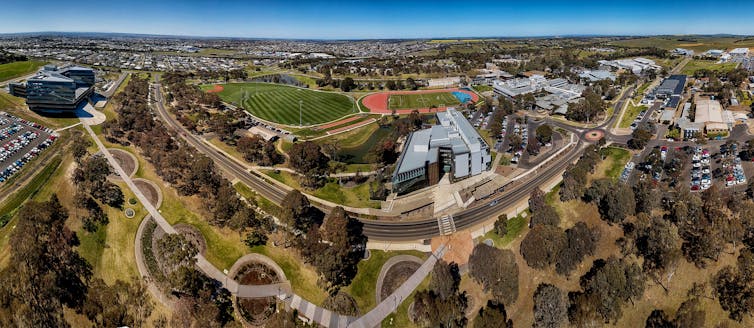
In late 2020 following the COVID outbreak, the University of Western Australia welcomed the new School of Indigenous Studies which would be the new home to Indigenous students on campus.
Bilya Marlee (meaning river of the swan in local Noongar language, as it’s built on the swan river) is currently home to over 250 Indigenous students who come from all over the country, including rural and regional Western Australia.
The building was culturally designed by Indigenous Elder Dr Richard Walley, with input from staff and students. Upon consultation, Dr Walley used a cultural blueprint to inform the design process which included connection to place and its surroundings. This includes the connection to plants and animals of the area and their significance to that place.
By creating a physical environment that connects to culture, the building hopes to enhance the feeling of support and safety for students while studying. The building aims to make students feel like they are studying on country and in a place that supports their cultural identity while navigating a foreign education system.
Consultation with cultural experts such as Dr Walley is a way universities can explore opportunities to address challenges faced by Indigenous students at university.
Kevin Taylor does not work for, consult, own shares in or receive funding from any company or organisation that would benefit from this article, and has disclosed no relevant affiliations beyond their academic appointment.
Adolescents aged 16-17 are now eligible to receive their Pfizer vaccine booster, following the recommendation earlier this week from the Australian Technical Advisory Group on Immunisation (ATAGI).
This move has been prompted by the rise of Omicron and reduced immunity after two vaccine doses.
It’s also the next step in the likely future expansion of booster doses to younger adolescents.
ATAGI’s recommendation to extend Pfizer booster doses to 16-17 year olds this week follows regulatory approval from the Therapeutic Goods Administration (TGA) in late January.
This means an estimated 370,000 Australians aged 16-17 are eligible to receive their Pfizer booster vaccine from three months after their second dose.
Presently, the Pfizer vaccine is the only one registered as a booster for this age group.
Those under 16 when they received their second dose but have since turned 16 are also eligible.
Those 16-17 year olds who are severely immunocompromised – for instance, with weakened immune systems due to cancer treatment – are recommended to have three primary doses, and three months later, have their booster (fourth) dose.
The more transmissible Omicron variant can still infect people who have already been infected with SARS-CoV-2 (the virus that causes COVID), or who have had two vaccine doses.
For the vast majority of older adolescents, these so-called breakthrough infections are mild and very unlikely to lead to hospitalisation.
Data from New South Wales during the Omicron period (November 26, 2021 to January 15, 2022) shows of 71,786 PCR-confirmed cases in adolescents (aged 10-19 years) only 191 cases (under 1%) required hospitalisation.
Then there’s the issue of waning immunity following the initial two doses.
However, a Pfizer booster dose quickly improves protection against Omicron. Vaccine effectiveness increases to 54-76% within two to four weeks after a booster.
It is important to note that studies of the effectiveness of booster doses specifically in adolescents aged 16-17 against Omicron are not yet available. However, this is likely to be comparable to that for young adults.
The booster dose has several aims. It not only reduces the chances of getting infected in the first place, it reduces the severity of infection in an individual if they do. This means people are less likely to have to take time off school or work.
Adolescents are also a very mobile social group and there may be a potential benefit of a booster vaccine in reducing community transmission. If a booster vaccine reduces your chances of infection it follows it could then reduce community transmission. But more research is needed to confirm if this occurs for Omicron.
Safety data from the United States indicates Pfizer booster doses in adolescents have a similar profile to that seen after a Pfizer second dose.
Early data on booster doses from Australia’s active safety surveillance system also supports the safety of a Pfizer booster dose in adults. In over 600,000 surveys, the most common reported reactions include pain, redness and swelling at the injection site, tiredness, headache and muscle aches.
We also know that both Pfizer (and Moderna) COVID-19 vaccines have rarely been associated with myocarditis, a treatable inflammation of the heart.
In studies in the US, the estimated myocarditis rate in young males aged 16-17 after the second Pfizer dose was 6.9 per 100,000 doses.
Australian data from the TGA show estimated rates of likely myocarditis in males aged 12-17 years of 10.9 per 100,000 doses after the second dose of Pfizer vaccine.
As the booster vaccine program rolls out to 16-17 year olds, the TGA and state/territory health departments will closely monitor any adverse events.
The US now recommends booster doses for everyone aged 12 and older, from five months after the second dose.
It is likely Australia will also see a recommendation for booster doses in younger adolescents (12-15 year olds) and potentially younger children (5-11 year olds) in the future.
However, for now, our focus is on rolling out the two primary doses in 12-15 year olds before considering any booster doses in this age group.
In the meantime, Australia will be closely monitoring data from the US and other countries before expanding the booster program to younger children. This will include:
safety data, with a focus on the risk of myocarditis
looking at the best interval between primary and booster doses
effectiveness data, with a focus on breakthrough infections and their severity.
Pfizer, or other vaccine manufacturers, would need to seek regulatory approval for boosters in younger age groups, and provide safety and effectiveness data.
Australia would also closely watch for the emergence of any new viral variants when considering the need to expand the booster program.
Nicholas Wood has received funding from the NHMRC for a Career Development Fellowship. He holds a Churchill Fellowship awarded in 2019.
Source: The Conversation (Au and NZ) – By Vasso Apostolopoulos, Professor of Immunology and Associate Provost, Research Partnerships, Victoria University
While Australia’s booster program of COVID vaccines is just getting going, governments overseas are evaluating the need for a fourth dose program.
Earlier this year, Israel began offering a fourth dose of the Pfizer mRNA vaccine to people who are immunocompromised, older people, and front line health workers. Israeli medical experts have since suggested fourth doses for everyone over 18. A number of other countries are deploying or considering a fourth dose program. Meanwhile, the UK have ruled it out for the time being.
In Australia, a fourth dose for significantly immunocompromised people – such as those with certain cancers – was approved by ATAGI in early January and is being evaluated for other high-risk populations by the government.
While there is evidence a fourth dose would help protect our most vulnerable, it may not be the answer for the broader Australian community.
Does a fourth dose work?
Preliminary data from Israel suggests a fourth dose for people over 60 offers up to two times more protection against infection, and three times more against severe disease compared to those who have received a third dose at least fourth months prior.
Evidence is not yet available to show the safety of a fourth dose. But given the decrease in adverse events from the third dose, compared to the second, it is likely the extra vaccine will be equally as well – or better – tolerated.
Given a fourth dose looks likely to provide extra protection and be safe, there is certainly a place for the extra vaccination – particularly for those at greatest risk of exposure and severe illness.
In immunocompromised people, the original two doses do not provide enough protection for many. Administering a third dose helped 50% of people who didn’t respond to the first two doses generate an immune response – but this still leaves a large number of people unprotected.
This scenario is partially mirrored in older adults, who have both worse outcomes if they get COVID, and smaller, shorter immune responses to vaccination.
This has sadly been made clear by the lives lost to COVID in Australian aged care facilities. Given these groups make up a disproportionate number of both COVID fatalities and cases, the argument for a fourth dose for older Australians is clear.
The question of whether to vaccinate the bulk of healthy Australians is a more complex one. While some will frame the issue around the risk of vaccine side-effects, this is not the central concern.
Adding a universal widely distributed fourth dose will save lives and prevent burden on the medical system – but this needs to be weighed against practicality and cost.
In healthy people, three doses of a COVID vaccine gives good protection against symptomatic infection and severe illness. This is consistent against all variants of COVID, including the now prevalent Omicron.
The benefit of an additional dose for healthy Australians, may be outweighed by the cost of acquiring and administering an additional 20 million or more doses.
As the Omicron variant has highlighted, we might be better advised to improve access to vaccines in poorer parts of the world, where widespread transmission can seed new variants that can then spread back to wealthier nations like Australia.
Another issue facing immunologists, is the diminishing return on investment of the current vaccines in the face of new variants. Omicron has mutated to a point where it has significant differences from the coronavirus of 2019 (on which the current vaccines are derived). This means the current vaccines are less effective and provide a smaller increase in protection against Omicron infection, though still signficant protection against severe illness.
Rather than further doses of the same formulations, variant-specific vaccines currently in development could offer more tailored protection.
While some voices deride the need for a fourth, fifth or even 20th dose, this is the reality we have faced for years in preventative medicine. New flu vaccines are engineered each year to counter the rapid mutation of viruses. Thankfully, the invention of the mRNA vaccine platform means we can do this faster, more effectively, and more safely than ever before. So, no matter the specific variant, severity or transmission of coronaviruses, we will continue to be able to protect our community.
The way forward all hinges on future information not yet known. We still can’t say with confidence how long immunity from a third dose will last, particularly in the face of new variants. If another variant arises that is more dangerous, or widespread, then maybe the cost/benefit ratio of additional vaccine doses will change for Australians.
However, it is already clear a fourth dose in vulnerable groups will provide worthwhile benefits and protect the most vulnerable members of society – even if we don’t need more widespread vaccination. But we should remain alert and informed. If the battleground changes, those who can must all be prepared to roll up their sleeves and do what is necessary as a community.
Vasso Apostolopoulos COVID-19 research has received internal funding from Victoria University place-based Planetary Health research grant and from philanthropic donations.
Jack Feehan et Maja Husaric ne travaillent pas, ne conseillent pas, ne possèdent pas de parts, ne reçoivent pas de fonds d’une organisation qui pourrait tirer profit de cet article, et n’ont déclaré aucune autre affiliation que leur poste universitaire.
While news from Tonga is still disrupted following the massive undersea eruption and tsunami on January 15, it’s clear the island nation has suffered significant damage to housing stock and infrastructure.
Once initial clean-up work is done, the focus then turns to rebuilding – specifically, how to rebuild in a way that makes that housing and infrastructure stronger, safer and more resilient than before the disaster.
The substantial reduction of disaster risk and losses in lives, livelihoods and health and in the economic, physical, social, cultural and environmental assets of persons, businesses, communities and countries.
Beyond the framework, however, we have the lessons learned from previous disasters and recovery efforts in the same region – notably what happened in Fiji after Cyclone Winston in 2016. These lessons can be applied to the Tonga rebuild.
Lessons from Cyclone Winston
Winston was a category 5 cyclone, one of the most powerful storms ever recorded in the South Pacfic. When it approached Fiji’s largest and most populated island, Viti Levu, winds reached 230 kilometres per hour, with gusts peaking at 325km/h.
Over 60% of the Fijian population was affected, with around 131,000 people left homeless. The cyclone destroyed, significantly damaged or partially damaged around 30,000 homes, or 22% of households, representing the greatest loss to Fiji’s housing stock from a single event.
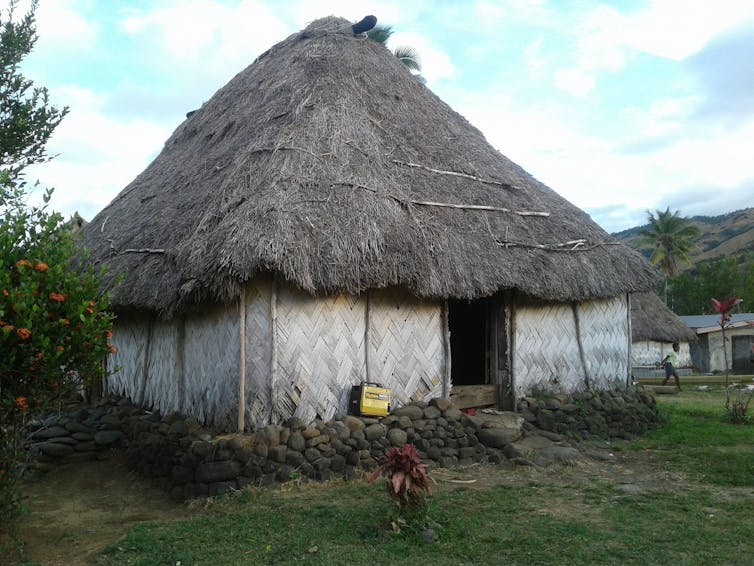
Notably, some models of the traditional Fijian bure survived the cyclone with minor or no damage.
Our research team from New Zealand followed and recorded the housing recovery. What we found could benefit Tonga as it faces reconstruction of so much housing stock.
As in Tonga, power, infrastructure and communication systems in Fiji were extensively damaged. Given that “building back better” involves applying higher structural standards than existed previously, we looked for evidence that Fiji was rebuilding in a more resilient and sustainable way.
Fiji carefully recorded and analysed data, employing systematic reconnaissance surveys and damage assessments to identify building performance, structural vulnerabilities and failure mechanisms, as well as community needs. These assessments were done well, to international standards.
Understandably, Fijians were also aware of the need to reduce risks to housing from future cyclones. After the immediate post-cyclone humanitarian response, housing was their main concern. This became a key focus for government agencies as a way of demonstrating the recovery was under way and that communities were at the heart of the process.
A traditional bure in Navala village, Viti Levu – some survived the cyclone well. Author provided
Problems with rebuilding
We studied two main initiatives: a government-funded rebuilding program for houses (the “Help For Homes Initiative”) and the rebuilding programs led by various international and local NGOs.
Help For Homes provided credit for construction materials to people who had lost homes, assuming recipients met certain criteria related to household income, damage and location.
Communities were free to choose the basic type of dwelling, its interior design, external features and materials. Information and instructions about building best practices and standards were provided, but technical or practical support was limited.
Overall, the initiative had mixed reviews. On the one hand, people had autonomy over their future homes; if things went to plan, they liked the outcome. On the other, lack of building skills led to some poor-quality construction, and limited resources (mainly materials) pushed costs up.
A lack of suitable alternative building material also created problems. Material choice, material substitution, resource costs, low community technical expertise and low building standard knowledge are all issues Tonga might also face.
Some homeowners were left without the material they needed, and in some cases with only a partially rebuilt home.
The NGO rebuilding programs, by contrast, usually employed their skilled workers to build and supervise construction activities, often with the help of community labour. But again, reviews were mixed, especially when the communities didn’t have sufficient input into the rebuilding process.
While housing design was largely standardised for quick construction, the NGO houses tended to be technically strong and more resilient to future hazard events.
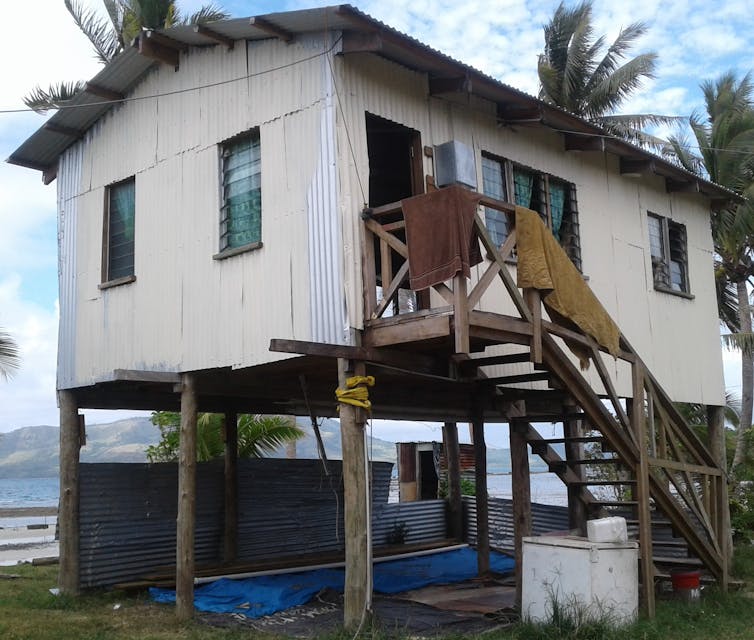
A timber house on elevated foundations, built to the owner’s design without technical support. Author provided
The best of both worlds
The main lesson was that high levels of community involvement and strong technical support were key to building resilient, future-proofed houses. For Tonga, the Fijian experience offers the opportunity to apply that lesson in four principal ways:
ensure the initial assessment process is thorough and up to international standards
recognise that housing stock overall needs to improve, and commit to higher construction standards
analyse local architecture and building practices for disaster-resistant features
combine the best of government-led and NGO building systems to maximise community involvement while ensuring good technical support and building expertise.
Overall, to have the best chance of rebuilding with the resilience to withstand future shocks, Tonga will benefit greatly from a three-way partnership between the government, NGOs and local communities.
The authors acknowledge the collaboration of Diocel Harold Aquino (Associate Professor of Civil Engineering, University of the Philippines) and
Sateesh Kumar Pisini (Principal Lecturer in Civil Engineering, Fiji National University) in the preparation of this article.
Suzanne Wilkinson receives funding from the New Zealand National Science Challenge: Resilience to Nature’s Challenges to research post-disaster recovery.
Regan Potangaroa receives funding from the New Zealand National Science Challenge: Resilience to Nature’s Challenges to research post-disaster recovery. He is a shelter delegate with the NZ Red Cross and an Associate Trainer with the International humanitarian training group RedR Australia.
Mohamed Elkharboutly does not work for, consult, own shares in or receive funding from any company or organisation that would benefit from this article, and has disclosed no relevant affiliations beyond their academic appointment.
Can black holes become white holes? – Remy, age 9, Wangaratta, Victoria
Hi Remy! Thank you for this great question. The short answer, unfortunately, is no.
White holes are really just something scientists have imagined — they could exist, but we’ve never seen one, or even seen clues that one may exist. For now, they are an idea.
To put it simply, you can imagine a white hole as being a black hole in reverse. So if time was running backwards, black holes would look like white holes. But time doesn’t run in reverse in our universe.
To understand more, let’s start by thinking about how black holes work.
What’s a black hole?
When you drop a tennis ball, it falls to the ground due to what we call gravity. The Earth is very heavy, so it pulls the tennis ball down.
If Earth had more material inside, making it even heavier, gravity would pull on the ball more strongly. The pull would also be stronger if we stood on the surface of a shrunken Earth, which remained as heavy as it is.
Now, imagine we’re deep space explorers and we’ve found something out in space that is both extremely heavy and very small. It pulls very strongly on anything that comes close to it, so we keep our spacecraft a safe distance away.
This mysterious object would pull so powerfully that nothing inside could escape to the outside. A spaceship with the biggest rocket boosters couldn’t escape. Even a laser beam, fired straight out at the speed of light, would not make it to the outside.
Now imagine we stick around in our spaceship (at a safe distance) and make a movie of this black hole.
As we watch it, we’d never see anything escape the black hole. We would instead see the black hole eat anything that came too close. We get lucky: as we watch, the black hole swallows an entire star!
Our movie, titled “Black hole eats a star” gets a million views online. But now imagine if we played it in reverse. In the backwards movie, we’d see a very heavy, very small object just sitting there – and then, all of a sudden, spit out an entire star!
The object we’re looking at now, which spits everything out and eats nothing, would be called a white hole.
Are there white holes?
We have good evidence from our telescopes that black holes really do exist.
However, we’ve never seen a white hole (which is a shame, because they would be really awesome). The reason astronomers think about white holes at all is because of Albert Einstein – a great scientist who is no longer alive, but if you’ve ever seen him you may remember his crazy hair.
Much of what we know about gravity, and the way it works, is thanks to the amazing work of the scientist Albert Einstein. WikiCommons
Einstein came up with an excellent idea about gravity, the invisible force that keeps our feet on the ground. His theory describes how black holes work, with their huge gravitational pull.
Einstein’s idea also says white holes are possible. So could our universe actually make a white hole? And could a black hole become a white hole? Probably not. Something can be “possible” as an idea, but also extremely unlikely in real life.
White holes are unlikely because they are an “in reverse” kind of thing. Think of breakfast in reverse: your egg unscrambles itself and jumps out of the pan, back into the shell. It’s possible, but it would mean time had turned itself around and started running backwards.
As best we can see and measure, time in our universe only flows in one direction: forward. So for now, white holes are just an interesting possibility.
It’s fun to see an egg being cooked in reverse in a movie, but it’s not possible to see in real life.
Luke Barnes does not work for, consult, own shares in or receive funding from any company or organization that would benefit from this article, and has disclosed no relevant affiliations beyond their academic appointment.
The remarkably successful pro-Palestinian boycott by artists of the recent Sydney Festival was a vibrant example of engaged citizens taking foreign policy into their own hands.
Perhaps 35% of the festival’s participants withdrew, objecting to Israel’s A$20,000 sponsorship of a dance created by an Israeli choreographer and performed by the Sydney Dance Company. Over 1,000 artists also signed a letter supporting the boycott.
Caught like a deer in headlights, the festival organisers belatedly acknowledged the moral objections of artists by pledging to review their policy on donations by foreign governments, but refused to return Israel’s money. The Sydney Dance Company still danced, to rapturous reviews.
Surprisingly weak objections
Opponents of the boycott have mounted some surprisingly weak objections.
They say it censors art for political reasons.
Artists themselves chose not to perform, persuaded, in the free marketplace of ideas, by boycott campaigners. Artists who still wished to perform were free to do so, and audiences were free to attend. There were no union-style pickets. This was a relatively “smart” boycott.
As the European Court of Human Rights unanimously found in 2020, advocacy of boycotting Israel is protected free speech – the opposite of censorship.
Democracies only function if citizens are free to voice their opinions, hoping to convince others. It is absurd for government ministers to condemn such advocacy as censorship. It also patronises artists as unqualified to make up their own minds.
Opponents say it politicises art. Yet political critique has long been a function of art and artists. Art is not just elevator music. The same arguments are often made not to politicise sport. Yet Australia is willing to diplomatically boycott the Beijing Winter Olympics.
Critics argue Israel is anti-Semitically singled out for a boycott when other states have worse human rights records. But it is not the responsibility of campaigners for Palestine to crusade for victims in every other bad country.
It is to their credit they have mobilised an effective boycott, which campaigners elsewhere might learn from. It is not anti-Semitic to criticise Israel for violating international law or to take peaceful action to urge it to stop.
Opponents claim Israel is a democracy. But democracies violate rights too and should not be immune from sanctions.
In any case, Israel is not a democracy for five million Palestinians living under Israeli military control. Most of them have been unable to vote in Israeli elections for over 50 years – even though Israeli settlers in Palestine enjoy the vote.
Opponents warn Hamas has endorsed the boycott, as if invoking the spectre of terrorism automatically discredits it. Hamas supports COVID vaccines too, which hardly makes them a bad thing. Smearing boycotters by association with Hamas is pitifully cheap.
Critics claim struggling artists need to perform because their incomes plummeted during COVID. Again, the artists know best whether they are willing to forgo income to stand up for human rights.
The questions which should be asked of a boycott
There are three genuine questions that should be asked of any boycott. Are the offender’s violations serious enough to justify it? Is the collateral damage to innocents, if any, proportionate? Could the boycott potentially improve the wrongdoer’s behaviour?
First, Israeli violations of international law have been exhaustively documented. It denies Palestinians their rights to self-determination and statehood, has committed war crimes and human rights violations and denies justice to victims.
Its sponsorship of illegal Israeli settlements proves its agenda is to colonise Palestine, not free it or bring it peace. It has constantly defied the international community, including the Security Council and the International Court of Justice.
Palestinian violations do not excuse Israel’s violations. That other countries may be worse does not diminish the case of a boycott of Israel, but draws attention to the need to boycott others as well.
Secondly, the boycott has caused limited collateral damage. It targeted Israeli support for a blameless Israeli dance performed by blameless Sydney dancers and inconvenienced audiences. The calculus of the boycott is these are small sacrifices if stigmatising cooperation with Israel may pressure it to change.
Thirdly, a boycott inflicts pointless vengeance if it has no prospect of success. Critics cry shunning a tiny amount of Israeli money for a harmless dance in faraway Sydney will hardly bring peace to the Middle East.
Yet Israel is hyper-sensitive about its perception by western allies. The spread of sympathy to the Palestinian cause among the Australian community has rattled Israel’s cage and increases its international isolation.
A case of conscience
Citizen boycotts are growing precisely because western governments like Australia and the US have so spectacularly failed to hold Israel to account for systematic violations. We should not only apply our new Magnitsky Act human rights sanctions to adversaries like Russia or China, but also to our “friends” when they badly misbehave.
China will not stop its repression of Uighurs just because Australia doesn’t send officials to watch the Olympics, but we boycott anyway, to stigmatise terrible behaviour. Who knows what might happen when the butterfly of citizen boycotts flaps its wings in the desert of Middle Eastern politics? There is so little to lose and so much to gain.
Australians must exercise their own conscience about different types of boycotts. But the case for boycotts is plausible and should be taken seriously – not sledged by specious or misleading criticisms.
Men write nearly nine in ten sports articles that appear in Australian media, a report on female voices in the media found last year. The report also found women were only quoted in 31% of the most prominent sports stories that are published, and about 31% of sports stories focused on a female subject.
These statistics show that despite an increase in the visibility of a few female sports reporters during the past decade, media coverage of women’s sport is still not fully reflecting its excellence, depth and achievements.
Yet there was a time when this wasn’t the case, when a diverse group of female sports reporters played a critical role in covering women’s sport.
This was perhaps best exemplified in the newspaper coverage of the first test cricket series between the Australian and English women’s team in 1934-35 in Australia, and the subsequent Australian women’s tour of England in 1937.
As I discuss in my new podcast, The Maiden Summer, the series featured coverage by a range of Australian female sports journalists whose reporting helped support the growing public interest in the tests.
Pioneers in sports media
Patricia Jarrett was a talented swimmer and junior athletics champion in Victoria when she became the first female sports writer at Keith Murdoch’s The Herald in 1933.
The Herald’s in-house staff publication introduced Jarrett as “[…] our outstanding woman athlete.” At the time, there was only one other woman on the newspaper’s editorial staff.
English women’s cricket player practising in the nets during the 1934-35 tour. Wikimedia Commons
Jarrett then accompanied the 1934-35 Australian women’s cricket team around the country, and became the first woman to cover an overseas cricket tour when she travelled to England in 1937.
These breakthroughs provoked little resistance within newsrooms. Jarrett recalled in a National Library of Australia interview in 1984 there was only one reaction to her being sent on the 1937 tour, when a female friend remarked, “Fancy The Herald sending a woman to England to cover a cricket match.”
But Jarrett explained when she asked Murdoch if she could cover the tour, he readily agreed “…and off I went on this slow boat”.
The arrival of the Australian Women’s Weekly in 1933 also provided an important platform for a discussion about women’s sport. The former cricketer, administrator and national selector Ruth Preddey had a weekly column in the new magazine that canvassed a range of sporting issues, particularly those affecting women’s cricket.
A dramatic moment from the second Ashes test at Sydney during the 1934-35 England tour of Australia. WikiCommons
Jarrett and Preddey were soon joined by many others in Australian sports media:
the Hansen sisters, Pat and Carley, who played hockey and cricket, wrote about women’s sport in Sydney and Brisbane newspapers
Lois Quarrell, who created the Women in Sport page in The Adelaide Advertiser in 1936 and continued to cover women’s sport in the 1940s and 1950s
Gwen Varley, who pioneered the coverage of women’s sport, particularly grassroots sport, during the early years of ABC Radio in Sydney and then at 3AW in Melbourne
Kath Commins, a talented cricketer and tennis player, who joined The Sydney Morning Herald in the 1934 after telling an executive there was a gap in the newspaper’s coverage she could fill – women’s sport.
Early advocates for women’s sport
What many of these women had in common was a deep involvement in sport administration. This meant they were not just absorbed by the contests of sport, but also its development and promotion. They became early advocates for women’s sport through their writing and broadcasting.
Biography of Patricia Jarrett, published in 1996. Melbourne University Press
There were two important factors that feed in to this blossoming of women’s sport reporting in the 1930s.
In cricket, in particular, there was a strong public interest in the game, especially following the 1932-33 men’s Ashes series that was riven by the Bodyline controversy – the use of short and targeted fast bowling by England to curb the run-scoring of Don Bradman. English women’s captain Betty Archdale was still being asked about “Bodyline” when her team arrived in Fremantle in 1934.
Second, women’s cricket was in the midst of the next stage of its evolution – the game was more organised at a state level and there was an equivalent growth in interest. Women’s club cricket in Melbourne would frequently draw several thousand spectators, mainly men, to suburban grounds.
A slow decline after the war
This interest in women’s sport and the growth in female reporting was interrupted by the second world war.
Although there was still some vibrancy in post-war women’s cricket, the number of women sports reporters declined, partly because returned servicemen went back to newsrooms, and partly because some of the trailblazing female reporters from the 1930s had moved on.
Jarrett, for example, had been an accredited war correspondent within Australia, which reflected her desire to write about issues other than sport. She later recalled,
It was when I came back from that [1937] tour that I thought there had to be more for me in journalism than sportswriting […] I saw the opportunities for other writing.
My preliminary research shows publications had supported this group of pioneers at the time because there was a readership for women’s sport. Newspapers, in particular, were also healthy businesses back then. Advertising was strong and there were large editorial departments and plenty of pages to fill – unlike the current commercial pressures facing the Australian press.
Nevertheless, there is only one sobering conclusion to be drawn – we have gone backwards since then.
Integral to appreciating the contribution of these women’s sports reporters in the 1930s is an understanding of how important they were in supporting women’s sport and driving interest, patronage and attendance at games.
This is a clear sign what happened once before needs to happen again – we need more women reporting on sport, especially at a time when the interest in women’s sport has rarely been greater.
Nick Richardson does not work for, consult, own shares in or receive funding from any company or organization that would benefit from this article, and has disclosed no relevant affiliations beyond their academic appointment.
Men write nearly nine in ten sports articles that appear in Australian media, a report on female voices in the media found last year. The report also found women were only quoted in 31% of the most prominent sports stories that are published, and about 31% of sports stories focused on a female subject.
These statistics show that despite an increase in the visibility of a few female sports reporters during the past decade, media coverage of women’s sport is still not fully reflecting its excellence, depth and achievements.
Yet there was a time when this wasn’t the case, when a diverse group of female sports reporters played a critical role in covering women’s sport.
This was perhaps best exemplified in the newspaper coverage of the first test cricket series between the Australian and English women’s team in 1934-35 in Australia, and the subsequent Australian women’s tour of England in 1937.
As I discuss in my new podcast, The Maiden Summer, the series featured coverage by a range of Australian female sports journalists whose reporting helped support the growing public interest in the tests.
Pioneers in sports media
Patricia Jarrett was a talented swimmer and junior athletics champion in Victoria when she became the first female sports writer at Keith Murdoch’s The Herald in 1933.
The Herald’s in-house staff publication introduced Jarrett as “[…] our outstanding woman athlete.” At the time, there was only one other woman on the newspaper’s editorial staff.
English women’s cricket player practising in the nets during the 1934-35 tour. Wikimedia Commons
Jarrett then accompanied the 1934-35 Australian women’s cricket team around the country, and became the first woman to cover an overseas cricket tour when she travelled to England in 1937.
These breakthroughs provoked little resistance within newsrooms. Jarrett recalled in a National Library of Australia interview in 1984 there was only one reaction to her being sent on the 1937 tour, when a female friend remarked, “Fancy The Herald sending a woman to England to cover a cricket match.”
But Jarrett explained when she asked Murdoch if she could cover the tour, he readily agreed “…and off I went on this slow boat”.
The arrival of the Australian Women’s Weekly in 1933 also provided an important platform for a discussion about women’s sport. The former cricketer, administrator and national selector Ruth Preddey had a weekly column in the new magazine that canvassed a range of sporting issues, particularly those affecting women’s cricket.
A dramatic moment from the second Ashes test at Sydney during the 1934-35 England tour of Australia. WikiCommons
Jarrett and Preddey were soon joined by many others in Australian sports media:
the Hansen sisters, Pat and Carley, who played hockey and cricket, wrote about women’s sport in Sydney and Brisbane newspapers
Lois Quarrell, who created the Women in Sport page in The Adelaide Advertiser in 1936 and continued to cover women’s sport in the 1940s and 1950s
Gwen Varley, who pioneered the coverage of women’s sport, particularly grassroots sport, during the early years of ABC Radio in Sydney and then at 3AW in Melbourne
Kath Commins, a talented cricketer and tennis player, who joined The Sydney Morning Herald in the 1934 after telling an executive there was a gap in the newspaper’s coverage she could fill – women’s sport.
Early advocates for women’s sport
What many of these women had in common was a deep involvement in sport administration. This meant they were not just absorbed by the contests of sport, but also its development and promotion. They became early advocates for women’s sport through their writing and broadcasting.
Biography of Patricia Jarrett, published in 1996. Melbourne University Press
There were two important factors that feed in to this blossoming of women’s sport reporting in the 1930s.
In cricket, in particular, there was a strong public interest in the game, especially following the 1932-33 men’s Ashes series that was riven by the Bodyline controversy – the use of short and targeted fast bowling by England to curb the run-scoring of Don Bradman. English women’s captain Betty Archdale was still being asked about “Bodyline” when her team arrived in Fremantle in 1934.
Second, women’s cricket was in the midst of the next stage of its evolution – the game was more organised at a state level and there was an equivalent growth in interest. Women’s club cricket in Melbourne would frequently draw several thousand spectators, mainly men, to suburban grounds.
A slow decline after the war
This interest in women’s sport and the growth in female reporting was interrupted by the second world war.
Although there was still some vibrancy in post-war women’s cricket, the number of women sports reporters declined, partly because returned servicemen went back to newsrooms, and partly because some of the trailblazing female reporters from the 1930s had moved on.
Jarrett, for example, had been an accredited war correspondent within Australia, which reflected her desire to write about issues other than sport. She later recalled,
It was when I came back from that [1937] tour that I thought there had to be more for me in journalism than sportswriting […] I saw the opportunities for other writing.
My preliminary research shows publications had supported this group of pioneers at the time because there was a readership for women’s sport. Newspapers, in particular, were also healthy businesses back then. Advertising was strong and there were large editorial departments and plenty of pages to fill – unlike the current commercial pressures facing the Australian press.
Nevertheless, there is only one sobering conclusion to be drawn – we have gone backwards since then.
Integral to appreciating the contribution of these women’s sports reporters in the 1930s is an understanding of how important they were in supporting women’s sport and driving interest, patronage and attendance at games.
This is a clear sign what happened once before needs to happen again – we need more women reporting on sport, especially at a time when the interest in women’s sport has rarely been greater.
Nick Richardson does not work for, consult, own shares in or receive funding from any company or organisation that would benefit from this article, and has disclosed no relevant affiliations beyond their academic appointment.
Source: The Conversation (Au and NZ) – By Thea van de Mortel, Professor, Nursing and Deputy Head (Learning & Teaching), School of Nursing and Midwifery, Griffith University
Anxiety about kids’ safety is leading many parents not to send their child to preschool or childcare. Absence rates in some large providers of early childhood education and care were reportedly as high as 43% by late January compared to about 10% in November and December.
Most kids across the country went back to school this week with various plans in place in different states to monitor and contain COVID infections. Together with mitigation measures such as masks and effective ventilation, schools in New South Wales, Victoria and the ACT, for instance, are providing free rapid antigen tests to families so students and staff can be tested several times a week to monitor any infections.
While provision of RATs for preschool and childcare staff and similar testing plans are in place in NSW, Victoria and South Australia, this is not the case for the children in their care. This may be because RATs aren’t as effective in detecting infections in children as in adults. A study of the sensitivity of RATs in children found the tests failed to accurately detect infection in 36% of infected children. If the child was infected but had no symptoms, RATs failed to detect this in 44% of cases.
Other mitigation measures in place at schools are more difficult to implement in early learning settings. No vaccine is available for preschool and childcare-aged children and masks are not recommended for children under two years old.
There is a national framework for managing COVID in schools and childcare settings. Early childhood services and schools must respond on the basis of public health advice and with support from public health authorities where required.
However, at the moment plans to prevent transmission in childcare settings are being left to states and territories, and the approaches are at times fragmented. A national set of strategies supported by evidence is required to ensure the best outcomes for children, childcare workers and families.
What are the risks of childcare?
COVID remains a mild disease for most infants and children. The majority of positive COVID cases still occur in older age groups.
Despite this, because of the sheer number of overall Omicron infections, some areas in the northern hemisphere have had an almost eight-fold increase in hospitalisations of children aged 0-4. This is higher than the population generally, probably because small children are unvaccinated.
It is also winter there, which increases transmission risk for everyone because viral particles stay viable for longer in the cold, and transmission occurs much more frequently indoors.
COVID is still a mild disease for most infants and toddlers. Shutterstock
Australian infants and children have a very low risk of dying from COVID. Only four deaths associated with COVID have been recorded in Australian children under the age of 10 since the first case of COVID was reported. This is compared to 12 in the 20-29 group, 41 for 30-39 and 353 for those aged 60-69.
However, having a chronic condition may increase your child’s risk of serious outcomes from COVID. You may wish to seek medical advice on whether to send them to childcare or keep them at home.
What about the risks to teachers?
A Scottish study found school teachers were not at a higher risk of contracting COVID-19 than the general population.
There is very little published on the risk to teachers in childcare. However, data collected in childcare in the middle of 2021, during the Delta outbreak in NSW, showed that of the secondary cases (someone being infected by a primary case) most SARS-CoV-2 (the virus that causes COVID) transmission in childcare occurred between staff (16.9%), or staff infected children (8.1%), rather than the other way around.
Omicron is much more transmissable than Delta, but given the very high volume of cases in the commmunity, teachers are likely at no greater risk of contracting COVID at work than they are anywhere else.
States and territories doing different things
All states and territories require preschool and childcare staff to be vaccinated. But there are slight variations when it comes to other migitation measures.
For instance, in Queensland, staff are required to wear masks while standing or moving about indoors, but may remove their mask when seated or if able to maintain a 1.5 metre distance from others while teaching or interacting with children. But in NSW, all staff and visitors in early childhood and education services are required to wear masks while indoors with no exceptions.
Kids should be kept outside as much as possible. Shutterstock
While most states are deploying air purifiers to schools, there is no such policy for early education and care settings. It is less simple for the government to send free purifiers to childcare centres due to their different ownership arrangements and the sheer number of them.
But air purifiers are an important way to ensure children and staff in early childhood and care settings are protected, especially considering other mitigation measures employed by schools are not in place. A national plan needs to address how to ensure each centre has one.
regular cleaning of surfaces, and particularly of objects infants and small children put in their mouths, may help reduce transmission
children should be encouraged to regularly wash hands, particularly before touching food.
One of the most important strategies to reduce transmission is good ventilation, as infectious particles build up in the air when infected people are indoors, so:
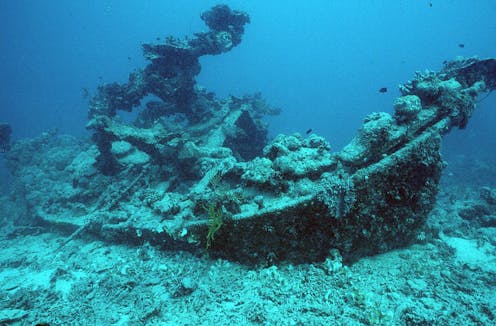
The wreck of the SS Gothenburg.Queensland Museum Network
The Great Barrier Reef is incredible, with turquoise water, stunning reefs and white sandy cays. Yet its name infers something quite different – a barrier: treacherous, dynamic and dangerous to navigate.
For millennia, people navigated and traded across the northern coast of Australia and the Coral Sea.
When early European seafarers came face-to-face with the world’s largest coral reef system, it was not the beauty they saw, but a nearly unnavigable structure that could easily sink their ships.
Throughout the past 230 years, over 1,200 vessels met their end on the reef – but only 114 have been found.
Each site holds the potential for a wealth of archaeological and historic heritage, as well as tales of disaster, death and lessons learnt about the reef. Preservation, future management and care of these sites is essential.
Our shipwrecks should be visited and enjoyed by the public, yet we should also strive to protect them for the future. We can never replace these sites – once gone they are lost forever. Here are four particularly infamous shipwrecks on the Great Barrier Reef.
HMS Pandora Sinking, by Oswald Brett. Queensland Museum Network
The tale of HMS Pandora is the lesser known – yet perhaps more disastrous – sequel to the infamous maritime tale of the “Mutiny on the Bounty”.
Pandora was the Royal Navy ship sent to hunt down the Bounty mutineers in 1791. After months of searching the south pacific and finding only 14 of the mutineers, Captain Edwards turned for home via passage through the Torres Strait.
The 24-gun frigate ran aground onto the reef, eventually sinking in 30 metres of water. One mutineer and 35 crew lost their lives, and the survivors made a phenomenal journey in long boats to Indonesia (then Java).
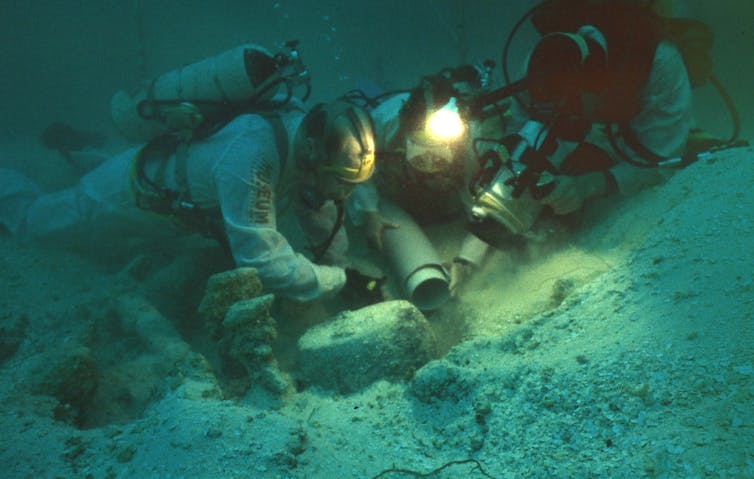
Archaeologists excavating a ceramic oil jar from the Pandora shipwreck. Queensland Museum Network
The ship was lost to history until divers searching for the site found it buried beneath sand and well-preserved in 1977. Throughout the 1980s and 1990s, archaeological excavations provided a wealth of information about life on-board a naval ship in the 18th century.
Artefacts from the wreck include an enormous six-pounder cannon, ceramics, belt buckles, ivory instruments and even delicate organics like rope and cloth.
To date, Pandora is the earliest known shipwreck on the Great Barrier Reef.
SS Gothenburg (1875)
Perhaps one of the most horrific shipwrecks to occur on the Great Barrier Reef is SS Gothenburg.
Built in the UK in 1854, the 60 metre long steam ship operated as a regular passenger service between Australia and New Zealand, and later between Adelaide and Darwin. Gothenburg’s fateful last voyage was a trip from Darwin to Melbourne carrying 37 crew and 98 passengers, including some of Darwin’s elite citizens, as well as 93 kilograms of gold valued at £40,000 (A$1,000,000 today).
An illustration of SS Gothenburg. Australasian Sketcher with Pen and Pencil (Melbourne, Vic. : 1873 – 1889), Saturday 20 March 1875
Gothenburg encountered cyclonic weather and struck reef southeast of Townsville. The crew attempted to reverse the vessel off the reef, which ultimately damaged the hull further. Worsening weather pushed the steamer further onto the reef, sweeping people into the ocean.
Although one lifeboat made it out, help arrived too late and only 22 people survived. Grisly details arose of bodies seen still clinging to the staircase as salvage divers investigated the wreck to recover the gold.
Gothenburg was found in 1971 by divers sitting in 9 to 16 metres of water and identified in 1978. Maritime archaeologists continue to learn from Gothenburg: the wreck provides insight into life onboard a steam ship in Australia and management of iron steamships in reef environments.
Foam (1893)
Artists interpretation of what Foam may have looked like. Queensland Museum Network
In 1893, a wooden topsail schooner ran aground on Myrmidon Reef east of Townsville. The shipwreck remained undiscovered in six metres of water until identified as Foam in 1982.
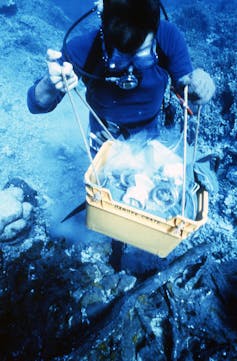
Diver ensures artefacts are carefully raised from the Foam Shipwreck. Queensland Museum Network
Foam is the only known wreck on the Great Barrier Reef of a Queensland vessel engaged in the labour trade at the time of its demise. Its discovery helped shed light on the recruitment and transport of indentured labourers from the South Sea Islands, known as blackbirding.
Among the artefacts collected from the wreck were many ceramic armbands used for trade.
Maritime archaeologists now know these armbands were European copies of the shell armbands traditionally used by South Sea Islanders as indicators of status or for trade: the Europeans were introducing counterfeit copies into the Islanders’ exchange systems.
Foam continues to reveal information about the labour trade and influences at the time.
One of the ceramic armbands (MA3279) in the state collection. Queensland Museum Network
SS Yongala disappeared without a trace in March 1911, likely having encountered an unexpected cyclone. Known as “Australia’s Titanic”, all 122 people on board disappeared without a trace. The location of the 100 meter long steamship remained a mystery until discovered lying in 30 meters of water off Alva Beach in the 1950s.
Today, the haunting grave site has become a unique oasis.
Divers around the bow of the Yongala shipwreck. Maddy McAllister
Yongala is one of the most intact historic shipwrecks in Australian waters and ongoing research is exploring how it has become the habitat for a remarkably diverse range of marine life (particularly coral). The wreck is ranked as one of the top ten best wreck dives worldwide.
Maddy McAllister is the Senior Curator of Maritime Archaeology at James Cook University and the Queensland Museum Network. She is affiliated with the Australasian Institute for Maritime Archaeology.
New Zealand Parliament Buildings, Wellington, New Zealand.
Editor’s Note: Here below is a list of the main issues currently under discussion in New Zealand and links to media coverage. You can sign up to NZ Politics Daily as well as New Zealand Political Roundup columns for free here.
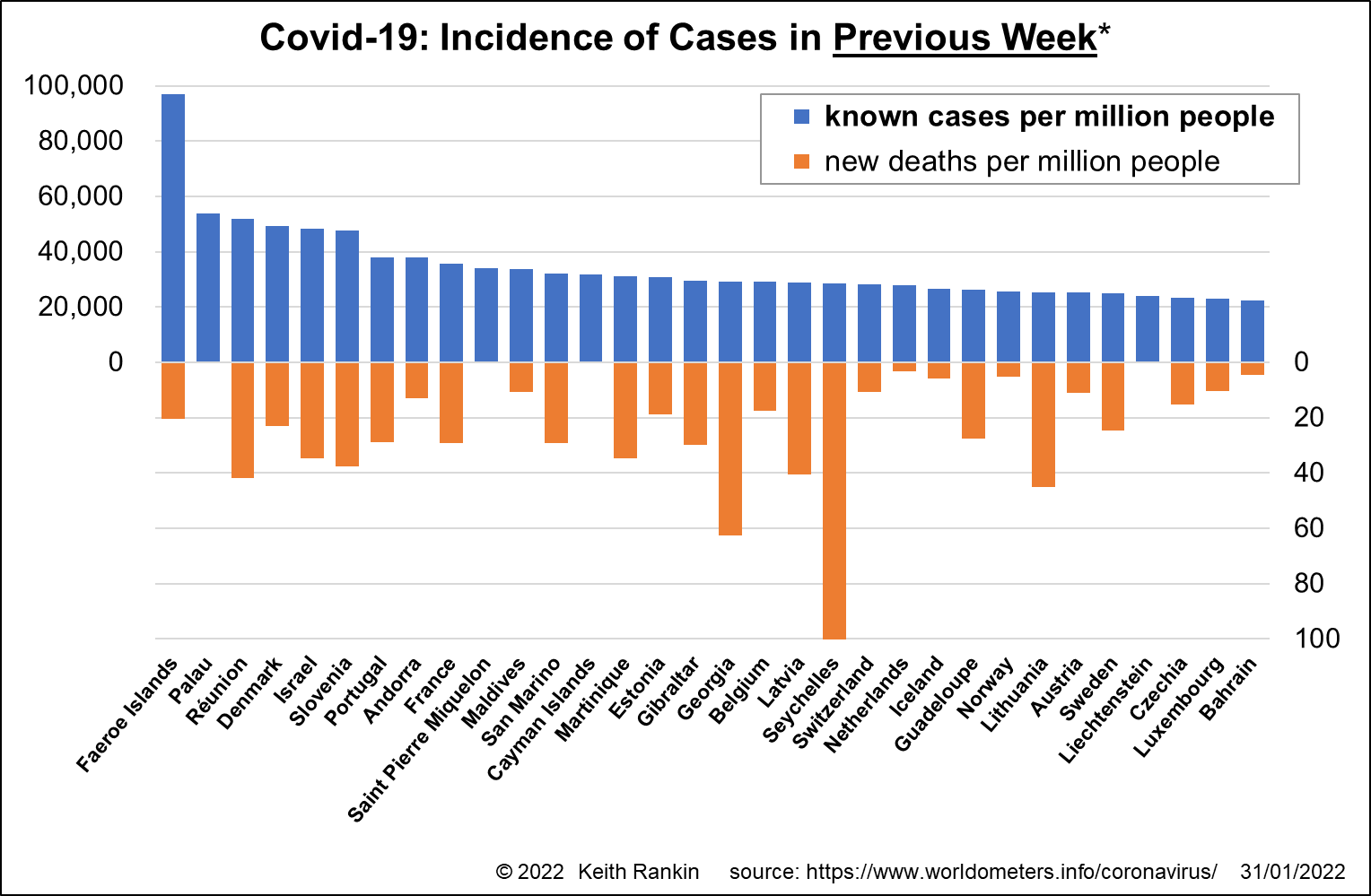
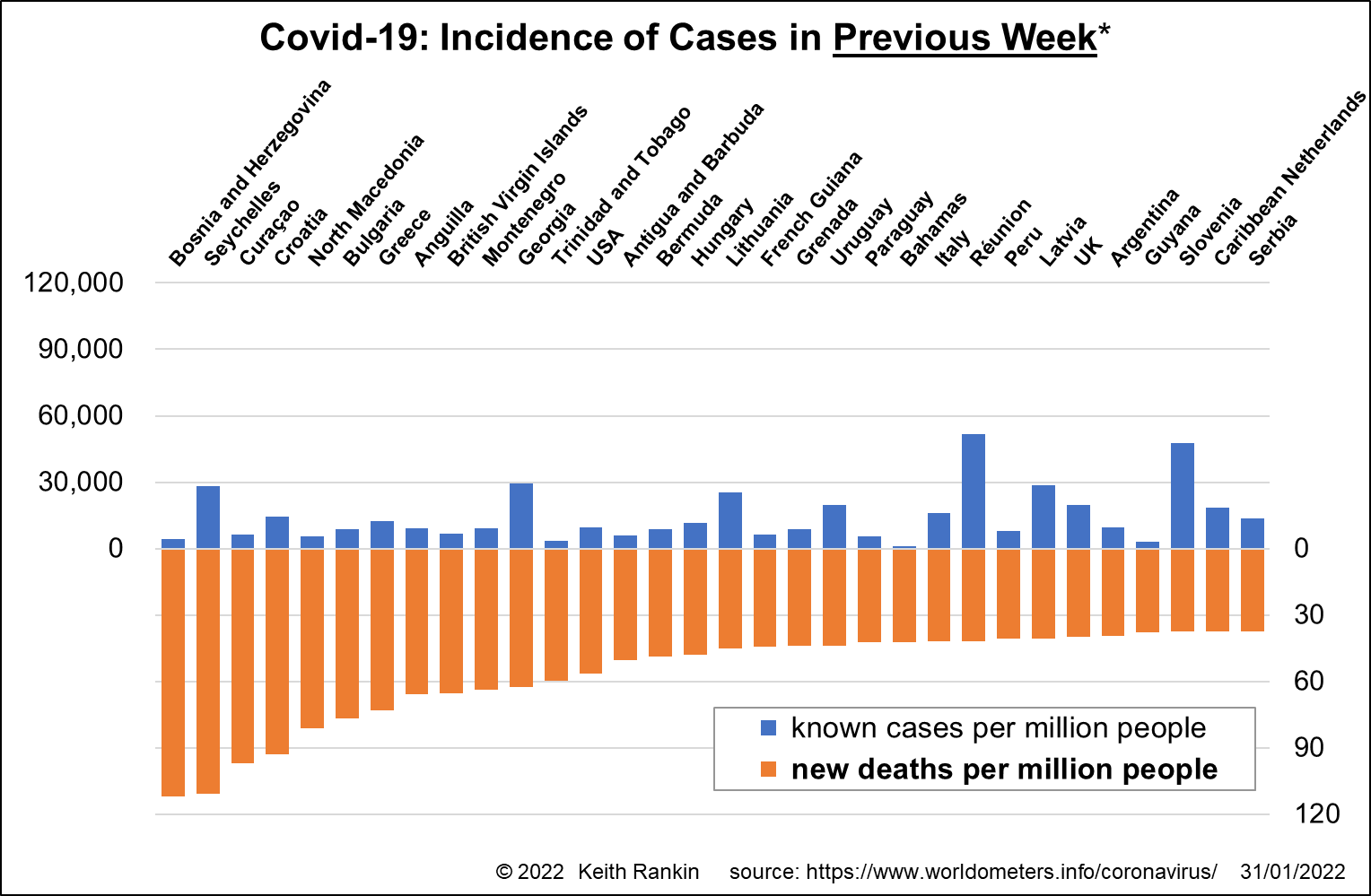
As for most of the second half of 2021, the small principalities and territories (and former territories) of the European colonial powers show up highly in these charts of covid casualty countries. One of the great untold stories of Covid19 has been the impact of SARS-Cov2 (and the generally affluent travellers who carried it) upon these often fragile polities. Our political obsession with ourselves, the countries most like ourselves, and the very populous countries of the world, has made this tragedy – especially in the Caribbean Islands – all the more tragic due to our lack of acknowledgement of them. (We will next encounter a number of these depleted countries in the Birmingham Commonwealth Games, this year.)
We note that some other little countries (and quite big countries too) don’t make these charts, due to underreporting. One really big country that has fallen under the radar is Pakistan, with an estimated 800,000 covid deaths (ourworldindata; Economist estimates), nearly thirty times its reported toll.
It is important to note that estimates – such as the one above for Pakistan – are ‘excess deaths’ arising from all aspects of the pandemic, including people who died as a result of the social, economic and epidemiological effects of the anti-covid restrictions.
These excess deaths can be labelled as deaths FROM covid. The government-reported covid mortality statistics measure people who died WITH covid. The data for people dying with covid is commonly used as a proxy for people dying OF covid. (Some people dying with covid – and increasingly so during the highly infectious but relatively mild Omicron variant – are people who would have died anyway.)
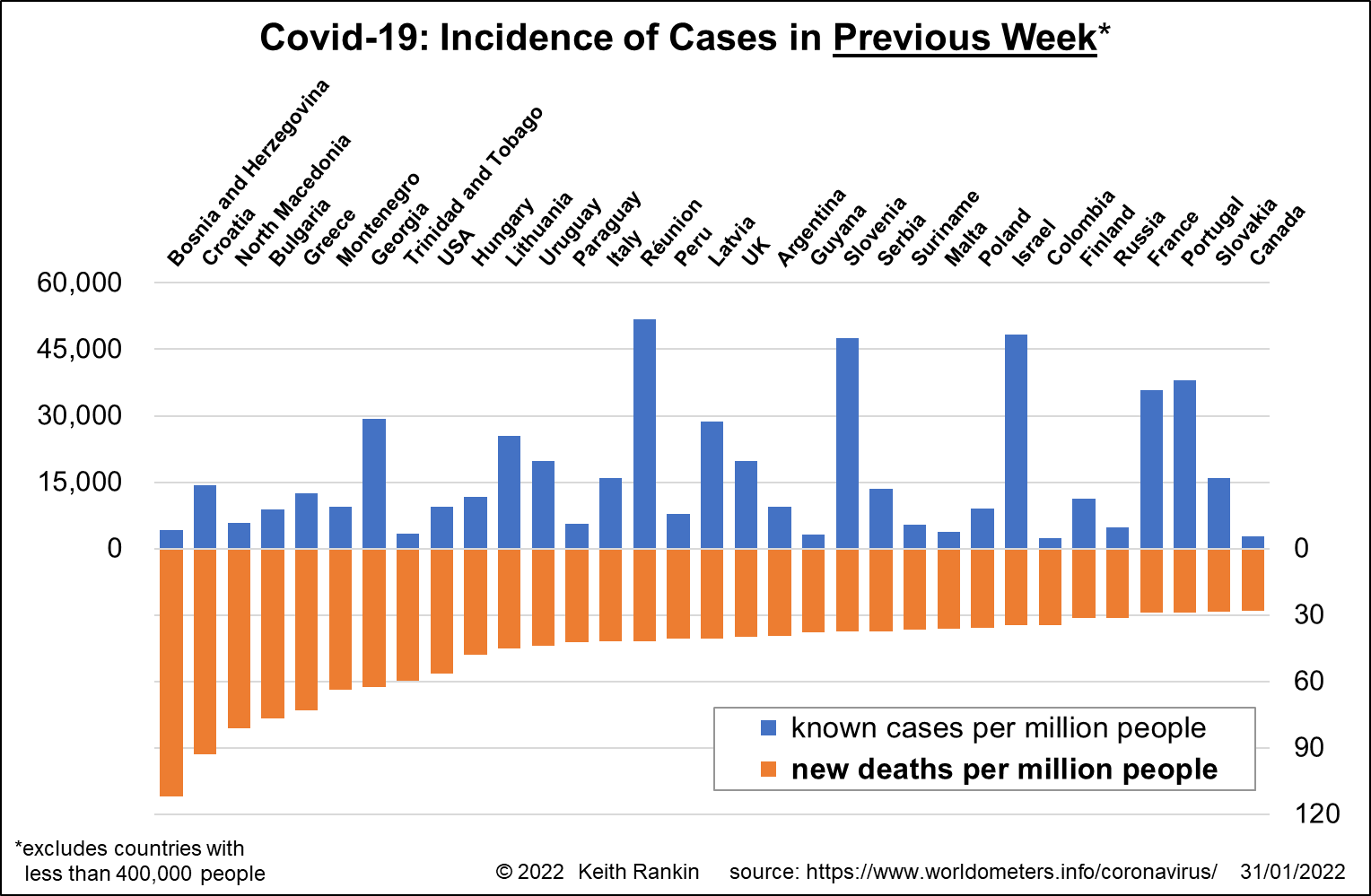
Only countries with more than 400,000 people
Chart by Keith Rankin.Chart by Keith Rankin.
An important feature of the latest death statistics is the return of South America, a region in which much of the immunisation immunity of 2021 will have waned substantially.
Otherwise, Eastern Europe’s substantially unnoticed tragedy continues; including the covid tragedy in Russia (estimated 1.1 million deaths from Covid19) and Ukraine (estimated 200,000 deaths in a country of 40 million people).
Of particular interest to the New Zealand establishment and New Zealand media – in our western liberal democracy (albeit, like others, an increasingly frayed democracy) – is the covid experience of other liberal democracies our size or bigger. A number of these countries appear on this second pair of charts, including Australia and Canada. Indeed, most western liberal democracies appear on one or both of these charts. (Indeed, I think that New Zealand and Ireland are the only such countries not to feature.)
The last chart, which sequences countries by cases, includes most of West Europe’s social democracies. (Iceland is too small for this chart, but is on the very first chart, above.) By and large these data are a result of high rapid-antigen testing revealing that just about everyone has been exposed to covid; though few who were not already sick have become sick from Omicron. The two most prominent of these countries – Denmark and Israel – are both massively vaccinated, and, as a result, have hospitals that are underwhelmed by covid. (Facemasks have achieved nothing; vaccinations have been critical.) Denmark is abandoning all restrictions – including mask-wearing – while reported case numbers are at their peak.
My sense is that most of these countries are currently experiencing their final significant outbreak of Covid19.
The two countries which are on the ‘deaths chart’ but not on the ‘cases chart’ are United States and Canada. These two countries are particularly notable in that their high death numbers are clearly much more than a statistical artefact. The very cold winter may be a factor. So will lower vaccination rates in the United States. So will be the high continued numbers of Delta cases in the US – including my brother-in-law who got very sick from Delta in January. (New Zealand still has Delta cases, but most of those sufferers will be under the belief that they have the less-severe Omicron; Delta was ‘so last year’!)
Re Canada, I have this comment from my contact in Winnipeg, after having shovelled a metre of snow from her back yard: “Our new [Manitoba] Premier Stefanson has decided ‘the government can’t protect everyone’ so she has discontinued rapid testing for the majority of ill citizens and says that ‘if you’re sick you probably have covid, so stay home’. Therefore, there are no actual counts of active cases. Some news reports earlier this month estimated (based on modelling) the active cases at ‘over 40% of the population of the province’, but we have no way of knowing.”
What will happen in New Zealand is highly uncertain; we can say the same for Western Australia. One possibility is that New Zealand will get a ‘perfect storm’ of covid in the winter months – June to August – when our lack of immunity due to natural exposure (to covid and to previously endemic ‘cold’ coronaviruses) could become apparent. (We had an RSV ‘cold’ epidemic last winter, and have never been told the toll of that.) If we pay attention to last November’s deadly second Delta outbreak in Europe – and, seemingly, nobody does pay attention to that any more – we see that the driving force was waning immunity from both natural exposures and vaccinations. It was that late Delta outbreak that brought to our attention the need to boost our erstwhile high ‘full’ vaccination status.
Fortunately, if the perfect storm scenario does take place, it will most likely be the less severe Omicron variant. Nevertheless, we can expect Covid19 death rates comparable to those Canada is facing at present.
***
Keith Rankin (keith at rankin dot nz), trained as an economic historian, is a retired lecturer in Economics and Statistics. He lives in Auckland, New Zealand.
Do you love spending time in nature? Or are you a city slicker, happier in the concrete jungle than the great outdoors? Back in 1986, the US biologist EO Wilson proposed that humans have an innate connection with the natural world, an idea known as biophilia.
Almost every aspect of our lives depends on nature, from food and shelter to fuel and clothing. Yet some of us are much more “into” spending time in nature than others.
To try to understand why, we studied more than 1,100 pairs of twins to find out how much of our connection to nature might depend on our DNA. We found almost half the variation in people’s connection to nature can be put down to genetics.
Perhaps our affinity for nature is inherited. Or perhaps we get it from environmental factors – such as beautiful forests – in the places we live. Or again it might come from our cultural milieu such as the books we read or the TV programs we watch.
Finding answers to these questions might help us work out how to get some nature back into people’s lives.
Studying twins
We studied more than 1,100 pairs of twins to understand the origin of affinity for nature, and report the results in a study published today in PLoS Biology. It turns out identical twins are much more similar to each other in the strength of their connection to nature than non-identical twins.
Statistical analysis of the results showed 46% of the variation in connection to nature, as measured on a psychological scale, can be explained by genetic factors. Even the amount of time we spend in our own backyards and visiting local parks seems to have a strong genetic basis.
Studies of twins show 46% of the variation in connection to nature as measured on a psychological scale can be explained by genetic factors. Shutterstock
Why the strong genetic influence on our love for nature? Well, one can imagine a strong affinity with nature conferring a significant survival advantage for early humans. This might have led to the formation of complex networks of genes that govern how we relate to nature, and how we behave in it.
Despite the clear role of genetics, our results show other factors actually shape most of our affinity to nature. These might include childhood holiday destinations, the examples set by our parents, friends and other family members, educational experiences, and whether we live in a biodiverse area.
This is good news, because many of these things are under our own control.
Nature and health
Nature–based health interventions such as green gyms or environmental volunteering can improve physical, mental and social health and well-being. Nature-play initiatives such as the Green Passport for Queensland kids can give children powerful experiences of nature that could benefit their health over the long term.
A deeper question, and one we don’t yet have a clear answer to, is whether spending time in nature fosters our sense of environmental concern, and in turn, support for nature conservation.
The US ecologist James Miller has argued interactions with nature are crucial in sparking support for protecting nature. Yet an Australian study led by environmentalist Jessica Pinder showed conservation concern among Australian undergraduates was more strongly associated with social and cultural experiences in childhood than with the amount of time a person spends in nature. Clearly, there is much more to learn in this area.
Ultimately, we now know despite a genetic basis for our affinity to nature, much of it also depends on other factors that are decidedly under our own control. So make a resolution today to rekindle your connection to the great outdoors!
Richard Fuller receives funding from the Australian Research Council.
Brenda Lin receives funding from the Commonwealth and State governments. She is affiliated with CSIRO, which sponsors The Conversation. She is also a STEM Ambassador with Science & Technology Australia.
Danielle Shanahan is affiliated with Zealandia’s Centre for People and Nature, and Victoria University of Wellington.
Kevin J. Gaston receives funding from UKRI.
Chia-chen Chang, L. Roman Carrasco, and Rachel Oh do not work for, consult, own shares in or receive funding from any company or organisation that would benefit from this article, and have disclosed no relevant affiliations beyond their academic appointment.
Eight years since the Russian annexation of Crimea, Ukraine is facing another threat from its eastern neighbour. Russia has amassed an estimated 130,000 troops and military equipment along its borders in recent weeks.
Ukraine is literally surrounded by Russian troops: along its northern border with Belarus, in Russian-occupied eastern Ukraine (Donetsk and Luhansk), in Crimea to the south, and in Transnistria, the Russian-occupied part of Moldova to the west.
Despite these disturbing developments, Russia continues to deny any planned aggression towards Ukraine. Russia is not only the second-largest natural gas producer in the world – it is also extremely good as gaslighting.
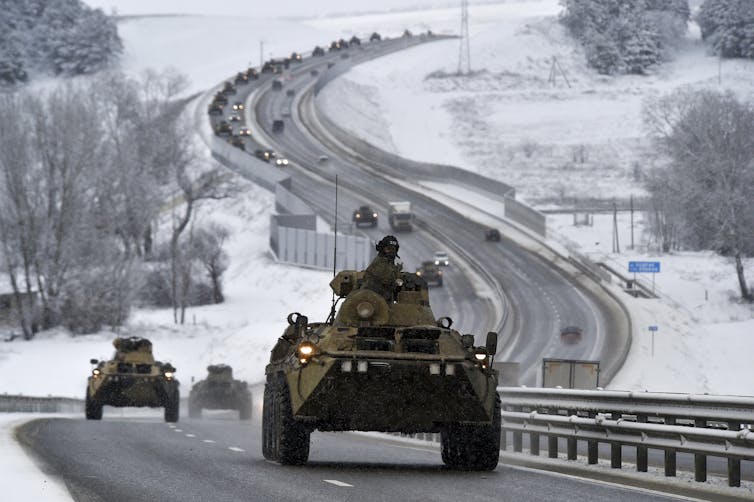
A convoy of Russian armoured vehicles moving along a highway in Crimea. AP
Russia’s ‘reflexive control’ strategy
As the official Russian rhetoric goes, Ukraine and Russia are “one people” belonging to the same historical and spiritual space.
However, this claim is a historical fabrication. It is strategically deployed to de-legitimise Ukraine’s claims to nationhood – and by extension, sovereignty – and bring it back into Russia’s orbit of influence.
The significant military buildup on Ukraine’s border is part of a larger coordinated geopolitical offensive called “reflexive control”.
Reflexive control involves a wide variety of hybrid warfare tactics, such as deception, distraction, deterrence and provocation. We’ve seen these tactics playing out in the rising number of cyber attacks on Ukraine’s government servers and energy grid, to the Russian state-sponsored disinformation campaigns aimed at sowing distrust and discord in the country.
In many cases, these disinformation campaigns have originated online with the help of the Internet Research Agency, a troll factory in Russia.
Reflexive control also involves the potential for so-called false-flag operations – terrorist acts allegedly committed by Ukraine on Russian territory or involving Russian citizens. These types of incidents can be used to justify a military incursion into a sovereign state.
A history of interference and disinformation
The roots of Russian interventions in Ukraine go much deeper than its illegal annexation of Crimea and occupation of large parts of Donetsk and Luhansk in 2014, and its actions on the border today. In fact, Ukraine has been subjected to Russian interference since becoming an independent state in 1991.
This influence has manifested in myriad ways, from economic and political coercion to cultural conformism. This includes weaponising Ukraine’s energy dependency on Russia, a near-complete russification of Ukraine’s media, attempts to install pro-Kremlin governments, and even high-profile assassinations of journalists and political activists.
Ukraine has seen two major waves of popular protests against rising Russian influence. The first was the Orange Revolution of 2004 following Russian attempts to rig Ukraine’s presidential election to try to ensure the pro-Russian candidate, Viktor Yanukovych, won.
Then-opposition leader Viktor Yushchenko addressing a crowd in Kyiv during the Orange Revolution in 2004. Alexander Zemlianichenko/AP
Another protest broke out in 2013 after Yanukovych, then president, refused to sign a political association agreement with the European Union, opting instead to join a customs union with Russia. This was known as the Revolution of Dignity, or the Maidan Revolution.
In both cases, Russian official rhetoric used these revolutions as evidence of Ukraine being subverted by the West. This effectively de-legitimised their true causes and the public sentiment around them.
One of the most prominent Russian narratives was that Ukraine was a “failed state” – a country governed by chaos, swarming with radicals and fascists, and on the brink of a civil war. Conveniently, this vilification also served as a cautionary tale to prevent any pro-democratic protests from erupting in Russia.
The Maidan Revolution eventually succeeded in Yanukovych being removed from office. But Russia took advantage of the transition of power by sending uniformed men with no insignia to covertly take over government buildings in Crimea. It was the most significant breach of territorial integrity in Europe since the second world war.
A secession referendum was then held in Crimea that was the exact kind of “democracy” the Ukrainian people have fought so hard to overthrow.
It does not take a mathematical genius to question the validity of a near-unanimous vote to secede (96.77%) in a region comprised of only 60% ethnic Russians, many of whom had Ukrainian citizenship and did not support the secession.
Russian-orchestrated “insurgency” in the east
Russia’s next move was to orchestrate an insurgency in eastern Ukraine stoked initially by Russian special operations units and paramilitary groups.
I have written extensively on how a handful of citizens in the eastern Ukrainian city of Mariupol were able to successfully counter a so-called “insurgency” after seeing their city suddenly flooded by strangers who spoke an unfamiliar dialect of Russian, had a hard time paying in Ukrainian currency and repeatedly asked locals for directions.
These strangers – locals called them “political tourists” – were sent to Mariupol from the Russian city of Rostov-on-Don to instigate pro-Russian demonstrations. Similar operations took place throughout 2014 in many other Ukrainian cities.
In hindsight, Ukrainian activists were perhaps the only reason the Russian army couldn’t advance further into the country eight years ago. They quickly identified these patterns across the country and organised against the interlopers.
Yet, as is often the case with gaslighting, the burden of proof is on the victim – many in the West still repeat Russia’s “civil war” narrative to this day.
In the face of such an existential threat, Ukraine has experienced profound social, political and cultural transformations.
Over the past eight years of occupation, hundreds of grassroots volunteer initiatives have stepped up to help the country recover from the humanitarian crisis stemming from the long-running conflict and counteract a full-scale military invasion.
This type of civil society activism is the cornerstone of democracies around the world. There is still a long way to go in Ukraine, but these emerging foundations can now be observed in nearly every aspect of public life.
Ukrainians do not want democracy because they are being “subverted” by the West, as Russia claims. Ukrainians want democracy because it paves the way from an imperial Russian borderland to a sovereign statehood.
Allowing Russia to thwart these aspirations and re-invade Ukraine sets a dangerous precedent for other sovereign states trying to break away from their violent and traumatic past.
Olga Boichak is affiliated with Ukraine Democracy Initiative – an international nonpartisan network of researchers, field experts, civic activists, journalists, and policy-makers working on the topic of democratic transformations in Ukraine.
The requirement to show proof of two doses of a COVID vaccine to do things such as eat out, go to the pub and visit sporting events is still in place across parts of the country including Victoria, Queensland and Western Australia.
Part of the rationale for such mandates is to limit transmission of the virus, and therefore also protect vulnerable people who may be at risk of severe disease.
But the arrival of the Omicron variant has changed the COVID landscape in Australia. Emerging evidence suggests two doses of COVID vaccine provides little protection against infection against the highly-infectious Omicron variant – though they’re still effective against severe disease.
So we asked five experts, is it time to rethink vaccine mandates for dining, fitness and events?
New Zealand’s critical shortage of specialist nurses made headlines again this week, but it’s not the country’s only pressing medical need.
The Association of Salaried Medical Specialists (ASMS) has estimated almost 3,000 more GPs and specialist doctors, and 12,000 more nurses, are needed to match Australia’s per-capita staffing levels.
The predicted impact of Omicron adds to the urgency, but since the beginning of the COVID-19 pandemic there have been regular reports of a medical workforce in crisis, with longer waiting times and patients being turned away.
Border closures and immigration restrictions have only made the doctor shortage worse. We need to ask, therefore, why many foreign-trained doctors currently living in New Zealand are still not allowed to work.
Brain drain and brain gain
Doctors have always moved around. It’s been an important aspect of the medical profession for centuries, as a way of learning new skills and knowledge. According to a 2019 Medical Council workforce survey, around 40% of New Zealand-trained physicians from the 2005 cohort were living overseas after ten years.
To compensate for this “brain drain”, which leads to roughly one in six New Zealand-trained doctors working overseas, doctors from other countries are encouraged to immigrate. New Zealand’s health system depends on this migrant “brain gain”.
To make matters worse, not all of those who stay are able to work as doctors in their adopted country.
Long pathways to practising
The reason lies in the way New Zealand licenses foreign doctors depending on where they trained. Those with training and experience in “comparable health systems” can generally practise as soon as they receive a job offer.
That comparability is measured by indicators such as life expectancy and doctors-per-capita in other countries. It’s hardly surprising that only wealthier countries are on the list.
Doctors who can’t claim comparability must first complete a medical knowledge exam from either Australia, the UK, US or Canada, pass an English test and then pass the New Zealand Registration Examination (NZREX).
This process can cost more than NZ$10,000 and takes years – especially since COVID-19 has meant half of the exam offerings were cancelled in 2020 and 2021, adding to wait times.
Once a doctor has passed the exams and met the required standard, they must still complete two years of supervised work before being licensed.
This is where the catch comes: first-year supervised positions are limited, prioritised for New Zealand medical graduates and rarely offered to foreign-trained doctors.
Most doctors from comparable health systems, on the other hand, don’t need to take the NZREX or complete two years of supervised work. By not competing with New Zealand medical graduates to be licensed, they don’t experience the same bottlenecks.
Of the foreign doctors who passed the NZREX between 2016 and 2021, just over half now have provisional registration and can work. This leaves 94 who have passed the exam in the past five years but are still not licensed to practise medicine.
For those who passed the exam earlier, the results are valid for only five years. If they haven’t been able to secure a supervised position in that time, they are back to square one.
A wasted workforce
The government has an ongoing recruitment campaign to lure overseas doctors. The Medical Council is also looking for ways to simplify the pathway for doctors from comparable health systems.
Despite the obvious need, qualified immigrant doctors have reportedly been denied work opportunities at understaffed hospitals during the pandemic.
It is difficult not to see an apparent assumption that a doctor’s competency as a physician is associated with the country they are from. This is not an unusual phenomenon – migrant physicians from non-Western backgrounds often experience barriers to registration and licensing in their destination countries.
But in New Zealand the disadvantage some foreign doctors face also extends to the licensing pathways. To be registered, those from non-Western countries must demonstrate clinical skills, including showing Māori cultural competency, while those from “comparable health systems” don’t.
One might ask, if cultural competency is important in the context of New Zealand’s inequitable health outcomes, why shouldn’t all foreign doctors be required to demonstrate this before being licensed?
With so many foreign-trained doctors in New Zealand unable to work, even after passing their licensing exams, we argue the problem is less about brain drains or brain gains. Rather, it reflects a “brain waste” for both the doctors themselves and for Aotearoa New Zealand, as Omicron threatens to stretch a system already in crisis.
Sharon McLennan received funding from the Royal Society of New Zealand’s Marsden Fund.
Johanna Thomas-Maude does not work for, consult, own shares in or receive funding from any company or organisation that would benefit from this article, and has disclosed no relevant affiliations beyond their academic appointment.
The only species of Australian bird which remains unphotographed. This is one of the most accurate illustrations of the species. John Keulemans published in Gregory Mathews ‘The Birds of Australia’ 1911, Author provided
In humid savanna on Cape York Peninsula, February 5, 1922, a man was on the hunt with a local Indigenous guide. They had just heard their quarry calling among the tall grass – a low “oomm, oomm, oomm” – before it burst into view with a flurry of wingbeats. A loud shotgun blast, and the bird dropped to the ground.
The bird was a buff-breasted button-quail, and the collector was Australian field naturalist William Rae McLennan. Later that evening he would have skinned and stuffed the bird, turning it into a museum specimen, before describing the encounter in his diary.
This skin was the last of the species ever collected. A century later, we have still yet to confirm any sightings of this mysterious, native bird.
I’ve spent four years searching for the buff-breasted button-quail, walking hundreds of kilometres and spending months scouring practically every locality where the species had ever been reported. All I’ve been able to find is its more common cousin: the painted button-quail.
Still, my ongoing research has brought us a step closer to solving this mystery and I remain hopeful the bird is still in existence. If it is, it urgently needs our help.
The tall Messmate savanna (Eucalyptus tetrodonta) just north of Coen in Cape York Peninsula. The site where McLennan collected the last buff-breasted button-quail in 1922. Patrick Webster
Searching for a lost species
McLennan’s diary from that wet season of 1921-1922 has remained the only detailed descriptions of the buff-breasted button-quail’s ecology. Some 60 years later in 1985, it was “rediscovered” just west of Cairns, and this launched dozens of new sightings by birdwatchers and several research projects over the next few decades.
Unfortunately, none of these reports or research endeavours produced anything more than brief sightings of the bird, typically only split-second views as it flew off from under their feet. No photos, no specimens, nor any other verifiable evidence has been produced.
For my doctoral project on the species, I joined the RARES research group at the University of Queensland in 2018. Our research team aimed to find a population, study its ecology, determine what threatening processes had led to its rarity, and learn how it could be conserved.
There were a few times in far north Queensland’s wet-season – supposedly the best time of year to see buff-breasted button-quail – when I saw birds fitting its widely accepted description: they were large, with sandy rufous (reddish brown) back and rumps, and contrasting dark primary feathers.
But whenever I thought I saw one on the ground, it turned out to be a painted button-quail. These differ by having a bright red eye and a grey breast.
One of the many painted button-quail found over the course of the project. This male was found 150km north of their currently recognised distribution. Patrick Webster
Indeed, my research team and I became increasingly apprehensive about the status of the buff-breasted button-quail, and began questioning the features used to separate them from painted button-quail. This prompted a thorough investigation of all historical reports, and the reliability of characteristics used to identify the two birds in the field.
Has the bird been misidentified?
To determine how best to separate these two species in the field, I examined over 100 button-quail skins in museum collections worldwide. I also caught and photographed painted button-quail throughout north Queensland. What I discovered was intriguing.
Several supposedly key characteristics of the buff-breasted button-quail either did not exist, or were actually features of the painted button-quail.
For instance, it was commonly reported that buff-breasted button-quail were much bigger than painted button-quail. My study of museum specimens, which is not yet published, showed the two are actually the same size.
I also discovered a previously undocumented colour variation in the plumage of painted button-quail. At the start of the wet season when they begin breeding, the female’s typical grey plumage is replaced by a much brighter rufous plumage. This brighter plumage is very similar to the sandy rufous colour expected of a buff-breasted button-quail.
The variation in plumage of female painted button-quail. Left, the bright rufous plumage found in the wet season. Right, the dull grey plumage found in the dry season. Patrick Webster
This apparently breeding-related change in plumage was completely unknown, and its seasonal timing coincided with an increase in reports of the buff-breasted button-quail.
In short, with no hard evidence of the buff-breasted button-quail’s existence for 100 years, many of the most recent sightings of the species could actually have been the much more common painted button-quail.
This means the buff-breasted button-quail is likely far rarer than we could ever have ever feared.
What does its future hold?
When McLennan collected the last buff-breasted button-quail skin, the Tasmanian tiger roamed Tasmania’s forests, and the paradise parrot was still nesting in termite mounds in south east Queensland.
We realised too late that these unique species were in decline. Have we made the same mistake with the buff-breasted button-quail?
We already knew the bird was rare, but was our confidence in the species’ status misplaced, propped up by misidentifications of a more common species?
Aside from a clutch of eggs collected in 1924, there has been no incontrovertible proof the species continues to exist. Our extensive searches at sites where it was once found have failed.
One of the museum specimens of buff-breasted button-quail collected by William McLennan during his expedition in 1921/22. Patrick Webster
We also know the bird communities of Cape York have been changing at a rapid rate, mostly due to the impact of changed fire patterns and cattle grazing. Other iconic Cape York species – such as the golden-shouldered parrot and red goshawk – have also declined over the past decades.
It seems likely the buff-breasted button-quail has suffered the same fate. It may not be extinct, but our research suggests it may only be hanging on by a thread, at best.
This 100-year anniversary is an opportunity to recognise the bird’s dire situation. Our new findings should prompt the federal and Queensland governments to act.
First, they should invoke the precautionary principle, which is to improve conservation actions for the species in light of its uncertain status. They should also immediately up-list the species to critically endangered, as right now it’s listed only as endangered.
Second, they should urgently provide the resources needed to re-evaluate the species’ conservation needs, as the status quo is not working.
We hope these efforts will prove the species is still in existence – perhaps living in a previously unsurveyed part of Cape York – and not another one that has disappeared on our watch.
Patrick Webster receives funding from the Australian Government, National Environmental Science Program.
The huge storms many Australians have experienced recently have damaged or toppled old trees which had withstood the vagaries of our weather for the past century or more.
This is what we can expect as our climate changes, with storm events more frequent, wind speeds stronger and rainfall heavier. These all contribute to trees falling or dropping large branches.
But there’s something you might not think of as linked to climate change. As storms intensify in our new climate, we’re likely to see more lightning strikes. And that means our tallest trees will be hit more often.
Is lightning always lethal to trees?
Most of us are used to the rules we were told about lightning and trees from childhood. Don’t shelter under a tree during a thunder storm. Lightning never strikes in the same place twice.
How do these rules apply from the perspective of a tree? Old trees are often the tallest thing around. When lightning strikes, they are more likely to be struck. You’d think a lightning strike would be game over for most trees. In fact, the effects can vary enormously.
The lightning strike pictured hit a tree in Sydney’s Royal Botanic Gardens. Channel 7
The damage done depends on the tree species, whether it was sheet or forked lightning, how wet it was and where the lightning hits the earth and dissipates.
Strikes can be up to a million volts, generating temperatures up to 20,000℃. For a tree unlucky enough to be hit by one of these events, it’s all over. The sap inside the tree instantly turns to steam, which can cause it to literally explode, or lose great strips of wood and bark. It would be an excellent idea not to be under a tree when this happens.
Trees are not very good conductors of electricity. If the trunk of the tree is very wet from rain, the lightning will course through the water and dust on the trunk down to the earth, causing little damage to the tree itself. You can sometimes see the sooty residue left on parts of the tree after a strike like this. You may well notice the tree will appear to be undamaged and continue to grow well.
Sometimes, lightning will strike one side of a tree. Such a strike often kills the tree’s living tissues in a strip running along a large branch, vertically down the trunk to the ground, or even ending a metre or two above the ground. You’ll notice the lightning scar on trees like these, as it’s very visible. The wood behind the scar often decays over time, leaving a hollow behind. Trees can often recover from strikes like this, if the scar and decay are not too great.
Unlucky trees can explode from a strong lightning hit. Shutterstock
There is a splendid variegated elm growing at Melbourne University’s Burnley Campus which was struck by lightning almost 30 years ago. Many of us thought it would die, but it defied the odds. Over the following years, I observed the long, narrow lightning scar deepening as the wood decayed. As more years passed, its trunk broadened and the scar eventually grew over. If you go past today, you will see no evidence of wounds or scars. But you and I know a secret – its trunk is hollow but strong.
Lightning can cause unexpected tree deaths well after the strike
For some trees when there is a small or no lightning scar, the tree appears to be fine only to die suddenly between two and 12 months later. This may be due to the strike causing a serious disruption to the tree’s metabolism or because it’s been unable to fend off fungal disease or insect pests after being weakened by the strike.
If the lightning goes to the earth through the roots, there may well be no symptoms of a strike visible above ground. Underground, it can be a different story, with potentially catastrophic damage to the root system. If the whole root system is damaged, the tree can die quickly, or fail over time as the roots decay. If only some roots have been killed, the tree may decline slowly for no obvious reason.
Some trees do seem more susceptible to lightning than others. I’ve seen a number of pines and other conifers die after a strike, for instance, while many eucalypts and oaks recover and remain healthy. It is possible to install a lightning protection system on a tree, but they’re costly and rarely installed in Australia.
If you know a tree has been struck by lightning, you would be wise to keep an eye on it. Often, the serious damage is not immediately obvious and will only be revealed in the weeks and months ahead. For some trees, the full impact only becomes clear in the following spring when they fail to recover or resume normal growth. An inspection by a qualified arborist would be a good investment.
You may well need an arborist to help with a related climate change driven threat to trees. That’s wind. In places like Victoria, trees cope with the prevailing winds from the west or north west by developing stronger root and branching systems. But now we’re seeing strong winds and severe storms coming from different directions.
If the wind comes from an unusual direction, a tree can be damaged or fall despite its age and past experience. The storm which pillaged Victoria’s Dandenong Ranges last year toppled many old, strong trees and led to long-lasting power outages because the winds came from a different direction. An arborist can check if your trees have been weakened by these new threats.
Wild storms saw thousands of trees fall in the Dandenong Ranges last year. Shutterstock
Lightning really does strike twice
When you think about the rules we were taught about lightning as children, you can see why the main one exists. You do not want to be near a tree during a thunderstorm.
Some rules aren’t quite accurate. The tallest and oldest tree in an area would be very likely to have been hit by lightning, and not just once but often. So yes, lightning can strike twice in the same place.
In fact, lightning is likely to strike in exactly the same place – the top of the tallest tree – every few years until the tree is no longer the tallest around, as other trees grow up and around it. Even for old trees, there is safety in numbers.
Gregory Moore does not work for, consult, own shares in or receive funding from any company or organisation that would benefit from this article, and has disclosed no relevant affiliations beyond their academic appointment.
Can we grieve not for a person but for an institution? Should we be angry over possibilities destroyed, young talents denied a chance to flourish? Is there any point in lamenting greed, short-sightedness, the brutality of power?
As I write this, in September 2021, Australian higher education is in a deeper hole than it has been since the 1950s, when the creaky collection of universities inherited from colonial times, under severe stress, was rescued by the Menzies government. I worked in that rebuilt sector as student, teacher and researcher for about 50 years. Then I retired and wrote a book called, with a mixture of irony and hope, The Good University.
In the past couple of years I’ve watched the COVID-19 pandemic place huge new demands on university workers – my colleagues and friends – who had already come under heavy stress. This is a brief reflection on what has happened and why, and how we might do better.
The history matters
We’ve only had a national public university system for two generations; the sector has been through mighty changes in a short span. At first, Australian universities were separately funded by the colonial and state governments that set them up.
Building a national system made sense under the agenda of modernisation, industrialisation and nation-building that was more or less shared by Liberal and Labor parties in the postwar decades. High-school enrolments boomed in the 1950s and undergraduate enrolments followed, spurring governments to launch new universities as well as expand the older ones. National co-ordinating bodies were established.
At the same time there was a spurt in higher degree studies, giving Australia, for the first time, a capacity to produce its own research workforce. This was, potentially, a revolutionary change for the economy and society – a potential never realised.
Universities in the 1950s and 1960s were not comfortable places. They were run by an oligarchy of male professors who were linked, especially in faculties of law, medicine and engineering, with professional establishments outside. The odour of the British Empire still hung around academic life. Curricula were monocultural, despite the mass immigration of Australia’s postwar decades and the presence of Indigenous cultures.
There’s research showing that many of the students were quite alienated from these institutions. The majority were enrolled in bread-and-butter “pass” degrees; they listened to lectures and sat for exams but got little attention from academic staff. Only a minority were in honours streams with a more challenging agenda.
Through the 1960s, students increasingly became politicised in groups that opposed the war in Vietnam, supported Aboriginal causes and demanded democratic reform of the universities themselves.
When the Whitlam government took over the entire funding of universities in the 1970s and abolished fees, the stage was set for further expansion. New suburban and regional universities were launched, and the combination of rapid growth and new institutions made space for experiments in curriculum and teaching methods. New fields such as urban studies, environmental studies, women’s studies, information science and molecular biology opened up.
The opening of Deakin University was part of the 1970s expansion and diversification of the university system. Bob T/Wikipedia, CC BY
Both the students and the university workforce became more diverse. Yet universities remained privileged institutions, gateways to the elite professions. Most vocational education was the business of TAFE (Technical and Further Education) colleges and the Australian equivalent of polytechnics, the CAEs (Colleges of Advanced Education).
By the mid-1980s, as the political system shifted towards a free-market agenda, a new kind of pressure was exerted on education. At the end of the decade, Labor’s education minister, John Dawkins, introduced dramatic changes for universities. Fees were restored, the CAEs were folded into the university system in a chaotic free-for-all of amalgamations and takeovers, co-ordinating and consultative bodies were ditched, and university administrators were encouraged to become corporate-style managers and entrepreneurs.
To do him justice, Dawkins wanted to widen access to universities. Basically, he instigated a fresh expansion of the system by beginning to privatise it. Though a less obvious privatisation than the outright sale of Qantas and the Commonwealth Bank, this would have huge consequences in the long run.
University enrolments did grow, while the proportion of public funding in universities fell. Fees rose steadily, and student debt – more or less hidden by the deferred payments of HECS and then HELP – grew.
Some universities became heavily dependent on fees from overseas students. University managers’ salaries and bonuses rose steeply, losing any connection with university workers’ pay packets. (By 2019, Australian vice-chancellors’ average package was a million dollars a year, very high by global standards.)
The system began to split, with a cabal of older universities declaring themselves an elite – the “Group of Eight”, derisively known as the Sandstones. Universities were gradually redefined as market-oriented, competing firms rather than co-operating parts of a public service.
More and more executives and directors from for-profit companies were appointed to university councils, bringing their business connections and their business ideology. University managers centralised decision-making in their own hands, imposing “performance” demands on staff who had previously been trusted to do their work as professionals.
Managers increasingly saw their younger workforce not as the teachers, researchers and operations staff of the future but as a budget cost needing to be reined in. The result has been a massive casualisation of the teaching workforce, outsourcing of more and more general and professional staff, and a growing distrust between the university workforce and its managers.
This was the situation when I wrote The Good University, in the years after a long industrial struggle at the University of Sydney – an enterprise-bargaining affair in which management tried hard to degrade our conditions of employment. Meditating on the picket line, I thought that university workers had been on the back foot too long, responding to every policy disaster from Canberra or aggression from management. To shift the terms of debate required serious rethinking of what these institutions were.
I tried to re-examine the work that universities did, their social role, their history (much more varied and interesting than most people know), and what alternatives to the dominant model could be found for curriculum, control and social purpose. I thought we needed, above all, fresh ideas about the kind of university that would be good to work in, good to study in and worth fighting for.
Well, the book had been out for a year, and I was in the United States on a tour to publicise and discuss it, when the COVID-19 pandemic arrived. I scrambled home on one of the last scheduled Qantas flights and went straight into self-isolation.
Nothing could isolate the universities from the pandemic. In Australia as overseas, campuses were closed as lockdowns of regions and cities began. University staff worked very hard to shift courses online, and that intricate work is still under way nearly two years later. Students too had to change their routines and methods, learning to work from home, learning to study in isolation and needing their own access to the internet.
These changes happened worldwide, but the crash was particularly brutal in Australia. The national government, so slow to organise a vaccination program, rushed to close the borders – that was its primary response to the pandemic, eerily matching its response to asylum seekers.
Border closures suddenly cut off the flow of overseas students, who before 2020 had been paying about half the total fee income received by Australian universities. This plunged many institutions into financial trauma – one reason for their heavy job losses, now estimated at 40,000 across the higher education sector.
I doubt that the Morrison government worried about this effect. When the JobKeeper scheme was introduced in the first half of 2020, subsidising businesses to keep their workers employed during the pandemic, the government carefully excluded universities.
In June the same year it revealed its ideas about higher education in a document called the Job-Ready Graduates Package. It’s the most miserable excuse for a higher education policy in the 80 years that such documents have been written in Australia. In the name of vague “national priorities”, the Job-ready Graduates Package arbitrarily doubled fees for arts and humanities degrees, cut overall support for areas (such as nursing and education) that it claimed to encourage, introduced perverse trade-offs likely to reduce support for research and, in the background, cut government support for the whole sector.
What is going on here? In general terms, both the Coalition and Labor have been reducing the capacities of the public sector for a generation; this is another step in the same direction.
More specifically, there is a culture-wars agenda. The reactionary wing of the Coalition, in step with the Murdoch media, doesn’t like humanities and social sciences, basically because they encourage critical thinking (called “cultural Marxism” in recent right-wing rhetoric). Accordingly, the policy makes humanities and social sciences more difficult to access and burdens those who do with heavier debt.
Perhaps most importantly there’s an attitude that flows from overall economic strategy. When the Menzies government expanded higher education, the new funding made sense within the state-guided industrial development strategy of the time. That development strategy was abandoned in the neoliberal wave of the 1980s in favour of deregulation, “opening” of the Australian economy and a search for comparative advantage in global markets.
The industries with big comparative advantages in the short term were mining coal, mining iron ore, mining other kinds of rocks, running sheep and cattle, and growing wheat. These are industries with low demand for highly educated workers and little demand for a research capacity in Australia, since their technology is imported. In the logic of free-market fundamentalism, Australia hardly needs universities at all.
It might be politically embarrassing to close them down, but it’s easy to see why in 2020 the Coalition government would refuse JobKeeper subsidies and leave universities and university workers to sink or swim in the pandemic. It’s not clear that the Labor leadership would have done anything very different.
Public still believes in the public university
Yet there is considerable popular support for higher education. Before the COVID-19 pandemic, universities and colleges around the world were teaching 200 million students, representing a vast increase in recent decades. Domestic demand for university places has held up in Australia, despite the pandemic.
Managers and governments might treat universities as competitive firms, but the public still tends to see them as a public service. Universities do well in surveys of public trust in various institutions.
Universities could have a more secure position in the economy, the culture and public policy. To reach this new position would take more than a public-relations effort. It would need a serious reconstruction of the way universities work as organisations and the way they serve their public.
It’s highly unlikely that Universities Australia, the organisation that claims to be “the voice of Australia’s universities”, would support reconstruction: it represents the managers who benefit from the current regime. But managers aren’t the only people on campus. There are multiple groups and different interests.
The National Tertiary Education Union, which represents the bulk of university staff, has been discussing alternatives for the sector and paying more attention to casualisation. Student organisations, too, could support a different future.
Let’s consider just one aspect of the work done in universities. The commonest image of university teaching is a lecture. Holding forth to students sitting in neat rows is what professors and lecturers are supposed to do, even if the podium is replaced with a screen. But that’s not the heart of higher education.
University teaching builds a relationship between groups of students who have adult intellectual capacities, and the complex structure of research-based knowledge. It does not simply train young people for current jobs; it educates graduates who can think for themselves from a base of solid knowledge and relevant method.
The process needs co-operation across the university workforce, a supportive environment and an intricate, two-way learning process between teachers and students. That can’t be commanded from above nor automated from outside. Universities work from below, and that is their strength. There is democratic potential in the nature of the work itself.
The good university isn’t a lost cause
There has been “crisis” talk about universities for a generation. I was sceptical of it, but I have to say that the language of crisis makes more sense now. The riotous growth of managerial power, the level of distrust between management and the workforce, the stresses on university workers, their increasingly precarious employment, government hostility or indifference, plus the effects of the COVID-19 pandemic – that’s a more toxic combination than I have ever seen before.
But, classically, a “crisis” is not just a threatening situation. It’s a turning point, which may be for the worse or for the better.
For the better – how? There’s a need for imagination, creating new models of university life and work. There’s a need for internal reform, for industrial democracy. There’s a need for policy work, for more stable funding and more secure jobs. There’s certainly a need for more rational co-operation among universities. There’s a need for more effective support from universities’ multiple constituencies. And underlying all of these, there’s a need to organise – among university workers, among students and their families, and beyond.
Coming back to the questions I raised at the start, yes, there is reason to grieve for what’s been done to institutions that were flourishing, though flawed. And there’s reason for anger at what’s been done to a whole generation of university workers. This wasn’t necessary, and it isn’t necessary now.
It won’t be easy to turn the situation around, but it can happen. Good universities are possible, if we are determined to make them.
Raewyn Connell is a life member of the National Tertiary Education Union. She is a graduate of the University of Melbourne and the University of Sydney, and in the past has worked at Flinders University of South Australia and Macquarie University in Sydney, as well as several universities overseas.
If you’re paying off a mortgage – or aspiring to – imagine if you didn’t have to worry so much about rising interest rates.
That’s already the reality for US home buyers. Unlike in Australia, most mortgages in the US have a fixed-interest rate, locked in for 30 years.
Instead of having to wait and see if their central bank (the Federal Reserve) raises rates each month, a US 30-year fixed mortgage at 2% will still have the same monthly repayment – even after a rate rise.
In contrast, when the Reserve Bank of Australia lifts rates it has huge implications for household budgets, because most borrowers still have variable-rate mortgages.
Every time the cash rate increases and banks inevitably pass through that increase, our mortgage payments go up too – adding thousands of dollars to average annual repayments.
This is one reason why RBA governor Philip Lowe has been so cautious about following the US Federal Reserve’s strong signal about lifting interest rates.
So why don’t Australian lenders offer 30-year fixed-rate mortgages too, like their US counterparts?
Every extra 1% can cost thousands
Here in Australia, an extra 1% on a A$600,000 mortgage means $6,000 a year more in interest payments. And these are post-tax dollars. So if you earn $100,000 and hence pay an average tax rate of 25%, that’s like taking a roughly $8,000 pay cut. Ouch.
A 3% rise in official rates over two to three years is not impossible. On a $600,000 mortgage that would mean an extra $18,000 a year in interest payments.
The RBA knows this, of course. It looks at Australian household debt of more than 120% of GDP and knows raising rates too aggressively risks putting a significant number of Australian households into financial distress.
In one sense this is good news. It means the RBA has large-calibre ammunition to fire in pursuit of its monetary policy goals (to keep unemployment low and inflation between 2% and 3%).
But it would be better if the Australian mortgage market involved less risk for consumers.
There is no reason why Australian lenders couldn’t offer 30-year fixed-rate mortgages. After all, there’s an active government bond market with maturities from one year to 30 years. This provides a benchmark to price mortgages.
Two fixes for more affordable mortgages
Fixed-rate mortgages have become much more popular in Australia in the past few years: the proportion of new mortgages that were fixed jumped from about 15% in June 2019 to more than 45% by September 2021.
But even those loans are typically fixed for only three years – sometimes as short as one year, sometimes as long as five years. After that, the rate reverts to the variable rate.
Longer fixed-rate loans would insulate Australian borrowers from big swings in interest rates. In the US you can refinance a 30-year fixed mortgage if long-term rates drop. So you benefit if rates go down but are protected if they go up.
Another idea to improve loan contract terms for borrowers – long advocated by University of Melbourne economist Kevin Davis – is the so-called “tracker mortgage”. These contracts limit borrowers to paying a certain “spread” over a benchmark interest rate.
Such offerings depend in large part on competition in the banking sector. The US has lots of competition in banking. Australia has very little.
When costs go up, two groups can bear that cost: customers or shareholders.
In Australia when bank funding costs go up, customers bear pretty much all of the cost, and shareholders zero. That’s the best evidence you’ll ever get of true market power.
Threading the needle
The Reserve Bank is well positioned to drive the official unemployment rate down from 4.2% to the lowest levels in 50 years while keeping inflation under control. It knows when it does increase interest rates this will transmit very directly to the real economy.
The challenge for Lowe is to use his interest-rate firepower in true Goldilocks fashion: not too little but not too much. That will be the great central banking challenge of the next several years.
If we could restructure the Australian mortgage market to better protect borrowers from swings in interest rates, the job of future RBA governors need not involve such a delicate balancing act.
Richard Holden is President of the Academy of the Social Sciences in Australia.
The 2020s is the age of the reboot. Without a doubt, one of the most anticipated has been the revival of the iconic TV show Sex and The City, with the 10-episode mini-series And Just Like That.
And Just Like That comes 11 years after the second Sex and the City film, and 17 years after the final season of the HBO television series. The new series picks up where we left off with the characters navigating love and relationships in New York City. In other ways, there is much that has changed as certain characters (spoiler alert) are not present and others are dearly departed. In either case, returning to the Sex and the City world provides a kind of emotional nutrition.
While there might be some sense of nostalgia in the return to Sex and the City it’s only a small, surface part of what drives us back to this show.
To understand why anyone would risk the legacy of Sex and the City with such a perilous return, we need to understand the impact of the original in the first place.
And Just Like That returns to Carrie, Miranda and Charlotte ( and NOT Samantha) as they navigate the journey from the complicated reality of life and friendship in their 30s to the even more complicated reality of life and friendship in their 50s. IMDB
Sex and postfeminism
Frank, unapologetic, and female-oriented: Sex and the City was the first of its kind. A television show that took “real” conversations and put them on the screen —warts and all, so to speak.
When Miranda needed advice on her date’s preoccupation with “butt-licking”, the girls were there to talk it out. When Charlotte’s date fell asleep during love-making, the group rallied together for support.
As feminist scholar Jane Gerhard explains, it’s not just the sex that’s exciting–it’s the talking about the sex. In her research, Gerhard writes:
“In season four, when Carrie has a gigantic orgasm with a guy who has an Attention Deficit Disorder, part of the pleasure of that orgasm comes from talking about it to her friends.”
In Sex and the City, it’s not just the sex that’s exciting and revolutionary – it’s the talking about the sex. HBO
But its popularity wasn’t just about the sex and its attendant conversations, it was the fact it represented the new incarnation of women’s politics — postfeminism.
Postfeminism is hard to define. At its heart, postfeminism doesn’t do away with feminism – it is a phenomenon in which women’s emergent power sits side-by-side by the contradictions and entanglements of capitalism and patriarchy.
Postfeminism is complicated. Sex is complicated. Yet somehow, Sex and the City took both of these forms and simplified them in witticisms and pithy puns that enabled people of all genders to reflect, question, argue, and best of all, laugh at ourselves. It asked the classic postfeminist questions like, “can women have sex like men?” and it explored how much women must sacrifice for their careers.
In many ways, Sex and the City encapsulated late 90s gender politics and contemporary sexual relationships.
Admittedly, the show didn’t always get it “right” and looking back with our current views it may even seem outdated and naïve at times, but what it certainly did do is start the conversation.
The show constantly pushed boundaries. There was of course Carrie’s kiss with Alanis Morrissette in the episode Boy, Girl, Boy Girl, and who could forget Samantha’s affair with the legendary Sônia Braga in season four.
But there were also major flaws. Even at the time, Sex and the City was overtly white-centric and heteronormative. When Samantha announced her lesbian affair it was treated more as a sideshow oddity (especially by Carrie, Charlotte, and Miranda) than a genuine expression of a complex sexual identity.
Unfortunately, with the rebooted And Just Like That, the politics might be updated but the dialogue is far too forced. It’s as if the writers, in their desperate bid to update the show’s politics and erase the naivety of the past, lost the very important art of “show don’t tell”.
Instead of leading us through stories that would highlight the critical changes in our culture around sex, gender, ageing and political sensitivities, And Just Like That gives us clunky, overt, obvious, and frankly weirdly cringe situations that have little if any of the artful craft of screen writing.
Turning to technicolour
Even so, And Just Like That retains some of the original sparkle of its predecessor, intertwining both fashion and friendships as they trend, fade, and sometimes return. For many viewers, watching the first episode of Sex and The City was a bit like watching that moment in The Wizard of Oz when Dorothy opens the cabin door and everything turns to technicolour– complete with the glamour, the glitter and the beautiful shoes.
However, the original show’s fashion was both fabulous and sometimes even accessible to the average viewer. Where once, in the original Sex and the City, there were characters (especially Carrie) who could pull off the most funky outfit from a vintage store, and style it up with just a touch of Balenciaga, in the new And Just Like That, the fashion is so far out of the normal person’s reach that it mocks instead of inspires.
The contrast between the two shows is highlighted by their representations of New York City – often referred to as the “fifth character” of Sex and the City. Sure, its version of Manhattan was always a complete phantasmagoria, but it left in some grittiness. NYC in And Just Like That is instead glossy, super-slick and mostly set in million dollar apartments. What we gained in cleanliness we’ve lost in character.
Sex and the City was known for its fashion and style – And Just Like That continues the trend, but with no pretence at accessibility for normal budgets. IMDB
Return to Oz
We wanted — perhaps felt we needed — a return to the fantasy world of Sex and the City. We wanted to “talk things out” once more. The fantasy continues — it’s just no longer matched by the warmth and uniqueness that made us fall in love with it in the first place.
Like returning to Oz, it’s an interesting and sometimes darker journey, but it may not be what you were expecting.
Laura Glitsos does not work for, consult, own shares in or receive funding from any company or organisation that would benefit from this article, and has disclosed no relevant affiliations beyond their academic appointment.
Censoring of Facebook in Papua New Guinea can be addressed by three mandated government agencies, says Chief Censor Jim Abani.
He was responding to the Post-Courier on how his office was dealing with indecent content posted on Facebook in view of a controversy over a video of an alleged child molester.
“FB censoring is to be addressed by three agencies with relevant responsibilities that are mandated to carry out policies and regulations,” Abani said.
He added: “In the event that pictures and sexual references and connotations are published then the censor will say its objectionable publication.”
Abani said the Cyber Crime Code Act defined penalties for cyber harassment and cyber bullying.
“NICTA (National Information and Communications Technology Authority) may look into electronic devices used to commit crime or offence while Censorship Office will vet or screen the content of materials and determine whether it’s explicit, or not explicit and allowed for public consumption.”
He said police under the Summary Offences Act are equally responsible to censor illicit material posted online.
“Indecent publication published is in the amended Summary Offences Act.”
No comment on specific case Abani could not comment on the specific video of the alleged 16-year-old child molester, saying that his officers were still working on gathering information.
However, he added that the approved 2021-2025 National Censorship Policy called for partnership and a collaborative approach from each responsible agency.
Abani said a new trend in the digital space had meant the Censorship Office to build its capacity to monitor and control apart from developing the recently launched policy it had been currently doing by reviewing the Censorship Act 1989.
The office was also working on signing an agreement with an internet gateway service provider.
Phoebe Gwangilois a PNG Post-Courier reporter. Republished with permission.
Scott Morrison’s language was sharp, bordering on bullying. Asked on Wednesday about the preselection shambles in the NSW Liberal Party, his message was that recalcitrant party members should leave things to the professionals.
“It’s time for those who […] don’t do this [politics] for a living, to really allow those who really need to get on for the sake of the Australian people,” he told 2GB.
He found the “childish games” in his home state party “very frustrating”, said people should “forget their factional rubbish”, and threatened intervention by the Liberal federal executive to sort them out.
It was a revealing insight into Morrison’s penchant for control. In fact, leading players in the “childish games” have been his own numbers man, Immigration Minister Alex Hawke, and his political adviser, Yaron Finkelstein. They act on behalf of the PM, who is a former director of the state party.
Morrison’s centre right faction, wedged between the right and the left, is in a minority in the NSW division. It has been seeking to increase its clout via preselections. But it has run into heavy resistance, because the state division recently fought a long battle to enable ordinary party members to exercise their right to choose candidates.
As a result of the shemozzle, there’s presently a standoff over whether Hawke, Environment Minister Sussan Ley and backbencher Trent Zimmerman should face preselection ballots or just be automatically endorsed.
The issue of principle is whether the party should let the rank and file have plebiscites, reserving the option of overturning any egregious decisions, or deny rank-and-file participation in the first place.
A proposal put by state president Philip Ruddock this week to have the executive rubber stamp the three was overwhelmingly defeated, with left and right aligned against the Morrison group.
Infighting and delays have also left key battleground seats without candidates as the May election bears down – including Hughes, Warringah, Dobell and Parramatta. An attempt by Morrison to get a Pentacostal woman preacher as the Dobell candidate blew up.
Morrison also failed to attract Gladys Berejiklian to run for Warringah. If he had prevailed it would have been beyond embarrassing when the text messages that had her describing him as a “horrible, horrible person” came out this week.
Senior NSW Liberals accuse Hawke, Morrison’s representative on the state executive, of holding up preselections for many months by making himself unavailable to participate in the group that vets preselection candidates. In effect, this has run down the clock, which renders rank-and-file ballot more difficult.
Morrison raised the question of intervention with the federal executive in November.
A powerful player on the federal executive is Nick Minchin, a former Senate leader in the Howard government and, like Morrison, a one-time state director (in South Australia). Minchin told the meeting intervention would be most unwise.
Minchin is both astute and tough. He was involved in the drafting of the rules for federal intervention some years ago, and they have many hurdles. If Morrison now tried to get full intervention he mightn’t succeed. Probably the best he would achieve would be some sort of exhortation from the federal executive.
The ugly entrails of the NSW Liberals may be arcane to ordinary voters struggling with the pandemic crisis and all its consequences. But they say a good deal about the PM, his political style and his present position.
Morrison’s activism reflects his personality, his experience from his state director days, and the fact that for various reasons, including bitter hatreds and structural problems, the NSW organisation is leaderless.
His faction’s push on preselections is against democracy in the party. It has also operated, as it’s turned out, against Morrison’s own interests, because it has left the Liberals badly prepared in a state where, on present calculations, they need to win – not just retain – seats to stay in government.
At the last election, Morrison’s meddling in preselections did not end well. He saved Craig Kelly, who later defected, became a vocal anti-vaxxer and is now the nominal leader of Clive Palmer’s United Australia Party.
He made the captain’s pick of Warren Mundine, one-time national president of the Labor Party, as the candidate in Gilmore, a seat the Liberals should have won but didn’t.
The NSW imbroglio will have to be resolved quickly. Morrison risks coming coming out either with a bleeding nose or a very antsy party rank and file.
It’s not the only no-win situation the PM faces imminently. He has to decide the ministerial future of Education Minister Alan Tudge, presumably by the time parliament meets on Tuesday for what is expected to be a bruising fortnight for the government.
Tudge’s former lover Rachelle Miller has accused him of violence towards her – kicking her out of bed – when she worked for him. He denied the claim but stood aside from his ministerial duties while an inquiry was conducted.
We don’t know the investigation’s finding but Miller last week, speaking to the ABC, predicted the report of Vivienne Thom would “say what we all know it is going to say, which is that the outcome is inconclusive”.
Unless Tudge is fully exonerated his restoration to his position would be controversial.
And for Morrison the timing is dreadful. On Wednesday Grace Tame, former Australian of the Year, and Brittany Higgins, whose allegation of being raped in a minister’s office fuelled a massive debate about the culture at Parliament House, will appear at the National Press Club.
They are likely to be brutal in their assessment of Morrison and his government.
Tame’s stony face at a pre-Australia Day function at The Lodge last week received blanket coverage. Next week’s joint appearance will be a major media event.
Morrison struggles with women’s issues – one Liberal says, “it’s like me with the foxtrot, he never knows where to put his feet” – and there is little sign he will get any better. This has turned into irretrievable ground for him.
What we don’t know is the extent to which these issues, and Morrison’s reaction to them, will drive the votes of a significant number of women.
Michelle Grattan does not work for, consult, own shares in or receive funding from any company or organisation that would benefit from this article, and has disclosed no relevant affiliations beyond their academic appointment.
News emerged overnight of the potential theft of more than US$326 million of Ethereum tokens from a blockchain bridge (which connects two blockchains so cryptocurrency can be exchanged between them).
It’s no surprise. Crypto crime has been on the rise – especially since the pandemic began. How are these crimes committed? And what can you do to stay ahead of scammers?
Direct theft vs scams
There are two main ways criminals obtain cryptocurrency: stealing it directly, or using a scheme to trick people into handing it over.
In 2021, crypto criminals directly stole a record US$3.2 billion (A$4.48 billion) worth of cryptocurrency, according to Chainalysis. That’s a fivefold increase from 2020. But schemes continue to overshadow outright theft, enabling scammers to lure US$7.8 billion worth of cryptocurrency from unsuspecting victims.
Crypto crime is a fast-growing enterprise. The rise of the crypto economy and decentralised finance (or DeFi), coupled with record cryptocurrency prices in 2021, has provided criminals with lucrative opportunities.
Australian data confirm the global trends. The Australian Consumer and Competition Commission reported more than A$26 million was lost to scams involving cryptocurrency in 2020 from 1,985 reports. In December, federal police told the ABC crypto scam losses for 2021 exceeded A$100 million. That’s despite many incidents likely left unreported, often due to embarrassment by victims.
Theft from exchanges
Most consumers obtain cryptocurrency from an exchange. This involves opening an account and depositing currency, such as Australian dollars, before converting it to a chosen cryptocurrency.
Typically the cryptocurrency is held in a “custodial wallet”. That means it’s assigned to the consumer’s account, but the private keys that control the cryptocurrency are held by the exchange. In other words, the exchange stores the cryptocurrency on the consumer’s behalf.
But just as a bank doesn’t hold all of its deposits in cash, an exchange will only hold enough cryptocurrency in “hot” wallets (connected to the internet) to facilitate customer transactions. For security, the remainder is held in “cold” wallets (not connected to the internet).
Unlike a bank, however, the government does not have a financial claims scheme to guarantee cryptocurrency deposits if the exchange goes bust.
The recent BitMart hack is a cautionary tale. On December 4, the exchange announced it had “identified a large-scale security breach” resulting in the theft of about US$150 million pls put AUD in brackets after any foreign dollar amount in crypto assets from hot wallets.
BitMart temporarily suspended withdrawals and later promised it would use its “own funding to cover the incident and compensate affected users”. It’s unclear when this will happen, with the CNBC reporting in January that customers were still unable to access their cryptocurrency. BitMart wasn’t the first exchange to be hacked, and it won’t be the last.
Similarly, consumers may be left with losses if an exchange fails for commercial reasons, rather than theft. Australians were left stranded in December when liquidators were appointed over Melbourne-based exchange myCryptoWallet.
One way consumers can protect themselves from exchange theft, or insolvency, is to transfer their cryptocurrency from the exchange to a software wallet (a secure application installed on a computer or smartphone) or a hardware wallet (a hardware device that can be disconnected from the computer and internet).
The cryptocurrency will then be under your direct control. But be warned, if you lose your private keys, you lose your cryptocurrency.
Drawing on the ACCC’s latest edition of the Little Black Book of Scams, the following types of scam are commonly observed in the cryptocurrency space, where the scammer is not personally known to the target:
Email phishing
The scammer sends unsolicited emails asking for personal login details, which can be used to steal cryptocurrency. Alternatively, they may offer “prizes” or “rewards” in exchange for a deposit.
Investment scams
The scammer creates a website that resembles a legitimate investment trading platform. It may be a fraudulent copy of a real business, or a completely bogus one. They may even post fake advertisements on social media platforms, with fake celebrity endorsements. In the latest news, billionaire mining magnate Andrew “Twiggy” Forrest has launched criminal proceedings against Meta (previously Facebook) for allowing scam ads using his image.
More sophisticated operations will have multiple scammers emailing and calling victims to give the impression of being a legitimate organisation. After cryptocurrency deposits are made, victims may be able to “trade” on the fake platform but can’t withdraw their supposed earnings. Delay tactics include asking for further deposits to be made for fees or taxes.
Romance scams
The scammer creates a fake profile and matches with victims on a dating app or website. They may then ask for funds to help them with a personal crisis, such as needing a surgery. Or they may say they’re trading cryptocurrency and encourage the target to get involved, leading the victim into an investment scam, as described above.
If a victim doesn’t already have a cryptocurrency exchange account, scammers may also coach them on how to open one. Some will mislead victims into installing remote access software on their computer, granting the scammer direct access to their internet banking or exchange account.
Practical challenges
There are practical legal challenges in the crypto crime environment. While reporting scams can be helpful in providing data and intelligence for regulators and law enforcement, it’s unlikely to result in the recovery of funds.
Taking civil legal action may be possible, too, but identifying perpetrators is difficult. Since cryptocurrency is by its very nature global and decentralised, payments are often made to parties outside of Australia.
So prevention is easier than a cure. The main way to avoid being scammed is to ensure you know exactly who you’re dealing with, transact through a reputable exchange and ensure all the channels you go through are verified. If an offer sounds too good to be true, it almost certainly is.
Regulation on the horizon
In Australia, cryptocurrency exchanges must be registered with AUSTRAC, in compliance with anti-money laundering and counter-terror financing obligations. But there are currently no other licensing requirements (such as capital requirements or cybersecurity, for example).
Last year, the Senate Select Committee into Australia as a Technology and Financial Centre recommended a more comprehensive licensing framework. The Australian government agreed with the recommendation, and the federal treasury department is due to begin consulting on what this will look like.
Mandatory measures to curb cryptocurrency crime at the exchange level will likely be high on the agenda.
Aaron M. Lane works for the RMIT University Blockchain Innovation Hub and holds honorary research positions at the UCL Centre for Blockchain Technologies and the University of Divinity. Aaron is a member of the Digital Commerce Committee of the Law Council of Australia. Aaron is also Special Counsel at law firm Duxton Hill where he advises on matters involving cryptocurrency.
Reserve Bank Governor Philip Lowe has painted an optimistic view of where the Australian economy is heading after a turbulent 2021.
Just how crazy last year was is highlighted by the differences between the bank’s forecasts at the start of last year and what has actually happened.
Despite the Delta and Omicron waves of COVID, which were unexpected and knocked things around, economic growth has been much higher and unemployment much lower than expected in February 2021.
The bank expected economic growth of 3.5% and might have got 5%. It expected unemployment of 6% and got 4.2%.
It has been a superb economic performance, offset by a higher than expected inflation with a headline rate of 3.5%.
While this looks as if we might be on the road to the high inflation seen in the rest of the developed world (in the US inflation is 7%), at a touch under 2.7% Australia’s so-called underlying rate of inflation is much lower than in the US, UK or New Zealand. It also happens to be in the middle of the bank’s 2-3% target band.
This might be because inflation has been well below the Reserve Bank’s target band for the past half decade.
Underlying inflation
Annual, average of trimmed mean and weighted median. ABS
Addressing the National Press Club on Wednesday, Philip Lowe said he expects Australia’s gross domestic product to continue growing at a rapid rate in the year ahead, around 4.5%. He also sees unemployment to continue falling – down to as little as 3.75% by the end of this year.
He expects underlying inflation to peak at just over 3%, before returning to the 2-3% target band.
Better than before
What explains this optimistic outlook? In many ways, the economy of 2022 resembles a return to normality.
Experts expect the Omicron wave to continue to diminish and the rollout of vaccine boosters and new anti-viral drugs to push COVID into Australia’s rear-view mirror.
This means Australia slowly returning to its pre-pandemic state with open borders and no lockdowns and restrictions.
Things shouldn’t be dismal, like before. Shutterstock
It would also mean returning to the sub-par economic growth of 2-2.5% we had before COVID, were it not for two things.
One is what the crisis did in forcing the government to end its budget surplus fetish and spend to support the economy.
The other is what it did in persuading the Reserve Bank to rekindle its pursuit of full employment.
Before the pandemic, the bank worried excessively about the risks low interest rates posed to financial stability. Today, it rightly prioritises supporting the labour market.
These twin developments mean the 2022 economy is being supported by two coordinated boosters.
Combined, monetary (interest rate) stimulus and fiscal (budget spending) stimulus has pushed the unemployment rate well below 5% and will continue pushing it down over the months to come.
Dr Lowe finished his speech turning to monetary policy and how it might unfurl over the year to come.
The bank has finished its use of unconventional monetary policies – bond-buying measures such as “yield curve control” and “quantitative easing”. But it remains committed to keeping its cash rate at the current low of 0.1% for a while yet.
So why keep interest rates low?
Why keep interest rates so low if the outlook is so positive? The governor put forward two reasons.
One is that, while the bank has an optimistic outlook for 2022, there is still a great deal of uncertainty around what the year will bring.
The bank wants to make sure these gains are locked in before it takes its foot off the accelerator. The costs of overheating the economy are relatively minor compared to what would happen if it hit the brakes too early and a new variant of COVID tipped the economy back into a recession.
The second is that wage growth remains very weak. The economy won’t be on a stable upward trajectory until wage growth picks up from its historic lows.
Although the bank expects wage growth to lift, it believes it will be a while yet before it climbs above the minimum of 3% needed to keep inflation within the target band.
Australia’s economy survived 2021 better than most expected. On Wednesday, Dr Lowe gave us good reasons to believe that this year it will do better still. And he has committed the bank to supporting households and businesses to try and ensure it does. He wants to deliver on his great expectations.
Isaac Gross does not work for, consult, own shares in or receive funding from any company or organisation that would benefit from this article, and has disclosed no relevant affiliations beyond their academic appointment.
Review: Australians & Hollywood, National Film and Sound Archive
Visitors are greeted in the foyer of the National Film and Sound Archive (NFSA) by a life-size wax figure of the actor Eric Bana, on loan from Madame Tussaud’s, poised and ready for selfies.
Three ferocious steering wheels from Mad Max: Fury Road are provided by George Miller. Exquisite can-can costumes from Moulin Rouge are part of the Bazmark (the production company led by Baz Luhrmann and Catherine Martin) memorabilia housed by the NFSA.
Australians & Hollywood, the new exhibition at the archive, brings together objects from inside and outside the collections. The focus on Australia’s relationship with Hollywood is rich and timely. Curator Tara Marynowsky foregrounds the transnational dimensions of Australia’s film industry, drawing on the idea of Hollywood as a dispersed global phenomenon.
The subtitle of the exhibition, “a tale of craft, talent and ambition”, is an apt characterisation of her approach. The three concepts come to the fore in various locations and experiences throughout the space.
Craft
One of the most pleasurable aspects of the exhibition is its focus on craft.
Not surprisingly, this is prominent in the section titled “George Miller and His Universe”.
Miller rose to international prominence as the director of the Mad Max film franchise, and the exhibition highlights the eclectic scavenging undertaken by costume designer Norma Moriceau for her work on Mad Max 2 (1981) and Mad Max Beyond Thunderdome (1985).
Mad Max’s design aesthetic came from a process of ‘eclectic scavenging’. NFSA
The juxtaposition of this work with her design of Paul Hogan’s vest, hat and knife from Crocodile Dundee (1986) is a reminder of her influence over some of Australia’s most iconic and enduring cinematic imagery.
A variety of digitally rendered concept books and storyboards are dispersed throughout the exhibition space. The storyboards for Mad Max and Crocodile Dundee are joined by several stunning concept books put together under Catherine Martin’s design leadership for Bazmark productions, for films like Romeo + Juliet (1996) and Moulin Rouge (2001).
Through these early design works, we get the opportunity to explore a variety of approaches different creative teams bring to this process, from scruffy hand-drawn sketches to extensive collages envisioning individual shots as well as whole cinematic universes.
I found the emphasis on the concept of ambition quite intriguing, particularly in terms of how this notion manifests in the section on the production company Blue-Tongue Films and their 2010 hit Animal Kingdom.
Animal Kingdom helped launch the Hollywood careers of filmmaker David Michôd and actors Ben Mendelsohn and Jacki Weaver.
Interviews are peppered through the space. NFSA
A quote on the wall from Mendelsohn declares that, if he had been able to tell his younger self he woudld one day be in a Star Wars movie, he could have saved himself a lot of angst. In an audio interview, we hear of his undignified couch surfing days in Los Angeles.
An interview with Nicole Kidman in another corner of the exhibition dwells on similar stories about her early days slumming it in LA, surviving on the generosity of fellow Aussies.
Ambition, as this exhibition tells it, is frequently associated with resilience, grit and mateship.
Talent
While the Blue-Tongue and Bazmark sections emphasise collaboration, the focus of the exhibition is primarily on individuals, cleverly utilised as a tool through which facets of the industry are brought to the fore.
The emphasis on celebrating Australian talent and success is brought to life most explicitly in relation to the Academy Awards.
The work of Baz Luhrmann’s production company, Bazmark, takes centre stage. NFSA
Producer Emile Sherman’s Oscar for best film, awarded to The King’s Speech (2010) is there, encased in glass. And there are numerous curated clips of interviews and thank you speeches from Australian actors and filmmakers in red carpet attire clutching trophies.
We’re left in no doubt about the recognition Hollywood has given Australian talent since the 1970s. Photographs peppered throughout the exhibition showcase the Hollywood careers of filmmakers like Miller, Phillip Noyce, Peter Weir, Sherman and Cate Shortland as well as actors like Cate Blanchett, Kidman, Bana and Weaver.
It is certainly a challenge to attempt to tackle the variety and complexity of the Australian industry’s relations with Hollywood, especially within this small, single exhibition space. And there is no doubt that this exhibition packs in an engaging variety of interesting objects and resources.
But while it looks at Australian talent being exported to Hollywood, it attends more briefly to the phenomenon of Hollywood productions on Australian soil.
Costumes from Sapphires, an international co-production telling an Aboriginal story. NFSA
There is some on-set photography from some of these productions including a number of Miller and Bazmark films as well as Thor: Ragnarok (2017), but there is little focus on the production studios and post-production facilities and teams that have contributed to these kinds of films over the decades.
Similarly, the exhibition showcases the success of Australia’s First Nations practitioners like Warwick Thornton and Rachel Perkins, but only briefly references the weaving of Indigenous culture into the Hollywood blockbuster Thor: Ragnarok.
Certainly, there is much to enjoy. We get multiple opportunities to peer behind-the-scenes, whether it’s getting up close and personal with iconic costumes and props or listening to actors reflect on their artistic and personal journeys. It is a delightful and engaging representation of our rich and diverse audiovisual heritage.
Australians & Hollywood is at the National Film and Sound Archive, Canberra, until July 17.
Megan Carrigy does not work for, consult, own shares in or receive funding from any company or organisation that would benefit from this article, and has disclosed no relevant affiliations beyond their academic appointment.
The Australian National Maritime Museum has announced a shipwreck found in Newport Harbour, off Rhode Island in the United States, has been confirmed as Captain Cook’s ship, HMB Endeavour.
There have been very similar announcements made over the years but have they finally made a definitive case?
By making its announcement, the Australian National Maritime Museum seems to have decided so, and there does seem to have been significant recent progress, centred on one shipwreck that matches the known details of Endeavour closely.
However, reports soon emerged lead investigator on the Endeavour discovery – Dr Abbas from the Rhode Island Marine Archaeology Project – described the announcement as “premature” and that there “has been no indisputable data found.”
The announcement by the museum includes recognition that there is not, and may never be, definitive proof but they appear satisfied that the case has been made within reasonable doubt.
Video: Australian National Maritime Museum.
I wasn’t part of this particular investigation so it’s not for me to say if this ship is indeed Endeavour or not. But I have worked on many shipwreck investigations and have been involved in the discovery of a couple of shipwreck sites of this period.
So I can share a little bit about what’s usually involved in trying to piece together the identity of a ship when a wreck is found.
The first thing you will need is a detailed survey of the site. The proces is similar to an archaeological survey on land, but for most shipwrecks you will be underwater. That makes it more difficult to take measurements precisely. Nowadays we also use 3D imaging techniques, high-resolution sonar and other specialist equipment to achieve a survey that is objective and highly accuracy.
We focus on identifying “diagnostic features”, things that can identify the site and tie it to a particular period and ship-building tradition.
This could be the way the keel is built and how it is attached, or dimensions of timber frames. Often it is the smallest details that can hint at a certain ship-building tradition. One really useful indicator is the way the wood has been fastened together. Is it done with iron nails? In layers? Or tied with rope in a certain way?
Once your survey is complete, you might undertake some sampling to recover artefacts. We generally try to remove as little as possible of a shipwreck. The gold standard is to leave as much in-situ as possible but it is common to recover some material for analysis in the lab, such as bricks, cannon balls, timber, coins; anything that can help establish a chronology for a shipwreck.
Once you have got your evidence from the site, you can move onto analysis in the lab.
For timber, we often use a technique called dendrochronology, which is analysis of tree growth patterns. If you have enough timber of the right type, you can work out almost to the year when the timber was felled and even where it was grown.
We might x-ray metal materials, trying to work out what the objects originally looked like.
Sifting through historical records
Then we move onto historical research, analysing records of all ships lost in that general area.
We may draw on newspaper reports from the time, salvage records and marine insurance claims. Indeed, marine insurance was the original insurance because shipwreck was once so common and so costly.
We might look for court records to see if there was a dispute about the disposal of shipwreck material in that area at some point.
Historical attempts to salvage valuable material may also leave a paper trail and it was common to try to recover brass cannons (which were extremely valuable).
Shipwreck survivor accounts can be very valuable – these were often published as a popular reading material from the 17th century onward.
One of the best sources can be oral traditions and community memories; the story of a significant shipwreck can survive in local memory for generations. Just talking to local people can provide quite a lot of unique information.
It isn’t easy
Identification of a shipwreck is not easy.
In any given area, there are likely to be multiple records of shipwrecks. The task is usually to eliminate those recorded ship losses that don’t match up with the clues you have collected.
And there are often close similarities between ship types that make it hard to identify an exact ship. The Spanish Armada, for instance, resulted in the loss of many ships from the same area at the same time, so if you find one, it is easy to know it is an Armada ship, but much harder to say which one.
Working in a marine environment complicates matters greatly. Wooden shipwrecks tend to be poorly preserved on the seabed. If they are quite old, what you really get is the survival of the non-wooden parts; cannon balls, cannons, metal objects and glass.
That makes it difficult because shipwrecks are a huge collection of material and some of the material may be much older than the shipwreck itself, which can suggest a wreck is older than it really is.
You can also have shipwrecks that have more recent material on the site that has drifted there from elsewhere in the sea or even from another shipwreck. In Iceland we investigated a 17th century shipwreck which had been partially covered by a later shipwreck.
Identifying ships is a long, arduous and painstaking process that usually takes many years and involves a host of challenges along the way. At all times, it is vital as a maritime archaeologist to remain objective and not fall into the trap of trying to bend evidence to fit a theory you have fallen in love with.
The repeated headlines about Endeavour may have made some of the project team wary about definitive claims, but there will also be sites that we cannot prove the identity of with absolute certainty, and we will be forced to make our best judgement call.
John McCarthy receives funding from the ARC and the Dutch Embassy in Australia. He is a regional councillor for the Australasian Institute for Maritime Archaeology and assistant editor of their journal.
Under Labor’s proposed Future Made in Australia Skills Plan, Australians studying in an industry with a skills shortage will be supported through the provision of free TAFE places. This will include 45,000 new places. If Labor does that without expanding the present depleted teaching workforce, we’re likely to see more current teachers bailing out and corners cut in teaching practices.
Our 2021 research for the National Centre for Vocational Education Research (NCVER) found the shortages of VET teachers and trainers extend to virtually every industry. If these shortages are not overcome, the result will be an inadequately trained vocational workforce. This in turn will have an impact on the country’s skill levels and productivity.
Not that the present federal government has much to be proud of in this regard. Although Vocational Education and Training (VET) significantly underpins the nation’s workforce development, it has limped along under recent national governments.
TAFE, the public provider, has remained a poor relation. Workforce shortages have continued, made worse by retirements from the ageing VET workforce and by the need to expand training to cater for new and emerging industries.
For our research we talked with key members of almost 30 registered training organisations (RTOs) across Australia about the shortage of trainers. We also surveyed over 300 practising teachers and trainers (VET practitioners) about their experiences of moving into VET.
The challenge in overcoming the shortage of VET practitioners is to encourage experienced workers from trades and the professions to move into VET.
What are the key issues?
The difference in salaries between industry and VET is a significant issue. It’s too simplistic an explanation for the lack of applicants, however.
For example, one disincentive is the nature of employment in the sector. Just over half of VET practitioners are employed in ongoing full-time roles. As one said:
“People at the top of their industry don’t leave for a temporary contract.”
Private training organisations reported they sometimes provide permanent employment for trainers simply to keep them “on the books”. One RTO principal told us:
“I can’t afford to put them off because we’ll never get them back.”
A further stumbling block is the inflexibility of the basic educational qualification as a point of entry. Trainers generally need to complete a Certificate IV in Training and Assessment (Cert IV TAE) before they can teach. There is only minimum provision for supervised practice without it.
Training organisations reported prospective trainers are reluctant to acquire the full qualification before they’re allowed to teach. Tradespeople with significant practical experience but no formal education since their apprenticeship were also anxious about “returning to study”.
Paradoxically, there was pushback from university-educated professionals in senior positions against the need for a vocational qualification.
The value of the certificate itself as a training qualification has been an ongoing contentious issue. One ex-tradie wrote:
“They want teachers to have ten years of industry experience […] but expect a six-day course to be enough to be a good teacher.”
It’s understood changes to the qualification are in the wind. Let’s hope these include ones that will make entry to VET teaching more flexible.
Training organisations and trainers alike argued for better recognition of prior learning among those who already have a training or mentoring role.
Even after they make the transition, new practitioners sometimes leave VET because their expectations don’t meet the reality. This is especially true if their employer doesn’t provide appropriate orientation and support. One trainer said:
“Day one I was given a USB with PowerPoint presentations on it and told to go into the classroom and deliver it.”
We identified several strategies to attract more VET practitioners.
1. Exploit career points and individual passion for teaching and training.
A national media campaign could target prospective VET professionals at potential “turning points” in their careers. That might be, for example, when they are looking to move into something different from their everyday job, when family or financial responsibilities have eased, or when they are seeking an alternative work-life balance. Sell these as benefits beyond salary.
2. Smooth the entry path.
Provide more options to “try before you buy”. These might include “bite-size” opportunities to experience teaching in VET before making a commitment. Industry specialists could be allowed to teach short-term with a particular training skill set, rather than the full qualification.
It’s also essential to ensure prospective practitioners understand in advance how expectations in VET are different from those in their former workplaces. When they get there, give them a soft landing, especially those new to training. Show them they’re valued.
3. Involve industry more.
Encourage and enable movement in and out of VET – so-called “boundary crossing”. This will enable practitioners to maintain their links and their industry currency.
There is also scope and reason for industry to be more directly involved in promoting and fostering the VET practitioner career.
4. Enhance the status of VET.
This can be done by promoting the uniqueness of the “dual practitioner”. Arguably even more than at university level, VET employs tradespeople and professionals who have developed expertise in one career and channels them into a second career. As a VET teacher or trainer, their initial expertise is highly valued.
Our research showed many people in VET are passionate about its potential but some despair about its future. Whichever party is in power, expanding and equipping the VET workforce is a vital step forward.
Darryl Dymock received research funding from NCVER.
New Zealanders in Australia will be able to return home by the end of the month under a five-stage reopening plan announced by the government today.
The first stages of the plan would see returning vaccinated New Zealanders able to go into self-isolation and taking a test on arrival, rather than going into managed isolation and quarantine (MIQ).
Prime Minister Jacinda Ardern revealed the plan in a speech to Business New Zealand this morning, in which she defended the government’s use of MIQ and pledged there would be “life after covid”.
“It’s easy to hear the word MIQ and immediately associate it with heartache. There is no question that for New Zealand it has been one of the hardest parts of the pandemic,” she said.
“But the choice to use it undeniably saved lives … MIQ meant not everyone could come home when they wanted to but it also meant that covid could not come in when it wanted to, either.”
The five stages:
11.59pm 27 February: Self-isolation opens for New Zealanders and eligible travellers coming from Australia
11.59pm 13 March: Open to New Zealanders and eligible travellers from the rest of the world; skilled workers earning at least 1.5x median wage; working holiday visas
11.59pm 12 April: Offshore temporary visa holders who still meet visa requirements; 5000 international students; consideration of further class exemptions for critical workforces that do not meet the 1.5x median wage test
By July: Anyone from Australia; visa-waiver travel; a new Accredited Employer Work Visa opens and skilled worker exemption is phased out
In October: Border reopens to the rest of the world, all visa categories fully reopen
Unvaccinated travellers would still go into MIQ, but with less demand the Defence Force would begin withdrawing and some facilities would return to being hotels. A core quarantine capacity would be maintained and scaled up, to become a National Quarantine Service.
Self-isolation period The self-isolation period for returning travellers would match that for close contacts under the government’s phased approach to Omicron: 10 days under phase one, seven days under phase two and three.
Today’s media briefing at Business New Zealand. Video: RNZ News
All arrivals will be given three rapid antigen tests, returning results on day 0/1 and on day 5/6, with one extra test. Positive results will be confirmed with a PCR test.
Ardern said the tools used to help battle the health crisis had not stayed the same, and while some may feel anxious about the reopening plan, the isolation, testing and high vaccination rates would help keep the virus from spreading too quickly.
Ardern said the government would be continually monitoring the value of self-isolation, and it was possible it may not be needed in the “not too distant future”.
She also confirmed she would lead trade delegations this year to Australia, Asia, the United States and Europe.
“New Zealand is in demand.” … How the New Zealand Herald reported the border opening policy today before the formal announcement. Image: APR screenshot
‘New Zealand is in demand’ “New Zealand is in demand. Our exports are at record highs, people want to live and work here, international students want to study here, our friends and whānau want to return,” she said.
“Covid laid bare our unsustainable reliance on temporary migrant labour. Immigration will continue to be a part of our economic story, but we have the opportunity now to build resilience into our workforces while also attracting the skills and talent we need.
“We have a chance to do things differently.”
“I hear much talk of a return to business as usual but we are better than business as usual … we must now carve our own recovery. On our terms.”
“We are vaccinated, increasingly boosted, and continue to prepare ourselves at home and work with a plan – and so now it is time to move forward together, safely.”
The critical worker border exemptions under Step 1 of the border reopening would cover:
Critical health workers
Dairy farm managers and assistants
Shearers and wool handlers
Deepwater fishing crew
Rural contractors
Veterinarians
Teachers
International students
Major infrastructure projects
Tech sector workers
External auditors
Government-approved events and programmes
Other short- and long-term ‘critical workers’
147 new community cases – 13 in hospital The Ministry of Health reported today there were 147 new cases of covid-19 in the community and 44 at the border. Omicron is already the dominant strain.
In a statement, the ministry said the new community cases were in Northland (14), Auckland (90), Waikato (15), Rotorua (8), Taupō (1), Bay of Plenty (8), Hawke’s Bay (7) and Wellington (4).
A person admitted to Wellington Hospital has tested positive for covid-19, Capital and Coast DHB confirmed this morning. The ministry said there were another 12 people in hospital in Auckland, Rotorua and Hawke’s Bay.
There are no people in intensive care.
This article is republished under a community partnership agreement with RNZ.
Germany has announced plans for a new climate alliance between the world’s advanced economies – a move that promises to transform international climate action.
This year, Germany is the president of the G7 – a key forum for wealthy democracies to discuss solutions to global challenges.
New German Chancellor Olaf Scholz, who replaced long-time leader Angela Merkel in December last year, wants the G7 nations to become founding members of an international “carbon club”. This alliance of countries would coordinate shared climate policy standards and impose costs on countries that don’t meet them.
The proposal should ring alarm bells in Canberra. It is likely to mean economic and diplomatic costs for Australia, and further isolate this nation as a climate laggard on the world stage. To avoid this, Australia should at least match the climate ambition of G7 countries, by pledging to halve greenhouse gas emissions this decade.
The proposed alliance would impose costs on countries that don’t meet climate policy standards. Ronald Wittek/EPA
What is a climate club?
The “climate club” concept was developed by Nobel-prize winning economist William Nordhaus in 2015, and has since gained ground in international policy circles.
United Nations climate agreements – such as the 1997 Kyoto Protocol and the 2015 Paris Agreement – are voluntary. Nordhaus argues this provides an incentive for some nations, overly focused on their own national interests, to seek to minimise their share of the global costs of climate action.
So while responsible nations bear the cost of switching to new, cleaner technologies, the “free-riding” nations benefit from those technologies and a potentially safer climate while failing to make adequate cuts their own domestic emissions.
To address this problem, Nordhaus proposes a “club” model for climate cooperation. Club members – those countries who move first to take climate action – would be both rewarded, and protected from competitive disadvantage.
Members would harmonise their plans to reduce greenhouse gas emissions and work toward a shared goal. And nations that do not meet their global obligations would incur penalties, such as a levy on exports to club member nations.
Nobel-prize winning economist William Nordhaus proposed the ‘climate club’ idea. Craig Ruttle/AP
How the G7 could become a climate club
In addition to Germany, the G7 comprises the United States, United Kingdom, France, Italy, Japan and Canada.
Just a month after being elected German chancellor, Olaf Scholz announced at the World Economic Forum in January that Germany intends to turn the G7 into the nucleus of an international climate club.
Scholz has been keen on the climate club idea for some time. Last August, as Germany’s finance minister, he proposed an “A-B-C” model that would be:
ambitious: all members would commit to climate neutrality by 2050 at the latest, and set strong interim targets
bold: member states would determine a shared minimum carbon price and coordinate measures to prevent production being moved to countries with weaker emissions rules
cooperative: club membership would be open to all countries that introduce adequate climate action targets and measures.
A G7 climate club could build on the experience of the European Union. The EU already has an internal carbon market and will next year start imposing border levies on imported goods, based on the emissions generated in their production. The highest costs will be borne by exporters from countries that don’t have a carbon price or meaningful climate policy.
Scholz suggests G7 countries could negotiate similar arrangements to those of the EU. The G7 countries will consider Germany’s proposal at ministerial meetings this year.
Climate policy is a key priority for the Biden administration in the US, providing a window of opportunity for positive negotiations.
And there are already moves to set shared standards across the Atlantic. In October last year, the EU and the US announced they were working towards a world-first deal to restrict access to their markets for high-carbon steel.
The EU will start imposing carbon border levies. David Chang/EPA
What this means for Australia
Australia is widely seen as a free-rider in global climate efforts. While G7 member states have promised to cut their emissions by about 50% this decade, Australia has pledged only to cut emissions by 26-28% from 2005 levels.
At last year’s COP26 climate conference in Glasgow, Australia was the only major developed country that refused to set a stronger 2030 emissions target. It’s also the only country in the world to have repealed a carbon price.
What’s more, the Morrison government is promoting a “gas-fired” economic recovery from the COVID pandemic. It continues to promote coal and gas exports, and derides the EU’s carbon border levies as protectionism.
Safe to say, if a G7-led climate club formed in the near future, Australia would not be invited to join.
Australia should take Germany’s climate club proposal seriously, and move quickly to implement climate policies that bring us in line with G7 nations.
Otherwise, Australia faces the prospect of economic harm. This would not just come in the form of potential carbon border levies, but also a loss of both investment capital and the economic gains that come from being a first mover in clean industries.
Australia should move quickly to implement climate policies that bring us in line with G7 nations. Granville Harbour Wind Farm
Staying in the race
The climate club concept is not without its detractors. Some academics and climate negotiators caution that it could undermine multilateral cooperation in UN climate talks, while others warn such agreements can exacerbate equity issues between richer and poorer nations.
For its part, Germany has suggested climate finance could be provided to help developing countries become club members, and club members could make a phased policy transition.
The proposed G7 climate club marks a major shift in global efforts on climate change. Major powers now view climate action as a race for competitive advantage. The first movers in the new industrial revolution will take first, second and third prize.
If Australia wants to stay in the race, much more ambitious federal climate policy is urgently needed.
Late last year, El Salvador’s president Nayib Bukele announced plans to build “Bitcoin City” – a tax-free territory in the country’s east.
The city will use the cryptocurrency and be powered by the nearby Conchuagua volcano. According to Bukele, there will be:
Residential areas, commercial areas, services, museums, entertainment, bars, restaurants, airport, port, rail [..] [but] no income tax, zero property tax, no contract tax, zero city tax and zero CO2 emissions.
Whether or not Bitcoin City eventuates, it joins a long and bizarre history of libertarian-inspired attempts to start independent cities and countries.
Bitcoin City
Bond villain Ernst Stavro Blofeld. Wikipedia
The generous financial incentives in Bitcoin City are aimed at encouraging foreign investment.
However, the plan has quickly been derided by finance commentators as something “worthy of a Bond villain”. There are doubts construction will ever begin.
As the Australian Financial Review observes, Bitcoin City is likely nothing more than a “splashy distraction from Bukele’s economic woes”.
New libertarian cities
But Bukele is not the only one to be tempted to set up a new territory, with new (or no) rules.
In a 2009 TED Talk, American economist Paul Romer argued developing nations should partner with foreign countries or corporations to create autonomous model cities.
Under his plan, host states would lease large tracts of undeveloped land to developed states, who would administer the territory according to their own legal system. The city’s residents would largely come from the developing state, but the administrators of the city would be appointed by (and accountable to) the developed state. Residents could “vote with their feet” by either migrating to or from the model city.
Romer argues such cities would attract significant international investment because their legal architecture would insulate them from any political turmoil present in their host state. Notwithstanding the strong neo-colonial or neo-imperial overtones, several states have considered adopting Romer’s proposition.
The Honduran experiment
In 2011, the Honduran Congress amended its constitution to facilitate the development of Romer’s idea. Cities built within “special development regions” would not be subject to Honduran law or taxation. Instead, they would be self-governing under a unique legal framework.
El Salvador’s President Nayib Bukele announced his Bitcoin City plans to a gathering of cryptocurrency investors in November 2021. Salvador Melendez/AP/AAP
After legal disputes about whether this breached Honduran national sovereignty, the plan was revived in 2015. Under the new plan, an investor that builds infrastructure in a site designated as a “zone for employment and economic development” (ZEDE) will be granted quasi-sovereign authority. The investor will be permitted to impose and collect income and property taxes, and establish its own education, health, civil service, and social security systems.
Under the ZEDE law, the president appoints a committee to oversee all of the model cities as well as setting the baseline rules and standards investors must follow. Reflecting the ideological backing of the idea, the first committee, announced in 2014, was heavily comprised of libertarians and former advisers to United States President Ronald Reagan. In 2020, the first site was launched, but development does not appear to have commenced.
To the sea
The Honduran plan involves a country leasing (temporarily or perhaps permanently) sovereign rights over its territory. Other projects have sought to build a new country on the sea.
Since 2008, attention has focused on the California-based Sea Steading Institute.
Founded by American libertarian Patri Friedman (grandson of Nobel Prize-winning economist Milton Friedman) and initially financed by billionaire Peter Thiel, the institute sought to build habitable structures on the high seas – outside the jurisdiction (and taxation) of any state.
Although their website suggests sea steading could offer significant benefits to humanity globally, making money free of regulatory burden is the primary motivation. Backers are interested in sea steading’s potential to “peacefully test new ideas for governance” so “the most successful can then inspire change in governments around the world”.
No city has yet been built. In 2017 negotiations with French Polynesia for the development of floating cities within their territorial waters stalled when community pressure forced the government to withdraw. Many wondered whether “facilitating the tax evasion of the world’s greatest fortunes” would actually be beneficial for the islands.
The Republic of Minerva
Other proposals have not bothered to ask anyone whether they can get started. In the 1960s, several American businessmen sought to establish independent states upon coral reefs off the coasts of California and Florida. Both fell apart under pressure from the US government.
In the early 1970s, US libertarian Michael Oliver tried to finance the construction of a new country – the Republic of Minerva – on a submerged atoll in the Pacific Ocean between Tonga and Fiji. There would be no tax and no social welfare in his laissez-faire paradise.
To date, plans for new, independent floating territories have not been realised. www.shutterstock.com
Over the second half of 1971, Oliver’s team ferried sand on barges from Fiji to raise the atoll above sea level and commenced basic construction. Oliver envisioned creating 2,500 acres of habitable land elevated around two and a half to three metres above high tide. Floating cities and an ocean resort would also be built.
Progress proved hard going. Only 15 acres of land had been reclaimed by the time Oliver’s funds were exhausted. Nearby countries were also watching with alarm. In June 1972, King Tupou IV declared Tongan sovereignty over the atoll and ejected Oliver’s team.
Oliver abandoned Minerva, but in 1982, another group of American libertarians attempted to reassert and restore the republic. After spending three weeks moored in the lagoon, they were expelled by the Tongan military. Today, Minerva has been “more or less reclaimed by the sea”.
Perhaps they should have invested in Bitcoin.
Harry Hobbs does not work for, consult, own shares in or receive funding from any company or organisation that would benefit from this article, and has disclosed no relevant affiliations beyond their academic appointment.
Every day, parents around the world are told their child’s flat feet are normal and they will grow out of it.
This isn’t true – they just grow up and out of their paediatricians’ practice.
There’s no evidence children’s flat feet correct themselves with time.
Failure to intervene when problem flat feet are identified is a disservice to the child. Research shows they don’t get better, and usually get worse.
Most flat feet are correctable early in life. But when left untreated, they hinder a child’s development, exert adverse pressure on their feet and the rest of the body, and result in permanent adverse structural change.
Children rarely complain of foot pain because their bones are soft and forgiving and their body weight is low, resulting in minimal degrees of stress. They do, however, complain of leg, knee, and “growing” pains. Some also begin to avoid physical activity. Many parents say their child won’t stand up straight no matter how many times they are reminded.
Once grown up, they may not experience pain until their teens or twenties, or sooner if there are increased stresses, such as participation in sports.
The claim children’s flat feet spontaneously resolve isn’t supported by any long-term studies. To the contrary, there’s published data suggesting children’s flat feet get flatter with time and eventually lead to painful adult flat feet.
A flat foot compared to a normal foot. Shutterstock
Why many clinicians claim children’s flat feet get better was originally based on a 1957 study evaluating the heel-to-arch width ratio of two- and ten-year-olds. The authors found the width of the foot reduced by 4% in relation to their age. They concluded this to mean flat feet would resolve by age ten.
But their data didn’t take into account the child’s bone alignment, and the results lacked the significance to conclude that flat feet resolve over time. And it wasn’t a long-term study.
Children with flat feet also have a lower quality of life and a higher body mass index (BMI) compared with their peers.
Justin Greisberg MD, orthopedic surgeon and chief of the foot and ankle service at Columbia University Irving Medical Center, said
the most important treatment for the adult flatfoot is prevention. If the at-risk foot can be identified, early intervention might prevent the deformity.
Simply occasionally observing a child’s flat feet without intervening (as some doctors and podiatrists do) is a clinical mistake and makes later treatment difficult or impossible.
Early intervention can prevent issues in adulthood. Shutterstock
Early intervention encourages the development of the foot’s correct shape in a way similar to, for example, getting braces for your teeth.
This idea has been used successfully for decades in the correction of other foot posture issues, such as club feet.
This doesn’t mean all flat feet need to be treated, but a skilled clinician must identify those with the potential to become problematic immediately.
Occasionally monitoring a child’s flat feet leaves the condition to develop and fester, making it unresponsive to later treatment.
This approach also contradicts research showing early treatmentis key to achieving successful results.
Treatments can include orthotics, strengthening exercises, ballet and surgery.
In the child’s flat foot, we face a complex assortment of loose ligaments, young muscles and nerves, and an immature and poorly aligned skeletal system.
It’s from this framework that children derive their adult foot structure and function.
Failure to intervene is a failure to recognise the long-term consequences of excessive flat-footedness not only on the feet but the entire body.
Steven Edwards works in private practice in Melbourne, Australia.
Cases of the SARS-CoV-2 variant Omicron have escalated globally over the past two months, with many countries experiencing peaks higher than previous variants.
Rather than a daughter of the Omicron variant BA.1 (or B.1.1.529), it’s more helpful to think of BA.2 as Omicron’s sister.
Remind me, what is a variant?
Viruses, and particularly RNA viruses such as SARS-CoV-2, make lots of mistakes when they reproduce. They can’t correct these mistakes, so they have a relatively high rate of errors, or mutations, and are constantly evolving.
When the genetic code of a virus changes as a result of these mutations, it’s referred to as a variant.
Omicron is a “highly divergent” variant, having accumulated more than 30 mutations in the spike protein. This has reduced the protection of antibodies from both prior infection and vaccination, and increased transmissibility.
When do health authorities worry about a new variant?
If changes in the genetic code are thought to have the potential to impact properties of the virus that make it more harmful, and there’s significant transmission in multiple countries, it will be deemed a “variant of interest”.
If a variant of interest is then shown to be more infectious, evade protection from vaccination or previous infection, and/or impact the performance of tests or treatments, it is labelled a “variant of concern”.
The World Health Organization (WHO) classified Omicron a variant of concern on November 26 because of its potential to cause higher reinfection rates, increased transmissibility and reduced vaccine protection.
What is the Omicron lineage?
A lineage, or sub-variant, is a genetically closely related group of virus variants derived from a common ancestor.
The Omicron variant comprises three sub-lineages: B.1.1.529 or BA.1, BA.2 and BA.3.
While the WHO has not given BA.2 a separate classification, the United Kingdom has labelled BA.2 a variant “under investigation”. So not yet a variant of interest or concern, based on WHO definitions, but one that is being watched closely.
This is not the first variant to have sub-lineages. Late last year, Delta “plus” or AY.4.2 was reported widely, then Omicron came along.
What’s different about BA.2?
While the first sequences of BA.2 were submitted from the Philippines – and we have now seen thousands of cases, including in the United States, the UK and some in Australia – its origin is still unknown.
A marker that helped differentiate Omicron (BA.1) from other SARS-CoV-2 variants on PCR tests is the absence of the the S gene, known as “S gene target failure”. But this is not the case for BA.2.
The inability to detect this lineage in this way has led some to label it the “stealth sub-variant”.
But it doesn’t mean we can’t diagnose BA.2 with PCR tests. It just means when someone tests positive for SARS-CoV-2, it will take us a little longer to know which variant is responsible, through genome sequencing. This was the case with previous variants.
Perhaps most concerning is emerging evidence BA.2 may be more infectious than the original Omicron, BA.1.
A preliminary study from Denmark, where BA.2 has largely replaced BA.1, suggests BA.2 increases unvaccinated people’s susceptibility of infection by just over two times when compared to BA.1.
The researchers suggest fully vaccinated people are 2.5 times more susceptible to BA.2 than BA.1, and those who were booster vaccinated are nearly three times more susceptible.
The study examined more than 2,000 primary household cases of BA.2 to determine the number of cases that arose during a seven-day follow up period.
The researchers also estimated the secondary attack rate (basically, the probability infection occurs) to be 29% for households infected with BA.1 versus 39% for those infected with BA.2.
This Danish study is still a preprint, meaning it’s yet to be checked by independent scientists, so more research is needed to confirm if BA.2 is truly more infectious than BA.1.
We’re likely to see new variants
We should expect new variants, sub-variants and lineages to continue to emerge. With such high levels of transmission, the virus has abundant opportunity to reproduce and for errors or mutations to continue to arise.
The way to address this, of course, is to try to slow transmission and reduce the susceptible pool of hosts in which the virus can freely replicate.
Strategies such as social distancing and mask-wearing, as well as increasing vaccination rates globally, will slow the emergence of new variants and lineages.
Paul Griffin does not work for, consult, own shares in or receive funding from any company or organisation that would benefit from this article, and has disclosed no relevant affiliations beyond their academic appointment.
New Zealand Parliament Buildings, Wellington, New Zealand.
Editor’s Note: Here below is a list of the main issues currently under discussion in New Zealand and links to media coverage. You can sign up to NZ Politics Daily as well as New Zealand Political Roundup columns for free here.
Are we alone in the Universe? Billions of dollars are being spent trying to answer that simple question. The implications of finding evidence for life beyond Earth are staggering. The “before and after” mark would punctuate human history.
Mars is currently the most popular exploration target to search for evidence of life elsewhere. Yet little is known about its early history. Our research on a Martian meteorite provides new clues about early surface conditions on the red planet.
Windows into the past
Today Mars is cold and inhospitable. But it may have been more Earth-like and habitable in a bygone era. Landforms on Mars record the action of liquid surface water, perhaps as early as 3.9 billion years ago.
Like Earth, early Mars was subject to a global bombardment from chunks of rock and ice floating around the Solar System. Giant impacts both destroy and create favourable environments for life. So to untangle when conditions suitable for life may have arisen on Mars, we have to track the history of both water and impacts.
A flotilla of rovers and orbiting spacecraft have been dispatched to Mars, with two NASA rovers specifically exploring impact craters for evidence of past life. Samples collected by rovers will be returned in future missions.
For now, meteorites are the only samples of Mars available to study here on Earth. Martian meteorites are born when an impact on Mars ejects rocky fragments that later intercept Earth’s orbit. Most Martian meteorites are igneous rocks, such as basalt. One meteorite, NWA 7034, is different, as it represents a rare sample of the surface of Mars.
Meteorite NWA 7034 has been dubbed ‘Black Beauty’. Carl Agee
Sending shock waves
The NWA 7034 meteorite, weighing about 320g, was found in the desert of northwest Africa and first reported in 2013. Unique oxygen isotope signatures reveal its origin from Mars. Other meteorites blasted off of Mars during the same event have since been found.
NWA 7034 is a complicated rock made of broken rock and mineral shards called “breccia”. Its various fragments record different snippets of Martian history.
In this element map of the martian meteorite NWA 7034 different colours correspond to different rock and mineral fragments. Author provided
Tiny grains of the mineral zircon occur in NWA 7034. Zircon is a “geochronometer”, meaning it records (and reveals to us) how much time has passed since it crystallised from magma. Prior studies of NWA 7034 found it contains the oldest known zircons from Mars – some up to 4.48 billion years old.
Zircon is quite useful for studying meteorite impacts. It preserves microscopic damage caused by the passage of shock waves, and these “shocked grains” provide a solid record of impact. However, no zircons with definitive shock damage had been identified in previous studies of NWA 7034.
NWA 7034 is similar to a type of sedimentary rock on Earth called conglomerate. In such rocks, every mineral can have a different origin. With that in mind, we set out to survey additional zircon grains in NWA 7034 to see if we could find any that recorded evidence of impact.
We looked at more than 60 zircons, but found only one shocked grain. This means the impact occurred before the grain was mixed into the pile of fragments that became a rock.
Reassessing Mars’s timelines
The type of shock features we found are called “deformation twins”. High pressure shock waves squeeze zircon like an accordion. This process can reorganise atoms within the crystal, to form a duplicated “twin” of zircon, which we can detect.
Scanning electron image of a shocked zircon in the matrix of martian meteorite NWA 7034. Author provided
We determined the zircon crystallised 4.45 billion years ago, making it one of the oldest zircons known from Mars – even older than the oldest known piece of Earth (also a zircon).
We don’t know what kind of rock the shocked zircon originally formed in. The original igneous host rock was ripped apart during impacts on Mars. The zircon is a broken fragment from a larger grain mixed in with the matrix of the meteorite.
We do, however, know where shocked zircons like this are made. On Earth, shocked zircons with deformation twins are only found at impact craters. Moreover, they occur at all of Earth’s largest asteroid strikes.
Zircons with shock features have been found at Vredefort in South Africa, Sudbury in Canada and Chicxulub in Mexico. The Mexican crater formed about 65 million years ago, and has been linked to the extinction of the dinosaurs. In this case, shocked zircons were one product of an impact large enough to cause a mass extinction.
Prior studies cited an absence of shock features in zircon from NWA 7034 to indicate a decline in catastrophic impacts on Mars by 4.48 billion years. It was further proposed that habitable conditions existed as of 4.2 billion years ago.
However, the shocked zircon we found crystallised 4.45 billion years ago. The shock event would have had to have occurred at least 30 million years after Mars had supposedly stopped being bombarded.
When exactly was the impact?
Although determining the precise age of impact is difficult, geochemical studies of NWA 7034 reveal its main components were subject to meteorite impacts before roughly 4.3 billion years ago. In this scenario, the zircon may have been shocked during this time, somewhere between 4.3 and 4.45 billion years ago.
Alternatively, it may have formed more recently, but before a decline in the rate of impacts earlier than 3 billion years ago. Both land forms and water-bearing minerals argue for early surface water on Mars, possibly by 3.9 to 3.7 billion years ago. This may be the best indicator for when habitable conditions existed.
Our findings raise new questions about the early impact history of Mars. Determining the origin of the shocked zircon, and time of impact, will provide better context for interpreting the planet’s history as archived in meteorite NWA 7034 – and potentially a timeframe for when conditions for life may have emerged.
Aaron J. Cavosie receives funding from the Australian Research Council
Morgan Cox does not work for, consult, own shares in or receive funding from any company or organisation that would benefit from this article, and has disclosed no relevant affiliations beyond their academic appointment.
The controversy surrounding New Zealand journalist Charlotte Bellis, who has now accepted a place in border quarantine after initially seeking refuge in Afghanistan when her first application was declined, has highlighted confusion and concern over New Zealand’s managed isolation and quarantine (MIQ) system.
Cabinet ministers are currently discussing changes to MIQ as part of a plan to reopen New Zealand’s borders, expected to be announced later today. This will update a staged timeline announced late last year, which was pushed back when the Omicron variant emerged overseas.
Since New Zealand’s MIQ system was established at the start of the COVID-19 pandemic, it has intercepted more than 2000 cases at the border. Over half of these have been found in the two months since the start of December, following Omicron’s rise to global dominance.
If New Zealand had removed the requirement for international arrivals to go through MIQ last year, we would almost certainly have faced a large Omicron wave during December and January, just as happened in many Australian states. Does this matter, given we are now facing an Omicron wave anyway?
The answer is a clear yes.
By delaying the start of the Omicron outbreak New Zealand has bought valuable time to prepare. This has allowed for the build-up of supplies of rapid antigen tests, which will be needed when case numbers take off, and work on improved ventilation in schools.
It has also enabled us to reduce the number of Delta cases to very low levels, lowering the chances of a “dual epidemic” with Omicron dominating cases but Delta adding significant extra demand on hospitals and intensive care units.
Boosted and better prepared
We have also learnt a lot about Omicron itself in the past two months, allowing us to adjust our response. But most crucially, the delay tactics have provided time to increase collective immunity by rolling out booster doses and starting vaccination of 5-11-year-olds.
Over 1.3 million New Zealanders have now been boosted, including some of our higher-risk groups. And about one in three 5-11-year-olds has had their first dose.
Boosters are essential for providing high levels of protection against serious illness with Omicron. Data from the UK Health Security Agency estimate that, about three months after the second dose, the risk of being hospitalised with COVID-19 is about half that of an unvaccinated person. After a booster, this drops to about one tenth of the risk of an unvaccinated person.
More than a million New Zealanders have now received a booster. Kai Schwoerer/Getty Images
New Zealand needs to keep up the momentum of the booster programme and childhood vaccine rollout. Without the additional immunity boosters have given older age groups over the last two months, we would now be facing significantly higher levels of severe illness and death than we are.
Does New Zealand still need MIQ?
There are currently 100-200 COVID-19 cases in the community each day and 40-70 cases in MIQ. If we removed the requirement for people to quarantine, we would very likely see a big increase in the number of people travelling to New Zealand.
This could easily translate into several hundred cases per day arriving at the border.
Our recent modelling shows home isolation and testing requirements could reduce the risk of community transmission from international arrivals by up to 80%. But even in the best-case scenario, we would be adding about a hundred new chains of transmission to the community outbreak every day.
These transmission chains would grow exponentially, significantly accelerating the outbreak and adding to the pressure on our contact tracing and healthcare systems.
For now, MIQ is continuing to do an important job of slowing down the outbreak and buying us more time. This is an essential part of New Zealand’s strategy to flatten the curve and avoid overwhelming healthcare capacity.
Once there are several thousand cases per day, adding a few hundred border cases will start to become less important. Relaxing border restrictions at this point would make sense: it would be reasonable to accept a higher level of risk at the border, provided no new variant of concern emerges.
MIQ capacity could be used more effectively for high-risk community cases who are unable to isolate at home.
The future of MIQ
Over the course of the pandemic, there have been four notable community outbreaks that likely originated from MIQ facilities (August 2020, February 2021, August 2021 and the current Omicron outbreak). There have also been several near misses, many of which were prevented from causing a larger outbreak by routine testing of border workers.
MIQ has been one of the main reasons New Zealand has managed to avoid the massive death tolls seen in other countries.
Thanks to highly effective vaccines, New Zealand has now moved away from the elimination strategy. But SARS-CoV-2 continues to surprise us with new variants.
Although Omicron is less severe than the Delta variant, it is not mild and still poses a major threat to health systems because of the sheer number of cases it can cause. Delaying the arrival of Omicron into New Zealand has likely saved lives.
The New Zealand government faces some tough decisions. There is an understandable desire to make it easier for people to cross the border, but it is unlikely Omicron will be the last variant this pandemic throws at us.
Unfortunately, there’s no guarantee the next variant won’t be more severe or better able to evade existing immunity. If a dangerous new variant does emerge, the ability to quickly stand up MIQ facilities once again could prove invaluable.
Michael Plank is affiliated with the University of Canterbury and is funded by the New Zealand Government for research on Covid-19.
Audrey Lustig is affiliated with Manaaki Whenua Landcare Research and receives funding from Te Pūnaha Matatini, New Zealand’s Centre of Research Excellence in complex systems.
Giorgia Vattiato receives funding from the University of Auckland, and has previously received funding from Te Punaha Matatini.
Shaun Hendy is affiliated with the University of Auckland and has received funding from the Ministry of Business, Innovation and Employment (MBIE) and Te Pūnaha Matatini, New Zealand’s Centre of Research Excellence in complex systems.
The Swedish government established a national Research Misconduct Board in 2020, after concluding institutions couldn’t be trusted to investigate allegations of serious research misconduct themselves. This followed botched investigations into the conduct of surgeon Paolo Macchiarini, who transplanted experimental artificial tracheas into 20 patients, 17 of whom later died. His employer, the Karolinska Institute, had initially cleared him. Later independent investigations found he had committed misconduct.
Ultimately, both the vice chancellor and dean of research at the institute lost their jobs. The secretary-general of the Nobel Assembly at Karolinska, which issues the Nobel Prize in Physiology or Medicine, also resigned. The government dismissed the entire university board. But Macchiarini’s patients paid the heaviest price.
Sweden is just the most recent of more than 20 European nations that have national offices for research integrity. So do the UK, US, Canada, Japan and China. Australia, which still lacks an Office for Research Integrity, is being left behind.
Australia’s system for handling allegations of research misconduct resembles the one Sweden abandoned. We persist with a self-regulation model. Yet royal commission after royal commission has shown self-regulation does not work in the financial sector, with institutions that care for children, or for police forces.
The 2007 version of this code required independent, multi-person inquiry panels to handle allegations of serious misconduct. Findings were to be made public. Appeals could be made if new evidence arose.
In 2018 the code was changed. The changes meant:
a single person from the same institution can now carry out inquiries
secrecy must be maximised, with no requirement for public reports
appeals can only be considered based on process and not on evidence, substance or merit.
One stunning change to the code – worthy of the political satire Yes Minister – was to make the term “research misconduct” optional. Institutions can now make up their own definition or dispense with the term entirely – and thus be rendered free of research misconduct in perpetuity!
Scientists are human, and there will be ones who do the wrong thing, just as there are dishonest individuals in all professions. And Australian scientists are no more honest or dishonest than those in other countries. However, we rarely hear of cases of research misconduct, because the reflex action of institutions is to try to protect their reputations by covering things up.
What needs to be done?
What institutions should do instead is enhance their reputations by handling cases rigorously, fairly and openly. At the 2010 World Conference on Research Integrity, a panel member was asked if she would ever consider joining a university that had had a case of research misconduct. The eminent expert said she would never join a university that had not had a case, because that meant they were either ignoring cases, or were not doing enough research.
We need to recognise and applaud the whistle-blowers who report research misconduct and those institutions that do take a rigorous stand. The University of Queensland and QIMR Berghofer Medical Research Institute have set the example in recent cases. But their tasks would be much easier if they could refer cases to an independent national Office for Research Integrity.
Australia needs an Office for Research Integrity to handle cases in all kinds of scholarly practice, not just in biomedical research, but also in physics, engineering and the humanities. In his comprehensive book Scholarly Misconduct: Law, Regulation and Practice, Ian Freckelton QC concluded:
“What has become clear is that the maladies afflicting scholarship cannot be dealt with wholly internally within universities and research bodies […] What is required is the creation by government of external bodies.
“Assertions that [allegations of research misconduct and conflict of interest] can be dealt with adequately by internal investigations are not credible given what has occurred in the recent past. Legal and health professions are no longer permitted in many countries to self-regulate. External, independent decision-making is necessary for community confidence.”
There is no need for Australia to re-invent the wheel. We should take the best from the various offices for research integrity and ombudsmen overseas, and construct the very best office here in Australia. This office would:
allow whistle-blowers to be heard
have no conflicts of interest
be able to draw on the necessary experience and specialist expertise
be able to act rapidly and transparently.
What is unusual about the call for such a watchdog in Australia is that it is coming from the researchers themselves. They range from whistle-blowers who have direct experience, early career researchers who struggle to get funded, to established scientists such as those in the Australian Academy of Science who are now leading the push.
Sport Integrity Australia manages misconduct in sport. We now need bipartisan support for an Australian Office for Research Integrity to handle the Lance Armstrongs of Australian research.
David Vaux has received grant funding from the NHMRC. He is currently an Honourary Fellow of The Walter and Eliza Hall Institute, and a member of the Center for Scientific Integrity (NY), which functions as the board for Retraction Watch.
The leaking and use of text messages purportedly between former New South Wales Premier Gladys Berejiklian and a member of federal cabinet, in which Prime Minister Scott Morrison is described as “a horrible, horrible man”, “a complete psycho” and “a fraud” raise several serious ethical issues.
Peter van Onselen, the political editor of Network Ten, was the recipient of the leak, and dramatically made its contents public by reading them out in the form of a question to Morrison at the National Press Club on February 1.
He did not disclose the source of the leak, from which it can be inferred it was made in circumstances of confidentiality – in other words, on condition of anonymity.
This brings us to the first ethical issue. A person who provides information to a journalist on condition of confidentiality is entitled to expect that confidentiality will be honoured by the journalist.
This obligation is enshrined in Australia’s national journalists’ code of ethics, that of the Media, Entertainment and Arts Alliance.
It is reinforced by the existence in all states except Queensland of what are called “shield laws”, which allow journalists to apply for a privilege against disclosing the identity of confidential sources in legal proceedings. Journalists in Australia have gone to jail rather than betray their source in court.
However, the same code requires that journalists should not enter into an obligation of confidentiality without first considering the source’s motives.
This brings us to the second ethical question: did van Onselen try to establish what the motive of this leaker was? If not, why not?
For instance, why are these texts only coming to light now – two years after they were reportedly sent? It strongly suggests they have been stored up as ammunition for a strike against Morrison at a time when someone or some faction in the Liberal Party thinks it will do the most damage. And who is likely to benefit?
Moreover, was it part of the deal with the source that the material would be published in the way it was: as a question to Morrison in front of the cameras and a roomful of journalists at the National Press Club?
He owes the public an explanation about this, without giving away the identity of the source.
The third ethical issue concerns what steps, if any, van Onselen took to verify the provenance of the texts before making them public. This too is a matter on which he owes the public an explanation.
In the fallout from his disclosures, Berejiklian has said she does not remember sending such a text. But this falls far short of denying that she did.
Had van Onselen at least obtained that much from Berejiklian, he could have included it in his question to the prime minister.
He would have added to the strength of his leak by demonstrating he had taken some steps towards verification.
It also would have equipped van Onselen or any of the other journalists present to tell Morrison that Berejiklian had not denied sending the text, so what did he have to say about that?
This would have undercut Morrison’s strategy of sweeping these epithets aside as mere anonymous sledging.
Former NSW Premier Gladys Berejiklian has said she has ‘no recollection’ of the text messages. AAP/Dean Lewins
The fourth ethical issue concerns the extent to which van Onselen informed his editorial superiors at Network Ten about the leak, the circumstances in which he had obtained it and how he proposed to use it.
When journalists who work for a media organisation enter into an obligation of confidentiality, they bind not just themselves but their editor and their organisation.
Whether an editor will ask for the source’s identity is a matter of policy which varies from one organisation to another. Most generally will not, especially in a case like this where the journalist is a senior member of staff.
However, the editor is entitled to ask what steps the journalist has taken to establish motive, what the journalist’s assessment of the motive is, and what steps have been taken to verify the contents.
The objectives here are to be as sure as reasonably possible that the material is genuine, and to be as transparent with the public as possible without revealing the source.
This is at least a partial antidote to the anonymity problem. Morrison has understandably seized on this, using the anonymous nature of the leak to try to detract from its damaging contents.
There is absolutely no question that the contents of the leak are of very significant public interest. Van Onselen was entirely justified in publishing them on public-interest grounds.
One final ethical question remains: has van Onselen been used as a catspaw by Morrison’s factional enemies and even if he has, does it matter? After all, many leaks of high public interest come from people with axes to grind.
Only the people involved will know whether he has been, and it does matter because journalists should take care not to be used as a catspaw.
That is why the questions of motive, verification and timing are so important in cases like this. It is a further reason why van Onselen and Network Ten owe the public as transparent an explanation for their conduct as possible without betraying the source.
Denis Muller does not work for, consult, own shares in or receive funding from any company or organisation that would benefit from this article, and has disclosed no relevant affiliations beyond their academic appointment.
Three new covid-19 cases have been confirmed in the kingdom of Tonga bringing the total number to five as the country went into a five-day lockdown.
In a press conference in Nuku’alofa yesterday afternoon, Tonga’s Prime Minister Hu’akavameiliku said that a woman and her two children had tested positive for the virus.
The two men were port workers and are currently now confined in isolation at Taliai Camp, a Tongan military base.
The pair had been collecting emergency supplies from foreign aid ships arriving in Tonga and were among 50 frontline workers who had been tested for the virus.
The prime minister did not reveal which ships the men had collected supplies from, leaving the source of the transmission open to speculation.
Nuku’alofa harbour is reportedly full of supply ships laden with aid, including the Australian ship HMAS Adelaide, which had confirmed before arriving in Tonga that 29 of its crew were in isolation on board after testing positive for covid-19.
Source of virus unclear Tonga’s Parliamentary Speaker, Lord Fakafanua, told RNZ Pacific today that it was not clear how the two men contracted the virus.
Tongan Prime Minister Hu’akavameiliku … Image: Koro Vaka’uta/RNZ Pacific
He said that the covid-19 outbreak could not have happened at a worse time with covid-19 restrictions interfering with much needed aid deliveries.
The kingdom is still in the early stages of recovery from the devastating Hunga Tonga-Hunga Ha’apai volcanic eruption and tsunami, that left hundreds of Tongans homeless and properties damaged last month.
“The Prime Minister has reassured me this morning that the aid that is currently being distributed in Tonga will continue, the work that His Majesty’s Armed Forces is doing on the ground will continue under the lockdown because they are an essential service,” Lord Fakafanua said.
Tonga’s Speaker Lord Fakafanua … “The aid that is currently being distributed in Tonga will continue.” Image: Koro Vaka’uta/RNZ Pacific
The country is polluted with volcanic ash that has fouled water supplies and carpeted the land with dust.
Two weeks after the disaster, telecommunications are yet to be re-established in most of Tonga, with no outsiders being able to make mobile or phone calls into the Vava’u and Ha’apai group of islands.
Lord Fakafanua also said there were worries about a potential covid-19 outbreak in Vava’u, as a close contact of one of the new covid-19 cases in Tonga had visited Vava’u over the week.
Contact tracing stepped up The government has stepped up contact tracing measures in order to ring fence community transmission of covid-19.
Lockdown rules in Tonga will require everyone to remain at home, to practise social distancing, and to wear face masks in public.
Essential workers are exempted from restrictions of movement, such as Red Cross and aid distribution personnel, who would be allowed to operate freely.
According to Tonga’s Ministry of Health, more than 83 percent of the population of the eligible population (over the age of 12) have been fully vaccinated.
Exactly 73,938 people (over the age of 12) have been vaccinated at least once, representing 96 percent of those eligible for testing.
The Tongan government said at last night’s press conference that the lockdown would be reassessed 48 hours after its enforcement.
This article is republished under a community partnership agreement with RNZ.
New Zealand is shortening the gap between second and third doses of the covid-19 vaccine from four months to three, the government has announced.
Prime Minister Jacinda Ardern, Covid-19 Response Minister Chris Hipkins and Director-General of Health Dr Ashley Bloomfield made the announcement this afternoon.
Ardern said Cabinet made the decision on the advice of the Vaccine Technical Advisory Group, and it would mean a million more New Zealanders would be eligible for their booster shot.
The shorter interval, which only applies to the Pfizer vaccine, will take effect on Friday, February 4.
“It now means a total of 3,063,823 people aged 18 and over — two thirds of our population — will be eligible for their booster from this weekend. Over 1.3 million people have already got theirs,” Hipkins said.
The change would mean more people, especially Māori, would be able to receive a booster before omicron took hold, he said, urging anyone who was eligible to get their booster as soon as possible.
Ardern said an extra 100,000 Māori will be eligible for a booster, representing a 59 percent increase in Māori eligibility from Friday, while an additional 52,000 Pacific people will be eligible, representing a 47 percent increase.
Ardern said the reason for getting the booster was clear — Omicron was usually more mild, but it could be severe for some.
“So don’t think getting a booster is just about keeping yourself safe, it’s about ensuring our hospital and health system is not overwhelmed so those you love and everyone in our community who needs our hospitals can get the care they need,” she said.
Watch the government announcement:
Today’s media conference.Video: RNZ News
Hipkins said New Zealand was one of the top-10 most vaccinated countries in the OECD, and the earlier booster would also help reduce the impacts of omicron on workforces and supply chains.
“We have given ourselves a head start that we cannot afford to give up,” he said.
People can check their eligibility on MyCovidRecord, by referring to their vaccine appointment card, or calling 0800 28 29 26 between 8am and 8pm seven days a week.
Ardern said today that 94 percent of New Zealanders over the age of 12 were fully vaccinated.
“A year ago, achieving that level of community immunity would have been considered incredibly ambitious, but the overwhelming majority of the team of five million have done what they’ve done best this entire pandemic, banded together and turned out to get vaccinated not just for themselves but to keep their loved ones and communities safe.”
The high rates had helped stop a delta outbreak and given New Zealand a head start against omicron, but now the number boosted needed to get as high as possible, she said.
The government would create a big booster campaign during February, with details to be provided by the Ministry of Health next week, Ardern said.
Significant boost in funding Dr Bloomfield acknowledged the work put in by vaccination teams across the country in achieving 94 percent vaccination. Māori vaccination rates were now up to 90 percent first dose and 85 percent second dose, he said.
Ardern said there had been a significant boost in funding for community organisations which was helping support the efforts to help vaccinate Māori around the country.
“What we’ve had to do is make sure that we’ve stood up a system that worked for delta, now we need to make sure that we are able to expand to deal with what will be a larger number of cases but actually the majority of cases won’t need the level of care that delta may have required. So that has been an ongoing programme of work with our Māori providers,” she said.
Dr Bloomfield said the impact of waning protection over time from the vaccine had been seen.
“The good news is that there is clear evidence with that booster dose of the Pfizer vaccine, that people’s protection goes back up to a similar level to what it was for delta with two doses, and that is well over 90 percent protection against hospitalisation or serious illness.”
He urged everyone to make a plan, and said there was excellent capacity for vaccinations across the system.
“While we can’t administer boosters to everyone in that one million this Friday, I can assure you we have excellent capacity across our system and we certainly have a good supply of vaccine.”
Important for vulnerable people It was even more important for vulnerable people and those working in higher-risk settings to get the booster, and considerable work was under way to make boosters as available as possible to those people, Dr Bloomfield said.
New Zealand data so far was similar to that overseas — we had not seen an increase in side effects, and overall adverse events after each additional vaccination had declined, he said.
He had asked for advice on when 12 to 17-year-olds would be able to get booster doses.
Ardern said the reason behind the delay until Friday was the government needed to make sure all the infrastructure was stood up.
New Zealand was still relatively early on in its omicron outbreak compared to other countries, and there was still time for people to get their booster in the coming week and have the benefit of it before the variant spread widely, she said.
Dr Bloomfield said New Zealand was an early mover in reducing the booster interval from six months to four, and was moving to reduce the interval again to three months before the omicron outbreak, which was something many other countries did not have the opportunity to do.
Ministry of Health Chief Science Adviser Ian Town said bringing it forward to three months, which had been done in the UK and in many Australian states, meant New Zealand could get the level of antibodies at a peak before it was facing widespread transmission.
No downside There did not appear to be any downside to reducing the interval to three months, he said.
Dr Bloomfield said he wanted to emphasise that the evidence was clear that while two doses was great for delta, that was not the case with omicron, “so we will be pushing really hard to vaccinate”.
This morning, Deputy Prime Minister Grant Robertson defended the government’s approach to pregnant journalist Charlotte Bellis’ emergency MIQ requests, and its acquisition of rapid antigen tests (RATs) ahead of an expected rapid increase in Omicron variant cases across New Zealand.
Cabinet yesterday discussed its plans for reopening the borders, and Prime Minister Ardern is expected to make announcements about that tomorrow. A staged timeline was outlined late last year, but was quickly delayed because of the risks posed by omicron.
The government this morning announced it would adding $70.7 million to its Events Support Scheme, and extending coverage to events scheduled for before 31 January next year that were planned before being cancelled by the red traffic light setting.
This article is republished under a community partnership agreement with RNZ.