Page 777

Politics with Michelle Grattan: Mark Maund on improving our resilience to deal with flood crises

Source: The Conversation (Au and NZ) – By Michelle Grattan, Professorial Fellow, University of Canberra

BRADLEY RICHARDSON/AAP

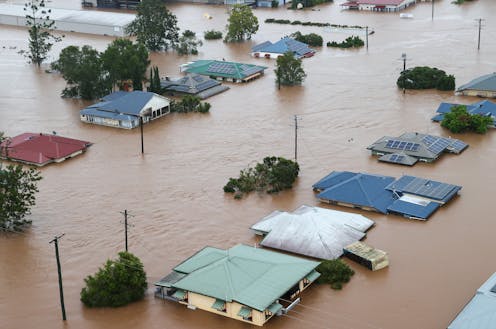
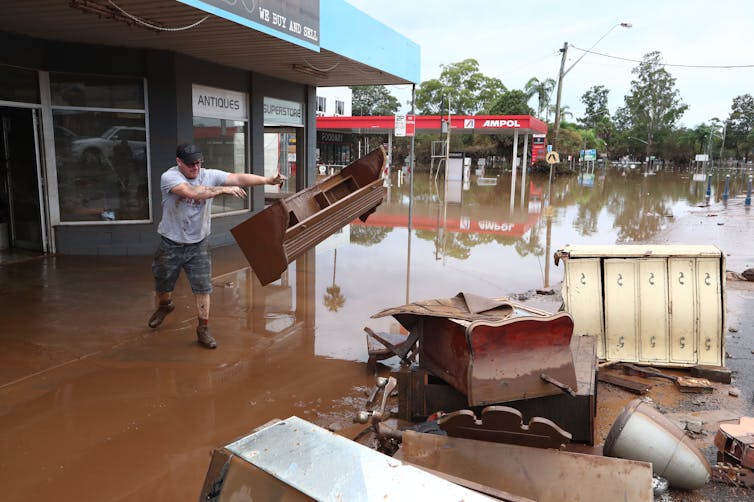
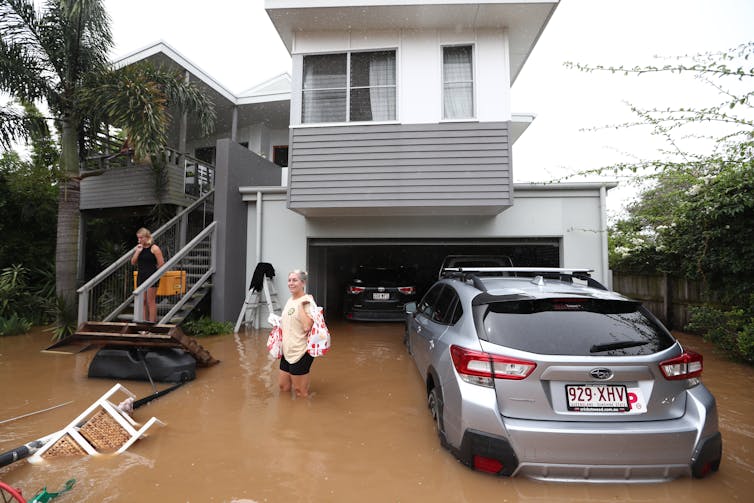
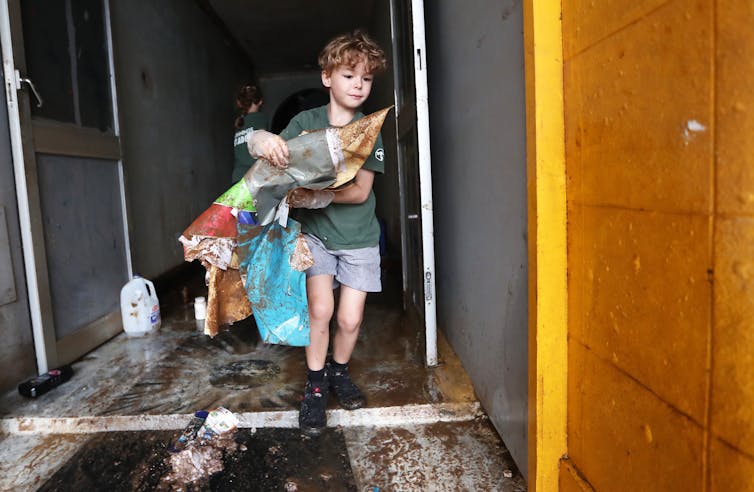
Catastrophic floods have devastated large areas of NSW and Queensland. More than 20 people have lost their lives and Scott Morrison moved for the declaration of a national state of emergency in response to this disaster.

Mark Maund is from the School of Architecture and Built Environment at the University of Newcastle. He has qualifications in environmental science, urban and regional planning and project management.

This latest national disaster has seen the climate debate re-ignited. Maund agrees “climate change is one of the issues that we all need to deal with”, but “there are a number of other issues that come into play as well.”

Where “we choose to build our infrastructure and buildings is obviously one of the issues that we need to deal with”.

When “we choose to live and develop infrastructure in flood-prone land, then we consciously make these choices that we’re exposing some of our buildings and communities to risk.”

With this increasing number of natural disasters occurring in Australia, Maund says governments and citizens need to ask themselves “what risks are we as Australians prepared to accept and put communities at risk in some of these natural hazard prone areas?”

To better address disasters “we need to improve facilities and services and support for our responders”.

“We need to make sure is that they have the facilities, equipment, training and support when these disasters happen – because they will continue to happen, unfortunately – [so] that they can respond as quickly as possible.”

“One thing I do think we really need in terms of infrastructure is evacuation centres. I think we need places, permanent places, even if they’re multi-purpose that can be used for other service facilities and activities. We really need evacuation centres for people to give them time to recover when these disasters happen.”

“It’s really less about who takes the lead and more about how, as a nation, we come together and really work towards better outcomes for these situations.”

The Conversation

Michelle Grattan does not work for, consult, own shares in or receive funding from any company or organization that would benefit from this article, and has disclosed no relevant affiliations beyond their academic appointment.

ref. Politics with Michelle Grattan: Mark Maund on improving our resilience to deal with flood crises – https://theconversation.com/politics-with-michelle-grattan-mark-maund-on-improving-our-resilience-to-deal-with-flood-crises-178989

What the “let it rip” COVID strategy has meant for Indigenous and other immune-compromised communities

Source: The Conversation (Au and NZ) – By Jaya A R Dantas, Deputy Chair, Academic Board; Dean International, Faculty of Health Sciences and Professor of International Health, Curtin University

After a year and a half of lockdowns, border closures, mask-wearing and social distancing, and the vaccine rollout, Prime Minister Scott Morrison has shifted to what is essentially a “let it rip” pandemic approach.

This is a push from the government to “open up” and get “back to normal.” However, since this approach was taken, it has led to Omicron spreading at increased rates across the country.

This shift to “learning to live with the virus” makes life harder and more dangerous for vulnerable groups such as First Nations people, people living with disability, the elderly, those with chronic conditions and those who are immuno-compromised. Refugees and migrants are at also at higher risk of serious illness and death from COVID.

Experts warn:

As the virus moves into vulnerable populations, such as older Australians, people with disability and Aboriginal and Torres Strait Islander people […] we may see a rise in hospitalisations and death.

This way of thinking was especially prevalent in the discourse around the release of the Australian Bureau of Statistics COVID-19 mortality report. As reported in The Guardian, some media stated or implied COVID doesn’t kill enough “healthy” people for it to be considered harmful, thus assigning lower value to certain lives.

For example Joe Hildebrand wrote in an op-ed for news.com.au:

…not only did so-called “COVID deaths” account for just 1% of fatalities during the pandemic, but 92% of that 1% were people with pre-existing health problems ranging from pneumonia to heart disease.


Read more:
Getting vaccinated is the act of love needed right now to support the survival of Aboriginal and Torres Strait Islander peoples during the pandemic


“Living with COVID” doesn’t include everyone

In Australia, there are people with compromised immune systems who because of a chronic illness, can’t be vaccinated. There are also some people whose bodies won’t respond to COVID vaccines either because of medications for ongoing treatments, or co-morbidities that impact their immune system.

Even if people with chronic illness do get vaccinated, their compromised immune systems mean there is no certainty they would be protected from COVID.

The Australian Institute of Health and Welfare report Aboriginal and Torres Strait Islander people are impacted by disease 2.3 times more than non-Indigenous Australians.

GP and Epidemiologist Dr Jason Agostino from Australian National University said:

there are almost 300,000 Aboriginal and Torres Strait Islander adults who are at higher risk of getting very sick if they are not vaccinated and get COVID-19.


Read more:
Australia is failing marginalised people, and it shows in COVID death rates


How First Nations communities are still being left behind

Before the pandemic, Aboriginal people faced health disadvantages and inequitable access to health care. This has worsened since the pandemic. One of the significant issues has been access to affordable food during the pandemic, increased vulnerability of homeless Indigenous people during lockdowns, lack of ability to self-isolate at home and lack of access to community healthcare.

The pandemic has also been disruptive to communities not being able to see one another because of public health concerns. This impacts community approaches to health care, cultural practices, and connection to Country.

Some Indigenous communities also have limited access to health services and need to be better informed by health workers from their own communities about testing and vaccination. This was proven successful by stories such as in Arnhem Land, Mala’la Health Service’s chairman Uncle Charlie Gunabarra travelled around remote communities sharing information about the COVID-19 vaccine. This led to a significant increase in vaccinations.


Read more:
COVID in Wilcannia: a national disgrace we all saw coming


What needs to happen

A study by the Australian National University, the National Aboriginal Community Controlled Health Organisation, the Royal Australian College of General Practitioners and the Lowitja Institute reinforces that First Nations people “must remain a priority group” for Australia’s COVID-19 pandemic response.

In this study, Dr Tanya Schramm from the Royal Australian College of General Practitioners said:

Improving access to social determinants such as housing and healthcare will reduce the risk of severe illness from COVID-19 among Aboriginal peoples, and this must occur alongside ongoing care and management of chronic conditions and efforts to increase vaccination coverage.

There have been efforts to overcome access to health services during the pandemic through telehealth and online healthcare options. However, there are challenges accessing these services such as limited access to phone, computer literacy and internet coverage. This also impacts refugee and migrant communities.

Despite Scott Morrision’s statement “We’re now at a stage of the pandemic where you can’t just make everything free,” not everyone can afford to buy rapid antigen tests. Although there are recent initiatives in place to make these available to concession card holders and to the WA population, these tests need to be free for all.

Ableism is complex, harmful, and the COVID-19 pandemic response has amplified harm to priority groups. In order to address this, the government needs to better include First Nations communities in their COVID-19 strategies going forward. This can be done by providing resources to Aboriginal community controlled health organisations in regional and remote areas, as recommended by the Australian Department of Health.

Better government support to and communication with First Nations people and their health centres can minimise misinformation and fear around the virus and vaccine. This could also provide much better access to health care, vaccines and rapid antigen tests.

As Western Australia opens up, some remote Indigenous communities and aged care facilities have been placed into lockdown, we need to find better ways to support vulnerable communities when addressing COVID-19 in Australia.

The Conversation

As a Global Public Health researcher, Jaya Dantas has been mapping the Global COVID-19 pandemic especially as it impacts vulnerable populations, developing countries, social determinants and vaccine equity. She is currently involved with two projects in Western Australia focussing on COVID-19. She is part of a team funded by WA Future Health Research and Innovation Fund – ‘Quantifying contact networks for COVID-19 outbreak and leading a second project funded by Healthway that will examine the impact of COVID-19 and domestic violence on CALD communities. Jaya is the International SIG Convenor of the Public Health Association of Australia and is on the Global Gender Equality in Health Leadership Committee for Women in Global Health, Australia.

Cheryl Davis is Director of Indigenous Engagement in the Faculty of Health Sciences at Curtin University and in this role supports Indigenous students currently studying health disciplines. She is affiliated with Derbarl Yerrigan Health Service and South West Aboriginal Land & Sea Council as a community member, is undertaking a PhD in Indigenous higher education and is also a member of the Australian Health Promotion Association.

ref. What the “let it rip” COVID strategy has meant for Indigenous and other immune-compromised communities – https://theconversation.com/what-the-let-it-rip-covid-strategy-has-meant-for-indigenous-and-other-immune-compromised-communities-176664

As the Commerce Commission found, there’s no magic way to make NZ supermarkets more competitive

Source: The Conversation (Au and NZ) – By Alan Renwick, Professor of Agricultural Economics, Lincoln University, New Zealand

Shutterstock

The Commerce Commission’s much-anticipated review of supermarket competition has itself had mixed reviews. Many felt a major opportunity to reset New Zealand’s food system had been missed, others felt the commission’s final report got it about right – and supermarket owners probably breathed a little easier.

A review of the big players was certainly due. New Zealand has one of the most concentrated grocery retailing sectors in the world.

Foodstuffs and Woolworths control at least 80% of the market. There has been widespread concern they were using this dominance to the detriment of both suppliers and consumers, especially low-income households.

Beyond the perception that New Zealand food prices were too high, there have also been claims of a lack of clarity in pricing, that suppliers were being unfairly treated, and that competitors were being prevented from entering the market – for example, through the use of restrictive land covenants by the dominant companies.

To varying extents all these concerns were validated during the investigation. The commission recommended mandatory unit pricing (to allow simpler price comparisons) and a statutory code of conduct governing how supermarkets deal with suppliers.

But those measures won’t tackle the issue of high prices and profits due to the lack of competition, and this is where the commission’s light-handed approach has drawn most criticism. The trouble is, even a heavier hand might not have achieved the desired outcomes.

Breakups don’t add up

That the commission shied away from the more radical interventions discussed during the investigation – and which might have gone further than remedies considered in other countries – is not so surprising.

A cursory examination of proposals to restructure the sector – by forcing supermarkets to sell stores or by separating out their wholesale and retail divisions – shows the costs could potentially outweigh the benefits.

Losses in scale and efficiency through breaking up the supermarkets, and the complexity of trying to ensure wholesale markets worked, risk increased costs in the supply chain and even higher prices – the exact opposite of what was intended.


Read more:
The pandemic exposes NZ’s supply chain vulnerability – be ready for more inflation in the year ahead


And it is certainly not clear that the much touted option of directly supporting the emergence of a third competitor in the market would remedy anything.

Moving from two to three players does not in itself constitute a magic leap from non-competitive to competitive markets. Three competitors can accommodate each other nearly as well as two!

Other countries – for example, Ireland and the UK – have faced similar competition issues, despite having five or more competing supermarket chains. It is not the number of competitors that matters, but the conditions under which they compete.

Insufficient remedies

To encourage competition without directly interfering in the structure of the industry, the commission recommended two main solutions: making it easier for competitors to access land, and that supermarkets offer wholesale supply to other grocery retailers on a voluntary basis (albeit with some regulation).

So the multi-million-dollar question – quite literally, given the financial stakes – is whether these changes are likely to increase competition and improve the situation for consumers and suppliers.

The answer is almost certainly no. Neither of the measures is sufficient to make emerging businesses viable. Given their size and power, the incumbent supermarkets could make it very difficult for new chains to establish a foothold and compete – by aggressive pricing in areas where new stores emerge, for example, or by upping their advertising spend.


Read more:
Inflation is raising prices and reducing real wages – what should be done to support NZ’s low-income households?


Overseas experience tends to suggest that, overall, there is little in the commission’s recommendations likely to have a major impact on the way New Zealand supermarkets operate.

Many of the commission’s proposals have been implemented in one form or another in the UK and, to a lesser extent, Ireland. The UK began in the 1990s by issuing a voluntary code of practice for supermarkets. Its failure meant it was later replaced by a statutory code of conduct supported by the appointment of an ombudsman.

Ireland also introduced a statutory code of conduct in 2014 but has yet to appoint a regulator, while farmers have been protesting over retailers failing to pass on price increases.

The UK has now had the statutory code for nearly a decade. While it appears to
have had some success, the fundamental imbalance of power remains a problem. Suppliers are unlikely to risk their businesses by complaining about their main or only customer.


Read more:
The cost-of-living crisis will put more pressure on shoppers than COVID


Expect little change

As we see upward pressures on food prices from supply-chain disruptions and the direct and indirect effects of the Russian invasion of Ukraine, it’s more important than ever that food markets work well.

Scale is an issue. In the UK and Ireland, the emergence of German discounters has done more to increase competition than any actions by regulators.

But the combination of New Zealand’s remoteness and relatively small population limits the viability of increasing competition through encouraging new large-scale entrants.

This points towards a realistic approach that effectively accepts the current structure but with more stringent regulation of the supermarket chains.

Overall, the Commerce Commission’s recommendations may be a step in this direction. But it’s unlikely the country’s supermarket owners will have suffered indigestion after reading the report. And it’s also unlikely the price of tomatoes will be falling anytime soon.

The Conversation

Alan Renwick does not work for, consult, own shares in or receive funding from any company or organisation that would benefit from this article, and has disclosed no relevant affiliations beyond their academic appointment.

ref. As the Commerce Commission found, there’s no magic way to make NZ supermarkets more competitive – https://theconversation.com/as-the-commerce-commission-found-theres-no-magic-way-to-make-nz-supermarkets-more-competitive-178762

‘It’s still going to be messy’ warning as NZ hospital covid cases climb

RNZ News

New Zealand’s Director-General of Health Dr Ashley Bloomfield and Royal NZ College of General Practitioners president Dr Samantha Murton gave a briefing today on the government’s response to the omicron outbreak as hospital cases continue to climb.

The daily number of new community cases has dropped slightly today to 21,015 community cases, but the number of people in hospital with the coronavirus continues to rise, reaching 845.

There are now more people in hospital with covid-19 than at any other point over the past two years, the Ministry of Health said.

Today’s numbers are down compared to yesterday’s 22,454 and 742 hospitalisations, with a record 19 cases in ICU.

Speaking at today’s briefing, Dr Murton said 80 percent of GPs were now looking after more than 20 patients.

“It has put a huge amount of work on general practice. When you think about the fact that there are 20,000 people who have got covid every day and across the country 50,000 consultations normally happen every day, that’s a 50 percent increase in workload if we had to deal with every one of those 20,000 that came through,” she said.

‘Huge amount of work’
“It has put a huge amount of work on general practice. When you think about the fact that there are 20,000 people who have got covid every day and across the country 50,000 consultations normally happen every day, that’s a 50 percent increase in workload if we had to deal with every one of those 20,000 that came through,” she said.

“My colleagues want me to remind everyone that we are working really hard, doing our best for our patients and although we are prepared and have done the best we can do for when the outbreak occurred, it is still going to be a little bit messy for the next couple of weeks.”

Watch the media briefing

Video: RNZ News

She said that was because there were people who wanted care and then people who needed care and were “quite vulnerable”.

Those vulnerable people will be the ones GPs are focusing on, she said.

“The other thing we have found is that across the country, people are stressed.

“People are stressed about having covid, people are stressed about being isolated, about not being able to go out, about having family members who might be sick and the practices are under pressure to provide as much care as they can and so that stress can often end up with a lot of anxiety and peoples’ emotions might flare, to put it politely.

“My colleagues have suggested people be kind to their providers.

‘Have a bit of patience’
“Please have a bit of patience as patients.”

She also put out a reminder that booster vaccine shots were the best protection people could get.

Auckland hospitals have reported that they are dealing with far more covid-19 cases than even their worst case scenarios predicted, with daily case numbers as high as 533 across the city’s hospitals this week.

In Wellington, frontline care workers are operating around the clock to help the more than 17,000 people across the region who are isolating at home and in need of some level of assistance.

Canterbury District Health Board is already teetering on patient capacity, three weeks away from an expected peak of covid-19 cases.

Health Minister Chris Hipkins has announced that the isolation period for covid-19 cases and their household contacts is reducing to one week, down from 10 days, from tomorrow.

This article is republished under a community partnership agreement with RNZ.

Print Friendly, PDF & Email

Article by AsiaPacificReport.nz

Boycotting Russian products might feel right, but can individual consumers really make a difference?

Source: The Conversation (Au and NZ) – By Mike Lee, Associate Professor of Marketing, University of Auckland

Scottish Artists for Ukraine demonstrate at the Russian consulate, Edinburgh, against the Russian military invasion of Ukraine. Picture date: Wednesday March 9, 2022. Andrew Milligan/PA Images via Getty Images

Ukrainian president Volodymyr Zelenskyy’s recent call for a boycott of Russian oil and other import-export bans was aimed at global leaders, but consumers across social media are also advocating a form of personal economic sanctions.

Some New Zealand shoppers have compiled lists of alcohol brands to avoid while others have identified Ukrainian brands to support.

But alongside these boycott lists are repeated dismissals by cynics who say local boycotts will have little impact on the European conflict. So who’s right?

Boycotts spring from the need to do something

Boycotts are meant to address a power imbalance and give individuals a say through collective action.

Ukrainian President Volodymyr Zelenskyy has called on other countries to boycott Russian products.
Ukrainian Presidency/Handout/Anadolu Agency via Getty Images

Boycotting Russian goods gives shoppers a small sense of efficacy in relation to a wider political issue. By choosing to reject Russian products, shoppers are hoping to create enough economic pain to convince Vladimir Putin’s government to back down from its invasion of Ukraine.


Read more:
How one woman pulled off the first consumer boycott – and helped inspire the British to abolish slavery


This is not the first time consumers have attempted to achieve political change via shopping decisions. SodaStream was targeted for international boycott because of the company’s ties to Israel and its factory in the West Bank.

Activists called on tourists to partake in “moral calculus” before visiting Bali over Indonesia’s occupation of West Papua.

In the aftermath of 9/11, politicians in the United States called for a boycott of French products to punish the country for its opposition to the invasion of Iraq.


Read more:
Beijing Olympics: Canada, the U.K. and others join Biden’s diplomatic boycott, but it’s not enough


The gap between intention and action

While shoppers might make the public commitment to boycott Russian products, the reality is there are competing factors that feed into shopping decisions. The gap between intention and action can become a chasm.

The high cost of living in New Zealand means shoppers are typically motivated by price and convenience. A New Zealand shopper might have the best intentions to boycott Russian flour, vodka or oil, but their commitment could be challenged if those products are the cheapest options.

In order for a boycott to be effective, consumers need to have the means to make the sacrifice, which could involve changing a habit, buying something that is more expensive or something that is a little less convenient.

Palestinians called for a boycott of Israeli products over attacks on Gaza and the West Bank in 2021.
Nedal Eshtayah/Anadolu Agency via Getty Images

The second hurdle to an effective boycott is scepticism: shoppers might have the means to boycott Russia but do they believe it will have any effect? Will Russia still steamroll its way into Ukraine regardless of the shopping decisions of a group of New Zealand consumers?

Boycotts are more effective when shoppers believe their sacrifice will make a difference.

Finally, consumers need to also be able to identify what products come from Russia. While the social media lists are useful, products that seem Russian but aren’t, like Swedish brand Absolut Vodka, have the potential to be caught up in the boycott of Russian goods.

The rise of buycotts

Consumers often find “buycotts” easier to commit to than the traditional boycott. A buycott is when a shopper deliberately buys a company’s or a country’s products in support of their policies.

Buycotts are less of a sacrifice and allow consumers to see immediate results.


Read more:
Brand activism is moving up the supply chain — corporate accountability or commercial censorship?


Buying products that put money back into the Ukrainian economy or go towards charities supporting Ukrainian refugees can create a sense of doing something positive, with less sacrifice than a boycott.

Ultimately, the most effective boycotts are those targeted at specific companies and which can create change in response to consumer demand. Nike learned this lesson in the 1990s when it was boycotted for its labour practices in developing countries.

Consumers had options and Nike lost market share to its competitors, forcing the company to change the way it made its products. Closer to home, chocolate giant Cadbury was forced to reverse course after using palm oil in its dairy milk chocolate.

When it’s a country-level boycott, however, government sanctions need to be part of the equation. Consumers can apply pressure to the government to apply sanctions so that products from the offending country don’t make it along the supply chain. In that case, the consumer is more valuable as a voter than a boycotting shopper.

The Conversation

Mike Lee does not work for, consult, own shares in or receive funding from any company or organization that would benefit from this article, and has disclosed no relevant affiliations beyond their academic appointment.

ref. Boycotting Russian products might feel right, but can individual consumers really make a difference? – https://theconversation.com/boycotting-russian-products-might-feel-right-but-can-individual-consumers-really-make-a-difference-178876

Canada eyes Australia’s media code to pay for news but wants more ‘transparency’

Source: The Conversation (Au and NZ) – By Andrea Carson, Associate Professor, Department of Politics, Media and Philosophy, La Trobe University

Shutterstock

Google and Meta have reportedly paid more than A$200 million to Australian news outlets since the Morrison government introduced the groundbreaking News Media Bargaining Code a year ago. Yet Canada boasts that its own version of the code will do better.

Canadian Heritage Minister Pablo Rodriguez claims the online news bill he intends to introduce in the Ottawa parliament within months will also force Google and Meta to pay media outlets for third-party news content on their sites. But he argues it will be a “more transparent” version of the Australian code.

His key criticism of the Australian version was that it handed power to Treasurer Josh Frydenberg through “designation”, rather than to an independent regulator. This, he says, will force big technology companies to negotiate deals with media outlets:

In our case, it’s not going to be the minister that will designate. […] there are going to be criteria set by the regulator that will clearly identify who are in an imbalanced situation and require them to sit down with news organisations and get into a deal.

Australia’s code – which uses competition rather than the European model of copyright law to compel Google and Meta to pay for news – has attracted international attention. In the past fortnight, Canadian and US journalists have visited our shores to report on it.


Read more:
Is the news media bargaining code fit for purpose?


Since the code was introduced, Frydenberg has resisted using this designation power, so only voluntary deals have been done between the technology giants and news companies. This has created clear winners and losers.

The winners generally have been legacy and larger media outlets such as Rupert Murdoch’s News Corp, Nine Entertainment, the ABC, The Guardian and networks of regional newspapers such as Australian Community Media. The ACCC estimates Google has secured 20 media deals (including with The Conversation), while Meta has made 14 deals.

So far, Treasurer Josh Frydenberg has resisted using his designation powers, leaving media outlets to broker deals for themselves.
Mick Tsikas/AAP

Media outlets left without Meta deals include public interest journalism publications such as The Conversation and SBS. There has also been little provided for smaller media start-ups in need of funds to help diversify Australia’s highly concentrated news landscape under the code.


Read more:
Fact-checking can actually harm trust in media: new research


Excluding these outlets runs counter to the Australian government’s aim to address “bargaining power imbalances between the digital platforms and Australian news media”.

This failure to get some deals done led the outgoing chair of the Australian Competition and Consumer Commission, Rod Sims – a chief architect of the code – to complain it was “inexplicable” these outlets were excluded.

Other criticisms of the code have been that commercial in-confidence arrangements mean no one knows exactly how much money has flowed to media companies ($200 million is the ACCC’s estimate) and that there is actually no legal requirement for this money to be spent on journalism.

The Canadian minister acknowledges that media companies have legitimate commercial sensitivities, but criticises the lack of transparency in the Australian code. On this issue he has been explicit:

One of the things we want to do differently from Australia is to be more transparent.

The fact these criticisms come from the Canadian government is notable. The Trudeau administration has been a vocal supporter of the Australian reform process, along with many other countries.

Rodriguez’s comments suggest that, while other countries are keen to adopt the reform, most will work to improve on the deal that emerged from the series of high-stakes negotiations in early 2021, which prompted Facebook to briefly pull news off its platform.

Australia might even consider thinking about adopting some of these international modifications. Frydenberg marked the one-year anniversary of the Australian code last week by announcing a review of its performance, to report by September 2022.


Read more:
Facebook has pulled the trigger on news content — and possibly shot itself in the foot


The review is a chance for industry stakeholders, policymakers and researchers to assess the impact of the code in its first year of operation. Of course, many participants who secured deals will be pleased. However, the review must consider outstanding issues such as greater transparency, rigorous criteria around designation, and expenditure.

As the code continues to operate, we must also consider the long-term impacts of platform payments. A yearly injection of $200 million into the Australian media market is not transformative, but it is enough to make an impact. Finding out how that money has been spent is now a critical task and more answers are needed.

  • To what extent can we credit the code for the recent upsurge in recruitment in some of our larger media companies’ newsrooms?

  • What are the experiences of the smaller media outlets that have struggled to even get a reply from Google and Meta?

  • Is the code doing enough to assist regional and remote towns that no longer have access to local news?

  • And what impact, if any, do other funding schemes such as the Facebook Australian News Fund that Meta has established with the Walkley Foundation have on public interest journalism?

Local and regional journalism that covers council meetings, courts and times of crises such as flood and bushfire emergencies are fundamental to Australian democracy and our well-being. This is where the disruption in the news media has had a significant impact in the past two decades. Research shows parts of Australia have become “news deserts”, with no local media coverage.

While the review of the code is welcome, ongoing research is vital to help reveal whether it has contributed positively to the renewal of Australian journalism, or simply stabilised established players.

The Conversation

Andrea Carson receives funding from the Australian Research Council and Meta for research. She is also a member of the Public Interest Journalism Initiative’s academic research advisory group.

Andrew Dodd is a member of the Public Interest Journalism Initiative’s academic research advisory group.

James Meese receives funding from the Australian Research Council and Meta. He has also made single and co-authored submissions to the ACCC Digital Platforms Inquiry.

Johan Lidberg does not work for, consult, own shares in or receive funding from any company or organization that would benefit from this article, and has disclosed no relevant affiliations beyond their academic appointment.

ref. Canada eyes Australia’s media code to pay for news but wants more ‘transparency’ – https://theconversation.com/canada-eyes-australias-media-code-to-pay-for-news-but-wants-more-transparency-178402

First come floods, then domestic violence. We need to prepare for the next inevitable crisis

Source: The Conversation (Au and NZ) – By Kim Usher, Professor of Nursing, University of New England

Shutterstock

Catastrophic flooding in New South Wales and southeast Queensland has led to lost lives, homes, belongings, pets and livelihoods.

As the process of cleaning up after the floods continues, we can expect an often unspoken outcome of natural disasters.

Domestic violence rates surge during and after bushfires, pandemics, earthquakes, cyclones and floods.


Read more:
The floods have killed at least 21 Australians. Adapting to a harsher climate is now a life-or-death matter


We’ve known this for years

Domestic violence may include one or a combination of psychological, physical, financial and sexual abuse.

It’s most often directed at women and children, may occur for the first time during a disaster, or may transform from one type to another during or after a disaster.

Researchers have been studying the links between natural disasters and domestic violence for years.

Previous floods, including after Hurricane Katrina in the United States, have led to increased rates of domestic and family violence.

In the four years after the Black Saturday bushfires in Victoria, there was a rise in domestic violence rates with worse-affected areas reporting higher levels of abuse.

Internationally, we’ve seen an increased risk of domestic violence during the COVID-19 pandemic. Our Australian research shows there is growing public concern about pandemic-related domestic violence, and about the lack of services to support women.

Studies have also reported increases in requests for women’s shelters after disasters, as women seek refuge from violent relationships.

Why is domestic violence more likely?

Fear and uncertainty are common during disasters and people’s reactions to disasters vary. In some, these feelings can trigger domestic and other types of violence.

The many associated losses related to disasters – including loss of homes and their contents, cars and livelihoods – often cause financial strain, which may also place added pressure on families and relationships.

Grief, loss and trauma can also leave people feeling overwhelmed and test a person’s coping skills. Experiencing life-threatening situations or those that bring about loss and trauma can also lead to mental health issues, such as postraumatic stress disorder. This too, can complicate family dynamics and change people’s ability to cope.

Drug and alcohol use often soars during and after disasters, which may also exacerbate tensions in relationships.

When people are displaced and need to stay with other community members or in shelters, the rates of violence against women also rises. In those cases, women and children tend to experience more violence in general, not just domestic violence.


Read more:
Pregnant women are at increased risk of domestic violence in all cultural groups


What can we do to prepare?

As climate change is predicted to cause more of these types of catastrophic weather events in the future, we need to start prevention strategies for the next inevitable disaster.

So local, state and national government departments need to start enacting these as soon as a disaster occurs.


Read more:
Domestic violence soars after natural disasters. Preventing it needs to be part of the emergency response


We can group these prevention strategies into two broad areas, those aimed at entire disaster-affected communities and those targeted towards supporting people who experience domestic violence during and after disasters.

Whole communities

Helping entire communities affected by floods and other natural disasters will minimise the kind of conditions – the fear and uncertainty – our research has shown triggers domestic violence. Strategies include:

  • government funding to help people and businesses clean up after the disaster, rebuild communities and get back on track. This could be along similar lines to COVID payments we saw earlier in the pandemic to support individuals and businesses

  • swift provision of daily essentials such as food, shelter and clothing. This could include governments partnering with community organisations and volunteers

  • governments mobilising extra support, such as from the Australian Defence Force, promptly and efficiently, a move criticised as being too little too late during the recent NSW floods.

Helping survivors

To help people affected by domestic violence, we need:

  • locally available domestic violence services ready to act when disasters occur, not weeks later, as that may be too late for some women. These need to be properly funded, accessible to survivors and widely publicised on social media

  • to avoid telling people who experience domestic violence that things will improve once life gets back to normal. If women’s concerns are brushed off this way, they are more likely to have poor mental health in the future

  • to recognise the importance of first-line responders in these times. We need to make sure they are trained to recognise the signs and triggers of domestic violence

  • to support health-care professionals, teachers, relatives and other community members who might suspect domestic violence. They need to know where they can refer people and what services are available in the community.


If this article has raised issues for you, or if you’re concerned about someone you know, call the 1800 Respect national helpline on 1800 737 732 or Lifeline on 13 11 14.

The Conversation

Kim Usher receives funding from NSW Health and the NHMRC.

ref. First come floods, then domestic violence. We need to prepare for the next inevitable crisis – https://theconversation.com/first-come-floods-then-domestic-violence-we-need-to-prepare-for-the-next-inevitable-crisis-178607

Weather forecasts won’t save us – we must pre-empt monster floods years before they hit

Source: The Conversation (Au and NZ) – By Mark Gibbs, Leader of the Knowledge to Innovation team, Institute for Future Environments and Science and Engineering Faculty, Queensland University of Technology

Most people’s lives are largely removed from nature. We spend our days in temperature-controlled rooms, immersed in virtual environments. Our cars transport us from underground car parks to our garages in comfort, no matter what the outside conditions.

And when a natural hazard hits, we often rely on technology-driven weather forecasts to understand and avoid the risks.

But now, Southeast Queensland and parts of New South Wales are inundated yet again. Clearly, short-term weather forecasts alone are not enough to protect communities in times like these.

Withstanding natural disasters requires recognising the threat earlier, and enacting the systemic change needed to survive.

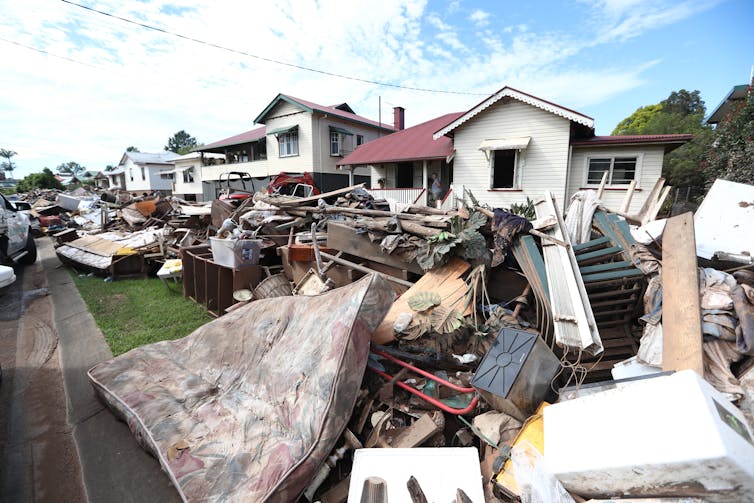
home with flood debris in front
Withstanding natural disasters requires recognising the threat earlier.
Jason O’Brien/AAP

Living with nature

The public demands accurate weather forecasts. People want to know how the weather will affect their family, work and social schedules so they can minimise the disruptions.

The technology used to determine future weather conditions is continually being refined. Now, sophisticated computer models churn out 24/7 forecasts and radars provide real-time images of where rain is falling.

But projecting the arrival and behaviour of extreme weather remains challenging.

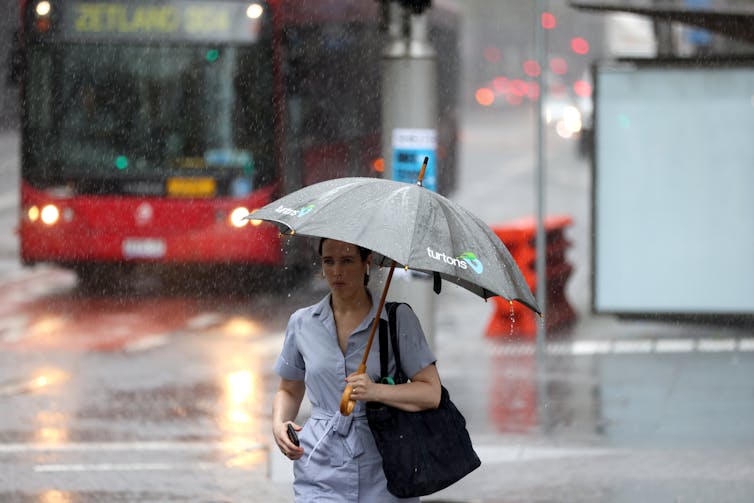
These events, such as intense rain, can develop and intensify within hours. Short-term forecasts often change throughout the day as conditions develop.

The recent heavy rain and flooding shows how we’re pushing the limits of this technology. It has also exposed vulnerabilities in our collective ability to apply the information generated.


Read more:
The floods have killed at least 21 Australians. Adapting to a harsher climate is now a life-or-death matter


woman in rainy street with umbrella
Intense rain can develop within hours.
Damian Shaw/AAP

Advancing technologies

Australia has the fourth-largest weather radar network in the world.

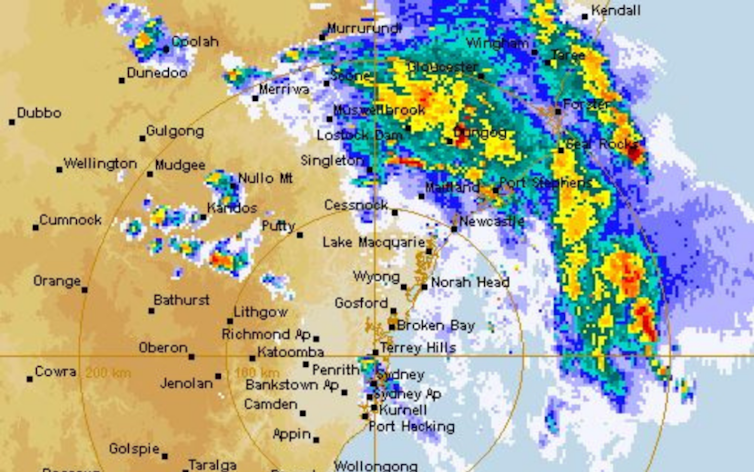
Radars work by emitting electromagnetic waves. When the waves hit an object, such as a water in the atmosphere, the signal bounces back to the radar. This information is then converted into data on a map that can be viewed by the public.

Rain radars tell us where rain is falling, and how heavily. Experts can use this information to infer what the rain might do next. But weather forecasting is not an exact science and, as with any technology, there’s always room for improvement.

For example, changes to coastal temperatures and humidity over small areas, in a short period, can thwart a forecast’s accuracy.

Forecasters also use weather models – computers that simulate conditions in the atmosphere, ocean, and above land and apply mathematical equations to predict future weather.

Low pressure systems and especially east coast and tropical lows, which can lead to storms, are harder to predict than high pressure systems which tend to bring calm conditions.

weather radar image of east coast
Rain radars tell us where rain is falling and how heavily.
BOM


Read more:
All hail new weather radar technology, which can spot hailstones lurking in thunderstorms


Wired to predict

There is widespread misunderstanding of what rain radars actually tell us. They show what is happening now, and what has just occurred. They do not predict future conditions.

But the human brains is wired to predict. So people sometimes make assumptions about the trajectory and future intensity of storm cells they see in radar images.

The media can also undermine the credibility of the forecasting system. News reporting of weather events can sometimes be over-dramatised. And the media does not always update its coverage of extreme weather forecasts – for example, not telling the public when a weather warning has been downgraded.

Just-in-time flood response is risky

We can’t directly stop natural hazards occurring. But we can try to make communities better able to withstand them.

Relying on just-in-time weather information is a poor substitute for better planning and preparedness.

For months, we’ve known this summer would be wet. But sadly, many in the community did not act on these projections.

A La Niña event occurred in the summer of 2020-21 and brought above-average rain and widespread floods. As others have noted, since 1958 about half of La Niña events have reoccurred the following year.

So the odds were already in favour of the 2021-22 summer also being wet. And the second La Niña was confirmed in November.

But by and large, these indications were not acted upon.

For example, the Queensland government delivers a generic advertising campaign for storm awareness, but it’s not tailored to specific seasonal conditions or impending events.


Read more:
Under-resourced and undermined: as floods hit south-west Sydney, our research shows councils aren’t prepared


As reported in The Conversation this week, Australia has a poor record on implementing plans for natural disaster risk reduction. This includes the National Climate Resilience and Adaptation Strategy, released late last year, which contains no new funding and little detail.

At a government agency level, better flood preparedness would involve, among other things, overhauling planning laws to ensure the built environment is resilient to natural hazards.

It would also involve ensuring local councils are properly resourced to help residents on the ground.

Individuals can also take action to minimise flood damage to their property.

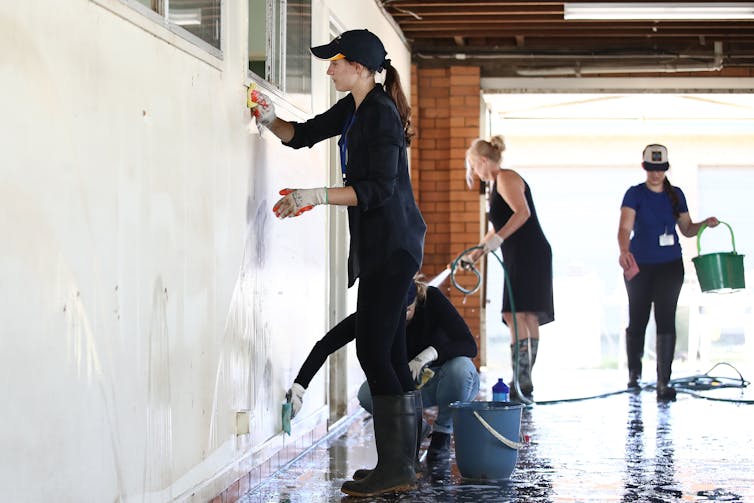
I spent last week cleaning mud from the basement of a large apartment block in Brisbane. The damage showed very clearly which residents had moved or protected valuables in basement areas well in advance of the water, and which had not.

people scrub walls and floors
During the flood clean up, it can become clear who was prepared and who was not.
Jono Searle

Back to the future

The flooding in Queensland comes just a decade or so after the devastating Brisbane floods.

The new disaster is expected to cost the state’s economy up to A$2.5 billion. Insurance claims on damaged homes and businesses will be close to $1 billion.

Flooding in future is inevitable, especially under climate change which will likely bring more frequent and severe bursts of rain.

Relying on short-term weather forecasts to prepare for such events is deeply unwise. Becoming resilient to natural disasters means preparing weeks, months and years in advance.


Read more:
Under-resourced and undermined: as floods hit south-west Sydney, our research shows councils aren’t prepared


The Conversation

Mark Gibbs is a Non-Executive Director of the Gold Coast Waterways Authority, Green Cross Australia, the Moreton Bay Foundation Foundation and Reef Check Australia

ref. Weather forecasts won’t save us – we must pre-empt monster floods years before they hit – https://theconversation.com/weather-forecasts-wont-save-us-we-must-pre-empt-monster-floods-years-before-they-hit-178767

‘I just go to school with no food’ – why Australia must tackle child poverty to improve educational outcomes

Source: The Conversation (Au and NZ) – By Gerry Redmond, Professor, College of Business, Government & Law, Flinders University

Shutterstock

About one in six children in Australia live in poverty. These children generally have poorer educational outcomes than more advantaged children. Our recently published research shows students who live in poverty also experience more social exclusion at school than their more advantaged peers.

These findings suggests disadvantage at home carries over into disadvantage at school.

Interventions such as anti-bullying programs and increased funding for schools in disadvantaged communities can help. However, our analysis suggests there’s a bigger structural problem. To reduce educational disadvantage, action is needed to reduce child poverty, which has remained stubbornly high since the early 2000s.

In 1987, Prime Minister Bob Hawke famously pledged to end child poverty by 1990. As a result of his government’s actions, child poverty initially declined before increasing again. Child poverty rates now are only slightly lower than in 1999.

In that time, child poverty has been largely absent from policy agendas. Failure to act on poverty will cripple the life chances and productivity of future generations.

As prime minister, Bob Hawke put child poverty on the agenda with his pledge that no child would live in poverty by 1990.


Read more:
By 2030, ‘no Australian child will be living in poverty’ – why can’t we promise that?


The high costs of social exclusion at school

Our research has looked at the schooling experiences of 3,535 students aged 13 to 14 in in every state and territory.

Children whose families lacked items most Australian households take for granted, such as cars, computers or holidays, were identified as experiencing family poverty. Children who reported lacking items that most children see as essential were identified as experiencing child deprivation. These items included clothes that allowed them to fit in with other children, and their family having money to send them on school camp.

The proportions living in family poverty or child deprivation were highest among children who experienced multiple forms of disadvantage. One in five children with a disability lived in poverty, as did one in three who had a caring responsibility for a family member. Over one in four Indigenous children and children with a language background other than English also lived in poverty. By comparison, this was the case for only one in eight children who were not part of a marginalised group.


Read more:
One quarter of Australian 11-12 year olds don’t have the literacy and numeracy skills they need


Teachers make great efforts to support the education of disadvantaged students. Despite these efforts, children living in poverty have lower school completion rates and lower scores on national tests such as NAPLAN. And our study shows the effects of poverty still permeate school classrooms and playgrounds.

In our study, we asked children how much they agreed with the statement: “At my school, there is a teacher or another adult: who really cares about me; who believes that I will be a success; who listens to me when I have something to say.” The children experiencing deprivation reported less support from their teachers. They also reported higher rates of bullying than non-deprived children.

These experiences were in turn associated with students reporting lower levels of life satisfaction. That’s an early indicator of mental health problems in youth and adulthood.

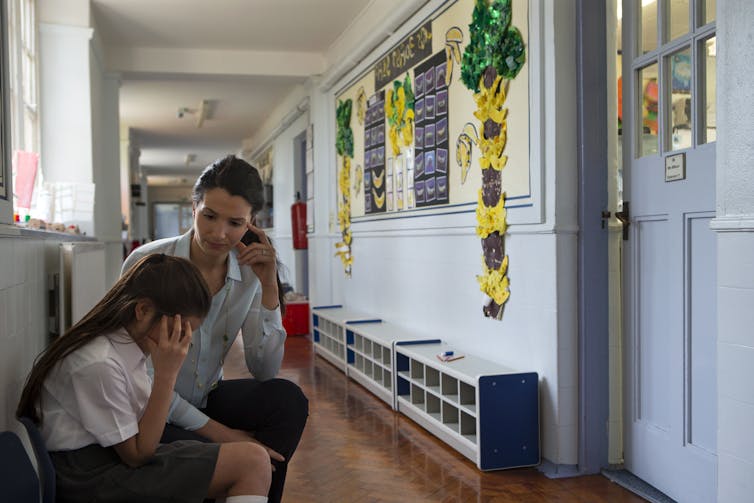
Upset girl being comforted by teacher in school corridor
Children living in poverty report higher rates of bullying and lower levels of life satisfaction than their more advantaged peers.
Shutterstock


Read more:
What do children think of economic inequality? We did an experiment to find out


Children’s potential is being stifled

The Project for International Student Assessment (PISA) conducts comparable academic tests of 15-year-old students in all OECD countries. Gaps in test performance between the most socioeconomically advantaged and the most disadvantaged students in Australia have hardly changed since the surveys were launched in 2000.

The gaps for the most recent tests in 2018 represented around three years of education for reading, maths and science literacy. When students fall that far behind, it seriously blights their life chances.

Teachers recognise that children living in poverty face many challenges that impact their learning and relationships. Children also talk about the challenges of poverty. One boy explained:

“My mum would take me to the op shop because I keep on splitting my pants when I kneel down but she can’t afford to buy me new pants. I don’t get pocket money and have to make my own lunch and sometimes I don’t even do that. I just go to school with no food.”

That such experiences should be associated with poor educational outcomes is not surprising. What is surprising is how badly Australia’s education system is failing to achieve a key objective: to support all children to reach their full educational potential.


Read more:
Already badly off, single parents went dramatically backwards during COVID. They are raising our future adults


It’s time to focus again on child poverty

Child poverty and children’s educational disadvantage require different solutions, but they are closely linked. The more poverty there is in Australia, the harder education systems and individual teachers have to work to compensate for its effect on student outcomes.

The Gonski 2.0 package of school funding reforms, launched in 2018, aims to at least partially address educational disadvantage. However, it is unlikely to break the poverty-educational outcomes nexus on its own.

The challenge that Hawke set 35 years ago, to end child poverty in Australia, needs to be taken up again. Both the Hawke government’s actions in the years following his pledge and the current Australian government’s responses to the COVID-19 pandemic show how this can be done.

After 1987, family payments were significantly increased and targeted to lower-income families. This increased support helped reduce child poverty.

In 2020, in response to the growing COVID-19 emergency, the Morrison government introduced the JobKeeper payment and added the Coronavirus Supplement to the Jobseeker Allowance. Poverty rates declined, at least temporarily, while these supports were in place.

Money does not solve all the problems of child disadvantage. But it does matter.


Read more:
Young Australians’ prospects still come down to where they grow up


The next Australian government could follow Hawke’s example and set targets to reduce child poverty. History (in Australia and elsewhere) suggests that action will follow and child poverty will fall.

Reducing poverty will have positive flow-on effects for children’s well-being, development and educational outcomes. It will also represent a major step towards Australia achieving the UN Sustainable Development Goal of halving poverty rates of all men, women and children by 2030.

The Conversation

Gerry Redmond receives funding from the Australian Research Council.

ref. ‘I just go to school with no food’ – why Australia must tackle child poverty to improve educational outcomes – https://theconversation.com/i-just-go-to-school-with-no-food-why-australia-must-tackle-child-poverty-to-improve-educational-outcomes-178426

Higher petrol prices hurt, but cutting the fuel excise would harm long-term energy security

Source: The Conversation (Au and NZ) – By Vlado Vivoda, Senior Lecturer in Strategic Studies (Australian War College), Deakin University

Shutterstock, CC BY-SA

Australian petrol prices are rising as Russia’s invasion of Ukraine pushes up global oil prices. It’s likely motorists will be paying more than $2.15 a litre for unleaded petrol within a few weeks.

In response, independent South Australian senator Rex Patrick has called on the federal government to halve the fuel excise on petrol for 12 months. “Extreme petrol prices are an economic boa constrictor throttling household budgets,” he said this week. “We have to take the pressure off.”

The fuel excise is a fixed amount, currently set at 44.2 cents a litre. Halving it would therefore knock 22.1 cents off the price of petrol.

That would certainly offer some relief at the bowser, and to the economy. It would not, however, serve Australia’s economic and national interests in the longer term.

At a time when world events underline the importance of greater energy security, it would prolong our already alarming dependence on oil-based imports and undermine policies to shift the nation away from fossil fuels.


Read more:
What Russia’s war means for Australian petrol prices: $2.10 a litre


What is the fuel excise worth?

Calls to cut fuel tax arise whenever Australian petrol prices rise. This is despite Australian taxes – the fuel excise plus 10% GST – being among the lowest rates in the OECD and making little contribution to price increases.

All GST revenue is distributed to state and territory governments. The fuel excise is (theoretically) levied to pay for Australia’s road infrastructure.

In the 2019-20 financial year it collected about $5.6 billion from petrol and about $11.8 billion from diesel (much of which was reimbursed through diesel tax rebates). The net revenue from all fuel excises, according to the Australian Automobile Association, is about $11 billion, a figure that has not substantially increased in the past decade.

Undermining decarbonisation

While making energy prices as cheap as possible does have some short-term economic logic, cutting the fuel excise would undermine the government’s longer term strategic goal to decarbonise the economy.

This is important both for Australia to meet its international obligations to take action on climate change and to look after the narrower national interest of preparing the Australian economy to compete in a carbon-constrained world.

Shifting away from fossil fuels to electric (and some hydrogen fuel-cell) vehicles is a key part of this. The Morrison government has acknowledged this with a target of 30% of all new car sales being electric by 2030. (Electric vehicles made up just under 2% of new car sales in 2021.)

While the government has committed $250 million to its Future Fuels and Vehicles Strategy to help achieve the target, its policy mostly depends on low-emissions vehicles achieving “pricing parity” with internal combustion engines by mid-decade, and for market forces to do the rest.

Slashing the fuel excise won’t do anything to help this plan become reality.


Read more:
As petrol prices rise, will carbon emissions come down?


It would also undermine state and territory government spending on policies to encourage the uptake of electric vehicles, through incentives such as stamp-duty waivers, free registration and rebates.

Taking energy security seriously

Moving away from fossil fuels is critical for addressing Australia’s growing energy insecurity.


Read more:
Explainer: what is energy security, and how has it changed?


Energy security entails two essential aspects: uninterrupted availability and affordability. It’s an issue Senator Patrick cares about. In mid-Febuary, for example, he joined with the Greens leader Adam Bandt and independent members Andrew Wilkie and Bob Katter to draw attention to the issue, hopping aboard an electric bus built in Sydney for a photo op in front of Old Parliament House.

Energy security doesn’t get much attention during “normal” times, but current events have well and truly underlined the dangers of being overly dependent on foreign supplies.

As Prime Minister Scott Morrison warned this week, the world has entered a period of “profound strategic challenge and disruption”. We are at the mercy of the international market and global supply chains for our supply security and fuel affordability.

Australia’s dependence on oil imports has been growing for at least a decade. Closure of oil refineries along with declining oil production means we now import more than 90% of our petrol needs. Yet we are abundant with renewable resources to generate electricity to power low-emissions vehicles, and the rest of the economy.

The solution to consumers being hostage to foreign oil supplies and volatile global prices will not come from slashing the fuel excise.

It will come from reducing demand for oil-based fuels through policies that promote local energy generation and switching to low-emissions vehicles – like the electric bus that Patrick sat in a just few weeks ago.

The Conversation

Vlado Vivoda does not work for, consult, own shares in or receive funding from any company or organization that would benefit from this article, and has disclosed no relevant affiliations beyond their academic appointment.

ref. Higher petrol prices hurt, but cutting the fuel excise would harm long-term energy security – https://theconversation.com/higher-petrol-prices-hurt-but-cutting-the-fuel-excise-would-harm-long-term-energy-security-178766

One in 1,000 years? Old flood probabilities no longer hold water

Source: The Conversation (Au and NZ) – By John Quiggin, Professor, School of Economics, The University of Queensland

Mick Tsikas/AAP

Australia’s catastrophic east coast floods have been described by the NSW premier as a “one in 1,000-year event, a term that has created a great deal of confusion.

Lengthy explanations that these terms are not the same as “occurring 1,000 years apart” or “once every 1,000 years” have only added to the confusion.

The simplest explanation is that the actual meaning of “one in 1,000 years” is “having a probability of 0.1 per cent in any given year” (1 in 1,000), which raises the question: why doen’t people simply say that?

The main reason is that these terms date back to a time when most people didn’t think in terms of probabilities, and even those who did were confused about how they worked. These days we interact with probabilities all the time.

The daily weather forecast includes a percentage probability of rain, and longer-term forecasts give the probabilities of higher or lower than average rainfall according to El Nino and La Nina cycles.

Financial markets bet on the probabilities or interest rates moves. Statistics and probability are taught to children in school.

But this is quite a recent development.

Until the 17th century, even the most elementary concepts of probability theory were unknown. People thought of fate and fortune as essentially unknowable. Even gamblers didn’t understand odds.

The birth of probability

Indeed, it was a request from a gambler friend in about 1654 that motivated the French philosopher and mathematician Blaise Pascal to develop the basic concepts of probability with fellow mathematician Pierre de Fermat.

(Pascal also used the idea to develop “Pascal’s wager” used to demonstrate the usefulness of believing in God. The idea is that if God exists believers will be rewarded with eternal bliss. If not, they will forgo a limited number of earthly pleasures while alive. No matter how small the probability of God existing, the benefit of believing in God turns out to be infinite while the cost is finite.)

Understanding developed slowly. It was not until the mid-18th century that English clergyman Thomas Bayes was credited with the field’s most important development.

The tool bequeathed by Bayes

In its modern interpretation Bayes’ theorem gives us the means to revise our view of the probability of an event in the light of evidence about what has just happened.

Whether or not something has just happened is explicitly fed into the recalculation along with updated assessments of the probability that that matters.

Bayes’ theorem, in neon, in the office of British software company HP Autonony.
Wikimedia Commons, CC BY

Until Bayes, most probabilities were calculated as if they were unchanging, such as the probability of getting “heads” when tossing a coin. Those probabilities could usefully be described as “one in 1,000 years”, or “on average, every second toss”.

But the probability of a severe flood changes over time as the relationship between the components that make up the weather system change. Whether a flood has occurred gives us evidence about that change.

This makes it no longer helpful to refer to a severe flood as “one in x years” event.


Read more:
Bayes’ Theorem: the maths tool we probably use every day, but what is it?


It’s long past the time we changed the terminology of once-in-so-many years, but to what? The answer seems straightforward, though the details will be tricky.

First, we need to convert the old measures into severity scales, similar to those used for cyclones and earthquakes, but specific to each catchment.

Having done that, the probability of an event of given severity can be estimated on the basis of historical experience and updated in the light of new evidence.

How would this apply in the case of an event like the Lismore flood?


Read more:
‘One of the most extreme disasters in colonial Australian history’: climate scientists on the floods and our future risk


The initial “one in 1,000 year” description means that such an event would be extremely unlikely if the old relationship held.

Using Bayes’ theorem, we would update the initial one in 1,000 probability on the basis of updated information about the chance the underlying relationships are changing, producing new annual probabilities each year.

This is how machine learning works and how medical and insurance odds are updated. Sadly, the revised probabilities will almost certainly exceed one in 1,000.

The Conversation

John Quiggin does not work for, consult, own shares in or receive funding from any company or organisation that would benefit from this article, and has disclosed no relevant affiliations beyond their academic appointment.

ref. One in 1,000 years? Old flood probabilities no longer hold water – https://theconversation.com/one-in-1-000-years-old-flood-probabilities-no-longer-hold-water-178524

The 2022 Adelaide Biennial is titled Free/State. It explores freedom, the state and the spaces in between

Source: The Conversation (Au and NZ) – By Catherine Speck, Professorial Fellow (Honorary), The University of Melbourne

Installation detail: 2022 Adelaide Biennial of Australian Art: Free/State, featuring Namaslay by Min Wong, Art Gallery of South Australia, Adelaide. Photo: Saul Steed

Review: 2022 Adelaide Biennial of Australian Art: Free/State, Art Gallery of South Australia

South Australia has always traded on its convict-free history and its founding as a “great and free” colony. Sebastian Goldspink’s 2022 Adelaide Biennial of Australian Art: Free/State is a conceptual riposte to this colonial settler history, but it is much more. It is a nuanced play on the words “free” and the “state”, and the zones in between.

The pandemic has, of necessity, turned up the heat on ideas around freedom and the place of the state; this Biennial showing the work of 25 multi-generational artists is very much of its time.

Fittingly, the first work encountered is of Ukrainian émigré Stanislava Pinchuk whose text etched into marble plinths calls for safe passage for displaced people. On the opening of the Biennial, it echoes daily scenes in her home country, the site of a modern-day tragedy.

Marble plinths
Installation view: 2022 Adelaide Biennial of Australian Art: Free/State, featuring The Wine Dark Sea by Stanislava Pinchuk, Art Gallery of South Australia, Adelaide.
Photo: Saul Steed.

Pinchuk’s evocative installation, The Wine Dark Sea, carries text from unidentified refugees held on Manus Island and Nauru, and from Homer’s Odysseus who was homeless following the Trojan wars.

Urgency and despair is palpable in these etched messages: “Odysseus has lost hope”; “[REDACTED] did not want to come to this island.”

Running out of time

This 16th iteration of the Adelaide Biennial of Australian art gives visual form to the big ideas surrounding freedom and equality, and failures, especially of the colonial state.

Viewers enter Free/State through Kate Scardifield’s bright orange navigational sails adorning the gallery’s façade. We are reminded of a major failure of the state in relation to climate change: the colour orange is conventionally used by sailors in an emergency.

Installation view: 2022 Adelaide Biennial of Australian Art: Free/State, featuring ALARUM by Kate Scardifield, Art Gallery of South Australia, Adelaide.
Photo: Saul Steed

For Scardifield, the role of art is to make visible what is invisible. Her exhibit within the gallery, Urgent is the rhythm, is a classical column made from carbon capture bricks. She challenges the museological world to consider it could capture carbon.

Tom Polo’s work in the Biennial sits squarely in the zone between “free” and “the state”: the space where chance enters the arena. His large semi-figurative, semi-abstract paintings stand amid the permanent works on display in the Australian art galleries, inviting audience members to find connections between his work and 18th, 19th and 20th century art.

Contemporary paintings in a traditional gallery
Installation view: 2022 Adelaide Biennial of Australian Art: Free/State, featuring works by Tom Polo, Art Gallery of South Australia, Adelaide.
Photo: Saul Steed

Polo’s paintings as theatrical gestures challenge easy looking. Then there is his Clockwatch (end/during) sitting centrally on a large blue wall in a central space of the gallery, rather like the clock in any central station. But unlike a trusted clock, his is programmed for random actions.

Sometimes it is an analogue clock, at other times it becomes a talking clock face. If you listen carefully, you can even hear it question its existence: “there is not much time left”.

Our online lives

One of the most ubiquitous outcomes of life under the pandemic has been communication via zoom meetings. Julie Rrap’s Write Me responds to the facial images Zoom conveys and the phenomenon of people hiding behind their keyboards. Rrap’s keyboard has become 26 warped versions of the artist’s face, one for each letter of the alphabet.

When we retreat to screens, we lose the social contract of communicating in public space.

Installation view: 2022 Adelaide Biennial of Australian Art: Free/State, featuring Write Me by Julie Rrap, Art Gallery of South Australia, Adelaide.
Photo: Saul Steed

Other artists have turned to transcending the state via spiritual and otherworldly quests.

During the pandemic people turned to faceless algorithms like Google to answer life’s burning questions, so in Open Channels, Kate Mitchell constructs a conference call screen with nine psychics of the spirit world answering 83 questions.

A theatrical exhibition

The curatorial hand of Goldspink, a Burramattagal man, is delicate in Free/State. His brief to artists to explore ideas of freedom, the state and everything in between has led to a philosophical journey by a group of artists who – during numerous lockdowns during the pandemic – have looked within.

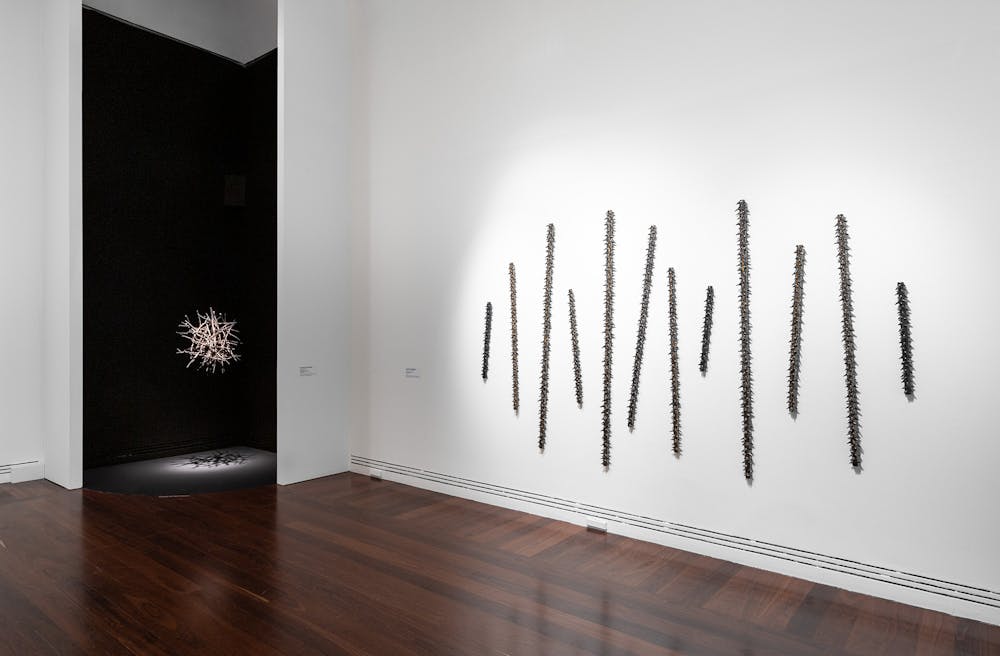
Angela Valamanesh turned to her garden and found beauty and resilience in the thorns of her rosebush in Morticia’s garden; Hossein Valamanesh transformed household gravel into a magical constellation of golden stars.

Installation view: 2022 Adelaide Biennial of Australian Art: Free/State, featuring What goes around by Hossein Valamanesh and Morticia’s garden 1 by Angela Valamanesh, Art Gallery of South Australia, Adelaide.
Photo: Saul Steed

The post-colonial and decolonial work speaking to the failure of the state is strong.

Kamilaroi/Gamilaraay artist Dennis Golding has transformed Victorian lacework on terrace houses in Redfern into an Aboriginal chandelier by subverting and claiming European domestic design features.

Installation view: 2022 Adelaide Biennial of Australian Art: Free/State, featuring Casting shadows [Chandelier] and The Settlement [Shield] by Dennis Golding, Art Gallery of South Australia, Adelaide.
Photo: Saul Steed

Kamilaroi artist Reko Rennie turned to a restored bright pink Holden Monaro to journey around urban sites of initiation into his cultural values. This journey takes place against a stunning soundscape by Yorta Yorta artist Deborah Cheetham whose music is infused with Kamilaroi language to honour Rennie’s grandmother who was never able to pursue a musical career.

Even a delightful element of anarchy surfaced in the opening satirical performance by Loren Kronemyer and Pony Express in Abolish the Olympics in which she performed 33 Olympic sports in one hour. Here, Pony Express describe themselves as social justice weightlifters whose aim is exposing the economic malpractice of the Olympics.

Loren Kronemyer of Pony Express, Abolish the Olympics.
Photo: Nat Rogers.

And there is more, including Shaun Gladwell’s slow seductive glimpse into street culture and the inevitable curbing of freedom for some who transgress in his video Homo Suburbiensis.

Free/State is a performative exhibition calling on viewers to engage and explore, to leave behind their closed world of lockdowns. It is an intensely theatrical exhibition, as good exhibitions should be. Goldspink has set in motion a philosophical journey centring around human resilience and creativity in a time of uncertainty.

Free/State is at the Art Gallery of South Australia until June 5.


Read more:
Australian art has lost two of its greats. Vale Ann Newmarch and Hossein Valamanesh


The Conversation

Catherine Speck has received funding from the Australian Research Council to investigate art exhibitions (with Joanna Mendelssohn, Catherine De Lorenzo and Alison Inglis).

ref. The 2022 Adelaide Biennial is titled Free/State. It explores freedom, the state and the spaces in between – https://theconversation.com/the-2022-adelaide-biennial-is-titled-free-state-it-explores-freedom-the-state-and-the-spaces-in-between-177062

Government announces long term boost to Australia’s defence numbers

Source: The Conversation (Au and NZ) – By Michelle Grattan, Professorial Fellow, University of Canberra

In his second big defence announcement in under a week, Scott Morrison on Thursday will outline plans for a major expansion of Australia’s defence workforce to more than 101,000 by 2040.

This will be an increase of about 18,500 over the baseline growth previously agreed to. It includes predominantly uniformed personnel but also public servants.

The expansion covers army, navy, airforce, and those working in the areas of space, information and cyber, as well as in defence science, education, logistics and health.

The government says the commitment represents the biggest step up in four decades.

The number of Australian Defence Force personnel will increase by about 30%, taking the total number of permanent ADF personnel to nearly 80,000.

The government puts the estimated cost of the expansion at some $38 billion.

The ramping up will start from 2024-25, and a large component – estimated at about 6000 people – will be for the development of the nuclear-powered submarine capability.

In the short term, over the four years to 2024 the defence workforce is being increased by 800 ADF personnel, 250 public servants and a number of extra staff for the Australian Signals Directorate.

As the government casts national security as a major theme of its election campaigning, Morrison announced at the weekend plans to build a new submarine base on the east cost, with three sites – Port Kembla, Newcastle and Brisbane – being considered for its location.

In a statement with Defence Minister Peter Dutton announcing the personnel expansion, Morrison says there was never a more important time to be increasing Australia’s defence forces.

“Our world is becoming increasingly uncertain so it’s important we take steps now to protect our people and our national interest over the coming decades.

“You can’t flick a switch to increase your army, navy and air force overnight. Growing the type of people and skills we need to face the threats of the future takes time, so we must start now so
critical skills can be taught and experience gained.”

Morrison says ADF personnel will be increased in every state and territory. There will be a particular focus on capabilities
associated with Australia’s security partnership with the United Kingdom and United States (AUKUS), and on air, sea, land, space and cyber.

Dutton says: “Defence operates with a highly integrated workforce spanning the Australian Defence Force, civilians and industry providers, with each bringing specialised skills and expertise.

“This growth in workforce and expertise will enable us to deliver our nuclear powered submarines, ships, aircraft and advanced weapons.

“It will mean we can build war fighting capabilities in the
domains of space, and information and cyber.”

The bigger defence force was flagged as part of the 2020 Force Structure plan.

The Conversation

Michelle Grattan does not work for, consult, own shares in or receive funding from any company or organisation that would benefit from this article, and has disclosed no relevant affiliations beyond their academic appointment.

ref. Government announces long term boost to Australia’s defence numbers – https://theconversation.com/government-announces-long-term-boost-to-australias-defence-numbers-178929

View from The Hill: Scott Morrison struggles to manage the messaging as he visits flood devastation

Source: The Conversation (Au and NZ) – By Michelle Grattan, Professorial Fellow, University of Canberra

Barnaby Joyce, in his usual blunt fashion, told a TV interviewer on Wednesday morning Scott Morrison would get a bad reception when he visited Lismore.

It was obvious. People are traumatised by what they’ve been through, and appalled at what they face to rebuild their lives.

Many feel angry and let down by government, state and federal. Rightly or wrongly, they think help from authorities – whether the state emergency services or the defence forces – didn’t arrive quickly enough, and too much of the initial rescue work had to be done by brave locals in their small boats.

Morrison’s appearance was always going to be a lightning rod for locals, with rowdy climate change and other demonstrators also in the mix.

But he (or his advisers) created unnecessary controversy by the decision to deny media access during part of his tour.

Morrison cited privacy. That explanation might have passed muster if everyone didn’t remember his unfortunate experience during the bushfires, when he was publicly and embarrassingly spurned during a visit to Cobargo.

The images have dogged him ever since. Whatever other motives they had, the Morrison team made every effort to ensure Wednesday wouldn’t produce footage that would come back to hurt him.

But by trying so blatantly to manage the pictures, Morrison’s conduct became an issue in the story. Sometimes it’s just better to face whatever music there might be.

The Prime Minister, accompanied by emergency management minister Bridget McKenzie, arrived in Lismore with an open wallet and a promise of more money to come.

Responding to some quite torrid questioning, he told a news conference he was moving to have the NSW and Queensland floods declared a national emergency, outlining what seemed the rather cumbersome process to do this.

The question was, why wasn’t this done days ago? Morrison said because the nature of the situation was different then.


Read more:
The floods have killed at least 21 Australians. Adapting to a harsher climate is now a life-or-death matter


The national emergency provision was brought in by the government after the bushfires and the subsequent royal commission. In that crisis, Morrison felt impeded by the lack of commonwealth power.

But on Wednesday he seemed to be playing down the importance of such a declaration.

“All this does is effectively remove some red tape when it comes to how commonwealth agencies are able to perform the duties in relation to this disaster,” he said.

“It doesn’t impact on the ADF resources. They’re already fully available. It doesn’t trigger any payments.”

The government is also now preparing to dip into its multi-billion disaster fund, something Labor has been urging for days.

The PM sought to show empathy and understanding of people’s frustrations. He put the latter in the context of what happens in times like this. “It is very common in natural disasters that there is frustration and anger, and the sense of abandonment.”

He pushed back sharply against any suggestion of criticism of the defence forces. “Don’t blame the ADF […] We won’t cop that.”

And he rejected the argument that too much of the rescue burden had fallen on ordinary citizens.

“There will be a community response in disasters […] because the community is already there,” he said. The defence forces were not “just waiting around the corner” when these things happened and it was “unrealistic” to think otherwise.

With climate change demonstrators protesting noisily in the street, Morrison acknowledged “we are dealing with a different climate to the one we were dealing with before. […] Australia is getting hard to live in because of these disasters.”

He also said it was “great” Australia had a commitment to net zero emissions by 2050 – as though the government hadn’t had to be dragged there, kicking and screaming, over years.

Morrison said that in such a crisis as these floods no amount of support was ever going to be enough. But “we are going to pull out every stop and every resource to ensure that we can meet it”.

It remains to be seen whether this will be the message that people take out from Wednesday’s visit – or whether it reinforces, albeit in a milder way, the negative impressions of Morrison’s handling of disasters that carry over from the bushfire days.

The Conversation

Michelle Grattan does not work for, consult, own shares in or receive funding from any company or organisation that would benefit from this article, and has disclosed no relevant affiliations beyond their academic appointment.

ref. View from The Hill: Scott Morrison struggles to manage the messaging as he visits flood devastation – https://theconversation.com/view-from-the-hill-scott-morrison-struggles-to-manage-the-messaging-as-he-visits-flood-devastation-178918

Floods left thousands without power. Microgrids could help communities weather the next disaster

Source: The Conversation (Au and NZ) – By Sarah Niklas, Research Consultant, Institute for Sustainable Futures, University of Technology Sydney

The devastating floods have cut off power for tens of thousands of people across New South Wales and Queensland, limiting their access to basic amenities and hampering rescue efforts. This included 54,000 homes in Brisbane alone.

But this doesn’t have to keep happening. Our new research finds installing renewable energy-run microgrids as a back-up power source can ensure regional communities don’t run out of critical energy, fuel and food supplies when the next disaster strikes.

Microgrids are groups of homes and businesses that use, generate, and share electricity. When the main grid begins to fail, they can disconnect from the main grid and continue to operate in a so-called “islanding” mode.

Several dozen community microgrid feasibility projects are already in progress. One, announced by Energy Minister Angus Taylor this week, will use renewable energy to power Daintree communities in far north Queensland. It will incorporate an 8 megawatt solar farm, 20 megawatt hours of battery storage and a 1 megawatt clean hydrogen plant.

While projects like this are a good start, critics argue the Daintree microgrid’s impact on the rainforest is untested, and point to the need for greater community engagement. Australia can – and should – be a world leader in this field, but as climate change brings more frequent disasters, we can’t afford to get it wrong.

Power outages after disasters

Energy supply during and after any disaster is critical, yet this is often the first thing to be interrupted.

The bushfires that burned large swathes of southeast Australia in the summer of 2019 and 2020, for example, destroyed critical infrastructure in East Gippsland. It left whole communities without power and telecommunication, with some cut off for weeks.

This exposed failures in the ability for the current electricity distribution system to supply communities when they need it most. The loss of power meant losing the ability to chill food, pump fuel, pay for supplies, charge mobile phones, heat water, and keep cool.

The 2019-2020 bushfires left towns in East Gippsland without power for weeks.
Shutterstock

Fast forward two years, and another disaster has hit Australia’s southeast.

Australia is one of the world’s largest countries, but with one of the lowest population densities. This means electricity must traverse long distances to supply many of our communities.

And as climate change makes the devastating floods and fires increasingly frequent, building back the damaged electricity poles and wires that traverse the hillsides and track the rivers seems maddeningly futile.

Providing emergency power overseas

Microgrids have traditionally been deployed around the world in places where supplying power from the main grid is too expensive or difficult. However, microgrids can also provide a reliable, clean supply of energy in areas prone to natural and climate-related disasters.


À lire aussi :
The floods have killed at least 21 Australians. Adapting to a harsher climate is now a life-or-death matter


Our research used case-studies of disaster responses overseas to explore opportunities for emergency energy supply in Australia. This includes the recent wildfires in the United States and Greece, earthquakes in New Zealand, and cyclones in India.

Each sought to improve community resilience through the provision of more reliable, cleaner energy supply. This typically took the form of small scale renewable energy systems combined with energy storage and backup power, with an ability to “island” from the main grid while keeping the lights on.

For example, after Hurricanes Katrina (2005) and Sandy (2012) caused major destruction and power outages, the Gulf and North Eastern states of America have become leading markets for microgrids.

Hurricane Sandy led to widespread power outages, prompting the installation of microgrids.
Shutterstock

We can also look to Sonoma County, a famous wine making region in North California, to see the benefits in action. In 2012, a winery installed an off-grid system using renewable energy and battery storage. This microgrid enabled the winery to survive wildfires in 2017 by switching to full island mode, allowing the business to operate for ten days independently.

And evidence shows microgrids installed in Japan have successfully continued operating after a series of earthquakes and storms.

A good start, but more needed

Through its Remote and Regional Community Reliability Fund, the federal government is investing A$50 million over five years for feasibility studies on microgrid technologies. These will seek to bolster or replace electricity supply to more than 100 off-grid and fringe-of-grid communities.

The Australian Renewable Energy Agency is committing another A$50 million to fund micorgrid pilot projects. Western Australia is leading the charge, with its pioneering use of stand alone power systems – like smaller, more contained microgrids that are completely separate from the grid.


À lire aussi :
Texas electricity grid failure shows how microgrids offer hope for a better future


With global evidence microgrids effectively help communities withstand disasters, this funding is a step in the right direction.

However, there must be greater engagement with communities to garner their support. This includes from greater cooperation of electricity network companies to help communities better understand the microgrid proposition for their towns.

What’s more, the current restrictive regulatory frameworks often can be a hindrance to energy sharing and storing, which are necessary for microgrids to work.

Without incorporating these into Australia’s plans, the likelihood of seeing successfully implemented microgrids across the continent will remain lamentably low.

The Conversation

Sarah Niklas received project funding from the Latrobe Valley Authority (LVA) through the Gippsland Smart Specialisation Fund (Funding Program), Latrobe Valley Authority (LVA), State Government of Victoria, Australia.

Scott Dwyer received project funding from the Latrobe Valley Authority (LVA) through the Gippsland Smart Specialisation Fund (Funding Program), Latrobe Valley Authority (LVA), State Government of Victoria, Australia.

ref. Floods left thousands without power. Microgrids could help communities weather the next disaster – https://theconversation.com/floods-left-thousands-without-power-microgrids-could-help-communities-weather-the-next-disaster-178311

Scientific measurement won’t answer all questions in education. We need teacher and student voices, too

Source: The Conversation (Au and NZ) – By Lucinda McKnight, Senior Lecturer in Pedagogy and Curriculum, Deakin University

Shutterstock

The recently released report of the review into initial teacher education recommends universities use randomised controlled trials (RCTs) to find evidence for effective methods of educating teachers. It says:

Randomised Controlled Trials (RCTs), the gold standard in empirical research, are
rarely used in evaluating the impact of initial teacher education (ITE) programs. Higher education providers are encouraged to conduct RCTs to inform evidence-based
teaching practice.

Randomised controlled trials are indeed the “gold standard” for specific kinds of medical research. They are the best way to compare a new treatment to either a standard treatment or no treatment at all.

In such a study, participants are randomly allocated to either the new or standard (control) treatments using the computer equivalent of tossing a coin. This process is known as randomisation. When the results are compared between the two groups, randomisation ensures an unbiased estimate of the treatment effect.

But it is naive to transpose the gold standard for specific kinds of research in medicine onto an entirely different discipline, such as teaching.

In educational research, a study might ask what challenges Indigenous Australians face in becoming teachers. This might involve a yarning or narrative inquiry approach, in which preservice teachers and researchers share their stories for in-depth collaborative analysis.

Another study might wonder why preservice teachers identify one placement school as having an especially supportive learning culture. This invites a case study of the school involving the principal, teachers, students and community, to understand the complex dimensions of this context.

Neither of these projects is less valid or important than those suited for randomised controlled trials. And creating a hierarchy of importance can mean research funding is directed away from any study that doesn’t use a randomised controlled method.

Where randomised trials are beneficial

A study that attempts to establish cause (usually an intervention) and effect (a desired improvement) might involve a randomised controlled trial. For instance, a study might want to examine the impact of a new program for teacher education.

One such study is a trial conducted in NSW in 2014-15 on the effectiveness of Quality Teaching Rounds – a specific approach to teacher professional learning in schools. Researchers wanted to know if this approach improved teaching. Teachers were randomly allocated to one of two intervention groups that would undertake the quality teacher rounds, or to a control group.


Read more:
Randomised control trials: what makes them the gold standard in medical research?


Researchers observed and assessed the teaching of all participants. The researchers were “blinded”, meaning they did not know whether they were assessing teachers in the intervention or control group. The trial found Quality Teaching Rounds made a statistically significant improvement in the quality of teaching in the intervention groups.

Other educational research is just as valid

In a different kind of study, researchers wanted to gain insight into the perspective of teachers themselves on how they learn at their workplace. A randomised controlled trial would not be able to achieve this aim.

Instead, researchers conducted in-depth interviews with four teachers they selected from a larger group. They encouraged teachers to talk freely about their learning goals, then coded and categorised their transcribed responses. Through this, researchers identified ways teachers feel they learn best: through reading, experience, reflection and collaboration.


Read more:
We have the evidence for what works in schools, but that doesn’t mean everyone uses it


Another example of important educational research that can’t be done through randomised controlled trials is action research, where teachers try a new classroom idea, reflect critically on the process and modify their approach – in an ongoing cycle. In one such project two teachers are investigating the effect of interdisciplinary team teaching on student and teacher learning. Teacher researchers also reflect on feedback from other colleagues and students.

This kind of research is identified as empowering for teachers and offers scope for them to create their own projects. Randomised controlled trials, in contrast, are complex for teachers to establish and run reliably.

The limitations of randomised trials

The newly established Australian Education Research Organisation (AERO) has published some extraordinary guidelines advising teachers to conduct randomised controlled trials in their classrooms.

The organisation suggests individual teachers should flip a coin to decide how they will teach, or split their class randomly into two, and teach one half one way and the other half another. However, this is methodologically unsound and impractical in a single class. The person deciding who gets the intervention should not be the person delivering the intervention or assessing the outcome. Otherwise bias is inevitable.

AERO’s advice demonstrates ignorance not only of randomised controlled trials, but of teacher workloads, by expecting teachers to teach in two ways at once.

Even in medicine (where they originated), randomised controlled trials cannot answer all questions. They cannot, for example, determine people’s attitudes, biases and commitments to certain issues. Medical researchers also use the various approaches described above.


Read more:
In defence of observational science: randomised experiments aren’t the only way to the truth


Research shows one disadvantage of randomised controlled trials in education is that the interventions they assess are not likely to have the same effect across all contexts and groups of students. They require additional process evaluations.

Another disadvantage is randomised controlled trials tend to be externally designed and academically-run, rather than teacher-led. Few teachers are experts in medical-style research. This positions teachers in a subservient way, in their own profession. Our research suggests it is just as important to understand “what is going on”, as it is to try to prove “what works”.

Privileging scientific measurement over participants’ voices

The ideal way to find answers to questions in education is to conduct quantitative (numbers-based) and qualitative (people-based) research in parallel. This would answer complementary questions.

But privileging one kind of research over all others demonstrates a lack of understanding of the nature of research. It suggests a bullying preoccupation with scientific measurement over research that privileges participants’ voices, especially in a feminised profession.

The Conversation

The authors do not work for, consult, own shares in or receive funding from any company or organisation that would benefit from this article, and have disclosed no relevant affiliations beyond their academic appointment.

ref. Scientific measurement won’t answer all questions in education. We need teacher and student voices, too – https://theconversation.com/scientific-measurement-wont-answer-all-questions-in-education-we-need-teacher-and-student-voices-too-178167

How do anti-tank missiles work – and how helpful might they be for Ukraine’s soldiers?

Source: The Conversation (Au and NZ) – By James Dwyer, Associate Lecturer and PhD Candidate, School of Social Sciences, University of Tasmania

Pavlo Palamarchuk/AP

Ukraine’s allies have sent some 17,000 anti-tank weapons into the battlefield, in a bid to help fighters bog down the Russian offensive.

The stockpile includes at least 2,000 NLAW (Next Generation Light Antitank Weapon) missiles from the United Kingdom, 100 NLAWs from Luxembourg, and several hundred Javelin missiles from the United States and Estonia. The NLAW and Javelin are some of the most advanced man-portable anti-tank missiles available.

Both are relatively lightweight, shoulder-fired missiles which – although they won’t completely turn the tide of the war – have so far proven valuable in what is otherwise a highly asymmetrical conflict.

So how do the missiles work? And what makes them so helpful for Ukraine’s defence?

What are anti-tank missiles?

Portable anti-tank missiles are specifically designed to destroy main battle tanks, which are more heavily armoured than other types of armoured vehicles (such as armoured personnel carriers, for instance).

Main battle tanks, which Russia has deployed in large numbers, use modern and highly advanced armour technology, including “explosive reactive armour” (or ERA). In other words, the tank’s armour explodes outwards when impacted by a warhead. This is intended to divert the blast and minimise the damage caused.

However, explosive reactive armour actually isn’t much of an advantage against the modern anti-tank missiles being used by Ukrainian fighters. The NLAW and Javelin missiles are designed to hit a tank from above in a “top attack” – striking at the top of the tank’s turret where the armour is thinnest. This will either completely destroy the tank, or incapacitate the crew inside.

The missiles can also be used in “direct fire” mode against less well-armoured vehicles, such as armoured personnel carriers, buildings or even low-flying helicopters – with devastating results. This makes them a highly flexible and dangerous weapon for opposing forces.

Perhaps the greatest advantage of anti-tank missiles is their range and ease of use. They are relatively lightweight (between 10-25kg depending on the model), can be used by a single soldier and require (relatively) minimal training to handle. They are also extremely difficult to detect, due to their size and mobility.

Fire and forget

These modern missiles are fully guided “fire-and-forget” weapons, which means a soldier can immediately hide or relocate after firing. The projectile locks-on to the target and guides itself once fired.

In the case of a Javelin this is achieved using infrared technology, wherein the missile locks onto any heat signature present in the tanks.

NLAW missiles use “predictive line of sight” technology. The guidance package calculates both the distance to the target and the target’s speed (if its mobile), and guides itself to the predicted location. With this, a single soldier can snipe a tank at range.

NLAWs have a range of up to 1km, while the Javelin has a maximum effective range of up to 4.5km. Javelins are therefore much more expensive than NLAWs, with a single missile costing about US$80,000 (or A$110,000).

In the case of both the NLAW and Javelin, the warhead detonates upon impact with a hard object. A direct hit can be enough to wipe out a single tank if it impacts an area with thinner armour, such as the tanks turret – but it generally won’t have much impact on tanks nearby.

Even a glancing blow from one of these weapons may well be enough to incapacitate a tank, if not fully destroy it. Thus, anti-tank missiles pose a significant and, crucially, difficult-to-detect threat to Russian armoured columns.

A seemingly effective strategy

Russia does not appear to be relying on man-portable anti-tank weaponry to the same extent as Ukraine.

At this stage it’s drawing on a vast arsenal of tanks and aviation assets, such as attack helicopters, for its anti-tank capability. This may be due to Ukraine carefully husbanding and protecting its limited tank arsenal.

This could change at short notice, however, as Russia does possess its own anti-tank missiles.

Reports indicate Russians have suffered heavy losses against anti-tank weaponry, to the point where we’ve seen images and videos online showing Russian soldiers putting up makeshift mesh screens and cages over their tanks, in a (futile) effort to protect themselves.

These are colloquially termed “cope cages” by various communities on the internet. Of course, they will do little to minimise the impact from a missile, but they do demonstrate that Russian soldiers are fearful of the threat the missiles present.

Unverified reports indicate there have potentially been 280 armoured vehicles destroyed by Javelin’s in Ukraine, out of 300 fired. If the reports are true, this is a remarkable strike rate.

It appears these weapons have, in part, allowed the Ukraine army to bog down and stall the Russian advance, at a significant cost to Russia.

The Conversation

James Dwyer does not work for, consult, own shares in or receive funding from any company or organization that would benefit from this article, and has disclosed no relevant affiliations beyond their academic appointment.

ref. How do anti-tank missiles work – and how helpful might they be for Ukraine’s soldiers? – https://theconversation.com/how-do-anti-tank-missiles-work-and-how-helpful-might-they-be-for-ukraines-soldiers-178886

Thinking of buying a dehumidifier? Advice from an expert on mould and damp

Source: The Conversation (Au and NZ) – By Michael Taylor, Adjunct academic, Flinders University

Shutterstock

Google searches for “dehumidifier” have soared in the past month, especially in New South Wales, and there are a lot of options to choose from.

But how much moisture can these things really remove? And what happens if you just ignore the problem?

I’ve researched mould and indoor air quality, and work with clients helping address mould problems in homes. Here’s what you need to know on where a dehumidifier can help, and when it’s more likely just a band-aid for a deeper problem.


À lire aussi :
Sudden mould outbreak after all this rain? You’re not alone – but you are at risk


Reduce moisture through big and small fixes

Too much moisture can cause your house and belongings to go mouldy. A bad smell soon follows.

Balancing that moisture to ensure we live in healthy, comfortable spaces while controlling mould and microbial growth is a challenge. Sometimes we can be notoriously bad at ventilating domestic spaces appropriately.

I see a dismayingly frequent number of bathrooms without an extraction fan. Or laundries with clothes driers, pumping hot wet air into the room with no system to get that moisture outside.

In fact, the way we live in often well-sealed houses can trap lots of the moisture we sweat and steam off though everyday activities.

Showers, cooking, sweating and drying clothes produce anywhere from six to 12 litres of indoor moisture per person every day.

A dehumidifier might reduce moisture in a house but it won’t fix the underlying problem if your house has insufficient systems to re-route moisture outside.

A fan in a bathroom
Wherever possible, moisture should be re-routed outside.
Shutterstock

So would a dehumidifier help?

But if you’re renting or short on cash, and circumstances prevent you adding an extraction fan, a dehumidifier will at least help keep things under control.

You’ll need to do a little research to make sure you’re buying a dehumidifier that’s powerful enough to get the job done.

Most “mid-range” units state they’re capable of pulling somewhere around three to 15 litres of water out of the air per day.

That’s probably enough to help in some areas. But moisture will spread itself through the whole house.

This figure also doesn’t take into account how much moisture is in the air naturally, with higher natural relative humidity in Queensland and Darwin particularly making this more of an uphill battle.

So how much help would a dehumidifier actually be? That depends on how much water is in the air.

One cubic metre of air has 1,000 litres of volume, and at 20℃ can hold about 17 grams of water.

Reduce that temperature to 10℃ and it can only hold around 10g. But up the temperature to 30℃ and it can hold around 30g of water.

So, given a normal 3×4-metre lounge room in the middle of spring in a relatively dry place like Adelaide, you’ve probably got 200-300 millilitres of water in the air. With air flowing in and around the house and different rooms, you’re starting to approach a few litres of natural moisture just hanging around.

If you’re in Darwin, or a state contending with weeks of seemingly endless rain, you can probably double your calculations. You might have tens of litres of water to remove from the air throughout the house over the course of the day.

Without some seriously big dehumidifiers, you simply won’t be able to overcome that problem without being targeted in your approach.

In these cases, you’ll be most successful where you can control the amount of outside air coming in, and by placing the dehumidifier in the affected area with good air circulation around it. So keep windows closed when it’s rainy and put the dehumidifer in the most moisture-laden part of the house.

Should you also keep the door closed to help the dehumidifier work best on a particular room, or is it better so open doors so as to reduce humidity throughout the house? Well, if you know you’ve got it located at source, a closed space can help. But it’s a balancing act.

Too much moisture can cause your house and belongings to go mouldy. A bad smell soon follows.
Shutterstock

Getting the balance right

If your home has been flooded, a dehumidifier of any size is at best only a small part of the solution. Significant volumes of building materials and soft furnishings will need to be disposed of and assessed for warping or structural damage.

In these instances, professional drying is required and there are some seriously powerful dehumidifiers on the market.

But these are often used inside contained spaces where damaged rooms are sheeted in plastic to limit the flow of outside air (bringing in more moisture).

While there are rules about toxic chemicals and airborne hazards in workplaces, Australia is sorely lacking when it comes to regulations on comfortable indoor humidity and mould spores.

The guidance documents most frequently referred to tend to indicate a comfortable indoor humidity sits between 30-60% relative humidity, and that bringing indoor relative humidity to below 65% tends to notably reduce microbial growth.

However, pushing the relative humidity too low can be uncomfortable. It can dry out your eyes, skin and mucous membranes, increase some infection risks and may cause long term damage to materials (such as wood – particularly decorative wood – and some paper objects, art and some styles of heritage flooring).

So would a dehumidifer be a waste of money once the rain stops?

When the rain stops, have you just wasted your money on an expensive piece of kit? Would one of those cheap little DampRid pots full of moisture-absorbent crystals or powder have been enough?

Not likely. Desiccants such as DampRid pots can help in closed boxes or where you’ve only got a small air space. But at best, they generally only pull about three times their weight in moisture out of the air; a 300g pot might capture nearly a litre of water, but that’s it.

So dehumidifiers can help if you’re clever with that you’re trying to achieve, but you should always look to solve the underlying cause. That means, where possible, looking to improve your exhaust and ventilation.


À lire aussi :
Fungi after the floods: how to get rid of mould to protect your health


The Conversation

Michael Taylor provides consulting services in the area of indoor air quality and mould assessment for Greencap. He has previously received funding from SafeWork SA.

ref. Thinking of buying a dehumidifier? Advice from an expert on mould and damp – https://theconversation.com/thinking-of-buying-a-dehumidifier-advice-from-an-expert-on-mould-and-damp-178633

​Crowdfunding disaster relief offers hope in desperate times. But who gets left behind?

Source: The Conversation (Au and NZ) – By Matthew Wade, Lecturer in Social Inquiry, La Trobe University

At least 21 people have been killed in the devastating floods across Queensland and New South Wales. Many have lost everything they own, in part due to vicious cycles of underinsurance.

The destruction will also worsen the already “beyond dire” housing crisis. Some will have no choice but to move elsewhere and leave behind existing social ties. Rebuilding will take years, and local communities may never be the same.

It is perhaps no wonder, then, that people turn to crowdfunding to help those affected.

But while the urge to create such crowdfunding campaigns, or donate to one, is understandable and admirable, it is worth asking: who can succeed in crowdfunding, and who gets left behind?


Read more:
The floods have killed at least 21 Australians. Adapting to a harsher climate is now a life-or-death matter


Even a federal MP passes the hat around

Already, over a thousand crowdfunding campaigns related to the floods can be found on GoFundMe alone, with more on Australia-based crowdfunding platforms like MyCause and Chuffed.

One campaign is federal MP Peter Dutton’s, raising funds for affected people in his electorate of Dickson.

Though perhaps well-meaning, this was woefully ill-considered. Among other complaints, observers expressed frustration a federal MP would be passing the hat around, rather than focusing his energy on pulling government levers to distribute aid.

For many, Dutton’s campaign reflected a wider lack of planning and urgency to mitigate extreme weather events, but it also reveals the everyday normalisation of crowdfunding.

What does it say about the role of government, the reciprocal duties of citizens, and how we can best support each other in difficult times, when no less than the federal defence minister turns to crowdfunding?

Flying choppers and rising anger

One of the most prevalent themes of these floods – perhaps even more evident than previous disasters – is the abandonment and rage felt by those affected, who have judged the federal and state response to be despairingly inadequate.

Compounding this despair are sentiments of distrust towards both federal and state governments. Perceptions of misplaced priorities are driving these suspicions, as evident in critiques of policing actions and ill-timed photo-ops by the ADF.

Evoking memories of government responses to the Black Summer bushfires, there are concerns the slick imagery of relief was coming before the relief itself.

Of course, there have been exhaustive and heroic efforts among SES volunteers, police, ADF personnel, and other emergency workers.

Also heartening has been the spontaneous co-operative efforts among isolated groups, along with the immense generosity of volunteer organisations.

Yet a sense of horror pervades in witnessing how much has been left to lay people, not only to provide shelter and source supplies (including crucial medications), but to conduct rescue operations in high-risk situations.

Daring community-led efforts to save people with privately-owned helicopters supported via crowdfunding is a remarkable example of courage and ingenuity, but also a damning indictment of our readiness to deal with extreme weather events.

Those on the ground are tired of being lauded for their resilience. They are resilient because they were given no alternative.

Who succeeds in crowdfunding? Who doesn’t?

Meanwhile, those looking on from afar understandably want to help, ideally with immediate impact.

A direct cash donation – along with an encouraging message – can offer a quick, secure, and impactful way of providing aid. And as journalist Jenna Price observed, starting a crowdfunding campaign on behalf of someone else can be a concrete action to undertake in otherwise helpless moments.

But most folks won’t have a compelling advocate like Price in their corner. As I’ve noted previously, social crowdfunding platforms are effectively markets for sympathy, where “the crowd” weighs claims to moral worthiness. Such mechanisms create few winners and many losers.

A wealth of research confirms that crowdfunding is often only effective for people with large social networks and the ability to craft an affecting appeal.

Most campaigns raise little, if anything at all, which can feel like an injurious measure of life’s worth. COVID only worsened these trends.

An over-reliance on crowdfunding may even exacerbate existing inequalities. Still, many have no choice but to plead their case.

As researcher Bhiamie Williamson observes, Aboriginal people are over-represented and under-resourced in the floods. There’s also a strong likelihood they will be under-represented in crowdfunding appeals (but here are two campaigns trying to ensure this does not happen).

So while crowdfunding can be a great method to support individuals directly, consider who may be missing from these platforms, and get behind those agencies looking to help them.


Read more:
Like many disasters in Australia, Aboriginal people are over-represented and under-resourced in the NSW floods


GoFundMe is not an answer to mass catastrophe

Recently, GoFundMe has become acutely self-conscious about its public perception as a place of desperate appeal, where only few succeed.

In response, the company has made clear it is not an alternative safety net, but rather a “complement” to existing institutional supports. This, in part, is why GoFundMe is more regularly partnering with charities and non-profits, such as Givit.

This strategic shift was apparent in a frank op-ed from GoFundMe CEO Tim Cadogan, who said “we can’t do your job for you” in urging the US government to offer more substantial relief during the height of COVID.

This, ultimately, is why Dutton’s GoFundMe campaign generated such public backlash. While well-meaning, an elected official rattling a donations tin after a disaster of this scale feels hopelessly inadequate, and a potent symbolic marker of our collective failure to enact mitigation strategies.

Crowdfunding cannot fix these issues. If anything, crowdfunding too easily individualises what are shared existential crises, distracting from our ability to properly reckon with them.


Read more:
Want to help people affected by floods? Here’s what to do – and what not to


The Conversation

Matthew Wade does not work for, consult, own shares in or receive funding from any company or organisation that would benefit from this article, and has disclosed no relevant affiliations beyond their academic appointment.

ref. ​Crowdfunding disaster relief offers hope in desperate times. But who gets left behind? – https://theconversation.com/crowdfunding-disaster-relief-offers-hope-in-desperate-times-but-who-gets-left-behind-178632

An ‘extraordinary collaboration’ – Watershed: The Death of Dr Duncan is a sensational and important work

Source: The Conversation (Au and NZ) – By William Peterson, Adjunct Associate Professor, Auckland University of Technology

Adelaide Festival/Andrew Beveridge

Review: Watershed: The Death of Dr Duncan, directed by Neil Armfield for the Adelaide Festival.

50 years ago this May, Dr George Ian Ogilvie Duncan, a law lecturer at the University of Adelaide, was assaulted by a group of men and thrown into the River Torrens. He drowned.

Dr Duncan was attacked at a well known gay “beat”: a place where men gathered to meet and have sex. In an era when even private sexual acts between two men were illegal, such beats were the only place for many to experience intimate contact with other men.

Though three police officers from city’s vice squad were widely believed to have been involved in the murder, no one was convicted. As the lyrics in this new production proclaim:

Your murderers walk through the world
[They] sleep through the night without shame.

In the wake of Dr Duncan’s death, public outcry eventually led to legal change. In 1975 South Australia became the first state to decriminalise male homosexual acts.

The complex historical, political and social context around Dr. Duncan’s death requires a suitably focused dramatic vehicle. Wisely, the musical form chosen was not opera or the musical, but the oratorio.

Traditionally associated with sacred content such as the Passion of Christ, an oratorio is a musical oration, unique in its capacity to mourn, proclaim and celebrate what comes from tragic loss.

One of the many triumphs of this production is its showing how this older form can tell a serious contemporary story using a range of musical styles while evoking a wide range of emotions.

This extraordinary collaboration between composer Joe Twist and co-lyricists Alana Valentine and Christos Tsiolkas, with set and costumes by Ailsa Paterson and choreography by Lewis Major, is superbly and sensitively staged by director Neil Armfield.

Watershed is a sensitively staged production.
Adelaide Festival/Andrew Beveridge

18 singers from the Adelaide Chamber Singers guide the audience through the story of Dr Duncan while evoking an era in which “coming out” becomes possible for greater numbers.

Two principal singers, Mark Oates and Pelham Andrews, deftly take on character voices that include Duncan, former South Australian premier Don Dunstan, and a police officer, lawyer and whistle blowing officer Mick O’Shea. Ainsley Melham enacts the “Lost Boy,” movingly guiding us through the work’s emotional heart.

The work opens with dancer (Mason Kelly) in a body harness falling in slow motion from the top of the stage into a pool of water. A kind of solemn horror is evoked, as the last moments of Dr Duncan’s life are evoked in a highly aestheticised way.

Truth in the lyrics

The lyrics draw from historian Tim Reeves’ research into Dr Duncan’s death, the initial police and Scotland Yard investigation, and the later trial and acquittal of two of the officers in 1988.

Valentine and Tsiolkas’ words evoke the emotions of time and place, and – early in the work – the dangerous world of furtive cruising.

One stands under the bridge and smokes his cigarette.

A golden-haired student walks into the toilet block.

Glancing neither left nor right/ he slips into the night.

We are reminded that others were dumped into the river as well. This is a world in which gay men are bashed for sport:

We thought faggots floated.
It was just a drunken lark.

Music and lyrics express the view that many did not see gay lives as worthy.

They’re legitimate prey.

The broader story is also one of class, as it took the murder of a university lecturer to evoke the outrage of Adelaide’s society mothers:

Surely we draw the line at murder for sport.
Surely we draw the line at police brutality.

At times the music takes on a liturgical quality, as in a mass, while at others, it opens into a raucous, celebratory mode, as when the 1975 legal victory decriminalising homosexual male sex is proclaimed. Lyrics capture the spirit of release from emotional and psychological bondage that many of us who came out in the 70s felt:

I’m overwhelmed in disbelief […] a criminal no more.

A sensational work

Under the musical direction of Christie Anderson, the small orchestra of strings, keyboard and percussion at times creates a big, oversized sound, generating the beating heart of the work.

This new work is the result of a hugely successful collaboration.
Adelaide Festival/Andrew Beveridge

Watershed’s success in capturing a time and place, in storytelling through song, is ultimately due to a hugely successful collaboration between diverse creative artists committed to serving the whole.

A new work as seamless as this requires discarding many “good ideas,” trusting that better ones will follow. This is a hard task, one that requires considerable generosity of spirit.

This is a truly sensational and – dare I say – important work, one that will hopefully see many future productions.

Season closed.

The Conversation

William Peterson does not work for, consult, own shares in or receive funding from any company or organization that would benefit from this article, and has disclosed no relevant affiliations beyond their academic appointment.

ref. An ‘extraordinary collaboration’ – Watershed: The Death of Dr Duncan is a sensational and important work – https://theconversation.com/an-extraordinary-collaboration-watershed-the-death-of-dr-duncan-is-a-sensational-and-important-work-175330

The floods have killed at least 21 Australians. Adapting to a harsher climate is now a life-or-death matter

Source: The Conversation (Au and NZ) – By Barbara Norman, Professor of Urban & Regional Planning; Chair of the Climate Change Adaptation and Resilience Research Network (CCARRN), University of Canberra

The devastating floods in Queensland and New South Wales highlight, yet again, Australia’s failure to plan for natural disasters. As we’re seeing now in heartbreaking detail, everyday Australians bear the enormous cost of this inaction.

It’s too soon to say whether the current floods are directly linked to climate change. But we know such disasters are becoming more frequent and severe as the climate heats up.

In 2019, Australia ranked last out of 54 nations on its strategy to cope with climate change.

Australia had a chance to lift its game when it released a new climate resilience and adaptation strategy late last year. But the plan was weak and contained no funding or detailed action.

At the time of writing, the current floods had killed at least 21 people across two states and left many thousands homeless. Sydney suburbs were being evacuated amid warnings of more intense rain.

Governments must urgently invest in measures to help communities cope with extreme weather events. As we’re seeing right now, Australian lives depend on it.

man thrown furniture onto pile amid floodwaters
Natural disasters are becoming more frequent and severe as the climate heats up.
Jason O’Brien/AAP

Right here, right now

Last week’s report by the Intergovernmental Panel on Climate Change was just one in a long line of warnings about the increasing risk of natural disasters as global warming worsens.

Australian governments are well aware of the problem. In fact, the federal government’s new National Climate Resilience and Adaptation Strategy, launched at the Glasgow climate conference in November last year, stated:

As the global temperature rises and other changes to the climate increase, Australia will face more frequent and severe events, such as extreme weather, fires and floods, and slow-onset events, such as changing rainfall patterns, ocean acidification and sea level rise.

The measures it contained were a start – but communities across Australia need much more, right now.

The strategy contained no new budget commitments or specific programs. It also lacked detailed actions on how to help urban and regional communities prepare for the impacts of climate change.

I have extensive experience in the public sector at all levels of government, in areas such as coastal, urban and regional planning, and climate change adaptation.

I also have first-hand experience of natural disasters. In the 2019-20 Black Summer bushfires my family lost a much-loved holiday home at Mallacoota in Victoria, which we’d held for four generations. I’ve also worked on the ground helping councils and communities prepare for and recover from disasters.


Read more:
The east coast rain seems endless. Where on Earth is all the water coming from?


woman with flooded home and car
Australian governments know the risks of future flooding.
Jason O’Brien/AAP

I’m deeply concerned at how badly prepared Australia is for current and future damage from climate change. Australia lacks even the most basic policies and plans, including:

  • no national coastal plan for coastal erosion and inundation

  • no national urban policy for climate-resilient development

  • no national requirement for climate change to be considered in urban and regional land-use plans

  • no funded national support program for urban and regional communities to adapt to current and future climate risk.

Australia was once a leader in climate adaptation. But this momentum has been lost over the past decade, as the climate wars played out in federal parliament.

And last week, it emerged the federal government has spent just a fraction of the A$4.8 billion emergency fund despite the worsening flood crisis.

This does little to reassure the public that our leaders are focused on helping communities recover from and adapt to natural disasters.

boy carries debris from house
The public wants reassurance that our leaders are focused on helping communities cope with natural disasters.
Jason O’Brien/AAP

The plan Australians deserve

So what must Australia do to get ready for the harsher future that awaits? Over many years, experts from a range of organisations and disciplines have put their minds to this question. These are some measures they’ve called for:

1. An integrated national climate action plan

This would involve funding and programs for state governments, local councils and industry, enabling them to work with communities to prepare for climate change.

2. A national coastal strategy

Coastal communities are especially vulnerable to storms, floods and bushfires which will worsen under climate change. Leading experts last year outlined the need for a climate change plan tailored to these communities. It would include a national agency to coordinate ocean and coastal governance across tiers of government.

3. Review urban planning legislation and city plans

Planning experts and others have called for climate change considered when making everyday decisions about the built environment. This would lead to more sustainable, pleasant and healthy urban and regional communities, as well as minimising disaster risks.

These decisions include where to locate new housing developments, as well as investing in green buildings and water-sensitive urban design.

And we also need to start conversations with communities at risk, such as those on floodplains or in bushfire-prone areas, to prepare city and town plans that incorporate future risks.

4. Stronger links between organisations

Greater cooperation is needed between emergency management, climate scientists and land-use planners, so they can effectively work together to prepare climate-resilient community plans. Better communication is also needed to ensure knowledge is shared and best-practice is maintained.

5. More money for research and community plans

Governments must fund the development of cutting-edge applied research to better understand and map climate risks. In addition, funding is needed for climate-resilient urban development and to support vulnerable communities through long-term adaptation plans.


Read more:
Like many disasters in Australia, Aboriginal people are over-represented and under-resourced in the NSW floods


pool collapsed onto beach after storm
Coastal communities are particularly vulnerable to storms and other extreme weather.
David Moir/AAP

Facing hard facts

In just a few years, many Australian communities have weathered a series of natural disasters overlaid by the COVID pandemic. They are exhausted, and deserve better.

Crucially, governments must be prepared to lead on emissions reduction to minimise, as much as we can, damage to Earth’s climate.

But we must also face the reality that natural disasters in Australia will get worse. Communities need practical, funded help now to ensure they survive and thrive as the climate warms.


Read more:
Australia has taken a new climate adaptation blueprint to Glasgow. It’s a good start but we need money and detail


The Conversation

Barbara Norman has received funding from the Australian Research Council, the Bushfire & Natural Hazards CRC, the National Climate Change Adaptation Research Facility and the ACT Government. She is Chair of the Climate Change Adaptation & Resilience Research Network at University of Canberra, Deputy Chair of the Australian Coastal Society, a past National President and Life Member of the Planning Institute of Australia and a member of the Australian Labor Party.

ref. The floods have killed at least 21 Australians. Adapting to a harsher climate is now a life-or-death matter – https://theconversation.com/the-floods-have-killed-at-least-21-australians-adapting-to-a-harsher-climate-is-now-a-life-or-death-matter-178761

Can we resurrect the thylacine? Maybe, but it won’t help the global extinction crisis

Source: The Conversation (Au and NZ) – By Corey J. A. Bradshaw, Matthew Flinders Professor of Global Ecology and Models Theme Leader for the ARC Centre of Excellence for Australian Biodiversity and Heritage, Flinders University

NFSA

Last week, researchers at the University of Melbourne announced that thylacines or Tasmanian tigers, the Australian marsupial predators extinct since the 1930s, could one day be ushered back to life.

The thylacine (Thylacinus cynocephalus), also known as the ‘Tasmanian tiger’ (it was neither Tasmanian, because it was once common in mainland Australia, nor was it related to the tiger), went extinct in Tasmania in the 1930s from persecution by farmers and habitat loss. Art by Eleanor (Nellie) Pease, University of Queensland.
Centre of Excellence for Australian Biodiversity and Heritage

The main reason for the optimism was the receipt of a A$5 million philanthropic donation to the research team behind the endeavour.

Advances in mapping the genome of the thylacine and its living relative the numbat have made the prospect of re-animating the species seem real. As an ecologist, I would personally relish the opportunity to see a living specimen.

The announcement led to some overhyped headlines about the imminent resurrection of the species. But the idea of “de-extinction” faces a variety of technical, ethical and ecological challenges. Critics (like myself) argue it diverts attention and resources from the urgent and achievable task of preventing still-living species from becoming extinct.

The rebirth of the bucardo

The idea of de-extinction goes back at least to the the creation of the San Diego Frozen Zoo in the early 1970s. This project aimed to freeze blood, DNA, tissue, cells, eggs and sperm from exotic and endangered species in the hope of one day recreating them.

The notion gained broad public attention with the first of the Jurassic Park films in 1993. The famous cloning of Dolly the sheep reported in 1996 created a sense that the necessary know-how wasn’t too far off.

The next technological leap came in 2008, with the cloning of a dead mouse that had been frozen at –20℃ for 16 years. If frozen individuals could be cloned, re-animation of a whole species seemed possible.

After this achievement, de-extinction began to look like a potential way to tackle the modern global extinction crisis.


Read more:
Worried about Earth’s future? Well, the outlook is worse than even scientists can grasp


Another notable advance came in 2009, when a subspecies of Pyrenean ibex known as the bucardo (Capra pyrenaica pyrenaica) which had been extinct since 2000 was cloned using frozen tissue.

Iberian ibex (Capra pyrenaica), or cabra montés in Spanish. Author: Juan Lacruz.
https://commons.wikimedia.org/wiki/File:Cabra_mont%C3%A9s_4.jpg

The newborn bucardo died only a few minutes after birth. But it could no longer be argued that de-extinction was limited to the imagination.

Leaving no stone unturned

There are still some technical reasons to think genuine de-extinction might never be possible for many species. But even if these are overcome, the debate over pros and cons will continue.

Proponents argue that with the accelerating loss of species today, we must exploit all options. In isolation, de-extinction seems like a sensible tool to add to our anti-extinction kit.

But it’s far from that simple. Opponents have a long list of reasons why de-extinction won’t help to save biodiversity.

An expensive project

One of the main arguments against de-extinction is the huge expense required for research and technology. The A$5 million donated to the University of Melbourne is only a drop in the bucket.

Ecologists and conservation biologists argue the money would be better spent on initiatives to prevent extinction in the first place. These include purchasing land to conserve entire ecosystems, removing invasive species, restoring damaged habitats, and programs to breed and re-introduce threatened species.

On the other hand, if someone wants to spend the money on the tech, why not let it happen? After all, people waste a lot more on arguably sillier ventures.

However, modelling suggests spending limited resources on de-extinction could lead to net biodiversity loss.

Prevention is better than cure

Another common argument is that prevention is better than cure; we should put all our efforts into avoiding extinction in the first place.

If we believe we can somehow “fix extinction later”, we risk becoming ambivalent. Planning for conservation after the fact could be a dangerous road to apathy and higher net extinction rates.

‘Playing God’

Some have argued that the mere concept of de-extinction tests the limits of our ethical notions.

“Playing God” with the existence of whole species is inherently contentious. Research and implementation depend on value judgements, with those in power realising their values above those of others.

Will the voices of Indigenous peoples be heard when deciding on what species to resurrect? Will the dispossessed and poor also have a say?

There are also serious questions of animal welfare both along the pathway to de-extinction, as well as what happens to the organisms once created (including in captivity and after re-introduction to the wild).

A question of numbers

Perhaps the most important practical argument against de-extinction, but also the most overlooked, is that creating one or two animals won’t be nearly enough to bring back a species.

To have any real chance of surviving in the wild, introduced populations need to number in the hundreds, if not thousands. Could we make enough individuals to do this?

We would also need to increase the genetic diversity of the individuals via gene editing, as has been done in a limited way for a few species of crop plants.

But even so, we know most re-introductions of threatened species fail because of insufficient numbers.

Living space

Let’s say we ignore the technological challenges, the costs, the ethics, the lack of genetic diversity, and so on. Assume we can make new thylacines, mammoths, diprotodons, or sabre-tooth cats. Great. Now where do we put them?

Diprotodon optimum. The rhino-sized ‘wombat’ from Australia that died out over 40,000 years ago. Art by Eleanor (Nellie) Pease, University of Queensland.
Centre of Excellence for Australian Biodiversity and Heritage

Humans have destroyed at least half Earth’s vegetation since the agricultural revolution. We have altered almost two-thirds of Earth’s land surface to some degree.

As a result, about one million plant and animal species are threatened with extinction, and the total number of vertebrates in the wild has fallen by two-thirds since the 1970s.

Available living space is in short supply, especially for big species that require a lot of intact territory to survive.

Not to mention human-wildlife conflicts.

What happens if a major predator (such as the thylacine) is put back? Will pastoralists welcome them with open arms, or shoot them to extinction as they did last time?

From lions to bears, tigers to jaguars, and dingoes, predators the world over are still heavily persecuted because they compete with human enterprise.


Read more:
Will we hunt dingoes to the brink like the Tasmanian tiger?


The world has changed

If we did return extinct species to the places where they used to live, there is no guarantee they would survive there in modern conditions. Climate change and other processes mean that many past environmental states no longer exist.

Just because a mammoth lived in Siberia 20,000 years ago doesn’t mean it could necessarily do so today.

Diseases and invasions

There are already debates under way about moving threatened species to new habitats to increase their chances of survival. Opponents of this “assisted migration” point out the risk of spreading disease or parasites, or that the moved species will harm other species in their new home.

Now imagine you want to introduce a species that has long been extinct to an area. Would it spread disease or knock off other species?

On the flip side, most species rely on highly specialised microbiomes for survival. Recently resurrected species might be missing these organisms or succumb to the ones living in the area where they are released.

The debate isn’t going away

As technology continues to advance, we will likely see many leaps toward the holy grail of resurrecting extinct species. Chances are it will be a recently extinct species rather than something like a diprotodon, or dare I say, a dinosaur.

But even so, de-extinction is unlikely to offer any real value to the overall conservation of biodiversity.

Should we therefore continue to pursue de-extinction? The debate isn’t going to disappear anytime soon. As long as there are punters willing to fund the technological research, the pursuit will continue.

But even the most amazing technological advances are unlikely to help the catastrophic worldwide loss of biodiversity.

The Conversation

Corey J. A. Bradshaw receives funding from the Australian Research Council.

ref. Can we resurrect the thylacine? Maybe, but it won’t help the global extinction crisis – https://theconversation.com/can-we-resurrect-the-thylacine-maybe-but-it-wont-help-the-global-extinction-crisis-178425

Letting the people decide: should Australia hold more referendums?

Source: The Conversation (Au and NZ) – By Paul Kildea, Senior Lecturer, Faculty of Law & Justice, UNSW Sydney

AAP/Darren Pateman

Last month the mayors of Queensland’s two biggest cities proposed a referendum on reintroducing daylight saving in the Sunshine State.

South Australians, meanwhile, have recently heard calls for popular votes on retail trading hours and recreational cannabis.

In our system, politicians pass laws and make decisions, but sometimes they first gauge public opinion by holding an advisory policy referendum or “plebiscite”. Most people think of these as rare events. The 2017 same-sex marriage survey was just the fourth national policy referendum in more than a century, compared to over 40 referendums on constitutional amendments.

But new research shows policy referendums have been far more frequent at the state and territory level. This rich and largely forgotten history fills out our understanding of Australian democracy. It also demonstrates the enduring appeal of giving the public a direct say on contentious issues.


Read more:
Explainer: the same-sex marriage plebiscite


Alcohol, daylight saving and other controversies

Australia’s states and two mainland territories have together held 56 referendums since 1901. About a dozen of these have put forward proposals for constitutional amendment. The remainder have concerned policy questions.

New South Wales has made most use of the referendum, having put 16 proposals, followed by Western Australia with 12. The Northern Territory’s 1998 poll on statehood remains its only one. Victoria has been least enthusiastic in recent times – its last referendum, on hotel closing hours, was in 1956.

About a third of all state and territory referendums have been about alcohol policy. The topic of hotel closing hours appeared frequently on ballot papers in the early 20th century. During the first world war, voters in three states backed 6pm closing at licensed premises. This choice proved consequential, giving rise to the infamous “six o’clock swill”.

The move to close pubs at 6pm gave rise to the ‘six o’clock swill’.
Museum of Lost Things

Some governments have asked voters about prohibition. In 1928, residents of the Federal Capital Territory (now the ACT) were asked if they wanted to allow the private sale of alcohol. The territory had been “dry” since its creation in 1911, prompting many to dash across the border to Queanbeyan to quench their thirst.

On polling day, a majority of electors voted to end prohibition. The timing could not have been better for the nation’s federal politicians, who just a year earlier had begun sitting in Canberra.

In more recent times, daylight saving has been put to voters more than any other issue. By the 1970s, many states had experience with daylight saving but the question was whether people wanted to keep it. Around 70% of electors voted ‘Yes’ to this in New South Wales (1976) and South Australia (1982).

Public support was never tested in Victoria and Tasmania. These states opted to keep daylight saving without holding a referendum.

But daylight saving has proved hugely divisive elsewhere. A 1992 Queensland referendum revealed a stark urban-rural divide on the issue. More than 60% of residents in the south-east of the state voted “Yes”, but opposition in regional and rural areas was enough to defeat it.

On the other side of the continent, Western Australian governments have asked voters about daylight saving four times, most recently in 2009. On each occasion the answer has been a decisive “No”.

State and territory electors have also voted on the teaching of scripture in schools, the location of a hydro-electricity dam on Tasmania’s Gordon River, and self-government for the ACT. More often than not, these polls have attracted significant media attention and been fiercely contested.

This year marks the 30th anniversary of Queensland’s failed 1992 referendum on daylight saving.
Dan Peled/AAP

High success rate

In Australia, a lot of commentary on federal referendums is about how difficult it is to pass them. Voter have approved just eight of 44 proposals (or 18%) for constitutional amendment. This has led some commentators to say Australians are naturally inclined to vote “No”.

The history of state and territory referendums challenges this notion. Referendums held by state and territory governments enjoy a much higher success rate.

Of the 41 state/territory referendums that have asked voters a Yes/No question, 19 (or 46%) have been carried. The success rate varies across policy and constitutional polls. About a third of policy referendums have passed, while voters have approved an impressive three-quarters of constitutional proposals.

The reasons for the different federal and state/territory success rates are complex and remain to be fully explored. But the sub-national referendum record bucks the conventional wisdom, showing that Australians are indeed willing to vote “Yes”.

This is worth keeping in mind as we consider the prospects of future federal referendums, including a possible vote on a First Nations Voice.


Read more:
Is Australia ready for another republic referendum? These consensus models could work


When should we hold policy referendums?

Given Australia’s long track record of using policy referendums, should we be holding more of them?

Australians are generally in favour of the idea. In research conducted for the Australian Constitutional Values Survey (ACVS) in 2017, my colleagues and I found more than 80% of respondents gave “in principle” support for direct democracy.

And referendums, when run well, can strengthen our democracy. They can provide opportunities for public deliberation on tough issues, give people a sense of contribution, and build trust and engagement.

Popular wisdom has it that Australians mostly vote ‘no’ on referendums. But research shows many have succeeded, including, most recently, the vote on marriage equality.
Joe Castro/AAP

But referendums are not suitable for all issues. The question is where we should draw the line. Four years after the marriage survey, this is a big philosophical question that remains unresolved.

Governments have held advisory polls on alcohol, daylight saving and same-sex marriage, so why not also on COVID rules, the date of Australia Day or – as Pauline Hanson has proposed – on immigration levels?

The case for a policy referendum is arguably stronger when the proposal concerns basic governing arrangements – think statehood or some electoral laws – or contentious social issues. It will be weaker when the proposal is highly technical or could endanger minority rights.

The ACVS suggests people’s attitudes towards direct democracy align with this approach to some degree. Respondents favoured a popular vote on some social issues (such as voluntary euthanasia) but preferred to leave more technical matters (such as emissions targets) to parliament.

We might also reason that policy referendums are best reserved for those issues that genuinely divide the parliament, or the parties, to the point of stalemate. This was arguably the case with same-sex marriage.

Basic principles are helpful, but it is not possible to be definitive about the circumstances in which policy referendums should or should not be held. It will always be a case-by-case judgment.

With that in mind, we could do more to promote debate about when policy referendums should be held. Currently the decision rests entirely with politicians, who tend to favour them only in narrow circumstances.

Parliaments in all jurisdictions could establish processes for individuals and groups to propose referendums on certain issues. Special committees could be tasked with considering these proposals and reporting back. A more radical idea would be to enable citizens to directly initiate referendums by gathering a certain number of signatures from voters.

In any event, there is scope for us to think more creatively about how we integrate policy referendums into our representative politics. And, as the state and territory record shows, this would build on a rich democratic practice that stretches back more than a century.

The Conversation

Paul Kildea has previously received funding from the Australian Research Council.

ref. Letting the people decide: should Australia hold more referendums? – https://theconversation.com/letting-the-people-decide-should-australia-hold-more-referendums-178145

I’m at home with COVID. When do I need to see a doctor? And what treatments are available?

Source: The Conversation (Au and NZ) – By Tari Turner, Director, Evidence and Methods, National COVID-19 Clinical Evidence Taskforce; Associate Professor (Research), Cochrane Australia, School of Population Health and Preventive Medicine, Monash University, Monash University

Shutterstock

Sorry to hear you tested positive.

Fortunately, for most people – and especially those who are vaccinated – COVID won’t lead to serious illness. Around 30% of people with COVID won’t have any symptoms.

People with mild and even moderate COVID are likely to be managed at home, rather than going to hospital.

In the past month, new drug treatments have become available for people with mild COVID who are at risk of more severe disease.

Symptoms to expect

Common symptoms include sore throat, cough, headache and fatigue.

Some people may also experience muscle pain, nausea, vomiting, diarrhoea, or loss of taste and smell.

You can treat these as you normally would, with paracetamol or ibuprofen, plenty of fluids, rest and patience.


Read more:
At home with COVID? 5 easy tips to help you breathe more easily


Some people are at greater risk of severe disease

Most people with COVID will only ever have mild symptoms, and will recover in one to two weeks without the need for any treatment.

Some people are at higher risk of developing serious illness from COVID because they are:

  • over 65 years, or over 50 years for Aboriginal and Torres Strait Islander people
  • unvaccinated or partially vaccinated
  • pregnant.

And/or because they have one or more of the following underlying conditions:

  • lung disease, including chronic obstructive lung disease, asthma or bronchiectasis
  • heart disease
  • obesity (body mass index over 30 kg/m2)
  • diabetes
  • kidney failure
  • immunocompromising conditions (weakened immune system).
Woman in bed with COVID, wearing a mask, holding a mug of tea.
Some people are at risk of developing severe COVID.
Shutterstock

If you have one or more of these risk factors, talk to your GP, particularly if you’re not up-to-date with your COVID vaccinations.

Your GP might suggest you use a pulse oximeter to keep a track of the oxygen levels in your blood.

Falling oxygen levels (below 92%) can indicate you’re developing more serious illness, and might need to head to hospital for further treatment.

If you have severe trouble breathing or severe chest pain, call 000 for an ambulance to take you to hospital.

What treatments are available for mild COVID?

If you’re in a higher-risk group, your GP will also assess whether you might benefit from one of the new medications now available to treat COVID:

  • the oral antiviral tablets nirmatrelvir plus ritonavir (Paxlovid) or molnupiravir (Lagevrio)

  • the monoclonal antibody sotrovimab (Xevudy), which is given as a single injection at a hospital infusion centre.

These medications can reduce the risk of serious illness in people who aren’t vaccinated and have risk factors for severe disease.

Ritonavir and molnupiravir affect the way the virus replicates, while sotrovimab enhances the body’s immune response.

They may also benefit people who are vaccinated, but for whom vaccination is less likely to work because their immune systems are less effective. This includes people who have had an organ transplant and those with conditions requiring immune-suppressing treatment, such as rheumatoid arthritis, Crohn’s disease, multiple sclerosis and cancer, for those undergoing chemotherapy.


Read more:
Taking COVID pills at home sounds great. But we need to use them wisely or risk drug resistance and new variants


These medications need to be given within five days of symptoms developing, so it’s important you talk to your GP as soon as possible.

Your GP will carefully consider the benefits of these medications for you, given your health status and other factors, as well as the risks. Each of these drugs have potential side effects.

Carer talks to elderly person in wheelchair.
Medications can benefit people who are vaccinated but have weakened immune systems.
Shutterstock

Who shouldn’t have them?

These drugs aren’t suitable for everyone.

Paxlovid (ritonavir), for example, has potentially serious interactions with several common medications for high blood pressure, epilepsy, depression and others.

None of the oral antivirals are recommended in pregnancy.


Read more:
What is sotrovimab, the COVID drug the government has bought before being approved for use in Australia?


What else might a GP prescribe?

If you have mild or moderate COVID at home, and are at risk of developing serious illness, your GP might also suggest you take inhaled steroids.

Budesonide and ciclesonide are steroid medications which are also used in asthma.

Research suggests they may decrease the risk of deterioration from COVID and may accelerate recovery if started within 14 days of your first symptoms.

Woman consults a doctor via telehealth.
Talk to your GP as soon as possible, as many COVID medications need to be started within five days of developing symptoms.
Shutterstock

What happens if you get worse?

Most people with mild COVID recover without any treatment, but if your symptoms start getting worse, or your blood oxygen levels start to fall, your GP might decide it’s best for you to head to hospital where other treatment options are available.

In hospital, you might be given drugs such as:

  • remdesivir (an intravenous antiviral drug) which affects the way the virus replicates

  • dexamethasone, baricitinib or tocilizumab. These powerful anti-inflammatory drugs reduce the damaging effects the body’s inflammatory response can have on the lungs.

You may also need support for your breathing.

Can I take my normal medications?

In most cases, you can and should continue to take your existing medications for conditions such as asthma, diabetes or high blood pressure.

Talk to your doctor if you are taking oral menopause hormonal therapies (MHT, also sometimes called hormone replacement therapy or HRT). Your doctor may suggest that you stop these until you have recovered. Both severe COVID and some forms of menopause hormonal therapies can increase the risk of developing blood clots.

New treatments don’t replace vaccination

New treatments for COVID are a welcome addition, especially for those who can’t be vaccinated or for whom vaccination is unlikely to be effective.

The COVID research pipeline is expected to deliver more new treatments for COVID in 2022 and the National COVID-19 Clinical Evidence Taskforce will review this new research and update our guidance as the evidence emerges.

However vaccination remains the best form of defence against serious disease and death for COVID.

The Conversation

Tari Turner receives funding from the Australian Government Department of Health to support the work of the National COVID-19 Clinical Evidence Taskforce.

Bridget Barber is affiliated with the National COVID-19 Clinical Evidence Taskforce.

Josh Davis receives salary funding (career development fellowship) and project funding (SNAP trial grant) from the NHMRC. He is affiliated with the National COVID-19 Clinical Evidence Taskforce.

Executive Director of the National COVID-19 Clinical Evidence Taskforce

ref. I’m at home with COVID. When do I need to see a doctor? And what treatments are available? – https://theconversation.com/im-at-home-with-covid-when-do-i-need-to-see-a-doctor-and-what-treatments-are-available-176884

Lessons from the pandemic on fairer and more caring uni teaching and learning

Source: The Conversation (Au and NZ) – By Sally Baker, Senior Lecturer, School of Education, UNSW Sydney

Shutterstock

The pandemic forced universities to rush out remote delivery of their courses online. Now we have had time to take stock of the impacts. Our newly published Australia-wide research investigated the challenges and opportunities of remote delivery for culturally and linguistically diverse migrant and refugee (CALDMR) students and university staff.

We identified many changes to teaching and learning that we should strive to keep. Students and teachers told us they got to know each other on a more personal, human level. Being essentially inside each other’s homes led to higher levels of care and engagement.

But the disruptions of COVID also highlighted existing educational disadvantage caused by “the digital divide”. Online delivery made it worse for equity cohorts, especially refugee students. As one student recalled:

“[…] at one point my laptop stopped working, and then I couldn’t do Zoom meetings. That was a bit of an issue, and then co-ordinating that with the university.”

A lecturer told us:

“[…] there’s that extra language barrier. I can’t see their confusion like I could see it in person.”


Read more:
Trauma, racism and unrealistic expectations mean African refugees are less likely to get into Australian unis


While looking to return to in-person learning, universities must still plan for possible disruptions in 2022. However, after two years of “pivoting” to emergency remote delivery, the time is right to proactively prepare for equitable online engagement.

We need to embed equity in our framing of teaching and learning to ensure we aren’t leaving groups of students behind.


Read more:
Fair access to university depends on much more than making students ‘job-ready’


Policies offered support but left gaps

Our research explored the impacts of government and institutional policies and of the move online.

We reviewed national, state and institutional policy statements in the year to March 2021. A range of financial supports from governments and universities provided a financial lifeline for many students.

However, our findings highlight the need to provide other resources to support culturally and linguistically diverse students in their studies.

Limited attention was paid to planning for equity in the sudden shift online. There was nothing that explicitly targeted the issues that migrant and refugee students faced, including limited access to technology and wi-fi.

Care and engagement came to the fore

COVID also exposed the stresses and workloads for staff who had to respond to CALDMR students’ needs during remote learning. They include lecturers and tutors, student-facing support staff (equity officers, student advisers, learning advisers, counsellors) and educational designers, who support teaching and learning design and delivery. One lecturer told us:

“I just didn’t have any time or space to be able to make big changes to my approach. I felt really pressured […] stressed […] definitely a question of survival.”

Despite the negative aspects, our research captured hopeful changes, which benefited culturally and linguistically diverse students in particular.

Emergency remote delivery led to a greater focus on the importance of more caring and engaged teaching and learning practices. Educators gained an increased awareness of students’ complex lives and needs.

Student sitting in kitchen as he chats online with teacher
Being essentially inside each other’s homes led to higher levels of care and engagement.
Shutterstock

However, this came at a cost for these educators:

“I felt to give students a good experience I really had to over-service them – drop-in sessions [on Zoom] […] play the [pre-recorded] lecture and sit on Zoom and answer everyone’s questions over the chat box […]”


Read more:
Our uni teachers were already among the world’s most stressed. COVID and student feedback have just made things worse


3 recommendations

Paying attention to students’ needs in ways that are reasonable for educators requires careful planning. Based on the experiences of the past two years, we make three recommendations for sustaining the gains in equitable student learning.

Recommendation 1

Course delivery must be more flexible.

Culturally and linguistically diverse students need time and space to manage the linguistic load of their studies. But many migrant and refugee students also have work and caring responsibilities. That leaves them with less time to engage with course materials.

One support staff member told us:

“There were quite conflicting activities that they had […] Some of my younger students really struggled. I’m talking 18-to-20-year-olds with family responsibilities, not their own families, but looking after their parents because they were home, or they got thrown into domestic duties.”

Hence the need to plan online or hybrid instruction that allows students to review learning materials at their own pace and enables meaningful interactions to build community.


Read more:
COVID has changed students’ needs and expectations. How do universities respond?


Recommendation 2

Design online learning with CALDMR students in mind.

Successful and equitable online education is not simply a matter of uploading materials used in face-to-face instruction. Careful planning is needed to maximise interaction and support within the digital space.

This means taking care not to assume students have equal access to linguistic and cultural resources, including digital literacy. One lecturer said:

“A lot of [CALDMR] students […] often, in the class, you could tell that they weren’t getting something. You can see. I miss that with the online. […] A lot of them are probably falling through the cracks because they don’t feel they could ask.”

Explicit planning and modelling of literacy requirements – linguistic, academic and digital – will help ensure online learning is accessible and engaging for all students.

Recommendation 3

Support educators to embed inclusive practices in their teaching and engagement with students.

Universities need to invest in staff professional development, including casual staff. Around 90% of the educators in our study indicated they want to learn more about supporting CALDMR students.

Universities should also invest in dedicated liaison staff to help these students navigate university systems and assessment requirements. A developer involved in moving teaching online told us:

“It’ll be good to have some greater understanding of their needs and ways to address them in teaching and learning, assessment design and emotional well-being.”


Read more:
5 tips on how unis can do more to design online learning that works for all students


Let’s build on the lessons of the pandemic

The disruptions of the pandemic added to existing educational inequalities. Left unaddressed, students from disadvantaged backgrounds, such as refugees, are more likely to miss out on learning.

However, the shift to online delivery has also highlighted opportunities for sector-wide commitment to teaching and learning practices that are more responsive to issues of equity.

The Conversation

Sally Baker works for the University of New South Wales. She received funds from the National Centre for Student Equity in Higher Education for this project, and has previously received funds from the NSW Department of Education, the Department of Education, and the (former) Office of Learning and Teaching. Sally is the Chair of the Refugee Education Special Interest Group (www.refugee-education.org)

Joel Anderson works for Australian Catholic University and the Australian Research Centre in Sex, Health and Society at La Trobe University. He received funding from the National Centre for Student Equity in Higher Education for this project. Joel is a member of the Refugee Education Special Interest Group (www.refugee-education.org).

Lisa Hartley works for Curtin University’s Centre for Human Rights Education. She received funds from the National Centre for Student Equity and Higher Education for this project, and has previously received funding from the Australian Research Council and the (former) Office of Learning and Teaching. Lisa is a member of the Refugee Education Special Interest Group (www.refugee-education.org).

Rachel Burke works for the University of Newcastle. She has received funds from the National Centre for Student Equity in Higher Education (NCSEHE) for this project, and has previously received funding from Perpetual Impact. She is a steering committee member of the Refugee Education Special Interest Group (RESIG) and convenes the CALD Education Special Interest Group of the Australian Association of Research in Education (AARE).

Tebeje Molla works for Deakin University. He receives funding from the National Centre for Student Equity in Higher Education for this project and has previously received funds from the Australian Research Council. Tebeje has published on refugee education and is a member of the Refugee Education Special Interest Group (www.refugee-education.org)

ref. Lessons from the pandemic on fairer and more caring uni teaching and learning – https://theconversation.com/lessons-from-the-pandemic-on-fairer-and-more-caring-uni-teaching-and-learning-178292

Revisiting Shane Warne: The Musical – this brilliant show should be considered an Aussie classic

Source: The Conversation (Au and NZ) – By Mara Davis, PhD candidate, UNSW Sydney

In response to the tragic death of Shane Warne last week, actor and composer Eddie Perfect took to Facebook to express his shock and surprise at Warne’s sudden passing.

“I just don’t want to say goodbye – there was so much more life to come,” he wrote.

Before Perfect was the composer for the Tony award nominated Broadway musical Beetlejuice, his first full-length musical was something much closer to home: Shane Warne: The Musical.

The musical started as a joke. In 2005, Perfect was on tour performing in The Big Con with Max Gillies and kept seeing Warne’s name all over the newspapers. He made an offhand comment in a phone call to his manager, Michael Lynch, that someone should write a musical about the cricketer.

To his great surprise, Lynch (a great cricket fan) told him to go for it.

The resulting musical is an overwhelmingly faithful rendering of Warne’s life, staging both his triumphs and his downfalls.

It took Perfect three years to write the show, in which he read every book about Warne he could find (he joked in his Facebook post he has a master’s degree in Warney) before a full production opened in Melbourne’s Athenaeum Theatre in December 2008.

In 2009, it went on tour, playing seasons at the Regal Theatre in Perth and the Enmore Theatre in Sydney.

While it was critically acclaimed, it did not perform as well as expected at the box office and closed early.

Five years later, in 2013, the musical was revised and presented in a revamped concert version. This iteration added new material covering Warne’s retirement from international cricket, his dramatic weight loss and his high profile relationship with the actress Elizabeth Hurley.

While the musical may have started as a joke, in style and substance it is anything but. It deserves to be considered an Australian musical theatre classic.


Read more:
Vale Shane Warne: a cricketing genius who lived a life of ‘no regrets’


A repertory of our national characters

Shane Warne: The Musical is about more than just Shane Warne.

It is about Australia, and why we found Warne to be such a captivating figure.

It is about how Warne was, on the one hand, a lionised national sporting hero, and on the other, a disappointingly fallible human being.

It shows how Warne embodied the repertory of our national characters: underdog, everyman, outlaw and tall poppy.

The finger snapping What an SMS I’m In, staged while shopping with then-wife Simone in the supermarket, and in which the lyrics rhyme “Warney” with “horny” is a hilariously comic take on his extramarital indiscretions.

But the musical also treats Warne with great empathy and nuance. Perfect’s moving rendering of Warne’s relationship with the late Terry Jenner is a tender portrayal of the coach-player dynamic.

Warne’s bowling style has often been compared to fine arts like poetry or classical music. These sport-as-art metaphors are explored in That Ball which centres on the moment Warne bowled the ball of the century.

A slow, august ballad in the vein of the late Stephen Sondheim, the song recalls the process by which a situation is transformed into an event of significance: that shot, that race, that ball.

The lyrics describe the feeling of watching history being made: “someone was talking, I said ‘shut up one sec!’ and the hairs stood up on the back of my neck.”

Told from the perspective of ordinary spectators, That Ball represents the profound act of such a sporting achievement. What it means for individuals, for a nation, how it lingers in collective memory: “I remember that ball like it was yesterday and never will forget.”

Celebrating the larrikin

Warne was initially not sold on the idea of a musical about him, and Perfect tried, through the media, to stress the musical was not going to be a merciless attack on the cricketer.

Eventually, these arguments cut through. Warne attended the opening night performance and – ever the media personality – came up on stage to bow with the cast after the curtain call.

He even published a positive review which admitted he had felt nervous sitting in the audience (“More edgy, even, than facing Pakistani quickie Shoaib Akhtar on a green, seaming deck, I reckon”) but the production had won him over by the end:

I think Eddie and his team have written the musical in a respectful and sympathetic way, and that they have captured my fun, larrikin side.

In light of Warne’s untimely passing, revisiting Shane Warne: The Musical is a funny, touching, clever, and joyous way to honour his legacy. It is well overdue for another production.


Read more:
At once an open book and a master of disguise, Shane Warne’s allure extended far beyond the cricket pitch


The Conversation

Mara’s doctoral work is supported by an Australian Government Research Training Program (RTP) Domestic Scholarship.

ref. Revisiting Shane Warne: The Musical – this brilliant show should be considered an Aussie classic – https://theconversation.com/revisiting-shane-warne-the-musical-this-brilliant-show-should-be-considered-an-aussie-classic-178644

No, catching Omicron is not ‘inevitable’ – here’s why we should all still avoid the virus

Source: The Conversation (Au and NZ) – By David Welch, Senior Lecturer, University of Auckland

Fiona Goodall/Getty Images

Aotearoa New Zealand has entered new COVID territory, characterised by high vaccination rates but also the rapid spread of the Omicron variant and rising numbers of hospitalisations.

As we approach the peak of this wave, some have suggested it would be better to drop remaining public health measures, let the infection rip through our population and accept nearly all of us will get infected very soon. This is unwise for many reasons.

First, simple measures we can all take will ensure that even in this big wave of infections, most of us can still avoid getting infected. Even if you share a household with an infected person, international studies show the risk of catching the virus is somewhere between 15% and 50%.

Second, not all infections are equal.

The Delta variant is still circulating and we can’t presume all infections are Omicron. While less virulent than Delta, Omicron can nevertheless cause severe disease and death, particularly among the unvaccinated who make up 3% of the vaccine-eligible population but 19.4% of hospitalisations.

There are still many vulnerable people in the community we can protect by limiting the spread of the virus and ensuring they are less likely to encounter it.

Another reason to limit potentially infectious contact is that infection is more likely if an individual is exposed to a higher initial dose of the virus. An infection avoided or delayed is always a win as we move closer to even more effective vaccines and improved medical treatments for COVID.


Read more:
How does Omicron compare with Delta? Here’s what we know about infectiousness, symptoms, severity and vaccine protection


Why outbreaks come in waves

The reason we get large wave-like outbreaks that rise and fall quickly is because the virus becomes less able to find people to infect as the outbreak progresses. Crucially, this happens before everyone is infected.

This is related to the R number epidemiologists talk about. R0 is the average number of people an infectious person infects at the start of an outbreak. When R is greater than one, the number of cases increases, when it is below one, it decreases.

As the outbreak proceeds, more and more people get infected and recover. They cannot immediately be reinfected. For example, if R is 2 at the start of an outbreak, meaning each case on average transmits to two others, by the time half of the population has been infected and has recovered, the virus will only transmit to one other.

That is because it “tries” to infect two people but finds that, on average, one has already recovered and cannot be reinfected. In this example, the R number is now effectively 1 and infections will start to fall.

Omicron’s rapid spread

Despite New Zealand’s high vaccination rates, Omicron is spreading quickly here, as it has in other countries. There are many elements to this.

Omicron is good at avoiding immunity generated by vaccination and previous infection. We have very high rates of first and second doses, but fewer than 60% have received boosters, and we have a very short history of exposure to natural infection.

These characteristics make us prone to a rapid and large outbreak of Omicron. Further, vaccinations, including boosters, are very good at preventing illness, hospitalisation and death, but they don’t prevent infection and transmission quite as well.


Read more:
NZ’s confirmed COVID case numbers are rising fast, but total infections are likely much higher – here’s why


This means that even in a highly vaccinated population, you can still get high levels of transmission and infection, but the rates of illness and severe complications will be much lower.

Relaxation of public health measures and the impact of superspreader events may also be contributing to the current picture. Importantly, while the number of infections has increased dramatically with Omicron, the proportion of these that result in severe complications is much lower than during the earlier Delta outbreak.

Our behaviour helps determine the size of the wave

The earlier cases start to fall, the smaller the overall outbreak will be. If R is 2 at the start of an outbreak, a basic model says around 80% of the population will be infected. If the initial R number can be reduced to 1.5, only 58% of the population get infected.

A graph showing the percentage of the population infected over the course of a closed outbreak for different values of R0.
The percentage of the population infected over the course of a closed outbreak for different values of R0.
Calculated using the method described by Ottar N. Bjørnstad in Epidemics: Models and Data Using R, Author provided

Luckily we exert some control over the R number. Measures like mask wearing, good use of ventilation, self-isolation when symptomatic or after a positive test, vaccination, and avoiding crowded indoor areas all work to reduce R and the total number of people who will get infected. Local modeling suggests that depending on how well we adopt these measures, somewhere between 25% and 60% of the population are likely to be infected in this outbreak.

Even when sharing the same household as a case, it is not inevitable everyone else will get infected. Studies from the UK, Denmark and South Korea have all looked at the probability of susceptible people in the same household as a positive case getting infected.

They found with Omicron, this probability is somewhere between 15% and 50%. In other words, you still have a better than even chance of avoiding infection through your infectious housemate.

All the measures that work generally to reduce spread also work within a household. Mask up inside, get air flowing through, where possible move the infected household member into their own bedroom and bathroom, and practice good basic hygiene.

The relationship between the initial exposure dose, infection and disease severity is a property of many infectious diseases, including respiratory diseases in humans and other animals.

A recent review concluded that while there is good evidence of a direct relationship between the SARS-CoV-2 virus dose and infection in humans, evidence for a link between dose and severity is lacking, despite some evidence from animal models.

COVID severity is most likely driven by factors other than the initial exposure dose. These include the virus variant and host factors such as age or the presence of some pre-existing health conditions.

All the standard public and personal health measures will help us avoid getting infected and reduce transmission to the more vulnerable, thereby reducing the number of people with severe illnesses.

The Conversation

David Welch has received funding from MBIE, MoH and HRC.

Nigel French is affiliated with Massey University and has received funding from MBIE and HRC.

ref. No, catching Omicron is not ‘inevitable’ – here’s why we should all still avoid the virus – https://theconversation.com/no-catching-omicron-is-not-inevitable-heres-why-we-should-all-still-avoid-the-virus-178276

How you can talk to your toddler to safeguard their well-being when they grow into a teenager

Source: The Conversation (Au and NZ) – By Elaine Reese, Professor of Psychology, University of Otago

Shutterstock/fizkes

As parents, we all hope our teens will be healthy and happy.

Our new research shows one way to help is to have positive conversations with children about everyday events as soon as they start to talk.

Most teens experience a dip in their well-being. This adolescent malaise is not new. Over a century ago, child psychologist G. Stanley Hall wrote of the “reflectiveness” in adolescence that “often leads to self-criticism and consciousness that may be morbid”.

But this pattern has intensified in recent years all around the world, including in New Zealand, exacerbated by the pandemic.

For some teens, this dip in happiness becomes a precipitous drop. Serious mental health problems can emerge for the first time in adolescence.

Led by clinical psychologist Claire Mitchell, our research shows that parents can act earlier in their children’s lives to prevent this dip from becoming a dramatic drop-off in well-being.


Read more:
9 ways to support your teen’s mental health as restrictions ease


Talking together from toddlerhood

Our research is based on a longitudinal study of adolescents whose mothers had received special coaching when their children were toddlers in “elaborative reminiscing” — rich and validating conversations about past events — grew up to tell more coherent stories about turning points in their lives. These adolescents also reported fewer symptoms of depression and anxiety than adolescents whose mothers had simply conversed with their toddlers as usual.

The study investigated the life stories and well-being of 93 of the 115 adolescents whose mothers had originally participated in a randomised controlled trial 14 years earlier, when the adolescents were toddlers (1.5 years old). See my book [Tell Me a Story: Sharing Stories to Enrich Your Child’s Life] for more details on the original study.

Over the following year (to age 2.5 years), researchers coached one group of mothers to converse with their children about everyday memories in a detailed and affirmative way. A control group of mothers simply talked to their toddlers as they normally would. At age 15, adolescents narrated turning points from their lives that we coded for coherence. They also reported on their well-being and personality traits.

Two teenagers walking along a beach.
Teenagers whose parents talked to them about everyday memories when they were toddlers show more insight into how major life events shape them.
Shutterstock/Hot Pixels Photography

The adolescents whose mothers had participated in the earlier coaching sessions told narratives about life’s turning points (such as parental divorce or cyber-bullying) with more insight into how the experience had shaped them as people. These insights are a type of eudaimonic well-being — contentment achieved through the ability to live a meaningful life.

Adolescents in the coaching group also reported better hedonic well-being in the form of lower levels of depressive and anxious symptoms. These findings remained strong even after controlling for adolescents’ personality traits, an established contributor to their well-being.

Our findings suggest brief coaching sessions with parents early in children’s lives can have enduring benefits, both for the way adolescents process and talk about difficult life events and for their well-being.


Read more:
1 in 2 primary-aged kids have strong connections to nature, but this drops off in teenage years. Here’s how to reverse the trend


An earlier finding from this same study showed mothers in the coaching group continued to have more elaborative reminiscing conversations with their children at age 11, the cusp of adolescence. The conversation techniques that we taught parents of toddlers are enjoyable and easy to use, which may be why parents kept using them as their children grew older.

How to talk about the past with toddlers

It’s not easy to talk with a toddler. Here are the tips we taught parents in our study.

1. Select events your toddler finds interesting

The best events are those your child brings up spontaneously. For example, a toddler might say “baa baa” when you’re driving past a farm, referring to a farm visit the previous week.

2. Draw your toddler in with what, where, who, when questions

Each question, such as “what did you see at the farm?”, can add a bit more detail. It’s good to pause after a question to give your child time to respond: “Baa baa.”

3. Respond warmly and enthusiastically to your toddler

Praise your child’s responses: “Little baby lamb. Clever girl!”
And follow up with related questions: “What did you do with the lambs?”

4. If your toddler doesn’t respond

To keep the conversation going, rephrase your question with new information, for example: “What did you give to the lambs?” After a pause, you can ask: “Did you give them a bottle?”

5. Most of all, keep it fun

End the conversation when your toddler loses interest. As your child gets older, you can adapt these same techniques to talk about more significant topics.

By practising this technique early, parents and their young children develop healthy interactions from the beginning and start sharing stories and memories to protect their teenagers’ future well-being. As my collaborator Claire Mitchell says:

As a parent of a toddler myself, I can confirm that these elaborative reminiscing techniques are enjoyable and easy to learn. Our study helps pave the way for future work with parents of young children to promote healthy interactions from the beginning that could have enduring benefits.

The Conversation

Elaine Reese has received funding from the Marsden Fund of the Royal Society Te Apārangi.

ref. How you can talk to your toddler to safeguard their well-being when they grow into a teenager – https://theconversation.com/how-you-can-talk-to-your-toddler-to-safeguard-their-well-being-when-they-grow-into-a-teenager-177536

US warns against travel to NZ due to rising level of covid-19 cases

RNZ News

The United States Centre for Disease Control and Prevention has raised its travel advisory warning on travel to New Zealand.

The CDC updated its travel warning to “level four: very high” for travel to New Zealand due to covid-19 cases, of which today alone there was 23,894 new cases recorded.

According to the Reuters’ Covid-19 tracker, covid-19 infections are decreasing in United States, with 49,611 new infections reported on average each day.

The CDC states if people must travel to New Zealand they should ensure they are up-to-date with their covid-19 vaccinations.

The health warnings are determined by the “level of covid-19 in the country or other special considerations”.

Many countries have been rated with a level four risk warning by the CDC, including Australia. Hong Kong and Thailand were also added to the list today.

Travel restrictions were eased in New Zealand from last week, with returnees now not required to self-isolate upon arrival.

Record 23,894 new cases
The Ministry of Health reported a record 23,894 new cases of covid-19 today, with 9881 in Auckland.

In addition there are 756 people in hospital with covid-19 and 16 of those are in ICU. The seven-day rolling average of community cases is 18,669, up from yesterday.

Of the new cases, 596 were confirmed via PCR testing and 23,298 via rapid antigen tests (RATs).

At the covid-19 update today, Director of Public Health Dr Caroline McElnay said the actual number of cases in the community was expected to be considerably higher, but that was hard to gauge when using RAT as the primary test.

That was why the ministry was focusing on hospitalisations, McElnay said.

This article is republished under a community partnership agreement with RNZ.

Print Friendly, PDF & Email

Article by AsiaPacificReport.nz

Elect me and I’ll govern like Bob Hawke: Albanese

Source: The Conversation (Au and NZ) – By Michelle Grattan, Professorial Fellow, University of Canberra

Anthony Albanese will declare he would govern on the Hawke model of consensus, in a Wednesday economic speech that also directs a strong pitch to business.

“If Labor is successful in the coming federal election, I will take my lead from Bob Hawke and his successor Paul Keating,” Albanese will tell the Australian Financial Review’s business summit.

“I want to bring Australians together to build a better future.”

“After nearly a decade of division and policy inertia under the Liberals and Nationals, collaboration lights our way forward,” the opposition leader says in his speech, released ahead of delivery.

“We must rediscover the spirit of consensus […] Bob Hawke used to bring together governments, trade unions, businesses and civil society around their shared aims of growth and job creation.

“He brokered reforms that yielded benefits for all parties – not just better wages for workers, but stronger profits for businesses, along with the introduction of landmark reforms adding to the social dividend, such as Medicare and universal superannuation.”

Albanese says he and his Labor team have worked over the past three years with business “to hear your concerns, consider your suggestions and establish relationships based on trust and respect.

“Following Bob Hawke’s example, I’ve ensured that all of our economic policies target issues that for government, business and trade unions, are shared interests. Productivity. Growth. Jobs.

“I want to lead a government that works across the community,” Albanese says. “Business needs a government that facilitates private sector investment and activity.”

Without spelling it out directly, Albanese is again highlighting a contrast between his approach and Bill Shorten’s assault on the “top end of town” before the last election.

Albanese says the pandemic “has reminded us there is a role for government intervention in the economy to advance the national interest”.

But Scott Morrison, speaking at the summit on Tuesday, rejected the argument COVID had made a case for a greater government role.

Morrison said Australia’s nearly three decades of uninterrupted growth before the pandemic was unmatched by other advanced economies, in duration and growth rate.

“And that’s why, frankly, I’ve never really been in the, and caught up in the hoopla of the, ‘Build Back Better’ camp, that opportunistically sees the post-COVID recovery as some opportunity to replace our market-based, business-led growth economic system, with a government-centred re-imagination of global capitalism.

“Our model of economic management and business-led economic growth has been world class.

“Capitalism didn’t break. The world got hit by a global pandemic.

“And that is why we have championed in every international forum, especially the G20, for business-led growth strategies,” Morrison said.

The government was now was “normalising” fiscal settings and had “handed the reins of our economy back to the private sector, back for business-led growth,” he said.

Morrison said a Labor government, with the Greens, “would seek to snatch the reins back”.

The PM said the world had become “a more uncertain, less stable and more dangerous place.

“The economic agendas are just not re-heats from the 1990s. We need to address the challenge that exists in this day, in this age.

“And it’s important to stress that strong national security and genuine economic security, they go hand-in-hand. They are two sides of the same coin. And this drives our outlook.”

Meanwhile the Essential poll, released Tuesday, found only 32% thought the federal government deserved to be reelected while 48% said it was time to give someone else a go.

The Conversation

Michelle Grattan does not work for, consult, own shares in or receive funding from any company or organisation that would benefit from this article, and has disclosed no relevant affiliations beyond their academic appointment.

ref. Elect me and I’ll govern like Bob Hawke: Albanese – https://theconversation.com/elect-me-and-ill-govern-like-bob-hawke-albanese-178780

Word from The Hill: Subs, floods and people saying it’s ‘time to give someone else a go’

Source: The Conversation (Au and NZ) – By Michelle Grattan, Professorial Fellow, University of Canberra

As well as her interviews with politicians and experts, Politics with Michelle Grattan now includes “Word from The Hill”, where she discusses the news with members of The Conversation politics team.

This week Michelle and politics + society editor Amanda Dunn talk about the government’s proposal for a new east coast submarine base and the politics of that in an election Scott Morrison wants to frame around national security.

They also discuss the blame fall-out from the devastating floods, and the latest Essential poll finding that nearly half the electorate (48%) think it’s “time to give someone else a go” at governing federally.

The Conversation

Michelle Grattan does not work for, consult, own shares in or receive funding from any company or organisation that would benefit from this article, and has disclosed no relevant affiliations beyond their academic appointment.

ref. Word from The Hill: Subs, floods and people saying it’s ‘time to give someone else a go’ – https://theconversation.com/word-from-the-hill-subs-floods-and-people-saying-its-time-to-give-someone-else-a-go-178779

Under-resourced and undermined: as floods hit south-west Sydney, our research shows councils aren’t prepared

Source: The Conversation (Au and NZ) – By Nicky Morrison, Professor of Planning, Western Sydney University

Thousands of people in south-western Sydney have been ordered to evacuate as extreme rain pummels the region and floodwaters rise rapidly. The downpour is expected to continue for days.

This region, particularly Western Sydney, is no stranger to climate-related disasters. Rain is falling on catchments already sodden from severe floods in March last year. Western Sydney is also vulnerable to extreme heat, and is 8-10℃ hotter than east Sydney during heatwaves.

Local councils are the level of government closest to communities and help determine how well regions withstand disasters like floods. But are councils prepared for the more frequent and intense disasters that climate change brings?

According to our new research on eight Western Sydney councils, the answer is no. We find it’s not easy to deliver action on the ground as these councils try to balance competing priorities in urban development, with limited resources and stretched budgets.

Balancing responsibilities

When disasters such as floods strike, state and territory governments can declare a state of emergency and create evacuation orders.

But local councils are in a central position to increase community resilience and communicate directly with locals. This includes flood mapping, restricting certain developments near high-risk areas, and making evacuation routes known to residents.

Clearly distinguishing these responsibilities [is crucial for] Western Sydney, which is one of Australia’s fastest growing regionsand feels the destructive impacts of climate change intensely.


Read more:
Western Sydney will swelter through 46 days per year over 35°C by 2090, unless emissions drop significantly


Western Sydney councils are currently dealing with back-to-back disasters in a continual crisis management cycle. At the same time, they’re tasked with pushing forward the NSW government’s housing and infrastructure development targets, which includes building almost 185,000 houses between 2016 and 2036.

Coupled with a lack of staff and funding, do they really have the capacity to cope with all this?

Western Sydney is one of Australia’s fastest growing regions.
Shutterstock

What we found

We analysed 150 local government policies and planning documents, as well as local health district strategies. We also conducted 22 stakeholder interviews across the eight Western Sydney councils.

The good news is each council recognises the importance of addressing climate risk, and demonstrates a strong commitment to implementing sustainability, climate and resilience strategies. While action to mitigate climate change impacts on health and well-being is happening, the strategies are at very early stages.

According to our interviews, there’s a strong desire to do more, and all councils agree emergency preparedness and recovery work must take priority. While a NSW resilience program aims to address this, it doesn’t necessarily align with the unique risks each local community faces.


Read more:
The east coast rain seems endless. Where on Earth is all the water coming from?


Acting quickly to move from planning to implementing strategies – such as redesigning buildings to match climate predictions – just isn’t in their capacity. And indeed, councils could not achieve this in time to mitigate the next climate crisis event.

Despite councils receiving money from the NSW government’s disaster assistance funding, they can struggle to pay for recovery from events like flooding. It can take weeks, months, or even years to get local communities back on their feet.

As the councils explained to us, this means already limited funds get pulled away from other work, such as long-term sustainability goals, or simply important day-to-day provisions.

Hawkesbury, Fairfield and Penrith city councils are especially challenged. They experienced the worst flooding in 50 years last March and now face even greater flood alert warnings at Hawkesbury-Nepean River.

State government undermines local decisions

Despite these difficulties, councils consistently told us that the biggest barrier to delivering sustainable, resilient, climate-ready development across Western Sydney was NSW state planning directives.

In the planning system, state policies override local plans and policies. This means local councils often struggle to implement their own strategies.

The result is that pressure from the state government to build more housing developments can undermine local councils’ policies to, for instance, preserve agricultural land and open spaces – measures that protect against flooding.


Read more:
‘The sad reality is many don’t survive’: how floods affect wildlife, and how you can help them


Indeed, this year’s floods have once again shown how problematic pro-growth agendas and “development for development’s sake” can be.

The recent report from the Intergovernmental Panel on Climate Change makes it clear flooding will increase in scale and frequency, and over-development (part of a problem termed “maladaptation”) will exacerbate the damage it inflicts.

So what needs to change? Our research presents a clear roadmap for local and state government agencies to better prepare.

This includes greater leadership and consistency from the state government, more collaboration between councils and in different levels of government, more capacity-building and more targeted funding.

What’s planned and built today must guarantee the safety, health and well-being of existing and new communities. Giving councils proper resources will help more of us survive in an uncertain future.

The Conversation

Nicky Morrison undertook the study for Western Sydney Health Alliance, with funding from NSW Government and Local Government NSW ‘Increasing resilience to climate change’ grants. She is on the Executive Committee of Healthy Urban Collaboratory, part of Sydney Partnership for Health Education, Research and Enterprise, and the Strategic Advisory Committee of James Martin Institute for Public Policy. Nicky gratefully acknowledges the contributions of Erica McIntyre and Nathan Reynolds, WSU research assistants, on this research project.

Patrick Harris receives funding from NHMRC, ARC, and NSW Government. His position is jointly funded by UNSW and South Western Sydney Local Health District. He is the president of the NSW Branch of the Public Health Association of Australia.

ref. Under-resourced and undermined: as floods hit south-west Sydney, our research shows councils aren’t prepared – https://theconversation.com/under-resourced-and-undermined-as-floods-hit-south-west-sydney-our-research-shows-councils-arent-prepared-178293

Putin’s biggest mistake of the Ukraine war? Trusting the Western financial system

Source: The Conversation (Au and NZ) – By Peter Martin, Visiting Fellow, Crawford School of Public Policy, Australian National University

The West is arraying financial weapons never deployed before against a country of Russia’s size, forsaking some of the principles that have defined it.

Part of what has defined the West – and most of what has been the world’s engine of prosperity for the past century and a half – has been the free flow of goods across borders, a working banking system, and property rights.

There’s been an implicit understanding that no sizeable nation (Russia’s economy is about the size of Australia’s) would be denied access to these things. Otherwise the financial system wouldn’t be the financial system.

That seems to have been the understanding of Russian President Vladimir Putin. But ten days ago, the West did the unthinkable, and the global financial system may never be the same again.

Russia’s vast war chest

Over the seven years since Putin last invaded Ukraine (and annexed Crimea) in 2014, Russia’s central bank has almost doubled its holdings of foreign currency and foreign bonds and gold, building up a reserve of US$630 billion at a considerable cost to the living standards of ordinary Russians.

It was a war chest that would enable Russia to continue to buy things that could only be bought in foreign currency, even if customers overseas refused to trade with it and supply it with that currency. It was Russia’s insurance policy.


Read more:
‘Just short of nuclear’: these sanctions will cripple Russia’s economy


And although it could have been stored in Russia, much of it was kept in banks in the UK, Western Europe and the US, for easy access when it was needed to buy things on those markets.

Whatever his other suspicions of the West, Putin seemed to think its financial system wouldn’t be turned off – not to a nation of Russia’s size.

China will learn from Russia’s mistake

On February 27 the West froze the assets and travel of named oligarchs and Russian officials, as was expected.

Also, and less expected, it stopped named Russian banks from accessing the messaging system used to transfer money across borders, ensuring they were “disconnected from the international financial system”.

And, much less expected, it froze the reserves of Russia’s central bank stored in France, Germany, Italy, the United Kingdom, Canada, and the US – the hundreds of billions of savings legitimately placed in foreign banks for safekeeping.


Read more:
US-EU sanctions will pummel the Russian economy – two experts explain why they are likely to stick and sting


That action broke the bond of trust that makes a bank a bank. And while effective – Russia can’t get access to hundreds of billions of foreign dollars it has painstakingly built up to buy supplies and support the ruble on currency markets – it can only be done at this scale once.

China will have taken note and won’t be entrusting any more foreign assets to banks in France, Germany, Italy, the UK and the US than it can afford to lose.

Freezing foreign reserves has been done before – but only to the less powerful nations like Iran, Afghanistan and Venezuela. This is the first time it’s ever been done to a member of the G20 or the UN Security Council.

The battle of the fridge vs the TV

The ruble has collapsed 40%. Denied access to the foreign currency it would need to support the ruble in the market, Russia’s central bank has attempted to stem the tide by more than doubling its key interest rate, lifting it from 9.5% to 20%.


The ruble falls off a cliff

Fraction of a ruble per US cent.
Trading Economics

Russia has blocked Russians from sending money abroad, stopped paying foreigners interest payments on government debt and required every Russian firm earning dollars to hand over 80% of them in exchange for rubles.

For ordinary Russians, there’s a “battle of the fridge versus the television”: the stark contrast between the reality of daily life against the claims of state media.

Until recently, Russian TV wasn’t even using the word “war” (although it has started). The television has been telling Russians things are normal.

But Russians’ fridges, ATMs, and their blocked Visa, Mastercard and ApplePay accounts are all telling them something else.

From buying a washing machine to getting a mortgage, an awful lot is suddenly expensive or unavailable. But official polls (for what they are worth) show public support for the “special military operation”. Television has been using the realities of shortages and price increases to attack the West for becoming anti-Russian.

Hitting Russia’s elite and military where it hurts

Whatever ordinary Russians actually think about the war, the impact of the West’s unprecedented sanctions on the Russian elite is likely to matter more. No longer able to travel aboard, access their offshore savings or pay the school fees of their children abroad, the oligarchs have at least the potential to exert influence.

The final way in which the financial embargo might succeed is by starving Russia of foreign exchange to the point where it can’t buy spare parts for its military or the computer chips and other materials needed to make those parts.


Read more:
US-EU sanctions will pummel the Russian economy – two experts explain why they are likely to stick and sting


There’s every chance none of these will work quickly, every chance they will further impoverish Russians, and every chance that, if Russia subjugates Ukraine, the West will find the sanctions impossible withdraw without losing face.

The global financial system changed when the West did the barely thinkable on February 27. It’s hard to see a way back.

The Conversation

Peter Martin does not work for, consult, own shares in or receive funding from any company or organisation that would benefit from this article, and has disclosed no relevant affiliations beyond their academic appointment.

ref. Putin’s biggest mistake of the Ukraine war? Trusting the Western financial system – https://theconversation.com/putins-biggest-mistake-of-the-ukraine-war-trusting-the-western-financial-system-178635

Why banning men from leaving Ukraine violates their human rights

Source: The Conversation (Au and NZ) – By Amy Maguire, Associate Professor in Human Rights and International Law, University of Newcastle

Roman Pilipey/EPA/AAP

As Ukraine scrambles to defend itself from Russia’s illegal invasion, men aged 18 to 60 have been banned from leaving the country.

The declaration of martial law in Ukraine gives the government power to enact this ban, but it is not in keeping with human rights or humanitarian norms.

So, what is actually happening in Ukraine and what does the law say?

What the Ukrainian government says

When Russia invaded last month, Ukrainian President Volodymyr Zelensky called on Ukrainian civilians to defend their country.

As the Ukrainian interior ministry also posted on Telegram:

Today is the moment when every Ukrainian who can protect his home must take up arms. Not just to help our soldiers, but to cleanse Ukraine of the enemy once and for all.

But if you are a man between 18 and 60, this call to arms may seem more like a compulsory requirement. As Ukraine’s border guard service explains, the ban on adult men leaving is aimed at guaranteeing “Ukraine’s defence and the organisation of timely mobilisation’”.

What does self-defence look like?

Given the illegality of Russia’s invasion, Ukraine is entitled to defend itself under the United Nations Charter. Of course, a country will rely on all available military resources to exercise this right of self-defence.

Ukraine already has a sizeable army, with 200,000 active personnel and 300,000 reservists, as well as paramilitary forces who are now being mobilised under the general mobilisation decree.

A Ukrainian soldier and a militia man help a fleeing family.
Emilio Morenatti/AAP

But Ukraine’s military resources pale in comparison to Russia’s modern, professional army built up through massive investment over the past decade. It has about 900,000 active personnel and about two million reservists.

Given the obvious imbalance, it is not surprising Ukraine is now desperate to mobilise every eligible individual. But there is an important distinction between people who are conscripted into military service and people who are banned from leaving, but not then formally mobilised or equipped to fight.

Conscientious objection

With their country facing armed attack by a major military power with the aim of overthrowing their government, some Ukrainians have felt compelled to stay and potentially fight.


Read more:
How the Russian military remade itself into a modern, efficient and deadly fighting machine


Some have enlisted in the wake of Russia’s invasion. These brand new soldiers have been called both conscripts and volunteers.

Others have felt compelled to leave. The very nature of the conflict puts civilians at risk – it is playing out in densely populated cities, through shelling and aerial bombardment. Already more than one million people have fled.

However, for men aged 18 to 60, the ban on leaving Ukraine means they have no choice to flee the attack and the risks they face as civilians in the theatre of war.

A New York Times podcast tells the story of an animator named Tyhran, who unsuccessfully tried to cross the border into Poland.

I can’t imagine myself doing military stuff […] I have no experience in it. I’m afraid of holding a gun […] I cannot imagine myself holding a gun.

Tyhran says he was shamed at the border by guards and others seeking to cross, but may try again to cross illegally.

They are bombing and people are dying. Everyone is running […] They are not going to stop. They just want to destroy.

Meanwhile, there are reports LGBTQI+ Ukrainians are terrified of being targeted, given Russia’s program of discrimination against gay and transgender people in Russia.

What international law says

The International Covenant on Civil and Political Rights guarantees freedom of thought, conscience and religion or belief. Although it does not specifically guarantee a right to conscientious objection to military service, the UN Human Rights Committee has confirmed this right derives from the protection under the convention.

Ukrainians crowd into a bombed building, as they try to cross the border.
The UN estimates more than one million people have fled Ukraine so far.
Emilio Morenatti/AP/AAP

This means that if a person’s conscience, religion or beliefs conflict with an obligation to use lethal force against other people, their right to conscientious objection to military service must be protected.

Some human rights can be suspended or limited during a public emergency. But the right to freedom of conscience is specifically excluded from this category.

What should Ukraine do?

The government of Ukraine should cancel its ban on men leaving the country. To maintain it will violate the freedom of conscience of any man who wishes to flee due to a conscientious objection to killing others.

In relation to LGBTQI+ people, the ban could also be regarded as preventing people with a well founded fear of persecution from fleeing to seek refuge outside Ukraine.


Read more:
Civilians are being killed in Ukraine. So, why is investigating war crimes so difficult?


More broadly, repealing the departure ban would protect Ukraine from allegations it is failing to protect civilians, as required by international humanitarian law. It is one thing to conscript men into military service, providing training and appropriate equipment (although, even in that case, a right to conscientious objection must be respected).

It is another thing entirely to prevent civilians from escaping a war zone.

The international context

Ukraine must also consider how its actions reflect on parallel efforts to hold Russia accountable for its illegal aggression and potential violations of human rights.

For example, Ukraine has requested the International Court of Justice to intervene with the international law equivalent of an injunction against Russia. Ukraine alleges Russia is using false accusations of genocide to justify an illegal invasion that is, in turn, inflicting human rights violations on the people of Ukraine.

Meanwhile, the International Criminal Court’s prosecutor has initiated an investigation of Russia’s actions in Ukraine. The prosecutor has identified a reasonable basis to believe that alleged war crimes and crimes against humanity are underway in Ukraine.

In this context, Ukraine must remain mindful of the legality of its own practice. The ban on men leaving Ukraine ought to be lifted, because it is legally and ethically wrong to force civilians to stay in harm’s way when they have the opportunity and desire to escape.

The Conversation

Amy Maguire does not work for, consult, own shares in or receive funding from any company or organisation that would benefit from this article, and has disclosed no relevant affiliations beyond their academic appointment.

ref. Why banning men from leaving Ukraine violates their human rights – https://theconversation.com/why-banning-men-from-leaving-ukraine-violates-their-human-rights-178411

Private obstetric care increases the chance of caesarean birth, regardless of health needs and wishes

Source: The Conversation (Au and NZ) – By Serena Yu, Associate Professor, University of Technology Sydney

Shutterstock

Women in Australia are more likely to have an unplanned caesarean birth if they give birth in a private hospital rather than a public hospital – independent of their health status during pregnancy or their birth plans. Our recent study showed an unplanned caesarean birth was 4.2% more likely in a private hospital compared with a public hospital. For first-time mums, it was 7.7% more likely.

Many studies have pointed to a link between private obstetric care and higher rates of caesarean births. But it’s been difficult to tease out the effects of women who may need or want a caesarean birth. We can’t look to the gold standard of evidence in the form of a randomised trial, because it would be unfeasible and unethical to randomly assign women to public and private care.

Instead, in this study we focused on a large data set of over 289,000 births in NSW between 2007 and 2012, and used a method developed to approximate a randomised trial. Two-thirds of women received public care, while 27% gave birth in a private hospital (7% had a private obstetrician in a public hospital). Women in our study had low risk pregnancies right up to the start of labour and did not plan to have a caesarean. This approach took out the effect of maternal choice and health needs, leaving only the impact of care received: private or public.


Read more:
How to manage pain during childbirth: what the research says


Two different health systems

Caesarean birth is a necessary and life-saving surgery when a clinical need exists. However, caesarean birth has also been linked with a range of short and long term adverse child health outcomes, such as respiratory infection, eczema and metabolic disorder. So unnecessary caesarean births may involve increased risk without clear benefit.

In Australia, 35% of all babies were born via caesarean birth in 2017. Of the surgeries performed before the pregnancy was full term, over 40% were without a medical reason. Some of this is due to maternal choice, but international studies have shown that convenience and payment to the doctor or hospital also matter.

In Australia, the way hospitals and providers are paid could be an important factor in birth outcomes. Private doctors and hospitals are employed and paid differently from their public counterparts, so they face different incentives to intervene during labour and childbirth.

Private obstetricians are paid on a fee-for-service basis to attend the birth. By contrast, publicly appointed obstetric and midwifery staff are paid on a salary basis for agreed hours. This means private obstetricians receive more income, the more births they can attend. In some cases, caesarean birth may also be seen as a method of risk management given the uncertainty of prolonged labour.

Hospitals also receive different payment based on whether a birth was caesarean or vaginal, reflecting the relative complexity of caesarean birth. Caesarean birth is a high-cost procedure: an average A$11,782 charge for caesarean birth, compared to A$8,388 for a vaginal birth in a private hospital. In our study, there were more than 3,200 “extra” caesarean births in private hospitals, that is, births that would have been vaginal births in the public system.

Private choices, caesarean outcomes

In Australia, women who give birth in a public hospital have care provided by appointed midwives and obstetricians. If they have the resources, some women may decide to pay for care from a private obstetrician of their choice, either at a private or a public hospital (with reimbursement from their private health insurer). For women who wish to schedule a caesarean birth without health reasons – as a matter of convenience or because they are nervous about vaginal birth – private care is often the only option.

Our research is the first to measure the impact on the type of birth of having a private obstetrician in a public hospital, as well as the impact of giving birth in a private hospital.

We found a smaller effect of having a private obstetrician in a public hospital, which raised the probability of caesarean birth by 2.1%. This could be due to the influence of both the culture in a less-interventionist birth unit led by midwives, as well as the dominance of appointed staff, in public hospitals.

By contrast, we found a larger increase of 4.2% for women who gave birth in private hospitals. Aside from possible payment and convenience incentives, this could also be due to the more interventionist culture in private hospitals. Again, these increases in the likelihood of a caesarean birth were independent of health need at the onset of labour or prior birthing intention. While many caesarean births may occur due to complications during labour, there is no evidence to suggest these complications are more common in private hospitals.

woman holds very young baby close
Caesarean births cost the system more than vaginal births.
Shutterstock


Read more:
Vaginal birth after caesarean increases the risk of serious perineal tear by 20%, our large-scale review shows


Valuing autonomy

Our results have meaningful implications for women choosing their antenatal and birth care, as well as the health system supporting them. Women value their autonomy and participation in the decision-making process when it comes to labour and childbirth.

Women may choose a private obstetrician for reasons of continuity of care or because of a recommendation. They may prefer the amenities in a private hospital. Our study adds to a body of evidence about the likelihood of surgical intervention in different settings. Women should seek information about their care choices and advocate for their preferences around intervention with their midwife or doctor.

Unnecessary caesarean births mean we are not using scarce health system resources in the best way. This research calls for a rethink of the Australian private health insurance system, which supports this diversion of funding and specialists towards unnecessary care that could carry increased risks for birthing mother and child.

The Conversation

Serena Yu receives funding from the National Health and Medical Research Council which supported this research. She also currently receives funding from the Medical Research Future Fund.

Caroline Homer receives funding from National Health and Medical Research Council which supported this research. She is a Life Member of the Australian College of Midwives and the immediate Past President.

Denzil G Fiebig receives funding from the National Health and Medical Research Council which supported this research. He also currently receives funding from the Medical Research Future Fund.

Rosalie Viney receives funding from the National Health and Medical Research Council that supported this research.

Vanessa Scarf receives National Health and Medical Research Council which supported this research. She works as a midwife in a hospital on a casual basis. She also worked on the NHMRC funded Birthplace in Australia Study as the Project Coordinator.

ref. Private obstetric care increases the chance of caesarean birth, regardless of health needs and wishes – https://theconversation.com/private-obstetric-care-increases-the-chance-of-caesarean-birth-regardless-of-health-needs-and-wishes-178032