Time is running out for a group of West Papuan students in New Zealand whose scholarships were cut — out of the blue — by the Indonesian government
The sudden removal of government funding for the Papuan students has left many of them in financial dire straits on visas that are running out.
Forty two students learned of the termination of their scholarships at the beginning of this year. With deadlines approaching they have appealed to both the Indonesian government and MPs in New Zealand to see if they can fix their dashed hopes of a completed education.
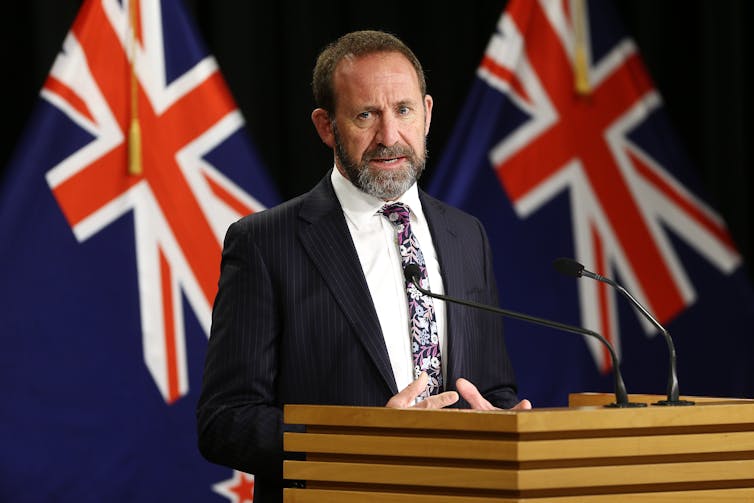
Green Party MPs Ricardo Menendez March, Golriz Ghahraman and Teanau Tuiono penned a letter to Minister of Foreign Affairs Nanaia Mahuta requesting government to support for the students before they are deported.
They are calling for a scholarship fund to support the impacted students, a residency pathway for West Papuan students whose welfare has been affected, and an assurance that the students will have access to safe housing in affordable accommodation.
But according to Menendez March, the most urgent issue is the students’ visas — he is calling on the government to extend them due to special circumstances, such as those for Ukrainian nationals.
“What the situation in Ukraine taught us is that when there is political will, our immigration system can move relatively fast to provide solutions for people who are facing uncertainty,” he said. “The special visa that was created to support Ukrainian families show we could have an intervention to support these students.”
Quick move for Ukraine Immigration moved quickly to ensure Ukrainians with family in New Zealand had an easier avenue to a two-year work visa as a part of the humanitarian support developed in response to the refugee crisis.
“Immigration Minister Kris Faafoi said last week when the details were unveiled: ‘This is the largest special visa category we have established in decades to support an international humanitarian effort and, alongside the additional $4 million in humanitarian funding also announced today, it adds to a number of measures we’ve already implemented to respond to the worsening situation in Ukraine.’”
West Papuan masters student Laurens Ikinia … “It is really heartbreaking for us as the central government of Indonesia and the provincial government have not given any positive responses.” Image: MTS screenshot APR
The Ukraine policy is expected to benefit around 4000 people, with Immigration streamlining processes to make sure they are supported sooner rather than later.
With just 42 West Papuan students now in this visa crisis, Menendez March said it would be easy enough for the Government to create a special category.
And more than that, it would be an opportunity for New Zealand to stand up for a Pacific neighbour.
“As a Pacific nation we do have a responsibility to support West Papuans,” he said. “I think this is a small but really tangible way that we could supporting the West Papuan community.”
For some of the students, returning home isn’t just a matter of giving up on whatever ambitions lay past graduation day – but also a safety risk.
Openly communicated “The students have openly communicated in the past some of them may not necessarily face safe living conditions back at home,” Menendez March said, who met with the students last week along with Greens spokesperson for Pacific people Teanau Tuiono to discuss possible solutions.
Tuiono said there were multiple reasons why the New Zealand government should step in and offer support to the students.
“First, there’s the consistency thing — if we’re going to do this for people from the Ukraine, why not for West Papuans,” he said. “Also, we are part of the Pacific and we have signed the United Nations Declaration on the Rights of Indigenous Peoples.”
The declaration, first adopted by the UN General Assembly in 2007, establishes a framework of minimum standards for the survival, dignity and well-being of the indigenous peoples of the world.
“West Papuans are indigenous peoples who have been occupied by Indonesia, so there’s that recognition of a responsibility on an international level that we have signed up to,” Tuiono said.
The letter signed by the Green MPs was sent to Mahuta at the beginning of this month, but they say there has been no meaningful response. Meanwhile, some of the students are potentially just a matter of weeks away from deportation.
The decision to rescind the scholarship funds came as a shock to West Papuan students in New Zealand like Laurens Ikinia, who is in the final year of his Master of Communication at AUT. He hopes he will be allowed in the country until his upcoming graduation.
“It is really heartbreaking for us as the central government of Indonesia and the provincial government have not given any positive responses to us,” Ikinia said. “The government still stick to their decision.”
Matthew Scott is a journalist writing for Newsroom on inequality, MIQ and border issues. Republished with permission.
With rising inflation, a war in Europe affecting global fuel costs, and ongoing supply strain issues, this year’s budget is shaped not just by the upcoming election but a growing cry in the community about the cost of living.
But despite some significant multi-billion dollar spends within the next six months, the deficit is predicted to shrink considerably from last year (and the shock of 2020) to just $79.8 billion – largely due to factors out of the government’s control.
While GDP surged as we began to see a way out of the COVID tunnel, the government forecasts that this will slowly consolidate to around about our pre-pandemic levels, sitting at 2.5% for the remainder of the forward estimates.
Unlike GDP, unemployment is forecast to head further south – and remain there for the majority of the next four years.
And the predicted further increase in overall employment has flown on effects.
Despite an international climate of increasing inflation, and years of wage stagnation, the government is optimistic that the wage price index will overtake the consumer price index by the 2023-24 budget.
Despite a clear explosion in spending in this election year (and amid those cost of living woes in the electorate), the government expects to rein in payments in the coming years, as receipts consolidate.
Josh Frydenberg noted in his address to the Press Gallery that the budget now forecasts gross debt to peak four years earlier than in previous estimates – though this is still a far cry from the “Back in Black” predictions of his first budget in 2019.
So what are the major spends – and few cuts – of this big spending election budget?
While a number of them – like the fuel excise cut and almost no mention of climate change as NSW and Queensland recover from another disastrous summer – are definitely against the recommendations of Australia’s leading economists, it remains to be seen how they will affect the election.
It’s often said in business circles that good companies manage their balance sheet, and bad companies manage their P&L (profit and loss account). That same aphorism applies to governments.
And by that standard, Josh Frydenberg’s fourth budget is a triumph. Net debt is forecast to peak at 33.1% of GDP in 2024-25, compared to 40.9% in last year’s budget. Net interest payments stay below 1% of GDP—a better result than every year from 1984 to 2000.
This is an extraordinary turnaround, and much of it comes in the year to the end of June this year. Rather than net debt of A$729 billion by June 2022 (as forecast in last year’s budget), it is expected to be $632 billion. This reflects the stronger economy.
Unemployment is lower so welfare payments are, too. High commodity prices have helped the budget bottom line, but so too have the tax receipts from increased employment and consumer spending.
At the start of the coronavirus pandemic in 2020, the government outlined a clear fiscal strategy: spend big to support the economy, and shrink away the debt involved through higher economic growth.
It worked. Australian GDP is 3.4% higher than it was pre-pandemic. Only the United States, at 3.2%, is close to that performance among the world’s seven largest economies. France is up just 0.9%, Canada 0.1%, while Germany, Japan, the United Kingdom and Italy have all shrunk.
Amid this good news is a lingering concern. By 2025-26, the budget deficit is still estimated to be 1.6% of GDP. That’s a $43.1 billion gap between government revenues and expenses.
It is a reminder that while two governments — one Liberal and one Labor — have steered the nation through the global financial crisis and the coronavirus pandemic, they have not repaired our structural deficit.
The next government — whichever party that is — faces a difficult task. It needs to close that $40 billion structural gap without a turn to austerity that would damage the economic growth engine that’s put us in this enviable position.
It’s something of a high-wire act. And it is the litmus test of good economic management.
It’s not hard to see why. Defence spending will grow from $35.8 billion this year to $44.5 billion by 2025-26. Given the global security outlook, it could easily go higher.
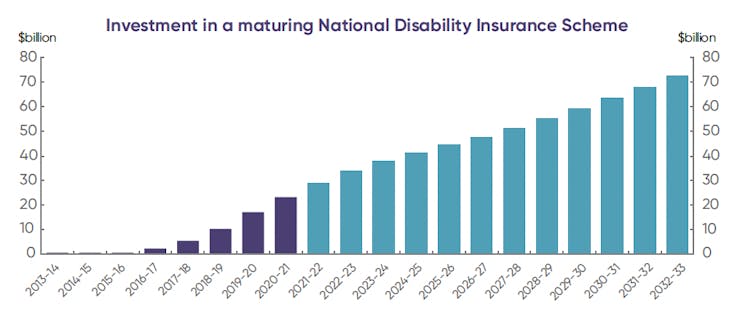
And spending on the National Disability Insurance Scheme (NDIS) will grow from $30.8 billion this year to $46.1 billion over the same time frame. That’s growth of 10.6% per annum. In fact, by 2033 the NDIS
is forecast to represent more than $70 billion in government spending.
Budget papers 2022-23
That spending is life changing for half a million Australians. But those figures tell us such spending is only sustainable with a strong economy. If unemployment doesn’t stay low, and economic growth comparatively high, then spending growth in areas like the NDIS and defence will become unsustainable.
The fuel excise holiday
One hotly anticipated measure in the budget is a 50% cut in the fuel excise from 44.2 cents to 22.1 per litre, for six months. Let’s be clear: this is great politics. The treasurer said in his
speech:
“Whether you’re dropping the kids at school, driving to and from work or visiting family and friends, it will cost less”.
This is a beautiful rendition of the time-honoured political tradition of feeling the voters’ pain.
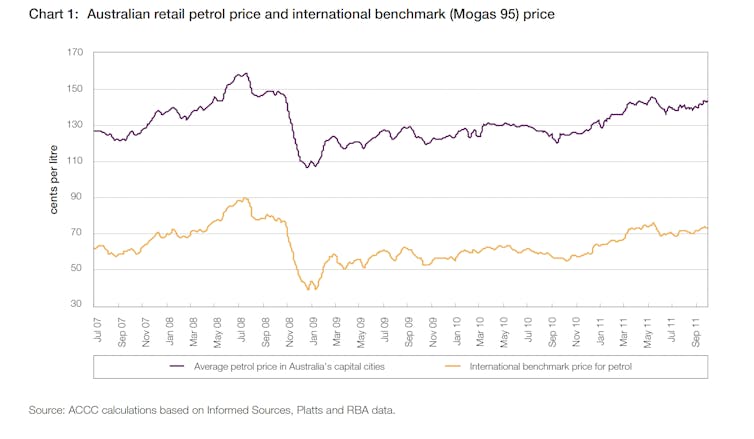
In one way this makes perfect economic sense, too. Why should households bear the risk of petrol prices bouncing around based on global conflict and decisions by the OPEC cartel? As the Australian Competition Consumer Commission has demonstrated, prices at the pump basically move one-for-one with oil prices.
By setting the fuel excise lower when oil prices and high, and higher when oil prices are low, the government is acting like a big social insurance company. That’s part of their job (see Medicare, NDIS, unemployment benefits).
But there’s a wrinkle to this. According to figures from the Bureau of Statistics’ Household Expenditure Survey, the bottom 20% of households by income spend $27 a week or 3.5% of their income on petrol.
By contrast, the top 20% of households spend $42 a week or 1.8% of their income on petrol. So, giving a per litre reduction in petrol benefits higher-income
households more in dollar terms. It also doesn’t discourage people from driving less.
It would be more progressive (and better for the environment) to just give all households a flat rebate.
A good plan, well executed
The tone at the budget press conference this year was in striking contrast to that at the announcement of the pandemic fiscal strategy in early 2020. Back then there were sharp questions about fiscal irresponsibility, leading then-Finance Minister Matthias Cormann to exclaim: “What would you have us do?”
This time, there were a series of relatively minor questions about whether Victoria was getting enough GST revenue or if medical students who studied in regional Australia would stay there.
That is the consequence of a government that jettisoned decades of political branding in March 2022, laid out a compelling plan to get Australia through the pandemic, and delivered on it.
Richard Holden is President of the Academy of the Social Sciences in Australia.
When Josh Frydenberg says his key cost-of-living budget measures are “temporary” and “targeted”, he’s precisely right, though the reasons are more opportunistic than he’d spruik publicly.
He says it’s all about giving help when it’s needed while not baking in long-term spending.
But actually, and equally, the measures are aimed squarely at the imminent election, and firmly directed to purchasing votes. If money talks, the government has taken up the megaphone.
This is a budget for the instant – unashamedly an election bribe, and unconcerned when that involves pursuing some poor policy.
The halving of the fuel excise for six months is a large enough cut for motorists to notice. The change will start to flow through in the next fortnight.
Never mind experts who argue this is a bad move on revenue, environmental and equity grounds. At least the designated end point avoids the problem John Howard created in 2001, when he froze excise indexation indefinitely and it took many years for a government to have the gumption to restore it.
The one-off handout of $420 for more than 10 million low- and middle-income earners tops up the LMITO offset they’ll get when they submit their tax return from July 1. But there is no LMITO after that.
The government desperately needs older voters to stick with it to have a chance of survival. So, pensioners will get a one-off extra payment of $250 within weeks.
To cover all bases, and minimise complaints that some people have missed out, the payment will also go to carers, veterans, the unemployed, eligible self-funded retirees and concession card holders.
For voters concerned about debt and deficit – the Liberal mantra of the old pre-COVID days – the forecast deficit of $78 billion for the coming financial year is just over $20 billion better than forecast in the December budget update. The peak for net debt is expected to be in 2026.
The government will rely on its fiscal and job numbers to argue its economic credentials in the campaign for the May election, the date for which Scott Morrison will announce shortly.
The government can reasonably boast about its record on jobs, with unemployment, now 4%, set to fall to 3.75% within months. JobKeeper preserved jobs (although a lot of money was wasted in the process because of the design of the scheme) and the economic recovery has been strong.
But the budget outlook on wages is a more problematic story. Inflation (after a sharp spike) is forecast to be 3% in 2022-23, with the estimated rise in wages just above it, at 3.25%.
That means, for many people, keeping up with cost-of-living increases will be a close run thing, or not achievable, despite the budget’s temporary handouts.
The government has thrown everything into this budget in the way of election sweeteners.
But how much impact will the sugar have on the intentions of voters who, according to the last Newspoll, have the Coalition trailing Labor 45-55%?
Labor can neutralise some of the budget’s impact by embracing the handouts (the pensioners and beneficiaries will have received theirs before the election anyway).
Even before the budget was brought down, Labor indicated it would not stand in the way of the excise cut. It’s not going to stand in the way of the cash payments.
That’s in line with Albanese’s small target strategy and desire to divert the campaign argument onto other issues.
But the budget and the economy – the government’s preferred ground – will dominate the political discussion over the next few days.
Scott Morrison will be looking for some “bounce” from the budget and this is important in the short term.
If he can peg back Labor’s lead, that will change the atmospherics as the formal campaign starts.
Sometimes budgets give a bounce, often they don’t. It’s hard to see how the government could have done much more to pump air into this balloon.
The big question is whether, despite the handouts and the generally favourable economic conditions, people will continue to feel financially pressed and politically out of sorts with the government – and the PM in particular.
Michelle Grattan does not work for, consult, own shares in or receive funding from any company or organisation that would benefit from this article, and has disclosed no relevant affiliations beyond their academic appointment.
So good, and so unexpected, has been Australia’s economic improvement over the past four months, it has wiped one-third of the projected 2022-23 budget deficit.
Or it would have, had the government not decided to give away almost half (45%) the windfall.
That’s one way of looking at the difference between the projections in the December budget update and those presented three months later in Tuesday’s March budget.
In December, the deficit for the coming financial year was to be A$98.9 billion.
Four months later, the budget papers say it would have been $38 billion lower, were it not for an extra $17.2 billion of spending and tax measures taken since the update and in the budget.
The measures leave the 2022-23 budget deficit at $78 billion, something set to shrink to $43 billion over the following three years, but with no help from savings in this budget. The budget measures expand the deficit in each of the five years for which the government provides projections, by $30.4 billion in total.
Working the other way, improved economic circumstances shrink the deficit by $114.6 billion.
It’s a convenient way to examine the projections, but it’s unfair. Most of the budget improvement due to economic circumstances is the government’s own work.
An astounding $98.5 billion of the $114.6 billion improvement is because Australia’s extraordinary and unexpected success in driving unemployment down to a near 50-year low, with a further improvement forecast in the budget.
It is helping the budget in two ways. The government is spending much less than it expected on JobSeeker and Youth Allowance, and taking in more than expected in income tax from people it hadn’t expected to be in work.
It’s what former finance minister Mathias Cormann insisted would happen in 2020 when the first COVID budget threw the switch to massive spending. By throwing everything it could at keeping people in work through programs such as JobKeeper, the government would “grow the economy” and grow tax revenue to push down the resulting government debt as a proportion of GDP.
The budget papers show it happening.
A year ago, net debt was expected to peak at 40.9% of GDP in mid-2025 before sliding as the economy grew. Now it is expected to peak a year earlier at 33.1% of GDP. Net interest payments are expected to peak at a very small 0.9% of GDP in 2025-26 before slipping to 0.8% of GDP.
And there are reasons to think things will turn out better than forecast. Unemployment, now down to 4%, is expected to fall only a little further to 3.75% (within the next few months) and then stay there before climbing back to 4% in 2026.
But that’s because treasury has assumed unemployment can’t stay as low as 3.75% without sparking inflation – an assumption it concedes might be wrong, noting Australia has “limited recent experience” of an unemployment rate lower than 5%.
Treasury has assumed the iron ore price, at present US$134 a tonne, falls back to US$55 in coming months. It has assumed the coking coal price falls from US$512 a tonne to US$130, the thermal coal price from US$320 a tonne to US$60 and the oil price from US$114 a barrel to US$100. Every one of these assumptions looks conservative.
Frydenberg admitted as much in the budget press conference, saying if commodity prices merely stay put for just the next six months instead of falling as assumed, the budget will be $30 billion better off.
About the only forecast that doesn’t look conservative is the one for wages growth. At present an embarrassingly low 2.3%, the budget forecasts a jump in annual wages growth to 2.75% within months followed by a jump to 3.25% in 2023 and to 3.5% by June 2025.
The forecasts conveniently put wages growth back above the forecast inflation of 3% in 2022-23, leaving Australians with only one more year in which the buying power of wages goes backwards.
In the budget fine print (page 60 of Statement 1) treasury concedes it’s none too sure about its forecast of wages growth we haven’t seen in a decade. It shares an alternative forecast that uses different assumptions to produce annual wages growth no higher than 2.5% – below inflation for a further two years.
The cost-of-living measures are well-designed (with the exception of the six-month cut in petrol excise that will benefit most the high earners who typically spend the most on petrol). The one-off payment of $250 to Australians on benefits will go to those who do need it.
And the one-year boost of $420 to the low- and middle-income tax offset (bringing it to as much as $1,500) will only be available to Australians earning less than $126,000. They will get it after they put in their tax return from July – when they are most likely to need it – and then no more. It isn’t being continued.
Frydenberg has spent big in 2022 – but on the whole, responsibly. The budget forecasts and the unemployment numbers show his COVID support spending in 2020 and 2021 has paid dividends. They are forecasts for the true believers.
Peter Martin does not work for, consult, own shares in or receive funding from any company or organization that would benefit from this article, and has disclosed no relevant affiliations beyond their academic appointment.
The Morrison government’s election budget halves petrol excise for six months and gives handouts to taxpayers, pensioners and welfare recipients in a cash splash aimed at clawing back votes.
Treasurer Josh Frydenberg, who unveiled the giveaway budget in Parliament House on Tuesday night, has been able to juggle big spending with a reduced deficit thanks to high commodity prices and strong employment.
The budget’s centrepiece is aimed at families’ rising cost of living with a package Frydenberg described as “responsible and targeted, delivering cheaper fuel, cheaper medicines and putting more money in the pockets of millions of Australians”.
The excise on petrol and diesel is reduced immediately from 44.2 cents to 22.1 cents a litre, at a cost to revenue of $2.65 billion.
But the government has given an assurance the revenue loss will not hit funding for roads, something some Nationals, including Deputy Prime Minister Barnaby Joyce, had been concerned about.
Frydenberg said a family with two cars who filled up once a week could save about $30 a week or $700 over the six months.
The Australian Competition and Consumer Commission, which monitors fuel prices, said in a statement it expected fuel retailers would pass on the cut “as soon as possible, as existing petrol stock levels are used up”.
Tackled on criticism by economists about a fuel excise cut, Frydenberg told a news conference during the budget: “Australian families will say it’s a good idea to pay less at the bowser”. He added economists always had “a variety of opinions.”
More than ten million taxpayers will get a $420 top-up to the low- and middle-income tax offset (LMITO) after July 1. This would mean a taxpayer getting the full LMITO will now receive up to $1500.
But the LMITO will not be renewed after that.
Six million pensioners and people on a range of welfare payments will get $250 within weeks.
On the health front, people will need fewer scripts to be eligible for free or further discounted medicines.
The budget’s deficit for 2022-23 is expected to be $78 billion, 3.4% of GDP. In the December budget update it was nearly $99 billion.
The cumulative deficit over the forward estimates is forecast to be $224.7 billion.
Frydenberg said net debt as a proportion of the economy was forecast to peak at 33.1% of GDP at June 30, 2026.
The budget forecasts unemployment will fall from its present 4% to 3.75% in the September quarter. Economic growth is forecast at 3.5% next financial year. Inflation is set to climb to 4.25% by June and then to fall back to 3% in 2022-23, when wages are forecast to rise by 3.25%.
The budget includes more than $2 billion in measures for women, including $1.3 billion on women’s safety.
Eligibility for paid parental leave will be expanded and for the first time, single parents will be able to access the full 20 weeks’ leave.
With the government highlighting national security in its election campaigning and strong concern about China’s increasingly aggressive stance, the budget commits to a ten- year $9.9 billion investment in offensive and defensive cyber capabilities.
Defence Minister Peter Dutton said: “Project REDSPICE – Resilience, Effects, Defence, Space, Intelligence, Cyber, and Enablers – is the largest ever investment in the capabilities” of the Australian Signals Directorate.
This recognised “the deteriorating strategic circumstances in our region, characterised by rapid military expansion, growing coercive behaviour and increased cyber attacks”.
As another round of flooding hits Northern NSW and Queensland, the budget says the government has already allocated $3.6 billion to households, businesses and communities to deal with the earlier devastation. In total, it expects to spend more than $6 billion on flood relief and recovery.
Michelle Grattan does not work for, consult, own shares in or receive funding from any company or organisation that would benefit from this article, and has disclosed no relevant affiliations beyond their academic appointment.
With housing affordability set to be a key election issue, the 2022 federal budget expands the scheme the Coalition put forward at the 2019 election to help first home buyers.
The First Home Loan Deposit Scheme helps those without the standard 20% deposit required by mortgage lenders. For those who qualify, it guarantees up to 15% of a loan’s value, meaning buyers can secure a home loan with a 5% deposit.
In the 2021-22 financial year the scheme was capped at 10,000 places. The 2022 budget is expanding this to 35,000 a year, plus an extra 10,000 places for first home buyers in regional areas.
It will also expand a category for single parents introduced in the 2021 budget, allowing some to enter with a 2% deposit, increasing the cap to 5,000 a year.
Government programs to assist first home buyers are routinely criticised as simply putting upward pressure on prices, providing no real benefit to first home buyers.
This scheme will push up prices, but not by the same amount as the value of the assistance.
So it will help those who qualify, albeit partially at the expense of those who don’t.
What’s driving up property prices
Australia’s relatively high housing prices can historically be attributed to the significant tax advantages for property ownership and rigidities on the supply side, such as zoning and other regulatory constraints.
In the past two years these factors have been supplemented by the potent combination of COVID-19 and low interest rates.
This has been a global phenomenon, by no means unique to Australia. The working-from-home revolution induced a surge in demand for larger houses and a shift to rural and regional areas at the same time as central banks pushed official interest rates close to zero to stimulate faltering economies.
So rather than the property market falling, as many tipped in early 2020, it has surged, pricing even more people out of the market.
A second-best option
The deposit guarantee scheme scheme to assist first home buyers is what economists call a second-best option. An optimal solution would more directly address the demand and supply reasons driving up prices. In lieu of this, the government’s plan is to give first-home buyers a boost over others.
Any criticism such a scheme simply lifts all boats and puts upward pressure on prices is not quite correct.
It will push up prices, but not by the same amount as the value of the loan guarantees. To do that all buyers would have to get the same concession, and there would have to be no effect on the supply of houses. Supply in the housing market may be slow to respond but it does change with demand.
Over the past two years first home buyers have made up about 20% of all buyers. This scheme, even with the expanded cap, will benefit fewer than half that number – about 7% of all buyers.
So the scheme will have some impact on property prices, but not enough to offset the value of the help to those buyers who qualify. On the other hand, those swapping homes will pay marginally more. So will investors, and renters in due course.
Greater leverage, greater risk
The major concern with this scheme is the risk those using it to buy a home may then get into financial trouble and default on their mortgage.
This was a contributing factor in the US subprime mortgage crisis that led to the global financial crisis of 2007-08. Policies designed to get low-income households into the market appeared to work until the crisis hit. Then house prices tumbled and many were forced to sell at big losses.
When you leverage up, borrowing 95% or 98% of the value of a house, you are more exposed if prices fall. Even a small decline could more than wipe out your equity.
Housing is not risk-free. Timing matters. House prices can fall as well as rise. With interest rates on the rise, and huge global economic uncertainty, some negative consequences from this scheme down the track cannot be ruled out.
Nigel Stapledon does not work for, consult, own shares in or receive funding from any company or organisation that would benefit from this article, and has disclosed no relevant affiliations beyond their academic appointment.
The Coalition has announced a A$58 million funding package to improve endometriosis diagnosis, care and treatment.
This would see new specialised endometriosis and pelvic pain clinics set up in each state and territory, expanded Medicare-funded medical imaging for the condition, and support for women who manage endometriosis with their GP, among other measures.
This announcement would benefit the estimated one in nine Australian women with endometriosis.
However, endometriosis is not just a medical issue. Our recently published research shows there’s a high chance that women surgically diagnosed with endometriosis will leave the workforce.
Endometriosis causes inflammation when tissue similar to the lining of the womb grows throughout the body.
Women often describe “stabbing” pain during their period, back pain, and pain going to the toilet and during sex.
They might have stomach pain, vomiting and diarrhoea, headaches, muscle aches and tiredness. Imagine dealing with this every day or not knowing when symptoms might strike.
Endometriosis is estimated to cost A$9.7 billion each year to the Australian economy. Most of these costs come from lost productivity at work.
Focusing at work can be difficult because of unpredictable symptoms, side effects of strong painkillers, and frequent trips to the toilet.
Women seeking a diagnosis of endometriosis through surgery need time off to recover and might find themselves having more surgeries in the future.
Trying to explain this to people at work and employers can be embarrassing, feel like an invasion of privacy or may unfairly risk future career opportunities.
Sick leave can disappear quickly, and women may feel pressured to work while unwell.
Emma Watkins, the former Yellow Wiggle, went public with her battle to balance endometriosis and work. Ongoing pain and the need for surgery to treat it forced Emma to pull out of the 2018 Wiggles national tour.
It can take years to be diagnosed
Many women with endometriosis start to see symptoms as adolescents or young adults. However, many women aren’t officially diagnosed until their early thirties. It takes an average of eight years to be diagnosed.
Stories of women fighting hard to get a diagnosis because doctors wouldn’t believe them, or take their symptoms seriously, are common.
To make matters worse, until recently, the only way to tell if someone had endometriosis was to do surgery.
Surgery isn’t the right option for everyone; it has risks, is costly, requires time to recover, and doesn’t always stop women’s pain. Many cannot have, or do not want, surgery and are labelled with “suspected” endometriosis.
Fortunately, international guidelines updated earlier this year say endometriosis can be diagnosed without needing surgery.
Diagnosis is a turning point
A diagnosis of endometriosis was a turning point for women’s participation in work, our research showed.
We found 63% of women who had surgery for endometriosis were working full-time before diagnosis. This dropped to 44% after diagnosis.
Women who had surgery for endometriosis were 85% more likely to be unemployed three years after their diagnosis than before it.
Women who had “suspected endometriosis” (diagnosed without surgery) stayed working but were more likely to suffer from severe period pain, tiredness, heavy periods, and headaches or migraines than women without endometriosis.
Women who had surgery for endometriosis may have been in a better financial position to afford to get surgery and to eventually stop working than women who didn’t have surgery.
But we cannot underestimate the emotional and physical challenges of living with endometriosis. The often limited support available in the workplace means women may have been forced to stop work.
This includes offering flexibility in the workplace – whether that’s through job modifications and time off in lieu, or flexible work hours and working from home.
Creating a supportive workplace culture is also important. Non-judgemental responses to women’s experiences with endometriosis are also key.
Additional days of sick leave for women with endometriosis may also help to manage the demands of their job and symptoms.
These are great starts for women already in work, but we need to do more, and start earlier.
Girls and women need flexibility early in their education to cope with the unpredictable nature of endometriosis.
Virtual classrooms could help minimise missed days at school, TAFE or university. Programs that offer flexibility and allow women to complete their education over a longer period could help.
More funding will be needed
The recent funding announcement for people with endometriosis includes A$2 million with a portion to fund a workplace assistance program. This is for employees and employers to navigate discussions in the workplace.
The detail of how that will work is not yet available, although this just a starting point. More funding will be needed to address the inequity for women with endometriosis in the workplace, to support women to stay working for as long as they want.
Women with ‘suspected’ endometriosis also need support
Finally, we mustn’t invalidate women’s experiences of endometriosis, and the severity of their symptoms, based on their type of diagnosis.
Policymakers, doctors and employers should acknowledge women with “suspected” endometriosis need just as much support as those with surgically diagnosed endometriosis.
Ingrid Rowlands receives funding from NHMRC Medical Research Future Fund.
Gita Mishra receives funding from National Health and Medical Research Council, MRFF and Commonwealth Department of Health
Jason Abbott receives funding from NHMRC, MRFF, the Australasian Gynaecology Endoscopy and Surgery Society and Endometriosis Australia for research. He consults to Vifor Australia, Hologic and Gideon Richter. He is formerly a director of Endometriosis Australia (until 2021).
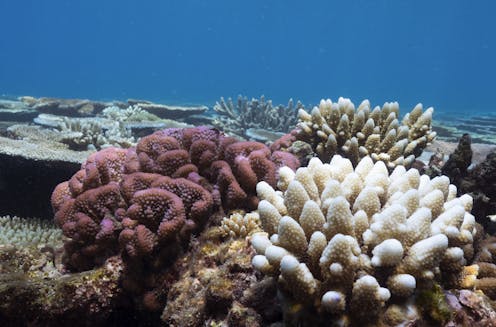
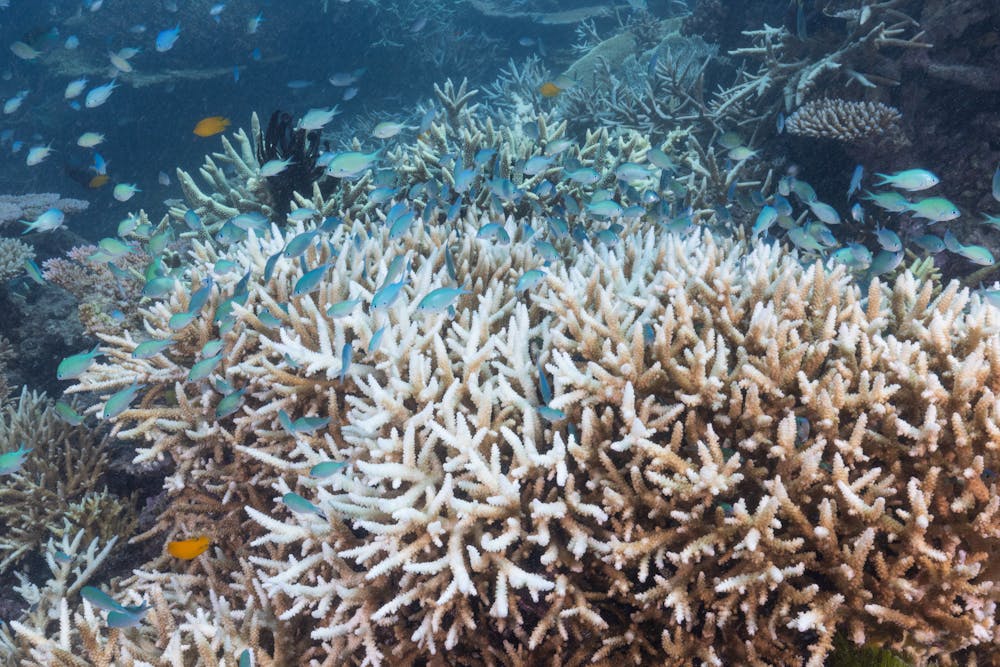
Bleached coral beside the darker, healthier coral. Photo taken in FebruaryNathan Cook, Author provided
It’s official: the Great Barrier Reef is suffering its fourth mass bleaching event since 2016. We dived into the reef yesterday and saw the unfolding crisis firsthand.
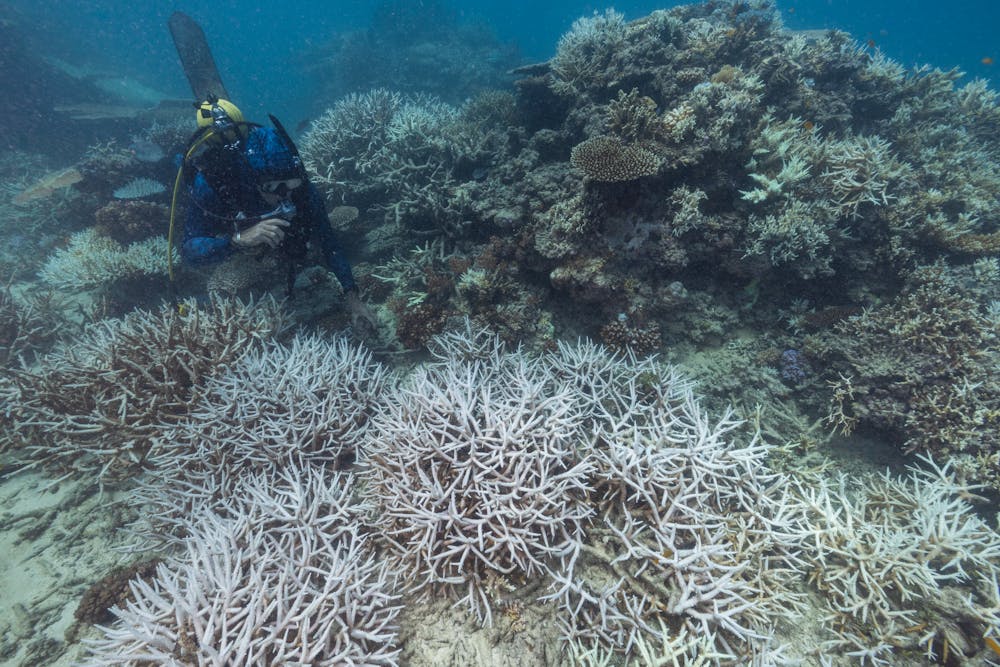
Descending beneath the surface at John Brewer Reef near Townsville, our eyes were immediately drawn to the iridescent whites, blues and pinks of stressed corals among the deeper browns, reds and greens of healthier colonies.
It’s a depressing, but all-too-familiar feeling. A sense of: “here we go again”
This is the first time the reef has bleached under the cooling conditions of the natural La Niña weather pattern, which shows just how strong the long-term warming trend of climate change is. Despite the cooling conditions, 2021 was one of the hottest years on record.
When coral bleaches, it is not dead – yet. Coral reefs that suffer widespread bleaching can still recover if conditions improve, but it’s estimated to take up to 12 years. That is, if there’s no new disturbance in the meantime, such as a cyclone or another bleaching event.
So what conditions are needed for coral recovery? And under what conditions will coral die?
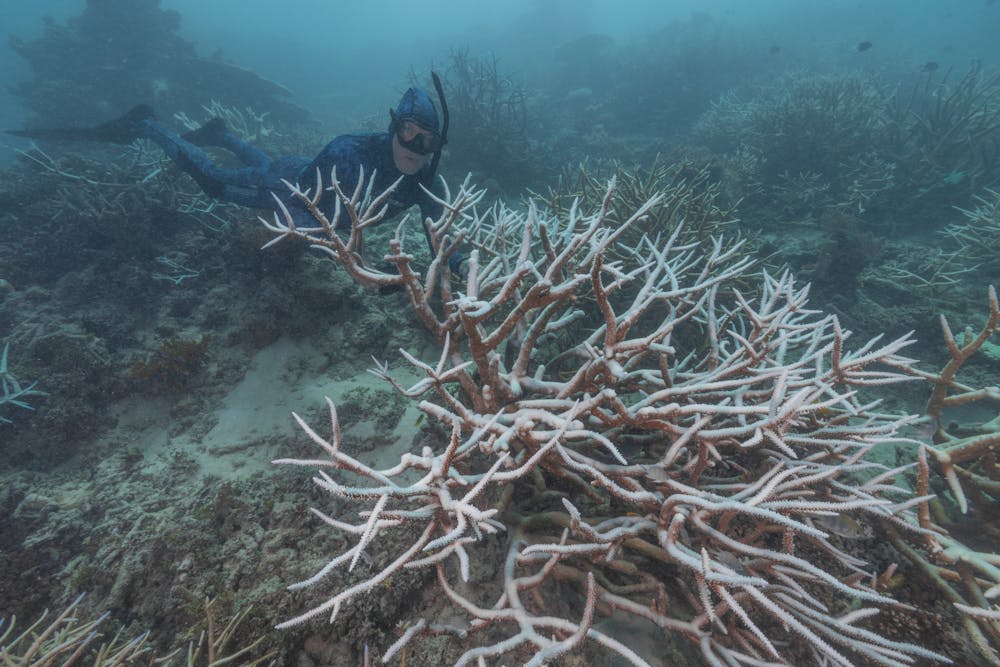
Bleaching at John Brewer Reef, near Townsville. Harriet Spark/Grumpy Turtle, Author provided
What it takes for coral to die
Whether a coral can survive bleaching depends on how long conditions remain stressful, and to what level. What’s more, some species are more sensitive than others, such as branching acropora corals, especially if they’ve bleached previously.
If water remains too warm for too long, corals will eventually die. But if the water temperature drops and the ultraviolet light becomes less intense, then the coral may recover and survive.
While the average sea temperatures in the reef currently remain above average, they’ve shown signs of cooling to a more amenable average for coral survival.
Bleaching at John Brewer Reef. Nathan Cook, Author provided
Sea temperatures in Cleveland Bay, near Townsville, were above 31℃ in early March, but thankfully have now reduced to below 29℃. Similarly in the Whitsundays, Hardy Reef experienced temperatures as high as 30℃ but has receded to nearer 26℃ in the past few weeks.
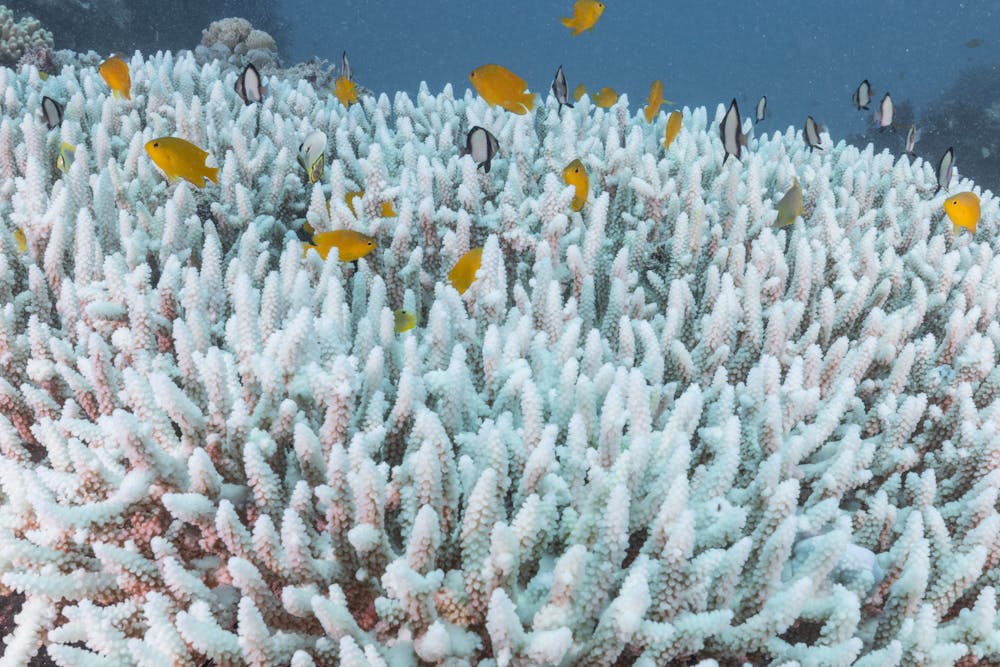
If coral does survives a bleaching event, it is still impacted physiologically, as bleaching can slow growth rates and reduce reproductive capacity. Surviving colonies also become more susceptible to other challenges, such as disease.
Signs of stress
Survival also depends on each individual coral’s own resilience: its ability to cope with higher temperatures and increased ultraviolet stress.
For example, fast growing branching corals are the most susceptible to bleaching and are generally the first to die. Long-lived massive corals, such as porites, may be less susceptible to bleaching, show minimal effects of bleaching and recover quicker.
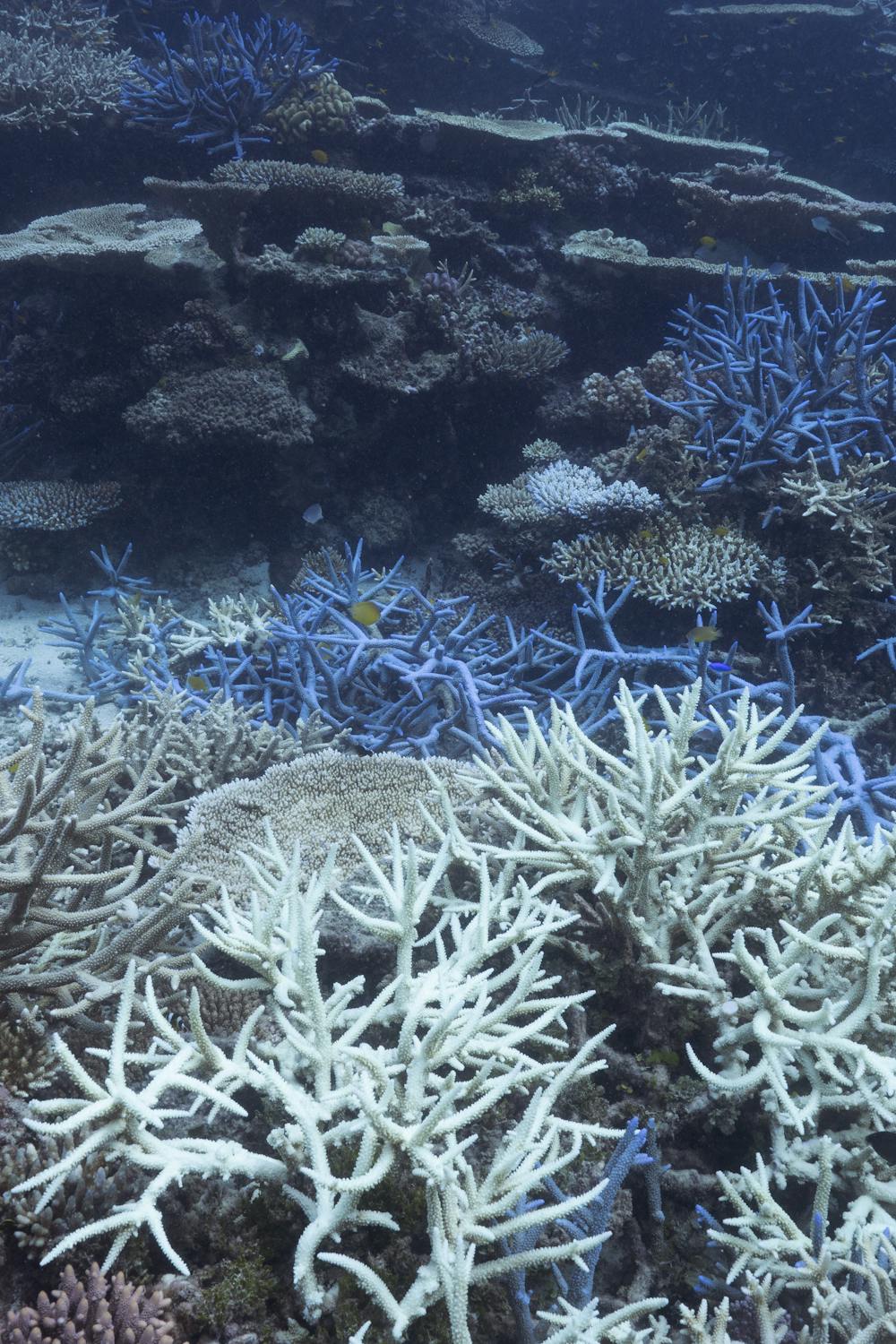
White and fluorescent corals are currently a common sight on many reefs. Harriet Spark/Grumpy Turtle, Author provided
Corals can use fluorescent pigments to shield themselves from excessive ultraviolet radiation – a bit like sunscreen that lets coral manage, filter and attempt to regulate the incoming light.
To the casual observer, fluorescent corals look bright purple, pink, blue and yellow. For reef scientists, fluorescence is an obvious signal that corals are stressed and struggling to regulate their internal balance. As we’ve seen, white and fluorescent corals are currently a common sight on many reefs.
Most coral species have fluorescent pigments in their tissue. Some are always visible to humans, especially branching corals with bright blue or pink hues on the their branch tips.
Others are never visible, and some are visible only during times of heat stress when coral colonies boost these fluorescent pigments to fight the increasing ultraviolet intensity in warmer seas.
Bleaching can slow coral growth rates and reduce reproduction. Harriet Spark/Grumpy Turtle, Author provided
Coral can’t adapt fast enough
Scientists measure heat stress on corals using a metric called “degree heating weeks”.
One degree heating week is when the temperature at a given location is more than 1℃ over the historical maximum temperature. If the water is 2℃ above the historical maximum for one week, this would be considered two degree heating weeks.
Generally speaking, at four degree heating weeks, scientists expect to see signs of stress and coral bleaching. It usually takes eight degree heating weeks for coral to die.
According to Bureau of Meteorology data, many parts of the Great Barrier Reef, such as off Cairns and Port Douglas, currently remain in the window of between four and eight degree heating weeks. But some areas, near Townsville and the Whitsundays, are experiencing severe bleaching stress beyond eight degree heating weeks.
While we hope many coral reefs will recover from this round of bleaching, the long term implications cannot be understated.
When corals bleach, they eject their zooxanthellae – single-celled algae that gives coral colour and energy. Some corals may regain their zooxanthellae after the bleaching event is over, but this usually takes between three and six months.
To make matters worse, full reef recovery requires no new bleaching events or other disturbances in the years that follow. Given the reef has bleached six times since the late 1990s, alongside global climate trajectories, this would appear an unlikely scenario.
While some corals may learn to cope with these new conditions by potentially acquiring more heat-tolerant zooxanthellae, the reality is that change is happening too fast for coral to adapt via evolution.
The severe bleaching in previous years also means future events may appear less severe. But this is simply because most of the heat sensitive corals have already died, potentially resulting in a lower probability of widespread severe bleaching.
Any policy without action on climate change is ineffective. Harriet Spark/Grumpy Turtle, Author provided
We need stronger climate policies and action
Australia has the world’s best marine scientists and marine park managers. And yet, our policies are rated “highly insufficient”, according to the latest Climate Action Tracker.
If global emissions continue unabated, Australia may warm by 4℃ or more this century. Under this scenario, widespread coral bleaching is likely on the Great Barrier Reef every year from 2044 onward.
There has been some glimmers of hope in federal policy in recent years, such as statements recognising the existential threat climate change poses to coral reefs. Despite this recognition, substantial action is lacking, as any policy without action on climate change is ineffective.
If the federal government, reef businesses and individuals are to show leadership and maintain healthy reefs, we need to work together and take rapid, drastic action to reduce carbon emissions.
Committing to a stronger emissions target for 2030 and a carbon neutral footprint for all Great Barrier Reef businesses would go a long way to exhibiting the kind of change required if coral reefs, in their current form, are to survive into the future.
Bleached coral beside the darker, healthier coral. Photo taken in FebruaryNathan Cook, Author provided
It’s official: the Great Barrier Reef is suffering its fourth mass bleaching event since 2016. We dived into the reef yesterday and saw the unfolding crisis firsthand.
Descending beneath the surface at John Brewer Reef near Townsville, our eyes were immediately drawn to the iridescent whites, blues and pinks of stressed corals among the deeper browns, reds and greens of healthier colonies.
It’s a depressing, but all-too-familiar feeling. A sense of: “here we go again”
This is the first time the reef has bleached under the cooling conditions of the natural La Niña weather pattern, which shows just how strong the long-term warming trend of climate change is. Despite the cooling conditions, 2021 was one of the hottest years on record.
When coral bleaches, it is not dead – yet. Coral reefs that suffer widespread bleaching can still recover if conditions improve, but it’s estimated to take up to 12 years. That is, if there’s no new disturbance in the meantime, such as a cyclone or another bleaching event.
So what conditions are needed for coral recovery? And under what conditions will coral die?
Bleaching at John Brewer Reef, near Townsville. Harriet Spark/Grumpy Turtle, Author provided
What it takes for coral to die
Whether a coral can survive bleaching depends on how long conditions remain stressful, and to what level. What’s more, some species are more sensitive than others, such as branching acropora corals, especially if they’ve bleached previously.
If water remains too warm for too long, corals will eventually die. But if the water temperature drops and the ultraviolet light becomes less intense, then the coral may recover and survive.
While the average sea temperatures in the reef currently remain above average, they’ve shown signs of cooling to a more amenable average for coral survival.
Bleaching at John Brewer Reef. Nathan Cook, Author provided
Sea temperatures in Cleveland Bay, near Townsville, were above 31℃ in early March, but thankfully have now reduced to below 29℃. Similarly in the Whitsundays, Hardy Reef experienced temperatures as high as 30℃ but has receded to nearer 26℃ in the past few weeks.
If coral does survives a bleaching event, it is still impacted physiologically, as bleaching can slow growth rates and reduce reproductive capacity. Surviving colonies also become more susceptible to other challenges, such as disease.
Signs of stress
Survival also depends on each individual coral’s own resilience: its ability to cope with higher temperatures and increased ultraviolet stress.
For example, fast growing branching corals are the most susceptible to bleaching and are generally the first to die. Long-lived massive corals, such as porites, may be less susceptible to bleaching, show minimal effects of bleaching and recover quicker.
White and fluorescent corals are currently a common sight on many reefs. Harriet Spark/Grumpy Turtle, Author provided
Corals can use fluorescent pigments to shield themselves from excessive ultraviolet radiation – a bit like sunscreen that lets coral manage, filter and attempt to regulate the incoming light.
To the casual observer, fluorescent corals look bright purple, pink, blue and yellow. For reef scientists, fluorescence is an obvious signal that corals are stressed and struggling to regulate their internal balance. As we’ve seen, white and fluorescent corals are currently a common sight on many reefs.
Most coral species have fluorescent pigments in their tissue. Some are always visible to humans, especially branching corals with bright blue or pink hues on the their branch tips.
Others are never visible, and some are visible only during times of heat stress when coral colonies boost these fluorescent pigments to fight the increasing ultraviolet intensity in warmer seas.
Bleaching can slow coral growth rates and reduce reproduction. Harriet Spark/Grumpy Turtle, Author provided
Coral can’t adapt fast enough
Scientists measure heat stress on corals using a metric called “degree heating weeks”.
One degree heating week is when the temperature at a given location is more than 1℃ over the historical maximum temperature. If the water is 2℃ above the historical maximum for one week, this would be considered two degree heating weeks.
Generally speaking, at four degree heating weeks, scientists expect to see signs of stress and coral bleaching. It usually takes eight degree heating weeks for coral to die.
According to Bureau of Meteorology data, many parts of the Great Barrier Reef, such as off Cairns and Port Douglas, currently remain in the window of between four and eight degree heating weeks. But some areas, near Townsville and the Whitsundays, are experiencing severe bleaching stress beyond eight degree heating weeks.
While we hope many coral reefs will recover from this round of bleaching, the long term implications cannot be understated.
When corals bleach, they eject their zooxanthellae – single-celled algae that gives coral colour and energy. Some corals may regain their zooxanthellae after the bleaching event is over, but this usually takes between three and six months.
To make matters worse, full reef recovery requires no new bleaching events or other disturbances in the years that follow. Given the reef has bleached six times since the late 1990s, alongside global climate trajectories, this would appear an unlikely scenario.
While some corals may learn to cope with these new conditions by potentially acquiring more heat-tolerant zooxanthellae, the reality is that change is happening too fast for coral to adapt via evolution.
The severe bleaching in previous years also means future events may appear less severe. But this is simply because most of the heat sensitive corals have already died, potentially resulting in a lower probability of widespread severe bleaching.
Any policy without action on climate change is ineffective. Harriet Spark/Grumpy Turtle, Author provided
We need stronger climate policies and action
Australia has the world’s best marine scientists and marine park managers. And yet, our policies are rated “highly insufficient”, according to the latest Climate Action Tracker.
If global emissions continue unabated, Australia may warm by 4℃ or more this century. Under this scenario, widespread coral bleaching is likely on the Great Barrier Reef every year from 2044 onward.
There has been some glimmers of hope in federal policy in recent years, such as statements recognising the existential threat climate change poses to coral reefs. Despite this recognition, substantial action is lacking, as any policy without action on climate change is ineffective.
If the federal government, reef businesses and individuals are to show leadership and maintain healthy reefs, we need to work together and take rapid, drastic action to reduce carbon emissions.
Committing to a stronger emissions target for 2030 and a carbon neutral footprint for all Great Barrier Reef businesses would go a long way to exhibiting the kind of change required if coral reefs, in their current form, are to survive into the future.
The federal government introduced the Jobs for Families Child Care Package in July 2018. Then Education Minister Simon Birmingham had said the package would create a “simpler, more affordable, more accessible and more flexible early education and childcare system”.
He said the introduced new activity test and fee subsidy structure would
ensure that taxpayers’ support for child care is targeted to those who depend on
child care to work or work additional hours […] [and] align the hours of subsidised care more closely with the combined hours of work, training, study or other recognised activity undertaken.
The package was also intended to control what had been incessant increases in childcare fees.
When initially announced in 2015, then Prime Minister Malcolm Turnbull described the package as “the most significant reform to the early education and care system in 40 years”.
We were members of a team which conducted an evaluation of the package. This was commissioned by the government and included researchers from the Australian Institute of Family Studies, the Australian National University and the Social Policy Research Centre of the University of New South Wales.
The report of the evaluation, released in recent days, found that, while for a majority of families the package had a positive financial benefit, this tended to be relatively modest. And the policy had little impact on longer term costs, access, flexibility or workforce engagement.
The subsidy helped many lower and middle income families
targeted to those who need it most – low- and middle-income families who are juggling work and parenting responsibilities.
The package introduced a new subsidy structure. For families with incomes of up to $68,163 in 2019-20, the rate of subsidy was 85% of the actual fee or a benchmark price, whichever is lower. The rate of subsidy reduced with income and stopped at $352,453 of total family earnings.
For the subsidy, families had to meet a tighter activity test than in the previous policy. This more closely linked the hours of subsidised childcare to parents’ approved activity such as work and study. In couples the activity level was based on the partner who had the lowest activity.
Parents who did not meet the activity test were still allowed a certain number of subsidised hours per fortnight, but the hours in this new package were lower than under the previously policy.
Our modelling used detailed administrative data. It estimated that, relative to the previous subsidy arrangements, about 686,000 families (62.2%) received more childcare subsidy than they previously would have been entitled to.
On average the net annual cost of childcare for these families fell by $1,386 – from $5,412 to $4,026. For the median family in this group, it fell by $1,036 – from $3,472 to $2,436.
But we also identified that costs increased for 323,000 of families (29.2%). The average net costs for these families, who tended to be on higher incomes, increased by $1,261.
We estimated the remaining 95,000 (8.6%) of families had no change to cost.
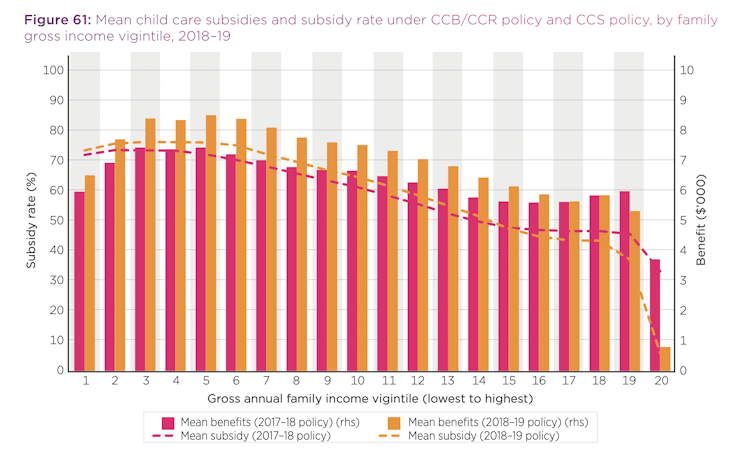
This graph splits families’ incomes into vigintiles, which means 20 groups. The 20th vigintile is the highest earning group, while the first is the lowest. Screen shot/AIFS report
The effect of the new subsidy arrangements varied across family income. The figure above shows the distinct pattern of the largest average increases in subsidy being recorded for the lower to middle income groups, with declines for those on the highest incomes. This reflects the intent of the package.
Little impact on families working more hours
Families who work more often find they lose much of the extra income they earn due to what is known as an “effective marginal tax rate”. This is where any extra earnings interact with policies including income tax rates, the Medicare levy and the loss of family benefits, combined with the net cost of child care.
Our evaluation found, despite some gains, the effective marginal tax rates on employment still remain high. Families on average incomes see half to almost three quarters of any additional earnings being lost through a combination of reduced transfer payments from government, income tax and the cost of having to use more childcare.
As part of our evaluation we used data from various family surveys commissioned by the education department and conducted by ORIMA Research. Our evaluation found some families reported they had increased their level of employment in response to the package. But most said they had made no change and others said they had decreased employment.
This variation is consistent with economic expectations which see the response as being an interaction of an income and incentive effect. Overall there was a slight balance – some 1.5-1.9% towards higher participation. But this was consistent with the historical trend of increasing workforce participation by parents.
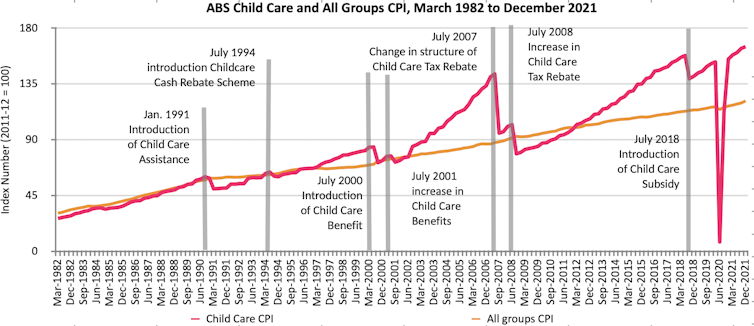
We found no evidence of the package having reduced the long-term trend towards increasing childcare costs. Its overall impact on childcare costs was relatively small and has already been significantly reduced by rising prices.
Author provided
More ‘flexible’ hours, but higher fees
Traditionally most child care centres have operated on the basis of charging on a daily basis for a long session of care. The package, including the “allowed hours” under the activity test, was intended to produce more flexible session lengths.
We found while many services did introduce shorter sessions, these were often charged at a higher hourly rate. Frequently the daily fee was the same, or close to that for long session. The more rigid start and finish time of these sessions made provision less, rather than more, flexible.
The reduction in approved hours from 24 hours of care per week to 24 hours per fortnight for those who did not meet the activity test raised some concerns about children losing access to care, or reducing attendance to just one day a week. But we found no evidence of this.
One reason for this was the potentially high proportion of children in this group who were eligible for support through other safety-net mechanisms such as Additional Child Care Subsidy.
Central to the findings of the evaluation was the larger question of the nature and role of childcare. Our evaluation found this had not been addressed in the package.
Rather, the evaluation concluded there was a need for a clear, coherent and comprehensive policy environment for childcare. This needs to link the important goals of the package relating to workforce participation with other policies related to quality of care and the critical role of measures such as universal access to preschool in child development and in preparation for schooling. To achieve this, strategies must also account for the federal and state divisions in responsibility for childrcare.
The evaluation, the results of which are reported in this article was commissioned and funded by the Australian Government Department of Education, Skills and Employment. All authors were part of the evaluation team which undertook this.
The evaluation, the results of which are reported in this article was commissioned and funded by the Australian Government Department of Education, Skills and Employment. All authors were part of the evaluation team which undertook this
Ilan Katz receives funding from The Australian and State Governments, The Australian Research Council and the National Health and Medical Research Council
The evaluation, the results of which are reported in this article was commissioned by the Australian Government Department of Education, Skills and Employment.
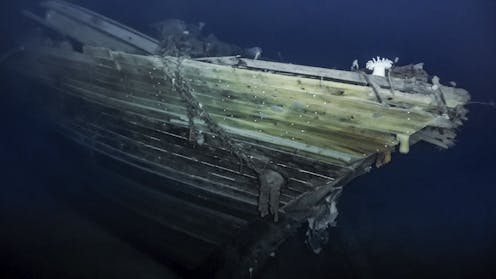
A view of the bow of the Endurance.Falklands Maritime Heritage Trust/National Geographic
Tonight’s federal budget will include more than A$800 million over ten years to provide a “clear marker” of Australia’s “scientific leadership” in Antarctica.
The funds will go towards drones and helicopters amid mounting (although somewhat exaggerated) concerns over Chinese activity in the region.
But political assets in the polar region include more than expensive state of the art toys. Earlier this month, one of the most famous shipwrecks in history, Sir Ernest Shackleton’s Endurance, was discovered in the Weddell Sea – a part of Antarctica claimed by multiple nations.
The Endurance
There is enormous excitement around the discovery of the Endurance.
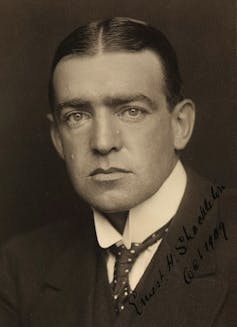
Sir Ernest Shackleton. Wikimedia Commons
The wreck provides a physical connection to a great tale of human survival, as it was the vessel used during the British explorer’s 1914-1916 Imperial Trans-Antarctic Expedition.
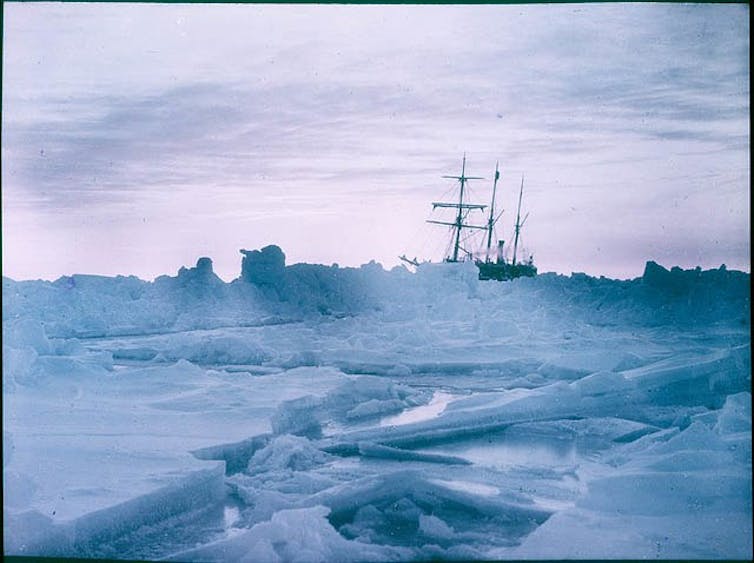
It became stuck in the ice and eventually sunk. Remarkably, none of the men died during the ordeal, despite having to camp on the ice for months during an austral winter.
But now the Endurance has been found, who owns it and who should look after it?
The Antarctic Treaty
Antarctica is governed differently from other parts of the world. The Antarctic Treaty was signed in 1959, with its first provision stating “Antarctica shall be used for peaceful purposes only”. It also provides for free and cooperative scientific investigation on and around the frozen continent.
At the time of signing, seven countries – Argentina, Australia, Chile, France, New Zealand, Norway and the United Kingdom – had territorial claims in the region. But under the treaty, no country can assert (or deny) a claim to territorial sovereignty in Antarctica.
Despite this strong legal foundation, cultural heritage provides an opportunity for nations – in this case Britain – to assert their past, as well as their intended future, presence in the region.
Historic sites in Antarctica
The Antarctic is governed via annual meetings, attended by signatories to the treaty. At these meetings, countries can designate historic remains as official historic sites or monuments.
At the 2019 meeting, the UK successfully proposed the Endurance wreck as an official historic site, despite not knowing its location or state at the time. After learning of plans by NGOs to search for the wreck, the UK said it wanted to “confirm the protection status of the vessel in the event that it is located”.
all artefacts contained within or formerly contained within the ship, which may be lying on the seabed in or near the wreck within a 150-metre radius.
Who is responsible for the sunken ship?
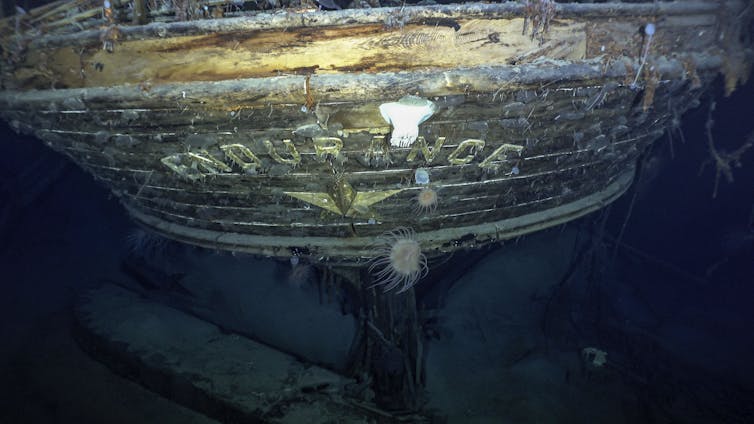
The Endurance22 expedition, backed by the Falklands Maritime Heritage Trust, located the wreck in remarkable condition just over three weeks ago. This expedition had set itself the task of searching for and surveying the shipwreck.
Since 2019, the UK has effectively designated itself as manager of the site – which includes the personal possessions within and all artefacts lying on the seabed nearby. The UK has also stated the wreck should not be not moved or disturbed and only photographed according to strict heritage guidelines.
This is also in line with comments from Shackleton’s granddaughter Alexandra Shackleton, who says there should be no “rummaging” and “whatever there is will stay there.”
A view of the stern of the wreck of the Endurance. Falklands Maritime Heritage Trust/National Geographic/AP/AAP
These preemptive steps are somewhat controversial because the seabed on which the Endurance rests is an area contested between the UK and Argentina.
Although, by definition, a seabed is not within claimed territory, it rests below waters belonging to claimed territory – meaning the wreck could be interpreted by the wider international community as lying outside of the UK’s jurisdiction.
Also worth noting is that the very heritage trust in charge of the expedition originates from hotly contested territory between the two countries – the Falkland Islands/Islas Malvinas.
The ship used to search for the wreck was provided by South Africa, while funding was provided primarily by UK private and commercial sources. South Africa has signed the convention, while the UK has agreed to abide by its rules, but is not a signatory.
This has created a feeling of unease among the expert community, who understand that even though the wreck is not currently easy to access (for one, it is more than 3 kilometres below the surface), with technological developments, this situation may change.
What happens now?
Ultimately, the management of the site will set a precedent for the treatment of underwater cultural heritage in the region more widely.
The big question policymakers and diplomats now face is whether a line will be drawn when it comes to having not-yet-found shipwrecks internationally recognised as heritage sites.
Antarctic photographer Frank Hurley captured the Endurance stuck in the Weddell Sea. Frank Hurley/ Wikimedia Commons
Two more sites will likely test this question: the San Telmo and the SS Hampson. Spain proposed the San Telmo – a Spanish naval ship that sunk in the Drake Passage in 1819 supposedly carrying the first “humans to live and die” in Antarctica – as an official historic site at the 2021 meeting.
The SS Hampson is expected to be the large unidentified wooden sailing boat wrecked at Hampson Cove, Elephant Island. The UK is again the manager of the site, given it established the cove’s official heritage status back in 1998.
Like the recent discoveries of other wrecks, the Erebus and Terror in the high Arctic, these sunken ships represent more than just deteriorating artefacts.
They provide a way for countries to demonstrate their historical occupation of a region where traditional displays of territorial sovereignty are banned.
Rebecca Hingley is affiliated with the International Polar Heritage Committee.
Our world is facing a huge challenge: we need to create enough high-quality, diverse and nutritious food to feed a growing population – and do so within the boundaries of our planet. This means significantly reducing the environmental impact of the global food system.
There are more than 7,000 edible plant species which could be consumed for food. But today, 90% of global energy intake comes from 15 crop species, with more than half of the world’s population relying on just three cereal crops: rice, wheat and maize.
The rise of ultra-processed foods is likely playing a major role in this ongoing change, as our latest research notes. Thus, reducing our consumption and production of these foods offers a unique opportunity to improve both our health and the environmental sustainability of the food system.
The impacts of these foods on human health are well described, but the effects on the environment have been given less consideration. This is surprising, considering ultra-processed foods are a dominant component of the food supply in high-income countries (and sales are rapidly rising through low and middle-income countries too).
Our latest research, led by colleagues in Brazil, proposes that increasingly globalised diets high in ultra-processed foods come at the expense of the cultivation, manufacture and consumption of “traditional” foods.
How to spot ultra-processed foods
Ultra-processed foods are a group of foods defined as “formulations of ingredients, mostly of exclusive industrial use, that result from a series of industrial processes”.
They typically contain cosmetic additives and little or no whole foods. You can think of them as foods you would struggle to create in your own kitchen. Examples include confectionery, soft drinks, chips, pre-prepared meals and restaurant fast-food products.
In contrast with this are “traditional” foods – such as fruits, vegetables, wholegrains, preserved legumes, dairy and meat products – which are minimally processed, or made using traditional processing methods.
While traditional processing, methods such as fermentation, canning and bottling are key to ensuring food safety and global food security. Ultra-processed foods, however, are processed beyond what is necessary for food safety.
According to an analysis of the 2011-12 Australian Health Survey (the most recent national data available on this), the ultra-processed foods that contributed the most dietary energy for Australians aged two and above included ready-made meals, fast food, pastries, buns and cakes, breakfast cereals, fruit drinks, iced tea and confectionery.
Ultra-processed foods also rely on a small number of crop species, which places burden on the environments in which these ingredients are grown.
Maize, wheat, soy and oil seed crops (such as palm oil) are good examples. These crops are chosen by food manufacturers because they are cheap to produce and high yielding, meaning they can be produced in large volumes.
Also, animal-derived ingredients in ultra-processed foods are sourced from animals which rely on these same crops as feed.
The rise of convenient and cheap ultra-processed foods has replaced a wide variety of minimally-processed wholefoods including fruits, vegetables, grains, legumes, meat and dairy. This has reduced both the quality of our diet and food supply diversity.
In Australia, the most frequently used ingredients in the 2019 packaged food and drink supply were sugar (40.7%), wheat flour (15.6%), vegetable oil (12.8%) and milk (11.0%).
The environmental impact of ultra-processed foods is avoidable. Not only are these foods harmful, they are also unnecessary for human nutrition. Diets high in ultra-processed foods are linked with poor health outcomes, including heart disease, type-2 diabetes, irritable bowel syndrome, cancer and depression, among others.
To counter this, food production resources across the world could be re-routed into producing healthier, less processed foods. For example, globally, significant quantities of cereals such as wheat, maize and rice are milled into refined flours to produce refined breads, cakes, donuts and other bakery products.
These could be rerouted into producing more nutritious foods such as wholemeal bread or pasta. This would contribute to improving global food security and also provide more buffer against natural disasters and conflicts in major breadbasket areas.
Other environmental resources could be saved by avoiding the use of certain ingredients altogether. For instance, demand for palm oil (a common ingredient in ultra-processed foods, and associated with deforestation in Southeast Asia) could be significantly reduced through consumers shifting their preferences towards healthier foods.
Reducing your consumption of ultra-processed foods is one way by which you can reduce your environmental footprint, while also improving your health.
Kim Anastasiou has worked on research funded by a variety of Australian government agencies, industry bodies and private companies.
Mark Lawrence receives funding from the Australian Research Council and the World Health Organization. He is a Board member at Food Standards Australia New Zealand (FSANZ). The views expressed in this article do not necessarily reflect those of the organisations with which he is associated.
Michalis Hadjikakou receives funding from the National Health and Medical Research Council.
Phillip Baker receives funding from The Australian Research Council and the World Health Organization.
Source: The Conversation (Au and NZ) – By Laura Schuijers, Deputy Director, Australian Centre for Climate and Environmental Law and Lecturer in Law, University of Sydney
The Federal Court recently quashed a duty of care owed by the environment minister to Australian children, to protect them from the harms of climate change.
The duty was attached to Australia’s federal environment law, the Environment Protection and Biodiversity Conservation (EPBC) Act. In reversing the decision that had established the duty, the new judgment shone a spotlight on the EPBC Act’s limitations. Or at least, it should have.
Much of the commentary around the judgment focused on lamenting the hands-off position the court took in its unwillingness to delve into so-called political territory.
Less attention was paid to a key take-home message: the EPBC Act gives the minister power to approve coal projects, even if they’ll have adverse effects.
It doesn’t, in a general sense, protect the environment from these effects. It doesn’t protect the public from consequent harm, even if deadly. And it doesn’t, actually, tackle climate change at all.
The appeal was heard by three judges, each with a different opinion on why there shouldn’t be a duty.
One key problem was that the class of victims won’t just include the children represented in the case. Currently unborn children will be affected too. The judges also found issues with the minister’s relationship with the children given the intervening steps that will lead to climate change, extreme weather events, and future harm.
To help resolve novel disputes, courts look to previous cases. One case that featured prominently was about protecting the public from contaminated oysters. In that case, a council wasn’t liable for failing to prevent water pollution that caused hepatitis infection. In another case, where there was no way of identifying the source of asbestos fibres that caused mesothelioma, it was found that whoever materially increased the risk of harm could be liable for it.
The fact these were considered the most relevant cases just goes to show how unprecedented the problem of climate change is. There was no case directly on point, which could help with the complex and cumulative cause-and-effects.
The problem of ‘incoherence’
Another important problem for two of the three judges was that the duty wasn’t coherent – meaning consistent or compatible – with the EPBC Act. That’s because the EPBC Act doesn’t squarely address climate change or human safety, and yet the duty concerns precisely those two things.
The third judge thought the minister’s obligations, embedded in an environment protection framework, could therefore sit side by side with a duty of care. Our environment, he said, “is not just there to admire and objectify.”
But the other two were dissuaded by their view that the EPBC Act doesn’t in fact protect the environment in a general sense. Nor does it explicitly aim to mitigate climate change. It operates in a piecemeal way, rather than concerning ecosystems as a whole, or our dependency on them.
Can this really be how the EPBC Act operates in practice? Well, yes.
The EPBC Act operates in a piecemeal way, rather than concerning ecosystems as a whole, or our dependency on them. Shutterstock
What does the EPBC Act do, then?
For the most part, the EPBC Act is an impact assessment law. It’s triggered when specific environmental matters, like individual threatened species, are likely to be harmed by a proposed project (such as a coal mine). When it’s triggered, it sets in motion a procedural process that requires the minister to consider whether to approve the project given its impacts.
Year after year, nearly every single project that is put forward is approved. In fact, the coal mine that was the subject of the case was approved even before the appeal went to court. This explains why so many, including the independent review, feel the EPBC Act doesn’t really do enough to adequately safeguard against environmental loss.
The review recommended the introduction of science-backed environmental standards. If this happened, it may be easier for courts to judge ministerial decisions, with a legal reference point for what’s considered politically acceptable. It also recommended decision-making incorporate climate scenarios.
A call to action
Back in 2020, I wrote that whether the children win or lose, their case would make a difference.
Although not over yet (they have two more weeks to lodge an application to appeal to the High Court), it already has. It’s drawn attention to the fact that Australia doesn’t have a climate law to protect its children. That it has no law to protect against harmful floods and fire that have already manifest since the case began. And it’s forced the Federal Court to acknowledge the uncontested risks of climate change.
Let’s look at this case as a call to action. The Federal Court has essentially said it can’t act. Reading the judgment closely, there are hints to suggest the High Court might be able to, and that eventually, the law will have to evolve to manage complex causation.
But the decision certainly doesn’t mean the government can’t act. In fact, that’s exactly who the judges indicated must.
Laura Schuijers does not work for, consult, own shares in or receive funding from any company or organisation that would benefit from this article, and has disclosed no relevant affiliations beyond their academic appointment.
Anna Ancher’s The maid in the kitchen, c1883 – 1886Hirschsprung Collection
In this series, academics explain the ways they are recreating historical practices, and how this impacts their research today.
Old recipes and cookery books are increasingly being recognised as archival records, documenting more than just the food that was eaten in the past. They help us track consistencies and changes in our tastes and traditions, and in the techniques and technologies we employ or rely on to prepare a dish or meal.
Whether hand written or commercially produced, the fact that the recipes were recorded indicates the author felt the resulting foods were worth eating.
When you flick through old Australian recipe books, you will find some of the dishes are familiar, if not the same (“fricasees” and “ragouts” we now know as casseroles), while others, such as flummery and blancmange are echoed in today’s more sophisticated bavarois and pannecotta.
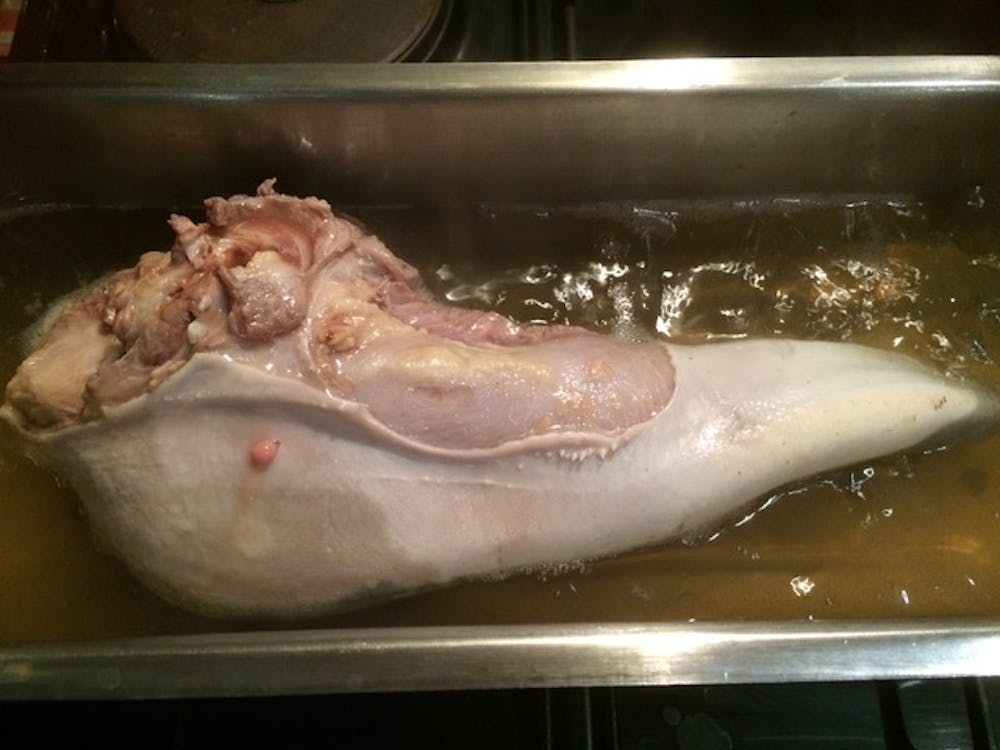
Other dishes which were once common in old cookbooks are curious or even peculiar to the contemporary cook, especially those made with meat cuts that some Australians might balk at: mock turtle soup (made with a calf’s head), brawn (made from a pigs’ head), calves’ feet jelly and boiled tongues being standouts.
As a historian with a Le Cordon Bleu Master’s degree in gastronomy, (which I describe as the study of food and food cultures), I am an intrigued by foods such as these. They are still popular in many other cultures’ cuisines, but have lost their place in Australia’s everyday culinary repertoire.
Why have they disappeared from our menus, and what does their absence from our kitchens, dining tables – and cookbooks – say about contemporary food choices?
What can we learn by recreating old recipies? Jacqui Newling, Author provided
Sensory and visceral
I take a very hands-on approach to researching our food heritage. My gastronomy degree is an academic qualification – I am not a formally trained cook, let alone chef. I have an Anglo-Celtic background that has not exposed me to the majority of “lost” dishes mentioned above in the normal course of life.
In order to understand them – and, importantly, the processes involved in making them – reading recipes is not enough. To write or speak about them with any authority, I need to experience them myself.
I do not profess to be exactly recreating the past or replicating the techniques and resulting dishes. Technological and food safety standards have changed the ingredients and necessary equipment to cook with them, but my experimental and explorative “forensic” exercises have been enlightening and instructive.
Ox tongue is surprisingly dense and heavy. Jacqui Newling, Author provided
They have provided me with a far more intimate connection with these dishes and appreciation of the time, skills and effort required to create them – even with modern cooking facilities – than words on a page could ever conjure.
The sensory and, at times, visceral nature of making these dishes has been particularly educational, but often challenging and discomforting.
I recognise now the vague, nondescript but distinctive smell that is emitted when reconstituting jelly crystals as that which emanates from boiling calves’ feet: the fruity flavours and colouring a thin veil for the true origins of animal-derived gelatine.
Just the thought of handling an ungainly, surprisingly large, dense and heavy ox-tongue, trimming away the unsightly connecting ligaments and peeling its thin but leathery skin from the organ makes me uncomfortably conscious of my own tongue’s anatomy.
Cooking whole animal heads – their eyes staring back at me (accusingly? beseechingly?) as the pot bubbled away on the stove – was quite disarming.
Watching whole animal heads on the boil is a disconcerting experience. Jacqui Newling, Author provided
Dismembering the pig’s face to retrieve the edible parts for brawn (cheeks, jowls, palate, tongue and snout) is a sticky, slippery and messy job.
While these experiential and embodied forms of self-education have elicited feelings of repugnance, to me they are tangible ways of connecting the past and the present, sharing experiences with cooks who also made these dishes or followed these recipes.
Slippery, slimy and oozy
Emotional responses are of course individual, and imbued with cultural and personal meaning. My feelings of distaste or revolt may not have been experienced by cooks and diners who welcomed these dishes onto their tables.
With the gradual disappearance of local butchers’ shops working with whole animals, our meat, poultry and fish is often sold in plastic packaging, often deboned or filleted with skin removed, trimmed of fat and sinew, ready-portioned, perhaps marinated and ready to cook without further handling.
Moisture sachets and packaging that help absorb fluids and odours make us less tolerant of the natural realities of animal parts that are messy, bloody, sinewy, gristly, viscous, gelatinous, slippery, slimy and oozy.
While convenient and time-saving for consumers, these preparations distance and disconnect consumers from the source animal. We are losing practical skills, but also the sensory connections and emotional sensibilities that come with working with them.
Cooking like this means there is no disconnection between the food we eat and the animals they come from. Jacqui Newling, Author provided
Many meat eaters who are comfortable with conventional flesh-meats recoil at cuts that are reminders of the once-living animal, finding heads, tongues, feet and tails revolting, perhaps horrifying, even barbaric.
Conversely, nose-to-tail dining, which makes use of every edible part of an animal is lauded as a respectful and responsible acknowledgement of the environmental impacts of meat production and a way of honouring the life taken from an animal bred for consumption.
If we consider the adage that food should not simply be good to eat but good to think about – morally and ethically – is resisting or rejecting these foods prejudice or a mark of refined taste? Were past generations crude and uncouth in their tastes and dining habits, or do they in fact hold the higher moral ground, coming face-to-face with the reality of their food sources?
Much can be learnt from these old cookbooks. Jacqui Newling, Author provided
A recipe to try: mock turtle soup
Get a calf’s head as fresh as possible, split it and take out the brains, wash and clean it well and lay it to steep in cold water for an hour. Then put into a stewpan with enough water to cover it, and two or three pints over; set it on the fire to boil, let it simmer 1½ hours; take out the head, and when cold enough cut [the meat] into pieces, from 1 inch square, and peel the tongue and cut it into pieces, only smaller, and put these into a pan till the next day, covered with a little of the liquor.
Then put all the bones of the head, and about 4 lbs of shin beef into the liquor in the stewpan. To this liquor when boiling, must be added the rind of a lemon, 1 turnip, and a little mace and allspice, and a bunch of sweet herbs with white peppers and salt to taste. Let these boil slowly for 5 hours and then strain.
Warm up the next day with the pieces of meat, egg balls and two or three glasses of white wine (sherry preferred).
— Mrs. Arthur Hardy’s recipe. The Kookaburra Cookery Book, The Lady Victoria Buxton Girls’ Club, Adelaide, South Australia. 1912.
Jacqui Newling is a curator at Sydney Living Museums
New Zealand Parliament Buildings, Wellington, New Zealand.
Editor’s Note: Here below is Dr Bryce Edwards’ New Zealand Political Roundup – which analyses one prominent topic being debated in New Zealand and links to media coverage. You can sign up to NZ Political Roundup for free here.
Political Roundup: Divisions are opening up, and left and right are making them worse
An important opinion poll was released back in January by Curia Research, showing the country is increasingly divided. The survey asked: “Thinking now about the state of New Zealand and our society, do you think New Zealand and New Zealanders are less divided, or more divided than a year ago?”
A large majority of 72 per cent said we are more divided, with only 10 per cent believing we are less divided. Notably, some respondents felt the divisions more than others. For example, city dwellers and Government supporters felt it less – only 57 per cent of Wellingtonians and 56 per cent of Labour supporters thought divisions were increasing, compared to 83 per cent in New Zealand towns, and 78 per cent of National supporters. Nonetheless, across all demographics a majority believed that divisions were increasing.
The Human Rights Commission also reports that they are now receiving twice as many complaints about public abuse. They say, “Complaints and inquiries have gone off the richter scale. People are really stressed and angry”.
Of course, the recent Parliamentary Grounds occupation was also a sign of the growing discontent and anger. And the fact that various opinion polls showed that the protesters had significant support – perhaps a third of the country – points to more than just some fringe conspiracy theorists.
Alongside all of this, there has been a distinct rise in toxic political debate. Anger and intolerance appear to be permeating all forms of communications.
Journalists are particularly sensitive to rising toxic polarisation, as they increasingly cop nasty Twitter putdowns and threats from across the political spectrum. Over the last week there have been more articles and columns about the increasing nastiness. For example, former press gallery broadcaster Lloyd Burr wrote: “politics has become so personal and hateful and ugly. I was a political reporter in the press gallery from 2013 until 2018 and the political climate was never like it is now.”
This means that the country’s social cohesion is under serious threat. Our ability to reasonably debate our differences and find collective solutions to problems is declining. And if this toxicity is left unaddressed, a variety of social and democratic deficits are likely to build up over the coming years. Think, for example, about the impact on quality debate and deliberation in next year’s election if toxic political polarisation continues to increase.
Growing tribalism has trumped reasonable debate
The notion that “He waka eke noa” (We are all in this together) has started to wear very thin over the last year for many New Zealanders. Divisions in society that have always existed have suddenly become much more pronounced. Ethnic and socioeconomic disparities, in particular, have become starker than ever before.
Unfortunately, the recent tendency on the centre-left has been to either ignore the existence of those growing divisions or disparage various disaffected groups. The tendency on the centre-right has been to opportunistically champion the growing grievances.
Both sides have tribal reasons for their orientations. For the centre-left the existence of growing divisions is a very inconvenient fact while their team is in power, and the centre-right want to get their team back into power by opportunistically chasing behind any sort of discontent.
Others simplistically dismiss the rising polarisation and anger as being a direct result of ignorance, conspiracy theories, and the rise of social media and internet politics.
The Covid and economic factors in toxic polarisation
Covid has been an obvious driver of polarisation. Liberal democracies throughout the world have experienced a strong correlation between the severity of the virus and subsequent toxic politics and discontent. Quite simply, the more the pandemic has turned people’s lives upside down, the more polarisation has surged. As Lloyd Burr said last week, “what we’ve gone through, and what we are still going through is unprecedented for almost all of us. The global pandemic is straining everything. It’s ruined so much. And it’s continuing to ruin so much.”
Covid has been viewed by most as the biggest and most acute challenge since World War Two. It’s no surprise that it is now having intense political implications and sparking protests everywhere, including in New Zealand. Although the recent occupation was said to be about vaccine mandates, they were obviously also a reflection of wider alienation and discontent that has been accelerated recently.
Of course, initially in New Zealand the pandemic produced the opposite of toxic polarisation. In 2020 the country experienced incredible unity and harmony. This was due to Covid being eliminated, hence the public triumphantly “rallied around the flag” celebrating what was seen as a great “New Zealand exceptionalism”.
Divisions and political debate were papered over by this mood, and the general election of that year was unusually apolitical. The political outcome was extreme popularity for Prime Minister Jacinda Ardern and a 50 per cent electoral vote for Labour. Surveys showed the public had great trust in public institutions and government.
This wasn’t to last. Subsequent Covid variants were much more effective at infecting and killing New Zealanders, and the Government’s Covid management was criticised from across the political spectrum. The “team of five million” fell apart, and intolerance and division grew.
The Government’s Covid policies also created other harms and grievances. Economically, there has been an estimated transfer of a trillion dollars to the wealthy, especially driven by money printing and policies designed to inflate asset prices. Housing became even more of a crisis for those on the bottom of the economic pile. New Zealand became more of a two-tier society than ever before and that will be reflected in our politics, one way or another.
The wrong approach to polarisation: Ignore and disparage
Amongst partisan political commentators there has been an attempt to downplay and dismiss the growing societal divisions of the last few years. Worsening economic inequality is glossed over by supporters of the Government, an embarrassment for a Labour Government seeking re-election. They also point erroneously to public opinion surveys taken during the Ardern Government’s first term as evidence that public trust in institutions isn’t a problem – never mind that everything has changed since 2020.
On the other side, National leader Christopher Luxon has given a speech titled “A Divided Society” and initiated debates about whether the current government is “the most divisive government in recent memory”. And yet just last week he referred those in New Zealand society with the least as “bottom feeders”, explicitly excluding them as being of interest to National.
This all risks the problems of toxic polarisation becoming just another political football for left and right to aggressively kick back and forth. It will be a shame if efforts to understand and deal with growing divisions and polarisation end up being characterised by the problem itself – the tribal left disparages the existence of divisions, and the tribal right champion it disingenuously. The left sneers at the “deplorables” who are discontented, and the right seeks to find populist policies that might scratch the itch.
Of course, political polarisation has always been something of a business model for politics. Along with various social media companies and the media itself, politicians and their proxies have a vested interest in driving up outrage, promoting divisions, and stoking culture wars. It can bring in an audience or even votes, while at the same time diverting public debate and attention away from substantive issues.
It can also bring in cash donations. Witness, for example, how the Act Party has recently ran a successful fundraising campaign – raising about a million dollars from wealthy individuals like Xero founder Rod Drury.
Whether donors have supported David Seymour’s party due to its economic policies or its advocacy on ethnic and free speech issues is hard to know. But, of course, it all spirals upwards, with equally toxic “cancel culture” campaigns from the opposite side. Currently, te Pāti Māori are campaigning to cancel Xero, using a smear that Drury’s donation to Act is all about “white supremacy”.
Ultimately, this all just feeds into a culture war, when what we really need is for left and right to be focused on real solutions for the “bread and butter” concerns around jobs, housing, health, and other factors that improve people’s lives. And the rest of us must somehow learn to be less tribal, embrace critical thinking and keep our leaders focussed on the real issues and divisions.
We need to acknowledge fundamental divisions in society are growing, and recognise they are based on real pains – especially in terms of economic struggles – and then have political conversations and debates that aren’t plagued with intolerance, nastiness, and smears.
The Human Rights Commission has been running a campaign urging people to lower the temperature of political debate – to “dial it down a notch”. This seems apt, but ultimately, we also must be careful not to just suppress political differences and divisions in society. Democracy works best when the clash of opinions and the highlighting of problems helps us find the truth and solutions. It would be a shame if this just means we are divided into different clans with hostility towards the other, and politicians with incentives to magnify animosity towards opponents.
Quantum technology, which makes use of the surprising and often counterintuitive properties of the subatomic universe, is revolutionising the way information is gathered, stored, shared and analysed.
The commercial and scientific potential of the quantum revolution is vast, but it is in national security that quantum technology is making the biggest waves. National governments are by far the heaviest investors in quantum research and development.
Quantum technology promises breakthroughs in weapons, communications, sensing and computing technology that could change the world’s balance of military power. The potential for strategic advantage has spurred a major increase in funding and research and development in recent years.
The three key areas of quantum technology are computing, communications and sensing. Particularly in the United States and China, all three are now seen as crucial parts of the struggle for economic and military supremacy.
The race is on
Developing quantum technology isn’t cheap. Only a small number of states have the organisational capacity and technological know-how to compete.
Russia, India, Japan, the European Union and Australia have established significant quantum research and development programs. But China and the US hold a substantial lead in the new quantum race.
And the race is heating up. In 2015 the US was the world’s largest investor in quantum technology, having spent around US$500 million dollars. By 2021 this investment had grown to almost US$2.1 billion.
However, Chinese investment in quantum technology in the same period expanded from US$300 million to an estimated US$13 billion.
The leaders of the two nations, Joe Biden and Xi Jinping, have both emphasised the importance of quantum technology as a critical national security tool in recent years.
The US federal government has established a “three pillars model” of quantum research, under which federal investment is split between civilian, defence and intelligence agencies.
In China, information on quantum security programs is more opaque, but the People’s Liberation Army is known to be supporting quantum research through its own military science academies as well as extensive funding programs into the broader scientific community.
This could improve the performance of lethal autonomous weapons systems (which can select and engage targets without human oversight). It would also make it easier to analyse the large data sets used in defence intelligence and cyber security.
Improved machine learning may also confer a major advantage in carrying out (and defending against) cyber attacks on both civilian and military infrastructure.
Quantum communication systems can be completely secure and unhackable. Quantum communication is also required for networking quantum computers, which is expected to enhance quantum computational power exponentially.
China’s prioritisation of secure quantum communications is likely linked to revelations of US covert global surveillance operations. The US has been by far the most advanced and effective communications, surveillance and intelligence power for the past 70 years – but that could change with a successful Chinese effort.
More powerful sensors
Quantum computing and communications hold out the promise of future advantage, but the quantum technology closest to military deployment today is quantum sensing.
New quantum sensing systems offer more sensitive detection and measurement of the physical environment. Existing stealth systems, including the latest generation of warplanes and ultra-quiet nuclear submarines, may no longer be so hard to spot.
At present, undetectable submarines armed with nuclear missiles are regarded as an essential deterrent against nuclear war because they could survive an attack on their home country and retaliate against the attacker. Networks of more advanced SQUIDs could make these submarines more detectable (and vulnerable) in the future, upsetting the balance of nuclear deterrence and the logic of mutually assured destruction.
New technologies, new arrangements
The US is integrating quantum cooperation agreements into existing alliances such as NATO, as well as into more recent strategic arrangements such as the Australia–UK–US AUKUS security pact and the Quadrilateral Security Dialogue (“the Quad”) between Australia, India, Japan, and the US.
China already cooperates with Russia in many areas of technology, and events may well propel closer quantum cooperation.
In the Cold War between the US and the USSR, nuclear weapons were the transformative technology. International standards and agreements were developed to regulate them and ensure some measure of safety and predictability.
In much the same way, new accords and arrangements will be needed as the quantum arms race heats up.
Stuart Rollo does not work for, consult, own shares in or receive funding from any company or organisation that would benefit from this article, and has disclosed no relevant affiliations beyond their academic appointment.
Source: The Conversation (Au and NZ) – By Fethi Mansouri, Professor/UNESCO Chair-holder; Founding Director, Alfred Deakin Institute for Citizenship and Globalisation, Deakin University
Flavio Brancaleone/AAP
Australia’s political leaders often talk about its multicultural credentials, making sweeping statements about its unmatched success in diversity.
This self-congratulatory speech, however, masks the reality that we are a country with a deep racism problem that is not getting better.
Racism in Australia
My recent co-authored book Racism in Australia Today with Amanuel Elias and Yin Paradies looks at various manifestations of racism in our history and across key institutions.
Australia’s history since 1788 began with brutal acts of racism. Its colonisation was yet another example of white Christians going into other societies thinking they were ethnically and culturally superior. And could therefore take over peoples, resources and cultures.
These attitudes of cultural superiority have not gone away. Indeed,national survey results have seen almost 11% of respondents self-identified as “prejudiced” against other cultures. A further 26% neither agreed or disagreed.
We do have a problem
It is perhaps easy for white people to assume racism is no longer a big issue. There is legislation like the Race Discrimination Act and we have formally abandoned the White Australia Policy. It is illegal to segregate people based on their skin colour and overt racism is thought to be socially unacceptable.
Yet racism remains an everyday experience for non-white Australians.
Based on the 2016 Census, 21% of Australians have a non-European background, and 3% have an Indigenous background. Bianca De Marchi/AAP
In 2021, the Scanlon report found an unprecedented rise in respondents’ answers to the question “how big a problem is racism in Australia?”. Some 60% of survey respondents indicated it was a “very big” or “fairly big problem” as opposed to 40% in 2020.
Meanwhile in March 2022, a Diversity Council report found 43% of non-white Australian employees commonly experience racism at work, while only 18% of “racially priviliged” workers reported racism as a problem. This not only highlights how widespread racism remains but how often often dismissed by those benefiting from white privilege.
Racism also plagues Australia’s key institutions, including ASX 200 companies, universities, the public service and federal parliament.
In 2018, the Australian Human Rights Commission found of those who occupy 2,490 of the most senior posts in Australia, 76% per cent have an Anglo-Celtic background, 19% have a European background, less than 5% have a non-European background and 0.4% have an Indigenous background.
Crises and racism
Racism is not a steady phenomenon. We have seen peaks of racism towards particular groups in Australia, coinciding with major crises.
COVID-19 has led to a sharp spike in reported incidents of racism around the world. Many Asian Australians, and particularly Chinese Australians, reported increasing hostility towards them, including vandalism and racist slurs.
These experiences, in many ways, mirror the significant increase in Islamophobia since the September 11 attacks and the “war on terror”.
In the wake of the 2019 Christchurch massacre, the Human Rights Commission found
80% of Muslim Australians had faced unfavourable treatment based on their ethnicity, race or religion. This racism takes the form of hate, violence or negative comments in public.
But as shocking as these upswings in racism are, even more shocking is our collective failure to develop a credible strategy to address the root causes of racism – be it against Indigenous peoples, refugees, temporary migrant workers or other minority groups.
We remain incapable of even talking about the racism in our midst, let alone what should be done to stop it.
Discrimination costs
The cost of racism to individuals, families and society is immeasurable in many ways.
But we do know racism has an impact on people’s mental health.
Crises like the coronavirus pandemic have seen an increase in racist incidents. Joel Carrett/AAP
When young people are suffering from racism, even if they can turn up to school, they are not likely to feel happy or safe. This has an impact on their academic progress and therefore their further training and career trajectories.
At a macro level, we also know racism costs the national economy billions of dollars. Research shows the economic cost of experiences of racial discrimination was between A$21.1 and A$54.7 billion dollars from 2001 to 2011.
A proper strategy
While many would argue Australia is not a racist country, racism remains a serious problem. So, where is the national vision to fix this?
The first thing we need to do is acknowledge racism does exist across many sectors and we should be able to talk about it in a mature way.
This is, at times, a sensitive and difficult task because some of our political leaders cannot even accept the basic fact that we even have a serious problem.
Racism is not simply an inappropriate behaviour by individuals. It reflects a history of white privilege that has sustained colonial practices and political and cultural oppression of non-white nations.
Therefore, it is absolutely essential we call racism out in the short-term. But more importantly we need a longer-term strategy. One that comes to grips with justice for Indigenous peoples as well as the meaningful social and political incorporation of all groups in Australia, especially those from non-European backgrounds.
As we approach another federal election, it remains to be seen if our political leaders will offer a national strategy that treats racism as a serious threat to social cohesion, human rights and democracy itself.
Fethi Mansouri also talks about racism on the latest episode of Seriously Social podcast by the Academy of the Social Sciences in Australia.
Fethi Mansouri receives funding from the Australian Research Council. He is the UNESCO Chair for Cultural Diversity and Social Justice.
Source: The Conversation (Au and NZ) – By Julian Bolleter, Deputy Director, Australian Urban Design Research Centre, The University of Western Australia
Shutterstock
Australia’s population is projected to grow to over 50 million people by 2101. This will have enormous implications for the country’s long-term infrastructure planning and prized livability, particularly in the capital cities where most growth is occurring.
Our recently published research examined ways we can start planning for this doubling of our population now, while we still have time to address it. Our survey asked more than 1,000 people where they think these new Australians should live, to gauge their support for different settlement patterns.
We presumed a net-increase of 28 million people over the next 80 years, with half of those people dispersing across existing Australian cities and towns. We then asked our respondents where would they support the other 14 million people living.
The study is the first of its kind to gauge community opinion on these questions at a national scale.
The Plan My Australia survey.
Not surprisingly, our survey found strong opposition to continued growth of the state capital cities. Instead, our participants showed a strong preference for encouraging people to move to new and expanded satellite cities and rail hubs in regional areas. This finding aligns with the general urban-to-regional migration that was kindled by the pandemic.
Our aim was to understand people’s preferences for managing population growth at the national scale, with the hope it will inform a national urban policy to prepare for the coming population surge.
We devised our settlement pattern scenarios based on possibilities that have been proposed by academics and policy-makers. Here’s how they ranked in order of popularity with our respondents:
1. Satellite Cities: Due to the affordability and livability issues confronting the state capitals, this scenario siphons long-term population growth to 14 satellite cities like Gold Coast, Geelong and Wollongong. Respondents considered this scenario to be the most sustainable and feasible, while also ensuring livability.
Satellite Cities.
2. Rail Cities: Inspired by rail hubs in other countries, this second placed scenario funnels population growth to 18 regional cities connected to the state and federal capitals by major high-speed rail links (yet to be built).
Rail Cities.
3. Inland Cities: This scenario distributes population growth to 29 key inland centres, many with at least hypothetical capacity to take on more people.
Inland Cities.
4. Western Cities: Western Australia comprises one-third of the continent but houses just over one-tenth of the population. Accordingly, this scenario boosts the populations of nine cities and towns along the west coast.
Western Cities.
5. Northern Cities: Given northern Australia’s considerable economic output and proximity to Asia, this scenario envisions an increase of the population of the nine largest northern cities.
Northern Cities.
6. Sea Change Cities: Given the ever-escalating costs of coastal real estate in the capitals, this scenario channels population growth to 25 alternative sea-change cities.
Sea Change Cities.
7. Secondary Capital Cities: Given the livability and affordability issues in Sydney and Melbourne, this scenario sees more people moving to the smaller state and territory capital cities.
Secondary Capital Cities.
8. Megacities: Melbourne and Sydney generate the bulk of Australia’s GDP and historically have attracted the most migrants. This lowest-ranked scenario would see this trend continue with concentrated population growth in two future Australian megacities. Respondents universally loathed this scenario.
Megacities.
Why satellite and rail hubs are so appealing
As the rankings show, Australians generally support population decentralisation away from state capitals (in particular Melbourne and Sydney) with the expansion of satellite and rail cities.
Such sentiments could stem from a case of national-scale NIMBY-ism (“not in my backyard”). However, over a third of our respondents were from regional and remote areas, and most of these people supported population growth in their home towns.
We argue that expanding satellite and rail cities is a smart plan for the future because it can achieve equitable distribution of population growth and protect urban livability. Moreover, these schemes allow for better adaptation to climate change by generally avoiding coastal areas that are vulnerable to sea-level rise.
However, expanding regional centres into major cities comes with considerable challenges, such as attracting industries and jobs away from the capital cities, delivering the crucial enabling infrastructure of ports, airports, rail lines, schools, housing and medical centres, and overcoming environmental challenges like water security.
Why we need a national urban policy
This type of ambitious planning requires a national urban policy, which is currently lacking in Australia. Our current population planning is too fragmented and uncoordinated, with states, territories and local governments all having divergent views about our common future. It resembles a patchwork quilt.
As we emerge from the disruptive restrictions caused by the pandemic, which led many to embrace tree- and sea-change moves away from the capitals, there’s no better time to pursue such a coordinated national plan.
There’s already some semblance of political will. The Coalition has spruiked policies for “smart cities” and negotiating “city deals”, which unite local, state and federal governments on key projects. Labor, meanwhile, is fixated on building high-speed east coast rail.
With an election looming, will either party take a harder look at the bigger question here and announce plans for a national urban policy? We can’t pretend this population boom isn’t happening – and our cities need to be ready.
Julian Bolleter receives funding from the Australian Research Council.
Robert Freestone receives funding from the Australian Research Council.
Most people successfully quit or cut back their alcohol consumption on their own.
People who drink more frequently are much more likely to have symptoms of dependence and might find it more difficult.
You might be dependent if:
you can’t easily go a day without drinking alcohol, or find it hard to cut back
a lot of your social activities include or are based around drinking
you find yourself thinking about or wanting alcohol a lot
you find it difficult to control the amount you drink once you start
you need to drink a lot to feel the effects
you experience withdrawal symptoms, even mild ones, such as feeling unwell or a slight shaking in your hands when you go a day or two without alcohol.
If all of your social activities revolve around alcohol, this could be a sign of dependence. Shutterstock
The more of these signs you have and the more severe they are, the more dependent you’re likely to be. You can check your risk of dependence here.
If you have a mild dependence on alcohol, you may be able to cut back on your own. But if you are moderately dependent, you may need to get some kind of support.
If you are severely dependent, you should seek medical advice before you make any change to your drinking because stopping suddenly can cause severe health problems, including seizures and even death in some people.
For people who are severely dependent, the usual recommendation is to take a permanent or temporary break from alcohol. It may take six months to a year or more before you are able to start drinking again. Some people find it’s better for them not to drink again at all. With severe dependence, there’s a high risk of quickly going back to heavy drinking if you just try to cut back.
If you experience any symptoms of dependence, once you stop or cut back your drinking, you might need specialist treatment or ongoing support to prevent going back to heavy drinking.
If you’re not dependent, you should be able to either reduce the quantity or frequency of drinking or quit altogether. You may do this on your own or choose to get some support. If one method doesn’t work, try a different way.
If you experience mild to moderate dependence, every time you have a drink it can become a trigger to drink more. So it’s sometimes easier to increase drink-free days, rather than reducing the quantity on drinking days, or to quit altogether for a period of time.
If you think you have an alcohol dependence, speak to your GP. Shutterstock
People who are severely dependent usually require some kind of withdrawal support to stop drinking. It is usually better to stop altogether (“cold turkey”) as long as you have medical support. You can undertake withdrawal treatment in a hospital, at home with the help of a GP or nurse, or via telehealth. Alcohol withdrawal typically lasts about five to seven days.
Zero-alcohol drinks
Zero-alcohol drinks are alcoholic drinks with the alcohol removed but which retain a taste similar to the alcoholic version. There is now a huge variety of options for spirits, beer and wine.
If you are not dependent but are trying to reduce your alcohol intake for health or other reasons, these can be a good option. By replacing some or all of your usual alcoholic drinks with zero-alcohol drinks, you can still enjoy the social aspects of drinking without the health risks of alcohol.
If you are dependent on alcohol, the smell and taste of zero-alcohol drinks can act as a trigger for drinking alcohol. They might make it more difficult to make permanent changes to your drinking.
A range of computerised, web-based, and mobile apps have been developed to support people cutting back or quitting alcohol. They have shown promising results in early trials. The benefit of these apps is accessibility, but the outcomes are modest and they seem to work best in conjunction with professional support.
Hello Sunday Morning’s Daybreak program is a large online alcohol support community, accessed through a mobile and desktop app. It’s designed for moderate drinkers who want to cut back or quit. Early research suggests it’s effective in reducing drinking, as well as improving psychological well-being and quality of life.
Some previously face-to-face support groups like SMART Recovery and Alcoholics Anonymous have moved online, which has increased accessibility. These are typically more suited to people who are dependent on alcohol.
Psychological interventions
Brief interventions
As little as five minutes of advice from a GP can reduce alcohol consumption by 30%, especially for people who are in the mild to moderate dependence category. So it’s worth chatting to your doctor if you need a little help getting started.
Counselling and psychological therapy
The main treatment type to help with alcohol issues is counselling. Sessions are usually once a week with a qualified professional, such as a psychologist. Sometimes they are delivered in group settings. Counselling is suitable for any level of drinker who is trying to make changes.
Some of the main evidence-based counselling treatments in Australia are behavioural and cognitive therapies, such as cognitive behavioural therapy and mindfulness-based relapse prevention. These types of treatments have been shown to be at least as effective as medication
Group programs such as Alcoholics Anonymous don’t have much research supporting their effectiveness. Shutterstock
Intensive group programs
A number of more intensive group programs are suited to people who are dependent on alcohol or who are having significant problems, including:
residential rehabilitation, which is usually for people who have tried other treatments unsuccessfully or who may be unsuitable for non-residential treatment because their home life is not supportive of making changes. It has been shown to be effective in increasing abstinence in dependent drinkers
day programs, which are similar to residential rehabilitation programs but participants live at home and go in each day. These are a relatively new treatment type and there is limited good quality research on their outcomes.
Alcoholics Anonymous’s 12-step movement has a long history dating back to the 1930s, when there was very little available in the way of real alcohol treatment. There is relatively little research on AA and much of that has been conducted from within the organisation. The known outcomes are modest – the success rate is estimated to be around 10% and the dropout rate appears high.
AA can be helpful for some people and also provides a very well-established peer support network if you need support. It seems to be more effective in conjunction with professional treatment.
There are many options if you are trying to reduce your drinking and no single strategy works for everyone. The best approach is to start with something that looks appealing and feasible to get the outcomes you are looking for. If that’s not effective, try something else or seek professional help.
Nicole Lee works as a consultant in the alcohol and other drug sector and a psychologist in private practice. She has previously been awarded funding by Australian and state governments, NHMRC and other bodies for evaluation and research into alcohol and other drug prevention and treatment. She is a member of the Board of Directors of Hello Sunday Morning. She is a Fellow of the Australian Association for Cognitive and Behaviour Therapy and was previously President.
The urgency of tackling climate change is even greater for Aboriginal and Torres Strait Islander people, and other First Nation peoples across the globe. First Nations people will be disproportionately affected and are already experiencing existential threats from climate change.
The unfolding disaster in the Northern Rivers regions of New South Wales is no exception, with Aboriginal communities completely inundated or cut off from essential supplies.
Aboriginal and Torres Strait Islander peoples have protected Country for millennia and have survived dramatic climatic shifts. We are intimately connected to Country, and our knowledge and cultural practices hold solutions to the climate crisis. Despite this, we continue to be excluded from leadership roles in climate solution discussions, such as the recent Intergovernmental Panel on Climate Change (IPCC) report.
As the paper tells us, climate change threatens our social and cultural determinants of health, including access to Country, traditional foods, safe water, appropriate housing and health services.
Aboriginal health services are already struggling to operate in extreme weather, with increasing demands and a reduced workforce. All these forces combine to exacerbate already unacceptable levels of ill-health within Aboriginal and Torres Strait Islander populations and compound the historical and contemporary injustices of colonisation.
During the round table, we heard powerful and moving stories from communities on the front line of climate change.
Norman Frank Jupurrurla, a community leader from Tennant Creek, spoke of sacred waterholes drying up, ancient shade trees dying, temperatures rising, inadequate housing, power going out and spoiled essential food and medicines.
Vanessa Napaltjarri Davis, a Warlpiri/Northern Arrente woman and Senior Researcher at Tangentyere Council in Mparntwe/Alice Springs, spoke of changes to the availability of bush foods and medicines – essential to our health and well-being – due to changing temperatures and seasons.
For example, as Norman Frank Jupurrurla wrote:
…now the country is burning, getting destroyed, because of climate change. Already, I cannot see sand goannas any more.
Aboriginal and Torres Strait Islander peoples hold a deep and painful knowledge of the role dominant culture, racism and colonial power dynamics play within climate change. Although there have been many suggested solutions to climate change, access to these solutions is not equally or equitably available across Australia.
Norman Frank Jupurrurla demonstrated this when he shared the almost impossibly drawn-out process he has completed to become the first person to install solar panels on public housing in Tennant Creek, Northern Territory.
Indigenous peoples’ voices excluded from climate change conversations
Colonisation has ignored Indigenous ways of knowing, doing and being, right down to the weather. Colonisers insisted we live according to just four seasons, instead of the many seasons our people knew and respected.
This experience of marginalisation continues today where we have not been sufficiently included in national and international conversations about climate change, including being pushed to the sidelines at COP26.
The IPCC acknowledged this globally in its report last year. The report states that data and most reporting on climate change do not include Aboriginal and Torres Strait Islander or local knowledge in the assessment findings.
The IPCC’s most recent report looks to recognise this omission and focuses specifically on the importance of our role and knowledge in addressing the climate crisis and the need for climate justice.
The calls from our work are clear. We must elevate Aboriginal and Torres Strait Islander voices within climate change action and centre Aboriginal and Torres Strait Islander peoples as leaders in protecting Country. In the words of Seed Mob, “We cannot have climate justice without First Nations justice.”
In seeking solutions, we must consider how colonial ideologies and practices around climate change can impact on our peoples. As Rhys Jones wrote, “It is not possible to understand and address climate-related health impacts for Indigenous peoples without examining this broader context of colonial oppression, marginalisation and dispossession.”
Student climate protest in Melbourne. Shutterstock
We must correct power asymmetries and establish co-governance arrangements and become strong advocates of, not only our interests, but our capabilities to tackle climate change.
We must restore access to basic rights that will lay the groundwork for action that includes appropriate community participation/decision-making and incorporates cultural, environmental and sustainable design.
We must weave our knowledges and strengthen partnerships to ensure that our collective wisdom and knowledge as Australia’s First Nations is integrated into climate adaptation and mitigation planning, directly benefitting the whole nation.
Indigenous people know about this continent; we’ve looked after it for millennia.
The Uluru Statement from the Heart gives the opportunity to restore that ancient power – for the benefit of us all and the survival of the planet.
Pat Anderson receives funding from the Lowitja Institute, Batchelor Institute, Remote Area Health Corps, and UNSW-ILC (Uluru Statement from the Heart)
Veronica Matthews receives funding from the NHMRC and the ARC.
Janine Mohamed does not work for, consult, own shares in or receive funding from any company or organisation that would benefit from this article, and has disclosed no relevant affiliations beyond their academic appointment.
You may know of marvellous tree-lined roads that lead into your favourite rural and regional towns. Sometimes they have an arched, church-like canopy, while others have narrow ribbons of remnant vegetation.
But have you noticed they’ve changed over the past decade? Some have gone, some have thinned and others are now declining. This is because in general, roads are not safe places for plants and their ecosystems.
There are the obvious dangers from collisions with cars. But there are also more subtle dangers from road construction and maintenance that increase the chances of plant (and animal) deaths, such as by altering the chemical and physical environment, which introduces weeds and segregates wildlife.
This network of vegetation reserves and corridors along Australian roads must be properly valued and better protected. They stitch the landscapes and ecosystems of our nation together and, as they diminish and disappear, will become an unrecognised part of road toll. We will all be the poorer for it.
Overhanging canopies along roads are a sight to behold. Shutterstock
Ecosystems found on the roadside
Roadside vegetation are often important corridors connecting wildlife to their habitats. In some cases, they are the last bastions of rare and endangered plant species. Indeed, some of the grass and smaller flowering species of Australia’s once extensive grassy plains only persist on roadside refuges in parts of Victoria, New South Wales and South Australia.
These corridors are also important habitats for smaller birds, mammals, insects and reptiles. They not only provide access to food and water sources, but allow breeding with a broader animal population.
For example, nine different mammal species have been recorded along the roadside of Victoria’s Strathbogie Ranges, including koalas, brushtail possums, gliders and phascogales.
Roadside vegetation is often the only substantial remnant vegetation remaining in agricultural landscapes. This section, in northeast Victoria’s Strathbogie Ranges, is home to high mammal diversity, including the threatened greater glider. Google Earth
Roads also increase water run-off and carry nutrients, which can allow a diversity of species to flourish on verges (nature strips). Plants that may not survive elsewhere get a toehold on edge of the bitumen using the precious extra resources it provides.
Australian road authorities often acknowledge the importance of these habitat corridors when roads are set to be upgraded or widened. But when it comes to the crunch, it’s the engineering and bottom line demands that generally win out – and plants invariably suffer.
This has an impact to cultural heritage, too. We saw this all too clearly in 2020 when a Djab Wurrung directions tree was bulldozed in Victoria for a new highway, despite valiant protest efforts.
But based on my experiences over many years, when contractors breach one of these protections, there’s rarely enforcement or penalty.
For example, breaches can occur during powerline clearing across Australia, where old roadside trees can be decimated by losing much of their canopy. Trees may not survive such damage and if they do it will takes years for recovery.
Clearing roadside vegetation can occur on a monumental scale after bushfires. While burnt, dead trees may be dangerous and need to be removed or pruned, the clearing can far exceed the safety requirement.
Local communities have been left to lament the loss of their green and leafy road reserves from fires, as well as losses to the trees themselves from unnecessary clearing – it’s a double blow.
Clearing trees after bushfires can far exceed what’s required. Shutterstock
Herbicide is another very common, but rarely spoken of, cause of death for roadside trees and vegetation, with roadside verges routinely sprayed to reduce weeds encroaching onto the edges of roads and tarmac.
Herbicide spray can drift and kill non-target vegetation, such as crops on adjacent farms and even ancient remnant trees nearby. While such events have occurred in Australia, they are seldom reported and farmers are rarely successful in obtaining compensation for losses.
Vandalism is another major issue, with many local examples of street trees being poisoned, lopped or cut down, for instance, to secure prized coastal views.
Trees are supposed to be cleared according to codes of practice. Shutterstock
This not only affects Australia. In 2012 thousands of roadside and rural trees were illegally poisoned or cut down in the United States by billboard advertisers. Similar advertising-related tree removals also occurred in India.
Love your trees
More of us should take stock of roadside trees: they are links to Australia’s past, refuges of once more widespread natural communities, and remain an important part of cultural heritage.
Importantly, they connect us to a future under climate change. We cannot possibly fight to mitigate global warming without urban trees. If we do not value them, it is inevitable that we will be lamenting an expanding list of endangered species and possible extinctions.
Gregory Moore does not work for, consult, own shares in or receive funding from any company or organisation that would benefit from this article, and has disclosed no relevant affiliations beyond their academic appointment.
After two years of entry restrictions, New Zealand is re-opening its borders. Already, New Zealanders can re-enter the country without quarantine; they will be followed by Australians on April 12 and the rest of the world on May 1.
Families will be able to reunite. Grandparents will be able to visit new grandchildren for the first time. And the tourist industry is very keen to get cracking again.
But as international travel resumes, we should make sure flying doesn’t return to 2019 levels. That was incompatible with a safe climate and global emissions targets. At 2019 levels, there would be just ten years of flying left in the carbon budget for 1.5℃.
In 2019, New Zealand aviation emissions were 4.9 million tonnes of carbon dioxide (CO₂), having risen 43% since 2014 to become the sixth highest in the world per capita. At 12% of New Zealand’s total CO₂ emissions, they were a substantial chunk to be dealt with.
Domestic aviation is included in New Zealand’s Emissions Trading Scheme (NZETS) and carbon budgets. International aviation emissions are measured but are not included in national targets or regulations.
Preparing up-to-date state action plans detailing ambitious and concrete national action to reduce aviation emissions and submitting these plans to ICAO [International Civil Aviation Organization] well in advance of the 41st ICAO assembly.
In a new report, economist Paul Callister and I look at all the options. What would “ambitious and concrete action” to reduce aviation emissions look like for New Zealand?
In New Zealand, a two-seater electric plane with a 130km range crossed the Cook Strait for the first time in November last year. Unfortunately, its larger cousins won’t be here soon enough or in large enough numbers to affect emissions overall.
Despite the media attention on electric and hydrogen aircraft, they do not feature strongly in New Zealand’s plans. Larger electric aircraft don’t exist yet and we need to act sooner than they will become available.
Better fuel technology
Offsetting (by planting trees, for example) is a temporary fix. It transfersrisk to the next generation and does not get at the root of the problem, which is burning fossil fuels. Most pathways do not rely on much offsetting.
For the next few decades, emissions will be determined by traffic volumes, efficiency and sustainable aviation fuel.
Efficiency can be encouraged by using the most fuel-efficient planes (and possibly banning the others), filling them as much as possible, flying efficiently and increasing the price of fuel through a carbon charge or a sustainable fuel mandate, or both.
Sustainable aviation fuel is the main technological solution on the table. By 2035, New Zealand could conceivably build two NZ$520 million wood-based biofuel plants, producing 57 million litres a year each, and one 100MW e-fuel plant producing 40 million litres a year. Together they would provide 8% of New Zealand’s jet fuel at 2019 levels of demand.
However, neither of these technologies are yet in commercial use; the first demonstrationplants are only now under construction. The uncertainties are large.
A rendering of a 10-million-litre e-fuel plant which will soon start construction in Herøya, Norway. E-fuels are produced from water, air-sourced carbon dioxide and renewable electricity. Unless subsidised, e-fuels raise ticket prices while reducing carbon dioxide and other emissions at the source. Nordic Electrofuels, CC BY-NC
Traffic volumes are affected by price and regulation. Industry projections of very high growth (up to 120% by 2050) are not compatible with the Paris Agreement.
The present free ride for international aviation (no GST, no carbon charge, no fuel tax) is an obstacle. But now that the EU is considering a tax on jet fuel, this could change.
Curbing frequent flying
Flying less is the main remaining tool in the toolkit. Air travel is strikingly unevenly distributed. In Europe, 90% of households have aviation emissions of 0.1 tonnes of CO₂ per person per year (equivalent to one Auckland–Sydney return trip every four years); 9% emit 0.8 tonnes (Auckland–LA every two years); and the top 1%, 22.6 tonnes (Auckland–London six times a year).
So less frequent flying, especially by the hyper-mobile, has to be part of the solution. Non-flyers cannot reduce their aviation emissions. The Jump campaign asks people to limit flights to one 1500km return flight every three years, a level derived from a study of urban lifestyles compatible with 1.5℃.
The natural experiment of the COVID pandemic prompts the question of how essential such frequent flying is to well-being.
Stats New Zealand monitors well-being following international guidelines. While 81% of the population reported high overall life satisfaction in 2018, this rose to 86% in 2021. People adopted substitutes for international travel, including telecommunications, domestic tourism and local tourism.
However, there are confounding factors, namely the government stimulus, social solidarity and knowledge of the health risks of travel.
A recent UK study considers the role of curbing excess energy consumption in a fair transition. After comparing ten possible definitions of “excess”, they conclude that:
excess is whatever people can agree it is, based on ideas of “fairness” and “just” levels of consumption that can be rationalised, defended and justified to others … any policies that are used to target excess consumption and excessive consumers must be similarly reasonable and justifiable, based on the principles of deliberative democracy and exploring options, impacts and fairness with members of the public.
Two key events of the past decade reinforce the urgency of the situation. The first is the proven ability of the New Zealand aviation industry to increase emissions at a staggering rate when unregulated, as observed from 2014 to 2019. The second is COVID. Ensuring that aviation emissions remain permanently well below 2019 levels will make the longer-term task significantly easier.
Robert McLachlan does not work for, consult, own shares in or receive funding from any company or organisation that would benefit from this article, and has disclosed no relevant affiliations beyond their academic appointment.
A decade ago, and years before Treasurer Josh Frydenberg promised a budget that was “back in the black”, Prime Minister Julia Gillard promised the same thing.
At that time, in the lead-up to the 2012 budget, unemployment was higher than it is today, and inflation and wages growth were so low (1.6% and 2.3%, respectively) as to provide no impediment whatsoever to cutting unemployment further.
Yet Gillard was resolute in her determination to bring in a budget surplus, by which she meant a budget that spent less than it took in.
She titled her speech to Western Australia’s Chamber Of Commerce and Industry and Chamber Of Minerals And Energy “In the Black”
There was “no clearer sign of a strong economy than a surplus”.
It would “protect jobs”, provide a “buffer in case the global economy gets worse”, and allow the Reserve Bank to cut rates, “knowing that an interest rate reduction is good for families and business”.
Indeed, she added:
…let me make this clear once and for all: a budget surplus is not a political target but a potent economic tool.
I sometimes wonder whether she remembers this claim. I nearly asked her once, crossing North Terrace in Adelaide, but I chickened out.
As with Gillard, so with Abbott
Gillard never did get her budget surplus, and she and Kevin Rudd were followed as prime minister by Tony Abbott, who talked of a “budget emergency” that only a run of surpluses could fix.
While in opposition, his finance spokesman Barnaby Joyce had gone as far as to suggest that the debt run up by years of budget deficits (spending more than the government took in) was “getting to a point where we can’t repay it”.
That was too much even for Abbott, who dumped Joyce as finance spokesman a month later.
Neither Abbott nor his successors Malcolm Turnbull and Scott Morrison ever did get a surplus, although Morrison came close in 2018-19.
The deficits and the way they were financed meant net debt continued to rise and rise. But the government didn’t run out of cash.
And when the pandemic struck, borrowing (and having the Reserve Bank create) hundred of billions to support businesses and their employees turned out not to be a problem.
So why did Gillard, Abbott, Turnbull, and for a while Morrison and Frydenberg, have their hearts so set on ultimately unachievable surpluses?
It might be because they didn’t understand how Australia’s money system works. More charitably, it might be because, while they did understand how Australia’s system works, they found it convenient not to pass that knowledge on.
They have been perpetuating the “government as households” metaphor, which ignores the role of the government as a currency issuer as well as a currency user.
In cooperation with its wholly owned central bank, Australia’s government produces Australian dollars. It can’t run out of them.
Budget money can’t run out
The government has good reasons for collecting taxes (to suppress spending that might accelerate inflation) and good reasons for borrowing by issuing bonds (to temporarily withdraw money from the economy). But these don’t include a need to fund its spending.
In truth, every dollar the government spends is a new dollar; every dollar it collects in taxes is a dollar destroyed.
Every bond it sells does nothing more than change dollars into transferable savings accounts at the Reserve Bank.
David Andolfatto, an economist who is vice president of the US Federal Reserve Bank of St Louis, puts it this way:
…it seems more accurate to view the national debt less as form of debt, and more as a form of money in circulation.
What this means is that Gillard was nearly right. She just needed to dump the word “surplus”.
The budget is indeed a potent economic tool. Too much spending without offsetting tax will indeed push up inflation. Not enough spending will keep people out of work and risk a recession.
But how much spending is needed relative to tax depends on the economy.
In 2020 and 2021 a willingness to push out much more money than was taken in supported an economy that would otherwise have crashed, and helped bring about two of the most rapid recoveries from recessions and downturns in history.
Horses for courses
What budgets should do depends on how things are, and if we haven’t learned this by now, we should have.
And what else have we learned? That complex global supply chains can be efficient but not necessarily resilient.
Which means a transition away from petrol towards renewables may have benefits beyond the purely environmental. That preventative health, health care and aged care are more important than we might have thought.
We have have also learned about the limits to the powers of the Reserve Bank.
While governments talked of surpluses, we continued to obsess about central banks using official interest rates to control inflation. When it tried to push up inflation, it couldn’t, until recently.
It might be that just as interest rate cuts were not the best way to stimulate inflation before the pandemic, interest rate hikes are not the best way to suppress inflation afterwards.
Higher interest rates impose costs on businesses.
And they actually increase some incomes, including those of savers and high earners who own products linked to treasury bonds.
When high interest rates can suppress inflation, they are likely to do it by triggering a slide in asset prices, including the price of housing assets, which, with household debt high, ought to give policy-makers pause for thought.
Taxing more and reining in government spending might do it better.
In any event, withdrawing money from the economy might not be the right thing to do at a time when when high prices are being driven by global events rather than spending at home.
There’s a lot we should have learned in the past decade, much of it set out in modern monetary theory – something the budget papers are likely to acknowledge quietly, if at all.
Steven Hail does not work for, consult, own shares in or receive funding from any company or organisation that would benefit from this article, and has disclosed no relevant affiliations beyond their academic appointment.
Tuesday’s budget will provide $49.5 million for aged care training for existing workers and people who want to work in the sector.
With aged care beset by a shortage of staff as well as an under-trained workforce the funding, over two years, will be for an additional 15,000 subsidised vocational education and training places.
But the sector’s workforce shortages go centrally to the issue of low wages.
The Australian Aged Care Collaboration, said in a Monday statement workers in the sector “should be getting the pay they deserve and career certainty”.
It said the royal commission into aged care had called for higher wages, better qualifications, and more time for staff to spend with those they were caring for.
“As we approach the 2022 federal election, the government and opposition have both so far failed to commit fully to implement and fund the royal commission’s workforce recommendations,” AACC said.
AACC represents six aged care peak bodies whose membership delivers the majority of aged care services in residential and home settings across Australia.
The budget will be firmly focused on the May election, its centrepiece a cost of living package, with a cut in petrol excise, expected to be temporary, and cash handouts to lower and middle income earners, pensioners and others tipped to be main sweeteners.
The government has already unveiled a $17.9 billion infrastructure package, sparking claims the project funding is politically skewed.
On the economic side the budget will forecast that Australia’s unemployment rate, now 4%, will fall to 3.75% in the September quarter. This would be the lowest rate since August 1974 – and three percentage points below the forecast in the October 2020 budget, delivered in COVID’s first year.
The budget will predict unemployment will stay historically low over the forecast period, and wages growth to pick up to their strongest in a decade. The budget’s deficit will be lower than forecast in the December mid-year update.
Treasurer Josh Frydenberg said on Monday:“With more people in work and less people on welfare the budget bottom line is improving after providing unprecedented economic support to Australians.
“But there is more to do and now is not the time to risk the gains we have made in our economic recovery with Labor’s higher taxes.”
Anthony Albanese stressed to reporters the budget reply he will deliver on Thursday “is a speech. It is not an alternative budget.”
However his reply will contain a major policy announcement.
Parliament is back for just one week of sitting, before the election is called for May.
The Senate sitting was brought forward to Monday for a condolence motion for the late Labor senator Kimberley Kitching who died of a suspected heart attack. Her death triggered contested claims that she was bullied by senior Labor women senators, allegedly dubbed “the mean girls” by Kitching and some of her supporters.
In her condolence speech NSW Liberal senator Concetta Fierravanti-Wells, who has just lost out in a preselection battle, drew parallels between her troubles and those of Kitching.
“The concept of mean girls is not confined to one political party,” Fierravanti-Wells said.
“I empathised with Kimberley about the bitter internal factional fights within our respective political parties. We both had factional enemies who desperately wanted to see us defeated, and they worked very hard at it.”
Michelle Grattan does not work for, consult, own shares in or receive funding from any company or organization that would benefit from this article, and has disclosed no relevant affiliations beyond their academic appointment.
You might think all important dinosaur “discoveries” are made as soon as fossils are collected in the field – that palaeontologists instantly know the significance of what they’ve found.
This is often true. But sometimes, and maybe more often than you’d think, fossils will be stored in museum collections for years before the right researchers come along to “rediscover” them. This was the case for one Australian ankylosaur skull, which we’ve published about today in the journal Frontiers in Earth Sciences.
Originally discovered in 2005 near the regional Queensland town of Boulia, the specimen remained at the South Australian Museum until we enquired about the museum’s dinosaur collection.
Ankylosaurs, the so-called “armoured” dinosaurs, are a group of dinosaurs that lived from the Early Jurassic to the Late Cretaceous – roughly 196 to 66 million years ago.
Compared to other dinosaurs, such as the long-necked sauropods and smaller herbivorous ornithopods, ankylosaur remains are rarely found in Australia and the broader southern hemisphere. So you can imagine our excitement when we “rediscovered” Australia’s second ankylosaur skull.
An analysis of the skull bones and teeth suggests it belongs to the genus Kunbarrasaurus, which also contains the first Australian ankylosaur skull.
Ankylosaurs were medium-to-giant herbivorous dinosaurs (anywhere between 200-5,000kg) that walked on four legs and were covered in armoured plates or spikes. Some are recognisable by tail clubs, such as the five-tonne Ankylosaurus magniventris from North America.
Of the 75 recognised ankylosaur species, only five are from the southern hemisphere. Several small and incomplete fossils are spattered across the ancient Gondwana supercontinent – which is now dispersed and broken up into Australia, India (which back then was in the southern hemisphere), Africa, Antarctica and South America.
These fossils offer tantalising hints of what was once a widespread ankylosaur presence in these regions. The five Gondwanan ankylosaur species are Kunbarrasaurus ieversi and Minmi paravertebra from Australia, Antarctopelta oliveroi from Antarctica, Spicomellus afer from Africa, and Stegorous elengassen from Chile.
A dinosaur from Boulia
The bones of the ankylosaur from Boulia were found encased in a large, hard rock called a concretion. Concretions often form around organic matter, and likely helped the initial preservation of the fossil. When it was discovered, all that was visible was a series of rock chunks that could have easily been overlooked.
The Boulia ankylosaur was excavated from the Warra station in 2005. (Block in the bottom left contains ankylosaur limb bones) Benjamin Kear (Uppsala University)
The collected fossils include limbs, vertebrae, many armoured plates and, excitingly, a partial skull. Along with several skull bones, the skull also includes the impressions of many teeth from the upper jaw.
The entire skull block was scanned at the Australian Synchrotron in Melbourne. The synchrotron shoots x-rays at the specimen, generating a series of images that can be processed to reveal the bones in 3D (as seen below).
This technique is often used for fossils that may otherwise get damaged or lose important information if physically removed from the rock.
We analysed the scans and discovered the bones are those of the roof of the mouth (or the palate). We also found several teeth “floating” within the block.
Placing southern ankylosaurs in the family tree
Identifying this new ankylosaur as Kunbarrasaurus suggests this particular dinosaur was potentially more widespread in Queensland than previously thought, and may have existed for more than five million years. But what do ankylosaurs from Australia, and Gondwana more generally, tell us about the group’s evolution as a whole?
As it stands, the vast majority of ankylosaurs are from either North America, Europe, or Asia. And most are from the late Cretaceous (100 to 66 million years ago). However our study suggests a separate and possibly earlier diversity of ankylosaurs in the south, a theory which is supported by recent discoveries from South America and Africa.
The southern radiation of ankylosaurs includes the species from Australia, Chile and Antarctica, all of which together form the group called Parankylosauria.
A reconstruction of Kunbarrrasaurus ieversi from Richmond, Queensland. Australian Geographic
The importance of the Boulia ankylosaur
Because the fossil block was scanned with x-rays and reconstructed in 3D, we were able to explore aspects of the ankylosaur’s airways, or “choanae”. These were not well preserved in the first and only other known Kunbarrasaurus skull.
Typically ankylosaur choanae are long, located close to the front of the snout and can have multiple openings within the palate. Coupled with complex nasal passages, these features point to the group generally having a keen sense of smell.
However, in the Boulia ankylosaur there is only one opening on each side, and they are located towards the back of the palate. This suggests Kunbarrasaurus did not have the complex nasal system seen in ankylosaurs such as Pawpawsaurus campbelli and Euplocephalus tutus. As such, it may have had a reduced sense of smell compared to most of its northern counterparts.
There is still a lot we don’t know about ankylosaur evolution, especially the Gondwanan species. Perhaps more of these discoveries await us in museum troves.
Nicolas Campione receives funding from Australian Research Council.
Phil Bell received funding from the Australian Research Council.
Timothy Frauenfelder does not work for, consult, own shares in or receive funding from any company or organisation that would benefit from this article, and has disclosed no relevant affiliations beyond their academic appointment.
It’s rare that an appealingly minor film wins the best picture Oscar – and a remake of a French film at that – but this year, CODA has done it.
Is it the best film from 2021? Absolutely not! But with best picture decided by preferential ballot (unlike the other awards), it makes sense that a sweet and inoffensive movie could sneak through.
One can imagine that CODA would have appeared at the second, third and fourth spot for numerous critics, unlike favourite The Power of the Dog which, as a divisive film, would have ranked last for many (as it was for this critic).
CODA is well made and very easy to watch, with its narrative following teenager Ruby (Emilia Jones) as she tries to develop her skills as a singer while living with Deaf parents and a Deaf older brother, helping run the family fishing business, and attending high school in their fishing community of Gloucester, Massachusetts.
In some respects, it’s nice that a low budget film like CODA won, though its upbeat, formulaic quality as a coming of age film will not appeal to people who like strange, challenging and intense cinema – in other words, works of art.
CODA is comfort cinema, firmly situated in the entertainment camp. But it’s not bad, and in this day and age, that’s pretty good for a best picture winner.
What people take away from Oscars ceremonies over the last decade is more and more the prepared content, less and less the acceptance speeches.
The award winners have only 45 seconds to speak. They get thrown into a career-defining moment more or less by surprise.
By contrast, the choreographed segments can be arranged so that audiences notice and recall them. This year we had Beyoncé’s all-lime curtain raiser, the minute of silence for #standwithukraine and the hosts’ rapid-fire roasting of celebrities.
There is a broader story about the history of speeches here: they are steadily losing their power as the medium that speaks for a moment.
The standout exception remains moments where a speech takes us outside the expected norm. Will Smith’s angry, ugly confrontation with Chris Rock might become the most talked-about moment of the night, but Troy Kotsur’s acceptance speech for best supporting actor for CODA, delivered in American Sign Language – with his interpreter choking back tears as it unfolded – should be a reference point for many in years to come.
Kotsur acknowledged the heroes of signing in his own life, both at home and at work. His speech gave a very public voice to people who communicate visually: to the Deaf community, to the children of Deaf adults who gave his film its name, and to a stage and screen community that has nurtured talent like his for much longer than most people have recognised.
–Tom Clark
Jane Campion’s second nomination – and first win
The Power of the Dog was nominated for an extraordinary 12 Academy Awards this year, with its director Jane Campion making history as the first woman to be nominated for best director more than once.
Despite collecting the most nominations of all the films this year, The Power of the Dog only came away with one win – Campion’s long overdue directing nod.
Her acceptance speech was notably prewritten, perhaps in an effort to avoid a recreation of her blunder at the Critics’ Choice Awards earlier this month in which she seemed to compare her struggles in male-dominated Hollywood to the challenges faced by Venus and Serena Williams as black female tennis players.
Campion’s award was The Power of the Dog’s sole win. In stacked technical categories like sound, cinematography and production design, it was outperformed by box office giant Dune.
Given The Power of the Dog’s divisive approach to storytelling (host Wanda Sykes quipped she had watched it three times and was only halfway through), it is perhaps unsurprising that The Power of the Dog was not as well received as its many nominations initially suggested.
2021 saw the release of an unusually large number of musicals, some of which were nominated for Oscars. With the most nominations (and the biggest budget) was West Side Story, and we also saw Tick… Tick… Boom! and Encanto on the podium.
CODA, while not a musical per se, puts music at the centre of its story, and Summer of Soul (winner of best documentary) brings an important music historical moment back to our knowledge. In the Heights unfortunately missed out on any nominations even though it deserved some in the technical categories. Dear Evan Hansen seems already to have been justly forgotten.
The one original musical (as opposed to stage-to-screen adaptations) among the nominations, Encanto (winner of best animated film), had two of its songs performed in the ceremony: the nominated Dos Oruguitas and the year’s biggest hit We Don’t Talk About Bruno. The latter should have provided some well needed relief from music that alternated between dull (the incidental music) and sombre (the other nominated songs), but the performance was let down by a confusing staging and sound mix and unnecessarily rewritten lyrics.
The box office and award disappointment of most of these musicals puts the future of the genre at risk. If a film as good as West Side Story fails to make back even half its budget, whether producers will continue to risk large-scale musicals is brought into question.
For now, it might only be an animated musical that can seem like a sure thing.
–Gregory Camp
A disappointing best actor winner…
Will Smith is a likeable enough film star, and he’s led numerous blockbusters throughout his career, effectively anchoring superb genre films like Independence Day, Enemy of the State, and Bad Boys.
The problem is, like many charismatic entertainers, this year’s winner for best performance by an actor is not a very good actor. He brings absolutely no nuance or originality to any of his “serious” roles. Everything he does is in his face – he tries to convince us with his eyes, with twitches of his cheeks, with stern or soft intonations of the voice, running through the gamut of expected mannerisms.
His Oscar-winning performance in King Richard is no exception. He offers a run-of-the-mill portrayal as the earnest, slightly cracked but sincere hustling father of the Williams sisters. He expresses emotion and intensity where we would expect it: he is sufficiently convincing in an obvious part in a thoroughly banal biopic.
We should not be surprised by any of this. Since excellent actor Denzel Washington won the best actor award for his role as Alonzo in Training Day (an excellent film, with a solid but very routine characterisation from Washington as the corrupt cop), no one has taken the award very seriously.
–Ari Mattes
… but a wonderful choice for actress
Unlike Smith, winner of the best performance by an actress award Jessica Chastain has acting chops, and her talent is on display in the caricaturish (but very funny) The Eyes of Tammy Faye.
Her embodiment as the real-life televangelist won’t be to everyone’s taste – and neither will the film, as a biopic its scope is already limited by the contours of reality – but Chastain is thoroughly convincing as the deluded but sincere figure who, notably, refuses to ostracise the gay community despite pressure to do so, interviewing pastor Steve Pieters, an AIDS patient, during the height of the AIDS epidemic.
Graduating from Juilliard in 2003, Chastain has been impressive in numerous films, from her improvised performance in Terrence Malick’s The Tree of Life to her intense characterisation as Jo in John Michael McDonagh’s The Forgiven. Chastain is a solid actress whose best work, one hopes, is still to come.
–Ari Mattes
Where was the music?
As a musical event, the ceremony itself left much to be desired. The producers made a play for eclecticism by having three different musical sets: the first hour featured DJ D-Nice; a small band led by music director Adam Blackstone played in the second hour; a pit orchestra played for the rest.
We are used to hearing snippets of the film scores play while winners go to the stage, but this was mostly replaced with innocuous background music (even from the orchestra). We only heard the scores during clips of the nominated films and –perversely – the very shortest clips of all were in the nomination announcements for Best Original Score!
Billie Eilish’s performance was one of the few musical highlights of the night. EPA/ETIENNE LAURENT
The chance to introduce millions of viewers to these composers’ work was limited to about two chords per score.
Hans Zimmer’s win for Best Original Score for Dune further cements his place in the film scoring firmament. As expected, Billie Eilish and her brother Finneas won the award for best original song for No Time to Die, which also has a Zimmer connection (he wrote that film’s score). Their performance of the song in the ceremony was one of its few musical highlights, the composers presenting an intensely focused rendition of their work.
Just like a good film score, the musical programme of an awards ceremony should carefully take the audience on a cohesive aural journey. I hope next year’s producers make better musical decisions.
Seeing the first arrivals, it seemed that the trend for pastels might rule the fashion of the night.
The night began in pastels. AAP (various photographers)
There was Jessica Chastain in sparkling copper and lavender custom Gucci, Lily James in thigh-revealing pink Versace, Zoë Kravitz in Audrey Hepburn-esque delicate pink Saint Laurent sheath, Kodi Smit-McPhee in powder blue Bottega Veneta and the 15-year-old stars of King Richard, Demi Singleton and Saniyya Sidney in lilac Miu Miu and pale blue and pink Armani Privé, respectively.
But, as the event progressed the colours became brighter, the silhouettes bolder.
Ariana DeBose was glorious in custom tomato-red Valentino crop top and trousers, a long taffeta cape trailing behind her. She and the iconic Rita Moreno, in Carolina Herrera gown and black and white feather Adrienne Landau hat, made a delightfully striking pair.
It was a night of bold silhouettes. AAP (various photographers)
Bold sartorial choices also came from Kristen Stewart, who opted for Chanel micro-mini shorts (and quickly swapped her stilettos for brogues); Timothée Chalamet, shirtless with his sequined black Louis Vuitton jacket; and the inimitable Zendaya in a custom, midriff-baring Valentino cropped blouse and glittering silver skirt.
Making a political statement in support of Ukraine, Youn Yuh-Jung presented the dapper Troy Kotsur with his award whilst wearing a #withrefugees blue ribbon pinned to her Chanel dress. (Multiple others wore the ribbon or Ukrainian flag pins or pocket squares).
My highlights: Uma Thurman in a chic Bottega Veneta take on her iconic Pulp Fiction dance scene look. Maggie Gyllenhaal in structured Schiaparelli. And the ever-amazing Lupita Nyong’o looking like an Oscar in gold Prada (made perfect with matching gold spectacles) presenting the award to costume designer Jenny Beavan for her incredible work on Cruella.
–Harriette Richards
Les auteurs ne travaillent pas, ne conseillent pas, ne possèdent pas de parts, ne reçoivent pas de fonds d’une organisation qui pourrait tirer profit de cet article, et n’ont déclaré aucune autre affiliation que leur organisme de recherche.
If you’re among the one in six Australians to experience the bitter pain of a marine stinger such as a bluebottle, you’ll know how quickly they can end a fun day at the beach.
We can’t stop the summer winds that deliver these creatures to our shores, but we can choose the safest spots to swim.
Our recent research provides the first evidence of what transports bluebottles to Australian beaches.
We found the direction a beach faces, relative to wind direction, largely determines how many bluebottles are pushed to shore. We hope these findings will help beachgoers safely plan where to take their next dip.
We can avoid bluebottles by understanding more about their drift. Jim Tiller/AP
Delicate ocean drifters
The bluebottle is a jellyfish found mostly along Australia’s east coast.
Most bluebottle stings occur while swimming, and are the top reason people seek assistance from surf lifesavers.
Bluebottles aren’t a single animal. They’re a floating colony of individual organisms, each variously responsible for reproducing, capturing or digesting food and catching the wind.
The bluebottle’s long, trailing tentacles are designed to sting prey and creatures they feel threatened by, including humans.
Bluebottles do not swim, but drift on the ocean’s surface. Their inflated blue bladder is sensitive to aerodynamic forces and acts as a sail.
Currents drive a bluebottle’s long tentacles below the ocean’s surface and wind drives the sail above it.
The bluebottle as a sailboat
A bluebottle’s body, including the tentacles, is not aligned with its sail.
Some sails point to the left of the body, and others to the right. This quirk is thought to help populations survive.
If all bluebottle sails pointed the same way, an entire group might pick up a prevailing wind and be blown to shore. But when half the group has sails facing the other way, some individuals are blown in a different – and hopefully less perilous – direction.
Our previous research sought to shed light on bluebottle drift by examining physical equations that determine how sailboats respond to winds and currents.
That research found wind force can cause right-leaning bluebottles to drift around 50⁰ left of the downwind direction, while left-leaning individuals drift around 50⁰ to the right.
The direction a beach faces largely determines its bluebottle numbers. Sam Mooy/AAP
Choose your swimming spot wisely
Our latest research explored how winds and other environmental factors affect bluebottle beaching.
We analysed daily bluebottle numbers and stings at three Sydney beaches – Maroubra, Clovelly and Coogee – over four years. The project was led by Masters student Natacha Bourg.
Bluebottles numbers were highest during summer, peaking a few weeks before maximum ocean temperatures.
Cold temperatures have previously been thought to hinder bluebottle movements. But we recorded bluebottles on beaches in winter and spring, which suggests other factors are at play.
Our research found wind direction was the main factor driving bluebottles onshore. On Australia’s east coast, both northeast and southerly winds bring bluebottles towards the beach.
Crucially, we also found the shape of the coastline, and its orientation relative to prevailing winds, affects the rate of bluebottle arrivals.
Maroubra faces east and is the longest and most wind-exposed of the three beaches. We found a summer north-easterly wind at Maroubra led to a 24% chance of bluebottles the following day.
But at nearby Clovelly beach, the chance was just 4%. Clovelly faces south and sits relatively protected at the end of a narrow bay. However, after southerly winds, the chance of bluebottle encounter there increased to 12%.
Coogee faces south and is smaller than Maroubra. A small rocky outcrop limits exposure to the ocean and therefore exposure to bluebottles.
Overall, bluebottles were most likely to be found at Maroubra, followed by Coogee then Clovelly. This reflects their varying beach lengths and orientation with respect to prevailing winds.
Maroubra had a 24% chance of bluebottles after a summer north-easterly. Sam Mooy/AAP
Planning your day at the beach
These conclusions can be applied beyond the beaches we studied. By checking beach orientation with wind direction, we can make an educated guess as to whether the chance of encountering bluebottles is high at any beach.
We know bluebottles are pushed around 50⁰ left or right of the wind direction. So a quick drawing in your head or on the sand may tell you which nearby beach is likely to be safest.
But there are exceptions to this rule. Strong ocean currents, for example, can influence bluebottle drift, especially when winds are weaker.
Rips and the circulation of water in surf zones are also linked to bluebottle beaching.
And bluebottles can extend and contract their sails and stinging tentacles which may change the direction of their drift.
So before entering the water, take plenty of precautions against bluebottles and other dangers. Surf Life Saving Australia urges all beachgoers to:
stop and check your surroundings
look for rips, large waves, rocks and other hazards
plan to stay safe, including swimming at a patrolled location
Plan to swim at a patrolled beach. Richard Wainwright/AAP
Learning more
Further research is needed to better understand bluebottles, including how climate change, and subsequent warming oceans, will affect their drift.
Citizen science provides a powerful opportunity to learn about bluebottle distribution, size and arrival at our beaches.
Next time you see bluebottles at the beach, take photos and upload them to this project in the iNaturalist app.
In this way, you can help researchers discover more secrets of these beautiful marine creatures – which will hopefully lead to fewer painful bluebottle encounters.
Dr Jasmin C Lawes works for Surf Life Saving Australia.
Amandine Schaeffer does not work for, consult, own shares in or receive funding from any company or organisation that would benefit from this article, and has disclosed no relevant affiliations beyond their academic appointment.
Source: The Conversation (Au and NZ) – By Thea van de Mortel, Professor, Nursing and Deputy Head (Learning & Teaching), School of Nursing and Midwifery, Griffith University
As we head towards winter, the likelihood of picking up a pesky cold increases. But COVID changes how we approach sore throats and runny noses.
If you have cold symptoms and return negative rapid antigen tests, isolating isn’t mandatory – but it’s a good idea. But how long should you stay away from others when you have a cold?
Generally, you’re infectious until your symptoms clear, and should stay away until you’re well again. Passing your cold onto others can mean unnecessary COVID testing for them.
Some people may have a lingering cough or other symptoms when they’re past the normal infectious period. If your RAT is clear for COVID and your symptoms linger, it’s a good idea to consult your GP to rule out other infections or complications.
Unlike other infectious diseases with one specific cause – such as COVID, which is caused by SARS-CoV-2 – the “common cold” is a viral upper respiratory tract infection with a set of classic signs and symptoms, but which is not caused by one specific virus.
Common colds affect the upper respiratory tract. Shutterstock
The common cold is most frequently caused by more than 100 different human rhinovirus serotypes (viruses within one species with the same number and type of surface proteins).
We repeatedly get colds because when we develop immunity to one type of virus that can cause colds, another comes along to which we don’t have immunity. Some of these mutate over time and “escape” from the antibodies we have produced to a previous infection.
While we tend to think of colds as harmless, in the very young, the elderly or others with less robust immune systems they can cause serious illness. This can result in hospitalisation and can trigger asthma in susceptible people.
How are colds transmitted?
Cold viruses are transmitted through touching your eyes, mouth, nose or food with hands contaminated by viruses, by direct contact with others, or by inhaling contaminated aerosols.
Children appear to be key drivers of community transmission and bring the infection home from pre-school or school.
Good hand hygiene reduces the chance of catching a cold. Shutterstock
Adults then take the infections into their workplaces. Poor ventilation in workplaces may increase the risk of exposure to cold viruses.
Colds are more common in autumn, winter and spring, or in the rainy season if you live in the tropics.
Common cold life cycle
The median incubation period (the most common time it takes to develop symptoms) can vary greatly from about half a day to five and half days, depending on which virus is involved.
In a rhinovirus infection it’s roughly two days, although symptoms can occur in as little as half a day.
Inflammation from the infection can cause a number of symptoms, including a sore throat, runny nose, nasal congestion, sneezing and cough.
The runny nose occurs because a chemical called histamine makes your blood vessels more leaky. Your snot starts out clear and runny. Over time it will tend to thicken.
As your immune cells fight off the infection, some white blood cells will die, changing snot colour. As the immune response kicks into high gear, white blood cells called neutrophils produce an infection-fighting chemical (myeloperoxidase) that has a green colour.
When lots of neutrophils die in the process of fighting the virus, the myeloperoxidase causes green snot.
If your runny nose persists for an extended period, or you develop facial pain, you may have acquired a sinus infection.
wash or sanitise your hands frequently because rhinoviruses can linger on fingers and objects for several hours
transmission occurs when you’re in close proximity to others. So you may choose to work from home, if possible. If you can’t, keep your distance from your co-workers
given aerosol transmission is possible, depending on the virus involved, you could also wear a mask at work for a week or two after your symptoms have cleared or if you have returned to work with a lingering cough
disinfect frequently touched surfaces.
Finally, train yourself to avoid touching your face. One study compared upper respiratory tract infections in two groups – one that handwashed only, and one that handwashed and used a Smartwatch with a sensor to track hand movements and give reminders about not touching the face.
The group with the hand-tracking and reminders touched their faces less frequently and had a 53% reduction in upper respiratory tract infections.
Thea van de Mortel teaches into the Graduate Infection Prevention and Control programs at Griffith University.
As high global oil prices, spurred by Russia’s invasion of Ukraine, drive up the price of fuel and many other things too, there’s pressure on Australian politicians to offer some relief.
There are calls for the federal government to cut the fuel excise (currently 44.2 cents a litre) and for state governments to also respond.
The Tasmanian government is making bus services free for five weeks to offset cost of living increases. In New Zealand the government has halved fares.
But free public transport risks worsening social inequalities in Australian cities by benefiting wealthier households over the less affluent. From an overall welfare perspective, it’s economically regressive policy, contradicting the progressive positioning usually favoured by its proponents.
On average, about 80% of travel in Australian cities is undertaken by private vehicles, but car dependence differs significantly by area.
People who live in inner and middle suburbs and work in the CBD use public transport at much higher rates than residents and workers in outer and fringe suburban areas.
This is principally because public transport services are generally much better in inner and middle suburbs, and serve CBD-focused journeys well. The further a worker is located from the CBD, the more they are likely to be forced to rely on private automobiles and travel to dispersed workplaces.
Public transport service quality
The first map shows Melbourne’s public transport network service quality. In the green areas, services are frequent and connected; in the black areas, they are residual.
The second map shows the economic vulnerability of households to higher fuel prices as well as inflation and mortgage interest rate rises. The areas of greatest vulnerability almost exactly match the areas with poor public transport service.
‘VAMPIRE score’ refers to the name of the dataset, the Vulnerability Analysis for Mortgage, Petroleum and Inflation Risks and Expenditure, which is available via the AURIN Map portal.
The third map shows the distribution of Melbourne households by weekly income. There are variations but poorer regions tend to poorly serviced by public transport.
Melbourne by household weekly income, calculated using data from Australian Bureau of Statistics. The authors, ABS, CC BY
Occupation, income and transport costs
These pattern of households in poorer areas being more dependent on private transport generally apply in every major Australian city (with some variance).
Research we’ve done using census data shows the commuting cost burden – the proportion of income spent on transport – for the average service worker in the retail and hospitality sectors is double that of a professional in the scientific and financial sectors.
The following map shows the commuting patterns for retail and hospitality workers who travel by car. These are highly dispersed, and largely in the areas poorly served by public transport. Making inadequate public transport free won’t help them much.
Car commuting patterns of retail and hospitality service workers. The authors
Now, by contrast, consider the commuting patterns for professional scientific and financial workers commuting by public transport. Free public transport will benefit them greatly.
Public transport commuting patterns of professional scientific and financial workers. The authors
What needs to be done
So what what would be a less regressive response to higher fuel prices?
In the short term the best response is income assistance, targeted to those who need it most. In the longer term the best response is to reduce dependence on fossil fuels and increase household resilience through greater wage and income equity.
Making public transport cheaper is less important than providing better and more equitably distributed services. This could be funded by cancelling road projects that entrench automobile dependence – such as Melbourne’s A$16 billion North East Link toll tunnel project – and spending the money on outer suburban public transport upgrades.
Another change would be to ensure new suburbs are built with good public transport services at the outset. Currently, plans for new growth areas don’t require an accompanying integrated public transport network plan and rollout program. This should be mandatory so there’s public transport in new suburbs from the outset.
Measures could also include incentives to accelerate the transition to electric vehicles, but these also require care to ensure subsidies do not just benefit wealthier purchasers who can afford a new car while those on lower income driving older cars miss out.
While there’s a push now to slash the fuel excise duty, there’s a long term case for actually increasing it, based on international evidence showing higher fuel taxes do shift travel behaviour away from cars and reduce reliance on fossil fuels.
A generalised carbon price could have a similar affect and help drive down emissions. However, the regressive aspects of increased taxation would also need to be addressed through income measures and ensuring the extra revenue is used to improve public transport in oil-vulnerable suburbs.
The authors’ research presented in this article was supported by funding from the National Environmental Science Program Clean Air and Urban Landscapes Hub and the Australian Urban Infrastructure Research Network.
Tiebei (Terry) Li receives funding from the National Environmental Science Program Clean Air and Urban Landscapes Hub and the Australian Urban Infrastructure Research Network.
Source: The Conversation (Au and NZ) – By Jo Caust, Associate Professor and Principal Fellow (Hon), School of Culture and Communication, The University of Melbourne
The pandemic has been a wake-up call. Now, more than ever, the arts are a part of our daily lives. They are not something only “the elite” enjoy; they are an expression of the human condition.
As part of an interconnected system of collective well-being, it is vital to ensure arts practices continue across our entire community, and that everyone has access to them.
The arts reflect our whole culture, and our cultures are what make us who we are. When our culture is at the heart of our collective life, appropriate funding and support will naturally follow.
To move away from reductive concepts we need to think about what we understand by “the arts” and what they mean to us. What do we understand by “culture” and how does it manifest in our lives?
If we start by asking these questions, we can make more sense of the debate and find a way forward that works in our own unique cultural, social and political context.
There is abundant evidence to show the government’s financial support for the arts and culture has been significantly reduced over many years. Today the arts don’t even rate a mention in the title of the government department responsible for them.
Even worse, grants have been routinely awarded to communities in marginal electorates for party political purposes. Yet we know the arts are a public good and Australia is a wealthy country that can afford to provide adequate funding for them. So what needs to change?
For the past 20 years arts advocates have asked for a national cultural policy or a national arts plan. This has been reinforced by recommendations from two parliamentarycommittees within the past seven years.
Yet, aside from Labor’s short-lived Creative Australia in 2013, there has been no attempt since 1994 to address the needs of the sector or create a comprehensive plan for the future at a national level.
Relying on the political goodwill of governments to bring about change does not seem to be effective. Policy developed by one side of politics can be quickly undone when the opposition comes to power, and little bipartisan progress is made.
Establishing an Australian Ministry for Culture
Many countries resolve this problem with a Ministry for Culture.
An Australian Ministry of Culture might include the arts, First Nations arts and heritage, public broadcasting, film and cultural heritage in its ambit. All these areas are interconnected through their association with “culture”. Placing them together in an integrated and central location would help bring “culture” into the political mainstream.
An Australian Ministry of Culture might include the arts, First Nations arts and heritage, public broadcasting, film and cultural heritage. Shutterstock
While there might be concerns a Ministry of Culture could extend government control over arts practice, this could be prevented by use of the arm’s length principle of funding and peer review. Political intervention in grant decisions is in no one’s interest and reduces the credibility of the government and the minister concerned.
As part of a national cultural heritage framework, all major cultural organisations could then be funded directly by the government from within this department.
The list would include our major galleries, libraries, museums, archives and other national entities that are already direct-line funded, such as Screen Australia and the Australia Council.
The ministry would include all our major art galleries. Shutterstock
It could also include the major performing arts organisations, as they also represent aspects of our cultural heritage. That is, the state orchestras, the national opera company and perhaps a national theatre company.
Having a ministry that took responsibility for everything within the ambit of culture would ensure national protocols were put in place to protect the national interest against the commercial interests of private enterprise.
All public broadcasting would be part of this ministry to prevent private market forces from dominating the discourse. Entities such as the ABC, SBS and NITV enjoy public trust and are critical to the national public debate, freedom of expression and the right of citizens to hold politicians and their governments to account.
They have also played a significant role in presenting Australian stories and commissioning work from Australian writers, filmmakers and performers.
SBS has challenged the homogeneous norms of Australian culture and ethnicity and ensured the inclusion of a range of voices in the public space. NITV has provided a voice for our First Nations people and raised awareness and understanding of the culture within the wider population.
Middle-size and smaller arts organisations and individual artists would continue to be funded by the Australia Council; and film would continue to be funded through Screen Australia.
It might also be helpful to establish a new statutory authority, similar to the Australian Foundation for Culture and Humanities that was lost in a change of government 23 years ago. This entity could address the gap between community cultural heritage, local history and community arts, and ensure grants were awarded at arm’s length from political interests.
Obviously, the new entity would not be a cure-all, but it would allow the development of a critical mass of shared interests and knowledge that would benefit the country.
A wealthy country
A plan for future development of the arts and culture is also essential. A plan would allow goals to be set and ensure the decisions of government were proactive rather than reactive.
The pandemic experience has demonstrated that if we don’t develop clear policies, then sectors that are excluded from the political framework, such as the arts, could be sent to the wall.
Australia needs to mature as a nation by taking its arts and culture seriously, and a Ministry of Culture would provide a central platform for the nation’s identity.
We must all take responsibility for caring for our country and our culture. This means placing the arts at the centre of our thinking. We can do this – and we need to do this – to ensure our nation has a positive and creative future.
We are a wealthy country both materially and culturally. We need to acknowledge this and then act upon it, to ensure all future generations can enjoy their culture and practise their arts.
As our First Nations’ people have told us, arts, culture and country are all one.
This is an edited extract of New Platform Paper 2: Arts, Culture and Country, republished with permission from Currency House. The full paper is now available for free on www.currrencyhouse.org.au
Jo Caust has previously received from the Australia Council.
She is a member of NAVA and the Arts Industry Council (SA).
Speeding is more common among people regularly exposed to material encouraging speeding, our new study suggests.
Our research, published in the journal Traffic Injury Prevention, found self-reported exposure to content promoting or encouraging speeding on social media and mass media (e.g., movies, television or gaming) was higher in speeders compared to non-speeders.
Speeders also believed their friends more frequently engaged in speeding.
Speeding is a major road safety problem that contributes to many injuries and fatalities in Australia.
So it’s important to examine factors that may encourage speeding and contribute to making it socially acceptable.
Our survey revealed a trend between increasing exposure to speeding and self-reported speeding in the real world. Shutterstock
Self-reported exposure levels significantly higher in speeders
For our study, a total of 628 Queensland motorists (263 men and 365 women aged between 17 and 88 years) completed an online anonymous survey.
The survey included questions about:
their own speeding behaviour (specifically, how often they exceed the speed limit by more than 10km/h)
how often they believe they saw content on social media and mass media (such as TV, movies or gaming) encouraging or promoting speeding
how often they thought their friends exceeded the speed limit.
Overall, the study found:
half of the sample admitted they exceeded the speed limit more than 10% of the time they drive
on average, participants believed they came across social media content encouraging speeding behaviour 29% of the time while using social media
on average, they believed they came across mass media content encouraging speeding behaviour 40% of the time
on average, they believed their friends exceeded the speed limit 39% of the time
self-reported exposure levels across all these sources (mass media, social media and friends) were significantly higher in speeders than non-speeders.
We split the sample into quartiles, based on how often they reported exceeding the speed limit. This demonstrated increasing exposure corresponded with increasing frequency of speeding behaviour. Author provided
Unpacking the link between what we see and how we act
Our findings suggest many people believe they are regularly exposed to pro-speeding content online or via friends, and this might increase their risk of speeding in the real world.
Nevertheless, further research is needed. We are yet to clarify whether increasing exposure to this kind of content directly increases the propensity to speed. Conversely, it could be that people who engage in speeding seek out pro-speeding material because they like it, or notice it more than others because they’re more attuned to it.
We also need to determine if people’s estimations of how often they’re exposed to such images are accurate.
For example, the respondents’ estimation of pro-speeding messages was extremely high, which raises questions about whether some individuals are more sensitive to online content that reinforces pre-existing attitudes or behaviour.
In other words, they might be more likely to notice, process and remember speeding messages, simply because they have favourable attitudes towards speeding or regularly engage in it.
There is clearly a need for future research to examine the impact of online messaging on our attitudes and behaviour. This could help determine how what we see on TV, hear from friends and consume on social media relates to real world driving behaviour.
On average, participants believed they came across mass media content (such as via television or gaming) encouraging speeding behaviour 40% of the time. Shutterstock
This research was funded by the Motor Accident Insurance Commission.
James Freeman works at the University of the Sunshine Coast Road Safety Research Collaboration (USCRSRC) that receives funding from the Motor Accident Insurance Commission (MAIC)
Verity Truelove receives funding from the Motor Accident Insurance Commission (MAIC).
I was recently reading comments on a post related to COVID-19, and saw a reply I would classify as misinformation, bordering on conspiracy. I couldn’t help but ask the commenter for evidence.
Their response came with some web links and “do your own research”. I then asked about their research methodology, which turned out to be searching for specific terms on Google.
As an academic, I was intrigued. Academic research aims to establish the truth of a phenomenon based on evidence, analysis and peer review.
On the other hand, a search on Google provides links with content written by known or unknown authors, who may or may not have knowledge in that area, based on a ranking system that either follows the preferences of the user, or the collective popularity of certain sites.
In other words, Google’s algorithms can penalise the truth for not being popular.
Google Search’s ranking system has a fraction of a second to sort through hundreds of billions of web pages, and index them to find the most relevant and (ideally) useful information.
Somewhere along the way, mistakes get made. And it’ll be a while before these algorithms become foolproof – if ever. Until then, what can you do to make sure you’re not getting the short end of the stick?
One question, millions of answers
There are around 201 known factors on which a website is analysed and ranked by Google’s algorithms. Some of the main ones are:
the specific key words used in the search
the meaning of the key words
the relevance of the web page, as assessed by the ranking algorithm
the “quality” of the contents
the usability of the web page
and user-specific factors such as their location and profiling data taken from connected Google products, including Gmail, YouTube and Google Maps.
Research has shown users pay more attention to higher-ranked results on the first page. And there are known ways to ensure a website makes it to the first page.
One of these is “search engine optimisation”, which can help a web page float into the top results even if its content isn’t necessarily quality.
Results are tailored to the user conducting the search. In his book The Filter Bubble, Eli Pariser points out the dangers of this – especially when the topic is of a controversial nature.
Personalised search results create alternate versions of the flow of information. Users receive more of what they’ve already engaged with (which is likely also what they already believe).
This leads to a dangerous cycle which can further polarise people’s views, and in which more searching doesn’t necessarily mean getting closer to the truth.
A work in progress
While Google Search is a brilliant search engine, it’s also a work in progress. Google is continuously addressing various issues related to its performance.
One major challenge relates to societal biases concerning race and gender. For example, searching Google Images for “truck driver” or “president” returns images of mostly men, whereas “model” and “teacher” returns images of mostly women.
While the results may represent what has historically been true (such as in the case of male presidents), this isn’t always the same as what is currently true – let alone representative of the world we wish to live in.
Some years ago, Google reportedly had to block its image recognition algorithms from identifying “gorillas”, after they began classifying images of black people with the term.
Another issue highlighted by health practitioners relates to people self diagnosing based on symptoms. It’s estimated about 40% of Australians search online for self diagnoses, and there are about 70,000 health-related searches conducted on Google each minute.
There can be serious repercussions for those who incorrectly interpret information found through “Dr Google” – not to mention what this means in the midst of a pandemic.
Google has delivered a plethora of COVID misinformation related to unregistered medicines, fake cures, mask effectiveness, contact tracing, lockdowns and, of course, vaccines.
According to one study, an estimated 6,000 hospitalisations and 800 deaths during the first few months of the pandemic were attributable to misinformation (specifically the false claim that drinking methanol can cure COVID).
To combat this, Google eventually prioritised authoritative sources in its search results. But there’s only so much Google can do.
We each have a responsibility to make sure we’re thinking critically about the information we come across. What can you do to make sure you’re asking Google the best question for the answer you need?
In summary, a Google Search user must be aware of the following facts:
Google Search will bring you the top-ranked web pages which are also the most relevant to your search terms. Your results will be as good as your terms, so always consider context and how the inclusion of certain terms might affect the result.
You’re better off starting with a simple search, and adding more descriptive terms later. For instance, which of the following do you think is a more effective question: “will hydroxychloroquine help cure my COVID?” or “what is hydroxychloroquine used for?”
Quality content comes from verified (or verifiable) sources. While scouring through results, look at the individual URLs and think about whether that source holds much authority (for instance, is it a government website?). Continue this process once you’re in the page, too, always checking for author credentials and information sources.
Google may personalise your results based on your previous search history, current location and interests (gleaned through other products such as Gmail, YouTube or Maps). You can use incognito mode to prevent these factors from impacting your search results.
Google Search isn’t the only option. And you don’t just have to leave your reading to the discretion of its algorithms. There are several other search engines available, including Bing, Yahoo, Baidu, DuckDuckGo and Ecosia. Sometimes it’s good to triangulate your results from outside the filter bubble.
Muneera Bano does not work for, consult, own shares in or receive funding from any company or organisation that would benefit from this article, and has disclosed no relevant affiliations beyond their academic appointment.
The latest National Disability Insurance Scheme’s (NDIS) quarterly report shows the average plan size per participant fell 4% between 2020 and 2021.
This confirms what many disability advocates have been warning about for some time: that the government is seeking to rein in costs of the NDIS by reducing individual plans.
While 4% does not sound a lot, the impact is being felt more by some groups, and some future changes mean care funding may get worse in the future.
For some time, the government has been warning the NDIS is financially unsustainable, with predictions spending on the NDIS could grow to A$40.7 billion in 2024–25. This figure is more than $8.8 billion above what the government estimated the NDIS would cost annually.
There have been criticisms, by disability advocates and also Labour opposition, of these estimates of a cost blowout, so at the end of last year the government commissioned a review of these predictions, known as the Taylor Francis report.
This report confirmed the baseline estimates for the NDIS are likely a moderate underestimate, but the upper predictions are probably a slight overestimate.
The higher than anticipated costs for the scheme seem to be largely driven by a greater number of participants entering the scheme than originally projected, and fewer children (0–14 years) exiting the scheme, rather than increases in participant spending.
The National Disability Insurance Agency (NDIA – the agency that runs the NDIS) has cited concerns over its financial sustainability, and it appears to be attempting to reduce costs by reducing individual budgets to participants.
Last year we saw the proposed introduction of Independent Assessments fail. The government argued these were an important mechanism to improve equity of access to the scheme, but many in the disability sphere were opposed to these as they were seen as a cost-cutting measure designed to reduce the average plan size.
Part of the NDIS’ purpose was getting carers back into the workforce. Shutterstock
Around the same time these measures were being explored, there were reports the NDIA had created a task force aiming to cut growth in funding packages and participant numbers.
The government argues this task force is no longer active, but over the past few months we have seen many NDIS participants report they have had their funding package cut during their regular review.
What does this mean for NDIS participants?
The headline figure of an average of 4% reduction does not seem like a lot, and represents a shift in the average plan from $71,200 in 2020 to $68,500 in 2021. But as that’s an average, some people would be worse affected, and the overall trend is concerning.
Unfortunately, the report doesn’t give much detail on who is experiencing the cuts, but we do know 34% of participants saw a cut of more than 5% in their budget in the last six months of last year. That’s 3% more than in 2020-21 and 10% more than in 2019-20.
Making people with disability and their families contest funding cuts is incredibly stressful. Shutterstock
There has also been a large increase in the number of people disputing these decisions. Between July 2021 and January 2022, an extra 1,423 people with disability have asked the Administrative Appeals Tribunal for a review, a 400% increase in people disputing their NDIS plan.
Not only do these disputes take time and effort on the part of the individuals contesting plans, but the NDIA also spends a lot on external legal firms to represent them at these reviews. In 2020-21 we saw a 30% increase in spending on legal firms, bringing this amount to $17.3 million.
For individual participants these cuts can be devastating. It means existing supports that facilitate their lives disappear overnight. Some people will lose independence and suffer significant disruption to the lives of them and their entire families. All of this can provoke severe anxiety and distress.
It is not just the individual NDIS participant who feels the impact of packages being cut. One of the original drivers for the scheme was the argument that introducing the NDIS would prove a good return on investment because it would support more people with disability and their families to enter the workforce.
For many, the supports the NDIS has provided to their family members have allowed them to go back to work. But there have been several recent media stories about family members who are going to have to quit work following NDIS cuts and move on to welfare payments. While costs to the NDIS might be lower, the overall government spend will be higher.
More changes ahead
For some, the cuts to plans will also be accompanied by changes that are being made to the NDIS Price Guide. From the middle of this year, disability service workers will need to be paid for a shift that is at least two hours long rather than the previous one hour.
Those who work broken shifts will also get an additional allowance and changes are being made around client cancellation rules. All of these mean participants may find their plans do not go as far as they did before. NDIS participants may be in for a more tough time than ever in the months ahead.
Everyone wants a financially sustainable NDIS, most of all people with disability and their families, but this cannot be achieved by simply cutting individual budgets and causing trauma for people with disability and their families.
This year significant reforms to New Zealand’s health care system will be introduced. But to achieve its goals of an equitable system, the government needs to make deeper changes than it has proposed.
For two decades, New Zealand has had 20 district health boards (DHBs) planning and funding local services and owning public hospitals, and 30 primary health organisations to coordinate GP and related primary care services. These will no longer exist.
DHB functions will be absorbed within a new national body, Health NZ. GP and primary care services will be delivered through new “locality networks”. A new Māori Health Authority will work on behalf of Māori, planning and funding services, in partnership with Health NZ. A series of regional offices will facilitate the work of Health NZ and the Māori Health Authority.
Health Minister Andrew Little announcing the government’s public health sector reforms last year. Hagen Hopkins/Getty Images
The reforms are significant and underpinned by important goals: to bring equity and national consistency into the health system, between people and regions, with a strong focus on improving services and outcomes for Māori and other groups. Improving patient experience through better integrating care and processes is also a key aim.
But neither of these goals will be achieved unless issues related to the underlying institutional arrangements are tackled.
Equity requires a better funding model
Let us not forget that the foundations for how healthcare is delivered today in New Zealand were created in a historic compromise between the government and medical profession over 80 years ago when the government sought to create a national health service. The compromise split primary care from hospital services and allowed development of parallel public and private hospital sectors.
Two key changes to the proposed reforms need to be made.
First, in common with the UK and others, New Zealand healthcare is tax funded. This is a simple method where government funding is allocated to the public sector to provide services, some then procured from private providers.
Tax funded systems usually feature public hospital waiting lists and service restrictions, along with considerable government responsibility for planning and providing services. With longstanding under-investment in healthcare services, the UK and New Zealand governments are both being criticised at present for failing to adequately plan for an event such as COVID-19.
New Zealand’s historic compromise allowed for public hospital doctors to also build a private practice. New Zealanders with private insurance or deep pockets routinely pay to see them, rather than wait for public treatment (some only work publicly; some only private; many work in both sectors). Many conditions will never be treated publicly.
This means considerable suffering and disadvantage, disproportionately falling on Māori, Pacifika and the less well off, which the government hopes to address with its reforms. This will not be possible without massive funding and infrastructure investment and a shift in workforce towards the public sector.
New Zealand doctors have the option to work within both the public and private sector, giving New Zealanders with money or insurance the option to skip the public waiting list for medical treatment. Phillip Simpson/Getty
That said, reducing private practice in favour of public is politically untenable; it would require regulation, financial and other incentives. Private specialists do extremely well, leveraging off their public sector roles and training, with back up from the public system and the Accident Compensation Corporation (ACC).
Instead, a new funding method is needed.
It is time for a national debate around shifting from tax funding to social insurance. This is found in Germany as well as Japan, South Korea, Taiwan and elsewhere. Like ACC, social insurance is agnostic about who provides care and simply funds patients based on need.
If introduced in New Zealand, the private sector could continue to function as it does, alongside public hospitals, but all patients would receive the same access to care regardless of ability to pay.
A fundamental element of social insurance is delivering on equity. Social insurance is funded by payroll and employer contributions with a corresponding drop in taxes. There is no perfect health funding model. Tax funding will not solve our equity challenges, given our institutional structures. Unless the government is prepared to nationalise service provision, social insurance offers an important alternative.
Divided funding will undermine the system
The second necessary change is in the allocation of funding to primary and hospital care. From mid-year, the split between these two sectors will be exacerbated as the two will be funded quite separately, undermining efforts at whole system integration.
Locality networks will presumably be funded where they can show a range of primary care providers are working collaboratively to manage a population. Hospitals will continue to be funded by Health NZ, in partnership with the Māori Health Authority, rather than the DHBs.
A bold government would combine and place the two funding lines between primary care and hospitals, requiring a collaborative approach to service delivery. This would take away boundaries between primary and hospital care and instead place the focus on how the different providers work to build a system.
The Labour-led government is taking important steps to address challenges in New Zealand’s health system. Goals of equity, service integration and responding to Te Tiriti o Waitangi are laudable.
But it will be a struggle to deliver on these goals without the two key changes outlined above. These would be significant and challenging. Without them, we can predict another round of reforms in future to address the same problems the current efforts will fail on.
Robin Gauld receives funding from the Health Research Council of New Zealand.
For the sixth time in the last 25 years, the Great Barrier Reef is bleaching. During bleaching events, people are quick to point the finger at different causes, including sunscreen.
Why sunscreen? Some active ingredients can wash off snorkelers and into the reef, contaminating the area. So could this be the cause of the Barrier Reef’s bleaching?
In a word, no. I reviewed the evidence for sunscreen as a risk to coral in my new research, and found that while chemicals in sunscreen pose a risk to corals under laboratory conditions, they are only found at very low levels in real world environments.
That means when coral bleaching does occur, it is more likely to be due to the marine heatwaves and increased water temperatures that have come with climate change, as well as land-based run-off.
Why have we been concerned over the environmental impact of sunscreens?
After we apply sunscreen, the active ingredients can leach from our skin into the water. When we shower after swimming, soaps and detergents can further strip the these sunscreen chemicals off and send them into our waste water systems. They pass through treatment facilities, which cannot effectively remove them, and end up in rivers and oceans.
Sunscreen isn’t the cause of the coral bleaching. Shutterstock
It’s no surprise, then, that sunscreen contamination has been detected in freshwater and seas across the globe, from Switzerland to Brazil and Hong Kong. Contamination is highest in the summer months, consistent with when people are more likely to go swimming, and peaks in the hours after people have finished swimming.
Four years ago, the Pacific island nation of Palau made world headlines by announcing plans to ban all sunscreens that contain specific synthetic active ingredients due to concern over the risk they posed to corals. Similar bans have been announced by Hawaii, as well a number of other popular tourist areas in the Americas and Caribbean.
These bans are based on independent scientific studies and commissioned reports which have found contamination from specific active ingredients in sunscreen in the water at beaches, rivers and lakes.
Notably, the nations and regions which have banned these active ingredients, like Bonaire and Mexico, have local economies heavily reliant on summer tourism. For these areas, coral bleaching is not only an environmental catastrophe but an economic loss as well, if tourists choose to go elsewhere.
How do we know sunscreen isn’t the issue?
So if contamination concerns over these active ingredients are warranted, how can we be sure they’re not the cause of the bleaching in the Great Barrier Reef?
Put simply, the concentrations of the chemicals are too low to cause the bleaching.
The synthetic ingredients used in most products are highly hydrophobic and lipophilic. That means they shun water and love fats, making them hard to dissolve in water. They’d much prefer to stay in the skin until they break down.
Because of this, the levels found in the environment are very low. How low? Think nanograms per litre (a nanogram is 0.000000001 grams) or micrograms per litre (a microgram is 0.00001 grams). Significantly higher levels are found only in waste water treatment sludge and some sediments, not in the water itself.
So how do we reconcile this with studies showing sunscreen can damage corals? Under laboratory conditions, many active ingredients in sunscreen have been found to damage corals as well as mussels, fish, small crustaceans, and plant-like organisms such as algae and phytoplankton.
The key phrase above is “under laboratory conditions”. While these studies would suggest sunscreens are a real threat to reefs, it’s important to know the context.
Studies like these are usually conducted under artificial conditions which can’t account for natural processes. They usually don’t account for the breakdown of the chemicals by sunlight or dilution through water flow and tides. These tests also use sunscreen concentrations up to thousands of times higher – milligrams per litre – compared to real world contamination levels found in collected samples.
In short, laboratory-only studies are not giving us a reliable indication of what happens to these chemicals in real world conditions.
Laboratory studies don’t tend to account for dilution in seas or rivers. Shutterstock
If it’s not sunscreen, what is it?
The greatest threats to the reef are climate change, coastal development, land-based run-off like pesticides, herbicides, and other pollutants, and direct human use like illegal fishing, according to a 2019 outlook report issued by the reef’s managing body.
Reefs get their striking colours from single-celled organisms called zooxanthellae which grow and live inside corals. Importantly, these organisms only grow under very specific conditions, including narrow bands of temperature and light levels. When conditions go outside the zooxanthellaes’ preferred zone, they die and the coral turns white.
As a result, the likeliest cause of this bleaching is climate change, which has increased ocean temperatures and acidity and resulted in more flooding, storms, and cyclones which block light and stir up the ocean floor.
So do you need to worry about the impact of your sunscreen on the environment? No. Sunscreen should remain a key part of our sun protection strategy, as a way to protect skin from UV damage, prevention skin cancers, and slow the visible signs of ageing. Our coral reefs face much bigger issues than sunscreen.
Associate Professor Wheate in the past has received funding from the ACT Cancer Council, Tenovus Scotland, Medical Research Scotland, Scottish Crucible, and the Scottish Universities Life Sciences Alliance. He is Fellow of the Royal Australian Chemical Institute. Nial is the Science Director of Canngea Pty Ltd, chief scientific officer of Vairea Skincare LLC, a Board Director of the Australian Medicinal Cannabis Association, and a Standards Australia panel member for sunscreen agents.
People get transported through two main components: empathy with the characters, and imagination of the plot.
Empathy is when people develop positive feelings toward a character and identify with the character’s values and fate.
Imagination means people generate vivid images of the things a character does, so they feel as though they are doing it themselves.
The more familiar people are with a story topic and the more they are able to fantasise, the more narrative transportation increases and the more a story can change them.
Soap operas, with their long and involved storytelling and large audience reach, can be uniquely positioned to enable this narrative transportation. For decades, educational content has intentionally been placed in soap operas to spread ideas and bring about behavioural and social change.
Here are five notable examples of the persuasive power of soap operas.
The first recognisable intervention was launched on radio with The Archers.
Launched in 1951 (and still on air today), BBC Radio and the UK Ministry of Agriculture created this “everyday story of country folk” to encourage farmers to try new techniques to increase productivity.
Set in the fictional town of Ambridge, the series follows the lives of the residents who live there, and in particular their work in the nearby towns. Over its run it has included obscure details of pig husbandary and milking-parlour technology alongside its more generalist entertainment.
2. Secret of the Land
Secret of the Land started airing on Egyptian television in 1989, and, like the Archers, the series was established to encourage better farming practices.
At the heart of the show was a funny, but not-too-well-educated farmer. More experienced farmers, including the mayor of the village and an agricultural engineer, humorously critique and reform his not-too-smart agricultural decisions and daily actions in the field.
By showing the older and wiser farmers consulting with government-appointed agricultural experts, the series also successfully increased the experts’ credibility among the viewing farmers.
3. Soul City
In its fourth season, the popular South African soap Soul City (broadcast from 1994 to 2014) portrayed how neighbours might intervene in a domestic violence situation.
The prevailing cultural norm in South Africa at the end of the 90s was for neighbours to not to intervene during the abuse. Partner abuse was considered to be a “private” matter conducted in a “private” space, with curtains drawn and behind a closed front door.
In Soul City, the neighbours collectively decided to break the ongoing cycle of spousal abuse in a neighbourhood home. While an abuser was beating his wife, they gathered around the residence and collectively banged their pots and pans, censuring the abuser’s actions.
This episode highlighted the importance of energising neighbours, who, for cultural reasons, had previously felt powerless.
After this episode was broadcast, towns throughout South Africa reported pot banging to stop partner abuse.
4. Taru
The purpose of the Indian radio soap opera Taru was to promote caste harmony, community development, gender equality, small family size and reproductive health.
Broadcast from 2002 to 2003, the soap revolved around Taru, a young, educated woman who worked for the village health and community centre. Taru was idealistic, intelligent and polite as she worked to empower rural women.
Taru was friends with her coworker, Shashikant, who belongs to a lower caste. The cast villagers discriminated against him, even as he prevented a child marriage and encouraged girls to be treated on par with boys.
Taru’s mother Yashoda was highly supportive of her daughter’s friendship with Shashikant, but Mangla, Taru’s rogue brother, derided Taru’s social work, and ridiculed her friendship with the lower-caste Shashikant.
With Taru, Shashikant, and Yashoda as positive role models, the soap inspired communities to stop child marriages, launch adult literacy programs for dalit (low-caste) women, and welcome dalits to social events.
5. Cut Your Coat
The “well planned family” was the centre of the Nepalese soap Cut Your Coat According to Your Cloth (broadcast between 1996 and 2003), which encouraged spouses to plan their families to suit their own interests and make choices jointly.
In the series, two village elders vied for power, and community members struggled to reconcile contemporary concerns with traditional values. Colourful heroes and villains, and plenty of suspense, kept the audience eager to tune into the next episode.
Among these high-octane stories were subtler storylines about spacing between births and limiting family size. In this way, the series encouraged women to express their aspirations and concerns about reproduction and family in a culture that traditionally offered little opportunity for women to do so. It empowered women to speak openly to people in authority such as health workers and community leaders.
Surveys showed that while the national Nepalese use of contraceptives remained steady around 39%, contraceptive use in the areas where the soap was broadcast rose from 36% to 49%.
Tom van Laer does not work for, consult, own shares in or receive funding from any company or organisation that would benefit from this article, and has disclosed no relevant affiliations beyond their academic appointment.
Scott Morrison finally got his way at the weekend when the Liberal federal executive agreed to candidates for several key NSW seats being picked by a three-person committee rather than the rank and file having their say.
The executive decision culminates a long and extraordinary saga, in which Morrison’s factional ally, minister Alex Hawke, had obstructed preselection contests being called.
Imminent preselection ballots in Parramatta, Hughes and Eden-Monaro have now been cancelled. A preselection in Warringah was expected to be run, but won’t be held.
The executive decided the PM, NSW premier Dominic Perrottet, and a former Liberal federal president Chris McDiven would choose the candidates for these and a number of other NSW seats.
This course flies in the face of a push in recent years for internal democracy within the NSW division, and is expected to bring a backlash from discontented party members.
The shambles which has left a swathe of seats without Liberal candidates until so close to the election reflects the dysfunction of the division due to extreme factional infighting, including the determination of the minority Morrison-Hawke faction to use whatever muscle it could muster to make up for its lack of numbers.
The federal executive resisted intervening for months but eventually had to give in to Morrison’s pressure.
These particular seats are important. Hughes and Warringah are held by crossbenchers; Eden-Monaro is narrowly Labor; Parramatta will be vacant, with the Labor member retiring.
Ironically, Anthony Albanese is trying to shoehorn high profile economist Andrew Charlton, who lives in Sydney’s eastern suburbs, into Parramatta, in the city’s west. This has angered some local Labor party members. Nominations for the Labor candidate, who will be preselected by the ALP national executive, close Monday.
Albanese told reporters at the weekend: “Andrew Charlton is someone who would make a great member of the House of Representatives. […] He would bring an extraordinary capacity.” Charlton was an advisor to then prime minister Kevin Rudd.
Also at the weekend veteran ALP senator Kim Carr abandoned his fight for political survival, announcing he would retire. There has been a prolonged fight over the Victorian ticket, that also put into limbo the late senator Kimberley Kitching’s preselection, which her friends have said put her under considerable stress before her sudden death.
Carr, in parliament since 1993, who was a minister in the Labor government, admitted in a statement he would have liked to stay on. But, he said, “issues with my health have made that inadvisable. In light of recent tragic developments, and following determined urgings from my children, I concluded that it was time for me to reassess my priorities.”
The Senate’s budget week sitting has been brought forward to Monday for condolence speeches for Kitching.
On the Liberal side, the NSW division, in a statewide mass vote, dumped senator Concetta Fierravanti-Wells in favour of senator Jim Molan for third place on the Senate ticket.
The third spot will be very difficult to win but Molan, who polled strongly “below the line” last election when he was relegated to an unwinnable spot on the Coalition ticket, would have more pulling power than Fierravanti-Wells.
When Molan later filled a senate casual vacancy he said he would not recontest at this election. It seems likely if he did win Molan, 71, who has been ill, would retire some time into the term, providing a casual vacancy for the Liberals to fill.
The last minute preselection flurries come as the government prepares to deliver on Tuesday the budget that will be its launch pad for the May election.
While voters will be focused on what the budget offers on cost of living, the government will also highlight infrastructure, saying its rolling 10-year infrastructure investment pipeline will increase from $110 billion to over $120 billion. It said on Sunday that the budget would commit $17.9 billion towards new and existing infrastructure projects in the pipeline.
Speculation about cost of living measures centres on cash payments for low and middle income earners, and for pensioners, and some relief on fuel excise.
At the weekend, Morrison was back campaigning in Western Australia where the government has several seats at risk.
Asked whether pensioners would get the planned cost of living bonus Morrison said, “we have got a cost of living package, which works right across the Australian community”,
Shadow treasurer Jim Chalmers indicated Labor would not make a fight of budget action on fuel excise, which many experts say would be bad policy.
“The expectation I think broadly […] is some kind of temporary cut to the fuel excise. We’re unlikely to stand in the way of that,” Chalmers told the ABC.
He also made clear a Labor government’s first budget would cut money for contractors and consultants in the public service and for “discretionary funds where ministers have been rorting funding for political purposes rather than for an economic dividend”.
Michelle Grattan does not work for, consult, own shares in or receive funding from any company or organisation that would benefit from this article, and has disclosed no relevant affiliations beyond their academic appointment.
One of the major themes in my life, as a baby-boomer growing up in the 1960s, has been the relationship between ‘man’ (aka humankind) and ‘nature’. Science – especially applied science, and western philosophy – was presented as a progressive economic project which involved ‘taming nature’. And indeed there were successes, many of them arising from a wholehearted commitment to applying the ‘germ theory of disease’. It was in the 1960s that, with the help of television advertising, fastidious cleanliness became a key attribute of ‘civilised’ man or woman.
(The present version of this economic project is the emphasis of education as being a ‘means to a job’, and the highlighting of STEM – science, technology, engineering and maths – in the curriculum.)
The post-WW2 (World War 2) epoch was characterised by the new magic of ‘antibiotics’; it’s all in the ‘anti’ part of the word. And in the idea that we would soon escape the earth’s gravitation and land a man on the moon. It was a heroically progressive age.
It was also a time of pushback. With our nuclear weapons we could destroy nature; or at least our earthly habitat. We still have that capacity. With DDT in the 1960s, we had the makings of a ‘silent spring’. Ecology became the new ‘left-wing’ science of nature; a counter to the perceived right-wing social science of economics, with its ‘physics envy’, and mathematical gymnastics that have been described as ‘autistic’. Eastern philosophies and religions came into fashion.
Malthusian thinking also came back into fashion; classical political economy meeting the new political ecology. The earth could carry only so many people; surely less than eight billion? But there were critiques of that kind of thinking, more nuanced and more hopeful, such as Barry Commoner’s The Closing Circle (1971). This critique of unsustainable growth economics aroused my interests in ecology and economics.
Three other very important books from the 1970s should be cited here, too. First, the Social Limits to Growth (1976) by Fred Hirsch, who sadly died later that decade, still a young man. Hirsch showed, among other things, that primitive capitalism itself eroded the social capital which its success depended upon.
Second, I read James Lovelock’s short 1979 book Gaia: A new look at life on Earth, in which human agency is treated very much as a potential nature-enhancing regulating mechanism within the life-force of planet earth. The earth, as nature, could be understood as a single living organism. This contrasts with a liberal-mercantilist worldview which treats the nation-state as a living organisation; subserving individual rights to the economic and political strategies of the officers of the national waka, the ship of state.
Third, a book written in 1976 – Plagues and Peoples, by William H McNeil – which I only read in 2020. This was macro- and micro-ecology writ large. (See my Microbes and Macrobes; lessons from biology and history, 8 Dec 2020.) And writ with humans in their context as a species embedded in nature. Humans do not at all represent the apex of nature; rather humans are subject to the predation of macropredators – such as the one wreaking havoc in Eastern Europe – and micropredators such as SARS-Cov2 and many much worse. Life is life a game of ‘paper, scissors, rock’; none is on top.
The end of history has not come. Everyman has not won. That idea was, at best, naïve. We live with nature, not over nature. We settle with nature; and we settle in nature. We adapt to nature, and that includes learning about nature, complex nature, and vaccinating or otherwise insuring ourselves against the episodic excesses of nature. When we try to banish nature, it comes back to ‘bite us on the bum’. Hence the existential threats which we call the ‘climate crisis’. Then there is the idea that we can sustain ourselves from micropredators through the ongoing application of measures such as social distancing, retreating to our domestic castles and our internet devices, wearing facemasks, and banning foreign-domiciled intruders from our national territories.
The Old Normal
The way we lived before 2020 was problematic in many ways, but not all bad. We took much of the good stuff for granted, converting natural systems of regulation and renewal into – in our minds – simple inconveniences. Bugs – visible or microscopic – became ‘disgusting’ but otherwise a natural part of life. Most of us would get a ‘common’ ‘head cold’ most years, usually in winter. When we got a really bad ‘cold’, we would call it ‘the flu’. We accepted these inconveniences grudgingly; we might even go to the trouble to take an annual flu vaccine, if it was ‘free’. For most of us the cost of such sickness was a few days off work, and the price of a few medicines from the local pharmacy.
We could get more seriously ill, of course. Indeed the vast majority of us accept that individual death is integral to the systemic sustainability of nature. Most of us – but not all – would die old. That was our contract with nature.
We also came to learn that our gut germs – though disgusting – were more beneficial to us than harmful. And we learned that we are mildly intolerant to many of our staple and nutritious foods; the likes of wheat, milk, fodmaps, and nightshades. We adapt to these foods, rather than eschewing them. We find our balance points – enough, but not too much – and we train our bodies to tolerate ‘a bit more’.
When learning about nature through formal science, we tended to focus on the more serious end of the spectrum of nature-induced ailments; hence nature presented itself to career scientists as a foe to be overcome. We learned much less about the recurring minor ailments which we take for granted.
Most of us never learned that the viruses and other microbes that cause illnesses have evolved into acceptable equilibria; evolved from ‘novel’ forms that could create havoc amongst one or many species for a short or a long period of time. The unfamiliar yet familiar things we take for granted almost always have fascinating backstories. We have encountered our pathogens in the past when in dangerous forms, and have adapted to them, reducing their habitats, and suffering their foibles. Our historical memory is mainly confined to the most severe episodes; to the 1918 flu pandemic rather than the 1957, 2009, or 2017 episodes. And to the second plague pandemic – which started as the ‘black death’ – rather than to the third plague pandemic which in 1900 created havoc in Sydney and briefly visited Auckland. Plague is less of a threat to humans today, thanks to antibiotics, and thanks to the long gaps between waves of disease; though it still kills lots of rodents in their burrows.
Rarely do we think that such microbes could be doing us some favours. Dr Richard Webby – a New Zealander living in Memphis, USA – has been interviewed at least twice on RNZ during the current pandemic. He says (Flu season could follow hard on the heels of Omicron, 20 Feb 2022): “We do think that once you get one virus there is a period of time where you’re less susceptible to other viruses that are trying to get into that same part of your body”. The observation is pure ecology, that the human respiratory trace is a ‘habitat’, and that an occupied habitat represents a form of protection from intruders. Better to be occupied by the ‘lesser evil’ than to be open to the greater evil.
A very worthwhile scientific hypothesis is as follows: many of the microbes that annoy us, in the process of being annoying, may be actually protecting us from more serious micropredators. And, in doing so, they may inhabit spaces in our bodies that, in effect, represent a ‘no vacancy’ sign to other potential occupiers. And they may generate co-immunity – or cross-immunity – meaning that they may act like natural vaccines, building defences against their more dangerous first and second cousins.
Thus, in the old normal, and according to the undisproven hypothesis above, exposure to viruses saved us from viruses. (Science works through falsifying – disproving – hypotheses. Thus, in science, ‘truth’ is a body of hypotheses that have been subject to testing, and that have not so far been disproved. True scientists are never arrogant enough to act as if they are our guardians of truth.)
Disturbing the Old Normal in Unforeseen but Foreseeable Ways
In terms of the Covid19 pandemic, we humans are not the foe or rival of any of the variants of the covid virus. We are a host species of these coronaviruses. The principal rival of omicron-covid is delta-covid. Yes, nature – the circulatory system of nature – can be served by the extinction of species, such as smallpox, or variations of species, such as delta-covid. Already, omicron-covid may be well on its path of evolutionary conquest; the mutating journey of a novel – probably hybrid – coronavirus to becoming humans’ fifth common ‘common cold’ coronavirus. (And see my reference to a BBC story about the ‘common cold’ ‘booting out’ covid: Common Cold exposure may be, in effect, a partially effective Covid19 vaccine, Scoop 8 Apr 2021.)
Charts done recently (see Respiratory Viruses: Seasonal Mortality Compared, Evening Report18 Feb 2022, noting the cited European countries) show that the pattern of human mortality associated with the most recent covid wave in Europe already looks much like any other virus that visits Europe in the winter or early spring.
Maybe nature can be best served through the extinction of humans? Not necessarily, though this could happen, as nature responds to the anthropogenic stresses that it faces. Taking optimism from the Gaia hypothesis, through reasoned thought – humans, like microbes, can act relatively quickly to correct threats to nature. Being able to do so doesn’t necessarily mean that human will actually do so, however.
In defending ourselves against a new micropredator, SARS-Cov2, the last thing we want to do is reactivate – to re-arm – former dangerous viruses that we got used to, and which got used to us. Immunity to certain types of viruses may be short-lived; and is maintained by regular – eg seasonal – re-exposure. Indeed, this cycle of waxing and waning immunity is one of the principles behind the annual influenza jab; the jab that, ‘under the public health radar’, lengthened many ‘first world’ lives after it was introduced late last century. Further, influenza jabs are not the only vaccinations that offer a considerable degree of immunity while falling short of giving lifelong immunity. The word ‘booster’ preceded the word ‘covid’.
The fortress behaviours that may protect us from an immediate micro-threat can, if persevered with, also be the measures that undermine the misunderstood old normal. Indeed, it is tempting for us to think that these barrier protections, by keeping out the adapted old-normal viruses, will actually confer on us additional benefits. Under this ‘any germ is a bad germ’ idea, more cleanliness is always better than less cleanliness; the safest environment is a sterile environment. The idea becomes that, by providing explicit and indefinite barriers from nature, we – a part of nature – can become a whole lot healthier. Better to divorce from nature than to be married with nature.
The ‘scrub it within an inch of its life’ ethos – which was the ethos of 1960s’ consumerism – well and truly returned in 2020, when anything that may have come into contact with the SARS-Cov2 coronavirus had to be “deep-cleaned”.
My recent chart analysis on Evening Report – Covid19 Deaths and Facemasks: some rich countries compared, 24 Mar 2022 – indicates that the countries with the fewest pandemic excess deaths in 2021 (especially Denmark, Sweden and Finland; the text also mentions Japan) are the countries which had the lightest facemask mandates. Generally, the Scandinavian countries imposed the least facemasking requirements; they also tended to impose the least of other types of public health restrictions.
The website ourwordindata.org/coronavirus has data series for pandemic outcomes and policies, including measures for mask-mandating, and a ‘stringency’ index. My charts show excess deaths alongside published Covid19 deaths. Although Denmark in particular has had high covid infection rates, it has had excess deaths lower than its southern neighbours. Sweden, with less mask use had even lower death rates than Denmark in 2021/22; although Sweden did have more deaths in 2020.
Generally, the data supports the hypothesis that public health ‘protections’, such as mask-wearing, should be brief – otherwise populations become vulnerable (more naïve) to future waves of coronaviruses and other respiratory viruses. (Greece is a country of particular concern, which imposed strict mandates, and managed to stem the Covid19 tide through most of 2020. See the fourth chart in my Ages of People Dying in excess numbers during the Omicron Wave of Covid19, Evening Report 17 Mar 2022.)
Don’t Throw out the Baby with the Bathwater
My analysis suggests that most countries with high enough incomes to impose expensive public health mandates indeed ‘threw out the covid bathwater’. They also threw out the ‘old-normal immunity baby’. The health and other consequences of governments (and their retinues) working against nature rather than with nature may be quite long-lasting. Nature includes us. For the most part, the rest of nature is our friend, and our home; though not always an easy friend with which to cohabit.
*******
Keith Rankin (keith at rankin dot nz), trained as an economic historian, is a retired lecturer in Economics and Statistics. He lives in Auckland, New Zealand.
Wimbledon, the most iconic tennis grand slam, is considering its position on the participation of Russian nationals.
The British sports minister, Nigel Huddleston, recently suggested that for any Russian to play at Wimbledon, “assurances” might be needed about their position on Russia’s invasion of Ukraine:
Absolutely nobody flying the flag for Russia should be allowed or enabled. We need some potential assurance that they are not supporters of Putin and we are considering what requirements we may need to try and get some assurances along those lines.
The All England Lawn and Tennis Club is in discussions with the sports minister about the nature of any assurances and whether they would be applied at Wimbledon.
Umpire’s call
It now seems likely that Russian players, including the second-ranked male player, Daniil Medvedev and top women like Anastasia Pavlyuchenkova, will be expected to divest themselves of symbols and language linking them with the Russian state, and commit to taking part at Wimbledon as “neutrals”.
Medvedev has taken a step in this direction already, removing the Russian flag from his social media profiles. He also stated a wish for world peace.
However, the generic statement of hoping for peace isn’t the same as taking a position on a war in which one’s country is the antagonist. Medvedev is himself taking a neutral position on a war the British government opposes.
Make no mistake: the Wimbledon tournament – hosted by a NATO country – is more than an exhibition of tennis. It’s also a demonstration of what Britain regards as appropriate, which is unlikely to be diplomacy and accommodation.
Huddleston seems only comfortable with Russian athletes who either oppose the war or do not support it, and thus are prepared to distance themselves from Russian President Vladimir Putin.
In or out?
The global angst against Putin has been so profound that sport itself has been compelled to come out behind its customary veil of “neutrality” in political matters. As such, sports organisations around the world have taken positions on the participation of both Russian and Belarusian teams and athletes.
One response has been exclusion, with an expectation that isolating Russian teams from world sport is a necessary affront to the largest military invasion in Europe since the second world war. That’s the position taken by swimming, athletics and soccer.
However, some sports bodies, such as tennis and biathlon, are allowing Russian and Belarusian individuals to compete under the proviso they do as “neutrals”. Tennis bodies have, however, suspended both Russian and Belarusian players from team-based competitions.
Moreover, at the recent Beijing Paralympics, several countries refused to participate against Russian teams, with the result that organisers were pressured into excluding Russian athletes.
Spin or substance?
The All England Lawn and Tennis Club has the capacity to decide entry rules for Wimbledon. It may diplomatically align with the ATP and WTA (the organising bodies of the men’s and women’s tours), or it could ban Russians outright.
All of this is controversial. Some critics have suggested that the human rights of Russian athletes are being denied, as they aren’t responsible for the military activities in Ukraine.
However, some Russian sports stars – whether voluntarily or otherwise – have made their position known. Several have made public appearances sporting the letter Z, which has become a symbol of support for Russia’s attack on Ukraine.
Perhaps the most emphatic pro-Putin advocate is Russian chess champion Sergey Karjakin, who took to Twitter to praise his country’s “special military operation”.
By contrast, some Russian sports stars have voiced their disapproval of the war, a perilous stance given this type of dissent is now deemed a crime – with some 15,000 Russian people already arrested.
Strings attached
Countries opposed to Russia’s ongoing demolition of Ukraine have at this point relied on economic sanctions as a principal deterrent. Unfortunately, these measures hurt and harm ordinary Russians.
Some critics argue that the West’s sanctions are hypocritical considering American and allied military interventions in places like Iraq, or Israel’s occupation of Palestinian territories.
From that perspective, global sanctions ought to have been implemented against the United States or Israel, with flow-on implications for sport. Discussions about Ukraine have, therefore, not only focused squarely on Russian imperialism and Putin’s fascism, but also the turpitude of the Washington-led “rules-based order”.
Whether the All England Club bans Russian players or accepts them as neutrals, it will have arrived at a decision in concert with the UK’s sports minister, at a time when Britain is supplying arms to Ukraine.
None of this is edifying.
Russian tennis players, if allowed to play, will be under enormous scrutiny both on and off the court. Would a win for Medvedev be a victory for Putin? Would the absence of Medvedev contribute to the anti-war effort?
In the middle of all this are athletes who, like ordinary Russians, may become – perhaps unfairly – the target of sanctions.
But war is the epitome of unfair.
Daryl Adair does not work for, consult, own shares in or receive funding from any company or organisation that would benefit from this article, and has disclosed no relevant affiliations beyond their academic appointment.