Page 739

Facing up to anti-mandate protesters at Parliament – the brutal reality

National Māori Authority chair Matthew Tukaki has seen plenty of protests and received his fair share of abuse, but what’s been happening in Wellington this week is like nothing he has encountered before. Justin Latif reports for Local Democracy Reporting.


If there’s one thing Matthew Tukaki thought he and the protesters at Parliament might agree on, it’s the right to free speech. But after starting a campaign to end the occupation, he discovered that wasn’t quite the case.

“I started a campaign on Sunday, which kind of went viral, called #endtheprotest, via social media,” the Wellington-based chair of the National Māori Authority said.

The hashtag is now one of the top trending topics for New Zealand Twitter users and has been shared by close to 60,0000 people on Facebook, hitting a reach of 2.3 million accounts.

Local Democracy Reporting
LOCAL DEMOCRACY REPORTING

Tutaki said the backlash, which had included physical threats and racial abuse, was initially just online but it quickly escalated once protesters realised he was behind the campaign.

“I came out of a hotel on Sunday and someone recognised me, they grabbed me by the arm, and the force was so great, they ripped the sleeve off my anorak and left a bruise,” he said.

Never one to let a single incident perturb him, Tukaki passed the protests on his way to lunch a few days later.

“I was down there on my way to get some sushi and a group of about eight of them piled in, shouting verbal abuse and trying to physically intimidate me. One of them was about to lunge and if it wasn’t for the police, it could have turned into something much more brutal.”

No self-respect
He said the protesters seemed to have no self-respect, either for their own space or the environment they were occupying, given the amount of human waste that was swirling around Parliament grounds.

“It’s like someone has turned up at your house, put a tent in your lounge, and then shat in your sink. It’s another level of disrespect out there and these people have no respect for the whenua.”

National Māori Authority chair Matthew Tukaki
National Māori Authority chair Matthew Tukaki … accosted twice this week by abusive protesters in Wellington. Image: Justin Latif/LDR

Having attended many protests over his life as well as having many friends and family involved in different types of activism, he said the difference in how a Māori-led campaign operated was stark.

“Ihumātao was totally different, hīkoi to parliament are different,” he said. “With Māori, when we have a protest, our people will go down to Wellington, we prosecute our kaupapa, present our petition and members of parliament will often come out to greet you.

“It’s always well-organised, and it’s safe and then we clean up after ourselves and we continue to prosecute the kaupapa back home from our marae.

“This is completely different. It’s violent, it’s aggressive and they have no respect for the whenua.”

He noted that even after protesters sent out a press release welcoming visitors, “a reporter from Wellington Live went down there, and was beaten up”.

Māori culture appropriated
He said it was particularly concerning to see both Māori culture and New Zealand’s wartime history being appropriated.

“Unfortunately our Māori whānau are being used as clickbait by those in the alternative right, who are pushing messages from the United States,” he said.

“We’re being used, our symbols are being appropriated. Our tino rangatiraranga flag is flying next to the Trump flag, next to where a Nazi swastika symbol was painted on a war memorial.”

He said the prime minister had made the right call not engaging and he felt some blame could be laid at the feet of politicians who had helped stoke racist conspiracies.

“Many politicians have used Māori issues as a political football over the last 12 months,” he said.

“What they have done is they have set free the sorts of racist attitudes that have been hiding in dark corners, and look at what those same politicians have done now — blame the government for it all.”

Peddling of racist ideas ‘normalised’
This wasn’t the first time Tukaki had received abuse, given his role with the National Māori Authority, which advocated for iwi and Māori business and community service organisations around New Zealand, but he was concerned by how normalised the peddling of racist ideas was becoming.

“I was getting racist and threatening messages before the protest, but what this has taught me is the issue of racism is out there more, because people are now emboldened to show their names and faces.

“And to be frank, people like [David] Seymour and [Judith] Collins, [Winston] Peters and Matt King all need to take responsibility for the beast in the cave they have conveniently let loose.”

Justin Latif is a Local Democracy Reporting project journalist. Read more of his stories here. Asia Pacific Report is a community partner.

Print Friendly, PDF & Email

Article by AsiaPacificReport.nz

People’s Party back all-women team for PNG capital hot seats

By Thierry Lepani in Port Moresby

The People’s Party has made an unprecedented announcement to endorse four women candidates for all four National Capital District (NCD) seats in the Papua New Guinea national election this year.

Making the announcement at Parliament House, People’s Party founder and Enga Governor, Sir Peter Ipatas introduced the four candidates — Tania Bale (Nugent) for Moresby Northeast, Anna Kavana Bais for Moresby Northwest, Michelle Hau’ofa for Moresby South and Sylvia Pascoe for NCD regional.

The four women rallied behind Sir Peter as he made the revelation, where he said: “These are women with integrity — if people of this city decide to put a women team to lead them then I think they can make a big difference.

“People’s Party has a history and culture of integrity and we are supporting candidates that reflect this — both men and women. We believe these four candidates we are endorsing for the NCD seats hold the People’s Party values and principles.”

Party leader and Jiwaka Governor William Tongamp said: “People’s Party supports women leaders and believes the way to get more women into Parliament is to increase the number of women standing in seats around the country.

“That is why we are proud to support and endorse these four women and that is why People’s Party has a policy to legislate for political parties to amend their constitutions to have 50 percent of their endorsed candidates to be women.”

All four candidates have illustrious careers spanning from business, media, public service, charitable work and advocacy.

Bais took part in last year’s Moresby Northwest byelection under the same party, and said she was looking forward to assisting her sister candidates with her experiences.

She added that she looked forward to standing alongside her party of women candidates for the elections in NCD, and assisting each other in their campaign.

Sir Peter also challenged other political parties to “walk the talk” and endorse women candidates in this coming election.

Thierry Lepani is a PNG Post-Courier reporter. Republished with permission.

Print Friendly, PDF & Email

Article by AsiaPacificReport.nz
Fears that NZ Parliament protest turning into political ‘free-for-all’

By Jake McKee, RNZ News reporter

Misinformation researchers are concerned the protest at New Zealand’ s Parliament is becoming a “free-for-all” as the idea of any leadership within the blockade area slips away.

In recent days, the messaging among the occupation has noticeably fractured and with a number of people joining in, including influential personalities such as yachtsman Sir Russell Coutts, singer Jason Kerrison, and New Zealand First Party leader Winston Peters.

Kerrison did a series of Facebook Live videos on Tuesday, where he said he was capturing his own experiences — noting he did not “quite know what’s happened”.

He later ended up on Molesworth Street, where a man was earlier arrested for driving a vehicle towards a line of police officers, stopping just before he would have hit them.

Other than being aware of a “commotion”, Kerrison instead referred to an incident from Monday where police officers had human faeces thrown over them, claiming it did not happen and that people should stop being “hypnotised” by mainstream news and “that stupid scripted rhetoric”.

Kerrison is correct when he suggests throughout his livestreams that there are calm people in the crowd.

But Te Punaha Matatini misinformation researcher Dr Sanjana Hattotuwa said the presence of extreme or far-right views could not be ignored.

It was more noticeable in online channels connected to the protest, Dr Hattotuwa said.

‘Gone in a bad way’
“And I empathise with individuals who don’t know that because it requires a certain degree of subscription to, and connection to and engagement, with the online fora to realise the degree to which this has gone — and gone in a very bad way.”

He said people only present “in front of the Beehive” could be “fooled into thinking that this is about balloons and children …. and good vibes.”

Dr Hattotuwa wanted to know who, from the protest and their supporters, could “distance themselves, disavow and decry the violent ideation online”.

“Those two things, we haven’t seen to date.”

RNZ has spoken to a number of protesters in recent days, and asked if they thought it was okay to be in a crowd that was not necessarily as peaceful as it preaches.

There are signs targeting politicians, media and scientists.

Some did not like that there were death threats. One woman said those people “needed to go” and another said it was “terrible” to get personal and attack politicians.

Others not bothered
But others were not bothered (“That’s all around us mate, that’s every day. You can go to Auckland or Christchurch, or a little town – Eketahuna, you don’t know who’s around.”) or said the threats did not exist (“We haven’t seen anything like that. Everyone’s peaceful, when you go inside there, all you feel is love, all you feel is the emotion of the passion of the people.”).

These fractures appear to be growing in the increasingly individualised crowd and disinformation researcher Byron Clark said it was “becoming a free-for-all”.

Police have acknowledged there was no real leadership, and Clark said there was also more conflicting information and ideas among protesters.

“It makes it very difficult because it means that there’s not really anyone who police can negotiate with or if any politicians were to come out and meet the protesters, there’s not really anyone who can truly claim to represent them.”

He said people were being influenced on mainstream social media, like YouTube and Facebook, before migrating to platforms with less moderation, like Telegram and Rumble.

“So I think social media has been been slow to act and it’s the case now of we probably can’t put that genie back in the bottle. And we have to find other ways to deal with the issue of misinformation online,” Clark said.

This article is republished under a community partnership agreement with RNZ.

Print Friendly, PDF & Email

Article by AsiaPacificReport.nz

Why the Australian government should welcome Mike Cannon-Brookes’ plan to takeover AGL

Source: The Conversation (Au and NZ) – By Daniel J Cass, Research Affiliate, The University of Sydney Business School, University of Sydney

Prime Minister Scott Morrison has flatly opposed the bid led by tech billionaire Mike Cannon-Brookes to buy Australia’s biggest energy company AGL and spend A$20 billion switching it to renewables. This includes closing its coal power stations by 2030. As Morrison stated this week:

We need to ensure that our coal-fired generation of electricity runs to its life, because if it doesn’t, electricity prices go up, they don’t go down.

Likewise, AGL has dismissed the plan as “unrealistic”. But are they right? Would closing AGL’s three coal power stations by 2030 push up prices and bring chaos to the National Electricity Market (NEM)?

No. In fact, there’s already chaos in the NEM due to increasingly early and disorderly coal retirements. The government should welcome the plan to takeover AGL, because it addresses failures in the market and entails a more orderly tranformation process.

There’s already chaos

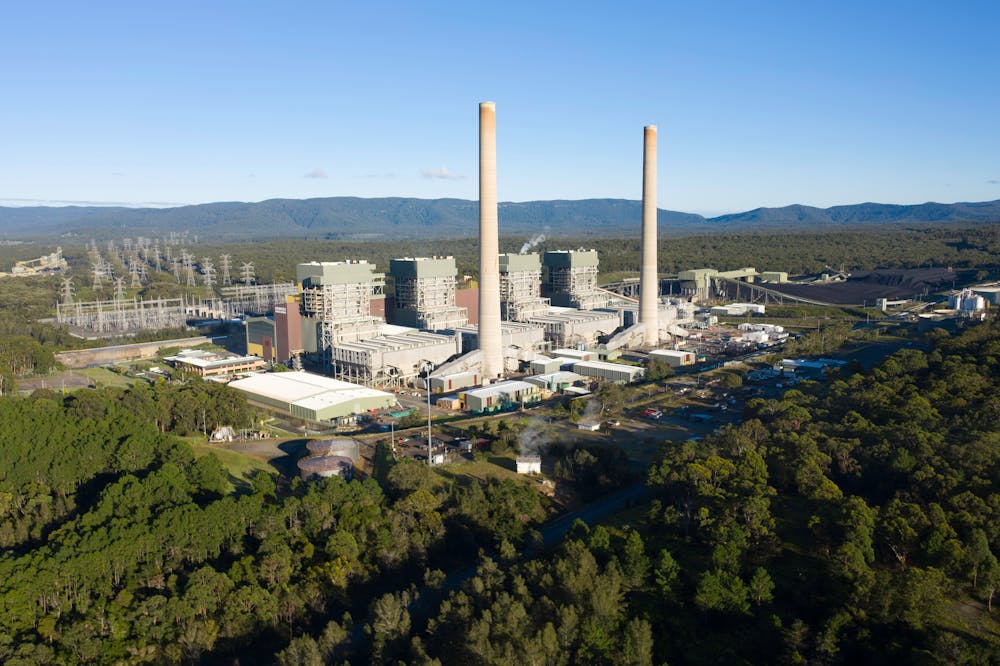
The bid, made alongside Brookfield Partners, came just days after Origin Energy brought forward the closure date of Eraring, Australia’s largest coal station, by seven years. It was the latest in a string of early coal closure announcements, and yet there remains no national plan to manage early retirements like this.


Read more:
Australia’s largest coal plant will close 7 years early – but there’s still no national plan for coal’s inevitable demise


Instead, it’s up to each commercial entity to decide when to close. This means coal generators have no obligation to guarantee reliability beyond providing notice of retirement plans over the short term – five years in Victoria, or three and a half years elsewhere in the NEM.

As the Australian Energy Market Operator (AEMO) has pointed out, owners can technically comply with the notice period while withdrawing generation capacity from the market. Even more chaotically, generators can run down maintenance spending when they’re getting ready to close down, which further reduces reliability.

Eraring coal plant’s closure has been brought forward by seven years.
Shutterstock

The NEM was designed to be an “energy only market” – the market signal that retirements are due is supposed to encourage investors to build new generators. Unfortunately, this market design has failed.

Part of the failure stems from the NEM’s design, and partly from the federal government’s failure to implement either a strong climate policy or a coal retirement plan. This adds up to an environment of bad investment.

For example, in its latest update of the NEM database, AEMO lists 130 gigawatts of prospective solar, wind and solar projects, but only 6.6 gigawatts of these are committed for development in the next 10 years.


Read more:
How Australia’s geology gave us an abundance of coal – and a wealth of greentech minerals to switch to


The Brookfield/Cannon-Brookes plan addresses some of these market failures.

First, it provides a notice period of closure of about eight years, longer than is required by law. That gives a signal to the market and improves energy planning by governments and AEMO.

Second, the new AGL would carry all the risk because it must continue to supply electricity to millions of customers. The new owners of AGL would have to provide enough electricity to cover this load, in real time, or they’ll have to buy that supply from their competitors.

This incentive will mean the owners will build new generation. More renewable energy, which has zero marginal cost, will help reduce the wholesale electricity price, not just for those customers but for all consumers.

Can renewables fill the gap so quickly?

The short answer is yes. Coal generators provide around three quarters of the electricity in NSW alone, so replacing it entails a transformation of the grid. There are plans to do exactly that, at the intergovernmental and NSW levels.

So it’s strange the prime minister seems not to have confidence in these plans, given his government has agreed to and funded them both.

First, there’s a nationally agreed Integrated System Plan, which is designed by AEMO with extensive consultation across government and industry. The latest draft plan predicts Australia is on track to see 14 gigawatts of coal retire by 2030 and all coal gone by 2040.

AEMO doesn’t predict any shortfall of supply over that time, as long as new transmission is built to carry the electricity from the new fleets of solar, wind, hydro and batteries.


Read more:
The end of coal is coming 3 times faster than expected. Governments must accept it and urgently support a ‘just transition’


Second, NSW has its own plan: the Electricity Infrastructure Roadmap. This will accelerate construction of Australia’s first Renewable Energy Zone, and is co-funded by the federal government.

One of the key challenges is to replace the “security” gap as coal retires. Coal power stations maintain the frequency and voltage of the grid. These security services can be thought of as the “quality” of the electricity purchased. You need sufficient quantity and quality of supply to run our devices, from laptops to smelters. Still, Australia Institute research last year confirmed that batteries and renewable energy can provide such security services, and do it cost effectively.

Solar, wind and battery projects can be built much faster than conventional generators. Elon Musk famously built the biggest battery in the world in South Australia, within 100 days in 2017.

Australia’s rooftop solar is the world’s cheapest.
Shutterstock

What might be in store for a new AGL? Self-reliance

We don’t yet know what new resources the new AGL would invest under a Brookfield/Cannon-Brookes ownership. I believe the most exciting and innovative part of the bid might well be that much of the new investment is in consumer assets.

Australian households could lead the world in decarbonisation by doing it themselves, according to research supported by Cannon-Brookes, published last year by Dr Saul Griffith and Rewiring Australia.

Houses can generate a quarter of what they need with rooftop solar. In Australia, rooftop solar in Australia is the cheapest in the world, at a couple of cents per kilowatt-hour. Batteries allow them to soak up excess solar during the day and use it at night.


Read more:
4 ways to stop Australia’s surge in rooftop solar from destabilising electricity prices


If households also replace their car with an electric vehicle and replace gas appliances with electric ones, it’s possible to reach zero emissions and do it this decade.

The research found it becomes cost effective for households to electrify by around 2025. Mike Cannon-Brookes has already made investments in companies working in this electrification space.

What this might mean for a modern AGL is that much of the A$20 billion it would invest to replace coal might be finance packages to pay for households to ditch fossil energy entirely, and become partially self-reliant from their own solar.

If the new AGL could align the interests of its consumers and the climate, it would achieve more than just shutting old coal clunkers.


Read more:
The battle for AGL heralds a new dawn for Australian electricity


The Conversation

Daniel J Cass is Senior Advisor to the Clean Energy Investor Group.

ref. Why the Australian government should welcome Mike Cannon-Brookes’ plan to takeover AGL – https://theconversation.com/why-the-australian-government-should-welcome-mike-cannon-brookes-plan-to-takeover-agl-177720

About 43,000 Australian kids have a parent in jail but there is no formal system to support them

Source: The Conversation (Au and NZ) – By Catherine Flynn, Senior Lecturer, Department of Social Work, Monash University

Paul Miller/AAP

In Australia, on any given day, about 43,000 children have a parent in prison.

We have to use the word “about”, as there is no official process to identify this group of children. There is no specific oversight and no special supports. Despite the state removing their parent, there is no government department responsible for them.

A new parliamentary inquiry has been set to try and fix this. It cannot come soon enough.

Parents in prison

Researchers estimate around half of the adults who end up in prison are parents. So when an adult is arrested and imprisoned, there is a good chance they are somebody’s parent.

A Victorian parliamentary inquiry into children of imprisoned parents was announced just before Christmas last year, after lobbying by independent MP Rod Barton. The report is due by July 2022.

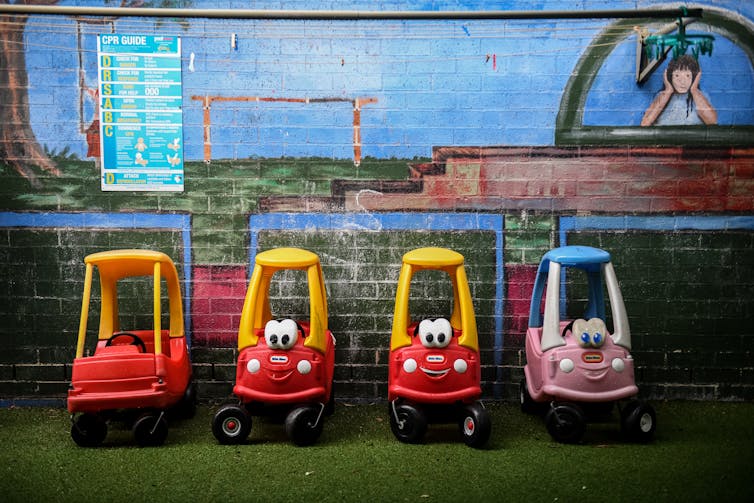
Row of children's toy buggies lined up against a wall.
An inquiry into the children of imprisoned parents is due to report in the middle of the year.
Brendan Esposito/AAP

There are some things we already know about children who have a parent in jail. Our recent researchinto restricted family contact during COVID found children’s mental health suffered considerably as a result of separation from a parent.

We also know they face immediate risks due to the loss of their parent at arrest or imprisonment, such as homelessness, or feelings of abandonment. They are more likely to suffer long-term issues, including poorer health and educational outcomes and increased behavioural and emotional problems.


À lire aussi :
Staff and children in preschool and childcare aren’t being protected like in schools. We need a national plan


We also know that a parent who goes to jail is more likely to have experienced their own childhood trauma, been involved in family violence, and have higher levels of mental health problems, substance abuse, and disability.

Combined with family separation, these can have an indelible impact on their children. Living with poverty, stress and instability, alongside stigma and a lack of community understanding and support are common occurrences.

Children ignored

In 2015 research with colleagues, we looked at existing policies around arrest, sentencing and imprisonment, and spoke with parents in prison, as well as police, magistrates and legal representatives.

It was clear that children are not taken into account by the adult justice system, from the time of their parent’s arrest, through to their release from prison. There are no processes or protocols to consider or support children, and professional staff are not guided or obliged to respond.


À lire aussi :
At least 100,000 children have a parent who is arrested each year. There are no proper systems to protect them.


Most children are cared for informally, within their nuclear or extended families. These carers carry many additional burdens and costs, with no recognition or formal support.

So this means basic food and shelter are not guaranteed for these children at the point of parental arrest and sentencing. Although some officials go far beyond their prescribed role to ensure the well-being of children, this is haphazard at best. As one police officer told us during a recent study:

there’s no notice up in the custody area ‘does your offender have children?’. The question remains, why not?

Decades of warning

For more than 20 years, researchers have been calling for governments to identify and meet the needs of these children and families. These calls have been echoed by a 1997 NSW parliamentary committee and a 2005 report to the South Australian attorney-general’s department.

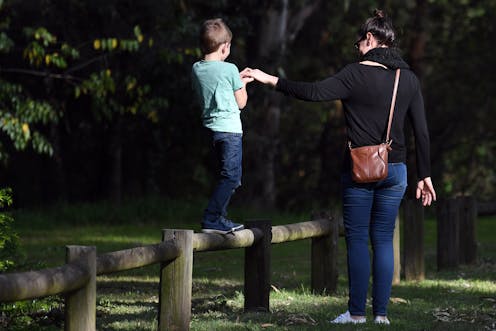
Child holding the hand of an adult.
Most children with a parent in prison are cared for informally by a family member.great.
Joe Castro/AAP

Another NSW parliamentary inquiry has been underway since 2019, with the final report due soon.

Yet, nothing has changed.

We have seen positive moves in other service sectors (such as mental health, alcohol and drug services and family violence) towards a more “child aware” approach. This begins with a basic recognition that adult service users are often parents, and their dependent children are indirectly part of that adult service system. The next steps have been to educate staffin those services about “seeing” and including their needs in their work.

In other countries, including the United States, England, Wales, Scotland, Northern Ireland, Sweden and Norway there have been innovations during arrests and in prisons. For example, in Sweden, when arrested, people are asked about any child or care arrangements. This provides children with a basic minimum standard of care at a time when they need it most.

Meanwhile, Australia’s criminal justice sector is lagging behind, despite repeated warnings. We need to catch up.

The Conversation

Catherine Flynn has previously received funding from the Australian Research Council, the Victorian Department of Justice, and not-for-profit organisation SHINE for Kids, for research in the area of criminal justice, prisons and family impact.

ref. About 43,000 Australian kids have a parent in jail but there is no formal system to support them – https://theconversation.com/about-43-000-australian-kids-have-a-parent-in-jail-but-there-is-no-formal-system-to-support-them-176039

How to get the most out of your N95 mask or other respirator

Source: The Conversation (Au and NZ) – By Thea van de Mortel, Professor, Nursing and Deputy Head (Learning & Teaching), School of Nursing and Midwifery, Griffith University

Shutterstock

Although mask mandates are lifting in some states, many people will continue to wear masks to protect themselves and others from the more transmissible Omicron variant.

For instance, they might be visiting a loved one in hospital, travelling on a plane or bus, or still need to wear one at work in hospitality or retail.

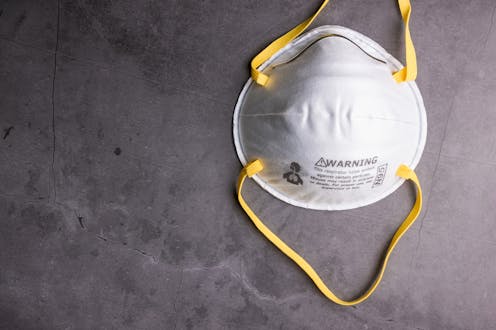
Any mask is better than none. However, a type of mask known as a respirator is more effective at preventing the spread of SARS-CoV-2 (the virus that causes COVID) than a cloth or surgical mask, provided you use it properly.

Here is a practical guide to getting the most out of your respirator.


Read more:
Time to upgrade from cloth and surgical masks to respirators? Your questions answered


What is a respirator?

Respirators are designed to fit your face closely to help prevent you breathing in airborne particles through the gaps around the edges.

They are made of a plastic with an electrostatic charge that repels viral particles, preventing at least 95% of particles from getting through.

They are made to a specific manufacturing standard. Depending on where they are certified, they may be called N95 (in the USA), P2 (Australia or New Zealand), FFP2 (Europe), KF94 (Korea) or KN95 (China).

Some have a cup shape; others look like a duck bill due to the way they stick out.

Who can use a respirator?

Adults can use respirators but the US Food and Drug Administration (FDA) does not recommend them for children. That’s because they are not designed for smaller face sizes so may not provide full protection.

Facial hair, unfortunately, interferes with the fit. That’s because the edge of the respirator cannot form a tight seal around the face and chin.

If you don’t want to remove your beard or moustache, use a surgical mask. Or you can double mask by wearing a cloth mask over a surgical mask.

Which respirator is best?

This depends on personal preference and size. Try a few different types to find one that fits well. P2 respirators found in hardware stores are often in larger sizes that suit men. Chemists sell others that might better suit a smaller face.

Look for an adjustable nose piece and straps that go over the back of the head rather than loops that go over the ears. This will ensure a tighter fit.

Do not buy respirators with valves because they do not prevent the release of viral particles into the air.


Read more:
How to wear a mask in the heat


Watch out for counterfeits

Avoid a false sense of security when wearing respirators, as they won’t have been professionally “fit tested” the way they would be for health workers.

When buying respirators online, look out for counterfeit products. For example, avoid individual respirators with unmarked packaging, or boxes with an FDA logo, as use of the logo to market products is prohibited. The box should include the manufacturer’s name and address.


Read more:
What is the best mask for COVID-19? A mechanical engineer explains the science after 2 years of testing masks in his lab


How do I put one on?

The US Centers for Disease Control and Prevention advises you:

  • wash or sanitise your hands before putting on the respirator

  • check the respirator for any tears, holes or moisture. Never use one that is damaged or wet

  • separate the elastic straps, then hold the respirator in your hand with the nose piece at the top

  • place the respirator over your nose and mouth

Person placing respirator over nose and mouth
Place respirator over nose and mouth.
CDC
  • place one elastic loop at the top of your head, near the crown, and the other at the base, below your ears. Make sure the straps lay flat, are not twisted and are not criss-crossed
Person placing respirator elastic straps over the back of the head
One elastic loop goes at the top of the head, the other at the base.
CDC
  • adjust the flexible strip across your nose and cheeks, pressing on each side of the nose with the fingertips of both hands to mould it to your face
Press down with your fingers across the nose and cheek
Use fingertips to mould respirator to face.
CDC
  • check the edges to make sure there are no creases or hair stuck under the edge

  • perform a “fit check”. Take a quick deep breath in, which should cause the respirator to suck inwards. Then breathe out, which should re-inflate it. If your glasses fog up, if you feel air coming in or going out around the edges, or the respirator does not suck in, there is not a good seal. Try repositioning it and “fit check” again

  • sanitise your hands after putting on your respirator. Once on, avoid touching the front, which may be contaminated. If you do, sanitise your hands again.

Can I re-use them?

While respirators are labelled for single use, they can be reused outside health-care settings with care:

  • the more you reuse a respirator the more likely it is to fail because the wear on the elastic straps causes a poorer fit or components break. Most are good for at least five wears but some can go for at least 20

  • have several on the go and alternate them on different days. Store each one after use in its own paper bag, to allow it to dry out between uses

  • remove the respirator if it gets wet. When removing, touch only the straps. Move the respirator away from your face so you don’t contaminate your skin or hair

  • when the respirator loses its fit, gets damaged or has been used too often, pop it in the bin.


Read more:
Have you stopped wearing reusable fabric masks? Here’s how to cut down waste without compromising your health


What not to do

Respirators reduce the spread of SARS-CoV-2 but will not stop it alone. It is essential to stay home if unwell, get fully vaccinated, physically distance where possible, regularly wash or sanitise your hands, and if coughing or sneezing, do so into your elbow.

The Conversation

Thea van de Mortel teaches into the graduate Infection Prevention and Control program at Griffith University.

Peta-Anne Zimmerman is a Board Director of the Australasian College for Infection Prevention and Control, Co-Director of the Collaborative for the Advancement of Infection Prevention and Control, and is the Program Advisor of the Griffith University Graduate Infection Prevention and Control Programs.

ref. How to get the most out of your N95 mask or other respirator – https://theconversation.com/how-to-get-the-most-out-of-your-n95-mask-or-other-respirator-177229

Releasing a virus against rabbits is effective, but can make them immune if let loose at the wrong time

Source: The Conversation (Au and NZ) – By Pat Taggart, Adjunct Fellow, UNSW Sydney

Shutterstock

Rabbits are an enormous problem for Australian ecosystems – they’re a major threat to 322 species of plants and animals already at risk of extinction. This is more than double the number of species threatened by cats and foxes.

To keep rabbit numbers down, many land managers roll out rabbit haemorrhagic disease virus, a powerful biocontrol. Land managers play a crucial role in conserving the environment and managing pest species – their involvement is essential to the success of many conservation programs.

But our new research finds around three quarters of land managers who reported releasing the biocontrol don’t follow the recommended guidelines, and release it during the peak rabbit breeding period. This potentially leads to the population actually increasing as young rabbits build an immunity to the virus.

It’s highly likely this widespread inappropriate use has substantial environmental and economic consequences. Rabbit haemorrhagic disease virus must be released strategically with caution, or the good intentions of land managers may have terrible outcomes.

Rabbits are an enormous threat

Rabbits arguably have the most significant environmental and economic impact of all pest animals in Australia.


Read more:
Don’t underestimate rabbits: these powerful pests threaten more native wildlife than cats or foxes


They prevent the long-term regeneration of trees and shrubs by continually eating young seedlings. This has immense flow-on effects for the availability of food and shelter for other animals, such as the dusky hopping mouse, plains mouse and crest-tailed mulgara, and their ability to avoid predators.

Rabbits also spread weeds, support populations of introduced predators such as cats and foxes, cause soil erosion and reduce the ability of soil to absorb moisture and support vegetation growth.

Reductions in rabbit numbers after 1950 have been estimated to benefit the agricultural industry to the tune of A$1 billion annually. However, the damage they wreak still costs Australian agriculture an estimated A$200 million annually.

Grazing competition from rabbits has been attributed to the decline of southern hairy-nosed wombats.
David Taggart, Author provided

Good intentions but bad outcomes

Two major viral rabbit biocontrols have been introduced to Australia: myxomatosis (introduced in 1950) and rabbit haemorrhagic disease virus (introduced in 1995). Both viruses have proven to be highly effective in reducing Australia’s rabbit numbers.

They now circulate naturally in Australia and continue to reduce rabbit numbers across the entire country, resulting in enormous environmental and economic benefits. Land managers can intentionally release rabbit haemorrhagic disease to help reduce rabbit numbers at more local scales, such as on a farm. But it’s crucial the biocontrol is released at the right time.

In young rabbits, less than 10 weeks old or so, rabbit haemorrhagic disease virus is not lethal. Instead, infection in this cohort primes their immune system and leaves them with life-long immunity to the virus.

It’s therefore recommended to not release rabbit haemorrhagic disease virus when young rabbits are present, as this increased immunity will make the rabbit population harder to control in future.

Two rabbits
Rabbits have taken a severe toll on native wildlife since they were introduced to Australia in 1859.
Shutterstock

So when are young rabbits present?

The colloquial term “breed like rabbits” has a lot of truth to it. Rabbits can breed year-round, but their breeding predominately follows the availability of green grass. This is because green grass is higher in protein than dry grass, which benefits both lactating female rabbits and developing young.

In southern Australia, studies on rabbit breeding patterns show they usually breed continuously between May and October. Only in the severest of droughts do they not breed during this period.

When we account for the duration of rabbit pregnancy (28-31 days) and that young rabbits up to 10 weeks old aren’t killed by the biocontrol, we can generally expect young rabbits to be continuously present between July and December.

As a result, rabbit haemorrhagic disease virus should not be released between July and December.


Read more:
Explainer: how ‘biocontrol’ fights invasive species


And yet, our new research shows 47% of all biocontrol supply and 74% of reported releases occurs during this major anticipated rabbit breeding season, when the risk of immunising young rabbits is greatest. In fact, we found unseasonal biocontrol use in all states except Tasmania and the ACT where the data were insufficient.

This is a major problem, as the young rabbits’ life-long immunity will lead to their increased survival and recruitment into the breeding population. This was confirmed experimentally in a study last year on European rabbits, which showed releasing a very similar virus during the breeding season does indeed lead to the increased survival of young rabbits.

Rabbits don’t breed in only the severest of droughts in Australia.
Shutterstock

Where do we go from here?

The management of rabbits, or any pest species, must be strategic and given appropriate critical thought. If this isn’t done, negative consequences can and do occur. The last thing we want is to make our problem worse.

In the case of rabbit haemorrhagic disease virus and rabbit management, we must consider restricting access to the virus, either with seasonal restrictions or restricting its use to people who are highly specialised and trained.

We must also practice integrated pest management. This is where no single management technique is considered a silver bullet, and land managers employ a range of measures to achieve the optimal outcome. When managing rabbits at local scales, we should more strongly consider other management techniques, such as the removal of warrens, burrows or above-ground harbor, trapping, fencing, warren fumigation, shooting or poison baiting.

Many pest animals and plants are managed worldwide for both environmental and economic reasons, and land managers are often encouraged to contribute, and asked to follow implementation guidelines. Our study is a warning to other conservation activities – land managers must follow these important guidelines or they may see problems get worse.


Read more:
One cat, one year, 110 native animals: lock up your pet, it’s a killing machine


The Conversation

Pat Taggart works for the Department of Primary Industries NSW and receives funding from the Centre for Invasive Species Solutions, and the Federal Department of Agriculture, Water and the Environment.

ref. Releasing a virus against rabbits is effective, but can make them immune if let loose at the wrong time – https://theconversation.com/releasing-a-virus-against-rabbits-is-effective-but-can-make-them-immune-if-let-loose-at-the-wrong-time-176028

Putin is on a personal mission to rewrite Cold War history, making the risks in Ukraine far graver

Source: The Conversation (Au and NZ) – By Matthew Sussex, Fellow, Strategic and Defence Studies Centre, Australian National University

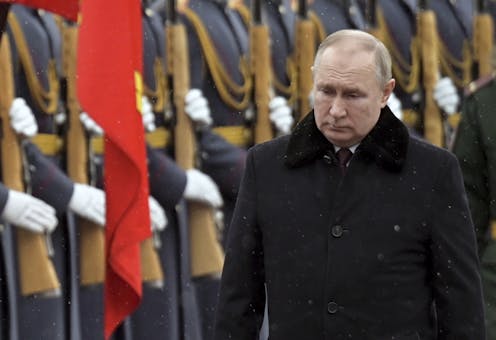
Alexei Nikolsky/AP

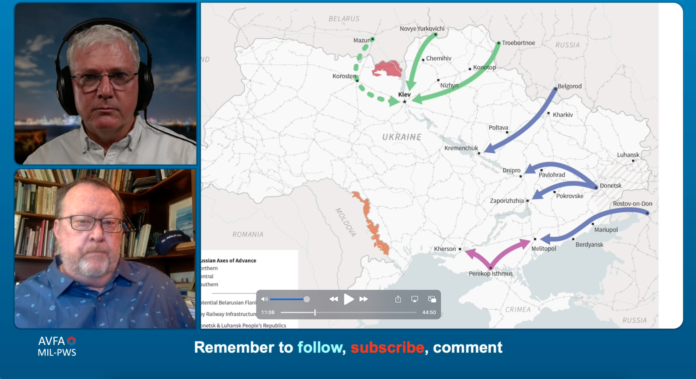
There is no shortage of speculation about what Russian President Vladimir Putin intends to do with the vast Russian military force now virtually encircling Ukraine, and why he has amassed it.

Its sheer size – the largest combat force assembled in Europe since the second world war – suggests a maximalist approach: erasing the humiliation of the Soviet Union’s breakup 30 years ago with a massive, bloody and swift invasion of Ukraine on multiple fronts.

Indeed, a full-scale attack looks increasingly imminent with an estimated 80% of Russian forces now in combat-ready position and separatist leaders in eastern Ukraine formally requesting help combating what they falsely claim is aggression from the Ukrainian military.

Others see it differently, believing Putin will be content with his gains so far. Some also consider Russia’s recognition of the breakaway regions of Donetsk and Luhansk in eastern Ukraine as signalling a muscular warning to Western leaders who have repeatedly ignored Russian security concerns.

Another view suggests Putin will opt for a hybrid strategy similar to Russia’s playbook in its 2008 war with Georgia: threatening to use force, formally recognising breakaway provinces, and destroying its adversary’s military – but stopping short of actual conquest.

Putin’s anger laid bare

Who is right? Each scenario is feasible, but the question of how to interpret Russian motives became clearer after Putin’s bizarre February 22 meeting with his Security Council in Moscow.

At the meeting, he humiliated Russian spy chief Sergei Naryshkin for forgetting the script and supporting the incorporation of Donetsk and Luhansk directly into Russia, instead of just recognising their independence.

The meeting was a pre-recorded charade. Even the time shown on Putin’s own watch suggested the signing ceremony to recognise the independence of Donetsk and Luhansk had occurred before the meeting with his chiefs had even started.

But it was Putin’s angry speech afterwards that made clear just how personal this conflict might be.

He opined at length that Ukraine was a “colony with a puppet regime” and had no right to exist. It recalled Putin’s 2021 essay bemoaning the collapse of the USSR and claiming Russia and Ukraine were one people, hence denying Ukrainians sovereignty and identity.

His speech this week also included the false claim that Russian revolutionary Vladimir Lenin created Ukraine, praise for strongman Joseph Stalin, and the fanciful charge that Ukraine would seek to develop nuclear weapons.

In doing so, Putin resembled more a Russian ultranationalist with a shaky grasp of history than a pragmatic master strategist.

A personal mission to rewrite history

The charade could be dismissed as domestic posturing – a president in absolute command appealing to the patriotic urges of a population wary of conflict. But Putin seems to regard it as his personal mission to rewrite the history of the end of the Cold War.

This goes beyond concerns he may have about his legacy, or a desire to deliver on his promise to restore Russia to its former greatness.

This mission seems to be the real driver behind his aggression right now, not the narrative about the continued threat of NATO on Russia’s borders.


Read more:
Putin’s erasing of Ukraine’s distinct history reveals his imperial ambitions


In fact, his massive troop build-up on Ukraine’s borders (about 60% of Russia’s total combat power) undercuts his perceived concerns over NATO and a potential Western invasion of Russia.

This has required him to shift whole garrisons, including from near the border with Estonia and Latvia, both of which are NATO members.

He has also decreed the 30,000 Russian military personnel in Belarus will stay there indefinitely, ensuring Minsk also remains tightly bound to Moscow. This effectively adds new territory where Putin can station military forces and even potentially nuclear weapons.

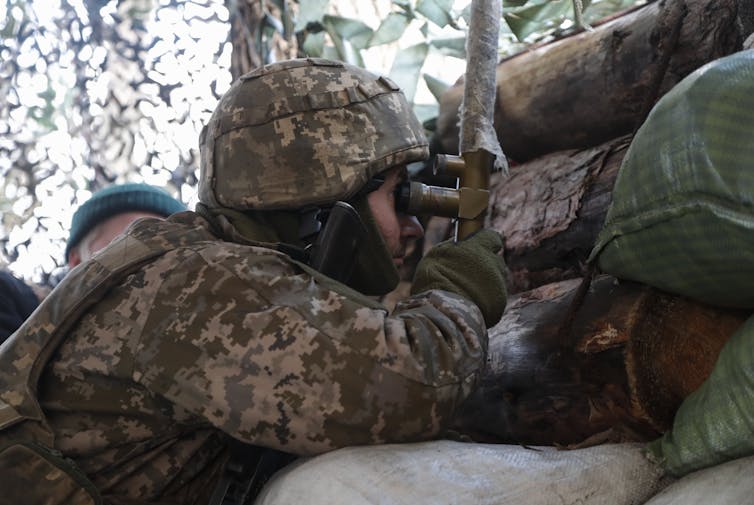
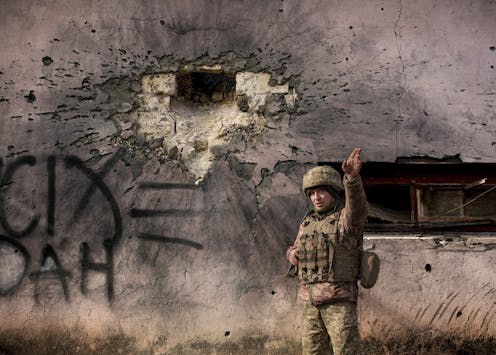
Ukrainian soldier near the front line.
A Ukrainian soldier near the front line in a section of Luhansk controlled by pro-Russian militants.
ZURAB KURTSIKIDZE/EPA

Putin has calculated the economic risks

All of this indicates the conflict in Ukraine is more about expanding Russia’s territorial footprint than about the much-hyped NATO threat. In fact, it is deliberately pushing closer to NATO. And this has implications for how Putin is likely to calculate risk.

First, Putin knows NATO will not fight for Ukraine.

Second, he would have gamed out the potential costs of Western sanctions and attempts to distract him with “off-ramps” to avoid conflict. Putin’s tactic of reducing gas supplies over the last six months, encouraging EU members to deplete their reserves during winter, is evidence his plan has been in the works for some time.

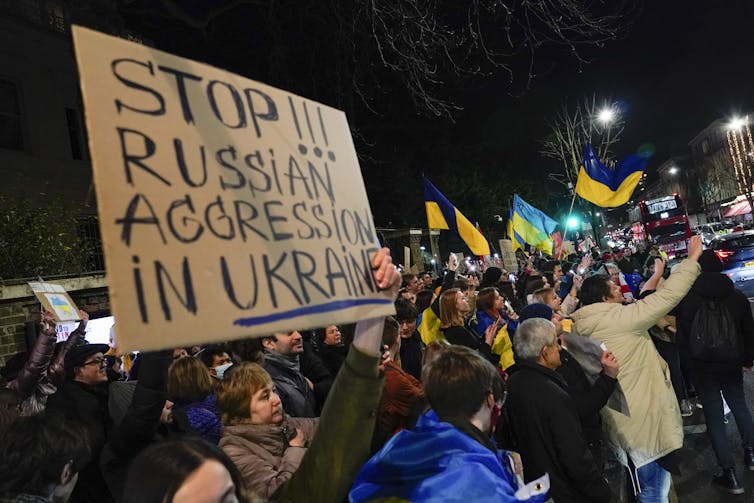
Demonstrators at the Russian Embassy in London.
Demonstrators protest outside the Russian Embassy in London.
Alberto Pezzali/AP

So, too, has been his approach to diplomacy. Putin’s seeming willingness to negotiate over Ukraine has clearly been a pretence, given his refusal to budge on key issues and his swift discarding of the Minsk agreements over the future status of the breakaway Donetsk and Luhansk regions.

Third, Russia previously adapted to sanctions the West imposed after its invasion of Crimea in 2014 by divesting from dollars into gold and building a large sovereign wealth fund. This will provide some insulation from new sanctions imposed by Western countries this week.

Putin may well calculate he will be able to ride out even a tough US and EU package. That already includes total blocks on Russian banks, Germany’s delayed certification of the Nord Stream 2 gas pipeline, and hints from the Biden administration that tough export controls will be next.


Read more:
Putin’s public approval is soaring during the Russia-Ukraine crisis, but it’s unlikely to last


How the West must respond

If Putin is undeterred by economic pressure, what about political and military risks?

It makes little sense for him to stop at securing Donetsk and Luhansk as they stand today, which is why he chose to recognise the far larger territory the separatists claim but don’t yet control.

It also provides numerous opportunities for false-flag “provocations”, since 70% of the territory the separatists have claimed is currently held by the Ukrainian military.

But it is doubtful whether Putin would even see this as a victory.

For one thing, he could have recognised Donetsk and Luhansk months, if not years ago. For another, he did not need to surround Ukraine with virtually every offensive military asset he has – including mobile missile launchers, tanks, special forces and civilian control units – just to secure the two small breakaway regions.

If Ukraine is as personal for Putin as he is signalling, and his appetite for risk as high as his actions indicate, the West must assume he has loftier ambitions than the five-day war with Georgia in 2008.

That means taking decisive coercive steps in response to Russia’s aggression. At the very least, the West will need a blisteringly tough sanctions package aimed at crippling the Russian economy.

It will also need to arm Ukraine and provide technical, on-the-ground expertise, and provide signals and other intelligence to the Ukrainian armed forces.

Providing this type of support will inevitably allow Putin to claim the West pushed him into a broader war, and plenty will believe him.

But all the signs indicate that is what he wanted anyway. It is therefore vital for the sake of Western credibility – and for the Ukrainians set to suffer once again from Putin’s expansionist urges – to ensure such behaviour does not come without significant costs.

The Conversation

Matthew Sussex has received funding from the Australian Research Council, the Lowy Institute, ASPI, the Australian Department of Foreign Affairs, the Carnegie Foundation and the Australian Department of Defence.

ref. Putin is on a personal mission to rewrite Cold War history, making the risks in Ukraine far graver – https://theconversation.com/putin-is-on-a-personal-mission-to-rewrite-cold-war-history-making-the-risks-in-ukraine-far-graver-177730

Older women often rent in poverty – shared home equity could help some escape

Source: The Conversation (Au and NZ) – By Brendan Coates, Program Director, Economic Policy, Grattan Institute

SHVETS/Pexels, CC BY

Many older Australian women face insecure futures. Those who are single, divorced or widowed are much more likely to suffer poverty, housing stress and homelessness.

Our new Grattan Institute proposal for a national shared equity scheme could help many escape that fate.

Single women who rent rather than own their homes are at the greatest risk of poverty in retirement and are the fastest growing group of homeless Australians.

They are financially vulnerable because they are more likely to have worked in low-wage jobs, are more likely to have worked part-time or casually, and are more likely to have taken long breaks from paid employment to care for others.

In later life, women experience the full consequences of lower lifetime earnings, typically finding themselves with less super than men and in many cases missing the opportunity to buy a house or losing the half share in a home they had.

Women who have separated by age 65 are three times as likely as still married-women to rent, and they have two-thirds the assets of separated men.

Home ownership matters in retirement

The home is typically a family’s biggest asset. When couples split, one or both partners often lack the equity to buy a new home.

Only 34% of the women who separate and lose their home manage to purchase another one within five years, and only 44% manage it within ten years.

Many older women who rent have more than enough savings for a deposit but can’t buy because they won’t stay in the workforce long enough to pay off the mortgage by the time they retire.

This condemns many to poverty. Nearly half of retired renters live in poverty, including 63% of the retired single women who rent.

That’s because retirees with mortgages spend less and less as they pay them down whereas rents keep going up.

The typical outright owner aged over 65 spends just 5% of income on housing, compared to nearly 30% for the typical renter.

A national shared equity scheme would help

Whoever wins the election should introduce a national shared equity scheme.

Under our proposal the federal government would co-purchase up to 30% of the value of the home, taking up to 30% of any capital gains when it is eventually sold.

Limits would include a requirement for buyers to have at least a 5% deposit, be earning less than $60,000 for singles and $90,000 for couples, and to buy a property priced below the median for their city or region.

The government would not charge rent or interest in exchange for its 30% stake.

However, purchasers would be required to cover all costs associated with buying and selling the home including conveyancing and stamp duty and ongoing costs such as council rates and maintenance.


Read more:
400,000 women over 45 are at risk of homelessness in Australia


The scheme should start with a trial of 5,000 places.

Although not aimed specifically at separated older women, they would be among those most likely to benefit.

Shared equity would reduce the size of the loan many women need to take out to buy a home, making it possible to pay it off by retirement, including by using some of their super.

Women that lose their home during a separation could use the government’s 30% stake to quickly get back into the market.

The targeted scheme we propose should have a modest impact on home prices.


Read more:
What matters is the home: most retirees well off, some very badly off


Even if it were to eventually offer 10,000 shared equity loans a year, with each buyer purchasing a $500,000 home, it would only add at most $5 billion in housing demand each year to a $9 trillion market, and probably less.

The direct cost would be small – $220 million over the first four years.

In fact, the scheme might be a net positive for the budget in the long term, if house prices rise faster than the interest rate on government debt.

Existing state schemes, such as WA’s Keystart, have turned a profit.

It shouldn’t be a substitute

Shared equity is no substitute for governments taking the tough decisions needed to make housing more affordable, such as loosening planning laws and winding back housing tax breaks such as negative gearing and the capital gains tax discount.

And the federal government should assist older women already renting in poverty with a 40% boost to Commonwealth Rent Assistance, and a further increase to JobSeeker.

But the scheme we are proposing would keep the dream of home ownership alive for many older women.

The Conversation

Grattan Institute began with contributions to its endowment of $15 million from each of the Federal and Victorian Governments, $4 million from BHP Billiton, and $1 million from NAB. In order to safeguard its independence, Grattan Institute’s board controls this endowment. The funds are invested and contribute to funding Grattan Institute’s activities. Grattan Institute also receives funding from corporates, foundations, and individuals to support its general activities, as disclosed on its website.

ref. Older women often rent in poverty – shared home equity could help some escape – https://theconversation.com/older-women-often-rent-in-poverty-shared-home-equity-could-help-some-escape-177452

RSF condemns threats, violence against media from NZ’s ‘freedom convoy’ protest

Pacific Media Watch newsdesk

Reporters Without Borders (RSF) has condemned the threats and violence against news media by protesters during the 16-day anti-covid-19 vaccine mandates occupation of Parliament grounds, and called for prosecutions of those responsible.

The media are among favourite targets of some of the 500 or so protesters still camped in front of the Parliament building, known as the Beehive, after arriving from various parts of the country in “freedom convoys” akin to those causing chaos in parts of Canada for the past month, reports the Paris-based media freedom watchdog in a statement today.

The violence against journalists trying to cover the protest had included being regularly pelted with tennis balls with such not-very-subtle insults as “terrorists” and “paedophiles” written on them, said RSF.

“Media = Fake News” and “Media is the virus” are typical of the slogans on the countless signs outside protesters’ tents.

Journalists who approach have also been greeted with drawings of gallows and nooses, as well as insults and threats of violence ­– to the point that most of them now have bodyguards, says Mark Stevens, head of news at Stuff, New Zealand’s leading news website.

‘Your days are numbered
Stevens sounded the alarm about the attacks on journalists in an editorial published on February 11.

“They’ve had gear smashed, been punched and belted with umbrellas,” he wrote. “Many reporters have been harassed […], including one threatened with their home being burned down.”

The violence has not been limited to Wellington.

In New Plymouth, an angry crowd tried to storm the offices of the local newspaper, Stuff’s Taranaki Daily News, two weeks ago, as reported by Mediawatch. Some of the protesters even managed to breach the newspaper’s secured doors and attack members of the staff.

“After the police intervened, [conspiracy theorist] Brett Power urged the protesters to return in order to hold the editor ‘accountable for crimes’ — meaning the newspaper’s failure to report their protests in the way they wanted,” the RSF statement said.

“The verbal and physical violence against journalists is accompanied by extremely shocking online hate messages.”

Stuff’s chief political reporter Henry Cooke tweeted an example of the threats he had received on social media:

Daniel Bastard, the head of RSF’s Asia-Pacific desk, said: “The virulence of the threats against journalists by demonstrators, and the constant violence to which they have been subjected since the start of these protests are not acceptable in a democracy.”

He called on authorities to “not allow these disgraceful acts to go unpunished. There is a danger that journalists will no longer be able to calmly cover these protests, opening the way to a flood of misinformation.”

In a recent article, Kristin Hall, a reporter for 1News, described her dismay at discovering the level of “distaste for the press” among protesters who regarded the mainstream media as nothing more than “a bunch of liars”.

“People have asked me why I’m not covering the protests while I’m in the middle of interviewing them,” she wrote.

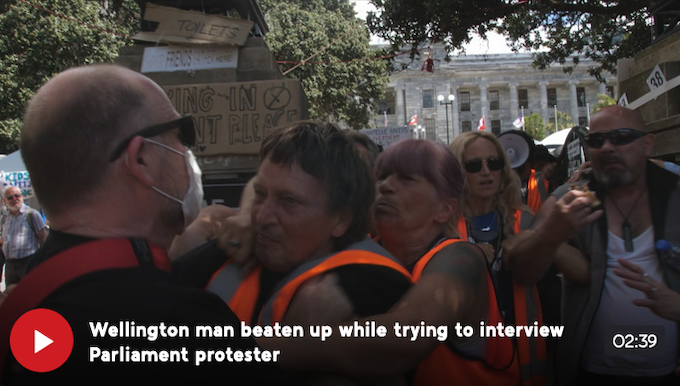
A Wellington Facebook page publisher attacked
A Wellington Facebook page publisher attacked at the protest, as reported by 1News. Image: 1News screenshot APR

‘Headlocks, punches’
Protester mistrust is no longer limited to mainstream media regarded as accomplices of a system imposing pandemic-related restrictions, as Graham Bloxham — a Wellington resident who runs the Wellington Live Community local news page on Facebook – found to his cost when he went to interview one of the protest organisers on February 18.

“We just wanted to show people that it is peaceful … then bang. They just yelled and whacked. They were just all on me and they basically beat me and my cameraman to a pulp,” he told 1News.

“Headlocks, punches… they were really violent.”

A photo of a dozen Nazi war criminals being hanged at the end of the Second World War has been circulating on social media popular with the protesters for the past few days, accompanied by the comment: “Photograph of hangings at Nuremberg, Germany. Members of the media, who lied and misled the German people, were executed.” Definitely not subtle.

Attacks against journalists have rarely or never been as virulent as this in New Zealand, which is ranked 8th out of 180 countries in RSF’s 2021 World Press Freedom Index.

  • Henry Cooke reported an apology from some of the protesters over the “treatment” of some journalists, but incidents have continued to be reported.
Print Friendly, PDF & Email

Article by AsiaPacificReport.nz

To protect children during Aotearoa’s Omicron outbreak, we need to consider their families, not just schools

Source: The Conversation (Au and NZ) – By Amanda Kvalsvig, Senior Research Fellow, Department of Public Health, University of Otago

Pixabay/pedro_wroclaw , CC BY-ND

As New Zealand’s Omicron outbreak accelerates, with new community infections doubling every few days, the rising number of child cases is a reminder of the challenge to protect the health and well-being of children during a public health emergency.

COVID-19 affects children directly and indirectly, through impacts on children themselves, or their families and communities. Although children generally have a mild illness of COVID-19, there can be rare but serious outcomes and research is underway to understand potential longer-term effects on children.

Children can also be bereaved by COVID-19 and experience distress when they pass the infection on to a family member. The pandemic also widens inequities. International and local evidence shows that without urgent action, the impacts of the Omicron outbreak in New Zealand will be hardest on those with the least resources.

But not all impacts are directly from the virus. During an active outbreak the loss of in-person school time and the well-being protections schools provide can have a significant impact. This simultaneous negative impact on health, well-being and education is what we can expect to see as the outbreak progresses.

We need to minimise these harms by taking a proactive approach centred on children and their whānau, rather than on the school system. A whānau-centred system aims to keep children connected and safe during a public health emergency, whether they are at school or at home.


Read more:
Despite Omicron arriving, keeping schools open as safely as possible should be the goal


Schools and the Omicron outbreak

Current policy for the Omicron outbreak is that closing schools is the last resort. However, this policy creates dilemmas for families with health concerns and may put paediatric services under high pressure because each layer of COVID-19 protection available to adults has significant gaps for children.

Since the start of the vaccine rollout to 5-11-year-olds on January 17, 48% of all children in this age group have received one vaccine dose. But the rollout remains highly unequal: 71% of Māori and 60% of Pasifika children have not yet received their first dose.

Furthermore, 12-17-year-olds are not eligible for boosters, and children under five are not eligible for any COVID-19 vaccines.

Although good progress has been made, it will be some months before a healthy standard of ventilation, air filtration and carbon dioxide (CO₂) monitoring can be available in all classrooms, particularly as the weather gets cooler.

Highly effective face masks (KF94) are not readily available in child sizes in New Zealand and masks are not required at all for students in Years 1-3 and the staff supporting them.

The capacity to stay home is not equitably distributed, and can be particularly difficult for low-income families and essential workers.

In New Zealand, loss of face-to-face school time can have multiple adverse impacts on children because so much responsibility for children’s well-being is devolved to schools, including a caretaker function for working parents.

This dependence on face-to-face school time has meant families are making difficult decisions between protecting children’s education and their and other family members’ health, particularly when they have underlying health conditions.

We propose a pivot to a whānau-centred — not school-centred — approach to protect the well-being of children in this outbreak. Protections need to be accessible to all children wherever they are, allowing them to move seamlessly between school and home, depending on health and family circumstances and the local evolution of the outbreak.


Read more:
‘Teaching has always been hard, but it’s never been like this’ – elementary school teachers talk about managing their classrooms during a pandemic


A whānau-centred pandemic response

Māori and iwi organisations mobilised quickly and effectively to support their communities during the pandemic and earlier public health emergencies such as the Canterbury earthquakes.

The depth of experience and expertise available in communities can deliver the type of response that will identify available resources (and gaps) and connect children and their families to these protections. Enhanced actions at a national and community level should include :

  • ensuring equitable access to protection from infection, including vaccines, high-grade masks, ventilation and filtration in school buildings, and paid sick leave for caregivers

  • resourcing community organisations to build networks of social and practical support to enable children to stay home safely, including ensuring food security, support for mental distress, access to routine vaccinations, and providing neighbourhood outdoor activities to maintain children’s social contacts

  • prioritising equipment and support for schools in areas with high proportions of low-income families and essential workers where children may need to remain at school through the outbreak

  • recognising that children are not an isolated population and need to be protected through a national COVID-19 mitigation strategy that aims to reduce inequities of infection in all age groups

  • developing and implementing an integrated infectious diseases strategy for winter 2022 to control COVID-19 and other infections expected to return with open borders and currently reduced uptake of routine childhood vaccinations.

From evidence to action

The government has a duty of care under the United Nations Convention on the Rights of the Child. New Zealand ratified this convention in 1993 and is due to be examined on its progress on children’s rights later in 2022.

Centring child rights is essential to safeguard resources to protect all tamariki, particularly those with existing acute or chronic health conditions and disabilities.

To assess progress and guide action we need a national data framework so that we can monitor an array of direct and indirect impacts on children and identify what is working well and what could be improved. The framework must include the voices of children and whānau so that the system captures what is important for well-being, not just what is easy to measure.

Data sovereignty is an important aspect of child data and must be considered in terms of use and access, particularly for Indigenous communities. For both government and community “end-users” of child data there needs to be a clear pathway from information to action.

Finally, we need to embed these changes to protect children beyond the Omicron outbreak, during future variant outbreaks, epidemics and other disruptive population health emergencies. Policies and communities that keep children safe in all settings should be a lasting legacy of the pandemic.


I would like to acknowledge the input from the following colleagues: Nick Wilson, Carmen Timu-Parata, Belinda Tuari-Toma, Jennifer Summers, Cheryl Davies, Constanza Jackson, Julie Bennett and Michael Baker.

The Conversation

Amanda Kvalsvig receives funding from the Health Research Council of New Zealand for infectious diseases research.

ref. To protect children during Aotearoa’s Omicron outbreak, we need to consider their families, not just schools – https://theconversation.com/to-protect-children-during-aotearoas-omicron-outbreak-we-need-to-consider-their-families-not-just-schools-176458

‘National security’ once meant more than just conjuring up threats beyond our borders

Source: The Conversation (Au and NZ) – By Mia Martin Hobbs, Research Fellow, Deakin University

The Morrison government has clearly signalled its intention to make “national security” a key issue in this year’s federal election. It has repeatedly attacked the Labor opposition on issues including foreign interference, asylum seekers and defence spending. It places all of these issues under the “national security” umbrella.

Defence Minister Peter Dutton has even gone so far as to declare the Chinese administration would prefer an Albanese government, suggesting it would find his politics more to their liking.

The government’s concerted scare campaign received immediate backlash. Experts described it as “reckless” and a strategy “that serves only China”.

Despite the government’s efforts, Guardian polling shows a majority of voters trust Labor over the Coalition to handle our relationship with China.

In the same poll, voters highlighted public health, the climate and the cost of living as significant issues. This indicates Australians view social, economic and environmental issues as equally important to their security as foreign affairs.


Read more:
Word from The Hill: Australian politics in an uncertain world


Since the second world war, “national security” has generally referred to military threats. The term was enshrined in Australian legislation with the outbreak of war in 1939, and cemented in the US at the beginning of the Cold War.

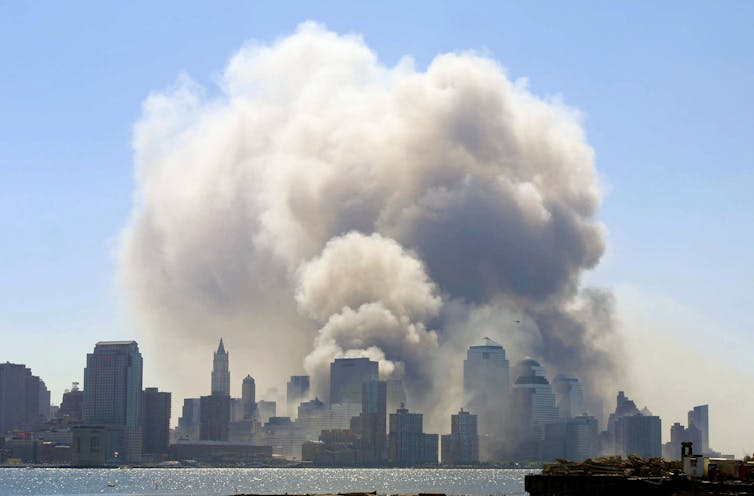
After the September 11 2001 terrorist attacks, political usage of “national security” ramped up across the Western world. It was used to justify increasingly invasive domestic policies and the rooting out of “foreign” threats.

Today, the term “national security” invokes an ambiguous foreign threat. It is often exploited to deflect public scrutiny and provide political cover for unpopular policies. In 2019, for example, the Coalition government and Senator Jacqui Lambie cited “national security” risks to justify repealing a law that allowed refugees to be transferred to Australia for medical treatment.

“National security” has become so enmeshed with threats of invasion, espionage and terrorism that it’s easy to forget the term has a longer and more cosmopolitan history.

Political use of the term ‘national security’ skyrocketed after the September 11 terrorist attacks in the US.
Mitch Gerber/STAR MAX/IPx/AP/AAP

A long and murky history

Bookended by the Great Depression and the second world war, Australians in the 1930s were concerned about different kinds of “national security”. While military and strategic framings were widespread, national security was also deployed to:

This diversity of use helps us distil what “national security” has meant to Australians. In all the contexts, there were consistent themes: safety, well-being, durability and a long-term future.


Read more:
Grattan on Friday: Morrison has sown the seeds for a scare campaign, and Albanese doesn’t know whether they’ll grow


For instance, in the wake of the Great Depression, Australians made explicit links between poverty, unemployment and national security.

People wrote letters to newspapers arguing for an increase in teachers’ salaries because

all money spent on education is a gilt-edged national security.

At the same time, politicians deployed the term to advocate for local government and democratic constitutional reform.

In the 1935 New South Wales state election, the leader of a breakaway Labor faction, Jack Lang, promised social programs that would raise the standard of living and provide

the national happiness and comfort that can only come from national security.

By 1937, Country Party leader Earle Page also seized on the term to refer to social and economic issues:

The best guarantee for national security is a substantial population of contented and prosperous people.

In other words, national security was very much linked with the social and economic conditions of everyday Australians.

The diversity of uses of “national security” in the 1930s has parallels in the range of threats Australians face today. These include job insecurity, housing, poverty, family violence, climate change and the ongoing effects of COVID-19 on Australian health, food supply, the economy and society.

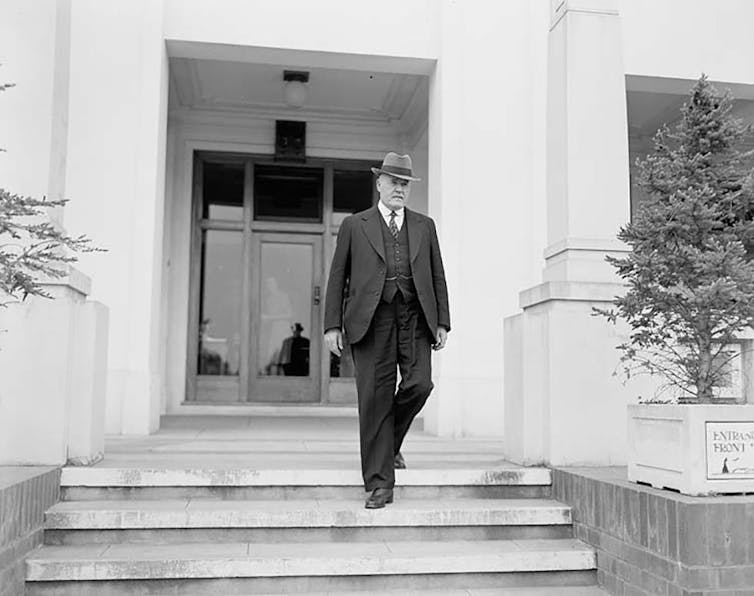
During the Great Depression, politicians such as Jack Lang used ‘national security’ to talk about poverty, work and education.
National Archives of Australia

Just as in the 1930s, the health of Australians today “will lay the foundations of national security and progress in the future”. Taking a broader view of Australian “national security” reveals how narrow military framings distract from the lack of a clear vision for social, economic, environmental and political security as we head into the third year of the pandemic.

Ugly undertones

A key element of understanding the meaning of “national security” is analysing who is included and excluded in the word “national”. One of the most common framings of “national security” in the 1930s was wrapped up in identity: Australian values, ideals and way of life.

In newspapers and in the parliament, security was pinned on the White Australia Policy protecting a racially homogenous national identity.

Commentators expressed deep anxieties over a small white population in “a huge, empty continent surrounded by the millions of the crowded East” – the “empty” here excluding Indigenous people from Australia’s national security.

Some advocated policies for attracting more white British migrants. Others promoted child endowment for parents to increase the white population.

These anxieties about identity as security are mirrored today. The Morrison government plays on longstanding threads of racism, xenophobia and fears of invasion to invoke security threats.


Read more:
Elections are rarely decided by security and defence issues, but China could make 2022 different


“National security” is too often used to conjure up amorphous threats beyond our shores, without fully explaining the dangers allegedly posed to Australians. It seems well past time the term “security” took on a broader, more sophisticated meaning, encompassing the health, safety and well-being of the nation.

The Conversation

Mia Martin Hobbs does not work for, consult, own shares in or receive funding from any company or organisation that would benefit from this article, and has disclosed no relevant affiliations beyond their academic appointment.

ref. ‘National security’ once meant more than just conjuring up threats beyond our borders – https://theconversation.com/national-security-once-meant-more-than-just-conjuring-up-threats-beyond-our-borders-177632

Masks, RATs and clean air – how people with disability can protect themselves from COVID

Source: The Conversation (Au and NZ) – By Anne Kavanagh, Professor of Disability and Health, Melbourne School of Population and Global Health, The University of Melbourne

Shutterstock

People with disability bear a disproportionate burden of COVID infections, serious disease and death. Every time a support worker enters their home, people with disability risk COVID exposure.

But while Australian states have evidence-based measures to reduce the spread of COVID in schools and hospitals – such as improving ventilation, mandating masks, and using rapid antigen tests to detect cases – few strategies exist to reduce transmission to people with disability in their homes.

Last Thursday, Australia’s disability royal commission released a “statement of ongoing concern” about how Omicron is impacting the health, safety and well-being of people with disability.

So what do governments need to do to protect people with disability from COVID? And what can people with disability do to mitigate their risk in the meantime?


Read more:
Let’s heed the warnings from aged care. We must act now to avert a COVID-19 crisis in disability care


Free RATs and regular testing for disability workers

When community prevalence of COVID is high, rapid antigen tests (RATs) are an important tool to identify cases of COVID and prevent transmission.

But RATs are not freely available to all Australians with disability. And there is no clear advice about how RATs should be used by people with disability or support workers who enter their home.

While National Disability Insurance Scheme (NDIS) participants can claim the cost of RATs in their NDIS plans, they’re not currently recommended for surveillance of workers, except those working in group homes.

But not all Australians with disability are on the NDIS. Nor are all people with disability on health care cards and entitled to ten free RATs every three months.

Person takes RAT test out of a packet.
RATs should be free for people with disability and their support workers.
Shutterstock

Given the risks of COVID and the high levels in the community, free RATs should be provided to all people with disability and support workers who come into their homes.

This should come with clear guidance on how frequently to test workers and other people who come into contact with a person with a disability.

In the absence of clear guidelines, support workers should test at least twice a week. But daily testing might be required where a worker is in contact with many people and when someone with a disability is at high risk of serious disease or death if they catch COVID.


Read more:
How accurate is your RAT? 3 scenarios show it’s about more than looking for lines


However some caution is needed. When there are high levels of community transmission, one negative RAT in someone with symptoms may well be a false negative. So someone with symptoms should isolate irrespective of the RAT result.

Mandate N95 masks for disability workers

Cloth and surgical masks are not enough to prevent the spread of Omicron.

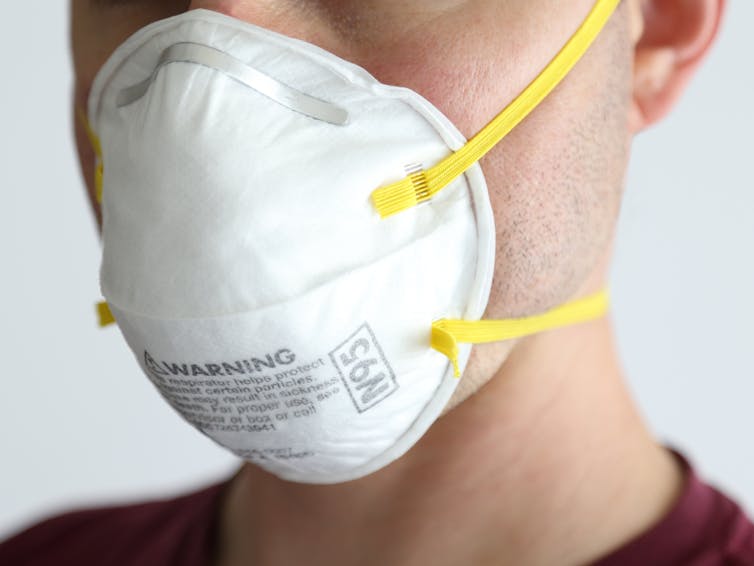
Respirators, also called N95, P2, FFP2 and KF94 masks, offer substantially better protection. Respirators cut transmission 2.5 times as much as surgical masks, even when they haven’t been professionally fit-tested. And there are good online videos and infographics to help people ensure their respirators have a good fit.

Man wearing an N95 mask.
Respirators should be well-fitted.
Shutterstock

Respirators can also be re-used, rotating daily over five days, as independent scientific advisory group OzSAGE recommends.

The United States government is providing free respirators to the public, yet Australian governments only recommend respirators in the disability sector when someone with disability is COVID-positive or a worker is a close contact.


Read more:
Time to upgrade from cloth and surgical masks to respirators? Your questions answered


Given the obvious benefits, and relatively few downsides of respirators, it’s critical they are mandated for disability workers when supporting people with disability indoors.

In the absence of guidelines, people with disability should get workers to wear well-fitted respirators when they are supporting them indoors.

Improving ventilation

Good natural or mechanical ventilation can reduce COVID transmission.

This can involve simple measures such as opening doors and windows – preferably at the opposite ends of an indoor space to ensure a cross-breeze – and using ceiling fans or pedestal fans placed near a window.

Sometimes it’s not possible to open doors or windows because it’s too hot or cold, especially given some people with disability, such as those with spinal cord injury or multiple sclerosis have greater difficulties regulating their temperature.

Spaces like toilets, bathrooms, lifts, and stairwells are also hard to ventilate.

Man opens window.
Opening a window can improve ventilation, but that’s not always possible.
Shutterstock

You can check the quality of the air inside using CO2 monitors. The concentration of CO2 is higher in areas that are poorly ventilated, while outside it’s around 400 ppm. If the level is below 800 ppm, the risk of infection is relatively low.

In situations where CO2 levels are high, a portable HEPA air purifier could be used. The HEPA filter helps remove very small particles from the air, including the SARS-CoV-2 virus that causes COVID. They range in price from A$200 to A$2,000.

CO2 monitors vary in design and cost, with prices starting from around A$50.

CO2 monitors and air purifiers should be available to people with disability requiring support in their own homes for free, potentially through NDIS plans.

In group settings, such as day programs and disability residential settings, services should be required to audit CO2 levels and purchase air purifiers if needed.


Read more:
An investment in clean indoor air would do more than help us fight COVID – it would help us concentrate, with lasting benefits


In the absence of clear guidance on ventilation, people with disability should make sure they have as good an airflow as possible and check their air conditioning and heating are working properly.

If they have the resources, they could purchase a CO2 monitor (or borrow one from someone) to check ventilation and where CO2 levels are high, consider an air purifier.

Governments need to step up

Nearly two years into the pandemic, it feels like Australians with disability are being forgotten.

Mandatory respirators, RATs for surveillance and cleaner air are relatively inexpensive strategies critical to protecting people with disability in their home. Governments should provide free of cost for all people with disability who need them, not only NDIS participants.

Governments must be proactive and have guidelines and resources in place as we face Omicron and in future, as new variants emerge.

The Conversation

Anne Kavanagh receives funding from the NHMRC, ARC, ANROWS, Suicide Prevention Australia, and the Commonwealth and Victorian governments. Anne Kavanagh is a member OzSAGE.

Helen Dickinson receives funding from the NHMRC, ARC, Children and Young People with Disability Australia and Commonwealth and ACT governments.

ref. Masks, RATs and clean air – how people with disability can protect themselves from COVID – https://theconversation.com/masks-rats-and-clean-air-how-people-with-disability-can-protect-themselves-from-covid-176789

Climate change is warping our fresh water cycle – and much faster than we thought

Source: The Conversation (Au and NZ) – By Taimoor Sohail, Postdoctoral research associate, UNSW Sydney

Shutterstock

Fresh water cycles from ocean to air to clouds to rivers and back to the oceans. This constant shuttling can give us the illusion of certainty. Fresh water will always come from the tap. Won’t it?

Unfortunately, that’s not guaranteed. Climate change is shifting where the water cycle deposits water on land, with drier areas becoming drier still, and wet areas becoming even wetter.

Our research published today in Nature has found the water cycle is changing faster than we had thought, based on changes in our oceans.

This concerning finding underlines the ever more pressing need to end the emissions of gases warming the atmosphere before the water cycle changes beyond recognition.

If this sounds serious, it is. Our ability to harness fresh water makes possible modern society.

Rain falling on ocean
It’s hard to track how much rain falls on our oceans.
Shutterstock

The water cycle has already changed

As the Earth warms up, the water cycle has begun to intensify in a “wet-gets-wetter-dry-gets-drier” pattern.

This means more and more freshwater is leaving dry regions of the planet and ending up in wet regions.


Leer más:
The water cycle is intensifying as the climate warms, IPCC report warns – that means more intense storms and flooding


What might this look like? Weather, intensified. In relatively dry areas, more intense droughts, more often. In relative wet areas, more extreme storms and flooding.

Think of the megadrought afflicting America’s west, of the unprecedented floods in Germany, or of the increase in severe rainfall seen in cities like Mumbai.

This shift is already happening. In its landmark 2021 report, the UN’s Intergovernmental Panel on Climate Change (IPCC) drew on this growing body of research to conclude climate change was already causing long-term changes to the water cycle.

The changes we’re seeing are just the start. Over the next few decades, this water cycle intensification could make it much harder for people to get reliable supplies of fresh water across large areas of the planet.

Troublingly, while we know the water cycle is intensifying, we don’t fully know how much and how fast. That’s where the ocean comes into play.

How to use the ocean as a rain gauge

The main reason it’s hard to directly measure changes to the water cycle is that we don’t have enough measurements of rainfall and evaporation over our planet.

On a practical level, it’s very hard to set up permanent rain gauges or evaporation pans on the 70% of our planet’s surface covered in water. Plus, when we assess change over the long term, we need measurements from decades ago.

evaporation off ocean
Evaporation over the Barents Sea, which has been warming rapidly.
Shutterstock

The solution scientists have landed on is to use the ocean. Many may not realise the ocean can be less or more salty depending on the region. For instance, the Atlantic is saltier than the Pacific on average.

Why? Rain. When fresh water falls as rain on the ocean, it dilutes the sea water and makes it less salty. When water evaporates from the surface, the salt is left behind, increasing the salinity. This means we can use the better-recorded changes in the ocean’s salinity as a kind of rain gauge to detect water cycle changes.

Earlier research used this method to track changes to the salinity at the ocean’s surface. This research suggested the water cycle is intensifying dramatically.

Unfortunately, the ocean does not stay still like a conventional rain gauge. Currents, waves and circular eddy currents keep the ocean’s waters in constant motion. This uncertainty has left a question mark over how exact the link between salinity and water cycle change actually is.


Leer más:
Predicting droughts and floods: why we’re studying 19th-century ocean records


In response, we have developed new methods enabling us to precisely link changes in the ocean’s salinity to changes in the part of the water cycle moving fresh water from warmer to colder regions. Our estimates indicate how the broader water cycle is changing in the atmosphere, over land and through our oceans.

What did we find in our new study? The fresh water equivalent of 123 times the waters of Sydney Harbour have shifted from the tropics to the cooler areas since 1970. That’s an estimated 46,000 to 77,000 cubic kilometres of water.

This is consistent with an intensification of the water cycle of up to 7%. That means up to 7% more rain in wetter areas and 7% less rain (or more evaporation) in dryer areas.

This is at the upper end of estimates established by several previous studies, which suggested an intensification closer to 2-4%.

Unfortunately, these findings suggest potentially disastrous changes to the water cycle may be approaching faster than previously thought.

What would the future be like with an altered water cycle?

If our water cycle is getting more intense at a faster rate, that means stronger and more frequent extreme droughts and rainfall events.

Even if the world’s governments meet their target and keep global warming to a ceiling of 2℃, the IPCC predicts we would still endure extreme events an average of 14% stronger relative to a baseline period of 1850-1900.

Some people and ecosystems will be hit harder than others, as the IPCC report last year made clear. For example, Mediterranean nations, south-west and south-east Australia, and central America will all become drier, while monsoon regions and the poles will become wetter (or snowier).

In dry areas hit by these water cycle changes, we can expect to see real threats to the viability of cities unless alternatives such as desalination are put in place.

Hand under tap with no water coming out
Droughts are likely to be more severe and more common in dry parts of the world.
Shutterstock

What should we do? You already know the answer.

Decades of scientific research have shown the extremely clear relationship between greenhouse gas emissions and rising global temperatures, which in turn drives water cycle intensification.

This is yet another reason why we must move as quickly as humanly possible towards net-zero emissions to reduce the damage from climate change.

The changes to the water cycle we observed were largely due to older emissions, from the mid 20th century and earlier. We have increased our emissions dramatically since then.

What comes next is entirely up to us.

The Conversation

Taimoor Sohail receives funding from the Australian Research Council.

Jan Zika receives funding from the Australian Research Council and has received funding from the Natural Environment Research Council (United Kingdom).

ref. Climate change is warping our fresh water cycle – and much faster than we thought – https://theconversation.com/climate-change-is-warping-our-fresh-water-cycle-and-much-faster-than-we-thought-177453

‘I would not be respected’: senior school girls told us why they weren’t interested in a construction career

Source: The Conversation (Au and NZ) – By Natalie Galea, Senior Lecturer, The University of Melbourne

Shutterstock

Construction is one of Australia’s fastest growing industries. It employs around 1,143,600 people, which accounts for 8.7% of the total workforce. Over the past five years, employment in the industry has increased 7.3%.

The median weekly earnings for those working in construction are around A$1,305 per week. This is higher than the median weekly earnings of $1,209.00 across all industries.

But construction is also the most male dominated industry in Australia – 87% of workers are male. And the high earnings in the industry are partly responsible for Australia’s gender pay gap. Figures from August 2021 show the high earnings growth in the construction industry pushed the gender pay gap for full-time workers out to $261 a week.

But significant research and investment directed at correcting the under-representation of women in construction have so far failed to make an impact.

We interviewed 15 young women in years 11 and 12 about their perceptions of the sector. Most didn’t know about the industry’s high earnings and said they couldn’t picture themselves in the job, as they didn’t see many women there.

Woman driving a crane.
Construction is the most male dominated industry in Australia.
Shutterstock

‘There’s not many successful women in construction’

We randomly recruited female high school students to have a broader discussion about their career choices. We did not have any prerequisites about academic performance level, interests, tertiary/TAFE education or career goals.

Two study participants had parents in the construction sector. But the others had very little knowledge of the potential career options in construction, which are broad and varied, or the fact it was Australia’s third largest employer and a growth sector.

Construction roles include different trades – such as plumbers, carpenters, electricians and mechanics – project managers, engineers, communication and community engagement specialists, land surveyors, health and safety experts, crane operators and commercial managers to name a few. Pathways to these roles can be via university degrees, apprenticeships, internships and TAFE training.

One young woman told us:

I think at school we don’t think of the construction industry as being a range of roles. It is on site and it is bricklaying.

Almost all, 14 out of the 15, young women interviewed said they could not imagine themselves in a construction career. They gave a range of reasons, including that it was too labour intensive, it was not prestigious enough, and the concern they would not be listened to or respected.

One young woman said:

I can’t see myself doing construction at all. I feel like I would be intimidated.

When asked about female role models in construction, the students overwhelmingly said the only women they could identify in the sector were those responsible for traffic management.

A young woman told us:

I don’t see many girls on construction sites that do more than hold the lollipop signs.

Another said

There are not many successful women in construction.

An unfriendly, male dominated sector

A majority of participants (12 of 15) had a negative opinion of the construction sector because it was male dominated.

They were concerned they would not be respected in the workplace, that sexism would be tolerated, and masculine behaviours such as aggression and assertiveness would be the norm.

One student said:

I want to know that what I go into the people there are going to respect me. I would want equal chances of getting a promotion if there was a man standing next to me.

In some cases, a career in construction did not match with their altruistic aspirations to serve the community and help people, while in other cases, participants said they did not perceive construction careers to be creative or interesting. One girl said:

I am interested in doing good for society and helping people. Construction would not give me that opportunity.

The students felt differently about engineering, however, and recalled efforts by their teachers and universities to promote STEM subjects to female students.

The construction sector has work to do in educating schools and the public that it is a valid member of the highly regarded STEM professions. Almost all construction roles draw on science, technology, engineering and maths.

A realignment of values to attract young women

To address gender equity, the construction sector needs to engage directly with young women and respond to the sometimes valid, and other times, mistaken beliefs they may hold about the industry.

To have any chance of overcoming its poor reputation with young women, the sector will need to overhaul its outdated masculine behaviours and champion the successful women already working in the sector. For instance Alison Mirams (CEO of Roberts Co), Rebecca Hanley (Managing Director of Laing O’Rourke Australia from April 2022) and Josephine Sukkar AM (co-owner and Principal of Buildcorp) are women leading large Australian construction companies.

The sector must also concentrate on retaining and progressing the women who already work there through initiatives including flexible work practices, transparent promotion procedures and paid parental leave.

Better communication about the diverse range of roles in the sector may help to spark greater interest among female students. The sector also needs to work with school career advisers, who often have low knowledge of the sector and tend to steer male students towards it.

The Conversation

Natalie Galea received funding from Roberts Co in conjunction with Health Infrastructure NSW to undertake research into the five day working week in construction.

Phillippa Carnemolla received partial funding from the National Association of Women in Construction whilst undertaking this research.

ref. ‘I would not be respected’: senior school girls told us why they weren’t interested in a construction career – https://theconversation.com/i-would-not-be-respected-senior-school-girls-told-us-why-they-werent-interested-in-a-construction-career-173910

What Russia’s war means for Australian petrol prices: $2.10 a litre

Source: The Conversation (Au and NZ) – By Vlado Vivoda, Senior Lecturer in Strategic Studies (Australian War College), Deakin University

Petrol prices Wednesday morning. Ellen Duffy/The Conversation, CC BY

Global crude oil prices have already reached their highest levels since 2014 in response to Russia’s military incursion into Ukraine.

With Russia being the world’s second-largest exporter of crude oil and refined petrol, as well the world’s largest exporter of natural gas, we can expect prices to go even higher as the conflict deepens.


Read more:
How Russia’s recognition of breakaway parts of Ukraine breached international law – and set the stage for invasion


Skittish global energy markets are now factoring in disruptions to Russia’s supply through Western sanctions as well as Russia cutting off to supplies to Europe, its main market for both oil and gas.

Australians will feel these market anxieties too, with changes in retail prices largely determined by international price benchmarks for refined petrol.

It typically takes more than a week for changes in international prices to flow through to retail prices in Australian cities, and longer in regional areas.

But based on what is happening internationally we can expect petrol prices in Australia to soon reach an average of $2.10 a litre.

How are petrol prices set?

Australia meets its petrol needs through either refining crude oil locally or (increasingly) importing refined petrol.

Two decades ago, eight local refineries were able to supply most of Australia’s petrol demand. Now there are just two, producing less than 10% of Australia’s petrol needs. This means 90% of refined petrol is imported – principally from Korea, Singapore, Japan, Malaysia and China.

As in other importing countries, the price Australians pay at the petrol pump therefore has three main components:

  • the international price of refined petrol
  • government taxes
  • other transportation, marketing and retail costs, including a profit margin.

The Australian Competition & Consumer Commission, which closely scrutinises petrol prices, says the international price is the main determinant of price changes.

The following chart shows the relationship between average retail prices in Australian cities and the benchmark price for 95-octane unleaded petroleum in Singapore, the largest oil trading exchange in our region. (The fuel is called Singapore Mogas 95 – “mogas” meaning motor gasoline.)


Monthly average retail petrol prices in the 5 largest cities and Mogas 95 prices in real terms: October 2001 to
November 2021

Movements in monthly average retail petrol prices in the 5 largest cities and Mogas 95 prices in Australian cents per litre

ACCC

Taxes are the second-biggest component. These consist of an excise and the goods and services tax. GST is 10% of the retail price (or 1/11 of the total price paid). As of February 2022, the excise was fixed at 44.2 cents a litre, so it doesn’t change with the retail price.

Assuming a petrol price of $1.90/litre, taxes would comprise about a third of the cost. The tax Australians pay on petrol is among the lowest in the OECD group of advanced economies.

The remainder of the retail price includes supply chain costs and profit margins for refiners, wholesalers, distributors and retailers. The amount motorists pay as profit is less than 10 cents a litre.

Global ripples

Australia may not import crude oil or petrol from Russia. But the world oil market behaves as one great pool, where changes in market conditions in one area quickly affect other geographic areas.

More than half of Russia’s oil exports and most of its natural gas exports go to Europe. Russia provides about 30% of Europe’s crude oil and refined petrol imports and 40% of it natural gas imports.

In response to Russia’s actions against Ukraine, Germany has already moved to halt a new gas pipeline being laid in the Baltic Sea between Russia and Germany.

Market watchers worry the Russian gas that flows across Ukraine to Europe could also be shut off. This would lead to severe shortages in some countries and drive up the price of gas as well as other fuels, such as oil.

There is also considerable pressure to ensure economic sanctions imposed on Russia are not undermined by Moscow continuing to profit from its oil and gas trade. Analysts from the Brookings Institution, for example, have argued for sanctions on Russian energy exports.


Read more:
Why Vladimir Putin is so confident in his Ukraine strategy – he has a trump card in China


What we can expect

Two weeks ago, when the global benchmark oil price was just above US$90 a barrel, JP Morgan predicted the price would reach US$125 a barrel.

This week Goldman Sachs analysts tipped that “outright conflict” coupled with “punitive sanctions” will increase oil prices by 13%.

The five-city average Australian petrol price was near A$1.70 per litre when the benchhmark oil price was US$90 per barrel. This suggests an increase to US$125 a barrel would lift average Australian city prices to as much as $2.10 per litre.

The Conversation

Vlado Vivoda does not work for, consult, own shares in or receive funding from any company or organization that would benefit from this article, and has disclosed no relevant affiliations beyond their academic appointment.

ref. What Russia’s war means for Australian petrol prices: $2.10 a litre – https://theconversation.com/what-russias-war-means-for-australian-petrol-prices-2-10-a-litre-177719

Australia is creating an underclass of exploited farm workers, unable to speak up

Source: The Conversation (Au and NZ) – By Abul Rizvi, PhD candidate, The University of Melbourne

shutterstock

As a senior official in Australia’s Immigration Department in the late 1990s, I frequently met counterparts in Europe and North America who were exasperated by their inability to make headway against the exploitation and abuse of hundreds of thousands of migrant farm workers.

They also worried about the infiltration of criminal gangs who controlled how the migrant workers were allocated to farmers, profiting from that control.

I walked away from those conversations smug in the view Australia would never introduce a dedicated farm worker visa like the United States Agriculture Visa.

Fast forward two decades, and not only are we about to have an Agriculture Visa, we also have unsuccessful asylum seekers trafficked to work on Australian farms.

Work without protection

There are currently about 95,000 asylum seekers in Australia, about 30,000 of whom have had asylum refused at both the initial and by the Administrative Appeals Tribunal stage and are not legally able to work.

Many work on farms, including those not legally able to.

A retired teacher in Mildura recently contacted me to talk about how appallingly they are being treated and how they live in the shadows to avoid the authorities.

They can never complain about their treatment and have to accept whatever work they can get under whatever conditions as those who have been refused asylum have no legal right to work.


Hear more: The boss you can’t escape from, ABC Background briefing


Last year, at the encouragement of farm lobby groups, Agriculture Minister David Littleproud spoke cautiously in favour of an amnesty for undocumented migrants (mainly unsuccessful asylum seekers) working on farms.

It would have given them rights and help protect them from exploitation.

The idea was near- instantly rejected by Attorney General Michaelia Cash, without an offer of an alternative solution.

Amnesty rejected

As in North America and Europe, Australia seems to want to sweep the problems of undocumented migrant farm workers under the carpet.

Compounding this exploitation, we have for more than ten years steadily expanded Australia’s Pacific Island visa schemes for seasonal farm workers and “streamlined” their provisions for the convenience of employers and labour hire companies.

At least 30 people have died on these visas while in Australia.

The government dismisses this as bad luck, a normal death rate. That’s unlikely. If working holiday makers or students had been dying at such a rate, there would have been more than 1,000 working holiday maker deaths in the last 10 years and more than 1,400 student deaths.

Absconding workers

In the last 12 months, more than 1,000 Pacific Island visa holders have “absconded” from their employers in the face of exploitation and abuse.

Earlier this month a number of Pacific Island farm workers gave evidence to a Senate committee inquiring into the treatment of migrant farm workers.

They showed pay slips with extraordinary deductions for a host of “innovative” reasons that left the workers with not nearly enough money to buy food let alone support their families back home.

And how did the government respond? It issued warnings to these workers not to abscond. It is threatening the workers who gave evidence with deportation.

How the government thinks that will solve anything is a mystery.

The government in 2019 promised legislation to address exploitation in response to recommendations of its own migrant worker task force.

Posters, instead of support.

The very weak draft legislation it developed for consultation, which employer bodies sought to water down, will now not be passed ahead of the election.

Even if the legislation did proceed, the Fair Work Ombudsman (FWO) would not have enough resources to enforce it. The FWO is drowning in its current workload.

Experience overseas shows that even strong and well resourced regulations have failed to make much impact on the exploitation of migrant farm workers.

A new Agricultural Visa

In the second half of 2021, the government announced a new “Agriculture Visa” for people from nearby Asian countries.

The regulations for this visa were introduced in September 2021.

Littleproud described this visa as a landmark reform to Australia’s agriculture industry while Foreign Minister Marise Payne said it would build on the strong performance of the Pacific Island seasonal worker visas.

Both ministers seem to think Australia can somehow avoid the near slavery-like conditions experienced for decades by migrant farm workers elsewhere by eventually giving these workers (but not the Pacific Island workers) a pathway to permanent migration.


Read more:
Australia’s new agricultural visa could supercharge exploitation


They could not be more wrong. The lure of eventual permanent migration will make these workers, most of whom have very little English and few post-secondary skills, even more vulnerable to exploitation.

Employers and labour hire companies will know these workers cannot complain lest this close off the pathway to residence.

A less egalitarian Australia

It is not surprising the Department of Home Affairs is struggling to identify how this pathway will work, while the countries with which Australia is trying to reach an agreement are reluctant reluctant to sign up to putting their citizens in a vulnerable position.

Even more important is that these visas entrench the view there are some jobs Australians won’t do, fundamentally changing the nature of Australian society.

Once accepted, industry will press for an ever-widening range of low skill and low pay jobs to have their own dedicated visa – meat workers, cleaners, shelf stackers, housekeepers in hotels, the list is endless.

Rather than sleep-walking into this change to Australian society, shouldn’t we be debating this ahead of the election?

The Conversation

Abul Rizvi was a senior official in the Department of Immigration from the early 1990s to 2007 when he left as Deputy Secretary. He has recently published a book titled Population Shock.

ref. Australia is creating an underclass of exploited farm workers, unable to speak up – https://theconversation.com/australia-is-creating-an-underclass-of-exploited-farm-workers-unable-to-speak-up-177063

On Sidney Nolan, the painter who re-envisaged the Australian landscape

Source: The Conversation (Au and NZ) – By Julie Shiels, Lecturer – School of Art, RMIT University

Sidney Nolan Kelly and Horse 1946. Enamel paint on composition
board 92.1 x 122.4 cm. Canberra Museum and Gallery, Canberra
© Canberra Museum and Gallery

Review: Sidney Nolan: Search for Paradise, Heide Museum of Modern Art

The Sidney Nolan retrospective is held in a contemporary Eden in the Melbourne suburbs — the place where the artist’s own search for paradise began.

Nolan is best known for his modernist depictions of the history and mythology of Australian bush life, and his role in re-envisaging the landscape. This exhibition, curated by Kendrah Morgan, reframes his artistic work by focusing on his motivations: a relentless pursuit of paradise permeated with an unresolved sexual relationship.

Originally, Heide Museum of Modern Art was the home of cultural benefactors John and Sunday Reed, with whom Nolan was deeply entangled.

The narrative begins with a tiny painting, Woman and Tree Garden of Eden (1941). When he painted it, Nolan had left his wife and baby daughter and was living at Heide in a ménage à trois with the Reeds. The biblical references are overt: the fall of man, symbolised by a tree, a serpent, and a woman.

Window Girl and Flowers (1942) is painted on a repurposed six-pane window. Allusions to Eve have been tempered: each frame is like an animation cel with illustration-style renderings of a woman who is more earth goddess than wily temptress.

Nolan’s ability to produce a poetic affect from an awkward aesthetic is already evident in these early works

Sidney Nolan, Arabian Tree 1943. Enamel on plywood, 91.8 x 61 cm. Heide Museum of Modern Art, Melbourne Bequest of John and Sunday Reed 1982.
© The Trustees of the Sidney Nolan Trust/DACS. Licensed by Copyright Agency

Nolan’s utopia was short-lived. In 1942 he was conscripted into the army and stationed in Victoria’s Wimmera region where he began painting with a modernist sensibility. Arabian Tree (1943) continues his exploration of the fall and his relationship with Sunday Reed. A naked man and woman are enclosed in the canopy of a tree. The female figure appears off balance, as if out of kilter or in a swoon.

By comparison to his brash, empty Wimmera landscapes, the marks and intensity of colour in Rosa Mutabilis (1945) are more subdued. The farmhouse in the distance and smudgy almost human forms in the foreground are hard to apprehend.

Reed is almost disappearing in a shroud of rose petals: even in his imagination, the artist is unable to get close.


Read more:
Friday essay: the Melbourne bookshop that ignited Australian modernism


The Australian landscape

While in the Wimmera, Nolan had more time to paint. Using the vivid primary colours of commercial house paint, this period marked the start of his engagement with the Australian landscape.

Other escapist preoccupations, such as childhood recollections and connections to St Kilda, were vivified in red, blue and yellow.

Sidney Nolan Bathers 1943. Ripolin enamel on canvas 62.9 x 75.5 cm. Heide Museum of Modern Art, Melbourne Bequest of John and Sunday Reed 1982.
© The Trustees of the Sidney Nolan Trust/DACS. Licensed by Copyright Agency

In these paintings the simplicity of life is rendered through rudimentary lines, bold palette and hierarchies of form. The scenes seem to offer an escape in time and place from his reality, confined as a soldier to an inland army camp.

Nolan started his Ned Kelly series in Wimmera, the paintings he is perhaps best known for. But this retrospective pairs two of his lesser-known works, emphasising their comic qualities and inviting us to consider this iconic series with fresh eyes.

Policeman in Wombat Hole (1946) sits alongside Kelly and Horse (1946), adding to the Kelly myth of his response to authority. In this latter painting, even the animals are laughing.

Nolan’s deft ability to create an awkward aesthetic that produces the poetic is again operating in these works: a poetic of irreverence.

Sidney Nolan Policeman in a Wombat Hole 1946. Enamel on fibre board 91.8 x 122.3 cm. Canberra Museum and Gallery, Canberra. Gift of the artist to the people of Australia 1974.
© Canberra Museum and Gallery

On the road

In the late 1940s, travelling across Australia, Nolan painted myths and histories significant to the white Australian narrative. While responsive to First Nations’ perspectives, he never challenged the colonial vision or its grip on this stolen land and the settler imagination.

Sidney Nolan Death of Captain Fraser 1948. Enamel on compressed fibre board 91.2 x 122.4 cm. Canberra Museum and Gallery, Canberra. Gift of the artist to the people of Australia 1974.
© Canberra Museum and Gallery

In the 1950 and 60s, like many Australian creatives, Nolan lived in London. It was a convenient base for an artist who saw travel as means to discover hidden things about the self “using the outside world as a lever”. Nolan was drawn to places where there had been prior civilisations in order both to understand their achievements, and how they had perished.

Between 1968 and 1970, Nolan made his own paradise. His Paradise Garden mural is made from 1,320 vivid individual panels of real and imagined flora.

In one of Heide’s smaller galleries, 18 of these panels envelop the viewer and provide a contra point to a book of poems and drawings by the same name (1971).

This exposé of Nolan’s life at Heide – and his unresolved relationship with the Reeds – spews out in an unbridled, often pornographic expression of rage. Brought together in one space, the contradictory forces of the book and the mural panels exemplify Nolan’s conflicted drives.

A contemporary re-imagining

Nolan painted Self Portrait 1943 while serving in the army. In it, he employs exaggeration, distortion and smears of face paint to suggest a warrior.

Worimi artist Dean Cross adopts this self-portrait as a central image in Sometimes I Miss the Applause, a double screen video work commissioned to respond to the Nolan retrospective.

A reproduction of the self-portrait is adhered to a square bag that Cross uses as a mask, simultaneously suggesting Ned Kelly’s helmet and channelling Nolan. Kitted up in the mask and a tracksuit, Cross performs a rehearsal of the Maiden’s Dance from Stravinsky’s ballet The Rite of Spring.

Installation view. Dean Cross: Sometimes I Miss the Applause. Heide Museum of Modern Art.
Photograph: Christian Capurro

First performed in 1913, the ballet prompted such contention that a fight broke out in the audience. Kenneth MacMillan’s 1962 interpretation for the Royal Ballet, with Nolan’s production design appropriating First Nation imagery and motifs, remains equally contentious.

Cross returns the favour, appropriating Nolan’s signature style of the awkward and the poetic, referring to, imitating and reinterpreting Nolan imagery. The finale where Cross departs through an over exposed and bleached out exit door suggests he, unlike Nolan, has found paradise.

It is an insightful and irreverent response to the retrospective, at once paying tribute to Nolan’s artistic vision and achievements and revealing their limitations.

Sidney Nolan: Search for Paradise is at the Heide Museum until June 13.


Read more:
The Sidney Nolan mystery: did British government knowingly knight a wartime deserter?


The Conversation

Julie Shiels does not work for, consult, own shares in or receive funding from any company or organization that would benefit from this article, and has disclosed no relevant affiliations beyond their academic appointment.

ref. On Sidney Nolan, the painter who re-envisaged the Australian landscape – https://theconversation.com/on-sidney-nolan-the-painter-who-re-envisaged-the-australian-landscape-175909

The Moderna vaccine is now available for 6 to 11 year olds. Here’s what parents need to know

Source: The Conversation (Au and NZ) – By Nicholas Wood, Associate Professor, Discipline of Childhood and Adolescent Health, University of Sydney

Shutterstock

Australian children aged six to 11 years old will be able to get the Moderna COVID vaccine at pharmacies, GP clinics and vaccination hubs from tomorrow.

This follows the Therapeutic Goods Administration’s provisional approval and today’s ATAGI (Australian Technical Advisory Group on Immunisation) recommendation for the Moderna vaccine, called Spikevax, to be made available to this age group.

Australia is one of the first countries to approve the use of Moderna vaccine for children under 12 years old.


Read more:
What is the Moderna COVID vaccine? Does it work, and is it safe?


Until now, the Pfizer vaccine was the only option available for five to 11 year olds.

Moderna eligibility starts at six, so the Pfizer vaccine is still the only COVID vaccine option for kids aged five.

No COVID vaccines are currently available for under-fives and with trials still under way, they’re likely some months away.

What’s the dose and interval?

The Moderna vaccine is given at a lower dosage of 0.25ml (50 micrograms) for children under 12 years old.

(Adults are given 0.5ml for their first and second doses, and 0.25ml for a booster.)

Two doses are recommended for five to 11 year olds, with an eight-week interval.

This can be shortened to four weeks for children at risk of severe COVID and in special circumstances such as travelling overseas.

Boy in a masks works at a computer.
Most children who have the Moderna vaccine will have their doses eight weeks apart.
Shutterstock

How effective is it?

The Moderna vaccine was trialled in a clinical trial called KidCOVE. This trial involved 4,753 children aged six to 11 years and was designed to look at safety and immune responses.

The trial results have not been formally published and only appear in a press release. However, a full clinical dossier will have been submitted to the TGA for its consideration in granting a provisional approval.

The KidCOVE trial found children developed an equivalent level of antibodies to that seen in young adults aged 18 to 25 years. Nearly all participants made antibodies (99.3%) after vaccination.

These results (as detailed in the press release) demonstrate a strong immune response in this group of children one month after the second dose.

Is it safe?

The KidCOVE trial also monitored safety. The Spikevax Moderna vaccine was generally well tolerated, with side effects consistent with those in adolescents and adults.

The most common adverse events were fatigue, headache, fever, and injection site pain.

As often occurs in clinical trials, children in the KidCOVE trial will be followed for 12 months after their second injection to assess long-term protection and safety.

Should my child get Pfizer or Moderna?

There is no direct head-to-head comparison available to tell us which vaccine is more effective in the real-world setting in children age six to 11 years.

Both vaccines were shown to be efficacious, but the overall number of cases available for evaluation in both trials was small.

Side effects reported after the Moderna vaccine were mild to moderate and quickly resolved, as did those those reported in the Pfizer trial of five to 11 year olds.


Read more:
Safety, side effects, allergies and doses. The COVID-19 Pfizer vaccine for 5-11 year olds explained


But while there is no direct comparison of side effects in a single trial, the available evidence suggests mild to moderate side effects are more commonly reported after Moderna. This includes pain at the injection site, swelling and tenderness of lymph nodes in the armpit, fever, headache and nausea

This may be due to the difference in the amount of antigen content (the substance that produces the immune response) between vaccines. Pfizer contains 10 micrograms, while Moderna contains 50 micrograms.

What about rare complications?

Moderna didn’t report any cases of myocarditis or pericarditis (inflammation of the heart muscle or the tissue surrounding the heart) in its clinical trial of 4,700 children. However it’s important to note the sample size of the trial was not large enough to rule out any risk.

Australia’s vaccine monitoring body, AusVaxSafety, has closely monitored the safety of the Pfizer vaccine in children aged 5 to 11 years. It found side effects have generally been mild, with pain, swelling, and redness at the vaccination site the most common.

AusVaxsafety and our other surveillance systems will also monitor Moderna vaccine safety in children as it’s rolled out in the coming months, and will closely watch for serious adverse events, including myocarditis and pericarditis.

Just under half of Australian primary school-age children have received their first COVID vaccine dose, after becoming eligible on January 10. Parents of children now have another vaccine to consider as we look to protect our community from COVID. Hopefully adding another vaccine choice helps to boost these rates.


Read more:
Is your child frightened of needles? Here’s how to prepare them for their COVID vaccine


The Conversation

Nicholas Wood received funding from the NHMRC for a Career Development Fellowship from 2018 to 2021. He holds a Churchill Fellowship awarded in 2019.

ref. The Moderna vaccine is now available for 6 to 11 year olds. Here’s what parents need to know – https://theconversation.com/the-moderna-vaccine-is-now-available-for-6-to-11-year-olds-heres-what-parents-need-to-know-177544

Morrison announces sanctions against Russia and warns of possible cyber retaliation

Source: The Conversation (Au and NZ) – By Michelle Grattan, Professorial Fellow, University of Canberra

Prime Minister Scott Morrison has announced sanctions against Russia, imposed in line with those of Australia’s major allies the United States and the United Kingdom.

Morrison told a Wednesday news conference the measures were just the first, saying Russia was “behaving like thugs and bullies and they should be called out as thugs and bullies”.

He condemned the Russian government as autocratic and authoritarian. “Australians always stand up to bullies and we will be standing up to Russia, along with all of our partners”.

Travel bans and financial sanctions will be placed on eight members of the security council of the Russian Federation.

Sanctions will be imposed against the transport, energy, and telecommunications sectors, and oil, gas and mineral reserves in the Ukraine regions of Donetsk and Luhansk, occupied by Russia.

They will also target several Russian banks. Morrison said the Treasurer, Josh Frydenberg, had spoken to the CEOs of the major Australian banks “to put them on alert to be aware of any suspicious transactions” .

“This is only the start of this process,” Morrison said.

The government was working with its partners to identify additional individuals and entities to be subjected to the sanctions.

Morrison said Australia didn’t have a large volume of trade with Russia.

“That said, it’s important that we play our part in the broader international community to ensure that those who are financing, profiting from an autocratic and authoritarian regime that is invading its neighbour should have nowhere to run and nowhere to hide when it comes to trying to move their money around to avoid the consequences of supporting this type of behaviour.”

He said the sanctions imposed by all countries “will just keep stepping up”.

Meanwhile visa applications for several hundred Ukrainians seeking to come to Australia will be fast-tracked.

Morrison said there were about 430 applications from Ukrainian citizens to come here, across a range of visa categories – student, family visas and others.

“There are some 1,027 Ukrainians outside of Australia who have visas to enter Australia, and, of course, they would be welcomed.”

Morrison warned Australia could face cyber attacks from Russia in retaliation.

The sanctions announcement came after cabinet’s national security committee ticked off on the measures, that have been anticipated for weeks.

Morrison predicted: “Russia is at peak readiness to now complete a full scale invasion of Ukraine and that is likely to occur within the next 24 hours”.

He warned against any “appeasement”, when asked about efforts to head off further Russian action.

“There cannot be any suggestion that concessions should be provided to a bully and a thug in return for not following through with threats of violence. That’s not the sort of appeasement I would ever support, and I don’t think Australians would either in this or any other situation.”

Morrison praised Germany for freezing approval of the Nord Stream 2 gas pipeline. The pipeline, owned by Russia’s state-backed energy enterprise Gazprom, has been built to carry gas from Siberia to Germany.

Labor said it strongly supported the sanctions.

The Conversation

Michelle Grattan does not work for, consult, own shares in or receive funding from any company or organisation that would benefit from this article, and has disclosed no relevant affiliations beyond their academic appointment.

ref. Morrison announces sanctions against Russia and warns of possible cyber retaliation – https://theconversation.com/morrison-announces-sanctions-against-russia-and-warns-of-possible-cyber-retaliation-177734

Best evidence suggests most children’s flat feet will be fine

Source: The Conversation (Au and NZ) – By Angela Evans, Adjunct Senior Lecturer, La Trobe University

Shutterstock

A recent article in The Conversation raised unnecessary alarm about children’s flat feet.

The article isn’t supported by the best evidence and may have worried parents.

The most recent evidence confirms it’s normal for young, healthy and active children to have flexible flat feet, and these flat feet will get less flat over time.

Flat feet require assessment if they hurt, look different left and right, or if they occur in older children, with few requiring treatment.

Children’s flat feet reduce as they grow

Approximately 15-20% of healthy children have flexible flat feet.

Studies have consistently shown a higher prevalence of flat feet in younger children, fewer flat feet in older children, and a return towards flatter feet in older adults.

A 2019 study looked at over 3,000 children’s feet. It found the normal foot posture across childhood is flat (also known as “pronated”) and children’s flat feet tend to get less flat as they get older.

Another study published in 2018 followed more than 1,000 healthy children for three years. It shows foot posture does “straighten” with time, so there are fewer flat feet in older children.

This study also found high arch feet (the opposite of flat feet) are unusual. So, children with high arch feet are the ones to watch.

Child flat feet
Children’s flat feet get less flat as they get older.
Shutterstock

When to investigate flat feet

Flat feet that are likely to become problematic can now be better identified in children.

It’s worth having your child assessed if they have:

  • foot pain

  • differences between the left and right feet

  • feet getting flatter with age

  • or if they’re not walking by 18 months.

Normally, children with flat feet have no pain and have two feet that look similar and are flexible. The magnitude of flatness also generally reduces with time.

Children’s gait development should not be impeded by flat feet, nor should flat feet delay meeting expected milestones. Unexplained difficulty with walking, running and sports should be checked.

Keep family history in mind. If a child’s parents, grandparents or siblings have painful flat feet, it’s reasonable to raise suspicion and monitor foot development and gait over time.

How do you treat problem flat feet?

Any treatment requires sound justification, and is usually quite simple.

Footwear is always the first thing to get right. Well-selected shoes alone make a difference and can be the only “treatment” required.

Other treatments may include:

  • exercises, such as muscle stretches and strengthening

  • foot orthotics (shoe inserts)

  • specific physical activity, like hopping, swimming and balancing.

In terms of foot orthotics, the good news is low-cost, off-the-shelf orthotics are usually sufficient. In the absence of pain, there’s no evidence to support the use of more expensive, customised foot orthotics.

It’s very unlikely for healthy children with flexible flat feet to need surgical treatment. All surgery carries risk, and generally will only even be considered when good non-surgical care fails. Rigid flat feet are very unusual in children, and usually associated with other diagnoses, such as cerebral palsy.

In this era of over-medicalisation, it’s important to avoid unnecessary treatment which is not evidence-based.

Doctor with patient trying foot orthotics
Off-the-shelf foot orthotics are usually enough, which are cheaper than custom made versions.
Shutterstock

We need to rely on the best evidence

Confusion about flat feet has occupied the community for decades. There has been a misleading mix of fact and folklore.

One study often quoted was written over 70 years ago. At the time, the study’s author observed many army recruits with foot pain had flat feet, and suggested flat feet caused pain.

However, what was also observed at the time, and since overlooked, was that many soldiers with flat feet had no pain.

So, by omission, flat feet became overly associated with pain. We know some adults with foot pain do also have flat feet, while many others function pain-free.

We need to ensure we’re relying on the best scientific evidence on this issue. The best evidence comes from systematic reviews, and the weakest from untested opinions.


Read more:
Is this study legit? 5 questions to ask when reading news stories of medical research


Children aren’t mini-adults. They’re growing and developing, and expected to have flexible flat feet that do not hurt and that reduce as they grow up.

Remember, probability is on your side. Most healthy children with flexible flat feet will be fine.

The Conversation

Angela Evans is affiliated with Walk for Life Clubfoot in Bangladesh, Director of Australian Podiatry Association.

Angela Evans is an author of Cochrane library reviews (2010, updated 2022) pertaining to intervention for paediatric flat feet.

ref. Best evidence suggests most children’s flat feet will be fine – https://theconversation.com/best-evidence-suggests-most-childrens-flat-feet-will-be-fine-176673

Comedies in serious clothing: an introduction to the films of Paul Thomas Anderson

Source: The Conversation (Au and NZ) – By Ari Mattes, Lecturer in Communications and Media, University of Notre Dame Australia

MGM/AP

After successfully shooting the opening sequence of Boogie Nights – an elaborate steadicam shot in which the camera tracks into and around a night club, introducing the title, setting and all of the main characters of the film – young writer-director Paul Thomas Anderson enthusiastically showed it to the ageing star of the film, Burt Reynolds.

Burt Reynolds was reportedly immediately dismissive, noting five other times he’d seen the same thing.

Both appear as caricatures of Hollywood types. Anderson, directing his first major feature film comes off as a cocky MTV-generation director at loggerheads with one of the megastars of the 1970s, now ancient history.

Paul Thomas Anderson would go on to become one of the most critically acclaimed directors of the 21st century. His films frequently fare well during the awards season, with works like There Will Be Blood, The Master and Phantom Thread further cementing the credentials of names like Phillip Seymour Hoffman, Joaquin Phoenix and Daniel Day-Lewis.

But are his films all they’re cracked up to be – are they, as New York Times critic Manohla Dargis describes There Will Be Blood, “consummate works of art”? Or are they overblown, pompous, and needlessly concerned with style?

The serious and the farcical

There’s something about the combination of tragedy and comedy in the Reynolds anecdote which seems to epitomise the work of Paul Thomas Anderson at large. His films seem to elicit both serious and farcical readings.

Taken seriously, his films can be a little annoying. They are profoundly heavy-handed (though he’s an interesting enough filmmaker that this isn’t always a negative thing), and at times seem self-important in a trite, arty kind of way.

But they also offer rollicking good times, as funny as the novels of Thomas Pynchon (who Anderson adores), and, viewed from afar, this image of grey-toupeed Burt Reynolds trying to cut down Valley Boy is simply funny.

Despite their evident humour, his films are usually received by critics as straight dramatic studies of larger-than-life characters rather than as black comedies. But this does Anderson’s ingenuity as a filmmaker a disservice. It’s the comedic core of his films that makes them so affective.

And, given Anderson’s skill at bringing funny sequences to life in more obviously comedic films like Boogie Nights, Punch-Drunk Love and, now, the sweet-natured Licorice Pizza, it’s perhaps unsurprising his films work as comedies in serious clothing.

Boogie Nights, set in 1977, follows the story of teenage busboy Eddie Adams (Mark Wahlberg) after he gets discovered by porn director Jack Horner (Burt Reynolds), who transforms him into adult-film sensation Dirk Diggler.
IMDB

Absurdity and melodrama

His latest Oscar-nominated film, Licorice Pizza, seems to take a 180⁰ turn in terms of his previous work – it’s a nostalgic teen comedy-romance set in the San Fernando Valley in the 1970s – but, if we look beyond the genre, we see the same kinds of tropes emerging.

There’s the batshit egotistical and immature male lead (in this case totally forgivable because he’s a teenager) brilliantly realised by Cooper Hoffman. There’s the careworn, eccentric female lead, equally brilliantly realised by newcomer to the screen, Alana Haim.

There’s the oddly sprawling narrative, wildly uneven in the picaresque tradition, beginning in media res before pulling back, taking tonally unexpected turns. The very setting of Licorice Pizza and Boogie Nights, the streets of the San Fernando Valley, where Thomas Anderson grew up, seems to determine the logic of the narratives of all his films – winding, flat at times, with one often ending up in the same position from which one began.

Licorice Pizza is a coming-of-age comedy-drama film written and directed by Paul Thomas Anderson.
IMDB

Whether a Paul Thomas Anderson film is taken as serious or farcical is, perhaps, just a matter of one’s perspective. Viewed morally, characters do nasty things to each other and we feel outrage, compassion, sadness.

But suspend our morality and things start to take on a deliriously entertaining and madcap sparkle, with films like The Master and Phantom Thread playing like nihilistic screwball, cracked comedies. Daniel Day-Lewis’ marquee scenes in There Will Be Blood (delivered in actorly brogue) are fundamentally ridiculous, which is what makes them so eminently easy to parody.

Big-scale dramatic actors like Day-Lewis and Joaquin Phoenix – the kind of actors who are frequently nominated for Oscars, and who have been endlessly praised for their chops – suddenly appear delusionally serious.

Vision and voice

Not that his films are inconsistent in style – Thomas Anderson is very much an auteur in the classical mould, and there are multiple consonances between his films in both style and theme.

He writes his own scripts, and there is an idiosyncratic rhythm and focus to these. They are inconsistent, and don’t (appear to) follow any of the screenwriting rules that make so many film school graduates’ three-act structure scripts dull.

There’s the feeling of haphazard potential about his stories that makes them more thrilling than conventional Hollywood narratives, even as failure seems to be a usual outcome for his outlandish, blinkered and egotistical characters.

But this never seems to be failure for failure’s sake, or failure at the service of some kind of moral message – everything in Paul Thomas Anderson’s films is in the service of the film as a work, as a coherent whole, and it is this relentless adherence to his own ego/vision as writer-director that makes his films so compelling – and, at times, so pat.

In a period in Hollywood in which auteur cinema seems to have been superseded by either self-conscious, clever genre cinema, or didactic, moralising works that attempt to explicitly shape the viewer’s mind according to assumed social norms, there’s something refreshing about films that don’t claim to be anything other than the vision of one person.

The Conversation

Ari Mattes does not work for, consult, own shares in or receive funding from any company or organisation that would benefit from this article, and has disclosed no relevant affiliations beyond their academic appointment.

ref. Comedies in serious clothing: an introduction to the films of Paul Thomas Anderson – https://theconversation.com/comedies-in-serious-clothing-an-introduction-to-the-films-of-paul-thomas-anderson-174608

West Papuan leader Victor Yeimo indicted on ‘treason’ charges

RNZ Pacific

West Papuan human rights defender Victor Yeimo has been formally indicted on charges of “treason” by Indonesian authorities at the Jayapura District Court.

The authorities have been trying to get Yeimo, who is the leader of the pro-independence West Papua National Committee (KNPB) in court since May last year.

In the indictment he is accused of treason for pushing for West Papua’s independence.

The court hearing was on Monday and he is due to appear again on Friday.

Yeimo had been arrested by police in Jayapura in May last year after they had been seeking to arrest him for two years.

The arrest was because Yeimo called for a referendum on Papuan independence during anti-racism protests which ended in riots in Papua and West Papua provinces in 2019.

He had initially gone to court in August last year but he was very ill and his lawyers sought a postponement.

Yeimo’s international lawyer, Veronica Koman, said at that time that he was so ill he could die at anytime.

This article is republished under a community partnership agreement with RNZ.

Print Friendly, PDF & Email

Article by AsiaPacificReport.nz

‘Take omicron seriously,’ expert Rod Jackson warns New Zealand

RNZ News

Epidemiologist Professor Rod Jackson is urging New Zealanders to take omicron seriously, and certainly not to think of it as similar to the flu.

The warning comes as new modelling shows omicron could peak by mid next month with about 4000 daily cases.

Professor Jackson, professor of epidemiology at Auckland University, told RNZ Morning Report there was “no doubt” New Zealanders were not taking omicron seriously.

“The standard thing I hear these days is, ‘Oh, this is just a mild condition, it’s like a mild flu’ — and it’s just not true,” he said.

“In the [United] States, for example, more people have died from omicron, than died from delta. It’s also worth noting that I mean if you ever had a bad flu, you feel like you want to die.

“It’s not a particularly good comparison. The flu kills 500 people a year. Normally that’s almost double the road crash death rate. It’s about the same as suicide, just a bit less.

“This is a serious disease that people need to take seriously.”

High omicron death rate
The high omicron death rate in the US was because the variant was so contagious, Dr Jackson said.

“It spreads like wildfire, and I guess that’s the other important issue when we’re thinking about the comparison between the flu and and Omicron is that the R value, the number of people that one infected person with the flu is going to infect, is less than two.

“With omicron, we don’t even know how big it is. It’s certainly much bigger than delta, which was about six (people infected per person), so this is a very different disease from the flu and we need to take it seriously.

“We need to go out and get maximally vaccinated.”

On that point, Dr Jackson said there were a likely a lot of reasons more people had not got a booster shot.

“One is, we’re all a little over it, aren’t we? Everyone is tired. Everyone wants to go back to normal.

“Secondly there is this general view is that I hear — ‘Oh, but isn’t omicron, you know, just like a cold?’

‘People die of this’
“For some people, it’s very mild. For some people it’s asymptomatic, but people die of this.

“Look at the hospital rates. Every New Zealander should have a look at the graph of the number of hospitalisations, and if you look at it in the last week or two, it’s going almost vertically.

New Zealand and covid-19 progress at 22 Feb 2022
New Zealand and covid-19 progress as at today. Graph: WHO

“There’s a couple of things we really need to do – get maximally vaccinated and wear a good mask.”

Today the Ministry of Health confirmed 3297 new cases of covid-19 in the community in New Zealand, with 179 people in hospital with the coronavirus, including one in intensive care.

There were also eight new cases in managed isolation today.

Yesterday the Ministry of Health reported 2846 covid-19 cases in the community and 143 people in hospital with the virus.

There have now been 38,951  cases of covid-19 in New Zealand.

Police Commissioner Andrew Coster said that police staff working at the anti-mandate protest outside Parliament had contracted covid-19.

He said while they could not link transmission to the protest, with people coming far and wide for the demonstration, he would be surprised if there was no covid among protesters.

This article is republished under a community partnership agreement with RNZ.

Print Friendly, PDF & Email

Article by AsiaPacificReport.nz

Curious Kids: what is the most important thing a scientist needs?

Source: The Conversation (Au and NZ) – By Emily Parke, Senior Lecturer in Philosophy, University of Auckland

What is the most important thing a scientist needs? – Lennox, age 6, Leichhardt NSW

Hi Lennox! Thanks for this great question. Unfortunately, there’s not really one simple answer. So I’m going to talk about three important things.

Scientists need to be good at asking questions. They need to be good at investigating the world to find answers to their questions. And they need to keep in mind that no matter how much they know, there’s always more to learn.

Asking questions

Most scientists are inspired by wanting to understand how things in the world work. That means they start by asking questions.

The questions might be driven by curiosity about something amazing in nature, like “Why do stars look like they’re twinkling?” or “Why do these birds have such fancy feathers?” Or they might be driven by wanting to help communities (or even the whole world) with a problem, like “How can we keep this river healthy?” or “What can we do about climate change?”

But all good scientific questions have something in common: they will point scientists towards some sort of investigation they can do to try and find out an answer.

Scientists investigate in many different ways. Some examples are observing how animals behave in the wild, measuring how plants grow over time, doing an experiment in a lab, or using a computer to create a virtual version (called a simulation) of a black hole.


Read more:
Curious Kids: can black holes become white holes?


Finding answers

Different scientific questions call for different sorts of answers. Here are some examples (asked by other curious kids!).

Why do onions make you cry? How do ants walk on the ceiling? These questions call for explanations: telling us why or how something works the way it does.

Could octopuses evolve until they take over the world and travel to space? This question calls for some explanation about octopuses and also a prediction about what might (or might not) happen in the future.

How many stars are there in space? This question calls for a number (but it helps if the answer explains a bit, too).

Artist's impression of black hole surrounded by stars
Science doesn’t have to involve experiments. It could also mean making a computer simulation of a black hole.
NASA

How do scientists investigate the world to find answers? It often takes a lot of training and some creativity. There is a thing called the scientific method which you can think of as a sort of recipe for doing science. It goes like this:

  1. Ask a question

  2. come up with a guess (called a hypothesis) about an answer to your question

  3. do an experiment to test your hypothesis

  4. report what you learned, so others can learn from it too.

This is a good way to do science, and many scientists always follow these steps. But many others don’t. Some scientists do experiments. Some do observations instead, or create models and simulations of the things they want to learn about.

Also, not all scientific projects start with a hypothesis and then test it. Some start with big open-ended questions and investigate them by exploring. There is really no such thing as the scientific method. There is a whole family of scientific methods.


Read more:
How many stars are there in space?


There is always more to learn

Becoming a scientist takes a lot of learning. But it is important for scientists to keep in mind they don’t know everything. A fancy name for this is intellectual humility. “Intellectual” has to do with how clever we are, and “humility” has to do with recognising our own limits.

So, “intellectual humility” means being aware that you’ll sometimes get things wrong. It also means listening to other peoples’ ideas rather than just thinking you’re right all the time.

The relationship between science and truth is complicated. Scientists work hard to learn true things about the world. But the things we think are true change over time. A few hundred years ago, people thought that when we get sick it’s because of some sort of poison in the air. Then we learned about bacteria and viruses, and figured out they can make us sick. But we still haven’t figured out everything about how that works.

It’s great to be curious – there’s always more to learn!


Read more:
Curious Kids: could octopuses evolve until they take over the world and travel to space?


The Conversation

Emily Parke receives Marsden funding from The Royal Society of New Zealand Te Apārangi.

ref. Curious Kids: what is the most important thing a scientist needs? – https://theconversation.com/curious-kids-what-is-the-most-important-thing-a-scientist-needs-177226

Air hygiene: how re-thinking air quality will help protect us from this and the next pandemic

Source: The Conversation (Au and NZ) – By Ian David Longley, Principal Air Quality Scientist, National Institute of Water and Atmospheric Research

Shutterstock/Annette Shaff

Our complacency about indoor air contributed to our vulnerability to COVID-19, and we’ll continue to be vulnerable to COVID and other emerging threats until we re-think how we share our air.

Humans are social; we need to be with each other. That’s what made us vulnerable. Our first defences against COVID-19 were social distancing and lockdowns – highly effective against the spread of the virus, but damaging to our economies and punishing for our mental health, social support networks, family relationships and child development.

Now that Omicron is spreading and lockdowns are likely over, can we preserve the in-person experience without the risk? Science warns more variants and pathogens are surely coming, including those we have no vaccine for. Are masks enough? Can we do things better next time?

Can you recall those early, fearful days of the pandemic, not knowing when a vaccine would come, if ever? But all along there was a simple public health measure available for everyone: fresh air.

Right from the beginning I told people not to stay permanently indoors where we share our air, but to venture outside frequently (while maintaining distance) where the air is fresh.

Maintaining indoor air quality is not a new problem

I’ve spent more than 20 years researching the way outdoor air rapidly dilutes and removes contaminants, and how we can bring this power indoors. Thousands of measurements show how the turbulence (random swirling) naturally present in moving air rapidly mixes any contaminants (like a virus in our breath) with fresh air, diluting them while also carrying them away.

Indoors, you can increase the dilution of your breath by ten times simply by opening some windows. Although we only rarely see this effect (vape, for instance), our senses of smell and touch can help confirm it’s true if we pay attention.


Read more:
The COVID-19 virus can spread through the air – here’s what it’ll take to detect the airborne particles


Before COVID-19, poor indoor air quality consisted of a range of serious but seemingly disconnected problems.

Recognising the build-up of moulds and stale air in schools led to the development of indoor air guidelines for new classrooms. The release of by-product gases from indoor gas heaters caused poisoning and serious illness.

Smoke from woodburners on winter nights and exhaust from road traffic penetrate into thousands of homes, contributing to stunted lung development in children, worsening of respiratory disease and early death.

High levels of diesel fumes can accumulate in the cabins of vehicles. Paints, solvents, furniture and building materials fill many of our homes and workplaces with unsavoury chemicals.

Where we can, we should reduce these emissions at source. But by consciously ventilating the indoor spaces where we are most exposed, we can reduce all of these risks simultaneously.

Towards air hygiene

The fact COVID-19 is passed from person to person through shared air was slow to be acknowledged and translated into governmental advice. But it is now widely accepted.

Omicron appears to be even more transmissible than previous variants. Consequently, agencies are increasingly talking about ventilation as a crucial tool to be added to (and maybe outlast) distancing, masks and vaccines.

This is often taken to mean fitting expensive machinery to buildings, which is a major undertaking. The buildings posing the greater infection risk (homes, schools, places of worship, and healthcare settings) tend to be the ones without existing systems.


Read more:
COVID in schools – how ventilation can help to combat spread of virus


Air conditioning already consumes 10% of all global electricity with the associated carbon emissions. High capital and running costs, as well as machine noise, can make some technologies impractical or unacceptable for many settings (think of schools), particularly where deprivation already renders a community more vulnerable to the virus.

But with enough effort, these challenges are solvable. The return on investment, through improved resilience to health risks, could be vast.

A plan of action

High rates of vaccination, compliance with lockdowns, masking and QR-code scanning, and the care we now take over distancing and physical contact, all suggest large-scale behavioural adaptations are possible. This matters because ventilation is not just about machines – it is also about developing new habits.

The more we are conscious of the air, the more purposeful we will be about protecting it. In a typical shared indoor space, 1–5% of the air you breathe has recently been exhaled by someone else. Imagine if every meal you ate included food previously chewed by someone else.

Air hygiene is a frame of mind. I’m reassured by the actions taken to ensure fresh breezes blow through open doors of cafes and shops across Auckland this summer, keeping them safe and open, often at zero extra cost.

A street cafe in Auckland
Fresh air helps to keep cafes safe and open.
Shutterstock/Michele Ursi

Teachers across New Zealand are increasingly using carbon dioxide monitors to identify exactly which classrooms will need additional measures as winter approaches.

Besides windows and machines, there are other immediately available options: more flexible use of indoor and outdoor spaces, reducing the number of people in a space or the duration of use, or regular air purges when rooms are vacated.

These behavioural solutions will need to be tuned to the setting, available infrastructure and culture. Finding the right, low-carbon, equitable solution for each space is an urgent challenge that lies before us.

We’ve taken clean and safe air for granted for too long. If we continue to do so we will get caught out again and again. We should be no more accepting of contaminated air than we are of contaminated water or food.

It will be as easy as knowing when to open a window and as hard as installing billions of dollars of complex machinery. The cost of failure will be having to live through more COVID-19-like experiences knowing we could have prepared ourselves.

The Conversation

Ian David Longley works for NIWA Ltd and consults to the NZ Ministry of Education and Ministry for the Environment. He receives funding from the Ministry of Business, Innovation and Employment. He is affiliated with the Clean Air Society of Australia and New Zealand and the (NZ) Indoor Air Quality Research Centre.

ref. Air hygiene: how re-thinking air quality will help protect us from this and the next pandemic – https://theconversation.com/air-hygiene-how-re-thinking-air-quality-will-help-protect-us-from-this-and-the-next-pandemic-177131

How sport can help young people to become better citizens

Source: The Conversation (Au and NZ) – By Vaughan Cruickshank, Program Director – Health and Physical Education, Maths/Science, Faculty of Education, University of Tasmania

woodleywonderworks/Flickr, CC BY-NC

Most Australians have followed health advice to wear face masks and have COVID-19 vaccinations. Actions like these that benefit others are known in psychology as prosocial behaviours. In a COVID context, prosocial behaviours reduce the spread of the virus and keep health-care institutions functioning.

The likelihood of prosocial behaviour by an individual is affected by their values. In particular, their social and civic values influence their concern for the welfare of others.

We recently undertook research on possible connections between sport and promoting thinking about social issues and the common good. Working with health and physical education student teachers, we explored shared learning opportunities between two areas of the Australian Curriculum, Health and Physical Education, and Civics and Citizenship Education. Fair play, ethical debates and dilemmas, community involvement, identity and inclusivity are areas where sport and civic values intersect.


Read more:
The kids who’d get the most out of extracurricular activities are missing out – here’s how to improve access


Civic values help keep people happy and secure in a functional society. In democracies such as Australia, these values include freedom, equality, responsibility, accountability, respect, tolerance and inclusion.

When young people learn these values it helps create a cohesive society.
This has become increasingly important in light of COVID misinformation and conspiracy theories, and the various threats to democracy around the world in recent years.

What does sport have to do with civic values?

Adolescence is an important time for developing civic values. Personal life experiences, relationships and social contexts all influence this development. These contexts can include home, school and extracurricular activities such as sport.

Sport is a big part of the lives of many young people. It provides opportunities for:

  • participation
  • breaking down cultural barriers
  • building community identity
  • making friends, developing networks and reducing social isolation.

Sport requires us to work with others to achieve team goals. In this way, it can help children to develop attributes such as altruism and empathy.

In one study, for example, young people taking part in organised sport were more accepting of migrants. Those who did not have contact with migrant children through sport had more negative attitudes.

Children in a huddle on the middle of a sport ground
Research has found children who play sport are more likely to accept others and feel empathy for them.
Shutterstock


Read more:
Pushing casual sport to the margins threatens cities’ social cohesion


Research has noted parents describing sport as a “school of life”. It teaches their children tolerance, teamwork, a sense of duty, the value of hard work, and socialisation skills.

Sport’s development of character and understanding of values such as fair play and respect can benefit young people in their wider lives.

More broadly, by fostering prosocial behaviour, sport can make significant contributions to the common good.

For example, a 2021 review of 13 international studies investigated the effects of sports programs on crime prevention and re-offending. It found participants in these programs had greatly reduced aggressiveness and antisocial behaviour. Their self-esteem and mental well-being improved significantly. The result was a decrease in criminal behaviour.

The creator of basketball, James Naismith, believed the sport taught players values and moral attributes. He developed basketball not just as an indoor game football players could play through the winter, but as a context for young people to learn teamwork, co-operation, fair play, sportsmanship and self-sacrifice. He believed team sports taught the skills essential for a functioning community.


Read more:
‘It was the best five years of my life!’ How sports programs are keeping disadvantaged teens at school


It’s not all rosy

Unfortunately, in elite sports, gamesmanship, greed, cheating and a win-at-any-cost mentality can sometimes be elevated above positive virtues such as courage, co-operation and sportsmanship. In our study, many student teachers referred to news reports with negative messages about cheating, doping and racism.


Read more:
Can the cricketers banned for ball tampering ever regain their hero status? It’s happened before


Yet our data also highlighted sporting contexts as positive catalysts for reflection and pro-social behaviours. Participants noted examples such as:

“equal pay for men and women (e.g. surfing)”

“evolving attitudes towards mental health issues in sport”

“sportspeople taking the knee in support of the Black Lives Matters movement”

“sport as a breath of fresh air in the context of the restrictions of COVID-19”

“great sporting moments have arisen with the inclusion of disabled or disadvantaged people”.

Sport has recently been a victim of the COVID-19 pandemic. Events have been cancelled and games played in empty stadiums. But sport has also been a shining light for people struggling in lockdown.


Read more:
Missing out on PE during lockdowns means students will be playing catch-up


This was particularly true of the 2021 Tokyo Olympics. The International Olympic Committee (IOC) described the event as a beacon of hope after so much of normal life was brought to a standstill. Other commentators have similarly said Tokyo “made sport a shining light in the gloom” and described the Games as “such a welcomed distraction, really highlighted how much sport can bring a smile to people’s faces”.

So, how do we maximise the benefits?

Teaching students about civic values and sport as part of the school curriculum isn’t the only way to foster prosocial behaviour. We can reap its broader benefits for a healthier society by encouraging young people to play sport at school and in the community. Ways to do this include:

  • governments, schools and community groups promoting physical activity benefits such as better health, increased energy and improved mood and sleep

  • increasing opportunities to be physically active in school programs, including activities they can enjoy for years after school such as bushwalking and cycling

  • making students more aware of community clubs and facilities by inviting club staff or volunteers to talk to students and run practical sessions

  • allowing girls to wear sports uniforms that make them more comfortable and confident, such as clothing that’s stretchy, dark-coloured and hides sweat

  • helping parents to get involved in their children’s physical activity by offering family activities and providing take-home bags of basic play equipment and activity suggestions

  • removing barriers to participation such as the cost of club fees and equipment and an overemphasis on competition. This can be done by providing vouchers and promoting other reasons people play sport such as personal achievement and satisfaction, and social interaction.


Read more:
Bushwalking and bowls in schools: we need to teach kids activities they’ll go on to enjoy


The Conversation

The authors do not work for, consult, own shares in or receive funding from any company or organisation that would benefit from this article, and have disclosed no relevant affiliations beyond their academic appointment.

ref. How sport can help young people to become better citizens – https://theconversation.com/how-sport-can-help-young-people-to-become-better-citizens-173733

A krill aquarium, climate research, and geopolitics: how Australia’s $800 million Antarctic funding will be spent

Source: The Conversation (Au and NZ) – By Alessandro Antonello, Senior Research Fellow in History, Flinders University

Shutterstock

The federal government’s major package of new funding for Australia’s Antarctic program, announced on Tuesday, promises an additional A$804.4 million over the next decade.

The government has also released an update to its 2016 Australian Antarctic Strategy and 20-Year Action Plan, which effectively confirmed the existing strategy and outlined specific activities for the next five years.

The funds will allow Australia’s Antarctic scientists to continue undertaking significant, world-class research. They also promise to bring new streams of environmental data into the management of the fragile Antarctic environment.

But the announcement has also immediately been framed as a robust response to supposed Chinese and Russian expansion in Antarctica.


Read more:
Exploring Antarctica’s hidden under-ice rivers and their role in future sea-level rise


How the new funds will be spent

Australia has a long connection with Antarctica.

It has continuously operated a scientific program on the continent since 1954, when the Australian Antarctic Division established Mawson Station, which is now the oldest continuously operating station south of the Antarctic Circle.

Australia was also an original signatory of the Antarctic Treaty in 1959, an international agreement which continues to govern Antarctica.

The Antarctic Treaty System promotes scientific research and cooperation, prevents military and nuclear activities, manages environmental impacts and human activities, governs resources such as fisheries, bans mining, and in general aims to maintain regional peace.

Today, Australia operates three year-round scientific stations on the continent and one on sub-Antarctic Macquarie Island.

The new icebreaker Nuyina is crucial to the Antarctic program. It both supplies the stations and conducts essential marine scientific work in the Southern Ocean.

Scientists also conduct their research at the Antarctic Division’s Hobart headquarters. The krill biologists are being promised a new $17.4 million krill aquarium.

Although the government’s announcement is light on specifics, the $804.4 million is divided into diverse areas.

The biggest ticket items are concerned with transport and observational capacity across East Antarctica. These include:

  • $136.6 million for inland traverse capability, charting and mapping, and “mobile stations”

  • $60.6 million for “drone fleets and other autonomous vehicles” and a sensor and camera network called the “Antarctic eye”

  • $35 million for longer-range helicopters; and

  • $14.6 million for air transport within Antarctica.

Other funds will go to the icebreaker Nuyina, removal of old waste from Australia’s stations and more funding for glaciology and ice sheet research.

The funds will therefore continue well-established scientific activities, as well increase the use of newer technologies to advance the Antarctic program.

Antarctic science isn’t cheap

Most of the new funds will support science. Australia is a scientific leader in Antarctica. But science down south costs big money.

Antarctica is enormous and the conditions are harsh.

The inland traverse capability will support the million-year ice core project, crucial for reconstructing Earth’s climate history.

Modern studies of the ice sheet are predominantly done through remote sensing, and the drones and autonomous vehicles might be useful for that.

Massive inland traverses of the ice sheet – which Australia conducted from the 1960s to 1980s — have been less necessary since the advent of sophisticated satellites in the 1990s. But traverses are still necessary for logistics.

Remote monitoring of bird and animal populations might also increase.

Geopolitics and Antarctica

The Antarctic Treaty System allows for any signatory to inspect, unannounced, the Antarctic bases and installations of other signatories.

Until now, this has seen teams of people visit bases, but the innovative use of drones could perhaps make inspections more frequent.

In the context of rising tensions between the West, China and Russia, geopolitics is hard to avoid. But such tensions aren’t new, and the Antarctic Treaty System has operated amid such tensions since its enactment.

Australia has claimed much of East Antarctica as the Australian Antarctic Territory since 1933. Almost no other country ever recognised that claim. And the Antarctic Treaty put all territorial claims in Antarctica into legal limbo.

At the height of the Cold War, Australia was worried about the Soviet Union’s bases. Today, Russia, China, India, Romania, France and Italy all have bases in Australia’s area of interest.


Read more:
The Antarctic Treaty is turning 60 years old. In a changed world, is it still fit for purpose?


Prime Minister Scott Morrison implicitly called out China as not being as committed to protecting the Antarctic environment as Australia and its allies.

Treasurer Josh Frydenburg has said some countries (meaning China and Russia) are “increasingly active” in Antarctica.

Are their capacities dramatically increasing? Russia appears to be renewing several of its bases, including Vostok, but there’s no clear evidence they’re dramatically expanding their presence.

China has four operational bases (only two are year-round), and a fifth one in the final stages of commissioning. They now have two icebreakers which they deploy at both poles.

But China’s Antarctic capacities are not currently greater than Australia’s or the US. It’s also unclear how much larger the Chinese effort and footprint will get. We need quality, up-to-date information to supplement older analyses.

More concerning than any apparent military buildup in Antarctica is the increase in potential exploitation of fish, including krill. China and Russia appear to be investing heavily to exploit krill stocks.

Another frustration is because the Antarctic Treaty System uses consensus decision-making, China and Russia have successfully prevented major environmental protection decisions over the past decade.

Both continue to prevent the creation of large marine protected areas around Antarctica. And recently they’ve been thwarting new fishing regulations and restrictions.

Domestic politics also plays a role

There’s also basic domestic politics at play. Federal Antarctic funds are important to Tasmania and the prime minister has stressed job creation.

Ever since the Australian Antarctic division moved from Melbourne to Hobart in 1981, the Hobart community and economy has benefited from Antarctic research.

The multi-government Hobart City Deal, which began in 2019, had already committed at least $450 million to the creating an Antarctic and science precinct at the city’s waterfront.

Will Antarctica be a central arena of competition, or can it remain peripheral, as it has during previous moments of geopolitical heat?
Shutterstock

We will have to wait to see what parts of this announcement really turn into. Will surveillance drones be regularly moving through Antarctic skies and seas? What exactly are “mobile stations” and what they will do? Much is unclear.

The funding also continues a go-it-alone approach, without mention of science diplomacy or major international research projects. Recent government documents suggest Australia’s international Antarctic collaborations and scientific publications are trending downwards.

Sadly, Australian-Chinese scientific cooperation, including in the Southern Ocean, is being axed because of “national security concerns”.

Strategic tensions with Russia and China are obviously hardening globally and Antarctica won’t be immune from them.

The question is: will Antarctica be a central arena of competition, or can it remain peripheral, as it has during previous moments of geopolitical heat?


Read more:
Invasive species are threatening Antarctica’s fragile ecosystems as human activity grows and the world warms


The Conversation

Alessandro Antonello receives funding from the Australian Research Council.

ref. A krill aquarium, climate research, and geopolitics: how Australia’s $800 million Antarctic funding will be spent – https://theconversation.com/a-krill-aquarium-climate-research-and-geopolitics-how-australias-800-million-antarctic-funding-will-be-spent-177609

The NZ Parliament protest is testing police independence and public tolerance – are there lessons from Canada’s crackdown?

ANALYSIS: By Dominic O’Sullivan, Charles Sturt University

The early morning action on Monday to cordon off the occupation of Parliament grounds and prevent it growing might go some way to restoring public confidence in the police, which has appeared to be eroding since the protests began a fortnight ago.

So far, police have pursued a de-escalation strategy, but there have been calls for firmer action.

The whole event has raised important questions about the relationship between the police and government, and about police independence and accountability.

With local businesses unable to trade, and the neighbouring university closing its campus for eight weeks, the political consequences are potentially serious.

From the government’s perspective, there is a direct relationship between its own public support and public confidence in the police. The political and legal impasse between the rightful independence of the police and public accountability is not a simple issue to resolve.

Constabulary independence
The relationship between the government and the police has come a long way since government minister John Bryce — armed and on horseback — led the police invasion of Parihaka in 1881. Bryce decided who would be arrested and personally ordered the destruction of property.

Supporting the political objectives of the government of the day was a function of the police. But New Zealand was not a developed liberal democracy 140 years ago.

The Wellington protest is testing police independence and public tolerance – are there lessons from Canada’s crackdown?

By 2018, that relationship had evolved enough for the solicitor-general to advise the prime minister that “constabulary independence [had become] a core constitutional principle in New Zealand”.

The solicitor-general explained the constitutional subtleties of the Policing Act thus:

The Police are an instrument of the Crown […] but in the two principal roles of detecting and preventing crime and keeping the Queen’s peace they act independently of the Crown and serve only the law.

This is reinforced in the oath police officers swear to perform their duties “without favour or affection, malice or ill-will”.

Who is accountable?
Constabulary independence means governments can’t control the police for political advantage. At the same time, police accountability to the public is as important as for any department of state.

Independence should not mean the police can do whatever they like.

However, the lines of accountability are complex. Constabulary independence means the ordinary process of accountability to Parliament through the relevant minister, and through Parliament to the people, does not fully apply to the police.

The police commissioner is accountable to the minister for “carrying out the functions and duties of the Police”, but explicitly not for “the enforcement of the law” and “the investigation and prosecution of offences”.

As well as “keeping the peace”, “maintaining public safety”, “law enforcement”, “crime prevention” and “national security”, the Policing Act requires “community support and reassurance”.

This might help explain why, for security and tactical reasons, the police won’t fully explain their tolerance of the occupation, beyond the police commissioner saying the public would not accept the inevitable violence and injury a harder line would entail.

Despite clear public concern, the police are not required to give further explanation of why they haven’t prosecuted people for intimidation and harassment, for threatening MPs, public servants and journalists, or for failing to remove illegally parked vehicles.

Canadian comparisons
The situation in Canada may be instructive. There, the police have seemingly abandoned a de-escalation strategy that had lasted three weeks, with the protest in Ottawa cleared in the last few days.

As in New Zealand, public tolerance was low. Rejecting a claim that the repeated sounding of 105-decibel truck horns was “part of the democratic process”, a Canadian judge said: “Tooting a horn is not an expression of any great thought.”

In both countries, the protests are being viewed less as expressions of political thought than as simple acts of public nuisance. The difference lies in the Canadian federal government invoking special powers under its Emergencies Act.

The first time it has been invoked since it was passed in 1988, the law allows the government to use “special temporary measures that may not be appropriate in normal times” to respond to “threats to the security of Canada”.

Banks can freeze accounts being used to support the protest. Private citizens and businesses may be compelled to provide essential services to assist the state — tow trucks, for example.

Political calculation
Such significant constraints on freedom can be justified only if they are proportionate to the emergency. But on Friday, the Canadian Parliament was prevented from scrutinising the decision to declare an emergency because protesters had prevented access to the debating chambers.

Ironically, the debate began on Saturday when police cleared the obstruction (without needing emergency powers) — suggesting “freedom” is a wider concept than the one protesters claimed they were defending.

The ability of people to go to work, to study, shop, drive on a public road — and (as in Ottawa) the ability of Parliament to function — are democratic freedoms the protesters are curtailing.

Whether Wellington goes the way of Ottawa remains to be seen, but the New Zealand police commissioner says a state of emergency is among the “reasonable options” being considered to stop more protesters entering Parliament grounds.

For now, the political question is what happens if the evolution from protest to public nuisance to crisis of confidence in the police continues.

Given the constraints of constabulary independence, and the democratic need for accountability, what political responses are available to the government to ensure any crisis of confidence in the police does not become a crisis of confidence in the government itself?

For both police and government, there is much at stake in the de-escalation strategy.The Conversation

Dr Dominic O’Sullivan, adjunct professor of the Faculty of Health and Environmental Sciences, Auckland University of Technology and professor of political science at Charles Sturt University. This article is republished from The Conversation under a Creative Commons licence. Read the original article.

Print Friendly, PDF & Email

Article by AsiaPacificReport.nz

Police criticise ‘disgraceful’ NZ protesters after early clash

By Nick Truebridge, RNZ Checkpoint reporter

Police leaders condemned the behaviour by protesters outside New Zealand’s Parliament in the capital Wellington today as “absolutely disgraceful”.

The confrontation between police and protesters began early on Tuesday morning and escalated when a car hurtled towards officers.

Three police officers were hospitalised after being hit with what they described as a “stinging substance”.

But protesters in the camp insist their stand remains peaceful, reiterating they will be going nowhere until covid-19 vaccine mandates are dropped.

Despite the claim the protest is “peaceful”, Wellington Free Ambulance announced it has made the “difficult decision” to no longer enter the protest area at Parliament.

It said the decision was made to prioritise the safety of paramedics, after the white Honda drove at police.

“The behaviour of a certain group within the protests community is absolutely disgraceful,” said Police Assistant Commissioner Richard Chambers.

Faeces thrown at police
In a repeat of Monday’s conflict, officers had faeces thrown at them. The stinging substance that was thrown at police has not been identified.

“We are working very, very hard to reduce the impact of the protest on the community here in Wellington, and to be met with the resistance we saw this morning is very disappointing for everybody,” Chambers said.

However, many still camped at Parliament on the 15th day of the protest are insisting they come in peace.

“This is a lovely community,” one woman told Checkpoint. “I’ve heard children say ‘I want to live here’.”

Flax hats at a gazebo
Leslie was weaving flax hats at a gazebo on the outskirts of the occupation. She said she felt the pull to go to Wellington after watching the protest on TV and after losing her job of seven years as a cook.

“I didn’t only lose my job, I lost my house… the house was part of my job.”

Another protester, Jacob, said the mandates meant he could not keep his job, and he was facing losing his house.

“I’ve been a caregiver working with men living with disabilities. And now since mandates, I haven’t been able to work with these clients, even though it’s one on one and they would actually want to have that continuity.”

Aucklander Bryan told Checkpoint he had been at the protest since day one and had been at the front of the line with his son in clashes with police, which he described as “amazing”.

Year 10 student Libby was also at the protest, off school and with her family.

“My brother can’t play sports. I can’t play sports. All my friends — one of my friends, she’s a really good football player and she’s been denied, she can’t play in her club teams and she’s like, really good, like she could go nationals, worldwide if she wanted to.”

The fact is that the government has not mandated that children must be vaccinated to participate in school or extracurricular activities. They are decisions made independently by schools and clubs.

Underbelly of undesirable, illegal, activity
While the atmosphere appears friendly on the ground at the protest, police say they are seeing something quite different.

Assistant Commissioner Chambers said there was an underbelly of undesirable, illegal, activity.

“There has been a suggestion that within the protest area down there, there may be sexual assaults.

“We are the only agency who can investigate sexual assaults and if anyone would like to come forward to us to talk about what might have occurred to them then please do come forward and we will work with you as best we can.”

Some protesters agree there are small, negative elements that need cleaning up, while others say the protest message must be refined.

“We need to be able to put our egos aside and be able to put our agendas aside and come together,” one protester told Checkpoint.

Mayor in high level talks
Wellington Mayor Andy Foster told Checkpoint he was in high level talks regarding the Parliament protest but would not detail who he was talking to.

Foster said he was also talking with government and police regularly.

“We are looking to achieve the same thing which is trying to get as quick as possible, as safe as possible, resolution of this protest so that we can get our streets back and people can go about doing their normal daily business.”

He said police had made “good progress” today with containing the spread of the protest, but things at the protest were not in an “acceptable position” yet.

On people losing their jobs because of the mandate, Foster said “there had to be a way through this”.

“I think the government has been fairly clear that it won’t remove mandates at this stage, but I think at least if there can be a clear pathway that might be enough for some people.

“And maybe the kind of thing you might want to think about is if … people are on sick leave, that kind of thing, just allow that to be extended so that the job is not actually lost.”

Foster said Wellington City Council was putting together a pandemic response package for local businesses, including rates deferral, reduced parking costs, and reducing council fees and charges for businesses particularly in hospitality.

Mixed messages aside, one thing that appeared consistent among the masses — with a pre-school, a vegetable garden and even a tattoo parlour — they are in it for the long haul.

This article is republished under a community partnership agreement with RNZ.

Print Friendly, PDF & Email

Article by AsiaPacificReport.nz

Fiji covid death rate among unvaxxed 17 times higher than for vaccinated

RNZ Pacific

The Fiji government has warned that unvaccinated people in the vaccine-eligible population are 17 times more likely to die if they contract covid-19 than those that are vaccinated.

Health Secretary Dr James Fong said this strongly indicated that many of the unvaccinated deaths were preventable.

He is urging Fijians to get vaccinated against covid-19, including the booster shot, amid a third wave which began last November.

“I strongly urge anyone who hasn’t been vaccinated to get vaccinated now because covid-19 is here to stay, and omicron will not be the last variant,” Dr Fong said.

“And if you are vaccinated, but know someone who isn’t, please also encourage them to protect themselves by getting vaccinated.”

The vaccine rollout for children aged 12 to 17 is also underway, with 43,241 of them already having had both doses.

Meanwhile, Fijians who are unvaccinated against covid-19 are still being refused entry to a number of public spaces.

Health Minister Dr Ifereimi Waqainabete said this included houses of worship, sporting venues and high-risk businesses.

“Those who are in charge of these venues, businesses and houses of worship must ensure that they check the vaccine status of all those who enter their premises,” Dr Waqainabete said.

As of 18 February 2022, 93.1 percent of Fiji’s adult population of 844,000 were fully vaccinated against covid-19.

More than 800 deaths attributable to covid-19 have been recorded in Fiji.

This article is republished under a community partnership agreement with RNZ.

Print Friendly, PDF & Email

Article by AsiaPacificReport.nz

Protest funder hopes it will revive NZ’s $18 billion tourism industry

RNZ News

One of the people funding New Zealand’s two-week-old Parliament grounds occupation says it makes no sense to maintain a quarantine system at the border now that covid-19 cases are rife in the community.

Red Stag, which has business interests in forestry, timber, property development, and tourism, is helping to fund the protesters’ efforts.

Chief executive Marty Verry said he hoped they could bring about changes in the government’s vaccine mandate and border policies.

Early today one person was arrested at the Parliament grounds protest after attempting to drive a car into a group of police officers. Two others were also arrested for obstruction as police described the protesters antics as “disgraceful”.

Police, some with shields, have been moving the concrete barriers to reduce the protesters’ ground around Parliament.

At least three officers needed medical attention after being sprayed with an unknown substance by protesters as they resisted the police actions.

The Ministry of Health reported today a record 2846 new community cases of covid-19 with 143 people in hospital with the virus

‘Not happy with antics’
Verry told RNZ Morning Report he did not support the protesters sending death threats to politicians and government workers.

“Of course I’m not happy with some of the antics – nobody is.”

However, at the same time the government had “restricted the movement and the ability for thousands of businesses to do business for the last few years”.

Verry would not say how much money he had donated to the protesters or how long he had been giving them money.

“For me the protest is a way to get the government to listen and to make changes earlier than it otherwise would,” he said.

“So for me the major axe to grind I’ve got is with regards to what I’m seeing as to whether there is any justification now to maintain a quarantine system at the border for international tourism.”

He said it had previously been an $18 billion earner for the country.

Supports protest to help economy
He supported protest if it could help resurrect a vital part of the economy, especially when rapid antigen tests could be used so readily to detect the virus among international travellers.

By his calculations one positive case would have got through the border using rapid antigen tests on Friday — the same day the country had 1929 community cases.

“So what’s one extra person coming in across the border to constrain an $18 billion sector…

“There is no justification for keeping the borders closed because we’ve got one extra person with a cold.”

Verry was contributing a sum of money that he said was “not a significant” amount to a website that was collecting donations to pay for the infrastructure at the Parliament grounds.

He expected his donation would pay for “food, toilets, shelter, whatever they want to put it to”.

This article is republished under a community partnership agreement with RNZ.

Print Friendly, PDF & Email

Article by AsiaPacificReport.nz

Lynley Tulloch: The irony of the Parliament protest: Peace and love – and ‘executions’

COMMENTARY: By Lynley Tulloch

There is a dangerous anger on rapid boil at the protest in Wellington. It is a stew of dispossession and unrest alongside various delusional beliefs and violent threats.

Two weeks into the protest and the police have had to endure human waste and acid thrown at them; a car driven into them; threats of violence; chants of “shame on you”; accusations of police brutality; physical attacks and injuries.

Meanwhile, the illegal occupiers (who refused to move their cars to a free car park) claim peace and love as the Ministry of Health reported today a record 2846 new community cases of covid-19 with 143 people in hospital with the virus.

This “protest” was from the beginning organised in part and spread by QAnon (a conspiracy group that want to hang the government literally) alongside religious groups. Also in the mix are white supremacists (Nationalist Front).

It was joined by “everyday people” annoyed with mandates they don’t want to live with.

Well, if these “everyday people” can lower their standards to stand shoulder to shoulder with violent extremists all I can say is, “shame on you”.

Deputy Leader of the House, Labour’s Michael Wood recently spoke of these threats at Parliament: “There is a river of violence and menace. There is a river of anti-Semitism. There is a river of Islamophobia. There is a river of threats to people who work in this place and our staff.”

A recent Stuff article reported that a “Labour MP says protesters have been waiting at the doors of her office at night, and are telling politicians they will be ‘lynched, hung or kidnapped’”.


Deputy Speaker Michael Wood speaking in Parliament on February 17. Video: NZ Parliament

These underlying threads of violence give the protest its bite, if not its bark. The protest in Wellington was inspired by the truckers’ convoy in Canada and the occupation of Ottawa.

We know that this was not an organic uprising of truckles, but was rather inspired by QAnon conspiracy theorists.

Conspiracy far right media platform Counterspin in New Zealand was central in the formation and viral spread of the Aotearoa convoy,

It is also, astoundingly, a protest that is preaching aroha (love) and peace. This is at odds with the Trump-loving, QAnon inspired cesspit of violence. QAnon believes that the government is full of elite Satan-worshipping paedophiles in government, business and media.

They believe that politicians and journalists will be executed in a day of reckoning.

That is why “hang ‘em high” was chalked on the steps to Parliament in the first days of the protest. Many people at this protest want to see politicians and media people executed.

This protest also has the support of white supremacists with swastikas chalked on a statue in the early days.

This disgusting far-right, anti-establishment hatred has no place in Aotearoa. Yet here it is at a protest supported by thousands on the Parliament lawn.

I have protested at many events over the years in Aotearoa in the name of animal rights. Never would I stand alongside people who preach violence. And in all cases police behaviour toward myself and my fellow protestors has been exemplary and respectful.

The protest was ill-thought out in direction, leaderless, and doomed to failure. Their demands cannot possibly be met in a time of global pandemic that has brought the world quite literally to its knees.

And yet as the days tick by, yoga classes spring up alongside gardens. Food stalls and dancing, a concert, love and freedom grow like fairy tales.

It’s all a fairy tale. Make no mistake. This protest may preach peace, but its bones are evil.

— Lynley Tulloch

It’s all a fairy tale. Make no mistake. This protest may preach peace, but its bones are evil.

So where to go from here? There is no end in sight for this drama. The protesters are revelling.

The government can’t move them. Police can’t move them. The army can’t move them.

Ironically, as suggested by ex-Labour party president Mike Williams, it will be the covid virus itself that will bring them down. And that is one little virus that doesn’t care about threats of violence.

The only thing it will take notice of is a vaccine and a mask, and those are in short supply on Parliament grounds right now.

The virus doesn’t care if you are a child, or elderly, or immune-compromised or dangerously deluded. It doesn’t give a care in the world about your rights. It just goes and sticks its spikes right into you joyfully.

And so, Mike Williams is probably right. And therein lies the biggest irony of this whole protest.

Dr Lynley Tulloch is an educational academic and also writes on animal rights, veganism, early childhood, feminist issues, environmentalism, and sustainable development.

Print Friendly, PDF & Email

Article by AsiaPacificReport.nz

How Russia’s recognition of breakaway parts of Ukraine breached international law – and set the stage for invasion

Source: The Conversation (Au and NZ) – By Rowan Nicholson, Lecturer in Law, Flinders University

Vadim Ghirda/AP

Before Russia began its invasion of Ukraine, it “recognised” two parts of eastern Ukraine as sovereign states: the so-called people’s republics of Donetsk and Luhansk. That recognition is now central to what both Russia and the West are saying about the invasion.

Why does this kind of state recognition matter so much, and how does it challenge international law?

The international law on statehood

International law has rules about what qualifies as a state – and thus what entities get the many rights that follow from statehood. The rules are a compromise between two approaches.

One approach is hard-headed realism. This says we should acknowledge whoever has control on the ground, even if they are lawbreakers or dictators rather than democrats.

The general rule about statehood is that states must meet requirements of effectiveness. The Montevideo Convention of 1933 lists these: population, territory, government and a “capacity to enter into relations with the other states”.

The last requirement can also be described as independence.

The Donetsk and Luhansk republics have probably never had enough independence to qualify as states. For one thing, Ukraine did not give up disputing the territory. For another thing, they have always depended on Russia rather than being truly independent.


Read more:
Why Ukrainians are ready to fight for their democracy


But that is not the only problem with them.

The other approach that shapes the law of statehood is the idealism enshrined in the United Nations Charter. One of the rules in the charter, which became binding international law in 1945, is states must not use military force against other states (except defensively or if the UN Security Council authorises it).

This underpins an exception to the general rule. A territory cannot qualify as a state if it was created by illegal military force. And it appears the creation of these two republics in eastern Ukraine in 2014 – and their continued survival – was made possible by illegal Russian military support.

Russian-backed separatists in Donetsk in 2015.
Russian-backed separatists stand next to the bodies of Ukrainian servicemen amid the rubble of the airport in Donetsk in 2015.
Vadim Ghirda/AP

Illegal recognition

Since the Donetsk and Luhansk republics are not states in international law, the territory remains under Ukraine’s sovereignty. By recognising them, Russia denied this sovereignty in a fundamental way. The international lawyer and judge Hersch Lauterpacht called recognition in this situation “an international delinquency”.

In other words, it is illegal. Many states have pointed this out, including the United States and Australia.

This situation used to happen more often. In 1903, the US recognised part of Colombia as the new state of Panama so that Americans could build a canal there. In 1932, Japan recognised part of northeast China as the new state of Manchukuo, which was a Japanese puppet.

What has changed, since 1945, is the rule in the UN Charter against the use of military force by one state against another. That raises the stakes because illegal state recognition can be used to justify an illegal invasion.

The recognition opens up new arguments for Russia

That is exactly what has happened here. As soon as Russia recognised the Donetsk and Luhansk republics, they invited Russian troops onto “their” territory as “peacekeepers”. But it was still Ukraine’s territory, not theirs. And that made the troops invaders, not peacekeepers.

The value of the recognition to Russia is that the invasion looked a little less brazen.

If the two republics genuinely were sovereign states, it would be within their rights to invite the Russian troops, just as other states are free to host US troops. On that premise, Russia can tell its own people and anyone else who will listen that it acted legally.

Some further arguments are now also open to Russia, again based on the incorrect premise that the two republics are states. The Donetsk and Luhansk republics both claim additional Ukrainian territory that they do not control. Russia can now use these claims as a pretext for invading deeper into Ukraine.


Read more:
Ukraine: what’s really behind Putin’s deployment of ‘peacekeeping’ troops? Experts explain


We can get insights into what Russia might do from what it has done in the past.

In 2008, Russia recognised two breakaway parts of Georgia as states – Abkhazia and South Ossetia. It still militarily occupies them.

In 2014, Russia recognised a different part of Ukraine – Crimea – as a new state. In this case, Russia went further than military occupation. The so-called republic of Crimea was uncannily short-lived. Within two days, it held a disputed referendum and signed a “treaty” to become part of Russia.

Russian soldiers at a former Ukrainian military base in Crimea
Russian soldiers at a former Ukrainian military base in Crimea after the territory’s annexation by Russia.
Pavel Golovkin/AP

Russia’s challenge to international law

Russia is not the only state to illegally invade another in recent decades. It is not even the only great power. The US invasion of Iraq in 2003 was widely condemned as illegal, too.

One difference may be that Russia is challenging the law in a more sustained, systematic way that makes democratic states fearful. But it is not quite accurate to say Russia wants to return the world to how it was before 1945. It has not repudiated the UN Charter.

On the contrary, at least for the time being, it is cloaking some of its illegal behaviour in language from international law. That was what recognising the two republics was about.

But it wants a world in which, for Russia, the flimsiest cloak of legal language is enough.

The Conversation

Rowan Nicholson does not work for, consult, own shares in or receive funding from any company or organization that would benefit from this article, and has disclosed no relevant affiliations beyond their academic appointment.

ref. How Russia’s recognition of breakaway parts of Ukraine breached international law – and set the stage for invasion – https://theconversation.com/how-russias-recognition-of-breakaway-parts-of-ukraine-breached-international-law-and-set-the-stage-for-invasion-177623