Page 730

Face masks cut disease spread in the lab, but have less impact in the community. We need to know why

Source: The Conversation (Au and NZ) – By Paul Glasziou, Professor of Medicine, Bond University

In controlled laboratory situations, face masks appear to do a good job of reducing the spread of coronavirus (at least in hamsters) and other respiratory viruses. However, evidence shows mask-wearing policies seem to have had much less impact on the community spread of COVID-19.

Why this gap between the effectiveness in the lab and the effectiveness seen in the community? The real world is more complex than a controlled laboratory situation. The right people need to wear the right mask, in the right way, at the right times and places.

The real-world impact of face masks on the transmission of viruses depends not just on the behaviour of the virus but also on the behaviour of aerosol droplets in diverse settings, and on the behaviour of people themselves.

We carried out a comprehensive review of the evidence about how face masks and other physical interventions affect the spread of respiratory viruses. Based on the current evidence, we believe the community impact is modest and it may be better to focus on mask-wearing in high-risk situations.


Read more: How a 150-year-old experiment with a beam of light showed germs exist — and that a face mask can help filter them out


The evidence

Simply comparing infection rates in people who wear masks with those who don’t can be misleading. One problem is people who don’t wear masks are more likely go to crowded spaces, and less likely to socially distance. People who are more concerned often adhere to several protective behaviours — they are likely to avoid crowds and socially distance as well as wearing masks.

That correlation between mask wearing and other protective behaviours might explain why studies comparing mask-wearers with non-mask-wearers (known as “observational studies”) show larger effects than seen in trials. Part of the effect is due to those other behaviours.

The most rigorous, but difficult, way to evaluate the effectiveness of masks is to take a large group of people and ask some to wear masks and others not to, in a so-called controlled trial. We found nine such trials have been carried out for influenza-like illness. Surprisingly, when combined, these trials found only a 1% reduction in influenza-like illness among mask-wearers compared with non-mask-wearers, and a 9% reduction in laboratory-confirmed influenza. These small reductions are not statistically significant, and are most likely due to chance.


Read more: 13 insider tips on how to wear a mask without your glasses fogging up, getting short of breath or your ears hurting


None of these trials studied COVID-19, so we can’t be sure how relevant they are to the pandemic. The SARS-CoV-2 coronavirus is a similar size to influenza, but has a different capacity to infect people, so it is possible masks might be more or less effective for COVID-19. A recently published trial in Denmark of 4,862 adults found infection with SARS-CoV-2 occurred in 42 participants randomised to masks (1.8%) compared to 53 control participants (2.1%), a (non-significant) reduction of 18%.

The most comprehensive between-country study of masks for COVID-19 infection is a comparison of policy changes, such as social distancing, travel restrictions, and mask wearing, across 41 countries. It found introducing a mask-wearing policy had little impact, but mask policies were mostly introduced after social distancing and other measures were already in place.

The Conversation, Author provided

What might diminish the effect of masks?

Why might masks not protect the person wearing them? There are several possibilities. Standard masks only protect your nose and mouth incompletely, for one thing. For another, masks don’t protect your eyes.

The importance of eye protection is illustrated by a study of community health workers in India. Despite protection by three-layer surgical masks, alcohol hand rub, gloves, and shoe covers, 12 of 60 workers developed COVID-19. The workers were then supplied with face shields (which provide eye protection) — in addition to the personal protective equipment (PPE) described above — and none of the 50 workers became infected despite higher case load.

Why masks might fail to clearly protect others is more complex. Good masks reduce the spread of droplets and aerosols, and so should protect others.

Things that might make masks less effective. Paul Glasziou, Author provided

However, in our systematic review we found three trials that assessed how well mask wearing protects others, but none of them found an obvious effect. The two trials in households where a person with influenza wore a mask to protect others in fact found a slight increase in flu infections; and the third trial, in college dormitories, found a non-significant 10% relative reduction.

We don’t know if the failure was the masks or participants’ adherence. In most studies adherence was poor. In the trials very few people wear them all day (an average of about four hours by self-report, and even less when directly observed). And this adherence declined with time.

But we also have little research on how long a single mask is effective. Most guidelines suggest around four hours, but studies on bacteria show masks provide good protection for the first hour and by two hours are doing little. Unfortunately, we could not identify similar research examining viruses.

Two people wearing face masks walk down the platform of a station in front of a crowded train.
Making masks mandatory only in crowded places, close-contact settings, and confined and enclosed spaces may be more effective. Dan Himbrechts / AAP

Is it better to focus masks on the 3 Cs: covered, crowded and close contact?

In addition to the completed Danish trial, another ongoing trial in Guinea-Bissau with 66,000 participants randomised as whole villages may shed more light as it tests the idea of source control. But given the millions of cases and billions of potential masks and mask wearers, more such trials are warranted.

We know masks are effective in laboratory studies, and we know they are effective as part of personal protective equipment for health care workers. But that effect appears diminished in community usage. So in addition to the trials, new research is urgently needed to unravel each of the reasons why laboratory effectiveness does not seem to have translated into community effectiveness. We must also develop ways to overcome the discrepancy.

Until we have the needed research, we should be wary about relying on masks as the mainstay for preventing community transmission. And if we want people to wear masks regularly, we might do better to target higher-risk circumstances for shorter periods. These are generally places described by “the three Cs”: crowded places, close-contact settings, and confined and enclosed spaces. These would include some workplaces and on public transport.

We are likely to be better off if we get high usage of fresh masks in the most risky settings, rather than moderate usage everywhere.


Read more: How should I clean my cloth mask?


ref. Face masks cut disease spread in the lab, but have less impact in the community. We need to know why – https://theconversation.com/face-masks-cut-disease-spread-in-the-lab-but-have-less-impact-in-the-community-we-need-to-know-why-147912

Albanese is running out of time to solve Labor’s climate crisis. He needs a plan that works for two Australias

Source: The Conversation (Au and NZ) – By Mark Kenny, Professor, Australian Studies Institute, Australian National University

During the recent American elections, the most eye-catching graphics were were the individual county tallies.

These showed that even when states appeared to be overwhelmingly Republican red, some still “flipped” to the Democrats on the strength of a smaller number of blue squares.

The trick? These azure islands denoted population clusters in cities like Detroit, Pittsburgh, Atlanta, and Phoenix.

The left-right chasm between urbanised Americans and the more sparsely distributed rural-regional ones was there to see in primary colours.

But the division itself was neither new, nor especially American.

Across England’s industrial north, British Labour’s Euro-centric cosmopolitanism cut little ice in the Brexit referendum of 2016, the same year once rusted-on working class Democrats first broke for Trump.

Labor struggling to reach ‘two Australias’

And of course in Australia, this trend is also well established.

Indeed, Coalition majorities have long been built on the need for niche-messaging. This sees Liberals garner the city vote, while mostly leaving the Nationals to reinterpret the conservative brand for bush sensibilities.

As a one-message-fits-all party, the ALP has struggled with this, and as the two Australias become more distinct and antagonistic, the strain is showing.

Labor’s primary vote nationally is stuck in the low-to-mid 30% range. In the resources states, it sits even lower. That’s too low to win a majority, prompting some in Labor to suggest a Liberal/National-style partnership with the Greens.

Labor leader Anthony Albanese looks glum in parliament.
Labor needs to boost its primary vote if it is to win government on its own. Mick Tsikas/AAP

But it is far from clear how this would maximise the combined lower house seat haul, given they both court the same inner-city electors. What seems more obvious is that a joint Labor-Greens ticket would actually accelerate the drift of industrially-centred regional seats towards the Coalition.

Fitzgibbon and the coal dilemma

This is already happening.

According to Joel Fitzgibbon, who resigned last week from the shadow frontbench, Labor’s ambitious 45% by 2030 emissions cut at the last election proved this. After being pushed to preferences in 2019 on the back of a 14% primary vote slump, Fitzgibbon believes that “crazy” policy was kryptonite in his coal-dominated seat, and in regional communities up and down the eastern seaboard.


Read more: Grattan on Friday: Labor’s Joel Fitzgibbon waves the lightsaber


The Hunter Valley-based MP, and others in Labor’s right faction, argue such communities feel abandoned by a party beholden to inner-city progressives. There’s no doubt Labor MPs are increasingly pessimistic over their electoral prospects.

Some on the right insist the party is doomed unless it actively reconnects with its industrial roots, and that means dropping the climate change focus.

As Fitzgibbon told reporters when announcing his frontbench resignation,

We have to speak to, and be a voice for, all those who we seek to represent, whether they be in Surry Hills or Rockhampton. And that’s a difficult balance.

For Labor leader Anthony Albanese, this presents a near unsolvable puzzle. He needs to outflank the Greens on his capacity to form a government and deliver, and out-perform the Coalition on commitment. Now, he must also manage a rebellion inside his caucus from those who want to dump the party’s climate policy.

Labor MP Joel Fitzgibbon
Labor MP Joel Fitzgibbon is pressuring the party to adopt a less ambitious emissions plan. Lukas Coch/AAP

Right-aligned MPs, buttressed by powerful unions, argue steering closer to the Coalition than the Greens is the only way to secure government.

But Labor’s paid-up membership and a majority of its MPs favour a clear acknowledgement of the scientific evidence — evidence that unambiguously calls for the phasing out of fossil fuels in the next decade or two.

In a sign of things to come, the blaze of publicity surrounding Fitzgibbon’s resignation completely derailed Labor’s attempt to highlight how the new Democratic White House had left the Morrison government exposed as the only serious economy explicitly not committed to a net-zero time-line.


Read more: After Biden’s win, Australia needs to step up and recommit to this vital UN climate change fund


But Fitzgibbon, who claims to have substantial caucus support, wants Labor to simply tuck in behind the Morrison government and allow it to take any political heat for emissions targets not met and voters left frustrated.

Yet this too would be politically calamitous.

There could be an election next year

With an election possible within 12 months, time to reconcile these oil-and-water imperatives is fast running out.

It is a perfect storm. On the one hand, there is rising pessimism over Labor’s ability to compete with the Morrison government – especially during a pandemic. On the other, rising community impatience for decisive climate action.


Read more: Labor’s climate policy is too little, too late. We must run faster to win the race


That the opposition has not yet named interim emissions targets for 2030 and 2035 despite a clear commitment to net-zero emissions by 2050, speaks to its nervousness. Its rhetoric stresses urgency and purpose, but its detail reveals hesitation.

Insiders know any repeat of its 2019 each-way bet on the Adani coal-mine will be a gift to the Greens.

As the policy show-down looms, so too does the ever-present danger to Albanese of it morphing into a leadership stoush. The left’s Tanya Plibersek and the right’s Jim Chalmers are regarded as the most credible alternatives.

Labor MPs Jim Chalmers and Tanya Plibersek.
Leadership speculation has bubbled up again, as Labor struggles with its climate stance. Samantha Manchee/AAP

While only a climate capitulation would satisfy right-wing malcontents, another school of thought favours a doubling down, based on the simple arithmetic that there are a dozen-plus Coalition seats held by margins of under 5% — more than enough to compensate for the loss of regional electorates.

Bold transition fund needed

Perhaps Labor’s only hope of keeping both sides in the tent is to propose a bold, generously funded transition fund.

This would not just talk about green jobs and retraining, but directly pay those workers who are displaced. It would include everything from the loss of income and retraining, to compensating for the loss of businesses, house values, and full family relocation costs.

Taking advantage of the low cost of borrowing, this multibillion brown-to-green transition fund could guarantee workers in phased-out sectors would not be left to carry the costs of what is a “national” responsibility and “national” economic reconfiguration.

This could this be Labor’s winning formula: representation, leading to reparation, enabling reform.

ref. Albanese is running out of time to solve Labor’s climate crisis. He needs a plan that works for two Australias – https://theconversation.com/albanese-is-running-out-of-time-to-solve-labors-climate-crisis-he-needs-a-plan-that-works-for-two-australias-150066

Humans are changing fire patterns, and it’s threatening 4,403 species with extinction

Source: The Conversation (Au and NZ) – By Luke Kelly, Senior Lecturer in Ecology and Centenary Research Fellow, University of Melbourne

Last summer, many Australians were shocked to see fires sweep through the wet tropical rainforests of Queensland, where large and severe fires are almost unheard of. This is just one example of how human activities are changing fire patterns around the world, with huge consequences for wildlife.

In a major new paper published in Science, we reveal how changes in fire activity threaten more than 4,400 species across the globe with extinction. This includes 19% of birds, 16% of mammals, 17% of dragonflies and 19% of legumes that are classified as critically endangered, endangered or vulnerable.


Read more: Click through the tragic stories of 119 species still struggling after Black Summer in this interactive (and how to help)


But, we also highlight the emerging ways we can help promote biodiversity and stop extinctions in this new era of fire. It starts with understanding what’s causing these changes and what we can do to promote the “right” kind of fire.

How is fire activity changing?

Recent fires have burned ecosystems where wildfire has historically been rare or absent, from the tropical forests of Queensland, Southeast Asia and South America to the tundra of the Arctic Circle.

Exceptionally large and severe fires have also been observed in areas with a long history of fire. For example, the 12.6 million hectares that burnt in eastern Australia during last summer’s devastating bushfires was unprecedented in scale.

The post-fire landscape in Flinders Chase National Park, Kangaroo Island, three months after an extremely large and severe bushfire last summer. Luke Kelly

This extreme event came at a time when fire seasons are getting longer, with more extreme wildfires predicted in forests and shrublands in Australia, southern Europe and western United States.

But fire activity isn’t increasing everywhere. Grasslands in countries such as Brazil, Tanzania, and the United States have had fire activity reduced.

Extinction risk in a fiery world

Fire enables many plants to complete their life cycles, creates habitats for a wide range of animals and maintains a diversity of ecosystems. Many species are adapted to particular patterns of fire, such as banksias — plants that release seeds into the resource-rich ash covering the ground after fire.

But changing how often fires occur and in what seasons can harm populations of species like these, and transform the ecosystems they rely on.

We reviewed data from the International Union for Conservation of Nature (IUCN) and found that of the 29,304 land-based and freshwater species listed as threatened, modified fire regimes are a threat to more than 4,403.

Most are categorised as threatened by an increase in fire frequency or intensity.

For example, the endangered mallee emu-wren in semi-arid Australia is confined to isolated patches of habitat, which makes them vulnerable to large bushfires that can destroy entire local populations.

Likewise, the Kangaroo Island dunnart was listed as critically endangered before it lost 95% of its habitat in the devastating 2019-2020 bushfires.

Large bushfires threaten many birds, such as the mallee emu-wren. Ron Knight/Wikimedia, CC BY

However, some species and ecosystems are threatened when fire doesn’t occur. Frequent fires are an important part of African savanna ecosystems and less fire activity can lead to shrub encroachment. This can displace wild herbivores such as wildebeest that prefer open areas.

How humans change fire regimes

There are three main ways humans are transforming fire activity: global climate change, land-use and the introduction of pest species.

Global climate change modifies fire regimes by changing fuels such as dry vegetation, ignitions such as lightning, and creating more extreme fire weather.

What’s more, climate-induced fires can occur before the dominant tree species are old enough to produce seed, and this is reshaping forests in Australia, Canada and the United States.

Humans also alter fire regimes through farming, forestry, urbanisation and by intentionally starting or suppressing fires.

Introduced species can also change fire activity and ecosystems. For example, in savanna landscapes of Northern Australia, invasive gamba grass increases flammability and fire frequency. And invasive animals, such as red foxes and feral cats, prey on native animals exposed in recently burnt areas.


Read more: Fire-ravaged Kangaroo Island is teeming with feral cats. It’s bad news for this little marsupial


Importantly, cultural, social and economic changes underpin these drivers. In Australia, the displacement of Indigenous peoples and their nuanced and purposeful use of fire has been linked with extinctions of mammals and is transforming vegetation.

We need bolder conservation strategies

A suite of emerging actions — some established but receiving increasing attention, others new — could help us navigate this new fire era and save species from extinction. They include:

In Africa, reintroducing grazing animals such as rhinoceros create patchy fire regimes. Sally Archibald, Author provided

Where to from here?

The input of scientists will be valuable in helping navigate big decisions about new and changing ecosystems.

Empirical data and models can monitor and forecast changes in biodiversity. For example, new modelling has allowed University of Melbourne researchers to identify alternative strategies for introducing planned or prescribed burning that reduces the risk of large bushfires to koalas.

New partnerships are also needed to meet the challenges ahead.

At the local and regional scale, Indigenous-led fire stewardship is an important approach for fostering relationships between Indigenous and non-Indigenous organisations and communities around the world.

Frank Lake, a co-author on our new paper, works with Yurok and Karuk fire practitioners, shown here burning under oaks. Frank Lake, U.S Department of Agriculture Forest Service Pacific Southwest Research Station.

And international efforts to reduce greenhouse gas emissions and limit global warming are crucial to reduce the risk of extreme fire events. With more extreme fire events ahead of us, learning to understand and adapt to changes in fire regimes has never been more important.


Read more: The world’s best fire management system is in northern Australia, and it’s led by Indigenous land managers


ref. Humans are changing fire patterns, and it’s threatening 4,403 species with extinction – https://theconversation.com/humans-are-changing-fire-patterns-and-its-threatening-4-403-species-with-extinction-150532

Who cares about university research? The answer depends on its impacts

Source: The Conversation (Au and NZ) – By Martin Bliemel, Associate Dean of Research; Course Director, Diploma in Innovation, University of Technology Sydney

This essay is based on the Impact at UTS podcast series. The audio series examines how a diverse range of researchers embed knowledge exchange and impact in their research strategy.


Universities are facing great financial challenges and a swathe of redundancy programs is under way. Many senior academics are retiring early. Those that remain are picking up more teaching load. Research and teaching programs are both at risk of being seriously compromised.

Beyond the individual loss for people who have built careers exploring important research challenges, what may be less apparent is our collective loss as a society if academics are deprived of the time to explore tough questions that we need answers for.


Read more: As universities face losing 1 in 10 staff, COVID-driven cuts create 4 key risks


It might be hard to look beyond the immediate crisis in higher education, but universities will remain crucial social institutions. Now is the right time to continue the conversation about what they are and who they serve. And what are their impacts?

As part of our Impact at UTS podcast series, we spoke to researchers about how they navigate collaboration, engagement – with communities, industry and government – and impact. The breadth and depth of these impact stories reveal many inter-related insights, which we present later in this article. (You can listen to a full podcast episode at the end.)

Why does university research impact matter?

Universities are uniquely placed to explore complex problems that our collective future depends on. They can do so in a rigorous, ethical, collaborative and enduring way. Peer review regulates subjectivity and biases.

Investing the time to confront complex problems is often beyond the appetite and patience of a corporate agenda driven by other imperatives, including short-term survival. Nationally, Australia continues to lag in OECD rankings for research and development. This is obviously not desirable, and it’s a symptom of bigger problems in the university sector.


Read more: Budget’s $1bn research boost is a welcome first step. Billions more, plus policy reforms, will be needed


The sector has rightly begun to question inward-looking measures of success and KPIs, which are largely based on quantifying research grants in and publications out. Only other researchers care about such things.

Here, we ask why is the research worth doing in the first place? What does it contribute beyond the esteem of academic colleagues?

The COVID-19 crisis has intensified the need to revisit the relationship universities have with society. Every academic needs to grapple with questions of why or when research should be prioritised over teaching and upskilling job seekers and job keepers.


Read more: Universities have gone from being a place of privilege to a competitive market. What will they be after coronavirus?


The challenges of assessing impact

While a shift away from crude input-output metrics towards research impact sounds appealing, assessing impact is much harder to do at scale.

And, perhaps more importantly, many academics are highly specialised. Some are amazing curriculum designers, teachers, grant writers, researchers, report writers, administrators, team managers, stakeholder engagers (if that’s a real word) etc. So, among academics, it’s only natural that some will focus on impact more than others.

Academics create value in myriad ways, and rarely do you find a “purple squirrel” – someone who excels at the full spectrum of work to be done. But, if impact is increasingly relevant to all academics, then a shift towards impact opens questions about performing as a team or individually.

There is also understandable scepticism and change resistance to the “impact agenda” among academics. They are already time-poor and highly scrutinised. Any additional reporting and accountability requirements, such as the Australian Research Council’s engagement and impact assessment, feel like the last straw for academics, especially those who are busy chasing yesterday’s KPIs.

The research engagement and impact agenda needs to be worked through with great care. For a start, measurement of anything indelibly changes it, and new KPIs can introduce perverse responses and behaviours.

Focusing on engagement and impact also reinvigorates important value questions. There is always a risk that fundamental research is viewed as having no foreseeable impact. Yet it has given us so many unexpected and significant societal benefits.

A classic example is radio-astronomy research by CSIRO and Macquarie University leading to wi-fi, which is an enabling technology for further innovations. Similarly, there was no guarantee of success at the start of decades of experimenting involved in innovations like HPV vaccines, cochlear implants and solar panels. Each innovation has directly and indirectly improved millions of lives.

Binary thinking about research versus impact, or applied versus fundamental research, is misguided, as societal benefits rely upon both sides of those coins. The tension of research versus teaching is similarly unproductive.

Learning from researchers with impact

We can look to outliers or “purple squirrels” to learn about research excellence with impact. Robert Langer is an outstanding example. One of his ventures, Moderna, is a leader in developing a COVID-19 vaccine.

Langer’s lab at MIT has generated thousands of articles and patents, raising billions of dollars to spin out over 40 companies. This work includes treating multiple forms of cancer, endometriosis, eczema, vocal cord damage and more, and has affected the lives of billions. His papers with industry collaborators are also discussed more widely than papers published by academics only.

Research by Robert Langer and his colleagues is estimated to have affected the lives of 2 billion people.

Global outliers like Langer are certainly inspiring, but can feel inaccessible for the average researcher.

For our Impact at UTS podcast series, we spoke to highly acclaimed but more accessible researchers about how they navigate collaboration, engagement and impact. We cast a wide net. Their work spans a variety of disciplines and issues, including rebuilding reefs, Indigenous rights and self-determination, beach safety, solving crime through trace detection, access to clean water, autonomous vehicles, and more.

What did these researchers tell us?

These impact stories consistently reveal many inter-related insights, including:

  • researchers’ desires to effect positive change align with the shift towards valuing benefits

  • researchers can be faithful to standards of academic rigour, ethics and independence while having material impact

  • complex problems demand multi- or transdisciplinary approaches, which often have engagement built in

  • engagement starts before a research project is formalised, and continues during and after it — gone are the days of throwing mono-disciplinary publications behind a paywall in the hope someone will discover it, make sense of the jargon and bridge the research-policy gap

  • engagement is based on shared values, which become shared language and shared understandings

  • formal agreements are important, but impactful collaboration is far from being transactional or contractual

  • it’s a team effort — there might be one chief investigator, but it’s often a team of researchers and several non-university stakeholders.

Fulfilling universities’ public purpose

These insights reveal a more holistic and integrated picture of research engagement with communities, industry and government. By engaging with research end-users early, researchers get a real understanding of the problem. This helps inform their research, leading to greater impact and adoption.

The lessons learned should resonate with academics from any discipline or stage of career. They are also useful to non-academics as they select which academic or university to reach out to.

Despite the COVID-19 chaos, what endures is that universities are institutions with a public purpose. In Australia, publicly funded agencies employ a significant proportion of the research workforce. University research thus plays a critical role in addressing complex problems and national needs.


Read more: $7.6 billion and 11% of researchers: our estimate of how much Australian university research stands to lose by 2024


A focus on the benefits that accrue from university research provides an opportunity for universities to enhance public trust and confidence in the value of their research. An engaged and supportive public may just be the most effective pathway towards creating the political will to adopt coherent, evidence-based policy.

For researchers, greater impact contributes to a virtuous research life cycle, including more sustainable funding. Last, but certainly not least, being able to draw on excellent research with impact in the classroom creates cutting-edge education and lifelong learning experiences in a way that more authentically includes the voices of the people impacted by the research.

Subscribe to the Impact at UTS podcast on your favourite podcast app: Apple Podcasts, Spotify, Stitcher.

Impact at UTS was made by Impact Studios at the University of Technology Sydney – an audio production house that combines academic research with audio storytelling for real-world impact.

ref. Who cares about university research? The answer depends on its impacts – https://theconversation.com/who-cares-about-university-research-the-answer-depends-on-its-impacts-149817

3 out of 10 girls skip class because of painful periods. And most won’t talk to their teacher about it

Source: The Conversation (Au and NZ) – By Mike Armour, Senior research fellow, Western Sydney University

More than one-third of young women in a nationwide survey said they missed at least one class, either at school or university, in the past three months due to menstrual symptoms, including pain and fatigue.

More than three quarters of young women said they had problems concentrating due to their period. Around half said they didn’t feel like they had performed as well on a test or assignment due to their symptoms.

We used a nationwide online survey to collect information from 4,202 teenagers and young women in Australia, aged 13 to 25, who were either at school or at tertiary education like university or TAFE.

More than half (60%) of the women in our survey said they wouldn’t feel comfortable speaking to a teacher or lecturer about how their period was affecting them.

How period pain affects education

Many young women experience menstrual symptoms. Almost three quarters report regular period pain, around half report fatigue, and more than one third report emotional changes such as mood swings. Studies show these menstrual symptoms can cause women to miss work or school and some previous studies in teenagers show it may potentially impact academic performance.

We wanted to understand how menstrual symptoms might be affecting young women in Australia with regard to their education, and how they manage these.

We asked young women about how often they got period pain and other menstrual symptoms, how it impacted their attendance or classroom performance, and explored how useful they found the sexual and reproductive education they had previously received.

In our survey, nine out of ten young women reported having had period pain in the past three months, and half reported pain every month. This is similar to previous findings in teenagers in Australia.


Read more: Period pain is impacting women at school, uni and work. Let’s be open about it


Their pain scores, which tended to be moderate to severe for most, didn’t change as they got older.

More than one-third of young women said they missed at least one class in the past three months due to their menstrual symptoms. This was almost identical no matter if they were at school or at university.

The negative impacts of periods also included missing sport and social activities. But more than half (60%) of young women said they wouldn’t feel comfortable speaking to a teacher or lecturer about how their period was affecting them.

Pain was the biggest factor in predicting how much their education would be affected, with higher pain scores having a much greater negative impact. This is a concern as it often occurs at a crucial time in their academic lives during their final schooling years. Absenteeism at this time can have long-term consequences due to exams and assignments in the senior years often determining which courses can be studied at tertiary education.

Many accepted pain as ‘normal’

Most of the young women in our study didn’t seek medical advice for their pain, even when it was severe. This is similar to what has been found in the past.

As their pain got worse they were more likely to think it was abnormal but weren’t any more likely to seek medical attention. This is probably due, at least in part, to the fact most young women think pain is normal and they just need to put up with it.

Unfortunately, this belief can often be reinforced when they speak to a medical professional.


Read more: Health Check: are painful periods normal?


Only about half of young women at school had heard of endometriosis — a chronic condition in which cells similar to those that line the uterus grow in other parts of the body. It can cause significant pain, fatigue and reproductive issues.

Only about half of young women said they would seek medical advice if they had pelvic pain when they didn’t have their period. This is despite over half (55%) reporting they did experience pelvic pain (pain similar to their period but when not menstruating) at least once a month.

A teenage on the ground near lockers with her head on her knees.
Many young women think period pain is normal and they should just bear it. Shutterstock

Severe period and pelvic pain when not menstruating are very common early signs of chronic pelvic pain (such as endometriosis), and delays in diagnosis may worsen outcomes for young women.


Read more: 1 in 10 women are affected by endometriosis. So why does it take so long to diagnose?


Women need better education

Education on menstrual health is incorporated into the Australian Foundation to Year 10 Health and Physical Education (HPE) curriculum. This positions health and physical education teachers as critical in providing students with evidence-based information in a relevant, timely and age-appropriate manner.

Yet the extent to which this is occurring in schools is unknown. Research reports Australian teachers are uncomfortable addressing menstruation. This often results in periods being taught as a negative and troublesome part of growing up.

The young women we surveyed highlighted their schools’ shortcomings in educating them on how to manage period pain. One 16-year-old Victorian student said:

There was no practical information such as relieving symptoms and the use of sanitary items, only the biological effect on the body such as how hormones come into play. Personally that was not useful and I can’t remember much about it.

The young women saw a lack of support for period pain during their education and the negative impacts this may have. An 18-year-old student from Western Australia said:

In particular, no advice was given on dealing with pain (mine ended up being extreme) or what the process (if any) was at school for having menstrual pain taken seriously and treated as a consideration in test writing or sport class.

Teachers need to be more aware of potential impacts of period pain on education outcomes. And the curriculum must be expanded to focus on mitigation strategies for period pain.

There are some promising menstrual education programs, both in person and online, that have been developed to tackle these shortcomings, including some that also include parents and boys. Currently these programs are often ad-hoc, and need to be adopted as a consistent part of the school curriculum.

It is critical menstruation and period pain transcend being a girl’s or women’s issue alone and include all genders, as well as parents and caregivers, who are often called on to support and inform young people.

ref. 3 out of 10 girls skip class because of painful periods. And most won’t talk to their teacher about it – https://theconversation.com/3-out-of-10-girls-skip-class-because-of-painful-periods-and-most-wont-talk-to-their-teacher-about-it-150286

Regional Australia’s time has come – planning for growth is now vital

Source: The Conversation (Au and NZ) – By Tony Matthews, Senior Lecturer in Urban and Environmental Planning, Griffith University

Australian governments have always wanted thriving regional cities, but policy innovations with this goal in mind have a bad history. Planned well, regional cities have huge potential to generate national economic growth while improving livability and sustainable development.

Governments want strong economies, diverse job opportunities and growing populations in regional cities. The Commonwealth’s City Deals and Smart Cities Plan have recently renewed focus on these priorities.


Read more: Cities policy goes regional


The main policy problem for regional cities has been creating enough employment opportunities to attract residents from capital cities. Unexpectedly, the COVID-driven trend towards remote working may have delivered a solution.

Suddenly, the potential of digital technology for working remotely is being embraced. Many people could live in regional cities while working remotely for employers elsewhere. If this trend continues, regionalism could well become the newest phase of Australian urbanism.

An urban country dominated by capitals

An urban country emerged from as early as the 19th century as modern Australia took shape. Almost 90% of Australians now live in cities, making us one of the most urbanised countries in the world. More than two-thirds are in the capital cities; relatively few live in regional cities.

The east coast capitals developed first. Other capitals followed, along with industrial cities like Newcastle and Geelong. Regional cities grew at different speeds; some have longer histories than others.

Map showing distribution of population centres around Australia
Most of Australia’s population is clustered around a few big urban centres. ABS Census of Population and Housing, CC BY

Read more: Bust the regional city myths and look beyond the ‘big 5’ for a $378b return


The nationwide shift to suburbia started in the early 20th century and has accelerated since. The “Australian Dream” of owning a free-standing family home in the suburbs remains dominant. It drives the relentless expansion of outer suburbs, especially around the large capitals.

Decades of constant suburbanisation and expansion of capital cities fuelled the rise of metropolitan Australia. Here, expanding outer suburbs extend into surrounding hinterlands before eventually connecting with neighbouring cities and towns. Metropolitan Melbourne, Greater Sydney and South-east Queensland are examples.

A bird’s eye view of metropolitan Australia. Leon Brooks, Pixnio

Read more: Australian cities and their metropolitan plans still seem to be parallel universes


Urban consolidation, focused on increasing the density of urban cores and inner suburbs, is another recent phase of Australian urbanism. It is promoted as an efficient way to improve the availability and mix of urban housing, while slowing unsustainable sprawl. The broad uptake of urban consolidation across Australia is one of the main reasons inner-urban living became desirable in recent times.

The Gasworks is an urban consolidation project in Newstead, Brisbane. Kgbo, Wikipedia

A common thread through the phases of Australian urbanism is that the overwhelming concentration of people and jobs in capital cities has been difficult to reverse. Until now, migrating to a regional city and bringing your job with you was a distant dream for most workers and policymakers.


Read more: Australia’s dangerous fantasy: diverting population growth to the regions


Departures and arrivals

Things may be about to change for regional cities. A new trend of people relocating from capital cities to regional areas appears to be gaining momentum.

This new internal migration creates a unique opportunity for governments to grow regional cities and stimulate economies.

Regional cities will benefit from expanding populations. More people will generate new cultural attractions, more social opportunities and greater vibrancy.

City revenues will rise as more taxes and rates start to flow through. Policymakers can then deliver much-needed liveability improvements.


Read more: The average regional city resident lacks good access to two-thirds of community services, and liveability suffers


Policy innovations for regional cities should focus on quickly delivering quality housing and social infrastructure such as schools and hospitals. Care must be taken to ensure rapidly rising rents and gentrification don’t displace existing residents. Displacement of regional city residents was a big problem during the mining boom.

Regionalism also presents opportunities and challenges for the capital cities. Growing vacancy rates for residential, commercial and retail space could become permanent. Falling populations and fewer workers will hurt some sectors. Sunk investment in infrastructure, including public transport, might be unrecoverable if projected user numbers don’t materialise.


Read more: If more of us work from home after coronavirus we’ll need to rethink city planning


Even if some residents leave capital cities, others will still arrive. There will probably be distinct demographic differences between the two groups. Most of those leaving will be established professionals with occupations they can continue remotely. Most arrivals will likely be interstate and overseas migrants, as well as graduates looking for entry-level professional roles.

For the next few years at least, the option to work regionally for a capital city employer is likely to be negotiated and earned, rather than automatic.

Regional future demands adaptable planning

The coming years will definitely not be business as usual for Australian cities. The rise in remote working will bring transformative changes.

It will not be enough to just plan for growth in regional cities. It is imperative to plan well, plan strategically and plan for the long term.

The move towards regionalism will have financial, social and environmental impacts. Established urban patterns may no longer hold. Policy responses will have to be innovative, flexible and dynamic.

Gold Coast, once a regional holiday destination, is now Australia’s sixth-largest city. Vape Fuse, Flickr

Governments may need to activate special regulatory and legal arrangements to effectively manage trends towards regionalism. The innovative frameworks for regional development in recent City Deals are illustrative of new policy approaches to shaping regionalism.

We see a shift in the distribution of some planning and development powers between tiers of government to prioritise certain projects. Changes will have to be justified by economic, environmental or social objectives. Even if necessary, it might cause controversy, upheaval and legal challenges.

Governments will need to be strategic, diplomatic and brave to maximise future opportunities for regional and capital cities. Recognising that regionalism looks like the newest phase of Australian urbanism is a good start.

ref. Regional Australia’s time has come – planning for growth is now vital – https://theconversation.com/regional-australias-time-has-come-planning-for-growth-is-now-vital-149170

What matters is the home: review finds most retirees well off, some very badly off

Source: The Conversation (Au and NZ) – By Helen Hodgson, Professor, Curtin Law School and Curtin Business School, Curtin University

The government’s Retirement Incomes Review paints an encouraging picture of the finances of retired Australians.

Most are at least as well off in retirement as they were while working, and most are more financially satisfied and less financially-stressed than Australians of working age.

But not all. The huge exception is retirees who do not own their own homes.

Whereas very few retired home owners are in poverty, most retired renters are.


Income poverty rates of retirees

Note: Data relates to 2017-18 financial year. Elevated poverty rate defined as 5 percentage points above retiree average.Retirees are where household reference person is aged 65 and over. There is overlap between some categories, for example, early retired and renter categories. Early retired means aged 55-64 and not in the labour force. Housing costs includes the value of both principal and interest components of mortgage repayments. Source: Analysis of ABS Survey of Income and Housing Confidentialised Unit Record File, 2017-18

So bad is the divide, the review found that even a 40% increase in Commonwealth Rent Assistance (the payment for pensioners) would reduce financial stress among renters by only 1%.

This is because rent assistance is low, covering only about 13% of the cost of renting.

Retirees who own their own homes don’t have to pay rent (and can still get the pension should their wealth be tied up in their home), and have a source of wealth that usually eclipses both their own superannuation and the wealth of renters.


Equivalised household wealth by asset type, for retirees

Note: Retirees are defined as households where the reference person is aged 65 or older and is no longer in the labour force. Household wealth has been equivalised using the OECD equivalence scale in order to take account of differences in a household’s size and composition. Values in 2017-18 dollars. ABS, Retirement Incomes Review

Most people do not regard their home as a retirement asset, a view compounded by rules that exempt it from taxes and the pension assets test.

They are also reluctant to borrow against the value of their home using facilities such as the Pension Loans Scheme, for the same reasons they are reluctant to touch any of the wealth they retire with.

Data provided to the review by a large super fund shows its members typically die with 90% of what they had at retirement.

Most retirees don’t use what they’ve got

Another study finds age pensioners die with about 90% of what they had on retirement.

Partly the reasons are psychological. The review says words such as “investments”, “savings” and “nest eggs” imply the assets aren’t for living on.

Before compulsory super, employer-sponsored schemes usually paid “defined” benefits that could be measured in terms of income per year.

In the new system, designed to break the connection between workers and specific employers, benefits were “accumulated” in funds that could most easily be measured by the amount in them.


Read more: Why we should worry less about retirement – and leave super at 9.5%


It is difficult for most people to see how a lump sum converts into income stream, and even more difficult when it depends on the interaction with the pension.

Another reason retirees hang on to what they had on retirement might be a genuine (if misplaced) concern about the unexpected.

In fact, health and aged care costs are heavily subsidised. Most people’s spending on them doesn’t increase significantly throughout retirement, yet many people seem unaware of how little of their own funds they will need.

Partly this is because of the complexity of the aged care and health care systems and how poorly they are explained.

It’s created two systems

Providing help to retirees who actually need it (mainly renters, many of them single women) and getting people with assets in the form of superannuation, savings and housing to actually use them rather than pass them on in bequests are the two key challenges identified in the report.

They are problems that boosting the rate of compulsory super contributions (as pushed for by the funds and presently leglislated) won’t help with.

They are set to become worse.

Although home ownership rates remain high for people over the age of 65, a growing number of Australians are not entering the housing market.

Over 15 years, the number of Australians over 65 who do not own their home outright is expected to double.


Read more: Fall in ageing Australians’ home-ownership rates looms as seismic shock for housing policy


As the amount in super funds grows (boosted by the legislated increase in compulsory contributions, should it take place), Australians with super are going to have even more relative to what they need and even less need to make use of it.

The report makes no recommendations, and doesn’t suggest that the solutions are easy.

Widening the pension asset test to include the home would leave many homeowners worse off and could generate distrust and destabilise the system.


Read more: Retirement incomes review finds problems more super won’t solve


Getting more Australians into home ownership has proved difficult and could never be a solution for all Australians, in any case.

We already have in place rules that require retirees to draw down their super, but often they withdraw the minimum amount permitted and then reinvest much of it in another savings vehicle outside of super.

We’ve created a system where most have enough or more than enough to retire on and others get nothing like enough.

ref. What matters is the home: review finds most retirees well off, some very badly off – https://theconversation.com/what-matters-is-the-home-review-finds-most-retirees-well-off-some-very-badly-off-150465

My favourite detective: Kurt Wallander — too grumpy to like, relatable enough to get under your skin

Source: The Conversation (Au and NZ) – By Kevin John Brophy, Emeritus Professor of Creative Writing, University of Melbourne

In a new series, writers pay tribute to fictional detectives on page and on screen.


As a detective’s apprentice for over 60 years now, I’ve had work-experience stretches in the offices of Conan Doyle’s Sherlock Holmes, Agatha Christie’s Hercule Poirot, Wilkie Collins’s Walter Hartright and Raymond Chandler’s Philip Marlowe.

I count Lee Child’s Jack Reacher as a detective-investigator, though he would show little patience for an apprentice such as me. Peter Temple’s Jack Irish, Stieg Larrson’s Mikael Blomkvist, Michael Connelly’s Harry Bosch, Tana French’s Antoinette Conway, Dervla McTiernan’s Cormac Reilly, and others have guided me along the way.

I can’t say I’ve learned much about how to solve crimes, or even how to face death, but I can say I’ve become addicted to a world where disasters abound and answers eventually arrive.

There has been one detective I’ve stuck with, and perhaps in some ways become more than his apprentice. I might have become his shadow for nearly a decade. Kurt Wallander, working out of the imagination of Henning Mankell. I think I stuck with Kurt, and felt for him because the novels were as much interested in the humdrum details of his life as the crimes he encountered.

Book cover: Henning Mankell's The Pyramid
Goodreads

First and final

Last week I finished re-reading the series of prequel novellas that introduced Kurt Wallander to readers: The Pyramid (first published in 1999).

It was in these stories Wallander’s father suddenly bought a house in the countryside and moved there to live alone and paint the same painting over and over again. Then he suddenly decided to travel to Egypt where he was arrested for trying to climb up the side of a pyramid (steeper than he thought it would be, he didn’t get far up it).

The shape of the triangular pyramid made some kind of murky, intuitive sense to Wallander as he grappled with a series of at first seemingly unrelated crimes and deaths. And this might be another reason I like the man: he is not particularly bright, though he is particularly persistent.


Read more: Agatha Christie: world’s first historical whodunnit was inspired by 4,000 year-old letters


Of course I have watched and very much enjoyed the television incarnations of Kurt Wallander, including some of the latest Young Wallander episodes. But as a reader (admittedly of English translations) I have a certain textual man in mind so surely that I’m wary of television versions pushing him out.

‘I’m not cut out for this.’ New series Young Wallander shows the young Kurt wondering if he’s meant for the job.

I like it that he calls himself a police officer, not a detective, even in the final novel (2009’s The Troubled Man) after he has solved a lifetime’s worth of crimes and finds himself in his 60s doing exactly as his father did — buying a country house on impulse that sits listing among empty fields like a shipwreck.

In that final novel, what I like most of all is the relaxed build-up to crimes that will encompass the book. It takes us about 50 pages to get there as we follow Wallander through the buying of the country house, acquiring a dog, trying to train it, learning of his daughter’s pregnancy, becoming a grandfather, struggling to respect her new lover who is the father of her child, and finally coming to face his own fast-approaching decline into dementia.

It is not that he seems to be more “real” than other detectives, for any detective worth their salt has personal problems that round out the depiction of a flawed character they must deal with alongside the task of solving crimes. It’s a necessary convention. Wallander, though, did get under my skin.

The timing was right. Wallander is just that bit ahead of me in years — far enough ahead to allow my imagination room to be with him but not inside him. He has aged before my time, failed at all sorts of challenges with me (though he did his best), misunderstood himself, as most of us do, while managing to keep what was important to him going in his life.

His was no one’s envied life, but it was vividly a life lived with the kind of purpose we might question but could never treat with cynicism.

Man's face, lined and wizened
Swedish actor Krister Henriksson played the crusty Kurt from 2005 to 2013. IMDB

Read more: Friday essay: from convicts to contemporary convictions – 200 years of Australian crime fiction


Slightly exotic

There needed to be something else about him, though, to keep me reading across those 11 or 12 novels (depending on how they’re counted).

Book cover: Henning Mankell's The Troubled Man
Goodreads

Wallander remained that convincing and slightly exotic stranger — the Swedish one who listened to opera in his car, sometimes drank too much alone, ate junk food, and let his temper get the better of him too often, while managing to face death and bring justice to his corner of the world repeatedly.

In truth, Wallander is probably too morose, too solitary and grumpy for me to ever truly like. But isn’t that the hallmark of any interesting friend in literature: someone you can be up close to in a book but not have to find a taxi for at the end of the night?

Over a lifetime of reading, detective fiction becomes a tribute to the real police all over the world who chase murderers down. We rely on them, and can mostly only imagine what damage this work does to their souls. I am not surprised that one time, after writing 100 pages of a Wallander novel about child abuse, Henning Mankell took his manuscript outside and burned it. There have to be limits to the stories and mysteries that see us through.


Read more: At the end of the Wallander era, Nordic Noir has come into its own


ref. My favourite detective: Kurt Wallander — too grumpy to like, relatable enough to get under your skin – https://theconversation.com/my-favourite-detective-kurt-wallander-too-grumpy-to-like-relatable-enough-to-get-under-your-skin-149277

Suspended university student rejects OPM claim, challenges dean to debate

Pacific Media Centre Newsdesk

An Indonesian university student, Frans Josua Napitu, who reported his institution’s rector (vice-chancellor) to the Corruption Eradication Commission (KPK), has challenged the campus administration to an academic debate over accusations that he is involved with the Free Papua Movement (OPM).

“This accusation against me is baseless. What I did before was express solidarity with cases racism suffered by our sister and brother Papuans,” said the Semarang State University (Unnes) student, reports CNN Indonesia.

“That’s being a human. I myself follow the Gusdurian [philosophy of former president Abdurrahman ‘Gus Dur’ Wahid] of treating human beings as human beings. So, how could I possibly join a radical or separatist group.

“Come on dean, or Unnes officials, we’ll argue it in an open debate, an academic debate to argue the case”, said Napitu in Semarang, Central Java, this week.

Napitu took the opportunity to say that he also suspected the accusations against him by the Unnes authorities were an attempt to cover up an alleged case of corruption which he had reported to the KPK.

“This is not unrelated to what I did, reporting suspected corruption by the Unnes rector to the KPK. This is them panicking,” said Napitu.

Earlier, Napitu, a faculty of law student, reported the Unnes rector, Fathur Rokhman, to the KPK. On November 13 the receipt of the report was confirmed by acting KPK spokesperson Ali Fikri.

Later, Napitu was sanctioned by the Unnes campus authorities by being sent home to his parents for “moral character guidance”. Unnes faculty of law dean Rodiyah said that with this decision, the campus had also postponed all of Napitu’s obligations as an Unnes student for the next six months.

Unnes rectorate special staff member for legal affairs, Muhamad Azil Maskur, denied that the sanctions against Napitu were related to the KPK report. He said that Napitu had already written a letter declaring that he would not repeat his actions, the most fatal of which was Napitu’s involvement in an OPM sympathisers movement.

Baseless and anti-democratic
Meanwhile, in response to the sanctions and accusations against Napitu by the campus authorities, the Indonesian Legal Aid Institute (YLBHI) and the all-Indonesia Legal Aid Foundation (LBH) network have criticised the move by the Unnes campus as baseless and anti-democratic.

“We and our YLBHI colleagues, there are around 17 LBH in Indonesia, condemn the attitude taken by Unnes in suspending [Napitu] as anti-democratic. Never mind the accusations of FN’s involvement in the OPM, which is fabricated and baseless. Unnes should instead protect and safeguard its students,” said Cornel Ghea from LBH Semarang.

In an official statement by the YLBHI and the LBH offices across Indonesia which was received Wednesday, they stated that Napitu’s suspension was a form of shallow thinking which endangers campus democracy.

“The actions of Unnes dean FH are very dangerous for students’ independent thinking. Unnes as an academic institution should protect students’ independent thought not instead use their power to intimidate independent thinking, suspending students, even very possibly dropping student out on fabricated grounds”, read the statement by the pro-bono
legal aid network.

“Unnes as an academic institution should protect students’ independent thinking instead of using their power to intimidate independent thinking”, the statement said.

They are therefore asking the Witness and Victim Protection Agency (LPSK) and the KPK to take responsibility for providing legal protection to Napitu as mandated under article 15 of Law Number 19/2019 on the KPK.

Asking for response on actions
The article reads, “The Corruption Eradication Commission is obliged to provide protection to witnesses or reporters who submit reports or provide information on corruption crimes that have taken place in accordance with legislation”.

In addition to this they are also asking the National Human Rights Commission (Komnas HAM) to supervise and take respond to the actions by the Unnes faculty of law dean who has violated the right to freedom of opinion and access to education.

“Through this statement, the YLBHI along with LBH offices support FN’s struggle, we also invite all civil society groups to stand in solidarity [with him], to stand shoulder-to-shoulder to provide support in fighting shallow thinking and the anti-critical stand shown against FN”, read the statement.

Translated by James Balowski for IndoLeft News. The original title of the article was
“Bantah Tuduhan OPM, Mahasiswa Unnes Tantang Dekan Debat”.

Print Friendly, PDF & Email

Article by AsiaPacificReport.nz

Media freedom defenders criticise China, other Pacific info ‘threats’

By Laurens Ikinia in Auckland

Media freedom defenders from Commonwealth countries have criticised many governments across the world that threaten and censor the work of journalists.

A virtual conference on media freedom in the Commonwealth was hosted by the Institute of Commonwealth Studies (ICwS) in a webinar in London this week.

Three speakers condemned Chinese pressure “behind the scenes” on Pacific media and in Southeast Asia, the “backsliding” of media freedom in Australia, and raised the West Papua “self-determination” issue in the opening panel of the day-long webinar.

The speakers, UNESCO professor of journalism at the University of Queensland, Peter Greste, who was jailed in 2013 by the Egyptian regime while he was a foreign correspondent covering the Arab Spring for Al Jazeera English; Pacific Media Centre director Professor David Robie and editor of Pacific Journalism Review; and Reporters Without Borders East Asian bureau chief Cédric Alviani, who has lived in Asia since 1999, gave robust criticisms.

Media freedom has been taken up as a serious issue in Commonwealth nations, such as in the United Kingdom, Canada, Australia, New Zealand, and other countries.

Conference facilitator Professor Philip Murphy, who is also director of the institute, said people from across the world were “using technology to bring in speakers from right across the Commonwealth – it is a fantastic opportunity”.

Panel chair Sue Onslow said a key objective of the institution had been exploring how serious the Commonwealth cared about media freedom.

Open dialogue on ‘free flow’
“The Commonwealth charter signed in 2013 affirmed the members’ commitments to a peaceful and open dialogue on the free flow of information, including free and responsible media,” said Murphy.

The opening speaker, Professor David Robie, who is also convenor of the Pacific Media Watch freedom project at Auckland University of Technology, said Pacific governments were becoming increasingly “authoritarian” in dealing with the media, making it difficult for journalists to work independently and securely.

He condemned the Solomon Islands government’s decision this week to ban Facebook because of “abusive language” and “character assassination” against politicians, saying that little thought had begin given to implementing such a draconian gag.

Commonwealth media freedom
The Commonwealth media freedom webinar hosted in London this week … critical issues of “weaponised” law, safety of journalists, fake news and censorship. Image: Laurens Ikinia screenshot

Dr Robie said Facebook and social media were vital for communication in the region and for many small media organisations that had integrated social media strategies into their news operations.

The Solomon Islands government itself was using Facebook for communicating with the public.

Dr Robie also criticised China for its media policies in the region, saying there had been “a trend in clamping down on Facebook in a number of countries in the Pacific” emulating a mainland Chinese lead.

He cited the Facebook threatening moves in Papua New Guinea and Samoa and the ban in Nauru as examples of Chinese influence.

China ‘undermining’ media norms
“China is undermining the long-established independent media freedom norms,” he said.

There was speculation behind the scenes about the influence from China over governments because of extraction industries, such as logging, in an attempt to force silence.

“So, there is a worry and I think an increasing worry in the region about this,” said Dr Robie.

He also criticised the lack of coverage in Commonwealth countries such as Australia and New Zealand about issues concerning Pacific nations such as the decolonisation issue for French Polynesia, New Caledonia – “and especially West Papua”.

“These issues are becoming increasingly critical issues for the Pacific media with a particularly strong proactive line on this around the Pacific about West Papua, a cause célèbre if you like.

“Of course, it’s difficult because it is regarded as part of Indonesia and sometimes the statistics around media freedom issues in West Papua are hidden across statistics in Indonesia as a whole,” Dr Robie said.

He said that despite the lack of coverage from mainstream media in the region, West Papua was increasingly an issue for the independent Pacific media.

West Papua will be ‘big issue’
“This will become a very big issue in the next few years,” he said.

“Globally, you get international news organisations like Al Jazeera covering West Papua while much of the mainstream media in Australia and New Zealand don’t. Pacific nations news media are taking it up it as a critical issue for them.”

Professor Peter Greste , who is also spokeperson for the Alliance for Journalists’ Freedom, said that the practice of journalism was now being “weaponised” with anti-terrorism laws such as introduced by the Australian government.

Philip Murphy
Commonwealth Institute of Studies director Professor Philip Murphy … “using technology to bring in speakers from right across the Commonwealth”. Image: Laurens Ikinia screenshot

He recalled his experience while working in Egypt before he was jailed for 400 days over alleged “terrorism” and then deported.

Governments were increasingly taking national security legislation as an anti-terrorism law and using it to “come after the journalists”. Two of his Al Jazeera colleagues were still in jail in Cairo.

“I started to realise what was happening in Egypt was one of the greatest examples of the kind of things that were taking place all over the world. Not just in an authoritarian regime like Egypt or Turkey or China where journalists were being locked up with great impunity, but equally in liberal Western democracies, including here in Australia.”

However, Professor Greste said some progress had been made about reforming such laws.

Law reform progress in Australia
“We are seeing some progress here in Australia to change the law, at least getting some legislative reform. In Australia, there is an opportunity to move.”

Reporters Without BordersCédric Alviani said that citizens had a fundamental right to information, it was not just an issue about media freedom for media owners.

“We have to insist that press freedom is the freedom of the people to receive quality information, and somehow it should be called Freedom of Information – or maybe under another name – but somehow it would be less confusing as it’s a right of the citizens. It is enshrined in article 19 of the Universal Declaration of Human Rights,” he said.

“I believe we should start from the public spaces. Politicians or decision takers will only do this if it suits their interests, so I would say the public has to push for this. This is a right, and we have to push for our rights because every other person basically has an interest to remove this right.”

Alviani said that it was important for journalists to be accountable for their work as otherwise they would amplify disinformation and lead to a negative impact.

“Disinformation can boost the national security threat and only journalists can debunk fake news before it has become viral,” he said.

“If the journalists don’t do their job properly, they are going to amplify fake news, instead of debunking it.”

The seminar included panels on South Asia, Africa, Europe and Canada, the Caribbean with more than 16 journalists and media freedom defenders taking part, and with a large audience.

Print Friendly, PDF & Email

Article by AsiaPacificReport.nz

Covid-19: Politicians row over ‘out of control’ pandemic in Mā’ohi Nui

ANALYSIS: By Ena Manuireva

The sharply rising number of deaths from the covid-19 coronavirus in Mā’ohi Nui (“French” Polynesia) has triggered a corrosive war of words with a pro-independence party lawmaker, Élaine Tevahitua, accusing President Édouard Fritch of mismanagement of the crisis.

All the archipelagos of the Polynesian territory have now been hit by the out of control covid-19 – even the most isolated, Mangareva – since the borders were opened four months ago.

Another new death from covid-19 coronavirus has been condemned at Tahiti’s only hospital, Ta’aone, taking the total to 62, with 225 new infections in the past 24 hours.

This takes the number of people carrying the virus to 12,587 since it was first detected on March 13.

Eighty-five patients are in hospital, including 24 in intensive care unit whose stay at the hospital usually last around three weeks.

This long stay puts pressure on the number of beds available as the increase in covid-19 continues.

If this rate persists, it is likely there will be more than 100 deaths by the end of the year.

Open letter to Tahiti’s president
Last week, the independence party, Tavini Huiraatira, wrote an open letter to the president, presenting statistics about “good management of covid-19”.

The letter cited examples to follow such as Fiji, Maldives, New Caledonia, and Samoa ranging from a small number of deaths to no cases at all, challenging the “abysmal death rate” under President Fritch’s governance.

New covid-19 cases in Ma’ohi Nui on 18 November 2020 … alarming statistics with a population of 278,000.

A tit-for-tat exchange on statistics followed with the president talking about a “one-sided story” from the opposition and criticising that no figures were given on the impact of covid-19 on the economy from those island nations.

Fritch also had a crack at the New Zealand and Australian governments which he called “the absent big brothers” for not readily helping their “free-association islands”. The president praised the French authorities for “helping” his government.

Calls by the opposition party for free tests on the entire population to have a better visibility of the virus spread and a return to a 14-day quarantine for tourists, seem to have fallen on deaf ears with the government, which described these moves as too costly.

Tahiti’s Ta’aone Hospital …. the lack of testing alarming and “dangerous” in the face of the big increase in Tahitian cases of covid-19 infection. Image: Infos-Tahiti

Epidemiologist Dr Pierre-Henri Mallet described the lack of testing alarming and “dangerous” in the face of the big increase in cases, saying “it is possible that 30,000 people have already been affected by this virus and one underestimates the number of cases”.

The French authorities and the local territorial government opened the border on July 15 to tourists – mainly from the USA and France – to save the local economy with tourism representing 20,000 jobs.

The first death was on September 10.

France fighting covid-19 and impacts on Ma’ohi Nui
In France, the decisions taken by French President Emmanuel Macron in mid-October to impose curfews and a 15-day lockdown in many French cities since the beginning of November, seemed to contradict a policy that temporarily allowed French people to visit French Polynesia under the so-called priority “economic lifeline”. This was quickly abandoned.

President Édouard Fritch
President Édouard Fritch … the Tahitian local economy comes before people’s health and safety. Image: RNZ

The Fritch government says that another lockdown would be a catastrophe for the local economy, and these are some of the measures that have been taken instead:

  • Strictly limiting gatherings of people, especially in public places, and the prohibition of festivals or family events;
  • Closing of night clubs and “fun boats”;
  • Limiting the number of customers in restaurants;
  • Limiting the number of churchgoers of all faiths in places of worship; and
  • Ordering mandatory mask-wearing in the city centre and in public buildings.

For Tahiti and Moorea, a curfew was put in place from 9 pm to 4 am.

For the rest of the Society archipelago, no curfew, but many shops and bars, entertainment places, and sport centres were forced to close.

French High Commissioner Dominique Sorain oversees the country’s defence and home security, with the approval of the local government.

Once again, the economy trumped the local population’s health and safety according to the independence party.

While France is striving to save both the economy and the population, President Fritch seems bound on saving the economy first in Tahiti.

Is this another déjà-vu?
It certainly looks like another case of déjà-vu, one such as the independence party reminds people about the lure of a better economy and a place in the history books promised by General Charles de Gaulle in 1964. That promise tempted the then Permanent Commission of the Territorial Assembly to offer the two atolls of Moruroa and Fangataufa for nuclear testing.

There is a certain irony that covid-19 and the nuclear experimentation in French Polynesia are strikingly similar in terms of the lack of information and lack of transparency by the local government and the French authorities.

On September 15, all information about covid-19 was put on the back burner and press conferences reduced from three to one weekly in order to focus more on the late senatorial elections, silencing the effects of covid-19 on the population.

Social media users are complaining about the non-existent official numbers of the rate of patients “cured” who come out of a covid-19 hospitalisation with debilitating effects.

It has also been noted that patients who have not been in intense care unit, do display persisting health problems when coming out of hospital.

The secrecy shrouding these two problems for the Mā’ohi Nui population is therefore nothing new and history has often revealed the truth.

The Pacific diaspora lens in unmasking the secrecy
As a member of the Mā’ohi Nui diaspora living in New Zealand, it is incumbent upon us to report what we see as outsides-insiders so that our communities back in our respective archipelagos are actively informed.

To speak specifically about Mangareva, one of the concerns that might be important in terms of the death rate, are the pre-existing condition factors.

What does that mean?

Diabetes, heart conditions, obesity are some of the diseases that covid-19 festers on but, as one of the heaviest islands hit by nuclear fallout, it might be important to ascertain how many of the casualties of the coronavirus were diagnosed with radiation exposure.

Also to evaluate how such pre-existing conditions have worsened the devastation of covid-19.

As it stands, in Mangareva only three people presented symptoms and were isolated on the neighbouring islands and hopefully no casualties will come out of this.

Medical reports on the number of casualties speak predominantly of Polynesian people and it seems fair to point out that so far French metropolitans are following the health and safety measures imposed by the government.

It could also mean that being financially better off than the local Ma’ohi, the French can afford a lifestyle that poor Mā’ohi people cannot.

By disseminating the information from New Zealand, my friends from other Pacific communities are actively concerned about this issue of covid-19 devastating the local population in Mā’ohi Nui.

We are ready to support through solidarity. It is therefore very important for us to inform on these issues that are far from being resolved, but for which we can show the solidary of our Pacific people and those back home in Mā’ohi Nui.

Ena Manuireva is an Auckland University of Technology academic and PhD candidate who is from Mangareva in the Gambier Islands, a remote southern archipelago in “French” Polynesia. He is a contributor to the Pacific Media Centre’s Asia Pacific Report.

Print Friendly, PDF & Email

Article by AsiaPacificReport.nz

‘Courageous’ investment means innovation stays in NZ, not sold off overseas

Source: The Conversation (Au and NZ) – By Jessica C Lai, Associate Professor in Commercial Law, Te Herenga Waka — Victoria University of Wellington

New Zealand is in an economic recession and the government is trying to spend its way through it with direct investment to boost the economy and jobs.

At the same time, the Reserve Bank of New Zealand (RNBZ) plans to lend retail banks money at low interest rates in the hope they are — as the reserve bank governor, Adrian Orr, put it — “courageous” in their lending choices.

But as the money does not need to be used for any particular type of venture, there are concerns it will inflame the already overheated property market.

Part of the problem is New Zealanders do not have many investment options. There is little to be “courageous” about.

This lack of investment options is partly due to the average New Zealander’s model of successful innovation.


Read more: With house prices soaring again the government must get ahead of the market and become a ‘customer of first resort’


Most of the big successful New Zealand innovation stories we see in the media are about people who sold their innovation to an overseas – typically American – company. This success allows the innovator to buy their “three Bs”: the Beamer, the boat and the bach.

But is this a true measure of successful innovation? Or could we do better to create more investment options and allow for more “courageous” investment?

Investment in local industry

Innovation involves creating and capturing value from new things – whether products, services or processes.

The New Zealand model of successful innovation is narrowly about creation, perhaps setting up and then selling a start-up. This model is shaped by skill shortages, funding issues and risk aversion, which limit innovative growth.

Big ideas struggle to grow in New Zealand. The model is about innovators capturing short-term value for their creations.

What might be truly beneficial to New Zealand is if innovations stayed here and more risks were taken locally.

If more investment was directed at commercialisation of local innovations they could be used to create and grow local industries. The resulting products or services could then be exported or licensed internationally to bring more wealth into New Zealand.

This would create more investment opportunities, as well as jobs and local know-how. In turn, wealth could be created and distributed across communities for a sustained period.

It’s worth pointing out that innovation is self-perpetuating. Once an innovative industry is developed in an area, this can generate further innovation in that area, because of skill development and the localisation of these skills. Silicon Valley exemplifies this.

Learn from the Māori perspective

We need not look far to find an alternative model of successful innovation.

Talk to Māori communities and you hear that successful innovation is something that is implemented locally and creates value throughout the community.

During community consultation to develop Te Matarau a Māui – a regional Māori economic development strategy for the greater Wellington region – we were told time and again that the common strategic goal of “play to win” was too narrow.
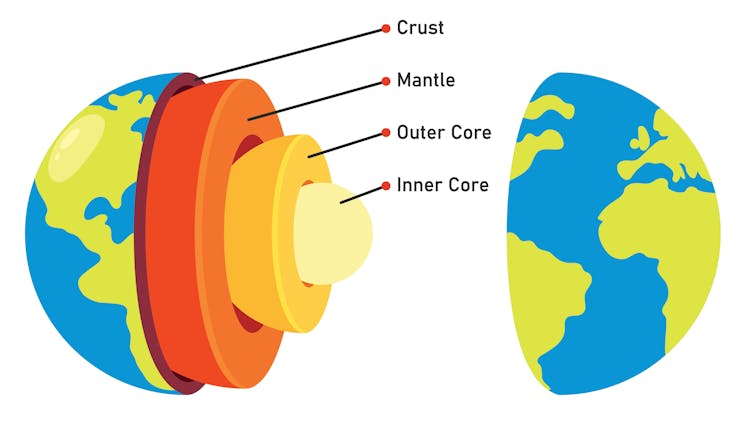
A Māori perspective on innovation doesn’t focus on winners and losers, but on a vibrant blossoming innovation ecosystem. Innovation from this perspective is tied up with cultural knowledge and community identity.

This kind of innovation model leads to better distributed and long-term wealth creation, since value is embedded within and spread throughout the community.

Yet the tools, such as the Business Model Canvas, that we use to explore business ideas are based on hyper-individualistic, win-at-all-costs businesses.

New Zealand needs entrepreneurship and innovation tools that embed a richer perspective on success, more in line with the aspirations of the wellbeing economy and the Māori communities that developed Te Matarau a Māui.

A look to the future

We are not saying individual innovators should not be rewarded for their innovations. They should be. Nor are we saying that there aren’t success stories that involve local commercialisation. There are.

Moreover, we are not suggesting New Zealanders do not look outwards. They absolutely should.

But perhaps New Zealanders could shift their understanding of a success story for innovation, because we could have more innovation stories that involve further growth and benefit the well-being of communities.

Such a shift cannot happen until there is money to undertake the necessary risk to produce Kiwi innovations locally. International intellectual property portfolios should be developed in important markets, but we should invest in local capabilities to maintain operations in New Zealand. This would feed the New Zealand economy.


Read more: New data privacy rules are coming in NZ — businesses and other organisations will have to lift their games


More provocatively, keeping innovations local would create more business opportunities that New Zealanders could invest in, aside from real estate. Perhaps this could help to cool down the property market.

So in light of RBNZ’s role to “promote the prosperity and well-being of New Zealanders”, contribute to a “sustainable and productive economy” and support “maximum sustainable employment”, perhaps it should think about tying its lending scheme to making sure local innovation stays local. Otherwise, we might be letting a good crisis go to waste.

ref. ‘Courageous’ investment means innovation stays in NZ, not sold off overseas – https://theconversation.com/courageous-investment-means-innovation-stays-in-nz-not-sold-off-overseas-150381

Retirement incomes review finds problems more super won’t solve

Source: The Conversation (Au and NZ) – By Peter Martin, Visiting Fellow, Crawford School of Public Policy, Australian National University

It would be a waste if the Friday’s mammoth Retirement Incomes Review was remembered only for its finding that increases in employers compulsory superannuation contributions come at the expense of wages.

That has long been assumed, and is what was intended when compulsory super was set up.

Compulsory super contributions are set to increase in five annual steps of 0.5% of salary between 2021 and 2025.

These are much bigger increases than the earlier two of 0.25% in 2012 and 2013.

And the wage rises they will be taken from will be much lower. The latest figures released on Wednesday point to shockingly low annual wage growth of 1.4%.

Should each of the scheduled increases in employers compulsory super knock 0.4 points off wage growth (which is what the review expects) annual wage growth would sink from 1.4% to 1%.


Read more: Workers bear 71% to 100% of the cost of increases in compulsory super


Private sector wage would sink from 1.2% to 0.8%, in the absence of something to push it back up.

Because inflation will almost certainly be higher than 1%, it means the buying power of wages would go backwards, all for the sake of a better life in retirement.

The review presents the finding starkly. Lifting compulsory super contributions from 9.5% of salary to 12% will cut working-life incomes by about 2%.

And for what? It’s a question the review spends a lot of time examining.

Most retirees have enough

The review dispenses with the argument that the goal of a retirement income system should be “aspirational”, or to provide people with higher income in retirement than they had in their working lives.
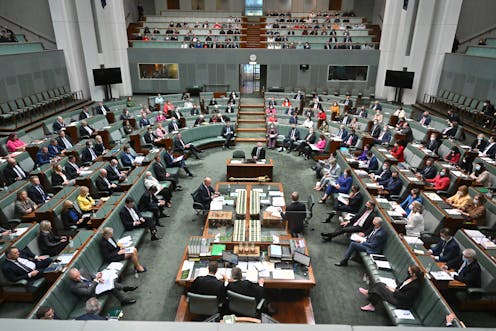
It finds that for retirees presently aged 65-74 the replacement rates for middle- to higher-income earners are generally adequate.

Source: Australian Tax Office

Many lower-income earners get more per year in retirement than they got while working.

If the increases in compulsory super proceed as planned, this will extend to the bottom 60% of the income distribution.

They’ll enjoy a higher standard of living in retirement than while working (and will enjoy a lower standard of living while working than they would have).

Most retirees die with most of what they had when they retired, leaving it as a bequest. They are reluctant to “eat into” their super and other savings because of concerns about possible future health and aged care costs, and concerns about outliving savings.

The review quite reasonably sees this as a betrayal of the purpose of government-supported super, saying

superannuation savings are supported by tax concessions for the purpose of retirement income and not purely for wealth accumulation

It’s the pension that matters

The pension does what super cannot. It provides a buffer for retirees whose income and savings fall due to market volatility, and for those who outlive their savings. 71% of people of age pension age get it or a similar payment. More than 60% of them get the full pension.

If there’s one key message of the review, it is this: it is the pension rather than super that matters for maintaining living standards in retirement, which is what the review was asked to consider.

It is also cost-effective compared to the growing budgetary cost of the super tax concessions.


Read more: Why we should worry less about retirement – and leave super at 9.5%


The age pension costs 2.5% of GDP and is set to fall to 2.3% of GDP over the next 40 years as the super system matures and tighter means tests bite.

Treasury modelling prepared for the review shows that if more money is directed into super and away from wages as scheduled, the annual budgetary cost of the super tax concessions (mostly directed will exceed the cost of the pension by 2050.

There’s a real retirement income problem

A substantial proportion of Australians, about 30%, are financially worse off in retirement than while working, and they are people neither super nor the pension can help.

Mostly they are older Australians who have lost their jobs and cannot get new ones before they before eligible for the age pension or become old enough to get access to their super. Often they’ve left the workforce due to ill health or to care for others and are forced to rely on JobSeeker, which is well below the poverty line.


Read more: Forget more compulsory super: here are 5 ways to actually boost retirement incomes


It’s much worse if they rent privately. About one quarter of retirees who rent privately are in financial stress, so much so that the review finds even a 40% increase in the maximum Commonwealth Rent Assistance payment wouldn’t be enough to get them a decent standard of living in retirement.

No recommendations, but findings aplenty

The review was not asked to produce recommendations. Instead, while noting that much of the system works well, it has pointed to things that need urgent attention.

It finds that pouring a greater proportion of each pay packet into the hands of super funds is not one of them, and in the present unusual circumstances could cost jobs as employers who can’t take the extra cost out of wages take it out of headcount.

The government will make a decision about whether to proceed with the legislated increase in compulsory super in its May budget, just before the first of the five increases due in July.

ref. Retirement incomes review finds problems more super won’t solve – https://theconversation.com/retirement-incomes-review-finds-problems-more-super-wont-solve-150529

Sewage testing is no magic bullet in our fight against COVID-19. But it can help

Source: The Conversation (Au and NZ) – By Cobus Gerber, Associate Professor, University of South Australia

We’re often hearing alerts for different areas after traces of coronavirus are found in the wastewater, or sewage.

Most recently, fragments were detected at Benalla, in Victoria’s north, and at Portland, not far from the South Australian border. The Victorian government subsequently closed the border to South Australia, and urged anyone in these areas to get tested if they developed symptoms.

The idea of testing sewage to track the presence of a virus is not new. Scientists in Israel used it to monitor a polio outbreak in 2013.

While it is a useful tool for COVID-19 disease surveillance, it’s not entirely foolproof.

From drug use to COVID-19

We commonly use wastewater monitoring to estimate levels of illicit drug use in Australia. This is the sort of work our teams do, although this year we shifted our focus to look at methods of testing wastewater for COVID-19.

A virus monitoring program uses the same principle as wastewater monitoring for drugs. Microbes such as SARS-CoV-2, the virus that causes COVID-19, are passed mainly through a person’s gut, then come out in their stool, and enter the sewerage system after a toilet flush.

This process, called viral shedding, depends on the severity of the infection (generally, people who have a more severe infection shed more of the virus, though this isn’t always the case) and can occur for several weeks after symptoms have disappeared.

Although the virus doesn’t stay viable in the sewage for very long — you’re not likely to catch it if you come into contact with sewage containing virus — remnants of its genetic material may remain intact. When a daily sample is collected at a treatment plant, we can recover the RNA fragments.

Some research groups have suggested this approach may be able to detect a single infected person in a catchment of 100,000.

Wastewater samples in a laboratory.
Wastewater testing is being used in many places around the world during the pandemic, not only Australia. Shutterstock

The technique is important

A variety of techniques can be used to recover the genetic material before we measure how much virus is present. The more virus there is in a sample, the easier it is to detect.

Currently, there are no agreed standard approaches — different teams testing wastewater for COVID in different places do it differently.

This is partly because we’re still working out the best method — each has its own strengths. Our research, currently under review, shows a method may be very sensitive in some cases but not in others.

Wastewater from a suburban area may contain mainly household effluent, whereas a sample from a more industrial area could contain various chemicals that may interfere with detecting the viral RNA. Wastewater is not homogeneous and its contents can even vary depending on the time of day.

We’re working on developing more robust methods that are less prone to being influenced by the wastewater source. In the meantime, we need to be a bit cautious when interpreting results from wastewater testing.


Read more: Diarrhoea, stomach ache and nausea: the many ways COVID-19 can affect your gut


What happens when a sample is positive?

Once traces of SARS-CoV-2 show up in wastewater, it’s a likely indication that infected people live in, or have visited, the sewer catchment. However, it’s important that more than one indicator confirming virus RNA is included in the tests to minimise the risk of false positives.

Even then, a result may simply be a case of people who are recovering from illness, shedding virus after they’ve completed their quarantine, when they will no longer be infectious.

It’s important to carry out ongoing surveillance to determine if the signal peters out, or if the level of virus detected at the location increases. The latter would suggest an underlying spread of infections, and the need to step up targeted testing. This is arguably the strength of wastewater surveillance.

Drive-through testing in Sydney.
The detection of SARS-CoV-2 in wastewater often means people in the area are encouraged to be tested. Dan Himbrechts/AAP

Conversely, when the results are negative, it may imply there are no infected people in the catchment. However, this could also mean the testing method is insufficiently sensitive to pick up infections. It’s possible infected people are located far from the sampling point, and no identifiable virus remnants remain in the sample by the time it’s collected.

There’s also the issue that many people in regional areas have their own septic tanks.

So like testing people for COVID, wastewater testing carries a risk of both false positives and false negatives.


Read more: Flushing is our next weapon against COVID-19, if you’re happy to have your sewage scrutinised


There are strengths and weaknesses

Sewage surveillance can’t give us specific information, such as the location of the infected people or the number of infections. But as long as we understand its strengths and weaknesses, it’s a valuable complementary approach to guide targeted testing.

It can provide authorities with evidence that may inform whether they can relax restrictions in some communities, instead of applying blanket lockdowns. If we had COVID wastewater monitoring across South Australia (currently it’s only operating in Adelaide), it might have been able to indicate there were no cases in regional areas, and perhaps they could have avoided this week’s harsh lockdown.

With so much uncertainty about when and where the next outbreak might occur, monitoring wastewater could provide an early warning signal.

People in Benalla in Portland should be aware and get tested if they have any symptoms, according to public health advice. But at this stage, there’s no need for alarm.


Read more: South Australia’s COVID outbreak: what we know so far, and what needs to happen next


ref. Sewage testing is no magic bullet in our fight against COVID-19. But it can help – https://theconversation.com/sewage-testing-is-no-magic-bullet-in-our-fight-against-covid-19-but-it-can-help-149989

Blaming the ‘worried well’ for long COVID testing queues won’t help anxious South Australians. This will

Source: The Conversation (Au and NZ) – By Bridget Haire, Postdoctoral Research Fellow, Kirby Institute, UNSW

It’s been a big week for South Australia. First, the announcement of a six-day lockdown to limit the spread of COVID-19. Then today we heard this lockdown may have not been needed, after a man lied to contact tracers, prompting an early lifting of restrictions.

In between, South Australians have been waiting in queues for up to ten hours for COVID-19 tests. And the state’s chief public health officer Nicola Spurrier warned the “worried well” not to clog up important public health services.

Labelling people anxious about COVID-19 the “worried well” isn’t helping, especially in a climate of uncertainty, as South Australia has experienced this week. It might also discourage people with mild symptoms to come forward.

So who are the “worried well”? And what should we really be doing to encourage the right people to get tested?


Read more: South Australia’s 6-day lockdown shows we need to take hotel quarantine more seriously


Who are the ‘worried well’?

The “worried well” is a term invented to describe apparently healthy people who think they might have a disease or medical problem, so see a doctor or have testing.

The term carries the whiff of a sneer, along with the implication such people are wasting health resources.

It shouldn’t be confused with hypochondria, which is chronic anxiety about your health to the level it may be considered a psychiatric illness.

The “worried well”, in contrast, are often responding to a situation that asks people to be paying special attention to an aspect of their health.

They might attend more regularly than required for cancer screening, for example. They are also more likely to believe it is important to take responsibility for their own health — a concept public health messaging actually reinforces.


Read more: How genetic testing is swelling the ranks of the ‘worried well’


We can’t dismiss people’s real anxiety

Dismissing people who seek medical attention for vague ailments or unsubstantiated risks as the “worried well” ignores the very real problem of the anxiety created by attention to particular illnesses.

Anxiety can cloud health perceptions and judgements, and prompt people to seek reassurance.

In the face of a global pandemic, where an invisible pathogen is transmitted often through pre-symptomatic or asymptomatic people, many of us are a bit anxious.


Read more: Goodbye, brain scrapers. COVID-19 tests now use gentler nose swabs


Vigilance can be useful for achieving compliance with the COVID-safe rules that have restructured our daily habits, such as physical distancing, avoiding touch and regularly washing our hands.

Anxiety is less useful if it results in people who have no known exposure and no COVID symptoms presenting for testing, particularly if there is a concern testing services may be stretched by demand.

However, applying a stigmatising label to such people is counterproductive.

Yes, it can be frustrating

In the context of an outbreak where there is urgent need to test people who have been exposed, and where testing capacity is being overwhelmed, reference to the “worried well” may be a symptom of public health officials’ understandable frustration.

It is, after all, a delicate balancing act to get everyone deemed at risk to test in a timely manner, without their ranks being swelled by those seeking reassurance who believe they were at risk but who have no clear or likely route of exposure.

But that doesn’t make the “worried well” a fair or useful label, and may work against achieving the widespread testing needed to control infection.


Read more: Why some people don’t want to take a COVID-19 test


We’d be better off promoting testing as doing the ‘right thing’

New South Wales and Victoria have promoted COVID testing as doing the “right thing”. Both emphasise people with COVID-like symptoms should be tested regardless of whether they have had a known exposure.

Similarly, the South Australian government is asking everyone with COVID-like symptoms to be tested, regardless of whether the symptoms are mild.

One of the risks of a phrase like the “worried well” is different people can interpret it in different ways. So if someone with mild COVID-like symptoms is worried they might be called one of the “worried well”, they might second-guess themselves and not get tested.

We have seen the dire consequences of people underestimating a sniffle, or mild respiratory illness, in the terrible tragedy of the Newmarch House aged-care cluster in New South Wales earlier this year.

Clear, consistent, targeted public health messaging works

The best way to ensure the right people get tested is by using very clear, consistent and targeted public health messaging.

Currently, in South Australia this means people with symptoms, people who have been identified through contact tracing, and people who have visited sites listed on the contact tracing website where exposure may have occurred.

Clear and consistent repetition of these groups is needed throughout relevant media, including the broadcast media, internet and social media.

Have the ‘worried well’ really clogged up testing?

It is not possible to assess how many of the more than 617,000 COVID tests conducted in the state so far met the criteria of credible risk according to the published criteria.

But if there is serious concern there is unnecessary testing, this needs to be swiftly addressed by explaining who needs testing and why. This needs to be repeated in multiple places, including being visible where people queue to test.

Clear and accessible pathways also need to be provided for people with COVID anxiety who don’t meet testing criteria, which the state government is beginning to address.

This is so people can be reassured in ways that do not involve unnecessary testing, and if necessary learn how they can address their concerns using the appropriate designated mental health services.


Read more: 7 ways to manage your #coronaphobia


ref. Blaming the ‘worried well’ for long COVID testing queues won’t help anxious South Australians. This will – https://theconversation.com/blaming-the-worried-well-for-long-covid-testing-queues-wont-help-anxious-south-australians-this-will-150385

VIDEO: Michelle Grattan on the South Australian lockdown and the Brereton inquiry

Source: The Conversation (Au and NZ) – By Michelle Grattan, Professorial Fellow, University of Canberra

University of Canberra Professorial Fellow Michelle Grattan and University of Canberra Assistant Professor Caroline Fisher discuss the week in politics.

This week the pair discuss the six-day lockdown in South Australia, despite dwindling cases, and how this lockdown will affect the prime minister’s hopes for an ‘open christmas’. Also discussed is the Brereton report in misconduct by SAS operatives during the Afghanistan conflict, and how allegations of war crime will affect Australia’s national identity domestically and internationally.

ref. VIDEO: Michelle Grattan on the South Australian lockdown and the Brereton inquiry – https://theconversation.com/video-michelle-grattan-on-the-south-australian-lockdown-and-the-brereton-inquiry-150538

Let it happen or make it happen? There’s more than one way to get in the zone

Source: The Conversation (Au and NZ) – By Christian Swann, Associate Professor in Psychology, Southern Cross University

We often hear about people being “in the zone” when they have excelled, be it at sport, playing music, video gaming, or going for a run.

For decades, researchers have tried to find out what the zone is and how to enter it. And the assumption has been that there is one zone that we can experience.

Our research with athletes, however, suggests there may be two types of zone.

One is a “flow state”, where athletes describe effortlessly “letting it happen”. The other is a “clutch state”, where athletes report “making it happen” by purposefully and powerfully stepping up in a key moment.

Here’s how to decide which zone you need to be in — and how to get there.

A woman swims laps in a pool
Research with athletes suggests there may be two zones. Shutterstock

Flow vs clutch states

Much research or media reporting about the zone is often based on interviews with athletes which take place some months or years after their performances have happened.

This means our understanding has been based on old, and likely faded, memories. As a result, people remember their experiences as one zone.

For our research, we interviewed athletes within days or hours of exceptional performances, allowing them to describe their experiences in much more detail.

We heard frequently of different ways of being “in the zone”, sometimes employed during different parts of a challenge. As a polar explorer told us, “They’re definitely two different states.”

A marathon runner told us:

It was like two different races.

A woman runs in the park.
In the flow state, your performance effortlessly clicks into place as if you are on autopilot. Shutterstock

The flow state is where you become completely absorbed in what you are doing, you perform the task effortlessly — as if you are on autopilot — and it feels like everything harmoniously clicks into place.

The clutch state was described as “making it happen”, where athletes purposefully step up their effort and concentration during important moments in a performance.

This state describes clutch performance — a common term among fans and media in sport — such as Michael Jordan’s famous buzzer-beater in the 1989 playoffs (from from about the 2:00 mark in the video below).


Read more: The psychology of the clutch athlete


Which zone should you aim for?

We would all love to be in the zone more often. Now that the research is telling us there are actually two types of zone, a first step is to recognise which zone you’re aiming for.

Clutch performances occur in certain situations under pressure, when there is an important outcome on the line. Think meeting deadlines, running to catch the last bus home, or being at the end of a race with a personal best on the line.

Flow occurs in situations where there’s novelty, exploration, and experimentation. This might be playing a golf course for the first time, running a new route, or sitting down with a blank page and brainstorming ideas. There’s no pressure or expectation — you’re free to explore.

Both zones can happen in the same event too. For example, runners can be in flow during the start or middle of a race, and then realise they have a chance of breaking their personal best or a chance to win, and flip into a clutch performance at the end — like when Shura Kitata won in a sprint finish in the men’s 2020 London Marathon (from about the 2:05 timestamp in the video below).

How can you get in each zone?

Research suggests the type of goals we set plays an important role in getting into each zone.

Clutch performances occur when we realise there is an important outcome at stake, we understand what is required, and we step up our effort. You’ve probably done this before — like pulling an all-nighter to get your assignment finished, staying late at work to meet an important deadline, or pushing hard to record a personal best.

The key to these clutch performances is having a specific goal in mind, and understanding clearly what you need to do to meet the challenge (for example, “if I can run this last kilometre in under five minutes I can break my personal best”).

Once this challenge is set, it’s quite natural for us to increase our effort and intensity in order to achieve the goal.

Megan Rapinoe of the USA football team in action during the 2019 FIFA Women’s World Cup Final match between USA and Netherlands. Shutterstock

To get into flow, however, we need to think a bit differently. We need to create situations where we can explore — where we’re free from expectation and pressure.

An important part of this is setting open goals such as to “see how well I can do,” “see how many under par I can get”, or “see how fast I can run the next five kilometres”.

These open-ended, non-specific goals help avoid pressure and expectation, letting you gradually build your confidence, and increasing your chances of getting into flow.

ref. Let it happen or make it happen? There’s more than one way to get in the zone – https://theconversation.com/let-it-happen-or-make-it-happen-theres-more-than-one-way-to-get-in-the-zone-149173

INDEPTH: The Plight of International Organizations in Addressing Public Health Emergency of International Concern and the Implications for Global Governance

Image by CDC/ Alissa Eckert, MS; Dan Higgins, MAM - https://phil.cdc.gov/Details.aspx?pid=23312.

Analysis by Manqing Cheng – Doctoral Researcher in Politics and International Relations at University of Auckland. This is Manging’s first analysis for EveningReport.nz.

Precis: This article takes the WHO as an example to examine the difficulties for some international organizations in playing their due roles and tackling with the security threats of international concern such as a public health crisis of COVID-19. It is believed that an in-depth institutional reform is necessary for international organizations including WHO to adapt to the reset of globalization, the ensuing global challenges, and the transformation of global governance in the post-pandemic order.

Image by CDC/ Alissa Eckert, MS; Dan Higgins, MAM – https://phil.cdc.gov/Details.aspx?pid=23312.

Confronting the public health crisis as COVID-19, the existing global governance system has fallen into a state of partial failure, which is embodied in slow response and action of international organizations, increasing difficulty in coordination and cooperation between big powers, and the lack of leadership. WHO is clearly unable to coordinate national actions or to regulate behaviour and change prevention and control measures of various countries amid this pandemic. In recent years, the impediments to globalization, the rise of populism, the revival of nationalism and unilateralism allude to the inherent conflicts between international organizations and sovereign states. Disease is a non-zero-sum non-traditional security issue as its threat to all is undifferentiated. Since everyone is facing a common threat, international organizations that are instrumental for communication and preventive solutions should take the lead. But why some international organizations failed to function and why can it be hard for countries to utilize such platforms and work together? This article analyses that there are several major dilemmas restraining the role of international organizations, which are unlikely to be resolved in the short run. The following takes WHO in the pandemic as an example to explore its plight.

Difficulties and Dilemmas Confronting International Organizations

Above all, the WHO faces constraints from the sovereign states.

The first hinderance is financing. The most common way for all parties to play games in WHO is to influence the WHO agenda through financial leverage. WHO’s funding comes from two main sources: assessed contributions and voluntary contributions largely from member states and other sources such as philanthropic foundations and private sector. Assessed contributions have been a declining share of WHO’s overall budget in recent years, so the organization is increasingly relying on voluntary contributions. The trick is that most voluntary contributions come with explicit requirements and restrictions on their use. The only fund that WHO really has control and can flexibly allocate is about US$500 million a year in assessed contributions. WHO has been struggling to both invest in global public health and to cover its own operating costs. Take the 2018-2019 biennial budget as an instance, the total planned amount was US$4.422 billion (the actual implementation was US$5.3 billion), of which the assessed contributions were only US$957 million. As the biggest contributor to WHO, after President Trump announced a suspension for US funding on April 14, 2020, Director-General Tedros indicated that the US move would leave the organization with a financial gap that could interrupt the efforts to stop the coronavirus pandemic. When the greatest power takes an example, it is hard for others not to follow suit, particularly under the situation where all economies are suffering heavy losses.

The second is the recognition. As an intergovernmental organization, WHO has the legitimacy and capacity to act only based on state empowerment and authorization. In a broad sense, this “authorization” is also a recognition. A recognition of the existence and effectiveness of international organizations. Given the limits of human knowledge of various communicable diseases, WHO remains torn between taking initiative and being cautious in the event of an outbreak. After the outbreak of influenza A (H1N1) in 2009, WHO coordinated countries to take proactive measures and declared a “pandemic”, but was accused of “overreacting”. This was because H1N1 had been spreading all over the world, but the fatality rate was low. A joint report by the British Medical Journal and the Parliament of the European Commission criticized WHO for exaggerating the pandemic, causing panic among the public and triggering a global rush to buy vaccines for pharmaceutical companies to profit. After the Ebola outbreak in West Africa in 2014, WHO was accused of poor early warning, ineffective prevention, and slow response. Critics claimed that the first Ebola patient was infected in Guinea in December 2013, but WHO did not officially declare an outbreak until three months later, when the virus had spread to neighboring countries. In this recent crisis, WHO’s status and value have been further weakened. During the present anti-pandemic process, the Trump administration continuously accused WHO of acting too slowly to sound the alarm about the coronavirus. A great power refuses to admit the role of WHO is parallel to not recognize and distrust the organization, which will inevitably impact the international organization’s authority and capability to act in its field. Facing public health threats, particularly from unknown viruses and emerging infectious diseases, WHO seems to be caught in a paradox: taking aggressive action to stop outbreaks before the situation becomes serious will be criticized as overreacting; and taking cautious attitude would be blamed for failing to contain the pandemic. The anarchy of international system makes international organizations have no coercive power in implementing measures. One of the authoritative sources of them is the level of expertise rest on knowledge. They hold the “power” to master data, publish information and set standards by virtue of their knowledge. Therefore, if a country questions its expertise, it can affect a range of the organization’s actions. If countries no longer use that knowledge as a standard, the authority of the organization will be undermined.

Secondly, the WHO is influenced at the systemic level.

First of all, international organizations are the product of globalization and multilateralism. In theory, the deepening of globalization should become a hotbed for the development of international organizations. In reality, nevertheless, globalization has deepened the antagonism between countries. We are witnessing more clearly the gap between countries and the changing political landscape within them. Some countries have risen in the process of globalization, while others have been divided in the process. Rising nations are more insistent on globalization, while declining nations only want to retreat. International organizations seem to become a burden no longer needed, living in the tension between the cracks. As a sub-agency of the UN system, WHO seeks to place health goals above power politics. But as an intergovernmental organization, WHO cannot avoid the shades of power game and geopolitics. As early as its establishment, the Constitution of the World Health Organization was delayed by the ratification of member states due to the confrontation between two camps of the U.S. and the Soviet Union. It was not until the outbreak of cholera in Egypt’s Suez Canal area that countries realized the importance of establishing a global public health organization and passed the Constitution in 1948. With the launch of the Marshall Plan, the eastern and western camps entered a period of fierce confrontation. In 1949, the Soviet Union led the Eastern European countries withdraw from WHO. In order to maintain the integrity of global public health system, then Director-General George Brock Chisholm retained the membership of the Soviet Union and other countries on the ground that there was no opt-out clause in the Constitution, so that the Soviet Union was able to rejoin in 1958.

Second, the new world pattern is evolving, and some countries are inclined to politicize global issues. The alleged politicization of health issues refers to use health issues as a tactic to pursue political goals. The introduction of political issues into WHO by some countries led to the dysfunction and overloading of the mechanism beyond WHO’s jurisdiction and weakened its original purpose of promoting public health. When Trump halted funding for WHO, he also expressed his dissatisfaction and anger at WHO’s repeated praise for China’s anti-epidemic efforts. He believes that the U.S. is investing a lot of money, but WHO is ultimately standing up for China. International organizations do not necessarily choose sides, but their support for one country in a certain area may be regarded as a preference to be resisted by the other party. WHO, in this case, is unwittingly entering the political gap between China and the U.S. Mutual recriminate and stigmatization, transfer domestic contradictions as well as shirk responsibility for the poor response to the pandemic aggravate the conflicts and frictions that already existed among member states, thereby result in the inefficient operation of international organizations. In this climate of mistrust and disunity, it is hard for all parties to act in concert.

Third, non-neutral rules of global governance are impacted. The current global governance system mainly relies on the rules formulated by western countries. However, these rules are non-neutral in the light of non-western cultures. That is, the meaning of the same system varies to different groups, and those who benefit from the established system or may benefit from some future institutional arrangement will strive for or maintain institutional arrangements that are favorable to them. Global governance rules exist upon intersubjectivity and only play a normative role if they are accepted by the majority. Non-neutral rules are difficult to promote consensus between western and non-western cultures. One consequence of this non-neutrality is that in the practice of global governance, the actual benefits or losses brought by different mechanisms to sovereign states are inequivalent. In an era when the developed economies dominate in the global governance system, such non-neutrality, while has always existed, is not as prominent as it is today with more and more non-western economies rise and enter the global governance system. This is illustrated in the case of COVID-19 striking big powers, as non-western actors are bringing their own practical experiences into the existing governance system, thereby shaking the governance structure dominated by the Western instrumental rationality. The concepts, principles and approaches of global governance begin to fall short in attuning to the reality of rapid development of globalization and the emergence of global challenges.

Lastly, the WHO has self-deficiencies in terms of operating rules and mechanisms.

First, WHO is already the largest and most authoritative international agency for epidemic prevention in the world, but it is still unable to play a leading role in this crisis. This is because international organizations and states are distinct in nature. States have sovereignty, while international organizations do not. Management personnel in international organizations are dispatched by member states, and there are no individuals independent of the state and belong exclusively to an organization. This makes it impossible for international organizations to operate in complete isolation from states. Additionally, an international organization is a platform where member states gather for discussion, vote to reach a resolution, and implement it. Basically, the consensus of major powers becomes the resolution of the international organization. That is, a balance exists between the views expressed by the representatives of member states within WHO. Leaders of international organizations has only the power to implement the policy. Taking the position of chief balancer, Director-General Tedros may be viewed as a consensus-maker instead of an authoritarian decision-maker. International organizations, whether intergovernmental or non-governmental, are coordinating bodies. Their decision-making power is limited. Whether member states, especially the big powers, have shared interests, common needs and collective policy orientation determines how much role the international organization can play.

Second, WHO has an “institutional inertia”. Its reform of governing structure lags behind the development of global health governance with its influence on the decline. Since 1999, the principle of zero growth has been introduced into the budgeting process of WHO. Consequentially, WHO is increasingly dependent on voluntary contributions and has shown a bilateralism in promoting projects, since most contributions are earmarked for specific purposes by donors. As some scholars note, voluntary contributions militate against multilateral governance and decentralize the authority of international organizations to donor countries.

All in all, from the perspective of internal factors, academics generally believe that WHO’s organizational culture is strongly functionalist, conservative, and increasingly corrupt in recent years. The failure of strategic planning and the over-decentralization of WHO’s structure render its internal system increasingly rigid. Moreover, there are issues of impartiality within WHO. As more and more information about WHO’s internal decision-making is exposed by the media, the fairness and transparency of WHO’s work are increasingly questioned. Many scholars agree that the financial interests of the medical experts who advise WHO on decision-making are intertwined with multinational pharmaceutical companies, making WHO difficult to be objective and neutral.

To date, no substantive breakthrough and sustainable progress have been made in any area of governance, terrorism, financial crisis, transboundary disasters, and climate change, etc. COVID-19 represents yet another failure of global governance. The root cause is the lack of international cooperation. In recent years, with the strong backtracking of populism, unilateralism, and power politics, international relations are shifting toward geopolitics, the sense of international responsibility and the trust of international community are declining. It seems that everyone knows the theory of win-win cooperation, however in reality, the spirit of cooperation is easily concealed, forgotten, and even deliberately abandoned.

Some Recommendations on Institutional Reform in the Post-Pandemic order

In the post-pandemic world, international organizations and multilateral mechanisms will face greater tests. Only through constant institutional reform can they adapt to a changing world order.

The first is to boost the leadership and appeal to perform the leading and coordinating role to full potential in global governance. The authority and expertise of international organizations are mainly reflected in the fairness and effectiveness of promoting international cooperation and solving global issues. This depends on the sufficient cooperation and support of member states on the one hand and on the strategic vision, leadership, and professionalism of international organizations from officials to staff, on the other. In response to global challenges like COVID-19, the UN needs to make corresponding reforms and adjustments. This would include convening relevant meetings at the earliest possible time to convey confidence to the world, unifying the goals of all parties, and drawing up global action roadmap. Specialized agencies under the UN need to carry out separate actions around their respective themes, update their own rules and norms in real time. WHO could be more empowered to upgrade the global public health governance system. The international community has had conducted some effective bilateral and local cooperation and gained positive experiences in the fights against SARS, H1N1 influenza and Ebola, but there is still a long way ahead to achieve global, sustainable and closer cooperation. It is necessary to improve the overall status of public health governance and reinforce WHO, so that it has more rights and higher international status similar to that of the IMF and the World Bank to organize experts and focus on scientific research, vaccine development and data sharing as well as help developing countries with weak health infrastructure to improve their response capacity. The international community has generally been underinvesting in public health. As of February 29, the U.S. was still more than half behind with its 2019 dues and US$120 million is defaulted for 2020. After the outbreak, the COVID-19 Solidarity Response Fund has been created by the UN Foundation, the Swiss Philanthropy Foundation and WHO, but similar efforts should be more institutionalized in future. Meanwhile, WHO must strengthen the institutional construction, such as build a global infectious disease monitoring, early-warning and emergency-boot mechanisms, further elucidate the rules and norms of public governance, formulate guiding principles that all countries must abide by, unify standards, and improve the control and binding force on relevant behaviors of various countries, but not limited to report information, temporary research and judge the situation. For now, though the role and status of WHO in global public health governance has been weakened to a certain extent, as the largest international health organization and one of the larger specialized agencies within the UN, WHO still has broad responsibilities to combat infectious diseases based on the Constitution of WHO and designated by its accession to the UN, as well as has the only authorization of leading and promoting effective development of international health law. Therefore, it is crucial to carry out effective reform of WHO. The direction is not “reprimand and denounce” by some member states targeted others and counteract each other’s efforts. Instead, it should be further enhancing the power of existing multilateral mechanisms, increasing financial support, and expanding bilateral or small multilateral public health cooperation to larger regional domain. For this purpose, the established China-Japan-ROK joint prevention and control mechanism and the public health cooperation within the ASEAN framework should be consolidated and then upgraded to the Asia-Pacific region. The European Union and the African Union should also act together and promote the integration of public health, and then on this basis, form the regional cooperation between Asia and Europe, among Asia, Europe and Africa as well as in a wider range.

The second is to strengthen the authority and expertise of international organizations. Globalization has never been entirely positive as a single-dimensional process. International organizations is the central force and the primary driver for global governance. The multilateral cooperation mechanism should include at least two functions: political leadership and advisory implementation. In the current international system, it is unrealistic to require specialized agencies to perform core political leadership because they do not have corresponding political authority and power resources. However, for multilateral organizations with rich expertise in a specialized field, it is the fundamental obligation to provide intellectual support and technical implementation for political decision-making. For example, the political leadership of G20 and the advisory implementation of WHO could converge and form a global action model to counter security threats more actively in global public health. WHO can gather information, propose professional suggestions, and provide a concrete scientific basis for the G20 to put forward global action plans. In this regard, G20 could be continuously elevated from short-term crisis response mechanism to long-term governance mechanism.

Conclusion

International organizations have accrued deep malpractices in managing global affairs. In the current COVID-19 and previous international public health emergencies, there are various difficulties in the operation of international organizations, confining them to take conductive actions, which in turn reducing the effectiveness of problem solving. The world seems to lack a consistent and coherent response in the face of a common enemy. A path of transformation should be explored. Only through constant change can international organizations be reinforced in the new order, otherwise it will be eliminated or replaced. However, we must also be aware that some curtailments are beyond the scope of international organizations and concern the whole international community. The reality of the COVID-19 has put the international community at a crossroads once again. Is it to turn the crisis into an opportunity and make the pandemic a driving force for community building through strengthening all-round cooperation and multilateralism? Or to reject international cooperation, shrink into a corner, and deepen the division of the world? Or to expand the conflict and make the outbreak a pusher of the law of jungle? The rational choice is certainly cooperation. COVID-19 is an acute crisis that not only takes a heavy toll on global public health safety, but also creates global threats to varying degrees in other fields through its spillover effects. Institutional reform needs the solid support of political will and cooperative consensus. Multilateralism is by far the most reasonable approach to global governance, and multilateral cooperation is the most democratic way to combat global threats. Whether global consensus can be reached and cooperation mechanism can be built out of the crisis will not only directly affect the success of anti-pandemic battle, but also have a far-reaching impact on the international relations and world order after the pandemic.

A birth certificate is a human right. Why aren’t they free and easier to get?

Source: The Conversation (Au and NZ) – By Liz Allen, Demographer, ANU Centre for Social Research and Methods, Australian National University

This week marks the 31st anniversary of the Convention of the Rights of the Child.

As we reflect on the value and place of children, this gives us a chance to look at how birth registration and birth certificates operate in Australia today.

As the UN notes, “a name and nationality is every child’s right”. Australian academics have previously argued, the convention “implicitly includes the right to a birth certificate”.

Yet not every Australian child is registered or has a birth certificate.

When we think of children’s development and care, we don’t tend to think of the barriers to gaining such an important document. Or the appropriateness of an administrative process of birth notification and registration that hasn’t changed much in more than 160 years.

To reduce burdens on families and increase social engagement among the marginalised, we need seriously to consider alternatives to the traditional birth certificate.

With growing digital connectivity, are paper-based birth certificates still relevant?

Why do we need birth certificates?

All births in Australia are required to be registered by a parent or carer with the relevant state or territory registry office for births, deaths and marriages. This service is free.

Mother holding newborn baby.
All Australian babies need to be registered after they are born. www.shutterstock.com

Birth registration is also a fundamental human right — it provides a record of the name, birth details, and very existence of someone. It also provides a government administrative function, helping to determine population estimates.

Birth certificates, on the other hand, aren’t automatically issued in Australia – there’s a fee involved with gaining this crucial piece of identification, potentially violating human rights.

These paper-based certificates are vital documents, needed for a huge range of crucial life events, from enrolling in school to opening a bank account, getting a passport, applying for government benefits, learning to drive, holding a tax file number to work in paid employment — even getting into a sporting team.

There’s a cost

The cost of a birth certificate varies across states and territories, but they are not insignificant. The Australian Capital Territory has the highest fee at $65.00, Victoria has the lowest at $33.80 (plus an additional $10 for postage).

All registry offices in Australia with the exception of Queensland can waive the fee. But information about fee exemptions is near impossible to find. Birth, Deaths and Marriages in Victoria is the only jurisdiction to make such information available on its website, but the process appears complicated and eligibility very narrow.

Not everyone has a birth certificate — and this is a problem

Despite the importance of birth certificates, not everyone has one.

Experiencing financial difficulties, moving house, being wary of government, and having lower English proficiency are among the reasons people may not have a birth certificate.


Read more: Invisible children: research shows up to one in five Aboriginal newborns aren’t registered


Births still go unregistered in Australia, mostly among people from disadvantaged and minority groups, including First Nations Australians and children of parents born overseas and from non-English speaking backgrounds.

Estimates suggest about 3% of births are not registered by a child’s fifth birthday, but this declines as young people approach the age of 15. Milestone events, like starting school and applying for a tax file number or driver’s licence, are triggers for either the realisation a birth isn’t registered or a prompt for registration.

There are no data on how many people in Australia do not hold birth certificates. The Victorian registry office reports the “majority” of people apply for a birth certificate when a baby is registered, but even they don’t know the actual numbers.

Young boy in school uniform.
Milestones, like starting school, can prompt a realisation a child does not have a birth certificate. www.shutterstock.com

Investments have been made to increase the completeness of birth registration, particularly among First Nations Australians and in Victoria, but this has not extended to increasing the accessibility of birth certificates.

If births are registered for free, it follows that birth certificates should (and could be easily) be part of the free registration process.

Not having a birth certificate can render people invisible, particularly for the already vulnerable. Without a birth certificate, full recognition and participation in society including through education and employment is hindered.

There are other ways

The birth registration and certification process has not kept up with contemporary expectations.

Australian birth certificates themselves, for example, have altered very little since the 1930s — they remain paper-based and include similar information.

There are other systems available to make identification processes easier, but these also rely on individuals having paper copies of their birth certificates. The Australian government’s documentation verification service (DVS) is a central database enabling interrogation and confirmation of identity documentation.

Banks can use the DVS system, for example, to confirm the identity of an individual without seeing a birth certificate, relying on the birth certificate number.

There are, of course, safety issues when it comes to maintaining the security of identity data. But with so much other sensitive information now digitised, these risks can be managed. It’s also doubtful they outweigh the practical and equity concerns about continuing to rely on paper-based birth certificates.

What about Sweden?

Other countries are doing this better. Babies born in Sweden are immediately registered and added to a population address register by the hospital or midwife responsible for delivering the child. The child’s name is then updated by their parents or carers, and important information relating to each Swede is maintained throughout their life.

Crowds walking down street in Stockholm.
All Swedes are immediately registered by the hospital or midwife when they are born. www.shutterstock.com

Australia has a similar hospital and midwife notification system in the National Perinatal Data Collection(NPDC). The NPDC isn’t used to help register births – it’s health-focussed — but it (or a registry-based) notification system has the potential to assist in redressing the invisibility too many Australians experience.

A better process for babies

The costs associated with buying a birth certificate for a baby appear more of a revenue raising endeavour than a public good.

Australia holds a number of different data system capabilities that could replace the outdated paper-based scheme of birth registration and certification.

Yes, there are security and logistical concerns, but we can manage them. It is most important to create a system where every baby is granted their fundamental human rights of recognition.

From a demographic perspective, we will have a more accurate and timely picture of all Australians — no matter the socioeconomic circumstances they might be born into.

ref. A birth certificate is a human right. Why aren’t they free and easier to get? – https://theconversation.com/a-birth-certificate-is-a-human-right-why-arent-they-free-and-easier-to-get-146834

Japan-Australia pact highlights need to move away creatively from death penalty

Source: The Conversation (Au and NZ) – By Mai Sato, Associate Professor, Director of Eleos Justice, Faculty of Law, Monash University

The Reciprocal Access Agreement (RAA) reached in principle this week by Japan and Australia provides a legal framework for the Australian Defence Force and the Japanese Self-Defence Force to operate in each other’s territories.

It has taken six years to get to this point. There are various reasons for this, but a significant stumbling block has been Japan’s death penalty and the Australian government’s opposition to it.


Read more: Morrison’s Japan trip yields defence pact, but travel bubble less certain


In Japan, 94 prisoners have been executed by hanging since 2000. In contrast, Australia is firmly opposed to the death penalty.

The Australian government took a bold step in 2018 by launching Australia’s Strategy for Abolition of the Death Penalty, advocating its abolition globally.

This 2018 strategy sets Australia apart from other countries that have abolished the death penalty because of its outward-looking policy of pursuing abolition in other countries. It is not limited to advocating the restricted use of the death penalty in instances where Australian nationals are sentenced to death — as was the case with Myuran Sukumaran and Andrew Chan. It takes a principled stance against the death penalty “in all circumstances for all people”.

No guarantees on death penalty – yet

The bilateral defence co-operation with Japan is a case in point. The negotiations stalled because the Australian government wanted an assurance Australian Defence Force members would not be sentenced to death, even if convicted of crimes punishable by death under Japanese law.

However, in June 2020, it was reported a breakthrough was made in the negotiations where the Japanese authorities were considering replacing the death penalty with the maximum sentence that would be applied under Australian law.

With the in-principle agreement, it has been reported that if an ADF member were to be convicted of serious crimes in Japan, the punishment would be considered on a “case by case” basis.

It is unclear, however, how this case-by-case mechanism will operate. There is no public guarantee to date that Australian soldiers would not be subject to the death penalty.

Interestingly, the Japanese Ministry of Foreign Affairs and Japanese-language media were silent on this sticking point.

A “case by case” approach may appear like a step back from the breakthrough reported in June, if it means members of the Australian Defence Force could be executed in some cases.

That said, we remain confident the Australian government will not concede in finalising the RAA with Japan. The Australian government’s 2018 strategy is unequivocal in its principled stance against the death penalty. Entering into an agreement with the full knowledge that the death penalty may be applied to its citizens would be a clear breach of its own pledge.

There is yet no clear indication if Australian soldiers would be spared the death penalty should they be convicted of a crime that carries this sentence in Japan. Cpl Raymond Vance/ADF handout/AAP

How governments can work towards abolition

The death penalty tends to be viewed in binary terms: either countries have it or they don’t. It is often cast as a domestic criminal justice policy, with international organisations such as the United Nations having some influence.

We pay less attention to the subtle ways in which abolitionist governments can restrict the application of the death penalty in retentionist countries. For example, this may involve:

  • refusing to extradite those who may face the death penalty
  • refusing to co-operate in mutual legal assistance
  • in the case of Australia and Japan, receiving prior assurance before an offence has been committed that the death penalty will not be applied.

This is what William Schabas referred to as the “indirect abolition” of the death penalty. It offers much potential as a template for how Australia might achieve its 2018 strategy in the region.

Casting our eyes from Japan to Vietnam, we find another strategic partnership with Australia that may eventually prove ripe for indirect abolition.

The Australian statement on the 15th annual Australia-Vietnam Human Rights Dialogue in 2018 noted:

Australia recognised that Vietnam’s amended Penal Code has abrogated the death penalty for seven crimes, and encouraged Vietnam to move towards abolition of the death penalty.

So it seems an ideal time to push for creative ways to realise the 2018 strategy. This is especially so given that the Australian and Vietnamese prime ministers agreed in August 2019 to develop an Enhanced Economic Engagement Strategy with the aim of becoming top ten trading partners and doubling bilateral investment.

These developments of middle powers joining together are occurring against a backdrop of growing Chinese aggression towards Vietnam in the South China Sea, or the East Sea, as it is referred to by Vietnam.

This would seem to afford an opportunity for Australia to engage with Vietnam on why its death penalty practice is closer to China’s than to its “partner for shared prosperity”.


Read more: Despite a reduction in executions, progress towards the abolition of the death penalty is slow


More work to do

While Australia has taken a principled stance against the death penalty with Japan and in its interactions with Vietnam, we do not know how this commitment would translate to other situations, with other nations.

Australia might lack the necessary soft power to nudge other countries to align themselves with its mission. Alternatively, Australia may have enough economic power to push its agenda even though retentionist governments may view its death penalty diplomacy as unwelcome interference in their domestic criminal policy.

Asia lags behind the global trend away from the death penalty. The Philippines, Sri Lanka and the Maldives have taken steps to reinstate the death penalty or resume executions. Bangladesh has expanded the reach of the death penalty.

Australia is at a pivotal moment in terms of testing its own commitment to its strategy, especially in our region. This is a critical time for determining its role in advocating for abolition of the death penalty in Asia.

ref. Japan-Australia pact highlights need to move away creatively from death penalty – https://theconversation.com/japan-australia-pact-highlights-need-to-move-away-creatively-from-death-penalty-148436

‘Murders after murders’ by soldiers, villagers tell Afghan journalist

By RNZ News

Afghanis who say they have witnessed torture and murder at the hands of Australian soldiers want the chance to testify in court as well as compensation, a journalist says.

Australia’s Defence Force Chief Angus Campbell announced yesterday that there is information to substantiate 23 incidents of alleged unlawful killing of 39 people by 25 special forces personnel in Afghanistan.

He was commenting on a four-year inquiry that found “credible information” supporting allegations of war crimes by the country’s special forces.

Major-General Paul Brereton’s report also said junior soldiers were often required by their patrol commanders to shoot prisoners to get their first kill in a practice known as “blooding”.

The inquiry also found evidence soldiers gloated about their actions, kept kill counts and planted phones and weapons on corpses to justify their actions.

One victim had told him four of his family had been killed – two brothers and two cousins.

In another village he spoke to a number of victims about their bad experiences and they described “murders after murders”.

“One man did say to me that he wanted to look up in the eyes of these killers and ask them why did they kill so many innocent Afghans.”

Another man he interviewed could not stop crying as he likened the sound of bullets from a gun with a silencer to “drops of water”.

“These families… have been telling me that they want to get justice, that they want to make sure this is a transparent process and that those responsible are brought to justice.”

They have asked him if those directly affected will get the chance to fly to Australia to give evidence in courtrooms there, Sarwary said.

Many of the people involved were very poor and they had also asked him about their chances of receiving compensation from Australia.

Sarwary said that the Afghanistan Human Rights Commission has demanded that Australia adopts a transparent process as it lays charges against the perpetrators and there should be compensation for victims.

Australian Afghan war crimes inquiry
Former SAS paramedic Dusty Miller, who was deployed to Afghanistan in 2012, told the ABC he had witnessed a number of unlawful killings and had since struggled with “psychological wounds”. Image: Al Jazeera screenshot

‘We crossed a very bad line’ – ex-soldier
The Brereton inquiry heard from more than 400 witnesses, including former SAS paramedic Dusty Miller, who was deployed to Afghanistan in 2012.

He told the ABC he witnessed a number of unlawful killings and has since struggled with “psychological wounds”.

He said he felt vindicated after reading the report and was in no doubt that some of the soldiers needed to go to jail for their crimes. It might be hard for the Australian public to accept such behaviour had occurred, he said.

“We’ve got this proud ANZAC tradition that we’re trying to uphold but unfortunately it’s like finding out that Santa Claus isn’t real.

“We crossed a very bad line and we crossed it for a number of years and we need to pay that price now.”

The report also warned that more killings would be revealed in the future and Miller said he was sure that is true.

Some soldiers’ lives had been ruined by what they had witnessed in Afghanistan. It also meant the end of his own military career, Miller said.

‘Everybody knew what was going on’
“Everybody knew what was going on. It was a day-to-day occurrence. We normalised it… you certainly had to go along with what was happening because the alternative would have been professional suicide. You’d have been ostracised.

“There was no way you would have flagged this with the commanders or speak up – that would have been unthinkable.”

Miller said the commanders must have known what was happening especially as they had debriefs after every mission.

However, it was “a minority group” who acted badly and the majority of men he served with were “honourable” although they operated in a “dog eat dog” aggressive environment.

Jon Stephenson
Jon Stephenson: “They deliberately planned and carried out unlawful actions, alleged war crimes.” Image: RNZ

Clear differences between NZ and Australian troops, says author
Investigative journalist Jon Stephenson, the co-author of Hit and Run, the book which led to the Operation Burnham Inquiry, said there was a difference between the way Australian forces behaved and the conduct of New Zealand forces.

“It’s clear that for Operation Burnham the allegations concerned civilian casualties but they weren’t deliberate. The New Zealand forces were involved in an action in Afghanistan that led to civilian casualties but they didn’t intend for those people to die,” Stephenson told Morning Report.

“Whereas in the Australian case, there’s a clear difference, in that they deliberately planned and carried out unlawful actions, alleged war crimes – shooting people who were in their custody and posed no threat or civilians.”

Australian and New Zealand troops worked together in some places, such as headquarters, but they did not go out in large numbers on missions together.

After New Zealand troops had bad experiences working with the US in Afghanistan a decision was made that New Zealand troops would operate as independently as possible so they would not be “contaminated” by some of the behaviour they saw.

In some cases they did support missions, but generally they acted on their own or with the Afghans, Stephenson said.

Australian federal police will investigate the specifics and decisions will be made about which troopers should be prosecuted over the 39 alleged murders. This process may take years, he said.

“It would be my expectation, based on what I’ve heard, and the people I’ve spoken to, that there will definitely be a large number of prosecutions.

“It’s inconceivable to me given that, for example, people have been shown on camera shooting unarmed young men in a field who posed no threat, that there will not be successful prosecutions, convictions and some people will serve serious jail time.”

Defence Force chief General Angus Campbell identified a significant problem with what he called “toxic warrior culture” in Australian forces and this was not seen in the New Zealand forces.

However, Stephenson said it is important for New Zealanders to consider if their troops had served as many rotations in the same same high intensity conflict areas and had lost as many troops in conflicts as the Australians did whether such a culture might evolve.

He believes that NZ troops would not have resorted to this type of behaviour.

“I think there are significant cultural problems in the Australian military. They have got a very different attitude towards indigenous people than our troopers have.

“That’s not to say that our forces have acted impeccably at all times, but I do think there are significant cultural differences, training differences between New Zealand and Australia.”

With New Zealand’s smaller numbers it was also easier to identify bad behaviour.

This article is republished by the Pacific Media Centre under a partnership agreement with RNZ.

Print Friendly, PDF & Email

Article by AsiaPacificReport.nz

Why the way we approach transgender and non-binary healthcare needs to change

Source: The Conversation (Au and NZ) – By Rona Carroll, Senior Lecturer, Department of Primary Health Care and General Practice, University of Otago

Demand for healthcare for transgender people is on the rise in New Zealand but training for health professionals to develop basic competencies is lagging behind.

There is little teaching on gender and sexuality at either of New Zealand’s medical schools. It’s partly due to lack of time, but also lack of confidence and knowledge to teach the topic.

Medical education needs to change urgently to prepare doctors to adequately care for their transgender and non-binary patients.

Transgender and non-binary health

We use the term transgender (or trans) to refer to people who identify with a gender different to that assigned to them at birth. The term non-binary describes people who don’t identify with the male/female gender binary.

There are other gender identities such as takatāpui, a traditional Māori term which has been reclaimed to embrace all Māori who identify with diverse genders and sexualities. Not everyone will identify with these umbrella descriptors.

Transgender identities are not an illness or a mental health problem. They are a variation of human experience.


Read more: Supporting trans people: 3 simple things teachers and researchers can do


Problems arise because of negative societal attitudes. Trans and non-binary people still face discrimination, stigmatisation and marginalisation. These experiences can lead to psychological distress.

In the Youth’12 survey of 8,500 high school students carried out in 2012, almost half of the transgender students reported experiencing depressive symptoms. One in five had attempted suicide in the year prior to the survey.

The Counting Ourselves survey in 2018 also showed high rates of mental health problems and a higher risk of suicide and substance abuse.

It highlighted the difficulty many transgender and non-binary people face in accessing gender-affirming healthcare. Many already had negative experiences and said they avoided seeing a doctor because they were worried about being disrespected.

Not all trans people will require access to hormone therapy or surgery, but many do. Removing barriers to healthcare is essential. Trans and non-binary people have specific health needs to affirm their gender identity and to reduce gender dysphoria — the distress that can occur when someone’s gender identity differs from the sex assigned to them at birth.


Read more: Informed consent, individual care vital to ensure reproductive rights of transgender Australians


Changing medical education and training

Case studies used to teach medical students rarely show diversity of sexuality or gender identity. When you don’t see yourself or the population reflected in your learning, it can send a message that this isn’t important or relevant to future practice.

Just as we want our future doctors to reflect the population they will treat, the medical curriculum should evolve to do so, too.

Transgender healthcare teaching needs to be part of all medical speciality, nursing and allied health training, so that trans and non-binary patients can expect some basic cultural competence in all areas of our health service. Care and sensitivity are required in certain specialities — including endocrinology, obstetrics, gynaecology, sexual health, mental health, urology and breast surgery. But it is most important in general practice where we receive most of our healthcare.

Transgender person during a pride parade.
Best healthcare practice for transgender people is based on an informed consent model, which views the patient as the expert in their identity. Hannah Peters/Getty Images

From dysphoria to celebration

While some care requires hospital specialists, general practitioners (GPs) can provide much gender-affirming care.

GPs are experts in supporting people with normal life issues, as well as addressing physical and psychological needs in a holistic manner.

GPs who wish to provide gender-affirming care based on an informed consent model, should be supported and encouraged to do so. This aligns with best practice models that view the patient as the expert in their identity and recognise them as a competent adult who can make choices about their own healthcare.

A multidisciplinary approach with the GP at the centre, supported by other specialists where necessary, is an ideal model. Financial and educational support for primary care to take the lead in this area would increase patients’ access to care and reduce the need for referrals to secondary care, freeing up appointments for people who need them.

There are simple steps health providers can take to make transgender and non-binary patients feel more welcome and respected, including:

  • Outward signs of acceptance in the practice environment, such as a rainbow flag, relevant posters and pamphlets
  • gender-neutral toilets
  • enrolment forms with appropriate questions around gender identity, names and pronouns.

These things in themselves can make a difference, but need to be backed up by staff who use people’s correct names and pronouns and do not make assumptions around gender or sexuality.

Healthcare providers who treat their transgender and non-binary patients with respect and support them to affirm their individual gender identity contribute to making them comfortable attending appointments. The result is improved health and well-being.

Better medical training and practice also require changes in societal attitudes, and that’s where we all have a role to play.

ref. Why the way we approach transgender and non-binary healthcare needs to change – https://theconversation.com/why-the-way-we-approach-transgender-and-non-binary-healthcare-needs-to-change-149816

Workers bear 71% to 100% of the cost of increases in compulsory super

Source: The Conversation (Au and NZ) – By Robert Breunig, Professor of Economics and Director, Tax and Transfer Policy Institute, Crawford School of Public Policy, Australian National University

The government’s much-anticipated Retirement Incomes Review has found that increases in employer’s compulsory superannuation contributions are financed by reductions in workers’ wage growth.

This isn’t obvious, and it certainly isn’t what the superannuation industry has been saying.

Legally, those contributions (at present 9.5% of each wage) come from employers, on top of the wage.

Employers are required to pay them under a legal instrument known as the “superannuation guarantee”.

But employers have to get the money from somewhere.

Compulsory super was introduced in 1992 with the intention the money would come out of funds that would otherwise have been used for wage increases. The document said workers would be

forgoing a faster increase in real take-home pay in return for a higher standard of living in retirement

Government ministers encouraged employers to shave wage increases to pay for increases in compulsory super. In 2012 then minister Bill Shorten explained:

a portion of what would have been employees’ increases will go into compulsory savings

Modelling by the Treasury, Reserve Bank, Grattan Institute, and the private sector has long assumed that is what happens.

Then in February groundbreaking research by the Grattan Institute on 80,000 enterprise bargaining agreements over three decades of compulsory super found that was indeed what has been happening.


Read more: Think superannuation comes from employers’ pockets? It comes from yours


Grattan found that on average, 80% of each increase in compulsory super has been taken from what would otherwise have been a wage increase.

And now, in work commissioned by the Retirement Incomes Review using completely different data (from the Tax Office instead of enterprise agreements) and an entirely different analytical approach, so have we.

Here’s what we did

Imagine three companies (A, B, and C) offering an identical job in the same city with three different annual total compensation packages: $117,000 (A), $112,000 (B), and $109,500 (C).

The three companies offer the same wage ($100,000), they only differ in the amount of super they pay their workers: 17% (A), 12% (B) and the legally-required 9.5% (C). In this example, total compensation equals wages plus superannuation.

In a competitive labour market (which we largely have in Australia), job seekers would flock to company A, which offers the best compensation package.

How might B and C respond to get workers back?

By offering higher wage growth in subsequent years than A. Higher wage growth would ultimately lead to a catch-up in total compensation levels across the three firms, over time.

Examining the administrative tax records since compulsory super has been set at a single standard rate, that is indeed what we found – when a firm paid super at more than the standard rate, those firms that paid less or merely the standard rate lifted wages by more.


Read more: 5 questions about superannuation the government’s new inquiry will need to ask


Put another way, the firms that paid their workers more than the legislated rate of super lifted their wages by less.

What happens when compulsory super is increased?

Legislated increases to the standard rate of compulsory super increase firms’ labour costs, but only for firms that pay the standard rate (in our example that’s firm C which we will call a super guarantee “SG” firm).

By comparing the difference in wage growth of employees in “SG firms” to “above SG” firms (companies A and B) during periods when the minimum super guarantee was increased, we can determine how companies pay for the increase in labour costs.

The ATO has insights into super and wages.

We already know that wage growth for “SG firms” is higher than “above SG” firms.

The question is: how does that change when the SG increases?

If “SG firms” find the money to fund the higher SG from somewhere other than wages, it won’t change at all.

If they pass on some or all of the cost to their workers in lower wage increases, then their wage growth should slow relative to that of “above SG” firms.

Our examination of Tax Office data finds this is what has happened.

Our results show that when the legislated compulsory super contributions increased from 8% to 9% in 2002 and again from 9% to 9.25% in 2013, companies passed on 71% to 100% of the cost to workers in the form of reduced wage growth.

What about other findings?

Two other studies, one funded by Industry Super, do not find a trade-off between super increases and wage increases (and in some instances present a case for superannuation increases leading to wage increases).

As we are seeing in the current debates about pausing increases in compulsory super, it tends to be politically easy to raise compulsory super when wage growth is robust and convenient to pause increases when wage growth is slow.


Read more: Australia’s top economists oppose the next increases in compulsory super: new poll


The correlations observed in these studies (that wage growth has been high when compulsory super has been increased) may well be picking up on the timing of increases in compulsory super – that they have been introduced at times when wage growth has been strong rather than they have caused strong wage growth.

Where does it leave us?

Source: Australian Tax Office

Increases in compulsory super come at a cost to the wages of workers.

They might result in higher retirement incomes later in life (although this is uncertain because the settings of the age pension mean an increased superannuation balance is not directly correlated with an increase in retirement living standards).

But they leave less disposable income available to workers and their families to consume today or to save through alternative means.

They also cost the government money.

An increase in compulsory super contributions might one day reduce age pension expenditure, a question examined by the review.

But in the years before then, the government would forego substantial tax revenue because the extra super would be taxed at a lower rate than wages.

These are important things for the government to consider as it decides whether to proceed with the legislated increase in compulsory super from 9.5% of salary to 12% in five steps of 0.5% between July 2021 and July 2025.

ref. Workers bear 71% to 100% of the cost of increases in compulsory super – https://theconversation.com/workers-bear-71-to-100-of-the-cost-of-increases-in-compulsory-super-150461

Papua special autonomy hearing broken up, 54 arrested for ‘treason’

Pacific Media Watch Newsdesk

Indonesian police have arrested 54 participants of a public hearing organised by the Papuan People’s Council (MPR) this week at the Valentine Hotel in Merauke regency in Papua.

They were arrested for alleged makar (treason, subversion, rebellion) yet the public hearing was actually discussing evaluating the implementation of Law Number 21/2001 on Special Autonomy (Otsus) in Papua, reports Kompas.

Merauke district police chief Assistant Superintendant Untung Suriatna explained the chronology leading up to the arrest of the participants which included those attending the public hearing as well as members of the MPR.

Yellow book
Initially, police wanted to break up the public hearing on Tuesday because they claimed the
organisers did not apply health protocols. But during the investigation, the police found out that there was a participant who tried to throw a document out of the hotel.

“First the event violated health protocols, but suddenly in the (process) of checking and rechecking there was a document which was thrown out, it was a yellow book,” said Suriatna when contacted by phone.

The police searched for the book. When it was found it turned out to contain the basic guidelines for the “West Papua Federal Republic”.

The book, which contained the name of the president of the West Papua Federal Republic, was used as material evidence by police of alleged makar.

“There was the name of the president, there is material evidence in the form of a book, there’s [also] a laptop which we are still holding”, he said.

54 people arrested
Based on these findings, the police secured 54 people including participants of the meeting and MRP members who were then detained for questioning. While in detention, said Suriatna, they behaved well and have now been sent home.

“Yesterday we detained them all in the context of taking data, we examined their health, we served them food and drink, we gave them a place to sleep, they were detained in the auditorium and give good quality military beds,” he said.

Earlier on Sunday, November 15, an entourage of MRP members also wanted to hold a public hearing to discussion an evaluation of the Papua Special Autonomy law in Jayawijaya regency, reports Dhias Suwandi of Kompas.

Their arrival at the Wamena airport however was rejected by a group of people who prevented them from leaving the arrival hall. The entourages of MRP members were held at the airport for six hours until they were finally forced to returned to Jayapura on Sunday afternoon.

Translated by James Balowski for Indoleft News. The original title of the article was “Ditangkap karena Dugaan Makar, Awalnya Peserta RDP Otsus Papua Dibubarkan karena Langgar Protokol Kesehatan”.

Merauke police
Indonesian police in Merauke, Papua, question detainees. Image: Kompas

‘They dragged me down, arrested me’
Pacific Media Watch reports that people arrested tell a different story of harsh treatment. Wensislaus Fatubun said in a statement:

November 17:
“While I was sitting in front of the hotel, the Merauke police chief and his men came to the hotel. Several police officers carried rifles. They dragged me down [from] the hotel, [ransacked] my room, arrested me and handcuffed me along with other hotel residents.

“Before arresting me, the police chief asked me about my origin, my job, what were my interests in Merauke. I had a debate with the police chief and argued, because they asked for my ID card.

“After conducting the search, I was handcuffed by the police officers to the Dalmas [armoured] car. Cell phones, wallets, laptop bags, laptops and several other items except clothes and shoes were also transported to the police for examination as evidence.

“In the Dalmas car, besides me there were several MRP members, staff and RDP participants who stayed with us.

“I saw that the coordinator of the MRP RDP Team, two MRP staff and a participant were handcuffed just like me.

“At around 1055 Papuan time, we arrived at the Merauke Police. I and 4 other people were still handcuffed. The handcuffs were removed when we sat down to inspect our belongings.

“All the people who were arrested were gathered at the Merauke police hall. Our belongings that were secured by the police officers were checked and we were asked to hand over the report of the evidence.

“After that we just sat down. We purchased our own lunch. We also bought drinking water ourselves.

“At around 1600 Papua time, we began to undergo investigations.

“I was examined separately in a separate room by the officer. I was asked about my personal identity, family, RDP MRP, my job and the source of the RDP MRP costs. I gave a statement but refused to sign it.

“One night we stayed at the Merauke police hall. Everyone [who was] arrested. In the hall, police officers did not pay attention to health protocols.

November 18
“At around 09.05 Papuan time, I was called again by the officers to ask for information about the RDP MRP manual, and more specifically point 3 the objectives of the MRP RDP.

“Point 3 is written about the MRP RDP for OAP to determine their own fate. I explained that self-determination needs to be well understood and not just a referendum but also needs to be linked to human rights, particularly the principles of FPIC.

“At around 1400 Papua time, two MRP members, me and MRP staff signed a statement letter made by the Merauke police.

“At around 1645, we were declared free. However, some items were detained, namely my belongings, belongings of the team coordinator, members of the MRP, and some money.”

Print Friendly, PDF & Email

Article by AsiaPacificReport.nz

The war between Xbox and Playstation is no longer about consoles. It’s about winning your loyalty

Source: The Conversation (Au and NZ) – By Ben Egliston, Postdoctoral research fellow, Digital Media Research Centre, Queensland University of Technology

In the latest salvo of an almost two-decade console war between Microsoft and Sony, both Sony’s Playstation 5 and Microsoft’s Xbox Series S/X were launched last week.

With increased spending on videogames due to ongoing quarantine and travel restrictions, the launches have been described as historically significant. Head of Xbox Phil Spencer tweeted:

As is typical for a “next-generation” launch, both consoles sport significant boosts to computing power, support 4K graphics and offer faster performance and loading times. But unlike previous launches, they present starkly different visions for the future of video gaming.

Sony continues to focus on providing exclusive content. Meanwhile, Microsoft yesterday launched its Project xCloud game streaming service in Australia — the most recent step in a wider trend towards embracing a subscription-based business model.

Sony’s focus on exclusivity

For a long time, new consoles had been primarily marketed around “platform exclusive” titles available only for that console.

Sony and Microsoft have in the past paid millions to developers for exclusivity deals. In 2010, Microsoft paid Rockstar Games US$75,000,000 to stop Grand Theft Auto IV from becoming a Playstation 3 exclusive.

Sony’s recent PS5 launch carries on this tradition. The console is marketed in terms of first-party exclusives, such as those developed by Naughty Dog (Uncharted, The Last of Us) and Sony Computer Entertainment’s Santa Monica Studio (God of War).

Sony has also had great success selling hardware peripherals that make its consoles more attractive, evident in recent quarterly revenues. The PlayStation virtual reality headset sold more than five million units worldwide during the last generation.

In contrast, Microsoft quickly abandoned the Kinect. This motion-sensing device bundled with the Xbox One never won over its audience.

The rise of subscription gaming

That said, although Sony vastly outsold Microsoft with the PS4 last generation, it seems in 2020 Microsoft has shifted the goalposts of success.

As Phil Spencer notes, Microsoft’s aim is no longer to sell the most consoles, but to accumulate the most players, irrespective of where they’re playing. The console itself is now almost secondary.

For instance, Microsoft’s Game Pass subscription service, launched in 2017, provides access to Xbox titles across both Xbox consoles and PC. Game Pass follows a similar model to Netflix, wherein users pay a monthly fee to access a library of content.

And although having a Game Pass membership isn’t mandatory, Microsoft reports 70% of X/S console users do.

Game Pass home screen
In Australia, Game Pass memberships for either PC or console gaming are the same price. The ‘ultimate’ membership, which includes both PC and console games, costs extra. Shutterstock

On the surface, subscription gaming seems to offer better value for money in terms of access to content, as gamers don’t have to buy the games outright.

But as has been the case with competing television and film streaming services, should subscription gaming become more common, paying for a range of subscriptions may become costly — especially if certain games are exclusive to certain services.


Read more: Apple, Google and Fortnite’s stoush is a classic case of how far big tech will go to retain power


Gaming on the cloud, everywhere

The Game Pass service uses “cloud gaming” technology. Whereas consoles provide the local computing hardware needed to play games, cloud gaming involves streaming games over the internet, from a host’s remote servers to the user’s device.

Illustration showing software running across various devices
Cloud gaming enables seamless cross-platform gaming, which has come leaps and bounds in the past few years. Shutterstock

In the past, this hasn’t worked well due to “high latency”. This refers to the delay between making an input (such as shooting a character) and seeing the result (the character being shot).

However, with improved computing power, internet speeds and clever design tricks, cloud gaming is becoming a crowded market, with big tech companies including Google and Amazon joining in, too.

Sony began experimenting with cloud gaming in 2014 with PS Now. This service allows the streaming of older titles, such as PS3 games. And while Sony continues to offer PS Now for the PS5, and at a cheaper price point than Microsoft’s Game Pass, the PS Now is still focused on old games.

On the other hand, Microsoft is aggressively pushing its new Project xCloud. This service, which comes bundled with the GamePass, allows users to stream certain newer Xbox games directly to their smartphone or tablet, without even needing to own an Xbox console.

Clearly, Micosoft’s focus is on players, not consoles. Considering the massive impact smartphones are having on who plays games (and how often), Microsoft may be setting itself up to engage a much larger audience than ever before.

An evolving market

The 2020 console war looks quite different to those of the past, when a single winner often took it all (or at least the majority of it). Think Nintendo in 1990s North America, or Sony’s domination last generation with the PS4.

In light of Microsoft’s shifting approach, we’re now in a situation where two winners will likely take large chunks of different markets, by doing different things.

On one hand, this might help diversify the market and provide greater variety for consumers. On the other, Sony and Microsoft’s divergence might have gamers spending more than ever.


Read more: No, you’re probably not ‘addicted’ to your smartphone – but you might use it too much


ref. The war between Xbox and Playstation is no longer about consoles. It’s about winning your loyalty – https://theconversation.com/the-war-between-xbox-and-playstation-is-no-longer-about-consoles-its-about-winning-your-loyalty-150057

After Biden’s win, Australia needs to step up and recommit to this vital UN climate change fund

Source: The Conversation (Au and NZ) – By Jonathan Pickering, Assistant Professor, Canberra School of Politics, Economics and Society, University of Canberra

Now Joe Biden is on track to be the next US president, there has been plenty of speculation about what this means for Australia’s policies on climate change.

Biden promises to achieve a 100% clean energy economy and reach net-zero emissions in the US no later than 2050. This puts Australia — which is ranked among the worst of the G20 members on climate policies — under pressure to revisit its paltry greenhouse gas emissions targets for 2030 and to commit to reaching net-zero by 2050 as well.


Read more: Biden says the US will rejoin the Paris climate agreement in 77 days. Then Australia will really feel the heat


But emissions targets are only part of the story. Another important area where the US election could make a difference involves climate finance: when rich countries like Australia channel money to help low-income countries deal with climate change and cut their emissions.

Biden’s win could be the perfect opportunity for Australia to save face and rejoin the UN Green Climate Fund, the main multilateral vehicle for deploying climate finance.

Australia’s initial commitment to the Green Climate Fund

Under the Paris Agreement, developed countries, including Australia, have committed to mobilise US$100 billion a year in climate finance by 2020.

Of this, US$20 billion has been formally pledged to the UN Green Climate Fund. The rest of what countries have committed so far is spread across a range of bilateral partnerships (typically through aid programs), other multilateral channels such as the World Bank, and private investment.

In 2014 Obama committed US$3 billion to the Green Climate Fund, but only transferred the first US$1 billion before President Trump cancelled the remainder in 2017. Biden has pledged to fulfil Obama’s original commitment.

Australia, under the Abbott government, eventually decided to support the fund, initially contributing A$200 million in 2014 and co-chairing its board for much of its early stages.

Then Foreign Minister Julie Bishop meets with Vice-President Joe Biden at the White House.

The Abbott government joined the fund in 2014. The Office of the Minister for Foreign Affairs

When the fund called for new commitments in 2018, Prime Minister Scott Morrison announced over talkback radio that Australia would not “tip money into that big climate fund”. Australia lost its board seat at the end of 2019.

Minister for Foreign Affairs Marise Payne elaborated at the time:

it is our assessment that there are significant challenges with [the fund’s] governance and operational model which are impacting its effectiveness.

Australia steps back

Australia stood by — and even exceeded — its overall pledge to provide A$1 billion in climate finance over five years to 2020, but it opted to provide this assistance through other channels, mainly bilateral partnerships with governments in neighbouring countries, including A$300 million for the Pacific.


Read more: Pacific Island nations will no longer stand for Australia’s inaction on climate change


Even so, Australia’s stepback from the fund was condemned by Pacific island countries, whose populations are among the most vulnerable to the impacts of climate change, and who are strong supporters of the fund.

Former President of Kiribati Anote Tong commented on the decision in 2018:

I think we are coming to the stage where some countries don’t care what their reputation in the international arena is. It seems [Australia] is heading in that direction.

The cast has changed – will the script say the same?

Our 2017 research on Australia’s climate finance commitments found pressure from the US — not least during Obama’s visit to Australia in 2014 — and other countries ultimately served as a catalyst for Prime Minister Tony Abbott to overcome his reluctance to contribute.

Obama on climate change at the University of Queensland.

Subsequently, the Trump administration’s recalcitrance on climate change appears to have given the Morrison government cover to resist international pressure and pull out of it.

Now that the cast has changed again, can we expect Australia to rejoin the fund?

There are signs Morrison’s rhetoric on climate change has shifted compared to Abbott’s. But this hasn’t translated into a major policy shift, and he still faces intense pressure from the coalition’s right wing to do as little as possible.


Read more: Australia is lagging on climate action and inequality, but the pandemic offers a chance to do better


However, as one of the more moderate members of the Liberal Party, Minister for Foreign Affairs Marise Payne can be expected to appreciate the diplomatic value of recommitting to the Green Climate Fund.

After the government’s recent audit of multilateral organisations, Payne observed that mulilateralism through strong and transparent institutions “serves Australia’s interests”. Recommitting to the Green Climate Fund would be consistent with this message.

Global momentum on climate action

Two other key variables are how the fund and the broader global context have evolved.

In 2014, the fund hadn’t yet delivered any money to developing countries. Since then, work on the ground has got underway, but the fund has faced criticism around its governance and slow disbursement.

Progress has been hampered by recurring disagreements between board members from developed and developing countries over the direction of the fund.

While on the fund’s board, Australia was a persistent advocate for robust decision-making processes. But it won’t be in a position to shape the fund’s governance for the better unless it recommits.


Read more: China just stunned the world with its step-up on climate action – and the implications for Australia may be huge


In any case, a number of contributing countries, such as France, Germany, Norway and the UK, have doubled their previous commitments.

This is a vote of confidence in the fund’s capacity to deliver results and leverage private resources more efficiently than dozens of bilateral funding channels.

And it shows how pressure on Australia from Biden will be backed up by the global momentum for climate action, which has built up since the Obama administration.

Scott Morrison farewelled by school children in Funafuti, Tuvalu
Pacific island countries have condemned Australia’s stepback from the fund. AAP Image/Mick Tsikas

The COVID-19 wild card

While Australia has pledged a further A$500 million for the Pacific from 2020 onwards, its overall A$1 billion commitment, which extends across the Indo-Pacific and beyond, expires this year. Many countries are also due to update their emissions targets under the Paris Agreement ahead of a major summit in 2021.

But COVID-19 is a wild card. It has placed new demands on development assistance programs and national budgets in Australia and elsewhere.

Still, Australia has fared much better in the pandemic than many other countries so far, while also running an aid budget lower than many of its peers. This means Australia can hardly justify going slow on funding when climate change poses a growing threat.

Ramping up its overall commitment to climate finance — and renewing its support for the leading multilateral fund in this area — will be an important sign that Australia is ready to play its part.


Read more: New polling shows 79% of Aussies care about climate change. So why doesn’t the government listen?


ref. After Biden’s win, Australia needs to step up and recommit to this vital UN climate change fund – https://theconversation.com/after-bidens-win-australia-needs-to-step-up-and-recommit-to-this-vital-un-climate-change-fund-150444

Single parents are getting priced out of daycare, triggering a vicious cycle of entrenched poverty

Source: The Conversation (Au and NZ) – By Barbara Broadway, Senior Research Fellow, Melbourne Institute of Applied Economic and Social Research, University of Melbourne

Female workforce participation has risen for the past two decades in Australia, and in turn, more young kids have been attending formal childcare.

So it’s very surprising the latest Household, Income and Labour Dynamics in Australia (HILDA) Survey shows a steep fall in the use of formal childcare among single-parent households, which by and large are headed by women.

The HILDA Survey has been running since 2001, and the same 17,000 or so Australians are interviewed every year on issues such as health, family and work. The newest report, published today, is based on 2018 figures, the most recent available data.

According to the HILDA Survey, 52% of single-parent households with kids aged under four used formal childcare back in 2016. But in 2018, that share has dropped to 35%. The same trend isn’t observed among coupled parents.

While it is unclear what is driving this trend, it is potentially a sign many single parents simply can’t afford formal childcare. If so, it risks kicking off a vicious cycle in which lack of money, lack of childcare, and lack of employment opportunities trap single parents in entrenched disadvantage.

About 52% of single parent households with kids aged under four used formal childcare back in 2016. But in 2018, however, that share has dropped to just 35%. HILDA 2020

Read more: The child-care sector needs an overhaul, not more tinkering with subsidies and tax deductions


A worrying trend

There doesn’t appear to be an obvious explanation for this phenomenon. The change in usage patterns comes at a time when childcare subsidies had just been substantially increased for the majority of low- and middle-income households, reducing their out-of-pocket expenses.

There also appears to be no reduced need for care; employment levels among single parents remained stable even while childcare usage dropped.

It may be many single parents are instead relying on informal childcare arrangements, such as relatives or friends. The HILDA data reveal a growing number of single parents with kids below school age, who have a job but no formal care arrangement.

In 2018, only 52% of all employed single parents with young kids had a formal care arrangement, compared with an average of 70% over the previous ten years.

A woman and child walk together.
In 2018, only 52% of all employed single parents with young kids had a formal care arrangement, compared to an average of 70% over the previous ten years. Shutterstock

This is a worrying new trend. It sets up single parents for a host of logistical problems juggling multiple care arrangements and unreliable access to care, which can jeopardise their employment in the longer term.

And because it’s unregulated, there’s no way to enforce quality standards of informal care arrangements. That could potentially limit children’s social, behavioural and cognitive development if they miss out on formal care.

As in other countries, Australian single-parent families who don’t access formal childcare are the most disadvantaged; they are more likely to live in remote or regional Australia, and in socially and economically disadvantaged locations, and the parents in these families have lower educational qualifications.

There is a strong link between families that don’t or cannot access formal childcare, and families affected by poverty and lack of employment.

A cycle of poverty and entrenched disadvantage

HILDA tracks households over time, so we can also see each family’s circumstances and childcare usage in the year prior. When we analysed single-parent households over time, we found two important facts.

First, the falling rates of formal childcare usage among single parents isn’t just about a shift over time, in which fewer and fewer single new families begin to use the formal care sector when their child is old enough.

It is, to a large extent, about families that already had a formal care arrangement in place, but cancelled their enrolments before their kids reached school age.

And second, just before these families stopped using childcare, they tended to be somewhat poorer than their counterparts who continued to use it — but not as poor as the families are who don’t use childcare in the long run.

In other words, there could be a vicious cycle whereby lack of income (whether because the single parent is unemployed, or employed on a low wage) prompts families to drop childcare, further worsening their economic position down the track because work opportunities are more constrained. It’s hard to maximise work opportunities if you don’t have reliable childcare.

A woman works while holding a baby.
It appears that even after the recent increase in subsidies, our childcare system is badly set up. Shutterstock

The HILDA Survey had already shown a substantial increase in relative poverty rates among single-parent households — from 15% in 2016 to 25% in 2018, well above the 10.7% overall rate of relative poverty.

Given the devastating effects of COVID-19, we can expect the number of single-parent families that enter a cycle of poverty and entrenched disadvantage will only grow further.

It appears that even after the recent increase in subsidies, our childcare system is badly set up to help them find a way out.


Read more: Interactive: how have your family’s fortunes changed? Use this drag-and-drop tool to find out


This piece was co-published with the University of Melbourne’s Pursuit.

ref. Single parents are getting priced out of daycare, triggering a vicious cycle of entrenched poverty – https://theconversation.com/single-parents-are-getting-priced-out-of-daycare-triggering-a-vicious-cycle-of-entrenched-poverty-150362

Australia, are you OK? Here are the groups with the highest (and lowest) life satisfaction

Source: The Conversation (Au and NZ) – By Ferdi Botha, Research Fellow, University of Melbourne

Measuring the material factors of our lives — like finances, work, health — can tell us a lot about the state of Australian society, but what matters most to us?

To help answer this question, we need to know not just what people have and don’t have, but how they feel — what researchers call subjective well-being.

The Household, Income and Labour Dynamics in Australia (HILDA) Survey asks these questions of around 17,000 Australians every year. The latest report, released today, shows that over almost two decades (2001-2018), Australians’ life satisfaction has been fairly constant at relatively high levels, driven by basic factors such as health, safety and social contact.

But there are gaps. Unemployed people, immigrants from non-English speaking countries and Indigenous Australians generally all fare worse than other Australians.

Combined with the reduced satisfaction that comes from unemployment, the data is a warning the economic and social cost of controlling the COVID-19 pandemic is likely to have significantly hurt many Australians’ sense of well-being.


Read more: HILDA Survey reveals striking gender and age divide in financial literacy. Test yourself with this quiz


A cafe sign states it is closed due to coronavirus.
Combined with the reduced satisfaction that comes from unemployment, the data is warning that the well-being of many Australians is likely to have been significantly hurt this year. Shutterstock

The youngest and oldest have the highest life satisfaction

Life satisfaction, as one measure of subjective well-being, is measured in HILDA by asking Australians

All things considered, how satisfied are you with your life overall?

Responses range from 0 to 10 — the higher this score, the more satisfied a person is with their life as a whole.

Respondents were also asked to rate their satisfaction with different areas or domains of life, namely job, finances, housing, safety, leisure, and health.

Australians are generally quite satisfied with their lives. In 2018, for example, the average life satisfaction score was about 7.92 on the 0-10 scale.

A chart showing that in 2018, the average life satisfaction score was about 7.92 on the 0-10 scale.
In 2018, the average life satisfaction score was about 7.92 on the 0-10 scale. HILDA 2020

Women report consistently higher levels of life satisfaction compared to men (though this difference is very small), and this has remained consistent over the 18 years of HILDA. But women are less satisfied with leisure time than men, which may reflect the greater child caring burden on women.

There are also some age differences. As is common across the world, the youngest (15-24) and oldest (65 and over) have the highest life satisfaction, whereas Australians in the 35-44 and 45-54 age groups are consistently the least satisfied with their lives.

The HILDA results confirm a so-called “U-shape” relationship between age and life satisfaction, implying that life satisfaction is relatively high at younger ages, declines during middle age, and starts increasing again at a later stage.

A chart showing life satisfaction is relatively high at younger ages, declines during middle age, and starts increasing again at a later stage.
Life satisfaction is relatively high at younger ages, declines during middle age, and starts increasing again at a later stage. HILDA 2020

Health and safety: good for most but not all

Health, unsurprisingly, seems to play an important role. People in poor general or mental health, and those with a disability, have substantially lower average life satisfaction than those without such health problems.

As might be expected, employed people have much lower satisfaction with their leisure time than those who are unemployed or not in the labour force. But regardless of gender, unemployed people are much less satisfied with life.

Indigenous and non-Indigenous Australians overall reported similar levels of life satisfaction in 2018, but there are relatively large differences in some important domains that suggests Indigenous Australians do worse.

Compared to non-Indigenous people, Indigenous Australians report lower satisfaction with finances, housing, and health.

A family play cricket in the back yard
Australians are generally quite satisfied with their lives. Shutterstock

Apart from health satisfaction, immigrants from non-English speaking countries report lower average well-being in all domains (including with life overall).

When we consider satisfaction in different life domains, Australian men and women are least satisfied with their finances, although financial satisfaction has been increasing somewhat over time.

Of the 'life domains' we asked about, Australians are most satisfied about their personal safety. But women are less satisfied with leisure time than men.
Of the ‘life domains’ we asked about, Australians are most satisfied about their personal safety. But women are less satisfied with leisure time than men. HILDA 2020

Australians are most satisfied with their personal safety, and here as well safety satisfaction has exhibited an upward trend over time. Of note is that Australians’ satisfaction with health, although relatively high, has been on a slight downward trend over the past two decades.

Life satisfaction

Married people are more satisfied than those in other marital statuses. One interesting exception, however, is among women in de facto relationships, who are slightly more satisfied with life than married women.

Somewhat counter-intuitively, higher levels of education are related to lower reported life satisfaction. One possible explanation is the hypothesis that more educated persons have higher aspirations which, if not met, may have a detrimental effect on well-being.

Having children is associated with greater life satisfaction for men, but for women there is no relationship between children and life satisfaction. Again, this may in part reflect greater childcare responsibility and is also consistent with women’s lower leisure satisfaction.

People with a disability are especially more likely to report lower life satisfaction.


Read more: Over 50% of young Australian adults still live with their parents – and the numbers are climbing faster for women


Having regular social contact and social relationships leads to higher life satisfaction for both men and women, underscoring the importance of maintaining social ties.

The social restrictions imposed to control COVID-19 this year therefore likely had a detrimental effect on the well-being of many Australians, especially in Melbourne.

For both women and men, having higher household income is related to greater life satisfaction, but the effect is pretty small. So, life satisfaction is not just about money.

For women there is no relationship between region of residence and life satisfaction, but men living in major urban areas are much less satisfied with life compared to men living in non-urban areas.

For all Australians, regardless of age or gender, changes in health satisfaction lead to the largest changes in life satisfaction.

A woman walks alone in a street.
Australians are most satisfied about their personal safety, and here as well safety satisfaction has exhibited an upward trend over time. Shutterstock

After health satisfaction, people’s satisfaction with personal safety is also associated with large increases in overall life satisfaction.

These findings imply basic needs such as being healthy and feeling safe are some of the most important contributors to overall well-being.

What policies and services do we need?

For the most part, the average Australian is doing very well. Overall life satisfaction is generally high, and satisfaction with safety and housing rank among the highest scored domain satisfactions, suggesting most Australians are very satisfied with the provision of their basic needs.

But it is clear the unemployed have very low levels of well-being in most life domains. Subjective well-being is also quite low among immigrants from non-English speaking countries, as well as among Indigenous Australians.

These observations stress the importance of a strong emphasis on factors like job creation and skills development for unemployed people, additional support for immigrants and continued emphasis on Indigenous well-being.

Because health satisfaction is the strongest predictor of overall life satisfaction in Australia, improvements in individual health circumstances are likely to filter through into greater overall life satisfaction.

Finally, the data on Australians suffering from poor health — physical, mental, and those with a disability — signal that the efficient and effective provision of health services to those most in need is paramount.


This piece was co-published with the University of Melbourne’s Pursuit.

ref. Australia, are you OK? Here are the groups with the highest (and lowest) life satisfaction – https://theconversation.com/australia-are-you-ok-here-are-the-groups-with-the-highest-and-lowest-life-satisfaction-150363

Friday essay: how many climate crisis books will it take to save the planet?

Source: The Conversation (Au and NZ) – By Ian Lowe, Emeritus Professor, School of Science, Griffith University

It’s that time of the year again. Brochures and emails spruik a bumper crop of new books about the climate crisis.

Book cover: Bill Gates How to Avoid a Climate Disaster
Goodreads

This time there are some really big names: How to Avoid a Climate Disaster by Bill Gates, Climate Crisis and the Global New Deal by Noam Chomsky and Robert Pollin, All We Can Save by Ayana Elizabeth Johnson and Katharine K. Wilkinson, What Can I Do? The Truth About Climate Change and How to Fix It by Jane Fonda, as well as new efforts from David Attenborough and Tim Flannery.

The incoming tide of new books makes me reflect and wonder whether writing still more books about climate change is a waste of precious time. When the UN is calling for governments to act to achieve carbon neutrality by 2050, are books just preaching to the converted? My answer is no, but that doesn’t mean publishing, buying or reading more books is the answer to our climate emergency right now.


Read more: Friday essay: thinking like a planet – environmental crisis and the humanities


Decades of books

In April, on the 50th anniversary of Earth Day, the New York Times told readers this might be the year they finally read about climate change. But many already have.

The earliest titles date back to 1989: The Greenhouse Effect, Living in a Warmer Australia by Ann Henderson-Sellers and Russell Blong; my own contribution, Living in the Greenhouse, and the first book aimed at the US public, Bill McKibben’s The End of Nature.

Book cover: planet earth image. By Al Gore.
Goodreads

The science was still developing then. We knew human activity was increasing the atmospheric concentration of greenhouse gases like carbon dioxide and methane. Measurable changes to the climate were also clear: more very hot days, fewer very cold nights, changes to rainfall patterns.

The 1985 Villach conference had culminated in an agreed statement warning there could be a link, but cautious scientists were saying more research was needed before we could be confident the changes had a human cause. There were credible alternative theories: the energy from the Sun could be changing, there could be changes in the Earth’s orbit, there might be natural factors we had not recognised.

By the mid-1990s, the debate was essentially over in the scientific community. Today there is barely a handful of credible climate scientists who don’t accept the evidence that human activity has caused the changes we are seeing. The agreed statements by the Intergovernmental Panel on Climate Change, the IPCC, led to the Kyoto Protocol being adopted in 1997.

And so — as the urgency being felt by the scientists increased — more books were published.

Former US vice president and 2007 Nobel Prize winner Al Gore’s book Our Choice: A Plan to Solve the Climate Crisis was first published in 2008 and has since been issued in 20 editions. There have been more than enough books to furnish a list of the top 100 bestselling titles on the topic, recommended by the likes of Elon Musk and esteemed climate scientists and commentators. The ones I have acquired fill an entire bookcase shelf — dozens of titles describing the problem, making dire predictions, calling for action.

Girl walks through bookshop.
Preaching to the converted might not be such a bad thing. Becca Tapert/Unsplash, CC BY

Read more: ‘The Earth was dying. Killed by the pursuit of money’ — rereading Ben Elton’s Stark as prophecy


Deeds not words

Does the new batch of books risk spreading more despair? If the previous books didn’t change our climate trajectory then what is the point in making readers feel the cause is hopeless and a bleak future is inevitable?

Book cover: What can I do? by Jane Fonda
Goodreads

No. Writing more books isn’t a waste of time, but they also shouldn’t be a high priority at the moment. The point of writing a book is to summarise what we know about the problem and identify credible ways forward.

Those were my goals when I wrote Living in the Greenhouse in 1989 and Living in the Hothouse in 2005. The main purpose of the first book was to draw attention to a problem that was largely unrecognised, trying to inform and persuade readers that we needed to take action. By the release of the second book, the aim was to counter the tsunami of misinformation unleashed by the fossil fuel industry, conservative institutions and the Murdoch press. Rupert Murdoch spoke at News Corp’s AGM this week, maintaining: “We do not deny climate change, we are not deniers”.

But there are two reasons why I’m not working on a third book right now.

The first is time. If I started writing today, it would be late next year before the book would be in the shops. We can’t afford another year of inaction. More importantly, the inaction of our national government is not a result of a lack of knowledge.

On November 9, United Nations chief António Guterres said the world was still falling well short of the leadership required to achieve net-zero carbon emissions by 2050:

Our goal is to limit temperature rise to 1.5 degrees Celsius above pre-industrial levels. Today, we are still headed towards three degrees at least.

Some believe the inaction is explained by the corruption of our politics by fossil fuel industry donations. Others see is a fundamental conflict between the concerted action needed and the dominant ideologies of governing parties. Making decision-makers better informed about the science won’t solve either of these problems.

They might be solved, however, by the evidence that a growing majority of voters want to see action to slow climate change.

And the COVID-19 pandemic has focused, rather than distracted, the community on the risks of climate change. A recent survey by the Boston Consulting Group of 3,000 people across eight countries found about 70% of respondents are now more aware of the risks of climate change than they were before the pandemic. Three-quarters say slowing climate change is as important as protecting the community from COVID-19.

The growing awareness and sense of urgency are backed by another recent study looking at internet search behaviour across 20 European countries. Researchers found signs of growing support for a post-COVID recovery program that emphasises sustainability.

Kids climate books on shelf.
Books have also educated young readers on the climate emergency. Shutterstock

Read more: Why it doesn’t make economic sense to ignore climate change in our recovery from the pandemic


Change is happening, more is needed

Still, preaching to the converted is not necessarily a bad thing. They might need to be reminded why they were persuaded that action is needed, or need help countering the half-truths and barefaced lies being peddled in the public debate. Books can fulfil that mission. So can speaking to community groups, which I do regularly.

I tell audiences the urgent priority now is to turn into action the knowledge we have about the accelerating impacts of climate change and economically viable responses. Our states and territories now have the goal of zero-carbon by 2050, so I am giving presentations spelling out how this can be achieved. We urgently need the Commonwealth government to catch up to the community.

Climate action protest sign above crowd.
Mass protests have called for environmental leadership. Unsplash/Markus Spiske, CC BY

Change is happening rapidly. More than 2 million Australian households now have solar panels. Solar and wind provided more than half of the electricity used by South Australia last year and that state achieved a world-first on the morning of October 11: for a brief period, its entire electricity demand was met by solar panels.

The urgent task is not to publish more books on the crisis, but to change the political discourse and force our national government to play a positive role.

ref. Friday essay: how many climate crisis books will it take to save the planet? – https://theconversation.com/friday-essay-how-many-climate-crisis-books-will-it-take-to-save-the-planet-149529

Grattan on Friday: Australia’s war crimes in Afghanistan – how could those up the chain not know?

Source: The Conversation (Au and NZ) – By Michelle Grattan, Professorial Fellow, University of Canberra

When he speaks at functions, Scott Morrison routinely pays tribute to present and past members of the Australian Defence Force.

It seems a very American thing to do.

But he is also putting the military on an extremely high pedestal. When some of those on that pedestal are found to have done appalling things, the shock is doubly great.

For many Australians, looking back on a history of war heroism, it will be hard to take in what the investigation by Justice Paul Brereton has found: 25 current or former soldiers, from the special forces, allegedly perpetrated, as principals or accessories, war crimes in Afghanistan.

A total of 39 people – Afghan non-combatants or prisoners of war – were killed, and another two cruelly treated. Some 19 Australians will be referred on for criminal investigation and likely or possible prosecution.

For the government and the military brass, the Brereton findings are not, or should not be, as surprising as is being suggested.

For a long time, there have been suggestions of bad behaviour by some Australians in Afghanistan.


Read more: Changing the culture of our SAS forces is no easy fix. Instead, we need to face the true costs of war


Indeed, even when I was there way back in 2002, and Australia had 150 special forces in place, there was chatter among the international media that the Australians were fast and loose.

Before then, there were allegations of brutality by Australian special forces in East Timor in the late 1990s.

The military itself in recent years commissioned inquiries into the culture and operations of the special forces.

In a 2016 report on culture, Samantha Crompvoets wrote, on the basis of the interviews she conducted, of “unverifiable accounts of extremely serious breaches of accountability and trust”.

Most concerning were “allusions to behaviour and practices involving abuse of drugs and alcohol, domestic violence, unsanctioned and illegal application of violence on operations, disregard for human life and dignity, and the perception of a complete lack of accountability at times”.

David McBride, who served in Afghanistan as a military lawyer, blew the whistle on misconduct, and has been prosecuted for his public service.

In some excellent journalism, The Age/Sydney Morning Herald and the ABC extensively documented alleged criminal behaviour.

Even so, Angus Campbell, Chief of the Australian Defence Force, said of the Brereton report: “I was anticipating it wouldn’t be good – but I didn’t realise how bad it would be”.

Brereton documents how a culture of compliance, intimidation and silence in the field hushed up crimes, and he highlighted the “warrior culture” of Special Air Service Regiment commanders in Australia.

Patrol commanders on the ground were culpable. “The criminal behaviour in this Report was conceived, committed, continued and concealed at patrol commander level, and it is overwhelmingly at that level that responsibility resides,” Brereton writes. To a junior SASR trooper, “fresh from selection and reinforcement cycle, the patrol commander is a demigod, and one who can make or break a trooper’s career”.

But those up the chain did not know what was going on, Brereton found, although they bore a “moral command responsibility”.


Read more: Evidence of war crimes found against 25 Australian soldiers in Afghanistan


The key question is, how could this be so? We are talking about multiple crimes of murder and brutality, practices such as “blooding” (patrol commanders requiring a junior soldier to shoot a prisoner to make his first kill), and planting false evidence on victims.

If senior officers did not pick up gossip and whispers, surely they should have been enough aware of the broad special forces culture to know that extensive checks should be in place to guard against the ever-present threat of misconduct.

In 2011, Campbell was appointed Commander Joint Task Force 633, responsible for Australian forces in the Middle East including Afghanistan.

Asked on Thursday for his response to those who might say the report had let people like him “off the hook”, Campbell admitted “I wonder was there something I walked past, was there some indicator I didn’t see?”

Having not done enough many years ago to ensure Australia’s special forces were best prepared to meet proper standards of legal and ethical conduct, the ADF more recently began reform and is now in overdrive to make amends for the atrocities that have been committed.

The government is trying to keep as much at arms length as it can (and remember this inquiry stretches back through Coalition and Labor years, with the worst behaviour concentrated in 2012-13). But it has quickly and properly set up a special investigator’s office that will undertake further work to gather and prepare material for criminal actions.

Campbell has accepted all Brereton’s recommendations. He has made a public apology to the Afghan people. He’s been in contact with the head of the Afghan military. Australia will pay compensation to victims’ families.

In Canada, after a major scandal, the unit concerned was disbanded. That is not happening here, but a SASR sub-unit has got the chop.


Read more: Politics with Michelle Grattan: Defence expert Allan Behm on the background to the Brereton report


While Thursday’s release of the report was a huge moment, it actually marks the middle of a process.

The military is some way down the track in dealing with its consequences, and the preparations for the prosecution process are advancing. The government is particularly anxious to be seen to be pursuing wrongdoers vigorously: it wants them to be brought to justice under Australian law, not to go to international justice.

The Meritorious Unit Citation that was awarded to the Special Operations Task Group will be revoked – which is appropriate though it will be hard on soldiers who performed commendably and bravely and without fault – and meritorious awards won by individuals will be reviewed.

The redacted report does not name those it says should be referred for criminal investigation; hopefully they’ll be successfully bought to justice but it will be a difficult, long road, given the report is not a brief of evidence and much work will have to be redone.

With so much redaction, there is still a good deal we don’t know about these events. When the official history of the time is written some years on, it will include the unredacted material.

The affair has torn at the heart of Australia’s military reputation. It has not destroyed that reputation, but the repair effort must be comprehensive and, above all, transparent.

And it should always be remembered that the military can be as fallible as any other group in society, and a small minority of individuals as reprehensible as other criminals, and to assume otherwise is to be blind in the name of false patriotism.

ref. Grattan on Friday: Australia’s war crimes in Afghanistan – how could those up the chain not know? – https://theconversation.com/grattan-on-friday-australias-war-crimes-in-afghanistan-how-could-those-up-the-chain-not-know-150462

‘Very convincing evidence’: Pfizer now has the data it needs to apply for COVID vaccine approval

Source: The Conversation (Au and NZ) – By Kylie Quinn, Vice-Chancellor’s Research Fellow, School of Health and Biomedical Sciences, RMIT University

On Wednesday, Pfizer and BioNTech announced their mRNA vaccine has demonstrated a remarkable 95% efficacy in the “final efficacy analysis” of its phase 3 trial.

The news comes hot on the heels of Pfizer/BioNTech’s interim analysis last week, which pointed to greater than 90% efficacy, and Moderna’s announcement on Monday, also based on an interim analysis, that its vaccine is 94.5% efficacious.

The word “efficacy” describes how well the vaccine offers protection against the target disease during the trial, whereas the word “effectiveness” refers to how well the vaccine protects against the disease in the real world.

This “final efficacy analysis” represents the Pfizer/BioNTech study’s “primary endpoint” — which means there are enough volunteers in the study who have developed COVID-19 to perform a solid evaluation of whether the vaccine is working.

Before the study began, statisticians designing the study identified that 164 people with confirmed COVID-19 would be enough cases to evaluate efficacy (more than 43,000 participants are enrolled in the trial in total).

There were 94 people who had COVID-19 in the interim analysis last week, and they reached 170 people this week — 162 of whom got the placebo and only eight of whom received the vaccine. This is very convincing evidence that this vaccine protects against developing COVID-19 disease.

The fact the primary endpoint was reached so quickly indicates cases are surging in the United States across a lot of the sites where the trial is taking place. Yes, these surging cases are providing more data than anticipated for phase 3 clinical studies; but they also highlight the urgency of the situation in the US.


Read more: 90% efficacy for Pfizer’s COVID-19 mRNA vaccine is striking. But we need to wait for the full data


Deeper insights

Pfizer/BioNTech have provided three additional important pieces of information.

First, the vaccine appears to be safe. Volunteers in the study were asked to report different symptoms after receiving the vaccine, and the most common symptoms of note were fatigue and headaches (3.8% of participants experienced more severe fatigue, and 2% headaches).

Second, the vaccine appears to protect against severe disease. The trial saw ten people become severely unwell with COVID-19, only one of whom had received the vaccine. This is a huge relief, because severe COVID-19 puts immense pressure on health-care systems.

Third, they’ve reported the vaccine has 94% efficacy in older people. This is crucial as older adults are bearing the brunt of COVID-19. In Australia, people over 65 make up only 20% of cases but almost 50% of all ICU admissions and more than 95% of deaths from COVID-19.

This efficacy in older people exceeds what many researchers had anticipated, as vaccines often don’t work as well in this group.

An elderly lady wearing a mask walks with a frame in a garden.
The Pfizer/BioNTech vaccine appears to work equally well in older people. Shutterstock

It’s not a competition

The Moderna vaccine has also shown promising results on those first two measures — safety and protecting against severe disease. We await data on its efficacy in older people.

This rapid-fire succession of press releases may feel like Pfizer/BioNTech and Moderna are competing for the “biggest” efficacy, but competition is not the driving factor.

The primary endpoints are pre-defined by both companies and, when the study reaches them, an interim or final analysis can be performed. Data and safety monitoring boards, independent from the companies, perform these analyses.


Read more: Moderna’s COVID vaccine reports 95% efficacy. It means we might have multiple successful vaccines


From a scientific perspective, it’s plausible these two vaccines would have similar efficacy, because they use very similar mRNA vaccine designs. In fact, it’s reassuring they are similar because, in science, we must be able to repeat our results. This gives us confidence the data are correct and that we’ll see similar results outside the lab.

In any scenario, competition is redundant when you consider the size of the problem. Nearly eight billion people around the world urgently need a vaccine. Pfizer/BioNTech and Moderna have each indicated they can make enough vaccines for around 500 million people next year. That still leaves seven billion people needing a vaccine — more than enough of a market for both companies, and more.

Any way you look at it, the real competition is against the virus.

People walking past a 'Pfizer' sign at Pfizer world headquarters in New York.
We’ve heard a lot of good vaccine news lately — but it’s not a competition. Bebeto Matthews/AP

What’s next?

In the coming days, Pfizer/BioNTech will apply to the US Food and Drug Administration (FDA) for an emergency use approval for their vaccine. Moderna and other vaccine developers likely won’t be far behind once they reach their primary endpoints.

Applications to other regulatory bodies around the world will follow, including the Therapeutic Goods Administration in Australia. A successful emergency use approval with the FDA can accelerate approvals with other bodies.


Read more: How to read results from COVID vaccine trials like a pro


This study will continue for two years to collect “secondary endpoints” — more in-depth details on how the vaccine works and its safety longer term. It will aim to answer three important questions:

  • longevity: how long the vaccine protects people for

  • infection: these latest results show that the vaccine prevents people from getting sick and showing symptoms of COVID-19. But we also need to see whether the vaccine protects people from getting infected in the first place

  • transmission: whether the vaccine reduces the likelihood of an infected but vaccinated person passing the virus on to another person.

It’s fairly straightforward to measure whether a vaccine prevents people from developing disease — you wait for people to report symptoms that could be COVID-19 and then perform a COVID test. Longer timelines and more complicated, laborious lab work are needed to learn about longevity, infection and transmission.

So, there are more insights into the virus and vaccines to come. But these studies are an exciting landmark in vaccine development.


Read more: Why we should prioritise older people when we get a COVID vaccine


ref. ‘Very convincing evidence’: Pfizer now has the data it needs to apply for COVID vaccine approval – https://theconversation.com/very-convincing-evidence-pfizer-now-has-the-data-it-needs-to-apply-for-covid-vaccine-approval-150443

How the US health-care system works — and how its failures are worsening the pandemic

Source: The Conversation (Au and NZ) – By Stephen Duckett, Director, Health Program, Grattan Institute

The United States does not have a health system — it has multiple systems, with no coherence.

If you are an armed services veteran, you have access to a comprehensive, centrally coordinated, government-run health service.

If you are over 65, you are covered by Medicare, a federally funded, quite generous insurance-based system.

If you are poor, the partly federally funded but state-run Medicaid system is your option. The extent of your eligibility will vary depending on the state you live in, but the system is generally pretty mean in terms of income thresholds for eligibility.

If you are employed, your employment package may include health insurance coverage and you generally get to choose — from a panel selected by your employer — which insurer will cover you in the forthcoming year.

The types of insurers on offer normally include those operating a fee-for-service model like Australian private health insurance, and those offering a whole-of-care experience where the insurer is also the provider, or is closely linked to the provider, and covers all care for a fixed sum each year.

The “Obamacare” reforms added an option, for those without other coverage, of insuring through federal and state “marketplaces”. These marketplaces enabled people to avoid the very high premiums that was the norm for individually-negotiated private insurance, by sharing risks across the insured in a bulk-buy arrangement.


Read more: Biden has announced a COVID taskforce to guide him through the crisis. But there are many challenges ahead


More expensive but less effective

Despite these reforms, almost 15% of adults aged 18-64 have no insurance coverage at all. That number is projected to rise in the short term because outgoing President Donald Trump wound back some of the Obamacare provisions.

Unlike Australia, the US has no network of public hospitals to be coordinated and mobilised during the COVID pandemic. More than half of US hospitals are not-for-profit, and they negotiate contracts with multiple insurers for their income.

Health insurers control their costs by charging customers out-of-pocket fees, and by limiting the number of service providers covered by the plan. If you go to an uncovered provider, you pay the whole bill yourself.

Some hospitals and health services in the US provide the best care in the world, albeit at very high cost.

Overall, the US health system is very expensive and costs roughly twice as much as the Australian health system per person.

Despite this, Americans have lower life expectancy than Australians.

Individualism, less regulation, more gaps

It is impossible to understand the US health system without considering America’s ideological and political context.

Politics is highly partisan. Obamacare is still being fought in the courts, a decade after it was signed into law, to limit its coverage and impact. Public opinion polling shows that Obamacare’s popularity continues to increase, but an overwhelming majority (76%) of Republicans polled supported the Supreme Court overturning it.


Read more: Pandemic letter from America: how the US handling of COVID-19 provides the starkest warning for us all


The dominant political ideology in the US is much more individualistic and against social service provision than in Australia. This translates into less regulation and more gaps in the social safety net.

Politics matters too. Trump denied the reality of COVID, ignored scientific advice about its importance, and failed to develop meaningful strategies to contain the threat. He gutted the internationally well-regarded specialist infection control organisation — the Centers for Disease Control — in favour of untested treatments.

The perfect storm

A health system that’s uneven at best, and a national individualistic orientation, overseen by an idiosyncratic COVID-denying president, created the disastrous conditions fuelling the COVID surge in the US.

There is therefore no national strategy. The president does not attend meetings of the Coronavirus Task Force he established. States and cities do their own thing.

Unlike the situation in Australia, where all the states stepped up to lead the public health response, state responses in the US have often been weak, following the COVID-denying example of Trump — taking no or very limited actions while the virus spreads in their states.

People holding signs protesting coronavirus restrictions in the USA
An individualistic culture has stifled collective action on COVID in the US. John G. Mabanglo/EPA/AAP

The individualistic orientation translates into less concern about social norms and social solidarity — so less mask wearing, and less support for restrictions on liberties such as lockdowns.

The weak insurance arrangements meant that uninsured people faced huge out-of-pocket costs for coronavirus testing, so they didn’t get tested and potentially spread the infection.

Antipathy to masks and restrictions allowed infections to spread too. The record number of infections — 11 million Americans infected and 250,000 deaths — has overwhelmed the health system, leaving people unable to get access to care in an emergency, whether COVID-related or not.

COVID is not the flu. It can have long-term effects on people’s health and well-being. So the disastrous Trump legacy of COVID mismanagement will have an impact on the dysfunctional United States health system for months and years to come, with poor, rural areas — ironically also mostly Trump-voting — and people of colour among the hardest hit.


Read more: What is post-viral fatigue syndrome, the condition affecting some COVID-19 survivors?


ref. How the US health-care system works — and how its failures are worsening the pandemic – https://theconversation.com/how-the-us-health-care-system-works-and-how-its-failures-are-worsening-the-pandemic-150271

‘Stay clear’ of PNG’s political crisis, Marape tells public

By Johnny Blades, RNZ Pacific journalist

Papua New Guinea’s prime minister has urged the public to not get caught up in the country’s political crisis which has ended up in the courts.

James Marape’s government appears to have staved off a vote of no confidence by quickly passing the budget on Tuesday and adjourning parliament to April.

But the move is being challenged in court by the opposition which gained a majority last week following a mass defection of government MPs.

The opposition leader, Belden Namah, with a majority of MPs behind him, moved a motion to adjourn Parliament to December 1 when a grace period on motions of no-confidence lapses.

But Parliament Speaker Job Pomat subsequently ruled that the motion had been “wrongly entertained” by his deputy and recalled the House.

Former prime minister Peter O’Neill, one of the opposition MPs leading the charge to remove Marape, said the Speaker’s ruling was flawed.

“Flawed in the sense that in every occasion over the past 45 years only the members of Parliament can adjourn Parliament by a resolution and a motion on the floor, when in fact Belden Namah on Friday moved the motion to suspend standing orders.

57 members ‘gave authority’
“When you suspend standing orders that means the standing orders do not apply. Fifty-seven members gave him the authority. That is why he moved the motion,” he said.

In Tuesday’s sitting, Parliament achieved a quorum with less than half of all MPs present, when the government passed its budget, without the usual required debate.

O’Neill’s legal team has now filed a court application challenging the legality of the sitting, which the opposition was largely unable to attend.

“So Marape and the Speaker are making a mockery of the parliamentary system, the mandate of our people, the democracy that we have enjoyed for the last 45 years.”

While this was happening, the embattled prime minister summoned public service departmental heads, including Police Commissioner and Defence Commander, for a special briefing.

The message he gave them was repeated to the public at large, blaming the current crisis on MPs who he said were prepared to indulge in “cut-throat politics” at a time when PNG is faced by steep challenges caused by covid-19.

“So let me at this time encourage our citizens, don’t you worry about politics that is taking place. Remain focussed at your job, leave politics to politicians, get on your life. Public servants and members of our disciplinary services are asaked to remain above politics, focus on your job.”

Marape dismisses O’Neill’s claims
Marape dismissed O’Neill’s claim that Tuesday’s adjournment was illegal. He said just because the opposition decided to leave the capital and form a camp in remote Vanimo, it did not mean government services must come to a standstill.

“Mr O’Neill and his friends in the opposite side of the house are reminded that we will play by the rule, play fair and square. And if they’re not satisfied, well the court is the place where we can meet. In the meantime, government business runs, we run a government.”

Marape had the option of adjourning Parliament to June, within the last 12 months of parliament’s five-year term, when it’s not possible to lodge a no-confidence motion. But by instead opting for April, the prime minister has given the opposition a late chance at tabling such a motion.

“I would have played nasty and asked the leader of government business to push Parliament into a safer time when there was no vote-of-no-confidence opportunity, for instance after July 30th, 2021,” Marape explained.

“But we are not stupid running government. We are mindful that Parliament is a place of forum. The reason why we pushed Parliament to April was to ensure the programmes of early 2021 take place – 2021 is an important preparation year for the 2022 national elections.”

With last week’s political gambit frustrated, O’Neill has kept up the attack on his former close ally’s government.

“We are hearing today that they are printing cheques in the Treasury, printing cheques in the Finance Department to use to politically bribe members of Parliament. This has never happened before in the history of our country.”

Similar accusations flying
Similar accusations are flying in the other direction. The Finance Minister Rainbo Paita revealed that on the eve of his exit from government, Bulolo MP Sam Basil – who was deputy prime minister and National Planning Minister until he led the defection last week – oversaw a large payout from the Supplementary Budget prepared to meet the towering challenges of an economy rocked by the pandemic.

According to Paita, the funds allegedly went to MPs in Basil’s United Labour Party.

Meanwhile, one of the defectors, William Duma, the incumbent Minister of Commerce and Industry, is now back showing support for Marape again.

Last Friday, after leaving government, the MP cited concerns about government handling of the economy, yet the bulk of his United Resources Party remained with the government. Now he is back claiming last week was a mistake made while confused over the opposition’s move.

Duma has form, having switched sides more than once during the lobbying that preceded the ousting of Peter O’Neill as prime minister last year.

The Mt Hagen MP’s inveterate flip-flopping means there’s no guarantee he would not change sides again, another sign that the political situation in Port Moresby remains fluid.

This article is republished by the Pacific Media Centre under a partnership agreement with RNZ.

Print Friendly, PDF & Email

Article by AsiaPacificReport.nz

It’s hard to see how Crown Resorts can be found ‘fit and proper’ to run Sydney’s Barangaroo casino

Source: The Conversation (Au and NZ) – By Charles Livingstone, Associate Professor, School of Public Health and Preventive Medicine, Monash University

Australia’s biggest gambling company, Crown Resorts, has been told by the NSW Independent Liquor and Gaming Authority to delay its planned December 14 opening of its A$2 billion Barangaroo casino complex in Sydney.

The authority wants to wait for the completion of the inquiry into Crown Resorts’ fitness and propriety to operate the new casino, before Commissioner Patricia Bergin. Her final report is expected in February 2021.

This is not a surprise. The inquiry has revealed a litany of dodgy behaviour by Crown Resorts. This includes poor governance, management failures, inconsistent and ineffective controls over money laundering, “machine tampering”, misleading public statements and inappropriate special treatment of principal shareholder James Packer.

Emblematic of its behaviour are the newspaper advertisements it took out last year attacking whistlebower Jenny Jiang as a “gold digger”, after the former Crown employee went public about money laundering and other illegal activities to lure Chinese high rollers.

Jiang, along with 18 other Crown staff in China, was detained by Chinese authorities in 2016. She was convicted for breaching China’s tough anti-gambling laws.

She told her story again to the ABC’s 7:30 program this week. It epitomises the disarray and avoidance of responsibility that has also characterised Crown’s performance before the inquiry.

ABC TV’s ‘7.3’0 report on Crown Resorts whistleblower Jenny Jiang.

Yet more money-laundering revelations

The Independent Liquor and Gaming Authority’s decision came after yet more revelations to the inquiry on Tuesday. The company admitted it was “likely” accounts it set up for VIP players had been used for money laundering.

This was done via a mechanism known as “cuckoo smurfing”, whereby money is laundered in small amounts not subject to notification (in Australia, less than A$10,000), using the accounts of unwitting legitimate third parties.


Read more: The global war on money laundering is a failed experiment


Commissioner Bergin was reportedly furious about these new admissions, given Crown Resorts officials had already been grilled about the details of bank accounts over the months the inquiry has taken so far. The company claimed its law firm, MinterEllison, had advised it to make no such admissions. The commissioner, unsurprisingly, now wants to see that advice.

Senior counsel assisting the inquiry submitted in early November that Crown Resorts was not a fit and proper person to operate the casino.

This was on the basis of a range of issues, not the least of which were “disgraceful threats” by Packer, when still a director of the company board, that a Melbourne financier said left him fearing for his safety.

Crown Resorts says it will cooperate and open only non-gambling facilities at Barangaroo.

The Barangaroo casino complex in Sydney.
The Barangaroo casino complex in Sydney. Shutterstock

It’s difficult to see how it could do otherwise.

There are now few options for the business. Its well-connected board has been widely castigated. Its management has been revealed to be ineffective and, at the very least, lacking curiosity.

Packer has admitted it he might need to substantially reduce his 36% shareholding for the company to survive.

The tenure for chief executive Ken Barton must also be seen as tenuous, given he was Crown Resort’s chief financial officer from 2010 until his promotion this year.


Read more: Gaming the board: Crown Resorts shows you just can’t bet on ‘independent’ directors


If Crown is found to not be fit and proper

Given all that has been revealed, it is very hard to see how the NSW inquiry can find Crown Resorts is fit and proper hold to hold a casino licence. The secretive — and indeed evasive manner — in which the company seems to have conducted its business is key.

If that finding is made, a range of consequences might follow.

The company’s board may be forced to restructure, and its management replaced or overhauled. Packer may be required to sell down his shareholding. The whole Barangaroo operation might even need to be sold to a new licensee.

Whatever happens will not be a rapid process.

And the high-rollers and tourists who were supposed to patronise the casino will not be flocking to Sydney. In the absence of slot machines, the casino is not going to make a profit any time soon.

Victoria and Western Australia can’t look away

There are other very big questions raised from all this.

Not the least of them is the future of Crown’s casinos in Melbourne and Perth, and indeed London. Relevant regulators are watching the inquiry. Relevant governments might want to reflect on these circumstances as well.


Read more: If Crown is unfit to hold a Sydney casino licence, what about Melbourne, and Perth?


The Victorian Commission for Gambling and Liquor Regulation has taken a softly-softly approach to Crown (and other gambling operators). The regulator is under-resourced and does not appear to have the state government’s backing to take a harder line.

The evidence from the NSW inquiry, and its findings, will need decisive responses not just in Sydney but in Melbourne and Perth. It is these casinos, after all, that have profited from the shenanigans revealed by the NSW inquiry.

The Victorian and Western Australian government need to reflect carefully on the appearance of political coverage for the way Crown Resorts has been able to conduct its operations.

To allow business as usual given all we now know would be a major abrogation of responsibility. No government can allow that if it is to retain any semblance of regulatory authority.

ref. It’s hard to see how Crown Resorts can be found ‘fit and proper’ to run Sydney’s Barangaroo casino – https://theconversation.com/its-hard-to-see-how-crown-resorts-can-be-found-fit-and-proper-to-run-sydneys-barangaroo-casino-150379

China’s Belt and Road mega-plan may devastate the world’s oceans, or help save them

Source: The Conversation (Au and NZ) – By Mischa Turschwell, Research Fellow, Griffith University

China’s signature foreign policy, the Belt and Road initiative, has garnered much attention and controversy. Many have voiced fears about how the huge infrastructure project might expand China’s military and political influence across the world. But the environmental damage potentially wrought by the project has received scant attention.

The policy aims to connect China with Europe, East Africa and the rest of Asia, via a massive network of land and maritime routes. It includes building a series of deepwater ports, dubbed a “string of pearls”, to create secure and efficient sea transport.

All up, the cost of investments associated with the project have been estimated at as much as US$8 trillion. But what about the environmental cost?

Coastal development typically damages habitats and species on land and in the sea. So the Belt and Road plan may irreversibly damage the world’s oceans – but it also offers a chance to better protect them.

A map showing sea and land routes planned under the Belt and Road initiative.
A map showing sea and land routes planned under the Belt and Road initiative. Shutterstock

Controversial deals

China’s President Xi Jinping announced the Belt and Road initiative in 2013. Since then, China has already helped build and operate at least 42 ports in 34 countries, including in Greece, Sri Lanka and Pakistan. As of October this year, 138 countries had signed onto the plan.

The Victorian government joined in 2018, in a move that stirred political controversy. Those tensions have heightened in recent weeks, as the federal government’s relationship with China deteriorates.


Read more: Why is there so much furore over China’s Belt and Road Initiative?


Victorian Premier Daniel Andrews recently reiterated his commitment to the deal, saying: “I think a strong relationship and a strong partnership with China is very, very important.”

However, political leaders signing up to the Belt and Road plan must also consider the potential environmental consequences of the project.

Dan Andrews in Beijing
Victorian Premier Daniel Andrews is committed to the Belt and Road initiative. Twitter

Bigger ports and more ships

As well as ports, the Belt and Road plan involves roads, rail lines, dams, airfields, pipelines, cargo centres and telecommunications systems. Our research has focused specifically on the planned port development and expansion, and increased shipping traffic. We examined how it would affect coastal habitats (such as seagrass, mangroves, and saltmarsh), coral reefs and threatened marine species.

Port construction can impact species and habitats in several ways. For example, developing a site often requires clearing mangroves and other coastal habitats. This can harm animals and release carbon stored by these productive ecosystems, accelerating climate change. Clearing coastal vegetation can also increase run-off of pollution from land into coastal waters.


Read more: Ships moved more than 11 billion tonnes of our stuff around the globe last year, and it’s killing the climate. This week is a chance to change


Ongoing dredging to maintain shipping channels stirs up sediment from the seafloor. This sediment smothers sensitive habitats such as seagrass and coral and damages wildlife, including fishery species on which many coastal communities depend.

A rise in shipping traffic associated with trade expansion increases the risk to animals being directly struck by vessels. More ships also means a greater risk of shipping accidents, such as the oil spill in Mauritius in July this year.

Seagrass in the Pacific Ocean
Dredging can cause sediment to smother seagrass. iStock

Ocean habitat destroyed

Our spatial analysis found construction of new ports, and expansion of existing ports, could lead to a loss of coastal marine habitat equivalent in size to 69,500 football fields.

These impacts were proportionally highest in small countries with relatively small coastal areas – places such as Singapore, Togo, Djibouti and Malta – where a considerable share of coastal marine habitat could be degraded or destroyed.

Habitat loss is particularly concerning for small nations where local livelihoods depend on coastal habitats. For example, mangroves, coral reefs, and seagrass protect coasts from storm surges and sea-level rise, and provide nursery habitat for fish and other marine species.

Our analysis also found more than 400 threatened species, including mammals, could be affected by port infrastructure. More than 200 of these are at risk from an increase in shipping traffic and noise pollution from ships. This sound can travel many kilometres and affect the mating, nursing and feeding of species such as dolphins, manatees and whales.

A manatee
Noise pollution from ships can affect threatened species such as manatees. Shutterstock

But there are opportunities, too

Despite these environmental concerns, the Belt and Road initiative also offers an opportunity to improve biodiversity conservation, and progress towards environmental targets such as the United Nations’ Sustainable Development Goals.

For example, China could implement a broad, consistent environmental framework that ensures individual infrastructure projects are held to the same high standards.

In Australia, legislation helps prevent damage to wildlife from port activities. For example, go-slow zones minimise the likelihood of vessels striking iconic wildlife such as turtles and dugongs. Similarly, protocols for the transport, handling, and export of mineral concentrates and other potentially hazardous materials minimise the risk of pollutants entering waterways.


Read more: China just stunned the world with its step-up on climate action – and the implications for Australia may be huge


The Belt and Road initiative should require similar environmental protections across all its partner countries, and provide funding to ensure they are enacted.

China has recently sought to boost its environment credentials on the world stage – such as by adopting a target of net-zero carbon emissions by 2060. The global nature of the Belt and Road initiative means China is in a unique position: it can cause widespread damage, or become an international leader on environmental protection.

ref. China’s Belt and Road mega-plan may devastate the world’s oceans, or help save them – https://theconversation.com/chinas-belt-and-road-mega-plan-may-devastate-the-worlds-oceans-or-help-save-them-150176

Changing the culture of our SAS forces is no easy fix. Instead, we need to face the true costs of war

Source: The Conversation (Au and NZ) – By Damian Powell, Historian and Principal, Janet Clarke Hall, University of Melbourne

Australians will be disheartened by the inspector-general of the Australian Defence Force’s report on war crimes committed by our special forces soldiers in Afghanistan. But they should not be surprised.

The demands placed upon the Special Air Service Regiment (SASR) and Commando Regiment have stretched our soldiers to the point where some have failed themselves, each other and the Anzac tradition. They may not deserve our sympathy, but we do need to understand what brought them to this point.


Read more: Evidence of war crimes found against 25 Australian soldiers in Afghanistan


Specifically, we need to consider if these crimes are an aberration or part of a systemic cultural problem in how the Australian Army trains, debriefs, deploys and then redeploys special forces soldiers in war zones.  

Importantly, the SASR badly needs to examine how it relates to the Australian Army, of which it is a part.

Selected for relentless ‘kill and capture’ missions

In Afghanistan, special forces soldiers were fighting a war within a war. Selected through recruitment courses to stand out and stand alone, the SASR distinguished itself – even from the commandos who shared the burden of Australia’s war-fighting missions.

Drawing on a few hundred soldiers and two units from an army of tens of thousands, only a small body of troops was selected for relentless “kill and capture” missions of Taliban militants.

They fought with the constant reality of potential death or maiming through close-quarter combat, IEDs and “green on blue” attacks by Afghan allies. Special forces saw the very worst of their enemy, and eventually of each other.


Read more: The reputation of Australia’s special forces is beyond repair — it’s time for them to be disbanded


Other Australian service personnel were constrained by strict rules of engagement in projects ranging from school construction to counter-intelligence operations to building trust with local warlords. Meanwhile, SASR and 2 Commando returned again and again to combat. This likely desensitised, then dehumanised, some of the soldiers.

The army command offered too little by way of integration of SASR and 2 Commando with other units. SASR even demarcated its own compound within the confines of the larger Tarin Kowt base.

There was also inadequate rotation away from the battlefield, and no significant or complementary support from other units (such as regular infantry battalions). There was no mandatory rest and renewal for soldiers who might thrive on operational adrenalin, but at a long-term cost to their physical and mental health.

‘Throwdowns’ and ‘blooding’ in a ‘warrior culture’

The redacted findings in Justice Paul Brereton’s report are painful in their detail and damning in their conclusions. It finds special forces personnel unlawfully killed 39 non-combatants – prisoners, farmers, civilians – between 2009 and 2013. The report also recommends 36 matters to the AFP for criminal investigation.

The report found “credible information” about two practices that make for particularly distressing reading. The first is a “throwdown”, which involved soldiers planting equipment on bodies. The report says:

This practice probably originated for the less egregious though still dishonest purpose of avoiding scrutiny where a person who was legitimately engaged turned out not to be armed. But it evolved to be used for the purpose of concealing deliberate unlawful killings.

Second, is the practice of “blooding”, where unit commanders encouraged junior soldiers to execute unarmed prisoners as their first “kill”.

Typically, the patrol commander would take a person under control and the junior member would then be directed to kill the person under control. “Throwdowns” would be placed with the body, and a “cover story” was created for the purposes of operational reporting and to deflect scrutiny. This was reinforced with a code of silence.

Chief of Defence Force General Angus Campbell accepted all 143 recommendations from the inspector-general’s report. He acknowledged the findings were a “bitter blow” to the morale and prestige of the ADF.

What to make of it all?

Beyond reputational damage, defence needs to undergo a rehabilitation of culture. This includes organisational deficiencies, which Campbell acknowledged extended beyond special forces and into the wider organisation.

Among a toxic competitiveness between SASR and 2 Commando, which he termed a “disgrace”, Campbell acknowledged a “reckless indifference” to the rules of war among junior commanders at unit level, sanitised and misleading reporting, and inadequate oversight from operational command, among a systemic failure of unit and higher command.

In defending the need for special forces capability, he stressed ongoing reform within SASR. This included disbanding an SASR squadron which, he argued, bore “collective responsibility” for unlawful unit culture.

He noted measures to strengthen ethical standards and enhanced levels of oversight and governance across the army.

The winding down of operations in Afghanistan and changes in serving personnel might offer special forces a chance for cultural change.

But long history suggests issues of character and culture are a tough nut to crack.

Perhaps unlike any other institution in contemporary Australian society beyond the priesthood, the military is distinctive in recruiting young, with virtually no external points of entry or cultural comparison until retirement.

Defence assumes, as it must given the reality of constant unit rotation, an equivalence of character and capacity based largely on military rank and duties.

In Afghanistan, the influence of some warrant and non-commissioned officers over more junior ranks, as well as the (often younger and less experienced) officers who were ostensibly their superiors, promoted a dysfunctional and finally criminal culture that unit or higher command never confronted or challenged. Beyond mere negligence, such an obvious ethical failing in an organisation that relies on an explicit chain of “command and control” is unforgivable.

Improving SAS culture is no quick fix

In the closed culture embraced by the special forces and enabled by army leadership, a lack of objectivity was always at risk: the soldier to your left was at once your therapist, emotional crutch, brother-in-arms and (oftentimes damaged) arbiter of right and wrong.

But this type of role demands a clear, fully formed moral compass and a constant measure of external regulation.


Read more: It’s time for Australia’s SAS to stop its culture of cover-up and take accountability for possible war crimes


As a series of Department of Defence inquiries over decades make clear, cultural change requires unending toil. The Australian Army is in constant flux; it changes with every intake of young soldiers who will eventually sign on for special forces training.

Good culture requires many things, among them:

  • an unrelenting clarity and consistency of expectation in matters large and small

  • constant internal and external review of practice

  • a willingness to accept that so-called “troublemakers” are often in fact “truth-tellers” who need to be protected, and indeed honoured, as agents of change

  • better training of soldiers in the ethical demands and responsibilities of “lawful violence”

  • counselling and psychological support both during and after operations.

All of this requires more than just recommendations in a report; it requires unbending political and institutional will and close scrutiny of organisational leadership.

Scrutiny of those at the top matters, too

Some army leaders are to be commended for their willingness to drill down into SAS culture with an eye to change. However, it was the courage of Australian journalists and SAS and commando whistle-blowers — not the actions of politicians or army leaders — that pushed these alleged crimes into the national conscience.

If military honours are to be stripped from soldiers, a thorough examination of unit command and delegated authority is vital, extending to the very top. This includes the actions of those highly decorated senior officers who provided command during the Afghanistan campaign.


Read more: Did the US commit crimes in Afghanistan? International prosecutors want to find out


Over the past few decades, a strong orthodoxy has evolved, wrapped in the mystique of “Anzac” nationalism, that any criticism of the ADF is taboo. This has served as a convenient cloak to obviate harsh public examination of everything from politically driven procurement deals to massive spending overruns.

But, in choosing to investigate and possibly prosecute alleged war crimes, Australia is stepping out onto ground resisted by our “Five Eyes” allies, who have avoided similar interrogation of their own special forces.

T.S. Elliot long ago observed that humanity could not “bear very much reality”. By definition, fighting wars is a murderous business. Beyond apportioning blame, or any new recommendations on how to change the culture of our special forces, we have the chance to reflect on the painful truths of war.

Now is also the time to reflect carefully on what we ask of, and how we best support, those soldiers who serve in our name.

ref. Changing the culture of our SAS forces is no easy fix. Instead, we need to face the true costs of war – https://theconversation.com/changing-the-culture-of-our-sas-forces-is-no-easy-fix-instead-we-need-to-face-the-true-costs-of-war-150058

Allegations of murder and ‘blooding’ in Brereton report now face many obstacles to prosecution

Source: The Conversation (Au and NZ) – By David Letts, Director, Centre for Military and Security Law; Associate Professor, Australian National University

The long-awaited report into allegations of war crimes by Australia’s special forces in Afghanistan has finally been made public, after months of speculation about the contents.


Read more: Evidence of war crimes found against 25 Australian soldiers in Afghanistan


As expected, the report by Justice Paul Brereton is highly confronting and deeply concerning. However, despite widespread condemnation of the behaviour identified in the report — from the highest levels of the military and government — the next steps are far from straightforward.

Unlawful killings

The report, from the Inspector-General of the Australian Defence Force (IGADF), found evidence of 23 incidents of alleged unlawful killing of 39 Afghan civilians by Australian special forces personnel. There are a further two incidents of “cruel treatment”.

ADF chief Angus Campbell
ADF chief Angus Campbell condemned the behaviour of Australian soldiers in Afghanistan. Mick Tsikas/AAP

This involved a total of 25 current or former Australian Defence Force members who were perpetrators, either as principals or accessories.

Some of these incidents took place in 2009 and 2010, with the majority occurring in 2012 and 2013.

ADF Chief General Angus Campbell said he was shocked by the revelations, which he described as “damaging to our moral authority as a military force”.

I would never have conceived an Australian would be doing this in the modern era.

Blooding, throwdowns and executions

The inquiry has found “credible information” that junior soldiers were required by their patrol commanders to shoot a prisoner, in order to achieve the soldier’s first kill, in a practice known as “blooding”. “Throwdowns” — other weapons or radios — would be planted with the body, and a “cover story” was created.

This was reinforced with a code of silence.

The report is damning about a “warrior culture” within the Special Air Service Regiment, as well as a “culture of secrecy”.

The inquiry has recommended the chief of the defence force refer 36 matters to the Australian Federal Police for criminal investigation. Those matters relate to the 23 incidents and involve a total of 19 individuals.

Numerous obstacles to prosecutions

However, last week, in preparation for the report’s release, Prime Minister Scott Morrison announced a “special investigator” would be appointed to further examine any allegations of war crimes.

Campbell confirmed those who are alleged to be involved in unlawful criminal conduct will be referred to the special investigator.

After gathering evidence on specific allegations, the Office of the Special Investigator will refer briefs to the Commonwealth Director of Public Prosecutions. Morrison explained such a task would “significantly overwhelm” the AFP, hence his decision to appoint a special investigator.

Prime Minister Scott Morrison
Prime Minister Scott Morrison warned Australians the report would make tough reading. Lukas Coch/AAP

Despite these mechanisms being put in place, there are still serious questions about how potential criminal prosecutions would work. 

Investigating and prosecuting alleged crimes of this nature is incredibly difficult due to the passage of time, fading memories and inconsistency of witnesses. There are also practical challenges obtaining evidence in a country with a fragile security situation.


Read more: It’s time for Australia’s SAS to stop its culture of cover-up and take accountability for possible war crimes


It is also important to note any statement or disclosure made by a witness to the IGADF inquiry cannot be used as evidence against that person in any subsequent civil or criminal trial or court martial.

This means some of the evidence contained in the IGADF inquiry — however compelling it might be — may not be available for a criminal prosecution, as the right to remain silent would be available to a person being interviewed by the Special Investigator.

Also, the standard of proof required to convict an individual “beyond a reasonable doubt” in a criminal trial is quite high, meaning any successful prosecution might require stronger evidence than what has been included in the IGADF inquiry.

Therefore, for any prosecution to proceed, any evidence obtained by the special investigator will need to be evaluated against this higher criminal standard to determine if it is sufficient for a person to stand trial.

It is important to note the same higher standard of proof (beyond reasonable doubt) will need to be met for a successful prosecution, regardless of whether any trial takes place by court martial or in a civilian court.

Public perceptions of war crimes allegations

The reaction of the Australian public to the report will be interesting to observe. As journalists have revealed the shocking details of many of the allegations against SAS soldiers in recent years, some have defended their actions as having taken place in the “fog of war”.

In his comments on Thursday, Campbell spoke plainly about the report’s findings.

None of the alleged unlawful killings were described as being in the heat of battle […] The unlawful killing of citizens and prisoners is never acceptable.

Of course, it is important to recognise Australian soldiers faced significant difficulties in Afghanistan. Most notably, they were dealing with an enemy that was not easily identifiable and did not abide by the laws of war.

For instance, some Afghan civilians directly participated in conflict against Coalition soldiers. The so-called “farmer by day, fighter by night” has been a constant feature of operations in Afghanistan ever since Australians were first deployed there.

If civilians directly participated in hostilities against foreign forces, regardless of whether they were armed or not, they would lose their protected status under the laws of war. The death of any civilian taking direct part in hostilities, therefore, would not necessarily be unlawful under the laws of war and Australian domestic law.


Read more: Australia is lagging on climate action and inequality, but the pandemic offers a chance to do better


Understanding and applying this aspect of the laws of war is a potential complicating factor for the special investigator.

That said, as Campbell pointed out, the challenging circumstances faced by coalition forces in Afghanistan do not allow soldiers to commit war crimes. The laws of armed conflict are very clear in this regard.

A transparent and open investigation process

There was a clear need for these allegations to be properly investigated in an impartial manner. This has happened with the Brereton inquiry.

In appointing a special investigator, the government has shown it is taking these findings seriously and wants those soldiers who are proven guilty of crimes to be held accountable.


Read more: Explainer: how Australia’s military justice system works


The ADF must also be open and transparent about the actions it is taking following the completion of the IGADF inquiry.

By doing this, Australia’s military can show that it has learned from this sorry tale and made whatever changes are necessary to ensure compliance with the laws of armed conflict is understood and practised by every member of the ADF — regardless of the difficulty of the operating environment.

ref. Allegations of murder and ‘blooding’ in Brereton report now face many obstacles to prosecution – https://theconversation.com/allegations-of-murder-and-blooding-in-brereton-report-now-face-many-obstacles-to-prosecution-145703

Watch your ums and uhs, spoken communication is about more than words

Source: The Conversation (Au and NZ) – By Anna Filipi, Senior lecturer, Monash University

There’s been a lot of talk lately. In briefings, speeches and video meetings. In the coming weeks, there will be celebrations and toasts given. These are opportunities to attend to talk.

In talk, it’s not just words that create meaning.

Nonverbal cues, including stress on key words alongside the use of gaze and gesture, assist us when speaking or understanding others. Verbal cues such as “discourse markers” (for example, “okay”, “so”, “um”, “uh”) also accomplish important work in interaction.

Listeners conventionally associate ums and uhs with broken speech (called “dysfluency” in studies of communication) when speakers self-repair by interrupting themselves to self-correct. They might do this to more clearly express themselves or to conduct a word search. We all do this from time to time.

Yet research suggests ums and uhs also serve a range of other functions in conversation. We know that where they occur in talk, and how they are articulated contribute to meaning.

Like talking bullet points

As well as being associated with repair in everyday speech stumbles or word gaps, ums and uhs mark openings of talk, new topics or a return to topic.

In extended speech, like a public presentation or speech, such markings are important for the listening audience so they can follow the meaning of what is being said. The uhs work like bullet points.

In conversation they also have an important role to play in politeness. The um at the beginning of a speaker’s turn indexes awareness that what is about to be said is “dispreferred”; that is, delicate or not what a listener expects or wants to hear, or something that the listener might be inclined to reject.

Wine glasses meeting for a toast.
And now a toast to, um, the end of 2020! Unsplash, CC BY

Read more: Anxious about speaking in online classes and meetings? Here are 7 tips to make it easier


Talk in action

The best way to study verbal cues is to transcribe talk in micro detail. This exercise can show why presentations with more ums and uhs are likely more frustrating to listen to.

Discourse transcription is time-consuming, so is done in short segments. A transcribed sample of the first two minutes and 40 seconds of a medical briefing by Victoria’s Deputy Chief Health Officer Allen Cheng, generated a total of 34 occurrences of “um” and 21 of “uh”.

Eleven ums marked topic changes. As per previous research, when marking a beginning or new topic, these were produced loudly, and were followed by pauses as per below which marked the opening of the talk:

um [pause] I might just take the opportunity to explain how …

This is a classic use of um to mark the beginning of talk. It has also been found in academic lectures or seminars and in telephone openings to mark the reason for the call.

Talk-back radio provides examples of um occurring after the greeting, as illustrated in this example from ABC Melbourne radio with host Virginia Trioli.

Caller: How’re you going?

Virginia: Good thanks.

Caller: Ummm, I was picked up for speeding …

Meanwhile, many of the ums and uhs (71%) in Professor Cheng’s briefing occurred in repair environments including a word search, as in the following where the um is stretched:

… it’s not an exact um [pause] quantification but it is um uh — it is an indication …

Here the first um is followed by a pause, while the second co-occurs with uh before the repetition of it is. These features create dysfluent speech. However, in both cases there is a successful outcome and return to topic after a momentary interruption.

Three samples from politicians — Victorian treasurer, Tim Pallas, NSW premier Gladys Berejiklian, and Victorian premier Dan Andrews — show seasoned public communicators.

There was a greater number of uhs and ums in Tim Pallas’s speech (45) than in the premiers’ (25 and 10 respectively). Pallas was reporting on a range of financial support measures, and like Professor Cheng’s, whose talk was highly technical, this content was dense in terms of vocabulary. So, there was a greater number of word searches as both speakers worked to make their talk accessible.

Microphone on stage
When spoken, ‘um’ and ‘uh’ can signal topic changes or speech repair jobs. Unsplash, CC BY

Read more: In defence of jargon – it might be infuriating but it also has its uses


Um and uh have been found to facilitate comprehension. They guide the listener through the overall format of the talk. However, research also suggests that too many ums and uhs can affect listener perceptions about speaker credibility or how prepared they are.

On this basis, Daniel Andrews is the most effective communicator, although accessible content in his briefing was a factor.


Read more: 3 ways to get your point across while wearing a mask – tips from an award-winning speech coach


Speaking is complex and tough under pressure

Speakers can improve the effectiveness of their communication; for example, through awareness of their ums and uhs, or by slowing down.

young man presents at whiteboard to a colleague
Utterances like um and uh can act like bullet points during a presentation. Unsplash, CC BY

But we must remember that spontaneous extended talk to an audience — such as in a speech — is highly complex.

Speakers need to plan what they are going to say, watch the audience, and keep their talk going under time pressure. In a challenging public and televised space, they also need to be accurate, and choose words carefully.

Um, not talking under that kind of pressure? Uh I’ll … I’ll toast to that.

ref. Watch your ums and uhs, spoken communication is about more than words – https://theconversation.com/watch-your-ums-and-uhs-spoken-communication-is-about-more-than-words-147362

We created diamonds in mere minutes, without heat — by mimicking the force of an asteroid collision

Source: The Conversation (Au and NZ) – By Dougal McCulloch, Professor, RMIT University

In nature, diamonds form deep in the Earth over billions of years. This process requires environments with exceptionally high pressure and temperatures exceeding 1,000℃.

Our international team has created two different types of diamond at room temperature — and in a matter of minutes. It’s the first time diamonds have successfully been produced in a lab without added heat.

Our findings are published in the journal Small.

There’s more than one form of diamond

Carbon atoms can bond together in a number of ways to form different materials including soft black graphite and hard transparent diamond.

There are many well-known forms of carbon with graphite-like bonding, including graphene, the thinnest material ever measured. But did you know there’s also more than one type of carbon-based material with diamond-like bonding?

In a normal diamond, atoms are arranged in a cubic crystalline structure. However, it’s also possible to arrange these carbon atoms so they have a hexagonal crystal structure.

This different form of diamond is called Lonsdaleite, named after Irish crystallographer and Fellow of the Royal Society Kathleen Lonsdale, who studied the structure of carbon using X-rays.

The crystal structures of cubic diamond and hexagonal Lonsdaleite have atoms arranged differently.

There is much interest in Lonsdaleite, since it’s predicted to be 58% harder than regular diamond — which is already considered the hardest naturally-occurring material on Earth.

It was first discovered in nature, at the site of the Canyon Diablo meteorite crater in Arizona. Tiny amounts of the substance have since been synthesised in labs by heating and compressing graphite, using either a high-pressure press or explosives.

Our research shows both Lonsdaleite and regular diamond can be formed at room temperature in a lab setting, by just applying high pressures.


Read more: Graphite: to capitalise Australia needs to invest in conversion


The many ways to make a diamond

Diamonds have been synthesised in laboratories since as far back as 1954. Then, Tracy Hall at General Electric created them using a process that mimicked the natural conditions within the Earth’s crust, adding metallic catalysts to speed up the growth process.

The result was high-pressure, high-temperature diamonds similar to those found in nature, but often smaller and less perfect. These are still manufactured today, mainly for industrial applications.

The other major method of diamond manufacture is via a chemical-gas process which uses a small diamond as a “seed” to grow larger diamonds. Temperatures of about 800℃ are required. While growth is quite slow, these diamonds can be grown large and relatively defect-free.

Nature has provided hints of other ways to form diamond, including during the violent impact of meteorites on Earth, as well as in processes such as high-speed asteroid collisions in our solar system – creating what we call “extraterrestrial diamonds”.

Scientists have been trying to understand exactly how impact or extraterrestrial diamonds form. There is some evidence that, in addition to high temperatures and pressures, sliding forces (also known as “shear” forces) could play an important role in triggering their formation.

Diagram explaining shear forces.
In ‘shear’ forces, the object is pushed in one direction at one end, and the opposite direction at the other. Wiki Commons

An object being impacted by shear forces is pushed in one direction at the top and the opposite direction at the bottom.

An example would be pushing a deck of cards to the left at the top and to the right at the bottom. This would force the deck to slide and the cards to spread out. Hence, shear forces are also called “sliding” forces.

Making diamonds at room temperature

For our work, we designed an experiment in which a small chip of graphite-like carbon was subjected to both extreme shear forces and high pressures, to encourage the formation of diamond.

Unlike most previous work on this front, no additional heating was applied to the carbon sample during compression. Using advanced electron microscopy — a technique used to capture very high-resolution images — the resulting sample was found to contain both regular diamond and Lonsdaleite.

In this never before seen arrangement, a thin “river” of diamond (about 200 times smaller than a human hair) was surrounded by a “sea” of Lonsdaleite.

This electron microscope image shows a ‘river’ of diamond in a ‘sea’ of Lonsdaleite.

The structure’s arrangement is reminiscent of “shear banding” observed in other materials, wherein a narrow area experiences intense, localised strain. This suggest shear forces were key to the formation of these diamonds at room temperature.

Tough nuts to crack

The ability to make diamonds at room temperature, in a matter of minutes, opens up numerous manufacturing possibilities.

Specifically, making the “harder than diamond” Lonsdaleite this way is exciting news for industries where extremely hard materials are needed. For example, diamond is used to coat drill bits and blades to extend these tools’ service life.

The next challenge for us is to lower the pressure required to form the diamonds.

In our research, the lowest pressure at room temperature where diamonds were observed to have formed was 80 gigapascals. This is the equivalent of 640 African elephants on the tip of one ballet shoe!

If both diamond and Lonsdaleite could be made at lower pressures, we could make more of it, quicker and cheaper.


Read more: Our ability to manufacture minerals could transform the gem market, medical industries and even help suck carbon from the air


ref. We created diamonds in mere minutes, without heat — by mimicking the force of an asteroid collision – https://theconversation.com/we-created-diamonds-in-mere-minutes-without-heat-by-mimicking-the-force-of-an-asteroid-collision-150369

- ADVERT -

MIL PODCASTS
Bookmark
| Follow | Subscribe Listen on Apple Podcasts

Foreign policy + Intel + Security

Subscribe | Follow | Bookmark
and join Buchanan & Manning LIVE Thursdays @ midday

MIL Public Webcast Service


- Advertisement -
- Advertisement -
- Advertisement -
- Advertisement -
- Advertisement -