Page 720

If Australian schools want to improve student discipline, they need to address these 5 issues

Source: The Conversation (Au and NZ) – By Anna Sullivan, Professor and Director, Centre for Research in Educational and Social Inclusion, University of South Australia
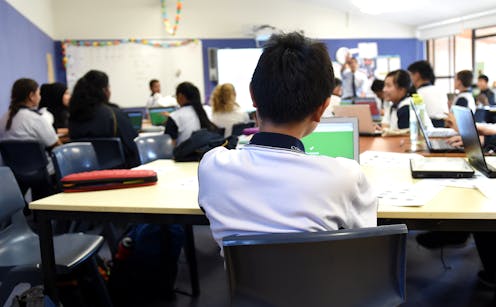
Paul Miller/AAP

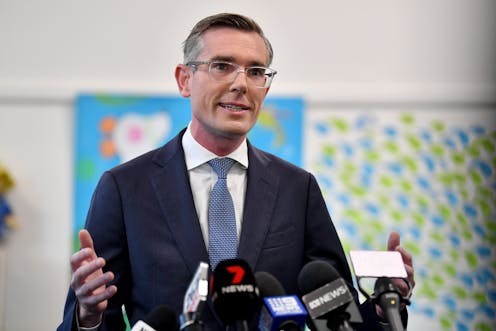
NSW is in the middle of overhauling its approach to suspensions and expulsions.

Under a proposed plan due to start in term 4, students can only be sent home a maximum of three times a year. This is designed to reduce the high number of sanctions against vulnerable children in public schools. But it has been met with opposition from teachers, who say it will increase safety risks when managing disruptive students.

This comes amid a wider debate about how to approach student discipline, which continues to be one of the most difficult issues in Australian schools. The views about student behaviour are diverse and often passionate, with some arguing students should be “punished”.

Unfortunately these views do not always reflect the research, which shows tough approaches make student disengagement worse.


Read more:
Why suspending or expelling students often does more harm than good


What is school exclusion?

Suspensions and expulsions are traditionally used by schools to manage problematic student behaviour.

They are given to students who disrupt the “good order” of schools or threaten others’ safety. Schools use suspensions to help change unproductive student behaviours or allow time for other strategies to be implemented to help avoid repeat situations.

Exclusions vary across Australia. They can either be for a short time, a long time, or they can even be permanent.

State and territory legislation and departmental discipline policies provide guidance on how schools should prevent and respond to problematic student behaviours around Australia.

Recent data from states indicates school exclusions are on the rise. For example, in Western Australia there was a new high of 18,068 suspensions in 2021, an increase of 13% from 2020.

5 issues that need more attention

We are researching how and why Australian schools use exclusionary practices – like suspensions – to manage disorderly students.

Policymakers and schools need to give more attention to the following issues when it comes to discipline and behaviour.

1. Some groups of students are suspended more often

Research over the past three decades has consistently shown suspensions and expulsions disproportionately target students from diverse or minority backgrounds. This is particularly the case for those with a disability or those from specific racial, ethnic and class backgrounds.

For example, in NSW in 2021, while 3.3% of all students were suspended, 10% of Aboriginal students and 8.4% of all students with disability were suspended.

This is not just the case in Australia, but also in the United States, United Kingdom and New Zealand.


Read more:
NSW wants to change rules on suspending and expelling students. How does it compare to other states?


2. We don’t have the full picture

Official statistics provided by education departments offer a publicly available account as to the number of students schools have suspended and expelled from schools.

However, these figures do not always present an accurate picture. Students can be excluded from the classroom in other ways, that are not captured in official data.

For example, schools might let students remain on the school grounds for partial or full days, but not let them join their peers for lessons. This allows schools to “maintain statistical respectability”.

3. What else is going on in students’ lives?

Often discussions on how to manage students’ behaviour focus on responding to the individual’s academic failure, behaviour or disinterest in school. They don’t look at the broader complexities of their lives.

When looking at whether suspension or exclusion is an appropriate discipline technique, schools should consider the likely impact on a child’s life chances, especially for marginalised children. Will a suspension put at risk the chances of the student completing school? Will the student be supervised while they are not allowed to attend school?

Understanding how poverty and other forms of social inequality contribute to behaviour in schools is important.

There are many other ways to manage students’ behaviour that are more supportive and can lead to more positive outcomes for the school, students and families. For example, teaching students how to manage conflict or how to manage their anger.

4. Make students feel valued

Research tells us students value schools which make trust, respect and care central to everything that happens there.

If we are going to help students connect to schooling, we need to look at the deeper causes of student disengagement. This means understanding and attending to students who feel like they do not matter or do not fit in or feel like their interests are not recognised.

This requires a commitment from schools to connect to student’s lives and communities as the foundation for curriculum design and learning.

Treating teachers like professionals and giving them the time and resources to plan engaging and differentiated lessons is critical. This also involves talking and listening to what young people have to say.

5. The broader political context

Schools of course exist in a broader social and political climate. In Australia, the trend in education has been to prioritise individuals and individualism over the public good.

At the broader level, this has seen an emphasis on standards, performance and national testing.

At the micro level, this encourages schools to view problem student behaviours as the responsibility of individuals. So this means there is a focus on blaming “disruptive” students, “dud” teachers or “negligent” parents, rather than look at the influence of broader public policy settings.

So, while the NSW government is making positive steps, there is still so much more to be done to improve our approach to student discipline.


University of South Australia researcher Olivia Yearsley contributed to the research on which this piece is based.

The Conversation

Anna Sullivan receives funding from the Australian Research Council. She is Board Chair and Director of the Media Centre for Education Research Australia.

barry.down@unisa.edu.au receives funding from the Australian Research Council.

Bruce Johnson receives funding from the Australian Research Council. He is also a serving member of the ARC’s College of Experts.

Jamie Manolev is a member of the Australian Association for Research in Education.

Neil Tippett receives funding from the Australian Research Council

Janean Robinson does not work for, consult, own shares in or receive funding from any company or organisation that would benefit from this article, and has disclosed no relevant affiliations beyond their academic appointment.

ref. If Australian schools want to improve student discipline, they need to address these 5 issues – https://theconversation.com/if-australian-schools-want-to-improve-student-discipline-they-need-to-address-these-5-issues-187993

Inflation isn’t the 6.1% they say it is – for many of us, it is much lower

Source: The Conversation (Au and NZ) – By Ben Phillips, Associate Professor, Centre for Social Research and Methods, Director, Centre for Economic Policy Research (CEPR), Australian National University

Shutterstock

We learnt last week inflation is officially 6.1% – way above the average over the past 20 years of 2.5%. This is right in the middle of the Reserve Bank’s 2-3% target band.

But although the rate is now 6.1%, not everybody faces it. It depends on what you buy.


And there’s one big anomaly right now.

The “basket” of goods and services whose prices the Bureau of Statistics uses to work out the consumer price index is dominated by one item, one most Australians rarely buy.

It is what the bureau calls “new dwelling purchase by owner-occupiers”.

This is mostly the cost of building a new home (excluding the cost of the land) and also the cost of major renovations, but not repairs.

We rarely build a house, and rarely pay up front

Even though very few Australians pay this cost in any given year, and some never pay it, it makes up almost 9% of the total basket, a heavier weight than any other single item in the Consumer Price Index.

By way of comparison, bread – a product most households buy every day – makes up only 0.53% of the index. “New dwelling purchase” makes up 8.67%.

New dwelling purchase gets such a big weight because it is so expensive, sometimes as much as half a million dollars or more. Like most other items in the consumer price index, bread is cheaper.

We buy bread more often, but it scarcely counts

Normally when the price of “new dwelling purchase” isn’t moving by much (or by much more than other prices) it doesn’t much move the index.

But material and labour shortages mean that over the past year alone, the cost of new dwelling purchase has jumped by more than 20%. In the June quarter it was responsible for almost a third – 0.5 points – of the 1.8% increase in the entire consumer price index.

If your interest is the change in household cost of living, the inclusion of the cost of buying a new house is a problem as the very few people who pay it mostly don’t pay it upfront. They take out a loan which they pay off slowly.

Measured differently, costs didn’t rise 6.1%

Before 1998 the bureau used a different so-called “outlays” approach to measuring inflation that measured payments made to gain access to goods and services.

The resulting weight of housing in the index was much lower.

The bureau still uses the outlays method to calculate separately-published living cost indexes published on Wednesday.

Using these indexes, ANU modelling suggests about 80% of households had a living cost increase below the consumer price index of 6.1%.

The median (typical) increase over the past year is 4.7%, meaning half of households had increases in living costs below 4.7%.

Half of us faced less than 4.7%

Among the households whose living costs have climbed by less than 6.1% would be almost all of those headed by people on the JobSeeker unemployment benefit.

The cost of living for these households climbed by 5%.

Yet in September this year the benefit will increase in total by the increase in the consumer price index, meaning that for once the living standards of households receiving those benefits will move ahead.

Wage earner living costs have increased by just 4.6%, suggesting wage increases in line with the consumer price index would also leave them ahead.


Read more:
Inflation hasn’t been higher for 32 years. What now?


Our modelling suggests high income families suffered a cost of living increase of only 4.5%, compared to 4.9% for lower income families.

For the moment, the lower living cost indexes are a better guide to changes in the cost of living than the consumer price index.

In time, as the increases in the cost of new dwellings subside, the difference will become less stark. Indeed, as mortgage rates increase over the year growth in the living cost indexes might exceed the consumer price index.


Read more:
What’s in the CPI and what does it actually measure?


The Conversation

Ben Phillips does not work for, consult, own shares in or receive funding from any company or organisation that would benefit from this article, and has disclosed no relevant affiliations beyond their academic appointment.

ref. Inflation isn’t the 6.1% they say it is – for many of us, it is much lower – https://theconversation.com/inflation-isnt-the-6-1-they-say-it-is-for-many-of-us-it-is-much-lower-187973

Jane Goodall joins Barbie’s ‘inspiring women’ series: the strange evolution of an iconic doll

Source: The Conversation (Au and NZ) – By Katie Pickles, Professor of History, University of Canterbury

Getty Images

In news many probably never expected to see, no-frills, outdoorsy, animal behaviour expert and conservation activist Jane Goodall has become a Barbie doll (accompanied by her famous chimpanzee, David Greybeard).

Jane Goodall speaking at a conference in 2020.
Getty Images

As the latest member of toymaker Mattel’s “Barbie Inspiring Women Series” honouring historical and contemporary heroines, she joins aviator Amelia Earhart, NASA mathematician and physicist Katherine Johnson and artist and political activist Frida Kahlo.

The range was launched on International Women’s Day in 2018, part of Mattel’s response to mothers’ concerns about their daughters’ role models. Others in the series include civil rights activist Rosa Parks, disability advocate Helen Keller, author Maya Angelou, medical reformer Florence Nightingale and suffragist Susan B. Anthony.

Each doll comes with information about their namesake’s achievements and influence. Instead of being generic plastic bodies to be clothed and posed, the dolls were now pitched as “real” women, with Mattel engaged in “shining a light on empowering role models past and present in an effort to inspire more girls”.

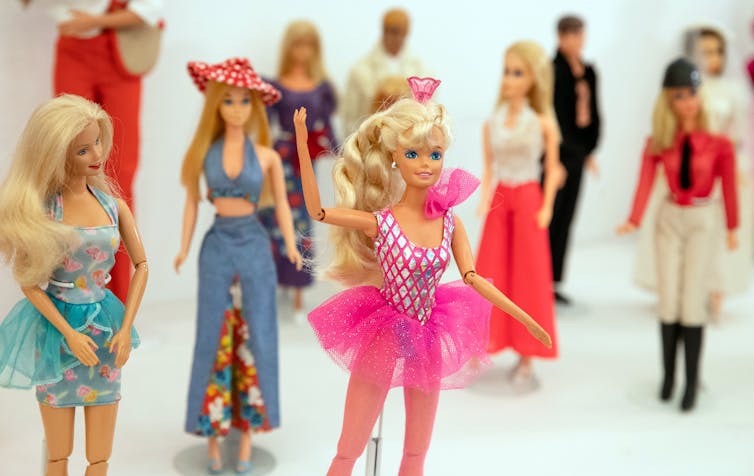
Collection of Barbie dolls
The plastic ideal: Barbie dolls have been criticised for promoting an idealised, white body type that reflected women’s subservient place in society.
Getty Images

What makes a heroine?

Barbie has certainly come a long way since she was first manufactured in 1959 and became synonymous with what feminists saw as the objectification and commodification of women.

But the fact some of the world’s most famous and groundbreaking women – who sought careers outside their physical appearance – were now being re-imagined as plastic dolls also interested me professionally.

My new book, Heroines in History: A Thousand Faces, examines the patterns that underpin the construction of heroines over the past 200 years. In it I argue that representations of women who have rebelled, rocked, shaken and changed the world are constrained through casting them as either “super-womanly” or “honorary men”.

Taking the individual stories of women, including those now appearing as Barbies, I explore a series of archetypal themes, revealing how heroines are produced by the hetero-sexist societies that surround them.


Read more:
Barbie at 60: instrument of female oppression or positive influence?


Despite many advances for women, the persistence and reinvention of heroic iconography for women continues to value image over substance. And because of their iconic appeal, throughout history it has been common for heroines to be used for commercial purposes.

In the 19th century, for example, British sea heroine Grace Darling’s image appeared on chocolate boxes and was used to advertise soap. Since her death in 1954, Frida Kahlo’s face has promoted everything from tequila to lip gloss. And Marilyn Monroe’s image has endured to sell any number of products.

Antithesis of feminism?

So the appropriation of heroic women of substance as plastic Barbies should not surprise us.

Dolls have a long and rich history, after all. They’ve appeared as representational figures, including gods and royalty, or dressed in distinct costumes representing national identities. They’ve served as lucky charms and voodoo talismans.


Read more:
Barbie doll that honors Ida B. Wells faces an uphill battle against anti-Blackness


As they evolved from eclectic homemade rag, woollen and wooden figures to mass-produced commercial objects, they became important in children’s gender role play. Rehearsing for their adult years, boys played with toy soldiers, action figures and superheroes, while girls had baby dolls to tend to and model figures to dress and groom alluringly.

In a sense, then, the Inspiring Women series can be seen as a positive development, encouraging empowerment by including a diverse range of ethnicities to appeal to girls whose communities were previously not represented as Barbies.

Overall, however, Barbie has a lot of work to do to overcome her image as the antithesis of the feminist goal of freeing girls and women from lives that cast them, in the words of writer Simone de Beauvoir, as “living dolls”.

Barbie doll in black and white stripped swimsuit.
The first Barbie was created in 1959 by Ruth Handler, an American businesswoman.
Chesnot/Getty Images

In 1991, the author Susan Faludi even defined feminism by referencing Mattel’s famous product:

It is the simply worded sign hoisted by a little girl in the 1970 Women’s Strike for Equality: I AM NOT A BARBIE DOLL.

Barbie dolls have also been criticised by social scientists for promoting a white, idealised body type that advanced a kind of compulsory heterosexuality and subservience. The call was for women to escape inferior lives as “sex objects” and instead to pursue “real” lives and be recognised for their achievements.

And yet some women even underwent plastic surgery to mimic the Barbie body. As the feminist writer Martine Delvaux saw it, “Barbie is the image of what happens to women, their invisible and silent murder.”


Read more:
Why the curvy new Barbie is good news for your little girl


Can dolls freighted with this much cultural baggage really honour inspiring women or serve as feminist role models? Or might it be better to view them as examples of what I term “designer feminism” – somewhere image and substance collide, but where valuing appearance ultimately underpins and contains achievement?

The clothing of these dolls may symbolise real lives, but underneath there is still a plastic body.

The Conversation

Katie Pickles receives funding from Royal Society Te Apārangi James Cook Fellowship.

ref. Jane Goodall joins Barbie’s ‘inspiring women’ series: the strange evolution of an iconic doll – https://theconversation.com/jane-goodall-joins-barbies-inspiring-women-series-the-strange-evolution-of-an-iconic-doll-187839

Would Carlotta, Australia’s most celebrated drag queen, have made it on RuPaul’s Drag Race?

Source: The Conversation (Au and NZ) – By Joanna McIntyre, Senior Lecturer in Media Studies, Swinburne University of Technology

After the first season last year wobbled on its heels, the second season of RuPaul’s Drag Race Down Under began last weekend.

In becoming the global beacon of drag, Drag Race has set new ideals for what it means to do drag. But while Drag Race may have brought drag into the global media centre, in Australia drag has long been celebrated in the mainstream.

Australia’s most enduring and adored drag celebrity has been a stalwart of Australian show business for almost 60 years: Carlotta.

Long before Drag Race, Carlotta (the stage name of Carol Byron) was foundational in establishing a specifically Aussie mode of drag that both queer and straight Australians embrace – one that is outlandish, flamboyant, irreverent and “ocker”.


Read more:
RuPaul’s Drag Race is still figuring out how to handle gender and race


Disappointment down under

Earlier this year, RuPaul made headlines describing Australian drag queens as “more ratchet” – meaning Australian drag is cruder and bawdier than US or UK drag.

Perhaps accidentally, RuPaul astutely identified a point of tension between Drag Race expectations and the localised relationship Australia has with drag culture.

Australia has its own drag aesthetics, histories and celebrities, often associated with a certain Aussie sense of humour.

In many ways, Carlotta epitomises typical characteristics of Aussie drag. She is glamorous, extravagant and charming – but also forthright and down to earth.

As Carlotta has told us of Australian drag’s mainstream popularity:

I think if [Australian] drag queens weren’t so ‘ocker-ish’ then it never would have worked, actually, in this country […] It’s a kind of sense of humour. They understand that sense of humour, straight Australians do. And if they don’t then they have a plum in their mouth!

An Australian drag icon, over many decades Carlotta helped foster middle Australia’s longstanding affection for drag, while always maintaining her connection to queer communities.

The queen of Kings Cross

Queer drag began its sashay into mainstream Australian culture in the 1960s via the widespread fame of the queer cabaret troupe Les Girls.

Based in Sydney’s then-notorious red light district, Kings Cross, Les Girls was a glamorous cabaret with sequins and feather boas abounding. The alluring “twist” was that all the beautiful, bedazzled showgirls onstage were “actually” queer men.

Les Girls garnered an international following and became a trendy Sydney attraction popular with straight Australians. This queer spectacle gave Carlotta the platform that would see her become one of Australia’s most treasured national celebrities.

Carlotta also became Australia’s first transgender celebrity. In the early 1970s, her gender confirmation surgery became fodder for the Australian press.

With her striking looks and engaging manner, she soon found her way onscreen.

Carlotta featured in a selection of documentaries about Sydney’s drag scene, notably The Glittering Mile and The Naked Bunyip.

She made history in 1973 as the first “out” trans person in the world to play a trans character on television, causing a stir when she appeared in six episodes of the risqué Australian serial Number 96.

By the 1990s, Carlotta was a household name in Australia.

Although initial media interest may have treated her as a curiosity because of her gender, Carlotta as a cultural presence became something much more than that.

Priscilla, queen of Aussie drag

When the three drag queens of The Adventures of Priscilla, Queen of the Desert flounced onto screens and into the hearts of Australians in 1994, Carlotta’s place in Australian drag history was solidified. She was the direct inspiration for the beloved character Bernadette, a showgirl drag performer and trans woman.

Coming full circle, Carlotta has paid homage to Priscilla with her own outback touring cabaret shows.

As her drag legacy matured, Carlotta became a mainstream media darling.

In the 1990s and 2000s, she was a panellist on the daytime chat show Beauty and the Beast. From 2013, she was a regular guest panellist on Studio 10. She has been a special guest on A Current Affair, This is Your Life, Come Dine with Me and One Plus One.

The biopic Carlotta was released by the ABC in 2014, tracing her life from childhood in Balmain and mapping how Carlotta the showgirl rose to fame. The project extended Carlotta’s cultural impact, supported by extensive marketing and airing in a family-friendly timeslot on a Sunday night.

Carlotta’s acceptance as a mainstream celebrity in line with her unwavering alliance with queer culture was exemplified in 2020 when she was named a Member of the Order of Australia in the Australia Day Honours List for significant service to the performing arts and the LGBTIQ+ community.

Diversifying the future of Australian drag

Carlotta’s influence on queer drag representations in the Australian mainstream is clear – from the sequined showgirls who are a mainstay of the Sydney Mardi Gras, to the warm reception genderqueer reality star Courtney Act has received.

It is impossible to say how Carlotta would have fared on Drag Race, as she was such a singular sensation in her youth.

Despite the powerful impacts Carlotta’s influence has had on promoting inclusivity, this now default mode of Aussie drag remains limited. Australian drag is more dynamic and diverse than we see in mainstream representations. Absent from much mainstream drag imagery are the many drag kings and gender diverse drag performers.

Drag Race Down Under faces a challenge of marrying the ideals of the governing reality television franchise with those of Australia’s own drag culture.

Perhaps in the same way Carlotta has influenced Australian culture, it is time for Drag Race to think about its role in expanding how Australians understand drag beyond our mainstream exposure.


Read more:
Thanking Carlotta – a pioneer for sex and gender diversity


The Conversation

Joanna McIntyre receives funding from the Australian Children’s Television Foundation (ACTF).

Damien O’Meara does not work for, consult, own shares in or receive funding from any company or organisation that would benefit from this article, and has disclosed no relevant affiliations beyond their academic appointment.

ref. Would Carlotta, Australia’s most celebrated drag queen, have made it on RuPaul’s Drag Race? – https://theconversation.com/would-carlotta-australias-most-celebrated-drag-queen-have-made-it-on-rupauls-drag-race-187260

It’s official: the Murray-Darling Basin Plan hasn’t met its promise to our precious rivers. So where to now?

Source: The Conversation (Au and NZ) – By Richard Kingsford, Professor, School of Biological, Earth and Environmental Sciences, UNSW Sydney

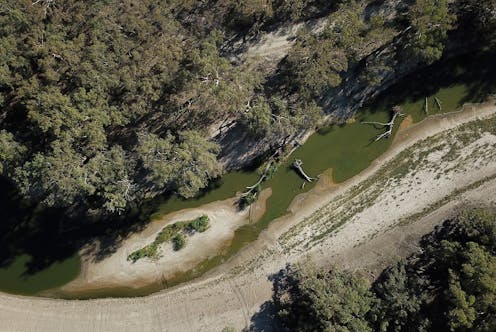
Dean Lewins/AAP

A long-awaited report released on Tuesday found the amount of water promised to river environments under the Murray-Darling Basin Plan “cannot be achieved” under current settings. In short, the plan is failing on a key target.

The water is essential to protecting plants, animals and ecosystems along Australia’s most important river system.

One part of the plan stipulates that by 2024, 450 billion litres of water – a small proportion of the overall target – should be recovered and returned to rivers, wetlands and groundwater systems. This should be achieved through water efficiency programs funded by the Commonwealth.

But just two years out from the deadline, only 2.6 billion litres, or about 0.5% of this water, has actually been delivered. The findings have reignited debate about the Murray-Darling Basin – a running sore for which treatments abound, but seemingly no cure exists.

Before the May election, Prime Minister Anthony Albanese pledged to deliver the Murray-Darling Basin Plan. But yesterday’s report, prepared by independent experts, casts serious doubt on whether that promise can be kept. The basin’s focus on a sustainable future is still a way off, and only political will can fix it.


Read more:
Australia, it’s time to talk about our water emergency


headshot of blonde woman in light yellow jacket
Political will is needed to fix the Murray Darling Basin Plan. Pictured: Federal Environment and Water Minister Tanya Plibersek.
Mick Tsikas/AAP

What’s this all about?

You could be forgiven for not having read Tuesday’s report, which bore the repellent title “Second review of the Water for the Environment Special Account”. It reflects the arcane and impenetrable jargon surrounding water management in the basin which hinders public understanding of this crucial policy area.

The plan involves “water recovery targets” to be met by “efficiency and constraints measures”. But what does that all mean?

Irrigators and other water users extract water from the rivers, streams and aquifers of the Murray-Darling Basin. Over the years, too much water has been extracted, which has left the basin in poor condition.

The A$13 billion Murray-Darling Basin Plan was meant to address this problem. Passed into law in 2012 under the Gillard Labor government, it promised to deliver 3,200 billion litres of water to the environment each year, by buying back water allocated to extractors and retaining it in the river system.

The goal comprised two targets for water to be delivered to the environment each year: 2,750 billion litres as soon as possible, and an additional 450 billion litres later, if it did not cause significant socio-economic impact. To do the latter, the federal government established a $1.8 billion Commonwealth fund to invest in water efficiency projects that would deliver water back to the environment.

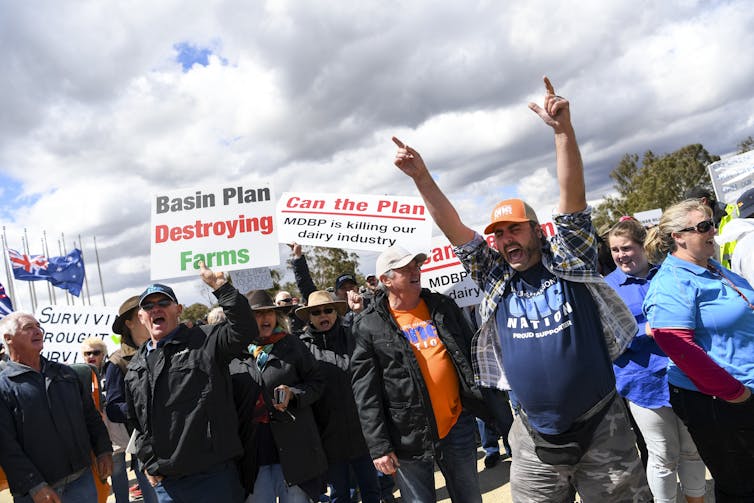
Complicating matters, irrigators and others were opposed to water buybacks. In 2015, the Coalition government put a stop to the practice, despite its proven cost-effectiveness compared to alternatives such as subsidising dams and channels under efficiency programs.

men yell and gesture during protest
Irrigators and others were opposed to water buybacks.
Lukas Coch/AAP

Water savings were to come from measures such as improving water efficiency on farms, and funding irrigators to reduce evaporation from dams by building them deeper.

But engineering does not easily replace ecological complexity shaped over millennia. Making water move more quickly down a river produces casualties: the creeks and wetlands and groundwater systems that rely on it.

Major efficiency projects have been exposed as inadequte. They predominantly just move environmental water from one part of the basin to the other, at significant public cost.

So what’s the upshot of all this? According to Tuesday’s report, under current efficiency measures only 60 billion litres of water can be returned to the basin environment by 2024. What’s more, the original target of 2,750 billion litres has not yet been achieved.


Read more:
We looked at 35 years of rainfall and learnt how droughts start in the Murray-Darling Basin


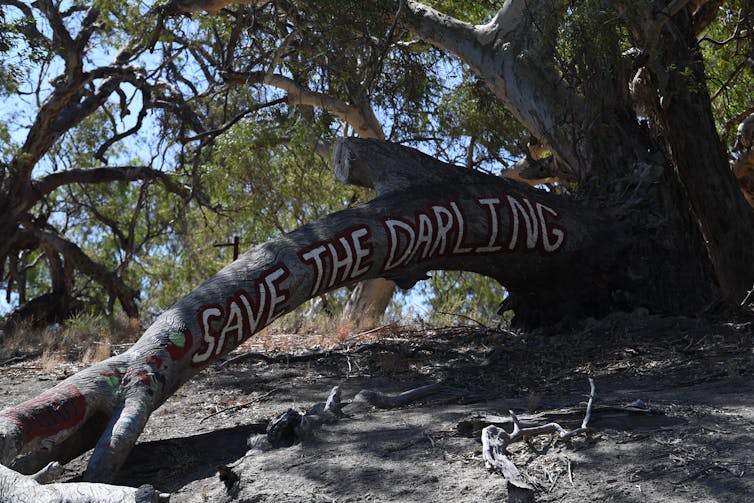
Riverside tree with branch painted 'save the Darling'
The Coalition claimed its policy would not harm the river system.
Dean Lewins/AAP

Our rivers remain in trouble

After all this effort and debate, the health of the Murray-Darling Basin continues to degrade.

The State of the Environment report released this month found water extraction and drought left water levels at record lows in 2019. Rivers and catchments are mostly in poor condition, and native fish populations fell by more than 90% in the past 150 years.

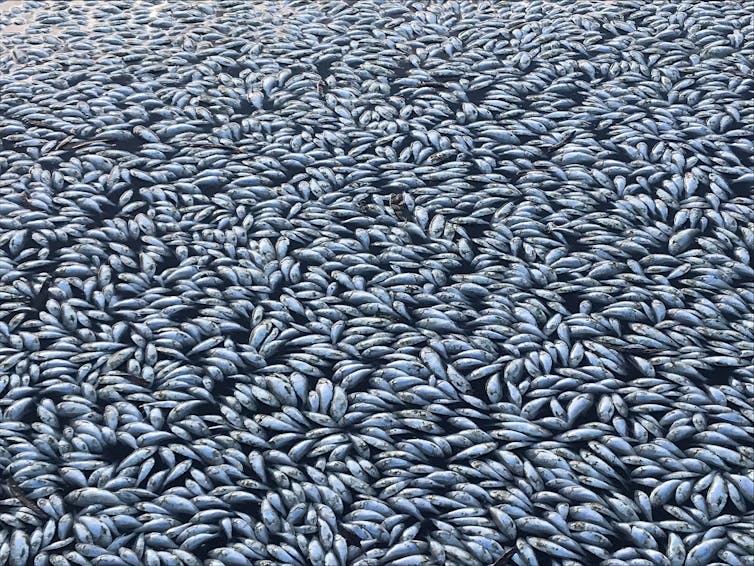
Who could forget the disaster of late 2018 and early 2019, when millions of fish died at Menindee Lakes? That disaster was associated with low river flows, from the drought exacerbated by over-extraction.

First Nations peoples, river communities and others that rely on healthy rivers have also borne the costs of this policy failure.

Recent rainfall and flooding has bought breathing space, but drought will return, and climate change is projected to make the basin drier.

Other factors are denying rivers the water they need. They include water theft and poor policy – such as the NSW government’s commitment to let water be harvested from floodplains, against warnings by its own advisers.


Read more:
Robber barons and high-speed traders dominate Australia’s water market


dead white fish float on water
Thousands of fish died at Menindee Lake after low river flows.
GRAEME MCCRABB

Finding political will

A crucial aspect not covered in the report is the lack of credible information on how much water is actually recovered by water efficiency programs. An independent audit on this is urgently needed.

And there remain opportunities to implement more efficient and cost-effective ways of recovering water for the environment. This could include buying back water from willing irrigators, while recognising the potential local economic effects.

It’s a politically difficult move – sure to attract opposition from the Nationals, as well as the NSW and Victorian governments.

But the health of the Murray-Darling Basin is essential for all Australians. As this latest report shows, our politicians must finally find the will to secure the basin’s future.

The Conversation

Richard Kingsford receives funding from State and Commonwealth Governments, including the Murray-Darling Basin Authority, as well as philanthropic funding. He is also a member of the Wentworth Group of Concerned Scientists. He is a member of the Society for Conservation Biology, Birdlife Australia and Ecological Society of Australia.

ref. It’s official: the Murray-Darling Basin Plan hasn’t met its promise to our precious rivers. So where to now? – https://theconversation.com/its-official-the-murray-darling-basin-plan-hasnt-met-its-promise-to-our-precious-rivers-so-where-to-now-188074

Pelosi’s visit to Taiwan raises temperatures, but it’s in everyone’s interest to cool them down again

Source: The Conversation (Au and NZ) – By Tony Walker, Vice-chancellor’s fellow, La Trobe University

AAP/EPA/Taiwan Presidential Palace handout

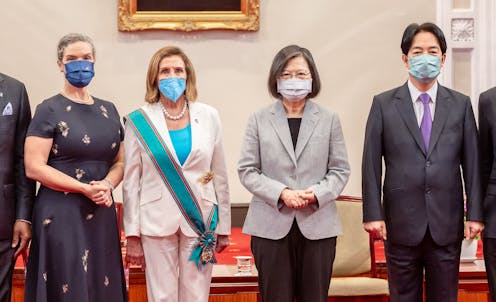
US Speaker of the House Nancy Pelosi’s provocative visit to Taiwan has been ill-timed from the perspective of China’s leader Xi Jinping.

In seeking to further consolidate his hold on power ahead of a National Party Congress in November, Xi needs to demonstrate that he is in command.

The Pelosi visit challenges Xi’s strongman narrative domestically at a time when he will be seeking the support of his colleagues in the Central Committee of the Chinese Communist Party for a third term as party secretary.


Read more:
Trump took a sledgehammer to US-China relations. This won’t be an easy fix, even if Biden wins


If nothing else, the Pelosi mission illustrates the limitations on Xi’s pledge to return Taiwan peacefully to mainland control as part of his declared policy of “national rejuvenation” into a modern superpower. This goes some way towards explaining Beijing’s reaction to a visit to Taiwan by a member of the US Congress, albeit one who ranks third in the hierarchy behind President Joe Biden and Vice President Kamala Harris.

There are two other factors at play. The first is suspicion in Beijing that the Biden administration is steering away from the US’s longstanding policy of “strategic ambiguity”, or avoiding confronting the “what if” issue if China threatened Taiwan militarily.

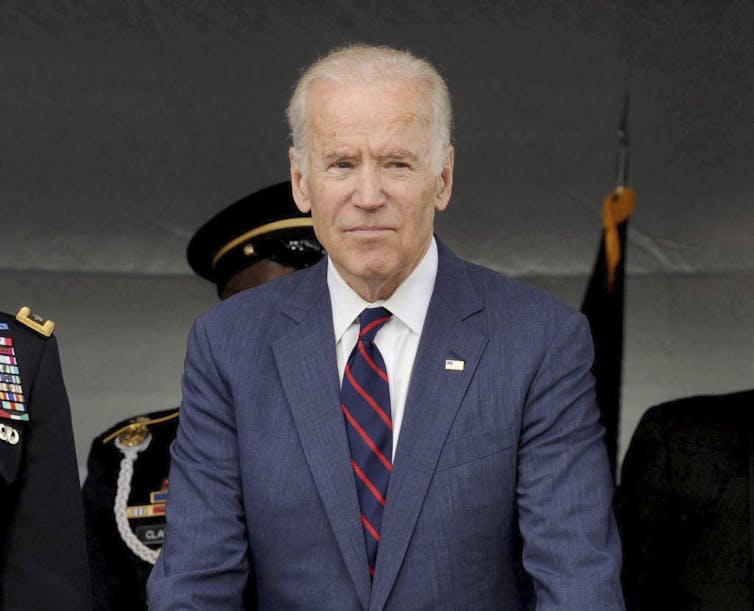
Biden has appeared on occasions to suggest that the US would come to Taiwan’s defence in the event of overt Chinese aggression. This exchange between a reporter and Biden in May will have concerned Beijing:

Reporter: You didn’t want to get involved in the Ukraine conflict militarily for obvious reasons. Are you willing to get involved militarily to defend Taiwan, if it comes to that?

Biden: Yes.

Reporter: You are?

Biden: That’s the commitment we made.

The White House subsequently sought to walk back Biden’s statement, as it has done on other occasions when he has appeared to step away from a policy fudge on Taiwan.

US President Joe Biden has appeared to suggest that the US would come to Taiwan’s aid China if necessary.
AAP/AP/zz/Dennis Van Tine/STAR MAX/IPx

The episode will have gnawed away at China’s confidence in the US commitment to a “one China policy” negotiated in various communiques and enshrined in the normalisation agreement of 1979. That agreement, under the Carter administration, extended full diplomatic recognition to China and severed normal ties with Taiwan.

Congress then enacted the Taiwan Relations Act, which allowed commercial and cultural relations and authorised the supply of weapons to bolster Taiwan’s defences. This has been a sore point with Beijing.


Read more:
The risks of a new Cold War between the US and China are real: here’s why


A second important element in China’s reaction almost certainly rests with Xi’s own exposure to the Taiwan issue as deputy party secretary in Fuzhou Province and political commissar in the People’s Liberation Army reserve during the rolling crises with the US in 1995-96. Fuzhou is the province nearest to Taiwan.

In 1995, China was infuriated when President Bill Clinton authorised a visit to the US by Lee Teng-hui, leader of Taiwan’s Nationalist Party. This reversed a 15-year ban on visits by Taiwanese leaders.

Lee’s election the following year in Taiwan’s first free presidential election further displeased Beijing. This contributed to tensions throughout 1995-96 during which China conducted military exercises off Taiwan and the US sent warships to deter Chinese aggression.

Tensions between the US and China over Taiwan have surfaced sporadically since, but this latest eruption is probably the most serious given the high political stakes involved for Xi. However, it is in neither China’s nor the US’s interests to allow a military confrontation, although the possibility of an accident leading to a wider conflagration cannot be excluded.

It is notable that in its military exercises in and around Taiwan, China has been careful to avoid crossing a median line in the strait itself. The Chinese military has conducted air and sea drills. These have included live fire exercises.

Pelosi has been unrepentant about the diplomatic fallout her visit has caused. In a Washington Post opinion piece released after she landed in Taiwan, she criticised Beijing for increasing tensions with Taiwan. She also took Beijing to task for its “brutal crackdown” on political dissent in Hong Kong, and its mistreatments of its Muslim Uighur minority.

White House spokesman John Kirby noted the administration’s misgivings about Pelosi’s visit. “What we don’t want to see is this spiral into any kind of a crisis or conflict,” Kirby said Tuesday. “There is no reason to amp this up.” This is particularly so at a moment when the US has been urging Beijing to use its influence with Moscow to end the war in Ukraine.


Read more:
US-China relations were already heated. Then coronavirus threw fuel on the flames


So far, threats of Chinese retaliation have involved restrictions on some Taiwanese exports to China, and a melodramatic summoning in the middle of the night of US Ambassador to Beijing Nicholas Burns to the Foreign Ministry to receive a dressing down. The Pelosi visit may herald greater tensions in the US-China relationship, but a possible face-to-face meeting between Biden and Xi will be aimed at lowering temperatures.

From Australia’s perspective, there’s no benefit to be gained from tensions between its security guarantor and the destination for one-third of its exports. This was reflected in remarks by Prime Minister Anthony Albanese in an interview with CNN when asked whether Australia would defend Taiwan militarily:

Australia supports a one-China policy, but we also support the status quo when it comes to the issue of Taiwan. It is not in the interests of peace and security to talk up those issues of potential conflict.

Albanese’s remarks mirror those of the White House spokesman regarding Taiwan, a reflection that it is not in anyone’s interests for this dispute to escalate.

The Conversation

Tony Walker is a board member of The Conversation.

ref. Pelosi’s visit to Taiwan raises temperatures, but it’s in everyone’s interest to cool them down again – https://theconversation.com/pelosis-visit-to-taiwan-raises-temperatures-but-its-in-everyones-interest-to-cool-them-down-again-188144

It’s official: the Murray-Darling Basin Plan has delivered little to our precious rivers. So where to now?

Source: The Conversation (Au and NZ) – By Richard Kingsford, Professor, School of Biological, Earth and Environmental Sciences, UNSW Sydney

Dean Lewins/AAP

A long-awaited report released on Tuesday found the amount of water promised to river environments under the Murray-Darling Basin Plan “cannot be achieved” under current settings. In short, the plan is failing on a key target.

The water is essential to protecting plants, animals and ecosystems along Australia’s most important river system.

One part of the plan stipulates that by 2024, 450 billion litres of water – a small proportion of the overall target – should be recovered and returned to rivers, wetlands and groundwater systems. This should be achieved through water efficiency programs funded by the Commonwealth.

But just two years out from the deadline, only 2.6 billion litres, or about 0.5% of this water, has actually been delivered. The findings have reignited debate about the Murray-Darling Basin – a running sore for which treatments abound, but seemingly no cure exists.

Before the May election, Prime Minister Anthony Albanese pledged to deliver the Murray-Darling Basin Plan. But yesterday’s report, prepared by independent experts, casts serious doubt on whether that promise can be kept. The basin’s focus on a sustainable future is still a way off, and only political will can fix it.


Read more:
Australia, it’s time to talk about our water emergency


headshot of blonde woman in light yellow jacket
Political will is needed to fix the Murray Darling Basin Plan. Pictured: Federal Environment and Water Minister Tanya Plibersek.
Mick Tsikas/AAP

What’s this all about?

You could be forgiven for not having read Tuesday’s report, which bore the repellent title “Second review of the Water for the Environment Special Account”. It reflects the arcane and impenetrable jargon surrounding water management in the basin which hinders public understanding of this crucial policy area.

The plan involves “water recovery targets” to be met by “efficiency and constraints measures”. But what does that all mean?

Irrigators and other water users extract water from the rivers, streams and aquifers of the Murray-Darling Basin. Over the years, too much water has been extracted, which has left the basin in poor condition.

The A$13 billion Murray-Darling Basin Plan was meant to address this problem. Passed into law in 2012 under the Gillard Labor government, it promised to deliver 3,200 billion litres of water to the environment each year, by buying back water allocated to extractors and retaining it in the river system.

The goal comprised two targets for water to be delivered to the environment each year: 2,750 billion litres as soon as possible, and an additional 450 billion litres later, if it did not cause significant socio-economic impact. To do the latter, the federal government established a $1.8 billion Commonwealth fund to invest in water efficiency projects that would deliver water back to the environment.

Complicating matters, irrigators and others were opposed to water buybacks. In 2015, the Coalition government put a stop to the practice, despite its proven cost-effectiveness compared to alternatives such as subsidising dams and channels under efficiency programs.

men yell and gesture during protest
Irrigators and others were opposed to water buybacks.
Lukas Coch/AAP

Water savings were to come from measures such as improving water efficiency on farms, and funding irrigators to reduce evaporation from dams by building them deeper.

But engineering does not easily replace ecological complexity shaped over millennia. Making water move more quickly down a river produces casualties: the creeks and wetlands and groundwater systems that rely on it.

Major efficiency projects have been exposed as inadequte. They predominantly just move environmental water from one part of the basin to the other, at significant public cost.

So what’s the upshot of all this? According to Tuesday’s report, under current efficiency measures only 60 billion litres of water can be returned to the basin environment by 2024. What’s more, the original target of 2,750 billion litres has not yet been achieved.


Read more:
We looked at 35 years of rainfall and learnt how droughts start in the Murray-Darling Basin


Riverside tree with branch painted 'save the Darling'
The Coalition claimed its policy would not harm the river system.
Dean Lewins/AAP

Our rivers remain in trouble

After all this effort and debate, the health of the Murray-Darling Basin continues to degrade.

The State of the Environment report released this month found water extraction and drought left water levels at record lows in 2019. Rivers and catchments are mostly in poor condition, and native fish populations fell by more than 90% in the past 150 years.

Who could forget the disaster of late 2018 and early 2019, when millions of fish died at Menindee Lakes? That disaster was associated with low river flows, from the drought exacerbated by over-extraction.

First Nations peoples, river communities and others that rely on healthy rivers have also borne the costs of this policy failure.

Recent rainfall and flooding has bought breathing space, but drought will return, and climate change is projected to make the basin drier.

Other factors are denying rivers the water they need. They include water theft and poor policy – such as the NSW government’s commitment to let water be harvested from floodplains, against warnings by its own advisers.


Read more:
Robber barons and high-speed traders dominate Australia’s water market


dead white fish float on water
Thousands of fish died at Menindee Lake after low river flows.
GRAEME MCCRABB

Finding political will

A crucial aspect not covered in the report is the lack of credible information on how much water is actually recovered by water efficiency programs. An independent audit on this is urgently needed.

And there remain opportunities to implement more efficient and cost-effective ways of recovering water for the environment. This could include buying back water from willing irrigators, while recognising the potential local economic effects.

It’s a politically difficult move – sure to attract opposition from the Nationals, as well as the NSW and Victorian governments.

But the health of the Murray-Darling Basin is essential for all Australians. As this latest report shows, our politicians must finally find the will to secure the basin’s future.

The Conversation

Richard Kingsford receives funding from State and Commonwealth Governments, including the Murray-Darling Basin Authority, as well as philanthropic funding. He is also a member of the Wentworth Group of Concerned Scientists. He is a member of the Society for Conservation Biology, Birdlife Australia and Ecological Society of Australia.

ref. It’s official: the Murray-Darling Basin Plan has delivered little to our precious rivers. So where to now? – https://theconversation.com/its-official-the-murray-darling-basin-plan-has-delivered-little-to-our-precious-rivers-so-where-to-now-188074

How do epidurals work? And why is there a global shortage of them?

Source: The Conversation (Au and NZ) – By Alicia Dennis, Professor MBBS, PhD, MPH, PGDipEcho, FANZCA, GAICD, The University of Melbourne

Shutterstock

More than 40% of people who give birth in Australia use epidurals for pain relief during labour. That amounts to around 92,000 epidurals a year. They’re also used for pain relief outside obstetrics.

However, Australia is feeling the effects of a global supply shortage of particular brands of epidural kits. While this shortage was expected to be resolved at the end of last month, a spokesperson for the Therapeutic Goods Administration (TGA) told The Conversation it would continue beyond July.

Health authorities are reportedly distributing stock to affected hospitals and working to secure additional kits, while the TGA is investigating how it can “allow [the] supply of alternative products to meet market demand”.

In the meantime, Victorian and NSW health authorities recommend conserving epidural kits for obstetric patients.

Remind me, what’s an epidural?

An epidural for people in labour is an anaesthetic procedure used to deliver nerve-blocking drugs, via a tiny plastic tube, into the “epidural space” in the back, through which spinal nerves travel. They’re performed by anaesthetists, who are specialist doctors.

The doctor first identifies the epidural space using a needle and a specially designed syringe, then passes a small tube into the space.

Graphic of the epidural procedure and anatomy involved
Nerve-blocking drugs are delivered into the epidural space in the back.
Shutterstock

Medications – usually local anaesthetics and morphine-like drugs – are administered down the tube. Pain relief is usually achieved within about 20 minutes.

Why is there a shortage of epidurals?

In April, one of the leading international manufacturers of epidurals announced a temporary disruption to its supply.

This specific supply chain issue relates to the lack of supply of blue dye some manufacturers use to colour the special low-friction plunger-style epidural syringe. This syringe is important because anaesthetists use it to identify the epidural space in the patient’s back.

The syringe is usually filled with saline and connected to the hollow epidural needle, which is then slowly advanced into the back.

The anaesthetist places constant pressure on the syringe and when the epidural space is located, there is a “loss of resistance”. The saline passes easily into it, opening up this space so the epidural catheter can smoothly be passed into it.

Screenshot of epidural kits with blue syringe
Dye to colour the blue syringes is in low supply.
Screenshot from smiths-medical.com

The familiar blue colour of the low-friction syringe distinguishes it from other syringes, which are clear and used for injecting medications. The colouring of the syringe ensures ease of identification and safety so the correct syringe is used for the procedure.

This unpredictable and sudden loss of a brand of epidural kits has put global pressure on other manufacturers of epidural kits, and their component parts, resulting in a worldwide shortage.

How epidurals have changed

Epidurals have been commonly used for pain relief in childbirth for more than 40 years although the history of epidurals dates back over 100 years.

When first introduced, epidurals were known as “heavy epidurals”, where high-dose anaesthetic drugs blocked the large muscle nerves as well as the smaller pain, temperature and balance nerves. Blocking the nerves to the muscles meant patients were unable to move about their birthing bed, making it difficult to push, and making them feel heavy.


Read more:
Explainer: what is an epidural for labour?


Contemporary epidurals now use low doses of anaesthetic that only block pain, temperature and balance nerves. This type of epidural provides excellent pain relief while also enabling movement in bed because the muscles in the legs are not effected.

Modern epidurals can be “topped up” with high-dose anaesthetics to make an epidural suitable to provide anaesthesia for caesarean birth.

However, most caesarean births (69%) use spinal anaesthesia. These use different equipment to epidurals, so caesareans would not be impacted by epidural supply issues.

Epidurals were once used for pain relief for patients undergoing a wide range of surgeries outside obstetrics. While they’re still used to help very unwell patients – for example, after major high-risk cancer surgeries and trauma surgeries – they’re less commonly used and provide fewer benefits for less ill patients.

To manage pain, many of these patients can have a spinal morphine injection, or opioid drugs such as morphine administered via a drip.

Preparing for global supply shortages

In addition to nitrous oxide, and morphine injections, there are some other drug alternatives to epidurals for pain relief in labour. These include the morphine-like drugs, administered via a drip, providing person-controlled analgesia (PCA) or a very low-dose spinal anaesthetic.

However, global supply chain problems will remain with us for many years because of pandemics, wars and natural disasters, and we need to be prepared for them. This means having alert systems to identify sooner potential supply chain issues. Part of this process is to observe what is happening in other countries.

The sooner we know of problems, such as epidural kit supply issues, the sooner we can start to rationalise their distribution. In doing so, such shortages can be anticipated and mitigated. We need to lessen the impact of the supply reduction on those who need it most and ensure people don’t face the potential trauma of uncontrolled labour pain.


Read more:
Three simple things Australia should do to secure access to treatments, vaccines, tests and devices during the coronavirus crisis


The Conversation

Alicia Dennis receives research funding from the Australian and New Zealand College of Anaesthetists (ANZCA) and the University of Melbourne. She is a member of Scientific Affairs Committee World Federation of Societies of Anaesthesiologists, the Australian Society of Anaesthetists, the Australian Institute of Company Directors, the Australian Medical Association, Women on Boards, and Society of Anesthesiology and Perinatology. Alicia Dennis previously received funding from the National Health and Medical Research Council (NHMRC) Australia
Alicia Dennis is a full time staff specialist and Director of Anaesthesia Research at the Royal Women’s Hospital, Parkville,
Australia. In July 2022 she participated in a Department of Health (Victoria) Epidural Catheter Supply Chain Issue meeting as a clinical subject matter expert.

ref. How do epidurals work? And why is there a global shortage of them? – https://theconversation.com/how-do-epidurals-work-and-why-is-there-a-global-shortage-of-them-187640

Space debris is coming down more frequently. What are the chances it could hit someone or damage property?

Source: The Conversation (Au and NZ) – By Fabian Zander, Senior Research Fellow in Aerospace Engineering, University of Southern Queensland

Brad Tucker, Author provided

In the past week alone, we’ve seen two separate incidents of space debris hurtling back to Earth in unexpected places.

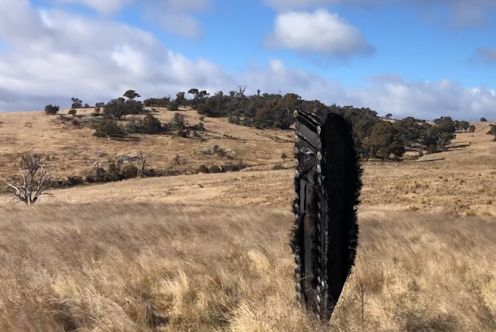
On Saturday there was the uncontrolled re-entry of a Chinese Long March 5B rocket over Malaysia. Yesterday outlets reported on some spacecraft parts that turned up in regional New South Wales – now confirmed to be from a SpaceX Crew-1 mission.

As the space industry grows, it’s safe to say such incidents will only become more frequent – and they could pose a risk. But how much of a risk, exactly?

A Long March 5B rocket is staioned, ready for takeoff.
The Long March 5B Y3 carrier rocket was launched from the Wenchang Space Launch Centre in China’s Hainan province on July 24. Some of its debris fell into the Indian Ocean on Saturday.
Li Gang/AP

Chunks of metal hurtling towards us

Space debris refers to the leftover components of a space system that are no longer required. It might be a satellite that has reached the end of its life (such as the International Space Station), or parts of a rocket system that have fulfilled their purpose and are discarded.


Read more:
The International Space Station is set to come home in a fiery blaze – and Australia will likely have a front row seat


To date, China has launched three Long March 5B rockets, and each has been deliberately left in an uncontrolled orbit. This means there was no way of knowing where they would land.

As for the SpaceX debris found in the Snowy Mountains, SpaceX de-orbits its rocket parts in a controlled fashion, and designs other components to burn up upon re-entry into Earth’s atmosphere. But as you can see from the latest news, these things don’t always go to plan.

So how dangerous is space debris, really?

Well, as far as we know only one person has ever been hit by it. Lottie Williams, a resident of Tulsa, Oklahoma, was struck by a piece in 1997. It was about the size of her hand and thought to have come from a Delta II rocket. She picked it up, took it home and reported it to authorities the next day.

However, with more and more objects going into space, and coming back down, the chances of someone or something being struck are increasing. This is especially true of large, uncontrolled objects such as the Long March 5B.

Of the three times this model of rocket has been launched:

So should I be worried?

There are many different estimates of the chances of space debris hitting someone, but most are in the one-in-10,000 range. This is the chance of any person being hit, anywhere in the world. However, the chances of a particular person being hit (such as you or me) is in the order of one in a trillion.

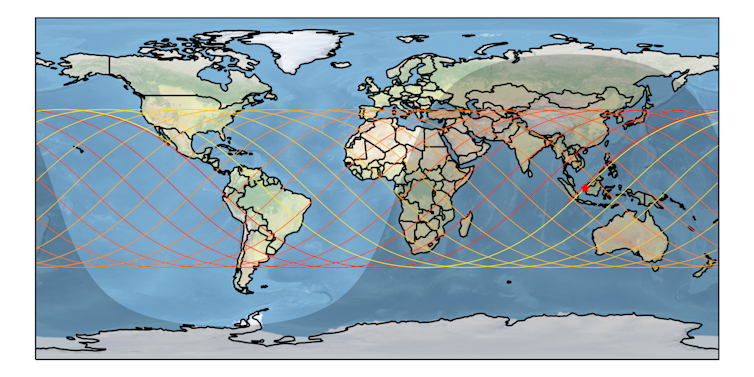
There are several factors behind these estimates, but let’s just focus on one key one for now. The image below shows the orbital path the recent Long March 5B-Y3 rocket followed for its final 24 hours (different objects take different orbital paths), as well as its re-entry location marked in red.

As you can see, the rocket orbits above land for a substantial amount of time.

Orbits of the last 24 hours of the Long March 3B-Y3 stage. The red star indicates the approximate re-entry location.

Specifically, in these orbits the vehicle spends about 20% of its time over land. A broad estimate tells us 20% of land is inhabited, which means there is a 4% chance of the Long March 5B re-entry occurring over an inhabited area.

This may seem pretty high. But when you consider how much “inhabited land” is actually covered by people, the likelihood of injury or death becomes significantly less.

The chance of damage to property, on the other hand, is higher. It could be as high as 1% for any given re-entry of the Long March 5B.

Also, the overall risk posed by space debris will increase with the sheer number of objects being launched and re-entering the atmosphere. Current plans of companies and space agencies around the world involve many, many more launches.

China’s Tiangong Space Station is due to be finished by the end of the year. And South Korea recently became the seventh country to launch a satellite payload heavier than one tonne – with plans to expand its space sector (along with Japan, Russia, India and United Arab Emirates).

It’s highly likely the chances of being hit are only going to go up (but will hopefully remain very small).

How can we be prepared?

Two questions come to mind:

  1. can we predict debris re-entries?
  2. what can we do to reduce risk?

Let’s start with predictions. It can be extremely challenging to predict where an object in an uncontrolled orbit will re-enter Earth’s atmosphere. The general rule of thumb says uncertainty of the estimated re-entry time will be between 10% and 20% of the remaining orbital time.

This means an object with a predicted re-entry time in ten hours will have an uncertainty margin of about one hour. So if an object is orbiting Earth every 60-90 minutes, it could enter pretty much anywhere.

Improving on this uncertainty margin is a big challenge and will require significant amounts of research. Even then, it’s unlikely we’ll be able to predict an object’s re-entry location more accurately than within a 1,000km range.

Ways to reduce risk

Reducing risk is a challenge, but there are a couple of options.

First, all objects launched into an Earth orbit should have a plan for safe de-orbiting into an unpopulated area. This is usually the SPOUA (South Pacific Ocean Uninhabited Area) – also known as the “spacecraft cemetery”.

There’s also the option to carefully design components so they completely disintegrate upon re-entry. If everything burns up when it hits the upper atmosphere, there will no longer be a significant risk.

There are already some guidelines requiring space debris risk minimisation, such as the United Nations guidelines for the Long-term Sustainability of Outer Space Activities – but the mechanisms for these aren’t specified.

Moreover, how do these guidelines apply internationally, and who can enforce them? Such questions remain unanswered.

In summary, should you be concerned about being hit by space debris? For now, no. Is further research on space debris important for the future? Absolutely.


Read more:
It’s not how big your laser is, it’s how you use it: space law is an important part of the fight against space debris


The Conversation

Fabian Zander receives funding from the Australian Research Council.

ref. Space debris is coming down more frequently. What are the chances it could hit someone or damage property? – https://theconversation.com/space-debris-is-coming-down-more-frequently-what-are-the-chances-it-could-hit-someone-or-damage-property-188062

Pacific nations are extraordinarily rich in critical minerals. But mining them may take a terrible toll

Source: The Conversation (Au and NZ) – By Nick Bainton, Associate Professor, The University of Queensland

Getty

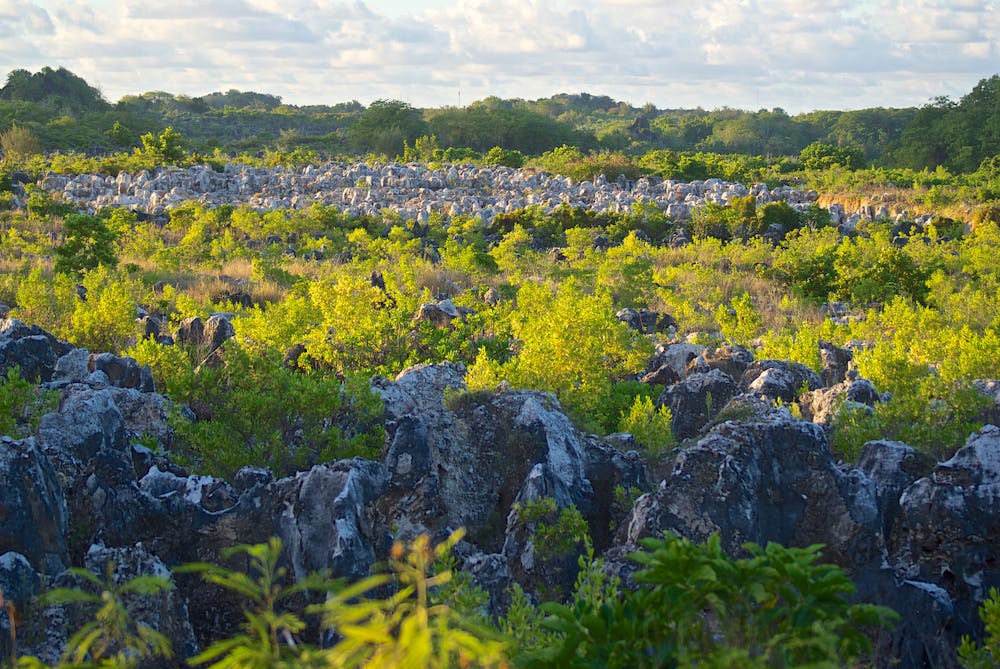
Plundering the Pacific for its rich natural resources has a long pedigree. Think of the European companies strip-mining Nauru for its phosphate and leaving behind a moonscape.

There are worrying signs history may be about to repeat, as global demand soars for minerals critical to the clean energy transition. This demand is creating pressure to extract more minerals from the sensitive lands and seabeds across the Pacific. Pacific leaders may be attracted by the prospect of royalties and economic development – but there will be a price to pay in environmental damage.

As our new research shows, this dilemma has often been ignored due to the urgency of the green transition. But if we fail to address the social and environmental costs of extraction, the transition will not be fair.

exhausted phosphate mine Nauru
Around 80% of Nauru’s surface was strip-mined for phosphate, leaving a moonscape behind.
Getty

Trouble in paradise: climate change and globalisation

Nations across the Pacific now face a double threat: climate change and the consequences of extractive industries. Rising sea levels, more powerful cyclones and droughts threaten low-lying nations, while the legacy of the worst effects of global resource extraction industries lives on.


Read more:
Pacific Islands are back on the map, and climate action is not negotiable for would-be allies


Now they face a resurgence. You might not associate the small islands of the Pacific with mining, but the region contains enormous deposits of minerals and metals needed for the global energy transition.

Under the soils of New Caledonia lie between 10 and 30 per cent of the world’s known reserves of nickel, a critical component of the lithium-ion batteries which will power electric cars and stabilise renewable-heavy grids. In Papua New Guinea and Fiji there are vast undeveloped copper reserves. It’s estimated cobalt – another key battery component – is found in the deep sea around the Pacific in quantities several times larger than land resources.

New Caledonia nickel
New Caledonia has huge resources of nickel.
Getty

Sensing this opportunity, miners from Australia, China and elsewhere are lining up to take advantage of global demand while positioning themselves as vital contributors to climate action.

You might think this is a win-win – the world gets critical minerals, and the Pacific gets royalties. While some Pacific nations like Papua New Guinea and New Caledonia see an opportunity for economic development, the problem is that historically, many Pacific states have struggled to control the excesses of the extractive industries and convert their natural mineral wealth into broad based human development.

Yes, building low-carbon energy systems to power a low-carbon economy will require vast amounts of minerals and metals for new technologies and energy infrastructure.

But supplying these resources shouldn’t come at the expense of communities and environments.


Read more:
Deep-sea mining may wipe out species we have only just discovered


Our research reveals that extractive projects planned or underway in the Pacific are located in some of the world’s most complex and volatile environmental, social and governance conditions in the world.

Think of the historic and current tensions in Solomon Islands or the separatist movement radicalised by mining in Papua New Guinea’s Bougainville region. Increased pressure to mine in combustible regions is risky.

Will this place pressure on Pacific unity?

Pacific leaders understand these risks. At last month’s forum, they endorsed a new 30 year strategy for the Pacific, which speaks to this double bind. The strategy declares the urgent need to act on climate while also calling for careful stewardship of the region’s natural resources to boost socio-economic growth and improve the lives of their citizens.

Tourism campaigns by Pacific nations often show pictures of happy people in lush environments. But the reality is much of the region is chronically unequal.

Many Pacific leaders want development opportunities and resent being told what to do with their natural resources by the leaders of developed nations. Others, however, are concerned about the damage mining may do to their environment.

This emerging divide is why dreams of regional unity remain elusive. Despite calls for a unified Pacific voice, different leaders have very different views about mining.

Underwater coral reef
Pacific seas have mineral wealth – and sensitive ecosystems.
Getty

In recent months, we’ve seen the Federated States of Micronesia join Samoa, Fiji and Palau in calling for a moratorium on deep sea mining, while Nauru, Tonga, Kiribati and Cook Islands have already backed seabed projects.

In February this year, Cook Islands granted three licences to explore for polymetallic nodules – lucrative lumps of multiple metals – in the seas to which they have exclusive economic rights.

You can see the appeal – an estimated 8.9 billion tons of nodules lie strewn around the ocean floor. These deposits are worth an estimated $A14.4 trillion. Trillion, not billion. This is the world’s largest and richest known resource of polymetallic nodules within a sovereign territory, and a massive share of the world’s currently known cobalt resources.

These nodules are so rich in four essential metals needed for batteries (cobalt, nickel, copper and manganese) that they are often called “a battery in a rock”.

Meanwhile the Papua New Guinean government is considering enormous new gold and copper mines which lie in ecologically and socially vulnerable areas. Locals, environmentalists and experts have already sounded warnings over a project planned at the headwaters of the untouched Sepik River. No one wants to see a repeat of the Ok Tedi mining disaster.

Similar debates are raging over whether to reopen the lucrative but disastrous Panguna copper mine on Bougainville Island, as local leaders look for ways to fund their forthcoming independence from Papua New Guinea.

Policymakers must pay attention

To date, Australian policymakers have not considered the risks of huge new mining operations across the Pacific. In part, this is because some of these mines are framed as a key way to tackle climate change, the largest threat to the region.

This has to change. Action on climate change is vital – but the Pacific’s peoples must actually benefit from the mining of their resources. If this mineral rush isn’t done carefully, we could see the profits disappear overseas – and the environmental mess left behind for Pacific nations to deal with.

This challenge comes at a time of heightened geostrategic competition, as China moves into the region seeking influence and raw materials ranging from wood to fish to minerals.

If Australia’s new government is serious about using its sizeable regional influence to tackle climate change in the Pacific, it must ensure it is done justly and fairly. We must focus our policy attentions on the complicated knot of clean energy and intensified mining.


Read more:
More clean energy means more mines – we shouldn’t sacrifice communities in the name of climate action


The Conversation

Nick Bainton received funding for this reseach from the British Academy.

Emilka Skrzypek received funding for this research from the British Academy.

ref. Pacific nations are extraordinarily rich in critical minerals. But mining them may take a terrible toll – https://theconversation.com/pacific-nations-are-extraordinarily-rich-in-critical-minerals-but-mining-them-may-take-a-terrible-toll-187172

Government set to legislate its 43% emissions reduction target after Greens announce support

Source: The Conversation (Au and NZ) – By Michelle Grattan, Professorial Fellow, University of Canberra

The government is now assured it will secure its legislation to enshrine its 43% 2030 emissions reduction target, after Greens leader Adam Bandt pledged his party would support it in both houses.

The government has the numbers on its own in the House of Representatives. In the Senate, it only needs one more vote, apart from the Greens. It expects the vote of ACT crossbencher David Pocock. The bill will be voted on in the lower house this week and will go to the Senate next month.

Bandt’s announcement follows long negotiations with the government. Despite the eventual agreement, the government refused to budge on the minor party’s demand for a ban on new coal and gas mines.

The Greens’ decision came after it took two party room meetings to reach their position. Bandt said it was a “consensus” decision.

The government doesn’t require legislation to implement its policy, but has been anxious to put the target into law to send a strong signal including to prospective investors.

Prime Minister Anthony Albanese said after Bandt’s announcement that while the legislation wasn’t necessary, it “locks in” progress.

The Australian Chamber of Commerce and Industry said the announcement “is in Australia’s national interest and will provide certainty for business”.

The opposition formally decided this week to vote against the legislation.

Bandt told the National Press Club that Labor’s refusal to stop new mines was “ultimately untenable”.

He said Labor might not get a United Nations climate summit, which it will be seeking, if it was willing to allow new projects.

“We will pull every lever at our disposal,” to make a ban happen, he said.

“Labor is set to undo parliament’s work by opening new coal and gas projects, unless we stop them,” Bandt said.

“Over the next six to 12 months the battle will be fought on a number of fronts. We will comb the entire budget for any public money, any subsidies, hand outs or concessions going to coal and gas corporations and amend the budget to remove them.

“We will push to ensure the safeguard mechanism safeguards our future by stopping new coal and gas projects. We will push for a climate trigger in our environment laws.

“We will continue to fight individual projects around the country, like Beetaloo, Scarborough and Barossa. I call on all Australians to join this battle. This battle to save our country, our communities and indeed our whole civilisation from the climate and environment crisis.”

Meanwhile, one of the Liberal moderates, Warren Entsch, has given strong support to the Coalition decision to inquire into nuclear power as a potential policy. Entsch told Sky that as coal went out of the system, we had to have “something to back up” renewable alternatives.

Territories legislation sails through lower house

Legislation to allow the ACT and the Northern Territory to make laws on voluntary assisted dying has passed the House of Representatives by 99 to 37.

MPs on both sides had a conscience vote. Leader of the House Tony Burke was among several Labor members to vote against the bill, which overturns a 1997 ban on the territories legislating for euthanasia. Liberal leader Peter Dutton and Nationals leader David Littleproud were both yes votes.

The bill will go to the Senate next month, where it is expected to pass.

The Conversation

Michelle Grattan does not work for, consult, own shares in or receive funding from any company or organisation that would benefit from this article, and has disclosed no relevant affiliations beyond their academic appointment.

ref. Government set to legislate its 43% emissions reduction target after Greens announce support – https://theconversation.com/government-set-to-legislate-its-43-emissions-reduction-target-after-greens-announce-support-188153

Has Labor learnt from the failure of the cashless debit card?

Source: The Conversation (Au and NZ) – By Elise Klein, Associate professor, Australian National University

Legislation passed through the House of Representatives last night to wind down the cashless debit card (CDC), which was introduced into the East Kimberley and Ceduna in 2016 and since applied at other trial sites around Australia. The card compulsorily quarantines 80% of social security payments received by working-aged people.

Implementing the CDC has cost more than $170 million.

Yet research shows it does more harm than good to people forced to use it. First Nations organisations, social service organisations, and others have consistently argued against its expansion.

The Albanese government says winding back the CDC will “leave no one behind”. But its legislation leaves more than 23,000 mainly First Nations people in the Northern Territory – as well as people in other parts of the country – on the BasicsCard, a longer-standing compulsory income management scheme run by the Department of Social Services.


Read more:
‘I don’t want anybody to see me using it’: cashless welfare cards do more harm than good


We have known since 2014 that the BasicsCard fails to meet its stated objectives. Research published by the ARC Centre of Excellence for Children and Families over the Life Course found its use correlated with reductions in birth weight, falls in school attendance and other negative impacts on children.

These are significant findings. The research suggests several possible explanations for reduced birth weight, including income management’s potential role in increasing stress on mothers, disrupting financial arrangements within the household and creating confusion about how to access funds.

Strong opposition

Given the government’s talk of respect and reconciliation, it’s hard to know why it would continue a program introduced as part of the Howard government’s racially discriminatory and widely criticised Northern Territory Emergency Response.

When the Morrison government attempted to move people in the Northern Territory from the BasicsCard onto the CDC, First Nations leaders were clear about how damaging the BasicsCard has been, and recommended genuinely voluntary schemes instead.

As shadow minister, Linda Burney supported that position. “Our fundamental principle on the basics card and the cashless debit card [is that] it should be on a voluntary basis,” she said earlier this year, adding:

If people want to be on those sorts of income management, then that’s their decision. It’s not up to Labor or anyone else to tell them what to do. At the moment it’s compulsion and that’s not Labor’s position.

Yet the legislation introduced into the house last week maintains compulsory income management via the BasicsCard, promising only consultation. It leaves the door wide open for continued compulsory income management. As social security minister Amanda Rishworth said in her second reading speech, the bill allows her:

to determine, following further consultation with First Nations people and my colleagues, how the Northern Territory participants on the CDC will transition, and the income management arrangements that will exist.

Policy from above

We have learnt a lot from the CDC, including how government claims that communities can decide about who goes on and off income management are often used to legitimise the continuation of compulsory income management.

Both the CDC and BasicsCard are ideas that were developed and lobbied for by the Australian political and business elite. They never came from the “community”.

The BasicsCard was one of many measures implemented under the Northern Territory Emergency Response, which included the suspension of the Racial Discrimination Act and the use of the Australian Defence Force.


Read more:
What happens when you free unemployed Australians from ‘mutual obligations’ and boost their benefits? We just found out


The CDC, on the other hand, was a key recommendation of mining billionaire Andrew Forrest’s 2014 National Indigenous Jobs and Training Review. Since it was introduced, Forrest and his Minderoo Foundation have advocated for its extension.

The government used much-needed funding for local services as a sweeetener to gain communities’ agreement for the CDC to proceed. In some cases, the threat of funding cuts was used in negotiations. In contrast, proposals from communities themselves for appropriate community- and Aboriginal-controlled services had long been overlooked.

Real consultation?

Governments routinely use “consultation” as a label for what are essentially information sessions, with no alternatives on the table, in an effort to signal broad-based support. In the case of the CDC, calls for the program to be aborted or changed dramatically were long ignored.

Those who were forced onto the BasicsCard as part of the intervention were not offered a consultation process by the Howard government. And now, the Labor government has also failed to embrace their views and opted for a path of more consultation.

If Labor forces people to stay on the BasicsCard, what has it learnt from the CDC? Governments have spent more than $1 billion implementing the two failed compulsory income management schemes, and the new government has implicitly committed to spending more. Imagine what else this money could be going towards.

The Conversation

Elise Klein does not work for, consult, own shares in or receive funding from any company or organisation that would benefit from this article. She is a member of the Accountable Income Management Network.

ref. Has Labor learnt from the failure of the cashless debit card? – https://theconversation.com/has-labor-learnt-from-the-failure-of-the-cashless-debit-card-188065

More money and smarter choices: how to fix Australia’s broken NHMRC medical research funding system

Source: The Conversation (Au and NZ) – By Tony Blakely, Professor of Epidemiology, Population Interventions Unit, Centre for Epidemiology and Biostatistics, Melbourne School of Population and Global Health, The University of Melbourne

Shutterstock

Most health research in Australia is funded by the National Health and Medical Research Council (NHMRC), which distributes around $800 million each year through competitive grant schemes. An additional $650 million a year is funded via the Medical Research Future Fund, but this focuses more on big-picture “missions” than researcher-initiated projects.

Ten years ago, around 20% of applications for NHMRC funding were successful. Now, only about 10–15% are approved.

Over the same ten-year period, NHMRC funding has stayed flat while prices and population have increased. In inflation-adjusted and per capita terms, the NHMRC funding available has fallen by 30%.

As growing numbers of researchers compete for dwindling real NHMRC funding, research risks becoming “a high-status gig economy”. To fix it, we need to spend more on research – and we need to spend it smarter.

More funding

To keep pace with other countries, and to keep health research a viable career, Australia first of all needs to increase the total amount of research funding.

Between 2008 and 2010, Australia matched the average among OECD countries of investing 2.2% of GDP in research and development. More recently, Australia’s spending has fallen to 1.8%, while the OECD average has risen to 2.7%.


Read more:
COVID has left Australia’s biomedical research sector gasping for air


When as few as one in ten applications is funded, there is a big element of chance in who succeeds.

Think of it like this: applications are ranked in order from best to worst, and then funded in order from the top down. If a successful application’s ranking is within say five percentage points of the funding cut-off, it might well have missed out if the assessment process were run again – because the process is always somewhat subjective and will never produce exactly the same results twice.

So 5% of the applications are “lucky” to get funding. When only 10% of applications get funding, that means half of the successful ones were lucky. But if there is more money to go around and 20% of applicants are funded, the lucky 5% are only a quarter of the successful applicants.

This is a simplistic explanation, but you can see that the lower the percentage of grants funded, the more of a lottery it becomes.

This increasing element of “luck” is demoralising for the research workforce of Australia, leading to depletion of academics and brain drain.

The ‘application-centric’ model

As well as increasing total funding, we need to look at how the NHMRC allocates these precious funds.

In the past five years, the NHMRC has moved to a system called “application-centric” funding. Five (or so) reviewers are selected for each grant and asked to independently score applications.

There are usually no panels for discussion and scoring of applications – which is what used to happen.

The advantages of application-centric assessment include (hopefully) getting the best experts on a particular grant to assess it, and a less logistically challenging task for the NHMRC (convening panels is hard work and time-consuming).

However, application-centric assessment has disadvantages.

First, assessor reviews are not subject to any scrutiny. In a panel system, differences of opinion and errors can be managed through discussion.

Second, many assessors will be working in a “grey zone”. If you are expert in the area of a proposal, and not already working with the applicants, you are likely to be competing with them for funding. This may result in unconscious bias or even deliberate manipulation of scores.

And third, there is simple “noise”. Imagine each score an assessor gives is made up of two components: the “true score” an application would receive on some unobservable gold standard assessment, plus or minus some “noise” or random error. That noise is probably half or more of the current variation between assessor scores.

Smarter scoring

So how do we reduce the influence of both assessor bias and simple “noise”?

First, assessor scores need to be “standardised” or “normalised”. This means rescaling all assessors’ scores to have the same mean (standardisation) or same mean and standard deviation (normalisation).


Read more:
The NHMRC program grant overhaul: will it change the medical research landscape in Australia?


This is a no-brainer. You can use a pretty simple Excel model (I have done it) to show this would substantially reduce the noise.

Second, the NHMRC could use other statistical tools to reduce both bias and noise.

One method would be to take the average ranking of applications across five methods:

  • with the raw scores (i.e. as done now)
  • with standardised scores
  • with normalised scores
  • dropping the lowest score for each application
  • dropping the highest score for each application.

The last two “drop one score” methods aim to remove the influence of potentially biased assessors.

The applications that make the cutoff rank on all the methods are funded. Those that are always beneath the threshold are not funded.

Applications that make the cut on some tests but fail on others could be sent out for further scrutiny – or the NHMRC could judge them by their average rank across the five methods.

This proposal won’t fix the problem with the total amount of funding available, but it would make the system fairer and less open to game-playing.

A less noisy and fairer system

Researchers know any funding system contains an element of chance. One study of Australian researchers found they would be happy with a funding system that, if run twice in parallel, would see at least 75% of the funded grants funded in both runs.

I strongly suspect (and have modelled) that the current NHMRC system is achieving well below this 75% repeatability target.

Further improvements to the NHMRC system are possible and needed. Assessors could provide comments, as well as scores, to applicants. Better training for assessors would also help. And the biggest interdisciplinary grants should really be assessed by panels.

No funding system will be perfect. And when funding rates are low, those imperfections stand out more. But, at the moment, we are neither making the system as robust as we can nor sufficiently guarding against wayward scoring that goes under the radar.


Read more:
7 things the Australian Research Council review should tackle, from a researcher’s point of view


The Conversation

Tony Blakely was a member of the Peer Review Advisory Committee of the NHMRC, convened in 2021–22 to advise the NHMRC on improving the peer review process. However, this analysis and recommendations are Tony Blakely’s, not a reflection of the final report of the committee.

ref. More money and smarter choices: how to fix Australia’s broken NHMRC medical research funding system – https://theconversation.com/more-money-and-smarter-choices-how-to-fix-australias-broken-nhmrc-medical-research-funding-system-188003

Health care is responsible for 7% of our carbon emissions, and there are safe and easy ways this can be reduced

Source: The Conversation (Au and NZ) – By Scott McAlister, Research Fellow, The University of Melbourne

Shutterstock

While we think of carbon emissions coming from manufacturing and agriculture, we don’t often think of those arising from health care. In Australia, health care is responsible for 7% of national carbon emissions, while globally, health care is responsible for 4.4% of emissions.

If global health care was a country, it would be the world’s fifth largest emitter. The warming resulting from health-care’s emissions in turn cause harm to human health through heatwaves, wildfires, increased mosquito-borne infectious diseases, and undernutrition due to drought and lower fish stock.

In short, treating patients indirectly causes human harm, at odds with the mission of health-care professionals to increase the duration and quality of patients’ lives.


Read more:
Five ways hospitals can reduce their environmental footprint


What can health care do about its emissions?

Analysis of the UK’s National Health Service’s (NHS) emissions shows nearly 45% of its carbon emissions come from purchasing equipment and medicines, with only 10% coming from the electricity and gas needed to run hospitals and other health services.

We don’t currently have detailed data on Australia’s health sector emissions, but assuming we are similar to the UK, reducing emissions will require changes in how health-care professionals provide care.

There are things health care can start doing today to reduce its emissions, while not harming patients.

Scans

Our latest research has shown one MRI scan has a carbon footprint of 17.5kg CO₂ equivalent, which is the same as driving a car 145km, while one CT scan has a footprint of 9.2kg CO₂ equivalent, or driving 76km.

These are significantly higher than X-rays (0.76kg CO₂ equivalent, 6km) and ultrasound (0.53kg CO₂ equivalent, 4km).

While imaging is important in providing information to doctors in many circumstances, it is often unnecessary. For example, studies have shown 36-40% of imaging for lower back pain, and 34-62% of CT scans for lung blood clots are unnecessary. These scans were assessed as unnecessary because they were given to patients who didn’t need them according to evidence-based guidelines or decision rules. Such scans offer little or no benefit to patients, may result in harm, and waste resources.

Man going into CT scanner
One CT scan is the equivalent of driving 76km, and many are unnecessary.
Shutterstock

There are also opportunities to use low-carbon scans instead of high-carbon, such as using ultrasound rather than MRI for shoulder scans.

Other research we have performed has shown the impact of blood tests is between 49-116g CO₂ equivalent per test. While individually small, more than 70 million blood tests are performed annually in Australia. Like imaging, studies have shown 12-44% of blood tests are unnecessary.

Some specific tests are ordered unnecessarily at even higher rates. For example, it’s estimated over 75% of Vitamin D blood tests in Australia are unnecessary, with this costing Medicare more than $80 million annually.


Read more:
Health care has a huge environmental footprint, which then harms health. This is a matter of ethics


Gases

Around 5% of the UK’s healthcare emissions come from anaesthetic gases and metered dose inhalers, commonly called puffers, used for the treatment of asthma.

Anaesthetists can use the clinically equivalent anaesthetic gas sevoflurane (144kg CO₂ equivalent per kilogram) instead of desflurane (2,540kg CO₂ equivalent per kilogram).

Nitrous oxide or laughing gas (265kg CO₂ equivalent) can be excluded from general anaesthesia without harm, and there are calls for a reduction in its use as acute pain relief for childbirth due to its high levels of emissions.

Midwives, however, have cautioned mothers should not be be made to feel guilty about their pain relief choices, and suggested hospitals could introduce nitrous destruction systems to allow its ongoing use.

Woman with a gas mask inhaling with assistance from nurse
Nitrous oxide is often used during childbirth.
Shutterstock

Metered dose inhalers contain hydrofluorocarbons, which are potent greenhouse gases. A patient using a preventer and a bronchodilator to stop wheezing can be safely moved from using metered dose inhaler delivery to the same drugs, delivered using a dry-powder inhaler in most cases.

This shift reduces their annual carbon footprint from 439kg to 17kg CO₂ equivalent. Importantly, it can be achieved without changing health outcomes for patients, as can be seen with 90% of inhalers in Scandinavian countries now being dry-powder, with no change in respiratory outcomes.


Read more:
Climate mitigation – the greatest public health opportunity of our time


Getting health care to net-zero

These are only a few examples of how health care can reduce its emissions while not compromising patient safety or quality of care – either by moving from high carbon to low carbon alternatives, or by reducing unnecessary testing or treatments.

The Australian Medical Association and Doctors for the Environment have called for Australian healthcare to be net-zero by 2040, with an interim emission target of an 80% reduction by 2030.

This can be achieved, but will require both ongoing education of current and future health-care professionals about low-carbon care, and targeted commitments by individual health-care organisations, and federal and state health departments.

The Conversation

Scott McAlister receives funding from the NHMRC.

Alexandra Barratt receives funding from NHMRC and is a member of the NSW Greens.

ref. Health care is responsible for 7% of our carbon emissions, and there are safe and easy ways this can be reduced – https://theconversation.com/health-care-is-responsible-for-7-of-our-carbon-emissions-and-there-are-safe-and-easy-ways-this-can-be-reduced-184170

Most adults with autism can recognise facial emotions, almost as well as those without the condition

Source: The Conversation (Au and NZ) – By Neil Brewer, Matthew Flinders Distinguished Emeritus Professor of Psychology, Flinders University

Shutterstock

Difficulties with social communication and interaction are considered core features of autism. There is a common perception autistic individuals are poor at recognising others’ emotions and have little insight into how effectively they do so.

We are used to seeing these challenges portrayed in popular culture, such as television shows The Good Doctor, Atypical or Love on the Spectrum. And there are exercises and therapies autistic people might do with a psychologist or speech pathologist to try to help them improve at this important social skill.

Yet, the research findings are messy. Some studies have very small sample sizes, others do not control for cognitive ability. Some studies only show participants a limited range of emotions to respond to. Some rely heavily on static images of face expressions or only require multiple-choice responses. Studies designed this way don’t capture the dynamic demands of everyday social interactions.

Our new research sought to overcome these challenges and found little difference between the ability of adults with autism and those without to recognise emotions in others.


Read more:
150 years ago, Charles Darwin wrote about how expressions evolved – pre-empting modern psychology by a century


Two matched groups

For our research, conducted by then doctoral student Dr Marie Georgopoulos, myself, Professor Robyn Young and post-doctoral researcher Dr Carmen Lucas, we studied a relatively large sample of 67 IQ-matched autistic and 67 non-autistic adult participants. We presented them with multiple examples of 12 different face emotion types captured not only in still photographs but also videoed in the context of social interactions. Participants were then able to give open-ended reports of the emotions they saw.

Several key findings emerged. First, emotion type, the way in which the stimuli were presented and the format for providing responses all affected accuracy and speed of emotion recognition. But those variations didn’t affect the differences between autistic and non-autistic groups’ responses.

Second, although emotion recognition accuracy was a little lower for the autistic group, there was substantial overlap in ability between the two groups. Just a small subgroup of the autistic participants performed below the level of the non-autistic group.

Third, the autistic participants responded more slowly, but again there was considerable overlap between the two groups. Although slower responses to others’ emotions might impede social interactions, our study suggests autistic individuals were probably just acting more cautiously in the laboratory setting.

two people talking at a table
Further research could look at how autistic people respond after recognising emotion in others.
Shutterstock

We found there was no evidence that, as a group, autistic individuals were less aware of strengths and weaknesses in their emotion recognition skills than their non-autistic peers. But again, the awareness of individuals within in each group varied substantially.


Read more:
Autism is still underdiagnosed in girls and women. That can compound the challenges they face


Challenging beliefs

These findings challenge some common perceptions about autistic adults’ ability to recognise others’ emotions and their insight into their processing of emotions. The findings also demonstrate previously unacknowledged capabilities of many autistic individuals and remind us that autistic adults are not all the same.

That said, there are many unanswered questions. A full understanding of emotion processing by autistic individuals will require the incorporation of many more elements in future research.

For example, it is possible our findings underestimate autistic individuals’ difficulties with processing emotions. These difficulties might only emerge in the hurly-burly of real-life interactions with others.

So, we will need to develop more sophisticated research methods that still allow us to conduct carefully controlled studies. These studies would seek to accommodate the complexities of everyday interpersonal interactions that not only require processing of faces, but also gestures and voice tone or emphasis at the same time.

In The Good Doctor, Freddie Highmore plays a doctor with autism.


Read more:
Kids on the autism spectrum experience more bullying. Schools can do something about it


The impact of autism

Future research will also need a greater focus on how autistic individuals respond to others’ emotions. Perhaps they can recognise emotions but respond in ways that might compromise the effectiveness of their social exchanges?

We have conducted further research to explore autistic and non-autistic adults’ perceptions of the appropriate ways to respond to different emotions displayed by others. This is but one dimension of what is often referred to as “empathic responding” – knowing what might be considered an appropriate reaction when confronted with another individual who is, for example, sad, angry, or frustrated. However, sensing what an appropriate response is then carrying out that action, or even being motivated to do so, don’t necessarily go hand-in-hand.

Answers to questions like these will be critical for refining interventions and therapies designed to improve social interaction skills in autistic people. Identifying the most important focus for intervention, the most effective procedures and the developmental stages at which such interventions should be implemented, are all important areas for ongoing research.

The Conversation

Neil Brewer receives funding from Australian Research Council

ref. Most adults with autism can recognise facial emotions, almost as well as those without the condition – https://theconversation.com/most-adults-with-autism-can-recognise-facial-emotions-almost-as-well-as-those-without-the-condition-187995

The fix is in: how to restore public faith in government appointments

Source: The Conversation (Au and NZ) – By Justine Nolan, Professor of Law and Justice and Director of the Australian Human Rights Institute, UNSW Sydney

The question of how to restore integrity to public institutions is on the minds of many government officials right now, both on the local and international stage.

Handpicked political appointments to public institutions in Australia, such as the Administrative Appeals Tribunal (AAT), the Australian Human Rights Commission (AHRC), and most recently the selection of John Barilaro for the NSW government’s New York-based trade commissioner, have come under fire. Critics say theses appointments compromise the perception of the bodies’ independence and reduce public confidence in the ability of the appointees to perform their roles.


Read more:
View from The Hill: The challenge of ‘grey’ corruption and creating a culture of integrity


‘Jobs to mates’

Giving “jobs to mates” is an age-old political concept, if one that rarely benefits an institution or those under its protection. A recent report from the Grattan Institute highlighted the often poor performance of political appointees, noting that almost a quarter of the political appointees at the AAT failed to meet their performance targets.

This might sound like a procedural issue, but the AAT is a public institution that conducts reviews of Commonwealth law and makes decisions that affect our daily lives. Don’t we want experts making these decisions rather than someone who has made a huge donation or is politically connected to the government that appointed them?


Read more:
Here’s a simple way to stop governments giving jobs to mates


Politicising public appointments promotes distrust, can compromise performance, and encourages a corrupt culture that prioritises mateship over merit.

Global relevance

On the global stage, the same concerns arise. Respected institutions such as the Office of the United Nations High Commissioner for Human Rights (OHCHR) are coming under pressure from NGOs and human rights practitioners to appoint experts, not political mates, to restore credibility to the world’s most prominent human rights organisation.

Current UN human rights chief, Michelle Bachelet, will step down later this month.
AP

At the UN, the process has recently begun to appoint the next United Nations Human Rights Commissioner – the world’s most senior human rights figure. The vacancy was caused by the unexpected resignation of current commissioner, Michelle Bachelet following her controversial May 2022 visit to China.

On that trip, she was accused of being a pawn in the Chinese government’s efforts to downplay the human rights crisis in Xinjiang and their persecution of the Uyghur population. Her visit was widely critiqued as severely damaging to the credibility of the UN human rights office.

Too often the human rights commissioner role is filled by political appointees, rewarding diplomats or government staff. The recent pressure by human rights organisations calls for the post to be filled by “someone of high moral standing and personal integrity, and who is independent and impartial and possesses competency and expertise in the field of human rights”. where is this quote from? Please linklink text

In other words, these groups want a commissioner who is able to improve the UN’s human rights arm’s credibility.

The way forward

Last week, Attorney-General Mark Dreyfus introduced a bill in parliament that would require senior leadership appointments at the AHRC to be publicly advertised, merit-based, and limited to a maximum of seven years. One may have assumed such efforts at transparency were already in place, but no.

Many recent appointments have been made without an open, merit-based process. These include the 2021 selection of Lorraine Finlay by the Morrison government as Human Rights Commissioner, the 2019 selection of Ben Gauntlett as the Disability Discrimination Commissioner, and the 2013 appointment of Tim Wilson as Human Rights Commissioner.


Read more:
Australia’s ‘A’ rating on human rights is under threat with a handpicked, politically engineered commissioner


This bill is a welcome and essential step towards restoring the AHRC’s credibility and that of other public institutions. However, an open process that promotes transparent, merit-based selection across all political institutions is also necessary to improve public faith.

As the Albanese government considers creating a national integrity commission, it should also establish a transparent, standardised process for overseeing public appointments, including establishing a national public appointments commissioner.

One of the greatest challenges for governments and the public institutions they create is often not the process of lawmaking but implementation of those laws. This makes integrity and transparency in public appointments vital. Without them, these bodies operate much less independently and are less likely to put the interests of the public first.

The Conversation

Justine Nolan does not work for, consult, own shares in or receive funding from any company or organisation that would benefit from this article, and has disclosed no relevant affiliations beyond their academic appointment.

ref. The fix is in: how to restore public faith in government appointments – https://theconversation.com/the-fix-is-in-how-to-restore-public-faith-in-government-appointments-187991

Cooks’ newcomers United look set to take five seats in election

RNZ Pacific

The Cook Islands Parliament looks set for a shake up after today’s general elections.

In preliminary results, the ruling Cook Islands Party has performed solidly — but the new party, United, appears to have secured as many as five seats, while the Pa Enua has returned three independents.

Prime Minister Mark Brown looks set to win a resounding victory in his Takuvaine-Tutakimoa seat — he has very substantial lead over the Democrats contender Davina Hosking-Ashford.

Democrats leader Tina Brown should be safe in her Rakahanga seat, but her deputy William ‘Smiley’ Heather appears to have lost out to the United Party’s Tim Tunui Varu in Ruaau.

The preliminary figures also show United’s Robert Stanley Heather well ahead in Akaoa, and New Zealand netball legend, Margaret Matenga, taking Titikaveka, both at the expense of the Democrats.

Two of the independents in the outer islands were incumbents and they will be joined by Stephen Matapo from Mauke.

This article is republished under a community partnership agreement with RNZ.

Print Friendly, PDF & Email

Article by AsiaPacificReport.nz

NSW government slides further into trouble as Perrottet struggles for clear air

Source: The Conversation (Au and NZ) – By Andy Marks, Pro Vice-Chancellor, Strategy, Government and Alliances, Western Sydney University

AAP/Bianca de Marchi

Clear air is essential ahead of an election. Space to make the case to voters. Room to build positive momentum. And yet, hurtling towards a poll in March 2023, the NSW Liberal-National government is gasping for breath.

Questions over the relinquished New York trade office appointment of former NSW Nationals leader John Barilaro have sucked substantial oxygen from premier Dominic Perrottet’s efforts to renew a 12-year-old administration.

With further revelations likely in upcoming parliamentary hearings and the findings of an independent internal inquiry pending, these issue are far from resolved. The frustration within senior Coalition ranks is palpable. It wasn’t meant to be this way.

Determined to avoid the fate of their federal colleagues, Perrottet and Treasurer Matt Kean set out a comparatively progressive reform agenda in the June state budget.

A big focus on the environment, clean energy, targeted cost-of-living relief and $16.5 billion in programs for women saw the economic blueprint labelled “Australia’s first teal budget”. Clear air abounded.

A shift in the vibe

For a moment, a government wounded less than a year earlier by the loss of a relatively popular leader amid a corruption inquiry looked to have achieved a remarkable turnaround. Even the “it’s not illegal” attitude to pork-barrelling seemed to have been eschewed in favour of participatory funding programs like WestInvest.

A spirit of cooperation was emerging. The premier’s push for federal–state health reform with his Victorian counterpart, Daniel Andrews, added to the perception this was a government capable of embracing a political “vibe shift” and rising above party lines for the greater good.

Other signs of maturity were evident in a shift away from the infrastructure boasts in the run-up to past campaigns. On budget night, the treasurer declared:

We must invest in more than just bricks and steel. We must choose to invest in our greatest asset – our people.

With a fresh and notably “constructive” Labor opposition leader in Chris Minns, NSW voters looked set for a contest-of-ideas election rather than the usual partisan arms race. Both parties, it seemed, had understood and adopted the new politics championed federally by the teals. Yet the Coalition is still struggling to convince onlookers it can meet one of the most critical expectations: integrity.

Across the aisle

NSW Labor is not immune. As news broke of the New York appointment, three former Labor parliamentarians were charged with “misconduct in public office”. More than a decade on the opposition benches has proved a steep learning curve for Labor. The Coalition, on the other hand, appears set for some hard learnings of its own.

The federal election result showed how closely voters watch matters of political integrity. It illustrated too that the harshest judgements are being exercised in the safest of Coalition seats. The teal wave crashed in the areas where incumbency was viewed by some commentators as a right rather than a privilege.

Whether the premier can again find the clear air he so sorely needs remains to be seen. Factional loyalties – in the party former Prime Minister Malcolm Turnbull once declared to be factionless – will be tested. Perrottet may have won the top job with overwhelming party endorsement, but it will only take the drift of one or two key allegiances to undermine his position.

The risk is twofold for the premier. Federal-style disaffection among rusted-on Coalition voters is one thing. Percentage drift in key marginal electorates is another.

The sharp end

In Western Sydney alone, three Liberal-held seats are in play. East Hills and Holsworthy in the southwest intersect with large areas that endured hard lockdown during the worst of the pandemic. There is disquiet. Wendy Lindsay, who holds East hills by a two-party-preferred margin of just 0.5 percentage points, was among a clutch of Coalition MPs reportedly opposing the mandatory vaccination of construction workers from hotspot areas.

In neighbouring Holsworthy, Liberal MP Melanie Gibbons, who made a thwarted bid for preselection in the nearby federal seat of Hughes, announced she would resign at the next election. Labor will undoubtedly marshal significant resources to win back a former heartland area on a 3.3 point margin.

The sharpest challenge for the Coalition might just prove to be the third of those marginal electorates, Penrith. Held by Deputy Premier Stuart Ayres, this outer-western Sydney seat on a margin of 1.5 points is an anchor for the Liberals in Australia’s fastest-growing region, for which Ayres also has ministerial responsibility.


Read more:
NSW has joined China, South Korea and Japan as climate leaders. Now it’s time for the rest of Australia to follow


In his additional role as the trade minister, Ayres has been drawn into scrutiny over the New York appointment. He insists he maintained “arm’s length” distance throughout the process, a position he believes the inquiry will confirm.

However, in the scramble for political clear air, perception often trumps reality. Regardless of the findings of the upper house and internal inquiries, and irrespective of the reset the premier is seeking, the question of integrity is ultimately one that will be answered by voters.

The Conversation

Andy Marks does not work for, consult, own shares in or receive funding from any company or organisation that would benefit from this article, and has disclosed no relevant affiliations beyond their academic appointment.

ref. NSW government slides further into trouble as Perrottet struggles for clear air – https://theconversation.com/nsw-government-slides-further-into-trouble-as-perrottet-struggles-for-clear-air-188018

Troubling new research shows warm waters rushing towards the world’s biggest ice sheet in Antarctica

Source: The Conversation (Au and NZ) – By Laura Herraiz Borreguero, Physical oceanographer, CSIRO

Shutterstock

Warmer waters are flowing towards the East Antarctic ice sheet, according to our alarming new research which reveals a potential new driver of global sea-level rise.

The research, published today in Nature Climate Change, shows changing water circulation in the Southern Ocean may be compromising the stability of the East Antarctic ice sheet. The ice sheet, about the size of the United States, is the largest in the world.

The changes in water circulation are caused by shifts in wind patterns, and linked to factors including climate change. The resulting warmer waters and sea-level rise may damage marine life and threaten human coastal settlements.

Our findings underscore the urgency of limiting global warming to below 1.5℃, to avert the most catastrophic climate harms.

Emperor penguins on East Antarctic Ice Sheet
Warmer waters and sea-level rise may damage marine life and threaten human coastal settlements.
Shutterstock

Ice sheets and climate change

Ice sheets comprise glacial ice that has accumulated from precipitation over land. Where the sheets extend from the land and float on the ocean, they are known as ice shelves.

It’s well known that the West Antarctic ice sheet is melting and contributing to sea-level rise. But until now, far less was known about its counterpart in the east.

Our research focused offshore a region known as the Aurora Subglacial Basin in the Indian Ocean. This area of frozen sea ice forms part of the East Antarctic ice sheet.

How this basin will respond to climate change is one of the largest uncertainties in projections of sea-level rise this century. If the basin melted fully, global sea levels would rise by 5.1 metres.

Much of the basin is below sea level, making it particularly sensitive to ocean melting. That’s because deep seawater requires lower temperatures to freeze than shallower seawater.

A map of Antarctica.
A map of Antarctica seen from above, revealing the extent of the ice sheet.
NASA’s Goddard Space Flight Center Scientific Visualization Studio

What we found

We examined 90 years of oceanographic observations off the Aurora Subglacial Basin. We found unequivocal ocean warming at a rate of up to 2℃ to 3℃ since the earlier half of the 20th century. This equates to 0.1℃ to 0.4℃ per decade.

The warming trend has tripled since the 1990s, reaching a rate of 0.3℃ to 0.9℃ each decade.

So how is this warming linked to climate change? The answer relates to a belt of strong westerly winds over the Southern Ocean. Since the 1960s, these winds have been moving south towards Antarctica during years when the Southern Annular Mode, a climate driver, is in a positive phase.

The phenomenon has been partly attributed to increasing greenhouse gases in the atmosphere. As a result, westerly winds are moving closer to Antarctica in summer, bringing warm water with them.

The East Antarctic ice sheet was once thought to be relatively stable and sheltered from warming oceans. That’s in part because it’s surrounded by very cold water known as “dense shelf water”.

Part of our research focused on the Vanderford Glacier in East Antarctica. There, we observed the warm water replacing the colder dense shelf water.

The movement of warm waters towards East Antarctica is expected to worsen throughout the 21st century, further threatening the ice sheet’s stability.


Read more:
Melting moments: a look under East Antarctica’s biggest glacier


Where ice sheets extend from the land and float on the ocean, they are known as ice shelves. Pictured: Iceberg Alley in East Antarctica.
Dr Joel B Pedro, Author provided

Why this matters to marine life

Previous work on the effects of climate change in the East Antarctic has generally assumed that warming first occurs in the ocean’s surface layers. Our findings – that deeper water is warming first – suggests a need to re-think potential impacts on marine life.

Robust assessment work is required, including investment in monitoring and modelling that can link physical change to complex ecosystem responses. This should include the possible effects of very rapid change, known as tipping points, that may mean the ocean changes far more rapidly than marine life can adapt.

East Antarctic marine ecosystems are likely to be highly vulnerable to warming waters. Antarctic krill, for example, breed by sinking eggs to deep ocean depths. Warming of deeper waters may affect the development of eggs and larvae. This in turn would affect krill populations and dependent predators such as penguins, seals and whales.

Minke whale surfacing through ice in Antarctica
Minke whale surfacing through ice in Antarctica, where warming water will impact marine ecosystems.
Jess Melourne-Thomas

Limiting global warming below 1.5℃

We hope our results will inspire global efforts to limit global warming below 1.5℃. To achieve this, global greenhouse gas emissions need to fall by around 43% by 2030 and to near zero by 2050.

Warming above 1.5℃. greatly increases the risk of destabilising the Antarctic ice sheet, leading to substantial sea-level rise.

But staying below 1.5℃ would keep sea-level rise to no more than an additional 0.5 metres by 2100. This would enable greater opportunities for people and ecosystems to adapt.


Read more:
Ice world: Antarctica’s riskiest glacier is under assault from below and losing its grip


The Conversation

Laura Herraiz Borreguero received funding from the European Research Council Horizon 2020 Marie Skłodowska-Curie Individual Fellowship, through grant number 661015, and the Centre for Southern Hemisphere Oceans Research (CSHOR, Hobart, Australia); She receives funding from the Australian government through CSIRO and the Australian Antarctic Partnership Program (AAPP). She is affiliated with CSIRO, the AAPP.

Alberto Naveira Garabato received funding from the Royal Society through a Wolfson Research Merit Award.

Jess Melbourne-Thomas receives funding from the Climate Systems Hub of the Australian Government’s National Environmental Science Program, the Fisheries Research and Development Corporation and The Pew Charitable Trusts.

ref. Troubling new research shows warm waters rushing towards the world’s biggest ice sheet in Antarctica – https://theconversation.com/troubling-new-research-shows-warm-waters-rushing-towards-the-worlds-biggest-ice-sheet-in-antarctica-187483

School playgrounds are getting squeezed: here are 8 ways to keep students active in small spaces

Source: The Conversation (Au and NZ) – By Brendon Hyndman, Associate Dean (Research) & Associate Professor of Education (Personal Development, Health & Physical Education), Charles Sturt University

As enrolments climb and urban spaces become more crowded, some Australian schools have been left with less play space per student than a prison cell.

Standard prison cell guidelines recommend at least 7.5 square metres per prisoner. One Sydney school reportedly has just 1.14 square metres of play space per student.

As experts in health and physical education, we are deeply concerned by reports students are running out of play space.

Why is this a problem? And what options do parents and teachers have to keep young people happy and healthy?

Space at a premium

Australian student numbers are predicated to increase by 17% over the decade to 2026, creating a need for hundreds of new, mostly metropolitan schools and new classrooms in areas previously set aside for play.

With only small blocks available for some inner-city school sites, “vertical” schools have been established in most Australian states. More vertical schools are planned, even at the primary level.

A tour through a new Western Sydney vertical school.

Vertical schools can provide some space for climbing, indoor running and ball sports, as well as outdoor areas such as rooftops.

But a lack of space and a reliance on lifts rather than stairs does not help keep kids active or provide much opportunity to engage with nature.

Australian kids have alarmingly low physical activity levels. Making sure students get the activity they need is vital for them to grow up fit and healthy.

How much space do kids need?

Australian guidelines on free play space – school areas other than buildings, footpaths and car parks – suggest a minimum of ten square metres per student.

However, Australian researchers have recommended school spaces should ideally be increased to 25 square metres per student, combined with access to portable play equipment such as balls, bats and blocks.


Read more:
How to get your kid to eat breakfast before school – and yes, it’s OK to have dinner leftovers or a sandwich


Even more space can have extra benefits. Two studies in Europe showed when more than 15 square metres per student was available, primary school children were much more physically active than those with less than eight square metres.

A study in the United Kingdom found that as play spaces per child increased, so did more vigorous physical activity. Smaller play spaces can result in crowded play, clashes and reduced movement.

8 ways to keep kids active in small spaces

Children need space to discover, take calculated movement risks and extend themselves physically. Here are eight ideas to keep young people active in confined spaces.

These can be adapted to the home, classrooms, gymnasiums and outdoor areas, whatever the weather.

1. Move to a theme

Give kids a body movement theme, such as “stand as tall or as wide was possible”.

Students then move in a variety of ways to match the theme – widening or narrowing their body, twisting, turning, bending, stretching, balancing, rolling and transferring body weight.

2. Use activity ‘zones’

Use task cards to create zones and stations in small spaces where small groups of students can do different activities such as push-ups or skipping. Cards can illustrate ways to undertake the activities at different levels – from easy to medium and difficult.

Sport Australia’s Playing for Life cards allow teachers and parents to match activities to children’s ages.

3. Move to music

Dance offers a wide variety of activities and sequences of movements that can be done in a small space.

Along with making up their own dances, students can perform movements that suggest words for others to guess. Another option is regular one-minute bursts of movement with music throughout the day.

4. Set up obstacle courses

Get students to make up obstacle courses. Not only is this an exercise in problem-solving, it can also increase their motivation around physical education.

5. Use nearby parks and facilities

Many young people do not use their closest park. But public spaces can be a valuable resource for physical education and engagement with the community.

6. Play co-operative games

Develop co-operative movement challenges. These ask groups to work together in a small space, developing not just gross motor skills, but team work and problem-solving. An example is throwing a scarf in the air that both partners need to catch, gradually increasing the distance apart.

7. Adapt the space

Use colours, lines and patterns within spaces as guides for students to follow, aim towards and jump on during movement activities.

It’s also a useful way to break up the space into zones for different activities, and even target games such as bowling and beanbag bocce.

8. Look beyond PE

Beyond physical education school subjects there are other opportunities to be active. This even includes traditional subjects like maths and English, which can be adapted to use movement-based activities.


Read more:
Richer schools’ students run faster: how the inequality in sport flows through to health


The Conversation

The authors do not work for, consult, own shares in or receive funding from any company or organisation that would benefit from this article, and have disclosed no relevant affiliations beyond their academic appointment.

ref. School playgrounds are getting squeezed: here are 8 ways to keep students active in small spaces – https://theconversation.com/school-playgrounds-are-getting-squeezed-here-are-8-ways-to-keep-students-active-in-small-spaces-185760

Solomon Islands orders national broadcaster SIBC to ‘self-censor news’

By Annika Burgess of ABC Pacific Beat

The Solomon Islands government has ordered the country’s national broadcaster to self-censor its news and other paid programs and only allow content that portrays the nation’s government in a positive light.

Staff at Solomon Islands Broadcasting Corporation (SIBC) confirmed to the ABC that acting chairman of the board William Parairato met with them last Friday to outline the new requirements.

They include vetting news and talkback shows to ensure they did not “create disunity”.

Parairato had earlier attended a meeting with the Prime Minister’s office, the SIBC journalists said.

Prime Minister Manasseh Sogavare has become increasingly critical of the public broadcaster, accusing SIBC of publishing stories that have not been verified or balanced with government responses.

Last month, SIBC was removed as a state-owned enterprise (SOE) and became fully funded by the government, raising concerns over the broadcaster’s independence.

The government defended the reclassification, saying it had a duty to protect its citizens from “lies and misinformation”.

It is unclear whether SIBC — which plays a vital role as a government watchdog — will be able to publish any news or statements from the opposition under the new regime.

Critics are concerned the new rules resemble media policies adopted by the Chinese Communist Party (CCP), and could essentially make SIBC a mouthpiece for the government.


The ABC Four Corners investigative journalism report on China and the Solomon Islands this week.

Media Association of Solomon Islands (MASI) president Georgina Kekea said there were growing fears the government would be influenced by its “new partner”, referring to the security pact recently signed between Solomon Islands and China.

“It really doesn’t come as a surprise,” she told the ABC.

“This is one of the things which we are fearful of for the past month or so now.

“We’ve been vocal on this issue, especially when it comes to freedom of the press and media doing its expected role.”

Solomon Islands' Prime Minister Manasseh Sogavare shaking hands with Chinese President Xi Jinping
Solomon Islands’ Prime Minister Manasseh Sogavare shaking hands with Chinese President Xi Jinping … local reporters say the government has become less inclined to answer media questions since the country signed a security pact with China. Image: Yao Dawei/Xinhua via Getty/ABC

What impact will it have?
Honiara-based Melanesian News Network editor Dorothy Wickham said it was unclear how the development would play out.

Dorothy Wickham says she is not surprised by the move, given the government’s ongoing criticism of the media.

“We haven’t seen this happen before,” she said.

Journalist Dorothy Wickham
Journalist Dorothy Wickham … she isn’t surprised by the SIBC move, given the government’s ongoing criticism of the media. Image: ABC Pacific Beat

“If the opposition gets on SIBC and starts criticising government policies, which every opposition does … would the government disallow SIBC to air that story or that interview? That is the question that we’re asking.”

Officials have denied taking full control of SIBC’s editorial policy, saying it just wants the broadcaster to be more responsible because it is a government entity.

But University of South Pacific journalism associate professor Shailendra Singh said the government’s intentions were clear.

“There seems to be no doubt that the government is determined to take control of the national broadcaster, editorially and financially,” he told ABC’s The World Today.

“I don’t think there’s any way the government can be stopped.

“This latest move by the government, what it has done with the SIBC, is bring it closer to media in a communist system than in a democracy.”

Press freedoms dwindling
Local media have been vocal about increased government secrecy, the closing of doors and controlled dissemination of information from the prime minister’s office.

Wickham said the media did not have issues with governments in the past, adding that since the security pact had been signed with China, the government had been making life harder for the press.

“I don’t think this government actually restricts us, I think it’s controlling their information more than they used to,” Wickham told ABC’s The World Today.

“The government has been concerned that the negativity expressed by a lot of Solomon Islanders is affecting how the government is trying to roll out its policies.”

When China’s foreign minister toured the country in May, Solomon Islands local media boycotted a press conference because they were collectively only allowed to ask one question — to their own Foreign Minister.

They also struggled to get information about the timing of the visit and agreements being signed between the two countries.

Last month, the ABC was also shunned after being promised an interview with Sogavare after his national independence day speech, in which he thanked China for being a “worthy partner” in the country’s development.

Instead, his minders escorted him to a nearby vehicle, with police blocking reporters from getting close to the Prime Minister.

Dr Singh warned that the country’s democracy would suffer as a result of less media freedom.

“Media is the last line of defence, so if the media are captured, who will sound the alarm? It’s happening right before our eyes. It’s a major, major concern,” he said.

Solomon Islands police blocking the ABC
Solomon Islands police blocking the ABC from speaking to Prime Minister Manasseh Sogavare. Image: Adilah Dolaiano/ABC News

‘A wake-up call’
Kekea said SIBC staff should be able to do their job freely without fear and intimidation.

But the best thing the media can do is uphold the principles of journalism, stressing that “we must do our jobs properly”.

“It’s a wake-up call for SIBC to really look at how they have gone over the years, how they format their programs, the quality control they have in place,” Kekea said.

“It’s really a wake up call for every one of us.”

She said the media landscape had changed over the years and standards had been dropping, but the government also needed to respect the role of journalist and be more open to requests for information.

The Prime Minister had repeatedly said he was available for questions and calls, but local media complained they were continuously left unanswered, she said.

“They do not have the courtesy to respond to our emails. Even if we want to have an exclusive it gets rejected,” Kekea said.

“So it’s time governments should also walk the talk when it comes to responding to the media when they ask questions.”

The ABC has contacted Solomon Islands’ Prime Minister’s office and SIBC for comment.
YouTube Reporter Dorothy Wickham tells The World it’s still unclear what this means for the public broadcaster.

Annika Burgess is a reporter for ABC Pacific Beat. Republished with the permission of Pacific Beat.

Print Friendly, PDF & Email

Article by AsiaPacificReport.nz

Word from The Hill: Peter Dutton puts nuclear power on opposition’s agenda

Source: The Conversation (Au and NZ) – By Michelle Grattan, Professorial Fellow, University of Canberra

As well as her interviews with politicians and experts, Politics with Michelle Grattan includes “Word from The Hill”, where she discusses the news with members of The Conversation politics team.

In this podcast, politics editor Amanda Dunn and Michelle canvass Tuesday’s decision by the Reserve Bank to raise the cash rate again, by 50 basis points to 1.85%.

They also talk about Peter Dutton’s announcement that the opposition will inquire into nuclear power, in a contentious decision as it looks to crafting an energy policy for the next election. Most immediately, the Coalition will vote against the government’s legislation for its 43% 2030 emissions reduction target. The vote in the House of Representatives will be this week.

Meanwhile, after Anthony Albanese’s weekend Garma speech, attention this week also turned to the proposed referendum to put into the constitution an Indigenous “Voice” to parliament.

The Conversation

Michelle Grattan does not work for, consult, own shares in or receive funding from any company or organisation that would benefit from this article, and has disclosed no relevant affiliations beyond their academic appointment.

ref. Word from The Hill: Peter Dutton puts nuclear power on opposition’s agenda – https://theconversation.com/word-from-the-hill-peter-dutton-puts-nuclear-power-on-oppositions-agenda-188076

Explorers just uncovered Australia’s deepest cave. A hydrogeologist explains how they form

Source: The Conversation (Au and NZ) – By Gabriel C Rau, Lecturer in Hydrogeology, School of Environmental and Life Sciences, University of Newcastle

Shutterstock

Cave explorers have traversed what’s now the deepest known cave in Australia. On Saturday a group of explorers discovered a 401-metre-deep cave, which they named Delta Variant, in Tasmania’s Niggly-Growling Swallet cave system within the Junee–Florentine karst area. Its depth just beat out its predecessor, the Niggly Cave, by about four metres.

With a descent that lasted 14 hours and took many months to prepare for, Delta Variant is causing a stir among explorer communities.

But it holds a different kind of fascination for researchers such as myself, who study the interaction between groundwater and rocks (including in the context of caves). This helps us learn about natural processes and how Earth’s climate has changed over millions of years.

Exciting as Delta Variant is in an Australian context, it is arguably just an appetiser in the wider world of caves; the deepest known cave, located in Georgia, goes more than 2.2 kilometres into the earth.

So how exactly do these massive geologic structures form, right under our feet?

How do caves form?

Put simply, caves form when flowing water slowly dissolves rock over a long time. Specifically, they form within certain geological formations called “karst” – which includes structures made of limestone, marble and dolomite.

Karst is made of tiny fossilised microorganisms, shell fragments and other debris that accumulated over millions of years. Long after they perish, small marine creatures leave behind their “calcerous” shells made of calcium carbonate. Corals are also made of this material, as are other types of fauna with skeletons.

This calcerous sediment builds up into geological structures that are relatively soft. As water trickles down through crevices in the rock, it continuously dissolves the rock to slowly form a cave system.

Unlike much harder igneous rocks (such as granite), calcerous rocks dissolve on contact with water that is naturally acidic. When rain falls from the sky, it picks up carbon dioxide from the atmosphere and soils along the way, which makes it acidic. The more acidic the water, the faster it will erode karst material.

So, as you can imagine, cave formation can become quite complex: the specific composition of the karst, the acidity of the water, the level of drainage and the overall geological setting are all factors that determine what kind of cave will form.

In geology there’s a lot of spatial guesswork. Being able to see how deep a cave formation goes is a bit like getting into the deepest layers of a cake, where you may not find the same thing in all directions.

Stalagmites and stalactites

From a research perspective, caves are incredibly valuable because they contain cave deposits (or “speleothems”) such as stalagmites and stalactites. These are sometimes spiky things that point up from cave floors, or droop from the ceilings, or form beautiful flowstones.

Cave deposits form as a result of water passing through the cave. Like trees, these contain growth rings (or layers) that can be analysed. They can also include other chemical signatures the water contained, which can reveal processes that occurred at the time of formation.

While they may not seem like much, we can use these deposits to unravel past secrets about Earth’s climate. And since they’re a feature of the interaction between rock and water during cave formation, we can basically expect to find them in most caves.

Stalactites droop from the partially lit ceiling of a cave.
Stalagmites and stalactites can be very ancient. They contain growth layers that enclose secrets of the past.
Shutterstock

How deep can we go?

Descending deep into a cave system is no small feat. You can’t use your mobile (since there’s no reception), it’s incredibly dark and you’re usually relying on a guide line to find the way back out. There could be many dead ends for explorers, so effectively mapping the space requires time and great spatial exploration skills.

While cave systems are usually stable (shallow caves can in theory collapse and form sinkholes, but this is very rare) – there’s always risk. The unexpected geometry of caves means you could find yourself making tricky manoeuvres, twisting and swaying in all kinds of uncomfortable manner as you abseil into darkness.

Although the air pressure doesn’t change to a dangerous extent as you descend, other gases such as methane, ammonia and hydrogen sulfide can sometimes pool and lead to suffocation risk.

Despite all of the above, cave exploration is something people continue to do, and it brings great benefit for researchers in various sub-fields of geology.

And though we’ve come a long way, there are always nooks and crannies we can’t get inside – after all, humans aren’t tiny. I’m sure there are are small spaces, too snug for us to explore, that open into much longer or bigger systems than we’ve ever discovered.


Read more:
Thailand cave rescue: the lessons that must be learned


The Conversation

Gabriel C Rau has received funding from the NSW Government (Australia), the European Commission, the German Research Foundation (DFG) and the German federal government.

ref. Explorers just uncovered Australia’s deepest cave. A hydrogeologist explains how they form – https://theconversation.com/explorers-just-uncovered-australias-deepest-cave-a-hydrogeologist-explains-how-they-form-188064

The chemical imbalance theory of depression is dead, but that doesn’t mean antidepressants don’t work

Source: The Conversation (Au and NZ) – By Christopher Davey, Head of the Department of Psychiatry, The University of Melbourne

Shutterstock

The chemical imbalance theory of depression is well and truly dead. A paper by Joanna Moncrieff and colleagues, long-time critics of the effectiveness of antidepressants, has caused a splash. The paper provides a summary of other summaries that confirm there is no evidence to support the idea that depression is caused by disturbance of the brain’s serotonin system.

They have done us a favour by corralling the evidence that says as much, even if we already knew this to be the case.

But the death of the chemical imbalance theory has no bearing on whether antidepressants that affect the serotonin system are effective. These medications weren’t developed on this premise. In fact quite the opposite is true – the chemical imbalance theory was based on an emerging understanding of how antidepressants were shown to work.


Read more:
Depression is probably not caused by a chemical imbalance in the brain – new study


How did the ‘chemical inbalance’ theory start?

The first two antidepressant medications, both discovered in the 1950s, were observed to have positive effects on mood as side effects of their hoped-for functions. Iproniazid was developed as a treatment for tubercolosis, and imipramine as an antihistamine.

We know now that ipronizaid is a monoamine oxidase inhibitor – it stops the enzyme that breaks down serotonin and similar brain chemicals. But we didn’t know this when its antidepressant effects were first observed in 1952.

Imipramine is a tricyclic antidepressant and, among other effects, it blocks the reuptake of serotonin after it has been secreted, also allowing more to stay in the brain.

Woman on floor with dog
The mechanism of action of antidepressants came before the chemical imbalance theory, not the other way around.
Shane/Unsplash

A simple hypothesis then presented itself: if both classes of antidepressants were shown to increase brain levels of serotonin, then depression must be caused by low levels of serotonin.

Researchers set out to demonstrate this in patients with depression, showing that serotonin and its metabolites and precursors were lower in the blood, in the cerebrospinal fluid, and so on.

But these studies suffered from what we now know plagued many studies of their era, leading to the so-called “replication crisis”. Studies used small sample sizes, selectively reported their results, and if they failed to demonstrate the hypothesis, were often not reported at all. In short, the findings were unreliable, and since then larger studies and meta-analyses (which summarised the many smaller studies), made it clear the hypothesis wasn’t supported.


Read more:
Explainer: what is depression?


What’s the link between the theory and antidepressants?

In the meantime, pharmaceutical companies spotted a clear line to communicate the effectiveness of their medications. Depression was caused by a “chemical imbalance” that could be corrected by antidepressants.

This coincided with the development of a new class of antidepressants, the selective serotonin reuptake inhibitors (SSRIs), which, as their name suggests, were more selective than the tricyclic antidepressants in targeting serotonin reuptake as their mechanism of action.

These drugs – then known as Prozac, Zoloft, and Cipramil – became blockbusters, and remain widely used today (albeit with a variety of names since expiration of their patents).

Few psychiatrists with an understanding of the nuance of brain function believed the chemical imbalance theory. It never fitted with the way they could see that SSRIs worked, with serotonin function changing hours after taking the medication, but depression not showing improvement for about four weeks.

But there were, and are, many medical practitioners with less sophisticated understanding of depression and neurochemistry who were happy to repeat this message to their patients. It was an effective message, and one that took hold in the popular imagination. I have heard it repeated many times.

Pills in shape of happy and sad faces
SSRIs don’t work for everyone.
Shutterstock

So are antidepressants effective?

The new paper by Moncrieff and colleagues, while not saying anything new, does us all a favour by reiterating the message that has been clear for some time: there is no evidence to support the chemical imbalance theory. Their message has been amplified by the extensive media attention the article has received.

But much of the commentary has extrapolated from the study’s finding to suggest it undermines the effectiveness of antidepressants – including by the authors themselves.

This shows a misunderstanding of how medical science works. Medicine is pragmatic. Medicine has often established that a treatment works well before it has understood how it works.

Many commonly used medicines were used for decades before we understood their mechanisms of action: from aspirin to morphine to penicillin. Knowing they worked provided the impetus for establishing how they worked; and this knowledge generated new treatments.

The evidence for SSRIs being effective for depression is convincing to most reasonable assessors. They are not effective for as many people with depression as we might hope, as I have written before, but they are, overall, more effective than placebo treatments.

Critics suggest the magnitude of the difference between the medications and placebo isn’t great enough to warrant their use. That is a matter of opinion. And many people report very significant benefits, even as some people report none, or even that they have caused harm.


Read more:
What causes depression? What we know, don’t know and suspect


If it’s not a chemical imbalance, how do antidepressants work?

In truth, we still don’t really know how or why antidepressants work. The brain is a complex organ. We still don’t have a clear idea about how general anaesthetics work. But few people would refuse an anaesthetic when contemplating serious surgery on this basis.

In the same vein, when contemplating whether an antidepressant might be an option for someone with depression, it is of little consequence that its mechanism of action is incompletely understood.

So let’s put the chemical imbalance theory to bed. We should continue our efforts to understand the nature of depression, while we keep searching for better treatments.

Attending to diet, exercise, and sleep is effective for many people with depression. Psychotherapy can be very helpful too. But many people struggle with depression despite trying these things, and it is for them that we need to keep up our efforts to find better treatments.

The Conversation

Christopher Davey does not work for, consult, own shares in or receive funding from any company or organisation that would benefit from this article, and has disclosed no relevant affiliations beyond their academic appointment.

ref. The chemical imbalance theory of depression is dead, but that doesn’t mean antidepressants don’t work – https://theconversation.com/the-chemical-imbalance-theory-of-depression-is-dead-but-that-doesnt-mean-antidepressants-dont-work-187769

The ‘gas trigger’ won’t be enough to stop our energy crisis escalating. We need a domestic reservation policy

Source: The Conversation (Au and NZ) – By Samantha Hepburn, Professor, Deakin Law School, Deakin University

Shutterstock

Australia’s east coast gas crisis is set to sharply worsen. A new report from the Australian Competition and Consumer Commission (ACCC) notes supply conditions will deteriorate significantly in 2023 if no action is taken. The 56 petajoule shortfall is huge – equivalent to around 10% of domestic demand.

So what’s been done? You would have heard about the “gas trigger” the government is considering pulling. This trigger – formally known as the Australian Domestic Gas Mechanism – is designed to increase gas supply by limiting gas exports during periods of shortfall.

The problem is, it’s too weak and much too slow to respond to fast-moving energy crises like the one we are now in. It hasn’t been used once since being introduced in 2017, as Australia’s LNG exporters can easily avoid the threat of the trigger by putting the bare minimum of gas back into domestic supply.

As it stands, the gas trigger is a wholly inadequate measure to tackle our uncertain energy future in a globally disrupted market. It’s unfathomable why a country with abundant and diverse gas resources does not protect its domestic market more effectively. Remember – this gas crisis is an east coast problem. West Australia put in place a domestic reservation policy years ago, which has worked exceedingly well. Over west, there is no crisis.

How did we get into this mess?

The price of gas in Australia continues to surge, which in turn has helped push up wholesale energy prices by 141% in the first quarter of 2022 compared with last year.

This is driven by huge increases in global demand for gas following shortages in Europe caused by the Russian war on Ukraine, coupled with rising domestic demand for gas-fired power as coal power becomes less reliable with outages from ageing and retired generators.


Read more:
Why did gas prices go from $10 a gigajoule to $800 a gigajoule? An expert on the energy crisis engulfing Australia


The likely result will be much higher domestic energy prices, causing pain on the home front and resulting in more manufacturers closing. The ACCC report makes it clear a shortfall of this magnitude represents a “substantial risk to Australia’s energy security”.

It seems bizarre Australia – one of the world’s largest fossil fuel exporters – is in this situation. Next year, the east coast LNG market is forecast to produce 1981 petajoules of natural gas. Most of this will supply long term contracts.

The excess is often sold by LNG exporters on the international market. In the past, some of this excess has flowed to domestic supply. But the ACCC predicts in 2023, most excess gas will be sold on the international market – taking advantage of high prices – even though our domestic market is likely to need a lot more of it than in previous years.

Hand with fertiliser
Gas is currently used for manufacturing products such as fertiliser, as well as generating power.
Shutterstock

It’s our gas – isn’t it?

Given the gas is being extracted from under Australian soils and waters, there’s a big question we’re facing. Can – or will – the government compel LNG exporters to direct more of this excess gas to domestic use?

On the east coast, we’re hindered by the lack of a legally binding supply mandate. By contrast, Western Australia has laws forcing LNG exporters to reserve 15% of their gas for the domestic market. These laws have kept their market relatively immune to the wild rises of the globally disrupted market.

Australia’s east coast does not have a reservation mandate. Instead, it has an agreement between the government and LNG exporters who have committed not to sell uncontracted gas to the international market unless they first offer it to the domestic market at a competitive price. This commitment expires on January 1 next year and at this stage has not been extended.

That brings us to the gas trigger, introduced in 2017 as a measure of last resort but never actually used. Instead, it’s lingered in the background. Federal resources minister Madeleine King has argued the trigger can be used as a security mechanism, but that remains to be seen.

How does the trigger work?

The gas trigger has to be activated to have any effect. This is quite a lengthy process. To pull the trigger, the federal minister must notify the industry they are considering making a determination the following year will amount to a gas “shortfall year”. There is big delay between making a determination and imposing export restrictions.

Worse, the minister has to consult with the industry and other agencies. To date, the LNG industry has been able to stop the trigger by putting the barest amount of gas back into domestic supply to prevent a shortfall determination.

If a determination is made, LNG producers exporting more than they produce domestically will be subject to pro-rata volume restrictions during the shortfall year. The amount depends upon the shortfall volume the minister believes will be required.


Read more:
4 reasons our gas and electricity prices are suddenly sky-high


The slow-motion trigger

There are many concerns with this trigger.

First, it’s extremely slow. In practice, export restrictions could take up to eight months to have any effect. As the new ACCC report indicates, this must change so the trigger becomes more responsive to immediate energy concerns.

Second, the estimated shortfall volume may not generate enough gas to alleviate the shortfall because export restrictions can only apply to exporters drawing more gas from the market than they put in.

Third, the gas trigger has never actually been used. At the first hint of a shortfall, the LNG industry has stepped in to supply the minimum amount of gas necessary to avoid a shortfall year being declared.

As a result, the gas trigger is basically ineffective. It’s had no real impact on domestic gas prices and has never functioned as a substantive export control capable of creating stronger domestic gas reserves. That’s precisely why the east coast gas market finds itself in this mess.

It’s time for a rethink. The gas trigger is an inadequate way of tackling a very uncertain energy future in our globally disrupted market. So why keep it? We don’t need to reinvent the wheel. Western Australia’s domestic reservation policy shows us very clearly what does work: laws, with teeth.


Read more:
Want a solution for the energy crisis gripping Australia’s east? Look west


The Conversation

Samantha Hepburn does not work for, consult, own shares in or receive funding from any company or organisation that would benefit from this article, and has disclosed no relevant affiliations beyond their academic appointment.

ref. The ‘gas trigger’ won’t be enough to stop our energy crisis escalating. We need a domestic reservation policy – https://theconversation.com/the-gas-trigger-wont-be-enough-to-stop-our-energy-crisis-escalating-we-need-a-domestic-reservation-policy-188057

Why does the RBA keep hiking interest rates? It’s scared it can’t contain inflation

Source: The Conversation (Au and NZ) – By Peter Martin, Visiting Fellow, Crawford School of Public Policy, Australian National University

Shutterstock

There are signs inflation pressures are easing. Oil prices are down almost 20% on their peak in March. They’ve been falling consistently for a month.

The average capital city unleaded price is down from A$2.11 per litre in early July to a more bearable $1.74.

The money market is pricing in much lower inflation than we presently have over the next one to four years, and consumers’ inflation expectations (although still high at 6.3%) eased off a bit between June and July.

So why did the Reserve Bank just hike its cash rate by an outsized 0.50 percentage points for the third consecutive month, taking it to 1.85%?

Partly because it knows what is to come.

Higher inflation in store

The 6.1% inflation figure released last week was for the year leading to the quarter that ended in June. Since then, in July, we’ve been hit by massive electricity price increases, some as high as 19%, and gas prices that have manufacturers screaming.

The monthly inflation gauge compiled by the Melbourne Institute (the Bureau of Statistics hasn’t yet gone monthly) kicked up 2.1% in July, the biggest monthly jump in two decades.

And there’s something else.

The Reserve Bank’s deepest fear might be that it can’t contain inflation, and that its apparent success over three decades has owed a lot to luck.

Reserve banks blessed by luck

Inflation fell to low levels throughout the world around the world at about the time it fell to low levels in Australia. From the mid 1990s, inflation fell to 2-3% in the US, the UK, Canada and just about every other Western nation, as China deluged the world with low-priced goods and companies began offshoring.

It got to the point where almost as many prices were falling as rising.

The US economic historian Adam Tooze says it’s reasonable to ask whether we had inflation at all from the mid 1990s onwards.

The Bank for International Settlements defines inflation as a “largely synchronous increase in the prices of goods and services” – a situation where prices broadly climb together.

Little real inflation for 30 years

It needs to be largely synchronous to qualify as inflation because otherwise the amount a dollar can buy isn’t clearly changing – any such effect is overwhelmed by changes in the mix of goods and services a dollar can buy.

It is only when prices start to move together, as they are now, that inflation gets normalised and becomes entrenched.

Twenty years ago, in June 2002, by my count 20 of the 87 types of items that made up the consumer price index fell in price. Ten years ago, 32 fell in price.

By economist Saul Eslake’s count, this June only 15 of what are now 90 expenditure classes fell in price – what appears to be the lowest number in decades.

Suddenly, price rises are synchronised

It means the Reserve Bank is having to deal with broad-based inflation of a kind it hasn’t faced since it began targeting inflation in the early 1990s.

Just about the only tool it has to do it – higher interest rates – makes people poorer.

Higher interest rates work in other ways as well.

  • they increase the reward for saving, diverting some money from spending

  • they make it harder to borrow, diverting more money from spending

  • and they push up the exchange rate, making imported goods cheaper – or they would have, were other central banks not also pushing up their rates, meaning the Australian dollar is no higher than it was when the bank began pushing up rates in May.

But their chief effect is impoverishing variable mortgage holders, to the tune of hundreds of dollars a month.

The more variable mortgage rates go up (Tuesday’s hike will push up the ANZ standard rate from 4.24% to 4.74%) the less mortgage holders have to spend on other things, and the less they will add to price pressure.

That’s the idea. And it is disingenuous to pretend otherwise.

Mortgage buffers are scant protection

In a speech last month Reserve Bank Deputy Governor Michele Bullock said households in aggregate were “well positioned”.

They had saved $260 billion since the start of the pandemic, much of which had gone into redraw facilities and offset and deposit accounts.

Around half were almost two years ahead on mortgage payments, or more. They had “large buffers”.

But, as University of Newcastle economist Bill Mitchell points out, by the bank’s own logic, this just means it will have to squeeze them harder.


Read more:
The RBA’s rate hikes will add hundreds to monthly mortgage payments


It wants Australians to spend less and, if they use their buffers to keep spending as they have, it will have to either give up, or push rates higher until they do.

RBA Governor Philip Lowe says he is navigating a “narrow path” to curb inflation without too much pain. He can’t be certain he knows the way.

The Conversation

Peter Martin does not work for, consult, own shares in or receive funding from any company or organisation that would benefit from this article, and has disclosed no relevant affiliations beyond their academic appointment.

ref. Why does the RBA keep hiking interest rates? It’s scared it can’t contain inflation – https://theconversation.com/why-does-the-rba-keep-hiking-interest-rates-its-scared-it-cant-contain-inflation-188011

Celebrating 35 years of te reo Māori as an official language, but still a risk

By Ashleigh McCaull, RNZ News Te Manu Korihi reporter

On the 35th anniversary of te reo Māori becoming an official language, the Māori Language Commission is warning more work is needed to ensure its survival.

In 1987, a bill introduced by Koro Wetere was passed after years of campaigning — including the Māori language petition, the land marches and Ngā Tamatoa movements.

Until the late 1960s, the language was officially discouraged and tamariki faced corporal punishment for speaking their native tongue.

Broadcaster and educator Dr Haare Williams — on an RNZ panel about the language bill broadcast in 1986 — said it was crucial for the country that it survive.

Dr Haare Williams nō Ngai Tuhoe, Te Aitanga a Mahaki
Broadcaster Dr Haare Williams (Ngai Tuhoe) …. “The danger of loss (of Te Reo) is irretrievable and like the plague the danger is contagious.” Image: Justine Murray/RNZ

“We should never underestimate the emotive power of the Māori language. The danger of loss is irretrievable and like the plague the danger is contagious,” Williams said.

“Should we lose the Māori language in this country, both Māori and Pākehā will be the losers and both will be guilty of allowing it to die.”

Thirty-five years later, Te Taura Whiri i te reo Māori chief executive Ngahiwi Apanui is celebrating where te reo is at but also taking stock.

Demand for courses high
While demand for courses is through the roof and about 30 percent of people today consider themselves proficient in te reo Māori, it would still be classified as endangered.

Te Taura Whiri i te reo Māori chief executive Ngahiwi Apanui, Maori Language Commission.
Te Taura Whiri i te reo Māori chief executive Ngahiwi Apanui … “Only 3000 teachers today to satisfy demand for kids going into Māori medium and for English medium, they need 30,000 teachers.” Image: Rebekah Parsons-King/RNZ

Apanui said the goal of one million reo speakers by 2040 was still a long way off.

“Only 3000 teachers today to satisfy demand for kids going into Māori medium and for English medium, they need 30,000 teachers. So that kind of gives you an idea of the problem or the issue that we face,” Apanui said.

“The good thing is there’s unprecedented demand for te reo but the issue is what is the production line.”

That was evident in the disparities faced by the very language nests that are meant to help the reo flourish.

Kohanga and Kura Kaupapa were set up in the same wave in which Parliament acknowledged te reo Māori. But since their inception they have had to fight for funding, resources and acknowledgment.

Te Rūnanganui of Ngā Kura Kaupapa chair Rawiri Wright said if they were better resourced, successive governments would be closer to their own reo goals.

“There were more than 800 kōhanga reo, there are now 480 there or thereabouts and if Kura Kaupapa Māori had been properly and equitably resourced … we currently have 6500 students in kaupapa Māori but there should be closer to 10,000.”

inequities over the language
Wright said teaching the language runs deeper than just understanding what was being spoken.

“It’s not just about reo Māori, it’s about mātauranga Māori, tikangi Māori, Māori worldview, Māori face, belief, essence and just being Māori,” he said.

Ngahiwi Apanui said there were still inequities in accessing the language, and mainstream schools were important to addressing that.

“Not all Māori are in Māori medium … and often it’s socioeconomically related, if you look through South Auckland, for instance, you won’t find as many children coming out of families speaking te reo Māori as you would if you looked at the middle working class sector of society in Wellington,” Apanui said.

This article is republished under a community partnership agreement with RNZ.

Print Friendly, PDF & Email

Article by AsiaPacificReport.nz

How do I donate my brain to science?

Source: The Conversation (Au and NZ) – By Greg Sutherland, Associate Professor, Pathology, School of Medical Sciences, University of Sydney

Shutterstock

Have you ever thought about donating your brain to science? Don’t worry, I mean after you die.

Perhaps you’ve heard about donating your body to science or donating organs for transplants and wondered if it’s similar. Or perhaps you have a vague notion donating your brain might be a good idea and want to know what’s involved.

If you do go ahead and donate your brain, it would be stored in a brain bank, perhaps one at the University of Sydney, where I’m the director.

Here are the answers to some of the most common questions we’re asked about donating your brain to science.

Is it like donating a kidney?

No, donating your organs, such as kidneys or your liver, during your life or after your death is for transplants. A brain is definitely not for transplants.

Donating your body to science is also different and is largely so medical or allied health students can study human anatomy including brain anatomy.

Donating your brain to a brain bank after you die allows researchers to use your brain tissue for research.


Read more:
Dead yet? Science, scaremongering and organ donation


What type of brains are you after?

Scientists want to study all types of brains. That includes brains from people who have brain disease, such as dementia or depression, when they sign up for our program, and those who don’t have brain disease initially but then develop it.

To understand why certain people get a brain diseases scientists need to compare affected brains to those from people without brain disease. Brain diseases such as Alzheimer’s disease and stroke are among Australia’s biggest causes of death. Addiction, anxiety and depression are major causes of disease.

How will my brain be used?

Researchers use donated brain tissue to firstly confirm the patient’s diagnosis. Diseases like Alzheimer’s disease can only be confirmed after death.

By studying brain tissue, researchers can also learn about how brain disease progresses. By studying diseases at the microscopic level we are trying to find how they might be better diagnosed and treated.

We still know very little about what happens in the brain to cause these conditions and the reasons why the most promising treatments fail to improve them.

Many treatments’ ability to cure brain diseases in animals, but there is a high rate of failure when they are tried in humans. This is because our brains are so uniquely human, in terms of size and complexity. The only accurate model is the human brain itself.


Read more:
What causes Alzheimer’s disease? What we know, don’t know and suspect


What’s actually involved?

When you die, staff from the brain bank liaise with hospital or aged-care staff, funeral directors, and your next-of-kin. Your body is transported to a mortuary, either at a public hospital or forensic medicine centre, and a brain-only autopsy is carried out.

The entire brain and spinal cord are removed by mortuary staff and immediately transported by brain bank staff to the bank for further preparation.

At the bank, staff work quickly to divide the brain in two: one half is placed into a chemical fixative, while the other half is dissected and placed in a -80℃ freezer. The time between death and fixation or freezing is called the post-mortem interval and it needs to be kept as short as possible to maximise the success of future analytical techniques.

The fixed tissue remains in solution for three weeks before being dissected into a number of blocks that are then embedded in wax and allowed to harden. These blocks are then cut with a very fine blade to produce sections one hundredth of a millimetre thick. These sections are stained for disease-specific proteins to allow a diagnosis to be formally made by the bank’s neuropathologist.

Researchers interested in a specific brain disease apply to the bank’s scientific committee for tissue. A prospective study will often involve both fixed and frozen tissue so complementary spatial (from fixed tissue) and molecular (frozen tissue) studies can be performed.

We store about 500 brains from donors with a variety of diseases and those with “normal” brains.

Why do people sign up?

People donate their brains to science for all sorts of reasons.

A review by colleagues in New Zealand found a major reason was a desire to help others.

Major reasons for not donating included the family was against it, religious concerns, and being unaware that brain donation is possible.

Donation was more likely if people had a thorough knowledge and understanding of the entire process.


Read more:
Donating your body to science? Don’t worry, it’s not what it used to be


OK, you’ve convinced me. What’s next?

The first step is to get in touch with your local brain bank to find out what’s involved.

After discussing with your family or friends and giving informed consent, prospective brain donors will sign up to a program.

Some donor programs are associated with referral clinics for specific diseases such as Parkinson’s disease or motor neuron disease motor neuron disease. In this case, patients will be made aware of brain donation by their specialist and will be contacted by the bank if they give permission.

The brain bank follow donor’s lifestyle and medical history using annual questionnaires and optional additional studies.

We need this information years before you die to build a more complete picture of the person behind the brain, and any issues that may relate to brain disease.

Thank you

Australia’s brain banks have already contributed to many findings, including research into Alzheimer’s disease, alcohol addiction, young-onset dementia and Parkinson’s disease.

So thank you for considering donating your brain to science so we can have a chance of learning more.

The Conversation

Greg Sutherland is the Director of the New South Wales Brain Research Tissue Centre that currently receives funding from the National Institute on Alcohol Abuse and Alcoholism (USA; R28AA012725)

ref. How do I donate my brain to science? – https://theconversation.com/how-do-i-donate-my-brain-to-science-177322

The Greens’ climate trigger policy could become law. Experts explain how it could help cut emissions – and why we should be cautious

Source: The Conversation (Au and NZ) – By Brendan Sydes, Honorary Senior Fellow, Melbourne Law Masters, The University of Melbourne

Australia’s freshly elected parliament is hashing out the details of Labor’s Climate Change Bill, which would enshrine an emissions reduction target into federal law. The Greens have the numbers to block the bill in the Senate, and are likely to seek concessions from Labor in return for their support.

Labor has already ruled out the demand to ban new coal and gas projects, saying this would devastate the economy. But Labor did not rule out another Greens policy: introducing a “climate trigger” into Australia’s environment law.

Under that proposal, future projects – such as a new mine or high-emissions industrial plant – would be assessed on the climate harms they’d potentially cause.

Let’s take a closer look at how the climate trigger would work, what it would achieve and, crucially, how it could help Australia reduce emissions.

What is the climate trigger?

To understand the proposed climate trigger, we should first outline the federal government’s role in assessing and approving new projects under Australia’s national environment law, the Environment Protection and Biodiversity Conservation (EPBC) Act.

The government’s role under the act is to assess the impacts of proposed projects on “matters of national environmental significance”. There are nine designated matters, including threatened species, wetlands of international significance and world heritage sites.

If a project is likely to have a significant impact on one of these matters, then the environmental impact assessment and approval scheme is “triggered”.

Surprisingly for legislation intended to protect the environment, climate change is not presently designated as a matter of national environmental significance. This means it’s considered only indirectly, such as how climate change impacts might harm a protected wetland or a threatened species.

The proposed climate trigger would add climate change to the list, and allow it to be dealt with head on.

In practice, this means the impacts of a proposed project on the climate would be thoroughly assessed, and then weighed in the environment minister’s final decision on whether the proposal should be approved.

Past climate trigger proposals

The climate trigger is not a new idea. In fact, when the EPBC Act was first introduced in 1999, the then environment minister sought to develop a greenhouse gas trigger. Nothing eventuated from that commitment.

In 2005, Anthony Albanese, then the shadow environment minister, introduced the Avoiding Dangerous Climate Change (Climate Change Trigger) Bill, but this also did not proceed.

And in 2020, the Greens introduced a climate trigger bill in the Senate which lapsed with the last parliament. The Greens’ new bill will presumably be based on this one.

Meanwhile, a major independent review of the EPBC Act in 2020 by Professor Graeme Samuel did not support a climate trigger on the basis that reducing emissions is best left to other policies and programs.

Professor Samuel did, however, say new projects should fully disclose all potential emissions as part of the assessment process. He did not elaborate on how this should be treated in approval decisions.

What could it achieve?

The climate trigger could be defined in terms of an emissions threshold, or by reference to emissions intensive activities, or by some combination of these. It could, for example, require any development likely to produce over 100,000 tonnes of carbon dioxide equivalent per year to be assessed under the act.

Coal mining and gas extraction are significant contributors to Australia’s domestic emissions.


Read more:
Australia’s net-zero plan fails to tackle our biggest contribution to climate change: fossil fuel exports


Approving more of these projects will not only make it harder for Australia to meet its climate targets, but also, is completely contrary to the goals of the Paris Agreement. Limiting global warming to 1.5℃ above pre-industrial levels this century means putting a stop to new coal and gas.

Australia is the third largest exporter of fossil fuels, behind Russia and Saudi Arabia. Our fossil fuel exports account for more than double our direct emissions. Labor’s emissions reduction targets do not address these downstream emissions.

A climate trigger would see Australia stepping up to take some responsibility for the total emissions from such fossil fuel export projects, including the emissions from burning coal and gas overseas.

A climate trigger would see Australia taking some responsibility for the emissions that come from our fossil fuel exports.
Shutterstock

Even if new fossil fuel projects are given the go ahead, requiring proponents to disclose emissions through the assessment process would make it possible to regulate these emissions using conditions on approvals.

This would help to address significant problems with new mine proponents underestimating their emissions.

Depending on how it’s framed, a climate trigger could also play a role in regulating emissions from other sources, such as land clearing.

Why we should be cautious

There are two reasons to be cautious about what a new climate trigger might achieve.

First, a climate trigger would require only projects which trigger the act to be assessed and a decision made on approval. This is well short of demands by Greens and others to halt new fossil fuel extraction projects.

We could expect that the climate trigger would make proponents think carefully about emissions before submitting their projects for approval. But the trigger would not of itself prevent new fossil fuel projects from being proposed and approved.

If the desired result is to stop new coal and gas, there are better and more direct ways to legislate for this result.


Read more:
1 in 5 fossil fuel projects overshoot their original estimations for emissions. Why are there such significant errors?


Second, the EPBC Act is widely acknowledged as failing to protect matters of national environmental significance. It has failed to protect threatened species, world heritage sites and internationally recognised wetlands – all of which have been “triggers” under the legislation since 1999.

Adding a new climate trigger to an already failing EPBC Act may not achieve very much without additional reforms.

This includes implementing national environmental standards, as recommended by Professor Samuel, and introducing a national Environment Protection Agency to enforce the act, as promised by the Albanese government.

Arguably, proposals for a climate trigger should be dealt with as part of this larger overhaul of the act.


Read more:
Labor has introduced its controversial climate bill to parliament. Here’s how to give it real teeth


Still, a climate trigger could bring some real teeth to the government’s proposed Climate Change Act, whether introduced as a stand alone amendment to the EPBC Act or as part of wider reforms expected next year.

Perhaps most importantly, a climate trigger would also be a step toward Australia recognising the global harm caused by fossil fuels extracted in Australia, and the need to take greater responsibility for deciding whether these projects should be allowed to proceed.

The Conversation

Brendan Sydes curently consults to Birdlife Australia on biodiversity policy, and has previously worked for the Australian Conservation Foundation as a Biodviersity Policy Adviser. Up until June 2020 he was CEO of not-for-profit environmental law practice, Envrionmental Justice Australia.

Laura Schuijers previously received funding from the Australian Research Council to conduct research into this issue as part of her doctoral thesis.

Anita Foerster does not work for, consult, own shares in or receive funding from any company or organization that would benefit from this article, and has disclosed no relevant affiliations beyond their academic appointment.

ref. The Greens’ climate trigger policy could become law. Experts explain how it could help cut emissions – and why we should be cautious – https://theconversation.com/the-greens-climate-trigger-policy-could-become-law-experts-explain-how-it-could-help-cut-emissions-and-why-we-should-be-cautious-187998

It’s Beyoncé’s world. We’re just living in it

Source: The Conversation (Au and NZ) – By Phoebe Macrossan, Lecturer in Screen Media, University of the Sunshine Coast

As Rolling Stone wrote last month, “for at least the past decade, Beyoncé Giselle Knowles-Carter has been the world’s greatest living entertainer.”

The African-American pop star has reached single-name fame status like other mega pop stars Madonna, Cher, Britney and Adele.

Her long-standing and extremely successful career within girl group Destiny’s Child (1990-2006) and as a solo artist (2003-present) has been filled with pop cultural “moments” and record-breaking releases.

As I have written elsewhere, Beyoncé’s stardom is an interesting form of world-building. World-building, or “worlding”, is the ongoing construction and maintenance of stardom by creating an intimate, identifiable, holistic world around the star – not just a singular star image.

The audience is in on Beyoncé’s world-building the same way we watch a film. We know it is “made-up” but we want to believe it’s real – or at least go along with it for the ride.


Read more:
10 years of Beyoncé: A decade ‘causing all this conversation’


Beyoncé World

Our obsession with celebrity is centred around the “search” for the “authentic” person behind the manufactured persona in pop videos.

The Beyoncé (2013) visual album was a sign of the increasing personal intimacy of Beyoncé’s stardom, and her transition to the active creation and ownership of an intimate, identifiable and holistic world.

“Beyoncé World” is created and maintained primarily through Beyoncé’s music videos and visual albums, but also across her concerts, performances and public appearances, and her social media accounts and website.

Other contemporary pop stars construct an “authentic” star image through sharing intimate details of their lives via social media or semi-autobiographical albums and music videos.

But Beyonce’s social media posts are notoriously curated and tight-lipped about her private life.

She rarely posts captions and favours fashion photoshoot images of herself rather than “authentic” makeup free selfies (although she wrote a long caption to launch the Renaissance album – a rarity).

Lemonade
(2016) was Beyoncé’s most personal album. It addressed the infidelities of her husband, rapper and music mogul Jay-Z, as well as her own personal outrage at racial injustices in the United States.

Beyoncé World is not the messy, no-makeup selfies or confession videos of other stars. It is a more curated, high fashion, high art, high concept world for fans to participate in.


Read more:
Black Madonna: Beyoncé projects positive image of ‘good’ motherhood


Taking care of the Beyhive

Beyoncé’s work always makes a splash but her seventh solo album, Renaissance, leaked online 36 hours before its scheduled release. Fans in France were able to buy CD versions two days before its scheduled release.

But Beyoncé has such a loyal fanbase some of her die-hard fans (called the “Beyhive”) thought it was blasphemous to listen earlier than Queen B had intended, posting instructions on social media to wait it out.

If it’s Beyoncé’s world, you need to play by Beyoncé’s rules, and the Beyhive are a key cornerstone of maintaining these rules.

Being “in the know” about specific visual and musical references the star makes (in every single output) helps fans enter into the world-building process – and they certainly want to interpret her art the way she intended it.

Her past two solo albums were both surprises: the internet-breaking digital drop Beyoncé, and the politically charged celebration of Black women in Lemonade. (She also directed, wrote and produced the film/visual album and celebration of Black Excellence, Black is King in 2020, to accompany The Lion King remake.)

Renaissance has received more of a traditional marketing buildup.

The lead single, Break My Soul, was released on June 21, and the full tracklist and album cover were posted on her Instagram before the album’s release.

While she has been teasing the album’s imagery for months, some were hoping for a visual album – or a music video for every song on the album – like her two previous solo releases.

Beyoncé has yet to release any music videos for Renaissance, other than lyric-only videos. This either means the star is about to release a Renaissance visual album or has bigger plans for a longer music film project.


Read more:
Beyoncé’s Lemonade: tell all or fizzy, soap-operatic art object?


Renaissance woman

Renaissance is Beyoncé’s first solo album in more than five years, and her first fully dance album.

A large part of her success is due to her ability to constantly reinvent herself and her music, borrowing from all genres and collaborating with a range of hit-makers and unusual musical artists.

Renaissance covers numerous genres, referencing many musical touchstones and pays an important homage to African-American dance music creators and LGBTQI+ dancehall culture.

The album includes nods to 1970s disco queen Donna Summer and New Orleans bounce-music icon Big Freedia, as well as a collaboration with Grace Jones on the track Move.

Renaissance traverses disco, funk, techno, hip-hop, house, dancehall, Afrobeats and ballroom. Aside from Jones, Beyoncé has worked with a wide range of collaborators including Drake, The-Dream, Honey Dijon, Skrillex, Syd, Hit-Boy, Mike Dean and A.G. Cook, among others.

While Renaissance celebrates diversity in dance music, the star has been called out for using an ableist slur in the song Heated, and has now announced she will remove the lyric. It might be Beyonce’s world, but that doesn’t mean she won’t listen to her fans.

Lemonade came out during a time of great political upheaval in America and directly addressed the Black Lives Matter movement. Renaissance is less overtly political and more a celebration of a post-pandemic opportunity to hit the dance floor. She hopes it inspires fans to “release the wiggle”.

Beyoncé World is not just created by the star and her team, but also by fans connecting the dots between her social media, her website, Renaissance and their own real world.

They’ll know not to take this album too seriously, and to imagine themselves on the dancefloor with Queen B.

The Conversation

Phoebe Macrossan does not work for, consult, own shares in or receive funding from any company or organisation that would benefit from this article, and has disclosed no relevant affiliations beyond their academic appointment.

ref. It’s Beyoncé’s world. We’re just living in it – https://theconversation.com/its-beyonces-world-were-just-living-in-it-185603

NZ to provide $15m to support Samoa over climate change action

By Giles Dexter, RNZ News political reporter

New Zealand will provide $15 million to support Samoa with its climate change priorities.

Prime Minister Jacinda Ardern made the announcement in Apia today at a joint press conference with Samoan Prime Minister Fiame Naomi Mata’afa.

“This funding will help build Samoa’s resilience to the impacts of climate change and its transition to a low emissions economy,” Ardern said.

New Zealand will work with the Samoan government to determine where the funding will go — governance arrangements and opportunities for future investments.

The government is also pledging $12 million to rebuild Apia’s Savalalo Market, a historic market which was destroyed by a fire in 2016.

“The market was renowned as a hub for local crafts and food, run primarily by women small business owners. It is at the heart of Apia’s community and economic life, as well as formerly being a major tourist attraction,” Ardern said.

“We are proud to support the government of Samoa re-establish it.”

Rebuilding the partnership
The request for the money came from Samoa’s government, which will fund the rebuild in partnership with New Zealand. Both Ardern and Fiame have indentified climate change as a key joint issue.

Jacinda Ardern is in Samoa to mark the 60th anniversary of the signing of the Treaty of Friendship between New Zealand and Samoa.

Following an ‘ava ceremony and reception on Monday, she attended a flag raising and guard of honour inspection today.

She said at the bilateral a number of issues were discussed in addition to climate change, such as economic resilience, and covid-19.

This article is republished under a community partnership agreement with RNZ.

Print Friendly, PDF & Email

Article by AsiaPacificReport.nz

Monkeypox in Australia: should you be worried? And who can get the vaccine?

Source: The Conversation (Au and NZ) – By Jaya Dantas, Deputy Chair, Academic Board; Dean International, Faculty of Health Sciences and Professor of International Health, Curtin University

On July 23, World Health Organisation Director-General Tedros Adhanom Ghebreyesus took the unprecedented step and declared the monkeypox outbreak a “public health emergency of international concern” – the highest global alert level for a disease outbreak.

Following this and with 45 cases in Australia, Chief Medical Officer Paul Kelly declared last week that monkeypox is now a “communicable disease incident of national significance”.

So what is monkeypox? And who’s eligible for a vaccine?

Most cases in the current global outbreak are occurring among men who have sex with men. How can this group and others who are at risk protect themselves?

What is monkeypox?

Monkeypox is not a new disease, it was found in the late 1950s in lab primates in Denmark, and was first diagnosed in humans in an infant in the 1970s in the Democratic Republic of Congo.

In the past, monkeypox has mainly been transmitted from infected animals to humans (it is a zoonotic disease), and has been endemic to West and Central Africa. Transmission can occur through contact with infected animals including rodents, mice, rats, squirrels, monkeys and other primates.

But in this outbreak we’re seeing human-to-human transmission.

There are two distinct strains of monkeypox. These are the Central African and the West African types, the latter of which is believed to be one linked to the current global outbreak.

According to US Centers for Disease Control and Prevention (CDC) data, 23,620 cases have been reported since May in 80 countries, with 73 countries that had no previous reported monkeypox cases.

There have been at least seven deaths.

Most of the cases in Australia have been in New South Wales and Victoria, among returned travellers and men who have sex with men, and in the age group 21-40 years.

The declaration that monkeypox is now a disease of national significance means the outbreak requires national policies, interventions and public health messaging, with the deployment of more resources to assist affected areas and groups most at risk.

Symptoms and transmission

The incubation period – the time taken to develop the disease after exposure to the virus – is usually around 6-13 days.

Transmission generally requires close contact with an infected person. It can be transmitted via respiratory droplets.

It can also be transmitted through direct contact with body fluids or the rash (“lesions”), often through skin-on-skin contact, or indirect contact such as through contaminated clothing or bedding.

Transmission may occur from people without symptoms, or with barely-detectable symptoms.

Symptoms are similar to smallpox, though less severe. They can include:

  • fever
  • headache
  • aches
  • fatigue
  • sweats and chills
  • cough and sore throat
  • a rash that can look like blisters or pimples, which can be painful. These “lesions” typically go through several stages before eventually falling off.

The CDC says most people who get the virus will develop the rash.

A study in the British Medical Journal published last week also found 88% of 197 people with monkeypox in London had lesions on their genitals or anus.

Symptoms generally last between two and four weeks, and the disease usually resolves on its own. Most adults with a healthy immune system won’t have severe illness and won’t experience long-term harmful effects.

There’s no specific treatment for monkeypox yet. People with the infection should be given supportive treatment and light dressings on the rash, depending on the symptoms. Antivirals such as “tecovirimat” have been made available to patients in some countries who have or are at high risk of severe disease, such as being immunocompromised.

People with the infection should isolate immediately for the duration of the illness – usually two to four weeks, until the lesions heal.

Higher risk groups

Monkeypox can affect anyone. But men who have sex with men are at higher risk at the moment. WHO Director-General Tedros Adhanom Ghebreyesus said 98% of cases so far are among men who have sex with men.

It’s important we provide as much information about the virus as possible, and it’s absolutely crucial we do this in a way that is not stigmatising.

This outbreak is seeing cases spread via close prolonged contact from sexual activity in the LGBTIQ+ group. Many from this group want to take proactive actions to help their community.

Specific actions governments can take include:

  • prioritising vaccines as a matter of urgency for those most at risk
  • targeting public health messaging so the LGBTIQ+ community can make informed decisions.

Actions individuals can take include:

  • maintaining contact details of sexual partners in case of need to follow up
  • avoiding sex if you have a rash until you get tested
  • considering avoiding skin to skin contact during large gatherings
  • if diagnosed with monkeypox, avoiding close physical contact, including sexual contact, with other people for the duration of the illness.

The CDC says condoms may help lower the risk of spread if the lesions are confined to the genital and/or anal region, but they’re likely not enough to prevent transmission on their own.


Read more:
Monkeypox: ‘This is an entirely new spread of the disease’


Who should have the vaccine?

Australia has secured small supplies of two smallpox vaccines, which provide protection against monkeypox.

The vaccine advisory body, the Australian Technical Advisory Group on Immunisation (ATAGI), has recommended key risk groups be administered the vaccines. They include:

  • those identified as a high risk monkeypox contact in the past 14 days
  • men who have sex with men who are at high risk of exposure. This includes those living with HIV, or with a recent history of a high number of sexual partners or group sex
  • sex workers, with clients in high-risk categories
  • and anyone in the risk categories planning travel to a country experiencing a significant outbreak, with vaccination recommended four to six weeks prior to leaving.

ATAGI has stated that vaccination within four days of exposure to someone who’s infectious with monkeypox will provide the highest chance of preventing disease.

Avoiding close contact with people who have the infection can help prevent transmission. Monkeypox doesn’t spread as easily as the coronavirus and can be kept under control if we are cautious.

The need for vaccine equity and global health leadership

We can’t repeat the “vaccine nationalism” we’ve seen during COVID with rich countries hoarding vaccine doses, as this will unjustly prolong the outbreak.

Currently, according to The Lancet medical journal, a smallpox vaccine sold as “Jynneos” in the US costs around US$100 a dose. The WHO has called on countries and manufacturers to ensure the vaccines, as well as diagnostics and therapeutics, are made available “at reasonable cost” where most needed.

Thus we have major political and policy challenges ahead and will need strong global health leadership going forward.


Read more:
Why ‘vaccine nationalism’ could doom plan for global access to a COVID-19 vaccine


The Conversation

Jaya Dantas is Professor of International Health in the Curtin School of Population Health where she teaches a core unit in the Masters in Public Health and Master of Sexology course and leads a program of research in refugee and migrant health. She is currently lead CI on grants funded by Healthway and CI on a DISER grant. Jaya is the International Health SIG Convenor of the Public Health Association of Australia, has been appointed to the Global Gender Equality in Health Leadership Committee of Women in Global Health, Australia and is on the Editorial Advisory Group of the Medical Journal of Australia. She has lived experience of infectious diseases in India and Africa.

ref. Monkeypox in Australia: should you be worried? And who can get the vaccine? – https://theconversation.com/monkeypox-in-australia-should-you-be-worried-and-who-can-get-the-vaccine-187917

New Zealand is touting a green hydrogen economy, but it will face big environmental and cultural hurdles

Source: The Conversation (Au and NZ) – By David Dempsey, Senior lecturer, University of Canterbury

Graeme Robertson/Getty Images

In its plan to retool the economy, the New Zealand government highlighted green hydrogen as a game-changing fuel. It can indeed be used to make climate-friendly fertilisers and steel or to power some modes of transport that aren’t suited to batteries.

But to provide a buffer against the volatility of overseas markets, Aotearoa would need to be as energy independent as possible. Ideally, this would mean consuming only green hydrogen produced here, using abundant renewable hydro, wind and solar resources.

A hydrogen economy is good in theory, but to make the switch at the scale of Aotearoa’s climate ambitions would require about 150 petajoules of hydrogen each year, according to one estimate. That’s about a quarter of our current energy use.

Hydrogen is produced in a process known as hydrolysis – the splitting of water into hydrogen and oxygen gas, using electricity. To produce a quarter of Aotearoa’s energy consumption, hydrolysis would consume an enormous amount of water, about 13 million tonnes each year, the equivalent of a month’s worth of Auckland’s water demand.

This raises both cultural and technical issues, which we must address before embarking on a transition to hydrogen as a green fuel.


Read more:
Breakthrough in gas separation and storage could fast-track shift to green hydrogen and significantly cut global energy use


Consuming water has cultural implications

Freshwater has enormous significance to iwi and hapū. However, their views on hydrolysis as a consumptive use of water are not widely understood. If cultural complexity is ignored, hydrogen infrastructure or processes may fail to achieve an appropriate fit within Aotearoa New Zealand society and the technology could be orphaned.

Instead, we could start addressing this early through wānanga with representatives from a wide range of potentially affected iwi. Recognising and addressing cultural concerns at the outset will allow Māori to shape how the technology is developed and to share in the economic benefits of a hydrogen economy. The intention is to better understand how green hydrogen technologies and infrastructure could belong in Aotearoa New Zealand.

Close-up of a hydrogen-fuelled truck
Green hydrogen production would require enormous amounts of water.
Shutterstock/Scharfsinn

Supposing we are willing and able to make this vast quantity of hydrogen, our experience with other fuels suggests we would need about a month’s worth in storage at any given time. Storage helps to smooth fluctuating market demand, takes advantage of seasonal excess of renewables (in very windy, very sunny weeks) and provides emergency reserves for “dry year” crises.

Storing hydrogen underground

Unfortunately, hydrogen can’t be stored as a liquid except in specialised containers that keep it at extremely low temperatures. Like a freezer, this is always consuming energy.

A hydrogen storage tank at NASA's Kennedy Space Center.
Hydrogen is stored in liquid form at NASA’s Kennedy Space Center.
Wikimedia/Doe, CC BY-ND

Hydrogen could be kept in special high-pressure tanks, but we would need more of these tanks than we have people in New Zealand. These tanks would be costly, cover large tracts of productive land and would be prone to damage by natural hazards. Where would they all go?

Scientists have been looking at the possibility of storing hydrogen underground, in great caverns carved in salt or in old oil and gas fields.

We already do this with natural gas in Taranaki. When it’s not needed, gas is injected into an old field called Ahuroa and then extracted as required. Underground storage of gas (methane) is common practice, providing energy resilience. For example, given the disruptions caused by the war in Ukraine, Germany is accelerating gas storage in geologic reservoirs in time for winter.


Read more:
Green hydrogen is coming – and these Australian regions are well placed to build our new export industry


We have recently shown there may be enough space in other Taranaki rock reservoirs to store hydrogen underground. But it won’t be easy.

We know the gas can react with certain kinds of rock. It can even be a meal for hungry microbes. Both these processes would consume a valuable fuel. But predicting whether they will happen requires special laboratory experiments that can replicate the extreme pressure and temperature three kilometres below ground.

We are also still learning how to predict how hydrogen will move underground. We know that some of the injected gas will never come back out. This is the “cushion” that acts a bit like a spring that pushes the other hydrogen back to the surface.

Some hydrogen may also escape into the atmosphere through small cracks in the rock. We’ll need to know how much, set up surveillance to watch for it and consider its effect on the climate.

These are just a few of the challenges posed by underground storage of hydrogen. But our experience with natural gas storage gives us confidence we can manage them with the right research and planning.


Read more:
Don’t rush into a hydrogen economy until we know all the risks to our climate


Making it work

New Zealand’s hydrogen future remains uncertain, but work is underway to prepare. Early signs for underground storage of green hydrogen are promising and there’s lots of enthusiasm for it overseas.

But technical feasibility is not enough: any solution must make economic sense and be acceptable to the wider public, particularly tangata whenua.

Proving the feasibility of any new idea takes time. We need to develop, sometimes fail, refine and then find success. But with each new extreme weather event, its clear we don’t have a lot of time. In this new era of adaptation, governments, industry, communities and scientists will need to work more closely than ever.

The Conversation

David Dempsey has previously received funding to research underground storage of hydrogen in Taranaki.

Andy Nicol has previously received funding to research underground storage of hydrogen in Taranaki.

Kēpa Morgan works for Mahi Maioro Professionals Limited.

Ludmila Adam has previously received funding to research hydrogen geostorage.

ref. New Zealand is touting a green hydrogen economy, but it will face big environmental and cultural hurdles – https://theconversation.com/new-zealand-is-touting-a-green-hydrogen-economy-but-it-will-face-big-environmental-and-cultural-hurdles-187521

As Russia and Ukraine trade blame for prisoner-of-war deaths, what becomes of the Geneva Convention?

Source: The Conversation (Au and NZ) – By Alexander Gillespie, Professor of Law, University of Waikato

Russian soldier Vadim Shishimarin at a May hearing in Kyiv where he was given a life sentence for killing a civilian. Getty Images

The deaths of more than 50 Ukrainian prisoners of war last week is not only an apparent war crime, but also another sign the situation is becoming a race to the bottom when it comes to international law and conventions.

Ukraine and Russia have blamed each other for the attack on the prison in Russian-occupied Donetsk. Ukraine also claims prisoners were being tortured and murdered there. Russia’s British embassy later posted on Twitter that Ukrainian Azov battalion soldiers deserved a “humiliating death” by hanging.

But amid the accusations and counter-accusations of atrocities being committed against prisoners of war, some simple facts are easily overlooked: rules already exist to prevent such horrors, and they apply in Ukraine.

Prisoners of war are explicitly covered by the Third Geneva Convention, drawn up in 1949 to replace the old Prisoners of War Convention of 1929 after the awful lessons of the second world war.

Both Russia and Ukraine are signatories, meaning they have promised to respect it in all circumstances. It’s important to note this is not the protocol of the Geneva Conventions Russian President Vladimir Putin recently quit.

Fog of war

Restraint during a war isn’t easy, but it is essential nonetheless. As well as respecting basic humanity and honour, the rules – which have operated for over 100 years – help combatants build the confidence to eventually find peace.

In the sense that it helps avoid escalating revenge and reprisal for attacks against the defenceless, respect for prisoners of war is also a pragmatic act of self-interest.

Adherence in Ukraine to the fundamental conditions of the Geneva Convention has been hard to gauge, however. Apart from occasional exchanges of prisoners of war, exactly how many prisoners have been taken by each side, and where they are held, remains largely unknown.


Read more:
Russia says peace in Ukraine will be ‘on our terms’ – but what can the West accept and at what cost?


While the Red Cross has been able to visit some POWs and other detainees, it has not been granted access to visit them all. The problem is compounded by claims that some combatants taken on the battlefield are mercenaries and therefore do not count as prisoners of war, meaning they may be executed.

Further complicating things is that both sides are promising to put prisoners on trial for war crimes. With Russia holding over 1,100 Ukrainian prisoners and Ukraine making over 15,000 allegations of war crimes, both parties need to publicly re-pledge to the Geneva Convention on prisoners of war before things escalate.

Rights of the prisoner

The basic rules governing the treatment of prisoners of war are simple enough to state:

  • they must be taken prisoner if they surrender unconditionally, cannot be executed if they have stopped fighting, and must not be subjected to reprisals, mutilation or torture

  • they may be questioned (name, rank and serial number) but must be humanely treated and protected against acts of violence or intimidation, and against insults and public curiosity

  • they must be evacuated as soon as possible after capture to a safe area outside the combat zone, and can’t be used or positioned to deter military operations by their own side

  • the location of prisoner-of-war camps should be shared, and the camps clearly marked to be visible from the air, so they are not bombed by mistake

  • prisoners’ whereabouts should be shared via a central tracing agency, and they must be allowed to send and receive letters.


Read more:
Ukraine crisis: how do small states like New Zealand respond in an increasingly lawless world?


Beyond these rules, representatives from third-party countries or the Red Cross should be permitted to visit and interview (without witnesses) prisoners and their legal representatives.

And any disputes about the application of the convention rules should be resolved through an enquiry by an independent third party.

A protest rally in Lviv, Ukraine, after the bombing of the prisoner-of-war detention centre on July 29.
Getty Images

War trial risks

It’s the handling of war trials in particular that requires most restraint. Although prisoners cannot be tried simply for fighting against their enemy, the Geneva Convention allows trials for grave breaches of the laws of war (such as murder or torture) – and even the death penalty if the domestic law of the detaining power includes it.

And despite judicial safeguards relating to fairness and the rights and means of legal defence, there is still the risk of a tit-for-tat process: one side finds a prisoner guilty, the other side responds in kind.


Read more:
Russia’s blockade could cause mass famine beyond Ukraine – but it’s a crime without a name


The best way through this is to allow the International Criminal Court (already pursuing its own investigations into the situation in Ukraine) to take the lead, giving the process real independence and integrity.

Trouble is, Russia has withdrawn from the International Criminal Court – just another measure of how far the observation of the laws of war has been eroded in Ukraine.

The Conversation

Alexander Gillespie does not work for, consult, own shares in or receive funding from any company or organisation that would benefit from this article, and has disclosed no relevant affiliations beyond their academic appointment.

ref. As Russia and Ukraine trade blame for prisoner-of-war deaths, what becomes of the Geneva Convention? – https://theconversation.com/as-russia-and-ukraine-trade-blame-for-prisoner-of-war-deaths-what-becomes-of-the-geneva-convention-187987

What is an Acknowledgement of Country and how is it different to a Welcome to Country?

Source: The Conversation (Au and NZ) – By Cally Jetta, Course examiner and lecturer; College for First Nations, University of Southern Queensland

Pauline Hanson’s recent dramatic outburst and walkout from parliament as an Acknowledgement of Country was delivered has been condemned as racist and ignorant.

Social media sites reporting this incident have attracted a barrage of negative comments perpetuating misconceptions around Acknowledgement of Country and Welcome to Country. Many clearly do not understand what they are and see them as “special treatment”. Unfortunately, Hanson has been a source of this line of thinking around so-called “special treatment”, as seen in her 1996 maiden speech to parliament.

Such comments reveal an Australian society still burdened with an unfounded resentment and fear of Aboriginal rights and connection to Country.

So, what is an Acknowledgement of Country? How is it different to a Welcome to Country?


Read more:
The courage to feel uncomfortable: what Australians need to learn to achieve real reconciliation


What is an Acknowledgement of Country?

An Acknowledgement of Country is often made at the start of an event to pay respect to First Nations peoples as the Traditional Owners and ongoing custodians of the land.

An Acknowledgement often highlights the unique position of First Nations people in the context of culture and history, and their intimate relationship with the land.

An Acknowledgement does not exclude anyone. Anyone can deliver one. It costs nothing to give or listen to. You lose nothing from a ten second acknowledgement of the Country, language, and people that existed in a place for tens of thousands of years.

An Acknowledgement does not impact on the rights and status of other Australian people.


Read more:
‘Don’t read the comments’: misinformed and malicious comments stifle Indigenous voices


What is a Welcome to Country?

Acknowledgement of Country is different to a Welcome to Country. Crucially, only Traditional Owners can deliver a Welcome to Country.

Traditionally, First Nations people travelling to different Country had to seek permission to enter from the Traditional Owners. If granted, permission was given by way of a Welcome to Country.

Today, inviting an Elder to perform a Welcome is a way to recognise unceded Aboriginal sovereignty of ancestral lands. It’s also a way to honour ancient and continuing First Nations customs.

Wurundjeri Elder Joy Murphy Wandin has described Welcome to Country as practised by her people:

When there was a request to visit Country, the Werrigerri (a young man selected by the Elders of the community) would go on behalf of the community under the voice of the Elder, the Nurungeeta. There would be this negotiation and that could take a long time, it could take months. So that is the background of Welcome to Country. It is not a new thing. It is not because our land was dispossessed; it has nothing to do with that. It is all about respect for our culture and who we are. It is paying respect, especially to our ancestors.

Acknowledgements and Welcomes to Country weren’t invented to divide First Nations and non-Indigenous people.

Although both have been widely revived in recent years, they are traditional protocols. When Aboriginal peoples travel from their own home Country to that of another Aboriginal group, they too acknowledge the traditional custodians.

Similarly, it’s standard practice for a hosting First Nations group to perform a welcome to all visitors – Indigenous and non-Indigenous alike – as a way of being inclusive and welcoming.

In doing this, Aboriginal people are sharing their culture and social protocols and offering the opportunity to feel a deeper connection to the lands you walk upon and visit.

By learning traditional place names, you unlock important information about the character or features of that place.


Read more:
Creating a constitutional Voice – the words that could change Australia


Restoring and maintaining connection to Country

Many Aboriginal people have been removed from Country, or can no longer access it through development, private ownership, farming and mining.

The Stolen Generations and mission era systematically worked to eradicate Aboriginal languages and cultural traditions. For many First Nations peoples, Acknowledgement of Country can help to restore some of this severed connection to Country and identity.

As Professor Mick Dodson explains:

For us, Country is a word for all the values, places, resources, stories, and cultural obligations associated with that area and its features. It describes the entirety of our ancestral domains. While they may all no longer necessarily be the titleholders to land, Aboriginal and Torres Strait Islander Australians are still connected to the Country of their ancestors and most consider themselves the custodians or caretakers of their land.

For some Aboriginal people, Acknowledgement of Country is a constant reminder of the responsibilities of custodians to advocate for the protection of a fragile environment and its cultural heritage.

It reminds us all Aboriginal languages were the first languages spoken in this country. Many are are still spoken. Acknowledgement of Country brings us together and recognises the shared cultural history and landscape we have all inherited.

Joy Murphy Wandin, describes it as:

a very important way of giving Aboriginal people back their place in society, and an opportunity for us to say, “We are real, we are here, and today we welcome you to our land”. It’s paying respect, in a formal sense, and following the traditional custom in a symbolic way.

Understanding what Acknowledgement of Country and Welcome to Country are, and their history and origins can help us recognise the importance and power of continuing these practices.

It’s not about being divisive. It’s about continuing ancient connections to Country, history, and ancestors. It’s a reminder of the responsibility of custodians to the land and its creatures; to protect and look after them.

It’s about honouring and being respectful towards a custom and way of thought much older than the name or concept of “Australia” as a nation state, or any sitting of parliament.

The Conversation

Cally Jetta works for UniSQ. She is a co-founder of the Blackfulla Revolution social media site and current co-admin of ‘Connecting with Country’ Facebook page.

ref. What is an Acknowledgement of Country and how is it different to a Welcome to Country? – https://theconversation.com/what-is-an-acknowledgement-of-country-and-how-is-it-different-to-a-welcome-to-country-187988

‘We felt like we’re nothing’: increasing voting among Australians experiencing homelessness

Source: The Conversation (Au and NZ) – By Jonathon Louth, Industry Adjunct, University of South Australia

Getty images

At every federal election, there is a moment when election-watchers turn their attention to the seat of Eden-Monaro in New South Wales. Between 1972 and 2013, the party that formed government won Eden-Monaro. It was (and for some, still is) considered a bellwether seat – what happens in Eden-Monaro is representative of the Australian electorate at large.

But there is another election bellwether we never hear about: people experiencing homelessness. Taken as a group, those who experience homelessness are representative of multiple forms of disadvantage and marginalisation.

Yet this is a very diverse group of people. While rough sleepers are the most recognisable, homelessness encompasses living in overcrowded accommodation, couch surfing, and being forced to sleep in cars, caravans or tents.


Read more:
What’s in the name ‘homeless’? How people see themselves and the labels we apply matter


Homelessness in Australia

On any given night, an estimated 116,000 people experience homelessness in Australia. It would be natural to assume that for those affected, finding a home is far more important than voting in an election. Yet the assumption that the need for housing supersedes the need to belong to a political community is not always true. Material needs and the need to belong co-exist and are interdependent.

Beyond the older, single, white male who typifies representations of homelessness, there are disproportionate numbers within this group of unhoused Aboriginal and Torres Strait Islanders, young people, older women, war veterans, ex-prisoners, people who were in out-of-home care as children, people with disabilities, and LGBTIQ+ communities.

People experiencing homeless often includes disabled, LGBTQI+ and other marginalised groups.
Getty Images

People experiencing homelessness commonly also present with trauma, experience of family and domestic violence, and mental health concerns. Compounding this is the current housing crisis, where entirely new groups are entering homelessness service systems.

What our research showed

Working with the Australian Electoral Commission (AEC) and three specialist homelessness service providers in Adelaide over the 2019 federal election, we undertook one of the largest studies of homelessness and voting habits.

With 164 participants, our research demonstrated that while people experiencing homelessness have much lower enrolment and turnout rates than the general population, this is not due to lower levels of political interest.

In fact, we found political interest among this group was higher in some respects than the general population. As one of the participants in our study said about the act of voting:

That was one of the main things for me, the politicians knowing that okay, we are constituents, members of society, the homeless are actually coming out to vote, that my vote matters.

With a turnout rate in excess of 90% of enrolled voters, Australia has one of the most equitable electoral systems in the world. However, estimating the turnout rate for people experiencing homelessness is considerably more difficult. Data from small sample interactions – unhelpfully – places turnout at between 10 and 67%.

Disillusionment, not apathy

Our study did not attempt to definitively measure the turnout rates of people experiencing homelessness, though about a fifth of our participants reported voting regularly.

Despite the many barriers and disincentives to voting for this group, we found that disillusionment was the real problem. Most participants cared about voting and were interested in elections, but did not vote because they thought it was pointless. As one participant told us:

Why should we vote for someone who doesn’t want us? Who doesn’t want to look after us? […] All of us felt left out, we felt like we’re nothing. And we’re human beings, not animals to walk on just because we’re poor.

Those exit-polled at AEC pop-up booths at specialist homeless services expressed similar sentiments:

I felt sad […] I looked at those pieces of paper and I folded them up and I put them in the box and I walked away in disgust.

Voter information sessions at a specialist homelessness service provider.
Author supplied

Over 80% of our participants said that voting was important yet most of them did not vote, and those who did reported mixed feelings about their electoral participation.

This reflects broader and deeper issues with political representation, especially of people experiencing disadvantage. Voting is how citizens assert their equality with other citizens, make their voices heard, and protect themselves from government neglect. As political scientist Walter Dean Burnham once said: “if you don’t vote, you don’t count”.

Increasing participation

Our study identified numerous ways electoral commissions can improve turnout for those experiencing homelessness. This includes permitting specialist homelessness service providers to be listed as residential addresses. This would allow homelessness service users to enrol and vote in the communities where they have meaningful connections.

We also recommended that any legislative, procedural, or operational changes, such as changes to voter identification requirements or enrolment processes, consider the potential impact on people experiencing homelessness.

However, the disillusionment with the political system felt by many experiencing homelessness is more serious and harder to tackle because it is informal and cultural.

The irony, of course, is that higher levels of electoral participation would make it harder for mainstream parties to ignore the needs, concerns and priorities of the most marginalised.

Being counted matters. We should do everything we can to ensure access to voting, the basic democratic right that protects and enhances all other rights.

The Conversation

This project was funded by the Australian Electoral Commission.

Jonathon Louth is affiliated with Homelessness Australia and is an executive at Centacare Catholic Family Services

Lisa Hill receives funding from the Australian Research Council. She is a Professor in Politics and International Relations at the University of Adelaide and Research Chair of the Centre for Public Integrity, an anti-corruption watch-doc.

Veronica Coram receives funding from Centacare Catholic Family Services SA, AnglicareSA and the Australian Housing and Urban Research Institute (AHURI).

ref. ‘We felt like we’re nothing’: increasing voting among Australians experiencing homelessness – https://theconversation.com/we-felt-like-were-nothing-increasing-voting-among-australians-experiencing-homelessness-187695

Meteors seem to be raining down on New Zealand, but why are some bright green?

Source: The Conversation (Au and NZ) – By Jack Baggaley, Professor Emeritus Physics and Astronomy, University of Canterbury

Greg Price, Author provided

New Zealand may seem to be under meteor bombardment at the moment. After a huge meteor exploded above the sea near Wellington on July 7, creating a sonic boom that could be heard across the bottom of the South Island, a smaller fireball was captured two weeks later above Canterbury.

Fireballs Aotearoa, a collaboration between astronomers and citizen scientists which aims to recover freshly fallen meteorites, has received a lot of questions about these events. One of the most frequent is about the bright green colour, and whether it is the same green produced by auroras.

An image of an aurora australis
An aurora australis observed from the international space station.
Wikimedia Commons, CC BY-ND

Green fireballs have been reported and filmed in New Zealand regularly. Bright meteors often signal the arrival of a chunk of asteroid, which can be anywhere between a few centimetres to a metre in diameter when it comes crashing through the atmosphere.

Some of these asteroids contain nickel and iron and they hit the atmosphere at speeds of up to 60km per second. This releases an enormous amount of heat very quickly, and the vapourised iron and nickel radiate green light.

But is this the same as the bright green of an aurora? For the most recent meteor, the answer is mainly no, but it’s actually not that simple.


À lire aussi :
Equivalent to 1,800 tonnes of TNT: what we now know about the meteor that lit up the daytime sky above New Zealand


The colours of a meteor trail

The green glow of the aurora is caused by oxygen ions in the upper atmosphere, created by collisions between atmospheric oxygen molecules and particles ejected by the sun.

These oxygen ions recombine with electrons to produce oxygen atoms, but the electrons can persist in an excited state for several seconds. In an energy transition known as “forbidden” because it does not obey the usual quantum rules, they then radiate the auroral green light at 557nm wavelength.

A meteor can also shine by this route, but only if it’s extremely fast. Very fast meteors heat up in the thin atmosphere above 100km where auroras form.


À lire aussi :
Are the northern lights caused by ‘particles from the Sun’? Not exactly


If you want to see a green auroral wake from a meteor, watch out for the Perseid meteor shower, which has now started and will peak on August 13 in the southern hemisphere.

Also arriving at about 60km per second, the Perseids are extremely fast bits of the comet Swift-Tuttle. Some Perseids trail a beautiful, glowing and distinctly green wake behind them, particularly at the start of their path.

Once the Canterbury meteor hit on July 22, the capricious winds of the upper atmosphere twisted the gently glowing trail, resulting in a pale yellow glow towards the end (as seen in the GIF below, also recorded by Greg Price for an earlier meteor). This is caused by sodium atoms being continually excited in a catalytic reaction involving ozone.

Are we being bombarded by meteors?

Yes and no. The arrival of big, booming green meteors and the dropping of meteorites isn’t rare in New Zealand, but it is rare to recover the rock. Fireballs Aotearoa is working to improve the recovery rate.

In an average year, perhaps four meteorites hit New Zealand. We’re encouraging citizen scientists to build their own meteor camera systems so they can catch these events.

By comparing the meteor against the starry background and triangulating images caught by multiple cameras, we can pin down the meteor’s position in the atmosphere to within tens of metres.

The July 22 meteor as seen by a specialised meteor camera near Ashburton.
Campbell Duncan/NASA/CAMS NZ, Author provided

Not only does that help us find the rock, but it tells us what the pre-impact orbit of the meteoroid was, which in turn tells us which part of the solar system it came from. This is a rather efficient way of sampling the solar system without ever having to launch a space mission.

Map of witness reports and cameras.
Witness reports and high-resolution meteor cameras help to calculate a meteor’s trajectory. This map shows the approximate trajectory of the July 22 meteor at the top of the red shape in the centre.
Fireballs Aotearoa and International Meteor Association, Author provided

Fireballs Aotearoa is rapidly populating Otago with meteor cameras and there are half a dozen more in other parts of the South Island. The North Island isn’t well covered yet, and we’re keen for more people (in either island) to build or buy a meteor camera and keep it pointed at the sky.

Then next time a bright meteor explodes with a boom above New Zealand, we may be able to pick up the meteorite and do some good science with it.


Many thanks for the input from Jim Rowe of the UK Fireball Alliance, and Greg Price who photographed the July 22 meteor and the persistent train.

The Conversation

William Jack Baggaley receives funding from University of Canterbury.

ref. Meteors seem to be raining down on New Zealand, but why are some bright green? – https://theconversation.com/meteors-seem-to-be-raining-down-on-new-zealand-but-why-are-some-bright-green-187836

Can Australia recapture the spirit of middle power diplomacy?

Source: The Conversation (Au and NZ) – By Vu Lam, Visiting Fellow in International Relations, Australian National University

The right track? Foreign Minister Penny Wong meets with Chinese Foreign Minister Wang during the G20 foreign ministers’ meeting in Bali last month. Johannes P. Christo/Pool/AAP

Australia faces many global and regional challenges – the human and economic toll of the pandemic, the rippling effects of the Russian invasion of Ukraine, troubled relations with Pacific Island countries. But the most consequential of all is US–China rivalry. With the not-so-peaceful rise of China and the waning of American supremacy, Australia has been walking a tightrope, and for the past couple of years the balancing act has not been entirely successful.

The change of government is a good time to discuss Australia’s top foreign policy priorities and how to deal with them. Revisiting the “middle power” concept – what it means and how it works – can help clarify how Australia can better handle these challenging times.

Australia as a middle power

Although not everyone agrees about what defines a middle power, Australia is consistently considered to be among them, as measured by material capabilities, international behaviour and/or self-identity. Even if we define middle powers according to the outcomes rather than the intent of their actions, Australia has been a typical, if not quintessential, middle power. The Lowy Institute Asian Power Index confirms that much.

The most frequently named middle powers have shown a strong commitment to seeking multilateral and cooperative solutions to global and regional issues (with emerging middle powers more focused on their regions).

This is a rational choice, not least because these nations have neither the sheer material power nor the “soft power” afforded to great powers.

Multilateral diplomacy works well for middle powers. Separately, they are vulnerable to great power rivalry; together, they can have a more significant impact on the international system.

Strategic ambiguity (as opposed to blind loyalty to certain powers or groupings) also works well for middle powers. Taking sides can increase the risk for smaller states in a conflict between great powers. China has certainly noticed what it calls a “cold war mentality” in relation to Australia’s increasingly close ties to the US.

What went wrong

No matter what is defined as “the national interest” by the government of the day, Australia has two enduring interests: a security interest aligned with the west and an economic interest increasingly aligned with the east.

The defence alliance with the US is vital to Australia’s national security. But China continues to be Australia’s largest trade partner, with Asia accounting for 65% of Australian’s two-way trade in 2021.

Man reading a wall-poster newspaper
Strategic ambiguity? A man reads a newspaper in Beijing reporting on US House Speaker Nancy Pelosi’s Asia visit, which may or may not include a stop-off in Taipei.
Andy Wong/AP

This is why, despite all its political and security concerns, Australia has traditionally sought to maintain a balance between its strong economic relationship with China and its defence alliance with the US. In return, China expressed its appreciation at times when Australia acted independently of the United States. The policy of strategic ambiguity appears to have worked in Australia’s favour when it came to Taiwan and other issues extremely sensitive to China.

But Australia–China ties have hit a rough patch recently. The starting point was China’s provocative activities in the South China Sea and the global impact of its Belt and Road Initiative. That friction was compounded by Australia’s eager embrace of the United States’ vision for the Indo-Pacific.

China has doubled down on its economic and diplomatic coercion since at least 2017. More recently, in response to the Morrison government’s call for an independent investigation into the origin of COVID-19, it has imposed sanctions on many Australian exports.

In response, Australia further cemented its alliance with the US. It helped revive the Quad grouping with India, Japan and the US in 2017, and joined AUKUS, the Australia–UK–US enhanced strategic partnership, in 2021.

The problems multiply

While the economic impact of China’s sanctions has been mild in the short term, there is no telling the future. The disruption of global supply chains due to COVID-19 and now the Russian invasion of Ukraine highlights China’s dominant role in business-to-business trade.

Not only has the prolonged war in Ukraine caused a worldwide cost-of-living crisis, but it also showcases the vulnerability of smaller states and the further decline of the US-led world order. Putting all eggs in one basket may not be a wise choice for Australia.

Besides the China problem, Australian relations with Pacific Island countries have seen better days. Among the reasons for the deterioration are Australia’s reluctance to join forces to mitigate climate change, and its transactional approach to bilateral relations with neighbours.

Australia’s growing defence reliance on the US also polarises key partners in Southeast Asia. Regional powers like Vietnam and Indonesia are vying for multilateralism and cautious about antagonising China. Probably not helpful was the previous government’s scepticism about international organisations together with a longer-term decline in resources for engagement, evidenced by the fact that funding for the Department of Foreign Affairs and Trade has declined over the past three decades.

The way forward

To deal with these challenges, Australia needs a (re-)balancing act based on bilateral and multilateral diplomacy involving a wider pool of key stakeholders in the Indo-Pacific.

Less provocative rhetoric and efforts to identify mutual interests can help de-escalate the tension with China. Diplomacy should be brought back into the forefront, as the new government has sought to do.

Of course, a complete reset of China–Australia ties is unlikely given deep-seated human rights and national security concerns. But the American alliance doesn’t have to come at the cost of derailing trade relations with China. To reduce trade dependence on China, meanwhile, Australia should strengthen relations with India, ASEAN and other trading partners.


Read more:
Beyond boats, beef and Bali: Albanese’s unfinished business with Indonesia


To that end, Australia must show Asia and the Pacific that it is a responsible and reliable partner, a “good international citizen”. Expanding development aid, education programs, cultural exchanges and other public diplomacy initiatives can help a great deal. “Climate change” is a common concern among these partners, and should be at the centre of the discussion.

Diplomacy is a long game. It is harder to mend relationships than to break them. It may take a while for Australia to see how diplomacy can help, but middle power diplomacy definitely serves Australia’s national interest.

The Conversation

Vu Lam does not work for, consult, own shares in or receive funding from any company or organization that would benefit from this article, and has disclosed no relevant affiliations beyond their academic appointment.

ref. Can Australia recapture the spirit of middle power diplomacy? – https://theconversation.com/can-australia-recapture-the-spirit-of-middle-power-diplomacy-187990