Prime Minister Chris Hipkins has put the “bread and butter” issue of inflation at the top of his government’s agenda for Aotearoa New Zealand, saying today’s figures confirm that is the right approach.
Opposition leader Christopher Luxon continues to cast the government as having done nothing about the cost of living, but Hipkins argues the government’s actions are making a difference.
Annual inflation numbers for the quarter out from Stats NZ today were unchanged at 7.2 percent, roughly in line with expectations.
Speaking in his first media briefing as prime minister after chairing Cabinet, Hipkins said the work on reprioritising policy to tackle the issue had “started in earnest”.
“We will be reining in some of our plans, putting them on a slower track, giving us more room to move and greater capacity to focus on the immediate priority issues facing New Zealand, particularly the cost-of-living pressures that have been caused by the global economic situation.”
Not unusual He said the inflation numbers from today were not unusual in comparison to other global economies — but the government would continue to work to reduce it.
“Our overall rate of inflation: 7.2 percent here in New Zealand, 7.8 percent in Australia, 10.5 percent in the United Kingdom, the OECD average is 10.3 percent, the European Union is 11.1 percent,” he said.
“The Treasury is forecasting real government consumption will fall by about 8.2 percent over the next couple of years which they say indicates that fiscal policy is supporting monetary policy in dampening inflationary pressures — but there’s more to do and the fight must and will continue.
“New Zealand is not immune to those international pressures and they will continue to have an impact on our rate of inflation.”
Luxon was earlier visiting a budgeting service in Papakura, Auckland, and led his comments to reporters afterwards with a familiar litany of criticism, saying those using the service were the same people using foodbanks up and down the country.
“Again a third quarter of inflation sitting at 7.2 percent or thereabouts. It just speaks to a government that is causing huge pain and suffering for people because it has no plan and it’s not tackling the underlying issues of inflation,” he said.
Opposition leader Christopher Luxon . . . “a government that is causing huge pain and suffering.” Photo: Nick Monro/RNZ News
“That then leads to higher levels of interest rates. Higher levels of interest rates ultimately then lead us through to a recession and a recession then leads us into unemployment. I see a government that has had no plan to tackle the underlying causes of inflation, and nothing they have done over the last nine months has made a single difference here.”
He was not buying Hipkins’ language about reprioritisation and renewed focus on the economy.
‘It’s just words’ “He can say whatever he wants, it’s just words. The reality is this is a government with Grant Robertson as a Finance Minister over the whole period of this government.
“Nothing’s changed, so the reality is he can say whatever he wants but I find it incredibly cynical that here we are six months, seven months out from an election and all of a sudden we’re miraculously gonna focus on the economy. Give me a break.”
Luxon listed National’s “five-point inflation-fighting plan” as their own solution to the problem:
Not adding costs to businesses which will be passed on to consumers through higher prices
Open up immigration settings to grow the productive economy
Control government spending “incredibly well and tightly as we expect people to do in their household budgets”
Inflation-adjusted tax thresholds
Refocus the Reserve Bank solely on inflation
Hipkins argued the government had been doing its part to address the underlying causes, including at the petrol pump and the supermarket, and it was having an impact.
He listed fuel tax cuts, and changes to benefit rates as examples where the government had stepped in, and said while it was too early to see the results of changes to immigration from a month ago, he had heard positive feedback from businesses.
More changes He said the government would not stop there and would continue to make changes — and May’s budget was not set in stone.
“There is an opportunity for us to make sure that the Budget reflects the priorities that I’ve set out,” he said, while drawing a line between carrying out the policy promises of this term of government — and campaigning for the next.
“In terms of our tax policy for the next election New Zealanders will know it well in advance of the election. I’m not going to announce a tax policy on day one.”
He signalled he would not forget other priorities — highlighting climate change as well as education, health and housing — but all of them were linked to cost-of-living pressures, he said.
“If you look at the inflationary figures today the cost of building a new house is one of the things that’s contributing to that.
“We’ve seen significant population growth and we haven’t built the right number of houses to keep up with that, that’s never going to turn around overnight but we’re making good progress.”
Luxon targeted the closure of the Marsden Point Oil Refinery as one area the government had not thought through the consequences of, however, with shortages of CO2 and Bitumen impacting some sectors of the economy.
Strategic assets “There are some strategic assets that actually are important to New Zealand and actually in the context of more global uncertainty you want to make sure you’ve got resilience and you’ve got the backup to the backup to the backup.
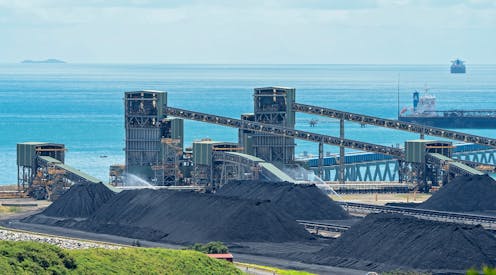
“I’m used to running risk management scenarios . . . I get it, we want to move out of fossil fuels, but actually at the moment we’ve knocked off our gas sector and now we’re importing what, three times as much Indonesian coal as any year in a National government?”
“The ambition’s easy to state but actually if you don’t think through the detail of it you end up with these consequences that cause us a different set of problems.”
Hipkins certainly has a big job ahead of him in wrangling an inflation juggernaut powered in large part by similar rises in costs overseas.
While he refused to make any commitments on his first day in the job, he was confident New Zealand would soon see the effects.
“New Zealanders will certainly see over the coming weeks and months the evidence of the fact that we’ve made it our number one priority.”
This article is republished under a community partnership agreement with RNZ.
Police interviewing of FijiFirst Party general secretary and former attorney-general Aiyaz Sayed-Khaiyum has reportedly been suspended but will continue later.
FBC News reports the interview with Sayed-Khaiyum will continue.
The police Chief of Intelligence and Investigations, Assistant Commissioner Surend Sami, told the state broadcaster the suspension is to allow investigators to verify issues and information gathered during the interviews.
The Minister for Rural, Maritime Development and Disaster Management, Sakiasi Ditoka, had filed a complaint against Sayed-Khaiyum on December 22, for allegedly inciting racial hatred and violence at a media conference in Suva before the coalition government had been formed.
In that conference, Sayed-Khaiyum had claimed stoning incidents highlighted by the police and said that this demonstrated the “divisive character” of the People’s Alliance Leader Sitiveni Rabuka, who is now the Prime Minister.
President told not to take external legal advice Fiji’s Attorney-General, Siromi Turaga, has told the President he should not take legal advice from the former attorney-general, the former prime minister or from the opposition FijiFirst party.
FBC News reports Turaga saying that he briefed President Ratu Wiliame Katonivere that he must only accept legal opinions from the Attorney-General’s Chambers.
He said no other law firm should be advising on any other matters, and if he is in doubt, the Attorney-General’s Chambers is able to assist the President.
Turaga said that according to the Constitution and the law, any issues dealing with government affairs are to be dealt with by the coalition government and its head, Sitiveni Rabuka.
Complaint lodged against former PM A human rights activist has filed a complaint against FijiFirst leader Voreqe Bainimarama.
FBC News reports that Surend Sami confirmed the complaint was in relation to statements made on live videos on the FijiFirst Facebook page on January 1 and 4.
In her complaint, Shamima Ali has alleged that Bainimarama’s statements were intended to cause public alarm, anxiety, disaffection, discontent and were made with malicious intent.
Sami said the investigation had now been taken over by the Criminal Investigation Department.
President Katonivere will officially open Parliament next week on Friday, February 3.
This article is republished under a community partnership agreement with RNZ.
New Zealand Parliament Buildings, Wellington, New Zealand.
New Zealand Politics Daily is a collation of the most prominent issues being discussed in New Zealand. It is edited by Dr Bryce Edwards of The Democracy Project.
Source: The Conversation (Au and NZ) – By Helen Brand, Senior Beamline Scientist – Powder Diffraction, Australian Nuclear Science and Technology Organisation
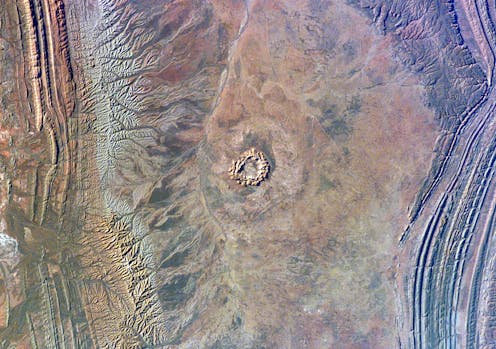
Image of Gosses Bluff taken from the ISS.NASA
I think all craters are cool, I’m just going to start with that. I am very biased.
Impact craters occur on every planetary body in our Solar System, no matter the size. By studying impact craters and the meteorites that cause them, we can learn about the processes and the geology that shape our entire Solar System.
This list contains some of my favourite impact craters down here on Earth.
1. Meteor Crater, AZ, US
The one that started it all.
Barringer Crater (often called Meteor Crater), is located near the city of Winslow on Route 66 in Arizona, US, and was the first crater confirmed to have been caused by an extraterrestrial impact.
Meteor Crater is about 1km in diameter and roughly 50,000 years old, making it relatively “young”. We’ve known about the crater since the late 19th century, but there was debate as to whether it was from an impact, or associated with the nearby volcanic province.
Barringer Crater is unusually well preserved in the arid climate of the Colorado Plateau. USGS National Map Data Download and Visualization Services.
The crater is a site of active research. It is very well preserved, making it an excellent place to learn about the process of impact cratering. Since the early Apollo days, Meteor Crater has also been used to train astronauts. The practice continues to this day, with Artemis astronauts learning how to navigate terrains like those they will encounter on the lunar surface, as well as a bit of geology.
Today you can visit the crater (the gift shop is excellent!) and take a tour around the rim. It is a great addition to any trip to the Grand Canyon.
A view of the entire Meteor Crater from the side. Note the tiny people on the viewing platform on the right-hand edge. IrinaK/Shutterstock
2. Chicxulub, Yucatán, Mexico
The dinosaur killer!
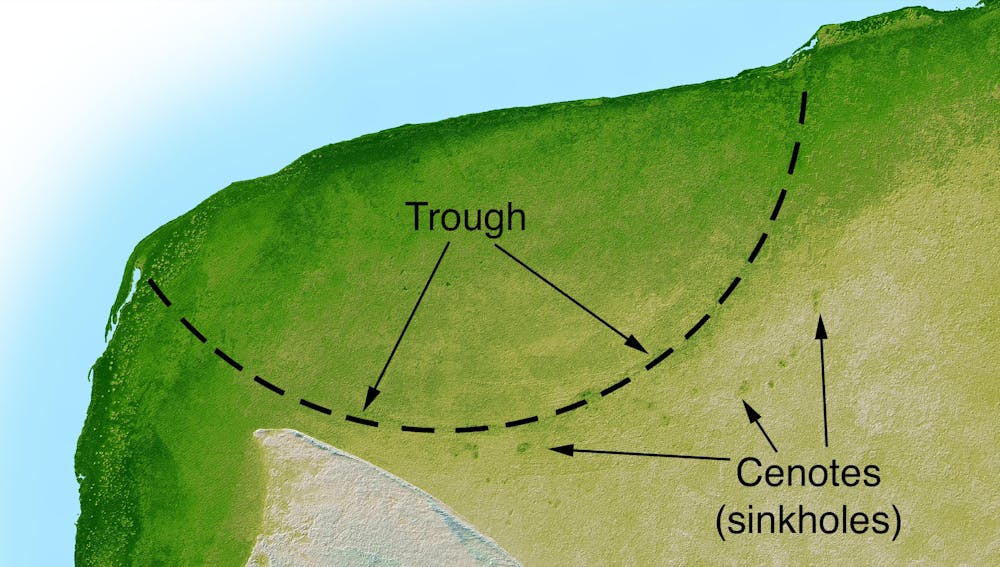
Possibly the best-known meteorite impact on Earth is the one that left the largely buried Chicxulub impact structure on the Yucatán peninsula in Mexico. This 180km diameter crater is the second largest on Earth and has been dated to 66 million years ago – coincidental with the extinction of the dinosaurs.
For years geologists had searched for a mass extinction recorded in rocks around the world. It wasn’t until the discovery of iridium, an element much more abundant in meteorites than on Earth, that the pieces fell into place.
The subtle impression of the impact crater is still visible on the Yucatán peninsula today. NASA/JPL
The object that impacted Earth is estimated to have been 10km in diameter, travelling at 20km/s. That’s about 5 minutes to travel from Sydney to Los Angeles.
It wasn’t just the dinosaurs that became extinct though – it is estimated that 75% of the plant and animal species on Earth became extinct as a result of this event.
The impact would have been immediately catastrophic, with aftereffects felt for decades. There were large tsunamis, and forests burned around the world. Sunlight would have been obliterated by ash and gases, possibly for years, triggering a global winter where many more species perished.
Eventually, though, the crater system became a flourishing deep biosphere as the planet repopulated at the end of that long winter.
3. Vredefort, South Africa
The big one.
Impact craters can be a source of economic resources. For example, the impact can concentrate pre-existing metals when a crater is formed, or it can expose buried sediments that otherwise wouldn’t have been near the surface.
The latter is the case at the Vredefort structure in South Africa. It is estimated that more than a third of the world’s gold has been mined from here.
The Vredefort impact structure is the biggest confirmed crater on Earth and is roughly 2 billion years old. The original crater was thought to be up to 300km in diameter, but has largely eroded away.
The Vredefort Dome imaged from NASA’s space shuttle in 1985. NASA
The impact exposed some of the oldest rocks on the planet. It is one of very few places where you can see a complete geological record of a whopping third of Earth’s history, with rocks ranging from 2.1 to 3.5 billion years in age.
When most people think of an impact crater, they think of a roughly circular depression, like Meteor Crater. But craters can have different shapes and features – Vredefort has a complex shape and is known as a multi-ring impact basin. These basins form in very large impacts and can also be seen on other planetary bodies; Mare Orientale on the Moon is one example.
Australia is home to the oldest continuous living culture in the world, with evidence of people living on the continent for at least 65,000 years. It is also home to 30 impact craters, and these imposing geological structures are often considered sacred places by the local Indigenous communities.
when a group of women danced across the sky as the Milky Way. During this dance a mother put her baby aside in its wooden baby carrier. The carrier toppled over the edge of the dancing area and crashed to earth where it was transformed into the circular rock formation of Tnorala.
A distant view of Tnorala. sabine_lj/Shutterstock
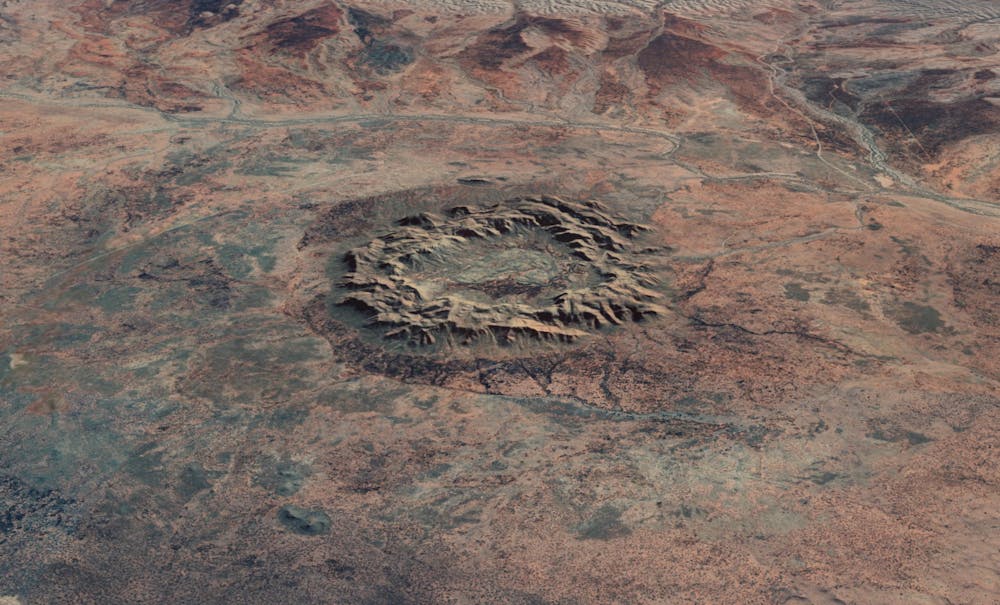
Today Tnorala is 4.5km in diameter and sits 150m above the surrounding desert, but when it was first formed 142 million years ago, it was probably closer to 24km in diameter and has eroded over time.
Several other craters in Australia have songlines and Dreamtime stories associated with them, such as the Henbury crater field which is 120km south east of Gosses Bluff, and is one of the few impact events to have been witnessed by humans. That meteorite crashed into what is now central Australia 4,700 years ago.
Nördlinger Ries, also just known as Ries crater, is one I’ve been lucky enough to visit. It formed around 14 million years ago and is roughly 24km in diameter. The town of Nördlingen is inside the crater, just south of the centre. If you climb the church steeple, you can see the ridge of the rim of the crater.
This was the second crater proved to be of impact origin by the same team that investigated Meteor Crater.
Again, the identification of a very high pressure form of quartz – coesite – held the key. This mineral had previously only been found naturally in rocks thought to have formed deep within Earth, or in nuclear test explosions. There was no evidence of either in Nördlingen, meaning the coesite must have formed in an impact.
A satellite image showing the outline of the crater delineated by dark forests. In the middle, the town of Nördlingen is visible with its red rooftops. ESA, CC BY-SA
Lots of buildings in the city, including the church, were built using rocks formed in the impact. This includes a brecciated (literally – broken into angular fragments) rock called suevite. This particular suevite is special because the pre-impact rocks in this part of Bavaria included a layer of graphite.
During the impact, the graphite was subjected to very high pressures and temperatures. This transformed the graphite into millions of micro-diamonds which are spread through the buildings of the city.
A piece of moldavite found in Czechia. KPixMining/Shutterstock
The impact also hit a sandy layer of material near the surface, creating glassy green tektites. Tektites are impact melt glasses formed from material that’s thrown high into the atmosphere. They can often be found hundreds or thousands of kilometres from the original impact site.
In this case, they were found in Czechia near the River Moldau and are thus named moldavites. Unlike the diamonds at Ries, moldavite occurs in large-enough specimens to be used in jewellery as a semiprecious stone.
Still more craters to be found
The five impact craters above are diverse, and could all be considered unique. None of them have exhausted all the scientific questions we could ask.
Excitingly, there are still more craters we could find on Earth. As satellite imaging datasets become readily available at even higher resolutions, we are able to identify more potential impact structures in remote areas. Field geologists could explore these and search for the structures and chemical signals of an impact.
Each crater – no matter how old or how obscured – is ready to teach us something new about our planet, our Solar System, and the geological processes that shape it.
Helen Brand does not work for, consult, own shares in or receive funding from any company or organization that would benefit from this article, and has disclosed no relevant affiliations beyond their academic appointment.
Source: The Conversation (Au and NZ) – By Bronwyn Carlson, Professor, Indigenous Studies and Director of The Centre for Global Indigenous Futures, Macquarie University
“Australia Day”, January 26, brings an annual debate of whether celebrations should continue or be moved to a different date. This clash of views means Aboriginal and Torres Strait Islander people have to brace themselves every year for the annual influx of racism and hate on the streets, online and in the media. And we’re tired of it.
Australia knows this is a Day of Mourning for Aboriginal and Torres Strait Islander people because it is the day the attempted genocide of Indigenous peoples began.
However we still see a number of opinions get rolled out to defend “Australia Day”, some even saying Aboriginal people need to “get over it”.
Despite this, every year more and more individuals, organisations, and local councils are joining the growing dissatisfaction with celebrating Australia Day on January 26, and choosing not to celebrate or not acknowledging it as a public holiday.
This encourages conflict about a date, as opposed to engaging in truth-telling about the arrival of the First Fleet and the conflict and violence that followed.
‘Bread and circuses’
The (largely white) mainstream media began early this year, publishing articles likely to drive the usual pro-Australia Day conversations and encourage conflict.
The Roman poet Juvenal said all that was needed to distract attention away from a problem was to offer people food or entertainment, “bread and circuses”. The Australia Day debate is a circus that attempts to distract from the truth telling this country really needs.
A common diversion tactic is to attack Aboriginal and Torres Strait Islander people for daring to protest against Australia Day when we have so many other “more important” concerns we should be worrying about. As if Aboriginal and Torres Strait Islander people can’t think about what Australia Day represents while also addressing other issues we face.
By this logic, non-Indigenous people should not be discussing the Australia Day debate either, until they have addressed the horrific violence against women in their own communities.
It is a privilege only offered to non-Indigenous people to air concerns about matters of their choosing and not be criticised for ignoring other concerns.
Another tactic is to find an Indigenous person willing to publicly agree and frame them as a leader speaking for all Indigenous peoples.
Conservative commentators Andrew Bolt and Alan Jones have used their columns and shows to fight against a date change and any critique of Australia Day. Bolt has suggested we should stop “nursing resentment” because from his position “this society is so rich, free and equal”.
Telling us we need to stop being “stuck in the past” infers our issue is just with what happened in 1788. This completely ignores the ongoing suffering many Aboriginal and Torres Strait Islander peoples still endure.
As I reflect on 2022 I am devastated by the violent death of Cassius Turvey, aged only 15, who died on October 23 as a result of injuries received in an attack while walking after school with friends in a Perth suburb.
The boys who were with Cassius allege they were approached by a group of men in a car who racially abused them and set upon them with weapons including a metal pole. Turvey sadly sustained serious injuries and later died.
A 21-year-old man was charged with Turvey’s murder, however the WA Police Commissioner stated: “We are not operating on any principles of racism or motivation at this point”. Three further people have since been charged with Cassius’ murder.
This is what lies behind the Australia Day debate for Indigenous people all over the country. Not just the historic violence associated with January 26, but the ongoing violence.
If you are finding it hard to understand why Aboriginal and Torres Strait Islander people have a problem with Australia Day, I suggest you read more opinion pieces from Aboriginal and Torres Strait Islander authors, pick up a book, or even enrol in a unit of study.
Is not celebrating January 26 being ‘UnAustralian’?
We are told Australia Day is about reflecting on our past, respecting all Australians and celebrating our unique Australian identity. However reflecting on our past should include a past that involves Indigenous peoples.
People who don’t consider the anniversary of invasion as a time to celebrate are often labelled as being “unAustralian”.
The term un-Australian emerged around 1855 as a tool to ostracise non-whites, the Irish, Chinese migrants and other foreigners, as well as communism, radicalism, pacifism and trade unions.
It has its roots in the White Australia policy era. It re-emerged again in the 1990s and has remained in popular use, particularly by politicians, often attempting to avoid having to explain themselves or their actions, or to shift blame.
It’s even the topic for the new lamb ad, which humourously takes the piss out of this ridiculous and ultimately meaningless notion.
Changing the date won’t necessarily make a difference as a stand-alone gesture. To truly have something to celebrate we need to firstly address the past, engage in truth-telling and make reparations. Treaty or treaties need to be negotiated and then a shared vision can be established. As Aboriginal researcher and epidemiologist Joanne Luke writes,
We know that truth-telling has the potential to provide Aboriginal people who experience injustices a voice, as evidenced by the Royal commissions into Aboriginal deaths in custody and the National Enquiry into the Separation of Aboriginal and Torres Strait Islander Children from Their Families. But we also know that without political leadership that listens to these truths, the nation does not learn from these injustices, and trauma continues to be inflicted upon Aboriginal people and communities.
In the meantime, if you’re looking for something to celebrate on January 26, head on over to the Yabun Festival on Gadigal Country in Sydney. There are also a range of Invasion/Survival Day events across the continent.
Every year Yabun recognises the truly amazing accomplishment of Aboriginal and Torres Strait Islander people caring for each other and this continent for over 60,000 years despite the concerted efforts of violent racist policies and practices that continue to harm us.
Now that’s something worth celebrating.
Bronwyn Carlson does not work for, consult, own shares in or receive funding from any company or organisation that would benefit from this article, and has disclosed no relevant affiliations beyond their academic appointment.
January 26 is a date that sparks mixed emotions in Australia. For some, it’s a day to celebrate all the good things about living in Australia. For others, it’s a painful reminder of the beginning of British colonisation and the dispossession of First Nations.
An Essential Poll this week suggests around a quarter of Australians would now prefer January 26 to be a day to recognise First Nations people with a national holiday on a separate day.
Those who defend the status quo often appeal to tradition, but it’s important to recognise Australia Day has not always been celebrated on January 26, and the meaning of the date has long been contested.
When did Australia Day begin?
In the early 19th century, January 26 was a Sydney-centric celebration, sometimes called “Foundation Day”. These were initially informal gatherings and parties, but by 1838, it was declared a public holiday to mark the 50th anniversary of the colony. As the other colonies were established, they celebrated their own foundation, rather than January 26.
During the Federation debates of the 1880s and 1890s, there was a push for a single national holiday. But some objected to January 26 on the grounds it was focused on New South Wales. Nevertheless, by the centenary of the British arrival in 1888, all colonies except South Australia observed the day.
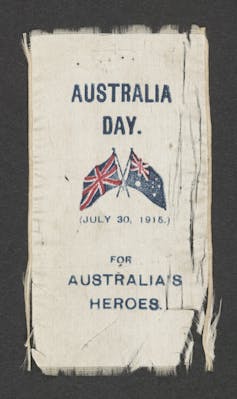
Fundraising ribbon for Australia Day, July 30, 1915. Courtesy Australian War Memorial
However, even after Federation in 1901, the primary national holiday was not January 26 but “Empire Day”, celebrated on May 24. The choice of date (the late Queen Victoria’s birthday) and the form of celebrations were more imperial than nationalist in flavour.
It was only in 1915 that Australia Day emerged, as a fundraising effort for the first world war. Held on July 30, the first Australia Day was directly shaped by the experience of the Gallipoli landing. It continued to be held in July for the remainder of the war.
By 1935, the states all agreed to use the name Australia Day and celebrate it on January 26. But it was a decision that caused controversy and protest. The 150th anniversary in 1938 was celebrated nationally but also saw First Nations declare the date to be a “day of mourning”.
Similarly, the 1988 bicentenary epitomised the contested meaning of January 26. It saw both sides – the largest party in Australia’s history and the largest protest since the Vietnam moratorium.
It was only in 1994 that Australia Day became a public holiday in every state and territory.
What are we celebrating?
Technically, January 26 does not mark the arrival of the First Fleet to Australia. Leaving England on May 13, 1787, the first ships arrived at Botany Bay on January 18, but Arthur Phillip decided it was not a suitable site. January 26 marks the day the British flag was hoisted at Sydney Cove.
Throughout the 19th century, January 26 was a celebration of Britishness held by people who largely identified as Australian Britons. As Australian national identity evolved in the middle of the 20th century, the narrative around Australia Day became more exclusively nationalistic. Civic rituals like the Australian of the Year (first awarded in 1960) helped give January 26 a national focus.
Today, Australia Day is presented as a day to “celebrate our nation”. But for many First Nations people and their allies, it’s considered “Invasion Day” or “Survival Day”.
If not January 26, then when?
Most countries hold their national holiday on the date they became independent. It’s a quirk of Australian history that the date the British flag was raised has taken this role, but it demonstrates how malleable national symbols can be.
If the date of Australia Day was to change, there’s no clear alternative, although some argue that if Australia becomes a republic, that should be the new date. A pragmatic alternative is simply to hold Australia Day on the last Friday of January. A more humorous suggestion is May 8, which pronounced with a broad Australian drawl sounds like the word “mate”.
Historic suggestions are the anniversary of the Eureka Stockade (December 3), the Mabo judgement (June 3), or the passage of the Australia Acts (March 3).
For all their wisdom, it could be argued the constitution writers did Australia a disservice by having the Commonwealth form on January 1, 1901. Had it been almost any other day of the year, the legal creation of Australia would be the obvious choice for a national holiday.
As emotive as the topic is, Australians should be free to debate what January 26 means and if it should continue to be the national holiday. The ability to openly debate tough issues without fear is, after all, one of the many freedoms Australia Day is supposed to celebrate.
Benjamin T. Jones does not work for, consult, own shares in or receive funding from any company or organization that would benefit from this article, and has disclosed no relevant affiliations beyond their academic appointment.
Doctors are reportedly concerned about a spike in the number of kids with gastroenteritis – when tummy infections can cause nausea, vomiting, diarrhoea, fever, abdominal pain, headache and muscle aches.
Rotavirus is a common cause of gastroenteritis in children and the reported rotavirus rate in New South Wales so far this year is five times what it usually is.
While there’s a lot of gastroenteritis occurring, the good news is the vast majority of cases kids will have an uneventful recovery.
Still, parents and carers get a lot of conflicting advice about the food and drinks kids should consume during recovery from the illness. Let’s look at the evidence.
One widely known dietary recommendation when recovering from gastroenteritis is the BRAT diet. This stands for bananas, rice, applesauce and toast. These bland foods and are meant to be gentle on the gut, which is important when a person is recovering from gastroenteritis.
Applesauce is a distinctly American food product and indeed the first mention of this diet was in an American report in 1926 on the treatment of “intestinal intoxication” in children.
The BRAT diet was historically recommended but has fallen out of favour over the past couple of decades. There are no clinical trials on the diet itself but evidence to support it came from studies that demonstrated how each food in the BRAT diet could help with gastro recovery.
Bananas and apples are rich in a starch called pectin that can form a gel, which helps to treat diarrhoea. Green banana pulp and flour in particular was found to reduce diarrhoea in children. Bananas are also a rich source of potassium, which can help to replace potassium lost with diarrhoea.
Rice-based oral rehydration solutions (a drink made from a mixture of water, rice, glucose, sodium, and potassium salts) used to treat gastroenteritis reduce the volume of stools and duration of diarrhoea in patients. A study from Bangladesh on infants with persistent diarrhoea found a rice-based diet containing green banana or pectin improved stool consistency and reduced the duration more than a diet of rice alone.
In general, kids recovering from gastro don’t need a restricted diet. Shutterstock, CC BY
The use of apples to treat diarrhoea is thought to have started in Germany, where a nurse called Sister Frieda Klimsch used the fruit to treat dysentery (a severe form of gastroenteritis) in a hospital.
Another origin story tells of how a doctor in a German prison camp noticed prisoners with dysentery who ate apples from a nearby orchard had shorter and milder illness. The doctor started encouraging them to eat apples to treat diarrhoea.
Eating apple peel was observed to lead to vomiting in infants in the 1930s and so the peel was removed. Grated apple was used to treat diarrhoea in children around the same period and was helpful in some cases.
Later, applesauce became the recommended form of apple for gastroenteritis recovery in the United States, and features in the BRAT diet. Interestingly, giving diluted apple juice to children with mild dehydration from gastroenteritis is both safe and effective.
Applesauce is a distinctly American product, but grated apple works too. Unsplash, CC BY
Why gastro diet advice has changed
Over the past 20 years or so most health professionals have come to the conclusion the restricted BRAT diet is unhealthy in gastroenteritis recovery because it is low in protein, fat, and energy. All these nutrients are necessary for healing.
Studies have shown, in general, normal eating does not worsen the course of gastroenteritis. So it’s not necessary to restrict your child’s diet. Fasting when recovering from gastroenteritis is not recommended but it’s important to consider the child and ease into the reintroduction of foods.
It turns out fat, lactose and sucrose absorption during diarrhoea is limited – so it’s sensible to avoid fatty foods and foods high in simple sugars (including juices and soft drinks) for moderate to severe diarrhoea as these could worsen symptoms.
Flat soft drinks such as colas and lemonade warrant a special mention. Some view these drinks as an option to replenish fluids and glucose lost by vomiting and diarrhoea. But research has shown that this may not be a good idea.
One British study searched the medical literature going back to the 1950s for evidence to support the use of soft drinks in gastroenteritis. They found none.
Then the researchers compared the contents of colas and other sodas with commercially available oral-rehydration solutions containing electrolytes and small amounts of sugar. They found the soft drinks not only contained very low amounts of potassium, sodium and other electrolytes, but in some cases as much as seven times the glucose recommended by the World Health Organization for rehydration.
Carbonated drinks, flat or otherwise, are therefore not considered to provide adequate fluid or electrolytes and are not recommended.
Rehydration solutions are more effective than flat soft drinks and have less sugar. Shutterstock
So what should you eat and drink during gastroenteritis recovery?
Appropriate foods include fruits, vegetables, lean meats, yogurts, as well as complex carbohydrates such as wheat, rice, bread, potatoes, and cereals.
Parents of young children with mild gastroenteritis should keep them hydrated by encouraging fluid intake through water and milk, and discourage fruit juices and carbonated drinks.
For moderate or severe cases the appropriate fluid for oral rehydration is commercially available oral rehydration solution (such a Gastrolyte or Hydralyte).
A systematic review and meta-analysis of 174 studies concluded the use of a probiotic (Saccharomyces boulardii) and zinc supplementation can help during recovery from gastroenteritis, reducing the duration of diarrhoea as well as stool volume.
If symptoms or dehydration are severe then you should take your child to see a GP or go to the closest hospital emergency department.
Vincent Ho does not work for, consult, own shares in or receive funding from any company or organisation that would benefit from this article, and has disclosed no relevant affiliations beyond their academic appointment.
Does your cat or dog suddenly get a burst of energy and perform athletic feats around the house that would make even a gold medallist jealous? Welcome to the world of zoomies.
Zoomies involve intense periods of high-energy activity including running, spinning, jumping and rolling. All at top speed.
A proposed scientific name is frenetic random activity periods (FRAPs). In rabbits these high activity periods are called “binkies”. But many cat and dog owners simply call them “zoomies”.
So why do our animals experience the zoomies? And is it something we should be worried about?
Think about when your cat or dog gets the zoomies.
You might see post-bath zoomies, dog park-zoomies, midnight-zoomies and good ol’ out-of-nowhere zoomies.
The trigger may be excitement or a sudden increase in stimulation.
In cats, a commonly reported trigger is using the litter tray. This may be explained by “poo-phoria”, a feeling of euphoria following defecation. This is possibly caused by large bowel movements stimulating the vagus nerve, resulting in positive feelings and a drop in heart rate and blood pressure.
Zoomies can be characterised as play as the two behaviours share many of the same characteristics. This would make zoomies intrinsically pleasurable – in other words, a whole load of fun.
If the zoomies are occurring as part of your animal’s regular play routine, this indicates your animal is happy and enjoying themselves.
While we don’t yet know if zoomies are more likely to occur at certain times of the day, or more in some breeds compared with others, we do consider them a general indication of a high level of excitement – and likely a pretty good mood.
Does your cat ever zoom around the house at top speed, seemingly for no reason? Shutterstock
Humans are animals too and some people also experience what could be similar to the “zoomies”.
Ever get a sudden feeling of intense excitement and spare energy? Maybe you’ve felt the need to jump, shake or dance, before it wears off and you’re back to your regular settings.
This can be caused by a multitude of things – an exciting or novel situation, a spike in energy after a extended period of resting or perhaps a change in your inner chemistry. Perhaps you got a rush of adrenaline caused by excitement, over-stimulation or stress.
Are zoomies always a sign your cat or dog is happy?
It’s important to remember animals are individuals and, just like us, why they behave the way they do is complex and multifaceted.
When assessing your animal’s behaviour, it’s essential to also assess the context.
Zoomies are mentioned a lot online, but there is a real lack of scientific research on what causes them, how often they occur, or even an official definition of what they are.
Ask yourself: am I invited to the zoomie?
In dogs and cats, zoomies can include an invitation for others to join – in dogs this is most commonly a play bow, where the dog appears to “bow” to another in an effort to signal it is keen to play – followed by a pause commonly seen in dyadic play (play between two or more individuals).
In cats, an invitation may include physically interacting with you or repeatedly rolling over. If this is the case, your animal is likely experiencing excitement and a desire to interact with you.
What do I do during a zoomie outbreak?
Unless there’s an element of immediate danger (such as zoomies on or near a road) there is no reason to stop your cat or dog from enjoying their burst of fun.
Cats and dogs are often superstars at avoiding obstacles even at high speed. If you’re lucky enough to receive invitations to partake in the chaos, feel free to join in the play.
Enjoying shared activities such as play with your dog or cat can have many benefits for the human-animal relationship. It’s also a lot of fun for you!
As always, context is key. You should consult with your veterinarian if your dog or cat is displaying the behaviour for extended periods of time (in particular, spinning, or behaviours occurring during times of confinement). These might be signs of a repetitive behaviour disorder.
If you struggle to distract or stop the behaviour, or if it is resulting in injuries, seek veterinary assistance.
Even if you don’t get the call of the zoomies yourself, take a moment to stop and enjoy your dog or cat having fun.
Susan Hazel is affiliated with the Dog & Cat Management Board of South Australia and RSPCA South Australia.
Ana Goncalves Costa is affiliated with The Delta Institute.
Julia Henning does not work for, consult, own shares in or receive funding from any company or organisation that would benefit from this article, and has disclosed no relevant affiliations beyond their academic appointment.
Source: The Conversation (Au and NZ) – By Euan Ritchie, Professor in Wildlife Ecology and Conservation, School of Life & Environmental Sciences, Deakin University
Wes Mountain/The Conversation/Shutterstockl
Am I not pretty enough? This article is part of The Conversation’s series introducing you to unloved Australian animals that need our help.
Australia is set to host the 2032 Olympic games in Queensland’s capital Brisbane, captivating an audience of billions. With so many eyes on Australia, the burning question is, of course, what animal(s) should be the official mascot(s) of the games, and why?
Summer Olympics past have featured recognisable animal mascots such as Waldi the daschund (Munich, 1972), Amik the beaver (Montreal, 1976), Misha the bear (Moscow, 1980), Sam the eagle (Los Angeles, 1984) and Hodori the tiger (Seoul, 1988).
Iconic and familiar mammals and birds dominate the list. The trend continued at Sydney’s 2000 games which featured Syd (playtpus), Olly (kookaburra) and Millie (echidna).
But the Brisbane Olympics is a great opportunity to showcase lesser known species, including those with uncertain futures.
Sadly Australia is a world leader in extinctions. Highlighting species many are unfamiliar with, the threats to them and their respective habitats and ecosystems, could help to stimulate increased conservation efforts.
From a “worm” that shoots deadly slime from its head, to a blind marsupial mole that “swims” underground, let’s take a look at three leading candidates (plus 13 special mentions). What makes them so special, and what physical and athletic talents do they possess?
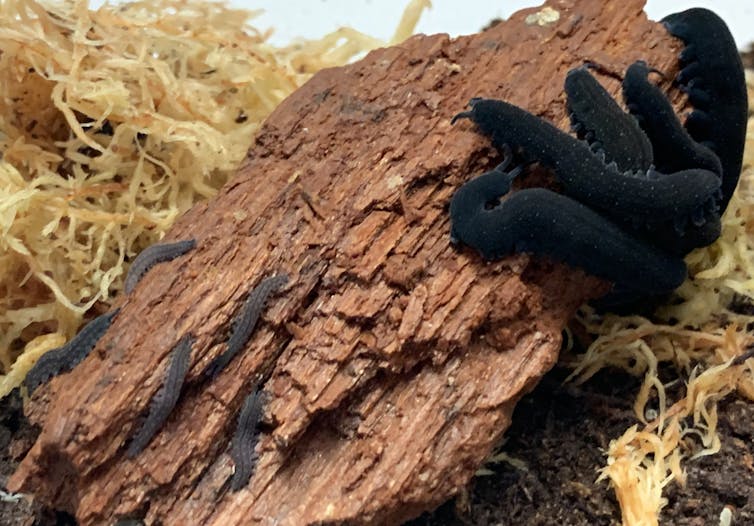
Onychophorans, or velvet worms
A potential mascot design. Wes Mountain/The Conversation, CC BY-ND
Velvet worms are extraordinary forest and woodland denizens thought to have changed little in roughly 500 million years. Australian velvet worms are often smaller than 5 centimetres and look a bit like a worm-caterpillar mash up. They’re found across Australia and other locations globally.
Their waterproof, velvet-like skin is covered in tiny protusions called papillae, which have tactile and smell-sensitive bristles on the end. Velvet worms possess antennae and Australian species have 14-16 pairs of stumpy “legs”, each with a claw that helps them move across uneven surfaces such as logs and rocks.
A velvet worm from Mt Elliot, North Queensland. Alexander Dudley/Faunaverse
Their colour varies between species, often blue, grey, purple or brown. Many display exquisite, detailed and showy patterns that can include diamonds and stripes – clear X-factor for a potential mascot.
Although velvet worms may be relatively small and, dare I say it, adorable, don’t be fooled. These animals are voracious predators.
They capture unsuspecting prey – other invertebrates – at night by firing sticky slime from glands on their heads. Once the victim is subdued, velvet worms bite their prey and inject saliva that breaks down tissues and liquefies them, ready to be easily sucked out.
A velvetine cuddle. A group of adult and juvenile Euperipatoides rowelii. Tanya Latty
If this isn’t intimidating enough, one species (Euperipatoides rowelli) lives and hunts in groups, with a social hierarchy under the control of a dominant female who feeds first following a kill.
Despite their formidable abilities, velvet worms are vulnerable to habitat destruction and fragmentation, and a changing climate.
Jalbil (Boyd’s forest dragon)
A potential mascot design. Wes Mountain/The Conversation, CC BY-ND
Jalbil is found in the rainforests of tropical North Queensland. They are a truly striking lizard – bearing a prominent pointy crest and a line of spikes down the back, distinct conical cheek scales and a resplendent yellow throat (dewlap) which can be erected to signal to each other.
Despite their colourful and ornate appearance, Jalbil can be very hard to spot as they’re perfectly camouflaged with their surroundings. They spend much of their time clinging vertically to tree trunks often at or below human head-height. Some have favourite trees they use more frequently.
If they detect movement, they simply move around the tree trunk to be out of direct view.
Jalbil (Boyd’s forest dragon) is found in the rainforests of North Queensland’s Wet Tropics. Chris Jolly
Reaching lengths of around 50cm, Jalbil mostly eat invertebrates, including ants, beetles, grasshoppers and worms. Males may have access to multiple female mates, and breeding is stimulated by storms at the beginning of the wet season.
While Jalbil are under no immediate threat, their future is uncertain. Jalbil are ectothermic, so unlike mammals and birds (endothermic), they can’t regulate their internal body heat through metabolism. Sunlight is often very patchy and limited below the rainforest canopy, restricting opportunities for basking to warm up.
Instead, Jalbil simply allow their body temperature to conform with the ambient conditions of their environment (thermo-conforming). This means if climate change leads to increased temperatures in the rainforests of Australia’s Wet Tropics, Jalbil may no longer be able to maintain a safe body temperature and large areas of habitat may also become unsuitable.
Itjaritjari and kakarratul (southern and northern marsupial moles)
A potential mascot design. Wes Mountain/The Conversation, CC BY-ND
These remarkable subterranean-dwelling marsupials really are in a league of their own. Both moles can fit in the palm of your hand, measuring up to about 150 millimetres and weighing about as much as a lemon (40-70 grams).
What these diminutive mammals lack in size they make up for in digging power – if only digging were an official Olympic sport. In central dunefields, they can dig up to 60 kilometres of tunnel per hectare.
Marsupial moles are covered in fine, silky, creamy-gold fur. They have powerful short arms with long claws, shovels for furious digging. Their back legs also help them push. Instead of creating and living in permanent burrows, they “swim” underground across Australia’s deserts for most of their lives.
The impressive adaptations don’t end there either. They also have ridiculously short but strong, tough-skinned tails that serve as anchors while digging. Females also have a backwards-facing pouch and all have nose shields that protect their nostrils, ensuring sand doesn’t end up where it’s not supposed to.
Due to living underground for most of their lives, many mole mysteries remain regarding their day-to-day lives. Scientists do know they eat a wide range of invertebrates including termites, beetles and ants, and small reptiles such as geckoes.
But while neither species is thought to be in danger of extinction, there are no reliable population estimates across their vast distributions. What’s more, introduced predators (feral cats and foxes) are known to prey upon them. Itjaritjari is listed as vulnerable in the Northern Territory.
And 13 special mentions go to…
With so many amazing wildlife species in Australia, it really is a near impossible task to choose our next mascot. So I also want to give special mentions to the following worthy contenders:
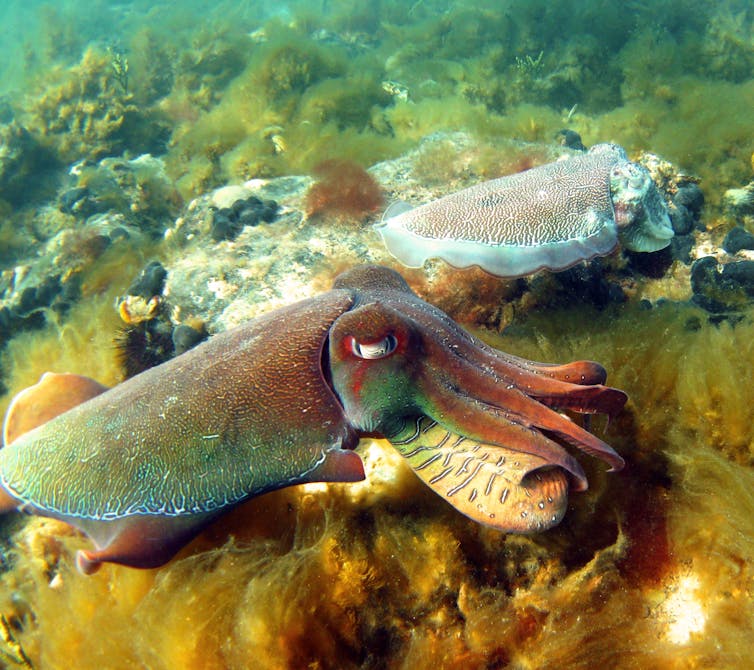
The Australian giant cuttlefish
These marine animals put on spectacular, colourful displays each year when they form large breeding aggregations.
Some giant Australian cuttlefish reach one metre in length. Nick Payne, Author provided
A desert-dwelling, ant-eating machine that can drink simply by standing in puddles.
Thorny devils can eat more than 1,000 ants per meal. Euan Ritchie
The Torresian striped possum
This striking black and white possum is thought to have the largest brain relative to body size of any marsupial. Their extra long fourth finger makes extracting delicious grubs from rotting wood a cinch.
The Torresian striped possum moves with speed throughout North Queensland’s rainforests. Shutterstock
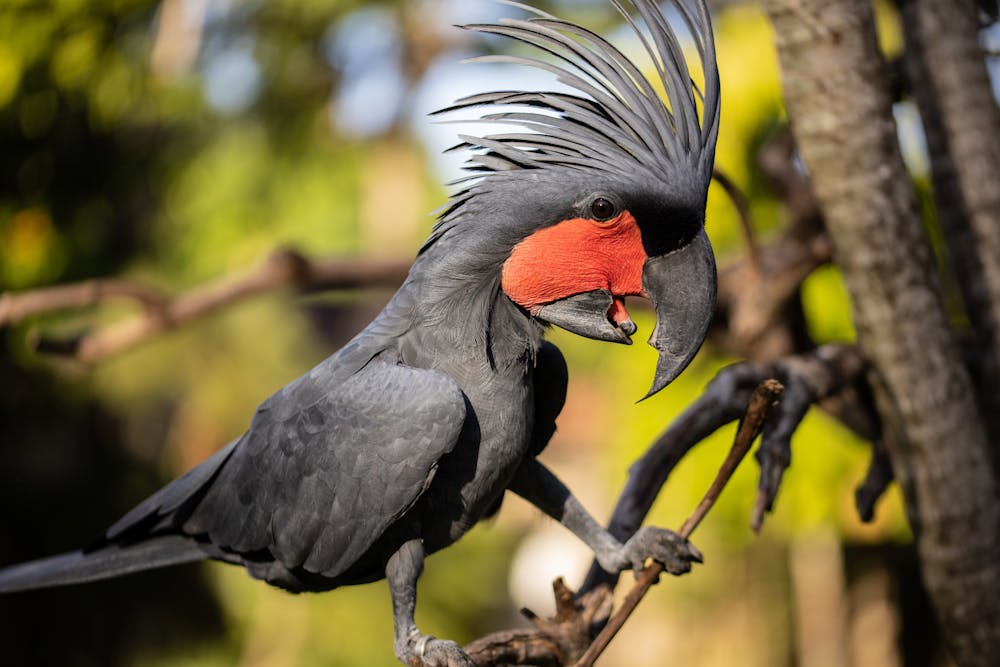
Kila (palm cockatoo)
Our largest and arguably most spectacular “rockatoo”, which plays the drums.
The Queensland government moved this species onto the endangered list in 2021. Shutterstock
Mupee, boongary or marbi (Lumholtz’s tree kangaroo)
Despite being powerfully built for climbing, Lumholtz’s tree kangaroos are also adept at jumping, when alarmed they’ve been known to jump from heights of up to 15m to the ground.
Who knew kangaroos could climb and bounce through trees? Shutterstock
Green tree pythons are the most vivid green snake you can possibly imagine. While adult pythons are a vibrant green the juveniles may be bright yellow or red (but not in Australia), changing colour when they are about half a metre long.
Another reptile with serious wow factor. Chris Jolly
The chameleon grasshopper
Based on temperature, male chameleon grasshoppers can change colour from black to turquoise, and back to black again, each day.
A kaleidoscope of colour in the Australian alps. Kate Umbers
Peacock spiders come in rainbow colours and the males sure know how to shake it. Their vivid colours, such as in the species Maratus volans, are due to tiny scales that form nanoscopic lenses created from carbon nanotubes.
Peacock spiders are found only in Australia. Joseph Schubert
And finally, I’ll always have a soft spot for Australia’s much maligned canid, the dingo.
So now, over to you. What are your suggestions for unique animal mascots at the 2032 Brisbane Olympics?
Euan G. Ritchie is a Councillor within the Biodiversity Council, and a member of the Ecological Society of Australia and the Australian Mammal Society.
Source: The Conversation (Au and NZ) – By Bronwyn Carlson, Professor, Indigenous Studies and Director of The Centre for Global Indigenous Futures, Macquarie University
Madman Entertainment
Review: You Can Go Now, directed by Larissa Behrendt.
A new documentary from Larissa Behrendt, You Can Go Now, highlights the life, work and activism of Richard Bell: a self-described “activist masquerading as an artist”.
Bell is an internationally renowned artist who works across painting, installation, video and performance, describing himself as “bold, brash and brazen” in his approach to dealing with the art industry in Australia.
An array of Aboriginal and Torres Strait Islander people appear in the documentary and chime in to reflect on their relationship with Bell and his work.
John Maynard muses Bell’s work is “just taking the piss: we love taking the piss out of white fellas”. He laughs.
Gary Foley speaks of Bell’s work as “beautifully subversive” and “satirical”. He smirks as he thinks about how Bell’s work shocks the straight-laced people in the Australian art scene.
Chelsea Watego describes Bell as someone who “knows no boundaries” and “is unashamedly and unapologetically Blak”.
Bell is a Kamilaroi, Kooma, Jiman, Gurang Gurang man born in 1953 in Charleville, Queensland. He grew up living in a “shanty” with his family.
In You Can Go Now, he recalls life as a child living in abject poverty. The film includes historical footage of life on missions and reserves, which demonstrates clearly the oppressive and invasive conditions Aboriginal people were forced to endure.
As Aileen Moreton Robinson comments in the documentary, as an Aboriginal person during this era “you understood you were not free”.
Indicative of the way Aboriginal people are treated, Bell’s family home was bulldozed by the government. His family relocated to the town to live in a house that had been issued with a demolition order and deemed unfit for human habitation.
The land missions and reserves were built on was increasingly being targeted for tourism and bought up by mining companies. Bell shares this experience in
his video work No Tin Shack, which includes a re-enactment of the bulldozing of his family’s home to demonstrate the brutality of the act.
Unapologetic Blak activism
Bell is part of a generation of staunch Aboriginal activists. He has remained strong in his commitment to self-determination and to the goal of getting our land back. He claims in the documentary the government should give it all back, then negotiate with us.
In the early 1970s, inspired by the Civil Rights and Black Power movements in the United States, a new era of “unapologetic Blak” activism emerged in Australia – exemplified by the establishment of the Aboriginal Tent Embassy in 1972: the longest continual protest in the world.
Bell’s work captures decades of continuing protest. Madman Entertainment
In this decade Bell found his political voice in Redfern with the likes of Sol Bellear, Gary Foley, Paul Coe and others. Along with fighting for land rights and self-determination, these activists established the Aboriginal Medical Service and Aboriginal Legal Service to provide much needed services to Aboriginal people.
In his work Pay the Rent (2022), presented at Germany’s Documenta, one of the world’s most prestigious art exhibitions, a digital counter provides a calculation of what the government owes Aboriginal people.
Also as part of this exhibition, Bell created paintings based on old photographs from the 1970s to bring to attention the work of political activists and the untold story of the Black Liberation movement in Australia.
After the 1967 Referendum it became clear little had changed in regard to the circumstances of Aboriginal and Torres Strait Islander peoples who still suffered under oppressive and racist regimes.
The McMahon government declared it would never grant land rights, quelling any hopes inspired by the referendum.
Reflecting the significance of the Aboriginal Tent Embassy, Bell’s Embassy (2013–) has been shown in galleries around the world, showing archival videos and providing a space for the truth to be told via public talks and informal conversations.
A man with two personas
In You Can Go Now, Bell is described as having two personas – Richard and Richie. Richard, the one everyday Blackfullas know, good for a yarn and to hang out with. Then there is his other persona, Richie: the life of the party, an attention seeker. The one who is loud, boisterous and sometimes even obnoxious.
Behrendt captures Richie looking in the mirror as he states “no doubt about it Richie, you’re a fucking genius”.
Often referred to as a dissident, Richie claims all his paintings are attention seekers – just like him.
Bell claims his paintings are attention seekers – just like him. Madman Entertainment
In 2019, Bell was shortlisted to represent Australia at the Venice Biennale. He was not ultimately selected. In response, Bell decided to “gatecrash” the biennale, creating a replica of the Australian Pavilion wrapped in chains.
Taking his own advice – “you don’t need permission to make it happen” – We Don’t Really Need This sailed past the 58th Biennale on a motorised barge.
In the film, musician Bob Weatherall notes Bell “has captivated the world” yet it is a very different story in Australia.
Bell is an internationally renowned artist invited to exhibit his work across the globe. Yet he has not found the same acclaim in Australia. Foley suggests his international standing is a really good slap in the face to the Australian arts establishment who have not recognised Bell in the same way the international market has embraced his work.
The documentary is entertaining and informative. While some may see it as confrontational, Bell’s work highlights histories that are unknown to some and should be known to all. Bell is highly critical, funny and fearless. The documentary is a must-see.
You Can Go Now is in Australian cinemas from January 26.
Bronwyn Carlson does not work for, consult, own shares in or receive funding from any company or organisation that would benefit from this article, and has disclosed no relevant affiliations beyond their academic appointment.
Taryn Brumfitt, a body image campaigner whose work has been recognised internationally, is the 2023 Australian of the Year.
A writer and film maker from Adelaide, Brumfitt’s 2016 documentary Embrace, about women’s body loathing and her path of accepting her own body, has been seen by millions of people in 190 countries.
She founded the Body Image Movement in 2012, and in 2018 she was named in the Australian Financial Review’s 100 Women of Influence, in the global category.
The Body Image Movement describes its mission as being to “educate our global community and provide tools to promote positive body image; celebrate body diversity in shape, size, ethnicity and ability; promote positive physical, mental, emotional and spiritual health, [and] combat toxic messaging in media and advertising”.
Last year Brumfitt, who is 45, released Embrace Kids, a documentary aimed at teaching children aged nine to 14 to move, nourish and respect their bodies.
She collaborated with body image expert Dr Zali Yager to produce an Embrace Kids parenting book. They have also created the Embrace Hub, a resource for teachers, parents, children and communities to encourage “body positivity”.
“Taryn’s work has reached more than 200 million people. She is an internationally-recognised keynote speaker whose work is recognised by UN Women,” the announcement of her award said.
The senior Australian of the Year is Tom Calma, 69, Chancellor of the University of Canberra, who has an extensive record as an advocate for human rights and social justice. He was formerly a long-serving public servant, including having postings in India and Vietnam.
He served on the Human Rights Commission as Aboriginal and Torres Strait Islander Social Justice Commissioner and Race Discrimination Commissioner.
A leader in driving Indigenous advancement, Calma has had a particular focus on education, health and reconciliation. He has urged changing Australia Day to “a new date for a truly unifying national day of reflection and celebration”.
Mick Tsikas/AAP
Calma, from the ACT, co-chaired with Marcia Langton the senior advisory group that produced the report to the former government on an Indigenous Voice.
Prime Minister Anthony Albanese, who presented the Australian of the Year awards in Canberra on Wednesday night, repeatedly refers to the report when pressed about the detail of the proposed Voice referendum.
Albanese used Wednesday night’s ceremony to declare the referendum, to be held in the second half of the year, would be “an uplifting moment of national unity”.
The Young Australian of the Year is Australian Socceroo and co-founder of Barefoot to Boots Awer Mabil, from South Australia. Barefoot to Boots is a not-for-profit organisation promoting better health, education, policies and gender equality for refugees. Mabil, 27, grew up in a Kenyan refugee camp after his family fled the civil war in Sudan; he was 10 when he came to Australia.
The Local Hero award has gone to Amar Singh, 41, from NSW, who founded Turbans 4 Australia after suffering racial slurs because of his Sikh turban and beard.
Turbans 4 Australia delivered hay to drought-striken farmers; supplies to Lismore flood victims and to those hit by bushfires on the NSW south coast; food to vulnerable people during COVID lockdowns, and supplies to the Salvation Army in central Queensland after Cyclone Marcia. It regularly delivers hampers to people in need in western Sydney.
Chair of the National Australia Day Council, Danielle Roche, said the four recipients “share a common bond – using their life experience as a power for good, helping others around them and making the world a better place.
“Taryn has inspired millions of women around the world to be more comfortable in their own skin.
“Tom has dedicated his life and career to being a champion of equality for Aboriginal and Torres Strait Islander peoples, lighting the path towards reconciliation.
“Awer fled conflict and went on to represent Australia at the highest level as a Socceroo – an extraordinary achievement. He has used his success to co-found Barefoot for Boots, a not-for-profit that supports and advocates for other refugees.
“Amar has turned his own experience of discrimination into a positive, and sparked a movement that helps thousands of people put food on the table.”
Michelle Grattan does not work for, consult, own shares in or receive funding from any company or organisation that would benefit from this article, and has disclosed no relevant affiliations beyond their academic appointment.
Since colonisation, “interventions” to curb Aboriginal “crime” and alcohol have been deployed to control and harm First Nations communities and people. Nowhere is this more true than in the Northern Territory.
When these moral panics reach the national media and political stage, the response has typically been top-down policies by federal and territory governments to disempower First Nations people and deny equal rights.
Such approaches proceed without honouring the diverse perspectives of First Nations people. The current frenzy around the Alice Springs crime wave risks repeating the same mistakes.
Federal government ‘interventions’ have been shown not to work
In 2007, claims of endemic crime in remote Aboriginal communities precipitated the Northern Territory Intervention. This was a discriminatory set of laws against Aboriginal people, which were purportedly designed to address the “emergency” of crimes against Aboriginal children, including paedophilia rings. The latter claim was proven to be a media beat-up involving a federal government fabrication, but that did not stop the roll out of Intervention across remote Aboriginal communities and town camps for 15 years.
The federal government enacted the Northern Territory National Emergency Response Act 2007 and its successor, the Stronger Futures Act 2012. These, along with other amendments to Federal and Territory laws,
watered down Aboriginal land rights
constrained rights to social security
restricted access to any alcohol
increased policing powers in Aboriginal communities, including the right to enter homes and seize vehicles without a warrant
undermined equal rights to bail and sentencing considerations in court
displaced Aboriginal-controlled community councils and governance structures.
In the years after the Intervention began, there was no evidence communities or Aboriginal children were safer. Instead, increasing numbers of Aboriginal children and adults were locked up for minor offences.
In 2012, we undertook research that found increased policing of street offences, especially driving offences (driving unlicensed, uninsured and unregistered vehicles). Over the Intervention period, unprecedented numbers of Aboriginal youth and adults were detained, and Aboriginal children were taken from their families into state care.
Repeal of (some) Intervention laws
These laws were repealed last year due to the sunset clause of July 2022. However, remnants of the legislation remain in other Commonwealth and Northern Territory legislation. These include extended policing powers in remote communities, continuation of cashless welfare system (despite opt-out provisions), and a prohibition on cultural and customary law considerations in Northern Territory sentencing and bail.
Despite the Federal government’s substantial spending on the Intervention, media reports on Aboriginal crime continued unabated – resulting in more police and tougher penalties.
In 2021, a crime wave in Tennant Creek prompted the repeal of youth bail rights, making it harder for young people to get bail. This contributed to a 94% increase in the youth detention population in 2021/22. Almost all of these are Aboriginal children.
The Alice Springs crime wave and response
Over the summer, the media, business, police and politicians have redoubled their focus on the Alice Springs youth crime wave. The messaging about this crime wave has morphed.
Initially, it was depicted as primarily property damage. The “broken windows” of businesses became a metaphor, as it did in New York in the 1990s, for out-of-control youth who need to be brought back in line through tough policing.
In recent weeks, the media and political focus has shifted to alcohol-fuelled violent crime. The blame has been placed on the lifting of alcohol restrictions in Alice Springs town camps since the repeal of the Interventions legislation.
While the repeal of the bans in July were welcomed by Aboriginal organisations such as Tangentyere Council in Alice Springs, which described them as “punitive and race-based”, Country Liberal politicians immediately called for their reintroduction. The Alice Springs “crime wave” has been opportune for those seeking to reimpose blanket bans.
The response by Alice Springs local council, and the federal government and opposition has been to characterise the “crime wave” as “an absolute matter of urgency”.
The Alice Springs mayor called for an intervention. He also called for the Australian Defence Force or the Federal Police to be deployed to the area.
Following a “crisis” visit to Alice Springs, Prime Minister Anthony Albanese called for a partnership between the Northern Territory government and the federal government to address the problem. The government has also announced new alcohol restrictions. So far, these apply universally and not only to Aboriginal people. However, the government is also considering bans on Aboriginal communities.
What is not being heard
This knee-jerk response overlooks the long-term advocacy of First Nations organisations and the findings of the Royal Commission into Youth Detention and Children Protection in the Northern Territory.
The royal commission identified the need for more humane responses to young people rather than law and order strategies that have been rolled out in ways that inflict degrading and inhumane treatment. There have been calls for greater support for First Nations families and organisations to empower them to keep their communities and families safe.
The Northern Territory Aboriginal Justice Agreement has identified the need for better justice partnerships between government and Aboriginal communities. Yet, the media coverage has been on the need for top-down punitive and paternalistic responses.
An analysis and response to youth crime in the Northern Territory needs to avoid the same old politics that inevitably lead to First Nations young people becoming collateral damage. The politics of control and imprisonment have not proven effective, and as Albert Einstein would say – it is madness to retry the same things that haven’t worked.
Instead, listening to the perspectives of Aboriginal people in Alice Springs and across the Northern Territory would provide a new light for addressing safety and promoting well-being of Aboriginal and non-Aboriginal people alike.
Thalia Anthony receives funding from the Australian Research Council
Vanessa Napaltjari Davis is a senior researcher with Tangentyere Council Research Hub, Alice Springs.
Although he’s both a musician and rapper, Ye may be best described as a social influencer – and one with very offensive views, especially when it comes to Jewish people and the Holocaust.
Never one to miss a political opportunity, Opposition Leader Peter Dutton, a former home affairs and immigration minister, has declared he would block Ye if he had the power. As media interest mounts, Giles, the minister with the actual responsibility here, has yet to respond. Ye’s prospects and travel plans remain in the balance.
Ye’s case centres on the section of the Migration Act that permits the exclusion of people from Australia on “character” grounds. This includes anyone who may “vilify a segment of the Australian community” or “incite discord in the Australian community or in a segment of that community”.
Our current migration laws have been shaped by a long history of high-profile, controversial visa applicants. All of these cases underscore the fact that rights to freedom of speech and expression have never been recognised under the law when it comes to those seeking entry to Australia.
David Irving in 2006. Hans Punz/AP
One of the most notable cases involved British Holocaust denier David Irving, whose visitor’s visa was denied in 1993 on character grounds, specifically because he was “likely to become involved in activities disruptive to, or violence threatening harm to the Australian community”.
Irving’s proposed visit drew loud protests from various community groups. His supporters, however, funded challenges to the minister’s decision in the Federal Court. In spite of concerns the laws were creating a “heckler’s veto”, the court found no legal error in the minister’s decision. Irving has since been rejected for a visa a couple more times.
This pattern has been repeated in many other cases, including last year’s decision to cancel Djokovic’s visa due to his stance on COVID vaccination.
Ironically, one of the most famous visitor cases involved an individual who came to Australia to warn people about the dangers of Adolf Hitler and the rise of fascism in Europe.
In 1934, a prominent Czech communist, Egon Kisch, had been invited to speak at an anti-war event in Melbourne. The federal government believed his visit might be used to spread communist propaganda.
There was no “character test” when it came to migration matters in the 1930s, but politicians still played a key role in the admission process.
Instead, the exclusionary device used was the “dictation test” in the Immigration Restriction Act of 1901, which prohibited entry to
Any person who when asked to do so by an officer fails to write out at dictation and sign in the presence of the officer a passage of 50 words in length in an European language directed by the officer.
Frustrated by Kisch’s linguistic brilliance – he was fluent in a number of languages – the immigration official resorted to a test in Scottish Gaelic, a language with which neither Kisch nor the officer were familiar. The High Court overturned the decision to expel Kisch on the basis Scottish Gaelic was not “a European language under the act”, fuelling anger in the Scottish community in Australia.
Interestingly, the decision to expel Kisch was made by the newly minted Liberal attorney-general, Robert Gordon Menzies. Menzies had learned of Kisch’s earlier exclusion from Britain and considered this a sufficient reason to follow suit.
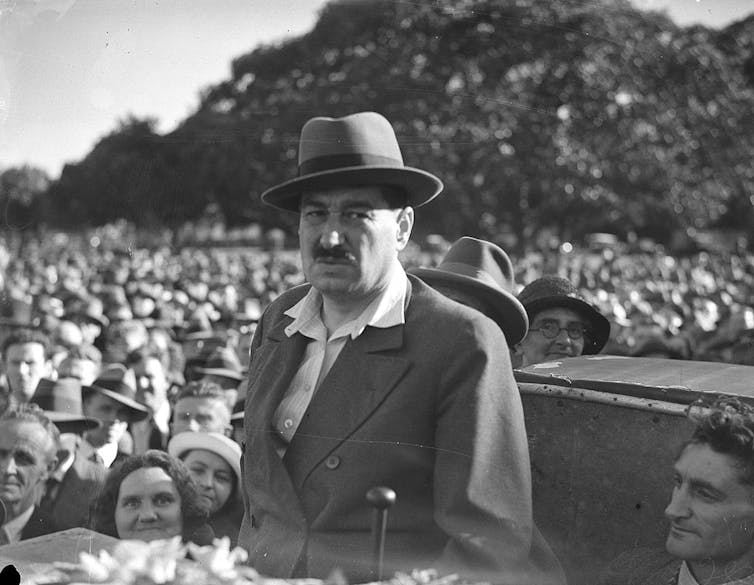
Egon Kisch addressing a crowd in Sydney’s Domain on the dangers of Hitler’s Nazi regime in 1935. Wikimedia Commons
Political calculations often play a role
The potential for controversial visitors to espouse offensive views has been a concern for politicians on both sides of the political divide.
However, it does seem conservative politicians have been particularly keen to play the character card. In 1997, for example, the then-acting immigration minister, Amanda Vanstone, decided to cancel the visitor visa of US racial equality activist Lorenzo Ervin. The move followed interventions by outspoken right-wing Senator Pauline Hanson, who complained about Ervin’s criminal past.
Another US political activist, Scott Parkin, enjoyed less success a decade later when he was targeted for engaging in protests against the US invasion of Iraq. Vanstone (again) cancelled his visa on character grounds and he was removed from Australia.
All attempts to obtain reasons for the decision – or to gain access to his adverse security assessment failed.
Where does this leave Ye’s case?
Where does this leave Ye’s potential trip to Australia? Unlike Irving, Ervin, Parkin and Kisch before him, Ye does not seem to have a public reason for his visit, such as a performance or speech.
Having married a Melbourne woman, he would simply be seeking entry to meet his wife’s family. This may be enough to distinguish him from these earlier cases.
What is clear from previous cases is the fact the immigration minister has long enjoyed extraordinary power to exclude and expel non-citizens whose presence in Australia might prove unpopular. And these decisions inevitably involve political calculations. Just ask Novak Djokovic.
Mary Crock does not work for, consult, own shares in or receive funding from any company or organisation that would benefit from this article, and has disclosed no relevant affiliations beyond their academic appointment.
Interest rates are almost certain to rise again in February, after the latest Consumer Price Index figures showing inflation hit 7.8% in 2022 – its highest rate in 33 years.
The data from the Australian Bureau of Statistics shows a 1.9% increase in the CPI in the December quarter. Combined with the strong increases in the first nine months of the year, inflation in 2022 was at the highest rate since March 1990.
This reflects a post-pandemic spend-a-thon. Domestic holiday travel and accommodation rose 13.3% over 2022, while international holiday travel and accommodation rose 7.6%. Rents increased by 4%. Power bills increased by 8.6%.
While these price rises were particularly large, the rise in inflation has been quite broadly based. The ABS survey shows the price of 87% of all goods and services increased by more than 2.5% – which is where the central bank generally likes to keep price increases.
The annual change is a touch lower than the Reserve Bank of Australia’s upper forecast of 8% issued in November last year. But it still remains well above the central bank’s target band of 2-3%.
Measures of underlying inflation, which strip out the impact of unusually volatile sectors, also came in at record highs. The trimmed-mean inflation rate (which excludes the 15% of fastest growing and the 15% growing slowest growing prices) was 6.9%, higher than forecast in November. The weighted median price, another measure of underlying inflation, rose by 5.8%.
All of these statistics paint a clear picture: prices are increasing apace in every part of the Australian economy.
What this means for the RBA
This all but guarantees the RBA board will increase interest rates by 0.25 percentage points at its next meeting, on February 7, and likely several more times in 2023.
To fulfil its mandate to keep inflation between 2% and 3%, the bank must further reduce aggregate spending in the economy – principally through lifting the interest rates.
The rationale is that higher rates will encourage households to spend less and save more. A higher cash rate will also make the dollar more valuable as it encourages people to hold Australian dollars. This will help make imports cheaper than they otherwise would be.
It will also, of course, feed into higher loan repayments for households with a mortgage. This will take more spending power out of economy and suppress house prices as the amount of money borrowers can afford falls. Higher mortgage repayments will also cut into household spending, which should help to bring down inflation over 2023.
There remains an outside chance the RBA will go harder than a 25-basis-point increase and return to the 50-basis-point increases delivered in June, July, August and September of 2022.
This is unlikely but cannot be ruled out, given the rate of inflation and the current strong state of the labour market. The official unemployment rate of 3.5% is a record low and a sign of the economy’s strength – one able to handle higher interest rates without plunging into recession.
While economists still expect inflation to have peaked, the pace at which it will then fall is still an open question.
If rents continue to rise or wage growth picks up, it’s possible CPI will continue to rise. This would almost certainly result in the RBA lifting rates.
The more optimistic scenario involves inflation falling more quickly, as is already happening in the US.
If the rate of inflation starts to fall more quickly towards the 2-3% target band then the RBA will not need to increase interest rates by quite as much.
Fortunately inflation expectations remain largely in check. This means Australia should avoid a costly recession as the RBA lowers the inflation rate back towards the target band.
One clear takeaway from 2022 is that there remains a large degree of uncertainty in the outlook of the economy. That means policy makers will have to remain flexible when setting macroeconomic policy, ready to hike or cut interest rates as Australia’s economy changes.
Isaac Gross does not work for, consult, own shares in or receive funding from any company or organisation that would benefit from this article, and has disclosed no relevant affiliations beyond their academic appointment.
Tech companies are always in the news, usually touting the next big thing. However, the tech news cycle recently hasn’t been dominated by the latest gadget or innovation. Instead, layoffs are in the headlines.
In the last year, more than 70,000 people globally have been laid off by Big Tech companies – and that doesn’t count the downstream effect of contractors (and other organisations) losing business as budgets tighten.
What exactly led to this massive shakeout? And what does it mean for the industry, and you?
What’s the damage?
Since the end of the pandemic hiring spree, large numbers of employees have been fired from major tech companies, including Alphabet (12,000 employees), Amazon (18,000), Meta (11,000), Twitter (4,000), Microsoft (10,000) and Salesforce (8,000).
Other household names share the spotlight, including Tesla, Netflix, Robin Hood, Snap, Coinbase and Spotify – but their layoffs are significantly less than those mentioned above.
Importantly, these figures don’t include the downstream layoffs, such as advertising agencies laying off staff as ad spend reduces, or manufacturers downsizing as tech product orders shrink – or even potential layoffs yet to come.
The knock-on effects of all of the above will be felt in the consulting, marketing, advertising and manufacturing spaces as companies reduce spending, and redirect it towards innovating in AI.
So what’s driving the layoffs?
The canary in the coal mine was reduced advertising spend and revenue. Many tech companies are funded through advertising. So, for as long as that income stream was healthy (which was especially the case in the years leading up to COVID), so was expenditure on staffing. As advertising revenue decreased last year – in part due to fears over a global recession triggered by the pandemic – it was inevitable layoffs would follow.
Apple is one exception. It strongly resisted increasing its head count in recent years and as a result doesn’t have to shrink staff numbers (although it hasn’t been immune to staff losses due to work-from-home policy changes).
What does it mean for consumers?
Although the headlines can be startling, the layoffs won’t actually mean a whole lot for consumers. Overall, work on tech products and services is still expanding.
That said, some pet projects such as Mark Zuckerberg’s Metaverse likely won’t be further developed the way their leaders had initially hoped. The evidence for this is in the layoffs, which are concentrated (at least at Amazon, Microsoft and Meta) in these big innovation gambles taken by senior leaders.
Over the past few years, low interest rates coupled with high COVID-related consumption gave leaders the confidence to invest in innovative products. Other than in AI, that investment is now slowing, or is dead.
And what about the people who lost their jobs?
Layoffs can be devastating for the individuals affected. But who is affected in this case?
For the most part, the people losing their jobs are educated and highly employable professionals. They are being given severance packages and support which often exceed the minimum legal requirements. Amazon, for example, specifically indicated its losses would be in tech staff and those who support them; not in warehouses.
Having a Big Tech employer on their CV will be a real advantage as these individuals move into a more competitive employment market, even if it doesn’t look like it will be quite as heated as many had feared.
What does this mean for the industry?
With experienced tech professionals looking for work once again, salaries are likely to deflate and higher levels of experience and education will be required to secure employment. These corrections in the industry are potentially a sign it’s falling in line with other, more established parts of the market.
The recent layoffs are eye-catching, but they won’t affect the overall economy much. In fact, even if Big Tech laid off 100,000 workers, it would still be a fraction of the tech work force.
The numbers reported may seem large, but they’re often not reported as a proportion of overall wage spend, or indeed overall staffing. For some tech companies they are just a fraction of the massive amount of new hires initially acquired during the pandemic.
Big Tech is still a big employer, and its big products will continue to impact many aspects of our lives.
The authors do not work for, consult, own shares in or receive funding from any company or organisation that would benefit from this article, and have disclosed no relevant affiliations beyond their academic appointment.
Source: The Conversation (Au and NZ) – By Adrian Beaumont, Election Analyst (Psephologist) at The Conversation; and Honorary Associate, School of Mathematics and Statistics, The University of Melbourne
A federal Resolve poll for Nine newspapers, conducted January 17-22 from a sample of 1,606 people, has given Labor 42% of the primary vote (steady since early December), the Coalition 29% (down one), the Greens 11% (steady), One Nation 6% (up two), the UAP 2% (steady), independents 8% (steady) and others 2% (down one).
Resolve does not give two-party estimates until close to elections, but applying 2022 election preference flows to the primary votes gives Labor about a 60.5-39.5% lead over the Coalition, a 0.5-point gain for Labor since December. Since the election, Resolve has been the most favourable poll for Labor of all the Australian pollsters.
Prime Minister Anthony Albanese’s net approval was down one point in the Resolve poll to +35 (60% good rating, 25% poor), while Dutton was down three points to -17 (46% poor, 28% good). Albanese led Dutton as preferred PM by 55-20% (54-19% in December).
Labor led the Liberals by 37-29% on economic management (38-31% in December). On keeping the cost of living low, Labor led by 34-20% (37-24% in December).
Honeymoon polling is continuing for Labor eight months after last May’s election. But a long honeymoon does not guarantee a Labor win at the next election. Kevin Rudd had a long honeymoon after winning the 2007 election, but was replaced by Julia Gillard before the 2010 election. Labor lost its majority at that election and barely retained government.
Resolve also gives Labor lead in NSW
The New South Wales state election will be held in two months, on March 25. A Resolve poll for The Sydney Morning Herald gave Labor 37% of the primary vote (down one point since late October), the Coalition 34% (down one), the Greens 12% (up one), the Shooters 2% (up one), independents 11% (up one) and others 5% (steady).
No two-party estimate was provided by Resolve, but analyst Kevin Bonham estimated a lead of about 54.5-45.5% to Labor, unchanged since October. This is in good agreement with a YouGov poll that I covered on Monday (56-44% to Labor).
Incumbent Liberal Premier Dominic Perrottet led Labor’s Chris Minns by 33-29% as preferred premier (30-29% in October). This poll was presumably conducted with the December and January federal Resolve polls from a sample of about 1,100 people.
The independent vote is very likely to be overstated. In polls last year in both Victoria and federally, Resolve asked respondents to select generic “independents” until actual ballot papers were published. After this, Resolve asked for specific listed candidates.
Resolve’s final Victorian poll last year showed a 6% slump for independents – a result that also occurred before the federal election.
Essential’s federal poll included a NSW sub-sample of around 300 respondents. Perrottet had a 47-36% approval rating (49-35% in June 2022), while Minns had a 39-26% approval (39-22% previously).
These ratings are very good for Perrottet given voting intentions, and indicate the recent controversy over his wearing of a Nazi uniform at his 21st birthday has had no impact.
Support for Voice to Parliament slumps
Public support for the First Nations Voice to Parliament has slipped in a federal Resolve poll of 3,618 people conducted in two separate stages in December and January.
Compared with a similar poll on the Voice conducted in August and September, overall support on the question was 47% (down six percentage points), with 30% opposed (up one) and 23% undecided (up four).
In a question where respondents were forced to choose “yes” or “no” (similar to a referendum), support for the Voice was 60% (down four percentage points from August/September), with 40% opposed (up four).
This is an average of two months of polling across December and January. Support for the question in January alone was 58% (with 42% opposed) after Opposition leader Peter Dutton questioned the government’s handling of the referendum.
Voice support in NSW dropped to 58-42% from 65-35% in August/September, and to 56-44% in Queensland from 59-41%.
On the public’s understanding of the Voice, 63% in the January poll said they had heard of it, but didn’t understand it and would struggle to explain it, while 23% said they had never heard of it and just 13% said they understood the Voice and were confident explaining it to someone else.
In this week’s federal Essential two-party measure (which includes undecided responses), Labor led the Coalition by 53-42% (51-44% in mid-December).
Primary votes were 34% Labor (down one), 31% Coalition (up one), 14% Greens (up one), 16% for all others (down one) and 5% undecided (steady). Respondent preferences were better for Labor than in December.
In other results from this poll of 1,050 respondents that was conducted in the days before January 24, Albanese’s net approval slumped nine points to +24, its lowest in Essential since the election last May, with 55% approving and 31% disapproving.
On Indigenous Australians, 42% thought things had got better for them in the past ten years (up six percentage points since January 2022), 10% worse (down four) and 38% stayed the same (steady).
On Australia Day, 33% supported a separate national day to recognise Indigenous Australians while keeping Australia Day (down four points since January 2022), while 33% did not support a separate day (up four), and 26% supported replacing Australia Day (up six).
This level of support for replacing the day is easily a record in Essential polls.
Labor’s lead widens in Morgan poll (but not this week)
Labor led by 59-41% in this week’s Morgan poll, a 0.5-point gain for the Coalition since the previous week. This poll was conducted January 16-22.
Morgan’s polls have swung strongly to Labor since late November, when Labor only led the Coalition by 52.5-47.5%.
In a separate Morgan SMS poll, conducted January 20-23 from a sample of 1,231 respondents, 64% thought January 26 should be known as “Australia Day” (down one point since January 2022), while 36% thought it should be known as “Invasion Day” (up one).
Adrian Beaumont does not work for, consult, own shares in or receive funding from any company or organization that would benefit from this article, and has disclosed no relevant affiliations beyond their academic appointment.
We all know someone who insists on wearing a cardigan in summer or refuses to turn on the air conditioning because “it’s not that hot”. Chances are this is an older person, and there’s a good reason for that.
There are five key reasons we’re more susceptible to heat as we get older.
1. Bodily changes
One of the main ways we lose excess heat, blood flowing to our skin, isn’t as effective as we get older. This is in part because the blood vessels in our skin don’t expand fast enough, and we may have less blood pumping with each beat of our heart.
Many other changes in our bodies also lead us to gain and store more heat as we get older. These include how our bodies control sweat and how well our kidneys balance fluid, which are both important for staying cool.
Older Australians may not respond to heat in ways that protect their own health and wellbeing. Australian culture tends to view heat tolerance as a matter of resilience and identity, where there is a sense of generational pride in being able to cope with the heat.
Reports also suggest many older people have concerns about the cost of air conditioning, may be hesitant to use it, or accidentally use reverse cycle units as heaters.
Many chronic illnesses that are more common with age are also associated with an increased risk for heat-related illness. Because blood flow is so important for regulating our body temperature, it’s not surprising that conditions such as heart failure and diabetes are associated with increased heat risk.
Similarly, many medications commonly prescribed for chronic illnesses can interfere with how our body regulates temperature. For instance, some blood pressure medicines reduce our ability to sweat and lose heat.
It is increasingly difficult for older Australians to find affordable and appropriate housing, especially pensioners and renters.
Poor home design, lack of insulation, inability to pay their energy bills, and limited income all contribute to being vulnerable to heatwaves in Australia. This is particularly troubling as energy prices soar.
Knowing the risks of extreme heat is the first step. Don’t underestimate your own risk during a heatwave.
There are many practical ways we can all keep ourselves and our homes cool, both safely and efficiently. These include:
using a fan, which is effective, especially when it’s humid, but may not be enough when it’s very hot and dry. If you have an air conditioner, consider using it
Do you know the signs of heat-related illness? SA Health
knowing the conditions inside your home by installing thermometers that ideally also measure humidity so you know which ways will work best to cool down
opening windows facing away from the sun when it’s cooler outside; otherwise keep blinds closed in the heat of the day
taking cool showers or applying a damp cloth to the back of your neck can help cool the skin
taking regular, small drinks of water, even when you’re not thirsty (unless you have heart or kidney problems in which case you need to talk to your doctor first as too much water may be a problem for you)
Australians are growing complacent about the health risks of extreme heat, see heatwaves as normal and public health messages aren’t cutting through any more.
It’s also important to remember that older people aren’t all the same, so any public health approaches to extreme heat should be tailored to communities and individuals.
One way we’re trying to help is by working directly with older people. Together, we’re researching and developing a smart device that makes it easier to know when your house is getting warm, and customising strategies you can use to cool down safely.
Sarah Cunningham receives an Australian Government Research Training Program scholarship. She is affiliated with the Extreme Heat and Older Persons research group which receives funding from Wellcome.
Birds sold in the pet trade are often colourful and charismatic creatures. Some can even be taught to talk, and they often provide owners with much-needed companionship.
But there are negative aspects of the pet trade that warrant a closer look.
Concerns about the billion-dollar global pet industry have usually focused on issues associated with the trade in endangered species, but the industry also plays a critical role in moving invasive species around the globe. For birds, it is the primary source of invasive species.
Our new study highlights how many pet birds, particularly parrot species, are reported as lost by their owners. They are contributing to a consistently large pool of escapees in our suburbs, with the potential to breed and spread.
The Australian king parrot is one of the species currently available through the pet trade in New Zealand that could pose a risk. Author provided, CC BY-ND
An ill-fated history of introductions
Unfortunately, Aotearoa New Zealand is famous for its history of deliberate introductions of new bird species through well-organised acclimatisation societies. The meticulous record-keeping of these early British settlers has created one of the best global data sets for analysing the effect of propagule pressure (the number of healthy individuals released) on the establishment and spread of new species.
We now know that propagule pressure is a critical factor in whether a species becomes invasive. It’s a numbers game: the more individuals released (or escaped) and the greater the number of release events (at different times and in different places), the higher the chances a species will successfully breed and eventually spread.
Although the days of acclimatisation societies releasing new species are long gone, the pet trade has spurred a new wave of companion bird imports. Some of these imports are leading to the escape or even deliberate release of new bird species into the wild.
Rainbow lorikeet (Trichoglossus haematodus) Author provided, CC BY-ND
In 2000, authorities eradicated a population of about 150-200 rainbow lorikeets (Trichoglossus haematodus) in Tāmaki Makaurau Auckland after they were illegally and deliberately released. Sales of this species have continued since, but Auckland became the first and only region to ban sales last year.
Our study investigated the extent to which owners were reporting pet birds as lost through online websites in Aotearoa. What we found was staggering.
During our monitoring period of three-and-a-half years, 1,205 birds and at least 33 species were reported as lost, and 92% of them were parrots. Given that not all owners will list their lost pets on websites, and given that some are released deliberately, these numbers are likely to be a considerable underestimate.
Ring-necked parakeet (Psittacula krameri) Author provided, CC BY-ND
Ring-necked parakeets (rose-ringed parakeets, Psittacula krameri) have established in 47 countries and form large, noisy populations. They have severe impacts on orchards and crops, and also on native birds by outcompeting them for food and nest sites. About 100 pet owners reported this species as lost in our study.
Worryingly, 23% of the birds reported as lost were part of a group, often with male and female pairs lost together. That makes finding a mate and breeding in the wild much easier.
We used lost-bird data from Auckland in model simulations to investigate the overall propagule pressure from lost pet birds. For seven species (all parrots), we found there was more than an 80% chance of having a male-female pair at large in the same local area at the same time. For the ring-necked parakeet, this figure was a stark 100%, with an average of ten different local areas hosting a male-female pair at any point in time.
Clearly the pet trade poses a major risk for invasion of new parrot species.
Invasive birds, such as the eastern rosella pictured here, can pose a significant threat to native species through competition for food or nest sites, hybridisation, disease transmission and weed spread. Shutterstock/Wang LiQiang
Aotearoa has its own unique parrot species, such as kākā, that would be put at risk by these new invaders. Our native birds are already struggling with the onslaught of invasive introduced mammals. While we have tools for controlling mammalian pests, there are currently very few options for controlling invasive birds, and potentially less public support for this.
The only viable and cost-effective approach to preventing the economic and environmental risks invasive parrots pose is prevention. Regional bans will not be enough to prevent spread beyond regions, especially given the ease with which these birds can be bought online from outside the regions with bans. We need to enact regulation at the national level to ban the sale of parrot species that pose the highest risk.
The authors do not work for, consult, own shares in or receive funding from any company or organisation that would benefit from this article, and have disclosed no relevant affiliations beyond their academic appointment.
New Zealand Parliament Buildings, Wellington, New Zealand.
New Zealand Politics Daily is a collation of the most prominent issues being discussed in New Zealand. It is edited by Dr Bryce Edwards of The Democracy Project.
Traditionally, loneliness has been viewed as an individual problem requiring individual solutions, such as psychological therapy or medication. Yet loneliness is caused by feeling disconnected from society. It therefore makes sense that treatments for loneliness should focus on the things that help us make these broader connections.
The places where we live, work and play, for example, can promote meaningful social interactions and help us build a sense of connection. Careful planning and management of these places can create population-wide improvements in loneliness.
Our research team is investigating how the way we design and plan our cities impacts loneliness. We have just published a systematic review of research from around the world. Overall, we found many aspects of the built environment affect loneliness.
However, no single design attribute can protect everyone against loneliness. Places can provide opportunities for social interactions, or present barriers to them. Yet every individual responds differently to these opportunities and barriers.
Our review involved screening over 7,000 published studies covering fields such as psychology, public health and urban planning. We included 57 studies that directly examined the relationship between loneliness and the built environment. These studies covered wide-ranging aspects from neighbourhood design, housing conditions and public spaces to transport infrastructure and natural spaces.
The research shows built environments can present people with options to do the things we know help reduce loneliness. Examples include chatting to the people in your street or neighbourhood or attending a community event.
However, the link between the built environment and loneliness is complex. Our review found possibilities for social interaction depend on both structural and individual factors. In other words, individual outcomes depend on what the design of a space enables a person to do as well as on whether, and how, that person takes advantage of that design.
Specifically, we identified some key aspects of the built environment that can help people make connections. These include housing design, transport systems and the distribution and design of open and natural spaces.
So what sort of situations are we talking about?
Living in small apartments, for example can increase loneliness. For some people, this is because the smaller space reduces their ability to have people over for dinner. Others who live in poorly maintained housing report similar experiences.
More universally, living in areas with good access to community centres and natural spaces helps people make social connections. These spaces allow for both planned and unexpected social interactions.
This finding should make sense to anyone who walks or takes the bus. We are then more likely to interact in some way with those around us than when locked away in the privacy of a car.
Similarly, built environments designed to be safe — from crime, traffic and pollution — also enable people to explore their neighbourhoods easily on foot. Once again, that gives them more opportunities for social interactions that can, potentially, reduce loneliness.
Neighbourhoods that make it easier to get around without a car also promote social interactions. Shutterstock
Environments where people are able to express themselves were also found to protect against loneliness. For example, residents of housing they could personalise and “make home” reported feeling less lonely. So too did those who felt able to “fit in”, or identify with the people living close by.
These factors are fairly well defined, but we also found less tangible conditions could be significant. For example, studies consistently showed the importance of socio-economic status. The interplay between economic inequalities and the built environment can deny many the right to live a life without loneliness.
Our review reveals several aspects of the built environment that can enhance social interactions and minimise loneliness. Our key finding, though, is that there is no single built environment that is universally “good” or “bad” for loneliness.
Yes, we can plan and build our cities to help us meet our innate need for social connection. But context matters, and different individuals will interpret built environments differently.
Jennifer Kent receives funding from the Australian Research Council.
Marlee Bower receives funding from the BHP Foundation. She is affiliated with Australia’s Mental Health Think Tank.
Emily J. Rugel does not work for, consult, own shares in or receive funding from any company or organisation that would benefit from this article, and has disclosed no relevant affiliations beyond their academic appointment.
Why does one child experience excitement at the thought of starting the school year while another experiences debilitating anxiety?
It’s rarely one thing and is often a combination of factors, including a child’s temperament and self-confidence; their previous experiences at school, kinder or childcare; friendships they’ve already formed; and the types of transition activities they’ve undertaken.
As psychologists and mental health researchers, we also look at how the family is coping, and the child’s previous history of mental health or developmental disability diagnoses.
The good news is research shows parents, schools and health professionals can intervene early to support children who are feeling anxious about school.
Our research team developed a program called AllPlay Learn to support children with disability, who are at higher risk of experiencing anxiety at school because of the additional load from new routines, friendships, expectations, and “sensory overload” (where the noise, clutter, smells and other sensory input from the classroom or playground become overwhelming and distressing to a child).
These strategies can help all children, parents and teachers to better cope with the transition to school, or going back after the holidays.
What does back-to-school anxiety look like?
Anxiety in children isn’t always easy to spot. The symptoms can range from very subtle changes to body language, through to defiant behaviours such as anger and acting out.
Anxiety can present in a number of different ways. AllPlay Learn
However, avoidant behaviour is a hallmark feature for anxious children. Everyone can relate to gravitating to what makes us comfortable – being at home, engaging in things we like and are good at, and avoiding what makes us anxious or overwhelmed.
At its extreme, anxious-avoidant behaviour in relation to school can turn into school refusal, where a student regularly misses school with their parents’ knowledge due to school-related emotional distress.
How parents communicate about the new school year is important. Speaking positively about school and learning can reduce feelings of anxiety in children.
Parents can help children feel prepared and develop strategies to cope with feelings of anxiety by:
Familiarising them with their new school/classroom. Take your child to visit their new school or classroom, read stories about school and “play” school so they can practise things they’ll need to learn, such as packing their bag.
Helping them set goals. Encourage them to identify the things they can already do to get settled in their classroom, then set small goals for what they can do next. For example, “I can say goodbye without getting upset when my mum leaves. This term, instead of mum walking me into the classroom, I will wave through the window.”
Developing some “calming” supports. Ask what has helped them before when they had worries. They could practise relaxation breathing, have quiet bedtime activities, practise “brave statements” (such as “I might feel a little worried, but I know the teacher will be there if I need help”), or bring a special item from home.
Ensuring they can unwind after school. Some of the emotions your child has held inside all day may spill over when they return home. Consider calming activities, spaces or supports your child may need to process their emotions and sensory overwhelm.
Teacher support is important, particularly on arrival. Settling-in activities such as the choice to either read books or draw quietly can provide security to a child.
Communicating clear expectations of students, such as class rules, can also build trust between children and their teacher.
If a child is anxious, reflect on what aspects of school life might be contributing to anxious feelings and identify – with the child’s input – what they could manage with supports in place. For example, a child may feel able to separate from parents in the morning if they have a familiar toy or photo from home, and can have some quiet time in the classroom before the bell. Over time, these additional supports can be reduced.
Allow children time and space to manage big emotions. Children may have different preferences for support when distressed, but may find it challenging to communicate their needs when anxious or upset.
Provide structure and predictability. Visual schedules, social narratives (stories that tell children what they can expect at school), and warnings for transitions can provide security. Knowing what to do and who to play with can be challenging for a child who is feeling anxious, particularly during unstructured school time such as lunchtime.
What if your child remains anxious about school?
Some children may experience significant signs of anxiety such as not sleeping, social withdrawal, changes in eating habits, or significant ongoing distress or unhappiness.
When children experience ongoing, significant signs of anxiety that don’t resolve, some additional supports may be needed to ensure your child’s wellbeing and feelings of safety at school.
Talk to your GP, who can rule out underlying medical factors and refer you to appropriate support services, such as a child and adolescent psychologist.
Bethany Devenish received funding from the NSW Department of Education.The AllPlay Learn research program was funded by the Victorian Department of Education.
Ana Mantilla receives funding from the National Health and Medical Research Council (NHMRC; project grant no APP1101989). The AllPlay Learn research program was funded by the Victorian Department of Education. Ana also receives philanthropic funding from Jonathan and Simone Wenig, the Moose Foundation, Ferrero Group Australia as part of its Kinder + Sport pillar of Corporate Social Responsibility initiatives, MECCA Brand, and the Grace and Emilio Foundation, as well as funding from the NSW Department of Education.
Nicole Rinehart receives funding from the National Health and Medical Research Council (NHMRC; project grant no APP1101989). She is a board member of Amaze and a clinical psychology consultant at the Melbourne Children’s Clinic. The AllPlay Learn research program was funded by the Victorian Department of Education. Nicole also receives philanthropic funding from Jonathan and Simone Wenig, the Moose Foundation, Ferrero Group Australia as part of its Kinder + Sport pillar of Corporate Social Responsibility initiatives, MECCA Brand, and the Grace and Emilio Foundation, as well as funding from the NSW Department of Education.
A child receives treatment after an alleged chemical attack in Syria in 2017.IDLIB MEDIA CENTER/EPA
The number of armed conflicts currently raging around the world is the greatest since the end of the Second World War. These wars can leave toxic environmental legacies and cause untold damage to human health.
One-quarter of the world’s population, or two billion people, live in countries experiencing war. They include Ukraine, Yemen, Syria, Myanmar, Sudan, Haiti and the Sahel region in Northern Africa.
Violent conflict causes substantial environmental damage – polluting air, water and soil, and damaging human health over the long-term.
Chemical weapons and toxins are still being used in current wars. The United Nations last month formally adopted principles to protect the environment in armed conflict. Concrete action is now needed to implement them.
A Ukrainian firefighter at a chemical storage facility hit by a Russian missile in march 2022. Roman Pilipey/EPA
What are toxic remnants of war?
Toxic remnants of war are poisonous or hazardous substances resulting from military activities. They include:
radioactive material
white phosphorus
mustard agents
halogens
heavy metals
dioxins and other human carcinogens.
Atomic bombs dropped on the Japanese cites of Hiroshima and Nagasaki in 1945 are thought to have killed more than 200,000 people immediately; more died from nuclear radiation in subsequent years.
Top photo shows a mangrove forest near Saigon before US forces sprayed it with the chemical defoliant Agent Orange in 1965. Bottom photo shows a nearby area after the attack. AP
Some toxic remnants are a direct result of armed conflict. Agent Orange used in the Vietnam War contained dangerous dioxins that continue to damage people and the environment today.
The use of poisonous gases and other hazardous substances in warfare has a long history. Chlorine and mustard gas, for example, were used in the First World War.
However, unlike many past wars, today’s armed conflicts increasingly take place in urban and industrialised areas, posing a significant risk to civilians and their environment.
And the use of chemical weapons continues. For example, a UN official this month said the Syrian government’s “absence of accountability” for using chemical weapons in the nation’s long-running civil war was “a threat to international peace and security and a danger to us all”.
A threat to human health
Toxic remnants of war can result in many adverse health effects in humans.
In Vietnam, research suggests a greatly increased risk of birth defects among children of parents exposed to Agent Orange. In some locations, extremely high levels of dioxins have been found in soil, sediment and foods, as well as human breast milk and blood.
Research has also linked Agent Orange to human genome instability (or genome mutations) in adults and children.
The effects of Agent Orange are still felt by Vietnam’s people today. Richard Vogel/AP
In Gaza, elevated heavy metal loads have been identified in mothers and newborns exposed to military attacks. Also in Gaza, birth defects have been associated with exposure to white phosphorus and other bombs containing toxic and carcinogenic metals.
In Iraq, open burn pits used to dispose of war waste have exposed civilians to poisonous smoke and fumes. And smoke from oil well fires in the 1991 Gulf War, and more recently in Syria, pose a toxic risk.
Kuwaiti oil wells set alight by fleeing Iraqi troops in 1991 – smoke from which is toxic. Greg Gibson/AP
A scourge on the environment
In addition to human health effects, armed conflicts can cause widespread environmental damage.
Sensitive landscapes can be destroyed by the movement of troops and vehicles. And explosives can release particles, debris and other matter that pollutes the air and soil.
War can also cause toxic pollution indirectly, such as when services and infrastructure are destroyed or break down.
For example, Israel’s bombardment of a power plant in Lebanon in 2006 sent 110,000 barrels of oil into the Mediterranean sea, killing fish and turtles and causing an environmental crisis.
And according to the OECD, Russian military strikes on Ukraine refineries, chemical plants, energy facilities and industrial plants have sent toxic substances into air, water and soil. It says ammunition remains and damaged military vehicles also contain materials toxic to people and the environment.
The war in Ukraine is also raising fears of a radioactive incident at Chernobyl and other Ukrainian nuclear power plants.
Toxic remnants of war also interact with the effects of climate change. As ice in Greenland melts, for instance, pollutants from abandoned Cold War-era military infrastructure may enter waterways.
Dead fish lie on a beach in Beirut in 2006. Israel’s bombing of a power plant in southern Lebanon sent oil gushing into the sea. Assaad Ahmad/EPA
So what now?
Despite the known health and environmental effects, toxic weapons continue to be used in armed conflicts.
In December last year, the United Nations’ General Assembly adoptedprinciples to protect the environment in relation to armed conflict. They outline how the environment should be protected before, during and after armed conflict.
The principles include:
designating and protecting important environmental areas during an armed conflict
obligations to remove or render harmless toxic remnants of war.
But this protection isn’t binding in the same manner that a treaty or convention would be. Action is needed to ensure the principles are put into practice.
Governments, international organisations, armed groups, business enterprises and civil society all have a role to play.
According to the Conflict and Environment Observatory, such action should include a formal implementation vehicle, such as an engaged group of governments, to ensure the principles are adopted on the ground.
And increased public awareness of conflict pollution will also help create the momentum needed.
Without firm action, toxic remnants of war will continue to pose long term threats to communities and ecosystems.
Stacey Pizzino is affiliated with the Global Protection Cluster – Mine Action Area of Responsibility.
Jo Durham is affiliated with is the Global Protection Cluster – Mine Action Area of Responsibility
Michael Waller is affiliated with the Global Protection Cluster – Mine Action Area of Responsibility.
I have one prayer as I watch the Australian cricket team sing Advance Australia Fair patriotically before a match – “Please don’t turn on their microphone.” Like many Australians, their “joyful strains” of our anthem are … well, just strained.
It’s not their fault they misspent their youth playing cricket instead of taking singing lessons. And it’s not their fault they got so good they now have to sing in front of thousands before they can play.
But there is a fault. We’ve given them an anthem that average Aussies can’t sing in tune together.
Great unity?
According to former Prime Minister Scott Morrison, our anthem reflects “great unity”, but that wasn’t there at the start. It needed several “fixes”.
First Nations people were also omitted from McCormick’s original verses, ignoring their presence while glorifying British colonisation. More fixing from the Council swapped the offending verses for a politically neutral verse from McCormick’s Federation version with another tweak for gender-inclusive language.
Some Indigenous sport stars still refuse to sing the current anthem, as they say it doesn’t represent them.
The remaining inappropriate lyric, “young”, was amended to “one” in 2021 by a governor-general’s proclamation. And as for “girt”? No, unfortunately, it remains, but it has united Australians in its own special way. We all think it’s odd.
Unfortunately, while focusing on unifying lyrics, we’ve missed a musical problem that’s divided voices since 1878. The note range of Advance Australia Fair is more than the average Australian will sing accurately. For inexperienced singers, which is most of us, our voices crack with the very disunity the government tried to fix.
What is note range?
The note range of a song is like the number of steps it takes to climb from the lowest to the highest point. If there are too many steps, the average Aussie would rather abandon the sweaty climb and hang out on the ground floor with a cold beer.
The range of Advance Australia Fair is 17 steps (called “semitones”). This is a bigger climb than other nations’ anthems, such as Britain’s 10 semitones in God Save the King, France’s 14 semitones in La Marseillaise and New Zealand’s 14 semitones in God Defend New Zealand. At least the Australian anthem is more modest than the Americans’ who, true to reputation, like doing everything bigger. The Star-Spangled Banner rises 19 semitones, resulting in some excruciating vocal cracks.
In theory, most average adult voices should be capable of climbing 17 steps and well beyond. We have the equipment. In practice, however, many inexperienced singers have problems with something called “registers”.
Why do registers matter?
Vocal registers are like gears in a car. We usually sing low steps in first gear, or “chest voice”. Chest voice is the most familiar and comfortable register because that’s the voice most people use when speaking everyday.
To sing higher, we subconsciously move small muscles in our throat to shift into second gear, or “head voice”.
Experienced vocalists spend considerable time developing strength in each register and making the gear change between them smooth and stable. Non-singers may not be not used to holding notes steady in second gear, and end up wobbling, yodelling and going out of tune.
Others won’t budge out of first gear, and change the melody instead. Whichever approach we take, it certainly isn’t “unified”.
Back to school
Schools are the unofficial training ground for anthems. Weekly assemblies make it the most regular practice session Aussies will ever experience. But those 17 steps don’t help.
Many beginner instrumentalists in school bands can’t play 17 notes in their first year of learning an instrument. Some players can’t do it by their second year either. And aspiring trumpeters? Unless they are the next James Morrison, hold your breath and cover your ears.
While there’s no rule that an anthem must be playable by children, it might increase our national pride if they could.
A simple solution
There is a remarkably simple solution to this musical problem dismembering our anthem – fix the note on the word “and”. Instead of this:
we can use a step already in the song, like this:
Alternatively, if that sounds odd, just substitute the steps from the first two bars like this:
Both options reduce the range to 14 steps which is singable in one register. If you start the song low, no gear change is required. Now we can sing the anthem and have a cold beer (or a lemonade for the kids).
If a proclamation can fix one word of our anthem for greater unity, then why not fix one note? Then, more everyday Australians could sing it together in unison. And isn’t that the point of an anthem?
Wendy Hargreaves does not work for, consult, own shares in or receive funding from any company or organisation that would benefit from this article, and has disclosed no relevant affiliations beyond their academic appointment.
This year’s perennial back-to-school uniform discussion happens during a cost of living crisis. And we already know that the upfront and maintenance costs of school uniforms are a stress for families on lower incomes, in New Zealand and globally across rich and poor countries alike.
The Human Rights Commission even publishes school uniform guidelines, setting out how school policies can help pupils’ physical and mental health. And while cost is outside the guidelines’ scope, the commission acknowledges this is a common problem and it encourages schools to make uniforms accessible.
This is important, as uniform cost has been shown to reduce attendance and enrolment among pupils from lower income families. In other words, uniform affordability is an important factor in people accessing their right to state-funded education.
Given uniforms in themselves have no direct link to academic performance, there is a high price to pay for their being an obstacle to learning. However, there are things governments, schools and communities can do to improve this situation.
School uniforms were originally intended to disguise socioeconomic difference. Shutterstock
Uniform as ‘social camouflage’
It’s acknowledged across the political spectrum that education lifts people out of poverty, improves lives and boosts the economy. Indeed, the desire to remove the most outward signs of socioeconomic difference was a key reason school uniforms were adopted in the first place.
A well designed uniform should be comfortable, appealing and inclusive, easy to wear and allow physical activity. It can and should take away the pressure to wear expensive labels (sometimes called “social camouflage”), and remove distractions in class.
But if it’s unaffordable, many low-income students are no better off. Garments that were originally introduced to remove barriers can end up actually getting in the way of the right to a (theoretically) free education.
Government policy that bolsters existing initiatives would help, starting with a requirement for all schools to have a uniform policy. A nationwide overview of uniform costs, rules and dress codes could form the basis of a resource for schools to help develop best practice processes and principles that build on the Human Rights Commission guidelines.
With the government’s new equity index for funding high-need schools to improve students’ educational outcomes, it makes sense that the known obstacle of school uniform affordability doesn’t stop students getting through the gates.
New Zealand (along with other similar countries) could also amend its existing welfare grants process to better reflect the high upfront cost of school uniforms and make the eligibility criteria broader – especially given current inflation rates.
Plain sports-style uniforms have been embraced by state and private schools alike. Getty Images
Benefits of simpler, more affordable uniforms
In New Zealand’s devolved system, where school boards and communities have significant control of school operations, uniform policies are influenced by local expectations. Uniform design reflects tradition, helps identify students and signals a school’s place in the education market.
And while uniforms have no direct impact on academic performance, they influence how comfortable students feel in the learning environment. So understanding the functions of a uniform can help determine its form.
Mental and physical comfort, respect, and physical activity all improve learning. This explains why a simpler sports-style uniform that hits a number of targets for physical activity, comfort and affordability has been adopted by both private and public schools.
However, choice and affordability are linked to supply and demand. To ensure a thriving market, schools should follow Commerce Commission guidelines to regularly review suppliers and encourage competition for their business.
Additionally, allowing some uniform items to be purchased from any retailer, as opposed to specific suppliers, works out cheaper overall. Schools should consult with parents about uniform purpose, expectation and changes, and be transparent about any profits made from selling new uniforms.
We know those experiencing hardship often don’t ask for help because they feel ashamed. Schools can counter this by considering how hardship funds are administered and whether school uniforms can simply be supplied on enrolment.
Other strategies include having more expensive items, such as blazers, that can be borrowed when representing the school or for formal occasions; allowing students to discreetly borrow uniform items until their families can afford new or secondhand items; or simply giving students in need good quality secondhand uniforms.
Most schools have already established secondhand uniform sales, stocking good quality used items at a reasonable price.
As the Human Rights Commission guidelines make clear, school uniforms and policies about their use should be informed by considerations of human dignity, rights and Treaty of Waitangi principles.
These serve to shield pupils against racism and bullying, and protect culture, identity and religious expression, meaning students can feel comfortable and get on with learning. So let’s also think harder about uniform costs as integral to the value of our investment in education.
Johanna Reidy has received funding from University of Otago Research Grant 2023 for a pilot project to explore school uniform usage and health.
New temporary restrictions on takeaway sales and the prospect of reimposed bans on alcohol in Indigenous communities – with “opt-out” provisions – have followed Anthony Albanese’s Tuesday visit to crisis-ridden Alice Springs.
After a brief round of talks with local Indigenous, civic and police representatives Albanese fronted the media with Northern Territory Chief Minister Natasha Fyles, federal minister Linda Burney, senators Malarndirri McCarthy and Patrick Dodson and the member for Lingiari, Marion Scrymgour.
Albanese stressed the need for co-operation across levels of government and announced the federal and NT governments had appointed Dorrelle Anderson as Central Australian Regional Controller.
She will lead consultations with communities on an “opt-out” system for banning alcohol in them. A report will be made next week to the two governments on moving to the change.
The lapsing last July of the federal legislation banning alcohol in communities has been followed by a dramatic spike in crime in Alice Springs and problems in other NT Indigenous communities.
Despite widespread calls to do so, the NT government has refused to reimpose the bans, saying that would be race-based discrimination. Communities wanting to stay dry have had to opt to do so.
The outcry about the wave of crime put strong pressure on the federal government to act, and prompted Albanese’s visit, which was only announced on Tuesday morning. He had intended to visit Alice Springs late last year but was struck down with COVID.
Albanese told the news conference Anderson would “report back on February 1, to myself and to the Chief Minister, about the implementation of potential changes to alcohol restrictions in Central Australia, including potentially moving to an opt-out situation rather than opt-in that has applied”.
Fyles said: “We put in an opt-in system and we have seen communities opt-in. That opt-in finishes next week, and what I commit to is looking at the system, working with the community, including the possibility of placing an [opt-out] system”.
In immediate measures, Fyles announced takeaway alcohol won’t be sold on Mondays and Tuesdays. The hours in which it can be sold on other days will be reduced and purchases limited to one daily transaction per person. These measures, which the federal government hopes will be a “circuit breaker”, will be imposed for three months.
She told the news conference that “not everyone will be happy” with the measures she announced.
Fyles said the NT government had “done more than any other government around alcohol policy and measures to reduce harm in our community. But we need to give the community respite and support and we need to do that immediately.”
The federal government also announced it will spend $48.8 million over two years in Alice Springs “to tackle crime, keep women and children safe and provide support for young people in communities”.
Money will go to high visibility law enforcement, improved CCTV, lighting and other safety measures, additional emergency accommodation to give young people a place to go at night, a boost for domestic violence services, and extending funding for safety and community services where the funding is due to end in June.
Meanwhile a Resolve poll in Nine newspapers has found support for the Indigenous Voice to parliament referendum declining from 53% in August-September to 47% in December-January, with 30% against (previously 29%). When people were forced to choose between a yes or no vote, 60% supported and 40% opposed.
Michelle Grattan does not work for, consult, own shares in or receive funding from any company or organisation that would benefit from this article, and has disclosed no relevant affiliations beyond their academic appointment.
A veteran journalist known for covering rights abuses in Indonesia’s militarised Papua region says a bomb exploded outside his home yesterday and a journalists group has called it an act of “intimidation” threatening press freedom.
No one was injured in the blast near his home in the provincial capital Jayapura, said Victor Mambor, editor of Papua’s leading news website Jubi, who visited New Zealand in 2014.
Police said they were investigating the explosion and that no one had yet claimed responsibility.
“Yes, someone threw a bomb,” Papua Police spokesperson Ignatius Benny told Benar News. “The motive and perpetrators are unknown.”
The Jayapura branch of the Alliance of Independent Journalists (AJI) condemned the explosion as a “terrorist bombing”.
Tabloid Jubi editor Victor Mambor being interviewed by Pacific Media Watch’s Anna Majavu during the first visit by a Papuan journalist to New Zealand in 2014. Image: Del Abcede/PMW
Mambor is also an advocate for press freedom in Papua. In that role, he has criticised Jakarta’s restrictions on the media in Papua, as well as its other policies in his troubled home province.
The AJI awarded Mambor its press freedom award in August 2022, saying that through Jubi, “Victor brings more voices from Papua, amid domination of information that is biased, one-sided and discriminatory.”
“AJI in Jayapura strongly condemns the terrorist bombing and considers this an act of intimidation that threatens press freedom in Papua,” it said in a statement.
‘Voice the truth’ call “AJI Jayapura calls on all journalists in the land of Papua to continue to voice the truth despite obstacles. Justice should be upheld even though the sky is falling,” said AJI chair Lucky Ireeuw.
Amnesty International Indonesia urged the police to find those responsible.
“The police must thoroughly investigate this incident, because this is not the first time … meaning there was an omission that made the perpetrators feel free to do it again, to intimidate and threaten journalists,” Amnesty’s campaign manager in Indonesia, Nurina Savitri, told BenarNews.
The Papua region, located at the eastern end of the Indonesian archipelago, has been the site of a decades-old pro-independence insurgency where both government security forces and rebels have been accused of committing atrocities against civilians.
Foreign journalists have been largely barred from the area, with the government insisting it could not guarantee their safety. Indonesian journalists allege that officials make their work difficult by refusing to provide information.
The armed elements of the independence movement have stepped up lethal attacks on Indonesian security forces, civilians and targets such as construction of a trans-Papua highway that would make the Papuan highlands more accessible.
Human Rights Watch, meanwhile, has accused Indonesian security forces of intimidation, arbitrary arrests, torture, extrajudicial killings and mass forced displacement in Papua.
Security forces kill 36 Last month, Indonesian activist group KontraS said 36 people were killed by security forces and pro-independence rebels in the Papua and West Papua provinces in 2022, an increase from 28 in 2021.
In Sydney, Joe Collins of the AWPA said in a statement: “These acts of intimidation against local journalists in West Papua threaten freedom of the press.
“It is the local media in West Papua that first report on human rights abuses and local journalists are crucial in reporting information on what is happening in West Papua”.
Collins said Canberra remained silent on the issue — ‘the Australian government is very selective in who it criticises over their human rights record.”
There was no problem raising concerns about China or Russia over their record, “but Canberra seems to have great difficulty in raising the human rights abuses in West Papua with Jakarta.”
Republished from Free Radio Asia with additional reporting by Pacific Media Watch.
Victor Mambor as an advocate for media freedom in West Papua. Image: AWPA
There is a new twist in Papua New Guinea’s four-year drama surrounding the Maseratis bought for the 2018 APEC Summit.
It has emerged that the Department of Foreign Affairs, which wants to send the luxury vehicles to foreign missions abroad, cannot do so, because the vehicles — which have been collecting dust in a Port Moresby warehouse — will now be classified as “used vehicles”.
And some countries in which PNG’s foreign missions are based cannot accept them under that category.
Foreign Affairs Secretary Elias Wohengu said that Papua New Guinea was also a non-vehicle producing country which did not have a licence or permit to export vehicles, let alone used ones.
Many developed countries could accept anything classified as “used vehicles” from PNG.
Other countries, such as Solomon Islands and Indonesia, also have other obstacles to overcome, if the cars were going to be sent eventually — Solomon Islands does not have good paved roads for such low-lying luxury vehicles, and Indonesian roads are just too crowded. Fast cars such as the Maseratis will be of no use there.
Early last year a notice was sent for PNG Foreign Affairs Department and its missions abroad to be given the priority to purchase Maseratis and Bentleys for their operations.
Challenges facing missions There were challenges facing the missions and their heads on the latter.
Yesterday Wohengu spelled out the challenges preventing the cars from being sent across to the PNG Missions.
“As soon as the vehicles leave the sales spot, it is portrayed as a used car already,” he said.
“Some of these host countries do not accept used cars so we have the used car issue.
“Second issue that we have is the cost of shipment . . . But the biggest challenge is that many countries do not accept used cars, especially for diplomatic use and not from PNG,” he said.
“We would have got vehicles for all the missions, but you see, I can’t send a Bentley or a Maserati to Solomon Islands. Similarly I cannot send these vehicles to Jayapura or Fiji.
“But most of all, the used cars are not accepted in many host countries. Also we don’t have a permit for exporting used cars out of PNG. We can buy new vehicles from elsewhere but we can’t export them from PNG.
“Australia will not accept these cars from here, Singapore totally no. These are some examples.”
How the RNZ/TVNZ merger went from its first reading in Parliament to the legislative extinction list is an example of why New Zealand actually needs more public media and not less. Let me explain.
It has been labelled a grenade, a dog and a monolithic, monopolistic monster. Yet it is actually a reasonable policy that would bring New Zealand public media in line with most other developed countries.
No other developed country has separate national television and radio networks. They have seen how it fails us and said, “no thanks”.
Most other developed countries spend quite a bit more on their public media platforms too. Brits pay $81 each, Norwegians $110, Germans $142, but Kiwis just $27 each year to fund RNZ, TVNZ and NZ On Air.
Even with the government’s funding increase over the next three years, we’ll still be spending less per person than Australia, Ireland or any other country we like to compare ourselves to.
A big part of our public media underspend is successive governments’ policy that TVNZ pay its own way and rely on advertising dollars.
Other countries subsidise their public media because they realise that a reliable source of news and information is too important to be left in the hands of marketers and advertising departments.
Other end of the spectrum At the other end of the spectrum is the US spending just $3 per person on public media. You have to wonder how different US politics might be if it had fully-funded public media.
It is true that TVNZ does receive funding for programmes through NZ On Air but those shows still have to be simple and entertaining because TVNZ sells adverts around them. Only Sunday mornings have programmes for minorities or long-form political interviews, and of course, that is when there is no advertising.
That is the big difference between public media and commercial media. Public media doesn’t rely on advertising so it isn’t so desperate to get your attention and blast adverts at you.
Public media has time to examine public issues in-depth.
Commercial media needs to make money and with advertising dollars drifting to Google and Facebook, they work even harder to make content as eye-catching, entertaining and easy to understand as possible.
You may have noticed it on TVNZ, Newshub, Stuff or at the New Zealand Herald. These days there are more articles about crime, car crashes and weather bombs because they catch people’s attention.
Political reporting also wants to catch your attention. While public media can spend half an hour discussing a policy in-depth, commercial media want eyeballs so they go for the fun stuff — who’s up and who’s down in the pugilistic soap opera of daily politics. It is entertaining and it’s quick and easy to explain.
Complicated issues Unlike this opinion piece I’m writing for you now — I’m already halfway through my allotted word count, yet I’ve spent all of them just explaining the background. Complicated issues take more time to explain. I had better get on with it.
It was in this commercial political reporting soap opera that the media merger lost its way. Like many politicians, opposition broadcasting spokesperson Melissa Lee exploited commercial media’s focus on simplification and pugilism to attack the government. She repeatedly claimed the government could not explain why we need the merger, but the government had tried to explain it, only the public hadn’t heard because it is too complicated to explain quickly and simply on commercial media (as I’m trying to do here).
Political reporting fixated on Willie Jackson’s various stumbles as though this reflected the policy, rather than analysing the policy itself.
National Party leader Christopher Luxon also exploited commercial media’s lack of examination. He criticised the merger for being “ideological”, claiming it would destroy TVNZ’s business model, and saying he would demerge it if National win the election.
But none of the interviewers asked Luxon to explain his figures or why the destruction of TVNZ’s business model would be a bad thing. None asked him if demerging would also be “ideological” and none asked if he would get a cost-benefit analysis done before demerging.
Lee and Luxon’s criticism worked. A Taxpayers Union poll in November claimed 54 percent opposed the merger and 22 percent supported it.
Different polling outcome My organisation, Better Public Media Trust, also polled on the subject but we added some information about the merger, its costs and benefits. We got quite different results with just 29 percent opposing and 44 percent supporting the merger.
That shows what a little bit of information can do to public opinion. It also shows that reliance on commercial media for political discussion is prone to being style over substance, posturing over policy, soap operas over documentaries.
That is why the merger should go ahead. People would see it’s not a dog, grenade or monster, but intelligent, diverse and informative public media. Just in time for the election.
Myles Thomas is chair of the Better Public Media Trust (BPM). He is a television producer and director of various forms of “factual” programming, and in 2012 he established established the Save TVNZ 7 campaign. This article was first published in the New Zealand Herald and is republished here with the author’s permission.
Politicians can respond to the political rhetoric but claims that the new Fiji government has broken the law are a more serious matter, says prominent Suva lawyer Richard Naidu.
Reacting to FijiFirst general secretary Aiyaz Sayed-Khaiyum’s claims that there have been a number of incursions into the separation of powers since the government came in, Naidu said Sayed-Khaiyum had made no specific allegations that the People’s Alliance-led coalition had breached the “separation of powers”.
“In layman’s terms, ‘the separation of powers’ means only that the legislature (Parliament), the executive (Cabinet and civil servants) and the judiciary (judges and magistrates) should each ‘stay in their lanes’,” he said.
“They should not interfere in each other’s functions.
“Aiyaz has made no specific allegations that the new government has breached this concept. What law does he say has been broken?”
Naidu also questioned the procedures that were taken to set up the 2013 Constitution.
“Aiyaz’s FijiFirst party government applied the constitution as it suited them.
“It never set up the Accountability and Transparency Commission that the Constitution required (s.121); it never set up a Ministerial Code of Conduct as the Constitution required (s.149); it never set up a Freedom of Information Act as the Constitution required (s.150).
“This was, after all, his own government’s constitution.”
Rakesh Kumaris a Fiji Times reporter. Republished with permission.
West Papua independence campaigner Benny Wenda is in Vanuatu to meet Prime Minister Ishmael Kalsakau’s newly-installed government.
Wenda said he would also “strategise” on the way forward towards gaining eventual sovereignty from Indonesia and would be discussing ongoing issues in West Papua.
These include human rights abuses, and internal displacement of at least 160,000 Papuans by the Indonesian military while, he says, Jakarta continues to “pretend that nothing is happening in West Papua”.
Wenda said seven church pastors were among more than 200 people who had died in the conflict in the region in the last five years.
Wenda’s United Liberation Movement for West Papua (ULMWP) has observer status in the Melanesian Spearhead Group.
“We are developing in Melanesia, but unfortunately we cannot develop on top of all the suffering in West Papua which is another Melanesian country,” he said.
“I look forward to meeting Vanuatu’s new government leaders to brief them on the realities happening in West Papua. For example in the last five years, almost 240 Melanesians have died in West Papua.
‘Seven pastors killed’ “So far seven of our church pastors have been killed, including the most well-known Pastor Sanabani — a Bible translator.
“Indonesian soldiers also target our children while women give birth in the bush. Nobody has any statistics because Indonesia has banned all journalists for almost 50 years now from entering and reporting on what has been happening in our country.”
Comparing their situation with that of Russia’s war with Ukraine, he said television viewers are focused on their screens while no one really cares about what is happening in their next door neighbour of West Papua.
“We, the Melanesian countries call ourselves Christians but where is the Melanesian spirit of Christian brotherhood regarding West Papua?
“We badly need Melanesian Good Samaritans and perhaps now is the right time to prove that level of responsible leadership,” he said.
Vanuatu has pushed through the West Papua case at the Pacific Islands Forum as well as further abroad through the Organisation of Asia Caribbean and Pacific States (OACPS) in Brussels.
Len Garaeis a Vanuatu Daily Post journalist and RNZ Pacific correspondent. This article is republished under a community partnership agreement with RNZ.
Source: The Conversation (Au and NZ) – By Tristan Derham, Research Associate, ARC Centre of Excellence for Australian Biodiversity and Heritage (CABAH) Policy Hub – Training and Education, University of Tasmania
Shutterstock
The emu is iconically Australian, appearing on cans, coins, cricket bats and our national coat of arms, as well as that of the Tasmanian capital, Hobart. However, most people don’t realise emus once also roamed Tasmania but are now extinct there.
Where did these Tasmanian emus live? Why did they go extinct? And should we reintroduce them?
Our newly published research combined historical records with population models to find out. We found emus lived across most of eastern Tasmania, including near Hobart, Launceston, Devonport, the Midlands and the east coast. However, in the early days of British occupation, colonists hunting with purpose-bred dogs slaughtered so many emus that the population crashed.
It’s not all bad news, though. Those areas still provide enough good, safe emu habitat to make reintroducing emus from the Australian mainland to Tasmania a realistic option.
Large animals, such as bison, wolves and giant tortoises are already part of global efforts to repair and maintain ecosystems and prevent more extinctions, through the conservation movement known as “rewilding”.
In Tasmania, rewilding with emus might help native plants to cope with a changing climate. As our world warms, the places where conditions are just right for particular plant species are shifting. Those plants must disperse far and fast to keep up. Introducing emus, which disperse many plant seeds in their droppings, could help.
Emus are the biggest birds in Australia. The females weigh up to a whopping 37 kilograms. But when European sealers and explorers arrived on Australia’s southern islands, they found smaller, shorter emus. According to one estimate, Kangaroo Island emus averaged 24-27kg and King Island emus a mere 20-23kg.
Contrary to local folklore, Tasmanian emus were actually more similar to their mainland cousins. They weighed about 30-34kg (but sometimes up to 40kg).
Along with eastern grey kangaroos, known locally as “foresters”, emus were the biggest herbivores in Tasmania.
Large herbivores play important roles in ecosystems around the world. By chewing on plants, pushing through vegetation and churning up soil, large animals can create a mosaic of habitat types for other, smaller creatures. They move seeds and nutrients across the landscape and shape the frequency and intensity of fires.
Exactly how emus help ecosystems is a bit of a mystery because so few researchers have looked into it. But we do know emus are very good at seed dispersal. Emus live anywhere, eat anything and swallow their food whole. They walk miles and miles while seeds slowly pass through their gut, to be ejected in a ready-made batch of compost.
Without emus, some plant populations won’t be able to disperse quickly enough to escape the local effects of global warming.
Many plant species benefit from being dispersed by emus that swallow their seeds whole and deposit them some distance away in a nutritious pile of ‘poo compost’. Author provided
We know colonists hunted emus and kangaroos in Tasmania. Emus were rarely seen on the island after 1845. But was hunting by a few hungry settlers enough to take out the whole population?
To find out, we recreated the emu population using computer simulations. Then we turned up the hunting pressure.
The signal was clear. Tasmania’s emu population could not sustain a harvest of more than about 1,500 adults per year. This limit was probably exceeded within a decade or two, which makes over-hunting the most likely cause of extinction.
Interestingly, the results of the simulation imply the island’s Indigenous people hunted adult emus at very low rates, less than one per person per year.
Emus at Stanley, Tasmania, during the 1840s, in a painting by William Porden Kay. They were rare by the middle of that decade. Wikimedia Commons
To find safe places for reintroductions, we overlapped emu habitat with current land use. We found large parts of the state that have both good emu habitat and a healthy distance from areas with higher risk of human-emu conflict.
Small-scale, trial introductions could be done in fenced enclosures to learn more about the emus’ needs and their ecological roles.
Indigenous voices are particularly important in conversations about reintroductions, because of the roles such animals play in living traditional cultures. For example, emus have featured in Tasmanian Aboriginal story, dance, song and art for generations. Pakana and Palawa still perform emu dances today.
Such conversations must be had with care, because many Indigenous people are wary of terms such as “rewilding” and “wilderness”. These terms can carry the implication of a land without people, when in fact Australian landscapes have a long and rich history of Indigenous people caring for Country. Even the concept of “wildness” can imply too strong a separation between humans and our non-human kin, and a lack of reciprocity and responsibility.
Australia has just begun rewilding
Landscapes all over the world have lost large animals that would otherwise be keeping ecosystems healthy and dynamic. European and American conservationists have responded by reintroducing large animals for their ecological and cultural functions.
Rewilding Europe, for example, has reintroduced bison to the Carpathian mountains and primitive horses to Portugal, Spain, Bulgaria and Ukraine. These efforts are placing prehistoric grazing regimes back into a rich cultural landscape.
On islands in the Indian Ocean, giant tortoises have been introduced to replace their extinct cousins. Those tortoises graze down weeds and give native plants a better chance of recovery.
In Siberia, the Pleistocene Park project aims to re-create a rich steppe ecosystem by reintroducing bactrian camels, musk oxen and American plains bison. One benefit is this will increase the amount of carbon stored in that landscape.
In Australia, most of our animal reintroduction programs are focused on conserving individual species. In a few cases, like the Marna Banggara project, ecological engineers like bettongs are being introduced to kick-start ecosystem restoration, but this is happening behind fences and on islands.
We need solutions like rewilding for our open landscapes. Reintroducing emus to Tasmania would be a good first step.
Christopher Johnson receives funding from the Australian Research Council.
Matthew Fielding and Tristan Derham do not work for, consult, own shares in or receive funding from any company or organisation that would benefit from this article, and have disclosed no relevant affiliations beyond their academic appointment.
A boom in 2023 predictions is spurring more tips about thriving in fast-changing workspaces.
But the talk about an Australian workplace revolution is not new – and a prime minister once offered a media model for renewing the national morale.
John Curtin retains a top place in prominent surveys of Australia’s greatest prime ministers. He faced the challenge of stirring a massive public effort in the second world war.
The road of service is ahead. Let us all tread it firmly, victoriously.
It was a dramatic turnaround, asking Australians to abandon their individualistic values. The main priorities became national cooperation, inclusion and unity.
This was a total war that reached more deeply into national society than any other crisis had before. It involved the most sudden reorganisation of Australian life to date. Australians faced bans on holidays, pleasure motoring and leisurely basking on beaches.
The nation worked around the clock to send supplies to Allied forces. As a journalism researcher, I have analysed three essential steps in Curtin using the media to generate public enthusiasm for a cooperative work ethic during the second world war.
Firstly, Curtin treated reporters as equals. They talked candidly in twice-daily news conferences.
Curtin had recognised a need for positive press relations prior to becoming prime minister. Previously, he had been a labour-oriented newspaper editor and an Australian Journalists’ Association district president.
He was also a firm believer in the style of leading by example.
John Curtin’s lunchtime talk in Martin Place, Sydney in 1942.
Known for a “log cabin” background, he would talk about his meagre upbringing. He would recall that his family could only afford “tea without milk and bread without butter”.
Journalists presented him as “Plain John Curtin” and “Honest John.” The media image masked his dedicated studying to become the nation’s leader in 1941.
Reporters shared stories about Curtin’s preference for talking with workers. They would describe his careful broadcast rehearsals. Correspondents circulated his media announcement in London’s prestigious Guildhall that he had once been a “printers’ devil”, or a newspaper apprentice.
Boosting morale
Secondly, journalists accentuated Curtin’s plain talks about a community ethos of hard work.
He extensively used the broadcast media.
His personalised tone benefited from the intimate style of United States wartime president Franklin Delano Roosevelt’s fireside chats. As the prime minister, he often timed his evening radio chats to reach Australians working late.
are far from being helpless, inefficient moaners in the face of the enemy. We have paid the price for our seal to nationhood.
This talk was not only aired in Australia. More than 700 radio stations broadcast this talk across the US and Europe. This was the largest potential audience hooked up for an Australian broadcaster at the time.
Involving public audiences
Thirdly, journalists became compassionate eyewitnesses to reveal the need for a more inclusive wartime economy. They portrayed a growing campaign for more recognition of women workers.
News stories showed women’s efforts to improve their workplace conditions. Wartime filmmakers idealised the roles of female workers, who appeared as patriotic people’s heroines.
The media blitz elicited active public support for the national values of work, service and community.
Curtin’s media model helped to transform pre-war images of freedom-loving Australians who had independently fought their way back to prosperity after the depression.
He expanded Australia’s public sphere as a place of civic engagement in a national team enterprise pulling together for a victory.
Readers enthusiastically wrote letters to the editor about how to promote a cooperative work ethic. As a newspaper reader suggested:
This spirit of cheerfulness should be encouraged and cultivated.
News surveys indicated many workers were optimistic about their future by the war’s end in 1945.
Invoking a hopeful destiny
Since then, many political leaders have used the latest popular media available to champion a hopeful Australian work ethic.
Victorious election campaigns include Robert Menzies’ radio series, Gough Whitlam’s televised events and Kevin Rudd’s YouTube videos.
These campaigns have emphasised a fresh vision of empowering Australian workers.
Now, the value of an inclusive culture appears in trending lists on how to shape post-pandemic work.
Prime Minister Anthony Albanese has touted Curtin’s “quest for a true victory” that helped to transform post-war Australian society. At the National Press Club this year, he declared a need for a new “culture of cooperation” of working together.
Curtin’s media model suggests there are advantages in sharing frequent updates with journalists when leaders are aiming to transform a work culture. Curtin’s news talks show the possibilities of renewing morale during rapid workplace changes.
Dr Caryn Coatney received funding from a Fellowship at the Australian Prime Ministers Centre in the Museum of Australian Democracy at Old Parliament House, Canberra.
This weekend (and pretty much every weekend until the end of May), millions of people around the world will be making these sorts of decisions, hoping the right call will take them a step closer to fantasy football glory.
Glory or not, fantasy football should be a fun, enjoyable hobby… right? Recent research – including a newly published study – sheds light on whether that really is the case.
A real-world virtual team
For the uninitiated, fantasy football (“soccer” in some parts of the English-speaking world) is a game in which you select real-world players for your virtual team, with their subsequent real-world performance dictating your team’s score.
Many versions exist, but the basic premise is that points are awarded for doing good things (like scoring a goal) and deducted for doing bad things (like getting a red card). The virtual team with the most points by the end of the season, wins.
Fuelled by advances in smartphone technology and social media, fantasy football has rapidly grown to become a key meal in a fan’s football consumption.
You would think this would be a good thing, but take a quick scroll through the fantasy football “Twitter-verse” and you will soon find not everyone seems to be enjoying it for what it’s meant to be – a game.
In our study, 1,995 fantasy football players (representing 96 different nationalities) completed a questionnaire on their anxiety, low mood, daily functioning, and problematic behaviour in relation to the game. Importantly, players also told us about their engagement (primarily the time spent playing the game) and experience (the number of years playing the game).
The good news was that for most respondents, fantasy football did not seem to have a negative impact on mental health. However, given the popularity of the game, it is notable that 3.4% and 5.1% of the respondents reported having moderate to severe anxiety and low mood in relation to the game, respectively.
In a game played by over 10 million people, that could be hundreds of thousands of people negatively affected by what is meant to be a fun and enjoyable hobby.
Interestingly, while engagement and mental health concerns were positively correlated, experience and mental health concerns showed the opposite relationship. That is, the more time a player invested in the game, the greater the negative mental health concerns they reported; but the more years’ experience they had playing the game, the fewer negative mental health concerns they reported.
It’s unclear why this is, but we think it’s possible that over time, players develop coping mechanisms or even an emotional “numbness” towards the game.
Looking for positives
Our first study provided insights into fantasy football’s potential harmful effects on wellbeing, but failed to investigate the numerous positives that inevitably must exist (why else would it have become a global phenomenon?).
We decided to address this by carrying out a follow-up study. This time, we took a qualitative, interview-based approach to paint a more holistic and detailed picture of what goes on when people take part in fantasy football. This paper has just been published in the journal Entertainment Computing.
We interviewed 15 experienced male fantasy football players, and thematically analysed the resulting data. Overall, it was found the game appears to have a much more positive than negative impact.
Aside from the obvious enjoyment factor, benefits included the creation and maintaining of friendships; an increased knowledge of football; the opportunity to strategise, compete, and develop transferable skills (such as an understanding of maths and statistics); escapism; and the provision of structure and routine to one’s week.
Model for ‘Initial Involvement’ and ‘Continued Involvement’ in fantasy football. Green boxes indicate factors related to the theme of ‘personal benefits’, yellow to the theme of ‘social connections’, and blue to the theme of ‘involvement in football’. We propose that players only become cognisant of the continued involvement factors once they have played the game for a period of time. The Conversation/Author provided, CC BY-ND
Mitigating the negatives
We also teased out some negatives. Responses from all participants lent support to our original study which highlighted fantasy football’s potential harm to wellbeing. “Anxiety-provoking”, “frustrating”, “addictive”, “affects self-confidence” and “disappointment and regret” were prevalent enough to warrant sub-themes of their own within the analysis.
Participants were also keen to mention the negative online impact – particularly through social media – that accompanies the game, as well as the intensity of involvement the game was perceived to require.
Perhaps of most importance was the identification of seven factors which we believe can be used by game creators and game players alike to help optimise participation in fantasy football.
For instance, we propose that if you think success in the game reflects your knowledge of football in the real world, it will lead to predominantly negative experiences. Likewise, it’s not wise to invest excessive time at the expense of other areas of life.
Players and game creators should aim to foster the factors in the green box (and deter those in the pink box) in order to optimise the experience of playing fantasy football. Proposals for improvements to the game (blue box) come from post-hoc, quantitative data collected from participants after the interviews. The Conversation/Author provided, CC BY-ND
Some of these are clearly easier said than done, and others may actually be incompatible with one another.
Nevertheless, we believe through identifying these factors, we can help players become more mindful of their fantasy football involvement, and the impact it may have on their mental health.
Like with most things in life, balance is key for fantasy football. The growth of the game shows no sign of slowing down, so it’s important for players and game creators alike to act now to improve the playing experience. If we don’t, making that call on Haaland or Kane will continue to have a greater consequence than it ought to.
Luke Wilkins ne travaille pas, ne conseille pas, ne possède pas de parts, ne reçoit pas de fonds d’une organisation qui pourrait tirer profit de cet article, et n’a déclaré aucune autre affiliation que son organisme de recherche.
It’s impossible to avoid the Aussie sun entirely, but Australians are well aware of the dangers of too much exposure. Some 40 years of Slip Slop Slap (and more recently added, Seek and Slide) campaigns have reinforced this, not to mention the unpleasant experience of a sunburn most of us have encountered at some point.
Skin does repair itself, but how long does that take? If you hit the beach for half an hour, then retreat to the shade for a while, then go back out, will the damage have gone back to baseline? Or are you accumulating it?
Like most things, it’s complicated.
How does the sun damage your skin?
Spending a day in the sun can cause 100,000 DNA defects in each exposed skin cell. DNA is the genetic information your body needs to build and run itself. There’s a copy in each of your cells, except for red blood cells and the layer of dead cells at the very surface of the skin.
Your cells have a very effective DNA repair process, called nucleotide excision repair, for this kind of damage. But some damage still slips through the cracks.
When your skin’s DNA monitoring system decides there is just too much damage to be effectively repaired, it tells the cells to self-destruct and calls in the immune system to finish them off. This causes the symptoms of sunburn: redness, pain, and sometimes blistering.
However, you don’t have to get sunburnt to start accumulating damage. A tan is your skin reacting to DNA damage by increasing the amount of melanin, which alters the skin’s colour, to mitigate future UV exposure. Though this only gives you the same protection as a 2-4 SPF sunscreen.
UV radiation in Australia is so high, particularly during summer, that you can start accumulating damage in the time it takes to hang out the washing or walk to the bus stop.
Even so, the amount of DNA damage is proportional to the amount of UV exposure, so longer exposures or exposures at high-UV times of day cause much more damage.
In the time it takes to hang the washing out, the sun can damage your skin. Shutterstock
Remind me, what is UV radiation?
There are two types of UV radiation that damage skin – UVB mostly affects the upper layer, causing sunburn and skin cancer, and UVA mostly damages the lower layer, causing premature ageing.
These act in two different ways to damage skin, but due its cancer-causing properties, UVB is the better studied.
Light particles (UVB photons) discharge energy when they hit DNA. This causes bases on one DNA strand to connect to each other, instead of their corresponding bases on the other strand.
‘Before’ shows a normal DNA helix. ‘After’ shows how excess energy from light causes the bases on DNA strands to link up incorrectly. NASA/David Herring
This distorts the DNA helix, so it doesn’t copy correctly when it’s time for the cells to divide.
And it causes permanent mutations that are replicated whenever the daughter cells multiply, setting the stage for skin cancers.
Even an exposure of half the amount of UV needed to cause a sunburn is enough to start generating these DNA defects.
How long does the damage take to repair?
Once they’re formed, the half-life of DNA defects is 20-30 hours, depending on the efficiency of your own DNA-repair machinery. That means it takes 20-30 hours for your cells to repair even half the damage.
In one study that took samples at 24 and 72 hours after exposure, almost 25% of the damage detected at the 24-hour mark was still present at 72 hours.
So if you’re already on your way to a sunburn, no, stepping away from the sun for 20 minutes to get an ice cream is not going to cut it. Your skin will eliminate most of the damage over a few days. But some may be missed or not found before the cell replicates.
You’re better off minimising damage in the first place by planning to hit the beach early, spending the middle part of the day reading your new murder mystery in the shade, and perhaps returning to the sands from mid-afternoon.
Alternatively, you could extend your time in the sun by covering up extensively with a long-sleeved rashie, thick leggings, hat and frequently reapplied sunscreen on anything not covered up – and don’t forget your feet!
To protect your skin, apply sunscreen as part of your morning routine on any day when the UV index is forecast to be 3 or higher. This will prevent an accumulation of damage from brief exposures like hanging out washing or walking in from the carpark.
Most weather forecasts will tell you what UV to expect but in Perth, Brisbane and Darwin it’s over 3 all year around.
If you’re going to be outside for a prolonged time, add sun protective clothing, a hat and sunglasses, reapply your sunscreen at least every two hours, and stay in the shade where possible.
If you do get sunburnt, the best thing you can do for yourself is stay out of the sun for a few days until the redness goes away. This lets your body deal with the damage as efficiently as possible without piling more on.
H. Peter Soyer is a shareholder of MoleMap NZ Limited and e-derm consult GmbH and undertakes regular teledermatological reporting for both companies. He is a Medical Consultant for Canfield Scientific Inc and Blaze Bioscience Inc..
New Zealand Parliament Buildings, Wellington, New Zealand.
New Zealand Politics Daily is a collation of the most prominent issues being discussed in New Zealand. It is edited by Dr Bryce Edwards of The Democracy Project.
A vast amount of rocks and other material are hurtling around our Solar System as asteroids and comets. If one of these came towards us, could we successfully prevent the collision between an asteroid and Earth?
Well, maybe. But there appears to be one type of asteroid that might be particularly hard to destroy.
Asteroids are chunks of rocky debris in space, remnants of a more violent past in our Solar System. Studying them can reveal their physical properties, clues about the ancient history of the Solar System, and threats these space rocks may pose by impacting with Earth.
Mainly concentrated in the asteroid belt, asteroids can be classified into two main types.
Monoliths – made from one solid chunk of rock – are what people usually have in mind when they think about asteroids. Monolithic-type asteroids about a kilometre in diameter have been predicted to have a lifespan of only a few hundred millions of years in the asteroid belt. This is not long at all given the age of our Solar System.
Artist concept of catastrophic collisions between asteroids located in the belt between Mars and Jupiter. NASA/JPL-Caltech, CC BY
The other type are rubble pile asteroids. These are entirely made up of lots of fragments ejected during the complete or partial destruction of pre-existing monolithic asteroids.
However, we don’t really know the durability, and therefore the potential lifespan, of rubble pile asteroids.
Sneaky and abundant rubble piles
In September 2022, NASA’s DART mission (Double Asteroid Redirection Test) successfully impacted the asteroid Dimorphos. The goal of this mission was to test if we could deflect an asteroid by impacting it with a small spacecraft, and it was a resounding success.
Like other recent asteroid missions by the Japan Aerospace Exploration Agency (JAXA) to visit asteroids Itokawa and Ryugu, and by NASA to asteroid Bennu, close-up images have shown that Dimorphos is yet another rubble pile asteroid.
The much-studied Ryugu asteroid – classified as potentially hazardous – is also a rubble pile. JAXA/Hayabusa2, CC BY
Those missions showed us that rubble pile asteroids have a low density because they are porous. Also, they are abundant. In fact, they are very abundant, and since they are the shattered bits of monolithic asteroids, they are relatively small, and thus hard to spot from Earth.
Hence, such asteroids represent a major threat for Earth and we really need to understand them better.
Learning from asteroid dust
In 2010, the Hayabusa spacecraft designed by JAXA returned from the 535-metre long, peanut-shaped asteroid Itokawa. The probe brought with it more than a thousand particles of rocks, each one smaller than a grain of sand. Those were the first-ever samples brought back from an asteroid!
As it then turned out, the pictures taken by the Hayabusa spacecraft while it was still orbiting Itokawa demonstrated the existence of rubble pile asteroids for the first time.
Early results by the team at JAXA who analysed the returned samples showed Itokawa formed after the complete destruction of a parent asteroid which was at least 20 kilometres large.
In our new study, we analysed several dust particles returned from asteroid Itokawa using two techniques: the first one fires an electron beam at the particle and detects electrons that get scattered back. It tells us if a rock has been shocked by any meteor impact.
The second one is called argon-argon dating and uses a laser beam to measure how much radioactive decay happened in a crystal. It gives us the age of such a meteor impact.
Our results established that the huge impact that destroyed Itokawa’s parent asteroid and formed Itokawa happened more than 4.2 billion years ago, which is almost as old as the Solar System itself.
That result was totally unexpected. It also means Itokawa has survived almost an order of magnitude longer than its monolith counterparts.
Such an astonishingly long survival time for an asteroid is attributed to its shock-absorbent nature. Due to being a rubble pile, Itokawa is around 40% porous. In other words, almost half of it is made of voids, so constant collisions will simply crush the gaps between the rocks, instead of breaking apart the rocks themselves.
So, Itokawa is like a giant space cushion.
This result indicates rubble pile asteroids are much more abundant in the asteroid belt than we once thought. Once they form, they appear to be very hard to destroy.
This information is critical to prevent any potential asteroid collision with Earth. While the DART mission was successful in nudging the orbit of the asteroid it targeted, the transfer of kinetic energy between a small spacecraft and a rubble pile asteroid is very small. This means they are naturally resistant to falling apart if impacted.
Therefore, if there was an imminent and unforeseen threat to Earth in the shape of an incoming asteroid, we’d want a more aggressive approach. For example, we may need to use the shockwave of a nuclear blast in space, since large explosions would be able to transfer much more kinetic energy to a naturally cushioned rubble pile asteroid, and thus nudge it away.
Should we actually test a nuclear shock wave approach, then? That is an entirely different question.
German Chancellor Olaf Scholz has been under tremendous pressure to supply Leopard tanks to Ukraine. The government in Kyiv has long argued it desperately needs them to regain territory seized by Russia in its 2022 invasion, and to protect the rest of Ukraine from the Kremlin’s looming spring offensive.
So far, Berlin has refused, and in recent weeks it has expended significant political capital in forbidding other nations like Poland and Finland from transferring their own Leopards to Kyiv.
Following earnest discussions between members of NATO’s Ukraine Defence Contact Group last week, the new German defence minister, Boris Pistorius, announced that instead of sending Germany’s tanks to Ukraine, he was going to count them instead. A proper inventory, apparently, would give Berlin a better idea about whether it might be able to meet Kyiv’s requests in the future.
Today, it appears Germany finally relented, with the foreign minister saying it would not stand in the way of Poland sending its Leopard tanks to Ukraine after all.
Germany’s position – which many have found perplexing – has reignited debate within NATO about arming the embattled government in Kyiv.
Is it an obligation or a risky move? What types of weapons should be provided? And what might be the repercussions in terms of a potential response from Russia, the future of European security and, ultimately, the credibility of the West?
What explains Germany’s indecisiveness?
There have been a number of attempts to explain why, in what is supposed to be a united alliance, there are such deep differences of opinion on these questions.
In Germany’s case, the country’s pacifist tradition – shaped by the experience of the second world war – is often cited as to what’s behind its reluctance to supply Kyiv with “offensive” weapons.
Some German analysts legitimately believe supplying tanks to Ukraine might lead to nuclear war with Russia. Because of its history as a divided nation during the Cold War, Germany also sees itself as having a special diplomatic role to play in bridging the divides between Russia and the West.
But these arguments aren’t particularly convincing alone. Nor are they especially useful. For one thing, Germany is already providing Ukraine with weapons that can be used for offensive purposes – including artillery, rocket launchers, bunker-busting missiles and Marder armoured fighting vehicles.
Further, Germany is one of the world’s most enthusiastic arms dealers. It sits at number four globally for total weapons sales. Germany had a bumper year for sales in 2021, reaching 9.35 billion euros (A$14.6 billion). Nearly half of these sales went to Egypt.
Its Leopard 2 tank is also the armoured staple of NATO militaries, with over 2,000 in service across Europe.
And when it comes to Russian President Vladimir Putin’s nuclear threats, this has been a concern for over a decade, so it is difficult to see how supplying Ukraine with tanks now makes Berlin especially vulnerable to Armageddon. In fact, for all his bluster, Putin has carefully avoided drawing NATO into the war, based on the sensible calculation it would hasten his defeat.
A more convincing explanation for Germany’s dithering has to do with the dysfunction within its military, as well as a healthy dose of domestic politics.
Scholz’s decision came only days after the resignation of the German defence minister, Christine Lambrecht. Her tenure was marked by PR disasters, including a New Year’s video message in which she recounted the “positive encounters” she had enjoyed with people over the war in Ukraine, and widespread condemnation for failing to improve the supply of equipment to Germany’s armed forces.
The problems with Germany’s military go deeper and are much harder to solve. Shortly after Russia invaded Ukraine, Germany’s military chief, General Alfons Mais, publicly bemoaned what he saw as the hopeless neglect and under-resourcing of the armed forces he commanded.
The trouble is Germany’s decision paralysis doesn’t help perceptions of NATO unity – and it especially doesn’t help the Ukrainians.
Scholz’s previous announcement that he would only permit other countries to send their Leopards to Ukraine if the US also supplied Kyiv with its M1 Abrams tanks was calculated to reveal America’s own reticence to donate high-end kit. This is in spite of the fact the Biden administration is arguably more concerned about advanced weapons systems falling into Russian hands than provoking Putin.
Of course, there have been attempts to break the impasse. Earlier this month, the UK announced it would provide Ukraine with 14 Challenger tanks. That’s hardly a huge number, and it is definitely not the most advanced piece of kit in the UK arsenal. But it was intended to get the ball rolling.
Clarity only comes with strategy
Above all, the back-and-forth on tanks is proof that NATO lacks a coherent strategy for the war.
True, NATO leaders often make stirring statements pledging support for Kyiv in its attempts to regain its territory, and claim the West’s goal is to see Russian imperialism defeated. But those alone do not amount to strategy: they are merely aspirations.
If NATO members are serious about seeing those aspirations succeed – and if getting the alliance more involved in the war itself is a clear red-line – they will need a much more detailed plan to provide Ukraine with every bit of assistance it requires to win the war on the West’s behalf.
Beyond that, NATO will also need a post-war commitment to guarantee Ukrainian sovereignty and develop a strategy for containing Russia in the future.
That will mean some hard compromises, the potential loss of domestic political capital and the danger of Russian reprisals. But this is a situation NATO finds itself in due to the legacy of its own inaction: by placating Putin in the past, it has simply encouraged him.
It is also manifestly clear there will be no going back to the pre-invasion era through some kind of desperately negotiated compromise. Putin has staked his personal credibility on triumph over Ukraine, and he has not deviated from a maximalist concept of victory.
If all this is too difficult for some NATO members, the ongoing nature of the Russian threat will make it necessary to come up with an alternative.
In many respects, there have been two tracks for European security for some time. The Baltic states, as well as Poland, the UK, the US and even Sweden and Finland are well ahead of Germany and other western European nations who still cling to the idea that Russia can still somehow be managed.
Indeed, if acknowledging a lack of consensus is what is required for the West to take a firmer approach towards Russia in the future, then it’s probably a price worth paying.
Matthew Sussex has received funding from the Australian Research Council, the Lowy Institute, the Carnegie Foundation and various Australian government agencies.
Semaglutide, sold in the forms of Ozempic and Wegovy, shot into public consciousness as an effective weight-loss medication last year, thanks to spruiking from social media influencers and people such as Elon Musk.
The unexpected increased in demand for the drug for weight loss has caused a world-wide shortage. Producing the drug – delivered as a weekly self-administered injection – involves a unique manufacturing set-up, so it will take some time to re-establish a global supply. It’s expected back in Australia at the end of March.
Semaglutide (in the form of Ozempic) is an effective medication in managing type 2 diabetes – and the shortage has left some people with diabetes struggling to find pharmacies with their treatment in stock. For many people with diabetes, Ozempic has controlled their blood sugar (and often also helped them lose weight) more effectively than other medications.
Due to the shortage of Ozempic, Australian GPs have been advised against prescribing it to treat obesity.
However, semaglutide in the form of Wegovy is designed specifically for weight loss. United States and Australian regulators have recently approved Wegovy for that purpose, though it hasn’t been available for use in Australia to date.
When the shortage is resolved and semaglutide is once again available in Australia for those with diabetes, it’s unclear who will be able to access it for weight loss. Patients and doctors are also asking how much they will pay, and what role it will play in managing obesity.
How does it work?
Semaglutide works in several ways, including increasing feelings of fullness by acting on appetite centres in the brain and slowing stomach emptying.
After two years, patients using it still benefit by not regaining their lost weight – but only if they are still taking the drug.
Disappointingly, once stopped, patients notice a gradual regain of up to two-thirds of the weight they lost. So essentially, semaglutide works only while taking it – it “manages” but does not “cure”.
Semaglutide is meant to be an add-on, not a replacement, for exercise and a healthy diet.
Research on the medication has always been done in conjunction with a healthy diet and exercise, as that is considered best practice. So we don’t know what happens if you just take the medication without also starting or maintaining a healthy lifestyle. We do know exercise is key to keeping weight off over time.
Semaglutide for weight loss isn’t meant to replace diet and exercise. Shutterstock
What are the side effects?
Semaglutide can cause nausea, bloating, constipation and diarrhoea.
Questions have been raised around the risk of pancreatitis, and thyroid and pancreatic cancers. So far the research is reassuring, however these are all rare, so it’s unlikely we will know if there is any significant increase for some years to come.
How much does it cost?
One of the biggest barriers to semaglutide for weight loss is the cost. Although patients spend less on food while taking it, in 2022 (when it was more easily available in Australia) it cost around A$130 a month.
It could be pricier once supply issues are fixed, because the manufacturer Novo Nordisk is spending millions of dollars building new facilities to meet the increased demand.
In the United States, prices are already over US$1,000 a month unless covered by insurance.
Australians with diabetes will continue to be able to access the drug on the Pharmaceutical Benefits Scheme (PBS) for the usual cost of a script. However, if used for obesity, it would be on a private prescription, so the cost is still unknown.
Obesity is more common among people with lower incomes. So from a public health perspective, those who would benefit the most may least afford it. This lack of equity must be wrestled with if this medication becomes widely used for obesity management. Subsidising on the PBS for weight loss is one option.
What are the downsides?
A serious concern is the potential for semaglutide to be used by people who are not obese, particularly those with eating disorders. Because it suppresses appetite, it could enable people to starve themselves in an unhealthy way.
Obesity is defined as a body mass index (BMI) of over 30, and overweight is BMI of 25-30. Yet there are reports of people with BMIs less than 25 using it to drop “just a bit of weight”.
The psychological and social pressure to be thin is a powerful driver, particularly in a society that frequently stigmatises obesity. People may see semaglutide as a way of “treating” their body image issues.
Another concern is the impact on enjoying food. Patients feel full after just a few bites, making meals with friends awkward, and sometimes limiting their social life.
But when this is insufficient, patients’ options are limited. The most effective is bariatric surgery. Although surgery is generally well tolerated, it is an irreversible lifelong change.
Once the semaglutide access issues are resolved, Australian regulators should seek input from the community and from doctors, and think carefully about the role the drug should play in Australia’s management of obesity and weight loss.
In addition to equitable access and protection for those with body image issues, we will need clear, evidence-based guidelines that consider the psychological and social impact of the drug.
At the end of last year, the world’s average price to emit one tonne of greenhouse gases was around US$5.29 (AU$7.77). For pricing to work as we want – to wean us off fossil fuels – it needs to be around $75 by the end of the decade, according to the International Monetary Fund.
Why is the price still so low? Because even in 2023, close to 80% of the world’s emissions from land clearing, power plants, cars and industry are pumped into the atmosphere without any cost to the polluter.
Carbon prices have long been favoured by economists and experts as a way to drive faster change. If you want to discourage something, the easiest way is to make it cost more. Pricing the three main greenhouse gases – carbon dioxide, methane and nitrous oxide – is an elegant and effective way to force polluters to find alternative ways of producing power or creating forms of transport. (Carbon price refers to pricing a tonne of carbon dioxide equivalent, CO₂-e, which covers all three gases).
There’s long been a strange disconnect between the minute-by-minute updates on financial asset prices and the the lack of information on carbon prices. In 2023, as extreme weather, droughts and floods propel climate change to the front of our minds, it’s far easier to access streams of data on share markets, commodities, foreign exchange than it is to find data on the measure most critical to global survival – the price of carbon. That’s why our research team worked to produce the first global carbon price index as a way to easily track changes in pricing globally – and see change over time.
Carbon pricing can help us go from fossil fuels to clean electricity. Shutterstock
How did we determine the true price of carbon?
To nail down the global price of carbon, we took into account every national or supranational scheme as well as the price of carbon traded through emissions trading schemes. We did not use carbon credits or offsets, as these tend to lack transparency, be rubbery and often questionable.
Different countries and jurisdictions have come at the problem of atmospheric pollution from different directions.
The simplest is to simply tax the pollutants you don’t want. This works if the price is set at the right level – not too low or too high at first – and increased as necessary.
Another common approach is to create a market for pollution through an emissions trading scheme, where high emitters have to purchase allowances. Over time, the new market will set the price on polluting as emitters and others compete for this finite pool of allowances. Regulators progressively cut the number of allowances, driving up the price of each allowance. The end result is to nudge large polluters to cut more and more of their emissions.
We didn’t include carbon credits or offsets in our indices, as their use is largely voluntary, they tend to be unregulated or loosely regulated, their supply is uncapped, and their impact varies widely. Whistleblowers have claimed Australia’s main carbon offset scheme is largely useless, for instance.
So what changes have we seen?
We first calculated this index a decade ago, when it became possible to pull together reliable price and scope information. When the index began, the global carbon price was just $0.67 per tonne of CO₂-e (or carbon dioxide equivalents). Back in 2013, only 20 jurisdictions had a price on carbon, covering just 8% of global emissions. At the time, Australia was one of them, before the so-called “climate wars” took over national politics.
Over the last decade, however, we’ve seen significant progress. The current price of around $7.77 per tonne of CO₂-e is almost eight times higher than 2013. From 20 countries or jurisdictions, we now have 58, accounting for 22.5% of global emissions. That includes the European Union’s emission trading scheme and China’s new national scheme, which respectively account for around 3% and 9% of emissions globally. The schemes don’t cover their whole economies.
This chart shows the evolution of the carbon price index since 2013.
That’s the good news. The bad news is there’s still a way to go. More than three-quarters of emissions go unpriced – costing the polluter nothing. That’s why the global carbon price is still so low. Nations like India, Iran, Russia, Indonesia and Australia have no carbon price or trading scheme.
Australia still bringing up the rear
Australia’s domestic emissions account for 1.27% of global greenhouse gas emissions. When you include our staggering fossil fuel exports as the world’s top LNG exporter and major coal exporter, our impact on the world climate almost quadruples to 5%. That’s depressingly high, given our population is just 0.3% of the world’s total.
Despite our vastly outsized carbon footprint, Australia still doesn’t have a mandated carbon price. We do have a safeguard mechanism – a baseline above which its big polluters need to pay. At present, the baseline is too high, meaning only a small number of polluters participate. The mechanism is currently under review.
Until the baselines are set lower and penalties enforced, Australia will remain a laggard in the fight against climate change. Labor’s pledge to cut emissions 43% by 2030 came without mention of a price on carbon.
Australia’s gas and coal exports vastly increase our broader emissions impact. Shutterstock
Will the rest of the world embrace carbon pricing?
Political pushback killed Australia’s first effort at pricing carbon in 2012. Similarly, political gridlock in America has made carbon pricing a non-starter at the national level. In response, left of centre governments have turned to different approaches, such as spending heavily on newly cheap clean energy.
Does this mean we’ll never see the global carbon price hit the point where it will be effective? It’s hard to say, but at present, it seems unlikely every major nation will price carbon.
That doesn’t mean it’s a waste of time for the nations and jurisdictions like the European Union which are embracing it. Far from it. It’s well established we can drive behaviour change by measuring it against a benchmark or expectation. That’s where we hope the real carbon price index can play a role. After all, this is one of the numbers that really matters.
Almost all of the trillion tonnes of carbon dioxide we’ve emitted since the Industrial Revolution were emitted for “free”. As global heating intensifies, the true cost is becoming ever more apparent.
The authors would like to thank Roger Cohen from C2Zero who was part of the index team and provided support for this article.
Nga Pham is also the co-chair of the Financial Capital Committee of the International Corporate Governance Network.
Bei Cui and Ummul Ruthbah do not work for, consult, own shares in or receive funding from any company or organisation that would benefit from this article, and have disclosed no relevant affiliations beyond their academic appointment.