Page 633

3 in 4 people experience abuse on dating apps. How do we balance prevention with policing?

Source: The Conversation (Au and NZ) – By Kath Albury, Professor of Media and Communication and Associate Investigator, ARC Centre of Excellence for Automated Decision-Making + Society, Swinburne University of Technology

Shutterstock

A 2022 survey by the Australian Institute of Criminology found three in four app users surveyed had experienced online abuse or harassment when using dating apps. This included image-based abuse and abusive and threatening messages. A further third experienced in-person or off-app abuse from people they met on apps.

These figures set the scene for a national roundtable convened on Wednesday by Communications Minister Michelle Rowland and Social Services Minister Amanda Rishworth.

Experiences of abuse on apps are strongly gendered and reflect preexisting patterns of marginalisation. Those targeted are typically women and members of LGBTIQA+ communities, while perpetrators are commonly men. People with disabilities, Aboriginal and Torres Strait Islander people, and people from migrant backgrounds report being directly targeted based on their perceived differences.

What do these patterns tell us? That abuse on apps isn’t new or specific to digital technologies. It reflects longstanding trends in offline behaviour. Perpetrators simply exploit the possibilities dating apps offer. With this in mind, how might we begin to solve the problem of abuse on dating apps?

Trying to find solutions

Survivors of app-related abuse and violence say apps have been slow to respond, and have failed to offer meaningful responses. In the past, users have reported abusive behaviours, only to be met with a chatbot. Also, blocking or reporting an abusive user doesn’t automatically reduce in-app violence. It just leaves the abuser free to abuse another person.

Wednesday’s roundtable considered how app-makers can work better with law enforcement agencies to respond to serious and persistent offenders. Although no formal outcomes have been announced, it has been suggested that app users should provide 100 points of identification to verify their profiles.

But this proposal raises privacy concerns. It would create a database of the real-world identities of people in marginalised groups, including LGBTIQA+ communities. If these data were leaked, it could cause untold harm.


Read more:
Right-swipes and red flags – how young people negotiate sex and safety on dating apps


Prevention is key

Moreover, even if the profile verification process was bolstered, regulators could still only respond to the most serious cases of harm, and after abuse has already occurred. That’s why prevention is vital when it comes to abuse on dating apps. And this is where research into everyday patterns and understanding of app use adds value.

Often, abuse and harassment are fuelled by stereotypical beliefs about men having a “right” to sexual attention. They also play on widely held assumptions that women, queer people and other marginalised groups do not deserve equal levels of respect and care in all their sexual encounters and relationships – from lifelong partnerships to casual hookups.

In response, app-makers have engaged in PSA-style campaigns seeking to change the culture among their users. For example, Grindr has a long-running “Kindr” campaign that targets sexual racism and fatphobic abuse among the gay, bisexual and trans folk who use the platform.

A mobile screen shows various dating app icons
Match Group is one of the largest dating app companies. It owns Tinder, Match.com, Meetic, OkCupid, Hinge and PlentyOfFish, among others.
Shutterstock

Other apps have sought to build safety for women into the app itself. For instance, on Bumble only women are allowed to initiate a chat in a bid to prevent unwanted contact by men. Tinder also recently made its “Report” button more visible, and provided users safety advice in collaboration with WESNET.

Similarly, the Alannah & Madeline Foundation’s eSafety-funded “Crushed But Okay” intervention offers young men advice about responding to online rejection without becoming abusive. This content has been viewed and shared more than one million times on TikTok and Instagram.

In our research, app users told us they want education and guidance for antisocial users – not just policing. This could be achieved by apps collaborating with community support services, and advocating for a culture that challenges prevailing gender stereotypes.

Policy levers for change

Apps are widely used because they promote opportunities for conversation, personal connection and intimacy. But they are a for-profit enterprise, produced by multinational corporations that generate income by serving advertising and monetising users’ data.

Taking swift and effective action against app-based abuse is part of their social license to operate. We should consider stiff penalties for app-makers who violate that license.

The United Kingdom is just about to pass legislation that contemplates time in prison for social media executives who knowingly expose children to harmful content. Similar penalties that make a dent in app-makers’ bottom line may present more of an incentive to act.

In the age of widespread data breaches, app users already have good reason to mistrust demands to supply their personal identifying information. They will not necessarily feel safer if they are required to provide more data.

Our research indicates users want transparent, accountable and timely responses from app-makers when they report conduct that makes them feel unsafe or unwelcome. They want more than chatbot-style responses to reports of abusive conduct. At a platform policy level, this could be addressed by hiring more local staff who offer transparent, timely responses to complaints and concerns.

And while prevention is key, policing can still be an important part of the picture, particularly when abusive behaviour occurs after users have taken their conversation off the app itself. App-makers need to be responsive to police requests for access to data when this occurs. Many apps, including Tinder, already have clear policies regarding cooperation with law enforcement agencies.


Read more:
Tinder fails to protect women from abuse. But when we brush off ‘dick pics’ as a laugh, so do we


The Conversation

Kath Albury receives funding from the Australian Research Council; FORTE: the Swedish Research Council for Health, Working Life and Welfare and VicHealth. She has previously received funds from the eSafety Commission, leading the research and evaluation arm of the ‘Crushed But Okay’ project, in collaboration with the Alannah and Madeline Foundation.

Daniel Reeders is a PhD candidate at the Australian National University. They worked as a consultant on the safety in hookup apps research study mentioned in the article, led by Prof Kath Albury.

ref. 3 in 4 people experience abuse on dating apps. How do we balance prevention with policing? – https://theconversation.com/3-in-4-people-experience-abuse-on-dating-apps-how-do-we-balance-prevention-with-policing-198587

Why has the West given billions in military aid to Ukraine, but virtually ignored Myanmar?

Source: The Conversation (Au and NZ) – By Nicholas Farrelly, Professor and Head of Social Sciences, University of Tasmania

Two years after Myanmar’s coup on February 1 2021, the country’s large and growing resistance forces receive almost no attention outside the country.

The democratic opposition, fronted by the National Unity Government (NUG), but comprising many different groups, armies, militias and individuals, has also struggled to gain awareness, even for its substantial battlefield successes.

And perhaps most notably, the opposition’s pleas for weapons from the West to fight against an increasingly brutal crackdown by the military junta have gone unheeded.

The difference with the West’s response to Ukraine’s war against Russia could not be more stark. While the two conflicts are not completely analogous, it is nonetheless striking how much Ukraine has galvanised the international community, while Myanmar has almost completely been ignored.

No charismatic, wartime figure

Part of this has to do with the visibility of a central, iconic leader. With ousted leader Aung San Suu Kyi and other public figures locked up, Myanmar’s resistance forces have no recognisable public face.

The NUG has an acting president, Duwa Lashi La, who makes occasional YouTube and social media appearances. While he enjoys a strong reputation among ethnic Kachin in the country’s north, he is barely recognised on the global, or even national, stage.

NUG President Duwa Lashi La announcing a people’s defensive war against the military junta in September 2021.

By contrast, Ukrainian President Volodymyr Zelensky’s transformation into a wartime commander has resulted in a huge global profile. He has given carefully scripted speeches to foreign parliaments and rousing addresses to both the Ukrainian people and key international meetings.

His constant efforts to refocus attention on the next phase of fighting in Ukraine have inspired his own people, and have made the Ukrainian flag a potent symbol of defiance in the face of tyranny.

Volodymyr Zelensky addressing the Australian parliament.

A lack of a simple narrative

Ukraine has mastered the digital battlefield, too. Its leaders have simplified the narrative and calibrated it in a powerful way to emphasise a “good” versus “evil” struggle in which Western democracies are compelled to offer both symbolic and material support.

The complexities in Myanmar – ethnic, linguistic, geographic, ideological, historical and more – make such a narrative much harder to muster and sustain.

The genocide of the Rohingya in 2017, which took place under the Suu Kyi-led government, also muddied the waters of the previously simplistic tale of a Nobel Peace laureate facing off against a brutal Myanmar military.

Suu Kyi’s government did not have oversight or control over the military that carried out the bloody purge, but this hardly seemed to matter. Suu Kyi’s decision to offer a stubborn defence of the military’s actions at the International Court of Justice in 2019 dramatically shifted international opinion.

Now, with Myanmar’s treatment of the Rohingya still such a raw issue, it’s unclear whether Suu Kyi – or her democratically elected government – deserves the sympathy and support from the West they once received.


Read more:
Aung San Suu Kyi’s extraordinary fall from grace


A fringe actor on the global stage

Geography matters, too. In a global strategic sense, Myanmar has almost always been an afterthought in the West.

In contrast, for a century or more, Ukraine has been a constant site for strategic competition, especially in the duels between Western powers and the government in Moscow. The attacks on Ukraine over the past decade by a nuclear-armed Russia are therefore seen by Western powers as a first-order geopolitical threat.

As such, the US alone committed about US$50 billion in total assistance to Ukraine in 2022, about half of which was military aid.


Read more:
US will give military tanks to Ukraine, signaling Western powers’ long-term commitment to thwarting Russia


With Myanmar a far less important site of conflict, most of the international community (including the regional body of Southeast Asian states, ASEAN) have been reluctant to provide military support for the resistance fighters.

Historically, weapons smuggled into Myanmar to support anti-government armies have used neighbouring countries, most notably Thailand and India, as the gateways. Today, however, the leaders in Bangkok and New Delhi are reluctant to get too entangled in Myanmar’s mess. They also have their own insurgencies to keep an eye on.

When weapons and materiel do flow into Myanmar today, they are moved quietly, with as much deniability as can be marshalled. With no Western government publicly supplying the resistance with weapons, the fighters are resorting to crowdfunding to buy weapons and using explosives pieced together with salvaged metal.

Meanwhile, the military junta has built up a huge arsenal of weapons purchased from Russia and China, or made domestically using supplies from companies in countries like the US, Japan and France.

Military trucks loaded with missiles
Military trucks loaded with missiles during a ceremony marking Myanmar’s 75th Independence Day anniversary in January.
Aung Shine Oo/AP

Geopolitics may also matter when it comes to the international courts, as well.

There are two parallel genocide cases relating to Myanmar and Ukraine winding their way through the International Court of Justice in The Hague. The Ukraine case, still less than 12 months old, has received formal interventions by almost all Western states, 33 in total.

By contrast, the Myanmar case relating to the Rohingya was launched in 2019 and not a single country has formally intervened, despite several countries indicating they may do so.

An opportunity to support democracy

Another reason for the tentative international response to the Myanmar conflict is the expectation, particularly in ASEAN, that Myanmar’s coup-makers will, in the end, hold enough ground and continue to control the levers of power.

But we should ask if this assessment is correct. In early 2023, after two years of protest and violence, the junta looks especially vulnerable.

For example, influential voices within ASEAN, notably from Malaysia and Indonesia, have begun strongly rebuking the Myanmar military.

They seemingly no longer want the entire region’s reputation tarred by the junta’s brutal mismanagement of Myanmar. They are also aware that anti-regime forces are taking and holding significant ground.

Under these conditions, the international community needs to move more quickly to consider a future for Myanmar after this war ends. That means dramatically limiting the military’s ability to gain international legitimacy, ramping up efforts to starve the generals of weapons and financial resources, and supporting war crimes prosecutions in international courts.

At the same time, Myanmar’s revolutionary forces need support – both on the battlefield and in civilian efforts to rebuild a traumatised society.

The invasion of Ukraine has clearly demonstrated, for the first time in many years, that Western military force can be successfully used to support a democracy under siege. If only a small fraction of the support to Ukraine was provided to Myanmar’s resistance fighters, they could be given the chance to one day build a thriving democratic state in the heart of Asia.

The Conversation

Nicholas Farrelly has previously received funding from the Australian Research Council for Myanmar-focussed work. He is on the board of the Australia-ASEAN Council, which is an Australian government body. These are his personal views.

Adam Simpson does not work for, consult, own shares in or receive funding from any company or organisation that would benefit from this article, and has disclosed no relevant affiliations beyond their academic appointment.

ref. Why has the West given billions in military aid to Ukraine, but virtually ignored Myanmar? – https://theconversation.com/why-has-the-west-given-billions-in-military-aid-to-ukraine-but-virtually-ignored-myanmar-198297

Nope, coffee won’t give you extra energy. It’ll just borrow a bit that you’ll pay for later

Source: The Conversation (Au and NZ) – By Emma Beckett, Senior Lecturer (Food Science and Human Nutrition), School of Environmental and Life Sciences, University of Newcastle

Pexels, CC BY

Many of us want (or should I say need?) our morning coffee to give us our “get up and go”. Altogether, the people of the world drink more than two billion cups of coffee each day.

You might think coffee gives you the energy to get through the morning or the day – but coffee might not be giving you as much as you think.

The main stimulant in coffee is the caffeine. And the main way caffeine works is by changing the way the cells in our brain interact with a compound called adenosine.


Read more:
Plunger, espresso, filter? Just because your coffee is bitter, doesn’t mean it’s ‘stronger’


Getting busy, getting tired

Adenosine is part of the system that regulates our sleep and wake cycle and part of why high levels of activity lead to tiredness. As we go about our days and do things, levels of adenosine rise because it is released as a by-product as energy is used in our cells.

Eventually adenosine binds to its receptor (parts of cells that receive signals) which tells the cells to slow down, making us feel drowsy and sleepy. This is why you feel tired after a big day of activity. While we are sleeping, energy use drops lowering adenosine levels as it gets shuffled back into other forms. You wake up in the morning feeling refreshed. Well, if you get enough sleep that is.

If you are still feeling drowsy when you wake up caffeine can help, for a while. It works by binding to the adenosine receptor, which it can do because it is a similar shape. But it is not so similar that it triggers the drowsy slow-down signal like adenosine does. Instead it just fills the spots and stops the adenosine from binding there. This is what staves off the drowsy feeling.

No free ride

But there is a catch. While it feels energising, this little caffeine intervention is more a loan of the awake feeling, rather than a creation of any new energy.

This is because the caffeine won’t bind forever, and the adenosine that it blocks doesn’t go away. So eventually the caffeine breaks down, lets go of the receptors and all that adenosine that has been waiting and building up latches on and the drowsy feeling comes back – sometimes all at once.

So, the debt you owe the caffeine always eventually needs to be repaid, and the only real way to repay it is to sleep.

cups of coffee on table in mug that reads life begins with coffee
But first, coffee.
Unsplash, CC BY

Timing is everything

How much free adenosine is in your system, that hasn’t attached to receptors yet, and how drowsy you are as a consequence will impact how much the caffeine you drink wakes you up. So, the coffee you drink later in the day, when you have more drowsy signals your system may feel more powerful.

If it’s too late in the day, caffeine can make it hard to fall asleep at bedtime. The “half life” of caffeine (how long it takes to break down half of it) is about five hours). That said, we all metabolise caffeine differently, so for some of us the effects wear off more quickly. Regular coffee drinkers might feel less of a caffeine “punch”, with tolerance to the stimulant building up over time.

cup of coffee next to laptop
Coffee drunk late in the day can hit differently.
Pexels, CC BY

Caffeine can also raise levels of cortisol, a stress hormone that can make you feel more alert. This might mean caffeine feels more effective later in the morning, because you already have a natural rise in cortisol when you wake up. The impact of a coffee right out of bed might not seem as powerful for this reason.

If your caffeinated beverage of choice is also a sugary one, this can exacerbate the peak and crash feeling. Because while sugar does create actual energy in the body, the free sugars in your drink can cause a spike in blood sugar, which can then make you feel tired when you the dip comes afterwards.

While there is no proven harm of drinking coffee on an empty stomach, coffee with or after a meal might hit you more slowly. This is because the food might slow down the rate at which the caffeine is absorbed.


Read more:
Does coffee burn more fat during exercise? What the evidence tells us


What about a strong tea or fizzy cola?

Coffee, of course, isn’t the only caffeinated beverage that can loan you some energy.

The caffeine in tea, energy drinks and other beverages still impacts the body in the same way. But, since the ingredients mostly come from plants, each caffeinated beverage has its own profile of additional compounds which can have their own stimulant effect, or can interact with caffeine to change its impacts.

Caffeine can be useful, but it isn’t magic. To create energy and re-energise our bodies we need enough food, water and sleep.

The Conversation

Emma Beckett has received funding for research or consulting from Mars Foods, Nutrition Research Australia, NHMRC, ARC, AMP Foundation, Kellogg, and the University of Newcastle. She is a member of committees/working groups related to nutrition or the Australian Academy of Science, the National Health and Medical Research Council and the Nutrition Society of Australia.

ref. Nope, coffee won’t give you extra energy. It’ll just borrow a bit that you’ll pay for later – https://theconversation.com/nope-coffee-wont-give-you-extra-energy-itll-just-borrow-a-bit-that-youll-pay-for-later-197897

Toxic pollutants can build up inside our homes. Here are 8 ways to reduce the risks

Source: The Conversation (Au and NZ) – By Mark Patrick Taylor, Victoria’s Chief Environmental Scientist, EPA Victoria; Honorary Professor, School of Natural Sciences, Macquarie University

Shutterstock

We know everything in our homes gathers dust. What you probably don’t know is whether there are toxic contaminants in your house dust, and where these might come from.

Our newly published research found most of the dust inside homes came from outside and contains potentially toxic trace metals such as lead, arsenic and chromium.

Worryingly, we found some contaminants can accumulate at higher concentrations inside homes than outside. This happened in homes with certain characteristics: older properties, metal construction materials enriched in zinc, recent renovations and deteriorating paint.

Fortunately, you take some simple steps to reduce your exposure, which we explain later.


Read more:
What is dust? And where does it all come from?


What’s in house dust?

Our study explored the connected sources, pathways and potentially harmful exposures to trace metals at homes across Sydney. We collected and analysed 383 samples from nearby road dust (51 samples) and garden soil (166), as well as indoor dust (166).

We found the dust in homes comes from a range of sources including outdoor environments and soil, skin, cleaning products, pet hair and cooking particles.
Nearly 60% of dust particles inside the homes originated from their immediate outdoor environment – it was dirt from outside! Wind, your shoes or your pets can carry in soil and dust-related contaminants.


Read more:
Wearing shoes in the house is just plain gross. The verdict from scientists who study indoor contaminants


Dog looks back after leaving muddy paw prints on carpet
Wind, your shoes or your pets can all carry contaminants into your home.
Shutterstock

The remaining 40% of home dust came from indoor sources. These included fibres from clothes, carpets and furnishings, cleaning products, skin and hair.

Some dust sources can carry a cocktail of potentially harmful contaminants including:

The nature of the risk is related to how much of the contaminant you’re exposed to and for how long. The risks are greatest in children under the age of five. This is because they are small, closer to the floor and have frequent hand-mouth contact, which increases ingestion of contaminants.

Young children’s size and behaviour leave them more at risk of exposure to indoor contaminants.
Shutterstock


Read more:
Microplastics are common in homes across 29 countries. New research shows who’s most at risk


How do contaminants build up in homes?

Industrial activity has left a marked legacy of contaminants in many city neighbourhoods. We analysed road dust, garden soil and vacuum dust samples from 166 homes in Sydney to see how this risk translated to inside homes. We used high-magnification microscopy and lead isotopic ratios to understand trace metal composition in the samples.

On average, concentrations of trace metals arsenic, chromium, copper, manganese, lead and zinc were all higher inside homes than outside. This means homes are not only “accumulators” of trace metal contaminants but also important sources of a significant proportion of harmful contaminants that we can be exposed to.

The lead isotopic ratios, or the lead “fingerprints”, of each home and its garden soil matched. This confirms the soil is the main source of lead inside homes.

Most of this lead is the result of the pre-1970s use of high concentrations of lead in paints and petrol, which contaminated many garden soils. Even low levels of lead exposure can be harmful. Lead levels in some Sydney backyards pose a risk for urban veggie growers and backyard chickens and their eggs.


Read more:
Backyard hens’ eggs contain 40 times more lead on average than shop eggs, research finds


High-magnification images of house dust showed mineral particles that have been blown in or tracked in on shoes. The rest of the dust was elongated fibres and hair from indoor sources.

In this high-magnification image of indoor dust, the long particles are fibres and the angular particles are of mineralogical origin from outdoors.
Author provided

Which homes are most at risk?

We also collected information about each house, relevant activities and renovations at the property. We found house age, proximity to the city centre and renovations had the greatest influence on levels of lead and other trace metals in the home.

All homes more than 50 years old had higher concentrations of arsenic, copper, lead and zinc in their garden soil and house dust. They are typically located closer to city centres, where early industrial activity has contaminated soils.

As older homes in former industrial areas are renovated, trace metal loads in these homes and gardens can increase. Walls and ceilings contain decades of dust. Old paint buried under more recent layers can also be released, causing lead exposure risks.

It is critical that home renovators take appropriate remediation steps or employ a qualified paint professional so lead dust isn’t spread across the area.

Old red paint peeling of weatherboards and a windowframe
Old lead-based paint is a major source of contamination, especially if it’s deteriorating or proper precautions aren’t taken when removing it.
Shutterstock

8 ways to reduce your risk

We spend about 70% of our time at home, which the pandemic has increased. Understanding the environmental conditions and contaminants we encounter and their effects on our health is more important than ever.

Armed with this knowledge, though, you can take some simple steps to reduce your exposure to contaminants in your home and garden:

  1. regularly vacuum carpeted areas with a good vacuum cleaner fitted with a HEPA filter

  2. wet mop and wet dust hard surfaces

  3. mulch areas of exposed soil in your garden

  4. use a quality doormat and wash it regularly, which can roughly halve the amount of lead in your home within three months

  5. leave your shoes at the door as they can bring all sorts of nasties into the home

  6. wash your hands and your veggies thoroughly

  7. close windows on windy days

  8. when renovating, use dust-mitigation strategies and personal protective equipment (PPE).

You can dig a little deeper into what’s in your own home environment by sending your soil to VegeSafe Australia or EPA Victoria’s GardenSafe for analysis. If you live in the United States, Canada, United Kingdom or Australia you can also send your vacuum dust to DustSafe for testing. You will receive a report outlining what was in your sample, with links and advice on what to do next where necessary.


Read more:
House dust from 35 countries reveals our global toxic contaminant exposure and health risk


The Conversation

Mark Patrick Taylor received funding via an Australian Government Citizen Science Grant (2017-2020), CSG55984 ‘Citizen insights to the composition and risks of household dust’ (the DustSafe project). The VegeSafe and DustSafe programs are supported by publication donations to Macquarie University. He is a full-time employee of EPA Victoria, appointed to the statutory role of Chief Environmental Scientist.

Carlos Ibañez del Rivero receives funding from Macquarie University and National Council on Science and Technology, Mexico (CONACYT) support number 739570 in the form of graduate stipends for his PhD program and partial funding for his tuition costs.

Kara Fry is a Senior Research and Development Officer at EPA Victoria. Previously, Kara was a research assistant for VegeSafe and DustSafe, supported by public donations to Macquarie University and an Australian Government Citizen Science Grant (2017-2020), CSG55984 ‘Citizen insights to the composition and risks of household dust’.

ref. Toxic pollutants can build up inside our homes. Here are 8 ways to reduce the risks – https://theconversation.com/toxic-pollutants-can-build-up-inside-our-homes-here-are-8-ways-to-reduce-the-risks-197908

It’s hot, and your local river looks enticing. But is too germy for swimming?

Source: The Conversation (Au and NZ) – By Ian A Wright, Associate Professor in Environmental Science, Western Sydney University

Dan Himbrechts/AAP

Swimming in rivers, creeks and lakes can be a fun way to cool off in summer. But contamination in natural waterways can pose a risk to human health.

Waterborne pathogens can cause acute gastrointestinal illnesses such as diarrhea and vomiting. Other common illnesses include skin rashes, respiratory problems, and eye and ear infections.

Unfortunately, it can be hard to find out if a waterway in Australia is safe for recreation. By contrast, a comprehensive system in Aotearoa-New Zealand, called Can I Swim Here?, provides timely water quality information for 800 beach, river and lake sites.

We have investigated the benefits and barriers associated with opening up waterways for recreation. Unsurprisingly, ensuring a local swimming site is safe is key to getting people using it. That includes giving people access to accurate information about water quality.

two women jump into waterway
It can be hard to find out if a waterway in Australia is safe for swimming.
Dan Himbrechts/AAP

Can swimming really make you sick?

Contaminated water can exist in swimming pools and spas, as well as oceans, lakes, and rivers, exposing humans to a range of pathogens.

According to official advice in New South Wales, common waterborne pathogens include:

  • enteric bacteria such as Escherichia coli (E.coli) or Enterococci, that live in the intestinal tracts of all warm-blooded animals and can enter water as faecal matter (or poo). They can cause gastroenteritis, skin and ear infections and dysentery

  • viruses such as noroviruses and hepatitis. They can cause diarrhoea, vomiting, hepatitis and respiratory disease

  • protozoa such as giardia which, once ingested, can live as parasites in humans and animals and cause diarrhoea.

Australian research has documented a link between gastroeneritis and people swimming in public pools and freshwater sites such as rivers, lakes and dams.

Other water quality hazards for swimming include toxic blue-green algae and exposure to chemical pollutants.

Recent floods in Australia have led to an elevated risk of water contamination. As others have noted, flood waters can be highly polluted with disease-causing organisms, including from sewerage overflows.

So how do swimming locations get contaminated? Pollution can come from untreated sewage, or runoff containing animal poo or fertilisers. The source could be chemicals from nearby industrial activities, or the water users themselves.

Thankfully, most disease outbreaks from swimming are not fatal. An exception is the amoeba Naegleria fowleri. It lives in warmer waters and can cause amoebic meningitis, a potentially fatal brain disease.


Read more:
The stunning recovery of a heavily polluted river in the heart of the Blue Mountains World Heritage area


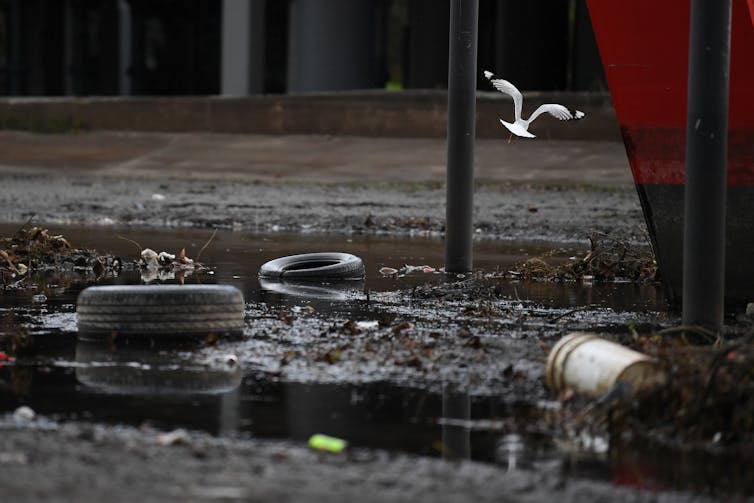
Rubbish-strewn water with bird flying above
Rain and flooding can cause pollutants to run into waterways.
James Ross/AAP

How safe is your local swimming hole?

In Australia, guidance on recreational water quality tends to focus on ocean beaches. For example, NSW’s Beachwatch program cover more than 200 NSW coastal (and some estuary) beaches. The advice is based on likelihood of rain combined with testing swimming sites for faecal bacteria.

The Victorian government also provides coastal swimming guidance for 36 beaches in Port Phillip Bay.

But away from the coast, information on the water quality of our local rivers, creeks and lakes, is sparse.

In NSW, advice exists for swimming and boating at four sites on the Nepean River in Western Sydney. Information is provided for a recently reopened swimming site at Lake Parramatta and for swimming at some Blue Mountains sites.

In Victoria, the Yarra Watch program monitors four swimming sites in freshwater stretches of the Yarra River, upstream of Melbourne.

And authorities in Canberra provide regular water quality monitoring and swimming advice for lakes and rivers.

But in contrast to Australia, New Zealand provides far more detailed and broad guidance.

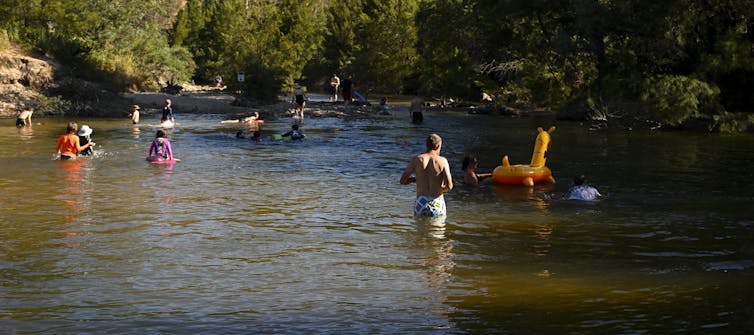
people swimming in river
Authorities in Canberra provide regular water quality monitoring and swimming advice.
Lukas Coch/AAP

How New Zealand does it

New Zealand’s world-leading national program Can I swim here? enables people to find the best places to swim across 800 beach, river and lake sites across the country.

The advice is provided by LAWA (Land, Air, Water Aotearoa), a collaboration between regional councils, the New Zealand government, scientific experts and academics, and a philanthropist organisation.

The data available includes both the latest weekly water quality test results, and results dating back five years.

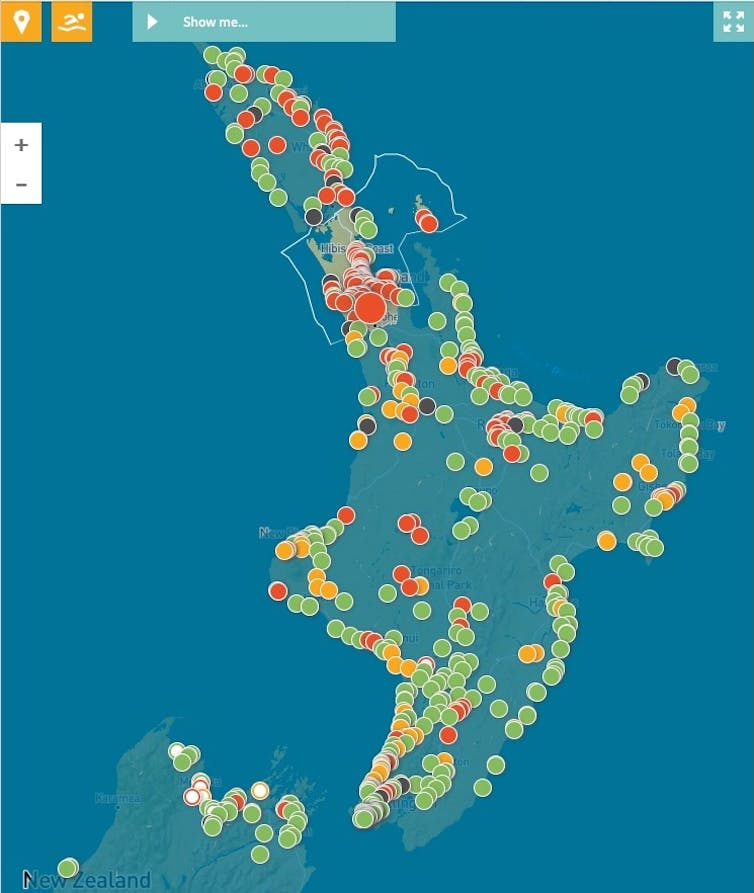
The guidance also includes an interactive map (see below) where users can zoom to swimming sites in their region.

map of NewZealand showing red, orange and green dots
The ‘Can I swim here?’ site features an interactive map.
https://www.lawa.org.nz

More work is needed

Everyone loves to be around, on and in the water, especially during summer. As well as providing a way to cool down, local swimming holes are great places for people to socialise, exercise and engage with nature – especially for those not near a beach.

Governments are recognising the real opportunity to open up underused waterways for recreation across Australia. But for the sake of our communities, more work is needed on improving water quality and sharing information.

Australia has a lot to learn from New Zealand and other countries on how to manage our waterways for recreational use. And ongoing research, partnering with government and industry, is clearly needed.


Read more:
Travelling around Australia this summer? Here’s how to know if the water is safe to drink


The Conversation

Ian A Wright has received funding from industry, as well as Commonwealth, NSW and local governments. He formerly worked for Sydney Water Corporation.

Nicky Morrison has received funding from industry, as well as NSW and local governments.

ref. It’s hot, and your local river looks enticing. But is too germy for swimming? – https://theconversation.com/its-hot-and-your-local-river-looks-enticing-but-is-too-germy-for-swimming-198506

A message to anxious parents as 320,000 Australian children start school

Source: The Conversation (Au and NZ) – By Kate Highfield, Senior Lecturer, Deputy Head of School (ACT and regional NSW), Australian Catholic University

Erik Anderson/AAP

Around Australia, about 320,000 children are starting school for the first time. As an early childhood researcher, former kindergarten teacher, and parent of a child beginning school on Monday, this transition fascinates me.

Culturally we place so much importance on this time. Everyone from the lovely cashier at the supermarket, to family, friends and neighbours have been eagerly asking my child, “are you excited about starting school?”

While people have good intentions, the question comes with the clear expectation that “starting big school” is a really big deal. And this puts a lot of pressure on the transition.

For parents, it also raises the question of how best we can prepare our children (and ourselves) for this time. The following tips may help.

Learning is ongoing, not a one-off

Research consistently shows a positive start to school is linked to long-term benefits in education and wellbeing and helps avoid issues such as school avoidance and refusal.

Parents (me included) need to recognise children’s learning as a lifelong trajectory. What happens in the first weeks of school will not determine your child’s success in life. Your. child will continue to build skills over the year and over their whole school experience.

It is easy to compare your child with others, but often this is unhelpful.

There will be some children starting school who can read, some who will know letters and sounds, and others who are just beginning in this area. Schools will be aware of this (and realistically, children do not need to be fluent readers at five or six).

Traditional thinking has been that all children should be able to do certain things before starting school, with a focus on “school readiness”. But this has been replaced with a new focus on schools being ready for all students, regardless of their diverse skills.

Communication matters

Ongoing, clear communication with our children about what to expect and how to manage is important.

This could include reminding our children of the pickup routine, or helping them talk about how (and who) to ask for help if they need it.


Read more:
Is your child anxious about starting school? The approaches we use for children with disability can help all families


Communication also matters with teachers. As parents, this is one key way we can support our children. Research shows family engagement with teachers helps children learn and build confidence.

This means talking to the teacher about your child’s strengths and interests, but also outlining areas where they may need help. In suggesting this, launching into this discussion at drop-off on the first day might not be ideal. Instead, email the front office to set up a time or schedule an early parent-teacher meeting to talk.

Worry isn’t helpful, but instincts can be powerful

As parents, we have much we could worry about. Have we read enough books to our kids? Have they watched too much television? Does my child remember where the bathroom is at school? Will they behave? Should I have made them learn all the sounds of the alphabet? Will they drink enough water? The list is endless.

Sometimes our worries can be transmitted to our children. We need to take care to speak positively about school around our kids, to help to reduce anxiety in our children.

But while worry can be unhelpful, parental instincts are important. In my time as a teacher I learned to listen to parents’ concerns, particularly around eyesight and hearing.

For example, if you are concerned that your child might not be seeing things as you share a book, or they don’t hear you unless looking at you, talk to your teacher. Early support is important for all areas of children’s health and development.

Transitions take time

Finally, transitions (especially once-in-a-lifetime ones like this) take time, so give yourself and your child time to settle in.


Read more:
5 tips to help ease your child back into school mode after the holidays


Your child will have good days, bad days and OK days. So don’t worry if they don’t come home from school on the first day or week absolutely loving it, or having learned obvious new skills.

Helping our children acknowledge the challenge and seeing their growth is helpful (“wow, you’ve done a whole week at your new school!”).

This is not just about academic achievement. It can be about making friends, learning how to buy their lunch at the canteen or mastering the monkey bars.

The Conversation

With colleagues, Kate Highfield receives funding from the Australian Research Council. She is a member of Early Childhood Australia, and the Head of Discipline (Early Childhood Education) at Australian Catholic University.

ref. A message to anxious parents as 320,000 Australian children start school – https://theconversation.com/a-message-to-anxious-parents-as-320-000-australian-children-start-school-198659

As students return to school, small-group tutoring can help those who are falling behind

Source: The Conversation (Au and NZ) – By Julie Sonnemann, Principal Advisor Education, Grattan Institute

Shutterstock

More than four million students around Australia are heading back to school. While this will be a year of achievement and learning growth for many students, others will struggle to keep up.

A major Productivity Commission report earlier this month found too many Australian school students are behind in reading and maths. Each year tens of thousands of students fail to meet minimum literacy and numeracy standards, as measured in NAPLAN assessments.

But even this likely underestimates the proportion of struggling students, as NAPLAN’s minimum standards set a very low bar.

When children struggle to keep up with classroom learning, it can spark a vicious cycle. Lack of understanding can lead to frustration, and disengagement can set in, which makes further learning harder.

The good news is that the opportunity to boost learning and bridge
these gaps is in plain sight. As our new research finds, small-group tutoring is an effective way to help students catch up.

Australia has a significant underachievement problem

Many students in Australia fail to develop essential skills in literacy and numeracy. And once children fall behind, they often struggle to catch up. Successful academic learning involves layering new knowledge and skills on a solid foundation of learning.

Studies estimate about 20% of students need additional intensive learning support, on top of universal classroom instruction, to develop foundational literacy and numeracy skills.


Read more:
‘I was astonished at how quickly they made gains’: online tutoring helps struggling students catch up


Grattan Institute analysis of 2022 NAPLAN data shows disadvantaged children tend to start school well behind their advantaged peers, and the gap only grows wider with every year of schooling.

The learning gap between disadvantaged and advantaged students more than doubles in reading and numeracy between year 3 and year 9.

In numeracy, for example, year 3 students whose parents did not finish school are one year and seven months behind students whose parents have a university degree. By year 9, this gap has grown to four years.

But small-group tutoring can help struggling students catch up, especially those from disadvantaged backgrounds.


What is small-group tutoring?

This is where teachers or other educators work with just a few students at a time.

Student writing on a whiteboard with teacher looking on.
Tutoring would be done at school, during school hours.
Shutterstock

The sessions are short, lasting up to an hour each and held about three times a week over one or two school terms. Sessions are highly focused: for example, they may concentrate on helping students recognise particular spelling patterns, or working with fractions.

Small-group tuition tends to be conducted during school hours, and there is close collaboration between the teacher and tutor. This means the content is closely aligned to classroom content and monitored by the teacher.

This is a key point of difference to the tutoring that parents might organise for their children out of school hours.

Small-group tuition works

A 2021 review of international evidence by Australian-based organisation Evidence for Learning showed small-group tuition can boost student learning by as much as four months, on average, over the course of a year.

And a 2020 systematic review by the US National Bureau of Economic Research of 96 randomised controlled trials (the “gold standard” for evidence) found consistently large, positive results from catch-up tuition on maths and reading across grade levels.

Small-group tuition works because the tutor can focus exclusively on a small number of students, identify their precise learning needs, and work closely with them to get them back on track. A student’s personal relationship with their tutor can also boost their confidence and help them feel better about going to school.

But we need to do it well

The big challenge is to deliver high-quality small-group tuition in every school. It will take time and effort to get right.

We need to know more about which small-group tuition models are most cost-effective – because tutoring is moderately expensive.

We also need to ensure there are enough high-quality tutors, given concerns about teacher supply.

Tutors could be drawn from retired teachers and part-time teachers. Employing teaching assistants, trainee teachers and other university students as tutors should be considered.


Read more:
Victoria and NSW are funding extra tutors to help struggling students. Here’s what parents need to know about the schemes


Evidence shows these groups can deliver good results if they are given the right support and training, including the use of a structured literacy or numeracy program.

There are still important gaps in the evidence about which program delivery methods work best, and for whom.

Schools also need to be able embed small-group tuition systematically. Schools should boost the quality of whole-class instruction to limit learning gaps in the first place, regularly screen students to identify gaps that do arise and then step in with tutoring to close gaps quickly.

What should governments do?

In response to COVID-19 school disruptions, Australian governments have invested about A$1.5 billion in catch-up learning programs in NSW and Victoria.

Governments should now do more to learn the lessons from these programs. The big challenge is to ensure high-quality small-group tuition is achieved not in a few schools, but every school.

Federal and state governments, along with Catholic and independent school sector leaders, should commit to a five-year plan to embed high-quality small-group tuition in every school. Five years will give governments time to test and refine the best ways to deliver small-group tuition cost-effectively, and put the right supports for schools in place.

Governments and the Catholic and independent school sectors should now take four steps to make this happen:

  1. improve guidelines for schools on how to have high-quality small-group tuition, with a focus on the prevention and early identification of learning gaps.

  2. review schools’ capacity to implement best-practice guidelines, and provide the support and training school leaders and tutors need.

  3. invest $10 million across the country in rigorous trials to identify the best ways to deliver high-quality small-group tuition.

  4. make sure there is a commitment to have small-group tuition in all schools in the next National Schools Reform Agreement (NSRA) due by December 2024. The NSRA is an agreement between the federal, state, and territory governments that sets out agreed strategic reforms in areas of national interest. The next version of the NSRA is currently under negotiation.

As quality and standards in Australian education once more make headlines, small-group tutoring offers us a clear, practical path to helping teachers and students alike.


Principals and teachers can refer to the Grattan Institute’s short guide to small-group tuition here

The Conversation

Grattan Institute has been supported by the Origin Energy Foundation for this report.

ref. As students return to school, small-group tutoring can help those who are falling behind – https://theconversation.com/as-students-return-to-school-small-group-tutoring-can-help-those-who-are-falling-behind-198388

Tár isn’t just about gender, sexuality and power – it is also a story of class in the elite world of classical music

Source: The Conversation (Au and NZ) – By Peter Tregear, Principal Fellow and Professor of Music, The University of Melbourne

This article contains spoilers.


Todd Field’s new, multi-Academy Award nominated feature film Tár is generating considerable commentary – and not a little controversy.

For some, its storyline allows for a timely exploration of intergenerational conflict concerning the value of Western art and artistic ethics. Others see it as a critique of cancel culture.

Still others think it epitomises the problematic representation of women and LGBTQI+ people in a traditionally male-dominated industry.

But I think it also shines a light on some of the social and political dynamics of the world in which it is set: the elite end of the classical music industry.

Power before the fall

Portraying the professional and psychological downfall of orchestral conductor Lydia Tár (Cate Blanchett), the film depicts her as prone to abusive and grooming behaviours. Those behaviours, the film suggests, may have led to the suicide of a young former student (and possible love interest).

In interviews, Field has stated he created her character not to explore gender or sexuality, but rather power. The film could have equally been set, he suggests, in “a multinational corporation or an architectural firm. Pick your poison.”

But Field’s choice of setting supports his dramatic aim beyond merely providing it with an interesting backdrop.

The globetrotting level of the classical music industry at which Tár works has faced its own #metoo stories.

It is also characterised by especially high numbers of people drawn from private wealth and educational privilege – a situation some argue is only becoming worse.

Late in the film, we discover Tár is from much humbler stock. This informs her character more than we might first realise.

From the outset, the film gives us several clues about her true class identity. Her charitable foundation is named “Accordion”, after the decidedly non-elite instrument she happens to play. Despite living in a supremely stylish Berlin apartment, she feels more comfortable retreating to the bedsit she has refused to relinquish. She has impostor syndrome about whether all she creates is merely pastiche, if all her creative work is derivative.

Ultimately, we discover she was not born Lydia Tár, rather Linda Tarr. When she briefly encounters her brother, he tellingly remarks “you don’t seem to know where the hell you came from, or where you’re going”.

Tár is therefore not a “true” member of the elite level of artists she has fought so hard to join.

Although we initially see her being supported by colleagues who enable aspects of her toxic behaviour or choose to stay silent when they witness it, when things go public, she is unceremoniously dumped.

Ultimately she is not protected by the industry that promoted her, nor does she really know how to protect herself when it turns on her.

This is not the norm. The film names two real-life conductors (James Levine and Charles Dutoit) who also fell from favour owing to similar accusations of predatory sexual behaviour, but their downfalls occurred at the end of their careers, not, as here, at its apex.

Field’s film suggests Tár’s particularly swift and brutal downfall may be in part because she cannot fully access networks of patronage and privilege in the classical music industry.

In this world, personal and institutional power is still intimately tied up with class. Both can be made to serve the interests of wrongdoers and silence their victims.


Read more:
Classical music training and abuse cultures – we need to act now


From Mahler to Monster

There is one other dominating presence complicating the film’s narrative: the music. It is not for nothing Field chose a composition by Gustav Mahler, in particular his Symphony No. 5, for Tár to conduct.

At first glance, here is another artist who might be vulnerable to cancel culture. Mahler had his own history of manipulative behaviour, such as insisting his wife sublimate her own musical career to support his.

Much like Tár herself, the symphony can be characterised as self-aggrandising. As with all his symphonies, it is conceived on a colossal scale and is replete with self-quotations from earlier works.

And yet exposing the personal faults of the conductor and the composer is neither sufficient nor necessary to appreciate the resulting art. As German philosopher Theodor Adorno noted in an essay from 1932, we tend to avoid considering the measure of a conductor’s life off the podium when we watch them on it.

The film reminds us this tendency can come at a significant human cost, and we apply it unequally: depending on not just the identity but also the class background of the conductor themselves.

The film ends with Tár conducting a concert in an unnamed Southeast Asian country. No Mahler is to be found here. Rather, she conducts a program of music from the 2018 action role-playing computer game Monster Hunter: World.

This is not, I think, meant to be some kind of cruel joke (apart from the possible allusion to Tár herself in the title of the game) or a tasteless (and culturally patronising) dig at the expense of non-Western, commercially oriented, orchestral music. But computer game music carries little of the establishment prestige Western classical music does.

The film ultimately leaves it as an open question, but there is a hint that, away from the political machinations of the elite classical music industry, Tár might be able to reconnect with a more authentic – and less destructive – artistic and ethical persona.


Read more:
Tár – an exploration of the flawed musicians behind decadent music


Tár is in Australian cinemas now.

The Conversation

Peter Tregear does not work for, consult, own shares in or receive funding from any company or organisation that would benefit from this article, and has disclosed no relevant affiliations beyond their academic appointment.

ref. Tár isn’t just about gender, sexuality and power – it is also a story of class in the elite world of classical music – https://theconversation.com/tar-isnt-just-about-gender-sexuality-and-power-it-is-also-a-story-of-class-in-the-elite-world-of-classical-music-198295

Albanese promises National Aboriginal Art Gallery in Alice Springs and pivots towards the modern and mainstream in new cultural policy

Source: The Conversation (Au and NZ) – By Michelle Grattan, Professorial Fellow, University of Canberra

The Albanese government’s cultural policy, released Monday, “puts First Nations first”, while also promising regulated Australian content on streaming services and a shift to greater support for the popular in the arts.

The policy reflects the government’s view that arts policy – especially the Australia Council’s priorities – has become too elitist, and should be tilted more towards mainstream and commercial culture.

The initiatives for Indigenous culture include funding the establishment of a National Aboriginal Art Gallery in Alice Springs.

To be announced by Anthony Albanese and Arts Minister Tony Burke the policy, called Revive and funded by $286 million over four years, has as its centrepiece the setting up of Creative Australia, which will be the government’s new principal arts investment and advisory body.

Creative Australia’s governing body will continue to be called the Australia Council in what, however, is a total revamp.

Creative Australia will “expand and modernise the Australia Council’s work”, with an extra $200 million over four years. The overhaul is seen as the biggest in the council’s history.

Funding decisions will be at arms length from the government.


À lire aussi :
Grattan on Friday: Response to Alice Springs crisis poses early Indigenous affairs test for Albanese


A statement by Albanese and Burke has been released ahead of the full policy.

Within Creative Australia there will be four new bodies

  • A First Nations-led body, to give Indigenous people autonomy over decisions and investment

  • Music Australia, to invest in the Australian contemporary music industry

  • Writers Australia, to support writers and illustrators to create new works

  • A Centre for Arts and Entertainment Workplaces, “to ensure creative workers are paid fairly and have safe workplaces free from harassment and discrimination”.

Albanese and Burke say Revive “puts First Nations first – recognising and respecting the crucial place of these stories at the heart of our arts and culture”.

In addition to the Creative Australia First Nations’ body the government will

  • legislate to protect First Nations knowledge and cultural expressions, including dealing with harm caused by fake art

  • develop a First Nations creative workforce strategy

  • fund the establishment of both the Alice Springs gallery and an Aboriginal Cultural Centre in Perth

  • provide $11 million to set up a First Nations Languages Policy Partnership between Indigenous representatives and Australian governments.

“Revive also commits the government to regulating Australian content on streaming platforms, improving lending rights and incomes for Australian writers, [and] increased funding for regional art,” Albanese and Burke say.

At present there is no requirement on streaming services to provide a certain amount of Australian content. The government will consult in the next six months, before legislating, with the aim of the regulatory regime coming into operation mid next year. No figure has been set for the Australian content.


À lire aussi :
Federal Labor MP warns Alice Springs crime crisis is impeding Voice debate


The government says that $241 million is new money while $45 million is redirected from a COVID insurance scheme that is no longer needed.

Albanese said the government’s policy “builds on the proud legacies of earlier Labor governments”.

Burke said that under the policy “there will be a place for every story and a story for every place.

“It is a comprehensive roadmap for Australia’s arts and culture that touches all areas of government, from cultural diplomacy in foreign affairs to health and education.

“Our artists are creators and workers. This sector is essential for our culture and for our economy”.

The industry is worth $17 billion and employs an estimated 400,000 people.

The Conversation

Michelle Grattan ne travaille pas, ne conseille pas, ne possède pas de parts, ne reçoit pas de fonds d’une organisation qui pourrait tirer profit de cet article, et n’a déclaré aucune autre affiliation que son organisme de recherche.

ref. Albanese promises National Aboriginal Art Gallery in Alice Springs and pivots towards the modern and mainstream in new cultural policy – https://theconversation.com/albanese-promises-national-aboriginal-art-gallery-in-alice-springs-and-pivots-towards-the-modern-and-mainstream-in-new-cultural-policy-198741

Flood-hit Māngere family thanks community support in disaster

By Barbara Dreaver, 1News Pacific correspondent

The Moungavalu family in Aotearoa New Zealand are grateful to be alive.

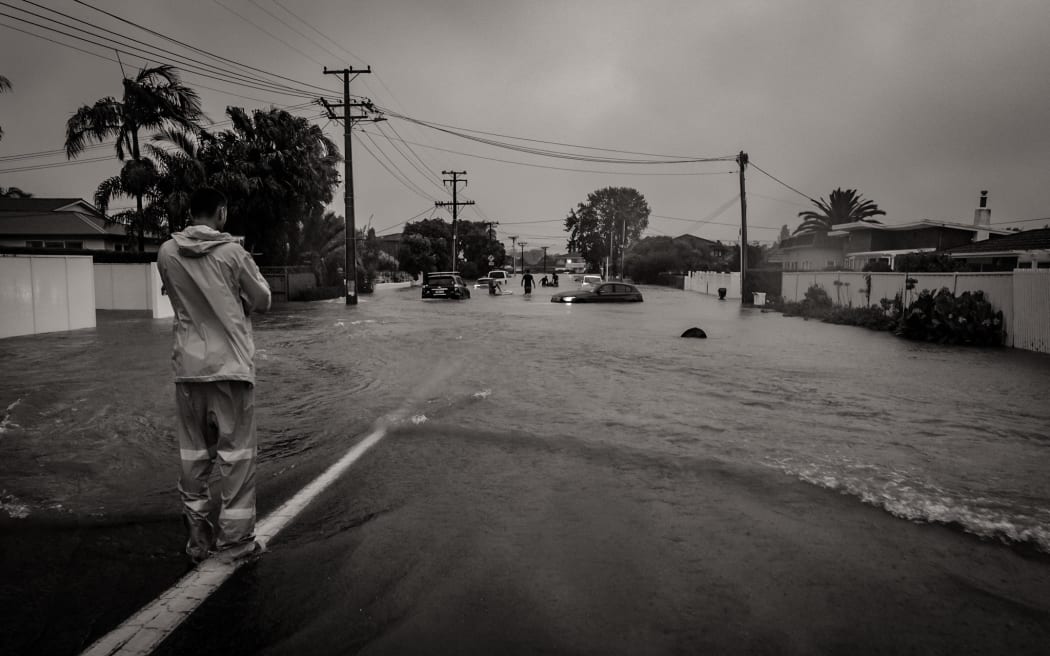
Their Māngere home in Auckland, along with others in their street, was hit hard by flooding with chest-deep water sweeping down the road.

Mohe Mougavalu says the water went down their no exit street but because there was no outflow at the other end, it came back twofold on the homes.

“We weren’t going to leave the house but the only way to survive is to get out. It’s really testing, especially me deciding the fate of our family,” he said.

“We actually have to hold on to the fence and make our way up the street and get out.”

The family returned at 6am today to start cleaning and are devastated at the level of damage. They’ve lost nearly everything they own.

Community advocate Dave Letele and his community group BBM were first on the scene to offer help.

Arranging replacements
Through his contacts, he is arranging for furniture and damaged appliances to be replaced. He has also delivered food parcels and rugs to where the family is sheltering with one of their aunts.

Barbara Dreaver’s report on the Moungavalu family.     Video: 1News

It’s much appreciated as there are 19 people there.

This isn’t an isolated case — it’s unknown how many homes are affected in South Auckland but it’s believed to be widespread.

Letele says that’s the issue.

“It’s the people who are already struggling – that’s the issue here. The areas that are hit, these people are already struggling.”

The BBM team has sprung into action and a call for volunteers and donations has brought a steady stream of people wanting to help.

Te Aroha Isaia is one of them. She and her family have brought baby items, clothes and food.

‘Stand up and deliver’
“I like to think if we were in need people like ourselves, if they have something to give them, why not?”

Letele says the support from the community wanting to help is incredible.

“We do what the community does best and we stand up and deliver in times of need,” he said.

Just as well, as everybody 1News spoke to felt South Auckland had been left to fend for itself.

Tuala Tagaloa Tusani, chairperson of charity group ASA Foundation says it’s disgraceful that little official focus was put on the area.

“It’s bloody late. The community again is trying to find solutions to the problems.”

The ASA Foundation and Graeme Avenue Pharmacy teamed up to deliver prescribed medication free of charge to those who needed it today.

Tusani says he is concerned about how struggling families will be able to cope with replacing flood-damaged items and repairs on homes.

“School is supposed to start next week so a lot of our money has already been put into school fees,” he said.

There’s no doubt families like the Moungavalus have taken a financial hit, but they say at least they can rebuild together as a family.

Republished with permission.

Print Friendly, PDF & Email

Article by AsiaPacificReport.nz

Auckland floods: even stormwater reform won’t be enough – we need a ‘sponge city’ to avoid future disasters

Source: The Conversation (Au and NZ) – By Timothy Welch, Senior Lecturer in Urban Planning, University of Auckland

Getty Images

We’ve built our cities to be vulnerable to – and exacerbate – major weather events such as the one we saw in Auckland on Friday. While almost no city in the world could fully escape the effects of four months’ worth of rain in 24 hours, there are many things that could have been done to avoid some of the worst impacts.

Buildings, streets and car parks are all impermeable surfaces. When it rains, the water rushes off these surfaces and into gutters. From the gutters, the water drains into a stormwater catch basin, through the stormwater network, and into streams and the sea.

Herein lies the problem. The more we build, the more stormwater we need to drain. Every new building or road replaces the planet’s natural stormwater system: plants and soil, and channels for runoff.

The network of pipes can only hold so much water before it is fully inundated and begins to flood. While every block typically has a catch basin or two, they can easily clog with leaves and other debris even before a storm hits. Add an abnormal amount of rainfall, and neighbourhood flooding is nearly guaranteed.

Flooding and contamination

Even if the way we’ve built our cities and the stormwater system could keep up with big storm events – to be clear, they cannot – the network of basins and pipes is aging. With age, the system’s capacity to capture stormwater significantly declines.

Modernising all the stormwater infrastructure will take decades and billions of dollars. This is what the contested Three Waters project is really all about, and we need to quickly get past the political sideshows it has inspired.


Read more:
The Auckland floods are a sign of things to come – the city needs stormwater systems fit for climate change


While the system ages and suffers from reduced capacity, it is also more prone to failure. It’s not uncommon to see news that stormwater has mixed with raw sewage. This is gross just to think about, but it gets worse.

Because stormwater is not treated, when it gets contaminated that dirty mixture drains into the water around our beaches. It’s why, after a storm, the SafeSwim map is covered in red “high risk” markers.

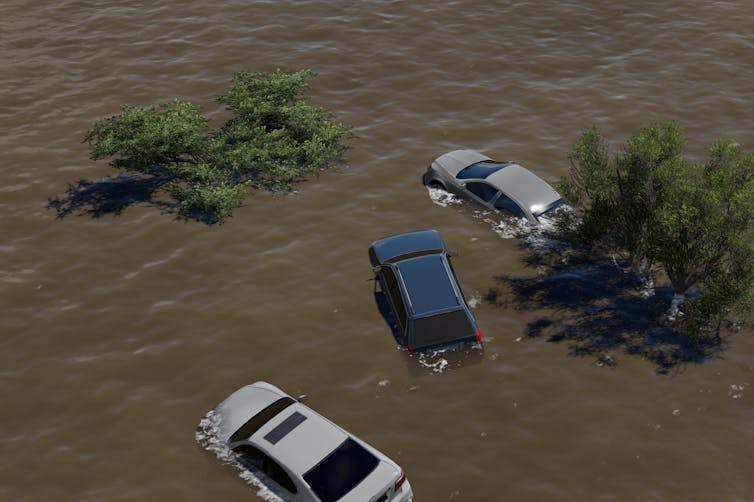
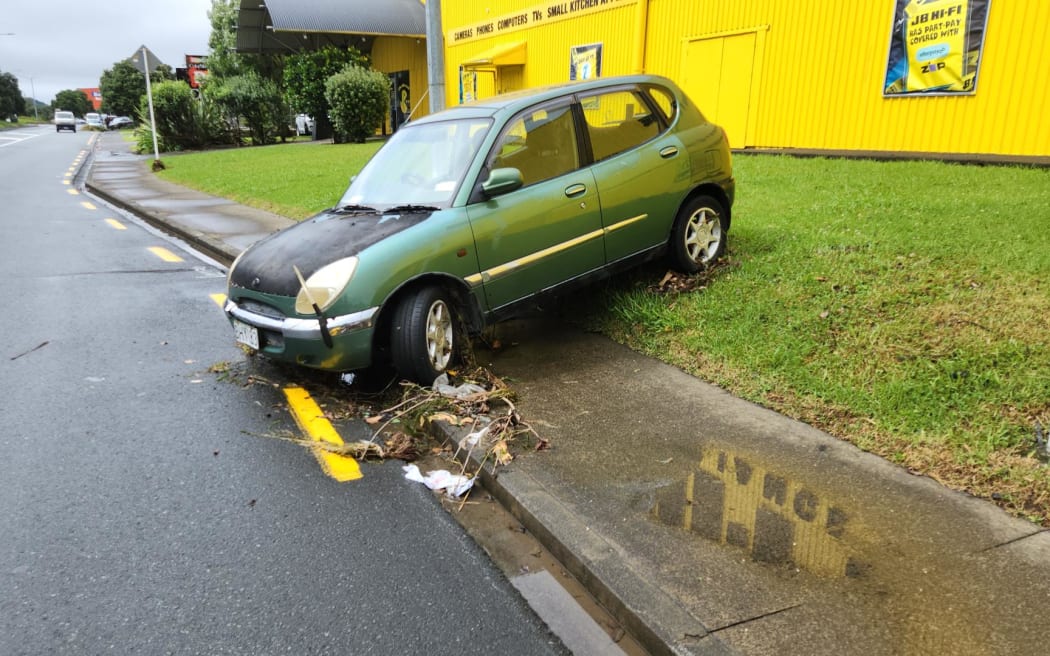
Dangerous driving: cars abandoned and floating after the deluge of January 27.
Shutterstock

Roads become rivers

From Friday’s rain event, some of the most shocking images were of cars and buses trying to wade through flooded roads and busways. The irony is that the roads themselves are a significant contributor to the flooding.

With thousands of miles of sealed roads around Auckland, there was simply nowhere for the water to go. Roads act like channels, funnelling stormwater. With a huge rain event, streets quickly turn into rivers.


Read more:
Floods are natural, but human decisions make disasters. We need to reflect on the endless cycles of blame


Setting aside the concoction of stormwater and raw sewage flowing down streets (which we more politely call a “combined sewer overflow”), and the impact on homes, businesses and beaches, flood waters also present a massive risk to people in cars.

It’s nearly impossible to tell how deep or fast surface flooding is, so people get into danger.

Sponge cities: in Qian’an in China’s Hebei province, a natural rainwater reservoir is preserved amid the development.
Getty Images

The ‘sponge city’

There is a better way to design our built environment. In the early 2000s, Chinese architect Kongjian Yu created the concept of the “sponge city”. It’s a relatively simple idea, but a big departure from the way we typically build infrastructure.

The concept incorporates green roofs, rain gardens and permeable pavements to absorb and filter water. Better catch systems hold rainwater where possible and reuse it. More green space and trees are also incorporated into street and neighbourhood designs.


Read more:
China’s ‘sponge cities’ aim to re-use 70% of rainwater – here’s how


Within the sponge city concept is a way to mitigate flooding using “water sensitive urban design”. With this approach, we create spaces that better manage flooding through systems that mimic the natural water cycle.

This can also include floodable infrastructure and parks to take the pressure off more vulnerable parts of the city. There are already examples of these design principles in Auckland, but they are far too limited to eliminate the impact of major storms.


Read more:
Beyond a state of sandbagging: what can we learn from all the floods, here and overseas?


Building smarter

The sponge city concept, and ideas about letting nature handle stormwater, don’t have to be extravagant or expensive. They can be as simple as planting more trees and greenery, using less pavement for driveways or more porous cement for car parks.

In a way, we should do less building and let nature do what it was meant to do.

The stark reality is the flooding we experienced this week, and arguably the storm itself, are of our own making. We’ve built a supercity covered in impervious surfaces, expanded the built environment across sensitive (and flood-prone) areas, and created massive greenhouse gas emissions destabilising the climate.

Climate change will make future storms more intense and more frequent. Do we cross our fingers and hope the rain goes away? Do we invest billions in bigger pipes that will inevitably fail to control flooding and still pollute sensitive waters? Or do we get smarter and more proactive about designing our cities?

If we don’t want to repeat the week’s events, there’s only one real option.

The Conversation

Timothy Welch does not work for, consult, own shares in or receive funding from any company or organisation that would benefit from this article, and has disclosed no relevant affiliations beyond their academic appointment.

ref. Auckland floods: even stormwater reform won’t be enough – we need a ‘sponge city’ to avoid future disasters – https://theconversation.com/auckland-floods-even-stormwater-reform-wont-be-enough-we-need-a-sponge-city-to-avoid-future-disasters-198736

PNG rural agency condemns ‘ghost projects’ in K1 billion delivery cash cow

PNG Post-Courier

Papua New Guinea’s Service Improvement Programme worth more than K1 billion (NZ$440 million) has become a major cash cow for “irresponsible” leaders, says the monitoring agency.

In the past decade, the Provincial and District Services Improvement Programme has delivered much but has not achieved what it set out to deliver — vital government services like schools, health centres, roads and bridges, jetties to the rural population.

Its overseer, the Department of Implementation and Rural Development has now become concerned at the apparent abuse and misuse of public funds by political leaders and their district administration.

The DIRD now reports that a large amount of money has been spent on “ghost projects” which are not physically completed on the ground and cannot be monitored due to financial constraints among others.

Many are half complete health centres or abandoned school classrooms or teachers houses, says DIRD secretary Aihi Vaki.

“Not all of it has been properly acquitted kina by kina. Even the amount of money allocated by the Treasury Department to each district is unknown to the DIRD.”

However, Finance Secretary Dr Ken Ngangan has defended the transfer of the country’s service improvement budgets to the provinces and the remittance of funds by Finance Department as a policy initiative approved by Cabinet.

‘A misunderstanding’
“There is a misunderstanding of the legal framework for budget and expenditure management under which all public and statutory bodies operate,” he said.

“As reported, NEC Decision 240/2018 provided for DIRD oversight of PSIP/DSIP funds management and monitoring.

“Accordingly, the NEC decision was effectively put into effect through the 2019 National Budget process, in accordance with the provisions of the Constitution, PFMA and Appropriations Act, with PSIP/DSIP funds allocated to DIRD in the National Budget for management and monitoring.”

However, a concerned Vaki has termed it as an “open secret” known to the leaders and their district public servants.

He said the DSIP and PSIP acquittals were compounded by lack of surveillance and monitoring by his department staff due to lack of funding from the National Government despite request after request.

He said there were many issues encountered, some of which were reports of proposed ghost projects paid out and finding their way into the acquittal papers to DIRD.

District Services Improvement Project (DSIP) grants amounts to K960 million a year while provincial (PSIP) grants are K220 million a year. The total bill in a year disbursed by Treasury to MPs is K1.18 billion.

“Due to the increase in districts last year, this year’s allocation will increase to a whopping K1.239 billion,” Vaki said.

Concerns amplified
His concerns were amplified in 2021 by now sidelined Immigration Minister Bryan Kramer on multi-million kina projects in rural districts.

Kramer had said that projects were designed, pre-fabricated, and allegedly constructed according to the acquittals but in reality, there was nothing to show for on the ground.

Kramer, who was then Justice Minister, had also claimed that billions of kina were also lost to undelivered state contracts every year and investigations into some of these incomplete projects were made by the State Audit and Recovery Taskforce (SART) initiated by the Department of Justice and Attorney-General working with nine other state agencies with more than K25 million already recovered.

The current status of the SART since then is not known. Nor how much more they may have been able to identify or recover following the last update provided by Kramer.

These were examples of abuse and misuse on a national level, but on the DDA level, it was alleged that millions may have been squandered through unscrupulous and dubious project deals in rural areas.

Vaki was forthright in his revelation, adding that while 60 percent of MPs had made an attempt to acquit their funding, 40 percent had never provided evidence of how they had spent public money in their districts.

Republished with permission.

Print Friendly, PDF & Email

Article by AsiaPacificReport.nz

Auckland floods a future sign – city needs stormwater systems fit for climate change

ANALYSIS: By James Renwick, Te Herenga Waka — Victoria University of Wellington

The extraordinary flood event Auckland experienced on the night of January 27, the eve of the city’s anniversary weekend, was caused by rainfall that was literally off the chart.

Over 24 hours, 249mm of rain fell — well above the previous record of 161.8mm. A state of emergency was declared late in the evening.

It has taken a terrible toll on Aucklanders, with three people reported dead and at least one more missing. Damage to houses, cars, roads and infrastructure will run into many millions of dollars.

Watching the images roll into social media on Friday evening, I thought to myself that I have seen these kinds of pictures before. But usually they’re from North America or Asia, or maybe Europe.

However, this was New Zealand’s largest city, with a population of 1.7 million.

Nowhere is safe from extreme weather these days.

How it happened
The torrential rain came from a storm in the north Tasman Sea linked to a source of moisture from the tropics. This is what meteorologists call an “atmospheric river”.

The storm was quite slow-moving because it was cradled to the south by a huge anticyclone (a high) that stopped it moving quickly across the country.

Embedded in the main band of rain, severe thunderstorms developed in the unstable air over the Auckland region. These delivered the heaviest rain falls, with MetService figures showing Auckland Airport received its average monthly rain for January in less than hour.

The type of storm which brought the mayhem was not especially remarkable, however. Plenty of similar storms have passed through Auckland. But, as the climate continues to warm, the amount of water vapour in the air increases.

I am confident climate change contributed significantly to the incredible volume of rain that fell so quickly in Auckland this time.

Warmer air means more water
There will be careful analysis of historical records and many simulations with climate models to nail down the return period of this flood (surely in the hundreds of years at least, in terms of our past climate).

How much climate change contributed to the rainfall total will be part of those calculations. But it is obvious to me this event is exactly what we expect as a result of climate change.

One degree of warming in the air translates, on average, to about 7 percent more water vapour in that air. The globe and New Zealand have experienced a bit over a degree of warming in the past century, and we have measured the increasing water vapour content.

But when a storm comes along, it can translate to much more than a 7 percent increase in rainfall. Air “converges” (is drawn in) near the Earth’s surface into a storm system. So all that moister air is brought together, then “wrung out” to deliver the rain.

A severe thunderstorm is the same thing on a smaller scale. Air is sucked in at ground level, lofted up and cooled quickly, losing much of its moisture in the process.

While the atmosphere now holds 7 percent more water vapour, this convergence of air masses means the rain bursts can be 10 percent or even 20 percent heavier.

Beyond the capacity of stormwater systems
The National Institute of Water and Atmosphere (NIWA) estimates that over Auckland, one degree of warming translates to about a 20 percent increase in the one-hour rainfall, for a one-in-50-year event.

The longer we continue to warm the climate, the heavier the storm rainfalls will get.

Given what we have already seen, how do we adapt? Flooding happens when stormwater cannot drain away fast enough.

So what we need are bigger drains, larger stormwater pipes and stormwater systems that can deal with such extremes.

The country’s stormwater drain system was designed for the climate we used to have — 50 or more years ago. What we need is a stormwater system designed for the climate we have now, and the one we’ll have in 50 years from now.

Another part of the response can be a “softening” of the urban environment. Tar-seal and concrete surfaces force water to stay at the surface, to pool and flow.

If we can re-expose some of the streams that have been diverted into culverts, re-establish a few wetlands among the built areas, we can create a more spongy surface environment more naturally able to cope with heavy rainfall.

These are the responses we need to be thinking about and taking action on now.

We also need to stop burning fossil fuels and get global emissions of carbon dioxide and other greenhouse gases down as fast as we can. New Zealand has an emissions reduction plan — we need to see it having an effect from this year.

And every country must follow suit.

As I said at the start, no community is immune from these extremes and we must all work together.The Conversation

Dr James Renwick, professor, Physical Geography (climate science), Te Herenga Waka — Victoria University of Wellington. This article is republished from The Conversation under a Creative Commons licence. Read the original article.

Print Friendly, PDF & Email

Article by AsiaPacificReport.nz

‘Take care of each other’, says PM Hipkins after assessing Auckland flood damage

RNZ News

Prime Minister Chris Hipkins has acknowledged the way Aucklanders have come together and opened their homes to those in need, with the New Zealand government focused on providing the resources needed to get the city back up and running.

The new prime minister — just four days into the job — has been speaking to media after assessing flood damage and talking to locals around West Auckland this afternoon.

Hipkins was joined by Auckland mayor Wayne Brown and Emergency Management Minister Kieran McAnulty in northwest Auckland.

With three deaths now confirmed, the prime minister offered his condolences to the families of the deceased.

He said he was focused on supporting Aucklanders through this event and providing the full resources to get Auckland back up and running in the safest way possible

“I want to focus on getting Auckland through the next period.”

Hipkins said the government’s priority was to ensure Aucklanders were housed. He said there was an assessment of public and community housing underway today.

Having surveyed the damage, he said it was clear it was going to be a big clean up job after Auckland’s wettest day on record.

Watch a live stream here
PM Chris Hipkins and mayor Wayne Brown speaking.      Video: RNZ News

Hipkins said it was important for Aucklanders to avoid unnecessary travel and to stay out of the water.

He said this was the time to check in with loved ones and “take care of each other”.

He acknowledged the way Aucklanders had come together and opened their homes to those in need, when dealing with an unprecedented event in recent memory

The prime minister said Aucklanders should expect more rain — “don’t take the good weather for now for granted”.

Hipkins thanked those working in the emergency services, the lines companies, supermarkets and health sector.

‘Tough night for all’
Mayor Wayne Brown said last night was a “tough night for all”.

Brown said he shared concerns and worries for families deeply affected — especially those who had lost their lives.

He said the response to the storm last night took a lot of concentration, happened quickly and the response was way quicker than people believed.

“Everyone was out there way before [the emergency was declared] and lasted all night long.”

He said he followed the advice of the professionals when deciding whether to declare an emergency.

“It’s not something you do lightly.”

He said the council would review “everything that took place”.

‘Lessons to be learned’
Hipkins said he accepted people would have questions and observations — and there would be an appropriate time soon to go through those.

“There will be lessons to be learned from the experience.

“The most important thing is supporting Auckland through the next 24 hours and beyond.”

Duty Controller Andrew Clark from Auckland Emergency Management said the event was “beyond anything we’ve ever seen”.

He said rescuing people was the priority, while also providing shelter for those in need.

“We had a crisis within a crisis.”

This article is republished under a community partnership agreement with RNZ.

Print Friendly, PDF & Email

Article by AsiaPacificReport.nz

Auckland thunderstorm: Furore over unsent Civil Defence warning texts

RNZ News

Minister for Emergency Management Kieran McAnulty has asked for communication on support after the severe thunderstorm in Auckland to be stepped up.

It comes after a Civil Defence warning text failed to be sent out, and Auckland Mayor Wayne Brown told RNZ they will be reviewing the response, including why texts did not go out.

Prime Minister Chris Hipkins spoke to media after assessing flood damage and talking to locals around West Auckland this afternoon as the death toll from the storm rose to three.

McAnulty told RNZ he was concerned about the lack of communication.

“It’s important that people get the information they need.”

Kieran McAnulty
Minister for Emergency Management Kieran McAnulty . . . “It’s important that people get the information they need.” Image: Samuel Rillstone/RNZ News

McAnulty said he had specifically asked for social media channels and websites to have half-hour updates.

Even if there was nothing to update, it would be reassuring for affected people to look at the channels and know that the situation was not deteriorating, he said.

“If it looks like that their neighbourhood will require evacuation I want that to go out so that people are aware and that they can get prepared.”

Mayor Wayne Brown at Auckland Emergency Management today, with councillor Sharon Stewart and deputy mayor Desley Simpson.
Mayor Wayne Brown at Auckland Emergency Management today, with councillor Sharon Stewart and deputy mayor Desley Simpson. Image: RNZ News

Mayor defends time taken to declare state of emergency
The state of emergency in Auckland was declared about 9.30pm — with heavy rain and strong wind starting in the region since early morning on Friday.

Asked if it should have been declared earlier, Auckland mayor Wayne Brown told Kim Hill on RNZ that all resources were already being used by then and “thousands” were already helping.

“I had to wait until I had the official request from the Emergency Management Centre and the moment I got that, we were prepared, I signed it and it was put in place.

“[The state of emergency] just allowed the people that were helping to have some powers … to actually say to people that you have to go evacuate.”

Cars in Milford on the North Shore were left swimming
Cars in Milford on the North Shore were left swimming in the water after yesterday’s severe thunderstorm hit Auckland. Image: Sean D’Souza/RNZ News

Emergency management managers told him that some evacuation centres were compromised, but that did not have anything to do with the time taken to declare the emergency, he said.

“The state emergency wasn’t called earlier because at that stage, my belief was … they were coping, but when they got to the stage they were being overwhelmed, when police and fire and emergency announced they were being overwhelmed, is when they recommended I declare a state of emergency.

“I was following the recommendations of the professionals.”

‘Record rainfall . . . in quick time’
McAnulty said once the emergency declaration was made, it meant additional resources from other regions were able to be brought in to help.

“When the weather clears, NEMA [National Emergency Management Agency] will be bringing in additional personnel up from Wellington as well,” he said.

“This is record rainfall and it happened in such a quick time period. We’ve seen people having to abandon their cars leaving their windscreen wipers on.

“We knew it was going to be wet, and we were getting prepared for that just in case, but the level of rain in such a short period of time was not forecast.”

Several cars in Auckland could be seen left abandoned
Several cars in the region could be seen left abandoned after heavy rain caused flooding on roads in Auckland. Image: Finn Blackwell/RNZ News

The threshold for declaring a state of emergency depended on local circumstances and resources, he said.

“If you take, for example, a level of rainfall that might occur in Marlborough could cause damage [but] the same level of rainfall on the West Coast wouldn’t cause anywhere near as much damage because they’re used to that sort of rain.

“A smaller rural region with less personnel may declare an emergency earlier because they need that additional support from NEMA.”

McAnulty said over the next day or two, as people came to grips with their own personal circumstances and reported any issues, that would be when authorities would have a real gauge of the damage across the city.

This article is republished under a community partnership agreement with RNZ.

Print Friendly, PDF & Email

Article by AsiaPacificReport.nz

Three dead, at least one missing, and airport closes in Auckland floods

RNZ News

Three people are dead and at least one person is missing following the flooding overnight in Auckland, New Zealand’s largest city.

About 1000 people were still stranded today after Auckland Airport was closed last night because of flooding of the arrival and departure foyers. Flights were cancelled for the morning but domestic flights resumed in the afternoon.

Police responded to a call after a man was found dead in a flooded culvert in Wairau Valley, about 7.30pm last night.

The spokesperson said police were called to a flooded carpark on Link Drive, also in Wairau Valley, after a report of another man found dead about 12.30am on Saturday.

Inquiries into the circumstances of both deaths were ongoing, police said.

Police are also investigating reports of a man having been swept away by floodwaters in Onewhero shortly after 10pm on Friday.

A search and rescue team will deploy today to search for the missing man.

Landslide brings down house
Emergency services also responded to a landslide that brought down a house on Shore Road, Remuera about half past seven. One person remains unaccounted for and the property will be assessed this morning.

A "floating" bus in Auckland
A “floating” bus caught in the Auckland floods in Sunnynook Rd, Glenfield, last evening. Image: TikTok screenshot Coconetwireless_Mez/@d.mack

Police continue to urge people to stay home and not drive unless absolutely necessary today.

Police said they were continuing to respond to a high number of calls after the severe weather.

Auckland mayor Wayne Brown said staff would today be assessing what damage had occurred and what steps needed to be taken next.

He declared a state of emergency last night that will remain in force for seven days.

Unprecedented flooding
Prime Minister Chris Hipkins said the flooding in Auckland was an unprecedented event.

Hipkins said more should been known in a few hours about how bad the damage was after a day of torrential flooding.

He was with a team at the Beehive bunker overnight, talking to the teams coordinating the response in Auckland.

Hipkins said it was difficult to get information about what is going on but up to 1000 people were still stranded at Auckland airport, and right across the region there were many people just simply stuck somewhere where they would not normally be early on a Saturday morning — including in their car, or at a business.

Volunteers from the Whānau Community Hub help a family evacuate from their home in Sandringham
Volunteers from the Whānau Community Hub help a family evacuate from their home in Sandringham last night. Image: Nik Naidu/Whānau Community Centre

MetService said the airport had smashed its all-time record for rainfall in a single 24-hour period — recording 249mm yesterday, beating the previous record set nearly four decades in 1985 — 161.8mm.

This article is republished under a community partnership agreement with RNZ.

Article by AsiaPacificReport.nz

The Auckland floods are a sign of things to come – the city needs stormwater systems fit for climate change

Source: The Conversation (Au and NZ) – By James Renwick, Professor, Physical Geography (climate science), Te Herenga Waka — Victoria University of Wellington

Victoria Park near the Auckland CBD on January 27. Getty Images

The extraordinary flood event Auckland experienced on the night of January 27, the eve of the city’s anniversary weekend, was caused by rainfall that was literally off the chart.

Over 24 hours, 249mm of rain fell – well above the previous record of 161.8mm. A state of emergency was declared late in the evening.

It has taken a terrible toll on Aucklanders, with two people reported dead and two more missing. Damage to houses, cars, roads and infrastructure will run into many millions of dollars.

Watching the images roll into social media on Friday evening, I thought to myself that I’ve seen these kinds of pictures before. But usually they’re from North America or Asia, or maybe Europe. But this was New Zealand’s largest city. Nowhere is safe from extreme weather these days.

How it happened

The torrential rain came from a storm in the north Tasman Sea linked to a source of moisture from the tropics. This is what meteorologists call an “atmospheric river”.

The storm was quite slow-moving because it was cradled to the south by a huge anticyclone (a high) that stopped it moving quickly across the country.

Embedded in the main band of rain, severe thunderstorms developed in the unstable air over the Auckland region. These delivered the heaviest rain falls, with MetService figures showing Auckland Airport received its average monthly rain for January in less than hour.

The type of storm which brought the mayhem was not especially remarkable, however. Plenty of similar storms have passed through Auckland. But, as the climate continues to warm, the amount of water vapour in the air increases.

I am confident climate change contributed significantly to the incredible volume of rain that fell so quickly in Auckland this time.

Warmer air means more water

There will be careful analysis of historical records and many simulations with climate models to nail down the return period of this flood (surely in the hundreds of years at least, in terms of our past climate).

How much climate change contributed to the rainfall total will be part of those calculations. But it is obvious to me this event is exactly what we expect as a result of climate change.


Read more:
NZ’s first climate adaptation plan is a good start, but crucial questions about cost and timing must be answered


One degree of warming in the air translates, on average, to about 7% more water vapour in that air. The globe and New Zealand have experienced a bit over a degree of warming in the past century, and we have measured the increasing water vapour content.

But when a storm comes along, it can translate to much more than a 7% increase in rainfall. Air “converges” (is drawn in) near the Earth’s surface into a storm system. So all that moister air is brought together, then “wrung out” to deliver the rain.

A severe thunderstorm is the same thing on a smaller scale. Air is sucked in at ground level, lofted up and cooled quickly, losing much of its moisture in the process.

While the atmosphere now holds 7% more water vapour, this convergence of air masses means the rain bursts can be 10% or even 20% heavier.

Beyond the capacity of stormwater systems

The National Institute of Water and Atmosphere (NIWA) estimates that over Auckland, one degree of warming translates to abount a 20% increase in the one-hour rainfall, for a one-in-50-year event.

The longer we continue to warm the climate, the heavier the storm rainfalls will get.

Given what we have already seen, how do we adapt? Flooding happens when stormwater can’t drain away fast enough. So what we need are bigger drains, larger stormwater pipes and stormwater systems that can deal with such extremes.

The country’s stormwater drain system was designed for the climate we used to have – 50 or more years ago. What we need is a stormwater system designed for the climate we have now, and the one we’ll have in 50 years from now.


Read more:
With seas rising and storms surging, who will pay for New Zealand’s most vulnerable coastal properties?


Another part of the response can be a “softening” of the urban environment. Tar-seal and concrete surfaces force water to stay at the surface, to pool and flow.

If we can re-expose some of the streams that have been diverted into culverts, re-establish a few wetlands among the built areas, we can create a more spongy surface environment more naturally able to cope with heavy rainfall. These are the responses we need to be thinking about and taking action on now.

We also need to stop burning fossil fuels and get global emissions of carbon dioxide and other greenhouse gases down as fast as we can. New Zealand has an emissions reduction plan – we need to see it having an effect from this year. And every country must follow suit.

As I said at the start, no community is immune from these extremes and we must all work together.

The Conversation

James Renwick receives funding from MBIE to study climate variability and change, and has in the past received funding from regional government to study climate change effects. He is a Commissioner with the NZ Climate Change Commission.

ref. The Auckland floods are a sign of things to come – the city needs stormwater systems fit for climate change – https://theconversation.com/the-auckland-floods-are-a-sign-of-things-to-come-the-city-needs-stormwater-systems-fit-for-climate-change-198723

Auckland mayor declares emergency as wild weather lashes NZ’s north

RNZ News

Mayor Wayne Brown has shut down criticism that he was too slow in declaring a state of emergency after severe flooding in Auckland, New Zealand’s largest city.

In a media stand-up late on Friday evening, Brown said he was following advice from experts and as soon as they said it was time to declare an emergency, he signed it off.

“It wasn’t as if nothing was happening before that,” Brown said.

Brown said he was confident the state of emergency had been declared at the right time as it would have been “irresponsible” to rush ahead and declare the emergency just because the public was calling for it.

It was officially declared at 9.54pm.

He said it was “not my job to rush out with buckets”.

Evacuations underway
Meanwhile, evacuations were underway across the city as the wild weather flooded homes, caused slips and power outages.

Auckland Airport closed its international terminal due to flooding inside the building.

“Due to the damage, no domestic or international flights will be arriving or departing from Auckland Airport before noon Saturday, 29 January,” said an announcement.

The wild weather also led to the cancellation of Sir Elton John’s concert at Mt Smart Stadium just a few minutes before the singer was due to take the stage.

Earlier, RNZ News reported that residents in flood-prone areas of West Auckland were being asked to prepare to evacuate as the bad weather caused power cuts and car crashes across Tāmaki Makaurau, with a severe thunderstorm watch in place for the north of Aotearoa New Zealand.

Auckland Emergency Management said the severe weather across the city was worsening and it was trying to assess what action was needed.

‘At risk’ phone number
If lives were at risk, residents should phone 111 immediately, it said in a social media post.

It also asked people to check on neighbours, friends and family members but not to put themselves in danger to do so.

Aucklanders had faced a chaotic commute ahead of the long weekend for the city’s anniversary with some ferries cancelled, and crashes on the northwestern and southwestern motorways.

The north, and north west, areas of Auckland have been particularly hit by the weather, police said in a statement.

Auckland Anniversary Day on January 29 is a public holiday observed in the northern half of the North Island of New Zealand, being the region’s provincial anniversary day.

It is observed throughout the historic Auckland Province, even though the provinces of New Zealand were abolished in 1876.

This article is republished under a community partnership agreement with RNZ.

Gutted crowds at Sir Elton John's cancelled concert
Gutted crowds at Sir Elton John’s cancelled concert at Mt Smart Stadium tonight. Image: Mere Martin/RNZ News
Print Friendly, PDF & Email

Article by AsiaPacificReport.nz

Jim Chalmers lays out agenda for pursuit of ‘values-based capitalism’

Source: The Conversation (Au and NZ) – By Michelle Grattan, Professorial Fellow, University of Canberra

Treasurer Jim Chalmers has laid out an economic blueprint for pursuing “values-based capitalism”, involving public-private co-investment and collaboration and the renovation of key economic institutions and markets.

In a 6000-word essay in The Monthly titled “Capitalism after the crises”, Chalmers declares the Labor government wants “to change the dynamics of politics, towards a system where Australians and businesses are clear and active participants in shaping a better society”.

Chalmers’ essay looks to the future after the uncertainties of three global crises’ – the GFC, the pandemic, and the current energy and inflation shock.

The essay comes 14 years after then prime minister Kevin Rudd’s essay in The Monthly on the GFC, and will be seen in terms of Chalmers’ longer term leadership ambitions as well as his directions as treasurer.

While the three crises have been very different, Chalmers writes, their common thread is “vulnerability. In each case our communities, economies, budgets, environment, financial and energy markets, international relationships, and our politics – already fragile enough – became more so.”

Chalmers says Australia’s current economic outlook is being largely shaped by the war in Europe, how China emerges from its COVID-zero policy, potential recessions in large northern hemisphere economies, domestic interest rate rises, and the uncertainty of future natural disasters.

Australia’s growth is expected to slow considerably this year, and unemployment is expected to rise from historic lows.

“But Australia can do more and do better than just batten down the hatches in 2023 or hope for the best,” Chalmers writes.

“We can build something better, more meaningful and more inclusive.”

Doing so relies on three objectives: an orderly energy and climate transition; a more resilient and adaptable economy, and growth that puts equality and equal opportunity at the centre.

“How do we build this more inclusive and resilient economy, increasingly powered by cleaner and cheaper energy?

“By strengthening our institutions and our capacity, with a focus on the intersection of prosperity and wellbeing, on evidence, on place and community, on collaboration and cooperation.

“By reimagining and redesigning markets – seeking value and impact, strengthening safeguards and guardrails in areas of unchecked risk.

“And with coordination and co-investment – recognising that government, business, philanthropic and investor interests and objectives are increasingly aligned and intertwined.”

Stressing the need for open thinking, Chalmers foreshadows that “a depoliticised and more regular” Intergenerational Report will give a clear sense of Australia’s long term future, a Tax Expenditure Statement will provide more transparency about budget pressures, and the Employment White Paper will plan for a highly skilled work force.

Chalmers says the government will “renovate” the Reserve Bank, and “revitalise” the Productivity Commission.

“These institutions need to help deliver change in areas of disadvantage, to prod and inform and empower,” he says.

“It’s not just our economic institutions that need renewing and restructuring, but the way our markets allocate and arrange capital as well.”

In this, governments have a leadership role, not in “picking winners” but in “defining priorities, challenges and missions”.

One powerful tool for this is “co-investment”, Chalmers says, citing the role of the Clean Energy Finance Corporation.

Just as important is “collaboration” with the private sector. “There’s a genuine appetite among so many forward-looking businesspeople and investors for something more aligned with their values, and our national goals.”

Market design and disclosure are also important “to ensure our private markets create public value.”

Chalmers points to the clean energy sector as an example of how private investment increases when the government ensures there is first class information.

“So in 2023, we will create a new sustainable finance architecture, including a new taxonomy to label the climate impact of different investments. This will help investors align their choices with climate targets, help businesses who want to support the transition get finance more easily, and ensure regulators can stamp out greenwashing.”

The government will also try to expand “impact investing”.

“Across the social purpose economy, in areas such as aged care, education and disability, effective organisations with high-quality talent can offer decent returns and demonstrate a social dividend – but they find it hard to grow because they find it hard to get investors.

“Right now, the market framework that would enable that investment in effect doesn’t properly exist.”

The Conversation

Michelle Grattan does not work for, consult, own shares in or receive funding from any company or organization that would benefit from this article, and has disclosed no relevant affiliations beyond their academic appointment.

ref. Jim Chalmers lays out agenda for pursuit of ‘values-based capitalism’ – https://theconversation.com/jim-chalmers-lays-out-agenda-for-pursuit-of-values-based-capitalism-198675

Tokelau declares 2023 elections result in spite of comms problems

By Lydia Lewis, RNZ Pacific journalist

The government of Tokelau has declared the results of the 2023 national general elections.

Voting took place on all three atolls, and also in the Apia office of the administration on January 23.

The final results for the election of 20 members of the General Fono, declared under 16.1 (b) of the Tokelau National Election Rules of 2022, are as follows:

Results of the 2023 Tokelau national general elections
Final Tokelau 2023 general election results. Image: Tokelau govt

Vote counting was challenging due to poor internet connectivity. The phone tower has also been playing up.

A government spokesperson said the election team was crowding around printers late on Thursday night waiting for votes to come through one by one.

RNZ Pacific has been told there was a “real buzz about Nukunonu”, the largest atoll in Tokelau on national election day – 30 people voted from home, including elderly.

Tokelau is a realm nation of New Zealand and also has an Administrator but the New Zealand government says it respects the traditional governance structures that are “integral to community life in Tokelau”.

This article is republished under a community partnership agreement with RNZ.

Print Friendly, PDF & Email

Article by AsiaPacificReport.nz

Wild weather lashes NZ’s Auckland, Northland regions

RNZ News

Residents in flood-prone areas of West Auckland are being asked to prepare to evacuate as bad weather causes power cuts and car crashes across Tāmaki Makaurau, with a severe thunderstorm watch in place for the north of Aotearoa New Zealand.

Auckland Emergency Management said the severe weather across the city was worsening and it was trying to assess what action was needed.

If lives were at risk, residents should phone 111 immediately, it said in a social media post.

It also asked people to check on neighbours, friends and family members but not to put themselves in danger to do so.

Aucklanders have faced a chaotic commute ahead of the long weekend for the city’s anniversary with some ferries cancelled, and crashes on the northwestern and southwestern motorways.

The north, and north west, areas of Auckland have been particularly hit by the weather, police said in a statement.

Auckland Anniversary Day on January 29 is a public holiday observed in the northern half of the North Island of New Zealand, being the region’s provincial anniversary day.

It is observed throughout the historic Auckland Province, even though the provinces of New Zealand were abolished in 1876.

Sir Elton John was expected to take to the stage at Auckland’s Mt Smart Stadium for the final time tonight and tomorrow night with crowds of 40,000.

However, tonight’s concert was cancelled and more bad weather is expected tomorrow.

This article is republished under a community partnership agreement with RNZ.

Gutted crowds at Sir Elton John's cancelled concert
Gutted crowds at Sir Elton John’s cancelled concert at Mt Smart Stadium tonight. Image: Mere Martin/RNZ News
Print Friendly, PDF & Email

Article by AsiaPacificReport.nz

Why Queensland is still ground zero for Australian deforestation

Source: The Conversation (Au and NZ) – By Michelle Ward, Postdoctoral research fellow, The University of Queensland

Five years ago, bulldozers with chains cleared forests and woodlands almost triple the size of the Australian Capital Territory in a single year.

Brazil? Indonesia? No – much closer: Queensland. In 2018-19, truly staggering land clearing, mostly by farmers and cattle graziers, saw around 680,000 hectares of habitat destroyed – more than the preceding 18 years. Even though the state Labor government tightened land clearing rules in 2015, the new rules were riddled with loopholes. If Queensland was a country, it would have been the ninth highest forest destroying nation globally in 2019 – just above China.

Clearing is slowing – but nowhere near fast enough. At the end of 2022, Queensland quietly released its latest figures, showing clearing rates in 2019-20 had fallen to under two Australian Capital Territories that year (around 418,000 hectares). The government celebrated it as a win, as did some farming groups. But it’s nothing to be celebrated.

Yes, it’s better than the worst year in the last two decades. But as our climate and extinction crises worsen and as the Great Barrier Reef teeters on the brink, clearing as usual is no longer good enough.

Queensland’s historical forest and woodland clearing rates by political party in power.

Why is Queensland still clearing so much – and why does it matter?

In a word, beef. Like Brazil, Queensland tears down its forests and woodlands largely to make way for grass to feed livestock – mainly cattle. The latest 2019-20 figures show 85% of all clearing was done to create new pasture.

You might have heard defenders of land clearing claiming the land being cleared is home to low-value vegetation or trees that regrow easily, such as mulga acacia. This is not true. About 52% of all vegetation cleared in 2019-20 was classified as old growth or older than 15 years. The Brigalow Belt and the Mulga Lands accounted for three-quarters of all clearing. Of the clearing in these regions, 80% was full clearing, meaning bulldozing turned forests or woodlands into areas with less than 10% canopy remaining.

cattle queensland
Nature is forced to give up habitat so cattle have grass to eat.
Shutterstock

This matters, because Queenslanders are the custodians of more biodiversity than any other Australian state, most of which is found in its woodlands and forests.

Queensland’s thousands of unique plant species provide homes and resources for many of Australia’s famous animals. More than 1,800 species of Australian plants and animals are now threatened with extinction – and Queensland’s land clearing is a key threat for many.

It can be hard to connect bulldozers clearing trees and the reality of what it does to the animals relying on them. So we cross-referenced the cleared land with threatened species distribution maps. Approximately 417 threatened species lost some of their habitat, with the worst hit including grey falcon, the newly endangered koala, and squatter pigeon. The clearing is a double blow, as many of these species were devastated by the Black Summer fires.


Read more:
Repairing gullies: the quickest way to improve Great Barrier Reef water quality


This large scale destruction also hampers Australia’s ability to meet climate targets. The agriculture, forestry and other land use sector on average, accounted for almost a quarter (23%) of the world’s human-caused emissions. Of these, 45% were from deforestation.

If we leave woodlands and forests intact, they look after our interests too. They
improve water quality and availability for our uses and for nature. They control erosion by protecting soils and riverbanks. And they increase the productivity of nearby cropland by hosting pollinators and species which prey on plant pests. Ripping out the forests and woodlands not only reduces the carbon they sequester but also makes the ground immediately warmer, making many parts of Queensland even hotter and more drought prone.

Native vegetation cleared for pasture near Maryborough.
Martin Taylor

Destroying old, biologically important woodland and forests at such scale is a terrible idea. It flies in the face of global pledges to end deforestation and maintain the integrity of all of Earth’s ecosystems. Australia is a signatory to both of these.

Cynics might wonder whether the rush to clear pasture is linked to the fact many of our trading partners are looking to import beef not linked to deforestation. In December, the European Union passed laws requiring beef exporters to show their operations haven’t contributed to deforestation. Cattle must not have been raised on land cleared after December 2020. Though the EU is not the largest beef market for Australian farmers, the National Farmers Federation reacted angrily.

Even in Australia, huge companies such as Woolworths and McDonalds have committed to remove deforestation from their supply chains.

Some companies are doing the right thing, but the sheer scale of felling and clearing shows many are not. Both the Queensland and federal governments must fix the problem with better regulation and adequate enforcement, access to data to demonstrate deforestation-free credentials, and incentives for producers to improve their land use to the emerging global standards. In the age of ubiquitous satellite imagery, it’s impossible to hide what you’re doing. One option could be to make the deforestation images publicly available in real time.

Brigalow forest cleared for pastures Central Queensland. Credit Martine Maron.

Labor has pledged action federally – but the state Labor government must do more

There’s a strange disconnect developing where Labor, federally, has signalled they want to reverse Australia’s biodiversity crisis, while at state level, their actions are nowhere near enough. Federal Labor recently signed national and international commitments aimed at halting species extinctions, reversing biodiversity loss, and stopping further land degradation. For that to actually happen, though, it will need the states to play ball – especially Queensland.

Lopper removing tree by tree in koala habitat for housing in Springfield Qld. Credit Martin Taylor.

Why is Queensland ground-zero for deforestation in Australia? It has water, arable land, and a decentralised population often reliant on farming or mining work outside the major cities. Sugarcane plantations, mango farms, beef cattle, dairy, bananas – it’s hard to shift a long-set path.

But if the state government is unable to close the obvious loopholes such as Queensland’s questionable land clearing Category X and stop rampant land clearing, the environmental, social and economic bill will come due. Extinctions, coral death, climate damages, degraded human health and the reputational risk of becoming a pariah.

It doesn’t have to be that way. By working with farmers and graziers, they can end the policy ping-pong with laws to encourage all food producers to shift to deforestation-free produce. We can get there.


Read more:
EcoCheck: can the Brigalow Belt bounce back?


The Conversation

Michelle Ward received PhD funding from the Federal Government. Michelle also works for WWF as a Conservation Scientist.

James Watson has received funding from the Australian Research Council and National Environmental Science Program and receives funding from South Australia’s Department of Environment and Water. He serves on scientific committees for Bush Heritage Australia, SUBAK Australia, BirdLife Australia and has a long-term scientific relationship with the Wildlife Conservation Society. He serves on the Queensland Government’s Land Restoration Fund’s Investment Panel.

ref. Why Queensland is still ground zero for Australian deforestation – https://theconversation.com/why-queensland-is-still-ground-zero-for-australian-deforestation-196644

Asteroid 2023 BU just passed a few thousand kilometres from Earth. Here’s why that’s exciting

Source: The Conversation (Au and NZ) – By Steven Tingay, John Curtin Distinguished Professor (Radio Astronomy), Curtin University

Asteroid 20223 BU’s path in red, with green showing the orbit of geosynchronous satellites. NASA/JPL-Caltech

There are hundreds of millions of asteroids in our Solar System, which means new asteroids are discovered quite frequently. It also means close encounters between asteroids and Earth are fairly common.

Some of these close encounters end up with the asteroid impacting Earth, occasionally with severe consequences.

A recently discovered asteroid, named 2023 BU, has made the news because today it passed very close to Earth. Discovered on Saturday January 21 by amateur astronomer Gennadiy Borisov in Crimea, 2023 BU passed only about 3,600km from the surface of Earth (near the southern tip of South America) six days later on January 27.

Two dots, one blue and one magenta, drawing concentric and somewhat overlapping circles around a yellow dot
Data from NASA’s Horizons system show asteroid 2023 BU’s (magenta) orbit around the Sun (yellow), with Earth’s orbit seen in blue.
Phoenix7777/Wikimedia Commons, CC BY-SA

That distance is just slightly farther than the distance between Perth and Sydney, and is only about 1% the distance between Earth and our Moon.

The asteroid also passed through the region of space that contains a significant proportion of the human-made satellites orbiting Earth.

All this makes 2023 BU the fourth-closest known asteroid encounter with Earth, ignoring those that have actually impacted the planet or our atmosphere.


Read more:
NASA’s asteroid deflection mission was more successful than expected. An expert explains how


How does 2023 BU rate as an asteroid and a threat?

2023 BU is unremarkable, other than that it passed so close to Earth. The diameter of the asteroid is estimated to be just 4–8 metres, which is on the small end of the range of asteroid sizes.

There are likely hundreds of millions of such objects in our Solar System, and it is possible 2023 BU has come close to Earth many times before over the millennia. Until now, we have been oblivious to the fact.

In context, on average a 4-metre-diameter asteroid will impact Earth every year and an 8-metre-diameter asteroid every five years or so (see the infographic below).

A diagram showing various asteroid sizes and their likelihood of impact
Statistically, larger asteroids have less of a chance impacting Earth than smaller ones do, because there are far fewer of them.
NASA

Asteroids of this size pose little risk to life on Earth when they hit, because they largely break up in the atmosphere. They produce spectacular fireballs, and some of the asteroid may make it to the ground as meteorites.

Now that 2023 BU has been discovered, its orbit around the Sun can be estimated and future visits to Earth predicted. It is estimated there is a 1 in 10,000 chance 2023 BU will impact Earth sometime between 2077 and 2123.

So, we have little to fear from 2023 BU or any of the many millions of similar objects in the Solar System.

Asteroids need to be greater than 25 metres in diameter to pose any significant risk to life in a collision with Earth; to challenge the existence of civilisation, they’d need to be at least a kilometre in diameter.

It is estimated there are fewer than 1,000 such asteroids in the Solar System, and could impact Earth every 500,000 years. We know about more than 95% of these objects.


Read more:
Astronomers have detected another ‘planet killer’ asteroid. Could we miss one coming our way?


Will there be more close asteroid passes?

2023 BU was the fourth closest pass by an asteroid ever recorded. The three closer passes were by very small asteroids discovered in 2020 and 2021 (2021 UA, 2020 QG and 2020 VT).

Asteroid 2023 BU and countless other asteroids have passed very close to Earth during the nearly five billion years of the Solar System’s existence, and this situation will continue into the future.

What has changed in recent years is our ability to detect asteroids of this size, such that any threats can be characterised. That an object roughly five metres in size can be detected many thousands of kilometres away by a very dedicated amateur astronomer shows that the technology for making significant astronomical discoveries is within reach of the general public. This is very exciting.

Amateurs and professionals can together continue to discover and categorise objects, so threat analyses can be done. Another very exciting recent development came last year, by the Double Asteroid Redirection Test (DART) mission, which successfully collided a spacecraft into an asteroid and changed its direction.

DART makes plausible the concept of redirecting an asteroid away from a collision course with Earth, if a threat analysis identifies a serious risk with enough warning.

The Conversation

Steven Tingay is a member of the Australian Labor Party.

ref. Asteroid 2023 BU just passed a few thousand kilometres from Earth. Here’s why that’s exciting – https://theconversation.com/asteroid-2023-bu-just-passed-a-few-thousand-kilometres-from-earth-heres-why-thats-exciting-198656

Are your cats fighting or playing? Scientists analysed cat videos to figure out the difference

Source: The Conversation (Au and NZ) – By Susan Hazel, Associate Professor, School of Animal and Veterinary Science, University of Adelaide

schankz/Shutterstock

Have you ever worried if the play between your cats was getting too rough? A new study published in Scientific Reports has investigated play and fighting in cats.

Their aim was to use simple behaviours anyone could observe to work out what was play and what might lead to fights. This is important because the consequences of fights include injuries to animals and humans. At worst, you may even have to rehome one of your cats if they’re not getting along.

Categorising cat ‘fights’

The study, led by Noema Gajdoš-Kmecová from University of Veterinary Medicine and Pharmacy in Slovakia and from the University of Lincoln, UK, analysed 105 videos of interactions between 210 cats.

The research team then developed an ethogram – a list of specific behaviours used in the study of animal behaviour. These were put into six groups:

  1. Inactive: head and body motionless and in specific position, for example crouching
  2. Wrestling: cats in physical contact with wrestling movements
  3. Chasing: one cat runs in pursuit or another cat runs away
  4. Other interactive activities: for example grooming, approaching, raised fur on back
  5. Non-interactive: activity directed towards themselves or an inanimate object, for example drinking, self-licking
  6. Vocalisation: for example growl, hiss, meow
The researchers used terms such as “cats play fighting” to find relevant videos on YouTube.

Each video was analysed to identify which of these behaviours were shown by each cat. Each interaction was then analysed statistically to work out which behaviours appeared together in clusters.

From this, the researchers separated the videos into three categories of interactions.

Playful: included 40% of cats from the videos and included wrestling and a lack of vocalising.

Agonistic: agonistic behaviours are any social behaviours that include threatening, aggression and submission. Cats in this group vocalised and had recurring bouts of inactivity; 32% of cats from the sample landed in this group.

Intermediate: this group included 28% of cats and was more closely associated with the playful group than the agonistic group. Cats in this group interacted for prolonged periods with pauses in between.

As a crosscheck, these behavioural categories observed from the videos agreed fairly well with how the four authors, experts in cat behaviour, described each interaction.

Two bengal kittens snoozing in a hammock near a window
Despite being quite territorial, some cats can happily share a home with others of their feline kind.
Smile19/Shutterstock

What does this tell you about your cats’ play?

If your cats are wrestling, they are most likely playing. When there is friction between cats in a multi-cat household, they tend to avoid physical contact. Instead, they’ll use offensive or defensive manoeuvres that don’t involve extended direct contact, such as slapping.

If your cats are vocalising, and chasing between periods of inactivity (such as crouching) they are most likely fighting. Vocalisation is an especially important clue here to an aggressive, rather than playful interaction. Chasing is OK if it’s mutual, but if one cat is chasing or one cat is running away, that’s not so positive.

The intermediate group is the tricky one. It contains elements of both playful and agonistic behaviours, though was more closely related to the playful than the agonistic group. This suggests play could become agonistic, depending on what happens during the interaction.

In particular, the authors observed frequent breaks within the interaction, which may allow cats to reassess their partner’s interest in playing, and avoid escalation from play to aggression.

The big fights are easy to spot

This study is the first to apply a scientific approach to cat behaviours anybody can identify, describing three types of interactions to help identify between play and fighting in cats.

We all know when cats are really fighting, but the main strength is in working out intermediate examples – where it could be OK, but could also escalate.

The study focused on obvious behaviours anybody can observe, but cats can be quite subtle, too. They also use facial expression, ear and tail placement, and pheromones to communicate. These subtle signals may be just as important in differentiating between what is playing and what is fighting.

A cat flattening its ears and hissing at another approaching cat
Not all cat communication is obvious to us humans – they tend to use their ears, faces, and even pheromones to signal to each other.
Gurkan Ergun/Shutterstock

If your cats really are besties (sleep in close contact and share food and toys) the occasional bit of agonistic play is okay.

But if your cats don’t get on as well, you might need to watch for signs of agonistic behaviours. Tension between cats is not always obvious, but can affect their physical and mental health.

If you are unsure if your cats are really getting along, seeking help early from an expert in cat behaviour can prevent a cat-astrophe.

The Conversation

Susan Hazel is affiliated with the Dog & Cat Management Board of South Australia and the RSPCA South Australia.

Julia Henning does not work for, consult, own shares in or receive funding from any company or organisation that would benefit from this article, and has disclosed no relevant affiliations beyond their academic appointment.

ref. Are your cats fighting or playing? Scientists analysed cat videos to figure out the difference – https://theconversation.com/are-your-cats-fighting-or-playing-scientists-analysed-cat-videos-to-figure-out-the-difference-198501

Beneath the Alice Springs ‘crime wave’ are complex issues – and a lot of politics

Source: The Conversation (Au and NZ) – By Rolf Gerritsen, Professorial Research Fellow, Northern Institute, Charles Darwin University

The supposed dimensions of the “crisis” in Alice Springs have been exhaustively portrayed in the media, both nationally and in the Northern Territory. The stories abound: shopfront windows repeatedly broken, groups of young children wandering the streets at night, and defenceless elderly residents struck down during violent robberies of their homes.

This week, the respected chief executive of “Congress”, the peak Aboriginal medical body in Central Australia, was on local ABC radio describing her fear when, while she was alone at home, two drunken men violently attempted to enter in search of alcohol.

The statistics bear out the perception: assaults, domestic violence, property damage and theft rose by more than 50% over the past year, the largest element of that increase in the past three or four months.

The settler community has called for more police and more stringent policing. However, the assistant commissioner of the NT Police, Michael Murphy, countered by saying you “can’t arrest your way out of this”. The police have a clearer understanding of the current situation than do Alice Springs social media denizens, or the “tough on crime” Country Liberal Party opposition.


Read more:
Alcohol bans and law and order responses to crime in Alice Springs haven’t worked in the past, and won’t work now


Aboriginal societies in remote Australia are under significant social, cultural and economic pressures. They are also changing, albeit in disjointed and erratic ways.

However, it is not our purpose here to analyse that change and its implications for crime in Alice Springs, but instead to focus on the politics of alcohol.

Alcohol is commonly identified as intrinsic to much of the current “crime wave” in Alice Springs. Many crimes occur either in the pursuit of alcohol or because excessive alcohol has been consumed.

Alcohol has become emblematic of non-Indigenous people’s concerns about Aboriginal crime and “anti-social” behaviour. These concerns have dramatically increased over the past six months, beyond the usual bigots, to encompass a very large proportion of the settler community.

Even respected Mbantua Aranda (the traditional owners of Alice Springs) elders have called for their non-Aranda countrymen to return to their homelands and communities. If the NT Labor government is to retain control of the political agenda – and prevent contagion to electorally crucial Darwin – it needs to have solutions for alcohol and related crime issues.

Alcohol and policing have become the de facto central policy instruments to manage the political crisis. Since the start of the 15-year “intervention” brought in by the Howard government in 2007, residents of Alice Springs have become used to showing their proof of identity or driver’s licence to a police auxiliary officer at the door of the bottleshop, as well as to the cashier at point of purchase.

This measure has failed to prevent alcohol consumption by “banned drinkers”. Secondary (that is, illegal) consumption of alcohol abounds, as people buy alcohol for banned drinker relatives. Also, notwithstanding policy, it is clear that large amounts of alcohol are entering Alice Springs and not being sold through licensed outlets.

In a stage-managed visit to Alice this week, Prime Minister Anthony Albanese and NT Chief Minister Natasha Fyles came up with a plan to tackle the crime wave in central Australia. The plan predictably provided some more money: to the police, for CCTV surveillance, emergency accommodation (for victims of domestic violence), and for Tangentyere Council to assist in their management of town camps.

But the central feature of the package was the ban on alcohol sales on Mondays and Tuesdays. This was modelled on the temporarily very successful policy developed in Tennant Creek to ban alcohol on “thirsty Thursday”. The package is temporary, pending a report from a new regional controller, Dorrelle Anderson.

The political tactics are clear: create a hiatus, and hope the crime wave issues die down as cooler weather forces countrymen back to their communities. The NT government needs this ploy to succeed if it is to be re-elected in 2024.


Read more:
Grattan on Friday: Response to Alice Springs crisis poses early Indigenous affairs test for Albanese


Ignored in the package were measures for Indigenous children’s welfare. The drift to Alice has significantly affected the accompanying children, leading to “kids-out-of-control” tropes on social media.

Government services are trying to work out who these children are and where they come from. These kids exhibit the feeling of shame that reflects the impact of the systemic intergenerational trauma of past policies. Also missing from the package is the right for Indigenous community residents to access adequate funding, to teach generations of kids their culture and language, thereby giving back their pride and identity. There is a need for funding for youth groups, employment programs, housing, rehabilitation, therapeutic responses, and support for local Indigenous leadership to boost role models for young people.

Another important aspect of this that has been lost in media coverage is whether this situation is part of a broader phenomenon. It is. Similar, if not quite so serious, fault lines are exhibited across a swathe of northern Australia.

For example, Mount Isa social media has many posts similar to those from Alice Springs, lamenting break-ins and “kids out of control”. This situation repeats in Western Australia, from the Kimberley to Carnarvon to Kalgoorlie. It appears that what is needed is not more policing in Alice Springs or anywhere, but more analysis of why these dysfunctional situations are intensifying.

Importantly, the current crisis in Alice has diverted attention from the first policy buds that indicate that the systemic disadvantage suffered by Indigenous communities in the NT is slowly being addressed. The age of juvenile legal responsibility is being increased by two years. And the NT government has flagged a review of a controversial attendance-based school funding system that systemically disadvantages Aboriginal schools. These policy buds have been threatened by the politics of the crime wave.

The Conversation

The authors do not work for, consult, own shares in or receive funding from any company or organisation that would benefit from this article, and have disclosed no relevant affiliations beyond their academic appointment.

ref. Beneath the Alice Springs ‘crime wave’ are complex issues – and a lot of politics – https://theconversation.com/beneath-the-alice-springs-crime-wave-are-complex-issues-and-a-lot-of-politics-198530

Let’s dance! How dance classes can lift your mood and help boost your social life

Source: The Conversation (Au and NZ) – By Tamara Borovica, Research assistant and early career researcher, Critical Mental Health research group, RMIT University

Shutterstock

If your new year’s resolutions include getting healthier, exercising more and lifting your mood, dance might be for you.

By dance, we don’t mean watching other people dance on TikTok, as much fun as this can be. We mean taking a dance class, or even better, a few.

A growing body of research shows the benefits of dance, regardless of the type (for example, classes or social dancing) or the style (hip hop, ballroom, ballet). Dance boosts our wellbeing as it improves our emotional and physical health, makes us feel less stressed and more socially connected.

Here’s what to consider if you think dance might be for you.


Read more:
Rhythm on the brain, and why we can’t stop dancing


The benefits of dance

Dance is an engaging and fun way of exercising, learning and meeting people. A review of the evidence shows taking part in dance classes or dancing socially improves your health and wellbeing regardless of your age, gender or fitness.

Another review focuses more specifically on benefits of dance across the lifespan. It shows dance classes and dancing socially at any age improves participants’ sense of self, confidence and creativity.

Older woman in group dance class
It’s never too late to start a dance class.
Wellness Gallery Catalyst Foundation/Pexels

Researchers have also looked at specific dance programs.

One UK-based dance program for young people aged 14 shows one class a week for three months increased students’ fitness level and self-esteem. This was due to a combination of factors including physical exercise, a stimulating learning environment, positive engagement with peers, and creativity.

Another community-based program for adults in hospital shows weekly dance sessions led to positive feelings, enriches social engagement and reduced stress related to being in hospital.

If you want to know how much dance is needed to develop some of these positive effects, we have good news for you.

A useful hint comes from a study that looked exactly at how much creative or arts engagement is needed for good mental health – 100 or more hours a year, or two or more hours a week, in most cases.


Read more:
Kick up your heels – ballroom dancing offers benefits to the aging brain and could help stave off dementia


Dance is social

But dance is more than physical activity. It is also a community ritual. Humans have always danced. We still do so to mark and celebrate transitory periods in life. Think of how weddings prompt non-dancers to move rhythmically to music. Some cultures dance to celebrate childbirth. Many dance to celebrate religious and cultural holidays.

This is what inspired French sociologist Emile Durkheim (1858-1917) to explore how dance affects societies and cultures.

Durkheim described how dancing with others cultivated ‘collective effervescence’ – dynamism, vitality and community. (Aeon Video)

Durkheim saw collective dance as a societal glue – a social practice that cultivates what he called “collective effervescence”, a feeling of dynamism, vitality and community.

He observed how dance held cultures together by creating communal feelings that were difficult to cultivate otherwise, for example a feeling of uplifting togetherness or powerful unity.

It’s that uplifting feeling you might experience when dancing at a concert and even for a brief moment forgetting yourself while moving in synchrony with the rest of the crowd.

People dancing with arms in air at club
That uplifting feeling: when dancing together helps you forget yourself as you move in synchrony with the rest of the crowd.
Shutterstock

Synchronous collective activities, such as dance, provide a pleasurable way to foster social bonding. This is due to feelings Durkheim noticed that we now know as transcendental emotions – such as joy, awe and temporary dissolution of a sense of self (“losing yourself”). These can lead to feeling a part of something bigger than ourselves and help us experience social connectedness.

For those of us still experiencing social anxiety or feelings of loneliness due to the COVID pandemic, dance can be a way of (re)building social connections and belonging.

Whether you join an online dance program and invite a few friends, go to an in-person dance class, or go to a concert or dance club, dance can give temporary respite from the everyday and help lift your mood.


Read more:
Are you part of a social group? Making sure you are will improve your health


Keen to try out dance?

Here’s what to consider:

  • if you have not exercised for a while, start with a program tailored to beginners or the specific fitness level that suits you

  • if you have physical injuries, check in with your GP first

  • if public dance classes are unappealing, consider joining an online dance program, or going to a dance-friendly venue or concert

  • to make the most of social aspect of dance, invite your friends and family to join you

  • social dance classes are a better choice for meeting new people

  • beginner performance dance classes will improve your physical health, dance skills and self-esteem

  • most importantly, remember, it is not so much about how good your dancing is, dance is more about joy, fun and social connectedness.

In the words of one participant in our (yet-to-be published) research on dance and wellbeing, dance for adults is a rare gateway into fun:

There’s so much joy, there’s so much play in dancing. And play isn’t always that easy to access as an adult; and yet, it’s just such a joyful experience. I feel so happy to be able to dance.

The Conversation

Tamara Borovica receives funding from VicHealth – Victorian Health Promotion Organisation.

Renata Kokanovic receives funding from Australian Research Council (ARC), National Health &Medical Research Council (NHMRC) and Vic Health.

ref. Let’s dance! How dance classes can lift your mood and help boost your social life – https://theconversation.com/lets-dance-how-dance-classes-can-lift-your-mood-and-help-boost-your-social-life-197692

The 1881 Maloga petition: a call for self-determination and a key moment on the path to the Voice

Source: The Conversation (Au and NZ) – By Julie Andrews, Professor and Academic Director (Indigenous Research), La Trobe University

Shutterstock

Aboriginal and Torres Strait Islander readers are advised this article contains names and images of deceased people.


Many people do not know about the early activism undertaken at Victorian Aboriginal missions and reserves in response to colonisation. However, there are countless stories of Aboriginal people across Australia fighting the colonisers.

In Victoria, descendants of the residents of Maloga, Cummeragunja, Lake Tyers, Lake Condah, Coranderrk, Ebenezer (and more) were rounded up and placed onto missions for protection due to a lawless frontier. But the price they had to pay unwillingly was their land, their language, their lore and kinship structures.

Many protested the strict daily routine of Christian life and later against the oppressive and below-standard health, housing and education on government missions. We need to honour those Elders who advocated on behalf of their people and family on the missions, who walked the hard road for recognition of Aboriginal rights and risked their safety. It is because of their leadership we have survived despite our culture being desecrated.

Yet today, our languages are returning, our family histories remain strong and the connection to our missions are a testimony to our respect for our Elders.

Later this year, all adult Australians will vote on updating the Constitution to include an Aboriginal and Torres Strait Islander Voice to parliament. The task for the person voting is a simple “yes” or “no”. Each of us must ponder what could be gained or lost from this process; the referendum result and its implications will become a major part of the history of Australia’s relations with Indigenous people.

However, this is not the first time Aboriginal and Torres Strait Islander people have called for a greater say in their own lives.

One example involves the First Nations residents from a small Aboriginal mission named Maloga, on the Barmah sandhills near the Murray River in New South Wales, who fought for self determination and self governance.


Read more:
William Cooper: the Indigenous leader who petitioned the king, demanding a Voice to Parliament in the 1930s


The Maloga mission

The Maloga mission, a small and under-resourced pioneering farming settlement, was managed by missionaries Daniel and Janet Matthews.

In July 1881, 42 men from the Maloga mission addressed a petition to the NSW governor.

In their 1881 petition, the Maloga mission men who sought greater freedom from missionary control called for the government to grant them their own parcel of land. They argued their native game had been reduced or exterminated by settlers and their sheep, reducing them to “beggary”. Sheep had eaten out yams and other foods and trampled and fouled waterholes on their land, and the settlers had chased off other game.

These men wanted their land back so they “could cultivate and raise stock” and believed “we could, in a few years support ourselves by our own industry”.

At first, this petition seemed to fall on deaf ears. But later in the 1880s, the NSW government set aside about 730 hectares across the river from Maloga as a government reserve.

Daniel Matthews is sometimes credited as having helped facilitate this result but many Maloga families, tiring of the strict Christian rules of the mission and of the Matthews’ paternalism, soon moved to the new reserve. The new residents promptly named it “Cummeragunja”, a Yorta Yorta word meaning “our home”.

Gaining and losing land

Some First Nations people in this area eventually gained individual blocks of land to farm. But according to historian Fiona Davis, this ended “when the blocks were revoked for communal farming – later to be leased out to white farmers.” Scholar Wayne Atkinson refers to this as another form of “land confiscation” against the Maloga men enforced by government legislation.

This is also reflected in oral histories and testimony for an historic land claim made by the Yorta Yorta in 1994, as well as the documentary Lousy Little Sixpence and Wayne Atkinson’s broader body of work. Many descendants of Cummeragunja residents still tell of family members being given parcels of land to farm; they also know the landmarks where the farming took place and tell of land being taken away to be used by white farmers.

Maloga’s place in a long history of Aboriginal activism

The Maloga mission petition of 1881 is significant in and of itself, but also because it set many people – including Yorta Yorta man William Cooper, who lived as a young boy at Maloga and was part of a later land rights petition in 1887 – on a career of activism.
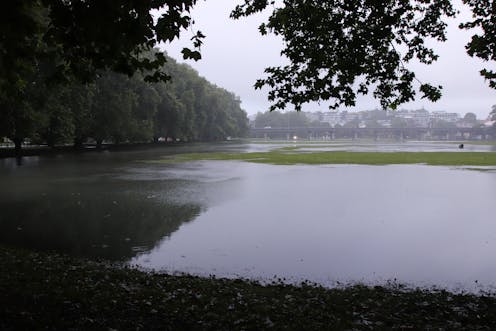
This involved yet more petitions, letters to government and using the press to voice their views on First Nations issues.

Cooper, who formed the all-Aboriginal Australian Aborigines’ League in Melbourne in 1933, tried to petition the king to support the appointment of an Aboriginal member “to represent us” in federal parliament.

The Australian government never forwarded the petition to the king, but Cooper’s descendent Boydie Turner managed to get it to Buckingham Palace in 2014.

William Cooper also called for January 26 to be marked as a day of mourning and protest.

A black and white image of a First Nations man, William Barak stands before a painting. He is wearing a hat and dark jacket.
William Barak is a key figure in the history of political action on Aboriginal land rights.
Wikimedia Commons

The Maloga petitioners of 1881 were likely inspired by earlier events at Coranderrk, an Aboriginal settlement near Healesville established in 1863. Key figures in the history of Aboriginal political action in Victoria, such as Simon Wonga and William Barak, had called for land here to be set aside for First Nations people.

But ownership of the Coranderrk reserve was always contested. The Kulin residents at Coranderrk fought hard against the efforts of the Victorian Aborigines Protection Board to close the reserve.

Barak travelled to Maloga in 1881 and told the community about the Kulin people’s fight, which inspired the Maloga men to say in their petition that year:

we more confidently ask this favour of a grant of land as our fellow natives in other colonies have proved capable of supporting themselves, where suitable land had been reserved for them.

Fighting for equality since early colonisation

The Maloga petition of 1881, and the activism that came before and after it, shows First Nations voices have demanded justice since the early days of colonisation.

But their demands have rarely been heeded by governments. Will this Voice to Parliament be more of the same, or will it help bring real change?

The Australian government now has the power to create a Voice, this time not in, but to, parliament. Would the many First Nations petitioners to governments over the years, William Cooper included, approve of the campaign?

First Nations people have long fought to form a relationship based on communicating truth and mutual understanding to parliament. Hopefully, that’s what this Voice will be.


Read more:
What do we know about the Voice to Parliament design, and what do we still need to know?


The Conversation

Julie Andrews is a descendant of the Yorta Yorta people.

Richard Broome receives funding from Australian Research Council.

ref. The 1881 Maloga petition: a call for self-determination and a key moment on the path to the Voice – https://theconversation.com/the-1881-maloga-petition-a-call-for-self-determination-and-a-key-moment-on-the-path-to-the-voice-197796

Liberal hawks versus realist doves: who is winning the ideological war over the future of Ukraine?

Source: The Conversation (Au and NZ) – By Robert G. Patman, Professor of International Relations, University of Otago

A German Leopard 2 heavy battle tank of the type destined for Ukraine. Getty Images

The recent decision by Olaf Scholz’s German government to supply Ukraine with Leopard 2 tanks – after weeks of clear reluctance to provoke Vladimir Putin – was more than a domestic policy shift.

It also demonstrated how Russia’s invasion of Ukraine could prove to be a tipping point in a long-running battle of ideas between two schools of thought in the field of international affairs.

Scholars refer to the two camps as liberals and realists. A defining characteristic of liberalism is its view that global politics is an arena where moral values, legal norms and institutions are crucial for regulating the behaviour of states, and increasing the prospects of cooperation and peace.

The classical realist or “realpolitik” tradition, by contrast, remains sceptical about peace. It believes states are essentially driven by the pursuit of power and national interests through a reliance on military might. It views the international arena as essentially anarchic.

These two approaches have been visible in much of the commentary following Russia’s full scale invasion in February 2022. In particular, the two camps have clashed over how the war in Ukraine should end.

End game: Russian president Vladimir Putin visiting an arms production facility in Saint Petersburg, January 18.
Getty Images

Appeasement or resistance?

On the one hand, many realists believe the only way out of the current conflict is a negotiated peace. That involves recognising, in the words of US political scientist John Mearsheimer, the “taproot of the current crisis is NATO expansion”.

Ukraine must be encouraged, in some shape or form, to concede territory to Russia in order to end the invasion. Realists say it’s important for the West to recognise the legitimate security interests of a great power in Ukraine, and to avoid running the risk of Moscow forming a permanent alliance with China.


Read more:
US will give military tanks to Ukraine, signaling Western powers’ long-term commitment to thwarting Russia


Moreover, they claim Ukraine cannot defeat the Russian occupation force because, if necessary, Putin will use nuclear weapons to ensure a “victory” – a prospect that worsens the stability of Europe and the world.

On the other hand, liberal hawks – sometimes called neo-idealists – maintain Russia’s Ukraine invasion is such a fundamental violation of the UN Charter that it has eliminated the moral and practical scope for a diplomatic compromise.

Negotiation in this context would only reward Putin’s aggression and undermine an international rules-based order that sought to uphold the territorial integrity and political independence of all states.

Hawks and doves

Liberals acknowledge there are two ways of ending Putin’s annexation attempt in Ukraine. First, the Putin regime has the option of belatedly recognising its invasion is illegal, and withdrawing its troops to the internationally recognised borders of Russia.

Second, allies and supporters of Ukraine should ensure that Kyiv is sufficiently armed and equipped to fight a just war. Putin’s invading army is either defeated or the costs of the invasion become too high and Moscow is obliged to end its occupation.


Read more:
Ukraine recap: supply of German and US tanks to make Kyiv ‘a real punching fist of democracy’


Nearly 12 months on, it’s clear among the states supporting Ukraine that the hawkish liberal view – that Putin’s military venture must fail – has steadily edged out the dovish realist perspective that Putin should be appeased with some sort of land for peace deal.

Germany’s decision to supply tanks to Ukraine exemplifies the shift in thinking. But the ascendency of the liberal hawks is the product of long and short-term trends before and during the Ukraine conflict.

For one thing, a realist worldview has not sat comfortably with an increasingly interconnected world. Having struggled to explain events like the end of the Cold War and 9/11, realist diplomats and scholars have nevertheless insisted that great powers still call the shots in world politics.

The NATO factor

The Russian invasion has also significantly eroded the realist case for ending the conflict.

The argument that NATO enlargement caused the Putin regime to attack looks unconvincing. It was not Washington but the states of Eastern Europe, historically fearful of Russian dominance, that clamoured for NATO membership.

Indeed, many neighbouring states have backed President Volodymyr Zelenskyy’s view that Putin’s invasion is part of a Russian imperial project that can be traced back to Peter the Great and which seeks to reestablish a Russian sphere of influence in Eastern Europe.

Furthermore, Zelenskyy has successfully rejected any suggestion of moral equivalency between his democratically elected government and Putin’s authoritarian regime, whose invading troops are suspected of committing war crimes.

The Zelenskyy government has vowed it has the right to fight “until it regains all its territories” from Moscow, and the Biden administration in the US has swung strongly behind this position.


Read more:
Why Russia’s war in Ukraine today is so different from a year ago


Great powers can lose

The Biden stance reflects US respect for the outstanding performance of the Ukrainian military on the battlefield and also the growing resistance to appeasing an outright aggressor.

That would be a recipe for encouraging more territorial demands from the Putin regime, and perhaps embolden China to put even more pressure on Taiwan.

At the same time, the successful Ukrainian counteroffensive in the last quarter of 2022 was a reminder to its supporters in NATO and elsewhere that great powers can and do lose wars against smaller adversaries.

With the right level of military support in 2023, Ukraine could realistically defeat Putin’s invading army.

Ultimately, the hawkish liberal vision of helping to ensure Putin’s defeat has seemingly prevailed because it offered the best prospect of justice for the victim of aggression. It also bolsters an international rules-based order threatened by the illegal use of force.

The Conversation

Robert G. Patman does not work for, consult, own shares in or receive funding from any company or organisation that would benefit from this article, and has disclosed no relevant affiliations beyond their academic appointment.

ref. Liberal hawks versus realist doves: who is winning the ideological war over the future of Ukraine? – https://theconversation.com/liberal-hawks-versus-realist-doves-who-is-winning-the-ideological-war-over-the-future-of-ukraine-198652

Philosophers have studied ‘counterfactuals’ for decades. Will they help us unlock the mysteries of AI?

Source: The Conversation (Au and NZ) – By Sam Baron, Associate Professor, Philosophy of Science, Australian Catholic University

Counterfactuals are claims about what would happen, were something to occur in a different way. For instance, we can ask what the world would be like had the internet never been developed. Shutterstock

Artificial intelligence is increasingly being rolled out all around the world to help make decisions in our lives, whether it’s loan decisions by banks, medical diagnoses, or US law enforcement predicting a criminal’s likelihood of re-offending.

Yet many AI systems are black boxes: no one understands how they work. This has led to a demand for “explainable AI”, so we can understand why an AI model yielded a specific output, and what biases may have played a role.

Explainable AI is a growing branch of AI research. But what’s perhaps less well known is the role philosophy plays in its development.

Specifically, one idea called “counterfactual explanation” is often put forth as a solution to the black box problems. But once you understand the philosophy behind it, you can start to understand why it falls short.

Why explanations matter

When AI is used to make life-changing decisions, the people impacted deserve an explanation of how that decision was reached. This was recently recognised through the European Union’s General Data Protection Regulation, which supports an individual’s right to explanation.

The need for explanation was also highlighted in the Robodebt case in Australia, where an algorithm was used to predict debt levels for individuals receiving social security. The system made many mistakes, placing people into debt who shouldn’t have been.

It was only once the algorithm was fully explained that the mistake was identified – but by then the damage had been done. The outcome was so damaging it led to a royal commission being established in August 2022.

In the Robodebt case, the algorithm in question was fairly straightforward and could be explained. We should not expect this to always be the case going forward. Current AI models using machine-learning to process data are much more sophisticated.


Read more:
Not everything we call AI is actually ‘artificial intelligence’. Here’s what you need to know


The big, glaring black box

Suppose a person named Sara applies for a loan. The bank asks her to provide information including her marital status, debt level, income, savings, home address and age.

The bank then feeds this information into an AI system, which returns a credit score. The score is low and is used to disqualify Sara for the loan, but neither Sara nor the bank employees know why the system scored Sara so low.

Unlike with Robodebt, the algorithm being used here may be extremely complicated and not easily explained. There is therefore no straightforward way to know whether it has made a mistake, and Sara has no way to get the information she needs to argue against the decision.

This scenario isn’t entirely hypothetical: loan decisions are likely to be outsourced to algorithms in the US, and there’s a real risk they will encode bias. To mitigate risk, we must try to explain how they work.


Read more:
Everyone’s having a field day with ChatGPT – but nobody knows how it actually works


The counterfactual approach

Broadly speaking, there are two types of approaches to explainable AI. One involves cracking open a system and studying its internal components to discern how it works. But this usually isn’t possible due to the sheer complexity of many AI systems.

The other approach is to leave the system unopened, and instead study its inputs and outputs, looking for patterns. The “counterfactual” method falls under this approach.

Counterfactuals are claims about what would happen if things had played out differently. In an AI context, this means considering how the output from an AI system might be different if it receives different inputs. We can then supposedly use this to explain why the system produced the result it did.

One example of a counterfactual would be to ask what the world might be like had the internet never been developed.
Shutterstock

Suppose the bank feeds its AI system different (manipulated) information about Sara. From this, the bank works out the smallest change Sara would need to get a positive outcome would be to increase her income.

The bank can then apparently use this as an explanation: Sara’s loan was denied because her income was too low. Had her income been higher, she would have been granted a loan.

Such counterfactual explanations are being seriously considered as a way of satisfying the demand for explainable AI, including in cases of loan applications and using AI to make scientific discoveries.

However, as researchers have argued, the counterfactual approach is inadequate.

Correlation and explanation

When we consider changes to the inputs of an AI system and how they translate into outputs, we manage to gather information about correlations. But, as the old adage goes, correlation is not causation.

The reason that’s a problem is because work in philosophy suggests causation is tightly connected to explanation. To explain why an event occurred, we need to know what caused it.

On this basis, it may be a mistake for the bank to tell Sara her loan was denied because her income was too low. All it can really say with confidence is that income and credit score are correlated – and Sara is still left without an explanation for her poor result.

What’s needed is a way to turn information about counterfactuals and correlations into explanatory information.

The future of explainable AI

With time we can expect AI to be used more for hiring decisions, visa applications, promotions and state and federal funding decisions, among other things.

A lack of explanation for these decisions threatens to substantially increase the injustice people will experience. After all, without explanations we can’t correct mistakes made when using AI. Fortunately, philosophy can help.

Explanation has been a central topic of philosophical study over the last century. Philosophers have designed a range of methods for extracting explanatory information from a sea of correlations, and have developed sophisticated theories about how explanation works.

A great deal of this work has focused on the relationship between counterfactuals and explanation. I’ve developed work on this myself. By drawing on philosophical insights, we may be able to develop better approaches to explainable AI.

At present, however, there’s not enough overlap between philosophy and computer science on this topic. If we want to tackle injustice head-on, we’ll need a more integrated approach that combines work in these fields.


Read more:
When self-driving cars crash, who’s responsible? Courts and insurers need to know what’s inside the ‘black box’


The Conversation

Sam Baron receives funding from the Australian Research Council.

ref. Philosophers have studied ‘counterfactuals’ for decades. Will they help us unlock the mysteries of AI? – https://theconversation.com/philosophers-have-studied-counterfactuals-for-decades-will-they-help-us-unlock-the-mysteries-of-ai-196392

This election year, NZ voters should beware of reading too much into the political polls

Source: The Conversation (Au and NZ) – By Grant Duncan, Associate Professor, School of People, Environment and Planning, Massey University

Getty Images

With a new prime minister sworn in and a cabinet reshuffle imminent, it’s no exaggeration to say the election year has begun with a bang. Already the punditry and speculation are ramping up, with anticipation building for the first opinion polls.

There will be more polls to come, of course, but a word of caution is in order: don’t treat them as gospel, and try not to let them become self-fulfilling prophecies. At this point, we can’t predict who will form New Zealand’s next government, and it could yet be a tight race.

Furthermore, political polling has not had a stellar record in recent times. Former prime minister Jim Bolger’s famous remark from 1993, after he didn’t get the election majority he expected, still resonates: “Bugger the polls.”

It’s not just a local phenomenon, either. The results of the Brexit referendum and the Trump–Clinton presidential contest in 2016, and the 2019 Australian election, were all out of line with preceding opinion polls.

In 2020, the US presidential polls were off by about four percentage points. And the 2022 US midterm elections didn’t produce the landslide (or “red tsunami”) many Republicans had predicted.

Election night 2020: polls consistently underestimated the Labour Party’s eventual majority.
Getty Images

The 2020 election miss

It’s a similar story in Aotearoa New Zealand. In 2020, the polls immediately prior to the election overestimated the National vote and underestimated Labour’s.

Taking the averages of the results of all six polls published during the month before election day, National emerged on 30.9% and Labour on 47.2%. In the final three polls during the two weeks when advance voting was open, the averages were National 31.4% and Labour 46.3%.

The gap was closing and Labour would land on about 46%, or so it seemed. As Labour’s trend in the polls since mid-2020 was already downward, 45% looked plausible. But predictions based on the opinion polls were significantly wrong. Labour’s election result was 50%, National’s only 25.6%.

The polls in the final fortnight were overestimating National by an average of 5.8 percentage points. They were underestimating Labour by 3.7 points. The Green and Māori parties were also underestimated (1.1 and 0.7 points, respectively).

There were even bigger failures in polls showing Green candidate Chlöe Swarbrick running third in Auckland Central with about 25% of the vote. Instead, she got 35% and won the seat.

Green MP Chlöe Swarbrick on election night 2020: polls had placed her third but she won the Auckland Central seat.
Getty Images

Statistics 101

The opinion polls and the election – the only poll that counts, as the saying goes – use different methods with different samples. They’re intended for different purposes, and hence their results will differ, too.

An opinion poll is a snapshot of a sample of potential voters. By the time it’s published, it’s already in the past. Surveys normally ask which party you’d vote for if the election were held tomorrow. But you may change your mind by the time you actually vote, if you vote at all.


Read more:
Here’s how to make opinion polls more representative and honest


Furthermore, surveys are prone to random error. So, no matter how scientifically rigorous, they only estimate – and can’t replicate – the relevant population. It’s in the interests of the polling companies to be accurate, of course, especially when close to an election. But we need to read their results critically.

Samples are normally about 1,000 people, and pollsters try to ensure they closely resemble the demographic makeup (ideally by age, gender, ethnicity, education and location) of the eligible population, giving voters of all kinds an equal voice.

Post-survey weighting boosts results from social groups with low response rates.
The proportion of the population that holds a specified preference is estimated, and all estimates are subject to variance. This is expressed as a margin of error, which is normally plus or minus three percentage points.


Read more:
What is a margin of error? This statistical tool can help you understand vaccine trials and political polling


The margin of error is the range in which the pollster bets the “true” results should probably fall, with the true figures being outside that range only 5% of the time. In other words, pollsters are 95% confident the actual results will fall within that range. It’s only a statistical estimate.

But the quoted margin of error doesn’t apply evenly. If a given party is polling at 50%, then the quoted margin of error applies. If a party is polling higher or lower, then the margin of error narrows – the further you get from 50%, the narrower the margin of error.

How new Prime Minister Chris Hipkins fares in the first opinion polls of 2023 will be closely watched.
Getty Images

Beyond the margin of error

Another concern is whether respondents will give honest answers. Some may be unwilling to reveal their voting intentions or they’ll wilfully mislead the poll.

And often a large proportion of a sample doesn’t know yet whether they’ll actually vote, or for whom they’ll vote. Responsible pollsters will report the percentage of “don’t know” responses.

But the conservative bias in the pre-election 2020 opinion polls was systematically outside of the margins of error, and hence not due only to random variation.

Apparently, pollsters didn’t obtain samples that resembled the population that actually voted. It looks like younger left-wing voters were especially hard to reach or unwilling to participate. Or their election turnout may have been underestimated.

Polling companies are now using online panels to help correct such biases. We’ll have to wait for the next election’s results to judge how it’s working.


Read more:
Chris Hipkins becomes NZ’s new prime minister – there are two ways it can go from here


Reading the tea leaves

A series of opinion polls can reveal trends and thus serve a purpose as public information. But they’re not suited for forecasting. One result taken out of context may be misleading, so it’s disappointing when major news organisations over-hype polls.

When party-vote percentages get converted into numbers of seats, journalists are reading tea leaves and not reporting news. Meanwhile, the market research firms are getting massive publicity.

Accurate or not, opinion poll results can have self-fulfilling or “bandwagon” effects on people’s voting behaviour. People might want to back a winner, or not waste their vote on a party that’s polling below 5%. Or some might vote for a party other than their favourite, with an eye to post-electoral negotiations.

Perhaps the best advice for voters is this: when deciding which party to vote for, try not to think about the polls. And poll-watchers should prepare for surprises on election night.

The Conversation

Grant Duncan does not work for, consult, own shares in or receive funding from any company or organisation that would benefit from this article, and has disclosed no relevant affiliations beyond their academic appointment.

ref. This election year, NZ voters should beware of reading too much into the political polls – https://theconversation.com/this-election-year-nz-voters-should-beware-of-reading-too-much-into-the-political-polls-198508

Voluntary assisted dying will be available to more Australians this year. Here’s what to expect in 2023

Source: The Conversation (Au and NZ) – By Lindy Willmott, Professor of Law, Australian Centre for Health Law Research, Queensland University of Technology, Queensland University of Technology

Shutterstock

By the end of 2023, eligible people in all Australian states will be able to apply for voluntary assisted dying as the final three states’ laws will become operational this year.

This year began with Queensland’s voluntary assisted dying law commencing operation on January 1. South Australia is to follow shortly, on January 31, with the New South Wales law to commence on November 28.

These states join Victoria, Western Australia and Tasmania, whose laws have been operating for more than three years, one year and three months respectively.

The territories may be poised to follow with the Commonwealth’s lifting of an over 25-year ban on territories passing voluntary assisted dying laws.

The Australian Capital Territory has already signalled it will introduce such laws by 2024 and circulate a discussion paper in coming months.


Read more:
Territories free to make their own voluntary assisted dying laws, in landmark decision. Here’s what happens next


Hundreds have chosen to die this way

There is now a clear picture emerging of voluntary assisted dying in Australia, with hundreds choosing this in states where it is legal.

In Victoria, 604 people have been assisted to die in the three years between June 2019 and June 2022 (the latest figures publicly available). Some 75% of people being assisted to die since the law commenced were 65 or older; more than 80% of applicants had cancer. In the last reporting period (July 1 2021 to June 30 2022), deaths from voluntary assisted dying represented 0.58% of deaths in that state.

In WA, uptake has been much higher than expected, with 190 people (1.1% of deaths in the state) choosing voluntary assisted dying in the first year. This is more than the number of Victorians who accessed voluntary assisted dying in the first year, even though WA’s population is much smaller.

In WA, almost 88% of eligible applicants were aged 60 or over and 68% of patients requesting voluntary assisted dying had cancer.

In both states, more than 80% of patients requesting voluntary assisted dying were also receiving palliative care. Eligible applicants cited the inability to engage in activities that make life enjoyable, and the loss of autonomy, as the two most common reasons for accessing voluntary assisted dying.


Read more:
What is palliative care? A patient’s journey through the system


How is the system working?

In Victoria and WA, bodies that oversee voluntary assisted dying have found the system safe. According to their reports, only people who meet the strict eligibility criteria have been able to access it.

Those providing voluntary assisted dying and state-based services designed to help prospective patients access it have been praised as being supportive and compassionate.

However, there are barriers to access, including:

Many of these issues are heightened in rural and remote areas.

While it is still early days in Tasmania, access issues have already been reported. These result from a lack of trained doctors, and a complicated and lengthy request and assessment process.

Person sitting on bench looking out at rural view across paddock to mountains
Many access issues are heightened in rural and remote areas.
Robert So/Pexels

How can we address these issues?

Voluntary assisted dying legislation in each state requires it to be reviewed after a certain period. For both Victoria and WA, this review will begin this year.

But it is not yet clear how these reviews will be conducted, or what evidence considered.

For some issues, law reform might be needed. For others, a policy response may be possible. For example, potential barriers might be addressed through better remuneration for participating practitioners, strategies to support individuals living in rural and remote areas and a more flexible application of the Australian residency rules.

These mandated reviews present an important opportunity to improve how voluntary assisted dying laws operate in practice. It is pivotal these reviews are evidence-based.

Fortunately, there is a growing body of published evidence that can guide and inform these reviews – from the bodies that oversee voluntary assisted dying and from research on voluntary assisted dying practice.

Now voluntary assisted dying laws are operational in all Australian states, or will be by the end of the year, the next challenge is to ensure current barriers to access are removed while continuing to ensure the system operates safely.


Katherine Waller, Project Coordinator, Australian Centre for Health Law Research, Queensland University of Technology, coauthored this article.

The Conversation

Lindy Willmott receives or has received funding from the Australian Research Council, the National Health and Medical Research Council and Commonwealth and State Governments for research and training about the law, policy and practice relating to end-of-life care. In relation to voluntary assisted dying, she (with colleagues) has been engaged by the Victorian, Western Australian and Queensland Governments to design and provide the legislatively-mandated training for doctors involved in voluntary assisted dying in those States. She (with Ben White) has also developed a model Bill for voluntary assisted dying for parliaments to consider. Lindy Willmott is also a member of the Queensland Voluntary Assisted Dying Review Board and the Queensland Civil and Administrative Tribunal. She is a former Board member of Palliative Care Australia.

Ben White receives funding from the Australian Research Council, the National Health and Medical Research Council and Commonwealth and State Governments for research and training about the law, policy and practice relating to end-of-life care. In relation to voluntary assisted dying, he (with colleagues) has been engaged by the Victorian, Western Australian and Queensland Governments to design and provide the legislatively-mandated training for doctors involved in voluntary assisted dying in those States. He (with Lindy Willmott) has also developed a model Bill for voluntary assisted dying for parliaments to consider. He is a part-time member of the Queensland Civil and Administrative Tribunal, which has jurisdiction for some aspects of this state’s voluntary assisted dying legislation. Ben is a recipient of an Australian Research Council Future Fellowship (project number FT190100410: Enhancing End-of-Life Decision-Making: Optimal Regulation of Voluntary Assisted Dying) funded by the Australian Government.

Katrine Del Villar has been involved (with colleagues) in writing the legislatively-mandated training for doctors involved in voluntary assisted dying in Western Australia and Queensland.

ref. Voluntary assisted dying will be available to more Australians this year. Here’s what to expect in 2023 – https://theconversation.com/voluntary-assisted-dying-will-be-available-to-more-australians-this-year-heres-what-to-expect-in-2023-196209

Australian teachers are dissatisfied with their jobs but their sense of professional belonging is strong

Source: The Conversation (Au and NZ) – By Kelly-Ann Allen, Associate Professor, School of Educational Psychology and Counselling, Faculty of Education, Monash University

Shutterstock

Teachers around Australia are preparing to head back to the classroom for 2023. But amid excitement about a new school year, there are ongoing concerns about teacher shortages and headlines saying kids are “falling behind” and education strategies are not working.

We are education researchers who study teachers’ perceptions of their work in Australia. Last year, we conducted a national survey of 5,000 teachers, asking them about their careers. We found a growing number of teachers are not satisfied with their jobs and a large majority are planning to leave the profession.

But it was not all bad news. Almost 80% of those we surveyed reported a sense of belonging to teaching.


Read more:
Jason Clare has a draft plan to fix the teacher shortage. What needs to stay and what should change?


Job satisfaction

We found teachers are increasingly unhappy in their jobs. In our 2019 survey of Australian teachers, 65.6% of respondents said they were satisfied with their work. In 2022, that number dropped to 45.8%.

Teachers tell us this significant drop is because they feel unappreciated. They report a growing workload – in part thanks to increasing administrative demands – and a lack of respect from the community. According to one respondent:

the time taken in keeping records of everything has increased exponentially.

Another teacher told us:

I am burnt out. I cannot do my job well with all the demands placed upon me.

Perhaps then it is no surprise that only 27.6% of respondents said they planned to stay in the profession until they retired. Almost 20% said they would leave within five years.


Read more:
‘They phone you up during lunch and yell at you’ – why teachers say dealing with parents is the worst part of their job


The importance of belonging

Against this negative background, our survey results offered a ray of hope. Almost 80% of respondents reported a strong sense of belonging to the teaching profession.

Teacher marking assignments.
Teachers report increasing workloads and decreasing levels of satisfaction.
Shutterstock

Our survey found several factors contribute to this. The biggest positive influences were teachers’ relationships and connections with colleagues and students. Many teachers feel a sense of shared purpose and camaraderie with their colleagues. As one survey respondent said:

Teachers are usually incredibly warm, passionate, positive people who want the best for their workmates and our shared students.

Teachers also valued their relationships with students. Seeing students learn and succeed reaffirmed their sense of purpose. As one teacher told us:

You get emotionally invested in ensuring the students develop.

Another respondent said they were boosted by moments when students “have that ‘aha moment’”

and tell you about their day and what they love about coming to school, as well as trusting you with personal matters.

We also found supportive school systems and policies contributed to a sense of belonging. This includes flexibility in the curriculum and opportunities for teachers to be “heard”.

On top of this, many teachers pointed to the importance of job security. Permanent teachers tend to feel more belonging than contract teachers, thanks to the security of their positions.

[E]very year, as soon as term 3 started, I would be thinking of applying again and started feeling I don’t belong here anymore. My current position is ongoing and it definitely is a big boost.

Barriers to belonging

When we asked teachers what harmed their sense of belonging, common responses included a lack of respect, unrealistic expectations, and a lack of support.

Many teachers felt their profession was not valued or respected by the general public. They pointed to common misconceptions about being a teacher. As one teacher explained:

Non-teachers assume they know what it is like to be a teacher because they have been a student in a school, I do not think I know what it is like to be a dentist because I have been and had my teeth cleaned.

Respondents also felt that negative media coverage about schools and teachers affected their sense of belonging. They said they were often made to feel like “babysitters” rather than professionals.


Read more:
No wonder no one wants to be a teacher: world-first study looks at 65,000 news articles about Australian teachers


What now?

Some teachers in our study report feelings of being overwhelmed and under-compensated, and are considering leaving the field. But our research also shows how much the profession means to them, which suggests there is an opportunity here.

With better support and more understanding of what their complex roles involve, there is great potential to address the teacher shortage. And make teaching a much more satisfying job.

The authors would like to acknowledge the contribution of Dr Mehdi Moharami to the research presented in this article.

The Conversation

Kelly-Ann Allen is a fellow of the Australian Psychological Society and College of Educational and Developmental Psychologists.

Beatriz Gallo Cordoba, Fiona Longmuir, and Michael Phillips do not work for, consult, own shares in or receive funding from any company or organisation that would benefit from this article, and have disclosed no relevant affiliations beyond their academic appointment.

ref. Australian teachers are dissatisfied with their jobs but their sense of professional belonging is strong – https://theconversation.com/australian-teachers-are-dissatisfied-with-their-jobs-but-their-sense-of-professional-belonging-is-strong-196223

Molly Meldrum at 80: how the ‘artfully incoherent’ presenter changed Australian music – and Australian music journalism

Source: The Conversation (Au and NZ) – By Liz Giuffre, Senior Lecturer in Communication, University of Technology Sydney

Ian Alexander “Molly” Meldrum is 80 on January 29 2023.

The Australian music industry would not be where it is today without his work as a talent scout, DJ, record producer, journalist, broadcaster and professional fan.

His legacy has been acknowledged by the ARIAs, APRA, the Logies, an Order of Australia and even a mini-series.

Just a couple of weeks ago, Meldrum made headlines again for an appearance at Elton John’s farewell concert in Melbourne when he “mooned” the crowd in a playful display of rock and roll rebellion. He later apologised to the audience and old friend Elton, keen to make sure no one else was blamed.

It was an irreverence typical of Meldrum’s long career. But his legacy is not just in the musical acts he supported. It is also in the taste makers who followed in his footsteps.


Read more:
Countdown – just nostalgia, or still breaking new ground?


‘Artfully incoherent’

A journalist at pioneering music magazine Go-Set, a presenter and record producer, Meldrum became a household name with the ABC TV music show Countdown (1974-87). Countdown was a weekly touchstone for the industry and fans, promoting local acts alongside the best in the world.

Meldrum’s approach to interviewing and commentary is legendary. ABC historian Ken Inglis called his interviewing style “artfully incoherent”.

Importantly, his charm put artists and fans at ease.

Meldrum is not a slick player, but a fan. This fandom is felt so deeply that, at times, he became overwhelmed.

One of Meldrum’s most famous interviews was in 1977 when the then Prince Of Wales appeared on Countdown to launch a charity record and event. The presenter became increasingly flustered.

Even now, watching back, it’s hard not to side with Meldrum rather than his famous guest. Pomp, ceremony and hierarchy really didn’t make sense in this rock and pop oasis.

In another interview, Meldrum spoke to David Bowie on a tennis court. Both men casually talked and smoked (it was the ‘70s!), talking seriously about the work but not much else.

As Meldrum handed Bowie a tennis racket to demonstrate how the iconic track, Fame (with John Lennon) was born, the Starman was given space to be hilariously human.

When meeting a sedate Stevie Nicks, Meldrum met her on her level.

Nicks told Meldrum she was only happy “sometimes”, and rather than probing, he just listened. When Meldrum asked about the dog Nicks had in her lap, she opened up:

I got her way before I had any money, I didn’t have near enough money to buy her […] She’s one of the things I’ve had to give up for Fleetwood Mac, because you’re not home.

Meldrum approached this, and all his guests, with humanity. This is how his insights into the reality of rock royalty are effortlessly uncovered.


Read more:
How will ‘Molly’ help us remember Australian culture?


New taste makers

A country boy who came to the city, Meldrum studied music and the growing local industry much more attentively than his law degree. He passionately supported (and continues to support) Australian popular music – and Australian music fans.

He speaks a love language for music that musicians and fans share, and a language which has continued in other presenters.

Following in Meldrum’s footsteps we have seen distinct critical voices like Myf Warhurst, Julia Zemiro and Zan Rowe.

Each of these women have approached the music industry with charm like Meldrum, but also their own perspectives: Zemiro with a love of international influence; Warhurst with pop as a language to connect us to the everyday; Rowe with a way to connect audiences and musicians through conversations about their own processes and passions.

Our best music critics, and musicians, have embraced an unapologetic energy Meldrum made acceptable.

Meldrum is also a pioneer in the LGBTQ+ community, weathering the storms of prejudice during his early career. Today, members of the media and musical community have greater protection from the prejudice common when his career began.

The music, of course, the music

The Australian music industry would not be what it is had Molly Meldrum gone on to be a lawyer.

Through the pages of Go-Set and on Countdown he worked to promote new talent, believing in and developing acts like AC/DC, Split Enz, Paul Kelly, Do Re Mi, Australian Crawl and Kylie Minogue before the rest of the industry knew what to do with them.

He did the same for international artists. ABBA, Elton John, KISS, Madonna and many other now mega-names were first presented to Australian audiences via Meldrum’s wonderful ear.

Today, Australian music encompasses pop, dance, electro and hip hop, and artists from all walks of life. Meldrum’s willingness to listen has contributed to this, and he encouraged others to do the same.

Meldrum remains revered not just for nostalgia but as an example of what putting energy into the local scene can achieve.

Most importantly, Meldrum continues to be a music fan. He loves the mainstream, the place where the majority of the audience also resides. He has never bought into the idea of a “guilty” pleasure – if it works, it works, no music snobbery here.

His catch-cry – “do yourself a favour” – really does sum up the importance of music. It is not a luxury, but something to really keep us going.


Read more:
Molly is lacking as a TV show but millions, including me, are hooked


The Conversation

Liz Giuffre does not work for, consult, own shares in or receive funding from any company or organisation that would benefit from this article, and has disclosed no relevant affiliations beyond their academic appointment.

ref. Molly Meldrum at 80: how the ‘artfully incoherent’ presenter changed Australian music – and Australian music journalism – https://theconversation.com/molly-meldrum-at-80-how-the-artfully-incoherent-presenter-changed-australian-music-and-australian-music-journalism-196793

Grattan on Friday: Response to Alice Springs crisis poses early Indigenous affairs test for Albanese

Source: The Conversation (Au and NZ) – By Michelle Grattan, Professorial Fellow, University of Canberra

Prime Minister Anthony Albanese did the right thing in dashing off to Alice Springs this week in response to the publicity about that city’s crime crisis. But in doing so, he set up a test for himself.

That test will be early, and tough. The first round will come next week, when Albanese and Northern Territory Chief Minister Natasha Fyles receive a report on whether alcohol bans should be reimposed on Indigenous communities.

It’s clear the PM believes they should be. He has canvassed an “opt-out” system to replace the present arrangement, under which communities have to opt in to stay dry. The NT government installed the “opt in” arrangement to replace the bans which lapsed when federal legislation expired last year.

The territory government argued the bans were racially discriminatory, although Fyles has now (sounding reluctant) agreed to an “opt-out” scheme being on the table.

Does the “racism” argument justify what has been the NT’s policy? Undoubtedly imposing bans on Indigenous communities is racially discriminatory, curbing the rights of the Aboriginal people who live there. But the bans also promote “rights” – notably, the right of women and children to a safe environment.

Those who reject bans simply on the grounds of discrimination must be willing to accept some moral responsibility for the harm to the vulnerable that binge drinking is doing.


Read more:
Alcohol bans and law and order responses to crime in Alice Springs haven’t worked in the past, and won’t work now


Albanese still has a way to go to get everyone to agree to the opt-out program. Community consultations are underway, and there’ll likely be mixed views. And he has to keep the NT government on the same page.

Presuming he can announce the opt-out approach, the federal government also needs, within a reasonable time and in conjunction with the NT government, to come up with a comprehensive program for tackling the extreme disadvantage in NT communities in general and the town camps around Alice Springs in particular.

As those on the ground point out, the Alice Springs crisis goes way beyond the alcohol issues, and is endemic. The evidence indicates it is also beyond the capacity of the NT government to cope with it.

The challenges in Alice Springs shot to national prominence just as the debate about the Voice referendum is becoming more difficult for Albanese.

Polling indicates people haven’t got their heads around what’s being asked (indeed, they are unlikely to engage until much closer to the vote). Critics are attacking from the right and the left, including Indigenous Greens Senator Lidia Thorpe.

A range of factors will influence those who are uncertain: the force of the arguments put forth by the government and other advocates, where the Liberals land on the Voice, fear-mongering from “no” campaigners.

Opposition leader Peter Dutton and his spokesman for Indigenous Australians, Julian Leeser, this week again insisted Albanese must put out more detail. Leeser said people he’d have expected to support the referendum were cautious. “They’re saying to me things like, ‘Look I want to vote yes, but I’m just not sure I can because no one can explain to me how this will work.’”


Read more:
What do we know about the Voice to Parliament design, and what do we still need to know?


Albanese had hoped keeping the emphasis on the principles of the Voice – pointing out the detail was for parliament – would maximise the referendum’s chances.

But many voters who are uncertain won’t be satisfied without a more precise model. Referring people to the extensive Indigenous Voice report for these details doesn’t wash, especially as the government hasn’t said precisely which parts of that report it accepts.

The public needs the Voice’s skeleton – which may amount just to the government gathering and clarifying what’s out there and putting it into a succinct, clear presentation that also covers off on contentious matters. “Detail” doesn’t mean endless fine print.

If the government does this, the onus will be on Dutton. It will test whether his questioning is genuine and reasonable, or (as First Nations leader Noel Pearson fears) he is just playing a “spoiling game” – laying the ground for declaring the Liberals will oppose the referendum, as the Nationals have already done.

The issue is complicated for Dutton, whose party will never be united on this. He will be open to damaging criticism if the quest for detail is confirmed as spurious.

Albanese, pushing for bipartisanship, is going out of his way to get Dutton on board (or to wedge him, depending how you see it). This week, he invited Dutton to attend a meeting of the referendum working group, which is advising the government, so he can glean more information. Dutton has accepted.

The Liberals being naysayers would play badly in “teal” seats, at least some of which Dutton needs to win back to secure government. If the referendum went down, Dutton would be loaded with a large share of blame.

Pearson, an Indigenous figure much praised by Liberal leaders at various times, wrote this week: “By playing a spoiling game, the federal opposition will be responsible for destroying the three-decade quest for reconciliation”.

There has been speculation the Liberals might not take a formal position; this would be expedient for Dutton but a failure of leadership.

As the referendum debate intensifies, the stakes rise. Pearson says, “I cannot see how reconciliation will be a viable concept in Australia if the referendum fails”. The fallout from a loss would be huge.

On the flip side, the proponents of the Voice are wrong to raise unrealistic expectations for the body, even if their motives are understandable.

If it comes into being, the Voice will be symbolically important and, if it works effectively, it will institutionalise a compelling and authoritative source of first-hand advice.


Read more:
An Indigenous Voice to Parliament will not give ‘special rights’ or create a veto


But it won’t have all the “answers”, for obvious reasons. Views among Indigenous people are not unanimous. Why would we expect them to be? They are not even unanimous about the Voice. Those serving on the Voice would argue among themselves, as do members of any other democratic, representative body.

More fundamentally, the complex issues bedevilling Aboriginal affairs are “wicked problems”, too often intractable even when governments seek and listen to Indigenous advice.

Those who over-hype what the Voice could do are paving the way for later disillusionment about the body and its role. It is important to be realistic.

Tom Calma, co-author of the 2021 Indigenous Voice report, described its potential value in his Wednesday speech accepting the award of 2023 Senior Australian of the Year. “We must have enduring partnerships, so Indigenous communities can help inform policy and legal decisions that impact their lives and we can recognise the special place of Aboriginal and Torres Strait islander peoples in Australia’s history.”

The Conversation

Michelle Grattan does not work for, consult, own shares in or receive funding from any company or organisation that would benefit from this article, and has disclosed no relevant affiliations beyond their academic appointment.

ref. Grattan on Friday: Response to Alice Springs crisis poses early Indigenous affairs test for Albanese – https://theconversation.com/grattan-on-friday-response-to-alice-springs-crisis-poses-early-indigenous-affairs-test-for-albanese-198590

Activists hail life jail sentence for army major over brutal Papuan killings

RNZ Pacific

The Indonesian military says a tribunal has sentenced an army major to life in prison for his involvement in the brutal murder of four Papuan civilians in the Mimika district.

Their mutilated bodies were found in August 2022.

Benar News reports that human rights activists and victims’ relatives welcomed the conviction of Major Helmanto Fransiskus Dakhi as progress in holding members of security forces accountable for abuses in West Papua.

“The defendant … was found guilty of premeditated murder,” Herman Taryaman, a spokesman for the Indonesian military command in Papua, told journalists.

The tribunal also dismissed Dakhi from the military.

Taryaman said four other soldiers charged in connection with the killings were being tried by a tribunal in the provincial capital of Jayapura.

A sixth military suspect died in December after falling ill, while police say four civilians were also facing trial in a civilian court.

Headless bodies
Asia Pacific Report reported on 31 August 2021 that residents of Iwaka village in Mimika district had been shocked by the discovery of four sacks, each containing a headless and legless torso, in the village river.

Two other sacks were found separately, one containing four heads and the other eight legs. The sacks were weighted with stones.

A spokesman for the victims’ families, Aptoro Lokbere, said he was “satisfied” with the conviction and sentence.

Gustaf Kawer, an attorney for the victims’ families, said the life sentence for the major was a “brave” decision that should be emulated by military and civilian courts in similar cases.

Activists had said the violence degraded the dignity of indigenous Papuans amid allegations of ongoing rights abuses by government security forces in West Papua.

Dakhi is the third Indonesian Armed Forces member to be sentenced to life by a military court in a murder case since June.

Anger as MSG recruits Indonesians
Meanwhile, the Melanesian Spearhead Group’s secretariat in Vanuatu has confirmed it has recruited two Indonesians.

The statement from the group came during a protest against the move in front of the secretariat by the Vanuatu Free West Papua Association.

The group’s director-general, Leonard Louma, said the agency was aiming to strengthen its capacity and this would include the recruitment of two Indonesian nationals, filling the roles of the private sector development officer and the manager of arts, culture and youth programme.

Louma said the secretariat had been directed to “re-prioritise” its activities and was now positioning itself to meet the demands and expectations of the leaders.

The Free West Papua Association said hiring the Indonesians made a mockery of the support Vanuatu had given West Papua for many years.

This article is republished under a community partnership agreement with RNZ.

Print Friendly, PDF & Email

Article by AsiaPacificReport.nz

Aiyaz ‘trying to mislead the people’ over use of term Fijian, says AG

By Meri Radinibaravi in Suva

Fiji’s Constitution does not require everything related to the government to be called Fijian, says Attorney-General Siromi Turaga.

Speaking during a media conference, he said there was no right or wrong way to describe a title or name a government.

He said FijiFirst party general secretary Aiyaz Sayed-Khaiyum was trying to mislead the people when he said that the Prime Minister Sitiveni Rabuka had not called everybody a Fijian.

“On the term of Fijian as common name, again Mr Sayed-Khaiyum is playing with half-truths to mislead the people when it comes to his petty complaints that the Ministry of Information Facebook page is now called Fiji Government,” Turaga said.

“We are the Republic of Fiji not the republic of Fijians constitutionally, Fiji is home to all Fijians.

“In China, the official government website is the State Council of the People’s Republic of China.

“In Australia and Britain it is the Australian government and the British government. He said the Constitution never said that when someone spoke they must call every citizen Fijian.

“Frankly, there is nothing grammatically incorrect about that and the fact is, no law was broken by the renaming.

“A Constitution does not say everything related to the government must be called Fijian, neither does it require all officials to call citizens Fijian when they speak.

“It is the prerogative of government and the transition from FFP (government) to the coalition government, a decision has been made to call the government page Fiji Government.”

Turaga said the 2013 Constitution also enshrined freedom of speech.

Meri Radinibaravi is a Fiji Times reporter. Republished with permission.

Print Friendly, PDF & Email

Article by AsiaPacificReport.nz

Papuan journalist Victor Mambor says bomb attack likely due to his reporting

Pacific Media Watch

A prominent Papuan journalist has said a recent bombing near his home is the latest in a string of attacks against him, reports ABC Pacific Beat.

Victor Mambor said he heard motorbikes ride past his home before a bomb exploded about 3 metres from his house on Monday.

He suspects his attackers wished to scare him.

“It’s not the first time, I have had more threats before,” Mambor said.

“They broke my my car, they threatened me through SMS texts and WhatsApp messenger.”

Mambor, editor of the Papuan news website Jubi, suspects the work he has done reporting on Indonesian-ruled West Papua has led to these threats.

“I think they think I’m a journalist who supports the West Papua freedom movement,” he said.

Presenter: Prianka Srinivasan

Print Friendly, PDF & Email

Article by AsiaPacificReport.nz

Prime Minister Chris Hipkins defends cost-of-living record, promises more action

By Russell Palmer, RNZ News digital political journalist

Prime Minister Chris Hipkins has put the “bread and butter” issue of inflation at the top of his government’s agenda for Aotearoa New Zealand, saying today’s figures confirm that is the right approach.

Opposition leader Christopher Luxon continues to cast the government as having done nothing about the cost of living, but Hipkins argues the government’s actions are making a difference.

Annual inflation numbers for the quarter out from Stats NZ today were unchanged at 7.2 percent, roughly in line with expectations.

There are signs inflation may have peaked, and some supermarkets are expecting drops in fruit and vegetable prices in coming weeks, but rate rises and recession are still expected.

Economists say there is unlikely to be much respite from rising costs this year.

Speaking in his first media briefing as prime minister after chairing Cabinet, Hipkins said the work on reprioritising policy to tackle the issue had “started in earnest”.

“We will be reining in some of our plans, putting them on a slower track, giving us more room to move and greater capacity to focus on the immediate priority issues facing New Zealand, particularly the cost-of-living pressures that have been caused by the global economic situation.”

Not unusual
He said the inflation numbers from today were not unusual in comparison to other global economies — but the government would continue to work to reduce it.

“Our overall rate of inflation: 7.2 percent here in New Zealand, 7.8 percent in Australia, 10.5 percent in the United Kingdom, the OECD average is 10.3 percent, the European Union is 11.1 percent,” he said.

“The Treasury is forecasting real government consumption will fall by about 8.2 percent over the next couple of years which they say indicates that fiscal policy is supporting monetary policy in dampening inflationary pressures — but there’s more to do and the fight must and will continue.

“New Zealand is not immune to those international pressures and they will continue to have an impact on our rate of inflation.”

Luxon was earlier visiting a budgeting service in Papakura, Auckland, and led his comments to reporters afterwards with a familiar litany of criticism, saying those using the service were the same people using foodbanks up and down the country.

“Again a third quarter of inflation sitting at 7.2 percent or thereabouts. It just speaks to a government that is causing huge pain and suffering for people because it has no plan and it’s not tackling the underlying issues of inflation,” he said.

Christopher Luxon at a media standup in Papakura in Auckland
Opposition leader Christopher Luxon . . . “a government that is causing huge pain and suffering.” Photo: Nick Monro/RNZ News

“That then leads to higher levels of interest rates. Higher levels of interest rates ultimately then lead us through to a recession and a recession then leads us into unemployment. I see a government that has had no plan to tackle the underlying causes of inflation, and nothing they have done over the last nine months has made a single difference here.”

He was not buying Hipkins’ language about reprioritisation and renewed focus on the economy.

‘It’s just words’
“He can say whatever he wants, it’s just words. The reality is this is a government with Grant Robertson as a Finance Minister over the whole period of this government.

“Nothing’s changed, so the reality is he can say whatever he wants but I find it incredibly cynical that here we are six months, seven months out from an election and all of a sudden we’re miraculously gonna focus on the economy. Give me a break.”

Luxon listed National’s “five-point inflation-fighting plan” as their own solution to the problem:

  • Not adding costs to businesses which will be passed on to consumers through higher prices
  • Open up immigration settings to grow the productive economy
  • Control government spending “incredibly well and tightly as we expect people to do in their household budgets”
  • Inflation-adjusted tax thresholds
  • Refocus the Reserve Bank solely on inflation

Hipkins argued the government had been doing its part to address the underlying causes, including at the petrol pump and the supermarket, and it was having an impact.

He listed fuel tax cuts, and changes to benefit rates as examples where the government had stepped in, and said while it was too early to see the results of changes to immigration from a month ago, he had heard positive feedback from businesses.

More changes
He said the government would not stop there and would continue to make changes — and May’s budget was not set in stone.

“There is an opportunity for us to make sure that the Budget reflects the priorities that I’ve set out,” he said, while drawing a line between carrying out the policy promises of this term of government — and campaigning for the next.

“In terms of our tax policy for the next election New Zealanders will know it well in advance of the election. I’m not going to announce a tax policy on day one.”

He signalled he would not forget other priorities — highlighting climate change as well as education, health and housing — but all of them were linked to cost-of-living pressures, he said.

“If you look at the inflationary figures today the cost of building a new house is one of the things that’s contributing to that.

“We’ve seen significant population growth and we haven’t built the right number of houses to keep up with that, that’s never going to turn around overnight but we’re making good progress.”

Luxon targeted the closure of the Marsden Point Oil Refinery as one area the government had not thought through the consequences of, however, with shortages of CO2 and Bitumen impacting some sectors of the economy.

Strategic assets
“There are some strategic assets that actually are important to New Zealand and actually in the context of more global uncertainty you want to make sure you’ve got resilience and you’ve got the backup to the backup to the backup.

“I’m used to running risk management scenarios . . . I get it, we want to move out of fossil fuels, but actually at the moment we’ve knocked off our gas sector and now we’re importing what, three times as much Indonesian coal as any year in a National government?”

“The ambition’s easy to state but actually if you don’t think through the detail of it you end up with these consequences that cause us a different set of problems.”

Hipkins certainly has a big job ahead of him in wrangling an inflation juggernaut powered in large part by similar rises in costs overseas.

While he refused to make any commitments on his first day in the job, he was confident New Zealand would soon see the effects.

“New Zealanders will certainly see over the coming weeks and months the evidence of the fact that we’ve made it our number one priority.”

This article is republished under a community partnership agreement with RNZ.

Print Friendly, PDF & Email

Article by AsiaPacificReport.nz

Fiji police suspend questioning of former AG Aiyaz in ‘hatred’ case

RNZ Pacific

Police interviewing of FijiFirst Party general secretary and former attorney-general Aiyaz Sayed-Khaiyum has reportedly been suspended but will continue later.

FBC News reports the interview with Sayed-Khaiyum will continue.

The police Chief of Intelligence and Investigations, Assistant Commissioner Surend Sami, told the state broadcaster the suspension is to allow investigators to verify issues and information gathered during the interviews.

FijiVillage reports there was a second round of questioning on Tuesday.

The Minister for Rural, Maritime Development and Disaster Management, Sakiasi Ditoka, had filed a complaint against Sayed-Khaiyum on December 22, for allegedly inciting racial hatred and violence at a media conference in Suva before the coalition government had been formed.

In that conference, Sayed-Khaiyum had claimed stoning incidents highlighted by the police and said that this demonstrated the “divisive character” of the People’s Alliance Leader Sitiveni Rabuka, who is now the Prime Minister.

President told not to take external legal advice
Fiji’s Attorney-General, Siromi Turaga, has told the President he should not take legal advice from the former attorney-general, the former prime minister or from the opposition FijiFirst party.

FBC News reports Turaga saying that he briefed President Ratu Wiliame Katonivere that he must only accept legal opinions from the Attorney-General’s Chambers.

He said no other law firm should be advising on any other matters, and if he is in doubt, the Attorney-General’s Chambers is able to assist the President.

Turaga said that according to the Constitution and the law, any issues dealing with government affairs are to be dealt with by the coalition government and its head, Sitiveni Rabuka.

Complaint lodged against former PM
A human rights activist has filed a complaint against FijiFirst leader Voreqe Bainimarama.

FBC News reports that Surend Sami confirmed the complaint was in relation to statements made on live videos on the FijiFirst Facebook page on January 1 and 4.

In her complaint, Shamima Ali has alleged that Bainimarama’s statements were intended to cause public alarm, anxiety, disaffection, discontent and were made with malicious intent.

Sami said the investigation had now been taken over by the Criminal Investigation Department.

President Katonivere will officially open Parliament next week on Friday, February 3.

This article is republished under a community partnership agreement with RNZ.

Print Friendly, PDF & Email

Article by AsiaPacificReport.nz