Robust discussions at the resort town of Sharm el-Sheikh have seen many collaborations and discord resulting in negotiators not reaching agreement on funding that would see vulnerable countries compensated for climate change-fuelled disasters caused by developed nations.
A key milestone was reached on Friday morning (New Zealand time), when the European Union shifted its position to support the G7 and China which includes Alliance of Small Island States (AOSIS) and the Pacific.
The EU along with the United States pushed back this agenda as it feared being put on the hook for payments of billions of dollars for decades or even centuries to come.
However, developing nations and their allies have been able to stir up support, with major voting in favour for the set up of a loss and damage facility. Australia has chosen to keep the discussion open while the US maintained an isolated position, showing no flexibility.
Now, there are three options on the table for politicians to agree upon and they were due to be debated over the next few hours.
Climate change with Al Jazeera.
The Pacific’s call The Pacific through the G7 and China has stressed the urgency of establishing a loss and damage framework at this COP.
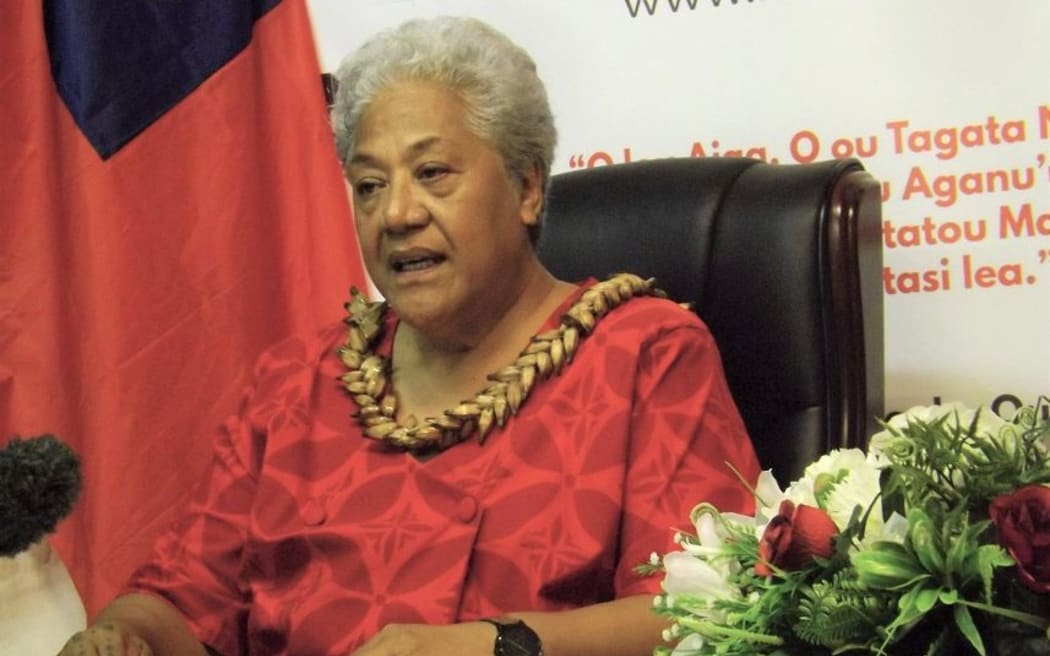
Samoa Prime Minister Fiamē Naomi Mata’afa today called on the nations to place the same level of global urgency as seen for the covid-19 pandemic to meeting the 1.5 Celsius degree pathway.
Fiame said more action was needed on upscaling ambition on funding for loss and damage and must remain firmly on the table as nations continued to witness increasing occurrences and severity of climate change impacts everywhere.
Samoa Prime Minister Fiamē Naomi Mata’afa . . . the climate needs the same urgent response that was applied to the covid-19 pandemic. Image: Tipi Autagavaia/RNZ Pacific
Option one also entails need for loss and damage to be a separate funding from adaptation and mitigation.
Fiji’s Permanent Representative to the UN, Satyendra Prasad, explained there were gaps in trying to conflate the funding intended for other purposes with compensation as they were not the same thing.
Prasad said vulnerable people in the Pacific “are facing the loss of livelihoods, of land and of fundamental cultural and traditional assets”. These were non-economic losses that could not be compensated through adaptation and mitigation funds.
Short notice funding Pacific’s Adviser for Loss and Damage Daniel Lund said when responding to damage caused by extreme weather events, finance needed to be available at short notice.
Lund added that current funding available was for project-based support under the Green Climate Fund which took around one year from proposal submission to receiving the first disbursement of funds,
“Something like that doesn’t work when the loss and damage are immediate.”
Republic of Palau’s Minister of State, Gustav Aitaro, in his address to world leaders, said, “every time we have a typhoon, we have to shift funds and budgets allocated for breakfast for students to address the damage. We have to shift funds from our hospital to address the damage, and it becomes such a big burden for us to look for funds to replace that.”
He pleaded with parties to understand the Pacific’s situation as it was a matter of life and death and their very existence depended on it.
“How do I explain to young kids in Palau, the children who live on that atoll, that their homes have been damaged by typhoons and we have to rebuild them over again and again? If they ask me why is it a recurring situation, what do I tell them? Who do we blame?
“Our islands, our oceans are our culture, it’s our identity in this world. I’m sure our developing countries share the same concerns and this is why we are asking them to help.”
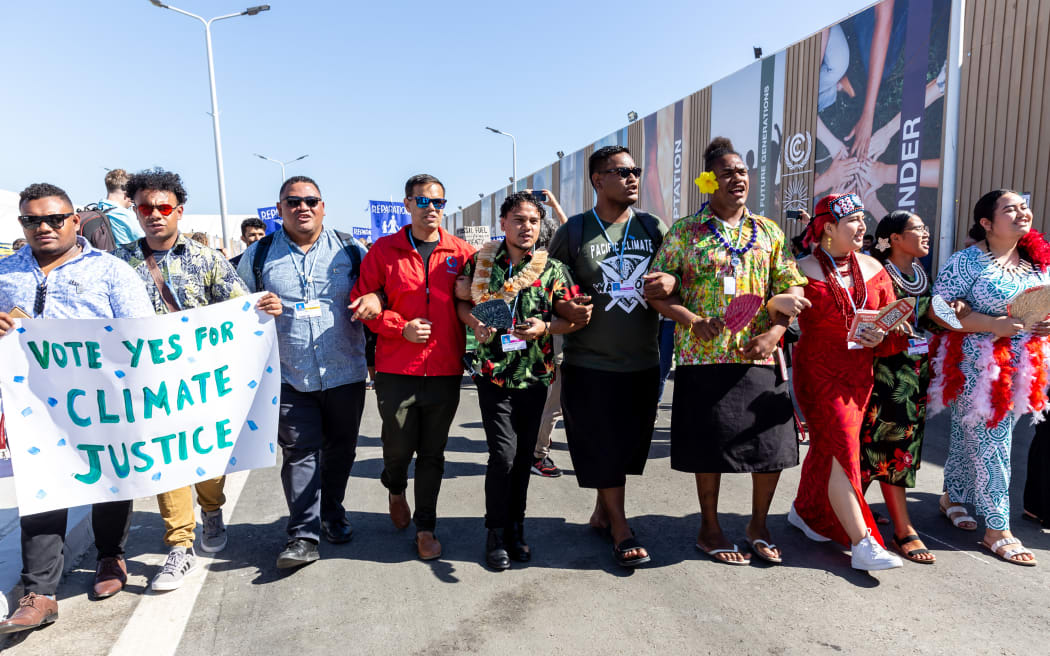
Pacific Islands activists protest in a demand for climate action and loss and damage reparations at COP27 in Egypt. Image: Dominika Zarzycka/AFP/RNZ Pacific
Kicking the can down the road Australia and the US have put forward options two and three for consideration. They propose a soft power influence.
They are proposing more time be given to iron out the finer details to establish a loss and damage finance in COP28 and operationalise the funding by COP29 in 2024.
The Sydney Morning Herald reported Climate Change and Energy Minister Chris Bowen as saying: “The world is unlikely to come to an agreement at COP27 over contentious calls for wealthy nations to pay loss and damage compensation to developing countries.”
He said: “Let’s just see how the internal discussions go. But I mean, I doubt very much it’ll be a full agreement on that at this COP.”
The two countries who have spent time in the wilderness of climate diplomacy, have also proposed developed nations continue to tap into climate funding made available through bilateral and multilateral arrangements.
This proposal also suggests that any funding made available for vulnerable states can be channelled through developed nation governments, proposing it does not need to be faciliated by a governing body like the United Nations Framework Convention on Climate Change.
The Pacific feels this is problematic. Pacific negotiator Sivendra Michael explained: “This is volatile as it depends on the government of the day.”
Finding a way for more capital Time reports US climate envoy John Kerry as saying: “We have to find a way for more capital to flow into developing countries.”
Kerry added: “I think it’s important that the developed world recognises that a lot of countries are now being very negatively impacted as a consequence of the continued practice of how the developed world chooses to propel its vehicles, heat its homes, light its businesses, produce food.
“Much of the world is obviously frustrated.”
While the US allowed loss and damage finance to be added to the meeting’s formal agenda for the first time, it took the unusual step of demanding that a footnote be included to exclude the ideas of liability for historic emitters or compensation for countries affected by that pollution.
World leaders will now spend the next few hours deciding on which option to take on loss and damage finance.
This article is republished under a community partnership agreement with RNZ.
With barely four weeks to go to the election, students and staff at the regional University of the South Pacific have stepped up their political activity against the FijiFirst government over its refusal to pay $85 million (and counting) in outstanding contributions to the running of USP.
The USP community — which some estimates put at more than 30,000 — is being encouraged to vote accordingly, with an indirect but unmistakable appeal to “Friends of USP” to vote for the People’s Alliance-National Federation Party prospective coalition come polling day.
It beggars belief that the Attorney-General, Aiyaz Sayed-Khaiyum, has left Prime Minister Voreqe Bainimarama and his cabinet colleagues so exposed at USP.
Because if the university community — students, staff, their families and sympathisers — lodge a collective protest vote against his conduct, it could easily cost the government the election.
What other political party in its right mind would put at risk its survival to support a position that simply isn’t sustainable because Fiji doesn’t have the numbers on the USP Council to enforce its will?
FijiFirst, of course. Which is prepared, lemming like, to go over a cliff with Aiyaz Sayed-Khaiyum just to pander to his ego.
You might have expected student protests at USP as it is being slowly strangled by the ruling party and certainly that would have happened anywhere else in the world. Yet it’s no surprise to learn that there has been a strong, though subtle, plainclothes police and military presence at USP for some time, including specific incidents of intimidation of students and staff.
Climate of fear So the relative silence from the student body doesn’t owe itself to apathy but fear — the climate of fear that pervades the rest of the nation as well and has been the subject of public comment by church leaders and private comment by almost everyone else.
It is a rich vein for the opposition to mine in the election lead-up. So get set for the government’s scandalous conduct at USP to become a major election issue.
And for the prospect of FijiFirst suffering a humiliating setback at the polls to match its humiliating inability to get its way with its absurd demand for “reform” of the university, including the removal of its exiled vice-chancellor, Professor Pal Ahluwalia, who continues to run USP from Samoa.
Australian-Fijian journalist Graham Davis publishes the blog Grubsheet Feejee on Fiji affairs. Republished with permission.
Statement to Friends of USP voting in Fiji’s election 2022:
TURN UP AND MAKE YOUR VOTE COUNT.
We will be casting our votes on 14 December.
Nine political parties are contesting. Apart from Fiji First Party (FFP), the other serious contenders are Rabuka’s People’s Alliance Party, Prasad/Tikoduadua’s National Federation Party (NFP), and Gavoka’s Social and Democratic Party (SODELPA). SODELPA has been imploding for some time!
Since 2018, FFP government has withheld Fiji’s contribution to USP. All other parties have campaigned to pay what Fiji owes. Most of us would like to see a change of government because of the government’s refusal to pay its contribution which stands at FD$85 million.
As preposterous as it may sound, it means that eight small member countries such as Tokelau (pop. 1400), Niue (1600) and Tuvalu (11,300) are subsidising Fiji, having the largest population with nearly a million people!
Despite five independent investigations confirming corrupt practices by the former vice- chancellor and president (VCP), and confirming the current VCP’s report on the corruption, the government continues to shield the former VCP and his supporters.
Through its domineering presence in Council, the government lobbied hard to terminate the current VCP Dr Ahluwalia’s contract. When Council rejected it, the government unprecedentedly deported Dr Ahluwalia and his wife Gestapo-like. It declared them persona-non-grata in the same shameful manner as the late pre-eminent Pacific historian Dr Brij Lal and his family.
With Council’s support, USP is being run from Samoa campus, home of current Chancellor (Head of State Tuimaleali’ifano) former mother and daughter Pro Chancellors (Fetaui and Fiame Naomi Mata’afa), and VCP Professor Ahluwalia.
There are three serious implications of the Fiji debt.
First, institutional utilities and student services are likely affected as maintenance and upkeep of buildings and facilities are compromised.
Second, the growing vacancies across a number of academic, professional and support staff will not be filled quickly, thereby increasing the work-load of an already overstretched staff.
This is exacerbated by the protracted delays in the issuance of work permits to expatriates and regional staff from member countries such as Tonga and Solomon Islands.
Staff shortage threatens availability and variety of programmes (e.g. Pasifika orientated programs in Governance, Law, Social Sciences, Climate Change, Engineering, MBA etc), erosion of quality of teaching and research output.
The third and most critical is the obvious collateral damage to the education of students (35,000 to 40,000 in 2022) and 50 years of capacity building with an alumni of 60,000 plus across the globe.
For USP to continue as the premier university to nurture and realise the spirit of Pasifikan regionalism, a change is necessary.
In 2018, the FFP narrowly won by 150 votes. A groundswell of support is evident for Rabuka’s Peoples Alliance Party (PAP), and Prasad/Tikoduadua’s National Federation Party (NFP). To make the change and ensure USP’s survival, make your vote count.
Voting is at the polling stations shown on the voter registration card. For iTaukei voters intending to travel to the islands and villages before 14 December, before traveling, check the polling station shown in your voter registration card and avoid disappointment.
WE must turn up and not waste OUR votes on FFP, smaller parties and independent candidates.
The solidarity group West Papua Action Aotearoa has criticised New Zealand for not “being stronger” over growing global concern about Indonesian human rights violations in West Papua, and contrasted this with Vanuatu’s leadership.
“Eight countries raised issues about human rights in West Papua and it is good to see our government among them,” said Catherine Delahunty, spokesperson for West Papua Action Aotearoa, in a statement.
New Zealand called for Indonesia to uphold, respect and promote human rights obligations in West Papua, but did not call for Indonesia to immediately allow the visit of the UN Commissioner for Human Rights.
Of the eight countries raising the issues only Vanuatu and the Marshall Islands made direct statements calling for the visit and Australia “made a better statement” than New Zealand, calling for Indonesia to “ensure access, including by credible, independent observers”.
“In the light of recent events including the concerns around the death of Filep Karma and the attacks on demonstrators in West Papua by the state, just calling for human rights to be upheld is clearly not enough,” said Delahunty.
“We need our government to speak out strongly in all UN Forums in support of the UN Commissioner of Human Rights proposed visit to West Papua.
“The Pacific Island Forum (PIF) has supported this call and our Foreign Minister has told our group that she supports it. However the UNHR review was an opportunity missed.
“Our foreign policy position should support the position of Vanuatu whose clear, sustained challenge to the violent colonisation of West Papua by Indonesia is admirable.
“Human rights will never be upheld when a regime occupies a country against the will of the people, and other Pacific countries need to demand better, starting with greater transparency over human rights violations, opening the borders to the UN High Commissioner and all international journalists.”
The football teams of 32 nations are gathered in Qatar for the quadrennial FIFA World Cup. Some 5 billion people around the world are expected to tune in to watch matches over the course of the month-long tournament.
These enormous audiences will be ready to applaud great play – and to howl ferociously when a referee’s decision goes against their team. To ensure the tough decisions are fair and accurate, FIFA (the Fédération Internationale de Football Association, the sport’s global governing body) has invested not only in the best human referees but also in the latest and greatest in technological tools.
Video replays and other tools can help cut down on blatant mistakes and human oversights, but will they ever eradicate errors entirely?
We are researchers who study how organisations use technology, and we’re not so sure. In the messy and complex world of football, human judgement – with all its fallibility – will always reign supreme.
What is the video assistant referee (VAR)?
The video assistant referee (VAR) system uses a team of people watching multiple angles of match video to help referees make tough decisions. It was used at the 2018 FIFA World Cup and since then in many competitions all over the world.
At this year’s World Cup, the VAR team can get involved in only four types of situation involving goals and other match-changing events.
The VAR team continuously watches for clear and obvious errors related to those situations. When they spot such an error (or an incident that has been missed) they will let the referee know.
The VAR team also has access to extra tools to assess whether a ball has fully crossed the goal line, as well as a semi-automated system that tracks players and the ball to determine whether any player is offside.
Grey areas
Technologies such as these can be powerful tools, and they are being applied more heavily across all areas of sport. However, they will always be in tension with the inherent complexity of real-world incidents on the pitch.
Handball decisions in football are one example that is open to interpretation regardless of the technology. Video alone can’t truly determine whether there was contact between the ball and the player’s arm below the shoulder, which constitutes a handball.
In a game earlier this year, Manchester City’s Rodri appeared to handle the ball but the VAR team and match referee did not award a foul because there was not conclusive evidence. After the game, however, the refereeing body Professional Game Match Officials Limited admitted there had been an error.
These controversies are less common in more clear-cut contexts. Similar technologies used in tennis are rarely disputed, as the ball is either “in” or “out” – there is no grey area.
Interpretation and doubt
The application of VAR in subjective contexts raises questions about who is correct, what is the truth, and how to interpret information.
For instance, when a referee calls a foul and the VAR team recommends they review their decision, the referee may see something they missed and should have considered. This is how the system is meant to work.
However, the review may also lead the referee to doubt their initial decision, because many incidents are open to interpretation and remain subjective.
At the World Cup, there will be four people on the VAR team. This means there are as many VAR officials as there are officials monitoring the game in person.
Matters of context
In some situations, the VAR team may offer a snippet of slow-motion footage to a referee (usually only seconds long) – which can lack context and miss the nuance of the situation at hand.
In September, a goal was scored in an English Premier League game between Newcastle United and Crystal Palace – and the VAR team immediately asked the referee to review an incident that had occurred just prior to the goal. The ref reviewed a snippet of footage, interpreted it as a foul against the goalkeeper by an attacking player, and disallowed the goal.
However, the snippet didn’t show that the attacker had himself been pushed by a defender, which was why he collided with the goalkeeper. The Professional Game Match Officials Limited later accepted the decision was wrong, but still the goal did not count.
Incidents such as these show how lack of context can result in incorrect decision reversals, because the replay is not necessarily a faithful representation of the action.
Tech problems
In addition to the human component, technology has its fair share of issues.
In an Italian Serie A game between Juventus and Salernitana in September, a goal was disallowed on the basis of a VAR decision – but it turned out the VAR cameras had left a crucial player out of the frame, and the goal should have stood.
Another notorious technology failure occurred in a 2020 Premier League game between Aston Villa and Sheffield United: the ball crossed the goal line but, because the goal-line cameras were obstructed by players, it failed to register with the goal decision system. The match officials, not receiving the automatic notification they expected if a goal had been scored, did not award the goal.
What these examples show is that technology struggles to offer answers to inherently messy and subjective matters.
Reality is up for grabs
So, during this World Cup, when a player makes the most of contact in the box and everyone turns to VAR and the referee to make the right decision over whether to give a penalty, it is worth acknowledging that VAR may only provide partial help. Any 50–50 call is debatable, and reality is up for grabs!
These decisions don’t take place in a vacuum. There is an intense interplay between the unfolding of the game (some games are more physical than others), players and coaches (protesting and trying to influence decisions), passionate spectators cheering and protesting, and team dynamics between the referees on the field and the VAR team.
At the World Cup repercussions for errors will be high and the spotlight will shine heavily on VAR. And yet again, a few controversies are likely to overshadow the correct decisions.
Stan Karanasios is a member of the Association for Information Systems.
Bikesh Raj Upreti is a member of the Association for Information Systems
Federico Iannacci does not work for, consult, own shares in or receive funding from any company or organization that would benefit from this article, and has disclosed no relevant affiliations beyond their academic appointment.
Source: The Conversation (Au and NZ) – By Sarah Bekessy, Professor in Sustainability and Urban Planning, Leader, Interdisciplinary Conservation Science Research Group (ICON Science), RMIT University
If we learnt anything from the past federal election, it’s that Australians care about climate change and nature. A survey released this week suggests the same dynamic is at play as we head into the Victorian state election.
The poll, prepared for the Victorian National Parks Association, found 36% of Victorians say their vote would be influenced by policy announcements regarding saving threatened species and stopping extinction.
The Victorian government’s own surveys have highlighted the enormous number of people who value nature. And research this year for the Australian Conservation Foundation found 95% of Australians agree it’s important to protect nature for future generations.
Despite the weight of public concern, Victoria is failing its wildlife. Last year the Victorian Auditor General’s Office handed down a damning report on biodiversity protection. It concluded that about a third of Victoria’s land-based plants, animals and ecological communities face extinction, their continued decline will likely have dire consequences for the state, and funding to protect them is grossly inadequate.
We know what’s primarily behind Australia’s extinction crisis: land clearing, invasive species and climate change-induced impacts such as extreme bushfires.
So, what have the different political parties promised in the lead up to the Victorian election, and how do they stack up? Here’s a brief guide to what’s on offer.
Funding and policy commitments
Let’s start with one of the key shortfalls discussed by the Auditor General – funding for biodiversity conservation. Labor has announced:
a $10 million nature fund to match biodiversity projects proposed by private or philanthropic groups
$7.35 million for six large-scale conservation projects to reduce the impact of pests, predators and invasive weeds
$773,000 to extend Victoria’s Icon Species Program for another year
$160,000 for platypus conservation.
These funds don’t come close to the estimated annual shortfall of $38 million in ongoing funding needed for the government to deliver its biodiversity strategy, as identified by the Auditor General.
The Victorian Liberals have denounced Labor’s relatively dismal promises and their record of under-funding biodiversity. But, so far, new Liberal-National Coalition announcements have been limited. They include:
The Greens plan is to create an ongoing, $1 billion per year “zero extinction” fund to support a Save our Species program.
This would double the funding for national parks and create a program to restore land, including through a First Nations Caring for Country investment. It would also fund Trust for Natures’s work to protect and restore private land and urban biodiversity.
Teal candidate Melissa Lowe supports significant investment towards reforestation and the rehabilitation of native habitats.
Response to native forest harvesting
Native forest timber harvesting continues to be a prickly issue in Victoria. This month the Supreme Court ruled state-owned logging company VicForests broke the law by failing to protect threatened species. Despite this, an ABC investigation this week found old growth forests continue to be cleared.
Labor’s policy is to phase out native forest logging by 2030 – but this leaves plenty of time for a lot of damage to be done. Labor also hasn’t legislated this phase-out, nor has it responded to VicForests’ failure to protect biodiversity.
Other election commitments relating to forestry include increasing fines to protesters who disrupt native forest logging.
The Liberal-Nationals have pledged to immediately reverse both of the Andrews government’s 2019 decisions to end old-growth forest logging and to phase-out native forest logging by 2030. This would take us backwards in terms of biodiversity protection.
The Greens have committed to legislating an end to native forest logging in 2023. This includes a transition plan to move workers into new jobs and a shift towards greater use of plantations.
The Reason Party and two Teal candidates have also articulated commitments for an immediate end to native forest logging.
How about land clearing from other causes?
Proportional to its size, Victoria has the highest amount of cleared land than all other states and territories. According to the Victorian Auditor General, about 10,380 habitat hectares of native vegetation is removed from Victorian private properties each year.
The state government is a significant land clearer. This includes clearing for infrastructure projects, such as new highways (including 26,000 trees cleared for the Northeast Link, though this may be a gross underestimate), and, of course, enabling native timber harvesting via VicForests, a state-owned business.
Substantial clearing also takes place under the state planning system, which the Auditor General said fundamentally fails to protect biodiversity on private land. In particular, critically endangered grasslands on Melbourne’s fringe continue to be lost at an alarming rate.
Further, the state’s planned 1,447 kilometres of strategic fuel breaks will occupy an area of around 5,790 hectares (equivalent to approximately 2,894 MCGs) of bushland that will be either cleared or altered.
Labor and the Coalition have both been silent on reforms to land clearing in the lead up to this election.
The Greens have committed to strengthening Victoria’s environmental assessment process so it can better protect the environment. Teal candidate Sophie Torney has committed to stopping the destruction of tree canopy in Kew by amending planning laws.
Links to climate change
Climate change is a key driver of extinction, so it’s also important to analyse political commitments on emissions reduction.
Labor has announced new targets for renewable energy in Victoria’s electricity supply of 65% by 2030, and 95% by 2035. It has also set an emissions reduction target of 75-80% by 2035, and brought forward its net-zero emissions target by five years to 2045.
The Liberal opposition has promised to legislate an emission reduction target of 50% by 2030 and is committing to a $1 billion hydrogen strategy. It also endorsed net-zero emissions by 2050.
The Greens have stepped up further, committing to replacing coal and gas with 100% renewable energy powering the state by 2030, committing to 75% carbon emissions reduction target by 2030, and net zero by 2035.
A net-zero by 2035 target is matched by all Teal candidates.
So, what would zero extinction commitments look like?
We know it would cost approximately $2 billion per year nationally to prevent future extinctions of Australia’s threatened plants and animals.
At least 270 (15%) of Australia’s threatened species live in Victoria. So it’s reasonable to assume around $300 million per year of focused threatened species recovery funding is required to prevent their extinction. This is likely a conservative estimate.
Regulatory reform to prevent further habitat loss, and a significant increase in spending on threatened species recovery are the two key actions to prevent further extinctions.
Preventing extinctions will also require a shift in thinking. While the major parties seem stuck in the biodiversity-versus-development mindset, others recognise development can occur in ways that enhance ecosystems.
The natural world underpins our own health and prosperity via productive agriculture and liveable cities. Keeping it healthy is an enlightened act of self-interest.
Without adequate investment, regulatory reform and reframing nature as an asset rather than a problem, we’re likely to see more plants and animals on the threatened species list. Indeed, whole ecosystems may be lost.
Sarah Bekessy receives funding from the Australian Research Council, the National Health and Medical Research Council, the Ian Potter Foundation and the European Commission. She is a Board Member of Bush Heritage Australia, a member of WWF’s Eminent Scientists Group and a member of the Advisory Group for Wood for Good.
Brendan Wintle has received funding from The Australian Research Council, the Victorian State Government, the NSW State Government, the Queensland State Government, the Commonwealth National Environmental Science Program, the Ian Potter Foundation, the Hermon Slade Foundation, and the Australian Conservation Foundation. Wintle is a Board Director of Zoos Victoria.
Source: The Conversation (Au and NZ) – By John Hawkins, Senior Lecturer, Canberra School of Politics, Economics and Society, University of Canberra
Shutterstock
The latest figures on the economic performance of Australia’s states and territories shows Victoria leading the nation and New South Wales falling to last place.
The annual gross state product accounts from the Australian Bureau of Statistics record the equivalent of gross domestic product (the total value of goods and services bought and sold).
In the 2021-22 financial year Australia’s real gross domestic product – that is, adjusted for inflation – grew by 3.6%.
Victoria’s real gross state product grew by 5.6%, followed by South Australia (5.1%), Northern Territory (4.7%), Queensland (4.4%), Tasmania (4.3%), Western Australia (3.1%), the Australian Capital Territory (1.9%) and New South Wales (1.8%).
This isn’t as impressive for Victoria as it might seem.
Victoria’s GSP contracted in the previous year due to the state’s extensive COVID lockdowns. This left more scope for a rebound in 2021-22. The state’s construction sector in particular had a backlog of projects.
South Australia has benefited from a strong grain harvest. In the Northern Territory, oil and gas extraction were the prime drivers of growth.
In Tasmania, and to a lesser extent Queensland, the major contributor to growth was the rural sector.
Western Australia’s growth was restrained by a fall in iron ore exports. The Australian Bureau of Statistics attributes this to adverse weather – there was record rainfall in the Pilbara – and falling overseas demand.
NSW’s growth was driven by the services sector. Services were also the major driver of growth in the Australian Capital Territory.
Western Australia is still the most affluent
The state accounts allow us to get a sense of the relative affluence of each state and territory.
This can be done by dividing the total real gross state product by the population. Of course, these averages say nothing about how the income from this production is actually distributed within the state. But they are a useful indicator.
Western Australia and Northern Territory top the list, due to their large mining sectors.
The Australian Capital Territory’s high per capita income reflects its highly educated workforce, with an economy dominated by professional services and education.
Longer term structural factors such as the relative decline in manufacturing explain incomes lagging in South Australia.
Tasmanian economist Saul Eslake attributed the lower average income in Tasmania to a smaller proportion of Tasmanians working, tending to work fewer hours and being less productive due to less education.
John Hawkins does not work for, consult, own shares in or receive funding from any company or organization that would benefit from this article, and has disclosed no relevant affiliations beyond their academic appointment.
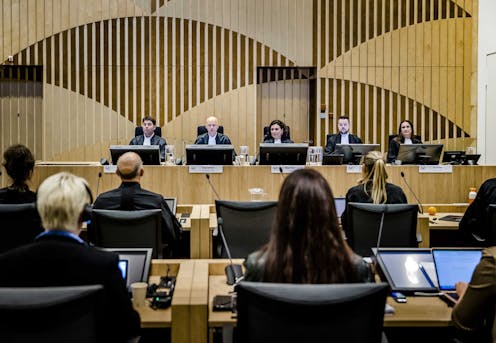
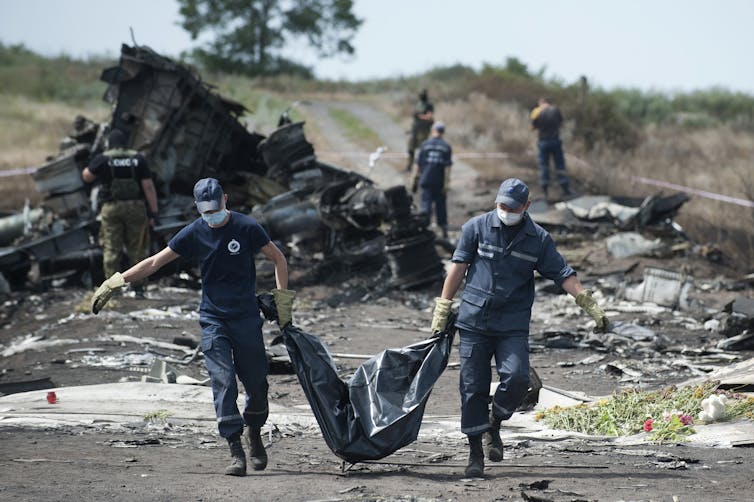
On November 17 2022, the Hague District Court in the Netherlands convicted two Russians and a Ukrainian of murder in relation to the downing of flight MH17 by a Buk-TELAR surface-to-air missile in 2014 over rebel-held territory in Ukraine.
This conviction is the first concluded legal action in relation to the incident. It is important not only because it provides some answers for the families of the 298 people killed on that flight, but because it demonstrates that states intend to pursue justice against Russian acts of violence connected with the Ukrainian conflict, regardless of the time or cost involved.
This conviction can, in some respects, be considered shallow. Many family members have still not achieved closure in terms of recovery of their loved ones’ remains. Those most responsible have not been prosecuted or held to account.
However, this prosecution is an important first step in bringing those responsible to justice. It serves as an indicator that the international community will not tolerate such actions; and as a signal to Russians involved in atrocities in the ongoing Ukrainian conflict that they may yet be held to account.
It further demonstrates the value of in-absentia trials – where those who are being tried do not have to be present. The Dutch convictions regarding the downing flight MH17 occurred without having custody over the perpetrators. The convicted men remain at large, and it is unlikely Russia will agree to their extradition.
However, their convictions will remain in place for their entire lives and can form the basis of subsequent legal action in relation to the incident.
Australia’s war crimes prosecution regime allows for the prosecution of crimes without any traditional jurisdictional nexus to the perpetrators; that is, without connection in geography or citizenship to the victims. It does not allow for prosecution without the presence of the accused.
It does, however, allow for proceedings to begin with the attorney-general’s permission. Extradition requests could then be sent to the Russian government to seek custody over the alleged perpetrators in order to continue the prosecution. Such action sends a strong message in support of the rule of law and accountability, even if the prosecution does not proceed.
The principle of double jeopardy (or ne bis in idem) does not apply between countries. That is, prosecutions in Australian will not prejudice other states from prosecuting the same offending. This means there is little risk to Australia in pursuing this course of action in terms of jeopardising other mechanisms for justice related to these crimes.
In 2014, 298 people were killed when flight Malaysian Airlines flight MH17 was shot out of the sky over Ukraine. Evgeniy Maloletka/AP/AAP
Australia provided expert investigators from the Australian Federal Police to support the MH17 investigation. Their evidence was used to secure these convictions.
Australian investigators will also support the investigation of war crimes in Ukraine. The prosecution of war crimes offences in Ukraine is going to take many years and will likely overwhelm their domestic criminal justice system.
One concern if these prosecutions occur outside of Ukraine is that victim participation will be reduced. Careful case selection and victims being able to participate remotely through technology can mitigate this.
Historical examples, such as in the case of Rwanda, demonstrate that concentrating prosecutions in one tribunal means prosecutions can continue for decades after the conflict; and justice delayed is justice denied.
Australia has the expertise and the opportunity to be seen as a leader in at least pressing for accountability for crimes in Ukraine.
Among other judicial activism in response to Russia’s invasion of Ukraine, Australia and the Netherlands have commenced proceedings against Russia in the International Civil Aviation Organization, on the basis that Russia is internationally responsible for downing the aircraft.
The Russians have rejected this legal action and the Netherlands prosecution as acts of “political favour”, which should be dismissed for a lack of impartiality. Effectively, Russia accuses Australia of using tactics of “lawfare” – using the law to affect a strategic outcome.
Rather than resile from these claims, Australia should embrace them, and continue to use lawfare to seek accountability for war crimes committed in the Ukraine conflict. There is value in launching carefully investigated domestic prosecutions for atrocity crimes. There is also value in reinforcing international criminal justice and accountability measures. This would prevent impunity and discourage further atrocity crimes being committed in this and future conflicts.
Specifically, there is political value in reinforcing the importance of the rule of law. Our political motivations should be to seek out and punish those guilty of committing atrocities.
Lauren Sanders receives funding from the Truster Autonomous Systems CRC. She is a Reserve Legal Officer, however, the views presented do not represent the views of the Australian Defence Force or the Australian Government.
The fate of Myanmar has major implications for a free and open Indo-Pacific.
An undemocratic Myanmar serves no one’s interests except China, which is consolidating its economic and strategic influence in its smaller neighbour in pursuit of its two-ocean strategy.
Since the coup China has been – by far – the main source of foreign investment in Myanmar.
This includes US$2.5 billion in a gas-fired power plant to be built west of Myanmar’s capital, Yangon, that will be 81% owned and operated by Chinese companies.
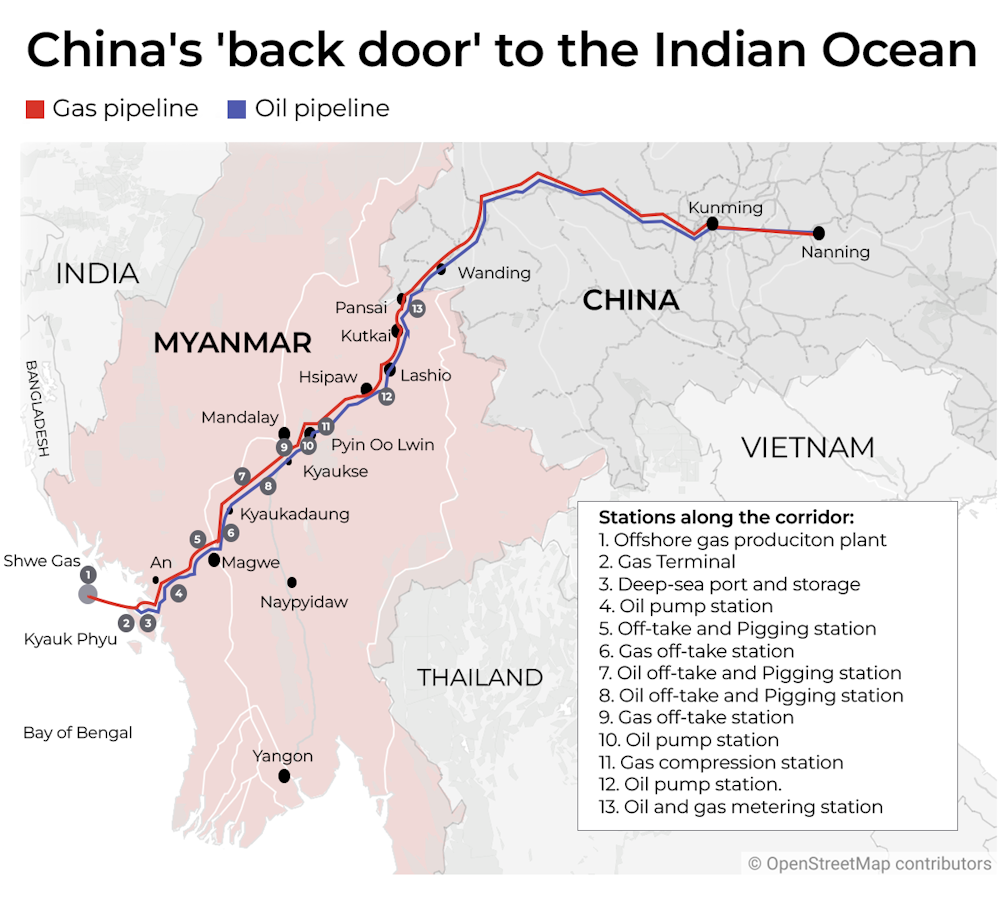
Among the dozens of infrastructure projects China is funding are high-speed rail links and dams. But its most strategically important investment is the China-Myanmar Economic Corridor, encompassing oil and gas pipelines, roads and rail links costing many tens of billions of dollars.
The corridor’s “jewel in the crown” is a deep-sea port to be built at Kyaukphyu, on Myanmar’s west coast, at an estimated cost of US$7 billion.
This will finally give China its long-desired “back door” to the Indian Ocean.
Source: Vivekananda International Foundation
Natural gas from Myanmar can help China reduce its dependence on imports from suppliers such as Australia. Access to the Indian Ocean will enable China to import gas and oil from the Middle East, Africa and Venezuela without ships having to pass through the contested waters of the South China Sea to Chinese ports.
About 80% of China’s oil imports now move through the South China Sea via the Malacca Strait, which is just 65 kilometres wide at its narrowest point between the Malay Peninsula and Indonesia’s Sumatra.
Overcoming this strategic vulnerability arguably makes the Kyaukphyu port and pipelines the most important element of China’s Belt and Road initiative to reshape global trade routes and assert its influence over other nations.
Most of China’s infrastructure investment was planned before Myanmar’s coup. But whereas other governments and foreign investors have sought to distance themselves from the junta since it overthrew Myanmar’s elected government in February 2021, China has deepened its relationship.
China is the Myanmar regime’s most important international supporter. In April Foreign Minister Wang Yi said China would support Myanmar “no matter how the situation changes”. In May it used its veto power on the United Nations Security Council to thwart a statement expressing concern about violence and the growing humanitarian crisis in Myanmar.
Work continues on projects associated with the China-Myanmar Economic Corridor. New ventures (such as the aforementioned power station) have been approved.
More projects are on the cards. In June, for example, China’s embassy in Myanmar announced the completion of a feasibility study to upgrade the Wan Pong port on the Lancang-Mekong River in Myanmar’s east.
In 2020, before the coup, Myanmar’s auditor general Maw Than warned of growing indebtedness to China, with Chinese lenders charging higher interest payments than those from the International Monetary Fund or World Bank.
At that time about 40% of Myanmar’s foreign debt of US$10 billion was owed to China. It is likely to be greater now. It will only increase the longer the Myanmar’s military dictatorship, with few other sources of foreign money, remains in power, dragging down Myanmar’s economy.
Efforts to restore democracy in Myanmar should therefore be seen as crucial to the long-term strategic interests of the region’s democracies, and to global peace and prosperity, given the increasing belligerence of China under Xi Jinping.
Xi, now president for life, this month told the People’s Liberation Army to prepare for war. A compliant and indebted Myanmar with a deep-sea port controlled by Chinese interests tips the scales towards that happening.
A democratic and independent Myanmar is a counter-strategy to this potential.
Calls for sanctions
Myanmar’s democracy movement wants the international community to impose tough sanctions on the junta. But few have responded.
The United States and United Kingdom have gone furthest, banning business dealings with Myanmar military officials and state-owned or private companies controlled by the military.
The European Union and Canada have imposed sanctions against a more limited range of individuals and economic entities.
South Korea has suspended financing new infrastructure projects. Japan has suspended aid and postponed the launch of Myanmar’s first satellite. New Zealand has suspended political and military contact.
Australia has suspended military cooperation (with some pre-existing restrictions on dealing with military leaders imposed following the human rights atrocities committed against the Rohingya in 2017.
But that’s about it.
Myanmar’s closest neighbours in the ten-member Association of South-East Asian Nations are still committed to a policy of dialogue and “non-interference” – though Malaysia and Indonesia are increasingly arguing for a tougher approach as the atrocities mount.
Review: The Jungle and the Sea, directed by Eamon Flack, Belvoir.
After the roaring success of their debut collaboration, Counting and Cracking, S. Shakthidharan and Eamon Flack have produced another play that will captivate audiences.
Sri Lanka was in a civil war from 1983 to 2009, about a Tamil national liberation struggle for independence in the north and east. This followed decades of discrimination by the Sri Lankan state against Tamils.
The Jungle and the Sea revolves around the story of one Tamil family who are separated after church bombings in 1995, following them through to 2009.
The Jungle and the Sea is an expression of the many stories of Tamils that remain untold. This play will hold immense value for the Tamil community in Australia, not least because there is very little in the way of Australian public acknowledgement about their war histories.
As The Jungle and the Sea reminds us, war is never only about nationalist politics. It is also profoundly local, intimate and involves negotiation of human relationships that can challenge political boundaries.
There is a constant sense of movement. Sriram Jeyaraman/Belvoir
We are taken along the multiple trajectories of the members of one Tamil family.
A revolving floor symbolises the constant movement of the Tamil community, which endured 26 years of intense armed conflict. Accompanied by musicians Indu Balachandran and Arjunan Puveendran, the music takes the audience through constantly revolving worlds of loss and survival.
On July 9 1995, the Sri Lankan government bombed St Peter’s Church in Navaly, following the collapse of peace talks between the government and the Liberation Tigers of Tamil Eelam, and the resumption of fighting.
Just days before, the government had dropped leaflets across the Jaffna peninsula instructing civilians to seek shelter in churches and temples ahead of the military’s new mission to capture Jaffna.
The opening scenes of The Jungle and the Sea reimagine this horrific moment.
Children go from playing a game of cricket to suddenly reorganising their lives to ensure their survival and the survival of those around them. The scenes foreshadow the rest of the play, which traces entanglements of violence, loss, joy and compassion.
The mother Gowie puts on a blindfold until she can be reunited with her children. Sriram Jeyaraman/Belvoir
The Jungle and the Sea is about the vulnerabilities and agency of people navigating the chaos of war.
After the bombing, father Siva (Prakash Srinivasan) and daughter Lakshmi (Emma Harvie) seek refuge in Sydney. The son Ahilan (Biman Wimalaratne) is recruited into the Tamil Tigers. The mother Gowrie (Anandavalli) and two more daughters – Abi (Kalieaswari Srinivasan) and Madhu (Nadie Kammallaweera) – remain in the war zones foregoing the chance to escape.
In agony after the family’s separation, the mother decides to blindfold herself and refuses to leave her homeland until she can be reunited with all her children.
Shakthidharan gives us the diverse experiences of war: those of liberation fighters, civilians and refugees. We are given multifaceted identities, as the actors take us into their kaleidoscopic worlds.
In one of several comedic scenes, Lakshmi, the only child who flees Sri Lanka, celebrates her university graduation by taking her father to a candle-lit dinner by the Sydney Harbour Bridge. There, she comes out to him as a lesbian.
The father’s response to her being Tamil, atheist and lesbian highlights intergenerational tensions in a humorous and humbling manner.
Survivors of war are more than the traumas of war they carry with them.
The play also has moments of humour and levity. Sriram Jeyaraman/Belvoir
Truth-telling in the aftermath of war
In the final act, the cast takes up the contested terrain of remembering the atrocities against Tamils in the aftermath of the war.
Gowrie finally removes her blindfold when she is reunited with her family – those who survived, and those who died. Gowrie’s determination to continue searching for her children renders the war an internal fight to keep alive hope and resistance.
Played by Anandavalli, a renowned bharatanatyam dancer, Gowrie’s dance is a fitting close to the story and an ode to the genre of theatre as a creative medium through which stories about war can be used to reflect, mourn, and educate.
Gowrie captures the particular plight of Tamil mothers. Some 13 years after the war ended, those mothers whose children were forcibly disappeared in the final days of the war continue to make visible through protesting that there can be no peace or reconciliation without justice.
History in the aftermath of the war is contested, especially for Tamils whose losses are beyond measure. The Jungle and the Sea is one story among many about a history that breathes in the present, serving as a reminder that there are hundreds of Tamil refugees in Australia without permanent protection, each of them carrying stories like this one.
The Jungle and the Sea is at Belvoir, Sydney, until December 18.
Source: The Conversation (Au and NZ) – By Mike Armour, Senior research fellow in reproductive health at NICM Health Research Institute, Western Sydney University
Endometriosis is a painful condition caused by the presence of tissue similar to the lining of the uterus found outside the uterus. It affects around one in nine women and people assigned female at birth.
Common symptoms include painful periods, pelvic pain, fatigue, pain with sexual intercourse, pain while urinating or passing bowel motions, and infertility.
While mild endometriosis involves superficial deposits on or around the reproductive organs, severe endometriosis causes nodules and adhesions – bands of scarring that can attach organs to each other.
There’s currently no known cure for endometriosis. Symptoms can be managed with surgery, medications, hormonal treatments, pelvic physiotherapy and complementary therapies such as acupuncture.
Endometriosis surgery is usually performed by laparoscopy or keyhole surgery. Most people will have a camera inserted through the belly button and three to four other incisions (about half a centimetre across) for other instruments to cut, grab, burn and hold.
The first step is to look around for abnormalities. Surgeons will look for endometriosis in the pelvis, abdomen, and under the diaphragm. They will look in, around and under every possible fold of tissue.
Surgeons use two different techniques to treat endometriosis:
1) excision involves cutting out endometriosis. The aim is to remove as much of the visible endometriosis as possible and repair any damage it may have caused. Excised lesions can be examined under a microscope to see if endometrial-like cells are present to confirm diagnosis, which is not possible with ablation
2) ablation attempts to destroy the endometriosis where it lies, using heat energy.
Small incisions are made in the patient’s abdomen for the camera and instruments. Shutterstock
Since most surgeries are laparoscopic, many centres discharge patients home on the same day.
Recovery after surgery varies. Within a few weeks, some people are back to relatively regular activities like work, household duties, and socialising. Most people who have laparoscopic surgery will feel almost back to normal by six weeks after their operation.
Which surgical technique is better?
Some evidence suggests excision surgery may be better than ablation at reducing pain during sexual intercourse.
However, overall, severalrecent meta-analyses (a type of study that combines the results of many clinical trials) concluded there is little-to-no difference in most symptoms between ablation and excision at 12 months after surgery.
Many surgeons use excision, as this can remove the lesions as completely as possible. However, there may be circumstances where the lesions may be more suitably treated with ablation – for instance, to remove endometriosis on the surface of the uterus, ovary or fallopian tube – where excision may cause more harm.
Clinical guidelines in Australia and New Zealand and Europe recommend laparoscopic surgery be offered as one way to reduce pain from endometriosis. This is based on evidence that it successfully reduces pain. However, the current quality of evidence assessing the effectiveness of surgery in reducing pain is low because the studies were small and didn’t follow participants for long.
For treating infertility, there may be some benefit to surgically treating endometriosis, but it’s impossible to say exactly how much.
Often, people may seek assisted reproductive therapies (ART) such as IVF. However, there is little research comparing whether surgery or IVF is more effective at achieving the goal of a live birth.
The risks and benefits of surgery and ART differ based on the individual circumstances.
After the recovery period, patients will be able to assess how their symptoms have changed.
They may need to continue to use or start other strategies to manage pain. While surgery can reduce inflammation pain associated with endometriosis lesions, it may be less effective for treating pain from the pelvic floor muscles that may be short, tight, or tender.
In some people, endometriosis symptoms resolve after surgery, then sometimes return. Afterfive years, 15-56% ofpeople who had surgery for endometriosis experience a recurrence of symptoms.
This may be due to new lesions developing or growth of residual disease if the previous endometriosis lesions were not completely removed, were overlooked or not detected.
In some cases, it may be due to other gynaecological conditions. Or it may represent a change in the nervous system, often due in part to endometriosis, called central sensitisation.
Part of the problem is the definition of “recurrence” is inconsistent and ranges from pain symptoms returning (with an assumption they must be due to endometriosis recurring) to endometriosis lesions actually being seen again (by imaging or repeat surgery).
Ultimately, any health decision is an intimately personal decision and people have to weigh the pros and cons after speaking with their doctors.
Mike Armour is affiliated with Endometriosis Australia. He reports funding from Endometriosis Australia and the Medical Research Futures Fund, outside this work.
Cecilia Ng receives funding from the Medical Research Future Fund.
Mathew Leonardi reports grants from Endometriosis Australia, AbbVie, CanSAGE, Medical Research Future Fund, Hamilton Health Sciences, Hyivy; honoraria for lectures/writing from GE Healthcare, Bayer, AbbVie, TerSera, affiliations with Imagendo, outside the submitted work.
This article contains information on violence experienced by First Nations young people in the Australian carceral system. There are mentions of racist terms, and this piece also mentions self harm, trauma and suicide.
The ABC Four Corners report “Locking up Kids” detailed the horrific conditions for young Aboriginal people in the juvenile justice system in Western Australia.
The report was nothing new. In 2016, Four Corners detailed the brutalisation of Aboriginal people in the Northern Territory’s Don Dale Youth Detention Centre, in its episode “Australia’s Shame”. Also in 2016, Amnesty International detailed the abuse children were receiving in Queensland’s juvenile detention facilities.
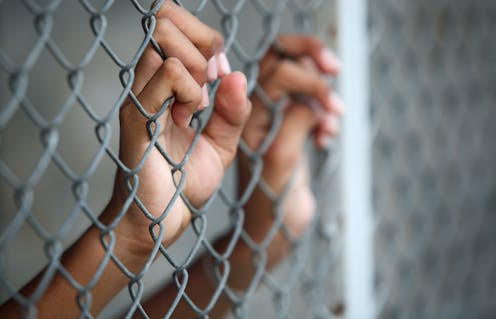
Children should be playing, swimming, running and exploring life. They do not belong behind bars. Yet, on any given day in 2020-21, an average of 4,695 young people were incarcerated in Australia. Most of the young people incarcerated are Aboriginal and Torres Strait Islander.
Despite Aboriginal and Torres Strait Islander young people in WA making up just 6.7% of the population, they account for more than 70% of youth locked up in Perth’s Banksia Hill Juvenile Detention Centre.
The reasons so many Aboriginal and Torres Strait Islander peoples are detained are linked to the impacts of colonisation, such as intergenerational trauma, ongoing racism, discrimination, and unresolved issues related to self-determination.
The Four Corners documentary alleged children in detention were exposed to abuse, torture, solitary confinement and other degrading treatment such as “folding”, which involves bending a person’s legs behind them before sitting on them – we saw a grown man sitting on a child’s legs in this way in the documentary.
The documentary also found Aboriginal young people were more likely to be held in solitary confinement, leading to the young people feeling helpless. Racism was also used as a form of abuse, with security calling the young detainees apes and monkeys. One of the young men detained at Banksia Hill expressed the treatment he received made him consider taking his own life.
How does incarceration impact young people’s mental health?
Many young people enter youth detention with pre-existing neurocognitive impairments (such as foetal alcohol spectrum disorder), trauma, and poor mental health. More than 80% of Aboriginal and Torres Strait Islander young people in a Queensland detention centre reported mental health problems.
Data from the Australian Institute of Health and Welfare revealed that more than 30% of young people in detention were survivors of abuse or neglect. Rather than supporting the most vulnerable within our community, the Australian justice system is imprisoning traumatised and often developmentally compromised young people.
Research has shown pre-existing mental health problems are likely exacerbated by experiences during incarceration, such as isolation, boredom and victimisation.
This inhumane treatment brings about retraumatisation of the effects of colonisation and racism, with feelings of hopelessness, worthlessness and low self-esteem.
Youth detention is also associated with an increased risk of suicide, psychiatric disorders, and drug and alcohol abuse.
Locking young people up during their crucial years of development also has long-term impacts. These include poor emotional development, poor education outcomes, and worse mental health in adulthood. As adults, post-release Aboriginal and Torres Strait Islander peoples are ten times more likely to die than the general population, with suicide the leading cause of death.
You don’t have to look far to see the devastating impacts of incarceration on mental health. Just last year, there were 320 reports of self-harm at Banksia Hill, WA’s only youth detention centre.
Without proper rehabilitation and support post-release, Aboriginal and Torres Strait Islander young peoples often return to the same conditions that created the patterns of offending in the first place.
Earlier this year, the head of Perth Children’s Court, Judge Hylton Quail condemned the treatment of a young person in detention at Banksia Hill, stating:
When you treat a damaged child like an animal, they will behave like an animal […] When you want to make a monster, this is how you do it.
What needs to be done?
There needs to be substantive change in how young people who come in contact with the justice system are treated. We need governments to commit, under Closing the Gap, to whole-of-system change through:
recognising children should not be criminalised at ten years old. The Raise the Age campaign is calling for the minimum age of responsibility to be raised to 14. Early prevention and intervention approaches are necessary here. Children who are at risk of offending should be appropriately supported, to reduce pathways to offending.
an approach addressing why young Aboriginal and Torres Strait Islander peoples are locked up in such great numbers is required, driven by respective First Nations communities. This means investing in housing, health, education, transport and other essential services and crucial aspects of a person’s life. An example of this is found in a pilot program in New South Wales called Redefining Reinvestment, which tackled the social determinants of incarceration using a community approach.
future solutions must be trauma-informed and led by Aboriginal and Torres Strait Islander peoples.
Aboriginal and Torres Strait Islander children are not born criminals. They are born into systems that fail them, in a country that all too often turns a blind eye before locking them up.
The Australian government needs to work with First Nations communities to ensure the safety and wellbeing of all Aboriginal and Torres Strait Islander peoples, including our future generations.
If this article has caused distress, please contact one of these helplines: 13yarn, Lifeline, Headspace
Summer May Finlay receives funding from the National Health and Medical Research Council. She is also a member of the Labor party, Australian Institute of Aboriginal and Torres Strait Islander Studies and the Public Health Association of Australia. Sumer is the Deputy Chair of Thirilli and Co-chair of the Aboriginal Health and Medical Research Council of NSW.
Ee Pin Chang receives funding from Suicide Prevention Australia, and Western Australian Office of Crime Statistics and Research at the WA Department of Justice.
Jemma Collova receives funding from the Australian Department of Health.
Pat Dudgeon receives funding from the Australian Department of Health. She is the Director of the Centre of Best Practice in Aboriginal and Torres Strait Islander Suicide Prevention and lead Chief Investigator on a NHMRC Million Minds Mission Grant. She is the chair and member of the Australian Indigenous Psychologist’s Association, and sits on the board of Gayaa Dhuwi (Proud Spirit) Australia.
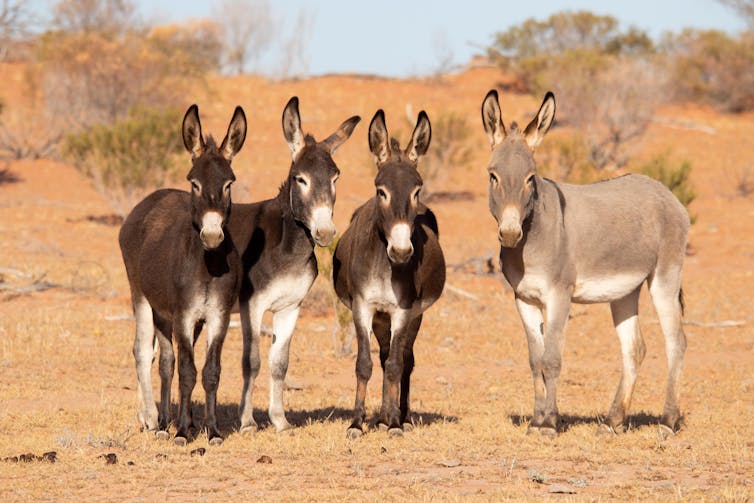
You may not realise it, but the world’s donkeys are in trouble: many domestic breeds and wild species are headed for extinction. But my colleagues and I have developed a scientific breakthrough that may contribute to saving them.
We created the world’s first successful donkey embryo using in-vitro fertilisation (IVF). The embryo, from an endangered European breed, is frozen in liquid nitrogen. We’re now searching for a suitable female donkey to grow the embryo into a baby.
We hope to apply our findings to help conserve other endangered animals. Hopefully one day, we’ll have a genetic bank of embryos that form a “frozen zoo” – creating another weapon in our conservation ass-enal, so to speak.
Researchers have developed a scientific breakthrough that may help save donkeys. Shutterstock
Donkeys in decline
Donkeys share the same genus with horses and zebras. They’re thought to have been domesticated about 6,000 years ago and used for transport and food redistribution. They were particularly essential in the overland trade in Africa and western Asia.
Domestic donkeys are still used for transport in parts of Asia, South America and Africa. They are also kept for meat and milk production and as companion animals.
Seven of the 28 European domestic breeds are critically endangered and 20 are endangered. Populations of wild donkey species are also dwindling.
There are several reasons for this. People are using and breeding them less, and their grazing land has declined. Donkeys are also slaughtered for “ejiao”, a key ingredient in traditional Chinese food and remedies produced from collagen in donkey skin.
There’s an urgent need to improve donkey conservation programs to increase the animal’s numbers and distribution, and to broaden the genetic pool.
My research team set out to produce donkey embryos in the laboratory, in the hope of helping to repopulate species. I worked with colleagues from Argentina’s National University of Río Cuarto, and Spain’s University of Córdoba and Autonomous University of Barcelona.
Traditional Chinese food and remedies, such as the food pictured, use ‘ejiao’ produced from collagen in donkey skin. Shutterstock
What we did
An embryo is the group of cells that form when a female egg is fertilised by male sperm.
Creating a viable donkey embryo is not easy. Once an egg is fertilised in the lab, it has only a 5% to 10% chance of growing into a good embryo that can be implanted into a female. By comparison, for horses the success rate is up to 30%.
We used an IVF process known as intracytoplasmic sperm injection (ICSI). It involves injecting a single sperm into the centre of an egg using very fine, specialist equipment.
Importantly, we added a step to the process. Before fertilising the egg, we immersed it for two days in fluids from the female donkey’s ovary. This simulates ovary conditions and gives the egg the molecules and hormones it needs to grow.
After three years of work, we produced the world’s first viable donkey embryo. It is currently frozen in a lab at the University of Cordoba in Spain.
Our research suggests that using ovary fluids as an egg matures in the lab supports the IVF process and could be more likely to lead to a viable embryo. These findings are a step forward in donkey conservation.
We produced the embryo by combining donkey semen with an egg from a different part of Spain. This aimed to avoid inbreeding problems that can occur when trying to reproduce an endangered species.
We hope to create more viable embryos and find suitable female donkeys to implant before the breeding season ends next year.
The researchers hope to find suitable female donkeys to implant before the breeding season ends. Shutterstock
So what next?
Throughout my research career, I’ve used assisted reproductive technologies to improve the genetic progress in a range of domestic animals. In 2020, for example, I and my colleagues reported the first in vitro zebra embryos. We now have ten frozen zebra embryos in storage, including clones.
We hope to build on our donkey embryo development, using IVF to improve the prospects of other endangered species.
Andres Gambini does not work for, consult, own shares in or receive funding from any company or organisation that would benefit from this article, and has disclosed no relevant affiliations beyond their academic appointment.
Prison is no place for a child. Putting children in youth justice facilities can have long-lasting consequences for their physical, psychological and emotional health, wellbeing and development.
Prison can aggravate existing health conditions and result in new ones, such as depression, suicidal thoughts, and post-traumatic stress disorder.
We heard this firsthand from children interviewed by ABC’s Four Corners this week.
The United Nations Convention on the Rights of the Child, to which Australia became a signatory in 1990, states detention should only be used as a “last resort” and, if required, should only be for the least possible time (Article 37). Yet this is not what we see in Australia.
Rather than imprisoning children who come into conflict with the law, the evidence suggests diverting them away from the criminal justice system and providing appropriate supports gives children the best chance to “grow out” of the behaviours that are being criminalised.
A time of rapid brain development
Neuroscience shows children and young people undergo rapid brain development. This can affect risk-taking, particular kinds of decision-making, and the ability to control impulses.
As previous research has shown, many children and young people desist or stop involvement in crime and in effect “grow out” or “age out” of it as they get older.
Reports demonstrate there is typically a peak in involvement in crime in the mid-teens and a decline at the beginning of adulthood.
Australia has a very low minimum age of criminal responsibility compared to other parts of the world. Children as young as ten can be searched, arrested, detained and held criminally responsible.
Other countries have a much higher age of criminal responsibility. In Luxembourg and South America, it’s 18, Poland is 17 (with some exceptions from 15), Portugal is 16, and Denmark is 15.
In contrast to Australia’s heavy reliance on the police, courts and prisons, other countries prioritise diversion for children who come into conflict with the law and promote alternative, community-based and social care-focused responses, which have much better outcomes for children and for communities.
One example is the public health model approach to address violence in communities, which has been successful in Scotland.
This is where diverse sectors such as health, social services, education, justice and policy work together to solve problems that contribute to violence and criminality including homelessness, addiction and family violence.
Scotland’s homicide rate halved between 2008 and 2018 after the approach was implemented and the number of hospital admissions due to assault with a sharp object fell by 62% in Glasgow (knife crime has been a significant issue in the United Kingdom).
Norway’s approach appears to be effective with an overall rate of recidivism (the number of people who return to prison after release) of 20%. This is in stark contrast with Australia’s overall recidivism rate of 45.2%, with states and territories as high as 58.9% (Northern Territory).
Other countries focus on support services for the young person. Shutterstock
No benefits, only losses
There is no credible evidence imprisoning children decreases levels of crime or improves community safety.
Yet there is a wealth of established evidence demonstrating interactions with formal criminal justice institutions negatively impact children and are counterproductive. As the data demonstrates, children who are first sentenced between the ages of ten and 12 are more likely to re-offend than those first sentenced when they are older.
We need to change our mindset about children who come into conflict with the law. We need a complete overhaul in our systems, with decarceration not incarceration.
Decarceration is a process of reducing the number of people in prison by diverting people away from the criminal justice system and reducing the focus on prison as a solution to crime.
In Australia this would mean detaining children as a last resort and prioritising other methods of diversion, such as fixing the social determinants of criminality, as described above.
A major UN human rights review and longstanding national campaigns have called for the minimum age of criminal responsibility to urgently change nationally. The UN recommends 14 as the minimum age. Raising the age will prevent the criminalisation of younger children.
The harsh bail laws in a number of states and territories also need to be amended, as they are resulting in large numbers of children spending periods in prison on remand.
Due to the bail laws, in Victoria in the decade to 2020 the number of children on remand doubled. Two-thirds spent time in detention but did not go on to receive a custodial sentence.
Justice reinvestment redirects resources from traditional criminal justice and related systems to communities, to instead invest those resources into programs that prioritise early intervention and prevention. Its core aim is to give communities back decision-making powers, allowing them to self-determine their own futures.
Community-designed and community-based diversion programs are much more effective than formal criminal justice system responses and evaluations show positive outcomes and reductions in reoffending.
National Children’s Commissioner, Anne Hollonds has called for a national taskforce to urgently address the crisis in youth justice in Australia. However, this needs to be coupled with action from the federal government, in full cooperation with the states and territories.
If there are further delays or a lack of political will to bring about such change, it’s the most vulnerable children and young people who will continue to pay the price. Their wellbeing and futures are at stake.
Faith Gordon receives funding from the Australian Research Council and the AIJA.
One of the most common reasons people apply for social housing is because they or their immediate family members have a disability and they are unable to work. They need an affordable alternative to private rental housing that’s suitable for their disability-related needs.
Our research on the experiences and circumstances of people on the social housing waiting list has found many people with serious disabilities are not guaranteed access to social housing. The following three case studies, drawn from our interviews, illustrate how the long wait for social housing makes their extremely difficult situations worse.
Paul* has serious mobility problems and requires a wheelchair. He lives by himself in Sydney. He had been on the social housing priority waiting list for just under a year and had no idea of how much longer he would have to wait. But the house he was living in was unsuitable. As Paul explained:
“The nature of the accommodation has been assessed […] and it’s not suitable for me to live in […] There is a bathroom, but to do the shower you have to stand inside the tub […] so I can’t do that shower any more […] And the doors are not wide enough for the wheelchair to go through.”
Access to the house is also difficult.
“The condition of the [path] from the house going to the road it’s not good and it’s very difficult.”
Paul is on the National Disability Insurance Scheme (NDIS) and eligible for an electric wheelchair. But he says:
[T]hey won’t approve […] until I have a proper accommodation […] they want to make sure whether it’s going to be used in the house.“
Mark
Two of Mark’s three children have complex mental and physical disabilities. His wife also has a disability. He gave up paid work 20 years ago to be their full-time carer.
Through community housing he found a subsidised private rental property.
“We were there from 2002 until 2019 in the same house that was very not suitable for people with disabilities. It was just a three-bedroom normal house that was run down that as the kids grew up […] and my wife’s getting worse. The house was just absolutely not suitable […] for our situation.”
His pleas for suitable social housing fell on deaf ears. In 2019 Mark felt he had to move.
“I just couldn’t hack it anymore. The kids are getting bigger. It’s getting very hard for me to look after them cos I was the main carer and I have to shower them, toilet them, you know all that stuff, and you know the house was small […] sometimes they had to be in a wheelchair, [but] there was no wheelchair access.
“So eventually I just gave up and found a house that I’m renting now […] I’m paying private rent but being on priority housing I get subsidised from public housing […] It’s still not suitable, but it’s a bit bigger and a little bit better.
Mark summed up his experience:
“I’ve been on the waiting list for over 20 years without, you know, being given a public [housing] house or […] never offered suitable housing for our situation, and until today we’re still on the priority list.”
Despite the permanent nature of his family members’ disabilities, to continue receiving the rental subsidy Mark has to get forms filled in by a GP every six months.
“There’s a lot of paperwork involved. Every six months you’ve got to bring bank statements […] you’ve got to bring medical certificates […] and the stress, and you know […] GPs these people don’t want to sit there filling up forms for three people.
“If I take my family and I go to a GP and say, ‘Listen, can you fill up these forms?”, they say, ‘No mate, […] it’s too much work for me”, and I’ve got that from my GP many times. You’ve got to beg the doctor, fight with the doctor […] and this is the life you live.“
Pippa
Pippa has an intellectual disability and lives with her carer who is also her partner. Despite being homeless at times, she has been on the waiting list for around 10 years.
“They refused to put me on priority […] and I said, ‘Yeah, but I don’t have anywhere to sleep. I don’t have a house or anything.’ And they basically just said, ‘Keep looking for private rental.’ We got 21 days of TA [temporary accommodation] and a little bit more during the whole year that me and my partner were homeless.”
Although they eventually found a private rental property, the insecurity and her lack of disposable income are deeply unsettling.
“I mean for me I think I need something more stable which would be [social] housing […] If it’s a place where I could kind of set my life up and you know get a job and not have to focus on, okay, the owner is going to sell or, you know, my rent’s going to go up […] if the owners sell tomorrow we would be back on the street cos there’s no way we could afford anything. There would be nowhere to go.”
Pippa was scathing of the NSW Department of Communities and Justice – Housing.
“The fact that Housing can’t even assist someone with a disability is very concerning […] I just think they don’t have the right kind of tools or people or anything to kind of handle someone with a disability […] they just have no idea at all.”
The situations of Paul, Mark and Pippa (who is now on the priority list) starkly illustrate how not being able to get into social housing makes their lives even more challenging. Clearly, what is required is the urgent building of social housing that is suitable for people with different disabilities.
* All the names used are pseudonyms to protect individuals’ privacy.
Alan Morris receives funding from The Australian Research Council.
At a press conference last week, paralympian Dylan Alcott recalled the pain of being a child with a disability.
“I had no friends when I was five,” the Australian of the Year told reporters. “I even got goosebumps saying that.”
He said one of the positives about the National Disability Insurance Scheme (NDIS) was that it had helped today’s young kids develop almost twice as many friendships. But how?
School is a crucial place to think about friendships for kids with disabilities because, as research confirms, it’s a space where all kids learn to make and maintain friendships. Some studies imply that schooling plays an even more important social role for students with a disability than for typically developing kids – with non-disabled students modelling appropriate behaviours.
Friendships matter for kids with a disability – without them, kids will not flourish in school, feel lonely and be isolated. So how can we help some of our most vulnerable students make and maintain them?
Alcott’s comments echo what experts know about disability and social connection. A study of English adults published last year shows: “Compared to the general population, people with disability have fewer friends, less social support and are more socially isolated”.
According to several studies, the quality of friendships for many young people with disabilities is reduced, compared to young people without a disability. (Friendship quality is measured against criteria including status as peers, variety of activities enjoyed together and these activities being spontaneous rather than prearranged or programmed group events.) This lowers quality of life.
Negative social attitudes toward disability compound this social disadvantage in schools and in our communities.
At the 2020 hearing, students with disabilities reported losing access to friendships as well as learning if they are excluded from school and sitting at home. Once excluded, students have even fewer chances for social interactions and friendships.
Friendship is about access
My own research highlights how students with a disability are seriously over-represented among kids asked to leave settings or suspended, usually on account of their behaviour – and what might address this problem.
Lacklustre or tokenistic application of policies on educational inclusion is a more subtle problem. Well-meaning policies applied without considering a child’s social needs mean a child might be? physically present in the classroom of a regular school but without classroom friendships or experiencing the wider social life of the school.
Advocates point out genuine inclusion is about access to friendships and social opportunities children with and without disabilities? might not have considered or encountered otherwise.
And decades of international research finds strong friendships mean young people are less likely to develop aggressive behaviours or a mental health condition. This finding is particularly important for children and young people with a disability who may be at increased risk of severe psychological distress.
The finding that NDIS participation boosts friendships shows that with sufficient support and adequate funding, social success is entirely achievable.
Parents, teachers, school leaders and concerned members of communities can help too. Parents play a key role in kids’ friendship development, facilitating opportunities for children with and without disabilities to bond in groups or one-on-one.
Friendship quality is in part measured by the variety of activities kids do together. Pexels, CC BY
Adults can call out segregation, discrimination and cultures of low expectations lurking in school systems.
Kids with disabilities can be enabled to participate in whatever aspects of the wider school social life interest them. Non-disabled students may have a negative bias towards kids with a disability and that can prevent relationships. Resources such as the ABC’s You Can’t Ask That can be used in schools to tackle stereotyping.
Students with disabilities often face bullying. Effective school-wide anti-bullying programs are essential for helping them navigate positive relationships. The governments’s Bullying No Way program is a good example.
Friendships can have unique challenges for kids with autism, but providing explicit teaching about social rules among the neurotypical can help. Research-supported specialist programs exist. Nurture groups can give kids focussed support to gain and maintain relationships.
The benefits of friendships and strong social inclusion for children and young people with a disability are compelling. As a society we should do all we can to prevent some of the most vulnerable in our communities from falling into a lonely and isolated life.
David Armstrong does not work for, consult, own shares in or receive funding from any company or organisation that would benefit from this article, and has disclosed no relevant affiliations beyond their academic appointment.
It’s been a long day. Your partner messages you: “let’s just order in, I don’t feel like cooking”.
With a sense of relief, you open your usual takeaway app and start scrolling through the many restaurants and dishes available. Thai, pizza, burgers, Korean, Lebanese… oooh this one has free delivery! Hmm, but they’re far away and I am famished… Soon that sense of relief is replaced by overwhelm and inability to decide what to order. And your partner is not much help either!
Sound familiar? What you are experiencing is called choice overload. This can sometimes go as far as leading to complete decision paralysis (when you give up and make a toastie instead) and ultimately leads to an overall reduced satisfaction with the choices we make.
Thankfully, marketing and psychology scholars have studied this phenomenon for years and can provide tips to make your life a little easier. But first, we need to understand it to fix it.
Where does choice overload come from?
In the dinner scenario above, “choice set complexity” – how choices are presented, how many options there are, how different the options are in their characteristics, how much we already know about each option – is the culprit.
There are simply too many things to consider to make the most optimal choice: cuisine, delivery time, delivery costs, distance, healthy or indulgent, and so on. What seems a simple decision at first glance, soon turns into quite a complex one.
With people making approximately 200 choices a day when it comes to food alone, you can easily relate to the fatigue our brains feel at the end of a day.
Being presented with yet another complex and multifaceted decision will lead to cognitive overload: it means your brain simply doesn’t have the cognitive resources (brain power) to consciously process all the options and consider all the information needed to make an optimal choice.
Browsing through countless options can be overwhelming for the brain. Gorodenkoff/Shutterstock
Why making ‘perfect’ decisions is impossible
As a matter of fact, our brains are rather limited in the amount of information they can process consciously at any given time.
Especially if a scenario is combined with high decision task difficulty – when there are time constraints (kids need to be in bed soon), we are likely to be held accountable (buying a wine for dinner at our boss’ rather than for ourselves), or potential losses are significant (buying a house) – it is no wonder the brain blows a fuse trying to make the most optimal decision.
And therein lies the problem and the solution: you don’t always have to make the optimal choice. What’s wrong with “good enough”?
Expectation-disconfirmation – the expectation that the perfect choice must exist if so much choice is available to you – is seated in the idea that people tend to want to optimise results, rather than satisfice. It is like striving for happiness in life rather than contentment.
Especially perfectionists will find this often explains their choice overload.
Another reason you may experience choice overload is because you explicitly don’t want to put effort into making the decision. This is called minimising of cognitive demand goals (for example, forfeiting deciding what to cook to ordering take out).
How to overcome choice overload
So after a long day, when you have no energy left, accountability is low, and the potential consequences are minor, consider satisficing your choice:
reduce the choice task to a binary one immediately. Only give yourself the choice of two options, randomly chosen, or the first that came to mind. For example, before you open a delivery app, decide you have to choose between the first two cuisines that pop up.
stick with what you know. Habits are created when a choice was marked as a rewarding one by the brain in the past. This means the choices you make regularly are good ones according to yourself, the expert! In your app, navigate to your favourites section and pick one from there.
stick with your first choice. Don’t waiver. Once you’ve decided, commit to your decision. Do you really want to spend all that time and effort reanalysing and going back and forth when the result is of minor consequence?
Satisficing may not work for everything
Of course, not all choices are without grave consequences. When you are buying a house, you do want to consider all information needed to make an optimal decision.
Choice overload is likely because your brain is trying to connect all the dots consciously. So what do you do then?
If the decision is becoming overwhelming, try to pause and do some “unconscious thinking”. When you get back to it after a good night’s sleep, your brain will have processed the information unconsciously and you will be able to make a more confident decision.
You know when people say “it just felt like the right choice”? Intuition is not some mythical creature whispering in your ear – it’s your unconscious mind having been able to connect the dots.
Perhaps a cold comfort, but choice deprivation has far greater consequences for our wellbeing than choice overload. Dissatisfaction with choices made is much higher when we are deprived of sufficient choices than when we have too many.
With a few simple tricks, even the luxury problem of what to order for dinner can be eliminated; now, you have some brain space left to agree on what to watch on Netflix as you dig into your pizza… or laksa.
Janneke Blijlevens does not work for, consult, own shares in or receive funding from any company or organisation that would benefit from this article, and has disclosed no relevant affiliations beyond their academic appointment.
The COVID pandemic has highlighted how difficult it can be for people with multiple pre-existing conditions to access health services and receive the most suitable care. For those living in poverty or challenging family and social circumstances, it can be even harder.
We have evaluated a new model designed to provide care for people with multiple chronic health and social needs.
Our findings show it was less effective than anticipated in reducing health inequities. But it nevertheless delivered useful lessons to incorporate into New Zealand’s current health reform process.
Primary care has been endorsed as the best place to support people with chronic conditions, many of whom are older. It focuses on patient-centred care to avoid hospitalisations and provides regular disease screening.
But since the pandemic, staffing issues have limited access to face-to-face primary care services and increased demand on emergency departments, which are not structured to provide care for those with complex health and social needs.
Client Led Integrated Care (CLIC) is a model of care specifically for people with multiple chronic conditions. It is based on the principles of the global chronic care model and was envisaged as a proactive programme based on best-practice guidelines.
One of its goals was to reduce health inequities, particularly for Māori, Pacific people, vulnerable older adults and those living in poverty. Another significant aim was to provide appropriate levels of care to reduce demand on hospitals.
Our assessment during the four years since the programme was implemented in general practices in the southern district of Aotearoa, from 2018 to 2022, shows it has not been effective in reducing health inequities.
What’s wrong with current care for chronic conditions?
CLIC and similar chronic conditions programmes developed over the past 20 years focus on trying to teach people how to change lifestyle factors which may have contributed to their illness.
CLIC is based on an annual one-on-one holistic assessment. Patients are prioritised depending on their likelihood of requiring hospitalisation. Support focuses on changing negative lifestyles and managing medications. The programme also aims to encourage regular engagement with health professionals to meet goals from mutually developed care plans.
Although this sounds good, the prioritisation process does not identify those with the greatest ability to benefit from change. Neither does it address the needs which may matter the most, such as not having enough money for healthy food or to regularly attend a general practice.
There is little or no consideration of the personal resources required for people to achieve their health goals and minimal understanding of the lack of funding in primary care to address poverty and associated issues.
Healthcare for people with chronic conditions often fails to address the most pressing needs, such as having enough money to buy healthier food. Getty Images
Better outcomes for people with complex needs
The reason CLIC has not worked uniformly is because people’s ability to manage their health is complex. Social determinants of health – including income and job security, education, housing and food insecurity, social inclusion and non-discrimination – influence outcomes.
These determinants can either be protective or confer risk. Social factors that put people at higher risk are complex and involve power dynamics, such as the long-term impacts of colonisation and the influence of government policies that don’t consider social determinants.
The ongoing health reforms must recognise the challenges of living with clinical complexity while also being negatively affected by these determinants. We need radical rethinking to provide more than standard models of care if Aotearoa is to improve health outcomes for a growing number of people.
Key changes include the removal of barriers such as patient fees for primary care services and providing alternatives to nine-to-five clinic consultations. Incorporating family, social and community connections to support people to improve their health and their social circumstances is also a valuable strategy.
New models of care for those with chronic conditions must consider social determinants and ensure health programmes work for both the people receiving them and those delivering them. Care must be provided across both primary and hospital facilities and be integrated with social services.
Most importantly, when developing (and appropriately funding) new models of care, it is vital to acknowledge people’s expertise in prioritising their own health. It is crucial such programmes consider individual life circumstances and people’s capability and access to resources (or the lack thereof) to manage their health.
The author would like to acknowledge the support of Fiona Doolan-Noble, Eileen McKinlay and Chrystal Jaye in writing this article.
Anna Askerud received PhD funding from WellSouth Primary Health Network, Southlink Education Trust and the HOPE Foundation through the University of Otago. She currently works as a senior lecturer at Otago Polytechnic Te Pūkenga School of Nursing.
New Zealand Parliament Buildings, Wellington, New Zealand.
Analysis by Dr Bryce Edwards.
Political Roundup: National wants to brand the Govt as soft on crime
Political scientist, Dr Bryce Edwards.
As Government politicians put the boot into National’s bootcamp announcement yesterday, Christopher Luxon would have been celebrating. His populist announcement wasn’t only designed to scratch an electoral itch, but to cynically trap his opponents into looking soft on crime. And it probably worked.
Soon after announcing his policy for bootcamps and electronic bracelets for youth, National received the desired condemnation from liberals and the left.
Green co-leader and Government minister Marama Davidson declared the policy to be “absolutely disgusting”, saying it was “harmful” and “deeply racist”. She argued that it was “classist” and that it was about “demonising and further stigmatising entire communities”. She added that the National Party “protect their own communities and stigmatise brown, poor, low income communities.”
Labour ministers weren’t as hard-line, but also expressed their deep opposition to the policy of targeting youth repeat offender with what Luxon called “tough love”. His policy would create a new category of repeat youth offenders (aged 10-17), placing them under intensive supervision, with some electronically monitored, and those aged 15-17 sent to military academies for a year.
Other commentators joined the condemnation – including Amnesty International and the Children’s Commissioner. On social media, some on the left labelled the policy as “fascist”.
In contrast, coming after much media publicity for a “youth crimewave”, especially in Auckland, the public are primed to receive a policy that is perceived to take the problem seriously.
Cynical move from National
National’s policy is designed for electoral calculation. Even if it is implemented, only a minuscule number of young offenders would qualify, and the military would have very little capacity to run this type of programme.
It is questionable whether National politicians even believe in their own policy. For example, Luxon himself had previously said he opposed using electronic ankle bracelets on children. Yesterday, he relented, saying “if that has to be the case, so be it”.
Similarly, MP Erica Stanford went on the record last month opposing Act’s ankle bracelet policy: “We’re going to whack an ankle bracelet on them? I mean, it just breaks my heart that we’re even talking about this.”
Criminologists have told National that such policies don’t work and bootcamps are particularly questionable. Today, University of Canterbury sociologist Jarrod Gilbert is reported as saying “The data is unequivocal – they have very little, or no impact” and that “In some instances, they make problems worse.” He is reported as preferring National’s more preventative “Social investment” approach to ward off the development of young criminals.
Labour and National are turning up the volume on law and order
Crime is becoming a key debate between Labour and National, and this is likely to ramp up as the election draws closer. In a sense, National is merely responding to Labour’s own attempts to up the ante on law and order this year.
Earlier in the year, the Government clearly started to panic on law and order issues, in response to polling. For example, an Ipsos survey showed law and order was ranked as the fifth-most important issue facing New Zealand, after many years of lower concern. And according to this, the public currently views National as the party most capable of managing the crime/law issue.
The Prime Minister then sacked Poto Williams as Police Minister after she developed a reputation for being soft on crime. Ardern put in the more conservative Chris Hipkins, who immediately started talking tough, and quickly announced more funding for police. Kris Faafoi was also shifted out of Justice, and new minister Kiri Allan announced a crackdown on gangs.
Labour also started spending big in this area, committing over half a billion dollars of extra funding for policing, crime, and prisons in the Budget. This meant that, for a while, Labour could claim to be more hard-line than National. Certainly, in terms of funding police numbers, Labour has become much more pro-police than National.
The need for a more sophisticated debate on law and order
In launching the new law and order policy during the Hamilton West by-election campaign Christopher Luxon made no attempt to disguise that this latest policy is about winning votes.
But the policy only has the chance of being electorally successful because there is actually growing concern about anti-social behaviour developing in New Zealand society, especially coming out of the last two years of Covid. Worsening inequality and poverty is clearly having a significant impact. Under-investment by successive governments in deprived communities has resulted in a propensity toward crime.
And the massive transfer of wealth to the rich under the current government, along with its failure to protect the poor, means we might expect crime and other social problems to continue to get worse. In particular, the Government needs to deliver solutions for the cost of living crisis, especially for those at the bottom of society.
Marama Davidson is absolutely right when she says that a preventative approach that deals with the root causes of crime is necessary – “young people and families need the basics, need housing, health, support, income and also community healing responses”. But the problem for her party and Labour is that they are not actually delivering this.
What’s more, the Labour Government, supported by the Greens, has its own increasingly tough-on-crime approach. National are quite right to point out that the Government already puts youth as young as 12 years old in ankle bracelets.
In lieu of the Government making any real progress on the causes of crime, they will rightly face an opposition that politicises the issue. The problem is that, in reaction, Labour is likely to counter National with its own cynical attempts to prove it’s not soft on crime. A sad escalation of “Laura Norder” politics is therefore on the cards for 2023.
Further reading on National’s bootcamps, justice, and corrections
The 2022 men’s FIFA World Cup, starting on Monday, promises to add to Qatar’s status as the Middle East’s sporting hub and a burgeoning global power in the business of sport.
Although Qatar is hardly renowned as a sports performer, it has brought the world of sport to its door. Indeed, sport – along with tourism – is expected to be a key part of Qatar’s economic future given its finite reserves of oil and gas.
Yet Qatar’s status as World Cup host has been highly controversial. Why is that so? And how have FIFA and Qatar manoeuvred to deflect criticism?
Bend it like FIFA
In 2010, Qatar was the surprise winner of a FIFA vote to stage the 2022 World Cup, a decision critics put down to nefarious influences beyond the bid itself.
It was difficult to reconcile how Qatar, with average daytime summer temperatures over 40℃, was an ideal environment for this tournament.
A few years later, in an unprecedented pivot, FIFA allowed Qatar to move the event to its winter, even though that would disrupt prestigious football schedules in the northern hemisphere.
So, despite some critics calling for the World Cup to be taken from Qatar, this spatially tiny Gulf country with an exceptionally rich economy from oil and gas, had defiantly retained the imprimatur of the FIFA family.
Renewed pressure
However, FIFA’s endorsement of Qatar was soon under renewed pressure, for two main reasons.
First, critics reasserted their dismay that the host nation is hostile to same-sex culture. In 2010, FIFA was well aware of Qatar’s position that homosexuality is an affront to Islam, but it also accepted that Qatar would not resile from its cultural norms.
In response, then FIFA president Sepp Blatter clumsily quipped that LGBTQI+ football fans might “refrain” from amorous activities while in Qatar.
Second, Qatar had allowed vulnerable foreign workers – who were central to building World Cup infrastructure – to be exploited, with employment and living conditions consistent with modern slavery.
While it’s difficult to procure precise figures, a February 2021 investigation by The Guardian estimated there were around 6,500 workplace fatalities in the decade after Qatar was awarded the World Cup. While not all were working specifically on tournament facilities, experts say most were employed on infrastructure developments that support the event.
FIFA was well aware that stadium construction would rely on the import of foreign labourers under the Middle East’s notorious “kafala system”, which empowers wealthy employers to oppress impoverished workers.
Human rights
The Western-led reticence towards Qatar being anointed World Cup host undoubtedly spurred an awakening of what has been described as “FIFA’s sensitivity to human rights”. Two developments stand out.
First, facing concerted pressure about human rights, the FIFA statutes were amended in 2013 to declare that discrimination on the basis of “sexual orientation” is “strictly prohibited and punishable by suspension or expulsion” from football.
However, World Cup hosts Russia (2018) and Qatar (2022) already held contracts to stage the event in accordance with their own laws and customs, which are hostile to homosexuality. FIFA, by choosing not to press the issue of sexual freedom with either scheduled host, was in effect delaying the application of the anti-discrimination measures embedded in its amended statute of 2013.
FIFA could, if it chose, threaten to withdraw either host contract. But it had no appetite for logistical consequences or potential legal impacts. Instead, in the case of Qatar, FIFA comforted itself by advocating for reforms to the working conditions of foreign labourers.
What’s more, Qatar has fiercely rejected claims by human rights bodies – along with FIFA – that it ought to compensate the families of foreign workers killed on World Cup infrastructure projects.
Extraordinary lengths
Qatar has gone to extraordinary lengths to stage the World Cup, spending an estimated US$100 billion on infrastructure. Daytime winter temperatures can often reach around 30℃, so all eight stadiums (seven of which are new) will be air-conditioned to at least 24℃.
Qatar, though staging a global event, is doing so through a local prism. It’s the first Muslim country to host the World Cup, and therefore brings its own world view to FIFA’s showpiece.
Two issues are likely to test both the hosts and football fans.
First, the World Cup has long been associated with the demonstrative consumption of copious amounts of alcohol. Although alcohol is available in Qatar, drinking in public is against the law.
This position has been modified for the World Cup: alcohol will be sold in stadium compounds, but not during games. Fans will have to quench their thirst in a time frame of three hours before kick-off, and one hour after kick-off.
Meanwhile, though, Qatar’s 40,000 capacity Fan Zone allows the sale of alcohol from 6:30pm to 1:00am, so watching evening games on a big screen while chugging a beer is feasible. But those who drink too much risk being temporarily housed in “sobering tents”.
Second, Qatar has tried to assure football fans of any sexual orientation they will be safe and welcome, though with the caveat that public displays of affection – of any kind – are generally “frowned upon” locally.
As with alcohol, it now appears Qatar will temporarily accommodate different standards. According to a report by a Dutch news site, which said it had seen documents shared between tournament organisers and Qatari police, people from the LGBTQI+ community who “show affection in public will not be reprimanded, detained, or prosecuted. They may carry rainbow flags. Same-sex couples can share a hotel room”.
The world has come to Qatar and, for a time at least, it’s adjusting its local norms. A more enduring World Cup legacy has been incremental reforms to the treatment of foreign workers, though an absence of an effective remedy for the families of deceased workers continues to raise a bloody red card upon Qatar.
Daryl Adair does not work for, consult, own shares in or receive funding from any company or organisation that would benefit from this article, and has disclosed no relevant affiliations beyond their academic appointment.
On Monday, residents of Eugowra in New South Wales had to flee for their lives. They had only minutes to get to higher ground – or their rooftops – to escape what’s been dubbed an “inland tsunami” of water. This week, many other towns across western NSW faced renewed floods. For many people affected, the real shock is how unexpected it was – and how fast the water came. Their houses and land had never flooded, as far as they knew. What had changed?
This is an important question with a number of answers. When we make these assessments, we’re drawing on two sources: local knowledge and, increasingly, what flood maps tell us.
While tremendously useful, local knowledge has limits. Human memory is fallible and written records do not stretch back far. Flood maps also have constraints. That’s because floods can differ greatly depending on where the rain falls, at what intensity, and over what period of time. We will also have to redraw flood maps more often, as climate change brings more extreme weather. As climate change progresses, the atmosphere can hold more water. This supercharges atmospheric rivers – huge torrents of water carried above our heads.
The result? You might think you’re safe if you drew on local knowledge and flood maps when choosing where to live. The reality is there always have been gaps in our knowledge, and homes built on floodplains once thought safe may not be any more.
This doesn’t mean we should ignore credible sources of information. But it does mean we have to remember every information source has some uncertainty.
What are the limits of our knowledge?
Local knowledge held by long-term residents, historical records and hearsay are tremendously useful sources.
But these only reach back a short way in terms of the history of flooding. Indigenous knowledge of flooding reaches back far further, with oral stories of the flooding of Port Phillip Bay and many other locations passed down over many generations.
Australia’s floodplains have periodically flooded for millennia, renewing ecosystems.
What’s new are the towns and cities built along their banks. Early European settlers were often taken by surprise by the size of the floods, and a number of rescues were undertaken by Indigenous peoples.
In our time, communities are increasingly turning to flood maps produced by local and state governments to take stock of their vulnerability. This is broadly a good thing, as these maps can drill down to which streets are more vulnerable.
Low-lying areas of the Riverina now resemble an inland sea. Kate Nisbet/Facebook, CC BY
But they aren’t perfect – and they’re mostly only updated every few years. Some councils are still relying on outdated maps.
Flood maps are generated from computer flood models and simulate how floods develop and spread. To do this, you need to consider a range of variables. How much rain falls? When? Where? For how long? Is the ground sodden already, or dry as a bone? What has changed in the catchment since the last flood modelling study that may alter the overland flows of water?
Rain doesn’t fall evenly across catchment areas. Intense rain can carpet some areas and leave others all but untouched. In the devastating 2011 floods in South East Queensland, huge volumes of rain fell in the upper catchment of the Brisbane River, across foothills of the Great Dividing Range. Flash floods hit communities like Toowoomba and Grantham hard, while bayside Brisbane was experiencing light rain and sunshine – and had more time to prepare.
Many of this year’s floods, by contrast, have come from heavy rain falling on lower catchment areas, with repeated soaking priming the area for near-instant floods. That’s partly why cities like Forbes have been taken by surprise, with the worst floods in decades.
In short, every intense or extreme rainfall event is different – and that, in turn, means the resulting floods can differ dramatically.
What information should we rely on?
You can see the challenge for flood modellers. Which events do you model? You can’t model all of them, as it’s impractical to model all possible combinations of rainfall, location and so on. So you model the most likely combinations.
This is a major reason why major floods may not actually flood all of the houses in a designated flood zone in every flood, as it depends in part on where the rain is falling in the catchment.
In turn, this leads to confusion. People in affected communities may believe the flood models and warnings are wrong.
It’s been long understood this kind of information can be complicated and confusing for the people relying on it. Does the Annual Exceedance Probability mean the chance of a 1 in 100 year flood, or not? And if so, how can it flood twice in quick succession? There’s jargon galore.
When vital information is hard to understand, many people may give up and ignore the information. Others may make decisions based on their own interpretation or with social media.
It is hard to sift through complex information. We will need to continue to find ways to make clearer the likely risk for prospective home-owners as well as the danger from the more severe floods we can expect as the world warms.
For now, we need to stay as vigilant as possible on flood risk when choosing where to live. And we need to heed official warnings issued months ahead as seasonal outlooks as well as in the lead up to major rains. It hasn’t flooded here before? Unfortunately, it may be more accurate to say it hasn’t flooded here yet.
If you’re shopping for an electric vehicle in Australia at the moment, your options are limited. Of more than 300 electric vehicle models on sale globally, only about 30 are available here.
What’s more, waiting lists for vehicles are long and the purchase cost is still higher than many consumers are willing to pay.
Australia might now have a federal government with stronger climate ambition than the last. But major new policies are still needed to accelerate the road transport transition.
There’s good news, however: Australian motorists have been promised more choice soon. So let’s take a look at the cars we might be driving in the next few years.
New policies are needed to accelerate the transport transition. Shutterstock
Why make the switch?
Transport is Australia’s third-largest – and fastest growing – source of greenhouse gas emissions. Cars are responsible for the greatest share of these emissions.
Most of Australia’s vehicle fleet uses polluting fossil fuels. A switch to electric vehicles, coupled with a transition to renewable energy, is vital if Australia is to meet its commitments to tackle climate change.
Electric vehicles are also cheaper to run than their traditional counterparts, and don’t rely on expensive imported fuel.
Despite all the benefits, electric vehicle uptake in Australia is still low. They accounted for just 3.39% of new vehicle sales (or 26,356 cars in total) to September this year, according to the Electric Vehicle Council of Australia.
It’s an increase on last year, but still well below other nations. In the UK, for example, 19% of new cars sold are electric.
The ACT buys the most electric vehicles (9.5% of new vehicles) followed by New South Wales (3.7%), Victoria (3.4%), Queensland (3.3%), Tasmania (3.3%), Western Australia (2.8%), South Australia (2.3%) and the Northern Territory (0.8%).
Cars are responsible for the greatest share of Australia’s transport emissions. Dean Lewins/AAP
Which electric vehicles are we buying?
Almost 40% of new battery electric vehicle sales this year were Tesla Model 3 (8,647 sales) and 25% were Tesla Model Y (5,376 sales). Other top-selling models include the Hyundai Kona (897 sales), MG ZS EV (858 sales) and Polestar 2 (779 sales).
Less than 20% of vehicles sold had a purchase price below $65,000.
The Porsche Taycan, one of the most expensive electric vehicles on the market, was in 11th place with 401 sales. Its price ranges from $156,000 to more than $350,000, depending on the model grade.
Some buyers are yet to receive the cars they purchased. Supply shortages mean consumers can wait 11 months for their vehicle.
But despite the frequent delays, consumers keep placing orders. Hyundai recently offered 200 of its Ioniq 5 electric SUVs for sale online; they were snapped up within 15 minutes.
Price is a sticking point
Clearly, some Australians are willing to buy an electric vehicle despite the price tag. But the purchase cost remains a big concern for others.
In a recent survey, more than half of Australian respondents preferred electric vehicles over fossil fuel cars – but 67% said price was the main barrier preventing them from making the switch.
Only 13% were willing to spend between $45,000 and $54,999 on an electric car.
In another survey of around 1,000 Australians, about 72% said they would budget less than $40,000 for their next car purchase.
But few battery electric vehicles cost less than $55,000, and many cost more than twice this. Others are nearly 60% more expensive than their petrol-powered counterparts.
Electric vehicles remain out of the price range of many people. Gao Yuwen/AP
Choice coming soon
Carmakers have promised a suite of new battery electric vehicles will soon be available in Australia.
Two are expected to be the among the cheapest new battery electric vehicles available here: the Atto 3 by carmaker BYD and MG’s updated ZS compact SUV.
Both will be available for less than $50,000 including on-road costs. The MG model is the cheaper of the two, at $44,990 for the Excite variant.
The Chinese LDV electric ute is already on sale in New Zealand and may be on Australian roads by the end of this year. It remains to be seen, however, if electric utes and vans will be embraced by Australia’s tradespeople.
What policy settings are needed?
Clearly, Australia needs more affordable mid- and low-end electric vehicles. But one key policy setting is holding us back: the lack of mandatory fuel efficiency standards for road transport vehicles.
Australia is the only country in the OECD without such a policy. The standards help drive demand for low-emissions vehicles – so electric vehicle manufacturers often prefer to sell into those markets.
Car importers also tend to promote top-end models first because they have higher profit margins.
Meanwhile globally, competition between manufacturers of cheaper battery electric vehicles is expected to intensifying. Multinational automakers in China have been gearing up. Their lineup of new models is already selling in international markets.
Heavy trucks are also ripe for electrification, and progress has been rapid in recent years. Broad deployment in Australian will accelerate emissions cuts and improve air quality.
The road ahead
Electric vehicles are not the total solution to cutting transport emissions. We also need strategies to change our travel behaviour, reduce the number of cars on the roads and improve walkability and access to public transport.
But electric vehicles are a crucial piece of the puzzle. To improve their uptake in Australia, policymakers can draw from a range of effective electric vehicle policies that can be adapted from other nations. They include investment in charging stations and providing financial incentives to buy and run electric vehicles.
Australians want to drive electric vehicles, and governments must respond. Without a variety of affordable electric vehicles, Australia’s dependence on fossil fuels will deepen, and reaching our emissions reduction goals will become harder.
Hussein Dia receives funding from the Australian Research Council, the iMOVE Cooperative Research Centre, Level Crossing Removal Authority, Transport for New South Wales, Department of Infrastructure, Transport, Regional Development, Communications and the Arts, and Beam Mobility Holdings.
The federal government has recently released a draft plan to fix the teacher shortage.
The plan sets out ways to increase respect for the profession and ease teachers’ workloads. A key aspect of the plan also includes recruiting more First Nations teachers. This emphasis is welcome. But as it stands, the draft doesn’t include enough detail about how we achieve this.
First Nations teachers are under-represented in Australian schools. As of 2016 6.2% of Australian school students identified as First Nations, while just 2% of the teaching workforce identified as First Nations.
We know First Nations cultures are the oldest continuous cultures in the world. We also know culture is not innate. We are born into culture, not with it.
So First Nations peoples have the oldest teaching and learning techniques and knowledges in the world. This has the potential to benefit all students. Recruiting and retaining First Nations teachers is crucial to this becoming a reality.
What’s in the plan?
The plan includes a number of specific measures designed to recruit more First Nations people into teaching degrees and classrooms. This includes:
A$10 million for a national campaign to increase respect for teachers, with a focus on First Nations teachers
bursaries of up to $40,000 to study teaching, again with a focus on First Nations students
a new national First Nations teachers’ strategy to apply from 2024. This will be co-designed by the federal government and First Nations education organisations
as part of this, $14.1 million for teaching First Nations languages in schools. This will give potential First Nations teachers exposure to the classroom and potentially provide a pathway for more First Nations teachers.
More detail needed
But so far, there is limited detail about how these actions or measures will lead to increasing teacher numbers. We welcome the investment in First Nations languages in schools, but there are many barriers to growing a First Nations teacher workforce.
According to the 2022 Closing the Gap report, 63% of Indigenous Australians aged 20 to 24 had finished year 12. This compares with 88.5% of non-Indigenous Australians in that age group.
Research has identified Indigenous students doing teaching degrees at university then face racism, a lack of financial support, inflexible structures of university, limited access to technology, and isolation.
Indigenous Australians do not complete high school at the same rate as non-Indigenous Australians. Mick Tsikas/AAP
When First Nations teachers enter the profession, they often face overwhelming demands. It is not uncommon for First Nations teachers to be seen by non-Indigenous colleagues as the expert in everything Indigenous in a school.
So, if we are going to get more First Nations people teaching in schools, we first need to ensure they were successful as a school student. Then we need to help them find a pathway through teacher education at university and then ensure it is worth staying in the profession, once they make it into classrooms.
Decolonising classrooms
Another element missing from the plan is an agenda to decolonise classrooms. This requires teachers and schools to change their approaches to include First Nations contexts across all aspects of teaching and learning.
This means everything from what is taught to the way it is taught and the spaces they are taught in. This means including knowledge of First Nations cultures in the curriculum, using First Nations ways of teaching, Aboriginal flags and artworks on display, dedicated collections in school libraries, and spaces that allow for on-Country learning. It also needs to involve Elders and other community members in our schools.
Without these changes, schools themselves become barriers to First Nations teachers wanting to remain in the profession.
Two pathways into the profession
Broadly speaking there are two pathways for First Nations people into teaching – through teaching assistant jobs or through university.
In many remote and rural schools, there is a strong workforce of First Nations teacher assistants. Programs to help Indigenous teaching assistants into teaching degrees have suffered from funding cuts, although the Northern Territory government, has recently announced it will increase professional development opportunities for remote Aboriginal teacher education. This includes school-based traineeships, grants and mentoring.
The federal government’s draft plan also touches on this – mentioning Queensland’s plan to build pathways for First Nations teacher assistants and classroom teachers, by talking to TAFEs and universities. There is also the commitment to a First Nations teachers’ strategy, and initiatives to build the cultural capabilities of the non-Indigenous teacher workforce.
This is a start, but it lacks detail and a sense of national cohesion.
And there is little detail about how First Nations school leavers – who mainly come from urban areas – can be encouraged to enter teaching degrees at university.
Bipartisanship is key
Lessons from past reviews highlight the merits of developing long-term, First Nations-led strategies and programs that provide real support for First Nations teachers.
They also note the importance of listening to, acting on and resourcing initiatives controlled by First Nations peoples. Consistency is vital for success. Bipartisanship is needed across education and Indigenous policy, so programs can be developed without the threat of funding being withdrawn if there is a change of government.
This is a crucial moment for Australia’s education system. The teacher shortage could lead to current and future generations missing out on the quality education they need.
We welcome the investment in First Nations teachers. But we also fear this won’t have the necessary impact unless there is system-wide reform and decolonisation that supports the recruitment, retention, and engagement of First Nations teachers – the oldest teachers in the world.
Las personas firmantes no son asalariadas, ni consultoras, ni poseen acciones, ni reciben financiación de ninguna compañía u organización que pueda obtener beneficio de este artículo, y han declarado carecer de vínculos relevantes más allá del cargo académico citado anteriormente.
In retrospect, there were various signposts pointing to Chinese President Xi Jinping’s ice-breaking meeting with Anthony Albanese in Bali on Tuesday.
One of the more obscure, perhaps, was China’s ambassador to Canberra, Xiao Qian, seeking out Peter Dutton for a chat, which took place last week.
Why would the ambassador want a catch-up with the opposition leader, who in the former government had been one of the loudest voices warning of the danger posed by the increasingly assertive superpower?
One answer is that preparation for what has been dubbed Xi’s current broad “charm offensive” was comprehensive.
The meeting with Xi has been the showstopper of Albanese’s summit-season trip – including the East Asia and ASEAN-Australia summits, the G20 and APEC – from which he rerturns this weekend.
For the PM, having the bilateral relationship begin to stabilise and move to a more constructive footing, after China had relegated Australia to “the freezer” for years, culminates a very successful first six months on the world stage.
It will be all the more satisfying for Albanese personally, because December 22 marks the 50th anniversay of the Whitlam government establishing diplomatic relations with China. This was one of that government’s earliest acts, following Gough Whitlam’s ground-breaking visit to China as opposition leader and preceding a 1973 prime ministerial trip.
The new Australia-China rapport has to be seen in both multilateral and bilateral contexts.
China, for its own reasons, is lowering the temperature in its international relations. Its economic problems (fuelled by its COVID-zero policy) may be one factor driving this. Also Xi, now his leadership has been further strengthened by the recent 20th Party Congress, may feel he has more latitude to alter the tone of foreign policy.
Hence the very long meeting with Joe Biden, which the US president cast as positive, and Xi’s benign attitude to several other leaders in the past few days.
The change in stance towards Australia may partly be in the slipstream of this wider move.
Bilaterally, however, the defeat of the Morrison government has enabled and facilitated the recalibration of the relationship. If Scott Morrison were still PM, the fridge door would likely have remained shut for some time.
The Albanese government, from its first days, has handled adroitly the run-up to Tuesday’s meeting. It responded appropriately to China’s initial overtures for a rapprochement, sending positive signals while making it clear it would not give ground on substantive issues.
We now find ourselves in a somewhat paradoxical situation. While we look to better times with China, Australia’s defence preparations, which include a strategic review to report in March, are all about improving our preparedness (including our interoperability with the Americans) against a possible threat from that country.
Defence Minister Richard Marles, who was also acting prime minister this week, sought to square this circle when he addressed the Sydney Institute on Monday.
“A commitment to stabilising our relationship with China does not mean we won’t also maintain a clear-eyed focus on our security,” Marles said.
“The idea that Australia has to choose between diplomacy and defence – or as some critics would have it, between co-operation and confrontation – is a furphy, and a dangerous one at that.
“Speaking frankly about what we see in our region isn’t confrontation, it’s common sense. Improving our national security isn’t provocation, it’s prudence.”
On the threat side, Marles was blunt. “We must adapt to the world as it is, not as we would wish it to be. A world where post-Cold War optimism has been replaced by the reality of renewed major-power competition. A competition in which Australia is more relevant now than at any time in our history because its centre of gravity is in our region, the Indo-Pacific, where it is driving the biggest military build-up we have seen anywhere in the world over the last 70 years.
“The risk that this competition becomes confrontation, with all the destructive power of modern weapons, is a threat that we recognise and want to avoid.
“That’s why sober, responsible and clear-eyed statecraft has never been more important,” Marles said.
The Xi meeting was never expected to yield immediate “announceables”, whether the lifting of restrictions on $20 billion in Australian trade or the release of detained Australians, journalist Cheng Lei and writer Yang Hengjun.
There is some speculation an easing of the trade sanctions might begin around the anniversary of diplomatic recognition. Ambassador Xiao has been showing a keen interest in that milestone, talking to people with first-hand knowledge of Whitlam’s travel to Peking (now Beijing).
A cursory glance at history indicates it is important to put the Xi meeting into a longer-term, cautionary context. It was only in 2014-15, under the Abbott government, that Xi addressed the Australian parliament, and the two countries signed and celebrated their free trade agreement.
Then things went quickly downhill. During Malcolm Turnbull’s prime ministership, China was riled by Australia legislating against its actual and potential interference. In particular it was infuriated at the rejection of Huawei’s participation in the 5G network.
The climate (on both sides) grew colder under Morrison. China progressively ramped up trade restrictions. It was angered by the Australian government’s call for an inquiry into the origins of COVID, which began in Wuhan. Australian ministers could not get calls returned.
Now we have the defrost, with Xi declaring at the start of his talks with Albanese: “China-Australia relations had been at the forefront of China’s relations with developed countries for a long time, which is worth cherishing. In the past few years, China-Australia relations have encountered some difficulties, which we didn’t want to see.”
It is worth recalling that the ups and downs of recent years have come within Xi’s presidency. It is not as though there was regime change; rather, it has been changes of stance during one man’s leadership, prompted often by Australia’s push-back against China’s behaviour (or the perceived risk of it).
Relieved as we are to be out of the freezer, we have to remember circumstances can always see us returned there.
That’s where Canada is at present, following its reaction to China’s meddling and pressure. At the G20, Xi did not accord PM Justin Trudeau a bilateral meeting. After Trudeau grabbed him for a “pull aside” (as such brief encounters are termed) and the Canadian media were briefed on the discussion, Xi publicly upbraided Trudeau.
As the bilateral relationship unfolds in coming days, Dutton should have the opposition maintain, as far as possible, a solid front with the government.
After his session with the ambassador, he tweeted: “We had a constructive meeting where we discussed security, trade and human rights issues. I will continue to engage in an open and honest dialogue in matters relating to the safety, security and prosperity of our region.”
It’s important that government and opposition present a united face to China.
Australia should take full advantage of the new rays of sunshine in the relationship. But Australians should, and probably do, understand that this is a relationship where clouds can quickly gather, brought about by both the actions of China and the reactions that an Australian government may consider (rightly or wrongly) to be necessary in the national interest.
Dennis Richardson, who has formerly headed the defence department and the foreign affairs department, captures the moment succinctly.
“We’ve reached the end of the first phase of the Albanese government’s efforts to improve Australia’s relationship with China. The substantive challenge of turning that into real outcomes in trade now begins. But whatever happens on that front, Australia and China’s strategic perspectives remain at odds.”
Michelle Grattan does not work for, consult, own shares in or receive funding from any company or organization that would benefit from this article, and has disclosed no relevant affiliations beyond their academic appointment.
In one of the few positive developments to come out of Myanmar in recent times, the military junta announced on Thursday it would be releasing almost 6,000 prisoners in an amnesty to mark Myanmar’s National Day.
Included in the announcement were four foreign nationals being held in Myanmar’s jails: Australian academic Sean Turnell; former UK Ambassador to Myanmar and Myanmar resident Vicky Bowman; Japanese documentary filmmaker Toru Kubota; and US citizen Kyaw Htay Oo.
Australia’s Foreign Minister Penny Wong reacted cautiously to the announcement, clearly waiting for further confirmation before celebrating the news.
Turnell had been in jail for more than 21 months, and in September had been sentenced to three years in jail for violating the country’s official secrets act. He was a close adviser to former Myanmar leader Aung San Suu Kyi, whom the military deposed in a February 2021 coup.
At the time of Turnell’s sentencing, Suu Kyi had been sentenced to a total of 23 years in jail. It appeared likely that, with the 77-year old Suu Kyi removed from any role in the military’s next election charade, Turnell would be released soon afterwards. Suu Kyi has since been sentenced to a further three years’ detention.
However, the most likely prod towards the amnesty that included the foreign nationals was the politics surrounding the ASEAN-led round of summits over the previous weeks.
The ASEAN leaders statement was suitably bland, due to the need for consensus among all member states. But it did call for “concrete, practical and measurable indicators with a specific timeline” to achieve the five-point peace plan it has developed to tackle the country’s political crisis.
However, the important messaging came from ASEAN powerhouse Indonesia, outside of the formal channels.
The week before the summit, Indonesian Foreign Minister Retno Marsudi stated in no uncertain terms that the military junta was solely responsible for the failing peace process.
On the sidelines of the summit, Indonesian President Joko Widodo then proposed broadening the ban on political representatives at ASEAN events, arguing “we must not allow the situation in Myanmar to define ASEAN”.
The Indonesian proposal drew support from Malaysia and Singapore, but pushback from the more authoritarian member countries Cambodia, Laos and Thailand.
This division in the organisation means statements and actions are necessarily limited in their scope.
Nevertheless, the unusually strong statements from Indonesia, in addition to the persistence of the empty Myanmar chair at these events, will be causing concern within the junta.
Myanmar’s military – and other militaries in the region such as Thailand’s – can normally count on ASEAN eventually falling into line whenever they supplant elected governments with military regimes.
The fact that this time, 21 months after the coup, powerful ASEAN members seem to be digging in their heels in vehement hostility towards the military may have led the junta to reassess its situation.
As with previous military juntas in Myanmar, the current regime’s playbook is chequered with amnesties that are deployed strategically to ease diplomatic and domestic pressure, and it appears that is what has happened here.
While we should be extremely thankful that some political prisoners are being released from Myanmar’s jails, we should also recognise they should never have been there in the first place.
As a friend and colleague of Sean Turnell and Vicky Bowman, I will be relieved to see them return to safety.
However, there will remain thousands of other political prisoners in Myanmar’s jails even after this amnesty, not including those who have already been tortured to death.
The international community’s focus understandably remains on Ukraine, but we need stronger action from our political leaders on Myanmar.
An inexpensive and relatively risk-free diplomatic manoeuvre would be to formally intervene to support the Gambia in the Rohingya genocide case against Myanmar at the International Court of Justice.
While 23 mostly-Western countries have intervened to support Ukraine’s genocide case against Russia, not a single country has intervened to support the case against Myanmar. Low hanging fruit indeed.
Adam Simpson does not work for, consult, own shares in or receive funding from any company or organisation that would benefit from this article, and has disclosed no relevant affiliations beyond their academic appointment.
New Zealand Parliament Buildings, Wellington, New Zealand.
New Zealand Politics Daily is a collation of the most prominent issues being discussed in New Zealand. It is edited by Dr Bryce Edwards of The Democracy Project.
The Pacific nation of Tuvalu is planning to create a version of itself in the metaverse, as a response to the existential threat of rising sea levels.
Tuvalu’s Minister for Justice, Communication and Foreign Affairs, Simon Kofe, made the announcement via a chilling digital address to leaders at COP27.
He said the plan, which accounts for the “worst case scenario”, involves creating a digital twin of Tuvalu in the metaverse in order to replicate its beautiful islands and preserve its rich culture:
The tragedy of this outcome cannot be overstated […] Tuvalu could be the first country in the world to exist solely in cyberspace – but if global warming continues unchecked, it won’t be the last.
Tuvalu’s “digital twin” message. Video: Reuters
The idea is that the metaverse might allow Tuvalu to “fully function as a sovereign state” as its people are forced to live somewhere else.
There are two stories here. One is of a small island nation in the Pacific facing an existential threat and looking to preserve its nationhood through technology.
The other is that by far the preferred future for Tuvalu would be to avoid the worst effects of climate change and preserve itself as a terrestrial nation. In which case, this may be its way of getting the world’s attention.
Tuvalu will be one of the first nations to go under as sea levels rise. It faces an existential threat. Image: Mick Tsikas/AAP/The Conversation
What is a metaverse nation? The metaverse represents a burgeoning future in which augmented and virtual reality become part of everyday living. There are many visions of what the metaverse might look like, with the most well-known coming from Meta (previously Facebook) CEO Mark Zuckerberg.
What most of these visions have in common is the idea that the metaverse is about interoperable and immersive 3D worlds. A persistent avatar moves from one virtual world to another, as easily as moving from one room to another in the physical world.
The aim is to obscure the human ability to distinguish between the real and the virtual, for better or for worse.
Kofe implies three aspects of Tuvalu’s nationhood could be recreated in the metaverse:
territory — the recreation of the natural beauty of Tuvalu, which could be interacted with in different ways
culture — the ability for Tuvaluan people to interact with one another in ways that preserve their shared language, norms and customs, wherever they may be
sovereignty — if there were to be a loss of terrestrial land over which the government of Tuvalu has sovereignty (a tragedy beyond imagining, but which they have begun to imagine) then could they have sovereignty over virtual land instead?
Could it be done? In the case that Tuvalu’s proposal is, in fact, a literal one and not just symbolic of the dangers of climate change, what might it look like?
Technologically, it’s already easy enough to create beautiful, immersive and richly rendered recreations of Tuvalu’s territory. Moreover, thousands of different online communities and 3D worlds (such as Second Life) demonstrate it’s possible to have entirely virtual interactive spaces that can maintain their own culture.
The idea of combining these technological capabilities with features of governance for a “digital twin” of Tuvalu is feasible.
There have been prior experiments of governments taking location-based functions and creating virtual analogues of them.
For example, Estonia’s e-residency is an online-only form of residency non-Estonians can obtain to access services such as company registration. Another example is countries setting up virtual embassies on the online platform Second Life.
Yet there are significant technological and social challenges in bringing together and digitising the elements that define an entire nation.
Tuvalu has only about 12,000 citizens, but having even this many people interact in real time in an immersive virtual world is a technical challenge. There are issues of bandwidth, computing power, and the fact that many users have an aversion to headsets or suffer nausea.
Nobody has yet demonstrated that nation-states can be successfully translated to the virtual world. Even if they could be, others argue the digital world makes nation-states redundant.
Tuvalu’s proposal to create its digital twin in the metaverse is a message in a bottle — a desperate response to a tragic situation. Yet there is a coded message here too, for others who might consider retreat to the virtual as a response to loss from climate change.
The metaverse is no refuge The metaverse is built on the physical infrastructure of servers, data centres, network routers, devices and head-mounted displays. All of this tech has a hidden carbon footprint and requires physical maintenance and energy. Research published in Nature predicts the internet will consume about 20 percent of the world’s electricity by 2025.
The idea of the metaverse nation as a response to climate change is exactly the kind of thinking that got us here. The language that gets adopted around new technologies — such as “cloud computing”, “virtual reality” and “metaverse” — comes across as both clean and green.
So where does that leave Tuvalu? Kofe is well aware the metaverse is not an answer to Tuvalu’s problems. He explicitly states we need to focus on reducing the impacts of climate change through initiatives such as a fossil-fuel non-proliferation treaty.
His video about Tuvalu moving to the metaverse is hugely successful as a provocation. It got worldwide press — just like his moving plea during COP26 while standing knee-deep in rising water.
Yet Kofe suggests:
Without a global conscience and a global commitment to our shared wellbeing we may find the rest of the world joining us online as their lands disappear.
It is dangerous to believe, even implicitly, that moving to the metaverse is a viable response to climate change. The metaverse can certainly assist in keeping heritage and culture alive as a virtual museum and digital community. But it seems unlikely to work as an ersatz nation-state.
And, either way, it certainly won’t work without all of the land, infrastructure and energy that keeps the internet functioning.
It would be far better for us to direct international attention towards Tuvalu’s other initiatives described in the same report:
The project’s first initiative promotes diplomacy based on Tuvaluan values of olaga fakafenua (communal living systems), kaitasi (shared responsibility) and fale-pili (being a good neighbour), in the hope that these values will motivate other nations to understand their shared responsibility to address climate change and sea level rise to achieve global wellbeing.
The message in a bottle being sent out by Tuvalu is not really about the possibilities of metaverse nations at all. The message is clear: to support communal living systems, to take shared responsibility and to be a good neighbour.
The first of these can’t translate into the virtual world. The second requires us to consume less, and the third requires us to care.
The Fijian Elections Office has given the green light to 342 candidates from nine political parties and two independents to contest the December 14 general election.
Twelve candidates have been rejected and two have withdrawn.
Elections Supervisor Mohammed Saneem said his office had received a total of 356 nominations after candidate nominations closed on Monday.
Saneem said four parties submitted nominations for 55 candidates, which included FijiFirst, SODELPA, the People’s Alliance and the National Federation Party.
The ruling FijiFirst party and the People’s Alliance have all its 55 candidates confirmed to contest the 2022 elections, while the National Federation Party and SODELPA have 54 candidates approved.
The Fiji Labour Party has 42 approved candidates, Unity Fiji has 38, We Unite Fiji has 20, All Peoples Party has 14, and New Generation Party has 5.
“In this election, there are 56 females who have been nominated, and there are 287 males that will be contesting the election. In comparison in 2018, we have 56 females and 179 males,” Saneem said.
“So the male-to-female ratio is 83 percent are males and 16 percent females.”
There will be two independent candidates — both males.
The number of people contesting the polls is higher than in the 2018 election — which had 235 candidates.
This article is republished under a community partnership agreement with RNZ.
Owen Wilkes (1940–2005) was known throughout the Pacific and across the world as an outstanding researcher on peace and disarmament.
His work:
• exposed plans to build a US Navy satellite tracking station in the Southern Alps • identified a foreign spy base at Tangimoana (near Bulls) • led to job offers from leading peace research institutes in Norway and Sweden — and an espionage charge for taking photographs during a cycling holiday, and • supported local campaigns against foreign military activity in the Philippines, and for a nuclear-free Pacific.
Born in Christchurch, Owen Wilkes was an internationalist and a dedicated New Zealander — a subsistence farmer on the West Coast (where his self-built eco-home was demolished by the local council), an archaeologist, tramper and yachtsman.
In this forthcoming book, edited by historian Mark Derby and Wilkes’ former partner May Bass, experts in their own fields who knew and worked with him reflect on his achievements and his legacy. The contributors include:
Peacemonger . . . the first full-length account of peace researcher Owen Wilkes’ life and work. Image: Raekaihau Press
Ingvar Botnen Nils Petter Gleditsch Nicky Hager Di Hooper Murray Horton Maire Leadbeater Robert Mann Neville Ritchie David Robie Ken Ross Peter Wills
The book, published by Raekaihau Press in association with Steele Roberts Aotearoa, has a timeline, a bibliography of Owen’s publications in several languages, and an index.
Deliveroo’s decision to quit the Australian market, after what have been boom times for food delivery platforms, may seem surprising. But the writing has been on the wall for some time.
The British-based platform – one of the first to start operating in Australia – announced yesterday it was going into voluntary administration.
It cited “challenging economic conditions” and an inability to achieve “a sustainable position of leadership in the market” as key reasons for its decision.
Creditors must now await decisions by the appointed administrator, KordaMentha, about how much of the money they are owed will be paid.
Crucially, those potentially out of pocket include up to 15,000 couriers who worked for the platform as independent contractors.
They are not officially employees, so they are not covered by the federal government’s Fair Entitlement Guarantee, which ensures workers left in the lurch by an employer declaring insolvency can receive some of their unpaid wages, annual leave and other entitlements.
Globally, Deliveroo has been exiting countries where it is not in a “sustainable position of leadership” — that is, effectively being one of the two largest players in the food delivery market.
Deliveroo’s Australian operations were also considered a drag on the UK company’s stock price. Despite being among the first app-based food delivery platforms in Australia, beginning in 2015, it has not been in a market leading position since 2016-17.
It sought to differentiate itself as a niche player, working only with “high-quality” restaurants while promising quick deliveries to consumer. In Australia, though, this model struggled against competitors delivering from a greater variety of restaurants with more couriers making deliveries.
Cutthroat market dynamics
Deliveroo’s exit highlights the cutthroat market dynamics of the on-demand gig economy.
COVID-19 restrictions were a heyday for it and its fellow food delivery platforms (Uber, DoorDash, Foodora and Menulog).
Demand for food deliveries boomed during lockdowns. So did the supply of labour, as those laid off from other jobs — especially temporary migrants excluded from JobKeeper and JobSeeker benefits — sought alternative work.
But profits in boom times aren’t guaranteed to continue. Inflation is hitting consumers’ discretionary spending and the era of “cheap money” is ending.
Platforms have often had to offer their services at a loss to increase or sustain market share. This is in part because consumers of food delivery services are highly price-sensitive, as our research has found.
Greater regulation coming
Another key local factor likely to have influenced Deliveroo’s decision is the prospect of greater regulation.
The Albanese government has promised to improve conditions for gig workers. This includes legislation to give the federal industrial relations umpire, the Fair Work Commission, the power to regulate “employee-like” forms of work.
Currently the commission can only adjudicate on matters affecting employees. The government’s approach is to avoid the seemingly endless classification debates and instead provide all workers with greater protections.
Giving platform workers greater benefits and protections as employee-like workers – in whatever form this takes – will increase costs. But Deliveroo’s exit highlights just why greater protection for workers in the “gig” economy is needed.
It’s now up to the Albanese government to make meaningful, innovative reforms.
Alex Veen is part of a research team that received a University of Sydney Business School Industry Partnership grant. Uber Technologies is a Partner Organisation on this grant and provided a minority financial contribution to the project. He further receives funding from the Australian Research Council in the form a Discovery Early Career Researcher Award (DECRA) for his project entitled ‘Algorithmic management and the future of work: lessons from the gig economy.’
Caleb Goods is part of a research team that received a University of Sydney Business School Industry Partnership grant. Uber Technologies is a Partner Organisation on this grant and provided a minority financial contribution to the project.
Tom Barratt has been awarded a Discovery Early Career Researcher Award from the Australian Research Council to investigate Work Fragmentation and the Gig Economy, commencing in 2023.
Tom Barratt is part of a research team that received a University of Sydney Business School Industry Partnership grant. Uber Technologies is a Partner Organisation on this grant and provided a minority financial contribution to the project.
Keith Rankin, trained as an economic historian, is a retired lecturer in Economics and Statistics. He lives in Auckland, New Zealand.
Essay by Keith Rankin.
If … gets up your nose, picket.*
This month, Radio New Zealand listeners were treated to not one but two science stories about nose-picking! They make good fodder for a discussion about the practice of science.
Self-Vaccination?
Keith Rankin, trained as an economic historian, is a retired lecturer in Economics and Statistics. He lives in Auckland, New Zealand.
True to media form – ie the impulse to editorialise – the by-line for the podcast refers to the “bad habit of picking and eating what they find up their nose”, even though the story referred to suggests that it might be a good habit!
Siouxsie Wiles says: “Another study starting with an observation … Actually [nose-picking] is quite common in primates … so as for why people and animals might pick their noses, there’s lots of speculation … maybe it’s something to do with our immune systems, maybe ‘self-vaccination’.” While the key observation is that nose-picking is a widespread practice, the scientific paper pays particular attention to the habits (and physiology) of a group of lemurs who take the practice to an extreme level.
This story represents good science, because it starts with an observation which raises an immediate question: ‘Does nose-picking benefit primates?’; and that question’s corollary, given that humans are primates, ‘Does nose-picking benefit humans?’. The scientific process here doesn’t seek to extend the observational stage; rather it moves on to the all-important speculative (ie hypothetical) stage which is the essence of good unapplied science. Science is, more than anything, a creativediscipline. Its essence is speculation: though not ‘idle’ speculation; some observation should come first.
We should note that the observation of an enduring habit – for example, nose-picking – doesn’t necessarily mean there is a benefit. It could be that it’s just a habit that is neither beneficial nor costly; but even then, if primates just do it for fun (even just a little bit of fun), then that fun is, of itself, a benefit. And, if the practice turns out to be costly rather than beneficial to primates, there might still be a wider evolutionary benefit; namely a costly practice to one species may provide a benefit to that species’ host or habitat, and therefore an indirect long-term benefit to the species. If a practice survives for a long time, then – one way or another – it is likely to be beneficial, even if the only benefit is ‘a bit of fun’.
The final stage of the scientific process is the ’empirical testing’ phase, the phase that creates the best possible opportunity to disprove a hypothesis. In the above example, the story hasn’t reached the testing phase; so the idea that nose-picking confers some form of immunisation benefit to primates is ‘undisproven speculation’. It’s a plausible working hypothesis though. And if the authors knew of – or could have thought of – a better hypothesis, then they probably would have. Scientific ‘truth’ is the most plausible (and robust) undisproven explanation for some observation; it is not absolute truth in the way that mathematics is.
In this regard, it is pertinent to note the role of hormesis in enhancing a person’s life-expectancy. Hormesis is a concept which featured in the NZ Listener article ‘Elixir of Youth’ (12 Nov 2022); an article discussing Nicklas Brendborg’s book Jellyfish Age Backwards. The idea is that small exposures to stressors teach our bodies to manage stresses, creating degrees of immunity to all sorts of potentially harmful (indeed fatal) traumas, such as (but not only) attacks by viruses.
In this context, Siouxsie Wiles said on RNZ earlier this year (23 Feb): “The lower the dose [of the Covid19 coronavirus] you get, the easier time your immune system will have at getting rid of the virus.” Low-dose exposures would be examples of hormesis; so, getting a low dose of a stressor such as a pathogenic virus would be better than getting no dose of that virus.
Before moving on to the second story, we should note that the featured practice – by a group of lemurs – was to extract material from the upper nose and to then swallow that material. There are other aspects of nose-picking which could enhance the flow of micro-organisms to or through the body; in particular, the introduction of organisms from previously touched surfaces. We also need to note that the actual benefit of a practice may not arise from the more obvious aspect of that practice; for example, the benefit arising to the lemurs – if any benefit – may have arisen from the injection of material into the nose rather than from the extraction and ingestion of material from the nose. When a beneficial habit has multiple aspects, it may be only one of those aspects which is beneficial; further, another aspect of that habit may be harmful, though it is almost certain that an enduring habit has net benefits for the evolutionary success of a species.
This story illustrates a number of suspect practices in science, or at least by scientists. And the author intimates the ongoing difficulties with scientific practice.
At first sight, the two stories are contradictory; nose-picking is ‘good for you’ in the first story but ‘bad for you’ in the second. But a habit can be both ‘good’ and ‘bad’; though, as noted, the survival of a habit suggests that the good prevails over the bad. It should also be noted that the stories look at two very different aspects of nose-picking; the first story focuses on the ingestion of ‘nose-matter’ whereas the second sees the nose as a passageway through which harmful bacteria may reach the brain.
The James St John story starts (2’40” into the podcast) with an observed “association” (ie correlation): a type of chlamydia bacteria is significantly present in the brain plaque of people who have died with Alzheimer’s disease. (Presumably the observation is ‘sound’; namely that people with the same age profile who have died without Alzheimer’s have been observed to not have anything like the same levels of chlamydia bacteria.) Correlations turn out to be coincidences in some cases, though it looks like coincidence can be ruled out here.
Non-coincidental correlations commonly may have three plausible interpretations. In the case, first is the possibility that the chlamydia bacteria caused the bacteria. Second is the possibility that otherwise diseased tissues served as an excellent habitat for the bacteria; ie causation is reversed. Third is a variation of the second; in this case the bacteria were serving as a defence against the disease, or the disease’s excesses. (This latter example is like the case where a war-zone is likely to draw doctors and nurses to the scene; it doesn’t mean that this correlation between doctors and death is evidence that doctors are causing the excess deaths of war.)
(A well-known health example of suspect science has been the correlation between cholesterol and heart disease. We now know that there is ‘good cholesterol’ as well as bad cholesterol, that ‘bad cholesterol’ arises from means other than the ingestion of animal fats, and that the demonisation of dietary fats distracted us from seeing the dangers of sugar. Many experiments sought to establish causal links from dietary fats to heart disease; many of these were flawed, while other explanation went unexplored.)
In the St John story, an experiment was done on mice, to address this correlation issue. The overdose of bacteria given to mice indeed did harm those mice. It doesn’t really tell us much about the context of chlamydia in Alzheimer’s victims; certainly, no humans were injected with chlamydia, as the treated mice were.
Science is at its worst when scientists make assumptions which are really culturally-conditioned interpretations. Such assumptions become received ‘truths’; when converting interpretations into truths, scientists abuse their authority. (This problem can be particularly bad in forensic science, where expert evidence is used to convict or exonerate a defendant. See this 16 November RNZ story, with particular reference to the ‘science’ which was responsible for the original conviction: Science: Could a gene mutation help free a convicted killer?)
The assumption of this type mentioned in this story is the ‘sterile brain’ presumption (4′, and especially 17’15” into the podcast). St John narrates that, while it is now-accepted that the brain is full of bacteria, as recently as 10-years ago, it was simply assumed by (most) scientists that the brain was sterile. (This kind of assumption, especially by trusted experts, is common. If we do not know that there are bacteria in healthy brains, they [and hence ‘we’] assume that there are not bacteria in healthy brains. It’s all about where we put the word ‘not’ in the sentence. Not-knowing does not mean there is nothing to know.)
This assumption – the sterile brain – constitutes an interesting echo of the scientific interplay between germs and environmental ‘miasmas’ as the accepted principal source of disease. In the nineteenth century, scientists believed that just about all diseases which we class today as ‘infectious’ were assumed to be the result of airborne contaminants. The big debate was the extent to which these contaminants (‘miasmas’, not ‘germs’) were transmitted from the environment (especially stagnant environments ‘soiled’ by human waste) or from other people. In the case of the ‘other people’ explanation (‘contagion’), the accepted remedy – tried and tested during outbreaks of Plague – was quarantine. Ineffective quarantines were taken as evidence, even proof, that a disease was not contagious.
While the environmental assumption prevailed (as assumed truth) for most of the nineteenth century, in the years from the 1870s to the 1920s the assumption came to be reversed, as ‘germs’ replaced miasmas as the ‘bad guys’ in the disease process. As the germ theory superseded the miasma theory, the emphasis in epidemiology – correctly in many cases – switched to non-respiratory forms of transmission. Plague came to be seen as principally transmitted by fleas, and surfaces (rather than exhaled breath) came to be emphasised as the source of germs. (It was amusing to see in This England, portraying the first months of the Covid19 pandemic in the United Kingdom, how scrupulous people became about hand-washing, and how they continued to mingle unmasked in crowded indoor spaces. And note this RNZ story: You’re probably cleaning all wrong, according to science, 22 May 2022.)
Anyway, the twentieth century triumph of the ‘germ theory of disease’ meant that microbes – for example bacteria, viruses and fungi – came to be seen as ‘the enemy’ rather than as important parts of the Earth’s ecosystems. So, when bacteria were found in the brain, they were ‘assumed’ by scientists to be a malign presence. The reality of course is that such micro-organisms may be good or bad (or neither) for us; and when they are being bad for us, they may be being good nevertheless for the wider ecosystem.
The central theme of the James St John story is that an excess of bacteria (in, for example, the brain) creates a harmful imbalance, and that such imbalances of excess are the likely causes of conditions such as Alzheimer’s. Scientists, biased by their past presumptions, still seem more concerned by imbalances in the form of bacterial surpluses than imbalances in the form of bacterial (or viral or fungal) deficits. It is as plausible that restraint from picking our noses contributes to a dangerous deficit of certain non-chlamydia microbes as it is plausible that nose-picking contributes to a dangerous surplus of chlamydia bacteria. Imbalances can arise from not doing things as well as from doing things.
At the very end of his RNZ interview (17’30”) St John states that bacterial imbalances in the brain are likely causes of other conditions (including ‘autism’). And he intimates that microbiota in the brain (and elsewhere) are essential (and not just superficial) to good health. Nevertheless, a century-and-a-bit of the predominance of the germ theory has introduced a ‘yuck’ factor into the assumptions of both the scientific community and the general public; a yuck factor that has been exploited through the effective marketing of cleaning products, and our inclination to ‘deep-clean’ whenever some pathogen threatens. Interesting cases of ‘yucky’ but effective medical procedures that we show some reticence towards are maggot therapy (see Medical maggots for wound healing and The curious science of war, both RNZ) and faecal transplants (A coup for poo: why the world’s first faecal transplant approval matters,Guardian, 12 November 2022).
(Note on autism. In its severe form, this is a debilitating condition which manifests as extreme neuro-incapacity, and is almost certainly linked to deficits in the microbiome. However, autism in its almost benign ‘neuro-diverse’ form has become somewhat fashionable in recent years. While diversity is indeed good, and many more people may be ‘on the spectrum’ [with emphasis on the high-functioning end of the spectrum] than we hitherto assumed, it is important that these benefits of neuro-diversity do not become a means to minimise the condition in its previously-recognised severe forms.)
Conclusion
The first nose-picking story represented good science, but not the kind of ‘science’ that purports to distinguish truths from canards. It explains to us why we might be in the habit of doing something, and how that habit might be beneficial despite the yuck factor conditioning us to presume otherwise.
The second story represents both problematic science, and redemption. It indicates how much of what scientists have believed (and still believe) to be ‘truth’ is really biased interpretation. The redemption is the cognition that scientists can formally overturn formerly-assumed truths; and that the assumptions around the necessity for ‘sterile’ environments are indeed being overturned, albeit slowly.
*******
Keith Rankin (keith at rankin dot nz), trained as an economic historian, is a retired lecturer in Economics and Statistics. He lives in Auckland, New Zealand.
* This was a placard in the ‘Tania Harris’ anti-union protest march of 1983. The ‘…’ in that placard was Federation of Labour president (Jim) Knox.
Victorians go to the polls on November 26, with the Andrews government seeking a third term.
Labor is the clear favourite, but it is under pressure in a number of seats.
The premier is a polarising figure, especially (although not only) as a result of the trials Melburnians endured with the prolonged harsh lockdowns during COVID.
Victoria will be a fresh test of what we saw in the federal poll – the disillusionment of many voters with the major parties.
There are only several “teal” candidates but their fate will be watched carefully as a measure of whether the movement continues to have momentum.
Main issues in the election include the cost of living, health, and integrity.
In this podcast, we talk with Tim Colebatch, former economics editor of The Age and a keen election watcher, Kos Samaras, a director of the Redbridge Group and former deputy campaign director for Vic Labor, and Sumeyya Ilanbey, state political reporter for The Age and author of Daniel Andrews: The Revealing Biography of Australia’s Most Powerful Premier.
While Colebatch believes this election will be closer than 2018, he can’t see Labor losing its majority. “Labor will govern as an absolute majority unless they lose 12 seats and it’s very hard to see them losing 12 seats.”
He does however, think that the minor parties and the Greens will have a very good night. “Voting for Greens, minor parties and independents has jumped from 22% to 34% and all the evidence suggests it’ll be something like that this time as well.”
Colebatch is scathing of Daniel Andrews’ suburban rail loop project. “It’s a 26 kilometre tunnel in an arc well out of the way from Melbourne. Something like 20, 25 kilometres out of town and it basically links up a number of marginal Labor seats”.
Samaras says “there’s this sizeable portion of the voters out there who have an issue with the premier as an individual, but equally have the same issue with the opposition leader [Matthew Guy]. So I think it’s going to be a contest of who do they hate the most. And that will then obviously influence their vote […] You’ve got an electorate that is extremely fatigued, suffering what I would define as a form of PTSD that is going to have an impact on the election.”
RedBridge polling suggests cost of living is the major issue, he says. “[In] a recent poll that we just did, for example, we asked people who are experiencing mortgage stress how many more interest rate rises can they cope with before they have to sell their home. 35% of those who are experiencing mortgage stress said ‘one more’ […] We expect the major party vote come Saturday week to be the lowest it has been in Victorian history”.
Ilanbey says the campaign has been “very stage managed and very lacklustre”. She believes “people have got a better insight into Daniel Andrews [compared to 2018], particularly because of those pandemic press conferences. You know, his ruthlessness, his work ethic, his drive, his relentlessness.”
But she doesn’t think the Murdoch media’s attacks have had an effect on him, citing the negative coverage of the government in 2018. “And we saw Labor not only get re-elected but win in a landslide.”
Michelle Grattan does not work for, consult, own shares in or receive funding from any company or organisation that would benefit from this article, and has disclosed no relevant affiliations beyond their academic appointment.
Source: The Conversation (Au and NZ) – By Adrian Beaumont, Election Analyst (Psephologist) at The Conversation; and Honorary Associate, School of Mathematics and Statistics, The University of Melbourne
Joel Carrett/AAP
The Victorian election will be held in nine days, on November 26. A Redbridge poll for The Herald Sun, conducted October 31 to November 6 from a sample of 1,189, gave Labor a 53.5-46.5 lead. Primary votes had an initial 10.4% undecided.
The Poll Bludger calculated primary votes using who the undecided were “leaning towards”, resulting in 36.7% Labor, 35.5% Coalition, 13.2% Greens, 8.5% independents and 6.0% others.
This poll was not released until November 14, and was reported on Twitter by Redbridge director Kos Samaras.
By 73-15, voters thought the health system was in crisis and Matthew Guy and the Coalition were best to fix the health crisis by 55-24 over Daniel Andrews and Labor. This question is right-skewed; it would be better to ask which party is best for the health system without the first question on a health crisis.
By 65-19, voters agreed with the Coalition’s policy to delay the construction of stage one of the Suburban Rail Loop and divert all funds saved to hospitals and the health system.
This poll was conducted in the first week of November and was already a week past its last fieldwork date when released. The Labor lead is similar to the 54-46 Labor lead in the Victorian Newspoll conducted about the same time, and worse for Labor than in two polls released last week.
Owing to Victorian Labor’s failure to even attempt to reform the upper house in their eight years in government, everyone who votes above the line in the upper house will have their preferences decided by their party’s group voting ticket (GVT). All GVTs were released Sunday.
The only way to avoid GVTs is to vote below the line: only five numbers below the line are required for a formal vote, though you can continue numbering beyond five.
The Poll Bludger has a detailed analysis of the GVTs. There is a clear ideological split, with left-wing parties assisting other left-wing parties, while right-wing to far-right parties assist the right. In the middle, there are some micro parties who swap preferences with each other and put the biggest parties last (the Glenn Druery approach).
The ideological split in parties’ GVTs makes it more likely that the upper house result will roughly reflect a left-right split within each five-member electorate, although parties that do not deserve to win could still win on GVTs.
In the Redbridge poll above, Labor’s primary vote was 6.2% below what it received in the lower house at the 2018 election. If that swing were replicated in the upper house on Election Day, Labor would likely lose more seats than they would had GVTs been scrapped.
Federal Essential poll: Albanese’s ratings improve
In this week’s federal Essential poll, conducted in the days before November 15 from a sample of 1,035, 60% approved of Prime Minister Anthony Albanese’s performance (up two since October) and 27% disapproved (up one), for a net approval of +33, up one point.
By 46-34, respondents thought Australia was heading in the right direction, but were more pessimistic about other countries. The United Kingdom was at 40-33 wrong track, the United States at 49-28 wrong, China at 66-13 wrong and Russia at 79-10 wrong.
Essential’s question on proposed industrial relations laws is left-skewed because it gives arguments in favour of the reforms: “Key aims of this legislation include reducing the gender pay gap, encouraging flexible working arrangements and allowing workers from different companies to collectively negotiate pay rises.” However, there is no argument against the reforms.
By 50-36, respondents thought the outcomes of the COP27 climate conference can make a meaningful difference on climate change. Note “can” not “will”.
By 70-21, respondents thought the government should do more to ensure multinational companies pay their fair share of tax, over the alternative that multinational companes will always find loopholes in the tax system.
On Twitter usage, 62% said they had never used Twitter, 16% several times a month or less, 13% several times a week and 9% every day. On politicians using Twitter, 43% thought it inappropriate for them to use Twitter at all, 41% that they should use Twitter but also other media, and 16% that Twitter is a vital channel.
Federal Morgan poll: 53.5-46.5 to Labor
This week’s Morgan federal poll gave Labor a 53.5-46.5 lead, unchanged from the previous week but a two-point gain for the Coalition since last fortnight. Polling was conducted November 7-13.
US Republicans win House as Trump announces 2024 campaign
CNN has projected Republicans will win 218 of the 435 US House of Representatives seats at the November 8 midterm elections, enough for a majority. Democrats have won 210 and seven seats are still undecided. If undecided contests go to current leaders, Republicans will win the House by 222-213, an exact reversal of Democrats’ 222-213 win at the 2020 elections.
Republicans currently lead the national House popular vote by 51.2-47.3 according to the Cook Political Report (a 3.9% margin), while Democrats won it by 50.8-47.7 (a 3.1% margin) in 2020. The current popular vote swing is 7.0% to Republicans, but much of that swing was wasted on seats that were safe for either party, leading to limited seat gains.
Former president Donald Trump announced his 2024 presidential campaign on Tuesday (Wednesday AEDT). Trump has been blamed for Republicans’ underwhelming performance at these midterms. Party nominating contests for president will begin in early 2024, with the general election in November 2024.
While Democrats have already held the Senate, there is one more contest left: the Georgia Senate runoff on December 6. Democrats will hope that Trump’s announcement will galvanise their voters.
Adrian Beaumont does not work for, consult, own shares in or receive funding from any company or organisation that would benefit from this article, and has disclosed no relevant affiliations beyond their academic appointment.
Source: The Conversation (Au and NZ) – By Darren Roberts, Conjoint Associate Professor in clinical pharmacology and toxicology, St Vincent’s Healthcare Clinical Campus, UNSW Sydney
Poisonous poppy seeds have sent a number of people around Australia to hospital with severe symptoms – from muscle cramping and spasms to seizures and cardiac arrests – prompting a nationwide recall of certain batches and brands of this common pantry item.
We work for two major poisons information services (New South Wales and Queensland), where we have been advising and caring for people with poppy seed poisoning. There have also been cases in Victoria, Australian Capital Territory, South Australia and Western Australia.
To date, there have been around 32 cases of poppy seed toxicity reported in Australia over the past month, all in adults.
This is what we know about what’s behind these cases and what you need to do if you’ve consumed poppy seeds recently, or have poppy seeds in your kitchen cupboards.
The poppy seeds involved in the latest national recall are non-food grade seeds that are not intended for human consumption and are not safe to consume. Investigations are under way to determine how non-food grade seeds ended up in the shops.
Food-grade poppy seeds – the type that you’d usually see sprinkled on cake or bread – are not dangerous.
Poppy seeds come from the poppy plant Papaver somniferum. This plant produces a number of chemicals called alkaloids. Some, like morphine and codeine, have been used medicinally for thousands of years to treat pain and other conditions.
Poppy seeds come from the plant Papaver somniferum and are used to make medicines, as well as food products. Shutterstock
Other naturally occurring poppy alkaloids – such as thebaine, noscapine, laudanosine and papaverine – are less-well described in terms of their effects on humans, but they can have a wide range of toxic effects.
Different varieties of poppy plants contain different amounts of these alkaloids.
Some have very low amounts, which tend to be used to produce food-grade poppy seeds. Varieties with higher amounts are used to produce medicines, such as morphine and codeine.
The non-food grade poppy seeds that incorrectly entered the human food supply contain high amounts of the alkaloid thebaine.
Thebaine has very different effects to morphine. In large doses it causes severe and prolonged muscle cramps, spasms, seizures and cardiac arrests, as seen in the recent cluster of poisonings.
High concentrations of thebaine have been identified in the blood of affected people in this latest cluster.
To our knowledge, this is the first time that thebaine has entered the food chain in Australia. However, there are a couple of reports of people who have had severe toxicity after consuming non-food grade poppy seeds in recent decades.
All reported cases in the current cluster at the time of the recall occurred after people consumed poppy seeds as part of a drink – similar to a brewed tea.
Most people had consumed more than 100g poppy seeds (about 11 tablespoons). Although, 50g (5-6 tablespoons) may be sufficient to cause poisoning. Thebaine can build up in the body if you ingest it several times over the same day.
There have been no reports to date of people being poisoned after eating poppy seeds in baked goods. However, the investigation is ongoing. Owing to the nature of the contamination, we’d recommend avoiding poppy seeds from affected brands in any form.
Most cases were in people who had consumed large amounts of poppy seed. Shutterstock
What if I have poppy seeds at home?
The non-food grade poppy seeds we’re currently concerned about likely entered the food supply in the past two months. So, if you bought poppy seeds before September 2022, these are likely to be safe.
If you’ve bought poppy seeds in the past two months and these are listed as part of the national recall, you may be at risk.
You can throw them in the bin or return them to where you bought them for a refund.
What if I’ve eaten these poppy seeds or drunk the tea?
If you or someone you know develops the following symptoms after consuming poppy seeds, seek urgent medical assistance by calling triple zero:
severe muscle cramping, muscle spasms and abnormal movements
seizures
collapses or is unresponsive.
If symptoms are mild, or you’re not sure if these are because of consuming poppy seeds, call the Poisons Information Centre for advice (details below).
If you’ve consumed poppy seeds more than four hours ago and you feel fine, you can be reassured. That’s because these poisoning symptoms typically happen quickly, within four hours.
If you’ve consumed a large number of poppy seeds as a drink, especially from an affected batch of seeds, in the past four hours, go to the emergency department regardless of symptoms.
If this article raises health concerns for you or for someone you know about consuming poppy seeds, call the Poisons Information Centre from anywhere in Australia on 131 126. This evidence-base advice is available 24 hours a day. For life-threatening symptoms, call 000.
Darren Roberts is the Medical Director of the NSW Poisons Information Centre and a clinical Toxicologist at Royal Prince Alfred Hospital, Sydney.
Jared Brown is a Senior Poisons Specialist in Toxicovigilance at NSW Poisons Information Centre.
Katherine Isoardi is the Director of the Clinical Toxicology Unit, Princess Alexandra Hospital, Brisbane, and Medical Director of Queensland Poisons Information Centre, Queensland Children’s Hospital, Brisbane, Australia
Short of a miracle, it seems unlikely the COP27 climate change negotiations in Egypt will deliver any concrete action on loss and damage.
“Loss and damage” refers to the harms of climate change on human society and the natural environment that can’t be avoided by bringing down emissions or adapting. The costs of recovering from these harms, such as intensifying disasters, are climbing, and poor countries have been calling on wealthy countries to foot the bill.
Barbados Prime Minister Mia Mottley has emerged as the leading advocate for loss and damage finance at COP27. She argues climate-vulnerable nations like hers “have a moral and just cause”.
At the start of COP27, she praised the inclusion of loss and damage on the negotiating agenda as a recognition that countries who have barely contributed to global warming shouldn’t be “choosing between the financing of education and health or the reconstruction of our societies”.
As we near the end of the summit, it looks like wealthy countries will be letting these vulnerable nations down. But negotiations are expected to drag on over the weekend, and surprise agreements might still emerge.
Although billed as an “implementation” rather than an “ambition” conference, the inclusion of loss and damage on COP27’s negotiating agenda raised hopes progress might yet be achieved on this thorny issue.
Powerful speeches calling for climate justice from leaders such as Motley, as well as the Prime Minister of flood-ravaged Pakistan Shehbaz Sharif, saw a deal on loss and damage emerge as one of the main tests for success at this summit.
Yet rather than the hoped-for action, the negotiations seem more likely to reach a dead-end discussion. In a draft text setting out possible “elements” of a decision on loss and damage released on Monday in Egypt, two “options” were on the table: establishing a loss and damage fund by late 2024, or two years of technical work on whether the issue should ultimately be addressed through a “mosaic” of funding arrangements.
The first option would be difficult for developed countries to accept. The United States and European Union have indicated they’re opposed to any language on “reparations”, which might suggest they bear liability and must compensate for the damage caused by past emissions.
Within Europe, one of the biggest opponents on this seems to be Sweden, land of climate activist Greta Thunberg, which is putting the brakes on broader action.
With Sweden’s controversial Prime Minister Ulf Kristersson recently elected, the country’s environment minister queried the need for a loss and damage fund (earning Thunburg’s ire on Twitter).
Likewise, major emerging economy emitters, China and India, are resisting calls from the US and some climate-vulnerable nations such as Mauritius to also contribute money to a loss and damage fund. China and India argue that the first to take on this responsibility should be the biggest historical and per capita emitters in the developed world.
We haven’t yet heard any Australian commitments on loss and damage funding or new commitments on climate finance more generally.
But energy minister Chris Bowen is now on the ground in Egypt and leading, with India, the broader negotiations on climate finance for energy transition and adaptation. So Australia is at least regarded as playing a more constructive role, compared to past COPs.
There were hopes for the German-led Global Shield announcement, which would give vulnerable countries funding for insurance and disaster protection support.
But this received strong push back from some vulnerable countries including Barbados and others in the Alliance of Small Island States, who questioned the effectiveness of the Global Shield as an insurance mechanism. Climate activist Mohamed Adow of Powershift Africa noted:
We can’t insure our way to climate protection. After all, climate change is getting so bad some communities will likely be uninsurable unless we see much more drastic emissions cuts.
The G77 – a group of more than 130 developing nations – together with China, have put forward a draft proposal for a loss and damage fund. Their proposal would see finance provided to countries hit by climate disasters, and would be set up before the next COP in Dubai in 2023. Some developed countries, however, want to move slower than the G77’s timeline.
Disappointment and bitterness
As calls for loss and damage finance continue, there will be a lot of disappointment and bitterness if nothing substantial comes out of Egypt.
Progress on loss and damage is regarded as the litmus test for COP27’s success by many climate-vulnerable nations. But if nothing eventuates, other options are being explored.
For example, Vanuatu is spearheading a campaign to get UN General Assembly support for putting an Advisory Opinion request. This could generate an authoritative statement by the International Court of Justice about who takes responsibility for climate damage.
It might break any stalemate in negotiations on a loss and damage fund, or lead to further litigation asking high-emitting rich countries to pay compensation for loss and damage.
UN climate conferences are always a roll-a-coaster ride with negotiations down to the wire and possibilities for twists and surprise endings.
Although the prospects for agreement on loss and damage finance at this COP seem remote at this point, it may not be the end of the story. And while the urgency of dealing with the unfairly distributed costs of climate disasters is only growing, at the very least this COP has started the conversation on solutions.
Jacqueline Peel does not work for, consult, own shares in or receive funding from any company or organization that would benefit from this article, and has disclosed no relevant affiliations beyond their academic appointment.
NASA has just launched its first rocket in the Artemis program, which will, among other things, take scientific experiments to produce metal on the Moon.
In recent years, a number of businesses and organisations have ramped up efforts to establish technologies on the Moon. But doing work in space is expensive. Sending just one kilogram of material to the Moon can cost US$1.2 million (A$1.89 million).
What if we could save money by using the resources that are already there? This process is called in-situ resource utilisation, and it’s exactly what astrometallurgy researchers are trying to achieve.
Why the Moon?
The Moon has amazing potential for future space exploration. Its gravity is only one-sixth as strong as Earth’s, which makes it much easier to fly things from the Moon to Earth’s orbit than to fly them direct from Earth! And in an industry where every kilogram costs a fortune, the ability to save money is extremely attractive.
Although people have been looking at making oxygen and rocket fuel in space for decades, the Artemis program marks the first time we have solid plans to make and use metal in space.
A number of companies are looking at extracting metals and oxygen from Moon dirt. At first these will be demonstrations, but eventually Moon metal will be a viable option for construction in space.
As a researcher in this field, I expect that in about 10 to 20 years from now we’ll have demonstrated the ability to extract metals from the Moon, and will likely be using these to construct large structures in space. So exactly what will we be able to extract? And how would we do it?
What’s out there?
There are two main geological regions on the Moon, both of which you can see on a clear night. The dark areas are called the maria and have a higher concentration of iron and titanium. The light areas are called the highlands (or terrae) and have more aluminium.
On a clear night, you can see the Moon’s two geologic regions – the darker maria and the lighter highlands. Shutterstock
In general, the dirt and rocks on the Moon contain silicon, oxygen, aluminium, iron, calcium, magnesium, titanium, sodium, potassium and manganese. That might sound like a mouthful, but it’s not really that much to choose from. There are some other trace elements, but dealing with those is a spiel for another day.
We know metals such as iron, aluminium and titanium are useful for construction. But what about the others?
Well, it turns out when you have limited options (and the alternative is spending a small fortune), scientists can get pretty creative. We can use silicon to make solar panels, which could be a primary source of electricity on the Moon. We could use magnesium, manganese and chromium to make metal alloys with interesting properties, and sodium and potassium as coolants.
There are also studies looking at using the reactive metals (aluminium, iron, magnesium, titanium, silicon, calcium) as a form of battery or “energy carrier”. If we really needed to, we could even use them as a form of solid rocket fuel.
So we do have options when it comes to sourcing and using metals on the Moon. But how do we get to them?
While the Moon has metals in abundance, they’re bound up in the rocks as oxides – metals and oxygen stuck together. This is where astrometallurgy comes in, which is simply the study of extracting metal from space rocks.
Metallurgists use a variety of methods to separate metals and oxygen from within rocks. Some of the more common extraction methods use chemicals such as hydrogen and carbon.
Researchers at the University of Glasgow used an electrolysis separation process to get a pile of metal (right) from simulated Moon dirt (left). Beth Lomax/University of Glasgow
Regardless of the method used, extracting and processing metals in space presents many challenges.
Some challenges are obvious. The Moon’s relatively weak gravity means traction is basically nonexistent, and digging the ground like we do on Earth isn’t an option. Researchers are working on these problems.
There’s also a lack of important resources such as water, which is often used for metallurgy on Earth.
Other challenges are more niche. For instance, one Moon day is as long as 28 Earth days. So for two weeks you have ample access to the Sun’s power and warmth … but then you have two weeks of night.
Temperatures also fluctuate wildly, from 120℃ during the day to -180℃ at night. Some permanently shadowed areas drop below -220℃! Even if resource mining and processing were being done remotely from Earth, a lot of equipment wouldn’t withstand these conditions.
That brings us to the human factor: would people themselves be up there helping out with all of this?
Probably not. Although we’ll be sending more people to the Moon in the future, the dangers of meteorite impacts, radiation exposure from the Sun, and extreme temperatures mean this work will need to be done remotely. But controlling robots hundreds of thousands of kilometres away is also a challenge.
It’s not all bad news, though, as we can actually use some of these factors to our advantage.
The extreme vacuum of space can reduce the energy requirements of some processes, since a vacuum helps substances vaporise at lower temperatures (which you can test by trying to boil water on a tall mountain). A similar thing happens with molten rocks in space.
And while the Moon’s lack of atmosphere makes it uninhabitable for humans, it also means more access to sunlight for solar panels and direct solar heating.
While it may take a few more years to get there, we’re well on our way to making things in space from Moon metal. Astrometallurgists will be looking on with keen interest as future Artemis missions take off with the tools to make this happen.
Artemis 1 took off spectacularly just after 5pm AEDT on November 16.
Matthew Shaw does not work for, consult, own shares in or receive funding from any company or organisation that would benefit from this article, and has disclosed no relevant affiliations beyond their academic appointment.
A View from Afar, S03 E22 - Buchanan and Manning on Trumpism's failures and Trump's big to win back the US presidency.
A View from Afar
PODCAST: Trumpism's Election Failures and Trump's Bid to Win Back the Whitehouse - Buchanan and Manning
/
RSS Feed
Share
Link
Embed
In this, the 22nd episode of A View from Afar for 2022 political scientist Dr Paul Buchanan and host Selwyn Manning deep dive into the consequences of the United States midterm elections.
In particular Paul and Selwyn examine how an historically strong performance by the Democrats bolsters the reputation and abilities of US President Joe Biden on the world stage and domestically.
Also, they examine what does the GOP’s poor performance in the midterm elections mean for Trumpism, Trump, the Republican Party, and the MAGA faction that has, for quite a time now, stifled conservative voices within the Grand Old Party.
And, of course, Paul and Selwyn examine Donald Trump’s announcement that he will seek to be the GOP’s candidate to take back the presidency in 2024.
You can also keep the conversation going on this debate by clicking on one of the social media channels below:
Threat.Technology placed A View from Afar at 9th in its 20 Best Defence Security Podcasts of 2021 category. You can follow A View from Afar via our affiliate syndicators.
Three years after a scathing report into bullying and harassment in parliament, a new review of workplace culture in the Beehive is due to land before the end of this year.
Speaker Adrian Rurawhe has asked consultant Debbie Francis to investigate whether there’s less bullying and harassment in parliament since Francis delivered her first report in May 2019.
The first Francis report included accounts from 100 written submissions, 200 interviews and 42 focus groups. Francis made more than 80 recommendations to improve the workplace, including suggesting a new review three years after the fact.
Of course, parliament is not unique in having to tackle this issue. New Zealand in general has a problem with workplace bullying. Research in 2009 found almost one in five people had experienced bullying in the workplace, ranking New Zealand second-worst in the developed world.
However, I would argue there are distinct factors in parliament that foster a culture of bullying. The new review, and the “Parliamentary Culture Excellence Horizon” being developed, must address these factors to create a healthy work environment and set an example for other industries.
Former Labour MP Guarav Sharma accused party leadership of bullying but was himself accused of bullying his staff. Getty Images
Bullying in parliament and elsewhere
In the 2019 report, one parliamentary staffer reported:
My MP would just scream at me, asking for something one minute and then turning around and demanding it five minutes later, when it was clearly a two hour job.
Verbal abuse also came from peers, as another respondent wrote:
Colleagues would belittle me, yell at me in front of others, undermine my work. I had peers telling me if I didn’t agree with them, they would make my life miserable, and they did.
Francis found bullying and harassment were systemic in the parliamentary workplace and unacceptable conduct was too often tolerated or normalised. And the behaviours she identified certainly fit within accepted definitions of the problem.
Repeated and unreasonable behaviour directed towards a worker or a group of workers that can cause physical or mental harm. Bullying can be physical, verbal, psychological or social. This may include victimising, humiliating, intimidating or threatening a person.
Physical bullying could be slamming a door in someone’s face. Frequently, workplace bullying is verbal abuse. It can also include isolating someone socially, overloading people with work, and unfair monitoring – also known as micromanaging.
Constant criticism of work is one step further. Spreading malicious rumours behind someone’s back is also bullying. People targeted can become clinically depressed. Some may attempt self-harm or suicide.
Calls to “toughen up” are entirely misplaced and may add to emotional distress. Workers may think they are to blame for causing the bullying because of personal vulnerabilities.
The 2019 review focused on two related risk factors specific to the parliamentary environment: a lack of ethical leadership and organisational confusion.
Ethical leadership is central to a culture of wellbeing. But serious leadership deficiencies exist in parliament. One respondent to the Francis review noted:
I’d never speak out about any bad stuff to anyone under any circumstance. As soon as I do, I get branded a troublemaker and branded as disloyal to my boss and the party. Next time the music starts up at election time, there won’t be a chair for me.
Ensuring ethical leadership in parliament requires specific actions. Empathy – leaders putting themselves in the shoes of subordinates – is vital. Candidates for leadership positions must demonstrate that commitment before their appointment. Only then, and in stages, will parliamentary culture change for the better.
As ethical leadership is established, parliament can look at the second risk factor. As the review noted, staff are faced with a “triangular relationship” – the parliamentary service is their legal employer, but the MP they serve
is the day-to-day “boss” directing their work.
In effect, parliamentary staffers may report to two managers. One major challenge in addressing parliament’s workplace culture is that MPs are not accountable themselves to the Parliamentary Service. As one staffer observed:
Parliamentary Services won’t stand up to members even when they’re in the right on an employment matter. They’re too intimidated by MPs’ status and by the ego of some of them.
This mixed accountability can compound workplace bullying. And the review also identified a core problem of low accountability, particularly for MPs, who face few sanctions for harmful behaviour. Ethical leadership actively seeks accountability to reveal blind spots.
According to Speaker Rurawhe, most of Francis’ recommendations in the 2019 report have been completed, including appointing an Independent Commissioner, establishing new confidential channels to report issues and progressing a safer work programme.
But to make further progress, the review should plainly establish a new hierarchy, ensuring that parliamentary staffers are no longer accountable to MPs. Instead, staffers should report only to Parliamentary Service managers. In turn, those managers should be explicitly tasked to provide safe spaces by which collusion with bullying will be challenged case by case and eliminated.
Streamlining the managerial hierarchy will raise the flag of intentional cultural change. Statements of intent would then be replaced by tangible organisational actions. It is the minimum parliament can do to prove its commitment to staff wellbeing.
Mike Webster does not work for, consult, own shares in or receive funding from any company or organisation that would benefit from this article, and has disclosed no relevant affiliations beyond their academic appointment.
As residents in the small Victorian city of Portland voiced concerns about the loss of vital healthcare services in their area, the local newspaper – The Portland Observer – was there to cover the story. It produced a series of reports highlighting the impact on residents (including a baby being born in a carpark), eventually attracting broader media attention and putting pressure on politicians to act.
This is just one example of how rural and regional newspapers can play an important role in serving their communities.
Small, local newspapers can campaign and advocate on key issues such as roads, telecommunications infrastructure, or improved mental health services. In many ways, they are an essential service for rural communities.
But the future of rural newspapers is uncertain. Advertising revenue is declining and they face tough competition from tech giants. Several closed their doors during the pandemic, leaving many areas without local news services.
The future of rural newspapers is uncertain. Shutterstock
Our research team examined the future of local, independently owned newspapers across country Australia. Of the 180 newspapers across the Country Press Australia network, a considerable proportion serve disadvantaged populations.
Other areas, such as the mining town of Lightning Ridge in the Walgett shire (ranked 39 in the Australian Bureau of Statistics’ disadvantaged local government area list) have no local newspaper, and rely on an intermittent Facebook page. Research reveals local residents here feel they lack important information about civic, social and political affairs.
The role of local media in rural and regional areas is especially highlighted in times of hardship, such as during floods or drought.
When disaster strikes, local newspapers can promote community cohesion and resilience. A local printed newspaper is especially important in areas with poor digital connectivity (in other words, much of rural Australia).
A local printed newspaper is especially important in areas with poor digital connectivity. Shutterstock
It takes time, effort and money
Of course, local media can also generate inequalities. They can end up ignoring marginalised voices and privileging the powerful.
But here, we argue, the benefits of independent public interest journalism in local communities outweigh the negatives when it comes to spotlighting issues about disadvantage. They are, despite their imperfections, a fundamental essential service for disadvantaged rural and regional areas.
Practicing local journalism, however, takes time, effort and money. Many newsrooms operate, as one small newspaper proprietor put it, “on the smell of an oily rag”.
Our research has looked at some of the sector’s structural issues especially, in an effort to find ways to maintain or improve resources for rural media.
This has included, for example:
stemming loss of revenue from local, state and federal government advertising spend, which has been redirected to social media
Victorian Premier Daniel Andrews recently announced an election pledge to guarantee his government would pay for a full-page public notice “every single week in every single regional newspaper”. This move, he said, would “bring some certainty to your business model”.
Subject to ironing out the finer details, this is an important and necessary step to securing the future of local news. The Victorian government recognises the importance of this type of expenditure more than any other government in the country, according to the latest government inquiry.
A further challenge is to prioritise support for small independent media in the country’s most disadvantaged areas, where the commercial advertising dollar is arguably scarce.
In recent years, two rounds of federal government funding packages have been open to media outlets to apply for help, employ new journalists and purchase digital equipment or online services.
However, new start-ups did not qualify for the funding, even when they play a vital role in keeping communities informed in the interests of democracy.
Any public money granted to private media entities must benefit community, so any
rural and regional newspapers receiving government funding will need to be monitored. With the right policy settings, we can support them to ensure they are producing quality, local, public interest journalism that represents their diverse communities.
Kristy Hess receives funding from the Australian Research Council Linkage program to examine the civic value of country newspapers with support of Country Press Australia. She also receives funding from the Australian Research Council Discovery program and the Victorian Drought Resilience, Adoption and Innovation Hub. This article is part of The Conversation’s Breaking the Cycle series, which is supported by a philanthropic grant from the Paul Ramsay Foundation.
Alison McAdam receives funding from the Australian Research Council Linkage program to examine the civic value of country newspapers with support of Country Press Australia.
What’s the message between the lines of Tuvalu’s proposal to move to the metaverse?Scott Van Hoy/Unsplash, FAL
The Pacific nation of Tuvalu is planning to create a version of itself in the metaverse, as a response to the existential threat of rising sea levels. Tuvalu’s minister for justice, communication and foreign affairs, Simon Kofe, made the announcement via a chilling digital address to leaders at COP27.
He said the plan, which accounts for the “worst case scenario”, involves creating a digital twin of Tuvalu in the metaverse in order to replicate its beautiful islands and preserve its rich culture:
The tragedy of this outcome cannot be overstated […] Tuvalu could be the first country in the world to exist solely in cyberspace – but if global warming continues unchecked, it won’t be the last.
Tuvalu turns to metaverse as rising seas threaten existence, 16 Nov 2022.
The idea is that the metaverse might allow Tuvalu to “fully function as a sovereign state” as its people are forced to live somewhere else.
There are two stories here. One is of a small island nation in the Pacific facing an existential threat and looking to preserve its nationhood through technology.
The other is that by far the preferred future for Tuvalu would be to avoid the worst effects of climate change and preserve itself as a terrestrial nation. In which case, this may be its way of getting the world’s attention.
What is a metaverse nation?
The metaverse represents a burgeoning future in which augmented and virtual reality become part of everyday living. There are many visions of what the metaverse might look like, with the most well-known coming from Meta (previously Facebook) CEO Mark Zuckerberg.
What most of these visions have in common is the idea that the metaverse is about interoperable and immersive 3D worlds. A persistent avatar moves from one virtual world to another, as easily as moving from one room to another in the physical world.
The aim is to obscure the human ability to distinguish between the real and the virtual, for better or for worse.
Kofe implies three aspects of Tuvalu’s nationhood could be recreated in the metaverse:
territory – the recreation of the natural beauty of Tuvalu, which could be interacted with in different ways
culture – the ability for Tuvaluan people to interact with one another in ways that preserve their shared language, norms and customs, wherever they may be
sovereignty – if there were to be a loss of terrestrial land over which the government of Tuvalu has sovereignty (a tragedy beyond imagining, but which they have begun to imagine) then could they have sovereignty over virtual land instead?
Could it be done?
In the case that Tuvalu’s proposal is, in fact, a literal one and not just symbolic of the dangers of climate change, what might it look like?
Technologically, it’s already easy enough to create beautiful, immersive and richly rendered recreations of Tuvalu’s territory. Moreover, thousands of different online communities and 3D worlds (such as Second Life) demonstrate it’s possible to have entirely virtual interactive spaces that can maintain their own culture.
The idea of combining these technological capabilities with features of governance for a “digital twin” of Tuvalu is feasible.
There have been prior experiments of governments taking location-based functions and creating virtual analogues of them. For example, Estonia’s e-residency is an online-only form of residency non-Estonians can obtain to access services such as company registration. Another example is countries setting up virtual embassies on the online platform Second Life.
Yet there are significant technological and social challenges in bringing together and digitising the elements that define an entire nation.
Tuvalu has only about 12,000 citizens, but having even this many people interact in real time in an immersive virtual world is a technical challenge. There are issues of bandwidth, computing power, and the fact that many users have an aversion to headsets or suffer nausea.
Nobody has yet demonstrated that nation-states can be successfully translated to the virtual world. Even if they could be, others argue the digital world makes nation-states redundant.
Tuvalu’s proposal to create its digital twin in the metaverse is a message in a bottle – a desperate response to a tragic situation. Yet there is a coded message here too, for others who might consider retreat to the virtual as a response to loss from climate change.
The metaverse is no refuge
The metaverse is built on the physical infrastructure of servers, data centres, network routers, devices and head-mounted displays. All of this tech has a hidden carbon footprint and requires physical maintenance and energy. Research published in Nature predicts the internet will consume about 20% of the world’s electricity by 2025.
The idea of the metaverse nation as a response to climate change is exactly the kind of thinking that got us here. The language that gets adopted around new technologies – such as “cloud computing”, “virtual reality” and “metaverse” – comes across as both clean and green.
Kofe is well aware the metaverse is not an answer to Tuvalu’s problems. He explicitly states we need to focus on reducing the impacts of climate change through initiatives such as a fossil-fuel non-proliferation treaty.
His video about Tuvalu moving to the metaverse is hugely successful as a provocation. It got worldwide press – just like his moving plea during COP26 while standing knee-deep in rising water.
Yet Kofe suggests:
Without a global conscience and a global commitment to our shared wellbeing we may find the rest of the world joining us online as their lands disappear.
It is dangerous to believe, even implicitly, that moving to the metaverse is a viable response to climate change. The metaverse can certainly assist in keeping heritage and culture alive as a virtual museum and digital community. But it seems unlikely to work as an ersatz nation-state.
And, either way, it certainly won’t work without all of the land, infrastructure and energy that keeps the internet functioning.
It would be far better for us to direct international attention towards Tuvalu’s other initiatives described in the same report:
The project’s first initiative promotes diplomacy based on Tuvaluan values of olaga fakafenua (communal living systems), kaitasi (shared responsibility) and fale-pili (being a good neighbour), in the hope that these values will motivate other nations to understand their shared responsibility to address climate change and sea level rise to achieve global wellbeing.
The message in a bottle being sent out by Tuvalu is not really about the possibilities of metaverse nations at all. The message is clear: to support communal living systems, to take shared responsibility and to be a good neighbour.
The first of these can’t translate into the virtual world. The second requires us to consume less, and the third requires us to care.
With the time difference to Australia, the Global Fireball Observatory team at Curtin University were the first to dig into their cameras’ data, quickly realising there may be very special meteorites to find around the town of Winchcombe, Gloucestershire.
The next morning’s news told people in the area to look out for black rocks in their garden. The Wilcock family discovered a pile of dark powder and small rocky pieces on their driveway. They called in specialists from the Natural History Museum who confirmed it was a meteorite and collected the space rubble for further analysis, all within 12 hours of it landing.
More fragments were collected from the surrounding area over the next month. All told, the samples added up to around 600 grams of exceptionally pristine asteroid rock from the outer Solar System.
We have been studying this precious find with colleagues from around the world for the past 18 months. As we report in a new paper in Science Advances, it is a very fresh sample of an ancient rock formed in the early years of the Solar System, rich in the water and organic molecules that may have been crucial in the origin of life on Earth.
How to catch a fireball
Meteorites are rocks from space that have survived the fiery descent through our atmosphere. They are the remnants of our (very) distant past – around the time the planets were formed, holding clues to what our Solar System was like billions of years ago.
There are more than 70,000 meteorites in collections around the world. But the Winchcombe meteorite is quite a special one.
Why? Well, of all the meteorites ever found, only around 50 have ever been seen falling with enough precision to calculate their original orbit – the path they took to impact the Earth. Figuring out the orbit is the only way to understand where a meteorite came from.
The Global Fireball Observatory is a network of cameras on the lookout for falling meteorites. It is a collaboration of 17 partner institutions around the world, including Glasgow University and Imperial College in the UK. This collaboration grew out of Australia’s Desert Fireball Network, run by Curtin University. Of the few meteorite samples with known origins, more than 20% have now been recovered by the Global Fireball Observatory team.
Tracking the Winchcombe meteorite
The Winchcombe meteorite was one of the most well observed yet. All these observations helped us determine this special sample came from the main asteroid belt, between Mars and Jupiter.
Observing a fireball from a network of cameras means we can recreate the rock’s path through the atmosphere and not only calculate its orbit, but also its fall to the ground.
In an email to the UK team seven hours after the fireball, my colleague Hadrien Devillepoix pointed out the unusual amount of fragmentation, and the orbit, could mean we would be looking for a less common type of meteorite.
A space rock generally stops burning by the time it reaches about 30km altitude. The rest of the fall is affected by high-altitude winds, so predicting where the meteorite will land is not always easy.
The team at Curtin played a major role in predicting the fall area from the fireball data. We recreated the flight path of the space rock to tell people where to search for meteorite fragments.
Although many samples were found in Winchcombe town, the largest whole piece was recovered in a field during a dedicated search, found within 400 metres of the predicted position.
This is the largest whole piece recovered of the Winchcombe meteorite (103 grams), found by citizen scientist Mira Ihasz on an organised search by the UK planetary science community. Mira Ihasz / Luke Daly / Glasgow University
The building blocks of life
Winchcombe is a very rare type of meteorite called a carbonaceous chondrite. It is similar to the Murchison meteorite that fell in Victoria in 1969. They contain complex carbon-based molecules called amino acids, which are regarded as the “building blocks of life”.
These meteorites are thought to have formed in the early Solar System, billions of years ago. They formed far enough from the Sun that water hadn’t completely evaporated, and was around to be incorporated into these meteorites. They may have been responsible for bringing water to Earth later on.
Carbonaceous chondrites are known to contain water, though most samples have been contaminated by long contact with Earth’s atmosphere. Some pieces of the Winchcombe meteorite are hardly contaminated at all because they were recovered within hours of its fall. These samples are incredibly pristine, and contain almost 11% water by weight.
A home-delivered space rock
Space agencies go a long way to find space rocks this fresh. In 2020, Japan’s Hayabusa2 mission delivered a few grams of material from a carbonaceous asteroid called Ryugu back to Earth. Next year, NASA’s OSIRIS-REx will bring home a somewhat larger chunk from asteroid Bennu.
The speed with which samples of the Winchcombe meteorite were discovered, combined with the precise observations which let us determine its original orbit in the asteroid belt, make it similar to materials returned by space missions.
The triangulation of the Winchcombe fireball, orbital analysis, recovery, and the geochemical techniques used to investigate this space rock’s history required a huge amount of teamwork.
Alongside the scientific secrets it will unlock, the story of the Winchcombe meteorite is a fantastic demonstration of the power of collaboration in unravelling the mysteries of our Solar System.
Eleanor K. Sansom receives funding from the Australian Research Council as part of the Australian Discovery Project scheme (DP200102073).