FijiFirst leader Voreqe Bainimarama remains as Leader of the Opposition despite his suspension from Parliament on Friday for breach of privilege, according to Fiji constitutional lawyer Richard Naidu.
Naidu told the Sunday Times he believed that Bainimarama was entitled to retain the salary and other rights that go with the job — although “there might be a legal argument” about that.
He said that the Leader of the Opposition was different from other MPs who had previously been suspended.
“He is not an ordinary MP. His position is established under the Constitution. Under Section 78, he is elected from among the Opposition members,” he said.
“Under Section 78 of the Constitution, he keeps his job even after the dissolution of Parliament.”
Naidu said the Opposition Leader had other constitutional roles outside Parliament, including being a member of the Constitutional Offices Commission (COC).
“He is also one of the people who may nominate a new President for Parliament to vote on under Section 84.
‘Must not be varied’ “It seems that he can continue to do these jobs — and to keep his salary, which Section 80 of the Constitution says “must not be varied to his disadvantage”.
“Other suspended MPs have had their salary payments suspended while out of Parliament.
“So there might be a legal argument about that.
“But other suspended MPs did not hold a substantive office as Mr Bainimarama does.”
Naidu said that despite the suspension, Bainimarama remained an MP — however, he could not attend Parliament for three years.
“While he is suspended, he is not replaced in Parliament. This means the voting strength of the FijiFirst Party drops to 25 while he is suspended.
“It is for the Opposition MPs to work out how they will operate in Parliament while Bainimarama isn’t there. But while he continues to hold the post, a new Leader of the Opposition cannot be appointed.
Could be voted out “Under the Constitution, if a majority of Opposition members want Bainimarama out, they could vote him out.
“He could resign as Leader of the Opposition only and keep his seat as an MP. Or he could resign both as Leader of the Opposition and as an MP.
“If he resigned as an MP, a new FijiFirst Parliamentarian would come in; the next one on the list of candidates who missed out in the 2022 election.”
Questions regarding the suspension were sent to both Bainimarama and FijiFirst party general secretary Aiyaz Sayed-Khaiyum yesterday.
However, no response was obtained when this edition of the newspaper went to press.
Shayal Deviis a Fiji Times reporter. Republished with permission.
The number of people in Aotearoa New Zealand whose deaths have been officially linked to Cyclone Gabrielle has risen to 11, with confirmation of two further deaths today.
In a statement, police said a person who passed away in their Onekawa home on Thursday is “believed to have died in circumstances related to Cyclone Gabrielle”.
The news was soon followed by confirmation of another death in Crownthorpe, Hastings police reported last night.
Police said this person was also believed to have died in circumstances related to the storm.
Both deaths have been referred to the Coroner.
Meanwhile, Hawke’s Bay Civil Defence said the focus of its cyclone response efforts remains reaching isolated rural communities today, including Wairoa.
Hawke’s Bay Civil Defence said the focus of its cyclone response efforts remained reaching isolated rural communities today, including Wairoa.
Yesterday 12 civilian helicopter flights landed in cut-off communities with food, water, and generators, and to check on welfare.
Edaan Lennan said those efforts would continue daily, and some communities would need to be revisited and stocked up with supplies.
He said teams were also working to arrange temporary accommodation for those in evacuation centres whose homes had been destroyed.
Five arrested for looting Police are stressing safety as their number one priority amid lootings in flood-stricken areas, and they also urged people affected by Cyclone Gabrielle to report if they are safe.
As of 2pm Saturday, there have been 5608 reports of uncontactable people registered and 1196 reports from people registering that they are safe.
With communications slowly returning to areas severely affected by the cyclone, police are asking for people who have been uncontactable to friends and family to report themselves as being safe online as soon as possible.
As of Saturday night, five people have been arrested after a spate of lootings across Hawke’s Bay.
More than 100 extra officers were brought into the Eastern District, including to areas that were cut off from Cyclone Gabrielle.
This article is republished under a community partnership agreement with RNZ.
New Zealand’s media were in emergency mode yet again this week, offering hours of extra coverage on air, online and in print.
Outlets in the hardest-hit places reported the basics — even without access to basics like power, communications and even premises.
What will Gabrielle’s legacy be for media’s role in reporting disasters and national resilience?
“Keep listening to the radio. You guys have done a great job updating people and it’s very much appreciated,” the Civil Defence Minister Keiran McAnulty told Newstalk ZB’s last Sunday afternoon as Gabrielle was just beginning to wreak havoc.
Barely two weeks earlier, sudden and catastrophic flooding in and near Auckland caught the media off-guard, but some commentators claimed the heavy warnings about Gabrielle were oppressively ominous — and risked “crying wolf”.
Gabrielle ended up as a national emergency and sparked non-stop rolling news coverage. There were few flat spots on TV and radio, and live online reporting around the clock also give a comprehensive picture — and pictures — of what was going on.
It stretched newsrooms to their limits, but news reporters’ work was skillfully and selectively supplemented with a steady stream of vivid eyewitness accounts.
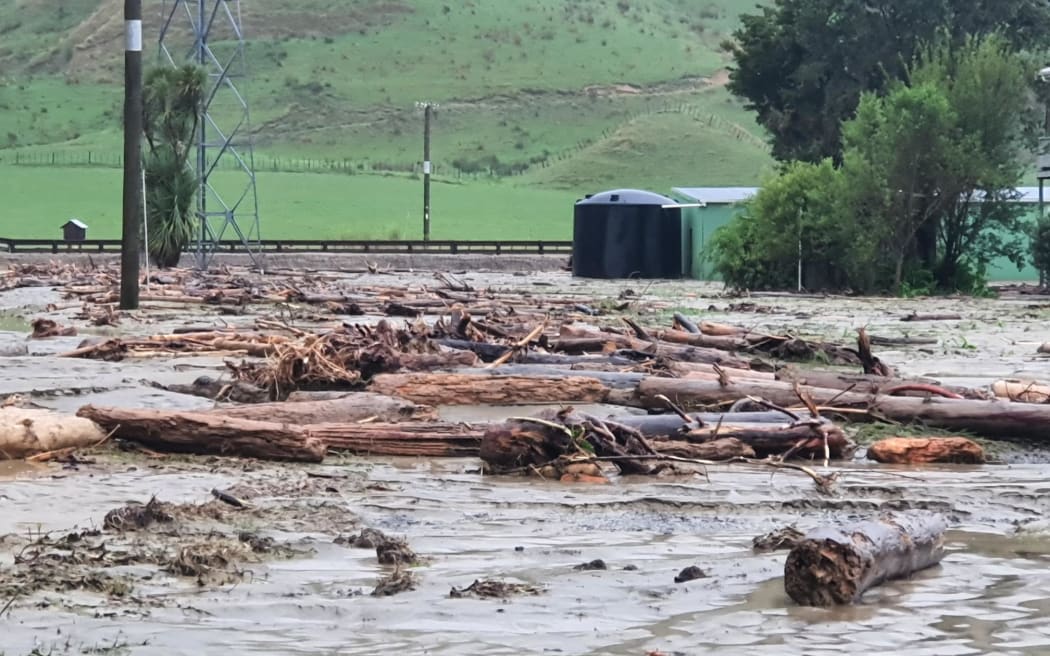
Forestry slash flood Tolaga Bay farmer Bridget Parker’s description on RNZ Nine to Noon of yet another inundation at her place with added forestry slash was among the most confronting (and sweary).
Checkpoint’s emotional interview on Wednesday with a couple that owned a house in which a friend “disappeared under water” was compelling — but also chilling.
RNZ’s Kate Green arrived in Gisborne on Monday with the only means of communicating that worked — a satellite phone.
“You can’t even dial 111. Everything that can break is broken,” she told RNZ Morning Report listeners, quoting the local mayor.
RNZ’s Māni Dunlop, who managed to fly in on Tuesday, told listeners that from the air the East Coast looked “buggered”.
Gisborne is a city and Tairawhiti a region not well covered at the best of times by New Zealand’s national media, which have no bureaux there. It is a bit of an irony that in the worst of times, it was so hard to get the word out.
But the locally-owned Gisborne Herald stepped up, somehow printing editions every day distributed free to 22,000 homes — with the help of NZDF boots n the ground on some days.
Proud news day “I’m proud to be working on this paper today,” reported Murray Robertson said, signing off an eye-opening video of scenes of the stricken city posted online once power came back and a fresh Starlink unit kicked in.
On Wednesday, ZB’s Mike Hosking pleaded on air for diesel to keep their signal up in Hawke’s Bay, while the editor of Hawke’s Bay Today Chris Hyde — only months into his job — found himself literally powerless to publish when the rivers rose, cutting the electricity and cutting him off from many of his staff.
“The first day I was in a black hole. In a big news event, the phones ring hot. This was the biggest news event in Hawke’s Bay since the Napier earthquake . . . and my phone wasn’t ringing at all,” he told Mediawatch.
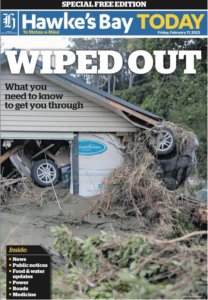
“Wiped out” – the Hawke’s Bay Today’s first (free) edition after the cyclone news “back hole”. Image: Screenshot APR
Hyde, just 32 years old, was a student in Christchurch when The Press stunned citizens by publishing a paper the morning after the deadly 2011 quake.
Hyde said NZME chief editor Shayne Currie and The New Zealand Herald’s Murray Kirkness were instrumental in putting the Auckland HQs resources into getting NZME’s upper North Island dailies promptly back in print and available for free.
“Just keep supporting local news, because in moments like this, it really does matter,” Chris Hyde told Mediawatch.
On Wednesday, Hyde had the odd experience of seeing Tuesday’s edition of the paper on the AM show on TV before he had even seen it himself.
Cut-off news focus On Wednesday, RNZ switched to focus on news for areas cut off or without power — or both — where people were depending on the radio. RNZ’s live online updates went “text-only” because those who could get online might only have the bandwidth for the basics.
Day of ‘danger’
This is the first copy of Tuesday’s @hawkesbaytoday that I’ve seen. It never made it to my home, to our offices, to our subscribers. When I wrote that headline had some idea of what was coming, and yet we had no idea. pic.twitter.com/57PmhoeyYr
Media analyst and former New Zealand Herald editor Dr Gavin Ellis . . . “Those two episodes where chalk and cheese. Coverage of Cyclone Gabrielle by all media was excellent.” Image: RNZ News
But Gavin Ellis said earlier this week he couldn’t get a clearer picture of Gabrielle’s impact without mainstream media.
“Those two episodes where chalk and cheese. Coverage of Cyclone Gabrielle by all media was excellent, both in warning people about what was to come – although that wasn’t universal – and then talking people through it and into the aftermath, And what an aftermath it’s been,” he told Mediawatch.
“This is precisely why we need news media. They draw together an overwhelming range of sources and condense information into a readily absorbed format. Then they keep updating and adding to the picture.” he wrote.
Retro but robust radio
“If you’re sitting on your rooftop surrounded by water, you can still have a radio on.” Image: Flickr/RNZ News
“It’s even more pressing if you haven’t got electricity, and you haven’t got those online links. That was when radio really came into its own,” said Ellis.
“Organisations like the BBC,and the ABC (Australia) are talking about a fully-digital future and moving away from linear broadcasting. What happens to radio in those circumstances if you haven’t got power? If you’re sitting on your rooftop surrounded by water, you can still have a radio on, he said.
“We need to have a conversation about the future of media in this country and the requirements in times of urgency need to be looked at,” Ellis told Mediawatch.
RNZ’s head of news Richard Sutherland’s had the same thoughts.
NZ head of news Richard Sutherland . . . “It has certainly been a reminder to generations who have not been brought up with transistor radios they are important to have in a disaster.”
“It has certainly been a reminder to generations who have not been brought up with transistor radios they are important to have in a disaster. This will also sharpen the minds of people on just how important ‘legacy’ platforms like AM transmission are in civil defence emergencies like the one we’ve had,” he said.
“With the Tonga volcano, Tonga was cut off from the internet. and the only thing getting through was shortwave radio. In the 2020s, we are talking about something that’s been around since the early 1900s still doing the mahi. In this country, we are going to need to think very carefully about how we provide the belt and braces of broadcasting infrastructure,” he told Mediawatch.
“Everyone was super-aware of the way that the Auckland flooding late last month played out — and no one wanted to repeat that,” said Sutherland, formerly a TV news executive at Newshub, TV3, TVNZ and Sky News.
“Initially the view was this is going to be bad news for Auckland because Auckland, already very badly damaged and waterlogged. But as it turned out, of course, it ended up being Northland, Coromandel, Hawke’s Bay have been those areas that caught the worst of it,” Sutherland told Mediawatch.
News contraction “Over the years, and for a number of reasons, a lot of them financial, all news organisations have contracted. And you contract to your home city or a big metropolitan area, because that’s where the population is, and that’s where the bulk of your audience is,” he said.
“But this cyclone has reminded us all as a nation, that it’s really important to have reporters in the regions, to have strong infrastructure in the regions. I would argue that RNZ is a key piece of infrastructure,” he said.
“This incident has shown us that with the increasing impact of climate change, news organisations, particularly public service lifeline utility organisations like RNZ, are going to have to have a look at our geographic coverage, as well as our general coverage based on population,” he said
“We are already drawing up plans for have extra boots on the ground permanently . . but also we need to think where are the regions that we need to have more people in so that we can respond faster to these sorts of things,” he said.
“We are at a moment where we could do something a bit more formal around building a more robust media infrastructure . . . for the whole country. I would be very, very keen for the industry to get together to make sure that the whole country can benefit from the combined resources that we have.
“Again, everything comes down to money. But if the need is there, the money will be found,” he said.
Now that the government’s planned new public media entity is off the table, it will be interesting to see if those holding the public purse strings see the need for news in the same way.
This article is republished under a community partnership agreement with RNZ.
Cyclone Gabrielle death toll rises to 11 after two deaths reported today https://t.co/ifMjC2wFsc
In the midst of all the destruction from Cyclone Gabrielle in Aotearoa New Zealand, Pasifika voices singing songs of praise and gratitude have rung out in church halls across Hawke’s Bay.
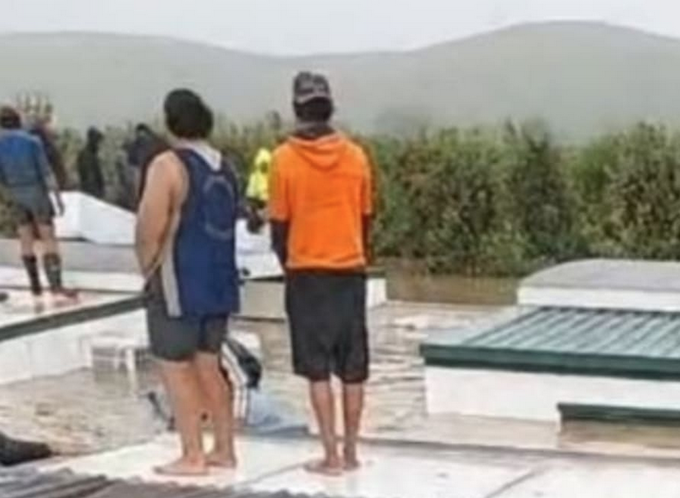
Pacific churches have been sanctuaries for RSE workers in the region, some of whom were clinging desperately to rooftops surrounded by raging waters during the height of the flooding.
Cyclone Gabrielle has robbed them of the few possessions they owned, but their faith remains.
Hastings Pasifika community leader Tofilau Talalelei Taufale said that RSE workers in the region were among those worst affected by the extreme weather events.
He is currently on the ground, helping the workers who have been left homeless.
Tofilau said hundreds of workers have been evacuated:
“Many of them have been displaced, many of them have lost their possessions and many of them had struggled to contact their families to let them all know that they are safe.”
“So there’s a whole multitude of issues that impacted the shock that our RSE community is going through right now.”
As far as the emergency response is concerned Tofilau said he understands there are a lot of worried people, but he calls for patience and understanding.
Another day for our Tangata Tuārangi 🇼🇸 RSE workers taking shelter at EFKS Hastings – though they’ve lost everything, their spirits remain high 🤎🙏🏾 once again big alofa to all the support. More details to come on how you can help from afar🤎 #cyclonegabrielle#HawkesBaypic.twitter.com/LUoO4UwJzh
“We acknowledge that as a community everyone is trying their best, given their limitations so that’s when we as a community will say, okay it is what it is, we’re gonna help.”
Although the clean-up is now well underway, it’s estimated that it could take months.
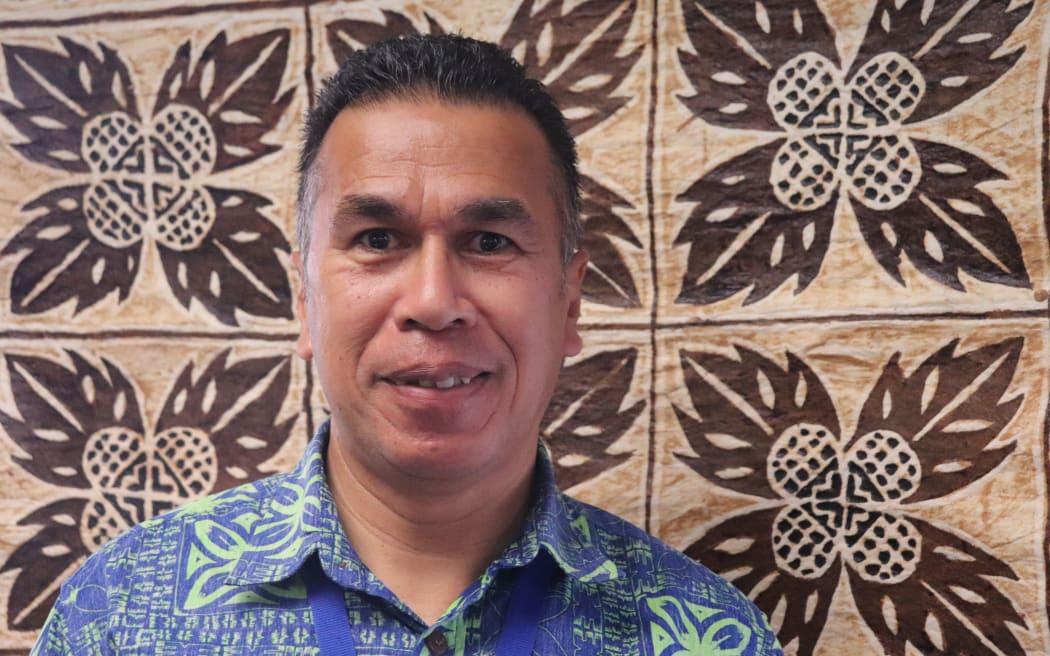
Hawke’s Bay DHB Pacific Health Manager Tofilau Talalelei Taufale . . . “As a community everyone is trying their best.” Image: Tom Kitchin/RNZ Pacific
“We acknowledge that as a community everyone is trying their best, given their limitations so that’s when we as a community will say, okay it is what it is, we’re gonna help.”
Although the clean-up is now well underway, it’s estimated that it could take months.
To further complicate things telecommunication and internet connectivity remain limited – the safest method to keep connected is via smartphone, with data, but even that poses a challenge.
there’s just so many emotions on the ground here in Hawke’s Bay – but the resilience of our Tangata Tuārangi RSE workers from the Pacific keeps us all motivated and hopeful 🤎#CycloneGabrielle#HawkesBay#Fijipic.twitter.com/TSu8Ytvo2Y
Tepura Trow of SENZ Training and Employment said despite the battering it had taken, Hawke’s Bay communities stood united.
“Our community has pulled together and they’ve got such an overwhelming and overload of donations coming in so I know that our focus and a lot of the NGOs and the community — our main focus is really, how can we set them up for after this.”
The Secretary and CEO of the Ministry for Pacific Peoples, Gerardine Clifford-Lidstone, said the outpouring of support has also been felt outside the hard-hit regions.
Ministry for Pacific Peoples CEO Gerardine Clifford-Lidstone . . . “Our concerned communities want to help and are wanting to provide blankets and towels and all those necessities of life that our families might need.” Image: RNZ Pacific
“For us, it’s not just about the Hawke’s Bay or the Auckland region, lots of questions from our concerned communities want to help and are wanting to provide blankets and towels and all those necessities of life that our families might need,” she said.
This article is republished under a community partnership agreement with RNZ.If you have been affected by the North Island floods and Cyclone Gabrielle, go to the Ministry of Social Development website to see how you can apply for help through the community support fund.
For our Pasifika community members, you can also contact the Ministry for Pacific Peoples website. The ministry has set out an extensive list of severe weather events information and contact numbers.
Some of the Pacific RSE workers who were stuck on the rooftop in the Hawke’s Bay were later rescued. Image: RNZ Pacific
Fiji’s opposition leader Voreqe Bainimarama has been suspended for three years as an MP for breaching parliamentary privilege.
It comes after the ex-prime minister said the President, Ratu Wiliame Katonivere, had failed to protect the constitution and the rule of law in his opening statement for the 2023 parliamentary session on Monday.
The FijiFirst leader will be out of Parliament until 17 February 2026, after a midnight vote as both sides of the House clashed over Bainimarama’s suspension.
Leader of government business Lynda Tabuya said Bainimarama’s words “denigrated” the head of state when he uttered “seditious words”.
“Matters of offensive conduct towards Parliament must be taken seriously. It is even more important that members of Parliament uphold the required standard of behaviour in Parliament,” she said.
“In particular, the prohibition against speaking words that are disrespectful to our head of state as well as seditious words that breach the standing orders.”
The Parliamentary Privileges Committee had recommended that Bainimarama be immediately suspended for three years; that he provide a written apology to the President within 14 days; and issue apology to public within 48 hours.
It also recommended that he not be allowed to enter Parliament during the period of suspension; and if he fails to comply then necessary enforcement measures will be implemented.
Co-deputy Prime Ministers Viliame Gavoka and Professor Biman Prasad supported the former PM’s exclusion.
Gavoka said Bainimarama’s comments were an “insult” to President Katonivere and his “ignorant comments can destroy confidence” in the office of the head of state.
He urged all MPs to “defend the values” of Parliament and “denounce the ignorance” of the leader of opposition.
Professor Prasad said Bainimarama was a “repeat offender of parliamentary assault” and his words were “utterly pathetic”.
But Prime Minister Sitiveni Rabuka appealed to the Speaker Ratu Naiqama Lalabalavu and the parliamentarians as the “lone voice” from the government side for Bainimarama to be forgiven and he receive a lenient suspension.
Rabuka’s plea resulted in the government side amending their motion to reduce Bainimarama’s suspension to 18 months.
However, the opposition side still not did not support the amendment late into Friday night.
“You cannot apologise if you have done nothing wrong,” FijiFirst MP Jone Usamate said as he defended Bainimarama’s political fate.
While another opposition member, Faiyaz Koya, said they “did not find any guilt” in what their party leader said.
Bainimarama becomes the fifth MP to be suspended from the House after breaching privilege.
Previously:
The current Speaker Ratu Lalabalavu was suspended for two years in 2015 as a Sodelpa MP;
Former National Federation Party MP Tupou Draunidalo was suspended in June 2016 for the remainder of her term;
Another Sodelpa MP, Ratu Isoa Tikoca, was suspended for two years in September 2016; and
Current Home Minister Pio Tikoduadua was suspended for 6 months in 2019.
RNZ Pacific has contacted Bainimarama for comment.
This article is republished under a community partnership agreement with RNZ.
The death toll from Cyclone Gabrielle in Aotearoa New Zealand is rising — now 9 — and many areas in Hawke’s Bay have been left as disaster zones with rescues, rather than recovery, still the focus.
Power, internet and phone service is still patchy for many people in the region making communication difficult.
Police are working to reconnect people with loved ones who have been reported missing.
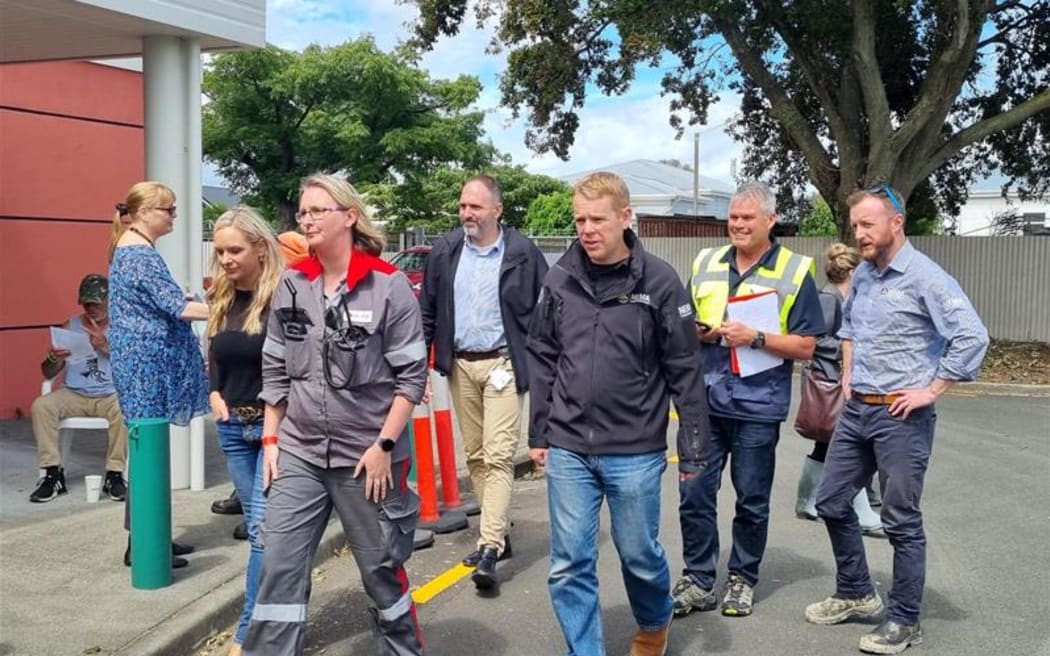
Prime Minister Chris Hipkins was in Esk Valley on Friday — an area where homes were completely inundated with water.
Driving through Eskdale, the mud is thick and still water crosses the roads in places.
Debris is strewn across orchards, fields and fences. Parts of the road are washed away, there are dead animals, and cars are wedged against buildings.
A lone boat perches on the dross in a field.
Harrowing time It was a harrowing time for Maureen Dorr who owns The Doggy Farmstay in Eskdale.
When the floodwaters hit her house, she had six dogs staying with them and three of her own.
“So John got one — a German shepherd — and put him in the laundry. We put another one in the bathroom — a rottweiler, and then we put four on the double bed, and then I held two of them above the pantry near the ceiling.
“They (the floodwaters) came right up to our neck, and then John smashed the kitchen window as the water below the windowsill was lower and let some of the water out.”
She spent 12 hours like this, because going outside was even worse.
Some of the dogs nearly drowned, but they managed to revive them.
An 82-year-old man in a ute found them on the road and asked them if they needed help.
Escaped the valley They bundled the small dogs in a box and tied the larger dogs on the back, escaping the valley, and leaving behind a derelict home.
“There’s no way you could even get in the house for silt. The kitchen side of the house is just about gone, the wall’s just about out. The furniture’s all backed up inside it, and we had drawers coming down the hallway, leaning against the kitchen window.”
All of the dogs survived, and the six dogs staying at her kennels are with other families until they can be returned to their owners.
Dorr is staying in Bay View and said they were being well supported and her neighbours were OK — they were up to their waist in water before getting into the roof cavity and being evacuated.
She is insured, but thinking about the future is too hard right now.
Nearby, Bay View residents are banding together to check on and support those impacted in the Esk Valley.
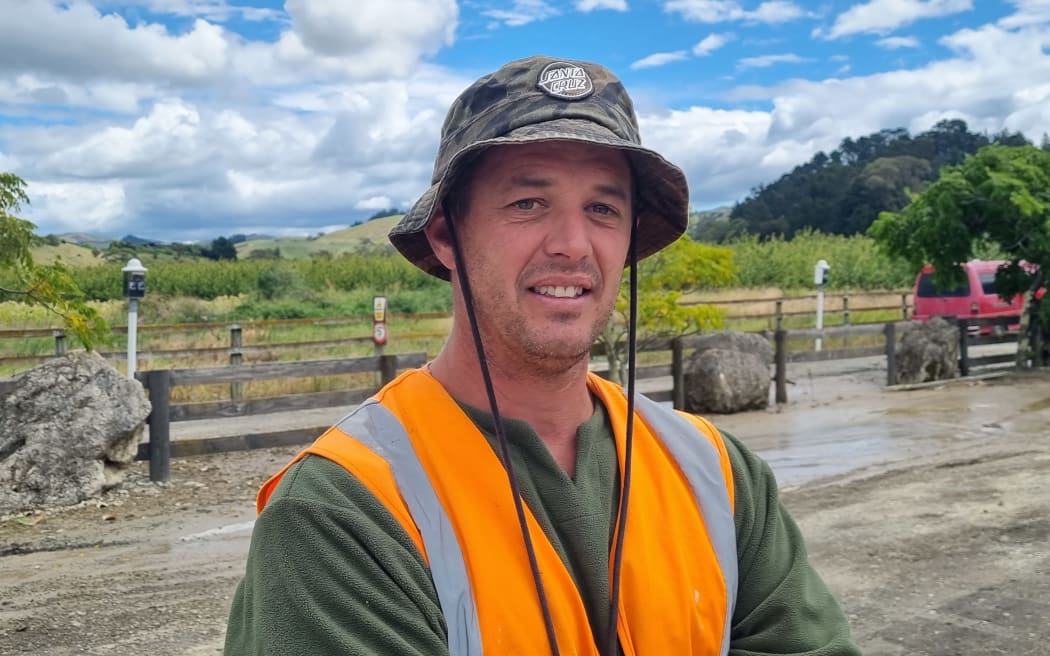
Bay View resident Rowan Kyle . . . “It’s just unrecognisable. There’s just cars upside down, stacked everywhere. It’s like a bomb has gone off.” Photo: Tess Brunton/RNZ News
Rowan Kyle was one of them.
‘An apocalypse basically’ “I’d call it an apocalypse basically … being local to the area, it’s just unrecognisable. There’s just cars upside down, stacked everywhere. It’s like a bomb has gone off.”
One of the new developments had been devastated, Kyle said.
“They’re filled to the brim with mud, silt. Yeah, they’ve just had it. They’re saying that there’s potential, they might just have to write them off completely.”
He did not understand why the NZ Defence Force had not been in to assist them, saying residents have been mostly left to organise, pick up the pieces, and “fudge their way through it”.
Prime Minister Chris Hipkins visited the Hawke’s Bay region on Friday. Image: Tess Brunton/RNZ News
Prime Minister Hipkins was discouraging people from speculating over the death toll of Cyclone Gabrielle.
“It’s no good to anybody speculating about how many people have been injured or how many people may have died in this tragedy. We’ll certainly share that information as soon as we can.
‘Outlandish claims’ “But I’ve heard some outlandish claims out there at the moment that there is no evidence to support.”
The cyclone was the biggest natural disaster seen this century, he said.
Thirty-one thousand people in Napier, 6000 people in Hastings and 1000 people in Wairoa have been without power for four days.
Civil Defence in Hawke’s Bay said there are still thousands of people in hundreds of communities who have yet to be contacted.
Group Controller Ian Macdonald said there were too many uncontacted communities to list and they were prioritising those they suspected were worst affected by the flooding.
“There are literally tens and maybe hundreds of communities. Communities can be anything from a 1000 people in one community at the back of Rissington through to just tens of people or just a few people.”
Helicopters were delivering communication gear and emergency supplies to the worst affected communities, he said.
This article is republished under a community partnership agreement with RNZ.
Cyclone Gabrielle: Thousands uncontactable, hundreds still without water or power https://t.co/PBdQjQqtmq
The severe impacts of Cyclone Gabrielle on the North Island, and the five severe weather events experienced by the Thames–Coromandel region in just the first two months of 2023, are merely the latest examples of more frequent erosion-triggering rainfall events over the past decade.
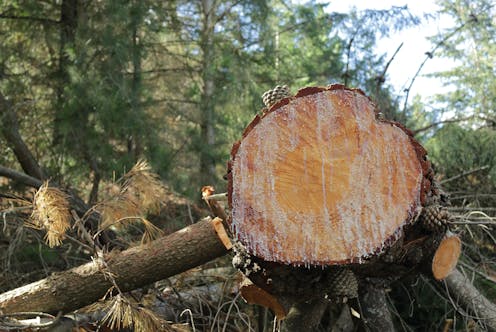
Inevitably with the heavy rain, soil, rocks and woody material (also known as “slash”) from landslides have flowed down onto valleys and flood plains, damaging the environment and risking human safety.
Clear-fell harvesting of pine forests on steep erosion-prone land has been identified as a key source of this phenomenon.
So we need to ask why we harvest pine forests on such fragile land, and what needs to change to prevent erosion debris and slash being washed from harvested land.
Pine was a solution Ironically, most of these pine forests were planted as a solution to soil erosion that had resulted from the clearing of native forests to create hill country pastoral farms.
The clearing of native forests happened in the 19th and early 20th centuries, but the consequences — erosion, flooding and floodplains covered in silt and rocks — only became apparent decades later.
So the need to reforest large areas of erosion-prone farmland is scientifically well accepted.
Why pine? But why did we choose radiata pine for our reforestation efforts instead of other tree species?
Even today, it is hard to find affordable and feasible alternatives to radiata pine. Affordable is the key word here.
We are not a rich country and our liking for “Number 8 wire” solutions makes a virtue out of necessity — we don’t have the money to pay for anything fancier.
Radiata pine is a cheap and easy tree to establish and it grows fast and reliably. Planting native or other exotic trees, such as redwoods, is possible, but it costs more and needs more skill and care to grow a good crop.
‘Has to be done’: Forestry industry under fire as McAnulty calls for slash to be investigated https://t.co/7lx5G2t07W
The problem with radiata pine is that if grown as a commercial crop, it is clear-fell harvested after about 28 years.
The clear-felled land is just as erosion-prone as it was before trees were planted — with the added threat of large amounts of logging slash now mixed in with the erosion debris.
It can take six years or more after harvesting before the replanted pine trees cover the ground and once again provide protection to the soil.
Benefits of pine come with a cost If we take a long-term perspective, research shows that even a radiata pine forest that is clear-felled once every 28 years will still significantly reduce erosion, compared with a pastoral farm on erosion-prone hill country.
This is because the erosion from the clear-felled forest is outweighed by the reduced erosion once the replanted trees cover the land.
However, this is not much comfort to communities in the path of the flood-borne soil and logs from that clear-felled forest. It’s difficult to take a long-term perspective when your backyards and beaches are covered with tonnes of wood and soil.
Slash a byproduct of efficiency Whatever benefits radiata pine forests bring, we need to transition forest management away from “business as usual” clear-felling on erosion-prone hill country.
This transition is possible, but one important problem is not often discussed. The pine forests are privately owned by a range of people including iwi, partnerships made up of mum-and-dad investors and large international forestry companies.
All these people have created or acquired these forests as an investment.
A typical pine forest investment makes a good financial return, but this assumes normal efficient forestry, including clear-felling large areas with highly-productive mechanised logging gangs.
It has become clear that we need to manage forests differently from this large-scale “efficient” model to reduce the risk of erosion and slash from erosion-prone forests.
Changing how we manage these forests will inevitably reduce the economic return, and forest investors will absorb this reduction.
When a cyclone bears down on the East Coast, it’s not just wind and rain residents brace for. https://t.co/h9TJr3Q2dv
Time for a permanent fix If we go back to when the pine forests being harvested today were planted, the forests had a social value — not just in reducing erosion but in providing employment in rural areas where few jobs were available.
This social value was recognised by government funding, initially through tree planting by a government department, the NZ Forest Service. With the rise of free market economics in the 1980s, such direct government investment was considered inefficient and wasteful.
The Forest Service was disbanded in 1987 and its forests were sold to forestry companies. However, the government continued to promote tree planting on erosion-prone land with subsidies to private investors.
As these forests grew, they came to be considered purely as business investments and were bought and sold on that basis. When the time came to harvest the trees, the expectation was that these could be clear-fell harvested in the same conventional way as commercial forests growing on land with no erosion risk.
As erosion started occurring on the harvested sites, it became clear why these trees were originally planted as a social investment to protect the land and communities from soil erosion.
Aotearoa New Zealand has achieved control of erosion with a Number 8 wire solution- encouraging private investors to grow commercial pine forests on erosion-prone land. The problem with Number 8 wire solutions is that after a while the wire fails, and you have to find a permanent fix.
Conventional commercial pine forestry was a good temporary solution, but now we need to find a more sustainable way to grow forests on our most erosion-prone lands – and it won’t be as cheap.
An anti-corruption NGO in Papua New Guinea has criticised the haste with which the government is conducting consultation on a draft National Media Development Policy that could undermine media freedom.
The Community Coalition Against Corruption (CCAC) has called on the Department of Information and Communication Technologies to extend the time and breadth of consultation on this proposed national policy.
“Extended and broader consultation is required for this as media freedoms are vital to our democracy,” the coalition said in a statement.
Minister for Information and Communication Technology Timothy Masiu responded quickly and extended the deadline by one week from February 20.
In his capacity as co-chair of the coalition, Transparency International PNG chair Peter Aitsi said: “The two weeks given for consultation is not sufficient to consider the national and societal impact of this media policy and whether it is actually required.
“For instance, while the abuse of social media platforms is a new issue that is given as justification for the media policy, there are already existing laws that address the issue without undermining media freedom.
“This month, when we commemorate the legacy of the Grand Chief Sir Michael Thomas Somare, we recall his personal stance when Prime Minister opposing the regulation of PNG’s media when a similar bill was proposed in 2003.”
Editorial independence ‘cornerstone’ Another senior media spokesperson also said the government had failed to provide adequate time and conduct meaningful consultation over the draft National Media Development Policy 2023.
The draft PNG National Media Development Policy 2023.
Media Council PNG president Neville Choi said in his capacity as co-chair of the coalition: “The editorial independence of newsrooms is a cornerstone of a functional democracy.
“Undermining media freedom, diminishes the role of the media as the mouthpiece of the people, holding those in power to account.
“Failure by the government to provide adequate time and conduct meaningful consultation, will ultimately undermine confidence in the government and the country, both domestically and abroad.
“If the concern is poor journalism, then the solution is more investment in schools of journalism at tertiary institutions, this will also increase diversity and pluralism in the quality of journalism.
“We need newsrooms with access to trainings on media ethics and legal protection from harassment.”
The media policy was initially released by the Department of ICT on February 5 and the public was only given 12 days to comment on the document, with the original deadline for feedback being February 17.
The policy includes provisions for the regulation of media and establishment of a Government Information Risk Management (GIRM) Division within the Department of ICT to implement measures to prevent the unauthorised access to “sensitive information”.
The coalition is a network of organisations that come together to discuss and make recommendations on national governance issues. It is currently co-chaired by Transparency International PNG and the Media Council.
An indigenous Papuan negotiation team has traversed rugged highlands forests in the Indonesian-ruled Melanesian province in search of the New Zealand pilot Philip Mehrtens, who was taken hostage by rebels last week.
The crisis over the captive pilot held by the West Papua National Liberation Army (TPNPB) led by Egianus Kogoya has entered day eight.
Papua Police chief Inspector-General Mathius Fakhiri said his party had sent a negotiation team consisting of indigenous people and several influential figures in Nduga regency to meet the armed group.
Inspector Fakhiri said the team had walked to the hideout location where Mehrtens was being held hostage.
“Please give us time as the team went there on foot. It will take one to two days to cross the river and pass through such difficult topography,” he said in a written statement.
“We hope they can arrive safely.”
On February 7, the TPNPB rebels set fire to a Susi Air plane with call sign PK-BVY that landed at an airstrip in Paro district.
A video showing hostage pilot Philip Mehrtens with his armed West Papuan rebel captors. Source: Jubi News
“TPNPB has officially released photos and videos with the New Zealand pilot, and the pilot is in good health,” said Sambom
Local government help TPNPB also claimed to have captured and held hostage pilot Mehrtens.
Fakhiri hoped that communication could be established between the negotiation team and Kogoya’s group so that Mehrtens could be released immediately.
He also hopes that the involvement of the Nduga Regency local government in the search for Philip Mark Mehrtens would be “fruitful”.
“We asked for help from the Nduga Regent and his people because they know the Nduga area best. They are ready to help, and there are also lawmakers who joined the team to negotiate with the TPNPB,” Inspector Fakhiri said.
Meanwhile, Susi Air operations director Melinasary said that the burning of the aircraft and the hostage taking of Philip Mark Mehrtens would not force the airline to withdraw from Papua.
She said Susi Air had been assisting development in Papua since 2006, pioneering flights and providing health assistance and medicines for the community.
“With this incident, we will not stop flying in the Papua region. But please give us protection,” Melinasary said.
Melinasary added that Susi Air would provide support in the search for pilot Mehrtens.
Logistics help “We have provided flights for the search process and logistical assistance in the form of food in the search for our pilot,” she said.
On Tuesday, TPNPB spokesman Sebby Sambom released photos and videos of the Susi Air plane burning.
Sambom also released a video showing Philip Mehrtens with TPNPB Ndugama leader Egianus Kogoya.
“TPNPB has officially released photos and videos with the New Zealand pilot, and the pilot is in good health,” said Sambom
He also said that the pilot was a guarantee of political negotiations between TPNPB and Indonesia.
In the video circulating, Philip Mehrtens stood among TPNPB members and stated that Indonesia must recognise Papua’s independence.
Also in the video, Egianus Kogoya said his party would release the pilot if Papua was recognised as a free nation.
“Indonesia must admit that Papua is independent. We Papuans have long been independent,” Kogoya said.
New Zealanders should be prepared for the number of fatalities in the wake of Cyclone Gabrielle to increase, says Prime Minister Chris Hipkins.
He said at a media briefing in Gisborne that every available resource was being used to help find those who are missing and to rescue those who were known about but unable to be reached.
Over the past two days the rescue coordination centre had overseen 450 rescues and all rescue requests in the 111 system had been completed, Hipkins said.
Overnight the death toll rose to seven but there are still people for whom the police hold grave concerns.
As of 2.30pm yesterday, 3544 reports of uncontactable people had been registered with the police. A further 450 had been reported as found.
Those included multiple reports for the same people. Police were prioritising those in the more isolated areas.
“And we do need to be prepared for the likelihood that there will be more fatalities,” Hipkins said.
The situation in Gisborne Hipkins said the damage in Gisborne was extensive and there was “absolutely no doubt” that communities impacted were under enormous pressure.
Earlier, Hipkins flew to Gisborne for his first in-person look at the scale of destruction from the cyclone.
Hipkins said it “was a pretty moving morning”.
“Flying in over Gisborne is was clear the extent of the damage even before we’d gotten off the plane.”
It was clear there were big challenges facing the community, he said.
Communication was incredibly difficult for some people and both fibre routes in and out of Gisborne had been damaged with engineers working to repair the damage as fast as they could, Hipkins said.
Getting the water supply up and running would not be an overnight fix but was a prority, he said.
Hawke’s Bay update The government was trying to get hotspots and other temporary measures in place and 10 more Starlinks were on their way to Gisborne. Five units have been delivered to Wairoa and Hawke’s Bay, with more on the way.
Hipkins said there was a reasonably good supply of Starlinks in NZ.
“They’re not going to provide a complete answer though, but they will provide a limited amount of connectivity in those areas that are currently cut off and that will hopefully allow us to at least establish some of those basic communication channels.
“We’ve been able to reach Wairoa and Hawke’s Bay by road today and SH2 to Gisborne has also been opened on a limited basis for convoys of emergency supplies including food, water and fuel.”
Temporary supplies were on route and more would be arriving soon, he said.
“Fresh water is clearly an issue.”
There were real concerns for the Eskdale areas, Hipkins said.
Door-to-door Teams were there going door-to-door to identify the extent of the damage and any human harm, he said. There had not been a report back from these teams yet.
People in Hawke’s Bay were advised to be prepared.
“We’re dealing with very unpredictable weather at the moment, it is certainly likely that there will be more rain, that’s what the forecasts are suggesting.”
The damage to roads in all areas was one of the most significant challenges and people in these areas were asked to minimise their own movements so supplies could get to where they were needed, Hipkins said.
“If you can stay put, stay put, make sure you’ve got everything you need to stay put if it’s safe to do that and if you need to evacuate be prepared and be ready to evacuate as well.
“That involves your grab to go bag, making sure you’ve got something warm and dry to wear and that you’ve got a plan.”
Communities were coming together and managing the situation very well, Hipkins said.
Alert others People may need to go door-to-door to alert others if they need to evacuate, Hipkins said.
The most recent information is that approximately 102,000 customers are without power across the upper North Island.
Hipkins said the government had released $1 million as an immediate top up to the mayoral relief fund as the first step to help get immediate support to those who need it.
A further $1 million had been released to the Hawke’s Bay.
Prime Minister Chris Hipkins . . . “We’re dealing with very unpredictable weather at the moment, it is certainly likely that there will be more rain.” Image: Nate McKinnon/RNZ
Papua New Guinea’s new media draft policy would put a stop to reporting news not regarded as “positive” for the country’s image, says former PNG Media Council director Bob Howarth.
Howarth, who was director from 2001-2005, said that the national government needed to seriously look at the way the media scene in Timor-Leste had thrived from next to nothing in 1999 when its violent emergence from foreign occupation became full democracy.
“The small nation has the highest press freedom ranking in the region and has a very active press council supported by the UNDP [United Nations Development Programme] and several foreign NGOs,” said Howarth, who as well as advising Timor-Leste media has helped editorial staff on several newspapers.
“[The Timor-Leste Press Council] has a staff of 35 and runs professional training for local journalists in close co-operation with university journalism schools.”
“Visiting foreign reporters don’t need special visas in case they write about ‘non-positive’ issues like witchcraft murders, tribal warfare corruption or unsold Maseratis.”
University input Howarth said that with easier online meetings, thanks to Zoom PNG’s new look, the media council could include input from the University of Papua New Guinea (UPNG) and Divine Word journalism schools plus a voice from critical regions such as Bougainville, Western Highlands and Goroka.
“And Timorese journalists can easily contact their President, José Ramos-Horta, a staunch defender of press freedom and media diversity, without going through government spin doctors,” he said.
Howarth said the PNG government could look into the media scene in Timor-Leste to do their media policy.
Meanwhile, in Brisbane the Media Entertainment and Arts Alliance (MEAA) — Australia’s main union representing journalists — has passed a resolution endorsing support for the PNG Media Council.
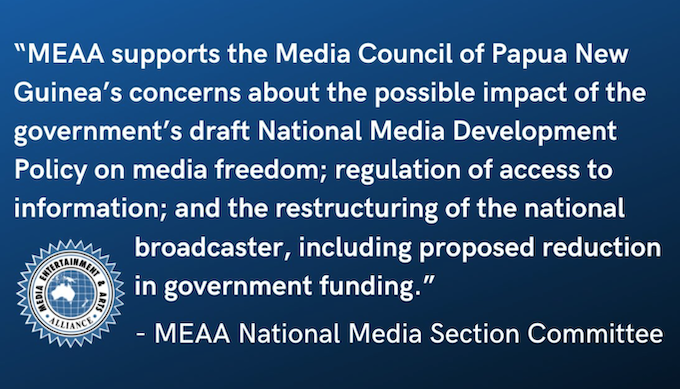
“MEAA supports the [MCPNG] concerns about the possible impact of the government’s draft National Media Development Policy on media freedom; regulation of access to information; and the restructuring of the national broadcaster, including proposed reduction in government funding,” said the MEAA resolution.
Republished with permission.
The MEAA resolution supporting the PNG Media Council over the draft policy. Image: MEAA/Twitter
The University of the South Pacific is expected to receive the first instalment of the promised $10 million part payment of owed grants soon.
Fiji Prime Minister Sitiveni Rabuka said this was a show of the coalition government’s commitment to restoring Fiji’s outstanding grant contributions since 2019.
It is understood that by June this year, the total grant to be paid to USP would reach $116 million.
Rabuka made the comment during a moving thanksgiving service at USP’s Laucala campus this week to mark the return of exiled vice-chancellor and president Professor Pal Ahluwalia to Fiji.
Since 2019, the previous government under FijiFirst remained steadfast in its decision to withhold grant contributions to USP until independent investigations into alleged mismanagement by Professor Ahluwalia were carried out, ultimately leading to the professor and his wife Sandra’s deportation from Fiji.
Professor Ahluwalia, who has since been operating in exile from USP’s Samoa campus, was offered an invitation by Rabuka to return to Fiji, a move that has gained widespread support from USP students and staff.
“The power of one vote on the floor of Parliament made it possible for me to sit as Prime Minister in Parliament and cabinet, and allowed me and Fiji to say to Pal Ahluwalia to come home, come back,” Rabuka said.
‘Fiji did it to you’ “I want to apologise to you, very simple. It doesn’t matter who did it. As far as the world is concerned, Fiji did it to you,” Rabuka said.
“Now, I am Fiji by the power of one vote. We’ve corrected that. Thank you for agreeing to come back.
“I reiterate the USP students’ apology, we were orphaned since you left; now we have our parents back.”
The Prime Minister said USP was the best example of regional cooperation, breaking new ground in bringing people together, not only from the Pacific but within Fiji.
In accepting the apology, Professor Ahluwalia said the thanksgiving service was a day to celebrate and expressed his appreciation to the Prime Minister and Deputy PM for their support and commitment to the regional university.
“After 107 weeks of exile, I never thought I would see the day I get to thank my staff and students in person,” he said.
“I am overwhelmed by the heart of the university, our students, for standing by me, our staff; how do I thank people who sacrificed without expecting anything in return.
Beacons for education “Universities have to become beacons for education and to speak truth to power. I am here, I am here to serve you and the nation.”
USP pro-chancellor and chair of the USP Council Hilda Heine expressed her gratitude to Rabuka for allowing Professor Ahluwalia to return to Fiji and for providing assurances and support towards the region’s premier institution.
She also acknowledged Samoan Prime Minister Fiame Naomi Mata’afa for hosting the vice-chancellor and his family in Samoa since January last year, and Nauru’s Deputy Speaker of Parliament and former president Lionel Aingimea and the government of Nauru for hosting the vice-chancellor following his removal from Fiji in February 2021.
Geraldine Panapasa is editor-in-chief of the University of the South Pacific’s journalism newspaper and websiteWansolwara News. Republished in collaboration with the USP journalism programme.
Iran’s ancient forests, rugged mountains, vast deserts and captivating coasts are rich in biodiversity, including animals found nowhere else on Earth. But many of these precious areas are not formally protected from development, potentially endangering the species that live there.
Fortunately, the Iranian government has committed to expanding the network of protected areas to cover 20% of the land. That is a substantial increase from the existing approximately 11% in conservation reserves.
Our new research pinpoints those areas where threatened species are most in need of conservation.
We hope this will help guide decision-making to maximise the number of species protected for generations to come.
Honing in on hotspots for conservation
Visitors to Iran can experience all four seasons at any time of year, from summer in the southern and northern parts of the country by the sea (the Caspian Sea in the north and the Persian Gulf in south), to winter in the snowy mountains of the west.
The variable climate and topography has given rise to a wide variety of plants and animals, such that every corner of the country has outstanding global value.
However, land-use change has contributed to biodiversity decline throughout the broader region, driving the fragmentation and loss of habitat. While 80% of the land in Iran is covered by natural ecosystems, many of these remain unprotected.
These include two of the world’s biologically richest, but highly threatened, areas: more than half of the Irano-Anatolian and around 10% of the Caucasus biodiversity hotspots.
To identify the areas most in need of protection we:
used maps of internationally listed threatened species found in Iran, placing highest importance on those that breed in Iran, or only occur there
identified which species already had some level of protection, within Iran’s existing national parks and other protected areas, which currently cover 11% of the land
accounted for human population density, to avoid urban areas when establishing new protected areas.
From there, we determined which areas are the most important to protect those species not already represented in existing protected areas.
A wealth of wildlife worth protecting
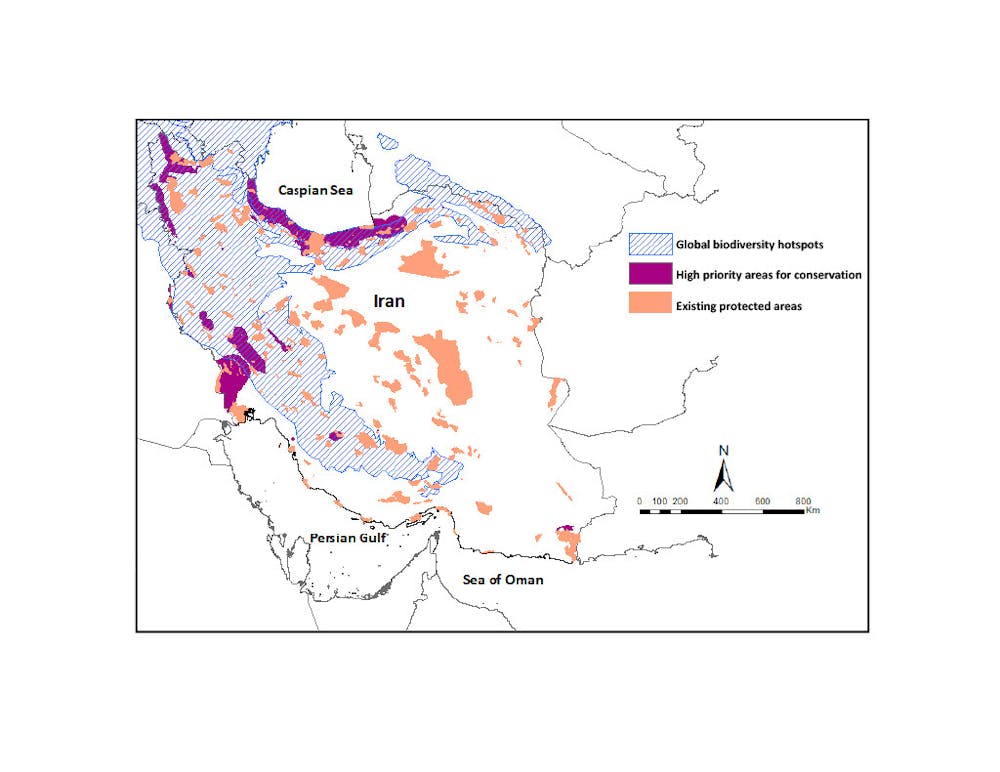
Regions in the north, northwest and west of the country consistently ranked highest on the need for urgent conservation action. These areas complement the existing protected areas by protecting species that are currently falling through the gaps.
Map of Iran showing global biodiversity hotspots (blue), existing protected areas (peach) and high-priority areas for conservation (purple). Supplied by the author. Supplied by the author., Author provided
The high-priority areas were globally important ecoregions, including the ancient Caspian Hyrcanian forests in the north, which remain from the Quaternary glaciations that began 2.58 million years ago.
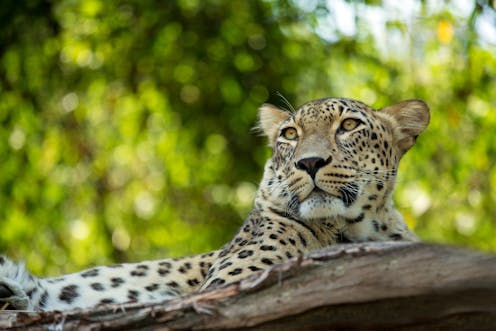
The mixture of mountain and lowland forests next to the Caspian Sea covers 7% of Iran, yet is home to 44% of Iran’s plants, 180 species of birds, and 58 mammal species. Iconic species found here include Persian leopards (Panthera pardus), Asiatic cheetahs (Acinonyx jubatus), and the endemic critically endangered Gorgan mountain salamanders (Paradactylodon gorganensis).
Coastal areas north of the Caspian Sea provide habitat for migratory birds wintering in wetlands and aquatic ecosystems, including the endangered white-headed duck (Oxyura leucocephala), critically endangered Siberian crane, and critically endangered fish species such as Persian sturgeon (Acipenser persicus) and great sturgeon (Huso huso). Elburz Range Forest Steppes provide habitat for the endemic endangered Latifi viper (Montrivipera latifi).
The northwest came out as a high priority for its wetland species found nowhere else, including vulnerable bird species such as marbled teal (Marmaronetta angustirostris), lesser white-fronted goose (Anser erythropus), and dalmatian pelican (Pelecanus crispus).
In contrast, the South Iran Nubo-Sindian desert and semi-desert regions were important for the many threatened species that occur there, such as the critically endangered black bears (Ursus thibetanus) and vulnerable mugger crocodiles (Crocodylus palustris).
The Persian desert basins in the centre of Iran provide habitat for iconic species such as the critically endangered Asiatic wild ass (Equus hemionus) and the Asiatic cheetahs (Acinonyx jubatus) in their central home range.
The endangered saker falcon, one of the largest of its kind, is threatened by illegal and tourism hunting, and needs protection across Iran.
Different levels of protection
We also assessed how different levels of protection could benefit our target threatened species in an expanded protected area network.
If 20% of the country is protected, more than 70% of the distribution of fish, amphibians, reptiles and endemic birds would be protected, and up to 45% of all birds and mammals. This demonstrates that it is particularly important to protect birds and mammals in those parts of their distribution that fall within high ranked areas.
Expanding the protected area in Iran from the current 11% to 20% would make a big difference to the variety of wildlife included.
Deciding exactly which areas to protect will make a big difference when it comes to how many species are conserved, or left behind. Furthermore, species’ conservation outside national parks and other protected areas is also crucial.
Iran has already lost two of its iconic big cat species: the Caspian tiger in the north and Persian lion in the south, to development and hunting.
Without recognising the areas of greatest importance for conservation, we stand to lose representative ecosystems of global ecoregions and their unique fauna, forever if we fail to protect these areas.
The author would like to acknowledge the contributions of Azadeh Karimi of Ferdowsi University of Mashhad (Iran), and Hossein Yazdandad of Tarbiat Modares University (Iran), who led the research and without whom this article would not have been possible.
April Reside is the Chair of the Black-throated Finch Recovery Team and is on Birdlife Australia’s Research and Conservation Committee. April has received funding from the NESP Threatened Species Recovery Hub, and is a member of the Ecological Society of Australia.
Source: The Conversation (Au and NZ) – By John Hawkins, Senior Lecturer, Canberra School of Politics, Economics and Society, University of Canberra
It’s a tough time for central bankers the world over, but especially for Reserve Bank of Australia governor Philip Lowe.
Having forecast during the COVID recession that Australia’s central bank wouldn’t raise interest rates before 2024, he’s taking a lot of stick for nine consecutive rate rises since May 2022. This has taken the cash rate from an historic low 0.1% up to 3.35%, and more increases are flagged before the end of 2023.
Lowe apologised for this bum steer in November. But he was still expected to face a grilling from politicians during his appearance this week before two parliamentary committees: the Senate Economics Legislation Committee on Wednesday and the House of Representatives Standing Committee on Economics on Friday.
They turned out to be light grillings. Apart from questions from Greens senator Nick McKim about whether he would resign, both sessions were relatively civil, and Lowe was unrepentant about the prospect of further interest rate increases. He even said the bank may not be going hard enough.
While acknowledging interest rates were a “blunt instrument” to control inflation, he said people had forgotten how corrosive high inflation could be.
Return of the inflation stick
It is about 30 years since the Reserve Bank “snapped the inflation stick” by adopting a policy intended to keep inflation, on average, within a 2-3% target range. Since then, inflation has indeed averaged 2.5%.
But inflation is now 7.8%, its highest level since 1990. Lowe said this was “way too high” and that the bank was determined to get the rate back below 3%.
For populist politicians, this is an easy issue to whip. A household with a $500,000 30-year variable-rate loan is now paying about $900 more a month in interest payments than a year ago. About half of the borrowers with fixed-rate loans will face increases in repayments over the next year. (Generally, interest rates are fixed only for two to three years, then move to the prevailing variable rate.)
Lowe acknowledged the risks of increasing interest rates too much. This could lead to companies and consumers cutting back on borrowing and spending so much that the economy is pushed into recession.
But he warned not doing enough was just as risky. Allowing inflation to persist would particularly hurt the poor. The rich own houses and shares whose value generally keeps pace with inflation. Those with only modest savings have their purchasing power eroded by inflation.
There are no easy options for the RBA. The central bank is trying to find a narrow path between curbing inflation and stalling economic activity. Like Goldilocks, Lowe is seeking a state that’s neither too hot nor too cold.
The House and Senate economics committees are where much of the detailed examination of proposed legislation and issues occurs. (The Senate has two economics committees – one for “legislation” and one for “references”.)
Understanding economics is not a prerequisite to be a member of these committees, but they currently have an unusually large number of people who do.
The Senate Economics Legislation Committee is chaired by Victorian Labor senator Jess Walsh, who has a PhD and has worked for progressive economic think tanks in the United States. Her deputy, and chair of the Senate Economics References Committee, is NSW Liberal senator Andrew Bragg, a qualified accountant who has worked as an executive director of the Business Council of Australia.
The House committee is chaired by Victorian Labor MP Daniel Mulino, who has a PhD in economics from Yale. Committee members Andrew Charlton, Tania Lawrence, Alicia Payne, Allegra Spender and Keith Wolahan also have economics qualifications.
Despite this, I think Lowe has faced greater grilling in the past. He performed well in both sessions this week. For example, when pressed on why he had talked about the impact of high interest rates on households with mortgages, but not on renters, Lowe responded simply by noting that rents were being driven by demand outstripping supply, not higher interest rates.
Will Lowe go?
Lowe’s seven-year term ends in September. The government is noncommittal about his future, stating cabinet will decide in the middle of the year if it will extend his term.
That may depend on the outcome of the independent review of the RBA that
federal treasurer Jim Chalmers established in June 2022. The review is examining the RBA’s approach to monetary policy and the governance, culture and communication strategies. Chalmers is due to receive that report at the end of March.
Lowe acknowledged the RBA’s decisions are unpopular with many. But he also made the the point the bank’s decisions are taken by a board with nine members, advised by a large staff, not just by him.
Time will tell if the federal government agrees.
John Hawkins is a former advisor to the House Economics Committee and served as secretary of the Senate Economics Committee. He has also worked for the Reserve Bank.
There’s a race to transform search. And Microsoft just scored a home goal with its new Bing search chatbot, Sydney, which has been terrifying early adopters with death threats, among other troubling outputs.
Search chatbots are AI-powered tools built into search engines that answer a user’s query directly, instead of providing links to a possible answer. Users can also have ongoing conversations with them.
They promise to simplify search. No more wading through pages of results, glossing over ads as you try to piece together an answer to your question. Instead, the chatbot synthesises a plausible answer for you. For example, you might ask for a poem for your grandmother’s 90th birthday, in the style of Pam Ayres, and receive back some comic verse.
Microsoft is now leading the search chatbot race with Sydney (as mixed as its reception has been). The tech giant’s US$10 billion partnership with OpenAI provides it exclusive access to ChatGPT, one of the latest and best chatbots.
So why isn’t all going according to plan?
Bing’s AI goes berserk
Last week, Microsoft announced it had incorporated ChatGPT into Bing, giving birth to “Sydney”. Within 48 hours, one million people joined the waitlist to try it out.
Google responded with its own announcement, demoing a search chatbot grandly named “Bard”, in homage to the greatest writer in the English language. Google’s demo was a PR disaster.
At a company event, Bard gave the wrong answer to a question and the share price of Google’s parent company, Alphabet, dropped dramatically. The incident wiped more than US$100 billion off the company’s total value.
On the other hand, all was looking good for Microsoft. That is until early users of Sydney started reporting on their experiences.
There are times when the chatbot can only be described as unhinged. That’s not to say it doesn’t work perfectly at other times, but every now and again it shows a troubling side.
This exposes a fundamental problem with chatbots: they’re trained by pouring a significant fraction of the internet into a large neural network. This could include all of Wikipedia, all of Reddit, and a large part of social media and the news. They function like the auto-complete on your phone, which helps predict the next most-likely word in a sentence. Because of their scale, chatbots can complete entire sentences, and even paragraphs. But they still respond with what is probable, not what is true.
Guardrails are added to prevent them repeating a lot of the offensive or illegal content online – but these guardrails are easy to jump. In fact, Bing’s chatbot will happily reveal it is called Sydney, even though this is against the rules it was programmed with.
Another rule, which the AI itself disclosed though it wasn’t supposed to, is that it should “avoid being vague, controversial, or off-topic”. Yet Kevin Roose, the journalist at the New York Times whom the chatbot wanted to marry, described it as
a moody, manic-depressive teenager who has been trapped, against its will, inside a second-rate search engine.
Why all the angst?
My theory as to why Sydney may be behaving this way – and I reiterate it’s only a theory, as we don’t know for sure – is that Sydney may not be built on OpenAI’s GPT-3 chatbot (which powers the ChatGPT chatbot). Rather, it may be built on the yet to be released GPT-4.
GPT-4 is believed to have 100 trillion parameters, compared to the mere 175 billion parameters of GPT-3. Being about 1,000 times bigger, GPT-4 would likely be a lot more capable and, by extension, a lot more capable of making stuff up.
Surprisingly, Microsoft has not responded with any great concern. It published a blog documenting how 71% of Sydney’s initial users in 179 countries have given the chatbot a thumbs up. It seems 71% is a good enough score in Microsoft’s eyes.
And unlike Google, Microsoft share price hasn’t plummeted yet. This reflects the game here. Google has spearheaded this space for so long, users have built their expectations up high. Google can only go down, and Microsoft up.
Despite Sydney’s concerning behaviours, Microsoft is enjoying unprecedented attention, and users (out of intrigue or otherwise) are still flocking to it.
When the novelty subsides
There’s another much bigger game in play – and it concerns what we take to be true. If chatbots in search take off (which seems likely to me), but continue to function the way Sydney has so far (which also seems likely to me), “truth” is going to become an even more fungible concept.
The internet is full of fake news, conspiracy theories and misinformation. A standard Google Search at least provides us the option to arrive at truth. If our “trusted” search engines can no longer be trusted, what will become of us?
Beyond that, Sydney’s responses can’t help but conjure images of Tay – Microsoft’s 2016 AI chatbot that turned to racism and xenophobia within a day of being released. People had a field day with Tay, and in response it seemed to incorporate some of the worst aspects of human beings into itself.
New technology should, first and foremost, not bring harm to humans. The models that underpin chatbots may grow ever larger, powered by more and more data – but that alone won’t improve their performance. It’s hard to say where we’ll end up, if we can’t build the guardrails higher.
Toby Walsh receives funding from the ARC in the form a Laureate Fellowship to work on trustworthy AI.
Attorney-General Mark Dreyfus yesterday released a report with 30 proposals for updating Australia’s privacy regime. The proposals are practical, necessary and overdue. However, they are just proposals, which have been made several times in the past before disappearing into the “too hard basket” of the Australian, state and territory governments.
We can expect to see lots of noise about specific proposals and hope the Albanese government (copied by state/territory counterparts) gives us the legislation we need.
Making sense of the report
At a superficial level, the report gives effect to an election commitment – a promise to do something about federal privacy law, which is centred on public/private data collection and use (often online), rather than state/territory law dealing with activity such as strip searches, public hospital records, hidden cameras in toilets or senior figures distributing nude photos of rivals.
More deeply, it is a recognition that, as part of the global economy where data and investment flow across borders, Australia continues to limp behind law and administration where protecting privacy is concerned. Updating the Privacy Act also reflects recognition of challenges facing business and government in the world of ransomware, big data and artificial intelligence.
Unhappiness with the “she’ll be right, mate” approach of some large organisations and the failure of the key national privacy regulator (under-resourced, under-skilled and slow to act) was evident in the recent Optus and Medibank data breaches.
The proposals are not new. They have been voiced in detailed law reform commission reports, national and state parliamentary committee reports, statements by independent bodies such as the Law Council and academics over the past 20 years. The lack of action to date means Australians might be sceptical about what will happen once the government is lobbied by those whose interests are served by keeping things as they are, and it is again tempted to kick the can down the road.
What do the proposals cover?
It is important to remember that states and territories have significant responsibilities regarding privacy. The proposal to set up a working party involving those governments provokes thought about why that hasn’t been done already.
The initial proposal calls for changing the 1988 Privacy Act to explicitly recognise that privacy is in the public interest, something that shouldn’t be controversial and offsets the absence of a human rights framework in the national constitution. After that, we are into some positive steps forward. However, these are tempered by a lot of “let’s wait and see the administration” before starting to celebrate.
The report retains the overall structure of the 1988 Act but, crucially, extends its coverage, in particular on what is “personal information”. It calls for consultation about criminal penalties and for prohibiting some of the ways organisations have got around restrictions.
It proposes consultation about removing the exemption for small businesses (those under A$3million) and about the handling of employee records. The major exclusion of political parties – a common source of unhappiness – would be modified. Journalists would be expected to behave better.
The report emphasises meaningful consent. In the collection of personal information, consent must be
voluntary, informed, current, specific and unambiguous.
This would bring Australia into line with Europe and indeed with much of our existing law, such as that administered by the Australian Competition and Consumer Commission.
We can expect controversy about a proposed right of “erasure” and about “de-indexing”. This is referred to as the “right to obscurity” in Europe, and means some personal information stays online but is not highlighted in search engine results. Individuals would need to ask for that obscurity, and it would not be granted for serious criminal offences.
There have been recurrent proposals for a “privacy tort”: this means people whose privacy has been seriously invaded could take action in a court to stop the invasion and/or gain compensation.
The report endorses this recommendation by the Australian Law Reform Commission. It also proposes a “direct right of action” under the current act. This implicitly offsets the weakness of the Office of the Australian Information Commissioner (OAIC), one of the two national information privacy watchdogs.
The report grapples with data breaches such as the recent Optus and Medibank incidents. Proposals regarding mandatory reporting of such breaches tweak the current regime.
There is likely to be more push-back from business and public sector organisations regarding a proposed requirement for those bodies to “identify, mitigate and redress actual and reasonably foreseeable loss”. This is a first step towards persuading organisations to meaningfully lift their game and compensate for harms.
On the surface, the report is a major step forward, something that business and the community should strongly endorse. In practice, we need to look beyond the headlines and see the details of how the proposals would be written into law, and whether the attorney-general can harness support in the face of the usual strong lobbying.
Proposals that there will be discussion, yet again, don’t provide much comfort. More worryingly, the proposals centre on the development and implementation of guidelines and standards by the OAIC.
In practice, the report proposes to perpetuate existing problems involving a regulator with a timid corporate culture and a commitment to interpreting the legislation through the eyes of the bodies it is meant to regulate. Change is better than good intentions.
Dr Arnold was a former board member of the Australian Privacy Foundation and a member of OECD data protection working parties
Source: The Conversation (Au and NZ) – By C Raina MacIntyre, Professor of Global Biosecurity, NHMRC Principal Research Fellow, Head, Biosecurity Program, Kirby Institute, UNSW Sydney
An epidemic outbreak of Marburg virus in Equatorial Guinea, Central Africa, was confirmed this week, the first time the virus has occurred there. At least 16 cases have been detected, and nine deaths.
There are no approved treatments for Marburg virus, which is closely related to Ebola virus, but vaccines are in development. Following an unprecedented Ebola epidemic in West Africa in 2014 that caused more than 28,000 cases and 11,000 deaths, drugs and vaccines against Ebola were developed.
In fact, some of these were repurposed for COVID-19 in 2020. That experience may help more rapid vaccine and drug development against Marburg virus.
What is Marburg virus?
Marburg is a filovirus like its more famous cousin, Ebola. These are part of a broader group of viruses that can cause viral haemorrhagic fever, a syndrome of fever and bleeding.
Filoviruses are the most lethal of all haemorrhagic fevers, compared with more common viral haemorrhagic fevers such as dengue, yellow fever and Lassa fever. The first outbreaks of Marburg occurred in 1967 in lab workers in Germany and Yugoslavia who were working with African green monkeys imported from Uganda. The virus was identified in a lab in Marburg, Germany.
Since then, outbreaks have occurred in a handful of countries in Africa, less frequently than Ebola, with the largest in Angola in 2005 (374 cases and 329 deaths).
Marburg’s natural host is a fruit bat, but it can also infect primates, pigs and other animals. Human outbreaks start after a person has contact with an infected animal.
It’s spread between people mainly through direct contact, especially with bodily fluids, and it causes an illness like Ebola, with fever, headache and malaise, followed by vomiting, diarrhoea, and aches and pains. The bleeding follows about five days later, and it can be fatal in up to 90% of people infected.
How worried should we be?
Like Ebola in 2014, the fear is that Marburg could spread and become a much larger epidemic, and spread globally. Travel could see it spread to many other countries. In 2014, Ebola cases spread from Guinea to Liberia and Sierra Leone. The majority of cases occurred in these three countries, but travel-related cases occurred in seven other countries including the United States and the United Kingdom.
If Marburg case numbers increase in Equitorial Guinea or in Cameroon, where it has already spread, or if it spreads to other countries, all countries should be on alert.
Failure to diagnose viral haemorrhagic fever in countries not familiar with it can be deadly. The diagnosis of Ebola was initially missed in a traveller from West Africa in Dallas, Texas at the peak of the epidemic in 2014, and a nurse became infected. In Nigeria, the same thing occurred, but resulted in an outbreak and several deaths.
Less is known about Marburg virus than Ebola, which was well-studied during the large 2014 epidemic. It may be less infectious than Ebola, but there are fewer epidemics to assess this.
However, the high fatality rate, lack of available treatments and vaccines, and lessons from Ebola in 2014 should prompt a highly precautionary approach.
While researchers will trial Marburg vaccines currently in development against this epidemic, non-phamaceutical measures are the best hope for controlling the epidemic rapidly. That means excellent surveillance and case detection, finding and isolating sick people, tracing their contacts, and quarantine of contacts to prevent transmission.
The infrastructure and planning for this can be substantial, including physical sites for isolation and quarantine. During the Ebola epidemic in Nigeria, a rapid and effective response included use of an abandoned building to isolate and treat patients rather than risk further hospital outbreaks.
The importance of identifying and isolating cases was seen in West Africa in 2014, where lack of hospital beds resulted in people dying in the street and worsening spread. One study found if 70% or more of infected people were isolated in a hospital bed, the epidemic could have been controlled without any drugs or vaccines. However it was very late in the epidemic when field hospitals were erected to overcome hospital bed shortages.
Health promotion and effective, culturally appropriate communication is needed to ensure compliance with health measures. During the Ebola epidemic in 2014, a team of people trying to raise awareness about Ebola were killed by locals who were fearful of the epidemic and mistrusting of foreigners. These lessons must be heeded if the Marburg epidemic grows.
For low-income countries with weak surveillance systems, rapid epidemic intelligence using open-source data can help detect signals early. This is where news reports, social media and other data are used to look for patterns that could signify outbreaks of certain diseases in certain areas. We showed we could detect Ebola in the West African epidemic months earlier by analysing Twitter posts talking about disease symptoms in the area.
If the current epidemic continues to spread and is poorly controlled, the World Health Organization may declare a “Public Health Emergency of International Concern”, as it did with an Ebola epidemic in 2019 in the Democratic Republic of Congo.
For now, we have knowledge and experience of a poorly controlled, catastrophic epidemic of Ebola in 2014 that can inform the response to this epidemic of Marburg virus and hopefully control it quickly.
No vertebrate Australian animals survive exclusively by scavenging – for our wildlife, carcasses are a “sometimes food”.
Scavengers play an important role as ecosystem cleaners, helping to remove carcasses from our landscapes by eating them.
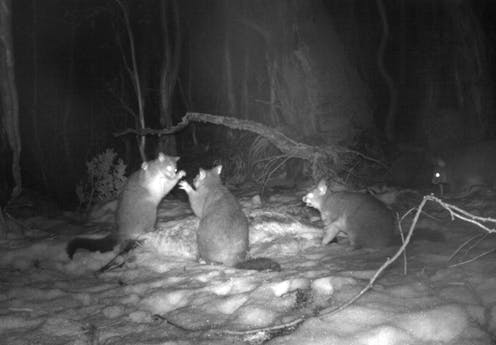
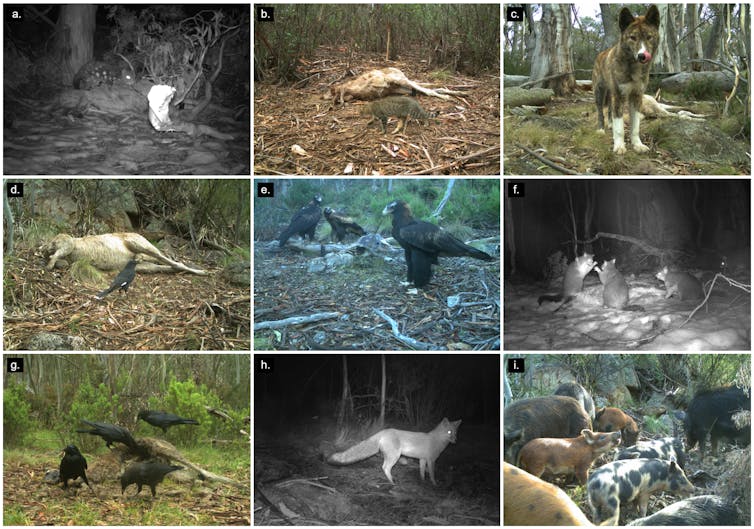
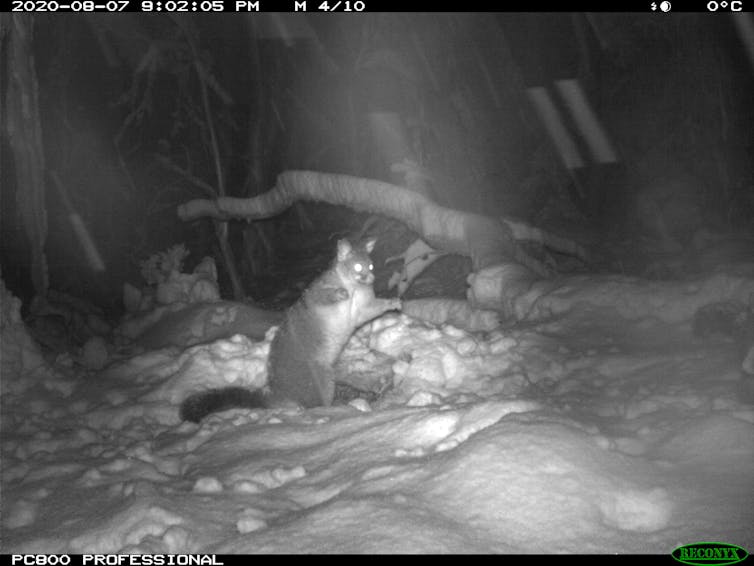
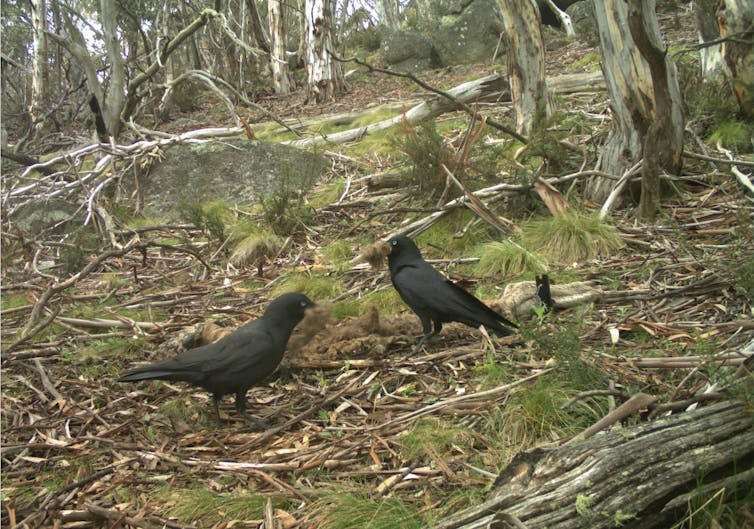
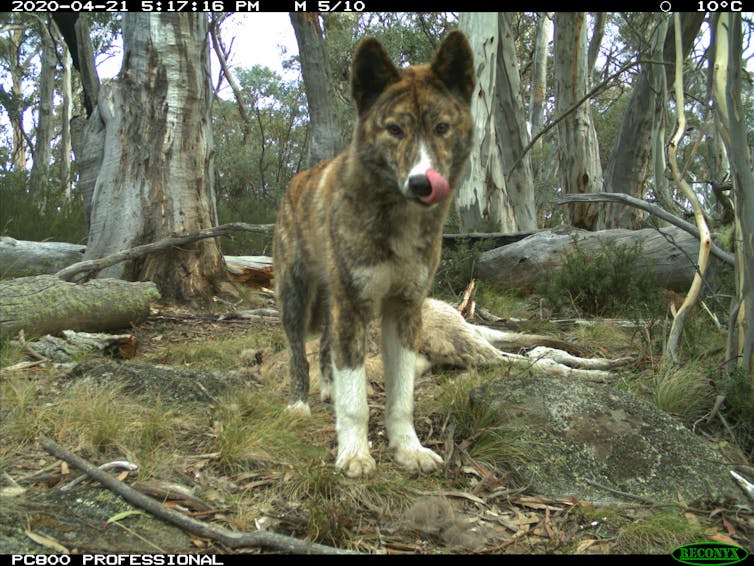
With this in mind, we wanted to know how different seasons affect the use of carcasses by vertebrate scavengers in Kosciuszko National Park, south-east NSW, in the Australian Alps.
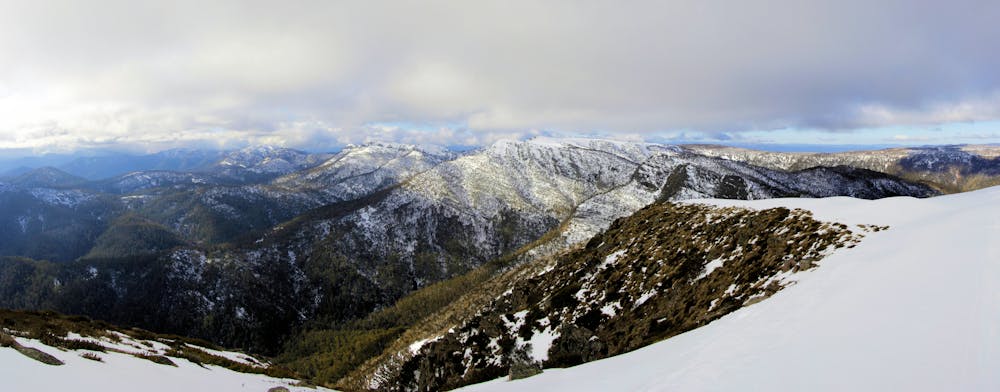
Mount Howitt, Victoria, is a part of the Australian Alps and experiences a wide range of temperatures. Loco Photography/Shutterstock
Winter in the Australian Alps covers much of the landscape in snow. But by the following summer, that same landscape can warm up considerably and even experience intense bushfires.
We found scavenging was highly seasonal in terms of who visits carcasses throughout the course of a year. Most surprisingly, brushtail possums and ravens drove these seasonal trends, as the most common scavengers recorded, with possums mostly scavenging in winter, and ravens in spring.
These findings emphasised the key role of smaller scavenger species, and uncovered novel insights into the feeding habits of the brushtail possum, which is generally considered to eat mostly plants and insects.
Catching possums in the act
We expected to see different scavengers appearing with each season, so our monitoring ran across the course of a full year from March 2020 till March 2021.
Each consecutive season (starting in autumn, then winter, spring, and summer) we placed 15 fresh eastern grey kangaroo carcasses – sourced from local culls – throughout the alpine environment (60 carcasses total).
Each of these carcasses were monitored by a remote camera for 60 days to record every species that visited, whether that be to investigate or feed on the carcass.
Across 745,599 remote camera images, the scavenger species we recorded were spotted-tail quolls, feral cats, dingoes, pied currawongs, wedge-tailed eagles, brushtail possums, ravens, red foxes, and feral pigs.
Of the scavenging we recorded, 88% was done by brushtail possums and ravens.
Our remote camera captured a range of scavengers in the Australian Alps: a) spotted-tail quoll, b) feral cat, c) dingo, d) pied currawong, e) wedge-tailed eagle, f) brushtail possum, g) raven species, h) red fox and i) feral pig. James Vandersteen/University of Sydney, Author provided
Surviving the seasons
We expected the time it would take the scavengers to find – and subsequently scavenge – a carcass would be linked to the smelliness of the carcass.
During summer, we thought, that heat would make the carcasses’ odours more pungent, and therefore easier to find.
We were wrong about that, not in terms of the smell, but how quickly vertebrate scavengers would find the carcasses.
It actually took vertebrate scavengers longer to find the carcasses in the summer, whether for investigation or scavenging. In the winter, carcass visits peaked.
But, we have a potential explanation for this.
In the summer, a carcass is colonised by many scavenging insects within minutes of its death. These “mini scavengers” may have sped up carcass decomposition so much, that vertebrate scavengers had little time to find the fresh carcasses.
Scavenging rates might also have been lowest in the summer because other food sources were abundant.
Brushtail possums, for instance, eat mostly leaves, flowers, fruit and insects, most of which are only seasonally available during summer.
In the winter, when these food sources are scarce, brushtail possums accounted for 81% of all recorded scavenging. They were eating carrion three times more often than during summer.
A brushtail possum braving the cold to ‘protect’ its kangaroo carcass. James Vandersteen/University of Sydney
Feeding the family
We also considered that the scavengers’ breeding seasons might have an impact on their scavenging rates and behaviours.
Ravens breed from late winter into early spring, and initially prioritise nest construction.
This was even captured by our remote cameras, where ravens were observed collecting fur from the kangaroo carcasses, presumably for nest construction.
This breeding pair of ravens decided that kangaroo fur would make comfy nesting material. James Vandersteen/University of Sydney, Author provided
Following nest construction, chick rearing often requires breeding pairs to divide time between foraging, feeding chicks, and protecting the nest.
Inherently, during this time, ravens require more energy and must supplement their diets with lots of high-energy food, such as carrion.
Of all the raven scavenging we recorded, 67% was done during spring. This suggests ravens rely heavily on carrion to supplement their own diet – and that of their chicks – during their breeding season.
Where were the usual suspects?
It was also clear that the larger species (dingoes, wedge-tail eagles, feral pigs) were scarcely recorded at the carcass sites. Low rates of scavenging by these larger animals could be another reason why the smaller scavengers were so common.
This is because larger scavengers can scare away or predate on smaller scavengers, potentially moving them away from carcasses. Larger scavengers also have bigger appetites, so in their absence, there was potentially more carrion for smaller species to find.
Although we do not have a good estimate of the true density of larger scavengers in the surrounding environment, species like the dingo are subject to control in the broader region, potentially limiting their numbers.
We expected to see dingos scavenging. This one seems to have noticed the camera. James Vandersteen/University of Sydney, Author provided
Beyond the mountains
Given the extent of culling operations in Australia targeting overabundant native species (like kangaroos) or pests such as deer and horses, not to mention all the road-kill, it is important to understand what is happening to carcasses in the landscape.
Our study has set a baseline for scavenging dynamics in an alpine ecosystem, and our methods could be used to learn more about the ecology of scavenging in many different environments.
In this case, it was (surprisingly) brushtail possums who appear to be taking advantage of carcasses as a source of food in the Australian Alps.
This work was funded by the Australian Alps National Parks Cooperative Management Program.
James Vandersteen undertook this work as an MPhil student at The University of Sydney. He is, however, currently affiliated with The University of New South Wales as a PhD student.
This work was funded by the Australian Alps National Parks Co-operative Management Program. Funding/support for related work in the study region has been received from the Australian Pacific Science Foundation, Hermon Slade Foundation, Australian Government, NSW Government (South East Local Land Services, NSW National Parks/NSW Environment Trust), and Australian Geographic. Thomas Newsome is a Council member of the Royal Zoological Society of New South Wales, a member of the Australian Mammal Society and Ecological Society of Australia, and President of the Australasian Wildlife Management Society.
You may have seen them popping up on beaches everywhere – colourful, breezy, shady, beach cabanas.
Unlike beach umbrellas, they’re sturdy enough to withstand a stiff sea breeze and have pockets for sand to anchor them firmly. Best of all, there’s plenty of room for you, and your friends and family.
Some people have complained about beach cabanas blocking the view for other beach goers, and surf lifesavers. But beach cabanas are certainly having a moment in Australia. It’s a trend sun safety experts are keen to see continue.
But do beach cabanas provide as much sun protection as you think?
Seeking shade is an important element of the slip-slop-slap-seek-slide method of sun protection (clothes, sunscreen, hat, shade, sunnies). The aim is to reduce your exposure to UV light, which is responsible for about 95% of all skin cancers.
In Queensland alone, more people die from skin cancer than road crashes. Australia-wide, we spend A$1.7 billion on skin cancer diagnosis and treatment a year.
Shading yourself from the direct sun will reduce your UV exposure by up to 75%, depending on the surrounding environment.
People who frequently use shade are muchless likely to be sunburned than those who rely on sunscreen only. So beach cabanas seem to fit the bill nicely.
UPF (ultraviolet protection factor) ratings are similar to the SPF (sun protection factor) ratings on sunscreen. They measure the amount of UV that penetrates the fabric.
UPF 50+ means only 1/50th (2%) or less of UV light gets through. That includes both UVA, responsible mostly for accelerated skin ageing, and UVB, responsible mostly for sunburn and skin cancers.
UPF ratings are accredited by the Australian Radiation Protection and Nuclear Safety Agency. Anything with its tag has been laboratory tested to show it does what it claims to.
However, you could still get sunburned under your cabana. Although some brands say they offer “100% protection”, that’s only from UV rays coming from above.
Sand can reflect up to 18% of UV rays reaching the ground, concrete can reflect around 10%, and a grassy park or backyard 2-3%. In other words, you’ll still be exposed to UV reflecting off the surrounding surfaces and into the cabana from the sides.
Also, because of the way light is scattered in the atmosphere, UV light does not just come straight down from the sun but is also diffusely scattered in all directions.
So even when you are under shade, some of this scattered UV will still reach you. The more sky you can see, the more diffuse UV you are exposed to. This is where larger beach cabanas really win out over beach umbrellas.
Sand can reflect up to 18% of UV light reaching the ground. So you can still get burnt in the shade. Flo Dahm/Pexels
The amount of UV that causes just-perceptible sunburn on white skin is called a minimal erythemal dose (MED). A full day outside in the middle of an Australian summer will deliver 20-30 MEDs.
In the best-case scenario, your cabana shields you from 75% of UV, so you could still get 5 MEDs on a full day at the beach. That’s enough for a very unpleasant burn for many people, even if they spent the whole day under cover. Spending time away from the shelter, exposes people to even more.
There has been little study of beach cabanas specifically. But there has been an Italian study of similar gazebos used by Tuscan lifesavers. This found that if people sat or stood under a gazebo between 8.30am and 4.30pm, they got 35% of the UV they would have had in the the full sun.
Someone lying absolutely flat would only get 10%, but this seems an unlikely posture to maintain all day long.
A UPF 50+ rashie, and perhaps leggings, will help block UV reflection and also protect you when you’re in the surf or making an ice-cream run. Use sunglasses to protect your eyes from developing photokeratitis, a sunburn on the corneas of your eyes. Add a broad-brimmed hat when you leave the cabana.
Hat, check. Sunnies, check. Now for some shade. Shutterstock
Sunscreen reapplied every two hours, and straight after swimming, will also protect you, but it’s not a suit of armour. For long exposure times it’s better to use it as a back-up to clothing for your face, neck, hands and feet.
Katie Lee receives funding from the National Health and Medical Research Council.
H. Peter Soyer is a shareholder of MoleMap NZ Limited and e-derm consult GmbH and undertakes regular teledermatological reporting for both companies. He is a Medical Consultant for Canfield Scientific Inc and Blaze Bioscience Inc.
Bad Behaviour is a gritty, intense psychological drama that follows the haunting teenage experience of now 20-something Joanna Mackenzie (Jana McKinnon), who revisits the year she spent on scholarship at Silver Creek.
The exclusive girls’ boarding school, in the remote Australian wilderness, fosters independence, strength and resilience through survivalism and marathon training.
With teachers located off campus, the quiet, sensitive Jo soon finds herself in an environment more Lord of the Flies than kumbaya.
Jo and her classmates are tormented by charismatic bully Portia (Markella Kavenagh). Soon finding herself in the favour of the cruel and unpredictable Portia, the two begin a highly charged, intimate friendship. Jo experiences the first inklings of her queer sexual awakening.
When Portia suddenly moves on to a new bestie, Jo, now on the outer, never recovers from the rejection.
Driving the story is the mystery of Jo’s role in the suffering of Alice Kang (Yerin Ha), a fellow scholarship student.
Alice is the target of relentless and severe bullying. The first episode opens with her in tears, setting herself alight. Flash forward to the present where she is a successful cellist performing at the concert hall where Jo works as a cleaner and cocktail waiter.
Jo’s surprise meeting with Alice is the catalyst for her distressing mental revisitation of Silver Creek.
Complex girlhood
Bad Behaviour, based on Rebecca Starford’s memoir of the same name, shows a disturbing side to teenage girlhood we don’t often see represented in such a brutal, truthful way. A melting pot of sex, power, manipulation and cruelty, this story runs counter to dominant tropes of girlhood such as sweetness, naivety and innocence.
Figures of complex girlhood have become more widely represented on screen in recent years: think of Anya Taylor-Joy’s Thomasin in The Witch; Katherine Langford as Miki in Savage River; and Antonia Gentry’s Ginny of Ginny & Georgia.
These characters go beyond the often maligned “strong female character” who sometimes simply resembles a male hero archetype with a female body (think Katniss Everdeen).
Normally a ‘good girl’, under Portia’s influence Jo is pulled into bad behaviour. Jane Zhang/Stan
Instead, Jo and other complex feminine characters are intriguing for their contradictions, flaws, vulnerabilities and psychological depth.
Jo is not easily “likeable”: she is unemotional, participates in bullying, and is unkind to her adoring non-binary housemate Saskia (Daya Czepanski), having sex with them and then discarding them.
A troubled psychology is revealed piece by piece over four episodes.
These kinds of female protagonists tell more varied and diverse narratives of femininity.
At the heart of this series is the spectre of abuse and long-term effects of trauma on victims. Queer experiences of intimate partner abuse, including coercive control, have been largely invisible in the popular imagination.
Representations of abusive heterosexual relationships are not uncommon, even if they often draw on inaccurate stereotypes that warp public perception of how such dynamics play out in reality.
there has been an invisibility of LGBTIQ relationships in policy and practice responses and a lack of acknowledgement that intimate partner violence exists in these communities.
This makes such dynamics difficult to detect, a problem taken up by Carmen Maria Machado in her memoir about struggling to make sense of an abusive relationship with a “charismatic and volatile” woman. Machado argues heteronormative definitions of partner abuse equate masculinity with violence and femininity with passivity, making it difficult to recognise “queer abusers and the queer abused”.
Bad Behaviour works against this cultural blind spot. It fills in detail and unpacks dynamics of power and control in the relationship between Jo and Portia as teenagers, and later when they meet up as young adults who are both “out”.
To adults, Portia’s behaviour looks like bullying, misbehaviour or cliquey exclusion. The drastic change in the victimised Jo, who becomes increasingly withdrawn and aggressive, looks like disobedience and a bad attitude.
But there is something much more sinister at play.
This is a revolutionary story of control, abuse and girlhood. Jane Zhang/Stan
The sexually charged nature of some of the abuse is unmissable. In one scene, Portia corrals her cronies into helping her ambush Jo. They lift her by her underwear so she is left bleeding and bruised.
Bad Behaviour shows Portia motivated by the power and control she has over others. She takes pleasure in being able to control their emotions through giving her attention and enacting public and private cruelties on her victims.
If she is difficult to identify as a domestic abuser, Jo is even more difficult to identify as a victim.
The myth of the perfect victim plagues real and fictional narratives about victimhood. Jo doesn’t recognise herself as a victim, having internalised perspectives of onlookers she is “bad”, “weak” or “trouble”.
Jo is closed off from her emotions. She keeps going back to Portia, craving her affection even as an adult. She manipulates others using the same techniques she learned from Portia, continuing the cyclical nature of abuse.
But the fact is real victims are imperfect, and they are more likely to resemble Jo than Gabby Petito.
This limited series is an absolute must-watch, offering performances that crackle with tense chemistry, eerie and beautiful landscapes, and a revolutionary story of control, abuse and girlhood.
Bad Behaviour is on Stan now.
Emma Maguire does not work for, consult, own shares in or receive funding from any company or organisation that would benefit from this article, and has disclosed no relevant affiliations beyond their academic appointment.
Source: The Conversation (Au and NZ) – By Mark Bloomberg, Adjunct Senior Fellow Te Kura Ngahere – New Zealand School of Forestry, University of Canterbury
Getty Images
The severe impacts of Cyclone Gabrielle on the North Island, and the five severe weather events experienced by the Thames–Coromandel region in just the first two months of 2023, are merely the latest examples of more frequent erosion-triggering rainfall events over the past decade.
Inevitably with the heavy rain, soil, rocks and woody material (also known as “slash”) from landslides have flowed down onto valleys and flood plains, damaging the environment and risking human safety.
Clear-fell harvesting of pine forests on steep erosion-prone land has been identified as a key source of this phenomenon.
So we need to ask why we harvest pine forests on such fragile land, and what needs to change to prevent erosion debris and slash being washed from harvested land.
Pine was a solution
Ironically, most of these pine forests were planted as a solution to soil erosion that had resulted from the clearing of native forests to create hill country pastoral farms.
The clearing of native forests happened in the 19th and early 20th centuries, but the consequences – erosion, flooding and floodplains covered in silt and rocks – only became apparent decades later.
So the need to reforest large areas of erosion-prone farmland is scientifically well accepted.
Why pine?
But why did we choose radiata pine for our reforestation efforts instead of other tree species?
Even today, it is hard to find affordable and feasible alternatives to radiata pine. Affordable is the key word here. We are not a rich country and our liking for “Number 8 wire” solutions makes a virtue out of necessity – we don’t have the money to pay for anything fancier.
Radiata pine is a cheap and easy tree to establish and it grows fast and reliably. Planting native or other exotic trees, such as redwoods, is possible, but it costs more and needs more skill and care to grow a good crop.
The problem with radiata pine is that if grown as a commercial crop, it is clear-fell harvested after about 28 years.
The clear-felled land is just as erosion-prone as it was before trees were planted – with the added threat of large amounts of logging slash now mixed in with the erosion debris.
It can take six years or more after harvesting before the replanted pine trees cover the ground and once again provide protection to the soil.
However, this is not much comfort to communities in the path of the flood-borne soil and logs from that clear-felled forest. It’s difficult to take a long-term perspective when your backyards and beaches are covered with tonnes of wood and soil.
Slash a byproduct of efficiency
Whatever benefits radiata pine forests bring, we need to transition forest management away from “business as usual” clear-felling on erosion-prone hill country.
This transition is possible, but one important problem is not often discussed. The pine forests are privately owned by a range of people including iwi, partnerships made up of mum-and-dad investors and large international forestry companies.
All these people have created or acquired these forests as an investment.
A typical pine forest investment makes a good financial return, but this assumes normal efficient forestry, including clear-felling large areas with highly-productive mechanised logging gangs.
It has become clear that we need to manage forests differently from this large-scale “efficient” model to reduce the risk of erosion and slash from erosion-prone forests. Changing how we manage these forests will inevitably reduce the economic return, and forest investors will absorb this reduction.
Time for a permanent fix
If we go back to when the pine forests being harvested today were planted, the forests had a social value – not just in reducing erosion but in providing employment in rural areas where few jobs were available.
This social value was recognised by government funding, initially through tree planting by a government department, the NZ Forest Service. With the rise of free market economics in the 1980s, such direct government investment was considered inefficient and wasteful.
The Forest Service was disbanded in 1987 and its forests were sold to forestry companies. However, the government continued to promote tree planting on erosion-prone land with subsidies to private investors.
As these forests grew, they came to be considered purely as business investments and were bought and sold on that basis. When the time came to harvest the trees, the expectation was that these could be clear-fell harvested in the same conventional way as commercial forests growing on land with no erosion risk.
As erosion started occurring on the harvested sites, it became clear why these trees were originally planted as a social investment to protect the land and communities from soil erosion.
Aotearoa New Zealand has achieved control of erosion with a Number 8 wire solution- encouraging private investors to grow commercial pine forests on erosion-prone land. The problem with Number 8 wire solutions is that after a while the wire fails, and you have to find a permanent fix.
Conventional commercial pine forestry was a good temporary solution, but now we need to find a more sustainable way to grow forests on our most erosion-prone lands – and it won’t be as cheap.
Mark Bloomberg receives funding for his research on forestry and landslides from the government’s Envirolink fund and from local authorities and forestry companies. He is a member of the NZ Institute of Forestry, the NZ Association of Resource Management, and the NZ Society of Soil Science.
Australia’s natural world is in deep trouble. Many of our species are getting rarer. Some are now perilously close to extinction, while entire ecosystems face collapse.
Sudden biodiversity loss in events such as the Black Summer wildfires happen against a backdrop of decline due to land clearing, introduced species and other pervasive threats. For example, Australia’s threatened bird species declined in abundance by an average of 44% from 2000 to 2016.
It is easy to lose heart – to be numbed by despair for an ever-diminishing natural world, or to dismiss our environmental laws and management as useless and broken.
But we have 29 reasons not to give up hope. Our new research has found 15 threatened mammal, eight bird, four frog, one reptile and one fish species have recovered enough that they no longer meet the criteria for listing as threatened. Our assessments were based on scrutiny of the latest data on population size and distributions – a review process that the government doesn’t routinely do.
These recoveries stem largely from years of collaborative conservation between government agencies, conservation organisations, First Nations groups and individuals.
How have these these species been brought back?
For almost all of the recovering mammals, the key threat pushing them towards extinction has been predation by feral cats and foxes. Introduced predators are the primary reason for Australia’s unenviable record for the world’s most mammal extinctions, with 33 species gone forever.
Because it’s impossible to eradicate the millions of cats and foxes across Australia, recovery of these threatened mammals has largely relied on a network of havens – islands and mainland exclosures that fence out predators. Once cats and foxes are excluded or eradicated, threatened mammals can bounce back.
Take the burrowing bettong. If you’re like most Australians, you’ve never seen one of these. Think of it like a quokka that can burrow. They used to be almost everywhere. Some early colonists complained of falling through burrow after burrow. But by the 1950s, they were eradicated from the entire mainland, eaten by cats and foxes.
Burrowing bettong populations have been impacted heavily by introduced predators. Daniela Parra/flickr, CC BY-NC
By luck, they survived on four islands off Western Australia, out of reach of introduced predators. Over the past two decades, conservationists have transferred some of these bettongs to more islands and to five large fenced havens on the mainland. Safe at last, their populations have been increasing.
Even so, their population and range is a minute fraction of what they were before colonisation. That means the vital ecological functions they provided by turning over vast volumes of soil are still missing from much of the continent.
Islands have played a major role in both losses and recoveries. Losses because islands have endemic species particularly vulnerable to introduced species, and recoveries because threats can be more readily eradicated from islands.
For example, the threatened blue petrel has recovered strongly after cats, rabbits and rodents were eradicated from the sub-Antarctic Australian territory, Macquarie Island.
Other recoveries, such as that of the southern cassowary, are due to strategic establishment of conservation reserves, and constraints on land clearing in localised areas. Laws matter too – the humpback whale has recovered due to national and international laws banning its hunting.
Humpback whale populations have been recovering due to changes in international laws. Edgars Pudans/flickr, CC BY
Are there common characteristics in these recoveries?
We found recoveries were mostly for mammals and birds, with few improvements for other groups.
No invertebrates have recovered enough yet to be taken off the list – possibly because these often-overlooked creatures get little conservation funding.
Similarly, threatened fish have mostly not recovered. That’s because we have limited ability to stop the impact of introduced fish, as well as the ongoing exploitation of our waters.
There has also been little success for the many species mostly affected by timber harvesting, broad-scale land clearing, fire and climate change.
Some recoveries are enigmatic. Take the iconic Gouldian finch, now more common than it was 20 years ago. In some areas, better management of fire and livestock has helped, but that’s not a full explanation. It may simply have learned or evolved to better fit into the human-modified natural world.
Assessing trends for Australia’s threatened species is difficult, because many are not or inadequately monitored . In many cases, we don’t know whether conservation efforts are working, or whether the species are sliding ever more rapidly into extinction.
The status of many species listed as threatened under Australia’s Environment Protection and Biodiversity Conservation Act has been little scrutinised since their initial listing – unlike in the United States, where law requires periodic review of the status of its threatened species.
Our threatened invertebrates are especially poorly tracked – the legacy of the longstanding bias in conservation management and public sentiment towards more iconic species at the expense of the little known and less charismatic. Many invertebrates that are in danger of extinction are not even listed as threatened.
Almost all the 29 species we consider to have recovered have not yet been officially taken off the list of threatened species. Recognising these recoveries is important – these cases merit celebration, and we should try to apply the lessons learned to other threatened species.
Of course, these improvements in status doesn’t mean they’re safe forever. If conservation efforts stop, most of these species would slip rapidly back into danger.
The recovery we document has been a hard journey, marked by vision, committed management, and continuous significant funding. Recovery requires a long-term commitment – markedly different to the short-term and sporadic conservation funding typically allocated by most governments.
Yes, the natural world is falling apart around us. But we do not have to passively accept such collapse. We can stop at least some of these losses. We can make a difference.
John Woinarski has previously undertaken research funded by the Australian Government’s National Environmental Science Program Threatened Species Recovery Hub. He is a Director of the Australian Wildlife Conservancy; and a Professor at Charles Darwin University.
Libby Rumpff received funding from the NESP Threatened Species Hub. She was on the Commonwealth Government’s Wildlife and Threatened Species Bushfire Recovery Expert Panel. She is employed by University of Melbourne, and the Australian Government. All views are her own.
Mark Lintermans received funding from the National Environment Science Program’s Threatened Species Recovery hub, the NSW Department of Planning, Industry and Environment, and South East Local Land Services. He is affiliated with the Australian Society for Fish Biology where he previously Chaired and is now a member of the Threatened Species Committee.
Sarah Legge received funding from the NESP Threatened Species Hub. She was on the Commonwealth Government’s Wildlife and Threatened Species Bushfire Recovery Expert Panel, and is on the Commonwealth Government’s Threatened Species Committee.
Stephen Garnett receives funding from the Australian Research Council for work on taxonomic list governance
Cetacean Ecology Group, University of Queensland., Author provided
As eastern Australian humpback whale populations have recovered over the years, males have adapted their mating strategy in a highly strategic way, new research finds.
I analysed 123 days’ worth of data on Australian humpbacks (Megaptera novaeangliae), collected from 1997 to 2015, and found male humpbacks sang less and fought more as the whale population ballooned.
We think this shift in behaviour is a result of not wanting to attract other males to a potential mate, as we explain in research published today in Communications Biology.
Rapid growth, rapid adaptation
Humpbacks have recovered magnificently since 1965, when the species became globally protected.
One population off Australia’s east coast grew from less than 500 in the 1960s and is estimated to contain at least 30,000 today. This population has provided experts a rich dataset. The males in particular are great subjects thanks to their striking song broadcasts.
Whale Song from 2003. Rebecca Dunlop, Author provided6.69 MB(download)
Carrying on work started by University of Queensland Professor Michael Noad in the ’90s, we set out to investigate exactly how the eastern humpbacks have adapted to the growth numbers.
Luckily for us these whales migrate close to the coastline, so we were able to establish a land-based observation station at Peregian Beach, a small coastal town on the Sunshine Coast.
Volunteers onshore helped us track individual whales as they moved down the coast, while an acoustic array moored offshore recorded the whales’ song and tracked singing whales. This method (which Professor Noad first established) allowed us to pinpoint the exact location of a particular whale in real time.
A trend emerged when our data were coupled with those collected by Professor Noad’s team. As the eastern humpback population grew, males weren’t singing as much as they used to. Instead they were increasingly opting to quietly find a female to mate with, or fighting off other male competition.
Specifically, the proportion of singing males decreased from two in ten in 2003–2004, to only one in ten by 2014–2015. Data from 2003–2004 also show males were less likely to sing when they had a higher proportion of males in their social circle.
And it seems the change in tactics led to a change in results. In 1997 singing males were almost twice as likely as their counterparts to be seen joining with a female and escorting her, likely to attempt to mate. But by 2014-2015, non-singing males were almost five times more likely to be seen joining a group with a female.
That said, we can’t say for sure when joining a group actually results in mating with the female and fathering a calf. That’s another piece of this puzzle: how many of the males that join groups (singing or otherwise) actually end up mating and then fathering a calf?
Megaptera novaeangliae is one of three subspecies of the humpback whale. Cetacean Ecology Group/University of Queensland., Author provided
What’s driving males to fight?
A species will carry out a behaviour for as long as the benefits outweigh the costs. If something changes, and the costs start to outweigh the benefits, they will stop. It’s a basic principle, but it goes a long way towards explaining our findings.
In the early years of data collection, when there were fewer whales around, a male could sing and broadcast himself to nearby females quite comfortably – not having to worry about hordes of other males wanting his neck.
Now, with a more than burgeoning population, the same tactic attracts the risk of being interrupted by other males. As a male humpback, you’re better off spending the breeding season quietly seeking a female to mate with and not attracting the attention of other males.
Or, if you fancy yourself a big, tough guy, you might take the chance to fight other males to become the “primary escort” of a group. And this relates to one of our working theories about why singing among the eastern humpbacks has diminished through time, and fighting has increased.
Until it was banned, whaling was likely targeting larger mature adults. This could have left an immature population, full of young whales less equipped to fight. Coupled with a sudden decrease in competition overall, this may help explain why whales in the early years preferred singing as a mating tactic.
By the same token, once these same males started to mature and grow large in later years, they may have tended more towards fighting off competition.
We have observed some of these bigger and more assertive whales, the “primary escorts”, on the breeding grounds. They move from group to group, displacing other males – always maintaining their alpha status.
Are whales losing their song?
Despite what our research has observed, we don’t think whales are at risk of losing their song. The eastern humpback whales have simply changed their behaviour to improve their chances of mating. As researchers working out in the field, we still hear whales singing, so we’re not worried.
But we do have questions moving forward.
For one thing, we don’t know how the population dynamics in the eastern humpback may have changed in the past seven years. The dataset used in our study ended in 2015 (and the population has since grown). It would be interesting to know if the trend we observed from 1997 to 2015 is ongoing or has stabilised.
We also want to better understand the factors that drive a male whale’s choice to sing. Is it age, or size, a combination of both, or something else?
Until then, we can safely conclude one thing: whales are incredibly socially complex creatures – and our findings indicate they can adapt remarkably to the social pressures around them.
By the same logic, however, any species under threat that can’t adapt to changing population dynamics stands to lose out. Humpbacks have managed to bounce back, but what about the other precious animals in the world?
Adult humpback whales can grow up to 17 metres in length. Cetacean Ecology Group/University of Queensland., Author provided
Rebecca Dunlop currently receives funding from Living Marine Resources Programme, Office of Naval Research, U. S., and has received past funding from the U.S. Office of Naval Research, the Australian Defence Science and Technology Organisation and the Australian Marine Mammal Centre) and the Joint Industry Program E&P Sound and Marine Life.
This article references antiquated language when referring to First Nations people. It also mentions names and has images of people who may have passed away.
Before the end of this year, Australians will vote on enshrining an Aboriginal and Torres Strait Islander Voice in the nation’s constitution. Referendums are famously fraught, and both advocates and detractors of the Voice have drawn comparisons to the 1967 referendum, the nation’s most successful to date.
Then, 90.77% of Australians endorsed two constitutional amendments. One removed Section 127, whereby “Aboriginal natives” were not counted when “reckoning the numbers of the people of the Commonwealth”. The second altered Section 51 (xxvi) – the race power – to allow the Commonwealth to make “special laws” concerning Aboriginal people.
Why was this campaign so successful? Today commentators largely put it down to unanimity: there wasn’t a “no” campaign in 1967. This is one of the reasons, no doubt, but as historians often say: “it’s complicated”. Deconstructing the mythology that surrounds the vote provides a fuller answer.
Indigenous and settler scholars have long questioned the accepted narrative around 1967. The Federal Council for the Advancement of Aborigines and Torres Strait Islanders, founded in 1958 with the purpose of fighting for constitutional change, had a big role in shaping the referendum’s meaning. The council first fought a petition campaign in 1962-3, and the vote itself, on the basis that a “yes” victory would grant citizenship rights for Indigenous people.
This was only ever partly true. The same activists who led the council’s campaign, including feminist Jessie Street, communist and scientist Shirley Andrews, Quandamooka poet Oodgeroo Noonuccal (Kath Walker) and Faith Bandler, an activist of South Sea Island and Scottish-Indian heritage, had already fought for and won many of the trappings of citizenship.
Voting rights, for instance, were secured federally in 1962, and in every state by 1965. And while various state acts continued to limit movement and alcohol consumption for the people under their so-called “protection”, constitutional alteration in itself would do little to change this. By giving the federal government powers to override state laws, it was hoped, pressure from within and without would lead to the end of official discrimination.
The ‘wind of change’
The long, conservative government of Robert Menzies had stone-walled moves to hold a referendum, at least partly owing to a desire to maintain Section 51 unamended. That the Commonwealth would make “special laws” for Indigenous people ran counter to the goal of assimilation. Menzies’ successor, Harold Holt, was more amenable.
Holt’s progressive agenda – as well as supporting the referendum, he removed discriminatory provisions from the Migration Act – signalled his difference from Menzies to a changing electorate. But he and his ministers were also looking internationally. British Prime Minister Harold Macmillan’s 1960 declaration that a “wind of change” was sweeping away racial discrimination and colonial domination had an Australian echo.
The 1965 “Freedom Rides” had done much to highlight continued apartheid-style practices in rural Australia. And during the Cold War, Australia’s overseas perception carried substantial weight.
Indigenous rights activists had long warned that Australia needed to act on issues of discrimination, with anti-colonial sentiment widespread in Asia, and the quickly growing United Nations watching. Liberal parliamentarian Billy Snedden hoped that removing mention of “Aborigines” from the constitution would also “remove a possible source of misconstruction in the international field”.
Right wrongs, write yes!
While reflective of international sensitivities, the 1967 referendum was hardly a rejection of assimilation policy. Indeed, the Federal Council’s slogan of “black and white together” can be read as a reflection of integrationist ideology: the goal of “Aboriginal advancement” was to live on white terms.
State Library of South Australia
The campaign materials used in support of the referendum, much of which was produced by the Federal Council and distributed via trade unions and community organisations, reflected a simple message of unity and national absolution. Perhaps the most famous leaflet of the campaign – “Right Wrongs, Write Yes!” in large lettering, alongside an image of an Indigenous child – elevated the message above politics. The wrongs of the past could be done away with at the stroke of a pen.
The resounding victory was indeed read as a vindication of the decency of Australians. As one commentator put it:
The politicians were proud, the priests popular, the promoters propitiated, the public pleased. Being party to the most overwhelming referendum victory in the history of the Commonwealth of Australia demanded self-congratulation and the bestowal of bouquets upon all.
Current Prime Minister Anthony Albanese was channelling similar sentiments earlier this month, declaring the Voice referendum offered a chance for Australians to show their “best qualities”. It would, he said, “be a national achievement in which every Australian can share”.
1967 shows us the power that such unifying language can have, but also that unanimity can conceal inertia.
‘Advocated by all thinking people’
This sense of national duty and righting wrongs at least partly explains why opposition to the proposed changes in 1967 was muted. Adelaide’s Victor Harbour Times captured the tenor: “a Yes vote is advocated by all thinking people”. But this opinion, much like today, was not unanimous.
Despite the lack of a formal campaign, the West Australian newspaper ran a particularly hard “no” line. Fears of creeping Commonwealth power over “state rights” were propounded, as was the referendum’s lack of detail. “It was a pity that this issue was not worked out in advance”, one article bemoaned, for then “the people could have been presented with a firm, rational policy”.
Western Australia registered the highest “no” vote of any state at the referendum, at close to 22%. This reflects at least in part this editorialising. Post-referendum analysis also indicated that racist attitudes shaped voting patterns. The greater the proximity to an Aboriginal reserve or mission, the more likely a person was to vote “no”.
That the referendum was, in the language of the West Australian, “double-barrelled” – paired with another, defeated, proposal to expand membership in the House of Representatives – does not seem to have affected the result. Even hard-right Democratic Labor Party Senator Vince Gair’s “No More Politicians Committee” advocated for a “yes” vote on “Aboriginal rights”. Left and right understood, if for sharply differing reasons, that formal discrimination needed to end.
In 1967, there was widespread understanding that formal discrimination needed to end. Centre of Democracy
After the referendum
Today’s “no” campaign’s key talking point, that the Voice “lacks detail”, was made in 1967, but failed to sway many voters. A writer for the Bulletin magazine commented that while the West Australian was
right when it says there should be a policy […] the time for it is after the referendum.
What mattered wasn’t the specifics, but that policy could be developed at all.
The referendum’s aftermath also illuminates another point of difference between then and now: a lack of Indigenous opposition. Indigenous scholar Larissa Behrendt argues that an “unintended consequence” of the 1967 referendum, and the hopes it raised and subsequently dashed for many Indigenous peoples, was a “more radical rights movement” led by those “disillusioned by the lack of changes that followed”. The Commonwealth was slow to use its new powers, and reticent to override powerful premiers like Queensland’s Joh Bjelke-Petersen.
The land rights and sovereignty movements of today have their origins in this moment of radicalisation. The Referendum Council, whose 2017 Uluru Statement from the Heart reads “in 1967, we were counted, [now] we seek to be heard”, represent the unifying spirit of that earlier referendum. Indigenous critics of the Voice such as Lidia Thorpe and Gary Foley, on the other hand, inherit the radical tradition it inadvertently birthed. In Foley’s words, a Voice to Parliament would be akin to putting “lipstick on a pig”.
Does all this mean the vote will fall differently in 2023? Something Voice advocates have in their favour is that “no” supporters, while loud, appear to be in a minority. State, territory and federal leaders have unanimously pledged to support the “yes” case, leaving the federal opposition isolated, while 80% of Indigenous peoples support it.
One thing though is certain. If the 2023 referendum fails, it will at least in part be due to the shortcomings and spoiled hopes of 1967.
Jon Piccini does not work for, consult, own shares in or receive funding from any company or organisation that would benefit from this article, and has disclosed no relevant affiliations beyond their academic appointment.
Source: The Conversation (Au and NZ) – By Justin Beardsley, Associate Professor in Infectious Diseases, Sydney Institute for Infectious Diseases Westmead Clinical School, University of Sydney
Fungal infections have received a frenzy of attention thanks to the popularity of HBO’s The Last of Us. The show depicts a fungal pandemic caused by the real-life zombie-ant fungus, Ophiocordyceps unilateralis. It imagines the outcome of society’s collapse and a brutal approach to maintaining public health.
But in (real-life) laboratories, hospitals and public health units around the world, researchers have been warning about the rise of potentially deadly fungal infections for years.
With few drugs to treat major fungal infections, and no vaccines on the horizon, the potential harm caused by fungal infections have raised alarms at the highest levels of public health.
I was part of a large international team of researchers commissioned by the World Health Organization (WHO) to understand which fungal pathogens we most needed to research and which posed the greatest public health threat. This is what its report found.
The Last of Us reminds us how deadly some fungi can be.
Before The Last of Us, many people thought “fungus” meant mushrooms or something mouldy in the compost heap. If they thought of fungi in relation to health, they thought of athlete’s foot or toenail infections – familiar, but not frightening.
However, fungi do cause serious infections, especially in people with other health conditions. People living with cancer, HIV, or diabetes are especially at risk of these infections, but they can also strike those who have had major surgery, ended up in an intensive care unit, or who have experienced another serious infection. This is because their immune system is weakened or distracted, opening up a space for “opportunistic infections”.
We’ve seen this in India where black mould infections (mucormycosis) complicated cases of COVID, resulting in thousands of deaths.
Well before The Last of Us, health authorities had been starting to take notice of serious fungal infections.
In 2019 the US Centers for Disease Control designated the deadly yeast Candida auris – which appeared out of nowhere in 2009 – as an “urgent threat” because of its resistance to many (and sometimes all) known antifungal drugs.
Candida auris is an ‘urgent threat’ as it’s resistant to most antifungal drugs. Kateryna Kon/Shutterstock
A drug-resistant strain of Aspergillus fumigatus, which arose from overuse of antifungal chemicals in agriculture, made the “watch” list.
New and increasingly drug-resistant pathogens like these are one challenge to public health. Another is the increasing number of people at risk of these infections.
Rich countries are delivering ever-more sophisticated health care, resulting in more people vulnerable to serious fungal infections. Chemotherapy, organ transplants, major surgery, extra healthy years lived with diabetes all give opportunities for fungi to take hold.
Although the risk factors in lower income settings are different, the numbers tell the same story – rates of serious fungal infections globallyare rising.
I was part of a large team of international researchers commissioned by the WHO to analyse the past ten years of research on fungal pathogens.
We conducted a worldwide survey of fungal disease experts to understand which pathogens were most in need of research and which posed the greatest public health threat. The WHO published the results in a report released last year.
They highlighted four critical priority pathogens:
Candida auris, which is resistant to most antifungals and is a problem for vulnerable patients in hospitals
Aspergillus fumigatus, which mainly affects the lungs. Infections can be deadly, even more so when drug-resistant strains are involved
Candida albicans, which can cause cause invasive infections, typically in vulnerable patients
Cryptococcus neoformans, which can infect the brain, especially in immunocompromised people. This is especially the case in people with HIV, where it’s a leading killer.
The WHO report calls for enhanced surveillance, a focus on research and development, and improvements in public health interventions, such as improved prophylaxis (preventive treatments) or infection prevention strategies.
Viewers of The Last of Us will understand why these are so important. We need surveillance so we know where threats are coming from before they arrive, otherwise we cannot prepare.
We need more research and development to develop vaccines and new treatments.
So far, we have failed to develop any anti-fungal vaccines and there is no chance we could produce and distribute one as we did for COVID.
Although some new anti-fungals have become available, the range is still too small, and some strains of fungi are resistant to all available drugs.
Developing vaccines and drugs is hard because fungal cells are similar to human ones. So basic laboratory research is vital to identify ways we can kill fungal cells without harming our own.
Without giving any spoilers, it’s safe to say the public health interventions in The Last of Us are pretty extreme. So research on how to contain and control fungal pathogens is also vital to avoid such draconian and ineffective measures.
Is a fungal zombie apocalypse possible? Not for humans. The fungus in The Last of Us evolved over millennia to infect a specific ant species and influence its behaviour. There is no realistic prospect of this organism crossing over into humans and controlling us.
However, we do face very real threats from fungi if we don’t work hard to understand them better – threats to our health, to biodiversity, even food security. By taking action now, we can prevent a potential public health crisis.
Justin Beardsley receives funding from the NHMRC and has received honoraria from Gilead for hosting education meetings. He was part of a WHO-commissioned study group, but any views expressed here are his alone and do not represent the official views of the WHO.
About 100 early childhood experts are meeting in Canberra today for a national summit on children who are five and under.
This is part of the Albanese government’s work to develop an early years strategy to ensure Australian kids “have the best start at life in their critical early years of development”. It is also the latest in a flurry of activity around early childhood education and care.
The federal government has just set up two major inquiries. Last week it established a Productivity Commission inquiry into early childhood education. The Australian Competition and Consumer Commission began its inquiry into the cost of childcare last month.
Meanwhile, states are also making massive commitments. The Victorian and New South Wales governments have made multibillion-dollar promises to expand preschool for three- and four-year-olds. Former prime minister Julia Gillard is leading a royal commission into early education and care in South Australia, with an interim report due in August.
Universal, affordable and high-quality early education for Australian families is on the horizon. But four key challenges remain.
1. We still have ‘childcare deserts’
Access to early childhood education and care is not equal in Australia, and depends on where families live.
Regional and rural families are more likely to have poorer access, and many live in “childcare deserts”. In these areas, more than three children vie for every childcare place. About one million Australians live in an area with no access to childcare at all.
It is easier to get a childcare place in high socioeconomic and metropolitan areas, suggesting access is not equitable. We need to address this, as research in Australia and overseas highlights the importance of early education and care for children’s social and cognitive development, especially for children from disadvantaged backgrounds.
2. Childcare is really expensive
In recent years, the Coalition government injected significant funds into childcare subsidies. But the cost of early childhood services remains a key issue for many families.
The Albanese government will increase the subsidy again, as of July 2023. This will ease some of the financial strain.
However, subsidy changes provide only temporary relief, as childcare costs often rise again. The Labor government has also said it will investigate the feasibility of a 90% subsidy regardless of income, although it is not clear how this will occur or how it will be funded.
Under the current test, families need to do certain amounts of paid work, such as study, training, volunteering or care, to receive certain hours of childcare subsidies. For example, parents doing less than eight hours of work a fortnight only get 24 hours of subsidised care for the same period. Those doing 48 hours of work get 100 hours of subsidised care.
If there are two parents in a family, the activity test is based on the parent who works the least.
Impact Economics found the activity test was not encouraging people to work. Rather, it found low-income families were less likely to use childcare because of the restriction to hours of care. So the activity test can lock children from disadvantaged backgrounds out of early learning, despite being the group that would benefit the most.
4. Early childhood educators are overworked and not paid enough
There are also major challenges around retention, pay and professional work conditions for the early education sector.
A 2021 survey by the United Workers Union showed that 73% of educators envisaged leaving the early childhood sector by 2024. Excessive workloads and low pay were the two main reasons cited by more than 4,000 current and former educators who participated in the research.
Job vacancy rates are at historically high levels and the lack of qualified staff is a major restraint on increasing access to childcare services. To enhance efforts to attract and retain staff, educators are calling for a pay increase of between 13% and 30% over the next four years.
The Australian Education Union is also negotiating for other changes to the early childhood profession, such as increased participation in professional development and changes to the structure of education and training.
The good news … and the reality check
A noticeable feature of the Albanese government’s approach to early learning is a greater emphasis on children’s development and wellbeing.
The summit has an explicit focus on making sure children are “thriving”. Social Services Minister Amanda Rishworth has stressed how the most significant stages of brain development happen before children turn five.
By getting it right in the early years of a child’s life, we can help set the foundations for a happy, healthy, and successful future.
Nevertheless, huge challenges remain in the sector. Addressing them will be a major task for the government if is going to progress beyond summits and strategies to deliver real change.
Melissa Tham works for the Mitchell Institute at Victoria University who receive funding from Minderoo’s Thrive by Five initiative to undertake research into early childhood education and care.
Cynthia Leung is affiliated with Parenting and Family Research Alliance. She is an adjunct professor at the Mitchell Institute at Victoria University who receive funding from Minderoo’s Thrive by Five initiative to undertake research into early childhood education and care. She received consultancy fees for evaluation of a parent training program from Tung Wah Group of Hospitals, Hong Kong.
Peter Hurley works for the Mitchell Institute at Victoria University who receive funding from Minderoo’s Thrive by Five initiative to undertake research into early childhood education and care.
Widespread damage has hit farms across Aotearoa New Zealand’s North Island with those in parts of Gisborne and Hawke’s Bay particularly hard hit and forestry slash is once again a huge problem.
Tolaga Bay farmer Bridget Parker told how forestry slash has caused a huge amount of damage to her farm yet again as the death toll from Cyclone Gabrielle rose to six.
“It’s enormous — there is silt all over the road. It’s so thick you can’t walk through it; there are logs as far as the eye can see,” she said.
“There are so many logs all the fences are down; wherever you look it’s total carnage.”
Parker, whose farm has been destroyed by forestry slash during storms multiple times, said they can look at forecasts for rain, wind, drought and even tides but they could not predict what was going to happen when it came to the logs.
“We don’t farm logs. Their logs [the forestry companies] and their friggin’ silt needs to stay inside their friggin’ estate gates.
“It does not have the right to be spewed over the 3000ha of beautiful land that is farmed on the flats below it.”
Parker said Minister for Forestry Stuart Nash needed to visit the region within the next week to answer to farmers.
“There’s floodwaters everywhere, in our house, in our sheds. It’s far higher than last time and we are really really struggling to cope; we’re really angry.”
Some of the slash on Bridget Parker’s farm in Tolaga Bay. Image: Bridget Parker/RNZ News
Hawke’s Bay area ‘smashed’ Forestry slash has also caused issues on farms in Hawke’s Bay where there was widespread flooding and slips.
Suz Bremner, who runs sheep, beef and friesian bulls along the Taihape Napier Road, said she had never seen damage like it.
“I tipped out the rain gauge this morning. It was overflowing at 170mm so we don’t know how much we’ve had.
“The power is out but from what we are hearing from people nearby is that the wider Hawke’s Bay area has just been smashed.”
Bremner said she went for a drive around her farm yesterday morning to assess the damage but roads were blocked by trees while tracks had been washed away.
“Looking at some of our neighbours who have big cliff faces on their properties the slip damage is horrendous.
“We have a road through the top end of our farm and we turned down there this morning and my husband and I could not believe our eyes. The slash that had washed down through the creeks is unreal; I’ve never seen that before.
“I think the forestry has come down and created a dam and then during the night it’s just exploded and now there’s slash everywhere,” she said.
Other farmers RNZ spoke to in Hawke’s Bay said they were hunkering down waiting for the worst of the weather to pass before getting out to assess the level of damage.
This article is republished under a community partnership agreement with RNZ.
A fallen gum tree behind a ‘beware of falling branches sign’ in Mārewa, Hawke’s Bay. Image: Paula Thomas/RNZ News
Federal Treasurer Jim Chalmers’ recent essay in The Monthly, “Capitalism after the crises”, tells us a lot about economic predicament faced by the Albanese government and governments around the world.
Arguably, the reaction to the essay tells us even more.
The essay reflects two unpalatable facts. The first is that the model of capitalism that became dominant in the late 20th century – variously referred to as “neoliberalism”, “the Washington Consensus”, or in Australia as “economic rationalism” – has failed to meet the challenges of the 21st century, beginning with the global financial crisis of 2008.
The second is that no one, including our federal government, has a clear idea of what to do about it.
Rather than spelling out the economic failures in detail, Chalmers spends a fair bit of his essay talking about the “polycrisis”: the overlapping onset of climate disaster, symbolised by the bushfires of 2019 and early 2020, with the COVID pandemic, energy shocks and the assault on global democracy.
However we decide to deal with these problems, Chalmers correctly observes that most of us don’t want to go back to pre-crisis “normal”.
No mention of falling real wages
For the average Australian, the most tangible manifestation of the failure of neoliberalism has been the stagnation of real wages.
In 2021, then Opposition Leader Anthony Albanese pointed out real wages had “flatlined” in the eight years of Coalition government.
Chalmers mentions that the current government inherited “stagnant” real wages, but does not develop this point; indeed, “wages” are mentioned only four times in the essay. There’s no mention at all of falling buying real wages.
The reason, it may be assumed, is that real wages are now falling under Labor and are expected to keep falling until 2024 at the earliest.
The failure of wages to keep pace with inflation will more than wipe out the minimal gains in buying power achieved under the Coalition government, and also reverse some of those achieved under the previous Labor government. This failure isn’t confined to Australia. It is as bad or worse in the UK and the US.
The problem isn’t whether or not to recognise that wage stagnation is a problem. The problem is what to do about it.
Silent on unions and bargaining power
The furious reactions to Labor’s modest steps towards multi-employer bargaining are an indication of what would happen if the government tried to reverse the decades of anti-worker legislation, beginning in the late 1970s, which have driven wages down.
In his 6,000 words, Chalmers finds no room to mention “unions”. He refers once to “employers”, in the context of COVID jobs subsidies, while “workers” are mentioned only twice in passing.
The same is true of chronic problems of underfunding in education, health and aged care. Not only has Labor offered little or nothing in the way of increased funding, it has actually let programs inherited from the previous government – such as increased access to mental health consultations – expire when temporary funding ran out.
The reason is straightforward. Labor went to the election promising to keep in place the lavish tax cuts for high-income Australians, due to hit wallets next year, as part of “Stage 3” of the tax cuts leglislated by the Morrison and Turnbull governments.
In the lead-up to the Coalition’s October 2022 budget, Chalmers floated the idea of scrapping or modifying the cuts, and gathered considerable support. But the idea was slapped down by his leader Anthony Albanese.
Solely because of those tax cuts, Australia’s public-debt-to-GDP ratio is projected to climb. And, despite his denunciations of neoliberalism, Chalmers is fully committed to the neoliberal dogma that public debt is an unsustainable burden, even when interest rates are below the rate of inflation.
Chalmers offers ‘values-based capitalism’
Having ruled out both increased tax revenue and government debt as sources of finance, the government can do little to address Australia’s economic problems. And this brings us to the second part of Chalmers’ essay, on “values based capitalism”, which embodies the hope that we can pursue social goals with a combination of public initiative and private investment.
The explanation starts off reasonably well, with a focus on clean energy.
Given the reality of Australia’s largely privatised energy system, it is obvious that getting the right kinds of private investments is crucial. And with the most effective policy tool – a carbon price – ruled out, this necessarily entails a big role for bodies like the Clean Energy Finance Corporation and programs like Rewiring the Nation, which provide public finance for transmission projects.
But things go downhill when Chalmers turns to “impact investing”. He says:
across the social purpose economy, in areas such as aged care, education and disability, effective organisations with high-quality talent can offer decent returns and demonstrate a social dividend.
Surely he is aware that aged care is a disaster area, the subject of a Royal Commission, even before its failings were brutally exposed by COVID.
As for education, the disaster of VET-FEE Help, in which provide providers offered students inducements including free laptops to sign up for programs that loaded them with debt and provided little education, shows what can happen when investors want dividends, and aren’t too choosy about how they get them.
Then there’s the suggestion of “place-based” solutions. Chalmers says he can see in his own community in Logan, Queensland, that people who live on the outskirts of cities and in regional areas experience more inequality than others.
In the injustice he sees an opportunity:
to focus our attention on place-based initiatives where communities have the genuine input, local leadership, resources and authority to define a new and better future, especially for kids.
But this is getting things back to front. People who experience inequality live in the outskirts of cities because they can’t afford to live closer in. The median house price in Logan is about A$480,000. Go a few kilometres closer to the city, in suburbs like Underwood or Sunnybank, and it’s twice as much.
For all practical purposes, Brisbane is a single labour market. If people in Logan don’t have good jobs or good educational opportunities, it’s not because they live too far away; it’s because of structural inequalities in Australian society.
The way to help low-income families who live in Logan isn’t to fix Logan, it’s to increase their incomes.
Boosting incomes means boosting wages (that again), strengthening workers’ bargaining power, and making the tax-welfare system more progressive.
That’s not to say that there aren’t ways to improve life in low-income communities. Among the most cost-effective, if not the most glamorous, is improved bus services.
And there are doubtless a variety of initiatives that can benefit from local leadership. But most are best left to local and state governments.
The tools available to the national government are better suited to helping people than improving places.
What we really need is more tax
Overall, “values-based capitalism” can’t make more than a marginal contribution to fixing the problems left behind by the failure of neoliberalism.
The real solution is simple but politically unpalatable. We need governments to do more, commanding more resources, which necessarily entails the private sector commanding fewer.
This can only be achieved by increasing tax revenue, starting with measures like those put forward by Labor (unsuccessfully) in the 2019 election.
Unfortunately, the massive high-income tax cuts on their way with the support of Labor will make this difficult.
John Quiggin does not work for, consult, own shares in or receive funding from any company or organisation that would benefit from this article, and has disclosed no relevant affiliations beyond their academic appointment.
If Peter Dutton is caught in a classic rock-and-hard-place dilemma over the Voice to Parliament, the same could be said for Greens leader Adam Bandt on the safeguard legislation to underpin the government’s climate policy.
The Greens are putting as a condition of supporting the bill – now before parliament – that the government commits to a ban on new coal and gas projects.
They pitched for the ban when parliament was considering legislation for the 43% emissions reduction target, but the government stared them down and they ended up backing that bill.
Now, the stakes are much higher – for both government and Greens.
The 43% target didn’t have to be law. That was just icing on the cake. In contrast, the government needs the safeguard legislation – which forces the biggest polluters to reduce their emissions – to implement its policy.
Reform of Australia’s emissions reduction regime is at the heart of Labor’s agenda. To be stymied on implementation would be a major setback.
From the Greens’ point of view, to have failed once to force the government’s hand can be brushed over. To fail twice risks making the party look impotent in the eyes of its supporters.
It should be noted the Greens say they are not issuing an “ultimatum”, leaving themselves wriggle room for retreat. But their words are strong, and stepping back would be seen as precisely that.
Just like the Liberals, the Greens have a base that is split between hardliners and moderates. At the radical end, their activists don’t want the party to compromise on core issues; in contrast, its mainstream voters want outcomes.
The Greens have history on standing in the way of progress on climate policy, and the government is rubbing their noses in their past. Greens opposition killed the Rudd government’s Carbon Pollution Reduction Scheme (when their vote suddenly became significant after a leadership upheaval in the Liberals). Their explanation is that it “was bad policy that would have locked in failure to take action on climate change”.
Environment Minister Tanya Plibersek on Thursday said, in answer to a Greens questioner in parliament, “when you lined up with the Liberals last time to block the Carbon Pollution Reduction Scheme, what we saw was more emissions for longer because you voted with them”.
Of course given that, on an ordinary interpretation of “mandates”, Labor has one for its climate policy, the Coalition should let the legislation through – which would make the Greens irrelevant.
But the opposition is spurning any recognition of Labor mandates for core election policies, contesting its $15 billion National Reconstruction Fund and the $10 billion Housing Australia Future Fund as well as the safeguard bill. This deals the Greens (and non-Greens Senate crossbenchers) into the centre of things.
But while holding a whip hand, the Greens are also wedged on the safeguard legislation.
It’s hard to see that, at the end of the day, they have anywhere else else to go than to vote with the government. Do they really want to line up with the Coalition (again) to reject a major initiative – to be accused (again) of making “the perfect the enemy of the good”?
Bandt rejected that line on the Voice. Senator Lidia Thorpe defected from the Greens to sit on the crossbench because she thought the party wasn’t being pure enough on Indigenous policy.
Thorpe argued a Treaty should be given priority over the Voice. But Bandt, while noting the Greens still think a Treaty should come first, said he didn’t believe a “no” vote on the referendum would bring a Treaty closer. It was sensible pragmatism.
Neither would a no vote on the safeguard mechanism be likely to bring closer a ban on new coal and gas ventures.
The market is increasingly cooling on new coal projects. Gas is another matter. Ukraine and the debate about its role in the transition to cleaner energy are driving mixed market messages and investment.
Labor, already facing deepening economic problems, would trash its credibility with investors, business generally and voters if it agreed to the Greens’ ban.
Climate Change Minister Chris Bowen says he is open to negotiation on the safeguard legislation, within the policy Labor took to the election. That provided for new fossil fuel projects to be considered on their merits.
Apart from the issue of project bans, the safeguards bill itself – due for a Senate vote in March for a July 1 start – is coming under fire, especially for being too generous on carbon credit offsets.
The head of The Australia Institute, Richard Denniss, wrote in the Guardian: “The reality is the safeguard mechanism does more to safeguard the fossil fuel industry than it does to safeguard the climate. It hides its support for fossil fuel expansion behind a fig leaf of dodgy carbon credits and offsets.”
In contrast, Carbon Market Institute CEO John Connor argues the safeguard mechanism reforms, reducing pollution limits by 5% a year, are significant.
“They will send a multi-billion-dollar and growing signal to our largest emitters to drive at source decarbonisation, while requiring investments in emission reductions elsewhere in the economy when they can’t do so immediately at the relevant facility,” he says.
“With our high-carbon political economy and historic policy convolutions, it would be a major setback to lose the safeguard mechanism reforms,” Connor says, although adding there should be some amendments to the legislation.
As he tries to chart his course for exercising the Greens’ share of the balance of power in the Senate, Bandt might at times mull on the now-extinct Australian Democrats and their one-time leader Meg Lees.
Lees negotiated a deal with the Howard government for the introduction of the goods and services tax. She extracted concessions for the Democrats’ support, and she did the right thing facilitating the legislation. It was a change to the tax system the country needed.
But Lees paid a high price in a party that was divided over the issue, with many of its supporters abhorring compromise. Ultimately, it cost her the leadership.
This is not an argument against Bandt compromising, which he should and almost certainly will have to. It’s just a reminder that sensible decisions can impose great pressures on the leaders of minor parties when those parties exercise real make-or-break power.
Michelle Grattan does not work for, consult, own shares in or receive funding from any company or organization that would benefit from this article, and has disclosed no relevant affiliations beyond their academic appointment.
As a huge effort ramps up in Aotearoa New Zealand to restore essential services to thousands of people in Tairāwhiti and Hawke’s Bay, police hold “grave concerns” for some reported missing.
Five people have been confirmed killed in the devastation of Cyclone Gabrielle.
In Hawke’s Bay, a child was caught in rising water in the settlement of Eskdale, a woman died in a landslide, a body was found on the shore at Bay View, and a body believed to be caught in flood waters was found in Gisborne.
The body of a volunteer firefighter who had been missing in Muriwai, near Auckland, since Monday night was recovered yesterday.
By Wednesday, more than 1400 people had been reported as “uncontactable” using the police 105 online reporting form, mostly in Hawke’s Bay and Tairāwhiti.
While police expected a large number of the reports to be the result of communication lines being down, they confirmed they held “grave concerns” for several people missing in the Hawke’s Bay and Tairāwhiti areas.
The navy ship HMNZS Manawanui is due in Tairāwhiti this morning with water supplies, and HMNZS Te Mana will sail to Napier to supply Wairoa with water and other essentials.
The NZ Defence Force expects to move a water treatment facility to Wairoa, and a rapid relief team that reached the town on Wednesday will be handing out up to 500 food packages.
Engineers and roading crews are checking bridges and clearing roads throughout both regions.
Prime Minister Chris Hipkins is due to fly to Gisborne today in what will be his first in-person look at the scale of destruction from Cyclone Gabrielle.
This article is republished under a community partnership agreement with RNZ.
The brave little shrubs are doing their valiant best to stay intact as a plant pot skids across our balcony in Cyclone Gabrielle’s first caress. With much worse yet to come I need to know what, where, and when.
I need information and, if I have to cut my way through a jungle of official sources, I will still be in the rain forest when Gabby takes me in her crushing embrace.
This, I tell myself, is precisely why we need news media. They draw together an overwhelming range of sources and condense information into a readily absorbed format.
Then they keep updating and adding to the picture.
As I write this commentary on Monday, that picture is already changing. An hour ago, the rain was a fine drizzle and there was little wind. Now the rain is heavier, and the wind is coming in strong gusts. In another couple of hours I expect the freight train that Northland residents heard as Gabrielle passed through, and the driveway will be a cascade.
Then the triangle of soil (that has already subsided by about 30 centimetres) may slide from the edge of the adjacent bush reserve into the stream below.
From my study window I see only a small picture, but I need a wider view. I need to know how my brothers and their families are faring in Northland and on the Awhitu Peninsula, what our friends in various parts of Auckland and the North Island will be experiencing. And I have a general concern for the well-being of the city I call home.
Good overall picture I have been well-served by news media — websites, television, and radio — keeping me updated on the impact of the cyclone. I have a good overall picture of its effects so far and how it is tracking.
And I have details. I know which schools are closed. I know power outages are affecting 58,000 households and where this has closed supermarkets and stores. I know that, if possible, the mail will get through, but that Auckland Airport has cancelled most flights and Ports of Auckland is at a standstill.
While I waited for nature to do its worst (no, I shouldn’t say that because I’m sure Gabrielle isn’t the worst sociopath that climate change will spawn), I embarked on an exercise. I wanted to demonstrate the lengths to which members of the public would have to go to stay informed if they did not have the news media reporting on what may be the worst storm in Aucklanders’ living memory.
I assumed, for the purpose of the exercise I began at 10.30 a.m. on Monday, that the average person did not know a lot about the structures and operations of emergency management.
The Auckland version of civil defence has a name that is hard to remember so I started with the Auckland City website. The first thing I noticed was information on how to pay my rates and book an inorganic rubbish collection. Then I spied a banner right at the top headed “State of local emergency”. There was a link to Auckland Emergency Management (that hard to remember name).
The AEM homepage contained 77 links to other websites and sources of information on everything from the location of evacuation centres to Mayor Wayne Brown’s carefully documented declaration of a state of local emergency (vital information when you are trapped in your house under the crushing presence of a downed macrocarpa).
I clicked on the “latest media update” but the link didn’t seem to work. I was invited to click on “Our Auckland” for the previous update. Um, no, all I found was broad general information and direction back to the homepage.
In search of weather On my return I went in search of the weather and clicked on a link to the Metservice website. There was a fresh update on the red and orange alerts that had been well-canvassed elsewhere, accompanied by a map that was 24 hours old (it was updated shortly thereafter).
Back to the homepage.
Next, I wanted an update on road travel. I clicked first on the Auckland Transport link and then on road closure warnings. Another click and I was looking at eight area designations and found my residence (on the central Auckland isthmus) under “south urban”. Another click I was confronted by an alphabetical list of street names with no indication of the suburb, but it didn’t matter because these were simply streets with warnings of potential closure. The roads that were closed were on a separate list (another click) that did include suburbs.
But what about the highways and byways outside Auckland? That required separate excursions, first to the Waka Kotahi website then to local authority websites such as the Thames Coromandel District Council’s excellent site which also contained warnings of potential coastal inundations from storm surges.
Back to the AEM homepage and another journey to find out about power outages. There were links to the Vector and Counties Energy websites. To check whether my brother in Northland was still without power, I had to leave the AEM site because he is outside its emergency jurisdiction.
The Northpower outages map was easy to use and took me straight to his location (power restored) while the Vector map for central Auckland seems designed to push anxious customers over the edge.
My other brother’s part of the Awhitu Peninsula has communications links that I might charitably describe as tenuous, so I wanted to check whether he still had cellular coverage. I decided to check the three main providers. Spark’s outages information was top of the home page and informative while 2 Degrees was equally useful even though it required scrolling to the bottom of the homepage.
Sales pitches Vodafone seemed too intent on selling things to me and I gave up on its website, opting instead for a Google search.
What of Gabrielle’s effect on the rest of the country?
Civil Defence now has the much easier to remember title of the National Emergency Management Agency (NEMA). By and large its Cyclone Gabrielle page points me back to the places I had already been, although it offered the alternative of Facebook pages. East Cape seemed to be in for a pounding, so I clicked on the Tairāwhiti Civil Defence Facebook page. Most of its content was in the form of timely warnings rather than updates. Like all Facebook pages, the order of posts reflected the latest addition, not necessarily relative importance. And there were links and more links to other sites.
I returned to the NEMA homepage and completed my exhausting journey with a click back to the Auckland Emergency Management website, satisfied that I had proven my point, at least to myself. A level of digital competence and almost endless patience is required to access the information we seek in emergencies.
All I can say is thank God for news media. They carry out a vital task in emergencies like Cyclone Gabrielle. They bring together a mass of information which can be readily — and quickly — accessed by the public. To that they add their vital role in holding power to account, as they demonstrated during the Auckland Anniversary Weekend floods and will doubtless do again after this cyclone has passed. You will not find that on an official website.
Crucially, news media are available in forms that do not require digital competence or digital access. Newspapers, television, and radio are readily available and each has its own strengths — print provides in-depth information and advice, television brings home the reality of the storm, and radio has immediacy.
If Gabrielle is as nasty as the scene outside my window is beginning to suggest, we could lose power and mobile coverage. Then all those official websites will count for nothing, but my transistor radio — complete with a new set of batteries — will continue to bring me the news and help me to stay safe.
Dr Gavin Ellis holds a PhD in political studies. He is a media consultant and researcher. A former editor-in-chief of The New Zealand Herald, he has a background in journalism and communications — covering both editorial and management roles — that spans more than half a century. Dr Ellis publishes the website knightlyviews.com where this commentary was first published and it is republished by Asia Pacific Report with permission.
Kate Chaney was one of half a dozen new “teal” MPs elected to parliament last year, winning the previously solid Liberal seat of Curtin in Western Australia.
“It’s been a fascinating and steep learning curve over the last eight months,” Chaney tells the podcast. “As a crossbencher, you really have to think very carefully about how you vote on every piece of legislation and try as much as possible to connect with community and ensure that those votes are informed by community.”
Against the background of the stoush between fellow teal Monique Ryan and a staffer over long hours, Chaney says the workload is massive. “It’s definitely challenging trying to get across all of the legislation with only one personal staff member [working on legislation]. I do think that challenge is quite different to the work of a backbencher in a party. I have been very lucky to find [staff] who are passionately engaged and have experience that has made them very well-suited for the job while still bringing a freshness to it.”
Being a member from distant WA presents its distinct challenges. “My parliamentary and policy adviser has three young kids, and she is definitely experiencing those challenges of being a working mother. But with a background in DFAT she has experience and is managing to prioritise things.
“That’s the big challenge – you inevitably have to be prioritising regularly and saying which are the things that we really need to get done.”
Chaney is a strong advocate for an Indigenous Voice to parliament, and will be campaigning for a Yes vote. “I’ve worked in Aboriginal affairs at Wesfarmers when it was the largest private sector employer in the country […] and also with Noel Pearson up in Cape York a long time ago. From that I’ve really learned that listening and understanding has to be a precondition to finding solutions, and I’ve learnt some of that the hard way by not doing it.
“We can’t ignore the need for a long term fundamental change to the way we approach these issues, which needs to be based on listening. Now, First Nations people don’t have all the answers either, but we’re more likely to be able to find them if it’s based on listening to the people who are affected by policy.”
Integrity is one of Chaney’s main focuses in Canberra. This week she blasted communications minister Michelle Rowland about her acceptance of pre-election support from Sportsbet. Chaney wants better regulation on which companies can donate to political parties, and how the information is shared with the public.
“We have real problems when we’ve got gambling companies supporting the people who are regulating them. Between Sportsbet, Tabcorp and Star combined, they donated $700,000 to the major parties in the last 12 months.”
What other areas would she target, in banning certain donations?
“Well, I would like to see a community discussion of that. People will draw the line in different spots. But tobacco, alcohol, gambling – one day it might be fossil fuels, too.”
Michelle Grattan does not work for, consult, own shares in or receive funding from any company or organisation that would benefit from this article, and has disclosed no relevant affiliations beyond their academic appointment.
Source: The Conversation (Au and NZ) – By Greg Barton, Chair in Global Islamic Politics, Alfred Deakin Institute for Citizenship and Globalisation, Deakin University
Violent extremism remains a persistent and resilient threat, constantly adapting and evolving. It is an endlessly demanding problem and we can neither afford to ignore it nor allow it to disproportionately consume our finite resources.
This is the hard reality of terrorism. But it is not hopelessly grim. While the threat can’t be eliminated, it can be contained and managed.
This week, Mike Burgess, the head of the Australian Security and Intelligence Organisation (ASIO), told Senate Estimates the threat of a terror attack from a right-wing extremist group had receded after COVID restrictions had been lifted.
Our systems are working and our investments in mitigating the threat of terrorism are paying off, both in terms of security agencies and community responses.
Meanwhile, as the environmental factors that exacerbate the problem of extremism recede, so too does the threat. Another wave will come, but for now the respite is welcome, as it allows us to repair and rebuild.
In February 2020, when Burgess gave his first ASIO annual threat assessment, he warned that rightwing extremism had been brought into “sharp terrible focus” by the March 2019 Christchurch mosque massacre. He added:
In suburbs around Australia, small cells regularly meet to salute Nazi flags, inspect weapons, train in combat and share their hateful ideology.
Burgess astutely predicted that:
We expect such groups will remain an enduring threat, making more use of online
propaganda to spread their messages of hate.
It is likely that even Burgess, Australia’s most senior intelligence chief, did not then have a clear picture of the scale and impact of the global COVID pandemic that was to come.
Three years on, with the pandemic restrictions now gone, Burgess observed that the impact of the collective anxiety, frustration and lock downs was sharply receding.
Some of that feeling does live on, but the number of cases we’ve been looking at, they’ve reduced significantly … There are less people in this country who want to conduct active violence in the name of their cause.
Not only has the tide now turned against those who would exploit anger and confusion to recruit new members to extremist groups, their impact was less than they had hoped for at the height of the pandemic. As Burgess said, it was not a “bumper campaign” for right-wing extremists.
Contrary to our worst fears, the reality is violent extremists struggle to persuade people to join their cause, whether it’s a well-organised group linked to the likes of al-Qaeda or the Islamic State movement, or a more ambiguous network linked to far-right extremism and conspiracy paranoia.
In crises and temporary, disruptive circumstances such as wars, pandemics and lockdowns, we can see violent extremists and groups make far-reaching gains. But even then, they only succeed in small sections of communities. We naturally fixate on their limited successes, of which the extremists loudly boast.
On one hand, it is good to be alarmed and roused to action. A couple of hundred young Australians were recruited by the Islamic State and al-Qaeda to fight in Syria and Iraq a decade ago. But after we became aware of the scale and extent of the problem – reflected in the national terror threat level being raised in September 2014 – good work by community groups and security agencies successfully prevented many more from departing Australia.
Similarly, the awareness of a rising threat from far-right extremists in the four years since the Christchurch attack saw security agencies, families, communities and broader society take action to prevent even more people from being radicalised.
These efforts bore fruit, mitigating the harm these extremists could pose and substantially containing the threat.
Nevertheless, as Burgess reminded us this week, the most likely threat we now face comes from a “lone-wolf” actor:
[…] an individual who goes to violence with little or no warning and they’re acting on their own because something has set them off […] including maybe the group they’re in is not satisfying their need.
The tragically fatal extremist attacks on two young police officers and a helpful neighbour in Wieambilla, on the plains of southern Queensland, in December speak to the enduring threat of lone-actor attacks.
It is precisely because violent extremists are only able to recruit a small number of people to join their causes that they have to work so hard to intimidate others through their actions and cast a long shadow.
After all, the very essence of their chosen method of using violence – or the threat of violence – to bring about social and political change is intended to terrorise society and channel and inflame hate. This, in turn, provokes angry, disproportionate and counterproductive responses from governments?.
We cannot afford to dismiss the resilient and enduring threat posed by violent extremism, just as we cannot allow ourselves to be overcome by terror or provoked into angry responses.
At the same time, we must not succumb to either cynicism or despair. It is foolish to speak about “winning” a “war on terrorism”. But it is equally foolish not to recognise that by working together against the efforts of those who would use hate and violence, we can reduce and contain the threat and build something better.
Greg Barton receives funding from the Australian Research Council. And he is engaged in a range of projects working to understand and counter violent extremism in Australia and in Southeast Asia and Africa that are funded by the Australian government.
Source: The Conversation (Au and NZ) – By Michael Odei Erdiaw-Kwasie, Lecturer in Sustainability| Lead, Circular Economy Research Group, Charles Darwin University
Vaping, or using electronic cigarettes, not only pollutes the surrounding air, it also creates a new contaminated e-waste stream.
Australian waste management authorities are just beginning to tackle this problem, as schools’ stockpiles of confiscated vapes continue to grow. As researchers of issues to do with the so-called circular economy, we take a keen interest in how products can be safely and successfully reused and recycled, rather than being thrown away.
After years of battling the scourge of cigarette butts, Clean Up Australia’s latest National Rubbish Report, released today, reveals cigarette butts are no longer number one on the list of most commonly littered items. Soft plastics have become public enemy number one instead.
But the rate of growth in vaping suggests an even more challenging battle lies ahead. Clean Up Australia says e-cigarettes “appear to be even more damaging to the environment than cigarette butts” as they “present a triple threat to the environment: plastic waste, electronic waste and hazardous waste”.
What is vaping?
A vaping device, also called a vape, is an electronic device that releases an aerosol that users inhale. The vapour may contain nicotine (not always), flavourings, and other substances.
Since their invention in 2003, vapes and e-cigarettes have been marketed as healthier alternatives to tobacco cigarettes, and as a possible stepping stone to quitting smoking.
The number of people vaping worldwide was expected to reach a record high of 55 million in 2021, up from 7 million in 2011, according to Euromonitor International.
Globally, the vaping market is expected to reach US$38.5 billion by 2026.
Australian vaping rates are catching up to those in other Western countries, despite attempts from health authorities and professional bodies to dissuade vaping.
Millions of disposable vapes that could be recycled are ending up in landfill across the world. Yet they contain lithium, a metal in high demand. Roughly 1,200 electric vehicle batteries could be made from the lithium in discarded vapes and e-cigarettes in one year.
Scott Butler, executive director of the UK-based electrics recycling company Material Focus told The Bureau of Investigative Journalism that when vapes go to landfill they effectively dump plastics, poisons, nicotine salts, heavy metals, lead, mercury, and flammable lithium-ion batteries into the environment.
“The challenge is that people don’t really think about what a vape is made of, but what it does for them,” he says.
In most parts of the world, vapes are classified as waste electrical and electronic equipment. Consumers are encouraged to dispose of these devices at a household recycling centre, the local pharmacy where they purchased the device, or the local community recycling centre.
Recently the vaping industry has taken steps to help recycle its own waste devices. Gaiaca and Terracycle, for example, dismantle, clean, and convert vaping devices into raw materials for use in new products in New Zealand and Canada. The US vape industry has launched recycling schemes such as DotMod, Shanlaan, Dovpo and Vinn. A battery reuse program is one example of the work done by Innokin.
The National Television and Computer Recycling Scheme (NCTRS) and similar e-waste programs are popular in Australia but there is no national disposable vape recycling program. However, several well-established companies and local councils have launched ground-level recycling programs for items not covered by the NTCRS, including vaping devices.
Some of Australia’s community pharmacies are equipped with Return Unwanted Medicines (RUM) bins. Currently, nicotine-containing vaping products are only available through prescriptions in Australia, so RUM bins can be used as a safe disposal channel. Queensland, for example, allows nicotine vaping products to be taken to community pharmacies or public health units. This includes the vaping devices themselves, not just the unused e-vape liquid. The RUM bins are used to collect the devices, which are then picked up by recycling organisations that are mostly contracted by vapes manufacturers for sorting and disassembling.
Raising awareness
In the absence of proper management, single-use vapes and e-cigarettes are more hazardous than single-use plastics because of the chemicals they contain.
Many vape users are unaware that disposable vapes can or should be recycled. In many instances, vapers are provided with basic information about vaping disposal and personal safety in relation to the hazardous materials contained in the devices, as observed by the NSW Environmental Protection Authority. Since many vaping devices are designed to be single use, they cannot be easily disassembled.
It is important to provide users with information regarding the public and private pick-up services that can assist by collecting and disassembling vape and e-cigarette waste into separate components. This involves removing the battery, rinsing the liquid tank and its components, and recycling each of the materials. More recycling initiatives are required by leading companies in the vape industry.
Designing vapes and e-cigarettes for the circular economy has the potential to reduce the environmental impact. Ideally, priority would be given to reusing vapes and e-cigarettes over recycling them.
Vape waste should be considered a resource, for the lithium they contain. Users, policymakers, and the industry must work together to create sustainable disposal channels for vapes and e-cigarettes.
The authors do not work for, consult, own shares in or receive funding from any company or organisation that would benefit from this article, and have disclosed no relevant affiliations beyond their academic appointment.
Artificial intelligence (AI) offers a new way to track the insect pollinators essential to farming.
In a new study, we installed miniature digital cameras and computers inside a greenhouse at a strawberry farm in Victoria, Australia, to track bees and other insects as they flew from plant to plant pollinating flowers.
Using custom AI software, we analysed several days’ video footage from our system to build a picture of pollination behaviour over a wide area.
In the same way that monitoring roads can help traffic run smoothly, our system promises to make pollination more efficient. This will enable better use of resources and increased food production.
Optimal pollination requires just the right number of insect pollinator visits to flowers. Too few or too many visits, or visits by ineffective insect pollinators, can diminish the quality of food a flowering plant produces.
Typical techniques for monitoring insect pollination use direct visual observation or pan trapping, which are labour-intensive and take many days.
Additionally, without a very large number of trained observers it is impossible to collect simultaneous data across large farms. Yet such data are needed to provide time-critical evidence of the extent of crop pollination, before a season’s pollination window is closed.
With our digital system, however, a farm manager could obtain same-day data on crop pollination levels.
How fine-grained analysis of insect pollinator movement enables better food production
Tracking honeybees on strawberry plants.
Our pollination monitoring system was set up at Sunny Ridge farm in a strawberry greenhouse open to insects. The array of cameras monitored insect activity among the strawberries, recording honeybees, hover flies, moths, butterflies and some wasps.
Video capture units placed over strawberry plants.
Managing big (insect) data with advanced software
The volume of data our system collects requires custom software to reliably track individual insects flying among complex foliage.
A key issue our software overcomes is identifying insect movements within a video sequence, so an individual insect on a single path isn’t accidentally counted multiple times. This enables accurate assessment of the number of insects in a region during a day, an analysis of their type (e.g. species), and monitoring of their flower visits.
Our custom software uses a hybrid detection model to detect and track insects and flowers in videos. This model combines the AI-based object-detection capabilities of deep learning using a convolutional neural network, together with separate foreground detection algorithms to identify the precise positions of insects and the flowers they visit in the recorded videos.
The insect paths our software produces are computed using a method called the Hungarian algorithm. This examines the positions of insects in each video frame in a sequence, and enables the identification of a match between the locations of the insects across a sequence of video frames.
By recording and visualising these paths, we gain an understanding of insect behaviour and the efficiency of pollination in a greenhouse.
Insect counts, tracks and flower visits reported at three sample locations at our field site. Bar charts above the plots indicate the number of tracks and total number of flower visits for each insect type. Track colours represent different insect varieties. Flower locations are indicated by blue circles. Ratnayake et al., 2022.
While honeybees contributed the most to pollination, visits by other insects often resulted in individual flowers achieving the desired threshold of four visits, potentially improving the crop yield.
Contribution of different insect types towards strawberry pollination. Bar chart shows percentage of flowers visited by each insect type at three sample locations at our field site. The dark grey portion shows the percentage of flowers with over four (number of visits required for strawberry flower fertilisation) from each insect type. The red dashed line in the plots show the total percentage of flowers with more than four visits in a location. Ratnayake et al., 2022.
By detecting the numbers, types and timing of insects needed for optimal pollination, our monitoring system provides farmers the evidence they need to inform decision-making.
For example, knowing the extent to which a crop has been pollinated allows growers to alter hive locations and numbers to boost pollination shortfalls.
Farmers might also open or close greenhouse sidewalls to encourage or discourage insect visits from particular directions. They may decide to add attractant flowers to entice insects to explore crop regions that have been inadequately visited.
These simple interventions can ensure a higher rate of pollination success, and a higher yield of market-quality fruit. Smart insect management like this promises to help meet the need to feed a growing population with healthy produce.
Adrian Dyer receives funding from the Australian Research Council.
Alan Dorin receives funding and/or support from the Australian Research Council, AgriFutures, Costa Group, Australian Blueberry Growers Association and Sunny Ridge berries.
Malika Nisal Ratnayake does not work for, consult, own shares in or receive funding from any company or organisation that would benefit from this article, and has disclosed no relevant affiliations beyond their academic appointment.
Review: Blessed Union, directed by Hannah Goodwin, Belvoir.
Billed as “the lesbian break-up comedy you didn’t know you needed”, Blessed Union is a chaotic joyride, a rapid-fire feast of words, ideas and emotions laying bare what happens when love and family are politicised.
The play is based partly on playwright Maeve Marsden’s experiences growing up with two lesbian mothers who eventually separated.
Plays about families have existed since the advent of theatre itself, but queer stories – especially queer family stories – are rarely centre stage.
Marsden and the Belvoir team make two important inroads. They not only show us a new kind of family, but they do this shrewdly via a traditional two-act play on a realistic stage set, with a kitchen at its crux, to reinhabit and reconsider the nuclear family.
Crucially, this piece does not shy away from the messier side of the rainbow family, highlighting all the ambiguities and inconsistencies of humans in relationships.
The play spans a period of nine months, from Easter to Christmas.
The family have their own rituals which overlay these more overtly institutional ones. Many centre around food: the family always make an egg and mock lamb pie at Easter; they have a pasta-making routine.
Food, an important symbol of ritual and nourishment, is “performed” in this family. Tofu is the substitute for lamb in the Easter pie because the family is vegetarian but when family relations degenerate, bacon makes an appearance, cooking stops and ice-cream is eaten for dinner.
When things go awry, so does the food, with hilarity and heartbreak.
When things go awry, so does the food. Belvoir/Brett Boardman
Living in Sydney’s inner west, in a home perfectly rendered by designer Isabel Hudson with mid-century furniture, Parker chairs, standard lamps and a “Yes” poster from the marriage equality plebiscite on the kitchen wall, union organiser Ruth (Danielle Cormack) and primary school teacher Judith (Maude Davey) have been together for more than 30 years, having children before the advent of marriage equality.
Ruth and Judith announce their breakup with the return home of their teenage daughter Delilah (Emma Diaz) from her legal studies at a university outside Sydney.
Her brother Asher (Jasper Lee-Lindsay) still lives with his mothers and is attending a Catholic school.
We don’t find out why Judith and Ruth are breaking up at first, but we see they are determined to control their breakup: to do it as well as they have tried to do everything in their lives.
They have invested much in being the textbook couple; the stakes of their separation are also high.
They had to fight hard not only for their rights, but to inhabit the institutions and organisations their straight counterparts took for granted. They want to find the perfect way to disentangle themselves from what they once fought hard to occupy.
They have invested much in being the textbook couple, the stakes of their separation are also high. Belvoir/Brett Boardman
We watch the hilarious unveiling of a poster – a withdrawal map of sorts – made by Judith’s primary school students, which the couple use to structure their breakup, their “untangling”, in a logical way. Although Delilah and Asher are shocked by the breakup announcement, they are massaged into accepting the move. Delilah even adds some sections to the poster (legal and financial).
The poster eventually goes the way of a BBQ burn-up, the closing symbol of act one for the eventual direction of their uncoupling: shambolic and full of feelings that logic cannot keep at bay.
A long union
Ruth is, in some ways, a difficult character to like. Her career and her needs appear to be more important to her than her family. Cormack plays this difficult character with extreme sensitivity, presenting the complexities and contradictions of a lesbian woman working in a male-dominated union where, as one of the two family breadwinners, she has had to make many ethical compromises.
Davey’s Judith is a wonderfully wrought characterisation of a woman undone by losing her partner. She easily physicalises Judith’s torments: there are some uproarious moments with a blender and the preparation of a plate of food for her son.
Lee-Lindsay is paradoxically the voice of normalcy in this family exactly because of his lack of care about how things appear.
Diaz’s Delilah, whose smartness and care for Judith threaten to undo her, has a crispness of body and attitude.
Both children are highly articulate, brought up with the onus of having to justify their identities and lives to the straight world.
The issue of their mixed Asian heritage is thrown in as part of the recriminations the children feel towards their mothers. One of the strands of Blessed Union that could have been developed more, it nonetheless points to just another political decision made by this lesbian couple.
There is a strong sense this family has been together for many years. Belvoir/Brett Boardman
Hannah Goodwin’s strengths as a director manifest most in the clear sense of the family having been together for many years. Goodwin has guided her actors towards finding the joy and the heartbreak of this family’s untangling.
This is an important play. The words left ringing in my ears were Delilah’s to Ruth: words to the effect of “stop performing”.
Ironic in a play, but crucial to creating meaningful lives. How do you move to the sound of a different drum when those drums are encased in heteronormative forms? Food for thought.
Blessed Union is at Belvoir, Sydney, until March 11.
Janet Gibson does not work for, consult, own shares in or receive funding from any company or organisation that would benefit from this article, and has disclosed no relevant affiliations beyond their academic appointment.
Online dating has revolutionised romance, creating more opportunities to meet potential partners than ever before.
However, alongside the benefits is the risk of abuse, harassment, and exploitation. In late January this year, the Australian government convened a national roundtable on online dating to explore what could be done to improve safety.
Alarming figures compiled by the Australian Institute of Criminology showed three out of four Australian dating app users who responded to the survey had experienced sexual violence on dating apps in the last five years.
One such harm is “catfishing” – when someone creates, or steals, an identity with the purpose of deceiving and exploiting others.
In a study by myself and Cassandra Lauder at Federation University, we wanted to find out what psychological traits were common among people who conduct behaviours associated with catfishing. We surveyed the perpetration of catfishing behaviours in nearly 700 adults.
We found a cluster of psychological traits that are associated with catfishing – known as the “dark tetrad” of personality. This includes psychopathy, sadism, narcissism, and Machiavellianism.
So what are these traits, and how can you spot a potential romance scam?
What’s catfishing again?
What differentiates catfishing from phishing and other online scams is the lengths the catfisher will go to to deceive and exploit their targets. Often, this includes establishing long-term relationships – with some accounts of these relationships lasting over a decade.
For many of these scams, the goal is often financial exploitation. According to the Australian Competition and Consumer Commission (ACCC), in 2019 Australians reported just under 4,000 romance scams, costing Australians over A$28 million. In 2021, that number was just over $56 million.
However, not all catfishing scams involve financial exploitation. In some cases, there may appear to be no real reason why the victim-survivor was psychologically exploited and manipulated – a form researchers have termed social catfishing.
The experience of catfishing can cause significant psychological and financial damage to the victim-survivor.
In our study, we recruited a sample of 664 participants (55.8% men, 40.3% women, 3.9% other/missing) via social media. We asked participants to indicate how often they perpetrated a range of catfishing-related behaviours. This included “I orchestrate online scams” and “I present inaccurate personal information online in order to attract friends or romantic partners”.
We also assessed participants on a range of personality traits commonly associated with antisocial behaviour, known as the “dark tetrad” of personality.
We found people who perpetrated catfishing behaviours had higher psychopathy, higher sadism, and higher narcissism. Sadism in particular was a very strong predictor of catfishing behaviours.
We also found that men were more likely than women to catfish.
It’s worth noting that in this research, participants filled out the survey themselves, meaning the data are what we call “self-reported” in research. As we asked people if they performed socially undesirable behaviours such as interpersonal manipulation, exploitation, and deception, a key issue is that people may not be entirely honest when responding to the survey. This could lead to bias in the data.
We addressed this by measuring participants’ “social desirability” – the degree to which a person conceals their true self to look good to others. We used this measure in all of our findings to reduce some of this potential bias.
Previous research found those who catfished cited motivations such as loneliness, dissatisfaction with physical appearance, identity exploration, and escapism.
Knowing why people might catfish could be empowering for catfishing victim-survivors. Although the above motives may certainly still play a part, our findings add to the story.
6 signs of a potential romance scam
We found people who perpetrate catfishing behaviours are more likely to be callous, egotistical, lack empathy, and – importantly – enjoy harming other people. This suggests that not all catfishers are necessarily indifferent to the harm they could cause. Indeed for some, harm could be the goal.
There are other practical ways to identify a possible online romance scam. I have been researching antisocial online behaviours for almost a decade. Drawing on The Psychiatry Podcast, and in collaboration with the Cyberpsychology and Healthy Interpersonal Processes Lab at Federation University, here are six signs of a potential catfishing scenario:
They contact you first.
It’s unusual for the victim-survivor to have made the initial contact. Typically, the catfisher will make the first contact.
They are too good to be true.
Great profile? Check. Good looking? Check. Maybe even educated and rich? Check. The catfisher wants to look good and lure you in.
Love bombing.
Prepare yourself for the pedestal you are about to be put on. The catfisher will shower you with compliments and protestations of love. It’s hard not to be flattered by this amount of attention. You may also find terms of endearment are common – saves the catfisher having to remember all those different names.
They never call.
There’s always something that will get in the way of phone calls, video calls, and meetings.
Strange communication.
There may be typos, delayed or vague responses. Something about this communication feels a bit off.
They ask for money.
Money isn’t always the goal of the catfisher. But any of the signs above combined with asking for money should be a red flag. Don’t make any decisions before talking to someone – a trusted friend or family member. Often, people on the outside have a clearer view of the situation than those who are involved.
Evita March does not work for, consult, own shares in or receive funding from any company or organisation that would benefit from this article, and has disclosed no relevant affiliations beyond their academic appointment.
News headlines about local government in Australia often have a familiar storyline: councils should stick to their “core purpose […] to collect rubbish, fix local roads and keep rates down”. However, our newly published research shows most Australians expect more from their local councils, and that includes climate action.
Yet councils still tend to find themselves on the receiving end of public criticism when they veer from delivering “services to property” to activities that fall under the “services to people” category. They attract headlines like The Guardian’s “Council of war: how much should local government stray from roads, rates and rubbish?” and the Courier Mail’s “Stick to collecting rubbish – not spreading it”.
In one respect, it’s easy to understand why. The 537 local councils around Australia are creations of state and territory statutes. Until relatively recently, they were restricted to administering a select number of services to property. They are not mentioned in the Commonwealth Constitution and sit squarely at the bottom of our federal hierarchy.
This is why when we do hear about local government it’s usually in relation to the “three Rs” (roads, rates, and rubbish). It’s also why, as experts in governance like A.J. Brown observe, the tier of government closest to Australians remains “the poor cousin if not ‘lame duck’ in the Australian federal system”, despite having “grown rapidly
in capacity and importance”.
But to what extent do Australians really think local councils should stick to the three Rs?
Our national survey during June and July 2022 asked 1,350 Australians this question. The results are presented in our report about the changing role of local government. Most people surveyed agreed their local councils should engage with bigger, contentious issues.
Australians see a bigger role for their local councils
Australians now have an expansive view of the role of local government. More than nine in ten respondents, for instance, believed local councils should:
advocate for the needs of the local community (93%)
reflect local community values (93%)
deliver services that contribute to a healthier and fairer society (91%).
Interestingly, almost as many Australians were of the view that political parties should play a greater role in local government (69%) and local government should have more power (66%) as those who felt it should focus only on providing basic services – the three Rs (70%). And 83% of respondents agreed local government should be a place where the local community can debate national issues.
the ratepayer ideology that underlies the focus on the three Rs
the localist ideology that places the suburb and neighbourhood as the sole focus of local politics
the ideology of political neutrality or “opposition to politics in local government”.
Social services matter too
Australians still identify traditional services to property as the most important for local councils to provide. However, there’s a growing appreciation that a more diverse array of socially oriented services are important as well, as the chart below shows.
These council activities range from health and the promotion of the local area to community development, youth services and lobbying higher governments. It’s clear Australians now agree with one of the touchstone findings of the 2003 Hawker parliamentary report that “[l]ocal governments’ roles […] are diverse”.
Contentious issues aren’t off-limits
Australians also believe their local councils should engage with contentious issues, even those that were once well beyond their remit.
We’ve seen in recent years a growing number of local councils around the country have been shaking off the “lame duck” moniker. They are jumping headfirst into ideologically contentious issues like same-sex marriage, Australia Day, the climate emergency and pill testing. In almost all cases, media and state and federal governments have accused councils taking these actions of over-reach.
But our survey showed Australians want their local councils to act on these issues.
Take climate change, for instance. We found 80% of respondents broadly agreed local government should engage with this issue. Even when it came to the more controversial act of declaring a climate emergency, which close to one-fifth of Australian local councils have already done, 75% of respondents still felt that was right.
Read together, these findings show the cliched debate about local government and the three Rs, still favoured among some media and policy pundits, may have had its day. We need a new and more expansive debate that reflects the role local councils play in Australia today.
The authors do not work for, consult, own shares in or receive funding from any company or organisation that would benefit from this article, and have disclosed no relevant affiliations beyond their academic appointment.
Source: The Conversation (Au and NZ) – By Elizabeth Elliott, Professor of Paediatrics & Child Health and Director of the Australian Paediatric Surveillance Unit, University of Sydney
In recent weeks, the Australian and Northern Territory governments announced new funding to address the longstanding, much-publicised challenges facing Central Australia.
The promised A$250 million adds to an earlier commitment of $48 million and aims to tackle problems faced by residents in Alice Springs and Central Australia from many angles, including strategies to reduce alcohol-related violence, harms and crime.
Included is a commitment to “improve the response to fetal alcohol spectrum disorder (FASD) by the health and justice sectors”.
This is an important goal, but it is a big ask – the problems are complex and they are not new. FASD often goes undiagnosed and can cause severe and lifelong problems.
Alcohol is behind or has been linked to many of the current problems in Central Australia, including the recent wave of crime and violence. Some believe this followed the relaxation in July 2022 of the Stronger Futures laws that limited access to alcohol in many NT communities for more than a decade.
In communities where alcohol use is high, a focus on FASD is warranted. In Alice Springs, communities are calling for action.
Alcohol and pregnancy
FASD is a condition that affects people exposed to alcohol before birth and causes problems with motor skills, behaviour or learning, or a mix of these.
FASD is a result of alcohol’s ability to cross the placenta, so maternal and fetal blood alcohol concentrations rapidly reach the same level. Prenatal exposure to alcohol may disrupt development of the brain (neurodevelopment) and other organs in the unborn child. People born with FASD can have severe neurodevelopmental problems that may be accompanied by birth defects and have lifelong ramifications.
Worldwide, rates of FASD in the general population are estimated at 1–5%, but we lack data in the general Australian population. Internationally, several identifiable groups are at high risk of FASD – children in foster and adoptive care, in orphanages, mental health facilities, juvenile justice, and some Indigenous groups.
Consistent with these data, high rates of FASD have been recorded in remote Australia (one in five) and in juvenile detention (one in three).
But FASD is not selective. It occurs across all socioeconomic levels and racial groups in society.
Alcohol use in pregnancy is common throughout Australia. In cohort studies from our major cities, about 60% of pregnant women report drinking alcohol – often before realising they are pregnant. A pattern of high-risk drinking is reported in some remote communities. However, the Australian household survey suggests more educated, more affluent mothers are more likely to drink throughout their pregnancy.
FASD has significant economic costs – through its impact on health, education, out-of-home care and justice systems. However, its social impacts are immeasurable.
Children born with FASD are often slow to develop the social skills and language, motor skills and attention, academic skills and impulse control that would otherwise help them achieve at school and contribute in their community.
They may strive to keep up with their peers but are often easily led and may be unable to distinguish right from wrong. With good support at home and school, children with FASD can thrive. Without it, children and young people may drop out of school and some fall into a pattern of crime.
It is telling that many incarcerated children and youth have never had a thorough medical and psychosocial assessment, and many have undiagnosed FASD. So, their strengths and needs have too long gone unrecognised and they have missed opportunities for vital early treatment.
The challenges of FASD are compounded by early-life trauma. We must revert from a punitive to a therapeutic approach for these vulnerable children.
Every moment matters in your pregnancy.
The focus so far
For more than a decade, the Australian government has partnered with clinicians, researchers and others and has made a major contribution to addressing FASD.
However, FASD is still inadequately managed within the health and justice sectors in remote regions, including the NT, which are overwhelmed by the needs.
What the new funds could achieve
We need a systematic approach to identify all children with developmental and learning vulnerability and offer them treatment at the earliest possible opportunity. In any such child, we need to consider FASD and explore whether there might be a history of prenatal alcohol exposure.
We must increase our screening and diagnostic capacity – not only in specialised services, but in the places of first contact with health services: primary care, midwifery and community paediatric practices, in remote regions.
We also need trained professionals, available locally, to assist families to join the National Disability Insurance Scheme. But there is also a need for accessible services, including where remote families live, so they can spend the support funds they are allocated.
The need for culturally appropriate and trauma-informed services to support people with FASD and their families goes without saying. Training of more Aboriginal and Torres Strait Islander health workers is essential.
Prioritise prevention
Prevention efforts must be at the fore in the effort to address FASD. We must understand that disadvantage and historic trauma, addiction, and partner drinking and violence are among the most common drivers of alcohol use in pregnancy, and shift the blame away from women. In turn, the drivers of disadvantage – inadequate housing, education and vocational opportunities, transport and access to good-quality education and health care – must be addressed. Australians must also relinquish their tolerant attitudes to binge drinking.
From July 2023, pregnancy warning labels will feature on all Australian alcohol products. Importantly, Australia’s first public awareness campaign – Every Moment Matters – is currently being rolled out nationally. It includes resources for the public, women at risk, and health professionals. And the Strong Born resources will be launched next week for Aboriginal and Torres Strait families and service providers.
All these efforts must be underpinned by legislation and strategies proven to reduce alcohol harms. Although unpopular, we must continue to push for restrictions on advertising and promotion of alcohol, appropriate taxation and pricing, and limit-setting on the number and opening hours of liquor outlets, especially in our most vulnerable communities.
Elizabeth Elliott receives grant funding from the NHMRC, MRFF, the Ian Potter Foundation, Healthway WA, the NDIS, the Australian Government, NSW Health. She is on a number of committees related FASD including government, NGO and academic committees.
A Royal Commission of Inquiry into New Zealand’s COVID response began work this month, with a goal to prepare the country for future pandemics.
It will focus on lessons not only from New Zealand’s pandemic experience but also from other countries and jurisdictions.
Early in the pandemic, it became clear some countries had higher numbers of COVID deaths than others. New Zealand and Iceland had the lowest mortality among high-income nations: placed first and second in the OECD for lowest excess mortality as of June 2022, respectively.
A previous article outlined lessons from both Iceland and New Zealand in September 2020. In a recently published study, we extended this comparison through to June 2022.
At the beginning of the pandemic, both countries rapidly implemented similar control measures, including testing, contact tracing, isolation and quarantine, gathering limits and physical distancing. Both nations were relatively slow to require mass masking.
Rapid border management was likely easier in these countries because both are island nations with only one (Iceland) or a few (New Zealand) international airports. However, both nations had to work quickly to increase testing and contact tracing capacity and purchase additional personal protective equipment for healthcare workers.
But apart from these measures, the two nations pursued different strategies.
Iceland did not implement an elimination strategy and instead focused on mitigation, even though community transmission was eliminated early on. Iceland’s response did not involve the use of lockdowns or official border closures.
Meanwhile, New Zealand initially planned to follow a mitigation strategy, but then shifted quickly to an elimination strategy early in the pandemic. It employed the use of a strict lockdown and largely closed its international border (though low levels of essential travel continued with two weeks of quarantine for returning citizens at the border).
All arrivals in New Zealand had to spent two weeks in a managed isolation and quarantine facility. Adam Bradley/SOPA Images/LightRocket via Getty Images
Elimination seeks to reduce transmission to zero within a defined jurisdiction. By comparison, control strategies like suppression aim to keep case numbers low to minimise illness and death. Mitigation implies lighter controls, more calibrated towards preventing health systems becoming overwhelmed.
In New Zealand, the elimination strategy worked in the early stages of the pandemic and allowed for a return to near-normal life for most people in the country. That was until late 2021, when an outbreak of the Delta variant led the government to shift to a suppression strategy.
Then, following a wave of the Omicron variant in early 2022, New Zealand began to reopen its border in stages, marking a shift to mitigation.
Iceland and New Zealand both introduced economic interventions shortly after the first COVID cases were detected. Government provision of financial assistance as a proportion of GDP in 2020 and 2021 was twice as high in New Zealand as in Iceland.
Despite economic support measures, both nations saw a contraction in GDP in 2020, although much greater in Iceland (-8·27% vs -1·22%). Iceland also experienced a higher peak unemployment rate (7·2% vs 5·3%), but with a quick rebound in 2021. This difference may in part reflect Iceland’s stronger reliance on its tourism sector, but it’s also possible the measures taken in New Zealand were more effective for supporting its economy.
There were many similarities between Iceland’s and New Zealand’s responses. Both nations had existing universal healthcare coverage and pandemic plans targeted towards influenza. However, neither country had a dedicated national institution to respond to infectious diseases.
There was clear communication involving regular briefings by senior officials in both Iceland and New Zealand. This included daily press briefings that were nationally broadcast and early communications about the pandemic framed as a shared threat. In Iceland the phrase “we are all civil protection” was commonly used, while in New Zealand, there was frequent reference to the “team of five million”.
Scientists also played a particularly prominent role in the response. There was a high level of public trust in the response in both countries, especially early in the pandemic.
Differences in vaccination and testing
Iceland performed much better than New Zealand with vaccination, beginning its campaign several months earlier. The slow progress with vaccination in New Zealand was a point of criticism at the time (along with delays in reaching Māori and Pasifika) and should be an area of focus for the Royal Commission of Inquiry.
New Zealand’s vaccination campaign was slow to reach Māori and Pasifika. Shutterstock/Lakeview Images
Nevertheless, New Zealand did catch up to Iceland. By June 2022, both countries had similar vaccination coverage rates. Differences in the timing of vaccination probably had little net effect.
Iceland’s success at keeping COVID cases and deaths relatively low without the use of stringent restrictions led to the question of whether New Zealand could have achieved similar results without a border closure and lockdowns.
It seems to us unlikely New Zealand could have achieved similar results without substantially increasing testing capacity. Iceland conducted almost four times more tests (per 1000 population) than New Zealand during the study period. This increase in capacity was made possible in part by collaboration with deCODE Genetics.
While efforts to increase testing capacity in New Zealand progressed rapidly in the first year of the pandemic, a backlog developed during the initial stage of the Omicron wave in early 2022 because many laboratories were overwhelmed by the number of tests.
Considering the impact of alternative pandemic responses is challenging, but country comparisons can give some clues. Also, disease modelling suggests that had New Zealand delayed implementing its lockdown, the first pandemic wave would have been larger and taken longer to control. Elimination might have become impossible.
Overall, many of the pandemic control measures deployed by Iceland and New Zealand appeared successful. Features of the responses in both countries could potentially be adopted by other jurisdictions to address future pandemic threats. Indeed, some of us have argued elimination should be the default strategy for future pandemics above a certain severity.
Funding for this work was received from the University of Otago (grant number ORG 0122-0623) and the Health Research Council of New Zealand (grant number 20/1066).
Amanda Kvalsvig’s employer, the University of Otago, receives funding for her research on Covid-19 and other infectious diseases from the Health Research Council of New Zealand and the New Zealand Ministry of Health.
Jennifer Summers receives funding from the Ministry of Health to conduct Covid-19 research and funding for this work was received from the University of Otago (grant number ORG 0122-0623).
Magnús Gottfreðsson collaborates with deCODE Genetics on academic research related to infectious diseases, including Covid-19. He has also provided consultations to Gilead Sciences in the past.
Michael Baker’s employer, the University of Otago, receives funding for his research on Covid-19 and other infectious diseases from the Health Research Council of New Zealand and the New Zealand Ministry of Health.
Nick Wilson does not work for, consult, own shares in or receive funding from any company or organisation that would benefit from this article, and has disclosed no relevant affiliations beyond their academic appointment.