An influenza B outbreak has occurred at shelters housing residents who were hardest hit by Typhoon Mawar.
It has been three weeks since typhoon Mawar wreaked havoc on Guam leaving hundreds displaced.
Melissa Savares, mayor of Dededo, one of the worst hit areas, said some people were being kept apart from others.
“There have been confirmation that there are some individuals in the shelter that have influenza B, and they’ve actually been segregated or isolated,” she said.
“Now, there’s no isolation rooms in the facility, but they’ve actually been isolated from the general crowd, meaning, they’ve been moved into like a side area of the gymnasium, where they’re not in immediate congregation, their beds, their pots, are not right up into a congregated space.”
The Guam Daily Post reports that the Office of the Governor will step in and help relocate some residents at the shelters.
700 people in shelters It said a child was hospitalised on Tuesday following an influenza B outbreak at the Red Cross shelter at the Guam Pak Warehouse in Tamuning.
More than 700 people reside in these two shelters, one of which Savares said did not provide proper ventilation.
“In the one shelter that is in the warehouse, ventilation is very poor, in that area. However, the other one that’s in the gymnasium, there is ventilation,” she added.
Last week, Savares said she felt the recovery had been “very slow” two weeks after Typhoon Mawar made landfall in the territory.
In this edited book extract, Paul Humphries describes how a proposal to feed hungry miners on Victoria’s goldfields led to a Murray cod fishery – and the collapse of cod populations, the effects of which are still with us today.
Within months of the discovery of gold in 1851 in the previously sleepy little hamlets of Ballarat, Castlemaine and Bendigo, the Victorian goldfields were out-performing those in California. By 1852, ships hailing from Melbourne were sailing up the River Thames, carrying up to 10 tonnes of gold to London.
Convicts, previously reluctant to be sent out to the colony, now begged for transportation. Immigrants from England, Europe, The United States and China arrived in Melbourne in their hundreds each day. Along with the diggers came those that supplied their wants and needs: store keepers, butchers, bakers, grocers, barbers, printers and other tradespeople. Gold, population and trade boomed.
By 1854, the Victorian population had surpassed that of New South Wales, but the amount of gold extracted, although still substantial, was half it was two years previously. Discontent increased. There were violent clashes between soldiers, police and diggers, which culminated in a full-on battle on 3 December 1854 on Bakery Hill: the Eureka uprising.
Some canny miners who saw the boom was fast fading had an eye out for business opportunities. There was another untapped, seemingly limitless resource – another type of “gold” – waiting within coo-ee of the goldfields for the right person to come along and extract it. Not from earth. From water. The cod rush was about to start.
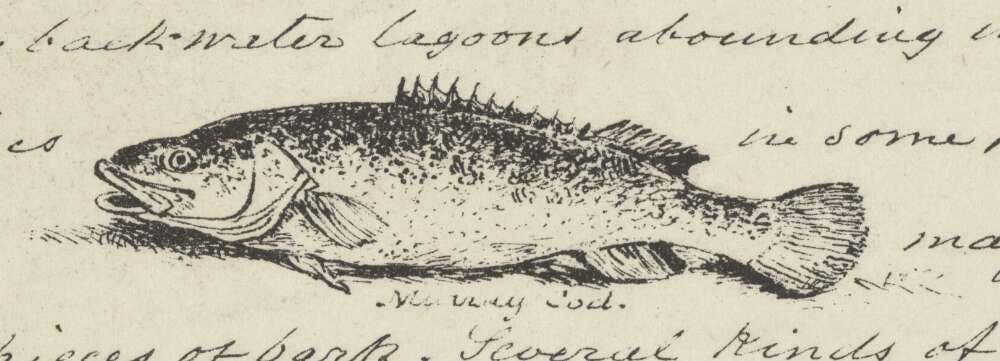
Murray Cod became known for their fine white flesh. At the time, many were very large. George French Angas, 1877
“We cannot exhaust the fish”
In the 19th century, there was by all accounts an abundance of large Murray cod, some reportedly 1.8 metres-long and weighing perhaps 80 kilograms. These long-lived predators cruised around the main channels of rivers, ate crayfish, mussels, fish and even ducks and mice when they could get them. For hungry gold miners, they must have seemed like a godsend.
In January 1855, an article in The Argus by an unnamed correspondent recorded that a semi-commercial fishery had begun in the Murray, supplying gold miners in Bendigo with fresh fish:
“The Murray abounds in splendid fish of the cod and bream species, varying in weight from an ounce to a hundred weight each,” they wrote.
The article recognised the demand for food from hungry gold miners, along with a supply of fish; the former seemingly insatiable and the latter apparently inexhaustible.
“We have a river unequalled in the colony in its magnitude. It is rich in delicious fish […] with which we intend at no distant period to cram the stomach of the rebellious digger of the Bendigo,” the correspondent wrote two months later.
By May 29th, the correspondent proposed exchanging the “superabundant” nuggets of the diggers with that of the “superfluous luxuries” in the Murray. A transparent pitch for distributing the wealth north of the goldfields. But they weren’t finished.
On 22 June 1855 in The Argus, the unnamed journalist wrote a lengthy proposal and presented a detailed business case – including estimates of outlays, profits and even methods (netting, hook and line, spearing) for catching fish that had been used by local Aboriginal peoples for thousands of years – for a commercial fishery in the Murray, supplying Bendigo.
Soon, a disillusioned miner with ambition recognised the opportunity. At the age of 27, Massachusetts-born Joseph Waldo Rice established the Lake Moira Fishing Company in mid–1855 with five others. Soon, that became the Murray Fishing Company or Murray River Fishing Company.
“We cannot exhaust [the fish],” suggested the Argus journalist, and ten times as many as they proposed could be harvested would not even deplete a small section of river.
The correspondent was grossly mistaken.
Boomtime and collapse
In the early days, a dozen or so men fished Moira Lake and the Murray and Edward rivers nearby, transporting a few baskets of fish to Bendigo by Cobb and Co. coach.
But within a few decades, hundreds of fishermen plied their trade from Albury to Lake Alexandrina with many thousands of fish transported to Melbourne, Sydney and Adelaide markets by railway each year.
Intensive fishing, questionable practices such as taking fish during the spawning season, a lack of regulation and the later rise of recreational fishing exhausted the supposedly inexhaustible resource.
Fish stocks fluctuated over time as fishing effort rose and fell, but catches hit rock-bottom in the early 1960s and never recovered. By then, many commercial fishers had already left the industry or retired.
It was only in the early 2000s that the unprofitable fishery was finally banned in all states of the Murray-Darling Basin.
Commercial fishing was largely responsible for the decline in Murray cod stocks over many decades. But the decline was hastened by dispossession of Aboriginal peoples, habitat destruction, the construction of dams and barriers, changes to river flows, the introduction of alien fishes and declining water quality.
And the decline in Murray cod numbers would itself have had far-reaching impacts on river food webs.
The legacy of the commercial fishery is still with us today, as is the sludge still being flushed into our rivers because of gold dredging.
Will the cod ever recover?
Despite widespread stocking campaigns and tight fishing regulations, Murray cod stocks were still “depleted” in the ACT and in South Australia as of 2020, and “undefined” in New South Wales and Queensland due to a lack of data. Only in Victoria were they considered “recovering”.
Across all jurisdictions, stocks are much lower than prior to European colonisation. Recovery of Murray cod stocks to pre-European levels is probably unrealistic and the recovery will be slow. But there is reason to be cautiously optimistic.
Scores of First Nations people, recreational angling and community groups, conservationists, and natural resource scientists and managers have worked hard to understand more about what makes this wonderful species tick. Many have put in place strategies to help ensure the Murray cod and many other native freshwater fish have a future.
There was a public outcry following recent mass fish kills, such as those in the Lower Darling–Baaka in 2018–19 and again in 2023. If this response is anything to go by, people care deeply about our rivers and the fish living in them.
While a commercial fishery in the Murray and its tributaries was probably inevitable following settlement, the Victorian goldrush provided the catalyst for its real beginnings and drove its early development.
The nameless Argus correspondent who started the cod rush would have never dreamt that their descendants would still be living with the consequences 170 years later.
Source: The Conversation (Au and NZ) – By Adrian Beaumont, Election Analyst (Psephologist) at The Conversation; and Honorary Associate, School of Mathematics and Statistics, The University of Melbourne
James Ross/AAP
A Victorian state Resolve poll for The Age, conducted with the federal May and June Resolve polls from a sample of about 1,000, gave Labor 41% of the primary vote (down one since April), the Coalition just 26% (down four), the Greens 15% (up five), independents 12% (steady) and others 6% (up one).
Resolve does not give two party estimates until near elections, but The Poll Bludger estimated this would be 62-38 or 63-37 to Labor, a three or four point gain for Labor since April.
The Victorian state November 2022 election result was already bad for the Coalition, when an eight-year-old Labor government was re-elected by a 54.9-45.1 margin. To go backwards by seven or eight points since that election is woeful.
The 11-point primary vote gap is likely to be the narrowest gap between the Coalition and the Greens in any federal or mainland state poll. The 2002 Tasmanian state election had just a 9.2-point gap between the Liberals and the Greens.
Resolve state and federal polls have been the most friendly for Labor since the 2022 federal election. But a Victorian Morgan poll in May gave Labor a 61.5-38.5 lead. It’s likely Liberal infighting, particularly over Moira Deeming, is undermining their appeal as a viable opposition.
There will be a byelection in the Liberal-held seat of Warrandyte later this year after Liberal MP Ryan Smith said he would resign in early July. The Liberals won Warrandyte by a 54.2-45.8 margin over Labor at the last state election. But the current polls imply that Warrandyte is winnable for Labor.
Labor incumbent Daniel Andrews led Liberal leader John Pesutto by 49-26 as preferred premier, a slight widening from 49-28 in April. In questions on the recent state budget, voters supported payroll tax hikes by 40-26, but they were opposed by 39-33 to a land tax increase.
Victoria and NSW to lose federal seats, while WA gains one
ABC election analyst Antony Green said the determination of the number of House of Representatives seats each state or territory is entitled to will be made in late July. On Thursday, the Australian Bureau of Statistics (ABS) released the population data this determination will be based on.
At the next federal election, New South Wales will be reduced from 47 to 46 seats and Victoria from 39 to 38, while Western Australia will increase from 15 to 16. Other states and territories will be unchanged, with Queensland on 30 seats, South Australia ten, Tasmania five, the ACT three and the NT two. The total number of House seats will drop from 151 to 150.
We won’t know the political impact of these changes until redistributions of the states with changed seat numbers are at least in draft form. Green said redistributions should be completed by July 2024. If the next election is a normal election for the full House and half the Senate, it will be held between August 2024 and May 2025.
Federal Resolve poll: Labor still has huge lead
I covered the contradictory Voice polls from this week’s Resolve and Essential polls on Tuesday. Voting intentions and other polling are below.
In the federal Resolve poll for Nine newspapers, conducted June 6-11 from a sample of 1,606, Labor had 40% of the primary vote (down two since May), the Coalition 30% (steady), the Greens 12% (steady), One Nation 6% (up one), the UAP 2% (steady), independents 8% (steady) and others 2% (steady).
An estimate based on preference flows at the 2022 election gives Labor about a 59-41 two party lead, a one-point gain for the Coalition since May. Resolve has been the most pro-Labor pollster.
On Anthony Albanese, 53% said he was doing a good job and 35% a poor job, for a net approval of +18, down nine points. Peter Dutton’s net approval was -20, “similar” to the outcome in May. Albanese led Dutton as preferred PM by 53-22, a slight narrowing from 53-20.
Labor was thought best on econmic management by 34-31 over the Liberals, a narrowing from 38-29. On keeping the cost of living low, Labor led by 27-23, in from 35-23 in May.
By 56-26, voters thought the Reserve Bank was doing a poor job, instead of a good job, and by 52-17 they thought the government should replace Reserve Bank governor Philip Lowe when his term ends in September, rather than extend his appointment.
On real wages, 55% (up four since May) expected their income to stay at the same dollar amount but fall behind inflation this year, 20% (down two) keep pace with inflation, 9% (steady) decrease and 5% (down two) increase above inflation.
Essential poll: Labor leads by 52-42 including undecided
In this week’s Essential poll, conducted June 7-11 from a sample of 1,123, Labor led by 52-42 including undecided (52-43 last fortnight). Primary votes were 32% Labor (down two), 32% Coalition (up one), 16% Greens (up one), 5% One Nation (down one), 1% UAP (down one), 9% for all Others (up two) and 5% undecided (steady).
Labor was trusted over the Coalition to handle six economic issues, with its closest lead a one-point margin on reducing government debt (32-31). On interest rates, 63% thought they would continue to rise, 30% that we have reached the peak but they won’t go down for a while and 7% thought they would start to fall soon.
By 55-15, voters supported a ban on high-risk uses of Artificial Intelligence (AI). On regulation of AI, 48% thought new laws should be created, 40% existing laws should be better enforced and 12% thought it should be left up to the market.
By 79-9 voters thought social classes still exist in Australia. Asked which class they belonged to, 49% said they were middle class, 30% working class and 4% upper class.
Morgan poll: 56-44 to Labor
In Morgan’s weekly federal poll, conducted June 5-11 from a sample of 1,393, Labor led by 56-44, a 0.5-point gain for Labor since the previous week. Primary votes were 35% Labor, 33.5% Coalition, 13% Greens and 18.5% for all Others.
Adrian Beaumont does not work for, consult, own shares in or receive funding from any company or organisation that would benefit from this article, and has disclosed no relevant affiliations beyond their academic appointment.
Aotearoa New Zealand experiences frequent earthquakes, including destructive ones such as those that struck Christchurch in 2010 and 2011, and near Kaikōura in 2018.
In the South Island, the largest seismic hazard is the 600km Alpine Fault, which runs the length of the Southern Alps and defines the boundary between the Australian and Pacific tectonic plates.
Painstaking geological research has revealed it produces very large (magnitude 7-8) earthquakes about every 300 years – with the most recent one in 1717. Scientists estimate there’s a 75% chance of a large Alpine Fault earthquake in the next 50 years. The odds of that earthquake being larger than magnitude 8 are 82%.
Despite the unparalleled quality of the paleo-seismic record of past Alpine Fault earthquakes, the next big earthquake will come without warning.
In anticipation of that event, geoscientists are working hard to understand how the Alpine Fault is being loaded prior to rupture and how characteristics of the fault may affect the rupture’s propagation and the resulting ground shaking.
One component of this work is to determine the geometry and internal structure of the Alpine Fault at scales much finer than can be studied using conventional seismometers spaced tens of kilometres apart.
A new experiment in Haast, a small, remote community near the coast in South Westland, is using technology called Distributed Acoustic Sensing (DAS). DAS is a rapidly emerging sensing technique that converts telecommunication fibre-optic cables into thousands of densely-spaced ground-motion sensors.
The Haast DAS experiment is a trans-Tasman collaboration between geophysicists from the Australian National University and Victoria University of Wellington Te Herenga Waka. It is the first of its kind across a major, active plate boundary fault, providing an unprecedented opportunity to study the internal structure of the Alpine Fault ahead of an anticipated large earthquake.
Between late February and early May this year, we made seismological measurements across the Alpine Fault using a computer-controlled laser system known as an interrogator attached to an unused (“dark”) fibre within a telecommunications cable installed by Chorus to provide broadband connectivity across the South Island. The telecommunications cable crosses the Alpine Fault just east of Haast.
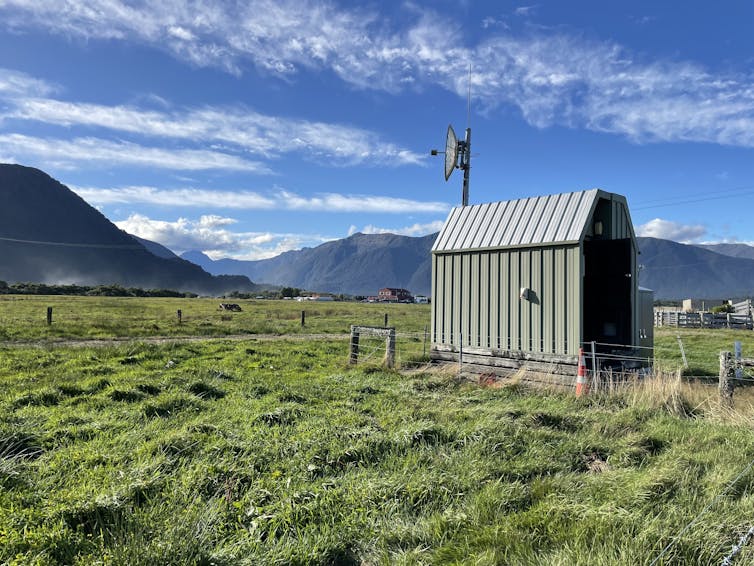
A fibre-optic communications hut in Haast near the Alpine Fault. Meghan Miller, CC BY-ND
Fibre-optic seismology
Pulses of light emitted by the interrogator are scattered as they travel along the fibre and interact with atomic-scale imperfections in the glass. Some of this scattered light travels backward along the fibre to the interrogator.
Vibrations of the fibre caused by passing seismic waves modulate this scattering and can be detected by recording the scattered light pulses.
The interrogator we have been using makes a thousand measurements per second at each of 7250 locations, spaced four metres apart along the Haast Pass Highway. This produces a staggering volume of data: about 1Gb of new data every minute, or 1Tb of data every day.
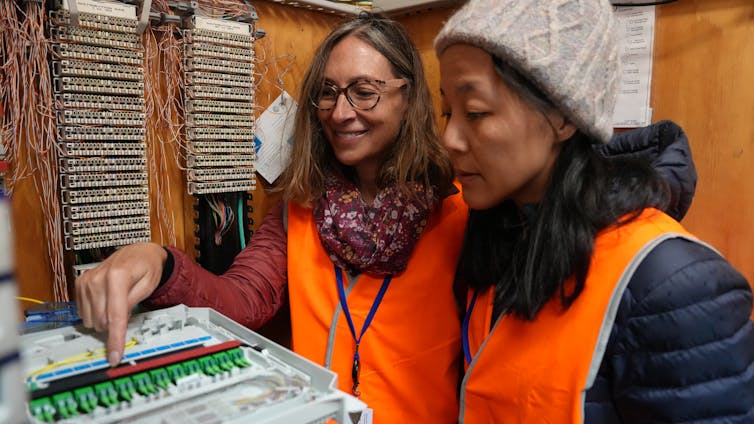
A computer-controlled laser system attached to a ‘dark’ fibre within a telecommunications cable is used to monitor passing seismic waves. Rory O’Sullivan/Chorus
The vibrations recorded at Haast include signals produced by nearby earthquakes (most of which are too small to be perceptible to humans) and other, larger earthquakes occurring throughout New Zealand and further afield. In mid-May, for example, we recorded several large earthquakes near New Caledonia, the largest of which prompted a Pacific tsunami warning.
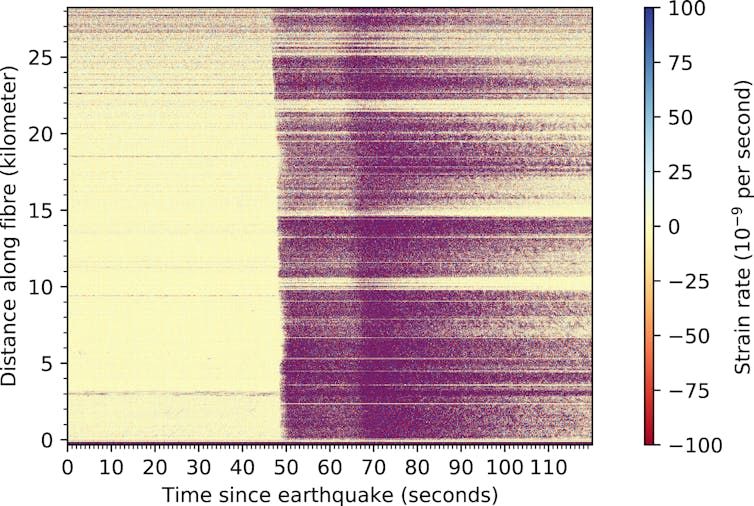
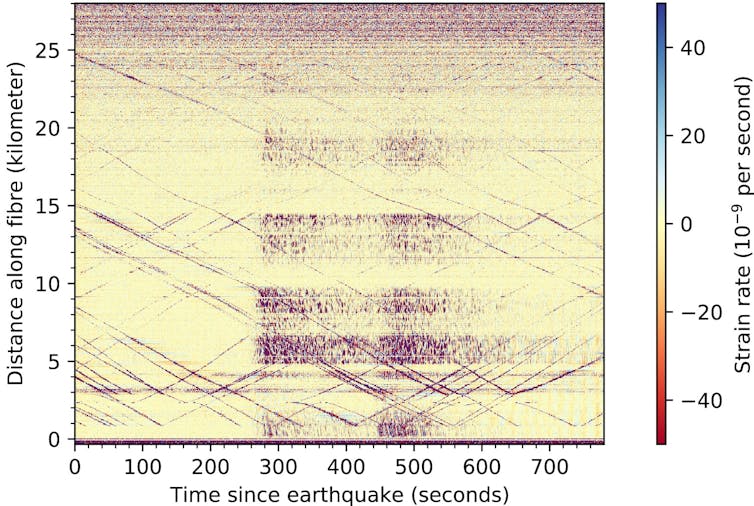
DAS recording of a magnitude 4.5 earthquake, 145km away from Haast. Author provided, CC BY-ND
The density of DAS measurements across the Alpine Fault provides an entirely new way of studying the fault’s internal structure. Seismic waves arriving in Haast from different directions and vibrating the fibre have interacted with the Alpine Fault in ways that affect the waves themselves.
The DAS recording below shows two small earthquakes (magnitude 2 and 3), occurring south of Haast about 30 seconds apart.
Big data provides detailed information
By vastly increasing the effective number of sensors, DAS provides a new lens with which to study processes as diverse as the structure of glaciers, the expansion and contraction of volcanoes in response to magma movements, the interaction of ocean waves with the deep seafloor and the effects of groundwater extraction on land subsidence.
A new challenge for the geophysical community is learning how best to store, share, process and analyse large volumes of DAS data. High-performance computing and artificial intelligence techniques (AI) are being developed and adapted to these data to enable researchers to recognise and distinguish signals of different origins.
At Haast, for example, the records of earthquakes of most interest to seismologists are interspersed with noise produced by highway traffic. Being able to separate out these two types of information is a task well suited to AI. In the future, it is likely AI will help tease apart DAS data to detect otherwise unrecognised signals produced by atmospheric and subterranean processes.
DAS recording of a M7 earthquake some 2000km from Haast in the Kermadecs, partially obscured by local traffic signals (diagonal lines). Author provided, CC BY-ND
DAS holds enormous promise for acquiring real-time, high-resolution measurements of processes using existing telecommunications infrastructure and rapid developments in AI and signal processing.
At Haast, it is providing fundamental new insights into the Alpine Fault ahead of the next big earthquake, informing the scientific analysis that underpins community preparedness and resilience.
Meghan S. Miller receives funding from the Australian Research Council and from AuScope which is part of the Australian National Collaborative Research Infrastructure Strategy (NCRIS).
John Townend receives funding from the Marsden Fund of the Royal Society Te Apārangi and Toka Tū Ake EQC.
Voon Hui Lai receives funding from AuScope which is part of the Australian National Collaborative Research Infrastructure Strategy (NCRIS).
New Zealand Parliament Buildings, Wellington, New Zealand.
New Zealand Politics Daily is a collation of the most prominent issues being discussed in New Zealand. It is edited by Dr Bryce Edwards of The Democracy Project.
As someone who has spent the last decade researching sexual harassment and violence in public spaces, the question I’m commonly asked is:
What advice should I give my teenage daughter about what to do when she’s harassed by men in public?
This question is, of course, completely understandable. We all want our loved ones to feel safe when they’re out in public.
Women and LGBTQ+ people experience high levels of harassment in public (though it is always important to remember gender-based violence is most likely to be perpetrated at home by someone you know). So there is a high likelihood this is something you or your loved ones will experience.
Street harassment is often not taken seriously as an issue. Many forms of this behaviour are not against the law, meaning victims have limited options for reporting or seeking support. This can make it challenging to know what to do if you’ve been harassed.
While it’s tempting to focus on what people can do to “stay safe” or respond effectively to harassers, this is ultimately the wrong question to ask.
Shouting back
In my recent research, I undertook in-depth interviews with 46 people about their experiences of harassment in public spaces. Participants often discussed how they responded to harassers. These responses could take many forms.
Some participants described verbally challenging harassers, often by telling them to “fuck off” or shouting back at them.
Physical acts of resistance were also common – including making gestures and pulling faces at a harasser. One participant described “blowing a kiss” at a group of men who had shouted homophobic abuse at him. “Sarah” described fighting back:
He just kept going. So there was a moment where he grabbed my arm […] and then I just gave him a big slap at that moment.
Resistance also involved participants refusing to limit their lives and actions because of street harassment, perhaps by defiantly continuing to walk home at night or holding a partner’s hand in public despite unwelcome comments.
Challenging harassers could be an important strategy for some participants to reclaim a sense of power and disrupt the normalisation of harassment. One participant reflected on how harassers (mostly men):
Feel so comfortable staring you down, that I don’t want to make them feel comfortable doing that. Sometimes I kind of like yell at them or make a gross face at them or give them the finger. Because it’s not innocent and it’s not innocuous.
Being silent or refusing to acknowledge an harassers’ actions was also commonly raised as a form of resistance, as it denied harassers the satisfaction of a response. However, one participant reflected that while silence could be a safer option because “you don’t get into any conflict with anyone”, it also felt “like I’m getting rid of my power”.
Some people find it takes many years to realise harassment is something that can be resisted, because it is often normalised as being “complimentary” or “flirtatious”. As one participant said:
Just having experienced it so many times that I’ve recognised the patterns and that it’s not just, oh this man’s just lonely and needs to talk. It’s like, no that’s predatory behaviour and I can call it out.
Although some participants talked about acts of resistance as moments of “snapping” in anger, these responses could perhaps best be thought of as a slow build up of rage after years of encountering street harassment.
There was often a delicate balancing act between resistance and maintaining a sense of safety. One older participant reflected on her life experiences of sexist and homophobic harassment, saying that while she tried to show defiance to harassers, she was also making “quick judgements […] because I don’t know if I’m going to be hit or not”.
Resisting harassers involved significant mental, emotional and physical labour, with participants having to make rapid assessments of how safe they felt to respond. Some people described being “worn down” by years of experiencing harassment.
People said they’d often been in shock or felt unable to process what had happened in the moment. It often wasn’t until hours after an incident they thought of the perfect retort. This could feel intensely frustrating.
While it’s tempting to offer people advice on what they “should” do in the moment, the reality is it is not always safe to “shout back”. It is also normal for people who have experienced sexual and other violence to experience automatic “fight, flight, freeze or fawn” responses.
Focusing on how victims should respond reinforces the myth victims are responsible for preventing and managing the violence of others.
What can we do?
So, what can you do if you’re being or have been harassed? The short answer is: do whatever you feel safe and able to do in the moment. There is no “correct” response.
For some people, it’s helpful to talk to a trusted friend or to share experiences through activist platforms like Right to Be (formally Hollaback!). This can help people recognise they are not alone in their experiences and street harassment is a systemic issue interconnected with other forms of gendered violence.
Self-care strategies including deep breathing, “grounding”, exercising or resting can help.
And we need to shift the focus to how we, as a community, can best support people who’ve experienced harassment. This might include upskilling community members to safely intervene as bystanders and to respond appropriately to disclosures. If someone does share their experience of public harassment with you, it is important to express belief and validation – and to ask them what support they need.
We need to collectively challenge the idea street harassment is “normal” or “not a big deal”, ensuring this behaviour is addressed as part of our efforts to prevent gender-based (and other) violence. This places the focus where it belongs: on the actions of harassers and the structural drivers of their behaviour.
Bianca Fileborn was formally a consultant for L’Oreal. They receive funding from the Australian Research Council, the Victorian Department of Justice and Community Safety, and ACON.
Imagine a fleet of ageing factories operating in neighbourhoods across Australia.
On most days the smoke from their stacks is hardly noticed. But on cold days when the smog settles in the densely populated valleys and towns, doctors notice unusually high numbers of people suffering from a range of problems, especially asthma.
Air-quality researchers are called in to study the problem in more detail. They confirm that neighbourhoods with these old factories have higher concentrations of fine particles, which are toxic air pollutants.
Invisible to the naked eye, particles are inhaled deep into the lungs, enter the bloodstream and cause a range of harms throughout the body. This air pollution is linked to higher rates of heart and lung diseases, strokes, dementia and some cancers. It also increases the risk of adverse pregnancy outcomes and poorer learning outcomes in children.
The researchers calculate that each year pollution from the factories causes 269 premature deaths in Sydney, 69 in Tasmania and 14 in Armidale, New South Wales.
While the factories are supposed to be built, maintained and operated to certain standards, the regulations are rarely if ever enforced. There isn’t even a central register to tell authorities how many of these factories exist, how old they are, and where they are located.
As news of this research is made public, how would the affected communities react? What might they demand of government?
Would it matter if they knew we were not talking about factories, but wood heaters?
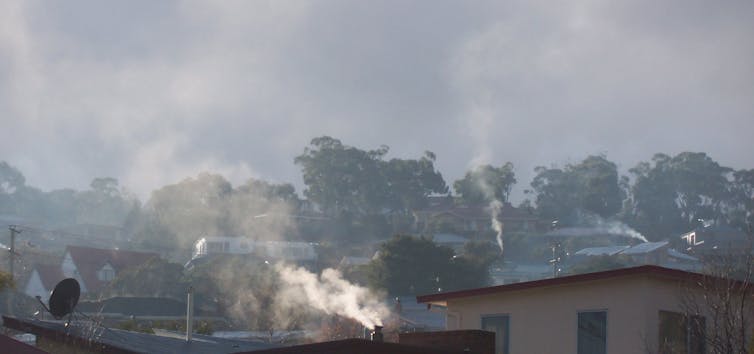
On a cold winter’s day, the haze from wood heaters hangs over Hobart, Tasmania. John Todd, Author provided
Every sentence of this story is true if you replace the word “factory” with “wood heater”.
Less than 10% of households own a wood heater, but burning wood for heating is the largest source of air pollution in many Australian cities and towns. While vehicle manufacturers and industry have greatly reduced emissions following tightened government regulations, domestic heating technology has not kept pace.
Today you would have to drive a diesel truck 500 kilometres to emit as much air pollution as a wood heater does in a single day. And that figure is for a wood heater that meets the current regulatory standards in Australia. Most do not.
Furthermore, wood heater pollution can be many times more severe when owners leave logs to smoulder overnight, burn poorly seasoned wood, or close down the air intake immediately after loading more wood.
Of course, particulate pollution is not all that wood heaters emit. When firewood is sourced from land clearing and illegal wood hooking, wood heaters add to net carbon dioxide and methane emissions in much the same as burning coal does because the carbon is no longer locked away in forests.
The best estimates are that less than a quarter of firewood is sourced from sustainable plantation suppliers. Even from those sources, the carbon emissions take many years to be sequestered into growing trees.
One study estimated that, if we stopped burning wood and clearing forest for heating, Australia would reduce its annual greenhouse gas emissions by 8.7 million tonnes. That’s about one-fifth of Australia’s car emissions.
If we stopped clearing forest and burning wood for heating, the reduction in emissions would be equal to about one-fifth of Australia’s car emissions. W. Carter/Wikimedia Commons, CC BY-SA
Inevitably, as Australia moves towards a zero-carbon future, the electrification of domestic heating will bring widespread health and economic benefits. It will prevent hundreds of premature deaths each year.
Hospitals will benefit from a reprieve in the cooler months, enabling doctors and nurses to better cope with seasonal pneumonia and COVID-19 outbreaks. And even those outbreaks will be less severe with reduced air pollution.
Besides being healthier, Australians will enjoy much lower heating costs as a result of using technologies such as reverse-cycle air conditioners (heat pumps). Remarkably, heat pumps are up to 600% efficient. That means, for every unit of energy they consume, they generate up to six units of heating energy.
As people learn about the impacts of wood heaters on their neighbours, friends and relatives — on pregnant women, young children and the elderly — many will make the switch.
Governments need to ensure safe and affordable heating technology is available to everyone regardless of their income.
Buy-back schemes, home efficiency subsidies, regulation and enforcement, including property market regulation (ensuring wood heaters are removed prior to sale), and restrictions on new installations all have a role to play.
We are conducting economic modelling to determine the most cost-effective policy settings for maximising the benefits of policies to manage the problem of wood heaters.
Fire and smoke will remain important experiences for Australians. They can be savoured primarily outside the city, under bright stars, in open deserts and rugged coastlines, in beach shacks and farm cottages, and as part of Indigenous cultural practices.
One day we will look back in amazement that we once tolerated wood heaters in our cities, right next to schools, homes and hospitals. We’ll regard them in much the same way that we think of polluting factories today.
Bin Jalaludin receives funding from the NHMRC and the ARC.
Fay Johnston is a Director of AirHealth Pty Ltd that supports the AirRater and Melbourne Pollen apps and other pollen prediction services. She receives funding from NHMRC and is the lead Investigator of the Centre for Safe Air, a NHMRC Centre for Research Excellence. She also receives funding from Asthma Australia, The Tasmanian, ACT and NT Departments of Health, the National Environment Research Program, and the NHMRC Healthy Environments and Lives (HEAL) Network.
Bill Dodd does not work for, consult, own shares in or receive funding from any company or organisation that would benefit from this article, and has disclosed no relevant affiliations beyond their academic appointment.
There is increasing talk about microcredentials in higher education. Earlier this week, the federal government announced the first group of courses it is supporting in a microcredential pilot program.
Microcredentials have been around in vocational circles for several years but are starting to be offered more widely by universities. The Universities Accord review panel has noted “microcredentials are likely to be increasingly in demand” as industries encourage lifelong learning.
The government’s pilot involves 28 courses in IT, engineering, science, health and education. But they can also be offered in fields as diverse as law, psychology and architecture.
What are microcredentials?
Microcredentials are small courses in a specific area of study.
They focus on updating or gaining new skills in a short time frame, typically ranging from a few weeks to a semester of study. They are viewed as a way to meet industry and employee needs quickly and address critical skills gaps.
For example, the pilot program includes a microcredential on phonics for teachers to develop their skills in literacy teaching. It also includes a course in disease management outbreaks for GPs and other health-care workers.
The cost varies but can range from a few hundred dollars to more than A$4,000. At the end of a microcredential, you may receive a stand-alone certificate, or the microcredential may provide a credit transfer pathway and count towards a degree.
They have been part of Australia’s industry skills landscape for a while now and have been delivered by TAFEs, industry organisations, and even by employers. However, they are still quite new in universities and many of the professions that universities have traditionally supported.
At the end of a microcredential you may receive a certificate or credit towards a degree. Shutterstock
The benefits of short-term study
Microcredentials can address critical skills gaps. They offer a way to update and progress your career without the long-term commitment and expense of a traditional graduate qualification.
You can also mix and match education and training to form a more bespoke study plan.
So it is no surprise microcredentials are gaining a lot of attention in the higher education sector. Most universities already offer “short courses”, “professional certificates” and “executive education”. These are all microcredentials by another name.
However, all this flexibility can be confusing and it may not be clear whether a microcredential is the right choice for you. Here are four things to consider.
1. What do you want out of further education?
If you need a specific skill, then a microcredential is a good idea. Ivan Samkov/Pexels
Microcredentials have a different purpose to traditional degrees.
Microcredentials can feel more like vocational education and training – highly targeted to cover precise competencies in a specific setting. This means they are rarely designed to develop broader capabilities and frameworks of professional practice you can normally expect from a degree program.
So in your career and educational planning, it is important to think through what you really need.
In a nutshell, if you need a specific skill, then a microcredential is ideal. However, if you need support bringing together diverse skills, knowledge, and dispositions to extend your professional practice, then a traditional degree may be a better investment.
2. What specific skill is on offer?
If your career plan does call for an improvement of specific skills, there are some important questions you should ask yourself before you enrol in a microcredential course.
The first is simply “does this course offer a skill I actually need?” Unlike the vocational system (such as TAFE), universities’ microcredential catalogue is still relatively small. The skills government and industry are choosing to support at the moment may not be the skills you need in your context or to advance your career.
In the hustle and bustle of a microcredential course, it is often assumed participants will be well prepared to manage their own learning.
Because they are so short, microcredentials generally focus very strongly on the content itself. How you learn it, is often up to you.
To be successful, you may be required to take greater personal responsibility for all your own learning strategies. This might include recognising what you already know (or don’t know) about the topic, taking a quick look at the readings to get an overview before reading them carefully for more details, and adopting processes to critically question learning materials.
Microcredentials can focus heavily on content, rather than giving students help to learn. Lum3n/Pexels
4. How will I use this in my job or profession?
You also need to think about how you will transfer your microcredential learning into your everyday work habits.
A science teacher who learns some physics content, for example, may need to alter their wider assessment strategies to incorporate what they learned. A physiotherapist with a new treatment technique may need to decide how to explain it to the clients they work with.
Traditional degrees are usually designed to help with this translation-to-practice work. Part of the trade-off with microcredentials is they can throw this translation work back to the course participant.
For this reason, microcredentials will work best for people who have established good professional development practices like reflection and peer-review, or for those who can engage in active and ethical experimentation with the new skill in their real-world practice.
Preparing people for professional environments has always been a core purpose of universities, and the adoption of microcredentials will likely expand the ways this can be done.
A microcredential, however, is a different educational proposition to a traditional degree course. So it is important the consumer chooses wisely.
But even though they are different, the two are still compatible. You may even find yourself engaging in both traditional university courses and microcredentials as you evolve and adapt throughout your career.
Simon Leonard works for the University of South Australia. He receives funding from the Australian Government’s National Careers Institute, the South Australian Department for Education, and Trinity College, Gawler.
You’re in a meeting, with something important to say. Just as you begin, a colleague sighs and shares an eye-roll with their buddy. And not for the first time.
Workplaces aren’t always harmonious. Whether it’s a cafe, factory or parliament, people do and say hurtful things. They may talk down to you, “call you out” in front of others, make jokes at your expense, gossip about you behind your back, or give you the silent treatment.
This type of incivility doesn’t quite rise to the level where you can complain to human resources and expect a satisfying resolution. Organisations typically have policies against racism, sexism, harassment and other overt forms of abuse. But incivility – being less severe and more difficult to prove – tends to fly under the radar.
Most of us will experience incivility at some point at work. More than 50% experience it weekly. According to a 2022 meta-analysis of 105 incivility studies, you’re more likely to cop it if you’re new, female, in a subordinate position, or from an ethnic minority.
Unkind and thoughtless words matter. As linguist Louise Banks says in the 2016 film Arrival: “Language is the first weapon drawn in a conflict.”
What people say and how they say it affects us deeply. One cruel remark can ruin your whole day. Left unchecked, incivility makes for a toxic workplace.
It’s tempting to simply blame bad character. Certainly such behaviour is much more likely from people with dysfunctional personality traits, especially the “dark triad” of narcissism, psychopathy and Machiavellianism.
Narcissists are self-obsessed and dominate social interactions. Psychopaths lack empathy and don’t understand social norms. Machiavellians are manipulative, self-interested and amoral.
But even “nice” people can be uncivil, with the three most common incivility triggers being because they feel let down by their leaders, are under more pressure than they can handle, or someone else was rude first – to them or others.
Incivility can therefore become a vicious spiral that turns victims and bystanders into perpetrators. That’s how toxic workplaces are born, develop, and perpetuate.
Leadership sets the tone. We’re social creatures and learn what’s expected and acceptable from those we look up to. Our leaders’ behaviour is infectious, and cascades down throughout and across organisations – for better or worse.
Incivility is most harmful when it comes from a supervisor: someone we’re supposed to trust, who’s supposed to look after us.
The power asymmetry means leaders’ inappropriate behaviour is less likely to be challenged. Take, for example, Harvey Weinstein, who for decades abused his position as one of Hollywood’s most successful film producers to sexually exploit women, before finally being held to account.
But managers can be derelict in their duty without being perpetrators. As in the case of sexual harassment, it may be easier to see and hear no evil, perhaps because the perpetrator is favoured as a high performer or a friend. With the capacity for one individual to make life a misery for many colleagues, this leadership failure can lead to a toxic workplace culture.
Authentic leadership ‘in the trenches’
It’s up to leaders to be the first movers against incivility and create positive work cultures with their own behaviour. What leaders will tolerate on their team sets the bar for how everyone else will behave.
With colleagues Stephen Teo and David Pick, I’ve surveyed 230 nurses across Australia about the leadership qualities that help reduce incivility.
Why ask nurses? Because their work is stressful and demanding. The strain of providing critical care for patients creates conditions conducive to conflict, from swearing to physical violence. Workplace incivility is frequent and these stressors increase the likelihood of medical mistakes. So there’s good reason to reduce incivility to improve health-care quality.
Nurses caption. Shutterstock
Our research shows that authentic leadership promotes workplace cultures with less incivility and better well-being. Such authentic leaders are aware of their own strengths and weaknesses, act on their values even under pressure, and work to understand how their leadership affects others.
What can you do?
Incivility isn’t okay. It should never be excused as “just part of the job”.
If this is happening to you, or others in your workplace, avoiding it won’t help you or your colleagues. Putting up with incivility is emotionally taxing, entrenches feelings of resentment and will likely lead to bigger conflicts down the track.
Responding with more incivility of your own isn’t a good idea. Retaliation rarely deters a person who engages in such behaviour and instead effectively endorses it.
One approach recommended by psychologists when dealing with high-conflict personalities is known as the BIFF technique: be brief, informative, friendly and firm.
When some says something mean, you might respond, as calmly as possible, along the lines of: “Your comments are hurtful and damage our working relationship. Please, let’s keep things professional.”
Don’t retaliate. Be brief, informative and friendly but firm. Shutterstock
If the behaviour persists, approach your supervisor. Again, stay calm. Explain what’s happening and how it’s affecting you. You don’t have to go at it alone either, consider inviting colleagues who can support you, and your claims.
Will this fix the problem? Possibly not. Your manager might simply shrug their shoulders, or arrange a “mediation” that resolves nothing. But saying and doing nothing will almost certainly leave you unsatisfied.
If your manager is the perpetrator, contact your HR department first (if your organisation has one) or else your union. The union can offer advice on other avenues to seek redress.
Statutory agencies such as Australia’s Fair Work Ombudsman, Employment New Zealand and the UK’s Advisory, Conciliation and Arbitration Service have the power to investigate workplace complaints, and to intervene in disputes through formal conciliation or arbitration. But before embarking on such a process, it’s best to get expert advice. You might get justice, but also still need to find another job.
Incivility is unlikely to stop on its own, however. Your voice matters and can help break the cycle.
Andrei Lux works for Edith Cowan University and is a Director of the Australian and New Zealand Academy of Management.
Food prices are rising at the fastest rate in almost four decades, with fruit and vegetables up more than 22% in the past year. As often happens during a cost of living crisis, there have been calls to remove the goods and services tax (GST) from fresh produce.
But is this actually a good idea? And if not, what alternatives might there be to help people currently struggling to afford fruit and vegetables?
It is a popular idea. In 2022, 76% of New Zealanders surveyed supported removing GST from food. But as some economists have warned, tinkering with the tax system might not actually deliver the desired results for low-income families. Put simply, those with the income to buy more fruit and vegetables – high-income households – will benefit the most from GST exemptions on fresh produce.
New Zealand currently has one of the most comprehensive and effective goods and services tax systems globally. Any changes would require substantial evidence demonstrating the benefits of change.
Additionally, as many households struggle to cover costs, any additional cash gained from eliminating GST from fresh produce will go towards more pressing expenses like rent and power. If the government wants to fight obesity during a cost-of-living crisis, it needs to develop a more targeted approach.
Looking beyond GST
My research, to be published later this year, looks into the literature on GST and tax expenditure from New Zealand, Australia, the United States and United Kingdom. I examined how different countries use a variety of tax measures to help low-income families buy fruit and vegetables.
I wanted to examine whether dropping GST would help reduce obesity by making nutritious food more accessible. In fact, the literature suggests it does not significantly improve affordability and healthy eating choices for such families.
These households tended to allocate additional income (or tax saved) to other food or non-food items, such as meats, clothing or housing.
My study shows there are more targeted options within New Zealand’s welfare system that can be used to help struggling families afford healthier foods.
Targeted assistance overseas
One option is to issue a GST refund on fresh fruit and vegetables purchased.
But there is no guarantee the extra money will be spent on purchasing healthy food. Similar to removing GST before purchase, the extra money will likely be diverted to other more pressing priorities, particularly in low-income households.
If the primary aim of making fresh fruit and vegetables more affordable is to increase healthy eating, then a cash rebate won’t help. But there are policies in use overseas that New Zealand could use as a starting point to directly help low-income families afford fresh produce.
One particularly interesting option is the targeted smart-card system for buying fruit and vegetables. In the US, it’s known as the Supplemental Nutrition Assistance Program scheme (SNAP), and in Britain as the Healthy Start scheme.
SNAP provides monthly funds for people to buy food using a benefit card (similar to a debit card) to buy groceries. They can’t use it to buy non-food items or alcohol. Healthy Start is for pregnant women and mothers with children under four to buy healthy food and milk, also delivered via a type of debit card.
What targeted help could look like
In New Zealand, we already have the food or hardship grants available through Work and Income. But these are only given in exceptional circumstances, and are limited to once every six months.
These food grants can also be used to buy anything an individual or family needs, including toiletries and other non-food items.
Introducing a regular and targeted healthy food grant via an electronic smart card would be a more effective way to ensure low-income families are able to access healthy food.
The cards could be protected with biometric data to prevent abuse or transfer. Eligibility criteria and account limits could be revised annually depending on the inflation rate to avoid any erosion of the card’s value.
A targeted smart card could help low-income families access fruit and vegetables, regardless of the cost of living. Peter Cade/Getty Images
Other ways to encourage healthy eating
The literature shows that a targeted smart-card system could help reduce New Zealand’s high obesity rate during the current cost of living crisis, if combined with an increase in education to prioritise healthy eating.
Instead of removing GST, the revenue gathered could be used to provide that extra nutritional information and education.
My research found that the costs of tampering with New Zealand’s current GST system far outweigh the benefits likely to accrue from such a change. A targeted smart-card scheme is arguably a more effective measure to improve affordability and healthy eating habits – and the benefits would outweigh the setup costs.
Ranjana Gupta does not work for, consult, own shares in or receive funding from any company or organisation that would benefit from this article, and has disclosed no relevant affiliations beyond their academic appointment.
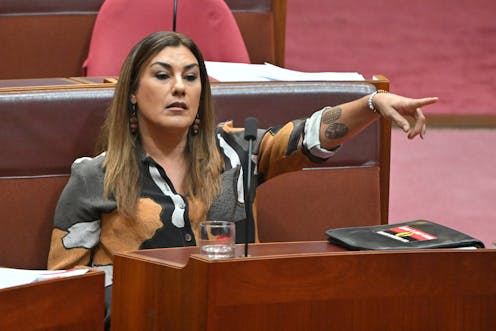
Two women ended up in tears in the Senate this week, as the Higgins imbroglio exploded yet again and in the process claimed a scalp.
But the scalp wasn’t that of Finance Minister Katy Gallagher, who was targeted by the Liberals.
Instead it was one of the Liberals’ own, David Van, who was banished from the Liberal party room by Peter Dutton, after allegations from crossbencher Lidia Thorpe that the Victorian senator had sexually assaulted her, a claim he strongly denied.
The Liberals knew their pursuit of Gallagher for allegedly misleading parliament over her knowledge of the Brittany Higgins matter would carry some political risk. But they could never have imagined they’d be damaged in such a dramatic fashion, ceding one of their senators to the crossbench.
Federal politics, the tone of which has been better than in the last parliamentary term, once again descended into a toxic mire.
Van’s spectacular fall began with Thorpe (formerly with the Greens) on Wednesday shouting interjections when he was speaking about Labor’s attacks on Liberal women over the Higgins issue, and parliamentary standards. She alleged he’d “harassed” and “sexually assaulted” her, which he immediately rejected.
In a broader set of allegations on Thursday, in which she didn’t specifically name Van, a tearful Thorpe said: “I experienced sexual comments, and was inappropriately propositioned by powerful men. One man followed me and cornered me in a stairwell.
“There are different understandings of what amounts to sexual assault. What I experienced was being followed, aggressively propositioned and inappropriately touched. I was afraid to walk out of the office door. I would open the door slightly and check the coast was clear before stepping out,” she said.
“To me it was sexual assault, and the [Morrison] government at the time recognised it as such,” she said, because it immediately moved the person’s office.
Between late Wednesday and Thursday morning, other allegations about Van came to Dutton, with former Liberal senator Amanda Stoker confirming to him that Van had groped her.
Stoker later publicly recounted how “in November 2020 Senator Van inappropriately touched me at an informal social gathering in a parliamentary office. He did so by squeezing my bottom twice. By its nature and by its repetition, it was not accidental. That action was not appropriate. It was unprofessional and uninvited.” Van subsequently apologised.
Even if it hadn’t inadvertently blown itself up, the Coalition was always going to struggle with its attack on Gallagher. The minister, with caucus – in Anthony Albanese’s words – “1000%” behind her, could simply stare down her interrogators, although that meant enduring a good deal of heat.
Gallagher’s 2021 claim, at a Senate estimates hearing, that she had no prior knowledge of Higgins’ allegation she was raped, was wrong, and therefore misled parliament.
Indeed, Gallagher had admitted privately to Liberal then-minister Linda Reynolds on that same night that she had some prior knowledge. This week she refused to be drawn on details of her interactions around receiving this information, leaving the opposition empty-handed. She did say – a crucial point – that she hadn’t passed on the information, obtained from Higgins and her partner David Sharaz, to Albanese or Labor’s Senate leader, Penny Wong.
Labor has been able to deploy effectively the argument that by revisiting the Higgins issue the Liberals will discourage women coming forward with allegations they have been assaulted. Albanese said: “My concern here is that we know that about 13% of sexual assault victims actually take action, go forward to police. And I’m worried that the focus that is going on at the moment will have a triggering effect and will deter people from coming forward.”
The debate also turned to the ethics of the disclosure of previously private communications, most notably the leaked text messages between Sharaz and Higgins.
This disclosure – involving court material – was widely condemned, and the Liberals struggled to win their argument that however the material became public, they were perfectly justified in dealing with the content. The opposition maintained it was pursuing accountability, but that was blurred by the counter argument about Higgins’ right of privacy.
The latest round of the Higgins issue has also been entangled in what we can call the media wars. The disclosure of the texts and other material has been spearheaded by The Australian, which has given massive coverage to changing the narrative of the Higgins story, in a direction that is less favourable to her. Some other sections of the media were not keen to follow up The Australian’s stories.
While Gallagher’s survival was always guaranteed, the attacks have taken their toll. By Thursday she was teary, lamenting that the work done on having women treated better and encouraging them to come forward when something happened to them had been set back.
She also conceded: “I am sorry Senator Reynolds is clearly upset about what happened to her. I am sorry about that. And I told her that.
“But I am also very sorry for Brittany Higgins, I’m sorry documents about her personal life have been leaked, I’m sorry a confidential draft claim for compensation [for Higgins] found its way onto the front pages of a national newspaper.”
The Higgins story has a cast of women. Not just the young woman, a former Liberal staffer, who made the rape allegation. Women were on the front line of the political battle around that story: in 2021 then-ministers Reynolds and Michaelia Cash and Labor spear carriers Wong, Gallagher and then-senator Kristina Keneally.
In the media, women broke the story: Sam Maiden (News Corp) and Lisa Wilkinson (Ten). Janet Albrechtsen (The Australian) has led the counter-narrative.
The separate events that took centre stage this week regarding Gallagher and Van all happened some years ago. In the wake of the damning 2021 Jenkins report on behaviour in parliament house, that workplace has seen reforms, with new independent processes for providing support and handling complaints. People report conduct has improved.
Regardless of this, many members of the public, hearing the news reports of this week, will conclude little has changed. And some voters might think politicians should be talking less about their workplace and more about the issues confronting those in the world outside.
Michelle Grattan does not work for, consult, own shares in or receive funding from any company or organisation that would benefit from this article, and has disclosed no relevant affiliations beyond their academic appointment.
More than 20 prominent Australian sport bodies have taken a united stand, publicly declaring their support for a “yes” vote on the Indigenous Voice to parliament.
Why, as custodians of sport, have they chosen to take a public stance on a political issue that transcends the athletic domain? And why are they advocating for a “yes” vote?
Some proponents of the “no” vote contend that sports bodies should have no place in political debate. The role of sport organisations, they argue, ought to be simple: they organise competitions and manage athletes.
However, sports bodies have a charter to be engaged with the community and are committed to numerous groups and causes. Pathways and support for Indigenous people are a core part of sports having a sense of social responsibility – they don’t function in a socio-political bubble.
That said, sport organisations have often been ineffective custodians for Indigenous players’ personal and professional development. Indeed, while First Nations people have long been notable performers in many sports, rarely have they had a voice in the running of their workplaces. What’s more, many Indigenous athletes have suffered racism on the job.
So, while sports bodies are notable advocates of a Voice to parliament, they might want to consider how much of a voice Indigenous athletes have in their own organisations.
Why a ‘yes’ vote?
Sport organisations provide opportunities for Indigenous athletes, whom they value for their talent.
But there’s now more to it than that. Many sport bodies have made commitments to the wellbeing of their Indigenous employees.
Multiple sports feature Reconciliation Action Plans, and Indigenous cultures often feature in the pre-match ceremonies of major sport events, such as the Welcome to Country. There are also dedicated Indigenous rounds in the AFL, NRL and Super Netball.
Given many sport bodies are committed to Indigenous wellbeing and community engagement, it seems logical for sports bodies to publicly support the Voice proposal.
The interplay of sport organisations and social and political causes is hardly new. In Australia, an obvious recent example is the vote for same-sex marriage, which was supported by numerous sports bodies.
These organisations have core values around cultural diversity and policies to promote inclusion, so their support of the “yes” campaign was hardly surprising.
In terms of the Voice campaign, sport organisations appear to have undergone their own due diligence in terms of finalising a position. The AFL, for example, organised educational seminars about the referendum and conducted anonymous polls among staff and players with the aim of aligning its own position with that of its workforce.
This has been a process of consultation rather than indoctrination. For example, “no” campaign leader Nyunggai Warren Mundine was invited to speak at Collingwood Football Club. He said “They got the ‘yes’ campaign to do a presentation and then they got me to come in and give a presentation – that’s the way to do it”.
That said, it’s difficult to find either a sports body or an athlete publicly advocating “no” to the Voice.
Whereas rugby star Israel Folau used his public profile to galvanise opposition to the same-sex marriage proposal in 2017, there’s no equivalent athlete campaigner opposed to the Voice.
Voices against sport
In the meantime, there’s plenty of angst among “no” campaigners that sports are supporting the “yes” vote. It is, of course, reasonable to ponder whether they would hold that view if the sports advocated a “no” vote.
But, leaving that aside, what are the misgivings about sports bodies taking a public position?
Former Australian Prime Minister John Howard, well known for donning a green and gold tracksuit for photo opportunities during Wallabies Tests or the Olympics, contends that sports bodies have no place taking a stand on the Voice: voting, he stresses, is a matter for individuals, and leagues cannot speak for them.
For Howard, sport should only be an “escape” from politics, with fans mingling to focus on having a good time and cheering their team.
Current Opposition Leader Peter Dutton takes a similar view, but argues that sports fans are being lectured to by “elites” within leagues like the AFL or the NRL. The inference here is that a coterie of sport executives has conspired to dictate a position in the absence of any consultation.
Sport, from the perspective of these naysayers, should be silent on the Voice.
Yet that perspective overlooks the way sport is run today.
Social responsibility
Whether the same-sex marriage campaign, empowerment of women or climate change, sports increasingly take a view because they have a responsibility.
Sports bodies have mission statements declaring contributions to society, among which is support for groups and communities that, historically, have been on the margins of the nation’s sporting culture.
That said, Indigenous employees within sport have long been rendered peripheral to decision making. Sports bodies have too often not consulted First Nations’ players or administrators when making decisions for the “good of the game”.
Yet, at the same time, they celebrate Indigenous peoples for their substantial contribution to sport.
When sports bodies say they support a Voice to parliament, they might also reflect on what that looks like in their own backyards.
The authors do not work for, consult, own shares in or receive funding from any company or organisation that would benefit from this article, and have disclosed no relevant affiliations beyond their academic appointment.
The ocean holds 60 times more carbon than the atmosphere and absorbs almost 30% of carbon dioxide (CO₂) emissions from human activities. This means the ocean is key to understanding the global carbon cycle and thus our future climate.
The Intergovernmental Panel on Climate Change (IPCC) uses earth system models to project climate change. These projections inform critical political, social and technological decisions. However, if we can’t accurately model the marine carbon cycle then we cannot truly understand how Earth’s climate will respond to different emission scenarios.
In research published today, we show that zooplankton, tiny animals near the base of the ocean food chain, are likely to be the biggest source of uncertainty in how we model the marine carbon cycle. Getting their impact on the cycle right could add an extra 2 billion tonnes to current models’ assumptions about annual carbon uptake by the ocean. That’s more carbon than the entire global transportation sector emits.
Roughly 10 billion tonnes of carbon are being released into the atmosphere each year. But the ocean quickly absorbs about 3 billion tonnes of these emissions, leaving our climate cooler and more hospitable. If we price carbon at the rate the IPCC believes is needed to limit warming to 1.5℃, this adds up to over A$3 trillion worth of emission reductions accomplished naturally by the ocean every year.
However, we know the size of the ocean carbon sink has changed in the past, and even small changes can lead to big changes in the atmosphere’s temperature. Thus, we understand the ocean acts as a thermostat for our climate. But what controls the dial?
When phytoplankton die, they sink and trap much of their carbon deep in the ocean. It can remain there for centuries to millennia, locked away safely out of contact with the atmosphere.
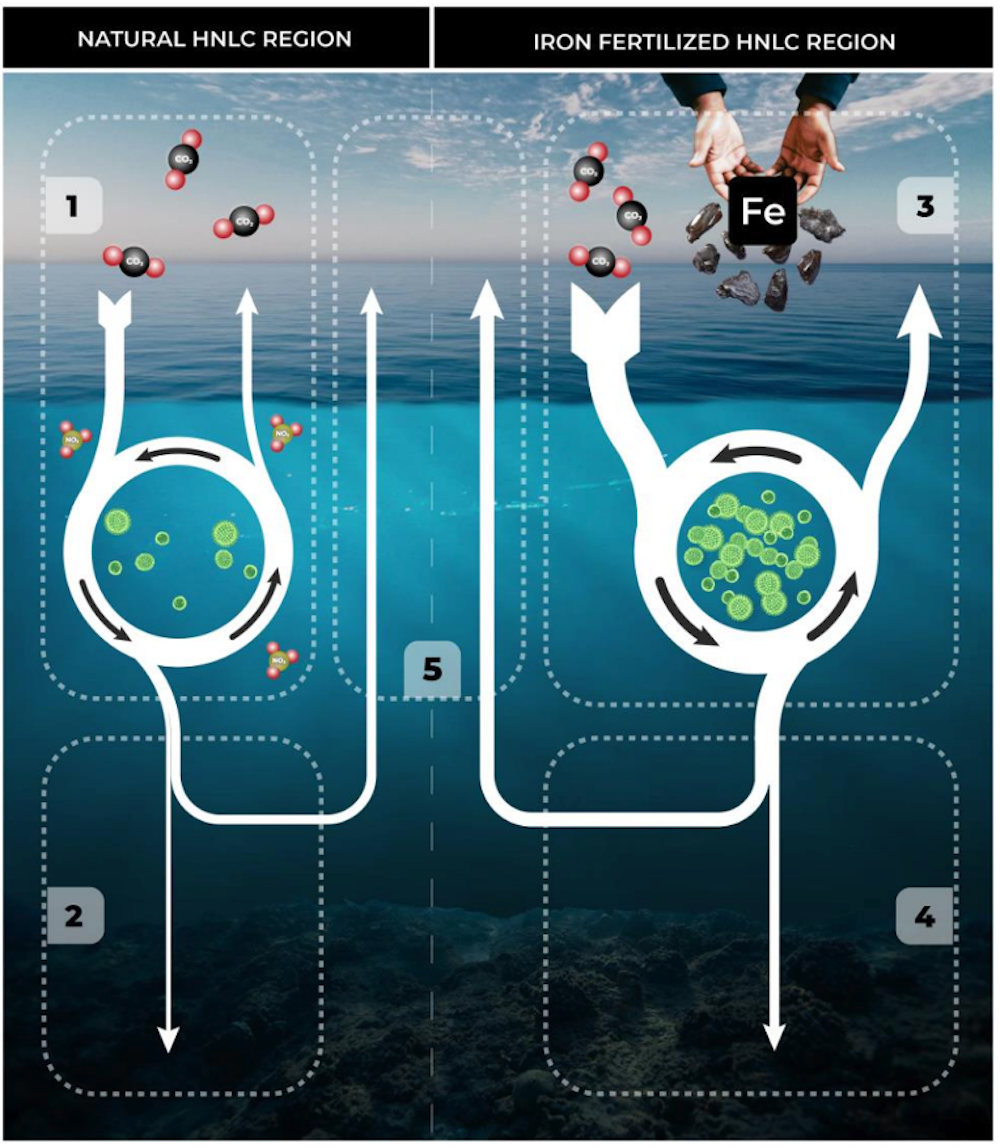
Any changes to the strength of this biological carbon pump will be felt in the atmosphere and will change our climate. Some have even proposed enhancing this biological pump by artificially fertilising the ocean with iron to stimulate phytoplankton. It’s possible this could sequester as much as an extra 20% of our annual CO₂ emissions.
A diagram of the natural biological carbon pump and how iron fertilisation could artificially enhance it. Rohr et al (2019), Author provided
Despite its importance for the global climate and food production, there are large gaps in our understanding of how the marine carbon cycle is expected to change. Most earth system models differ in how the cycle’s major components will respond to a changing climate. Models simply can’t agree on what will happen to:
net primary production – the carbon consumed by phytoplankton resulting in growth of marine plants at the base of the food web
secondary production – zooplankton growth, which is an indicator for fisheries, since fish eat zooplankton
export production – the biological pump of carbon transferred to the deep sea.
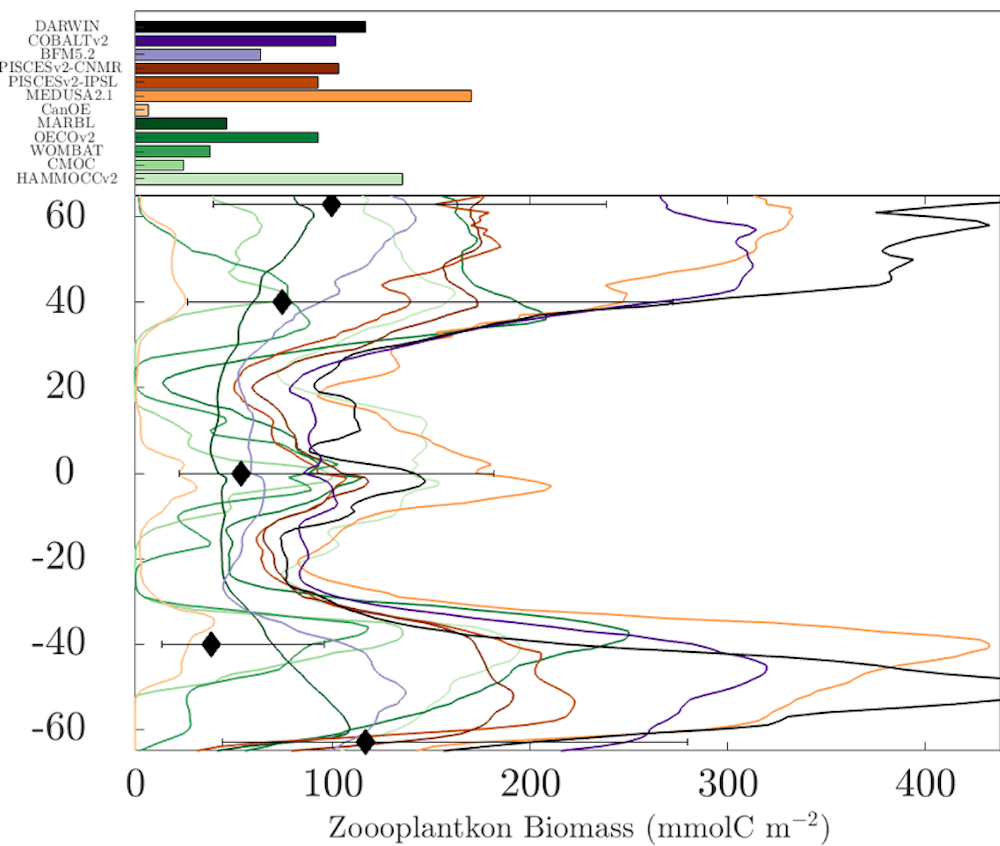
To diagnose what might be going wrong, we compared the marine carbon cycle in 11 IPCC earth system models. We found the largest source of uncertainty is how fast zooplankton consume their phytoplankton prey, known as grazing pressure.
Models differ hugely in their assumptions about this grazing pressure. Even if zooplankton were exposed to the exact same amount of phytoplankton, the highest assumed grazing rate would be almost 100 times as fast as the slowest rate.
This is because some models effectively assume the ocean is filled entirely with slow-grazing shrimp. Others assume it is teeming exclusively with microscopic, but rapidly grazing ciliates. In reality, neither is true.
Differences in prominent models’ estimates of the amount of zooplankton at different latitudes. Adapted from Rohr et al (2023), Author provided
Models must make up for such large differences in zooplankton grazing by making additional assumptions about how fast phytoplankton grow and how quickly zooplankton die. Together, these differences can be balanced in a way that allows most models to simulate the present-day amount of carbon consumed by phytoplankton and transferred to the deep sea.
However, that is only because we can observe what those values should be. We can then tune models until we ensure they get the right answer.
Yet, even though our best models can admirably recreate the present-day ocean, they do so for different reasons and with dramatically different assumptions about the role of zooplankton. This means these models are built with fundamentally different machinery. When used to test future emissions scenarios, they will project fundamentally different outcomes.
We cannot know which projections are correct unless we know the true role of zooplankton.
We ran a sensitivity experiment to show how small changes in zooplankton grazing can dramatically alter marine carbon cycling. We considered two sets of experiments, one control and one in which we increased both zooplankton grazing rates and phytoplankton growth rates, such that both were tuned to the exact same total carbon consumption by phytoplankton.
This increase in how fast zooplankton can graze was only a fraction of the difference between assumed grazing rates seen across IPCC models. Despite this, we found even this small increase led to a huge difference in the percentage of carbon consumed by phytoplankton that was eventually exported to depth and transferred up the food chain.
Ocean carbon storage increased by 2 billion tonnes per year. Zooplankton carbon consumption increased by 5 billion tonnes.
From a climate perspective, that is double the maximum theoretical potential of iron fertilisation. From a fisheries perspective, that leads to a 50% increase in the size of the global zooplankton population on which many fish feed. This matters for global food supply as the ocean feeds 10% of the global population.
This work shows we must improve both our understanding and modelling of zooplankton. With limited resources and an immense ocean, we will never have enough observations to build perfect models. However, new technologies for measuring zooplankton are making it easier to make autonomous, high-resolution measurements of many important variables.
We must make a concerted effort to leverage these new technologies to better understand the role of zooplankton in the marine carbon cycle. We will then be able to reduce uncertainties about future climate states, advance our ability to assess marine-based CO₂ removal, and improve global fisheries projections.
Anthony Richardson receives funding from the Australian Research Council Discovery Project DP230102359 and Australia’s Integrated Marine Observing System (IMOS) enabled by the National Collaborative Research Infrastructure Strategy (NCRIS).
Elizabeth Shadwick receives funding from Australian Government’s Antarctic Science Collaboration Initiative, and Australia’s Integrated Marine Observing System (IMOS) enabled by the National Collaborative Research Infrastructure Strategy (NCRIS).
Tyler Rohr ne travaille pas, ne conseille pas, ne possède pas de parts, ne reçoit pas de fonds d’une organisation qui pourrait tirer profit de cet article, et n’a déclaré aucune autre affiliation que son organisme de recherche.
In the 19th century, many of Australia’s urban creeks and rivers were in poor shape. Melbourne’s major river, the Maribyrnong, was full of waste from abattoirs, tanneries and factories.
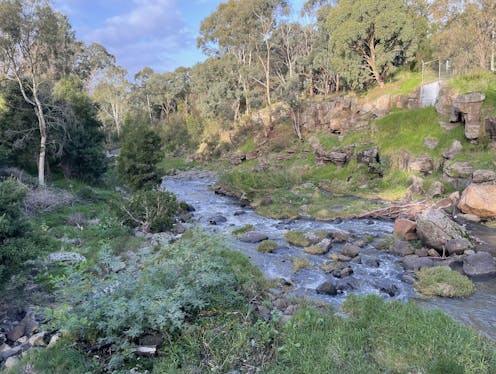
I live near Darebin Creek in Melbourne’s north, which was next to a tip and often polluted until cleanup efforts began in the 70s. Now many creatures have returned.
But while many waterways have been cleaned up, others have languished. As late as 2011, Sydney’s notoriously polluted Cooks River was so full of industrial waste and sewage it was dubbed an “open sewer”. Now, it’s starting to improve.
Here’s what the restoration of Darebin Creek shows us about the successes and challenges of bringing life back to our urban waterways.
Darebin Creek isn’t pristine – but it’s come a long way since the 1970s. Shutterstock
Rivers or rubbish dumps?
Many of us, like Mole from Wind in the Willows, find ourselves “intoxicated with the sparkle, the ripple, the scents and the sounds…” of our waterways.
But we don’t always treat them very well. European settlement had a big effect on creeks and rivers, we’ve often used them as convenient waste dumps. Pump industrial waste, chemicals or sewage into them and watch it float away. Once we might have thought “problem solved”. Now we know differently. Treating rivers as dumps can (unsurprisingly) damage or even wipe out the life in it.
Now, we’re starting to see the benefits. My local waterway, Darebin Creek, is typical of many urban creeks and I love spending time here. Running in the morning, I pass ducks, swans, and moorhens. Kookaburras laugh in the trees, insects buzz in the morning light. It’s beautiful.
Kookaburra in the Darabin Parklands. Oliver Jones
In the creek itself live frogs, invertebrates and fish. Endangered species like the growling grass frog and matted flax-lily can now be found.
There are even platypus sightings, which means there’s food there for them like insect larvae and yabbies.
What is now the expansive Darebin Parklands was once was used as a farm, then a quarry, then a tip earmarked for a freeway, and the creek was little more than a stormwater drain. Even today, leachate from the old tip seeps out.
The creek’s transformation – especially in its southern reaches – is due in large part to one determined woman, Sue Course, who was rightly recognised for her work in the 2021 Australia Day honours.
In the 1970s, Sue and her husband Laurie formed a residents’ group and lobbied successfully for the land to be given to the public. The group spent decades removing weeds and rubbish and planting trees.
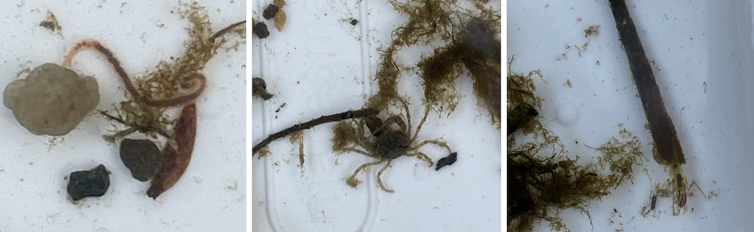
Three invertebrates I found in Darebin Creek – a bloodworm (chironomid larva), freshwater crab and caddis fly larvae. Oliver Jones
Improvements are often connected to community efforts to revegetate, as well as watching for chemicals or other pollutants pumped into the stream. These efforts have to be ongoing. As recently as 2016, eels and other fish died in Darebin Creek due to insecticide being washed into the water.
And the wildlife of the creek has not fully recovered, as the local council points out. The remarkable plains-wanderer once roamed the creekline, but the last sighting was in 1972.
How do we fully restore our city waterways?
Native species reliant on our city waterways still face threats. These include:
catchment pollution. A catchment is an area of land where water collects when it rains and then flows to a low point (such as a stream). Pollution in a creek or river’s catchment upstream can affect the whole waterway. A recent study on pesticides found the major source was residential use, meaning the chemicals were washed into the wetlands. A similar project used GPS to track plastic bottles down Melbourne’s creeks.They found bottles could travel many kilometres downstream, or get stuck and break down locally.
organic micropollutants. The way we live means we use a large range of chemicals, including cosmetics, pharmaceuticals, pesticides, fertilisers, and artificial sweeteners. A detailed study of the Yarra, Sydney and Brisbane River estuaries found traces of these chemicals in the water, including drugs, medication, personal care products, pesticides, and even food additives. Even though they are present in very low concentrations they can still be a worry. A recent study from Monash University showed that concentrations of pharmaceuticals in rivers, though far below the therapeutic dose can still affect fish behaviour.
stormwater. When rain runs off hard surfaces like roofs, driveways, and roads, it runs into storm drains and creeks, carrying debris, bacteria, soil, oil, grease, pesticides and other pollutants with it. In 2016 it was estimated that 95% of litter on Victorian beaches was transported there from suburban areas through stormwater drains.
Rubbish on our beaches is nearly all from stormwater runoff. Shutterstock
nutrients. Fertiliser runoff from farms and wastewater spills in urban areas can bring too many nutrients like nitrogen and phosphorus into waterways. Overloads of nutrients can trigger sudden plant and algae growth. These block light and reduce oxygen levels, leading to the death of fish and other aquatic animals. Some algae and cyanoabacteria (that also grow in these conditions) produce toxins that can make us sick too.
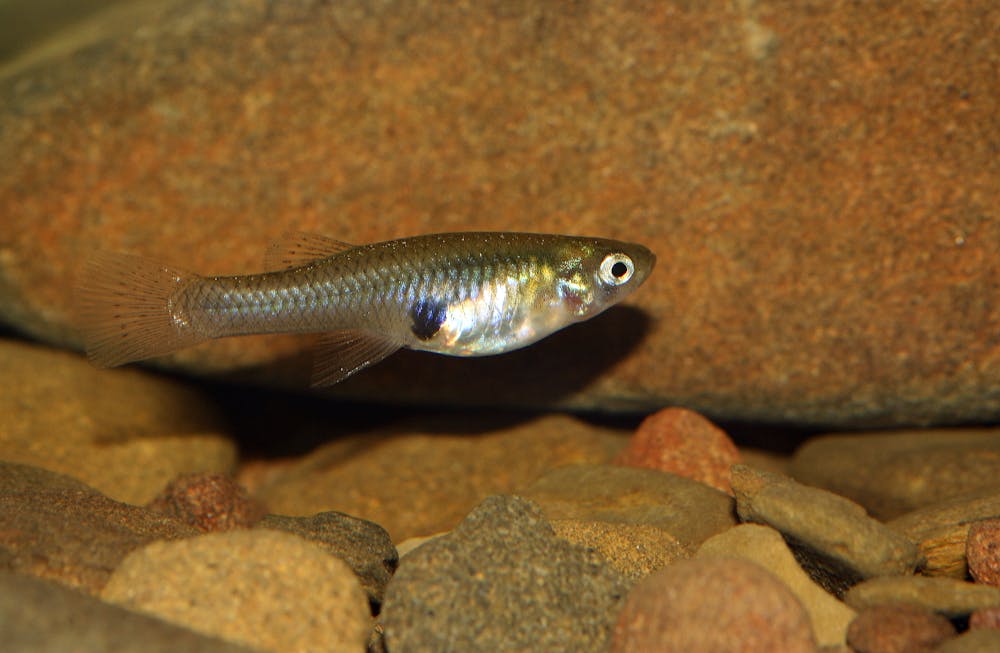
invasive species. Many invasive species have been introduced into Australian waters including the infamous carp and mosquito fish. These prey on or outcompete native species, damage habitat, and carry diseases and parasites. Careful management to reduce their impact will likely be needed for some time.
Most of us will have seen schools of invasive mosquitofish (gambusia holbrooki) swimming in our waterways. Originally introduced to control mosquitoes they can crowd out other species. Shutterstock
How can we help bring life back?
If there’s a lesson in the restoration work done so far, it’s that we can’t expect life just to bounce back. Making our waterways healthy again takes effort, ranging from making sure rubbish doesn’t escape into them through to joining your local waterway organisation – or starting one.
Join a local Waterwatch program to monitor river health, or join the national waterbug blitz to learn more about invertebrate life. You can even get involved in efforts to restore riparian vegetation as natural flood dampening measures.
Above all, let’s appreciate our urban creeks and rivers for what they are – and for what they can become, so the next generation will have the same chance to enjoy them as we have.
Oliver A.H. Jones works on collaborative projects with, and has received funding from, Environment Protection Authority (EPA) Victoria, Melbourne Water and South East Water.
New Zealand pilot Phillip Mehrtens has now been held hostage in West Papua for four months. Stalled attempts to negotiate his release, and an unsuccessful Indonesian military rescue attempt, suggest a confused picture behind the scenes.
Members of the West Papua National Liberation Army (TPNPB) kidnapped Mehrtens on February 7, demanding Indonesia recognise West Papua’s independence.
The Nduga regency, where Mehrtens was taken and his plane burnt, is known for pro-independence attacks and military reprisals.
New Zealand’s Ministry of Foreign Affairs and Trade has said: “We’re doing everything we can to secure a peaceful resolution and Mr Mehrtens’ safe release, including working closely with the Indonesian authorities and deploying New Zealand consular staff.”
Meanwhile, the Indonesian military (TNI) has continued its military operation to hunt down the TPNPB — including by bombing from aircraft, according to Mehrtens in one of several “proof of life” videos released by the TPNPB.
Early negotiations From late February, I was authorised by the TPNPB to act as an intermediary with the New Zealand government. This was based on having previously worked with pro-independence West Papuan groups and was confirmed in a video from the TPNPB to the New Zealand government.
In this capacity, I communicated regularly with a New Zealand Police hostage negotiator, including when the TPNPB changed its demands.
The TPNPB had initially said it would kill Mehrtens unless Indonesia recognised West Papua’s independence. But, after agreeing to negotiate, the TPNPB said it would save Mehrtens’ life while seeking to extract concessions from the New Zealand government.
Its current position is that New Zealand stop its citizens from working in or travelling to West Papua, and also cease military support for Indonesia.
In late May, however, frustrated by the lack of response, the TPNPB again said it would kill Mehrtens if talks were not forthcoming.
My involvement with the New Zealand government ended when I was told the government had decided to use another channel of communication with the group. As events have unfolded, my understanding is that the TPNPB did not accept this change of communication channels.
West Papua rebels threaten to shoot New Zealand pilot if independence talks denied https://t.co/03CakUChHu
Latest in a long struggle The TPNPB is led by Egianus Kogeya, son of Daniel Yudas Kogeya, who was killed by Indonesian soldiers in an operation to rescue hostages taken in 1996. The TPNPB is one of a small number of armed pro-independence groups in West Papua, each aligned with a faction of the Free West Papua movement.
The West Papua independence movement grew out of Dutch plans to give West Papua independence. Indonesia argued that Indonesia should be the successor to the Dutch East Indies in its entirety, and in 1963 assumed administration of West Papua with US backing. It formally incorporated West Papua in 1969, after 1035 village leaders were forced at gunpoint to vote for inclusion in Indonesia.
As a result of Indonesians moving to this “frontier”, more than 40 percent of West Papua’s population is now non-Melanesian. West Papuans, meanwhile, are second-class citizens in their own land.
Despite the territory having Indonesia’s richest economic output, West Papuans have among the worst infant mortality, average life expectancy, nutrition, literacy and income in Indonesia.
Critically, freedom of speech is also limited, human rights violations continue unabated, and the political process is riven by corruption, vote buying and violence. As a consequence, West Papua’s independence movement continues.
There have been a number of mostly small military actions and kidnappings highlighting West Papua’s claim for independence.
“Flag-raising” ceremonies and street protests have been used to encourage a sense of unity around the independence struggle.
These have resulted in attacks by the Indonesian military (TNI) and police, leading to killings, disappearances, torture and imprisonment. Human rights advocates suggest hundreds of thousands have died as a result of West Papua’s incorporation into Indonesia.
Illustrating the escalating conflict, in 2018 the TPNPB kidnapped and killed more than 20 Indonesian workers building a road through the Nduga regency. It has also killed a number of Indonesian soldiers, including some of those hunting for Mehrtens.
Negotiations stalled TPNPB spokesperson Sebby Sambom has said foreigners were legitimate targets because their governments support Indonesia. Despite Kogeya’s initial claim that Mehrtens would be killed if demands were not met, Sambom and TPNPB diplomatic officer Akouboo Amadus Douw had responded positively to the idea of negotiation for his release.
Since talks broke down, however, the TPNPB has said there would be no further proof-of-life videos of Mehrtens. With the TPNPB’s late May statement that Mehrtens would be killed if New Zealand did not negotiate, his kidnapping seems to have reached a stalemate.
The TPNPB has told me it is concerned that New Zealand may be prioritising its relationship with Indonesia over Mehrtens and has been stalling while the TNI resolves the situation militarily.
At this stage, however, Mehrtens can still be safely released. But it will likely require the New Zealand government to make some concessions in response to the TPNPB’s demands.
Meanwhile, the drivers of the conflict remain. Indonesia continues to use military force to try to crush what is essentially a political problem.
And, while the TPNPB and other pro-independence groups still hope to remove Indonesia from West Papua, they feel they have run out of options other than to fight and to take hostages.
Amid an ongoing cost-cutting effort, Twitter has now refused to pay the bills to renew its multi-year contract with Google Cloud, Platformer has reported.
We’ve all heard of “the cloud” – but what does it have to do with Twitter? And more to the point, what will the consequences be for Twitter users if Google Cloud pulls the plug on the platform?
What are cloud computing services?
To put it simply, “the cloud” is an assembly of computing resources
that are remotely accessible over the internet. These resources are leased out to internet-connected organisations so they don’t have to buy and maintain their own.
In Twitter’s case, these resources include storage space for very large quantities of data, as well as a suite of programs that perform various operations on these data, as agreed upon in the contract. All of this takes place across a global network of physical servers.
Cloud computing is a convenient and cost-effective business model, which has gained much favour from enterprises large and small.
Currently, a handful of players dominate this market. In the lead is Amazon Web Services (AWS) which holds about 32% of the market. Amazon became the first cloud provider in 2006 and has since established a comfortable lead over its rivals, Microsoft Azure (23%) and Google Cloud (10%).
Reliability and scalability are perhaps the most important requirements a company will have of its cloud service provider. And when it comes to reliability, “redundancy” is key.
Redundancy means that if one data centre goes down, there are multiple others with duplicate data that can seamlessly step into service. And if the quantity of user data is high in one particular data centre, the extra load can be farmed out to another. In this way, peak traffic periods can be managed without loss of performance.
What might happen if Google pulls the plug?
It seems Twitter is at loggerheads with its cloud provider, Google Cloud. The company is reportedly disputing its Google Cloud bill as it seeks to renegotiate its contract with Google.
The issue appears to be rooted in a disagreement over service quality and performance. Twitter doesn’t think it’s getting value for money, and is withholding the latest payment in its US$1 billion contract with Google Cloud.
Under the contract, Google Cloud hosts many of Twitter’s trust and safety services. If the disagreement isn’t resolved by the end of the month, and if Twitter severs ties with Google Cloud, this could seriously threaten its ability to fight spam, remove child sexual abuse material and generally protect accounts.
Google also currently allows Twitter users to sign up with their Google account. And Twitter profiles are highly ranked in Google searches, by virtue of Twitter’s close ties with Google. This favoured status could be in jeopardy if the two companies can’t come to terms.
Apart from Google Cloud, Twitter also has a multi-year cloud computing contract with AWS to offer a host of functions. According to reports, it has also withheld payments from Amazon in the past and owed some US$70 million in bills as of March. Amazon responded by threatening to withhold payments for advertising it runs on the platform.
Why is Twitter refusing to pay?
The dispute can perhaps be understood as yet another attempt by Twitter to radically reduce operating costs. It’s a a trend that began late last year when Elon Musk acquired the company for US$44 billion.
Looking at the big picture, we see Musk in the throes of trying to make Twitter a leaner, more efficient business.
Cracking down on malicious misuse
At stake in this dispute are services that help keep Twitter free of malicious, dangerous and offensive content. Twitter’s battle against this content, as well as against spam and bots, has been ongoing. While it’s difficult to predict the outcome of the dispute with Google, it’s likely Twitter will take whatever course of action helps the company save money.
That could mean moving those services to a different provider, or retaining Google Cloud’s services but on more favourable terms. Another possibility (although less likely) is for Twitter to migrate those particular services in-house where it will have more control. But this would also require spending and human resources to manage the data.
In a worst-case scenario, Twitter may collapse or destabilise if certain elements within it go offline. Aside from Twitter trolls, this outcome would be in nobody’s best interest. So it’s more likely Twitter and Google Cloud will find a mutually agreeable way forward.
David Tuffley does not work for, consult, own shares in or receive funding from any company or organisation that would benefit from this article, and has disclosed no relevant affiliations beyond their academic appointment.
Have we reached peak affordable-housing-debate in Australia? Or is it a case of that old mountaineering saying: the fog is thickest just before the summit?
As someone who has been involved in building innovation for the past decade, what strikes me about the current debate is not its height, but its flatness. By this I mean how something as complex as housing can be reduced to one or two issues of the moment. Is the key to ending our housing woes really just “supply”? And will the Albanese government’s new $A10 billion Housing Australia Future Fund (HAFF) solve that problem?
Yes, this flatness is inherent to politics, but if we don’t attempt to unflatten the problem we’ll be stuck in the very public game of housing affordability “Whac-A-Mole” for quite some time. It goes something like this: release more land … ease planning restrictions … end NIMBY-ism … rent freeze … build-to-rent … early access to super … negative gearing … prefab housing … developer greed … skills shortage … gentrification … supply-chain disruption … inclusionary zoning … capital gains tax reform … industrial action … and so on and so forth.
So much froth for so little beer. So how do we build the industry’s productivity and capacity? The answer is the same as it has been in every other sector: the building industry desperately needs to innovate.
The federal government says its new fund will provide A$500 million a year to build much-needed social housing. The opposition says this will fuel inflation. The Greens are demanding more direct funding of housing (at first $5 billion a year, now reduced to $2.5 billion) and a rent freeze.
Is the new fund inflationary? Yes and no.
Unless the bill is coupled with measures that increase the industry’s productivity and capacity, it will be inflationary. The industry lacks the capacity to build as many dwellings as the market needs, or the extra 30,000 social and affordable homes the government says the fund will deliver in the first five years. Remember, property prices are just off an all-time high, with construction costs up by more than 50% over the past decade.
To meet our housing targets, we need to find new ways of building more with less.
The problem with seeing housing provision solely as a matter of “supply” (read “funding”) is that this accounts for only one phase of the process. It takes more than dollars to deliver a building. We must address all the phases: development, design, construction, operation and, after all that, end of life.
If we don’t do that, we won’t solve the root problems. And we risk missing opportunities ripe for innovation.
Let’s consider some innovative ideas for each of the building phases.
Development
New business and ownership models are needed. These include:
housing-as-a-service (HaaS) – the space between short-term rental and long-term hotels, which suits mobile or itinerant populations and which AirBnB is increasingly exploiting
co-housing – residents band together to develop housing themselves or with help from an agent, such as Nightingale or others
build-to-rent – instead of building to sell to residents or investors, housing is retained for the purpose of renting it out, with recent federal tax changes supporting this approach
rent-to-buy – residents have the right to buy (progressively or outright) their rental housing
shared equity schemes – a way for buyers to own a more “affordable” fraction of the home and get a foot in the door.
These alternative approaches will change the calculus of property development. Let’s not aim to centralise housing development. Rather, we should crowd-source it to as many organisations as possible.
A final area for innovation in the development phase is planning. We can use digital tools to make the planning system more transparent and efficient.
Design
Make houses more efficient. Australian houses are among the world’s largest even though households are shrinking. As the Swedish saying goes: “The cheapest square metre is the square metre you don’t build!”
Make houses more flexible and diverse. Housing could then accommodate different uses, such as home offices or sublettable units, and various family structures and sizes, including extended families.
Building the world’s largest houses strains construction capacity and adds to housing costs. Author provided
Develop new building systems and supply chains. We need faster, cheaper and higher-quality ways of building.
Modular housing – made here in Lindbäcks’ Factory in Luleå, Sweden – can cut construction times and costs. Mathew Aitchison, Author provided
In contrast to building on site from the ground up, prefabricated, modular or industrialised house-building happens in factories. These approaches could increase capacity, on top of traditional approaches.
More people, more people, more people: the industry needs a new generation with different skill sets.
Up entering Swedish and German house-building factories, it is clear these are more inclusive workplaces. A key benefit of industrialised building is it promotes greater workforce participation. These are the diverse and high-skill jobs of the future.
Operation
Improve building performance through better development, design and operation of housing. Occupants won’t be left with unaffordable “utility timebombs” with high running costs.
Make houses more durable and easy to maintain. Well-designed and well-built housing can be used for decades past current buildings’ “use-by” dates. Longer-lived buildings will help to plug the holes in the leaky bucket of housing provision.
An increased focus on decarbonisation and sustainable use of resources will enable new approaches to reusing and recycling building materials.
Re-using existing and obsolete buildings for new housing – adaptive re-use – is another way to provide more housing.
Where to from here?
Innovations like these could be applied tomorrow to help us do more with less.
A final challenge to government: as we prepare to spend billions on building housing across the country, is it too outlandish to imagine we could invest a mere 1% of those vast sums in innovation programs? Innovation can deliver the increases in building productivity and capacity that Australia so badly needs.
Mathew Aitchison receives funding from the Department of Industry’s CRC Program.
We have millions of hair follicles on our body, including around 100,000 on our scalp.
This might sound like a lot of hair, yet humans are described as “hairless”. We have evolved to be the only mammals with a relatively hairless body, but still with scalp hair.
So how does your hair affect your body temperature when it’s hot or cold?
Compared with other animals, our hair does not have as much influence on keeping us warm or cool as you might think.
Our brain function and body’s metabolism depend on an optimal temperature of around 37℃. Thermoregulation maintains this body temperature, even when we are exposed to a hotter or colder external temperature.
For non-human mammals, body hair or fur plays a role in protecting against environmental cold or heat.
For instance, a heavy fur coat helps keep a polar bear warm in the cold. But fur also keeps an animal cool in the heat because it can absorb or reflect radiant heat.
Scientists think this is why humans have kept hair on our heads. Our heads are exposed to the most heat from the sun, and scalp hair keeps our heads cool.
Research published just last week suggests curly hair provides the best heat protection. That’s because curly hair’s thicker layer of insulation reduces the amount of sun that reaches the scalp.
Curly hair may provide the best protection. Shutterstock
When humans moved from living in the jungle to the savannah, they needed to walk and run long distances in the sun. This meant they needed a way to handle the increased body temperature that comes with physical activity in the heat.
Sweating is the best way to lose heat and cool down, but the presence of hair reduces sweating and heat loss from the skin.
So humans evolved to lose body hair to be better adapted to exercising in the heat. Fewer hair follicles in our skin made room for more sweat glands. This made our skin optimal for sweat evaporation – and the heat loss that goes with it – to keep us cool.
You might think removing body hair or having a bald head is best for sweating and keeping cool when exercising in the heat. However, it’s not that simple.
Removing head hair would increase the amount of sun that reaches your scalp. This means you would need to sweat more during exercise in the sun to reduce an increase in body temperature, but not by much.
In fact, it’s the least hairy
areas of our body that have the highest sweat rates during exercise. These are our forehead, neck, feet and hands.
So the best way to keep cool in the heat is to keep these areas uncovered (but still use sunscreen). Removing body hair will not have a large impact on your overall sweat rate.
Going bald or thinking of shaving your head? It won’t much affect your overall sweat rate. Shutterstock
How about when it’s cold?
Our body hair and head hair theoretically have a role in keeping us warm, but the effects are minimal.
When we are cold, the muscles of the hair follicles on the body contract to cause the hairs to stand straight. This is an attempt to trap heat close to the body and we see this as goosebumps. However, because our body hair is so thin, this does not have a big effect in keeping us warm.
Our head hair can prevent some heat loss from the head, but again this is limited.
When it’s cold, heat can still be lost through the skin of the head regardless of your hairstyle.
The scalp also has only a very thin layer of fat compared to the rest of our skin, so our head has less insulation to protect against the cold.
A warm hat or beanie is the only way to prevent too much heat lost from the head.
In a nutshell
Our head and body hair, or lack of it, does have a small role in how you maintain your body temperature.
But overall, your hairstyle does not influence whether you feel warm or cool.
Theresa Larkin does not work for, consult, own shares in or receive funding from any company or organisation that would benefit from this article, and has disclosed no relevant affiliations beyond their academic appointment.
Source: The Conversation (Au and NZ) – By John Hawkins, Senior Lecturer, Canberra School of Politics, Economics and Society, University of Canberra
The slide in Australia’s labour productivity – real gross domestic product per hour worked – has become a real concern. In the past year, labour productivity has fallen 4.6%.
Unless it resumes growing, either wage growth will need to slide to the Reserve Bank’s inflation target of 2-3% on average over time, or the bank will need to keep pushing up rates until it does.
This is because, as Reserve Bank Governor Philip Lowe pointed out in a speech last week, over time increases in the consumer price index move in line with increases in unit labour costs (wage increases divided by increases in labour productivity).
This means that if there is no increase in labour productivity – and right now there isn’t – the consumer price index will come to reflect only wage increases, and the bank will try to bring both down to 2-3%, “on average, over time”.
In previous decades labour productivity growth has averaged 2.4% and 2.2%, and most recently 1.1%, allowing wages growth of at least one percentage point above the Reserve Bank’s inflation target without accelerating inflation.
But, for the moment, that no longer seems possible.
Average labour productivity growth the slowest in 60 years
Average labour productivity growth per year, calculated as GDP per hour worked. Productivity Commission
Why productivity growth is sliding
Sliding productivity growth is a worldwide phenomenon. An Australian Productivity Commission report earlier this year found only one advanced economy (Israel) in which average annual productivity growth was higher after 2005 than in the decades before it.
One possible reason for the current decline, suggested by the governor, is that during the COVID pandemic, firms concentrated on surviving rather than seeking out more efficient ways to produce.
This is an optimistic suggestion, as it implies productivity growth will rebound.
Another suggestion would be that technology is luring workers into unproductive, time-consuming tasks instead of work.
Is email sapping productivity? Shutterstock
Many of us spend a good deal of time each day responding to emails (including those from colleagues who insist on annoying “reply all” thank you notes).
A longer-term factor would be that service industries now dominate employment in Australia. Such industries include retail, hospitality and social assistance: areas where there is less room to lift – or even measure – productivity than there was in the industries that used to dominate, such as manufacturing and agriculture.
And while the fall in unemployment to near a 50-year low is good news, it is likely that some of the long-term unemployed now getting jobs are not as productive, at least initially.
Opposition leader Peter Dutton’s proposal to allow unemployed Australians to work more hours before losing benefits would have a similar effect.
Also, the link between productivity growth and wages may run the other way. Falling real wages makes labour cheaper for firms, which might deter them from investing in the equipment needed to boost labour productivity.
As real wages growth fell to long-term lows over the past decade, the share of national income businesses devoted to investment slumped.
Business investment as a share of GDP
Adjusted for second-hand asset transfers between the private and other sectors. RBA, ABS
In a landmark report in March, the Productivity Commission said it wanted education quality improved and loan eligibility for tertiary students expanded.
And it wanted better-targeted skilled migration and award wages adjusted more fairly and efficiently.
It said the few remaining tariffs on imported goods should be removed and the government’s safeguards mechanism made the primary means of transitioning to net zero greenhouse gas emissions.
It also wanted tax reform, “towards less distortive, more efficient approaches”.
Tax and the Stage 3 cuts in the frame
Views differ on how to reform taxes. We argue reform should be guided by the principle that we should increase taxes on things we want to discourage (such as greenhouse gas emissions and smoking) and lower them on things we want to encourage (such as work and innovation).
Other purely revenue-raising taxes would be ones that did not distort decisions, such as taxes on land (which if anything would cause land to be used more efficiently) and taxes on super-profits of resource companies (which would not dissuade businesses from extraction, because it would remain profitable).
Any cuts in income tax rates should focus on encouraging the marginal workers who are actually likely to be persuaded to work more hours. These are generally low and middle earners, and are often mothers considering returning to work.
On fairness grounds, taxes should be directed towards those who could best pay.
Each of these criteria builds a case for redesigning the so-called Stage 3 tax cuts due to come into effect next year.
Not every Productivity Commission suggestion in the nine-volume report, or other suggestions, will be worth taking on board. But that’s no reason not to discuss them. None will get quick results, but that makes starting all the more urgent.
John Hawkins was formerly a senior economist and forecaster at the Reserve Bank and Treasury.
Craig Applegate used to work for the Commonwealth Treasury many years ago and is an inactive member of the Labor party. Craig is also the University of Canberra branch president of the National Tertiary Education Union but our opinions expressed in this article are entirely personal in nature and in no way reflect the views or policies of the NTEU and its membership.
Tree-changers opting for a rural lifestyle can get a bad rap for not managing their properties well. The COVID-19 pandemic prompted thousands more city-based Australians to buy property in the regions. So will this lead to more absentee neighbours who, in the eyes of some, don’t know what they’re doing?
If you buy rural land, you are buying into a community. You’re also expected to take on certain responsibilities, such as managing weeds on the property. This helps both the environment and your neighbours.
Tensions about weeds can be especially high in areas with many tree-changers. Farmers, for example, may think new arrivals don’t care about how weeds affect agriculture, creating an “us and them” mentality. But are these perceptions warranted?
Our new paper examined this question. We found almost everyone, including absentee landowners, were concerned about weeds and spent a lot of time managing them. But their motivations for doing so were different. These insights can help communities deal with the threat of invasive plants.
Tree-changers: friend or foe?
An estimated 22-45% of landowners in Australia are absentee. They might be corporations, Indigenous groups or farmers leasing their land to others. They can also be tree-changers who are generally more interested in rural lifestyles and “getting into nature” than farming the land. This group may visit their properties only on weekends or for holidays.
Of all absentee landowners, tree-changers can readily attract complaints because of the significant changes they bring to the look and culture of rural areas. They often occupy former farmland and may cease farming, engage in conservation work, build new houses or just ride motorbikes all weekend.
Absentee landholders can own vast swathes of land. So the way they manage their properties, including managing weeds, can have big consequences.
Weeds can cause economic and environmental harm. They may lower crop productivity and damage pastures. They can also out-compete native vegetation and disrupt ecosystems.
Weed control methods include herbicides, intensive grazing with goats, or removal by hand or with machinery.
Government agencies say absentee landholders can be hard to contact and lack knowledge about weeds. They can also be time-poor and absent at times when weed spraying or removal is most effective.
But weed control requires all landowners to pull their weight. People can feel their efforts are wasted if neighbours do little.
In places such as the Southern Tablelands in New South Wales, absentee landholders have been blamed for enabling the spread of a noxious weed known as serrated tussock. The species damages pastures and is difficult for stock to digest.
So what does the research say on the matter? One literature review in the United States found absentee owners, as compared with resident owners, were less likely to actively manage their land and had less scientific knowledge.
But another US study did not identify residential status as a factor in weed management.
In Australia, research tends to note absentee owners as an issue for weed management. One small study, however, found absentee landholders in Central West NSW were engaged, interested in collaboration on weed management, and reasonably knowledgeable.
Another study found length of ownership was a greater influence on land management than residential status.
Our research aimed to better understand whether absentee land ownership in Australia makes a difference to how weeds were managed.
Does absentee land ownership influence weed management? Pictured: African love grass, which can quickly overtake pasture. Shutterstock
Our results
Our research focused on the Shoalhaven and Bega Valley in southeastern NSW. These regions have experienced an influx of tree-changers in recent decades. They include towns such as Bega, Bowral, Candelo, Berry, Kangaroo Valley and Nowra.
We surveyed 439 landowners about their behaviours and attitudes toward weeds and their management. We then compared the responses of residential owners (88% of respondents) and absentee landowners (12%). We excluded responses from farmers and focused on “lifestylers”, which are themselves a significant group.
Both groups said weeds negatively affected them due to how they looked and the environmental damage they caused. Similar proportions of each group were trying to eradicate or control weeds.
Almost everyone was concerned about weeds. Both groups said weed management was a priority and said being a good neighbour was a primary motivation for taking action.
An overwhelming number of people in both groups managed weeds (and spent one to five hours per week doing so). One of the few significant differences between the groups was that residential landowners prioritised weeds that damaged agriculture, while absentee landowners prioritised weeds that threatened the environment.
This shows how values and interests, rather than indifference, shapes attitudes to weed management.
Values and interests, rather than indifference, shapes attitudes to weed management. Shutterstock
Look beyond where people live
Weed management is determined by our varying social relationships with the land. This must be recognised in both research and policy.
Landowners are diverse and own land for a variety of reasons. Our approach to weed management should take account of these differences. Absenteeism is just one part of the puzzle – and perhaps not as important as we might think.
More research is needed. This should involve in-depth case studies to tease out the issues underpinning community tensions about weed management and identify common ground. Then, we can develop steps towards more effective weed management across fence lines.
Nicholas Gill receives funding from the NSW Government via the Bushfire and Natural Hazards Research Centre and has previously received funding from the Australian Research Council and the NSW Department of Planning and Environment
Laurie Chisholm has previously received funding from the Australian Research Council and the NCRIS Australian National Data Service.
Anna Lewis does not work for, consult, own shares in or receive funding from any company or organisation that would benefit from this article, and has disclosed no relevant affiliations beyond their academic appointment.
SPECIAL REPORT:By Miriam Zarriga at Wapenamanda, Papua New Guinea
Standing in the middle of the countryside, the sound of heavy gunfire is loud and the shouts of the people in rural Wapenamanda in Papua New Guinea’s Enga province are fearful.
Police and the PNG Defence Force officers are crouched hidden on the hillside, safeties off their firearms, silently watching the melee below in Warumanda village.
The echo of the military grade Mac 58 and self-loading rifle (SLR) comes from the tribal fight; bullets aimed at the security officers miss but hit close to their feet.
A burst of machinegun fire is heard.
Provincial Police Commander Superintendent George Kakas stands stoic in the thick of things.
He said his men were outnumbered and outgunned.
“We estimate about 500 men involved in this tribal fight, bullets are coming at us but instead they whiz past us and we can only take fire as we decide our next move,” he said.
The fighting is between Sikin and the Itiokons.
‘Explosion’ of fighting However, the inclusion of other tribes into both tribes has seen an “explosion of all-out fighting”, Commander Kakas said.
Joining Sikin tribe are the Kaekins, and other tribes from Tsak LLG, Wabag and Kompiam-Ambum and Mupapalu, while the Itiokons include the Nenein tribe.
“I advised Air Niugini to cancel its current flight because of the intense fighting which was taking place right under its flight path towards its descent into Wapenamanda Airport,” Commander Kakas said.
“I will advise them when the situation is conducive later this week.
“We tried to cross over the only bridge over the Lai river to Warumanda village — where the destruction was taking place — and could not cross over because the metal decking has been were removed, preventing us from crossing.
“We exchanged shots with the tribesmen, luckily none of my security force members were harmed in the exchanged,” he said.
“I have now reorganised my men to remain static at strategic sites to prevent the marauding tribesmen to advance further.
‘I need men .. . support’ “I need men, I need firepower and I need the support,” he says.
“Homes are burning and lives lost, 10 people have died with countless others left without a home and without any hope of having one in the coming days.”
“Three bodies were brought out of the battleground, 8 others unaccounted for, and more than 10 taken to hospital by security forces.”
On Tuesday afternoon, security personnel were shot at and a shootout ensued with the personnel seeking higher ground.
Enga Governor Sir Peter Ipatas said bluntly in Parliament last week that both sides of the House should stop with the projects and concentrate on fixing law and order.
“We cannot keep on saying that everything is okay.
“We need to think beyond our self-interest and start addressing the law and order issues in the country”.
Miriam Zarrigais a PNG Post-Courier journalist. Republished with permission.
We are witnessing a resurgence of Indigenous knowledge and growing acknowledgement of its scientific value worldwide.
In Aotearoa, there’s been some progress, including the introduction of a public holiday to mark Matariki, the beginning of a new year in maramataka – the Māori calendar based on the phases of the Moon, the movement of stars and the timing of ecological changes.
At the same time, Māori scientists have drawn on and advanced mātauranga and continue to make space for te reo, tikanga and honouring Te Tiriti o Waitangi in research.
Our recent publication explores pūtaiao – a way of conducting research grounded in kaupapa Māori.
In education, pūtaiao is often simplified to mean science taught in Māori-medium schools that includes mātauranga, or science taught in te reo more broadly. But science based on kaupapa Māori is generally by Māori, for Māori and with Māori.
Our research extends kaupapa Māori and the important work of pūtaiao in schools into tertiary scientific research. We envision pūtaiao as a way of doing science that is led by Māori and firmly positioned in te ao Māori (including mātauranga, te reo and tikanga).
Pūtaiao privileges Māori ways of knowing, being and doing. It is a political speaking back for the inclusion of te ao Māori – mātauranga, te reo, tikanga and Te Tiriti o Waitangi – in science.
Conducting research this way is not new. Many Māori scientists have drawn on mātauranga and kaupapa Māori in their research for decades. Our conceptualisation of pūtaiao is an affirmation of the work of Māori scientists and a pathway for redefining and transforming scientific research for future generations.
Decolonising science is at the heart of pūtaiao. It challenges and critiques the academy and disciplines of Western science. Decolonising science requires a focus on histories, structures and institutions that act as barriers to mātauranga, te reo and tikanga.
We argue that decolonising science is a necessary step before we can Indigenise science.
Like mātauranga, pūtaiao is embedded in place and in the people of those places. It centres, prioritises and affirms Māori identity in the context of scientific research and science identity.
The importance of the researcher in pūtaiao
How we identify as Māori – tangata whenua or rāwaho (people not related to the hapū or whānau), ahi kā (people who keep the home fires burning) or ahi mātaotao (people who may have been disconnected to the land through lack of occupation over generations) – fundamentally changes how we interact with people and place through research.
To practise pūtaiao effectively, researchers are required to understand who they are and how that informs the research questions asked, the research relationships formed, the location of the research and the way research is conducted.
Kaupapa Māori, as articulated by distinguished education scholar Graham Hingangaroa Smith, requires two approaches to decolonisation: structuralist and culturalist.
Culturalist approaches centre te reo, mātauranga and tikanga. The groundbreaking work led by professor of marine science and aquaculture Kura Paul-Burke, using mātauranga to enhance shellfish restoration, is an excellent example of a culturalist approach to decolonising science.
A structuralist approach means paying attention to and dismantling the structures within science which continue to exclude Māori knowledge and people. It encourages us to think about the colonial roots of science and how science has been used to justify colonial violence and oppression of Māori.
Pūtaiao reframes the conversation around the inclusion of mātauranga Māori in science. It considers the relationship between te ao Māori, the researcher and science to imagine how to decolonise, Indigenise and transform science.
We understand science not simply as scientific knowledge but as a knowledge system that spans research, education, academia, scientific practice and publications, as well as the evaluation and funding and access to science, its legitimacy and its relationship to policy and government.
There has been much research on Māori experiences within the science system, including the cultural double shift when Māori scientist are expected to lift their colleagues’ understanding, racism and the difficulties of inclusion. A lone Māori scientist is often tasked with upskilling their colleagues, representing Māori on committees and leading cultural practices in addition to standard loads of supervising, teaching and research.
To challenge the status quo, we explored different ways of creating ecosystems or “flourishing forests” of Māori scientists to advance pūtaiao. This includes creating networks of Māori staff in science by establishing research centres such as Te Pūtahi o Pūtaiao and the Centre of Indigenous Science.
It also means creating research projects that move beyond the siloed disciplines within the science system. In this way, pūtaiao enables Māori to see themselves and be seen within science.
Pūtaiao offers a practical foundation, connecting Māori science leaders to transform science. Whether this happens through new university courses, academic programmes, research centres, institutions or regional and community hubs remains to be seen.
It is certain, however, that pūtaiao, conceptualised as kaupapa Māori science, offers many pathways for Māori scientists to continue to draw on and advance more than mātauranga to decolonise and, ultimately, redefine science into the future.
The authors do not work for, consult, own shares in or receive funding from any company or organisation that would benefit from this article, and have disclosed no relevant affiliations beyond their academic appointment.
Fiji’s Prime Minister Sitiveni Rabuka has played down criticism he is leading an administration that practices nepotism and favouritism.
The Rabuka-led three-party coalition government has been accused of rewarding loyalists with top positions in state-backed institutions and organisations.
There are some Fijians who claim Rabuka’s coalition is walking the same path as the previous FijiFirst government, which was also accused of rewarding party supporters with government jobs and contracts when it was in power from 2014 to 2022.
But Rabuka, while not categorically denying the accusations, said the opinions of detractors did not worry him.
“[My reaction is] that I should not worry about that,” Rabuka told RNZ Pacific at Bau Island following the conclusion of the first meeting of the Great Council of Chiefs.
He said criticism received by his government was healthy and a part of democracy.
“It is a good thing that people speak out [about good governance concerns].”
‘Can they do better?’ “What I can say, or all I can say is ‘can they do better?’” he added, pointing out if his critics were good enough to offer a better alternative.
Speaking to local media outside a Suva courthouse on Tuesday, Sayed-Khaiyum said former prime minister Voreqe Bainimarama’s FijiFirst-made appointments to government boards and institutions were due to “their capability or the capacity to assist”.
“We have people being appointed on boards not because of what they know, what they can contribute but who they are, who they know, whose political allegiance they have,” he claimed.
“When we [FijiFirst] appointed people to boards it was all about those institutions, those bodies started making revenue, start collecting revenue, start paying dividends to the government.”
He gave the example of Airports Fiji Limited, a government commercial company, paying more than F$40 million in dividends to government which he said was “unprecedented” when it happened before the covid pandemic.
Sayed-Khaiyum claimed Rabuka’s government was rewarding individuals based on the political connections they had rather than on merit.
“So, people are now being appointed to those positions not because of their capability or the capacity to assist but over who they are, which political parties they belong to, what province they come from, what ethnicity they are, who they know, [or] whether they were failed [political] candidates or not.”
This article is republished under a community partnership agreement with RNZ.
Aiyaz Sayed-Khaiyum speaking to journalists outside a Suva court on Tuesday. Image: FijiFirst FB
The search for habitable conditions beyond Earth has just become more interesting with the discovery of biologically available phosphorus from one of Saturn’s moons. Phosphorus is the most elusive of the six crucial elements needed for life.
In research published today in Nature, data from the Cassini spacecraft were used to find phosphorus compounds called phosphates in Saturn’s E ring – one of the fainter outer rings of the planet.
These compounds likely came from the ice volcano (cryovolcano) plumes from the sub-surface liquid water ocean on Saturn’s moon Enceladus.
A famous moon
Enceladus seemed like a typical moon of Saturn until the Cassini spacecraft came to take a closer look. Arriving at Saturn in 2005, Cassini has been making discovery after discovery that have catapulted Enceladus to one of the top places to look for life beyond Earth.
In particular, we learned Enceladus has a liquid water ocean beneath its icy surface, heated by gravitational tidal forcing – the kind of forcing that produces ocean tides on Earth.
The process of organic compounds making their way onto ice grains emitted in plumes from Saturn’s moon Enceladus, where they were detected by NASA’s Cassini spacecraft. NASA/JPL-Caltech
This environment is tantalisingly similar to the hydrothermal vents thought by some to be the place where life may have originated on Earth. Such vents certainly host life on Earth today.
Most life on Earth ultimately relies on photosynthesis – generating energy from sunlight. Meanwhile, the ultimate energy source for any life on Enceladus would be the gravity of Saturn producing tides far stronger than the Moon produces on Earth, allowing a liquid water ocean despite the very cold -200℃ ice crust surface.
Easy sampling
The Enceladus plumes have been called a “gimme” for efforts to sample the oceans of alien worlds. One wouldn’t need to land to collect a sample, nor to then launch to return it for analysis.
An obvious approach to sampling an ice volcano is to simply fly through it. However, this is difficult because the speed at which a space probe would encounter the plume would likely kill most organics.
Instead, the easiest approach is to examine the accumulation of ejected material from Enceladus in Saturn’s E ring, which is what the team did in this latest study.
Using this approach, researchers have previously discovered complex organic moleculescoming from Enceladus. These findings confirmed that the watery environment on Enceladus supports complex chemistry involving nitrogen and oxygen.
However, until now we didn’t know about the availability of phosphorus on Enceladus; in many environments this element is locked in rocks.
A crucial element
The discovery of phosphates in Saturn’s E ring suggests phosphates could be available within the oceans of Enceladus at a concentration 100 times higher than in Earth’s oceans.
Phosphorus is crucial for life as we know it, partly because it is a key building block of DNA and RNA, molecules essential to all life on Earth. Phosphate is also vital for a number of other metabolic processes in all life.
Many of the essential components necessary for the emergence of life as we know it have thus been discovered on Enceladus. This puts it at or near the top of lists of places to search for life beyond Earth in our Solar System.
Nevertheless, this discovery is only the start of the story. For phosphate to form bonds with carbon – this type of bond is found in the backbone of DNA – we need specialised chemistry that’s very dependent on the environment.
We’ll need further study of the chemistry in and under the crust of Enceladus. But a future detection of organic phosphate compounds would be particularly interesting for the potential for life in the moon’s oceans.
However, the detection method is quite different. On Venus the presence of phosphine was proposed by observing the atmosphere from Earth. The phosphates in this study were detected using an instrument orbiting Saturn called a mass spectrometer, which measured the mass of individual compounds found in the ice of the E ring.
To verify the analysis, the authors created a water solution on Earth very similar to the predicted Enceladus ocean.
That said, both detection methods carry a risk of misidentification, where a different molecule that’s not phosphine is actually responsible for the result.
It would be great to have a “smoking gun” for life beyond Earth, but realistically it will instead be a trickle of evidence that grows as we discover more about these environments.
The study published today is one more piece of evidence supporting the fact that Enceladus may be a great location in our search for extraterrestrial life.
Acknowledgements: We thank Prof Steve Benner from The Foundation For Applied Molecular Evolution for his insight and contributions to this article.
The authors do not work for, consult, own shares in or receive funding from any company or organisation that would benefit from this article, and have disclosed no relevant affiliations beyond their academic appointment.
New Zealand Parliament Buildings, Wellington, New Zealand.
New Zealand Politics Daily is a collation of the most prominent issues being discussed in New Zealand. It is edited by Dr Bryce Edwards of The Democracy Project.
Do they actually work? Some of these drugs, such as methylphenidate (aka Ritalin) and dextroamphetamine, have been used successfully as part of treatment for attention deficit hyperactivity disorder (ADHD), but less is known about their effect on people who do not have ADHD.
Users may report a subjective feeling of cognitive enhancement, but it has been less clear whether this corresponds to objective improvements in performance.
In a new study, we examined the effect of three common “smart drugs” on cognitive performance, and our results suggest the drugs are not so smart after all. Users expended more cognitive effort and showed more frantic activity, but in general the drugs made their output worse.
Complex problems
Our study looked at methylphenidate, dextroamphetamine and modafinil. The main effect of these drugs is to increase the amount of the neurotransmitter dopamine in the brain. These drugs are known for producing changes in attention, motivation, and wakefulness.
These medications have proved to be a safe and effective part of ADHD treatment. However, previous studies examining the effects of these drugs on specific cognitive tasks in people without ADHD have yielded very mixed results.
These earlier studies into the cognitive effects of these kinds of stimulant drugs looked at simple tasks, such as memorising numbers or planning simple spatial moves.
However, modern competitive workplaces require very complex and creative integration of many different kinds of cognitive tasks. As researchers who study how people make decisions and solve complex problems, we wanted to know how these drugs might affect more complicated decisions.
The knapsack problem
For our study, we recruited 40 people aged between 18 and 35 who did not have ADHD, and invited them to take part in four testing sessions over four weeks.
At each session the participant would receive either a placebo, methylphenidate, dextroamphetamine or modafinil. The study was double-blinded, so neither the participant nor the researcher knew which drug was being given during a session.
The sessions were also balanced using a “Latin square” design, which varies the sequence of which drugs were given at which session across the whole group of participants.
After receiving the drug (or placebo), participants were given tasks to perform. The main one was a complex optimisation task called the knapsack problem, which is easy to explain but can be much more difficult to solve.
The knapsack problem asks participants to choose from a list of items to put in a bag, maximising the total value of the items while keeping their total weight below a limit. Unsplash
In the task, participants faced a computer game which asked them to imagine they have a bag or knapsack that can hold a certain amount of weight. Next, the game presented ten or 12 different items, each of which had a weight and a dollar value.
The task was to choose items to put in the bag, with the goal of maximising the value of the bag’s contents without going over the weight limit.
Participants were given up to four minutes to try different combinations of items and then submit their selection.
Participants had to complete eight different instances of this kind of problem, at five different levels of difficulty, each presented twice each.
The knapsack problem is an example of optimising a resource (dollar value) under a constraint (weight limit). Problems like this are found everywhere in the real world, like when you do your weekly grocery shopping.
This kind of problem has also been of great interest to computer scientists attempting to develop efficient algorithms to solve them. However, it is not obvious how humans approach these kinds of complex tasks.
More effort, worse results
Overall, after taking the drugs participants took much longer to complete the problems. They spent significantly more time and tried significantly more combinations of items before submitting their selections.
However, when we looked at how close the value of their selections were to the best possible values, we found they did less well. And on average they found the optimal combination less often.
So drug-influenced participants were expending a lot more effort in terms of time and combinations, but their actual productivity suffered significantly. The extra activity did not improve their final performance.
Additionally, when we looked at individual performance, we found those who did above average in their placebo session were much more likely to get worse when they took the drugs than people who performed more poorly with placebo.
What does this suggest about taking “smart drugs” to enhance performance?
People without ADHD – especially people who are already high-performing – who take these drugs to try to gain an edge in their workplace or studies may experience unintended consequences. Cognition is a complex thing, and there are no shortcuts to improving it.
Elizabeth Bowman does not work for, consult, own shares in or receive funding from any company or organization that would benefit from this article, and has disclosed no relevant affiliations beyond their academic appointment.
In research published today by the Australian Housing and Urban Research Institute (AHURI), we make the case for a housing and homelessness strategy to be an ambitious national project. Its central mission should be to ensure everyone has adequate housing.
We outline the goals, scope and institutions the strategy needs to succeed. The housing numbers it should deliver to meet demand – including 950,000 social and affordable rental dwellings by 2041 – dwarf current government targets.
Our report draws on new thinking about the need for “mission-oriented” governments to tackle complex problems, as well as policy-making approaches here and overseas.
Why a strategy?
Strategies help to clarify the purpose of action for everyone. They bring together information and expertise that inform and stimulate public discussion. They help define priorities.
This is important for housing and homelessness problems because they are complex. They cross over different policy areas and levels of government. They have diverse causes and broad effects.
By the same token, solving these problems can produce diverse benefits.
The goal of “adequate housing for everyone” – the first target of the United Nations’ Sustainable Development Goal 11 – states the challenge clearly.
To meet that challenge, it is useful to think of governments and stakeholders being engaged in a mission that requires government to lead the deliberate shaping of markets and direction of economic activity. Fixing market failures and filling unprofitable gaps in the market isn’t enough.
It’s also useful to think about the special status of governments in financial systems. The Australian government is the issuer and guarantor of money. It can use this status to finance missions for the public good.
For example, for two years of the COVID-19 emergency, the Reserve Bank of Australia bought bonds issued by federal, state and territory governments totalling $5 billion per week. That’s equivalent to one Housing Australia Future Fund every fortnight.
Fragmented approach causes problems
Because Australia is a federation, the federal government must work with state and territory governments to implement policies. Most intergovernmental activity has involved housing and homelessness conceived of as welfare issues.
The National Housing Finance and Investment Corporation (NHFIC) finances and supports efforts to increase the supply of housing, particularly affordable housing. The NHFIC is becoming increasingly important as its functions expand. It’s getting a new name, Housing Australia, to match its remit.
The financial regulators, the Reserve Bank and the Australian Prudential Regulatory Authority (APRA), are arguably conducting housing policy of their own.
Housing policy responsibilities at the state and territory level are similarly fragmented.
Lessons from other national strategies
We examined Canada’s National Housing Strategy. Its rights-based approach, statutory basis and accountability agencies are important innovations.
However, the Canadian strategy is narrowly focused on affordable rental housing. Key issues of tax and finance are beyond its scope. Looking to European housing policy leaders, such as Austria and Finland, we can see the value of broader national strategies and dedicated housing agencies.
The first lesson is that making a strategy is itself a strategic exercise. Reformers need to develop the capacity to take on and influence established institutions, vested interests and entrenched ways of thinking.
A dedicated lead agency may be needed to coordinate strategy development and implementation. Accountability is crucial. By this we mean more than accounting for the spending of public money. It is also about demonstrating commitment to the reform process and the people it serves.
What should the strategy’s goals be?
The strategy should have a clear mission: everyone in Australia has adequate housing.
The strategy should be comprehensive, with a set of secondary missions:
homelessness is prevented and ended
social housing meets needs and drives wider housing system improvement
the system offers more genuine choice – including between ownership and renting
housing quality is improved
housing supply is improved
housing affordability is improved
the housing system’s contribution to wider economic performance is improved.
And what policy areas are covered?
The diagram below shows the strategy’s scope and stages. It begins with the familiar core policy areas covered by the National Housing and Homelessness Agreement (bottom left). As the scope of the strategy expands (up and to the right), the intensity of housing policy leadership varies accordingly.
The policy areas to be covered by an Australian Housing and Homelessness Strategy. AHURI, Author provided
Social housing and homelessness are core policy areas for the strategy. To meet current and future need, it should aim to add 950,000 social and affordable rental housing dwellings by 2041. That’s about 50,000 new dwellings a year – a lot more than the 8,000 a year over five years that the Albanese government has promised so far.
The most cost-effective way to finance this growth is a mix of NHFIC bonds and capital grants from government. State and territory governments should make plans to regularly reassess need and delivery.
Housing assistance, residential tenancies law and building quality should be new core policy areas. The National Cabinet’s recent decision to develop a tenancy law reform agenda to strengthen tenants’ rights is a welcome step.
Housing-related taxation, housing finance and planning and development regimes should be aligned with Australia’s housing and homelessness missions.
Existing national strategies for First Nations and people with disability need strengthening on housing and homelessness as a matter of priority.
The strategy should be laid down in law. The legislation should enshrine the right to adequate housing, nominate Housing Australia as the lead agency, and establish regulatory and accountability agencies.
The author acknowledges his report co-authors, Associate Professor Julie Lawson, Honorary Professor Vivienne Milligan, Chris Hartley, Professor Hal Pawson and Professor Jago Dodson.
Chris Martin receives funding from the Australian Housing and Urban Research Institute (AHURI) and the Australian Research Council (ARC).
It could be years before Ben Roberts-Smith and others are stripped of military awards for their service in Afghanistan and face Australian criminal court on war crimes charges, if in fact that ever happens.
Investigations of war crimes are difficult and time-consuming. In the meantime, calls for the Defence Department to continue to address the allegations against Australian Defence Force personnel have grown louder.
In the case of Roberts-Smith, the investigation is now being undertaken by a joint taskforce from the Office of the Special Investigator and the Australian Federal Police, rather than the AFP on its own. The decision to move the investigation resulted from issues with how evidence that could be used in a criminal case was collected in the Brereton inquiry. Such problems with evidence are difficult for investigation teams and courts that are not specifically designed to deal with war crimes.
Debate has also arisen in Australia over whether commanders as well as direct perpetrators ought to be held responsible for war crimes, and what the leadership failings in Afghanistan were. Such debates are relevant to the issue of individual and unit awards and honours.
Over 26,000 Australian security personnel served in the Afghanistan war. Alex Ellinghausen
Australia’s obligations under the Rome Statute
The public debate – and even expert opinion – has tended to overlook the fact that Australia’s response to the alleged war crimes in Afghanistan is governed primarily by its international obligations. These obligations outweigh any views about war crimes that may be held within the defence community or the general public.
Administrative measures undertaken by Defence cannot substitute for war crimes prosecutions. Australia is a full party to the 1998 Rome Statute, which is the cornerstone of international war crimes law and is reflected in Australia’s own domestic law covering war crimes.
The Rome Statute requires that Australia fully investigate and punish war crimes committed by its forces, at all ranks. Australia has conducted war crimes trials of enemy combatants in the past, in which it has found direct perpetrators, their local commanders and their senior officers guilty of war crimes and has punished them accordingly.
To fail to comprehensively prosecute alleged war crimes now, because the defendants would be Australian, is a morally and politically untenable position. Comprehensive trials also offer the only path to the public understanding where culpability for war crimes sits along the military chain of command.
Removing medals and citations
The prompt removal of medals and citations, however, would provide Defence with an opportunity to condemn war crimes immediately, rather than waiting until formal trials can be held.
Defence honours and awards in Australia are awarded through an administrative process. Though awards have been revoked in the past for dishonourable conduct, it remains an unusual step. The process of conferring or revoking a high-level award needs the support of the government.
The Australian Defence Force has been criticised for moving too slowly to address public concerns over its record in Afghanistan. However, some attempts have been made.
In the aftermath of the Brereton Report, Chief of the Defence Force General Angus Campbell announced the Special Operations Task Group would be stripped of a Meritorious Unit Citation for conduct in Afghanistan. The announcement caused a media and political uproar, and then Prime Minister Scott Morrison reversed the decision.
It has since emerged that at least three senior officers, including Campbell, have attempted to return their own medals, awarded for distinguished command and leadership in action. In all three cases, the Coalition government denied this request.
Campbell has reportedly asked a group of former commanding officers to return their medals. In Senate Estimates, he stated such a move would represent a step towards accountability for the command failures in the Afghanistan operation.
The Labor government has appeared more willing for medals and awards to be handed back or stripped than its Coalition predecessor was.
The problems that Campbell has encountered in attempting to revoke honours, and in trying to hand his own back, highlight the fact that commendations have both military and political significance – which makes any decision to revoke honours particularly difficult.
ADF chief Angus Campbell has attempted to strip officers of their medals, and to hand back his own, both to no avail. Lukas Coch/AAP
Will the minister strip Roberts-Smith of his VC?
Ben Roberts-Smith is the public figurehead of Australia’s war crimes saga, so it is no surprise questions have been raised over whether he ought to keep his Victoria Cross. He was awarded the VC for an earlier action that is not connected with allegations of war crimes against him.
No Australian has ever had a VC revoked.
While a number of VCs were revoked in the United Kingdom, mostly during the 19th century, revocation has since been the subject of high-level debate.
In the defamation case, a civil court found on the balance of probabilities that Roberts-Smith had committed war crimes, but these actions do not technically erode the validity of his VC. At the same time, his earlier bravery did not protect him from allegations of war crimes, and there remains a moral and legal obligation for him to face criminal justice.
At face value, Roberts-Smith and his VC seem to be a different case – the medal was awarded to one soldier, for one action. To some, however, the medal seems also to mark out the recipient as a hero, or at least as a person of superior character. In this light, calls for the VC to be revoked in the wake of the defamation case are understandable.
As Australians reckon with this new and dark chapter of the country’s military history, the public will continue to ask who is most to blame for alleged war crimes committed by Australian forces in Afghanistan, until the question is comprehensively examined in the criminal court.
Dean Aszkielowicz has previously received funding from the Army Research Scheme.
Paul Taucher does not work for, consult, own shares in or receive funding from any company or organization that would benefit from this article, and has disclosed no relevant affiliations beyond their academic appointment.
Have you ever wondered why your back aches when you’re down with the flu or a cold? Or COVID?
This discomfort, common during many illnesses, is not just a random symptom. It’s a result of complex interactions between your immune system and your brain called the “neuroimmune synapse”.
A fascinating and yet-to-be-understood consequence of this conversation between the immune and brain systems during sickness is that it is particularly noticeable in the lower back. This is thought to be one of the body’s most sensitive regions to neuroimmune threats.
Our immune system is a double-edged sword. Yes, it fights off infections for us – but it also makes us acutely aware of the job it is doing.
When our body detects an infection, our immune system releases molecules including signalling proteins called cytokines. These proteins coordinate our immune system to fight off the infection and talk to our brain and spinal cord to change our behaviour and physiology.
This can result in symptoms like fatigue, loss of appetite, fever and increased sensitivity to pain. Classically, we think of this as a beneficial behavioural change to help us conserve energy to fight off the infection. It’s why we often feel the need to rest and withdraw from our usual activities when we’re sick – and also why we are grumpier than usual.
Invisibly small changes
Part of this self-protective response is a change in how we perceive threats, including sensory stimuli.
When we are sick, touch can become painful and muscles can ache. Many changes in behaviour and sensory systems are believed to have origins at the nanoscale. When molecular changes occur in part of the brain linked to cognition or mood, we think and feel differently. If these neuroimmune synapse changes happen in the sensory processing regions of the brain and spinal cord, we feel more pain.
Being sick can make you feel more sensitive to pain and grumpier. Shutterstock
Immune memories
This immune response happens with a range of bacterial infections and viruses like COVID or the flu. In fact, the sick feeling we sometimes get after a vaccination is the good work our immune system is doing to contribute to a protective immune memory.
Some of that immune-cellular conversation also alerts our brains that we are sick, or makes us think we are.
After some viral infections, the sick feeling persists longer than the virus. We are seeing a long-term response to COVID in some people, termed long COVID.
Women, who generally have a stronger immune response than men, may be more likely to experience pain symptoms. Their heightened immune response (while beneficial in resisting infections) also predisposes women to a higher risk of inflammatory conditions like autoimmune diseases.
If the pain is severe, persistent, or accompanied by other concerning symptoms, seek medical attention. Mild to moderate pain is a common symptom during illness and we often notice this in the lower back. The good news is it usually subsides as the infection clears and the sickness resolves.
While treating the underlying infection is crucial, there are also ways to dial down sickness-induced neuroimmune pain.
Maintaining a diverse microbiome (the collection of microorganisms living in and on your body) by eating well and getting outside can help. Getting quality sleep, staying hydrated and minimising inflammation helps too.
Amazingly, there is research suggesting your grandmother’s traditional chicken broth recipe decreases the immune signals at the neuroimmune synapse.
Scientists are also showing mindfulness meditation, cold water therapy and controlled breathing can drive profound cellular and molecular changes to help activate bodily systems like the autonomic nervous system and alter the immune response. These practices might not only help manage pain but also add an anti-inflammatory component to the immune response, reducing the severity and duration of sickness.
Heat treatment (with a pack or hot water bottle) might provide some relief due to increased circulation. Over-the-counter pain relief maybe also be helpful but seek advice if you are taking other medications.
Is this all mind over matter? A little of yes and a lot of no.
The little of yes comes from research supporting the idea that if you expect your breathing, meditation and cold bath therapy to work, it may well make a difference at the cellular and molecular level.
But by understanding the mechanisms of back pain during illness and by using some simple strategies, there is hope to manage this pain effectively. Always remember to seek medical help if your symptoms are severe or persist longer than expected. Your health and comfort are paramount.
Joshua W Pate is the author of the pain science children’s book series titled Zoe and Zak’s Pain Hacks.
Mark Hutchinson is president of Science and Technology Australia and the research laboratory he leads is supported by the Australian Research Council, USDA, AFOSR, Lateral Pharma, Alyra Biotech, Regeneus, DMTC, and Defence Science Technology Group. He is a scientific advisor to Alyra Biotech and has ministerial appointments on the ARC CEO Advisory Committee and ARC legislative review. He has previously received payments for teaching from the NoiGroup.
Please be advised this article contains details of family violence.
Aboriginal and Torres Strait Islander women are 69 times more likely than non-Indigenous women to be hospitalised with head injuries due to assaults.
But some Aboriginal and Torres Strait Islander women don’t access health care and support services after head injuries from family violence. Our research, published this week, explored some of the reasons why – and how these barriers can be overcome.
We found fear of child removal, poverty, coercive control and low awareness of traumatic brain injury related to family violence can all impact on when and how Aboriginal and Torres Strait Islander women access health care and support services.
Traumatic brain injury is caused by a blow, jolt or bump to the head. Non-fatal strangulation can also lead to brain injury as the brain is deprived of oxygen.
Traumatic brain injuries vary from mild to severe, and can cause a range of behavioural, emotional, physical and psychological symptoms, including:
poor memory
dizziness
headaches
lack of concentration
slowness to process information or make decisions
emotional dysregulation, such as inability to control anger
anxiety and depression
lack of insight, where the person with the injury does not realise the effect of their injury.
The degree of recovery is largely determined by the nature and extent of the injury as well as the level of engagement in rehabilitation. For moderate to severe traumatic brain injury, recovery is most rapid in the first six months after the injury.
Even mild traumatic brain injury can have long-term impacts on wellbeing, parenting capacity, relationships and day-to-day living.
Recovery can be maximised by providing education about the short- and long-term management of symptoms as well as the involvement of family in the rehabilitation and recovery phase.
Listening to First Nations women
To find out why Aboriginal and Torres Strait Islander women don’t always access services, we completed interviews and focus discussion groups with 28 women and 90 service provider professionals in Queensland and the Northern Territory.
Our study focused on Aboriginal and Torres Strait Islander women, as their voices are often silenced when it comes to women’s safety.
In results similar to those from family violence studies, women told us they avoided health care or minimised the amount of information they shared with health professionals to reduce the risk of contact with child protection authorities. One woman told us:
We won’t report when there is domestic violence. If there is any words that come from the woman that [her] children were there, children are considered at risk and so they are taken.
Some women told us their children had been removed following reporting and seeking support following family violence.
Some women avoid health care for fear their children will be removed from their care. Shutterstock
Risks of further violence
Sometimes women were prevented from accessing health care by manipulation and coercive control. This included partners preventing them accessing a working phone or transport.
One service provider said:
A lot of users of violence I guess employ such a level of control and coercion that sometimes women are prevented from seeking medical treatment, or attempts to seek medical treatment, or disclose violence, including assaults to the head. It might actually make the situation worse.
Women prioritise competing demands
Community-based service providers recognised the strength and resilience of women in continuing their roles caring for children and other family members after experiencing family violence.
Service providers told us their clients were often also managing financial and housing worries. One service provider told us:
When a woman arrives here, the most important thing is rest, food, and finding that space to just sit with what’s happened, and then medical attention. I don’t always hear women prioritising medical attention in the first instance. I think that rest definitely, and even hunger, on a real, basic survival level.
Community members and leaders we spoke to had low levels of awareness, knowledge and recognition of the long-term damage violence can have on the brain. One community member said:
We didn’t know about this brain injury.
Another participant said:
I didn’t go to the hospital. I had a bit of [a] headache, didn’t think it was serious enough to [go] and get checked, it [headache] went away. It happened many times. One time I black out, wasn’t aware of the lasting harm that can cause.
So what are the solutions?
There are a range of opportunities to address several of these barriers.
First, service providers (including within child protection systems) need to ensure women receive compassionate care, referrals and links to support services for traumatic brain injury in a meaningful, timely and appropriate way.
There are strong calls to have community-controlled organisations deliver child protection services – with many potential benefits to families and communities.
We also need to resource communities to design, implement and evaluate traumatic brain injury prevention and early intervention solutions.
Community-wide and school-based education were among some of the recommendations from community members to help people recognise the signs of traumatic brain injury and the importance of seeking help.
Other strategies to improve access to services include placing supports such as social workers outside of acute, hospital settings – for example, in GP clinics and Aboriginal Community Controlled Health Services.
Any practical solutions must be implemented through local partnerships with Aboriginal and Torres Strait Islander peoples to ensure the measures are community-led, culturally safe and provide an overall benefit, without doing further harm.
If this article raises issues for you or someone you know, contact 1800 RESPECT (1800 737 732) or 13YARN (13 92 76). In an emergency, call 000.
Jody Barney is a co-author on the journal paper on which this article is based. The authors thank the project team, advisory group and participants who shared their time and knowledge.
Michelle Fitts receives funding from the Australian Research Council.
Jennifer Cullen receives funding from the Department of Social Services and the NDIS. She is the CEO of Synapse Australia.
I wasn’t aware of climate change until the 1980s — hardly anyone was — and even when we recognised the dire threat that burning fossil fuels posed, it took time for the role of animal production in warming the planet to be understood.
Today, though, the fact that eating plants will reduce your greenhouse gas emissions is one of the most important and influential reasons for cutting down on animal products and, for those willing to go all the way, becoming vegan.
A few years ago, eating locally — eating only food produced within a defined radius of your home — became the thing for environmentally conscious people to do, to such an extent that “locavore” became the Oxford English Dictionary’s “word of the year” for 2007.
If you enjoy getting to know and support your local farmers, of course, eating locally makes sense. But if your aim is, as many local eaters said, to reduce greenhouse gas emissions, you would do much better by thinking about what you are eating, rather than where it comes from. That’s because transport makes up only a tiny share of the greenhouse gas emissions from the production and distribution of food.
With beef, for example, transport is only 0.5% of total emissions. So if you eat local beef you will still be responsible for 99.5% of the greenhouse gas emissions your food would have caused if you had eaten beef transported a long distance. On the other hand, if you choose peas you will be responsible for only about 2% of the greenhouse gas emissions from producing a similar quantity of local beef.
And although beef is the worst food for emitting greenhouse gases, a broader study of the carbon footprints of food across the European Union showed that meat, dairy and eggs accounted for 83% of emissions, and transport for only 6%.
More generally, plant foods typically have far lower greenhouse gas emissions than any animal foods, whether we are comparing equivalent quantities of calories or of protein. Beef, for example, emits 192 times as much carbon dioxide equivalent per gram of protein as nuts, and while these are at the extremes of the protein foods, eggs, the animal food with the lowest emissions per gram of protein, still has, per gram of protein, more than twice the emissions of tofu.
Animal foods do even more poorly when compared with plant foods in terms of calories produced. Beef emits 520 times as much per calorie as nuts, and eggs, again the best-performing animal product, emit five times as much per calorie as potatoes.
Favourable as these figures are to plant foods, they leave out something that tilts the balance even more strongly against animal foods in the effort to avoid catastrophic climate change: the “carbon opportunity cost” of the vast area of land used for grazing animals and the smaller, but still very large, area used to grow crops that are then fed — wastefully, as we have seen — to confined animals.
Because we use this land for animals we eat, it cannot be used to restore native ecosystems, including forests, which would safely remove huge amounts of carbon from the atmosphere. One study has found that a shift to plant-based eating would free up so much land for this purpose that seizing the opportunity would give us a 66% probability of achieving something that most observers believe we have missed our chance of achieving: limiting warming to 1.5℃.
Another study has suggested that a rapid phaseout of animal agriculture would enable us to stabilise greenhouse gases for the next 30 years and offset more than two-thirds of all carbon dioxide emissions this century. According to the authors of this study:
The magnitude and rapidity of these potential effects should place the reduction or elimination of animal agriculture at the forefront of strategies for averting disastrous climate change.
Climate change is undoubtedly the biggest environmental issue facing us today, but it is not the only one. If we look at environmental issues more broadly, we find further reasons for preferring a plant-based diet.
The clearing and burning of the Amazon rainforest means not only the release of carbon from the trees and other vegetation into the atmosphere, but also the likely extinction of many plant and animal species that are still unrecorded.
This destruction is driven largely by the prodigious appetite of the affluent nations for meat, which makes it more profitable to clear the forest than to preserve it for the indigenous people living there, establish an ecotourism industry, protect the area’s biodiversity, or keep the carbon locked up in the forest. We are, quite literally, gambling with the future of our planet for the sake of hamburgers.
Joseph Poore, of the University of Oxford, led a study that consolidated a huge amount of environmental data on 38,700 farms and 1,600 food processors in 119 countries and covered 40 different food products. Poore summarised the upshot of all this research thus:
A vegan diet is probably the single biggest way to reduce your impact on planet Earth, not just greenhouse gases, but global acidification, eutrophication, land use and water use. It is far bigger than cutting down on your flights or buying an electric car, as these only cut greenhouse gas emissions.
Poore doesn’t see “sustainable” animal agriculture as the solution:
Really it is animal products that are responsible for so much of this. Avoiding consumption of animal products delivers far better environmental benefits than trying to purchase sustainable meat and dairy.
Those who claim to care about the wellbeing of human beings and the preservation of our climate and our environment should become vegans for those reasons alone.
Doing so would reduce greenhouse gas emissions and other forms of pollution, save water and energy, free vast tracts of land for reforestation, and eliminate the most significant incentive for clearing the Amazon and other forests.
This is an edited extract from Animal Liberation Now by Peter Singer (Penguin Random House).
Peter Singer does not work for, consult, own shares in or receive funding from any company or organization that would benefit from this article, and has disclosed no relevant affiliations beyond their academic appointment.
School choice is enormously important to families. Some spend tens of thousands of dollars per year to send their children to private schools, in the belief this will provide a better education and future.
Figures released in May 2023 noted Australia’s private school enrolments have grown by 35% over the past decade. We also know families seek out areas where there are high-status public schools.
Recent research has argued once you account for socioeconomic factors, private schools don’t outperform public schools. In other words, the school does not really matter, it’s a student’s family background that counts.
My research shows the type of school does matter. And the way Australia’s school system is structured is especially unfair on students from disadvantaged backgrounds.
Why school segregation is a problem
Decades of research has shown how family social background is a strong predictor of a child’s educational outcomes. Parents’ education and occupation are associated with student learning differences in Australia and many other countries.
Governments across the world have responded with policies directing resources to students from disadvantaged backgrounds. An example is Australia’s “Gonski” school funding model, which targets additional resources to First Nations, rural and remote, and low socioeconomic students.
But the issue of school segregation is largely ignored by Australian governments.
School segregation occurs when socially disadvantaged students are not evenly spread across schools. Rather, students tend to enrol in different types of schools according to their social backgrounds. This means advantaged children are concentrated in certain schools and disadvantaged students are concentrated in others.
Research has also shown the social background of a student’s peers influences their learning just as much as their own social background. So when disadvantaged students are concentrated into disadvantaged schools, they are doubly disadvantaged.
Australian secondary schools are the ninth most socially segregated among wealthy countries. We also have the fourth-highest proportion of private school attendance in the OECD.
Our research
Last year, my colleagues and I examined the effects of school segregation on students in Australia.
We used NAPLAN results from a nationally representative sample of students in years 5 and 9 to explore the relationship between average school socioeconomic status and an individual students’ academic growth. This involved students from public, private and Catholic schools.
We also examined the effects of parental education and occupation, Indigenous status, language, gender, school sector and the academic achievement of peers on a students’ academic growth.
We found a school’s socioeconomic status predicts the likelihood a student will achieve minimum literacy and numeracy benchmarks.
This means a disadvantaged student attending a disadvantaged school is unlikely to achieve minimum academic benchmarks. The same type of student attending an advantaged school is twice as likely to reach minimum standards.
Attending a disadvantaged primary school costs half a term of learning per year for every student. This grows to one term of learning per year in secondary schools.
The stronger high school effect is likely due to higher levels of segregation at the secondary level (that is, more students go to private high schools than private primary schools).
This shows going to a private school can benefit a students’ academic performance when it has higher concentrations of socioeconomically advantaged students than nearby public schools.
The outcome is a schooling system that excludes many students from academic excellence. In other words, Australia’s schooling system exacerbates social inequality.
What now?
The federal government is currently reviewing school reform approaches as part of the next National School Reform Agreement, which is due to begin in 2025.
The next National School Reform Agreement provides an opportunity to look at fairness in the school system. Pixabay/Pexels
This is an opportunity to begin to address socioeconomic achievement gaps caused by Australia’s schooling system.
This could be achieved by the National Assessment Program (the body that runs NAPLAN testing) reporting the impact of segregation on learning outcomes. The MySchool website could publish how well schools are contributing to the education of disadvantaged children in their communities.
Students disadvantaged by Australia’s schooling system should also be compensated for the public policy failure. Students enrolled in schools with high concentrations of disadvantaged students could have their tertiary entrance ranks increased. A similar policy occurs in some US states where students in racially segregated schools are guaranteed places in high status colleges.
But much more substantial reforms are needed to ensure every school is playing its part in educating all young Australians.
This would require schools to be representative of their communities in proportion to their public funding. Secondary private schools receive 80-90% of the government funding public schools receive. They should enrol a similar percentage of the disadvantaged students that nearby public schools enrol.
Government regulation of enrolment and exclusion procedures should also remove discrimination against poverty, religion, disability, gender, and sexuality.
Some of the highest performing education systems in the world are also the most equitable. No education system has achieved excellence for all students by separating them by family backgrounds.
Australia’s schooling system requires substantial structural reforms if it is going to lift the achievement of disadvantaged students.
Michael Sciffer works for the NSW Department of Education. He is a member of the executive of the NSW Teachers Federation. This analysis is based on his academic work as a PhD candidate of Murdoch University and is not associated with his employer.
Source: The Conversation (Au and NZ) – By Emmanuel Josserand, Professor of management, EMLV, Paris and Adjunct Fellow, University of Technology Sydney, University of Technology Sydney
The Senate inquiry into the PwC scandal has prompted the New South Wales Legislative Council to launch an inquiry into the NSW government’s use of management consulting services.
While the PwC case highlights confidentiality risks and conflicts of interests, the Legislative Council inquiry targets a potential lack of value for money and the negative impact on the capability development of the public service.
As consulting expenditure by government has risen globally, so have questions about the efficiency of such expenditures. DIY consulting – the creation of internal consulting teams within the public service – can contribute to reducing consulting costs while future-proofing public service management.
Debates on the negative impact of consulting for the public service rage in the United States, United Kingdom and Europe. French President Emmanuel Macron faced severe criticism during his presidential campaign regarding the use of consultants by his government.
In Australia, the costs from the big four consulting firms (Deloitte, KPMG, PricewaterhouseCoopers and Ernst & Young) increased by more than 400% in the 2012-22 period, leading to a national controversy.
The federal government pledged to reduce consulting costs dramatically and have begun to do so, with a reduction of around one-third in consulting expenditure in 2023. But now they have picked the low-hanging fruit, what comes next?
Do we actually need external consultants?
Management consulting firms sell themselves by spruiking that they provide specialised advice on complex issues, and temporary resources to accelerate change resulting in increased performance.
When it comes to backing these claims, there is ample anecdote but very little substantiating data.
Some businesses are using the expertise of their own staff instead of hiring external consultants. www.shutterstock.com
More alarmingly, there is emerging evidence of a negative impact. A study conducted over six years on 125 hospitals in the UK concludes:
If the average annual expenditure on consulting services for a hospital trust is considered (around £1.2 million), then each one would be roughly £10,600 worse off per annum (in addition to the consulting fees paid).
Research also shows that decision-makers and consulting firms generally only assess the impact of consulting projects through subjective measures or not at all. In the absence of hard evidence, this is likely to sanction further use with no real scrutiny.
Adding to this anecdotal assessment is the reality that consultants (particularly the big four) are very good at PR, sales and exploiting the pressure on executive performance to create an addiction whereby consulting begets more consulting.
Their networks become embedded with those of senior public servants, also providing a lucrative future career option for those who leave the public service.
While there is a case for some use of external management consulting, this should be restricted to temporary situations or cases in which a very specific expertise can’t be sourced elsewhere.
So, yes, there is a role for consultants in public service, but certainly a much more modest one.
Doing more internally
Public and private organisations including the World Bank, the Australian Taxation Office, the Australian Department of Health, Telstra and NAB have dedicated departments or internal consulting teams that, on a daily basis, conduct the type of activities that can be outsourced to consultants.
Such teams deliver internally similar services to those that can be expected from management consultants. These include strategic planning, strategic project management, change management and digitisation initiatives.
The new Australian Centre for Evaluation (ACE), focused on evaluating key government programs across the Federal government, is a good (if small) start. While not all services can be managed internally, internal consulting teams could deliver a much broader range of benefits for federal and state governments.
The first obvious benefit, in light of the PwC scandal, is confidentiality. Public servants don’t have the type of conflict of interest that consultants have. They don’t face the same choices between the interests of their different clients, between their own interests and those of their clients, or between their ethics and their financial objectives.
DIY consulting can also significantly reduce costs. Recent research shows that the more management teams are involved in internal consulting, the less the consulting costs. There is thus a potential for substituting expensive outsourced work with less costly internal teams. Over time, such savings should offset establishment costs of internal teams.
DIY consulting can also contribute to future proofing the public service. One of the dangers of relying heavily on management consultants is that it results in a “hollowing out”, a process by which the public service progressively loses skills.
Creating internal consulting teams counters this by providing opportunities to rebuild skills and capabilities. This is especially important at a time where AI and automation will potentially endanger jobs or at the very least change the skills needed across the economy, including the public sector.
The recent outcry against management consultants in the public sphere has not been matched by an outpouring of ideas on how to change the situation.
Governments have become so addicted to consultants that cutting them off cold-turkey is not necessarily a workable solution given the skills and knowledge gaps that have been created. DIY consulting may just be a way for the public sector to weather the withdrawal symptoms and finally wean itself off its consultancy dependence.
Emmanuel Josserand does not work for, consult, own shares in or receive funding from any company or organization that would benefit from this article, and has disclosed no relevant affiliations beyond their academic appointment.
New Caledonia’s Kanak national liberation movement has told the UN Decolonisation Committee that France has “robbed” the indigenous people of their independence and has appealed for help.
Magalie Tingal-Lémé, the permanent representative of the Kanak and Socialist National Liberation Front (FLNKS) at the UN, told a session of the Committee of 24 (C24) — as the special decolonisation body is known — that the French authorities had failed to honour the 1998 Noumea Accord self-determination aspirations, especially by pressing ahead with the third independence referendum in December 2021 in defiance of Kanak opposition.
More than half the eligible voting population boycotted the third ballot after the previous two referendums in 2018 and 2020 recorded narrowing defeats for independence.
The pro-independence Kanak groups wanted the referendum delayed due to the devastating impact that the covid-19 pandemic had had on the indigenous population.
Tingal-Lémé told the UN session that speaking as an indigenous Kanak woman, she represented the FLNKS and “every time we speak before your institution, we carry the voice of the colonised people”.
“When we speak of colonisation, we are necessarily speaking of the people who have suffered the damage, the stigma and the consequences,” she said in her passionate speech.
“On September 24, my country will have been under colonial rule for 170 years.”
Accords brought peace Tingal-Lémé said two political accords with France had brought peace to New Caledonia after the turbulent 1980s, “the second of which — the Nouméa Accord — [was taking] the country on the way for full emancipation”.
“And it is in a spirit of dialogue and consensus that the indepéndentists have kept their word, despite, and in the name, of spilled blood.”
In 2018, the first of three scheduled votes on sovereignty, 56.4 percent rejected independence with an 81 percent turnout of the 174,995 voters eligible to vote.
Two years later, independence was again rejected, but this time with an increased support to almost 47 percent. Turnout also slightly grew to 85.69 percent.
However, in December 2021 the turnout dropped by about half with most Kanaks boycotting the referendum due to the pandemic. Unsurprisingly, this time the “yes” vote dropped to a mere 3.5 percent.
“Since December 12, 2021, when France maintained the third and final referendum — even though we had requested its postponement due to the human trauma of covid-19 — we have never ceased to contest its holding and its results,” Tingal-Lémé said.
Nearly 57 percent of voters had not turned out on the day due to the covid boycott.
‘We’ll never accept this outcome’ “We believe that through this illegitimate referendum, the French state has robbed us of our independence. We will never accept this outcome!
“And so, unable to contest the results under French internal law, we are turning to the international community for an impartial institution to indicate how to resume a process that complies with international rules on decolonisation.
“Through the Nouméa Accord, France has committed itself and the populations concerned to an original decolonisation process, which should lead to the full emancipation of Kanaky.
“Today, the FLNKS believes that the administering power has not fulfilled its obligations.”
Tingal-Lémé said the “latest evidence” of this failure was a New Caledonian decolonisation audit, whose report had just been made public.
She said this audit report had been requested by the FLNKS for the past five years so that it would be available — along with the assessment of the Nouméa Accord — before the three referendums to “enlighten voters”.
“The pro-independence movement found itself alone in raising public awareness of the positive stakes of self-determination, and had to campaign against a state that sided with the anti-independence groups.”
Magalie Tingal-Lémé’s speech to the UN Decolonisation Committee. Video: MTL
Entrusted to a ‘market’ firm Also, the French government had “entrusted” this work to a firm specialising in market analysis strategies, she said.
“This shows how much consideration the administering power has given to this exercise and to its international obligations regarding the decolonisation.
“Frankly, who can believe in the objectivity of an audit commissioned by a government to which the leader of New Caledonia’s non-independence movement belongs?” Tingal-Lémé asked.
“It is already clear that, once again, France does not wish to achieve a decolonisation in the Pacific.
“The objectives of this initiative is to request the ICJ to rule on our [indigenous] rights, those of the colonised people of New Caledonia, which we believe were violated on December 12, 2021.”
Advisory opinion The FLNKS wanted the ICJ to make an advisory opinion on the way France “has conducted the decolonisation process, in particular by holding a referendum without the participation of the Kanak people.”
Tingal-Lémé pleaded: “We sincerely hope that you will heed our call.”
According to New Caledonia’s 2019 census, the indigenous Kanaks comprise a 41 percent share of the 271,000 multiethnic population. Europeans make up 24 percent, Wallisians and Futunans 8 percent, and a mix of Indonesians, ni-Vanuatu, Tahitians and Vietnamese are among the rest.
Earlier today, RNZ Pacific reported that a New Caledonian politician had claimed at the UN that the territory was “no longer a colony” and should be withdrawn from the UN decolonisation list.
The anti-independence member of the Territorial Congress and Vice-President of the Southern Province, Gil Brial, said he was a descendant of French people deported to New Caledonia 160 years ago, who had been “blended with others, including the indigenous Kanaks”.
He said the only colonisation left today was the “colonisation of the minds of young people by a few separatist leaders who mixed racism, hatred and threats”, reports RNZ Pacific.
Crossbench senator Lidia Thorpe has accused Victorian Liberal senator David Van of sexually assaulting her – a claim he immediately branded disgusting and untrue.
Government sources on Wednesday night said Thorpe’s claim was serious and should be “referred appropriately”, offering support to her.
Thorpe’s allegation, under parliamentary privilege, came in a week when the opposition is targeting Finance Minister Katy Gallagher for allegedly misleading parliament in 2021 over her prior knowledge of the Brittany Higgins TV interview.
Van, speaking in the Senate on Wednesday afternoon, was criticising Labor for attacking Liberal women involved in the Higgins matter, saying parliamentarians should be setting standards, when Thorpe began interjecting, calling out “perpetrator”, and rejecting attempts from the chair to silence her.
“I can’t believe they put you up to make this speech,” she said.
“You can talk”, she said. “You know what you were doing around this time don’t you Van? You got away with a lot.”
She said she was “feeling really uncomfortable when a perpetrator is speaking about violence.”
Asked by Deputy Senate President Andrew McLachlan to withdraw, she said, “I can’t because this person harassed me, sexually assaulted me and the [then] prime minister had to remove him from his office.
“To have him talking about this today is an absolute disgrace on the whole party,” she said.
McLachlan said he would refer the matter to Senate president Sue Lines.
After Thorpe’s outburst, Van immediately retorted, “I utterly reject that disgusting statement outright. It is just a lie and I reject it.”
He added, “I withdraw the word lie. It is just not true.” (“Lie” is unparliamentary language.)
Van repeated his denial in a statement outside parliament, saying: “In the Chamber today Senator Thorpe made unfounded and completely untrue allegations against me that I immediately and unequivocally denied and continue to deny. These outrageous and reprehensible comments were made by Senator Thorpe using parliamentary privilege in the most malicious and despicable way. My lawyers have written to her already making my position clear in the strongest possible terms.”
Michelle Grattan does not work for, consult, own shares in or receive funding from any company or organisation that would benefit from this article, and has disclosed no relevant affiliations beyond their academic appointment.
As well as her interviews with politicians and experts, Politics with Michelle Grattan includes “Word from The Hill”, where she discusses the news with members of The Conversation’s politics team.
In this podcast Michelle and politics + society editor Amanda Dunn discuss the opposition’s attack on Finance Minister Katy Gallagher for allegedly misleading parliament in 2021 about what she knew of Brittany Higgins’ rape allegation.
They also canvass the recent poll showing support for the Voice has fallen below a majority for the first time, with Indigenous leader Noel Pearson calling for a shift in the presentation of the “yes” side, towards the recognition side of the debate.
As well, they discuss the government’s Housing Australia Future Fund, which has stalled in the Senate – will there be a compromise, or a defeat for the legislation next week?
Michelle Grattan does not work for, consult, own shares in or receive funding from any company or organization that would benefit from this article, and has disclosed no relevant affiliations beyond their academic appointment.
Source: The Conversation (Au and NZ) – By Larissa Behrendt, Professor of Law and Director of Research, Jumbunna Indigenous House of Learning, University of Technology Sydney
NITV
First Nations cultures and languages are being revitalised around the country. More non-Indigenous Australians are becoming interested in what Indigenous knowledges can teach us today.
The First Inventors is a new documentary series bringing Indigenous knowledges and technologies from communities across the continent to audiences. The series premieres on NITV and Network 10 on Thursday 15 June.
The series follows story lines across the continent and across the skies. It explores how people transformed the continent through management and story. It covers navigation, aeronautics, kinship, memory, trade, communication and much more.
Historically, First Nations peoples in Australia have been falsely represented as simple, uninventive, and isolated. This view has been thoroughly discredited by decades of partnership research between First Nations peoples and non-Indigenous researchers.
There are many ways Indigenous and Western ways of knowing can work together collaboratively and respectfully to better understand Australia’s past and future needs.
Indigenous technologies and knowledges
Aboriginal and Torres Strait Islander peoples have diverse knowledges, languages, social systems, technologies, cultures and histories spanning over more than 65,000 years.
This includes the exploration of practices such as using fire technologies to maintain open grasslands to increase animal stocks in northern Tasmania and digging canals and constructing weirs across lava fields to farm eels in southwest Victoria.
There have also been new archaeological discoveries of pottery made on Jiigurru (Lizard Island) in north Queensland which reveals connections between First Nations peoples and New Guinea Melanesians for at least 2,000-3,000 years.
Such revelations are not new to Torres Strait Islanders who know their ancestors used huge ocean-going canoes to travel hundreds of kilometres to share objects and ideas between the mainlands of Australia and New Guinea long before James Cook arrived.
Cultural flexibility, inventiveness, and adaptability saw First Nations people in Australia thrive through periods of major environmental change in the past. This includes an Ice Age that ended with flooding of 2 million square kilometres of the continental shelf. This required people to move hundreds of kilometres inland sometimes over only a few generations and adapt to entirely different environments.
Much of the content of The First Inventors focuses on knowledges and sciences in Indigenous knowledge systems, so the content is very strongly cultural. Listening to First Nations voices brings forth great reservoirs of ancestral knowledge and experience.
The series provided a space and platform where Indigenous people reclaimed the storytelling authority for their own stories, histories, and perspectives.
The First Inventors filming set in the Northern Territory showing lead presenter Rob Collins and Sean Ulm. Max Bourke
The series was a challenging project, because we had to produce content for two different audiences.
For a First Nations audience, it is a celebration of the resilience and wisdom of our cultures.
For a broader audience, it is a unique glimpse into the technology and science that sits in First Nations knowledge systems.
The themes of the series look toward the future, exploring how Indigenous knowledges are as relevant today as they have been in the past – and how they might help us navigate the future.
This project requires Australians to understand how sophisticated Aboriginal and Torres Strait Islander cultures are. This is crucial as Australia engages in big national conversations about voice, truth, and treaty.
The First Inventors tackles head on the importance of reconciliation and truth-telling. In breaking the shackles of our colonial past to reveal the extraordinary complexity, inventiveness and resilience of First Nations peoples in Australia.
The First Inventors premieres NITV and Network 10 on Thursday 15 June.
Larissa Behrendt receives funding from the Australian Research Council.
Ian J. McNiven receives funding from the Australian Research Council.
Sean Ulm receives funding from the Australian Research Council.
I think mistakes are the essence of science and law. It’s impossible to conceive of either scientific progress or legal progress without understanding the important role of being wrong and of mistakes.
Last week, Folbigg was pardoned and released, having served 20 years of her 30-year sentence after being convicted of murdering her four infant children in 2003.
But not everyone will be able to get a team of 23 scientists to carry out genetic testing, or get two Nobel Laureates and a clutch of 88 other scientific notables to petition the governor, as Folbigg’s team was able to do. Nor should these extraordinary measures be necessary.
When science evolves, we need better mechanisms for reviewing the legal decisions based on that science. A specialist commission would be well placed to do this.
The Folbigg case
In one fundamental aspect, law and science are very different: our courts have to make a decision based on the evidence available to them at the time, whereas science can keep going, looking for new understandings.
This can make the meeting of law and science a troublesome encounter, as was the case with Folbigg’s conviction in 2003. At the time, autopsies failed to find a reason why her children died.
The cause of death for three of the children was given as “SIDS” – sudden infant death syndrome, meaning the death of a child less than a year old without an apparent cause. One of the children was outside the age range for SIDS because she was 18 months old when she died, but again there was no clear cause of death.
Although doctors still disagree with one another on this point, the prosecution argued that the sibling of a child who died of SIDS was no more likely to die from SIDS themselves. So the chance of four siblings all dying of undetermined causes was vanishingly small.
The jury was invited to infer that Folbigg must have killed her children. The defence was unable to give a definitive alternative explanation for such tragedy within one family.
However, in 2013 – when Folbigg was already ten years into her sentence – science suggested a new possibility. A team of medical researchers studying babies who had repeated heart attacks were looking for possible genetic explanations. They discovered the babies had a mutation in their CALM1 or CALM2 genes, which give instructions for making a protein called “calmodulin”.
Calmodulin plays a role in making heart muscles contract. Some people with a CALM mutation might seem fine, but then suddenly suffer a heart attack and even die.
The relevance to Folbigg’s case would only be clear in 2021, when Folbigg’s blood and that of her four children was tested to look for genetic mutations that might connect the children’s deaths. Folbigg and her two daughters had a mutation in their CALM2 gene.
Folbigg’s two sons also had mutations to another gene, BSN, which in mice can cause lethal epilepsy. It’s not yet known what the effects are in humans. One of Folbigg’s sons had epileptic seizures before his death.
Rapidly developing science
Genetics is a science that’s changing very rapidly.
Genetics isn’t the only field in which the pace of change is exponential. Our legal system needs to adjust to handle change in science better.
Governors and attorneys-general are the last line of resort when new evidence arises after the appeal process has been exhausted, but they’re not best equipped to consider advances in science and anticipate the implications.
We need a specialist federal commission that can review new scientific developments and their potential for pursuing justice or rectifying miscarriages.
The commission should be active in addressing any mistakes that may be retrospectively highlighted by new understanding.
An independent federal commission, with a broader mandate and range of expertise than either of these types of bodies, and which could anticipate and advise on the impact of new scientific developments, would be a beneficial addition to Australia’s justice system.
The Australian Law Council has recognised the need for a convictions review commission to examine potential miscarriages of justice. This proposal could be expanded to specifically address the problem of change in science: a commission which would not just review and respond but anticipate and advise on the impact of scientific change.
It could aim not just to rectify miscarriages of justice, but also to reduce the likelihood of them happening in the first place.
Laura Dawes does not work for, consult, own shares in or receive funding from any company or organisation that would benefit from this article, and has disclosed no relevant affiliations beyond their academic appointment.
Source: The Conversation (Au and NZ) – By Simon Quilty, Senior Staff Specialist, Alice Springs Hospital. Purple House Medical Advisor. Honorary ANU., Australian National University
But in remote First Nations communities in the Northern Territory, you don’t see solar on any rooftops. That’s a real problem. This part of Australia is dangerously hot in summer. And many people don’t have enough power to run vital appliances like the fridge and air conditioner.
Solar would be an ideal solution. Tennant Creek has over 300 days per year of sunshine with some of the clearest skies in the world, for instance.
Only recently, co-author and Warumungu elder Frank Jupurrurla took part in the first NT rooftop solar trial, supported by Original Power and installed rooftop solar on his house.
As our new research found, this pilot worked well, supplying a third of the house’s power and ending the problem of power disconnecting. Previously, the power would go out once a month on average. After solar, it never went off.
So why isn’t this widely available? The main problems are red tape, such as getting approval for work on public housing, securing feed in tariffs and metering requirements. As Mr Jupurrurla’s experience demonstrates, they can all be overcome – but not easily.
As Frank Jupurrurla says:
We call the sun Kilyirr […] Right now he’s shining on my panels, he’s giving me power, and he looks after us. So that Kilyirr, he gonna be there forever.
Sun after red tape: Frank Jupurrurla (centre), with family members Serena and Nina-Simone (left) and Lauren Mellor (Original Power). Original Power, Author provided
How do remote communities get power at present?
Prepaid electricity is used in many remote First Nations households across Australia, and in almost all town camps. In this model, people “top up” the meter with credit. When credit runs out, the electricity disconnects until more credit is purchased. The electricity here is often produced by diesel generators.
Despite the risk of sudden disconnection, this model is often preferred by many communities as it gives residents fewer surprise bills. The downside is it often leads to an unenviable choice – power or food.
For residents of Tennant Creek’s town camps, it is not uncommon to run out of credit on a hot day. The hotter the day, the higher the chance people will lose power. That’s because hotter weather forces air conditioners and fridges to work harder.
When the power goes off, food inside fridges starts to spoil. Essential medical devices such as oxygen concentrators stop operating. Medications can become inactive or even toxic.
Air conditioners stop working and temperatures rise. On very hot days, the inside of a house gets well over 40℃. Children and adults can’t sleep. Going to school gets harder. Not only are these conditions unsafe, they can drive social disharmony.
As Frank Jupurrurla says:
We struggle every day. Our people, they’re not healthy. Lots of people in this town are on renal [dialysis]. Solar should be talked about in parliament and put on the table.
Did the trial help?
A 6.6 kilowatt solar array was installed on Mr Jupurrurla’s house and switched on in November 2021. The house kept its grid connection and no battery was installed. Household residents received a crash course from the installers, First Nations organisation Original Power, on making the most of the solar for example by running the washing machine during daylight hours.
The result? Solar generates a third of the total power use in any given month. But more importantly, through reducing energy costs, disconnections stopped entirely. This removed a huge source of stress and made the home safer and more enjoyable, according to the family.
As Mr Jupurrurla says: “We used to put a lot of power cards in nearly every day, second day. Now we got money all the time since we’ve got solar.”
Installation took a fraction of the time to get approvals. Original Power, Author provided
Solar is a great solution – but only if it’s made easy
It sounds simple: install a 6.6kW array and see what difference it made. After all, people in the cities can do this routinely.
But it’s harder far from the cities, and harder still when different government departments have to sign off. As Mr Jupurrurla describes:
The barriers was from the day we started. Before that, we’d argue with [Department of] Housing, and they said we have to check inside and check if the house is strong enough. Once we had the panels on, then it took us a while to [turn] it on. It was pretty frustrating. It took Power and Water more than three months just to switch the switch on. It was so hard. I rang the housing minister but nothing happened. So one day I just went out there to the box and switched it on myself
Installing solar here meant overcoming regulatory barriers such as securing feed-in tariffs for excess power produced, ensuring the public housing is high-quality enough to host solar, and the question of ownership of the panels.
The NT housing department required an engineer’s sign off on the roof’s structural integrity, as this can’t be assumed for remote public housing.
As Mr Jupurrurla’s experience demonstrates, these barriers can be overcome – but not easily.
What’s stopping a wider rollout?
Our trial shows solar can work well for remote communities. The timing is good, as the ongoing roll-out of smart prepay meters means most remote First Nations houses in the NT are able to handle solar.
For this to gain momentum, the NT government must find ways to overcome these barriers. The Territory government has responsibilities as both the landlord for housing and as the monopoly energy provider.
A key first step would be to smooth the path with clear paperwork and incentives for prepay households to install solar.
No solar to be seen: remote communities in the Northern Territory often lack reliable power. Shutterstock
Just as in the cities, encouraging solar will require financial incentives to offset the upfront cost, with culturally appropriate resources available in First Nations languages to explain the process.
Feed-in tariffs have long driven demand for solar for many homeowners. Ensuring remote communities are eligible will be vital.
Australian households are world leaders in taking up solar. But for too long, the ability to generate your own power from the sun has been off limits to many of the people who would benefit the most.
I’d like to see government fund […] panels on homes. Especially in the Community Living Areas [Town Camps] in places like Alice Springs, Tenant Creek, and Katherine.
Simon Quilty is affiliated with a community project, Wilya Janta, that is progressing better housing design with greater Indigenous agency in Tennant Creek.
Brad Riley is a Research Fellow at the ANU Centre for Aboriginal Economic Policy Research working on the ANU Zero-Carbon Energy for the Asia-Pacific Grand Challenge.
Some of the data referenced in this article (specifically mapping locations where prepayment is not prohibited) was collected as part of a project funded under grant ARFEB22001 by Energy Consumers Australia Limited (www.energyconsumersaustralia.com.au) as part of its grants process for consumer advocacy projects and research projects for the benefit of consumers of electricity and natural gas. The views expressed in this document do not necessarily reflect the views of Energy Consumers Australia.
Norman Frank Jupurrurla does not work for, consult, own shares in or receive funding from any company or organisation that would benefit from this article, and has disclosed no relevant affiliations beyond their academic appointment.
A defendant in an Indonesian case of alleged defamation, Fatia Maulidiyanti, has hit back at a statement by Coordinating Minister for Maritime and Investment (Menko Marves) Luhut Binsar Pandjaitan who said in his testimony that he wanted to audit all non-government organisations (NGOs) in the country.